Here, Keefe applies a similar approach — only this time, instead of Northern Ireland’s Troubles, the context of his latest book is modern London’s obliging relationship with the international financial elite. But as before, there’s an intimately human tragedy at the heart of Keefe’s investigation: a young man’s fatal plunge into the Thames, and all the uncomfortable questions British authorities appear reluctant to pursue.
The Edge of Space-Time: Particles, Poetry, and the Cosmic Dream Boogie by Chanda Prescod-Weinstein (4/7)
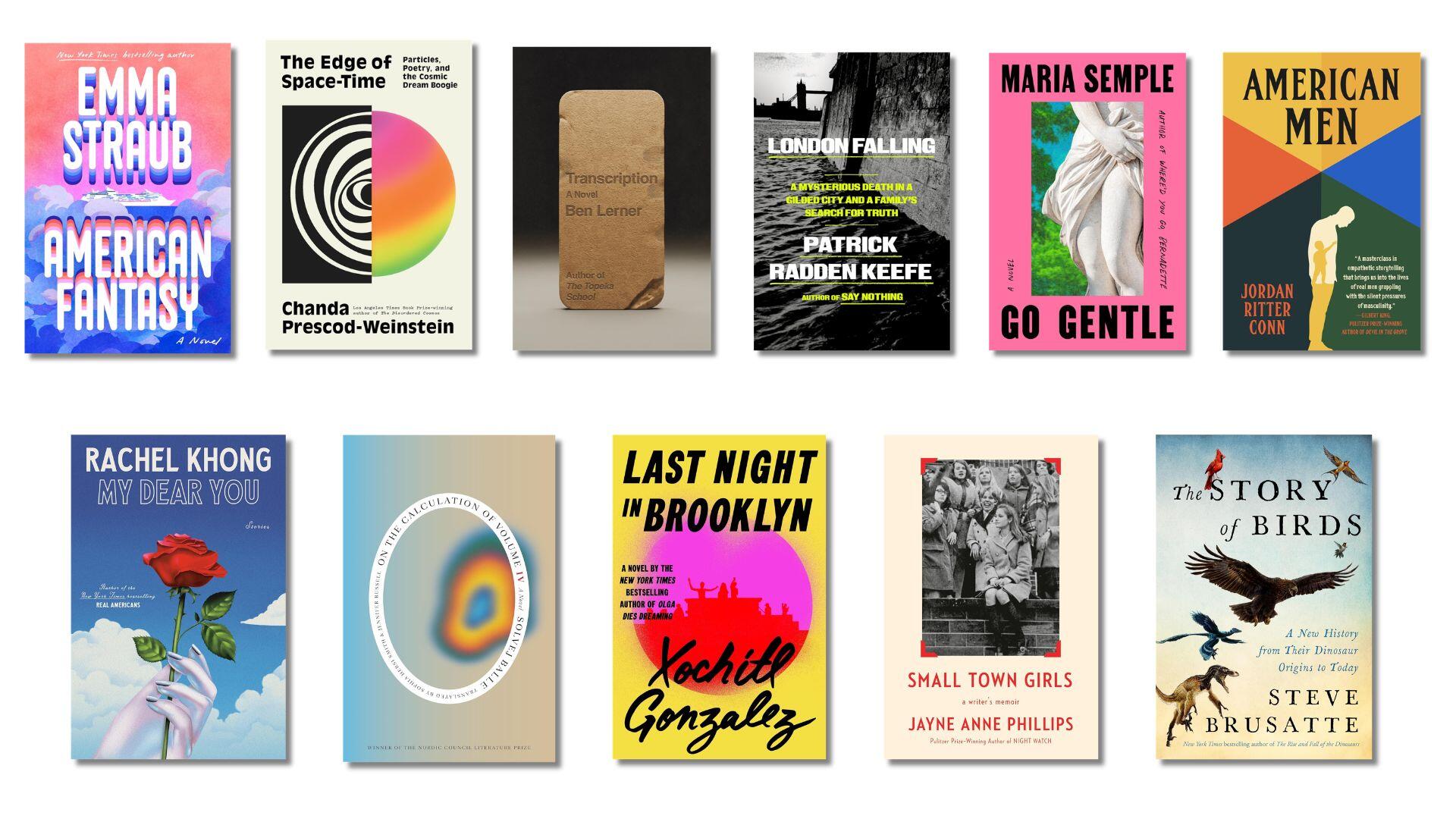
“You too can have your mind altered — no drugs necessary.” This, from the book’s introduction, offers something of a promise — which Prescod-Weinstein keeps with gusto, in this jaunty affront to just about everything our senses tell us about the world. The Dartmouth physicist’s follow-up to her lauded debut, The Disordered Cosmos, draws from just about every intellectual nook and cranny — from Bantu linguistics and Star Trek, to hip-hop and gender theory — to weave an idiosyncratic illustration of the universe as physicists understand it today. It’s an accessible take on a flabbergasting subject which, to put it mildly, offers a rather different view of reality than the one I remember learning in school.
My Dear You: Stories by Rachel Khong (4/7)
This is Khong’s third book of fiction and her first short story collection. In it, she shows off the kind of range suggested by her previous novel, the tripartite Real Americans published two years ago. Here, in the new collection, heavy subjects such as race and grief coexist with conjured spirits and a psychic cat, extraterrestrials and a God who has reconsidered the whole “human” thing — and given everyone a deadline by which they’ll need to decide what other species they’d like to be instead. Understandably, given the givens so far.
Go Gentle by Maria Semple (4/14)
Now this, my friends, is what we call a romp. Semple is best known for funny, deceptively poignant portraits of mothers in midlife crisis — see: Where’d You Go, Bernadette, a smash best-seller with its own Hollywood adaptation. The star of her newest novel is Adora Hazzard, a divorced philosopher with a sullen teenage daughter, a job teaching morals to rich kids and a growing “coven” of friends living nearby. Hold on tight, though — this one’s plot has twists and turns in abundance, as Hazzard certainly earns her last name in a series of, dare I say, shenanigans, animated always by a subtle, irrepressible joie de vivre.
On the Calculation of Volume, Book IV by Solveig Balle, translated from the Danish by Sophia Hersi Smith and Jennifer Russell (4/14)
Yep, it’s still November 18. This unassuming date has detained Balle’s narrator for three novels already, and is likely to continue doing so for another three after this one. I hesitate to relate any more details about where the plot of the planned septology stands at this point, for fear of spoiling it for folks who still intend to catch up. Suffice to say, change is afoot at this point for our timelocked narrator, who may not be nearly as alone in her plight as she had initially thought.
Last Night in Brooklyn by Xochitl Gonzalez (4/21)
Gonzalez stays close to home with her third novel. A dyed-in-the-wool Brooklynite, born and bred, the author of Olga Dies Dreaming has already earned a nod as a Pulitzer finalist for her column concerning gentrification in the borough she calls home. So the departure in her latest book is less in space than time, as her latest novel deposits readers in Brooklyn in 2007, on the cusp of global financial freefall, for a story of class, race, dangerous aspirations and the looming death of a heady era, which bears unmistakable echoes of The Great Gatsby.
American Men, by Jordan Ritter Conn (4/21)
The American men referred to in the grandly sweeping title of Conn’s sophomore book of narrative journalism, in fact, number just four. Each of these men bears the mantle of masculinity differently, grappling differently with all the pressures that the label entails, but each one has also bared his experiences and innermost thoughts to Conn with equally thorough candor. From these four interspersed stories Conn does not produce any sociological claims, still less a polemic, so much as a portrait of four lives so disarmingly frank, it can be difficult to look away — and maybe we shouldn’t.
Small Town Girls: A Memoir by Jayne Anne Phillips (4/21)
Phillips won the 2024 Pulitzer Prize in Fiction for her last book, Night Watch, a wrenching portrayal of trauma and recovery set in a West Virginia mental asylum following the Civil War. Now, Phillips (“one of our greatest living writers,” according to Michael Chabon, one of that year’s Pulitzer jurors) is returning to the Allegheny Mountains of West Virginia, not in historical fiction but in personal retrospect. It’s where Phillips grew up, where she has come to set most of fiction, and her new memoir is not so much about her life alone as it is her lifelong relationship with this place she “can never truly leave.”
The Story of Birds: A New History from Their Dinosaur Origins to Today by Steve Brusatte (4/28)
Brusatte could not be any clearer about this, folks: Birds. Are. Dinosaurs. The American paleontologist underlines the idea, which is apparently a century and a half old, early and often in The Story of Birds. This expansive history of our fine-feathered neighbors, as scientists understand them today, traces an evolutionary thread that leads directly from landbound behemoths like the triceratops to the airborne raptors that patrol our own skies. As he has done in his previous books — which covered dinosaurs and mammals, respectively — Brusatte offers a lively, loving introduction to his topic that’s as comprehensive as it is accessible.