Her Mother Infamously Murdered Her Father. Now, She’s Telling Her Own Story
Debra Miller writes a story of ‘Murder in the Golden State’ from a uniquely personal perspective.
Ilana Masad, NPR
(She Writes Press)
The first essay in Joan Didion’s famous collection Slouching Towards Bethlehemis an odd bit of true crime writing titled “Some Dreamers of the Golden Dream.” It covers the case of Lucille Miller, a “housewife” who was accused of killing her husband in 1964 and convicted in 1965 — and includes Didion’s signature blend of smart, beautiful prose and deadpan disdain.
Didion describes San Bernadino County, Calif., where the murder took place as, among other things, “the country of the teased hair and the Capris and the girls for whom all life’s promise comes down to a waltz-length white wedding dress and the birth of a Kimberly or a Sherry or a Debbi and a Tijuana divorce and a return to hairdressers’ school. ‘We were just crazy kids,’ they say without regret, and look to the future. The future always looks good in the golden land, because no one remembers the past.”
Related Article
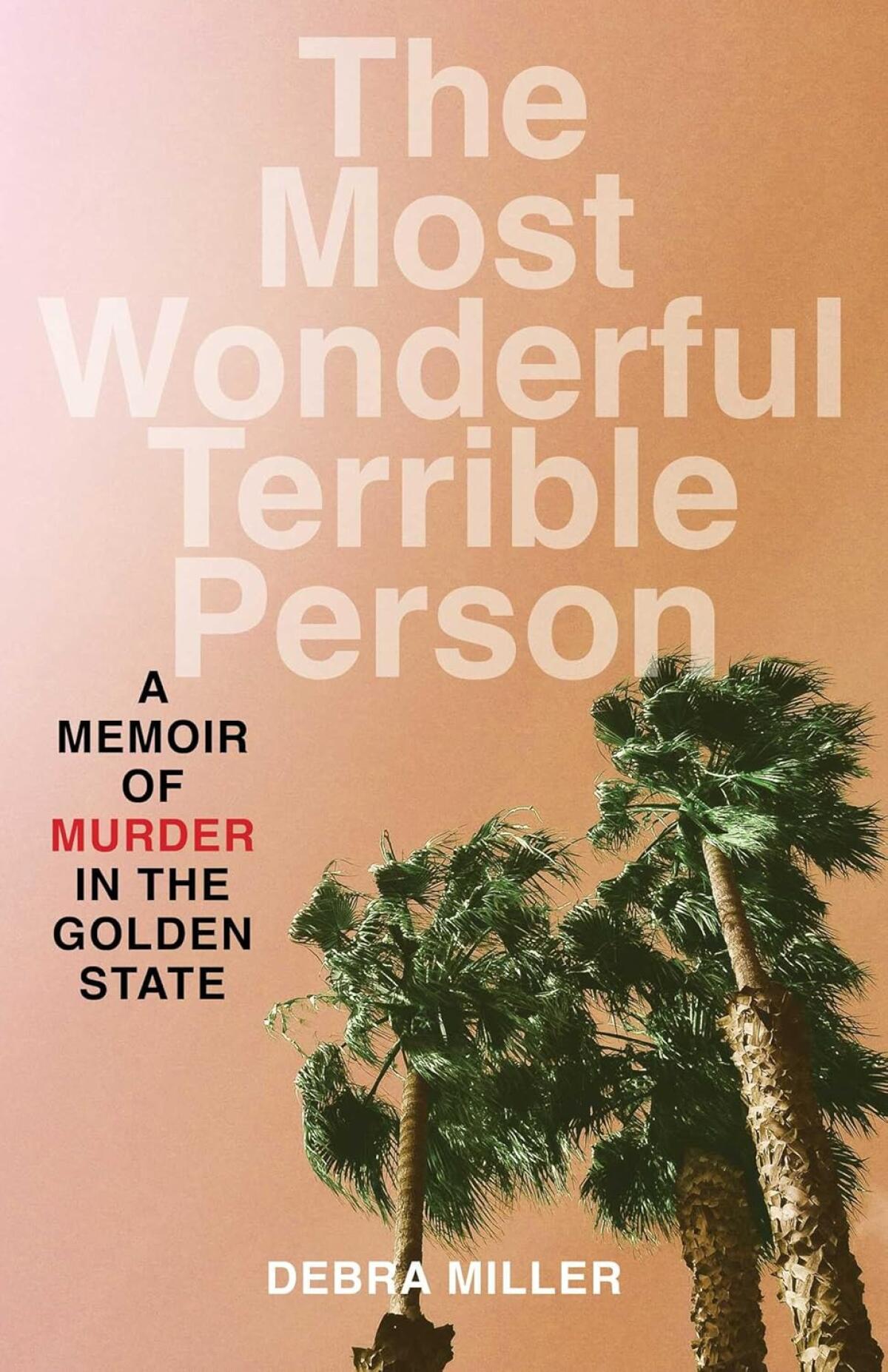
One of these ambitionless girls, Didion implies, is Lucille Miller, who named her eldest daughter Debra (Debbie for short). In 1964, Debbie was a 14-year-old facing the death of her father and the imminent loss of her mother. Debra Miller has now published her own book The Most Wonderful Terrible Person: A Memoir of Murder in the Golden State with She Writes Press, a hybrid publisher.
Miller opens her memoir with a reflection on her unsolicited relationship with Didion. Miller found it offensive and unsympathetic, writing: “She taught her children to be offended, too, and I hated the essay until I had enough hindsight to see it through new eyes many years later.” Indeed, it is likely this distinction — Miller being related to the subject of one of the most famous literary essayists’ essays — that will prompt many people to pick up the book, although those looking for a Didionesque narrative will be disappointed, as there is not an ounce of cynicism in it.
Instead, The Most Wonderful Terrible Person is a deeply sincere, if sometimes jumbled, reckoning with a life gone off its already rickety rails. Miller’s home life before her father’s death and her mother’s imprisonment was far from picture perfect. Born in Guam where her father, then a military dentist, was stationed, Miller’s parents first relocated to Japan and then to Oregon before finally moving to Southern California. One disturbing anecdote from those early years involves a crying 5-year-old Miller telling her father that her beloved dog, Shep, was too enthusiastic and knocked her down; “Out of ‘love for me,'” Miller writes, “my father gets his shotgun, takes Shep out back, and shoots him … I understood that something awful happened to Shep and it was my fault.”
Both of Miller’s parents were physically abusive — and their parents, she learns, were too — but where her father was largely emotionally distant, her mother was more unpredictable with her affections. Lucille ran hot and cold, sometimes telling her daughter that she preferred raising her younger siblings because they were boys, and other times taking her out on shopping sprees and lavishing her with affection.
The defining event of Miller’s youth, though, is her father’s death and her mother’s trial and imprisonment. The kids weren’t allowed to see their mother for a while after she first went to jail, and when they finally did and asked her when they’d all be able to go home, she told them: “As soon as this is all over.”
“‘This,'” Miller writes, “came to mean a lot of things, the unspoken things. That day, ‘this’ meant legal proceedings. Later, it meant the allegation of murder, and later still, a trial. Those abstractions didn’t mean anything to us yet. Each ‘this’ was a component unto itself. ‘This’ went on and on. It was easier not to call anything by its name, which made it too real, too unbearable. This was momentary, doable. Anybody could do this for a while.”
Related Article
Not talking about what was really going on became, or perhaps already had been, a pattern in the family. Miller writes about the events that followed: how she and her brothers helped smuggle drugs, alcohol, and makeup into the prison Lucille was sent to; how they moved around a lot between different family members and friends, often separated from one another and from their baby sister who was born shortly after Lucille was convicted; how the siblings all began using drugs and alcohol to cope and struggled with substance use disorders for years. But even though she details these and other troubles both during and after Lucille’s imprisonment, the memoir rarely digs deep into any real analysis of what was going on.
Still, Miller’s book is moving in its rawness, in its ability to lay out how trauma can derail a person’s life without them ever really recognizing it. An especially astute moment is when, following Lucille’s death in 1986, Miller realizes that her mother owed money to each and every one of the people attending her memorial. And still, Miller writes, “They had loved her, been caught in her spell, believed she was innocent of murdering my father, and now that she was gone, they missed her. She had made each one of them believe they were her best friend and that they were the most fascinating, fabulous person in the world. And now here they all were. Who was going to make them feel better than they were now?”
Even someone terrible, Miller recognizes, can be wonderful in some circumstances, to some people; she herself behaved terribly to many, and her regret and grief over her own behavior is palpable. Miller spent the second half of her life teaching English at a girls’ high school in Los Angeles, and although she is now retired, one very much gets the sense that she’s attempted, in paying attention to her students, to atone for some of her own sins. The Most Wonderful Terrible Person is not a confession, exactly, but it is a reckoning.