Sponsor MessageBecome a KQED sponsor
upper waypoint

Diedrick Brackens’ Monumental Textiles Hang in Splendor at YBCA

Save ArticleSave Article
Failed to save article

Please try again

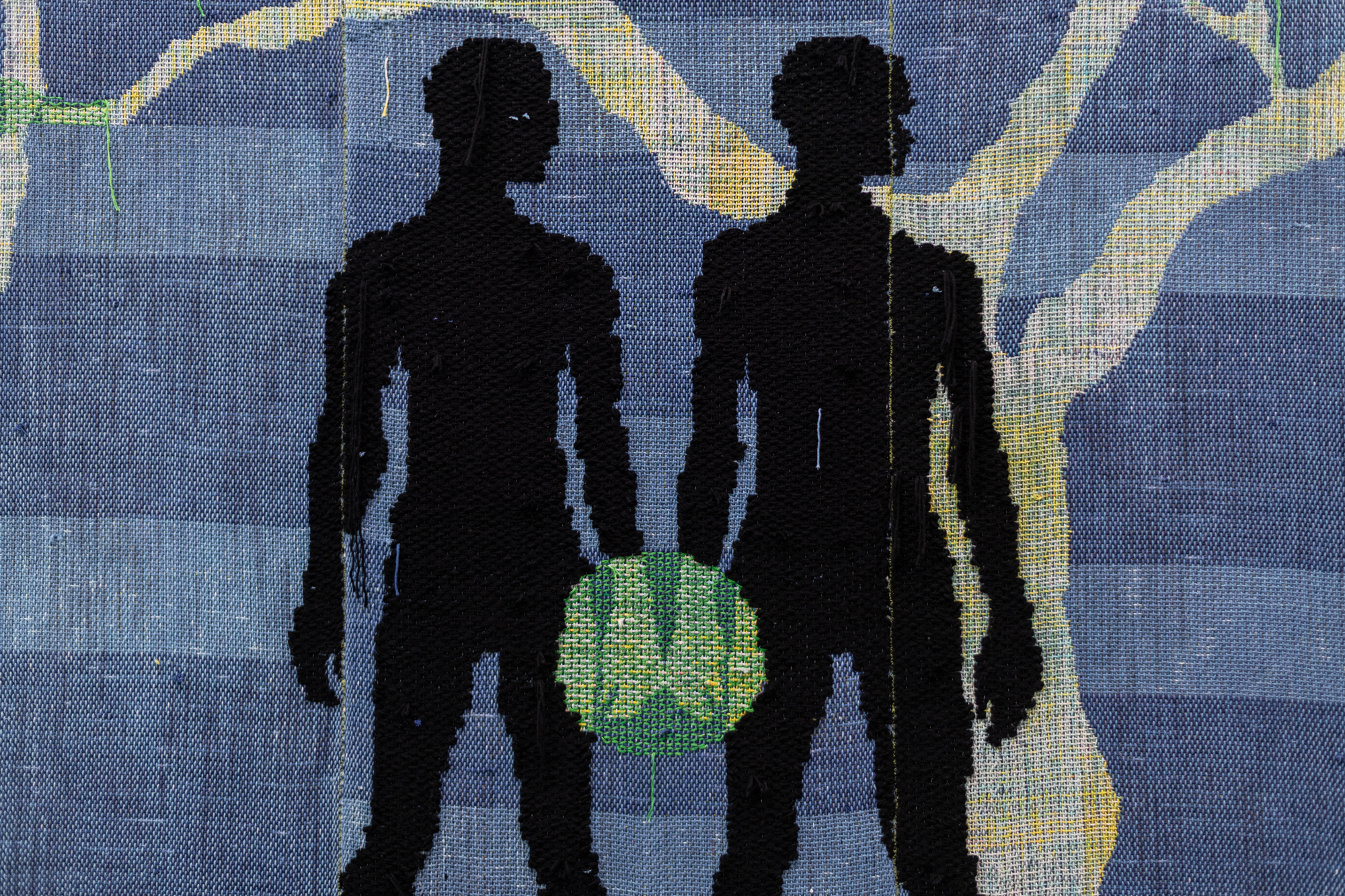
two black silhouettes' hands touch and green glow forms
Diedrick Brackens, 'a garden protects the dreamer' (detail), 2026; Woven cotton and acrylic yarn. (Charlie Villyard/YBCA)

Yerba Buena Center for the Arts is, let’s admit, a tough space to fill with art. Its largest gallery is hangar-like, with impossibly high ceilings, one wall of windows and no interior divisions to speak of. Much of the artwork made at a human scale has a tendency to disappear in there, dwarfed by the spaciousness of its surroundings.

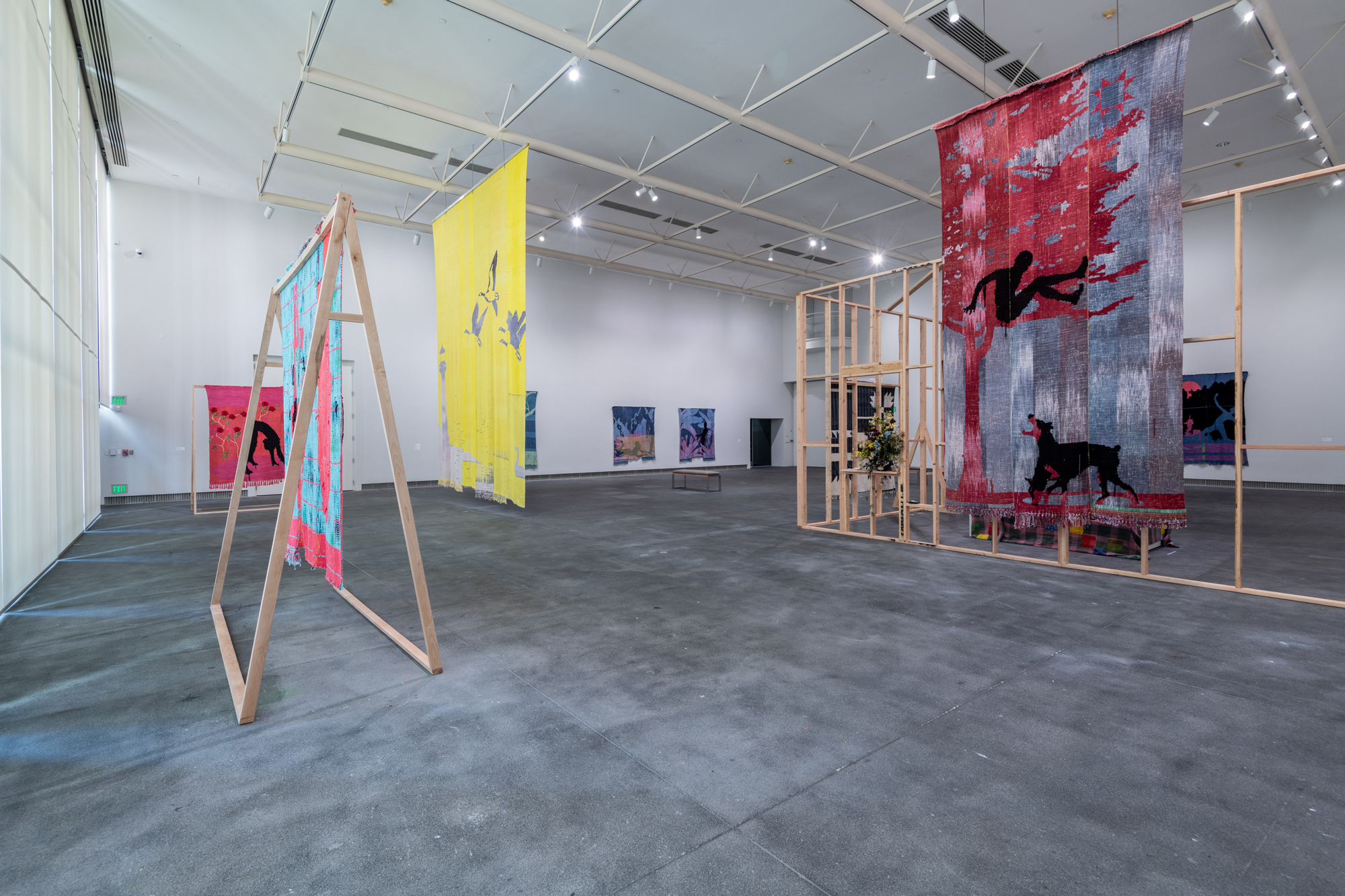
This is decidedly not the case with gather the night, an exhibition of recent textile work by Bay Area artist (and California College of the Arts faculty member) Diedrick Brackens. His 15 large-scale textiles, hand-dyed and woven on floor looms, stretch to over 20 feet in length, softly hanging from walls, frames and ceiling throughout the well-arranged show.

I wish I could write this review without mentioning the upcoming closure of CCA, which is also Brackens’ alma mater. After graduating from the school’s MFA program in 2014, Brackens returned to CCA a decade later as faculty, with international museum exhibitions and a New York gallery under his belt. I cannot think of a better example of how an art school draws talented people to a region — and gives local audiences access to work they’d otherwise have to travel elsewhere to see. (This is Brackens’ first solo exhibition in the Bay Area.)
gallery view with large hanging textiles
Installation view of Diedrick Brackens’ ‘gather tender night’ at Yerba Buena Center for the Arts. (Charlie Villyard/YBCA)

Curated by Eungie Joo, who also organized YBCA’s comeback exhibition Bay Area Then last summer, gather the night is a balance of monumental, colorful panels and delicate, tender scenes. In Brackens’ textiles, silhouetted bodies blend into peaceful landscapes and populate fairytale scenarios (to soothe a myth features a rearing unicorn). There is something elemental about these figures, which bend in half, raise their arms to the sky and gaze up, seemingly in awe of their surroundings.

Part of the dreaminess of Brackens’ work comes from his color choices. The oldest work in the show, dating back to 2020, is made with a scintillating combination of bright vermillion and turquoise. Then, a shift to yellows and muted purples; next, desaturated jewel tones; and finally, in his most recent pieces, mauve, oceanic greens and blues.
Sponsored

After dying lengths of cotton fiber in his studio, the weaving process causes sections of color to shift and misregister slightly, blurring the edges of shapes. Brackens plays off that painterly effect by leaving tails of black yarn dangling, like drips, from his silhouettes.

The best part of seeing gather the night at YBCA — and all the space that venue allows — is that visitors get to walk around many of the works. Two pieces hang from handsome wooden racks that nod to Brackens’ floor looms. Others hang from the two walls of a framed-out domestic space, which includes an installation of a bed (covered with a woven textile, of course), an overturned basket and a pile of pungent yellow soap.

black silhouette and gray silhouette bend around each other
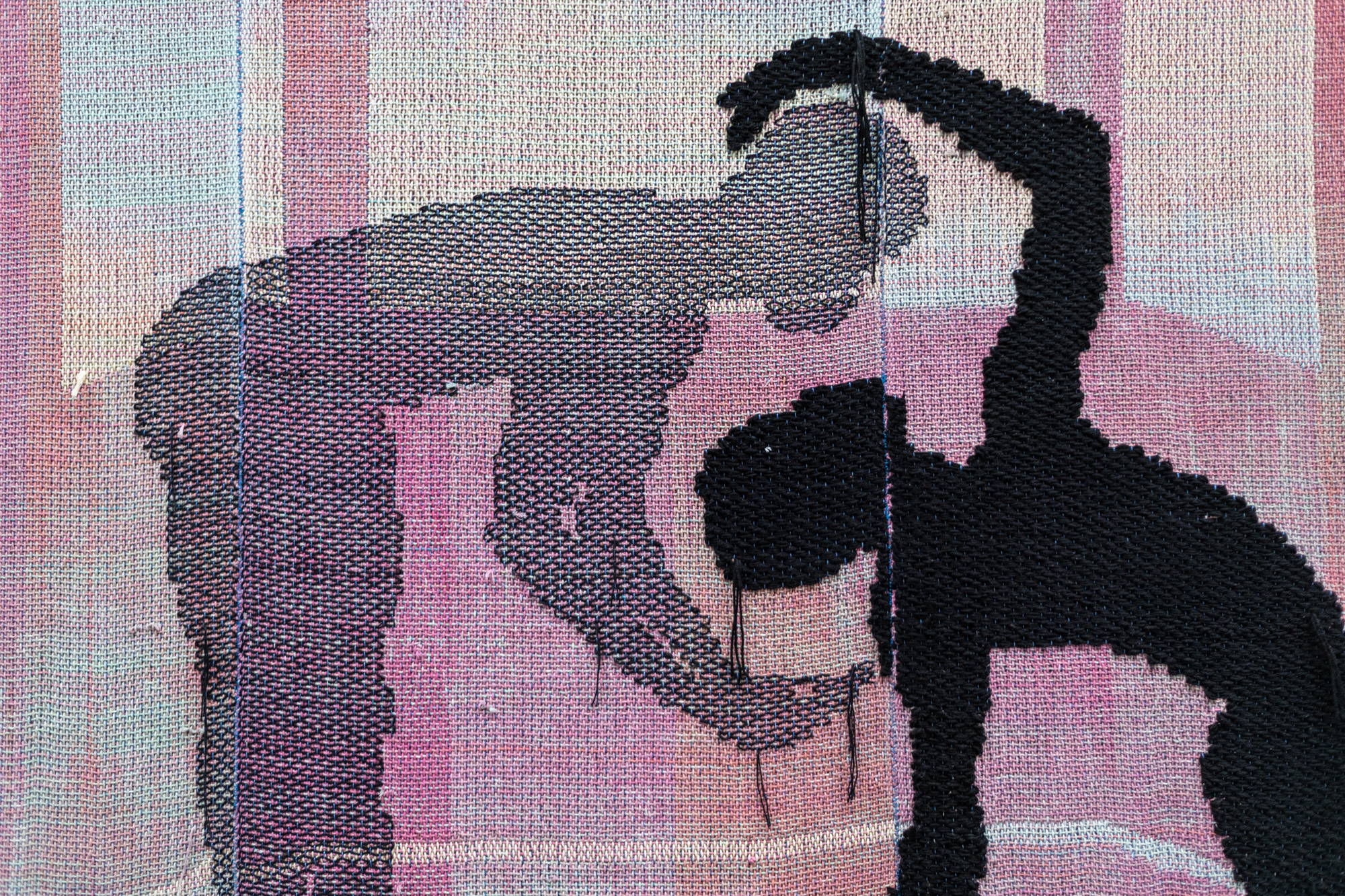
Diedrick Brackens, ‘you’ll never get to heaven if you break my heart’ (detail), 2026; Woven cotton and acrylic yarn. (Charlie Villyard/YBCA)

On an “interior” wall hangs Brackens’ sole work that places his figures indoors, one bending backward to kiss another. The pair’s arms bracket each other’s heads in arcs of mutual protection.

Even visitors with minimal knowledge of what it means to make a double weave textile can intuit the construction of Brackens’ works, thanks to these airy hanging arrangements. On the versos, color-inverted landscapes become devoid of figures, which Brackens embroiders onto a textile’s surface.

Some of the most poetic moments in gather the night come from the juxtaposition of front and back. On blood compass, the show’s largest piece, two figures look up at a flock of geese, a lighthouse in the background. But on the other side of the textile, the geese, water and lighthouse are alone. A few glimpses of black thread signal the figures’ ghostly presence.

two textiles with plants and seated figures
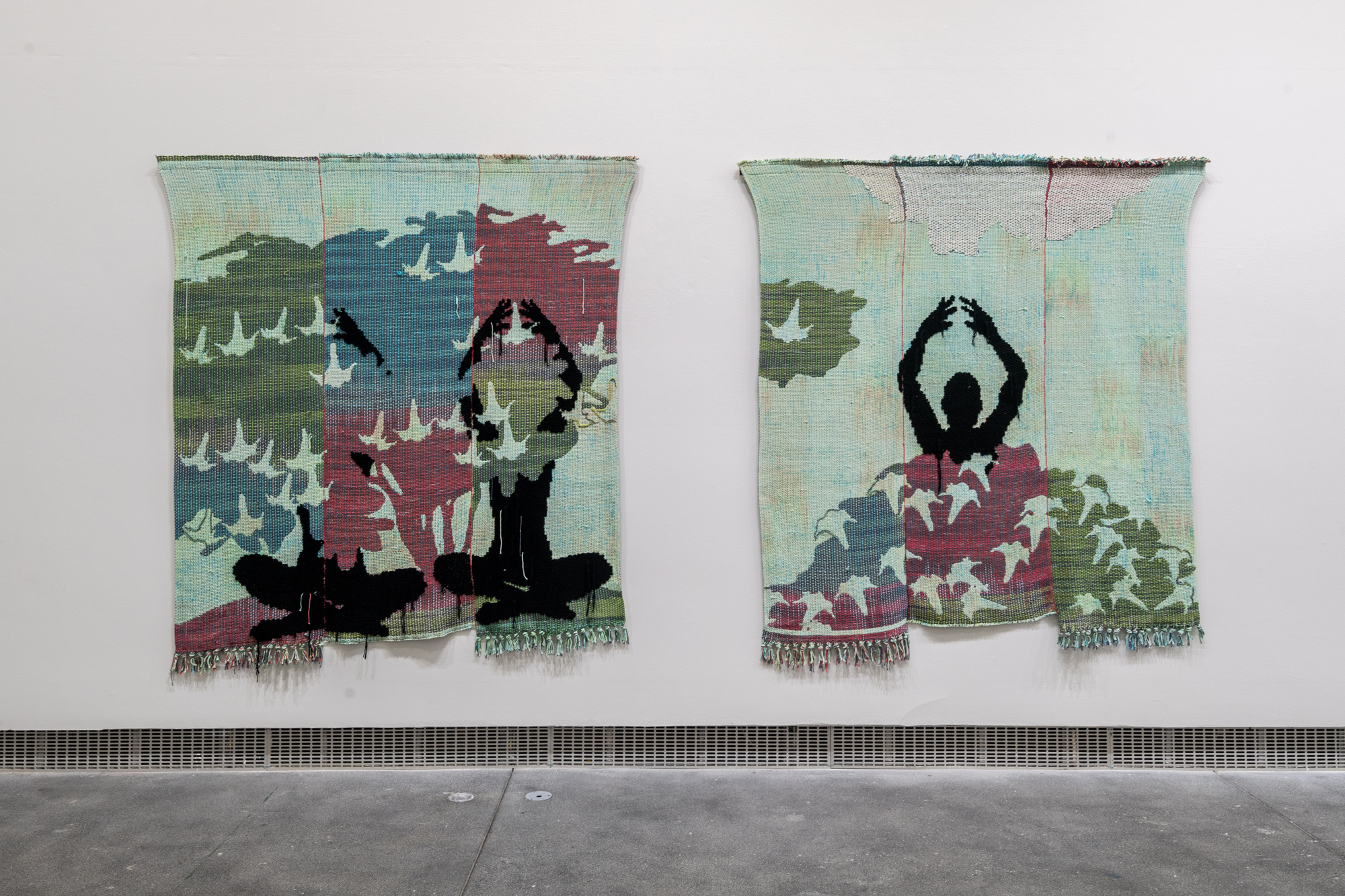
Diedrick Brackens, ‘commitments’ and ‘help is available,’ 2025; both woven cotton and acrylic yarn. (Charlie Villyard/YBCA)

In other works, figures blend into foliage, appearing on a textile’s surface only in bits and pieces. commitments and help is available, both from 2025, show figures sitting cross-legged, arms raised above their heads. In the former, branches of angel’s trumpet occlude the heads and arms. In the latter, a bush of devil’s trumpet surrounds a torso and legs. Here, the repeated pose looks like a call for salvation.

Brackens’ dusky hues, especially in the more recent pieces, speak to night as a period of possibility, of slippery identity and greater freedom. But just as there is a flip side to each textile, so night gives way to day, and its potential for both visibility and accompanying violence. Brackens’ great skill is holding these realities together, embedding danger within softness, and giving his figures the freedom to stretch their arms, legs and eyes to a beautiful sherbet sky.


gather tender night’ is on view at Yerba Buena Center for the Arts (701 Mission St., San Francisco) through Aug. 23, 2026.

lower waypoint
next waypoint
Player sponsored by