Yerba Buena Center for the Arts’ new exhibition Bay Area Then offers a glimpse of San Francisco in the ’90s, before tech and its hyper-driven version of capitalism overtook the city, and when rents were low enough for artists to thrive. Working-class young people could not only afford to live here — they also had the time and energy to run weird, experimental galleries and participate in revolutionary organizing.
Smartly curated by Eungie Joo, Bay Area Then surveys the vibrant cultures that emerged from the AIDS crisis, the LAPD beating of Rodney King and the first Gulf War, connecting the dots from each to today’s political struggles.
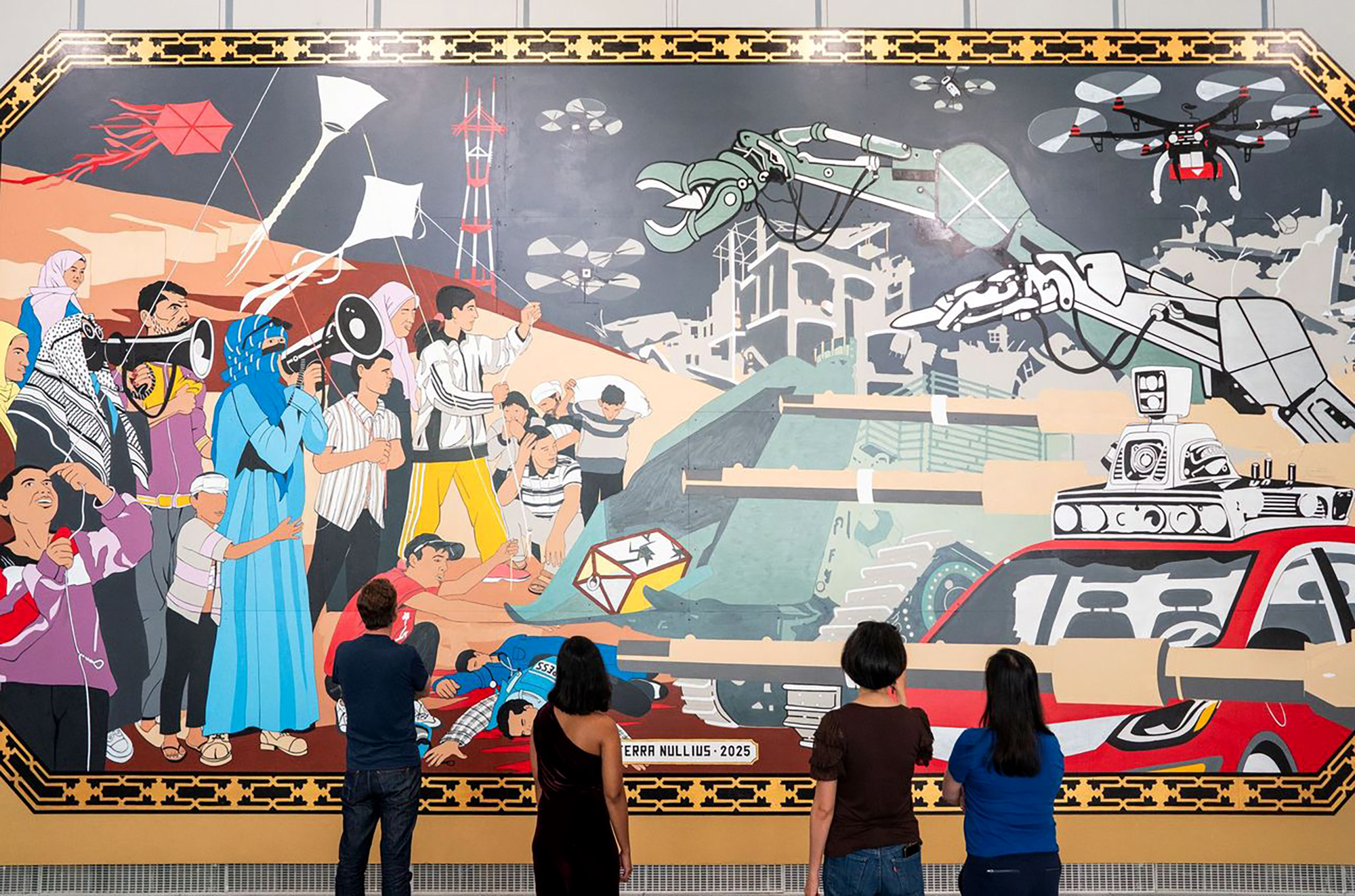
The show opens with clusters of ephemera: amateur film photos, graffiti zines and photocopied flyers. Whether protesting art censorship or advocating for squatting in abandoned properties, the flyers point to a hopeful radicalism that thrived in an age before ubiquitous AI and mass surveillance. These informal pieces — whose creators probably never thought they’d end up in a museum — lend Bay Area Then a grassroots feel that’s rare for a white-walled, capital-A art institution.
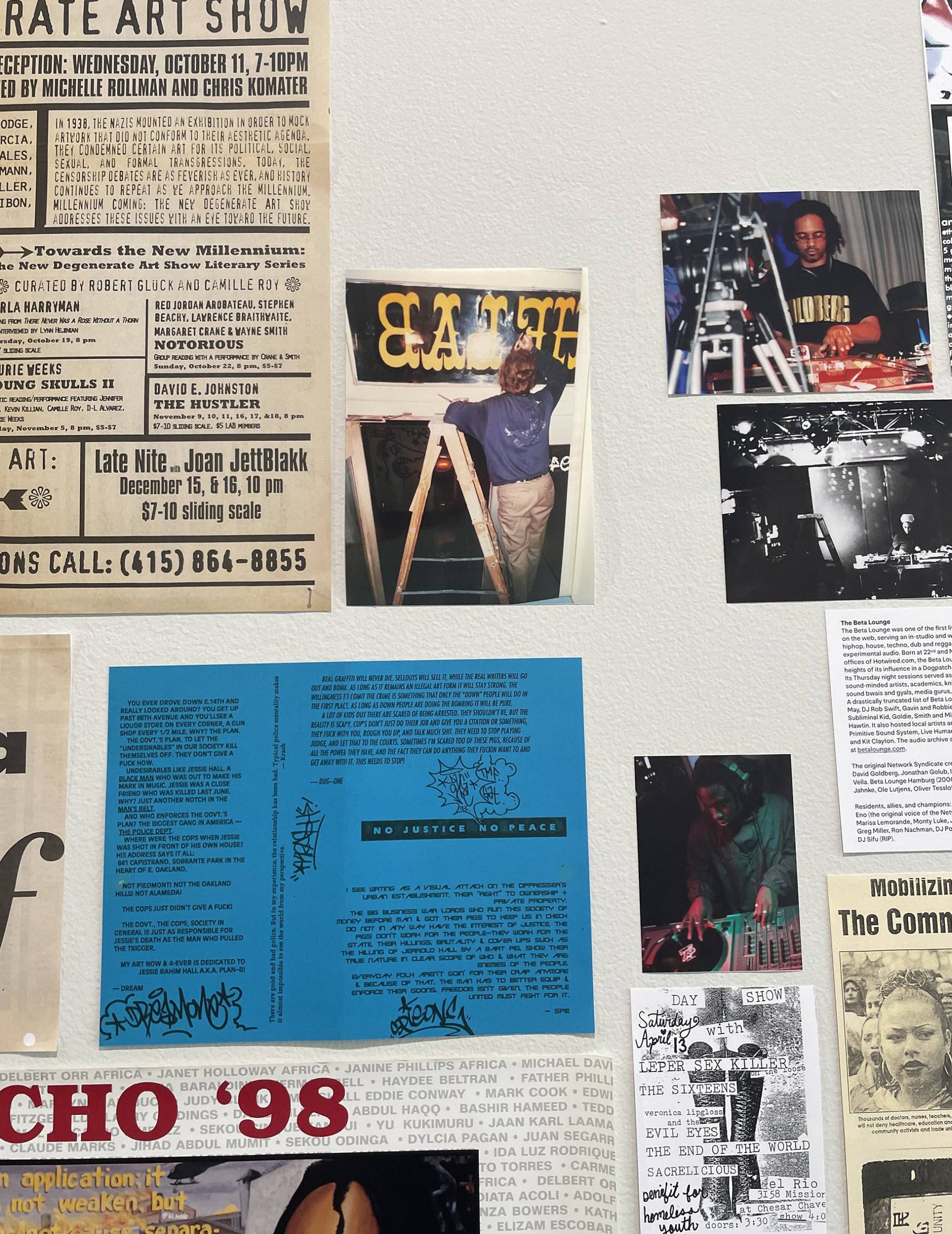
Museums often examine protest movements of the past from a safe distance; rarely do they dare engage with what’s transgressive today. Refreshingly, Bay Area Then features contemporary works from artists active since the ’90s, including Rigo 23, whose jaw-dropping Terra Nullius is a centerpiece of the show. The mural depicts Palestinian civilians shouting through bullhorns while drones hover overhead. Juxtaposing San Francisco’s Sutro Tower with the West Bank wall — and self-driving cars with tanks — the piece forces the viewer to confront the reality of Bay Area tech giants’ military contracts, which have helped create the infrastructure for Israel’s destruction of Gaza.
The inclusion of this piece and others marks a departure for YBCA, which changed leadership this year. In 2024, when artists from an exhibition titled Bay Area Now modified their own pieces with messages like “Ceasefire Now,” the show closed down entirely for a month, prompting accusations of censorship. When the exhibition reopened, it contained tepid disclaimers stating that the work represented the opinions of the artists and not YBCA.
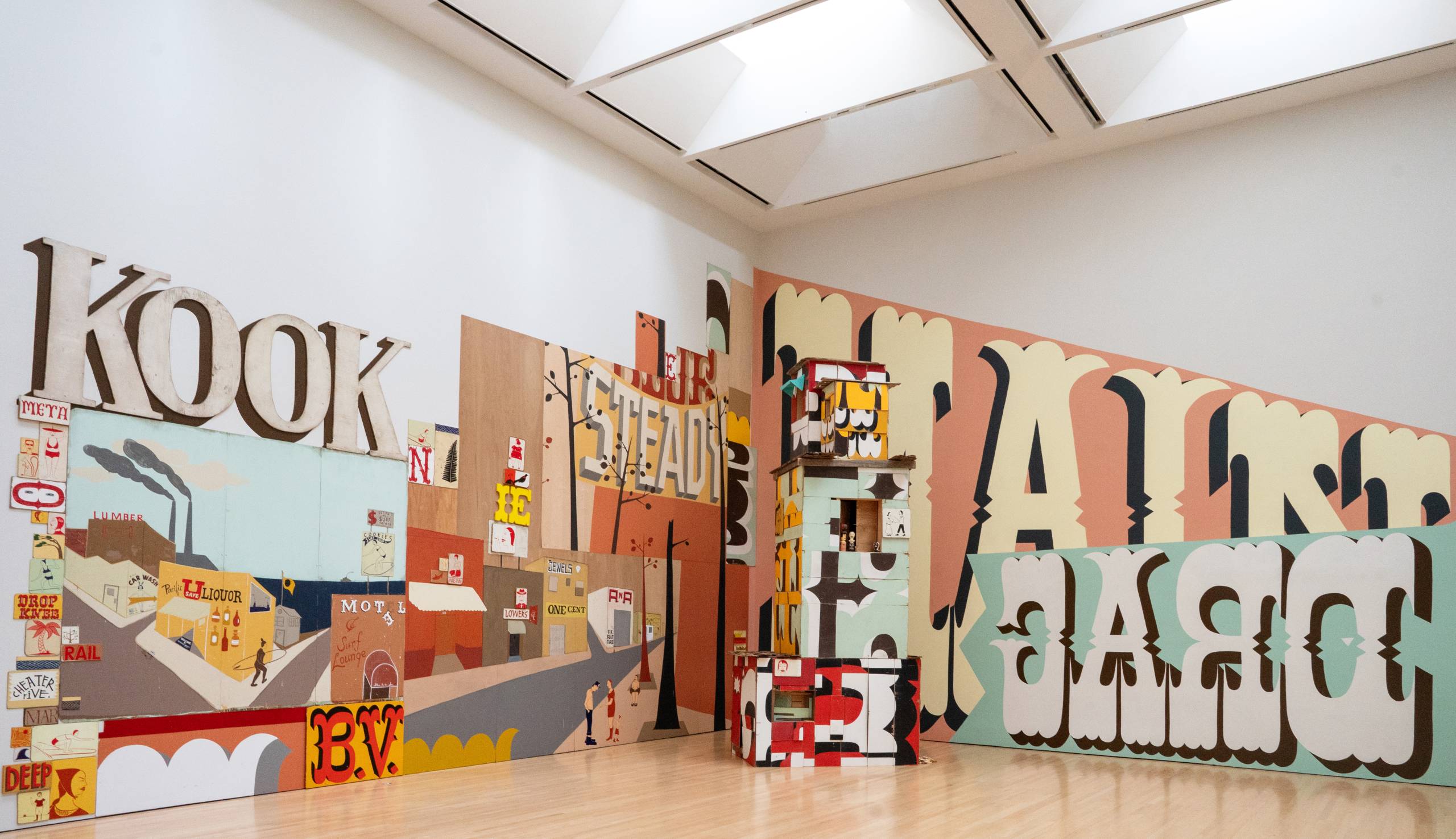
In Bay Area Then, the artists are given space to say things with their chests. A large-scale 2023 aerosol piece by graffiti artist Spie One depicts seeds blossoming into raised fists of resistance on Palestinian soil; it hangs next to a 1997 work by the late graffiti legend Mike “Dream” Francisco that criticizes U.S. colonialism in the Philippines.