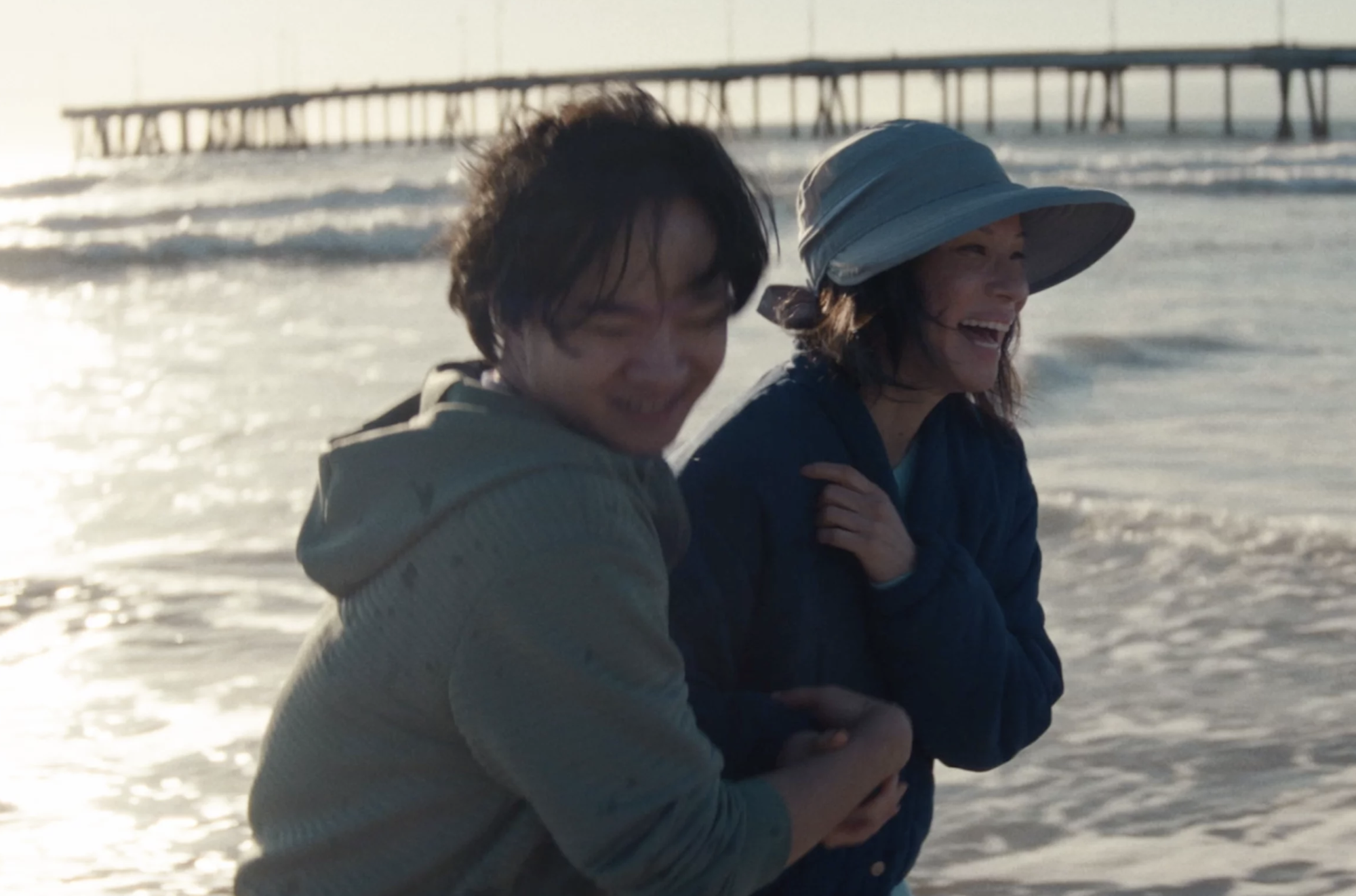
Based on a 2017 Los Angeles Times article by Frank Shyong, the new movie Rosemead dramatizes a true and tragic story of a single Taiwanese American mother named Irene (Lucy Liu) who has cancer, and her teenage son, Joe (Lawrence Shou). A star student and swimmer, Joe begins to have increasing symptoms of his diagnosed schizophrenia, which intensify after the passing of his father (Orion Lee). As Joe’s hallucinations, delusions and outbursts become more frequent and intense, Irene struggles to support her son while dealing with her own terminal illness. If the premise of director Eric Lin’s feature debuts sounds bleak, that’s because it is.
Whether in the form of teachers, social services, or cultural shame, Rosemead highlights how external actors repeatedly fail Joe — driven not by compassion, but by their own internalized fears, exposing the lengths to which institutions will go to protect themselves from those they deem dangerous. After a school shooting drill triggers Joe in an early scene, prompting hallucinations, an administrator suggests that he transfer schools. “We all have his best interests at heart here,” he says with a false authenticity to an already-strained Irene.
The story of Rosemead is about a teenager with mental illness just as much as it is the Asian-American community, in a rare thematic combination that showcases the challenges facing both. Irene projects a composed public front and keeps her sorrow private, reflecting a culture in which shame often wears the mask of secrecy. At a party, other Asian-American families quietly gossip behind Irene’s back, raising questions about Joe seeing a psychiatrist. Instead of standing up for Joe, Irene insists that he’s attending the Family Center out of an interest in psychology, not because he needs therapy.
Meanwhile, when Joe is at school, Irene confesses to a friend who runs an herbal medicine shop that she’s avoided telling her son about her cancer diagnosis because she doesn’t want him to worry. She waves away her friend’s urging to be honest with him, saying she’s already doing all she can. Part of what makes Liu’s performance as an immigrant mother feel true is that the film doesn’t try to appease Western audiences with English-language dialogue.
“I’ll make you another tincture,” her friend says in Chinese, as Liu dutifully sips a medicinal remedy from a cup — one of many nods to the divergence between cultures in the East and West. Another: their views on talk therapy, as Irene refuses to accompany Joe in his sessions, despite suggestions from his psychiatrist, Dr. Hsu (James Chen), to do so as a way to show support. Irene stubbornly claims that Joe is getting better on his own.