One thing theater makers have in abundance is creativity. But in order for Bay Area theater to have a future, it needs to consider new initiatives that meet the moment.
On the precipice of the fall season, we approached 11 prominent Bay Area directors, actors and administrators who mostly work in small- to mid-sized companies, and asked them all the same simple question:
“What must be done to ensure the survival of Bay Area theater?”
Answers have been edited for length and clarity.

Rinabeth Apostol, actor
The word “diversify” bears repeating. I have been lucky to work in the Bay Area and beyond professionally for over 20 years, and while the theater landscape ebbs and flows, my peers and I ultimately find ourselves asking the same questions: Where are the audiences? Why is this theater at risk for closure? Why are we doing [insert name of “classic” play or musical with almost exclusively white cast here] again?
While there has been an uptick in more diverse plays, some theatres are still afraid to include more than one “Asian” or “Black” play in their seasons. Latinx and Indigenous stories and shows featuring actors with disabilities are sorely lacking… and not because they don’t exist! There is a staggering amount of new work and playwrights with distinct voices that are available to produce – it’s just a question of whether or not companies are willing to.
If theater companies diversify their programming, audiences will usually follow, which is essential in keeping theater doors open. Theater producers need to make an intentional effort to create work that will also enrich and hopefully grow their audience base – not just because the stages should reflect the world we live in, but because embracing a diverse audience will help create a more inclusive community… one that will hopefully reap tangible rewards. Producers need to look beyond their usual subscriber base, which isn’t usually very diverse. There needs to be a cultural and generational shift in what theaters perceive their “ideal audience” to be and they need to actively educate their subscriber base/typical audience members to also embrace that change.
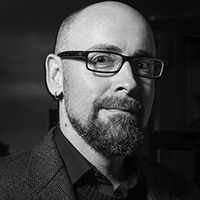
Josh Costello, Artistic Director, Aurora Theatre Company, Berkeley
The survival of Bay Area theater is not in question — there will always be theater in the Bay Area. Will there be a multitude of theater companies with different missions and visions, paying living wages to local professional artists, while providing the resources these artists need to do their best work?
To ensure a thriving Bay Area theater, we need to constantly advocate for theater’s intrinsic value as an art form, as well as its many positive impacts on our community. We need local and state governments to greatly increase funding for the arts. We need foundations to provide general operating support to organizations that employ local artists. We need to create a culture of philanthropy for the arts in the Bay Area tech community. And we need to inspire people from all walks of life across the Bay Area to put down their phones and attend live theater.
It starts with you. Write to your local government. Subscribe and donate if you can. Bring a friend to see a play. Make something beautiful.
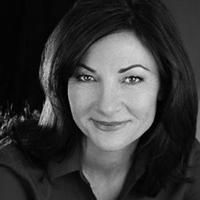
Susi Damilano, co-founder and Producing Director, San Francisco Playhouse
This question has as many answers as there are people in our community, but when I consider all the possibilities, it comes down to two essential elements: guts and grit.
Theater is a business built on humanity’s unlimited capacity to create. So many art forms converge to create a theatrical experience—writers, actors, painters, sculptors, dancers, musicians. These creations aren’t products that can be bottled and sold. Each production is unique. The same script can be interpreted in countless ways, and once a production is set, no two performances are exactly alike. Even the audience changes nightly. Theater is a living thing, which is precisely why it takes guts to invest in it and grit to sustain it. It’s inherently risky.
Yet nothing is more fulfilling than pouring your soul into a piece, wondering if it resonates, and then watching an entire audience respond—erupting in laughter, sitting in stunned silence, or moved to tears. We change lives. We create connections. We are essential as storytellers and mirrors of the human condition.
For theater to survive, we need people, governments, and foundations to have the guts to invest their time and money in this vital art form. We need artists and theater-makers to have the grit to persevere through difficult times, to keep collaborating with one another, and to keep creating. Failure is not an option.
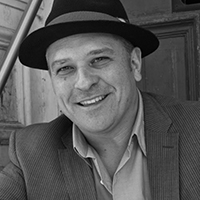
Paul Flores, playwright, poet, professor
Maybe there is the idea that bigger isn’t always better — let’s start with that, right? Maybe it’s about meeting people where they are in their wallets and in their comfort levels, because the money for theater just isn’t there. How many of those NEA grants were stripped from theater companies? The San Francisco Arts Commission gave away $5 million less this year than they did in 2024, which was $15 million. So money is going away from us.
I think we have to start thinking, how do we make pieces that are more accessible? Theater producers also have to start thinking about where they’re investing their resources. Do we need to be buying buildings? What does that do for the sustainability of the art, especially in San Francisco?
So many artists have left the Bay Area because they can’t afford rent. What are we doing to help with that? How are we helping the theater companies that currently exist to maintain their seasons? The issue is money right now, which is probably always the problem, right? Maybe it’s smaller productions, maybe it’s less stuff indoors, or less reliance on tech that will produce theater. It would ask for us to reimagine theater as a more open space. What could that look like?
I’m not trying to look for four walls, but looking for bigger spaces, places that are different, accessible and expansive, maybe a former used car lot or downtown office spaces. That’s what I’m looking at, cultural revitalization. Theater needs to think that way. If it is about neighborhoods, how can we get more democratic participation? We need to ask, hey neighborhoods, what do you want to see for theater?
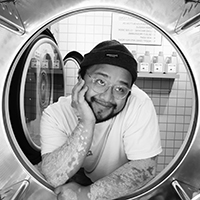
Reed Flores, playwright and director
Bay Area theater is only going to survive if we start to be more intentional about sharing resources, and what we decide to produce. What I have learned this past season is, despite how volatile our industry is and how fickle external funding can be, we are absolutely capable of abundance.
Mutually beneficial partnerships, shared rehearsal spaces, co-productions, skill sharing, sharing materials and more. I worked with multiple “small” theaters this season, and each felt so expansive because they opened their doors to their sister theaters and hired beyond their usual network. We must keep filling our neighbor’s cup, in good faith that our neighbor will return the gesture. We are more imaginative and expansive and magical when we share.
On a less romantic note, we need to focus our energy on uplifting the new. We have to invest in the generative, brave, the unapologetic reflections of our Bay Area landscape. In the past two years I’ve seen more world premieres by local BIPOC artists, and it is some of the most exciting theater I’ve seen.
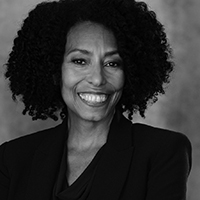
Margo Hall, actor, director, Artistic Director of Lorraine Hansberry Theatre
To ensure the survival of Bay Area theater, we must invest in sustainable funding models, radical inclusion and community-rooted programming. We need bold investment in the artists and institutions that make this region vibrant, especially those led by people of color, who have long been under-resourced but have had a deep impact. Sustainable, multi-year funding must be the norm, not the exception.
We also need to nurture the next generation of theater-makers through mentorship, access and genuine opportunities to grow—not just on stage, but behind the scenes, in leadership, and among our audiences.
Bay Area theater will survive if we stay rooted in community. That means telling stories that reflect the people who live here, building trust with those who’ve felt excluded and using theater as a space for truth-telling, healing, and joy.
This isn’t about returning to what was. It’s about building something more just, more inclusive, and more connected. The work is urgent — and it’s absolutely possible.
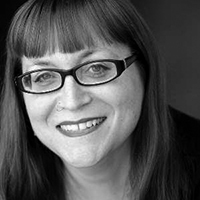
Melissa Hillman, Programs Officer, Theatre Bay Area
For companies trying to survive now, I think the way forward is cooperation — shared services, shared resources, shared space, even shared audiences; package ticket deals for several companies in the same area, for example.
We need to be reinvesting in theatre education for young people. There’s a mountain of evidence that shows K-12 theatre education benefits student achievement overall. Importantly for the survival of Bay Area theatre, it also creates theatre-goers, and due to the relentless gutting of theatre education in K-12 schools over the past 40 years, there are fewer adults today that consider theatre one of their entertainment options. A reinvestment in theatre education will also create more theatre jobs, making it easier for theatre makers to live and make theatre here.
Accessibility is key. This is both accessibility for disabled people, and financial accessibility. A $60 ticket is just not affordable for many people, and that’s going to get worse over the next few years. Access for disabled people is improving, but there are still issues with ADA compliance in a lot of venues.
And with the NEA off the table for most companies, state and local governments need to step up to increase funding. A financial stimulus in local theatre will increase local spending power overall, enabling more people to see theatre, creating a virtuous cycle.

Lisa Mallette, Artistic Director, City Lights Theatre Company, San José
To ensure the survival of Bay Area theater, we need more than passion. We need a systemic shift in how we fund and sustain live performance. Foundations, both local and national, must rediscover their belief in theater’s power to create healthy, vibrant communities. They must recommit to supporting the arts.
Moreover, the area’s leading businesses have a stake in our cultural ecosystem. When tech giants, biotech firms and local enterprises invest in the arts — through sponsorships, matching gifts or employee programs — they help strengthen creativity, attract talent and build community.
Theater companies must also innovate rather than repeat pre-pandemic practices and hope for different results. At City Lights Theater Company, we’ve discovered that authentic relationships with patrons and donors create a necessary culture of care. Individuals sharing their time, talent and treasure have fueled our turnaround this year. Ticket sales are rebounding slowly, while rising expenses make individual giving essential to our balance.
By uniting foundations, businesses, artists and audiences, we can write a brighter future for Bay Area theater: one where every stakeholder feels a sense of belonging and shared purpose.
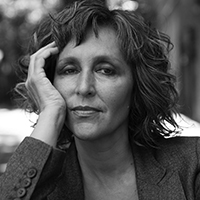
Lisa Ramirez, Associate Artistic Director, Oakland Theater Project
I think the survival of the Bay Area theater is requiring us all to get more and more creative during this tenuous political period, especially with the smaller houses. This means building stronger local individual and private support systems and funding. This means collaborating and partnering with other theatres, schools and community organizations. It means hiring locally across the board, instead of “outsourcing” talent from other places. That means directors, actors, playwrights.
There is so much talent and heart here. We must hire locally to sustain our beautiful ecosystem. The audience members and subscribers appreciate this as well. Being a company member at Oakland Theater Project and writing, acting or working backstage and seeing familiar faces after different shows is not only inspiring but creates repeated shared experiences over time and fosters strong community ties.
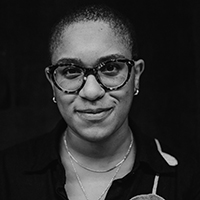
Leigh Rondon-Davis, Leader of Artistic Curation and Marketing, Crowded Fire Theater
I think real, intentional interdependence and interconnectedness is essential. I do not think we are going to survive in the siloed ways that we are, given the dwindling resources and the way it’s been impacting our artist community. We are going to have to really depend on and support one another in deeply intentional ways in order to survive — and that, to me, is going to look like partnerships and really robust collaborations between companies and organizations. That’s going to look like multidisciplinary collaborations where there’s also art and music.
We also need to look at new models for compensating artists so they can live in the Bay Area and still make work. It’s going to look like collaboration and some like real visioning with our local funders and our local governments on universal artist income or grants that support artists in residencies or fellowship, right? We’re going to really need to tap in to talk and work with one another and to help ensure that arts can stay in the Bay.
Jon Tracy, Artistic Director, Marin Shakespeare Company
There’s a myth that somewhere out there is a perfect audience — either huge and universal, or niche and ready-made. Some hope that if the work is broad enough, everyone will show up. Others believe if it’s bold and specific enough, the right people will just find it. But neither really plays out.
I think we’ve lost faith in the art of the invitation — how we build bridges to those who don’t yet know we’re here, or who’ve never been given a reason to believe theatre is for them. That’s where trust begins.
I’m for transparency of intentions, never compromise of the work. Theatre doesn’t have to soften itself to reach people. Pop theatre, trying to please everyone, usually earns the trust of no one. We owe it to everyone to say who we are, what we care about, and be steady about it. Trust doesn’t come from having a universal message. It comes from consistent clarity.
