Update, Sept. 8, 2025: Sadly, the East Bay Vivarium’s two-headed kingsnake, Zeke/Angel, died three days after this story was published, just one day before his first birthday.
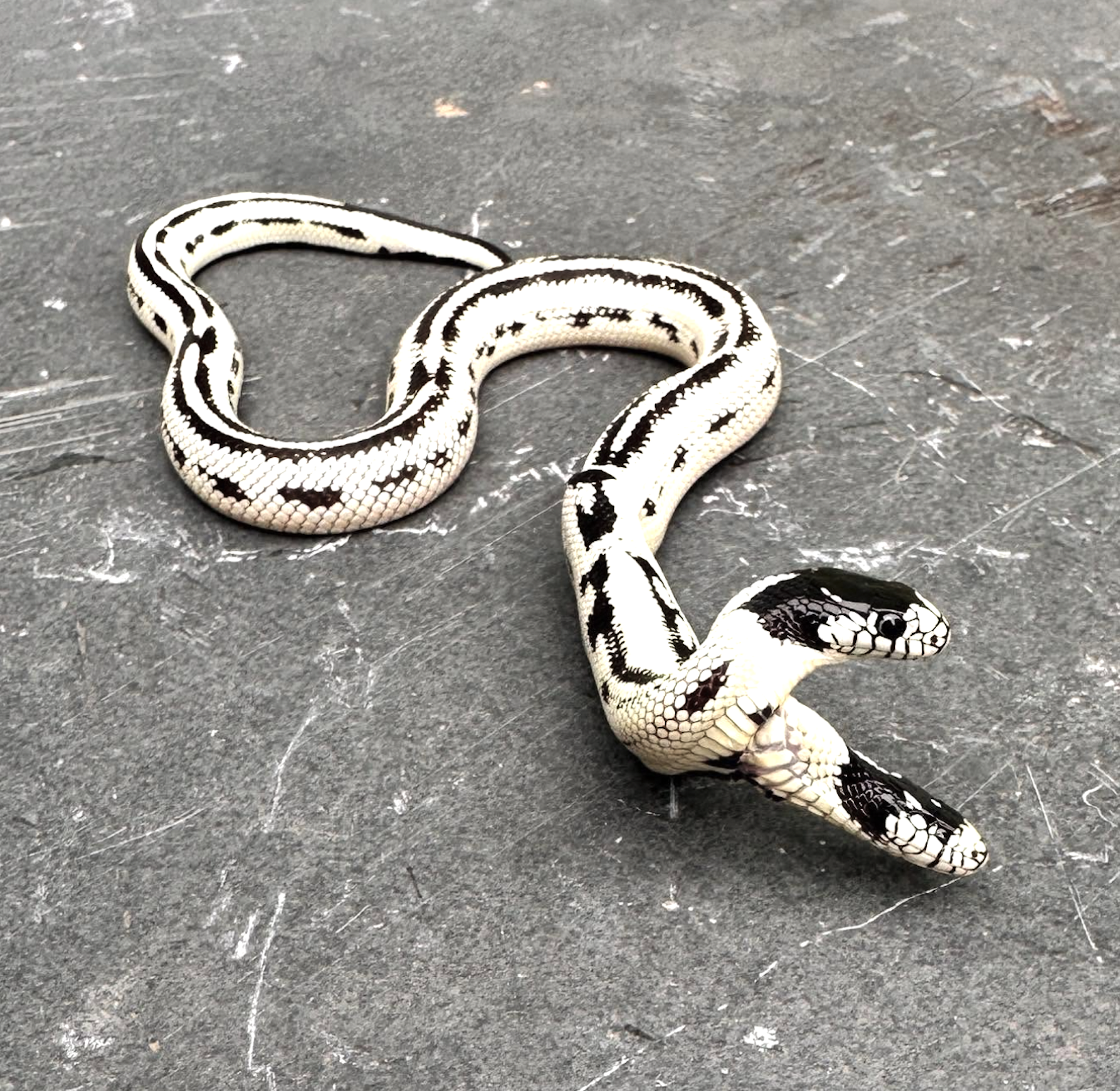
If you’re one of the thousands of Americans living with ophidiophobia (a fear of snakes), encountering a serpent with two heads probably isn’t high on your bucket list. But for Bay Area reptile fans, the two-headed California kingsnake currently residing at the East Bay Vivarium in Berkeley has been a source of joy for a whole year now.
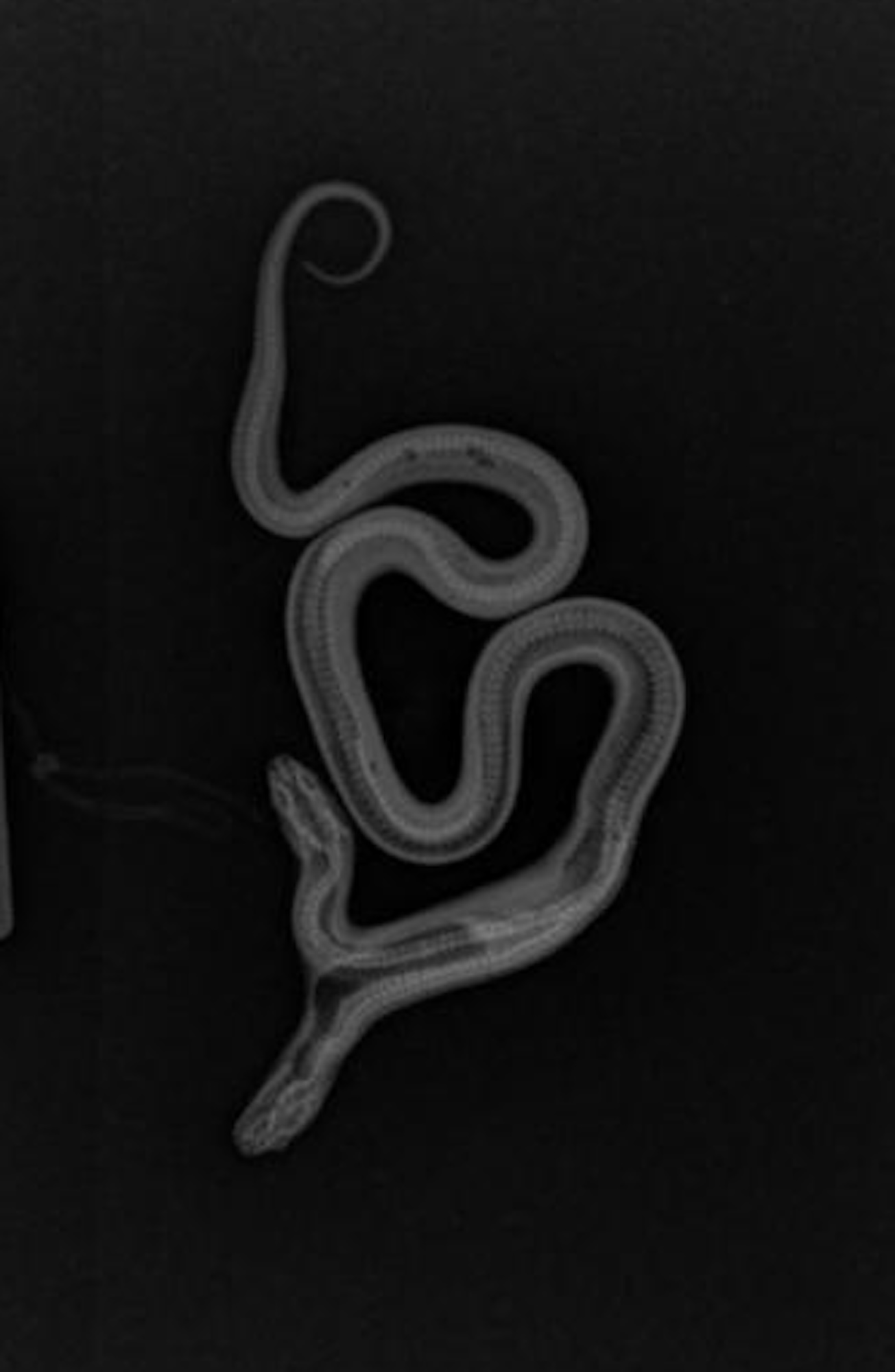
Hatched on Sept. 6, 2024, Angel/Zeke has spent his first 12 months hanging out, munching on frozen baby mice once a week, and generally living his best life — against all odds. Not only are two-headed snakes a rarity, only occurring about once every 100,000 snake births, they often die almost immediately. This one benefits from the fact that the two heads share a single set of organs.
“We’ve hatched and/or birthed partially two-headed snakes before but they haven’t survived,” explains John Emberton, co-owner of the vivarium. “We’ve hatched two-headed lizards. We had a two-headed Japanese cave gecko once. We’ve had some two-headed turtles, but none of them survived. None of them made it more than a few days. In some cases, they got out of the egg and that was it. They didn’t even live an hour. So that’s what makes this thing special. It’s pretty darn rare. I’ve been doing this for 36 years and this is the only one that has lived for me.”
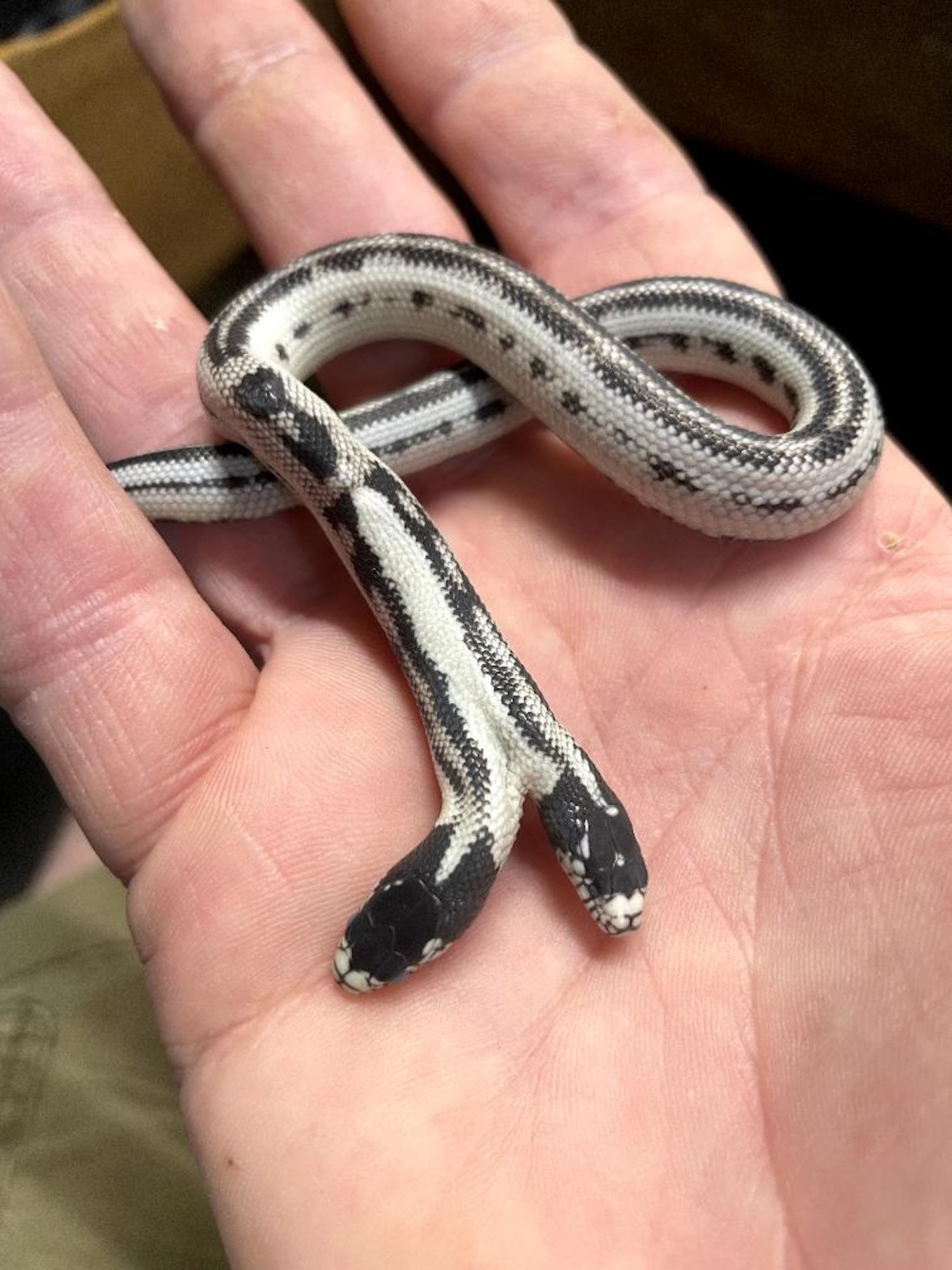
Now that Angel/Zeke is hitting his one-year milestone, the Vivarium is hoping to re-home him in an institution that will make him even more visible to the public. Emberton’s preference would be the California Academy of Sciences — already home to local animal icons, Claude the albino alligator and Methuselah, the 100-year-old lungfish. Emberton has been in discussions with the Steinhart Aquarium about getting his legless legend situated there. According to Emberton, this lampropeltis getula californiae would be a good fit because it’s much more outgoing than most snakes.