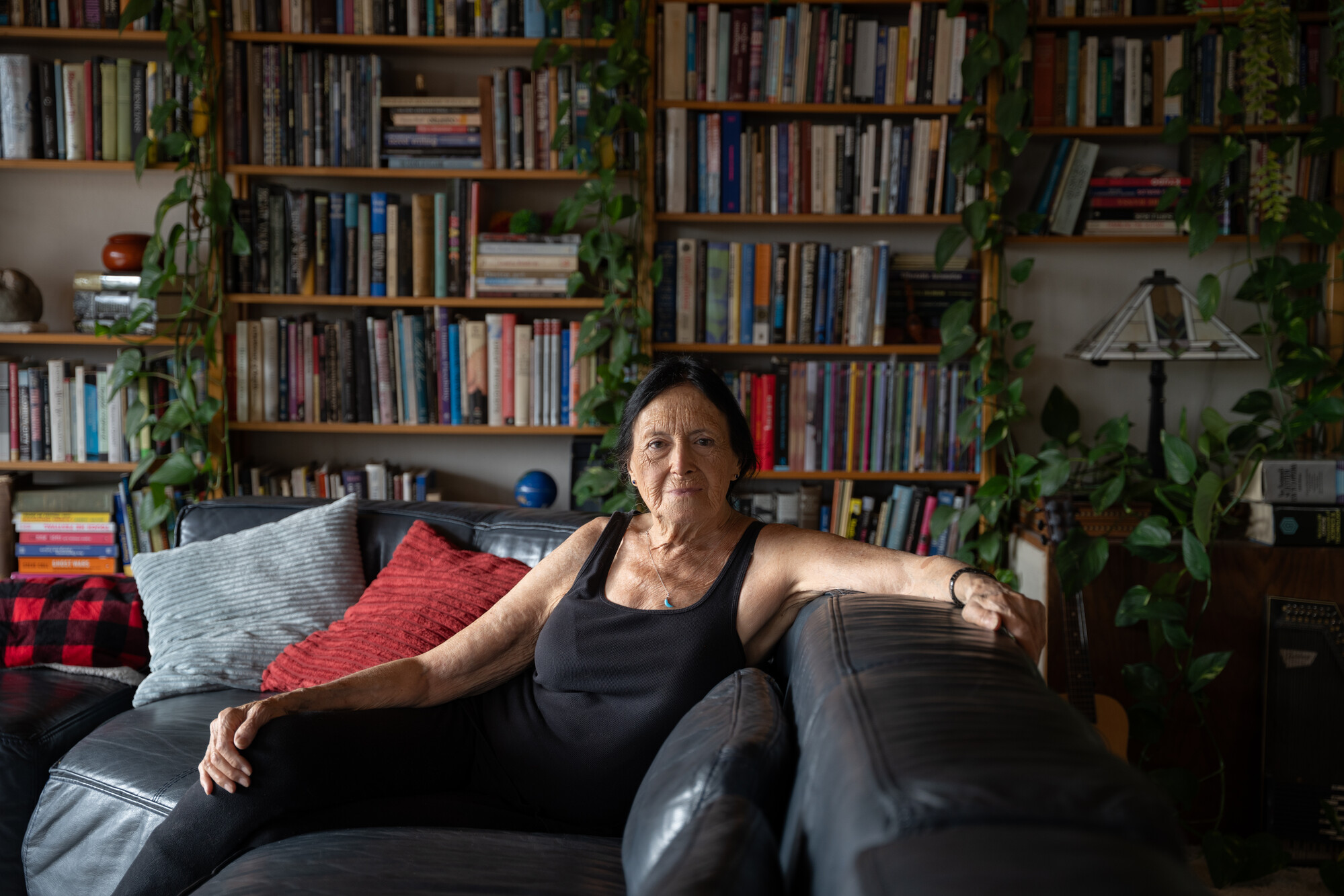
Sandy Stone worked with rock ’n’ roll greats and was the in-house engineer at feminist label Olivia Records in the 1970s. She poses in her home in Aptos on April 14, 2025. (Florence Middleton for KQED)
From the outside, Allucquére Rosanne “Sandy” Stone’s life looked like a dream. It was the late 1960s, and Stone was a young audio engineer at the Record Plant, the hottest new rock ‘n’ roll studio in New York City. Unlike the white-walled major-label recording studios of that era, the Record Plant was a converted garage built out to look like a Theater District nightclub where Jimi Hendrix once jammed with Eric Clapton.
Hendrix himself arrived from London in 1968 to lay down the tracks that would become his hit album Electric Ladyland. And he saw something in Stone. One evening, when the lead engineer called out sick, he asked Stone to take over.
“Jimi came in and listened to a couple of playbacks, and he said, ‘Wow, kid, you’re really good,’” Stone says. “And he went back in and did a few more, and eventually he came out and said, ‘You wanna work with me?’”
An invitation to collaborate with one of the best guitarists on the planet was a golden opportunity. But the male-dominated mainstream music industry wasn’t really where Stone wanted to be. She yearned to be on Girl Island, an imaginary refuge she dreamt up when she was 5 years old, in the early 1940s.
Despite being assigned male at birth and brought up as a boy, Stone intuitively recognized she was a girl as far back as she could remember. When she would retreat to the safety of her imagination, she pictured herself as part of a tribe of fierce little girls swimming down fast rivers, climbing mountains and hunting animals.
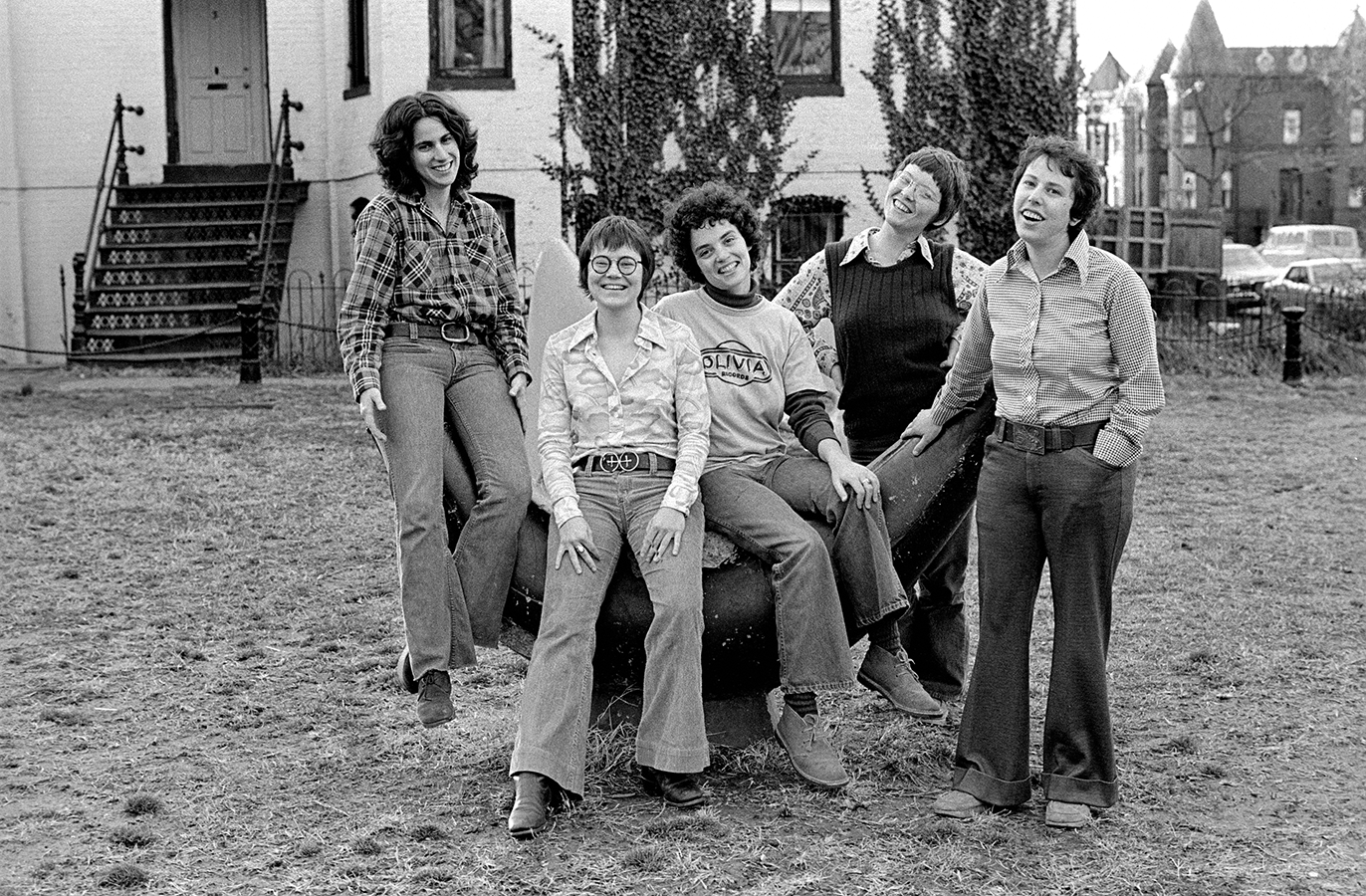
In real life, too, Stone felt most at home among other strong women who lived by their own rules. After she moved to California and began living as a woman in the early ’70s, she became the recording engineer at Olivia Records, the label at the center of the women’s music movement. The musicians of Olivia wanted to start a lesbian feminist revolution through song.
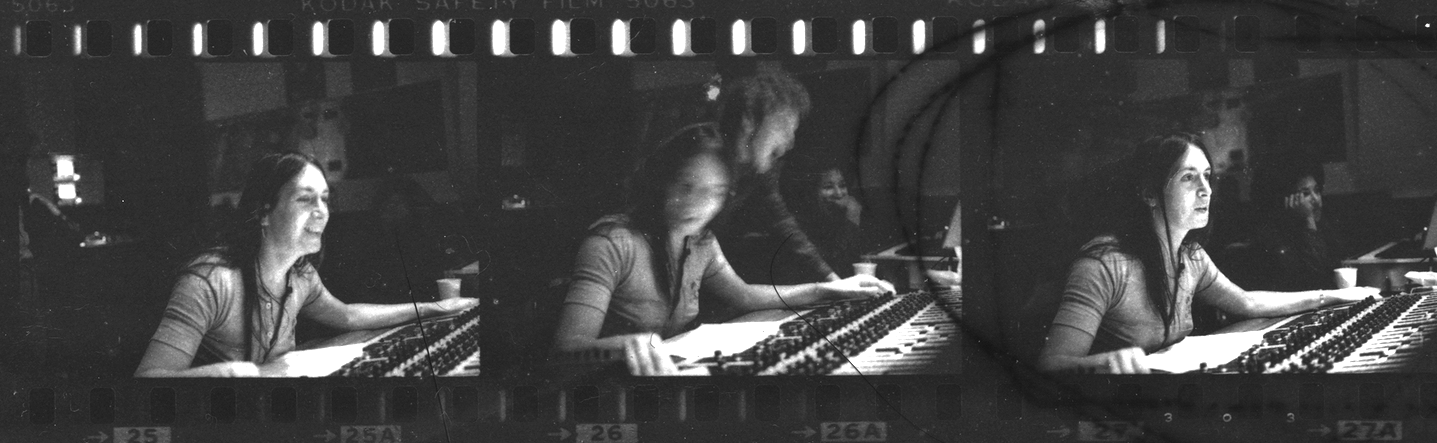
Sandy Stone recording at Olivia Records in the 1970s. (Courtesy of Sandy Stone and MJV Productions)
“We were like a little Girl Island,” she says.
Though Stone was key to Olivia Records’ success, her presence sparked a fierce backlash. Her detractors wanted to oust her, and all trans women, from women’s spaces in the name of liberation. Those activists, who became known as trans-exclusionary radical feminists, or TERFs, laid the groundwork for the anti-trans movement that the Trump administration, right-wing justices and conservative legislators would embrace 50 years later.
Now 88 years old and watching the backlash unfold, Sandy Stone has been here before. Yet she pushed through coordinated harassment campaigns and death threats, and made her mark on culture. In the decades after leaving Olivia, she became a world-class academic, a foremother of transgender studies and an early innovator at the intersection of art and technology. In 2024, she became the first openly transgender woman inducted into the National Women’s Hall of Fame. A documentary about her life, Girl Island, is currently in production.
Her secret? “No matter how awful it feels, no matter how terrible it gets,” she says, “just keep showing up.”
Figuring out how to transition in the 1970s
In the late ’60s, Stone relocated to San Francisco to transition and to get as far away from her family as geographically possible so she could figure herself out. While still presenting as a man, she crashed at a tiny Tenderloin apartment and worked at Wally Heider Studios with bands like the Grateful Dead and Crosby, Stills & Nash.
The internet didn’t yet exist, and there wasn’t much literature that could explain what it means to be trans. The only prominent trans woman in pop culture was Christine Jorgensen, a singer and actress who made headlines because of her transition in the early 1950s: “Ex-G.I. Becomes Blonde Beauty.”
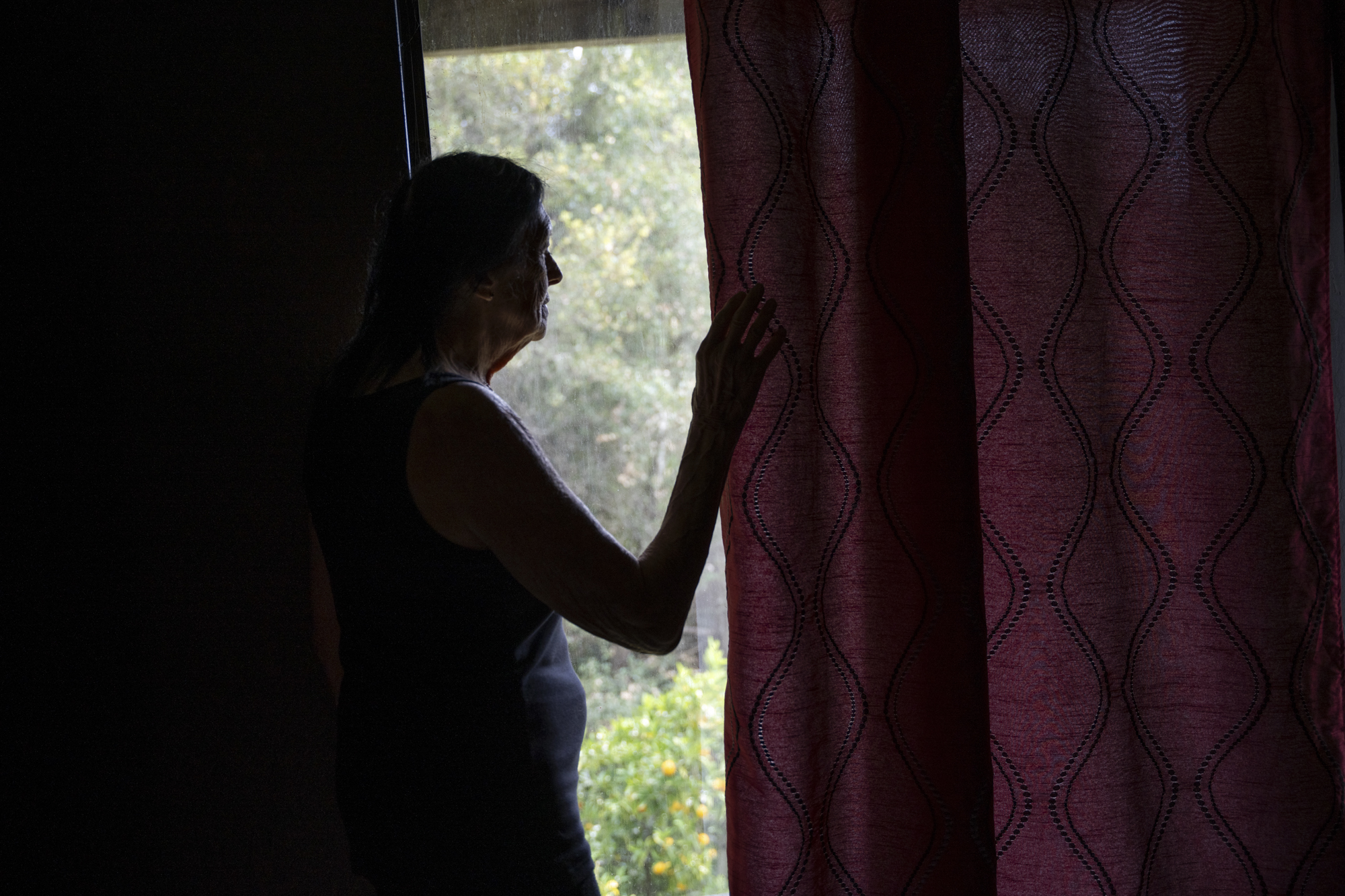
Sandy Stone, an 88-year-old legendary audio engineer and trans woman who worked with rock ’n’ roll greats and was the in-house engineer at feminist label Olivia Records in the 1970s, in her home in Aptos on April 14, 2025. (Florence Middleton for KQED)
While her 1967 memoir had been groundbreaking, Jorgensen also fit the narrow standards the medical establishment expected of trans women. Only those who possessed conventional feminine beauty — the ones who could easily pass as cis, marry a straight man and disappear into a typical heterosexual life — were approved for hormones and surgeries.
That left little room for the woman Stone would become: queer, independent, determined to excel in a male-dominated field. She knew she didn’t fit into any preexisting stereotypes, but the feeling that she wasn’t living as her true self kept nagging at her. “If I don’t do something about this, I’m gonna wake up at the age of something like 60 and go, ‘Oh my God, I never became who I was,’” she recalls thinking.
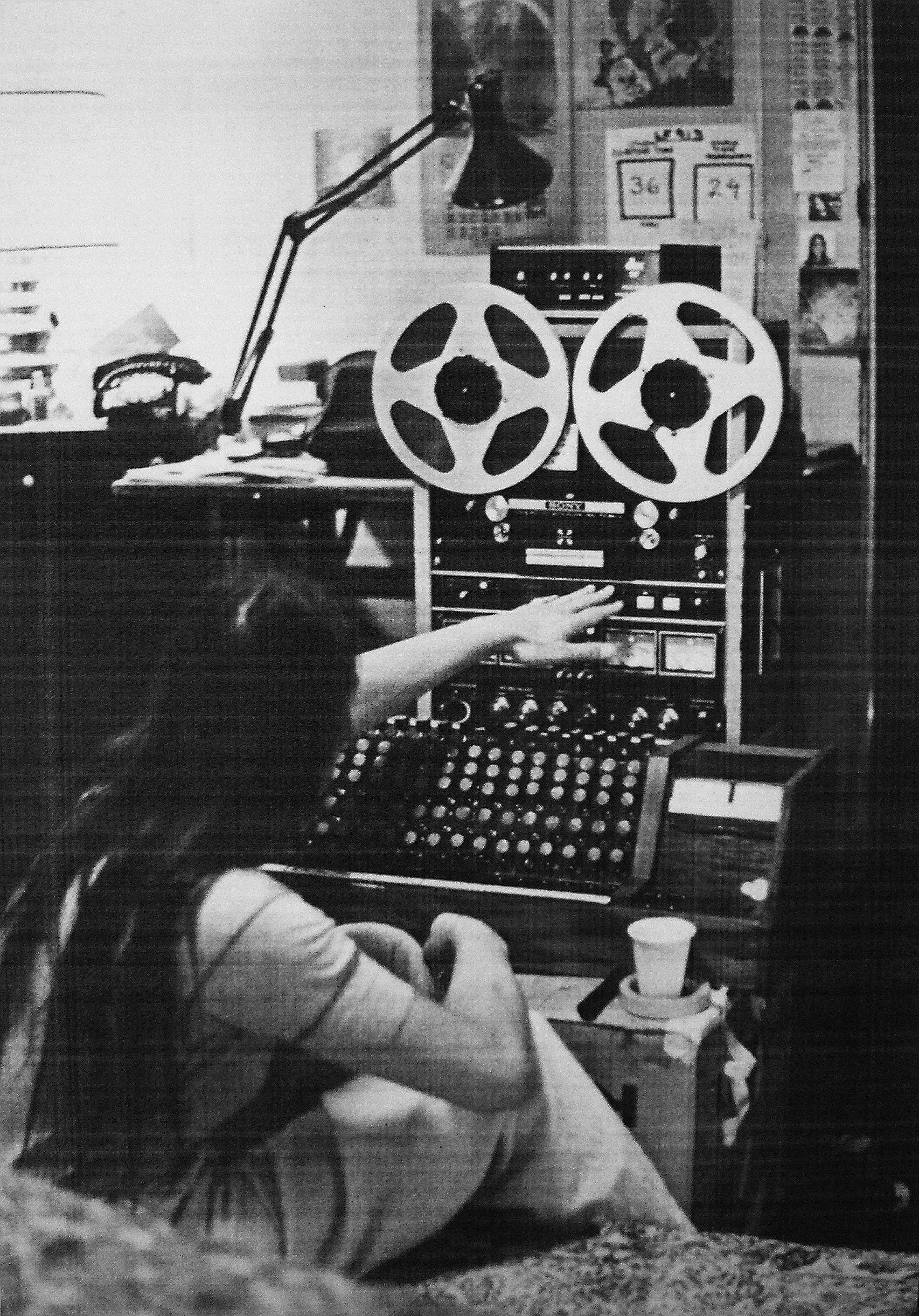
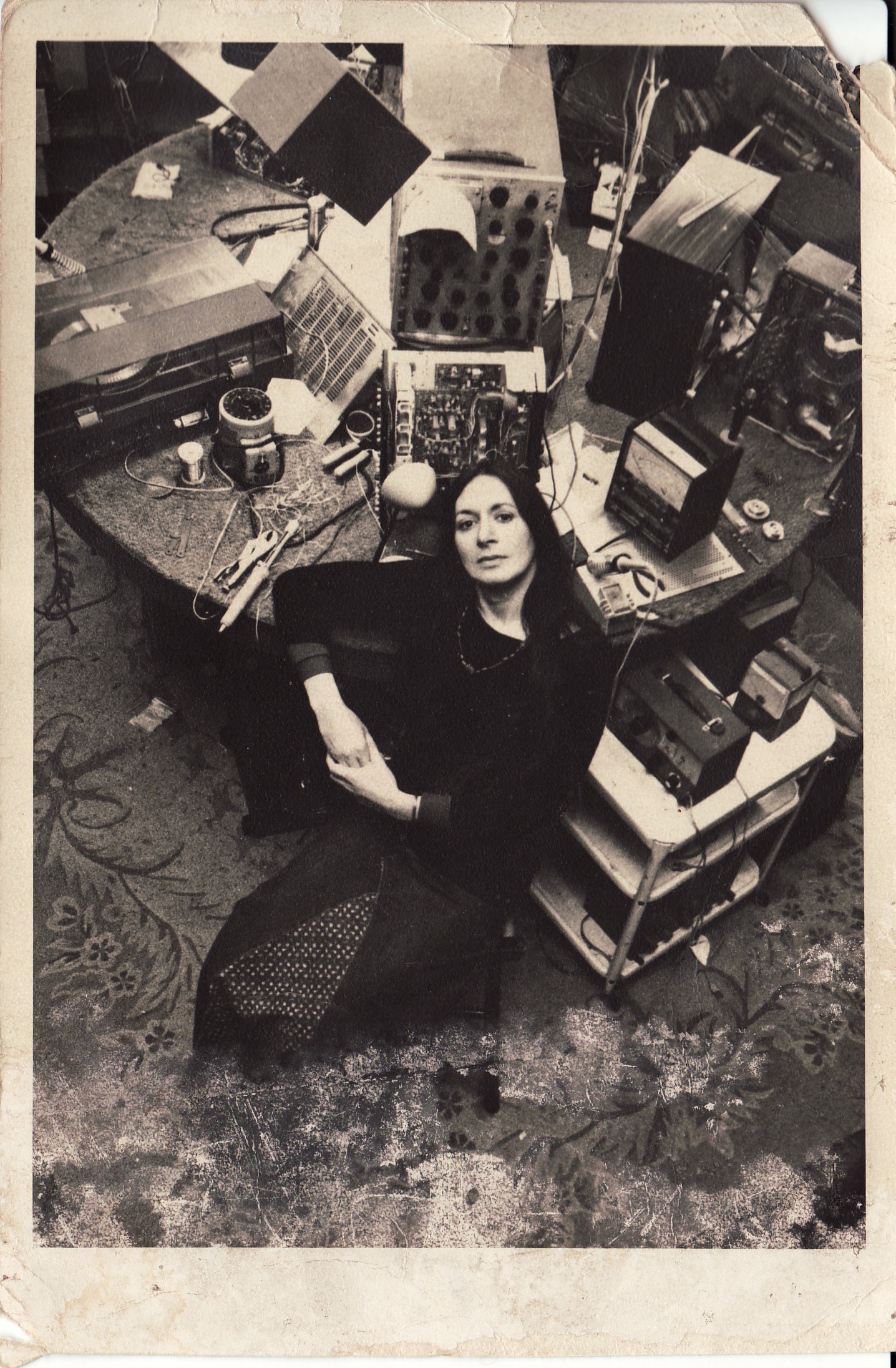
Sandy Stone engineering in the ’70s. (Courtesy of Sandy Stone and MJV Productions)
Desperate for help, she picked up the phone book and called up the few gay civil rights organizations she could find. To her surprise, they told her to call the San Francisco Police Department.
It turned out that they had good reason. After the Compton’s Cafeteria riot of 1966, when trans women in the Tenderloin fought back at abusive police, Officer Elliott Blackstone advocated alongside them for social services and reforms.
The police directed Stone to a relatively new city department called the Center for Special Problems, which offered resources to the trans women of the Tenderloin. Many of them worked in the sex trade because of severe job and housing discrimination.
Stone didn’t fit in with the street queens; she knew she had to define her own path. Eventually, she found her way to Stanford University, home to one of the first gender clinics in the U.S.
She was still presenting as a man, with a full beard, a work shirt and engineering boots. Dr. Don Laub, an early innovator in gender-affirming healthcare, told her that if she was serious about becoming a woman, she had to live full-time as one for a year — in work, friendships, relationships and every other arena of life.
It was a terrifying yet thrilling proposition. But if Stone was going to live as a woman, she had to do it her way, even if her doctor didn’t understand.
“I would come in in jeans and a T-shirt, and Don would say, ‘Why aren’t you dressed as a woman?’” Stone remembers. “I would say things like, ‘Don, have you looked out the window recently? I mean, do you know what real women are doing?’”
After many of these arguments with Stone and other patients, the male doctors at Stanford began to evolve their stereotypical views of not just trans women, but women, period. Before too long, Stone was approved for surgery.
Olivia Records versus the TERFs
By the early ’70s, Stone relocated to Santa Cruz and joined another Girl Island: A lesbian outdoor adventure squad called the Amazon Nine, who spent their free time kayaking down rivers and getting airlifted onto the sides of mountains. To make money, she rented a cheap storefront and opened a stereo repair shop. Before long, it became a queer hangout. That’s when the women of Olivia Records came calling.
In the era of second-wave feminism, a radical wing of the movement dreamt of an independent society of women, living collectively without men under egalitarian principles. Olivia Records made the soundtrack to the lesbian separatist revolution. They needed a woman engineer, and Judy Dlugacz, Ginny Berson and the other co-founders had heard Stone was one of the best in the business.
Stone was equally impressed with them. She had already fallen in love with Cris Williamson’s folk album The Changer and the Changed. It was a groundbreaking record that put Olivia, and the women’s music movement, on the map and inspired many a coming-out story. (Stone would later be tasked with remixing the album to boost its quality — one of the highest honors of her career.)
“Olivia Records,” Stone says, “was women’s ability to be powerful personified.”
Stone joined the collective in Los Angeles, where they lived and worked in a co-op, and where women musicians collaborated with women producers, photographers, copywriters, graphic designers and concert producers.
Related Article
The collective members knew Stone was trans from the beginning, and they embraced her. After all, they reasoned, her intentions were sincere: She had given up work with the rock ‘n’ roll elite in order to live as a lesbian feminist — and to join a radical collective that wasn’t really making money. But it didn’t take long for word about Stone’s gender identity to spread in the women’s music scene, and people became angry.
“They wrote hate-filled letters accusing us of being in cahoots with the patriarchy,” Berson says in her 2020 memoir, Olivia on the Record, adding that “musicians denounced us from the stage.”
Backlash grew when a Boston College Ph.D. student named Janice Raymond mailed Olivia Records a copy of her dissertation, which would later form the core of her 1979 book, The Transsexual Empire: The Making of the She-Male. In the published version, a particularly derogatory chapter singles out Stone by name and accuses trans women of being secret men colonizing women-only spaces.
Sandy Stone at her stereo repair shop in Santa Cruz in the ’70s. (Courtesy of Sandy Stone and MJV Productions)
Raymond wasn’t the only one stoking division within liberation movements of the day. Throughout the ’70s, gay activists sought to distance themselves from trans people in their quest for mainstream acceptance. And increasingly, radical feminists didn’t want trans women to be seen as women.
In an open letter in Sister magazine, the Olivia collective shot back: “Sandy Stone is a person, not an issue,” they wrote in 1977.
A community meeting at a San Francisco feminist bookstore ended with Olivia Records members in tears as their former friends berated them. They pressed on, but hate mail escalated into death threats. When the collective traveled to Seattle for a concert, a militant lesbian separatist group called the Gorgons threatened to shoot Stone, she recalls.
Through it all, Stone remained stoic, remembers former Olivia Records member Teresa Trull, who was put in charge of handling the PR crisis. “If you got to know her, she was very vulnerable, but at the same time, very stalwart. Sandy’s strength has always impressed me,” she says.
“She’s sort of superhuman to a lot of people,” says Marji Vecchio, the director of the forthcoming documentary about Stone’s life, Girl Island. “[But] her struggles have been complex, and that’s not to be ignored. And what Sandy has done is not only survived them, but created community around her.”
Stone left Olivia Records in 1978. Many believed it was because of the death threats or a boycott, but in reality, the reason was much less interesting: the label ran out of money.
“I would never leave because of a threat,” Stone says now, with resolve. “My job is to stand up to that. … I mean, the alternative is what? You give in to hatred? Then what kind of a life do you have?”
Sandy gets the last word
In the ’80s, Stone enrolled in UC Santa Cruz’s history of consciousness Ph.D. program. It was there that she finally got to clap back at Janice Raymond and other women who would come to be known as TERFs, who not only made her life a living hell, but also ostracized all trans people from the LGB community.
While TERFs argued that trans women oppressed cis women by reinforcing gender stereotypes of traditional femininity, Stone’s groundbreaking essay “The Empire Strikes Back: A Posttranssexual Manifesto” boldly defied the narrow, heteronormative standards the medical community imposed upon trans people. Stone affirmed that trans women — and all women — could be anything they wanted to be, and didn’t have to “pass” or hide their life history to be considered valid. The essay became a foundational text in the academic field of trans studies.
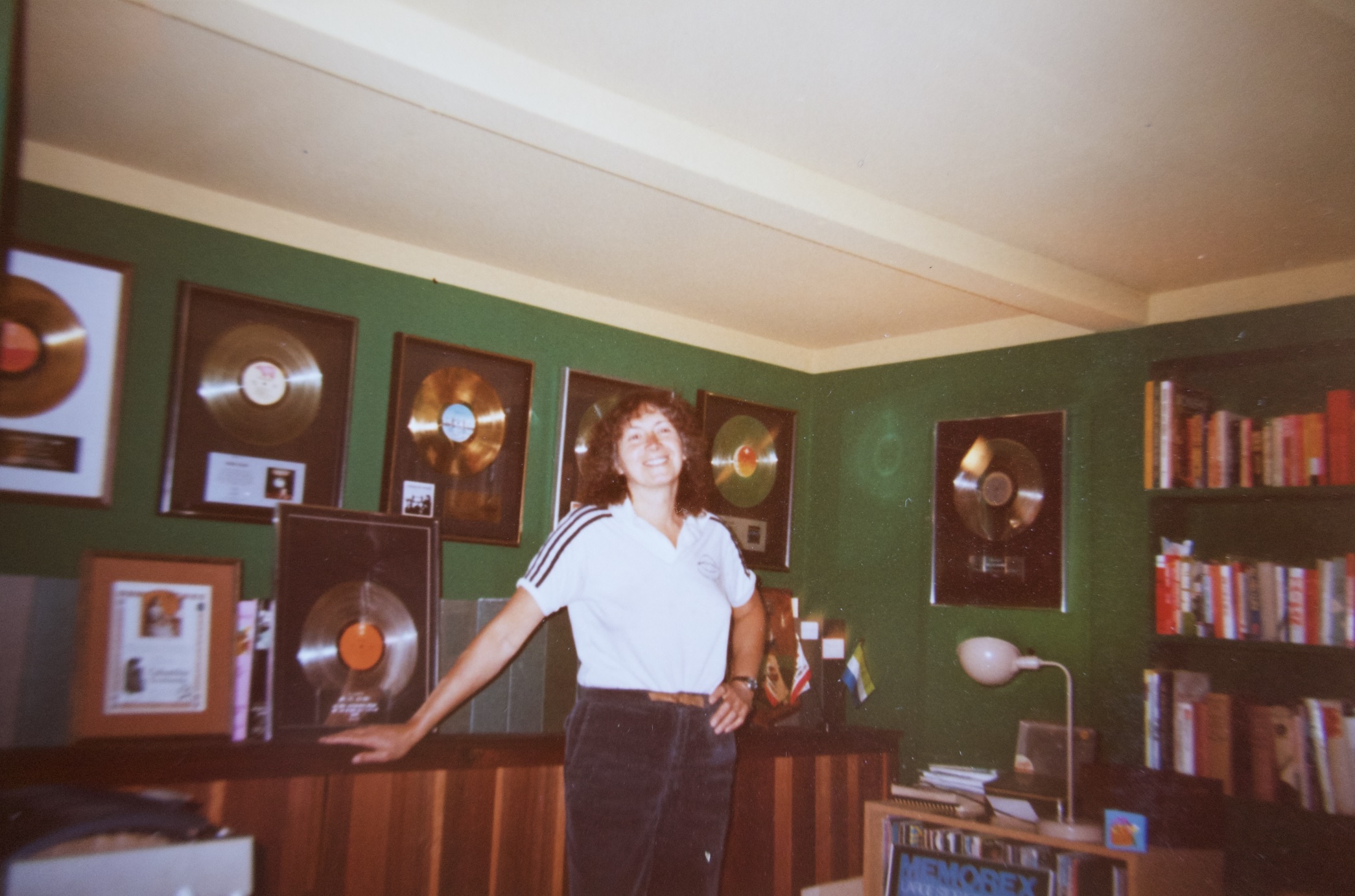
Sandy Stone in the ’80s. (Courtesy of Sandy Stone and MJV Productions)
Before its publication in 1987, prevailing literature objectified, othered or infantilized trans people, Stone says.
“We had no voice,” she says. “We were sick; we were deluded; we were pathological in some way; and we were defined by a very small group of studies of trans people in hospitals or trans people on the Tenderloin, sex workers. And they would come to define what trans meant. And that was all there was.”
Though she feared it could be a career-ending move, Stone read the piece at a conference. “People stood up and were cheering. I hadn’t seen anything like that, or expected it.”
Vecchio says Stone’s writing opened space for how today’s younger generations of queer people define gender as a spectrum. “I think the concept of being able to grow into something called nonbinary, for example,” Vecchio says, “I see as a direct result of Sandy’s relationship to outness.”
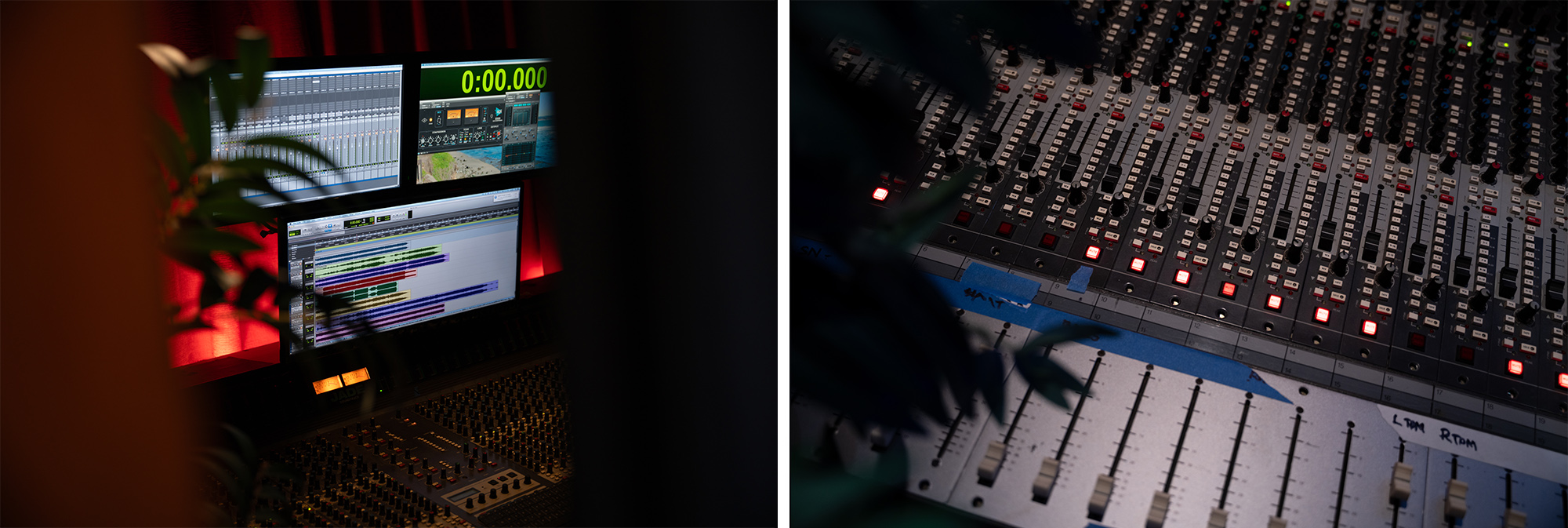
The sound studio in Sandy Stone’s home in Aptos on April 14, 2025. Stone, 88, is a legendary audio engineer and trans woman who worked with rock ’n’ roll greats and was the in-house engineer at feminist label Olivia Records in the 1970s. (Florence Middleton for KQED)
Stone spent the ’90s and aughts at the University of Texas, Austin, where she founded the Advanced Communication Technology Lab. An early maker space where students could experiment with machinery, it became hugely influential in the burgeoning field of “new media” that combined art and technology. (That mad-scientist spirit of ACTLab lives on in Stone’s home today, in her studio full of drones and 3D printers.)
It was during this time that she met the love of her life, the visionary software engineer Cynbe ru Taren. They lived an “ideal geek life” together until his death from cancer in 2016.
Today, at 88 years old, Stone isn’t done making history. The proud grandmother of a teenager, she currently serves as head engineer at KSQD, the community radio station in Santa Cruz. For younger trans women like singer-songwriter Mya Byrne, Stone is a beacon.
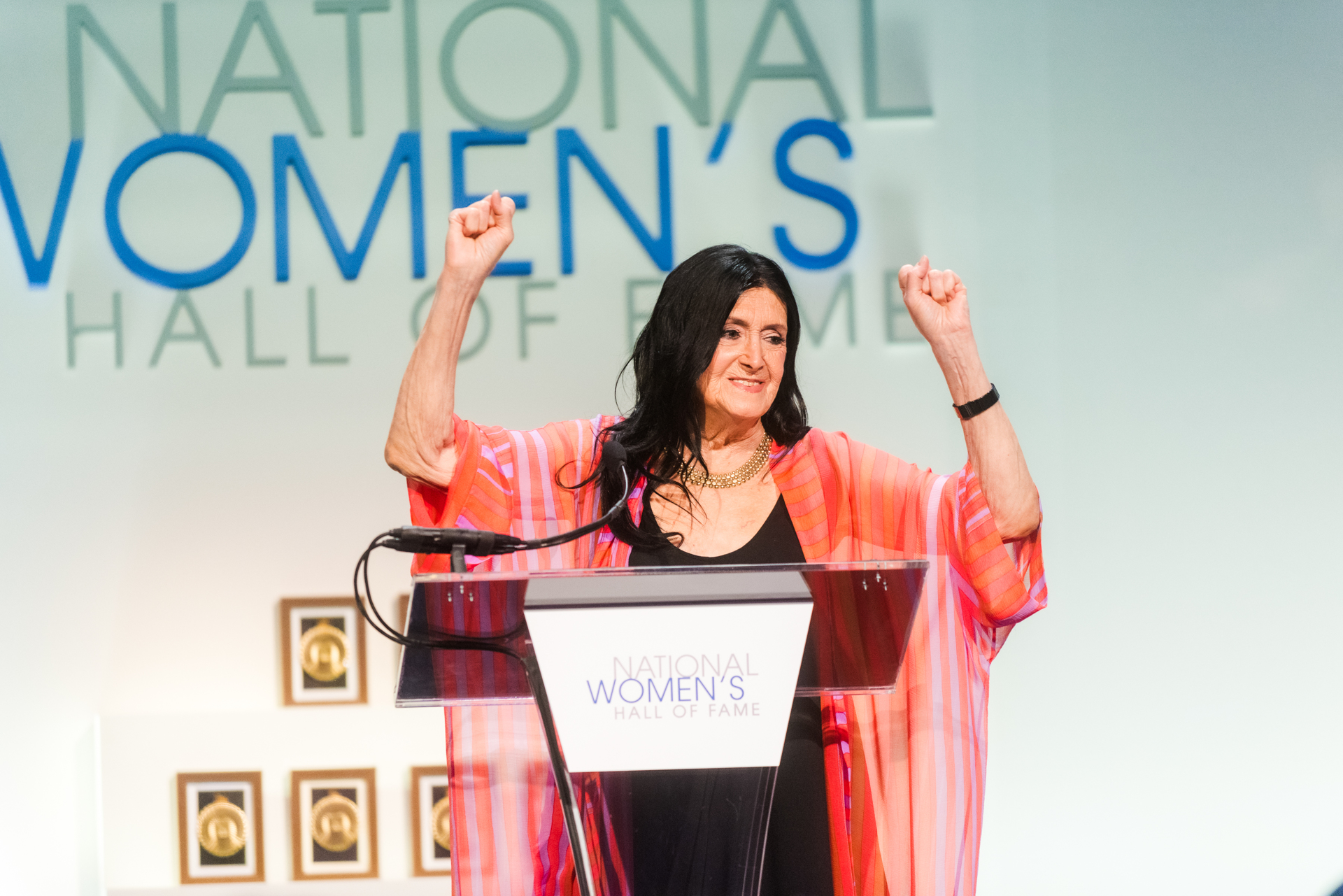
Sandy Stone accepts her induction into the National Women’s Hall of Fame in 2024. (Courtesy of National Women's Hall of Fame)
Byrne and her friend recently spent an afternoon recording a new song with Stone just outside of Santa Cruz.
“When we left her house, we were crying,” she says. “To witness this amazing woman, … who has seen a thing or two, and to know that she survived. … It’s like we have a grandma who’s also like a sibling.”
In 2024, Stone was inducted into the National Women’s Hall of Fame among a cohort that included civil rights icon Ruby Bridges and world tennis champion Serena Williams. She was the first openly trans woman to receive that honor.
In her acceptance speech, she underscored a simple fact of the world: “Trans women have been a part of every known human culture since the beginning of time.”