Philip Kan Gotanda spent more than four decades as a filmmaker and playwright before he decided to try storytelling in a new format: opera. Gotanda, whose work focuses primarily on the Japanese American experience and World War II, was feeling creatively blocked; he was looking for a new approach to his work. With the help of a composer (Max Giteck Duykers) and a director (Melissa Weaver), Gotanda took on the role of librettist for his first experimental opera, Both Eyes Open.
An Opera Connects Immigrant Experiences from the 1940s to the Present
‘Both Eyes Open,’ playing Feb. 15 and 16, tells a story of Japanese Americans incarcerated during WWII.
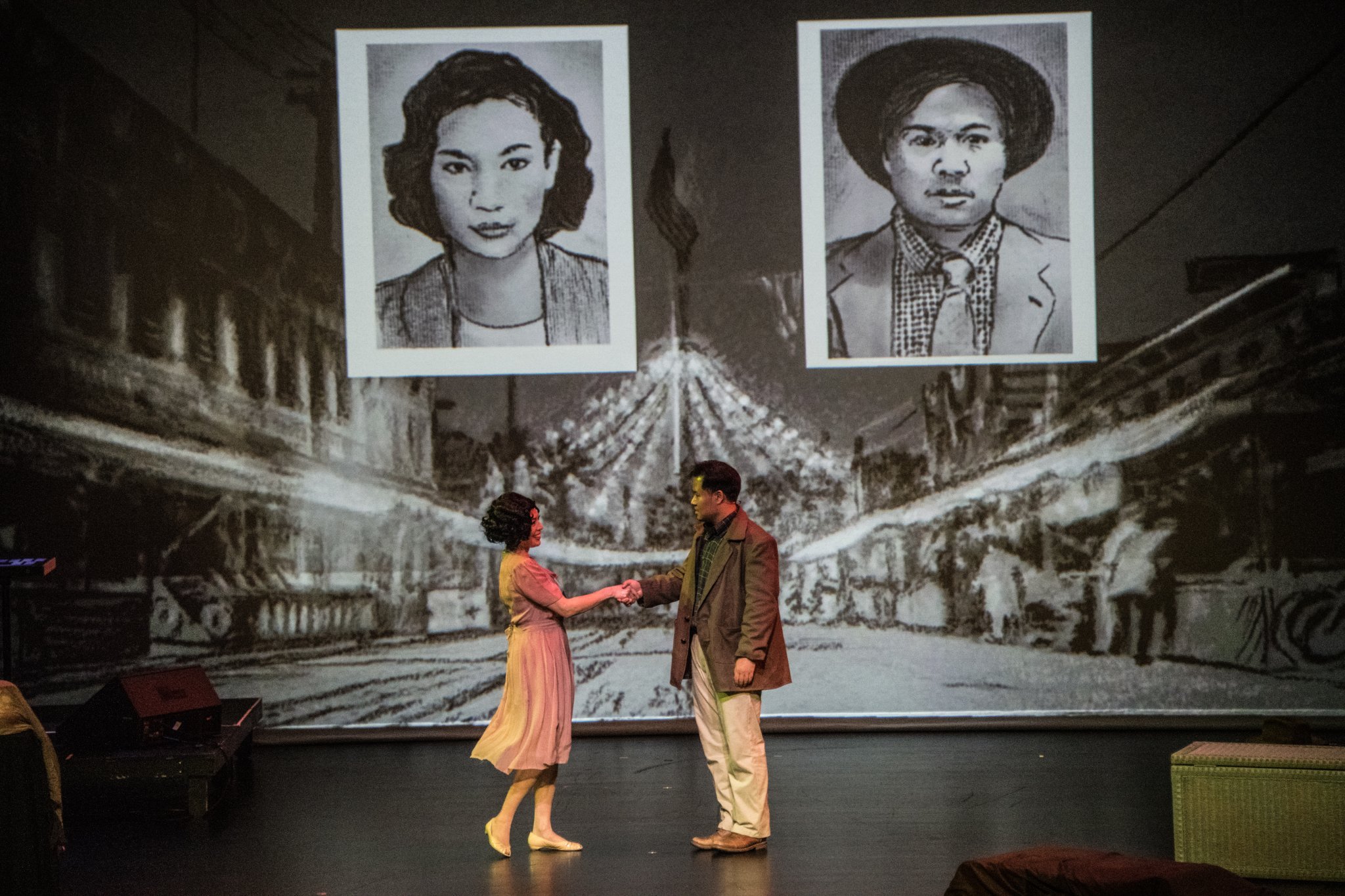
A scene from ‘Both Eyes Open' at the Presidio Theatre in San Francisco in 2022. (Terry Lorant Photography)
Related Article
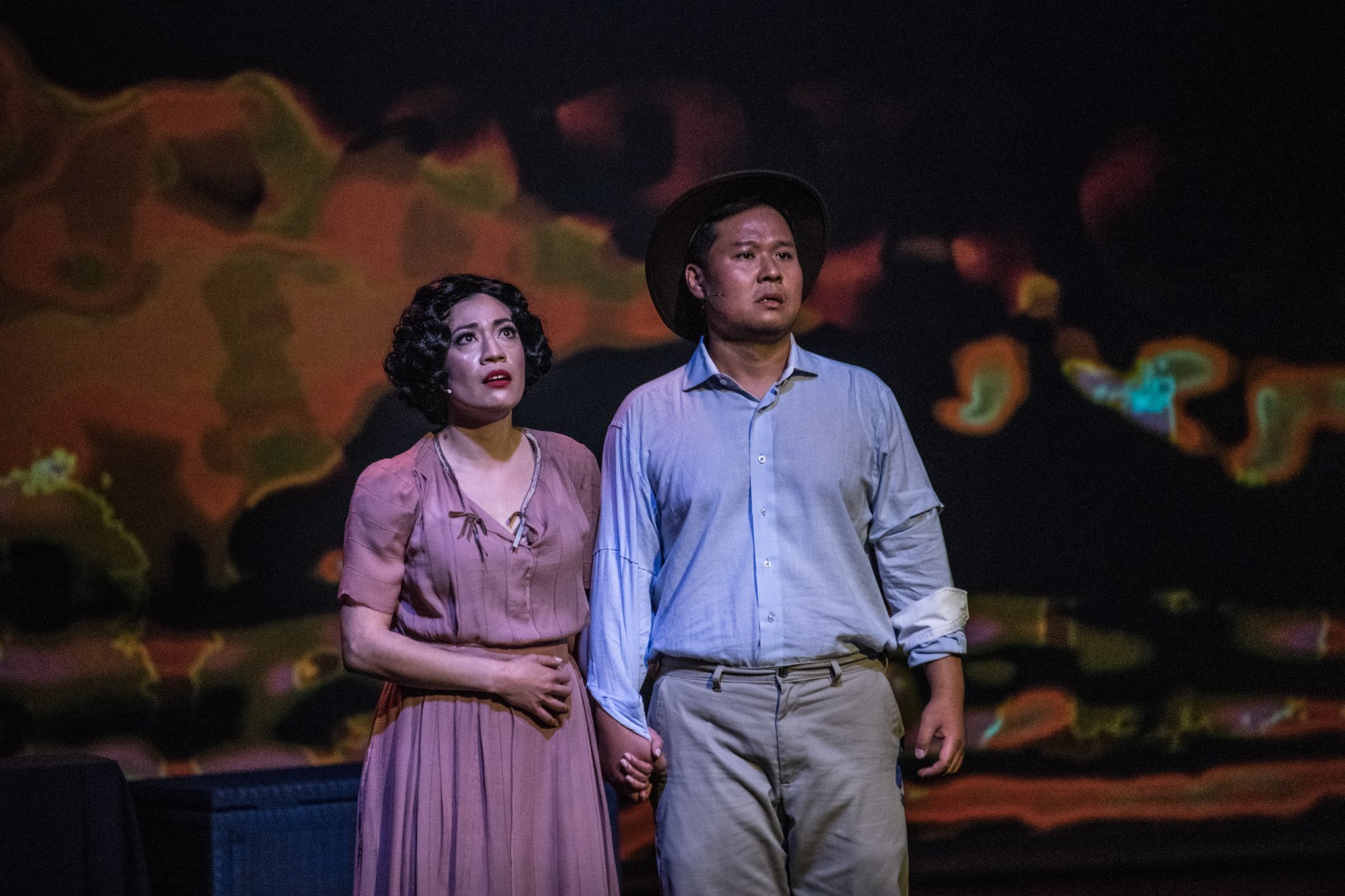
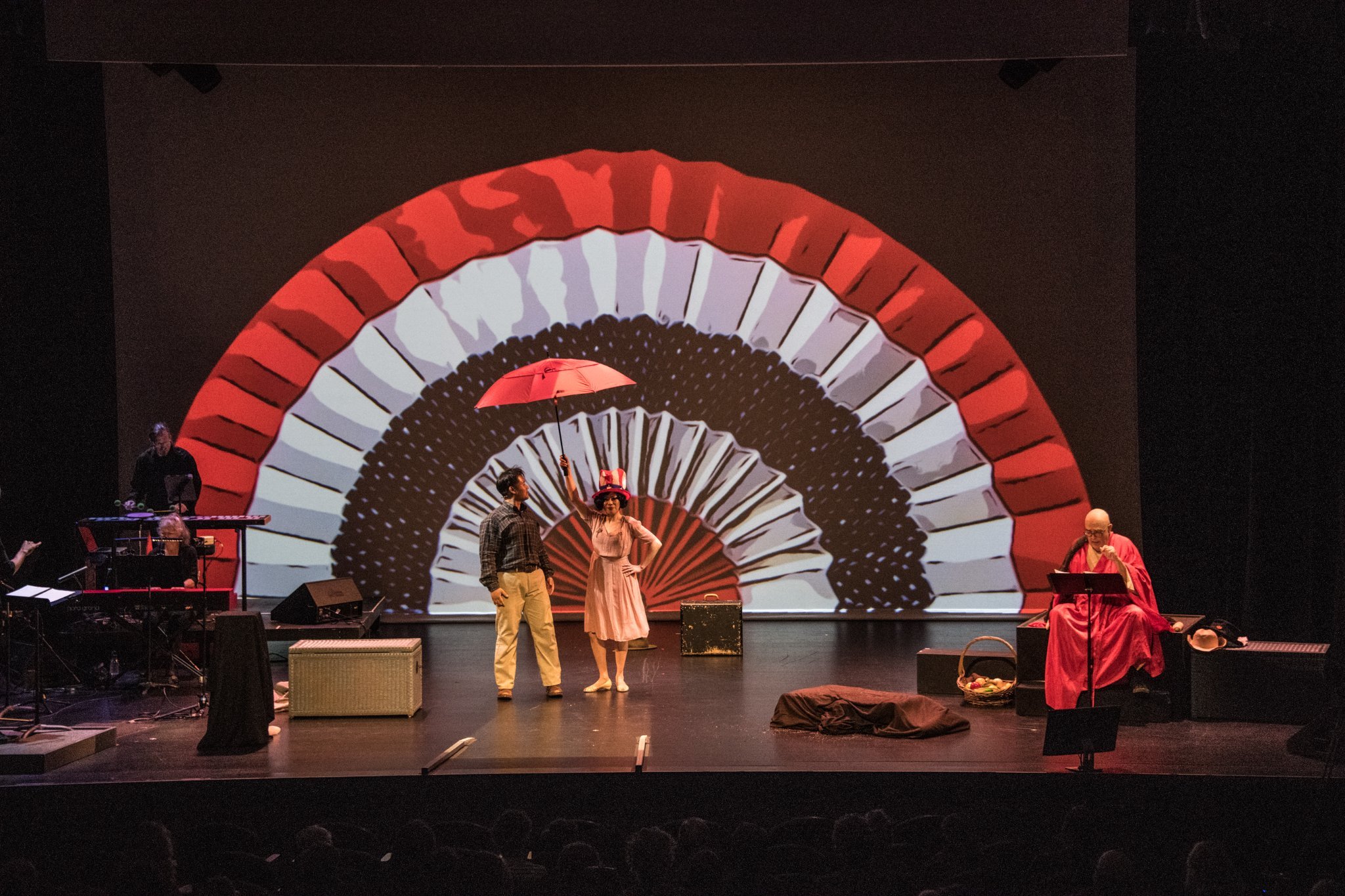
The opera follows the stories of Jinzo Matsumoto, a fictional Japanese American farmer from Stockton, and his wife, Catherine, as they endure incarceration and the loss of their farmland. An impressionistic, experimental production, Both Eyes Open uses projections, interactive video elements and a unique instrument called the Marimba Lumina to set its scenes.
Creating the work was a collaborative effort of herculean scale: it took Gotanda and his colleagues a full decade to complete Both Eyes Open. It debuted in 2022 at the Presidio Theatre in San Francisco and plays for two days only this weekend at UC Berkeley’s Zellerbach Playhouse.
“The idea was that the story would … be relevant to the times,” says Gotanda. “It creates a through line, showing the reasons behind the original incarceration are very much related to all the anti-immigrant, anti-Asian hatred that’s going on now.”
Hatred, says Gotanda, is part of the soil in Both Eyes Open, just like it was back in the early 1900s for other immigrants. He points to George Shima as an example, the real-life Japanese American immigrant businessman whose success growing potatoes in the drained swampland of the San Joaquin Delta was cut short by government-sanctioned racism.
The through line of racist lawmaking is clear. For Shima, it was the California Alien Land Law of 1913 that prevented him from owning land, and the Immigration Act of 1924, which excluded immigration from Asia and cut off his supply of workers. For the opera’s Jinzo and Catherine Matsumoto, it’s President Roosevelt’s Executive Order 9066, which resulted in Japanese American incarceration and the loss of their land.
For immigrants today, it’s President Trump’s vow to invoke the Alien Enemies Act of 1798, his signing of the Laken Riley Act, and his outspoken desire to end birthright citizenship.
Before getting back to rehearsal, Gotanda tells me he credits Both Eyes Open for keeping him alive artistically. “It has been [an experience] which is very much representative of art that emerges from the Bay Area,” he says. “[The opera] has a kind of political world that surrounds the artistic piece.”
That shared culture behind the scenes feeds straight into the production: “I want audiences to come away thinking, ‘This is a story about right now.’”
‘Both Eyes Open’ will be performed at UC Berkeley’s Zellerbach Playhouse on Feb. 15 and 16, 2025.