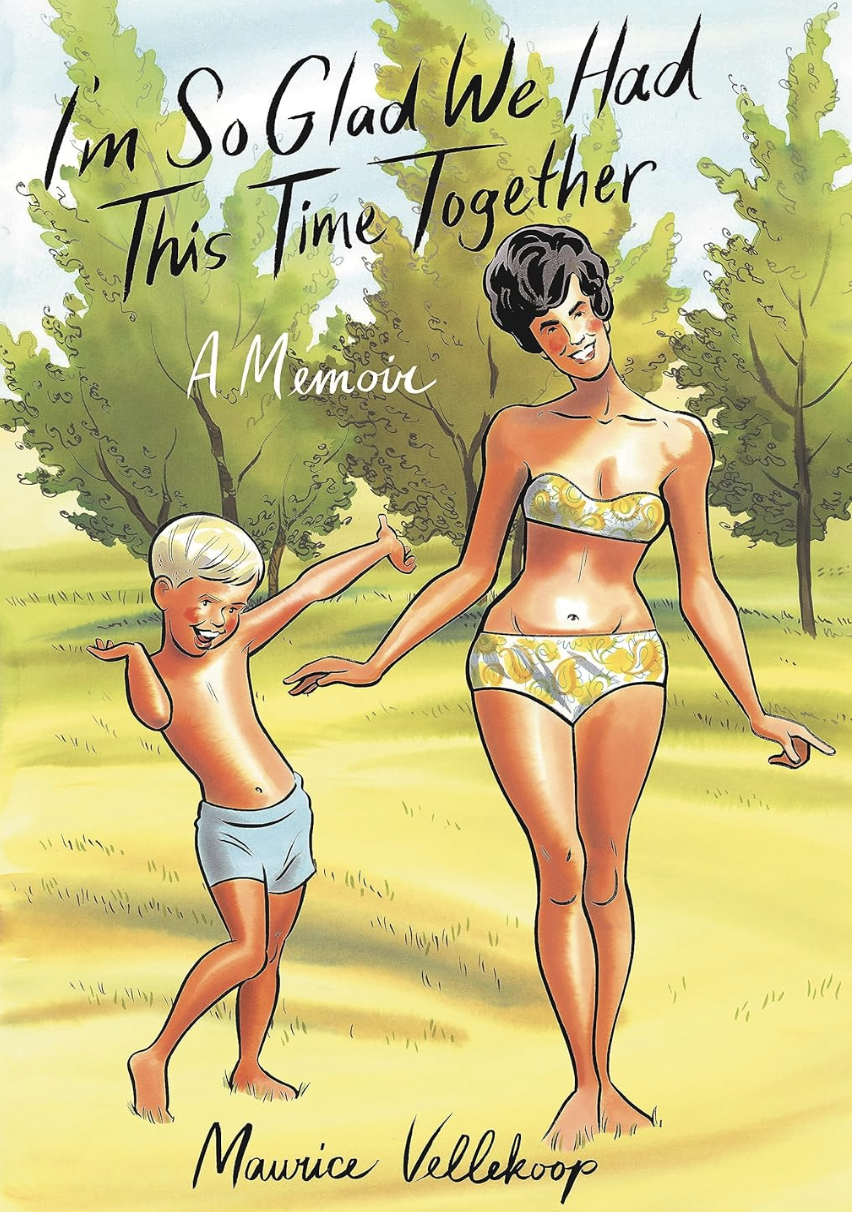
At one point far into Maurice Vellekoop’s operatic, nearly 500-page graphic memoir I’m So Glad We Had This Time Together, he depicts himself at an art event in Toronto. He has donated his work to the silent auction and is now scoping out the scene, chatting up yet another handsome stranger in search of that elusive spark. “I thought you said you were an artist,” the man bitterly remarks, having just matched the artist to his art — presumably a comics illustration.
This moment is somewhat peripheral to the main storyline, included as a demonstration of the then 30-something-year-old’s long-delayed willingness to put himself out there on the dating scene. But in a way, it captures a concern even more essential to the book. This long, gorgeous, often rambunctious memoir is the story of a man’s search for a way out of the expectations that have kept him constrained for most of his life. Vellekoop will not remain unscathed by other people’s judgment and censure. In the end, though, this impressive book is the proclamation of an artist, in this case a cartoonist, finally staking out his claim.
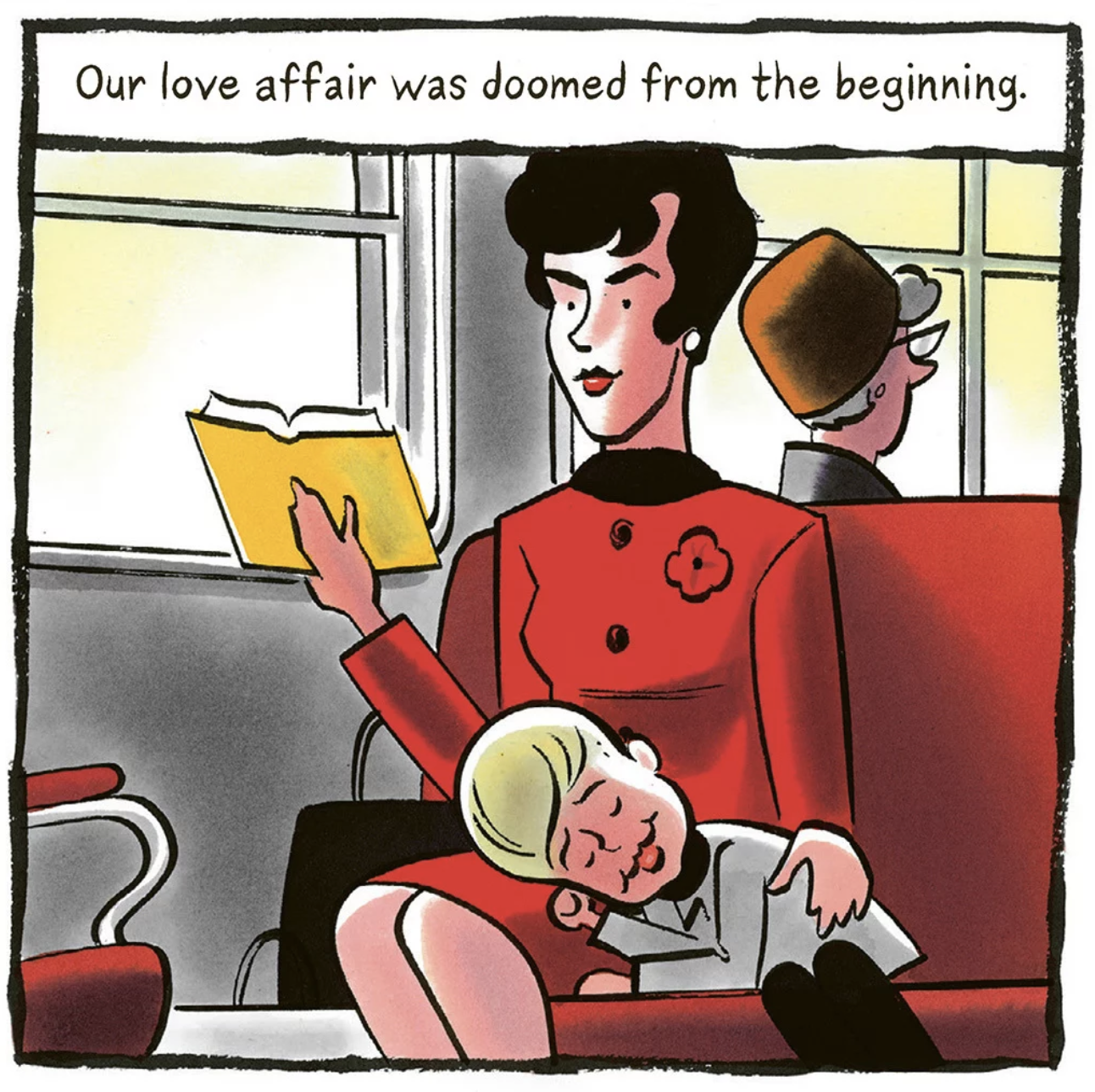
Divided into four sections tracking various throughlines from his life so far, Vellekoop opens his lavishly colored book of comics with scenes from early childhood. Born in 1964, young Maurice was the fourth and final sibling raised in the suburbs of Toronto by Dutch immigrant parents who were also avid members of the Christian Reformed Church. From his loving but complicated Mum and Dad, he developed an immediate, and passionate, connection with music and art. This working-class immigrant family displayed a Rembrandt in their living room. His mother made clothes for the entire family, also running a hair salon out of their basement. His father, an art and music lover, took him to see Fantasia when he was a little boy. It was initially through the two of them, and his adored older sister, Ingrid, that many of his great loves — and, eventually, prodigious talents — were launched.
But family life was also full of contradictions. Vellekoop’s father was subject to sudden, inexplicable rages. His mother could never reconcile the aesthetic tastes she shared with her youngest with her sense, particularly as he grew older, that his desires were not quite aligned with her adopted religious beliefs and cultural standards. “My Mum and I should have bonded over beauty,” the narrator mournfully reports, tracking one missed opportunity after another. First subtly — say, by substituting a marionette as a gift in lieu of a much-desired Barbie — later much more overtly, by handing her son religious pamphlets condemning homosexuality, Vellekoop’s mother, whom he adored, time and again makes her disapprovals known. As the boy ages into puberty, he battles his budding sexual desires alongside a longing to please his parents as well as a growing anxiety around peers who tease and also verbally abuse him.
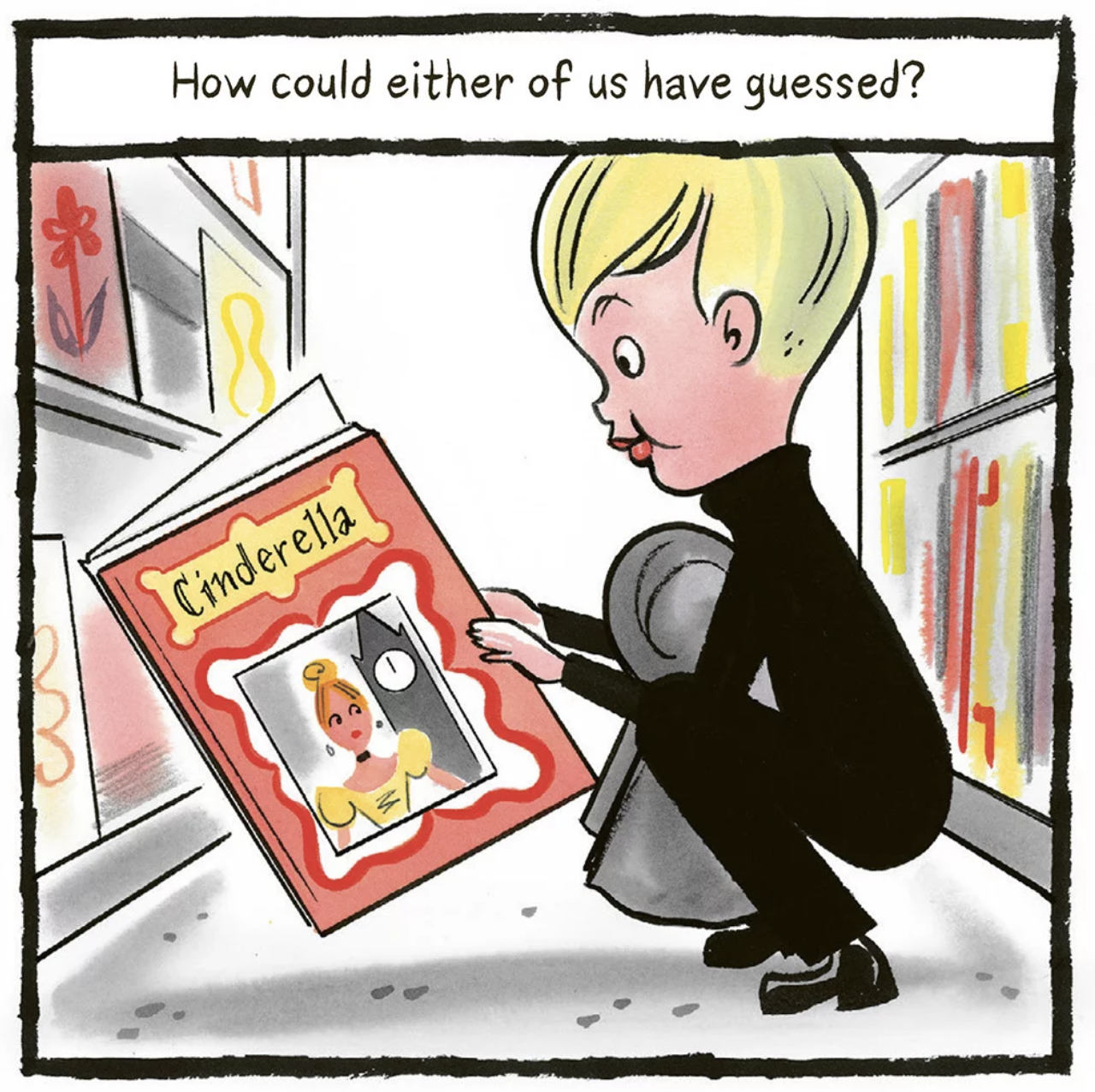
Armed from a young age with an ability to find beauty and connection in all manner of storytelling forms, from the so-called lowbrow to the most classical of works, Vellekoop packs his passages — from public high school and arts college into the post-collegiate Toronto scene and, later, travels to New York City — with all manner of references, from which he draws inspiration. As a child he falls in love, first with Disney films, then television. The shows he loves to watch include The Addams Family, Tarzan and The Carol Burnett Show — the memoir’s title is drawn from the popular variety show’s closing song.
9(MDAxOTAwOTE4MDEyMTkxMDAzNjczZDljZA004))