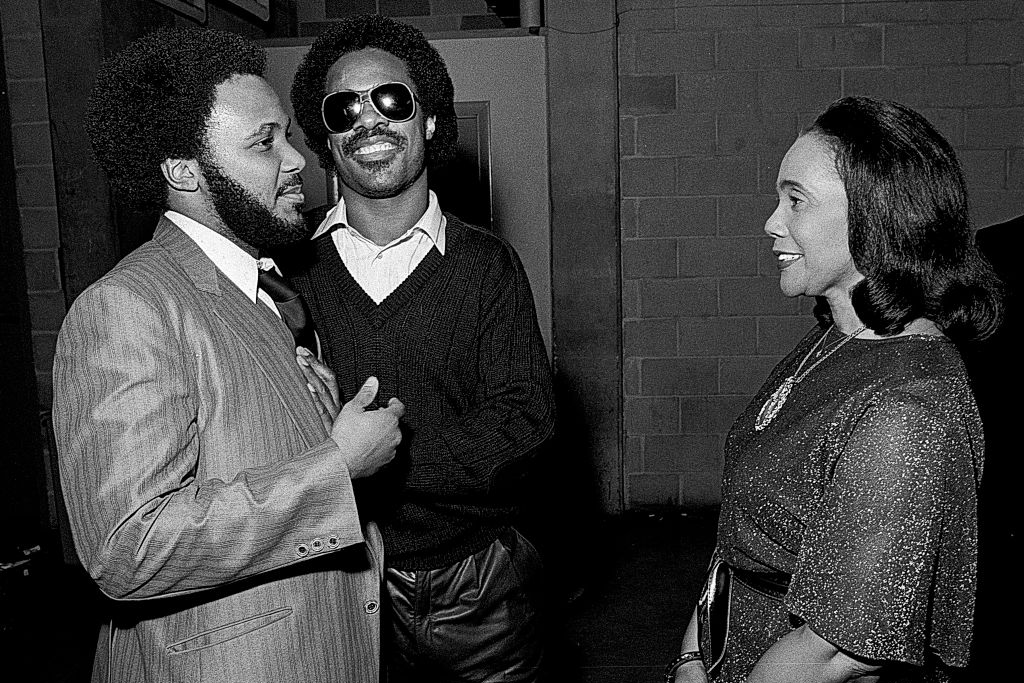
Not only did Stevie Wonder’s discography profoundly shape R&B, soul and the entire pop culture canon, he also created a blueprint for how musicians can leverage their influence for righteous causes. For Wonder, one of those causes was the fight for racial justice and the creation of Martin Luther King Jr. Day.
After a bill to create a federal holiday in honor of the civil rights leader failed in the House of Representatives in 1979, the King Foundation launched a campaign and recruited celebrities to energize the public. Wonder, by then a superstar with a dozen Grammys, was outspoken about racial equality in and outside of his music, and naturally lent his voice to the fight.
1980 saw the arrival of Wonder’s chart-topping album Hotter Than July, whose inner record sleeve featured a portrait of MLK along with photos of white police officers facing off against peaceful, Black protestors. He dedicated one of the album’s singles, “Happy Birthday” — now a staple at celebrations where Black folks are present — to King. Wonder’s hit supercharged the campaign, whose petition garnered six million signatures, and Martin Luther King Jr. Day finally became a national holiday in 1983.
