Alameda County District Attorney

Why does this race matter?

In 2024, nearly 63% of Alameda County voters approved a recall of then-DA Pamela Price, who had been elected as a progressive prosecutor in 2022. The county’s Board of Supervisors then appointed Ursula Jones Dickson, a former judge with a more moderate approach, to replace Price. Jones Dickson is running to keep her role, and Price is trying to get her old job back. Gopal Krishan, an immigration, corporate and family law attorney with no prosecutorial experience, is also in the mix. 

Key Candidates
This list represents the most notable candidates running for the seat.
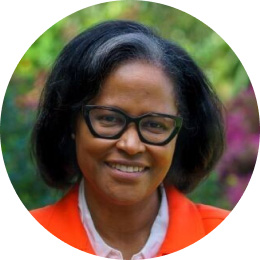
Ursula Jones Dickson
Ursula Jones DicksonDistrict attorney, Alameda County
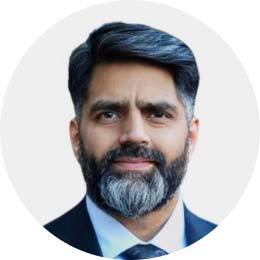
Gopal Krishan
Gopal KrishanAttorney in private practice
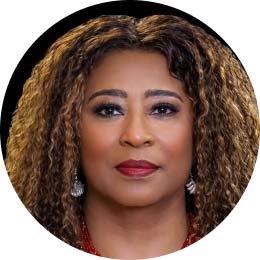
Pamela Price
Pamela PriceFormer district attorney, Alameda County
 

Positions on Key Issues

Candidate summaries are based on interviews with the candidates, questionnaires, statements made at debates and public events, and past news coverage.

What would be your top three priorities as district attorney? What would not be a priority for your office?

Jones Dickson says she would prioritize reducing a backlog of cases and restoring trust in the DA’s office. She would do this by ensuring cases are pursued in a fair and impartial manner and that justice for victims and survivors is at the center of the office’s work. She would also work with community partners to address the county’s public safety challenges. Jones Dickson says she rejects the idea that the DA’s office should give ideological preconsiderations over the facts in given cases.
Krishan says he would aggressively prosecute hate crimes and relentlessly go after organized crime. He would also refrain from cooperating with ICE on immigration enforcement. He would not “criminalize poverty, addiction or immigration status.”
Price says she would address mental illness and drug and alcohol addiction by working with collaborative courts and supporting recovery organizations. She would work to reduce gun violence by prosecuting the illegal sale and distribution of guns and expand and improve the use of gun violence restraining orders. Price would also prioritize improving the prosecution of human trafficking, domestic violence and child abuse cases by reinstating the office’s Gender Justice Bureau, which she created when she headed the office.. She would not prioritize prosecuting nonviolent protesters.

How would you balance police accountability in cases of alleged misconduct and police shootings with maintaining working relationships with the law enforcement agencies that refer cases to your office for prosecution?

Jones Dickson says she has great respect for law enforcement in Alameda County and that the work of the DA’s office is inherently connected, but if there are differences that the public should know about, they will know it. “If an officer breaks the law, the DA’s office is responsible for pursuing justice and will comply with our duty to protect the rights of victims.” Jones Dickson says she would never pursue a case she doesn’t think can be proved beyond a reasonable doubt and would seek alternatives to incarceration when the circumstances warrant it.
Krishan says he would prosecute officer misconduct when the evidence demands it, full stop. There would be no special treatment for officers, he says, adding that those who carry a badge have a higher responsibility. At the same time, Krishan says he respects the vast majority of law enforcement officers who do their jobs with integrity. As DA, he would build strong relationships based on mutual respect and transparency. “The key is independence,” Krishan says. “My office will never be beholden to any law enforcement agency — not the sheriff, not anyone. That independence is what makes justice real."
Price ays that as DA — and the chief law enforcement officer in the county with constitutional authority to prosecute cases and enforce the law — she would insist that the sheriff and police chiefs in Alameda County respect her authority to direct the activities of the DA’s office as much as she would respect their authority to manage their individual agencies. She would participate in regular law enforcement meetings and maintain open communication with police agencies. In instances of misconduct, she would communicate directly with the chief or sheriff before any charges are filed or made public.

Should the district attorney prosecute federal agents who use force during protests or in the course of immigration enforcement? How would you ensure federal officers are held accountable if they break the law in Alameda County?

Jones Dickson says she would pursue justice against any federal agent who commits a crime within Alameda County if it can be proven in a court of law beyond a reasonable doubt. The DA’s office, she says, has no authority to stop federal agents from entering public areas of a courthouse or other government buildings, let alone public areas throughout the county, but private areas are off-limits unless there is a judicial warrant signed by a judge. The DA’s office does not cooperate with federal immigration enforcement except in the rare case of a judicial warrant signed by a federal judge for someone in custody, Jones Dickson says.
Krishan says the district attorney should prosecute federal agents in these scenarios. If a federal agent used unlawful force during a protest of immigration enforcement action, he says his office would investigate and prosecute where the evidence supported it. He would also work closely with civil rights organizations, community groups and California’s attorney general to ensure federal overreach is documented, challenged and prosecuted when laws are broken.
Price says she would not hesitate to prosecute federal agents who harm civilians. Her office would train local law enforcement on their responsibility to enforce laws that apply to federal agents. Price says she would join Fight Against Federal Overreach, a national coalition of prosecutors committed to holding federal officials accountable.

Do you believe there are circumstances in which minors should be tried as adults? When is it appropriate? When is it not?

Jones Dickson believes most young people who come before the juvenile court system should remain there. However, she believes murder cases should be reviewed by a Superior Court judge who orders the preparation of expert reports and determines whether the minor can be rehabilitated within the juvenile system. “This is a heartbreaking decision for all involved, but the victims deserve justice, and it is important not to minimize the effects of violent crime against its victims,” she says.
Krishan says his office would consider the nature of the crime. He would consider whether the crime is part of a pattern or a first-time offense and whether there is evidence of gang affiliation, drug involvement or recruitment or coercion of a minor by adults. Krishan says “transfer to adult court is appropriate when the totality of those facts shows the minor poses a genuine ongoing danger to public safety and rehabilitation is not viable. It is not appropriate otherwise.”
Price believes minors should never be tried as adults. “Criminologists have documented the devastating impacts of incarcerating minors as adults, and most people age out of crime by age 25,” she says. “Research shows that placing a minor in an adult prison creates a greater danger to public safety by increasing their post-traumatic stress disorder and recidivism after incarceration. If you incarcerate a child as an adult, you may not ever be able to repair the damage.”

What is your plan to implement Proposition 36, the 2024 voter-approved ballot measure that increased penalties for certain drug- and theft-related crimes? Did you (and do you now) support Proposition 36? Why or why not?

Jones Dickson says Proposition 36 is the law, and she follows the law. The DA’s office has working groups to determine how to best charge Prop. 36 cases. However, she says, “It should not be forgotten that this is an unfunded ballot measure, and the state has not provided sufficient funding to date to implement it.” As a result, she says she wants the state to address this shortfall.
Krishan says he respects the mandate of voters who approved Proposition 36 and will implement the law. Organized retail theft rings and repeat offenders who prey on small businesses will face the full force of Prop. Prop. 36 in his office, he says. However, he says he would apply the law with judgment. First-time offenders struggling with addiction deserve treatment pathways, not just punishment, he says.
Price did not and does not support Proposition 36. In her view, the law increases incarceration, overburdens courts and fails to connect people to treatment. It also did not expand treatment options and reduced funds previously available for alternatives to incarceration from Proposition 47, she says.

Key Supporters

This list represents notable organizations and individuals who have taken a position on the ballot measure or candidate, or who are funding campaigns in support or opposition. This list is not exhaustive, and may be updated.

For Jones Dickson

  • Rob Bonta, California attorney general
  • Barbara Lee, mayor, Oakland
  • Nancy O’Malley, former district attorney, Alameda County
  • Yesenia Sanchez, sheriff, Alameda County
  • Alameda County Democratic Party

For Krishan

  • Smile Dhir, member, Alameda County Human Relations Commissioner
  • Dr. Romesh Japra, chairman, Americans4Hindus
  • Jim Navarro, former City Council member, Union City

For Price

  • Angela Davis, activist and professor emerita, UC Santa Cruz
  • Elaine Brown, activist and former chairwoman, Black Panther Party
  • John Burris, civil rights attorney
  • Larry Krasner, district attorney, Philadelphia 
Player sponsored by