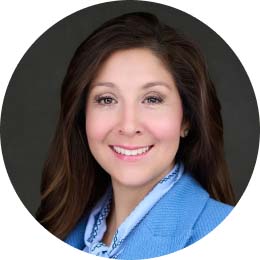
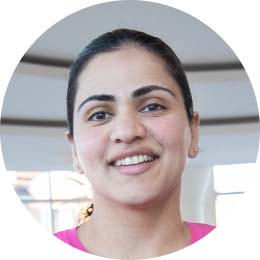
U.S. House of Representatives, District 14

Why does this race matter?

This East Bay congressional district covers all of Livermore, Pleasanton, Union City and Hayward as well as portions of Fremont and Dublin. The seat, formerly the 15th District, had been held since 2013 by Eric Swalwell, who did not seek reelection because he was running for governor. But Swalwell resigned and quit his campaign in April after accusations of sexual assault and other misconduct. Swalwell’s resignation triggered a special primary election on June 16 to fill the rest of his term, in addition to the June 2 primary to select two candidates for November’s general election. 

What does a U.S. representative do? 

Representatives are your local community’s voice in the U.S. House of Representatives. Members of Congress write and vote on bills, including the federal budget. The top two finishers in this primary election, regardless of party, will face off in the November election. The winner will serve a two-year term.

Key Candidates

This list represents the most notable candidates running for the seat.
Suzanne Chenault
Suzanne ChenaultAttorneyNo Party Preference
Carin Elam
Carin ElamBusinesswomanDemocrat
Melissa Hernandez
Melissa HernandezHealthcare services director Democrat
Wendy Huang
Wendy HuangReal estate investorRepublican
Dena Maldonado
Dena MaldonadoBusiness ownerRepublican
Matt Ortega
Matt OrtegaGraphic designerDemocrat
Rakhi Israni Singh
Rakhi Israni SinghEducatorDemocrat
Aisha Wahab
Aisha WahabState senatorDemocrat
 

Positions on Key Issues

Candidate summaries are based on interviews with the candidates, questionnaires, statements made at debates and public events, and past news coverage.

The Bay Area is one of the most expensive places to live in the country. What will you do as a member of Congress to help make life more affordable for residents?

Chenault wants to build support for a new “large-scale Public Works Administration” project similar to President Franklin D. Roosevelt’s. “I envision the creation of neighborhood affordable housing units, surrounded by green areas, on the tarmacked sites of abandoned shopping strips,” she says.
Elam says the region has always been expensive, but “the current situation has reached a breaking point.” Elam proposes bipartisan collaboration to end the war in Iran to help reduce gas prices in the short term, and continued investment in electric vehicle technology and charging networks for the long term. She also wants to force a floor vote on Trump’s tariffs and investigate excessive grocery store slotting fees.
Hernandez says she plans to “reduce barriers to breaking ground on more development, lower the cost of materials and increase access to low-interest home loans for responsible buyers” to bring down housing costs. She says she will hold "corporate healthcare providers accountable for lowering costs, including the cost of prescriptions.” She will support fully funding federal child care programs and push for childcare workers to earn living wages.
Huang says free-market principles and economic productivity are key to making life affordable and that taxpayer-funded agencies don’t have incentives to reduce costs. She wants to cut fees and reduce lead times for housing projects. “By keeping only essential regulations within constitutional limits and reducing the tax burden, we allow productivity to return to our district, lowering costs for all residents.”
Maldonado wants to lower taxes and redirect funding “to the right places so they actually help impact our constituents who need it.” She says she would propose a tax credit for “small plot land purchases where families focus on growing their own food.”
Ortega proposes a federal housing construction program “to step in where the market has failed” to help create more affordable housing quickly, with streamlined permits and reviews, and is pushing for housing near mass transit. He supports restrictions on “private equity and anonymous LLC ownership of single-family homes” and wants more transparency into rental markets to avoid collusion.
Singh wants to expand the federal Low-Income Housing Tax Credit to boost housing construction and use federal transportation funds to incentivize dense housing near transit. “I'd also push for targeted down payment assistance and expanded first-time homebuyer tax benefits so homeownership remains within reach,” she says. She wants to undo recent Medicaid cuts and push for mental health coverage parity with insurers. “No family should go broke because they got sick,” she says.
Wahab says “the cost of living is crushing working people.” She plans to focus on the basics that affect people’s stability, like “expanding the housing supply at all income levels; increasing support for first-time homebuyers and renters; protecting Social Security and Medicare; and taking on the monopoly power and special interests that keep prices high.” She says her approach would be practical and urgent.

If elected, what would your top three priorities be as a member of Congress?

Chenault's priorities are ensuring Congress takes responsibility for war authorizations; surveillance and control of the military industrial complex; and restoring federal departments and watchdog agencies that were eliminated under the DOGE (Department of Government Efficiency) initiative.
Elam's priorities are “affordable healthcare, job opportunities during the transition to an AI-driven economy and protecting the right to safely and easily vote.” She supports changing U.S. healthcare to a universal payer system by expanding Medicare. She says the “federal government is absolutely silent” on AI’s impact on the job market. Elam supports public-private partnerships to retrain workers harmed by AI. She will “fight to pass the John R. Lewis Voting Rights Advancement Act.”
Hernandez says her focus would be on “kitchen-table issues that impact the average American: housing affordability, defending access to high-quality, affordable healthcare and ensuring families can access high-quality childcare that doesn’t break the bank.”
Huang says fiscal accountability, affordability and public safety are her focus, including “eliminating fraud, waste and abuse with those in power.” She wants to reduce regulations that “stifle growth” as a way to bring more industry to the district. Huang says those who break the law should be “punished to the full extent of the law for a safe, law-abiding society.”
Maldonado says transparency is her top focus. She wants to find out “where the money’s going” and says she supports lowering taxes to increase affordability. Another priority is supporting the right to bear arms.
Ortega wants to bring back greater subsidies for the Affordable Care Act and ultimately transition to Medicare for All “to free families and small businesses from the burden of skyrocketing insurance premiums.” He also wants to make permanent the enhanced child tax credit and move toward a national free childcare program. He says Congress must be “vigorous” in holding the Trump administration accountable for corruption.
Singh says lowering costs for residents, “cleaning up Washington” and fixing the “broken immigration system” are her top priorities. She wants to fight tariffs and expand housing supply, while making healthcare and prescriptions more affordable and boosting tax credits for families. She supports banning stock trading by members of Congress. She also backs imposing term limits and a mandatory retirement age of 75 for the president, Congress and federal judges.
Wahab says affordability is her top priority. “If people cannot afford a roof over their head, healthcare, groceries or childcare, then government is failing at the most basic level,” she says. Wahab says she’ll protect an array of rights, like reproductive freedom, voting and civil rights and the rule of law. She wants “real public safety and accountability” by “supporting victims, preventing exploitation, addressing organized crime and trafficking.”

How would you approach regulation of the tech industry and specifically artificial intelligence?

Chenault says AI has already negatively affected school children, making it easier to avoid building critical thinking skills, and is concerned that AI is being used to profile U.S. citizens. She supports thoughtful regulation of social media.
Elam says “AI is solving some of society's biggest problems,” including helping to cure rare diseases and offering support to people with disabilities such as vision problems. “Regulation cannot stifle innovation,” she says, but the government must assist in navigating a new economy. “I will propose robust guardrails to ensure the safe, ethical and sustainable development.”
Hernandez says the U.S. should lead the world in AI development, but Congress must set guardrails while the technology is still evolving. She plans to protect workers from displacement by supporting the withholding of “federal subsidies from companies that replace employees with AI automation, while incentivizing on-the-job retraining.” She wants humans to stay at the center of critical decision-making, such as in healthcare.
Huang says the Constitution would guide her approach to AI and other new technologies, with protection for individual and property rights a top focus. “Regulation should be minimal and essential, ensuring that technology serves the people and promotes productivity rather than expanding the power of the state,” she says.
Maldonado says regulations of AI should be limited because it is still a growing industry. “But we must protect original art,” she says.
Ortega says tech has long outpaced the speed of regulation and that has led to “corrupted prediction and crypto markets” that scam people, excessive use of energy and water by data centers and “unchecked reality distortion” from generative AI platforms. “The impact on Americans across the country is already enormous. Congress must get ahead of these evolving technologies before a major calamity such as an AI bubble burst,” he says.
Singh says her approach would balance the priorities of “protecting people from documented harms and maintaining America's competitive leadership in AI.” She supports legislation that requires social media platforms to default to the “least manipulative” settings that protect privacy for minors. In AI, she sees “both the enormous risk and the enormous opportunity.” She would push for federal worker retraining programs to avoid disruption and support AI research.
Wahab says the Bay Area helped build the modern economy and should continue to lead the area with innovation, but regulation should not allow public harm. “AI should serve people, not exploit them. We need clear rules around transparency, privacy, bias, consumer protection, child safety and accountability when AI is used to deceive, discriminate or cause harm,” she says. She thinks workers, artists, students and small businesses should be protected.

What would you change about how the U.S. currently approaches foreign wars or conflicts?

Chenault says Congress has lost the public’s trust by allowing the Trump administration to capture Venezuelan President Nicolás Maduro and go to war against Iran. “If elected, I shall vehemently voice my opposition to the president’s violation of the Constitution,” she says.
Elam says “the war needs to end,” that President Donald Trump went to war when Iran was not an imminent threat and that he did so “without prior authorization.” She says American allies are “rightly nervous” about the impulses of Trump. “The world needs to move toward an era of peace. Existing conflicts need to be addressed through thoughtful, smart diplomacy,” she says.
Hernandez says the U.S. must “reprioritize diplomacy over demonstrations of military might,” adding that the Trump administration’s foreign policy “has been characterized by chaos and conflict.” She strongly opposes the war in Iran and says the U.S. is stronger when working with allies and NATO.
Huang is against “sending our children and tax dollars to endless wars” when there is no immediate threat to the U.S. She says she supports an “America First” approach, and the U.S. should focus on “defending our own borders and interests against illegal drugs, commodities and human trafficking.”
Maldonado says: “America first! That includes protecting the United States and its sovereignty.”
Ortega says the U.S. should only commit forces as a last resort and with approval from Congress. “The permissiveness with which the president is allowed to put U.S. forces into harm's way without authorization from Congress is a danger to the republic,” he says. He says Trump’s invasion of Venezuela and regime change in Iran are “imperialist” actions and are costing Americans money.
Singh says she believes in upholding congressional approval for declarations of war. “Congress has abdicated its constitutional responsibility on war for too long.” While she says the U.S. must “retain the ability to act swiftly to protect our national security,” she wants to see more thoughtful actions, not impulsive ones. She would back the War Powers Resolution so no president can “unilaterally commit our nation to sustained military conflict.”
Wahab wants more discipline and principle in foreign policy, saying the U.S. should be slower to enter conflicts, clearer about its goals “and far more focused on diplomacy, humanitarian protection and long-term stability.” Congress must take back its constitutional role to exercise oversight, she says, to ensure force is used only when truly necessary. “Strength is not just military power. Strength is wisdom, restraint and the ability to build peace.”

What are your views on the Trump administration’s immigration enforcement campaign, and how do you plan to address its impact on your district?

Chenault says she opposes profiling by U.S. Immigration and Customs Enforcement (ICE) and “indiscriminate deportation.” She says that unless ICE can be radically reformed, it should be dissolved. Until then, she wants ICE agents to wear large identification tags on duty.
Elam says Trump’s “current terror tactics need to end” and that “Democrats need to continue withholding funding until ICE follows the law and follows the Constitution,” including no masks, no unmarked cars and no racial profiling. She also supports the bipartisan Dignity Act of 2025 (H.R. 4393) to allow a pathway to legal status. “Congress needs to get serious about comprehensive immigration reform,” she says.
Hernandez says Trump’s policies “are harmful, illegal and antithetical to the long-standing ideal of the U.S. being a place of refuge for those fleeing persecution.” She supports a revamp of immigration law so that becoming a citizen is easier and faster than it is now, and supports pathways to citizenship for DREAMers and their parents. “I support deporting criminals. Now, ICE is out of control, deporting immigrants who are contributing members of our communities,” she says.
Huang says the U.S. is a nation of immigrants “but we are also a nation of the rule of law.” She says immigration enforcement should be handled “away from communities to ensure domestic tranquility.” She says the U.S. “must prioritize legal immigration, our lawful residents and American citizens first, morally and constitutionally.”
Maldonado says “breaking the law is not acceptable. We must protect our citizens and promote legal immigration.”
Ortega calls out President Trump for lying during the 2024 campaign and adds, "His administration is lying now. They are not targeting ‘the worst of the worst.’” He says the administration’s recruitment of new ICE agents is “overtly white supremacist” with poor standards and training. “The rot within ICE cannot be reformed. ICE must be abolished.". He also wants to rescind the budget increase given to the Department of Homeland Security and have stricter congressional oversight of the agency.
Singh is opposed to the Trump administration’s policies, including “tearing families apart” and operations at schools. She supports smart and humane immigration reform. “That means protecting East Bay families from ICE overreach, hiring more immigration judges to clear the massive case backlog and process cases fairly and enacting a permanent legislative solution for Dreamers who have known no other country.” She wants to fund legal representation for people in immigration proceedings.
Wahab says the U.S. immigration system is broken “but fear-based mass enforcement is not a real solution.” She says she’ll “work to protect due process, defend constitutional rights, support community legal services and push back against abuses that separate families or punish people without regard for humanity or fairness.” She supports clear rules and border management, not “cruelty dressed up as policy.”

Key Supporters

This list represents notable organizations and individuals who have taken a position on the ballot measure or candidate, or who are funding campaigns in support or opposition. This list is not exhaustive, and may be updated.

For Chenault

  • N/A

For Elam 

  • N/A

For Hernandez 

  • David Haubert, supervisor, Alameda County
  • Sherry Hu, mayor, Dublin
  • John Marchand, mayor, Livermore
  • Mark Salinas, mayor, Hayward

For Huang

  • California Rifle and Pistol Association
  • Howard Jarvis Taxpayers Association PAC
  • Silicon Valley Chinese Association

For Hernandez 

  • David Haubert, supervisor, Alameda County
  • Sherry Hu, mayor, Dublin
  • John Marchand, mayor, Livermore
  • Mark Salinas, mayor, Hayward

For Ortega 

  • Courage for Democracy 
  • HonorPAC

For Singh 

  • Liang Chao, vice mayor, Cupertino
  • Raja Krishnamoorthi, U.S. representative, Illinois
  • John Morada, City Council member, Dublin
  • Jeff Rosen, district attorney, Santa Clara County

For Wahab 

  • Rob Bonta, California attorney general
  • California Democratic Party
  • California Police Chiefs Association 
  • Service Employees International Union (SEIU) California

Additional Candidates

Victor Aguilar Jr.
Victor Aguilar Jr.Executive director, Consumer Federation of CaliforniaDemocrat. Elected to the San Leandro City Council in 2018. He serves on the National League of Cities Information Technology and Communications Committee and on the board of the East Bay Stonewall Democratic Club. He did not respond to interview requests.
Player sponsored by