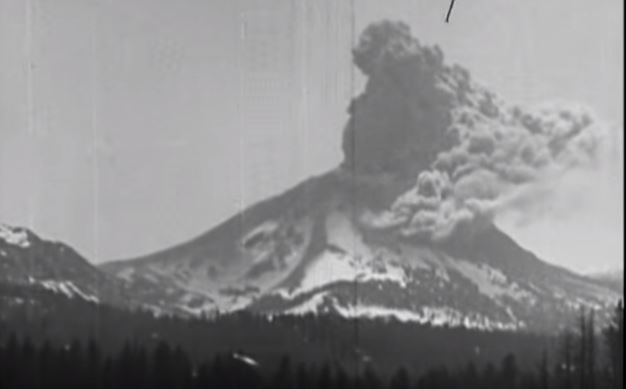
Four Days in May: Mount Lassen Erupted 104 Years Ago
Guess What, California? Now You Need to Prepare for Erupting Volcanoes
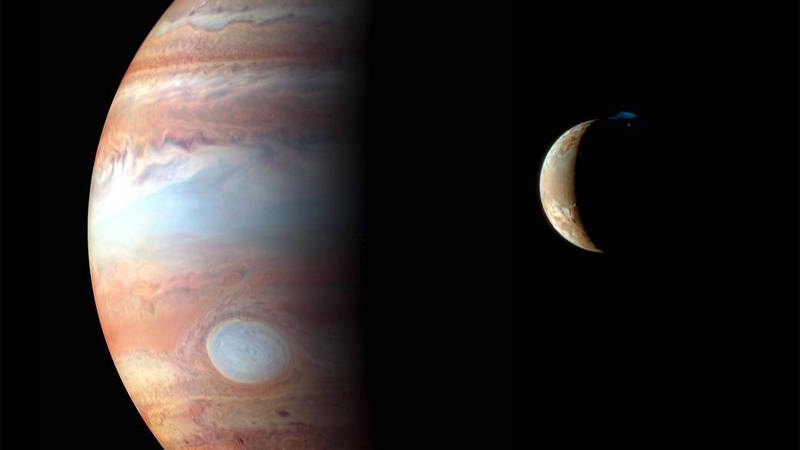
You Won’t Believe What Happens on Jupiter’s Moon to Make Volcanos
Video: Active Hawaii Volcano's Lava Lake
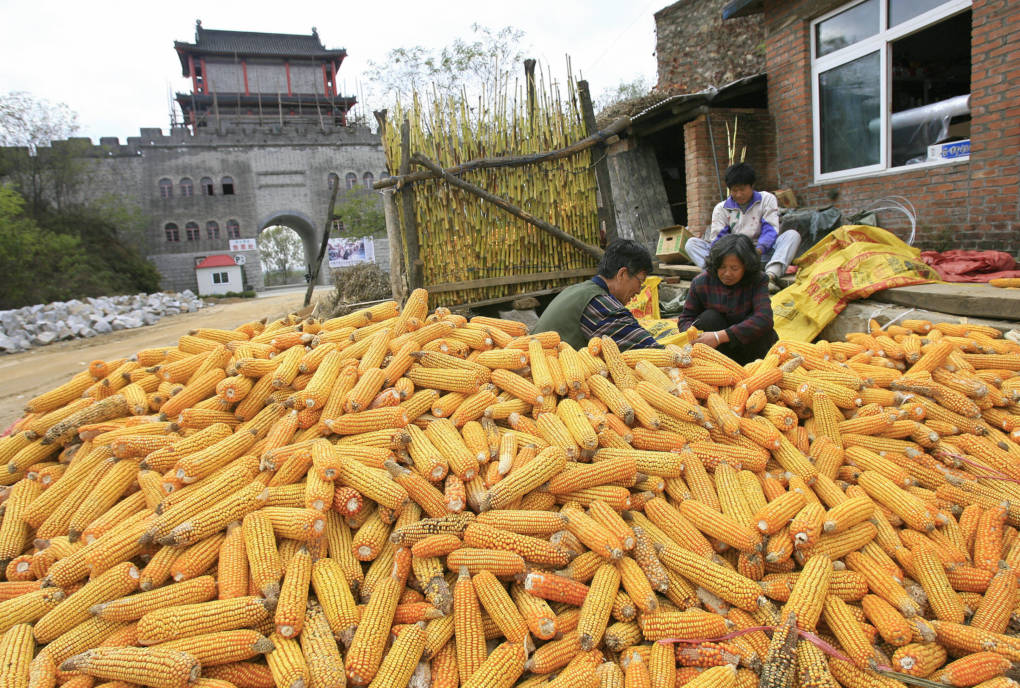
Sweet Science: Putting Corn Syrup to Work on Earth’s Origins
Climate Change Likely To Increase Volcanic Eruptions, Scientists Say
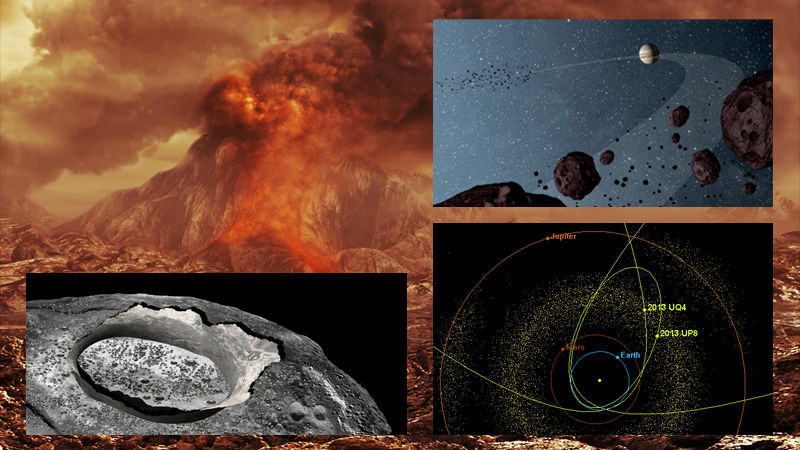
Who Will Become NASA’s Next Solar System ‘Discovery Idol’?
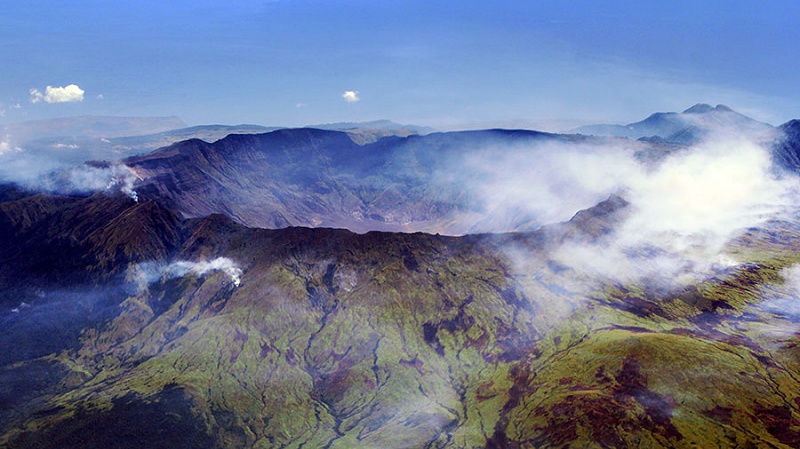
The Great 1815 Tambora Eruption: What if This Volcano Blew Today?
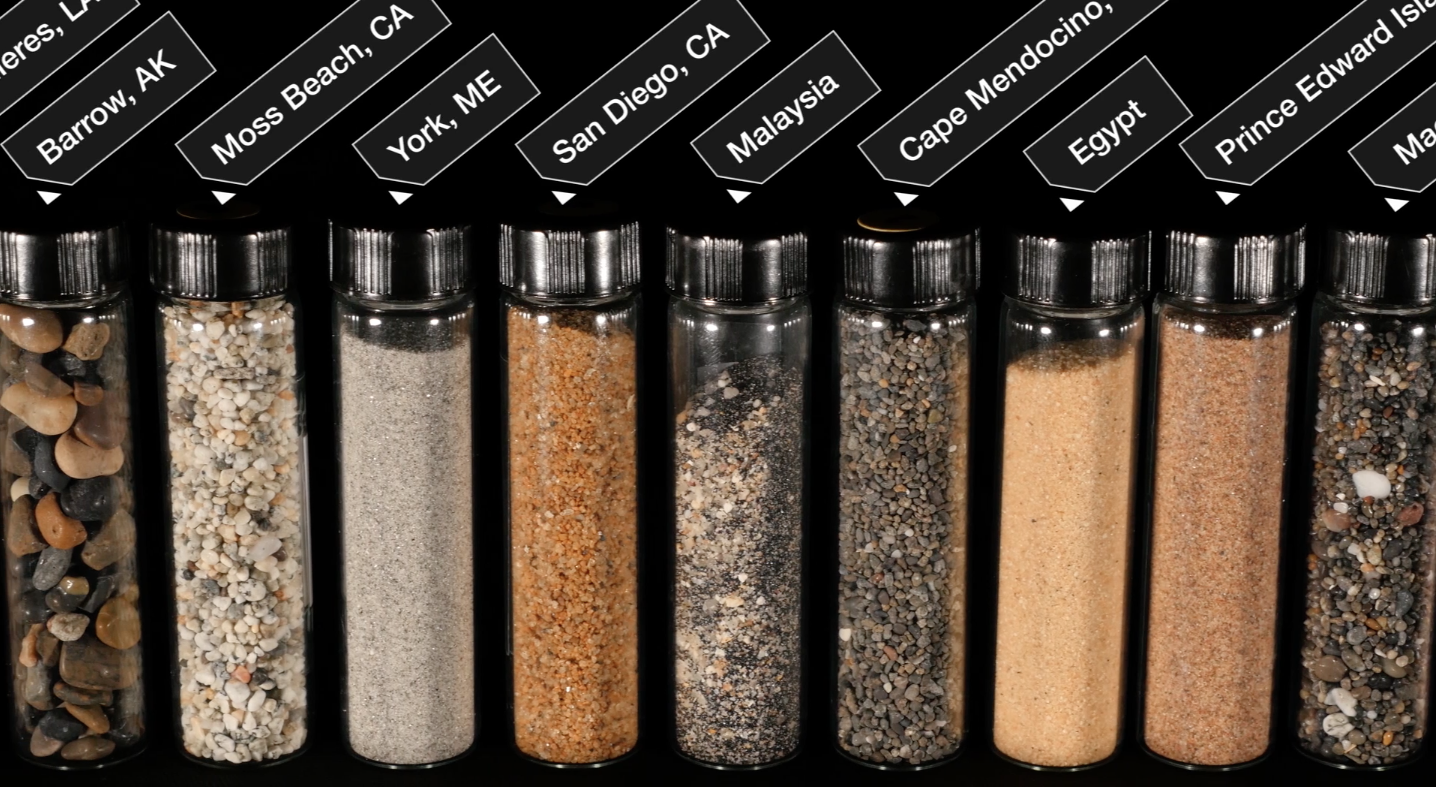
The Amazing Life of Sand
Sponsored
Player sponsored by
window.__IS_SSR__=true
window.__INITIAL_STATE__={
"attachmentsReducer": {
"audio_0": {
"type": "attachments",
"id": "audio_0",
"imgSizes": {
"kqedFullSize": {
"file": "https://ww2.kqed.org/news/wp-content/themes/KQED-unified/img/audio_bgs/background0.jpg"
}
}
},
"audio_1": {
"type": "attachments",
"id": "audio_1",
"imgSizes": {
"kqedFullSize": {
"file": "https://ww2.kqed.org/news/wp-content/themes/KQED-unified/img/audio_bgs/background1.jpg"
}
}
},
"audio_2": {
"type": "attachments",
"id": "audio_2",
"imgSizes": {
"kqedFullSize": {
"file": "https://ww2.kqed.org/news/wp-content/themes/KQED-unified/img/audio_bgs/background2.jpg"
}
}
},
"audio_3": {
"type": "attachments",
"id": "audio_3",
"imgSizes": {
"kqedFullSize": {
"file": "https://ww2.kqed.org/news/wp-content/themes/KQED-unified/img/audio_bgs/background3.jpg"
}
}
},
"audio_4": {
"type": "attachments",
"id": "audio_4",
"imgSizes": {
"kqedFullSize": {
"file": "https://ww2.kqed.org/news/wp-content/themes/KQED-unified/img/audio_bgs/background4.jpg"
}
}
},
"placeholder": {
"type": "attachments",
"id": "placeholder",
"imgSizes": {
"thumbnail": {
"file": "https://cdn.kqed.org/wp-content/uploads/2024/12/KQED-Default-Image-816638274-2000x1333-1-160x107.jpg",
"width": 160,
"height": 107,
"mimeType": "image/jpeg"
},
"medium": {
"file": "https://cdn.kqed.org/wp-content/uploads/2024/12/KQED-Default-Image-816638274-2000x1333-1-800x533.jpg",
"width": 800,
"height": 533,
"mimeType": "image/jpeg"
},
"medium_large": {
"file": "https://cdn.kqed.org/wp-content/uploads/2024/12/KQED-Default-Image-816638274-2000x1333-1-768x512.jpg",
"width": 768,
"height": 512,
"mimeType": "image/jpeg"
},
"large": {
"file": "https://cdn.kqed.org/wp-content/uploads/2024/12/KQED-Default-Image-816638274-2000x1333-1-1020x680.jpg",
"width": 1020,
"height": 680,
"mimeType": "image/jpeg"
},
"1536x1536": {
"file": "https://cdn.kqed.org/wp-content/uploads/2024/12/KQED-Default-Image-816638274-2000x1333-1-1536x1024.jpg",
"width": 1536,
"height": 1024,
"mimeType": "image/jpeg"
},
"fd-lrg": {
"file": "https://cdn.kqed.org/wp-content/uploads/2024/12/KQED-Default-Image-816638274-2000x1333-1-1536x1024.jpg",
"width": 1536,
"height": 1024,
"mimeType": "image/jpeg"
},
"fd-med": {
"file": "https://cdn.kqed.org/wp-content/uploads/2024/12/KQED-Default-Image-816638274-2000x1333-1-1020x680.jpg",
"width": 1020,
"height": 680,
"mimeType": "image/jpeg"
},
"fd-sm": {
"file": "https://cdn.kqed.org/wp-content/uploads/2024/12/KQED-Default-Image-816638274-2000x1333-1-800x533.jpg",
"width": 800,
"height": 533,
"mimeType": "image/jpeg"
},
"post-thumbnail": {
"file": "https://cdn.kqed.org/wp-content/uploads/2024/12/KQED-Default-Image-816638274-2000x1333-1-672x372.jpg",
"width": 672,
"height": 372,
"mimeType": "image/jpeg"
},
"twentyfourteen-full-width": {
"file": "https://cdn.kqed.org/wp-content/uploads/2024/12/KQED-Default-Image-816638274-2000x1333-1-1038x576.jpg",
"width": 1038,
"height": 576,
"mimeType": "image/jpeg"
},
"xxsmall": {
"file": "https://cdn.kqed.org/wp-content/uploads/2024/12/KQED-Default-Image-816638274-2000x1333-1-160x107.jpg",
"width": 160,
"height": 107,
"mimeType": "image/jpeg"
},
"xsmall": {
"file": "https://cdn.kqed.org/wp-content/uploads/2024/12/KQED-Default-Image-816638274-2000x1333-1-672x372.jpg",
"width": 672,
"height": 372,
"mimeType": "image/jpeg"
},
"small": {
"file": "https://cdn.kqed.org/wp-content/uploads/2024/12/KQED-Default-Image-816638274-2000x1333-1-672x372.jpg",
"width": 672,
"height": 372,
"mimeType": "image/jpeg"
},
"xlarge": {
"file": "https://cdn.kqed.org/wp-content/uploads/2024/12/KQED-Default-Image-816638274-2000x1333-1-1020x680.jpg",
"width": 1020,
"height": 680,
"mimeType": "image/jpeg"
},
"full-width": {
"file": "https://cdn.kqed.org/wp-content/uploads/2024/12/KQED-Default-Image-816638274-2000x1333-1-1920x1280.jpg",
"width": 1920,
"height": 1280,
"mimeType": "image/jpeg"
},
"guest-author-32": {
"file": "https://cdn.kqed.org/wp-content/uploads/2025/01/KQED-Default-Image-816638274-1333x1333-1-160x160.jpg",
"width": 32,
"height": 32,
"mimeType": "image/jpeg"
},
"guest-author-50": {
"file": "https://cdn.kqed.org/wp-content/uploads/2025/01/KQED-Default-Image-816638274-1333x1333-1-160x160.jpg",
"width": 50,
"height": 50,
"mimeType": "image/jpeg"
},
"guest-author-64": {
"file": "https://cdn.kqed.org/wp-content/uploads/2025/01/KQED-Default-Image-816638274-1333x1333-1-160x160.jpg",
"width": 64,
"height": 64,
"mimeType": "image/jpeg"
},
"guest-author-96": {
"file": "https://cdn.kqed.org/wp-content/uploads/2025/01/KQED-Default-Image-816638274-1333x1333-1-160x160.jpg",
"width": 96,
"height": 96,
"mimeType": "image/jpeg"
},
"guest-author-128": {
"file": "https://cdn.kqed.org/wp-content/uploads/2025/01/KQED-Default-Image-816638274-1333x1333-1-160x160.jpg",
"width": 128,
"height": 128,
"mimeType": "image/jpeg"
},
"detail": {
"file": "https://cdn.kqed.org/wp-content/uploads/2025/01/KQED-Default-Image-816638274-1333x1333-1-160x160.jpg",
"width": 160,
"height": 160,
"mimeType": "image/jpeg"
},
"kqedFullSize": {
"file": "https://cdn.kqed.org/wp-content/uploads/2024/12/KQED-Default-Image-816638274-2000x1333-1.jpg",
"width": 2000,
"height": 1333
}
}
},
"science_30473": {
"type": "attachments",
"id": "science_30473",
"meta": {
"index": "attachments_1716263798",
"site": "science",
"id": "30473",
"found": true
},
"parent": 30444,
"imgSizes": {
"kqedFullSize": {
"file": "https://ww2.kqed.org/app/uploads/sites/35/2015/05/lassen-dev-area-2005-dotpolka.jpg",
"width": 800,
"height": 450
}
},
"publishDate": 1432318922,
"modified": 1432318952,
"caption": "A century later, the Devastated Area, wiped clean of its mature forest by the May 1915 Lassen eruption, is still recovering. (\u003ca href=\"https://www.flickr.com/photos/dotpolka/\">flickr/dotpolka\u003c/a>/\u003ca href=\"https://creativecommons.org/licenses/by-nc-nd/2.0/\">Creative Commons\u003c/a>)",
"description": null,
"title": "lassen-dev-area-2005-dotpolka",
"credit": null,
"status": "inherit",
"fetchFailed": false,
"isLoading": false
},
"science_1938945": {
"type": "attachments",
"id": "science_1938945",
"meta": {
"index": "attachments_1716263798",
"site": "science",
"id": "1938945",
"found": true
},
"parent": 1938782,
"imgSizes": {
"thumbnail": {
"file": "https://ww2.kqed.org/app/uploads/sites/35/2019/03/volcano-160x99.jpg",
"width": 160,
"mimeType": "image/jpeg",
"height": 99
},
"post-thumbnail": {
"file": "https://ww2.kqed.org/app/uploads/sites/35/2019/03/volcano-626x372.jpg",
"width": 626,
"mimeType": "image/jpeg",
"height": 372
},
"kqedFullSize": {
"file": "https://ww2.kqed.org/app/uploads/sites/35/2019/03/volcano.jpg",
"width": 626,
"height": 389
},
"guest-author-50": {
"file": "https://ww2.kqed.org/app/uploads/sites/35/2019/03/volcano-50x50.jpg",
"width": 50,
"mimeType": "image/jpeg",
"height": 50
},
"guest-author-96": {
"file": "https://ww2.kqed.org/app/uploads/sites/35/2019/03/volcano-96x96.jpg",
"width": 96,
"mimeType": "image/jpeg",
"height": 96
},
"guest-author-64": {
"file": "https://ww2.kqed.org/app/uploads/sites/35/2019/03/volcano-64x64.jpg",
"width": 64,
"mimeType": "image/jpeg",
"height": 64
},
"guest-author-32": {
"file": "https://ww2.kqed.org/app/uploads/sites/35/2019/03/volcano-32x32.jpg",
"width": 32,
"mimeType": "image/jpeg",
"height": 32
},
"guest-author-128": {
"file": "https://ww2.kqed.org/app/uploads/sites/35/2019/03/volcano-128x128.jpg",
"width": 128,
"mimeType": "image/jpeg",
"height": 128
}
},
"publishDate": 1552097321,
"modified": 1552097544,
"caption": "Screenshot from film footage of an erupting Lassen Peak, sometime in the 1914-17 period.",
"description": null,
"title": "volcano",
"credit": "Shasta Historical Society",
"status": "inherit",
"fetchFailed": false,
"isLoading": false
},
"science_1929756": {
"type": "attachments",
"id": "science_1929756",
"meta": {
"index": "attachments_1716263798",
"site": "science",
"id": "1929756",
"found": true
},
"parent": 1929750,
"imgSizes": {
"small": {
"file": "https://ww2.kqed.org/app/uploads/sites/35/2018/08/jupiter-io-newhorizons-520x293.jpg",
"width": 520,
"mimeType": "image/jpeg",
"height": 293
},
"thumbnail": {
"file": "https://ww2.kqed.org/app/uploads/sites/35/2018/08/jupiter-io-newhorizons-160x90.jpg",
"width": 160,
"mimeType": "image/jpeg",
"height": 90
},
"post-thumbnail": {
"file": "https://ww2.kqed.org/app/uploads/sites/35/2018/08/jupiter-io-newhorizons-672x372.jpg",
"width": 672,
"mimeType": "image/jpeg",
"height": 372
},
"xsmall": {
"file": "https://ww2.kqed.org/app/uploads/sites/35/2018/08/jupiter-io-newhorizons-375x211.jpg",
"width": 375,
"mimeType": "image/jpeg",
"height": 211
},
"kqedFullSize": {
"file": "https://ww2.kqed.org/app/uploads/sites/35/2018/08/jupiter-io-newhorizons.jpg",
"width": 800,
"height": 450
},
"guest-author-50": {
"file": "https://ww2.kqed.org/app/uploads/sites/35/2018/08/jupiter-io-newhorizons-50x50.jpg",
"width": 50,
"mimeType": "image/jpeg",
"height": 50
},
"guest-author-96": {
"file": "https://ww2.kqed.org/app/uploads/sites/35/2018/08/jupiter-io-newhorizons-96x96.jpg",
"width": 96,
"mimeType": "image/jpeg",
"height": 96
},
"medium": {
"file": "https://ww2.kqed.org/app/uploads/sites/35/2018/08/jupiter-io-newhorizons-800x450.jpg",
"width": 800,
"mimeType": "image/jpeg",
"height": 450
},
"guest-author-64": {
"file": "https://ww2.kqed.org/app/uploads/sites/35/2018/08/jupiter-io-newhorizons-64x64.jpg",
"width": 64,
"mimeType": "image/jpeg",
"height": 64
},
"guest-author-32": {
"file": "https://ww2.kqed.org/app/uploads/sites/35/2018/08/jupiter-io-newhorizons-32x32.jpg",
"width": 32,
"mimeType": "image/jpeg",
"height": 32
},
"detail": {
"file": "https://ww2.kqed.org/app/uploads/sites/35/2018/08/jupiter-io-newhorizons-150x150.jpg",
"width": 150,
"mimeType": "image/jpeg",
"height": 150
},
"medium_large": {
"file": "https://ww2.kqed.org/app/uploads/sites/35/2018/08/jupiter-io-newhorizons-768x432.jpg",
"width": 768,
"mimeType": "image/jpeg",
"height": 432
},
"guest-author-128": {
"file": "https://ww2.kqed.org/app/uploads/sites/35/2018/08/jupiter-io-newhorizons-128x128.jpg",
"width": 128,
"mimeType": "image/jpeg",
"height": 128
},
"xxsmall": {
"file": "https://ww2.kqed.org/app/uploads/sites/35/2018/08/jupiter-io-newhorizons-240x135.jpg",
"width": 240,
"mimeType": "image/jpeg",
"height": 135
}
},
"publishDate": 1534269203,
"modified": 1534269291,
"caption": "Jupiter and its moon Io captured by NASA's New Horizons spacecraft during its passage through the Jupiter system in 2007. ",
"description": "Jupiter and its moon Io captured by NASA's New Horizons spacecraft during its passage through the Jupiter system in 2007. ",
"title": "jupiter-io-newhorizons",
"credit": "NASA/Johns Hopkins University Applied Physics Laboratory/Southwest Research Institute/Goddard Space Flight Center",
"status": "inherit",
"fetchFailed": false,
"isLoading": false
},
"science_1923524": {
"type": "attachments",
"id": "science_1923524",
"meta": {
"index": "attachments_1716263798",
"site": "science",
"id": "1923524",
"found": true
},
"parent": 1923522,
"imgSizes": {
"small": {
"file": "https://ww2.kqed.org/app/uploads/sites/35/2018/05/ap_18124244084789-bb8d34298e1156f4d8b814b58f1af5c8da4dc0fb-1-520x390.jpg",
"width": 520,
"mimeType": "image/jpeg",
"height": 390
},
"twentyfourteen-full-width": {
"file": "https://ww2.kqed.org/app/uploads/sites/35/2018/05/ap_18124244084789-bb8d34298e1156f4d8b814b58f1af5c8da4dc0fb-1-1038x576.jpg",
"width": 1038,
"mimeType": "image/jpeg",
"height": 576
},
"thumbnail": {
"file": "https://ww2.kqed.org/app/uploads/sites/35/2018/05/ap_18124244084789-bb8d34298e1156f4d8b814b58f1af5c8da4dc0fb-1-160x120.jpg",
"width": 160,
"mimeType": "image/jpeg",
"height": 120
},
"fd-sm": {
"file": "https://ww2.kqed.org/app/uploads/sites/35/2018/05/ap_18124244084789-bb8d34298e1156f4d8b814b58f1af5c8da4dc0fb-1-960x720.jpg",
"width": 960,
"mimeType": "image/jpeg",
"height": 720
},
"post-thumbnail": {
"file": "https://ww2.kqed.org/app/uploads/sites/35/2018/05/ap_18124244084789-bb8d34298e1156f4d8b814b58f1af5c8da4dc0fb-1-672x372.jpg",
"width": 672,
"mimeType": "image/jpeg",
"height": 372
},
"xsmall": {
"file": "https://ww2.kqed.org/app/uploads/sites/35/2018/05/ap_18124244084789-bb8d34298e1156f4d8b814b58f1af5c8da4dc0fb-1-375x281.jpg",
"width": 375,
"mimeType": "image/jpeg",
"height": 281
},
"kqedFullSize": {
"file": "https://ww2.kqed.org/app/uploads/sites/35/2018/05/ap_18124244084789-bb8d34298e1156f4d8b814b58f1af5c8da4dc0fb-1.jpg",
"width": 4029,
"height": 3022
},
"large": {
"file": "https://ww2.kqed.org/app/uploads/sites/35/2018/05/ap_18124244084789-bb8d34298e1156f4d8b814b58f1af5c8da4dc0fb-1-1020x765.jpg",
"width": 1020,
"mimeType": "image/jpeg",
"height": 765
},
"xlarge": {
"file": "https://ww2.kqed.org/app/uploads/sites/35/2018/05/ap_18124244084789-bb8d34298e1156f4d8b814b58f1af5c8da4dc0fb-1-1180x885.jpg",
"width": 1180,
"mimeType": "image/jpeg",
"height": 885
},
"complete_open_graph": {
"file": "https://ww2.kqed.org/app/uploads/sites/35/2018/05/ap_18124244084789-bb8d34298e1156f4d8b814b58f1af5c8da4dc0fb-1-1200x900.jpg",
"width": 1200,
"mimeType": "image/jpeg",
"height": 900
},
"guest-author-50": {
"file": "https://ww2.kqed.org/app/uploads/sites/35/2018/05/ap_18124244084789-bb8d34298e1156f4d8b814b58f1af5c8da4dc0fb-1-50x50.jpg",
"width": 50,
"mimeType": "image/jpeg",
"height": 50
},
"guest-author-96": {
"file": "https://ww2.kqed.org/app/uploads/sites/35/2018/05/ap_18124244084789-bb8d34298e1156f4d8b814b58f1af5c8da4dc0fb-1-96x96.jpg",
"width": 96,
"mimeType": "image/jpeg",
"height": 96
},
"medium": {
"file": "https://ww2.kqed.org/app/uploads/sites/35/2018/05/ap_18124244084789-bb8d34298e1156f4d8b814b58f1af5c8da4dc0fb-1-800x600.jpg",
"width": 800,
"mimeType": "image/jpeg",
"height": 600
},
"guest-author-64": {
"file": "https://ww2.kqed.org/app/uploads/sites/35/2018/05/ap_18124244084789-bb8d34298e1156f4d8b814b58f1af5c8da4dc0fb-1-64x64.jpg",
"width": 64,
"mimeType": "image/jpeg",
"height": 64
},
"guest-author-32": {
"file": "https://ww2.kqed.org/app/uploads/sites/35/2018/05/ap_18124244084789-bb8d34298e1156f4d8b814b58f1af5c8da4dc0fb-1-32x32.jpg",
"width": 32,
"mimeType": "image/jpeg",
"height": 32
},
"fd-lrg": {
"file": "https://ww2.kqed.org/app/uploads/sites/35/2018/05/ap_18124244084789-bb8d34298e1156f4d8b814b58f1af5c8da4dc0fb-1-1920x1440.jpg",
"width": 1920,
"mimeType": "image/jpeg",
"height": 1440
},
"fd-med": {
"file": "https://ww2.kqed.org/app/uploads/sites/35/2018/05/ap_18124244084789-bb8d34298e1156f4d8b814b58f1af5c8da4dc0fb-1-1180x885.jpg",
"width": 1180,
"mimeType": "image/jpeg",
"height": 885
},
"full-width": {
"file": "https://ww2.kqed.org/app/uploads/sites/35/2018/05/ap_18124244084789-bb8d34298e1156f4d8b814b58f1af5c8da4dc0fb-1-1920x1440.jpg",
"width": 1920,
"mimeType": "image/jpeg",
"height": 1440
},
"detail": {
"file": "https://ww2.kqed.org/app/uploads/sites/35/2018/05/ap_18124244084789-bb8d34298e1156f4d8b814b58f1af5c8da4dc0fb-1-150x150.jpg",
"width": 150,
"mimeType": "image/jpeg",
"height": 150
},
"medium_large": {
"file": "https://ww2.kqed.org/app/uploads/sites/35/2018/05/ap_18124244084789-bb8d34298e1156f4d8b814b58f1af5c8da4dc0fb-1-768x576.jpg",
"width": 768,
"mimeType": "image/jpeg",
"height": 576
},
"guest-author-128": {
"file": "https://ww2.kqed.org/app/uploads/sites/35/2018/05/ap_18124244084789-bb8d34298e1156f4d8b814b58f1af5c8da4dc0fb-1-128x128.jpg",
"width": 128,
"mimeType": "image/jpeg",
"height": 128
},
"xxsmall": {
"file": "https://ww2.kqed.org/app/uploads/sites/35/2018/05/ap_18124244084789-bb8d34298e1156f4d8b814b58f1af5c8da4dc0fb-1-240x180.jpg",
"width": 240,
"mimeType": "image/jpeg",
"height": 180
}
},
"publishDate": 1525454715,
"modified": 1525454715,
"caption": null,
"description": "In this photo released by the U.S. Geological Survey, lava is shown burning in Leilani Estates subdivision near the town of Pahoa on Hawaii's Big Island on Thursday.",
"title": "In this photo released by the U.S. Geological Survey, lava is shown burning in Leilani Estates subdivision near the town of Pahoa on Hawaii's Big Island on Thursday.",
"credit": null,
"status": "inherit",
"fetchFailed": false,
"isLoading": false
},
"science_1921468": {
"type": "attachments",
"id": "science_1921468",
"meta": {
"index": "attachments_1716263798",
"site": "science",
"id": "1921468",
"found": true
},
"parent": 1921467,
"imgSizes": {
"small": {
"file": "https://ww2.kqed.org/app/uploads/sites/35/2018/03/GettyImages-72274461-520x351.jpg",
"width": 520,
"mimeType": "image/jpeg",
"height": 351
},
"twentyfourteen-full-width": {
"file": "https://ww2.kqed.org/app/uploads/sites/35/2018/03/GettyImages-72274461-1038x576.jpg",
"width": 1038,
"mimeType": "image/jpeg",
"height": 576
},
"thumbnail": {
"file": "https://ww2.kqed.org/app/uploads/sites/35/2018/03/GettyImages-72274461-160x108.jpg",
"width": 160,
"mimeType": "image/jpeg",
"height": 108
},
"fd-sm": {
"file": "https://ww2.kqed.org/app/uploads/sites/35/2018/03/GettyImages-72274461-960x647.jpg",
"width": 960,
"mimeType": "image/jpeg",
"height": 647
},
"post-thumbnail": {
"file": "https://ww2.kqed.org/app/uploads/sites/35/2018/03/GettyImages-72274461-672x372.jpg",
"width": 672,
"mimeType": "image/jpeg",
"height": 372
},
"xsmall": {
"file": "https://ww2.kqed.org/app/uploads/sites/35/2018/03/GettyImages-72274461-375x253.jpg",
"width": 375,
"mimeType": "image/jpeg",
"height": 253
},
"kqedFullSize": {
"file": "https://ww2.kqed.org/app/uploads/sites/35/2018/03/GettyImages-72274461.jpg",
"width": 2900,
"height": 1955
},
"large": {
"file": "https://ww2.kqed.org/app/uploads/sites/35/2018/03/GettyImages-72274461-1020x688.jpg",
"width": 1020,
"mimeType": "image/jpeg",
"height": 688
},
"xlarge": {
"file": "https://ww2.kqed.org/app/uploads/sites/35/2018/03/GettyImages-72274461-1180x795.jpg",
"width": 1180,
"mimeType": "image/jpeg",
"height": 795
},
"guest-author-50": {
"file": "https://ww2.kqed.org/app/uploads/sites/35/2018/03/GettyImages-72274461-50x50.jpg",
"width": 50,
"mimeType": "image/jpeg",
"height": 50
},
"guest-author-96": {
"file": "https://ww2.kqed.org/app/uploads/sites/35/2018/03/GettyImages-72274461-96x96.jpg",
"width": 96,
"mimeType": "image/jpeg",
"height": 96
},
"medium": {
"file": "https://ww2.kqed.org/app/uploads/sites/35/2018/03/GettyImages-72274461-800x539.jpg",
"width": 800,
"mimeType": "image/jpeg",
"height": 539
},
"guest-author-64": {
"file": "https://ww2.kqed.org/app/uploads/sites/35/2018/03/GettyImages-72274461-64x64.jpg",
"width": 64,
"mimeType": "image/jpeg",
"height": 64
},
"guest-author-32": {
"file": "https://ww2.kqed.org/app/uploads/sites/35/2018/03/GettyImages-72274461-32x32.jpg",
"width": 32,
"mimeType": "image/jpeg",
"height": 32
},
"fd-lrg": {
"file": "https://ww2.kqed.org/app/uploads/sites/35/2018/03/GettyImages-72274461-1920x1294.jpg",
"width": 1920,
"mimeType": "image/jpeg",
"height": 1294
},
"fd-med": {
"file": "https://ww2.kqed.org/app/uploads/sites/35/2018/03/GettyImages-72274461-1180x795.jpg",
"width": 1180,
"mimeType": "image/jpeg",
"height": 795
},
"full-width": {
"file": "https://ww2.kqed.org/app/uploads/sites/35/2018/03/GettyImages-72274461-1920x1294.jpg",
"width": 1920,
"mimeType": "image/jpeg",
"height": 1294
},
"detail": {
"file": "https://ww2.kqed.org/app/uploads/sites/35/2018/03/GettyImages-72274461-150x150.jpg",
"width": 150,
"mimeType": "image/jpeg",
"height": 150
},
"medium_large": {
"file": "https://ww2.kqed.org/app/uploads/sites/35/2018/03/GettyImages-72274461-768x518.jpg",
"width": 768,
"mimeType": "image/jpeg",
"height": 518
},
"guest-author-128": {
"file": "https://ww2.kqed.org/app/uploads/sites/35/2018/03/GettyImages-72274461-128x128.jpg",
"width": 128,
"mimeType": "image/jpeg",
"height": 128
},
"xxsmall": {
"file": "https://ww2.kqed.org/app/uploads/sites/35/2018/03/GettyImages-72274461-240x162.jpg",
"width": 240,
"mimeType": "image/jpeg",
"height": 162
}
},
"publishDate": 1521567897,
"modified": 1521568649,
"caption": "Farmers bag their crop of harvested corn beneath a watchtower at the Hushan Great Wall, 24 October 2006. New research using corn syrup aims to show how plate tectonics created the sea floor over billions of years.",
"description": null,
"title": "Farmers bag their crop of harvested corn",
"credit": "Frederic J. Brown/AFP/Getty Images",
"status": "inherit",
"fetchFailed": false,
"isLoading": false
},
"science_1918481": {
"type": "attachments",
"id": "science_1918481",
"meta": {
"index": "attachments_1716263798",
"site": "science",
"id": "1918481",
"found": true
},
"parent": 1918480,
"imgSizes": {
"small": {
"file": "https://ww2.kqed.org/app/uploads/sites/35/2017/12/gettyimages-884210084_wide-134d0054eab979c17ca8d7bdd04843a8f275822f-520x293.jpg",
"width": 520,
"mimeType": "image/jpeg",
"height": 293
},
"twentyfourteen-full-width": {
"file": "https://ww2.kqed.org/app/uploads/sites/35/2017/12/gettyimages-884210084_wide-134d0054eab979c17ca8d7bdd04843a8f275822f-1038x576.jpg",
"width": 1038,
"mimeType": "image/jpeg",
"height": 576
},
"thumbnail": {
"file": "https://ww2.kqed.org/app/uploads/sites/35/2017/12/gettyimages-884210084_wide-134d0054eab979c17ca8d7bdd04843a8f275822f-160x90.jpg",
"width": 160,
"mimeType": "image/jpeg",
"height": 90
},
"fd-sm": {
"file": "https://ww2.kqed.org/app/uploads/sites/35/2017/12/gettyimages-884210084_wide-134d0054eab979c17ca8d7bdd04843a8f275822f-960x540.jpg",
"width": 960,
"mimeType": "image/jpeg",
"height": 540
},
"post-thumbnail": {
"file": "https://ww2.kqed.org/app/uploads/sites/35/2017/12/gettyimages-884210084_wide-134d0054eab979c17ca8d7bdd04843a8f275822f-672x372.jpg",
"width": 672,
"mimeType": "image/jpeg",
"height": 372
},
"xsmall": {
"file": "https://ww2.kqed.org/app/uploads/sites/35/2017/12/gettyimages-884210084_wide-134d0054eab979c17ca8d7bdd04843a8f275822f-375x211.jpg",
"width": 375,
"mimeType": "image/jpeg",
"height": 211
},
"kqedFullSize": {
"file": "https://ww2.kqed.org/app/uploads/sites/35/2017/12/gettyimages-884210084_wide-134d0054eab979c17ca8d7bdd04843a8f275822f.jpg",
"width": 5184,
"height": 2916
},
"large": {
"file": "https://ww2.kqed.org/app/uploads/sites/35/2017/12/gettyimages-884210084_wide-134d0054eab979c17ca8d7bdd04843a8f275822f-1020x574.jpg",
"width": 1020,
"mimeType": "image/jpeg",
"height": 574
},
"xlarge": {
"file": "https://ww2.kqed.org/app/uploads/sites/35/2017/12/gettyimages-884210084_wide-134d0054eab979c17ca8d7bdd04843a8f275822f-1180x664.jpg",
"width": 1180,
"mimeType": "image/jpeg",
"height": 664
},
"guest-author-50": {
"file": "https://ww2.kqed.org/app/uploads/sites/35/2017/12/gettyimages-884210084_wide-134d0054eab979c17ca8d7bdd04843a8f275822f-50x50.jpg",
"width": 50,
"mimeType": "image/jpeg",
"height": 50
},
"guest-author-96": {
"file": "https://ww2.kqed.org/app/uploads/sites/35/2017/12/gettyimages-884210084_wide-134d0054eab979c17ca8d7bdd04843a8f275822f-96x96.jpg",
"width": 96,
"mimeType": "image/jpeg",
"height": 96
},
"medium": {
"file": "https://ww2.kqed.org/app/uploads/sites/35/2017/12/gettyimages-884210084_wide-134d0054eab979c17ca8d7bdd04843a8f275822f-800x450.jpg",
"width": 800,
"mimeType": "image/jpeg",
"height": 450
},
"guest-author-64": {
"file": "https://ww2.kqed.org/app/uploads/sites/35/2017/12/gettyimages-884210084_wide-134d0054eab979c17ca8d7bdd04843a8f275822f-64x64.jpg",
"width": 64,
"mimeType": "image/jpeg",
"height": 64
},
"guest-author-32": {
"file": "https://ww2.kqed.org/app/uploads/sites/35/2017/12/gettyimages-884210084_wide-134d0054eab979c17ca8d7bdd04843a8f275822f-32x32.jpg",
"width": 32,
"mimeType": "image/jpeg",
"height": 32
},
"fd-lrg": {
"file": "https://ww2.kqed.org/app/uploads/sites/35/2017/12/gettyimages-884210084_wide-134d0054eab979c17ca8d7bdd04843a8f275822f-1920x1080.jpg",
"width": 1920,
"mimeType": "image/jpeg",
"height": 1080
},
"fd-med": {
"file": "https://ww2.kqed.org/app/uploads/sites/35/2017/12/gettyimages-884210084_wide-134d0054eab979c17ca8d7bdd04843a8f275822f-1180x664.jpg",
"width": 1180,
"mimeType": "image/jpeg",
"height": 664
},
"full-width": {
"file": "https://ww2.kqed.org/app/uploads/sites/35/2017/12/gettyimages-884210084_wide-134d0054eab979c17ca8d7bdd04843a8f275822f-1920x1080.jpg",
"width": 1920,
"mimeType": "image/jpeg",
"height": 1080
},
"detail": {
"file": "https://ww2.kqed.org/app/uploads/sites/35/2017/12/gettyimages-884210084_wide-134d0054eab979c17ca8d7bdd04843a8f275822f-150x150.jpg",
"width": 150,
"mimeType": "image/jpeg",
"height": 150
},
"medium_large": {
"file": "https://ww2.kqed.org/app/uploads/sites/35/2017/12/gettyimages-884210084_wide-134d0054eab979c17ca8d7bdd04843a8f275822f-768x432.jpg",
"width": 768,
"mimeType": "image/jpeg",
"height": 432
},
"guest-author-128": {
"file": "https://ww2.kqed.org/app/uploads/sites/35/2017/12/gettyimages-884210084_wide-134d0054eab979c17ca8d7bdd04843a8f275822f-128x128.jpg",
"width": 128,
"mimeType": "image/jpeg",
"height": 128
},
"xxsmall": {
"file": "https://ww2.kqed.org/app/uploads/sites/35/2017/12/gettyimages-884210084_wide-134d0054eab979c17ca8d7bdd04843a8f275822f-240x135.jpg",
"width": 240,
"mimeType": "image/jpeg",
"height": 135
}
},
"publishDate": 1513950540,
"modified": 1513950540,
"caption": null,
"description": "An Indonesian farmer passes a field as Mount Sinabung volcano spews thick smoke into the air in Karo, North Sumatra earlier this month. The volcano roared back to life in 2010 for the first time in 400 years, after another period of inactivity it erupted once more in 2013, and has remained highly active since.",
"title": "An Indonesian farmer passes a field as Mount Sinabung volcano spews thick smoke into the air in Karo, North Sumatra earlier this month. The volcano roared back to life in 2010 for the first time in 400 years, after another period of inactivity it erupted once more in 2013, and has remained highly active since.",
"credit": null,
"status": "inherit",
"fetchFailed": false,
"isLoading": false
},
"science_402165": {
"type": "attachments",
"id": "science_402165",
"meta": {
"index": "attachments_1716263798",
"site": "science",
"id": "402165",
"found": true
},
"parent": 402079,
"imgSizes": {
"thumbnail": {
"file": "https://ww2.kqed.org/app/uploads/sites/35/2015/12/nasafinalfive-400x225.jpg",
"width": 400,
"mimeType": "image/jpeg",
"height": 225
},
"post-thumbnail": {
"file": "https://ww2.kqed.org/app/uploads/sites/35/2015/12/nasafinalfive-672x372.jpg",
"width": 672,
"mimeType": "image/jpeg",
"height": 372
},
"kqedFullSize": {
"file": "https://ww2.kqed.org/app/uploads/sites/35/2015/12/nasafinalfive.jpg",
"width": 800,
"height": 450
},
"guest-author-96": {
"file": "https://ww2.kqed.org/app/uploads/sites/35/2015/12/nasafinalfive-96x96.jpg",
"width": 96,
"mimeType": "image/jpeg",
"height": 96
},
"medium": {
"file": "https://ww2.kqed.org/app/uploads/sites/35/2015/12/nasafinalfive-800x450.jpg",
"width": 800,
"mimeType": "image/jpeg",
"height": 450
},
"guest-author-64": {
"file": "https://ww2.kqed.org/app/uploads/sites/35/2015/12/nasafinalfive-64x64.jpg",
"width": 64,
"mimeType": "image/jpeg",
"height": 64
},
"detail": {
"file": "https://ww2.kqed.org/app/uploads/sites/35/2015/12/nasafinalfive-75x75.jpg",
"width": 75,
"mimeType": "image/jpeg",
"height": 75
},
"guest-author-32": {
"file": "https://ww2.kqed.org/app/uploads/sites/35/2015/12/nasafinalfive-32x32.jpg",
"width": 32,
"mimeType": "image/jpeg",
"height": 32
},
"guest-author-128": {
"file": "https://ww2.kqed.org/app/uploads/sites/35/2015/12/nasafinalfive-128x128.jpg",
"width": 128,
"mimeType": "image/jpeg",
"height": 128
}
},
"publishDate": 1449613162,
"modified": 1449614560,
"caption": "Subjects of possible exploration of the final contestants for NASA's Discovery program: Venus (background), the asteroid Psyche (lower left) , Jupiter's Trojan asteroids (upper right), and Near Earth Objects (lower right). ",
"description": "Subjects of possible exploration of the final contestants for NASA's Discovery program: Venus (background), the asteroid Psyche (lower left) , Jupiter's Trojan asteroids (upper right), and Near Earth Objects (lower right). ",
"title": "nasafinalfive",
"credit": "NASA",
"status": "inherit",
"fetchFailed": false,
"isLoading": false
},
"science_29081": {
"type": "attachments",
"id": "science_29081",
"meta": {
"index": "attachments_1716263798",
"site": "science",
"id": "29081",
"found": true
},
"parent": 29080,
"imgSizes": {
"kqedFullSize": {
"file": "https://ww2.kqed.org/app/uploads/sites/35/2015/04/tambora.jpg",
"width": 800,
"height": 449
}
},
"publishDate": 1428533722,
"modified": 1428533740,
"caption": "When Tambora blew its top, 200 years ago this week, it left a smoking caldera behind that measures 6 kilometers across. (Jialiang Gao/Wikimedia)",
"description": null,
"title": "tambora",
"credit": null,
"status": "inherit",
"fetchFailed": false,
"isLoading": false
},
"science_23384": {
"type": "attachments",
"id": "science_23384",
"meta": {
"index": "attachments_1716263798",
"site": "science",
"id": "23384",
"found": true
},
"parent": 23057,
"imgSizes": {
"kqedFullSize": {
"file": "https://ww2.kqed.org/app/uploads/sites/35/2014/11/sand-vials.png",
"width": 1436,
"height": 787
}
},
"publishDate": 1415069616,
"modified": 1415069616,
"caption": null,
"description": null,
"title": "sand vials",
"credit": null,
"status": "inherit",
"fetchFailed": false,
"isLoading": false
}
},
"audioPlayerReducer": {
"postId": "stream_live",
"isPaused": true,
"isPlaying": false,
"pfsActive": false,
"pledgeModalIsOpen": true,
"playerDrawerIsOpen": false
},
"authorsReducer": {
"byline_science_1923522": {
"type": "authors",
"id": "byline_science_1923522",
"meta": {
"override": true
},
"slug": "byline_science_1923522",
"name": "Scott Neuman, NPR",
"isLoading": false
},
"byline_science_1921467": {
"type": "authors",
"id": "byline_science_1921467",
"meta": {
"override": true
},
"slug": "byline_science_1921467",
"name": "Jennifer Mcdermott\u003cbr />The Associated Press",
"isLoading": false
},
"byline_science_1918480": {
"type": "authors",
"id": "byline_science_1918480",
"meta": {
"override": true
},
"slug": "byline_science_1918480",
"name": "Scott Neuman\u003c/br>NPR",
"isLoading": false
},
"ben-burress": {
"type": "authors",
"id": "6180",
"meta": {
"index": "authors_1716337520",
"id": "6180",
"found": true
},
"name": "Ben Burress",
"firstName": "Ben",
"lastName": "Burress",
"slug": "ben-burress",
"email": "bburress@chabotspace.org",
"display_author_email": false,
"staff_mastheads": [],
"title": null,
"bio": "\u003cstrong>Benjamin Burress\u003c/strong> has been a staff astronomer at Chabot Space & Science Center since July 1999. He graduated from Sonoma State University in 1985 with a bachelor’s degree in physics (and minor in astronomy), after which he signed on for a two-year stint in the Peace Corps, where he taught physics and mathematics in the African nation of Cameroon. From 1989-96 he served on the crew of NASA’s Kuiper Airborne Observatory at Ames Research Center in Mountain View, CA. From 1996-99, he was Head Observer at the Naval Prototype Optical Interferometer program at Lowell Observatory in Flagstaff, AZ.\r\n\r\nRead his \u003ca href=\"http://science.kqed.org/quest/author/ben-burress/\">previous contributions\u003c/a> to \u003ca href=\"http://science.kqed.org/quest/\">QUEST\u003c/a>, a project dedicated to exploring the Science of Sustainability.",
"avatar": "https://secure.gravatar.com/avatar/8263bffa345b7e4923a0b8b9f0f6a161?s=600&d=blank&r=g",
"twitter": null,
"facebook": null,
"instagram": null,
"linkedin": null,
"sites": [
{
"site": "science",
"roles": [
"editor"
]
},
{
"site": "quest",
"roles": [
"subscriber"
]
}
],
"headData": {
"title": "Ben Burress | KQED",
"description": null,
"ogImgSrc": "https://secure.gravatar.com/avatar/8263bffa345b7e4923a0b8b9f0f6a161?s=600&d=blank&r=g",
"twImgSrc": "https://secure.gravatar.com/avatar/8263bffa345b7e4923a0b8b9f0f6a161?s=600&d=blank&r=g"
},
"isLoading": false,
"link": "/author/ben-burress"
},
"joshua-cassidy": {
"type": "authors",
"id": "6219",
"meta": {
"index": "authors_1716337520",
"id": "6219",
"found": true
},
"name": "Josh Cassidy",
"firstName": "Josh",
"lastName": "Cassidy",
"slug": "joshua-cassidy",
"email": "jcassidy@kqed.org",
"display_author_email": false,
"staff_mastheads": [
"science"
],
"title": "Digital Video Producer",
"bio": "Josh is a Senior Video Producer for KQED Science, and the Lead Producer and Cinematographer for Deep Look. After receiving his BS in Wildlife Biology from Ohio University, he went on to participate in marine mammal research for NOAA, USGS and the Intersea Foundation. He also served as the president of The Pacific Cetacean Group, a nonprofit organization dedicated to teaching students K-6 about whales. Josh studied science and natural history filmmaking at San Francisco State University and Montana State University.",
"avatar": "https://secure.gravatar.com/avatar/f2582a0801a35af53b734d56bcac2bbe?s=600&d=blank&r=g",
"twitter": null,
"facebook": null,
"instagram": null,
"linkedin": null,
"sites": [
{
"site": "science",
"roles": [
"editor"
]
},
{
"site": "quest",
"roles": [
"author",
"edit_others_posts"
]
}
],
"headData": {
"title": "Josh Cassidy | KQED",
"description": "Digital Video Producer",
"ogImgSrc": "https://secure.gravatar.com/avatar/f2582a0801a35af53b734d56bcac2bbe?s=600&d=blank&r=g",
"twImgSrc": "https://secure.gravatar.com/avatar/f2582a0801a35af53b734d56bcac2bbe?s=600&d=blank&r=g"
},
"isLoading": false,
"link": "/author/joshua-cassidy"
},
"andrew-alden": {
"type": "authors",
"id": "6228",
"meta": {
"index": "authors_1716337520",
"id": "6228",
"found": true
},
"name": "Andrew Alden",
"firstName": "Andrew",
"lastName": "Alden",
"slug": "andrew-alden",
"email": "alden@andrew-alden.com",
"display_author_email": false,
"staff_mastheads": [],
"title": null,
"bio": "Andrew Alden earned his geology degree at the University of New Hampshire and moved back to the Bay Area to work at the U.S. Geological Survey for six years. He has \u003ca href=\"http://geology.about.com/\">written on geology for About.com\u003c/a> since its founding in 1997. In 2007, he started the Oakland Geology blog, which won recognition as \"Best of the East Bay\" from the \u003ci>East Bay Express\u003c/i> in 2010. In writing about geology in the Bay Area and surroundings, he hopes to share some of the useful and pleasurable insights that geologists give us—not just facts about the deep past, but an attitude that might be called the \u003ci>deep present\u003c/i>.\r\n\r\nRead his \u003ca href=\"http://science.kqed.org/quest/author/andrew-alden/\">previous contributions\u003c/a> to \u003ca href=\"http://http://science.kqed.org/quest/\">QUEST\u003c/a>, a project dedicated to exploring the Science of Sustainability.",
"avatar": "https://secure.gravatar.com/avatar/9eaa0afc32f98c5fc7ce634437334a64?s=600&d=blank&r=g",
"twitter": null,
"facebook": null,
"instagram": null,
"linkedin": null,
"sites": [
{
"site": "science",
"roles": [
"author"
]
},
{
"site": "quest",
"roles": [
"subscriber"
]
}
],
"headData": {
"title": "Andrew Alden | KQED",
"description": null,
"ogImgSrc": "https://secure.gravatar.com/avatar/9eaa0afc32f98c5fc7ce634437334a64?s=600&d=blank&r=g",
"twImgSrc": "https://secure.gravatar.com/avatar/9eaa0afc32f98c5fc7ce634437334a64?s=600&d=blank&r=g"
},
"isLoading": false,
"link": "/author/andrew-alden"
},
"lrothjohnson": {
"type": "authors",
"id": "6569",
"meta": {
"index": "authors_1716337520",
"id": "6569",
"found": true
},
"name": "Liz Roth-Johnson",
"firstName": "Liz",
"lastName": "Roth-Johnson",
"slug": "lrothjohnson",
"email": "lrothjohnson@KQED.org",
"display_author_email": false,
"staff_mastheads": [],
"title": null,
"bio": "Liz Roth-Johnson received her B.A. degrees in Molecular & Cell Biology and Music from UC Berkeley and recently finished her Ph.D. in Molecular Biology at UCLA, where she studied early development in fruit flies. Outside of the lab, Liz co-founded the K-8 science and engineering outreach program BEAM at UCLA and has worked extensively with the public outreach program Science & Food. Liz is delighted to be joining KQED Science as a 2014 AAAS Mass Media Fellow.",
"avatar": "https://secure.gravatar.com/avatar/2a05f38b66374c92661c37593c548376?s=600&d=blank&r=g",
"twitter": null,
"facebook": null,
"instagram": null,
"linkedin": null,
"sites": [
{
"site": "science",
"roles": [
"editor"
]
},
{
"site": "quest",
"roles": [
"subscriber"
]
}
],
"headData": {
"title": "Liz Roth-Johnson | KQED",
"description": null,
"ogImgSrc": "https://secure.gravatar.com/avatar/2a05f38b66374c92661c37593c548376?s=600&d=blank&r=g",
"twImgSrc": "https://secure.gravatar.com/avatar/2a05f38b66374c92661c37593c548376?s=600&d=blank&r=g"
},
"isLoading": false,
"link": "/author/lrothjohnson"
},
"parcuni": {
"type": "authors",
"id": "11368",
"meta": {
"index": "authors_1716337520",
"id": "11368",
"found": true
},
"name": "Peter Arcuni",
"firstName": "Peter",
"lastName": "Arcuni",
"slug": "parcuni",
"email": "parcuni@KQED.org",
"display_author_email": false,
"staff_mastheads": [
"science"
],
"title": "Reporter",
"bio": "Peter reports radio and online stories for \u003cem>KQED Science\u003c/em>. His work has also appeared on the \u003cem>The California Report\u003c/em> morning show and \u003cem>KQED News\u003c/em>. His production credits include \u003cem>The California Report, The California Report Magazine\u003c/em> and KQED's local news podcast \u003cem>The Bay\u003c/em>. Other credits include NPR's \u003cem>All Things Considered\u003c/em>, WNYC's \u003cem>Science Friday\u003c/em>, WBUR's \u003cem>Here & Now\u003c/em>, WIRED and SFGate. Peter graduated from Brown University and earned a master's degree in journalism from Stanford. He's covered everything from homelessness to wildfires, health, the environment, arts and Thanksgiving in San Quentin prison. In other lives, he played rock n roll music and studied neuroscience. You can email him at: parcuni@kqed.org",
"avatar": "https://secure.gravatar.com/avatar/d5032f6f27199d478af34ad2e1d98732?s=600&d=blank&r=g",
"twitter": "peterarcuni",
"facebook": null,
"instagram": null,
"linkedin": null,
"sites": [
{
"site": "news",
"roles": [
"editor"
]
},
{
"site": "science",
"roles": [
"editor"
]
}
],
"headData": {
"title": "Peter Arcuni | KQED",
"description": "Reporter",
"ogImgSrc": "https://secure.gravatar.com/avatar/d5032f6f27199d478af34ad2e1d98732?s=600&d=blank&r=g",
"twImgSrc": "https://secure.gravatar.com/avatar/d5032f6f27199d478af34ad2e1d98732?s=600&d=blank&r=g"
},
"isLoading": false,
"link": "/author/parcuni"
}
},
"breakingNewsReducer": {},
"pagesReducer": {},
"postsReducer": {
"stream_live": {
"type": "live",
"id": "stream_live",
"audioUrl": "https://streams.kqed.org/kqedradio",
"title": "Live Stream",
"excerpt": "Live Stream information currently unavailable.",
"link": "/radio",
"featImg": "",
"label": {
"name": "KQED Live",
"link": "/"
}
},
"stream_kqedNewscast": {
"type": "posts",
"id": "stream_kqedNewscast",
"audioUrl": "https://www.kqed.org/.stream/anon/radio/RDnews/newscast.mp3?_=1",
"title": "KQED Newscast",
"featImg": "",
"label": {
"name": "88.5 FM",
"link": "/"
}
},
"science_30444": {
"type": "posts",
"id": "science_30444",
"meta": {
"index": "posts_1716263798",
"site": "science",
"id": "30444",
"score": null,
"sort": [
1558544793000
]
},
"parent": 0,
"labelTerm": {
"site": "science"
},
"blocks": [],
"publishDate": 1558544793,
"format": "aside",
"title": "Four Days in May: Mount Lassen Erupted 104 Years Ago",
"headTitle": "Four Days in May: Mount Lassen Erupted 104 Years Ago | KQED",
"content": "\u003cp>\u003cem>This post was originally published in 2015.\u003c/em>\u003c/p>\n\u003cp>https://www.youtube.com/watch?v=nZD9K4q55jk\u003c/p>\n\u003cp>One afternoon in the spring of 1914, Mount Lassen awoke with a cough, the sudden burst of steam and ash from its 10,500-foot summit startling residents of the northernmost Central Valley and surrounding mountains.\u003c/p>\n\u003cp>Burt McKenzie, a cattleman in the high meadows nearby, telephoned a Forest Service ranger and told him the mountain was “blowing up.” The ranger checked it out on snowshoes the next day. Soon he and other climbers confirmed that the explosion had left a smoking crater about 100 by 350 feet in size, ringed with fresh volcanic ash and puffing sulfurous fumes.\u003c/p>\n\u003cp>Similar activity continued for a year: small explosions and mostly harmless clouds of steam and ash. Newspapers entertained the country’s readers with the newest sensation from colorful California. Local photographers staked out the good spots and sold their images to all and sundry.\u003c/p>\n\u003cp>Since that time, geologists have learned to discount those historic newspaper stories and prize those historic photographs instead. Michael Clynne, who has studied Lassen for the U.S. Geological Survey since 1975, told an audience last month that about 1,000 different photographs survive showing Lassen in action. With their help and lots of scientific sleuthing, we have made sense of California’s first and only volcanic eruption since statehood.\u003c/p>\n\u003cfigure id=\"attachment_30477\" class=\"wp-caption aligncenter\" style=\"max-width: 600px\">\u003ca href=\"http://ww2.kqed.org/science/wp-content/uploads/sites/35/2015/05/loomis-oct20-1914.jpg\">\u003cimg loading=\"lazy\" decoding=\"async\" class=\"size-full wp-image-30477\" src=\"http://ww2.kqed.org/science/wp-content/uploads/sites/35/2015/05/loomis-oct20-1914.jpg\" alt=\"Mount Lassen crater, October 1914\" width=\"600\" height=\"469\">\u003c/a>\u003cfigcaption class=\"wp-caption-text\">Mount Lassen’s active crater on October 20, 1914. (Loomis/NPS)\u003c/figcaption>\u003c/figure>\n\u003cp>Mount Lassen was awake for just over three years, from that first blowout in May 1914 until a final burp in June 1917. It climaxed in a proper eruption, with red-hot lava and everything, over the four days of May 19-22, 1915 — 100 years ago this week.\u003c/p>\n\u003cp>The first year’s explosions were steam blowouts, triggered when rising magma met groundwater and flashed it into vapor. Geologists call these phreatic (“free-AT-ic”) events. From 1914 through the following spring there were almost 200 phreatic explosions, practically guaranteeing visitors the opportunity to see one.\u003c/p>\n\u003cfigure id=\"attachment_30478\" class=\"wp-caption aligncenter\" style=\"max-width: 600px\">\u003ca href=\"http://ww2.kqed.org/science/wp-content/uploads/sites/35/2015/05/lassen-steam-1914-loomis.png\">\u003cimg loading=\"lazy\" decoding=\"async\" class=\"size-full wp-image-30478\" src=\"http://ww2.kqed.org/science/wp-content/uploads/sites/35/2015/05/lassen-steam-1914-loomis.png\" alt=\"Steam explosion at Lassen, June 1914\" width=\"600\" height=\"524\">\u003c/a>\u003cfigcaption class=\"wp-caption-text\">Photographer Benjamin Franklin Loomis captured a typical phreatic explosion on June 14, 1914. This photo was taken from Manzanita Lake, northwest of Mount Lassen. (Loomis/NPS)\u003c/figcaption>\u003c/figure>\n\u003cp>The active crater slowly grew to about 1,000 feet. On May 14, 1915, it was seen to glow as real live lava rose up and congealed into a large dome. On May 19, a new crater opened with an explosion, shattering the dome and showering its glowing guts onto the northeast flank of Mount Lassen, which was 30 feet deep in snow after the El Niño winter of 1914-15.\u003c/p>\n\u003cp>That night and the next day there ensued a triple-whammy of damage. First an avalanche of snow and lava roared 4 miles down the mountainside, snapping off trees at the stump.\u003c/p>\n\u003cp>As the lava ended, the snow melted and started a large mudflow, or as geologists call it, a lahar (“la-HAR”). The lahar plowed 11 miles farther down the valley of Lost Creek, tearing out trees by the roots.\u003c/p>\n\u003cp>When the mudflow stopped, all of that meltwater seeped out in a large, muddy flood that swept over several ranch houses on its way to the Pit River, where it caused a massive fish kill. The ranchers escaped with their lives.\u003c/p>\n\u003cp>Then, on the afternoon of May 22, a classic-style eruption opened a new crater near the summit. A high column of ash formed a mushroom cloud, seen as far away as Eureka and Sacramento. Winds carried the high ash eastward in amounts that people noticed all the way across Nevada.\u003c/p>\n\u003cfigure id=\"attachment_30480\" class=\"wp-caption aligncenter\" style=\"max-width: 600px\">\u003ca href=\"http://ww2.kqed.org/science/wp-content/uploads/sites/35/2015/05/lassen-redbluff-22may-1915.png\">\u003cimg loading=\"lazy\" decoding=\"async\" class=\"size-full wp-image-30480\" src=\"http://ww2.kqed.org/science/wp-content/uploads/sites/35/2015/05/lassen-redbluff-22may-1915.png\" alt=\"May 22 eruption cloud seen at Red Bluff\" width=\"600\" height=\"547\">\u003c/a>\u003cfigcaption class=\"wp-caption-text\">The May 22 eruption sent a mushroom cloud 30,000 feet over Lassen, seen here from downtown Red Bluff, 37 miles away. (R. E. Stinson/NPS)\u003c/figcaption>\u003c/figure>\n\u003cp>The lower part of the eruption cloud descended upon Lassen’s northeast flank and started another triple-whammy, causing even greater damage to the forests, rivers, and ranches. First this time was a pyroclastic flow – a fiery avalanche of pulverized rock. For all the fearful spectacle, no one died that week.\u003c/p>\n\u003cp>After the climax of May 22, Lassen resumed its phreatic explosions, which continued for two more years and then sputtered out. The boiling mudpots and vapor-spewing fumaroles south of the volcano, already a tourist attraction in 1914, continued unchanged. And so it’s been ever since, the forest slowly returning to the Devastated Area.\u003c/p>\n\u003cp>Mount Lassen isn’t like the other Cascade volcanoes. The range is famous for its high, snow-capped peaks, from Shasta to Rainier and on up to Canada, but it includes a wide variety of volcano types.\u003c/p>\n\u003cp>The Lassen area is at the very southern end of the chain, where plate tectonic movements are gradually snuffing out the deep source of its vitality. There, magmas that rise into the Earth’s crust are made of stickier stuff than the typical Cascade recipe, and they also tend to burst out in a scattershot pattern rather than in one big vent.\u003c/p>\n\u003cp>In the Lassen area, short-lived eruptive episodes build lava domes and smaller structures. Lassen itself is a particularly large dome, one of the world’s biggest. It formed 27,000 years ago in a brief spasm of activity, and, to judge from the uniform age of its lava rocks, it had been inactive ever since.\u003c/p>\n\u003cfigure id=\"attachment_30479\" class=\"wp-caption aligncenter\" style=\"max-width: 600px\">\u003ca href=\"http://ww2.kqed.org/science/wp-content/uploads/sites/35/2015/05/lassen-hotrock-loomis.jpg\">\u003cimg loading=\"lazy\" decoding=\"async\" class=\"size-full wp-image-30479\" src=\"http://ww2.kqed.org/science/wp-content/uploads/sites/35/2015/05/lassen-hotrock-loomis.jpg\" alt=\"Hot Rock and the Devastated Area, May 22, 1915\" width=\"600\" height=\"442\">\u003c/a>\u003cfigcaption class=\"wp-caption-text\">On May 22, 1915, Loomis photographed the aftermath of the May 19 eruption. Hours later the peak erupted again, after Loomis had run out of glass plates and gone home. This area was given the name Devastated Area by the National Park Service. “Hot Rock” is part of a nature trail today. (Loomis/NPS)\u003c/figcaption>\u003c/figure>\n\u003cp>Given that geologic history, the 20th century eruption at Lassen looks like an oddity rather than a pattern — perhaps a mere coincidence. Geologists do not think Lassen is a Shasta in the making.\u003c/p>\n\u003cp>Nevertheless, Lassen’s most recent eruption will likely not be its last.\u003c/p>\n\u003cp>“The Lassen volcanic center is still active,” Clynne says, “and it will erupt again. It’s only a matter of time.”\u003c/p>\n\u003cp>The magma chamber is still there, but the molten rock is so choked with mineral crystals it can barely flow. Only a pulse of fresh magma from below could melt it a little and enable a new eruption.\u003c/p>\n\u003cp>Using seismographs, tiltmeters, satellite observations and other techniques, we can now monitor the space beneath the magma chamber and watch for new infusions of material. Lassen’s next eruptive episode may not happen at Mount Lassen, but whenever and wherever it starts, it won’t take us by surprise again.\u003c/p>\n\u003cp>[ad fullwidth]\u003c/p>\n\u003cp>[ad floatright]\u003c/p>\n",
"stats": {
"hasVideo": true,
"hasChartOrMap": false,
"hasAudio": false,
"hasPolis": false,
"wordCount": 1122,
"hasGoogleForm": false,
"hasGallery": false,
"hasHearkenModule": false,
"iframeSrcs": [],
"paragraphCount": 24
},
"modified": 1704848657,
"excerpt": "Mount Lassen awoke in a brief series of eruptions between 1914 and 1917, resulting in a mushrooming column of ash seen as far away as Eureka and Sacramento. ",
"headData": {
"twImgId": "",
"twTitle": "",
"ogTitle": "",
"ogImgId": "",
"twDescription": "",
"description": "Mount Lassen awoke in a brief series of eruptions between 1914 and 1917, resulting in a mushrooming column of ash seen as far away as Eureka and Sacramento. ",
"title": "Four Days in May: Mount Lassen Erupted 104 Years Ago | KQED",
"ogDescription": "",
"schema": {
"@context": "https://schema.org",
"@type": "Article",
"headline": "Four Days in May: Mount Lassen Erupted 104 Years Ago",
"datePublished": "2019-05-22T10:06:33-07:00",
"dateModified": "2024-01-09T17:04:17-08:00",
"image": "https://cdn.kqed.org/wp-content/uploads/2020/02/KQED-OG-Image@1x.png"
}
},
"guestAuthors": [],
"slug": "four-days-in-may-mount-lassen-erupted-100-years-ago",
"status": "publish",
"sticky": false,
"path": "/science/30444/four-days-in-may-mount-lassen-erupted-100-years-ago",
"audioTrackLength": null,
"parsedContent": [
{
"type": "contentString",
"content": "\u003cdiv class=\"post-body\">\u003cp>\u003cp>\u003cem>This post was originally published in 2015.\u003c/em>\u003c/p>\u003c/p>\u003cp>\u003cspan class='utils-parseShortcode-shortcodes-__youtubeShortcode__embedYoutube'>\n \u003cspan class='utils-parseShortcode-shortcodes-__youtubeShortcode__embedYoutubeInside'>\n \u003ciframe\n loading='lazy'\n class='utils-parseShortcode-shortcodes-__youtubeShortcode__youtubePlayer'\n type='text/html'\n src='//www.youtube.com/embed/nZD9K4q55jk'\n title='//www.youtube.com/embed/nZD9K4q55jk'\n allowfullscreen='true'\n style='border:0;'>\u003c/iframe>\n \u003c/span>\n \u003c/span>\u003c/p>\u003cp>\u003cp>One afternoon in the spring of 1914, Mount Lassen awoke with a cough, the sudden burst of steam and ash from its 10,500-foot summit startling residents of the northernmost Central Valley and surrounding mountains.\u003c/p>\n\u003cp>Burt McKenzie, a cattleman in the high meadows nearby, telephoned a Forest Service ranger and told him the mountain was “blowing up.” The ranger checked it out on snowshoes the next day. Soon he and other climbers confirmed that the explosion had left a smoking crater about 100 by 350 feet in size, ringed with fresh volcanic ash and puffing sulfurous fumes.\u003c/p>\n\u003cp>Similar activity continued for a year: small explosions and mostly harmless clouds of steam and ash. Newspapers entertained the country’s readers with the newest sensation from colorful California. Local photographers staked out the good spots and sold their images to all and sundry.\u003c/p>\n\u003cp>Since that time, geologists have learned to discount those historic newspaper stories and prize those historic photographs instead. Michael Clynne, who has studied Lassen for the U.S. Geological Survey since 1975, told an audience last month that about 1,000 different photographs survive showing Lassen in action. With their help and lots of scientific sleuthing, we have made sense of California’s first and only volcanic eruption since statehood.\u003c/p>\n\u003cfigure id=\"attachment_30477\" class=\"wp-caption aligncenter\" style=\"max-width: 600px\">\u003ca href=\"http://ww2.kqed.org/science/wp-content/uploads/sites/35/2015/05/loomis-oct20-1914.jpg\">\u003cimg loading=\"lazy\" decoding=\"async\" class=\"size-full wp-image-30477\" src=\"http://ww2.kqed.org/science/wp-content/uploads/sites/35/2015/05/loomis-oct20-1914.jpg\" alt=\"Mount Lassen crater, October 1914\" width=\"600\" height=\"469\">\u003c/a>\u003cfigcaption class=\"wp-caption-text\">Mount Lassen’s active crater on October 20, 1914. (Loomis/NPS)\u003c/figcaption>\u003c/figure>\n\u003cp>Mount Lassen was awake for just over three years, from that first blowout in May 1914 until a final burp in June 1917. It climaxed in a proper eruption, with red-hot lava and everything, over the four days of May 19-22, 1915 — 100 years ago this week.\u003c/p>\n\u003cp>The first year’s explosions were steam blowouts, triggered when rising magma met groundwater and flashed it into vapor. Geologists call these phreatic (“free-AT-ic”) events. From 1914 through the following spring there were almost 200 phreatic explosions, practically guaranteeing visitors the opportunity to see one.\u003c/p>\n\u003cfigure id=\"attachment_30478\" class=\"wp-caption aligncenter\" style=\"max-width: 600px\">\u003ca href=\"http://ww2.kqed.org/science/wp-content/uploads/sites/35/2015/05/lassen-steam-1914-loomis.png\">\u003cimg loading=\"lazy\" decoding=\"async\" class=\"size-full wp-image-30478\" src=\"http://ww2.kqed.org/science/wp-content/uploads/sites/35/2015/05/lassen-steam-1914-loomis.png\" alt=\"Steam explosion at Lassen, June 1914\" width=\"600\" height=\"524\">\u003c/a>\u003cfigcaption class=\"wp-caption-text\">Photographer Benjamin Franklin Loomis captured a typical phreatic explosion on June 14, 1914. This photo was taken from Manzanita Lake, northwest of Mount Lassen. (Loomis/NPS)\u003c/figcaption>\u003c/figure>\n\u003cp>The active crater slowly grew to about 1,000 feet. On May 14, 1915, it was seen to glow as real live lava rose up and congealed into a large dome. On May 19, a new crater opened with an explosion, shattering the dome and showering its glowing guts onto the northeast flank of Mount Lassen, which was 30 feet deep in snow after the El Niño winter of 1914-15.\u003c/p>\n\u003cp>That night and the next day there ensued a triple-whammy of damage. First an avalanche of snow and lava roared 4 miles down the mountainside, snapping off trees at the stump.\u003c/p>\n\u003cp>As the lava ended, the snow melted and started a large mudflow, or as geologists call it, a lahar (“la-HAR”). The lahar plowed 11 miles farther down the valley of Lost Creek, tearing out trees by the roots.\u003c/p>\n\u003cp>When the mudflow stopped, all of that meltwater seeped out in a large, muddy flood that swept over several ranch houses on its way to the Pit River, where it caused a massive fish kill. The ranchers escaped with their lives.\u003c/p>\n\u003cp>Then, on the afternoon of May 22, a classic-style eruption opened a new crater near the summit. A high column of ash formed a mushroom cloud, seen as far away as Eureka and Sacramento. Winds carried the high ash eastward in amounts that people noticed all the way across Nevada.\u003c/p>\n\u003cfigure id=\"attachment_30480\" class=\"wp-caption aligncenter\" style=\"max-width: 600px\">\u003ca href=\"http://ww2.kqed.org/science/wp-content/uploads/sites/35/2015/05/lassen-redbluff-22may-1915.png\">\u003cimg loading=\"lazy\" decoding=\"async\" class=\"size-full wp-image-30480\" src=\"http://ww2.kqed.org/science/wp-content/uploads/sites/35/2015/05/lassen-redbluff-22may-1915.png\" alt=\"May 22 eruption cloud seen at Red Bluff\" width=\"600\" height=\"547\">\u003c/a>\u003cfigcaption class=\"wp-caption-text\">The May 22 eruption sent a mushroom cloud 30,000 feet over Lassen, seen here from downtown Red Bluff, 37 miles away. (R. E. Stinson/NPS)\u003c/figcaption>\u003c/figure>\n\u003cp>The lower part of the eruption cloud descended upon Lassen’s northeast flank and started another triple-whammy, causing even greater damage to the forests, rivers, and ranches. First this time was a pyroclastic flow – a fiery avalanche of pulverized rock. For all the fearful spectacle, no one died that week.\u003c/p>\n\u003cp>After the climax of May 22, Lassen resumed its phreatic explosions, which continued for two more years and then sputtered out. The boiling mudpots and vapor-spewing fumaroles south of the volcano, already a tourist attraction in 1914, continued unchanged. And so it’s been ever since, the forest slowly returning to the Devastated Area.\u003c/p>\n\u003cp>Mount Lassen isn’t like the other Cascade volcanoes. The range is famous for its high, snow-capped peaks, from Shasta to Rainier and on up to Canada, but it includes a wide variety of volcano types.\u003c/p>\n\u003cp>The Lassen area is at the very southern end of the chain, where plate tectonic movements are gradually snuffing out the deep source of its vitality. There, magmas that rise into the Earth’s crust are made of stickier stuff than the typical Cascade recipe, and they also tend to burst out in a scattershot pattern rather than in one big vent.\u003c/p>\n\u003cp>In the Lassen area, short-lived eruptive episodes build lava domes and smaller structures. Lassen itself is a particularly large dome, one of the world’s biggest. It formed 27,000 years ago in a brief spasm of activity, and, to judge from the uniform age of its lava rocks, it had been inactive ever since.\u003c/p>\n\u003cfigure id=\"attachment_30479\" class=\"wp-caption aligncenter\" style=\"max-width: 600px\">\u003ca href=\"http://ww2.kqed.org/science/wp-content/uploads/sites/35/2015/05/lassen-hotrock-loomis.jpg\">\u003cimg loading=\"lazy\" decoding=\"async\" class=\"size-full wp-image-30479\" src=\"http://ww2.kqed.org/science/wp-content/uploads/sites/35/2015/05/lassen-hotrock-loomis.jpg\" alt=\"Hot Rock and the Devastated Area, May 22, 1915\" width=\"600\" height=\"442\">\u003c/a>\u003cfigcaption class=\"wp-caption-text\">On May 22, 1915, Loomis photographed the aftermath of the May 19 eruption. Hours later the peak erupted again, after Loomis had run out of glass plates and gone home. This area was given the name Devastated Area by the National Park Service. “Hot Rock” is part of a nature trail today. (Loomis/NPS)\u003c/figcaption>\u003c/figure>\n\u003cp>Given that geologic history, the 20th century eruption at Lassen looks like an oddity rather than a pattern — perhaps a mere coincidence. Geologists do not think Lassen is a Shasta in the making.\u003c/p>\n\u003cp>Nevertheless, Lassen’s most recent eruption will likely not be its last.\u003c/p>\n\u003cp>“The Lassen volcanic center is still active,” Clynne says, “and it will erupt again. It’s only a matter of time.”\u003c/p>\n\u003cp>The magma chamber is still there, but the molten rock is so choked with mineral crystals it can barely flow. Only a pulse of fresh magma from below could melt it a little and enable a new eruption.\u003c/p>\n\u003cp>Using seismographs, tiltmeters, satellite observations and other techniques, we can now monitor the space beneath the magma chamber and watch for new infusions of material. Lassen’s next eruptive episode may not happen at Mount Lassen, but whenever and wherever it starts, it won’t take us by surprise again.\u003c/p>\n\u003cp>\u003c/p>\u003c/div>",
"attributes": {
"named": {},
"numeric": []
}
},
{
"type": "component",
"content": "",
"name": "ad",
"attributes": {
"named": {
"label": "fullwidth"
},
"numeric": [
"fullwidth"
]
}
},
{
"type": "contentString",
"content": "\u003cdiv class=\"post-body\">\u003cp>\u003c/p>\n\u003cp>\u003c/p>\u003c/div>",
"attributes": {
"named": {},
"numeric": []
}
},
{
"type": "component",
"content": "",
"name": "ad",
"attributes": {
"named": {
"label": "floatright"
},
"numeric": [
"floatright"
]
}
},
{
"type": "contentString",
"content": "\u003cdiv class=\"post-body\">\u003cp>\u003c/p>\n\u003c/div>\u003c/p>",
"attributes": {
"named": {},
"numeric": []
}
}
],
"link": "/science/30444/four-days-in-may-mount-lassen-erupted-100-years-ago",
"authors": [
"6228"
],
"categories": [
"science_32",
"science_38",
"science_40"
],
"tags": [
"science_3832",
"science_3834",
"science_1999"
],
"featImg": "science_30473",
"label": "science"
},
"science_1938782": {
"type": "posts",
"id": "science_1938782",
"meta": {
"index": "posts_1716263798",
"site": "science",
"id": "1938782",
"score": null,
"sort": [
1552078501000
]
},
"parent": 0,
"labelTerm": {},
"blocks": [],
"publishDate": 1552078501,
"format": "aside",
"title": "Guess What, California? Now You Need to Prepare for Erupting Volcanoes",
"headTitle": "Guess What, California? Now You Need to Prepare for Erupting Volcanoes | KQED",
"content": "\u003cp>https://www.youtube.com/watch?v=nZD9K4q55jk\u003c/p>\n\u003cp>Earthquakes, wildfires, floods. If you live in California, you’re likely aware of these natural hazards and the dangers associated with them.\u003c/p>\n\u003cp>But according to a U.S. Geological Survey \u003ca href=\"https://pubs.er.usgs.gov/publication/sir20185159\" target=\"_blank\" rel=\"noopener\">report\u003c/a> released last week, California is also home to eight volcanic areas, posing threats categorized from moderate to very high. Seven of these areas are considered active, with molten rock bubbling underneath.\u003c/p>\n\u003cp>These volcanic hotpots span the length of California from Medicine Lake in the far northern region of the state down to Salton Buttes near the U.S.-Mexico border. Clear Lake volcanic field, in Lake County, is roughly 100 miles from both San Francisco and Sacramento.\u003c/p>\n\u003cp>Other active sites include Mount Shasta and Lassen Volcanic Center in Northern California, as well as Long Valley Volcanic Region near Mammoth Lakes, and Coso Volcanic Field, east of a string of unincorporated communities along Highway 395.\u003c/p>\n\u003cfigure id=\"attachment_1938836\" class=\"wp-caption alignnone\" style=\"max-width: 604px\">\u003cimg loading=\"lazy\" decoding=\"async\" class=\"size-full wp-image-1938836\" src=\"https://ww2.kqed.org/science/wp-content/uploads/sites/35/2019/03/img6940.png\" alt=\"\" width=\"604\" height=\"668\" srcset=\"https://cdn.kqed.org/wp-content/uploads/sites/35/2019/03/img6940.png 604w, https://cdn.kqed.org/wp-content/uploads/sites/35/2019/03/img6940-160x177.png 160w\" sizes=\"(max-width: 604px) 100vw, 604px\">\u003cfigcaption class=\"wp-caption-text\">Sites of California’s eight volcanic hotspots. \u003ccite>(USGS California Volcano Observatory)\u003c/cite>\u003c/figcaption>\u003c/figure>\n\u003cp>The \u003ca href=\"https://pubs.usgs.gov/sir/2018/5159/sir20185159.pdf\" target=\"_blank\" rel=\"noopener\">report\u003c/a>, titled “California’s Exposure to Volcanic Hazards,” was compiled by the USGS \u003ca href=\"https://volcanoes.usgs.gov/observatories/calvo/\" target=\"_blank\" rel=\"noopener\">California Volcano Observatory\u003c/a> in collaboration with the California Governor’s Office of Emergency Services and the California Geological Survey.\u003c/p>\n\u003cp>[ad fullwidth]\u003c/p>\n\u003cp>Based on records of volcanic history, geologists calculate the chance of an eruption in California over the next 30 years at 16 percent. For comparison, scientists have pegged the 30-year probability of a major earthquake in the Bay Area along the San Andreas Fault at about 22 percent.\u003c/p>\n\u003cp>Jessica Ball, a geologist with the California Volcano Observatory and a co-author on the report, says many Californians aren’t aware of the possibilities of a volcanic eruption in the state. Volcanoes operate over longer timescales, she said.\u003c/p>\n\u003cp>“In California, earthquakes tend to take front and center. We have had more of them in the 20th century and 21st century than we have had volcanic activity. So it’s sort of out of people’s memories that we’ve got active volcanoes in the state.”\u003c/p>\n\u003cp>The last \u003ca href=\"https://www.kqed.org/science/30444/four-days-in-may-mount-lassen-erupted-100-years-ago\" target=\"_blank\" rel=\"noopener\">series of eruptions\u003c/a> in California occurred from 1914 to 1917 within the Lassen Volcanic Center, with an explosive eruption of Lassen Peak on May 22, 1915. Lava flows, hot ash, mudslides and avalanches resulting from the eruptions had major impacts on the surrounding region.\u003c/p>\n\u003cp>https://www.youtube.com/watch?v=KvmInz9TgMw\u003c/p>\n\u003cp>The purpose of the report, which was requested by the Office of Emergency Services, was to compile scientific knowledge about volcanoes in California and outline the major hazards that could result should one erupt.\u003c/p>\n\u003cp>“Each volcano has its own hazards,” Ball said. Medicine Lake, for example, could face lava flows. Whereas the Lassen region should be more concerned with lahars (mudslides) or high-speed “pyroclastic flows” of ash and lava powered by pressurized gas, which are a main cause of eruption-related fatalities.\u003c/p>\n\u003cfigure id=\"attachment_1938839\" class=\"wp-caption alignnone\" style=\"max-width: 800px\">\u003cimg loading=\"lazy\" decoding=\"async\" class=\"size-medium wp-image-1938839\" src=\"https://ww2.kqed.org/science/wp-content/uploads/sites/35/2019/03/img6941_900w_863h-800x767.png\" alt=\"\" width=\"800\" height=\"767\" srcset=\"https://cdn.kqed.org/wp-content/uploads/sites/35/2019/03/img6941_900w_863h-800x767.png 800w, https://cdn.kqed.org/wp-content/uploads/sites/35/2019/03/img6941_900w_863h-160x153.png 160w, https://cdn.kqed.org/wp-content/uploads/sites/35/2019/03/img6941_900w_863h-768x736.png 768w, https://cdn.kqed.org/wp-content/uploads/sites/35/2019/03/img6941_900w_863h-32x32.png 32w, https://cdn.kqed.org/wp-content/uploads/sites/35/2019/03/img6941_900w_863h.png 900w\" sizes=\"(max-width: 800px) 100vw, 800px\">\u003cfigcaption class=\"wp-caption-text\">The possible hazards of a volcanic eruption in California. \u003ccite>(USGS California Volcano Observatory)\u003c/cite>\u003c/figcaption>\u003c/figure>\n\u003cp>Ball says the focus of the work was to home in on “populations, resources and infrastructure that are potentially in harm’s way.”\u003c/p>\n\u003cp>The urban areas that stand to be most affected are around Mount Shasta, where over 100,000 people live, work or travel within the hazard zone daily. Redding, in particular, lies relatively close to all three of the active volcanoes in far-northern California.\u003c/p>\n\u003cp>Mount Shasta last erupted in 1786. An eruption of Shasta, according to Ball, could result in a range of hazards with varying severity.\u003c/p>\n\u003cp>Volcanic ash clouds, for example, might pose a threat to air quality, flight patterns, road conditions, and water supply. Depending on the location and nature of the eruption, lava or pyroclastic flows could warrant evacuations.\u003c/p>\n\u003cp>“What we’re hoping is that our partners — land managers and emergency managers and decision-makers in the state — will take the information that we provided and start making their own plans for how to help people deal with these hazards,” Ball said.\u003c/p>\n\u003cp>Public Information Officer Shawn Boyd of the Office of Emergency Services says the agency incorporates the threat of California’s volcanoes into their emergency response planning.\u003c/p>\n\u003cp>Reports from USGS and the California Volcano Observatory are used to inform the state’s Volcano Preparedness Plan, which is part of California’s greater \u003ca href=\"https://www.caloes.ca.gov/PlanningPreparednessSite/Documents/California_State_Emergency_Plan_2017.pdf\" target=\"_blank\" rel=\"noopener\">emergency plan\u003c/a>.\u003c/p>\n\u003cp>“We look at the volcanic hazards in California the same way we do at any other disaster,” Boyd said.\u003c/p>\n\u003cp>Cynthia Pridmore, a geologist with the California Geological Survey who also contributed to the new USGS report, says it’s key for local agencies to stay informed about volcanic activity the same way they do for earthquakes, tsunamis and other dangers. For the general public, she says, the report is a chance to get prepared.\u003c/p>\n\u003cp>“If you’re in one of these regions, it’s just another reason you need to have one of those to-go kits.”\u003c/p>\n\u003cp>Volcanic activity in California is monitored by the Volcano Observatory n Menlo Park. Up-to-date information on all seven of California’s active volcanoes is available on its \u003ca href=\"https://volcanoes.usgs.gov/observatories/calvo/\" target=\"_blank\" rel=\"noopener\">website\u003c/a>.\u003c/p>\n\u003cp>In the event of an eruption, observatory will \u003ca href=\"https://volcanoes.usgs.gov/index.html\">issue alerts\u003c/a> and report to Cal OES to initiate emergency protocols along with local counties.\u003c/p>\n\u003cp>\u003c/p>\n\u003cp>“We don’t want [people] to get scared,” Ball says. “We’re not talking doomsday scenarios. We just want them to know that these hazards could happen sometime in the future and that they might be called on to make decisions about their safety and their livelihood.”\u003c/p>\n\n",
"stats": {
"hasVideo": true,
"hasChartOrMap": false,
"hasAudio": false,
"hasPolis": false,
"wordCount": 950,
"hasGoogleForm": false,
"hasGallery": false,
"hasHearkenModule": false,
"iframeSrcs": [],
"paragraphCount": 26
},
"modified": 1704848811,
"excerpt": "California could see a significant volcanic eruption sometime in the next 30 years, according to a report by the U.S. Geological Survey.",
"headData": {
"twImgId": "",
"twTitle": "",
"ogTitle": "",
"ogImgId": "",
"twDescription": "",
"description": "California could see a significant volcanic eruption sometime in the next 30 years, according to a report by the U.S. Geological Survey.",
"title": "Guess What, California? Now You Need to Prepare for Erupting Volcanoes | KQED",
"ogDescription": "",
"schema": {
"@context": "https://schema.org",
"@type": "Article",
"headline": "Guess What, California? Now You Need to Prepare for Erupting Volcanoes",
"datePublished": "2019-03-08T12:55:01-08:00",
"dateModified": "2024-01-09T17:06:51-08:00",
"image": "https://cdn.kqed.org/wp-content/uploads/2020/02/KQED-OG-Image@1x.png"
}
},
"guestAuthors": [],
"slug": "guess-what-california-now-you-need-to-prepare-for-erupting-volcanoes",
"status": "publish",
"sticky": false,
"source": "Geology",
"path": "/science/1938782/guess-what-california-now-you-need-to-prepare-for-erupting-volcanoes",
"audioTrackLength": null,
"parsedContent": [
{
"type": "contentString",
"content": "\u003cdiv class=\"post-body\">\u003cp>\u003c/p>\u003cp>\u003cspan class='utils-parseShortcode-shortcodes-__youtubeShortcode__embedYoutube'>\n \u003cspan class='utils-parseShortcode-shortcodes-__youtubeShortcode__embedYoutubeInside'>\n \u003ciframe\n loading='lazy'\n class='utils-parseShortcode-shortcodes-__youtubeShortcode__youtubePlayer'\n type='text/html'\n src='//www.youtube.com/embed/nZD9K4q55jk'\n title='//www.youtube.com/embed/nZD9K4q55jk'\n allowfullscreen='true'\n style='border:0;'>\u003c/iframe>\n \u003c/span>\n \u003c/span>\u003c/p>\u003cp>\u003cp>Earthquakes, wildfires, floods. If you live in California, you’re likely aware of these natural hazards and the dangers associated with them.\u003c/p>\n\u003cp>But according to a U.S. Geological Survey \u003ca href=\"https://pubs.er.usgs.gov/publication/sir20185159\" target=\"_blank\" rel=\"noopener\">report\u003c/a> released last week, California is also home to eight volcanic areas, posing threats categorized from moderate to very high. Seven of these areas are considered active, with molten rock bubbling underneath.\u003c/p>\n\u003cp>These volcanic hotpots span the length of California from Medicine Lake in the far northern region of the state down to Salton Buttes near the U.S.-Mexico border. Clear Lake volcanic field, in Lake County, is roughly 100 miles from both San Francisco and Sacramento.\u003c/p>\n\u003cp>Other active sites include Mount Shasta and Lassen Volcanic Center in Northern California, as well as Long Valley Volcanic Region near Mammoth Lakes, and Coso Volcanic Field, east of a string of unincorporated communities along Highway 395.\u003c/p>\n\u003cfigure id=\"attachment_1938836\" class=\"wp-caption alignnone\" style=\"max-width: 604px\">\u003cimg loading=\"lazy\" decoding=\"async\" class=\"size-full wp-image-1938836\" src=\"https://ww2.kqed.org/science/wp-content/uploads/sites/35/2019/03/img6940.png\" alt=\"\" width=\"604\" height=\"668\" srcset=\"https://cdn.kqed.org/wp-content/uploads/sites/35/2019/03/img6940.png 604w, https://cdn.kqed.org/wp-content/uploads/sites/35/2019/03/img6940-160x177.png 160w\" sizes=\"(max-width: 604px) 100vw, 604px\">\u003cfigcaption class=\"wp-caption-text\">Sites of California’s eight volcanic hotspots. \u003ccite>(USGS California Volcano Observatory)\u003c/cite>\u003c/figcaption>\u003c/figure>\n\u003cp>The \u003ca href=\"https://pubs.usgs.gov/sir/2018/5159/sir20185159.pdf\" target=\"_blank\" rel=\"noopener\">report\u003c/a>, titled “California’s Exposure to Volcanic Hazards,” was compiled by the USGS \u003ca href=\"https://volcanoes.usgs.gov/observatories/calvo/\" target=\"_blank\" rel=\"noopener\">California Volcano Observatory\u003c/a> in collaboration with the California Governor’s Office of Emergency Services and the California Geological Survey.\u003c/p>\n\u003cp>\u003c/p>\u003c/div>",
"attributes": {
"named": {},
"numeric": []
}
},
{
"type": "component",
"content": "",
"name": "ad",
"attributes": {
"named": {
"label": "fullwidth"
},
"numeric": [
"fullwidth"
]
}
},
{
"type": "contentString",
"content": "\u003cdiv class=\"post-body\">\u003cp>\u003c/p>\n\u003cp>Based on records of volcanic history, geologists calculate the chance of an eruption in California over the next 30 years at 16 percent. For comparison, scientists have pegged the 30-year probability of a major earthquake in the Bay Area along the San Andreas Fault at about 22 percent.\u003c/p>\n\u003cp>Jessica Ball, a geologist with the California Volcano Observatory and a co-author on the report, says many Californians aren’t aware of the possibilities of a volcanic eruption in the state. Volcanoes operate over longer timescales, she said.\u003c/p>\n\u003cp>“In California, earthquakes tend to take front and center. We have had more of them in the 20th century and 21st century than we have had volcanic activity. So it’s sort of out of people’s memories that we’ve got active volcanoes in the state.”\u003c/p>\n\u003cp>The last \u003ca href=\"https://www.kqed.org/science/30444/four-days-in-may-mount-lassen-erupted-100-years-ago\" target=\"_blank\" rel=\"noopener\">series of eruptions\u003c/a> in California occurred from 1914 to 1917 within the Lassen Volcanic Center, with an explosive eruption of Lassen Peak on May 22, 1915. Lava flows, hot ash, mudslides and avalanches resulting from the eruptions had major impacts on the surrounding region.\u003c/p>\u003c/p>\u003cp>\u003cspan class='utils-parseShortcode-shortcodes-__youtubeShortcode__embedYoutube'>\n \u003cspan class='utils-parseShortcode-shortcodes-__youtubeShortcode__embedYoutubeInside'>\n \u003ciframe\n loading='lazy'\n class='utils-parseShortcode-shortcodes-__youtubeShortcode__youtubePlayer'\n type='text/html'\n src='//www.youtube.com/embed/KvmInz9TgMw'\n title='//www.youtube.com/embed/KvmInz9TgMw'\n allowfullscreen='true'\n style='border:0;'>\u003c/iframe>\n \u003c/span>\n \u003c/span>\u003c/p>\u003cp>\u003cp>The purpose of the report, which was requested by the Office of Emergency Services, was to compile scientific knowledge about volcanoes in California and outline the major hazards that could result should one erupt.\u003c/p>\n\u003cp>“Each volcano has its own hazards,” Ball said. Medicine Lake, for example, could face lava flows. Whereas the Lassen region should be more concerned with lahars (mudslides) or high-speed “pyroclastic flows” of ash and lava powered by pressurized gas, which are a main cause of eruption-related fatalities.\u003c/p>\n\u003cfigure id=\"attachment_1938839\" class=\"wp-caption alignnone\" style=\"max-width: 800px\">\u003cimg loading=\"lazy\" decoding=\"async\" class=\"size-medium wp-image-1938839\" src=\"https://ww2.kqed.org/science/wp-content/uploads/sites/35/2019/03/img6941_900w_863h-800x767.png\" alt=\"\" width=\"800\" height=\"767\" srcset=\"https://cdn.kqed.org/wp-content/uploads/sites/35/2019/03/img6941_900w_863h-800x767.png 800w, https://cdn.kqed.org/wp-content/uploads/sites/35/2019/03/img6941_900w_863h-160x153.png 160w, https://cdn.kqed.org/wp-content/uploads/sites/35/2019/03/img6941_900w_863h-768x736.png 768w, https://cdn.kqed.org/wp-content/uploads/sites/35/2019/03/img6941_900w_863h-32x32.png 32w, https://cdn.kqed.org/wp-content/uploads/sites/35/2019/03/img6941_900w_863h.png 900w\" sizes=\"(max-width: 800px) 100vw, 800px\">\u003cfigcaption class=\"wp-caption-text\">The possible hazards of a volcanic eruption in California. \u003ccite>(USGS California Volcano Observatory)\u003c/cite>\u003c/figcaption>\u003c/figure>\n\u003cp>Ball says the focus of the work was to home in on “populations, resources and infrastructure that are potentially in harm’s way.”\u003c/p>\n\u003cp>The urban areas that stand to be most affected are around Mount Shasta, where over 100,000 people live, work or travel within the hazard zone daily. Redding, in particular, lies relatively close to all three of the active volcanoes in far-northern California.\u003c/p>\n\u003cp>Mount Shasta last erupted in 1786. An eruption of Shasta, according to Ball, could result in a range of hazards with varying severity.\u003c/p>\n\u003cp>Volcanic ash clouds, for example, might pose a threat to air quality, flight patterns, road conditions, and water supply. Depending on the location and nature of the eruption, lava or pyroclastic flows could warrant evacuations.\u003c/p>\n\u003cp>“What we’re hoping is that our partners — land managers and emergency managers and decision-makers in the state — will take the information that we provided and start making their own plans for how to help people deal with these hazards,” Ball said.\u003c/p>\n\u003cp>Public Information Officer Shawn Boyd of the Office of Emergency Services says the agency incorporates the threat of California’s volcanoes into their emergency response planning.\u003c/p>\n\u003cp>Reports from USGS and the California Volcano Observatory are used to inform the state’s Volcano Preparedness Plan, which is part of California’s greater \u003ca href=\"https://www.caloes.ca.gov/PlanningPreparednessSite/Documents/California_State_Emergency_Plan_2017.pdf\" target=\"_blank\" rel=\"noopener\">emergency plan\u003c/a>.\u003c/p>\n\u003cp>“We look at the volcanic hazards in California the same way we do at any other disaster,” Boyd said.\u003c/p>\n\u003cp>Cynthia Pridmore, a geologist with the California Geological Survey who also contributed to the new USGS report, says it’s key for local agencies to stay informed about volcanic activity the same way they do for earthquakes, tsunamis and other dangers. For the general public, she says, the report is a chance to get prepared.\u003c/p>\n\u003cp>“If you’re in one of these regions, it’s just another reason you need to have one of those to-go kits.”\u003c/p>\n\u003cp>Volcanic activity in California is monitored by the Volcano Observatory n Menlo Park. Up-to-date information on all seven of California’s active volcanoes is available on its \u003ca href=\"https://volcanoes.usgs.gov/observatories/calvo/\" target=\"_blank\" rel=\"noopener\">website\u003c/a>.\u003c/p>\n\u003cp>In the event of an eruption, observatory will \u003ca href=\"https://volcanoes.usgs.gov/index.html\">issue alerts\u003c/a> and report to Cal OES to initiate emergency protocols along with local counties.\u003c/p>\n\u003cp>\u003c/p>\n\u003cp>“We don’t want [people] to get scared,” Ball says. “We’re not talking doomsday scenarios. We just want them to know that these hazards could happen sometime in the future and that they might be called on to make decisions about their safety and their livelihood.”\u003c/p>\n\n\u003c/div>\u003c/p>",
"attributes": {
"named": {},
"numeric": []
}
}
],
"link": "/science/1938782/guess-what-california-now-you-need-to-prepare-for-erupting-volcanoes",
"authors": [
"11368"
],
"categories": [
"science_35",
"science_38",
"science_40"
],
"tags": [
"science_3840",
"science_3370",
"science_3834",
"science_838",
"science_1999",
"science_944"
],
"featImg": "science_1938945",
"label": "source_science_1938782"
},
"science_1929750": {
"type": "posts",
"id": "science_1929750",
"meta": {
"index": "posts_1716263798",
"site": "science",
"id": "1929750",
"score": null,
"sort": [
1534948511000
]
},
"parent": 0,
"labelTerm": {},
"blocks": [],
"publishDate": 1534948511,
"format": "standard",
"title": "You Won’t Believe What Happens on Jupiter’s Moon to Make Volcanos",
"headTitle": "You Won’t Believe What Happens on Jupiter’s Moon to Make Volcanos | KQED",
"content": "\u003cp>NASA’s Juno spacecraft may have discovered another volcano on Jupiter’s moon Io, adding to an already impressive list of known active volcanoes there.\u003c/p>\n\u003cp>Since the \u003ca href=\"http://solarviews.com/eng/iovolcano.htm\" target=\"_blank\" rel=\"noopener\">Voyager\u003c/a> spacecraft, and later \u003ca href=\"https://solarsystem.nasa.gov/missions/galileo/in-depth/\" target=\"_blank\" rel=\"noopener\">Galileo\u003c/a>, began collecting data in the Jupiter system in the 1970’s and 1980’s, about 150 active volcanoes have been spotted on Io.\u003c/p>\n\u003cp>Scientists believe there may be as many as 250 more that remain undiscovered, and \u003ca href=\"https://www.jpl.nasa.gov/news/news.php?feature=7189\">this latest hot-spot\u003c/a> has scientists eagerly anticipating future, closer flybys of Io, a moon just slightly larger than Earth’s own.\u003c/p>\n\u003cfigure id=\"attachment_1929755\" class=\"wp-caption aligncenter\" style=\"max-width: 800px\">\u003cimg loading=\"lazy\" decoding=\"async\" class=\"size-medium wp-image-1929755\" src=\"https://ww2.kqed.org/science/wp-content/uploads/sites/35/2018/08/io-newvolcano-jiram-800x600.jpg\" alt=\"Infrared image of Jupiter's moon Io, captured by Juno's JIRAM instrument, showing the newly discovered volcanic hot-spot amid a host of others. \" width=\"800\" height=\"600\" srcset=\"https://cdn.kqed.org/wp-content/uploads/sites/35/2018/08/io-newvolcano-jiram-800x600.jpg 800w, https://cdn.kqed.org/wp-content/uploads/sites/35/2018/08/io-newvolcano-jiram-160x120.jpg 160w, https://cdn.kqed.org/wp-content/uploads/sites/35/2018/08/io-newvolcano-jiram-768x576.jpg 768w, https://cdn.kqed.org/wp-content/uploads/sites/35/2018/08/io-newvolcano-jiram-1020x765.jpg 1020w, https://cdn.kqed.org/wp-content/uploads/sites/35/2018/08/io-newvolcano-jiram-1200x900.jpg 1200w, https://cdn.kqed.org/wp-content/uploads/sites/35/2018/08/io-newvolcano-jiram-1180x885.jpg 1180w, https://cdn.kqed.org/wp-content/uploads/sites/35/2018/08/io-newvolcano-jiram-960x720.jpg 960w, https://cdn.kqed.org/wp-content/uploads/sites/35/2018/08/io-newvolcano-jiram-240x180.jpg 240w, https://cdn.kqed.org/wp-content/uploads/sites/35/2018/08/io-newvolcano-jiram-375x281.jpg 375w, https://cdn.kqed.org/wp-content/uploads/sites/35/2018/08/io-newvolcano-jiram-520x390.jpg 520w, https://cdn.kqed.org/wp-content/uploads/sites/35/2018/08/io-newvolcano-jiram.jpg 1365w\" sizes=\"(max-width: 800px) 100vw, 800px\">\u003cfigcaption class=\"wp-caption-text\">Infrared image of Jupiter’s moon Io, captured by Juno’s JIRAM instrument, showing the newly discovered volcanic hot-spot amid a host of others. \u003ccite>(NASA/JPL-Caltech)\u003c/cite>\u003c/figcaption>\u003c/figure>\n\u003cp>Data from Juno revealed the newest volcano as a previously undetected heat source near Io’s southern pole. Juno collected the data last December, when the spacecraft passed within 290,000 miles of Io—a bit farther than the distance from Earth to our own moon.\u003c/p>\n\u003cp>\u003ca href=\"https://www.missionjuno.swri.edu/\">NASA’s Juno mission\u003c/a> is focused mainly on Jupiter, specifically to unveil the secrets of its little-understood polar region, as well as to probe its deep interior and even its core.\u003c/p>\n\u003cp>[ad fullwidth]\u003c/p>\n\u003cp>Juno’s \u003cem>Jovian InfraRed Auroral Mapper\u003c/em> instrument was designed primarily to study the stunning light shows in Jupiter’s atmosphere, known as auroras. They’re caused by interactions of electrically charged particles from space. However, the heat-sensitive instrument also works very well in sensing heat from other things–in this case, volcanic eruptions on Io.\u003c/p>\n\u003cp>\u003cstrong>Why So Many Active Volcanoes on Such a Small Moon?\u003c/strong>\u003c/p>\n\u003cp>Io’s volcanic activity is driven by the same force that causes the tides in Earth’s oceans: gravitational tidal energy. Earth’s tides are driven by the pull of the moon and sun, which raise bulges in the ocean’s waters. As Earth rotates, its surface moves into and out of these “bulge” regions, and people on the ground experience the rising and falling of the tide.\u003c/p>\n\u003cp>Similarly, the powerful pull of \u003ca href=\"https://spaceplace.nasa.gov/io-tides/en/\">Jupiter’s gravity tugs at Io\u003c/a>. Io has no oceans, so no swells of ocean water occur. But the tidal forces act to “stretch” Io itself into a slightly elongated sphere, its solid surface “bulging” all the same.\u003c/p>\n\u003cfigure id=\"attachment_1929753\" class=\"wp-caption aligncenter\" style=\"max-width: 800px\">\u003cimg loading=\"lazy\" decoding=\"async\" class=\"size-medium wp-image-1929753\" src=\"https://ww2.kqed.org/science/wp-content/uploads/sites/35/2018/08/iovolcano-galileo-nasa-jpl-800x800.jpg\" alt=\"False-color image of a volcano erupting on Jupiter's moon Io, captured in 2000 by the Galileo spacecraft. \" width=\"800\" height=\"800\" srcset=\"https://cdn.kqed.org/wp-content/uploads/sites/35/2018/08/iovolcano-galileo-nasa-jpl.jpg 800w, https://cdn.kqed.org/wp-content/uploads/sites/35/2018/08/iovolcano-galileo-nasa-jpl-160x160.jpg 160w, https://cdn.kqed.org/wp-content/uploads/sites/35/2018/08/iovolcano-galileo-nasa-jpl-768x768.jpg 768w, https://cdn.kqed.org/wp-content/uploads/sites/35/2018/08/iovolcano-galileo-nasa-jpl-240x240.jpg 240w, https://cdn.kqed.org/wp-content/uploads/sites/35/2018/08/iovolcano-galileo-nasa-jpl-375x375.jpg 375w, https://cdn.kqed.org/wp-content/uploads/sites/35/2018/08/iovolcano-galileo-nasa-jpl-520x520.jpg 520w, https://cdn.kqed.org/wp-content/uploads/sites/35/2018/08/iovolcano-galileo-nasa-jpl-32x32.jpg 32w, https://cdn.kqed.org/wp-content/uploads/sites/35/2018/08/iovolcano-galileo-nasa-jpl-50x50.jpg 50w, https://cdn.kqed.org/wp-content/uploads/sites/35/2018/08/iovolcano-galileo-nasa-jpl-64x64.jpg 64w, https://cdn.kqed.org/wp-content/uploads/sites/35/2018/08/iovolcano-galileo-nasa-jpl-96x96.jpg 96w, https://cdn.kqed.org/wp-content/uploads/sites/35/2018/08/iovolcano-galileo-nasa-jpl-128x128.jpg 128w, https://cdn.kqed.org/wp-content/uploads/sites/35/2018/08/iovolcano-galileo-nasa-jpl-150x150.jpg 150w\" sizes=\"(max-width: 800px) 100vw, 800px\">\u003cfigcaption class=\"wp-caption-text\">False-color image of a volcano erupting on Jupiter’s moon Io, captured in 2000 by the Galileo spacecraft. \u003ccite>(NASA/JPL)\u003c/cite>\u003c/figcaption>\u003c/figure>\n\u003cp>And while Earth’s tidal ocean bulges amount to a range of only a couple of feet in open ocean (though usually greater near land due to geographical effects), Jupiter’s powerful gravity \u003ca href=\"https://spaceplace.nasa.gov/io-tides/en/\">stretches Io’s surface over a range of 200 feet\u003c/a>!\u003c/p>\n\u003cp>As Io orbits, its elliptical path carries it closer to and farther from Jupiter, which changes the strength of the tidal pull and the amount of stretching. With each orbit, Io is stretched and then relaxed, and this continual stretch-relax-stretch-relax cycle produces frictional heat, warming up the interior. This is a bit like how you would squeeze and stretch a cold lump of playdough to warm it up and make it softer.\u003c/p>\n\u003cp>Io’s internal heat source is potent enough to liquify materials into magma and drive volcanic eruptions at its surface. With potentially hundreds of volcanoes spewing out the sulfur-rich lava, Io’s surface is a multicolor mottle of flows and deposits. Devoid of impact craters, Io sometimes appears like a big cheese pizza, or a moldy orange.\u003c/p>\n\u003cfigure id=\"attachment_1929780\" class=\"wp-caption aligncenter\" style=\"max-width: 800px\">\u003cimg loading=\"lazy\" decoding=\"async\" class=\"size-medium wp-image-1929780\" src=\"https://ww2.kqed.org/science/wp-content/uploads/sites/35/2018/08/io-galileo-800x800.jpg\" alt=\"Image of Io captured by NASA's Galileo spacecraft. \" width=\"800\" height=\"800\" srcset=\"https://cdn.kqed.org/wp-content/uploads/sites/35/2018/08/io-galileo-800x800.jpg 800w, https://cdn.kqed.org/wp-content/uploads/sites/35/2018/08/io-galileo-160x160.jpg 160w, https://cdn.kqed.org/wp-content/uploads/sites/35/2018/08/io-galileo-768x768.jpg 768w, https://cdn.kqed.org/wp-content/uploads/sites/35/2018/08/io-galileo-1020x1020.jpg 1020w, https://cdn.kqed.org/wp-content/uploads/sites/35/2018/08/io-galileo-1200x1200.jpg 1200w, https://cdn.kqed.org/wp-content/uploads/sites/35/2018/08/io-galileo-1180x1180.jpg 1180w, https://cdn.kqed.org/wp-content/uploads/sites/35/2018/08/io-galileo-960x960.jpg 960w, https://cdn.kqed.org/wp-content/uploads/sites/35/2018/08/io-galileo-240x240.jpg 240w, https://cdn.kqed.org/wp-content/uploads/sites/35/2018/08/io-galileo-375x375.jpg 375w, https://cdn.kqed.org/wp-content/uploads/sites/35/2018/08/io-galileo-520x520.jpg 520w, https://cdn.kqed.org/wp-content/uploads/sites/35/2018/08/io-galileo-32x32.jpg 32w, https://cdn.kqed.org/wp-content/uploads/sites/35/2018/08/io-galileo-50x50.jpg 50w, https://cdn.kqed.org/wp-content/uploads/sites/35/2018/08/io-galileo-64x64.jpg 64w, https://cdn.kqed.org/wp-content/uploads/sites/35/2018/08/io-galileo-96x96.jpg 96w, https://cdn.kqed.org/wp-content/uploads/sites/35/2018/08/io-galileo-128x128.jpg 128w, https://cdn.kqed.org/wp-content/uploads/sites/35/2018/08/io-galileo-150x150.jpg 150w, https://cdn.kqed.org/wp-content/uploads/sites/35/2018/08/io-galileo.jpg 1817w\" sizes=\"(max-width: 800px) 100vw, 800px\">\u003cfigcaption class=\"wp-caption-text\">Image of Io captured by NASA’s Galileo spacecraft. \u003ccite>(NASA/JPL/University of Arizona)\u003c/cite>\u003c/figcaption>\u003c/figure>\n\u003cp>\u003cstrong>Juno’s Mission\u003c/strong>\u003c/p>\n\u003cp>With visible and infrared cameras, Juno has captured \u003ca href=\"https://www.nasa.gov/mission_pages/juno/images/index.html\">stunning pictures\u003c/a> of Jupiter’s chaotic polar storms and atmospheric gyres, and by measuring Jupiter’s magnetic and gravitational fields it has yielded clues to the gas giant’s internal structure and fluid dynamics.\u003c/p>\n\u003cp>Juno makes most of these observations during the brief intervals when it swings close to Jupiter on an elongated orbit, bringing the spacecraft to within 2,600 miles of Jupiter’s cloud tops. The majority of each 53-day orbit is spent coasting much farther away, out to 5 million miles.\u003c/p>\n\u003cp>This \u003ca href=\"https://www.nasa.gov/feature/nasa-re-plans-juno-s-jupiter-mission\">rollercoaster orbit\u003c/a> is designed to protect Juno from the intense radiation belts close to Jupiter, allowing it to zip through the danger zone and then spend most of its time in safer realms farther away.\u003c/p>\n\u003cp>Spending so much time far from Jupiter gives Juno scientists the opportunity to observe other objects in the Jupiter system, including Io and its entourage of volcanoes.\u003c/p>\n\u003cfigure id=\"attachment_1929754\" class=\"wp-caption aligncenter\" style=\"max-width: 800px\">\u003cimg loading=\"lazy\" decoding=\"async\" class=\"size-medium wp-image-1929754\" src=\"https://ww2.kqed.org/science/wp-content/uploads/sites/35/2018/08/jupiter-jiram-nasa-jpl-800x579.jpg\" alt=\"Infrared image of a central cyclone attended by eight smaller cyclones in Jupiter's north polar region. \" width=\"800\" height=\"579\" srcset=\"https://cdn.kqed.org/wp-content/uploads/sites/35/2018/08/jupiter-jiram-nasa-jpl-800x579.jpg 800w, https://cdn.kqed.org/wp-content/uploads/sites/35/2018/08/jupiter-jiram-nasa-jpl-160x116.jpg 160w, https://cdn.kqed.org/wp-content/uploads/sites/35/2018/08/jupiter-jiram-nasa-jpl-768x556.jpg 768w, https://cdn.kqed.org/wp-content/uploads/sites/35/2018/08/jupiter-jiram-nasa-jpl-960x695.jpg 960w, https://cdn.kqed.org/wp-content/uploads/sites/35/2018/08/jupiter-jiram-nasa-jpl-240x174.jpg 240w, https://cdn.kqed.org/wp-content/uploads/sites/35/2018/08/jupiter-jiram-nasa-jpl-375x272.jpg 375w, https://cdn.kqed.org/wp-content/uploads/sites/35/2018/08/jupiter-jiram-nasa-jpl-520x377.jpg 520w, https://cdn.kqed.org/wp-content/uploads/sites/35/2018/08/jupiter-jiram-nasa-jpl.jpg 968w\" sizes=\"(max-width: 800px) 100vw, 800px\">\u003cfigcaption class=\"wp-caption-text\">Infrared image of a central cyclone attended by eight smaller cyclones in Jupiter’s north polar region. \u003ccite>(NASA/JPL-Caltech)\u003c/cite>\u003c/figcaption>\u003c/figure>\n\u003cp>\u003cstrong>Where Else In The Solar System Can You Find Active Volcanoes?\u003c/strong>\u003c/p>\n\u003cp>Io and Earth are not the only objects in the solar system with active volcanoes.\u003c/p>\n\u003cp>We know from observations by NASA’s Magellan spacecraft that there may be active volcanoes on Venus, though this has not been confirmed.\u003c/p>\n\u003cp>There are also objects in the solar system that show evidence of a type of volcano not found on Earth, a cryovolcano, some of which may even be active today.\u003c/p>\n\u003cp>Cryovolcanoes, sometimes called “ice volcanoes,” are similar to the hot volcanoes we are familiar with, but erupt with “cold” volatile liquids, like water, methane, and ammonia.\u003c/p>\n\u003cp>In 1979, Voyager 2 detected nitrogen gas erupting from Neptune’s moon, Triton. It also showed us that Triton’s surface is young and is likely to have been shaped by tectonic activity and cryovolcanism.\u003c/p>\n\u003cp>In 2005 the Cassini spacecraft detected water vapor and ammonia spewing from Saturn’s moon Enceladus.\u003c/p>\n\u003cfigure id=\"attachment_1929779\" class=\"wp-caption aligncenter\" style=\"max-width: 800px\">\u003cimg loading=\"lazy\" decoding=\"async\" class=\"size-medium wp-image-1929779\" src=\"https://ww2.kqed.org/science/wp-content/uploads/sites/35/2018/08/ahunamons8-800x480.jpg\" alt=\"Ahuna Mons, a suspected cryovolcano on the dwarf planet Ceres. Digital model created from images and measurements made by the Dawn spacecraft. \" width=\"800\" height=\"480\" srcset=\"https://cdn.kqed.org/wp-content/uploads/sites/35/2018/08/ahunamons8.jpg 800w, https://cdn.kqed.org/wp-content/uploads/sites/35/2018/08/ahunamons8-160x96.jpg 160w, https://cdn.kqed.org/wp-content/uploads/sites/35/2018/08/ahunamons8-768x461.jpg 768w, https://cdn.kqed.org/wp-content/uploads/sites/35/2018/08/ahunamons8-240x144.jpg 240w, https://cdn.kqed.org/wp-content/uploads/sites/35/2018/08/ahunamons8-375x225.jpg 375w, https://cdn.kqed.org/wp-content/uploads/sites/35/2018/08/ahunamons8-520x312.jpg 520w\" sizes=\"(max-width: 800px) 100vw, 800px\">\u003cfigcaption class=\"wp-caption-text\">Ahuna Mons, a suspected cryovolcano on the dwarf planet Ceres. Digital model created from images and measurements made by the Dawn spacecraft. \u003ccite>(NASA)\u003c/cite>\u003c/figcaption>\u003c/figure>\n\u003cp>Indirect evidence suggests cryovolcanic activity on Jupiter’s moons Europa and Ganymede, Saturn’s moon Titan, and Uranus’ moon Miranda.\u003c/p>\n\u003cp>Most recently, cryovolcanic activity has been detected on the dwarf planets \u003ca href=\"https://phys.org/news/2017-02-ceres-ice-volcanoes.html\">Ceres\u003c/a> and Pluto, as well as Pluto’s moon, Charon.\u003c/p>\n\u003cp>\u003cstrong>What’s Ahead for Juno?\u003c/strong>\u003c/p>\n\u003cp>Juno’s primary mission schedule would have sent the spacecraft to a self-disposing incineration in Jupiter’s atmosphere in mid-September, but the \u003ca href=\"https://www.nasaspaceflight.com/2018/06/juno-good-health-decision-point-missions-end-extension/\">good state of its health\u003c/a> allowed mission managers to consider extending its tour of Jovian investigation and volcano-spotting moonlighting.\u003c/p>\n\u003cp>[ad floatright]\u003c/p>\n\u003cp>Juno’s mission has now been extended to July 2021, offering about 20 more close flybys of Jupiter, and potentially additional flybys of Io and its host of volcanoes.\u003c/p>\n\n",
"stats": {
"hasVideo": false,
"hasChartOrMap": false,
"hasAudio": false,
"hasPolis": false,
"wordCount": 1122,
"hasGoogleForm": false,
"hasGallery": false,
"hasHearkenModule": false,
"iframeSrcs": [],
"paragraphCount": 31
},
"modified": 1704927556,
"excerpt": "NASA's Juno spacecraft didn’t set out to look for volcanos on Jupiter’s moon Io, but it sure is good at spotting them.",
"headData": {
"twImgId": "",
"twTitle": "",
"ogTitle": "",
"ogImgId": "",
"twDescription": "",
"description": "NASA's Juno spacecraft didn’t set out to look for volcanos on Jupiter’s moon Io, but it sure is good at spotting them.",
"title": "You Won’t Believe What Happens on Jupiter’s Moon to Make Volcanos | KQED",
"ogDescription": "",
"schema": {
"@context": "https://schema.org",
"@type": "Article",
"headline": "You Won’t Believe What Happens on Jupiter’s Moon to Make Volcanos",
"datePublished": "2018-08-22T07:35:11-07:00",
"dateModified": "2024-01-10T14:59:16-08:00",
"image": "https://cdn.kqed.org/wp-content/uploads/2020/02/KQED-OG-Image@1x.png"
}
},
"guestAuthors": [],
"slug": "jupiter-actually-stretches-and-squeezes-its-moon-to-make-volcanos",
"status": "publish",
"sticky": false,
"source": "Astronomy",
"path": "/science/1929750/jupiter-actually-stretches-and-squeezes-its-moon-to-make-volcanos",
"audioTrackLength": null,
"parsedContent": [
{
"type": "contentString",
"content": "\u003cdiv class=\"post-body\">\u003cp>\u003cp>NASA’s Juno spacecraft may have discovered another volcano on Jupiter’s moon Io, adding to an already impressive list of known active volcanoes there.\u003c/p>\n\u003cp>Since the \u003ca href=\"http://solarviews.com/eng/iovolcano.htm\" target=\"_blank\" rel=\"noopener\">Voyager\u003c/a> spacecraft, and later \u003ca href=\"https://solarsystem.nasa.gov/missions/galileo/in-depth/\" target=\"_blank\" rel=\"noopener\">Galileo\u003c/a>, began collecting data in the Jupiter system in the 1970’s and 1980’s, about 150 active volcanoes have been spotted on Io.\u003c/p>\n\u003cp>Scientists believe there may be as many as 250 more that remain undiscovered, and \u003ca href=\"https://www.jpl.nasa.gov/news/news.php?feature=7189\">this latest hot-spot\u003c/a> has scientists eagerly anticipating future, closer flybys of Io, a moon just slightly larger than Earth’s own.\u003c/p>\n\u003cfigure id=\"attachment_1929755\" class=\"wp-caption aligncenter\" style=\"max-width: 800px\">\u003cimg loading=\"lazy\" decoding=\"async\" class=\"size-medium wp-image-1929755\" src=\"https://ww2.kqed.org/science/wp-content/uploads/sites/35/2018/08/io-newvolcano-jiram-800x600.jpg\" alt=\"Infrared image of Jupiter's moon Io, captured by Juno's JIRAM instrument, showing the newly discovered volcanic hot-spot amid a host of others. \" width=\"800\" height=\"600\" srcset=\"https://cdn.kqed.org/wp-content/uploads/sites/35/2018/08/io-newvolcano-jiram-800x600.jpg 800w, https://cdn.kqed.org/wp-content/uploads/sites/35/2018/08/io-newvolcano-jiram-160x120.jpg 160w, https://cdn.kqed.org/wp-content/uploads/sites/35/2018/08/io-newvolcano-jiram-768x576.jpg 768w, https://cdn.kqed.org/wp-content/uploads/sites/35/2018/08/io-newvolcano-jiram-1020x765.jpg 1020w, https://cdn.kqed.org/wp-content/uploads/sites/35/2018/08/io-newvolcano-jiram-1200x900.jpg 1200w, https://cdn.kqed.org/wp-content/uploads/sites/35/2018/08/io-newvolcano-jiram-1180x885.jpg 1180w, https://cdn.kqed.org/wp-content/uploads/sites/35/2018/08/io-newvolcano-jiram-960x720.jpg 960w, https://cdn.kqed.org/wp-content/uploads/sites/35/2018/08/io-newvolcano-jiram-240x180.jpg 240w, https://cdn.kqed.org/wp-content/uploads/sites/35/2018/08/io-newvolcano-jiram-375x281.jpg 375w, https://cdn.kqed.org/wp-content/uploads/sites/35/2018/08/io-newvolcano-jiram-520x390.jpg 520w, https://cdn.kqed.org/wp-content/uploads/sites/35/2018/08/io-newvolcano-jiram.jpg 1365w\" sizes=\"(max-width: 800px) 100vw, 800px\">\u003cfigcaption class=\"wp-caption-text\">Infrared image of Jupiter’s moon Io, captured by Juno’s JIRAM instrument, showing the newly discovered volcanic hot-spot amid a host of others. \u003ccite>(NASA/JPL-Caltech)\u003c/cite>\u003c/figcaption>\u003c/figure>\n\u003cp>Data from Juno revealed the newest volcano as a previously undetected heat source near Io’s southern pole. Juno collected the data last December, when the spacecraft passed within 290,000 miles of Io—a bit farther than the distance from Earth to our own moon.\u003c/p>\n\u003cp>\u003ca href=\"https://www.missionjuno.swri.edu/\">NASA’s Juno mission\u003c/a> is focused mainly on Jupiter, specifically to unveil the secrets of its little-understood polar region, as well as to probe its deep interior and even its core.\u003c/p>\n\u003cp>\u003c/p>\u003c/div>",
"attributes": {
"named": {},
"numeric": []
}
},
{
"type": "component",
"content": "",
"name": "ad",
"attributes": {
"named": {
"label": "fullwidth"
},
"numeric": [
"fullwidth"
]
}
},
{
"type": "contentString",
"content": "\u003cdiv class=\"post-body\">\u003cp>\u003c/p>\n\u003cp>Juno’s \u003cem>Jovian InfraRed Auroral Mapper\u003c/em> instrument was designed primarily to study the stunning light shows in Jupiter’s atmosphere, known as auroras. They’re caused by interactions of electrically charged particles from space. However, the heat-sensitive instrument also works very well in sensing heat from other things–in this case, volcanic eruptions on Io.\u003c/p>\n\u003cp>\u003cstrong>Why So Many Active Volcanoes on Such a Small Moon?\u003c/strong>\u003c/p>\n\u003cp>Io’s volcanic activity is driven by the same force that causes the tides in Earth’s oceans: gravitational tidal energy. Earth’s tides are driven by the pull of the moon and sun, which raise bulges in the ocean’s waters. As Earth rotates, its surface moves into and out of these “bulge” regions, and people on the ground experience the rising and falling of the tide.\u003c/p>\n\u003cp>Similarly, the powerful pull of \u003ca href=\"https://spaceplace.nasa.gov/io-tides/en/\">Jupiter’s gravity tugs at Io\u003c/a>. Io has no oceans, so no swells of ocean water occur. But the tidal forces act to “stretch” Io itself into a slightly elongated sphere, its solid surface “bulging” all the same.\u003c/p>\n\u003cfigure id=\"attachment_1929753\" class=\"wp-caption aligncenter\" style=\"max-width: 800px\">\u003cimg loading=\"lazy\" decoding=\"async\" class=\"size-medium wp-image-1929753\" src=\"https://ww2.kqed.org/science/wp-content/uploads/sites/35/2018/08/iovolcano-galileo-nasa-jpl-800x800.jpg\" alt=\"False-color image of a volcano erupting on Jupiter's moon Io, captured in 2000 by the Galileo spacecraft. \" width=\"800\" height=\"800\" srcset=\"https://cdn.kqed.org/wp-content/uploads/sites/35/2018/08/iovolcano-galileo-nasa-jpl.jpg 800w, https://cdn.kqed.org/wp-content/uploads/sites/35/2018/08/iovolcano-galileo-nasa-jpl-160x160.jpg 160w, https://cdn.kqed.org/wp-content/uploads/sites/35/2018/08/iovolcano-galileo-nasa-jpl-768x768.jpg 768w, https://cdn.kqed.org/wp-content/uploads/sites/35/2018/08/iovolcano-galileo-nasa-jpl-240x240.jpg 240w, https://cdn.kqed.org/wp-content/uploads/sites/35/2018/08/iovolcano-galileo-nasa-jpl-375x375.jpg 375w, https://cdn.kqed.org/wp-content/uploads/sites/35/2018/08/iovolcano-galileo-nasa-jpl-520x520.jpg 520w, https://cdn.kqed.org/wp-content/uploads/sites/35/2018/08/iovolcano-galileo-nasa-jpl-32x32.jpg 32w, https://cdn.kqed.org/wp-content/uploads/sites/35/2018/08/iovolcano-galileo-nasa-jpl-50x50.jpg 50w, https://cdn.kqed.org/wp-content/uploads/sites/35/2018/08/iovolcano-galileo-nasa-jpl-64x64.jpg 64w, https://cdn.kqed.org/wp-content/uploads/sites/35/2018/08/iovolcano-galileo-nasa-jpl-96x96.jpg 96w, https://cdn.kqed.org/wp-content/uploads/sites/35/2018/08/iovolcano-galileo-nasa-jpl-128x128.jpg 128w, https://cdn.kqed.org/wp-content/uploads/sites/35/2018/08/iovolcano-galileo-nasa-jpl-150x150.jpg 150w\" sizes=\"(max-width: 800px) 100vw, 800px\">\u003cfigcaption class=\"wp-caption-text\">False-color image of a volcano erupting on Jupiter’s moon Io, captured in 2000 by the Galileo spacecraft. \u003ccite>(NASA/JPL)\u003c/cite>\u003c/figcaption>\u003c/figure>\n\u003cp>And while Earth’s tidal ocean bulges amount to a range of only a couple of feet in open ocean (though usually greater near land due to geographical effects), Jupiter’s powerful gravity \u003ca href=\"https://spaceplace.nasa.gov/io-tides/en/\">stretches Io’s surface over a range of 200 feet\u003c/a>!\u003c/p>\n\u003cp>As Io orbits, its elliptical path carries it closer to and farther from Jupiter, which changes the strength of the tidal pull and the amount of stretching. With each orbit, Io is stretched and then relaxed, and this continual stretch-relax-stretch-relax cycle produces frictional heat, warming up the interior. This is a bit like how you would squeeze and stretch a cold lump of playdough to warm it up and make it softer.\u003c/p>\n\u003cp>Io’s internal heat source is potent enough to liquify materials into magma and drive volcanic eruptions at its surface. With potentially hundreds of volcanoes spewing out the sulfur-rich lava, Io’s surface is a multicolor mottle of flows and deposits. Devoid of impact craters, Io sometimes appears like a big cheese pizza, or a moldy orange.\u003c/p>\n\u003cfigure id=\"attachment_1929780\" class=\"wp-caption aligncenter\" style=\"max-width: 800px\">\u003cimg loading=\"lazy\" decoding=\"async\" class=\"size-medium wp-image-1929780\" src=\"https://ww2.kqed.org/science/wp-content/uploads/sites/35/2018/08/io-galileo-800x800.jpg\" alt=\"Image of Io captured by NASA's Galileo spacecraft. \" width=\"800\" height=\"800\" srcset=\"https://cdn.kqed.org/wp-content/uploads/sites/35/2018/08/io-galileo-800x800.jpg 800w, https://cdn.kqed.org/wp-content/uploads/sites/35/2018/08/io-galileo-160x160.jpg 160w, https://cdn.kqed.org/wp-content/uploads/sites/35/2018/08/io-galileo-768x768.jpg 768w, https://cdn.kqed.org/wp-content/uploads/sites/35/2018/08/io-galileo-1020x1020.jpg 1020w, https://cdn.kqed.org/wp-content/uploads/sites/35/2018/08/io-galileo-1200x1200.jpg 1200w, https://cdn.kqed.org/wp-content/uploads/sites/35/2018/08/io-galileo-1180x1180.jpg 1180w, https://cdn.kqed.org/wp-content/uploads/sites/35/2018/08/io-galileo-960x960.jpg 960w, https://cdn.kqed.org/wp-content/uploads/sites/35/2018/08/io-galileo-240x240.jpg 240w, https://cdn.kqed.org/wp-content/uploads/sites/35/2018/08/io-galileo-375x375.jpg 375w, https://cdn.kqed.org/wp-content/uploads/sites/35/2018/08/io-galileo-520x520.jpg 520w, https://cdn.kqed.org/wp-content/uploads/sites/35/2018/08/io-galileo-32x32.jpg 32w, https://cdn.kqed.org/wp-content/uploads/sites/35/2018/08/io-galileo-50x50.jpg 50w, https://cdn.kqed.org/wp-content/uploads/sites/35/2018/08/io-galileo-64x64.jpg 64w, https://cdn.kqed.org/wp-content/uploads/sites/35/2018/08/io-galileo-96x96.jpg 96w, https://cdn.kqed.org/wp-content/uploads/sites/35/2018/08/io-galileo-128x128.jpg 128w, https://cdn.kqed.org/wp-content/uploads/sites/35/2018/08/io-galileo-150x150.jpg 150w, https://cdn.kqed.org/wp-content/uploads/sites/35/2018/08/io-galileo.jpg 1817w\" sizes=\"(max-width: 800px) 100vw, 800px\">\u003cfigcaption class=\"wp-caption-text\">Image of Io captured by NASA’s Galileo spacecraft. \u003ccite>(NASA/JPL/University of Arizona)\u003c/cite>\u003c/figcaption>\u003c/figure>\n\u003cp>\u003cstrong>Juno’s Mission\u003c/strong>\u003c/p>\n\u003cp>With visible and infrared cameras, Juno has captured \u003ca href=\"https://www.nasa.gov/mission_pages/juno/images/index.html\">stunning pictures\u003c/a> of Jupiter’s chaotic polar storms and atmospheric gyres, and by measuring Jupiter’s magnetic and gravitational fields it has yielded clues to the gas giant’s internal structure and fluid dynamics.\u003c/p>\n\u003cp>Juno makes most of these observations during the brief intervals when it swings close to Jupiter on an elongated orbit, bringing the spacecraft to within 2,600 miles of Jupiter’s cloud tops. The majority of each 53-day orbit is spent coasting much farther away, out to 5 million miles.\u003c/p>\n\u003cp>This \u003ca href=\"https://www.nasa.gov/feature/nasa-re-plans-juno-s-jupiter-mission\">rollercoaster orbit\u003c/a> is designed to protect Juno from the intense radiation belts close to Jupiter, allowing it to zip through the danger zone and then spend most of its time in safer realms farther away.\u003c/p>\n\u003cp>Spending so much time far from Jupiter gives Juno scientists the opportunity to observe other objects in the Jupiter system, including Io and its entourage of volcanoes.\u003c/p>\n\u003cfigure id=\"attachment_1929754\" class=\"wp-caption aligncenter\" style=\"max-width: 800px\">\u003cimg loading=\"lazy\" decoding=\"async\" class=\"size-medium wp-image-1929754\" src=\"https://ww2.kqed.org/science/wp-content/uploads/sites/35/2018/08/jupiter-jiram-nasa-jpl-800x579.jpg\" alt=\"Infrared image of a central cyclone attended by eight smaller cyclones in Jupiter's north polar region. \" width=\"800\" height=\"579\" srcset=\"https://cdn.kqed.org/wp-content/uploads/sites/35/2018/08/jupiter-jiram-nasa-jpl-800x579.jpg 800w, https://cdn.kqed.org/wp-content/uploads/sites/35/2018/08/jupiter-jiram-nasa-jpl-160x116.jpg 160w, https://cdn.kqed.org/wp-content/uploads/sites/35/2018/08/jupiter-jiram-nasa-jpl-768x556.jpg 768w, https://cdn.kqed.org/wp-content/uploads/sites/35/2018/08/jupiter-jiram-nasa-jpl-960x695.jpg 960w, https://cdn.kqed.org/wp-content/uploads/sites/35/2018/08/jupiter-jiram-nasa-jpl-240x174.jpg 240w, https://cdn.kqed.org/wp-content/uploads/sites/35/2018/08/jupiter-jiram-nasa-jpl-375x272.jpg 375w, https://cdn.kqed.org/wp-content/uploads/sites/35/2018/08/jupiter-jiram-nasa-jpl-520x377.jpg 520w, https://cdn.kqed.org/wp-content/uploads/sites/35/2018/08/jupiter-jiram-nasa-jpl.jpg 968w\" sizes=\"(max-width: 800px) 100vw, 800px\">\u003cfigcaption class=\"wp-caption-text\">Infrared image of a central cyclone attended by eight smaller cyclones in Jupiter’s north polar region. \u003ccite>(NASA/JPL-Caltech)\u003c/cite>\u003c/figcaption>\u003c/figure>\n\u003cp>\u003cstrong>Where Else In The Solar System Can You Find Active Volcanoes?\u003c/strong>\u003c/p>\n\u003cp>Io and Earth are not the only objects in the solar system with active volcanoes.\u003c/p>\n\u003cp>We know from observations by NASA’s Magellan spacecraft that there may be active volcanoes on Venus, though this has not been confirmed.\u003c/p>\n\u003cp>There are also objects in the solar system that show evidence of a type of volcano not found on Earth, a cryovolcano, some of which may even be active today.\u003c/p>\n\u003cp>Cryovolcanoes, sometimes called “ice volcanoes,” are similar to the hot volcanoes we are familiar with, but erupt with “cold” volatile liquids, like water, methane, and ammonia.\u003c/p>\n\u003cp>In 1979, Voyager 2 detected nitrogen gas erupting from Neptune’s moon, Triton. It also showed us that Triton’s surface is young and is likely to have been shaped by tectonic activity and cryovolcanism.\u003c/p>\n\u003cp>In 2005 the Cassini spacecraft detected water vapor and ammonia spewing from Saturn’s moon Enceladus.\u003c/p>\n\u003cfigure id=\"attachment_1929779\" class=\"wp-caption aligncenter\" style=\"max-width: 800px\">\u003cimg loading=\"lazy\" decoding=\"async\" class=\"size-medium wp-image-1929779\" src=\"https://ww2.kqed.org/science/wp-content/uploads/sites/35/2018/08/ahunamons8-800x480.jpg\" alt=\"Ahuna Mons, a suspected cryovolcano on the dwarf planet Ceres. Digital model created from images and measurements made by the Dawn spacecraft. \" width=\"800\" height=\"480\" srcset=\"https://cdn.kqed.org/wp-content/uploads/sites/35/2018/08/ahunamons8.jpg 800w, https://cdn.kqed.org/wp-content/uploads/sites/35/2018/08/ahunamons8-160x96.jpg 160w, https://cdn.kqed.org/wp-content/uploads/sites/35/2018/08/ahunamons8-768x461.jpg 768w, https://cdn.kqed.org/wp-content/uploads/sites/35/2018/08/ahunamons8-240x144.jpg 240w, https://cdn.kqed.org/wp-content/uploads/sites/35/2018/08/ahunamons8-375x225.jpg 375w, https://cdn.kqed.org/wp-content/uploads/sites/35/2018/08/ahunamons8-520x312.jpg 520w\" sizes=\"(max-width: 800px) 100vw, 800px\">\u003cfigcaption class=\"wp-caption-text\">Ahuna Mons, a suspected cryovolcano on the dwarf planet Ceres. Digital model created from images and measurements made by the Dawn spacecraft. \u003ccite>(NASA)\u003c/cite>\u003c/figcaption>\u003c/figure>\n\u003cp>Indirect evidence suggests cryovolcanic activity on Jupiter’s moons Europa and Ganymede, Saturn’s moon Titan, and Uranus’ moon Miranda.\u003c/p>\n\u003cp>Most recently, cryovolcanic activity has been detected on the dwarf planets \u003ca href=\"https://phys.org/news/2017-02-ceres-ice-volcanoes.html\">Ceres\u003c/a> and Pluto, as well as Pluto’s moon, Charon.\u003c/p>\n\u003cp>\u003cstrong>What’s Ahead for Juno?\u003c/strong>\u003c/p>\n\u003cp>Juno’s primary mission schedule would have sent the spacecraft to a self-disposing incineration in Jupiter’s atmosphere in mid-September, but the \u003ca href=\"https://www.nasaspaceflight.com/2018/06/juno-good-health-decision-point-missions-end-extension/\">good state of its health\u003c/a> allowed mission managers to consider extending its tour of Jovian investigation and volcano-spotting moonlighting.\u003c/p>\n\u003cp>\u003c/p>\u003c/div>",
"attributes": {
"named": {},
"numeric": []
}
},
{
"type": "component",
"content": "",
"name": "ad",
"attributes": {
"named": {
"label": "floatright"
},
"numeric": [
"floatright"
]
}
},
{
"type": "contentString",
"content": "\u003cdiv class=\"post-body\">\u003cp>\u003c/p>\n\u003cp>Juno’s mission has now been extended to July 2021, offering about 20 more close flybys of Jupiter, and potentially additional flybys of Io and its host of volcanoes.\u003c/p>\n\n\u003c/div>\u003c/p>",
"attributes": {
"named": {},
"numeric": []
}
}
],
"link": "/science/1929750/jupiter-actually-stretches-and-squeezes-its-moon-to-make-volcanos",
"authors": [
"6180"
],
"categories": [
"science_28"
],
"tags": [
"science_3370",
"science_1056",
"science_5180",
"science_5175",
"science_1999"
],
"featImg": "science_1929756",
"label": "source_science_1929750"
},
"science_1923522": {
"type": "posts",
"id": "science_1923522",
"meta": {
"index": "posts_1716263798",
"site": "science",
"id": "1923522",
"score": null,
"sort": [
1525455641000
]
},
"parent": 0,
"labelTerm": {},
"blocks": [],
"publishDate": 1525455641,
"format": "aside",
"title": "Video: Active Hawaii Volcano's Lava Lake",
"headTitle": "Video: Active Hawaii Volcano’s Lava Lake | KQED",
"content": "\u003cp>https://youtu.be/JNLlC8fkRKU\u003c/p>\n\u003cp>\u003cstrong>Updated at 6:20 a.m. ET Friday\u003c/strong>\u003c/p>\n\u003cp>Kilauea — \u003ca href=\"https://www.youtube.com/watch?v=JNLlC8fkRKU\" target=\"_blank\" rel=\"noopener\">Hawaii’s most active volcano\u003c/a> — began spewing lava into a residential area on Thursday, prompting evacuations after hundreds of small earthquakes in recent days telegraphed an impending eruption.\u003c/p>\n\u003cp>But the eruption at the Leilani Estates subdivision was short-lived. At 10:13 p.m. local time, the Hawaii Observatory Status Report said after about two hours, lava spatter and gas bursts had ceased after spreading only about 33 feet from the active fissure.\u003c/p>\n\u003cp>“At this time, the fissure is not erupting lava and no other fissures have erupted,” the observatory said.\u003c/p>\n\u003cp>[ad fullwidth]\u003c/p>\n\u003cp>The new flow on Hawaii’s Big Island came just hours after a 5.0-magnitude temblor, the strongest in a series of magnitude 2.5 or greater quakes to strike the area in recent days.\u003c/p>\n\u003cp>In an earlier Volcano Activity Notice, the U.S. Geological Survey said “white, hot vapor and blue fume [smoke] emanated from an area of cracking in the eastern part” of the Leilani subdivision. “Spatter began erupting shortly before 5 p.m.,” it said.\u003c/p>\n\u003cp>Just prior to the eruption, Hawaii County Civil Defense officials were quoted by the newspaper as saying they were on “high alert” for the possibility of an eruption in the area.\u003c/p>\n\u003cp>The Hawaiian Volcano Observatory \u003ca href=\"https://volcanoes.usgs.gov/volcanoes/kilauea/multimedia_chronology.html\" target=\"_blank\" rel=\"noopener\">said \u003c/a>the quake, which struck at 10:30 a.m. local time, “caused rockfalls and possibly an additional collapse” into the Pu’u O’o, a crater on the Kilauea volcano that has been slowly crumbling.\u003c/p>\n\u003cp>A pink plume of ash could be seen briefly wafting over the crater, but no other significant changes had been observed, HVO said on its website.\u003c/p>\n\u003cp>Geologists had predicted that the ongoing temblors — more than 600 in the past three days — were an indication that lava could break through the surface at any time.\u003c/p>\n\u003cp>Most of the quakes have been in the magnitude 2.0 range and until Thursday morning, the largest recorded was 4.2.\u003c/p>\n\u003cp>The agency that operates the county’s emergency preparedness and response program had \u003ca href=\"http://www.hawaiicounty.gov/active-alerts\" target=\"_blank\" rel=\"noopener\">warned \u003c/a>residents to prepare for evacuation in case of an eruption.\u003c/p>\n\u003cp>“A lava breakout remains a possibility — and it could happen quickly,” Janet Babb, an HVO geologist, told NPR, adding that these types of events are nearly impossible to predict.\u003c/p>\n\u003cp>Babb explained that the rumbling in the region goes back to mid-March when the cone of the Pu’u O’o crater began to swell and the pressure trapped inside caused the crater floor to collapse on April 30. That forced an intrusion of the magma, which means that rather than gushing upward through the crater of the volcano, it starting seeping underground.\u003c/p>\n\u003cp>As it moves beneath the surface, the molten lava is breaking up rock and causing the ground to shift. That process results in earthquakes. And the fear is that lava will spew out of cracks created by those earthquakes and destroy nearby homes.\u003c/p>\n\u003cp>Since Monday, the magma has moved under major highways and also to Leilani Estates.\u003c/p>\n\u003cp>Hawaii News Now \u003ca href=\"http://www.hawaiinewsnow.com/story/38087728/puna-warned-series-of-quakes-could-indicate-eruption-is-possible\" target=\"_blank\" rel=\"noopener\">reported \u003c/a>that several quakes Wednesday “created cracks in the roadway,” measuring up to 18 inches long and 2 inches wide in some places.\u003c/p>\n\u003cp>National Park Service officials have shut down 16,000 acres of the Hawaii Volcanoes National Park as a precaution. And a local charter school was also closed on Thursday.\u003c/p>\n\u003cp>\u003c/p>\n\u003cp>Babb compared this week’s volcanic activity to an eruption of Kilauea in 1955 that lasted 88 days and covered about 3,900 acres in lava, destroying nearby communities.\u003c/p>\n\u003cdiv class=\"fullattribution\">Copyright 2018 NPR. To see more, visit http://www.npr.org/.\u003cimg decoding=\"async\" src=\"https://www.google-analytics.com/__utm.gif?utmac=UA-5828686-4&utmdt=Lava+Briefly+Spews+From+Hawaii%27s+Kilauea&utme=8(APIKey)9(MDAxOTAwOTE4MDEyMTkxMDAzNjczZDljZA004)\">\u003c/div>\n\n",
"stats": {
"hasVideo": false,
"hasChartOrMap": false,
"hasAudio": false,
"hasPolis": false,
"wordCount": 626,
"hasGoogleForm": false,
"hasGallery": false,
"hasHearkenModule": false,
"iframeSrcs": [],
"paragraphCount": 21
},
"modified": 1704927932,
"excerpt": "Hawaii’s Kilauea volcano spewed lava onto forests and paved streets in an eruption that followed days of Earthquakes.",
"headData": {
"twImgId": "",
"twTitle": "",
"ogTitle": "",
"ogImgId": "",
"twDescription": "",
"description": "Hawaii’s Kilauea volcano spewed lava onto forests and paved streets in an eruption that followed days of Earthquakes.",
"title": "Video: Active Hawaii Volcano's Lava Lake | KQED",
"ogDescription": "",
"schema": {
"@context": "https://schema.org",
"@type": "Article",
"headline": "Video: Active Hawaii Volcano's Lava Lake",
"datePublished": "2018-05-04T10:40:41-07:00",
"dateModified": "2024-01-10T15:05:32-08:00",
"image": "https://cdn.kqed.org/wp-content/uploads/2020/02/KQED-OG-Image@1x.png"
}
},
"guestAuthors": [],
"slug": "video-active-hawaii-volcanos-lava-lake",
"status": "publish",
"nprApiLink": "http://api.npr.org/query?id=608136978&apiKey=MDAxOTAwOTE4MDEyMTkxMDAzNjczZDljZA004",
"nprByline": "Scott Neuman, NPR",
"nprStoryDate": "Thu, 03 May 2018 20:18:00 -0400",
"nprLastModifiedDate": "Fri, 04 May 2018 09:50:37 -0400",
"sticky": false,
"nprHtmlLink": "https://www.npr.org/sections/thetwo-way/2018/05/03/608136978/5-0-magnitude-earthquake-rattles-hawaii-as-residents-ready-for-possible-lava-eru?ft=nprml&f=608136978",
"nprImageAgency": "AP",
"source": "Environment",
"nprStoryId": "608136978",
"nprRetrievedStory": "1",
"nprPubDate": "Fri, 04 May 2018 09:50:00 -0400",
"path": "/science/1923522/video-active-hawaii-volcanos-lava-lake",
"audioTrackLength": null,
"parsedContent": [
{
"type": "contentString",
"content": "\u003cdiv class=\"post-body\">\u003cp>\u003c/p>\u003cp>\u003cspan class='utils-parseShortcode-shortcodes-__youtubeShortcode__embedYoutube'>\n \u003cspan class='utils-parseShortcode-shortcodes-__youtubeShortcode__embedYoutubeInside'>\n \u003ciframe\n loading='lazy'\n class='utils-parseShortcode-shortcodes-__youtubeShortcode__youtubePlayer'\n type='text/html'\n src='//www.youtube.com/embed/JNLlC8fkRKU'\n title='//www.youtube.com/embed/JNLlC8fkRKU'\n allowfullscreen='true'\n style='border:0;'>\u003c/iframe>\n \u003c/span>\n \u003c/span>\u003c/p>\u003cp>\u003cp>\u003cstrong>Updated at 6:20 a.m. ET Friday\u003c/strong>\u003c/p>\n\u003cp>Kilauea — \u003ca href=\"https://www.youtube.com/watch?v=JNLlC8fkRKU\" target=\"_blank\" rel=\"noopener\">Hawaii’s most active volcano\u003c/a> — began spewing lava into a residential area on Thursday, prompting evacuations after hundreds of small earthquakes in recent days telegraphed an impending eruption.\u003c/p>\n\u003cp>But the eruption at the Leilani Estates subdivision was short-lived. At 10:13 p.m. local time, the Hawaii Observatory Status Report said after about two hours, lava spatter and gas bursts had ceased after spreading only about 33 feet from the active fissure.\u003c/p>\n\u003cp>“At this time, the fissure is not erupting lava and no other fissures have erupted,” the observatory said.\u003c/p>\n\u003cp>\u003c/p>\u003c/div>",
"attributes": {
"named": {},
"numeric": []
}
},
{
"type": "component",
"content": "",
"name": "ad",
"attributes": {
"named": {
"label": "fullwidth"
},
"numeric": [
"fullwidth"
]
}
},
{
"type": "contentString",
"content": "\u003cdiv class=\"post-body\">\u003cp>\u003c/p>\n\u003cp>The new flow on Hawaii’s Big Island came just hours after a 5.0-magnitude temblor, the strongest in a series of magnitude 2.5 or greater quakes to strike the area in recent days.\u003c/p>\n\u003cp>In an earlier Volcano Activity Notice, the U.S. Geological Survey said “white, hot vapor and blue fume [smoke] emanated from an area of cracking in the eastern part” of the Leilani subdivision. “Spatter began erupting shortly before 5 p.m.,” it said.\u003c/p>\n\u003cp>Just prior to the eruption, Hawaii County Civil Defense officials were quoted by the newspaper as saying they were on “high alert” for the possibility of an eruption in the area.\u003c/p>\n\u003cp>The Hawaiian Volcano Observatory \u003ca href=\"https://volcanoes.usgs.gov/volcanoes/kilauea/multimedia_chronology.html\" target=\"_blank\" rel=\"noopener\">said \u003c/a>the quake, which struck at 10:30 a.m. local time, “caused rockfalls and possibly an additional collapse” into the Pu’u O’o, a crater on the Kilauea volcano that has been slowly crumbling.\u003c/p>\n\u003cp>A pink plume of ash could be seen briefly wafting over the crater, but no other significant changes had been observed, HVO said on its website.\u003c/p>\n\u003cp>Geologists had predicted that the ongoing temblors — more than 600 in the past three days — were an indication that lava could break through the surface at any time.\u003c/p>\n\u003cp>Most of the quakes have been in the magnitude 2.0 range and until Thursday morning, the largest recorded was 4.2.\u003c/p>\n\u003cp>The agency that operates the county’s emergency preparedness and response program had \u003ca href=\"http://www.hawaiicounty.gov/active-alerts\" target=\"_blank\" rel=\"noopener\">warned \u003c/a>residents to prepare for evacuation in case of an eruption.\u003c/p>\n\u003cp>“A lava breakout remains a possibility — and it could happen quickly,” Janet Babb, an HVO geologist, told NPR, adding that these types of events are nearly impossible to predict.\u003c/p>\n\u003cp>Babb explained that the rumbling in the region goes back to mid-March when the cone of the Pu’u O’o crater began to swell and the pressure trapped inside caused the crater floor to collapse on April 30. That forced an intrusion of the magma, which means that rather than gushing upward through the crater of the volcano, it starting seeping underground.\u003c/p>\n\u003cp>As it moves beneath the surface, the molten lava is breaking up rock and causing the ground to shift. That process results in earthquakes. And the fear is that lava will spew out of cracks created by those earthquakes and destroy nearby homes.\u003c/p>\n\u003cp>Since Monday, the magma has moved under major highways and also to Leilani Estates.\u003c/p>\n\u003cp>Hawaii News Now \u003ca href=\"http://www.hawaiinewsnow.com/story/38087728/puna-warned-series-of-quakes-could-indicate-eruption-is-possible\" target=\"_blank\" rel=\"noopener\">reported \u003c/a>that several quakes Wednesday “created cracks in the roadway,” measuring up to 18 inches long and 2 inches wide in some places.\u003c/p>\n\u003cp>National Park Service officials have shut down 16,000 acres of the Hawaii Volcanoes National Park as a precaution. And a local charter school was also closed on Thursday.\u003c/p>\n\u003cp>\u003c/p>\n\u003cp>Babb compared this week’s volcanic activity to an eruption of Kilauea in 1955 that lasted 88 days and covered about 3,900 acres in lava, destroying nearby communities.\u003c/p>\n\u003cdiv class=\"fullattribution\">Copyright 2018 NPR. To see more, visit http://www.npr.org/.\u003cimg decoding=\"async\" src=\"https://www.google-analytics.com/__utm.gif?utmac=UA-5828686-4&utmdt=Lava+Briefly+Spews+From+Hawaii%27s+Kilauea&utme=8(APIKey)9(MDAxOTAwOTE4MDEyMTkxMDAzNjczZDljZA004)\">\u003c/div>\n\n\u003c/div>\u003c/p>",
"attributes": {
"named": {},
"numeric": []
}
}
],
"link": "/science/1923522/video-active-hawaii-volcanos-lava-lake",
"authors": [
"byline_science_1923522"
],
"categories": [
"science_35",
"science_40"
],
"tags": [
"science_257",
"science_192",
"science_1999"
],
"featImg": "science_1923524",
"label": "source_science_1923522"
},
"science_1921467": {
"type": "posts",
"id": "science_1921467",
"meta": {
"index": "posts_1716263798",
"site": "science",
"id": "1921467",
"score": null,
"sort": [
1521568551000
]
},
"parent": 0,
"labelTerm": {},
"blocks": [],
"publishDate": 1521568551,
"format": "standard",
"title": "Sweet Science: Putting Corn Syrup to Work on Earth’s Origins",
"headTitle": "Sweet Science: Putting Corn Syrup to Work on Earth’s Origins | KQED",
"content": "\u003cp>How has the \u003ca href=\"https://www.kqed.org/science/1918564/this-moment-on-earth-because-climate-change-is-everyones-story\" target=\"_blank\" rel=\"noopener\">Earth evolved\u003c/a>, and what’s in store for the future? It’s a sticky question that has graduate student Loes van Dam covered in corn syrup by the end of a day in the lab.\u003c/p>\n\u003cp>She thought using a computer model would be limiting. So she designed and built a large tank, filled it with 2,000 pounds of corn syrup, and added six counter-rotating belts to study how tectonic plates drift and shift.[contextly_sidebar id=”KDs6ze7eM9vxpD2PzE0wF1mwmVVcWrRm”]\u003c/p>\n\u003cp>The corn syrup represents the Earth’s mantle, which melts to form magma at volcanoes and ridges. The belts are the drifting and shifting tectonic plates. Their intersection is the ocean ridge.\u003c/p>\n\u003cp>Syrup in the tank, which measures 5 feet wide, 5 feet long and 1½ feet tall, slowly moves as the belts pull apart. Cameras record the flow in what van Dam has named the “ridge zone replicator.” One minute of each experiment equals more than a million years in time, to show how tectonic plates \u003ca href=\"https://www.kqed.org/science/1921142/coming-soon-to-a-planet-near-you-live-high-definition-video-from-mars\" target=\"_blank\" rel=\"noopener\">move mantle material.\u003c/a>\u003c/p>\n\u003cp>“It’s really cool that with our little experiments, we get clues about how this process has been going on in the past and why those plates are positioned the way they are now,” said van Dam, who studies geological oceanography at the University of Rhode Island’s Graduate School of Oceanography in Narragansett.[contextly_sidebar id=”p1e6zk6XW6ymNypfrKhWR0VLlJOOrNMb”]\u003c/p>\n\u003cp>[ad fullwidth]\u003c/p>\n\u003cp>How plates drift is not thoroughly understood, and computer simulations have difficulty capturing it. Her experiments aim to show how plate tectonics created the sea floor over billions of years, and \u003ca href=\"https://www.kqed.org/science/1920994/did-the-moon-come-from-a-giant-space-donut\" target=\"_blank\" rel=\"noopener\">how those forces\u003c/a> are at work today.\u003c/p>\n\u003cp>“We can understand the flow at all points in the syrup. We’re not limited to measuring at a few points, like in a numerical simulation,” she said.\u003c/p>\n\u003cp>Her experiments are showing that the lava that erupts from volcanoes to form new sea floor may originate at a shallower depth in the Earth than geologists currently think. The model shows more horizontal flow of mantle material than previous models have shown.[contextly_sidebar id=”T4fiTe3Kh2k48FLSyzjQSpVSghXCFeox”]\u003c/p>\n\u003cp>That may tell researchers more about the chemical makeup of the Earth’s interior, said URI Professor Chris Kincaid, an expert in geophysical oceanography.\u003c/p>\n\u003cp>To his knowledge, he said, it’s the first 3-D model of a mid-ocean ridge system that can migrate in any direction.\u003c/p>\n\u003cp>“She’s trying to put together a clearer picture of the evolution of the Earth,” he said. “If you’re trying to understand how the Earth is changing in the future, you need to know that.”\u003c/p>\n\u003cp>Van Dam, 23 and born in Rotterdam, Netherlands, moved to Novato, California, when she was young. She always picked up rocks that fascinated her and got her first introduction to plate tectonics in a third-grade earth science class.\u003c/p>\n\u003cp>\u003c/p>\n\u003cp>The research is funded with a grant from the National Science Foundation.\u003c/p>\n\n",
"stats": {
"hasVideo": false,
"hasChartOrMap": false,
"hasAudio": false,
"hasPolis": false,
"wordCount": 504,
"hasGoogleForm": false,
"hasGallery": false,
"hasHearkenModule": false,
"iframeSrcs": [],
"paragraphCount": 15
},
"modified": 1704928082,
"excerpt": "Experiments show how plate tectonics created the sea floor and how those forces are still at work today.",
"headData": {
"twImgId": "",
"twTitle": "",
"ogTitle": "",
"ogImgId": "",
"twDescription": "",
"description": "Experiments show how plate tectonics created the sea floor and how those forces are still at work today.",
"title": "Sweet Science: Putting Corn Syrup to Work on Earth’s Origins | KQED",
"ogDescription": "",
"schema": {
"@context": "https://schema.org",
"@type": "Article",
"headline": "Sweet Science: Putting Corn Syrup to Work on Earth’s Origins",
"datePublished": "2018-03-20T10:55:51-07:00",
"dateModified": "2024-01-10T15:08:02-08:00",
"image": "https://cdn.kqed.org/wp-content/uploads/2020/02/KQED-OG-Image@1x.png"
}
},
"guestAuthors": [],
"slug": "sweet-science-putting-corn-syrup-to-work-on-earths-origins",
"status": "publish",
"nprByline": "Jennifer Mcdermott\u003cbr />The Associated Press",
"sticky": false,
"source": "Geology",
"path": "/science/1921467/sweet-science-putting-corn-syrup-to-work-on-earths-origins",
"audioTrackLength": null,
"parsedContent": [
{
"type": "contentString",
"content": "\u003cdiv class=\"post-body\">\u003cp>\u003cp>How has the \u003ca href=\"https://www.kqed.org/science/1918564/this-moment-on-earth-because-climate-change-is-everyones-story\" target=\"_blank\" rel=\"noopener\">Earth evolved\u003c/a>, and what’s in store for the future? It’s a sticky question that has graduate student Loes van Dam covered in corn syrup by the end of a day in the lab.\u003c/p>\n\u003cp>She thought using a computer model would be limiting. So she designed and built a large tank, filled it with 2,000 pounds of corn syrup, and added six counter-rotating belts to study how tectonic plates drift and shift.\u003c/p>\u003cp>\u003c/p>\u003cp>\u003c/p>\n\u003cp>The corn syrup represents the Earth’s mantle, which melts to form magma at volcanoes and ridges. The belts are the drifting and shifting tectonic plates. Their intersection is the ocean ridge.\u003c/p>\n\u003cp>Syrup in the tank, which measures 5 feet wide, 5 feet long and 1½ feet tall, slowly moves as the belts pull apart. Cameras record the flow in what van Dam has named the “ridge zone replicator.” One minute of each experiment equals more than a million years in time, to show how tectonic plates \u003ca href=\"https://www.kqed.org/science/1921142/coming-soon-to-a-planet-near-you-live-high-definition-video-from-mars\" target=\"_blank\" rel=\"noopener\">move mantle material.\u003c/a>\u003c/p>\n\u003cp>“It’s really cool that with our little experiments, we get clues about how this process has been going on in the past and why those plates are positioned the way they are now,” said van Dam, who studies geological oceanography at the University of Rhode Island’s Graduate School of Oceanography in Narragansett.\u003c/p>\u003cp>\u003c/p>\u003cp>\u003c/p>\n\u003cp>\u003c/p>\u003c/div>",
"attributes": {
"named": {},
"numeric": []
}
},
{
"type": "component",
"content": "",
"name": "ad",
"attributes": {
"named": {
"label": "fullwidth"
},
"numeric": [
"fullwidth"
]
}
},
{
"type": "contentString",
"content": "\u003cdiv class=\"post-body\">\u003cp>\u003c/p>\n\u003cp>How plates drift is not thoroughly understood, and computer simulations have difficulty capturing it. Her experiments aim to show how plate tectonics created the sea floor over billions of years, and \u003ca href=\"https://www.kqed.org/science/1920994/did-the-moon-come-from-a-giant-space-donut\" target=\"_blank\" rel=\"noopener\">how those forces\u003c/a> are at work today.\u003c/p>\n\u003cp>“We can understand the flow at all points in the syrup. We’re not limited to measuring at a few points, like in a numerical simulation,” she said.\u003c/p>\n\u003cp>Her experiments are showing that the lava that erupts from volcanoes to form new sea floor may originate at a shallower depth in the Earth than geologists currently think. The model shows more horizontal flow of mantle material than previous models have shown.\u003c/p>\u003cp>\u003c/p>\u003cp>\u003c/p>\n\u003cp>That may tell researchers more about the chemical makeup of the Earth’s interior, said URI Professor Chris Kincaid, an expert in geophysical oceanography.\u003c/p>\n\u003cp>To his knowledge, he said, it’s the first 3-D model of a mid-ocean ridge system that can migrate in any direction.\u003c/p>\n\u003cp>“She’s trying to put together a clearer picture of the evolution of the Earth,” he said. “If you’re trying to understand how the Earth is changing in the future, you need to know that.”\u003c/p>\n\u003cp>Van Dam, 23 and born in Rotterdam, Netherlands, moved to Novato, California, when she was young. She always picked up rocks that fascinated her and got her first introduction to plate tectonics in a third-grade earth science class.\u003c/p>\n\u003cp>\u003c/p>\n\u003cp>The research is funded with a grant from the National Science Foundation.\u003c/p>\n\n\u003c/div>\u003c/p>",
"attributes": {
"named": {},
"numeric": []
}
}
],
"link": "/science/1921467/sweet-science-putting-corn-syrup-to-work-on-earths-origins",
"authors": [
"byline_science_1921467"
],
"categories": [
"science_35",
"science_38",
"science_40",
"science_2873"
],
"tags": [
"science_74",
"science_218",
"science_843",
"science_3543",
"science_309",
"science_1999"
],
"featImg": "science_1921468",
"label": "source_science_1921467"
},
"science_1918480": {
"type": "posts",
"id": "science_1918480",
"meta": {
"index": "posts_1716263798",
"site": "science",
"id": "1918480",
"score": null,
"sort": [
1513950644000
]
},
"guestAuthors": [],
"slug": "climate-change-likely-to-increase-volcanic-eruptions-scientists-say",
"title": "Climate Change Likely To Increase Volcanic Eruptions, Scientists Say",
"publishDate": 1513950644,
"format": "standard",
"headTitle": "Climate Change Likely To Increase Volcanic Eruptions, Scientists Say | KQED",
"labelTerm": {
"site": "science"
},
"content": "\u003cp>A warming planet due to human-induced climate change will likely contribute to an increase in volcanic activity, according to \u003ca href=\"https://gsw.silverchair-cdn.com/gsw/Content_public/Journal/geology/46/1/10.1130_G39633.1/3/47.pdf?Expires=1514031066&Signature=R3GABkkKn-4EZiMlnFsnC6BvsALit07m1zwvOxbkYpMeLyQZn64tYjC7XsYzkvPONNnbaXSRSrEqi-l194T3ODpY7FmNLPy9-uHdBkdIxZqhBFApDsEfZAvwbe4DBvP6Ag8j4Pc047fH7dVkrMCzxCI1iKmLjviMqJOR7t2rcfLzU2rCtu8dnbOuRuIYE~ZfWHZo~1ZMu9L~kg25U9S-ETV6FdbBJWXrVJ-VZSykcGRkBeDUAde3lKk2Wtq0dgJnSmW0qdfHuLmp9LBiWgyQ7dXeU2B~bMYwldPFde3smA0pyxgrPTp5lzZ3jbXblHTIMRZI36DJM4uFwPxFpp6ggA__&Key-Pair-Id=APKAIUCZBIA4LVPAVW3Q\">a recent study\u003c/a> in the journal \u003cem>Geology.\u003c/em>\u003c/p>\n\u003cp>While a relationship between climate and volcanism might seem counter-intuitive, it turns out that pressure exerted by thick glaciers on the Earth’s crust — what geologists call “surface loading” – has an impact on the flow of magma below the surface.\u003c/p>\n\u003cp>[contextly_sidebar id=”6XIyyeNMKtC3CGQjT34G4GXgo9lznIui”]The correlation affects “magma flow and the voids and gaps in the Earth where magma flows to the surface as well as how much magma the crust can actually hold,” the study’s lead author Graeme T. Swindles, an associate professor of Earth system dynamics at the University of Leeds, wrote in an email to \u003ca href=\"https://www.scientificamerican.com/article/get-ready-for-more-volcanic-eruptions-as-the-planet-warms/\">Scientific American. \u003c/a>\u003c/p>\n\u003cp>In the study published last month, Swindles’ team examined the geologic record of eruptions of Icelandic volcanoes 5,500 to 4,500 years ago – a period in Earth’s history when the climate was cooler, but still not a full-blown ice age. The level of volcanic activity was discerned by looking at the record of ash that settled on the peat bogs and lakes that fell over Europe, Swindles says.\u003c/p>\n\u003cp>Comparing the volcanic record with glacial coverage, the team found that the number of eruptions dropped significantly as the climate cooled and ice cover increased. The eruptions that did occur also tended to be smaller in magnitude.\u003c/p>\n\u003cp>[ad fullwidth]\u003c/p>\n\u003cp>“There’s a big change in the record in the mid-\u003ca href=\"http://www.ucmp.berkeley.edu/quaternary/holocene.php\">Holocene\u003c/a> [epoch], where we see no volcanic ash in Europe and very little in Iceland,” says Swindles. “This seems to overlap with a time where there’s cold climate conditions, which would have favored glacial advance in Iceland.”\u003c/p>\n\u003cp>Swindles says his team found about a 600-year lag between advancing glaciers and diminished volcanic activity. “That’s because it takes a long time to grow ice masses,” he told the magazine.\u003c/p>\n\u003cp>In reverse, the team found that as the climate warmed and glaciers melted, there were more and bigger eruptions.\u003c/p>\n\u003cp>“After glaciers are removed the surface pressure decreases, and the magmas more easily propagate to the surface and thus erupt,” Swindles says.\u003c/p>\n\u003cp>\u003c/p>\n\u003cp>There was also a lag between retreating glaciers and increased volcanic activity, but it was shorter, the team found — although the study cautions there could be other climate-related factors that contributed to the compressed lag time.\u003c/p>\n\u003cdiv class=\"fullattribution\">Copyright 2017 NPR. To see more, visit http://www.npr.org/.\u003c/div>\n\n",
"blocks": [],
"excerpt": "A recent study in the journal \u003cem>Geology\u003c/em> says glacial ice has an impact on the behavior of magma below the Earth's surface. It finds a correlation between a warmer climate and more volcanic activity.",
"status": "publish",
"parent": 0,
"modified": 1725578227,
"stats": {
"hasAudio": false,
"hasVideo": false,
"hasChartOrMap": false,
"iframeSrcs": [],
"hasGoogleForm": false,
"hasGallery": false,
"hasHearkenModule": false,
"hasPolis": false,
"paragraphCount": 12,
"wordCount": 434
},
"headData": {
"title": "Climate Change Likely To Increase Volcanic Eruptions, Scientists Say | KQED",
"description": "A recent study in the journal Geology says glacial ice has an impact on the behavior of magma below the Earth's surface. It finds a correlation between a warmer climate and more volcanic activity.",
"ogTitle": "",
"ogDescription": "",
"ogImgId": "",
"twTitle": "",
"twDescription": "",
"twImgId": "",
"schema": {
"@context": "https://schema.org",
"@type": "Article",
"headline": "Climate Change Likely To Increase Volcanic Eruptions, Scientists Say",
"datePublished": "2017-12-22T05:50:44-08:00",
"dateModified": "2024-09-05T16:17:07-07:00",
"image": "https://cdn.kqed.org/wp-content/uploads/2020/02/KQED-OG-Image@1x.png"
}
},
"sticky": false,
"nprImageCredit": "Ivan Damanik",
"nprByline": "Scott Neuman\u003c/br>NPR",
"nprImageAgency": "AFP/Getty Images",
"nprStoryId": "572795936",
"nprApiLink": "http://api.npr.org/query?id=572795936&apiKey=MDAxOTAwOTE4MDEyMTkxMDAzNjczZDljZA004",
"nprHtmlLink": "https://www.npr.org/sections/thetwo-way/2017/12/22/572795936/climate-change-likely-to-increase-volcanic-eruptions-scientists-say?ft=nprml&f=572795936",
"nprRetrievedStory": "1",
"nprPubDate": "Fri, 22 Dec 2017 06:30:00 -0500",
"nprStoryDate": "Fri, 22 Dec 2017 06:29:00 -0500",
"nprLastModifiedDate": "Fri, 22 Dec 2017 06:30:19 -0500",
"path": "/science/1918480/climate-change-likely-to-increase-volcanic-eruptions-scientists-say",
"audioTrackLength": null,
"parsedContent": [
{
"type": "contentString",
"content": "\u003cdiv class=\"post-body\">\u003cp>\u003cp>A warming planet due to human-induced climate change will likely contribute to an increase in volcanic activity, according to \u003ca href=\"https://gsw.silverchair-cdn.com/gsw/Content_public/Journal/geology/46/1/10.1130_G39633.1/3/47.pdf?Expires=1514031066&Signature=R3GABkkKn-4EZiMlnFsnC6BvsALit07m1zwvOxbkYpMeLyQZn64tYjC7XsYzkvPONNnbaXSRSrEqi-l194T3ODpY7FmNLPy9-uHdBkdIxZqhBFApDsEfZAvwbe4DBvP6Ag8j4Pc047fH7dVkrMCzxCI1iKmLjviMqJOR7t2rcfLzU2rCtu8dnbOuRuIYE~ZfWHZo~1ZMu9L~kg25U9S-ETV6FdbBJWXrVJ-VZSykcGRkBeDUAde3lKk2Wtq0dgJnSmW0qdfHuLmp9LBiWgyQ7dXeU2B~bMYwldPFde3smA0pyxgrPTp5lzZ3jbXblHTIMRZI36DJM4uFwPxFpp6ggA__&Key-Pair-Id=APKAIUCZBIA4LVPAVW3Q\">a recent study\u003c/a> in the journal \u003cem>Geology.\u003c/em>\u003c/p>\n\u003cp>While a relationship between climate and volcanism might seem counter-intuitive, it turns out that pressure exerted by thick glaciers on the Earth’s crust — what geologists call “surface loading” – has an impact on the flow of magma below the surface.\u003c/p>\n\u003cp>\u003c/p>\u003cp>\u003c/p>\u003cp>The correlation affects “magma flow and the voids and gaps in the Earth where magma flows to the surface as well as how much magma the crust can actually hold,” the study’s lead author Graeme T. Swindles, an associate professor of Earth system dynamics at the University of Leeds, wrote in an email to \u003ca href=\"https://www.scientificamerican.com/article/get-ready-for-more-volcanic-eruptions-as-the-planet-warms/\">Scientific American. \u003c/a>\u003c/p>\n\u003cp>In the study published last month, Swindles’ team examined the geologic record of eruptions of Icelandic volcanoes 5,500 to 4,500 years ago – a period in Earth’s history when the climate was cooler, but still not a full-blown ice age. The level of volcanic activity was discerned by looking at the record of ash that settled on the peat bogs and lakes that fell over Europe, Swindles says.\u003c/p>\n\u003cp>Comparing the volcanic record with glacial coverage, the team found that the number of eruptions dropped significantly as the climate cooled and ice cover increased. The eruptions that did occur also tended to be smaller in magnitude.\u003c/p>\n\u003cp>\u003c/p>\u003c/div>",
"attributes": {
"named": {},
"numeric": []
}
},
{
"type": "component",
"content": "",
"name": "ad",
"attributes": {
"named": {
"label": "fullwidth"
},
"numeric": [
"fullwidth"
]
}
},
{
"type": "contentString",
"content": "\u003cdiv class=\"post-body\">\u003cp>\u003c/p>\n\u003cp>“There’s a big change in the record in the mid-\u003ca href=\"http://www.ucmp.berkeley.edu/quaternary/holocene.php\">Holocene\u003c/a> [epoch], where we see no volcanic ash in Europe and very little in Iceland,” says Swindles. “This seems to overlap with a time where there’s cold climate conditions, which would have favored glacial advance in Iceland.”\u003c/p>\n\u003cp>Swindles says his team found about a 600-year lag between advancing glaciers and diminished volcanic activity. “That’s because it takes a long time to grow ice masses,” he told the magazine.\u003c/p>\n\u003cp>In reverse, the team found that as the climate warmed and glaciers melted, there were more and bigger eruptions.\u003c/p>\n\u003cp>“After glaciers are removed the surface pressure decreases, and the magmas more easily propagate to the surface and thus erupt,” Swindles says.\u003c/p>\n\u003cp>\u003c/p>\n\u003cp>There was also a lag between retreating glaciers and increased volcanic activity, but it was shorter, the team found — although the study cautions there could be other climate-related factors that contributed to the compressed lag time.\u003c/p>\n\u003cdiv class=\"fullattribution\">Copyright 2017 NPR. To see more, visit http://www.npr.org/.\u003c/div>\n\n\u003c/div>\u003c/p>",
"attributes": {
"named": {},
"numeric": []
}
}
],
"link": "/science/1918480/climate-change-likely-to-increase-volcanic-eruptions-scientists-say",
"authors": [
"byline_science_1918480"
],
"categories": [
"science_31",
"science_4450"
],
"tags": [
"science_194",
"science_3370",
"science_1999"
],
"featImg": "science_1918481",
"label": "science"
},
"science_402079": {
"type": "posts",
"id": "science_402079",
"meta": {
"index": "posts_1716263798",
"site": "science",
"id": "402079",
"score": null,
"sort": [
1449842453000
]
},
"parent": 0,
"labelTerm": {
"site": "science"
},
"blocks": [],
"publishDate": 1449842453,
"format": "standard",
"title": "Who Will Become NASA’s Next Solar System ‘Discovery Idol’?",
"headTitle": "Who Will Become NASA’s Next Solar System ‘Discovery Idol’? | KQED",
"content": "\u003cp>In what may not be unlike a space-geek’s version of American Idol, NASA has judged five proposals for interplanetary missions worthy of moving onto a final round of competition for selection under its Discover program.\u003c/p>\n\u003cp>While it is likely that only one contender will win the prize of being fully funded, each represents exciting potential for exploration, including probing the atmosphere and surface of Venus, exploring distant and ancient asteroids, and searching for objects that sometimes come perilously close to the Earth.\u003c/p>\n\u003cp>NASA’s Discovery program is designed to produce quick-paced and relatively inexpensive missions to explore important questions about our solar system, without the encumbrance involved in time-consuming and expensive “flagship” missions like Curiosity or Cassini.\u003c/p>\n\u003cp>An example of a highly successful Discovery mission is \u003ca href=\"http://dawn.jpl.nasa.gov/\" target=\"_blank\" rel=\"noopener\">NASA’s Dawn\u003c/a>, which only last March became the first spacecraft to encounter a dwarf planet when it arrived at Ceres, following a year-long exploration of the protoplanet Vesta.\u003c/p>\n\u003cp>Among the five missions being considered–four of which are led by women–two are focused on Earth’s near neighbor and size-twin, Venus, and three on various aspects of small solar system bodies: asteroids.\u003c/p>\n\u003cp>[ad fullwidth]\u003c/p>\n\u003cp>\u003cstrong>\u003cem>Contestant 1: DAVINCI\u003c/em>\u003c/strong>\u003c/p>\n\u003cp>The \u003ca href=\"http://www.universetoday.com/122719/the-next-generation-of-exploration-the-davinci-spacecraft/\" target=\"_blank\" rel=\"noopener\">Deep Atmospheric Venus Investigation of Noble gases, Chemistry, and Imaging\u003c/a> (DAVINCI—yes, NASA really works hard to make its acronyms say something!) would make a gradual, hour-long descent through Venus’ thick atmosphere, studying its composition and other properties along the way. DAVINCI would also attempt to confirm recent exciting evidence that there may be active volcanoes on Venus today.\u003c/p>\n\u003cp>\u003cstrong>\u003cem>Contestant 2: VERITAS\u003c/em>\u003c/strong>\u003c/p>\n\u003cfigure id=\"attachment_402166\" class=\"wp-caption alignright\" style=\"max-width: 400px\">\u003ca href=\"http://ww2.kqed.org/science/wp-content/uploads/sites/35/2015/12/veritas.jpg\">\u003cimg loading=\"lazy\" decoding=\"async\" class=\"size-thumbnail wp-image-402166\" src=\"http://ww2.kqed.org/science/wp-content/uploads/sites/35/2015/12/veritas-400x257.jpg\" alt=\"Artist concept of proposed VERITAS mission spacecraft.\" width=\"400\" height=\"257\" srcset=\"https://cdn.kqed.org/wp-content/uploads/sites/35/2015/12/veritas-400x257.jpg 400w, https://cdn.kqed.org/wp-content/uploads/sites/35/2015/12/veritas-800x514.jpg 800w, https://cdn.kqed.org/wp-content/uploads/sites/35/2015/12/veritas-960x616.jpg 960w, https://cdn.kqed.org/wp-content/uploads/sites/35/2015/12/veritas.jpg 1000w\" sizes=\"(max-width: 400px) 100vw, 400px\">\u003c/a>\u003cfigcaption class=\"wp-caption-text\">Artist concept of proposed VERITAS mission spacecraft. \u003ccite>(JPL-CalTech/NASA)\u003c/cite>\u003c/figcaption>\u003c/figure>\n\u003cp>Another Venus exploration proposal, the \u003ca href=\"http://www.dlr.de/pf/Portaldata/6/Resources/lcpm/abstracts/Abstract2_Freeman_A.pdf\" target=\"_blank\" rel=\"noopener\">Venus Emissivity, Radio Science, InSAR, Topography, and Spectroscopy\u003c/a> (VERITAS) would make high-resolution image maps of Venus’ surface. So far, we have only seen Venus’ surface through relatively low-resolution radar maps, such as those made by the Magellan spacecraft decades ago, and the few close-up images taken by Soviet landers even earlier.\u003c/p>\n\u003cp>So much attention has been given to Mars in recent years that Venus seems to have become an afterthought in near-solar-system exploration–but that does not mean Venus is less interesting. Venus’ extremely inhospitable atmospheric pressure and temperature present greater challenges to exploration than Mars, but that is merely a hurdle to technological innovation, and not a barrier to curiosity.\u003c/p>\n\u003cp>Active volcanoes on Venus? Awesome. There are even thoughts that once, long ago, Venus may have possessed oceans, a possibility that examination of its present-day atmosphere could reveal to us.\u003c/p>\n\u003cp>The balance of the Discovery mission contestants focus on much more accessible solar system objects: asteroids.\u003c/p>\n\u003cp>\u003cstrong>\u003cem>Contestant 3: Lucy\u003c/em>\u003c/strong>\u003c/p>\n\u003cfigure id=\"attachment_402170\" class=\"wp-caption alignleft\" style=\"max-width: 400px\">\u003ca href=\"http://ww2.kqed.org/science/wp-content/uploads/sites/35/2015/12/539px-Asteroid_Belt.jpg\">\u003cimg loading=\"lazy\" decoding=\"async\" class=\"size-thumbnail wp-image-402170\" src=\"http://ww2.kqed.org/science/wp-content/uploads/sites/35/2015/12/539px-Asteroid_Belt-400x445.jpg\" alt=\"Jupiter's Trojan asteroids congregate in the L4 and L5 "Lagrangian Points" that lead and trail Jupiter in its orbit.\" width=\"400\" height=\"445\" srcset=\"https://cdn.kqed.org/wp-content/uploads/sites/35/2015/12/539px-Asteroid_Belt-400x445.jpg 400w, https://cdn.kqed.org/wp-content/uploads/sites/35/2015/12/539px-Asteroid_Belt.jpg 539w\" sizes=\"(max-width: 400px) 100vw, 400px\">\u003c/a>\u003cfigcaption class=\"wp-caption-text\">Jupiter’s Trojan asteroids congregate in the L4 and L5 “Lagrangian Points” that lead and trail Jupiter in its orbit. \u003ccite>(NASA)\u003c/cite>\u003c/figcaption>\u003c/figure>\n\u003cp>\u003ca href=\"http://www.astrowatch.net/2015/10/nasas-proposed-lucy-mission-to-study.html\" target=\"_blank\" rel=\"noopener\">The Lucy mission\u003c/a> would send the first-ever spacecraft to explore a distant and special group of space rocks: Jupiter’s Trojan asteroids. Trojan asteroids accumulate in two gravitationally stable “pockets” called “Lagrangian” points, which lead and trail Jupiter in its orbit around the sun. Jupiter’s Trojans number over 6,000, and are believed to have been captured in Jupiter’s L4 and L5 Lagrangian points early in the formation of the solar system. Lucy would be the most distant asteroid encounter mission to date, since the targets of past asteroid missions reside within the Main Asteroid Belt, between the orbits of Mars and Jupiter.\u003c/p>\n\u003cp>\u003cstrong>\u003cem>Contestant 4: Psyche\u003c/em>\u003c/strong>\u003c/p>\n\u003cfigure id=\"attachment_402171\" class=\"wp-caption alignright\" style=\"max-width: 400px\">\u003ca href=\"http://ww2.kqed.org/science/wp-content/uploads/sites/35/2015/12/psyche.jpg\">\u003cimg loading=\"lazy\" decoding=\"async\" class=\"size-thumbnail wp-image-402171\" src=\"http://ww2.kqed.org/science/wp-content/uploads/sites/35/2015/12/psyche-400x203.jpg\" alt=\"The Psyche mission would explore the large metallic asteroid of the same name--an object whose interior may have been exposed by a collision with another asteroid. \" width=\"400\" height=\"203\" srcset=\"https://cdn.kqed.org/wp-content/uploads/sites/35/2015/12/psyche-400x203.jpg 400w, https://cdn.kqed.org/wp-content/uploads/sites/35/2015/12/psyche.jpg 575w\" sizes=\"(max-width: 400px) 100vw, 400px\">\u003c/a>\u003cfigcaption class=\"wp-caption-text\">The Psyche mission would explore the large metallic asteroid of the same name–an object whose interior may have been exposed by a collision with another asteroid. \u003ccite>(JPL-CalTech)\u003c/cite>\u003c/figcaption>\u003c/figure>\n\u003cp>\u003ca href=\"http://www.universetoday.com/122764/mission-to-the-metal-world-the-psyche-mission/\" target=\"_blank\" rel=\"noopener\">The Psyche mission\u003c/a> would send a spacecraft to explore the asteroid Psyche, one of the largest objects in the Main Asteroid Belt. Psyche is the remnant of a protoplanet whose outer layers were blasted away by a collision with another body. Psyche might offer a visiting spacecraft an unobstructed view of parts of the asteroid that originally formed deep within it.\u003c/p>\n\u003cp>\u003cstrong>\u003cem>Contestant 5: NEOCam\u003c/em>\u003c/strong>\u003c/p>\n\u003cfigure id=\"attachment_402172\" class=\"wp-caption alignleft\" style=\"max-width: 320px\">\u003ca href=\"http://ww2.kqed.org/science/wp-content/uploads/sites/35/2015/12/neocam.jpg\">\u003cimg loading=\"lazy\" decoding=\"async\" class=\"size-full wp-image-402172\" src=\"http://ww2.kqed.org/science/wp-content/uploads/sites/35/2015/12/neocam.jpg\" alt=\"Artist concept of the Near-Earth Object hunting infrared telescope and wide-field camera, NEOCam. \" width=\"320\" height=\"278\">\u003c/a>\u003cfigcaption class=\"wp-caption-text\">Artist concept of the Near-Earth Object hunting infrared telescope and wide-field camera, NEOCam. \u003ccite>(JPL-CalTech/NASA)\u003c/cite>\u003c/figcaption>\u003c/figure>\n\u003cp>The final Discovery candidate under consideration is \u003ca href=\"http://neocam.ipac.caltech.edu/\" target=\"_blank\" rel=\"noopener\">NEOCam\u003c/a>, which would focus on detecting and tracking asteroids—and potentially comets—that pass close to Earth’s orbit. NEOCam would be stationed closer to the sun than Earth, near Venus’ orbit, and sweep its infrared gaze around Earth’s entire orbital path. We already know of about 10,000 Near Earth Objects (NEOs), including almost all of the larger ones. But the smaller the NEO, the more easily it evades detection. NEOCam is expected to detect 100,000 or more as yet unknown NEOs, vastly improving our ability to predict possible future collisions with Earth.\u003c/p>\n\u003cp>\u003cem>So who will become NASA’s next Solar System Discovery Idol? \u003c/em>\u003c/p>\n\u003cp>Who would get your vote? Do Venusian volcanoes strike your fancy, or are you more concerned with space rocks that could punch a hole in Earth’s surface? Or maybe ancient asteroids that tell a story of the early formation of the solar system is what plays on your fascination.\u003c/p>\n\u003cp>\u003c/p>\n\u003cp>Voting lines are now open! (If only….)\u003c/p>\n\n",
"stats": {
"hasVideo": false,
"hasChartOrMap": false,
"hasAudio": false,
"hasPolis": false,
"wordCount": 893,
"hasGoogleForm": false,
"hasGallery": false,
"hasHearkenModule": false,
"iframeSrcs": [],
"paragraphCount": 23
},
"modified": 1704930946,
"excerpt": "Under its Discovery program, NASA considers five proposals for new interplanetary space missions. ",
"headData": {
"twImgId": "",
"twTitle": "",
"ogTitle": "",
"ogImgId": "",
"twDescription": "",
"description": "Under its Discovery program, NASA considers five proposals for new interplanetary space missions. ",
"title": "Who Will Become NASA’s Next Solar System ‘Discovery Idol’? | KQED",
"ogDescription": "",
"schema": {
"@context": "https://schema.org",
"@type": "Article",
"headline": "Who Will Become NASA’s Next Solar System ‘Discovery Idol’?",
"datePublished": "2015-12-11T06:00:53-08:00",
"dateModified": "2024-01-10T15:55:46-08:00",
"image": "https://cdn.kqed.org/wp-content/uploads/2020/02/KQED-OG-Image@1x.png"
}
},
"guestAuthors": [],
"slug": "who-will-become-nasas-next-solar-system-discovery-idol",
"status": "publish",
"sticky": false,
"path": "/science/402079/who-will-become-nasas-next-solar-system-discovery-idol",
"audioTrackLength": null,
"parsedContent": [
{
"type": "contentString",
"content": "\u003cdiv class=\"post-body\">\u003cp>\u003cp>In what may not be unlike a space-geek’s version of American Idol, NASA has judged five proposals for interplanetary missions worthy of moving onto a final round of competition for selection under its Discover program.\u003c/p>\n\u003cp>While it is likely that only one contender will win the prize of being fully funded, each represents exciting potential for exploration, including probing the atmosphere and surface of Venus, exploring distant and ancient asteroids, and searching for objects that sometimes come perilously close to the Earth.\u003c/p>\n\u003cp>NASA’s Discovery program is designed to produce quick-paced and relatively inexpensive missions to explore important questions about our solar system, without the encumbrance involved in time-consuming and expensive “flagship” missions like Curiosity or Cassini.\u003c/p>\n\u003cp>An example of a highly successful Discovery mission is \u003ca href=\"http://dawn.jpl.nasa.gov/\" target=\"_blank\" rel=\"noopener\">NASA’s Dawn\u003c/a>, which only last March became the first spacecraft to encounter a dwarf planet when it arrived at Ceres, following a year-long exploration of the protoplanet Vesta.\u003c/p>\n\u003cp>Among the five missions being considered–four of which are led by women–two are focused on Earth’s near neighbor and size-twin, Venus, and three on various aspects of small solar system bodies: asteroids.\u003c/p>\n\u003cp>\u003c/p>\u003c/div>",
"attributes": {
"named": {},
"numeric": []
}
},
{
"type": "component",
"content": "",
"name": "ad",
"attributes": {
"named": {
"label": "fullwidth"
},
"numeric": [
"fullwidth"
]
}
},
{
"type": "contentString",
"content": "\u003cdiv class=\"post-body\">\u003cp>\u003c/p>\n\u003cp>\u003cstrong>\u003cem>Contestant 1: DAVINCI\u003c/em>\u003c/strong>\u003c/p>\n\u003cp>The \u003ca href=\"http://www.universetoday.com/122719/the-next-generation-of-exploration-the-davinci-spacecraft/\" target=\"_blank\" rel=\"noopener\">Deep Atmospheric Venus Investigation of Noble gases, Chemistry, and Imaging\u003c/a> (DAVINCI—yes, NASA really works hard to make its acronyms say something!) would make a gradual, hour-long descent through Venus’ thick atmosphere, studying its composition and other properties along the way. DAVINCI would also attempt to confirm recent exciting evidence that there may be active volcanoes on Venus today.\u003c/p>\n\u003cp>\u003cstrong>\u003cem>Contestant 2: VERITAS\u003c/em>\u003c/strong>\u003c/p>\n\u003cfigure id=\"attachment_402166\" class=\"wp-caption alignright\" style=\"max-width: 400px\">\u003ca href=\"http://ww2.kqed.org/science/wp-content/uploads/sites/35/2015/12/veritas.jpg\">\u003cimg loading=\"lazy\" decoding=\"async\" class=\"size-thumbnail wp-image-402166\" src=\"http://ww2.kqed.org/science/wp-content/uploads/sites/35/2015/12/veritas-400x257.jpg\" alt=\"Artist concept of proposed VERITAS mission spacecraft.\" width=\"400\" height=\"257\" srcset=\"https://cdn.kqed.org/wp-content/uploads/sites/35/2015/12/veritas-400x257.jpg 400w, https://cdn.kqed.org/wp-content/uploads/sites/35/2015/12/veritas-800x514.jpg 800w, https://cdn.kqed.org/wp-content/uploads/sites/35/2015/12/veritas-960x616.jpg 960w, https://cdn.kqed.org/wp-content/uploads/sites/35/2015/12/veritas.jpg 1000w\" sizes=\"(max-width: 400px) 100vw, 400px\">\u003c/a>\u003cfigcaption class=\"wp-caption-text\">Artist concept of proposed VERITAS mission spacecraft. \u003ccite>(JPL-CalTech/NASA)\u003c/cite>\u003c/figcaption>\u003c/figure>\n\u003cp>Another Venus exploration proposal, the \u003ca href=\"http://www.dlr.de/pf/Portaldata/6/Resources/lcpm/abstracts/Abstract2_Freeman_A.pdf\" target=\"_blank\" rel=\"noopener\">Venus Emissivity, Radio Science, InSAR, Topography, and Spectroscopy\u003c/a> (VERITAS) would make high-resolution image maps of Venus’ surface. So far, we have only seen Venus’ surface through relatively low-resolution radar maps, such as those made by the Magellan spacecraft decades ago, and the few close-up images taken by Soviet landers even earlier.\u003c/p>\n\u003cp>So much attention has been given to Mars in recent years that Venus seems to have become an afterthought in near-solar-system exploration–but that does not mean Venus is less interesting. Venus’ extremely inhospitable atmospheric pressure and temperature present greater challenges to exploration than Mars, but that is merely a hurdle to technological innovation, and not a barrier to curiosity.\u003c/p>\n\u003cp>Active volcanoes on Venus? Awesome. There are even thoughts that once, long ago, Venus may have possessed oceans, a possibility that examination of its present-day atmosphere could reveal to us.\u003c/p>\n\u003cp>The balance of the Discovery mission contestants focus on much more accessible solar system objects: asteroids.\u003c/p>\n\u003cp>\u003cstrong>\u003cem>Contestant 3: Lucy\u003c/em>\u003c/strong>\u003c/p>\n\u003cfigure id=\"attachment_402170\" class=\"wp-caption alignleft\" style=\"max-width: 400px\">\u003ca href=\"http://ww2.kqed.org/science/wp-content/uploads/sites/35/2015/12/539px-Asteroid_Belt.jpg\">\u003cimg loading=\"lazy\" decoding=\"async\" class=\"size-thumbnail wp-image-402170\" src=\"http://ww2.kqed.org/science/wp-content/uploads/sites/35/2015/12/539px-Asteroid_Belt-400x445.jpg\" alt=\"Jupiter's Trojan asteroids congregate in the L4 and L5 "Lagrangian Points" that lead and trail Jupiter in its orbit.\" width=\"400\" height=\"445\" srcset=\"https://cdn.kqed.org/wp-content/uploads/sites/35/2015/12/539px-Asteroid_Belt-400x445.jpg 400w, https://cdn.kqed.org/wp-content/uploads/sites/35/2015/12/539px-Asteroid_Belt.jpg 539w\" sizes=\"(max-width: 400px) 100vw, 400px\">\u003c/a>\u003cfigcaption class=\"wp-caption-text\">Jupiter’s Trojan asteroids congregate in the L4 and L5 “Lagrangian Points” that lead and trail Jupiter in its orbit. \u003ccite>(NASA)\u003c/cite>\u003c/figcaption>\u003c/figure>\n\u003cp>\u003ca href=\"http://www.astrowatch.net/2015/10/nasas-proposed-lucy-mission-to-study.html\" target=\"_blank\" rel=\"noopener\">The Lucy mission\u003c/a> would send the first-ever spacecraft to explore a distant and special group of space rocks: Jupiter’s Trojan asteroids. Trojan asteroids accumulate in two gravitationally stable “pockets” called “Lagrangian” points, which lead and trail Jupiter in its orbit around the sun. Jupiter’s Trojans number over 6,000, and are believed to have been captured in Jupiter’s L4 and L5 Lagrangian points early in the formation of the solar system. Lucy would be the most distant asteroid encounter mission to date, since the targets of past asteroid missions reside within the Main Asteroid Belt, between the orbits of Mars and Jupiter.\u003c/p>\n\u003cp>\u003cstrong>\u003cem>Contestant 4: Psyche\u003c/em>\u003c/strong>\u003c/p>\n\u003cfigure id=\"attachment_402171\" class=\"wp-caption alignright\" style=\"max-width: 400px\">\u003ca href=\"http://ww2.kqed.org/science/wp-content/uploads/sites/35/2015/12/psyche.jpg\">\u003cimg loading=\"lazy\" decoding=\"async\" class=\"size-thumbnail wp-image-402171\" src=\"http://ww2.kqed.org/science/wp-content/uploads/sites/35/2015/12/psyche-400x203.jpg\" alt=\"The Psyche mission would explore the large metallic asteroid of the same name--an object whose interior may have been exposed by a collision with another asteroid. \" width=\"400\" height=\"203\" srcset=\"https://cdn.kqed.org/wp-content/uploads/sites/35/2015/12/psyche-400x203.jpg 400w, https://cdn.kqed.org/wp-content/uploads/sites/35/2015/12/psyche.jpg 575w\" sizes=\"(max-width: 400px) 100vw, 400px\">\u003c/a>\u003cfigcaption class=\"wp-caption-text\">The Psyche mission would explore the large metallic asteroid of the same name–an object whose interior may have been exposed by a collision with another asteroid. \u003ccite>(JPL-CalTech)\u003c/cite>\u003c/figcaption>\u003c/figure>\n\u003cp>\u003ca href=\"http://www.universetoday.com/122764/mission-to-the-metal-world-the-psyche-mission/\" target=\"_blank\" rel=\"noopener\">The Psyche mission\u003c/a> would send a spacecraft to explore the asteroid Psyche, one of the largest objects in the Main Asteroid Belt. Psyche is the remnant of a protoplanet whose outer layers were blasted away by a collision with another body. Psyche might offer a visiting spacecraft an unobstructed view of parts of the asteroid that originally formed deep within it.\u003c/p>\n\u003cp>\u003cstrong>\u003cem>Contestant 5: NEOCam\u003c/em>\u003c/strong>\u003c/p>\n\u003cfigure id=\"attachment_402172\" class=\"wp-caption alignleft\" style=\"max-width: 320px\">\u003ca href=\"http://ww2.kqed.org/science/wp-content/uploads/sites/35/2015/12/neocam.jpg\">\u003cimg loading=\"lazy\" decoding=\"async\" class=\"size-full wp-image-402172\" src=\"http://ww2.kqed.org/science/wp-content/uploads/sites/35/2015/12/neocam.jpg\" alt=\"Artist concept of the Near-Earth Object hunting infrared telescope and wide-field camera, NEOCam. \" width=\"320\" height=\"278\">\u003c/a>\u003cfigcaption class=\"wp-caption-text\">Artist concept of the Near-Earth Object hunting infrared telescope and wide-field camera, NEOCam. \u003ccite>(JPL-CalTech/NASA)\u003c/cite>\u003c/figcaption>\u003c/figure>\n\u003cp>The final Discovery candidate under consideration is \u003ca href=\"http://neocam.ipac.caltech.edu/\" target=\"_blank\" rel=\"noopener\">NEOCam\u003c/a>, which would focus on detecting and tracking asteroids—and potentially comets—that pass close to Earth’s orbit. NEOCam would be stationed closer to the sun than Earth, near Venus’ orbit, and sweep its infrared gaze around Earth’s entire orbital path. We already know of about 10,000 Near Earth Objects (NEOs), including almost all of the larger ones. But the smaller the NEO, the more easily it evades detection. NEOCam is expected to detect 100,000 or more as yet unknown NEOs, vastly improving our ability to predict possible future collisions with Earth.\u003c/p>\n\u003cp>\u003cem>So who will become NASA’s next Solar System Discovery Idol? \u003c/em>\u003c/p>\n\u003cp>Who would get your vote? Do Venusian volcanoes strike your fancy, or are you more concerned with space rocks that could punch a hole in Earth’s surface? Or maybe ancient asteroids that tell a story of the early formation of the solar system is what plays on your fascination.\u003c/p>\n\u003cp>\u003c/p>\n\u003cp>Voting lines are now open! (If only….)\u003c/p>\n\n\u003c/div>\u003c/p>",
"attributes": {
"named": {},
"numeric": []
}
}
],
"link": "/science/402079/who-will-become-nasas-next-solar-system-discovery-idol",
"authors": [
"6180"
],
"categories": [
"science_28",
"science_40"
],
"tags": [
"science_144",
"science_5175",
"science_147",
"science_146",
"science_5195",
"science_1999"
],
"featImg": "science_402165",
"label": "science"
},
"science_29080": {
"type": "posts",
"id": "science_29080",
"meta": {
"index": "posts_1716263798",
"site": "science",
"id": "29080",
"score": null,
"sort": [
1428591622000
]
},
"parent": 0,
"labelTerm": {
"site": "science"
},
"blocks": [],
"publishDate": 1428591622,
"format": "aside",
"title": "The Great 1815 Tambora Eruption: What if This Volcano Blew Today?",
"headTitle": "The Great 1815 Tambora Eruption: What if This Volcano Blew Today? | KQED",
"content": "\u003cfigure id=\"attachment_29081\" class=\"wp-caption aligncenter\" style=\"max-width: 800px\">\u003ca href=\"http://ww2.kqed.org/science/wp-content/uploads/sites/35/2015/04/tambora.jpg\">\u003cimg loading=\"lazy\" decoding=\"async\" src=\"http://ww2.kqed.org/science/wp-content/uploads/sites/35/2015/04/tambora.jpg\" alt=\"Tambora today\" width=\"800\" height=\"449\" class=\"size-full wp-image-29081\">\u003c/a>\u003cfigcaption class=\"wp-caption-text\">When Tambora blew its top, 200 years ago this week, it left a smoking caldera behind that measures 6 kilometers across. (Jialiang Gao/Wikimedia)\u003c/figcaption>\u003c/figure>\n\u003cp>Tambora was once a tall and graceful mountain, as high as Hawaii’s great volcanoes, with a shape as classic as Fujiyama’s. Then, in \u003ca href=\"http://en.wikipedia.org/wiki/1815_eruption_of_Mount_Tambora\">a series of great eruptions\u003c/a> 200 years ago this week, it lost more than one-third of its height and covered a wide swath of today’s Indonesia in choking, toxic ash. It was the most powerful eruption of the last 1000 years, as far as we can tell—our knowledge is far from complete.\u003c/p>\n\u003cp>At the time, no one in the world was called a scientist. Electricity was a laboratory curiosity. The steam engine was bleeding-edge technology. Indonesia did not have a volcano agency, and it took months before ships brought word from the colonial Dutch East Indies to the rest of the world.\u003c/p>\n\u003cp>The news that emerged was apocalyptic. The eruption’s roar was heard a thousand miles away. The sun was entirely blotted out for days within about 400 miles of the volcano. Acid rain and layers of fine ash killed the crops, causing widespread famine and disease. Tens of thousands of people were sickened by caustic ash and sulfuric gases. Great sea waves had flooded harbors and coastlines across the East Indies.\u003c/p>\n\u003cp>Fine ash particles and clouds of sulfuric acid droplets were injected nearly 30 miles up into the stratosphere and carried around the world. The summer of 1815 was marked by persistent red skies and cold days in Europe, North America and China. The weather was even worse in 1816, recorded by history as the year without a summer. Famine in Europe continued for several years more. The decade of the 1810s, as a result, is the coldest on record.\u003c/p>\n\u003cp>Volcanologists rank Tambora’s eruption as a category 7 in their \u003ca href=\"http://volcanoes.usgs.gov/images/pglossary/vei.php\">Volcanic Eruptivity Index scale\u003c/a>. It’s the only clear-cut example on the books—so far. \u003c/p>\n\u003cp>[ad fullwidth]\u003c/p>\n\u003cp>Americans might picture this eruption happening in, say, the Pacific Northwest states among the Cascades volcanoes. Imagine the Mount St. Helens eruption of 1980, multiplied by 100 times. We have a fairly good idea of what happened, because \u003ca href=\"http://volcanoes.usgs.gov/volcanoes/crater_lake/crater_lake_geo_hist_135.html\">it really did happen about 7700 years ago\u003c/a> to a volcano in southern Oregon called Mount Mazama. The remains of that peak are now the center of \u003ca href=\"http://www.nps.gov/crla/index.htm\">Crater Lake National Park\u003c/a>.\u003c/p>\n\u003cp>Another Tambora will happen one day, as surely as Earth is an active planet. Eruptions that size are estimated to occur roughly every thousand years, on average. The next one could happen to some other lovely large volcano tomorrow. What will be different the next time?\u003c/p>\n\u003cul>\n\u003cli>We’ll have a better idea of the coming eruption in advance. The eruption of Bardarbunga last year, in Iceland, was a good example. In the weeks beforehand, scientists followed the magma as it moved underground and shared their data online. One by one, major volcanoes like Fujiyama are being studied with \u003ca href=\"http://ww2.kqed.org/science/2015/02/06/scientists-tune-in-to-the-earths-ambient-hum/\">ambient seismic techniques\u003c/a>. As volcano scientists learn more about their subject, our foresight will increase.\u003c/li>\n\u003cli>We’ll have a better idea of the eruption’s effects. \u003ca href=\"https://eos.org/project-updates/fire-in-the-hole-recreating-volcanic-eruptions-with-cannon-blasts\">Ingenious experiments\u003c/a> are helping us define fast ways to predict things like ashfall and plug the information into robust weather models. With sound methods in place, for instance, airlines can safely avoid \u003ca href=\"http://en.wikipedia.org/wiki/British_Airways_Flight_9\">engine-killing ash clouds\u003c/a>.\u003c/li>\n\u003cli>Word will get out fast. Today satellites, seismic networks and \u003ca href=\"http://science.kqed.org/quest/2013/02/21/infrasound-takes-a-bow/\">infrasound observatories\u003c/a> will help us characterize the eruption within hours. Even before live video links are re-established from the scene, we’ll have a good idea of what’s happened.\u003c/li>\n\u003cli>\nThe world will help with rescue, relief and recovery. The United Nations, the Red Cross/Red Crescent, \u003ca href=\"http://www.directrelief.org/tag/volcano/\">Direct Relief\u003c/a> and many more agencies like them did not exist in 1815.\u003c/li>\n\u003c/ul>\n\u003cp>\u003c/p>\n\u003cp>What will be the same?\u003c/p>\n\u003cul>\n\u003cli>Many thousands of people will die. The local inhabitants, whoever they are, will take the brunt of the disaster. Nearly all of the world’s large volcanoes are in populated areas, and the world population has grown tenfold since 1815. No nation will ever be able to weather such an eruption with impunity. Total evacuation is impossible.\u003c/li>\n\u003cli>Effects will be felt for years and around the world. Neighboring nations will suffer as displaced people pour over their borders. (Consider how Mexico City being wiped out by Popocatépetl would affect the U.S.) Climate disturbance will combine with economic disruption to cause misery and political instability of global extent. It will hurt all of us.\u003c/li>\n\u003c/ul>\n\n",
"stats": {
"hasVideo": false,
"hasChartOrMap": false,
"hasAudio": false,
"hasPolis": false,
"wordCount": 769,
"hasGoogleForm": false,
"hasGallery": false,
"hasHearkenModule": false,
"iframeSrcs": [],
"paragraphCount": 10
},
"modified": 1704932020,
"excerpt": "Tambora brought the world a taste of apocalypse 200 years ago. Today we have better tools to monitor volcanoes like it, but the next eruption of its size will still challenge civilization.",
"headData": {
"twImgId": "",
"twTitle": "",
"ogTitle": "",
"ogImgId": "",
"twDescription": "",
"description": "Tambora brought the world a taste of apocalypse 200 years ago. Today we have better tools to monitor volcanoes like it, but the next eruption of its size will still challenge civilization.",
"title": "The Great 1815 Tambora Eruption: What if This Volcano Blew Today? | KQED",
"ogDescription": "",
"schema": {
"@context": "https://schema.org",
"@type": "Article",
"headline": "The Great 1815 Tambora Eruption: What if This Volcano Blew Today?",
"datePublished": "2015-04-09T08:00:22-07:00",
"dateModified": "2024-01-10T16:13:40-08:00",
"image": "https://cdn.kqed.org/wp-content/uploads/2020/02/KQED-OG-Image@1x.png"
}
},
"guestAuthors": [],
"slug": "the-great-1815-tambora-eruption-what-if-this-volcano-blew-today",
"status": "publish",
"sticky": false,
"path": "/science/29080/the-great-1815-tambora-eruption-what-if-this-volcano-blew-today",
"audioTrackLength": null,
"parsedContent": [
{
"type": "contentString",
"content": "\u003cdiv class=\"post-body\">\u003cp>\u003cfigure id=\"attachment_29081\" class=\"wp-caption aligncenter\" style=\"max-width: 800px\">\u003ca href=\"http://ww2.kqed.org/science/wp-content/uploads/sites/35/2015/04/tambora.jpg\">\u003cimg loading=\"lazy\" decoding=\"async\" src=\"http://ww2.kqed.org/science/wp-content/uploads/sites/35/2015/04/tambora.jpg\" alt=\"Tambora today\" width=\"800\" height=\"449\" class=\"size-full wp-image-29081\">\u003c/a>\u003cfigcaption class=\"wp-caption-text\">When Tambora blew its top, 200 years ago this week, it left a smoking caldera behind that measures 6 kilometers across. (Jialiang Gao/Wikimedia)\u003c/figcaption>\u003c/figure>\n\u003cp>Tambora was once a tall and graceful mountain, as high as Hawaii’s great volcanoes, with a shape as classic as Fujiyama’s. Then, in \u003ca href=\"http://en.wikipedia.org/wiki/1815_eruption_of_Mount_Tambora\">a series of great eruptions\u003c/a> 200 years ago this week, it lost more than one-third of its height and covered a wide swath of today’s Indonesia in choking, toxic ash. It was the most powerful eruption of the last 1000 years, as far as we can tell—our knowledge is far from complete.\u003c/p>\n\u003cp>At the time, no one in the world was called a scientist. Electricity was a laboratory curiosity. The steam engine was bleeding-edge technology. Indonesia did not have a volcano agency, and it took months before ships brought word from the colonial Dutch East Indies to the rest of the world.\u003c/p>\n\u003cp>The news that emerged was apocalyptic. The eruption’s roar was heard a thousand miles away. The sun was entirely blotted out for days within about 400 miles of the volcano. Acid rain and layers of fine ash killed the crops, causing widespread famine and disease. Tens of thousands of people were sickened by caustic ash and sulfuric gases. Great sea waves had flooded harbors and coastlines across the East Indies.\u003c/p>\n\u003cp>Fine ash particles and clouds of sulfuric acid droplets were injected nearly 30 miles up into the stratosphere and carried around the world. The summer of 1815 was marked by persistent red skies and cold days in Europe, North America and China. The weather was even worse in 1816, recorded by history as the year without a summer. Famine in Europe continued for several years more. The decade of the 1810s, as a result, is the coldest on record.\u003c/p>\n\u003cp>Volcanologists rank Tambora’s eruption as a category 7 in their \u003ca href=\"http://volcanoes.usgs.gov/images/pglossary/vei.php\">Volcanic Eruptivity Index scale\u003c/a>. It’s the only clear-cut example on the books—so far. \u003c/p>\n\u003cp>\u003c/p>\u003c/div>",
"attributes": {
"named": {},
"numeric": []
}
},
{
"type": "component",
"content": "",
"name": "ad",
"attributes": {
"named": {
"label": "fullwidth"
},
"numeric": [
"fullwidth"
]
}
},
{
"type": "contentString",
"content": "\u003cdiv class=\"post-body\">\u003cp>\u003c/p>\n\u003cp>Americans might picture this eruption happening in, say, the Pacific Northwest states among the Cascades volcanoes. Imagine the Mount St. Helens eruption of 1980, multiplied by 100 times. We have a fairly good idea of what happened, because \u003ca href=\"http://volcanoes.usgs.gov/volcanoes/crater_lake/crater_lake_geo_hist_135.html\">it really did happen about 7700 years ago\u003c/a> to a volcano in southern Oregon called Mount Mazama. The remains of that peak are now the center of \u003ca href=\"http://www.nps.gov/crla/index.htm\">Crater Lake National Park\u003c/a>.\u003c/p>\n\u003cp>Another Tambora will happen one day, as surely as Earth is an active planet. Eruptions that size are estimated to occur roughly every thousand years, on average. The next one could happen to some other lovely large volcano tomorrow. What will be different the next time?\u003c/p>\n\u003cul>\n\u003cli>We’ll have a better idea of the coming eruption in advance. The eruption of Bardarbunga last year, in Iceland, was a good example. In the weeks beforehand, scientists followed the magma as it moved underground and shared their data online. One by one, major volcanoes like Fujiyama are being studied with \u003ca href=\"http://ww2.kqed.org/science/2015/02/06/scientists-tune-in-to-the-earths-ambient-hum/\">ambient seismic techniques\u003c/a>. As volcano scientists learn more about their subject, our foresight will increase.\u003c/li>\n\u003cli>We’ll have a better idea of the eruption’s effects. \u003ca href=\"https://eos.org/project-updates/fire-in-the-hole-recreating-volcanic-eruptions-with-cannon-blasts\">Ingenious experiments\u003c/a> are helping us define fast ways to predict things like ashfall and plug the information into robust weather models. With sound methods in place, for instance, airlines can safely avoid \u003ca href=\"http://en.wikipedia.org/wiki/British_Airways_Flight_9\">engine-killing ash clouds\u003c/a>.\u003c/li>\n\u003cli>Word will get out fast. Today satellites, seismic networks and \u003ca href=\"http://science.kqed.org/quest/2013/02/21/infrasound-takes-a-bow/\">infrasound observatories\u003c/a> will help us characterize the eruption within hours. Even before live video links are re-established from the scene, we’ll have a good idea of what’s happened.\u003c/li>\n\u003cli>\nThe world will help with rescue, relief and recovery. The United Nations, the Red Cross/Red Crescent, \u003ca href=\"http://www.directrelief.org/tag/volcano/\">Direct Relief\u003c/a> and many more agencies like them did not exist in 1815.\u003c/li>\n\u003c/ul>\n\u003cp>\u003c/p>\n\u003cp>What will be the same?\u003c/p>\n\u003cul>\n\u003cli>Many thousands of people will die. The local inhabitants, whoever they are, will take the brunt of the disaster. Nearly all of the world’s large volcanoes are in populated areas, and the world population has grown tenfold since 1815. No nation will ever be able to weather such an eruption with impunity. Total evacuation is impossible.\u003c/li>\n\u003cli>Effects will be felt for years and around the world. Neighboring nations will suffer as displaced people pour over their borders. (Consider how Mexico City being wiped out by Popocatépetl would affect the U.S.) Climate disturbance will combine with economic disruption to cause misery and political instability of global extent. It will hurt all of us.\u003c/li>\n\u003c/ul>\n\n\u003c/div>\u003c/p>",
"attributes": {
"named": {},
"numeric": []
}
}
],
"link": "/science/29080/the-great-1815-tambora-eruption-what-if-this-volcano-blew-today",
"authors": [
"6228"
],
"categories": [
"science_35",
"science_38"
],
"tags": [
"science_1490",
"science_1999",
"science_944"
],
"featImg": "science_29081",
"label": "science"
},
"science_23057": {
"type": "posts",
"id": "science_23057",
"meta": {
"index": "posts_1716263798",
"site": "science",
"id": "23057",
"score": null,
"sort": [
1415113258000
]
},
"guestAuthors": [],
"slug": "the-amazing-life-of-sand",
"title": "The Amazing Life of Sand",
"publishDate": 1415113258,
"format": "video",
"headTitle": "The Amazing Life of Sand | KQED",
"labelTerm": {
"term": 1935,
"site": "science"
},
"content": "\u003cp>\u003cem>\u003ca href=\"http://ww2.kqed.org/science/author/lrothjohnson/\">Article by Liz Roth-Johnson\u003c/a>\u003c/em>\u003c/p>\n\u003cp>[dl_subscribe]Every grain of sand has a story to tell.\u003c/p>\n\u003cp>By studying the composition and texture of sand, geologists can reconstruct its incredible life history. “There’s just a ton of information out there, and all of it is in the sand,” said Mary McGann, a geologist at the United States Geological Survey in Menlo Park, CA.\u003c/p>\n\u003cp>McGann recently took part in a comprehensive research project mapping sand’s journey into and throughout San Francisco Bay.\u003c/p>\n\u003cp>Patrick Barnard, another USGS geologist who helped oversee the project, said that it will help scientists understand how local beaches are changing over time. In particular, Barnard wants to understand why beaches just south of San Francisco Bay are among the most rapidly eroding beaches in the state.\u003c/p>\n\u003cp>[ad fullwidth]\u003c/p>\n\u003cp>“It comes down to sand,” he said. “Where does the sand supply come from to these beaches, and is it being cut off?”\u003c/p>\n\u003cfigure id=\"attachment_23060\" class=\"wp-caption aligncenter\" style=\"max-width: 509px\">\u003ca href=\"http://ww2.kqed.org/science/wp-content/uploads/sites/35/2014/10/Hoover-and-Goeden.png\">\u003cimg loading=\"lazy\" decoding=\"async\" class=\"size-full wp-image-23060\" src=\"http://ww2.kqed.org/science/wp-content/uploads/sites/35/2014/10/Hoover-and-Goeden.png\" alt=\"Daniel Hoover and Brenda Goeden collect sand samples along the coast of Drakes Bay in California. (Amy Foxgrover/USGS)\" width=\"509\" height=\"678\">\u003c/a>\u003cfigcaption class=\"wp-caption-text\">Daniel Hoover of the USGS and Brenda Goeden of the SF Bay Conservation and Development Commission collect sand samples along the open coast of Drakes Bay in California. (Amy Foxgrover/USGS)\u003c/figcaption>\u003c/figure>\n\u003cp>From 2010-2012, Barnard and his team sampled beaches, outcrops, rivers and creeks to track sand’s journey around the bay. They even collected sand from the ocean floor. The researchers then carefully analyzed the samples to characterize the shapes, sizes, and chemical properties of the sand grains.\u003c/p>\n\u003cp>Barnard said the information provides a kind of fingerprint, or signature, for each sample that can then be matched to a potential source. For example, certain minerals may only come from the Sierra Mountains or the Marin Headlands.\u003c/p>\n\u003cp>“If we’ve covered all of the potential sources, and we know the unique signature of the sand from these different sources, and we find it on a beach somewhere, then we basically know where it came from,” explained Barnard.\u003c/p>\n\u003cfigure id=\"attachment_23061\" class=\"wp-caption aligncenter\" style=\"max-width: 817px\">\u003ca href=\"http://ww2.kqed.org/science/wp-content/uploads/sites/35/2014/10/Sand-Grab.png\">\u003cimg loading=\"lazy\" decoding=\"async\" class=\"size-full wp-image-23061\" src=\"http://ww2.kqed.org/science/wp-content/uploads/sites/35/2014/10/Sand-Grab.png\" alt=\"Jeff Hansen and Daniel Hoover send a “sand grab” into San Pablo Bay to collect sand samples. (Amy Foxgrover/USGS)\" width=\"817\" height=\"613\">\u003c/a>\u003cfigcaption class=\"wp-caption-text\">Jeff Hansen and Daniel Hoover of the USGS get ready to send a “sand grab” into San Pablo Bay to collect sand samples from the ocean floor. (Amy Foxgrover/USGS)\u003c/figcaption>\u003c/figure>\n\u003cp>But sometimes this geological information isn’t enough.\u003c/p>\n\u003cp>“Sometimes it’s difficult to say where sand comes from,” said McGann. “Sometimes it’s distinct and comes from different watersheds and people know it. Sometimes it’s not obvious at all.”\u003c/p>\n\u003cp>McGann studies tiny ocean-dwelling organisms called forams and diatoms, which can provide additional information about how sand travels. Because these critters prefer to live in very specific environments, their location can offer clues about how ocean currents transport material.\u003c/p>\n\u003cp>McGann has found marine diatoms near Pittsburg, in Honker Bay, and ocean floor-dwelling forams near the Dumbarton Bridge. “They wouldn’t normally live there,” she said. “There’s no way those things would live there. It shows us that there’s a pathway.”\u003c/p>\n\u003cp>And those species aren’t the only things finding their way into the sand. Manmade materials can show up there, too. McGann has found metal welding scraps and tiny glass spheres (commonly sprinkled on highways to make road stripes reflective) in sand samples from around the bay.\u003c/p>\n\u003cfigure id=\"attachment_23345\" class=\"wp-caption aligncenter\" style=\"max-width: 726px\">\u003ca href=\"http://ww2.kqed.org/science/wp-content/uploads/sites/35/2014/11/Foram.png\">\u003cimg loading=\"lazy\" decoding=\"async\" class=\"size-full wp-image-23345\" src=\"http://ww2.kqed.org/science/wp-content/uploads/sites/35/2014/11/Foram.png\" alt=\"A single foram sits on the “W” of a penny. (Mary McGann/USGS)\" width=\"726\" height=\"521\">\u003c/a>\u003cfigcaption class=\"wp-caption-text\">A single foram sits on the “W” of a penny. (Mary McGann/USGS)\u003c/figcaption>\u003c/figure>\n\u003cp>“All of these things can get washed into our rivers or our creeks, or washed off the road in storm drains,” explained McGann. “Eventually they end up in, for example, San Francisco Bay.”\u003c/p>\n\u003cp>By piecing together all of these clues – the information found in the minerals, biological material and manmade objects that make up sand – the researchers ended up with a pretty clear picture of how sand travels around San Francisco Bay.\u003c/p>\n\u003cp>Some sands stay close to home. Rocky sand in the Marin Headlands comes from nearby bluffs, never straying far from its source.\u003c/p>\n\u003cp>Other sands travel hundreds of miles. Granite from the Sierra Nevada mountains careens down rivers and streams on a century-long sojourn to the coast.\u003c/p>\n\u003cp>In fact, much of the sand in the Bay Area comes from the Sacramento and San Joaquin rivers, with local watersheds also playing an important role in transporting sand to the beach.\u003c/p>\n\u003cp>Barnard said he hopes this research will help Californians realize that the sand they enjoy at the beach has to travel through inland rivers and watersheds to arrive at the coast. By mining and constructing dams, residents could be cutting off sand sources and compromising the sustainability of local beaches, he said.\u003c/p>\n\u003cp>“Ultimately we’re potentially cutting off a supply of sand, which is what makes these beaches we enjoy wide to provide storm protection and recreational use,” said Barnard.\u003c/p>\n\u003cp>\u003c/p>\n\u003cp>Although this project focused on San Francisco Bay, the same techniques could be used to study other coastal systems, he added, revealing the incredible life stories of sand from around the world.\u003c/p>\n\n",
"blocks": [],
"excerpt": "There’s a story in every grain of sand: tales of life and death, fire and water. If you scooped up a handful of sand from every beach, you'd have a history of the world sifting through your fingers. From mountain boulders to the shells of tiny ocean creatures, follow the journey that sand takes through thousands of years across entire continents to wind up stuck between your toes.",
"status": "publish",
"parent": 0,
"modified": 1738702141,
"stats": {
"hasAudio": false,
"hasVideo": false,
"hasChartOrMap": false,
"iframeSrcs": [],
"hasGoogleForm": false,
"hasGallery": false,
"hasHearkenModule": false,
"hasPolis": false,
"paragraphCount": 24,
"wordCount": 829
},
"headData": {
"title": "The Amazing Life of Sand | KQED",
"description": "There’s a story in every grain of sand: tales of life and death, fire and water. If you scooped up a handful of sand from every beach, you'd have a history of the world sifting through your fingers. From mountain boulders to the shells of tiny ocean creatures, follow the journey that sand takes through thousands of years across entire continents to wind up stuck between your toes.",
"ogTitle": "",
"ogDescription": "",
"ogImgId": "",
"twTitle": "",
"twDescription": "",
"twImgId": "",
"schema": {
"@context": "https://schema.org",
"@type": "Article",
"headline": "The Amazing Life of Sand",
"datePublished": "2014-11-04T07:00:58-08:00",
"dateModified": "2025-02-04T12:49:01-08:00",
"image": "https://cdn.kqed.org/wp-content/uploads/2020/02/KQED-OG-Image@1x.png"
}
},
"videoEmbed": "https://www.youtube.com/watch?v=VkrQ9QuKprE&autohide=2&rel=0",
"pbsMediaId": "2365577603",
"sticky": false,
"excludeFromSiteSearch": "Include",
"articleAge": "0",
"path": "/science/23057/the-amazing-life-of-sand",
"audioTrackLength": null,
"parsedContent": [
{
"type": "contentString",
"content": "\u003cdiv class=\"post-body\">\u003cp>\u003cp>\u003cem>\u003ca href=\"http://ww2.kqed.org/science/author/lrothjohnson/\">Article by Liz Roth-Johnson\u003c/a>\u003c/em>\u003c/p>\n\u003cp>\u003c/p>\u003c/div>",
"attributes": {
"named": {},
"numeric": []
}
},
{
"type": "component",
"content": "",
"name": "dl_subscribe",
"attributes": {
"named": {
"label": ""
},
"numeric": []
}
},
{
"type": "contentString",
"content": "\u003cdiv class=\"post-body\">\u003cp>Every grain of sand has a story to tell.\u003c/p>\n\u003cp>By studying the composition and texture of sand, geologists can reconstruct its incredible life history. “There’s just a ton of information out there, and all of it is in the sand,” said Mary McGann, a geologist at the United States Geological Survey in Menlo Park, CA.\u003c/p>\n\u003cp>McGann recently took part in a comprehensive research project mapping sand’s journey into and throughout San Francisco Bay.\u003c/p>\n\u003cp>Patrick Barnard, another USGS geologist who helped oversee the project, said that it will help scientists understand how local beaches are changing over time. In particular, Barnard wants to understand why beaches just south of San Francisco Bay are among the most rapidly eroding beaches in the state.\u003c/p>\n\u003cp>\u003c/p>\u003c/div>",
"attributes": {
"named": {},
"numeric": []
}
},
{
"type": "component",
"content": "",
"name": "ad",
"attributes": {
"named": {
"label": "fullwidth"
},
"numeric": [
"fullwidth"
]
}
},
{
"type": "contentString",
"content": "\u003cdiv class=\"post-body\">\u003cp>\u003c/p>\n\u003cp>“It comes down to sand,” he said. “Where does the sand supply come from to these beaches, and is it being cut off?”\u003c/p>\n\u003cfigure id=\"attachment_23060\" class=\"wp-caption aligncenter\" style=\"max-width: 509px\">\u003ca href=\"http://ww2.kqed.org/science/wp-content/uploads/sites/35/2014/10/Hoover-and-Goeden.png\">\u003cimg loading=\"lazy\" decoding=\"async\" class=\"size-full wp-image-23060\" src=\"http://ww2.kqed.org/science/wp-content/uploads/sites/35/2014/10/Hoover-and-Goeden.png\" alt=\"Daniel Hoover and Brenda Goeden collect sand samples along the coast of Drakes Bay in California. (Amy Foxgrover/USGS)\" width=\"509\" height=\"678\">\u003c/a>\u003cfigcaption class=\"wp-caption-text\">Daniel Hoover of the USGS and Brenda Goeden of the SF Bay Conservation and Development Commission collect sand samples along the open coast of Drakes Bay in California. (Amy Foxgrover/USGS)\u003c/figcaption>\u003c/figure>\n\u003cp>From 2010-2012, Barnard and his team sampled beaches, outcrops, rivers and creeks to track sand’s journey around the bay. They even collected sand from the ocean floor. The researchers then carefully analyzed the samples to characterize the shapes, sizes, and chemical properties of the sand grains.\u003c/p>\n\u003cp>Barnard said the information provides a kind of fingerprint, or signature, for each sample that can then be matched to a potential source. For example, certain minerals may only come from the Sierra Mountains or the Marin Headlands.\u003c/p>\n\u003cp>“If we’ve covered all of the potential sources, and we know the unique signature of the sand from these different sources, and we find it on a beach somewhere, then we basically know where it came from,” explained Barnard.\u003c/p>\n\u003cfigure id=\"attachment_23061\" class=\"wp-caption aligncenter\" style=\"max-width: 817px\">\u003ca href=\"http://ww2.kqed.org/science/wp-content/uploads/sites/35/2014/10/Sand-Grab.png\">\u003cimg loading=\"lazy\" decoding=\"async\" class=\"size-full wp-image-23061\" src=\"http://ww2.kqed.org/science/wp-content/uploads/sites/35/2014/10/Sand-Grab.png\" alt=\"Jeff Hansen and Daniel Hoover send a “sand grab” into San Pablo Bay to collect sand samples. (Amy Foxgrover/USGS)\" width=\"817\" height=\"613\">\u003c/a>\u003cfigcaption class=\"wp-caption-text\">Jeff Hansen and Daniel Hoover of the USGS get ready to send a “sand grab” into San Pablo Bay to collect sand samples from the ocean floor. (Amy Foxgrover/USGS)\u003c/figcaption>\u003c/figure>\n\u003cp>But sometimes this geological information isn’t enough.\u003c/p>\n\u003cp>“Sometimes it’s difficult to say where sand comes from,” said McGann. “Sometimes it’s distinct and comes from different watersheds and people know it. Sometimes it’s not obvious at all.”\u003c/p>\n\u003cp>McGann studies tiny ocean-dwelling organisms called forams and diatoms, which can provide additional information about how sand travels. Because these critters prefer to live in very specific environments, their location can offer clues about how ocean currents transport material.\u003c/p>\n\u003cp>McGann has found marine diatoms near Pittsburg, in Honker Bay, and ocean floor-dwelling forams near the Dumbarton Bridge. “They wouldn’t normally live there,” she said. “There’s no way those things would live there. It shows us that there’s a pathway.”\u003c/p>\n\u003cp>And those species aren’t the only things finding their way into the sand. Manmade materials can show up there, too. McGann has found metal welding scraps and tiny glass spheres (commonly sprinkled on highways to make road stripes reflective) in sand samples from around the bay.\u003c/p>\n\u003cfigure id=\"attachment_23345\" class=\"wp-caption aligncenter\" style=\"max-width: 726px\">\u003ca href=\"http://ww2.kqed.org/science/wp-content/uploads/sites/35/2014/11/Foram.png\">\u003cimg loading=\"lazy\" decoding=\"async\" class=\"size-full wp-image-23345\" src=\"http://ww2.kqed.org/science/wp-content/uploads/sites/35/2014/11/Foram.png\" alt=\"A single foram sits on the “W” of a penny. (Mary McGann/USGS)\" width=\"726\" height=\"521\">\u003c/a>\u003cfigcaption class=\"wp-caption-text\">A single foram sits on the “W” of a penny. (Mary McGann/USGS)\u003c/figcaption>\u003c/figure>\n\u003cp>“All of these things can get washed into our rivers or our creeks, or washed off the road in storm drains,” explained McGann. “Eventually they end up in, for example, San Francisco Bay.”\u003c/p>\n\u003cp>By piecing together all of these clues – the information found in the minerals, biological material and manmade objects that make up sand – the researchers ended up with a pretty clear picture of how sand travels around San Francisco Bay.\u003c/p>\n\u003cp>Some sands stay close to home. Rocky sand in the Marin Headlands comes from nearby bluffs, never straying far from its source.\u003c/p>\n\u003cp>Other sands travel hundreds of miles. Granite from the Sierra Nevada mountains careens down rivers and streams on a century-long sojourn to the coast.\u003c/p>\n\u003cp>In fact, much of the sand in the Bay Area comes from the Sacramento and San Joaquin rivers, with local watersheds also playing an important role in transporting sand to the beach.\u003c/p>\n\u003cp>Barnard said he hopes this research will help Californians realize that the sand they enjoy at the beach has to travel through inland rivers and watersheds to arrive at the coast. By mining and constructing dams, residents could be cutting off sand sources and compromising the sustainability of local beaches, he said.\u003c/p>\n\u003cp>“Ultimately we’re potentially cutting off a supply of sand, which is what makes these beaches we enjoy wide to provide storm protection and recreational use,” said Barnard.\u003c/p>\n\u003cp>\u003c/p>\n\u003cp>Although this project focused on San Francisco Bay, the same techniques could be used to study other coastal systems, he added, revealing the incredible life stories of sand from around the world.\u003c/p>\n\n\u003c/div>\u003c/p>",
"attributes": {
"named": {},
"numeric": []
}
}
],
"link": "/science/23057/the-amazing-life-of-sand",
"authors": [
"6219",
"6569"
],
"series": [
"science_1935"
],
"categories": [
"science_35",
"science_38",
"science_86"
],
"tags": [
"science_1602",
"science_1003",
"science_64",
"science_218",
"science_843",
"science_325",
"science_309",
"science_1999"
],
"featImg": "science_23384",
"label": "science_1935"
}
},
"programsReducer": {
"all-things-considered": {
"id": "all-things-considered",
"title": "All Things Considered",
"info": "Every weekday, \u003cem>All Things Considered\u003c/em> hosts Robert Siegel, Audie Cornish, Ari Shapiro, and Kelly McEvers present the program's trademark mix of news, interviews, commentaries, reviews, and offbeat features. Michel Martin hosts on the weekends.",
"airtime": "MON-FRI 1pm-2pm, 4:30pm-6:30pm\u003cbr />SAT-SUN 5pm-6pm",
"imageSrc": "https://cdn.kqed.org/wp-content/uploads/2024/04/All-Things-Considered-Podcast-Tile-360x360-1.jpg",
"officialWebsiteLink": "https://www.npr.org/programs/all-things-considered/",
"meta": {
"site": "news",
"source": "npr"
},
"link": "/radio/program/all-things-considered"
},
"american-suburb-podcast": {
"id": "american-suburb-podcast",
"title": "American Suburb: The Podcast",
"tagline": "The flip side of gentrification, told through one town",
"info": "Gentrification is changing cities across America, forcing people from neighborhoods they have long called home. Call them the displaced. Now those priced out of the Bay Area are looking for a better life in an unlikely place. American Suburb follows this migration to one California town along the Delta, 45 miles from San Francisco. But is this once sleepy suburb ready for them?",
"imageSrc": "https://cdn.kqed.org/wp-content/uploads/2024/04/American-Suburb-Podcast-Tile-703x703-1.jpg",
"officialWebsiteLink": "/news/series/american-suburb-podcast",
"meta": {
"site": "news",
"source": "kqed",
"order": 19
},
"link": "/news/series/american-suburb-podcast/",
"subscribe": {
"npr": "https://rpb3r.app.goo.gl/RBrW",
"apple": "https://itunes.apple.com/WebObjects/MZStore.woa/wa/viewPodcast?mt=2&id=1287748328",
"tuneIn": "https://tunein.com/radio/American-Suburb-p1086805/",
"rss": "https://ww2.kqed.org/news/series/american-suburb-podcast/feed/podcast",
"google": "https://podcasts.google.com/feed/aHR0cHM6Ly9mZWVkcy5tZWdhcGhvbmUuZm0vS1FJTkMzMDExODgxNjA5"
}
},
"baycurious": {
"id": "baycurious",
"title": "Bay Curious",
"tagline": "Exploring the Bay Area, one question at a time",
"info": "KQED’s new podcast, Bay Curious, gets to the bottom of the mysteries — both profound and peculiar — that give the Bay Area its unique identity. And we’ll do it with your help! You ask the questions. You decide what Bay Curious investigates. And you join us on the journey to find the answers.",
"imageSrc": "https://cdn.kqed.org/wp-content/uploads/2024/04/Bay-Curious-Podcast-Tile-703x703-1.jpg",
"imageAlt": "\"KQED Bay Curious",
"officialWebsiteLink": "/news/series/baycurious",
"meta": {
"site": "news",
"source": "kqed",
"order": 3
},
"link": "/podcasts/baycurious",
"subscribe": {
"apple": "https://podcasts.apple.com/us/podcast/bay-curious/id1172473406",
"npr": "https://www.npr.org/podcasts/500557090/bay-curious",
"rss": "https://ww2.kqed.org/news/category/bay-curious-podcast/feed/podcast",
"google": "https://podcasts.google.com/feed/aHR0cHM6Ly93dzIua3FlZC5vcmcvbmV3cy9jYXRlZ29yeS9iYXktY3VyaW91cy1wb2RjYXN0L2ZlZWQvcG9kY2FzdA",
"stitcher": "https://www.stitcher.com/podcast/kqed/bay-curious",
"spotify": "https://open.spotify.com/show/6O76IdmhixfijmhTZLIJ8k"
}
},
"bbc-world-service": {
"id": "bbc-world-service",
"title": "BBC World Service",
"info": "The day's top stories from BBC News compiled twice daily in the week, once at weekends.",
"airtime": "MON-FRI 9pm-10pm, TUE-FRI 1am-2am",
"imageSrc": "https://cdn.kqed.org/wp-content/uploads/2024/04/BBC-World-Service-Podcast-Tile-360x360-1.jpg",
"officialWebsiteLink": "https://www.bbc.co.uk/sounds/play/live:bbc_world_service",
"meta": {
"site": "news",
"source": "BBC World Service"
},
"link": "/radio/program/bbc-world-service",
"subscribe": {
"apple": "https://itunes.apple.com/us/podcast/global-news-podcast/id135067274?mt=2",
"tuneIn": "https://tunein.com/radio/BBC-World-Service-p455581/",
"rss": "https://podcasts.files.bbci.co.uk/p02nq0gn.rss"
}
},
"californiareport": {
"id": "californiareport",
"title": "The California Report",
"tagline": "California, day by day",
"info": "KQED’s statewide radio news program providing daily coverage of issues, trends and public policy decisions.",
"imageSrc": "https://cdn.kqed.org/wp-content/uploads/2024/04/The-California-Report-Podcast-Tile-703x703-1.jpg",
"imageAlt": "KQED The California Report",
"officialWebsiteLink": "/californiareport",
"meta": {
"site": "news",
"source": "kqed",
"order": 8
},
"link": "/californiareport",
"subscribe": {
"apple": "https://podcasts.apple.com/us/podcast/kqeds-the-california-report/id79681292",
"google": "https://podcasts.google.com/feed/aHR0cHM6Ly9mZWVkcy5tZWdhcGhvbmUuZm0vS1FJTkM1MDAyODE4NTgz",
"npr": "https://www.npr.org/podcasts/432285393/the-california-report",
"stitcher": "https://www.stitcher.com/podcast/kqedfm-kqeds-the-california-report-podcast-8838",
"rss": "https://ww2.kqed.org/news/tag/tcram/feed/podcast"
}
},
"californiareportmagazine": {
"id": "californiareportmagazine",
"title": "The California Report Magazine",
"tagline": "Your state, your stories",
"info": "Every week, The California Report Magazine takes you on a road trip for the ears: to visit the places and meet the people who make California unique. The in-depth storytelling podcast from the California Report.",
"airtime": "FRI 4:30pm-5pm, 6:30pm-7pm, 11pm-11:30pm",
"imageSrc": "https://cdn.kqed.org/wp-content/uploads/2024/04/The-California-Report-Magazine-Podcast-Tile-703x703-1.jpg",
"imageAlt": "KQED The California Report Magazine",
"officialWebsiteLink": "/californiareportmagazine",
"meta": {
"site": "news",
"source": "kqed",
"order": 10
},
"link": "/californiareportmagazine",
"subscribe": {
"apple": "https://podcasts.apple.com/us/podcast/the-california-report-magazine/id1314750545",
"google": "https://podcasts.google.com/feed/aHR0cHM6Ly9mZWVkcy5tZWdhcGhvbmUuZm0vS1FJTkM3NjkwNjk1OTAz",
"npr": "https://www.npr.org/podcasts/564733126/the-california-report-magazine",
"stitcher": "https://www.stitcher.com/podcast/kqed/the-california-report-magazine",
"rss": "https://ww2.kqed.org/news/tag/tcrmag/feed/podcast"
}
},
"city-arts": {
"id": "city-arts",
"title": "City Arts & Lectures",
"info": "A one-hour radio program to hear celebrated writers, artists and thinkers address contemporary ideas and values, often discussing the creative process. Please note: tapes or transcripts are not available",
"imageSrc": "https://ww2.kqed.org/radio/wp-content/uploads/sites/50/2018/05/cityartsandlecture-300x300.jpg",
"officialWebsiteLink": "https://www.cityarts.net/",
"airtime": "SUN 1pm-2pm, TUE 10pm, WED 1am",
"meta": {
"site": "news",
"source": "City Arts & Lectures"
},
"link": "https://www.cityarts.net",
"subscribe": {
"tuneIn": "https://tunein.com/radio/City-Arts-and-Lectures-p692/",
"rss": "https://www.cityarts.net/feed/"
}
},
"closealltabs": {
"id": "closealltabs",
"title": "Close All Tabs",
"tagline": "Your irreverent guide to the trends redefining our world",
"info": "Close All Tabs breaks down how digital culture shapes our world through thoughtful insights and irreverent humor.",
"imageSrc": "https://cdn.kqed.org/wp-content/uploads/2025/02/CAT_2_Tile-scaled.jpg",
"imageAlt": "\"KQED Close All Tabs",
"officialWebsiteLink": "/podcasts/closealltabs",
"meta": {
"site": "news",
"source": "kqed",
"order": 1
},
"link": "/podcasts/closealltabs",
"subscribe": {
"apple": "https://podcasts.apple.com/us/podcast/close-all-tabs/id214663465",
"rss": "https://feeds.megaphone.fm/KQINC6993880386",
"amazon": "https://music.amazon.com/podcasts/92d9d4ac-67a3-4eed-b10a-fb45d45b1ef2/close-all-tabs",
"spotify": "https://open.spotify.com/show/6LAJFHnGK1pYXYzv6SIol6?si=deb0cae19813417c"
}
},
"code-switch-life-kit": {
"id": "code-switch-life-kit",
"title": "Code Switch / Life Kit",
"info": "\u003cem>Code Switch\u003c/em>, which listeners will hear in the first part of the hour, has fearless and much-needed conversations about race. Hosted by journalists of color, the show tackles the subject of race head-on, exploring how it impacts every part of society — from politics and pop culture to history, sports and more.\u003cbr />\u003cbr />\u003cem>Life Kit\u003c/em>, which will be in the second part of the hour, guides you through spaces and feelings no one prepares you for — from finances to mental health, from workplace microaggressions to imposter syndrome, from relationships to parenting. The show features experts with real world experience and shares their knowledge. Because everyone needs a little help being human.\u003cbr />\u003cbr />\u003ca href=\"https://www.npr.org/podcasts/510312/codeswitch\">\u003cem>Code Switch\u003c/em> offical site and podcast\u003c/a>\u003cbr />\u003ca href=\"https://www.npr.org/lifekit\">\u003cem>Life Kit\u003c/em> offical site and podcast\u003c/a>\u003cbr />",
"airtime": "SUN 9pm-10pm",
"imageSrc": "https://cdn.kqed.org/wp-content/uploads/2024/04/Code-Switch-Life-Kit-Podcast-Tile-360x360-1.jpg",
"meta": {
"site": "radio",
"source": "npr"
},
"link": "/radio/program/code-switch-life-kit",
"subscribe": {
"apple": "https://podcasts.apple.com/podcast/1112190608?mt=2&at=11l79Y&ct=nprdirectory",
"google": "https://podcasts.google.com/feed/aHR0cHM6Ly93d3cubnByLm9yZy9yc3MvcG9kY2FzdC5waHA_aWQ9NTEwMzEy",
"spotify": "https://open.spotify.com/show/3bExJ9JQpkwNhoHvaIIuyV",
"rss": "https://feeds.npr.org/510312/podcast.xml"
}
},
"commonwealth-club": {
"id": "commonwealth-club",
"title": "Commonwealth Club of California Podcast",
"info": "The Commonwealth Club of California is the nation's oldest and largest public affairs forum. As a non-partisan forum, The Club brings to the public airwaves diverse viewpoints on important topics. The Club's weekly radio broadcast - the oldest in the U.S., dating back to 1924 - is carried across the nation on public radio stations and is now podcasting. Our website archive features audio of our recent programs, as well as selected speeches from our long and distinguished history. This podcast feed is usually updated twice a week and is always un-edited.",
"airtime": "THU 10pm, FRI 1am",
"imageSrc": "https://cdn.kqed.org/wp-content/uploads/2024/04/Commonwealth-Club-Podcast-Tile-360x360-1.jpg",
"officialWebsiteLink": "https://www.commonwealthclub.org/podcasts",
"meta": {
"site": "news",
"source": "Commonwealth Club of California"
},
"link": "/radio/program/commonwealth-club",
"subscribe": {
"apple": "https://itunes.apple.com/us/podcast/commonwealth-club-of-california-podcast/id976334034?mt=2",
"google": "https://podcasts.google.com/feed/aHR0cDovL3d3dy5jb21tb253ZWFsdGhjbHViLm9yZy9hdWRpby9wb2RjYXN0L3dlZWtseS54bWw",
"tuneIn": "https://tunein.com/radio/Commonwealth-Club-of-California-p1060/"
}
},
"forum": {
"id": "forum",
"title": "Forum",
"tagline": "The conversation starts here",
"info": "KQED’s live call-in program discussing local, state, national and international issues, as well as in-depth interviews.",
"airtime": "MON-FRI 9am-11am, 10pm-11pm",
"imageSrc": "https://cdn.kqed.org/wp-content/uploads/2024/04/Forum-Podcast-Tile-703x703-1.jpg",
"imageAlt": "KQED Forum with Mina Kim and Alexis Madrigal",
"officialWebsiteLink": "/forum",
"meta": {
"site": "news",
"source": "kqed",
"order": 9
},
"link": "/forum",
"subscribe": {
"apple": "https://podcasts.apple.com/us/podcast/kqeds-forum/id73329719",
"google": "https://podcasts.google.com/feed/aHR0cHM6Ly9mZWVkcy5tZWdhcGhvbmUuZm0vS1FJTkM5NTU3MzgxNjMz",
"npr": "https://www.npr.org/podcasts/432307980/forum",
"stitcher": "https://www.stitcher.com/podcast/kqedfm-kqeds-forum-podcast",
"rss": "https://feeds.megaphone.fm/KQINC9557381633"
}
},
"freakonomics-radio": {
"id": "freakonomics-radio",
"title": "Freakonomics Radio",
"info": "Freakonomics Radio is a one-hour award-winning podcast and public-radio project hosted by Stephen Dubner, with co-author Steve Levitt as a regular guest. It is produced in partnership with WNYC.",
"imageSrc": "https://ww2.kqed.org/news/wp-content/uploads/sites/10/2018/05/freakonomicsRadio.png",
"officialWebsiteLink": "http://freakonomics.com/",
"airtime": "SUN 1am-2am, SAT 3pm-4pm",
"meta": {
"site": "radio",
"source": "WNYC"
},
"link": "/radio/program/freakonomics-radio",
"subscribe": {
"npr": "https://rpb3r.app.goo.gl/4s8b",
"apple": "https://itunes.apple.com/us/podcast/freakonomics-radio/id354668519",
"tuneIn": "https://tunein.com/podcasts/WNYC-Podcasts/Freakonomics-Radio-p272293/",
"rss": "https://feeds.feedburner.com/freakonomicsradio"
}
},
"fresh-air": {
"id": "fresh-air",
"title": "Fresh Air",
"info": "Hosted by Terry Gross, \u003cem>Fresh Air from WHYY\u003c/em> is the Peabody Award-winning weekday magazine of contemporary arts and issues. One of public radio's most popular programs, Fresh Air features intimate conversations with today's biggest luminaries.",
"airtime": "MON-FRI 7pm-8pm",
"imageSrc": "https://cdn.kqed.org/wp-content/uploads/2024/04/Fresh-Air-Podcast-Tile-360x360-1.jpg",
"officialWebsiteLink": "https://www.npr.org/programs/fresh-air/",
"meta": {
"site": "radio",
"source": "npr"
},
"link": "/radio/program/fresh-air",
"subscribe": {
"npr": "https://rpb3r.app.goo.gl/4s8b",
"apple": "https://itunes.apple.com/WebObjects/MZStore.woa/wa/viewPodcast?s=143441&mt=2&id=214089682&at=11l79Y&ct=nprdirectory",
"tuneIn": "https://tunein.com/radio/Fresh-Air-p17/",
"rss": "https://feeds.npr.org/381444908/podcast.xml"
}
},
"here-and-now": {
"id": "here-and-now",
"title": "Here & Now",
"info": "A live production of NPR and WBUR Boston, in collaboration with stations across the country, Here & Now reflects the fluid world of news as it's happening in the middle of the day, with timely, in-depth news, interviews and conversation. Hosted by Robin Young, Jeremy Hobson and Tonya Mosley.",
"airtime": "MON-THU 11am-12pm",
"imageSrc": "https://cdn.kqed.org/wp-content/uploads/2024/04/Here-And-Now-Podcast-Tile-360x360-1.jpg",
"officialWebsiteLink": "http://www.wbur.org/hereandnow",
"meta": {
"site": "news",
"source": "npr"
},
"link": "/radio/program/here-and-now",
"subsdcribe": {
"apple": "https://itunes.apple.com/WebObjects/MZStore.woa/wa/viewPodcast?mt=2&id=426698661",
"tuneIn": "https://tunein.com/radio/Here--Now-p211/",
"rss": "https://feeds.npr.org/510051/podcast.xml"
}
},
"hidden-brain": {
"id": "hidden-brain",
"title": "Hidden Brain",
"info": "Shankar Vedantam uses science and storytelling to reveal the unconscious patterns that drive human behavior, shape our choices and direct our relationships.",
"imageSrc": "https://ww2.kqed.org/radio/wp-content/uploads/sites/50/2018/05/hiddenbrain.jpg",
"officialWebsiteLink": "https://www.npr.org/series/423302056/hidden-brain",
"airtime": "SUN 7pm-8pm",
"meta": {
"site": "news",
"source": "NPR"
},
"link": "/radio/program/hidden-brain",
"subscribe": {
"apple": "https://itunes.apple.com/us/podcast/hidden-brain/id1028908750?mt=2",
"tuneIn": "https://tunein.com/podcasts/Science-Podcasts/Hidden-Brain-p787503/",
"rss": "https://feeds.npr.org/510308/podcast.xml"
}
},
"how-i-built-this": {
"id": "how-i-built-this",
"title": "How I Built This with Guy Raz",
"info": "Guy Raz dives into the stories behind some of the world's best known companies. How I Built This weaves a narrative journey about innovators, entrepreneurs and idealists—and the movements they built.",
"imageSrc": "https://ww2.kqed.org/news/wp-content/uploads/sites/10/2018/05/howIBuiltThis.png",
"officialWebsiteLink": "https://www.npr.org/podcasts/510313/how-i-built-this",
"airtime": "SUN 7:30pm-8pm",
"meta": {
"site": "news",
"source": "npr"
},
"link": "/radio/program/how-i-built-this",
"subscribe": {
"npr": "https://rpb3r.app.goo.gl/3zxy",
"apple": "https://itunes.apple.com/us/podcast/how-i-built-this-with-guy-raz/id1150510297?mt=2",
"tuneIn": "https://tunein.com/podcasts/Arts--Culture-Podcasts/How-I-Built-This-p910896/",
"rss": "https://feeds.npr.org/510313/podcast.xml"
}
},
"hyphenacion": {
"id": "hyphenacion",
"title": "Hyphenación",
"tagline": "Where conversation and cultura meet",
"info": "What kind of no sabo word is Hyphenación? For us, it’s about living within a hyphenation. Like being a third-gen Mexican-American from the Texas border now living that Bay Area Chicano life. Like Xorje! Each week we bring together a couple of hyphenated Latinos to talk all about personal life choices: family, careers, relationships, belonging … everything is on the table. ",
"imageSrc": "https://cdn.kqed.org/wp-content/uploads/2025/03/Hyphenacion_FinalAssets_PodcastTile.png",
"imageAlt": "KQED Hyphenación",
"officialWebsiteLink": "/podcasts/hyphenacion",
"meta": {
"site": "news",
"source": "kqed",
"order": 15
},
"link": "/podcasts/hyphenacion",
"subscribe": {
"apple": "https://podcasts.apple.com/us/podcast/hyphenaci%C3%B3n/id1191591838",
"spotify": "https://open.spotify.com/show/2p3Fifq96nw9BPcmFdIq0o?si=39209f7b25774f38",
"youtube": "https://www.youtube.com/c/kqedarts",
"amazon": "https://music.amazon.com/podcasts/6c3dd23c-93fb-4aab-97ba-1725fa6315f1/hyphenaci%C3%B3n",
"rss": "https://feeds.megaphone.fm/KQINC2275451163"
}
},
"jerrybrown": {
"id": "jerrybrown",
"title": "The Political Mind of Jerry Brown",
"tagline": "Lessons from a lifetime in politics",
"info": "The Political Mind of Jerry Brown brings listeners the wisdom of the former Governor, Mayor, and presidential candidate. Scott Shafer interviewed Brown for more than 40 hours, covering the former governor's life and half-century in the political game – and Brown has some lessons he'd like to share. ",
"imageSrc": "https://cdn.kqed.org/wp-content/uploads/2024/04/The-Political-Mind-of-Jerry-Brown-Podcast-Tile-703x703-1.jpg",
"imageAlt": "KQED The Political Mind of Jerry Brown",
"officialWebsiteLink": "/podcasts/jerrybrown",
"meta": {
"site": "news",
"source": "kqed",
"order": 18
},
"link": "/podcasts/jerrybrown",
"subscribe": {
"npr": "https://www.npr.org/podcasts/790253322/the-political-mind-of-jerry-brown",
"apple": "https://itunes.apple.com/us/podcast/id1492194549",
"rss": "https://ww2.kqed.org/news/series/jerrybrown/feed/podcast/",
"tuneIn": "http://tun.in/pjGcK",
"stitcher": "https://www.stitcher.com/podcast/kqed/the-political-mind-of-jerry-brown",
"spotify": "https://open.spotify.com/show/54C1dmuyFyKMFttY6X2j6r?si=K8SgRCoISNK6ZbjpXrX5-w",
"google": "https://podcasts.google.com/feed/aHR0cHM6Ly93dzIua3FlZC5vcmcvbmV3cy9zZXJpZXMvamVycnlicm93bi9mZWVkL3BvZGNhc3Qv"
}
},
"latino-usa": {
"id": "latino-usa",
"title": "Latino USA",
"airtime": "MON 1am-2am, SUN 6pm-7pm",
"info": "Latino USA, the radio journal of news and culture, is the only national, English-language radio program produced from a Latino perspective.",
"imageSrc": "https://ww2.kqed.org/radio/wp-content/uploads/sites/50/2018/04/latinoUsa.jpg",
"officialWebsiteLink": "http://latinousa.org/",
"meta": {
"site": "news",
"source": "npr"
},
"link": "/radio/program/latino-usa",
"subscribe": {
"npr": "https://rpb3r.app.goo.gl/xtTd",
"apple": "https://itunes.apple.com/WebObjects/MZStore.woa/wa/viewPodcast?s=143441&mt=2&id=79681317&at=11l79Y&ct=nprdirectory",
"tuneIn": "https://tunein.com/radio/Latino-USA-p621/",
"rss": "https://feeds.npr.org/510016/podcast.xml"
}
},
"marketplace": {
"id": "marketplace",
"title": "Marketplace",
"info": "Our flagship program, helmed by Kai Ryssdal, examines what the day in money delivered, through stories, conversations, newsworthy numbers and more. Updated Monday through Friday at about 3:30 p.m. PT.",
"airtime": "MON-FRI 4pm-4:30pm, MON-WED 6:30pm-7pm",
"imageSrc": "https://cdn.kqed.org/wp-content/uploads/2024/04/Marketplace-Podcast-Tile-360x360-1.jpg",
"officialWebsiteLink": "https://www.marketplace.org/",
"meta": {
"site": "news",
"source": "American Public Media"
},
"link": "/radio/program/marketplace",
"subscribe": {
"apple": "https://itunes.apple.com/WebObjects/MZStore.woa/wa/viewPodcast?s=143441&mt=2&id=201853034&at=11l79Y&ct=nprdirectory",
"tuneIn": "https://tunein.com/radio/APM-Marketplace-p88/",
"rss": "https://feeds.publicradio.org/public_feeds/marketplace-pm/rss/rss"
}
},
"masters-of-scale": {
"id": "masters-of-scale",
"title": "Masters of Scale",
"info": "Masters of Scale is an original podcast in which LinkedIn co-founder and Greylock Partner Reid Hoffman sets out to describe and prove theories that explain how great entrepreneurs take their companies from zero to a gazillion in ingenious fashion.",
"airtime": "Every other Wednesday June 12 through October 16 at 8pm (repeats Thursdays at 2am)",
"imageSrc": "https://cdn.kqed.org/wp-content/uploads/2024/04/Masters-of-Scale-Podcast-Tile-360x360-1.jpg",
"officialWebsiteLink": "https://mastersofscale.com/",
"meta": {
"site": "radio",
"source": "WaitWhat"
},
"link": "/radio/program/masters-of-scale",
"subscribe": {
"apple": "http://mastersofscale.app.link/",
"rss": "https://rss.art19.com/masters-of-scale"
}
},
"mindshift": {
"id": "mindshift",
"title": "MindShift",
"tagline": "A podcast about the future of learning and how we raise our kids",
"info": "The MindShift podcast explores the innovations in education that are shaping how kids learn. Hosts Ki Sung and Katrina Schwartz introduce listeners to educators, researchers, parents and students who are developing effective ways to improve how kids learn. We cover topics like how fed-up administrators are developing surprising tactics to deal with classroom disruptions; how listening to podcasts are helping kids develop reading skills; the consequences of overparenting; and why interdisciplinary learning can engage students on all ends of the traditional achievement spectrum. This podcast is part of the MindShift education site, a division of KQED News. KQED is an NPR/PBS member station based in San Francisco. You can also visit the MindShift website for episodes and supplemental blog posts or tweet us \u003ca href=\"https://twitter.com/MindShiftKQED\">@MindShiftKQED\u003c/a> or visit us at \u003ca href=\"/mindshift\">MindShift.KQED.org\u003c/a>",
"imageSrc": "https://cdn.kqed.org/wp-content/uploads/2024/04/Mindshift-Podcast-Tile-703x703-1.jpg",
"imageAlt": "KQED MindShift: How We Will Learn",
"officialWebsiteLink": "/mindshift/",
"meta": {
"site": "news",
"source": "kqed",
"order": 12
},
"link": "/podcasts/mindshift",
"subscribe": {
"apple": "https://podcasts.apple.com/us/podcast/mindshift-podcast/id1078765985",
"google": "https://podcasts.google.com/feed/aHR0cHM6Ly9mZWVkcy5tZWdhcGhvbmUuZm0vS1FJTkM1NzY0NjAwNDI5",
"npr": "https://www.npr.org/podcasts/464615685/mind-shift-podcast",
"stitcher": "https://www.stitcher.com/podcast/kqed/stories-teachers-share",
"spotify": "https://open.spotify.com/show/0MxSpNYZKNprFLCl7eEtyx"
}
},
"morning-edition": {
"id": "morning-edition",
"title": "Morning Edition",
"info": "\u003cem>Morning Edition\u003c/em> takes listeners around the country and the world with multi-faceted stories and commentaries every weekday. Hosts Steve Inskeep, David Greene and Rachel Martin bring you the latest breaking news and features to prepare you for the day.",
"airtime": "MON-FRI 3am-9am",
"imageSrc": "https://cdn.kqed.org/wp-content/uploads/2024/04/Morning-Edition-Podcast-Tile-360x360-1.jpg",
"officialWebsiteLink": "https://www.npr.org/programs/morning-edition/",
"meta": {
"site": "news",
"source": "npr"
},
"link": "/radio/program/morning-edition"
},
"onourwatch": {
"id": "onourwatch",
"title": "On Our Watch",
"tagline": "Deeply-reported investigative journalism",
"info": "For decades, the process for how police police themselves has been inconsistent – if not opaque. In some states, like California, these proceedings were completely hidden. After a new police transparency law unsealed scores of internal affairs files, our reporters set out to examine these cases and the shadow world of police discipline. On Our Watch brings listeners into the rooms where officers are questioned and witnesses are interrogated to find out who this system is really protecting. Is it the officers, or the public they've sworn to serve?",
"imageSrc": "https://cdn.kqed.org/wp-content/uploads/2024/04/On-Our-Watch-Podcast-Tile-703x703-1.jpg",
"imageAlt": "On Our Watch from NPR and KQED",
"officialWebsiteLink": "/podcasts/onourwatch",
"meta": {
"site": "news",
"source": "kqed",
"order": 11
},
"link": "/podcasts/onourwatch",
"subscribe": {
"apple": "https://podcasts.apple.com/podcast/id1567098962",
"google": "https://podcasts.google.com/feed/aHR0cHM6Ly9mZWVkcy5ucHIub3JnLzUxMDM2MC9wb2RjYXN0LnhtbD9zYz1nb29nbGVwb2RjYXN0cw",
"npr": "https://rpb3r.app.goo.gl/onourwatch",
"spotify": "https://open.spotify.com/show/0OLWoyizopu6tY1XiuX70x",
"tuneIn": "https://tunein.com/radio/On-Our-Watch-p1436229/",
"stitcher": "https://www.stitcher.com/show/on-our-watch",
"rss": "https://feeds.npr.org/510360/podcast.xml"
}
},
"on-the-media": {
"id": "on-the-media",
"title": "On The Media",
"info": "Our weekly podcast explores how the media 'sausage' is made, casts an incisive eye on fluctuations in the marketplace of ideas, and examines threats to the freedom of information and expression in America and abroad. For one hour a week, the show tries to lift the veil from the process of \"making media,\" especially news media, because it's through that lens that we see the world and the world sees us",
"airtime": "SUN 2pm-3pm, MON 12am-1am",
"imageSrc": "https://ww2.kqed.org/radio/wp-content/uploads/sites/50/2018/04/onTheMedia.png",
"officialWebsiteLink": "https://www.wnycstudios.org/shows/otm",
"meta": {
"site": "news",
"source": "wnyc"
},
"link": "/radio/program/on-the-media",
"subscribe": {
"apple": "https://itunes.apple.com/us/podcast/on-the-media/id73330715?mt=2",
"tuneIn": "https://tunein.com/radio/On-the-Media-p69/",
"rss": "http://feeds.wnyc.org/onthemedia"
}
},
"pbs-newshour": {
"id": "pbs-newshour",
"title": "PBS NewsHour",
"info": "Analysis, background reports and updates from the PBS NewsHour putting today's news in context.",
"airtime": "MON-FRI 3pm-4pm",
"imageSrc": "https://cdn.kqed.org/wp-content/uploads/2024/04/PBS-News-Hour-Podcast-Tile-360x360-1.jpg",
"officialWebsiteLink": "https://www.pbs.org/newshour/",
"meta": {
"site": "news",
"source": "pbs"
},
"link": "/radio/program/pbs-newshour",
"subscribe": {
"apple": "https://itunes.apple.com/us/podcast/pbs-newshour-full-show/id394432287?mt=2",
"tuneIn": "https://tunein.com/radio/PBS-NewsHour---Full-Show-p425698/",
"rss": "https://www.pbs.org/newshour/feeds/rss/podcasts/show"
}
},
"perspectives": {
"id": "perspectives",
"title": "Perspectives",
"tagline": "KQED's series of daily listener commentaries since 1991",
"info": "KQED's series of daily listener commentaries since 1991.",
"imageSrc": "https://cdn.kqed.org/wp-content/uploads/2025/01/Perspectives_Tile_Final.jpg",
"officialWebsiteLink": "/perspectives/",
"meta": {
"site": "radio",
"source": "kqed",
"order": 14
},
"link": "/perspectives",
"subscribe": {
"apple": "https://podcasts.apple.com/us/podcast/id73801135",
"npr": "https://www.npr.org/podcasts/432309616/perspectives",
"rss": "https://ww2.kqed.org/perspectives/category/perspectives/feed/",
"google": "https://podcasts.google.com/feed/aHR0cHM6Ly93dzIua3FlZC5vcmcvcGVyc3BlY3RpdmVzL2NhdGVnb3J5L3BlcnNwZWN0aXZlcy9mZWVkLw"
}
},
"planet-money": {
"id": "planet-money",
"title": "Planet Money",
"info": "The economy explained. Imagine you could call up a friend and say, Meet me at the bar and tell me what's going on with the economy. Now imagine that's actually a fun evening.",
"airtime": "SUN 3pm-4pm",
"imageSrc": "https://ww2.kqed.org/radio/wp-content/uploads/sites/50/2018/04/planetmoney.jpg",
"officialWebsiteLink": "https://www.npr.org/sections/money/",
"meta": {
"site": "news",
"source": "npr"
},
"link": "/radio/program/planet-money",
"subscribe": {
"npr": "https://rpb3r.app.goo.gl/M4f5",
"apple": "https://itunes.apple.com/us/podcast/planet-money/id290783428?mt=2",
"tuneIn": "https://tunein.com/podcasts/Business--Economics-Podcasts/Planet-Money-p164680/",
"rss": "https://feeds.npr.org/510289/podcast.xml"
}
},
"politicalbreakdown": {
"id": "politicalbreakdown",
"title": "Political Breakdown",
"tagline": "Politics from a personal perspective",
"info": "Political Breakdown is a new series that explores the political intersection of California and the nation. Each week hosts Scott Shafer and Marisa Lagos are joined with a new special guest to unpack politics -- with personality — and offer an insider’s glimpse at how politics happens.",
"airtime": "THU 6:30pm-7pm",
"imageSrc": "https://cdn.kqed.org/wp-content/uploads/2024/04/Political-Breakdown-2024-Podcast-Tile-703x703-1.jpg",
"imageAlt": "KQED Political Breakdown",
"officialWebsiteLink": "/podcasts/politicalbreakdown",
"meta": {
"site": "radio",
"source": "kqed",
"order": 5
},
"link": "/podcasts/politicalbreakdown",
"subscribe": {
"apple": "https://podcasts.apple.com/us/podcast/political-breakdown/id1327641087",
"google": "https://podcasts.google.com/feed/aHR0cHM6Ly9mZWVkcy5tZWdhcGhvbmUuZm0vS1FJTkM5Nzk2MzI2MTEx",
"npr": "https://www.npr.org/podcasts/572155894/political-breakdown",
"stitcher": "https://www.stitcher.com/podcast/kqed/political-breakdown",
"spotify": "https://open.spotify.com/show/07RVyIjIdk2WDuVehvBMoN",
"rss": "https://ww2.kqed.org/news/tag/political-breakdown/feed/podcast"
}
},
"possible": {
"id": "possible",
"title": "Possible",
"info": "Possible is hosted by entrepreneur Reid Hoffman and writer Aria Finger. Together in Possible, Hoffman and Finger lead enlightening discussions about building a brighter collective future. The show features interviews with visionary guests like Trevor Noah, Sam Altman and Janette Sadik-Khan. Possible paints an optimistic portrait of the world we can create through science, policy, business, art and our shared humanity. It asks: What if everything goes right for once? How can we get there? Each episode also includes a short fiction story generated by advanced AI GPT-4, serving as a thought-provoking springboard to speculate how humanity could leverage technology for good.",
"airtime": "SUN 2pm",
"imageSrc": "https://cdn.kqed.org/wp-content/uploads/2024/04/Possible-Podcast-Tile-360x360-1.jpg",
"officialWebsiteLink": "https://www.possible.fm/",
"meta": {
"site": "news",
"source": "Possible"
},
"link": "/radio/program/possible",
"subscribe": {
"apple": "https://podcasts.apple.com/us/podcast/possible/id1677184070",
"spotify": "https://open.spotify.com/show/730YpdUSNlMyPQwNnyjp4k"
}
},
"pri-the-world": {
"id": "pri-the-world",
"title": "PRI's The World: Latest Edition",
"info": "Each weekday, host Marco Werman and his team of producers bring you the world's most interesting stories in an hour of radio that reminds us just how small our planet really is.",
"airtime": "MON-FRI 2pm-3pm",
"imageSrc": "https://cdn.kqed.org/wp-content/uploads/2024/04/The-World-Podcast-Tile-360x360-1.jpg",
"officialWebsiteLink": "https://www.pri.org/programs/the-world",
"meta": {
"site": "news",
"source": "PRI"
},
"link": "/radio/program/pri-the-world",
"subscribe": {
"apple": "https://itunes.apple.com/us/podcast/pris-the-world-latest-edition/id278196007?mt=2",
"tuneIn": "https://tunein.com/podcasts/News--Politics-Podcasts/PRIs-The-World-p24/",
"rss": "http://feeds.feedburner.com/pri/theworld"
}
},
"radiolab": {
"id": "radiolab",
"title": "Radiolab",
"info": "A two-time Peabody Award-winner, Radiolab is an investigation told through sounds and stories, and centered around one big idea. In the Radiolab world, information sounds like music and science and culture collide. Hosted by Jad Abumrad and Robert Krulwich, the show is designed for listeners who demand skepticism, but appreciate wonder. WNYC Studios is the producer of other leading podcasts including Freakonomics Radio, Death, Sex & Money, On the Media and many more.",
"airtime": "SUN 12am-1am, SAT 2pm-3pm",
"imageSrc": "https://ww2.kqed.org/radio/wp-content/uploads/sites/50/2018/04/radiolab1400.png",
"officialWebsiteLink": "https://www.wnycstudios.org/shows/radiolab/",
"meta": {
"site": "science",
"source": "WNYC"
},
"link": "/radio/program/radiolab",
"subscribe": {
"apple": "https://itunes.apple.com/us/podcast/radiolab/id152249110?mt=2",
"tuneIn": "https://tunein.com/radio/RadioLab-p68032/",
"rss": "https://feeds.wnyc.org/radiolab"
}
},
"reveal": {
"id": "reveal",
"title": "Reveal",
"info": "Created by The Center for Investigative Reporting and PRX, Reveal is public radios first one-hour weekly radio show and podcast dedicated to investigative reporting. Credible, fact based and without a partisan agenda, Reveal combines the power and artistry of driveway moment storytelling with data-rich reporting on critically important issues. The result is stories that inform and inspire, arming our listeners with information to right injustices, hold the powerful accountable and improve lives.Reveal is hosted by Al Letson and showcases the award-winning work of CIR and newsrooms large and small across the nation. In a radio and podcast market crowded with choices, Reveal focuses on important and often surprising stories that illuminate the world for our listeners.",
"airtime": "SAT 4pm-5pm",
"imageSrc": "https://ww2.kqed.org/radio/wp-content/uploads/sites/50/2018/04/reveal300px.png",
"officialWebsiteLink": "https://www.revealnews.org/episodes/",
"meta": {
"site": "news",
"source": "npr"
},
"link": "/radio/program/reveal",
"subscribe": {
"apple": "https://itunes.apple.com/us/podcast/reveal/id886009669",
"tuneIn": "https://tunein.com/radio/Reveal-p679597/",
"rss": "http://feeds.revealradio.org/revealpodcast"
}
},
"rightnowish": {
"id": "rightnowish",
"title": "Rightnowish",
"tagline": "Art is where you find it",
"info": "Rightnowish digs into life in the Bay Area right now… ish. Journalist Pendarvis Harshaw takes us to galleries painted on the sides of liquor stores in West Oakland. We'll dance in warehouses in the Bayview, make smoothies with kids in South Berkeley, and listen to classical music in a 1984 Cutlass Supreme in Richmond. Every week, Pen talks to movers and shakers about how the Bay Area shapes what they create, and how they shape the place we call home.",
"imageSrc": "https://cdn.kqed.org/wp-content/uploads/2024/04/Rightnowish-Podcast-Tile-500x500-1.jpg",
"imageAlt": "KQED Rightnowish with Pendarvis Harshaw",
"officialWebsiteLink": "/podcasts/rightnowish",
"meta": {
"site": "arts",
"source": "kqed",
"order": 16
},
"link": "/podcasts/rightnowish",
"subscribe": {
"npr": "https://www.npr.org/podcasts/721590300/rightnowish",
"rss": "https://ww2.kqed.org/arts/programs/rightnowish/feed/podcast",
"apple": "https://podcasts.apple.com/us/podcast/rightnowish/id1482187648",
"stitcher": "https://www.stitcher.com/podcast/kqed/rightnowish",
"google": "https://podcasts.google.com/feed/aHR0cHM6Ly9mZWVkcy5tZWdhcGhvbmUuZm0vS1FJTkMxMjU5MTY3NDc4",
"spotify": "https://open.spotify.com/show/7kEJuafTzTVan7B78ttz1I"
}
},
"science-friday": {
"id": "science-friday",
"title": "Science Friday",
"info": "Science Friday is a weekly science talk show, broadcast live over public radio stations nationwide. Each week, the show focuses on science topics that are in the news and tries to bring an educated, balanced discussion to bear on the scientific issues at hand. Panels of expert guests join host Ira Flatow, a veteran science journalist, to discuss science and to take questions from listeners during the call-in portion of the program.",
"airtime": "FRI 11am-1pm",
"imageSrc": "https://cdn.kqed.org/wp-content/uploads/2024/04/Science-Friday-Podcast-Tile-360x360-1.jpg",
"officialWebsiteLink": "https://www.wnycstudios.org/shows/science-friday",
"meta": {
"site": "news",
"source": "npr"
},
"link": "/radio/program/science-friday",
"subscribe": {
"apple": "https://itunes.apple.com/WebObjects/MZStore.woa/wa/viewPodcast?s=143441&mt=2&id=73329284&at=11l79Y&ct=nprdirectory",
"tuneIn": "https://tunein.com/radio/Science-Friday-p394/",
"rss": "http://feeds.wnyc.org/science-friday"
}
},
"snap-judgment": {
"id": "snap-judgment",
"title": "Snap Judgment",
"tagline": "Real stories with killer beats",
"info": "The Snap Judgment radio show and podcast mixes real stories with killer beats to produce cinematic, dramatic radio. Snap's musical brand of storytelling dares listeners to see the world through the eyes of another. This is storytelling... with a BEAT!! Snap first aired on public radio stations nationwide in July 2010. Today, Snap Judgment airs on over 450 public radio stations and is brought to the airwaves by KQED & PRX.",
"airtime": "SAT 1pm-2pm, 9pm-10pm",
"imageSrc": "https://cdn.kqed.org/wp-content/uploads/2024/05/Snap-Judgment-Podcast-Tile-703x703-1.jpg",
"officialWebsiteLink": "https://snapjudgment.org",
"meta": {
"site": "arts",
"source": "kqed",
"order": 4
},
"link": "https://snapjudgment.org",
"subscribe": {
"apple": "https://podcasts.apple.com/us/podcast/snap-judgment/id283657561",
"npr": "https://www.npr.org/podcasts/449018144/snap-judgment",
"stitcher": "https://www.pandora.com/podcast/snap-judgment/PC:241?source=stitcher-sunset",
"spotify": "https://open.spotify.com/show/3Cct7ZWmxHNAtLgBTqjC5v",
"rss": "https://snap.feed.snapjudgment.org/"
}
},
"soldout": {
"id": "soldout",
"title": "SOLD OUT: Rethinking Housing in America",
"tagline": "A new future for housing",
"info": "Sold Out: Rethinking Housing in America",
"imageSrc": "https://cdn.kqed.org/wp-content/uploads/2024/04/Sold-Out-Podcast-Tile-703x703-1.jpg",
"imageAlt": "KQED Sold Out: Rethinking Housing in America",
"officialWebsiteLink": "/podcasts/soldout",
"meta": {
"site": "news",
"source": "kqed",
"order": 13
},
"link": "/podcasts/soldout",
"subscribe": {
"npr": "https://www.npr.org/podcasts/911586047/s-o-l-d-o-u-t-a-new-future-for-housing",
"apple": "https://podcasts.apple.com/us/podcast/introducing-sold-out-rethinking-housing-in-america/id1531354937",
"rss": "https://feeds.megaphone.fm/soldout",
"spotify": "https://open.spotify.com/show/38dTBSk2ISFoPiyYNoKn1X",
"stitcher": "https://www.stitcher.com/podcast/kqed/sold-out-rethinking-housing-in-america",
"tunein": "https://tunein.com/radio/SOLD-OUT-Rethinking-Housing-in-America-p1365871/",
"google": "https://podcasts.google.com/feed/aHR0cHM6Ly9mZWVkcy5tZWdhcGhvbmUuZm0vc29sZG91dA"
}
},
"spooked": {
"id": "spooked",
"title": "Spooked",
"tagline": "True-life supernatural stories",
"info": "",
"imageSrc": "https://cdn.kqed.org/wp-content/uploads/2024/10/Spooked-Podcast-Tile-703x703-1.jpg",
"imageAlt": "",
"officialWebsiteLink": "https://spookedpodcast.org/",
"meta": {
"site": "news",
"source": "kqed",
"order": 7
},
"link": "https://spookedpodcast.org/",
"subscribe": {
"apple": "https://podcasts.apple.com/us/podcast/spooked/id1279361017",
"npr": "https://www.npr.org/podcasts/549547848/snap-judgment-presents-spooked",
"spotify": "https://open.spotify.com/show/76571Rfl3m7PLJQZKQIGCT",
"rss": "https://feeds.simplecast.com/TBotaapn"
}
},
"tech-nation": {
"id": "tech-nation",
"title": "Tech Nation Radio Podcast",
"info": "Tech Nation is a weekly public radio program, hosted by Dr. Moira Gunn. Founded in 1993, it has grown from a simple interview show to a multi-faceted production, featuring conversations with noted technology and science leaders, and a weekly science and technology-related commentary.",
"airtime": "FRI 10pm",
"imageSrc": "https://cdn.kqed.org/wp-content/uploads/2024/04/Tech-Nation-Radio-Podcast-Tile-360x360-1.jpg",
"officialWebsiteLink": "http://technation.podomatic.com/",
"meta": {
"site": "science",
"source": "Tech Nation Media"
},
"link": "/radio/program/tech-nation",
"subscribe": {
"rss": "https://technation.podomatic.com/rss2.xml"
}
},
"ted-radio-hour": {
"id": "ted-radio-hour",
"title": "TED Radio Hour",
"info": "The TED Radio Hour is a journey through fascinating ideas, astonishing inventions, fresh approaches to old problems, and new ways to think and create.",
"airtime": "SUN 3pm-4pm, SAT 10pm-11pm",
"imageSrc": "https://ww2.kqed.org/radio/wp-content/uploads/sites/50/2018/04/tedRadioHour.jpg",
"officialWebsiteLink": "https://www.npr.org/programs/ted-radio-hour/?showDate=2018-06-22",
"meta": {
"site": "news",
"source": "npr"
},
"link": "/radio/program/ted-radio-hour",
"subscribe": {
"npr": "https://rpb3r.app.goo.gl/8vsS",
"apple": "https://itunes.apple.com/WebObjects/MZStore.woa/wa/viewPodcast?s=143441&mt=2&id=523121474&at=11l79Y&ct=nprdirectory",
"tuneIn": "https://tunein.com/radio/TED-Radio-Hour-p418021/",
"rss": "https://feeds.npr.org/510298/podcast.xml"
}
},
"thebay": {
"id": "thebay",
"title": "The Bay",
"tagline": "Local news to keep you rooted",
"info": "Host Devin Katayama walks you through the biggest story of the day with reporters and newsmakers.",
"imageSrc": "https://cdn.kqed.org/wp-content/uploads/2024/04/The-Bay-Podcast-Tile-703x703-1.jpg",
"imageAlt": "KQED The Bay",
"officialWebsiteLink": "/podcasts/thebay",
"meta": {
"site": "radio",
"source": "kqed",
"order": 2
},
"link": "/podcasts/thebay",
"subscribe": {
"apple": "https://podcasts.apple.com/us/podcast/the-bay/id1350043452",
"google": "https://podcasts.google.com/feed/aHR0cHM6Ly9mZWVkcy5tZWdhcGhvbmUuZm0vS1FJTkM4MjU5Nzg2MzI3",
"npr": "https://www.npr.org/podcasts/586725995/the-bay",
"stitcher": "https://www.stitcher.com/podcast/kqed/the-bay",
"spotify": "https://open.spotify.com/show/4BIKBKIujizLHlIlBNaAqQ",
"rss": "https://feeds.megaphone.fm/KQINC8259786327"
}
},
"thelatest": {
"id": "thelatest",
"title": "The Latest",
"tagline": "Trusted local news in real time",
"info": "",
"imageSrc": "https://cdn.kqed.org/wp-content/uploads/2025/05/The-Latest-2025-Podcast-Tile-703x703-1.jpg",
"imageAlt": "KQED The Latest",
"officialWebsiteLink": "/thelatest",
"meta": {
"site": "news",
"source": "kqed",
"order": 6
},
"link": "/thelatest",
"subscribe": {
"apple": "https://podcasts.apple.com/us/podcast/the-latest-from-kqed/id1197721799",
"npr": "https://www.npr.org/podcasts/1257949365/the-latest-from-k-q-e-d",
"spotify": "https://open.spotify.com/show/5KIIXMgM9GTi5AepwOYvIZ?si=bd3053fec7244dba",
"rss": "https://feeds.megaphone.fm/KQINC9137121918"
}
},
"theleap": {
"id": "theleap",
"title": "The Leap",
"tagline": "What if you closed your eyes, and jumped?",
"info": "Stories about people making dramatic, risky changes, told by award-winning public radio reporter Judy Campbell.",
"imageSrc": "https://cdn.kqed.org/wp-content/uploads/2024/04/The-Leap-Podcast-Tile-703x703-1.jpg",
"imageAlt": "KQED The Leap",
"officialWebsiteLink": "/podcasts/theleap",
"meta": {
"site": "news",
"source": "kqed",
"order": 17
},
"link": "/podcasts/theleap",
"subscribe": {
"apple": "https://podcasts.apple.com/us/podcast/the-leap/id1046668171",
"google": "https://podcasts.google.com/feed/aHR0cHM6Ly9mZWVkcy5tZWdhcGhvbmUuZm0vS1FJTkM0NTcwODQ2MjY2",
"npr": "https://www.npr.org/podcasts/447248267/the-leap",
"stitcher": "https://www.stitcher.com/podcast/kqed/the-leap",
"spotify": "https://open.spotify.com/show/3sSlVHHzU0ytLwuGs1SD1U",
"rss": "https://ww2.kqed.org/news/programs/the-leap/feed/podcast"
}
},
"the-moth-radio-hour": {
"id": "the-moth-radio-hour",
"title": "The Moth Radio Hour",
"info": "Since its launch in 1997, The Moth has presented thousands of true stories, told live and without notes, to standing-room-only crowds worldwide. Moth storytellers stand alone, under a spotlight, with only a microphone and a roomful of strangers. The storyteller and the audience embark on a high-wire act of shared experience which is both terrifying and exhilarating. Since 2008, The Moth podcast has featured many of our favorite stories told live on Moth stages around the country. For information on all of our programs and live events, visit themoth.org.",
"airtime": "SAT 8pm-9pm and SUN 11am-12pm",
"imageSrc": "https://ww2.kqed.org/radio/wp-content/uploads/sites/50/2018/04/theMoth.jpg",
"officialWebsiteLink": "https://themoth.org/",
"meta": {
"site": "arts",
"source": "prx"
},
"link": "/radio/program/the-moth-radio-hour",
"subscribe": {
"apple": "https://itunes.apple.com/us/podcast/the-moth-podcast/id275699983?mt=2",
"tuneIn": "https://tunein.com/radio/The-Moth-p273888/",
"rss": "http://feeds.themoth.org/themothpodcast"
}
},
"the-new-yorker-radio-hour": {
"id": "the-new-yorker-radio-hour",
"title": "The New Yorker Radio Hour",
"info": "The New Yorker Radio Hour is a weekly program presented by the magazine's editor, David Remnick, and produced by WNYC Studios and The New Yorker. Each episode features a diverse mix of interviews, profiles, storytelling, and an occasional burst of humor inspired by the magazine, and shaped by its writers, artists, and editors. This isn't a radio version of a magazine, but something all its own, reflecting the rich possibilities of audio storytelling and conversation. Theme music for the show was composed and performed by Merrill Garbus of tUnE-YArDs.",
"airtime": "SAT 10am-11am",
"imageSrc": "https://cdn.kqed.org/wp-content/uploads/2024/04/The-New-Yorker-Podcast-Tile-360x360-1.jpg",
"officialWebsiteLink": "https://www.wnycstudios.org/shows/tnyradiohour",
"meta": {
"site": "arts",
"source": "WNYC"
},
"link": "/radio/program/the-new-yorker-radio-hour",
"subscribe": {
"apple": "https://itunes.apple.com/us/podcast/id1050430296",
"tuneIn": "https://tunein.com/podcasts/WNYC-Podcasts/New-Yorker-Radio-Hour-p803804/",
"rss": "https://feeds.feedburner.com/newyorkerradiohour"
}
},
"the-sam-sanders-show": {
"id": "the-sam-sanders-show",
"title": "The Sam Sanders Show",
"info": "One of public radio's most dynamic voices, Sam Sanders helped launch The NPR Politics Podcast and hosted NPR's hit show It's Been A Minute. Now, the award-winning host returns with something brand new, The Sam Sanders Show. Every week, Sam Sanders and friends dig into the culture that shapes our lives: what's driving the biggest trends, how artists really think, and even the memes you can't stop scrolling past. Sam is beloved for his way of unpacking the world and bringing you up close to fresh currents and engaging conversations. The Sam Sanders Show is smart, funny and always a good time.",
"airtime": "FRI 12-1pm AND SAT 11am-12pm",
"imageSrc": "https://cdn.kqed.org/wp-content/uploads/2025/11/The-Sam-Sanders-Show-Podcast-Tile-400x400-1.jpg",
"officialWebsiteLink": "https://www.kcrw.com/shows/the-sam-sanders-show/latest",
"meta": {
"site": "arts",
"source": "KCRW"
},
"link": "https://www.kcrw.com/shows/the-sam-sanders-show/latest",
"subscribe": {
"rss": "https://feed.cdnstream1.com/zjb/feed/download/ac/28/59/ac28594c-e1d0-4231-8728-61865cdc80e8.xml"
}
},
"the-splendid-table": {
"id": "the-splendid-table",
"title": "The Splendid Table",
"info": "\u003cem>The Splendid Table\u003c/em> hosts our nation's conversations about cooking, sustainability and food culture.",
"imageSrc": "https://cdn.kqed.org/wp-content/uploads/2024/04/The-Splendid-Table-Podcast-Tile-360x360-1.jpg",
"officialWebsiteLink": "https://www.splendidtable.org/",
"airtime": "SUN 10-11 pm",
"meta": {
"site": "radio",
"source": "npr"
},
"link": "/radio/program/the-splendid-table"
},
"this-american-life": {
"id": "this-american-life",
"title": "This American Life",
"info": "This American Life is a weekly public radio show, heard by 2.2 million people on more than 500 stations. Another 2.5 million people download the weekly podcast. It is hosted by Ira Glass, produced in collaboration with Chicago Public Media, delivered to stations by PRX The Public Radio Exchange, and has won all of the major broadcasting awards.",
"airtime": "SAT 12pm-1pm, 7pm-8pm",
"imageSrc": "https://ww2.kqed.org/radio/wp-content/uploads/sites/50/2018/04/thisAmericanLife.png",
"officialWebsiteLink": "https://www.thisamericanlife.org/",
"meta": {
"site": "news",
"source": "wbez"
},
"link": "/radio/program/this-american-life",
"subscribe": {
"apple": "https://itunes.apple.com/WebObjects/MZStore.woa/wa/viewPodcast?s=143441&mt=2&id=201671138&at=11l79Y&ct=nprdirectory",
"rss": "https://www.thisamericanlife.org/podcast/rss.xml"
}
},
"tinydeskradio": {
"id": "tinydeskradio",
"title": "Tiny Desk Radio",
"info": "We're bringing the best of Tiny Desk to the airwaves, only on public radio.",
"airtime": "SUN 8pm and SAT 9pm",
"imageSrc": "https://cdn.kqed.org/wp-content/uploads/2025/04/300x300-For-Member-Station-Logo-Tiny-Desk-Radio-@2x.png",
"officialWebsiteLink": "https://www.npr.org/series/g-s1-52030/tiny-desk-radio",
"meta": {
"site": "news",
"source": "npr"
},
"link": "/radio/program/tinydeskradio",
"subscribe": {
"rss": "https://feeds.npr.org/g-s1-52030/rss.xml"
}
},
"wait-wait-dont-tell-me": {
"id": "wait-wait-dont-tell-me",
"title": "Wait Wait... Don't Tell Me!",
"info": "Peter Sagal and Bill Kurtis host the weekly NPR News quiz show alongside some of the best and brightest news and entertainment personalities.",
"airtime": "SUN 10am-11am, SAT 11am-12pm, SAT 6pm-7pm",
"imageSrc": "https://cdn.kqed.org/wp-content/uploads/2024/04/Wait-Wait-Podcast-Tile-300x300-1.jpg",
"officialWebsiteLink": "https://www.npr.org/programs/wait-wait-dont-tell-me/",
"meta": {
"site": "news",
"source": "npr"
},
"link": "/radio/program/wait-wait-dont-tell-me",
"subscribe": {
"npr": "https://rpb3r.app.goo.gl/Xogv",
"apple": "https://itunes.apple.com/WebObjects/MZStore.woa/wa/viewPodcast?s=143441&mt=2&id=121493804&at=11l79Y&ct=nprdirectory",
"tuneIn": "https://tunein.com/radio/Wait-Wait-Dont-Tell-Me-p46/",
"rss": "https://feeds.npr.org/344098539/podcast.xml"
}
},
"weekend-edition-saturday": {
"id": "weekend-edition-saturday",
"title": "Weekend Edition Saturday",
"info": "Weekend Edition Saturday wraps up the week's news and offers a mix of analysis and features on a wide range of topics, including arts, sports, entertainment, and human interest stories. The two-hour program is hosted by NPR's Peabody Award-winning Scott Simon.",
"airtime": "SAT 5am-10am",
"imageSrc": "https://cdn.kqed.org/wp-content/uploads/2024/04/Weekend-Edition-Podcast-Tile-360x360-1.jpg",
"officialWebsiteLink": "https://www.npr.org/programs/weekend-edition-saturday/",
"meta": {
"site": "news",
"source": "npr"
},
"link": "/radio/program/weekend-edition-saturday"
},
"weekend-edition-sunday": {
"id": "weekend-edition-sunday",
"title": "Weekend Edition Sunday",
"info": "Weekend Edition Sunday features interviews with newsmakers, artists, scientists, politicians, musicians, writers, theologians and historians. The program has covered news events from Nelson Mandela's 1990 release from a South African prison to the capture of Saddam Hussein.",
"airtime": "SUN 5am-10am",
"imageSrc": "https://cdn.kqed.org/wp-content/uploads/2024/04/Weekend-Edition-Podcast-Tile-360x360-1.jpg",
"officialWebsiteLink": "https://www.npr.org/programs/weekend-edition-sunday/",
"meta": {
"site": "news",
"source": "npr"
},
"link": "/radio/program/weekend-edition-sunday"
}
},
"racesReducer": {},
"racesGenElectionReducer": {},
"radioSchedulesReducer": {},
"listsReducer": {
"posts/science?tag=volcano": {
"isFetching": false,
"latestQuery": {
"from": 0,
"postsToRender": 9
},
"tag": null,
"vitalsOnly": true,
"totalRequested": 9,
"isLoading": false,
"isLoadingMore": true,
"total": {
"value": 9,
"relation": "eq"
},
"items": [
"science_30444",
"science_1938782",
"science_1929750",
"science_1923522",
"science_1921467",
"science_1918480",
"science_402079",
"science_29080",
"science_23057"
]
}
},
"recallGuideReducer": {
"intros": {},
"policy": {},
"candidates": {}
},
"savedArticleReducer": {
"articles": [],
"status": {}
},
"pfsSessionReducer": {},
"subscriptionsReducer": {},
"termsReducer": {
"about": {
"name": "About",
"type": "terms",
"id": "about",
"slug": "about",
"link": "/about",
"taxonomy": "site"
},
"arts": {
"name": "Arts & Culture",
"grouping": [
"arts",
"pop",
"trulyca"
],
"description": "KQED Arts provides daily in-depth coverage of the Bay Area's music, art, film, performing arts, literature and arts news, as well as cultural commentary and criticism.",
"type": "terms",
"id": "arts",
"slug": "arts",
"link": "/arts",
"taxonomy": "site"
},
"artschool": {
"name": "Art School",
"parent": "arts",
"type": "terms",
"id": "artschool",
"slug": "artschool",
"link": "/artschool",
"taxonomy": "site"
},
"bayareabites": {
"name": "KQED food",
"grouping": [
"food",
"bayareabites",
"checkplease"
],
"parent": "food",
"type": "terms",
"id": "bayareabites",
"slug": "bayareabites",
"link": "/food",
"taxonomy": "site"
},
"bayareahiphop": {
"name": "Bay Area Hiphop",
"type": "terms",
"id": "bayareahiphop",
"slug": "bayareahiphop",
"link": "/bayareahiphop",
"taxonomy": "site"
},
"campaign21": {
"name": "Campaign 21",
"type": "terms",
"id": "campaign21",
"slug": "campaign21",
"link": "/campaign21",
"taxonomy": "site"
},
"checkplease": {
"name": "KQED food",
"grouping": [
"food",
"bayareabites",
"checkplease"
],
"parent": "food",
"type": "terms",
"id": "checkplease",
"slug": "checkplease",
"link": "/food",
"taxonomy": "site"
},
"education": {
"name": "Education",
"grouping": [
"education"
],
"type": "terms",
"id": "education",
"slug": "education",
"link": "/education",
"taxonomy": "site"
},
"elections": {
"name": "Elections",
"type": "terms",
"id": "elections",
"slug": "elections",
"link": "/elections",
"taxonomy": "site"
},
"events": {
"name": "Events",
"type": "terms",
"id": "events",
"slug": "events",
"link": "/events",
"taxonomy": "site"
},
"event": {
"name": "Event",
"alias": "events",
"type": "terms",
"id": "event",
"slug": "event",
"link": "/event",
"taxonomy": "site"
},
"filmschoolshorts": {
"name": "Film School Shorts",
"type": "terms",
"id": "filmschoolshorts",
"slug": "filmschoolshorts",
"link": "/filmschoolshorts",
"taxonomy": "site"
},
"food": {
"name": "KQED food",
"grouping": [
"food",
"bayareabites",
"checkplease"
],
"type": "terms",
"id": "food",
"slug": "food",
"link": "/food",
"taxonomy": "site"
},
"forum": {
"name": "Forum",
"relatedContentQuery": "posts/forum?",
"parent": "news",
"type": "terms",
"id": "forum",
"slug": "forum",
"link": "/forum",
"taxonomy": "site"
},
"futureofyou": {
"name": "Future of You",
"grouping": [
"science",
"futureofyou"
],
"parent": "science",
"type": "terms",
"id": "futureofyou",
"slug": "futureofyou",
"link": "/futureofyou",
"taxonomy": "site"
},
"jpepinheart": {
"name": "KQED food",
"relatedContentQuery": "posts/food,bayareabites,checkplease",
"parent": "food",
"type": "terms",
"id": "jpepinheart",
"slug": "jpepinheart",
"link": "/food",
"taxonomy": "site"
},
"liveblog": {
"name": "Live Blog",
"type": "terms",
"id": "liveblog",
"slug": "liveblog",
"link": "/liveblog",
"taxonomy": "site"
},
"livetv": {
"name": "Live TV",
"parent": "tv",
"type": "terms",
"id": "livetv",
"slug": "livetv",
"link": "/livetv",
"taxonomy": "site"
},
"lowdown": {
"name": "The Lowdown",
"relatedContentQuery": "posts/lowdown?",
"parent": "news",
"type": "terms",
"id": "lowdown",
"slug": "lowdown",
"link": "/lowdown",
"taxonomy": "site"
},
"mindshift": {
"name": "Mindshift",
"parent": "news",
"description": "MindShift explores the future of education by highlighting the innovative – and sometimes counterintuitive – ways educators and parents are helping all children succeed.",
"type": "terms",
"id": "mindshift",
"slug": "mindshift",
"link": "/mindshift",
"taxonomy": "site"
},
"news": {
"name": "News",
"grouping": [
"news",
"forum"
],
"type": "terms",
"id": "news",
"slug": "news",
"link": "/news",
"taxonomy": "site"
},
"perspectives": {
"name": "Perspectives",
"parent": "radio",
"type": "terms",
"id": "perspectives",
"slug": "perspectives",
"link": "/perspectives",
"taxonomy": "site"
},
"podcasts": {
"name": "Podcasts",
"type": "terms",
"id": "podcasts",
"slug": "podcasts",
"link": "/podcasts",
"taxonomy": "site"
},
"pop": {
"name": "Pop",
"parent": "arts",
"type": "terms",
"id": "pop",
"slug": "pop",
"link": "/pop",
"taxonomy": "site"
},
"pressroom": {
"name": "Pressroom",
"type": "terms",
"id": "pressroom",
"slug": "pressroom",
"link": "/pressroom",
"taxonomy": "site"
},
"quest": {
"name": "Quest",
"parent": "science",
"type": "terms",
"id": "quest",
"slug": "quest",
"link": "/quest",
"taxonomy": "site"
},
"radio": {
"name": "Radio",
"grouping": [
"forum",
"perspectives"
],
"description": "Listen to KQED Public Radio – home of Forum and The California Report – on 88.5 FM in San Francisco, 89.3 FM in Sacramento, 88.3 FM in Santa Rosa and 88.1 FM in Martinez.",
"type": "terms",
"id": "radio",
"slug": "radio",
"link": "/radio",
"taxonomy": "site"
},
"root": {
"name": "KQED",
"image": "https://ww2.kqed.org/app/uploads/2020/02/KQED-OG-Image@1x.png",
"imageWidth": 1200,
"imageHeight": 630,
"headData": {
"title": "KQED | News, Radio, Podcasts, TV | Public Media for Northern California",
"description": "KQED provides public radio, television, and independent reporting on issues that matter to the Bay Area. We’re the NPR and PBS member station for Northern California."
},
"type": "terms",
"id": "root",
"slug": "root",
"link": "/root",
"taxonomy": "site"
},
"science": {
"name": "Science",
"grouping": [
"science",
"futureofyou"
],
"description": "KQED Science brings you award-winning science and environment coverage from the Bay Area and beyond.",
"type": "terms",
"id": "science",
"slug": "science",
"link": "/science",
"taxonomy": "site"
},
"stateofhealth": {
"name": "State of Health",
"parent": "science",
"type": "terms",
"id": "stateofhealth",
"slug": "stateofhealth",
"link": "/stateofhealth",
"taxonomy": "site"
},
"support": {
"name": "Support",
"type": "terms",
"id": "support",
"slug": "support",
"link": "/support",
"taxonomy": "site"
},
"thedolist": {
"name": "The Do List",
"parent": "arts",
"type": "terms",
"id": "thedolist",
"slug": "thedolist",
"link": "/thedolist",
"taxonomy": "site"
},
"trulyca": {
"name": "Truly CA",
"grouping": [
"arts",
"pop",
"trulyca"
],
"parent": "arts",
"type": "terms",
"id": "trulyca",
"slug": "trulyca",
"link": "/trulyca",
"taxonomy": "site"
},
"tv": {
"name": "TV",
"type": "terms",
"id": "tv",
"slug": "tv",
"link": "/tv",
"taxonomy": "site"
},
"voterguide": {
"name": "Voter Guide",
"parent": "elections",
"alias": "elections",
"type": "terms",
"id": "voterguide",
"slug": "voterguide",
"link": "/voterguide",
"taxonomy": "site"
},
"guiaelectoral": {
"name": "Guia Electoral",
"parent": "elections",
"alias": "elections",
"type": "terms",
"id": "guiaelectoral",
"slug": "guiaelectoral",
"link": "/guiaelectoral",
"taxonomy": "site"
},
"science_1999": {
"type": "terms",
"id": "science_1999",
"meta": {
"index": "terms_1716263798",
"site": "science",
"id": "1999",
"found": true
},
"relationships": {},
"featImg": null,
"name": "volcano",
"description": null,
"taxonomy": "tag",
"headData": {
"twImgId": null,
"twTitle": null,
"ogTitle": null,
"ogImgId": null,
"twDescription": null,
"description": null,
"title": "volcano Archives | KQED Science",
"ogDescription": null,
"imageData": {
"ogImageSize": {
"file": "https://cdn.kqed.org/wp-content/uploads/2020/02/KQED-OG-Image@1x.png",
"width": 1200,
"height": 630
},
"twImageSize": {
"file": "https://cdn.kqed.org/wp-content/uploads/2020/02/KQED-OG-Image@1x.png"
},
"twitterCard": "summary_large_image"
}
},
"ttid": 2010,
"slug": "volcano",
"isLoading": false,
"link": "/science/tag/volcano"
},
"source_science_1938782": {
"type": "terms",
"id": "source_science_1938782",
"meta": {
"override": true
},
"name": "Geology",
"isLoading": false
},
"source_science_1929750": {
"type": "terms",
"id": "source_science_1929750",
"meta": {
"override": true
},
"name": "Astronomy",
"isLoading": false
},
"source_science_1923522": {
"type": "terms",
"id": "source_science_1923522",
"meta": {
"override": true
},
"name": "Environment",
"isLoading": false
},
"source_science_1921467": {
"type": "terms",
"id": "source_science_1921467",
"meta": {
"override": true
},
"name": "Geology",
"isLoading": false
},
"science_32": {
"type": "terms",
"id": "science_32",
"meta": {
"index": "terms_1716263798",
"site": "science",
"id": "32",
"found": true
},
"relationships": {},
"featImg": null,
"name": "Education",
"description": null,
"taxonomy": "category",
"headData": {
"twImgId": null,
"twTitle": null,
"ogTitle": null,
"ogImgId": null,
"twDescription": null,
"description": null,
"title": "Education Archives | KQED Science",
"ogDescription": null
},
"ttid": 34,
"slug": "education",
"isLoading": false,
"link": "/science/category/education"
},
"science_38": {
"type": "terms",
"id": "science_38",
"meta": {
"index": "terms_1716263798",
"site": "science",
"id": "38",
"found": true
},
"relationships": {},
"featImg": null,
"name": "Geology",
"description": null,
"taxonomy": "category",
"headData": {
"twImgId": null,
"twTitle": null,
"ogTitle": null,
"ogImgId": null,
"twDescription": null,
"description": null,
"title": "Geology Archives | KQED Science",
"ogDescription": null
},
"ttid": 40,
"slug": "geology",
"isLoading": false,
"link": "/science/category/geology"
},
"science_40": {
"type": "terms",
"id": "science_40",
"meta": {
"index": "terms_1716263798",
"site": "science",
"id": "40",
"found": true
},
"relationships": {},
"featImg": null,
"name": "News",
"description": null,
"taxonomy": "category",
"headData": {
"twImgId": null,
"twTitle": null,
"ogTitle": null,
"ogImgId": null,
"twDescription": null,
"description": null,
"title": "News Archives | KQED Science",
"ogDescription": null
},
"ttid": 42,
"slug": "news",
"isLoading": false,
"link": "/science/category/news"
},
"science_3832": {
"type": "terms",
"id": "science_3832",
"meta": {
"index": "terms_1716263798",
"site": "science",
"id": "3832",
"found": true
},
"relationships": {},
"featImg": null,
"name": "FeatureText",
"description": null,
"taxonomy": "tag",
"headData": {
"twImgId": null,
"twTitle": null,
"ogTitle": null,
"ogImgId": null,
"twDescription": null,
"description": null,
"title": "FeatureText Archives | KQED Science",
"ogDescription": null
},
"ttid": 3832,
"slug": "featuretext",
"isLoading": false,
"link": "/science/tag/featuretext"
},
"science_3834": {
"type": "terms",
"id": "science_3834",
"meta": {
"index": "terms_1716263798",
"site": "science",
"id": "3834",
"found": true
},
"relationships": {},
"featImg": null,
"name": "Freelance",
"description": null,
"taxonomy": "tag",
"headData": {
"twImgId": null,
"twTitle": null,
"ogTitle": null,
"ogImgId": null,
"twDescription": null,
"description": null,
"title": "Freelance Archives | KQED Science",
"ogDescription": null
},
"ttid": 3834,
"slug": "freelance",
"isLoading": false,
"link": "/science/tag/freelance"
},
"science_35": {
"type": "terms",
"id": "science_35",
"meta": {
"index": "terms_1716263798",
"site": "science",
"id": "35",
"found": true
},
"relationships": {},
"featImg": null,
"name": "Environment",
"description": null,
"taxonomy": "category",
"headData": {
"twImgId": null,
"twTitle": null,
"ogTitle": null,
"ogImgId": null,
"twDescription": null,
"description": null,
"title": "Environment Archives | KQED Science",
"ogDescription": null
},
"ttid": 37,
"slug": "environment",
"isLoading": false,
"link": "/science/category/environment"
},
"science_3840": {
"type": "terms",
"id": "science_3840",
"meta": {
"index": "terms_1716263798",
"site": "science",
"id": "3840",
"found": true
},
"relationships": {},
"featImg": null,
"name": "daily",
"description": null,
"taxonomy": "tag",
"headData": {
"twImgId": null,
"twTitle": null,
"ogTitle": null,
"ogImgId": null,
"twDescription": null,
"description": null,
"title": "daily Archives | KQED Science",
"ogDescription": null
},
"ttid": 3840,
"slug": "daily",
"isLoading": false,
"link": "/science/tag/daily"
},
"science_3370": {
"type": "terms",
"id": "science_3370",
"meta": {
"index": "terms_1716263798",
"site": "science",
"id": "3370",
"found": true
},
"relationships": {},
"featImg": null,
"name": "featured",
"description": null,
"taxonomy": "tag",
"headData": {
"twImgId": null,
"twTitle": null,
"ogTitle": null,
"ogImgId": null,
"twDescription": null,
"description": null,
"title": "featured Archives | KQED Science",
"ogDescription": null
},
"ttid": 3370,
"slug": "featured",
"isLoading": false,
"link": "/science/tag/featured"
},
"science_838": {
"type": "terms",
"id": "science_838",
"meta": {
"index": "terms_1716263798",
"site": "science",
"id": "838",
"found": true
},
"relationships": {},
"featImg": null,
"name": "USGS",
"description": null,
"taxonomy": "tag",
"headData": {
"twImgId": null,
"twTitle": null,
"ogTitle": null,
"ogImgId": null,
"twDescription": null,
"description": null,
"title": "USGS Archives | KQED Science",
"ogDescription": null
},
"ttid": 844,
"slug": "usgs-2",
"isLoading": false,
"link": "/science/tag/usgs-2"
},
"science_944": {
"type": "terms",
"id": "science_944",
"meta": {
"index": "terms_1716263798",
"site": "science",
"id": "944",
"found": true
},
"relationships": {},
"featImg": null,
"name": "volcanoes",
"description": null,
"taxonomy": "tag",
"headData": {
"twImgId": null,
"twTitle": null,
"ogTitle": null,
"ogImgId": null,
"twDescription": null,
"description": null,
"title": "volcanoes Archives | KQED Science",
"ogDescription": null
},
"ttid": 951,
"slug": "volcanoes",
"isLoading": false,
"link": "/science/tag/volcanoes"
},
"science_28": {
"type": "terms",
"id": "science_28",
"meta": {
"index": "terms_1716263798",
"site": "science",
"id": "28",
"found": true
},
"relationships": {},
"featImg": null,
"name": "Astronomy",
"description": "Explore the universe with KQED Science! Dive into the latest astronomy news, discover celestial events, and unravel the mysteries of outer space.",
"taxonomy": "category",
"headData": {
"twImgId": null,
"twTitle": null,
"ogTitle": null,
"ogImgId": null,
"twDescription": null,
"description": "Explore the universe with KQED Science! Dive into the latest astronomy news, discover celestial events, and unravel the mysteries of outer space.",
"title": "Astronomy Articles | KQED Science",
"ogDescription": null
},
"ttid": 30,
"slug": "astronomy",
"isLoading": false,
"link": "/science/category/astronomy"
},
"science_1056": {
"type": "terms",
"id": "science_1056",
"meta": {
"index": "terms_1716263798",
"site": "science",
"id": "1056",
"found": true
},
"relationships": {},
"featImg": null,
"name": "juno",
"description": null,
"taxonomy": "tag",
"headData": {
"twImgId": null,
"twTitle": null,
"ogTitle": null,
"ogImgId": null,
"twDescription": null,
"description": null,
"title": "juno Archives | KQED Science",
"ogDescription": null
},
"ttid": 1064,
"slug": "juno",
"isLoading": false,
"link": "/science/tag/juno"
},
"science_5180": {
"type": "terms",
"id": "science_5180",
"meta": {
"index": "terms_1716263798",
"site": "science",
"id": "5180",
"found": true
},
"relationships": {},
"featImg": null,
"name": "Jupiter",
"description": null,
"taxonomy": "tag",
"headData": {
"twImgId": null,
"twTitle": null,
"ogTitle": null,
"ogImgId": null,
"twDescription": null,
"description": null,
"title": "Jupiter Archives | KQED Science",
"ogDescription": null
},
"ttid": 5180,
"slug": "jupiter",
"isLoading": false,
"link": "/science/tag/jupiter"
},
"science_5175": {
"type": "terms",
"id": "science_5175",
"meta": {
"index": "terms_1716263798",
"site": "science",
"id": "5175",
"found": true
},
"relationships": {},
"featImg": null,
"name": "NASA",
"description": null,
"taxonomy": "tag",
"headData": {
"twImgId": null,
"twTitle": null,
"ogTitle": null,
"ogImgId": null,
"twDescription": null,
"description": null,
"title": "NASA Archives | KQED Science",
"ogDescription": null
},
"ttid": 5175,
"slug": "nasa",
"isLoading": false,
"link": "/science/tag/nasa"
},
"science_257": {
"type": "terms",
"id": "science_257",
"meta": {
"index": "terms_1716263798",
"site": "science",
"id": "257",
"found": true
},
"relationships": {},
"featImg": null,
"name": "earthquake",
"description": null,
"taxonomy": "tag",
"headData": {
"twImgId": null,
"twTitle": null,
"ogTitle": null,
"ogImgId": null,
"twDescription": null,
"description": null,
"title": "earthquake Archives | KQED Science",
"ogDescription": null
},
"ttid": 261,
"slug": "earthquake",
"isLoading": false,
"link": "/science/tag/earthquake"
},
"science_192": {
"type": "terms",
"id": "science_192",
"meta": {
"index": "terms_1716263798",
"site": "science",
"id": "192",
"found": true
},
"relationships": {},
"featImg": null,
"name": "environment",
"description": null,
"taxonomy": "tag",
"headData": {
"twImgId": null,
"twTitle": null,
"ogTitle": null,
"ogImgId": null,
"twDescription": null,
"description": null,
"title": "environment Archives | KQED Science",
"ogDescription": null
},
"ttid": 196,
"slug": "environment-2",
"isLoading": false,
"link": "/science/tag/environment-2"
},
"science_2873": {
"type": "terms",
"id": "science_2873",
"meta": {
"index": "terms_1716263798",
"site": "science",
"id": "2873",
"found": true
},
"relationships": {},
"featImg": null,
"name": "Oceans",
"description": null,
"taxonomy": "category",
"headData": {
"twImgId": null,
"twTitle": null,
"ogTitle": null,
"ogImgId": null,
"twDescription": null,
"description": null,
"title": "Oceans Archives | KQED Science",
"ogDescription": null
},
"ttid": 2873,
"slug": "oceans",
"isLoading": false,
"link": "/science/category/oceans"
},
"science_74": {
"type": "terms",
"id": "science_74",
"meta": {
"index": "terms_1716263798",
"site": "science",
"id": "74",
"found": true
},
"relationships": {},
"featImg": null,
"name": "earth",
"description": null,
"taxonomy": "tag",
"headData": {
"twImgId": null,
"twTitle": null,
"ogTitle": null,
"ogImgId": null,
"twDescription": null,
"description": null,
"title": "earth Archives | KQED Science",
"ogDescription": null
},
"ttid": 77,
"slug": "earth",
"isLoading": false,
"link": "/science/tag/earth"
},
"science_218": {
"type": "terms",
"id": "science_218",
"meta": {
"index": "terms_1716263798",
"site": "science",
"id": "218",
"found": true
},
"relationships": {},
"featImg": null,
"name": "geology",
"description": null,
"taxonomy": "tag",
"headData": {
"twImgId": null,
"twTitle": null,
"ogTitle": null,
"ogImgId": null,
"twDescription": null,
"description": null,
"title": "geology Archives | KQED Science",
"ogDescription": null
},
"ttid": 222,
"slug": "geology-2",
"isLoading": false,
"link": "/science/tag/geology-2"
},
"science_843": {
"type": "terms",
"id": "science_843",
"meta": {
"index": "terms_1716263798",
"site": "science",
"id": "843",
"found": true
},
"relationships": {},
"featImg": null,
"name": "ocean",
"description": null,
"taxonomy": "tag",
"headData": {
"twImgId": null,
"twTitle": null,
"ogTitle": null,
"ogImgId": null,
"twDescription": null,
"description": null,
"title": "ocean Archives | KQED Science",
"ogDescription": null
},
"ttid": 849,
"slug": "ocean",
"isLoading": false,
"link": "/science/tag/ocean"
},
"science_3543": {
"type": "terms",
"id": "science_3543",
"meta": {
"index": "terms_1716263798",
"site": "science",
"id": "3543",
"found": true
},
"relationships": {},
"featImg": null,
"name": "research",
"description": null,
"taxonomy": "tag",
"headData": {
"twImgId": null,
"twTitle": null,
"ogTitle": null,
"ogImgId": null,
"twDescription": null,
"description": null,
"title": "research Archives | KQED Science",
"ogDescription": null
},
"ttid": 3543,
"slug": "research",
"isLoading": false,
"link": "/science/tag/research"
},
"science_309": {
"type": "terms",
"id": "science_309",
"meta": {
"index": "terms_1716263798",
"site": "science",
"id": "309",
"found": true
},
"relationships": {},
"featImg": null,
"name": "science",
"description": null,
"taxonomy": "tag",
"headData": {
"twImgId": null,
"twTitle": null,
"ogTitle": null,
"ogImgId": null,
"twDescription": null,
"description": null,
"title": "science Archives | KQED Science",
"ogDescription": null
},
"ttid": 314,
"slug": "science",
"isLoading": false,
"link": "/science/tag/science"
},
"science_31": {
"type": "terms",
"id": "science_31",
"meta": {
"index": "terms_1716263798",
"site": "science",
"id": "31",
"found": true
},
"relationships": {},
"featImg": null,
"name": "Climate",
"description": null,
"taxonomy": "category",
"headData": {
"twImgId": null,
"twTitle": null,
"ogTitle": null,
"ogImgId": null,
"twDescription": null,
"description": null,
"title": "Climate Archives | KQED Science",
"ogDescription": null
},
"ttid": 33,
"slug": "climate",
"isLoading": false,
"link": "/science/category/climate"
},
"science_4450": {
"type": "terms",
"id": "science_4450",
"meta": {
"index": "terms_1716263798",
"site": "science",
"id": "4450",
"found": true
},
"relationships": {},
"featImg": null,
"name": "Science",
"description": null,
"taxonomy": "category",
"headData": {
"twImgId": null,
"twTitle": null,
"ogTitle": null,
"ogImgId": null,
"twDescription": null,
"description": null,
"title": "Science Archives | KQED Science",
"ogDescription": null
},
"ttid": 4450,
"slug": "science",
"isLoading": false,
"link": "/science/category/science"
},
"science_194": {
"type": "terms",
"id": "science_194",
"meta": {
"index": "terms_1716263798",
"site": "science",
"id": "194",
"found": true
},
"relationships": {},
"featImg": null,
"name": "climate change",
"description": null,
"taxonomy": "tag",
"headData": {
"twImgId": null,
"twTitle": null,
"ogTitle": null,
"ogImgId": null,
"twDescription": null,
"description": null,
"title": "climate change Archives | KQED Science",
"ogDescription": null
},
"ttid": 198,
"slug": "climate-change",
"isLoading": false,
"link": "/science/tag/climate-change"
},
"science_144": {
"type": "terms",
"id": "science_144",
"meta": {
"index": "terms_1716263798",
"site": "science",
"id": "144",
"found": true
},
"relationships": {},
"featImg": null,
"name": "asteroid",
"description": null,
"taxonomy": "tag",
"headData": {
"twImgId": null,
"twTitle": null,
"ogTitle": null,
"ogImgId": null,
"twDescription": null,
"description": null,
"title": "asteroid Archives | KQED Science",
"ogDescription": null
},
"ttid": 148,
"slug": "asteroid",
"isLoading": false,
"link": "/science/tag/asteroid"
},
"science_147": {
"type": "terms",
"id": "science_147",
"meta": {
"index": "terms_1716263798",
"site": "science",
"id": "147",
"found": true
},
"relationships": {},
"featImg": null,
"name": "near earth object",
"description": null,
"taxonomy": "tag",
"headData": {
"twImgId": null,
"twTitle": null,
"ogTitle": null,
"ogImgId": null,
"twDescription": null,
"description": null,
"title": "near earth object Archives | KQED Science",
"ogDescription": null
},
"ttid": 151,
"slug": "near-earth-object",
"isLoading": false,
"link": "/science/tag/near-earth-object"
},
"science_146": {
"type": "terms",
"id": "science_146",
"meta": {
"index": "terms_1716263798",
"site": "science",
"id": "146",
"found": true
},
"relationships": {},
"featImg": null,
"name": "neo",
"description": null,
"taxonomy": "tag",
"headData": {
"twImgId": null,
"twTitle": null,
"ogTitle": null,
"ogImgId": null,
"twDescription": null,
"description": null,
"title": "neo Archives | KQED Science",
"ogDescription": null
},
"ttid": 150,
"slug": "neo",
"isLoading": false,
"link": "/science/tag/neo"
},
"science_5195": {
"type": "terms",
"id": "science_5195",
"meta": {
"index": "terms_1716263798",
"site": "science",
"id": "5195",
"found": true
},
"relationships": {},
"featImg": null,
"name": "Venus",
"description": null,
"taxonomy": "tag",
"headData": {
"twImgId": null,
"twTitle": null,
"ogTitle": null,
"ogImgId": null,
"twDescription": null,
"description": null,
"title": "Venus Archives | KQED Science",
"ogDescription": null
},
"ttid": 5195,
"slug": "venus",
"isLoading": false,
"link": "/science/tag/venus"
},
"science_1490": {
"type": "terms",
"id": "science_1490",
"meta": {
"index": "terms_1716263798",
"site": "science",
"id": "1490",
"found": true
},
"relationships": {},
"featImg": null,
"name": "global climate change",
"description": null,
"taxonomy": "tag",
"headData": {
"twImgId": null,
"twTitle": null,
"ogTitle": null,
"ogImgId": null,
"twDescription": null,
"description": null,
"title": "global climate change Archives | KQED Science",
"ogDescription": null
},
"ttid": 1499,
"slug": "global-climate-change",
"isLoading": false,
"link": "/science/tag/global-climate-change"
},
"science_1935": {
"type": "terms",
"id": "science_1935",
"meta": {
"index": "terms_1716263798",
"site": "science",
"id": "1935",
"found": true
},
"relationships": {},
"featImg": null,
"name": "Deep Look",
"description": "[youtube https://www.youtube.com/watch?v=mpAc7SyETD4?rel=0&w=640&h=360]\r\n\r\n\u003cbr/>\r\n\r\n\u003ch2>About Deep Look\u003c/h2>\r\n\r\n[dl_subscribe]\r\n\r\n\u003cp>See the unseen at the very edge of our visible world. Get a new perspective on our place in the universe and meet extraordinary new friends. Explore big scientific mysteries by going incredibly small with Deep Look, a new ultra-HD (4K) short video series created by KQED San Francisco and presented by PBS Digital Studios.\u003c/p>\r\n\r\n\u003cp>Don't miss an episode! \u003ca href=\"http://goo.gl/8NwXqt\">SUBSCRIBE to Deep Look on YouTube.\u003c/a>\u003c/p>\r\n",
"taxonomy": "series",
"headData": {
"twImgId": null,
"twTitle": null,
"ogTitle": null,
"ogImgId": null,
"twDescription": null,
"description": "[youtube https://www.youtube.com/watch?v=mpAc7SyETD4?rel=0&w=640&h=360] About Deep Look [dl_subscribe] See the unseen at the very edge of our visible world. Get a new perspective on our place in the universe and meet extraordinary new friends. Explore big scientific mysteries by going incredibly small with Deep Look, a new ultra-HD (4K) short video series created by KQED San Francisco and presented by PBS Digital Studios. Don't miss an episode! SUBSCRIBE to Deep Look on YouTube.",
"title": "Deep Look Archives | KQED Science",
"ogDescription": null
},
"ttid": 1946,
"slug": "deep-look",
"isLoading": false,
"link": "/science/series/deep-look"
},
"science_86": {
"type": "terms",
"id": "science_86",
"meta": {
"index": "terms_1716263798",
"site": "science",
"id": "86",
"found": true
},
"relationships": {},
"featImg": null,
"name": "Video",
"description": null,
"taxonomy": "category",
"headData": {
"twImgId": null,
"twTitle": null,
"ogTitle": null,
"ogImgId": null,
"twDescription": null,
"description": null,
"title": "Video Archives | KQED Science",
"ogDescription": null
},
"ttid": 89,
"slug": "video",
"isLoading": false,
"link": "/science/category/video"
},
"science_1602": {
"type": "terms",
"id": "science_1602",
"meta": {
"index": "terms_1716263798",
"site": "science",
"id": "1602",
"found": true
},
"relationships": {},
"featImg": null,
"name": "beach",
"description": null,
"taxonomy": "tag",
"headData": {
"twImgId": null,
"twTitle": null,
"ogTitle": null,
"ogImgId": null,
"twDescription": null,
"description": null,
"title": "beach Archives | KQED Science",
"ogDescription": null
},
"ttid": 1611,
"slug": "beach",
"isLoading": false,
"link": "/science/tag/beach"
},
"science_1003": {
"type": "terms",
"id": "science_1003",
"meta": {
"index": "terms_1716263798",
"site": "science",
"id": "1003",
"found": true
},
"relationships": {},
"featImg": null,
"name": "coral",
"description": null,
"taxonomy": "tag",
"headData": {
"twImgId": null,
"twTitle": null,
"ogTitle": null,
"ogImgId": null,
"twDescription": null,
"description": null,
"title": "coral Archives | KQED Science",
"ogDescription": null
},
"ttid": 1011,
"slug": "coral",
"isLoading": false,
"link": "/science/tag/coral"
},
"science_64": {
"type": "terms",
"id": "science_64",
"meta": {
"index": "terms_1716263798",
"site": "science",
"id": "64",
"found": true
},
"relationships": {},
"featImg": null,
"name": "full-image",
"description": null,
"taxonomy": "tag",
"headData": {
"twImgId": null,
"twTitle": null,
"ogTitle": null,
"ogImgId": null,
"twDescription": null,
"description": null,
"title": "full-image Archives | KQED Science",
"ogDescription": null
},
"ttid": 67,
"slug": "full-image",
"isLoading": false,
"link": "/science/tag/full-image"
},
"science_325": {
"type": "terms",
"id": "science_325",
"meta": {
"index": "terms_1716263798",
"site": "science",
"id": "325",
"found": true
},
"relationships": {},
"featImg": null,
"name": "pbs",
"description": null,
"taxonomy": "tag",
"headData": {
"twImgId": null,
"twTitle": null,
"ogTitle": null,
"ogImgId": null,
"twDescription": null,
"description": null,
"title": "pbs Archives | KQED Science",
"ogDescription": null
},
"ttid": 331,
"slug": "pbs",
"isLoading": false,
"link": "/science/tag/pbs"
}
},
"userAgentReducer": {
"userAgent": "Mozilla/5.0 AppleWebKit/537.36 (KHTML, like Gecko; compatible; ClaudeBot/1.0; +claudebot@anthropic.com)",
"isBot": true
},
"userPermissionsReducer": {
"wpLoggedIn": false
},
"localStorageReducer": {},
"browserHistoryReducer": [],
"eventsReducer": {},
"fssReducer": {},
"tvDailyScheduleReducer": {},
"tvWeeklyScheduleReducer": {},
"tvPrimetimeScheduleReducer": {},
"tvMonthlyScheduleReducer": {},
"userAccountReducer": {
"user": {
"email": null,
"emailStatus": "EMAIL_UNVALIDATED",
"loggedStatus": "LOGGED_OUT",
"loggingChecked": false,
"articles": [],
"firstName": null,
"lastName": null,
"phoneNumber": null,
"fetchingMembership": false,
"membershipError": false,
"memberships": [
{
"id": null,
"startDate": null,
"firstName": null,
"lastName": null,
"familyNumber": null,
"memberNumber": null,
"memberSince": null,
"expirationDate": null,
"pfsEligible": false,
"isSustaining": false,
"membershipLevel": "Prospect",
"membershipStatus": "Non Member",
"lastGiftDate": null,
"renewalDate": null,
"lastDonationAmount": null
}
]
},
"authModal": {
"isOpen": false,
"view": "LANDING_VIEW"
},
"error": null
},
"youthMediaReducer": {},
"checkPleaseReducer": {
"filterData": {},
"restaurantData": []
},
"location": {
"pathname": "/science/tag/volcano",
"previousPathname": "/"
}
}