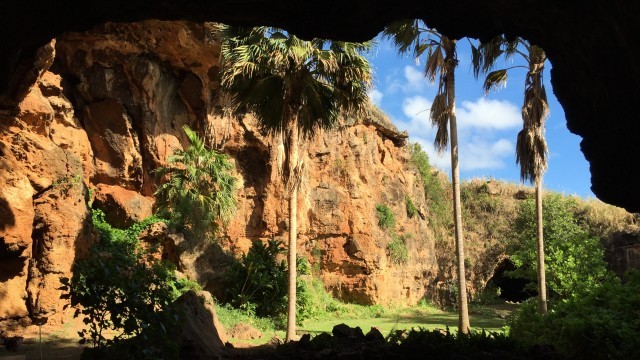
Ancient Sinkhole Could Presage Mega-Tsunami for Hawaii
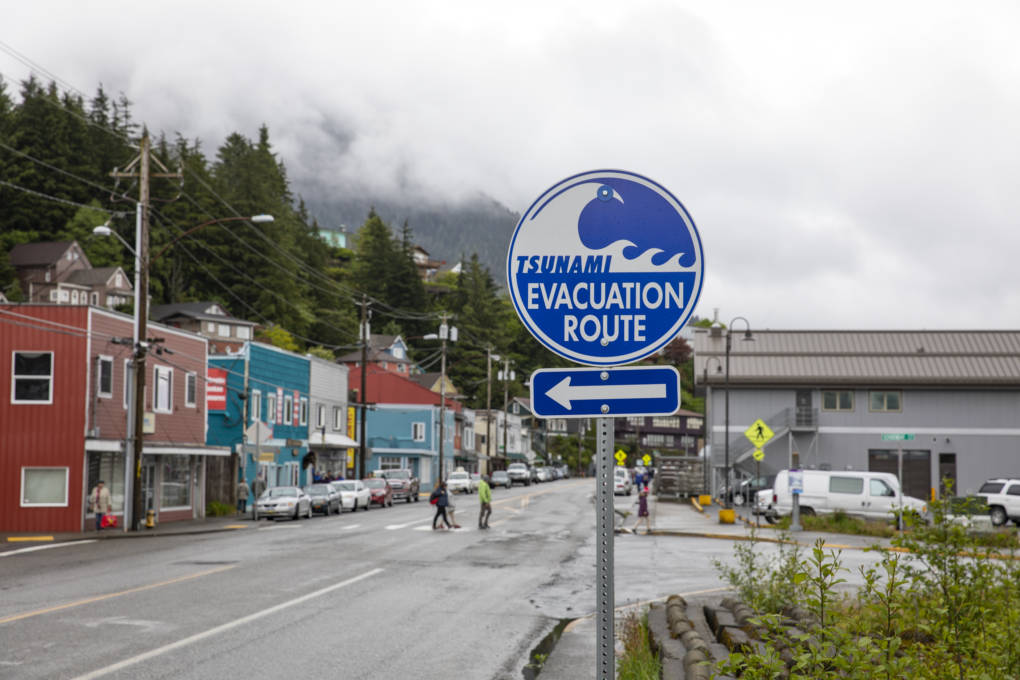
Ten Years After Indian Ocean Tsunami, California is Better Prepared
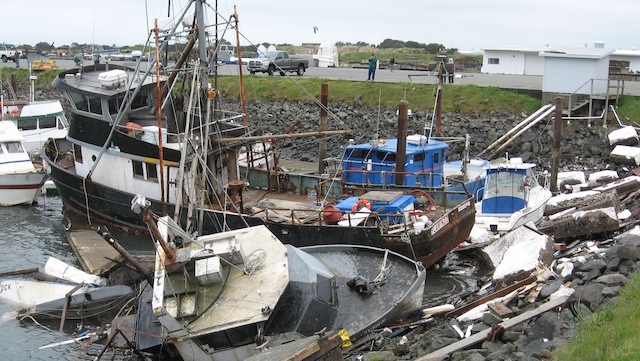
Three Years After Disaster, Crescent City Sports a New 'Tsunami-Resistant' Harbor
Sizing Up Tsunamis By Their Sound Waves
Sponsored
Player sponsored by
window.__IS_SSR__=true
window.__INITIAL_STATE__={
"attachmentsReducer": {
"audio_0": {
"type": "attachments",
"id": "audio_0",
"imgSizes": {
"kqedFullSize": {
"file": "https://ww2.kqed.org/news/wp-content/themes/KQED-unified/img/audio_bgs/background0.jpg"
}
}
},
"audio_1": {
"type": "attachments",
"id": "audio_1",
"imgSizes": {
"kqedFullSize": {
"file": "https://ww2.kqed.org/news/wp-content/themes/KQED-unified/img/audio_bgs/background1.jpg"
}
}
},
"audio_2": {
"type": "attachments",
"id": "audio_2",
"imgSizes": {
"kqedFullSize": {
"file": "https://ww2.kqed.org/news/wp-content/themes/KQED-unified/img/audio_bgs/background2.jpg"
}
}
},
"audio_3": {
"type": "attachments",
"id": "audio_3",
"imgSizes": {
"kqedFullSize": {
"file": "https://ww2.kqed.org/news/wp-content/themes/KQED-unified/img/audio_bgs/background3.jpg"
}
}
},
"audio_4": {
"type": "attachments",
"id": "audio_4",
"imgSizes": {
"kqedFullSize": {
"file": "https://ww2.kqed.org/news/wp-content/themes/KQED-unified/img/audio_bgs/background4.jpg"
}
}
},
"placeholder": {
"type": "attachments",
"id": "placeholder",
"imgSizes": {
"thumbnail": {
"file": "https://cdn.kqed.org/wp-content/uploads/2024/12/KQED-Default-Image-816638274-2000x1333-1-160x107.jpg",
"width": 160,
"height": 107,
"mimeType": "image/jpeg"
},
"medium": {
"file": "https://cdn.kqed.org/wp-content/uploads/2024/12/KQED-Default-Image-816638274-2000x1333-1-800x533.jpg",
"width": 800,
"height": 533,
"mimeType": "image/jpeg"
},
"medium_large": {
"file": "https://cdn.kqed.org/wp-content/uploads/2024/12/KQED-Default-Image-816638274-2000x1333-1-768x512.jpg",
"width": 768,
"height": 512,
"mimeType": "image/jpeg"
},
"large": {
"file": "https://cdn.kqed.org/wp-content/uploads/2024/12/KQED-Default-Image-816638274-2000x1333-1-1020x680.jpg",
"width": 1020,
"height": 680,
"mimeType": "image/jpeg"
},
"1536x1536": {
"file": "https://cdn.kqed.org/wp-content/uploads/2024/12/KQED-Default-Image-816638274-2000x1333-1-1536x1024.jpg",
"width": 1536,
"height": 1024,
"mimeType": "image/jpeg"
},
"fd-lrg": {
"file": "https://cdn.kqed.org/wp-content/uploads/2024/12/KQED-Default-Image-816638274-2000x1333-1-1536x1024.jpg",
"width": 1536,
"height": 1024,
"mimeType": "image/jpeg"
},
"fd-med": {
"file": "https://cdn.kqed.org/wp-content/uploads/2024/12/KQED-Default-Image-816638274-2000x1333-1-1020x680.jpg",
"width": 1020,
"height": 680,
"mimeType": "image/jpeg"
},
"fd-sm": {
"file": "https://cdn.kqed.org/wp-content/uploads/2024/12/KQED-Default-Image-816638274-2000x1333-1-800x533.jpg",
"width": 800,
"height": 533,
"mimeType": "image/jpeg"
},
"post-thumbnail": {
"file": "https://cdn.kqed.org/wp-content/uploads/2024/12/KQED-Default-Image-816638274-2000x1333-1-672x372.jpg",
"width": 672,
"height": 372,
"mimeType": "image/jpeg"
},
"twentyfourteen-full-width": {
"file": "https://cdn.kqed.org/wp-content/uploads/2024/12/KQED-Default-Image-816638274-2000x1333-1-1038x576.jpg",
"width": 1038,
"height": 576,
"mimeType": "image/jpeg"
},
"xxsmall": {
"file": "https://cdn.kqed.org/wp-content/uploads/2024/12/KQED-Default-Image-816638274-2000x1333-1-160x107.jpg",
"width": 160,
"height": 107,
"mimeType": "image/jpeg"
},
"xsmall": {
"file": "https://cdn.kqed.org/wp-content/uploads/2024/12/KQED-Default-Image-816638274-2000x1333-1-672x372.jpg",
"width": 672,
"height": 372,
"mimeType": "image/jpeg"
},
"small": {
"file": "https://cdn.kqed.org/wp-content/uploads/2024/12/KQED-Default-Image-816638274-2000x1333-1-672x372.jpg",
"width": 672,
"height": 372,
"mimeType": "image/jpeg"
},
"xlarge": {
"file": "https://cdn.kqed.org/wp-content/uploads/2024/12/KQED-Default-Image-816638274-2000x1333-1-1020x680.jpg",
"width": 1020,
"height": 680,
"mimeType": "image/jpeg"
},
"full-width": {
"file": "https://cdn.kqed.org/wp-content/uploads/2024/12/KQED-Default-Image-816638274-2000x1333-1-1920x1280.jpg",
"width": 1920,
"height": 1280,
"mimeType": "image/jpeg"
},
"guest-author-32": {
"file": "https://cdn.kqed.org/wp-content/uploads/2025/01/KQED-Default-Image-816638274-1333x1333-1-160x160.jpg",
"width": 32,
"height": 32,
"mimeType": "image/jpeg"
},
"guest-author-50": {
"file": "https://cdn.kqed.org/wp-content/uploads/2025/01/KQED-Default-Image-816638274-1333x1333-1-160x160.jpg",
"width": 50,
"height": 50,
"mimeType": "image/jpeg"
},
"guest-author-64": {
"file": "https://cdn.kqed.org/wp-content/uploads/2025/01/KQED-Default-Image-816638274-1333x1333-1-160x160.jpg",
"width": 64,
"height": 64,
"mimeType": "image/jpeg"
},
"guest-author-96": {
"file": "https://cdn.kqed.org/wp-content/uploads/2025/01/KQED-Default-Image-816638274-1333x1333-1-160x160.jpg",
"width": 96,
"height": 96,
"mimeType": "image/jpeg"
},
"guest-author-128": {
"file": "https://cdn.kqed.org/wp-content/uploads/2025/01/KQED-Default-Image-816638274-1333x1333-1-160x160.jpg",
"width": 128,
"height": 128,
"mimeType": "image/jpeg"
},
"detail": {
"file": "https://cdn.kqed.org/wp-content/uploads/2025/01/KQED-Default-Image-816638274-1333x1333-1-160x160.jpg",
"width": 160,
"height": 160,
"mimeType": "image/jpeg"
},
"kqedFullSize": {
"file": "https://cdn.kqed.org/wp-content/uploads/2024/12/KQED-Default-Image-816638274-2000x1333-1.jpg",
"width": 2000,
"height": 1333
}
}
},
"science_1997997": {
"type": "attachments",
"id": "science_1997997",
"meta": {
"index": "attachments_1716263798",
"site": "science",
"id": "1997997",
"found": true
},
"title": "A home in the Berkeley hills on April 15, 2025.",
"publishDate": 1753982613,
"status": "inherit",
"parent": 1997994,
"modified": 1753982624,
"caption": "A home in the Berkeley hills on April 15, 2025. A new study highlights the need for residents in the Berkeley hills to have an evacuation plan and to leave early in case of emergency. ",
"credit": "Martin do Nascimento/KQED",
"altTag": null,
"description": null,
"imgSizes": {
"thumbnail": {
"file": "https://cdn.kqed.org/wp-content/uploads/sites/35/2025/07/250415-BERKELEY-PLANTS-MD-05_qed-160x107.jpg",
"width": 160,
"height": 107,
"mimeType": "image/jpeg"
},
"medium_large": {
"file": "https://cdn.kqed.org/wp-content/uploads/sites/35/2025/07/250415-BERKELEY-PLANTS-MD-05_qed-768x512.jpg",
"width": 768,
"height": 512,
"mimeType": "image/jpeg"
},
"1536x1536": {
"file": "https://cdn.kqed.org/wp-content/uploads/sites/35/2025/07/250415-BERKELEY-PLANTS-MD-05_qed-1536x1024.jpg",
"width": 1536,
"height": 1024,
"mimeType": "image/jpeg"
},
"post-thumbnail": {
"file": "https://cdn.kqed.org/wp-content/uploads/sites/35/2025/07/250415-BERKELEY-PLANTS-MD-05_qed-672x372.jpg",
"width": 672,
"height": 372,
"mimeType": "image/jpeg"
},
"twentyfourteen-full-width": {
"file": "https://cdn.kqed.org/wp-content/uploads/sites/35/2025/07/250415-BERKELEY-PLANTS-MD-05_qed-1038x576.jpg",
"width": 1038,
"height": 576,
"mimeType": "image/jpeg"
},
"kqedFullSize": {
"file": "https://cdn.kqed.org/wp-content/uploads/sites/35/2025/07/250415-BERKELEY-PLANTS-MD-05_qed.jpg",
"width": 1999,
"height": 1333
}
},
"fetchFailed": false,
"isLoading": false
},
"science_1935042": {
"type": "attachments",
"id": "science_1935042",
"meta": {
"index": "attachments_1716263798",
"site": "science",
"id": "1935042",
"found": true
},
"parent": 1935035,
"imgSizes": {
"small": {
"file": "https://ww2.kqed.org/app/uploads/sites/35/2018/11/iStock-983520144-520x347.jpg",
"width": 520,
"mimeType": "image/jpeg",
"height": 347
},
"twentyfourteen-full-width": {
"file": "https://ww2.kqed.org/app/uploads/sites/35/2018/11/iStock-983520144-1038x576.jpg",
"width": 1038,
"mimeType": "image/jpeg",
"height": 576
},
"thumbnail": {
"file": "https://ww2.kqed.org/app/uploads/sites/35/2018/11/iStock-983520144-160x107.jpg",
"width": 160,
"mimeType": "image/jpeg",
"height": 107
},
"fd-sm": {
"file": "https://ww2.kqed.org/app/uploads/sites/35/2018/11/iStock-983520144-960x640.jpg",
"width": 960,
"mimeType": "image/jpeg",
"height": 640
},
"post-thumbnail": {
"file": "https://ww2.kqed.org/app/uploads/sites/35/2018/11/iStock-983520144-672x372.jpg",
"width": 672,
"mimeType": "image/jpeg",
"height": 372
},
"xsmall": {
"file": "https://ww2.kqed.org/app/uploads/sites/35/2018/11/iStock-983520144-375x250.jpg",
"width": 375,
"mimeType": "image/jpeg",
"height": 250
},
"kqedFullSize": {
"file": "https://ww2.kqed.org/app/uploads/sites/35/2018/11/iStock-983520144.jpg",
"width": 6720,
"height": 4480
},
"large": {
"file": "https://ww2.kqed.org/app/uploads/sites/35/2018/11/iStock-983520144-1020x680.jpg",
"width": 1020,
"mimeType": "image/jpeg",
"height": 680
},
"xlarge": {
"file": "https://ww2.kqed.org/app/uploads/sites/35/2018/11/iStock-983520144-1180x787.jpg",
"width": 1180,
"mimeType": "image/jpeg",
"height": 787
},
"complete_open_graph": {
"file": "https://ww2.kqed.org/app/uploads/sites/35/2018/11/iStock-983520144-1200x800.jpg",
"width": 1200,
"mimeType": "image/jpeg",
"height": 800
},
"guest-author-50": {
"file": "https://ww2.kqed.org/app/uploads/sites/35/2018/11/iStock-983520144-50x50.jpg",
"width": 50,
"mimeType": "image/jpeg",
"height": 50
},
"guest-author-96": {
"file": "https://ww2.kqed.org/app/uploads/sites/35/2018/11/iStock-983520144-96x96.jpg",
"width": 96,
"mimeType": "image/jpeg",
"height": 96
},
"medium": {
"file": "https://ww2.kqed.org/app/uploads/sites/35/2018/11/iStock-983520144-800x533.jpg",
"width": 800,
"mimeType": "image/jpeg",
"height": 533
},
"guest-author-64": {
"file": "https://ww2.kqed.org/app/uploads/sites/35/2018/11/iStock-983520144-64x64.jpg",
"width": 64,
"mimeType": "image/jpeg",
"height": 64
},
"guest-author-32": {
"file": "https://ww2.kqed.org/app/uploads/sites/35/2018/11/iStock-983520144-32x32.jpg",
"width": 32,
"mimeType": "image/jpeg",
"height": 32
},
"fd-lrg": {
"file": "https://ww2.kqed.org/app/uploads/sites/35/2018/11/iStock-983520144-1920x1280.jpg",
"width": 1920,
"mimeType": "image/jpeg",
"height": 1280
},
"fd-med": {
"file": "https://ww2.kqed.org/app/uploads/sites/35/2018/11/iStock-983520144-1180x787.jpg",
"width": 1180,
"mimeType": "image/jpeg",
"height": 787
},
"full-width": {
"file": "https://ww2.kqed.org/app/uploads/sites/35/2018/11/iStock-983520144-1920x1280.jpg",
"width": 1920,
"mimeType": "image/jpeg",
"height": 1280
},
"detail": {
"file": "https://ww2.kqed.org/app/uploads/sites/35/2018/11/iStock-983520144-150x150.jpg",
"width": 150,
"mimeType": "image/jpeg",
"height": 150
},
"medium_large": {
"file": "https://ww2.kqed.org/app/uploads/sites/35/2018/11/iStock-983520144-768x512.jpg",
"width": 768,
"mimeType": "image/jpeg",
"height": 512
},
"guest-author-128": {
"file": "https://ww2.kqed.org/app/uploads/sites/35/2018/11/iStock-983520144-128x128.jpg",
"width": 128,
"mimeType": "image/jpeg",
"height": 128
},
"xxsmall": {
"file": "https://ww2.kqed.org/app/uploads/sites/35/2018/11/iStock-983520144-240x160.jpg",
"width": 240,
"mimeType": "image/jpeg",
"height": 160
}
},
"publishDate": 1543607274,
"modified": 1543607469,
"caption": "Two earthquakes, with magnitudes measuring 7.0 and 5.8, buckled roads and triggered a tsunami warning on Friday Nov. 30, 2018 in Anchorage, Alaska. Pictured: Tsunami evacuation route sign in Ketchikan, Alaska.",
"description": null,
"title": "Tsunami Evacuation Route sign",
"credit": "iStock",
"status": "inherit",
"fetchFailed": false,
"isLoading": false
},
"science_30781": {
"type": "attachments",
"id": "science_30781",
"meta": {
"index": "attachments_1716263798",
"site": "science",
"id": "30781",
"found": true
},
"parent": 0,
"imgSizes": {
"thumbnail": {
"file": "https://ww2.kqed.org/app/uploads/sites/35/2015/06/transverse-range-400x225.jpg",
"width": 400,
"mimeType": "image/jpeg",
"height": 225
},
"post-thumbnail": {
"file": "https://ww2.kqed.org/app/uploads/sites/35/2015/06/transverse-range-672x372.jpg",
"width": 672,
"mimeType": "image/jpeg",
"height": 372
},
"kqedFullSize": {
"file": "https://ww2.kqed.org/app/uploads/sites/35/2015/06/transverse-range.jpg",
"width": 800,
"height": 450
},
"guest-author-96": {
"file": "https://ww2.kqed.org/app/uploads/sites/35/2015/06/transverse-range-96x96.jpg",
"width": 96,
"mimeType": "image/jpeg",
"height": 96
},
"medium": {
"file": "https://ww2.kqed.org/app/uploads/sites/35/2015/06/transverse-range-800x450.jpg",
"width": 800,
"mimeType": "image/jpeg",
"height": 450
},
"guest-author-64": {
"file": "https://ww2.kqed.org/app/uploads/sites/35/2015/06/transverse-range-64x64.jpg",
"width": 64,
"mimeType": "image/jpeg",
"height": 64
},
"detail": {
"file": "https://ww2.kqed.org/app/uploads/sites/35/2015/06/transverse-range-75x75.jpg",
"width": 75,
"mimeType": "image/jpeg",
"height": 75
},
"guest-author-32": {
"file": "https://ww2.kqed.org/app/uploads/sites/35/2015/06/transverse-range-32x32.jpg",
"width": 32,
"mimeType": "image/jpeg",
"height": 32
},
"guest-author-128": {
"file": "https://ww2.kqed.org/app/uploads/sites/35/2015/06/transverse-range-128x128.jpg",
"width": 128,
"mimeType": "image/jpeg",
"height": 128
}
},
"publishDate": 1433449574,
"modified": 1433449887,
"caption": "The coastal mountains near Santa Barbara are being raised by tectonic forces that put the area at risk of tsunamis caused by earthquake faults offshore. (Alden/KQED)",
"description": "The coastal mountains near Santa Barbara are being raised by tectonic forces that put the area at risk of tsunamis caused by earthquake faults offshore. (Alden/KQED)",
"title": "earthquake tsunami",
"credit": null,
"status": "inherit",
"fetchFailed": false,
"isLoading": false
},
"science_27931": {
"type": "attachments",
"id": "science_27931",
"meta": {
"index": "attachments_1716263798",
"site": "science",
"id": "27931",
"found": true
},
"parent": 27911,
"imgSizes": {
"kqedFullSize": {
"file": "https://ww2.kqed.org/app/uploads/sites/35/2015/03/Makauwahi_2344-e1425689842640.jpg",
"width": 640,
"height": 360
}
},
"publishDate": 1425609187,
"modified": 1425609277,
"caption": "Makauwahi sinkhole, seen from the caves on the south side. (Craig Miller/KQED)",
"description": "Makauwahi sinkhole, seen from the caves on the south side. (Craig Miller/KQED)",
"title": "Makauwahi_2344",
"credit": null,
"status": "inherit",
"fetchFailed": false,
"isLoading": false
},
"science_25621": {
"type": "attachments",
"id": "science_25621",
"meta": {
"index": "attachments_1716263798",
"site": "science",
"id": "25621",
"found": true
},
"title": "RS2531_IMG_0545-lpr",
"publishDate": 1419388628,
"status": "inherit",
"parent": 25508,
"modified": 1758751719,
"caption": "A tsunami warning sign in Crescent City, CA, which has a well-rehearsed response plan. (Craig Miller/KQED)",
"credit": "Craig Miller/KQED",
"altTag": "A tsunami warning sign in Crescent City, CA, which has a well-rehearsed response plan. (Craig Miller/KQED)",
"description": "A tsunami warning sign in Crescent City, CA, which has a well-rehearsed response plan. ",
"imgSizes": {
"kqedFullSize": {
"file": "https://cdn.kqed.org/wp-content/uploads/sites/35/2014/12/RS2531_IMG_0545-lpr.jpg",
"width": 2000,
"height": 1500
}
},
"fetchFailed": false,
"isLoading": false
},
"science_15228": {
"type": "attachments",
"id": "science_15228",
"meta": {
"index": "attachments_1716263798",
"site": "science",
"id": "15228",
"found": true
},
"title": "Crescent2011_0524",
"publishDate": 1394511358,
"status": "inherit",
"parent": 15192,
"modified": 1758751681,
"caption": "Wreckage piled up by the 2011 tsunami that hit Crescent City's harbor. ",
"credit": "Craig Miller/KQED",
"altTag": null,
"description": null,
"imgSizes": {
"kqedFullSize": {
"file": "https://cdn.kqed.org/wp-content/uploads/sites/35/2014/03/Crescent2011_0524.jpg",
"width": 640,
"height": 360
}
},
"fetchFailed": false,
"isLoading": false
},
"science_3943": {
"type": "attachments",
"id": "science_3943",
"meta": {
"index": "attachments_1716263798",
"site": "science",
"id": "3943",
"found": true
},
"parent": 3939,
"imgSizes": {
"kqedFullSize": {
"file": "https://ww2.kqed.org/app/uploads/sites/35/2013/06/IMG_05241.jpg",
"width": 640,
"height": 361
}
},
"publishDate": 1370396802,
"modified": 1370396802,
"caption": "Crescent City carnage: the 2011 earthquake off Japan caused millions in damage along the California coast. (Photo: Craig Miller / KQED)",
"description": null,
"title": "IMG_0524",
"credit": null,
"status": "inherit",
"fetchFailed": false,
"isLoading": false
}
},
"audioPlayerReducer": {
"postId": "stream_live",
"isPaused": true,
"isPlaying": false,
"pfsActive": false,
"pledgeModalIsOpen": true,
"playerDrawerIsOpen": false
},
"authorsReducer": {
"byline_science_1935035": {
"type": "authors",
"id": "byline_science_1935035",
"meta": {
"override": true
},
"slug": "byline_science_1935035",
"name": "Rachel D'Oro and Dan Joling\u003cbr />Associated Press",
"isLoading": false
},
"cmiller": {
"type": "authors",
"id": "221",
"meta": {
"index": "authors_1716337520",
"id": "221",
"found": true
},
"name": "Craig Miller",
"firstName": "Craig",
"lastName": "Miller",
"slug": "cmiller",
"email": "craig@voxterra.net",
"display_author_email": false,
"staff_mastheads": [
"science"
],
"title": "Editor Emeritus, Science",
"bio": "Craig is a former KQED Science editor, specializing in weather, climate, water & energy issues, with a little seismology thrown in just to shake things up. Prior to that, he launched and led the station's award-winning multimedia project, Climate Watch. Craig is also an accomplished writer/producer of television documentaries, with a focus on natural resource issues.",
"avatar": "https://secure.gravatar.com/avatar/b91661df645e001a9cafe0861fa685f9?s=600&d=blank&r=g",
"twitter": "voxterra",
"facebook": null,
"instagram": null,
"linkedin": null,
"sites": [
{
"site": "news",
"roles": [
"author"
]
},
{
"site": "futureofyou",
"roles": [
"editor"
]
},
{
"site": "stateofhealth",
"roles": [
"author"
]
},
{
"site": "science",
"roles": [
"editor"
]
},
{
"site": "quest",
"roles": [
"editor"
]
}
],
"headData": {
"title": "Craig Miller | KQED",
"description": "Editor Emeritus, Science",
"ogImgSrc": "https://secure.gravatar.com/avatar/b91661df645e001a9cafe0861fa685f9?s=600&d=blank&r=g",
"twImgSrc": "https://secure.gravatar.com/avatar/b91661df645e001a9cafe0861fa685f9?s=600&d=blank&r=g"
},
"isLoading": false,
"link": "/author/cmiller"
},
"andrew-alden": {
"type": "authors",
"id": "6228",
"meta": {
"index": "authors_1716337520",
"id": "6228",
"found": true
},
"name": "Andrew Alden",
"firstName": "Andrew",
"lastName": "Alden",
"slug": "andrew-alden",
"email": "alden@andrew-alden.com",
"display_author_email": false,
"staff_mastheads": [],
"title": null,
"bio": "Andrew Alden earned his geology degree at the University of New Hampshire and moved back to the Bay Area to work at the U.S. Geological Survey for six years. He has \u003ca href=\"http://geology.about.com/\">written on geology for About.com\u003c/a> since its founding in 1997. In 2007, he started the Oakland Geology blog, which won recognition as \"Best of the East Bay\" from the \u003ci>East Bay Express\u003c/i> in 2010. In writing about geology in the Bay Area and surroundings, he hopes to share some of the useful and pleasurable insights that geologists give us—not just facts about the deep past, but an attitude that might be called the \u003ci>deep present\u003c/i>.\r\n\r\nRead his \u003ca href=\"http://science.kqed.org/quest/author/andrew-alden/\">previous contributions\u003c/a> to \u003ca href=\"http://http://science.kqed.org/quest/\">QUEST\u003c/a>, a project dedicated to exploring the Science of Sustainability.",
"avatar": "https://secure.gravatar.com/avatar/9eaa0afc32f98c5fc7ce634437334a64?s=600&d=blank&r=g",
"twitter": null,
"facebook": null,
"instagram": null,
"linkedin": null,
"sites": [
{
"site": "science",
"roles": [
"author"
]
},
{
"site": "quest",
"roles": [
"subscriber"
]
}
],
"headData": {
"title": "Andrew Alden | KQED",
"description": null,
"ogImgSrc": "https://secure.gravatar.com/avatar/9eaa0afc32f98c5fc7ce634437334a64?s=600&d=blank&r=g",
"twImgSrc": "https://secure.gravatar.com/avatar/9eaa0afc32f98c5fc7ce634437334a64?s=600&d=blank&r=g"
},
"isLoading": false,
"link": "/author/andrew-alden"
},
"mortegawelch": {
"type": "authors",
"id": "6591",
"meta": {
"index": "authors_1716337520",
"id": "6591",
"found": true
},
"name": "Marissa Ortega-Welch",
"firstName": "Marissa",
"lastName": "Ortega-Welch",
"slug": "mortegawelch",
"email": "mortegawelch@KQED.org",
"display_author_email": false,
"staff_mastheads": [],
"title": null,
"bio": "Marissa Ortega-Welch is an intern for KQED Science News. Prior to this, she interned for KPFA in Berkeley. In addition to her radio work, she has taught environmental education for the past ten years and is currently the Youth Education Manager for the Golden Gate Audubon Society of the Bay Area. She’s also worked as a field biologist, surveying birds on the West Coast from California to Alaska, and specializing in identifying birds by ear. She holds a BS in Conservation and Resource Studies from UC Berkeley.",
"avatar": "https://secure.gravatar.com/avatar/da36042ce8c113649af16cf24a836fa1?s=600&d=blank&r=g",
"twitter": null,
"facebook": null,
"instagram": null,
"linkedin": null,
"sites": [
{
"site": "science",
"roles": [
"editor"
]
}
],
"headData": {
"title": "Marissa Ortega-Welch | KQED",
"description": null,
"ogImgSrc": "https://secure.gravatar.com/avatar/da36042ce8c113649af16cf24a836fa1?s=600&d=blank&r=g",
"twImgSrc": "https://secure.gravatar.com/avatar/da36042ce8c113649af16cf24a836fa1?s=600&d=blank&r=g"
},
"isLoading": false,
"link": "/author/mortegawelch"
},
"dcronin": {
"type": "authors",
"id": "11362",
"meta": {
"index": "authors_1716337520",
"id": "11362",
"found": true
},
"name": "Dana Cronin",
"firstName": "Dana",
"lastName": "Cronin",
"slug": "dcronin",
"email": "dcronin@KQED.org",
"display_author_email": true,
"staff_mastheads": [],
"title": "KQED Contributor",
"bio": "Dana Cronin is a reporter for KQED News. She loves writing stories about climate change, environmental issues, food and agriculture. She's reported across the country, from Colorado to Washington D.C. to Illinois, and has won numerous awards for her coverage. Her work is regularly featured on national broadcasts, including NPR’s Morning Edition, All Things Considered, PBS Newshour and Science Friday. She lives in Oakland and has an avocado tree in her back yard.",
"avatar": "https://secure.gravatar.com/avatar/bcf89e3455ff7235f96ab6fa7258dd95?s=600&d=blank&r=g",
"twitter": "DanaHCronin",
"facebook": null,
"instagram": null,
"linkedin": null,
"sites": [
{
"site": "arts",
"roles": [
"author"
]
},
{
"site": "news",
"roles": [
"editor"
]
},
{
"site": "science",
"roles": [
"author"
]
},
{
"site": "liveblog",
"roles": [
"author"
]
}
],
"headData": {
"title": "Dana Cronin | KQED",
"description": "KQED Contributor",
"ogImgSrc": "https://secure.gravatar.com/avatar/bcf89e3455ff7235f96ab6fa7258dd95?s=600&d=blank&r=g",
"twImgSrc": "https://secure.gravatar.com/avatar/bcf89e3455ff7235f96ab6fa7258dd95?s=600&d=blank&r=g"
},
"isLoading": false,
"link": "/author/dcronin"
}
},
"breakingNewsReducer": {},
"pagesReducer": {},
"postsReducer": {
"stream_live": {
"type": "live",
"id": "stream_live",
"audioUrl": "https://streams.kqed.org/kqedradio",
"title": "Live Stream",
"excerpt": "Live Stream information currently unavailable.",
"link": "/radio",
"featImg": "",
"label": {
"name": "KQED Live",
"link": "/"
}
},
"stream_kqedNewscast": {
"type": "posts",
"id": "stream_kqedNewscast",
"audioUrl": "https://www.kqed.org/.stream/anon/radio/RDnews/newscast.mp3?_=1",
"title": "KQED Newscast",
"featImg": "",
"label": {
"name": "88.5 FM",
"link": "/"
}
},
"science_1997994": {
"type": "posts",
"id": "science_1997994",
"meta": {
"index": "posts_1716263798",
"site": "science",
"id": "1997994",
"score": null,
"sort": [
1754053205000
]
},
"guestAuthors": [],
"slug": "wildfire-evacuation-from-berkeley-hills-could-take-over-4-hours-study-finds",
"title": "Wildfire Evacuation From Berkeley Hills Could Take Over 4 Hours, Study Finds",
"publishDate": 1754053205,
"format": "standard",
"headTitle": "Wildfire Evacuation From Berkeley Hills Could Take Over 4 Hours, Study Finds | KQED",
"labelTerm": {},
"content": "\u003cp>\u003ca href=\"https://www.kqed.org/news/tag/berkeley\">Berkeley\u003c/a>’s roadways don’t have the capacity for large-scale evacuation and, as a result, fleeing from the hills during a wildfire could take longer than four hours, according to a new study commissioned by the city.\u003c/p>\n\u003cp>\u003ca href=\"https://berkeleyca.gov/sites/default/files/documents/Evacuation%20Time%20Study.pdf\">The study conducted by KLD Associates mapped evacuation patterns\u003c/a> and simulated escape times based on a repeat of the \u003ca href=\"https://www.berkeleypubliclibrary.org/sites/default/files/files/inline/bplhstrm_979.467_st76_the_story_of_the_berkeley_fire.pdf\">1923 Berkeley Fire\u003c/a>, which burned north of the UC Berkeley campus, destroying over 600 structures and displacing thousands of residents. Depending on where a fire ignites, researchers identified specific chokepoints on busy intersections and freeway onramps, where cars would likely gridlock in an urgent evacuation.\u003c/p>\n\u003cp>“The streets were built a long time ago,” said Keith May, deputy fire chief of the Berkeley Fire Department. “So the road capacity is tight already. And then when you factor in evacuating residents out and also getting emergency vehicles in to fight the fire or to do evacuations, that’s a tight network.”\u003c/p>\n\u003cp>[ad fullwidth]\u003c/p>\n\u003cp>\u003ca href=\"https://www.kqed.org/news/12020808/as-la-fires-rage-harrowing-evacuations-play-out-on-traffic-choked-roads\">Harrowing evacuations through traffic-choked roads\u003c/a> are unfortunately common in California, with its many hillside communities that often only have one or a handful of roads in and out. That has led to some of the state’s most deadly fires, including the Camp Fire, when over 25,000 Paradise residents attempted to evacuate the area only to get caught in a massive traffic jam. Eighty-five people were killed.\u003c/p>\n\u003cp>The Berkeley study also estimated how long it would take residents to evacuate during large-scale tsunamis, which exceeded two hours for residents fleeing low-lying coastal areas in the middle of the day.\u003c/p>\n\u003cfigure id=\"attachment_1997999\" class=\"wp-caption aligncenter\" style=\"max-width: 2000px\">\u003cimg loading=\"lazy\" decoding=\"async\" class=\"size-full wp-image-1997999\" src=\"https://cdn.kqed.org/wp-content/uploads/sites/35/2025/07/drought_3_140115.jpg\" alt=\"\" width=\"2000\" height=\"1333\" srcset=\"https://cdn.kqed.org/wp-content/uploads/sites/35/2025/07/drought_3_140115.jpg 2000w, https://cdn.kqed.org/wp-content/uploads/sites/35/2025/07/drought_3_140115-160x107.jpg 160w, https://cdn.kqed.org/wp-content/uploads/sites/35/2025/07/drought_3_140115-768x512.jpg 768w, https://cdn.kqed.org/wp-content/uploads/sites/35/2025/07/drought_3_140115-1536x1024.jpg 1536w\" sizes=\"auto, (max-width: 2000px) 100vw, 2000px\">\u003cfigcaption class=\"wp-caption-text\">Fire warning signs in the Berkeley and Oakland Hills. \u003ccite>(Mark Andrew Boyer/KQED)\u003c/cite>\u003c/figcaption>\u003c/figure>\n\u003cp>In the case of both wildfires and tsunamis, the report emphasized the need for residents to evacuate as early as possible.\u003c/p>\n\u003cp>“Leave early if you can,” May said. He suggested residents leave the hills even before a fire ignites on red flag days. “Just get out of the hills so you’re not part of that evacuation problem. The less cars on the roadway, the faster the evacuation time will go.”\u003c/p>\n\u003cp>The evacuation times laid out in the study could be a dramatic underestimate, according to Stanford wildfire researcher Michael Wara, who was not involved in the Berkeley study.[aside postID=news_12035866 hero='https://cdn.kqed.org/wp-content/uploads/sites/10/2025/04/250415-BERKELEY-PLANTS-MD-04-KQED-1020x680.jpg']“I would interpret this study as an absolute minimum on the evacuation time,” he said. “I would say this is the floor, and in reality, things would be worse.”\u003c/p>\n\u003cp>That’s because researchers only took into consideration the outflow of traffic from the hills, Wara said, and not the inflow of emergency response vehicles.\u003c/p>\n\u003cp>“If you pretend in your model that the fire trucks aren’t there, you’re gonna miss the places where it may be most significant because it’s really hard to get fire trucks up the hill and people down the hill at the same time,” he said.\u003c/p>\n\u003cp>Still, Wara said, knowing where the traffic chokepoints will be during a rapid evacuation is critical for getting people out safely. He pointed to the emergency response during the Palisades Fire in Los Angeles earlier this year, including the use of bulldozers to push abandoned vehicles to the sides of the roads.\u003c/p>\n\u003cp>“That was a remarkable display of evacuation preparedness and acumen on the part of the fire department in Los Angeles,” he said. “If those bulldozers had not been prepositioned at the places where the city thought there would be a gridlock, who knows what would have happened?”\u003c/p>\n\u003cfigure id=\"attachment_1998006\" class=\"wp-caption aligncenter\" style=\"max-width: 2000px\">\u003cimg loading=\"lazy\" decoding=\"async\" class=\"size-full wp-image-1998006\" src=\"https://cdn.kqed.org/wp-content/uploads/sites/35/2025/07/250415-BERKELEY-PLANTS-MD-03_qed.jpg\" alt=\"\" width=\"2000\" height=\"1333\" srcset=\"https://cdn.kqed.org/wp-content/uploads/sites/35/2025/07/250415-BERKELEY-PLANTS-MD-03_qed.jpg 2000w, https://cdn.kqed.org/wp-content/uploads/sites/35/2025/07/250415-BERKELEY-PLANTS-MD-03_qed-160x107.jpg 160w, https://cdn.kqed.org/wp-content/uploads/sites/35/2025/07/250415-BERKELEY-PLANTS-MD-03_qed-768x512.jpg 768w, https://cdn.kqed.org/wp-content/uploads/sites/35/2025/07/250415-BERKELEY-PLANTS-MD-03_qed-1536x1024.jpg 1536w\" sizes=\"auto, (max-width: 2000px) 100vw, 2000px\">\u003cfigcaption class=\"wp-caption-text\">A home in the Berkeley hills on April 15, 2025. \u003ccite>(Martin do Nascimento/KQED)\u003c/cite>\u003c/figcaption>\u003c/figure>\n\u003cp>Another potentially helpful tool, Wara said, is implementing parking restrictions on certain roadways to open them up as evacuation routes.\u003c/p>\n\u003cp>In Mill Valley, for example, parking is limited on certain streets during high fire danger days.\u003c/p>\n\u003cp>Berkeley has similar restrictions on the Fourth of July, but May said the city is looking to expand those restrictions.\u003c/p>\n\u003cp>“Right now we’re trying to get every one of our county partners in sync with the idea,” he said. “And then we have to socialize it and get it out to the public, because they are the ones that are gonna be directly affected from the enforcement side of it.”\u003c/p>\n\u003cp>In the meantime, May said Berkeley residents should \u003ca href=\"https://member.everbridge.net/453003085612570/new\">sign up for emergency alerts\u003c/a> and \u003ca href=\"https://protect.genasys.com/download\">download the city’s evacuation map\u003c/a> to plan out their routes. He advises familiarizing yourself with your neighborhood and having at least two different evacuation routes in mind.\u003c/p>\n\u003cp>The city will also hold \u003ca href=\"https://berkeleyca.gov/community-recreation/news/study-stresses-need-household-fire-and-evacuation-plans\">a series of workshops\u003c/a> beginning in August for residents to get help in their evacuation preparations.\u003c/p>\n\u003cp>\u003c/p>\n",
"blocks": [],
"excerpt": "The study highlights the need for residents to have an evacuation plan and to leave early in case of emergency. ",
"status": "publish",
"parent": 0,
"modified": 1754510489,
"stats": {
"hasAudio": false,
"hasVideo": false,
"hasChartOrMap": false,
"iframeSrcs": [],
"hasGoogleForm": false,
"hasGallery": false,
"hasHearkenModule": false,
"hasPolis": false,
"paragraphCount": 20,
"wordCount": 815
},
"headData": {
"title": "Wildfire Evacuation From Berkeley Hills Could Take Over 4 Hours, Study Finds | KQED",
"description": "The study highlights the need for residents to have an evacuation plan and to leave early in case of emergency. ",
"ogTitle": "",
"ogDescription": "",
"ogImgId": "",
"twTitle": "",
"twDescription": "",
"twImgId": "",
"schema": {
"@context": "https://schema.org",
"@type": "Article",
"headline": "Wildfire Evacuation From Berkeley Hills Could Take Over 4 Hours, Study Finds",
"datePublished": "2025-08-01T06:00:05-07:00",
"dateModified": "2025-08-06T13:01:29-07:00",
"image": "https://cdn.kqed.org/wp-content/uploads/2020/02/KQED-OG-Image@1x.png"
}
},
"primaryCategory": {
"termId": 40,
"slug": "news",
"name": "News"
},
"source": "News",
"audioUrl": "https://traffic.omny.fm/d/clips/0af137ef-751e-4b19-a055-aaef00d2d578/ffca7e9f-6831-4[…]f-aaef00f5a073/1be0f8d7-45a6-4f3d-9e53-b3300108a097/audio.mp3",
"sticky": false,
"nprStoryId": "kqed-1997994",
"templateType": "standard",
"featuredImageType": "standard",
"excludeFromSiteSearch": "Include",
"articleAge": "0",
"path": "/science/1997994/wildfire-evacuation-from-berkeley-hills-could-take-over-4-hours-study-finds",
"audioTrackLength": null,
"parsedContent": [
{
"type": "contentString",
"content": "\u003cdiv class=\"post-body\">\u003cp>\u003cp>\u003ca href=\"https://www.kqed.org/news/tag/berkeley\">Berkeley\u003c/a>’s roadways don’t have the capacity for large-scale evacuation and, as a result, fleeing from the hills during a wildfire could take longer than four hours, according to a new study commissioned by the city.\u003c/p>\n\u003cp>\u003ca href=\"https://berkeleyca.gov/sites/default/files/documents/Evacuation%20Time%20Study.pdf\">The study conducted by KLD Associates mapped evacuation patterns\u003c/a> and simulated escape times based on a repeat of the \u003ca href=\"https://www.berkeleypubliclibrary.org/sites/default/files/files/inline/bplhstrm_979.467_st76_the_story_of_the_berkeley_fire.pdf\">1923 Berkeley Fire\u003c/a>, which burned north of the UC Berkeley campus, destroying over 600 structures and displacing thousands of residents. Depending on where a fire ignites, researchers identified specific chokepoints on busy intersections and freeway onramps, where cars would likely gridlock in an urgent evacuation.\u003c/p>\n\u003cp>“The streets were built a long time ago,” said Keith May, deputy fire chief of the Berkeley Fire Department. “So the road capacity is tight already. And then when you factor in evacuating residents out and also getting emergency vehicles in to fight the fire or to do evacuations, that’s a tight network.”\u003c/p>\n\u003cp>\u003c/p>\u003c/div>",
"attributes": {
"named": {},
"numeric": []
}
},
{
"type": "component",
"content": "",
"name": "ad",
"attributes": {
"named": {
"label": "fullwidth"
},
"numeric": [
"fullwidth"
]
}
},
{
"type": "contentString",
"content": "\u003cdiv class=\"post-body\">\u003cp>\u003c/p>\n\u003cp>\u003ca href=\"https://www.kqed.org/news/12020808/as-la-fires-rage-harrowing-evacuations-play-out-on-traffic-choked-roads\">Harrowing evacuations through traffic-choked roads\u003c/a> are unfortunately common in California, with its many hillside communities that often only have one or a handful of roads in and out. That has led to some of the state’s most deadly fires, including the Camp Fire, when over 25,000 Paradise residents attempted to evacuate the area only to get caught in a massive traffic jam. Eighty-five people were killed.\u003c/p>\n\u003cp>The Berkeley study also estimated how long it would take residents to evacuate during large-scale tsunamis, which exceeded two hours for residents fleeing low-lying coastal areas in the middle of the day.\u003c/p>\n\u003cfigure id=\"attachment_1997999\" class=\"wp-caption aligncenter\" style=\"max-width: 2000px\">\u003cimg loading=\"lazy\" decoding=\"async\" class=\"size-full wp-image-1997999\" src=\"https://cdn.kqed.org/wp-content/uploads/sites/35/2025/07/drought_3_140115.jpg\" alt=\"\" width=\"2000\" height=\"1333\" srcset=\"https://cdn.kqed.org/wp-content/uploads/sites/35/2025/07/drought_3_140115.jpg 2000w, https://cdn.kqed.org/wp-content/uploads/sites/35/2025/07/drought_3_140115-160x107.jpg 160w, https://cdn.kqed.org/wp-content/uploads/sites/35/2025/07/drought_3_140115-768x512.jpg 768w, https://cdn.kqed.org/wp-content/uploads/sites/35/2025/07/drought_3_140115-1536x1024.jpg 1536w\" sizes=\"auto, (max-width: 2000px) 100vw, 2000px\">\u003cfigcaption class=\"wp-caption-text\">Fire warning signs in the Berkeley and Oakland Hills. \u003ccite>(Mark Andrew Boyer/KQED)\u003c/cite>\u003c/figcaption>\u003c/figure>\n\u003cp>In the case of both wildfires and tsunamis, the report emphasized the need for residents to evacuate as early as possible.\u003c/p>\n\u003cp>“Leave early if you can,” May said. He suggested residents leave the hills even before a fire ignites on red flag days. “Just get out of the hills so you’re not part of that evacuation problem. The less cars on the roadway, the faster the evacuation time will go.”\u003c/p>\n\u003cp>The evacuation times laid out in the study could be a dramatic underestimate, according to Stanford wildfire researcher Michael Wara, who was not involved in the Berkeley study.\u003c/p>\u003c/div>",
"attributes": {
"named": {},
"numeric": []
}
},
{
"type": "component",
"content": "",
"name": "aside",
"attributes": {
"named": {
"postid": "news_12035866",
"hero": "https://cdn.kqed.org/wp-content/uploads/sites/10/2025/04/250415-BERKELEY-PLANTS-MD-04-KQED-1020x680.jpg",
"label": ""
},
"numeric": []
}
},
{
"type": "contentString",
"content": "\u003cdiv class=\"post-body\">\u003cp>“I would interpret this study as an absolute minimum on the evacuation time,” he said. “I would say this is the floor, and in reality, things would be worse.”\u003c/p>\n\u003cp>That’s because researchers only took into consideration the outflow of traffic from the hills, Wara said, and not the inflow of emergency response vehicles.\u003c/p>\n\u003cp>“If you pretend in your model that the fire trucks aren’t there, you’re gonna miss the places where it may be most significant because it’s really hard to get fire trucks up the hill and people down the hill at the same time,” he said.\u003c/p>\n\u003cp>Still, Wara said, knowing where the traffic chokepoints will be during a rapid evacuation is critical for getting people out safely. He pointed to the emergency response during the Palisades Fire in Los Angeles earlier this year, including the use of bulldozers to push abandoned vehicles to the sides of the roads.\u003c/p>\n\u003cp>“That was a remarkable display of evacuation preparedness and acumen on the part of the fire department in Los Angeles,” he said. “If those bulldozers had not been prepositioned at the places where the city thought there would be a gridlock, who knows what would have happened?”\u003c/p>\n\u003cfigure id=\"attachment_1998006\" class=\"wp-caption aligncenter\" style=\"max-width: 2000px\">\u003cimg loading=\"lazy\" decoding=\"async\" class=\"size-full wp-image-1998006\" src=\"https://cdn.kqed.org/wp-content/uploads/sites/35/2025/07/250415-BERKELEY-PLANTS-MD-03_qed.jpg\" alt=\"\" width=\"2000\" height=\"1333\" srcset=\"https://cdn.kqed.org/wp-content/uploads/sites/35/2025/07/250415-BERKELEY-PLANTS-MD-03_qed.jpg 2000w, https://cdn.kqed.org/wp-content/uploads/sites/35/2025/07/250415-BERKELEY-PLANTS-MD-03_qed-160x107.jpg 160w, https://cdn.kqed.org/wp-content/uploads/sites/35/2025/07/250415-BERKELEY-PLANTS-MD-03_qed-768x512.jpg 768w, https://cdn.kqed.org/wp-content/uploads/sites/35/2025/07/250415-BERKELEY-PLANTS-MD-03_qed-1536x1024.jpg 1536w\" sizes=\"auto, (max-width: 2000px) 100vw, 2000px\">\u003cfigcaption class=\"wp-caption-text\">A home in the Berkeley hills on April 15, 2025. \u003ccite>(Martin do Nascimento/KQED)\u003c/cite>\u003c/figcaption>\u003c/figure>\n\u003cp>Another potentially helpful tool, Wara said, is implementing parking restrictions on certain roadways to open them up as evacuation routes.\u003c/p>\n\u003cp>In Mill Valley, for example, parking is limited on certain streets during high fire danger days.\u003c/p>\n\u003cp>Berkeley has similar restrictions on the Fourth of July, but May said the city is looking to expand those restrictions.\u003c/p>\n\u003cp>“Right now we’re trying to get every one of our county partners in sync with the idea,” he said. “And then we have to socialize it and get it out to the public, because they are the ones that are gonna be directly affected from the enforcement side of it.”\u003c/p>\n\u003cp>In the meantime, May said Berkeley residents should \u003ca href=\"https://member.everbridge.net/453003085612570/new\">sign up for emergency alerts\u003c/a> and \u003ca href=\"https://protect.genasys.com/download\">download the city’s evacuation map\u003c/a> to plan out their routes. He advises familiarizing yourself with your neighborhood and having at least two different evacuation routes in mind.\u003c/p>\n\u003cp>The city will also hold \u003ca href=\"https://berkeleyca.gov/community-recreation/news/study-stresses-need-household-fire-and-evacuation-plans\">a series of workshops\u003c/a> beginning in August for residents to get help in their evacuation preparations.\u003c/p>\n\u003cp>\u003c/p>\n\u003c/div>\u003c/p>",
"attributes": {
"named": {},
"numeric": []
}
}
],
"link": "/science/1997994/wildfire-evacuation-from-berkeley-hills-could-take-over-4-hours-study-finds",
"authors": [
"11362"
],
"categories": [
"science_31",
"science_35",
"science_4550",
"science_40",
"science_4450"
],
"tags": [
"science_2924",
"science_1665",
"science_182",
"science_194",
"science_1888",
"science_257",
"science_529",
"science_427",
"science_4414",
"science_258",
"science_365"
],
"featImg": "science_1997997",
"label": "source_science_1997994"
},
"science_1935035": {
"type": "posts",
"id": "science_1935035",
"meta": {
"index": "posts_1716263798",
"site": "science",
"id": "1935035",
"score": null,
"sort": [
1543607913000
]
},
"parent": 0,
"labelTerm": {},
"blocks": [],
"publishDate": 1543607913,
"format": "standard",
"title": "7.0 Magnitude Quake Hits Alaska, Triggers Tsunami Warning",
"headTitle": "7.0 Magnitude Quake Hits Alaska, Triggers Tsunami Warning | KQED",
"content": "\u003cp>ANCHORAGE, Alaska — Back-to-back earthquakes measuring 7.0 and 5.8 rocked buildings and shattered roads Friday morning in Anchorage, sending people running into the streets and briefly triggering a warning to residents in Kodiak to flee to higher ground for fear of a tsunami.\u003c/p>\n\u003cp>The warning was lifted a short time later. There were no immediate reports of any deaths or serious injuries.\u003c/p>\n\u003cp>The U.S. Geological Survey said the first and more powerful quake was centered about 7 miles north of Anchorage, Alaska’s largest city, with a population of about 300,000. People ran from their offices or took cover under desks.\u003c/p>\n\u003cp>Cracks could be seen in a two-story downtown Anchorage building, and photographs posted to social media showed fractured roads and collapsed ceiling tiles at an Anchorage high school. One image showed a car stranded on an island of pavement, surrounded by cavernous cracks where the earthquake split the road.\u003c/p>\n\u003cp>https://twitter.com/Nat_Herz/status/1068585299528232960\u003c/p>\n\u003cp>[ad fullwidth]\u003c/p>\n\u003cp>Cereal boxes and packages of batteries littered the floor of a grocery store, and picture frames and mirrors were knocked from living room walls.\u003c/p>\n\u003cp>People went back inside after the first earthquake struck, but the 5.8 aftershock about five minutes later sent them running back into the streets.\u003c/p>\n\u003cp>A tsunami warning was issued for the southern Alaska coastal areas of Cook’s Inlet and part of the Kenai peninsula. Kodiak police on Kodiak Island warned people in the city of 6,100 to “evacuate to higher ground immediately” because of “wave estimated 10 minutes.”\u003c/p>\n\u003cp>In Kenai, north of Anchorage, Brandon Slaton was alone at home and soaking in the bathtub when the earthquake struck. Slaton, who weighs 209 pounds, said it created a powerful bath-and-forth sloshing in the bath, and before he knew it, he was thrown out of the tub by the waves.\u003c/p>\n\u003cp>His 120-pound mastiff panicked and tried to run down the stairs, but the house was swaying so much that the dog was thrown off its feet and into a wall and tumbled to the base of the stairs, Slaton said.\u003c/p>\n\u003cp>Slaton ran into his son’s room after the shaking stopped and found his fish tank shattered and the fish on the floor, gasping for breath. He grabbed it and put it in another bowl.\u003c/p>\n\u003cp>“It was anarchy,” he said. “There’s no pictures left on the walls, there’s no power, there’s no fish tank left. Everything that’s not tied down is broke.”\u003c/p>\n\u003cp>Alaska averages 40,000 earthquakes per year, with more large quakes than the 49 other states combined. Southern Alaska has a high risk of earthquakes because of tectonic plates sliding past each other under the region.\u003c/p>\n\u003cp>David Harper was getting some coffee at a store when the low rumble began and intensified into something that sounded “like the building was just going to fall apart.” Harper ran to the exit with other patrons there.\u003c/p>\n\u003cp>“The main thought that was going through my head as I was trying to get out the door was, ‘I want this to stop,'” he said. Harper said the quake was “significant enough that the people who were outside were actively hugging each other. You could tell that it was a bad one.”\u003c/p>\n\u003cp>On March 27, 1964, Alaska was hit by a magnitude 9.2 earthquake, the strongest recorded in U.S. history, centered about 75 miles east of Anchorage. The quake, which lasted about four-and-a-half minutes, and the tsunami it triggered claimed about 130 lives.\u003c/p>\n\u003cp>\u003c/p>\n\u003cp>\u003cem>Copyright 2018 \u003ca href=\"https://www.apnews.com/101ba6d6df894e629bddff152a45146d\">Associated Press\u003c/a>.\u003c/em>\u003c/p>\n\n",
"stats": {
"hasVideo": false,
"hasChartOrMap": false,
"hasAudio": false,
"hasPolis": false,
"wordCount": 617,
"hasGoogleForm": false,
"hasGallery": false,
"hasHearkenModule": false,
"iframeSrcs": [],
"paragraphCount": 18
},
"modified": 1704927274,
"excerpt": "Back-to-back earthquakes measuring 7.0 and 5.8 rocked buildings and shattered roads Friday morning in Anchorage. The quakes briefly triggering a warning to residents in Kodiak to flee to higher ground for fear of a tsunami.",
"headData": {
"twImgId": "",
"twTitle": "",
"ogTitle": "",
"ogImgId": "",
"twDescription": "",
"description": "Back-to-back earthquakes measuring 7.0 and 5.8 rocked buildings and shattered roads Friday morning in Anchorage. The quakes briefly triggering a warning to residents in Kodiak to flee to higher ground for fear of a tsunami.",
"title": "7.0 Magnitude Quake Hits Alaska, Triggers Tsunami Warning | KQED",
"ogDescription": "",
"schema": {
"@context": "https://schema.org",
"@type": "Article",
"headline": "7.0 Magnitude Quake Hits Alaska, Triggers Tsunami Warning",
"datePublished": "2018-11-30T11:58:33-08:00",
"dateModified": "2024-01-10T14:54:34-08:00",
"image": "https://cdn.kqed.org/wp-content/uploads/2020/02/KQED-OG-Image@1x.png"
}
},
"guestAuthors": [],
"slug": "7-0-magnitude-quake-hits-alaska-triggers-tsunami-warning",
"status": "publish",
"nprByline": "Rachel D'Oro and Dan Joling\u003cbr />Associated Press",
"sticky": false,
"source": "Associated Press",
"path": "/science/1935035/7-0-magnitude-quake-hits-alaska-triggers-tsunami-warning",
"audioTrackLength": null,
"parsedContent": [
{
"type": "contentString",
"content": "\u003cdiv class=\"post-body\">\u003cp>\u003cp>ANCHORAGE, Alaska — Back-to-back earthquakes measuring 7.0 and 5.8 rocked buildings and shattered roads Friday morning in Anchorage, sending people running into the streets and briefly triggering a warning to residents in Kodiak to flee to higher ground for fear of a tsunami.\u003c/p>\n\u003cp>The warning was lifted a short time later. There were no immediate reports of any deaths or serious injuries.\u003c/p>\n\u003cp>The U.S. Geological Survey said the first and more powerful quake was centered about 7 miles north of Anchorage, Alaska’s largest city, with a population of about 300,000. People ran from their offices or took cover under desks.\u003c/p>\n\u003cp>Cracks could be seen in a two-story downtown Anchorage building, and photographs posted to social media showed fractured roads and collapsed ceiling tiles at an Anchorage high school. One image showed a car stranded on an island of pavement, surrounded by cavernous cracks where the earthquake split the road.\u003c/p>\u003c/p>\u003c/div>",
"attributes": {
"named": {},
"numeric": []
}
},
{
"type": "component",
"content": "",
"name": "singleTwitterStatus",
"attributes": {
"named": {
"id": "1068585299528232960"
},
"numeric": []
}
},
{
"type": "contentString",
"content": "\u003cdiv class=\"post-body\">\u003cp>\n\u003cp>\u003c/p>\u003c/div>",
"attributes": {
"named": {},
"numeric": []
}
},
{
"type": "component",
"content": "",
"name": "ad",
"attributes": {
"named": {
"label": "fullwidth"
},
"numeric": [
"fullwidth"
]
}
},
{
"type": "contentString",
"content": "\u003cdiv class=\"post-body\">\u003cp>\u003c/p>\n\u003cp>Cereal boxes and packages of batteries littered the floor of a grocery store, and picture frames and mirrors were knocked from living room walls.\u003c/p>\n\u003cp>People went back inside after the first earthquake struck, but the 5.8 aftershock about five minutes later sent them running back into the streets.\u003c/p>\n\u003cp>A tsunami warning was issued for the southern Alaska coastal areas of Cook’s Inlet and part of the Kenai peninsula. Kodiak police on Kodiak Island warned people in the city of 6,100 to “evacuate to higher ground immediately” because of “wave estimated 10 minutes.”\u003c/p>\n\u003cp>In Kenai, north of Anchorage, Brandon Slaton was alone at home and soaking in the bathtub when the earthquake struck. Slaton, who weighs 209 pounds, said it created a powerful bath-and-forth sloshing in the bath, and before he knew it, he was thrown out of the tub by the waves.\u003c/p>\n\u003cp>His 120-pound mastiff panicked and tried to run down the stairs, but the house was swaying so much that the dog was thrown off its feet and into a wall and tumbled to the base of the stairs, Slaton said.\u003c/p>\n\u003cp>Slaton ran into his son’s room after the shaking stopped and found his fish tank shattered and the fish on the floor, gasping for breath. He grabbed it and put it in another bowl.\u003c/p>\n\u003cp>“It was anarchy,” he said. “There’s no pictures left on the walls, there’s no power, there’s no fish tank left. Everything that’s not tied down is broke.”\u003c/p>\n\u003cp>Alaska averages 40,000 earthquakes per year, with more large quakes than the 49 other states combined. Southern Alaska has a high risk of earthquakes because of tectonic plates sliding past each other under the region.\u003c/p>\n\u003cp>David Harper was getting some coffee at a store when the low rumble began and intensified into something that sounded “like the building was just going to fall apart.” Harper ran to the exit with other patrons there.\u003c/p>\n\u003cp>“The main thought that was going through my head as I was trying to get out the door was, ‘I want this to stop,'” he said. Harper said the quake was “significant enough that the people who were outside were actively hugging each other. You could tell that it was a bad one.”\u003c/p>\n\u003cp>On March 27, 1964, Alaska was hit by a magnitude 9.2 earthquake, the strongest recorded in U.S. history, centered about 75 miles east of Anchorage. The quake, which lasted about four-and-a-half minutes, and the tsunami it triggered claimed about 130 lives.\u003c/p>\n\u003cp>\u003c/p>\n\u003cp>\u003cem>Copyright 2018 \u003ca href=\"https://www.apnews.com/101ba6d6df894e629bddff152a45146d\">Associated Press\u003c/a>.\u003c/em>\u003c/p>\n\n\u003c/div>\u003c/p>",
"attributes": {
"named": {},
"numeric": []
}
}
],
"link": "/science/1935035/7-0-magnitude-quake-hits-alaska-triggers-tsunami-warning",
"authors": [
"byline_science_1935035"
],
"categories": [
"science_35",
"science_40"
],
"tags": [
"science_257",
"science_3370",
"science_258"
],
"featImg": "science_1935042",
"label": "source_science_1935035"
},
"science_30783": {
"type": "posts",
"id": "science_30783",
"meta": {
"index": "posts_1716263798",
"site": "science",
"id": "30783",
"score": null,
"sort": [
1433454161000
]
},
"parent": 0,
"labelTerm": {
"site": "science"
},
"blocks": [],
"publishDate": 1433454161,
"format": "standard",
"title": "New Maps Reveal Tsunami Risk for Los Angeles",
"headTitle": "New Maps Reveal Tsunami Risk for Los Angeles | KQED",
"content": "\u003cp>A new study argues that at least two large earthquake faults off the coast of Southern California can spawn damaging tsunamis that would wash over San Diego, Long Beach, Santa Barbara and other coastal cities. The study’s findings could force changes in the disaster plans for these places.\u003cbr>\n\u003ca href=\"http://onlinelibrary.wiley.com/doi/10.1002/2014JF003322/full\">\u003c/a>\u003c/p>\n\u003cp>In the study, published by the Journal of Geophysical Research, a team led by Mark Legg scrounged years of data from different undersea surveys to analyze the offshore lands of Southern California in unprecedented detail. Looking both on and underneath the deep sea floor, Legg’s team found some of the earthquake faults off California are longer and more threatening than previously thought – capable not only of generating large earthquakes, but of launching dangerous tsunamis toward the nearby coast.\u003c/p>\n\u003cfigure id=\"attachment_30786\" class=\"wp-caption alignright\" style=\"max-width: 499px\">\u003ca href=\"http://ww2.kqed.org/science/wp-content/uploads/sites/35/2015/06/borderland.png\">\u003cimg loading=\"lazy\" decoding=\"async\" src=\"http://ww2.kqed.org/science/wp-content/uploads/sites/35/2015/06/borderland.png\" alt=\"The California Continental Borderland in its larger plate-tectonic setting. (Alden/USGS)\" width=\"499\" height=\"500\" class=\"size-full wp-image-30786\" srcset=\"https://cdn.kqed.org/wp-content/uploads/sites/35/2015/06/borderland.png 499w, https://cdn.kqed.org/wp-content/uploads/sites/35/2015/06/borderland-400x401.png 400w, https://cdn.kqed.org/wp-content/uploads/sites/35/2015/06/borderland-32x32.png 32w, https://cdn.kqed.org/wp-content/uploads/sites/35/2015/06/borderland-64x64.png 64w, https://cdn.kqed.org/wp-content/uploads/sites/35/2015/06/borderland-96x96.png 96w, https://cdn.kqed.org/wp-content/uploads/sites/35/2015/06/borderland-128x128.png 128w, https://cdn.kqed.org/wp-content/uploads/sites/35/2015/06/borderland-75x75.png 75w\" sizes=\"(max-width: 499px) 100vw, 499px\">\u003c/a>\u003cfigcaption class=\"wp-caption-text\">The California Continental Borderland in its larger plate-tectonic setting. (Alden/USGS)\u003c/figcaption>\u003c/figure>\n\u003cp>Legg’s study makes two main contributions. First, it builds a more accurate picture of fault activity where the Pacific and North America plates intersect, in the enigmatic region known as the California Continental Borderland. Second, it considers an underappreciated aspect of California’s faults that geologists call transpression.\u003c/p>\n\u003cp>\u003cstrong>A Fractured Borderland\u003cbr>\n\u003c/strong>\u003cbr>\nThe California Continental Borderland extends from Santa Barbara down to Baja California, all submerged except for the Channel Islands. It’s a peculiar piece of Earth’s crust. It started out as part of the North America tectonic plate: a thick pile of rocks and mud on the continent’s edge. Things changed about 28 million years ago as the Pacific plate took over offshore and the San Andreas fault was born. The Borderland splintered off the continent, and it’s been moving northwestward on the Pacific plate ever since. \u003c/p>\n\u003cp>That process is tearing the Borderland apart. \u003ca href=\"http://emvc.geol.ucsb.edu/2_infopgs/IP4WNACal/cCalifornia.html\">Plate tectonic animations\u003c/a> resemble the kind of mess you might see as tree trunks float down a river into an obstruction – a tectonic logjam. Today the Borderland is a badly cracked region. \u003c/p>\n\u003cfigure id=\"attachment_30789\" class=\"wp-caption alignleft\" style=\"max-width: 698px\">\u003ca href=\"http://ww2.kqed.org/science/wp-content/uploads/sites/35/2015/06/CCB-tectonicmap.png\">\u003cimg loading=\"lazy\" decoding=\"async\" src=\"http://ww2.kqed.org/science/wp-content/uploads/sites/35/2015/06/CCB-tectonicmap.png\" alt=\"This figure from Legg's paper shows the tectonic action going on in the Borderland today. The "beachball" symbols represent historic shear earthquakes (black) and thrust earthquakes (red), the type that cause tsunamis. The red arrows mark locations of transpression, discussed below. (Legg/American Geophysical Union)\" width=\"698\" height=\"557\" class=\"size-full wp-image-30789\" srcset=\"https://cdn.kqed.org/wp-content/uploads/sites/35/2015/06/CCB-tectonicmap.png 698w, https://cdn.kqed.org/wp-content/uploads/sites/35/2015/06/CCB-tectonicmap-400x319.png 400w\" sizes=\"(max-width: 698px) 100vw, 698px\">\u003c/a>\u003cfigcaption class=\"wp-caption-text\">This figure from Legg’s paper shows the tectonic action going on in the Borderland today. The “beachball” symbols represent historic shear earthquakes (black) and thrust earthquakes (red), the type that cause tsunamis. The red arrows mark locations of transpression, discussed below. (Legg/American Geophysical Union)\u003c/figcaption>\u003c/figure>\n\u003cp>Legg’s paper is a detailed description of two large faults in the seafloor of the Borderland: the 110-mile Santa Cruz-Catalina Ridge fault (“SCCR” on the map), and the 220-mile Ferrelo fault zone, extending from Santa Rosa Island to the deep Velero Basin, in Mexican waters. \u003c/p>\n\u003cp>[ad fullwidth]\u003c/p>\n\u003cp>These faults are jagged lines built of many different segments. Seismologists know from recent research that disjointed-looking faults like these \u003ca href=\"http://blogs.kqed.org/science/2015/05/28/two-faults-could-make-one-big-earthquake/\">can rupture along several segments at once\u003c/a>, adding up to a very large wallop, approaching magnitude 8. And Legg’s study shows these faults are currently active.\u003c/p>\n\u003cp>\u003cstrong>Moving in Two Directions At Once\u003cbr>\n\u003c/strong>\u003cbr>\nWhen the two sides of the fault slip past each other like traffic on a two-way street, we call that motion shear. (Actually, physicists call it shear; geologists call it transcurrent motion.) When the quake moves the land up and down, we call it compression. Transpression refers to that combination of shear and compression. \u003c/p>\n\u003cp>For instance, Legg notes that the 1989 Loma Prieta earthquake directed part of its energy into uplifting the ground—and because some of that ground was offshore, it produced a tiny tsunami an inch or so high. \u003c/p>\n\u003cfigure id=\"attachment_30790\" class=\"wp-caption alignright\" style=\"max-width: 600px\">\u003ca href=\"http://ww2.kqed.org/science/wp-content/uploads/sites/35/2015/06/transverses.png\">\u003cimg loading=\"lazy\" decoding=\"async\" src=\"http://ww2.kqed.org/science/wp-content/uploads/sites/35/2015/06/transverses.png\" alt=\"The Transverse Ranges are raised by transpression across the San Andreas fault (heavy red line). Offshore faults in the Borderland have the same tangled relationships as the faults seen onshore.\" width=\"600\" height=\"400\" class=\"size-full wp-image-30790\" srcset=\"https://cdn.kqed.org/wp-content/uploads/sites/35/2015/06/transverses.png 600w, https://cdn.kqed.org/wp-content/uploads/sites/35/2015/06/transverses-400x267.png 400w\" sizes=\"(max-width: 600px) 100vw, 600px\">\u003c/a>\u003cfigcaption class=\"wp-caption-text\">The Transverse Ranges are raised by transpression across the San Andreas fault (heavy red line). Offshore faults in the Borderland have the same tangled relationships as the faults seen onshore. (Alden/USGS)\u003c/figcaption>\u003c/figure>\n\u003cp>Vertical changes in the land are always part of transpression, and its effects are especially strong in the Borderland. The Channel Islands, for instance, have been tilted and lifted above the sea as one consequence. Many more undersea mountains and basins show its effects. \u003c/p>\n\u003cp>It is the thrust part of transpression in the Borderland that threatens to make tsunamis. Thrust-heavy fault segments, or separate thrust earthquakes, are what raise or lower the seafloor and push the overlying seawater into tsunami waves. And they do so over large areas at once.\u003c/p>\n\u003cp>Legg thinks the magnitude-7 Lompoc earthquake of November 4, 1927, may have been such an event. “The actual location and causative fault is still controversial and may never be completely resolved. The important point is that seafloor deformation of the shallow continental shelf produced a 6-foot tsunami on the adjacent coast.”\u003c/p>\n\u003cp>Legg’s work suggests that, while the Borderland would not unleash a tsunami like the wave from the magnitude-9 monster quake in Japan, it still poses a significant risk of quakes that would cause large tsunamis several meters high. \u003c/p>\n\u003cp>\u003c/p>\n\u003cp>“I worry that the area between San Clemente, Santa Catalina, and Santa Barbara Islands is a seismic gap,” Legg says, “loaded, locked, and ready for a Big One offshore.”\u003c/p>\n\n",
"stats": {
"hasVideo": false,
"hasChartOrMap": false,
"hasAudio": false,
"hasPolis": false,
"wordCount": 834,
"hasGoogleForm": false,
"hasGallery": false,
"hasHearkenModule": false,
"iframeSrcs": [],
"paragraphCount": 16
},
"modified": 1704931723,
"excerpt": "A new study of earthquake faults shows tsunamis could happen more often than previously thought.\r\n",
"headData": {
"twImgId": "",
"twTitle": "",
"ogTitle": "",
"ogImgId": "",
"twDescription": "",
"description": "A new study of earthquake faults shows tsunamis could happen more often than previously thought.\r\n",
"title": "New Maps Reveal Tsunami Risk for Los Angeles | KQED",
"ogDescription": "",
"schema": {
"@context": "https://schema.org",
"@type": "Article",
"headline": "New Maps Reveal Tsunami Risk for Los Angeles",
"datePublished": "2015-06-04T14:42:41-07:00",
"dateModified": "2024-01-10T16:08:43-08:00",
"image": "https://cdn.kqed.org/wp-content/uploads/2020/02/KQED-OG-Image@1x.png"
}
},
"guestAuthors": [],
"slug": "new-maps-reveal-tsunami-risk-for-los-angeles-2",
"status": "publish",
"sticky": false,
"path": "/science/30783/new-maps-reveal-tsunami-risk-for-los-angeles-2",
"audioTrackLength": null,
"parsedContent": [
{
"type": "contentString",
"content": "\u003cdiv class=\"post-body\">\u003cp>\u003cp>A new study argues that at least two large earthquake faults off the coast of Southern California can spawn damaging tsunamis that would wash over San Diego, Long Beach, Santa Barbara and other coastal cities. The study’s findings could force changes in the disaster plans for these places.\u003cbr>\n\u003ca href=\"http://onlinelibrary.wiley.com/doi/10.1002/2014JF003322/full\">\u003c/a>\u003c/p>\n\u003cp>In the study, published by the Journal of Geophysical Research, a team led by Mark Legg scrounged years of data from different undersea surveys to analyze the offshore lands of Southern California in unprecedented detail. Looking both on and underneath the deep sea floor, Legg’s team found some of the earthquake faults off California are longer and more threatening than previously thought – capable not only of generating large earthquakes, but of launching dangerous tsunamis toward the nearby coast.\u003c/p>\n\u003cfigure id=\"attachment_30786\" class=\"wp-caption alignright\" style=\"max-width: 499px\">\u003ca href=\"http://ww2.kqed.org/science/wp-content/uploads/sites/35/2015/06/borderland.png\">\u003cimg loading=\"lazy\" decoding=\"async\" src=\"http://ww2.kqed.org/science/wp-content/uploads/sites/35/2015/06/borderland.png\" alt=\"The California Continental Borderland in its larger plate-tectonic setting. (Alden/USGS)\" width=\"499\" height=\"500\" class=\"size-full wp-image-30786\" srcset=\"https://cdn.kqed.org/wp-content/uploads/sites/35/2015/06/borderland.png 499w, https://cdn.kqed.org/wp-content/uploads/sites/35/2015/06/borderland-400x401.png 400w, https://cdn.kqed.org/wp-content/uploads/sites/35/2015/06/borderland-32x32.png 32w, https://cdn.kqed.org/wp-content/uploads/sites/35/2015/06/borderland-64x64.png 64w, https://cdn.kqed.org/wp-content/uploads/sites/35/2015/06/borderland-96x96.png 96w, https://cdn.kqed.org/wp-content/uploads/sites/35/2015/06/borderland-128x128.png 128w, https://cdn.kqed.org/wp-content/uploads/sites/35/2015/06/borderland-75x75.png 75w\" sizes=\"(max-width: 499px) 100vw, 499px\">\u003c/a>\u003cfigcaption class=\"wp-caption-text\">The California Continental Borderland in its larger plate-tectonic setting. (Alden/USGS)\u003c/figcaption>\u003c/figure>\n\u003cp>Legg’s study makes two main contributions. First, it builds a more accurate picture of fault activity where the Pacific and North America plates intersect, in the enigmatic region known as the California Continental Borderland. Second, it considers an underappreciated aspect of California’s faults that geologists call transpression.\u003c/p>\n\u003cp>\u003cstrong>A Fractured Borderland\u003cbr>\n\u003c/strong>\u003cbr>\nThe California Continental Borderland extends from Santa Barbara down to Baja California, all submerged except for the Channel Islands. It’s a peculiar piece of Earth’s crust. It started out as part of the North America tectonic plate: a thick pile of rocks and mud on the continent’s edge. Things changed about 28 million years ago as the Pacific plate took over offshore and the San Andreas fault was born. The Borderland splintered off the continent, and it’s been moving northwestward on the Pacific plate ever since. \u003c/p>\n\u003cp>That process is tearing the Borderland apart. \u003ca href=\"http://emvc.geol.ucsb.edu/2_infopgs/IP4WNACal/cCalifornia.html\">Plate tectonic animations\u003c/a> resemble the kind of mess you might see as tree trunks float down a river into an obstruction – a tectonic logjam. Today the Borderland is a badly cracked region. \u003c/p>\n\u003cfigure id=\"attachment_30789\" class=\"wp-caption alignleft\" style=\"max-width: 698px\">\u003ca href=\"http://ww2.kqed.org/science/wp-content/uploads/sites/35/2015/06/CCB-tectonicmap.png\">\u003cimg loading=\"lazy\" decoding=\"async\" src=\"http://ww2.kqed.org/science/wp-content/uploads/sites/35/2015/06/CCB-tectonicmap.png\" alt=\"This figure from Legg's paper shows the tectonic action going on in the Borderland today. The "beachball" symbols represent historic shear earthquakes (black) and thrust earthquakes (red), the type that cause tsunamis. The red arrows mark locations of transpression, discussed below. (Legg/American Geophysical Union)\" width=\"698\" height=\"557\" class=\"size-full wp-image-30789\" srcset=\"https://cdn.kqed.org/wp-content/uploads/sites/35/2015/06/CCB-tectonicmap.png 698w, https://cdn.kqed.org/wp-content/uploads/sites/35/2015/06/CCB-tectonicmap-400x319.png 400w\" sizes=\"(max-width: 698px) 100vw, 698px\">\u003c/a>\u003cfigcaption class=\"wp-caption-text\">This figure from Legg’s paper shows the tectonic action going on in the Borderland today. The “beachball” symbols represent historic shear earthquakes (black) and thrust earthquakes (red), the type that cause tsunamis. The red arrows mark locations of transpression, discussed below. (Legg/American Geophysical Union)\u003c/figcaption>\u003c/figure>\n\u003cp>Legg’s paper is a detailed description of two large faults in the seafloor of the Borderland: the 110-mile Santa Cruz-Catalina Ridge fault (“SCCR” on the map), and the 220-mile Ferrelo fault zone, extending from Santa Rosa Island to the deep Velero Basin, in Mexican waters. \u003c/p>\n\u003cp>\u003c/p>\u003c/div>",
"attributes": {
"named": {},
"numeric": []
}
},
{
"type": "component",
"content": "",
"name": "ad",
"attributes": {
"named": {
"label": "fullwidth"
},
"numeric": [
"fullwidth"
]
}
},
{
"type": "contentString",
"content": "\u003cdiv class=\"post-body\">\u003cp>\u003c/p>\n\u003cp>These faults are jagged lines built of many different segments. Seismologists know from recent research that disjointed-looking faults like these \u003ca href=\"http://blogs.kqed.org/science/2015/05/28/two-faults-could-make-one-big-earthquake/\">can rupture along several segments at once\u003c/a>, adding up to a very large wallop, approaching magnitude 8. And Legg’s study shows these faults are currently active.\u003c/p>\n\u003cp>\u003cstrong>Moving in Two Directions At Once\u003cbr>\n\u003c/strong>\u003cbr>\nWhen the two sides of the fault slip past each other like traffic on a two-way street, we call that motion shear. (Actually, physicists call it shear; geologists call it transcurrent motion.) When the quake moves the land up and down, we call it compression. Transpression refers to that combination of shear and compression. \u003c/p>\n\u003cp>For instance, Legg notes that the 1989 Loma Prieta earthquake directed part of its energy into uplifting the ground—and because some of that ground was offshore, it produced a tiny tsunami an inch or so high. \u003c/p>\n\u003cfigure id=\"attachment_30790\" class=\"wp-caption alignright\" style=\"max-width: 600px\">\u003ca href=\"http://ww2.kqed.org/science/wp-content/uploads/sites/35/2015/06/transverses.png\">\u003cimg loading=\"lazy\" decoding=\"async\" src=\"http://ww2.kqed.org/science/wp-content/uploads/sites/35/2015/06/transverses.png\" alt=\"The Transverse Ranges are raised by transpression across the San Andreas fault (heavy red line). Offshore faults in the Borderland have the same tangled relationships as the faults seen onshore.\" width=\"600\" height=\"400\" class=\"size-full wp-image-30790\" srcset=\"https://cdn.kqed.org/wp-content/uploads/sites/35/2015/06/transverses.png 600w, https://cdn.kqed.org/wp-content/uploads/sites/35/2015/06/transverses-400x267.png 400w\" sizes=\"(max-width: 600px) 100vw, 600px\">\u003c/a>\u003cfigcaption class=\"wp-caption-text\">The Transverse Ranges are raised by transpression across the San Andreas fault (heavy red line). Offshore faults in the Borderland have the same tangled relationships as the faults seen onshore. (Alden/USGS)\u003c/figcaption>\u003c/figure>\n\u003cp>Vertical changes in the land are always part of transpression, and its effects are especially strong in the Borderland. The Channel Islands, for instance, have been tilted and lifted above the sea as one consequence. Many more undersea mountains and basins show its effects. \u003c/p>\n\u003cp>It is the thrust part of transpression in the Borderland that threatens to make tsunamis. Thrust-heavy fault segments, or separate thrust earthquakes, are what raise or lower the seafloor and push the overlying seawater into tsunami waves. And they do so over large areas at once.\u003c/p>\n\u003cp>Legg thinks the magnitude-7 Lompoc earthquake of November 4, 1927, may have been such an event. “The actual location and causative fault is still controversial and may never be completely resolved. The important point is that seafloor deformation of the shallow continental shelf produced a 6-foot tsunami on the adjacent coast.”\u003c/p>\n\u003cp>Legg’s work suggests that, while the Borderland would not unleash a tsunami like the wave from the magnitude-9 monster quake in Japan, it still poses a significant risk of quakes that would cause large tsunamis several meters high. \u003c/p>\n\u003cp>\u003c/p>\n\u003cp>“I worry that the area between San Clemente, Santa Catalina, and Santa Barbara Islands is a seismic gap,” Legg says, “loaded, locked, and ready for a Big One offshore.”\u003c/p>\n\n\u003c/div>\u003c/p>",
"attributes": {
"named": {},
"numeric": []
}
}
],
"link": "/science/30783/new-maps-reveal-tsunami-risk-for-los-angeles-2",
"authors": [
"6228"
],
"categories": [
"science_38",
"science_40"
],
"tags": [
"science_257",
"science_5190",
"science_258"
],
"featImg": "science_30781",
"label": "science"
},
"science_27911": {
"type": "posts",
"id": "science_27911",
"meta": {
"index": "posts_1716263798",
"site": "science",
"id": "27911",
"score": null,
"sort": [
1425906057000
]
},
"parent": 0,
"labelTerm": {
"site": "science"
},
"blocks": [],
"publishDate": 1425906057,
"format": "aside",
"title": "Ancient Sinkhole Could Presage Mega-Tsunami for Hawaii",
"headTitle": "Ancient Sinkhole Could Presage Mega-Tsunami for Hawaii | KQED",
"content": "\u003cdiv class=\"audio-wrap\">\n\u003ch2>Listen:\u003c/h2>\n\u003cp>http://www.kqed.org/.stream/anon/radio/science/2015/03/20150309TsunamiCave.mp3\u003c/p>\n\u003c/div>\n\u003cfigure id=\"attachment_27931\" class=\"wp-caption alignleft\" style=\"max-width: 1024px\">\u003ca href=\"http://ww2.kqed.org/science/wp-content/uploads/sites/35/2015/03/Makauwahi_2344-e1425689804216-1024x576.jpg\">\u003cimg loading=\"lazy\" decoding=\"async\" class=\"size-large wp-image-27931\" src=\"http://ww2.kqed.org/science/wp-content/uploads/sites/35/2015/03/Makauwahi_2344-e1425689804216-1024x576.jpg\" alt=\"Makauwahi sinkhole, seen from the caves on the south side. (Craig Miller/KQED)\" width=\"1024\" height=\"576\">\u003c/a>\u003cfigcaption class=\"wp-caption-text\">The Makauwahi sinkhole on Kauai, as seen from the caves on the south side of this hidden bowl. (Craig Miller/KQED)\u003c/figcaption>\u003c/figure>\n\u003cp>Four years ago this week, an earthquake off the Japan coast unleashed a wall of water that devastated coastal cities there — and caused more than $50 million in damages along the California coast from Santa Cruz \u003ca title=\"Q - CW - post\" href=\"http://blogs.kqed.org/climatewatch/2011/03/13/crescent-city-its-a-mess-all-right/\">to Crescent City\u003c/a>.\u003c/p>\n\u003cp>The \u003ca title=\"LiveSci - Tohoku\" href=\"http://www.livescience.com/39110-japan-2011-earthquake-tsunami-facts.html\">Tohoku Earthquake and its aftermath\u003c/a> are a reminder that the threat of tsunamis is always with us.\u003c/p>\n\u003cp>Especially vulnerable is the \u003ca title=\"NOAA - PTWC\" href=\"http://ptwc.weather.gov/ptwc/?region=2\">state of Hawaii\u003c/a>, where scientists have been calculating just how big that threat might be, using evidence that could’ve gone completely unnoticed.\u003c/p>\n\u003cp>\u003ca href=\"http://ww2.kqed.org/science/wp-content/uploads/sites/35/2015/03/Tsunimi-Map.jpg\">\u003cimg loading=\"lazy\" decoding=\"async\" class=\"alignright wp-image-27965\" src=\"http://ww2.kqed.org/science/wp-content/uploads/sites/35/2015/03/Tsunimi-Map-593x1024.jpg\" alt=\"Print\" width=\"204\" height=\"352\">\u003c/a>Hidden away on the south shore of Kauai, Hawaii’s geologically oldest island, is \u003ca title=\"Makauwahi - main\" href=\"http://cavereserve.org/\">Makauwahi sinkhole\u003c/a>, a small wonder amid the dense coastal vegetation. It also contains buried treasure for scientists who study \u003ca title=\"Ready.gov - tsunamis\" href=\"http://www.ready.gov/tsunamis\">Pacific tsunamis\u003c/a>.\u003c/p>\n\u003cp>“It’s just a massive old sand dune that has — scientists will say ‘lithified’ — it’s become rock,” explains Chris Landreau, an archaeologist who’s worked on digs at the sinkhole. Emerging through a small cave on the north side of the bowl, it presents as its own tiny world, open to the sky, surrounded by sheer walls. Palm trees sprout from the floor of the crater.\u003c/p>\n\u003cp>[ad fullwidth]\u003c/p>\n\u003cp>When biologists entered this world in the 1990s, they soon realized that it was \u003ca title=\"Honolulu Ad - post\" href=\"http://the.honoluluadvertiser.com/article/2005/Sep/28/ln/FP509280357.html\">an open time capsule\u003c/a> for unmasking the island’s biologic and geologic history.\u003c/p>\n\u003cp>Paleoecologists starting digging down, sifting from the layers of sediments the comings and goings of plants and animals through time.\u003c/p>\n\u003cp>\u003cstrong>Seismic Paydirt\u003c/strong>\u003c/p>\n\u003cp>“The idea is to identify those things that are extinct,” Landreau says, “and to identify those things that we can still find somewhere locally, and try to revive them.”\u003c/p>\n\u003cp>That was the idea. But as they were digging, they struck seismic paydirt: a layer about a yard thick that clearly didn’t belong there. What was there — basalt cobbles, corals, shells and other ocean debris — eventually caught the eye of a geophysicist at the University of Hawaii named, yes, \u003ca title=\"U of HI - Butler\" href=\"http://www.higp.hawaii.edu/cgi-bin/higp/directory.cgi?func=disp&searchname=RhettButler\">Rhett Butler\u003c/a> (not to be confused with \u003ca title=\"Wiki - post\" href=\"http://en.wikipedia.org/wiki/Rhett_Butler\">this Rhett Butler\u003c/a>). He noticed that this was obviously stuff that came from the ocean, not the residue of plants and animals that would’ve lived on the island. And there was a lot of it.\u003c/p>\n\u003cp>\u003ca href=\"http://ww2.kqed.org/science/wp-content/uploads/sites/35/2015/03/Tsunami-cave-layers.png\">\u003cimg loading=\"lazy\" decoding=\"async\" class=\"aligncenter size-large wp-image-27969\" src=\"http://ww2.kqed.org/science/wp-content/uploads/sites/35/2015/03/Tsunami-cave-layers-1024x547.png\" alt=\"Tsunami cave layers\" width=\"1024\" height=\"547\">\u003c/a>“It’s a huge volume,” Butler says. He calculates about 600 cubic yards, or enough debris to fill nine ocean containers, the kind you see stacked up on cargo ships.\u003c/p>\n\u003cp>“It takes a heck of a lot to move that much material, move it from the beach, move it up the hill,” reasons Butler. “So the most likely scenario, quite frankly, is that it’s a tsunami.”\u003c/p>\n\u003cp>It would have to have been huge — big enough to hurl 200-pound boulders into a hole that’s two to three stories above sea level and set back from the shoreline about the length of a football field. Butler reckons that it hit Kauai sometime between 350 and 575 years ago.\u003c/p>\n\u003caside class=\"pullquote alignleft\">‘We only have, literally, 4 ½ hours. Imagine you snap your fingers and 4 ½ hours later, there’s a wave coming on shore that’s massive.’\u003ccite>— Rhett Butler,\u003cbr>\nUniversity of Hawaii Geophysicist\u003c/cite>\u003c/aside>\n\u003cp>Butler \u003ca title=\"GRL - Butler\" href=\"http://onlinelibrary.wiley.com/doi/10.1002/2014GL061232/epdf\">began using computer models\u003c/a> to trace such a tsunami back to its probable origins. That led him to a seismically active zone nearly 2,000 miles north, in the eastern Aleutian Islands, off Alaska.\u003c/p>\n\u003cp>“And the shape of the subduction zone,” he notes, “in other words where the Pacific and North America converge together — if you look at that geometry, it basically focuses energy directly toward Hawaii.”\u003c/p>\n\u003cp>His modeling work points to a quake bigger than magnitude-9 — that’s 100 times more powerful than San Francisco’s Big One in 1906, or at least as powerful as the 2011 Tohoku event that savaged coastal Japan.\u003c/p>\n\u003cp>“It’s a similar sized event to Tohoku, maybe slightly bigger,” Butler estimates.\u003c/p>\n\u003cp>In fact, he thinks it might’ve been the Pacific’s biggest quake in the past 7,000 years. At the rate that tectonic plates near the Aleutians have been moving since the Kauai tsunami, he calculates that the region is capable of producing a similar quake, at any time.\u003c/p>\n\u003cfigure id=\"attachment_27932\" class=\"wp-caption alignleft\" style=\"max-width: 334px\">\u003ca href=\"http://ww2.kqed.org/science/wp-content/uploads/sites/35/2015/03/Makauwahi_2355-1024x768.jpg\">\u003cimg loading=\"lazy\" decoding=\"async\" class=\"wp-image-27932\" src=\"http://ww2.kqed.org/science/wp-content/uploads/sites/35/2015/03/Makauwahi_2355-1024x768.jpg\" alt=\"Makauwahi_2355\" width=\"334\" height=\"251\">\u003c/a>\u003cfigcaption class=\"wp-caption-text\">Archaeologist Chris Landreau points out some of the tsunami deposits at the edge of caves on the south side of the sinkhole. (Craig Miller/KQED)\u003c/figcaption>\u003c/figure>\n\u003cp>“Once you start modeling it and looking at the possibilities,” Butler says, “you realize it’s not unreasonable that we could get a magnitude-9 in the worst possible spot that would make all the other events look rather small in comparison.”\u003c/p>\n\u003cp>While a tsunami of that size 500 years ago would have been devastating to Hawaii’s primitive coastal culture, today civil defense authorities estimate that 370,000 people and $40 billion worth of infrastructure stand in harm’s way in the islands’ existing tsunami zones.\u003c/p>\n\u003cp>“For California, a tsunami is a nasty event but it happens within a mile of the coast,” Butler says. “The rest of the state is not affected. One of these things in Hawaii devastates the whole state.”\u003c/p>\n\u003cp>Partly as a result of Butler’s work, Hawaii officials are in the process of \u003ca title=\"HI tsunami maps\" href=\"http://tsunami.csc.noaa.gov/map.html?mapname=KAUA_I-POIPU&submit1=Search+Island+Area\">redrawing tsunami maps\u003c/a> to take into account the possibility of something much bigger than is in the historical record.\u003c/p>\n\u003cp>“Basically letting the people know where the safe zone is, which is the essence of the whole thing,” he says. “It’s to save people’s lives.”\u003c/p>\n\u003cfigure id=\"attachment_27977\" class=\"wp-caption alignright\" style=\"max-width: 390px\">\u003ca href=\"http://ww2.kqed.org/science/wp-content/uploads/sites/35/2015/03/Tsunami-Cave-Simulation-ft-1024x889.jpg\">\u003cimg loading=\"lazy\" decoding=\"async\" class=\" wp-image-27977\" src=\"http://ww2.kqed.org/science/wp-content/uploads/sites/35/2015/03/Tsunami-Cave-Simulation-ft-1024x889.jpg\" alt=\"Computer modeling shows how an earthquake in the eastern Aleutians would focus tsunami energy toward Hawaii. The green band above Kauai, in particular, shows how the contours of the ocean floor focus even more of the energy directly on the state¹s northernmost island. Actual wave heights at landfall could be greater than colors indicate.\" width=\"390\" height=\"340\">\u003c/a>\u003cfigcaption class=\"wp-caption-text\">Computer modeling shows how an earthquake in the eastern Aleutian Islands would focus tsunami energy toward Hawaii. The green band above Kauai, in particular, shows how the contours of the ocean floor focus even more of the energy directly on the state’s northernmost island. Actual wave heights at landfall could be greater than colors indicate.\u003c/figcaption>\u003c/figure>\n\u003cp>\u003cstrong>Technology to the Rescue?\u003c/strong>\u003c/p>\n\u003cp>A lot of progress has been made toward that end in the last 10 years or so. \u003ca title=\"NOAA - DART\" href=\"http://www.ndbc.noaa.gov/dart.shtml\">A network of ocean buoys\u003c/a> and other sensors keep watch for tsunamis. The U.S. maintains 39 buoys and other nations have added about 20 more to the network, known as \u003ca href=\"http://www.ndbc.noaa.gov/dart/dart.shtml\">DART\u003c/a>. But keeping them working in harsh ocean environments is a challenge. And currently about a quarter of the U.S. network is out of service.\u003c/p>\n\u003cp>Butler has suggested adding two more buoys to the Aleutian chain. \u003ca href=\"http://nctr.pmel.noaa.gov/tsu400/faculty/whitmore.html\">Paul Whitmore\u003c/a>, who directs the \u003ca title=\"NOAA - NTWC AK\" href=\"http://wcatwc.arh.noaa.gov/\">National Tsunami Warning Center\u003c/a> in Palmer, Alaska, says there are no plans to do so, citing the costs involved. Butler has also suggested adding sensors to transoceanic cables that traverse the north Pacific. Whitmore says while officials have talked about that “for years,” deployment costs have been a barrier.\u003c/p>\n\u003cp>Meanwhile, Butler says were a similar event to happen today, “We only have, literally, 4 ½ hours. Imagine you snap your fingers and 4 ½ hours later, there’s a wave coming on shore that’s massive. So we’re very concerned about improving tsunami warning capabilities.”\u003c/p>\n\u003cp>Butler is seeking funding from the \u003ca href=\"http://www.fema.gov/\">Federal Emergency Management Agency\u003c/a> to search for other sites in the islands that would tell us more about this and other tsunamis in the distant past that might portend future events. Right now, Makauwahi sinkhole is the only evidence found of the mega-tsunami of 500 years ago.\u003c/p>\n\u003cp>[ad floatright]\u003c/p>\n\u003cp>By comparison, Butler muses that one small town in Oregon — Seaside — has “over 300 paleotsunami measurements of a former Cascadia event, whereas in all of the Hawaiian islands, we have precisely one.”\u003c/p>\n\n",
"stats": {
"hasVideo": false,
"hasChartOrMap": false,
"hasAudio": true,
"hasPolis": false,
"wordCount": 1342,
"hasGoogleForm": false,
"hasGallery": false,
"hasHearkenModule": false,
"iframeSrcs": [],
"paragraphCount": 31
},
"modified": 1704932177,
"excerpt": "There's buried treasure here for tsunami hunters, but scarce funding may mean Hawaii remains vulnerable.",
"headData": {
"twImgId": "",
"twTitle": "",
"ogTitle": "",
"ogImgId": "",
"twDescription": "",
"description": "There's buried treasure here for tsunami hunters, but scarce funding may mean Hawaii remains vulnerable.",
"title": "Ancient Sinkhole Could Presage Mega-Tsunami for Hawaii | KQED",
"ogDescription": "",
"schema": {
"@context": "https://schema.org",
"@type": "Article",
"headline": "Ancient Sinkhole Could Presage Mega-Tsunami for Hawaii",
"datePublished": "2015-03-09T06:00:57-07:00",
"dateModified": "2024-01-10T16:16:17-08:00",
"image": "https://cdn.kqed.org/wp-content/uploads/2020/02/KQED-OG-Image@1x.png"
}
},
"guestAuthors": [],
"slug": "ancient-sinkhole-could-presage-mega-tsunami-for-hawaii",
"status": "publish",
"audioUrl": "http://www.kqed.org/.stream/anon/radio/science/2015/03/20150309TsunamiCave.mp3",
"sticky": false,
"path": "/science/27911/ancient-sinkhole-could-presage-mega-tsunami-for-hawaii",
"audioTrackLength": null,
"parsedContent": [
{
"type": "contentString",
"content": "\u003cdiv class=\"post-body\">\u003cp>\u003cdiv class=\"audio-wrap\">\n\u003ch2>Listen:\u003c/h2>\u003c/p>\u003c/div>",
"attributes": {
"named": {},
"numeric": []
}
},
{
"type": "component",
"content": "",
"name": "audioLink",
"attributes": {
"named": {
"src": "http://www.kqed.org/.stream/anon/radio/science/2015/03/20150309TsunamiCave.mp3"
},
"numeric": []
}
},
{
"type": "contentString",
"content": "\u003cdiv class=\"post-body\">\u003cp>\u003c/div>\n\u003cfigure id=\"attachment_27931\" class=\"wp-caption alignleft\" style=\"max-width: 1024px\">\u003ca href=\"http://ww2.kqed.org/science/wp-content/uploads/sites/35/2015/03/Makauwahi_2344-e1425689804216-1024x576.jpg\">\u003cimg loading=\"lazy\" decoding=\"async\" class=\"size-large wp-image-27931\" src=\"http://ww2.kqed.org/science/wp-content/uploads/sites/35/2015/03/Makauwahi_2344-e1425689804216-1024x576.jpg\" alt=\"Makauwahi sinkhole, seen from the caves on the south side. (Craig Miller/KQED)\" width=\"1024\" height=\"576\">\u003c/a>\u003cfigcaption class=\"wp-caption-text\">The Makauwahi sinkhole on Kauai, as seen from the caves on the south side of this hidden bowl. (Craig Miller/KQED)\u003c/figcaption>\u003c/figure>\n\u003cp>Four years ago this week, an earthquake off the Japan coast unleashed a wall of water that devastated coastal cities there — and caused more than $50 million in damages along the California coast from Santa Cruz \u003ca title=\"Q - CW - post\" href=\"http://blogs.kqed.org/climatewatch/2011/03/13/crescent-city-its-a-mess-all-right/\">to Crescent City\u003c/a>.\u003c/p>\n\u003cp>The \u003ca title=\"LiveSci - Tohoku\" href=\"http://www.livescience.com/39110-japan-2011-earthquake-tsunami-facts.html\">Tohoku Earthquake and its aftermath\u003c/a> are a reminder that the threat of tsunamis is always with us.\u003c/p>\n\u003cp>Especially vulnerable is the \u003ca title=\"NOAA - PTWC\" href=\"http://ptwc.weather.gov/ptwc/?region=2\">state of Hawaii\u003c/a>, where scientists have been calculating just how big that threat might be, using evidence that could’ve gone completely unnoticed.\u003c/p>\n\u003cp>\u003ca href=\"http://ww2.kqed.org/science/wp-content/uploads/sites/35/2015/03/Tsunimi-Map.jpg\">\u003cimg loading=\"lazy\" decoding=\"async\" class=\"alignright wp-image-27965\" src=\"http://ww2.kqed.org/science/wp-content/uploads/sites/35/2015/03/Tsunimi-Map-593x1024.jpg\" alt=\"Print\" width=\"204\" height=\"352\">\u003c/a>Hidden away on the south shore of Kauai, Hawaii’s geologically oldest island, is \u003ca title=\"Makauwahi - main\" href=\"http://cavereserve.org/\">Makauwahi sinkhole\u003c/a>, a small wonder amid the dense coastal vegetation. It also contains buried treasure for scientists who study \u003ca title=\"Ready.gov - tsunamis\" href=\"http://www.ready.gov/tsunamis\">Pacific tsunamis\u003c/a>.\u003c/p>\n\u003cp>“It’s just a massive old sand dune that has — scientists will say ‘lithified’ — it’s become rock,” explains Chris Landreau, an archaeologist who’s worked on digs at the sinkhole. Emerging through a small cave on the north side of the bowl, it presents as its own tiny world, open to the sky, surrounded by sheer walls. Palm trees sprout from the floor of the crater.\u003c/p>\n\u003cp>\u003c/p>\u003c/div>",
"attributes": {
"named": {},
"numeric": []
}
},
{
"type": "component",
"content": "",
"name": "ad",
"attributes": {
"named": {
"label": "fullwidth"
},
"numeric": [
"fullwidth"
]
}
},
{
"type": "contentString",
"content": "\u003cdiv class=\"post-body\">\u003cp>\u003c/p>\n\u003cp>When biologists entered this world in the 1990s, they soon realized that it was \u003ca title=\"Honolulu Ad - post\" href=\"http://the.honoluluadvertiser.com/article/2005/Sep/28/ln/FP509280357.html\">an open time capsule\u003c/a> for unmasking the island’s biologic and geologic history.\u003c/p>\n\u003cp>Paleoecologists starting digging down, sifting from the layers of sediments the comings and goings of plants and animals through time.\u003c/p>\n\u003cp>\u003cstrong>Seismic Paydirt\u003c/strong>\u003c/p>\n\u003cp>“The idea is to identify those things that are extinct,” Landreau says, “and to identify those things that we can still find somewhere locally, and try to revive them.”\u003c/p>\n\u003cp>That was the idea. But as they were digging, they struck seismic paydirt: a layer about a yard thick that clearly didn’t belong there. What was there — basalt cobbles, corals, shells and other ocean debris — eventually caught the eye of a geophysicist at the University of Hawaii named, yes, \u003ca title=\"U of HI - Butler\" href=\"http://www.higp.hawaii.edu/cgi-bin/higp/directory.cgi?func=disp&searchname=RhettButler\">Rhett Butler\u003c/a> (not to be confused with \u003ca title=\"Wiki - post\" href=\"http://en.wikipedia.org/wiki/Rhett_Butler\">this Rhett Butler\u003c/a>). He noticed that this was obviously stuff that came from the ocean, not the residue of plants and animals that would’ve lived on the island. And there was a lot of it.\u003c/p>\n\u003cp>\u003ca href=\"http://ww2.kqed.org/science/wp-content/uploads/sites/35/2015/03/Tsunami-cave-layers.png\">\u003cimg loading=\"lazy\" decoding=\"async\" class=\"aligncenter size-large wp-image-27969\" src=\"http://ww2.kqed.org/science/wp-content/uploads/sites/35/2015/03/Tsunami-cave-layers-1024x547.png\" alt=\"Tsunami cave layers\" width=\"1024\" height=\"547\">\u003c/a>“It’s a huge volume,” Butler says. He calculates about 600 cubic yards, or enough debris to fill nine ocean containers, the kind you see stacked up on cargo ships.\u003c/p>\n\u003cp>“It takes a heck of a lot to move that much material, move it from the beach, move it up the hill,” reasons Butler. “So the most likely scenario, quite frankly, is that it’s a tsunami.”\u003c/p>\n\u003cp>It would have to have been huge — big enough to hurl 200-pound boulders into a hole that’s two to three stories above sea level and set back from the shoreline about the length of a football field. Butler reckons that it hit Kauai sometime between 350 and 575 years ago.\u003c/p>\n\u003caside class=\"pullquote alignleft\">‘We only have, literally, 4 ½ hours. Imagine you snap your fingers and 4 ½ hours later, there’s a wave coming on shore that’s massive.’\u003ccite>— Rhett Butler,\u003cbr>\nUniversity of Hawaii Geophysicist\u003c/cite>\u003c/aside>\n\u003cp>Butler \u003ca title=\"GRL - Butler\" href=\"http://onlinelibrary.wiley.com/doi/10.1002/2014GL061232/epdf\">began using computer models\u003c/a> to trace such a tsunami back to its probable origins. That led him to a seismically active zone nearly 2,000 miles north, in the eastern Aleutian Islands, off Alaska.\u003c/p>\n\u003cp>“And the shape of the subduction zone,” he notes, “in other words where the Pacific and North America converge together — if you look at that geometry, it basically focuses energy directly toward Hawaii.”\u003c/p>\n\u003cp>His modeling work points to a quake bigger than magnitude-9 — that’s 100 times more powerful than San Francisco’s Big One in 1906, or at least as powerful as the 2011 Tohoku event that savaged coastal Japan.\u003c/p>\n\u003cp>“It’s a similar sized event to Tohoku, maybe slightly bigger,” Butler estimates.\u003c/p>\n\u003cp>In fact, he thinks it might’ve been the Pacific’s biggest quake in the past 7,000 years. At the rate that tectonic plates near the Aleutians have been moving since the Kauai tsunami, he calculates that the region is capable of producing a similar quake, at any time.\u003c/p>\n\u003cfigure id=\"attachment_27932\" class=\"wp-caption alignleft\" style=\"max-width: 334px\">\u003ca href=\"http://ww2.kqed.org/science/wp-content/uploads/sites/35/2015/03/Makauwahi_2355-1024x768.jpg\">\u003cimg loading=\"lazy\" decoding=\"async\" class=\"wp-image-27932\" src=\"http://ww2.kqed.org/science/wp-content/uploads/sites/35/2015/03/Makauwahi_2355-1024x768.jpg\" alt=\"Makauwahi_2355\" width=\"334\" height=\"251\">\u003c/a>\u003cfigcaption class=\"wp-caption-text\">Archaeologist Chris Landreau points out some of the tsunami deposits at the edge of caves on the south side of the sinkhole. (Craig Miller/KQED)\u003c/figcaption>\u003c/figure>\n\u003cp>“Once you start modeling it and looking at the possibilities,” Butler says, “you realize it’s not unreasonable that we could get a magnitude-9 in the worst possible spot that would make all the other events look rather small in comparison.”\u003c/p>\n\u003cp>While a tsunami of that size 500 years ago would have been devastating to Hawaii’s primitive coastal culture, today civil defense authorities estimate that 370,000 people and $40 billion worth of infrastructure stand in harm’s way in the islands’ existing tsunami zones.\u003c/p>\n\u003cp>“For California, a tsunami is a nasty event but it happens within a mile of the coast,” Butler says. “The rest of the state is not affected. One of these things in Hawaii devastates the whole state.”\u003c/p>\n\u003cp>Partly as a result of Butler’s work, Hawaii officials are in the process of \u003ca title=\"HI tsunami maps\" href=\"http://tsunami.csc.noaa.gov/map.html?mapname=KAUA_I-POIPU&submit1=Search+Island+Area\">redrawing tsunami maps\u003c/a> to take into account the possibility of something much bigger than is in the historical record.\u003c/p>\n\u003cp>“Basically letting the people know where the safe zone is, which is the essence of the whole thing,” he says. “It’s to save people’s lives.”\u003c/p>\n\u003cfigure id=\"attachment_27977\" class=\"wp-caption alignright\" style=\"max-width: 390px\">\u003ca href=\"http://ww2.kqed.org/science/wp-content/uploads/sites/35/2015/03/Tsunami-Cave-Simulation-ft-1024x889.jpg\">\u003cimg loading=\"lazy\" decoding=\"async\" class=\" wp-image-27977\" src=\"http://ww2.kqed.org/science/wp-content/uploads/sites/35/2015/03/Tsunami-Cave-Simulation-ft-1024x889.jpg\" alt=\"Computer modeling shows how an earthquake in the eastern Aleutians would focus tsunami energy toward Hawaii. The green band above Kauai, in particular, shows how the contours of the ocean floor focus even more of the energy directly on the state¹s northernmost island. Actual wave heights at landfall could be greater than colors indicate.\" width=\"390\" height=\"340\">\u003c/a>\u003cfigcaption class=\"wp-caption-text\">Computer modeling shows how an earthquake in the eastern Aleutian Islands would focus tsunami energy toward Hawaii. The green band above Kauai, in particular, shows how the contours of the ocean floor focus even more of the energy directly on the state’s northernmost island. Actual wave heights at landfall could be greater than colors indicate.\u003c/figcaption>\u003c/figure>\n\u003cp>\u003cstrong>Technology to the Rescue?\u003c/strong>\u003c/p>\n\u003cp>A lot of progress has been made toward that end in the last 10 years or so. \u003ca title=\"NOAA - DART\" href=\"http://www.ndbc.noaa.gov/dart.shtml\">A network of ocean buoys\u003c/a> and other sensors keep watch for tsunamis. The U.S. maintains 39 buoys and other nations have added about 20 more to the network, known as \u003ca href=\"http://www.ndbc.noaa.gov/dart/dart.shtml\">DART\u003c/a>. But keeping them working in harsh ocean environments is a challenge. And currently about a quarter of the U.S. network is out of service.\u003c/p>\n\u003cp>Butler has suggested adding two more buoys to the Aleutian chain. \u003ca href=\"http://nctr.pmel.noaa.gov/tsu400/faculty/whitmore.html\">Paul Whitmore\u003c/a>, who directs the \u003ca title=\"NOAA - NTWC AK\" href=\"http://wcatwc.arh.noaa.gov/\">National Tsunami Warning Center\u003c/a> in Palmer, Alaska, says there are no plans to do so, citing the costs involved. Butler has also suggested adding sensors to transoceanic cables that traverse the north Pacific. Whitmore says while officials have talked about that “for years,” deployment costs have been a barrier.\u003c/p>\n\u003cp>Meanwhile, Butler says were a similar event to happen today, “We only have, literally, 4 ½ hours. Imagine you snap your fingers and 4 ½ hours later, there’s a wave coming on shore that’s massive. So we’re very concerned about improving tsunami warning capabilities.”\u003c/p>\n\u003cp>Butler is seeking funding from the \u003ca href=\"http://www.fema.gov/\">Federal Emergency Management Agency\u003c/a> to search for other sites in the islands that would tell us more about this and other tsunamis in the distant past that might portend future events. Right now, Makauwahi sinkhole is the only evidence found of the mega-tsunami of 500 years ago.\u003c/p>\n\u003cp>\u003c/p>\u003c/div>",
"attributes": {
"named": {},
"numeric": []
}
},
{
"type": "component",
"content": "",
"name": "ad",
"attributes": {
"named": {
"label": "floatright"
},
"numeric": [
"floatright"
]
}
},
{
"type": "contentString",
"content": "\u003cdiv class=\"post-body\">\u003cp>\u003c/p>\n\u003cp>By comparison, Butler muses that one small town in Oregon — Seaside — has “over 300 paleotsunami measurements of a former Cascadia event, whereas in all of the Hawaiian islands, we have precisely one.”\u003c/p>\n\n\u003c/div>\u003c/p>",
"attributes": {
"named": {},
"numeric": []
}
}
],
"link": "/science/27911/ancient-sinkhole-could-presage-mega-tsunami-for-hawaii",
"authors": [
"221"
],
"categories": [
"science_46",
"science_38",
"science_40",
"science_43"
],
"tags": [
"science_64",
"science_258"
],
"featImg": "science_27931",
"label": "science"
},
"science_25508": {
"type": "posts",
"id": "science_25508",
"meta": {
"index": "posts_1716263798",
"site": "science",
"id": "25508",
"score": null,
"sort": [
1419379516000
]
},
"parent": 0,
"labelTerm": {
"site": "science"
},
"blocks": [],
"publishDate": 1419379516,
"format": "aside",
"title": "Ten Years After Indian Ocean Tsunami, California is Better Prepared",
"headTitle": "Ten Years After Indian Ocean Tsunami, California is Better Prepared | KQED",
"content": "\u003cfigure id=\"attachment_25621\" class=\"wp-caption aligncenter\" style=\"max-width: 2000px\">\u003ca href=\"http://ww2.kqed.org/science/wp-content/uploads/sites/35/2014/12/RS2531_IMG_0545-lpr.jpg\">\u003cimg loading=\"lazy\" decoding=\"async\" class=\"size-full wp-image-25621\" src=\"http://ww2.kqed.org/science/wp-content/uploads/sites/35/2014/12/RS2531_IMG_0545-lpr.jpg\" alt=\"A tsunami warning sign in Crescent City, CA, which has a well-rehearsed response plan. (Craig Miller/KQED)\" width=\"2000\" height=\"1500\">\u003c/a>\u003cfigcaption class=\"wp-caption-text\">A tsunami warning sign in Crescent City, CA, which has a well-rehearsed response plan. (Craig Miller/KQED)\u003c/figcaption>\u003c/figure>\n\u003cp>The day after Christmas marks the tenth anniversary of the deadliest tsunami on record. An underwater earthquake measuring 9.1 in magnitude formed waves up to 65 feet high that crashed into the Indian subcontinent. More than 230,000 lives were lost, with the greatest fatalities in Indonesia, Sri Lanka, and India.\u003c/p>\n\u003cp>The tragedy was a worldwide wake-up call. It triggered a decade of improvements to tsunami warning and response technology.\u003c/p>\n\u003cp>“Really the biggest lesson I learned from that was just how critical it was for all coastlines to be covered by a tsunami warning system,” says Paul Whitmore, head of the National Tsunami Warning Center in Alaska.\u003c/p>\n\u003caside class=\"pullquote alignleft\">“In 2004 our response time was more on the order of ten to fifteen minutes. So comparatively we’ve sped up by a factor of two.”\u003c/aside>\n\u003cp>Whitmore says today, the U.S. has that system in place. The nation’s seismic detection network is now fully enabled to transmit data in real time, to immediately flag earthquakes that could trigger tsunamis. Warning centers, which receive and broadcast this information, are now staffed around the clock, instead of just during business hours. And the public can now get \u003ca href=\"http://www.nws.noaa.gov/com/weatherreadynation/files/WEAFactSheet3.pdf\">tsunami alerts\u003c/a> on their phones.\u003c/p>\n\u003cfigure id=\"attachment_25546\" class=\"wp-caption aligncenter\" style=\"max-width: 700px\">\u003ca href=\"http://ww2.kqed.org/science/wp-content/uploads/sites/35/2014/12/DART.gif\">\u003cimg loading=\"lazy\" decoding=\"async\" class=\"wp-image-25546 size-full\" src=\"http://ww2.kqed.org/science/wp-content/uploads/sites/35/2014/12/DART.gif\" alt=\"DART\" width=\"700\" height=\"400\">\u003c/a>\u003cfigcaption class=\"wp-caption-text\">U.S. and international DART (Deep-Ocean Assessment and Reporting of Tsunami) buoys can provide information about tsunamis before they hit shore. (NOAA)\u003c/figcaption>\u003c/figure>\n\u003cp>“Let’s just say we had an earthquake offshore of San Francisco,” explains Whitmore. If the earthquake was big enough to warrant a tsunami warning, he says the response time would “average between 3 and 4 minutes to get the alerts out.”\u003c/p>\n\u003cp>[ad fullwidth]\u003c/p>\n\u003cp>“In 2004 our response time was more on the order of ten to fifteen minutes. So comparatively we’ve sped up by a factor of two,” he notes.\u003c/p>\n\u003cp>New technology also allows scientists to forecast not just \u003cem>when\u003c/em> a tsunami is coming, but how it will act when it makes landfall. There are now twice as many \u003ca href=\"http://www.ndbc.noaa.gov/dart.shtml\">deep-ocea\u003c/a>\u003ca href=\"http://www.ndbc.noaa.gov/dart.shtml\">n buoys\u003c/a> in the Pacific that can help predict how big the tsunami will be when it hits shore. The warning centers can also use computer modeling to predict whether coastlines will flood.\u003c/p>\n\u003cp>Indonesia, Australia, and India all have this technology, which has improved the warning system for the Indian Ocean.\u003c/p>\n\u003cp>\u003c/p>\n\u003cp>But Whitmore warns, this alert system won’t help you if you’re out in the ocean. “If you’re very near the source of a tsunami, you don’t have much time. You didn’t 10 years ago and you still don’t.” Whitmore says if you feel an earthquake that lasts more than 20 seconds and you’re on the coast, you should immediately move inland and seek higher ground. “When people are right in the source of a tsunami, it’s their own education and response that will save them.”\u003c/p>\n\n",
"stats": {
"hasVideo": false,
"hasChartOrMap": false,
"hasAudio": false,
"hasPolis": false,
"wordCount": 514,
"hasGoogleForm": false,
"hasGallery": false,
"hasHearkenModule": false,
"iframeSrcs": [],
"paragraphCount": 11
},
"modified": 1704932476,
"excerpt": "The tragedy sparked a decade of improvements to our tsunami warning system.",
"headData": {
"twImgId": "",
"twTitle": "",
"ogTitle": "",
"ogImgId": "",
"twDescription": "",
"description": "The tragedy sparked a decade of improvements to our tsunami warning system.",
"title": "Ten Years After Indian Ocean Tsunami, California is Better Prepared | KQED",
"ogDescription": "",
"schema": {
"@context": "https://schema.org",
"@type": "Article",
"headline": "Ten Years After Indian Ocean Tsunami, California is Better Prepared",
"datePublished": "2014-12-23T16:05:16-08:00",
"dateModified": "2024-01-10T16:21:16-08:00",
"image": "https://cdn.kqed.org/wp-content/uploads/2020/02/KQED-OG-Image@1x.png"
}
},
"guestAuthors": [],
"slug": "ten-years-after-indian-ocean-tsunami-california-is-better-prepared",
"status": "publish",
"sticky": false,
"path": "/science/25508/ten-years-after-indian-ocean-tsunami-california-is-better-prepared",
"audioTrackLength": null,
"parsedContent": [
{
"type": "contentString",
"content": "\u003cdiv class=\"post-body\">\u003cp>\u003cfigure id=\"attachment_25621\" class=\"wp-caption aligncenter\" style=\"max-width: 2000px\">\u003ca href=\"http://ww2.kqed.org/science/wp-content/uploads/sites/35/2014/12/RS2531_IMG_0545-lpr.jpg\">\u003cimg loading=\"lazy\" decoding=\"async\" class=\"size-full wp-image-25621\" src=\"http://ww2.kqed.org/science/wp-content/uploads/sites/35/2014/12/RS2531_IMG_0545-lpr.jpg\" alt=\"A tsunami warning sign in Crescent City, CA, which has a well-rehearsed response plan. (Craig Miller/KQED)\" width=\"2000\" height=\"1500\">\u003c/a>\u003cfigcaption class=\"wp-caption-text\">A tsunami warning sign in Crescent City, CA, which has a well-rehearsed response plan. (Craig Miller/KQED)\u003c/figcaption>\u003c/figure>\n\u003cp>The day after Christmas marks the tenth anniversary of the deadliest tsunami on record. An underwater earthquake measuring 9.1 in magnitude formed waves up to 65 feet high that crashed into the Indian subcontinent. More than 230,000 lives were lost, with the greatest fatalities in Indonesia, Sri Lanka, and India.\u003c/p>\n\u003cp>The tragedy was a worldwide wake-up call. It triggered a decade of improvements to tsunami warning and response technology.\u003c/p>\n\u003cp>“Really the biggest lesson I learned from that was just how critical it was for all coastlines to be covered by a tsunami warning system,” says Paul Whitmore, head of the National Tsunami Warning Center in Alaska.\u003c/p>\n\u003caside class=\"pullquote alignleft\">“In 2004 our response time was more on the order of ten to fifteen minutes. So comparatively we’ve sped up by a factor of two.”\u003c/aside>\n\u003cp>Whitmore says today, the U.S. has that system in place. The nation’s seismic detection network is now fully enabled to transmit data in real time, to immediately flag earthquakes that could trigger tsunamis. Warning centers, which receive and broadcast this information, are now staffed around the clock, instead of just during business hours. And the public can now get \u003ca href=\"http://www.nws.noaa.gov/com/weatherreadynation/files/WEAFactSheet3.pdf\">tsunami alerts\u003c/a> on their phones.\u003c/p>\n\u003cfigure id=\"attachment_25546\" class=\"wp-caption aligncenter\" style=\"max-width: 700px\">\u003ca href=\"http://ww2.kqed.org/science/wp-content/uploads/sites/35/2014/12/DART.gif\">\u003cimg loading=\"lazy\" decoding=\"async\" class=\"wp-image-25546 size-full\" src=\"http://ww2.kqed.org/science/wp-content/uploads/sites/35/2014/12/DART.gif\" alt=\"DART\" width=\"700\" height=\"400\">\u003c/a>\u003cfigcaption class=\"wp-caption-text\">U.S. and international DART (Deep-Ocean Assessment and Reporting of Tsunami) buoys can provide information about tsunamis before they hit shore. (NOAA)\u003c/figcaption>\u003c/figure>\n\u003cp>“Let’s just say we had an earthquake offshore of San Francisco,” explains Whitmore. If the earthquake was big enough to warrant a tsunami warning, he says the response time would “average between 3 and 4 minutes to get the alerts out.”\u003c/p>\n\u003cp>\u003c/p>\u003c/div>",
"attributes": {
"named": {},
"numeric": []
}
},
{
"type": "component",
"content": "",
"name": "ad",
"attributes": {
"named": {
"label": "fullwidth"
},
"numeric": [
"fullwidth"
]
}
},
{
"type": "contentString",
"content": "\u003cdiv class=\"post-body\">\u003cp>\u003c/p>\n\u003cp>“In 2004 our response time was more on the order of ten to fifteen minutes. So comparatively we’ve sped up by a factor of two,” he notes.\u003c/p>\n\u003cp>New technology also allows scientists to forecast not just \u003cem>when\u003c/em> a tsunami is coming, but how it will act when it makes landfall. There are now twice as many \u003ca href=\"http://www.ndbc.noaa.gov/dart.shtml\">deep-ocea\u003c/a>\u003ca href=\"http://www.ndbc.noaa.gov/dart.shtml\">n buoys\u003c/a> in the Pacific that can help predict how big the tsunami will be when it hits shore. The warning centers can also use computer modeling to predict whether coastlines will flood.\u003c/p>\n\u003cp>Indonesia, Australia, and India all have this technology, which has improved the warning system for the Indian Ocean.\u003c/p>\n\u003cp>\u003c/p>\n\u003cp>But Whitmore warns, this alert system won’t help you if you’re out in the ocean. “If you’re very near the source of a tsunami, you don’t have much time. You didn’t 10 years ago and you still don’t.” Whitmore says if you feel an earthquake that lasts more than 20 seconds and you’re on the coast, you should immediately move inland and seek higher ground. “When people are right in the source of a tsunami, it’s their own education and response that will save them.”\u003c/p>\n\n\u003c/div>\u003c/p>",
"attributes": {
"named": {},
"numeric": []
}
}
],
"link": "/science/25508/ten-years-after-indian-ocean-tsunami-california-is-better-prepared",
"authors": [
"6591"
],
"categories": [
"science_40"
],
"tags": [
"science_1888",
"science_257",
"science_64",
"science_258"
],
"featImg": "science_25621",
"label": "science"
},
"science_15192": {
"type": "posts",
"id": "science_15192",
"meta": {
"index": "posts_1716263798",
"site": "science",
"id": "15192",
"score": null,
"sort": [
1394558581000
]
},
"guestAuthors": [],
"slug": "three-years-after-disaster-crescent-city-sports-a-new-tsunami-resistant-harbor",
"title": "Three Years After Disaster, Crescent City Sports a New 'Tsunami-Resistant' Harbor",
"publishDate": 1394558581,
"format": "aside",
"headTitle": "Three Years After Disaster, Crescent City Sports a New ‘Tsunami-Resistant’ Harbor | KQED",
"labelTerm": {
"site": "science"
},
"content": "\u003cfigure id=\"attachment_15207\" class=\"wp-caption aligncenter\" style=\"max-width: 640px\">\u003ca href=\"http://ww2.kqed.org/science/wp-content/uploads/sites/35/2014/03/CrescentCity_ErnestPerry_1403.jpg\" rel=\"attachment wp-att-15207\">\u003cimg loading=\"lazy\" decoding=\"async\" class=\"size-full wp-image-15207\" src=\"http://ww2.kqed.org/science/wp-content/uploads/sites/35/2014/03/CrescentCity_ErnestPerry_1403.jpg\" alt=\"Three years after a tsunami destroyed it, Crescent City's Harbor is completely rebuilt. (Ernest Perry)\" width=\"640\" height=\"360\">\u003c/a>\u003cfigcaption class=\"wp-caption-text\">Three years after a tsunami swept through it, Crescent City’s Harbor is completely rebuilt. (Ernest Perry)\u003c/figcaption>\u003c/figure>\n\u003cp>Richard Young admits that \u003ca title=\"Times-Standard - post\" href=\"http://www.times-standard.com/breakingnews/ci_25312898/location-sundays-6-9-quake-reduced-impact-north\">this week’s magnitude 6.9 earthquake\u003c/a> off the Northern California coast made him sit up in bed. This one did not produce a menacing tsunami. But if it had, the Crescent City harbormaster says he’d be ready.\u003c/p>\n\u003cp>Three years ago — almost to the day — a wave generated by Japan’s monstrous \u003ca title=\"NOAA - Tohoku\" href=\"http://www.ngdc.noaa.gov/hazard/honshu_11mar2011.shtml\">Tohoku earthquake\u003c/a> destroyed Crescent City’s fishing harbor.\u003c/p>\n\u003cp>“\u003ca title=\"CW - post\" href=\"http://blogs.kqed.org/climatewatch/2011/03/13/crescent-city-its-a-mess-all-right/\">It was devastating\u003c/a>,” recalls Young, “not only for the harbor but for the entire community up here because this harbor and the commercial fishing activity that takes place here is an enormous part of the local economy, the local identity, and we were at risk of losing all of it at that time.”\u003c/p>\n\u003cp>Three years and $50 million later, Young says, “It’s fair to say we’re all the way back at this point.” The harbor has been rebuilt with new slips and gangways, and a new feature that may be most important of all.\u003c/p>\n\u003cp>“It’s the first tsunami-resistant marina that we know of anywhere on the West Coast,” Young adds with pride.\u003c/p>\n\u003cp>[ad fullwidth]\u003c/p>\n\u003cp>“When we rebuilt it, we built it much stronger than it was previously. There are more pilings, larger pilings, and the system is designed to resist up to a 50-year tsunami.”\u003c/p>\n\u003cp>Designed by Oakland-based \u003ca title=\"Gerwick - about\" href=\"http://www.gerwick.com/topmenu/aboutgerwick/Pages/aboutcowi.aspx\">Ben C. Gerwick Inc\u003c/a>., the fishing port has added nearly 100 more pilings (the posts that hold the floating docks in place). The new pilings are double the size of the old ones, and driven 30 feet into bedrock under the harbor. But the key new feature is a 400-foot tsunami attenuator dock, designed to withstand a tsunami of the intensity typically seen only twice in a century. Young says that translates roughly to a 12 to 15-foot wave.\u003c/p>\n\u003cp>“Nothing is tsunami-proof because obviously we can’t resist all the forces that Mother Nature can throw at us,” admits Young, but, in a repeat of the type of events that caused havoc in 2006 and 2011, “This harbor is designed to resist those forces and suffer minimal, if any damage at all.”\u003c/p>\n\u003cfigure id=\"attachment_15228\" class=\"wp-caption aligncenter\" style=\"max-width: 640px\">\u003ca href=\"http://ww2.kqed.org/science/wp-content/uploads/sites/35/2014/03/Crescent2011_0524.jpg\" rel=\"attachment wp-att-15228\">\u003cimg loading=\"lazy\" decoding=\"async\" class=\"size-full wp-image-15228\" src=\"http://ww2.kqed.org/science/wp-content/uploads/sites/35/2014/03/Crescent2011_0524.jpg\" alt=\"Wreckage piled up by the 2011 tsunami that hit Crescent City's harbor. (Craig Miller/KQED)\" width=\"640\" height=\"360\">\u003c/a>\u003cfigcaption class=\"wp-caption-text\">Wreckage piled up by the 2011 tsunami that hit Crescent City’s harbor. (Craig Miller/KQED)\u003c/figcaption>\u003c/figure>\n\u003cp>Young says that it’s been a long road back. He and his staff had just lined up redevelopment plans from a 2006 event, when the larger 2011 wave struck.” Where the \u003ca title=\"SF Gate - post\" href=\"http://www.sfgate.com/news/article/TSUNAMI-STRIKES-CRESCENT-CITY-5-to-6-foot-2466620.php\">2006 tsunami damaged things\u003c/a>, the 2011 tsunami just destroyed the harbor,” he recalls. “We’re very happy to get back to the business of running a harbor, instead of building a harbor.”\u003c/p>\n\u003cp>Most of the money to rebuild the harbor came from state and federal disaster grants, with some help from Del Norte County. But the harbor still had to borrow $5 million to finish the job. “Now comes the hard part, which is paying the bills,” says Young.\u003c/p>\n\u003cp>The hard part is over for Young, however. He says he delayed his retirement in order to stick around and get the job done. Now he’s hanging up his slicker and moving to Chico in the Sierra foothills, where he is unlikely to hear tsunami warning sirens in the night.\u003c/p>\n\u003cp>\u003c/p>\n\u003cp> \u003c/p>\n\n",
"blocks": [],
"excerpt": "A wave generated by Japan's monstrous Tohoku earthquake destroyed Crescent City's fishing harbor. Engineers say the new design should withstand a 50-year event.",
"status": "publish",
"parent": 0,
"modified": 1721106661,
"stats": {
"hasAudio": false,
"hasVideo": false,
"hasChartOrMap": false,
"iframeSrcs": [],
"hasGoogleForm": false,
"hasGallery": false,
"hasHearkenModule": false,
"hasPolis": false,
"paragraphCount": 13,
"wordCount": 585
},
"headData": {
"title": "Three Years After Disaster, Crescent City Sports a New 'Tsunami-Resistant' Harbor | KQED",
"description": "A wave generated by Japan's monstrous Tohoku earthquake destroyed Crescent City's fishing harbor. Engineers say the new design should withstand a 50-year event.",
"ogTitle": "",
"ogDescription": "",
"ogImgId": "",
"twTitle": "",
"twDescription": "",
"twImgId": "",
"schema": {
"@context": "https://schema.org",
"@type": "Article",
"headline": "Three Years After Disaster, Crescent City Sports a New 'Tsunami-Resistant' Harbor",
"datePublished": "2014-03-11T10:23:01-07:00",
"dateModified": "2024-07-15T22:11:01-07:00",
"image": "https://cdn.kqed.org/wp-content/uploads/2020/02/KQED-OG-Image@1x.png"
}
},
"sticky": false,
"path": "/science/15192/three-years-after-disaster-crescent-city-sports-a-new-tsunami-resistant-harbor",
"audioTrackLength": null,
"parsedContent": [
{
"type": "contentString",
"content": "\u003cdiv class=\"post-body\">\u003cp>\u003cfigure id=\"attachment_15207\" class=\"wp-caption aligncenter\" style=\"max-width: 640px\">\u003ca href=\"http://ww2.kqed.org/science/wp-content/uploads/sites/35/2014/03/CrescentCity_ErnestPerry_1403.jpg\" rel=\"attachment wp-att-15207\">\u003cimg loading=\"lazy\" decoding=\"async\" class=\"size-full wp-image-15207\" src=\"http://ww2.kqed.org/science/wp-content/uploads/sites/35/2014/03/CrescentCity_ErnestPerry_1403.jpg\" alt=\"Three years after a tsunami destroyed it, Crescent City's Harbor is completely rebuilt. (Ernest Perry)\" width=\"640\" height=\"360\">\u003c/a>\u003cfigcaption class=\"wp-caption-text\">Three years after a tsunami swept through it, Crescent City’s Harbor is completely rebuilt. (Ernest Perry)\u003c/figcaption>\u003c/figure>\n\u003cp>Richard Young admits that \u003ca title=\"Times-Standard - post\" href=\"http://www.times-standard.com/breakingnews/ci_25312898/location-sundays-6-9-quake-reduced-impact-north\">this week’s magnitude 6.9 earthquake\u003c/a> off the Northern California coast made him sit up in bed. This one did not produce a menacing tsunami. But if it had, the Crescent City harbormaster says he’d be ready.\u003c/p>\n\u003cp>Three years ago — almost to the day — a wave generated by Japan’s monstrous \u003ca title=\"NOAA - Tohoku\" href=\"http://www.ngdc.noaa.gov/hazard/honshu_11mar2011.shtml\">Tohoku earthquake\u003c/a> destroyed Crescent City’s fishing harbor.\u003c/p>\n\u003cp>“\u003ca title=\"CW - post\" href=\"http://blogs.kqed.org/climatewatch/2011/03/13/crescent-city-its-a-mess-all-right/\">It was devastating\u003c/a>,” recalls Young, “not only for the harbor but for the entire community up here because this harbor and the commercial fishing activity that takes place here is an enormous part of the local economy, the local identity, and we were at risk of losing all of it at that time.”\u003c/p>\n\u003cp>Three years and $50 million later, Young says, “It’s fair to say we’re all the way back at this point.” The harbor has been rebuilt with new slips and gangways, and a new feature that may be most important of all.\u003c/p>\n\u003cp>“It’s the first tsunami-resistant marina that we know of anywhere on the West Coast,” Young adds with pride.\u003c/p>\n\u003cp>\u003c/p>\u003c/div>",
"attributes": {
"named": {},
"numeric": []
}
},
{
"type": "component",
"content": "",
"name": "ad",
"attributes": {
"named": {
"label": "fullwidth"
},
"numeric": [
"fullwidth"
]
}
},
{
"type": "contentString",
"content": "\u003cdiv class=\"post-body\">\u003cp>\u003c/p>\n\u003cp>“When we rebuilt it, we built it much stronger than it was previously. There are more pilings, larger pilings, and the system is designed to resist up to a 50-year tsunami.”\u003c/p>\n\u003cp>Designed by Oakland-based \u003ca title=\"Gerwick - about\" href=\"http://www.gerwick.com/topmenu/aboutgerwick/Pages/aboutcowi.aspx\">Ben C. Gerwick Inc\u003c/a>., the fishing port has added nearly 100 more pilings (the posts that hold the floating docks in place). The new pilings are double the size of the old ones, and driven 30 feet into bedrock under the harbor. But the key new feature is a 400-foot tsunami attenuator dock, designed to withstand a tsunami of the intensity typically seen only twice in a century. Young says that translates roughly to a 12 to 15-foot wave.\u003c/p>\n\u003cp>“Nothing is tsunami-proof because obviously we can’t resist all the forces that Mother Nature can throw at us,” admits Young, but, in a repeat of the type of events that caused havoc in 2006 and 2011, “This harbor is designed to resist those forces and suffer minimal, if any damage at all.”\u003c/p>\n\u003cfigure id=\"attachment_15228\" class=\"wp-caption aligncenter\" style=\"max-width: 640px\">\u003ca href=\"http://ww2.kqed.org/science/wp-content/uploads/sites/35/2014/03/Crescent2011_0524.jpg\" rel=\"attachment wp-att-15228\">\u003cimg loading=\"lazy\" decoding=\"async\" class=\"size-full wp-image-15228\" src=\"http://ww2.kqed.org/science/wp-content/uploads/sites/35/2014/03/Crescent2011_0524.jpg\" alt=\"Wreckage piled up by the 2011 tsunami that hit Crescent City's harbor. (Craig Miller/KQED)\" width=\"640\" height=\"360\">\u003c/a>\u003cfigcaption class=\"wp-caption-text\">Wreckage piled up by the 2011 tsunami that hit Crescent City’s harbor. (Craig Miller/KQED)\u003c/figcaption>\u003c/figure>\n\u003cp>Young says that it’s been a long road back. He and his staff had just lined up redevelopment plans from a 2006 event, when the larger 2011 wave struck.” Where the \u003ca title=\"SF Gate - post\" href=\"http://www.sfgate.com/news/article/TSUNAMI-STRIKES-CRESCENT-CITY-5-to-6-foot-2466620.php\">2006 tsunami damaged things\u003c/a>, the 2011 tsunami just destroyed the harbor,” he recalls. “We’re very happy to get back to the business of running a harbor, instead of building a harbor.”\u003c/p>\n\u003cp>Most of the money to rebuild the harbor came from state and federal disaster grants, with some help from Del Norte County. But the harbor still had to borrow $5 million to finish the job. “Now comes the hard part, which is paying the bills,” says Young.\u003c/p>\n\u003cp>The hard part is over for Young, however. He says he delayed his retirement in order to stick around and get the job done. Now he’s hanging up his slicker and moving to Chico in the Sierra foothills, where he is unlikely to hear tsunami warning sirens in the night.\u003c/p>\n\u003cp>\u003c/p>\n\u003cp> \u003c/p>\n\n\u003c/div>\u003c/p>",
"attributes": {
"named": {},
"numeric": []
}
}
],
"link": "/science/15192/three-years-after-disaster-crescent-city-sports-a-new-tsunami-resistant-harbor",
"authors": [
"221"
],
"categories": [
"science_89",
"science_38",
"science_40"
],
"tags": [
"science_258"
],
"featImg": "science_15228",
"label": "science"
},
"science_3939": {
"type": "posts",
"id": "science_3939",
"meta": {
"index": "posts_1716263798",
"site": "science",
"id": "3939",
"score": null,
"sort": [
1370444745000
]
},
"parent": 0,
"labelTerm": {
"site": "science"
},
"blocks": [],
"publishDate": 1370444745,
"format": "aside",
"title": "Sizing Up Tsunamis By Their Sound Waves",
"headTitle": "Sizing Up Tsunamis By Their Sound Waves | KQED",
"content": "\u003cfigure id=\"attachment_3943\" class=\"wp-caption aligncenter\" style=\"max-width: 640px\">\u003ca href=\"http://ww2.kqed.org/science/wp-content/uploads/sites/35/2013/06/IMG_05241.jpg\" rel=\"attachment wp-att-3943\">\u003cimg loading=\"lazy\" decoding=\"async\" class=\"size-full wp-image-3943\" src=\"http://ww2.kqed.org/science/wp-content/uploads/sites/35/2013/06/IMG_05241.jpg\" alt=\"Crescent City carnage: the 2011 earthquake off Japan caused millions in damage along the California coast. (Photo: Craig Miller / KQED)\" width=\"640\" height=\"361\">\u003c/a>\u003cfigcaption class=\"wp-caption-text\">Crescent City carnage: the 2011 earthquake off Japan caused millions in damage along the California coast. (Photo: Craig Miller / KQED)\u003c/figcaption>\u003c/figure>\n\u003cp>Scientists at Stanford may have found a way to build a better warning system for tsunamis. The key is listening, for the earthquake’s sonic signature.\u003c/p>\n\u003cp>When earthquakes rumble below the ocean floor, they can trigger the big killer waves we call \u003ca title=\"NOAA - Tsunami\" href=\"http://www.tsunami.noaa.gov/\">tsunamis\u003c/a>. But they also make sound waves. And those race ahead at ten times the speed of the ocean waves.\u003c/p>\n\u003cp>“These sound waves are very sensitive to vertical sea floor uplift, exactly the same thing that’s exciting the tsunamis,” says Eric Dunham, the Stanford geophysicist whose team at Stanford stumbled on that connection when they were \u003ca title=\"Bulletin - article\" href=\"http://pangea.stanford.edu/~edunham/publications/Kozdon_Dunham_Tohoku_BSSA13.pdf\">modeling the 2011 tsunami\u003c/a> that claimed more than 15,000 lives in Japan.\u003c/p>\n\u003cp>“When making plots of that, we just saw incredibly huge-amplitude sound waves, which is not something we were really expecting, Dunham told me in a phone interview. “It is,” he added, “something that’s obvious in retrospect.”\u003c/p>\n\u003cp>Those sound waves are the sonic signature that, if captured in real time, could give scientists a critical piece of information that’s been missing: the height of the waves likely to make landfall. Current systems can estimate the magnitude of an undersea quake, but not whether the slip of the fault occurred far beneath the ocean floor, or close to it. And that’s important.\u003c/p>\n\u003caside class=\"pullquote alignleft\">“Shallow slip is what causes sea floor uplift and hence, large tsunamis.”\u003c/aside>\n\u003cp>“Shallow slip is what causes sea floor uplift and hence, large tsunamis,” explains Dunham.\u003c/p>\n\u003cp>[ad fullwidth]\u003c/p>\n\u003cp>Dunham says that knowing the sonic signature in real time could have signalled to people in Japan the enormity of the waves heading for them 10 or 15 minutes sooner.\u003c/p>\n\u003cp>This kind of sonic monitoring wouldn’t be cheap or simple. It would require a network of underwater microphones called hydrophones, listening for sub-sea quakes, and fast computers to quickly analyze the data.\u003c/p>\n\u003cp>Dunham thinks a warning system based on the concept would be most helpful in areas near subduction zones, such as Japan and the U.S. Pacific Northwest, less so along the California coast. The \u003ca title=\"Live Science - Tohoku\" href=\"http://www.livescience.com/27776-tohoku-two-years-later-geology.html\">2011 Tohoku quake\u003c/a> erupted in the Japan Trench, a \u003ca title=\"USGS - glossary\" href=\"http://earthquake.usgs.gov/learn/glossary/?term=subduction%20zone\">subduction zone\u003c/a> just 43 miles off the coast of Japan. Hours later, it did nearly $60 million in \u003ca title=\"CW - blog post\" href=\"http://blogs.kqed.org/climatewatch/2011/03/13/crescent-city-its-a-mess-all-right/\">damage along the California coast\u003c/a>, but by then Californians had a pretty good idea of what was coming. The Japanese had only about 30 minutes warning and were caught off guard by the height of the waves, which overwhelmed defenses at the Fukushima nuclear power plant.\u003c/p>\n\u003cp>\u003c/p>\n\u003cp>Dunham’s work, developed with Jeremy Kozdon, now an assistant professor at the Navel Postgraduate School, is \u003ca title=\"Journal - article\" href=\"http://pangea.stanford.edu/~edunham/publications/Kozdon_Dunham_Tohoku_BSSA13.pdf\">described in the current issue\u003c/a> of \u003cem>The Bulletin of the Seismological Society of America\u003c/em>.\u003c/p>\n\n",
"stats": {
"hasVideo": false,
"hasChartOrMap": false,
"hasAudio": false,
"hasPolis": false,
"wordCount": 484,
"hasGoogleForm": false,
"hasGallery": false,
"hasHearkenModule": false,
"iframeSrcs": [],
"paragraphCount": 12
},
"modified": 1704935671,
"excerpt": "Scientists at Stanford may have found a way to build a better warning system for tsunamis. The key is listening for the earthquake's sonic signature.",
"headData": {
"twImgId": "",
"twTitle": "",
"ogTitle": "",
"ogImgId": "",
"twDescription": "",
"description": "Scientists at Stanford may have found a way to build a better warning system for tsunamis. The key is listening for the earthquake's sonic signature.",
"title": "Sizing Up Tsunamis By Their Sound Waves | KQED",
"ogDescription": "",
"schema": {
"@context": "https://schema.org",
"@type": "Article",
"headline": "Sizing Up Tsunamis By Their Sound Waves",
"datePublished": "2013-06-05T08:05:45-07:00",
"dateModified": "2024-01-10T17:14:31-08:00",
"image": "https://cdn.kqed.org/wp-content/uploads/2020/02/KQED-OG-Image@1x.png"
}
},
"guestAuthors": [],
"slug": "sizing-up-tsunamis-by-their-sound-waves",
"status": "publish",
"sticky": false,
"path": "/science/3939/sizing-up-tsunamis-by-their-sound-waves",
"audioTrackLength": null,
"parsedContent": [
{
"type": "contentString",
"content": "\u003cdiv class=\"post-body\">\u003cp>\u003cfigure id=\"attachment_3943\" class=\"wp-caption aligncenter\" style=\"max-width: 640px\">\u003ca href=\"http://ww2.kqed.org/science/wp-content/uploads/sites/35/2013/06/IMG_05241.jpg\" rel=\"attachment wp-att-3943\">\u003cimg loading=\"lazy\" decoding=\"async\" class=\"size-full wp-image-3943\" src=\"http://ww2.kqed.org/science/wp-content/uploads/sites/35/2013/06/IMG_05241.jpg\" alt=\"Crescent City carnage: the 2011 earthquake off Japan caused millions in damage along the California coast. (Photo: Craig Miller / KQED)\" width=\"640\" height=\"361\">\u003c/a>\u003cfigcaption class=\"wp-caption-text\">Crescent City carnage: the 2011 earthquake off Japan caused millions in damage along the California coast. (Photo: Craig Miller / KQED)\u003c/figcaption>\u003c/figure>\n\u003cp>Scientists at Stanford may have found a way to build a better warning system for tsunamis. The key is listening, for the earthquake’s sonic signature.\u003c/p>\n\u003cp>When earthquakes rumble below the ocean floor, they can trigger the big killer waves we call \u003ca title=\"NOAA - Tsunami\" href=\"http://www.tsunami.noaa.gov/\">tsunamis\u003c/a>. But they also make sound waves. And those race ahead at ten times the speed of the ocean waves.\u003c/p>\n\u003cp>“These sound waves are very sensitive to vertical sea floor uplift, exactly the same thing that’s exciting the tsunamis,” says Eric Dunham, the Stanford geophysicist whose team at Stanford stumbled on that connection when they were \u003ca title=\"Bulletin - article\" href=\"http://pangea.stanford.edu/~edunham/publications/Kozdon_Dunham_Tohoku_BSSA13.pdf\">modeling the 2011 tsunami\u003c/a> that claimed more than 15,000 lives in Japan.\u003c/p>\n\u003cp>“When making plots of that, we just saw incredibly huge-amplitude sound waves, which is not something we were really expecting, Dunham told me in a phone interview. “It is,” he added, “something that’s obvious in retrospect.”\u003c/p>\n\u003cp>Those sound waves are the sonic signature that, if captured in real time, could give scientists a critical piece of information that’s been missing: the height of the waves likely to make landfall. Current systems can estimate the magnitude of an undersea quake, but not whether the slip of the fault occurred far beneath the ocean floor, or close to it. And that’s important.\u003c/p>\n\u003caside class=\"pullquote alignleft\">“Shallow slip is what causes sea floor uplift and hence, large tsunamis.”\u003c/aside>\n\u003cp>“Shallow slip is what causes sea floor uplift and hence, large tsunamis,” explains Dunham.\u003c/p>\n\u003cp>\u003c/p>\u003c/div>",
"attributes": {
"named": {},
"numeric": []
}
},
{
"type": "component",
"content": "",
"name": "ad",
"attributes": {
"named": {
"label": "fullwidth"
},
"numeric": [
"fullwidth"
]
}
},
{
"type": "contentString",
"content": "\u003cdiv class=\"post-body\">\u003cp>\u003c/p>\n\u003cp>Dunham says that knowing the sonic signature in real time could have signalled to people in Japan the enormity of the waves heading for them 10 or 15 minutes sooner.\u003c/p>\n\u003cp>This kind of sonic monitoring wouldn’t be cheap or simple. It would require a network of underwater microphones called hydrophones, listening for sub-sea quakes, and fast computers to quickly analyze the data.\u003c/p>\n\u003cp>Dunham thinks a warning system based on the concept would be most helpful in areas near subduction zones, such as Japan and the U.S. Pacific Northwest, less so along the California coast. The \u003ca title=\"Live Science - Tohoku\" href=\"http://www.livescience.com/27776-tohoku-two-years-later-geology.html\">2011 Tohoku quake\u003c/a> erupted in the Japan Trench, a \u003ca title=\"USGS - glossary\" href=\"http://earthquake.usgs.gov/learn/glossary/?term=subduction%20zone\">subduction zone\u003c/a> just 43 miles off the coast of Japan. Hours later, it did nearly $60 million in \u003ca title=\"CW - blog post\" href=\"http://blogs.kqed.org/climatewatch/2011/03/13/crescent-city-its-a-mess-all-right/\">damage along the California coast\u003c/a>, but by then Californians had a pretty good idea of what was coming. The Japanese had only about 30 minutes warning and were caught off guard by the height of the waves, which overwhelmed defenses at the Fukushima nuclear power plant.\u003c/p>\n\u003cp>\u003c/p>\n\u003cp>Dunham’s work, developed with Jeremy Kozdon, now an assistant professor at the Navel Postgraduate School, is \u003ca title=\"Journal - article\" href=\"http://pangea.stanford.edu/~edunham/publications/Kozdon_Dunham_Tohoku_BSSA13.pdf\">described in the current issue\u003c/a> of \u003cem>The Bulletin of the Seismological Society of America\u003c/em>.\u003c/p>\n\n\u003c/div>\u003c/p>",
"attributes": {
"named": {},
"numeric": []
}
}
],
"link": "/science/3939/sizing-up-tsunamis-by-their-sound-waves",
"authors": [
"221"
],
"categories": [
"science_38",
"science_40",
"science_42"
],
"tags": [
"science_257",
"science_64",
"science_258"
],
"featImg": "science_3943",
"label": "science"
}
},
"programsReducer": {
"all-things-considered": {
"id": "all-things-considered",
"title": "All Things Considered",
"info": "Every weekday, \u003cem>All Things Considered\u003c/em> hosts Robert Siegel, Audie Cornish, Ari Shapiro, and Kelly McEvers present the program's trademark mix of news, interviews, commentaries, reviews, and offbeat features. Michel Martin hosts on the weekends.",
"airtime": "MON-FRI 1pm-2pm, 4:30pm-6:30pm\u003cbr />SAT-SUN 5pm-6pm",
"imageSrc": "https://cdn.kqed.org/wp-content/uploads/2024/04/All-Things-Considered-Podcast-Tile-360x360-1.jpg",
"officialWebsiteLink": "https://www.npr.org/programs/all-things-considered/",
"meta": {
"site": "news",
"source": "npr"
},
"link": "/radio/program/all-things-considered"
},
"american-suburb-podcast": {
"id": "american-suburb-podcast",
"title": "American Suburb: The Podcast",
"tagline": "The flip side of gentrification, told through one town",
"info": "Gentrification is changing cities across America, forcing people from neighborhoods they have long called home. Call them the displaced. Now those priced out of the Bay Area are looking for a better life in an unlikely place. American Suburb follows this migration to one California town along the Delta, 45 miles from San Francisco. But is this once sleepy suburb ready for them?",
"imageSrc": "https://cdn.kqed.org/wp-content/uploads/2024/04/American-Suburb-Podcast-Tile-703x703-1.jpg",
"officialWebsiteLink": "/news/series/american-suburb-podcast",
"meta": {
"site": "news",
"source": "kqed",
"order": 19
},
"link": "/news/series/american-suburb-podcast/",
"subscribe": {
"npr": "https://rpb3r.app.goo.gl/RBrW",
"apple": "https://itunes.apple.com/WebObjects/MZStore.woa/wa/viewPodcast?mt=2&id=1287748328",
"tuneIn": "https://tunein.com/radio/American-Suburb-p1086805/",
"rss": "https://ww2.kqed.org/news/series/american-suburb-podcast/feed/podcast",
"google": "https://podcasts.google.com/feed/aHR0cHM6Ly9mZWVkcy5tZWdhcGhvbmUuZm0vS1FJTkMzMDExODgxNjA5"
}
},
"baycurious": {
"id": "baycurious",
"title": "Bay Curious",
"tagline": "Exploring the Bay Area, one question at a time",
"info": "KQED’s new podcast, Bay Curious, gets to the bottom of the mysteries — both profound and peculiar — that give the Bay Area its unique identity. And we’ll do it with your help! You ask the questions. You decide what Bay Curious investigates. And you join us on the journey to find the answers.",
"imageSrc": "https://cdn.kqed.org/wp-content/uploads/2024/04/Bay-Curious-Podcast-Tile-703x703-1.jpg",
"imageAlt": "\"KQED Bay Curious",
"officialWebsiteLink": "/news/series/baycurious",
"meta": {
"site": "news",
"source": "kqed",
"order": 3
},
"link": "/podcasts/baycurious",
"subscribe": {
"apple": "https://podcasts.apple.com/us/podcast/bay-curious/id1172473406",
"npr": "https://www.npr.org/podcasts/500557090/bay-curious",
"rss": "https://ww2.kqed.org/news/category/bay-curious-podcast/feed/podcast",
"google": "https://podcasts.google.com/feed/aHR0cHM6Ly93dzIua3FlZC5vcmcvbmV3cy9jYXRlZ29yeS9iYXktY3VyaW91cy1wb2RjYXN0L2ZlZWQvcG9kY2FzdA",
"stitcher": "https://www.stitcher.com/podcast/kqed/bay-curious",
"spotify": "https://open.spotify.com/show/6O76IdmhixfijmhTZLIJ8k"
}
},
"bbc-world-service": {
"id": "bbc-world-service",
"title": "BBC World Service",
"info": "The day's top stories from BBC News compiled twice daily in the week, once at weekends.",
"airtime": "MON-FRI 9pm-10pm, TUE-FRI 1am-2am",
"imageSrc": "https://cdn.kqed.org/wp-content/uploads/2024/04/BBC-World-Service-Podcast-Tile-360x360-1.jpg",
"officialWebsiteLink": "https://www.bbc.co.uk/sounds/play/live:bbc_world_service",
"meta": {
"site": "news",
"source": "BBC World Service"
},
"link": "/radio/program/bbc-world-service",
"subscribe": {
"apple": "https://itunes.apple.com/us/podcast/global-news-podcast/id135067274?mt=2",
"tuneIn": "https://tunein.com/radio/BBC-World-Service-p455581/",
"rss": "https://podcasts.files.bbci.co.uk/p02nq0gn.rss"
}
},
"californiareport": {
"id": "californiareport",
"title": "The California Report",
"tagline": "California, day by day",
"info": "KQED’s statewide radio news program providing daily coverage of issues, trends and public policy decisions.",
"imageSrc": "https://cdn.kqed.org/wp-content/uploads/2024/04/The-California-Report-Podcast-Tile-703x703-1.jpg",
"imageAlt": "KQED The California Report",
"officialWebsiteLink": "/californiareport",
"meta": {
"site": "news",
"source": "kqed",
"order": 8
},
"link": "/californiareport",
"subscribe": {
"apple": "https://podcasts.apple.com/us/podcast/kqeds-the-california-report/id79681292",
"google": "https://podcasts.google.com/feed/aHR0cHM6Ly9mZWVkcy5tZWdhcGhvbmUuZm0vS1FJTkM1MDAyODE4NTgz",
"npr": "https://www.npr.org/podcasts/432285393/the-california-report",
"stitcher": "https://www.stitcher.com/podcast/kqedfm-kqeds-the-california-report-podcast-8838",
"rss": "https://ww2.kqed.org/news/tag/tcram/feed/podcast"
}
},
"californiareportmagazine": {
"id": "californiareportmagazine",
"title": "The California Report Magazine",
"tagline": "Your state, your stories",
"info": "Every week, The California Report Magazine takes you on a road trip for the ears: to visit the places and meet the people who make California unique. The in-depth storytelling podcast from the California Report.",
"airtime": "FRI 4:30pm-5pm, 6:30pm-7pm, 11pm-11:30pm",
"imageSrc": "https://cdn.kqed.org/wp-content/uploads/2024/04/The-California-Report-Magazine-Podcast-Tile-703x703-1.jpg",
"imageAlt": "KQED The California Report Magazine",
"officialWebsiteLink": "/californiareportmagazine",
"meta": {
"site": "news",
"source": "kqed",
"order": 10
},
"link": "/californiareportmagazine",
"subscribe": {
"apple": "https://podcasts.apple.com/us/podcast/the-california-report-magazine/id1314750545",
"google": "https://podcasts.google.com/feed/aHR0cHM6Ly9mZWVkcy5tZWdhcGhvbmUuZm0vS1FJTkM3NjkwNjk1OTAz",
"npr": "https://www.npr.org/podcasts/564733126/the-california-report-magazine",
"stitcher": "https://www.stitcher.com/podcast/kqed/the-california-report-magazine",
"rss": "https://ww2.kqed.org/news/tag/tcrmag/feed/podcast"
}
},
"city-arts": {
"id": "city-arts",
"title": "City Arts & Lectures",
"info": "A one-hour radio program to hear celebrated writers, artists and thinkers address contemporary ideas and values, often discussing the creative process. Please note: tapes or transcripts are not available",
"imageSrc": "https://ww2.kqed.org/radio/wp-content/uploads/sites/50/2018/05/cityartsandlecture-300x300.jpg",
"officialWebsiteLink": "https://www.cityarts.net/",
"airtime": "SUN 1pm-2pm, TUE 10pm, WED 1am",
"meta": {
"site": "news",
"source": "City Arts & Lectures"
},
"link": "https://www.cityarts.net",
"subscribe": {
"tuneIn": "https://tunein.com/radio/City-Arts-and-Lectures-p692/",
"rss": "https://www.cityarts.net/feed/"
}
},
"closealltabs": {
"id": "closealltabs",
"title": "Close All Tabs",
"tagline": "Your irreverent guide to the trends redefining our world",
"info": "Close All Tabs breaks down how digital culture shapes our world through thoughtful insights and irreverent humor.",
"imageSrc": "https://cdn.kqed.org/wp-content/uploads/2025/02/CAT_2_Tile-scaled.jpg",
"imageAlt": "\"KQED Close All Tabs",
"officialWebsiteLink": "/podcasts/closealltabs",
"meta": {
"site": "news",
"source": "kqed",
"order": 1
},
"link": "/podcasts/closealltabs",
"subscribe": {
"apple": "https://podcasts.apple.com/us/podcast/close-all-tabs/id214663465",
"rss": "https://feeds.megaphone.fm/KQINC6993880386",
"amazon": "https://music.amazon.com/podcasts/92d9d4ac-67a3-4eed-b10a-fb45d45b1ef2/close-all-tabs",
"spotify": "https://open.spotify.com/show/6LAJFHnGK1pYXYzv6SIol6?si=deb0cae19813417c"
}
},
"code-switch-life-kit": {
"id": "code-switch-life-kit",
"title": "Code Switch / Life Kit",
"info": "\u003cem>Code Switch\u003c/em>, which listeners will hear in the first part of the hour, has fearless and much-needed conversations about race. Hosted by journalists of color, the show tackles the subject of race head-on, exploring how it impacts every part of society — from politics and pop culture to history, sports and more.\u003cbr />\u003cbr />\u003cem>Life Kit\u003c/em>, which will be in the second part of the hour, guides you through spaces and feelings no one prepares you for — from finances to mental health, from workplace microaggressions to imposter syndrome, from relationships to parenting. The show features experts with real world experience and shares their knowledge. Because everyone needs a little help being human.\u003cbr />\u003cbr />\u003ca href=\"https://www.npr.org/podcasts/510312/codeswitch\">\u003cem>Code Switch\u003c/em> offical site and podcast\u003c/a>\u003cbr />\u003ca href=\"https://www.npr.org/lifekit\">\u003cem>Life Kit\u003c/em> offical site and podcast\u003c/a>\u003cbr />",
"airtime": "SUN 9pm-10pm",
"imageSrc": "https://cdn.kqed.org/wp-content/uploads/2024/04/Code-Switch-Life-Kit-Podcast-Tile-360x360-1.jpg",
"meta": {
"site": "radio",
"source": "npr"
},
"link": "/radio/program/code-switch-life-kit",
"subscribe": {
"apple": "https://podcasts.apple.com/podcast/1112190608?mt=2&at=11l79Y&ct=nprdirectory",
"google": "https://podcasts.google.com/feed/aHR0cHM6Ly93d3cubnByLm9yZy9yc3MvcG9kY2FzdC5waHA_aWQ9NTEwMzEy",
"spotify": "https://open.spotify.com/show/3bExJ9JQpkwNhoHvaIIuyV",
"rss": "https://feeds.npr.org/510312/podcast.xml"
}
},
"commonwealth-club": {
"id": "commonwealth-club",
"title": "Commonwealth Club of California Podcast",
"info": "The Commonwealth Club of California is the nation's oldest and largest public affairs forum. As a non-partisan forum, The Club brings to the public airwaves diverse viewpoints on important topics. The Club's weekly radio broadcast - the oldest in the U.S., dating back to 1924 - is carried across the nation on public radio stations and is now podcasting. Our website archive features audio of our recent programs, as well as selected speeches from our long and distinguished history. This podcast feed is usually updated twice a week and is always un-edited.",
"airtime": "THU 10pm, FRI 1am",
"imageSrc": "https://cdn.kqed.org/wp-content/uploads/2024/04/Commonwealth-Club-Podcast-Tile-360x360-1.jpg",
"officialWebsiteLink": "https://www.commonwealthclub.org/podcasts",
"meta": {
"site": "news",
"source": "Commonwealth Club of California"
},
"link": "/radio/program/commonwealth-club",
"subscribe": {
"apple": "https://itunes.apple.com/us/podcast/commonwealth-club-of-california-podcast/id976334034?mt=2",
"google": "https://podcasts.google.com/feed/aHR0cDovL3d3dy5jb21tb253ZWFsdGhjbHViLm9yZy9hdWRpby9wb2RjYXN0L3dlZWtseS54bWw",
"tuneIn": "https://tunein.com/radio/Commonwealth-Club-of-California-p1060/"
}
},
"forum": {
"id": "forum",
"title": "Forum",
"tagline": "The conversation starts here",
"info": "KQED’s live call-in program discussing local, state, national and international issues, as well as in-depth interviews.",
"airtime": "MON-FRI 9am-11am, 10pm-11pm",
"imageSrc": "https://cdn.kqed.org/wp-content/uploads/2024/04/Forum-Podcast-Tile-703x703-1.jpg",
"imageAlt": "KQED Forum with Mina Kim and Alexis Madrigal",
"officialWebsiteLink": "/forum",
"meta": {
"site": "news",
"source": "kqed",
"order": 9
},
"link": "/forum",
"subscribe": {
"apple": "https://podcasts.apple.com/us/podcast/kqeds-forum/id73329719",
"google": "https://podcasts.google.com/feed/aHR0cHM6Ly9mZWVkcy5tZWdhcGhvbmUuZm0vS1FJTkM5NTU3MzgxNjMz",
"npr": "https://www.npr.org/podcasts/432307980/forum",
"stitcher": "https://www.stitcher.com/podcast/kqedfm-kqeds-forum-podcast",
"rss": "https://feeds.megaphone.fm/KQINC9557381633"
}
},
"freakonomics-radio": {
"id": "freakonomics-radio",
"title": "Freakonomics Radio",
"info": "Freakonomics Radio is a one-hour award-winning podcast and public-radio project hosted by Stephen Dubner, with co-author Steve Levitt as a regular guest. It is produced in partnership with WNYC.",
"imageSrc": "https://ww2.kqed.org/news/wp-content/uploads/sites/10/2018/05/freakonomicsRadio.png",
"officialWebsiteLink": "http://freakonomics.com/",
"airtime": "SUN 1am-2am, SAT 3pm-4pm",
"meta": {
"site": "radio",
"source": "WNYC"
},
"link": "/radio/program/freakonomics-radio",
"subscribe": {
"npr": "https://rpb3r.app.goo.gl/4s8b",
"apple": "https://itunes.apple.com/us/podcast/freakonomics-radio/id354668519",
"tuneIn": "https://tunein.com/podcasts/WNYC-Podcasts/Freakonomics-Radio-p272293/",
"rss": "https://feeds.feedburner.com/freakonomicsradio"
}
},
"fresh-air": {
"id": "fresh-air",
"title": "Fresh Air",
"info": "Hosted by Terry Gross, \u003cem>Fresh Air from WHYY\u003c/em> is the Peabody Award-winning weekday magazine of contemporary arts and issues. One of public radio's most popular programs, Fresh Air features intimate conversations with today's biggest luminaries.",
"airtime": "MON-FRI 7pm-8pm",
"imageSrc": "https://cdn.kqed.org/wp-content/uploads/2024/04/Fresh-Air-Podcast-Tile-360x360-1.jpg",
"officialWebsiteLink": "https://www.npr.org/programs/fresh-air/",
"meta": {
"site": "radio",
"source": "npr"
},
"link": "/radio/program/fresh-air",
"subscribe": {
"npr": "https://rpb3r.app.goo.gl/4s8b",
"apple": "https://itunes.apple.com/WebObjects/MZStore.woa/wa/viewPodcast?s=143441&mt=2&id=214089682&at=11l79Y&ct=nprdirectory",
"tuneIn": "https://tunein.com/radio/Fresh-Air-p17/",
"rss": "https://feeds.npr.org/381444908/podcast.xml"
}
},
"here-and-now": {
"id": "here-and-now",
"title": "Here & Now",
"info": "A live production of NPR and WBUR Boston, in collaboration with stations across the country, Here & Now reflects the fluid world of news as it's happening in the middle of the day, with timely, in-depth news, interviews and conversation. Hosted by Robin Young, Jeremy Hobson and Tonya Mosley.",
"airtime": "MON-THU 11am-12pm",
"imageSrc": "https://cdn.kqed.org/wp-content/uploads/2024/04/Here-And-Now-Podcast-Tile-360x360-1.jpg",
"officialWebsiteLink": "http://www.wbur.org/hereandnow",
"meta": {
"site": "news",
"source": "npr"
},
"link": "/radio/program/here-and-now",
"subsdcribe": {
"apple": "https://itunes.apple.com/WebObjects/MZStore.woa/wa/viewPodcast?mt=2&id=426698661",
"tuneIn": "https://tunein.com/radio/Here--Now-p211/",
"rss": "https://feeds.npr.org/510051/podcast.xml"
}
},
"hidden-brain": {
"id": "hidden-brain",
"title": "Hidden Brain",
"info": "Shankar Vedantam uses science and storytelling to reveal the unconscious patterns that drive human behavior, shape our choices and direct our relationships.",
"imageSrc": "https://ww2.kqed.org/radio/wp-content/uploads/sites/50/2018/05/hiddenbrain.jpg",
"officialWebsiteLink": "https://www.npr.org/series/423302056/hidden-brain",
"airtime": "SUN 7pm-8pm",
"meta": {
"site": "news",
"source": "NPR"
},
"link": "/radio/program/hidden-brain",
"subscribe": {
"apple": "https://itunes.apple.com/us/podcast/hidden-brain/id1028908750?mt=2",
"tuneIn": "https://tunein.com/podcasts/Science-Podcasts/Hidden-Brain-p787503/",
"rss": "https://feeds.npr.org/510308/podcast.xml"
}
},
"how-i-built-this": {
"id": "how-i-built-this",
"title": "How I Built This with Guy Raz",
"info": "Guy Raz dives into the stories behind some of the world's best known companies. How I Built This weaves a narrative journey about innovators, entrepreneurs and idealists—and the movements they built.",
"imageSrc": "https://ww2.kqed.org/news/wp-content/uploads/sites/10/2018/05/howIBuiltThis.png",
"officialWebsiteLink": "https://www.npr.org/podcasts/510313/how-i-built-this",
"airtime": "SUN 7:30pm-8pm",
"meta": {
"site": "news",
"source": "npr"
},
"link": "/radio/program/how-i-built-this",
"subscribe": {
"npr": "https://rpb3r.app.goo.gl/3zxy",
"apple": "https://itunes.apple.com/us/podcast/how-i-built-this-with-guy-raz/id1150510297?mt=2",
"tuneIn": "https://tunein.com/podcasts/Arts--Culture-Podcasts/How-I-Built-This-p910896/",
"rss": "https://feeds.npr.org/510313/podcast.xml"
}
},
"hyphenacion": {
"id": "hyphenacion",
"title": "Hyphenación",
"tagline": "Where conversation and cultura meet",
"info": "What kind of no sabo word is Hyphenación? For us, it’s about living within a hyphenation. Like being a third-gen Mexican-American from the Texas border now living that Bay Area Chicano life. Like Xorje! Each week we bring together a couple of hyphenated Latinos to talk all about personal life choices: family, careers, relationships, belonging … everything is on the table. ",
"imageSrc": "https://cdn.kqed.org/wp-content/uploads/2025/03/Hyphenacion_FinalAssets_PodcastTile.png",
"imageAlt": "KQED Hyphenación",
"officialWebsiteLink": "/podcasts/hyphenacion",
"meta": {
"site": "news",
"source": "kqed",
"order": 15
},
"link": "/podcasts/hyphenacion",
"subscribe": {
"apple": "https://podcasts.apple.com/us/podcast/hyphenaci%C3%B3n/id1191591838",
"spotify": "https://open.spotify.com/show/2p3Fifq96nw9BPcmFdIq0o?si=39209f7b25774f38",
"youtube": "https://www.youtube.com/c/kqedarts",
"amazon": "https://music.amazon.com/podcasts/6c3dd23c-93fb-4aab-97ba-1725fa6315f1/hyphenaci%C3%B3n",
"rss": "https://feeds.megaphone.fm/KQINC2275451163"
}
},
"jerrybrown": {
"id": "jerrybrown",
"title": "The Political Mind of Jerry Brown",
"tagline": "Lessons from a lifetime in politics",
"info": "The Political Mind of Jerry Brown brings listeners the wisdom of the former Governor, Mayor, and presidential candidate. Scott Shafer interviewed Brown for more than 40 hours, covering the former governor's life and half-century in the political game – and Brown has some lessons he'd like to share. ",
"imageSrc": "https://cdn.kqed.org/wp-content/uploads/2024/04/The-Political-Mind-of-Jerry-Brown-Podcast-Tile-703x703-1.jpg",
"imageAlt": "KQED The Political Mind of Jerry Brown",
"officialWebsiteLink": "/podcasts/jerrybrown",
"meta": {
"site": "news",
"source": "kqed",
"order": 18
},
"link": "/podcasts/jerrybrown",
"subscribe": {
"npr": "https://www.npr.org/podcasts/790253322/the-political-mind-of-jerry-brown",
"apple": "https://itunes.apple.com/us/podcast/id1492194549",
"rss": "https://ww2.kqed.org/news/series/jerrybrown/feed/podcast/",
"tuneIn": "http://tun.in/pjGcK",
"stitcher": "https://www.stitcher.com/podcast/kqed/the-political-mind-of-jerry-brown",
"spotify": "https://open.spotify.com/show/54C1dmuyFyKMFttY6X2j6r?si=K8SgRCoISNK6ZbjpXrX5-w",
"google": "https://podcasts.google.com/feed/aHR0cHM6Ly93dzIua3FlZC5vcmcvbmV3cy9zZXJpZXMvamVycnlicm93bi9mZWVkL3BvZGNhc3Qv"
}
},
"latino-usa": {
"id": "latino-usa",
"title": "Latino USA",
"airtime": "MON 1am-2am, SUN 6pm-7pm",
"info": "Latino USA, the radio journal of news and culture, is the only national, English-language radio program produced from a Latino perspective.",
"imageSrc": "https://ww2.kqed.org/radio/wp-content/uploads/sites/50/2018/04/latinoUsa.jpg",
"officialWebsiteLink": "http://latinousa.org/",
"meta": {
"site": "news",
"source": "npr"
},
"link": "/radio/program/latino-usa",
"subscribe": {
"npr": "https://rpb3r.app.goo.gl/xtTd",
"apple": "https://itunes.apple.com/WebObjects/MZStore.woa/wa/viewPodcast?s=143441&mt=2&id=79681317&at=11l79Y&ct=nprdirectory",
"tuneIn": "https://tunein.com/radio/Latino-USA-p621/",
"rss": "https://feeds.npr.org/510016/podcast.xml"
}
},
"marketplace": {
"id": "marketplace",
"title": "Marketplace",
"info": "Our flagship program, helmed by Kai Ryssdal, examines what the day in money delivered, through stories, conversations, newsworthy numbers and more. Updated Monday through Friday at about 3:30 p.m. PT.",
"airtime": "MON-FRI 4pm-4:30pm, MON-WED 6:30pm-7pm",
"imageSrc": "https://cdn.kqed.org/wp-content/uploads/2024/04/Marketplace-Podcast-Tile-360x360-1.jpg",
"officialWebsiteLink": "https://www.marketplace.org/",
"meta": {
"site": "news",
"source": "American Public Media"
},
"link": "/radio/program/marketplace",
"subscribe": {
"apple": "https://itunes.apple.com/WebObjects/MZStore.woa/wa/viewPodcast?s=143441&mt=2&id=201853034&at=11l79Y&ct=nprdirectory",
"tuneIn": "https://tunein.com/radio/APM-Marketplace-p88/",
"rss": "https://feeds.publicradio.org/public_feeds/marketplace-pm/rss/rss"
}
},
"masters-of-scale": {
"id": "masters-of-scale",
"title": "Masters of Scale",
"info": "Masters of Scale is an original podcast in which LinkedIn co-founder and Greylock Partner Reid Hoffman sets out to describe and prove theories that explain how great entrepreneurs take their companies from zero to a gazillion in ingenious fashion.",
"airtime": "Every other Wednesday June 12 through October 16 at 8pm (repeats Thursdays at 2am)",
"imageSrc": "https://cdn.kqed.org/wp-content/uploads/2024/04/Masters-of-Scale-Podcast-Tile-360x360-1.jpg",
"officialWebsiteLink": "https://mastersofscale.com/",
"meta": {
"site": "radio",
"source": "WaitWhat"
},
"link": "/radio/program/masters-of-scale",
"subscribe": {
"apple": "http://mastersofscale.app.link/",
"rss": "https://rss.art19.com/masters-of-scale"
}
},
"mindshift": {
"id": "mindshift",
"title": "MindShift",
"tagline": "A podcast about the future of learning and how we raise our kids",
"info": "The MindShift podcast explores the innovations in education that are shaping how kids learn. Hosts Ki Sung and Katrina Schwartz introduce listeners to educators, researchers, parents and students who are developing effective ways to improve how kids learn. We cover topics like how fed-up administrators are developing surprising tactics to deal with classroom disruptions; how listening to podcasts are helping kids develop reading skills; the consequences of overparenting; and why interdisciplinary learning can engage students on all ends of the traditional achievement spectrum. This podcast is part of the MindShift education site, a division of KQED News. KQED is an NPR/PBS member station based in San Francisco. You can also visit the MindShift website for episodes and supplemental blog posts or tweet us \u003ca href=\"https://twitter.com/MindShiftKQED\">@MindShiftKQED\u003c/a> or visit us at \u003ca href=\"/mindshift\">MindShift.KQED.org\u003c/a>",
"imageSrc": "https://cdn.kqed.org/wp-content/uploads/2024/04/Mindshift-Podcast-Tile-703x703-1.jpg",
"imageAlt": "KQED MindShift: How We Will Learn",
"officialWebsiteLink": "/mindshift/",
"meta": {
"site": "news",
"source": "kqed",
"order": 12
},
"link": "/podcasts/mindshift",
"subscribe": {
"apple": "https://podcasts.apple.com/us/podcast/mindshift-podcast/id1078765985",
"google": "https://podcasts.google.com/feed/aHR0cHM6Ly9mZWVkcy5tZWdhcGhvbmUuZm0vS1FJTkM1NzY0NjAwNDI5",
"npr": "https://www.npr.org/podcasts/464615685/mind-shift-podcast",
"stitcher": "https://www.stitcher.com/podcast/kqed/stories-teachers-share",
"spotify": "https://open.spotify.com/show/0MxSpNYZKNprFLCl7eEtyx"
}
},
"morning-edition": {
"id": "morning-edition",
"title": "Morning Edition",
"info": "\u003cem>Morning Edition\u003c/em> takes listeners around the country and the world with multi-faceted stories and commentaries every weekday. Hosts Steve Inskeep, David Greene and Rachel Martin bring you the latest breaking news and features to prepare you for the day.",
"airtime": "MON-FRI 3am-9am",
"imageSrc": "https://cdn.kqed.org/wp-content/uploads/2024/04/Morning-Edition-Podcast-Tile-360x360-1.jpg",
"officialWebsiteLink": "https://www.npr.org/programs/morning-edition/",
"meta": {
"site": "news",
"source": "npr"
},
"link": "/radio/program/morning-edition"
},
"onourwatch": {
"id": "onourwatch",
"title": "On Our Watch",
"tagline": "Deeply-reported investigative journalism",
"info": "For decades, the process for how police police themselves has been inconsistent – if not opaque. In some states, like California, these proceedings were completely hidden. After a new police transparency law unsealed scores of internal affairs files, our reporters set out to examine these cases and the shadow world of police discipline. On Our Watch brings listeners into the rooms where officers are questioned and witnesses are interrogated to find out who this system is really protecting. Is it the officers, or the public they've sworn to serve?",
"imageSrc": "https://cdn.kqed.org/wp-content/uploads/2024/04/On-Our-Watch-Podcast-Tile-703x703-1.jpg",
"imageAlt": "On Our Watch from NPR and KQED",
"officialWebsiteLink": "/podcasts/onourwatch",
"meta": {
"site": "news",
"source": "kqed",
"order": 11
},
"link": "/podcasts/onourwatch",
"subscribe": {
"apple": "https://podcasts.apple.com/podcast/id1567098962",
"google": "https://podcasts.google.com/feed/aHR0cHM6Ly9mZWVkcy5ucHIub3JnLzUxMDM2MC9wb2RjYXN0LnhtbD9zYz1nb29nbGVwb2RjYXN0cw",
"npr": "https://rpb3r.app.goo.gl/onourwatch",
"spotify": "https://open.spotify.com/show/0OLWoyizopu6tY1XiuX70x",
"tuneIn": "https://tunein.com/radio/On-Our-Watch-p1436229/",
"stitcher": "https://www.stitcher.com/show/on-our-watch",
"rss": "https://feeds.npr.org/510360/podcast.xml"
}
},
"on-the-media": {
"id": "on-the-media",
"title": "On The Media",
"info": "Our weekly podcast explores how the media 'sausage' is made, casts an incisive eye on fluctuations in the marketplace of ideas, and examines threats to the freedom of information and expression in America and abroad. For one hour a week, the show tries to lift the veil from the process of \"making media,\" especially news media, because it's through that lens that we see the world and the world sees us",
"airtime": "SUN 2pm-3pm, MON 12am-1am",
"imageSrc": "https://ww2.kqed.org/radio/wp-content/uploads/sites/50/2018/04/onTheMedia.png",
"officialWebsiteLink": "https://www.wnycstudios.org/shows/otm",
"meta": {
"site": "news",
"source": "wnyc"
},
"link": "/radio/program/on-the-media",
"subscribe": {
"apple": "https://itunes.apple.com/us/podcast/on-the-media/id73330715?mt=2",
"tuneIn": "https://tunein.com/radio/On-the-Media-p69/",
"rss": "http://feeds.wnyc.org/onthemedia"
}
},
"pbs-newshour": {
"id": "pbs-newshour",
"title": "PBS NewsHour",
"info": "Analysis, background reports and updates from the PBS NewsHour putting today's news in context.",
"airtime": "MON-FRI 3pm-4pm",
"imageSrc": "https://cdn.kqed.org/wp-content/uploads/2024/04/PBS-News-Hour-Podcast-Tile-360x360-1.jpg",
"officialWebsiteLink": "https://www.pbs.org/newshour/",
"meta": {
"site": "news",
"source": "pbs"
},
"link": "/radio/program/pbs-newshour",
"subscribe": {
"apple": "https://itunes.apple.com/us/podcast/pbs-newshour-full-show/id394432287?mt=2",
"tuneIn": "https://tunein.com/radio/PBS-NewsHour---Full-Show-p425698/",
"rss": "https://www.pbs.org/newshour/feeds/rss/podcasts/show"
}
},
"perspectives": {
"id": "perspectives",
"title": "Perspectives",
"tagline": "KQED's series of daily listener commentaries since 1991",
"info": "KQED's series of daily listener commentaries since 1991.",
"imageSrc": "https://cdn.kqed.org/wp-content/uploads/2025/01/Perspectives_Tile_Final.jpg",
"officialWebsiteLink": "/perspectives/",
"meta": {
"site": "radio",
"source": "kqed",
"order": 14
},
"link": "/perspectives",
"subscribe": {
"apple": "https://podcasts.apple.com/us/podcast/id73801135",
"npr": "https://www.npr.org/podcasts/432309616/perspectives",
"rss": "https://ww2.kqed.org/perspectives/category/perspectives/feed/",
"google": "https://podcasts.google.com/feed/aHR0cHM6Ly93dzIua3FlZC5vcmcvcGVyc3BlY3RpdmVzL2NhdGVnb3J5L3BlcnNwZWN0aXZlcy9mZWVkLw"
}
},
"planet-money": {
"id": "planet-money",
"title": "Planet Money",
"info": "The economy explained. Imagine you could call up a friend and say, Meet me at the bar and tell me what's going on with the economy. Now imagine that's actually a fun evening.",
"airtime": "SUN 3pm-4pm",
"imageSrc": "https://ww2.kqed.org/radio/wp-content/uploads/sites/50/2018/04/planetmoney.jpg",
"officialWebsiteLink": "https://www.npr.org/sections/money/",
"meta": {
"site": "news",
"source": "npr"
},
"link": "/radio/program/planet-money",
"subscribe": {
"npr": "https://rpb3r.app.goo.gl/M4f5",
"apple": "https://itunes.apple.com/us/podcast/planet-money/id290783428?mt=2",
"tuneIn": "https://tunein.com/podcasts/Business--Economics-Podcasts/Planet-Money-p164680/",
"rss": "https://feeds.npr.org/510289/podcast.xml"
}
},
"politicalbreakdown": {
"id": "politicalbreakdown",
"title": "Political Breakdown",
"tagline": "Politics from a personal perspective",
"info": "Political Breakdown is a new series that explores the political intersection of California and the nation. Each week hosts Scott Shafer and Marisa Lagos are joined with a new special guest to unpack politics -- with personality — and offer an insider’s glimpse at how politics happens.",
"airtime": "THU 6:30pm-7pm",
"imageSrc": "https://cdn.kqed.org/wp-content/uploads/2024/04/Political-Breakdown-2024-Podcast-Tile-703x703-1.jpg",
"imageAlt": "KQED Political Breakdown",
"officialWebsiteLink": "/podcasts/politicalbreakdown",
"meta": {
"site": "radio",
"source": "kqed",
"order": 5
},
"link": "/podcasts/politicalbreakdown",
"subscribe": {
"apple": "https://podcasts.apple.com/us/podcast/political-breakdown/id1327641087",
"google": "https://podcasts.google.com/feed/aHR0cHM6Ly9mZWVkcy5tZWdhcGhvbmUuZm0vS1FJTkM5Nzk2MzI2MTEx",
"npr": "https://www.npr.org/podcasts/572155894/political-breakdown",
"stitcher": "https://www.stitcher.com/podcast/kqed/political-breakdown",
"spotify": "https://open.spotify.com/show/07RVyIjIdk2WDuVehvBMoN",
"rss": "https://ww2.kqed.org/news/tag/political-breakdown/feed/podcast"
}
},
"possible": {
"id": "possible",
"title": "Possible",
"info": "Possible is hosted by entrepreneur Reid Hoffman and writer Aria Finger. Together in Possible, Hoffman and Finger lead enlightening discussions about building a brighter collective future. The show features interviews with visionary guests like Trevor Noah, Sam Altman and Janette Sadik-Khan. Possible paints an optimistic portrait of the world we can create through science, policy, business, art and our shared humanity. It asks: What if everything goes right for once? How can we get there? Each episode also includes a short fiction story generated by advanced AI GPT-4, serving as a thought-provoking springboard to speculate how humanity could leverage technology for good.",
"airtime": "SUN 2pm",
"imageSrc": "https://cdn.kqed.org/wp-content/uploads/2024/04/Possible-Podcast-Tile-360x360-1.jpg",
"officialWebsiteLink": "https://www.possible.fm/",
"meta": {
"site": "news",
"source": "Possible"
},
"link": "/radio/program/possible",
"subscribe": {
"apple": "https://podcasts.apple.com/us/podcast/possible/id1677184070",
"spotify": "https://open.spotify.com/show/730YpdUSNlMyPQwNnyjp4k"
}
},
"pri-the-world": {
"id": "pri-the-world",
"title": "PRI's The World: Latest Edition",
"info": "Each weekday, host Marco Werman and his team of producers bring you the world's most interesting stories in an hour of radio that reminds us just how small our planet really is.",
"airtime": "MON-FRI 2pm-3pm",
"imageSrc": "https://cdn.kqed.org/wp-content/uploads/2024/04/The-World-Podcast-Tile-360x360-1.jpg",
"officialWebsiteLink": "https://www.pri.org/programs/the-world",
"meta": {
"site": "news",
"source": "PRI"
},
"link": "/radio/program/pri-the-world",
"subscribe": {
"apple": "https://itunes.apple.com/us/podcast/pris-the-world-latest-edition/id278196007?mt=2",
"tuneIn": "https://tunein.com/podcasts/News--Politics-Podcasts/PRIs-The-World-p24/",
"rss": "http://feeds.feedburner.com/pri/theworld"
}
},
"radiolab": {
"id": "radiolab",
"title": "Radiolab",
"info": "A two-time Peabody Award-winner, Radiolab is an investigation told through sounds and stories, and centered around one big idea. In the Radiolab world, information sounds like music and science and culture collide. Hosted by Jad Abumrad and Robert Krulwich, the show is designed for listeners who demand skepticism, but appreciate wonder. WNYC Studios is the producer of other leading podcasts including Freakonomics Radio, Death, Sex & Money, On the Media and many more.",
"airtime": "SUN 12am-1am, SAT 2pm-3pm",
"imageSrc": "https://ww2.kqed.org/radio/wp-content/uploads/sites/50/2018/04/radiolab1400.png",
"officialWebsiteLink": "https://www.wnycstudios.org/shows/radiolab/",
"meta": {
"site": "science",
"source": "WNYC"
},
"link": "/radio/program/radiolab",
"subscribe": {
"apple": "https://itunes.apple.com/us/podcast/radiolab/id152249110?mt=2",
"tuneIn": "https://tunein.com/radio/RadioLab-p68032/",
"rss": "https://feeds.wnyc.org/radiolab"
}
},
"reveal": {
"id": "reveal",
"title": "Reveal",
"info": "Created by The Center for Investigative Reporting and PRX, Reveal is public radios first one-hour weekly radio show and podcast dedicated to investigative reporting. Credible, fact based and without a partisan agenda, Reveal combines the power and artistry of driveway moment storytelling with data-rich reporting on critically important issues. The result is stories that inform and inspire, arming our listeners with information to right injustices, hold the powerful accountable and improve lives.Reveal is hosted by Al Letson and showcases the award-winning work of CIR and newsrooms large and small across the nation. In a radio and podcast market crowded with choices, Reveal focuses on important and often surprising stories that illuminate the world for our listeners.",
"airtime": "SAT 4pm-5pm",
"imageSrc": "https://ww2.kqed.org/radio/wp-content/uploads/sites/50/2018/04/reveal300px.png",
"officialWebsiteLink": "https://www.revealnews.org/episodes/",
"meta": {
"site": "news",
"source": "npr"
},
"link": "/radio/program/reveal",
"subscribe": {
"apple": "https://itunes.apple.com/us/podcast/reveal/id886009669",
"tuneIn": "https://tunein.com/radio/Reveal-p679597/",
"rss": "http://feeds.revealradio.org/revealpodcast"
}
},
"rightnowish": {
"id": "rightnowish",
"title": "Rightnowish",
"tagline": "Art is where you find it",
"info": "Rightnowish digs into life in the Bay Area right now… ish. Journalist Pendarvis Harshaw takes us to galleries painted on the sides of liquor stores in West Oakland. We'll dance in warehouses in the Bayview, make smoothies with kids in South Berkeley, and listen to classical music in a 1984 Cutlass Supreme in Richmond. Every week, Pen talks to movers and shakers about how the Bay Area shapes what they create, and how they shape the place we call home.",
"imageSrc": "https://cdn.kqed.org/wp-content/uploads/2024/04/Rightnowish-Podcast-Tile-500x500-1.jpg",
"imageAlt": "KQED Rightnowish with Pendarvis Harshaw",
"officialWebsiteLink": "/podcasts/rightnowish",
"meta": {
"site": "arts",
"source": "kqed",
"order": 16
},
"link": "/podcasts/rightnowish",
"subscribe": {
"npr": "https://www.npr.org/podcasts/721590300/rightnowish",
"rss": "https://ww2.kqed.org/arts/programs/rightnowish/feed/podcast",
"apple": "https://podcasts.apple.com/us/podcast/rightnowish/id1482187648",
"stitcher": "https://www.stitcher.com/podcast/kqed/rightnowish",
"google": "https://podcasts.google.com/feed/aHR0cHM6Ly9mZWVkcy5tZWdhcGhvbmUuZm0vS1FJTkMxMjU5MTY3NDc4",
"spotify": "https://open.spotify.com/show/7kEJuafTzTVan7B78ttz1I"
}
},
"science-friday": {
"id": "science-friday",
"title": "Science Friday",
"info": "Science Friday is a weekly science talk show, broadcast live over public radio stations nationwide. Each week, the show focuses on science topics that are in the news and tries to bring an educated, balanced discussion to bear on the scientific issues at hand. Panels of expert guests join host Ira Flatow, a veteran science journalist, to discuss science and to take questions from listeners during the call-in portion of the program.",
"airtime": "FRI 11am-1pm",
"imageSrc": "https://cdn.kqed.org/wp-content/uploads/2024/04/Science-Friday-Podcast-Tile-360x360-1.jpg",
"officialWebsiteLink": "https://www.wnycstudios.org/shows/science-friday",
"meta": {
"site": "news",
"source": "npr"
},
"link": "/radio/program/science-friday",
"subscribe": {
"apple": "https://itunes.apple.com/WebObjects/MZStore.woa/wa/viewPodcast?s=143441&mt=2&id=73329284&at=11l79Y&ct=nprdirectory",
"tuneIn": "https://tunein.com/radio/Science-Friday-p394/",
"rss": "http://feeds.wnyc.org/science-friday"
}
},
"snap-judgment": {
"id": "snap-judgment",
"title": "Snap Judgment",
"tagline": "Real stories with killer beats",
"info": "The Snap Judgment radio show and podcast mixes real stories with killer beats to produce cinematic, dramatic radio. Snap's musical brand of storytelling dares listeners to see the world through the eyes of another. This is storytelling... with a BEAT!! Snap first aired on public radio stations nationwide in July 2010. Today, Snap Judgment airs on over 450 public radio stations and is brought to the airwaves by KQED & PRX.",
"airtime": "SAT 1pm-2pm, 9pm-10pm",
"imageSrc": "https://cdn.kqed.org/wp-content/uploads/2024/05/Snap-Judgment-Podcast-Tile-703x703-1.jpg",
"officialWebsiteLink": "https://snapjudgment.org",
"meta": {
"site": "arts",
"source": "kqed",
"order": 4
},
"link": "https://snapjudgment.org",
"subscribe": {
"apple": "https://podcasts.apple.com/us/podcast/snap-judgment/id283657561",
"npr": "https://www.npr.org/podcasts/449018144/snap-judgment",
"stitcher": "https://www.pandora.com/podcast/snap-judgment/PC:241?source=stitcher-sunset",
"spotify": "https://open.spotify.com/show/3Cct7ZWmxHNAtLgBTqjC5v",
"rss": "https://snap.feed.snapjudgment.org/"
}
},
"soldout": {
"id": "soldout",
"title": "SOLD OUT: Rethinking Housing in America",
"tagline": "A new future for housing",
"info": "Sold Out: Rethinking Housing in America",
"imageSrc": "https://cdn.kqed.org/wp-content/uploads/2024/04/Sold-Out-Podcast-Tile-703x703-1.jpg",
"imageAlt": "KQED Sold Out: Rethinking Housing in America",
"officialWebsiteLink": "/podcasts/soldout",
"meta": {
"site": "news",
"source": "kqed",
"order": 13
},
"link": "/podcasts/soldout",
"subscribe": {
"npr": "https://www.npr.org/podcasts/911586047/s-o-l-d-o-u-t-a-new-future-for-housing",
"apple": "https://podcasts.apple.com/us/podcast/introducing-sold-out-rethinking-housing-in-america/id1531354937",
"rss": "https://feeds.megaphone.fm/soldout",
"spotify": "https://open.spotify.com/show/38dTBSk2ISFoPiyYNoKn1X",
"stitcher": "https://www.stitcher.com/podcast/kqed/sold-out-rethinking-housing-in-america",
"tunein": "https://tunein.com/radio/SOLD-OUT-Rethinking-Housing-in-America-p1365871/",
"google": "https://podcasts.google.com/feed/aHR0cHM6Ly9mZWVkcy5tZWdhcGhvbmUuZm0vc29sZG91dA"
}
},
"spooked": {
"id": "spooked",
"title": "Spooked",
"tagline": "True-life supernatural stories",
"info": "",
"imageSrc": "https://cdn.kqed.org/wp-content/uploads/2024/10/Spooked-Podcast-Tile-703x703-1.jpg",
"imageAlt": "",
"officialWebsiteLink": "https://spookedpodcast.org/",
"meta": {
"site": "news",
"source": "kqed",
"order": 7
},
"link": "https://spookedpodcast.org/",
"subscribe": {
"apple": "https://podcasts.apple.com/us/podcast/spooked/id1279361017",
"npr": "https://www.npr.org/podcasts/549547848/snap-judgment-presents-spooked",
"spotify": "https://open.spotify.com/show/76571Rfl3m7PLJQZKQIGCT",
"rss": "https://feeds.simplecast.com/TBotaapn"
}
},
"tech-nation": {
"id": "tech-nation",
"title": "Tech Nation Radio Podcast",
"info": "Tech Nation is a weekly public radio program, hosted by Dr. Moira Gunn. Founded in 1993, it has grown from a simple interview show to a multi-faceted production, featuring conversations with noted technology and science leaders, and a weekly science and technology-related commentary.",
"airtime": "FRI 10pm",
"imageSrc": "https://cdn.kqed.org/wp-content/uploads/2024/04/Tech-Nation-Radio-Podcast-Tile-360x360-1.jpg",
"officialWebsiteLink": "http://technation.podomatic.com/",
"meta": {
"site": "science",
"source": "Tech Nation Media"
},
"link": "/radio/program/tech-nation",
"subscribe": {
"rss": "https://technation.podomatic.com/rss2.xml"
}
},
"ted-radio-hour": {
"id": "ted-radio-hour",
"title": "TED Radio Hour",
"info": "The TED Radio Hour is a journey through fascinating ideas, astonishing inventions, fresh approaches to old problems, and new ways to think and create.",
"airtime": "SUN 3pm-4pm, SAT 10pm-11pm",
"imageSrc": "https://ww2.kqed.org/radio/wp-content/uploads/sites/50/2018/04/tedRadioHour.jpg",
"officialWebsiteLink": "https://www.npr.org/programs/ted-radio-hour/?showDate=2018-06-22",
"meta": {
"site": "news",
"source": "npr"
},
"link": "/radio/program/ted-radio-hour",
"subscribe": {
"npr": "https://rpb3r.app.goo.gl/8vsS",
"apple": "https://itunes.apple.com/WebObjects/MZStore.woa/wa/viewPodcast?s=143441&mt=2&id=523121474&at=11l79Y&ct=nprdirectory",
"tuneIn": "https://tunein.com/radio/TED-Radio-Hour-p418021/",
"rss": "https://feeds.npr.org/510298/podcast.xml"
}
},
"thebay": {
"id": "thebay",
"title": "The Bay",
"tagline": "Local news to keep you rooted",
"info": "Host Devin Katayama walks you through the biggest story of the day with reporters and newsmakers.",
"imageSrc": "https://cdn.kqed.org/wp-content/uploads/2024/04/The-Bay-Podcast-Tile-703x703-1.jpg",
"imageAlt": "KQED The Bay",
"officialWebsiteLink": "/podcasts/thebay",
"meta": {
"site": "radio",
"source": "kqed",
"order": 2
},
"link": "/podcasts/thebay",
"subscribe": {
"apple": "https://podcasts.apple.com/us/podcast/the-bay/id1350043452",
"google": "https://podcasts.google.com/feed/aHR0cHM6Ly9mZWVkcy5tZWdhcGhvbmUuZm0vS1FJTkM4MjU5Nzg2MzI3",
"npr": "https://www.npr.org/podcasts/586725995/the-bay",
"stitcher": "https://www.stitcher.com/podcast/kqed/the-bay",
"spotify": "https://open.spotify.com/show/4BIKBKIujizLHlIlBNaAqQ",
"rss": "https://feeds.megaphone.fm/KQINC8259786327"
}
},
"thelatest": {
"id": "thelatest",
"title": "The Latest",
"tagline": "Trusted local news in real time",
"info": "",
"imageSrc": "https://cdn.kqed.org/wp-content/uploads/2025/05/The-Latest-2025-Podcast-Tile-703x703-1.jpg",
"imageAlt": "KQED The Latest",
"officialWebsiteLink": "/thelatest",
"meta": {
"site": "news",
"source": "kqed",
"order": 6
},
"link": "/thelatest",
"subscribe": {
"apple": "https://podcasts.apple.com/us/podcast/the-latest-from-kqed/id1197721799",
"npr": "https://www.npr.org/podcasts/1257949365/the-latest-from-k-q-e-d",
"spotify": "https://open.spotify.com/show/5KIIXMgM9GTi5AepwOYvIZ?si=bd3053fec7244dba",
"rss": "https://feeds.megaphone.fm/KQINC9137121918"
}
},
"theleap": {
"id": "theleap",
"title": "The Leap",
"tagline": "What if you closed your eyes, and jumped?",
"info": "Stories about people making dramatic, risky changes, told by award-winning public radio reporter Judy Campbell.",
"imageSrc": "https://cdn.kqed.org/wp-content/uploads/2024/04/The-Leap-Podcast-Tile-703x703-1.jpg",
"imageAlt": "KQED The Leap",
"officialWebsiteLink": "/podcasts/theleap",
"meta": {
"site": "news",
"source": "kqed",
"order": 17
},
"link": "/podcasts/theleap",
"subscribe": {
"apple": "https://podcasts.apple.com/us/podcast/the-leap/id1046668171",
"google": "https://podcasts.google.com/feed/aHR0cHM6Ly9mZWVkcy5tZWdhcGhvbmUuZm0vS1FJTkM0NTcwODQ2MjY2",
"npr": "https://www.npr.org/podcasts/447248267/the-leap",
"stitcher": "https://www.stitcher.com/podcast/kqed/the-leap",
"spotify": "https://open.spotify.com/show/3sSlVHHzU0ytLwuGs1SD1U",
"rss": "https://ww2.kqed.org/news/programs/the-leap/feed/podcast"
}
},
"the-moth-radio-hour": {
"id": "the-moth-radio-hour",
"title": "The Moth Radio Hour",
"info": "Since its launch in 1997, The Moth has presented thousands of true stories, told live and without notes, to standing-room-only crowds worldwide. Moth storytellers stand alone, under a spotlight, with only a microphone and a roomful of strangers. The storyteller and the audience embark on a high-wire act of shared experience which is both terrifying and exhilarating. Since 2008, The Moth podcast has featured many of our favorite stories told live on Moth stages around the country. For information on all of our programs and live events, visit themoth.org.",
"airtime": "SAT 8pm-9pm and SUN 11am-12pm",
"imageSrc": "https://ww2.kqed.org/radio/wp-content/uploads/sites/50/2018/04/theMoth.jpg",
"officialWebsiteLink": "https://themoth.org/",
"meta": {
"site": "arts",
"source": "prx"
},
"link": "/radio/program/the-moth-radio-hour",
"subscribe": {
"apple": "https://itunes.apple.com/us/podcast/the-moth-podcast/id275699983?mt=2",
"tuneIn": "https://tunein.com/radio/The-Moth-p273888/",
"rss": "http://feeds.themoth.org/themothpodcast"
}
},
"the-new-yorker-radio-hour": {
"id": "the-new-yorker-radio-hour",
"title": "The New Yorker Radio Hour",
"info": "The New Yorker Radio Hour is a weekly program presented by the magazine's editor, David Remnick, and produced by WNYC Studios and The New Yorker. Each episode features a diverse mix of interviews, profiles, storytelling, and an occasional burst of humor inspired by the magazine, and shaped by its writers, artists, and editors. This isn't a radio version of a magazine, but something all its own, reflecting the rich possibilities of audio storytelling and conversation. Theme music for the show was composed and performed by Merrill Garbus of tUnE-YArDs.",
"airtime": "SAT 10am-11am",
"imageSrc": "https://cdn.kqed.org/wp-content/uploads/2024/04/The-New-Yorker-Podcast-Tile-360x360-1.jpg",
"officialWebsiteLink": "https://www.wnycstudios.org/shows/tnyradiohour",
"meta": {
"site": "arts",
"source": "WNYC"
},
"link": "/radio/program/the-new-yorker-radio-hour",
"subscribe": {
"apple": "https://itunes.apple.com/us/podcast/id1050430296",
"tuneIn": "https://tunein.com/podcasts/WNYC-Podcasts/New-Yorker-Radio-Hour-p803804/",
"rss": "https://feeds.feedburner.com/newyorkerradiohour"
}
},
"the-sam-sanders-show": {
"id": "the-sam-sanders-show",
"title": "The Sam Sanders Show",
"info": "One of public radio's most dynamic voices, Sam Sanders helped launch The NPR Politics Podcast and hosted NPR's hit show It's Been A Minute. Now, the award-winning host returns with something brand new, The Sam Sanders Show. Every week, Sam Sanders and friends dig into the culture that shapes our lives: what's driving the biggest trends, how artists really think, and even the memes you can't stop scrolling past. Sam is beloved for his way of unpacking the world and bringing you up close to fresh currents and engaging conversations. The Sam Sanders Show is smart, funny and always a good time.",
"airtime": "FRI 12-1pm AND SAT 11am-12pm",
"imageSrc": "https://cdn.kqed.org/wp-content/uploads/2025/11/The-Sam-Sanders-Show-Podcast-Tile-400x400-1.jpg",
"officialWebsiteLink": "https://www.kcrw.com/shows/the-sam-sanders-show/latest",
"meta": {
"site": "arts",
"source": "KCRW"
},
"link": "https://www.kcrw.com/shows/the-sam-sanders-show/latest",
"subscribe": {
"rss": "https://feed.cdnstream1.com/zjb/feed/download/ac/28/59/ac28594c-e1d0-4231-8728-61865cdc80e8.xml"
}
},
"the-splendid-table": {
"id": "the-splendid-table",
"title": "The Splendid Table",
"info": "\u003cem>The Splendid Table\u003c/em> hosts our nation's conversations about cooking, sustainability and food culture.",
"imageSrc": "https://cdn.kqed.org/wp-content/uploads/2024/04/The-Splendid-Table-Podcast-Tile-360x360-1.jpg",
"officialWebsiteLink": "https://www.splendidtable.org/",
"airtime": "SUN 10-11 pm",
"meta": {
"site": "radio",
"source": "npr"
},
"link": "/radio/program/the-splendid-table"
},
"this-american-life": {
"id": "this-american-life",
"title": "This American Life",
"info": "This American Life is a weekly public radio show, heard by 2.2 million people on more than 500 stations. Another 2.5 million people download the weekly podcast. It is hosted by Ira Glass, produced in collaboration with Chicago Public Media, delivered to stations by PRX The Public Radio Exchange, and has won all of the major broadcasting awards.",
"airtime": "SAT 12pm-1pm, 7pm-8pm",
"imageSrc": "https://ww2.kqed.org/radio/wp-content/uploads/sites/50/2018/04/thisAmericanLife.png",
"officialWebsiteLink": "https://www.thisamericanlife.org/",
"meta": {
"site": "news",
"source": "wbez"
},
"link": "/radio/program/this-american-life",
"subscribe": {
"apple": "https://itunes.apple.com/WebObjects/MZStore.woa/wa/viewPodcast?s=143441&mt=2&id=201671138&at=11l79Y&ct=nprdirectory",
"rss": "https://www.thisamericanlife.org/podcast/rss.xml"
}
},
"tinydeskradio": {
"id": "tinydeskradio",
"title": "Tiny Desk Radio",
"info": "We're bringing the best of Tiny Desk to the airwaves, only on public radio.",
"airtime": "SUN 8pm and SAT 9pm",
"imageSrc": "https://cdn.kqed.org/wp-content/uploads/2025/04/300x300-For-Member-Station-Logo-Tiny-Desk-Radio-@2x.png",
"officialWebsiteLink": "https://www.npr.org/series/g-s1-52030/tiny-desk-radio",
"meta": {
"site": "news",
"source": "npr"
},
"link": "/radio/program/tinydeskradio",
"subscribe": {
"rss": "https://feeds.npr.org/g-s1-52030/rss.xml"
}
},
"wait-wait-dont-tell-me": {
"id": "wait-wait-dont-tell-me",
"title": "Wait Wait... Don't Tell Me!",
"info": "Peter Sagal and Bill Kurtis host the weekly NPR News quiz show alongside some of the best and brightest news and entertainment personalities.",
"airtime": "SUN 10am-11am, SAT 11am-12pm, SAT 6pm-7pm",
"imageSrc": "https://cdn.kqed.org/wp-content/uploads/2024/04/Wait-Wait-Podcast-Tile-300x300-1.jpg",
"officialWebsiteLink": "https://www.npr.org/programs/wait-wait-dont-tell-me/",
"meta": {
"site": "news",
"source": "npr"
},
"link": "/radio/program/wait-wait-dont-tell-me",
"subscribe": {
"npr": "https://rpb3r.app.goo.gl/Xogv",
"apple": "https://itunes.apple.com/WebObjects/MZStore.woa/wa/viewPodcast?s=143441&mt=2&id=121493804&at=11l79Y&ct=nprdirectory",
"tuneIn": "https://tunein.com/radio/Wait-Wait-Dont-Tell-Me-p46/",
"rss": "https://feeds.npr.org/344098539/podcast.xml"
}
},
"weekend-edition-saturday": {
"id": "weekend-edition-saturday",
"title": "Weekend Edition Saturday",
"info": "Weekend Edition Saturday wraps up the week's news and offers a mix of analysis and features on a wide range of topics, including arts, sports, entertainment, and human interest stories. The two-hour program is hosted by NPR's Peabody Award-winning Scott Simon.",
"airtime": "SAT 5am-10am",
"imageSrc": "https://cdn.kqed.org/wp-content/uploads/2024/04/Weekend-Edition-Podcast-Tile-360x360-1.jpg",
"officialWebsiteLink": "https://www.npr.org/programs/weekend-edition-saturday/",
"meta": {
"site": "news",
"source": "npr"
},
"link": "/radio/program/weekend-edition-saturday"
},
"weekend-edition-sunday": {
"id": "weekend-edition-sunday",
"title": "Weekend Edition Sunday",
"info": "Weekend Edition Sunday features interviews with newsmakers, artists, scientists, politicians, musicians, writers, theologians and historians. The program has covered news events from Nelson Mandela's 1990 release from a South African prison to the capture of Saddam Hussein.",
"airtime": "SUN 5am-10am",
"imageSrc": "https://cdn.kqed.org/wp-content/uploads/2024/04/Weekend-Edition-Podcast-Tile-360x360-1.jpg",
"officialWebsiteLink": "https://www.npr.org/programs/weekend-edition-sunday/",
"meta": {
"site": "news",
"source": "npr"
},
"link": "/radio/program/weekend-edition-sunday"
}
},
"racesReducer": {},
"racesGenElectionReducer": {},
"radioSchedulesReducer": {},
"listsReducer": {
"posts/science?tag=tsunami": {
"isFetching": false,
"latestQuery": {
"from": 0,
"postsToRender": 9
},
"tag": null,
"vitalsOnly": true,
"totalRequested": 7,
"isLoading": false,
"isLoadingMore": true,
"total": {
"value": 7,
"relation": "eq"
},
"items": [
"science_1997994",
"science_1935035",
"science_30783",
"science_27911",
"science_25508",
"science_15192",
"science_3939"
]
}
},
"recallGuideReducer": {
"intros": {},
"policy": {},
"candidates": {}
},
"savedArticleReducer": {
"articles": [],
"status": {}
},
"pfsSessionReducer": {},
"subscriptionsReducer": {},
"termsReducer": {
"about": {
"name": "About",
"type": "terms",
"id": "about",
"slug": "about",
"link": "/about",
"taxonomy": "site"
},
"arts": {
"name": "Arts & Culture",
"grouping": [
"arts",
"pop",
"trulyca"
],
"description": "KQED Arts provides daily in-depth coverage of the Bay Area's music, art, film, performing arts, literature and arts news, as well as cultural commentary and criticism.",
"type": "terms",
"id": "arts",
"slug": "arts",
"link": "/arts",
"taxonomy": "site"
},
"artschool": {
"name": "Art School",
"parent": "arts",
"type": "terms",
"id": "artschool",
"slug": "artschool",
"link": "/artschool",
"taxonomy": "site"
},
"bayareabites": {
"name": "KQED food",
"grouping": [
"food",
"bayareabites",
"checkplease"
],
"parent": "food",
"type": "terms",
"id": "bayareabites",
"slug": "bayareabites",
"link": "/food",
"taxonomy": "site"
},
"bayareahiphop": {
"name": "Bay Area Hiphop",
"type": "terms",
"id": "bayareahiphop",
"slug": "bayareahiphop",
"link": "/bayareahiphop",
"taxonomy": "site"
},
"campaign21": {
"name": "Campaign 21",
"type": "terms",
"id": "campaign21",
"slug": "campaign21",
"link": "/campaign21",
"taxonomy": "site"
},
"checkplease": {
"name": "KQED food",
"grouping": [
"food",
"bayareabites",
"checkplease"
],
"parent": "food",
"type": "terms",
"id": "checkplease",
"slug": "checkplease",
"link": "/food",
"taxonomy": "site"
},
"education": {
"name": "Education",
"grouping": [
"education"
],
"type": "terms",
"id": "education",
"slug": "education",
"link": "/education",
"taxonomy": "site"
},
"elections": {
"name": "Elections",
"type": "terms",
"id": "elections",
"slug": "elections",
"link": "/elections",
"taxonomy": "site"
},
"events": {
"name": "Events",
"type": "terms",
"id": "events",
"slug": "events",
"link": "/events",
"taxonomy": "site"
},
"event": {
"name": "Event",
"alias": "events",
"type": "terms",
"id": "event",
"slug": "event",
"link": "/event",
"taxonomy": "site"
},
"filmschoolshorts": {
"name": "Film School Shorts",
"type": "terms",
"id": "filmschoolshorts",
"slug": "filmschoolshorts",
"link": "/filmschoolshorts",
"taxonomy": "site"
},
"food": {
"name": "KQED food",
"grouping": [
"food",
"bayareabites",
"checkplease"
],
"type": "terms",
"id": "food",
"slug": "food",
"link": "/food",
"taxonomy": "site"
},
"forum": {
"name": "Forum",
"relatedContentQuery": "posts/forum?",
"parent": "news",
"type": "terms",
"id": "forum",
"slug": "forum",
"link": "/forum",
"taxonomy": "site"
},
"futureofyou": {
"name": "Future of You",
"grouping": [
"science",
"futureofyou"
],
"parent": "science",
"type": "terms",
"id": "futureofyou",
"slug": "futureofyou",
"link": "/futureofyou",
"taxonomy": "site"
},
"jpepinheart": {
"name": "KQED food",
"relatedContentQuery": "posts/food,bayareabites,checkplease",
"parent": "food",
"type": "terms",
"id": "jpepinheart",
"slug": "jpepinheart",
"link": "/food",
"taxonomy": "site"
},
"liveblog": {
"name": "Live Blog",
"type": "terms",
"id": "liveblog",
"slug": "liveblog",
"link": "/liveblog",
"taxonomy": "site"
},
"livetv": {
"name": "Live TV",
"parent": "tv",
"type": "terms",
"id": "livetv",
"slug": "livetv",
"link": "/livetv",
"taxonomy": "site"
},
"lowdown": {
"name": "The Lowdown",
"relatedContentQuery": "posts/lowdown?",
"parent": "news",
"type": "terms",
"id": "lowdown",
"slug": "lowdown",
"link": "/lowdown",
"taxonomy": "site"
},
"mindshift": {
"name": "Mindshift",
"parent": "news",
"description": "MindShift explores the future of education by highlighting the innovative – and sometimes counterintuitive – ways educators and parents are helping all children succeed.",
"type": "terms",
"id": "mindshift",
"slug": "mindshift",
"link": "/mindshift",
"taxonomy": "site"
},
"news": {
"name": "News",
"grouping": [
"news",
"forum"
],
"type": "terms",
"id": "news",
"slug": "news",
"link": "/news",
"taxonomy": "site"
},
"perspectives": {
"name": "Perspectives",
"parent": "radio",
"type": "terms",
"id": "perspectives",
"slug": "perspectives",
"link": "/perspectives",
"taxonomy": "site"
},
"podcasts": {
"name": "Podcasts",
"type": "terms",
"id": "podcasts",
"slug": "podcasts",
"link": "/podcasts",
"taxonomy": "site"
},
"pop": {
"name": "Pop",
"parent": "arts",
"type": "terms",
"id": "pop",
"slug": "pop",
"link": "/pop",
"taxonomy": "site"
},
"pressroom": {
"name": "Pressroom",
"type": "terms",
"id": "pressroom",
"slug": "pressroom",
"link": "/pressroom",
"taxonomy": "site"
},
"quest": {
"name": "Quest",
"parent": "science",
"type": "terms",
"id": "quest",
"slug": "quest",
"link": "/quest",
"taxonomy": "site"
},
"radio": {
"name": "Radio",
"grouping": [
"forum",
"perspectives"
],
"description": "Listen to KQED Public Radio – home of Forum and The California Report – on 88.5 FM in San Francisco, 89.3 FM in Sacramento, 88.3 FM in Santa Rosa and 88.1 FM in Martinez.",
"type": "terms",
"id": "radio",
"slug": "radio",
"link": "/radio",
"taxonomy": "site"
},
"root": {
"name": "KQED",
"image": "https://ww2.kqed.org/app/uploads/2020/02/KQED-OG-Image@1x.png",
"imageWidth": 1200,
"imageHeight": 630,
"headData": {
"title": "KQED | News, Radio, Podcasts, TV | Public Media for Northern California",
"description": "KQED provides public radio, television, and independent reporting on issues that matter to the Bay Area. We’re the NPR and PBS member station for Northern California."
},
"type": "terms",
"id": "root",
"slug": "root",
"link": "/root",
"taxonomy": "site"
},
"science": {
"name": "Science",
"grouping": [
"science",
"futureofyou"
],
"description": "KQED Science brings you award-winning science and environment coverage from the Bay Area and beyond.",
"type": "terms",
"id": "science",
"slug": "science",
"link": "/science",
"taxonomy": "site"
},
"stateofhealth": {
"name": "State of Health",
"parent": "science",
"type": "terms",
"id": "stateofhealth",
"slug": "stateofhealth",
"link": "/stateofhealth",
"taxonomy": "site"
},
"support": {
"name": "Support",
"type": "terms",
"id": "support",
"slug": "support",
"link": "/support",
"taxonomy": "site"
},
"thedolist": {
"name": "The Do List",
"parent": "arts",
"type": "terms",
"id": "thedolist",
"slug": "thedolist",
"link": "/thedolist",
"taxonomy": "site"
},
"trulyca": {
"name": "Truly CA",
"grouping": [
"arts",
"pop",
"trulyca"
],
"parent": "arts",
"type": "terms",
"id": "trulyca",
"slug": "trulyca",
"link": "/trulyca",
"taxonomy": "site"
},
"tv": {
"name": "TV",
"type": "terms",
"id": "tv",
"slug": "tv",
"link": "/tv",
"taxonomy": "site"
},
"voterguide": {
"name": "Voter Guide",
"parent": "elections",
"alias": "elections",
"type": "terms",
"id": "voterguide",
"slug": "voterguide",
"link": "/voterguide",
"taxonomy": "site"
},
"guiaelectoral": {
"name": "Guia Electoral",
"parent": "elections",
"alias": "elections",
"type": "terms",
"id": "guiaelectoral",
"slug": "guiaelectoral",
"link": "/guiaelectoral",
"taxonomy": "site"
},
"science_258": {
"type": "terms",
"id": "science_258",
"meta": {
"index": "terms_1716263798",
"site": "science",
"id": "258",
"found": true
},
"relationships": {},
"featImg": null,
"name": "tsunami",
"description": null,
"taxonomy": "tag",
"headData": {
"twImgId": null,
"twTitle": null,
"ogTitle": null,
"ogImgId": null,
"twDescription": null,
"description": null,
"title": "tsunami Archives | KQED Science",
"ogDescription": null,
"imageData": {
"ogImageSize": {
"file": "https://cdn.kqed.org/wp-content/uploads/2020/02/KQED-OG-Image@1x.png",
"width": 1200,
"height": 630
},
"twImageSize": {
"file": "https://cdn.kqed.org/wp-content/uploads/2020/02/KQED-OG-Image@1x.png"
},
"twitterCard": "summary_large_image"
}
},
"ttid": 262,
"slug": "tsunami",
"isLoading": false,
"link": "/science/tag/tsunami"
},
"source_science_1997994": {
"type": "terms",
"id": "source_science_1997994",
"meta": {
"override": true
},
"name": "News",
"isLoading": false
},
"source_science_1935035": {
"type": "terms",
"id": "source_science_1935035",
"meta": {
"override": true
},
"name": "Associated Press",
"isLoading": false
},
"science_31": {
"type": "terms",
"id": "science_31",
"meta": {
"index": "terms_1716263798",
"site": "science",
"id": "31",
"found": true
},
"relationships": {},
"featImg": null,
"name": "Climate",
"description": null,
"taxonomy": "category",
"headData": {
"twImgId": null,
"twTitle": null,
"ogTitle": null,
"ogImgId": null,
"twDescription": null,
"description": null,
"title": "Climate Archives | KQED Science",
"ogDescription": null
},
"ttid": 33,
"slug": "climate",
"isLoading": false,
"link": "/science/category/climate"
},
"science_35": {
"type": "terms",
"id": "science_35",
"meta": {
"index": "terms_1716263798",
"site": "science",
"id": "35",
"found": true
},
"relationships": {},
"featImg": null,
"name": "Environment",
"description": null,
"taxonomy": "category",
"headData": {
"twImgId": null,
"twTitle": null,
"ogTitle": null,
"ogImgId": null,
"twDescription": null,
"description": null,
"title": "Environment Archives | KQED Science",
"ogDescription": null
},
"ttid": 37,
"slug": "environment",
"isLoading": false,
"link": "/science/category/environment"
},
"science_4550": {
"type": "terms",
"id": "science_4550",
"meta": {
"index": "terms_1716263798",
"site": "science",
"id": "4550",
"found": true
},
"relationships": {},
"featImg": null,
"name": "Local",
"description": null,
"taxonomy": "category",
"headData": {
"twImgId": null,
"twTitle": null,
"ogTitle": null,
"ogImgId": null,
"twDescription": null,
"description": null,
"title": "Local Archives | KQED Science",
"ogDescription": null
},
"ttid": 4550,
"slug": "local",
"isLoading": false,
"link": "/science/category/local"
},
"science_40": {
"type": "terms",
"id": "science_40",
"meta": {
"index": "terms_1716263798",
"site": "science",
"id": "40",
"found": true
},
"relationships": {},
"featImg": null,
"name": "News",
"description": null,
"taxonomy": "category",
"headData": {
"twImgId": null,
"twTitle": null,
"ogTitle": null,
"ogImgId": null,
"twDescription": null,
"description": null,
"title": "News Archives | KQED Science",
"ogDescription": null
},
"ttid": 42,
"slug": "news",
"isLoading": false,
"link": "/science/category/news"
},
"science_4450": {
"type": "terms",
"id": "science_4450",
"meta": {
"index": "terms_1716263798",
"site": "science",
"id": "4450",
"found": true
},
"relationships": {},
"featImg": null,
"name": "Science",
"description": null,
"taxonomy": "category",
"headData": {
"twImgId": null,
"twTitle": null,
"ogTitle": null,
"ogImgId": null,
"twDescription": null,
"description": null,
"title": "Science Archives | KQED Science",
"ogDescription": null
},
"ttid": 4450,
"slug": "science",
"isLoading": false,
"link": "/science/category/science"
},
"science_2924": {
"type": "terms",
"id": "science_2924",
"meta": {
"index": "terms_1716263798",
"site": "science",
"id": "2924",
"found": true
},
"relationships": {},
"featImg": null,
"name": "Bay Area weather",
"description": null,
"taxonomy": "tag",
"headData": {
"twImgId": null,
"twTitle": null,
"ogTitle": null,
"ogImgId": null,
"twDescription": null,
"description": null,
"title": "Bay Area weather Archives | KQED Science",
"ogDescription": null
},
"ttid": 2924,
"slug": "bay-area-weather",
"isLoading": false,
"link": "/science/tag/bay-area-weather"
},
"science_1665": {
"type": "terms",
"id": "science_1665",
"meta": {
"index": "terms_1716263798",
"site": "science",
"id": "1665",
"found": true
},
"relationships": {},
"featImg": null,
"name": "Berkeley",
"description": null,
"taxonomy": "tag",
"headData": {
"twImgId": null,
"twTitle": null,
"ogTitle": null,
"ogImgId": null,
"twDescription": null,
"description": null,
"title": "Berkeley Archives | KQED Science",
"ogDescription": null
},
"ttid": 1674,
"slug": "berkeley",
"isLoading": false,
"link": "/science/tag/berkeley"
},
"science_182": {
"type": "terms",
"id": "science_182",
"meta": {
"index": "terms_1716263798",
"site": "science",
"id": "182",
"found": true
},
"relationships": {},
"featImg": null,
"name": "climate",
"description": null,
"taxonomy": "tag",
"headData": {
"twImgId": null,
"twTitle": null,
"ogTitle": null,
"ogImgId": null,
"twDescription": null,
"description": null,
"title": "climate Archives | KQED Science",
"ogDescription": null
},
"ttid": 186,
"slug": "climate-2",
"isLoading": false,
"link": "/science/tag/climate-2"
},
"science_194": {
"type": "terms",
"id": "science_194",
"meta": {
"index": "terms_1716263798",
"site": "science",
"id": "194",
"found": true
},
"relationships": {},
"featImg": null,
"name": "climate change",
"description": null,
"taxonomy": "tag",
"headData": {
"twImgId": null,
"twTitle": null,
"ogTitle": null,
"ogImgId": null,
"twDescription": null,
"description": null,
"title": "climate change Archives | KQED Science",
"ogDescription": null
},
"ttid": 198,
"slug": "climate-change",
"isLoading": false,
"link": "/science/tag/climate-change"
},
"science_1888": {
"type": "terms",
"id": "science_1888",
"meta": {
"index": "terms_1716263798",
"site": "science",
"id": "1888",
"found": true
},
"relationships": {},
"featImg": null,
"name": "disaster preparedness",
"description": null,
"taxonomy": "tag",
"headData": {
"twImgId": null,
"twTitle": null,
"ogTitle": null,
"ogImgId": null,
"twDescription": null,
"description": null,
"title": "disaster preparedness Archives | KQED Science",
"ogDescription": null
},
"ttid": 1899,
"slug": "disaster-preparedness",
"isLoading": false,
"link": "/science/tag/disaster-preparedness"
},
"science_257": {
"type": "terms",
"id": "science_257",
"meta": {
"index": "terms_1716263798",
"site": "science",
"id": "257",
"found": true
},
"relationships": {},
"featImg": null,
"name": "earthquake",
"description": null,
"taxonomy": "tag",
"headData": {
"twImgId": null,
"twTitle": null,
"ogTitle": null,
"ogImgId": null,
"twDescription": null,
"description": null,
"title": "earthquake Archives | KQED Science",
"ogDescription": null
},
"ttid": 261,
"slug": "earthquake",
"isLoading": false,
"link": "/science/tag/earthquake"
},
"science_529": {
"type": "terms",
"id": "science_529",
"meta": {
"index": "terms_1716263798",
"site": "science",
"id": "529",
"found": true
},
"relationships": {},
"featImg": null,
"name": "earthquake prediction",
"description": null,
"taxonomy": "tag",
"headData": {
"twImgId": null,
"twTitle": null,
"ogTitle": null,
"ogImgId": null,
"twDescription": null,
"description": null,
"title": "earthquake prediction Archives | KQED Science",
"ogDescription": null
},
"ttid": 535,
"slug": "earthquake-prediction",
"isLoading": false,
"link": "/science/tag/earthquake-prediction"
},
"science_427": {
"type": "terms",
"id": "science_427",
"meta": {
"index": "terms_1716263798",
"site": "science",
"id": "427",
"found": true
},
"relationships": {},
"featImg": null,
"name": "earthquakes",
"description": null,
"taxonomy": "tag",
"headData": {
"twImgId": null,
"twTitle": null,
"ogTitle": null,
"ogImgId": null,
"twDescription": null,
"description": null,
"title": "earthquakes Archives | KQED Science",
"ogDescription": null
},
"ttid": 433,
"slug": "earthquakes",
"isLoading": false,
"link": "/science/tag/earthquakes"
},
"science_4414": {
"type": "terms",
"id": "science_4414",
"meta": {
"index": "terms_1716263798",
"site": "science",
"id": "4414",
"found": true
},
"relationships": {},
"featImg": null,
"name": "featured-science",
"description": null,
"taxonomy": "tag",
"headData": {
"twImgId": null,
"twTitle": null,
"ogTitle": null,
"ogImgId": null,
"twDescription": null,
"description": null,
"title": "featured-science Archives | KQED Science",
"ogDescription": null
},
"ttid": 4414,
"slug": "featured-science",
"isLoading": false,
"link": "/science/tag/featured-science"
},
"science_365": {
"type": "terms",
"id": "science_365",
"meta": {
"index": "terms_1716263798",
"site": "science",
"id": "365",
"found": true
},
"relationships": {},
"featImg": null,
"name": "weather",
"description": null,
"taxonomy": "tag",
"headData": {
"twImgId": null,
"twTitle": null,
"ogTitle": null,
"ogImgId": null,
"twDescription": null,
"description": null,
"title": "weather Archives | KQED Science",
"ogDescription": null
},
"ttid": 371,
"slug": "weather",
"isLoading": false,
"link": "/science/tag/weather"
},
"science_5221": {
"type": "terms",
"id": "science_5221",
"meta": {
"index": "terms_1716263798",
"site": "science",
"id": "5221",
"found": true
},
"relationships": {},
"featImg": null,
"name": "Berkeley",
"description": null,
"taxonomy": "interest",
"headData": {
"twImgId": null,
"twTitle": null,
"ogTitle": null,
"ogImgId": null,
"twDescription": null,
"description": null,
"title": "Berkeley Archives | KQED Science",
"ogDescription": null
},
"ttid": 5221,
"slug": "berkeley",
"isLoading": false,
"link": "/science/interest/berkeley"
},
"science_5229": {
"type": "terms",
"id": "science_5229",
"meta": {
"index": "terms_1716263798",
"site": "science",
"id": "5229",
"found": true
},
"relationships": {},
"featImg": null,
"name": "Climate",
"description": null,
"taxonomy": "interest",
"headData": {
"twImgId": null,
"twTitle": null,
"ogTitle": null,
"ogImgId": null,
"twDescription": null,
"description": null,
"title": "Climate Archives | KQED Science",
"ogDescription": null
},
"ttid": 5229,
"slug": "climate",
"isLoading": false,
"link": "/science/interest/climate"
},
"science_5212": {
"type": "terms",
"id": "science_5212",
"meta": {
"index": "terms_1716263798",
"site": "science",
"id": "5212",
"found": true
},
"relationships": {},
"featImg": null,
"name": "News",
"description": null,
"taxonomy": "interest",
"headData": {
"twImgId": null,
"twTitle": null,
"ogTitle": null,
"ogImgId": null,
"twDescription": null,
"description": null,
"title": "News Archives | KQED Science",
"ogDescription": null
},
"ttid": 5212,
"slug": "news",
"isLoading": false,
"link": "/science/interest/news"
},
"science_3370": {
"type": "terms",
"id": "science_3370",
"meta": {
"index": "terms_1716263798",
"site": "science",
"id": "3370",
"found": true
},
"relationships": {},
"featImg": null,
"name": "featured",
"description": null,
"taxonomy": "tag",
"headData": {
"twImgId": null,
"twTitle": null,
"ogTitle": null,
"ogImgId": null,
"twDescription": null,
"description": null,
"title": "featured Archives | KQED Science",
"ogDescription": null
},
"ttid": 3370,
"slug": "featured",
"isLoading": false,
"link": "/science/tag/featured"
},
"science_38": {
"type": "terms",
"id": "science_38",
"meta": {
"index": "terms_1716263798",
"site": "science",
"id": "38",
"found": true
},
"relationships": {},
"featImg": null,
"name": "Geology",
"description": null,
"taxonomy": "category",
"headData": {
"twImgId": null,
"twTitle": null,
"ogTitle": null,
"ogImgId": null,
"twDescription": null,
"description": null,
"title": "Geology Archives | KQED Science",
"ogDescription": null
},
"ttid": 40,
"slug": "geology",
"isLoading": false,
"link": "/science/category/geology"
},
"science_5190": {
"type": "terms",
"id": "science_5190",
"meta": {
"index": "terms_1716263798",
"site": "science",
"id": "5190",
"found": true
},
"relationships": {},
"featImg": null,
"name": "Los Angeles",
"description": null,
"taxonomy": "tag",
"headData": {
"twImgId": null,
"twTitle": null,
"ogTitle": null,
"ogImgId": null,
"twDescription": null,
"description": null,
"title": "Los Angeles Archives | KQED Science",
"ogDescription": null
},
"ttid": 5190,
"slug": "los-angeles",
"isLoading": false,
"link": "/science/tag/los-angeles"
},
"science_46": {
"type": "terms",
"id": "science_46",
"meta": {
"index": "terms_1716263798",
"site": "science",
"id": "46",
"found": true
},
"relationships": {},
"featImg": null,
"name": "Audio",
"description": null,
"taxonomy": "category",
"headData": {
"twImgId": null,
"twTitle": null,
"ogTitle": null,
"ogImgId": null,
"twDescription": null,
"description": null,
"title": "Audio Archives | KQED Science",
"ogDescription": null
},
"ttid": 48,
"slug": "audio",
"isLoading": false,
"link": "/science/category/audio"
},
"science_43": {
"type": "terms",
"id": "science_43",
"meta": {
"index": "terms_1716263798",
"site": "science",
"id": "43",
"found": true
},
"relationships": {},
"featImg": null,
"name": "Radio",
"description": null,
"taxonomy": "category",
"headData": {
"twImgId": null,
"twTitle": null,
"ogTitle": null,
"ogImgId": null,
"twDescription": null,
"description": null,
"title": "Radio Archives | KQED Science",
"ogDescription": null
},
"ttid": 45,
"slug": "radio",
"isLoading": false,
"link": "/science/category/radio"
},
"science_64": {
"type": "terms",
"id": "science_64",
"meta": {
"index": "terms_1716263798",
"site": "science",
"id": "64",
"found": true
},
"relationships": {},
"featImg": null,
"name": "full-image",
"description": null,
"taxonomy": "tag",
"headData": {
"twImgId": null,
"twTitle": null,
"ogTitle": null,
"ogImgId": null,
"twDescription": null,
"description": null,
"title": "full-image Archives | KQED Science",
"ogDescription": null
},
"ttid": 67,
"slug": "full-image",
"isLoading": false,
"link": "/science/tag/full-image"
},
"science_89": {
"type": "terms",
"id": "science_89",
"meta": {
"index": "terms_1716263798",
"site": "science",
"id": "89",
"found": true
},
"relationships": {},
"featImg": null,
"name": "Engineering",
"description": null,
"taxonomy": "category",
"headData": {
"twImgId": null,
"twTitle": null,
"ogTitle": null,
"ogImgId": null,
"twDescription": null,
"description": null,
"title": "Engineering Archives | KQED Science",
"ogDescription": null
},
"ttid": 92,
"slug": "engineering",
"isLoading": false,
"link": "/science/category/engineering"
},
"science_42": {
"type": "terms",
"id": "science_42",
"meta": {
"index": "terms_1716263798",
"site": "science",
"id": "42",
"found": true
},
"relationships": {},
"featImg": null,
"name": "Physics",
"description": null,
"taxonomy": "category",
"headData": {
"twImgId": null,
"twTitle": null,
"ogTitle": null,
"ogImgId": null,
"twDescription": null,
"description": null,
"title": "Physics Archives | KQED Science",
"ogDescription": null
},
"ttid": 44,
"slug": "physics",
"isLoading": false,
"link": "/science/category/physics"
}
},
"userAgentReducer": {
"userAgent": "Mozilla/5.0 AppleWebKit/537.36 (KHTML, like Gecko; compatible; ClaudeBot/1.0; +claudebot@anthropic.com)",
"isBot": true
},
"userPermissionsReducer": {
"wpLoggedIn": false
},
"localStorageReducer": {},
"browserHistoryReducer": [],
"eventsReducer": {},
"fssReducer": {},
"tvDailyScheduleReducer": {},
"tvWeeklyScheduleReducer": {},
"tvPrimetimeScheduleReducer": {},
"tvMonthlyScheduleReducer": {},
"userAccountReducer": {
"user": {
"email": null,
"emailStatus": "EMAIL_UNVALIDATED",
"loggedStatus": "LOGGED_OUT",
"loggingChecked": false,
"articles": [],
"firstName": null,
"lastName": null,
"phoneNumber": null,
"fetchingMembership": false,
"membershipError": false,
"memberships": [
{
"id": null,
"startDate": null,
"firstName": null,
"lastName": null,
"familyNumber": null,
"memberNumber": null,
"memberSince": null,
"expirationDate": null,
"pfsEligible": false,
"isSustaining": false,
"membershipLevel": "Prospect",
"membershipStatus": "Non Member",
"lastGiftDate": null,
"renewalDate": null,
"lastDonationAmount": null
}
]
},
"authModal": {
"isOpen": false,
"view": "LANDING_VIEW"
},
"error": null
},
"youthMediaReducer": {},
"checkPleaseReducer": {
"filterData": {},
"restaurantData": []
},
"location": {
"pathname": "/science/tag/tsunami",
"previousPathname": "/"
}
}