window.__IS_SSR__=true
window.__INITIAL_STATE__={
"attachmentsReducer": {
"audio_0": {
"type": "attachments",
"id": "audio_0",
"imgSizes": {
"kqedFullSize": {
"file": "https://ww2.kqed.org/news/wp-content/themes/KQED-unified/img/audio_bgs/background0.jpg"
}
}
},
"audio_1": {
"type": "attachments",
"id": "audio_1",
"imgSizes": {
"kqedFullSize": {
"file": "https://ww2.kqed.org/news/wp-content/themes/KQED-unified/img/audio_bgs/background1.jpg"
}
}
},
"audio_2": {
"type": "attachments",
"id": "audio_2",
"imgSizes": {
"kqedFullSize": {
"file": "https://ww2.kqed.org/news/wp-content/themes/KQED-unified/img/audio_bgs/background2.jpg"
}
}
},
"audio_3": {
"type": "attachments",
"id": "audio_3",
"imgSizes": {
"kqedFullSize": {
"file": "https://ww2.kqed.org/news/wp-content/themes/KQED-unified/img/audio_bgs/background3.jpg"
}
}
},
"audio_4": {
"type": "attachments",
"id": "audio_4",
"imgSizes": {
"kqedFullSize": {
"file": "https://ww2.kqed.org/news/wp-content/themes/KQED-unified/img/audio_bgs/background4.jpg"
}
}
},
"placeholder": {
"type": "attachments",
"id": "placeholder",
"imgSizes": {
"thumbnail": {
"file": "https://cdn.kqed.org/wp-content/uploads/2024/12/KQED-Default-Image-816638274-2000x1333-1-160x107.jpg",
"width": 160,
"height": 107,
"mimeType": "image/jpeg"
},
"medium": {
"file": "https://cdn.kqed.org/wp-content/uploads/2024/12/KQED-Default-Image-816638274-2000x1333-1-800x533.jpg",
"width": 800,
"height": 533,
"mimeType": "image/jpeg"
},
"medium_large": {
"file": "https://cdn.kqed.org/wp-content/uploads/2024/12/KQED-Default-Image-816638274-2000x1333-1-768x512.jpg",
"width": 768,
"height": 512,
"mimeType": "image/jpeg"
},
"large": {
"file": "https://cdn.kqed.org/wp-content/uploads/2024/12/KQED-Default-Image-816638274-2000x1333-1-1020x680.jpg",
"width": 1020,
"height": 680,
"mimeType": "image/jpeg"
},
"1536x1536": {
"file": "https://cdn.kqed.org/wp-content/uploads/2024/12/KQED-Default-Image-816638274-2000x1333-1-1536x1024.jpg",
"width": 1536,
"height": 1024,
"mimeType": "image/jpeg"
},
"fd-lrg": {
"file": "https://cdn.kqed.org/wp-content/uploads/2024/12/KQED-Default-Image-816638274-2000x1333-1-1536x1024.jpg",
"width": 1536,
"height": 1024,
"mimeType": "image/jpeg"
},
"fd-med": {
"file": "https://cdn.kqed.org/wp-content/uploads/2024/12/KQED-Default-Image-816638274-2000x1333-1-1020x680.jpg",
"width": 1020,
"height": 680,
"mimeType": "image/jpeg"
},
"fd-sm": {
"file": "https://cdn.kqed.org/wp-content/uploads/2024/12/KQED-Default-Image-816638274-2000x1333-1-800x533.jpg",
"width": 800,
"height": 533,
"mimeType": "image/jpeg"
},
"post-thumbnail": {
"file": "https://cdn.kqed.org/wp-content/uploads/2024/12/KQED-Default-Image-816638274-2000x1333-1-672x372.jpg",
"width": 672,
"height": 372,
"mimeType": "image/jpeg"
},
"twentyfourteen-full-width": {
"file": "https://cdn.kqed.org/wp-content/uploads/2024/12/KQED-Default-Image-816638274-2000x1333-1-1038x576.jpg",
"width": 1038,
"height": 576,
"mimeType": "image/jpeg"
},
"xxsmall": {
"file": "https://cdn.kqed.org/wp-content/uploads/2024/12/KQED-Default-Image-816638274-2000x1333-1-160x107.jpg",
"width": 160,
"height": 107,
"mimeType": "image/jpeg"
},
"xsmall": {
"file": "https://cdn.kqed.org/wp-content/uploads/2024/12/KQED-Default-Image-816638274-2000x1333-1-672x372.jpg",
"width": 672,
"height": 372,
"mimeType": "image/jpeg"
},
"small": {
"file": "https://cdn.kqed.org/wp-content/uploads/2024/12/KQED-Default-Image-816638274-2000x1333-1-672x372.jpg",
"width": 672,
"height": 372,
"mimeType": "image/jpeg"
},
"xlarge": {
"file": "https://cdn.kqed.org/wp-content/uploads/2024/12/KQED-Default-Image-816638274-2000x1333-1-1020x680.jpg",
"width": 1020,
"height": 680,
"mimeType": "image/jpeg"
},
"full-width": {
"file": "https://cdn.kqed.org/wp-content/uploads/2024/12/KQED-Default-Image-816638274-2000x1333-1-1920x1280.jpg",
"width": 1920,
"height": 1280,
"mimeType": "image/jpeg"
},
"guest-author-32": {
"file": "https://cdn.kqed.org/wp-content/uploads/2025/01/KQED-Default-Image-816638274-1333x1333-1-160x160.jpg",
"width": 32,
"height": 32,
"mimeType": "image/jpeg"
},
"guest-author-50": {
"file": "https://cdn.kqed.org/wp-content/uploads/2025/01/KQED-Default-Image-816638274-1333x1333-1-160x160.jpg",
"width": 50,
"height": 50,
"mimeType": "image/jpeg"
},
"guest-author-64": {
"file": "https://cdn.kqed.org/wp-content/uploads/2025/01/KQED-Default-Image-816638274-1333x1333-1-160x160.jpg",
"width": 64,
"height": 64,
"mimeType": "image/jpeg"
},
"guest-author-96": {
"file": "https://cdn.kqed.org/wp-content/uploads/2025/01/KQED-Default-Image-816638274-1333x1333-1-160x160.jpg",
"width": 96,
"height": 96,
"mimeType": "image/jpeg"
},
"guest-author-128": {
"file": "https://cdn.kqed.org/wp-content/uploads/2025/01/KQED-Default-Image-816638274-1333x1333-1-160x160.jpg",
"width": 128,
"height": 128,
"mimeType": "image/jpeg"
},
"detail": {
"file": "https://cdn.kqed.org/wp-content/uploads/2025/01/KQED-Default-Image-816638274-1333x1333-1-160x160.jpg",
"width": 160,
"height": 160,
"mimeType": "image/jpeg"
},
"kqedFullSize": {
"file": "https://cdn.kqed.org/wp-content/uploads/2024/12/KQED-Default-Image-816638274-2000x1333-1.jpg",
"width": 2000,
"height": 1333
}
}
},
"science_1994404": {
"type": "attachments",
"id": "science_1994404",
"meta": {
"index": "attachments_1716263798",
"site": "science",
"id": "1994404",
"found": true
},
"title": "how-to-see-blood-moon-2025",
"publishDate": 1726504065,
"status": "inherit",
"parent": 1994403,
"modified": 1741285874,
"caption": "A blood moon is seen during a lunar eclipse on Nov. 8, 2022, over Brisbane, Australia. ",
"credit": "Dan Peled/Getty Images",
"altTag": "An image of the moon with a reddish tint.",
"description": "BRISBANE, AUSTRALIA - NOVEMBER 08: A blood moon is seen during a lunar eclipse on November 08, 2022 over Brisbane, Australia. Australians will experience the first visible total lunar eclipse of the year on Tuesday, the ABC reported, with the eclipse also being visible from New Zealand. The \"Blood Moon\" is the first of its kind for the year, and the last time the region will see a full lunar eclipse until 2025. (Photo by Dan Peled/Getty Images)",
"imgSizes": {
"medium": {
"file": "https://cdn.kqed.org/wp-content/uploads/sites/35/2024/09/gettyimages-1439969828-800x515.jpeg",
"width": 800,
"height": 515,
"mimeType": "image/jpeg"
},
"large": {
"file": "https://cdn.kqed.org/wp-content/uploads/sites/35/2024/09/gettyimages-1439969828-1020x656.jpeg",
"width": 1020,
"height": 656,
"mimeType": "image/jpeg"
},
"thumbnail": {
"file": "https://cdn.kqed.org/wp-content/uploads/sites/35/2024/09/gettyimages-1439969828-160x103.jpeg",
"width": 160,
"height": 103,
"mimeType": "image/jpeg"
},
"medium_large": {
"file": "https://cdn.kqed.org/wp-content/uploads/sites/35/2024/09/gettyimages-1439969828-768x494.jpeg",
"width": 768,
"height": 494,
"mimeType": "image/jpeg"
},
"1536x1536": {
"file": "https://cdn.kqed.org/wp-content/uploads/sites/35/2024/09/gettyimages-1439969828-1536x988.jpeg",
"width": 1536,
"height": 988,
"mimeType": "image/jpeg"
},
"2048x2048": {
"file": "https://cdn.kqed.org/wp-content/uploads/sites/35/2024/09/gettyimages-1439969828-2048x1318.jpeg",
"width": 2048,
"height": 1318,
"mimeType": "image/jpeg"
},
"post-thumbnail": {
"file": "https://cdn.kqed.org/wp-content/uploads/sites/35/2024/09/gettyimages-1439969828-672x372.jpeg",
"width": 672,
"height": 372,
"mimeType": "image/jpeg"
},
"twentyfourteen-full-width": {
"file": "https://cdn.kqed.org/wp-content/uploads/sites/35/2024/09/gettyimages-1439969828-1038x576.jpeg",
"width": 1038,
"height": 576,
"mimeType": "image/jpeg"
},
"full-width": {
"file": "https://cdn.kqed.org/wp-content/uploads/sites/35/2024/09/gettyimages-1439969828-1920x1235.jpeg",
"width": 1920,
"height": 1235,
"mimeType": "image/jpeg"
},
"kqedFullSize": {
"file": "https://cdn.kqed.org/wp-content/uploads/sites/35/2024/09/gettyimages-1439969828-scaled-e1772044520737.jpeg",
"width": 2000,
"height": 1287
}
},
"fetchFailed": false,
"isLoading": false
},
"science_1979298": {
"type": "attachments",
"id": "science_1979298",
"meta": {
"index": "attachments_1716263798",
"site": "science",
"id": "1979298",
"found": true
},
"parent": 0,
"imgSizes": {
"twentyfourteen-full-width": {
"file": "https://ww2.kqed.org/app/uploads/sites/35/2022/05/Lunar-Eclipse-08-28-07-composite-8bt-small-1038x576.jpg",
"width": 1038,
"mimeType": "image/jpeg",
"height": 576
},
"thumbnail": {
"file": "https://ww2.kqed.org/app/uploads/sites/35/2022/05/Lunar-Eclipse-08-28-07-composite-8bt-small-160x102.jpg",
"width": 160,
"mimeType": "image/jpeg",
"height": 102
},
"post-thumbnail": {
"file": "https://ww2.kqed.org/app/uploads/sites/35/2022/05/Lunar-Eclipse-08-28-07-composite-8bt-small-672x372.jpg",
"width": 672,
"mimeType": "image/jpeg",
"height": 372
},
"kqedFullSize": {
"file": "https://ww2.kqed.org/app/uploads/sites/35/2022/05/Lunar-Eclipse-08-28-07-composite-8bt-small-e1652123384237.jpg",
"width": 801,
"height": 512
},
"large": {
"file": "https://ww2.kqed.org/app/uploads/sites/35/2022/05/Lunar-Eclipse-08-28-07-composite-8bt-small-1020x652.jpg",
"width": 1020,
"mimeType": "image/jpeg",
"height": 652
},
"medium": {
"file": "https://ww2.kqed.org/app/uploads/sites/35/2022/05/Lunar-Eclipse-08-28-07-composite-8bt-small-800x512.jpg",
"width": 800,
"mimeType": "image/jpeg",
"height": 512
},
"medium_large": {
"file": "https://ww2.kqed.org/app/uploads/sites/35/2022/05/Lunar-Eclipse-08-28-07-composite-8bt-small-768x491.jpg",
"width": 768,
"mimeType": "image/jpeg",
"height": 491
}
},
"publishDate": 1652116661,
"modified": 1652386509,
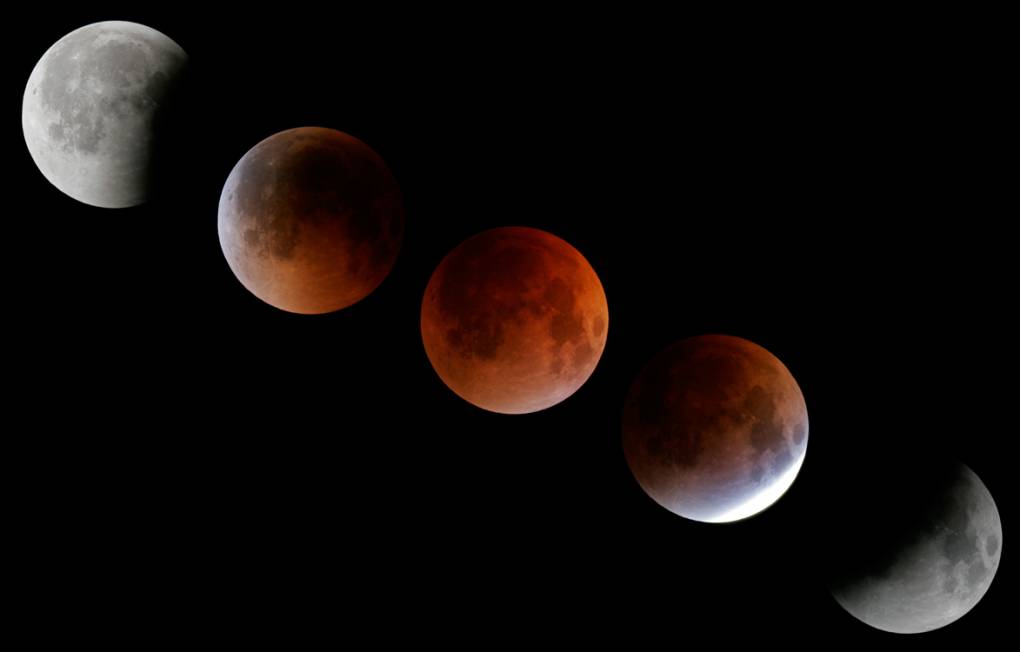
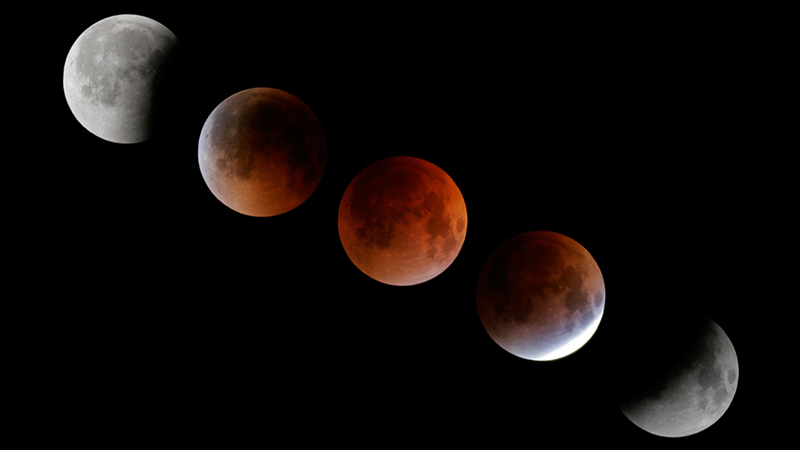
"caption": "A sequence of images of the moon taken during a total lunar eclipse in 2007. The images at the ends of the sequence show the moon in a partial eclipse phase, with the moon's dark 'umbral' shadow covering only a portion of its face. During totality, depicted by the three central images, the moon passes through the umbra and is completely enveloped in shadow. The reddish tones are created by sunlight filtering through Earth's atmosphere and shining into the umbra.",
"description": "A sequence of images of the moon taken during a total lunar eclipse in 2007. The images at the ends of the sequence show the moon in a partial eclipse phase, with the moon's dark \"umbral\" shadow covering only a portion of its face. During totality, depicted by the three central images, the moon passes through the umbra and is completely enveloped in shadow. The reddish tones are created by sunlight filtering through Earth's atmosphere and shining into the umbra. ",
"title": "Lunar Eclipse 08-28-07 composite 8bt small",
"credit": "Conrad Jung/Chabot Space and Science Center",
"status": "inherit",
"altTag": "Five moons move from lower right to upper left, showing the progression of a total lunar eclipse. The first moon is one-half dark gray, with a black bite taken out of the left side, as the moon moves toward Earth's shadow. In the second phase, there's a sliver of bright sunlight on the lower right side of the moon, while most of the moon is dark with a slightly reddish cast. In the third phase, the moon is fully in Earth's shadow and covered in a red/orange light. In the fourth phase, the moon is moving out of Earth's shadow and is dark grey with a reddish cast and pale grey on the right side. In the fifth and final phase, there's a dark shadow on the right quarter of the moon, while the rest is white and grey.",
"fetchFailed": false,
"isLoading": false
},
"science_1919393": {
"type": "attachments",
"id": "science_1919393",
"meta": {
"index": "attachments_1716263798",
"site": "science",
"id": "1919393",
"found": true
},
"parent": 1918809,
"imgSizes": {
"small": {
"file": "https://ww2.kqed.org/app/uploads/sites/35/2018/01/lunar_013018_final-1-520x520.jpg",
"width": 520,
"mimeType": "image/jpeg",
"height": 520
},
"twentyfourteen-full-width": {
"file": "https://ww2.kqed.org/app/uploads/sites/35/2018/01/lunar_013018_final-1-1038x576.jpg",
"width": 1038,
"mimeType": "image/jpeg",
"height": 576
},
"thumbnail": {
"file": "https://ww2.kqed.org/app/uploads/sites/35/2018/01/lunar_013018_final-1-160x160.jpg",
"width": 160,
"mimeType": "image/jpeg",
"height": 160
},
"fd-sm": {
"file": "https://ww2.kqed.org/app/uploads/sites/35/2018/01/lunar_013018_final-1-960x960.jpg",
"width": 960,
"mimeType": "image/jpeg",
"height": 960
},
"post-thumbnail": {
"file": "https://ww2.kqed.org/app/uploads/sites/35/2018/01/lunar_013018_final-1-672x372.jpg",
"width": 672,
"mimeType": "image/jpeg",
"height": 372
},
"xsmall": {
"file": "https://ww2.kqed.org/app/uploads/sites/35/2018/01/lunar_013018_final-1-375x375.jpg",
"width": 375,
"mimeType": "image/jpeg",
"height": 375
},
"kqedFullSize": {
"file": "https://ww2.kqed.org/app/uploads/sites/35/2018/01/lunar_013018_final-1.jpg",
"width": 1920,
"height": 1920
},
"large": {
"file": "https://ww2.kqed.org/app/uploads/sites/35/2018/01/lunar_013018_final-1-1020x1020.jpg",
"width": 1020,
"mimeType": "image/jpeg",
"height": 1020
},
"xlarge": {
"file": "https://ww2.kqed.org/app/uploads/sites/35/2018/01/lunar_013018_final-1-1180x1180.jpg",
"width": 1180,
"mimeType": "image/jpeg",
"height": 1180
},
"guest-author-50": {
"file": "https://ww2.kqed.org/app/uploads/sites/35/2018/01/lunar_013018_final-1-50x50.jpg",
"width": 50,
"mimeType": "image/jpeg",
"height": 50
},
"guest-author-96": {
"file": "https://ww2.kqed.org/app/uploads/sites/35/2018/01/lunar_013018_final-1-96x96.jpg",
"width": 96,
"mimeType": "image/jpeg",
"height": 96
},
"medium": {
"file": "https://ww2.kqed.org/app/uploads/sites/35/2018/01/lunar_013018_final-1-800x800.jpg",
"width": 800,
"mimeType": "image/jpeg",
"height": 800
},
"guest-author-64": {
"file": "https://ww2.kqed.org/app/uploads/sites/35/2018/01/lunar_013018_final-1-64x64.jpg",
"width": 64,
"mimeType": "image/jpeg",
"height": 64
},
"guest-author-32": {
"file": "https://ww2.kqed.org/app/uploads/sites/35/2018/01/lunar_013018_final-1-32x32.jpg",
"width": 32,
"mimeType": "image/jpeg",
"height": 32
},
"fd-lrg": {
"file": "https://ww2.kqed.org/app/uploads/sites/35/2018/01/lunar_013018_final-1-1920x1920.jpg",
"width": 1920,
"mimeType": "image/jpeg",
"height": 1920
},
"fd-med": {
"file": "https://ww2.kqed.org/app/uploads/sites/35/2018/01/lunar_013018_final-1-1180x1180.jpg",
"width": 1180,
"mimeType": "image/jpeg",
"height": 1180
},
"full-width": {
"file": "https://ww2.kqed.org/app/uploads/sites/35/2018/01/lunar_013018_final-1-1920x1920.jpg",
"width": 1920,
"mimeType": "image/jpeg",
"height": 1920
},
"detail": {
"file": "https://ww2.kqed.org/app/uploads/sites/35/2018/01/lunar_013018_final-1-150x150.jpg",
"width": 150,
"mimeType": "image/jpeg",
"height": 150
},
"medium_large": {
"file": "https://ww2.kqed.org/app/uploads/sites/35/2018/01/lunar_013018_final-1-768x768.jpg",
"width": 768,
"mimeType": "image/jpeg",
"height": 768
},
"guest-author-128": {
"file": "https://ww2.kqed.org/app/uploads/sites/35/2018/01/lunar_013018_final-1-128x128.jpg",
"width": 128,
"mimeType": "image/jpeg",
"height": 128
},
"xxsmall": {
"file": "https://ww2.kqed.org/app/uploads/sites/35/2018/01/lunar_013018_final-1-240x240.jpg",
"width": 240,
"mimeType": "image/jpeg",
"height": 240
}
},
"publishDate": 1517346651,
"modified": 1517347264,
"caption": null,
"description": null,
"title": "lunar_013018_final",
"credit": null,
"status": "inherit",
"fetchFailed": false,
"isLoading": false
},
"science_281117": {
"type": "attachments",
"id": "science_281117",
"meta": {
"index": "attachments_1716263798",
"site": "science",
"id": "281117",
"found": true
},
"parent": 281034,
"imgSizes": {
"twentyfourteen-full-width": {
"file": "https://ww2.kqed.org/app/uploads/sites/35/2015/09/eclipseSF-1038x576.jpg",
"width": 1038,
"mimeType": "image/jpeg",
"height": 576
},
"thumbnail": {
"file": "https://ww2.kqed.org/app/uploads/sites/35/2015/09/eclipseSF-400x266.jpg",
"width": 400,
"mimeType": "image/jpeg",
"height": 266
},
"fd-sm": {
"file": "https://ww2.kqed.org/app/uploads/sites/35/2015/09/eclipseSF-960x639.jpg",
"width": 960,
"mimeType": "image/jpeg",
"height": 639
},
"post-thumbnail": {
"file": "https://ww2.kqed.org/app/uploads/sites/35/2015/09/eclipseSF-672x372.jpg",
"width": 672,
"mimeType": "image/jpeg",
"height": 372
},
"kqedFullSize": {
"file": "https://ww2.kqed.org/app/uploads/sites/35/2015/09/eclipseSF-e1443468705611.jpg",
"width": 1900,
"height": 1265
},
"large": {
"file": "https://ww2.kqed.org/app/uploads/sites/35/2015/09/eclipseSF-1440x959.jpg",
"width": 1440,
"mimeType": "image/jpeg",
"height": 959
},
"guest-author-96": {
"file": "https://ww2.kqed.org/app/uploads/sites/35/2015/09/eclipseSF-96x96.jpg",
"width": 96,
"mimeType": "image/jpeg",
"height": 96
},
"medium": {
"file": "https://ww2.kqed.org/app/uploads/sites/35/2015/09/eclipseSF-800x533.jpg",
"width": 800,
"mimeType": "image/jpeg",
"height": 533
},
"guest-author-64": {
"file": "https://ww2.kqed.org/app/uploads/sites/35/2015/09/eclipseSF-64x64.jpg",
"width": 64,
"mimeType": "image/jpeg",
"height": 64
},
"guest-author-32": {
"file": "https://ww2.kqed.org/app/uploads/sites/35/2015/09/eclipseSF-32x32.jpg",
"width": 32,
"mimeType": "image/jpeg",
"height": 32
},
"fd-lrg": {
"file": "https://ww2.kqed.org/app/uploads/sites/35/2015/09/eclipseSF-1920x1279.jpg",
"width": 1920,
"mimeType": "image/jpeg",
"height": 1279
},
"fd-med": {
"file": "https://ww2.kqed.org/app/uploads/sites/35/2015/09/eclipseSF-1180x786.jpg",
"width": 1180,
"mimeType": "image/jpeg",
"height": 786
},
"detail": {
"file": "https://ww2.kqed.org/app/uploads/sites/35/2015/09/eclipseSF-75x75.jpg",
"width": 75,
"mimeType": "image/jpeg",
"height": 75
},
"guest-author-128": {
"file": "https://ww2.kqed.org/app/uploads/sites/35/2015/09/eclipseSF-128x128.jpg",
"width": 128,
"mimeType": "image/jpeg",
"height": 128
}
},
"publishDate": 1443468677,
"modified": 1443468788,
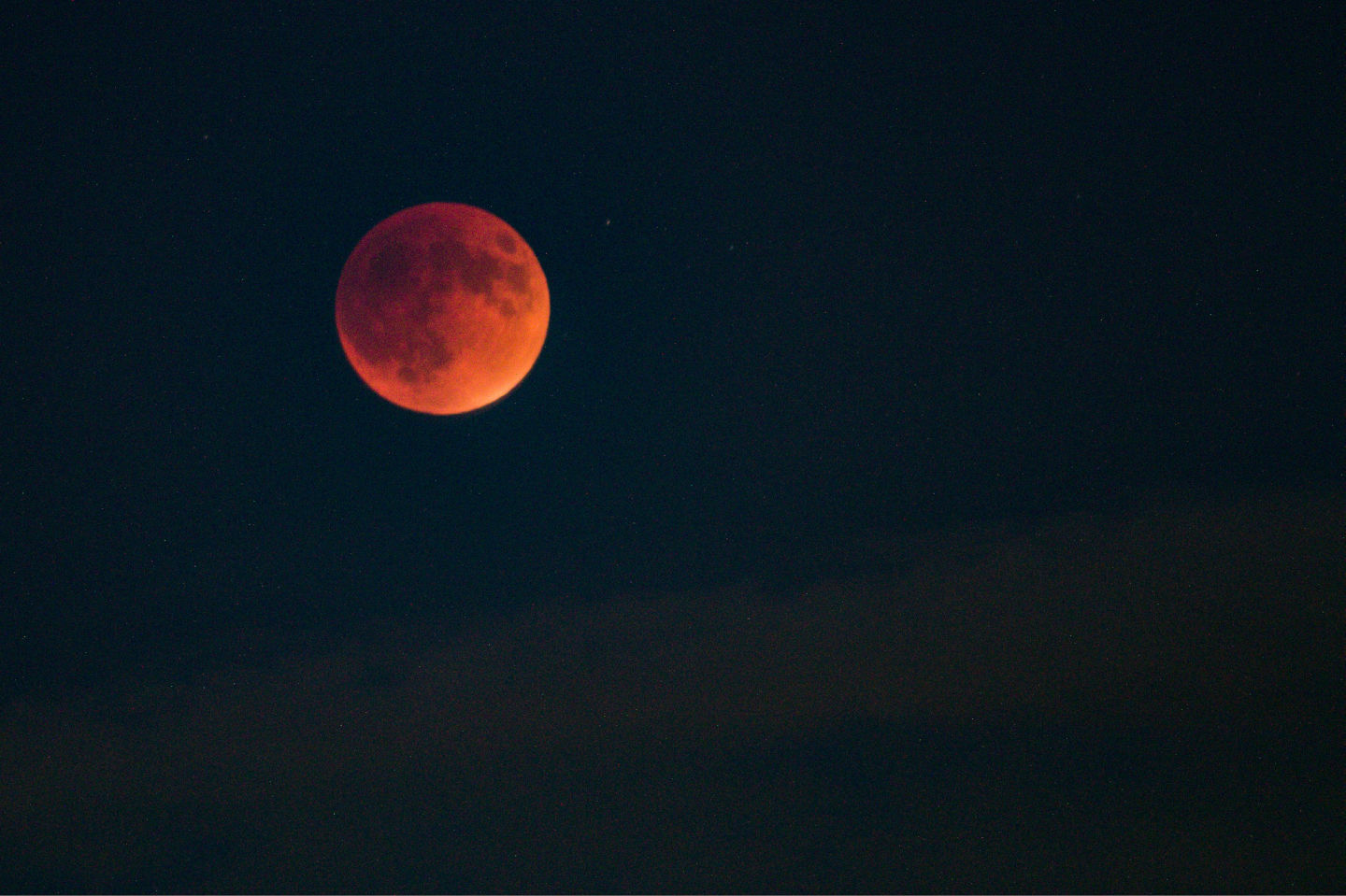
"caption": "The supermoon lunar eclipse as seen from San Francisco.",
"description": null,
"title": "eclipseSF",
"credit": "\u003ca href=\"https://www.flickr.com/photos/captin_nod/21154649433/in/photolist-yen7g4-yTLGDp-rVbNHN-rErmMc-rDr7vG-rqAJvE-pzRHS8-piF7WQ-pg6Zar-oj1Zai-n8FiaZ-dLogt6-c5CPpw-c5bePS-c5CFNQ-c5CFAf-c5CFpW-c2HwAj-c36XMG-c2GJv1-c36Xvo-c36Xe5-c2FhCS-c2GJ53-c2GHPj-c2Cvm9-c2GHsU-c38j2o-c2GHgo-c2G3Zf-c3BrRs-cj3oBS-c2GH2C-c2GGFU-c36rkG-c37uLJ-c37v49-c37uvw-c37vj7-c37tqS-c37tS9-c37raA-c37sWL-c37sfq-c37rzh-c37rSW-c2CvTy-c2Cv2h-c2WCRQ-b9YCtX\">Bhautik Joshi\u003c/a>/Flickr",
"status": "inherit",
"fetchFailed": false,
"isLoading": false
},
"science_275118": {
"type": "attachments",
"id": "science_275118",
"meta": {
"index": "attachments_1716263798",
"site": "science",
"id": "275118",
"found": true
},
"parent": 273432,
"imgSizes": {
"twentyfourteen-full-width": {
"file": "https://ww2.kqed.org/app/uploads/sites/35/2016/09/lunar-eclipse-1038x576.jpg",
"width": 1038,
"mimeType": "image/jpeg",
"height": 576
},
"thumbnail": {
"file": "https://ww2.kqed.org/app/uploads/sites/35/2016/09/lunar-eclipse-400x286.jpg",
"width": 400,
"mimeType": "image/jpeg",
"height": 286
},
"fd-sm": {
"file": "https://ww2.kqed.org/app/uploads/sites/35/2016/09/lunar-eclipse-960x686.jpg",
"width": 960,
"mimeType": "image/jpeg",
"height": 686
},
"post-thumbnail": {
"file": "https://ww2.kqed.org/app/uploads/sites/35/2016/09/lunar-eclipse-672x372.jpg",
"width": 672,
"mimeType": "image/jpeg",
"height": 372
},
"kqedFullSize": {
"file": "https://ww2.kqed.org/app/uploads/sites/35/2016/09/lunar-eclipse-e1443202126906.jpg",
"width": 1900,
"height": 1357
},
"large": {
"file": "https://ww2.kqed.org/app/uploads/sites/35/2016/09/lunar-eclipse-1440x1029.jpg",
"width": 1440,
"mimeType": "image/jpeg",
"height": 1029
},
"guest-author-96": {
"file": "https://ww2.kqed.org/app/uploads/sites/35/2016/09/lunar-eclipse-96x96.jpg",
"width": 96,
"mimeType": "image/jpeg",
"height": 96
},
"medium": {
"file": "https://ww2.kqed.org/app/uploads/sites/35/2016/09/lunar-eclipse-800x571.jpg",
"width": 800,
"mimeType": "image/jpeg",
"height": 571
},
"guest-author-64": {
"file": "https://ww2.kqed.org/app/uploads/sites/35/2016/09/lunar-eclipse-64x64.jpg",
"width": 64,
"mimeType": "image/jpeg",
"height": 64
},
"guest-author-32": {
"file": "https://ww2.kqed.org/app/uploads/sites/35/2016/09/lunar-eclipse-32x32.jpg",
"width": 32,
"mimeType": "image/jpeg",
"height": 32
},
"fd-lrg": {
"file": "https://ww2.kqed.org/app/uploads/sites/35/2016/09/lunar-eclipse-1920x1371.jpg",
"width": 1920,
"mimeType": "image/jpeg",
"height": 1371
},
"fd-med": {
"file": "https://ww2.kqed.org/app/uploads/sites/35/2016/09/lunar-eclipse-1180x843.jpg",
"width": 1180,
"mimeType": "image/jpeg",
"height": 843
},
"detail": {
"file": "https://ww2.kqed.org/app/uploads/sites/35/2016/09/lunar-eclipse-75x75.jpg",
"width": 75,
"mimeType": "image/jpeg",
"height": 75
},
"guest-author-128": {
"file": "https://ww2.kqed.org/app/uploads/sites/35/2016/09/lunar-eclipse-128x128.jpg",
"width": 128,
"mimeType": "image/jpeg",
"height": 128
}
},
"publishDate": 1443202110,
"modified": 1443202297,
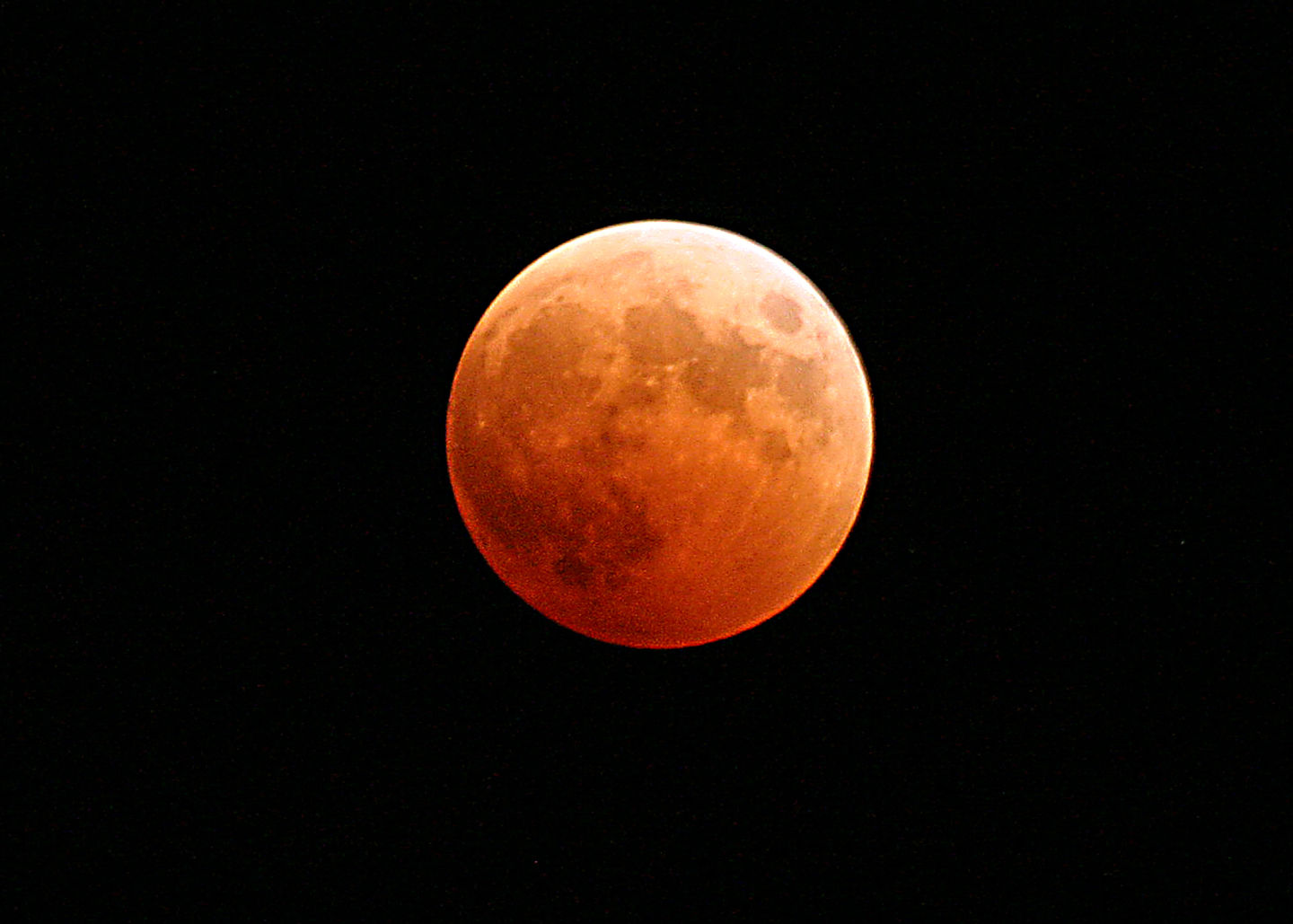
"caption": "The moon turns red and orange during a total lunar eclipse in 2004. ",
"description": null,
"title": "041027-N-9500T-001",
"credit": " U.S. Navy photo by Photographer's Mate 2nd Class Scott Taylor",
"status": "inherit",
"fetchFailed": false,
"isLoading": false
},
"science_28956": {
"type": "attachments",
"id": "science_28956",
"meta": {
"index": "attachments_1716263798",
"site": "science",
"id": "28956",
"found": true
},
"parent": 28942,
"imgSizes": {
"kqedFullSize": {
"file": "https://ww2.kqed.org/app/uploads/sites/35/2015/04/lunar-eclipse-5.jpg",
"width": 2100,
"height": 1500
}
},
"publishDate": 1428107150,
"modified": 1428107362,
"caption": "Snapshot of a lunar eclipse from the Naval Air Station on Whidbey Island, Wash. in 2004. (Courtesy U.S. Navy) ",
"description": "041027-N-9500T-001\nNaval Air Station Whidbey Island, Wash. (Oct. 27, 2004) - The moon turns red and orange during a total lunar eclipse. With the Earth passing between the sun and the moon, the only light hitting the full moon was from the home planet's sunrises and sunsets, resulting in the orange and red hue. The next total lunar eclipse won't be till March 2007. U.S. Navy photo by Photographer's Mate 2nd Class Scott Taylor (RELEASED)",
"title": "041027-N-9500T-001",
"credit": null,
"status": "inherit",
"fetchFailed": false,
"isLoading": false
},
"science_25487": {
"type": "attachments",
"id": "science_25487",
"meta": {
"index": "attachments_1716263798",
"site": "science",
"id": "25487",
"found": true
},
"parent": 25462,
"imgSizes": {
"kqedFullSize": {
"file": "https://ww2.kqed.org/app/uploads/sites/35/2014/12/Year-end-stories.jpg",
"width": 640,
"height": 360
}
},
"publishDate": 1419287999,
"modified": 1419289420,
"caption": "(Josh Cassidy, Jeremy Raff, Josh Edelson, Scott Taylor)",
"description": null,
"title": "Year end stories",
"credit": null,
"status": "inherit",
"fetchFailed": false,
"isLoading": false
},
"science_22151": {
"type": "attachments",
"id": "science_22151",
"meta": {
"index": "attachments_1716263798",
"site": "science",
"id": "22151",
"found": true
},
"parent": 22149,
"imgSizes": {
"kqedFullSize": {
"file": "https://ww2.kqed.org/app/uploads/sites/35/2014/10/LunarEclipse08-28-07-conrad_jung.jpg",
"width": 800,
"height": 450
}
},
"publishDate": 1412181678,
"modified": 1412181678,
"caption": "Total Lunar Eclipse of August 28, 2007. (Conrad Jung/Chabot Space & Science Center)",
"description": "Total Lunar Eclipse of August 28, 2007. (Conrad Jung/Chabot Space & Science Center)",
"title": "LunarEclipse08-28-07-conrad_jung",
"credit": null,
"status": "inherit",
"fetchFailed": false,
"isLoading": false
}
},
"audioPlayerReducer": {
"postId": "stream_live",
"isPaused": true,
"isPlaying": false,
"pfsActive": false,
"pledgeModalIsOpen": true,
"playerDrawerIsOpen": false
},
"authorsReducer": {
"byline_science_1994403": {
"type": "authors",
"id": "byline_science_1994403",
"meta": {
"override": true
},
"slug": "byline_science_1994403",
"name": "Chandelis Duster",
"isLoading": false
},
"jbrooks": {
"type": "authors",
"id": "80",
"meta": {
"index": "authors_1716337520",
"id": "80",
"found": true
},
"name": "Jon Brooks",
"firstName": "Jon",
"lastName": "Brooks",
"slug": "jbrooks",
"email": "jbrooks@kqed.org",
"display_author_email": true,
"staff_mastheads": [
"science"
],
"title": "Digital Editor",
"bio": "Jon Brooks is a former Digital Editor for KQED Science. He is the former editor of KQED’s daily news blog, News Fix. In 2014, he won a California Journalism Award for his coverage of ride services like Uber and Lyft and the taxi industry. A veteran blogger, he previously worked for Yahoo! in various news writing and editing roles. Jon is also a playwright whose work has been produced in San Francisco, New York, Italy, and around the U.S. He has written about film for his own blog and studied film at Boston University.",
"avatar": "https://secure.gravatar.com/avatar/98887f7ed1c876ed414d4c915e969584?s=600&d=blank&r=g",
"twitter": "jbrooksfoy",
"facebook": null,
"instagram": null,
"linkedin": null,
"sites": [
{
"site": "arts",
"roles": [
"Contributor",
"editor"
]
},
{
"site": "news",
"roles": [
"author"
]
},
{
"site": "futureofyou",
"roles": [
"administrator"
]
},
{
"site": "mindshift",
"roles": [
"editor"
]
},
{
"site": "stateofhealth",
"roles": [
"editor"
]
},
{
"site": "science",
"roles": [
"administrator"
]
},
{
"site": "quest",
"roles": [
"editor"
]
}
],
"headData": {
"title": "Jon Brooks | KQED",
"description": "Digital Editor",
"ogImgSrc": "https://secure.gravatar.com/avatar/98887f7ed1c876ed414d4c915e969584?s=600&d=blank&r=g",
"twImgSrc": "https://secure.gravatar.com/avatar/98887f7ed1c876ed414d4c915e969584?s=600&d=blank&r=g"
},
"isLoading": false,
"link": "/author/jbrooks"
},
"lindseyhoshaw": {
"type": "authors",
"id": "5432",
"meta": {
"index": "authors_1716337520",
"id": "5432",
"found": true
},
"name": "Lindsey Hoshaw",
"firstName": "Lindsey",
"lastName": "Hoshaw",
"slug": "lindseyhoshaw",
"email": "lhoshaw@kqed.org",
"display_author_email": false,
"staff_mastheads": [],
"title": "KQED Contributor",
"bio": "Lindsey Hoshaw is a former interactive producer for KQED Science. Before joining KQED, Lindsey was a science correspondent for The New York Times, The Boston Globe, Forbes and Scientific American. On Twitter @lindseyhoshaw",
"avatar": "https://secure.gravatar.com/avatar/274b07694c998eaa8f26cfabaa941186?s=600&d=mm&r=g",
"twitter": "lindseyhoshaw",
"facebook": "lindsey.hoshaw.9",
"instagram": null,
"linkedin": null,
"sites": [
{
"site": "arts",
"roles": [
"author"
]
},
{
"site": "news",
"roles": [
"subscriber"
]
},
{
"site": "futureofyou",
"roles": [
"editor"
]
},
{
"site": "bayareabites",
"roles": [
"contributor"
]
},
{
"site": "stateofhealth",
"roles": [
"author"
]
},
{
"site": "science",
"roles": [
"edit_theme_options",
"subscriber"
]
},
{
"site": "quest",
"roles": [
"edit_post_subscriptions",
"edit_usergroups",
"unfiltered_html",
"unfiltered_upload",
"leadcoordinator",
"editor"
]
},
{
"site": "food",
"roles": []
}
],
"headData": {
"title": "Lindsey Hoshaw | KQED",
"description": "KQED Contributor",
"ogImgSrc": "https://secure.gravatar.com/avatar/274b07694c998eaa8f26cfabaa941186?s=600&d=mm&r=g",
"twImgSrc": "https://secure.gravatar.com/avatar/274b07694c998eaa8f26cfabaa941186?s=600&d=mm&r=g"
},
"isLoading": false,
"link": "/author/lindseyhoshaw"
},
"ben-burress": {
"type": "authors",
"id": "6180",
"meta": {
"index": "authors_1716337520",
"id": "6180",
"found": true
},
"name": "Ben Burress",
"firstName": "Ben",
"lastName": "Burress",
"slug": "ben-burress",
"email": "bburress@chabotspace.org",
"display_author_email": false,
"staff_mastheads": [],
"title": null,
"bio": "\u003cstrong>Benjamin Burress\u003c/strong> has been a staff astronomer at Chabot Space & Science Center since July 1999. He graduated from Sonoma State University in 1985 with a bachelor’s degree in physics (and minor in astronomy), after which he signed on for a two-year stint in the Peace Corps, where he taught physics and mathematics in the African nation of Cameroon. From 1989-96 he served on the crew of NASA’s Kuiper Airborne Observatory at Ames Research Center in Mountain View, CA. From 1996-99, he was Head Observer at the Naval Prototype Optical Interferometer program at Lowell Observatory in Flagstaff, AZ.\r\n\r\nRead his \u003ca href=\"http://science.kqed.org/quest/author/ben-burress/\">previous contributions\u003c/a> to \u003ca href=\"http://science.kqed.org/quest/\">QUEST\u003c/a>, a project dedicated to exploring the Science of Sustainability.",
"avatar": "https://secure.gravatar.com/avatar/8263bffa345b7e4923a0b8b9f0f6a161?s=600&d=blank&r=g",
"twitter": null,
"facebook": null,
"instagram": null,
"linkedin": null,
"sites": [
{
"site": "science",
"roles": [
"editor"
]
},
{
"site": "quest",
"roles": [
"subscriber"
]
}
],
"headData": {
"title": "Ben Burress | KQED",
"description": null,
"ogImgSrc": "https://secure.gravatar.com/avatar/8263bffa345b7e4923a0b8b9f0f6a161?s=600&d=blank&r=g",
"twImgSrc": "https://secure.gravatar.com/avatar/8263bffa345b7e4923a0b8b9f0f6a161?s=600&d=blank&r=g"
},
"isLoading": false,
"link": "/author/ben-burress"
},
"mpickett": {
"type": "authors",
"id": "6616",
"meta": {
"index": "authors_1716337520",
"id": "6616",
"found": true
},
"name": "Mallory Pickett",
"firstName": "Mallory",
"lastName": "Pickett",
"slug": "mpickett",
"email": "mallorypickett@gmail.com",
"display_author_email": false,
"staff_mastheads": [],
"title": null,
"bio": "Mallory Pickett is an intern with KQED Science, where she mostly contributes to Deep Look. Before coming to KQED Mallory was a chemist, studying climate change and ocean acidification in her graduate studies at UC San Diego and Scripps Institution of Oceanography. Now she works as a freelance science and environmental reporter in Berkeley, California, and is also a student at the UC Berkeley Graduate School of Journalism.",
"avatar": "https://secure.gravatar.com/avatar/76041fb6f98596f1792b3673c61c09be?s=600&d=blank&r=g",
"twitter": null,
"facebook": null,
"instagram": null,
"linkedin": null,
"sites": [
{
"site": "futureofyou",
"roles": [
"author"
]
},
{
"site": "science",
"roles": [
"author"
]
}
],
"headData": {
"title": "Mallory Pickett | KQED",
"description": null,
"ogImgSrc": "https://secure.gravatar.com/avatar/76041fb6f98596f1792b3673c61c09be?s=600&d=blank&r=g",
"twImgSrc": "https://secure.gravatar.com/avatar/76041fb6f98596f1792b3673c61c09be?s=600&d=blank&r=g"
},
"isLoading": false,
"link": "/author/mpickett"
},
"smohamad": {
"type": "authors",
"id": "11631",
"meta": {
"index": "authors_1716337520",
"id": "11631",
"found": true
},
"name": "Sarah Mohamad",
"firstName": "Sarah",
"lastName": "Mohamad",
"slug": "smohamad",
"email": "smohamad@KQED.org",
"display_author_email": true,
"staff_mastheads": [],
"title": "Engagement Producer and Reporter, KQED Science",
"bio": "Sarah Mohamad is an audience engagement reporter and producer for KQED Science. She reports on audience-focused science and environment stories and manages the team's social media, newsletter, and engagement efforts. Prior to this role, she played a key role as project manager for NSF's \u003ca href=\"https://www.kqed.org/crackingthecode\">\u003cem>Cracking the Code: Influencing Millennial Science Engagement\u003c/em> \u003c/a>audience research.",
"avatar": "https://secure.gravatar.com/avatar/085f65bb82616965f87e3d12f8550931?s=600&d=blank&r=g",
"twitter": "sarahkmohamad",
"facebook": null,
"instagram": null,
"linkedin": null,
"sites": [
{
"site": "arts",
"roles": [
"editor"
]
},
{
"site": "news",
"roles": [
"editor"
]
},
{
"site": "about",
"roles": [
"editor"
]
},
{
"site": "science",
"roles": [
"editor"
]
}
],
"headData": {
"title": "Sarah Mohamad | KQED",
"description": "Engagement Producer and Reporter, KQED Science",
"ogImgSrc": "https://secure.gravatar.com/avatar/085f65bb82616965f87e3d12f8550931?s=600&d=blank&r=g",
"twImgSrc": "https://secure.gravatar.com/avatar/085f65bb82616965f87e3d12f8550931?s=600&d=blank&r=g"
},
"isLoading": false,
"link": "/author/smohamad"
}
},
"breakingNewsReducer": {},
"pagesReducer": {},
"postsReducer": {
"stream_live": {
"type": "live",
"id": "stream_live",
"audioUrl": "https://streams.kqed.org/kqedradio",
"title": "Live Stream",
"excerpt": "Live Stream information currently unavailable.",
"link": "/radio",
"featImg": "",
"label": {
"name": "KQED Live",
"link": "/"
}
},
"stream_kqedNewscast": {
"type": "posts",
"id": "stream_kqedNewscast",
"audioUrl": "https://www.kqed.org/.stream/anon/radio/RDnews/newscast.mp3?_=1",
"title": "KQED Newscast",
"featImg": "",
"label": {
"name": "88.5 FM",
"link": "/"
}
},
"science_1996239": {
"type": "posts",
"id": "science_1996239",
"meta": {
"index": "posts_1716263798",
"site": "science",
"id": "1996239",
"score": null,
"sort": [
1741910107000
]
},
"guestAuthors": [],
"slug": "how-to-see-blood-moon",
"title": "When and Where to Watch the Blood Moon in the Bay Area",
"publishDate": 1741910107,
"format": "standard",
"headTitle": "When and Where to Watch the Blood Moon in the Bay Area | KQED",
"labelTerm": {
"site": "science"
},
"content": "\u003cp>On Thursday night into early Friday morning, residents in the Bay Area will be able to witness a spectacular total lunar eclipse — often called a “\u003ca href=\"https://www.kqed.org/science/1979293/how-to-see-sundays-blood-moon-total-lunar-eclipse-in-the-bay-area\">blood moon\u003c/a>” due to its deep red hue.\u003c/p>\n\u003cul>\n\u003cli>\u003cstrong>\u003ca href=\"#how-to-see-blood-moon\">Jump straight to: What time is the lunar eclipse in the Bay Area tonight?\u003c/a>\u003c/strong>\u003c/li>\n\u003c/ul>\n\u003cp>This celestial event happens when the Earth moves directly between the sun and the moon, casting a shadow that darkens the moon and turns it into a striking shade of red during totality. And unlike solar eclipses, which require special glasses, you can enjoy the lunar eclipse with the naked eye.\u003c/p>\n\u003cp>[ad fullwidth]\u003c/p>\n\u003cp>The last time a \u003ca href=\"https://www.kqed.org/science/1994403/a-celestial-trifecta-what-to-know-about-tuesdays-lunar-eclipse\">total lunar eclipse was visible\u003c/a> from North America was just two years ago, in November 2022. “These total eclipses of the moon happen much more frequently than the total eclipses of the sun at any given location because you can see the full moon all over part of the Earth,” said Andrew Fraknoi, astronomer and professor at the University of San Francisco’s Fromm Institute.\u003c/p>\n\u003cp>A lunar eclipse is visible to anyone on the night side of Earth. In contrast, total solar eclipses are only visible along a narrow path of totality — sometimes just a few hundred miles wide.\u003c/p>\n\u003cfigure id=\"attachment_1996241\" class=\"wp-caption aligncenter\" style=\"max-width: 1041px\">\u003cimg loading=\"lazy\" decoding=\"async\" class=\"size-full wp-image-1996241\" src=\"https://cdn.kqed.org/wp-content/uploads/sites/35/2025/03/lunar-eclipse-diagram_0-copy.jpg\" alt=\"\" width=\"1041\" height=\"783\" srcset=\"https://cdn.kqed.org/wp-content/uploads/sites/35/2025/03/lunar-eclipse-diagram_0-copy.jpg 1041w, https://cdn.kqed.org/wp-content/uploads/sites/35/2025/03/lunar-eclipse-diagram_0-copy-800x602.jpg 800w, https://cdn.kqed.org/wp-content/uploads/sites/35/2025/03/lunar-eclipse-diagram_0-copy-1020x767.jpg 1020w, https://cdn.kqed.org/wp-content/uploads/sites/35/2025/03/lunar-eclipse-diagram_0-copy-160x120.jpg 160w, https://cdn.kqed.org/wp-content/uploads/sites/35/2025/03/lunar-eclipse-diagram_0-copy-768x578.jpg 768w\" sizes=\"auto, (max-width: 1041px) 100vw, 1041px\">\u003cfigcaption class=\"wp-caption-text\">When Earth passes directly between the sun and the moon, a lunar eclipse takes place. \u003ccite>(National Aeronautics and Space Administration)\u003c/cite>\u003c/figcaption>\u003c/figure>\n\u003ch2>\u003cstrong>\u003ca id=\"how-to-see-blood-moon\">\u003c/a>What time is the lunar eclipse tonight, and where can I see it in the Bay Area?\u003c/strong>\u003c/h2>\n\u003cp>This upcoming total lunar eclipse will be fully visible across the Bay Area tonight as long as you have a clear view of the moon.\u003c/p>\n\u003cp>It will begin at around 10 p.m. P.S.T. on Thursday, March 13, and totality will occur at 11:26 p.m. The maximum eclipse — when the moon will be its reddest — will occur at 11:59 p.m. and last for about 30 minutes into the early hours of Friday, March 14.\u003c/p>\n\u003cp>The whole eclipse phase will last for about 64 minutes, from 10 p.m. to 1:47 a.m., with the best views occurring between 11:26 p.m. to 12:31 a.m.[aside postID=science_1996198 hero='https://cdn.kqed.org/wp-content/uploads/sites/35/2025/02/GettyImages-1242378655-1020x680.jpg']\u003c/p>\n\u003cp>“As the moon moves slowly through the Earth’s shadow, we first see only part of the moon darkening,” Fraknoi said of the partial eclipse. “But then, as the Moon moves fully into the Earth’s shadow, we see its entire disk of the Moon become dark and reddish.”\u003c/p>\n\u003cp>During totality, the moon glows red because of \u003ca href=\"https://www.britannica.com/science/Rayleigh-scattering\">Rayleigh scattering,\u003c/a> the same phenomenon that makes \u003ca href=\"https://www.kqed.org/news/11979339/bay-areas-best-sunset-hikes-now-that-your-days-are-longer\">sunsets appear orange and red\u003c/a>. As sunlight passes through Earth’s atmosphere, it filters out blue light and bends red light toward the moon, giving it that signature “blood” color.\u003c/p>\n\u003cp>The exact shade of red depends on atmospheric conditions like dust, pollution and volcanic activity elsewhere, which can intensify the red hue, Fraknoi said.\u003c/p>\n\u003cp>Astronomers have used calculations to predict lunar eclipses for centuries. “It’s a really nice indication that even if things are in turmoil on Earth, the heavens are doing their thing in a routine way,” Fraknoi said.\u003c/p>\n\u003cp>“It shows the clockwork motion of the heavens.”\u003c/p>\n\u003cp>\u003c/p>\n",
"blocks": [],
"excerpt": "During a total lunar eclipse, a blood moon is visible in our night sky. Here’s when to see it on Thursday night into Friday morning.",
"status": "publish",
"parent": 0,
"modified": 1747763547,
"stats": {
"hasAudio": false,
"hasVideo": false,
"hasChartOrMap": false,
"iframeSrcs": [],
"hasGoogleForm": false,
"hasGallery": false,
"hasHearkenModule": false,
"hasPolis": false,
"paragraphCount": 14,
"wordCount": 560
},
"headData": {
"title": "View the Blood Moon in the Bay Area | KQED",
"description": "Watch the blood moon in the Bay Area tonight. Learn the best time to view this stunning lunar event and tips for a safe, clear observation.",
"ogTitle": "",
"ogDescription": "",
"ogImgId": "",
"twTitle": "",
"twDescription": "",
"twImgId": "",
"socialTitle": "View the Blood Moon in the Bay Area | KQED",
"socialDescription": "Watch the blood moon in the Bay Area tonight. Learn the best time to view this stunning lunar event and tips for a safe, clear observation.",
"schema": {
"@context": "https://schema.org",
"@type": "Article",
"headline": "When and Where to Watch the Blood Moon in the Bay Area",
"datePublished": "2025-03-13T16:55:07-07:00",
"dateModified": "2025-05-20T10:52:27-07:00",
"image": "https://cdn.kqed.org/wp-content/uploads/2020/02/KQED-OG-Image@1x.png"
}
},
"sticky": false,
"nprStoryId": "kqed-1996239",
"templateType": "standard",
"featuredImageType": "standard",
"excludeFromSiteSearch": "Include",
"articleAge": "0",
"path": "/science/1996239/how-to-see-blood-moon",
"audioTrackLength": null,
"parsedContent": [
{
"type": "contentString",
"content": "\u003cdiv class=\"post-body\">\u003cp>\u003cp>On Thursday night into early Friday morning, residents in the Bay Area will be able to witness a spectacular total lunar eclipse — often called a “\u003ca href=\"https://www.kqed.org/science/1979293/how-to-see-sundays-blood-moon-total-lunar-eclipse-in-the-bay-area\">blood moon\u003c/a>” due to its deep red hue.\u003c/p>\n\u003cul>\n\u003cli>\u003cstrong>\u003ca href=\"#how-to-see-blood-moon\">Jump straight to: What time is the lunar eclipse in the Bay Area tonight?\u003c/a>\u003c/strong>\u003c/li>\n\u003c/ul>\n\u003cp>This celestial event happens when the Earth moves directly between the sun and the moon, casting a shadow that darkens the moon and turns it into a striking shade of red during totality. And unlike solar eclipses, which require special glasses, you can enjoy the lunar eclipse with the naked eye.\u003c/p>\n\u003cp>\u003c/p>\u003c/div>",
"attributes": {
"named": {},
"numeric": []
}
},
{
"type": "component",
"content": "",
"name": "ad",
"attributes": {
"named": {
"label": "fullwidth"
},
"numeric": [
"fullwidth"
]
}
},
{
"type": "contentString",
"content": "\u003cdiv class=\"post-body\">\u003cp>\u003c/p>\n\u003cp>The last time a \u003ca href=\"https://www.kqed.org/science/1994403/a-celestial-trifecta-what-to-know-about-tuesdays-lunar-eclipse\">total lunar eclipse was visible\u003c/a> from North America was just two years ago, in November 2022. “These total eclipses of the moon happen much more frequently than the total eclipses of the sun at any given location because you can see the full moon all over part of the Earth,” said Andrew Fraknoi, astronomer and professor at the University of San Francisco’s Fromm Institute.\u003c/p>\n\u003cp>A lunar eclipse is visible to anyone on the night side of Earth. In contrast, total solar eclipses are only visible along a narrow path of totality — sometimes just a few hundred miles wide.\u003c/p>\n\u003cfigure id=\"attachment_1996241\" class=\"wp-caption aligncenter\" style=\"max-width: 1041px\">\u003cimg loading=\"lazy\" decoding=\"async\" class=\"size-full wp-image-1996241\" src=\"https://cdn.kqed.org/wp-content/uploads/sites/35/2025/03/lunar-eclipse-diagram_0-copy.jpg\" alt=\"\" width=\"1041\" height=\"783\" srcset=\"https://cdn.kqed.org/wp-content/uploads/sites/35/2025/03/lunar-eclipse-diagram_0-copy.jpg 1041w, https://cdn.kqed.org/wp-content/uploads/sites/35/2025/03/lunar-eclipse-diagram_0-copy-800x602.jpg 800w, https://cdn.kqed.org/wp-content/uploads/sites/35/2025/03/lunar-eclipse-diagram_0-copy-1020x767.jpg 1020w, https://cdn.kqed.org/wp-content/uploads/sites/35/2025/03/lunar-eclipse-diagram_0-copy-160x120.jpg 160w, https://cdn.kqed.org/wp-content/uploads/sites/35/2025/03/lunar-eclipse-diagram_0-copy-768x578.jpg 768w\" sizes=\"auto, (max-width: 1041px) 100vw, 1041px\">\u003cfigcaption class=\"wp-caption-text\">When Earth passes directly between the sun and the moon, a lunar eclipse takes place. \u003ccite>(National Aeronautics and Space Administration)\u003c/cite>\u003c/figcaption>\u003c/figure>\n\u003ch2>\u003cstrong>\u003ca id=\"how-to-see-blood-moon\">\u003c/a>What time is the lunar eclipse tonight, and where can I see it in the Bay Area?\u003c/strong>\u003c/h2>\n\u003cp>This upcoming total lunar eclipse will be fully visible across the Bay Area tonight as long as you have a clear view of the moon.\u003c/p>\n\u003cp>It will begin at around 10 p.m. P.S.T. on Thursday, March 13, and totality will occur at 11:26 p.m. The maximum eclipse — when the moon will be its reddest — will occur at 11:59 p.m. and last for about 30 minutes into the early hours of Friday, March 14.\u003c/p>\n\u003cp>The whole eclipse phase will last for about 64 minutes, from 10 p.m. to 1:47 a.m., with the best views occurring between 11:26 p.m. to 12:31 a.m.\u003c/p>\u003c/div>",
"attributes": {
"named": {},
"numeric": []
}
},
{
"type": "component",
"content": "",
"name": "aside",
"attributes": {
"named": {
"postid": "science_1996198",
"hero": "https://cdn.kqed.org/wp-content/uploads/sites/35/2025/02/GettyImages-1242378655-1020x680.jpg",
"label": ""
},
"numeric": []
}
},
{
"type": "contentString",
"content": "\u003cdiv class=\"post-body\">\u003cp>\u003c/p>\n\u003cp>“As the moon moves slowly through the Earth’s shadow, we first see only part of the moon darkening,” Fraknoi said of the partial eclipse. “But then, as the Moon moves fully into the Earth’s shadow, we see its entire disk of the Moon become dark and reddish.”\u003c/p>\n\u003cp>During totality, the moon glows red because of \u003ca href=\"https://www.britannica.com/science/Rayleigh-scattering\">Rayleigh scattering,\u003c/a> the same phenomenon that makes \u003ca href=\"https://www.kqed.org/news/11979339/bay-areas-best-sunset-hikes-now-that-your-days-are-longer\">sunsets appear orange and red\u003c/a>. As sunlight passes through Earth’s atmosphere, it filters out blue light and bends red light toward the moon, giving it that signature “blood” color.\u003c/p>\n\u003cp>The exact shade of red depends on atmospheric conditions like dust, pollution and volcanic activity elsewhere, which can intensify the red hue, Fraknoi said.\u003c/p>\n\u003cp>Astronomers have used calculations to predict lunar eclipses for centuries. “It’s a really nice indication that even if things are in turmoil on Earth, the heavens are doing their thing in a routine way,” Fraknoi said.\u003c/p>\n\u003cp>“It shows the clockwork motion of the heavens.”\u003c/p>\n\u003cp>\u003c/p>\n\u003c/div>\u003c/p>",
"attributes": {
"named": {},
"numeric": []
}
}
],
"link": "/science/1996239/how-to-see-blood-moon",
"authors": [
"11631"
],
"categories": [
"science_28",
"science_40",
"science_4450"
],
"tags": [
"science_1073",
"science_4992",
"science_4417",
"science_1927",
"science_351",
"science_309",
"science_1473"
],
"featImg": "science_1994404",
"label": "science"
},
"science_1994403": {
"type": "posts",
"id": "science_1994403",
"meta": {
"index": "posts_1716263798",
"site": "science",
"id": "1994403",
"score": null,
"sort": [
1726513218000
]
},
"guestAuthors": [],
"slug": "a-celestial-trifecta-what-to-know-about-tuesdays-lunar-eclipse",
"title": "What to Know About Tuesday’s (Partial) Lunar Eclipse",
"publishDate": 1726513218,
"format": "standard",
"headTitle": "What to Know About Tuesday’s (Partial) Lunar Eclipse | KQED",
"labelTerm": {
"term": 5158,
"site": "science"
},
"content": "\u003cp>Stargazers will be in for another celestial treat Tuesday night as three cosmic events will occur at the same time during the full moon.\u003c/p>\n\u003cp>After last month brought space enthusiasts a \u003ca href=\"https://www.npr.org/2024/08/19/nx-s1-5080557/what-to-know-about-mondays-blue-supermoon\" target=\"nx-s1-5080557\" rel=\"noopener\">blue supermoon\u003c/a>, September’s harvest moon will not only coincide with a supermoon but also with a blood moon and partial lunar eclipse.\u003c/p>\n\u003cp>While harvest moons happen each year close to the start of fall and supermoons three to four times a year, all three events simultaneously taking place are “quite rare,” astrophysicist Teresa Monsue of NASA’s Goddard Space Flight Center told NPR.\u003c/p>\n\u003cp>The moon is considered “super” when it is full and its orbit is at the closest point to Earth, \u003ca href=\"https://science.nasa.gov/moon/supermoons/\">according to NASA\u003c/a>. When the Earth is positioned between a full moon and the sun, and the moon passes through Earth’s shadow, a lunar eclipse takes place.\u003c/p>\n\u003ch3>How to see the harvest full supermoon and lunar eclipse\u003c/h3>\n\u003cp>The best times to view the event will depend on your location, but the lunar eclipse will peak at 7:44 p.m. PT, \u003ca href=\"https://science.nasa.gov/solar-system/skywatching/the-next-full-moon-is-a-partial-lunar-eclipse-a-supermoon-the-corn-moon-and-the-harvest-moon/\">according to NASA\u003c/a>. All of North and South America will have a chance to see the partial lunar eclipse and harvest supermoon, depending on the weather. Europe and Africa will also have an opportunity to see the eclipse.\u003c/p>\n\u003cp>[ad fullwidth]\u003c/p>\n\u003cp>This lunar eclipse will be a partial one, with only the upper portion of the moon being plunged into the darkest part of the Earth’s shadow known as the umbra, Monsue said.\u003c/p>\n\u003cp>“Aside from the small darkened portion at the top of the moon’s disk, most of the visible lunar disk will be in Earth’s penumbra, the lighter portion of the planet’s shadow that does not entirely block the sun’s light,” she also said, adding that this will give most of the moon a reddish-brown appearance that we call a “blood moon.”\u003c/p>\n\u003cp>And unlike a solar eclipse, where you \u003ca href=\"https://www.npr.org/sections/solar-eclipse/2024/03/13/1237563958/solar-eclipse-glasses-2024\" target=\"1237563958\" rel=\"noopener\">must wear special glasses\u003c/a> to protect your eyesight when looking at it, skygazers can see Tuesday’s lunar eclipse with ease and without eye protection.\u003c/p>\n\u003cp>“It is safe to look directly at the moon during a lunar eclipse because it is reflected light that is no brighter than moonlight,” Monsue said.\u003c/p>\n\u003cp>[aside postID=\"science_1991869,science_1991228,science_1992267\" label=\"Related Stories\"]\u003c/p>\n\u003cp>The eclipse should also be a good chance for views of contrast on craters and other features on the lunar surface if you use a telescope or binoculars, she said.\u003c/p>\n\u003ch3>When can I see the next lunar eclipse and supermoon?\u003c/h3>\n\u003cp>If you miss Tuesday night’s eclipse and supermoon, unfortunately, the next one will not happen until Oct. 8, 2033, according to Monsue.\u003c/p>\n\u003cp>But you will be able to see another full supermoon on Oct. 17 and a \u003ca href=\"https://eclipse.gsfc.nasa.gov/LEdecade/LEdecade2021.html\">total lunar eclipse on March 14, 2025\u003c/a>.\u003c/p>\n\u003cp>\u003c/p>\n\u003cp>There will also be an \u003ca href=\"https://science.nasa.gov/eclipses/types/\">annular solar eclipse,\u003c/a> or “ring of fire” eclipse, when the moon passes between the Earth and the sun but is at or near its farthest point from our planet, on Oct. 2. But the only potential viewers within the U.S. that will have a chance to see it will be in Hawaii.\u003c/p>\n\n",
"blocks": [],
"excerpt": "This month's harvest moon will not only coincide with a supermoon but also with a partial lunar eclipse.",
"status": "publish",
"parent": 0,
"modified": 1726509363,
"stats": {
"hasAudio": false,
"hasVideo": false,
"hasChartOrMap": false,
"iframeSrcs": [],
"hasGoogleForm": false,
"hasGallery": false,
"hasHearkenModule": false,
"hasPolis": false,
"paragraphCount": 16,
"wordCount": 545
},
"headData": {
"title": "What to Know About Tuesday’s (Partial) Lunar Eclipse | KQED",
"description": "This month's harvest moon will not only coincide with a supermoon but also with a partial lunar eclipse.",
"ogTitle": "",
"ogDescription": "",
"ogImgId": "",
"twTitle": "",
"twDescription": "",
"twImgId": "",
"schema": {
"@context": "https://schema.org",
"@type": "Article",
"headline": "What to Know About Tuesday’s (Partial) Lunar Eclipse",
"datePublished": "2024-09-16T12:00:18-07:00",
"dateModified": "2024-09-16T10:56:03-07:00",
"image": "https://cdn.kqed.org/wp-content/uploads/2020/02/KQED-OG-Image@1x.png"
}
},
"sticky": false,
"nprByline": "Chandelis Duster",
"nprStoryId": "nx-s1-5107675",
"nprHtmlLink": "https://www.npr.org/2024/09/16/nx-s1-5107675/lunar-eclipse-harvest-moon-supermoon-tuesday-what-to-know",
"nprRetrievedStory": "1",
"nprPubDate": "2024-09-16T05:00:00-04:00",
"nprStoryDate": "2024-09-16T05:00:00-04:00",
"nprLastModifiedDate": "2024-09-16T05:02:13.1-04:00",
"excludeFromSiteSearch": "Include",
"showOnAuthorArchivePages": "No",
"articleAge": "0",
"path": "/science/1994403/a-celestial-trifecta-what-to-know-about-tuesdays-lunar-eclipse",
"audioTrackLength": null,
"parsedContent": [
{
"type": "contentString",
"content": "\u003cdiv class=\"post-body\">\u003cp>\u003cp>Stargazers will be in for another celestial treat Tuesday night as three cosmic events will occur at the same time during the full moon.\u003c/p>\n\u003cp>After last month brought space enthusiasts a \u003ca href=\"https://www.npr.org/2024/08/19/nx-s1-5080557/what-to-know-about-mondays-blue-supermoon\" target=\"nx-s1-5080557\" rel=\"noopener\">blue supermoon\u003c/a>, September’s harvest moon will not only coincide with a supermoon but also with a blood moon and partial lunar eclipse.\u003c/p>\n\u003cp>While harvest moons happen each year close to the start of fall and supermoons three to four times a year, all three events simultaneously taking place are “quite rare,” astrophysicist Teresa Monsue of NASA’s Goddard Space Flight Center told NPR.\u003c/p>\n\u003cp>The moon is considered “super” when it is full and its orbit is at the closest point to Earth, \u003ca href=\"https://science.nasa.gov/moon/supermoons/\">according to NASA\u003c/a>. When the Earth is positioned between a full moon and the sun, and the moon passes through Earth’s shadow, a lunar eclipse takes place.\u003c/p>\n\u003ch3>How to see the harvest full supermoon and lunar eclipse\u003c/h3>\n\u003cp>The best times to view the event will depend on your location, but the lunar eclipse will peak at 7:44 p.m. PT, \u003ca href=\"https://science.nasa.gov/solar-system/skywatching/the-next-full-moon-is-a-partial-lunar-eclipse-a-supermoon-the-corn-moon-and-the-harvest-moon/\">according to NASA\u003c/a>. All of North and South America will have a chance to see the partial lunar eclipse and harvest supermoon, depending on the weather. Europe and Africa will also have an opportunity to see the eclipse.\u003c/p>\n\u003cp>\u003c/p>\u003c/div>",
"attributes": {
"named": {},
"numeric": []
}
},
{
"type": "component",
"content": "",
"name": "ad",
"attributes": {
"named": {
"label": "fullwidth"
},
"numeric": [
"fullwidth"
]
}
},
{
"type": "contentString",
"content": "\u003cdiv class=\"post-body\">\u003cp>\u003c/p>\n\u003cp>This lunar eclipse will be a partial one, with only the upper portion of the moon being plunged into the darkest part of the Earth’s shadow known as the umbra, Monsue said.\u003c/p>\n\u003cp>“Aside from the small darkened portion at the top of the moon’s disk, most of the visible lunar disk will be in Earth’s penumbra, the lighter portion of the planet’s shadow that does not entirely block the sun’s light,” she also said, adding that this will give most of the moon a reddish-brown appearance that we call a “blood moon.”\u003c/p>\n\u003cp>And unlike a solar eclipse, where you \u003ca href=\"https://www.npr.org/sections/solar-eclipse/2024/03/13/1237563958/solar-eclipse-glasses-2024\" target=\"1237563958\" rel=\"noopener\">must wear special glasses\u003c/a> to protect your eyesight when looking at it, skygazers can see Tuesday’s lunar eclipse with ease and without eye protection.\u003c/p>\n\u003cp>“It is safe to look directly at the moon during a lunar eclipse because it is reflected light that is no brighter than moonlight,” Monsue said.\u003c/p>\n\u003cp>\u003c/p>\u003c/div>",
"attributes": {
"named": {},
"numeric": []
}
},
{
"type": "component",
"content": "",
"name": "aside",
"attributes": {
"named": {
"postid": "science_1991869,science_1991228,science_1992267",
"label": "Related Stories "
},
"numeric": []
}
},
{
"type": "contentString",
"content": "\u003cdiv class=\"post-body\">\u003cp>\u003c/p>\n\u003cp>The eclipse should also be a good chance for views of contrast on craters and other features on the lunar surface if you use a telescope or binoculars, she said.\u003c/p>\n\u003ch3>When can I see the next lunar eclipse and supermoon?\u003c/h3>\n\u003cp>If you miss Tuesday night’s eclipse and supermoon, unfortunately, the next one will not happen until Oct. 8, 2033, according to Monsue.\u003c/p>\n\u003cp>But you will be able to see another full supermoon on Oct. 17 and a \u003ca href=\"https://eclipse.gsfc.nasa.gov/LEdecade/LEdecade2021.html\">total lunar eclipse on March 14, 2025\u003c/a>.\u003c/p>\n\u003cp>\u003c/p>\n\u003cp>There will also be an \u003ca href=\"https://science.nasa.gov/eclipses/types/\">annular solar eclipse,\u003c/a> or “ring of fire” eclipse, when the moon passes between the Earth and the sun but is at or near its farthest point from our planet, on Oct. 2. But the only potential viewers within the U.S. that will have a chance to see it will be in Hawaii.\u003c/p>\n\n\u003c/div>\u003c/p>",
"attributes": {
"named": {},
"numeric": []
}
}
],
"link": "/science/1994403/a-celestial-trifecta-what-to-know-about-tuesdays-lunar-eclipse",
"authors": [
"byline_science_1994403"
],
"categories": [
"science_40",
"science_4450",
"science_3947"
],
"tags": [
"science_1927",
"science_5175",
"science_352"
],
"affiliates": [
"science_5158"
],
"featImg": "science_1994404",
"label": "science_5158"
},
"science_1979293": {
"type": "posts",
"id": "science_1979293",
"meta": {
"index": "posts_1716263798",
"site": "science",
"id": "1979293",
"score": null,
"sort": [
1652446872000
]
},
"parent": 0,
"labelTerm": {},
"blocks": [],
"publishDate": 1652446872,
"format": "standard",
"title": "How to See Sunday's 'Blood Moon' Total Lunar Eclipse in the Bay Area",
"headTitle": "How to See Sunday’s ‘Blood Moon’ Total Lunar Eclipse in the Bay Area | KQED",
"content": "\u003cp>\u003cspan style=\"font-weight: 400\">One of the most beautiful sights of the night sky is the appearance of a \u003c/span>\u003ca href=\"https://moon.nasa.gov/moon-in-motion/eclipses/\">\u003cspan style=\"font-weight: 400\">total lunar eclipse\u003c/span>\u003c/a>\u003cspan style=\"font-weight: 400\">, when the moon makes a rare passage straight through Earth’s shadow.\u003c/span>\u003c/p>\n\u003cp>\u003cspan style=\"font-weight: 400\">Rare, yes, but on the West Coast, the spheres will align on \u003c/span>\u003ca href=\"https://eclipse.gsfc.nasa.gov/LEplot/LEplot2001/LE2022May16T.pdf\">\u003cspan style=\"font-weight: 400\">May 15 \u003c/span>\u003c/a>\u003cspan style=\"font-weight: 400\">to give us a front-row seat to the spectacle — and at a convenient time of night, as well.\u003c/span>\u003c/p>\n\u003ch2>\u003cb>When is the eclipse?\u003c/b>\u003c/h2>\n\u003cp>\u003cspan style=\"font-weight: 400\">When the moon rises, shortly after 8 p.m. PDT on Sunday, the eclipse will already be in progress. But don’t worry about missing the beginning; The best is yet to come.\u003c/span>\u003c/p>\n\u003cp>\u003cspan style=\"font-weight: 400\">The eclipse will enter “\u003c/span>\u003cspan style=\"font-weight: 400\">totality”\u003c/span>\u003cspan style=\"font-weight: 400\"> — when the moon is fully engulfed in Earth’s shadow — at 8:29 p.m., reach maximum darkness at 9:11 p.m., and end at 9:54 p.m. When totality ends, the moon will reenter a partial eclipse phase, gradually moving back into the sun’s light.\u003c/span>\u003c/p>\n\u003cfigure id=\"attachment_1979299\" class=\"wp-caption aligncenter\" style=\"max-width: 1041px\">\u003cimg loading=\"lazy\" decoding=\"async\" class=\"size-full wp-image-1979299\" src=\"https://ww2.kqed.org/app/uploads/sites/35/2022/05/lunar-eclipse-diagram_0.jpg\" alt=\"\" width=\"1041\" height=\"783\" srcset=\"https://cdn.kqed.org/wp-content/uploads/sites/35/2022/05/lunar-eclipse-diagram_0.jpg 1041w, https://cdn.kqed.org/wp-content/uploads/sites/35/2022/05/lunar-eclipse-diagram_0-800x602.jpg 800w, https://cdn.kqed.org/wp-content/uploads/sites/35/2022/05/lunar-eclipse-diagram_0-1020x767.jpg 1020w, https://cdn.kqed.org/wp-content/uploads/sites/35/2022/05/lunar-eclipse-diagram_0-160x120.jpg 160w, https://cdn.kqed.org/wp-content/uploads/sites/35/2022/05/lunar-eclipse-diagram_0-768x578.jpg 768w\" sizes=\"(max-width: 1041px) 100vw, 1041px\">\u003cfigcaption class=\"wp-caption-text\">Diagram showing the relationship of the Sun, Earth and moon during a total lunar eclipse, when the moon passes through Earth’s full ‘umbral’ shadow. \u003ccite>(NASA)\u003c/cite>\u003c/figcaption>\u003c/figure>\n\u003ch2>\u003cb>How do you see the eclipse?\u003c/b>\u003c/h2>\n\u003cp>\u003cspan style=\"font-weight: 400\">The moon will rise in the southeast, and by the time totality begins at 8:29 p.m., it will have risen 12 degrees above the southeastern horizon — about the span of your open hand. So, you simply need to find a moon-watching spot with a clear view of the southeastern horizon.\u003c/span>\u003c/p>\n\u003cp>\u003cspan style=\"font-weight: 400\">Unlike observing fainter celestial events like meteor showers, you don’t need to travel to a dark sky location to enjoy the eclipse. Even when the moon is dimmest, at maximum eclipse, it will be a prominent object in the heavens.\u003c/span>\u003c/p>\n\u003ch2>\u003cb>What will you see?\u003c/b>\u003c/h2>\n\u003cp>\u003cspan style=\"font-weight: 400\">Since \u003c/span>\u003ca href=\"https://www.timeanddate.com/eclipse/lunar/2022-may-16\">\u003cspan style=\"font-weight: 400\">this lunar eclipse\u003c/span>\u003c/a>\u003cspan style=\"font-weight: 400\"> will already be in progress when the moon rises, what would be a full moon will have a large, dark “bite” taken out of one side. Some ancient cultures even explained a lunar eclipse as a celestial being — a dragon, or a dog — devouring the moon.\u003c/span>\u003c/p>\n\u003cp>\u003cspan style=\"font-weight: 400\">During totality, the moon will darken significantly, as well as change color from full-moon-white to a rusty orange or even blood red, depending on atmospheric conditions. That’s why a total lunar eclipse is often called a blood moon. The effect can make the moon look three-dimensional, like a coppery ball hanging in the sky — almost like you could reach out and touch it.\u003c/span>\u003c/p>\n\u003cp>The orange and red tones during totality are caused by the filtering of sunlight by Earth’s atmosphere.\u003c/p>\n\u003cfigure id=\"attachment_1979338\" class=\"wp-caption aligncenter\" style=\"max-width: 800px\">\u003ca href=\"https://ww2.kqed.org/app/uploads/sites/35/2022/05/suns-light-around-Earth.jpg\">\u003cimg loading=\"lazy\" decoding=\"async\" class=\"size-medium wp-image-1979338\" src=\"https://ww2.kqed.org/app/uploads/sites/35/2022/05/suns-light-around-Earth-800x450.jpg\" alt=\"On the left is a blue ball representing Earth. On the top and bottom of Earth, cone-shaped rainbows of light from an unpictured sun extend off into space. the image shows the blue light heading off into space, while the red spectrum of light shines on the moon, hidden in Earth's shadow. \" width=\"800\" height=\"450\" srcset=\"https://cdn.kqed.org/wp-content/uploads/sites/35/2022/05/suns-light-around-Earth-800x450.jpg 800w, https://cdn.kqed.org/wp-content/uploads/sites/35/2022/05/suns-light-around-Earth-160x90.jpg 160w, https://cdn.kqed.org/wp-content/uploads/sites/35/2022/05/suns-light-around-Earth-768x432.jpg 768w, https://cdn.kqed.org/wp-content/uploads/sites/35/2022/05/suns-light-around-Earth.jpg 987w\" sizes=\"(max-width: 800px) 100vw, 800px\">\u003c/a>\u003cfigcaption class=\"wp-caption-text\">During a lunar eclipse, Earth’s atmosphere scatters sunlight. The blue light from the sun scatters away, and longer-wavelength red, orange and yellow light passes through, turning our moon red. This image is not to scale. \u003ccite>(NASA Goddard Space Flight Center/Scientific Visualization Studio)\u003c/cite>\u003c/figcaption>\u003c/figure>\n\u003cp>\u003cspan style=\"font-weight: 400\">As the sun’s light grazes around Earth’s edges, it passes through hundreds of miles of atmosphere, and its bluer tones are partially blocked and scattered by atmospheric gas molecules. But redder tones of sunlight pass through more freely, slipping around the sides of our planet and shining onto the moon.\u003c/span>\u003c/p>\n\u003cp>\u003cspan style=\"font-weight: 400\">You can \u003c/span>\u003ca href=\"https://www.physicscentral.com/explore/pictures/sunset.cfm\">\u003cspan style=\"font-weight: 400\">see the same effect\u003c/span>\u003c/a>\u003cspan style=\"font-weight: 400\"> on the sun’s light every day when you watch a sunrise or sunset, when the sun is near the horizon and filtered to appear orange or red. And even in twilight, when the sun is below the horizon, the sky is still glowing with rosy light scattered in the atmosphere.\u003c/span>\u003c/p>\n\u003ch2>\u003cb>When’s the next eclipse?\u003c/b>\u003c/h2>\n\u003cp>\u003cspan style=\"font-weight: 400\">Though eclipses, both lunar and solar, are rare events to witness, \u003ca href=\"https://eclipse.gsfc.nasa.gov/LEdecade/LEdecade2021.html\">they occur more often than you might think\u003c/a>. There was a partial solar eclipse on April 30, but you had to be at the southern tip of Chile or in parts of the extreme southern Pacific Ocean to see it. Another partial solar eclipse will be visible from Europe and the Middle East in October.\u003c/span>\u003c/p>\n\u003cp>\u003cspan style=\"font-weight: 400\">But here on the West Coast we’re in luck, for another total lunar eclipse will be visible in 2022, starting around midnight on \u003c/span>\u003ca href=\"https://www.timeanddate.com/eclipse/lunar/2022-november-8\">\u003cspan style=\"font-weight: 400\">Nov. 8\u003c/span>\u003c/a>\u003cspan style=\"font-weight: 400\"> and reaching maximum eclipse a few hours before sunrise — not as convenient as this month’s, but we’ll be able to see the entire eclipse from beginning to end.\u003c/span>\u003c/p>\n\u003cp>[ad fullwidth]\u003c/p>\n\u003cp>\u003c/p>\n",
"stats": {
"hasVideo": false,
"hasChartOrMap": false,
"hasAudio": false,
"hasPolis": false,
"wordCount": 732,
"hasGoogleForm": false,
"hasGallery": false,
"hasHearkenModule": false,
"iframeSrcs": [],
"paragraphCount": 15
},
"modified": 1704846261,
"excerpt": "A total lunar eclipse is called a blood moon for the reddish color the moon turns when it is fully inside Earth's shadow.",
"headData": {
"twImgId": "",
"twTitle": "",
"ogTitle": "",
"ogImgId": "",
"twDescription": "",
"description": "A total lunar eclipse is called a blood moon for the reddish color the moon turns when it is fully inside Earth's shadow.",
"title": "How to See Sunday's 'Blood Moon' Total Lunar Eclipse in the Bay Area | KQED",
"ogDescription": "",
"schema": {
"@context": "https://schema.org",
"@type": "Article",
"headline": "How to See Sunday's 'Blood Moon' Total Lunar Eclipse in the Bay Area",
"datePublished": "2022-05-13T06:01:12-07:00",
"dateModified": "2024-01-09T16:24:21-08:00",
"image": "https://cdn.kqed.org/wp-content/uploads/2020/02/KQED-OG-Image@1x.png"
}
},
"guestAuthors": [],
"slug": "how-to-see-sundays-blood-moon-total-lunar-eclipse-in-the-bay-area",
"status": "publish",
"excludeFromSiteSearch": "Include",
"sticky": false,
"source": "Astronomy",
"path": "/science/1979293/how-to-see-sundays-blood-moon-total-lunar-eclipse-in-the-bay-area",
"audioTrackLength": null,
"parsedContent": [
{
"type": "contentString",
"content": "\u003cdiv class=\"post-body\">\u003cp>\u003cp>\u003cspan style=\"font-weight: 400\">One of the most beautiful sights of the night sky is the appearance of a \u003c/span>\u003ca href=\"https://moon.nasa.gov/moon-in-motion/eclipses/\">\u003cspan style=\"font-weight: 400\">total lunar eclipse\u003c/span>\u003c/a>\u003cspan style=\"font-weight: 400\">, when the moon makes a rare passage straight through Earth’s shadow.\u003c/span>\u003c/p>\n\u003cp>\u003cspan style=\"font-weight: 400\">Rare, yes, but on the West Coast, the spheres will align on \u003c/span>\u003ca href=\"https://eclipse.gsfc.nasa.gov/LEplot/LEplot2001/LE2022May16T.pdf\">\u003cspan style=\"font-weight: 400\">May 15 \u003c/span>\u003c/a>\u003cspan style=\"font-weight: 400\">to give us a front-row seat to the spectacle — and at a convenient time of night, as well.\u003c/span>\u003c/p>\n\u003ch2>\u003cb>When is the eclipse?\u003c/b>\u003c/h2>\n\u003cp>\u003cspan style=\"font-weight: 400\">When the moon rises, shortly after 8 p.m. PDT on Sunday, the eclipse will already be in progress. But don’t worry about missing the beginning; The best is yet to come.\u003c/span>\u003c/p>\n\u003cp>\u003cspan style=\"font-weight: 400\">The eclipse will enter “\u003c/span>\u003cspan style=\"font-weight: 400\">totality”\u003c/span>\u003cspan style=\"font-weight: 400\"> — when the moon is fully engulfed in Earth’s shadow — at 8:29 p.m., reach maximum darkness at 9:11 p.m., and end at 9:54 p.m. When totality ends, the moon will reenter a partial eclipse phase, gradually moving back into the sun’s light.\u003c/span>\u003c/p>\n\u003cfigure id=\"attachment_1979299\" class=\"wp-caption aligncenter\" style=\"max-width: 1041px\">\u003cimg loading=\"lazy\" decoding=\"async\" class=\"size-full wp-image-1979299\" src=\"https://ww2.kqed.org/app/uploads/sites/35/2022/05/lunar-eclipse-diagram_0.jpg\" alt=\"\" width=\"1041\" height=\"783\" srcset=\"https://cdn.kqed.org/wp-content/uploads/sites/35/2022/05/lunar-eclipse-diagram_0.jpg 1041w, https://cdn.kqed.org/wp-content/uploads/sites/35/2022/05/lunar-eclipse-diagram_0-800x602.jpg 800w, https://cdn.kqed.org/wp-content/uploads/sites/35/2022/05/lunar-eclipse-diagram_0-1020x767.jpg 1020w, https://cdn.kqed.org/wp-content/uploads/sites/35/2022/05/lunar-eclipse-diagram_0-160x120.jpg 160w, https://cdn.kqed.org/wp-content/uploads/sites/35/2022/05/lunar-eclipse-diagram_0-768x578.jpg 768w\" sizes=\"(max-width: 1041px) 100vw, 1041px\">\u003cfigcaption class=\"wp-caption-text\">Diagram showing the relationship of the Sun, Earth and moon during a total lunar eclipse, when the moon passes through Earth’s full ‘umbral’ shadow. \u003ccite>(NASA)\u003c/cite>\u003c/figcaption>\u003c/figure>\n\u003ch2>\u003cb>How do you see the eclipse?\u003c/b>\u003c/h2>\n\u003cp>\u003cspan style=\"font-weight: 400\">The moon will rise in the southeast, and by the time totality begins at 8:29 p.m., it will have risen 12 degrees above the southeastern horizon — about the span of your open hand. So, you simply need to find a moon-watching spot with a clear view of the southeastern horizon.\u003c/span>\u003c/p>\n\u003cp>\u003cspan style=\"font-weight: 400\">Unlike observing fainter celestial events like meteor showers, you don’t need to travel to a dark sky location to enjoy the eclipse. Even when the moon is dimmest, at maximum eclipse, it will be a prominent object in the heavens.\u003c/span>\u003c/p>\n\u003ch2>\u003cb>What will you see?\u003c/b>\u003c/h2>\n\u003cp>\u003cspan style=\"font-weight: 400\">Since \u003c/span>\u003ca href=\"https://www.timeanddate.com/eclipse/lunar/2022-may-16\">\u003cspan style=\"font-weight: 400\">this lunar eclipse\u003c/span>\u003c/a>\u003cspan style=\"font-weight: 400\"> will already be in progress when the moon rises, what would be a full moon will have a large, dark “bite” taken out of one side. Some ancient cultures even explained a lunar eclipse as a celestial being — a dragon, or a dog — devouring the moon.\u003c/span>\u003c/p>\n\u003cp>\u003cspan style=\"font-weight: 400\">During totality, the moon will darken significantly, as well as change color from full-moon-white to a rusty orange or even blood red, depending on atmospheric conditions. That’s why a total lunar eclipse is often called a blood moon. The effect can make the moon look three-dimensional, like a coppery ball hanging in the sky — almost like you could reach out and touch it.\u003c/span>\u003c/p>\n\u003cp>The orange and red tones during totality are caused by the filtering of sunlight by Earth’s atmosphere.\u003c/p>\n\u003cfigure id=\"attachment_1979338\" class=\"wp-caption aligncenter\" style=\"max-width: 800px\">\u003ca href=\"https://ww2.kqed.org/app/uploads/sites/35/2022/05/suns-light-around-Earth.jpg\">\u003cimg loading=\"lazy\" decoding=\"async\" class=\"size-medium wp-image-1979338\" src=\"https://ww2.kqed.org/app/uploads/sites/35/2022/05/suns-light-around-Earth-800x450.jpg\" alt=\"On the left is a blue ball representing Earth. On the top and bottom of Earth, cone-shaped rainbows of light from an unpictured sun extend off into space. the image shows the blue light heading off into space, while the red spectrum of light shines on the moon, hidden in Earth's shadow. \" width=\"800\" height=\"450\" srcset=\"https://cdn.kqed.org/wp-content/uploads/sites/35/2022/05/suns-light-around-Earth-800x450.jpg 800w, https://cdn.kqed.org/wp-content/uploads/sites/35/2022/05/suns-light-around-Earth-160x90.jpg 160w, https://cdn.kqed.org/wp-content/uploads/sites/35/2022/05/suns-light-around-Earth-768x432.jpg 768w, https://cdn.kqed.org/wp-content/uploads/sites/35/2022/05/suns-light-around-Earth.jpg 987w\" sizes=\"(max-width: 800px) 100vw, 800px\">\u003c/a>\u003cfigcaption class=\"wp-caption-text\">During a lunar eclipse, Earth’s atmosphere scatters sunlight. The blue light from the sun scatters away, and longer-wavelength red, orange and yellow light passes through, turning our moon red. This image is not to scale. \u003ccite>(NASA Goddard Space Flight Center/Scientific Visualization Studio)\u003c/cite>\u003c/figcaption>\u003c/figure>\n\u003cp>\u003cspan style=\"font-weight: 400\">As the sun’s light grazes around Earth’s edges, it passes through hundreds of miles of atmosphere, and its bluer tones are partially blocked and scattered by atmospheric gas molecules. But redder tones of sunlight pass through more freely, slipping around the sides of our planet and shining onto the moon.\u003c/span>\u003c/p>\n\u003cp>\u003cspan style=\"font-weight: 400\">You can \u003c/span>\u003ca href=\"https://www.physicscentral.com/explore/pictures/sunset.cfm\">\u003cspan style=\"font-weight: 400\">see the same effect\u003c/span>\u003c/a>\u003cspan style=\"font-weight: 400\"> on the sun’s light every day when you watch a sunrise or sunset, when the sun is near the horizon and filtered to appear orange or red. And even in twilight, when the sun is below the horizon, the sky is still glowing with rosy light scattered in the atmosphere.\u003c/span>\u003c/p>\n\u003ch2>\u003cb>When’s the next eclipse?\u003c/b>\u003c/h2>\n\u003cp>\u003cspan style=\"font-weight: 400\">Though eclipses, both lunar and solar, are rare events to witness, \u003ca href=\"https://eclipse.gsfc.nasa.gov/LEdecade/LEdecade2021.html\">they occur more often than you might think\u003c/a>. There was a partial solar eclipse on April 30, but you had to be at the southern tip of Chile or in parts of the extreme southern Pacific Ocean to see it. Another partial solar eclipse will be visible from Europe and the Middle East in October.\u003c/span>\u003c/p>\n\u003cp>\u003cspan style=\"font-weight: 400\">But here on the West Coast we’re in luck, for another total lunar eclipse will be visible in 2022, starting around midnight on \u003c/span>\u003ca href=\"https://www.timeanddate.com/eclipse/lunar/2022-november-8\">\u003cspan style=\"font-weight: 400\">Nov. 8\u003c/span>\u003c/a>\u003cspan style=\"font-weight: 400\"> and reaching maximum eclipse a few hours before sunrise — not as convenient as this month’s, but we’ll be able to see the entire eclipse from beginning to end.\u003c/span>\u003c/p>\n\u003cp>\u003c/p>\u003c/div>",
"attributes": {
"named": {},
"numeric": []
}
},
{
"type": "component",
"content": "",
"name": "ad",
"attributes": {
"named": {
"label": "fullwidth"
},
"numeric": [
"fullwidth"
]
}
},
{
"type": "contentString",
"content": "\u003cdiv class=\"post-body\">\u003cp>\u003c/p>\n\u003cp>\u003c/p>\n\u003c/div>\u003c/p>",
"attributes": {
"named": {},
"numeric": []
}
}
],
"link": "/science/1979293/how-to-see-sundays-blood-moon-total-lunar-eclipse-in-the-bay-area",
"authors": [
"6180"
],
"categories": [
"science_28",
"science_40",
"science_4450"
],
"tags": [
"science_1073",
"science_1927",
"science_351",
"science_1473"
],
"featImg": "science_1979298",
"label": "source_science_1979293"
},
"science_1918809": {
"type": "posts",
"id": "science_1918809",
"meta": {
"index": "posts_1716263798",
"site": "science",
"id": "1918809",
"score": null,
"sort": [
1516348893000
]
},
"parent": 0,
"labelTerm": {
"site": "science"
},
"blocks": [],
"publishDate": 1516348893,
"format": "standard",
"title": "Lunar Jackpot: Super Blue Moon, \u003cem>and\u003c/em> a Total Lunar Eclipse",
"headTitle": "Lunar Jackpot: Super Blue Moon, and a Total Lunar Eclipse | KQED",
"content": "\u003caside class=\"alignright\">\n\u003ch3>Ask An Astronomer!\u003c/h3>\n\u003ch4>\u003ca href=\"https://www.facebook.com/kqedscience/\" target=\"_blank\" rel=\"noopener\">Watch Our Earlier Facebook Livestream\u003c/a>\u003c/h4>\n\u003cp>KQED Science answered your questions in a \u003ca href=\"https://www.facebook.com/kqedscience/\" target=\"_blank\" rel=\"noopener\">Facebook Q&A\u003c/a> with Ben Burress, a staff astronomer at the Chabot Space & Science Center.\u003c/p>\n\u003c/aside>\n\u003cp>\u003cem>\u003cstrong>Updated Tuesday, January 30, 2018, 12:30 p.m.\u003c/strong>\u003c/em>\u003c/p>\n\u003cp>The rare lunar treat begins after midnight tonight\u003cem>,\u003c/em> when you can see a blue moon, a super moon, and a total lunar eclipse – what some people are calling the “super blue blood moon.”\u003c/p>\n\u003cp>A blue moon is the second full moon in a month, while a super moon is when the moon looks especially large and bright due to its close proximity to Earth at that time. A total lunar eclipse – what some call a blood moon for its reddish tinge – is when the moon becomes completely cloaked as it passes through Earth’s shadow.\u003c/p>\n\u003cp>The last time this rare trio occurred was in 1982 and it won’t happen again until 2037.\u003c/p>\n\u003cp>The Chabot Space & Science Center will \u003ca href=\"http://www.chabotspace.com/eclipses\" target=\"_blank\" rel=\"noopener\">open its observatory deck\u003c/a> with telescopes at 3 a.m. for the special viewing. \u003ca href=\"http://NASA.gov/live\" target=\"_blank\" rel=\"noopener\">NASA will live stream\u003c/a> the super blue blood moon and total eclipse starting at 2:30 a.m. Pacific.\u003c/p>\n\u003cp>[ad fullwidth]\u003c/p>\n\u003cp>The full moon rises tonight as the sun sets, at 4:53 on the West Coast. You’ll be able to see the full, blue, and super moon all night long. The lunar eclipse begins at 3:48 a.m., with a total eclipse beginning at 4:51 a.m. and lasting until 6:08.\u003c/p>\n\u003cp>In the United States, the western half of the U.S. and Canada will have the greatest visibility of the eclipse while the East Coast will miss out since the moon will be setting just as the eclipse begins.\u003c/p>\n\u003cp>Have questions about the special lunar event? KQED will host a live Facebook Q&A session at 1:30 p.m. today with Ben Burress, a staff astronomer at the Chabot Space & Science Center.\u003c/p>\n\u003cp>\u003cem>Original Post:\u003c/em>\u003c/p>\n\u003cp>On January 31st, we will be rewarded with a winning spin in the celestial jackpot machine. On this day the full moon is also a super moon, a blue moon, and, oh, yes, a \u003ca href=\"https://www.nasa.gov/audience/forstudents/k-4/stories/total-lunar-eclipse\">total lunar eclipse\u003c/a>!\u003c/p>\n\u003cp>\u003cstrong>Super Moon\u003c/strong>\u003c/p>\n\u003cp>The full moon happens every month, of course. Even so, it’s still a beautiful thing to see. With the moon at the opposite end of the sky from the sun, we see its fully sunlit face, without a hint of the shadow of lunar night. Full moon is bright, reflecting pale sunlight onto the nighttime world around you.\u003c/p>\n\u003cp>In addition to being fully lit, the full moon on January 31 will be a \u003cem>\u003ca href=\"https://moon.nasa.gov/news/29/teachable-moment-whats-a-supermoon-and-just-how-super-is-it/\">super moon\u003c/a>\u003c/em>, slightly larger and notably brighter than a garden-variety full moon because it is near its closest approach to Earth.\u003c/p>\n\u003cfigure id=\"attachment_1918814\" class=\"wp-caption aligncenter\" style=\"max-width: 800px\">\u003cimg loading=\"lazy\" decoding=\"async\" class=\"size-medium wp-image-1918814\" src=\"https://ww2.kqed.org/science/wp-content/uploads/sites/35/2018/01/FullMoon2010-Gregory-H.-Revera-800x760.jpg\" alt=\"The Full Moon. \" width=\"800\" height=\"760\" srcset=\"https://cdn.kqed.org/wp-content/uploads/sites/35/2018/01/FullMoon2010-Gregory-H.-Revera-800x760.jpg 800w, https://cdn.kqed.org/wp-content/uploads/sites/35/2018/01/FullMoon2010-Gregory-H.-Revera-160x152.jpg 160w, https://cdn.kqed.org/wp-content/uploads/sites/35/2018/01/FullMoon2010-Gregory-H.-Revera-768x730.jpg 768w, https://cdn.kqed.org/wp-content/uploads/sites/35/2018/01/FullMoon2010-Gregory-H.-Revera-1020x969.jpg 1020w, https://cdn.kqed.org/wp-content/uploads/sites/35/2018/01/FullMoon2010-Gregory-H.-Revera-1920x1825.jpg 1920w, https://cdn.kqed.org/wp-content/uploads/sites/35/2018/01/FullMoon2010-Gregory-H.-Revera-1180x1121.jpg 1180w, https://cdn.kqed.org/wp-content/uploads/sites/35/2018/01/FullMoon2010-Gregory-H.-Revera-960x912.jpg 960w, https://cdn.kqed.org/wp-content/uploads/sites/35/2018/01/FullMoon2010-Gregory-H.-Revera-240x228.jpg 240w, https://cdn.kqed.org/wp-content/uploads/sites/35/2018/01/FullMoon2010-Gregory-H.-Revera-375x356.jpg 375w, https://cdn.kqed.org/wp-content/uploads/sites/35/2018/01/FullMoon2010-Gregory-H.-Revera-520x494.jpg 520w\" sizes=\"(max-width: 800px) 100vw, 800px\">\u003cfigcaption class=\"wp-caption-text\">The Full Moon. \u003ccite>(Gregory H. Revera)\u003c/cite>\u003c/figcaption>\u003c/figure>\n\u003cp>The moon orbits the Earth on an elliptical path, with Earth closer to one of the ellipse’s ends. Over the course of one lunar orbit, the distance between Earth and moon changes continually, going from closest (perigee) at one end of the ellipse to farthest (apogee) at the other end.\u003c/p>\n\u003cp>Though the moon passes through perigee with every orbit, it is far less common for perigee to coincide with the full moon phase, when the moon is on the opposite side of Earth from the sun.\u003c/p>\n\u003cp>But when perigee does coincide with full moon (or new moon, for that matter), it is called a super moon. The term was coined in 1979, and defined as any full moon (or new moon) that is within 90 percent of its perigee distance.\u003c/p>\n\u003cfigure id=\"attachment_1918865\" class=\"wp-caption aligncenter\" style=\"max-width: 728px\">\u003cimg loading=\"lazy\" decoding=\"async\" class=\"size-full wp-image-1918865\" src=\"https://ww2.kqed.org/science/wp-content/uploads/sites/35/2018/01/moonorbitdiagram.jpg\" alt=\"Diagram of the Moon's elliptical orbit around Earth, showing its position at perigee and apogee. The ellipse has been exaggerated, and the distances between Earth and Moon are not to scale. \" width=\"728\" height=\"369\" srcset=\"https://cdn.kqed.org/wp-content/uploads/sites/35/2018/01/moonorbitdiagram.jpg 728w, https://cdn.kqed.org/wp-content/uploads/sites/35/2018/01/moonorbitdiagram-160x81.jpg 160w, https://cdn.kqed.org/wp-content/uploads/sites/35/2018/01/moonorbitdiagram-240x122.jpg 240w, https://cdn.kqed.org/wp-content/uploads/sites/35/2018/01/moonorbitdiagram-375x190.jpg 375w, https://cdn.kqed.org/wp-content/uploads/sites/35/2018/01/moonorbitdiagram-520x264.jpg 520w\" sizes=\"(max-width: 728px) 100vw, 728px\">\u003cfigcaption class=\"wp-caption-text\">Diagram of the Moon’s elliptical orbit around Earth, showing its position at perigee and apogee. The ellipse has been exaggerated, and the distances between Earth and Moon are not to scale. \u003ccite>(B. Burress)\u003c/cite>\u003c/figcaption>\u003c/figure>\n\u003cp>A super moon appears about 14 percent larger than the full moon at apogee (its farthest distance).\u003c/p>\n\u003cp>Judging the apparent size of the full moon when it is closest and farthest isn’t easy, since we can’t compare the difference at the same time. If you set a penny and a nickel side by side, it’s easy to see the difference in their sizes, but try holding up a penny right now, then tomorrow hold up a nickel to compare the two coins’ sizes—not as easy!\u003c/p>\n\u003cp>The difference in size between a penny and a nickel is roughly that of the full moon at apogee and perigee—not a huge difference, but notable if you compare photographs of the two.\u003c/p>\n\u003cp>In fact, the famous “Moon Illusion,” the perceptual effect we experience when the moon appears much larger near the horizon than it does high in the sky, is greater than the physical apogee/perigee difference.\u003c/p>\n\u003cfigure id=\"attachment_1918812\" class=\"wp-caption aligncenter\" style=\"max-width: 800px\">\u003cimg loading=\"lazy\" decoding=\"async\" class=\"size-medium wp-image-1918812\" src=\"https://ww2.kqed.org/science/wp-content/uploads/sites/35/2018/01/moon-apogee-perigee-coins-nasajplcaltech-800x450.jpg\" alt=\"Comparison of the apparent size of the Moon at perigee (closest approach to Earth) and apogee (farthest distance): about the same difference as between a nickel and a penny. \" width=\"800\" height=\"450\" srcset=\"https://cdn.kqed.org/wp-content/uploads/sites/35/2018/01/moon-apogee-perigee-coins-nasajplcaltech-800x450.jpg 800w, https://cdn.kqed.org/wp-content/uploads/sites/35/2018/01/moon-apogee-perigee-coins-nasajplcaltech-160x90.jpg 160w, https://cdn.kqed.org/wp-content/uploads/sites/35/2018/01/moon-apogee-perigee-coins-nasajplcaltech-768x432.jpg 768w, https://cdn.kqed.org/wp-content/uploads/sites/35/2018/01/moon-apogee-perigee-coins-nasajplcaltech-1020x574.jpg 1020w, https://cdn.kqed.org/wp-content/uploads/sites/35/2018/01/moon-apogee-perigee-coins-nasajplcaltech-1180x664.jpg 1180w, https://cdn.kqed.org/wp-content/uploads/sites/35/2018/01/moon-apogee-perigee-coins-nasajplcaltech-960x540.jpg 960w, https://cdn.kqed.org/wp-content/uploads/sites/35/2018/01/moon-apogee-perigee-coins-nasajplcaltech-240x135.jpg 240w, https://cdn.kqed.org/wp-content/uploads/sites/35/2018/01/moon-apogee-perigee-coins-nasajplcaltech-375x211.jpg 375w, https://cdn.kqed.org/wp-content/uploads/sites/35/2018/01/moon-apogee-perigee-coins-nasajplcaltech-520x293.jpg 520w, https://cdn.kqed.org/wp-content/uploads/sites/35/2018/01/moon-apogee-perigee-coins-nasajplcaltech.jpg 1280w\" sizes=\"(max-width: 800px) 100vw, 800px\">\u003cfigcaption class=\"wp-caption-text\">Comparison of the apparent size of the Moon at perigee (closest approach to Earth) and apogee (farthest distance): about the same difference as between a nickel and a penny. \u003ccite>(NASA/JPL-Caltech)\u003c/cite>\u003c/figcaption>\u003c/figure>\n\u003cp>The bigger effect of super moon is in the moon’s brightness. The perigee full moon is about 30 percent brighter than the apogee full moon. That’s almost like turning up the dimmer on a light bulb from two-third to full brightness. So, the super moon, and the landscape it illuminates, will be that much brighter.\u003c/p>\n\u003cp>\u003cstrong>Blue Moon\u003c/strong>\u003c/p>\n\u003cp>Yes, the cosmic jackpot tumblers turned up a \u003ca href=\"https://www.timeanddate.com/astronomy/moon/blue-moon.html\">blue moon\u003c/a> this time too. No, it doesn’t mean the moon will appear blue (at least, no bluer than usual). What it does mean—at least in modern popular culture—is any second full moon occurring in the same calendar month. So, we call the full moon of January 31st a blue moon because there was also full moon on January 1st.\u003c/p>\n\u003cp>This modern popular definition arose from a misinterpretation, in 1946, of a definition used in the Farmers’ Almanac in the 19th and 20th centuries. The Farmers’ Almanac listed blue moons as “the third Full Moon in a quarter-year that has four Full Moons.” (Ordinarily, a quarter-year has three full moons.)\u003c/p>\n\u003cp>\u003cstrong>Total Lunar Eclipse\u003c/strong>\u003c/p>\n\u003cp>Perhaps the biggest headliner, or the luckiest jackpot tumbler, of this night is \u003ca href=\"https://eclipse.gsfc.nasa.gov/LEplot/LEplot2001/LE2018Jan31T.pdf\">the total lunar eclipse\u003c/a>—a sight, if conditions permit you to see it, that will blow away any full moon, even super ones, or even any that might appear blue….\u003c/p>\n\u003cp>During this full moon, \u003ca href=\"https://eclipse.gsfc.nasa.gov/SEhelp/moonorbit.html\">the sun, Earth, and moon\u003c/a> are lined up almost perfectly, and the moon will pass right through Earth’s shadow.\u003c/p>\n\u003cfigure id=\"attachment_1918819\" class=\"wp-caption aligncenter\" style=\"max-width: 800px\">\u003cimg loading=\"lazy\" decoding=\"async\" class=\"size-medium wp-image-1918819\" src=\"https://ww2.kqed.org/science/wp-content/uploads/sites/35/2018/01/1-seeaflirtati-800x489.jpg\" alt=\"Diagram showing the sun-Earth-Moon relationship during a Total Lunar Eclipse. Note to scale. \" width=\"800\" height=\"489\" srcset=\"https://cdn.kqed.org/wp-content/uploads/sites/35/2018/01/1-seeaflirtati-800x489.jpg 800w, https://cdn.kqed.org/wp-content/uploads/sites/35/2018/01/1-seeaflirtati-160x98.jpg 160w, https://cdn.kqed.org/wp-content/uploads/sites/35/2018/01/1-seeaflirtati-768x469.jpg 768w, https://cdn.kqed.org/wp-content/uploads/sites/35/2018/01/1-seeaflirtati-1020x623.jpg 1020w, https://cdn.kqed.org/wp-content/uploads/sites/35/2018/01/1-seeaflirtati-960x587.jpg 960w, https://cdn.kqed.org/wp-content/uploads/sites/35/2018/01/1-seeaflirtati-240x147.jpg 240w, https://cdn.kqed.org/wp-content/uploads/sites/35/2018/01/1-seeaflirtati-375x229.jpg 375w, https://cdn.kqed.org/wp-content/uploads/sites/35/2018/01/1-seeaflirtati-520x318.jpg 520w, https://cdn.kqed.org/wp-content/uploads/sites/35/2018/01/1-seeaflirtati.jpg 1080w\" sizes=\"(max-width: 800px) 100vw, 800px\">\u003cfigcaption class=\"wp-caption-text\">Diagram showing the sun-Earth-Moon relationship during a Total Lunar Eclipse. Note to scale. \u003ccite>(Starry Night/Bob King)\u003c/cite>\u003c/figcaption>\u003c/figure>\n\u003cp>The moon first enters Earth’s “penumbral” (partial) shadow at 2:51 AM PST, though the shadow’s appearance is subtle and you may not notice it. If you’re planning to get up early to see this eclipse, my advice is to stay in bed a bit longer, and get up to see the beginning of the partial eclipse, when the moon enters Earth’s “umbral,” or full, shadow.\u003c/p>\n\u003cp>Partial eclipse begins at 3:48 AM (I know, it’s still early, but you got almost an extra hour of sleep!). Now, you should begin to see one edge of the full moon darken a bit, as if a tiny piece of a cookie has been nibbled away. Then it only gets better, the umbral shadow growing until finally it covers the entire moon, and “totality” begins.\u003c/p>\n\u003cp>Totality begins at 4:51 a.m., and lasts until 6:08 a.m. PST. During this time, the moon, fully engulfed in the Earth’s umbral shadow, will darken considerably, and may acquire a dim orange or rusty red hue.\u003c/p>\n\u003cp>\u003cem>Red? I thought tonight’s moon was Blue….\u003c/em>\u003c/p>\n\u003cp>[contextly_sidebar id=”dddoJ9UqelbAKv0dFdbt9bPDOURQvPit”]The orange/red coloration you may see is caused by Earth’s atmosphere. Though the moon is fully within Earth’s shadow, with no direct sunlight falling on it, some sunlight passing through Earth’s atmosphere is refracted, or bent, and directed into Earth’s umbra—so the moon doesn’t go completely dark.\u003c/p>\n\u003cp>The light is red because Earth’s atmosphere filters out the sunlight’s bluer colors, and lets the redder tones pass through, like a piece of red colored glass. You see the same effect at sunrise or sunset, when the sun may turn to orange or reddish hues.\u003c/p>\n\u003cp>If you were on the moon looking back at the Earth during totality, you would see the dark silhouette of the Earth rimmed by a ring of orange and red—literally the light of all the sunrises and sunsets happening on Earth at that moment.\u003c/p>\n\u003cp>Following the end of totality (6:08 AM), the partial eclipse will continue until 7:11 AM—shortly before moonset at 7:19.\u003c/p>\n\u003cp>So, if the tumblers will align in such lucky fashion on January 31st, is this a good time to buy a Lotto ticket?\u003c/p>\n\u003cp>[ad floatright]\u003c/p>\n\u003cp>No comment.\u003c/p>\n\n",
"stats": {
"hasVideo": false,
"hasChartOrMap": false,
"hasAudio": false,
"hasPolis": false,
"wordCount": 1545,
"hasGoogleForm": false,
"hasGallery": false,
"hasHearkenModule": false,
"iframeSrcs": [],
"paragraphCount": 40
},
"modified": 1704928231,
"excerpt": "In the early hours of Wednesday morning, you can see this triple lunar treat, while the full blue super moon will be visible all night long.",
"headData": {
"twImgId": "",
"twTitle": "",
"ogTitle": "",
"ogImgId": "",
"twDescription": "",
"description": "In the early hours of Wednesday morning, you can see this triple lunar treat, while the full blue super moon will be visible all night long.",
"title": "Lunar Jackpot: Super Blue Moon, \u003cem>and\u003c/em> a Total Lunar Eclipse | KQED",
"ogDescription": "",
"schema": {
"@context": "https://schema.org",
"@type": "Article",
"headline": "Lunar Jackpot: Super Blue Moon, \u003cem>and\u003c/em> a Total Lunar Eclipse",
"datePublished": "2018-01-19T00:01:33-08:00",
"dateModified": "2024-01-10T15:10:31-08:00",
"image": "https://cdn.kqed.org/wp-content/uploads/2020/02/KQED-OG-Image@1x.png"
}
},
"guestAuthors": [],
"slug": "lunar-jackpot-full-moon-super-blue-eclipse",
"status": "publish",
"sticky": false,
"path": "/science/1918809/lunar-jackpot-full-moon-super-blue-eclipse",
"audioTrackLength": null,
"parsedContent": [
{
"type": "contentString",
"content": "\u003cdiv class=\"post-body\">\u003cp>\u003caside class=\"alignright\">\n\u003ch3>Ask An Astronomer!\u003c/h3>\n\u003ch4>\u003ca href=\"https://www.facebook.com/kqedscience/\" target=\"_blank\" rel=\"noopener\">Watch Our Earlier Facebook Livestream\u003c/a>\u003c/h4>\n\u003cp>KQED Science answered your questions in a \u003ca href=\"https://www.facebook.com/kqedscience/\" target=\"_blank\" rel=\"noopener\">Facebook Q&A\u003c/a> with Ben Burress, a staff astronomer at the Chabot Space & Science Center.\u003c/p>\n\u003c/aside>\n\u003cp>\u003cem>\u003cstrong>Updated Tuesday, January 30, 2018, 12:30 p.m.\u003c/strong>\u003c/em>\u003c/p>\n\u003cp>The rare lunar treat begins after midnight tonight\u003cem>,\u003c/em> when you can see a blue moon, a super moon, and a total lunar eclipse – what some people are calling the “super blue blood moon.”\u003c/p>\n\u003cp>A blue moon is the second full moon in a month, while a super moon is when the moon looks especially large and bright due to its close proximity to Earth at that time. A total lunar eclipse – what some call a blood moon for its reddish tinge – is when the moon becomes completely cloaked as it passes through Earth’s shadow.\u003c/p>\n\u003cp>The last time this rare trio occurred was in 1982 and it won’t happen again until 2037.\u003c/p>\n\u003cp>The Chabot Space & Science Center will \u003ca href=\"http://www.chabotspace.com/eclipses\" target=\"_blank\" rel=\"noopener\">open its observatory deck\u003c/a> with telescopes at 3 a.m. for the special viewing. \u003ca href=\"http://NASA.gov/live\" target=\"_blank\" rel=\"noopener\">NASA will live stream\u003c/a> the super blue blood moon and total eclipse starting at 2:30 a.m. Pacific.\u003c/p>\n\u003cp>\u003c/p>\u003c/div>",
"attributes": {
"named": {},
"numeric": []
}
},
{
"type": "component",
"content": "",
"name": "ad",
"attributes": {
"named": {
"label": "fullwidth"
},
"numeric": [
"fullwidth"
]
}
},
{
"type": "contentString",
"content": "\u003cdiv class=\"post-body\">\u003cp>\u003c/p>\n\u003cp>The full moon rises tonight as the sun sets, at 4:53 on the West Coast. You’ll be able to see the full, blue, and super moon all night long. The lunar eclipse begins at 3:48 a.m., with a total eclipse beginning at 4:51 a.m. and lasting until 6:08.\u003c/p>\n\u003cp>In the United States, the western half of the U.S. and Canada will have the greatest visibility of the eclipse while the East Coast will miss out since the moon will be setting just as the eclipse begins.\u003c/p>\n\u003cp>Have questions about the special lunar event? KQED will host a live Facebook Q&A session at 1:30 p.m. today with Ben Burress, a staff astronomer at the Chabot Space & Science Center.\u003c/p>\n\u003cp>\u003cem>Original Post:\u003c/em>\u003c/p>\n\u003cp>On January 31st, we will be rewarded with a winning spin in the celestial jackpot machine. On this day the full moon is also a super moon, a blue moon, and, oh, yes, a \u003ca href=\"https://www.nasa.gov/audience/forstudents/k-4/stories/total-lunar-eclipse\">total lunar eclipse\u003c/a>!\u003c/p>\n\u003cp>\u003cstrong>Super Moon\u003c/strong>\u003c/p>\n\u003cp>The full moon happens every month, of course. Even so, it’s still a beautiful thing to see. With the moon at the opposite end of the sky from the sun, we see its fully sunlit face, without a hint of the shadow of lunar night. Full moon is bright, reflecting pale sunlight onto the nighttime world around you.\u003c/p>\n\u003cp>In addition to being fully lit, the full moon on January 31 will be a \u003cem>\u003ca href=\"https://moon.nasa.gov/news/29/teachable-moment-whats-a-supermoon-and-just-how-super-is-it/\">super moon\u003c/a>\u003c/em>, slightly larger and notably brighter than a garden-variety full moon because it is near its closest approach to Earth.\u003c/p>\n\u003cfigure id=\"attachment_1918814\" class=\"wp-caption aligncenter\" style=\"max-width: 800px\">\u003cimg loading=\"lazy\" decoding=\"async\" class=\"size-medium wp-image-1918814\" src=\"https://ww2.kqed.org/science/wp-content/uploads/sites/35/2018/01/FullMoon2010-Gregory-H.-Revera-800x760.jpg\" alt=\"The Full Moon. \" width=\"800\" height=\"760\" srcset=\"https://cdn.kqed.org/wp-content/uploads/sites/35/2018/01/FullMoon2010-Gregory-H.-Revera-800x760.jpg 800w, https://cdn.kqed.org/wp-content/uploads/sites/35/2018/01/FullMoon2010-Gregory-H.-Revera-160x152.jpg 160w, https://cdn.kqed.org/wp-content/uploads/sites/35/2018/01/FullMoon2010-Gregory-H.-Revera-768x730.jpg 768w, https://cdn.kqed.org/wp-content/uploads/sites/35/2018/01/FullMoon2010-Gregory-H.-Revera-1020x969.jpg 1020w, https://cdn.kqed.org/wp-content/uploads/sites/35/2018/01/FullMoon2010-Gregory-H.-Revera-1920x1825.jpg 1920w, https://cdn.kqed.org/wp-content/uploads/sites/35/2018/01/FullMoon2010-Gregory-H.-Revera-1180x1121.jpg 1180w, https://cdn.kqed.org/wp-content/uploads/sites/35/2018/01/FullMoon2010-Gregory-H.-Revera-960x912.jpg 960w, https://cdn.kqed.org/wp-content/uploads/sites/35/2018/01/FullMoon2010-Gregory-H.-Revera-240x228.jpg 240w, https://cdn.kqed.org/wp-content/uploads/sites/35/2018/01/FullMoon2010-Gregory-H.-Revera-375x356.jpg 375w, https://cdn.kqed.org/wp-content/uploads/sites/35/2018/01/FullMoon2010-Gregory-H.-Revera-520x494.jpg 520w\" sizes=\"(max-width: 800px) 100vw, 800px\">\u003cfigcaption class=\"wp-caption-text\">The Full Moon. \u003ccite>(Gregory H. Revera)\u003c/cite>\u003c/figcaption>\u003c/figure>\n\u003cp>The moon orbits the Earth on an elliptical path, with Earth closer to one of the ellipse’s ends. Over the course of one lunar orbit, the distance between Earth and moon changes continually, going from closest (perigee) at one end of the ellipse to farthest (apogee) at the other end.\u003c/p>\n\u003cp>Though the moon passes through perigee with every orbit, it is far less common for perigee to coincide with the full moon phase, when the moon is on the opposite side of Earth from the sun.\u003c/p>\n\u003cp>But when perigee does coincide with full moon (or new moon, for that matter), it is called a super moon. The term was coined in 1979, and defined as any full moon (or new moon) that is within 90 percent of its perigee distance.\u003c/p>\n\u003cfigure id=\"attachment_1918865\" class=\"wp-caption aligncenter\" style=\"max-width: 728px\">\u003cimg loading=\"lazy\" decoding=\"async\" class=\"size-full wp-image-1918865\" src=\"https://ww2.kqed.org/science/wp-content/uploads/sites/35/2018/01/moonorbitdiagram.jpg\" alt=\"Diagram of the Moon's elliptical orbit around Earth, showing its position at perigee and apogee. The ellipse has been exaggerated, and the distances between Earth and Moon are not to scale. \" width=\"728\" height=\"369\" srcset=\"https://cdn.kqed.org/wp-content/uploads/sites/35/2018/01/moonorbitdiagram.jpg 728w, https://cdn.kqed.org/wp-content/uploads/sites/35/2018/01/moonorbitdiagram-160x81.jpg 160w, https://cdn.kqed.org/wp-content/uploads/sites/35/2018/01/moonorbitdiagram-240x122.jpg 240w, https://cdn.kqed.org/wp-content/uploads/sites/35/2018/01/moonorbitdiagram-375x190.jpg 375w, https://cdn.kqed.org/wp-content/uploads/sites/35/2018/01/moonorbitdiagram-520x264.jpg 520w\" sizes=\"(max-width: 728px) 100vw, 728px\">\u003cfigcaption class=\"wp-caption-text\">Diagram of the Moon’s elliptical orbit around Earth, showing its position at perigee and apogee. The ellipse has been exaggerated, and the distances between Earth and Moon are not to scale. \u003ccite>(B. Burress)\u003c/cite>\u003c/figcaption>\u003c/figure>\n\u003cp>A super moon appears about 14 percent larger than the full moon at apogee (its farthest distance).\u003c/p>\n\u003cp>Judging the apparent size of the full moon when it is closest and farthest isn’t easy, since we can’t compare the difference at the same time. If you set a penny and a nickel side by side, it’s easy to see the difference in their sizes, but try holding up a penny right now, then tomorrow hold up a nickel to compare the two coins’ sizes—not as easy!\u003c/p>\n\u003cp>The difference in size between a penny and a nickel is roughly that of the full moon at apogee and perigee—not a huge difference, but notable if you compare photographs of the two.\u003c/p>\n\u003cp>In fact, the famous “Moon Illusion,” the perceptual effect we experience when the moon appears much larger near the horizon than it does high in the sky, is greater than the physical apogee/perigee difference.\u003c/p>\n\u003cfigure id=\"attachment_1918812\" class=\"wp-caption aligncenter\" style=\"max-width: 800px\">\u003cimg loading=\"lazy\" decoding=\"async\" class=\"size-medium wp-image-1918812\" src=\"https://ww2.kqed.org/science/wp-content/uploads/sites/35/2018/01/moon-apogee-perigee-coins-nasajplcaltech-800x450.jpg\" alt=\"Comparison of the apparent size of the Moon at perigee (closest approach to Earth) and apogee (farthest distance): about the same difference as between a nickel and a penny. \" width=\"800\" height=\"450\" srcset=\"https://cdn.kqed.org/wp-content/uploads/sites/35/2018/01/moon-apogee-perigee-coins-nasajplcaltech-800x450.jpg 800w, https://cdn.kqed.org/wp-content/uploads/sites/35/2018/01/moon-apogee-perigee-coins-nasajplcaltech-160x90.jpg 160w, https://cdn.kqed.org/wp-content/uploads/sites/35/2018/01/moon-apogee-perigee-coins-nasajplcaltech-768x432.jpg 768w, https://cdn.kqed.org/wp-content/uploads/sites/35/2018/01/moon-apogee-perigee-coins-nasajplcaltech-1020x574.jpg 1020w, https://cdn.kqed.org/wp-content/uploads/sites/35/2018/01/moon-apogee-perigee-coins-nasajplcaltech-1180x664.jpg 1180w, https://cdn.kqed.org/wp-content/uploads/sites/35/2018/01/moon-apogee-perigee-coins-nasajplcaltech-960x540.jpg 960w, https://cdn.kqed.org/wp-content/uploads/sites/35/2018/01/moon-apogee-perigee-coins-nasajplcaltech-240x135.jpg 240w, https://cdn.kqed.org/wp-content/uploads/sites/35/2018/01/moon-apogee-perigee-coins-nasajplcaltech-375x211.jpg 375w, https://cdn.kqed.org/wp-content/uploads/sites/35/2018/01/moon-apogee-perigee-coins-nasajplcaltech-520x293.jpg 520w, https://cdn.kqed.org/wp-content/uploads/sites/35/2018/01/moon-apogee-perigee-coins-nasajplcaltech.jpg 1280w\" sizes=\"(max-width: 800px) 100vw, 800px\">\u003cfigcaption class=\"wp-caption-text\">Comparison of the apparent size of the Moon at perigee (closest approach to Earth) and apogee (farthest distance): about the same difference as between a nickel and a penny. \u003ccite>(NASA/JPL-Caltech)\u003c/cite>\u003c/figcaption>\u003c/figure>\n\u003cp>The bigger effect of super moon is in the moon’s brightness. The perigee full moon is about 30 percent brighter than the apogee full moon. That’s almost like turning up the dimmer on a light bulb from two-third to full brightness. So, the super moon, and the landscape it illuminates, will be that much brighter.\u003c/p>\n\u003cp>\u003cstrong>Blue Moon\u003c/strong>\u003c/p>\n\u003cp>Yes, the cosmic jackpot tumblers turned up a \u003ca href=\"https://www.timeanddate.com/astronomy/moon/blue-moon.html\">blue moon\u003c/a> this time too. No, it doesn’t mean the moon will appear blue (at least, no bluer than usual). What it does mean—at least in modern popular culture—is any second full moon occurring in the same calendar month. So, we call the full moon of January 31st a blue moon because there was also full moon on January 1st.\u003c/p>\n\u003cp>This modern popular definition arose from a misinterpretation, in 1946, of a definition used in the Farmers’ Almanac in the 19th and 20th centuries. The Farmers’ Almanac listed blue moons as “the third Full Moon in a quarter-year that has four Full Moons.” (Ordinarily, a quarter-year has three full moons.)\u003c/p>\n\u003cp>\u003cstrong>Total Lunar Eclipse\u003c/strong>\u003c/p>\n\u003cp>Perhaps the biggest headliner, or the luckiest jackpot tumbler, of this night is \u003ca href=\"https://eclipse.gsfc.nasa.gov/LEplot/LEplot2001/LE2018Jan31T.pdf\">the total lunar eclipse\u003c/a>—a sight, if conditions permit you to see it, that will blow away any full moon, even super ones, or even any that might appear blue….\u003c/p>\n\u003cp>During this full moon, \u003ca href=\"https://eclipse.gsfc.nasa.gov/SEhelp/moonorbit.html\">the sun, Earth, and moon\u003c/a> are lined up almost perfectly, and the moon will pass right through Earth’s shadow.\u003c/p>\n\u003cfigure id=\"attachment_1918819\" class=\"wp-caption aligncenter\" style=\"max-width: 800px\">\u003cimg loading=\"lazy\" decoding=\"async\" class=\"size-medium wp-image-1918819\" src=\"https://ww2.kqed.org/science/wp-content/uploads/sites/35/2018/01/1-seeaflirtati-800x489.jpg\" alt=\"Diagram showing the sun-Earth-Moon relationship during a Total Lunar Eclipse. Note to scale. \" width=\"800\" height=\"489\" srcset=\"https://cdn.kqed.org/wp-content/uploads/sites/35/2018/01/1-seeaflirtati-800x489.jpg 800w, https://cdn.kqed.org/wp-content/uploads/sites/35/2018/01/1-seeaflirtati-160x98.jpg 160w, https://cdn.kqed.org/wp-content/uploads/sites/35/2018/01/1-seeaflirtati-768x469.jpg 768w, https://cdn.kqed.org/wp-content/uploads/sites/35/2018/01/1-seeaflirtati-1020x623.jpg 1020w, https://cdn.kqed.org/wp-content/uploads/sites/35/2018/01/1-seeaflirtati-960x587.jpg 960w, https://cdn.kqed.org/wp-content/uploads/sites/35/2018/01/1-seeaflirtati-240x147.jpg 240w, https://cdn.kqed.org/wp-content/uploads/sites/35/2018/01/1-seeaflirtati-375x229.jpg 375w, https://cdn.kqed.org/wp-content/uploads/sites/35/2018/01/1-seeaflirtati-520x318.jpg 520w, https://cdn.kqed.org/wp-content/uploads/sites/35/2018/01/1-seeaflirtati.jpg 1080w\" sizes=\"(max-width: 800px) 100vw, 800px\">\u003cfigcaption class=\"wp-caption-text\">Diagram showing the sun-Earth-Moon relationship during a Total Lunar Eclipse. Note to scale. \u003ccite>(Starry Night/Bob King)\u003c/cite>\u003c/figcaption>\u003c/figure>\n\u003cp>The moon first enters Earth’s “penumbral” (partial) shadow at 2:51 AM PST, though the shadow’s appearance is subtle and you may not notice it. If you’re planning to get up early to see this eclipse, my advice is to stay in bed a bit longer, and get up to see the beginning of the partial eclipse, when the moon enters Earth’s “umbral,” or full, shadow.\u003c/p>\n\u003cp>Partial eclipse begins at 3:48 AM (I know, it’s still early, but you got almost an extra hour of sleep!). Now, you should begin to see one edge of the full moon darken a bit, as if a tiny piece of a cookie has been nibbled away. Then it only gets better, the umbral shadow growing until finally it covers the entire moon, and “totality” begins.\u003c/p>\n\u003cp>Totality begins at 4:51 a.m., and lasts until 6:08 a.m. PST. During this time, the moon, fully engulfed in the Earth’s umbral shadow, will darken considerably, and may acquire a dim orange or rusty red hue.\u003c/p>\n\u003cp>\u003cem>Red? I thought tonight’s moon was Blue….\u003c/em>\u003c/p>\n\u003cp>\u003c/p>\u003cp>\u003c/p>\u003cp>The orange/red coloration you may see is caused by Earth’s atmosphere. Though the moon is fully within Earth’s shadow, with no direct sunlight falling on it, some sunlight passing through Earth’s atmosphere is refracted, or bent, and directed into Earth’s umbra—so the moon doesn’t go completely dark.\u003c/p>\n\u003cp>The light is red because Earth’s atmosphere filters out the sunlight’s bluer colors, and lets the redder tones pass through, like a piece of red colored glass. You see the same effect at sunrise or sunset, when the sun may turn to orange or reddish hues.\u003c/p>\n\u003cp>If you were on the moon looking back at the Earth during totality, you would see the dark silhouette of the Earth rimmed by a ring of orange and red—literally the light of all the sunrises and sunsets happening on Earth at that moment.\u003c/p>\n\u003cp>Following the end of totality (6:08 AM), the partial eclipse will continue until 7:11 AM—shortly before moonset at 7:19.\u003c/p>\n\u003cp>So, if the tumblers will align in such lucky fashion on January 31st, is this a good time to buy a Lotto ticket?\u003c/p>\n\u003cp>\u003c/p>\u003c/div>",
"attributes": {
"named": {},
"numeric": []
}
},
{
"type": "component",
"content": "",
"name": "ad",
"attributes": {
"named": {
"label": "floatright"
},
"numeric": [
"floatright"
]
}
},
{
"type": "contentString",
"content": "\u003cdiv class=\"post-body\">\u003cp>\u003c/p>\n\u003cp>No comment.\u003c/p>\n\n\u003c/div>\u003c/p>",
"attributes": {
"named": {},
"numeric": []
}
}
],
"link": "/science/1918809/lunar-jackpot-full-moon-super-blue-eclipse",
"authors": [
"6180"
],
"categories": [
"science_28"
],
"tags": [
"science_3370",
"science_3516",
"science_1927",
"science_351",
"science_813"
],
"featImg": "science_1919393",
"label": "science"
},
"science_281034": {
"type": "posts",
"id": "science_281034",
"meta": {
"index": "posts_1716263798",
"site": "science",
"id": "281034",
"score": null,
"sort": [
1443470056000
]
},
"parent": 0,
"labelTerm": {
"site": "science"
},
"blocks": [],
"publishDate": 1443470056,
"format": "aside",
"title": "The Best Supermoon Eclipse Videos",
"headTitle": "The Best Supermoon Eclipse Videos | KQED",
"content": "\u003cp>The San Francisco Chronicle blares, “\u003ca href=\"http://www.sfgate.com/bayarea/article/Moon-eclipsed-Bay-Area-stunned-6533966.php\" target=\"_blank\" rel=\"noopener\">Bay Area Stunned\u003c/a>.”\u003c/p>\n\u003cp>Or maybe you felt more like the effusive headline writer of \u003ca href=\"http://www.paloaltoonline.com/news/2015/09/24/slightly-unusual-lunar-eclipse-coming-to-bay-area\" target=\"_blank\" rel=\"noopener\">this article\u003c/a> last Thursday: “Slightly unusual lunar eclipse coming to Bay Area.”\u003c/p>\n\u003cp>Whatever the case, if you missed it, you can still watch a replay of \u003ca href=\"http://live.slooh.com/stadium/live/mega-harvest-moon-eclipse\" target=\"_blank\" rel=\"noopener\">Slooh.com’s webcast\u003c/a> of last night’s rare astronomical event, or \u003ca href=\"http://livestream.com/GriffithObservatoryTV/LunarEclipseSep2015\" target=\"_blank\" rel=\"noopener\">one from Griffith Observatory\u003c/a> in Los Angeles, featuring live piano accompaniment.\u003c/p>\n\u003cp>\u003c!-- iframe plugin v.4.3 wordpress.org/plugins/iframe/ -->\u003cbr>\n\u003ciframe loading=\"lazy\" src=\"http://livestream.com/accounts/813119/events/4334837/videos/100534010/player?autoPlay=false&height=360&mute=false&width=640\" width=\"640\" height=\"360\" frameborder=\"0\" scrolling=\"no\" class=\"iframe-class\">\u003c/iframe>\u003c/p>\n\u003cp>And check out these time-lapse videos:\u003c/p>\n\u003cp>[ad fullwidth]\u003c/p>\n\u003cp>https://youtu.be/D5ZGOGGdSg0\u003c/p>\n\u003cp>https://www.youtube.com/watch?v=gEtBeVK0KrI\u003c/p>\n\u003cp>https://www.youtube.com/watch?v=1FNJP8Nbg8k\u003c/p>\n\u003cp>\u003c/p>\n\u003cp>https://www.youtube.com/watch?v=D0TF1jk6XbI\u003c/p>\n\n",
"stats": {
"hasVideo": true,
"hasChartOrMap": false,
"hasAudio": false,
"hasPolis": false,
"wordCount": 110,
"hasGoogleForm": false,
"hasGallery": false,
"hasHearkenModule": false,
"iframeSrcs": [],
"paragraphCount": 7
},
"modified": 1704931266,
"excerpt": "Time-lapse videos and webcast replays of Sunday evening's rare astronomical event.",
"headData": {
"twImgId": "",
"twTitle": "",
"ogTitle": "",
"ogImgId": "",
"twDescription": "",
"description": "Time-lapse videos and webcast replays of Sunday evening's rare astronomical event.",
"title": "The Best Supermoon Eclipse Videos | KQED",
"ogDescription": "",
"schema": {
"@context": "https://schema.org",
"@type": "Article",
"headline": "The Best Supermoon Eclipse Videos",
"datePublished": "2015-09-28T12:54:16-07:00",
"dateModified": "2024-01-10T16:01:06-08:00",
"image": "https://cdn.kqed.org/wp-content/uploads/2020/02/KQED-OG-Image@1x.png"
}
},
"guestAuthors": [],
"slug": "the-best-supermoon-eclipse-videos",
"status": "publish",
"sticky": false,
"path": "/science/281034/the-best-supermoon-eclipse-videos",
"audioTrackLength": null,
"parsedContent": [
{
"type": "contentString",
"content": "\u003cdiv class=\"post-body\">\u003cp>\u003cp>The San Francisco Chronicle blares, “\u003ca href=\"http://www.sfgate.com/bayarea/article/Moon-eclipsed-Bay-Area-stunned-6533966.php\" target=\"_blank\" rel=\"noopener\">Bay Area Stunned\u003c/a>.”\u003c/p>\n\u003cp>Or maybe you felt more like the effusive headline writer of \u003ca href=\"http://www.paloaltoonline.com/news/2015/09/24/slightly-unusual-lunar-eclipse-coming-to-bay-area\" target=\"_blank\" rel=\"noopener\">this article\u003c/a> last Thursday: “Slightly unusual lunar eclipse coming to Bay Area.”\u003c/p>\n\u003cp>Whatever the case, if you missed it, you can still watch a replay of \u003ca href=\"http://live.slooh.com/stadium/live/mega-harvest-moon-eclipse\" target=\"_blank\" rel=\"noopener\">Slooh.com’s webcast\u003c/a> of last night’s rare astronomical event, or \u003ca href=\"http://livestream.com/GriffithObservatoryTV/LunarEclipseSep2015\" target=\"_blank\" rel=\"noopener\">one from Griffith Observatory\u003c/a> in Los Angeles, featuring live piano accompaniment.\u003c/p>\n\u003cp>\u003c!-- iframe plugin v.4.3 wordpress.org/plugins/iframe/ -->\u003cbr>\n\u003ciframe loading=\"lazy\" src=\"http://livestream.com/accounts/813119/events/4334837/videos/100534010/player?autoPlay=false&height=360&mute=false&width=640\" width=\"640\" height=\"360\" frameborder=\"0\" scrolling=\"no\" class=\"iframe-class\">\u003c/iframe>\u003c/p>\n\u003cp>And check out these time-lapse videos:\u003c/p>\n\u003cp>\u003c/p>\u003c/div>",
"attributes": {
"named": {},
"numeric": []
}
},
{
"type": "component",
"content": "",
"name": "ad",
"attributes": {
"named": {
"label": "fullwidth"
},
"numeric": [
"fullwidth"
]
}
},
{
"type": "contentString",
"content": "\u003cdiv class=\"post-body\">\u003cp>\u003c/p>\u003c/p>\u003cp>\u003cspan class='utils-parseShortcode-shortcodes-__youtubeShortcode__embedYoutube'>\n \u003cspan class='utils-parseShortcode-shortcodes-__youtubeShortcode__embedYoutubeInside'>\n \u003ciframe\n loading='lazy'\n class='utils-parseShortcode-shortcodes-__youtubeShortcode__youtubePlayer'\n type='text/html'\n src='//www.youtube.com/embed/D5ZGOGGdSg0'\n title='//www.youtube.com/embed/D5ZGOGGdSg0'\n allowfullscreen='true'\n style='border:0;'>\u003c/iframe>\n \u003c/span>\n \u003c/span>\u003c/p>\u003cp>\u003c/p>\u003cp>\u003cspan class='utils-parseShortcode-shortcodes-__youtubeShortcode__embedYoutube'>\n \u003cspan class='utils-parseShortcode-shortcodes-__youtubeShortcode__embedYoutubeInside'>\n \u003ciframe\n loading='lazy'\n class='utils-parseShortcode-shortcodes-__youtubeShortcode__youtubePlayer'\n type='text/html'\n src='//www.youtube.com/embed/gEtBeVK0KrI'\n title='//www.youtube.com/embed/gEtBeVK0KrI'\n allowfullscreen='true'\n style='border:0;'>\u003c/iframe>\n \u003c/span>\n \u003c/span>\u003c/p>\u003cp>\u003cp>https://www.youtube.com/watch?v=1FNJP8Nbg8k\u003c/p>\n\u003cp>\u003c/p>\u003c/p>\u003cp>\u003cspan class='utils-parseShortcode-shortcodes-__youtubeShortcode__embedYoutube'>\n \u003cspan class='utils-parseShortcode-shortcodes-__youtubeShortcode__embedYoutubeInside'>\n \u003ciframe\n loading='lazy'\n class='utils-parseShortcode-shortcodes-__youtubeShortcode__youtubePlayer'\n type='text/html'\n src='//www.youtube.com/embed/D0TF1jk6XbI'\n title='//www.youtube.com/embed/D0TF1jk6XbI'\n allowfullscreen='true'\n style='border:0;'>\u003c/iframe>\n \u003c/span>\n \u003c/span>\u003c/p>\u003cp>\n\u003c/div>\u003c/p>",
"attributes": {
"named": {},
"numeric": []
}
}
],
"link": "/science/281034/the-best-supermoon-eclipse-videos",
"authors": [
"80"
],
"categories": [
"science_28"
],
"tags": [
"science_1927",
"science_352"
],
"featImg": "science_281117",
"label": "science"
},
"science_273432": {
"type": "posts",
"id": "science_273432",
"meta": {
"index": "posts_1716263798",
"site": "science",
"id": "273432",
"score": null,
"sort": [
1443206665000
]
},
"parent": 0,
"labelTerm": {},
"blocks": [],
"publishDate": 1443206665,
"format": "standard",
"title": "Where, When and How to See the Supermoon Lunar Eclipse in the San Francisco Bay Area",
"headTitle": "Where, When and How to See the Supermoon Lunar Eclipse in the San Francisco Bay Area | KQED",
"content": "\u003cp>\u003cstrong>Update\u003c/strong>: \u003ca href=\"http://ww2.kqed.org/science/2015/09/28/the-best-supermoon-eclipse-videos/\" target=\"_blank\" rel=\"noopener\">\u003cstrong>See the best supermoon eclipse videos here\u003c/strong>\u003c/a>.\u003c/p>\n\u003cp>\u003cem>Original post\u003c/em>\u003cbr>\n\u003ca name=\"what\">\u003c/a>You’ve been waiting for this since 1982.\u003c/p>\n\u003cp>No, not the re-release of “Rocky III.” We’re talking about the last time a particular astronomical two-fer occurred: a simultaneous supermoon and lunar eclipse. On Sunday night, that concurrence will take place again, for the last time until 2033.\u003c/p>\n\u003cp>\u003cstrong>What’s happening? \u003c/strong>\u003c/p>\n\u003caside class=\"alignright\">\n\u003cul>\n\u003cli>\u003ca href=\"#what\">What’s happening\u003c/a>\u003c/li>\n\u003cli>\u003ca href=\"#when\">When to see it\u003c/a>\u003c/li>\n\u003cli>\u003ca href=\"#where\">Where to see it\u003c/a>\u003c/li>\n\u003cli>\u003ca href=\"#how\">How to see it\u003c/a>\u003c/li>\n\u003cli>\u003ca href=\"#see\">What you will see\u003c/a>\u003c/li>\n\u003cli>\u003ca href=\"#local\">Local events\u003c/a>\u003c/li>\n\u003cli>\u003ca href=\"#online\">Where to watch online\u003c/a>\u003c/li>\n\u003c/ul>\n\u003c/aside>\n\u003cp>Both a full moon and lunar eclipse occur when the Earth is between the moon and the sun. In the case of the lunar eclipse, there’s the additional factor that the moon, Earth and sun are precisely lined up, so that the moon passes through the Earth’s shadow. A lunar eclipse always occurs during a full moon.\u003c/p>\n\u003cp>[ad fullwidth]\u003c/p>\n\u003cp>Lunar perigee means the moon’s orbit will take it as close to the Earth during this \u003ca href=\"http://www.universetoday.com/20053/lunar-month/\" target=\"_blank\" rel=\"noopener\">lunar month\u003c/a> as it’s going to get (we hope) — a mere 222,000 miles away. When a full moon coincides with lunar perigee, it’s called a supermoon, because the moon should appear slightly larger than average.\u003c/p>\n\u003cp>Or maybe not.\u003c/p>\n\u003cp>\u003ca name=\"when\">\u003c/a>“Supermoon is not an astronomical term, but was invented by the media to make things more exciting sounding,” says Andrew Fraknoi, chair of the astronomy department at Foothill College in Los Altos Hills, and one of our go-to guys on things astronomical. “The average person can’t really tell the difference between a supermoon and an ordinary moon, so it’s not quite as super a phenomenon as the term makes it sound.”\u003c/p>\n\u003cp>All right, sir. But throw in that eclipse — now you’re talking.\u003c/p>\n\u003cp>\u003cstrong>When can you see it?\u003c/strong>\u003c/p>\n\u003cp>\u003ca name=\"where\">\u003c/a>\u003c/p>\n\u003cp>Fraknoi recommends that you start watching when the moon rises, around 7 p.m. Pacific Time. The total eclipse starts at 7:11 p.m. and ends at 8:23 p.m.\u003c/p>\n\u003cp>\u003ca name=\"where\">\u003c/a>\u003cstrong>Where is the best location to see it?\u003c/strong>\u003c/p>\n\u003cp>Look to the east! The moon will appear low on the eastern horizon as it rises. Which could be a problem for some would-be observers.\u003c/p>\n\u003cp>“Many of us don’t have a view of the eastern horizon — a building or a hill might be in the way,” Fraknoi notes. But by the time the eclipse ends, he says, the moon will have risen considerably in the sky, and it will be be easier to glimpse. If you want to see the entire eclipse, though, you should get to higher ground.\u003c/p>\n\u003cp>\u003ca name=\"how\">\u003c/a>Fraknoi also recommends checking the weather in advance, so you can get to a spot without clouds or fog should those be in the forecast.\u003c/p>\n\u003cp>If you’re in San Francisco, especially, the further east, south or north you go, the more likely you are to hit clear skies, he says.\u003c/p>\n\u003cp>\u003cstrong>How can you see it?\u003c/strong>\u003c/p>\n\u003cp>\u003ca name=\"see\">\u003c/a>Your own peepers will do the trick — you don’t need a telescope or binoculars. Unless you’re a werewolf, there’s no danger in looking at the moon.\u003c/p>\n\u003cp>\u003cstrong>What will you see?\u003c/strong>\u003c/p>\n\u003cp>As the Earth’s shadow is cast on the moon, it will slowly darken, until the moon is completely covered: a total eclipse.\u003c/p>\n\u003cp>\u003ca name=\"local\">\u003c/a>“The full moon doesn’t go completely dark,” says Fraknoi. “It will become a little bit reddish. That’s because the earth has an atmosphere and the atmosphere acts a bit like a lens, and so the red colors, particularly from the sunlight, will be bent inward toward the moon.”\u003c/p>\n\u003cp>\u003cstrong>Where can I go to watch this with other people, in case the \u003ca href=\"http://www.cnn.com/2015/09/01/living/blood-moon-biblical-prophecy-feat/\" target=\"_blank\" rel=\"noopener\">world is coming to an end\u003c/a>?\u003c/strong>\u003c/p>\n\u003cp>As far as we know, the world is not coming to an end — at least this Sept. 27. The dinosaurs notwithstanding, an association between astronomical phenomena and ill-fated earthly events has yet to be proven. (Though the simultaneous super moon-lunar eclipse year of 1928 did see the election of Herbert Hoover.)\u003c/p>\n\u003cp>Nevertheless, you can still have some communal fun at the following:\u003c/p>\n\u003cp>\u003ca href=\"https://14884.blackbaudhosting.com/14884/tickets?tab=2&txobjid=0f14d907-2734-4a8b-a372-f627ce5f3e17\" target=\"_blank\" rel=\"noopener\">Chabot Space & Science Center\u003c/a> – 7 to 9:30 pm; $10. Children two and under free. After 7 p.m. tickets available at the door only.\u003cbr>\n10000 Skyline Blvd, Oakland, CA 94619\u003cbr>\n(510) 336-7300\u003c/p>\n\u003cblockquote>\u003cp>Chabot Space & Science Center’s observatory deck will host a view to a rare and beautiful astronomical event, a Total Lunar Eclipse. Enjoy the spectacle in good company as the fully eclipsed Moon rises above the tree line of the East Bay Hills.\u003c/p>\u003c/blockquote>\n\u003cp>\u003ca href=\"http://www.collegeofsanmateo.edu/calendar/events/index.php?com=detail&eID=15595\" target=\"_blank\" rel=\"noopener\">College of San Mateo\u003c/a>, 6:30-9:30 pm, Free\u003cbr>\nCollege Center Terrace and Building 36 Observatory\u003c/p>\n\u003cblockquote>\u003cp>In addition to the telescopes in our rooftop observatory, a telescope will be set up on theCollege Center Terrace from 6:30~7:30 pm, and will be staffed by our astronomy faculty, for viewing and photographing the moon as it rises above the horizon. Also, courtesy of the CSM Astronomy Department, astronomy student volunteers will have binoculars available to view the supermoon.\u003c/p>\n\u003cp>Dress warmly and remember that this event is weather dependent. So, before coming to the campus, check our website for any changes in the venue due to weather conditions.\u003c/p>\u003c/blockquote>\n\u003cp>\u003ca name=\"online\">\u003c/a>\u003c/p>\n\u003cp>\u003ca href=\"http://www.sfaa-astronomy.org/total-lunar-eclipse-viewing-party-on-september-27/\" target=\"_blank\" rel=\"noopener\">San Francisco Amateur Astronomers\u003c/a>, 6 to 9 p.m., Free\u003cbr>\n\u003ca href=\"https://www.google.com/maps/place/Pier+15/@37.8015286,-122.397422,17z/data=!3m2!4b1!5s0x8085805ec2002869:0x40df3504d4f6cf20!4m2!3m1!1s0x8085805f2089dcb1:0xa7b58658c772d7c6\" target=\"_blank\" rel=\"noopener\">Pier 15, San Francisco\u003c/a>\u003c/p>\n\u003cblockquote>\u003cp>Join the SFAA for a public viewing party on Sunday evening September 27th of the Harvest Moon Lunar Eclipse. We will gather at Pier 15 along the Embarcadero in San Francisco with a spectacular view of the San Francisco Bay and the magical sight of the Harvest Moon rising in the east in total eclipse. Plan to arrive between 6:00 and 7:00 pm. Subject to cancellation if there is cloudy or inclement weather.\u003c/p>\u003c/blockquote>\n\u003cp>\u003cstrong>What if I can’t get out or just prefer to experience the majesty of this event the way I do everything – on the Web?\u003c/strong>\u003c/p>\n\u003cp>Fear not. You can watch online:\u003c/p>\n\u003cul>\n\u003cli>\u003ca href=\"http://live.slooh.com/stadium/live/mega-harvest-moon-eclipse\" target=\"_blank\" rel=\"noopener\">Slooh.com webcast\u003c/a> – begins 5 p.m., Sunday, Sept. 27\u003c/li>\n\u003cli>\u003ca href=\"http://livestream.com/GriffithObservatoryTV\">Griffith Observatory live stream\u003c/a> – begins 6:30 p.m., Sunday, Sept. 27\u003c/li>\n\u003c/ul>\n\u003cp>The University of Arizona’s Mt. Lemmon SkyCenter will also be \u003ca href=\"http://www.lpl.arizona.edu/css/eclipse/\" target=\"_blank\" rel=\"noopener\">posting images\u003c/a> as they come in.\u003c/p>\n\u003cp>Here’s a nice infographic of Sunday’s event from Space.com:\u003c/p>\n\u003cp>\u003c/p>\n\u003cp>\u003ca href=\"http://www.space.com/11161-supermoon-full-moon-science-infographic.html\">\u003cimg decoding=\"async\" src=\"http://i.space.com/images/i/000/008/682/i02/supermoon-lunar-perigee-huge-150914b-02.jpg?1442258161\" alt=\"Learn what makes a big full moon a true 'supermoon' in this SPACE.com infographic.\">\u003c/a>\u003c/p>\n\n",
"stats": {
"hasVideo": false,
"hasChartOrMap": false,
"hasAudio": false,
"hasPolis": false,
"wordCount": 1110,
"hasGoogleForm": false,
"hasGallery": false,
"hasHearkenModule": false,
"iframeSrcs": [],
"paragraphCount": 40
},
"modified": 1704931277,
"excerpt": "The astronomical two-fer won't happen again until 2033.",
"headData": {
"twImgId": "",
"twTitle": "",
"ogTitle": "",
"ogImgId": "",
"twDescription": "",
"description": "The astronomical two-fer won't happen again until 2033.",
"title": "Where, When and How to See the Supermoon Lunar Eclipse in the San Francisco Bay Area | KQED",
"ogDescription": "",
"schema": {
"@context": "https://schema.org",
"@type": "Article",
"headline": "Where, When and How to See the Supermoon Lunar Eclipse in the San Francisco Bay Area",
"datePublished": "2015-09-25T11:44:25-07:00",
"dateModified": "2024-01-10T16:01:17-08:00",
"image": "https://cdn.kqed.org/wp-content/uploads/2020/02/KQED-OG-Image@1x.png"
}
},
"guestAuthors": [],
"slug": "where-when-and-how-to-see-the-supermoon-lunar-eclipse-in-the-san-francisco-bay-area",
"status": "publish",
"sourceUrl": "https://ww2.kqed.org/science",
"sticky": false,
"source": "KQED Science",
"path": "/science/273432/where-when-and-how-to-see-the-supermoon-lunar-eclipse-in-the-san-francisco-bay-area",
"audioTrackLength": null,
"parsedContent": [
{
"type": "contentString",
"content": "\u003cdiv class=\"post-body\">\u003cp>\u003cp>\u003cstrong>Update\u003c/strong>: \u003ca href=\"http://ww2.kqed.org/science/2015/09/28/the-best-supermoon-eclipse-videos/\" target=\"_blank\" rel=\"noopener\">\u003cstrong>See the best supermoon eclipse videos here\u003c/strong>\u003c/a>.\u003c/p>\n\u003cp>\u003cem>Original post\u003c/em>\u003cbr>\n\u003ca name=\"what\">\u003c/a>You’ve been waiting for this since 1982.\u003c/p>\n\u003cp>No, not the re-release of “Rocky III.” We’re talking about the last time a particular astronomical two-fer occurred: a simultaneous supermoon and lunar eclipse. On Sunday night, that concurrence will take place again, for the last time until 2033.\u003c/p>\n\u003cp>\u003cstrong>What’s happening? \u003c/strong>\u003c/p>\n\u003caside class=\"alignright\">\n\u003cul>\n\u003cli>\u003ca href=\"#what\">What’s happening\u003c/a>\u003c/li>\n\u003cli>\u003ca href=\"#when\">When to see it\u003c/a>\u003c/li>\n\u003cli>\u003ca href=\"#where\">Where to see it\u003c/a>\u003c/li>\n\u003cli>\u003ca href=\"#how\">How to see it\u003c/a>\u003c/li>\n\u003cli>\u003ca href=\"#see\">What you will see\u003c/a>\u003c/li>\n\u003cli>\u003ca href=\"#local\">Local events\u003c/a>\u003c/li>\n\u003cli>\u003ca href=\"#online\">Where to watch online\u003c/a>\u003c/li>\n\u003c/ul>\n\u003c/aside>\n\u003cp>Both a full moon and lunar eclipse occur when the Earth is between the moon and the sun. In the case of the lunar eclipse, there’s the additional factor that the moon, Earth and sun are precisely lined up, so that the moon passes through the Earth’s shadow. A lunar eclipse always occurs during a full moon.\u003c/p>\n\u003cp>\u003c/p>\u003c/div>",
"attributes": {
"named": {},
"numeric": []
}
},
{
"type": "component",
"content": "",
"name": "ad",
"attributes": {
"named": {
"label": "fullwidth"
},
"numeric": [
"fullwidth"
]
}
},
{
"type": "contentString",
"content": "\u003cdiv class=\"post-body\">\u003cp>\u003c/p>\n\u003cp>Lunar perigee means the moon’s orbit will take it as close to the Earth during this \u003ca href=\"http://www.universetoday.com/20053/lunar-month/\" target=\"_blank\" rel=\"noopener\">lunar month\u003c/a> as it’s going to get (we hope) — a mere 222,000 miles away. When a full moon coincides with lunar perigee, it’s called a supermoon, because the moon should appear slightly larger than average.\u003c/p>\n\u003cp>Or maybe not.\u003c/p>\n\u003cp>\u003ca name=\"when\">\u003c/a>“Supermoon is not an astronomical term, but was invented by the media to make things more exciting sounding,” says Andrew Fraknoi, chair of the astronomy department at Foothill College in Los Altos Hills, and one of our go-to guys on things astronomical. “The average person can’t really tell the difference between a supermoon and an ordinary moon, so it’s not quite as super a phenomenon as the term makes it sound.”\u003c/p>\n\u003cp>All right, sir. But throw in that eclipse — now you’re talking.\u003c/p>\n\u003cp>\u003cstrong>When can you see it?\u003c/strong>\u003c/p>\n\u003cp>\u003ca name=\"where\">\u003c/a>\u003c/p>\n\u003cp>Fraknoi recommends that you start watching when the moon rises, around 7 p.m. Pacific Time. The total eclipse starts at 7:11 p.m. and ends at 8:23 p.m.\u003c/p>\n\u003cp>\u003ca name=\"where\">\u003c/a>\u003cstrong>Where is the best location to see it?\u003c/strong>\u003c/p>\n\u003cp>Look to the east! The moon will appear low on the eastern horizon as it rises. Which could be a problem for some would-be observers.\u003c/p>\n\u003cp>“Many of us don’t have a view of the eastern horizon — a building or a hill might be in the way,” Fraknoi notes. But by the time the eclipse ends, he says, the moon will have risen considerably in the sky, and it will be be easier to glimpse. If you want to see the entire eclipse, though, you should get to higher ground.\u003c/p>\n\u003cp>\u003ca name=\"how\">\u003c/a>Fraknoi also recommends checking the weather in advance, so you can get to a spot without clouds or fog should those be in the forecast.\u003c/p>\n\u003cp>If you’re in San Francisco, especially, the further east, south or north you go, the more likely you are to hit clear skies, he says.\u003c/p>\n\u003cp>\u003cstrong>How can you see it?\u003c/strong>\u003c/p>\n\u003cp>\u003ca name=\"see\">\u003c/a>Your own peepers will do the trick — you don’t need a telescope or binoculars. Unless you’re a werewolf, there’s no danger in looking at the moon.\u003c/p>\n\u003cp>\u003cstrong>What will you see?\u003c/strong>\u003c/p>\n\u003cp>As the Earth’s shadow is cast on the moon, it will slowly darken, until the moon is completely covered: a total eclipse.\u003c/p>\n\u003cp>\u003ca name=\"local\">\u003c/a>“The full moon doesn’t go completely dark,” says Fraknoi. “It will become a little bit reddish. That’s because the earth has an atmosphere and the atmosphere acts a bit like a lens, and so the red colors, particularly from the sunlight, will be bent inward toward the moon.”\u003c/p>\n\u003cp>\u003cstrong>Where can I go to watch this with other people, in case the \u003ca href=\"http://www.cnn.com/2015/09/01/living/blood-moon-biblical-prophecy-feat/\" target=\"_blank\" rel=\"noopener\">world is coming to an end\u003c/a>?\u003c/strong>\u003c/p>\n\u003cp>As far as we know, the world is not coming to an end — at least this Sept. 27. The dinosaurs notwithstanding, an association between astronomical phenomena and ill-fated earthly events has yet to be proven. (Though the simultaneous super moon-lunar eclipse year of 1928 did see the election of Herbert Hoover.)\u003c/p>\n\u003cp>Nevertheless, you can still have some communal fun at the following:\u003c/p>\n\u003cp>\u003ca href=\"https://14884.blackbaudhosting.com/14884/tickets?tab=2&txobjid=0f14d907-2734-4a8b-a372-f627ce5f3e17\" target=\"_blank\" rel=\"noopener\">Chabot Space & Science Center\u003c/a> – 7 to 9:30 pm; $10. Children two and under free. After 7 p.m. tickets available at the door only.\u003cbr>\n10000 Skyline Blvd, Oakland, CA 94619\u003cbr>\n(510) 336-7300\u003c/p>\n\u003cblockquote>\u003cp>Chabot Space & Science Center’s observatory deck will host a view to a rare and beautiful astronomical event, a Total Lunar Eclipse. Enjoy the spectacle in good company as the fully eclipsed Moon rises above the tree line of the East Bay Hills.\u003c/p>\u003c/blockquote>\n\u003cp>\u003ca href=\"http://www.collegeofsanmateo.edu/calendar/events/index.php?com=detail&eID=15595\" target=\"_blank\" rel=\"noopener\">College of San Mateo\u003c/a>, 6:30-9:30 pm, Free\u003cbr>\nCollege Center Terrace and Building 36 Observatory\u003c/p>\n\u003cblockquote>\u003cp>In addition to the telescopes in our rooftop observatory, a telescope will be set up on theCollege Center Terrace from 6:30~7:30 pm, and will be staffed by our astronomy faculty, for viewing and photographing the moon as it rises above the horizon. Also, courtesy of the CSM Astronomy Department, astronomy student volunteers will have binoculars available to view the supermoon.\u003c/p>\n\u003cp>Dress warmly and remember that this event is weather dependent. So, before coming to the campus, check our website for any changes in the venue due to weather conditions.\u003c/p>\u003c/blockquote>\n\u003cp>\u003ca name=\"online\">\u003c/a>\u003c/p>\n\u003cp>\u003ca href=\"http://www.sfaa-astronomy.org/total-lunar-eclipse-viewing-party-on-september-27/\" target=\"_blank\" rel=\"noopener\">San Francisco Amateur Astronomers\u003c/a>, 6 to 9 p.m., Free\u003cbr>\n\u003ca href=\"https://www.google.com/maps/place/Pier+15/@37.8015286,-122.397422,17z/data=!3m2!4b1!5s0x8085805ec2002869:0x40df3504d4f6cf20!4m2!3m1!1s0x8085805f2089dcb1:0xa7b58658c772d7c6\" target=\"_blank\" rel=\"noopener\">Pier 15, San Francisco\u003c/a>\u003c/p>\n\u003cblockquote>\u003cp>Join the SFAA for a public viewing party on Sunday evening September 27th of the Harvest Moon Lunar Eclipse. We will gather at Pier 15 along the Embarcadero in San Francisco with a spectacular view of the San Francisco Bay and the magical sight of the Harvest Moon rising in the east in total eclipse. Plan to arrive between 6:00 and 7:00 pm. Subject to cancellation if there is cloudy or inclement weather.\u003c/p>\u003c/blockquote>\n\u003cp>\u003cstrong>What if I can’t get out or just prefer to experience the majesty of this event the way I do everything – on the Web?\u003c/strong>\u003c/p>\n\u003cp>Fear not. You can watch online:\u003c/p>\n\u003cul>\n\u003cli>\u003ca href=\"http://live.slooh.com/stadium/live/mega-harvest-moon-eclipse\" target=\"_blank\" rel=\"noopener\">Slooh.com webcast\u003c/a> – begins 5 p.m., Sunday, Sept. 27\u003c/li>\n\u003cli>\u003ca href=\"http://livestream.com/GriffithObservatoryTV\">Griffith Observatory live stream\u003c/a> – begins 6:30 p.m., Sunday, Sept. 27\u003c/li>\n\u003c/ul>\n\u003cp>The University of Arizona’s Mt. Lemmon SkyCenter will also be \u003ca href=\"http://www.lpl.arizona.edu/css/eclipse/\" target=\"_blank\" rel=\"noopener\">posting images\u003c/a> as they come in.\u003c/p>\n\u003cp>Here’s a nice infographic of Sunday’s event from Space.com:\u003c/p>\n\u003cp>\u003c/p>\n\u003cp>\u003ca href=\"http://www.space.com/11161-supermoon-full-moon-science-infographic.html\">\u003cimg decoding=\"async\" src=\"http://i.space.com/images/i/000/008/682/i02/supermoon-lunar-perigee-huge-150914b-02.jpg?1442258161\" alt=\"Learn what makes a big full moon a true 'supermoon' in this SPACE.com infographic.\">\u003c/a>\u003c/p>\n\n\u003c/div>\u003c/p>",
"attributes": {
"named": {},
"numeric": []
}
}
],
"link": "/science/273432/where-when-and-how-to-see-the-supermoon-lunar-eclipse-in-the-san-francisco-bay-area",
"authors": [
"80"
],
"series": [
"science_2807"
],
"categories": [
"science_28",
"science_40"
],
"tags": [
"science_1927",
"science_813",
"science_352"
],
"featImg": "science_275118",
"label": "source_science_273432"
},
"science_28942": {
"type": "posts",
"id": "science_28942",
"meta": {
"index": "posts_1716263798",
"site": "science",
"id": "28942",
"score": null,
"sort": [
1428111685000
]
},
"parent": 0,
"labelTerm": {
"site": "science"
},
"blocks": [],
"publishDate": 1428111685,
"format": "aside",
"title": "Lunar Eclipse Visible in Bay Area Saturday Morning",
"headTitle": "Lunar Eclipse Visible in Bay Area Saturday Morning | KQED",
"content": "\u003cfigure id=\"attachment_28956\" class=\"wp-caption alignleft\" style=\"max-width: 1024px\">\u003ca href=\"http://ww2.kqed.org/science/wp-content/uploads/sites/35/2015/04/lunar-eclipse-5-1024x731.jpg\">\u003cimg loading=\"lazy\" decoding=\"async\" class=\"size-large wp-image-28956\" src=\"http://ww2.kqed.org/science/wp-content/uploads/sites/35/2015/04/lunar-eclipse-5-1024x731.jpg\" alt=\"Snapshot of a lunar eclipse from the Naval Air Station on Whidbey Island, Wash. in 2004. (Courtesy U.S. Navy) \" width=\"1024\" height=\"731\">\u003c/a>\u003cfigcaption class=\"wp-caption-text\">Snapshot of a lunar eclipse from the Naval Air Station on Whidbey Island, Wash. in 2004. (Courtesy U.S. Navy)\u003c/figcaption>\u003c/figure>\n\u003cp>Bay Area residents will have an orchestra-seat view of a rare astronomical event this Saturday: a total lunar eclipse.\u003c/p>\n\u003cp>A lunar eclipse happens when the Earth and sun align so that the Earth casts a shadow on the moon.\u003c/p>\n\u003cp>This can occur up to three times a year. But Saturday morning’s show will be a total eclipse, when the moon is full and the Earth’s shadow completely covers it.\u003c/p>\n\u003cp>This happens twice annually at most, and can only be seen from whichever hemisphere is shrouded in darkness at night.\u003c/p>\n\u003cp>On Saturday, it will be visible from Western North America, though the total part of the eclipse–when the moon is in the sun’s full shadow–will only be visible for a fleeting five minutes, between 4:58-5:03 a.m.\u003c/p>\n\u003cp>[ad fullwidth]\u003c/p>\n\u003cp>\u003ca href=\"http://ww2.kqed.org/science/wp-content/uploads/sites/35/2015/04/What-is-a-Lunar-eclipse_graphic.jpg\">\u003cimg loading=\"lazy\" decoding=\"async\" class=\"alignleft size-large wp-image-28969\" src=\"http://ww2.kqed.org/science/wp-content/uploads/sites/35/2015/04/What-is-a-Lunar-eclipse_graphic-1024x511.jpg\" alt=\"Print\" width=\"1024\" height=\"511\">\u003c/a>This happens because the only sunlight hitting the moon has been bent toward the red end of the spectrum by passing through the sun’s atmosphere.\u003c/p>\n\u003cp>This will be the shortest lunar eclipse of the 21st century, but for these few minutes, the moon will bathed in a reddish glow, called a “blood moon.”\u003c/p>\n\u003cp>This is the same phenomenon, called \u003ca href=\"http://www.britannica.com/EBchecked/topic/492483/Rayleigh-scattering\">Rayleigh scattering\u003c/a>, that colors sunsets red and orange.\u003c/p>\n\u003cp>\u003c/p>\n\u003cp>This will be the third of four lunar eclipses taking place over four years. The first was in April 2014, and the last and final of the series will be on September 28, 2015.\u003c/p>\n\n",
"stats": {
"hasVideo": false,
"hasChartOrMap": false,
"hasAudio": false,
"hasPolis": false,
"wordCount": 281,
"hasGoogleForm": false,
"hasGallery": false,
"hasHearkenModule": false,
"iframeSrcs": [],
"paragraphCount": 11
},
"modified": 1704932038,
"excerpt": "A total lunar eclipse, also known as a \"blood moon,\" will be visible from the Bay Area early Saturday morning.",
"headData": {
"twImgId": "",
"twTitle": "",
"ogTitle": "",
"ogImgId": "",
"twDescription": "",
"description": "A total lunar eclipse, also known as a "blood moon," will be visible from the Bay Area early Saturday morning.",
"title": "Lunar Eclipse Visible in Bay Area Saturday Morning | KQED",
"ogDescription": "",
"schema": {
"@context": "https://schema.org",
"@type": "Article",
"headline": "Lunar Eclipse Visible in Bay Area Saturday Morning",
"datePublished": "2015-04-03T18:41:25-07:00",
"dateModified": "2024-01-10T16:13:58-08:00",
"image": "https://cdn.kqed.org/wp-content/uploads/2020/02/KQED-OG-Image@1x.png"
}
},
"guestAuthors": [],
"slug": "lunar-eclipse-visible-in-bay-area-saturday-morning",
"status": "publish",
"sticky": false,
"path": "/science/28942/lunar-eclipse-visible-in-bay-area-saturday-morning",
"audioTrackLength": null,
"parsedContent": [
{
"type": "contentString",
"content": "\u003cdiv class=\"post-body\">\u003cp>\u003cfigure id=\"attachment_28956\" class=\"wp-caption alignleft\" style=\"max-width: 1024px\">\u003ca href=\"http://ww2.kqed.org/science/wp-content/uploads/sites/35/2015/04/lunar-eclipse-5-1024x731.jpg\">\u003cimg loading=\"lazy\" decoding=\"async\" class=\"size-large wp-image-28956\" src=\"http://ww2.kqed.org/science/wp-content/uploads/sites/35/2015/04/lunar-eclipse-5-1024x731.jpg\" alt=\"Snapshot of a lunar eclipse from the Naval Air Station on Whidbey Island, Wash. in 2004. (Courtesy U.S. Navy) \" width=\"1024\" height=\"731\">\u003c/a>\u003cfigcaption class=\"wp-caption-text\">Snapshot of a lunar eclipse from the Naval Air Station on Whidbey Island, Wash. in 2004. (Courtesy U.S. Navy)\u003c/figcaption>\u003c/figure>\n\u003cp>Bay Area residents will have an orchestra-seat view of a rare astronomical event this Saturday: a total lunar eclipse.\u003c/p>\n\u003cp>A lunar eclipse happens when the Earth and sun align so that the Earth casts a shadow on the moon.\u003c/p>\n\u003cp>This can occur up to three times a year. But Saturday morning’s show will be a total eclipse, when the moon is full and the Earth’s shadow completely covers it.\u003c/p>\n\u003cp>This happens twice annually at most, and can only be seen from whichever hemisphere is shrouded in darkness at night.\u003c/p>\n\u003cp>On Saturday, it will be visible from Western North America, though the total part of the eclipse–when the moon is in the sun’s full shadow–will only be visible for a fleeting five minutes, between 4:58-5:03 a.m.\u003c/p>\n\u003cp>\u003c/p>\u003c/div>",
"attributes": {
"named": {},
"numeric": []
}
},
{
"type": "component",
"content": "",
"name": "ad",
"attributes": {
"named": {
"label": "fullwidth"
},
"numeric": [
"fullwidth"
]
}
},
{
"type": "contentString",
"content": "\u003cdiv class=\"post-body\">\u003cp>\u003c/p>\n\u003cp>\u003ca href=\"http://ww2.kqed.org/science/wp-content/uploads/sites/35/2015/04/What-is-a-Lunar-eclipse_graphic.jpg\">\u003cimg loading=\"lazy\" decoding=\"async\" class=\"alignleft size-large wp-image-28969\" src=\"http://ww2.kqed.org/science/wp-content/uploads/sites/35/2015/04/What-is-a-Lunar-eclipse_graphic-1024x511.jpg\" alt=\"Print\" width=\"1024\" height=\"511\">\u003c/a>This happens because the only sunlight hitting the moon has been bent toward the red end of the spectrum by passing through the sun’s atmosphere.\u003c/p>\n\u003cp>This will be the shortest lunar eclipse of the 21st century, but for these few minutes, the moon will bathed in a reddish glow, called a “blood moon.”\u003c/p>\n\u003cp>This is the same phenomenon, called \u003ca href=\"http://www.britannica.com/EBchecked/topic/492483/Rayleigh-scattering\">Rayleigh scattering\u003c/a>, that colors sunsets red and orange.\u003c/p>\n\u003cp>\u003c/p>\n\u003cp>This will be the third of four lunar eclipses taking place over four years. The first was in April 2014, and the last and final of the series will be on September 28, 2015.\u003c/p>\n\n\u003c/div>\u003c/p>",
"attributes": {
"named": {},
"numeric": []
}
}
],
"link": "/science/28942/lunar-eclipse-visible-in-bay-area-saturday-morning",
"authors": [
"6616"
],
"categories": [
"science_28",
"science_37",
"science_40"
],
"tags": [
"science_64",
"science_1927",
"science_351"
],
"featImg": "science_28956",
"label": "science"
},
"science_25462": {
"type": "posts",
"id": "science_25462",
"meta": {
"index": "posts_1716263798",
"site": "science",
"id": "25462",
"score": null,
"sort": [
1419602436000
]
},
"parent": 0,
"labelTerm": {
"site": "science"
},
"blocks": [],
"publishDate": 1419602436,
"format": "aside",
"title": "KQED Science's Top Five Stories of 2014",
"headTitle": "KQED Science’s Top Five Stories of 2014 | KQED",
"content": "\u003cfigure id=\"attachment_25487\" class=\"wp-caption alignleft\" style=\"max-width: 640px\">\u003ca href=\"http://ww2.kqed.org/science/wp-content/uploads/sites/35/2014/12/Year-end-stories.jpg\">\u003cimg loading=\"lazy\" decoding=\"async\" class=\"wp-image-25487 size-full\" src=\"http://ww2.kqed.org/science/wp-content/uploads/sites/35/2014/12/Year-end-stories.jpg\" alt=\"Year end stories\" width=\"640\" height=\"360\">\u003c/a>\u003cfigcaption class=\"wp-caption-text\">(Josh Cassidy, Jeremy Raff, Josh Edelson, Scott Taylor)\u003c/figcaption>\u003c/figure>\n\u003cp>This year, our reporters and producers \u003ca href=\"http://ww2.kqed.org/science/2014/12/02/the-hidden-perils-of-permafrost/\">exposed themselves to freezing temperatures\u003c/a>, \u003ca href=\"http://ww2.kqed.org/science/audio/how-to-fly-a-model-helicopter-with-your-brain-and-other-adventures-in-eeg-gaming/\">flew a helicopter with brain waves\u003c/a> and visited \u003ca href=\"http://ww2.kqed.org/science/audio/for-san-francisco-bone-collector-skulls-are-a-lifelong-love-affair/\">a bone collector’s basement\u003c/a> to bring you a diverse array of science stories. We launched \u003ca href=\"https://www.youtube.com/user/KQEDDeepLook\">Deep Look\u003c/a> (a new \u003ca href=\"https://www.youtube.com/user/pbsdigitalstudios\">PBS Digital Studios\u003c/a> video series), won some top awards and created our \u003ca href=\"http://ww2.kqed.org/science/series/california-drought-watch/\">Drought Watch\u003c/a> page to chronicle water scarcity in the West.\u003c/p>\n\u003cp>\u003cstrong>Here are the top stories (based on the number of views) that you enjoyed in 2014:\u003cbr>\n\u003c/strong>\u003cbr>\n\u003ca href=\"http://ww2.kqed.org/science/wp-content/uploads/sites/35/2014/08/shakealertgrab-e1408910332386.jpg\">\u003cimg loading=\"lazy\" decoding=\"async\" class=\" wp-image-20940\" src=\"http://ww2.kqed.org/science/wp-content/uploads/sites/35/2014/08/shakealertgrab-e1408910332386.jpg\" alt=\"Screengrab from UC Berkeley ShakeAlert video. \" width=\"722\" height=\"491\">\u003c/a>\u003c/p>\n\u003cp>\u003cstrong>5. \u003ca href=\"http://ww2.kqed.org/science/2014/08/24/uc-berkeley-early-warning-system-predicted-south-napa-earthquake/\">UC Berkeley System Gave Early Warning of South Napa Earthquake\u003c/a>\u003c/strong>\u003c/p>\n\u003cp>When a magnitude 6.0 earthquake struck Napa Valley on August 24, scientists at UC Berkeley and the U.S. Geological Survey (USGS) saw their early warning system in action. ShakeAlert at UC Berkeley detected the quake five seconds before it struck. In December \u003ca href=\"http://ww2.kqed.org/news/2014/12/16/california-gets-5-million-for-earthquake-early-warning-system\">Congress set aside $5 million\u003c/a> for the system; the USGS still needs $11 million to fully fund the project.\u003c/p>\n\u003cfigure id=\"attachment_25493\" class=\"wp-caption alignright\" style=\"max-width: 1024px\">\u003ca href=\"http://ww2.kqed.org/science/wp-content/uploads/sites/35/2014/12/Galls-Marquee-2-1024x576.jpg\">\u003cimg loading=\"lazy\" decoding=\"async\" class=\"wp-image-25493 size-large\" src=\"http://ww2.kqed.org/science/wp-content/uploads/sites/35/2014/12/Galls-Marquee-2-1024x576.jpg\" alt=\"Galls-Marquee-2\" width=\"1024\" height=\"576\">\u003c/a>\u003cfigcaption class=\"wp-caption-text\">(Josh Cassidy/KQED)\u003c/figcaption>\u003c/figure>\n\u003cp>\u003cstrong>4. \u003ca href=\"http://ww2.kqed.org/science/2014/11/18/what-gall-the-crazy-cribs-of-parasitic-wasps/\">What Gall! The Crazy Cribs of Parasitic Wasps\u003c/a>\u003c/strong>\u003c/p>\n\u003cp>[ad fullwidth]\u003c/p>\n\u003cp>In our third \u003ca href=\"https://www.youtube.com/user/KQEDDeepLook\">Deep Look\u003c/a> episode, we investigated “oak apples,” the strange galls that grow on oak trees and house larvae for insects like parasitic wasps. When creatures like \u003ca href=\"http://leftcoastnatty.blogspot.com/2010/09/oak-gall-wasps-cynipids.html\">Cynipids\u003c/a> introduce chemicals to a tree, the plant’s hormones go into overdrive and create growths of varying sizes and colors. It’s a bizarre process and it’s not surprising people wanted to see how these alien-looking structures form.\u003c/p>\n\u003cfigure id=\"attachment_25495\" class=\"wp-caption alignright\" style=\"max-width: 1024px\">\u003ca href=\"http://ww2.kqed.org/science/wp-content/uploads/sites/35/2014/12/lunar-eclipse-1024x731.jpg\">\u003cimg loading=\"lazy\" decoding=\"async\" class=\"wp-image-25495 size-large\" src=\"http://ww2.kqed.org/science/wp-content/uploads/sites/35/2014/12/lunar-eclipse-1024x731.jpg\" alt=\"041027-N-9500T-001\" width=\"1024\" height=\"731\">\u003c/a>\u003cfigcaption class=\"wp-caption-text\">(Scott Taylor/U.S. Navy)\u003c/figcaption>\u003c/figure>\n\u003cp>3. \u003cstrong>\u003ca href=\"http://ww2.kqed.org/science/2014/10/03/set-your-alarm-for-the-early-morning-total-lunar-eclipse-on-october-8/\">Set Your Alarm for the Early Morning Total Lunar Eclipse on October 8\u003c/a>\u003c/strong>\u003c/p>\n\u003cp>The total lunar eclipse on October 8 started at 1 AM and was visible from North America, Australia, western South America and parts of East Asia. If you missed it, not to worry — the eclipse was part of a tetrad of lunar eclipses, with the next two scheduled to occur in April and September of next year.\u003c/p>\n\u003cfigure id=\"attachment_25506\" class=\"wp-caption alignright\" style=\"max-width: 1024px\">\u003ca href=\"http://ww2.kqed.org/science/wp-content/uploads/sites/35/2014/12/martins-beach-access-1024x682.jpg\">\u003cimg loading=\"lazy\" decoding=\"async\" class=\"size-large wp-image-25506\" src=\"http://ww2.kqed.org/science/wp-content/uploads/sites/35/2014/12/martins-beach-access-1024x682.jpg\" alt=\"(Jeremy Raff/KQED)\" width=\"1024\" height=\"682\">\u003c/a>\u003cfigcaption class=\"wp-caption-text\">(Jeremy Raff/KQED)\u003c/figcaption>\u003c/figure>\n\u003cp>2. \u003cstrong>\u003ca href=\"http://ww2.kqed.org/science/audio/silicon-valley-billionaire-battles-surfers-over-beach-access/\">Silicon Valley Billionaire Battles Surfers Over Beach Access\u003c/a> \u003c/strong>\u003c/p>\n\u003cp>The battle over Martins Beach, three miles south of Half Moon Bay, began when Silicon Valley billionaire Vinod Khosla blocked public access to the area. Surfers had used the access road to the beach for decades, but after Khosla bought the property, the venture capitalist posted a no-trespassing sign. Four lawsuits were filed, and in October a San Mateo County Superior Court judge \u003ca href=\"http://ww2.kqed.org/news/2014/09/24/martins-beach-ruling-superior-court-judge/\">ruled that the venture capitalist needs a coastal development permit\u003c/a> in order to close the road.\u003c/p>\n\u003cfigure id=\"attachment_25515\" class=\"wp-caption alignright\" style=\"max-width: 1024px\">\u003ca href=\"http://ww2.kqed.org/science/wp-content/uploads/sites/35/2014/12/pygmy-seahorses.jpg\">\u003cimg loading=\"lazy\" decoding=\"async\" class=\"wp-image-25515 size-full\" src=\"http://ww2.kqed.org/science/wp-content/uploads/sites/35/2014/12/pygmy-seahorses.jpg\" alt=\"pygmy seahorses\" width=\"1024\" height=\"576\">\u003c/a>\u003cfigcaption class=\"wp-caption-text\">(Josh Cassidy/KQED)\u003c/figcaption>\u003c/figure>\n\u003cp>1. \u003cstrong>\u003ca href=\"http://ww2.kqed.org/science/2014/10/21/pygmy-seahorses-masters-of-camouflage/\">Pygmy Seahorses: Masters of Camouflage\u003c/a>\u003c/strong>\u003c/p>\n\u003cp>\u003c/p>\n\u003cp>Our pilot episode of Deep Look was our most popular piece by far with more than 100,00 YouTube views. It tells the story of how baby seahorses attach to vibrant corals, and take on their colors to become nearly invisible. Biologists at the California Academy of Sciences have successfully bred the seahorses in captivity for the first time. In this video we see the seahorses’ amazing act of camouflage and ask the question — what is identity?\u003c/p>\n\n",
"stats": {
"hasVideo": false,
"hasChartOrMap": false,
"hasAudio": false,
"hasPolis": false,
"wordCount": 517,
"hasGoogleForm": false,
"hasGallery": false,
"hasHearkenModule": false,
"iframeSrcs": [],
"paragraphCount": 14
},
"modified": 1704932472,
"excerpt": "From the launch of our original web video series Deep Look to our stories over the science of schizophrenia and the politics of water — it's been another year of diverse storytelling from the KQED Science team. Here's a round-up of our top 5 stories (based on page views) that you enjoyed in 2014.",
"headData": {
"twImgId": "",
"twTitle": "",
"ogTitle": "",
"ogImgId": "",
"twDescription": "",
"description": "From the launch of our original web video series Deep Look to our stories over the science of schizophrenia and the politics of water — it's been another year of diverse storytelling from the KQED Science team. Here's a round-up of our top 5 stories (based on page views) that you enjoyed in 2014.",
"title": "KQED Science's Top Five Stories of 2014 | KQED",
"ogDescription": "",
"schema": {
"@context": "https://schema.org",
"@type": "Article",
"headline": "KQED Science's Top Five Stories of 2014",
"datePublished": "2014-12-26T06:00:36-08:00",
"dateModified": "2024-01-10T16:21:12-08:00",
"image": "https://cdn.kqed.org/wp-content/uploads/2020/02/KQED-OG-Image@1x.png"
}
},
"guestAuthors": [],
"slug": "kqed-sciences-top-five-stories-of-2014",
"status": "publish",
"sticky": false,
"path": "/science/25462/kqed-sciences-top-five-stories-of-2014",
"audioTrackLength": null,
"parsedContent": [
{
"type": "contentString",
"content": "\u003cdiv class=\"post-body\">\u003cp>\u003cfigure id=\"attachment_25487\" class=\"wp-caption alignleft\" style=\"max-width: 640px\">\u003ca href=\"http://ww2.kqed.org/science/wp-content/uploads/sites/35/2014/12/Year-end-stories.jpg\">\u003cimg loading=\"lazy\" decoding=\"async\" class=\"wp-image-25487 size-full\" src=\"http://ww2.kqed.org/science/wp-content/uploads/sites/35/2014/12/Year-end-stories.jpg\" alt=\"Year end stories\" width=\"640\" height=\"360\">\u003c/a>\u003cfigcaption class=\"wp-caption-text\">(Josh Cassidy, Jeremy Raff, Josh Edelson, Scott Taylor)\u003c/figcaption>\u003c/figure>\n\u003cp>This year, our reporters and producers \u003ca href=\"http://ww2.kqed.org/science/2014/12/02/the-hidden-perils-of-permafrost/\">exposed themselves to freezing temperatures\u003c/a>, \u003ca href=\"http://ww2.kqed.org/science/audio/how-to-fly-a-model-helicopter-with-your-brain-and-other-adventures-in-eeg-gaming/\">flew a helicopter with brain waves\u003c/a> and visited \u003ca href=\"http://ww2.kqed.org/science/audio/for-san-francisco-bone-collector-skulls-are-a-lifelong-love-affair/\">a bone collector’s basement\u003c/a> to bring you a diverse array of science stories. We launched \u003ca href=\"https://www.youtube.com/user/KQEDDeepLook\">Deep Look\u003c/a> (a new \u003ca href=\"https://www.youtube.com/user/pbsdigitalstudios\">PBS Digital Studios\u003c/a> video series), won some top awards and created our \u003ca href=\"http://ww2.kqed.org/science/series/california-drought-watch/\">Drought Watch\u003c/a> page to chronicle water scarcity in the West.\u003c/p>\n\u003cp>\u003cstrong>Here are the top stories (based on the number of views) that you enjoyed in 2014:\u003cbr>\n\u003c/strong>\u003cbr>\n\u003ca href=\"http://ww2.kqed.org/science/wp-content/uploads/sites/35/2014/08/shakealertgrab-e1408910332386.jpg\">\u003cimg loading=\"lazy\" decoding=\"async\" class=\" wp-image-20940\" src=\"http://ww2.kqed.org/science/wp-content/uploads/sites/35/2014/08/shakealertgrab-e1408910332386.jpg\" alt=\"Screengrab from UC Berkeley ShakeAlert video. \" width=\"722\" height=\"491\">\u003c/a>\u003c/p>\n\u003cp>\u003cstrong>5. \u003ca href=\"http://ww2.kqed.org/science/2014/08/24/uc-berkeley-early-warning-system-predicted-south-napa-earthquake/\">UC Berkeley System Gave Early Warning of South Napa Earthquake\u003c/a>\u003c/strong>\u003c/p>\n\u003cp>When a magnitude 6.0 earthquake struck Napa Valley on August 24, scientists at UC Berkeley and the U.S. Geological Survey (USGS) saw their early warning system in action. ShakeAlert at UC Berkeley detected the quake five seconds before it struck. In December \u003ca href=\"http://ww2.kqed.org/news/2014/12/16/california-gets-5-million-for-earthquake-early-warning-system\">Congress set aside $5 million\u003c/a> for the system; the USGS still needs $11 million to fully fund the project.\u003c/p>\n\u003cfigure id=\"attachment_25493\" class=\"wp-caption alignright\" style=\"max-width: 1024px\">\u003ca href=\"http://ww2.kqed.org/science/wp-content/uploads/sites/35/2014/12/Galls-Marquee-2-1024x576.jpg\">\u003cimg loading=\"lazy\" decoding=\"async\" class=\"wp-image-25493 size-large\" src=\"http://ww2.kqed.org/science/wp-content/uploads/sites/35/2014/12/Galls-Marquee-2-1024x576.jpg\" alt=\"Galls-Marquee-2\" width=\"1024\" height=\"576\">\u003c/a>\u003cfigcaption class=\"wp-caption-text\">(Josh Cassidy/KQED)\u003c/figcaption>\u003c/figure>\n\u003cp>\u003cstrong>4. \u003ca href=\"http://ww2.kqed.org/science/2014/11/18/what-gall-the-crazy-cribs-of-parasitic-wasps/\">What Gall! The Crazy Cribs of Parasitic Wasps\u003c/a>\u003c/strong>\u003c/p>\n\u003cp>\u003c/p>\u003c/div>",
"attributes": {
"named": {},
"numeric": []
}
},
{
"type": "component",
"content": "",
"name": "ad",
"attributes": {
"named": {
"label": "fullwidth"
},
"numeric": [
"fullwidth"
]
}
},
{
"type": "contentString",
"content": "\u003cdiv class=\"post-body\">\u003cp>\u003c/p>\n\u003cp>In our third \u003ca href=\"https://www.youtube.com/user/KQEDDeepLook\">Deep Look\u003c/a> episode, we investigated “oak apples,” the strange galls that grow on oak trees and house larvae for insects like parasitic wasps. When creatures like \u003ca href=\"http://leftcoastnatty.blogspot.com/2010/09/oak-gall-wasps-cynipids.html\">Cynipids\u003c/a> introduce chemicals to a tree, the plant’s hormones go into overdrive and create growths of varying sizes and colors. It’s a bizarre process and it’s not surprising people wanted to see how these alien-looking structures form.\u003c/p>\n\u003cfigure id=\"attachment_25495\" class=\"wp-caption alignright\" style=\"max-width: 1024px\">\u003ca href=\"http://ww2.kqed.org/science/wp-content/uploads/sites/35/2014/12/lunar-eclipse-1024x731.jpg\">\u003cimg loading=\"lazy\" decoding=\"async\" class=\"wp-image-25495 size-large\" src=\"http://ww2.kqed.org/science/wp-content/uploads/sites/35/2014/12/lunar-eclipse-1024x731.jpg\" alt=\"041027-N-9500T-001\" width=\"1024\" height=\"731\">\u003c/a>\u003cfigcaption class=\"wp-caption-text\">(Scott Taylor/U.S. Navy)\u003c/figcaption>\u003c/figure>\n\u003cp>3. \u003cstrong>\u003ca href=\"http://ww2.kqed.org/science/2014/10/03/set-your-alarm-for-the-early-morning-total-lunar-eclipse-on-october-8/\">Set Your Alarm for the Early Morning Total Lunar Eclipse on October 8\u003c/a>\u003c/strong>\u003c/p>\n\u003cp>The total lunar eclipse on October 8 started at 1 AM and was visible from North America, Australia, western South America and parts of East Asia. If you missed it, not to worry — the eclipse was part of a tetrad of lunar eclipses, with the next two scheduled to occur in April and September of next year.\u003c/p>\n\u003cfigure id=\"attachment_25506\" class=\"wp-caption alignright\" style=\"max-width: 1024px\">\u003ca href=\"http://ww2.kqed.org/science/wp-content/uploads/sites/35/2014/12/martins-beach-access-1024x682.jpg\">\u003cimg loading=\"lazy\" decoding=\"async\" class=\"size-large wp-image-25506\" src=\"http://ww2.kqed.org/science/wp-content/uploads/sites/35/2014/12/martins-beach-access-1024x682.jpg\" alt=\"(Jeremy Raff/KQED)\" width=\"1024\" height=\"682\">\u003c/a>\u003cfigcaption class=\"wp-caption-text\">(Jeremy Raff/KQED)\u003c/figcaption>\u003c/figure>\n\u003cp>2. \u003cstrong>\u003ca href=\"http://ww2.kqed.org/science/audio/silicon-valley-billionaire-battles-surfers-over-beach-access/\">Silicon Valley Billionaire Battles Surfers Over Beach Access\u003c/a> \u003c/strong>\u003c/p>\n\u003cp>The battle over Martins Beach, three miles south of Half Moon Bay, began when Silicon Valley billionaire Vinod Khosla blocked public access to the area. Surfers had used the access road to the beach for decades, but after Khosla bought the property, the venture capitalist posted a no-trespassing sign. Four lawsuits were filed, and in October a San Mateo County Superior Court judge \u003ca href=\"http://ww2.kqed.org/news/2014/09/24/martins-beach-ruling-superior-court-judge/\">ruled that the venture capitalist needs a coastal development permit\u003c/a> in order to close the road.\u003c/p>\n\u003cfigure id=\"attachment_25515\" class=\"wp-caption alignright\" style=\"max-width: 1024px\">\u003ca href=\"http://ww2.kqed.org/science/wp-content/uploads/sites/35/2014/12/pygmy-seahorses.jpg\">\u003cimg loading=\"lazy\" decoding=\"async\" class=\"wp-image-25515 size-full\" src=\"http://ww2.kqed.org/science/wp-content/uploads/sites/35/2014/12/pygmy-seahorses.jpg\" alt=\"pygmy seahorses\" width=\"1024\" height=\"576\">\u003c/a>\u003cfigcaption class=\"wp-caption-text\">(Josh Cassidy/KQED)\u003c/figcaption>\u003c/figure>\n\u003cp>1. \u003cstrong>\u003ca href=\"http://ww2.kqed.org/science/2014/10/21/pygmy-seahorses-masters-of-camouflage/\">Pygmy Seahorses: Masters of Camouflage\u003c/a>\u003c/strong>\u003c/p>\n\u003cp>\u003c/p>\n\u003cp>Our pilot episode of Deep Look was our most popular piece by far with more than 100,00 YouTube views. It tells the story of how baby seahorses attach to vibrant corals, and take on their colors to become nearly invisible. Biologists at the California Academy of Sciences have successfully bred the seahorses in captivity for the first time. In this video we see the seahorses’ amazing act of camouflage and ask the question — what is identity?\u003c/p>\n\n\u003c/div>\u003c/p>",
"attributes": {
"named": {},
"numeric": []
}
}
],
"link": "/science/25462/kqed-sciences-top-five-stories-of-2014",
"authors": [
"5432"
],
"categories": [
"science_35",
"science_40"
],
"tags": [
"science_64",
"science_1927",
"science_1159",
"science_1841",
"science_577"
],
"featImg": "science_25487",
"label": "science"
},
"science_22149": {
"type": "posts",
"id": "science_22149",
"meta": {
"index": "posts_1716263798",
"site": "science",
"id": "22149",
"score": null,
"sort": [
1412344833000
]
},
"parent": 0,
"labelTerm": {
"site": "science"
},
"blocks": [],
"publishDate": 1412344833,
"format": "aside",
"title": "Set Your Alarm for the Early Morning Total Lunar Eclipse on October 8",
"headTitle": "Set Your Alarm for the Early Morning Total Lunar Eclipse on October 8 | KQED",
"content": "\u003cfigure id=\"attachment_22151\" class=\"wp-caption alignnone\" style=\"max-width: 800px\">\u003ca href=\"http://ww2.kqed.org/science/wp-content/uploads/sites/35/2014/10/LunarEclipse08-28-07-conrad_jung.jpg\">\u003cimg loading=\"lazy\" decoding=\"async\" class=\"size-full wp-image-22151\" src=\"http://ww2.kqed.org/science/wp-content/uploads/sites/35/2014/10/LunarEclipse08-28-07-conrad_jung.jpg\" alt=\"Total Lunar Eclipse of August 28, 2007. (Conrad Jung/Chabot Space & Science Center)\" width=\"800\" height=\"450\">\u003c/a>\u003cfigcaption class=\"wp-caption-text\">Total Lunar Eclipse of August 28, 2007. (Conrad Jung/Chabot Space & Science Center)\u003c/figcaption>\u003c/figure>\n\u003cp>Early Wednesday morning on October 8, the full moon will become engulfed in darkness and cast a blood-red glow across night. And though this kind of thing was a little scary to many \u003ca title=\"National Geographic, Lunar Eclipses in Past Cultures\" href=\"http://news.nationalgeographic.com/news/2014/04/140413-total-lunar-eclipse-myths-space-culture-science/\" target=\"_blank\" rel=\"noopener\">cultures in the past\u003c/a>, today a total lunar eclipse is something simply to be enjoyed.\u003c/p>\n\u003cp>Each month when the moon passes through its full phase, reaching the point in its orbit around Earth where it is opposite in the sky from the sun, it comes close to the shadow the Earth casts into space, usually passing just above or below it. But on rarer occasion, such as the full moon of October 8, 2014, the sun, Earth and moon will come into alignment and the moon will pass through Earth’s shadow.\u003c/p>\n\u003cp>[contextly_sidebar id=”XFc5IzWymVTQMYN6cLpdxHf48imiYNlF”]\u003c/p>\n\u003cp>The \u003ca title=\"NASA Eclipses\" href=\"http://eclipse.gsfc.nasa.gov/OH/OH2014.html#LE2014Oct08T\" target=\"_blank\" rel=\"noopener\">entire event\u003c/a>, from the time the moon first touches the partial shadow of the Earth called the penumbra (literally “almost shadow”) to when it finally departs once again, will take place over a little more than five hours, starting at 1:15 AM PDT and ending around 6:30 AM, as twilight begins to grow.\u003c/p>\n\u003cp>If you want to experience the entire event then set your alarm for around 1:00 AM and find a comfortable place with a sweeping view of the southern sky and the full moon. Then, watch.\u003c/p>\n\u003cp>[ad fullwidth]\u003c/p>\n\u003cp>Be advised, however, that you may not notice anything unusual at first, and even when you do eventually convince yourself of a slight graying on the left edge of the moon’s disk, the change is subtle. The moon has touched the Earth’s penumbral shadow, where the Earth blocks some, but not all, of the sun’s light.\u003c/p>\n\u003cp>Die-hard eclipse watchers may choose the five-hour option, but if you’d like to concentrate your viewing enjoyment to a shorter span of time, start watching closer to 2:15 AM. At this time the moon begins to enter the Earth’s umbra, or full shadow where all of the sun’s light is blocked, and you will see a very noticeable bite taken out of the left edge of the Moon. For the next hour and ten minutes the umbral shadow will spread across the Moon’s disk, until at 3:25 the eclipse enters totality, when the Moon is completely engulfed in the darkest central core of Earth’s shadow.\u003c/p>\n\u003cp>Totality, frankly, is the best and most beautiful part of a total lunar eclipse, so if all you want is a quick glimpse of the eclipse at its peak, check it out sometime between 3:35 to 4:24 AM PDT. Mid-eclipse, when the moon is deepest in Earth’s umbra, will be at 3:54 AM.\u003c/p>\n\u003cp>All things being equal the moon should completely vanish into the darkness of Earth’s umbra during totality, but this is not the case. Instead, though the full moon does darken considerably, its light doesn’t completely go out, and can change hue as well, going from the stark white of a normal full moon to orange or orange-red.\u003c/p>\n\u003cp>\u003c/p>\n\u003cp>This ruddy glow comes from Earth’s atmosphere, which filters out the bluer wavelengths of sunlight to let the redder tones pass through. Our atmosphere also bends the sunlight, focusing it into the Earth’s shadow and illuminating the darkness with reddish light. During a total lunar eclipse, if you were on the moon looking back at Earth you would see the dark disk of Earth’s night side set within a fiery ring of red light—the combined glow of all the sunrises and sunsets all the way around the rim of the world.\u003c/p>\n\n",
"stats": {
"hasVideo": false,
"hasChartOrMap": false,
"hasAudio": false,
"hasPolis": false,
"wordCount": 643,
"hasGoogleForm": false,
"hasGallery": false,
"hasHearkenModule": false,
"iframeSrcs": [],
"paragraphCount": 12
},
"modified": 1704932818,
"excerpt": "In the wee morning hours of Wednesday, October 8, a total lunar eclipse will occur, delighting anyone of the lucky side of the Earth willing to set their alarms extra early. ",
"headData": {
"twImgId": "",
"twTitle": "",
"ogTitle": "",
"ogImgId": "",
"twDescription": "",
"description": "In the wee morning hours of Wednesday, October 8, a total lunar eclipse will occur, delighting anyone of the lucky side of the Earth willing to set their alarms extra early. ",
"title": "Set Your Alarm for the Early Morning Total Lunar Eclipse on October 8 | KQED",
"ogDescription": "",
"schema": {
"@context": "https://schema.org",
"@type": "Article",
"headline": "Set Your Alarm for the Early Morning Total Lunar Eclipse on October 8",
"datePublished": "2014-10-03T07:00:33-07:00",
"dateModified": "2024-01-10T16:26:58-08:00",
"image": "https://cdn.kqed.org/wp-content/uploads/2020/02/KQED-OG-Image@1x.png"
}
},
"guestAuthors": [],
"slug": "set-your-alarm-for-the-early-morning-total-lunar-eclipse-on-october-8",
"status": "publish",
"sticky": false,
"path": "/science/22149/set-your-alarm-for-the-early-morning-total-lunar-eclipse-on-october-8",
"audioTrackLength": null,
"parsedContent": [
{
"type": "contentString",
"content": "\u003cdiv class=\"post-body\">\u003cp>\u003cfigure id=\"attachment_22151\" class=\"wp-caption alignnone\" style=\"max-width: 800px\">\u003ca href=\"http://ww2.kqed.org/science/wp-content/uploads/sites/35/2014/10/LunarEclipse08-28-07-conrad_jung.jpg\">\u003cimg loading=\"lazy\" decoding=\"async\" class=\"size-full wp-image-22151\" src=\"http://ww2.kqed.org/science/wp-content/uploads/sites/35/2014/10/LunarEclipse08-28-07-conrad_jung.jpg\" alt=\"Total Lunar Eclipse of August 28, 2007. (Conrad Jung/Chabot Space & Science Center)\" width=\"800\" height=\"450\">\u003c/a>\u003cfigcaption class=\"wp-caption-text\">Total Lunar Eclipse of August 28, 2007. (Conrad Jung/Chabot Space & Science Center)\u003c/figcaption>\u003c/figure>\n\u003cp>Early Wednesday morning on October 8, the full moon will become engulfed in darkness and cast a blood-red glow across night. And though this kind of thing was a little scary to many \u003ca title=\"National Geographic, Lunar Eclipses in Past Cultures\" href=\"http://news.nationalgeographic.com/news/2014/04/140413-total-lunar-eclipse-myths-space-culture-science/\" target=\"_blank\" rel=\"noopener\">cultures in the past\u003c/a>, today a total lunar eclipse is something simply to be enjoyed.\u003c/p>\n\u003cp>Each month when the moon passes through its full phase, reaching the point in its orbit around Earth where it is opposite in the sky from the sun, it comes close to the shadow the Earth casts into space, usually passing just above or below it. But on rarer occasion, such as the full moon of October 8, 2014, the sun, Earth and moon will come into alignment and the moon will pass through Earth’s shadow.\u003c/p>\n\u003cp>\u003c/p>\u003cp>\u003c/p>\u003cp>\u003c/p>\n\u003cp>The \u003ca title=\"NASA Eclipses\" href=\"http://eclipse.gsfc.nasa.gov/OH/OH2014.html#LE2014Oct08T\" target=\"_blank\" rel=\"noopener\">entire event\u003c/a>, from the time the moon first touches the partial shadow of the Earth called the penumbra (literally “almost shadow”) to when it finally departs once again, will take place over a little more than five hours, starting at 1:15 AM PDT and ending around 6:30 AM, as twilight begins to grow.\u003c/p>\n\u003cp>If you want to experience the entire event then set your alarm for around 1:00 AM and find a comfortable place with a sweeping view of the southern sky and the full moon. Then, watch.\u003c/p>\n\u003cp>\u003c/p>\u003c/div>",
"attributes": {
"named": {},
"numeric": []
}
},
{
"type": "component",
"content": "",
"name": "ad",
"attributes": {
"named": {
"label": "fullwidth"
},
"numeric": [
"fullwidth"
]
}
},
{
"type": "contentString",
"content": "\u003cdiv class=\"post-body\">\u003cp>\u003c/p>\n\u003cp>Be advised, however, that you may not notice anything unusual at first, and even when you do eventually convince yourself of a slight graying on the left edge of the moon’s disk, the change is subtle. The moon has touched the Earth’s penumbral shadow, where the Earth blocks some, but not all, of the sun’s light.\u003c/p>\n\u003cp>Die-hard eclipse watchers may choose the five-hour option, but if you’d like to concentrate your viewing enjoyment to a shorter span of time, start watching closer to 2:15 AM. At this time the moon begins to enter the Earth’s umbra, or full shadow where all of the sun’s light is blocked, and you will see a very noticeable bite taken out of the left edge of the Moon. For the next hour and ten minutes the umbral shadow will spread across the Moon’s disk, until at 3:25 the eclipse enters totality, when the Moon is completely engulfed in the darkest central core of Earth’s shadow.\u003c/p>\n\u003cp>Totality, frankly, is the best and most beautiful part of a total lunar eclipse, so if all you want is a quick glimpse of the eclipse at its peak, check it out sometime between 3:35 to 4:24 AM PDT. Mid-eclipse, when the moon is deepest in Earth’s umbra, will be at 3:54 AM.\u003c/p>\n\u003cp>All things being equal the moon should completely vanish into the darkness of Earth’s umbra during totality, but this is not the case. Instead, though the full moon does darken considerably, its light doesn’t completely go out, and can change hue as well, going from the stark white of a normal full moon to orange or orange-red.\u003c/p>\n\u003cp>\u003c/p>\n\u003cp>This ruddy glow comes from Earth’s atmosphere, which filters out the bluer wavelengths of sunlight to let the redder tones pass through. Our atmosphere also bends the sunlight, focusing it into the Earth’s shadow and illuminating the darkness with reddish light. During a total lunar eclipse, if you were on the moon looking back at Earth you would see the dark disk of Earth’s night side set within a fiery ring of red light—the combined glow of all the sunrises and sunsets all the way around the rim of the world.\u003c/p>\n\n\u003c/div>\u003c/p>",
"attributes": {
"named": {},
"numeric": []
}
}
],
"link": "/science/22149/set-your-alarm-for-the-early-morning-total-lunar-eclipse-on-october-8",
"authors": [
"6180"
],
"categories": [
"science_28"
],
"tags": [
"science_1928",
"science_1927"
],
"featImg": "science_22151",
"label": "science"
}
},
"programsReducer": {
"all-things-considered": {
"id": "all-things-considered",
"title": "All Things Considered",
"info": "Every weekday, \u003cem>All Things Considered\u003c/em> hosts Robert Siegel, Audie Cornish, Ari Shapiro, and Kelly McEvers present the program's trademark mix of news, interviews, commentaries, reviews, and offbeat features. Michel Martin hosts on the weekends.",
"airtime": "MON-FRI 1pm-2pm, 4:30pm-6:30pm\u003cbr />SAT-SUN 5pm-6pm",
"imageSrc": "https://cdn.kqed.org/wp-content/uploads/2024/04/All-Things-Considered-Podcast-Tile-360x360-1.jpg",
"officialWebsiteLink": "https://www.npr.org/programs/all-things-considered/",
"meta": {
"site": "news",
"source": "npr"
},
"link": "/radio/program/all-things-considered"
},
"american-suburb-podcast": {
"id": "american-suburb-podcast",
"title": "American Suburb: The Podcast",
"tagline": "The flip side of gentrification, told through one town",
"info": "Gentrification is changing cities across America, forcing people from neighborhoods they have long called home. Call them the displaced. Now those priced out of the Bay Area are looking for a better life in an unlikely place. American Suburb follows this migration to one California town along the Delta, 45 miles from San Francisco. But is this once sleepy suburb ready for them?",
"imageSrc": "https://cdn.kqed.org/wp-content/uploads/2024/04/American-Suburb-Podcast-Tile-703x703-1.jpg",
"officialWebsiteLink": "/news/series/american-suburb-podcast",
"meta": {
"site": "news",
"source": "kqed",
"order": 19
},
"link": "/news/series/american-suburb-podcast/",
"subscribe": {
"npr": "https://rpb3r.app.goo.gl/RBrW",
"apple": "https://itunes.apple.com/WebObjects/MZStore.woa/wa/viewPodcast?mt=2&id=1287748328",
"tuneIn": "https://tunein.com/radio/American-Suburb-p1086805/",
"rss": "https://ww2.kqed.org/news/series/american-suburb-podcast/feed/podcast",
"google": "https://podcasts.google.com/feed/aHR0cHM6Ly9mZWVkcy5tZWdhcGhvbmUuZm0vS1FJTkMzMDExODgxNjA5"
}
},
"baycurious": {
"id": "baycurious",
"title": "Bay Curious",
"tagline": "Exploring the Bay Area, one question at a time",
"info": "KQED’s new podcast, Bay Curious, gets to the bottom of the mysteries — both profound and peculiar — that give the Bay Area its unique identity. And we’ll do it with your help! You ask the questions. You decide what Bay Curious investigates. And you join us on the journey to find the answers.",
"imageSrc": "https://cdn.kqed.org/wp-content/uploads/2024/04/Bay-Curious-Podcast-Tile-703x703-1.jpg",
"imageAlt": "\"KQED Bay Curious",
"officialWebsiteLink": "/news/series/baycurious",
"meta": {
"site": "news",
"source": "kqed",
"order": 3
},
"link": "/podcasts/baycurious",
"subscribe": {
"apple": "https://podcasts.apple.com/us/podcast/bay-curious/id1172473406",
"npr": "https://www.npr.org/podcasts/500557090/bay-curious",
"rss": "https://ww2.kqed.org/news/category/bay-curious-podcast/feed/podcast",
"google": "https://podcasts.google.com/feed/aHR0cHM6Ly93dzIua3FlZC5vcmcvbmV3cy9jYXRlZ29yeS9iYXktY3VyaW91cy1wb2RjYXN0L2ZlZWQvcG9kY2FzdA",
"stitcher": "https://www.stitcher.com/podcast/kqed/bay-curious",
"spotify": "https://open.spotify.com/show/6O76IdmhixfijmhTZLIJ8k"
}
},
"bbc-world-service": {
"id": "bbc-world-service",
"title": "BBC World Service",
"info": "The day's top stories from BBC News compiled twice daily in the week, once at weekends.",
"airtime": "MON-FRI 9pm-10pm, TUE-FRI 1am-2am",
"imageSrc": "https://cdn.kqed.org/wp-content/uploads/2024/04/BBC-World-Service-Podcast-Tile-360x360-1.jpg",
"officialWebsiteLink": "https://www.bbc.co.uk/sounds/play/live:bbc_world_service",
"meta": {
"site": "news",
"source": "BBC World Service"
},
"link": "/radio/program/bbc-world-service",
"subscribe": {
"apple": "https://itunes.apple.com/us/podcast/global-news-podcast/id135067274?mt=2",
"tuneIn": "https://tunein.com/radio/BBC-World-Service-p455581/",
"rss": "https://podcasts.files.bbci.co.uk/p02nq0gn.rss"
}
},
"californiareport": {
"id": "californiareport",
"title": "The California Report",
"tagline": "California, day by day",
"info": "KQED’s statewide radio news program providing daily coverage of issues, trends and public policy decisions.",
"imageSrc": "https://cdn.kqed.org/wp-content/uploads/2024/04/The-California-Report-Podcast-Tile-703x703-1.jpg",
"imageAlt": "KQED The California Report",
"officialWebsiteLink": "/californiareport",
"meta": {
"site": "news",
"source": "kqed",
"order": 8
},
"link": "/californiareport",
"subscribe": {
"apple": "https://podcasts.apple.com/us/podcast/kqeds-the-california-report/id79681292",
"google": "https://podcasts.google.com/feed/aHR0cHM6Ly9mZWVkcy5tZWdhcGhvbmUuZm0vS1FJTkM1MDAyODE4NTgz",
"npr": "https://www.npr.org/podcasts/432285393/the-california-report",
"stitcher": "https://www.stitcher.com/podcast/kqedfm-kqeds-the-california-report-podcast-8838",
"rss": "https://ww2.kqed.org/news/tag/tcram/feed/podcast"
}
},
"californiareportmagazine": {
"id": "californiareportmagazine",
"title": "The California Report Magazine",
"tagline": "Your state, your stories",
"info": "Every week, The California Report Magazine takes you on a road trip for the ears: to visit the places and meet the people who make California unique. The in-depth storytelling podcast from the California Report.",
"airtime": "FRI 4:30pm-5pm, 6:30pm-7pm, 11pm-11:30pm",
"imageSrc": "https://cdn.kqed.org/wp-content/uploads/2024/04/The-California-Report-Magazine-Podcast-Tile-703x703-1.jpg",
"imageAlt": "KQED The California Report Magazine",
"officialWebsiteLink": "/californiareportmagazine",
"meta": {
"site": "news",
"source": "kqed",
"order": 10
},
"link": "/californiareportmagazine",
"subscribe": {
"apple": "https://podcasts.apple.com/us/podcast/the-california-report-magazine/id1314750545",
"google": "https://podcasts.google.com/feed/aHR0cHM6Ly9mZWVkcy5tZWdhcGhvbmUuZm0vS1FJTkM3NjkwNjk1OTAz",
"npr": "https://www.npr.org/podcasts/564733126/the-california-report-magazine",
"stitcher": "https://www.stitcher.com/podcast/kqed/the-california-report-magazine",
"rss": "https://ww2.kqed.org/news/tag/tcrmag/feed/podcast"
}
},
"city-arts": {
"id": "city-arts",
"title": "City Arts & Lectures",
"info": "A one-hour radio program to hear celebrated writers, artists and thinkers address contemporary ideas and values, often discussing the creative process. Please note: tapes or transcripts are not available",
"imageSrc": "https://ww2.kqed.org/radio/wp-content/uploads/sites/50/2018/05/cityartsandlecture-300x300.jpg",
"officialWebsiteLink": "https://www.cityarts.net/",
"airtime": "SUN 1pm-2pm, TUE 10pm, WED 1am",
"meta": {
"site": "news",
"source": "City Arts & Lectures"
},
"link": "https://www.cityarts.net",
"subscribe": {
"tuneIn": "https://tunein.com/radio/City-Arts-and-Lectures-p692/",
"rss": "https://www.cityarts.net/feed/"
}
},
"closealltabs": {
"id": "closealltabs",
"title": "Close All Tabs",
"tagline": "Your irreverent guide to the trends redefining our world",
"info": "Close All Tabs breaks down how digital culture shapes our world through thoughtful insights and irreverent humor.",
"imageSrc": "https://cdn.kqed.org/wp-content/uploads/2025/02/CAT_2_Tile-scaled.jpg",
"imageAlt": "\"KQED Close All Tabs",
"officialWebsiteLink": "/podcasts/closealltabs",
"meta": {
"site": "news",
"source": "kqed",
"order": 1
},
"link": "/podcasts/closealltabs",
"subscribe": {
"apple": "https://podcasts.apple.com/us/podcast/close-all-tabs/id214663465",
"rss": "https://feeds.megaphone.fm/KQINC6993880386",
"amazon": "https://music.amazon.com/podcasts/92d9d4ac-67a3-4eed-b10a-fb45d45b1ef2/close-all-tabs",
"spotify": "https://open.spotify.com/show/6LAJFHnGK1pYXYzv6SIol6?si=deb0cae19813417c"
}
},
"code-switch-life-kit": {
"id": "code-switch-life-kit",
"title": "Code Switch / Life Kit",
"info": "\u003cem>Code Switch\u003c/em>, which listeners will hear in the first part of the hour, has fearless and much-needed conversations about race. Hosted by journalists of color, the show tackles the subject of race head-on, exploring how it impacts every part of society — from politics and pop culture to history, sports and more.\u003cbr />\u003cbr />\u003cem>Life Kit\u003c/em>, which will be in the second part of the hour, guides you through spaces and feelings no one prepares you for — from finances to mental health, from workplace microaggressions to imposter syndrome, from relationships to parenting. The show features experts with real world experience and shares their knowledge. Because everyone needs a little help being human.\u003cbr />\u003cbr />\u003ca href=\"https://www.npr.org/podcasts/510312/codeswitch\">\u003cem>Code Switch\u003c/em> offical site and podcast\u003c/a>\u003cbr />\u003ca href=\"https://www.npr.org/lifekit\">\u003cem>Life Kit\u003c/em> offical site and podcast\u003c/a>\u003cbr />",
"airtime": "SUN 9pm-10pm",
"imageSrc": "https://cdn.kqed.org/wp-content/uploads/2024/04/Code-Switch-Life-Kit-Podcast-Tile-360x360-1.jpg",
"meta": {
"site": "radio",
"source": "npr"
},
"link": "/radio/program/code-switch-life-kit",
"subscribe": {
"apple": "https://podcasts.apple.com/podcast/1112190608?mt=2&at=11l79Y&ct=nprdirectory",
"google": "https://podcasts.google.com/feed/aHR0cHM6Ly93d3cubnByLm9yZy9yc3MvcG9kY2FzdC5waHA_aWQ9NTEwMzEy",
"spotify": "https://open.spotify.com/show/3bExJ9JQpkwNhoHvaIIuyV",
"rss": "https://feeds.npr.org/510312/podcast.xml"
}
},
"commonwealth-club": {
"id": "commonwealth-club",
"title": "Commonwealth Club of California Podcast",
"info": "The Commonwealth Club of California is the nation's oldest and largest public affairs forum. As a non-partisan forum, The Club brings to the public airwaves diverse viewpoints on important topics. The Club's weekly radio broadcast - the oldest in the U.S., dating back to 1924 - is carried across the nation on public radio stations and is now podcasting. Our website archive features audio of our recent programs, as well as selected speeches from our long and distinguished history. This podcast feed is usually updated twice a week and is always un-edited.",
"airtime": "THU 10pm, FRI 1am",
"imageSrc": "https://cdn.kqed.org/wp-content/uploads/2024/04/Commonwealth-Club-Podcast-Tile-360x360-1.jpg",
"officialWebsiteLink": "https://www.commonwealthclub.org/podcasts",
"meta": {
"site": "news",
"source": "Commonwealth Club of California"
},
"link": "/radio/program/commonwealth-club",
"subscribe": {
"apple": "https://itunes.apple.com/us/podcast/commonwealth-club-of-california-podcast/id976334034?mt=2",
"google": "https://podcasts.google.com/feed/aHR0cDovL3d3dy5jb21tb253ZWFsdGhjbHViLm9yZy9hdWRpby9wb2RjYXN0L3dlZWtseS54bWw",
"tuneIn": "https://tunein.com/radio/Commonwealth-Club-of-California-p1060/"
}
},
"forum": {
"id": "forum",
"title": "Forum",
"tagline": "The conversation starts here",
"info": "KQED’s live call-in program discussing local, state, national and international issues, as well as in-depth interviews.",
"airtime": "MON-FRI 9am-11am, 10pm-11pm",
"imageSrc": "https://cdn.kqed.org/wp-content/uploads/2024/04/Forum-Podcast-Tile-703x703-1.jpg",
"imageAlt": "KQED Forum with Mina Kim and Alexis Madrigal",
"officialWebsiteLink": "/forum",
"meta": {
"site": "news",
"source": "kqed",
"order": 9
},
"link": "/forum",
"subscribe": {
"apple": "https://podcasts.apple.com/us/podcast/kqeds-forum/id73329719",
"google": "https://podcasts.google.com/feed/aHR0cHM6Ly9mZWVkcy5tZWdhcGhvbmUuZm0vS1FJTkM5NTU3MzgxNjMz",
"npr": "https://www.npr.org/podcasts/432307980/forum",
"stitcher": "https://www.stitcher.com/podcast/kqedfm-kqeds-forum-podcast",
"rss": "https://feeds.megaphone.fm/KQINC9557381633"
}
},
"freakonomics-radio": {
"id": "freakonomics-radio",
"title": "Freakonomics Radio",
"info": "Freakonomics Radio is a one-hour award-winning podcast and public-radio project hosted by Stephen Dubner, with co-author Steve Levitt as a regular guest. It is produced in partnership with WNYC.",
"imageSrc": "https://ww2.kqed.org/news/wp-content/uploads/sites/10/2018/05/freakonomicsRadio.png",
"officialWebsiteLink": "http://freakonomics.com/",
"airtime": "SUN 1am-2am, SAT 3pm-4pm",
"meta": {
"site": "radio",
"source": "WNYC"
},
"link": "/radio/program/freakonomics-radio",
"subscribe": {
"npr": "https://rpb3r.app.goo.gl/4s8b",
"apple": "https://itunes.apple.com/us/podcast/freakonomics-radio/id354668519",
"tuneIn": "https://tunein.com/podcasts/WNYC-Podcasts/Freakonomics-Radio-p272293/",
"rss": "https://feeds.feedburner.com/freakonomicsradio"
}
},
"fresh-air": {
"id": "fresh-air",
"title": "Fresh Air",
"info": "Hosted by Terry Gross, \u003cem>Fresh Air from WHYY\u003c/em> is the Peabody Award-winning weekday magazine of contemporary arts and issues. One of public radio's most popular programs, Fresh Air features intimate conversations with today's biggest luminaries.",
"airtime": "MON-FRI 7pm-8pm",
"imageSrc": "https://cdn.kqed.org/wp-content/uploads/2024/04/Fresh-Air-Podcast-Tile-360x360-1.jpg",
"officialWebsiteLink": "https://www.npr.org/programs/fresh-air/",
"meta": {
"site": "radio",
"source": "npr"
},
"link": "/radio/program/fresh-air",
"subscribe": {
"npr": "https://rpb3r.app.goo.gl/4s8b",
"apple": "https://itunes.apple.com/WebObjects/MZStore.woa/wa/viewPodcast?s=143441&mt=2&id=214089682&at=11l79Y&ct=nprdirectory",
"tuneIn": "https://tunein.com/radio/Fresh-Air-p17/",
"rss": "https://feeds.npr.org/381444908/podcast.xml"
}
},
"here-and-now": {
"id": "here-and-now",
"title": "Here & Now",
"info": "A live production of NPR and WBUR Boston, in collaboration with stations across the country, Here & Now reflects the fluid world of news as it's happening in the middle of the day, with timely, in-depth news, interviews and conversation. Hosted by Robin Young, Jeremy Hobson and Tonya Mosley.",
"airtime": "MON-THU 11am-12pm",
"imageSrc": "https://cdn.kqed.org/wp-content/uploads/2024/04/Here-And-Now-Podcast-Tile-360x360-1.jpg",
"officialWebsiteLink": "http://www.wbur.org/hereandnow",
"meta": {
"site": "news",
"source": "npr"
},
"link": "/radio/program/here-and-now",
"subsdcribe": {
"apple": "https://itunes.apple.com/WebObjects/MZStore.woa/wa/viewPodcast?mt=2&id=426698661",
"tuneIn": "https://tunein.com/radio/Here--Now-p211/",
"rss": "https://feeds.npr.org/510051/podcast.xml"
}
},
"hidden-brain": {
"id": "hidden-brain",
"title": "Hidden Brain",
"info": "Shankar Vedantam uses science and storytelling to reveal the unconscious patterns that drive human behavior, shape our choices and direct our relationships.",
"imageSrc": "https://ww2.kqed.org/radio/wp-content/uploads/sites/50/2018/05/hiddenbrain.jpg",
"officialWebsiteLink": "https://www.npr.org/series/423302056/hidden-brain",
"airtime": "SUN 7pm-8pm",
"meta": {
"site": "news",
"source": "NPR"
},
"link": "/radio/program/hidden-brain",
"subscribe": {
"apple": "https://itunes.apple.com/us/podcast/hidden-brain/id1028908750?mt=2",
"tuneIn": "https://tunein.com/podcasts/Science-Podcasts/Hidden-Brain-p787503/",
"rss": "https://feeds.npr.org/510308/podcast.xml"
}
},
"how-i-built-this": {
"id": "how-i-built-this",
"title": "How I Built This with Guy Raz",
"info": "Guy Raz dives into the stories behind some of the world's best known companies. How I Built This weaves a narrative journey about innovators, entrepreneurs and idealists—and the movements they built.",
"imageSrc": "https://ww2.kqed.org/news/wp-content/uploads/sites/10/2018/05/howIBuiltThis.png",
"officialWebsiteLink": "https://www.npr.org/podcasts/510313/how-i-built-this",
"airtime": "SUN 7:30pm-8pm",
"meta": {
"site": "news",
"source": "npr"
},
"link": "/radio/program/how-i-built-this",
"subscribe": {
"npr": "https://rpb3r.app.goo.gl/3zxy",
"apple": "https://itunes.apple.com/us/podcast/how-i-built-this-with-guy-raz/id1150510297?mt=2",
"tuneIn": "https://tunein.com/podcasts/Arts--Culture-Podcasts/How-I-Built-This-p910896/",
"rss": "https://feeds.npr.org/510313/podcast.xml"
}
},
"hyphenacion": {
"id": "hyphenacion",
"title": "Hyphenación",
"tagline": "Where conversation and cultura meet",
"info": "What kind of no sabo word is Hyphenación? For us, it’s about living within a hyphenation. Like being a third-gen Mexican-American from the Texas border now living that Bay Area Chicano life. Like Xorje! Each week we bring together a couple of hyphenated Latinos to talk all about personal life choices: family, careers, relationships, belonging … everything is on the table. ",
"imageSrc": "https://cdn.kqed.org/wp-content/uploads/2025/03/Hyphenacion_FinalAssets_PodcastTile.png",
"imageAlt": "KQED Hyphenación",
"officialWebsiteLink": "/podcasts/hyphenacion",
"meta": {
"site": "news",
"source": "kqed",
"order": 15
},
"link": "/podcasts/hyphenacion",
"subscribe": {
"apple": "https://podcasts.apple.com/us/podcast/hyphenaci%C3%B3n/id1191591838",
"spotify": "https://open.spotify.com/show/2p3Fifq96nw9BPcmFdIq0o?si=39209f7b25774f38",
"youtube": "https://www.youtube.com/c/kqedarts",
"amazon": "https://music.amazon.com/podcasts/6c3dd23c-93fb-4aab-97ba-1725fa6315f1/hyphenaci%C3%B3n",
"rss": "https://feeds.megaphone.fm/KQINC2275451163"
}
},
"jerrybrown": {
"id": "jerrybrown",
"title": "The Political Mind of Jerry Brown",
"tagline": "Lessons from a lifetime in politics",
"info": "The Political Mind of Jerry Brown brings listeners the wisdom of the former Governor, Mayor, and presidential candidate. Scott Shafer interviewed Brown for more than 40 hours, covering the former governor's life and half-century in the political game – and Brown has some lessons he'd like to share. ",
"imageSrc": "https://cdn.kqed.org/wp-content/uploads/2024/04/The-Political-Mind-of-Jerry-Brown-Podcast-Tile-703x703-1.jpg",
"imageAlt": "KQED The Political Mind of Jerry Brown",
"officialWebsiteLink": "/podcasts/jerrybrown",
"meta": {
"site": "news",
"source": "kqed",
"order": 18
},
"link": "/podcasts/jerrybrown",
"subscribe": {
"npr": "https://www.npr.org/podcasts/790253322/the-political-mind-of-jerry-brown",
"apple": "https://itunes.apple.com/us/podcast/id1492194549",
"rss": "https://ww2.kqed.org/news/series/jerrybrown/feed/podcast/",
"tuneIn": "http://tun.in/pjGcK",
"stitcher": "https://www.stitcher.com/podcast/kqed/the-political-mind-of-jerry-brown",
"spotify": "https://open.spotify.com/show/54C1dmuyFyKMFttY6X2j6r?si=K8SgRCoISNK6ZbjpXrX5-w",
"google": "https://podcasts.google.com/feed/aHR0cHM6Ly93dzIua3FlZC5vcmcvbmV3cy9zZXJpZXMvamVycnlicm93bi9mZWVkL3BvZGNhc3Qv"
}
},
"latino-usa": {
"id": "latino-usa",
"title": "Latino USA",
"airtime": "MON 1am-2am, SUN 6pm-7pm",
"info": "Latino USA, the radio journal of news and culture, is the only national, English-language radio program produced from a Latino perspective.",
"imageSrc": "https://ww2.kqed.org/radio/wp-content/uploads/sites/50/2018/04/latinoUsa.jpg",
"officialWebsiteLink": "http://latinousa.org/",
"meta": {
"site": "news",
"source": "npr"
},
"link": "/radio/program/latino-usa",
"subscribe": {
"npr": "https://rpb3r.app.goo.gl/xtTd",
"apple": "https://itunes.apple.com/WebObjects/MZStore.woa/wa/viewPodcast?s=143441&mt=2&id=79681317&at=11l79Y&ct=nprdirectory",
"tuneIn": "https://tunein.com/radio/Latino-USA-p621/",
"rss": "https://feeds.npr.org/510016/podcast.xml"
}
},
"marketplace": {
"id": "marketplace",
"title": "Marketplace",
"info": "Our flagship program, helmed by Kai Ryssdal, examines what the day in money delivered, through stories, conversations, newsworthy numbers and more. Updated Monday through Friday at about 3:30 p.m. PT.",
"airtime": "MON-FRI 4pm-4:30pm, MON-WED 6:30pm-7pm",
"imageSrc": "https://cdn.kqed.org/wp-content/uploads/2024/04/Marketplace-Podcast-Tile-360x360-1.jpg",
"officialWebsiteLink": "https://www.marketplace.org/",
"meta": {
"site": "news",
"source": "American Public Media"
},
"link": "/radio/program/marketplace",
"subscribe": {
"apple": "https://itunes.apple.com/WebObjects/MZStore.woa/wa/viewPodcast?s=143441&mt=2&id=201853034&at=11l79Y&ct=nprdirectory",
"tuneIn": "https://tunein.com/radio/APM-Marketplace-p88/",
"rss": "https://feeds.publicradio.org/public_feeds/marketplace-pm/rss/rss"
}
},
"masters-of-scale": {
"id": "masters-of-scale",
"title": "Masters of Scale",
"info": "Masters of Scale is an original podcast in which LinkedIn co-founder and Greylock Partner Reid Hoffman sets out to describe and prove theories that explain how great entrepreneurs take their companies from zero to a gazillion in ingenious fashion.",
"airtime": "Every other Wednesday June 12 through October 16 at 8pm (repeats Thursdays at 2am)",
"imageSrc": "https://cdn.kqed.org/wp-content/uploads/2024/04/Masters-of-Scale-Podcast-Tile-360x360-1.jpg",
"officialWebsiteLink": "https://mastersofscale.com/",
"meta": {
"site": "radio",
"source": "WaitWhat"
},
"link": "/radio/program/masters-of-scale",
"subscribe": {
"apple": "http://mastersofscale.app.link/",
"rss": "https://rss.art19.com/masters-of-scale"
}
},
"mindshift": {
"id": "mindshift",
"title": "MindShift",
"tagline": "A podcast about the future of learning and how we raise our kids",
"info": "The MindShift podcast explores the innovations in education that are shaping how kids learn. Hosts Ki Sung and Katrina Schwartz introduce listeners to educators, researchers, parents and students who are developing effective ways to improve how kids learn. We cover topics like how fed-up administrators are developing surprising tactics to deal with classroom disruptions; how listening to podcasts are helping kids develop reading skills; the consequences of overparenting; and why interdisciplinary learning can engage students on all ends of the traditional achievement spectrum. This podcast is part of the MindShift education site, a division of KQED News. KQED is an NPR/PBS member station based in San Francisco. You can also visit the MindShift website for episodes and supplemental blog posts or tweet us \u003ca href=\"https://twitter.com/MindShiftKQED\">@MindShiftKQED\u003c/a> or visit us at \u003ca href=\"/mindshift\">MindShift.KQED.org\u003c/a>",
"imageSrc": "https://cdn.kqed.org/wp-content/uploads/2024/04/Mindshift-Podcast-Tile-703x703-1.jpg",
"imageAlt": "KQED MindShift: How We Will Learn",
"officialWebsiteLink": "/mindshift/",
"meta": {
"site": "news",
"source": "kqed",
"order": 12
},
"link": "/podcasts/mindshift",
"subscribe": {
"apple": "https://podcasts.apple.com/us/podcast/mindshift-podcast/id1078765985",
"google": "https://podcasts.google.com/feed/aHR0cHM6Ly9mZWVkcy5tZWdhcGhvbmUuZm0vS1FJTkM1NzY0NjAwNDI5",
"npr": "https://www.npr.org/podcasts/464615685/mind-shift-podcast",
"stitcher": "https://www.stitcher.com/podcast/kqed/stories-teachers-share",
"spotify": "https://open.spotify.com/show/0MxSpNYZKNprFLCl7eEtyx"
}
},
"morning-edition": {
"id": "morning-edition",
"title": "Morning Edition",
"info": "\u003cem>Morning Edition\u003c/em> takes listeners around the country and the world with multi-faceted stories and commentaries every weekday. Hosts Steve Inskeep, David Greene and Rachel Martin bring you the latest breaking news and features to prepare you for the day.",
"airtime": "MON-FRI 3am-9am",
"imageSrc": "https://cdn.kqed.org/wp-content/uploads/2024/04/Morning-Edition-Podcast-Tile-360x360-1.jpg",
"officialWebsiteLink": "https://www.npr.org/programs/morning-edition/",
"meta": {
"site": "news",
"source": "npr"
},
"link": "/radio/program/morning-edition"
},
"onourwatch": {
"id": "onourwatch",
"title": "On Our Watch",
"tagline": "Deeply-reported investigative journalism",
"info": "For decades, the process for how police police themselves has been inconsistent – if not opaque. In some states, like California, these proceedings were completely hidden. After a new police transparency law unsealed scores of internal affairs files, our reporters set out to examine these cases and the shadow world of police discipline. On Our Watch brings listeners into the rooms where officers are questioned and witnesses are interrogated to find out who this system is really protecting. Is it the officers, or the public they've sworn to serve?",
"imageSrc": "https://cdn.kqed.org/wp-content/uploads/2024/04/On-Our-Watch-Podcast-Tile-703x703-1.jpg",
"imageAlt": "On Our Watch from NPR and KQED",
"officialWebsiteLink": "/podcasts/onourwatch",
"meta": {
"site": "news",
"source": "kqed",
"order": 11
},
"link": "/podcasts/onourwatch",
"subscribe": {
"apple": "https://podcasts.apple.com/podcast/id1567098962",
"google": "https://podcasts.google.com/feed/aHR0cHM6Ly9mZWVkcy5ucHIub3JnLzUxMDM2MC9wb2RjYXN0LnhtbD9zYz1nb29nbGVwb2RjYXN0cw",
"npr": "https://rpb3r.app.goo.gl/onourwatch",
"spotify": "https://open.spotify.com/show/0OLWoyizopu6tY1XiuX70x",
"tuneIn": "https://tunein.com/radio/On-Our-Watch-p1436229/",
"stitcher": "https://www.stitcher.com/show/on-our-watch",
"rss": "https://feeds.npr.org/510360/podcast.xml"
}
},
"on-the-media": {
"id": "on-the-media",
"title": "On The Media",
"info": "Our weekly podcast explores how the media 'sausage' is made, casts an incisive eye on fluctuations in the marketplace of ideas, and examines threats to the freedom of information and expression in America and abroad. For one hour a week, the show tries to lift the veil from the process of \"making media,\" especially news media, because it's through that lens that we see the world and the world sees us",
"airtime": "SUN 2pm-3pm, MON 12am-1am",
"imageSrc": "https://ww2.kqed.org/radio/wp-content/uploads/sites/50/2018/04/onTheMedia.png",
"officialWebsiteLink": "https://www.wnycstudios.org/shows/otm",
"meta": {
"site": "news",
"source": "wnyc"
},
"link": "/radio/program/on-the-media",
"subscribe": {
"apple": "https://itunes.apple.com/us/podcast/on-the-media/id73330715?mt=2",
"tuneIn": "https://tunein.com/radio/On-the-Media-p69/",
"rss": "http://feeds.wnyc.org/onthemedia"
}
},
"pbs-newshour": {
"id": "pbs-newshour",
"title": "PBS NewsHour",
"info": "Analysis, background reports and updates from the PBS NewsHour putting today's news in context.",
"airtime": "MON-FRI 3pm-4pm",
"imageSrc": "https://cdn.kqed.org/wp-content/uploads/2024/04/PBS-News-Hour-Podcast-Tile-360x360-1.jpg",
"officialWebsiteLink": "https://www.pbs.org/newshour/",
"meta": {
"site": "news",
"source": "pbs"
},
"link": "/radio/program/pbs-newshour",
"subscribe": {
"apple": "https://itunes.apple.com/us/podcast/pbs-newshour-full-show/id394432287?mt=2",
"tuneIn": "https://tunein.com/radio/PBS-NewsHour---Full-Show-p425698/",
"rss": "https://www.pbs.org/newshour/feeds/rss/podcasts/show"
}
},
"perspectives": {
"id": "perspectives",
"title": "Perspectives",
"tagline": "KQED's series of daily listener commentaries since 1991",
"info": "KQED's series of daily listener commentaries since 1991.",
"imageSrc": "https://cdn.kqed.org/wp-content/uploads/2025/01/Perspectives_Tile_Final.jpg",
"officialWebsiteLink": "/perspectives/",
"meta": {
"site": "radio",
"source": "kqed",
"order": 14
},
"link": "/perspectives",
"subscribe": {
"apple": "https://podcasts.apple.com/us/podcast/id73801135",
"npr": "https://www.npr.org/podcasts/432309616/perspectives",
"rss": "https://ww2.kqed.org/perspectives/category/perspectives/feed/",
"google": "https://podcasts.google.com/feed/aHR0cHM6Ly93dzIua3FlZC5vcmcvcGVyc3BlY3RpdmVzL2NhdGVnb3J5L3BlcnNwZWN0aXZlcy9mZWVkLw"
}
},
"planet-money": {
"id": "planet-money",
"title": "Planet Money",
"info": "The economy explained. Imagine you could call up a friend and say, Meet me at the bar and tell me what's going on with the economy. Now imagine that's actually a fun evening.",
"airtime": "SUN 3pm-4pm",
"imageSrc": "https://ww2.kqed.org/radio/wp-content/uploads/sites/50/2018/04/planetmoney.jpg",
"officialWebsiteLink": "https://www.npr.org/sections/money/",
"meta": {
"site": "news",
"source": "npr"
},
"link": "/radio/program/planet-money",
"subscribe": {
"npr": "https://rpb3r.app.goo.gl/M4f5",
"apple": "https://itunes.apple.com/us/podcast/planet-money/id290783428?mt=2",
"tuneIn": "https://tunein.com/podcasts/Business--Economics-Podcasts/Planet-Money-p164680/",
"rss": "https://feeds.npr.org/510289/podcast.xml"
}
},
"politicalbreakdown": {
"id": "politicalbreakdown",
"title": "Political Breakdown",
"tagline": "Politics from a personal perspective",
"info": "Political Breakdown is a new series that explores the political intersection of California and the nation. Each week hosts Scott Shafer and Marisa Lagos are joined with a new special guest to unpack politics -- with personality — and offer an insider’s glimpse at how politics happens.",
"airtime": "THU 6:30pm-7pm",
"imageSrc": "https://cdn.kqed.org/wp-content/uploads/2024/04/Political-Breakdown-2024-Podcast-Tile-703x703-1.jpg",
"imageAlt": "KQED Political Breakdown",
"officialWebsiteLink": "/podcasts/politicalbreakdown",
"meta": {
"site": "radio",
"source": "kqed",
"order": 5
},
"link": "/podcasts/politicalbreakdown",
"subscribe": {
"apple": "https://podcasts.apple.com/us/podcast/political-breakdown/id1327641087",
"google": "https://podcasts.google.com/feed/aHR0cHM6Ly9mZWVkcy5tZWdhcGhvbmUuZm0vS1FJTkM5Nzk2MzI2MTEx",
"npr": "https://www.npr.org/podcasts/572155894/political-breakdown",
"stitcher": "https://www.stitcher.com/podcast/kqed/political-breakdown",
"spotify": "https://open.spotify.com/show/07RVyIjIdk2WDuVehvBMoN",
"rss": "https://ww2.kqed.org/news/tag/political-breakdown/feed/podcast"
}
},
"possible": {
"id": "possible",
"title": "Possible",
"info": "Possible is hosted by entrepreneur Reid Hoffman and writer Aria Finger. Together in Possible, Hoffman and Finger lead enlightening discussions about building a brighter collective future. The show features interviews with visionary guests like Trevor Noah, Sam Altman and Janette Sadik-Khan. Possible paints an optimistic portrait of the world we can create through science, policy, business, art and our shared humanity. It asks: What if everything goes right for once? How can we get there? Each episode also includes a short fiction story generated by advanced AI GPT-4, serving as a thought-provoking springboard to speculate how humanity could leverage technology for good.",
"airtime": "SUN 2pm",
"imageSrc": "https://cdn.kqed.org/wp-content/uploads/2024/04/Possible-Podcast-Tile-360x360-1.jpg",
"officialWebsiteLink": "https://www.possible.fm/",
"meta": {
"site": "news",
"source": "Possible"
},
"link": "/radio/program/possible",
"subscribe": {
"apple": "https://podcasts.apple.com/us/podcast/possible/id1677184070",
"spotify": "https://open.spotify.com/show/730YpdUSNlMyPQwNnyjp4k"
}
},
"pri-the-world": {
"id": "pri-the-world",
"title": "PRI's The World: Latest Edition",
"info": "Each weekday, host Marco Werman and his team of producers bring you the world's most interesting stories in an hour of radio that reminds us just how small our planet really is.",
"airtime": "MON-FRI 2pm-3pm",
"imageSrc": "https://cdn.kqed.org/wp-content/uploads/2024/04/The-World-Podcast-Tile-360x360-1.jpg",
"officialWebsiteLink": "https://www.pri.org/programs/the-world",
"meta": {
"site": "news",
"source": "PRI"
},
"link": "/radio/program/pri-the-world",
"subscribe": {
"apple": "https://itunes.apple.com/us/podcast/pris-the-world-latest-edition/id278196007?mt=2",
"tuneIn": "https://tunein.com/podcasts/News--Politics-Podcasts/PRIs-The-World-p24/",
"rss": "http://feeds.feedburner.com/pri/theworld"
}
},
"radiolab": {
"id": "radiolab",
"title": "Radiolab",
"info": "A two-time Peabody Award-winner, Radiolab is an investigation told through sounds and stories, and centered around one big idea. In the Radiolab world, information sounds like music and science and culture collide. Hosted by Jad Abumrad and Robert Krulwich, the show is designed for listeners who demand skepticism, but appreciate wonder. WNYC Studios is the producer of other leading podcasts including Freakonomics Radio, Death, Sex & Money, On the Media and many more.",
"airtime": "SUN 12am-1am, SAT 2pm-3pm",
"imageSrc": "https://ww2.kqed.org/radio/wp-content/uploads/sites/50/2018/04/radiolab1400.png",
"officialWebsiteLink": "https://www.wnycstudios.org/shows/radiolab/",
"meta": {
"site": "science",
"source": "WNYC"
},
"link": "/radio/program/radiolab",
"subscribe": {
"apple": "https://itunes.apple.com/us/podcast/radiolab/id152249110?mt=2",
"tuneIn": "https://tunein.com/radio/RadioLab-p68032/",
"rss": "https://feeds.wnyc.org/radiolab"
}
},
"reveal": {
"id": "reveal",
"title": "Reveal",
"info": "Created by The Center for Investigative Reporting and PRX, Reveal is public radios first one-hour weekly radio show and podcast dedicated to investigative reporting. Credible, fact based and without a partisan agenda, Reveal combines the power and artistry of driveway moment storytelling with data-rich reporting on critically important issues. The result is stories that inform and inspire, arming our listeners with information to right injustices, hold the powerful accountable and improve lives.Reveal is hosted by Al Letson and showcases the award-winning work of CIR and newsrooms large and small across the nation. In a radio and podcast market crowded with choices, Reveal focuses on important and often surprising stories that illuminate the world for our listeners.",
"airtime": "SAT 4pm-5pm",
"imageSrc": "https://ww2.kqed.org/radio/wp-content/uploads/sites/50/2018/04/reveal300px.png",
"officialWebsiteLink": "https://www.revealnews.org/episodes/",
"meta": {
"site": "news",
"source": "npr"
},
"link": "/radio/program/reveal",
"subscribe": {
"apple": "https://itunes.apple.com/us/podcast/reveal/id886009669",
"tuneIn": "https://tunein.com/radio/Reveal-p679597/",
"rss": "http://feeds.revealradio.org/revealpodcast"
}
},
"rightnowish": {
"id": "rightnowish",
"title": "Rightnowish",
"tagline": "Art is where you find it",
"info": "Rightnowish digs into life in the Bay Area right now… ish. Journalist Pendarvis Harshaw takes us to galleries painted on the sides of liquor stores in West Oakland. We'll dance in warehouses in the Bayview, make smoothies with kids in South Berkeley, and listen to classical music in a 1984 Cutlass Supreme in Richmond. Every week, Pen talks to movers and shakers about how the Bay Area shapes what they create, and how they shape the place we call home.",
"imageSrc": "https://cdn.kqed.org/wp-content/uploads/2024/04/Rightnowish-Podcast-Tile-500x500-1.jpg",
"imageAlt": "KQED Rightnowish with Pendarvis Harshaw",
"officialWebsiteLink": "/podcasts/rightnowish",
"meta": {
"site": "arts",
"source": "kqed",
"order": 16
},
"link": "/podcasts/rightnowish",
"subscribe": {
"npr": "https://www.npr.org/podcasts/721590300/rightnowish",
"rss": "https://ww2.kqed.org/arts/programs/rightnowish/feed/podcast",
"apple": "https://podcasts.apple.com/us/podcast/rightnowish/id1482187648",
"stitcher": "https://www.stitcher.com/podcast/kqed/rightnowish",
"google": "https://podcasts.google.com/feed/aHR0cHM6Ly9mZWVkcy5tZWdhcGhvbmUuZm0vS1FJTkMxMjU5MTY3NDc4",
"spotify": "https://open.spotify.com/show/7kEJuafTzTVan7B78ttz1I"
}
},
"science-friday": {
"id": "science-friday",
"title": "Science Friday",
"info": "Science Friday is a weekly science talk show, broadcast live over public radio stations nationwide. Each week, the show focuses on science topics that are in the news and tries to bring an educated, balanced discussion to bear on the scientific issues at hand. Panels of expert guests join host Ira Flatow, a veteran science journalist, to discuss science and to take questions from listeners during the call-in portion of the program.",
"airtime": "FRI 11am-1pm",
"imageSrc": "https://cdn.kqed.org/wp-content/uploads/2024/04/Science-Friday-Podcast-Tile-360x360-1.jpg",
"officialWebsiteLink": "https://www.wnycstudios.org/shows/science-friday",
"meta": {
"site": "news",
"source": "npr"
},
"link": "/radio/program/science-friday",
"subscribe": {
"apple": "https://itunes.apple.com/WebObjects/MZStore.woa/wa/viewPodcast?s=143441&mt=2&id=73329284&at=11l79Y&ct=nprdirectory",
"tuneIn": "https://tunein.com/radio/Science-Friday-p394/",
"rss": "http://feeds.wnyc.org/science-friday"
}
},
"snap-judgment": {
"id": "snap-judgment",
"title": "Snap Judgment",
"tagline": "Real stories with killer beats",
"info": "The Snap Judgment radio show and podcast mixes real stories with killer beats to produce cinematic, dramatic radio. Snap's musical brand of storytelling dares listeners to see the world through the eyes of another. This is storytelling... with a BEAT!! Snap first aired on public radio stations nationwide in July 2010. Today, Snap Judgment airs on over 450 public radio stations and is brought to the airwaves by KQED & PRX.",
"airtime": "SAT 1pm-2pm, 9pm-10pm",
"imageSrc": "https://cdn.kqed.org/wp-content/uploads/2024/05/Snap-Judgment-Podcast-Tile-703x703-1.jpg",
"officialWebsiteLink": "https://snapjudgment.org",
"meta": {
"site": "arts",
"source": "kqed",
"order": 4
},
"link": "https://snapjudgment.org",
"subscribe": {
"apple": "https://podcasts.apple.com/us/podcast/snap-judgment/id283657561",
"npr": "https://www.npr.org/podcasts/449018144/snap-judgment",
"stitcher": "https://www.pandora.com/podcast/snap-judgment/PC:241?source=stitcher-sunset",
"spotify": "https://open.spotify.com/show/3Cct7ZWmxHNAtLgBTqjC5v",
"rss": "https://snap.feed.snapjudgment.org/"
}
},
"soldout": {
"id": "soldout",
"title": "SOLD OUT: Rethinking Housing in America",
"tagline": "A new future for housing",
"info": "Sold Out: Rethinking Housing in America",
"imageSrc": "https://cdn.kqed.org/wp-content/uploads/2024/04/Sold-Out-Podcast-Tile-703x703-1.jpg",
"imageAlt": "KQED Sold Out: Rethinking Housing in America",
"officialWebsiteLink": "/podcasts/soldout",
"meta": {
"site": "news",
"source": "kqed",
"order": 13
},
"link": "/podcasts/soldout",
"subscribe": {
"npr": "https://www.npr.org/podcasts/911586047/s-o-l-d-o-u-t-a-new-future-for-housing",
"apple": "https://podcasts.apple.com/us/podcast/introducing-sold-out-rethinking-housing-in-america/id1531354937",
"rss": "https://feeds.megaphone.fm/soldout",
"spotify": "https://open.spotify.com/show/38dTBSk2ISFoPiyYNoKn1X",
"stitcher": "https://www.stitcher.com/podcast/kqed/sold-out-rethinking-housing-in-america",
"tunein": "https://tunein.com/radio/SOLD-OUT-Rethinking-Housing-in-America-p1365871/",
"google": "https://podcasts.google.com/feed/aHR0cHM6Ly9mZWVkcy5tZWdhcGhvbmUuZm0vc29sZG91dA"
}
},
"spooked": {
"id": "spooked",
"title": "Spooked",
"tagline": "True-life supernatural stories",
"info": "",
"imageSrc": "https://cdn.kqed.org/wp-content/uploads/2024/10/Spooked-Podcast-Tile-703x703-1.jpg",
"imageAlt": "",
"officialWebsiteLink": "https://spookedpodcast.org/",
"meta": {
"site": "news",
"source": "kqed",
"order": 7
},
"link": "https://spookedpodcast.org/",
"subscribe": {
"apple": "https://podcasts.apple.com/us/podcast/spooked/id1279361017",
"npr": "https://www.npr.org/podcasts/549547848/snap-judgment-presents-spooked",
"spotify": "https://open.spotify.com/show/76571Rfl3m7PLJQZKQIGCT",
"rss": "https://feeds.simplecast.com/TBotaapn"
}
},
"tech-nation": {
"id": "tech-nation",
"title": "Tech Nation Radio Podcast",
"info": "Tech Nation is a weekly public radio program, hosted by Dr. Moira Gunn. Founded in 1993, it has grown from a simple interview show to a multi-faceted production, featuring conversations with noted technology and science leaders, and a weekly science and technology-related commentary.",
"airtime": "FRI 10pm",
"imageSrc": "https://cdn.kqed.org/wp-content/uploads/2024/04/Tech-Nation-Radio-Podcast-Tile-360x360-1.jpg",
"officialWebsiteLink": "http://technation.podomatic.com/",
"meta": {
"site": "science",
"source": "Tech Nation Media"
},
"link": "/radio/program/tech-nation",
"subscribe": {
"rss": "https://technation.podomatic.com/rss2.xml"
}
},
"ted-radio-hour": {
"id": "ted-radio-hour",
"title": "TED Radio Hour",
"info": "The TED Radio Hour is a journey through fascinating ideas, astonishing inventions, fresh approaches to old problems, and new ways to think and create.",
"airtime": "SUN 3pm-4pm, SAT 10pm-11pm",
"imageSrc": "https://ww2.kqed.org/radio/wp-content/uploads/sites/50/2018/04/tedRadioHour.jpg",
"officialWebsiteLink": "https://www.npr.org/programs/ted-radio-hour/?showDate=2018-06-22",
"meta": {
"site": "news",
"source": "npr"
},
"link": "/radio/program/ted-radio-hour",
"subscribe": {
"npr": "https://rpb3r.app.goo.gl/8vsS",
"apple": "https://itunes.apple.com/WebObjects/MZStore.woa/wa/viewPodcast?s=143441&mt=2&id=523121474&at=11l79Y&ct=nprdirectory",
"tuneIn": "https://tunein.com/radio/TED-Radio-Hour-p418021/",
"rss": "https://feeds.npr.org/510298/podcast.xml"
}
},
"thebay": {
"id": "thebay",
"title": "The Bay",
"tagline": "Local news to keep you rooted",
"info": "Host Devin Katayama walks you through the biggest story of the day with reporters and newsmakers.",
"imageSrc": "https://cdn.kqed.org/wp-content/uploads/2024/04/The-Bay-Podcast-Tile-703x703-1.jpg",
"imageAlt": "KQED The Bay",
"officialWebsiteLink": "/podcasts/thebay",
"meta": {
"site": "radio",
"source": "kqed",
"order": 2
},
"link": "/podcasts/thebay",
"subscribe": {
"apple": "https://podcasts.apple.com/us/podcast/the-bay/id1350043452",
"google": "https://podcasts.google.com/feed/aHR0cHM6Ly9mZWVkcy5tZWdhcGhvbmUuZm0vS1FJTkM4MjU5Nzg2MzI3",
"npr": "https://www.npr.org/podcasts/586725995/the-bay",
"stitcher": "https://www.stitcher.com/podcast/kqed/the-bay",
"spotify": "https://open.spotify.com/show/4BIKBKIujizLHlIlBNaAqQ",
"rss": "https://feeds.megaphone.fm/KQINC8259786327"
}
},
"thelatest": {
"id": "thelatest",
"title": "The Latest",
"tagline": "Trusted local news in real time",
"info": "",
"imageSrc": "https://cdn.kqed.org/wp-content/uploads/2025/05/The-Latest-2025-Podcast-Tile-703x703-1.jpg",
"imageAlt": "KQED The Latest",
"officialWebsiteLink": "/thelatest",
"meta": {
"site": "news",
"source": "kqed",
"order": 6
},
"link": "/thelatest",
"subscribe": {
"apple": "https://podcasts.apple.com/us/podcast/the-latest-from-kqed/id1197721799",
"npr": "https://www.npr.org/podcasts/1257949365/the-latest-from-k-q-e-d",
"spotify": "https://open.spotify.com/show/5KIIXMgM9GTi5AepwOYvIZ?si=bd3053fec7244dba",
"rss": "https://feeds.megaphone.fm/KQINC9137121918"
}
},
"theleap": {
"id": "theleap",
"title": "The Leap",
"tagline": "What if you closed your eyes, and jumped?",
"info": "Stories about people making dramatic, risky changes, told by award-winning public radio reporter Judy Campbell.",
"imageSrc": "https://cdn.kqed.org/wp-content/uploads/2024/04/The-Leap-Podcast-Tile-703x703-1.jpg",
"imageAlt": "KQED The Leap",
"officialWebsiteLink": "/podcasts/theleap",
"meta": {
"site": "news",
"source": "kqed",
"order": 17
},
"link": "/podcasts/theleap",
"subscribe": {
"apple": "https://podcasts.apple.com/us/podcast/the-leap/id1046668171",
"google": "https://podcasts.google.com/feed/aHR0cHM6Ly9mZWVkcy5tZWdhcGhvbmUuZm0vS1FJTkM0NTcwODQ2MjY2",
"npr": "https://www.npr.org/podcasts/447248267/the-leap",
"stitcher": "https://www.stitcher.com/podcast/kqed/the-leap",
"spotify": "https://open.spotify.com/show/3sSlVHHzU0ytLwuGs1SD1U",
"rss": "https://ww2.kqed.org/news/programs/the-leap/feed/podcast"
}
},
"the-moth-radio-hour": {
"id": "the-moth-radio-hour",
"title": "The Moth Radio Hour",
"info": "Since its launch in 1997, The Moth has presented thousands of true stories, told live and without notes, to standing-room-only crowds worldwide. Moth storytellers stand alone, under a spotlight, with only a microphone and a roomful of strangers. The storyteller and the audience embark on a high-wire act of shared experience which is both terrifying and exhilarating. Since 2008, The Moth podcast has featured many of our favorite stories told live on Moth stages around the country. For information on all of our programs and live events, visit themoth.org.",
"airtime": "SAT 8pm-9pm and SUN 11am-12pm",
"imageSrc": "https://ww2.kqed.org/radio/wp-content/uploads/sites/50/2018/04/theMoth.jpg",
"officialWebsiteLink": "https://themoth.org/",
"meta": {
"site": "arts",
"source": "prx"
},
"link": "/radio/program/the-moth-radio-hour",
"subscribe": {
"apple": "https://itunes.apple.com/us/podcast/the-moth-podcast/id275699983?mt=2",
"tuneIn": "https://tunein.com/radio/The-Moth-p273888/",
"rss": "http://feeds.themoth.org/themothpodcast"
}
},
"the-new-yorker-radio-hour": {
"id": "the-new-yorker-radio-hour",
"title": "The New Yorker Radio Hour",
"info": "The New Yorker Radio Hour is a weekly program presented by the magazine's editor, David Remnick, and produced by WNYC Studios and The New Yorker. Each episode features a diverse mix of interviews, profiles, storytelling, and an occasional burst of humor inspired by the magazine, and shaped by its writers, artists, and editors. This isn't a radio version of a magazine, but something all its own, reflecting the rich possibilities of audio storytelling and conversation. Theme music for the show was composed and performed by Merrill Garbus of tUnE-YArDs.",
"airtime": "SAT 10am-11am",
"imageSrc": "https://cdn.kqed.org/wp-content/uploads/2024/04/The-New-Yorker-Podcast-Tile-360x360-1.jpg",
"officialWebsiteLink": "https://www.wnycstudios.org/shows/tnyradiohour",
"meta": {
"site": "arts",
"source": "WNYC"
},
"link": "/radio/program/the-new-yorker-radio-hour",
"subscribe": {
"apple": "https://itunes.apple.com/us/podcast/id1050430296",
"tuneIn": "https://tunein.com/podcasts/WNYC-Podcasts/New-Yorker-Radio-Hour-p803804/",
"rss": "https://feeds.feedburner.com/newyorkerradiohour"
}
},
"the-sam-sanders-show": {
"id": "the-sam-sanders-show",
"title": "The Sam Sanders Show",
"info": "One of public radio's most dynamic voices, Sam Sanders helped launch The NPR Politics Podcast and hosted NPR's hit show It's Been A Minute. Now, the award-winning host returns with something brand new, The Sam Sanders Show. Every week, Sam Sanders and friends dig into the culture that shapes our lives: what's driving the biggest trends, how artists really think, and even the memes you can't stop scrolling past. Sam is beloved for his way of unpacking the world and bringing you up close to fresh currents and engaging conversations. The Sam Sanders Show is smart, funny and always a good time.",
"airtime": "FRI 12-1pm AND SAT 11am-12pm",
"imageSrc": "https://cdn.kqed.org/wp-content/uploads/2025/11/The-Sam-Sanders-Show-Podcast-Tile-400x400-1.jpg",
"officialWebsiteLink": "https://www.kcrw.com/shows/the-sam-sanders-show/latest",
"meta": {
"site": "arts",
"source": "KCRW"
},
"link": "https://www.kcrw.com/shows/the-sam-sanders-show/latest",
"subscribe": {
"rss": "https://feed.cdnstream1.com/zjb/feed/download/ac/28/59/ac28594c-e1d0-4231-8728-61865cdc80e8.xml"
}
},
"the-splendid-table": {
"id": "the-splendid-table",
"title": "The Splendid Table",
"info": "\u003cem>The Splendid Table\u003c/em> hosts our nation's conversations about cooking, sustainability and food culture.",
"imageSrc": "https://cdn.kqed.org/wp-content/uploads/2024/04/The-Splendid-Table-Podcast-Tile-360x360-1.jpg",
"officialWebsiteLink": "https://www.splendidtable.org/",
"airtime": "SUN 10-11 pm",
"meta": {
"site": "radio",
"source": "npr"
},
"link": "/radio/program/the-splendid-table"
},
"this-american-life": {
"id": "this-american-life",
"title": "This American Life",
"info": "This American Life is a weekly public radio show, heard by 2.2 million people on more than 500 stations. Another 2.5 million people download the weekly podcast. It is hosted by Ira Glass, produced in collaboration with Chicago Public Media, delivered to stations by PRX The Public Radio Exchange, and has won all of the major broadcasting awards.",
"airtime": "SAT 12pm-1pm, 7pm-8pm",
"imageSrc": "https://ww2.kqed.org/radio/wp-content/uploads/sites/50/2018/04/thisAmericanLife.png",
"officialWebsiteLink": "https://www.thisamericanlife.org/",
"meta": {
"site": "news",
"source": "wbez"
},
"link": "/radio/program/this-american-life",
"subscribe": {
"apple": "https://itunes.apple.com/WebObjects/MZStore.woa/wa/viewPodcast?s=143441&mt=2&id=201671138&at=11l79Y&ct=nprdirectory",
"rss": "https://www.thisamericanlife.org/podcast/rss.xml"
}
},
"tinydeskradio": {
"id": "tinydeskradio",
"title": "Tiny Desk Radio",
"info": "We're bringing the best of Tiny Desk to the airwaves, only on public radio.",
"airtime": "SUN 8pm and SAT 9pm",
"imageSrc": "https://cdn.kqed.org/wp-content/uploads/2025/04/300x300-For-Member-Station-Logo-Tiny-Desk-Radio-@2x.png",
"officialWebsiteLink": "https://www.npr.org/series/g-s1-52030/tiny-desk-radio",
"meta": {
"site": "news",
"source": "npr"
},
"link": "/radio/program/tinydeskradio",
"subscribe": {
"rss": "https://feeds.npr.org/g-s1-52030/rss.xml"
}
},
"wait-wait-dont-tell-me": {
"id": "wait-wait-dont-tell-me",
"title": "Wait Wait... Don't Tell Me!",
"info": "Peter Sagal and Bill Kurtis host the weekly NPR News quiz show alongside some of the best and brightest news and entertainment personalities.",
"airtime": "SUN 10am-11am, SAT 11am-12pm, SAT 6pm-7pm",
"imageSrc": "https://cdn.kqed.org/wp-content/uploads/2024/04/Wait-Wait-Podcast-Tile-300x300-1.jpg",
"officialWebsiteLink": "https://www.npr.org/programs/wait-wait-dont-tell-me/",
"meta": {
"site": "news",
"source": "npr"
},
"link": "/radio/program/wait-wait-dont-tell-me",
"subscribe": {
"npr": "https://rpb3r.app.goo.gl/Xogv",
"apple": "https://itunes.apple.com/WebObjects/MZStore.woa/wa/viewPodcast?s=143441&mt=2&id=121493804&at=11l79Y&ct=nprdirectory",
"tuneIn": "https://tunein.com/radio/Wait-Wait-Dont-Tell-Me-p46/",
"rss": "https://feeds.npr.org/344098539/podcast.xml"
}
},
"weekend-edition-saturday": {
"id": "weekend-edition-saturday",
"title": "Weekend Edition Saturday",
"info": "Weekend Edition Saturday wraps up the week's news and offers a mix of analysis and features on a wide range of topics, including arts, sports, entertainment, and human interest stories. The two-hour program is hosted by NPR's Peabody Award-winning Scott Simon.",
"airtime": "SAT 5am-10am",
"imageSrc": "https://cdn.kqed.org/wp-content/uploads/2024/04/Weekend-Edition-Podcast-Tile-360x360-1.jpg",
"officialWebsiteLink": "https://www.npr.org/programs/weekend-edition-saturday/",
"meta": {
"site": "news",
"source": "npr"
},
"link": "/radio/program/weekend-edition-saturday"
},
"weekend-edition-sunday": {
"id": "weekend-edition-sunday",
"title": "Weekend Edition Sunday",
"info": "Weekend Edition Sunday features interviews with newsmakers, artists, scientists, politicians, musicians, writers, theologians and historians. The program has covered news events from Nelson Mandela's 1990 release from a South African prison to the capture of Saddam Hussein.",
"airtime": "SUN 5am-10am",
"imageSrc": "https://cdn.kqed.org/wp-content/uploads/2024/04/Weekend-Edition-Podcast-Tile-360x360-1.jpg",
"officialWebsiteLink": "https://www.npr.org/programs/weekend-edition-sunday/",
"meta": {
"site": "news",
"source": "npr"
},
"link": "/radio/program/weekend-edition-sunday"
}
},
"racesReducer": {},
"racesGenElectionReducer": {},
"radioSchedulesReducer": {},
"listsReducer": {
"posts/science?tag=lunar-eclipse": {
"isFetching": false,
"latestQuery": {
"from": 0,
"postsToRender": 9
},
"tag": null,
"vitalsOnly": true,
"totalRequested": 9,
"isLoading": false,
"isLoadingMore": true,
"total": {
"value": 9,
"relation": "eq"
},
"items": [
"science_1996239",
"science_1994403",
"science_1979293",
"science_1918809",
"science_281034",
"science_273432",
"science_28942",
"science_25462",
"science_22149"
]
}
},
"recallGuideReducer": {
"intros": {},
"policy": {},
"candidates": {}
},
"savedArticleReducer": {
"articles": [],
"status": {}
},
"pfsSessionReducer": {},
"subscriptionsReducer": {},
"termsReducer": {
"about": {
"name": "About",
"type": "terms",
"id": "about",
"slug": "about",
"link": "/about",
"taxonomy": "site"
},
"arts": {
"name": "Arts & Culture",
"grouping": [
"arts",
"pop",
"trulyca"
],
"description": "KQED Arts provides daily in-depth coverage of the Bay Area's music, art, film, performing arts, literature and arts news, as well as cultural commentary and criticism.",
"type": "terms",
"id": "arts",
"slug": "arts",
"link": "/arts",
"taxonomy": "site"
},
"artschool": {
"name": "Art School",
"parent": "arts",
"type": "terms",
"id": "artschool",
"slug": "artschool",
"link": "/artschool",
"taxonomy": "site"
},
"bayareabites": {
"name": "KQED food",
"grouping": [
"food",
"bayareabites",
"checkplease"
],
"parent": "food",
"type": "terms",
"id": "bayareabites",
"slug": "bayareabites",
"link": "/food",
"taxonomy": "site"
},
"bayareahiphop": {
"name": "Bay Area Hiphop",
"type": "terms",
"id": "bayareahiphop",
"slug": "bayareahiphop",
"link": "/bayareahiphop",
"taxonomy": "site"
},
"campaign21": {
"name": "Campaign 21",
"type": "terms",
"id": "campaign21",
"slug": "campaign21",
"link": "/campaign21",
"taxonomy": "site"
},
"checkplease": {
"name": "KQED food",
"grouping": [
"food",
"bayareabites",
"checkplease"
],
"parent": "food",
"type": "terms",
"id": "checkplease",
"slug": "checkplease",
"link": "/food",
"taxonomy": "site"
},
"education": {
"name": "Education",
"grouping": [
"education"
],
"type": "terms",
"id": "education",
"slug": "education",
"link": "/education",
"taxonomy": "site"
},
"elections": {
"name": "Elections",
"type": "terms",
"id": "elections",
"slug": "elections",
"link": "/elections",
"taxonomy": "site"
},
"events": {
"name": "Events",
"type": "terms",
"id": "events",
"slug": "events",
"link": "/events",
"taxonomy": "site"
},
"event": {
"name": "Event",
"alias": "events",
"type": "terms",
"id": "event",
"slug": "event",
"link": "/event",
"taxonomy": "site"
},
"filmschoolshorts": {
"name": "Film School Shorts",
"type": "terms",
"id": "filmschoolshorts",
"slug": "filmschoolshorts",
"link": "/filmschoolshorts",
"taxonomy": "site"
},
"food": {
"name": "KQED food",
"grouping": [
"food",
"bayareabites",
"checkplease"
],
"type": "terms",
"id": "food",
"slug": "food",
"link": "/food",
"taxonomy": "site"
},
"forum": {
"name": "Forum",
"relatedContentQuery": "posts/forum?",
"parent": "news",
"type": "terms",
"id": "forum",
"slug": "forum",
"link": "/forum",
"taxonomy": "site"
},
"futureofyou": {
"name": "Future of You",
"grouping": [
"science",
"futureofyou"
],
"parent": "science",
"type": "terms",
"id": "futureofyou",
"slug": "futureofyou",
"link": "/futureofyou",
"taxonomy": "site"
},
"jpepinheart": {
"name": "KQED food",
"relatedContentQuery": "posts/food,bayareabites,checkplease",
"parent": "food",
"type": "terms",
"id": "jpepinheart",
"slug": "jpepinheart",
"link": "/food",
"taxonomy": "site"
},
"liveblog": {
"name": "Live Blog",
"type": "terms",
"id": "liveblog",
"slug": "liveblog",
"link": "/liveblog",
"taxonomy": "site"
},
"livetv": {
"name": "Live TV",
"parent": "tv",
"type": "terms",
"id": "livetv",
"slug": "livetv",
"link": "/livetv",
"taxonomy": "site"
},
"lowdown": {
"name": "The Lowdown",
"relatedContentQuery": "posts/lowdown?",
"parent": "news",
"type": "terms",
"id": "lowdown",
"slug": "lowdown",
"link": "/lowdown",
"taxonomy": "site"
},
"mindshift": {
"name": "Mindshift",
"parent": "news",
"description": "MindShift explores the future of education by highlighting the innovative – and sometimes counterintuitive – ways educators and parents are helping all children succeed.",
"type": "terms",
"id": "mindshift",
"slug": "mindshift",
"link": "/mindshift",
"taxonomy": "site"
},
"news": {
"name": "News",
"grouping": [
"news",
"forum"
],
"type": "terms",
"id": "news",
"slug": "news",
"link": "/news",
"taxonomy": "site"
},
"perspectives": {
"name": "Perspectives",
"parent": "radio",
"type": "terms",
"id": "perspectives",
"slug": "perspectives",
"link": "/perspectives",
"taxonomy": "site"
},
"podcasts": {
"name": "Podcasts",
"type": "terms",
"id": "podcasts",
"slug": "podcasts",
"link": "/podcasts",
"taxonomy": "site"
},
"pop": {
"name": "Pop",
"parent": "arts",
"type": "terms",
"id": "pop",
"slug": "pop",
"link": "/pop",
"taxonomy": "site"
},
"pressroom": {
"name": "Pressroom",
"type": "terms",
"id": "pressroom",
"slug": "pressroom",
"link": "/pressroom",
"taxonomy": "site"
},
"quest": {
"name": "Quest",
"parent": "science",
"type": "terms",
"id": "quest",
"slug": "quest",
"link": "/quest",
"taxonomy": "site"
},
"radio": {
"name": "Radio",
"grouping": [
"forum",
"perspectives"
],
"description": "Listen to KQED Public Radio – home of Forum and The California Report – on 88.5 FM in San Francisco, 89.3 FM in Sacramento, 88.3 FM in Santa Rosa and 88.1 FM in Martinez.",
"type": "terms",
"id": "radio",
"slug": "radio",
"link": "/radio",
"taxonomy": "site"
},
"root": {
"name": "KQED",
"image": "https://ww2.kqed.org/app/uploads/2020/02/KQED-OG-Image@1x.png",
"imageWidth": 1200,
"imageHeight": 630,
"headData": {
"title": "KQED | News, Radio, Podcasts, TV | Public Media for Northern California",
"description": "KQED provides public radio, television, and independent reporting on issues that matter to the Bay Area. We’re the NPR and PBS member station for Northern California."
},
"type": "terms",
"id": "root",
"slug": "root",
"link": "/root",
"taxonomy": "site"
},
"science": {
"name": "Science",
"grouping": [
"science",
"futureofyou"
],
"description": "KQED Science brings you award-winning science and environment coverage from the Bay Area and beyond.",
"type": "terms",
"id": "science",
"slug": "science",
"link": "/science",
"taxonomy": "site"
},
"stateofhealth": {
"name": "State of Health",
"parent": "science",
"type": "terms",
"id": "stateofhealth",
"slug": "stateofhealth",
"link": "/stateofhealth",
"taxonomy": "site"
},
"support": {
"name": "Support",
"type": "terms",
"id": "support",
"slug": "support",
"link": "/support",
"taxonomy": "site"
},
"thedolist": {
"name": "The Do List",
"parent": "arts",
"type": "terms",
"id": "thedolist",
"slug": "thedolist",
"link": "/thedolist",
"taxonomy": "site"
},
"trulyca": {
"name": "Truly CA",
"grouping": [
"arts",
"pop",
"trulyca"
],
"parent": "arts",
"type": "terms",
"id": "trulyca",
"slug": "trulyca",
"link": "/trulyca",
"taxonomy": "site"
},
"tv": {
"name": "TV",
"type": "terms",
"id": "tv",
"slug": "tv",
"link": "/tv",
"taxonomy": "site"
},
"voterguide": {
"name": "Voter Guide",
"parent": "elections",
"alias": "elections",
"type": "terms",
"id": "voterguide",
"slug": "voterguide",
"link": "/voterguide",
"taxonomy": "site"
},
"guiaelectoral": {
"name": "Guia Electoral",
"parent": "elections",
"alias": "elections",
"type": "terms",
"id": "guiaelectoral",
"slug": "guiaelectoral",
"link": "/guiaelectoral",
"taxonomy": "site"
},
"science_1927": {
"type": "terms",
"id": "science_1927",
"meta": {
"index": "terms_1716263798",
"site": "science",
"id": "1927",
"found": true
},
"relationships": {},
"featImg": null,
"name": "lunar eclipse",
"description": null,
"taxonomy": "tag",
"headData": {
"twImgId": null,
"twTitle": null,
"ogTitle": null,
"ogImgId": null,
"twDescription": null,
"description": null,
"title": "lunar eclipse Archives | KQED Science",
"ogDescription": null,
"imageData": {
"ogImageSize": {
"file": "https://cdn.kqed.org/wp-content/uploads/2020/02/KQED-OG-Image@1x.png",
"width": 1200,
"height": 630
},
"twImageSize": {
"file": "https://cdn.kqed.org/wp-content/uploads/2020/02/KQED-OG-Image@1x.png"
},
"twitterCard": "summary_large_image"
}
},
"ttid": 1938,
"slug": "lunar-eclipse",
"isLoading": false,
"link": "/science/tag/lunar-eclipse"
},
"source_science_1979293": {
"type": "terms",
"id": "source_science_1979293",
"meta": {
"override": true
},
"name": "Astronomy",
"isLoading": false
},
"source_science_273432": {
"type": "terms",
"id": "source_science_273432",
"meta": {
"override": true
},
"name": "KQED Science",
"link": "https://ww2.kqed.org/science",
"isLoading": false
},
"science_28": {
"type": "terms",
"id": "science_28",
"meta": {
"index": "terms_1716263798",
"site": "science",
"id": "28",
"found": true
},
"relationships": {},
"featImg": null,
"name": "Astronomy",
"description": "Explore the universe with KQED Science! Dive into the latest astronomy news, discover celestial events, and unravel the mysteries of outer space.",
"taxonomy": "category",
"headData": {
"twImgId": null,
"twTitle": null,
"ogTitle": null,
"ogImgId": null,
"twDescription": null,
"description": "Explore the universe with KQED Science! Dive into the latest astronomy news, discover celestial events, and unravel the mysteries of outer space.",
"title": "Astronomy Articles | KQED Science",
"ogDescription": null
},
"ttid": 30,
"slug": "astronomy",
"isLoading": false,
"link": "/science/category/astronomy"
},
"science_40": {
"type": "terms",
"id": "science_40",
"meta": {
"index": "terms_1716263798",
"site": "science",
"id": "40",
"found": true
},
"relationships": {},
"featImg": null,
"name": "News",
"description": null,
"taxonomy": "category",
"headData": {
"twImgId": null,
"twTitle": null,
"ogTitle": null,
"ogImgId": null,
"twDescription": null,
"description": null,
"title": "News Archives | KQED Science",
"ogDescription": null
},
"ttid": 42,
"slug": "news",
"isLoading": false,
"link": "/science/category/news"
},
"science_4450": {
"type": "terms",
"id": "science_4450",
"meta": {
"index": "terms_1716263798",
"site": "science",
"id": "4450",
"found": true
},
"relationships": {},
"featImg": null,
"name": "Science",
"description": null,
"taxonomy": "category",
"headData": {
"twImgId": null,
"twTitle": null,
"ogTitle": null,
"ogImgId": null,
"twDescription": null,
"description": null,
"title": "Science Archives | KQED Science",
"ogDescription": null
},
"ttid": 4450,
"slug": "science",
"isLoading": false,
"link": "/science/category/science"
},
"science_1073": {
"type": "terms",
"id": "science_1073",
"meta": {
"index": "terms_1716263798",
"site": "science",
"id": "1073",
"found": true
},
"relationships": {},
"featImg": null,
"name": "astronomy",
"description": null,
"taxonomy": "tag",
"headData": {
"twImgId": null,
"twTitle": null,
"ogTitle": null,
"ogImgId": null,
"twDescription": null,
"description": null,
"title": "astronomy Archives | KQED Science",
"ogDescription": null
},
"ttid": 1081,
"slug": "astronomy-2",
"isLoading": false,
"link": "/science/tag/astronomy-2"
},
"science_4992": {
"type": "terms",
"id": "science_4992",
"meta": {
"index": "terms_1716263798",
"site": "science",
"id": "4992",
"found": true
},
"relationships": {},
"featImg": null,
"name": "audience-news",
"description": null,
"taxonomy": "tag",
"headData": {
"twImgId": null,
"twTitle": null,
"ogTitle": null,
"ogImgId": null,
"twDescription": null,
"description": null,
"title": "audience-news Archives | KQED Science",
"ogDescription": null
},
"ttid": 4992,
"slug": "audience-news",
"isLoading": false,
"link": "/science/tag/audience-news"
},
"science_4417": {
"type": "terms",
"id": "science_4417",
"meta": {
"index": "terms_1716263798",
"site": "science",
"id": "4417",
"found": true
},
"relationships": {},
"featImg": null,
"name": "featured-news",
"description": null,
"taxonomy": "tag",
"headData": {
"twImgId": null,
"twTitle": null,
"ogTitle": null,
"ogImgId": null,
"twDescription": null,
"description": null,
"title": "featured-news Archives | KQED Science",
"ogDescription": null
},
"ttid": 4417,
"slug": "featured-news",
"isLoading": false,
"link": "/science/tag/featured-news"
},
"science_351": {
"type": "terms",
"id": "science_351",
"meta": {
"index": "terms_1716263798",
"site": "science",
"id": "351",
"found": true
},
"relationships": {},
"featImg": null,
"name": "moon",
"description": null,
"taxonomy": "tag",
"headData": {
"twImgId": null,
"twTitle": null,
"ogTitle": null,
"ogImgId": null,
"twDescription": null,
"description": null,
"title": "moon Archives | KQED Science",
"ogDescription": null
},
"ttid": 357,
"slug": "moon",
"isLoading": false,
"link": "/science/tag/moon"
},
"science_309": {
"type": "terms",
"id": "science_309",
"meta": {
"index": "terms_1716263798",
"site": "science",
"id": "309",
"found": true
},
"relationships": {},
"featImg": null,
"name": "science",
"description": null,
"taxonomy": "tag",
"headData": {
"twImgId": null,
"twTitle": null,
"ogTitle": null,
"ogImgId": null,
"twDescription": null,
"description": null,
"title": "science Archives | KQED Science",
"ogDescription": null
},
"ttid": 314,
"slug": "science",
"isLoading": false,
"link": "/science/tag/science"
},
"science_1473": {
"type": "terms",
"id": "science_1473",
"meta": {
"index": "terms_1716263798",
"site": "science",
"id": "1473",
"found": true
},
"relationships": {},
"featImg": null,
"name": "total lunar eclipse",
"description": null,
"taxonomy": "tag",
"headData": {
"twImgId": null,
"twTitle": null,
"ogTitle": null,
"ogImgId": null,
"twDescription": null,
"description": null,
"title": "total lunar eclipse Archives | KQED Science",
"ogDescription": null
},
"ttid": 1482,
"slug": "total-lunar-eclipse",
"isLoading": false,
"link": "/science/tag/total-lunar-eclipse"
},
"science_5212": {
"type": "terms",
"id": "science_5212",
"meta": {
"index": "terms_1716263798",
"site": "science",
"id": "5212",
"found": true
},
"relationships": {},
"featImg": null,
"name": "News",
"description": null,
"taxonomy": "interest",
"headData": {
"twImgId": null,
"twTitle": null,
"ogTitle": null,
"ogImgId": null,
"twDescription": null,
"description": null,
"title": "News Archives | KQED Science",
"ogDescription": null
},
"ttid": 5212,
"slug": "news",
"isLoading": false,
"link": "/science/interest/news"
},
"science_5216": {
"type": "terms",
"id": "science_5216",
"meta": {
"index": "terms_1716263798",
"site": "science",
"id": "5216",
"found": true
},
"relationships": {},
"featImg": null,
"name": "Science",
"description": null,
"taxonomy": "interest",
"headData": {
"twImgId": null,
"twTitle": null,
"ogTitle": null,
"ogImgId": null,
"twDescription": null,
"description": null,
"title": "Science Archives | KQED Science",
"ogDescription": null
},
"ttid": 5216,
"slug": "science",
"isLoading": false,
"link": "/science/interest/science"
},
"science_3947": {
"type": "terms",
"id": "science_3947",
"meta": {
"index": "terms_1716263798",
"site": "science",
"id": "3947",
"found": true
},
"relationships": {},
"featImg": null,
"name": "Space",
"description": null,
"taxonomy": "category",
"headData": {
"twImgId": null,
"twTitle": null,
"ogTitle": null,
"ogImgId": null,
"twDescription": null,
"description": null,
"title": "Space Archives | KQED Science",
"ogDescription": null
},
"ttid": 3947,
"slug": "space",
"isLoading": false,
"link": "/science/category/space"
},
"science_5175": {
"type": "terms",
"id": "science_5175",
"meta": {
"index": "terms_1716263798",
"site": "science",
"id": "5175",
"found": true
},
"relationships": {},
"featImg": null,
"name": "NASA",
"description": null,
"taxonomy": "tag",
"headData": {
"twImgId": null,
"twTitle": null,
"ogTitle": null,
"ogImgId": null,
"twDescription": null,
"description": null,
"title": "NASA Archives | KQED Science",
"ogDescription": null
},
"ttid": 5175,
"slug": "nasa",
"isLoading": false,
"link": "/science/tag/nasa"
},
"science_352": {
"type": "terms",
"id": "science_352",
"meta": {
"index": "terms_1716263798",
"site": "science",
"id": "352",
"found": true
},
"relationships": {},
"featImg": null,
"name": "supermoon",
"description": null,
"taxonomy": "tag",
"headData": {
"twImgId": null,
"twTitle": null,
"ogTitle": null,
"ogImgId": null,
"twDescription": null,
"description": null,
"title": "supermoon Archives | KQED Science",
"ogDescription": null
},
"ttid": 358,
"slug": "supermoon",
"isLoading": false,
"link": "/science/tag/supermoon"
},
"science_5158": {
"type": "terms",
"id": "science_5158",
"meta": {
"index": "terms_1716263798",
"site": "science",
"id": "5158",
"found": true
},
"relationships": {},
"featImg": null,
"name": "NPR",
"description": null,
"taxonomy": "affiliate",
"headData": {
"twImgId": null,
"twTitle": null,
"ogTitle": null,
"ogImgId": null,
"twDescription": null,
"description": null,
"title": "NPR Archives | KQED Science",
"ogDescription": null
},
"ttid": 5158,
"slug": "npr",
"isLoading": false,
"link": "/science/affiliate/npr"
},
"science_5219": {
"type": "terms",
"id": "science_5219",
"meta": {
"index": "terms_1716263798",
"site": "science",
"id": "5219",
"found": true
},
"relationships": {},
"featImg": null,
"name": "Events",
"description": null,
"taxonomy": "interest",
"headData": {
"twImgId": null,
"twTitle": null,
"ogTitle": null,
"ogImgId": null,
"twDescription": null,
"description": null,
"title": "Events Archives | KQED Science",
"ogDescription": null
},
"ttid": 5219,
"slug": "events",
"isLoading": false,
"link": "/science/interest/events"
},
"science_3370": {
"type": "terms",
"id": "science_3370",
"meta": {
"index": "terms_1716263798",
"site": "science",
"id": "3370",
"found": true
},
"relationships": {},
"featImg": null,
"name": "featured",
"description": null,
"taxonomy": "tag",
"headData": {
"twImgId": null,
"twTitle": null,
"ogTitle": null,
"ogImgId": null,
"twDescription": null,
"description": null,
"title": "featured Archives | KQED Science",
"ogDescription": null
},
"ttid": 3370,
"slug": "featured",
"isLoading": false,
"link": "/science/tag/featured"
},
"science_3516": {
"type": "terms",
"id": "science_3516",
"meta": {
"index": "terms_1716263798",
"site": "science",
"id": "3516",
"found": true
},
"relationships": {},
"featImg": null,
"name": "full moon",
"description": null,
"taxonomy": "tag",
"headData": {
"twImgId": null,
"twTitle": null,
"ogTitle": null,
"ogImgId": null,
"twDescription": null,
"description": null,
"title": "full moon Archives | KQED Science",
"ogDescription": null
},
"ttid": 3516,
"slug": "full-moon",
"isLoading": false,
"link": "/science/tag/full-moon"
},
"science_813": {
"type": "terms",
"id": "science_813",
"meta": {
"index": "terms_1716263798",
"site": "science",
"id": "813",
"found": true
},
"relationships": {},
"featImg": null,
"name": "news",
"description": null,
"taxonomy": "tag",
"headData": {
"twImgId": null,
"twTitle": null,
"ogTitle": null,
"ogImgId": null,
"twDescription": null,
"description": null,
"title": "news Archives | KQED Science",
"ogDescription": null
},
"ttid": 820,
"slug": "news-2",
"isLoading": false,
"link": "/science/tag/news-2"
},
"science_2807": {
"type": "terms",
"id": "science_2807",
"meta": {
"index": "terms_1716263798",
"site": "science",
"id": "2807",
"found": true
},
"relationships": {},
"featImg": null,
"name": "Our Top 10 Stories of 2015",
"description": "[caption id=\"attachment_417388\" align=\"alignleft\" width=\"800\"]\u003cimg class=\"size-medium wp-image-417388\" src=\"https://ww2.kqed.org/science/wp-content/uploads/sites/35/2015/12/Chino-hills-storm-800x532.jpg\" alt=\"A storm approaching Chino Hills, California. \" width=\"800\" height=\"532\" /> A storm approaching Chino Hills, California.[/caption]\r\n\r\nA \u003ca href=\"https://ww2.kqed.org/science/2015/07/21/berkeley-corpse-flower-blooming-soon-in-all-its-disgusting-glory/\">stinking corpse flower\u003c/a>, \u003ca href=\"https://ww2.kqed.org/science/2015/11/27/ice-volcanoes-on-pluto-whats-next/\">ice volcanoes\u003c/a> and \u003ca href=\"https://ww2.kqed.org/science/2015/10/13/watch-flesh-eating-beetles-strip-bodies-to-the-bone/\">flesh-eating beetles\u003c/a> are a few of the natural phenomena we profiled this year. But El Niño, by far, topped our list of most popular coverage.\r\n\r\nFrom KQED Science's 200+ stories in 2015, we selected the 10 most viewed. Bookmark this page so you can return to them!",
"taxonomy": "series",
"headData": {
"twImgId": null,
"twTitle": null,
"ogTitle": null,
"ogImgId": null,
"twDescription": null,
"description": "[caption id=\"attachment_417388\" align=\"alignleft\" width=\"800\"] A storm approaching Chino Hills, California.[/caption] A stinking corpse flower, ice volcanoes and flesh-eating beetles are a few of the natural phenomena we profiled this year. But El Niño, by far, topped our list of most popular coverage. From KQED Science's 200+ stories in 2015, we selected the 10 most viewed. Bookmark this page so you can return to them!",
"title": "Our Top 10 Stories of 2015 Archives | KQED Science",
"ogDescription": null
},
"ttid": 2807,
"slug": "top-10",
"isLoading": false,
"link": "/science/series/top-10"
},
"science_37": {
"type": "terms",
"id": "science_37",
"meta": {
"index": "terms_1716263798",
"site": "science",
"id": "37",
"found": true
},
"relationships": {},
"featImg": null,
"name": "Events",
"description": null,
"taxonomy": "category",
"headData": {
"twImgId": null,
"twTitle": null,
"ogTitle": null,
"ogImgId": null,
"twDescription": null,
"description": null,
"title": "Events Archives | KQED Science",
"ogDescription": null
},
"ttid": 39,
"slug": "events",
"isLoading": false,
"link": "/science/category/events"
},
"science_64": {
"type": "terms",
"id": "science_64",
"meta": {
"index": "terms_1716263798",
"site": "science",
"id": "64",
"found": true
},
"relationships": {},
"featImg": null,
"name": "full-image",
"description": null,
"taxonomy": "tag",
"headData": {
"twImgId": null,
"twTitle": null,
"ogTitle": null,
"ogImgId": null,
"twDescription": null,
"description": null,
"title": "full-image Archives | KQED Science",
"ogDescription": null
},
"ttid": 67,
"slug": "full-image",
"isLoading": false,
"link": "/science/tag/full-image"
},
"science_35": {
"type": "terms",
"id": "science_35",
"meta": {
"index": "terms_1716263798",
"site": "science",
"id": "35",
"found": true
},
"relationships": {},
"featImg": null,
"name": "Environment",
"description": null,
"taxonomy": "category",
"headData": {
"twImgId": null,
"twTitle": null,
"ogTitle": null,
"ogImgId": null,
"twDescription": null,
"description": null,
"title": "Environment Archives | KQED Science",
"ogDescription": null
},
"ttid": 37,
"slug": "environment",
"isLoading": false,
"link": "/science/category/environment"
},
"science_1159": {
"type": "terms",
"id": "science_1159",
"meta": {
"index": "terms_1716263798",
"site": "science",
"id": "1159",
"found": true
},
"relationships": {},
"featImg": null,
"name": "martins beach",
"description": null,
"taxonomy": "tag",
"headData": {
"twImgId": null,
"twTitle": null,
"ogTitle": null,
"ogImgId": null,
"twDescription": null,
"description": null,
"title": "martins beach Archives | KQED Science",
"ogDescription": null
},
"ttid": 1168,
"slug": "martins-beach",
"isLoading": false,
"link": "/science/tag/martins-beach"
},
"science_1841": {
"type": "terms",
"id": "science_1841",
"meta": {
"index": "terms_1716263798",
"site": "science",
"id": "1841",
"found": true
},
"relationships": {},
"featImg": null,
"name": "south napa earthquake",
"description": null,
"taxonomy": "tag",
"headData": {
"twImgId": null,
"twTitle": null,
"ogTitle": null,
"ogImgId": null,
"twDescription": null,
"description": null,
"title": "south napa earthquake Archives | KQED Science",
"ogDescription": null
},
"ttid": 1852,
"slug": "south-napa-earthquake",
"isLoading": false,
"link": "/science/tag/south-napa-earthquake"
},
"science_577": {
"type": "terms",
"id": "science_577",
"meta": {
"index": "terms_1716263798",
"site": "science",
"id": "577",
"found": true
},
"relationships": {},
"featImg": null,
"name": "space",
"description": null,
"taxonomy": "tag",
"headData": {
"twImgId": null,
"twTitle": null,
"ogTitle": null,
"ogImgId": null,
"twDescription": null,
"description": null,
"title": "space Archives | KQED Science",
"ogDescription": null
},
"ttid": 583,
"slug": "space",
"isLoading": false,
"link": "/science/tag/space"
},
"science_1928": {
"type": "terms",
"id": "science_1928",
"meta": {
"index": "terms_1716263798",
"site": "science",
"id": "1928",
"found": true
},
"relationships": {},
"featImg": null,
"name": "eclipse",
"description": null,
"taxonomy": "tag",
"headData": {
"twImgId": null,
"twTitle": null,
"ogTitle": null,
"ogImgId": null,
"twDescription": null,
"description": null,
"title": "eclipse Archives | KQED Science",
"ogDescription": null
},
"ttid": 1939,
"slug": "eclipse",
"isLoading": false,
"link": "/science/tag/eclipse"
}
},
"userAgentReducer": {
"userAgent": "Mozilla/5.0 AppleWebKit/537.36 (KHTML, like Gecko; compatible; ClaudeBot/1.0; +claudebot@anthropic.com)",
"isBot": true
},
"userPermissionsReducer": {
"wpLoggedIn": false
},
"localStorageReducer": {},
"browserHistoryReducer": [],
"eventsReducer": {},
"fssReducer": {},
"tvDailyScheduleReducer": {},
"tvWeeklyScheduleReducer": {},
"tvPrimetimeScheduleReducer": {},
"tvMonthlyScheduleReducer": {},
"userAccountReducer": {
"user": {
"email": null,
"emailStatus": "EMAIL_UNVALIDATED",
"loggedStatus": "LOGGED_OUT",
"loggingChecked": false,
"articles": [],
"firstName": null,
"lastName": null,
"phoneNumber": null,
"fetchingMembership": false,
"membershipError": false,
"memberships": [
{
"id": null,
"startDate": null,
"firstName": null,
"lastName": null,
"familyNumber": null,
"memberNumber": null,
"memberSince": null,
"expirationDate": null,
"pfsEligible": false,
"isSustaining": false,
"membershipLevel": "Prospect",
"membershipStatus": "Non Member",
"lastGiftDate": null,
"renewalDate": null,
"lastDonationAmount": null
}
]
},
"authModal": {
"isOpen": false,
"view": "LANDING_VIEW"
},
"error": null
},
"youthMediaReducer": {},
"checkPleaseReducer": {
"filterData": {
"region": {
"key": "Restaurant Region",
"filters": [
"Any Region"
]
},
"cuisine": {
"key": "Restaurant Cuisine",
"filters": [
"Any Cuisine"
]
}
},
"restaurantDataById": {},
"restaurantIdsSorted": [],
"error": null
},
"location": {
"pathname": "/science/tag/lunar-eclipse",
"previousPathname": "/"
}
}