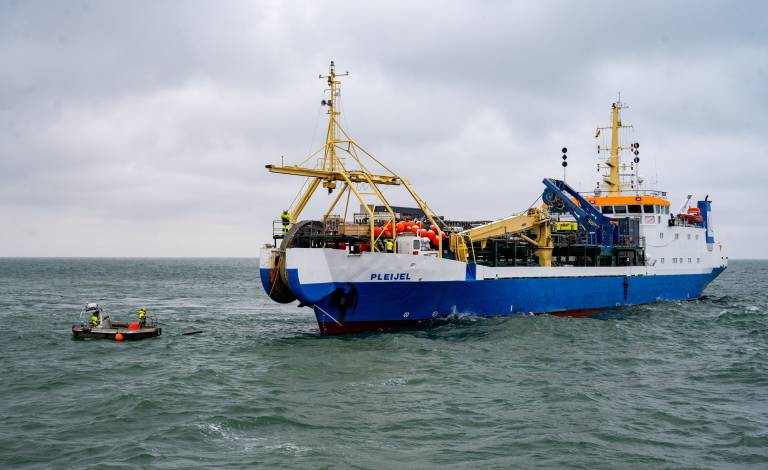
Fiber Optic Cables Could Revolutionize Earthquake Detection and Monitoring
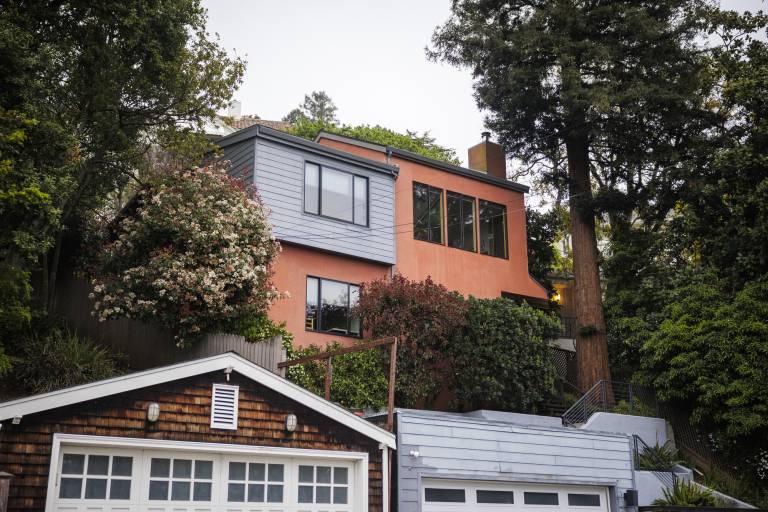
Wildfire Evacuation From Berkeley Hills Could Take Over 4 Hours, Study Finds
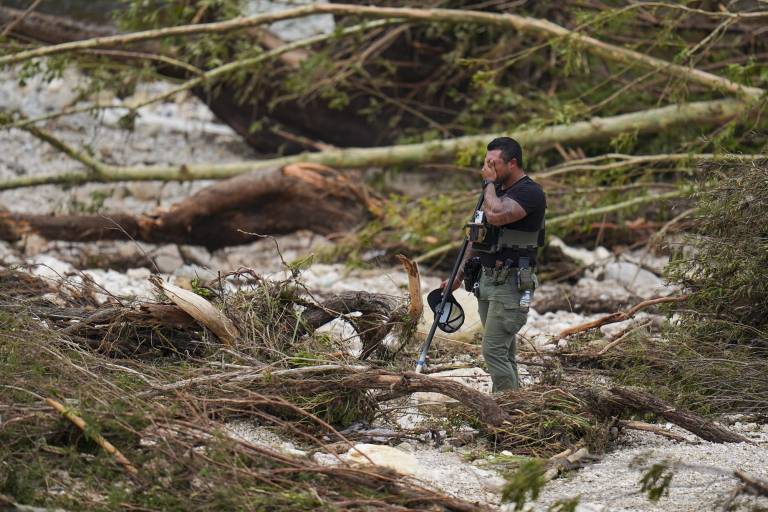
California Could Flood Like Texas. But Thunderstorms Likely Won’t Be to Blame
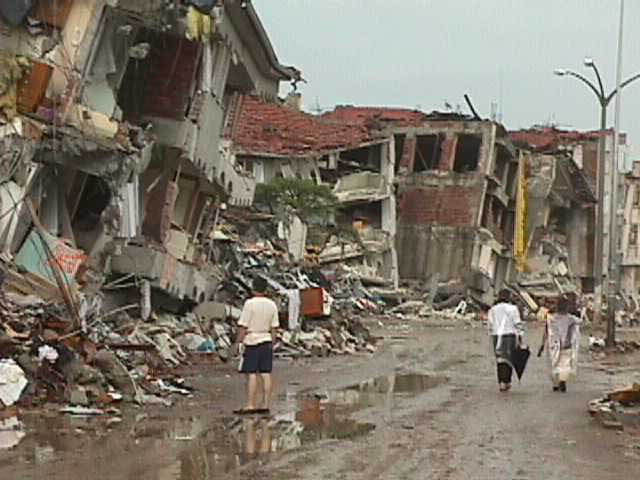
Looks Like Another Dead End for Earthquake Prediction
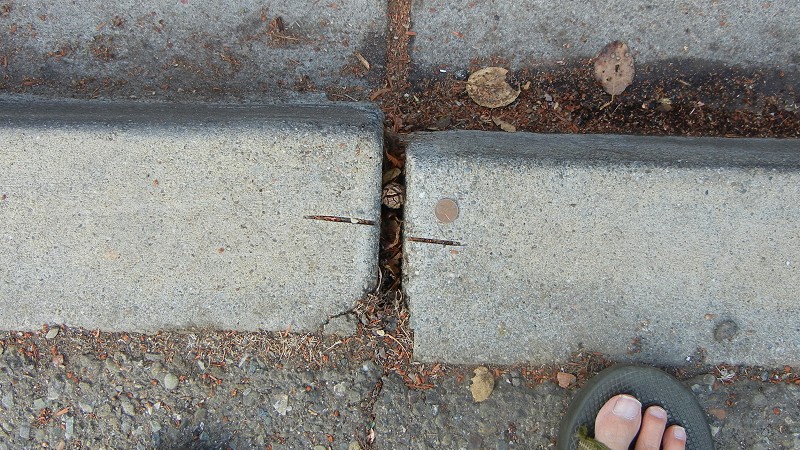
New Paper Outlines Updated Look on San Andreas Fault System
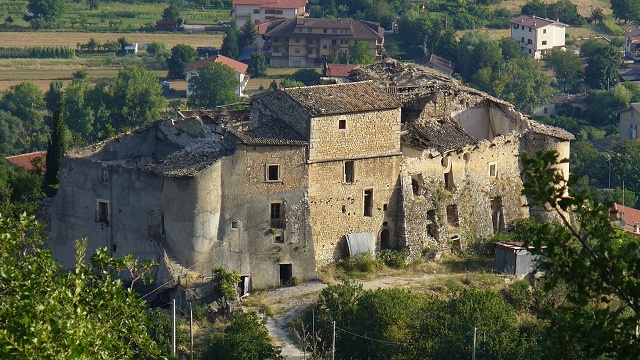
New-Generation Earthquake Forecasting Swings into Operation in Italy
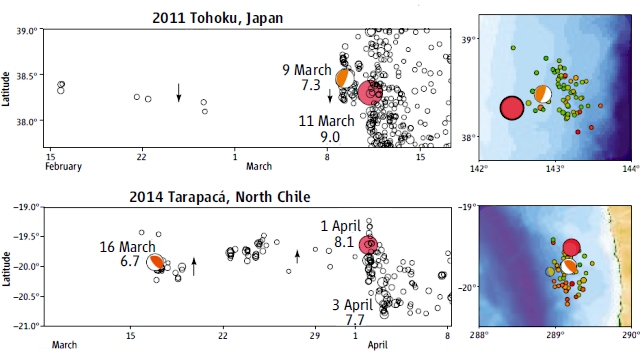
Progress in Earthquake Forecasts May Come from Studying Foreshocks
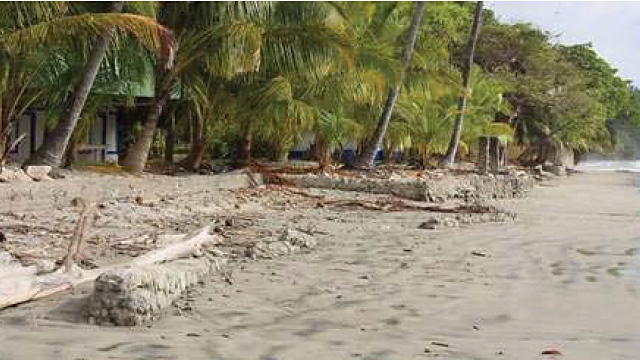
Seismology Semantics: Researchers Successfully 'Anticipate' Costa Rican Earthquake
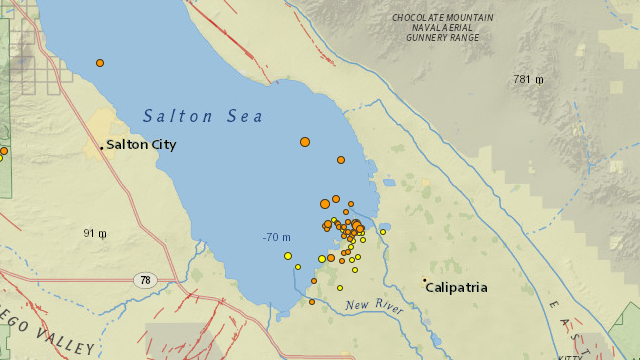
The Science of California's Seismic Pests, or Earthquake "Swarms"
Sponsored
Player sponsored by
window.__IS_SSR__=true
window.__INITIAL_STATE__={
"attachmentsReducer": {
"audio_0": {
"type": "attachments",
"id": "audio_0",
"imgSizes": {
"kqedFullSize": {
"file": "https://ww2.kqed.org/news/wp-content/themes/KQED-unified/img/audio_bgs/background0.jpg"
}
}
},
"audio_1": {
"type": "attachments",
"id": "audio_1",
"imgSizes": {
"kqedFullSize": {
"file": "https://ww2.kqed.org/news/wp-content/themes/KQED-unified/img/audio_bgs/background1.jpg"
}
}
},
"audio_2": {
"type": "attachments",
"id": "audio_2",
"imgSizes": {
"kqedFullSize": {
"file": "https://ww2.kqed.org/news/wp-content/themes/KQED-unified/img/audio_bgs/background2.jpg"
}
}
},
"audio_3": {
"type": "attachments",
"id": "audio_3",
"imgSizes": {
"kqedFullSize": {
"file": "https://ww2.kqed.org/news/wp-content/themes/KQED-unified/img/audio_bgs/background3.jpg"
}
}
},
"audio_4": {
"type": "attachments",
"id": "audio_4",
"imgSizes": {
"kqedFullSize": {
"file": "https://ww2.kqed.org/news/wp-content/themes/KQED-unified/img/audio_bgs/background4.jpg"
}
}
},
"placeholder": {
"type": "attachments",
"id": "placeholder",
"imgSizes": {
"thumbnail": {
"file": "https://cdn.kqed.org/wp-content/uploads/2024/12/KQED-Default-Image-816638274-2000x1333-1-160x107.jpg",
"width": 160,
"height": 107,
"mimeType": "image/jpeg"
},
"medium": {
"file": "https://cdn.kqed.org/wp-content/uploads/2024/12/KQED-Default-Image-816638274-2000x1333-1-800x533.jpg",
"width": 800,
"height": 533,
"mimeType": "image/jpeg"
},
"medium_large": {
"file": "https://cdn.kqed.org/wp-content/uploads/2024/12/KQED-Default-Image-816638274-2000x1333-1-768x512.jpg",
"width": 768,
"height": 512,
"mimeType": "image/jpeg"
},
"large": {
"file": "https://cdn.kqed.org/wp-content/uploads/2024/12/KQED-Default-Image-816638274-2000x1333-1-1020x680.jpg",
"width": 1020,
"height": 680,
"mimeType": "image/jpeg"
},
"1536x1536": {
"file": "https://cdn.kqed.org/wp-content/uploads/2024/12/KQED-Default-Image-816638274-2000x1333-1-1536x1024.jpg",
"width": 1536,
"height": 1024,
"mimeType": "image/jpeg"
},
"fd-lrg": {
"file": "https://cdn.kqed.org/wp-content/uploads/2024/12/KQED-Default-Image-816638274-2000x1333-1-1536x1024.jpg",
"width": 1536,
"height": 1024,
"mimeType": "image/jpeg"
},
"fd-med": {
"file": "https://cdn.kqed.org/wp-content/uploads/2024/12/KQED-Default-Image-816638274-2000x1333-1-1020x680.jpg",
"width": 1020,
"height": 680,
"mimeType": "image/jpeg"
},
"fd-sm": {
"file": "https://cdn.kqed.org/wp-content/uploads/2024/12/KQED-Default-Image-816638274-2000x1333-1-800x533.jpg",
"width": 800,
"height": 533,
"mimeType": "image/jpeg"
},
"post-thumbnail": {
"file": "https://cdn.kqed.org/wp-content/uploads/2024/12/KQED-Default-Image-816638274-2000x1333-1-672x372.jpg",
"width": 672,
"height": 372,
"mimeType": "image/jpeg"
},
"twentyfourteen-full-width": {
"file": "https://cdn.kqed.org/wp-content/uploads/2024/12/KQED-Default-Image-816638274-2000x1333-1-1038x576.jpg",
"width": 1038,
"height": 576,
"mimeType": "image/jpeg"
},
"xxsmall": {
"file": "https://cdn.kqed.org/wp-content/uploads/2024/12/KQED-Default-Image-816638274-2000x1333-1-160x107.jpg",
"width": 160,
"height": 107,
"mimeType": "image/jpeg"
},
"xsmall": {
"file": "https://cdn.kqed.org/wp-content/uploads/2024/12/KQED-Default-Image-816638274-2000x1333-1-672x372.jpg",
"width": 672,
"height": 372,
"mimeType": "image/jpeg"
},
"small": {
"file": "https://cdn.kqed.org/wp-content/uploads/2024/12/KQED-Default-Image-816638274-2000x1333-1-672x372.jpg",
"width": 672,
"height": 372,
"mimeType": "image/jpeg"
},
"xlarge": {
"file": "https://cdn.kqed.org/wp-content/uploads/2024/12/KQED-Default-Image-816638274-2000x1333-1-1020x680.jpg",
"width": 1020,
"height": 680,
"mimeType": "image/jpeg"
},
"full-width": {
"file": "https://cdn.kqed.org/wp-content/uploads/2024/12/KQED-Default-Image-816638274-2000x1333-1-1920x1280.jpg",
"width": 1920,
"height": 1280,
"mimeType": "image/jpeg"
},
"guest-author-32": {
"file": "https://cdn.kqed.org/wp-content/uploads/2025/01/KQED-Default-Image-816638274-1333x1333-1-160x160.jpg",
"width": 32,
"height": 32,
"mimeType": "image/jpeg"
},
"guest-author-50": {
"file": "https://cdn.kqed.org/wp-content/uploads/2025/01/KQED-Default-Image-816638274-1333x1333-1-160x160.jpg",
"width": 50,
"height": 50,
"mimeType": "image/jpeg"
},
"guest-author-64": {
"file": "https://cdn.kqed.org/wp-content/uploads/2025/01/KQED-Default-Image-816638274-1333x1333-1-160x160.jpg",
"width": 64,
"height": 64,
"mimeType": "image/jpeg"
},
"guest-author-96": {
"file": "https://cdn.kqed.org/wp-content/uploads/2025/01/KQED-Default-Image-816638274-1333x1333-1-160x160.jpg",
"width": 96,
"height": 96,
"mimeType": "image/jpeg"
},
"guest-author-128": {
"file": "https://cdn.kqed.org/wp-content/uploads/2025/01/KQED-Default-Image-816638274-1333x1333-1-160x160.jpg",
"width": 128,
"height": 128,
"mimeType": "image/jpeg"
},
"detail": {
"file": "https://cdn.kqed.org/wp-content/uploads/2025/01/KQED-Default-Image-816638274-1333x1333-1-160x160.jpg",
"width": 160,
"height": 160,
"mimeType": "image/jpeg"
},
"kqedFullSize": {
"file": "https://cdn.kqed.org/wp-content/uploads/2024/12/KQED-Default-Image-816638274-2000x1333-1.jpg",
"width": 2000,
"height": 1333
}
}
},
"science_1998635": {
"type": "attachments",
"id": "science_1998635",
"meta": {
"index": "attachments_1716263798",
"site": "science",
"id": "1998635",
"found": true
},
"title": "Fiber optic network of the company GlobalConnect",
"publishDate": 1758820898,
"status": "inherit",
"parent": 1998623,
"modified": 1758821013,
"caption": "A fiber optic cable was brought ashore from the cable-laying ship Pleijel at the entrance to the port of Sassnitz on Nov. 29, 2023. A new study suggests using fiber optic cables on the ocean floor could track underwater fault ruptures and improve earthquake early warning systems.",
"credit": "Stefan Sauer/Picture Alliance via Getty Images",
"altTag": null,
"description": null,
"imgSizes": {
"thumbnail": {
"file": "https://cdn.kqed.org/wp-content/uploads/sites/35/2025/09/EarthquakeScienceGetty-160x98.jpg",
"width": 160,
"height": 98,
"mimeType": "image/jpeg"
},
"medium_large": {
"file": "https://cdn.kqed.org/wp-content/uploads/sites/35/2025/09/EarthquakeScienceGetty-768x470.jpg",
"width": 768,
"height": 470,
"mimeType": "image/jpeg"
},
"1536x1536": {
"file": "https://cdn.kqed.org/wp-content/uploads/sites/35/2025/09/EarthquakeScienceGetty-1536x940.jpg",
"width": 1536,
"height": 940,
"mimeType": "image/jpeg"
},
"post-thumbnail": {
"file": "https://cdn.kqed.org/wp-content/uploads/sites/35/2025/09/EarthquakeScienceGetty-672x372.jpg",
"width": 672,
"height": 372,
"mimeType": "image/jpeg"
},
"twentyfourteen-full-width": {
"file": "https://cdn.kqed.org/wp-content/uploads/sites/35/2025/09/EarthquakeScienceGetty-1038x576.jpg",
"width": 1038,
"height": 576,
"mimeType": "image/jpeg"
},
"kqedFullSize": {
"file": "https://cdn.kqed.org/wp-content/uploads/sites/35/2025/09/EarthquakeScienceGetty.jpg",
"width": 2000,
"height": 1224
}
},
"fetchFailed": false,
"isLoading": false
},
"science_1997997": {
"type": "attachments",
"id": "science_1997997",
"meta": {
"index": "attachments_1716263798",
"site": "science",
"id": "1997997",
"found": true
},
"title": "A home in the Berkeley hills on April 15, 2025.",
"publishDate": 1753982613,
"status": "inherit",
"parent": 1997994,
"modified": 1753982624,
"caption": "A home in the Berkeley hills on April 15, 2025.",
"credit": "Martin do Nascimento/KQED",
"altTag": null,
"description": null,
"imgSizes": {
"thumbnail": {
"file": "https://cdn.kqed.org/wp-content/uploads/sites/35/2025/07/250415-BERKELEY-PLANTS-MD-05_qed-160x107.jpg",
"width": 160,
"height": 107,
"mimeType": "image/jpeg"
},
"medium_large": {
"file": "https://cdn.kqed.org/wp-content/uploads/sites/35/2025/07/250415-BERKELEY-PLANTS-MD-05_qed-768x512.jpg",
"width": 768,
"height": 512,
"mimeType": "image/jpeg"
},
"1536x1536": {
"file": "https://cdn.kqed.org/wp-content/uploads/sites/35/2025/07/250415-BERKELEY-PLANTS-MD-05_qed-1536x1024.jpg",
"width": 1536,
"height": 1024,
"mimeType": "image/jpeg"
},
"post-thumbnail": {
"file": "https://cdn.kqed.org/wp-content/uploads/sites/35/2025/07/250415-BERKELEY-PLANTS-MD-05_qed-672x372.jpg",
"width": 672,
"height": 372,
"mimeType": "image/jpeg"
},
"twentyfourteen-full-width": {
"file": "https://cdn.kqed.org/wp-content/uploads/sites/35/2025/07/250415-BERKELEY-PLANTS-MD-05_qed-1038x576.jpg",
"width": 1038,
"height": 576,
"mimeType": "image/jpeg"
},
"kqedFullSize": {
"file": "https://cdn.kqed.org/wp-content/uploads/sites/35/2025/07/250415-BERKELEY-PLANTS-MD-05_qed.jpg",
"width": 1999,
"height": 1333
}
},
"fetchFailed": false,
"isLoading": false
},
"science_1997639": {
"type": "attachments",
"id": "science_1997639",
"meta": {
"index": "attachments_1716263798",
"site": "science",
"id": "1997639",
"found": true
},
"title": "APTOPIX Extreme Weather Texas",
"publishDate": 1752002381,
"status": "inherit",
"parent": 1997633,
"modified": 1752003293,
"caption": "A Sheriff's deputy pauses while combing through the banks of the Guadalupe River near Camp Mystic, on Saturday, July 5, 2025, in Hunt, Texas, after a flash flood swept through the area. ",
"credit": "Julio Cortez/AP Photo",
"altTag": null,
"description": null,
"imgSizes": {
"thumbnail": {
"file": "https://cdn.kqed.org/wp-content/uploads/sites/35/2025/07/CampMysticAP2-160x107.jpg",
"width": 160,
"height": 107,
"mimeType": "image/jpeg"
},
"medium_large": {
"file": "https://cdn.kqed.org/wp-content/uploads/sites/35/2025/07/CampMysticAP2-768x512.jpg",
"width": 768,
"height": 512,
"mimeType": "image/jpeg"
},
"1536x1536": {
"file": "https://cdn.kqed.org/wp-content/uploads/sites/35/2025/07/CampMysticAP2-1536x1024.jpg",
"width": 1536,
"height": 1024,
"mimeType": "image/jpeg"
},
"post-thumbnail": {
"file": "https://cdn.kqed.org/wp-content/uploads/sites/35/2025/07/CampMysticAP2-672x372.jpg",
"width": 672,
"height": 372,
"mimeType": "image/jpeg"
},
"twentyfourteen-full-width": {
"file": "https://cdn.kqed.org/wp-content/uploads/sites/35/2025/07/CampMysticAP2-1038x576.jpg",
"width": 1038,
"height": 576,
"mimeType": "image/jpeg"
},
"kqedFullSize": {
"file": "https://cdn.kqed.org/wp-content/uploads/sites/35/2025/07/CampMysticAP2.jpg",
"width": 2000,
"height": 1333
}
},
"fetchFailed": false,
"isLoading": false
},
"science_1925183": {
"type": "attachments",
"id": "science_1925183",
"meta": {
"index": "attachments_1716263798",
"site": "science",
"id": "1925183",
"found": true
},
"parent": 1925169,
"imgSizes": {
"small": {
"file": "https://ww2.kqed.org/app/uploads/sites/35/2018/06/Izmit_eart3_USGS-520x390.jpg",
"width": 520,
"mimeType": "image/jpeg",
"height": 390
},
"thumbnail": {
"file": "https://ww2.kqed.org/app/uploads/sites/35/2018/06/Izmit_eart3_USGS-160x120.jpg",
"width": 160,
"mimeType": "image/jpeg",
"height": 120
},
"post-thumbnail": {
"file": "https://ww2.kqed.org/app/uploads/sites/35/2018/06/Izmit_eart3_USGS-640x372.jpg",
"width": 640,
"mimeType": "image/jpeg",
"height": 372
},
"xsmall": {
"file": "https://ww2.kqed.org/app/uploads/sites/35/2018/06/Izmit_eart3_USGS-375x281.jpg",
"width": 375,
"mimeType": "image/jpeg",
"height": 281
},
"kqedFullSize": {
"file": "https://ww2.kqed.org/app/uploads/sites/35/2018/06/Izmit_eart3_USGS.jpg",
"width": 640,
"height": 480
},
"guest-author-50": {
"file": "https://ww2.kqed.org/app/uploads/sites/35/2018/06/Izmit_eart3_USGS-50x50.jpg",
"width": 50,
"mimeType": "image/jpeg",
"height": 50
},
"guest-author-96": {
"file": "https://ww2.kqed.org/app/uploads/sites/35/2018/06/Izmit_eart3_USGS-96x96.jpg",
"width": 96,
"mimeType": "image/jpeg",
"height": 96
},
"guest-author-64": {
"file": "https://ww2.kqed.org/app/uploads/sites/35/2018/06/Izmit_eart3_USGS-64x64.jpg",
"width": 64,
"mimeType": "image/jpeg",
"height": 64
},
"detail": {
"file": "https://ww2.kqed.org/app/uploads/sites/35/2018/06/Izmit_eart3_USGS-150x150.jpg",
"width": 150,
"mimeType": "image/jpeg",
"height": 150
},
"guest-author-32": {
"file": "https://ww2.kqed.org/app/uploads/sites/35/2018/06/Izmit_eart3_USGS-32x32.jpg",
"width": 32,
"mimeType": "image/jpeg",
"height": 32
},
"guest-author-128": {
"file": "https://ww2.kqed.org/app/uploads/sites/35/2018/06/Izmit_eart3_USGS-128x128.jpg",
"width": 128,
"mimeType": "image/jpeg",
"height": 128
},
"xxsmall": {
"file": "https://ww2.kqed.org/app/uploads/sites/35/2018/06/Izmit_eart3_USGS-240x180.jpg",
"width": 240,
"mimeType": "image/jpeg",
"height": 180
}
},
"publishDate": 1528142844,
"modified": 1528142986,
"caption": "The magnitude 7.6 Izmit quake in 1999 killed 17,000 people in Turkey.",
"description": "The magnitude 7.6 Izmit quake in 1999 killed 17,000 people in Turkey.",
"title": "Izmit_eart3_USGS",
"credit": "USGS",
"status": "inherit",
"fetchFailed": false,
"isLoading": false
},
"science_22601": {
"type": "attachments",
"id": "science_22601",
"meta": {
"index": "attachments_1716263798",
"site": "science",
"id": "22601",
"found": true
},
"parent": 22600,
"imgSizes": {
"kqedFullSize": {
"file": "https://ww2.kqed.org/app/uploads/sites/35/2014/10/faultcreep.jpg",
"width": 800,
"height": 450
}
},
"publishDate": 1413436990,
"modified": 1413436990,
"caption": "Fault creep on the Hayward fault has offset this Oakland street curb, along with a fiduciary mark made with a concrete saw. (Andrew Alden photo)",
"description": null,
"title": "faultcreep",
"credit": null,
"status": "inherit",
"fetchFailed": false,
"isLoading": false
},
"science_20767": {
"type": "attachments",
"id": "science_20767",
"meta": {
"index": "attachments_1716263798",
"site": "science",
"id": "20767",
"found": true
},
"parent": 20765,
"imgSizes": {
"kqedFullSize": {
"file": "https://ww2.kqed.org/app/uploads/sites/35/2014/08/LAquila-EQ-Bugnara_Castle.jpg",
"width": 640,
"height": 360
}
},
"publishDate": 1408647193,
"modified": 1408647193,
"caption": "The 12th-century Palazzo Ducale in Bugnara, Italy, suffered roof damage in the L'Aquila earthquake of 2009 (Susan Cardwell/Wikimedia \u003ca href=\"http://creativecommons.org/licenses/by-sa/2.5/it/deed.en\">CC\u003c/a>)",
"description": null,
"title": "LAquila-EQ-Bugnara_Castle",
"credit": null,
"status": "inherit",
"fetchFailed": false,
"isLoading": false
},
"science_17523": {
"type": "attachments",
"id": "science_17523",
"meta": {
"index": "attachments_1716263798",
"site": "science",
"id": "17523",
"found": true
},
"parent": 17522,
"imgSizes": {
"kqedFullSize": {
"file": "https://ww2.kqed.org/app/uploads/sites/35/2014/05/brodsky-lay.jpg",
"width": 640,
"height": 360
}
},
"publishDate": 1400180079,
"modified": 1400180079,
"caption": "Foreshocks small and large (white and orange-white circles respectively) migrated with time toward two recent great earthquakes (red circles). Patterns like this, if supported by measurements of slow seafloor motion, may lead us toward more reliable short-term earthquake forecasts. (AAAS/Science)",
"description": null,
"title": "brodsky-lay",
"credit": null,
"status": "inherit",
"fetchFailed": false,
"isLoading": false
},
"science_12694": {
"type": "attachments",
"id": "science_12694",
"meta": {
"index": "attachments_1716263798",
"site": "science",
"id": "12694",
"found": true
},
"parent": 12691,
"imgSizes": {
"kqedFullSize": {
"file": "https://ww2.kqed.org/app/uploads/sites/35/2014/01/costaricasubsidence.jpg",
"width": 640,
"height": 360
}
},
"publishDate": 1388693219,
"modified": 1388693219,
"caption": "Coastal subsidence on the Nicoya Peninsula was evidence used in the \"anticipation\" of a major earthquake that occurred in 2012",
"description": null,
"title": "costaricasubsidence",
"credit": null,
"status": "inherit",
"fetchFailed": false,
"isLoading": false
},
"science_9846": {
"type": "attachments",
"id": "science_9846",
"meta": {
"index": "attachments_1716263798",
"site": "science",
"id": "9846",
"found": true
},
"parent": 9845,
"imgSizes": {
"kqedFullSize": {
"file": "https://ww2.kqed.org/app/uploads/sites/35/2013/10/saltonswarm.png",
"width": 640,
"height": 360
}
},
"publishDate": 1381429655,
"modified": 1381429655,
"caption": "Seismicity in the southern Salton Sea during the week (yellow dots) and day (orange dots) before October 9, from the \u003ca href=\"http://earthquake.usgs.gov/earthquakes/map/#\">U.S. Geological Survey earthquake viewer\u003c/a>",
"description": null,
"title": "saltonswarm",
"credit": null,
"status": "inherit",
"fetchFailed": false,
"isLoading": false
}
},
"audioPlayerReducer": {
"postId": "stream_live",
"isPaused": true,
"isPlaying": false,
"pfsActive": false,
"pledgeModalIsOpen": true,
"playerDrawerIsOpen": false
},
"authorsReducer": {
"cmiller": {
"type": "authors",
"id": "221",
"meta": {
"index": "authors_1716337520",
"id": "221",
"found": true
},
"name": "Craig Miller",
"firstName": "Craig",
"lastName": "Miller",
"slug": "cmiller",
"email": "craig@voxterra.net",
"display_author_email": false,
"staff_mastheads": [
"science"
],
"title": "Editor Emeritus, Science",
"bio": "Craig is a former KQED Science editor, specializing in weather, climate, water & energy issues, with a little seismology thrown in just to shake things up. Prior to that, he launched and led the station's award-winning multimedia project, Climate Watch. Craig is also an accomplished writer/producer of television documentaries, with a focus on natural resource issues.",
"avatar": "https://secure.gravatar.com/avatar/b91661df645e001a9cafe0861fa685f9?s=600&d=blank&r=g",
"twitter": "voxterra",
"facebook": null,
"instagram": null,
"linkedin": null,
"sites": [
{
"site": "news",
"roles": [
"author"
]
},
{
"site": "futureofyou",
"roles": [
"editor"
]
},
{
"site": "stateofhealth",
"roles": [
"author"
]
},
{
"site": "science",
"roles": [
"editor"
]
},
{
"site": "quest",
"roles": [
"editor"
]
}
],
"headData": {
"title": "Craig Miller | KQED",
"description": "Editor Emeritus, Science",
"ogImgSrc": "https://secure.gravatar.com/avatar/b91661df645e001a9cafe0861fa685f9?s=600&d=blank&r=g",
"twImgSrc": "https://secure.gravatar.com/avatar/b91661df645e001a9cafe0861fa685f9?s=600&d=blank&r=g"
},
"isLoading": false,
"link": "/author/cmiller"
},
"andrew-alden": {
"type": "authors",
"id": "6228",
"meta": {
"index": "authors_1716337520",
"id": "6228",
"found": true
},
"name": "Andrew Alden",
"firstName": "Andrew",
"lastName": "Alden",
"slug": "andrew-alden",
"email": "alden@andrew-alden.com",
"display_author_email": false,
"staff_mastheads": [],
"title": null,
"bio": "Andrew Alden earned his geology degree at the University of New Hampshire and moved back to the Bay Area to work at the U.S. Geological Survey for six years. He has \u003ca href=\"http://geology.about.com/\">written on geology for About.com\u003c/a> since its founding in 1997. In 2007, he started the Oakland Geology blog, which won recognition as \"Best of the East Bay\" from the \u003ci>East Bay Express\u003c/i> in 2010. In writing about geology in the Bay Area and surroundings, he hopes to share some of the useful and pleasurable insights that geologists give us—not just facts about the deep past, but an attitude that might be called the \u003ci>deep present\u003c/i>.\r\n\r\nRead his \u003ca href=\"http://science.kqed.org/quest/author/andrew-alden/\">previous contributions\u003c/a> to \u003ca href=\"http://http://science.kqed.org/quest/\">QUEST\u003c/a>, a project dedicated to exploring the Science of Sustainability.",
"avatar": "https://secure.gravatar.com/avatar/9eaa0afc32f98c5fc7ce634437334a64?s=600&d=blank&r=g",
"twitter": null,
"facebook": null,
"instagram": null,
"linkedin": null,
"sites": [
{
"site": "science",
"roles": [
"author"
]
},
{
"site": "quest",
"roles": [
"subscriber"
]
}
],
"headData": {
"title": "Andrew Alden | KQED",
"description": null,
"ogImgSrc": "https://secure.gravatar.com/avatar/9eaa0afc32f98c5fc7ce634437334a64?s=600&d=blank&r=g",
"twImgSrc": "https://secure.gravatar.com/avatar/9eaa0afc32f98c5fc7ce634437334a64?s=600&d=blank&r=g"
},
"isLoading": false,
"link": "/author/andrew-alden"
},
"dventon": {
"type": "authors",
"id": "11088",
"meta": {
"index": "authors_1716337520",
"id": "11088",
"found": true
},
"name": "Danielle Venton",
"firstName": "Danielle",
"lastName": "Venton",
"slug": "dventon",
"email": "dventon@kqed.org",
"display_author_email": true,
"staff_mastheads": [
"science"
],
"title": "Science reporter",
"bio": "Danielle Venton is a reporter for KQED Science. She covers wildfires, space and oceans (though she is prone to sea sickness).\r\n\r\nBefore joining KQED in 2015, Danielle was a staff reporter at KRCB in Sonoma County and a freelancer. She studied science communication at UC Santa Cruz and formerly worked at CERN in Geneva, Switzerland where she wrote about computing. She lives in Sonoma County and enjoys backpacking.",
"avatar": "https://secure.gravatar.com/avatar/ebaf11ee6cfb7bb40329a143d463829e?s=600&d=blank&r=g",
"twitter": "DanielleVenton",
"facebook": null,
"instagram": null,
"linkedin": null,
"sites": [
{
"site": "arts",
"roles": [
"contributor"
]
},
{
"site": "news",
"roles": [
"editor"
]
},
{
"site": "futureofyou",
"roles": [
"editor"
]
},
{
"site": "science",
"roles": [
"editor"
]
},
{
"site": "liveblog",
"roles": [
"contributor"
]
}
],
"headData": {
"title": "Danielle Venton | KQED",
"description": "Science reporter",
"ogImgSrc": "https://secure.gravatar.com/avatar/ebaf11ee6cfb7bb40329a143d463829e?s=600&d=blank&r=g",
"twImgSrc": "https://secure.gravatar.com/avatar/ebaf11ee6cfb7bb40329a143d463829e?s=600&d=blank&r=g"
},
"isLoading": false,
"link": "/author/dventon"
},
"dcronin": {
"type": "authors",
"id": "11362",
"meta": {
"index": "authors_1716337520",
"id": "11362",
"found": true
},
"name": "Dana Cronin",
"firstName": "Dana",
"lastName": "Cronin",
"slug": "dcronin",
"email": "dcronin@KQED.org",
"display_author_email": true,
"staff_mastheads": [],
"title": "KQED Contributor",
"bio": "Dana Cronin is a reporter for KQED News. She loves writing stories about climate change, environmental issues, food and agriculture. She's reported across the country, from Colorado to Washington D.C. to Illinois, and has won numerous awards for her coverage. Her work is regularly featured on national broadcasts, including NPR’s Morning Edition, All Things Considered, PBS Newshour and Science Friday. She lives in Oakland and has an avocado tree in her back yard.",
"avatar": "https://secure.gravatar.com/avatar/bcf89e3455ff7235f96ab6fa7258dd95?s=600&d=blank&r=g",
"twitter": "DanaHCronin",
"facebook": null,
"instagram": null,
"linkedin": null,
"sites": [
{
"site": "arts",
"roles": [
"author"
]
},
{
"site": "news",
"roles": [
"editor"
]
},
{
"site": "science",
"roles": [
"author"
]
},
{
"site": "liveblog",
"roles": [
"author"
]
}
],
"headData": {
"title": "Dana Cronin | KQED",
"description": "KQED Contributor",
"ogImgSrc": "https://secure.gravatar.com/avatar/bcf89e3455ff7235f96ab6fa7258dd95?s=600&d=blank&r=g",
"twImgSrc": "https://secure.gravatar.com/avatar/bcf89e3455ff7235f96ab6fa7258dd95?s=600&d=blank&r=g"
},
"isLoading": false,
"link": "/author/dcronin"
},
"eromero": {
"type": "authors",
"id": "11746",
"meta": {
"index": "authors_1716337520",
"id": "11746",
"found": true
},
"name": "Ezra David Romero",
"firstName": "Ezra David",
"lastName": "Romero",
"slug": "eromero",
"email": "eromero@kqed.org",
"display_author_email": true,
"staff_mastheads": [
"news",
"science"
],
"title": "Climate Reporter",
"bio": "Ezra David Romero is a climate reporter for KQED News. He covers the absence and excess of water in the Bay Area — think sea level rise, flooding and drought. For nearly a decade he’s covered how warming temperatures are altering the lives of Californians. He’s reported on farmers worried their pistachio trees aren’t getting enough sleep, families desperate for water, scientists studying dying giant sequoias, and alongside firefighters containing wildfires. His work has appeared on local stations across California and nationally on public radio shows like Morning Edition, Here and Now, All Things Considered and Science Friday. ",
"avatar": "https://secure.gravatar.com/avatar/9c15bb8bab267e058708a9eeaeef16bf?s=600&d=blank&r=g",
"twitter": "ezraromero",
"facebook": null,
"instagram": null,
"linkedin": null,
"sites": [
{
"site": "arts",
"roles": [
"editor"
]
},
{
"site": "news",
"roles": [
"editor"
]
},
{
"site": "science",
"roles": [
"editor"
]
},
{
"site": "liveblog",
"roles": [
"author"
]
}
],
"headData": {
"title": "Ezra David Romero | KQED",
"description": "Climate Reporter",
"ogImgSrc": "https://secure.gravatar.com/avatar/9c15bb8bab267e058708a9eeaeef16bf?s=600&d=blank&r=g",
"twImgSrc": "https://secure.gravatar.com/avatar/9c15bb8bab267e058708a9eeaeef16bf?s=600&d=blank&r=g"
},
"isLoading": false,
"link": "/author/eromero"
}
},
"breakingNewsReducer": {},
"pagesReducer": {},
"postsReducer": {
"stream_live": {
"type": "live",
"id": "stream_live",
"audioUrl": "https://streams.kqed.org/kqedradio",
"title": "Live Stream",
"excerpt": "Live Stream information currently unavailable.",
"link": "/radio",
"featImg": "",
"label": {
"name": "KQED Live",
"link": "/"
}
},
"stream_kqedNewscast": {
"type": "posts",
"id": "stream_kqedNewscast",
"audioUrl": "https://www.kqed.org/.stream/anon/radio/RDnews/newscast.mp3?_=1",
"title": "KQED Newscast",
"featImg": "",
"label": {
"name": "88.5 FM",
"link": "/"
}
},
"science_1998623": {
"type": "posts",
"id": "science_1998623",
"meta": {
"index": "posts_1716263798",
"site": "science",
"id": "1998623",
"score": null,
"sort": [
1758823202000
]
},
"guestAuthors": [],
"slug": "fiber-optic-cables-could-revolutionize-earthquake-detection-and-monitoring",
"title": "Fiber Optic Cables Could Revolutionize Earthquake Detection and Monitoring",
"publishDate": 1758823202,
"format": "standard",
"headTitle": "Fiber Optic Cables Could Revolutionize Earthquake Detection and Monitoring | KQED",
"labelTerm": {},
"content": "\u003cp>Many of the world’s largest and most devastating \u003ca href=\"https://www.kqed.org/news/tag/earthquake\">earthquakes\u003c/a> strike beneath the ocean, where the lack of sensors makes quick warnings difficult. Most monitoring stations are on land.\u003c/p>\n\u003cp>“If we have a big earthquake under the water, like that Kamchatka earthquake [this summer], our sensors that tell us an earthquake just happened are really quite far away,” said \u003ca href=\"https://seismo.sites.ucsc.edu/emily-brodsky/\">Emily Brodsky\u003c/a>, a geophysicist at UC Santa Cruz. “And so we’re sort of looking through this very fuzzy pair of glasses at the earthquake and making our best guess on what it’s gonna mean in terms of tsunamis or anything else.”\u003c/p>\n\u003cp>New \u003ca href=\"https://www.science.org/doi/10.1126/science.adx6858\">research published Thursday\u003c/a> suggests fiber optic cables on the ocean floor could serve as earthquake sensors, Brodsky said. She \u003ca href=\"https://www.science.org/doi/10.1126/science.aeb1414\">co-authored a commentary\u003c/a> accompanying the paper.\u003c/p>\n\u003cp>[ad fullwidth]\u003c/p>\n\u003cp>With 70% of the planet covered by water, using telecommunications infrastructure as seismometers could fill major blind spots in earthquake detection in a relatively affordable and scientifically robust way.\u003c/p>\n\u003cp>While this is not the first paper describing the technique, it pushes the technology to new limits, focusing on how faults rupture underwater. That’s important because researchers could see that the fault was rupturing super fast, casting new light on the physics of earthquakes.\u003c/p>\n\u003cp>To use fiber optic cables this way, researchers partner with a company running the cables — in this case, \u003ca href=\"https://www.verofiber.com/\">Vero Fiber Networks\u003c/a> — and attach a box containing a laser and a computer. The laser sends pulses into the fiber that echo all along its length.[aside postID=news_12057001 hero='https://cdn.kqed.org/wp-content/uploads/sites/10/2025/09/250922-BERKELEY-EARTHQUAKE-KQED-1.jpg']If the cable stretches due to earthquake movements, the light echoes change. The changes can be converted into measurements, giving a fine-grained view of the event. Even in California, which is relatively well-covered by seismometers, stations are spaced several miles apart. Fiber optic sensing allows measurements down to the scale of feet.\u003c/p>\n\u003cp>With this higher resolution, earthquake early warning alerts, like \u003ca href=\"https://www.kqed.org/science/1994754/emergency-alert-phone-earthquake-test-2024-myshake\">Californians receive through MyShake\u003c/a>, could improve.\u003c/p>\n\u003cp>“Traditionally, it’s very, very hard to see for big earthquakes, how long is the fault that’s rupturing, in what direction is it going?” said \u003ca href=\"https://www.usgs.gov/staff-profiles/james-w-atterholt\">James Atterholt\u003c/a>, a seismologist with the U.S. Geological Survey and author on the research paper. “And this technology shows that with modifications, with advancements, that this could be done in real time.”\u003c/p>\n\u003cp>Some experts are skeptical that predicting earthquakes is possible. Others, including Brodsky, are cautiously optimistic.\u003c/p>\n\u003cp>“Just to be clear, no, we do not know how to predict earthquakes. But we do want to study whether or not they’re predictable,” she said. “We are in a totally different place than we were 15 years ago.”\u003c/p>\n\u003cp>Scientists now have better hypotheses for how prediction could work, Brodsky said, but “to a large extent, we’re instrumentally limited and we need the investment. And it’s kind of that simple.”\u003c/p>\n\u003cp>\u003c/p>\n",
"blocks": [],
"excerpt": "A new study suggests using fiber optic cables on the ocean floor could track underwater fault ruptures and improve earthquake early warning systems.",
"status": "publish",
"parent": 0,
"modified": 1758826432,
"stats": {
"hasAudio": false,
"hasVideo": false,
"hasChartOrMap": false,
"iframeSrcs": [],
"hasGoogleForm": false,
"hasGallery": false,
"hasHearkenModule": false,
"hasPolis": false,
"paragraphCount": 13,
"wordCount": 511
},
"headData": {
"title": "Fiber Optic Cables Could Revolutionize Earthquake Detection and Monitoring | KQED",
"description": "A new study suggests using fiber optic cables on the ocean floor could track underwater fault ruptures and improve earthquake early warning systems.",
"ogTitle": "",
"ogDescription": "",
"ogImgId": "",
"twTitle": "",
"twDescription": "",
"twImgId": "",
"schema": {
"@context": "https://schema.org",
"@type": "Article",
"headline": "Fiber Optic Cables Could Revolutionize Earthquake Detection and Monitoring",
"datePublished": "2025-09-25T11:00:02-07:00",
"dateModified": "2025-09-25T11:53:52-07:00",
"image": "https://cdn.kqed.org/wp-content/uploads/2020/02/KQED-OG-Image@1x.png"
}
},
"primaryCategory": {
"termId": 31,
"slug": "climate",
"name": "Climate"
},
"source": "News",
"sticky": false,
"nprStoryId": "kqed-1998623",
"templateType": "standard",
"featuredImageType": "standard",
"excludeFromSiteSearch": "Include",
"articleAge": "0",
"path": "/science/1998623/fiber-optic-cables-could-revolutionize-earthquake-detection-and-monitoring",
"audioTrackLength": null,
"parsedContent": [
{
"type": "contentString",
"content": "\u003cdiv class=\"post-body\">\u003cp>\u003cp>Many of the world’s largest and most devastating \u003ca href=\"https://www.kqed.org/news/tag/earthquake\">earthquakes\u003c/a> strike beneath the ocean, where the lack of sensors makes quick warnings difficult. Most monitoring stations are on land.\u003c/p>\n\u003cp>“If we have a big earthquake under the water, like that Kamchatka earthquake [this summer], our sensors that tell us an earthquake just happened are really quite far away,” said \u003ca href=\"https://seismo.sites.ucsc.edu/emily-brodsky/\">Emily Brodsky\u003c/a>, a geophysicist at UC Santa Cruz. “And so we’re sort of looking through this very fuzzy pair of glasses at the earthquake and making our best guess on what it’s gonna mean in terms of tsunamis or anything else.”\u003c/p>\n\u003cp>New \u003ca href=\"https://www.science.org/doi/10.1126/science.adx6858\">research published Thursday\u003c/a> suggests fiber optic cables on the ocean floor could serve as earthquake sensors, Brodsky said. She \u003ca href=\"https://www.science.org/doi/10.1126/science.aeb1414\">co-authored a commentary\u003c/a> accompanying the paper.\u003c/p>\n\u003cp>\u003c/p>\u003c/div>",
"attributes": {
"named": {},
"numeric": []
}
},
{
"type": "component",
"content": "",
"name": "ad",
"attributes": {
"named": {
"label": "fullwidth"
},
"numeric": [
"fullwidth"
]
}
},
{
"type": "contentString",
"content": "\u003cdiv class=\"post-body\">\u003cp>\u003c/p>\n\u003cp>With 70% of the planet covered by water, using telecommunications infrastructure as seismometers could fill major blind spots in earthquake detection in a relatively affordable and scientifically robust way.\u003c/p>\n\u003cp>While this is not the first paper describing the technique, it pushes the technology to new limits, focusing on how faults rupture underwater. That’s important because researchers could see that the fault was rupturing super fast, casting new light on the physics of earthquakes.\u003c/p>\n\u003cp>To use fiber optic cables this way, researchers partner with a company running the cables — in this case, \u003ca href=\"https://www.verofiber.com/\">Vero Fiber Networks\u003c/a> — and attach a box containing a laser and a computer. The laser sends pulses into the fiber that echo all along its length.\u003c/p>\u003c/div>",
"attributes": {
"named": {},
"numeric": []
}
},
{
"type": "component",
"content": "",
"name": "aside",
"attributes": {
"named": {
"postid": "news_12057001",
"hero": "https://cdn.kqed.org/wp-content/uploads/sites/10/2025/09/250922-BERKELEY-EARTHQUAKE-KQED-1.jpg",
"label": ""
},
"numeric": []
}
},
{
"type": "contentString",
"content": "\u003cdiv class=\"post-body\">\u003cp>If the cable stretches due to earthquake movements, the light echoes change. The changes can be converted into measurements, giving a fine-grained view of the event. Even in California, which is relatively well-covered by seismometers, stations are spaced several miles apart. Fiber optic sensing allows measurements down to the scale of feet.\u003c/p>\n\u003cp>With this higher resolution, earthquake early warning alerts, like \u003ca href=\"https://www.kqed.org/science/1994754/emergency-alert-phone-earthquake-test-2024-myshake\">Californians receive through MyShake\u003c/a>, could improve.\u003c/p>\n\u003cp>“Traditionally, it’s very, very hard to see for big earthquakes, how long is the fault that’s rupturing, in what direction is it going?” said \u003ca href=\"https://www.usgs.gov/staff-profiles/james-w-atterholt\">James Atterholt\u003c/a>, a seismologist with the U.S. Geological Survey and author on the research paper. “And this technology shows that with modifications, with advancements, that this could be done in real time.”\u003c/p>\n\u003cp>Some experts are skeptical that predicting earthquakes is possible. Others, including Brodsky, are cautiously optimistic.\u003c/p>\n\u003cp>“Just to be clear, no, we do not know how to predict earthquakes. But we do want to study whether or not they’re predictable,” she said. “We are in a totally different place than we were 15 years ago.”\u003c/p>\n\u003cp>Scientists now have better hypotheses for how prediction could work, Brodsky said, but “to a large extent, we’re instrumentally limited and we need the investment. And it’s kind of that simple.”\u003c/p>\n\u003cp>\u003c/p>\n\u003c/div>\u003c/p>",
"attributes": {
"named": {},
"numeric": []
}
}
],
"link": "/science/1998623/fiber-optic-cables-could-revolutionize-earthquake-detection-and-monitoring",
"authors": [
"11088"
],
"categories": [
"science_31",
"science_35",
"science_40",
"science_4450"
],
"tags": [
"science_856",
"science_5178",
"science_182",
"science_3253",
"science_257",
"science_529",
"science_427",
"science_4414",
"science_309"
],
"featImg": "science_1998635",
"label": "source_science_1998623"
},
"science_1997994": {
"type": "posts",
"id": "science_1997994",
"meta": {
"index": "posts_1716263798",
"site": "science",
"id": "1997994",
"score": null,
"sort": [
1754053205000
]
},
"guestAuthors": [],
"slug": "wildfire-evacuation-from-berkeley-hills-could-take-over-4-hours-study-finds",
"title": "Wildfire Evacuation From Berkeley Hills Could Take Over 4 Hours, Study Finds",
"publishDate": 1754053205,
"format": "standard",
"headTitle": "Wildfire Evacuation From Berkeley Hills Could Take Over 4 Hours, Study Finds | KQED",
"labelTerm": {},
"content": "\u003cp>\u003ca href=\"https://www.kqed.org/news/tag/berkeley\">Berkeley\u003c/a>’s roadways don’t have the capacity for large-scale evacuation and, as a result, fleeing from the hills during a wildfire could take longer than four hours, according to a new study commissioned by the city.\u003c/p>\n\u003cp>\u003ca href=\"https://berkeleyca.gov/sites/default/files/documents/Evacuation%20Time%20Study.pdf\">The study conducted by KLD Associates mapped evacuation patterns\u003c/a> and simulated escape times based on a repeat of the \u003ca href=\"https://www.berkeleypubliclibrary.org/sites/default/files/files/inline/bplhstrm_979.467_st76_the_story_of_the_berkeley_fire.pdf\">1923 Berkeley Fire\u003c/a>, which burned north of the UC Berkeley campus, destroying over 600 structures and displacing thousands of residents. Depending on where a fire ignites, researchers identified specific chokepoints on busy intersections and freeway onramps, where cars would likely gridlock in an urgent evacuation.\u003c/p>\n\u003cp>“The streets were built a long time ago,” said Keith May, deputy fire chief of the Berkeley Fire Department. “So the road capacity is tight already. And then when you factor in evacuating residents out and also getting emergency vehicles in to fight the fire or to do evacuations, that’s a tight network.”\u003c/p>\n\u003cp>[ad fullwidth]\u003c/p>\n\u003cp>\u003ca href=\"https://www.kqed.org/news/12020808/as-la-fires-rage-harrowing-evacuations-play-out-on-traffic-choked-roads\">Harrowing evacuations through traffic-choked roads\u003c/a> are unfortunately common in California, with its many hillside communities that often only have one or a handful of roads in and out. That has led to some of the state’s most deadly fires, including the Camp Fire, when over 25,000 Paradise residents attempted to evacuate the area only to get caught in a massive traffic jam. Eighty-five people were killed.\u003c/p>\n\u003cp>The Berkeley study also estimated how long it would take residents to evacuate during large-scale tsunamis, which exceeded two hours for residents fleeing low-lying coastal areas in the middle of the day.\u003c/p>\n\u003cfigure id=\"attachment_1997999\" class=\"wp-caption aligncenter\" style=\"max-width: 2000px\">\u003cimg loading=\"lazy\" decoding=\"async\" class=\"size-full wp-image-1997999\" src=\"https://cdn.kqed.org/wp-content/uploads/sites/35/2025/07/drought_3_140115.jpg\" alt=\"\" width=\"2000\" height=\"1333\" srcset=\"https://cdn.kqed.org/wp-content/uploads/sites/35/2025/07/drought_3_140115.jpg 2000w, https://cdn.kqed.org/wp-content/uploads/sites/35/2025/07/drought_3_140115-160x107.jpg 160w, https://cdn.kqed.org/wp-content/uploads/sites/35/2025/07/drought_3_140115-768x512.jpg 768w, https://cdn.kqed.org/wp-content/uploads/sites/35/2025/07/drought_3_140115-1536x1024.jpg 1536w\" sizes=\"auto, (max-width: 2000px) 100vw, 2000px\">\u003cfigcaption class=\"wp-caption-text\">Fire warning signs in the Berkeley and Oakland Hills. \u003ccite>(Mark Andrew Boyer/KQED)\u003c/cite>\u003c/figcaption>\u003c/figure>\n\u003cp>In the case of both wildfires and tsunamis, the report emphasized the need for residents to evacuate as early as possible.\u003c/p>\n\u003cp>“Leave early if you can,” May said. He suggested residents leave the hills even before a fire ignites on red flag days. “Just get out of the hills so you’re not part of that evacuation problem. The less cars on the roadway, the faster the evacuation time will go.”\u003c/p>\n\u003cp>The evacuation times laid out in the study could be a dramatic underestimate, according to Stanford wildfire researcher Michael Wara, who was not involved in the Berkeley study.[aside postID=news_12035866 hero='https://cdn.kqed.org/wp-content/uploads/sites/10/2025/04/250415-BERKELEY-PLANTS-MD-04-KQED-1020x680.jpg']“I would interpret this study as an absolute minimum on the evacuation time,” he said. “I would say this is the floor, and in reality, things would be worse.”\u003c/p>\n\u003cp>That’s because researchers only took into consideration the outflow of traffic from the hills, Wara said, and not the inflow of emergency response vehicles.\u003c/p>\n\u003cp>“If you pretend in your model that the fire trucks aren’t there, you’re gonna miss the places where it may be most significant because it’s really hard to get fire trucks up the hill and people down the hill at the same time,” he said.\u003c/p>\n\u003cp>Still, Wara said, knowing where the traffic chokepoints will be during a rapid evacuation is critical for getting people out safely. He pointed to the emergency response during the Palisades Fire in Los Angeles earlier this year, including the use of bulldozers to push abandoned vehicles to the sides of the roads.\u003c/p>\n\u003cp>“That was a remarkable display of evacuation preparedness and acumen on the part of the fire department in Los Angeles,” he said. “If those bulldozers had not been prepositioned at the places where the city thought there would be a gridlock, who knows what would have happened?”\u003c/p>\n\u003cfigure id=\"attachment_1998006\" class=\"wp-caption aligncenter\" style=\"max-width: 2000px\">\u003cimg loading=\"lazy\" decoding=\"async\" class=\"size-full wp-image-1998006\" src=\"https://cdn.kqed.org/wp-content/uploads/sites/35/2025/07/250415-BERKELEY-PLANTS-MD-03_qed.jpg\" alt=\"\" width=\"2000\" height=\"1333\" srcset=\"https://cdn.kqed.org/wp-content/uploads/sites/35/2025/07/250415-BERKELEY-PLANTS-MD-03_qed.jpg 2000w, https://cdn.kqed.org/wp-content/uploads/sites/35/2025/07/250415-BERKELEY-PLANTS-MD-03_qed-160x107.jpg 160w, https://cdn.kqed.org/wp-content/uploads/sites/35/2025/07/250415-BERKELEY-PLANTS-MD-03_qed-768x512.jpg 768w, https://cdn.kqed.org/wp-content/uploads/sites/35/2025/07/250415-BERKELEY-PLANTS-MD-03_qed-1536x1024.jpg 1536w\" sizes=\"auto, (max-width: 2000px) 100vw, 2000px\">\u003cfigcaption class=\"wp-caption-text\">A home in the Berkeley hills on April 15, 2025. \u003ccite>(Martin do Nascimento/KQED)\u003c/cite>\u003c/figcaption>\u003c/figure>\n\u003cp>Another potentially helpful tool, Wara said, is implementing parking restrictions on certain roadways to open them up as evacuation routes.\u003c/p>\n\u003cp>In Mill Valley, for example, parking is limited on certain streets during high fire danger days.\u003c/p>\n\u003cp>Berkeley has similar restrictions on the Fourth of July, but May said the city is looking to expand those restrictions.\u003c/p>\n\u003cp>“Right now we’re trying to get every one of our county partners in sync with the idea,” he said. “And then we have to socialize it and get it out to the public, because they are the ones that are gonna be directly affected from the enforcement side of it.”\u003c/p>\n\u003cp>In the meantime, May said Berkeley residents should \u003ca href=\"https://member.everbridge.net/453003085612570/new\">sign up for emergency alerts\u003c/a> and \u003ca href=\"https://protect.genasys.com/download\">download the city’s evacuation map\u003c/a> to plan out their routes. He advises familiarizing yourself with your neighborhood and having at least two different evacuation routes in mind.\u003c/p>\n\u003cp>The city will also hold \u003ca href=\"https://berkeleyca.gov/community-recreation/news/study-stresses-need-household-fire-and-evacuation-plans\">a series of workshops\u003c/a> beginning in August for residents to get help in their evacuation preparations.\u003c/p>\n\u003cp>\u003c/p>\n",
"blocks": [],
"excerpt": "The study highlights the need for residents to have an evacuation plan and to leave early in case of emergency. ",
"status": "publish",
"parent": 0,
"modified": 1754510489,
"stats": {
"hasAudio": false,
"hasVideo": false,
"hasChartOrMap": false,
"iframeSrcs": [],
"hasGoogleForm": false,
"hasGallery": false,
"hasHearkenModule": false,
"hasPolis": false,
"paragraphCount": 20,
"wordCount": 815
},
"headData": {
"title": "Wildfire Evacuation From Berkeley Hills Could Take Over 4 Hours, Study Finds | KQED",
"description": "The study highlights the need for residents to have an evacuation plan and to leave early in case of emergency. ",
"ogTitle": "",
"ogDescription": "",
"ogImgId": "",
"twTitle": "",
"twDescription": "",
"twImgId": "",
"schema": {
"@context": "https://schema.org",
"@type": "Article",
"headline": "Wildfire Evacuation From Berkeley Hills Could Take Over 4 Hours, Study Finds",
"datePublished": "2025-08-01T06:00:05-07:00",
"dateModified": "2025-08-06T13:01:29-07:00",
"image": "https://cdn.kqed.org/wp-content/uploads/2020/02/KQED-OG-Image@1x.png"
}
},
"primaryCategory": {
"termId": 40,
"slug": "news",
"name": "News"
},
"source": "News",
"audioUrl": "https://traffic.omny.fm/d/clips/0af137ef-751e-4b19-a055-aaef00d2d578/ffca7e9f-6831-4[…]f-aaef00f5a073/1be0f8d7-45a6-4f3d-9e53-b3300108a097/audio.mp3",
"sticky": false,
"nprStoryId": "kqed-1997994",
"templateType": "standard",
"featuredImageType": "standard",
"excludeFromSiteSearch": "Include",
"articleAge": "0",
"path": "/science/1997994/wildfire-evacuation-from-berkeley-hills-could-take-over-4-hours-study-finds",
"audioTrackLength": null,
"parsedContent": [
{
"type": "contentString",
"content": "\u003cdiv class=\"post-body\">\u003cp>\u003cp>\u003ca href=\"https://www.kqed.org/news/tag/berkeley\">Berkeley\u003c/a>’s roadways don’t have the capacity for large-scale evacuation and, as a result, fleeing from the hills during a wildfire could take longer than four hours, according to a new study commissioned by the city.\u003c/p>\n\u003cp>\u003ca href=\"https://berkeleyca.gov/sites/default/files/documents/Evacuation%20Time%20Study.pdf\">The study conducted by KLD Associates mapped evacuation patterns\u003c/a> and simulated escape times based on a repeat of the \u003ca href=\"https://www.berkeleypubliclibrary.org/sites/default/files/files/inline/bplhstrm_979.467_st76_the_story_of_the_berkeley_fire.pdf\">1923 Berkeley Fire\u003c/a>, which burned north of the UC Berkeley campus, destroying over 600 structures and displacing thousands of residents. Depending on where a fire ignites, researchers identified specific chokepoints on busy intersections and freeway onramps, where cars would likely gridlock in an urgent evacuation.\u003c/p>\n\u003cp>“The streets were built a long time ago,” said Keith May, deputy fire chief of the Berkeley Fire Department. “So the road capacity is tight already. And then when you factor in evacuating residents out and also getting emergency vehicles in to fight the fire or to do evacuations, that’s a tight network.”\u003c/p>\n\u003cp>\u003c/p>\u003c/div>",
"attributes": {
"named": {},
"numeric": []
}
},
{
"type": "component",
"content": "",
"name": "ad",
"attributes": {
"named": {
"label": "fullwidth"
},
"numeric": [
"fullwidth"
]
}
},
{
"type": "contentString",
"content": "\u003cdiv class=\"post-body\">\u003cp>\u003c/p>\n\u003cp>\u003ca href=\"https://www.kqed.org/news/12020808/as-la-fires-rage-harrowing-evacuations-play-out-on-traffic-choked-roads\">Harrowing evacuations through traffic-choked roads\u003c/a> are unfortunately common in California, with its many hillside communities that often only have one or a handful of roads in and out. That has led to some of the state’s most deadly fires, including the Camp Fire, when over 25,000 Paradise residents attempted to evacuate the area only to get caught in a massive traffic jam. Eighty-five people were killed.\u003c/p>\n\u003cp>The Berkeley study also estimated how long it would take residents to evacuate during large-scale tsunamis, which exceeded two hours for residents fleeing low-lying coastal areas in the middle of the day.\u003c/p>\n\u003cfigure id=\"attachment_1997999\" class=\"wp-caption aligncenter\" style=\"max-width: 2000px\">\u003cimg loading=\"lazy\" decoding=\"async\" class=\"size-full wp-image-1997999\" src=\"https://cdn.kqed.org/wp-content/uploads/sites/35/2025/07/drought_3_140115.jpg\" alt=\"\" width=\"2000\" height=\"1333\" srcset=\"https://cdn.kqed.org/wp-content/uploads/sites/35/2025/07/drought_3_140115.jpg 2000w, https://cdn.kqed.org/wp-content/uploads/sites/35/2025/07/drought_3_140115-160x107.jpg 160w, https://cdn.kqed.org/wp-content/uploads/sites/35/2025/07/drought_3_140115-768x512.jpg 768w, https://cdn.kqed.org/wp-content/uploads/sites/35/2025/07/drought_3_140115-1536x1024.jpg 1536w\" sizes=\"auto, (max-width: 2000px) 100vw, 2000px\">\u003cfigcaption class=\"wp-caption-text\">Fire warning signs in the Berkeley and Oakland Hills. \u003ccite>(Mark Andrew Boyer/KQED)\u003c/cite>\u003c/figcaption>\u003c/figure>\n\u003cp>In the case of both wildfires and tsunamis, the report emphasized the need for residents to evacuate as early as possible.\u003c/p>\n\u003cp>“Leave early if you can,” May said. He suggested residents leave the hills even before a fire ignites on red flag days. “Just get out of the hills so you’re not part of that evacuation problem. The less cars on the roadway, the faster the evacuation time will go.”\u003c/p>\n\u003cp>The evacuation times laid out in the study could be a dramatic underestimate, according to Stanford wildfire researcher Michael Wara, who was not involved in the Berkeley study.\u003c/p>\u003c/div>",
"attributes": {
"named": {},
"numeric": []
}
},
{
"type": "component",
"content": "",
"name": "aside",
"attributes": {
"named": {
"postid": "news_12035866",
"hero": "https://cdn.kqed.org/wp-content/uploads/sites/10/2025/04/250415-BERKELEY-PLANTS-MD-04-KQED-1020x680.jpg",
"label": ""
},
"numeric": []
}
},
{
"type": "contentString",
"content": "\u003cdiv class=\"post-body\">\u003cp>“I would interpret this study as an absolute minimum on the evacuation time,” he said. “I would say this is the floor, and in reality, things would be worse.”\u003c/p>\n\u003cp>That’s because researchers only took into consideration the outflow of traffic from the hills, Wara said, and not the inflow of emergency response vehicles.\u003c/p>\n\u003cp>“If you pretend in your model that the fire trucks aren’t there, you’re gonna miss the places where it may be most significant because it’s really hard to get fire trucks up the hill and people down the hill at the same time,” he said.\u003c/p>\n\u003cp>Still, Wara said, knowing where the traffic chokepoints will be during a rapid evacuation is critical for getting people out safely. He pointed to the emergency response during the Palisades Fire in Los Angeles earlier this year, including the use of bulldozers to push abandoned vehicles to the sides of the roads.\u003c/p>\n\u003cp>“That was a remarkable display of evacuation preparedness and acumen on the part of the fire department in Los Angeles,” he said. “If those bulldozers had not been prepositioned at the places where the city thought there would be a gridlock, who knows what would have happened?”\u003c/p>\n\u003cfigure id=\"attachment_1998006\" class=\"wp-caption aligncenter\" style=\"max-width: 2000px\">\u003cimg loading=\"lazy\" decoding=\"async\" class=\"size-full wp-image-1998006\" src=\"https://cdn.kqed.org/wp-content/uploads/sites/35/2025/07/250415-BERKELEY-PLANTS-MD-03_qed.jpg\" alt=\"\" width=\"2000\" height=\"1333\" srcset=\"https://cdn.kqed.org/wp-content/uploads/sites/35/2025/07/250415-BERKELEY-PLANTS-MD-03_qed.jpg 2000w, https://cdn.kqed.org/wp-content/uploads/sites/35/2025/07/250415-BERKELEY-PLANTS-MD-03_qed-160x107.jpg 160w, https://cdn.kqed.org/wp-content/uploads/sites/35/2025/07/250415-BERKELEY-PLANTS-MD-03_qed-768x512.jpg 768w, https://cdn.kqed.org/wp-content/uploads/sites/35/2025/07/250415-BERKELEY-PLANTS-MD-03_qed-1536x1024.jpg 1536w\" sizes=\"auto, (max-width: 2000px) 100vw, 2000px\">\u003cfigcaption class=\"wp-caption-text\">A home in the Berkeley hills on April 15, 2025. \u003ccite>(Martin do Nascimento/KQED)\u003c/cite>\u003c/figcaption>\u003c/figure>\n\u003cp>Another potentially helpful tool, Wara said, is implementing parking restrictions on certain roadways to open them up as evacuation routes.\u003c/p>\n\u003cp>In Mill Valley, for example, parking is limited on certain streets during high fire danger days.\u003c/p>\n\u003cp>Berkeley has similar restrictions on the Fourth of July, but May said the city is looking to expand those restrictions.\u003c/p>\n\u003cp>“Right now we’re trying to get every one of our county partners in sync with the idea,” he said. “And then we have to socialize it and get it out to the public, because they are the ones that are gonna be directly affected from the enforcement side of it.”\u003c/p>\n\u003cp>In the meantime, May said Berkeley residents should \u003ca href=\"https://member.everbridge.net/453003085612570/new\">sign up for emergency alerts\u003c/a> and \u003ca href=\"https://protect.genasys.com/download\">download the city’s evacuation map\u003c/a> to plan out their routes. He advises familiarizing yourself with your neighborhood and having at least two different evacuation routes in mind.\u003c/p>\n\u003cp>The city will also hold \u003ca href=\"https://berkeleyca.gov/community-recreation/news/study-stresses-need-household-fire-and-evacuation-plans\">a series of workshops\u003c/a> beginning in August for residents to get help in their evacuation preparations.\u003c/p>\n\u003cp>\u003c/p>\n\u003c/div>\u003c/p>",
"attributes": {
"named": {},
"numeric": []
}
}
],
"link": "/science/1997994/wildfire-evacuation-from-berkeley-hills-could-take-over-4-hours-study-finds",
"authors": [
"11362"
],
"categories": [
"science_31",
"science_35",
"science_4550",
"science_40",
"science_4450"
],
"tags": [
"science_2924",
"science_1665",
"science_182",
"science_194",
"science_1888",
"science_257",
"science_529",
"science_427",
"science_4414",
"science_258",
"science_365"
],
"featImg": "science_1997997",
"label": "source_science_1997994"
},
"science_1997633": {
"type": "posts",
"id": "science_1997633",
"meta": {
"index": "posts_1716263798",
"site": "science",
"id": "1997633",
"score": null,
"sort": [
1752004642000
]
},
"guestAuthors": [],
"slug": "california-could-flood-like-texas-but-thunderstorms-likely-wont-be-to-blame",
"title": "California Could Flood Like Texas. But Thunderstorms Likely Won’t Be to Blame",
"publishDate": 1752004642,
"format": "standard",
"headTitle": "California Could Flood Like Texas. But Thunderstorms Likely Won’t Be to Blame | KQED",
"labelTerm": {},
"content": "\u003cp>A major thunderstorm like the one that produced devastating flash flooding in Texas over the holiday weekend is not likely in the Bay Area or most of California, but climate scientists say that if the \u003ca href=\"https://www.kqed.org/science/1935067/rivers-in-the-sky-what-you-need-to-know-about-atmospheric-river-storms\">perfect weather\u003c/a> at the right time of year and geography align, serious flooding can still wreak havoc here.\u003c/p>\n\u003cp>There are several significant differences between the recent deluge in Texas, which has killed \u003ca href=\"https://www.keranews.org/texas-news/2025-07-07/texas-floods-deaths-guadalupe-river-flooding\">more than 100 people\u003c/a>, and the type of flooding that happens in California. First, in the Golden State, it’s the cold winter months that bring flooding, often from \u003ca href=\"https://www.kqed.org/news/12025352/atmospheric-rivers-deliver-strong-bay-area-rain-sierra-snow\">back-to-back atmospheric river storms\u003c/a>. The instability caused by these rainstorms, which douse the region in water, can generate thunderstorms of varying intensity and trigger flooding.\u003c/p>\n\u003cp>California typically doesn’t experience massive warm summertime storms because of its Mediterranean climate. The disastrous Texas flooding is a reminder that the ferocity of Mother Nature isn’t always predictable. As the climate continues to warm, \u003ca href=\"https://www.kqed.org/science/1982079/this-winters-floods-may-be-only-a-taste-of-the-megafloods-to-come-climate-scientists-warn\">resulting in wetter storms\u003c/a>, Californians living near waterways need to be prepared for more extreme weather events.\u003c/p>\n\u003cp>[ad fullwidth]\u003c/p>\n\u003cp>When California floods in the winter, there’s always the possibility of a deadly event depending on where a storm makes landfall. For instance, last November, an atmospheric river parked over the North Bay, causing localized flooding, \u003ca href=\"https://www.kqed.org/news/12015534/bay-area-record-breaking-rainfall-deluge-surprises-forecasters\">killing two in Santa Rosa\u003c/a>.\u003c/p>\n\u003cp>“The magnitude of the severity of the flooding absolutely could happen in California, and it is the kind of flooding that we are very concerned about,” said Daniel Swain, a UC Agriculture and Natural Resources climate scientist. “But the physical meteorology involved would be very different.”\u003c/p>\n\u003ch2>How weather messaging works\u003c/h2>\n\u003cp>In Texas, the National Weather Service issued multiple warnings, including its highest level of alert for once-in-a-generation flooding, Swain said. However, the timing of some of the alerts — in the middle of the night — and the regularity of the warnings may have caused people to either miss them or not take them seriously.\u003c/p>\n\u003cp>Jay Lund, professor emeritus of civil and environmental engineering at UC Davis, likened the immediacy of flash floods to earthquakes.\u003c/p>\n\u003cfigure id=\"attachment_1970392\" class=\"wp-caption aligncenter\" style=\"max-width: 1920px\">\u003cimg loading=\"lazy\" decoding=\"async\" class=\"size-full wp-image-1970392\" src=\"https://cdn.kqed.org/wp-content/uploads/sites/35/2020/10/napa-earthquake-scaled-e1602798338426.jpg\" alt=\"\" width=\"1920\" height=\"1294\">\u003cfigcaption class=\"wp-caption-text\">A pedestrian walks by a mobile home that shifted off its foundation at a mobile home park following a reported 6.0 earthquake on Aug. 24, 2014, in Napa, California. \u003ccite>(Justin Sullivan/Getty Images)\u003c/cite>\u003c/figcaption>\u003c/figure>\n\u003cp>“They happen right away and with almost no warning,” he said. “You have to have an excellent warning system because if it happens in the middle of the night, most people aren’t going to hear it because they’ll be asleep.”\u003c/p>\n\u003cp>With the Bay Area’s diverse microclimates, it’s challenging for meteorologists to precisely predict where an atmospheric river will drop the most rain. However, forecasters will alert the public to the possibility of flash flooding and update their messaging as new information becomes available. The National Weather Service’s Bay Area office has issued flash flood warnings for San Francisco during atmospheric rivers.\u003c/p>\n\u003cp>“For urban areas like San Francisco, if we’re getting 1 to 3 inches an hour rain rates, we can pile up water very fast because that overwhelms storm drains and can cause some pretty significant localized flooding,” said Brian Garcia, warning coordination meteorologist for the weather service’s Bay Area office.[aside postID=science_1997565 hero='https://cdn.kqed.org/wp-content/uploads/sites/35/2025/07/GavinNewsomGetty.jpg']Like in Kerr County in Texas, most California localities don’t use sirens to alert the public about flooding, “because our flooding kind of builds and we can see what is coming in,” state climatologist Michael Anderson said. However, some do, like the Marin County communities of Fairfax, Ross and San Anselmo, which \u003ca href=\"https://rossvalleyfire.org/services/creek-levels-weather#:~:text=San%20Anselmo%20Flood%20Horn,sound%20or%20maintain%20the%20horn.\">maintain flood horns or sirens\u003c/a> that they sound when flooding is imminent. \u003cspan style=\"text-decoration: line-through\">\u003cbr>\n\u003c/span>\u003cbr>\nCalifornia relies heavily on the weather service for messaging about potential flooding from storms. For instance, last December, San Franciscans were startled awake by a blaring weather alert on their phones warning them of a \u003ca href=\"https://www.kqed.org/news/12018477/why-did-sf-get-tornado-warning-but-not-scotts-valley-where-twister-hit\">potential tornado\u003c/a>.\u003c/p>\n\u003cp>When it comes to flooding, the weather service issues watches, warnings and advisories. Flash flood warnings also have three different levels, ranging from the base level to catastrophic. Beyond the alerts, the weather service leans on traditional radio broadcasts, local authorities and news outlets to get the word out.\u003c/p>\n\u003cp>Garcia said the difference between a warning and an advisory is that a warning suggests “there could be trouble,” but an advisory means “the trouble is coming to you.” He recommends that all Bay Area residents sign up for text emergency alerts at \u003ca href=\"http://alertthebay.org\">alertthebay.org\u003c/a> and pay attention to any “action statements” within the message.\u003c/p>\n\u003cp>“If the action statement says something like get to high ground immediately, that is a cue to take immediate action,” Garcia said. “Whether it’s moving to higher floors, going to the top of a hill, or moving yourself to higher ground.”\u003c/p>\n\u003ch2>Flooding from thunderstorms is possible in California\u003c/h2>\n\u003cp>What distinguishes the Bay Area’s localized flash flooding events from those in Texas is the duration of the atmospheric river, its geographic location and the level of wetness in the system. Atmospheric rivers in California can last for days and arrive in a succession train, while thunderstorms last for a few hours at most.\u003c/p>\n\u003cp>“Texas can get these systems that consist of thunderstorms that don’t move very much over a period of time, producing an enormous amount of rainfall,” said John Monteverdi, emeritus professor of meteorology at San Francisco State University. “That’s different from the kind of flooding that happens when the Russian River floods, maybe once every two or three years.”\u003c/p>\n\u003cfigure id=\"attachment_1980754\" class=\"wp-caption aligncenter\" style=\"max-width: 1920px\">\u003cimg loading=\"lazy\" decoding=\"async\" class=\"size-full wp-image-1980754\" src=\"https://cdn.kqed.org/wp-content/uploads/sites/35/2022/11/RS59853_GettyImages-1128158019-qut.jpg\" alt=\"A kayaker in a red boat paddles down a flooded street alongside shops.\" width=\"1920\" height=\"1281\" srcset=\"https://cdn.kqed.org/wp-content/uploads/sites/35/2022/11/RS59853_GettyImages-1128158019-qut.jpg 1920w, https://cdn.kqed.org/wp-content/uploads/sites/35/2022/11/RS59853_GettyImages-1128158019-qut-800x534.jpg 800w, https://cdn.kqed.org/wp-content/uploads/sites/35/2022/11/RS59853_GettyImages-1128158019-qut-1020x681.jpg 1020w, https://cdn.kqed.org/wp-content/uploads/sites/35/2022/11/RS59853_GettyImages-1128158019-qut-160x107.jpg 160w, https://cdn.kqed.org/wp-content/uploads/sites/35/2022/11/RS59853_GettyImages-1128158019-qut-768x512.jpg 768w, https://cdn.kqed.org/wp-content/uploads/sites/35/2022/11/RS59853_GettyImages-1128158019-qut-1536x1025.jpg 1536w\" sizes=\"auto, (max-width: 1920px) 100vw, 1920px\">\u003cfigcaption class=\"wp-caption-text\">A Sebastopol resident encounters fellow paddlers in a canoe as he paddles in the floodwaters surrounding the market district, The Barlow, after the Russian River crested its banks on Feb. 28, 2019, in Sebastopol, California. \u003ccite>(Gina Ferazzi/Los Angeles Times via Getty Images)\u003c/cite>\u003c/figcaption>\u003c/figure>\n\u003cp>Still, a big flash-flood-producing thunderstorm in California isn’t entirely out of the picture and can occur during the summertime in the Sierra Nevada or the deserts across the southeastern part of the state.\u003c/p>\n\u003cp>“The kind of thing that happened in Texas could also happen in California,” said Nicholas Pinter, associate director of the UC Davis Center for Watershed Sciences. “Anyone out hiking in confined, rugged topography needs to be aware that we have this risk of flash flooding in California, kind of similar to Texas.”\u003c/p>\n\u003cp>While the Texas thunderstorm covering a broad geographic area and producing a wall of water is “not typical of California,” the “wettest precipitation events are getting wetter” and in turn elevating flood risk, which is in line with the effects of human-caused climate change on storms in both states, said Noah Diffenbaugh, a climate scientist at Stanford University.[aside postID=news_12046061 hero='https://cdn.kqed.org/wp-content/uploads/sites/10/2025/06/Tahoe1.jpg']“We know we’re in a climate where the kind of intense precipitation that leads to flooding is more likely overall for a given storm,” he said. “Our infrastructure in many cases was not designed and built for the most intense conditions that are now occurring.”\u003c/p>\n\u003cp>California has experienced numerous wet years that resulted in flooding, including the Great Flood of 1862 and other extreme events in 1955, 1964, 1986 and 1997, as well as more recent occurrences such as 2017 and 2023.\u003c/p>\n\u003cp>For a major flood to occur anywhere in California, a specific set of ingredients — geographic location, soil moisture and storm intensity — is required, according to Anderson, the state climatologist. He pointed to the winter of 2023, when nine atmospheric rivers hit the state over 18 days.\u003c/p>\n\u003cp>“That’s almost one every other day, and that led to substantial flooding across the state,” he said. “So, what we look for is different than what Texas has to look out for\u003cem>.”\u003c/em>\u003c/p>\n\u003cp>The primary issue is that during a series of winter storms, the soil across the region can become oversaturated, leading to flooding in Santa Rosa, the Russian River watershed, and the \u003ca href=\"https://www.kqed.org/science/1994168/the-pajaro-flood-forced-them-to-flee-californias-high-rents-forced-them-to-return\">Pajaro Valley\u003c/a>, among other areas. Last November, a weeklong atmospheric river “embedded with thunderstorms” hammered parts of the Russian River watershed with “40% of [its] annual rainfall out of that one storm,” Anderson said.\u003c/p>\n\u003cfigure id=\"attachment_1997638\" class=\"wp-caption aligncenter\" style=\"max-width: 2000px\">\u003cimg loading=\"lazy\" decoding=\"async\" class=\"size-full wp-image-1997638\" src=\"https://cdn.kqed.org/wp-content/uploads/sites/35/2025/07/CampMysticAP1.jpg\" alt=\"\" width=\"2000\" height=\"1333\" srcset=\"https://cdn.kqed.org/wp-content/uploads/sites/35/2025/07/CampMysticAP1.jpg 2000w, https://cdn.kqed.org/wp-content/uploads/sites/35/2025/07/CampMysticAP1-160x107.jpg 160w, https://cdn.kqed.org/wp-content/uploads/sites/35/2025/07/CampMysticAP1-768x512.jpg 768w, https://cdn.kqed.org/wp-content/uploads/sites/35/2025/07/CampMysticAP1-1536x1024.jpg 1536w\" sizes=\"auto, (max-width: 2000px) 100vw, 2000px\">\u003cfigcaption class=\"wp-caption-text\">Camp Mystic stands next to a creek that feeds into the Guadalupe River, on Monday, July 7, 2025, in Hunt, Texas, after flash flooding swept through the area. \u003ccite>(Eli Hartman/AP Photo)\u003c/cite>\u003c/figcaption>\u003c/figure>\n\u003cp>Wildfire-scorched areas are also susceptible to flooding during atmospheric rivers or heavy rains that fall during a monsoon.\u003c/p>\n\u003cp>“Fire creates a hydrophobic layer on the soil that magnifies the impact of flooding because the water cannot infiltrate it,” said Anna Serra-Llobet, a researcher at the Center for Catastrophic Risk Management at UC Berkeley.\u003c/p>\n\u003cp>Serra-Llobet said she worries about flooding next winter across wildfire burn scars, especially in Southern California and the Sierra Nevada, as those areas will be primed for flash floods full of ash and debris. In the case of the Los Angeles fires, those floodwaters could hit urban areas.\u003c/p>\n\u003cp>She said there needs to be more public outreach on how to respond during a flood.\u003c/p>\n\u003cp>“People don’t understand the risk where they live, and I think we need more drills to be more prepared,” she said. “Creating a risk culture could help many communities to be more proactive and effective in acting during a disaster.”\u003c/p>\n\u003cp>[ad floatright]\u003c/p>\n",
"blocks": [],
"excerpt": "Deadly floods like Texas’ are rare in California, but climate change-fueled storms could make them more likely, climate scientists say — even in the Bay Area.\r\n",
"status": "publish",
"parent": 0,
"modified": 1752006739,
"stats": {
"hasAudio": false,
"hasVideo": false,
"hasChartOrMap": false,
"iframeSrcs": [],
"hasGoogleForm": false,
"hasGallery": false,
"hasHearkenModule": false,
"hasPolis": false,
"paragraphCount": 29,
"wordCount": 1631
},
"headData": {
"title": "California Could Flood Like Texas. But Thunderstorms Likely Won’t Be to Blame | KQED",
"description": "Deadly floods like Texas’ are rare in California, but climate change-fueled storms could make them more likely, climate scientists say — even in the Bay Area.\r\n",
"ogTitle": "",
"ogDescription": "",
"ogImgId": "",
"twTitle": "",
"twDescription": "",
"twImgId": "",
"schema": {
"@context": "https://schema.org",
"@type": "Article",
"headline": "California Could Flood Like Texas. But Thunderstorms Likely Won’t Be to Blame",
"datePublished": "2025-07-08T12:57:22-07:00",
"dateModified": "2025-07-08T13:32:19-07:00",
"image": "https://cdn.kqed.org/wp-content/uploads/2020/02/KQED-OG-Image@1x.png"
}
},
"primaryCategory": {
"termId": 40,
"slug": "news",
"name": "News"
},
"source": "News",
"sticky": false,
"nprStoryId": "kqed-1997633",
"templateType": "standard",
"featuredImageType": "standard",
"excludeFromSiteSearch": "Include",
"articleAge": "0",
"path": "/science/1997633/california-could-flood-like-texas-but-thunderstorms-likely-wont-be-to-blame",
"audioTrackLength": null,
"parsedContent": [
{
"type": "contentString",
"content": "\u003cdiv class=\"post-body\">\u003cp>\u003cp>A major thunderstorm like the one that produced devastating flash flooding in Texas over the holiday weekend is not likely in the Bay Area or most of California, but climate scientists say that if the \u003ca href=\"https://www.kqed.org/science/1935067/rivers-in-the-sky-what-you-need-to-know-about-atmospheric-river-storms\">perfect weather\u003c/a> at the right time of year and geography align, serious flooding can still wreak havoc here.\u003c/p>\n\u003cp>There are several significant differences between the recent deluge in Texas, which has killed \u003ca href=\"https://www.keranews.org/texas-news/2025-07-07/texas-floods-deaths-guadalupe-river-flooding\">more than 100 people\u003c/a>, and the type of flooding that happens in California. First, in the Golden State, it’s the cold winter months that bring flooding, often from \u003ca href=\"https://www.kqed.org/news/12025352/atmospheric-rivers-deliver-strong-bay-area-rain-sierra-snow\">back-to-back atmospheric river storms\u003c/a>. The instability caused by these rainstorms, which douse the region in water, can generate thunderstorms of varying intensity and trigger flooding.\u003c/p>\n\u003cp>California typically doesn’t experience massive warm summertime storms because of its Mediterranean climate. The disastrous Texas flooding is a reminder that the ferocity of Mother Nature isn’t always predictable. As the climate continues to warm, \u003ca href=\"https://www.kqed.org/science/1982079/this-winters-floods-may-be-only-a-taste-of-the-megafloods-to-come-climate-scientists-warn\">resulting in wetter storms\u003c/a>, Californians living near waterways need to be prepared for more extreme weather events.\u003c/p>\n\u003cp>\u003c/p>\u003c/div>",
"attributes": {
"named": {},
"numeric": []
}
},
{
"type": "component",
"content": "",
"name": "ad",
"attributes": {
"named": {
"label": "fullwidth"
},
"numeric": [
"fullwidth"
]
}
},
{
"type": "contentString",
"content": "\u003cdiv class=\"post-body\">\u003cp>\u003c/p>\n\u003cp>When California floods in the winter, there’s always the possibility of a deadly event depending on where a storm makes landfall. For instance, last November, an atmospheric river parked over the North Bay, causing localized flooding, \u003ca href=\"https://www.kqed.org/news/12015534/bay-area-record-breaking-rainfall-deluge-surprises-forecasters\">killing two in Santa Rosa\u003c/a>.\u003c/p>\n\u003cp>“The magnitude of the severity of the flooding absolutely could happen in California, and it is the kind of flooding that we are very concerned about,” said Daniel Swain, a UC Agriculture and Natural Resources climate scientist. “But the physical meteorology involved would be very different.”\u003c/p>\n\u003ch2>How weather messaging works\u003c/h2>\n\u003cp>In Texas, the National Weather Service issued multiple warnings, including its highest level of alert for once-in-a-generation flooding, Swain said. However, the timing of some of the alerts — in the middle of the night — and the regularity of the warnings may have caused people to either miss them or not take them seriously.\u003c/p>\n\u003cp>Jay Lund, professor emeritus of civil and environmental engineering at UC Davis, likened the immediacy of flash floods to earthquakes.\u003c/p>\n\u003cfigure id=\"attachment_1970392\" class=\"wp-caption aligncenter\" style=\"max-width: 1920px\">\u003cimg loading=\"lazy\" decoding=\"async\" class=\"size-full wp-image-1970392\" src=\"https://cdn.kqed.org/wp-content/uploads/sites/35/2020/10/napa-earthquake-scaled-e1602798338426.jpg\" alt=\"\" width=\"1920\" height=\"1294\">\u003cfigcaption class=\"wp-caption-text\">A pedestrian walks by a mobile home that shifted off its foundation at a mobile home park following a reported 6.0 earthquake on Aug. 24, 2014, in Napa, California. \u003ccite>(Justin Sullivan/Getty Images)\u003c/cite>\u003c/figcaption>\u003c/figure>\n\u003cp>“They happen right away and with almost no warning,” he said. “You have to have an excellent warning system because if it happens in the middle of the night, most people aren’t going to hear it because they’ll be asleep.”\u003c/p>\n\u003cp>With the Bay Area’s diverse microclimates, it’s challenging for meteorologists to precisely predict where an atmospheric river will drop the most rain. However, forecasters will alert the public to the possibility of flash flooding and update their messaging as new information becomes available. The National Weather Service’s Bay Area office has issued flash flood warnings for San Francisco during atmospheric rivers.\u003c/p>\n\u003cp>“For urban areas like San Francisco, if we’re getting 1 to 3 inches an hour rain rates, we can pile up water very fast because that overwhelms storm drains and can cause some pretty significant localized flooding,” said Brian Garcia, warning coordination meteorologist for the weather service’s Bay Area office.\u003c/p>\u003c/div>",
"attributes": {
"named": {},
"numeric": []
}
},
{
"type": "component",
"content": "",
"name": "aside",
"attributes": {
"named": {
"postid": "science_1997565",
"hero": "https://cdn.kqed.org/wp-content/uploads/sites/35/2025/07/GavinNewsomGetty.jpg",
"label": ""
},
"numeric": []
}
},
{
"type": "contentString",
"content": "\u003cdiv class=\"post-body\">\u003cp>Like in Kerr County in Texas, most California localities don’t use sirens to alert the public about flooding, “because our flooding kind of builds and we can see what is coming in,” state climatologist Michael Anderson said. However, some do, like the Marin County communities of Fairfax, Ross and San Anselmo, which \u003ca href=\"https://rossvalleyfire.org/services/creek-levels-weather#:~:text=San%20Anselmo%20Flood%20Horn,sound%20or%20maintain%20the%20horn.\">maintain flood horns or sirens\u003c/a> that they sound when flooding is imminent. \u003cspan style=\"text-decoration: line-through\">\u003cbr>\n\u003c/span>\u003cbr>\nCalifornia relies heavily on the weather service for messaging about potential flooding from storms. For instance, last December, San Franciscans were startled awake by a blaring weather alert on their phones warning them of a \u003ca href=\"https://www.kqed.org/news/12018477/why-did-sf-get-tornado-warning-but-not-scotts-valley-where-twister-hit\">potential tornado\u003c/a>.\u003c/p>\n\u003cp>When it comes to flooding, the weather service issues watches, warnings and advisories. Flash flood warnings also have three different levels, ranging from the base level to catastrophic. Beyond the alerts, the weather service leans on traditional radio broadcasts, local authorities and news outlets to get the word out.\u003c/p>\n\u003cp>Garcia said the difference between a warning and an advisory is that a warning suggests “there could be trouble,” but an advisory means “the trouble is coming to you.” He recommends that all Bay Area residents sign up for text emergency alerts at \u003ca href=\"http://alertthebay.org\">alertthebay.org\u003c/a> and pay attention to any “action statements” within the message.\u003c/p>\n\u003cp>“If the action statement says something like get to high ground immediately, that is a cue to take immediate action,” Garcia said. “Whether it’s moving to higher floors, going to the top of a hill, or moving yourself to higher ground.”\u003c/p>\n\u003ch2>Flooding from thunderstorms is possible in California\u003c/h2>\n\u003cp>What distinguishes the Bay Area’s localized flash flooding events from those in Texas is the duration of the atmospheric river, its geographic location and the level of wetness in the system. Atmospheric rivers in California can last for days and arrive in a succession train, while thunderstorms last for a few hours at most.\u003c/p>\n\u003cp>“Texas can get these systems that consist of thunderstorms that don’t move very much over a period of time, producing an enormous amount of rainfall,” said John Monteverdi, emeritus professor of meteorology at San Francisco State University. “That’s different from the kind of flooding that happens when the Russian River floods, maybe once every two or three years.”\u003c/p>\n\u003cfigure id=\"attachment_1980754\" class=\"wp-caption aligncenter\" style=\"max-width: 1920px\">\u003cimg loading=\"lazy\" decoding=\"async\" class=\"size-full wp-image-1980754\" src=\"https://cdn.kqed.org/wp-content/uploads/sites/35/2022/11/RS59853_GettyImages-1128158019-qut.jpg\" alt=\"A kayaker in a red boat paddles down a flooded street alongside shops.\" width=\"1920\" height=\"1281\" srcset=\"https://cdn.kqed.org/wp-content/uploads/sites/35/2022/11/RS59853_GettyImages-1128158019-qut.jpg 1920w, https://cdn.kqed.org/wp-content/uploads/sites/35/2022/11/RS59853_GettyImages-1128158019-qut-800x534.jpg 800w, https://cdn.kqed.org/wp-content/uploads/sites/35/2022/11/RS59853_GettyImages-1128158019-qut-1020x681.jpg 1020w, https://cdn.kqed.org/wp-content/uploads/sites/35/2022/11/RS59853_GettyImages-1128158019-qut-160x107.jpg 160w, https://cdn.kqed.org/wp-content/uploads/sites/35/2022/11/RS59853_GettyImages-1128158019-qut-768x512.jpg 768w, https://cdn.kqed.org/wp-content/uploads/sites/35/2022/11/RS59853_GettyImages-1128158019-qut-1536x1025.jpg 1536w\" sizes=\"auto, (max-width: 1920px) 100vw, 1920px\">\u003cfigcaption class=\"wp-caption-text\">A Sebastopol resident encounters fellow paddlers in a canoe as he paddles in the floodwaters surrounding the market district, The Barlow, after the Russian River crested its banks on Feb. 28, 2019, in Sebastopol, California. \u003ccite>(Gina Ferazzi/Los Angeles Times via Getty Images)\u003c/cite>\u003c/figcaption>\u003c/figure>\n\u003cp>Still, a big flash-flood-producing thunderstorm in California isn’t entirely out of the picture and can occur during the summertime in the Sierra Nevada or the deserts across the southeastern part of the state.\u003c/p>\n\u003cp>“The kind of thing that happened in Texas could also happen in California,” said Nicholas Pinter, associate director of the UC Davis Center for Watershed Sciences. “Anyone out hiking in confined, rugged topography needs to be aware that we have this risk of flash flooding in California, kind of similar to Texas.”\u003c/p>\n\u003cp>While the Texas thunderstorm covering a broad geographic area and producing a wall of water is “not typical of California,” the “wettest precipitation events are getting wetter” and in turn elevating flood risk, which is in line with the effects of human-caused climate change on storms in both states, said Noah Diffenbaugh, a climate scientist at Stanford University.\u003c/p>\u003c/div>",
"attributes": {
"named": {},
"numeric": []
}
},
{
"type": "component",
"content": "",
"name": "aside",
"attributes": {
"named": {
"postid": "news_12046061",
"hero": "https://cdn.kqed.org/wp-content/uploads/sites/10/2025/06/Tahoe1.jpg",
"label": ""
},
"numeric": []
}
},
{
"type": "contentString",
"content": "\u003cdiv class=\"post-body\">\u003cp>“We know we’re in a climate where the kind of intense precipitation that leads to flooding is more likely overall for a given storm,” he said. “Our infrastructure in many cases was not designed and built for the most intense conditions that are now occurring.”\u003c/p>\n\u003cp>California has experienced numerous wet years that resulted in flooding, including the Great Flood of 1862 and other extreme events in 1955, 1964, 1986 and 1997, as well as more recent occurrences such as 2017 and 2023.\u003c/p>\n\u003cp>For a major flood to occur anywhere in California, a specific set of ingredients — geographic location, soil moisture and storm intensity — is required, according to Anderson, the state climatologist. He pointed to the winter of 2023, when nine atmospheric rivers hit the state over 18 days.\u003c/p>\n\u003cp>“That’s almost one every other day, and that led to substantial flooding across the state,” he said. “So, what we look for is different than what Texas has to look out for\u003cem>.”\u003c/em>\u003c/p>\n\u003cp>The primary issue is that during a series of winter storms, the soil across the region can become oversaturated, leading to flooding in Santa Rosa, the Russian River watershed, and the \u003ca href=\"https://www.kqed.org/science/1994168/the-pajaro-flood-forced-them-to-flee-californias-high-rents-forced-them-to-return\">Pajaro Valley\u003c/a>, among other areas. Last November, a weeklong atmospheric river “embedded with thunderstorms” hammered parts of the Russian River watershed with “40% of [its] annual rainfall out of that one storm,” Anderson said.\u003c/p>\n\u003cfigure id=\"attachment_1997638\" class=\"wp-caption aligncenter\" style=\"max-width: 2000px\">\u003cimg loading=\"lazy\" decoding=\"async\" class=\"size-full wp-image-1997638\" src=\"https://cdn.kqed.org/wp-content/uploads/sites/35/2025/07/CampMysticAP1.jpg\" alt=\"\" width=\"2000\" height=\"1333\" srcset=\"https://cdn.kqed.org/wp-content/uploads/sites/35/2025/07/CampMysticAP1.jpg 2000w, https://cdn.kqed.org/wp-content/uploads/sites/35/2025/07/CampMysticAP1-160x107.jpg 160w, https://cdn.kqed.org/wp-content/uploads/sites/35/2025/07/CampMysticAP1-768x512.jpg 768w, https://cdn.kqed.org/wp-content/uploads/sites/35/2025/07/CampMysticAP1-1536x1024.jpg 1536w\" sizes=\"auto, (max-width: 2000px) 100vw, 2000px\">\u003cfigcaption class=\"wp-caption-text\">Camp Mystic stands next to a creek that feeds into the Guadalupe River, on Monday, July 7, 2025, in Hunt, Texas, after flash flooding swept through the area. \u003ccite>(Eli Hartman/AP Photo)\u003c/cite>\u003c/figcaption>\u003c/figure>\n\u003cp>Wildfire-scorched areas are also susceptible to flooding during atmospheric rivers or heavy rains that fall during a monsoon.\u003c/p>\n\u003cp>“Fire creates a hydrophobic layer on the soil that magnifies the impact of flooding because the water cannot infiltrate it,” said Anna Serra-Llobet, a researcher at the Center for Catastrophic Risk Management at UC Berkeley.\u003c/p>\n\u003cp>Serra-Llobet said she worries about flooding next winter across wildfire burn scars, especially in Southern California and the Sierra Nevada, as those areas will be primed for flash floods full of ash and debris. In the case of the Los Angeles fires, those floodwaters could hit urban areas.\u003c/p>\n\u003cp>She said there needs to be more public outreach on how to respond during a flood.\u003c/p>\n\u003cp>“People don’t understand the risk where they live, and I think we need more drills to be more prepared,” she said. “Creating a risk culture could help many communities to be more proactive and effective in acting during a disaster.”\u003c/p>\n\u003cp>\u003c/p>\u003c/div>",
"attributes": {
"named": {},
"numeric": []
}
},
{
"type": "component",
"content": "",
"name": "ad",
"attributes": {
"named": {
"label": "floatright"
},
"numeric": [
"floatright"
]
}
},
{
"type": "contentString",
"content": "\u003cdiv class=\"post-body\">\u003cp>\u003c/p>\n\u003c/div>\u003c/p>",
"attributes": {
"named": {},
"numeric": []
}
}
],
"link": "/science/1997633/california-could-flood-like-texas-but-thunderstorms-likely-wont-be-to-blame",
"authors": [
"11746"
],
"categories": [
"science_31",
"science_35",
"science_4550",
"science_40",
"science_98"
],
"tags": [
"science_2924",
"science_5178",
"science_2455",
"science_182",
"science_194",
"science_603",
"science_3221",
"science_529",
"science_427",
"science_4417",
"science_4414",
"science_3448",
"science_1548",
"science_2114",
"science_2828",
"science_5375",
"science_365",
"science_5347"
],
"featImg": "science_1997639",
"label": "source_science_1997633"
},
"science_1925169": {
"type": "posts",
"id": "science_1925169",
"meta": {
"index": "posts_1716263798",
"site": "science",
"id": "1925169",
"score": null,
"sort": [
1528143611000
]
},
"parent": 0,
"labelTerm": {},
"blocks": [],
"publishDate": 1528143611,
"format": "audio",
"title": "Looks Like Another Dead End for Earthquake Prediction",
"headTitle": "Looks Like Another Dead End for Earthquake Prediction | KQED",
"content": "\u003cp>Scientists have long held out hope that major earthquakes might be predictable from their “foreshocks” — the smaller tremors that often occur right before a major quake. But a new study suggests that the foreshock theory is, well, shaky.\u003c/p>\n\u003cp>In particular, some scientists thought tremors that preceded a 1999 \u003ca href=\"https://en.wikipedia.org/wiki/1999_%C4%B0zmit_earthquake\" target=\"_blank\" rel=\"noopener\">earthquake near Izmit, Turkey\u003c/a> might prove that foreshocks are warnings of bigger quakes to come, due to the way geologic events played out miles below the surface. But new and expanded analysis of seismographic data from that magnitude 7.6 event shows no connection.\u003c/p>\n\u003cp>“We found that the foreshocks — the earthquakes that preceded it — were no different than ordinary earthquakes,” says geophysicist Bill Ellsworth, who \u003ca href=\"https://news.stanford.edu/press/view/21149\" target=\"_blank\" rel=\"noopener\">led the study\u003c/a> for Stanford. “There were no characteristics that impending signs of an earthquake about to happen.”\u003c/p>\n\u003cp>“It seems to reiterate the standard position,” says \u003ca href=\"https://websites.pmc.ucsc.edu/~seisweb/emily_brodsky/\" target=\"_blank\" rel=\"noopener\">Emily Brodsky\u003c/a>, who studies earthquake prediction at UC Santa Cruz.” Brodsky points out that while about half of big earthquakes have “observable foreshocks,” only about 5 percent of earthquakes turn out to be foreshocks. (The trouble with any precursor quakes is that you never know if they’re foreshocks — that is, related to the main shock — until the dust clears.)\u003c/p>\n\u003cp>“This has been the quandary for some time,” says Brodsky. “This study reinforces that quandary by once again finding no specific attribute of the foreshocks that can distinguish them in real time.”\u003c/p>\n\u003cp>[ad fullwidth]\u003c/p>\n\u003cp>This kind of quake prediction is distinct from current efforts to provide “\u003ca href=\"https://www.kqed.org/science/1922600/112-years-after-the-san-francisco-earthquake-an-app-to-give-warning\" target=\"_blank\" rel=\"noopener\">early warning\u003c/a>” of impending quakes. The latter is based on technology picking up the “P-wave,” or primary wave that precedes the shaking and instantaneously transmitting a warning seconds before that shaking arrives at your location.\u003c/p>\n\u003cp>“For us to ‘predict’ something will follow, we need to see a sequence of events like this before all earthquakes. We do not,” adds Richard Allen, who heads the Berkeley Seismology Lab at UC Berkeley.”\u003c/p>\n\u003cp>“What that leaves is a very interesting scientific question about the process by which an earthquake starts,” offers Richard Allen, who heads the Berkeley Seismology Lab at UC Berkeley. “Does it start with slow slip that grows and may generate foreshocks? ‘No it does not,’ says this study.”\u003c/p>\n\u003cp>Ellsworth says studying faultlines has given us much better knowledge of where quakes are likely to occur and even how strong they might be — but this latest study leaves doubt that foreshocks can tell us when.\u003c/p>\n\u003cp>“We know that small earthquakes are symptoms of conditions that are favorable for occurrence of larger earthquakes,” he says. “We just don’t know when those small earthquakes say the larger one will occur.”\u003c/p>\n\u003cp>Therefore he says, the key is for communities to be truly prepared for the big event, whenever it happens.\u003c/p>\n\u003cp>\u003c/p>\n\u003cp>The joint study by scientists at Stanford and in Turkey at Boğaziçi University’s Kandilli Observatory and Earthquake Research Institute was published online Monday in the journal \u003ca href=\"https://www.nature.com/ngeo/\" target=\"_blank\" rel=\"noopener\">Nature Geoscience\u003c/a>.\u003c/p>\n\n",
"stats": {
"hasVideo": false,
"hasChartOrMap": false,
"hasAudio": false,
"hasPolis": false,
"wordCount": 529,
"hasGoogleForm": false,
"hasGallery": false,
"hasHearkenModule": false,
"iframeSrcs": [],
"paragraphCount": 14
},
"modified": 1704927856,
"excerpt": "Geologists were hoping the data from a 1999 earthquake in Turkey would provide hints of a connection between smaller quakes and larger ones.",
"headData": {
"twImgId": "",
"twTitle": "",
"ogTitle": "",
"ogImgId": "",
"twDescription": "",
"description": "Geologists were hoping the data from a 1999 earthquake in Turkey would provide hints of a connection between smaller quakes and larger ones.",
"title": "Looks Like Another Dead End for Earthquake Prediction | KQED",
"ogDescription": "",
"schema": {
"@context": "https://schema.org",
"@type": "Article",
"headline": "Looks Like Another Dead End for Earthquake Prediction",
"datePublished": "2018-06-04T13:20:11-07:00",
"dateModified": "2024-01-10T15:04:16-08:00",
"image": "https://cdn.kqed.org/wp-content/uploads/2020/02/KQED-OG-Image@1x.png"
}
},
"guestAuthors": [],
"slug": "can-foreshocks-predict-larger-earthquakes-dont-count-on-it",
"status": "publish",
"audioUrl": "https://www.kqed.org/.stream/anon/radio/tcr/2018/06/ForeshockQuakesMiller180604.mp3",
"sticky": false,
"source": "Geology",
"path": "/science/1925169/can-foreshocks-predict-larger-earthquakes-dont-count-on-it",
"audioDuration": 116000,
"audioTrackLength": null,
"parsedContent": [
{
"type": "contentString",
"content": "\u003cdiv class=\"post-body\">\u003cp>\u003cp>Scientists have long held out hope that major earthquakes might be predictable from their “foreshocks” — the smaller tremors that often occur right before a major quake. But a new study suggests that the foreshock theory is, well, shaky.\u003c/p>\n\u003cp>In particular, some scientists thought tremors that preceded a 1999 \u003ca href=\"https://en.wikipedia.org/wiki/1999_%C4%B0zmit_earthquake\" target=\"_blank\" rel=\"noopener\">earthquake near Izmit, Turkey\u003c/a> might prove that foreshocks are warnings of bigger quakes to come, due to the way geologic events played out miles below the surface. But new and expanded analysis of seismographic data from that magnitude 7.6 event shows no connection.\u003c/p>\n\u003cp>“We found that the foreshocks — the earthquakes that preceded it — were no different than ordinary earthquakes,” says geophysicist Bill Ellsworth, who \u003ca href=\"https://news.stanford.edu/press/view/21149\" target=\"_blank\" rel=\"noopener\">led the study\u003c/a> for Stanford. “There were no characteristics that impending signs of an earthquake about to happen.”\u003c/p>\n\u003cp>“It seems to reiterate the standard position,” says \u003ca href=\"https://websites.pmc.ucsc.edu/~seisweb/emily_brodsky/\" target=\"_blank\" rel=\"noopener\">Emily Brodsky\u003c/a>, who studies earthquake prediction at UC Santa Cruz.” Brodsky points out that while about half of big earthquakes have “observable foreshocks,” only about 5 percent of earthquakes turn out to be foreshocks. (The trouble with any precursor quakes is that you never know if they’re foreshocks — that is, related to the main shock — until the dust clears.)\u003c/p>\n\u003cp>“This has been the quandary for some time,” says Brodsky. “This study reinforces that quandary by once again finding no specific attribute of the foreshocks that can distinguish them in real time.”\u003c/p>\n\u003cp>\u003c/p>\u003c/div>",
"attributes": {
"named": {},
"numeric": []
}
},
{
"type": "component",
"content": "",
"name": "ad",
"attributes": {
"named": {
"label": "fullwidth"
},
"numeric": [
"fullwidth"
]
}
},
{
"type": "contentString",
"content": "\u003cdiv class=\"post-body\">\u003cp>\u003c/p>\n\u003cp>This kind of quake prediction is distinct from current efforts to provide “\u003ca href=\"https://www.kqed.org/science/1922600/112-years-after-the-san-francisco-earthquake-an-app-to-give-warning\" target=\"_blank\" rel=\"noopener\">early warning\u003c/a>” of impending quakes. The latter is based on technology picking up the “P-wave,” or primary wave that precedes the shaking and instantaneously transmitting a warning seconds before that shaking arrives at your location.\u003c/p>\n\u003cp>“For us to ‘predict’ something will follow, we need to see a sequence of events like this before all earthquakes. We do not,” adds Richard Allen, who heads the Berkeley Seismology Lab at UC Berkeley.”\u003c/p>\n\u003cp>“What that leaves is a very interesting scientific question about the process by which an earthquake starts,” offers Richard Allen, who heads the Berkeley Seismology Lab at UC Berkeley. “Does it start with slow slip that grows and may generate foreshocks? ‘No it does not,’ says this study.”\u003c/p>\n\u003cp>Ellsworth says studying faultlines has given us much better knowledge of where quakes are likely to occur and even how strong they might be — but this latest study leaves doubt that foreshocks can tell us when.\u003c/p>\n\u003cp>“We know that small earthquakes are symptoms of conditions that are favorable for occurrence of larger earthquakes,” he says. “We just don’t know when those small earthquakes say the larger one will occur.”\u003c/p>\n\u003cp>Therefore he says, the key is for communities to be truly prepared for the big event, whenever it happens.\u003c/p>\n\u003cp>\u003c/p>\n\u003cp>The joint study by scientists at Stanford and in Turkey at Boğaziçi University’s Kandilli Observatory and Earthquake Research Institute was published online Monday in the journal \u003ca href=\"https://www.nature.com/ngeo/\" target=\"_blank\" rel=\"noopener\">Nature Geoscience\u003c/a>.\u003c/p>\n\n\u003c/div>\u003c/p>",
"attributes": {
"named": {},
"numeric": []
}
}
],
"link": "/science/1925169/can-foreshocks-predict-larger-earthquakes-dont-count-on-it",
"authors": [
"221"
],
"categories": [
"science_38",
"science_40"
],
"tags": [
"science_529",
"science_427",
"science_3370",
"science_550"
],
"featImg": "science_1925183",
"label": "source_science_1925169"
},
"science_22600": {
"type": "posts",
"id": "science_22600",
"meta": {
"index": "posts_1716263798",
"site": "science",
"id": "22600",
"score": null,
"sort": [
1413468044000
]
},
"parent": 0,
"labelTerm": {
"site": "science"
},
"blocks": [],
"publishDate": 1413468044,
"format": "aside",
"title": "New Paper Outlines Updated Look on San Andreas Fault System",
"headTitle": "New Paper Outlines Updated Look on San Andreas Fault System | KQED",
"content": "\u003cfigure id=\"attachment_22601\" class=\"wp-caption aligncenter\" style=\"max-width: 800px\">\u003ca href=\"http://ww2.kqed.org/science/wp-content/uploads/sites/35/2014/10/faultcreep.jpg\">\u003cimg loading=\"lazy\" decoding=\"async\" src=\"http://ww2.kqed.org/science/wp-content/uploads/sites/35/2014/10/faultcreep.jpg\" alt=\"Fault creep\" width=\"800\" height=\"450\" class=\"size-full wp-image-22601\">\u003c/a>\u003cfigcaption class=\"wp-caption-text\">Fault creep on the Hayward fault has offset this Oakland street curb, along with a fiduciary mark made with a concrete saw. (Andrew Alden photo)\u003c/figcaption>\u003c/figure>\n\u003cp>A new paper in the \u003ci>Bulletin of the Seismological Society of America\u003c/i> offers an updated look at the state of the Bay Area’s most dangerous earthquake faults. Many news outlets this week went the alarmist route, calling the faults “overdue” to produce damaging quakes. \u003ca href=\"http://geology.about.com/od/eq_prediction/fl/overdue-earthquakes.htm\">I’ve pointed out why scientists take pains never to use that “O-word.”\u003c/a> They can do little more than specify the odds of a particular fault having its next large earthquake. We have no way of saying when that quake will happen.\u003c/p>\n\u003cp>There are a couple of things that everyone should know about the San Andreas fault system. First, it’s a whole set of earthquake faults that are organized in three main branches. One is the familiar San Andreas fault, which runs past San Francisco up the Pacific coast. The second splits off the San Andreas down around Gilroy and has various names along its crooked course north past the East Bay: Calaveras, Hayward, Rodgers Creek, Maacama, and so on. The third branch splits off the Calaveras fault in Fremont and runs north still further inland under the names Northern Calaveras, Concord, Green Valley, and Bartlett Springs. \u003c/p>\n\u003cp>Second, the San Andreas fault system does its thing in its own time, at its own speed. The great tectonic plates that drive these faults move past each other at about two inches a year, roughly the speed your fingernails grow. When a new paper comes out, it’s not reporting any change in the fault system itself. It’s documenting progress in our own understanding, giving us a picture of something a little more in focus than we could see before. \u003c/p>\n\u003cp>In this week’s paper, Jim Lienkaemper of the U.S. Geological Survey and three coauthors summarize a huge number of measurements of fault creep up and down the state. Fault creep is a steady motion that takes place without earthquakes. Scientists have been making these painstaking measurements for decades at dozens of places, as shown in this map from the paper showing the major strands of the San Andreas fault system.\u003c/p>\n\u003cfigure id=\"attachment_22602\" class=\"wp-caption aligncenter\" style=\"max-width: 600px\">\u003ca href=\"http://ww2.kqed.org/science/wp-content/uploads/sites/35/2014/10/SAFcreepmap.png\">\u003cimg loading=\"lazy\" decoding=\"async\" src=\"http://ww2.kqed.org/science/wp-content/uploads/sites/35/2014/10/SAFcreepmap.png\" alt=\"Creep map of San Andreas fault system\" width=\"600\" height=\"547\" class=\"size-full wp-image-22602\">\u003c/a>\u003cfigcaption class=\"wp-caption-text\">Map showing the branches of the San Andreas fault system. Branch A is the San Gregorio fault; branch B is the San Andreas fault; branch C is the Southern Calaveras-Hayward branch; branch D is the Northern Calaveras branch. Portion of Figure 2, Lienkaemper et al., “Using Surface Creep Rate to Infer Fraction Locked for Sections of the San Andreas Fault System in Northern California from Alignment Array and GPS Data,” BSSA, December 2014 (BSAA/USGS)\u003c/figcaption>\u003c/figure>\n\u003cp>Creep varies a great deal in the San Andreas fault system. The authors used this creep data to estimate how much of the fault is creeping (not gaining strain energy) and how much is locked together, gathering energy for the next big earthquake. The main strand of the San Andreas fault is almost entirely locked, but the other branches creep at different rates in different places. One of the authors’ big achievements is this graph.\u003c/p>\n\u003cfigure id=\"attachment_22603\" class=\"wp-caption aligncenter\" style=\"max-width: 600px\">\u003ca href=\"http://ww2.kqed.org/science/wp-content/uploads/sites/35/2014/10/SAFcreepgraph.png\">\u003cimg loading=\"lazy\" decoding=\"async\" src=\"http://ww2.kqed.org/science/wp-content/uploads/sites/35/2014/10/SAFcreepgraph.png\" alt=\"Fault creep graphs\" width=\"600\" height=\"371\" class=\"size-full wp-image-22603\">\u003c/a>\u003cfigcaption class=\"wp-caption-text\">Creep observations along the two eastern branches of the San Andreas fault system. From Figure 3 of Lienkaemper et al.\u003c/figcaption>\u003c/figure>\n\u003cp>The authors used this data to assess how much energy has been accumulating on the locked portions of each of 21 specific segments of these faults. Combined with the history of earthquakes on these segments—something these scientists have been studying with \u003ca href=\"http://ww2.kqed.org/science/2014/03/20/digging-up-new-information-on-old-earthquakes/\">trenching studies\u003c/a> for more than 30 years—they concluded that several fault segments have accumulated enough energy to be released in major earthquakes. They are the Rodgers Creek fault (segment C7), northern Calaveras fault (D1 and D2), southern Green Valley fault (D3), and the southern Hayward fault (C3 and C4). They appear to have reached the level of strain energy (seismic moment) that’s released in earthquakes of magnitude 6.8 to 7.1, around 10 times as strong as the recent magnitude-6 South Napa quake.\u003c/p>\n\u003cp>[ad fullwidth]\u003c/p>\n\u003cp>\u003c/p>\n\u003cp>These are not predictions of any sort, just statements about the energy buildup according to a cutting-edge analysis, involving many assumptions, of an imperfectly known geological system. There’s no “overdue” involved, only the suggestion that large quakes are a distinct possibility on these fault segments given their history and behavior. When those quakes may happen is still a roll of the dice. Nothing has changed except what we know.\u003c/p>\n\n",
"stats": {
"hasVideo": false,
"hasChartOrMap": false,
"hasAudio": false,
"hasPolis": false,
"wordCount": 765,
"hasGoogleForm": false,
"hasGallery": false,
"hasHearkenModule": false,
"iframeSrcs": [],
"paragraphCount": 9
},
"modified": 1704932761,
"excerpt": "A new study from our local earthquake experts has put new and clearer numbers on the risk of large earthquakes in the Bay Area's future--evidence of new progress in this slow process of enlightenment.",
"headData": {
"twImgId": "",
"twTitle": "",
"ogTitle": "",
"ogImgId": "",
"twDescription": "",
"description": "A new study from our local earthquake experts has put new and clearer numbers on the risk of large earthquakes in the Bay Area's future--evidence of new progress in this slow process of enlightenment.",
"title": "New Paper Outlines Updated Look on San Andreas Fault System | KQED",
"ogDescription": "",
"schema": {
"@context": "https://schema.org",
"@type": "Article",
"headline": "New Paper Outlines Updated Look on San Andreas Fault System",
"datePublished": "2014-10-16T07:00:44-07:00",
"dateModified": "2024-01-10T16:26:01-08:00",
"image": "https://cdn.kqed.org/wp-content/uploads/2020/02/KQED-OG-Image@1x.png"
}
},
"guestAuthors": [],
"slug": "new-paper-outlines-updated-look-hazards-on-san-andreas-fault-system",
"status": "publish",
"sticky": false,
"path": "/science/22600/new-paper-outlines-updated-look-hazards-on-san-andreas-fault-system",
"audioTrackLength": null,
"parsedContent": [
{
"type": "contentString",
"content": "\u003cdiv class=\"post-body\">\u003cp>\u003cfigure id=\"attachment_22601\" class=\"wp-caption aligncenter\" style=\"max-width: 800px\">\u003ca href=\"http://ww2.kqed.org/science/wp-content/uploads/sites/35/2014/10/faultcreep.jpg\">\u003cimg loading=\"lazy\" decoding=\"async\" src=\"http://ww2.kqed.org/science/wp-content/uploads/sites/35/2014/10/faultcreep.jpg\" alt=\"Fault creep\" width=\"800\" height=\"450\" class=\"size-full wp-image-22601\">\u003c/a>\u003cfigcaption class=\"wp-caption-text\">Fault creep on the Hayward fault has offset this Oakland street curb, along with a fiduciary mark made with a concrete saw. (Andrew Alden photo)\u003c/figcaption>\u003c/figure>\n\u003cp>A new paper in the \u003ci>Bulletin of the Seismological Society of America\u003c/i> offers an updated look at the state of the Bay Area’s most dangerous earthquake faults. Many news outlets this week went the alarmist route, calling the faults “overdue” to produce damaging quakes. \u003ca href=\"http://geology.about.com/od/eq_prediction/fl/overdue-earthquakes.htm\">I’ve pointed out why scientists take pains never to use that “O-word.”\u003c/a> They can do little more than specify the odds of a particular fault having its next large earthquake. We have no way of saying when that quake will happen.\u003c/p>\n\u003cp>There are a couple of things that everyone should know about the San Andreas fault system. First, it’s a whole set of earthquake faults that are organized in three main branches. One is the familiar San Andreas fault, which runs past San Francisco up the Pacific coast. The second splits off the San Andreas down around Gilroy and has various names along its crooked course north past the East Bay: Calaveras, Hayward, Rodgers Creek, Maacama, and so on. The third branch splits off the Calaveras fault in Fremont and runs north still further inland under the names Northern Calaveras, Concord, Green Valley, and Bartlett Springs. \u003c/p>\n\u003cp>Second, the San Andreas fault system does its thing in its own time, at its own speed. The great tectonic plates that drive these faults move past each other at about two inches a year, roughly the speed your fingernails grow. When a new paper comes out, it’s not reporting any change in the fault system itself. It’s documenting progress in our own understanding, giving us a picture of something a little more in focus than we could see before. \u003c/p>\n\u003cp>In this week’s paper, Jim Lienkaemper of the U.S. Geological Survey and three coauthors summarize a huge number of measurements of fault creep up and down the state. Fault creep is a steady motion that takes place without earthquakes. Scientists have been making these painstaking measurements for decades at dozens of places, as shown in this map from the paper showing the major strands of the San Andreas fault system.\u003c/p>\n\u003cfigure id=\"attachment_22602\" class=\"wp-caption aligncenter\" style=\"max-width: 600px\">\u003ca href=\"http://ww2.kqed.org/science/wp-content/uploads/sites/35/2014/10/SAFcreepmap.png\">\u003cimg loading=\"lazy\" decoding=\"async\" src=\"http://ww2.kqed.org/science/wp-content/uploads/sites/35/2014/10/SAFcreepmap.png\" alt=\"Creep map of San Andreas fault system\" width=\"600\" height=\"547\" class=\"size-full wp-image-22602\">\u003c/a>\u003cfigcaption class=\"wp-caption-text\">Map showing the branches of the San Andreas fault system. Branch A is the San Gregorio fault; branch B is the San Andreas fault; branch C is the Southern Calaveras-Hayward branch; branch D is the Northern Calaveras branch. Portion of Figure 2, Lienkaemper et al., “Using Surface Creep Rate to Infer Fraction Locked for Sections of the San Andreas Fault System in Northern California from Alignment Array and GPS Data,” BSSA, December 2014 (BSAA/USGS)\u003c/figcaption>\u003c/figure>\n\u003cp>Creep varies a great deal in the San Andreas fault system. The authors used this creep data to estimate how much of the fault is creeping (not gaining strain energy) and how much is locked together, gathering energy for the next big earthquake. The main strand of the San Andreas fault is almost entirely locked, but the other branches creep at different rates in different places. One of the authors’ big achievements is this graph.\u003c/p>\n\u003cfigure id=\"attachment_22603\" class=\"wp-caption aligncenter\" style=\"max-width: 600px\">\u003ca href=\"http://ww2.kqed.org/science/wp-content/uploads/sites/35/2014/10/SAFcreepgraph.png\">\u003cimg loading=\"lazy\" decoding=\"async\" src=\"http://ww2.kqed.org/science/wp-content/uploads/sites/35/2014/10/SAFcreepgraph.png\" alt=\"Fault creep graphs\" width=\"600\" height=\"371\" class=\"size-full wp-image-22603\">\u003c/a>\u003cfigcaption class=\"wp-caption-text\">Creep observations along the two eastern branches of the San Andreas fault system. From Figure 3 of Lienkaemper et al.\u003c/figcaption>\u003c/figure>\n\u003cp>The authors used this data to assess how much energy has been accumulating on the locked portions of each of 21 specific segments of these faults. Combined with the history of earthquakes on these segments—something these scientists have been studying with \u003ca href=\"http://ww2.kqed.org/science/2014/03/20/digging-up-new-information-on-old-earthquakes/\">trenching studies\u003c/a> for more than 30 years—they concluded that several fault segments have accumulated enough energy to be released in major earthquakes. They are the Rodgers Creek fault (segment C7), northern Calaveras fault (D1 and D2), southern Green Valley fault (D3), and the southern Hayward fault (C3 and C4). They appear to have reached the level of strain energy (seismic moment) that’s released in earthquakes of magnitude 6.8 to 7.1, around 10 times as strong as the recent magnitude-6 South Napa quake.\u003c/p>\n\u003cp>\u003c/p>\u003c/div>",
"attributes": {
"named": {},
"numeric": []
}
},
{
"type": "component",
"content": "",
"name": "ad",
"attributes": {
"named": {
"label": "fullwidth"
},
"numeric": [
"fullwidth"
]
}
},
{
"type": "contentString",
"content": "\u003cdiv class=\"post-body\">\u003cp>\u003c/p>\n\u003cp>\u003c/p>\n\u003cp>These are not predictions of any sort, just statements about the energy buildup according to a cutting-edge analysis, involving many assumptions, of an imperfectly known geological system. There’s no “overdue” involved, only the suggestion that large quakes are a distinct possibility on these fault segments given their history and behavior. When those quakes may happen is still a roll of the dice. Nothing has changed except what we know.\u003c/p>\n\n\u003c/div>\u003c/p>",
"attributes": {
"named": {},
"numeric": []
}
}
],
"link": "/science/22600/new-paper-outlines-updated-look-hazards-on-san-andreas-fault-system",
"authors": [
"6228"
],
"categories": [
"science_38"
],
"tags": [
"science_257",
"science_529",
"science_427"
],
"featImg": "science_22601",
"label": "science"
},
"science_20765": {
"type": "posts",
"id": "science_20765",
"meta": {
"index": "posts_1716263798",
"site": "science",
"id": "20765",
"score": null,
"sort": [
1408648330000
]
},
"parent": 0,
"labelTerm": {
"site": "science"
},
"blocks": [],
"publishDate": 1408648330,
"format": "aside",
"title": "New-Generation Earthquake Forecasting Swings into Operation in Italy",
"headTitle": "New-Generation Earthquake Forecasting Swings into Operation in Italy | KQED",
"content": "\u003cfigure id=\"attachment_20767\" class=\"wp-caption aligncenter\" style=\"max-width: 640px\">\u003ca href=\"http://ww2.kqed.org/science/wp-content/uploads/sites/35/2014/08/LAquila-EQ-Bugnara_Castle.jpg\">\u003cimg loading=\"lazy\" decoding=\"async\" src=\"http://ww2.kqed.org/science/wp-content/uploads/sites/35/2014/08/LAquila-EQ-Bugnara_Castle.jpg\" alt=\"Italian castle with quake damage\" width=\"640\" height=\"360\" class=\"size-full wp-image-20767\">\u003c/a>\u003cfigcaption class=\"wp-caption-text\">The 12th-century Palazzo Ducale in Bugnara, Italy, suffered roof damage in the L’Aquila earthquake of 2009 (Susan Cardwell/Wikimedia \u003ca href=\"http://creativecommons.org/licenses/by-sa/2.5/it/deed.en\">CC\u003c/a>)\u003c/figcaption>\u003c/figure>\n\u003cp>Scientists are starting to roll out the next generation of earthquake forecasts, based on a smorgasbord of theoretical advances. \u003ca href=\"http://www.scec.org/ucerf2/\">While California has been using some features of this new approach\u003c/a>, Italy is breaking new ground with a system that will issue routine seismic forecasts for the whole country—in technical terms, an operational system. Leaders in this effort explain and defend their approach in two articles in the September issue of the journal \u003ci>Seismological Research Letters\u003c/i> (SRL).[contextly_sidebar id=”6weu5cCYYr1k2YDULl1lLBiVdzZ1RrGT”]\u003c/p>\n\u003cp>The Italian system, now in beta testing, is described in an SRL article by three scientists from the \u003ca href=\"http://www.distar.unina.it/en/terremoti/pericolosita-sismica-ingv\">Seismic Hazard Center\u003c/a> of the National Institute of Geophysics and Volcanology. It will create products similar to the map below, showing a forecast for earthquakes of magnitude 4 or greater during the first week of 2014.\u003c/p>\n\u003cfigure id=\"attachment_20768\" class=\"wp-caption aligncenter\" style=\"max-width: 565px\">\u003ca href=\"http://ww2.kqed.org/science/wp-content/uploads/sites/35/2014/08/Italy-EQ-forecast.png\">\u003cimg loading=\"lazy\" decoding=\"async\" src=\"http://ww2.kqed.org/science/wp-content/uploads/sites/35/2014/08/Italy-EQ-forecast.png\" alt=\"Italy quake forecast\" width=\"565\" height=\"435\" class=\"size-full wp-image-20768\">\u003c/a>\u003cfigcaption class=\"wp-caption-text\">Probabilities of magnitude-4+ events during the week starting December 31, 2013. The island of Sardinia is grayed out because it isn’t included for now; so is the highly active Etna volcano, in Sicily. Notice how small the odds are. (from Marzocchi et al., “The establishment of an operational earthquake forecasting system in Italy,” SRL, doi: 10.1785/0220130219)\u003c/figcaption>\u003c/figure>\n\u003cp>We’re used to weather forecasts that give the odds of rain tomorrow. The Italian operational earthquake forecasts will work essentially the same way. The difference with earthquakes is that on any given day—even any given month or year—the odds of one happening are quite small. Seismologists know that, and the public will have to learn that as well. Once they do, they should be less prone to alarmists, cranks and frauds. This will be a good thing.\u003c/p>\n\u003cp>Let’s take a dramatic example. We all know that big earthquakes have aftershocks. For a few days, earthquakes become hundreds, even thousands of times more likely! But sizeable aftershocks, within one magnitude unit of the mainshock, have odds of roughly 1 percent, and even that’s only in the first two or three days afterward. \u003c/p>\n\u003cp>That doesn’t sound like much, and it isn’t, but that level of information is still powerful. Consider this: Would people buy a lottery ticket if the state temporarily raised the chance of winning by a hundred times? They probably would, because by analogy that’s what they do when the prizes grow large.\u003c/p>\n\u003cp>[ad fullwidth]\u003c/p>\n\u003cp>But while people notice this kind of thing, they don’t overreact, either. Public panic thrives in the absence of official information. The Italian system will need a lot of fine-tuning and review before it’s tested on the public. (For instance, the colors on the map look more alarming than they should.) Underlying the operational system are the best quake-prediction models we have, fully open to all users and under continual testing by the \u003ca href=\"http://www.cseptesting.org/\">Collaboratory for the Study of Earthquake Predictability\u003c/a>. It is, in a word, the best science available.[contextly_sidebar id=”epps1FrSegYW6amzkgZiDXf7ZeNiGnYh”]\u003c/p>\n\u003cp>Earthquake scientists have been slow to share this kind of information before. The best research-grade prediction schemes are improving, but they still work only a few times better than chance. But \u003ca href=\"http://en.wikipedia.org/wiki/2009_L%27Aquila_earthquake\">the deadly L’Aquila, Italy, earthquake of April 2009\u003c/a> forced scientists’ hands when the official panel of earthquake experts who failed to issue a prediction or a warning at the time were convicted of manslaughter and sentenced to 6 years in jail. (The case is being retried.) \u003c/p>\n\u003cp>Is it better to share imperfect knowledge with the public, or to avoid panic and misinterpretation by keeping it confidential? The message of L’Aquila was that for better or worse, the science must be shared. An expert panel, the International Commission on Earthquake Forecasting, prepared a \u003ca href=\"http://www.annalsofgeophysics.eu/index.php/annals/article/view/5350/5371\">comprehensive report on earthquake-prediction science\u003c/a> for the Italian government in 2011 that led to the birth of the new Italian system. In a second SRL article, members of that panel led by UCLA’s Thomas Jordan argue, “Models that are uncertain and cannot explain everything can still be very useful.” \u003c/p>\n\u003cp>Operational earthquake forecasting puts this statement into action with two essential principles. The first is a transparency principle: “authoritative scientific information about future earthquake activity should not be withheld from the public.” One of the most pernicious myths among earthquake paranoids is that the government knows the truth but is hiding it from us. This myth holds enough power to have dragged the Italian seismologists into a manslaughter trial. \u003c/p>\n\u003cp>The second principle is that “authoritative scientific information about future earthquake activity should be developed independently of its applications to risk assessment and mitigation.” Seismologists will be the first to admit that they aren’t competent to issue alarms, order evacuations, improve building codes, enforce zoning ordinances, and all of the other useful things that scientific knowledge can contribute to. You might call this a firewall principle, because it frees scientists from the threat of persecution. But I prefer to think of it as an inclusion principle: for society to work best, science must have an equal place at the table along with other authorities.\u003c/p>\n\u003cp>\u003c/p>\n\u003cp>To scientists, earthquake forecasting is still in its infancy. But operational systems are being built because the rest of us still want the information, even if scientists think it’s rudimentary. I think we can learn to handle it, just as we handle weather forecasts. And this way the public can grow in knowledge at the same time as scientists learn.\u003c/p>\n\n",
"stats": {
"hasVideo": false,
"hasChartOrMap": false,
"hasAudio": false,
"hasPolis": false,
"wordCount": 948,
"hasGoogleForm": false,
"hasGallery": false,
"hasHearkenModule": false,
"iframeSrcs": [],
"paragraphCount": 13
},
"modified": 1704933113,
"excerpt": "Italy is approaching the next frontier in earthquake forecasting: an \"operational\" system that will make quake forecasts routine, whose contents we can take in stride.",
"headData": {
"twImgId": "",
"twTitle": "",
"ogTitle": "",
"ogImgId": "",
"twDescription": "",
"description": "Italy is approaching the next frontier in earthquake forecasting: an "operational" system that will make quake forecasts routine, whose contents we can take in stride.",
"title": "New-Generation Earthquake Forecasting Swings into Operation in Italy | KQED",
"ogDescription": "",
"schema": {
"@context": "https://schema.org",
"@type": "Article",
"headline": "New-Generation Earthquake Forecasting Swings into Operation in Italy",
"datePublished": "2014-08-21T12:12:10-07:00",
"dateModified": "2024-01-10T16:31:53-08:00",
"image": "https://cdn.kqed.org/wp-content/uploads/2020/02/KQED-OG-Image@1x.png"
}
},
"guestAuthors": [],
"slug": "new-generation-earthquake-forecasting-swings-into-operation-in-italy",
"status": "publish",
"sticky": false,
"path": "/science/20765/new-generation-earthquake-forecasting-swings-into-operation-in-italy",
"audioTrackLength": null,
"parsedContent": [
{
"type": "contentString",
"content": "\u003cdiv class=\"post-body\">\u003cp>\u003cfigure id=\"attachment_20767\" class=\"wp-caption aligncenter\" style=\"max-width: 640px\">\u003ca href=\"http://ww2.kqed.org/science/wp-content/uploads/sites/35/2014/08/LAquila-EQ-Bugnara_Castle.jpg\">\u003cimg loading=\"lazy\" decoding=\"async\" src=\"http://ww2.kqed.org/science/wp-content/uploads/sites/35/2014/08/LAquila-EQ-Bugnara_Castle.jpg\" alt=\"Italian castle with quake damage\" width=\"640\" height=\"360\" class=\"size-full wp-image-20767\">\u003c/a>\u003cfigcaption class=\"wp-caption-text\">The 12th-century Palazzo Ducale in Bugnara, Italy, suffered roof damage in the L’Aquila earthquake of 2009 (Susan Cardwell/Wikimedia \u003ca href=\"http://creativecommons.org/licenses/by-sa/2.5/it/deed.en\">CC\u003c/a>)\u003c/figcaption>\u003c/figure>\n\u003cp>Scientists are starting to roll out the next generation of earthquake forecasts, based on a smorgasbord of theoretical advances. \u003ca href=\"http://www.scec.org/ucerf2/\">While California has been using some features of this new approach\u003c/a>, Italy is breaking new ground with a system that will issue routine seismic forecasts for the whole country—in technical terms, an operational system. Leaders in this effort explain and defend their approach in two articles in the September issue of the journal \u003ci>Seismological Research Letters\u003c/i> (SRL).\u003c/p>\u003cp>\u003c/p>\u003cp>\u003c/p>\n\u003cp>The Italian system, now in beta testing, is described in an SRL article by three scientists from the \u003ca href=\"http://www.distar.unina.it/en/terremoti/pericolosita-sismica-ingv\">Seismic Hazard Center\u003c/a> of the National Institute of Geophysics and Volcanology. It will create products similar to the map below, showing a forecast for earthquakes of magnitude 4 or greater during the first week of 2014.\u003c/p>\n\u003cfigure id=\"attachment_20768\" class=\"wp-caption aligncenter\" style=\"max-width: 565px\">\u003ca href=\"http://ww2.kqed.org/science/wp-content/uploads/sites/35/2014/08/Italy-EQ-forecast.png\">\u003cimg loading=\"lazy\" decoding=\"async\" src=\"http://ww2.kqed.org/science/wp-content/uploads/sites/35/2014/08/Italy-EQ-forecast.png\" alt=\"Italy quake forecast\" width=\"565\" height=\"435\" class=\"size-full wp-image-20768\">\u003c/a>\u003cfigcaption class=\"wp-caption-text\">Probabilities of magnitude-4+ events during the week starting December 31, 2013. The island of Sardinia is grayed out because it isn’t included for now; so is the highly active Etna volcano, in Sicily. Notice how small the odds are. (from Marzocchi et al., “The establishment of an operational earthquake forecasting system in Italy,” SRL, doi: 10.1785/0220130219)\u003c/figcaption>\u003c/figure>\n\u003cp>We’re used to weather forecasts that give the odds of rain tomorrow. The Italian operational earthquake forecasts will work essentially the same way. The difference with earthquakes is that on any given day—even any given month or year—the odds of one happening are quite small. Seismologists know that, and the public will have to learn that as well. Once they do, they should be less prone to alarmists, cranks and frauds. This will be a good thing.\u003c/p>\n\u003cp>Let’s take a dramatic example. We all know that big earthquakes have aftershocks. For a few days, earthquakes become hundreds, even thousands of times more likely! But sizeable aftershocks, within one magnitude unit of the mainshock, have odds of roughly 1 percent, and even that’s only in the first two or three days afterward. \u003c/p>\n\u003cp>That doesn’t sound like much, and it isn’t, but that level of information is still powerful. Consider this: Would people buy a lottery ticket if the state temporarily raised the chance of winning by a hundred times? They probably would, because by analogy that’s what they do when the prizes grow large.\u003c/p>\n\u003cp>\u003c/p>\u003c/div>",
"attributes": {
"named": {},
"numeric": []
}
},
{
"type": "component",
"content": "",
"name": "ad",
"attributes": {
"named": {
"label": "fullwidth"
},
"numeric": [
"fullwidth"
]
}
},
{
"type": "contentString",
"content": "\u003cdiv class=\"post-body\">\u003cp>\u003c/p>\n\u003cp>But while people notice this kind of thing, they don’t overreact, either. Public panic thrives in the absence of official information. The Italian system will need a lot of fine-tuning and review before it’s tested on the public. (For instance, the colors on the map look more alarming than they should.) Underlying the operational system are the best quake-prediction models we have, fully open to all users and under continual testing by the \u003ca href=\"http://www.cseptesting.org/\">Collaboratory for the Study of Earthquake Predictability\u003c/a>. It is, in a word, the best science available.\u003c/p>\u003cp>\u003c/p>\u003cp>\u003c/p>\n\u003cp>Earthquake scientists have been slow to share this kind of information before. The best research-grade prediction schemes are improving, but they still work only a few times better than chance. But \u003ca href=\"http://en.wikipedia.org/wiki/2009_L%27Aquila_earthquake\">the deadly L’Aquila, Italy, earthquake of April 2009\u003c/a> forced scientists’ hands when the official panel of earthquake experts who failed to issue a prediction or a warning at the time were convicted of manslaughter and sentenced to 6 years in jail. (The case is being retried.) \u003c/p>\n\u003cp>Is it better to share imperfect knowledge with the public, or to avoid panic and misinterpretation by keeping it confidential? The message of L’Aquila was that for better or worse, the science must be shared. An expert panel, the International Commission on Earthquake Forecasting, prepared a \u003ca href=\"http://www.annalsofgeophysics.eu/index.php/annals/article/view/5350/5371\">comprehensive report on earthquake-prediction science\u003c/a> for the Italian government in 2011 that led to the birth of the new Italian system. In a second SRL article, members of that panel led by UCLA’s Thomas Jordan argue, “Models that are uncertain and cannot explain everything can still be very useful.” \u003c/p>\n\u003cp>Operational earthquake forecasting puts this statement into action with two essential principles. The first is a transparency principle: “authoritative scientific information about future earthquake activity should not be withheld from the public.” One of the most pernicious myths among earthquake paranoids is that the government knows the truth but is hiding it from us. This myth holds enough power to have dragged the Italian seismologists into a manslaughter trial. \u003c/p>\n\u003cp>The second principle is that “authoritative scientific information about future earthquake activity should be developed independently of its applications to risk assessment and mitigation.” Seismologists will be the first to admit that they aren’t competent to issue alarms, order evacuations, improve building codes, enforce zoning ordinances, and all of the other useful things that scientific knowledge can contribute to. You might call this a firewall principle, because it frees scientists from the threat of persecution. But I prefer to think of it as an inclusion principle: for society to work best, science must have an equal place at the table along with other authorities.\u003c/p>\n\u003cp>\u003c/p>\n\u003cp>To scientists, earthquake forecasting is still in its infancy. But operational systems are being built because the rest of us still want the information, even if scientists think it’s rudimentary. I think we can learn to handle it, just as we handle weather forecasts. And this way the public can grow in knowledge at the same time as scientists learn.\u003c/p>\n\n\u003c/div>\u003c/p>",
"attributes": {
"named": {},
"numeric": []
}
}
],
"link": "/science/20765/new-generation-earthquake-forecasting-swings-into-operation-in-italy",
"authors": [
"6228"
],
"categories": [
"science_38"
],
"tags": [
"science_529",
"science_550"
],
"featImg": "science_20767",
"label": "science"
},
"science_17522": {
"type": "posts",
"id": "science_17522",
"meta": {
"index": "posts_1716263798",
"site": "science",
"id": "17522",
"score": null,
"sort": [
1400182040000
]
},
"parent": 0,
"labelTerm": {
"site": "science"
},
"blocks": [],
"publishDate": 1400182040,
"format": "aside",
"title": "Progress in Earthquake Forecasts May Come from Studying Foreshocks",
"headTitle": "Progress in Earthquake Forecasts May Come from Studying Foreshocks | KQED",
"content": "\u003cfigure id=\"attachment_17523\" class=\"wp-caption aligncenter\" style=\"max-width: 640px\">\u003ca href=\"http://ww2.kqed.org/science/wp-content/uploads/sites/35/2014/05/brodsky-lay.jpg\" rel=\"attachment wp-att-17523\">\u003cimg loading=\"lazy\" decoding=\"async\" src=\"http://ww2.kqed.org/science/wp-content/uploads/sites/35/2014/05/brodsky-lay.jpg\" alt=\"Foreshocks of subduction quakes\" width=\"640\" height=\"360\" class=\"size-full wp-image-17523\">\u003c/a>\u003cfigcaption class=\"wp-caption-text\">Foreshocks small and large (white and orange-white circles respectively) migrated with time toward two recent great earthquakes (red circles). Patterns like this, if supported by measurements of slow seafloor motion, may lead us toward more reliable short-term earthquake forecasts. (AAAS/Science)\u003c/figcaption>\u003c/figure>\n\u003cp>Earthquake prediction has been considered a hopeless task by a whole generation of scientists. All the easy approaches have been tried and found to fail. But two prominent seismologists see a hint of progress in a line of research that combines precision monitoring of earthquake trends and subtle, short-lived changes in the seafloor.\u003c/p>\n\u003cp>\u003ca href=\"http://www.sciencemag.org/lookup/doi/10.1126/science.1255202\">In a short paper in today’s issue of \u003ci>Science\u003c/i>\u003c/a>, UC Santa Cruz seismologists Emily Brodsky and Thorne Lay focus on great earthquakes of magnitude 8 and 9, which are Earth’s largest and most deadly seismic events. They occur beneath the ocean floor around the Pacific Rim and in other places with subduction zones, where one tectonic plate plunges beneath another. The decade since the Sumatra earthquake of December 2004, in the subduction zone west of the Indonesian island arc, has included several more events of that class. Thousands of lives could be saved if we could identify advance hints of such quakes—and the science would be sweet, too.\u003c/p>\n\u003cp>The magnitude-9 Japan earthquake of March 2011 yielded a torrent of new data about subduction quakes. For one thing, this one had foreshocks—small quakes occurring on the same stretch of fault that subsequently fails in the large mainshock. Foreshocks seem to offer promise for forecasting, but nothing about them stands out except that big quakes follow them. In themselves, they’re scientifically sterile. Brodsky and Lay pointed out a hopeful thing, though: according to a 2013 paper, foreshock sequences that are relatively long appear to precede most large subduction earthquakes. Anything that makes sense of foreshocks should apply to these Big Ones.\u003c/p>\n\u003cp>A 2012 paper by Japanese scientists pointed out that before the Japan earthquake, the foreshocks migrated toward the site of the mainshock over a three-week period. Another paper looked at data from a network of seafloor instruments and showed that “slow slip events,” a kind of non-earthquake involving temporary gentle motion on a fault, were occurring at the same time. It is this combination of data, earthquake patterns and information about the actual warping of the crust that may point the way forward. (Such an approach led to \u003ca href=\"http://ww2.kqed.org/science/2014/01/02/seismology-semantics-researchers-announce-a-successful-earthquake-anticipation-in-costa-rica/\">the recent “anticipation” of a subduction quake in Costa Rica\u003c/a>.)\u003c/p>\n\u003cp>Brodsky and Lay also point to last month’s magnitude-8 earthquake in northern Chile, another subduction event, which had a similar pattern of migrating foreshocks. People could feel them: “Both the local population and the scientific community reacted to the foreshock sequence with trepidation,” they write, but without any seafloor data or a decent forecasting algorithm “the authorities could only communicate general concern.” Citing a similar migrating earthquake sequence off central Chile in 1997 that turned out not to be foreshocks, Brodsky and Lay argue that without extra data, these sequences mean nothing actionable.\u003c/p>\n\u003cp>[ad fullwidth]\u003c/p>\n\u003cp>We’d like to do better than that. The extra data that appeared to be meaningful for Japan came from a network of instruments (nothing more than highly sensitive pressure gauges) on the seafloor. The network is part of Japan’s world-leading program in earthquake science, but the data has to be gathered by a visiting ship weeks or months later. The next frontier is to make these networks send their data in real time, making short-term forecasts at least feasible. And that’s likely to be only the beginning of a long process of study by geoscientists. Brodsky and Lay conclude, “Whether earthquakes are predictable or not is still an open question, but perhaps there is now some cause for optimism.” \u003c/p>\n\u003cp>For someone like me who has watched this story for over 30 years, that’s great news. Subduction-zone earthquakes threaten America from \u003ca href=\"http://science.kqed.org/quest/2012/02/16/our-corner-of-cascadia/\">Northern California\u003c/a> to \u003ca href=\"http://science.kqed.org/quest/2011/10/07/tales-from-the-ghost-forests/\">Washington\u003c/a>, plus \u003ca href=\"http://ww2.kqed.org/science/2014/03/27/50-years-ago-alaskan-earthquake-was-key-event-for-earth-science/\">Alaska\u003c/a>, and we could use every bit of help before the next Big One.\u003c/p>\n\u003cp>\u003c/p>\n\u003cp>We can’t see much, but we can see a little. That’s the way the universe always looks before science finds a way to shed light on what once seemed hopelessly dark.\u003c/p>\n\n",
"stats": {
"hasVideo": false,
"hasChartOrMap": false,
"hasAudio": false,
"hasPolis": false,
"wordCount": 730,
"hasGoogleForm": false,
"hasGallery": false,
"hasHearkenModule": false,
"iframeSrcs": [],
"paragraphCount": 10
},
"modified": 1704933656,
"excerpt": "Recent cutting-edge techniques are opening a new approach for earthquake forecasts by matching foreshocks -- small quakes occurring on the same stretch of fault that subsequently fails in the large mainshock -- to changes on the seafloor.",
"headData": {
"twImgId": "",
"twTitle": "",
"ogTitle": "",
"ogImgId": "",
"twDescription": "",
"description": "Recent cutting-edge techniques are opening a new approach for earthquake forecasts by matching foreshocks -- small quakes occurring on the same stretch of fault that subsequently fails in the large mainshock -- to changes on the seafloor.",
"title": "Progress in Earthquake Forecasts May Come from Studying Foreshocks | KQED",
"ogDescription": "",
"schema": {
"@context": "https://schema.org",
"@type": "Article",
"headline": "Progress in Earthquake Forecasts May Come from Studying Foreshocks",
"datePublished": "2014-05-15T12:27:20-07:00",
"dateModified": "2024-01-10T16:40:56-08:00",
"image": "https://cdn.kqed.org/wp-content/uploads/2020/02/KQED-OG-Image@1x.png"
}
},
"guestAuthors": [],
"slug": "progress-in-earthquake-forecasts-may-come-from-studying-foreshocks",
"status": "publish",
"sticky": false,
"path": "/science/17522/progress-in-earthquake-forecasts-may-come-from-studying-foreshocks",
"audioTrackLength": null,
"parsedContent": [
{
"type": "contentString",
"content": "\u003cdiv class=\"post-body\">\u003cp>\u003cfigure id=\"attachment_17523\" class=\"wp-caption aligncenter\" style=\"max-width: 640px\">\u003ca href=\"http://ww2.kqed.org/science/wp-content/uploads/sites/35/2014/05/brodsky-lay.jpg\" rel=\"attachment wp-att-17523\">\u003cimg loading=\"lazy\" decoding=\"async\" src=\"http://ww2.kqed.org/science/wp-content/uploads/sites/35/2014/05/brodsky-lay.jpg\" alt=\"Foreshocks of subduction quakes\" width=\"640\" height=\"360\" class=\"size-full wp-image-17523\">\u003c/a>\u003cfigcaption class=\"wp-caption-text\">Foreshocks small and large (white and orange-white circles respectively) migrated with time toward two recent great earthquakes (red circles). Patterns like this, if supported by measurements of slow seafloor motion, may lead us toward more reliable short-term earthquake forecasts. (AAAS/Science)\u003c/figcaption>\u003c/figure>\n\u003cp>Earthquake prediction has been considered a hopeless task by a whole generation of scientists. All the easy approaches have been tried and found to fail. But two prominent seismologists see a hint of progress in a line of research that combines precision monitoring of earthquake trends and subtle, short-lived changes in the seafloor.\u003c/p>\n\u003cp>\u003ca href=\"http://www.sciencemag.org/lookup/doi/10.1126/science.1255202\">In a short paper in today’s issue of \u003ci>Science\u003c/i>\u003c/a>, UC Santa Cruz seismologists Emily Brodsky and Thorne Lay focus on great earthquakes of magnitude 8 and 9, which are Earth’s largest and most deadly seismic events. They occur beneath the ocean floor around the Pacific Rim and in other places with subduction zones, where one tectonic plate plunges beneath another. The decade since the Sumatra earthquake of December 2004, in the subduction zone west of the Indonesian island arc, has included several more events of that class. Thousands of lives could be saved if we could identify advance hints of such quakes—and the science would be sweet, too.\u003c/p>\n\u003cp>The magnitude-9 Japan earthquake of March 2011 yielded a torrent of new data about subduction quakes. For one thing, this one had foreshocks—small quakes occurring on the same stretch of fault that subsequently fails in the large mainshock. Foreshocks seem to offer promise for forecasting, but nothing about them stands out except that big quakes follow them. In themselves, they’re scientifically sterile. Brodsky and Lay pointed out a hopeful thing, though: according to a 2013 paper, foreshock sequences that are relatively long appear to precede most large subduction earthquakes. Anything that makes sense of foreshocks should apply to these Big Ones.\u003c/p>\n\u003cp>A 2012 paper by Japanese scientists pointed out that before the Japan earthquake, the foreshocks migrated toward the site of the mainshock over a three-week period. Another paper looked at data from a network of seafloor instruments and showed that “slow slip events,” a kind of non-earthquake involving temporary gentle motion on a fault, were occurring at the same time. It is this combination of data, earthquake patterns and information about the actual warping of the crust that may point the way forward. (Such an approach led to \u003ca href=\"http://ww2.kqed.org/science/2014/01/02/seismology-semantics-researchers-announce-a-successful-earthquake-anticipation-in-costa-rica/\">the recent “anticipation” of a subduction quake in Costa Rica\u003c/a>.)\u003c/p>\n\u003cp>Brodsky and Lay also point to last month’s magnitude-8 earthquake in northern Chile, another subduction event, which had a similar pattern of migrating foreshocks. People could feel them: “Both the local population and the scientific community reacted to the foreshock sequence with trepidation,” they write, but without any seafloor data or a decent forecasting algorithm “the authorities could only communicate general concern.” Citing a similar migrating earthquake sequence off central Chile in 1997 that turned out not to be foreshocks, Brodsky and Lay argue that without extra data, these sequences mean nothing actionable.\u003c/p>\n\u003cp>\u003c/p>\u003c/div>",
"attributes": {
"named": {},
"numeric": []
}
},
{
"type": "component",
"content": "",
"name": "ad",
"attributes": {
"named": {
"label": "fullwidth"
},
"numeric": [
"fullwidth"
]
}
},
{
"type": "contentString",
"content": "\u003cdiv class=\"post-body\">\u003cp>\u003c/p>\n\u003cp>We’d like to do better than that. The extra data that appeared to be meaningful for Japan came from a network of instruments (nothing more than highly sensitive pressure gauges) on the seafloor. The network is part of Japan’s world-leading program in earthquake science, but the data has to be gathered by a visiting ship weeks or months later. The next frontier is to make these networks send their data in real time, making short-term forecasts at least feasible. And that’s likely to be only the beginning of a long process of study by geoscientists. Brodsky and Lay conclude, “Whether earthquakes are predictable or not is still an open question, but perhaps there is now some cause for optimism.” \u003c/p>\n\u003cp>For someone like me who has watched this story for over 30 years, that’s great news. Subduction-zone earthquakes threaten America from \u003ca href=\"http://science.kqed.org/quest/2012/02/16/our-corner-of-cascadia/\">Northern California\u003c/a> to \u003ca href=\"http://science.kqed.org/quest/2011/10/07/tales-from-the-ghost-forests/\">Washington\u003c/a>, plus \u003ca href=\"http://ww2.kqed.org/science/2014/03/27/50-years-ago-alaskan-earthquake-was-key-event-for-earth-science/\">Alaska\u003c/a>, and we could use every bit of help before the next Big One.\u003c/p>\n\u003cp>\u003c/p>\n\u003cp>We can’t see much, but we can see a little. That’s the way the universe always looks before science finds a way to shed light on what once seemed hopelessly dark.\u003c/p>\n\n\u003c/div>\u003c/p>",
"attributes": {
"named": {},
"numeric": []
}
}
],
"link": "/science/17522/progress-in-earthquake-forecasts-may-come-from-studying-foreshocks",
"authors": [
"6228"
],
"categories": [
"science_38"
],
"tags": [
"science_529",
"science_427"
],
"featImg": "science_17523",
"label": "science"
},
"science_12691": {
"type": "posts",
"id": "science_12691",
"meta": {
"index": "posts_1716263798",
"site": "science",
"id": "12691",
"score": null,
"sort": [
1388696541000
]
},
"parent": 0,
"labelTerm": {
"site": "science"
},
"blocks": [],
"publishDate": 1388696541,
"format": "aside",
"title": "Seismology Semantics: Researchers Successfully 'Anticipate' Costa Rican Earthquake",
"headTitle": "Seismology Semantics: Researchers Successfully ‘Anticipate’ Costa Rican Earthquake | KQED",
"content": "\u003cfigure id=\"attachment_12694\" class=\"wp-caption aligncenter\" style=\"max-width: 640px\">\u003ca href=\"http://ww2.kqed.org/science/wp-content/uploads/sites/35/2014/01/costaricasubsidence.jpg\">\u003cimg loading=\"lazy\" decoding=\"async\" class=\"size-full wp-image-12694\" src=\"http://ww2.kqed.org/science/wp-content/uploads/sites/35/2014/01/costaricasubsidence.jpg\" alt=\"coastal subsidence\" width=\"640\" height=\"360\">\u003c/a>\u003cfigcaption class=\"wp-caption-text\">Coastal subsidence on the Nicoya Peninsula, shown in this washed-out sea wall, was evidence used in the “anticipation” of a major earthquake that occurred in 2012. Image from Protti et al., “Nicoya earthquake rupture anticipated by geodetic measurement of the locked surface,” Via Nature.\u003c/figcaption>\u003c/figure>\n\u003cp>Earthquake prediction is considered a scientifically hopeless task, yet gradually we’ve been learning useful things. \u003ca href=\"http://www.nature.com/ngeo/journal/vaop/ncurrent/full/ngeo2038.html\">In a paper published by Nature Geoscience last month\u003c/a>, a team of researchers announced that they had “anticipated” a large earthquake in Costa Rica in fair detail.\u003c/p>\n\u003cp>In this branch of seismology, a lot rides on the exact language you use. A “prediction” is an announcement that an earthquake of size X will happen on date Y in region Z. Nobody in the profession does that, and the amateurs who do never have results that stand up to scrutiny. The most any seismologist will do is issue a “forecast,” similar to a weather forecast in that it consists of a set of probabilities. For an example, see the \u003ca href=\"http://pubs.usgs.gov/of/2007/1437/\">Uniform California Earthquake Rupture Forecast\u003c/a>, a cautious and exhaustively detailed look ahead at the 30-year odds by a large team of federal, state and academic researchers.\u003c/p>\n\u003cp>An “anticipation” is something more specific than a forecast, and it succeeded in a special place—the Nicoya Peninsula of Costa Rica. Led by \u003ca href=\"http://geophysics.eas.gatech.edu/people/anewman/\">Andrew Newman\u003c/a> of the Georgia Institute of Technology, the team took an approach that was counted out 20 years ago and made it work with better methods.\u003c/p>\n\u003cp>The history of quake prediction is littered with failures, one of which is the “seismic gap” hypothesis. This is a common-sense explanation that can be stated in plain language: large earthquake-producing faults appear to rupture in distinct segments, and for any given segment it should be straightforward to figure out the strain building up in it since the last earthquake that ruptured it thoroughly and say how close we’re getting to its next “big one.” There are some successes from that approach (the 1989 Loma Prieta quake fit the model), but as a global tool it’s repeatedly been found wanting, particularly for the largest events occurring on offshore megathrust faults (the 2004 Sumatra and 2011 Japan quakes, both giant events of magnitude 9, were of this type).\u003c/p>\n\u003cp>The problem was that until recently, our only tool to see what’s happening on these fault segments was seismicity: the smaller earthquakes going on all the time. But there’s no obvious pattern of seismicity that signals the state of strain on a fault. That would have been too easy. Even a fault that looks like it should be well-behaved doesn’t behave that well. For instance, earthquakes at Parkfield, California, were happening pretty close to clockwork fashion, every 22 years on average, when scientists decided to set up instruments and catch the next 22-year event sometime around 1988. It didn’t happen until 2004—so much for that prediction.\u003c/p>\n\u003cp>[ad fullwidth]\u003c/p>\n\u003cp>A more promising way to see strain on a megathrust fault is to measure changes in its shape. Imagine a wedge of rubber being pushed, pointed edge first, up a rubber ramp. They’re stuck together by friction, and eventually the friction will be overcome and the wedge will jerk upward on the ramp—that’s the big one. But as the energy between the two block rises during the “interseismic period” between quakes, they will warp. The wedge will bulge on top, for instance. And we can use GPS technology—the same thing our cars navigate with—to measure this change with millimeter precision.\u003c/p>\n\u003cp>Newman’s team chose Costa Rica’s Nicoya Peninsula because the ground directly above the earthquake rupture zone is on dry land, a rare exception to the usual situation. They noted that the last three “big ones” (magnitude 7.5 or so) there were in 1853, 1900 and 1950 in a nice-looking “earthquake cycle.” And the pattern of large quakes in the region left a nice-looking “Nicoya gap” on the map.\u003c/p>\n\u003cfigure id=\"attachment_12692\" class=\"wp-caption aligncenter\" style=\"max-width: 600px\">\u003ca href=\"http://ww2.kqed.org/science/wp-content/uploads/sites/35/2014/01/costa-ricaEQgap.png\" rel=\"attachment wp-att-12692\">\u003cimg loading=\"lazy\" decoding=\"async\" class=\"size-full wp-image-12692\" src=\"http://ww2.kqed.org/science/wp-content/uploads/sites/35/2014/01/costa-ricaEQgap.png\" alt=\"Nicoya seismic gap\" width=\"600\" height=\"477\">\u003c/a>\u003cfigcaption class=\"wp-caption-text\">Seismic activity of Costa Rica, from Feng et al., “Active deformation near the Nicoya Peninsula, northwestern Costa Rica, between 1996 and 2010: Interseismic megathrust coupling,” JGR 117, B06407 (\u003ca href=\"http://geophysics.eas.gatech.edu/people/anewman/research/papers/Feng_etal_JGR_2012.pdf\">PDF\u003c/a>)\u003c/figcaption>\u003c/figure>\n\u003cp>They outfitted the peninsula with a network of GPS stations starting in 1996. They also observed things like coastal subsidence. In 2010 they looked at their data and wrote a paper describing the shape of the “stuck” patch—two stuck patches, actually—on the underlying megathrust fault. “A potential \u003cem>M\u003csub>w\u003c/sub>\u003c/em> 7.8 1950-type earthquake can be expected from the two fully coupled patches of our best fit interseismic megathrust coupling model,” they wrote. That paper came out in the \u003cem>Journal of Geophysical Research\u003c/em> in late 2012—and in the meantime, the earthquake they had anticipated occurred, a magnitude 7.6 event on September 5.\u003c/p>\n\u003cp>\u003ca href=\"http://www.nature.com/ngeo/journal/vaop/ncurrent/full/ngeo2038.html\">Last month’s \u003cem>Nature\u003c/em> paper\u003c/a> compared the team’s 2012 anticipation with the actual earthquake and found a decent match.\u003c/p>\n\u003cfigure id=\"attachment_12693\" class=\"wp-caption aligncenter\" style=\"max-width: 600px\">\u003ca href=\"http://ww2.kqed.org/science/wp-content/uploads/sites/35/2014/01/costa-ricaEQmap.png\" rel=\"attachment wp-att-12693\">\u003cimg loading=\"lazy\" decoding=\"async\" class=\"size-full wp-image-12693\" src=\"http://ww2.kqed.org/science/wp-content/uploads/sites/35/2014/01/costa-ricaEQmap.png\" alt=\"Predicted quake versus real quake\" width=\"600\" height=\"384\">\u003c/a>\u003cfigcaption class=\"wp-caption-text\">Anticipated (left) and actual (right) earthquake beneath the Nicoya Peninsula. From Protti et al., “Nicoya earthquake rupture anticipated by geodetic measurement of the locked surface,” ‘Nature’ doi:10.1038/NGE02038\u003c/figcaption>\u003c/figure>\n\u003cp>\u003c/p>\n\u003cp>This is pretty darn good. This feat points to the great value of repeating it at other seismic gaps, and megathrust zones in general, by outfitting them with GPS instruments and supporting the long-term collection of data from them. The challenge is using GPS technology on the seafloor. It’s just a fingertip beyond the state of the art, as Newman explained \u003ca href=\"http://geophysics.eas.gatech.edu/people/anewman/research/papers/Newman_Nature_2011.pdf\">in a Comment in \u003cem>Nature\u003c/em> in 2011\u003c/a>, and could revolutionize our ability to anticipate—that’s \u003cem>anticipate\u003c/em>—tsunamis, too.\u003c/p>\n\n",
"stats": {
"hasVideo": false,
"hasChartOrMap": false,
"hasAudio": false,
"hasPolis": false,
"wordCount": 996,
"hasGoogleForm": false,
"hasGallery": false,
"hasHearkenModule": false,
"iframeSrcs": [],
"paragraphCount": 12
},
"modified": 1704934451,
"excerpt": "Coastal subsidence and precision GPS data helped scientists \"anticipate\" a major earthquake in Coast Rica, placing us one small step closer to earthquake prediction.",
"headData": {
"twImgId": "",
"twTitle": "",
"ogTitle": "",
"ogImgId": "",
"twDescription": "",
"description": "Coastal subsidence and precision GPS data helped scientists "anticipate" a major earthquake in Coast Rica, placing us one small step closer to earthquake prediction.",
"title": "Seismology Semantics: Researchers Successfully 'Anticipate' Costa Rican Earthquake | KQED",
"ogDescription": "",
"schema": {
"@context": "https://schema.org",
"@type": "Article",
"headline": "Seismology Semantics: Researchers Successfully 'Anticipate' Costa Rican Earthquake",
"datePublished": "2014-01-02T13:02:21-08:00",
"dateModified": "2024-01-10T16:54:11-08:00",
"image": "https://cdn.kqed.org/wp-content/uploads/2020/02/KQED-OG-Image@1x.png"
}
},
"guestAuthors": [],
"slug": "seismology-semantics-researchers-announce-a-successful-earthquake-anticipation-in-costa-rica",
"status": "publish",
"sticky": false,
"path": "/science/12691/seismology-semantics-researchers-announce-a-successful-earthquake-anticipation-in-costa-rica",
"audioTrackLength": null,
"parsedContent": [
{
"type": "contentString",
"content": "\u003cdiv class=\"post-body\">\u003cp>\u003cfigure id=\"attachment_12694\" class=\"wp-caption aligncenter\" style=\"max-width: 640px\">\u003ca href=\"http://ww2.kqed.org/science/wp-content/uploads/sites/35/2014/01/costaricasubsidence.jpg\">\u003cimg loading=\"lazy\" decoding=\"async\" class=\"size-full wp-image-12694\" src=\"http://ww2.kqed.org/science/wp-content/uploads/sites/35/2014/01/costaricasubsidence.jpg\" alt=\"coastal subsidence\" width=\"640\" height=\"360\">\u003c/a>\u003cfigcaption class=\"wp-caption-text\">Coastal subsidence on the Nicoya Peninsula, shown in this washed-out sea wall, was evidence used in the “anticipation” of a major earthquake that occurred in 2012. Image from Protti et al., “Nicoya earthquake rupture anticipated by geodetic measurement of the locked surface,” Via Nature.\u003c/figcaption>\u003c/figure>\n\u003cp>Earthquake prediction is considered a scientifically hopeless task, yet gradually we’ve been learning useful things. \u003ca href=\"http://www.nature.com/ngeo/journal/vaop/ncurrent/full/ngeo2038.html\">In a paper published by Nature Geoscience last month\u003c/a>, a team of researchers announced that they had “anticipated” a large earthquake in Costa Rica in fair detail.\u003c/p>\n\u003cp>In this branch of seismology, a lot rides on the exact language you use. A “prediction” is an announcement that an earthquake of size X will happen on date Y in region Z. Nobody in the profession does that, and the amateurs who do never have results that stand up to scrutiny. The most any seismologist will do is issue a “forecast,” similar to a weather forecast in that it consists of a set of probabilities. For an example, see the \u003ca href=\"http://pubs.usgs.gov/of/2007/1437/\">Uniform California Earthquake Rupture Forecast\u003c/a>, a cautious and exhaustively detailed look ahead at the 30-year odds by a large team of federal, state and academic researchers.\u003c/p>\n\u003cp>An “anticipation” is something more specific than a forecast, and it succeeded in a special place—the Nicoya Peninsula of Costa Rica. Led by \u003ca href=\"http://geophysics.eas.gatech.edu/people/anewman/\">Andrew Newman\u003c/a> of the Georgia Institute of Technology, the team took an approach that was counted out 20 years ago and made it work with better methods.\u003c/p>\n\u003cp>The history of quake prediction is littered with failures, one of which is the “seismic gap” hypothesis. This is a common-sense explanation that can be stated in plain language: large earthquake-producing faults appear to rupture in distinct segments, and for any given segment it should be straightforward to figure out the strain building up in it since the last earthquake that ruptured it thoroughly and say how close we’re getting to its next “big one.” There are some successes from that approach (the 1989 Loma Prieta quake fit the model), but as a global tool it’s repeatedly been found wanting, particularly for the largest events occurring on offshore megathrust faults (the 2004 Sumatra and 2011 Japan quakes, both giant events of magnitude 9, were of this type).\u003c/p>\n\u003cp>The problem was that until recently, our only tool to see what’s happening on these fault segments was seismicity: the smaller earthquakes going on all the time. But there’s no obvious pattern of seismicity that signals the state of strain on a fault. That would have been too easy. Even a fault that looks like it should be well-behaved doesn’t behave that well. For instance, earthquakes at Parkfield, California, were happening pretty close to clockwork fashion, every 22 years on average, when scientists decided to set up instruments and catch the next 22-year event sometime around 1988. It didn’t happen until 2004—so much for that prediction.\u003c/p>\n\u003cp>\u003c/p>\u003c/div>",
"attributes": {
"named": {},
"numeric": []
}
},
{
"type": "component",
"content": "",
"name": "ad",
"attributes": {
"named": {
"label": "fullwidth"
},
"numeric": [
"fullwidth"
]
}
},
{
"type": "contentString",
"content": "\u003cdiv class=\"post-body\">\u003cp>\u003c/p>\n\u003cp>A more promising way to see strain on a megathrust fault is to measure changes in its shape. Imagine a wedge of rubber being pushed, pointed edge first, up a rubber ramp. They’re stuck together by friction, and eventually the friction will be overcome and the wedge will jerk upward on the ramp—that’s the big one. But as the energy between the two block rises during the “interseismic period” between quakes, they will warp. The wedge will bulge on top, for instance. And we can use GPS technology—the same thing our cars navigate with—to measure this change with millimeter precision.\u003c/p>\n\u003cp>Newman’s team chose Costa Rica’s Nicoya Peninsula because the ground directly above the earthquake rupture zone is on dry land, a rare exception to the usual situation. They noted that the last three “big ones” (magnitude 7.5 or so) there were in 1853, 1900 and 1950 in a nice-looking “earthquake cycle.” And the pattern of large quakes in the region left a nice-looking “Nicoya gap” on the map.\u003c/p>\n\u003cfigure id=\"attachment_12692\" class=\"wp-caption aligncenter\" style=\"max-width: 600px\">\u003ca href=\"http://ww2.kqed.org/science/wp-content/uploads/sites/35/2014/01/costa-ricaEQgap.png\" rel=\"attachment wp-att-12692\">\u003cimg loading=\"lazy\" decoding=\"async\" class=\"size-full wp-image-12692\" src=\"http://ww2.kqed.org/science/wp-content/uploads/sites/35/2014/01/costa-ricaEQgap.png\" alt=\"Nicoya seismic gap\" width=\"600\" height=\"477\">\u003c/a>\u003cfigcaption class=\"wp-caption-text\">Seismic activity of Costa Rica, from Feng et al., “Active deformation near the Nicoya Peninsula, northwestern Costa Rica, between 1996 and 2010: Interseismic megathrust coupling,” JGR 117, B06407 (\u003ca href=\"http://geophysics.eas.gatech.edu/people/anewman/research/papers/Feng_etal_JGR_2012.pdf\">PDF\u003c/a>)\u003c/figcaption>\u003c/figure>\n\u003cp>They outfitted the peninsula with a network of GPS stations starting in 1996. They also observed things like coastal subsidence. In 2010 they looked at their data and wrote a paper describing the shape of the “stuck” patch—two stuck patches, actually—on the underlying megathrust fault. “A potential \u003cem>M\u003csub>w\u003c/sub>\u003c/em> 7.8 1950-type earthquake can be expected from the two fully coupled patches of our best fit interseismic megathrust coupling model,” they wrote. That paper came out in the \u003cem>Journal of Geophysical Research\u003c/em> in late 2012—and in the meantime, the earthquake they had anticipated occurred, a magnitude 7.6 event on September 5.\u003c/p>\n\u003cp>\u003ca href=\"http://www.nature.com/ngeo/journal/vaop/ncurrent/full/ngeo2038.html\">Last month’s \u003cem>Nature\u003c/em> paper\u003c/a> compared the team’s 2012 anticipation with the actual earthquake and found a decent match.\u003c/p>\n\u003cfigure id=\"attachment_12693\" class=\"wp-caption aligncenter\" style=\"max-width: 600px\">\u003ca href=\"http://ww2.kqed.org/science/wp-content/uploads/sites/35/2014/01/costa-ricaEQmap.png\" rel=\"attachment wp-att-12693\">\u003cimg loading=\"lazy\" decoding=\"async\" class=\"size-full wp-image-12693\" src=\"http://ww2.kqed.org/science/wp-content/uploads/sites/35/2014/01/costa-ricaEQmap.png\" alt=\"Predicted quake versus real quake\" width=\"600\" height=\"384\">\u003c/a>\u003cfigcaption class=\"wp-caption-text\">Anticipated (left) and actual (right) earthquake beneath the Nicoya Peninsula. From Protti et al., “Nicoya earthquake rupture anticipated by geodetic measurement of the locked surface,” ‘Nature’ doi:10.1038/NGE02038\u003c/figcaption>\u003c/figure>\n\u003cp>\u003c/p>\n\u003cp>This is pretty darn good. This feat points to the great value of repeating it at other seismic gaps, and megathrust zones in general, by outfitting them with GPS instruments and supporting the long-term collection of data from them. The challenge is using GPS technology on the seafloor. It’s just a fingertip beyond the state of the art, as Newman explained \u003ca href=\"http://geophysics.eas.gatech.edu/people/anewman/research/papers/Newman_Nature_2011.pdf\">in a Comment in \u003cem>Nature\u003c/em> in 2011\u003c/a>, and could revolutionize our ability to anticipate—that’s \u003cem>anticipate\u003c/em>—tsunamis, too.\u003c/p>\n\n\u003c/div>\u003c/p>",
"attributes": {
"named": {},
"numeric": []
}
}
],
"link": "/science/12691/seismology-semantics-researchers-announce-a-successful-earthquake-anticipation-in-costa-rica",
"authors": [
"6228"
],
"categories": [
"science_38"
],
"tags": [
"science_529",
"science_427",
"science_550"
],
"featImg": "science_12694",
"label": "science"
},
"science_9845": {
"type": "posts",
"id": "science_9845",
"meta": {
"index": "posts_1716263798",
"site": "science",
"id": "9845",
"score": null,
"sort": [
1381433150000
]
},
"parent": 0,
"labelTerm": {
"site": "science"
},
"blocks": [],
"publishDate": 1381433150,
"format": "aside",
"title": "The Science of California's Seismic Pests, or Earthquake \"Swarms\"",
"headTitle": "The Science of California’s Seismic Pests, or Earthquake “Swarms” | KQED",
"content": "\u003cp>Earlier this week, a cluster of dozens of little earthquakes occurred under the Salton Sea in southernmost California over the course of a couple of days. Most were too tiny to feel, and the largest—of magnitude 2.3—wasn’t big enough to be remarked upon. Specialists call this kind of thing an earthquake swarm, and while it seems like swarms ought to be telling us something, nobody yet has figured out what.\u003c/p>\n\u003cfigure id=\"attachment_9846\" class=\"wp-caption aligncenter\" style=\"max-width: 640px\">\u003ca href=\"http://ww2.kqed.org/science/wp-content/uploads/sites/35/2013/10/saltonswarm.png\" rel=\"attachment wp-att-9846\">\u003cimg loading=\"lazy\" decoding=\"async\" class=\"size-full wp-image-9846\" src=\"http://ww2.kqed.org/science/wp-content/uploads/sites/35/2013/10/saltonswarm.png\" alt=\"Salton Sea earthquake swarm\" width=\"640\" height=\"360\">\u003c/a>\u003cfigcaption class=\"wp-caption-text\">Seismicity in the southern Salton Sea during the week (yellow dots) and day (orange dots) before October 9, from the \u003ca href=\"http://earthquake.usgs.gov/earthquakes/map/#\">U.S. Geological Survey earthquake viewer\u003c/a>\u003c/figcaption>\u003c/figure>\n\u003cp>There are many kinds of movements going on in the deep earth, only some of which are earthquakes. (Others include \u003ca href=\"http://science.kqed.org/quest/2011/05/12/deep-jiggles-with-distant-triggers/\">tremor\u003c/a> and \u003ca href=\"http://ww2.kqed.org/science/2013/09/05/how-californias-warping-microplate-makes-its-faults-creep/\">creep\u003c/a> and something in between called slow earthquakes.) Among earthquakes proper, the biggest ones are better understood than the rest—they’re big ruptures, called mainshocks— followed by a host of aftershocks that are best thought of as the mainshock rupture settling down to a relaxed state. Mainshocks may have a few foreshocks as well. Think of foreshocks like the crackling of a tree limb before it breaks.\u003c/p>\n\u003cp>Small earthquakes often occur in bursts. One kind of burst is the familiar “mainshock-aftershock sequence”, like a skyrocket with a large explosion followed by lots of littler ones. Earthquake swarms are the other kind. They’re more like a set of random-sounding drumbeats that start up, go on for a while without reaching a climax and then taper off to a stop. They happen all over the world in all kinds of tectonic settings. Swarms can include quakes up to magnitude 6 or so, big enough to do serious damage. But most earthquake swarms are either unfelt or mildly disquieting at worst. (Actually, so are most mainshocks.)\u003c/p>\n\u003cp>Earthquake swarms were first noticed almost a century ago, and researchers were quick to associate them with volcanic regions, where movements of magma underground would be an obvious cause. As our earthquake records have grown, we’ve found swarms in all kinds of geologic settings. In a \u003ca href=\"http://dx.doi.org/10.1029/2005JB004034\">pair\u003c/a> of \u003ca href=\"http://earthweb.ess.washington.edu/vidale/Reprints/GRL/2006_Vidale_Boyle_GRL.pdf\">papers\u003c/a> in 2006, John Vidale studied hundreds of swarms in southern California and Japan and found that they occurred everywhere, not just near volcanoes. He and his colleagues found that the majority of earthquake bursts were a blend between pure mainshock-aftershock sequences and typical swarms. It comes as no surprise that Earth doesn’t give us many clean test cases.\u003c/p>\n\u003cp>Researchers have proposed two main mechanisms for earthquake swarms. One is that underground fluids under high pressure are cracking the rocks in small events. Like people in a crowded bus making room for a group of boarding passengers, the rocks respond to the migration of the fluids and their associated pressures. \u003ca href=\"http://onlinelibrary.wiley.com/doi/10.1002/2013EO410001/pdf\">A recent study in Italy\u003c/a> slightly favored that explanation for a swarm of over 5000 earthquakes that has been going on since 2010. This also makes sense for swarms that occur beneath volcanoes. In the Bay Area, we have a constant artificial earthquake swarm around \u003ca href=\"http://www.geysers.com/\" target=\"_blank\" rel=\"noopener\">The Geysers\u003c/a>, where a large geothermal power plant is constantly pumping water down onto superheated volcanic rocks and harvesting the steam to generate electricity.\u003c/p>\n\u003cp>[ad fullwidth]\u003c/p>\n\u003cp>The other explanation is that the swarms are a response to episodes of deep-seated creep (motion without ruptures) along major faults. A \u003ca href=\"http://onlinelibrary.wiley.com/doi/10.1111/j.1365-246X.2009.04214.x/abstract\">2009 paper by Emily Roland and Jeffrey McGuire\u003c/a> looked at the Salton Sea area, which has lots of earthquake swarms and the same kind of transform faults that characterize the whole San Andreas fault zone. They found that seismic activity spread along the surface of the faults at 100 to 1000 meters per hour, which matches the behavior of short-lived creep episodes. They also found that the ruptures were slower than regular earthquakes and produced a smaller drop in stress. They concluded that “these systematic properties could be used to improve real-time hazard estimates by detecting the existence of a swarm-like sequence relatively early in its evolution.” That would be a nice thing to know, especially if the work can be applied to Bay Area earthquake swarms on the Hayward fault.\u003c/p>\n\u003cp>\u003c/p>\n\u003cp>In earth science, it’s usually a good bet that when theorists offer two mechanisms for something, neither one will emerge as the single explanation. Instead, they’ll be complementary. The history of geology suggests that we eventually find, like that old TV ad said, “You’re both right!”\u003c/p>\n\n",
"stats": {
"hasVideo": false,
"hasChartOrMap": false,
"hasAudio": false,
"hasPolis": false,
"wordCount": 755,
"hasGoogleForm": false,
"hasGallery": false,
"hasHearkenModule": false,
"iframeSrcs": [],
"paragraphCount": 9
},
"modified": 1704934909,
"excerpt": "Scientists are creeping their way toward better understanding of earthquake swarms, those annoying and sometimes damaging seismic pests we get in California.",
"headData": {
"twImgId": "",
"twTitle": "",
"ogTitle": "",
"ogImgId": "",
"twDescription": "",
"description": "Scientists are creeping their way toward better understanding of earthquake swarms, those annoying and sometimes damaging seismic pests we get in California.",
"title": "The Science of California's Seismic Pests, or Earthquake \"Swarms\" | KQED",
"ogDescription": "",
"schema": {
"@context": "https://schema.org",
"@type": "Article",
"headline": "The Science of California's Seismic Pests, or Earthquake \"Swarms\"",
"datePublished": "2013-10-10T12:25:50-07:00",
"dateModified": "2024-01-10T17:01:49-08:00",
"image": "https://cdn.kqed.org/wp-content/uploads/2020/02/KQED-OG-Image@1x.png"
}
},
"guestAuthors": [],
"slug": "the-science-of-californias-seismic-pests-or-earthquake-swarms",
"status": "publish",
"sticky": false,
"path": "/science/9845/the-science-of-californias-seismic-pests-or-earthquake-swarms",
"audioTrackLength": null,
"parsedContent": [
{
"type": "contentString",
"content": "\u003cdiv class=\"post-body\">\u003cp>\u003cp>Earlier this week, a cluster of dozens of little earthquakes occurred under the Salton Sea in southernmost California over the course of a couple of days. Most were too tiny to feel, and the largest—of magnitude 2.3—wasn’t big enough to be remarked upon. Specialists call this kind of thing an earthquake swarm, and while it seems like swarms ought to be telling us something, nobody yet has figured out what.\u003c/p>\n\u003cfigure id=\"attachment_9846\" class=\"wp-caption aligncenter\" style=\"max-width: 640px\">\u003ca href=\"http://ww2.kqed.org/science/wp-content/uploads/sites/35/2013/10/saltonswarm.png\" rel=\"attachment wp-att-9846\">\u003cimg loading=\"lazy\" decoding=\"async\" class=\"size-full wp-image-9846\" src=\"http://ww2.kqed.org/science/wp-content/uploads/sites/35/2013/10/saltonswarm.png\" alt=\"Salton Sea earthquake swarm\" width=\"640\" height=\"360\">\u003c/a>\u003cfigcaption class=\"wp-caption-text\">Seismicity in the southern Salton Sea during the week (yellow dots) and day (orange dots) before October 9, from the \u003ca href=\"http://earthquake.usgs.gov/earthquakes/map/#\">U.S. Geological Survey earthquake viewer\u003c/a>\u003c/figcaption>\u003c/figure>\n\u003cp>There are many kinds of movements going on in the deep earth, only some of which are earthquakes. (Others include \u003ca href=\"http://science.kqed.org/quest/2011/05/12/deep-jiggles-with-distant-triggers/\">tremor\u003c/a> and \u003ca href=\"http://ww2.kqed.org/science/2013/09/05/how-californias-warping-microplate-makes-its-faults-creep/\">creep\u003c/a> and something in between called slow earthquakes.) Among earthquakes proper, the biggest ones are better understood than the rest—they’re big ruptures, called mainshocks— followed by a host of aftershocks that are best thought of as the mainshock rupture settling down to a relaxed state. Mainshocks may have a few foreshocks as well. Think of foreshocks like the crackling of a tree limb before it breaks.\u003c/p>\n\u003cp>Small earthquakes often occur in bursts. One kind of burst is the familiar “mainshock-aftershock sequence”, like a skyrocket with a large explosion followed by lots of littler ones. Earthquake swarms are the other kind. They’re more like a set of random-sounding drumbeats that start up, go on for a while without reaching a climax and then taper off to a stop. They happen all over the world in all kinds of tectonic settings. Swarms can include quakes up to magnitude 6 or so, big enough to do serious damage. But most earthquake swarms are either unfelt or mildly disquieting at worst. (Actually, so are most mainshocks.)\u003c/p>\n\u003cp>Earthquake swarms were first noticed almost a century ago, and researchers were quick to associate them with volcanic regions, where movements of magma underground would be an obvious cause. As our earthquake records have grown, we’ve found swarms in all kinds of geologic settings. In a \u003ca href=\"http://dx.doi.org/10.1029/2005JB004034\">pair\u003c/a> of \u003ca href=\"http://earthweb.ess.washington.edu/vidale/Reprints/GRL/2006_Vidale_Boyle_GRL.pdf\">papers\u003c/a> in 2006, John Vidale studied hundreds of swarms in southern California and Japan and found that they occurred everywhere, not just near volcanoes. He and his colleagues found that the majority of earthquake bursts were a blend between pure mainshock-aftershock sequences and typical swarms. It comes as no surprise that Earth doesn’t give us many clean test cases.\u003c/p>\n\u003cp>Researchers have proposed two main mechanisms for earthquake swarms. One is that underground fluids under high pressure are cracking the rocks in small events. Like people in a crowded bus making room for a group of boarding passengers, the rocks respond to the migration of the fluids and their associated pressures. \u003ca href=\"http://onlinelibrary.wiley.com/doi/10.1002/2013EO410001/pdf\">A recent study in Italy\u003c/a> slightly favored that explanation for a swarm of over 5000 earthquakes that has been going on since 2010. This also makes sense for swarms that occur beneath volcanoes. In the Bay Area, we have a constant artificial earthquake swarm around \u003ca href=\"http://www.geysers.com/\" target=\"_blank\" rel=\"noopener\">The Geysers\u003c/a>, where a large geothermal power plant is constantly pumping water down onto superheated volcanic rocks and harvesting the steam to generate electricity.\u003c/p>\n\u003cp>\u003c/p>\u003c/div>",
"attributes": {
"named": {},
"numeric": []
}
},
{
"type": "component",
"content": "",
"name": "ad",
"attributes": {
"named": {
"label": "fullwidth"
},
"numeric": [
"fullwidth"
]
}
},
{
"type": "contentString",
"content": "\u003cdiv class=\"post-body\">\u003cp>\u003c/p>\n\u003cp>The other explanation is that the swarms are a response to episodes of deep-seated creep (motion without ruptures) along major faults. A \u003ca href=\"http://onlinelibrary.wiley.com/doi/10.1111/j.1365-246X.2009.04214.x/abstract\">2009 paper by Emily Roland and Jeffrey McGuire\u003c/a> looked at the Salton Sea area, which has lots of earthquake swarms and the same kind of transform faults that characterize the whole San Andreas fault zone. They found that seismic activity spread along the surface of the faults at 100 to 1000 meters per hour, which matches the behavior of short-lived creep episodes. They also found that the ruptures were slower than regular earthquakes and produced a smaller drop in stress. They concluded that “these systematic properties could be used to improve real-time hazard estimates by detecting the existence of a swarm-like sequence relatively early in its evolution.” That would be a nice thing to know, especially if the work can be applied to Bay Area earthquake swarms on the Hayward fault.\u003c/p>\n\u003cp>\u003c/p>\n\u003cp>In earth science, it’s usually a good bet that when theorists offer two mechanisms for something, neither one will emerge as the single explanation. Instead, they’ll be complementary. The history of geology suggests that we eventually find, like that old TV ad said, “You’re both right!”\u003c/p>\n\n\u003c/div>\u003c/p>",
"attributes": {
"named": {},
"numeric": []
}
}
],
"link": "/science/9845/the-science-of-californias-seismic-pests-or-earthquake-swarms",
"authors": [
"6228"
],
"categories": [
"science_38"
],
"tags": [
"science_529",
"science_427",
"science_654",
"science_550"
],
"featImg": "science_9846",
"label": "science"
}
},
"programsReducer": {
"all-things-considered": {
"id": "all-things-considered",
"title": "All Things Considered",
"info": "Every weekday, \u003cem>All Things Considered\u003c/em> hosts Robert Siegel, Audie Cornish, Ari Shapiro, and Kelly McEvers present the program's trademark mix of news, interviews, commentaries, reviews, and offbeat features. Michel Martin hosts on the weekends.",
"airtime": "MON-FRI 1pm-2pm, 4:30pm-6:30pm\u003cbr />SAT-SUN 5pm-6pm",
"imageSrc": "https://cdn.kqed.org/wp-content/uploads/2024/04/All-Things-Considered-Podcast-Tile-360x360-1.jpg",
"officialWebsiteLink": "https://www.npr.org/programs/all-things-considered/",
"meta": {
"site": "news",
"source": "npr"
},
"link": "/radio/program/all-things-considered"
},
"american-suburb-podcast": {
"id": "american-suburb-podcast",
"title": "American Suburb: The Podcast",
"tagline": "The flip side of gentrification, told through one town",
"info": "Gentrification is changing cities across America, forcing people from neighborhoods they have long called home. Call them the displaced. Now those priced out of the Bay Area are looking for a better life in an unlikely place. American Suburb follows this migration to one California town along the Delta, 45 miles from San Francisco. But is this once sleepy suburb ready for them?",
"imageSrc": "https://cdn.kqed.org/wp-content/uploads/2024/04/American-Suburb-Podcast-Tile-703x703-1.jpg",
"officialWebsiteLink": "/news/series/american-suburb-podcast",
"meta": {
"site": "news",
"source": "kqed",
"order": 19
},
"link": "/news/series/american-suburb-podcast/",
"subscribe": {
"npr": "https://rpb3r.app.goo.gl/RBrW",
"apple": "https://itunes.apple.com/WebObjects/MZStore.woa/wa/viewPodcast?mt=2&id=1287748328",
"tuneIn": "https://tunein.com/radio/American-Suburb-p1086805/",
"rss": "https://ww2.kqed.org/news/series/american-suburb-podcast/feed/podcast",
"google": "https://podcasts.google.com/feed/aHR0cHM6Ly9mZWVkcy5tZWdhcGhvbmUuZm0vS1FJTkMzMDExODgxNjA5"
}
},
"baycurious": {
"id": "baycurious",
"title": "Bay Curious",
"tagline": "Exploring the Bay Area, one question at a time",
"info": "KQED’s new podcast, Bay Curious, gets to the bottom of the mysteries — both profound and peculiar — that give the Bay Area its unique identity. And we’ll do it with your help! You ask the questions. You decide what Bay Curious investigates. And you join us on the journey to find the answers.",
"imageSrc": "https://cdn.kqed.org/wp-content/uploads/2024/04/Bay-Curious-Podcast-Tile-703x703-1.jpg",
"imageAlt": "\"KQED Bay Curious",
"officialWebsiteLink": "/news/series/baycurious",
"meta": {
"site": "news",
"source": "kqed",
"order": 3
},
"link": "/podcasts/baycurious",
"subscribe": {
"apple": "https://podcasts.apple.com/us/podcast/bay-curious/id1172473406",
"npr": "https://www.npr.org/podcasts/500557090/bay-curious",
"rss": "https://ww2.kqed.org/news/category/bay-curious-podcast/feed/podcast",
"google": "https://podcasts.google.com/feed/aHR0cHM6Ly93dzIua3FlZC5vcmcvbmV3cy9jYXRlZ29yeS9iYXktY3VyaW91cy1wb2RjYXN0L2ZlZWQvcG9kY2FzdA",
"stitcher": "https://www.stitcher.com/podcast/kqed/bay-curious",
"spotify": "https://open.spotify.com/show/6O76IdmhixfijmhTZLIJ8k"
}
},
"bbc-world-service": {
"id": "bbc-world-service",
"title": "BBC World Service",
"info": "The day's top stories from BBC News compiled twice daily in the week, once at weekends.",
"airtime": "MON-FRI 9pm-10pm, TUE-FRI 1am-2am",
"imageSrc": "https://cdn.kqed.org/wp-content/uploads/2024/04/BBC-World-Service-Podcast-Tile-360x360-1.jpg",
"officialWebsiteLink": "https://www.bbc.co.uk/sounds/play/live:bbc_world_service",
"meta": {
"site": "news",
"source": "BBC World Service"
},
"link": "/radio/program/bbc-world-service",
"subscribe": {
"apple": "https://itunes.apple.com/us/podcast/global-news-podcast/id135067274?mt=2",
"tuneIn": "https://tunein.com/radio/BBC-World-Service-p455581/",
"rss": "https://podcasts.files.bbci.co.uk/p02nq0gn.rss"
}
},
"californiareport": {
"id": "californiareport",
"title": "The California Report",
"tagline": "California, day by day",
"info": "KQED’s statewide radio news program providing daily coverage of issues, trends and public policy decisions.",
"imageSrc": "https://cdn.kqed.org/wp-content/uploads/2024/04/The-California-Report-Podcast-Tile-703x703-1.jpg",
"imageAlt": "KQED The California Report",
"officialWebsiteLink": "/californiareport",
"meta": {
"site": "news",
"source": "kqed",
"order": 8
},
"link": "/californiareport",
"subscribe": {
"apple": "https://podcasts.apple.com/us/podcast/kqeds-the-california-report/id79681292",
"google": "https://podcasts.google.com/feed/aHR0cHM6Ly9mZWVkcy5tZWdhcGhvbmUuZm0vS1FJTkM1MDAyODE4NTgz",
"npr": "https://www.npr.org/podcasts/432285393/the-california-report",
"stitcher": "https://www.stitcher.com/podcast/kqedfm-kqeds-the-california-report-podcast-8838",
"rss": "https://ww2.kqed.org/news/tag/tcram/feed/podcast"
}
},
"californiareportmagazine": {
"id": "californiareportmagazine",
"title": "The California Report Magazine",
"tagline": "Your state, your stories",
"info": "Every week, The California Report Magazine takes you on a road trip for the ears: to visit the places and meet the people who make California unique. The in-depth storytelling podcast from the California Report.",
"airtime": "FRI 4:30pm-5pm, 6:30pm-7pm, 11pm-11:30pm",
"imageSrc": "https://cdn.kqed.org/wp-content/uploads/2024/04/The-California-Report-Magazine-Podcast-Tile-703x703-1.jpg",
"imageAlt": "KQED The California Report Magazine",
"officialWebsiteLink": "/californiareportmagazine",
"meta": {
"site": "news",
"source": "kqed",
"order": 10
},
"link": "/californiareportmagazine",
"subscribe": {
"apple": "https://podcasts.apple.com/us/podcast/the-california-report-magazine/id1314750545",
"google": "https://podcasts.google.com/feed/aHR0cHM6Ly9mZWVkcy5tZWdhcGhvbmUuZm0vS1FJTkM3NjkwNjk1OTAz",
"npr": "https://www.npr.org/podcasts/564733126/the-california-report-magazine",
"stitcher": "https://www.stitcher.com/podcast/kqed/the-california-report-magazine",
"rss": "https://ww2.kqed.org/news/tag/tcrmag/feed/podcast"
}
},
"city-arts": {
"id": "city-arts",
"title": "City Arts & Lectures",
"info": "A one-hour radio program to hear celebrated writers, artists and thinkers address contemporary ideas and values, often discussing the creative process. Please note: tapes or transcripts are not available",
"imageSrc": "https://ww2.kqed.org/radio/wp-content/uploads/sites/50/2018/05/cityartsandlecture-300x300.jpg",
"officialWebsiteLink": "https://www.cityarts.net/",
"airtime": "SUN 1pm-2pm, TUE 10pm, WED 1am",
"meta": {
"site": "news",
"source": "City Arts & Lectures"
},
"link": "https://www.cityarts.net",
"subscribe": {
"tuneIn": "https://tunein.com/radio/City-Arts-and-Lectures-p692/",
"rss": "https://www.cityarts.net/feed/"
}
},
"closealltabs": {
"id": "closealltabs",
"title": "Close All Tabs",
"tagline": "Your irreverent guide to the trends redefining our world",
"info": "Close All Tabs breaks down how digital culture shapes our world through thoughtful insights and irreverent humor.",
"imageSrc": "https://cdn.kqed.org/wp-content/uploads/2025/02/CAT_2_Tile-scaled.jpg",
"imageAlt": "\"KQED Close All Tabs",
"officialWebsiteLink": "/podcasts/closealltabs",
"meta": {
"site": "news",
"source": "kqed",
"order": 1
},
"link": "/podcasts/closealltabs",
"subscribe": {
"apple": "https://podcasts.apple.com/us/podcast/close-all-tabs/id214663465",
"rss": "https://feeds.megaphone.fm/KQINC6993880386",
"amazon": "https://music.amazon.com/podcasts/92d9d4ac-67a3-4eed-b10a-fb45d45b1ef2/close-all-tabs",
"spotify": "https://open.spotify.com/show/6LAJFHnGK1pYXYzv6SIol6?si=deb0cae19813417c"
}
},
"code-switch-life-kit": {
"id": "code-switch-life-kit",
"title": "Code Switch / Life Kit",
"info": "\u003cem>Code Switch\u003c/em>, which listeners will hear in the first part of the hour, has fearless and much-needed conversations about race. Hosted by journalists of color, the show tackles the subject of race head-on, exploring how it impacts every part of society — from politics and pop culture to history, sports and more.\u003cbr />\u003cbr />\u003cem>Life Kit\u003c/em>, which will be in the second part of the hour, guides you through spaces and feelings no one prepares you for — from finances to mental health, from workplace microaggressions to imposter syndrome, from relationships to parenting. The show features experts with real world experience and shares their knowledge. Because everyone needs a little help being human.\u003cbr />\u003cbr />\u003ca href=\"https://www.npr.org/podcasts/510312/codeswitch\">\u003cem>Code Switch\u003c/em> offical site and podcast\u003c/a>\u003cbr />\u003ca href=\"https://www.npr.org/lifekit\">\u003cem>Life Kit\u003c/em> offical site and podcast\u003c/a>\u003cbr />",
"airtime": "SUN 9pm-10pm",
"imageSrc": "https://cdn.kqed.org/wp-content/uploads/2024/04/Code-Switch-Life-Kit-Podcast-Tile-360x360-1.jpg",
"meta": {
"site": "radio",
"source": "npr"
},
"link": "/radio/program/code-switch-life-kit",
"subscribe": {
"apple": "https://podcasts.apple.com/podcast/1112190608?mt=2&at=11l79Y&ct=nprdirectory",
"google": "https://podcasts.google.com/feed/aHR0cHM6Ly93d3cubnByLm9yZy9yc3MvcG9kY2FzdC5waHA_aWQ9NTEwMzEy",
"spotify": "https://open.spotify.com/show/3bExJ9JQpkwNhoHvaIIuyV",
"rss": "https://feeds.npr.org/510312/podcast.xml"
}
},
"commonwealth-club": {
"id": "commonwealth-club",
"title": "Commonwealth Club of California Podcast",
"info": "The Commonwealth Club of California is the nation's oldest and largest public affairs forum. As a non-partisan forum, The Club brings to the public airwaves diverse viewpoints on important topics. The Club's weekly radio broadcast - the oldest in the U.S., dating back to 1924 - is carried across the nation on public radio stations and is now podcasting. Our website archive features audio of our recent programs, as well as selected speeches from our long and distinguished history. This podcast feed is usually updated twice a week and is always un-edited.",
"airtime": "THU 10pm, FRI 1am",
"imageSrc": "https://cdn.kqed.org/wp-content/uploads/2024/04/Commonwealth-Club-Podcast-Tile-360x360-1.jpg",
"officialWebsiteLink": "https://www.commonwealthclub.org/podcasts",
"meta": {
"site": "news",
"source": "Commonwealth Club of California"
},
"link": "/radio/program/commonwealth-club",
"subscribe": {
"apple": "https://itunes.apple.com/us/podcast/commonwealth-club-of-california-podcast/id976334034?mt=2",
"google": "https://podcasts.google.com/feed/aHR0cDovL3d3dy5jb21tb253ZWFsdGhjbHViLm9yZy9hdWRpby9wb2RjYXN0L3dlZWtseS54bWw",
"tuneIn": "https://tunein.com/radio/Commonwealth-Club-of-California-p1060/"
}
},
"forum": {
"id": "forum",
"title": "Forum",
"tagline": "The conversation starts here",
"info": "KQED’s live call-in program discussing local, state, national and international issues, as well as in-depth interviews.",
"airtime": "MON-FRI 9am-11am, 10pm-11pm",
"imageSrc": "https://cdn.kqed.org/wp-content/uploads/2024/04/Forum-Podcast-Tile-703x703-1.jpg",
"imageAlt": "KQED Forum with Mina Kim and Alexis Madrigal",
"officialWebsiteLink": "/forum",
"meta": {
"site": "news",
"source": "kqed",
"order": 9
},
"link": "/forum",
"subscribe": {
"apple": "https://podcasts.apple.com/us/podcast/kqeds-forum/id73329719",
"google": "https://podcasts.google.com/feed/aHR0cHM6Ly9mZWVkcy5tZWdhcGhvbmUuZm0vS1FJTkM5NTU3MzgxNjMz",
"npr": "https://www.npr.org/podcasts/432307980/forum",
"stitcher": "https://www.stitcher.com/podcast/kqedfm-kqeds-forum-podcast",
"rss": "https://feeds.megaphone.fm/KQINC9557381633"
}
},
"freakonomics-radio": {
"id": "freakonomics-radio",
"title": "Freakonomics Radio",
"info": "Freakonomics Radio is a one-hour award-winning podcast and public-radio project hosted by Stephen Dubner, with co-author Steve Levitt as a regular guest. It is produced in partnership with WNYC.",
"imageSrc": "https://ww2.kqed.org/news/wp-content/uploads/sites/10/2018/05/freakonomicsRadio.png",
"officialWebsiteLink": "http://freakonomics.com/",
"airtime": "SUN 1am-2am, SAT 3pm-4pm",
"meta": {
"site": "radio",
"source": "WNYC"
},
"link": "/radio/program/freakonomics-radio",
"subscribe": {
"npr": "https://rpb3r.app.goo.gl/4s8b",
"apple": "https://itunes.apple.com/us/podcast/freakonomics-radio/id354668519",
"tuneIn": "https://tunein.com/podcasts/WNYC-Podcasts/Freakonomics-Radio-p272293/",
"rss": "https://feeds.feedburner.com/freakonomicsradio"
}
},
"fresh-air": {
"id": "fresh-air",
"title": "Fresh Air",
"info": "Hosted by Terry Gross, \u003cem>Fresh Air from WHYY\u003c/em> is the Peabody Award-winning weekday magazine of contemporary arts and issues. One of public radio's most popular programs, Fresh Air features intimate conversations with today's biggest luminaries.",
"airtime": "MON-FRI 7pm-8pm",
"imageSrc": "https://cdn.kqed.org/wp-content/uploads/2024/04/Fresh-Air-Podcast-Tile-360x360-1.jpg",
"officialWebsiteLink": "https://www.npr.org/programs/fresh-air/",
"meta": {
"site": "radio",
"source": "npr"
},
"link": "/radio/program/fresh-air",
"subscribe": {
"npr": "https://rpb3r.app.goo.gl/4s8b",
"apple": "https://itunes.apple.com/WebObjects/MZStore.woa/wa/viewPodcast?s=143441&mt=2&id=214089682&at=11l79Y&ct=nprdirectory",
"tuneIn": "https://tunein.com/radio/Fresh-Air-p17/",
"rss": "https://feeds.npr.org/381444908/podcast.xml"
}
},
"here-and-now": {
"id": "here-and-now",
"title": "Here & Now",
"info": "A live production of NPR and WBUR Boston, in collaboration with stations across the country, Here & Now reflects the fluid world of news as it's happening in the middle of the day, with timely, in-depth news, interviews and conversation. Hosted by Robin Young, Jeremy Hobson and Tonya Mosley.",
"airtime": "MON-THU 11am-12pm",
"imageSrc": "https://cdn.kqed.org/wp-content/uploads/2024/04/Here-And-Now-Podcast-Tile-360x360-1.jpg",
"officialWebsiteLink": "http://www.wbur.org/hereandnow",
"meta": {
"site": "news",
"source": "npr"
},
"link": "/radio/program/here-and-now",
"subsdcribe": {
"apple": "https://itunes.apple.com/WebObjects/MZStore.woa/wa/viewPodcast?mt=2&id=426698661",
"tuneIn": "https://tunein.com/radio/Here--Now-p211/",
"rss": "https://feeds.npr.org/510051/podcast.xml"
}
},
"hidden-brain": {
"id": "hidden-brain",
"title": "Hidden Brain",
"info": "Shankar Vedantam uses science and storytelling to reveal the unconscious patterns that drive human behavior, shape our choices and direct our relationships.",
"imageSrc": "https://ww2.kqed.org/radio/wp-content/uploads/sites/50/2018/05/hiddenbrain.jpg",
"officialWebsiteLink": "https://www.npr.org/series/423302056/hidden-brain",
"airtime": "SUN 7pm-8pm",
"meta": {
"site": "news",
"source": "NPR"
},
"link": "/radio/program/hidden-brain",
"subscribe": {
"apple": "https://itunes.apple.com/us/podcast/hidden-brain/id1028908750?mt=2",
"tuneIn": "https://tunein.com/podcasts/Science-Podcasts/Hidden-Brain-p787503/",
"rss": "https://feeds.npr.org/510308/podcast.xml"
}
},
"how-i-built-this": {
"id": "how-i-built-this",
"title": "How I Built This with Guy Raz",
"info": "Guy Raz dives into the stories behind some of the world's best known companies. How I Built This weaves a narrative journey about innovators, entrepreneurs and idealists—and the movements they built.",
"imageSrc": "https://ww2.kqed.org/news/wp-content/uploads/sites/10/2018/05/howIBuiltThis.png",
"officialWebsiteLink": "https://www.npr.org/podcasts/510313/how-i-built-this",
"airtime": "SUN 7:30pm-8pm",
"meta": {
"site": "news",
"source": "npr"
},
"link": "/radio/program/how-i-built-this",
"subscribe": {
"npr": "https://rpb3r.app.goo.gl/3zxy",
"apple": "https://itunes.apple.com/us/podcast/how-i-built-this-with-guy-raz/id1150510297?mt=2",
"tuneIn": "https://tunein.com/podcasts/Arts--Culture-Podcasts/How-I-Built-This-p910896/",
"rss": "https://feeds.npr.org/510313/podcast.xml"
}
},
"hyphenacion": {
"id": "hyphenacion",
"title": "Hyphenación",
"tagline": "Where conversation and cultura meet",
"info": "What kind of no sabo word is Hyphenación? For us, it’s about living within a hyphenation. Like being a third-gen Mexican-American from the Texas border now living that Bay Area Chicano life. Like Xorje! Each week we bring together a couple of hyphenated Latinos to talk all about personal life choices: family, careers, relationships, belonging … everything is on the table. ",
"imageSrc": "https://cdn.kqed.org/wp-content/uploads/2025/03/Hyphenacion_FinalAssets_PodcastTile.png",
"imageAlt": "KQED Hyphenación",
"officialWebsiteLink": "/podcasts/hyphenacion",
"meta": {
"site": "news",
"source": "kqed",
"order": 15
},
"link": "/podcasts/hyphenacion",
"subscribe": {
"apple": "https://podcasts.apple.com/us/podcast/hyphenaci%C3%B3n/id1191591838",
"spotify": "https://open.spotify.com/show/2p3Fifq96nw9BPcmFdIq0o?si=39209f7b25774f38",
"youtube": "https://www.youtube.com/c/kqedarts",
"amazon": "https://music.amazon.com/podcasts/6c3dd23c-93fb-4aab-97ba-1725fa6315f1/hyphenaci%C3%B3n",
"rss": "https://feeds.megaphone.fm/KQINC2275451163"
}
},
"jerrybrown": {
"id": "jerrybrown",
"title": "The Political Mind of Jerry Brown",
"tagline": "Lessons from a lifetime in politics",
"info": "The Political Mind of Jerry Brown brings listeners the wisdom of the former Governor, Mayor, and presidential candidate. Scott Shafer interviewed Brown for more than 40 hours, covering the former governor's life and half-century in the political game – and Brown has some lessons he'd like to share. ",
"imageSrc": "https://cdn.kqed.org/wp-content/uploads/2024/04/The-Political-Mind-of-Jerry-Brown-Podcast-Tile-703x703-1.jpg",
"imageAlt": "KQED The Political Mind of Jerry Brown",
"officialWebsiteLink": "/podcasts/jerrybrown",
"meta": {
"site": "news",
"source": "kqed",
"order": 18
},
"link": "/podcasts/jerrybrown",
"subscribe": {
"npr": "https://www.npr.org/podcasts/790253322/the-political-mind-of-jerry-brown",
"apple": "https://itunes.apple.com/us/podcast/id1492194549",
"rss": "https://ww2.kqed.org/news/series/jerrybrown/feed/podcast/",
"tuneIn": "http://tun.in/pjGcK",
"stitcher": "https://www.stitcher.com/podcast/kqed/the-political-mind-of-jerry-brown",
"spotify": "https://open.spotify.com/show/54C1dmuyFyKMFttY6X2j6r?si=K8SgRCoISNK6ZbjpXrX5-w",
"google": "https://podcasts.google.com/feed/aHR0cHM6Ly93dzIua3FlZC5vcmcvbmV3cy9zZXJpZXMvamVycnlicm93bi9mZWVkL3BvZGNhc3Qv"
}
},
"latino-usa": {
"id": "latino-usa",
"title": "Latino USA",
"airtime": "MON 1am-2am, SUN 6pm-7pm",
"info": "Latino USA, the radio journal of news and culture, is the only national, English-language radio program produced from a Latino perspective.",
"imageSrc": "https://ww2.kqed.org/radio/wp-content/uploads/sites/50/2018/04/latinoUsa.jpg",
"officialWebsiteLink": "http://latinousa.org/",
"meta": {
"site": "news",
"source": "npr"
},
"link": "/radio/program/latino-usa",
"subscribe": {
"npr": "https://rpb3r.app.goo.gl/xtTd",
"apple": "https://itunes.apple.com/WebObjects/MZStore.woa/wa/viewPodcast?s=143441&mt=2&id=79681317&at=11l79Y&ct=nprdirectory",
"tuneIn": "https://tunein.com/radio/Latino-USA-p621/",
"rss": "https://feeds.npr.org/510016/podcast.xml"
}
},
"marketplace": {
"id": "marketplace",
"title": "Marketplace",
"info": "Our flagship program, helmed by Kai Ryssdal, examines what the day in money delivered, through stories, conversations, newsworthy numbers and more. Updated Monday through Friday at about 3:30 p.m. PT.",
"airtime": "MON-FRI 4pm-4:30pm, MON-WED 6:30pm-7pm",
"imageSrc": "https://cdn.kqed.org/wp-content/uploads/2024/04/Marketplace-Podcast-Tile-360x360-1.jpg",
"officialWebsiteLink": "https://www.marketplace.org/",
"meta": {
"site": "news",
"source": "American Public Media"
},
"link": "/radio/program/marketplace",
"subscribe": {
"apple": "https://itunes.apple.com/WebObjects/MZStore.woa/wa/viewPodcast?s=143441&mt=2&id=201853034&at=11l79Y&ct=nprdirectory",
"tuneIn": "https://tunein.com/radio/APM-Marketplace-p88/",
"rss": "https://feeds.publicradio.org/public_feeds/marketplace-pm/rss/rss"
}
},
"masters-of-scale": {
"id": "masters-of-scale",
"title": "Masters of Scale",
"info": "Masters of Scale is an original podcast in which LinkedIn co-founder and Greylock Partner Reid Hoffman sets out to describe and prove theories that explain how great entrepreneurs take their companies from zero to a gazillion in ingenious fashion.",
"airtime": "Every other Wednesday June 12 through October 16 at 8pm (repeats Thursdays at 2am)",
"imageSrc": "https://cdn.kqed.org/wp-content/uploads/2024/04/Masters-of-Scale-Podcast-Tile-360x360-1.jpg",
"officialWebsiteLink": "https://mastersofscale.com/",
"meta": {
"site": "radio",
"source": "WaitWhat"
},
"link": "/radio/program/masters-of-scale",
"subscribe": {
"apple": "http://mastersofscale.app.link/",
"rss": "https://rss.art19.com/masters-of-scale"
}
},
"mindshift": {
"id": "mindshift",
"title": "MindShift",
"tagline": "A podcast about the future of learning and how we raise our kids",
"info": "The MindShift podcast explores the innovations in education that are shaping how kids learn. Hosts Ki Sung and Katrina Schwartz introduce listeners to educators, researchers, parents and students who are developing effective ways to improve how kids learn. We cover topics like how fed-up administrators are developing surprising tactics to deal with classroom disruptions; how listening to podcasts are helping kids develop reading skills; the consequences of overparenting; and why interdisciplinary learning can engage students on all ends of the traditional achievement spectrum. This podcast is part of the MindShift education site, a division of KQED News. KQED is an NPR/PBS member station based in San Francisco. You can also visit the MindShift website for episodes and supplemental blog posts or tweet us \u003ca href=\"https://twitter.com/MindShiftKQED\">@MindShiftKQED\u003c/a> or visit us at \u003ca href=\"/mindshift\">MindShift.KQED.org\u003c/a>",
"imageSrc": "https://cdn.kqed.org/wp-content/uploads/2024/04/Mindshift-Podcast-Tile-703x703-1.jpg",
"imageAlt": "KQED MindShift: How We Will Learn",
"officialWebsiteLink": "/mindshift/",
"meta": {
"site": "news",
"source": "kqed",
"order": 12
},
"link": "/podcasts/mindshift",
"subscribe": {
"apple": "https://podcasts.apple.com/us/podcast/mindshift-podcast/id1078765985",
"google": "https://podcasts.google.com/feed/aHR0cHM6Ly9mZWVkcy5tZWdhcGhvbmUuZm0vS1FJTkM1NzY0NjAwNDI5",
"npr": "https://www.npr.org/podcasts/464615685/mind-shift-podcast",
"stitcher": "https://www.stitcher.com/podcast/kqed/stories-teachers-share",
"spotify": "https://open.spotify.com/show/0MxSpNYZKNprFLCl7eEtyx"
}
},
"morning-edition": {
"id": "morning-edition",
"title": "Morning Edition",
"info": "\u003cem>Morning Edition\u003c/em> takes listeners around the country and the world with multi-faceted stories and commentaries every weekday. Hosts Steve Inskeep, David Greene and Rachel Martin bring you the latest breaking news and features to prepare you for the day.",
"airtime": "MON-FRI 3am-9am",
"imageSrc": "https://cdn.kqed.org/wp-content/uploads/2024/04/Morning-Edition-Podcast-Tile-360x360-1.jpg",
"officialWebsiteLink": "https://www.npr.org/programs/morning-edition/",
"meta": {
"site": "news",
"source": "npr"
},
"link": "/radio/program/morning-edition"
},
"onourwatch": {
"id": "onourwatch",
"title": "On Our Watch",
"tagline": "Deeply-reported investigative journalism",
"info": "For decades, the process for how police police themselves has been inconsistent – if not opaque. In some states, like California, these proceedings were completely hidden. After a new police transparency law unsealed scores of internal affairs files, our reporters set out to examine these cases and the shadow world of police discipline. On Our Watch brings listeners into the rooms where officers are questioned and witnesses are interrogated to find out who this system is really protecting. Is it the officers, or the public they've sworn to serve?",
"imageSrc": "https://cdn.kqed.org/wp-content/uploads/2024/04/On-Our-Watch-Podcast-Tile-703x703-1.jpg",
"imageAlt": "On Our Watch from NPR and KQED",
"officialWebsiteLink": "/podcasts/onourwatch",
"meta": {
"site": "news",
"source": "kqed",
"order": 11
},
"link": "/podcasts/onourwatch",
"subscribe": {
"apple": "https://podcasts.apple.com/podcast/id1567098962",
"google": "https://podcasts.google.com/feed/aHR0cHM6Ly9mZWVkcy5ucHIub3JnLzUxMDM2MC9wb2RjYXN0LnhtbD9zYz1nb29nbGVwb2RjYXN0cw",
"npr": "https://rpb3r.app.goo.gl/onourwatch",
"spotify": "https://open.spotify.com/show/0OLWoyizopu6tY1XiuX70x",
"tuneIn": "https://tunein.com/radio/On-Our-Watch-p1436229/",
"stitcher": "https://www.stitcher.com/show/on-our-watch",
"rss": "https://feeds.npr.org/510360/podcast.xml"
}
},
"on-the-media": {
"id": "on-the-media",
"title": "On The Media",
"info": "Our weekly podcast explores how the media 'sausage' is made, casts an incisive eye on fluctuations in the marketplace of ideas, and examines threats to the freedom of information and expression in America and abroad. For one hour a week, the show tries to lift the veil from the process of \"making media,\" especially news media, because it's through that lens that we see the world and the world sees us",
"airtime": "SUN 2pm-3pm, MON 12am-1am",
"imageSrc": "https://ww2.kqed.org/radio/wp-content/uploads/sites/50/2018/04/onTheMedia.png",
"officialWebsiteLink": "https://www.wnycstudios.org/shows/otm",
"meta": {
"site": "news",
"source": "wnyc"
},
"link": "/radio/program/on-the-media",
"subscribe": {
"apple": "https://itunes.apple.com/us/podcast/on-the-media/id73330715?mt=2",
"tuneIn": "https://tunein.com/radio/On-the-Media-p69/",
"rss": "http://feeds.wnyc.org/onthemedia"
}
},
"pbs-newshour": {
"id": "pbs-newshour",
"title": "PBS NewsHour",
"info": "Analysis, background reports and updates from the PBS NewsHour putting today's news in context.",
"airtime": "MON-FRI 3pm-4pm",
"imageSrc": "https://cdn.kqed.org/wp-content/uploads/2024/04/PBS-News-Hour-Podcast-Tile-360x360-1.jpg",
"officialWebsiteLink": "https://www.pbs.org/newshour/",
"meta": {
"site": "news",
"source": "pbs"
},
"link": "/radio/program/pbs-newshour",
"subscribe": {
"apple": "https://itunes.apple.com/us/podcast/pbs-newshour-full-show/id394432287?mt=2",
"tuneIn": "https://tunein.com/radio/PBS-NewsHour---Full-Show-p425698/",
"rss": "https://www.pbs.org/newshour/feeds/rss/podcasts/show"
}
},
"perspectives": {
"id": "perspectives",
"title": "Perspectives",
"tagline": "KQED's series of daily listener commentaries since 1991",
"info": "KQED's series of daily listener commentaries since 1991.",
"imageSrc": "https://cdn.kqed.org/wp-content/uploads/2025/01/Perspectives_Tile_Final.jpg",
"officialWebsiteLink": "/perspectives/",
"meta": {
"site": "radio",
"source": "kqed",
"order": 14
},
"link": "/perspectives",
"subscribe": {
"apple": "https://podcasts.apple.com/us/podcast/id73801135",
"npr": "https://www.npr.org/podcasts/432309616/perspectives",
"rss": "https://ww2.kqed.org/perspectives/category/perspectives/feed/",
"google": "https://podcasts.google.com/feed/aHR0cHM6Ly93dzIua3FlZC5vcmcvcGVyc3BlY3RpdmVzL2NhdGVnb3J5L3BlcnNwZWN0aXZlcy9mZWVkLw"
}
},
"planet-money": {
"id": "planet-money",
"title": "Planet Money",
"info": "The economy explained. Imagine you could call up a friend and say, Meet me at the bar and tell me what's going on with the economy. Now imagine that's actually a fun evening.",
"airtime": "SUN 3pm-4pm",
"imageSrc": "https://ww2.kqed.org/radio/wp-content/uploads/sites/50/2018/04/planetmoney.jpg",
"officialWebsiteLink": "https://www.npr.org/sections/money/",
"meta": {
"site": "news",
"source": "npr"
},
"link": "/radio/program/planet-money",
"subscribe": {
"npr": "https://rpb3r.app.goo.gl/M4f5",
"apple": "https://itunes.apple.com/us/podcast/planet-money/id290783428?mt=2",
"tuneIn": "https://tunein.com/podcasts/Business--Economics-Podcasts/Planet-Money-p164680/",
"rss": "https://feeds.npr.org/510289/podcast.xml"
}
},
"politicalbreakdown": {
"id": "politicalbreakdown",
"title": "Political Breakdown",
"tagline": "Politics from a personal perspective",
"info": "Political Breakdown is a new series that explores the political intersection of California and the nation. Each week hosts Scott Shafer and Marisa Lagos are joined with a new special guest to unpack politics -- with personality — and offer an insider’s glimpse at how politics happens.",
"airtime": "THU 6:30pm-7pm",
"imageSrc": "https://cdn.kqed.org/wp-content/uploads/2024/04/Political-Breakdown-2024-Podcast-Tile-703x703-1.jpg",
"imageAlt": "KQED Political Breakdown",
"officialWebsiteLink": "/podcasts/politicalbreakdown",
"meta": {
"site": "radio",
"source": "kqed",
"order": 5
},
"link": "/podcasts/politicalbreakdown",
"subscribe": {
"apple": "https://podcasts.apple.com/us/podcast/political-breakdown/id1327641087",
"google": "https://podcasts.google.com/feed/aHR0cHM6Ly9mZWVkcy5tZWdhcGhvbmUuZm0vS1FJTkM5Nzk2MzI2MTEx",
"npr": "https://www.npr.org/podcasts/572155894/political-breakdown",
"stitcher": "https://www.stitcher.com/podcast/kqed/political-breakdown",
"spotify": "https://open.spotify.com/show/07RVyIjIdk2WDuVehvBMoN",
"rss": "https://ww2.kqed.org/news/tag/political-breakdown/feed/podcast"
}
},
"possible": {
"id": "possible",
"title": "Possible",
"info": "Possible is hosted by entrepreneur Reid Hoffman and writer Aria Finger. Together in Possible, Hoffman and Finger lead enlightening discussions about building a brighter collective future. The show features interviews with visionary guests like Trevor Noah, Sam Altman and Janette Sadik-Khan. Possible paints an optimistic portrait of the world we can create through science, policy, business, art and our shared humanity. It asks: What if everything goes right for once? How can we get there? Each episode also includes a short fiction story generated by advanced AI GPT-4, serving as a thought-provoking springboard to speculate how humanity could leverage technology for good.",
"airtime": "SUN 2pm",
"imageSrc": "https://cdn.kqed.org/wp-content/uploads/2024/04/Possible-Podcast-Tile-360x360-1.jpg",
"officialWebsiteLink": "https://www.possible.fm/",
"meta": {
"site": "news",
"source": "Possible"
},
"link": "/radio/program/possible",
"subscribe": {
"apple": "https://podcasts.apple.com/us/podcast/possible/id1677184070",
"spotify": "https://open.spotify.com/show/730YpdUSNlMyPQwNnyjp4k"
}
},
"pri-the-world": {
"id": "pri-the-world",
"title": "PRI's The World: Latest Edition",
"info": "Each weekday, host Marco Werman and his team of producers bring you the world's most interesting stories in an hour of radio that reminds us just how small our planet really is.",
"airtime": "MON-FRI 2pm-3pm",
"imageSrc": "https://cdn.kqed.org/wp-content/uploads/2024/04/The-World-Podcast-Tile-360x360-1.jpg",
"officialWebsiteLink": "https://www.pri.org/programs/the-world",
"meta": {
"site": "news",
"source": "PRI"
},
"link": "/radio/program/pri-the-world",
"subscribe": {
"apple": "https://itunes.apple.com/us/podcast/pris-the-world-latest-edition/id278196007?mt=2",
"tuneIn": "https://tunein.com/podcasts/News--Politics-Podcasts/PRIs-The-World-p24/",
"rss": "http://feeds.feedburner.com/pri/theworld"
}
},
"radiolab": {
"id": "radiolab",
"title": "Radiolab",
"info": "A two-time Peabody Award-winner, Radiolab is an investigation told through sounds and stories, and centered around one big idea. In the Radiolab world, information sounds like music and science and culture collide. Hosted by Jad Abumrad and Robert Krulwich, the show is designed for listeners who demand skepticism, but appreciate wonder. WNYC Studios is the producer of other leading podcasts including Freakonomics Radio, Death, Sex & Money, On the Media and many more.",
"airtime": "SUN 12am-1am, SAT 2pm-3pm",
"imageSrc": "https://ww2.kqed.org/radio/wp-content/uploads/sites/50/2018/04/radiolab1400.png",
"officialWebsiteLink": "https://www.wnycstudios.org/shows/radiolab/",
"meta": {
"site": "science",
"source": "WNYC"
},
"link": "/radio/program/radiolab",
"subscribe": {
"apple": "https://itunes.apple.com/us/podcast/radiolab/id152249110?mt=2",
"tuneIn": "https://tunein.com/radio/RadioLab-p68032/",
"rss": "https://feeds.wnyc.org/radiolab"
}
},
"reveal": {
"id": "reveal",
"title": "Reveal",
"info": "Created by The Center for Investigative Reporting and PRX, Reveal is public radios first one-hour weekly radio show and podcast dedicated to investigative reporting. Credible, fact based and without a partisan agenda, Reveal combines the power and artistry of driveway moment storytelling with data-rich reporting on critically important issues. The result is stories that inform and inspire, arming our listeners with information to right injustices, hold the powerful accountable and improve lives.Reveal is hosted by Al Letson and showcases the award-winning work of CIR and newsrooms large and small across the nation. In a radio and podcast market crowded with choices, Reveal focuses on important and often surprising stories that illuminate the world for our listeners.",
"airtime": "SAT 4pm-5pm",
"imageSrc": "https://ww2.kqed.org/radio/wp-content/uploads/sites/50/2018/04/reveal300px.png",
"officialWebsiteLink": "https://www.revealnews.org/episodes/",
"meta": {
"site": "news",
"source": "npr"
},
"link": "/radio/program/reveal",
"subscribe": {
"apple": "https://itunes.apple.com/us/podcast/reveal/id886009669",
"tuneIn": "https://tunein.com/radio/Reveal-p679597/",
"rss": "http://feeds.revealradio.org/revealpodcast"
}
},
"rightnowish": {
"id": "rightnowish",
"title": "Rightnowish",
"tagline": "Art is where you find it",
"info": "Rightnowish digs into life in the Bay Area right now… ish. Journalist Pendarvis Harshaw takes us to galleries painted on the sides of liquor stores in West Oakland. We'll dance in warehouses in the Bayview, make smoothies with kids in South Berkeley, and listen to classical music in a 1984 Cutlass Supreme in Richmond. Every week, Pen talks to movers and shakers about how the Bay Area shapes what they create, and how they shape the place we call home.",
"imageSrc": "https://cdn.kqed.org/wp-content/uploads/2024/04/Rightnowish-Podcast-Tile-500x500-1.jpg",
"imageAlt": "KQED Rightnowish with Pendarvis Harshaw",
"officialWebsiteLink": "/podcasts/rightnowish",
"meta": {
"site": "arts",
"source": "kqed",
"order": 16
},
"link": "/podcasts/rightnowish",
"subscribe": {
"npr": "https://www.npr.org/podcasts/721590300/rightnowish",
"rss": "https://ww2.kqed.org/arts/programs/rightnowish/feed/podcast",
"apple": "https://podcasts.apple.com/us/podcast/rightnowish/id1482187648",
"stitcher": "https://www.stitcher.com/podcast/kqed/rightnowish",
"google": "https://podcasts.google.com/feed/aHR0cHM6Ly9mZWVkcy5tZWdhcGhvbmUuZm0vS1FJTkMxMjU5MTY3NDc4",
"spotify": "https://open.spotify.com/show/7kEJuafTzTVan7B78ttz1I"
}
},
"science-friday": {
"id": "science-friday",
"title": "Science Friday",
"info": "Science Friday is a weekly science talk show, broadcast live over public radio stations nationwide. Each week, the show focuses on science topics that are in the news and tries to bring an educated, balanced discussion to bear on the scientific issues at hand. Panels of expert guests join host Ira Flatow, a veteran science journalist, to discuss science and to take questions from listeners during the call-in portion of the program.",
"airtime": "FRI 11am-1pm",
"imageSrc": "https://cdn.kqed.org/wp-content/uploads/2024/04/Science-Friday-Podcast-Tile-360x360-1.jpg",
"officialWebsiteLink": "https://www.wnycstudios.org/shows/science-friday",
"meta": {
"site": "news",
"source": "npr"
},
"link": "/radio/program/science-friday",
"subscribe": {
"apple": "https://itunes.apple.com/WebObjects/MZStore.woa/wa/viewPodcast?s=143441&mt=2&id=73329284&at=11l79Y&ct=nprdirectory",
"tuneIn": "https://tunein.com/radio/Science-Friday-p394/",
"rss": "http://feeds.wnyc.org/science-friday"
}
},
"snap-judgment": {
"id": "snap-judgment",
"title": "Snap Judgment",
"tagline": "Real stories with killer beats",
"info": "The Snap Judgment radio show and podcast mixes real stories with killer beats to produce cinematic, dramatic radio. Snap's musical brand of storytelling dares listeners to see the world through the eyes of another. This is storytelling... with a BEAT!! Snap first aired on public radio stations nationwide in July 2010. Today, Snap Judgment airs on over 450 public radio stations and is brought to the airwaves by KQED & PRX.",
"airtime": "SAT 1pm-2pm, 9pm-10pm",
"imageSrc": "https://cdn.kqed.org/wp-content/uploads/2024/05/Snap-Judgment-Podcast-Tile-703x703-1.jpg",
"officialWebsiteLink": "https://snapjudgment.org",
"meta": {
"site": "arts",
"source": "kqed",
"order": 4
},
"link": "https://snapjudgment.org",
"subscribe": {
"apple": "https://podcasts.apple.com/us/podcast/snap-judgment/id283657561",
"npr": "https://www.npr.org/podcasts/449018144/snap-judgment",
"stitcher": "https://www.pandora.com/podcast/snap-judgment/PC:241?source=stitcher-sunset",
"spotify": "https://open.spotify.com/show/3Cct7ZWmxHNAtLgBTqjC5v",
"rss": "https://snap.feed.snapjudgment.org/"
}
},
"soldout": {
"id": "soldout",
"title": "SOLD OUT: Rethinking Housing in America",
"tagline": "A new future for housing",
"info": "Sold Out: Rethinking Housing in America",
"imageSrc": "https://cdn.kqed.org/wp-content/uploads/2024/04/Sold-Out-Podcast-Tile-703x703-1.jpg",
"imageAlt": "KQED Sold Out: Rethinking Housing in America",
"officialWebsiteLink": "/podcasts/soldout",
"meta": {
"site": "news",
"source": "kqed",
"order": 13
},
"link": "/podcasts/soldout",
"subscribe": {
"npr": "https://www.npr.org/podcasts/911586047/s-o-l-d-o-u-t-a-new-future-for-housing",
"apple": "https://podcasts.apple.com/us/podcast/introducing-sold-out-rethinking-housing-in-america/id1531354937",
"rss": "https://feeds.megaphone.fm/soldout",
"spotify": "https://open.spotify.com/show/38dTBSk2ISFoPiyYNoKn1X",
"stitcher": "https://www.stitcher.com/podcast/kqed/sold-out-rethinking-housing-in-america",
"tunein": "https://tunein.com/radio/SOLD-OUT-Rethinking-Housing-in-America-p1365871/",
"google": "https://podcasts.google.com/feed/aHR0cHM6Ly9mZWVkcy5tZWdhcGhvbmUuZm0vc29sZG91dA"
}
},
"spooked": {
"id": "spooked",
"title": "Spooked",
"tagline": "True-life supernatural stories",
"info": "",
"imageSrc": "https://cdn.kqed.org/wp-content/uploads/2024/10/Spooked-Podcast-Tile-703x703-1.jpg",
"imageAlt": "",
"officialWebsiteLink": "https://spookedpodcast.org/",
"meta": {
"site": "news",
"source": "kqed",
"order": 7
},
"link": "https://spookedpodcast.org/",
"subscribe": {
"apple": "https://podcasts.apple.com/us/podcast/spooked/id1279361017",
"npr": "https://www.npr.org/podcasts/549547848/snap-judgment-presents-spooked",
"spotify": "https://open.spotify.com/show/76571Rfl3m7PLJQZKQIGCT",
"rss": "https://feeds.simplecast.com/TBotaapn"
}
},
"tech-nation": {
"id": "tech-nation",
"title": "Tech Nation Radio Podcast",
"info": "Tech Nation is a weekly public radio program, hosted by Dr. Moira Gunn. Founded in 1993, it has grown from a simple interview show to a multi-faceted production, featuring conversations with noted technology and science leaders, and a weekly science and technology-related commentary.",
"airtime": "FRI 10pm",
"imageSrc": "https://cdn.kqed.org/wp-content/uploads/2024/04/Tech-Nation-Radio-Podcast-Tile-360x360-1.jpg",
"officialWebsiteLink": "http://technation.podomatic.com/",
"meta": {
"site": "science",
"source": "Tech Nation Media"
},
"link": "/radio/program/tech-nation",
"subscribe": {
"rss": "https://technation.podomatic.com/rss2.xml"
}
},
"ted-radio-hour": {
"id": "ted-radio-hour",
"title": "TED Radio Hour",
"info": "The TED Radio Hour is a journey through fascinating ideas, astonishing inventions, fresh approaches to old problems, and new ways to think and create.",
"airtime": "SUN 3pm-4pm, SAT 10pm-11pm",
"imageSrc": "https://ww2.kqed.org/radio/wp-content/uploads/sites/50/2018/04/tedRadioHour.jpg",
"officialWebsiteLink": "https://www.npr.org/programs/ted-radio-hour/?showDate=2018-06-22",
"meta": {
"site": "news",
"source": "npr"
},
"link": "/radio/program/ted-radio-hour",
"subscribe": {
"npr": "https://rpb3r.app.goo.gl/8vsS",
"apple": "https://itunes.apple.com/WebObjects/MZStore.woa/wa/viewPodcast?s=143441&mt=2&id=523121474&at=11l79Y&ct=nprdirectory",
"tuneIn": "https://tunein.com/radio/TED-Radio-Hour-p418021/",
"rss": "https://feeds.npr.org/510298/podcast.xml"
}
},
"thebay": {
"id": "thebay",
"title": "The Bay",
"tagline": "Local news to keep you rooted",
"info": "Host Devin Katayama walks you through the biggest story of the day with reporters and newsmakers.",
"imageSrc": "https://cdn.kqed.org/wp-content/uploads/2024/04/The-Bay-Podcast-Tile-703x703-1.jpg",
"imageAlt": "KQED The Bay",
"officialWebsiteLink": "/podcasts/thebay",
"meta": {
"site": "radio",
"source": "kqed",
"order": 2
},
"link": "/podcasts/thebay",
"subscribe": {
"apple": "https://podcasts.apple.com/us/podcast/the-bay/id1350043452",
"google": "https://podcasts.google.com/feed/aHR0cHM6Ly9mZWVkcy5tZWdhcGhvbmUuZm0vS1FJTkM4MjU5Nzg2MzI3",
"npr": "https://www.npr.org/podcasts/586725995/the-bay",
"stitcher": "https://www.stitcher.com/podcast/kqed/the-bay",
"spotify": "https://open.spotify.com/show/4BIKBKIujizLHlIlBNaAqQ",
"rss": "https://feeds.megaphone.fm/KQINC8259786327"
}
},
"thelatest": {
"id": "thelatest",
"title": "The Latest",
"tagline": "Trusted local news in real time",
"info": "",
"imageSrc": "https://cdn.kqed.org/wp-content/uploads/2025/05/The-Latest-2025-Podcast-Tile-703x703-1.jpg",
"imageAlt": "KQED The Latest",
"officialWebsiteLink": "/thelatest",
"meta": {
"site": "news",
"source": "kqed",
"order": 6
},
"link": "/thelatest",
"subscribe": {
"apple": "https://podcasts.apple.com/us/podcast/the-latest-from-kqed/id1197721799",
"npr": "https://www.npr.org/podcasts/1257949365/the-latest-from-k-q-e-d",
"spotify": "https://open.spotify.com/show/5KIIXMgM9GTi5AepwOYvIZ?si=bd3053fec7244dba",
"rss": "https://feeds.megaphone.fm/KQINC9137121918"
}
},
"theleap": {
"id": "theleap",
"title": "The Leap",
"tagline": "What if you closed your eyes, and jumped?",
"info": "Stories about people making dramatic, risky changes, told by award-winning public radio reporter Judy Campbell.",
"imageSrc": "https://cdn.kqed.org/wp-content/uploads/2024/04/The-Leap-Podcast-Tile-703x703-1.jpg",
"imageAlt": "KQED The Leap",
"officialWebsiteLink": "/podcasts/theleap",
"meta": {
"site": "news",
"source": "kqed",
"order": 17
},
"link": "/podcasts/theleap",
"subscribe": {
"apple": "https://podcasts.apple.com/us/podcast/the-leap/id1046668171",
"google": "https://podcasts.google.com/feed/aHR0cHM6Ly9mZWVkcy5tZWdhcGhvbmUuZm0vS1FJTkM0NTcwODQ2MjY2",
"npr": "https://www.npr.org/podcasts/447248267/the-leap",
"stitcher": "https://www.stitcher.com/podcast/kqed/the-leap",
"spotify": "https://open.spotify.com/show/3sSlVHHzU0ytLwuGs1SD1U",
"rss": "https://ww2.kqed.org/news/programs/the-leap/feed/podcast"
}
},
"the-moth-radio-hour": {
"id": "the-moth-radio-hour",
"title": "The Moth Radio Hour",
"info": "Since its launch in 1997, The Moth has presented thousands of true stories, told live and without notes, to standing-room-only crowds worldwide. Moth storytellers stand alone, under a spotlight, with only a microphone and a roomful of strangers. The storyteller and the audience embark on a high-wire act of shared experience which is both terrifying and exhilarating. Since 2008, The Moth podcast has featured many of our favorite stories told live on Moth stages around the country. For information on all of our programs and live events, visit themoth.org.",
"airtime": "SAT 8pm-9pm and SUN 11am-12pm",
"imageSrc": "https://ww2.kqed.org/radio/wp-content/uploads/sites/50/2018/04/theMoth.jpg",
"officialWebsiteLink": "https://themoth.org/",
"meta": {
"site": "arts",
"source": "prx"
},
"link": "/radio/program/the-moth-radio-hour",
"subscribe": {
"apple": "https://itunes.apple.com/us/podcast/the-moth-podcast/id275699983?mt=2",
"tuneIn": "https://tunein.com/radio/The-Moth-p273888/",
"rss": "http://feeds.themoth.org/themothpodcast"
}
},
"the-new-yorker-radio-hour": {
"id": "the-new-yorker-radio-hour",
"title": "The New Yorker Radio Hour",
"info": "The New Yorker Radio Hour is a weekly program presented by the magazine's editor, David Remnick, and produced by WNYC Studios and The New Yorker. Each episode features a diverse mix of interviews, profiles, storytelling, and an occasional burst of humor inspired by the magazine, and shaped by its writers, artists, and editors. This isn't a radio version of a magazine, but something all its own, reflecting the rich possibilities of audio storytelling and conversation. Theme music for the show was composed and performed by Merrill Garbus of tUnE-YArDs.",
"airtime": "SAT 10am-11am",
"imageSrc": "https://cdn.kqed.org/wp-content/uploads/2024/04/The-New-Yorker-Podcast-Tile-360x360-1.jpg",
"officialWebsiteLink": "https://www.wnycstudios.org/shows/tnyradiohour",
"meta": {
"site": "arts",
"source": "WNYC"
},
"link": "/radio/program/the-new-yorker-radio-hour",
"subscribe": {
"apple": "https://itunes.apple.com/us/podcast/id1050430296",
"tuneIn": "https://tunein.com/podcasts/WNYC-Podcasts/New-Yorker-Radio-Hour-p803804/",
"rss": "https://feeds.feedburner.com/newyorkerradiohour"
}
},
"the-sam-sanders-show": {
"id": "the-sam-sanders-show",
"title": "The Sam Sanders Show",
"info": "One of public radio's most dynamic voices, Sam Sanders helped launch The NPR Politics Podcast and hosted NPR's hit show It's Been A Minute. Now, the award-winning host returns with something brand new, The Sam Sanders Show. Every week, Sam Sanders and friends dig into the culture that shapes our lives: what's driving the biggest trends, how artists really think, and even the memes you can't stop scrolling past. Sam is beloved for his way of unpacking the world and bringing you up close to fresh currents and engaging conversations. The Sam Sanders Show is smart, funny and always a good time.",
"airtime": "FRI 12-1pm AND SAT 11am-12pm",
"imageSrc": "https://cdn.kqed.org/wp-content/uploads/2025/11/The-Sam-Sanders-Show-Podcast-Tile-400x400-1.jpg",
"officialWebsiteLink": "https://www.kcrw.com/shows/the-sam-sanders-show/latest",
"meta": {
"site": "arts",
"source": "KCRW"
},
"link": "https://www.kcrw.com/shows/the-sam-sanders-show/latest",
"subscribe": {
"rss": "https://feed.cdnstream1.com/zjb/feed/download/ac/28/59/ac28594c-e1d0-4231-8728-61865cdc80e8.xml"
}
},
"the-splendid-table": {
"id": "the-splendid-table",
"title": "The Splendid Table",
"info": "\u003cem>The Splendid Table\u003c/em> hosts our nation's conversations about cooking, sustainability and food culture.",
"imageSrc": "https://cdn.kqed.org/wp-content/uploads/2024/04/The-Splendid-Table-Podcast-Tile-360x360-1.jpg",
"officialWebsiteLink": "https://www.splendidtable.org/",
"airtime": "SUN 10-11 pm",
"meta": {
"site": "radio",
"source": "npr"
},
"link": "/radio/program/the-splendid-table"
},
"this-american-life": {
"id": "this-american-life",
"title": "This American Life",
"info": "This American Life is a weekly public radio show, heard by 2.2 million people on more than 500 stations. Another 2.5 million people download the weekly podcast. It is hosted by Ira Glass, produced in collaboration with Chicago Public Media, delivered to stations by PRX The Public Radio Exchange, and has won all of the major broadcasting awards.",
"airtime": "SAT 12pm-1pm, 7pm-8pm",
"imageSrc": "https://ww2.kqed.org/radio/wp-content/uploads/sites/50/2018/04/thisAmericanLife.png",
"officialWebsiteLink": "https://www.thisamericanlife.org/",
"meta": {
"site": "news",
"source": "wbez"
},
"link": "/radio/program/this-american-life",
"subscribe": {
"apple": "https://itunes.apple.com/WebObjects/MZStore.woa/wa/viewPodcast?s=143441&mt=2&id=201671138&at=11l79Y&ct=nprdirectory",
"rss": "https://www.thisamericanlife.org/podcast/rss.xml"
}
},
"tinydeskradio": {
"id": "tinydeskradio",
"title": "Tiny Desk Radio",
"info": "We're bringing the best of Tiny Desk to the airwaves, only on public radio.",
"airtime": "SUN 8pm and SAT 9pm",
"imageSrc": "https://cdn.kqed.org/wp-content/uploads/2025/04/300x300-For-Member-Station-Logo-Tiny-Desk-Radio-@2x.png",
"officialWebsiteLink": "https://www.npr.org/series/g-s1-52030/tiny-desk-radio",
"meta": {
"site": "news",
"source": "npr"
},
"link": "/radio/program/tinydeskradio",
"subscribe": {
"rss": "https://feeds.npr.org/g-s1-52030/rss.xml"
}
},
"wait-wait-dont-tell-me": {
"id": "wait-wait-dont-tell-me",
"title": "Wait Wait... Don't Tell Me!",
"info": "Peter Sagal and Bill Kurtis host the weekly NPR News quiz show alongside some of the best and brightest news and entertainment personalities.",
"airtime": "SUN 10am-11am, SAT 11am-12pm, SAT 6pm-7pm",
"imageSrc": "https://cdn.kqed.org/wp-content/uploads/2024/04/Wait-Wait-Podcast-Tile-300x300-1.jpg",
"officialWebsiteLink": "https://www.npr.org/programs/wait-wait-dont-tell-me/",
"meta": {
"site": "news",
"source": "npr"
},
"link": "/radio/program/wait-wait-dont-tell-me",
"subscribe": {
"npr": "https://rpb3r.app.goo.gl/Xogv",
"apple": "https://itunes.apple.com/WebObjects/MZStore.woa/wa/viewPodcast?s=143441&mt=2&id=121493804&at=11l79Y&ct=nprdirectory",
"tuneIn": "https://tunein.com/radio/Wait-Wait-Dont-Tell-Me-p46/",
"rss": "https://feeds.npr.org/344098539/podcast.xml"
}
},
"weekend-edition-saturday": {
"id": "weekend-edition-saturday",
"title": "Weekend Edition Saturday",
"info": "Weekend Edition Saturday wraps up the week's news and offers a mix of analysis and features on a wide range of topics, including arts, sports, entertainment, and human interest stories. The two-hour program is hosted by NPR's Peabody Award-winning Scott Simon.",
"airtime": "SAT 5am-10am",
"imageSrc": "https://cdn.kqed.org/wp-content/uploads/2024/04/Weekend-Edition-Podcast-Tile-360x360-1.jpg",
"officialWebsiteLink": "https://www.npr.org/programs/weekend-edition-saturday/",
"meta": {
"site": "news",
"source": "npr"
},
"link": "/radio/program/weekend-edition-saturday"
},
"weekend-edition-sunday": {
"id": "weekend-edition-sunday",
"title": "Weekend Edition Sunday",
"info": "Weekend Edition Sunday features interviews with newsmakers, artists, scientists, politicians, musicians, writers, theologians and historians. The program has covered news events from Nelson Mandela's 1990 release from a South African prison to the capture of Saddam Hussein.",
"airtime": "SUN 5am-10am",
"imageSrc": "https://cdn.kqed.org/wp-content/uploads/2024/04/Weekend-Edition-Podcast-Tile-360x360-1.jpg",
"officialWebsiteLink": "https://www.npr.org/programs/weekend-edition-sunday/",
"meta": {
"site": "news",
"source": "npr"
},
"link": "/radio/program/weekend-edition-sunday"
}
},
"racesReducer": {},
"racesGenElectionReducer": {},
"radioSchedulesReducer": {},
"listsReducer": {
"posts/science?tag=earthquake-prediction": {
"isFetching": false,
"latestQuery": {
"from": 0,
"postsToRender": 9
},
"tag": null,
"vitalsOnly": true,
"totalRequested": 9,
"isLoading": false,
"isLoadingMore": true,
"total": {
"value": 10,
"relation": "eq"
},
"items": [
"science_1998623",
"science_1997994",
"science_1997633",
"science_1925169",
"science_22600",
"science_20765",
"science_17522",
"science_12691",
"science_9845"
]
}
},
"recallGuideReducer": {
"intros": {},
"policy": {},
"candidates": {}
},
"savedArticleReducer": {
"articles": [],
"status": {}
},
"pfsSessionReducer": {},
"subscriptionsReducer": {},
"termsReducer": {
"about": {
"name": "About",
"type": "terms",
"id": "about",
"slug": "about",
"link": "/about",
"taxonomy": "site"
},
"arts": {
"name": "Arts & Culture",
"grouping": [
"arts",
"pop",
"trulyca"
],
"description": "KQED Arts provides daily in-depth coverage of the Bay Area's music, art, film, performing arts, literature and arts news, as well as cultural commentary and criticism.",
"type": "terms",
"id": "arts",
"slug": "arts",
"link": "/arts",
"taxonomy": "site"
},
"artschool": {
"name": "Art School",
"parent": "arts",
"type": "terms",
"id": "artschool",
"slug": "artschool",
"link": "/artschool",
"taxonomy": "site"
},
"bayareabites": {
"name": "KQED food",
"grouping": [
"food",
"bayareabites",
"checkplease"
],
"parent": "food",
"type": "terms",
"id": "bayareabites",
"slug": "bayareabites",
"link": "/food",
"taxonomy": "site"
},
"bayareahiphop": {
"name": "Bay Area Hiphop",
"type": "terms",
"id": "bayareahiphop",
"slug": "bayareahiphop",
"link": "/bayareahiphop",
"taxonomy": "site"
},
"campaign21": {
"name": "Campaign 21",
"type": "terms",
"id": "campaign21",
"slug": "campaign21",
"link": "/campaign21",
"taxonomy": "site"
},
"checkplease": {
"name": "KQED food",
"grouping": [
"food",
"bayareabites",
"checkplease"
],
"parent": "food",
"type": "terms",
"id": "checkplease",
"slug": "checkplease",
"link": "/food",
"taxonomy": "site"
},
"education": {
"name": "Education",
"grouping": [
"education"
],
"type": "terms",
"id": "education",
"slug": "education",
"link": "/education",
"taxonomy": "site"
},
"elections": {
"name": "Elections",
"type": "terms",
"id": "elections",
"slug": "elections",
"link": "/elections",
"taxonomy": "site"
},
"events": {
"name": "Events",
"type": "terms",
"id": "events",
"slug": "events",
"link": "/events",
"taxonomy": "site"
},
"event": {
"name": "Event",
"alias": "events",
"type": "terms",
"id": "event",
"slug": "event",
"link": "/event",
"taxonomy": "site"
},
"filmschoolshorts": {
"name": "Film School Shorts",
"type": "terms",
"id": "filmschoolshorts",
"slug": "filmschoolshorts",
"link": "/filmschoolshorts",
"taxonomy": "site"
},
"food": {
"name": "KQED food",
"grouping": [
"food",
"bayareabites",
"checkplease"
],
"type": "terms",
"id": "food",
"slug": "food",
"link": "/food",
"taxonomy": "site"
},
"forum": {
"name": "Forum",
"relatedContentQuery": "posts/forum?",
"parent": "news",
"type": "terms",
"id": "forum",
"slug": "forum",
"link": "/forum",
"taxonomy": "site"
},
"futureofyou": {
"name": "Future of You",
"grouping": [
"science",
"futureofyou"
],
"parent": "science",
"type": "terms",
"id": "futureofyou",
"slug": "futureofyou",
"link": "/futureofyou",
"taxonomy": "site"
},
"jpepinheart": {
"name": "KQED food",
"relatedContentQuery": "posts/food,bayareabites,checkplease",
"parent": "food",
"type": "terms",
"id": "jpepinheart",
"slug": "jpepinheart",
"link": "/food",
"taxonomy": "site"
},
"liveblog": {
"name": "Live Blog",
"type": "terms",
"id": "liveblog",
"slug": "liveblog",
"link": "/liveblog",
"taxonomy": "site"
},
"livetv": {
"name": "Live TV",
"parent": "tv",
"type": "terms",
"id": "livetv",
"slug": "livetv",
"link": "/livetv",
"taxonomy": "site"
},
"lowdown": {
"name": "The Lowdown",
"relatedContentQuery": "posts/lowdown?",
"parent": "news",
"type": "terms",
"id": "lowdown",
"slug": "lowdown",
"link": "/lowdown",
"taxonomy": "site"
},
"mindshift": {
"name": "Mindshift",
"parent": "news",
"description": "MindShift explores the future of education by highlighting the innovative – and sometimes counterintuitive – ways educators and parents are helping all children succeed.",
"type": "terms",
"id": "mindshift",
"slug": "mindshift",
"link": "/mindshift",
"taxonomy": "site"
},
"news": {
"name": "News",
"grouping": [
"news",
"forum"
],
"type": "terms",
"id": "news",
"slug": "news",
"link": "/news",
"taxonomy": "site"
},
"perspectives": {
"name": "Perspectives",
"parent": "radio",
"type": "terms",
"id": "perspectives",
"slug": "perspectives",
"link": "/perspectives",
"taxonomy": "site"
},
"podcasts": {
"name": "Podcasts",
"type": "terms",
"id": "podcasts",
"slug": "podcasts",
"link": "/podcasts",
"taxonomy": "site"
},
"pop": {
"name": "Pop",
"parent": "arts",
"type": "terms",
"id": "pop",
"slug": "pop",
"link": "/pop",
"taxonomy": "site"
},
"pressroom": {
"name": "Pressroom",
"type": "terms",
"id": "pressroom",
"slug": "pressroom",
"link": "/pressroom",
"taxonomy": "site"
},
"quest": {
"name": "Quest",
"parent": "science",
"type": "terms",
"id": "quest",
"slug": "quest",
"link": "/quest",
"taxonomy": "site"
},
"radio": {
"name": "Radio",
"grouping": [
"forum",
"perspectives"
],
"description": "Listen to KQED Public Radio – home of Forum and The California Report – on 88.5 FM in San Francisco, 89.3 FM in Sacramento, 88.3 FM in Santa Rosa and 88.1 FM in Martinez.",
"type": "terms",
"id": "radio",
"slug": "radio",
"link": "/radio",
"taxonomy": "site"
},
"root": {
"name": "KQED",
"image": "https://ww2.kqed.org/app/uploads/2020/02/KQED-OG-Image@1x.png",
"imageWidth": 1200,
"imageHeight": 630,
"headData": {
"title": "KQED | News, Radio, Podcasts, TV | Public Media for Northern California",
"description": "KQED provides public radio, television, and independent reporting on issues that matter to the Bay Area. We’re the NPR and PBS member station for Northern California."
},
"type": "terms",
"id": "root",
"slug": "root",
"link": "/root",
"taxonomy": "site"
},
"science": {
"name": "Science",
"grouping": [
"science",
"futureofyou"
],
"description": "KQED Science brings you award-winning science and environment coverage from the Bay Area and beyond.",
"type": "terms",
"id": "science",
"slug": "science",
"link": "/science",
"taxonomy": "site"
},
"stateofhealth": {
"name": "State of Health",
"parent": "science",
"type": "terms",
"id": "stateofhealth",
"slug": "stateofhealth",
"link": "/stateofhealth",
"taxonomy": "site"
},
"support": {
"name": "Support",
"type": "terms",
"id": "support",
"slug": "support",
"link": "/support",
"taxonomy": "site"
},
"thedolist": {
"name": "The Do List",
"parent": "arts",
"type": "terms",
"id": "thedolist",
"slug": "thedolist",
"link": "/thedolist",
"taxonomy": "site"
},
"trulyca": {
"name": "Truly CA",
"grouping": [
"arts",
"pop",
"trulyca"
],
"parent": "arts",
"type": "terms",
"id": "trulyca",
"slug": "trulyca",
"link": "/trulyca",
"taxonomy": "site"
},
"tv": {
"name": "TV",
"type": "terms",
"id": "tv",
"slug": "tv",
"link": "/tv",
"taxonomy": "site"
},
"voterguide": {
"name": "Voter Guide",
"parent": "elections",
"alias": "elections",
"type": "terms",
"id": "voterguide",
"slug": "voterguide",
"link": "/voterguide",
"taxonomy": "site"
},
"guiaelectoral": {
"name": "Guia Electoral",
"parent": "elections",
"alias": "elections",
"type": "terms",
"id": "guiaelectoral",
"slug": "guiaelectoral",
"link": "/guiaelectoral",
"taxonomy": "site"
},
"science_529": {
"type": "terms",
"id": "science_529",
"meta": {
"index": "terms_1716263798",
"site": "science",
"id": "529",
"found": true
},
"relationships": {},
"featImg": null,
"name": "earthquake prediction",
"description": null,
"taxonomy": "tag",
"headData": {
"twImgId": null,
"twTitle": null,
"ogTitle": null,
"ogImgId": null,
"twDescription": null,
"description": null,
"title": "earthquake prediction Archives | KQED Science",
"ogDescription": null,
"imageData": {
"ogImageSize": {
"file": "https://cdn.kqed.org/wp-content/uploads/2020/02/KQED-OG-Image@1x.png",
"width": 1200,
"height": 630
},
"twImageSize": {
"file": "https://cdn.kqed.org/wp-content/uploads/2020/02/KQED-OG-Image@1x.png"
},
"twitterCard": "summary_large_image"
}
},
"ttid": 535,
"slug": "earthquake-prediction",
"isLoading": false,
"link": "/science/tag/earthquake-prediction"
},
"source_science_1998623": {
"type": "terms",
"id": "source_science_1998623",
"meta": {
"override": true
},
"name": "News",
"isLoading": false
},
"source_science_1997994": {
"type": "terms",
"id": "source_science_1997994",
"meta": {
"override": true
},
"name": "News",
"isLoading": false
},
"source_science_1997633": {
"type": "terms",
"id": "source_science_1997633",
"meta": {
"override": true
},
"name": "News",
"isLoading": false
},
"source_science_1925169": {
"type": "terms",
"id": "source_science_1925169",
"meta": {
"override": true
},
"name": "Geology",
"isLoading": false
},
"science_31": {
"type": "terms",
"id": "science_31",
"meta": {
"index": "terms_1716263798",
"site": "science",
"id": "31",
"found": true
},
"relationships": {},
"featImg": null,
"name": "Climate",
"description": null,
"taxonomy": "category",
"headData": {
"twImgId": null,
"twTitle": null,
"ogTitle": null,
"ogImgId": null,
"twDescription": null,
"description": null,
"title": "Climate Archives | KQED Science",
"ogDescription": null
},
"ttid": 33,
"slug": "climate",
"isLoading": false,
"link": "/science/category/climate"
},
"science_35": {
"type": "terms",
"id": "science_35",
"meta": {
"index": "terms_1716263798",
"site": "science",
"id": "35",
"found": true
},
"relationships": {},
"featImg": null,
"name": "Environment",
"description": null,
"taxonomy": "category",
"headData": {
"twImgId": null,
"twTitle": null,
"ogTitle": null,
"ogImgId": null,
"twDescription": null,
"description": null,
"title": "Environment Archives | KQED Science",
"ogDescription": null
},
"ttid": 37,
"slug": "environment",
"isLoading": false,
"link": "/science/category/environment"
},
"science_40": {
"type": "terms",
"id": "science_40",
"meta": {
"index": "terms_1716263798",
"site": "science",
"id": "40",
"found": true
},
"relationships": {},
"featImg": null,
"name": "News",
"description": null,
"taxonomy": "category",
"headData": {
"twImgId": null,
"twTitle": null,
"ogTitle": null,
"ogImgId": null,
"twDescription": null,
"description": null,
"title": "News Archives | KQED Science",
"ogDescription": null
},
"ttid": 42,
"slug": "news",
"isLoading": false,
"link": "/science/category/news"
},
"science_4450": {
"type": "terms",
"id": "science_4450",
"meta": {
"index": "terms_1716263798",
"site": "science",
"id": "4450",
"found": true
},
"relationships": {},
"featImg": null,
"name": "Science",
"description": null,
"taxonomy": "category",
"headData": {
"twImgId": null,
"twTitle": null,
"ogTitle": null,
"ogImgId": null,
"twDescription": null,
"description": null,
"title": "Science Archives | KQED Science",
"ogDescription": null
},
"ttid": 4450,
"slug": "science",
"isLoading": false,
"link": "/science/category/science"
},
"science_856": {
"type": "terms",
"id": "science_856",
"meta": {
"index": "terms_1716263798",
"site": "science",
"id": "856",
"found": true
},
"relationships": {},
"featImg": null,
"name": "bay area",
"description": null,
"taxonomy": "tag",
"headData": {
"twImgId": null,
"twTitle": null,
"ogTitle": null,
"ogImgId": null,
"twDescription": null,
"description": null,
"title": "bay area Archives | KQED Science",
"ogDescription": null
},
"ttid": 862,
"slug": "bay-area",
"isLoading": false,
"link": "/science/tag/bay-area"
},
"science_5178": {
"type": "terms",
"id": "science_5178",
"meta": {
"index": "terms_1716263798",
"site": "science",
"id": "5178",
"found": true
},
"relationships": {},
"featImg": null,
"name": "California",
"description": null,
"taxonomy": "tag",
"headData": {
"twImgId": null,
"twTitle": null,
"ogTitle": null,
"ogImgId": null,
"twDescription": null,
"description": null,
"title": "California Archives | KQED Science",
"ogDescription": null
},
"ttid": 5178,
"slug": "california",
"isLoading": false,
"link": "/science/tag/california"
},
"science_182": {
"type": "terms",
"id": "science_182",
"meta": {
"index": "terms_1716263798",
"site": "science",
"id": "182",
"found": true
},
"relationships": {},
"featImg": null,
"name": "climate",
"description": null,
"taxonomy": "tag",
"headData": {
"twImgId": null,
"twTitle": null,
"ogTitle": null,
"ogImgId": null,
"twDescription": null,
"description": null,
"title": "climate Archives | KQED Science",
"ogDescription": null
},
"ttid": 186,
"slug": "climate-2",
"isLoading": false,
"link": "/science/tag/climate-2"
},
"science_3253": {
"type": "terms",
"id": "science_3253",
"meta": {
"index": "terms_1716263798",
"site": "science",
"id": "3253",
"found": true
},
"relationships": {},
"featImg": null,
"name": "climate science",
"description": null,
"taxonomy": "tag",
"headData": {
"twImgId": null,
"twTitle": null,
"ogTitle": null,
"ogImgId": null,
"twDescription": null,
"description": null,
"title": "climate science Archives | KQED Science",
"ogDescription": null
},
"ttid": 3253,
"slug": "climate-science",
"isLoading": false,
"link": "/science/tag/climate-science"
},
"science_257": {
"type": "terms",
"id": "science_257",
"meta": {
"index": "terms_1716263798",
"site": "science",
"id": "257",
"found": true
},
"relationships": {},
"featImg": null,
"name": "earthquake",
"description": null,
"taxonomy": "tag",
"headData": {
"twImgId": null,
"twTitle": null,
"ogTitle": null,
"ogImgId": null,
"twDescription": null,
"description": null,
"title": "earthquake Archives | KQED Science",
"ogDescription": null
},
"ttid": 261,
"slug": "earthquake",
"isLoading": false,
"link": "/science/tag/earthquake"
},
"science_427": {
"type": "terms",
"id": "science_427",
"meta": {
"index": "terms_1716263798",
"site": "science",
"id": "427",
"found": true
},
"relationships": {},
"featImg": null,
"name": "earthquakes",
"description": null,
"taxonomy": "tag",
"headData": {
"twImgId": null,
"twTitle": null,
"ogTitle": null,
"ogImgId": null,
"twDescription": null,
"description": null,
"title": "earthquakes Archives | KQED Science",
"ogDescription": null
},
"ttid": 433,
"slug": "earthquakes",
"isLoading": false,
"link": "/science/tag/earthquakes"
},
"science_4414": {
"type": "terms",
"id": "science_4414",
"meta": {
"index": "terms_1716263798",
"site": "science",
"id": "4414",
"found": true
},
"relationships": {},
"featImg": null,
"name": "featured-science",
"description": null,
"taxonomy": "tag",
"headData": {
"twImgId": null,
"twTitle": null,
"ogTitle": null,
"ogImgId": null,
"twDescription": null,
"description": null,
"title": "featured-science Archives | KQED Science",
"ogDescription": null
},
"ttid": 4414,
"slug": "featured-science",
"isLoading": false,
"link": "/science/tag/featured-science"
},
"science_309": {
"type": "terms",
"id": "science_309",
"meta": {
"index": "terms_1716263798",
"site": "science",
"id": "309",
"found": true
},
"relationships": {},
"featImg": null,
"name": "science",
"description": null,
"taxonomy": "tag",
"headData": {
"twImgId": null,
"twTitle": null,
"ogTitle": null,
"ogImgId": null,
"twDescription": null,
"description": null,
"title": "science Archives | KQED Science",
"ogDescription": null
},
"ttid": 314,
"slug": "science",
"isLoading": false,
"link": "/science/tag/science"
},
"science_5229": {
"type": "terms",
"id": "science_5229",
"meta": {
"index": "terms_1716263798",
"site": "science",
"id": "5229",
"found": true
},
"relationships": {},
"featImg": null,
"name": "Climate",
"description": null,
"taxonomy": "interest",
"headData": {
"twImgId": null,
"twTitle": null,
"ogTitle": null,
"ogImgId": null,
"twDescription": null,
"description": null,
"title": "Climate Archives | KQED Science",
"ogDescription": null
},
"ttid": 5229,
"slug": "climate",
"isLoading": false,
"link": "/science/interest/climate"
},
"science_5212": {
"type": "terms",
"id": "science_5212",
"meta": {
"index": "terms_1716263798",
"site": "science",
"id": "5212",
"found": true
},
"relationships": {},
"featImg": null,
"name": "News",
"description": null,
"taxonomy": "interest",
"headData": {
"twImgId": null,
"twTitle": null,
"ogTitle": null,
"ogImgId": null,
"twDescription": null,
"description": null,
"title": "News Archives | KQED Science",
"ogDescription": null
},
"ttid": 5212,
"slug": "news",
"isLoading": false,
"link": "/science/interest/news"
},
"science_5216": {
"type": "terms",
"id": "science_5216",
"meta": {
"index": "terms_1716263798",
"site": "science",
"id": "5216",
"found": true
},
"relationships": {},
"featImg": null,
"name": "Science",
"description": null,
"taxonomy": "interest",
"headData": {
"twImgId": null,
"twTitle": null,
"ogTitle": null,
"ogImgId": null,
"twDescription": null,
"description": null,
"title": "Science Archives | KQED Science",
"ogDescription": null
},
"ttid": 5216,
"slug": "science",
"isLoading": false,
"link": "/science/interest/science"
},
"science_4550": {
"type": "terms",
"id": "science_4550",
"meta": {
"index": "terms_1716263798",
"site": "science",
"id": "4550",
"found": true
},
"relationships": {},
"featImg": null,
"name": "Local",
"description": null,
"taxonomy": "category",
"headData": {
"twImgId": null,
"twTitle": null,
"ogTitle": null,
"ogImgId": null,
"twDescription": null,
"description": null,
"title": "Local Archives | KQED Science",
"ogDescription": null
},
"ttid": 4550,
"slug": "local",
"isLoading": false,
"link": "/science/category/local"
},
"science_2924": {
"type": "terms",
"id": "science_2924",
"meta": {
"index": "terms_1716263798",
"site": "science",
"id": "2924",
"found": true
},
"relationships": {},
"featImg": null,
"name": "Bay Area weather",
"description": null,
"taxonomy": "tag",
"headData": {
"twImgId": null,
"twTitle": null,
"ogTitle": null,
"ogImgId": null,
"twDescription": null,
"description": null,
"title": "Bay Area weather Archives | KQED Science",
"ogDescription": null
},
"ttid": 2924,
"slug": "bay-area-weather",
"isLoading": false,
"link": "/science/tag/bay-area-weather"
},
"science_1665": {
"type": "terms",
"id": "science_1665",
"meta": {
"index": "terms_1716263798",
"site": "science",
"id": "1665",
"found": true
},
"relationships": {},
"featImg": null,
"name": "Berkeley",
"description": null,
"taxonomy": "tag",
"headData": {
"twImgId": null,
"twTitle": null,
"ogTitle": null,
"ogImgId": null,
"twDescription": null,
"description": null,
"title": "Berkeley Archives | KQED Science",
"ogDescription": null
},
"ttid": 1674,
"slug": "berkeley",
"isLoading": false,
"link": "/science/tag/berkeley"
},
"science_194": {
"type": "terms",
"id": "science_194",
"meta": {
"index": "terms_1716263798",
"site": "science",
"id": "194",
"found": true
},
"relationships": {},
"featImg": null,
"name": "climate change",
"description": null,
"taxonomy": "tag",
"headData": {
"twImgId": null,
"twTitle": null,
"ogTitle": null,
"ogImgId": null,
"twDescription": null,
"description": null,
"title": "climate change Archives | KQED Science",
"ogDescription": null
},
"ttid": 198,
"slug": "climate-change",
"isLoading": false,
"link": "/science/tag/climate-change"
},
"science_1888": {
"type": "terms",
"id": "science_1888",
"meta": {
"index": "terms_1716263798",
"site": "science",
"id": "1888",
"found": true
},
"relationships": {},
"featImg": null,
"name": "disaster preparedness",
"description": null,
"taxonomy": "tag",
"headData": {
"twImgId": null,
"twTitle": null,
"ogTitle": null,
"ogImgId": null,
"twDescription": null,
"description": null,
"title": "disaster preparedness Archives | KQED Science",
"ogDescription": null
},
"ttid": 1899,
"slug": "disaster-preparedness",
"isLoading": false,
"link": "/science/tag/disaster-preparedness"
},
"science_258": {
"type": "terms",
"id": "science_258",
"meta": {
"index": "terms_1716263798",
"site": "science",
"id": "258",
"found": true
},
"relationships": {},
"featImg": null,
"name": "tsunami",
"description": null,
"taxonomy": "tag",
"headData": {
"twImgId": null,
"twTitle": null,
"ogTitle": null,
"ogImgId": null,
"twDescription": null,
"description": null,
"title": "tsunami Archives | KQED Science",
"ogDescription": null
},
"ttid": 262,
"slug": "tsunami",
"isLoading": false,
"link": "/science/tag/tsunami"
},
"science_365": {
"type": "terms",
"id": "science_365",
"meta": {
"index": "terms_1716263798",
"site": "science",
"id": "365",
"found": true
},
"relationships": {},
"featImg": null,
"name": "weather",
"description": null,
"taxonomy": "tag",
"headData": {
"twImgId": null,
"twTitle": null,
"ogTitle": null,
"ogImgId": null,
"twDescription": null,
"description": null,
"title": "weather Archives | KQED Science",
"ogDescription": null
},
"ttid": 371,
"slug": "weather",
"isLoading": false,
"link": "/science/tag/weather"
},
"science_5221": {
"type": "terms",
"id": "science_5221",
"meta": {
"index": "terms_1716263798",
"site": "science",
"id": "5221",
"found": true
},
"relationships": {},
"featImg": null,
"name": "Berkeley",
"description": null,
"taxonomy": "interest",
"headData": {
"twImgId": null,
"twTitle": null,
"ogTitle": null,
"ogImgId": null,
"twDescription": null,
"description": null,
"title": "Berkeley Archives | KQED Science",
"ogDescription": null
},
"ttid": 5221,
"slug": "berkeley",
"isLoading": false,
"link": "/science/interest/berkeley"
},
"science_98": {
"type": "terms",
"id": "science_98",
"meta": {
"index": "terms_1716263798",
"site": "science",
"id": "98",
"found": true
},
"relationships": {},
"featImg": null,
"name": "Water",
"description": null,
"taxonomy": "category",
"headData": {
"twImgId": null,
"twTitle": null,
"ogTitle": null,
"ogImgId": null,
"twDescription": null,
"description": null,
"title": "Water Archives | KQED Science",
"ogDescription": null
},
"ttid": 102,
"slug": "water",
"isLoading": false,
"link": "/science/category/water"
},
"science_2455": {
"type": "terms",
"id": "science_2455",
"meta": {
"index": "terms_1716263798",
"site": "science",
"id": "2455",
"found": true
},
"relationships": {},
"featImg": null,
"name": "California climate",
"description": null,
"taxonomy": "tag",
"headData": {
"twImgId": null,
"twTitle": null,
"ogTitle": null,
"ogImgId": null,
"twDescription": null,
"description": null,
"title": "California climate Archives | KQED Science",
"ogDescription": null
},
"ttid": 2467,
"slug": "california-climate",
"isLoading": false,
"link": "/science/tag/california-climate"
},
"science_603": {
"type": "terms",
"id": "science_603",
"meta": {
"index": "terms_1716263798",
"site": "science",
"id": "603",
"found": true
},
"relationships": {},
"featImg": null,
"name": "climate change impacts",
"description": null,
"taxonomy": "tag",
"headData": {
"twImgId": null,
"twTitle": null,
"ogTitle": null,
"ogImgId": null,
"twDescription": null,
"description": null,
"title": "climate change impacts Archives | KQED Science",
"ogDescription": null
},
"ttid": 609,
"slug": "climate-change-impacts",
"isLoading": false,
"link": "/science/tag/climate-change-impacts"
},
"science_3221": {
"type": "terms",
"id": "science_3221",
"meta": {
"index": "terms_1716263798",
"site": "science",
"id": "3221",
"found": true
},
"relationships": {},
"featImg": null,
"name": "Donald Trump",
"description": null,
"taxonomy": "tag",
"headData": {
"twImgId": null,
"twTitle": null,
"ogTitle": null,
"ogImgId": null,
"twDescription": null,
"description": null,
"title": "Donald Trump Archives | KQED Science",
"ogDescription": null
},
"ttid": 3221,
"slug": "donald-trump",
"isLoading": false,
"link": "/science/tag/donald-trump"
},
"science_4417": {
"type": "terms",
"id": "science_4417",
"meta": {
"index": "terms_1716263798",
"site": "science",
"id": "4417",
"found": true
},
"relationships": {},
"featImg": null,
"name": "featured-news",
"description": null,
"taxonomy": "tag",
"headData": {
"twImgId": null,
"twTitle": null,
"ogTitle": null,
"ogImgId": null,
"twDescription": null,
"description": null,
"title": "featured-news Archives | KQED Science",
"ogDescription": null
},
"ttid": 4417,
"slug": "featured-news",
"isLoading": false,
"link": "/science/tag/featured-news"
},
"science_3448": {
"type": "terms",
"id": "science_3448",
"meta": {
"index": "terms_1716263798",
"site": "science",
"id": "3448",
"found": true
},
"relationships": {},
"featImg": null,
"name": "flood",
"description": null,
"taxonomy": "tag",
"headData": {
"twImgId": null,
"twTitle": null,
"ogTitle": null,
"ogImgId": null,
"twDescription": null,
"description": null,
"title": "flood Archives | KQED Science",
"ogDescription": null
},
"ttid": 3448,
"slug": "flood",
"isLoading": false,
"link": "/science/tag/flood"
},
"science_1548": {
"type": "terms",
"id": "science_1548",
"meta": {
"index": "terms_1716263798",
"site": "science",
"id": "1548",
"found": true
},
"relationships": {},
"featImg": null,
"name": "flood control",
"description": null,
"taxonomy": "tag",
"headData": {
"twImgId": null,
"twTitle": null,
"ogTitle": null,
"ogImgId": null,
"twDescription": null,
"description": null,
"title": "flood control Archives | KQED Science",
"ogDescription": null
},
"ttid": 1557,
"slug": "flood-control",
"isLoading": false,
"link": "/science/tag/flood-control"
},
"science_2114": {
"type": "terms",
"id": "science_2114",
"meta": {
"index": "terms_1716263798",
"site": "science",
"id": "2114",
"found": true
},
"relationships": {},
"featImg": null,
"name": "flooding",
"description": null,
"taxonomy": "tag",
"headData": {
"twImgId": null,
"twTitle": null,
"ogTitle": null,
"ogImgId": null,
"twDescription": null,
"description": null,
"title": "flooding Archives | KQED Science",
"ogDescription": null
},
"ttid": 2125,
"slug": "flooding",
"isLoading": false,
"link": "/science/tag/flooding"
},
"science_2828": {
"type": "terms",
"id": "science_2828",
"meta": {
"index": "terms_1716263798",
"site": "science",
"id": "2828",
"found": true
},
"relationships": {},
"featImg": null,
"name": "floods",
"description": null,
"taxonomy": "tag",
"headData": {
"twImgId": null,
"twTitle": null,
"ogTitle": null,
"ogImgId": null,
"twDescription": null,
"description": null,
"title": "floods Archives | KQED Science",
"ogDescription": null
},
"ttid": 2828,
"slug": "floods",
"isLoading": false,
"link": "/science/tag/floods"
},
"science_5375": {
"type": "terms",
"id": "science_5375",
"meta": {
"index": "terms_1716263798",
"site": "science",
"id": "5375",
"found": true
},
"relationships": {},
"name": "politics",
"slug": "politics",
"taxonomy": "tag",
"description": null,
"featImg": null,
"headData": {
"title": "politics | KQED Science",
"description": null,
"ogTitle": null,
"ogDescription": null,
"ogImgId": null,
"twTitle": null,
"twDescription": null,
"twImgId": null
},
"ttid": 5375,
"isLoading": false,
"link": "/science/tag/politics"
},
"science_5347": {
"type": "terms",
"id": "science_5347",
"meta": {
"index": "terms_1716263798",
"site": "science",
"id": "5347",
"found": true
},
"relationships": {},
"name": "wildfires",
"slug": "wildfires",
"taxonomy": "tag",
"description": null,
"featImg": null,
"headData": {
"title": "wildfires Archives | KQED Science",
"description": null,
"ogTitle": null,
"ogDescription": null,
"ogImgId": null,
"twTitle": null,
"twDescription": null,
"twImgId": null
},
"ttid": 5347,
"isLoading": false,
"link": "/science/tag/wildfires"
},
"science_5217": {
"type": "terms",
"id": "science_5217",
"meta": {
"index": "terms_1716263798",
"site": "science",
"id": "5217",
"found": true
},
"relationships": {},
"featImg": null,
"name": "California",
"description": null,
"taxonomy": "interest",
"headData": {
"twImgId": null,
"twTitle": null,
"ogTitle": null,
"ogImgId": null,
"twDescription": null,
"description": null,
"title": "California Archives | KQED Science",
"ogDescription": null
},
"ttid": 5217,
"slug": "california",
"isLoading": false,
"link": "/science/interest/california"
},
"science_38": {
"type": "terms",
"id": "science_38",
"meta": {
"index": "terms_1716263798",
"site": "science",
"id": "38",
"found": true
},
"relationships": {},
"featImg": null,
"name": "Geology",
"description": null,
"taxonomy": "category",
"headData": {
"twImgId": null,
"twTitle": null,
"ogTitle": null,
"ogImgId": null,
"twDescription": null,
"description": null,
"title": "Geology Archives | KQED Science",
"ogDescription": null
},
"ttid": 40,
"slug": "geology",
"isLoading": false,
"link": "/science/category/geology"
},
"science_3370": {
"type": "terms",
"id": "science_3370",
"meta": {
"index": "terms_1716263798",
"site": "science",
"id": "3370",
"found": true
},
"relationships": {},
"featImg": null,
"name": "featured",
"description": null,
"taxonomy": "tag",
"headData": {
"twImgId": null,
"twTitle": null,
"ogTitle": null,
"ogImgId": null,
"twDescription": null,
"description": null,
"title": "featured Archives | KQED Science",
"ogDescription": null
},
"ttid": 3370,
"slug": "featured",
"isLoading": false,
"link": "/science/tag/featured"
},
"science_550": {
"type": "terms",
"id": "science_550",
"meta": {
"index": "terms_1716263798",
"site": "science",
"id": "550",
"found": true
},
"relationships": {},
"featImg": null,
"name": "seismology",
"description": null,
"taxonomy": "tag",
"headData": {
"twImgId": null,
"twTitle": null,
"ogTitle": null,
"ogImgId": null,
"twDescription": null,
"description": null,
"title": "seismology Archives | KQED Science",
"ogDescription": null
},
"ttid": 556,
"slug": "seismology",
"isLoading": false,
"link": "/science/tag/seismology"
},
"science_654": {
"type": "terms",
"id": "science_654",
"meta": {
"index": "terms_1716263798",
"site": "science",
"id": "654",
"found": true
},
"relationships": {},
"featImg": null,
"name": "hayward fault",
"description": null,
"taxonomy": "tag",
"headData": {
"twImgId": null,
"twTitle": null,
"ogTitle": null,
"ogImgId": null,
"twDescription": null,
"description": null,
"title": "hayward fault Archives | KQED Science",
"ogDescription": null
},
"ttid": 660,
"slug": "hayward-fault",
"isLoading": false,
"link": "/science/tag/hayward-fault"
}
},
"userAgentReducer": {
"userAgent": "Mozilla/5.0 AppleWebKit/537.36 (KHTML, like Gecko; compatible; ClaudeBot/1.0; +claudebot@anthropic.com)",
"isBot": true
},
"userPermissionsReducer": {
"wpLoggedIn": false
},
"localStorageReducer": {},
"browserHistoryReducer": [],
"eventsReducer": {},
"fssReducer": {},
"tvDailyScheduleReducer": {},
"tvWeeklyScheduleReducer": {},
"tvPrimetimeScheduleReducer": {},
"tvMonthlyScheduleReducer": {},
"userAccountReducer": {
"user": {
"email": null,
"emailStatus": "EMAIL_UNVALIDATED",
"loggedStatus": "LOGGED_OUT",
"loggingChecked": false,
"articles": [],
"firstName": null,
"lastName": null,
"phoneNumber": null,
"fetchingMembership": false,
"membershipError": false,
"memberships": [
{
"id": null,
"startDate": null,
"firstName": null,
"lastName": null,
"familyNumber": null,
"memberNumber": null,
"memberSince": null,
"expirationDate": null,
"pfsEligible": false,
"isSustaining": false,
"membershipLevel": "Prospect",
"membershipStatus": "Non Member",
"lastGiftDate": null,
"renewalDate": null,
"lastDonationAmount": null
}
]
},
"authModal": {
"isOpen": false,
"view": "LANDING_VIEW"
},
"error": null
},
"youthMediaReducer": {},
"checkPleaseReducer": {
"filterData": {},
"restaurantData": []
},
"location": {
"pathname": "/science/tag/earthquake-prediction",
"previousPathname": "/"
}
}