window.__IS_SSR__=true
window.__INITIAL_STATE__={
"attachmentsReducer": {
"audio_0": {
"type": "attachments",
"id": "audio_0",
"imgSizes": {
"kqedFullSize": {
"file": "https://ww2.kqed.org/news/wp-content/themes/KQED-unified/img/audio_bgs/background0.jpg"
}
}
},
"audio_1": {
"type": "attachments",
"id": "audio_1",
"imgSizes": {
"kqedFullSize": {
"file": "https://ww2.kqed.org/news/wp-content/themes/KQED-unified/img/audio_bgs/background1.jpg"
}
}
},
"audio_2": {
"type": "attachments",
"id": "audio_2",
"imgSizes": {
"kqedFullSize": {
"file": "https://ww2.kqed.org/news/wp-content/themes/KQED-unified/img/audio_bgs/background2.jpg"
}
}
},
"audio_3": {
"type": "attachments",
"id": "audio_3",
"imgSizes": {
"kqedFullSize": {
"file": "https://ww2.kqed.org/news/wp-content/themes/KQED-unified/img/audio_bgs/background3.jpg"
}
}
},
"audio_4": {
"type": "attachments",
"id": "audio_4",
"imgSizes": {
"kqedFullSize": {
"file": "https://ww2.kqed.org/news/wp-content/themes/KQED-unified/img/audio_bgs/background4.jpg"
}
}
},
"placeholder": {
"type": "attachments",
"id": "placeholder",
"imgSizes": {
"thumbnail": {
"file": "https://cdn.kqed.org/wp-content/uploads/2024/12/KQED-Default-Image-816638274-2000x1333-1-160x107.jpg",
"width": 160,
"height": 107,
"mimeType": "image/jpeg"
},
"medium": {
"file": "https://cdn.kqed.org/wp-content/uploads/2024/12/KQED-Default-Image-816638274-2000x1333-1-800x533.jpg",
"width": 800,
"height": 533,
"mimeType": "image/jpeg"
},
"medium_large": {
"file": "https://cdn.kqed.org/wp-content/uploads/2024/12/KQED-Default-Image-816638274-2000x1333-1-768x512.jpg",
"width": 768,
"height": 512,
"mimeType": "image/jpeg"
},
"large": {
"file": "https://cdn.kqed.org/wp-content/uploads/2024/12/KQED-Default-Image-816638274-2000x1333-1-1020x680.jpg",
"width": 1020,
"height": 680,
"mimeType": "image/jpeg"
},
"1536x1536": {
"file": "https://cdn.kqed.org/wp-content/uploads/2024/12/KQED-Default-Image-816638274-2000x1333-1-1536x1024.jpg",
"width": 1536,
"height": 1024,
"mimeType": "image/jpeg"
},
"fd-lrg": {
"file": "https://cdn.kqed.org/wp-content/uploads/2024/12/KQED-Default-Image-816638274-2000x1333-1-1536x1024.jpg",
"width": 1536,
"height": 1024,
"mimeType": "image/jpeg"
},
"fd-med": {
"file": "https://cdn.kqed.org/wp-content/uploads/2024/12/KQED-Default-Image-816638274-2000x1333-1-1020x680.jpg",
"width": 1020,
"height": 680,
"mimeType": "image/jpeg"
},
"fd-sm": {
"file": "https://cdn.kqed.org/wp-content/uploads/2024/12/KQED-Default-Image-816638274-2000x1333-1-800x533.jpg",
"width": 800,
"height": 533,
"mimeType": "image/jpeg"
},
"post-thumbnail": {
"file": "https://cdn.kqed.org/wp-content/uploads/2024/12/KQED-Default-Image-816638274-2000x1333-1-672x372.jpg",
"width": 672,
"height": 372,
"mimeType": "image/jpeg"
},
"twentyfourteen-full-width": {
"file": "https://cdn.kqed.org/wp-content/uploads/2024/12/KQED-Default-Image-816638274-2000x1333-1-1038x576.jpg",
"width": 1038,
"height": 576,
"mimeType": "image/jpeg"
},
"xxsmall": {
"file": "https://cdn.kqed.org/wp-content/uploads/2024/12/KQED-Default-Image-816638274-2000x1333-1-160x107.jpg",
"width": 160,
"height": 107,
"mimeType": "image/jpeg"
},
"xsmall": {
"file": "https://cdn.kqed.org/wp-content/uploads/2024/12/KQED-Default-Image-816638274-2000x1333-1-672x372.jpg",
"width": 672,
"height": 372,
"mimeType": "image/jpeg"
},
"small": {
"file": "https://cdn.kqed.org/wp-content/uploads/2024/12/KQED-Default-Image-816638274-2000x1333-1-672x372.jpg",
"width": 672,
"height": 372,
"mimeType": "image/jpeg"
},
"xlarge": {
"file": "https://cdn.kqed.org/wp-content/uploads/2024/12/KQED-Default-Image-816638274-2000x1333-1-1020x680.jpg",
"width": 1020,
"height": 680,
"mimeType": "image/jpeg"
},
"full-width": {
"file": "https://cdn.kqed.org/wp-content/uploads/2024/12/KQED-Default-Image-816638274-2000x1333-1-1920x1280.jpg",
"width": 1920,
"height": 1280,
"mimeType": "image/jpeg"
},
"guest-author-32": {
"file": "https://cdn.kqed.org/wp-content/uploads/2025/01/KQED-Default-Image-816638274-1333x1333-1-160x160.jpg",
"width": 32,
"height": 32,
"mimeType": "image/jpeg"
},
"guest-author-50": {
"file": "https://cdn.kqed.org/wp-content/uploads/2025/01/KQED-Default-Image-816638274-1333x1333-1-160x160.jpg",
"width": 50,
"height": 50,
"mimeType": "image/jpeg"
},
"guest-author-64": {
"file": "https://cdn.kqed.org/wp-content/uploads/2025/01/KQED-Default-Image-816638274-1333x1333-1-160x160.jpg",
"width": 64,
"height": 64,
"mimeType": "image/jpeg"
},
"guest-author-96": {
"file": "https://cdn.kqed.org/wp-content/uploads/2025/01/KQED-Default-Image-816638274-1333x1333-1-160x160.jpg",
"width": 96,
"height": 96,
"mimeType": "image/jpeg"
},
"guest-author-128": {
"file": "https://cdn.kqed.org/wp-content/uploads/2025/01/KQED-Default-Image-816638274-1333x1333-1-160x160.jpg",
"width": 128,
"height": 128,
"mimeType": "image/jpeg"
},
"detail": {
"file": "https://cdn.kqed.org/wp-content/uploads/2025/01/KQED-Default-Image-816638274-1333x1333-1-160x160.jpg",
"width": 160,
"height": 160,
"mimeType": "image/jpeg"
},
"kqedFullSize": {
"file": "https://cdn.kqed.org/wp-content/uploads/2024/12/KQED-Default-Image-816638274-2000x1333-1.jpg",
"width": 2000,
"height": 1333
}
}
},
"science_2000335": {
"type": "attachments",
"id": "science_2000335",
"meta": {
"index": "attachments_1716263798",
"site": "science",
"id": "2000335",
"found": true
},
"title": "Condors1",
"publishDate": 1773786796,
"status": "inherit",
"parent": 2000234,
"modified": 1773788541,
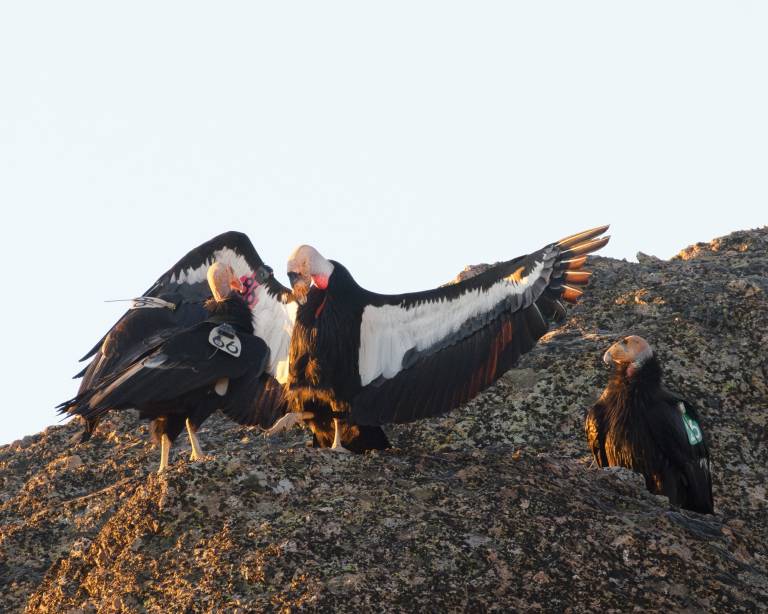
"caption": "At Pinnacles National Park, male California condor 888 Cedric (wings outstretched), hangs out with female condors 966 Pixchi and 726 Little Stinker. All are part of the Ventana Wildlife Society's central California flock. New research reveals why the endangered birds remain at risk years after California banned lead ammunition. Exclusive to KQED.",
"credit": "Courtesy of Tim Huntington",
"altTag": null,
"description": "DO NOT REPUBLISH\nDO NOT REPUBLISH\nDO NOT REPUBLISH",
"imgSizes": {
"thumbnail": {
"file": "https://cdn.kqed.org/wp-content/uploads/sites/35/2026/03/Condors1-160x128.jpg",
"width": 160,
"height": 128,
"mimeType": "image/jpeg"
},
"medium_large": {
"file": "https://cdn.kqed.org/wp-content/uploads/sites/35/2026/03/Condors1-768x614.jpg",
"width": 768,
"height": 614,
"mimeType": "image/jpeg"
},
"1536x1536": {
"file": "https://cdn.kqed.org/wp-content/uploads/sites/35/2026/03/Condors1-1536x1229.jpg",
"width": 1536,
"height": 1229,
"mimeType": "image/jpeg"
},
"post-thumbnail": {
"file": "https://cdn.kqed.org/wp-content/uploads/sites/35/2026/03/Condors1-672x372.jpg",
"width": 672,
"height": 372,
"mimeType": "image/jpeg"
},
"twentyfourteen-full-width": {
"file": "https://cdn.kqed.org/wp-content/uploads/sites/35/2026/03/Condors1-1038x576.jpg",
"width": 1038,
"height": 576,
"mimeType": "image/jpeg"
},
"npr-cds-wide": {
"file": "https://cdn.kqed.org/wp-content/uploads/sites/35/2026/03/Condors1-1200x675.jpg",
"width": 1200,
"height": 675,
"mimeType": "image/jpeg"
},
"kqedFullSize": {
"file": "https://cdn.kqed.org/wp-content/uploads/sites/35/2026/03/Condors1.jpg",
"width": 2000,
"height": 1600
}
},
"fetchFailed": false,
"isLoading": false
},
"science_1999151": {
"type": "attachments",
"id": "science_1999151",
"meta": {
"index": "attachments_1716263798",
"site": "science",
"id": "1999151",
"found": true
},
"title": "250912_BIRDFLUE_GH-2-KQED",
"publishDate": 1762447547,
"status": "inherit",
"parent": 0,
"modified": 1762447569,
"caption": "Caleb Perez, 8, speaks with a judge while holding a stuffed chicken during the 4-H poultry show at the Santa Cruz County Fair on Sept. 12, 2025. The event replaced live animal judging with toy birds due to bird flu restrictions.",
"credit": "Gustavo Hernandez/KQED",
"altTag": null,
"description": null,
"imgSizes": {
"thumbnail": {
"file": "https://cdn.kqed.org/wp-content/uploads/sites/35/2025/11/250912_BIRDFLUE_GH-2-KQED-160x107.jpg",
"width": 160,
"height": 107,
"mimeType": "image/jpeg"
},
"medium_large": {
"file": "https://cdn.kqed.org/wp-content/uploads/sites/35/2025/11/250912_BIRDFLUE_GH-2-KQED-768x512.jpg",
"width": 768,
"height": 512,
"mimeType": "image/jpeg"
},
"1536x1536": {
"file": "https://cdn.kqed.org/wp-content/uploads/sites/35/2025/11/250912_BIRDFLUE_GH-2-KQED-1536x1024.jpg",
"width": 1536,
"height": 1024,
"mimeType": "image/jpeg"
},
"post-thumbnail": {
"file": "https://cdn.kqed.org/wp-content/uploads/sites/35/2025/11/250912_BIRDFLUE_GH-2-KQED-672x372.jpg",
"width": 672,
"height": 372,
"mimeType": "image/jpeg"
},
"twentyfourteen-full-width": {
"file": "https://cdn.kqed.org/wp-content/uploads/sites/35/2025/11/250912_BIRDFLUE_GH-2-KQED-1038x576.jpg",
"width": 1038,
"height": 576,
"mimeType": "image/jpeg"
},
"npr-cds-wide": {
"file": "https://cdn.kqed.org/wp-content/uploads/sites/35/2025/11/250912_BIRDFLUE_GH-2-KQED-1200x675.jpg",
"width": 1200,
"height": 675,
"mimeType": "image/jpeg"
},
"kqedFullSize": {
"file": "https://cdn.kqed.org/wp-content/uploads/sites/35/2025/11/250912_BIRDFLUE_GH-2-KQED.jpg",
"width": 2000,
"height": 1333
}
},
"fetchFailed": false,
"isLoading": false
},
"science_1999047": {
"type": "attachments",
"id": "science_1999047",
"meta": {
"index": "attachments_1716263798",
"site": "science",
"id": "1999047",
"found": true
},
"title": "251103-BAY BIRDS-05-KQED",
"publishDate": 1762203117,
"status": "inherit",
"parent": 0,
"modified": 1762211778,
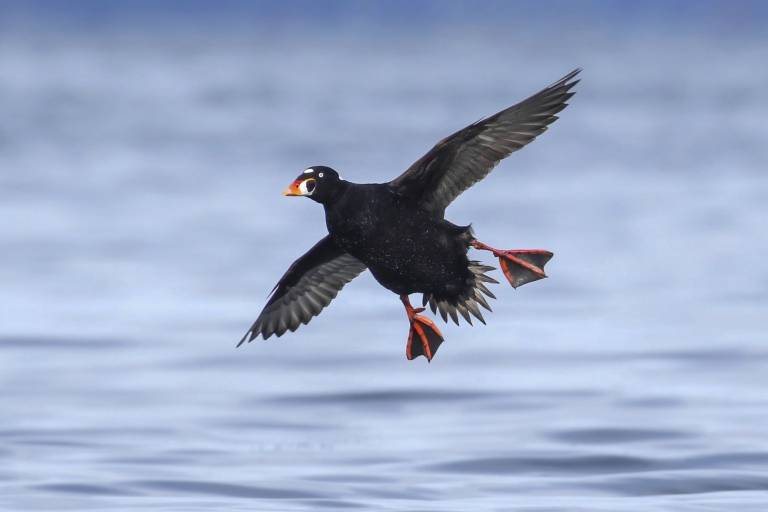
"caption": "A surf scoter.",
"credit": "Courtesy of Liam Singh",
"altTag": null,
"description": null,
"imgSizes": {
"thumbnail": {
"file": "https://cdn.kqed.org/wp-content/uploads/sites/35/2025/11/251103-BAY-BIRDS-05-KQED-160x107.jpg",
"width": 160,
"height": 107,
"mimeType": "image/jpeg"
},
"medium_large": {
"file": "https://cdn.kqed.org/wp-content/uploads/sites/35/2025/11/251103-BAY-BIRDS-05-KQED-768x512.jpg",
"width": 768,
"height": 512,
"mimeType": "image/jpeg"
},
"1536x1536": {
"file": "https://cdn.kqed.org/wp-content/uploads/sites/35/2025/11/251103-BAY-BIRDS-05-KQED-1536x1025.jpg",
"width": 1536,
"height": 1025,
"mimeType": "image/jpeg"
},
"post-thumbnail": {
"file": "https://cdn.kqed.org/wp-content/uploads/sites/35/2025/11/251103-BAY-BIRDS-05-KQED-672x372.jpg",
"width": 672,
"height": 372,
"mimeType": "image/jpeg"
},
"twentyfourteen-full-width": {
"file": "https://cdn.kqed.org/wp-content/uploads/sites/35/2025/11/251103-BAY-BIRDS-05-KQED-1038x576.jpg",
"width": 1038,
"height": 576,
"mimeType": "image/jpeg"
},
"npr-cds-wide": {
"file": "https://cdn.kqed.org/wp-content/uploads/sites/35/2025/11/251103-BAY-BIRDS-05-KQED-1200x675.jpg",
"width": 1200,
"height": 675,
"mimeType": "image/jpeg"
},
"kqedFullSize": {
"file": "https://cdn.kqed.org/wp-content/uploads/sites/35/2025/11/251103-BAY-BIRDS-05-KQED.jpg",
"width": 2000,
"height": 1334
}
},
"fetchFailed": false,
"isLoading": false
},
"science_1993444": {
"type": "attachments",
"id": "science_1993444",
"meta": {
"index": "attachments_1716263798",
"site": "science",
"id": "1993444",
"found": true
},
"title": "Blackburnian Warblers",
"publishDate": 1718980552,
"status": "inherit",
"parent": 0,
"modified": 1718994074,
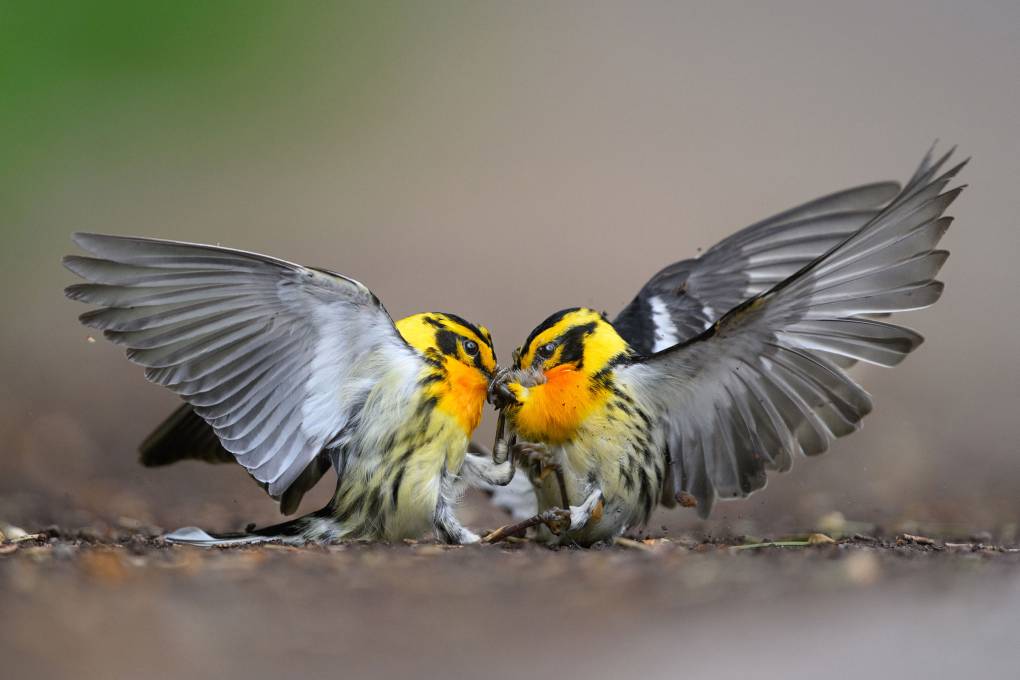
"caption": "On their South American wintering grounds on the slopes of the Andes, Blackburnians range through cool, moist forests and mix peacefully among flocks of resident tropical birds.",
"credit": "Mathew Malwitz/Audubon Photography Awards",
"altTag": null,
"description": null,
"imgSizes": {
"medium": {
"file": "https://cdn.kqed.org/wp-content/uploads/sites/35/2024/06/Aud_APA-2024_Blackburnian-Warbler_A1_31756-0_Photo-Mathew-Malwitz-800x533.jpg",
"width": 800,
"height": 533,
"mimeType": "image/jpeg"
},
"large": {
"file": "https://cdn.kqed.org/wp-content/uploads/sites/35/2024/06/Aud_APA-2024_Blackburnian-Warbler_A1_31756-0_Photo-Mathew-Malwitz-1020x680.jpg",
"width": 1020,
"height": 680,
"mimeType": "image/jpeg"
},
"thumbnail": {
"file": "https://cdn.kqed.org/wp-content/uploads/sites/35/2024/06/Aud_APA-2024_Blackburnian-Warbler_A1_31756-0_Photo-Mathew-Malwitz-160x107.jpg",
"width": 160,
"height": 107,
"mimeType": "image/jpeg"
},
"medium_large": {
"file": "https://cdn.kqed.org/wp-content/uploads/sites/35/2024/06/Aud_APA-2024_Blackburnian-Warbler_A1_31756-0_Photo-Mathew-Malwitz-768x512.jpg",
"width": 768,
"height": 512,
"mimeType": "image/jpeg"
},
"1536x1536": {
"file": "https://cdn.kqed.org/wp-content/uploads/sites/35/2024/06/Aud_APA-2024_Blackburnian-Warbler_A1_31756-0_Photo-Mathew-Malwitz-1536x1024.jpg",
"width": 1536,
"height": 1024,
"mimeType": "image/jpeg"
},
"2048x2048": {
"file": "https://cdn.kqed.org/wp-content/uploads/sites/35/2024/06/Aud_APA-2024_Blackburnian-Warbler_A1_31756-0_Photo-Mathew-Malwitz-2048x1365.jpg",
"width": 2048,
"height": 1365,
"mimeType": "image/jpeg"
},
"post-thumbnail": {
"file": "https://cdn.kqed.org/wp-content/uploads/sites/35/2024/06/Aud_APA-2024_Blackburnian-Warbler_A1_31756-0_Photo-Mathew-Malwitz-672x372.jpg",
"width": 672,
"height": 372,
"mimeType": "image/jpeg"
},
"twentyfourteen-full-width": {
"file": "https://cdn.kqed.org/wp-content/uploads/sites/35/2024/06/Aud_APA-2024_Blackburnian-Warbler_A1_31756-0_Photo-Mathew-Malwitz-1038x576.jpg",
"width": 1038,
"height": 576,
"mimeType": "image/jpeg"
},
"full-width": {
"file": "https://cdn.kqed.org/wp-content/uploads/sites/35/2024/06/Aud_APA-2024_Blackburnian-Warbler_A1_31756-0_Photo-Mathew-Malwitz-1920x1280.jpg",
"width": 1920,
"height": 1280,
"mimeType": "image/jpeg"
},
"kqedFullSize": {
"file": "https://cdn.kqed.org/wp-content/uploads/sites/35/2024/06/Aud_APA-2024_Blackburnian-Warbler_A1_31756-0_Photo-Mathew-Malwitz.jpg",
"width": 2400,
"height": 1600
}
},
"fetchFailed": false,
"isLoading": false
},
"science_1992995": {
"type": "attachments",
"id": "science_1992995",
"meta": {
"index": "attachments_1716263798",
"site": "science",
"id": "1992995",
"found": true
},
"title": "American Avocets",
"publishDate": 1716576221,
"status": "inherit",
"parent": 0,
"modified": 1716592777,
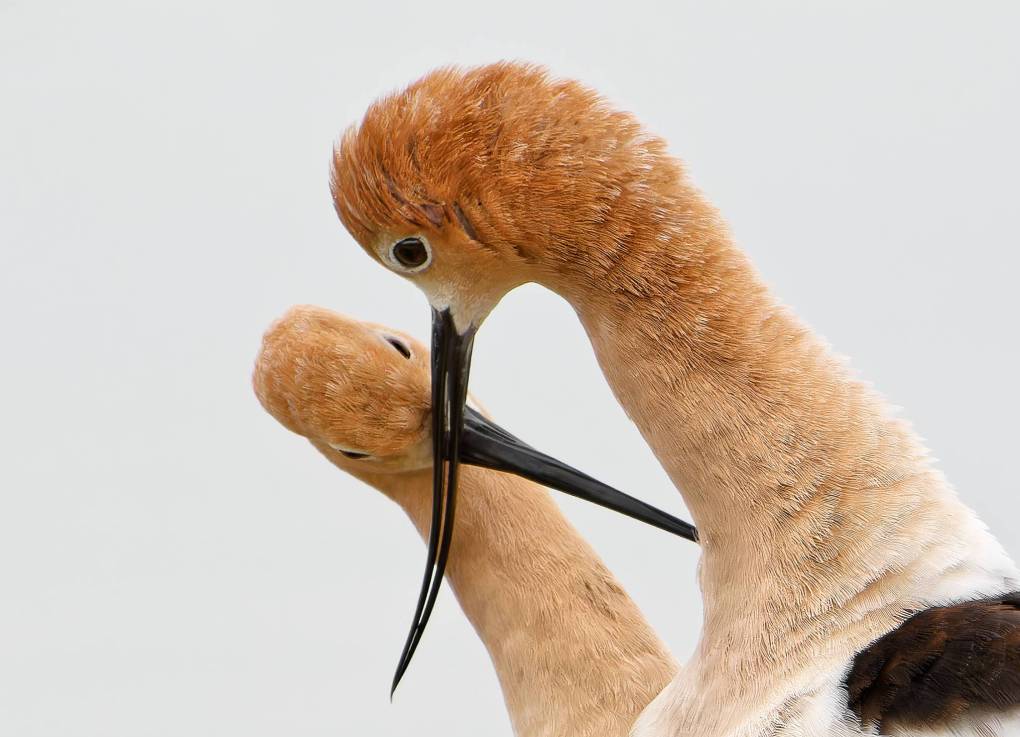
"caption": "A close-up of the avocet's mating kiss.",
"credit": "Parham Pourahmad",
"altTag": null,
"description": null,
"imgSizes": {
"medium": {
"file": "https://cdn.kqed.org/wp-content/uploads/sites/35/2024/05/DSC_0557-1-scaled-e1716592525607-800x578.jpg",
"width": 800,
"height": 578,
"mimeType": "image/jpeg"
},
"large": {
"file": "https://cdn.kqed.org/wp-content/uploads/sites/35/2024/05/DSC_0557-1-scaled-e1716592525607-1020x737.jpg",
"width": 1020,
"height": 737,
"mimeType": "image/jpeg"
},
"thumbnail": {
"file": "https://cdn.kqed.org/wp-content/uploads/sites/35/2024/05/DSC_0557-1-scaled-e1716592525607-160x116.jpg",
"width": 160,
"height": 116,
"mimeType": "image/jpeg"
},
"medium_large": {
"file": "https://cdn.kqed.org/wp-content/uploads/sites/35/2024/05/DSC_0557-1-scaled-e1716592525607-768x555.jpg",
"width": 768,
"height": 555,
"mimeType": "image/jpeg"
},
"1536x1536": {
"file": "https://cdn.kqed.org/wp-content/uploads/sites/35/2024/05/DSC_0557-1-scaled-e1716592525607-1536x1110.jpg",
"width": 1536,
"height": 1110,
"mimeType": "image/jpeg"
},
"2048x2048": {
"file": "https://cdn.kqed.org/wp-content/uploads/sites/35/2024/05/DSC_0557-1-1638x2048.jpg",
"width": 1638,
"height": 2048,
"mimeType": "image/jpeg"
},
"post-thumbnail": {
"file": "https://cdn.kqed.org/wp-content/uploads/sites/35/2024/05/DSC_0557-1-scaled-e1716592525607-672x372.jpg",
"width": 672,
"height": 372,
"mimeType": "image/jpeg"
},
"twentyfourteen-full-width": {
"file": "https://cdn.kqed.org/wp-content/uploads/sites/35/2024/05/DSC_0557-1-scaled-e1716592525607-1038x576.jpg",
"width": 1038,
"height": 576,
"mimeType": "image/jpeg"
},
"full-width": {
"file": "https://cdn.kqed.org/wp-content/uploads/sites/35/2024/05/DSC_0557-1-scaled-e1716592525607-1920x1388.jpg",
"width": 1920,
"height": 1388,
"mimeType": "image/jpeg"
},
"kqedFullSize": {
"file": "https://cdn.kqed.org/wp-content/uploads/sites/35/2024/05/DSC_0557-1-scaled-e1716592525607.jpg",
"width": 2048,
"height": 1480
}
},
"fetchFailed": false,
"isLoading": false
},
"science_1992899": {
"type": "attachments",
"id": "science_1992899",
"meta": {
"index": "attachments_1716263798",
"site": "science",
"id": "1992899",
"found": true
},
"title": "Brown pelicans at SPCA Monterey County",
"publishDate": 1716314399,
"status": "inherit",
"parent": 0,
"modified": 1716420244,
"caption": "A rescued brown pelican perches on the edge of a pool at the SPCA of Monterey County on May 13, 2024.",
"credit": "Alix Soliman/KQED",
"altTag": "A white and brown bird stands on the edge of a white pool.",
"description": null,
"imgSizes": {
"medium": {
"file": "https://cdn.kqed.org/wp-content/uploads/sites/35/2024/05/240513-BrownPelicans-AlixSoliman-01_qut-800x533.jpg",
"width": 800,
"height": 533,
"mimeType": "image/jpeg"
},
"large": {
"file": "https://cdn.kqed.org/wp-content/uploads/sites/35/2024/05/240513-BrownPelicans-AlixSoliman-01_qut-1020x680.jpg",
"width": 1020,
"height": 680,
"mimeType": "image/jpeg"
},
"thumbnail": {
"file": "https://cdn.kqed.org/wp-content/uploads/sites/35/2024/05/240513-BrownPelicans-AlixSoliman-01_qut-160x107.jpg",
"width": 160,
"height": 107,
"mimeType": "image/jpeg"
},
"medium_large": {
"file": "https://cdn.kqed.org/wp-content/uploads/sites/35/2024/05/240513-BrownPelicans-AlixSoliman-01_qut-768x512.jpg",
"width": 768,
"height": 512,
"mimeType": "image/jpeg"
},
"1536x1536": {
"file": "https://cdn.kqed.org/wp-content/uploads/sites/35/2024/05/240513-BrownPelicans-AlixSoliman-01_qut-1536x1024.jpg",
"width": 1536,
"height": 1024,
"mimeType": "image/jpeg"
},
"post-thumbnail": {
"file": "https://cdn.kqed.org/wp-content/uploads/sites/35/2024/05/240513-BrownPelicans-AlixSoliman-01_qut-672x372.jpg",
"width": 672,
"height": 372,
"mimeType": "image/jpeg"
},
"twentyfourteen-full-width": {
"file": "https://cdn.kqed.org/wp-content/uploads/sites/35/2024/05/240513-BrownPelicans-AlixSoliman-01_qut-1038x576.jpg",
"width": 1038,
"height": 576,
"mimeType": "image/jpeg"
},
"kqedFullSize": {
"file": "https://cdn.kqed.org/wp-content/uploads/sites/35/2024/05/240513-BrownPelicans-AlixSoliman-01_qut.jpg",
"width": 1920,
"height": 1280
}
},
"fetchFailed": false,
"isLoading": false
},
"science_1992725": {
"type": "attachments",
"id": "science_1992725",
"meta": {
"index": "attachments_1716263798",
"site": "science",
"id": "1992725",
"found": true
},
"parent": 1992713,
"imgSizes": {
"twentyfourteen-full-width": {
"file": "https://cdn.kqed.org/wp-content/uploads/sites/35/2024/05/240510-SICK-PELICANS-MD-10-KQED-1-1038x576.jpg",
"width": 1038,
"mimeType": "image/jpeg",
"height": 576
},
"thumbnail": {
"file": "https://cdn.kqed.org/wp-content/uploads/sites/35/2024/05/240510-SICK-PELICANS-MD-10-KQED-1-160x107.jpg",
"width": 160,
"mimeType": "image/jpeg",
"height": 107
},
"post-thumbnail": {
"file": "https://cdn.kqed.org/wp-content/uploads/sites/35/2024/05/240510-SICK-PELICANS-MD-10-KQED-1-672x372.jpg",
"width": 672,
"mimeType": "image/jpeg",
"height": 372
},
"kqedFullSize": {
"file": "https://cdn.kqed.org/wp-content/uploads/sites/35/2024/05/240510-SICK-PELICANS-MD-10-KQED-1.jpg",
"width": 2000,
"height": 1333
},
"large": {
"file": "https://cdn.kqed.org/wp-content/uploads/sites/35/2024/05/240510-SICK-PELICANS-MD-10-KQED-1-1020x680.jpg",
"width": 1020,
"mimeType": "image/jpeg",
"height": 680
},
"1536x1536": {
"file": "https://cdn.kqed.org/wp-content/uploads/sites/35/2024/05/240510-SICK-PELICANS-MD-10-KQED-1-1536x1024.jpg",
"width": 1536,
"mimeType": "image/jpeg",
"height": 1024
},
"full-width": {
"file": "https://cdn.kqed.org/wp-content/uploads/sites/35/2024/05/240510-SICK-PELICANS-MD-10-KQED-1-1920x1280.jpg",
"width": 1920,
"mimeType": "image/jpeg",
"height": 1280
},
"medium": {
"file": "https://cdn.kqed.org/wp-content/uploads/sites/35/2024/05/240510-SICK-PELICANS-MD-10-KQED-1-800x533.jpg",
"width": 800,
"mimeType": "image/jpeg",
"height": 533
},
"medium_large": {
"file": "https://cdn.kqed.org/wp-content/uploads/sites/35/2024/05/240510-SICK-PELICANS-MD-10-KQED-1-768x512.jpg",
"width": 768,
"mimeType": "image/jpeg",
"height": 512
}
},
"publishDate": 1715477285,
"modified": 1715477334,
"caption": "Rescued California Brown Pelicans are fed frozen fish at International Bird Rescue in Fairfield on May 11, 2024.",
"description": null,
"title": "240510-SICK PELICANS-MD-10-KQED-1",
"credit": "Martin do Nascimento/KQED",
"status": "inherit",
"altTag": null,
"fetchFailed": false,
"isLoading": false
},
"science_1982715": {
"type": "attachments",
"id": "science_1982715",
"meta": {
"index": "attachments_1716263798",
"site": "science",
"id": "1982715",
"found": true
},
"parent": 1982711,
"imgSizes": {
"twentyfourteen-full-width": {
"file": "https://ww2.kqed.org/app/uploads/sites/35/2023/05/puffins_jeff-j-mitchell-getty-2048x1364-1-1038x576.jpg",
"width": 1038,
"mimeType": "image/jpeg",
"height": 576
},
"thumbnail": {
"file": "https://ww2.kqed.org/app/uploads/sites/35/2023/05/puffins_jeff-j-mitchell-getty-2048x1364-1-160x107.jpg",
"width": 160,
"mimeType": "image/jpeg",
"height": 107
},
"post-thumbnail": {
"file": "https://ww2.kqed.org/app/uploads/sites/35/2023/05/puffins_jeff-j-mitchell-getty-2048x1364-1-672x372.jpg",
"width": 672,
"mimeType": "image/jpeg",
"height": 372
},
"kqedFullSize": {
"file": "https://ww2.kqed.org/app/uploads/sites/35/2023/05/puffins_jeff-j-mitchell-getty-2048x1364-1.jpg",
"width": 2048,
"height": 1364
},
"large": {
"file": "https://ww2.kqed.org/app/uploads/sites/35/2023/05/puffins_jeff-j-mitchell-getty-2048x1364-1-1020x679.jpg",
"width": 1020,
"mimeType": "image/jpeg",
"height": 679
},
"1536x1536": {
"file": "https://ww2.kqed.org/app/uploads/sites/35/2023/05/puffins_jeff-j-mitchell-getty-2048x1364-1-1536x1023.jpg",
"width": 1536,
"mimeType": "image/jpeg",
"height": 1023
},
"full-width": {
"file": "https://ww2.kqed.org/app/uploads/sites/35/2023/05/puffins_jeff-j-mitchell-getty-2048x1364-1-1920x1279.jpg",
"width": 1920,
"mimeType": "image/jpeg",
"height": 1279
},
"medium": {
"file": "https://ww2.kqed.org/app/uploads/sites/35/2023/05/puffins_jeff-j-mitchell-getty-2048x1364-1-800x533.jpg",
"width": 800,
"mimeType": "image/jpeg",
"height": 533
},
"medium_large": {
"file": "https://ww2.kqed.org/app/uploads/sites/35/2023/05/puffins_jeff-j-mitchell-getty-2048x1364-1-768x512.jpg",
"width": 768,
"mimeType": "image/jpeg",
"height": 512
}
},
"publishDate": 1684270526,
"modified": 1684954056,
"caption": "Puffins return to their summer breeding grounds on the Farne Islands on May 16, 2013, in Farne, England.",
"description": null,
"title": "Farne Island Rangers Carry Out 'Puffin Census'",
"credit": "Jeff J Mitchell/Getty Images",
"status": "inherit",
"altTag": "Puffins fly out into the sky. Views of the ocean in the background.",
"fetchFailed": false,
"isLoading": false
},
"science_1955905": {
"type": "attachments",
"id": "science_1955905",
"meta": {
"index": "attachments_1716263798",
"site": "science",
"id": "1955905",
"found": true
},
"parent": 1955893,
"imgSizes": {
"twentyfourteen-full-width": {
"file": "https://ww2.kqed.org/app/uploads/sites/35/2020/01/RS40759_GettyImages-3223019-qut-1038x576.jpg",
"width": 1038,
"mimeType": "image/jpeg",
"height": 576
},
"thumbnail": {
"file": "https://ww2.kqed.org/app/uploads/sites/35/2020/01/RS40759_GettyImages-3223019-qut-160x101.jpg",
"width": 160,
"mimeType": "image/jpeg",
"height": 101
},
"post-thumbnail": {
"file": "https://ww2.kqed.org/app/uploads/sites/35/2020/01/RS40759_GettyImages-3223019-qut-672x372.jpg",
"width": 672,
"mimeType": "image/jpeg",
"height": 372
},
"kqedFullSize": {
"file": "https://ww2.kqed.org/app/uploads/sites/35/2020/01/RS40759_GettyImages-3223019-qut.jpg",
"width": 1920,
"height": 1216
},
"large": {
"file": "https://ww2.kqed.org/app/uploads/sites/35/2020/01/RS40759_GettyImages-3223019-qut-1020x646.jpg",
"width": 1020,
"mimeType": "image/jpeg",
"height": 646
},
"complete_open_graph": {
"file": "https://ww2.kqed.org/app/uploads/sites/35/2020/01/RS40759_GettyImages-3223019-qut-1200x760.jpg",
"width": 1200,
"mimeType": "image/jpeg",
"height": 760
},
"full-width": {
"file": "https://ww2.kqed.org/app/uploads/sites/35/2020/01/RS40759_GettyImages-3223019-qut-1920x1216.jpg",
"width": 1920,
"mimeType": "image/jpeg",
"height": 1216
},
"medium": {
"file": "https://ww2.kqed.org/app/uploads/sites/35/2020/01/RS40759_GettyImages-3223019-qut-800x507.jpg",
"width": 800,
"mimeType": "image/jpeg",
"height": 507
},
"medium_large": {
"file": "https://ww2.kqed.org/app/uploads/sites/35/2020/01/RS40759_GettyImages-3223019-qut-768x486.jpg",
"width": 768,
"mimeType": "image/jpeg",
"height": 486
}
},
"publishDate": 1579288796,
"modified": 1579288864,
"caption": "Murres gather near Valdez, Alaska. ",
"description": null,
"title": "Exxon Valdez Oil Disaster 15 Years Later",
"credit": "David McNew/Getty Images",
"status": "inherit",
"fetchFailed": false,
"isLoading": false
}
},
"audioPlayerReducer": {
"postId": "stream_live",
"isPaused": true,
"isPlaying": false,
"pfsActive": false,
"pledgeModalIsOpen": true,
"playerDrawerIsOpen": false
},
"authorsReducer": {
"byline_science_1992933": {
"type": "authors",
"id": "byline_science_1992933",
"meta": {
"override": true
},
"slug": "byline_science_1992933",
"name": "Alix Soliman",
"isLoading": false
},
"byline_science_1992713": {
"type": "authors",
"id": "byline_science_1992713",
"meta": {
"override": true
},
"slug": "byline_science_1992713",
"name": "\u003ca href=\"https://www.kqed.org/author/afinney\">Annelise Finney\u003c/a>",
"isLoading": false
},
"byline_science_1982711": {
"type": "authors",
"id": "byline_science_1982711",
"meta": {
"override": true
},
"slug": "byline_science_1982711",
"name": "\u003ca href=\"https://insideclimatenews.org/profile/bob-berwyn/\">Bob Berwyn\u003c/a>",
"isLoading": false
},
"byline_science_1955893": {
"type": "authors",
"id": "byline_science_1955893",
"meta": {
"override": true
},
"slug": "byline_science_1955893",
"name": "Sabrina Shankman \u003cbr />InsideClimate News\u003cbr>",
"isLoading": false
},
"adembosky": {
"type": "authors",
"id": "3205",
"meta": {
"index": "authors_1716337520",
"id": "3205",
"found": true
},
"name": "April Dembosky",
"firstName": "April",
"lastName": "Dembosky",
"slug": "adembosky",
"email": "adembosky@kqed.org",
"display_author_email": false,
"staff_mastheads": [
"news",
"science"
],
"title": "KQED Health Correspondent",
"bio": "April Dembosky is the health correspondent for KQED News and a regular contributor to NPR. She specializes in covering altered states of mind, from postpartum depression to methamphetamine-induced psychosis to the insanity defense. Her investigative series on insurance companies sidestepping mental health laws won multiple awards, including first place in beat reporting from the national Association of Health Care Journalists. She is the recipient of numerous other prizes and fellowships, including a national Edward R. Murrow award for investigative reporting, a Society of Professional Journalists award for long-form storytelling, and a Carter Center Fellowship for Mental Health Journalism.\r\n\r\nDembosky reported and produced \u003cem>Soundtrack of Silence\u003c/em>, an audio documentary about music and memory that is currently being made into a feature film by Paramount Pictures.\r\n\r\nBefore joining KQED in 2013, Dembosky covered technology and Silicon Valley for \u003cem>The Financial Times of London,\u003c/em> and contributed business and arts stories to \u003cem>Marketplace \u003c/em>and \u003cem>The New York Times.\u003c/em> She got her undergraduate degree in philosophy from Smith College and her master's in journalism from the University of California, Berkeley. She is a classically trained violinist and proud alum of the first symphony orchestra at Burning Man.",
"avatar": "https://secure.gravatar.com/avatar/ef92999be4ceb9ea60701e7dc276f813?s=600&d=blank&r=g",
"twitter": "adembosky",
"facebook": null,
"instagram": null,
"linkedin": null,
"sites": [
{
"site": "arts",
"roles": [
"author"
]
},
{
"site": "news",
"roles": [
"editor"
]
},
{
"site": "futureofyou",
"roles": [
"author"
]
},
{
"site": "stateofhealth",
"roles": [
"editor"
]
},
{
"site": "science",
"roles": [
"editor"
]
},
{
"site": "forum",
"roles": [
"editor"
]
}
],
"headData": {
"title": "April Dembosky | KQED",
"description": "KQED Health Correspondent",
"ogImgSrc": "https://secure.gravatar.com/avatar/ef92999be4ceb9ea60701e7dc276f813?s=600&d=blank&r=g",
"twImgSrc": "https://secure.gravatar.com/avatar/ef92999be4ceb9ea60701e7dc276f813?s=600&d=blank&r=g"
},
"isLoading": false,
"link": "/author/adembosky"
},
"dventon": {
"type": "authors",
"id": "11088",
"meta": {
"index": "authors_1716337520",
"id": "11088",
"found": true
},
"name": "Danielle Venton",
"firstName": "Danielle",
"lastName": "Venton",
"slug": "dventon",
"email": "dventon@kqed.org",
"display_author_email": true,
"staff_mastheads": [
"science"
],
"title": "Science reporter",
"bio": "Danielle Venton is a reporter for KQED Science. She covers wildfires, space and oceans (though she is prone to sea sickness).\r\n\r\nBefore joining KQED in 2015, Danielle was a staff reporter at KRCB in Sonoma County and a freelancer. She studied science communication at UC Santa Cruz and formerly worked at CERN in Geneva, Switzerland where she wrote about computing. She lives in Sonoma County and enjoys backpacking.",
"avatar": "https://secure.gravatar.com/avatar/ebaf11ee6cfb7bb40329a143d463829e?s=600&d=blank&r=g",
"twitter": "DanielleVenton",
"facebook": null,
"instagram": null,
"linkedin": null,
"sites": [
{
"site": "arts",
"roles": [
"contributor"
]
},
{
"site": "news",
"roles": [
"editor"
]
},
{
"site": "futureofyou",
"roles": [
"editor"
]
},
{
"site": "science",
"roles": [
"editor"
]
},
{
"site": "liveblog",
"roles": [
"contributor"
]
}
],
"headData": {
"title": "Danielle Venton | KQED",
"description": "Science reporter",
"ogImgSrc": "https://secure.gravatar.com/avatar/ebaf11ee6cfb7bb40329a143d463829e?s=600&d=blank&r=g",
"twImgSrc": "https://secure.gravatar.com/avatar/ebaf11ee6cfb7bb40329a143d463829e?s=600&d=blank&r=g"
},
"isLoading": false,
"link": "/author/dventon"
},
"smohamad": {
"type": "authors",
"id": "11631",
"meta": {
"index": "authors_1716337520",
"id": "11631",
"found": true
},
"name": "Sarah Mohamad",
"firstName": "Sarah",
"lastName": "Mohamad",
"slug": "smohamad",
"email": "smohamad@KQED.org",
"display_author_email": true,
"staff_mastheads": [],
"title": "Engagement Producer and Reporter, KQED Science",
"bio": "Sarah Mohamad is an audience engagement reporter and producer for KQED Science. She reports on audience-focused science and environment stories and manages the team's social media, newsletter, and engagement efforts. Prior to this role, she played a key role as project manager for NSF's \u003ca href=\"https://www.kqed.org/crackingthecode\">\u003cem>Cracking the Code: Influencing Millennial Science Engagement\u003c/em> \u003c/a>audience research.",
"avatar": "https://secure.gravatar.com/avatar/085f65bb82616965f87e3d12f8550931?s=600&d=blank&r=g",
"twitter": "sarahkmohamad",
"facebook": null,
"instagram": null,
"linkedin": null,
"sites": [
{
"site": "arts",
"roles": [
"editor"
]
},
{
"site": "news",
"roles": [
"editor"
]
},
{
"site": "about",
"roles": [
"editor"
]
},
{
"site": "science",
"roles": [
"editor"
]
}
],
"headData": {
"title": "Sarah Mohamad | KQED",
"description": "Engagement Producer and Reporter, KQED Science",
"ogImgSrc": "https://secure.gravatar.com/avatar/085f65bb82616965f87e3d12f8550931?s=600&d=blank&r=g",
"twImgSrc": "https://secure.gravatar.com/avatar/085f65bb82616965f87e3d12f8550931?s=600&d=blank&r=g"
},
"isLoading": false,
"link": "/author/smohamad"
}
},
"breakingNewsReducer": {},
"pagesReducer": {},
"postsReducer": {
"stream_live": {
"type": "live",
"id": "stream_live",
"audioUrl": "https://streams.kqed.org/kqedradio",
"title": "Live Stream",
"excerpt": "Live Stream information currently unavailable.",
"link": "/radio",
"featImg": "",
"label": {
"name": "KQED Live",
"link": "/"
}
},
"stream_kqedNewscast": {
"type": "posts",
"id": "stream_kqedNewscast",
"audioUrl": "https://www.kqed.org/.stream/anon/radio/RDnews/newscast.mp3?_=1",
"title": "KQED Newscast",
"featImg": "",
"label": {
"name": "88.5 FM",
"link": "/"
}
},
"science_2000234": {
"type": "posts",
"id": "science_2000234",
"meta": {
"index": "posts_1716263798",
"site": "science",
"id": "2000234",
"score": null,
"sort": [
1773828114000
]
},
"guestAuthors": [],
"slug": "california-condors-are-still-dying-despite-a-lead-ammo-ban",
"title": "California Condors Are Still Dying — Despite a Lead Ammo Ban",
"publishDate": 1773828114,
"format": "audio",
"headTitle": "California Condors Are Still Dying — Despite a Lead Ammo Ban | KQED",
"labelTerm": {},
"content": "\u003cp>California \u003ca href=\"https://www.kqed.org/science/1944241/lead-ammunition-is-now-banned-for-hunting-wildlife-in-california\">condors\u003c/a> are the largest land bird in North America — with wingspans of almost 10 feet. The vultures look and sound otherworldly, with good reason. They are a Pleistocene-era animal, survivors of the last ice age. These incredible \u003ca href=\"https://www.kqed.org/quest/55378/with-condors-on-the-brink-california-considers-a-lead-bullet-ban-for-hunters\">scavengers\u003c/a> — weighing up to 25 pounds — used to range from California to Florida and from Canada to Mexico.\u003c/p>\n\u003cp>But in the last century, their populations crashed. The federal government listed them as endangered in 1967, and in 1982, only 23 condors survived worldwide. A substantial conservation campaign in California followed, spanning several decades. Now there are more than 600 alive, but they aren’t doing as well as scientists expected, even after the state banned hunters from using lead bullets, fragments of which the birds swallow when they eat animal carcasses left behind.\u003c/p>\n\u003cp>New \u003ca href=\"https://www.nature.com/articles/s41467-026-69617-4\">research published Wednesday\u003c/a> explains the mystery of why, despite many protections, the birds are still struggling. The answer, the scientists believe, is due to condors changing their behavior to act like more wild birds. The birds are foraging further afield from sites where conservationists leave food and finding animals to eat that are sometimes shot with lead. More lead-laced animal carcasses may be available, they believe, due to the expansion of feral pigs causing a nuisance in Central California.\u003c/p>\n\u003cp>[ad fullwidth]\u003c/p>\n\u003cp>“Condors are very long-lived, so very small changes in their survival rate can make big differences on whether or not they will go extinct or not go extinct,” said Myra Finkelstein, an environmental toxicologist at UC Santa Cruz and senior author on the paper.\u003c/p>\n\u003cp>“The goal is that for us to stop releasing captive-bred birds, and currently right now, we still have to. The population is declining unless we release captive-bred birds.”\u003c/p>\n\u003cp>Finkelstein published research in 2012 that showed the lead poisoning from ammunition was preventing the condor’s recovery. The findings built support for California to pass a lead bullet ban for hunting wildlife in 2013, which fully phased into effect in 2019.\u003c/p>\n\u003cp>When the law passed, Finkelstein was very excited. “Not only does lead poison California condors, it will poison any scavenging species, and there’s no level of lead exposure that’s known to be without long-term effects for young kids. So [no lead] is just a win-win all around.”\u003c/p>\n\u003cfigure id=\"attachment_2000337\" class=\"wp-caption alignleft\" style=\"max-width: 1920px\">\u003cimg loading=\"lazy\" decoding=\"async\" class=\"size-full wp-image-2000337\" src=\"https://cdn.kqed.org/wp-content/uploads/sites/35/2026/03/kqed_for_myra_story_966_chases_747_8076.jpg\" alt=\"\" width=\"1920\" height=\"2400\" srcset=\"https://cdn.kqed.org/wp-content/uploads/sites/35/2026/03/kqed_for_myra_story_966_chases_747_8076.jpg 1920w, https://cdn.kqed.org/wp-content/uploads/sites/35/2026/03/kqed_for_myra_story_966_chases_747_8076-160x200.jpg 160w, https://cdn.kqed.org/wp-content/uploads/sites/35/2026/03/kqed_for_myra_story_966_chases_747_8076-768x960.jpg 768w, https://cdn.kqed.org/wp-content/uploads/sites/35/2026/03/kqed_for_myra_story_966_chases_747_8076-1229x1536.jpg 1229w, https://cdn.kqed.org/wp-content/uploads/sites/35/2026/03/kqed_for_myra_story_966_chases_747_8076-1638x2048.jpg 1638w\" sizes=\"auto, (max-width: 1920px) 100vw, 1920px\">\u003cfigcaption class=\"wp-caption-text\">California condor 966 Pixchi chases 747 Boeing through the late afternoon skies above Pinnacles National Park. \u003ccite>(Courtesy of Tim Huntington)\u003c/cite>\u003c/figcaption>\u003c/figure>\n\u003cp>But in the years that followed the ban, she and her colleagues continued their research, but they did not see the lead mortality decrease as expected. In fact, it worsened. The amount of lead in the blood of Central California condors actually jumped after full implementation of the ban. This, on the face, made no sense.\u003c/p>\n\u003cp>“We didn’t think that people were out there using more lead than they were before the ban,” she said. In fact, every indication from the hunting community was that people were largely, albeit not entirely, complying with the ban.\u003c/p>\n\u003cp>Finkelstein said her research team felt under some pressure to be able to provide an explanation. If they can’t explain the cause, other states and countries could look at California’s example and conclude that “lead bullet bans don’t work to protect endangered species, we shouldn’t bother with them,” she said.\u003c/p>\n\u003cp>Fortunately, condor researchers in California are lucky in that they have extremely robust datasets. While most biologists study what they hope is a representative subset, Finkelstein and colleagues have access to three decades of near-daily data on every single condor in the state.\u003c/p>\n\u003cp>“We use every single bird,” Finkelstein said. “We have all the blood lead levels that have been collected. And we have all of the outreach that has been done. We have so much data. And with all these data, we were able to start looking at what could be influencing condor lead risk. Why is it worse now than it was five years ago?”\u003c/p>\n\u003cp>They noticed two things: one, that an individual condor’s behavior was highly linked with how soon it died of lead poisoning. The birds still depend on the lead-free carcasses left by conservationists at certain sites. But more and more birds are venturing further afield, presumably picking up lead contamination in the carcasses they find. But where would that increased lead be coming from?\u003c/p>\n\u003cp>Combining data from deer hunts, pig hunts and elsewhere, Finkelstein said they found, “lo and behold, what explained the problem in central California was an increase in pigs.”\u003c/p>\n\u003cp>Feral pigs have become a nuisance, with most living on private land. They damage crops and vineyards and are a health hazard; they carry viruses, bacteria and parasites that can affect humans, pets, and livestock. Pig hunting tripled after 2008, and doubled again after 2019. Sometimes they’re killed without a tag, which is like a permission slip from the California Department of Fish and Wildlife to kill an animal. It’s impossible to know how often.\u003c/p>\n\u003cfigure id=\"attachment_2000338\" class=\"wp-caption alignright\" style=\"max-width: 1920px\">\u003cimg loading=\"lazy\" decoding=\"async\" class=\"size-full wp-image-2000338\" src=\"https://cdn.kqed.org/wp-content/uploads/sites/35/2026/03/kqed_for_myra_story_966_portrait_8278-NR.jpg\" alt=\"\" width=\"1920\" height=\"2400\" srcset=\"https://cdn.kqed.org/wp-content/uploads/sites/35/2026/03/kqed_for_myra_story_966_portrait_8278-NR.jpg 1920w, https://cdn.kqed.org/wp-content/uploads/sites/35/2026/03/kqed_for_myra_story_966_portrait_8278-NR-160x200.jpg 160w, https://cdn.kqed.org/wp-content/uploads/sites/35/2026/03/kqed_for_myra_story_966_portrait_8278-NR-768x960.jpg 768w, https://cdn.kqed.org/wp-content/uploads/sites/35/2026/03/kqed_for_myra_story_966_portrait_8278-NR-1229x1536.jpg 1229w, https://cdn.kqed.org/wp-content/uploads/sites/35/2026/03/kqed_for_myra_story_966_portrait_8278-NR-1638x2048.jpg 1638w\" sizes=\"auto, (max-width: 1920px) 100vw, 1920px\">\u003cfigcaption class=\"wp-caption-text\">California condor 966 Pixchi at Pinnacles National Park. \u003ccite>(Courtesy of Tim Huntington)\u003c/cite>\u003c/figcaption>\u003c/figure>\n\u003cp>But it doesn’t take much of an increase in lead on the landscape to affect condors. The paper, published in \u003cem>Nature Communications\u003c/em>, explains that fewer than 10 lead-contaminated feedings per year are enough to explain this increase in lead exposure seen in California’s condors. And a condor can be taken down by fewer feedings than that.\u003c/p>\n\u003cp>“I think people don’t understand that just one feeding, one tiny little sliver of lead can kill a condor — and condors are supposed to live 60 plus years,” Finkelstein said. “They never lived that long. We have a bunch of teenagers flying around out there, you know? Very few adults … It’s just tragic.”\u003c/p>\n\u003cp>However, the research team found that the lead ammunition bans are effective. Without them, condor mortality would be much worse. And, while California condors are not self-sustaining at the moment, they are almost there. A small additional decrease in lead, and they could get there. Interestingly, deer hunting appears to have a protective effect on condors. Deer hunters are overwhelmingly abiding by the lead ammunition ban, and so entrails left over from a deer being dressed in the field provide a safe meal for a condor.\u003c/p>\n\u003cp>“We only need to lower lead mortality by 1%, and the condor population is expected to become self-sustaining. Now that to me sounds like we’re on the verge of success here,” said Kelly Sorenson of the Ventana Wildlife Society, who has led major recovery efforts for condors across central California. Sorenson did not participate in the study. “And hunters and ranchers are being a part of that by switching to non-lead.”\u003c/p>\n\u003cp>The Ventana Wildlife Society, in addition to doing outreach and education, gives away non-lead ammunition to hunters. This year, it plans to give away $60,000 in supplies. It is still legal to buy lead in California and to fire it at some shooting ranges. Sorenson laments that not all calibers are readily available at stores in non-lead options, which can also be more expensive. In California, people are not allowed to order ammunition online; they must buy it in person from a store.\u003c/p>\n\u003cp>“The prohibition of online sales is really a big deal, severely limiting availability,” Sorenson said. “The people who are really having a hard time [switching over to non-lead options] are the ranchers who are shooting sometimes hundreds of rounds of rimfire every weekend.” Rimfire is a type of low-cost ammunition popular for small-game hunting. Non-lead ammunition for one of the most common rifles used in the U.S., the 22 Long Rifle, often used for controlling ground squirrels, is not available in most stores, Sorenson said.\u003c/p>\n\u003cp>While other states do ammunition sales differently, they have their own problems. Currently, California is the only one with a lead ammo ban for shooting wildlife. But other states are considering similar actions and looking to California’s example.[aside postID=news_12059633 hero='https://cdn.kqed.org/wp-content/uploads/sites/10/2025/10/GettyImages-1658708092-2000x1347.jpg']“California condors are the tip of a very large and worrisome iceberg,” said Mike Pokras, who ran the wildlife program at Tufts University near Boston for 35 years. He’s advocating for a bill in Maryland aimed at getting hunters to use non-lead bullets when harvesting animals that enter the human food chain, like deer. The goal is to keep both humans and scavenger animals healthier.\u003c/p>\n\u003cp>And, he said, “It is absolutely a global issue.”\u003c/p>\n\u003cp>Pokras knows people working to get lead out of wildlife from Norway to South Africa to Spain to Japan. Lead is killing bald eagles, loons, swans, cheetahs, sea eagles. The importance of addressing lead in ammunition, he said, goes beyond concern for animals. It’s a serious public health issue.\u003c/p>\n\u003cp>He said the lessons of the condor outlined in Finkelstein’s latest research paper will be very helpful for many lead-affected species. It shows that animal behavior can change, that food sources can change.\u003c/p>\n\u003cp>Ultimately, though, he sees one solution.\u003c/p>\n\u003cp>“We need to get all this lead stuff off the market. The human risks aren’t just from eating animals that have been shot with lead, but simply handling the metallic lead,” he said.\u003c/p>\n\u003cp>Children and pregnant women are especially vulnerable. The kids in Flint, Michigan, who were exposed to increased lead in water, experienced a host of physical and mental problems. Other kids have become sick from being exposed to old lead paint in substandard housing.\u003c/p>\n\u003cp>“It doesn’t matter where the lead comes from,” Pokras said. “It’s really bad for people. Even if [gun owners are] target shooting, we don’t want them using lead.”\u003c/p>\n\u003cp>https://docs.google.com/forms/d/e/1FAIpQLSeeeKhyuk-_odJH80iw5eAlpLBF-YWJnOi_Yqs4BEN9fY1YJA/viewform?usp=publish-editor\u003c/p>\n\u003cp>[ad floatright]\u003c/p>\n",
"blocks": [],
"excerpt": "New research reveals why the endangered birds remain at risk years after California banned lead ammunition. Exclusive to KQED.",
"status": "publish",
"parent": 0,
"modified": 1774293192,
"stats": {
"hasAudio": false,
"hasVideo": false,
"hasChartOrMap": false,
"iframeSrcs": [],
"hasGoogleForm": true,
"hasGallery": false,
"hasHearkenModule": false,
"hasPolis": false,
"paragraphCount": 31,
"wordCount": 1711
},
"headData": {
"title": "California Condors Are Still Dying — Despite a Lead Ammo Ban | KQED",
"description": "New research reveals why the endangered birds remain at risk years after California banned lead ammunition. Exclusive to KQED.",
"ogTitle": "",
"ogDescription": "",
"ogImgId": "",
"twTitle": "",
"twDescription": "",
"twImgId": "",
"schema": {
"@context": "https://schema.org",
"@type": "Article",
"headline": "California Condors Are Still Dying — Despite a Lead Ammo Ban",
"datePublished": "2026-03-18T03:01:54-07:00",
"dateModified": "2026-03-23T12:13:12-07:00",
"image": "https://cdn.kqed.org/wp-content/uploads/2020/02/KQED-OG-Image@1x.png"
}
},
"primaryCategory": {
"termId": 2874,
"slug": "animals",
"name": "Animals"
},
"source": "News",
"audioUrl": "https://traffic.omny.fm/d/clips/0af137ef-751e-4b19-a055-aaef00d2d578/ffca7e9f-6831-41c5-bcaf-aaef00f5a073/dbb16cc7-e607-4e7e-a172-b416010dfc1b/audio.mp3",
"sticky": false,
"nprStoryId": "kqed-2000234",
"templateType": "standard",
"featuredImageType": "standard",
"excludeFromSiteSearch": "Include",
"articleAge": "0",
"path": "/science/2000234/california-condors-are-still-dying-despite-a-lead-ammo-ban",
"audioTrackLength": null,
"parsedContent": [
{
"type": "contentString",
"content": "\u003cdiv class=\"post-body\">\u003cp>\u003cp>California \u003ca href=\"https://www.kqed.org/science/1944241/lead-ammunition-is-now-banned-for-hunting-wildlife-in-california\">condors\u003c/a> are the largest land bird in North America — with wingspans of almost 10 feet. The vultures look and sound otherworldly, with good reason. They are a Pleistocene-era animal, survivors of the last ice age. These incredible \u003ca href=\"https://www.kqed.org/quest/55378/with-condors-on-the-brink-california-considers-a-lead-bullet-ban-for-hunters\">scavengers\u003c/a> — weighing up to 25 pounds — used to range from California to Florida and from Canada to Mexico.\u003c/p>\n\u003cp>But in the last century, their populations crashed. The federal government listed them as endangered in 1967, and in 1982, only 23 condors survived worldwide. A substantial conservation campaign in California followed, spanning several decades. Now there are more than 600 alive, but they aren’t doing as well as scientists expected, even after the state banned hunters from using lead bullets, fragments of which the birds swallow when they eat animal carcasses left behind.\u003c/p>\n\u003cp>New \u003ca href=\"https://www.nature.com/articles/s41467-026-69617-4\">research published Wednesday\u003c/a> explains the mystery of why, despite many protections, the birds are still struggling. The answer, the scientists believe, is due to condors changing their behavior to act like more wild birds. The birds are foraging further afield from sites where conservationists leave food and finding animals to eat that are sometimes shot with lead. More lead-laced animal carcasses may be available, they believe, due to the expansion of feral pigs causing a nuisance in Central California.\u003c/p>\n\u003cp>\u003c/p>\u003c/div>",
"attributes": {
"named": {},
"numeric": []
}
},
{
"type": "component",
"content": "",
"name": "ad",
"attributes": {
"named": {
"label": "fullwidth"
},
"numeric": [
"fullwidth"
]
}
},
{
"type": "contentString",
"content": "\u003cdiv class=\"post-body\">\u003cp>\u003c/p>\n\u003cp>“Condors are very long-lived, so very small changes in their survival rate can make big differences on whether or not they will go extinct or not go extinct,” said Myra Finkelstein, an environmental toxicologist at UC Santa Cruz and senior author on the paper.\u003c/p>\n\u003cp>“The goal is that for us to stop releasing captive-bred birds, and currently right now, we still have to. The population is declining unless we release captive-bred birds.”\u003c/p>\n\u003cp>Finkelstein published research in 2012 that showed the lead poisoning from ammunition was preventing the condor’s recovery. The findings built support for California to pass a lead bullet ban for hunting wildlife in 2013, which fully phased into effect in 2019.\u003c/p>\n\u003cp>When the law passed, Finkelstein was very excited. “Not only does lead poison California condors, it will poison any scavenging species, and there’s no level of lead exposure that’s known to be without long-term effects for young kids. So [no lead] is just a win-win all around.”\u003c/p>\n\u003cfigure id=\"attachment_2000337\" class=\"wp-caption alignleft\" style=\"max-width: 1920px\">\u003cimg loading=\"lazy\" decoding=\"async\" class=\"size-full wp-image-2000337\" src=\"https://cdn.kqed.org/wp-content/uploads/sites/35/2026/03/kqed_for_myra_story_966_chases_747_8076.jpg\" alt=\"\" width=\"1920\" height=\"2400\" srcset=\"https://cdn.kqed.org/wp-content/uploads/sites/35/2026/03/kqed_for_myra_story_966_chases_747_8076.jpg 1920w, https://cdn.kqed.org/wp-content/uploads/sites/35/2026/03/kqed_for_myra_story_966_chases_747_8076-160x200.jpg 160w, https://cdn.kqed.org/wp-content/uploads/sites/35/2026/03/kqed_for_myra_story_966_chases_747_8076-768x960.jpg 768w, https://cdn.kqed.org/wp-content/uploads/sites/35/2026/03/kqed_for_myra_story_966_chases_747_8076-1229x1536.jpg 1229w, https://cdn.kqed.org/wp-content/uploads/sites/35/2026/03/kqed_for_myra_story_966_chases_747_8076-1638x2048.jpg 1638w\" sizes=\"auto, (max-width: 1920px) 100vw, 1920px\">\u003cfigcaption class=\"wp-caption-text\">California condor 966 Pixchi chases 747 Boeing through the late afternoon skies above Pinnacles National Park. \u003ccite>(Courtesy of Tim Huntington)\u003c/cite>\u003c/figcaption>\u003c/figure>\n\u003cp>But in the years that followed the ban, she and her colleagues continued their research, but they did not see the lead mortality decrease as expected. In fact, it worsened. The amount of lead in the blood of Central California condors actually jumped after full implementation of the ban. This, on the face, made no sense.\u003c/p>\n\u003cp>“We didn’t think that people were out there using more lead than they were before the ban,” she said. In fact, every indication from the hunting community was that people were largely, albeit not entirely, complying with the ban.\u003c/p>\n\u003cp>Finkelstein said her research team felt under some pressure to be able to provide an explanation. If they can’t explain the cause, other states and countries could look at California’s example and conclude that “lead bullet bans don’t work to protect endangered species, we shouldn’t bother with them,” she said.\u003c/p>\n\u003cp>Fortunately, condor researchers in California are lucky in that they have extremely robust datasets. While most biologists study what they hope is a representative subset, Finkelstein and colleagues have access to three decades of near-daily data on every single condor in the state.\u003c/p>\n\u003cp>“We use every single bird,” Finkelstein said. “We have all the blood lead levels that have been collected. And we have all of the outreach that has been done. We have so much data. And with all these data, we were able to start looking at what could be influencing condor lead risk. Why is it worse now than it was five years ago?”\u003c/p>\n\u003cp>They noticed two things: one, that an individual condor’s behavior was highly linked with how soon it died of lead poisoning. The birds still depend on the lead-free carcasses left by conservationists at certain sites. But more and more birds are venturing further afield, presumably picking up lead contamination in the carcasses they find. But where would that increased lead be coming from?\u003c/p>\n\u003cp>Combining data from deer hunts, pig hunts and elsewhere, Finkelstein said they found, “lo and behold, what explained the problem in central California was an increase in pigs.”\u003c/p>\n\u003cp>Feral pigs have become a nuisance, with most living on private land. They damage crops and vineyards and are a health hazard; they carry viruses, bacteria and parasites that can affect humans, pets, and livestock. Pig hunting tripled after 2008, and doubled again after 2019. Sometimes they’re killed without a tag, which is like a permission slip from the California Department of Fish and Wildlife to kill an animal. It’s impossible to know how often.\u003c/p>\n\u003cfigure id=\"attachment_2000338\" class=\"wp-caption alignright\" style=\"max-width: 1920px\">\u003cimg loading=\"lazy\" decoding=\"async\" class=\"size-full wp-image-2000338\" src=\"https://cdn.kqed.org/wp-content/uploads/sites/35/2026/03/kqed_for_myra_story_966_portrait_8278-NR.jpg\" alt=\"\" width=\"1920\" height=\"2400\" srcset=\"https://cdn.kqed.org/wp-content/uploads/sites/35/2026/03/kqed_for_myra_story_966_portrait_8278-NR.jpg 1920w, https://cdn.kqed.org/wp-content/uploads/sites/35/2026/03/kqed_for_myra_story_966_portrait_8278-NR-160x200.jpg 160w, https://cdn.kqed.org/wp-content/uploads/sites/35/2026/03/kqed_for_myra_story_966_portrait_8278-NR-768x960.jpg 768w, https://cdn.kqed.org/wp-content/uploads/sites/35/2026/03/kqed_for_myra_story_966_portrait_8278-NR-1229x1536.jpg 1229w, https://cdn.kqed.org/wp-content/uploads/sites/35/2026/03/kqed_for_myra_story_966_portrait_8278-NR-1638x2048.jpg 1638w\" sizes=\"auto, (max-width: 1920px) 100vw, 1920px\">\u003cfigcaption class=\"wp-caption-text\">California condor 966 Pixchi at Pinnacles National Park. \u003ccite>(Courtesy of Tim Huntington)\u003c/cite>\u003c/figcaption>\u003c/figure>\n\u003cp>But it doesn’t take much of an increase in lead on the landscape to affect condors. The paper, published in \u003cem>Nature Communications\u003c/em>, explains that fewer than 10 lead-contaminated feedings per year are enough to explain this increase in lead exposure seen in California’s condors. And a condor can be taken down by fewer feedings than that.\u003c/p>\n\u003cp>“I think people don’t understand that just one feeding, one tiny little sliver of lead can kill a condor — and condors are supposed to live 60 plus years,” Finkelstein said. “They never lived that long. We have a bunch of teenagers flying around out there, you know? Very few adults … It’s just tragic.”\u003c/p>\n\u003cp>However, the research team found that the lead ammunition bans are effective. Without them, condor mortality would be much worse. And, while California condors are not self-sustaining at the moment, they are almost there. A small additional decrease in lead, and they could get there. Interestingly, deer hunting appears to have a protective effect on condors. Deer hunters are overwhelmingly abiding by the lead ammunition ban, and so entrails left over from a deer being dressed in the field provide a safe meal for a condor.\u003c/p>\n\u003cp>“We only need to lower lead mortality by 1%, and the condor population is expected to become self-sustaining. Now that to me sounds like we’re on the verge of success here,” said Kelly Sorenson of the Ventana Wildlife Society, who has led major recovery efforts for condors across central California. Sorenson did not participate in the study. “And hunters and ranchers are being a part of that by switching to non-lead.”\u003c/p>\n\u003cp>The Ventana Wildlife Society, in addition to doing outreach and education, gives away non-lead ammunition to hunters. This year, it plans to give away $60,000 in supplies. It is still legal to buy lead in California and to fire it at some shooting ranges. Sorenson laments that not all calibers are readily available at stores in non-lead options, which can also be more expensive. In California, people are not allowed to order ammunition online; they must buy it in person from a store.\u003c/p>\n\u003cp>“The prohibition of online sales is really a big deal, severely limiting availability,” Sorenson said. “The people who are really having a hard time [switching over to non-lead options] are the ranchers who are shooting sometimes hundreds of rounds of rimfire every weekend.” Rimfire is a type of low-cost ammunition popular for small-game hunting. Non-lead ammunition for one of the most common rifles used in the U.S., the 22 Long Rifle, often used for controlling ground squirrels, is not available in most stores, Sorenson said.\u003c/p>\n\u003cp>While other states do ammunition sales differently, they have their own problems. Currently, California is the only one with a lead ammo ban for shooting wildlife. But other states are considering similar actions and looking to California’s example.\u003c/p>\u003c/div>",
"attributes": {
"named": {},
"numeric": []
}
},
{
"type": "component",
"content": "",
"name": "aside",
"attributes": {
"named": {
"postid": "news_12059633",
"hero": "https://cdn.kqed.org/wp-content/uploads/sites/10/2025/10/GettyImages-1658708092-2000x1347.jpg",
"label": ""
},
"numeric": []
}
},
{
"type": "contentString",
"content": "\u003cdiv class=\"post-body\">\u003cp>“California condors are the tip of a very large and worrisome iceberg,” said Mike Pokras, who ran the wildlife program at Tufts University near Boston for 35 years. He’s advocating for a bill in Maryland aimed at getting hunters to use non-lead bullets when harvesting animals that enter the human food chain, like deer. The goal is to keep both humans and scavenger animals healthier.\u003c/p>\n\u003cp>And, he said, “It is absolutely a global issue.”\u003c/p>\n\u003cp>Pokras knows people working to get lead out of wildlife from Norway to South Africa to Spain to Japan. Lead is killing bald eagles, loons, swans, cheetahs, sea eagles. The importance of addressing lead in ammunition, he said, goes beyond concern for animals. It’s a serious public health issue.\u003c/p>\n\u003cp>He said the lessons of the condor outlined in Finkelstein’s latest research paper will be very helpful for many lead-affected species. It shows that animal behavior can change, that food sources can change.\u003c/p>\n\u003cp>Ultimately, though, he sees one solution.\u003c/p>\n\u003cp>“We need to get all this lead stuff off the market. The human risks aren’t just from eating animals that have been shot with lead, but simply handling the metallic lead,” he said.\u003c/p>\n\u003cp>Children and pregnant women are especially vulnerable. The kids in Flint, Michigan, who were exposed to increased lead in water, experienced a host of physical and mental problems. Other kids have become sick from being exposed to old lead paint in substandard housing.\u003c/p>\n\u003cp>“It doesn’t matter where the lead comes from,” Pokras said. “It’s really bad for people. Even if [gun owners are] target shooting, we don’t want them using lead.”\u003c/p>\u003c/p>\u003cp>\u003cdiv class='utils-parseShortcode-shortcodes-__shortcodes__shortcodeWrapper'>\n \u003ciframe\n src='https://docs.google.com/forms/d/e/1FAIpQLSeeeKhyuk-_odJH80iw5eAlpLBF-YWJnOi_Yqs4BEN9fY1YJA/viewform?usp=publish-editor?embedded=true'\n title='https://docs.google.com/forms/d/e/1FAIpQLSeeeKhyuk-_odJH80iw5eAlpLBF-YWJnOi_Yqs4BEN9fY1YJA/viewform?usp=publish-editor'\n width='760' height='500'\n frameborder='0'\n marginheight='0' marginwidth='0'>\u003c/iframe>\u003c/div>\u003c/p>\u003cp>\u003cp>\u003c/p>\u003c/div>",
"attributes": {
"named": {},
"numeric": []
}
},
{
"type": "component",
"content": "",
"name": "ad",
"attributes": {
"named": {
"label": "floatright"
},
"numeric": [
"floatright"
]
}
},
{
"type": "contentString",
"content": "\u003cdiv class=\"post-body\">\u003cp>\u003c/p>\n\u003c/div>\u003c/p>",
"attributes": {
"named": {},
"numeric": []
}
}
],
"link": "/science/2000234/california-condors-are-still-dying-despite-a-lead-ammo-ban",
"authors": [
"11088"
],
"categories": [
"science_2874",
"science_31",
"science_35",
"science_40",
"science_4450"
],
"tags": [
"science_1120",
"science_163",
"science_5178",
"science_182",
"science_4417",
"science_4414",
"science_309",
"science_804"
],
"featImg": "science_2000335",
"label": "source_science_2000234"
},
"science_1999196": {
"type": "posts",
"id": "science_1999196",
"meta": {
"index": "posts_1716263798",
"site": "science",
"id": "1999196",
"score": null,
"sort": [
1763046038000
]
},
"guestAuthors": [],
"slug": "chickenless-chicken-shows-bird-flu-reshapes-county-fairs-and-4-h-kids-make-do",
"title": "Chickenless Chicken Shows? Bird Flu Reshapes County Fairs and 4-H Kids Make Do",
"publishDate": 1763046038,
"format": "standard",
"headTitle": "Chickenless Chicken Shows? Bird Flu Reshapes County Fairs and 4-H Kids Make Do | KQED",
"labelTerm": {},
"content": "\u003cp>A swarm of kids peered into the pen of a huge sow nursing a row of piglets. They watched a teenager milk her goat, then petted a sheep named Taylor Swift. The usual refrain of oinks and bleats tumbled through the livestock stalls at the \u003ca href=\"https://www.kqed.org/news/tag/santa-cruz-county\">Santa Cruz County\u003c/a> Fair in September.\u003c/p>\n\u003cp>But over in the poultry barn, not a cluck to be heard. Kids sporting their white 4-H uniforms, green ties and green berets sat on a cluster of hay bales, empty-handed, ordered to leave their chickens at home this year.\u003c/p>\n\u003cp>“It’s because the \u003ca href=\"https://www.kqed.org/news/11990735/avian-flu-what-to-know-about-h5n1-virus-risks-beyond-the-headlines\">bird flu\u003c/a> is going around and they don’t want everybody’s chickens to get sick,” said 8-year-old Caleb Perez, from Gilroy.\u003c/p>\n\u003cp>[ad fullwidth]\u003c/p>\n\u003cp>Perez was one of three competitors in the youngest age group of the annual chicken showmanship contest, the local Super Bowl for 4-H kids, where they get to show off their animal husbandry skills. But instead of glossing their chickens’ beaks and prodding them to stand up straight, the kids lined up on the stage in front of the judge, each holding a stuffed toy chicken.\u003c/p>\n\u003cp>“Is it easier to hold those than the ones at home?” said Donald Barger, licensed judge from the American Poultry Association.\u003c/p>\n\u003cp>“Nooooo,” the three kids chimed in unison.\u003c/p>\n\u003cfigure id=\"attachment_1999265\" class=\"wp-caption aligncenter\" style=\"max-width: 2000px\">\u003cimg loading=\"lazy\" decoding=\"async\" class=\"wp-image-1999265 size-full\" src=\"https://cdn.kqed.org/wp-content/uploads/sites/35/2025/11/250912_BIRDFLU0024_GH-KQED.jpg\" alt=\"\" width=\"2000\" height=\"1333\" srcset=\"https://cdn.kqed.org/wp-content/uploads/sites/35/2025/11/250912_BIRDFLU0024_GH-KQED.jpg 2000w, https://cdn.kqed.org/wp-content/uploads/sites/35/2025/11/250912_BIRDFLU0024_GH-KQED-160x107.jpg 160w, https://cdn.kqed.org/wp-content/uploads/sites/35/2025/11/250912_BIRDFLU0024_GH-KQED-768x512.jpg 768w, https://cdn.kqed.org/wp-content/uploads/sites/35/2025/11/250912_BIRDFLU0024_GH-KQED-1536x1024.jpg 1536w\" sizes=\"auto, (max-width: 2000px) 100vw, 2000px\">\u003cfigcaption class=\"wp-caption-text\">(From left) Caleb Perez, 8, Clayton Bettencourt, 7, and Hailey Maciel, 8, participate in the 4-H poultry show at the Santa Cruz County Fair in Watsonville on Sept. 12, 2025. The event used toy birds instead of live animals because of bird flu restrictions.\u003c/figcaption>\u003c/figure>\n\u003cp>“That was so hard,” said Hailey Maciel, age 8, from Watsonville, after handling the stuffed toy. “You would think it would be easier, but no, it’s actually harder because their legs are so far apart.”\u003c/p>\n\u003cp>California’s state veterinarian \u003ca href=\"https://www.cdfa.ca.gov/AHFSS/Animal_Health/docs/CA_Poulty_Dairy_Cattle_Exhibition_Ban_2025.pdf\">banned all live chicken shows\u003c/a> starting last January, in an attempt to limit the spread of the highly contagious and often fatal avian influenza among poultry.\u003c/p>\n\u003cp>More than \u003ca href=\"https://www.aphis.usda.gov/livestock-poultry-disease/avian/avian-influenza/hpai-detections/commercial-backyard-flocks\">182 million birds\u003c/a> have died in the U.S. since 2022. With the fall waterfowl migration underway, scientists are already seeing \u003ca href=\"https://www.npr.org/sections/shots-health-news/2025/11/06/nx-s1-5600125/bird-flu-risk-outbreak-trump-administration\">a new wave of outbreaks\u003c/a> at commercial farms, including \u003ca href=\"https://www.pressdemocrat.com/2025/10/30/large-sonoma-county-duck-farm-hit-with-first-avian-flu-outbreak-of-2025-26-winter/\">two in Sonoma County\u003c/a>. But as was the case with COVID-19 precautions, some people wonder if the tradeoff to kids’ education is really worth it.[aside postID=news_12032210 hero='https://cdn.kqed.org/wp-content/uploads/sites/10/2024/10/20241028_MEASUREJ_GC-19-KQED-1020x680.jpg']Normally, the 4-H kids would sit in the barn all day holding their chickens while fairgoers passed through and petted each one.\u003c/p>\n\u003cp>“The people just go from kid to kid to kid,” said Pamela Flanders, director of the poultry barn. “It matures them, because they’re having to field questions from all different types of people on all different subjects related to birds.”\u003c/p>\n\u003cp>They also have to demonstrate poise, responsibility and knowledge in front of the judge. This year, the kids still answered quiz questions, like what kind of comb does a blue old English bantam hen have? (Answer: A single comb).\u003c/p>\n\u003cp>But when it came time to exhibit the proper caging of birds — head first so the chicken’s wings don’t break — the kids took turns carrying their fake chickens to the cage, putting the fake head in first, then taking it out fake-head first again. They submitted home videos of themselves calmly examining their real chickens’ feet and wings, measuring the width of the body and length of the keel bone.\u003c/p>\n\u003cp>It all made for a less exciting chicken show than usual, especially for the youngest animal lovers, as this was their only option. Kids aren’t allowed to compete with pigs or goats \u003ca href=\"https://www.cdfa.ca.gov/FairsAndExpositions/Documents/Circular_Letters/2025/2025_State_Rules-AddendumI_Summary_of_Changes.pdf\">until they’re nine\u003c/a>, after they’ve learned the basics of care and breeding with poultry.\u003c/p>\n\u003cp>Seven-year-old Gilroy resident Clayton Bettencourt bemoaned the absence of his chicken, Sparks, which he raised since she hatched three years ago. He said the fair just wasn’t the same without her.\u003c/p>\n\u003cfigure id=\"attachment_1999124\" class=\"wp-caption aligncenter\" style=\"max-width: 2000px\">\u003cimg loading=\"lazy\" decoding=\"async\" class=\"wp-image-1999124 size-full\" src=\"https://cdn.kqed.org/wp-content/uploads/sites/35/2025/11/250912_BIRDFLUE_GH-9-KQED.jpg\" alt=\"\" width=\"2000\" height=\"1333\" srcset=\"https://cdn.kqed.org/wp-content/uploads/sites/35/2025/11/250912_BIRDFLUE_GH-9-KQED.jpg 2000w, https://cdn.kqed.org/wp-content/uploads/sites/35/2025/11/250912_BIRDFLUE_GH-9-KQED-160x107.jpg 160w, https://cdn.kqed.org/wp-content/uploads/sites/35/2025/11/250912_BIRDFLUE_GH-9-KQED-768x512.jpg 768w, https://cdn.kqed.org/wp-content/uploads/sites/35/2025/11/250912_BIRDFLUE_GH-9-KQED-1536x1024.jpg 1536w\" sizes=\"auto, (max-width: 2000px) 100vw, 2000px\">\u003cfigcaption class=\"wp-caption-text\">Donald Barger inspects entries during the egg contest at the Santa Cruz County Fair in Watsonville on Sept. 12, 2025. \u003ccite>(Gustavo Hernandez/KQED)\u003c/cite>\u003c/figcaption>\u003c/figure>\n\u003cp>“She would stay on my shoulder. She would eat my corn dog and my beans,” he said. Then she’d fall asleep in his lap. “She’s actually pretty fun. If you had her, you’d have a good time with her because she’s so sweet.”\u003c/p>\n\u003cp>Flanders said she hopes the state fair association will pressure officials to lift the ban on live chicken shows next year, but animal epidemiologists said that’s unlikely. The H5N1 bird flu is too widespread and too unpredictable.\u003c/p>\n\u003cp>“We’re dealing with an existential threat as far as food security, as far as welfare, as far as poultry maintaining its position as the number one consumer animal protein on the planet,” said \u003ca href=\"https://www.vetmed.ucdavis.edu/faculty/maurice-ernest-pitesky\">Maurice Pitesky\u003c/a>, a veterinarian and professor at the UC Davis School of Veterinary Medicine. “On average, we eat about 300 pounds of chicken per person. We eat hundreds of eggs.”\u003c/p>\n\u003cp>Bird flu has infected dairy cows and some human farmers, but the primary threat of the disease is to the financial viability of raising poultry, Pitesky said. Flocks are euthanized entirely if and when infection is detected in just one chicken or duck. Farmers have adopted strict biosecurity measures to protect their birds.\u003c/p>\n\u003cfigure id=\"attachment_1999152\" class=\"wp-caption aligncenter\" style=\"max-width: 2000px\">\u003cimg loading=\"lazy\" decoding=\"async\" class=\"size-full wp-image-1999152\" src=\"https://cdn.kqed.org/wp-content/uploads/sites/35/2025/11/251106-BIRD-FLU-AD-01-KQED.jpg\" alt=\"\" width=\"2000\" height=\"1500\" srcset=\"https://cdn.kqed.org/wp-content/uploads/sites/35/2025/11/251106-BIRD-FLU-AD-01-KQED.jpg 2000w, https://cdn.kqed.org/wp-content/uploads/sites/35/2025/11/251106-BIRD-FLU-AD-01-KQED-160x120.jpg 160w, https://cdn.kqed.org/wp-content/uploads/sites/35/2025/11/251106-BIRD-FLU-AD-01-KQED-768x576.jpg 768w, https://cdn.kqed.org/wp-content/uploads/sites/35/2025/11/251106-BIRD-FLU-AD-01-KQED-1536x1152.jpg 1536w\" sizes=\"auto, (max-width: 2000px) 100vw, 2000px\">\u003cfigcaption class=\"wp-caption-text\">Maurice Pitesky, a veterinarian and professor at the UC Davis School of Veterinary Medicine, visits the campus chicken house on Sept. 8, 2025. \u003ccite>(April Dembosky/KQED)\u003c/cite>\u003c/figcaption>\u003c/figure>\n\u003cp>Gaining entry to the UC Davis campus chicken house, for example, is like getting into a hospital ICU. Visitors to the \u003ca href=\"https://animalscience.ucdavis.edu/facilities/avian\">Hopkins Avian Facility\u003c/a> must wear facemasks, lab coats, and boot covers. They’re asked to disinfect their hands and shoes multiple times.\u003c/p>\n\u003cp>The chickens here are used for research and supplying campus dining halls with eggs, but some commercial barns go much further with their protocols, requiring people to shower and change clothes before they go in and after they come out, Pitesky said.\u003c/p>\n\u003cp>Most backyard chicken farmers are not upholding such safety standards, he added, which is why it could be dangerous to let their poultry commingle at a county fair.\u003c/p>\n\u003cp>Pitesky said he is sensitive to the tradeoffs — he works with 4-H kids and wants them to stay excited about raising chickens so they grow up to become animal epidemiologists like him one day, ready to fight the next disease outbreak. But for now, the risk of avian influenza infecting other livestock at the fair or finding its way to a commercial chicken farm is too high.\u003c/p>\n\u003cfigure id=\"attachment_1999123\" class=\"wp-caption aligncenter\" style=\"max-width: 2000px\">\u003cimg loading=\"lazy\" decoding=\"async\" class=\"wp-image-1999123 size-full\" src=\"https://cdn.kqed.org/wp-content/uploads/sites/35/2025/11/250912_BIRDFLUE_GH-8-KQED.jpg\" alt=\"\" width=\"2000\" height=\"1333\" srcset=\"https://cdn.kqed.org/wp-content/uploads/sites/35/2025/11/250912_BIRDFLUE_GH-8-KQED.jpg 2000w, https://cdn.kqed.org/wp-content/uploads/sites/35/2025/11/250912_BIRDFLUE_GH-8-KQED-160x107.jpg 160w, https://cdn.kqed.org/wp-content/uploads/sites/35/2025/11/250912_BIRDFLUE_GH-8-KQED-768x512.jpg 768w, https://cdn.kqed.org/wp-content/uploads/sites/35/2025/11/250912_BIRDFLUE_GH-8-KQED-1536x1024.jpg 1536w\" sizes=\"auto, (max-width: 2000px) 100vw, 2000px\">\u003cfigcaption class=\"wp-caption-text\">Clayton Bettencourt, 7, holds up his award ribbon in the poultry barn at the Santa Cruz County Fair in Watsonville on Sept. 12, 2025. \u003ccite>(Gustavo Hernandez/KQED)\u003c/cite>\u003c/figcaption>\u003c/figure>\n\u003cp>“This is the most complex animal disease outbreak we’ve ever had,” Pitesky said. “It was probably a good decision to stop those events for now.”\u003c/p>\n\u003cp>So the kids must weather the fallout. At the Santa Cruz County Fair, Barger, the chicken judge, stared at his clipboard, his cowboy hat tipped over his forehead, while the music from the nearby tap dancing stage drummed in the background. He made his decision.\u003c/p>\n\u003cp>“In first place, would be Clayton,” he said. “A round of applause for these young exhibitors.”\u003c/p>\n\u003cp>Clayton Bettencourt held up his first-place ribbon for the cameras, his chest puffed out as if this were the outcome he expected. He looked like a character out of a Wes Anderson film. But it was a bittersweet win for him.\u003c/p>\n\u003cp>“I still feel bad,” he said, “’cause there’s no chickens.”\u003c/p>\n\u003cp>[ad floatright]\u003c/p>\n",
"blocks": [],
"excerpt": "California’s state veterinarian banned all chicken shows this year to limit the spread of bird flu, leaving county fairs across the state devoid of chickens. ",
"status": "publish",
"parent": 0,
"modified": 1763068548,
"stats": {
"hasAudio": false,
"hasVideo": false,
"hasChartOrMap": false,
"iframeSrcs": [],
"hasGoogleForm": false,
"hasGallery": false,
"hasHearkenModule": false,
"hasPolis": false,
"paragraphCount": 29,
"wordCount": 1330
},
"headData": {
"title": "Chickenless Chicken Shows? Bird Flu Reshapes County Fairs and 4-H Kids Make Do | KQED",
"description": "California’s state veterinarian banned all chicken shows this year to limit the spread of bird flu, leaving county fairs across the state devoid of chickens. ",
"ogTitle": "",
"ogDescription": "",
"ogImgId": "",
"twTitle": "",
"twDescription": "",
"twImgId": "",
"schema": {
"@context": "https://schema.org",
"@type": "Article",
"headline": "Chickenless Chicken Shows? Bird Flu Reshapes County Fairs and 4-H Kids Make Do",
"datePublished": "2025-11-13T07:00:38-08:00",
"dateModified": "2025-11-13T13:15:48-08:00",
"image": "https://cdn.kqed.org/wp-content/uploads/2020/02/KQED-OG-Image@1x.png"
}
},
"primaryCategory": {
"termId": 39,
"slug": "health",
"name": "Health"
},
"source": "News",
"audioUrl": "https://traffic.omny.fm/d/clips/0af137ef-751e-4b19-a055-aaef00d2d578/ffca7e9f-6831-41c5-bcaf-aaef00f5a073/b14add40-0a45-4cff-8394-b392011f828c/audio.mp3",
"sticky": false,
"nprStoryId": "kqed-1999196",
"templateType": "standard",
"featuredImageType": "standard",
"excludeFromSiteSearch": "Include",
"articleAge": "0",
"path": "/science/1999196/chickenless-chicken-shows-bird-flu-reshapes-county-fairs-and-4-h-kids-make-do",
"audioTrackLength": null,
"parsedContent": [
{
"type": "contentString",
"content": "\u003cdiv class=\"post-body\">\u003cp>\u003cp>A swarm of kids peered into the pen of a huge sow nursing a row of piglets. They watched a teenager milk her goat, then petted a sheep named Taylor Swift. The usual refrain of oinks and bleats tumbled through the livestock stalls at the \u003ca href=\"https://www.kqed.org/news/tag/santa-cruz-county\">Santa Cruz County\u003c/a> Fair in September.\u003c/p>\n\u003cp>But over in the poultry barn, not a cluck to be heard. Kids sporting their white 4-H uniforms, green ties and green berets sat on a cluster of hay bales, empty-handed, ordered to leave their chickens at home this year.\u003c/p>\n\u003cp>“It’s because the \u003ca href=\"https://www.kqed.org/news/11990735/avian-flu-what-to-know-about-h5n1-virus-risks-beyond-the-headlines\">bird flu\u003c/a> is going around and they don’t want everybody’s chickens to get sick,” said 8-year-old Caleb Perez, from Gilroy.\u003c/p>\n\u003cp>\u003c/p>\u003c/div>",
"attributes": {
"named": {},
"numeric": []
}
},
{
"type": "component",
"content": "",
"name": "ad",
"attributes": {
"named": {
"label": "fullwidth"
},
"numeric": [
"fullwidth"
]
}
},
{
"type": "contentString",
"content": "\u003cdiv class=\"post-body\">\u003cp>\u003c/p>\n\u003cp>Perez was one of three competitors in the youngest age group of the annual chicken showmanship contest, the local Super Bowl for 4-H kids, where they get to show off their animal husbandry skills. But instead of glossing their chickens’ beaks and prodding them to stand up straight, the kids lined up on the stage in front of the judge, each holding a stuffed toy chicken.\u003c/p>\n\u003cp>“Is it easier to hold those than the ones at home?” said Donald Barger, licensed judge from the American Poultry Association.\u003c/p>\n\u003cp>“Nooooo,” the three kids chimed in unison.\u003c/p>\n\u003cfigure id=\"attachment_1999265\" class=\"wp-caption aligncenter\" style=\"max-width: 2000px\">\u003cimg loading=\"lazy\" decoding=\"async\" class=\"wp-image-1999265 size-full\" src=\"https://cdn.kqed.org/wp-content/uploads/sites/35/2025/11/250912_BIRDFLU0024_GH-KQED.jpg\" alt=\"\" width=\"2000\" height=\"1333\" srcset=\"https://cdn.kqed.org/wp-content/uploads/sites/35/2025/11/250912_BIRDFLU0024_GH-KQED.jpg 2000w, https://cdn.kqed.org/wp-content/uploads/sites/35/2025/11/250912_BIRDFLU0024_GH-KQED-160x107.jpg 160w, https://cdn.kqed.org/wp-content/uploads/sites/35/2025/11/250912_BIRDFLU0024_GH-KQED-768x512.jpg 768w, https://cdn.kqed.org/wp-content/uploads/sites/35/2025/11/250912_BIRDFLU0024_GH-KQED-1536x1024.jpg 1536w\" sizes=\"auto, (max-width: 2000px) 100vw, 2000px\">\u003cfigcaption class=\"wp-caption-text\">(From left) Caleb Perez, 8, Clayton Bettencourt, 7, and Hailey Maciel, 8, participate in the 4-H poultry show at the Santa Cruz County Fair in Watsonville on Sept. 12, 2025. The event used toy birds instead of live animals because of bird flu restrictions.\u003c/figcaption>\u003c/figure>\n\u003cp>“That was so hard,” said Hailey Maciel, age 8, from Watsonville, after handling the stuffed toy. “You would think it would be easier, but no, it’s actually harder because their legs are so far apart.”\u003c/p>\n\u003cp>California’s state veterinarian \u003ca href=\"https://www.cdfa.ca.gov/AHFSS/Animal_Health/docs/CA_Poulty_Dairy_Cattle_Exhibition_Ban_2025.pdf\">banned all live chicken shows\u003c/a> starting last January, in an attempt to limit the spread of the highly contagious and often fatal avian influenza among poultry.\u003c/p>\n\u003cp>More than \u003ca href=\"https://www.aphis.usda.gov/livestock-poultry-disease/avian/avian-influenza/hpai-detections/commercial-backyard-flocks\">182 million birds\u003c/a> have died in the U.S. since 2022. With the fall waterfowl migration underway, scientists are already seeing \u003ca href=\"https://www.npr.org/sections/shots-health-news/2025/11/06/nx-s1-5600125/bird-flu-risk-outbreak-trump-administration\">a new wave of outbreaks\u003c/a> at commercial farms, including \u003ca href=\"https://www.pressdemocrat.com/2025/10/30/large-sonoma-county-duck-farm-hit-with-first-avian-flu-outbreak-of-2025-26-winter/\">two in Sonoma County\u003c/a>. But as was the case with COVID-19 precautions, some people wonder if the tradeoff to kids’ education is really worth it.\u003c/p>\u003c/div>",
"attributes": {
"named": {},
"numeric": []
}
},
{
"type": "component",
"content": "",
"name": "aside",
"attributes": {
"named": {
"postid": "news_12032210",
"hero": "https://cdn.kqed.org/wp-content/uploads/sites/10/2024/10/20241028_MEASUREJ_GC-19-KQED-1020x680.jpg",
"label": ""
},
"numeric": []
}
},
{
"type": "contentString",
"content": "\u003cdiv class=\"post-body\">\u003cp>Normally, the 4-H kids would sit in the barn all day holding their chickens while fairgoers passed through and petted each one.\u003c/p>\n\u003cp>“The people just go from kid to kid to kid,” said Pamela Flanders, director of the poultry barn. “It matures them, because they’re having to field questions from all different types of people on all different subjects related to birds.”\u003c/p>\n\u003cp>They also have to demonstrate poise, responsibility and knowledge in front of the judge. This year, the kids still answered quiz questions, like what kind of comb does a blue old English bantam hen have? (Answer: A single comb).\u003c/p>\n\u003cp>But when it came time to exhibit the proper caging of birds — head first so the chicken’s wings don’t break — the kids took turns carrying their fake chickens to the cage, putting the fake head in first, then taking it out fake-head first again. They submitted home videos of themselves calmly examining their real chickens’ feet and wings, measuring the width of the body and length of the keel bone.\u003c/p>\n\u003cp>It all made for a less exciting chicken show than usual, especially for the youngest animal lovers, as this was their only option. Kids aren’t allowed to compete with pigs or goats \u003ca href=\"https://www.cdfa.ca.gov/FairsAndExpositions/Documents/Circular_Letters/2025/2025_State_Rules-AddendumI_Summary_of_Changes.pdf\">until they’re nine\u003c/a>, after they’ve learned the basics of care and breeding with poultry.\u003c/p>\n\u003cp>Seven-year-old Gilroy resident Clayton Bettencourt bemoaned the absence of his chicken, Sparks, which he raised since she hatched three years ago. He said the fair just wasn’t the same without her.\u003c/p>\n\u003cfigure id=\"attachment_1999124\" class=\"wp-caption aligncenter\" style=\"max-width: 2000px\">\u003cimg loading=\"lazy\" decoding=\"async\" class=\"wp-image-1999124 size-full\" src=\"https://cdn.kqed.org/wp-content/uploads/sites/35/2025/11/250912_BIRDFLUE_GH-9-KQED.jpg\" alt=\"\" width=\"2000\" height=\"1333\" srcset=\"https://cdn.kqed.org/wp-content/uploads/sites/35/2025/11/250912_BIRDFLUE_GH-9-KQED.jpg 2000w, https://cdn.kqed.org/wp-content/uploads/sites/35/2025/11/250912_BIRDFLUE_GH-9-KQED-160x107.jpg 160w, https://cdn.kqed.org/wp-content/uploads/sites/35/2025/11/250912_BIRDFLUE_GH-9-KQED-768x512.jpg 768w, https://cdn.kqed.org/wp-content/uploads/sites/35/2025/11/250912_BIRDFLUE_GH-9-KQED-1536x1024.jpg 1536w\" sizes=\"auto, (max-width: 2000px) 100vw, 2000px\">\u003cfigcaption class=\"wp-caption-text\">Donald Barger inspects entries during the egg contest at the Santa Cruz County Fair in Watsonville on Sept. 12, 2025. \u003ccite>(Gustavo Hernandez/KQED)\u003c/cite>\u003c/figcaption>\u003c/figure>\n\u003cp>“She would stay on my shoulder. She would eat my corn dog and my beans,” he said. Then she’d fall asleep in his lap. “She’s actually pretty fun. If you had her, you’d have a good time with her because she’s so sweet.”\u003c/p>\n\u003cp>Flanders said she hopes the state fair association will pressure officials to lift the ban on live chicken shows next year, but animal epidemiologists said that’s unlikely. The H5N1 bird flu is too widespread and too unpredictable.\u003c/p>\n\u003cp>“We’re dealing with an existential threat as far as food security, as far as welfare, as far as poultry maintaining its position as the number one consumer animal protein on the planet,” said \u003ca href=\"https://www.vetmed.ucdavis.edu/faculty/maurice-ernest-pitesky\">Maurice Pitesky\u003c/a>, a veterinarian and professor at the UC Davis School of Veterinary Medicine. “On average, we eat about 300 pounds of chicken per person. We eat hundreds of eggs.”\u003c/p>\n\u003cp>Bird flu has infected dairy cows and some human farmers, but the primary threat of the disease is to the financial viability of raising poultry, Pitesky said. Flocks are euthanized entirely if and when infection is detected in just one chicken or duck. Farmers have adopted strict biosecurity measures to protect their birds.\u003c/p>\n\u003cfigure id=\"attachment_1999152\" class=\"wp-caption aligncenter\" style=\"max-width: 2000px\">\u003cimg loading=\"lazy\" decoding=\"async\" class=\"size-full wp-image-1999152\" src=\"https://cdn.kqed.org/wp-content/uploads/sites/35/2025/11/251106-BIRD-FLU-AD-01-KQED.jpg\" alt=\"\" width=\"2000\" height=\"1500\" srcset=\"https://cdn.kqed.org/wp-content/uploads/sites/35/2025/11/251106-BIRD-FLU-AD-01-KQED.jpg 2000w, https://cdn.kqed.org/wp-content/uploads/sites/35/2025/11/251106-BIRD-FLU-AD-01-KQED-160x120.jpg 160w, https://cdn.kqed.org/wp-content/uploads/sites/35/2025/11/251106-BIRD-FLU-AD-01-KQED-768x576.jpg 768w, https://cdn.kqed.org/wp-content/uploads/sites/35/2025/11/251106-BIRD-FLU-AD-01-KQED-1536x1152.jpg 1536w\" sizes=\"auto, (max-width: 2000px) 100vw, 2000px\">\u003cfigcaption class=\"wp-caption-text\">Maurice Pitesky, a veterinarian and professor at the UC Davis School of Veterinary Medicine, visits the campus chicken house on Sept. 8, 2025. \u003ccite>(April Dembosky/KQED)\u003c/cite>\u003c/figcaption>\u003c/figure>\n\u003cp>Gaining entry to the UC Davis campus chicken house, for example, is like getting into a hospital ICU. Visitors to the \u003ca href=\"https://animalscience.ucdavis.edu/facilities/avian\">Hopkins Avian Facility\u003c/a> must wear facemasks, lab coats, and boot covers. They’re asked to disinfect their hands and shoes multiple times.\u003c/p>\n\u003cp>The chickens here are used for research and supplying campus dining halls with eggs, but some commercial barns go much further with their protocols, requiring people to shower and change clothes before they go in and after they come out, Pitesky said.\u003c/p>\n\u003cp>Most backyard chicken farmers are not upholding such safety standards, he added, which is why it could be dangerous to let their poultry commingle at a county fair.\u003c/p>\n\u003cp>Pitesky said he is sensitive to the tradeoffs — he works with 4-H kids and wants them to stay excited about raising chickens so they grow up to become animal epidemiologists like him one day, ready to fight the next disease outbreak. But for now, the risk of avian influenza infecting other livestock at the fair or finding its way to a commercial chicken farm is too high.\u003c/p>\n\u003cfigure id=\"attachment_1999123\" class=\"wp-caption aligncenter\" style=\"max-width: 2000px\">\u003cimg loading=\"lazy\" decoding=\"async\" class=\"wp-image-1999123 size-full\" src=\"https://cdn.kqed.org/wp-content/uploads/sites/35/2025/11/250912_BIRDFLUE_GH-8-KQED.jpg\" alt=\"\" width=\"2000\" height=\"1333\" srcset=\"https://cdn.kqed.org/wp-content/uploads/sites/35/2025/11/250912_BIRDFLUE_GH-8-KQED.jpg 2000w, https://cdn.kqed.org/wp-content/uploads/sites/35/2025/11/250912_BIRDFLUE_GH-8-KQED-160x107.jpg 160w, https://cdn.kqed.org/wp-content/uploads/sites/35/2025/11/250912_BIRDFLUE_GH-8-KQED-768x512.jpg 768w, https://cdn.kqed.org/wp-content/uploads/sites/35/2025/11/250912_BIRDFLUE_GH-8-KQED-1536x1024.jpg 1536w\" sizes=\"auto, (max-width: 2000px) 100vw, 2000px\">\u003cfigcaption class=\"wp-caption-text\">Clayton Bettencourt, 7, holds up his award ribbon in the poultry barn at the Santa Cruz County Fair in Watsonville on Sept. 12, 2025. \u003ccite>(Gustavo Hernandez/KQED)\u003c/cite>\u003c/figcaption>\u003c/figure>\n\u003cp>“This is the most complex animal disease outbreak we’ve ever had,” Pitesky said. “It was probably a good decision to stop those events for now.”\u003c/p>\n\u003cp>So the kids must weather the fallout. At the Santa Cruz County Fair, Barger, the chicken judge, stared at his clipboard, his cowboy hat tipped over his forehead, while the music from the nearby tap dancing stage drummed in the background. He made his decision.\u003c/p>\n\u003cp>“In first place, would be Clayton,” he said. “A round of applause for these young exhibitors.”\u003c/p>\n\u003cp>Clayton Bettencourt held up his first-place ribbon for the cameras, his chest puffed out as if this were the outcome he expected. He looked like a character out of a Wes Anderson film. But it was a bittersweet win for him.\u003c/p>\n\u003cp>“I still feel bad,” he said, “’cause there’s no chickens.”\u003c/p>\n\u003cp>\u003c/p>\u003c/div>",
"attributes": {
"named": {},
"numeric": []
}
},
{
"type": "component",
"content": "",
"name": "ad",
"attributes": {
"named": {
"label": "floatright"
},
"numeric": [
"floatright"
]
}
},
{
"type": "contentString",
"content": "\u003cdiv class=\"post-body\">\u003cp>\u003c/p>\n\u003c/div>\u003c/p>",
"attributes": {
"named": {},
"numeric": []
}
}
],
"link": "/science/1999196/chickenless-chicken-shows-bird-flu-reshapes-county-fairs-and-4-h-kids-make-do",
"authors": [
"3205"
],
"categories": [
"science_2874",
"science_39",
"science_40"
],
"tags": [
"science_1120",
"science_163",
"science_5178",
"science_4417",
"science_4414",
"science_5181"
],
"featImg": "science_1999151",
"label": "source_science_1999196"
},
"science_1999037": {
"type": "posts",
"id": "science_1999037",
"meta": {
"index": "posts_1716263798",
"site": "science",
"id": "1999037",
"score": null,
"sort": [
1762275603000
]
},
"guestAuthors": [],
"slug": "what-birds-can-tell-us-about-the-health-of-san-francisco-bay",
"title": "What Birds Can Tell Us About the Health of San Francisco Bay",
"publishDate": 1762275603,
"format": "standard",
"headTitle": "What Birds Can Tell Us About the Health of San Francisco Bay | KQED",
"labelTerm": {
"site": "science"
},
"content": "\u003cp>A new website, the \u003ca href=\"https://sfbaystateofthebirds.org/\">San Francisco Bay State of the Birds\u003c/a>, created by the \u003ca href=\"https://sfbayjv.org/about-us/\">San Francisco Bay Joint Venture\u003c/a> and \u003ca href=\"https://www.pointblue.org/\">Point Blue Conservation Science\u003c/a>, provides scientists, policymakers, and the public with an up-to-date look at which Bay Area bird populations are thriving and which are declining, and what that says about the health of San Francisco Bay’s wetlands and waters.\u003c/p>\n\u003cp>The findings suggest that the populations of Bay Area marsh birds and wetland ducks are doing well, shorebirds and diving ducks are declining, indicating that some habitats are rebounding from “rapidly evolving climate change and biodiversity challenges,” according to the \u003ca href=\"https://sfbaystateofthebirds.org/about-this-report/\">project researchers\u003c/a>, while others still need conservation attention.\u003c/p>\n\u003cp>The website compiles years of bird monitoring data, restoration success stories, and recommended conservation actions, and builds on a similar report from 2011.\u003c/p>\n\u003cp>[ad fullwidth]\u003c/p>\n\u003cp>“Birds are good visual indicators that the Bay and its ecosystems are healthy,” said Julian Wood, San Francisco Bay program leader at Point Blue Conservation Science.\u003c/p>\n\u003cp>Because birds react quickly to habitat changes, shifts in their populations can reveal whether the Bay’s wetlands, tidal flats, and open waters are under stress.\u003c/p>\n\u003cp>The site focuses on “indicator species” across four habitats — tidal marshes, tidal flats, subtidal zones, and non-tidal wetlands and waters — whose population trends reflect broader environmental conditions.\u003c/p>\n\u003cfigure id=\"attachment_1999043\" class=\"wp-caption aligncenter\" style=\"max-width: 2000px\">\u003cimg loading=\"lazy\" decoding=\"async\" class=\"size-full wp-image-1999043\" src=\"https://cdn.kqed.org/wp-content/uploads/sites/35/2025/11/251103-BAY-BIRDS-01-KQED.jpg\" alt=\"\" width=\"2000\" height=\"1500\" srcset=\"https://cdn.kqed.org/wp-content/uploads/sites/35/2025/11/251103-BAY-BIRDS-01-KQED.jpg 2000w, https://cdn.kqed.org/wp-content/uploads/sites/35/2025/11/251103-BAY-BIRDS-01-KQED-160x120.jpg 160w, https://cdn.kqed.org/wp-content/uploads/sites/35/2025/11/251103-BAY-BIRDS-01-KQED-768x576.jpg 768w, https://cdn.kqed.org/wp-content/uploads/sites/35/2025/11/251103-BAY-BIRDS-01-KQED-1536x1152.jpg 1536w\" sizes=\"auto, (max-width: 2000px) 100vw, 2000px\">\u003cfigcaption class=\"wp-caption-text\">American white pelicans on SF Bay tidal flats. \u003ccite>(Courtesy of Megan Elrod)\u003c/cite>\u003c/figcaption>\u003c/figure>\n\u003cp>The launch follows a related effort by the \u003ca href=\"https://www.sfestuary.org/\">San Francisco Estuary Partnership\u003c/a>, which recently released its \u003ca href=\"https://www.ourestuary.org/\">State of Our Estuary website\u003c/a>. That project tracks estuary-wide health across \u003ca href=\"https://www.ourestuary.org/indicators/\">multiple measures\u003c/a>, from fish and freshwater flows to bird populations — some of which rely on data from the \u003ca href=\"https://sfbaystateofthebirds.org/\">State of the Birds\u003c/a> project.\u003c/p>\n\u003cp>“We hope this website helps people understand what’s happening with our bird community and promotes even more appreciation and care for birds and their habitats,” Wood said.\u003c/p>\n\u003cp>The latest monitoring results tell a mixed story. Song sparrows, common yellowthroats, and black rails — \u003ca href=\"https://sfbaystateofthebirds.org/tidal-marsh-breeding-birds/\">all residents of tidal marshes\u003c/a> — are seeing increases in their populations, as are the wintering dabbling ducks like mallards and American wigeons, which depend on \u003ca href=\"https://sfbaystateofthebirds.org/non-tidal-wetlands-and-waters-dabbling-ducks-waterbirds/\">non-tidal wetlands\u003c/a>.[aside postID=news_12051964 hero='https://cdn.kqed.org/wp-content/uploads/sites/10/2025/05/250512-SEAGULLCOUNTY-26-BL-KQED-1020x680.jpg']But other groups aren’t doing as well. Diving ducks such as surf scoters and common goldeneyes have dropped in number across \u003ca href=\"https://sfbaystateofthebirds.org/subtidal-waterfowl/\">open waters in the North Bay and Central Bay\u003c/a>.\u003c/p>\n\u003cp>At the same time, the populations of shorebirds like sandpipers and curlews have declined baywide, signaling that \u003ca href=\"https://sfbaystateofthebirds.org/tidal-flats-shorebirds/\">tidal flats and shallow-water habitats\u003c/a> need more protection and restoration.\u003c/p>\n\u003cp>“The decline definitely raises concerns about the amount and quality of our tidal flats and the other habitats that they depend on,” Wood said.\u003c/p>\n\u003cp>Local restoration projects are already showing what’s possible. The \u003ca href=\"https://sfbayjv.org/hamilton-wetlands-restoration-project/\">Hamilton Wetlands Restoration Project\u003c/a>, once an army airfield, is now a 650-acre refuge supporting 100 bird species, including endangered ridgway’s rails and threatened Western snowy plovers.\u003c/p>\n\u003cp>Other success stories featured on the website include the \u003ca href=\"https://www.southbayrestoration.org/\">South Bay Salt Pond\u003c/a>, \u003ca href=\"https://scc.ca.gov/climate-change/climate-ready-program/sears-point-restoration-project/\">Sears Point\u003c/a>, and Sonoma Baylands restorations. Since 2017, more than 7,800 acres have been restored using funds from Measure AA, approved by Bay Area voters to support wetland recovery.\u003c/p>\n\u003cp>“Birds are so tightly linked to habitat health,” Wood said. “When we invest in on-the-ground conservation that’s guided by science, we see the positive results. And that is really impactful. With our long-term monitoring, we can see these diverse bird communities coming back and thriving. So that’s pretty exciting,” he added.\u003c/p>\n\u003cfigure id=\"attachment_1999044\" class=\"wp-caption aligncenter\" style=\"max-width: 2000px\">\u003cimg loading=\"lazy\" decoding=\"async\" class=\"size-full wp-image-1999044\" src=\"https://cdn.kqed.org/wp-content/uploads/sites/35/2025/11/251103-BAY-BIRDS-02-KQED.jpg\" alt=\"\" width=\"2000\" height=\"1328\" srcset=\"https://cdn.kqed.org/wp-content/uploads/sites/35/2025/11/251103-BAY-BIRDS-02-KQED.jpg 2000w, https://cdn.kqed.org/wp-content/uploads/sites/35/2025/11/251103-BAY-BIRDS-02-KQED-160x106.jpg 160w, https://cdn.kqed.org/wp-content/uploads/sites/35/2025/11/251103-BAY-BIRDS-02-KQED-768x510.jpg 768w, https://cdn.kqed.org/wp-content/uploads/sites/35/2025/11/251103-BAY-BIRDS-02-KQED-1536x1020.jpg 1536w\" sizes=\"auto, (max-width: 2000px) 100vw, 2000px\">\u003cfigcaption class=\"wp-caption-text\">Foraging dowitchers at Tubbs restoration site. \u003ccite>(Courtesy of Beth Huning)\u003c/cite>\u003c/figcaption>\u003c/figure>\n\u003cp>Healthy wetlands don’t just benefit wildlife. They filter pollutants from water, reduce flood risks, and buffer shorelines against storms — while offering people recreation and access to nature.\u003c/p>\n\u003cp>The website lists over 30 concrete \u003ca href=\"https://sfbaystateofthebirds.org/actions/\">actions \u003c/a>— from building island nesting habitats to expanding long-term monitoring and public-private partnerships — aimed at protecting birds and improving ecosystem health.\u003c/p>\n\u003cp>“The more that people learn about these birds and have an awareness about their role in the environment, the better we will be able to protect these populations and ensure that we have thriving bird populations in the future.”\u003c/p>\n\u003cp>\u003c/p>\n",
"blocks": [],
"excerpt": "A new website from conservation scientists reveals which Bay Area bird species are thriving, and which are declining, offering insights into the health of San Francisco Bay’s wetlands and waters.",
"status": "publish",
"parent": 0,
"modified": 1762213627,
"stats": {
"hasAudio": false,
"hasVideo": false,
"hasChartOrMap": false,
"iframeSrcs": [],
"hasGoogleForm": false,
"hasGallery": false,
"hasHearkenModule": false,
"hasPolis": false,
"paragraphCount": 19,
"wordCount": 731
},
"headData": {
"title": "What Birds Can Tell Us About the Health of San Francisco Bay | KQED",
"description": "A new website from conservation scientists reveals which Bay Area bird species are thriving, and which are declining, offering insights into the health of San Francisco Bay’s wetlands and waters.",
"ogTitle": "",
"ogDescription": "",
"ogImgId": "",
"twTitle": "",
"twDescription": "",
"twImgId": "",
"schema": {
"@context": "https://schema.org",
"@type": "Article",
"headline": "What Birds Can Tell Us About the Health of San Francisco Bay",
"datePublished": "2025-11-04T09:00:03-08:00",
"dateModified": "2025-11-03T15:47:07-08:00",
"image": "https://cdn.kqed.org/wp-content/uploads/2020/02/KQED-OG-Image@1x.png"
}
},
"primaryCategory": {
"termId": 40,
"slug": "news",
"name": "News"
},
"sticky": false,
"templateType": "standard",
"featuredImageType": "standard",
"excludeFromSiteSearch": "Include",
"articleAge": "0",
"path": "/science/1999037/what-birds-can-tell-us-about-the-health-of-san-francisco-bay",
"audioTrackLength": null,
"parsedContent": [
{
"type": "contentString",
"content": "\u003cdiv class=\"post-body\">\u003cp>\u003cp>A new website, the \u003ca href=\"https://sfbaystateofthebirds.org/\">San Francisco Bay State of the Birds\u003c/a>, created by the \u003ca href=\"https://sfbayjv.org/about-us/\">San Francisco Bay Joint Venture\u003c/a> and \u003ca href=\"https://www.pointblue.org/\">Point Blue Conservation Science\u003c/a>, provides scientists, policymakers, and the public with an up-to-date look at which Bay Area bird populations are thriving and which are declining, and what that says about the health of San Francisco Bay’s wetlands and waters.\u003c/p>\n\u003cp>The findings suggest that the populations of Bay Area marsh birds and wetland ducks are doing well, shorebirds and diving ducks are declining, indicating that some habitats are rebounding from “rapidly evolving climate change and biodiversity challenges,” according to the \u003ca href=\"https://sfbaystateofthebirds.org/about-this-report/\">project researchers\u003c/a>, while others still need conservation attention.\u003c/p>\n\u003cp>The website compiles years of bird monitoring data, restoration success stories, and recommended conservation actions, and builds on a similar report from 2011.\u003c/p>\n\u003cp>\u003c/p>\u003c/div>",
"attributes": {
"named": {},
"numeric": []
}
},
{
"type": "component",
"content": "",
"name": "ad",
"attributes": {
"named": {
"label": "fullwidth"
},
"numeric": [
"fullwidth"
]
}
},
{
"type": "contentString",
"content": "\u003cdiv class=\"post-body\">\u003cp>\u003c/p>\n\u003cp>“Birds are good visual indicators that the Bay and its ecosystems are healthy,” said Julian Wood, San Francisco Bay program leader at Point Blue Conservation Science.\u003c/p>\n\u003cp>Because birds react quickly to habitat changes, shifts in their populations can reveal whether the Bay’s wetlands, tidal flats, and open waters are under stress.\u003c/p>\n\u003cp>The site focuses on “indicator species” across four habitats — tidal marshes, tidal flats, subtidal zones, and non-tidal wetlands and waters — whose population trends reflect broader environmental conditions.\u003c/p>\n\u003cfigure id=\"attachment_1999043\" class=\"wp-caption aligncenter\" style=\"max-width: 2000px\">\u003cimg loading=\"lazy\" decoding=\"async\" class=\"size-full wp-image-1999043\" src=\"https://cdn.kqed.org/wp-content/uploads/sites/35/2025/11/251103-BAY-BIRDS-01-KQED.jpg\" alt=\"\" width=\"2000\" height=\"1500\" srcset=\"https://cdn.kqed.org/wp-content/uploads/sites/35/2025/11/251103-BAY-BIRDS-01-KQED.jpg 2000w, https://cdn.kqed.org/wp-content/uploads/sites/35/2025/11/251103-BAY-BIRDS-01-KQED-160x120.jpg 160w, https://cdn.kqed.org/wp-content/uploads/sites/35/2025/11/251103-BAY-BIRDS-01-KQED-768x576.jpg 768w, https://cdn.kqed.org/wp-content/uploads/sites/35/2025/11/251103-BAY-BIRDS-01-KQED-1536x1152.jpg 1536w\" sizes=\"auto, (max-width: 2000px) 100vw, 2000px\">\u003cfigcaption class=\"wp-caption-text\">American white pelicans on SF Bay tidal flats. \u003ccite>(Courtesy of Megan Elrod)\u003c/cite>\u003c/figcaption>\u003c/figure>\n\u003cp>The launch follows a related effort by the \u003ca href=\"https://www.sfestuary.org/\">San Francisco Estuary Partnership\u003c/a>, which recently released its \u003ca href=\"https://www.ourestuary.org/\">State of Our Estuary website\u003c/a>. That project tracks estuary-wide health across \u003ca href=\"https://www.ourestuary.org/indicators/\">multiple measures\u003c/a>, from fish and freshwater flows to bird populations — some of which rely on data from the \u003ca href=\"https://sfbaystateofthebirds.org/\">State of the Birds\u003c/a> project.\u003c/p>\n\u003cp>“We hope this website helps people understand what’s happening with our bird community and promotes even more appreciation and care for birds and their habitats,” Wood said.\u003c/p>\n\u003cp>The latest monitoring results tell a mixed story. Song sparrows, common yellowthroats, and black rails — \u003ca href=\"https://sfbaystateofthebirds.org/tidal-marsh-breeding-birds/\">all residents of tidal marshes\u003c/a> — are seeing increases in their populations, as are the wintering dabbling ducks like mallards and American wigeons, which depend on \u003ca href=\"https://sfbaystateofthebirds.org/non-tidal-wetlands-and-waters-dabbling-ducks-waterbirds/\">non-tidal wetlands\u003c/a>.\u003c/p>\u003c/div>",
"attributes": {
"named": {},
"numeric": []
}
},
{
"type": "component",
"content": "",
"name": "aside",
"attributes": {
"named": {
"postid": "news_12051964",
"hero": "https://cdn.kqed.org/wp-content/uploads/sites/10/2025/05/250512-SEAGULLCOUNTY-26-BL-KQED-1020x680.jpg",
"label": ""
},
"numeric": []
}
},
{
"type": "contentString",
"content": "\u003cdiv class=\"post-body\">\u003cp>But other groups aren’t doing as well. Diving ducks such as surf scoters and common goldeneyes have dropped in number across \u003ca href=\"https://sfbaystateofthebirds.org/subtidal-waterfowl/\">open waters in the North Bay and Central Bay\u003c/a>.\u003c/p>\n\u003cp>At the same time, the populations of shorebirds like sandpipers and curlews have declined baywide, signaling that \u003ca href=\"https://sfbaystateofthebirds.org/tidal-flats-shorebirds/\">tidal flats and shallow-water habitats\u003c/a> need more protection and restoration.\u003c/p>\n\u003cp>“The decline definitely raises concerns about the amount and quality of our tidal flats and the other habitats that they depend on,” Wood said.\u003c/p>\n\u003cp>Local restoration projects are already showing what’s possible. The \u003ca href=\"https://sfbayjv.org/hamilton-wetlands-restoration-project/\">Hamilton Wetlands Restoration Project\u003c/a>, once an army airfield, is now a 650-acre refuge supporting 100 bird species, including endangered ridgway’s rails and threatened Western snowy plovers.\u003c/p>\n\u003cp>Other success stories featured on the website include the \u003ca href=\"https://www.southbayrestoration.org/\">South Bay Salt Pond\u003c/a>, \u003ca href=\"https://scc.ca.gov/climate-change/climate-ready-program/sears-point-restoration-project/\">Sears Point\u003c/a>, and Sonoma Baylands restorations. Since 2017, more than 7,800 acres have been restored using funds from Measure AA, approved by Bay Area voters to support wetland recovery.\u003c/p>\n\u003cp>“Birds are so tightly linked to habitat health,” Wood said. “When we invest in on-the-ground conservation that’s guided by science, we see the positive results. And that is really impactful. With our long-term monitoring, we can see these diverse bird communities coming back and thriving. So that’s pretty exciting,” he added.\u003c/p>\n\u003cfigure id=\"attachment_1999044\" class=\"wp-caption aligncenter\" style=\"max-width: 2000px\">\u003cimg loading=\"lazy\" decoding=\"async\" class=\"size-full wp-image-1999044\" src=\"https://cdn.kqed.org/wp-content/uploads/sites/35/2025/11/251103-BAY-BIRDS-02-KQED.jpg\" alt=\"\" width=\"2000\" height=\"1328\" srcset=\"https://cdn.kqed.org/wp-content/uploads/sites/35/2025/11/251103-BAY-BIRDS-02-KQED.jpg 2000w, https://cdn.kqed.org/wp-content/uploads/sites/35/2025/11/251103-BAY-BIRDS-02-KQED-160x106.jpg 160w, https://cdn.kqed.org/wp-content/uploads/sites/35/2025/11/251103-BAY-BIRDS-02-KQED-768x510.jpg 768w, https://cdn.kqed.org/wp-content/uploads/sites/35/2025/11/251103-BAY-BIRDS-02-KQED-1536x1020.jpg 1536w\" sizes=\"auto, (max-width: 2000px) 100vw, 2000px\">\u003cfigcaption class=\"wp-caption-text\">Foraging dowitchers at Tubbs restoration site. \u003ccite>(Courtesy of Beth Huning)\u003c/cite>\u003c/figcaption>\u003c/figure>\n\u003cp>Healthy wetlands don’t just benefit wildlife. They filter pollutants from water, reduce flood risks, and buffer shorelines against storms — while offering people recreation and access to nature.\u003c/p>\n\u003cp>The website lists over 30 concrete \u003ca href=\"https://sfbaystateofthebirds.org/actions/\">actions \u003c/a>— from building island nesting habitats to expanding long-term monitoring and public-private partnerships — aimed at protecting birds and improving ecosystem health.\u003c/p>\n\u003cp>“The more that people learn about these birds and have an awareness about their role in the environment, the better we will be able to protect these populations and ensure that we have thriving bird populations in the future.”\u003c/p>\n\u003cp>\u003c/p>\n\u003c/div>\u003c/p>",
"attributes": {
"named": {},
"numeric": []
}
}
],
"link": "/science/1999037/what-birds-can-tell-us-about-the-health-of-san-francisco-bay",
"authors": [
"11631"
],
"categories": [
"science_31",
"science_40",
"science_4450"
],
"tags": [
"science_163",
"science_5178",
"science_182",
"science_813",
"science_208",
"science_207"
],
"featImg": "science_1999047",
"label": "science"
},
"science_1993447": {
"type": "posts",
"id": "science_1993447",
"meta": {
"index": "posts_1716263798",
"site": "science",
"id": "1993447",
"score": null,
"sort": [
1718996827000
]
},
"guestAuthors": [],
"slug": "see-the-bay-area-winners-of-the-2024-audubon-photography-awards",
"title": "See the Bay Area Winners of the 2024 Audubon Photography Awards",
"publishDate": 1718996827,
"format": "standard",
"headTitle": "See the Bay Area Winners of the 2024 Audubon Photography Awards | KQED",
"labelTerm": {
"site": "science"
},
"content": "\u003cp>Now in its fifteenth year, the Audubon Photography Awards features stunning shots by professionals, amateurs and young photographers that highlight the beauty of birds — and the joy of capturing them on camera.\u003c/p>\n\u003cp>Winning entries and honorable mentions were chosen from more than 2,300 entrants. Teen Bay Area photographer Parham Pourahmad, 14, was one of those talented winners, receiving the 2024 Audubon Photography Awards’ Youth Prize for his image of two American kestrels standing on a post at Calero County Park in San Jose.\u003c/p>\n\u003cp>In his winning photo, a female kestrel perches on a post while a male kestrel stands on her back with his wings extended behind him — a side view that makes the two birds look like extensions of each other.\u003c/p>\n\u003cfigure id=\"attachment_1993445\" class=\"wp-caption aligncenter\" style=\"max-width: 1920px\">\u003cimg loading=\"lazy\" decoding=\"async\" class=\"size-full wp-image-1993445\" src=\"https://cdn.kqed.org/wp-content/uploads/sites/35/2024/06/Aud_APA-2024_American-Kestrel_Y0_28731-12_Photo-Parham-Pourahmad-1.jpg\" alt=\"\" width=\"1920\" height=\"2400\" srcset=\"https://cdn.kqed.org/wp-content/uploads/sites/35/2024/06/Aud_APA-2024_American-Kestrel_Y0_28731-12_Photo-Parham-Pourahmad-1.jpg 1920w, https://cdn.kqed.org/wp-content/uploads/sites/35/2024/06/Aud_APA-2024_American-Kestrel_Y0_28731-12_Photo-Parham-Pourahmad-1-800x1000.jpg 800w, https://cdn.kqed.org/wp-content/uploads/sites/35/2024/06/Aud_APA-2024_American-Kestrel_Y0_28731-12_Photo-Parham-Pourahmad-1-1020x1275.jpg 1020w, https://cdn.kqed.org/wp-content/uploads/sites/35/2024/06/Aud_APA-2024_American-Kestrel_Y0_28731-12_Photo-Parham-Pourahmad-1-160x200.jpg 160w, https://cdn.kqed.org/wp-content/uploads/sites/35/2024/06/Aud_APA-2024_American-Kestrel_Y0_28731-12_Photo-Parham-Pourahmad-1-768x960.jpg 768w, https://cdn.kqed.org/wp-content/uploads/sites/35/2024/06/Aud_APA-2024_American-Kestrel_Y0_28731-12_Photo-Parham-Pourahmad-1-1229x1536.jpg 1229w, https://cdn.kqed.org/wp-content/uploads/sites/35/2024/06/Aud_APA-2024_American-Kestrel_Y0_28731-12_Photo-Parham-Pourahmad-1-1638x2048.jpg 1638w\" sizes=\"(max-width: 1920px) 100vw, 1920px\">\u003cfigcaption class=\"wp-caption-text\">Kestrels make up a group of more than a dozen falcon species, but the American Kestrel—widespread from Alaska to South America—is the only one in the Western Hemisphere. \u003ccite>(Parham Pourahmad/Audubon Photography Awards)\u003c/cite>\u003c/figcaption>\u003c/figure>\n\u003cp>Pourahmad captured this photo from a car in a local preserve’s parking lot to ensure he didn’t scare the birds away. And he had a partner in crime to help him do this — his mom.\u003c/p>\n\u003cp>“My mom drove us around the almost empty parking lot during sunrise,” Pourahmad said. “She positioned me perfectly for this moment when the male flew off to mate with the female. The lighting was perfect.”\u003c/p>\n\u003cp>\u003ca href=\"https://www.audubon.org/field-guide/bird/american-kestrel\">American kestrels\u003c/a>, formerly known as sparrowhawks, are the smallest and most common falcons in North America. The female kestrel nests in tree holes and other cavities, incubating most of the eggs while the male brings food for the hatchlings.[ad fullwidth]\u003c/p>\n\u003cp>The pair bonds between kestrels are strong and often permanent. The same birds typically pair up every breeding season (as long as both are alive) but often spend the winter separately, reuniting in spring.\u003c/p>\n\u003cp>As the Youth Prize winner, Pourahmad will receive six days at Audubon’s \u003ca href=\"https://hogisland.audubon.org/?_gl=1*veqbif*_gcl_au*MjAzMjM2MDI0OS4xNzE2NTg5NDIz*_ga*MTQxOTgzNDA4My4xNzE2NTg5NDIz*_ga_X2XNL2MWTT*MTcxODkyMTQzNS40LjEuMTcxODkyNDYwNy42MC4wLjA.\">Hog Island Audubon Camp for Teens\u003c/a> in Maine during the 2025 season.\u003c/p>\n\u003cp>“I really like the photo that won,” Pourahmad said. “Sometimes I win photo contests, and I feel like my photo didn’t really deserve it, but I think this photo took a lot of work, time and knowledge to get.”\u003c/p>\n\u003ch2>Birds — and their survival — in the spotlight\u003c/h2>\n\u003cp>Pourahmad is not the only Californian to win a prize in this national competition.\u003c/p>\n\u003cp>Kevin Lohman, a photographer from Santa Cruz, received the first-ever Birds in Landscapes prize for his photo of a California Quail perched on top of a small bush in a field in Santa Cruz. The Birds in Landscapes prize was introduced this year to focus on how birds connect with their broader surroundings.\u003c/p>\n\u003cfigure id=\"attachment_1993443\" class=\"wp-caption aligncenter\" style=\"max-width: 2400px\">\u003cimg loading=\"lazy\" decoding=\"async\" class=\"size-full wp-image-1993443\" src=\"https://cdn.kqed.org/wp-content/uploads/sites/35/2024/06/Aud_APA-2024_California-Quail_P1_29200-1_Photo-Kevin-Lohman-1.jpg\" alt=\"\" width=\"2400\" height=\"1200\" srcset=\"https://cdn.kqed.org/wp-content/uploads/sites/35/2024/06/Aud_APA-2024_California-Quail_P1_29200-1_Photo-Kevin-Lohman-1.jpg 2400w, https://cdn.kqed.org/wp-content/uploads/sites/35/2024/06/Aud_APA-2024_California-Quail_P1_29200-1_Photo-Kevin-Lohman-1-800x400.jpg 800w, https://cdn.kqed.org/wp-content/uploads/sites/35/2024/06/Aud_APA-2024_California-Quail_P1_29200-1_Photo-Kevin-Lohman-1-1020x510.jpg 1020w, https://cdn.kqed.org/wp-content/uploads/sites/35/2024/06/Aud_APA-2024_California-Quail_P1_29200-1_Photo-Kevin-Lohman-1-160x80.jpg 160w, https://cdn.kqed.org/wp-content/uploads/sites/35/2024/06/Aud_APA-2024_California-Quail_P1_29200-1_Photo-Kevin-Lohman-1-768x384.jpg 768w, https://cdn.kqed.org/wp-content/uploads/sites/35/2024/06/Aud_APA-2024_California-Quail_P1_29200-1_Photo-Kevin-Lohman-1-1536x768.jpg 1536w, https://cdn.kqed.org/wp-content/uploads/sites/35/2024/06/Aud_APA-2024_California-Quail_P1_29200-1_Photo-Kevin-Lohman-1-2048x1024.jpg 2048w, https://cdn.kqed.org/wp-content/uploads/sites/35/2024/06/Aud_APA-2024_California-Quail_P1_29200-1_Photo-Kevin-Lohman-1-1920x960.jpg 1920w\" sizes=\"(max-width: 2400px) 100vw, 2400px\">\u003cfigcaption class=\"wp-caption-text\">The well-named California Quail was originally native throughout most of the state, as well as the Baja California peninsula and small parts of Oregon and Nevada. \u003ccite>(Kevin Lohman/Audubon Photography Awards)\u003c/cite>\u003c/figcaption>\u003c/figure>\n\u003cp>Audubon’s recent climate science report \u003ca href=\"https://www.audubon.org/climate/survivalbydegrees?_gl=1*woli26*_gcl_au*MjAzMjM2MDI0OS4xNzE2NTg5NDIz*_ga*MTQxOTgzNDA4My4xNzE2NTg5NDIz*_ga_X2XNL2MWTT*MTcxODkyMTQzNS40LjAuMTcxODkyMTQzNS42MC4wLjA.\">Survival by Degrees\u003c/a> reveals that two-thirds of North American birds are threatened by extinction from climate change. These include several species featured in this year’s Audubon Photography Awards, such as the Blackburnian Warbler, California Quail and Sedge Wren.\u003c/p>\n\u003cfigure id=\"attachment_1993440\" class=\"wp-caption alignnone\" style=\"max-width: 2400px\">\u003cimg loading=\"lazy\" decoding=\"async\" class=\"size-full wp-image-1993440\" src=\"https://cdn.kqed.org/wp-content/uploads/sites/35/2024/06/Aud_APA-2024_Forsters-Tern_P1_29200-13_Photo-Kevin-Lohman.jpg\" alt=\"\" width=\"2400\" height=\"1600\" srcset=\"https://cdn.kqed.org/wp-content/uploads/sites/35/2024/06/Aud_APA-2024_Forsters-Tern_P1_29200-13_Photo-Kevin-Lohman.jpg 2400w, https://cdn.kqed.org/wp-content/uploads/sites/35/2024/06/Aud_APA-2024_Forsters-Tern_P1_29200-13_Photo-Kevin-Lohman-800x533.jpg 800w, https://cdn.kqed.org/wp-content/uploads/sites/35/2024/06/Aud_APA-2024_Forsters-Tern_P1_29200-13_Photo-Kevin-Lohman-1020x680.jpg 1020w, https://cdn.kqed.org/wp-content/uploads/sites/35/2024/06/Aud_APA-2024_Forsters-Tern_P1_29200-13_Photo-Kevin-Lohman-160x107.jpg 160w, https://cdn.kqed.org/wp-content/uploads/sites/35/2024/06/Aud_APA-2024_Forsters-Tern_P1_29200-13_Photo-Kevin-Lohman-768x512.jpg 768w, https://cdn.kqed.org/wp-content/uploads/sites/35/2024/06/Aud_APA-2024_Forsters-Tern_P1_29200-13_Photo-Kevin-Lohman-1536x1024.jpg 1536w, https://cdn.kqed.org/wp-content/uploads/sites/35/2024/06/Aud_APA-2024_Forsters-Tern_P1_29200-13_Photo-Kevin-Lohman-2048x1365.jpg 2048w, https://cdn.kqed.org/wp-content/uploads/sites/35/2024/06/Aud_APA-2024_Forsters-Tern_P1_29200-13_Photo-Kevin-Lohman-1920x1280.jpg 1920w\" sizes=\"(max-width: 2400px) 100vw, 2400px\">\u003cfigcaption class=\"wp-caption-text\">Four species of medium-sized terns—Forster’s, Common, Arctic, and Roseate—look confusingly similar. What’s more, they forage in similar ways, by plunging from the air to capture small fish just below the water’s surface. But they differ in breeding habits. \u003ccite>(Kevin Lohman/Audubon Photography Awards)\u003c/cite>\u003c/figcaption>\u003c/figure>\n\u003cp>Audubon California protects American Kestrels, California Quails and other birds through on-the-ground conservation and policy efforts across the state. They partner with \u003ca href=\"https://ca.audubon.org/conservation/working-lands\">working lands in the Central Valley\u003c/a> and steward California’s coastline to\u003ca href=\"https://ca.audubon.org/conservation/chuckwalla-national-monument\"> advocate for habitat protections\u003c/a> and engage local communities through \u003ca href=\"https://ca.audubon.org/centers-and-sanctuaries\">their centers and sanctuaries\u003c/a>.\u003c/p>\n\u003cdiv class=\"mceTemp\">\u003c/div>\n\u003cfigure id=\"attachment_1993441\" class=\"wp-caption alignnone\" style=\"max-width: 2400px\">\u003cimg loading=\"lazy\" decoding=\"async\" class=\"size-full wp-image-1993441\" src=\"https://cdn.kqed.org/wp-content/uploads/sites/35/2024/06/Aud_APA-2024_Willow-Ptarmigan_P0_31916-10_Photo-Liron-Gertsman.jpg\" alt=\"\" width=\"2400\" height=\"1600\" srcset=\"https://cdn.kqed.org/wp-content/uploads/sites/35/2024/06/Aud_APA-2024_Willow-Ptarmigan_P0_31916-10_Photo-Liron-Gertsman.jpg 2400w, https://cdn.kqed.org/wp-content/uploads/sites/35/2024/06/Aud_APA-2024_Willow-Ptarmigan_P0_31916-10_Photo-Liron-Gertsman-800x533.jpg 800w, https://cdn.kqed.org/wp-content/uploads/sites/35/2024/06/Aud_APA-2024_Willow-Ptarmigan_P0_31916-10_Photo-Liron-Gertsman-1020x680.jpg 1020w, https://cdn.kqed.org/wp-content/uploads/sites/35/2024/06/Aud_APA-2024_Willow-Ptarmigan_P0_31916-10_Photo-Liron-Gertsman-160x107.jpg 160w, https://cdn.kqed.org/wp-content/uploads/sites/35/2024/06/Aud_APA-2024_Willow-Ptarmigan_P0_31916-10_Photo-Liron-Gertsman-768x512.jpg 768w, https://cdn.kqed.org/wp-content/uploads/sites/35/2024/06/Aud_APA-2024_Willow-Ptarmigan_P0_31916-10_Photo-Liron-Gertsman-1536x1024.jpg 1536w, https://cdn.kqed.org/wp-content/uploads/sites/35/2024/06/Aud_APA-2024_Willow-Ptarmigan_P0_31916-10_Photo-Liron-Gertsman-2048x1365.jpg 2048w, https://cdn.kqed.org/wp-content/uploads/sites/35/2024/06/Aud_APA-2024_Willow-Ptarmigan_P0_31916-10_Photo-Liron-Gertsman-1920x1280.jpg 1920w\" sizes=\"(max-width: 2400px) 100vw, 2400px\">\u003cfigcaption class=\"wp-caption-text\">Ptarmigan are famous for changing their feathers to match either snow in winter or rocky surroundings in summer—a mastery of camouflage that makes them difficult to find all year. \u003ccite>(Liron Gertsman/Audubon Photography Awards)\u003c/cite>\u003c/figcaption>\u003c/figure>\n\u003cp>Sabine Meyer, photography director at the National Audubon Society and one of the contest judges, highlighted the “amazing bird behaviors, some of them rarely if ever seen” illustrated by this year’s submissions and the specific “painterly quality” of photographs capturing Willow Ptarmigans, Great-tailed Grackles and California Quail. “They look like tableaux with exquisite compositions,” Meyer said.\u003c/p>\n\u003cp>\u003ca href=\"https://www.audubon.org/magazine/2024-audubon-photography-awards-winners-and-honorable-mentions\">Visit the Audubon Society to see all the winning photos\u003c/a>.\u003c/p>\n\u003cfigure id=\"attachment_1993442\" class=\"wp-caption alignnone\" style=\"max-width: 2400px\">\u003cimg loading=\"lazy\" decoding=\"async\" class=\"size-full wp-image-1993442\" src=\"https://cdn.kqed.org/wp-content/uploads/sites/35/2024/06/Aud_APA-2024_Black-capped-Chickadee_Broad-leaf-Cattail_A1_28281-0_Photo-Linda-J-Scher.jpg\" alt=\"\" width=\"2400\" height=\"1714\" srcset=\"https://cdn.kqed.org/wp-content/uploads/sites/35/2024/06/Aud_APA-2024_Black-capped-Chickadee_Broad-leaf-Cattail_A1_28281-0_Photo-Linda-J-Scher.jpg 2400w, https://cdn.kqed.org/wp-content/uploads/sites/35/2024/06/Aud_APA-2024_Black-capped-Chickadee_Broad-leaf-Cattail_A1_28281-0_Photo-Linda-J-Scher-800x571.jpg 800w, https://cdn.kqed.org/wp-content/uploads/sites/35/2024/06/Aud_APA-2024_Black-capped-Chickadee_Broad-leaf-Cattail_A1_28281-0_Photo-Linda-J-Scher-1020x728.jpg 1020w, https://cdn.kqed.org/wp-content/uploads/sites/35/2024/06/Aud_APA-2024_Black-capped-Chickadee_Broad-leaf-Cattail_A1_28281-0_Photo-Linda-J-Scher-160x114.jpg 160w, https://cdn.kqed.org/wp-content/uploads/sites/35/2024/06/Aud_APA-2024_Black-capped-Chickadee_Broad-leaf-Cattail_A1_28281-0_Photo-Linda-J-Scher-768x548.jpg 768w, https://cdn.kqed.org/wp-content/uploads/sites/35/2024/06/Aud_APA-2024_Black-capped-Chickadee_Broad-leaf-Cattail_A1_28281-0_Photo-Linda-J-Scher-1536x1097.jpg 1536w, https://cdn.kqed.org/wp-content/uploads/sites/35/2024/06/Aud_APA-2024_Black-capped-Chickadee_Broad-leaf-Cattail_A1_28281-0_Photo-Linda-J-Scher-2048x1463.jpg 2048w, https://cdn.kqed.org/wp-content/uploads/sites/35/2024/06/Aud_APA-2024_Black-capped-Chickadee_Broad-leaf-Cattail_A1_28281-0_Photo-Linda-J-Scher-1920x1371.jpg 1920w\" sizes=\"(max-width: 2400px) 100vw, 2400px\">\u003cfigcaption class=\"wp-caption-text\">Because Black-capped Chickadees stay on their northern breeding grounds all year, they must adapt to the changing seasons. These tiny omnivores consume a wide variety of insects, seeds, small fruits, and other fare. \u003ccite>(Linda Scher/Audubon Photography Awards)\u003c/cite>\u003c/figcaption>\u003c/figure>\n\u003cp> \u003c/p>\n\u003cp>\u003c/p>\n",
"blocks": [],
"excerpt": "American kestrels and California quails — these are just some of the amazing birdlife captured by wildlife photographers that won the Audubon Photography Awards this year.",
"status": "publish",
"parent": 0,
"modified": 1718999049,
"stats": {
"hasAudio": false,
"hasVideo": false,
"hasChartOrMap": false,
"iframeSrcs": [],
"hasGoogleForm": false,
"hasGallery": false,
"hasHearkenModule": false,
"hasPolis": false,
"paragraphCount": 16,
"wordCount": 800
},
"headData": {
"title": "See the Bay Area Winners of the 2024 Audubon Photography Awards | KQED",
"description": "American kestrels and California quails — these are just some of the amazing birdlife captured by wildlife photographers that won the Audubon Photography Awards this year.",
"ogTitle": "",
"ogDescription": "",
"ogImgId": "",
"twTitle": "",
"twDescription": "",
"twImgId": "",
"schema": {
"@context": "https://schema.org",
"@type": "Article",
"headline": "See the Bay Area Winners of the 2024 Audubon Photography Awards",
"datePublished": "2024-06-21T12:07:07-07:00",
"dateModified": "2024-06-21T12:44:09-07:00",
"image": "https://cdn.kqed.org/wp-content/uploads/2020/02/KQED-OG-Image@1x.png"
}
},
"sticky": false,
"nprStoryId": "kqed-1993447",
"excludeFromSiteSearch": "Include",
"articleAge": "0",
"path": "/science/1993447/see-the-bay-area-winners-of-the-2024-audubon-photography-awards",
"audioTrackLength": null,
"parsedContent": [
{
"type": "contentString",
"content": "\u003cdiv class=\"post-body\">\u003cp>\u003cp>Now in its fifteenth year, the Audubon Photography Awards features stunning shots by professionals, amateurs and young photographers that highlight the beauty of birds — and the joy of capturing them on camera.\u003c/p>\n\u003cp>Winning entries and honorable mentions were chosen from more than 2,300 entrants. Teen Bay Area photographer Parham Pourahmad, 14, was one of those talented winners, receiving the 2024 Audubon Photography Awards’ Youth Prize for his image of two American kestrels standing on a post at Calero County Park in San Jose.\u003c/p>\n\u003cp>In his winning photo, a female kestrel perches on a post while a male kestrel stands on her back with his wings extended behind him — a side view that makes the two birds look like extensions of each other.\u003c/p>\n\u003cfigure id=\"attachment_1993445\" class=\"wp-caption aligncenter\" style=\"max-width: 1920px\">\u003cimg loading=\"lazy\" decoding=\"async\" class=\"size-full wp-image-1993445\" src=\"https://cdn.kqed.org/wp-content/uploads/sites/35/2024/06/Aud_APA-2024_American-Kestrel_Y0_28731-12_Photo-Parham-Pourahmad-1.jpg\" alt=\"\" width=\"1920\" height=\"2400\" srcset=\"https://cdn.kqed.org/wp-content/uploads/sites/35/2024/06/Aud_APA-2024_American-Kestrel_Y0_28731-12_Photo-Parham-Pourahmad-1.jpg 1920w, https://cdn.kqed.org/wp-content/uploads/sites/35/2024/06/Aud_APA-2024_American-Kestrel_Y0_28731-12_Photo-Parham-Pourahmad-1-800x1000.jpg 800w, https://cdn.kqed.org/wp-content/uploads/sites/35/2024/06/Aud_APA-2024_American-Kestrel_Y0_28731-12_Photo-Parham-Pourahmad-1-1020x1275.jpg 1020w, https://cdn.kqed.org/wp-content/uploads/sites/35/2024/06/Aud_APA-2024_American-Kestrel_Y0_28731-12_Photo-Parham-Pourahmad-1-160x200.jpg 160w, https://cdn.kqed.org/wp-content/uploads/sites/35/2024/06/Aud_APA-2024_American-Kestrel_Y0_28731-12_Photo-Parham-Pourahmad-1-768x960.jpg 768w, https://cdn.kqed.org/wp-content/uploads/sites/35/2024/06/Aud_APA-2024_American-Kestrel_Y0_28731-12_Photo-Parham-Pourahmad-1-1229x1536.jpg 1229w, https://cdn.kqed.org/wp-content/uploads/sites/35/2024/06/Aud_APA-2024_American-Kestrel_Y0_28731-12_Photo-Parham-Pourahmad-1-1638x2048.jpg 1638w\" sizes=\"(max-width: 1920px) 100vw, 1920px\">\u003cfigcaption class=\"wp-caption-text\">Kestrels make up a group of more than a dozen falcon species, but the American Kestrel—widespread from Alaska to South America—is the only one in the Western Hemisphere. \u003ccite>(Parham Pourahmad/Audubon Photography Awards)\u003c/cite>\u003c/figcaption>\u003c/figure>\n\u003cp>Pourahmad captured this photo from a car in a local preserve’s parking lot to ensure he didn’t scare the birds away. And he had a partner in crime to help him do this — his mom.\u003c/p>\n\u003cp>“My mom drove us around the almost empty parking lot during sunrise,” Pourahmad said. “She positioned me perfectly for this moment when the male flew off to mate with the female. The lighting was perfect.”\u003c/p>\n\u003cp>\u003ca href=\"https://www.audubon.org/field-guide/bird/american-kestrel\">American kestrels\u003c/a>, formerly known as sparrowhawks, are the smallest and most common falcons in North America. The female kestrel nests in tree holes and other cavities, incubating most of the eggs while the male brings food for the hatchlings.\u003c/p>\u003c/div>",
"attributes": {
"named": {},
"numeric": []
}
},
{
"type": "component",
"content": "",
"name": "ad",
"attributes": {
"named": {
"label": "fullwidth"
},
"numeric": [
"fullwidth"
]
}
},
{
"type": "contentString",
"content": "\u003cdiv class=\"post-body\">\u003cp>\u003c/p>\n\u003cp>The pair bonds between kestrels are strong and often permanent. The same birds typically pair up every breeding season (as long as both are alive) but often spend the winter separately, reuniting in spring.\u003c/p>\n\u003cp>As the Youth Prize winner, Pourahmad will receive six days at Audubon’s \u003ca href=\"https://hogisland.audubon.org/?_gl=1*veqbif*_gcl_au*MjAzMjM2MDI0OS4xNzE2NTg5NDIz*_ga*MTQxOTgzNDA4My4xNzE2NTg5NDIz*_ga_X2XNL2MWTT*MTcxODkyMTQzNS40LjEuMTcxODkyNDYwNy42MC4wLjA.\">Hog Island Audubon Camp for Teens\u003c/a> in Maine during the 2025 season.\u003c/p>\n\u003cp>“I really like the photo that won,” Pourahmad said. “Sometimes I win photo contests, and I feel like my photo didn’t really deserve it, but I think this photo took a lot of work, time and knowledge to get.”\u003c/p>\n\u003ch2>Birds — and their survival — in the spotlight\u003c/h2>\n\u003cp>Pourahmad is not the only Californian to win a prize in this national competition.\u003c/p>\n\u003cp>Kevin Lohman, a photographer from Santa Cruz, received the first-ever Birds in Landscapes prize for his photo of a California Quail perched on top of a small bush in a field in Santa Cruz. The Birds in Landscapes prize was introduced this year to focus on how birds connect with their broader surroundings.\u003c/p>\n\u003cfigure id=\"attachment_1993443\" class=\"wp-caption aligncenter\" style=\"max-width: 2400px\">\u003cimg loading=\"lazy\" decoding=\"async\" class=\"size-full wp-image-1993443\" src=\"https://cdn.kqed.org/wp-content/uploads/sites/35/2024/06/Aud_APA-2024_California-Quail_P1_29200-1_Photo-Kevin-Lohman-1.jpg\" alt=\"\" width=\"2400\" height=\"1200\" srcset=\"https://cdn.kqed.org/wp-content/uploads/sites/35/2024/06/Aud_APA-2024_California-Quail_P1_29200-1_Photo-Kevin-Lohman-1.jpg 2400w, https://cdn.kqed.org/wp-content/uploads/sites/35/2024/06/Aud_APA-2024_California-Quail_P1_29200-1_Photo-Kevin-Lohman-1-800x400.jpg 800w, https://cdn.kqed.org/wp-content/uploads/sites/35/2024/06/Aud_APA-2024_California-Quail_P1_29200-1_Photo-Kevin-Lohman-1-1020x510.jpg 1020w, https://cdn.kqed.org/wp-content/uploads/sites/35/2024/06/Aud_APA-2024_California-Quail_P1_29200-1_Photo-Kevin-Lohman-1-160x80.jpg 160w, https://cdn.kqed.org/wp-content/uploads/sites/35/2024/06/Aud_APA-2024_California-Quail_P1_29200-1_Photo-Kevin-Lohman-1-768x384.jpg 768w, https://cdn.kqed.org/wp-content/uploads/sites/35/2024/06/Aud_APA-2024_California-Quail_P1_29200-1_Photo-Kevin-Lohman-1-1536x768.jpg 1536w, https://cdn.kqed.org/wp-content/uploads/sites/35/2024/06/Aud_APA-2024_California-Quail_P1_29200-1_Photo-Kevin-Lohman-1-2048x1024.jpg 2048w, https://cdn.kqed.org/wp-content/uploads/sites/35/2024/06/Aud_APA-2024_California-Quail_P1_29200-1_Photo-Kevin-Lohman-1-1920x960.jpg 1920w\" sizes=\"(max-width: 2400px) 100vw, 2400px\">\u003cfigcaption class=\"wp-caption-text\">The well-named California Quail was originally native throughout most of the state, as well as the Baja California peninsula and small parts of Oregon and Nevada. \u003ccite>(Kevin Lohman/Audubon Photography Awards)\u003c/cite>\u003c/figcaption>\u003c/figure>\n\u003cp>Audubon’s recent climate science report \u003ca href=\"https://www.audubon.org/climate/survivalbydegrees?_gl=1*woli26*_gcl_au*MjAzMjM2MDI0OS4xNzE2NTg5NDIz*_ga*MTQxOTgzNDA4My4xNzE2NTg5NDIz*_ga_X2XNL2MWTT*MTcxODkyMTQzNS40LjAuMTcxODkyMTQzNS42MC4wLjA.\">Survival by Degrees\u003c/a> reveals that two-thirds of North American birds are threatened by extinction from climate change. These include several species featured in this year’s Audubon Photography Awards, such as the Blackburnian Warbler, California Quail and Sedge Wren.\u003c/p>\n\u003cfigure id=\"attachment_1993440\" class=\"wp-caption alignnone\" style=\"max-width: 2400px\">\u003cimg loading=\"lazy\" decoding=\"async\" class=\"size-full wp-image-1993440\" src=\"https://cdn.kqed.org/wp-content/uploads/sites/35/2024/06/Aud_APA-2024_Forsters-Tern_P1_29200-13_Photo-Kevin-Lohman.jpg\" alt=\"\" width=\"2400\" height=\"1600\" srcset=\"https://cdn.kqed.org/wp-content/uploads/sites/35/2024/06/Aud_APA-2024_Forsters-Tern_P1_29200-13_Photo-Kevin-Lohman.jpg 2400w, https://cdn.kqed.org/wp-content/uploads/sites/35/2024/06/Aud_APA-2024_Forsters-Tern_P1_29200-13_Photo-Kevin-Lohman-800x533.jpg 800w, https://cdn.kqed.org/wp-content/uploads/sites/35/2024/06/Aud_APA-2024_Forsters-Tern_P1_29200-13_Photo-Kevin-Lohman-1020x680.jpg 1020w, https://cdn.kqed.org/wp-content/uploads/sites/35/2024/06/Aud_APA-2024_Forsters-Tern_P1_29200-13_Photo-Kevin-Lohman-160x107.jpg 160w, https://cdn.kqed.org/wp-content/uploads/sites/35/2024/06/Aud_APA-2024_Forsters-Tern_P1_29200-13_Photo-Kevin-Lohman-768x512.jpg 768w, https://cdn.kqed.org/wp-content/uploads/sites/35/2024/06/Aud_APA-2024_Forsters-Tern_P1_29200-13_Photo-Kevin-Lohman-1536x1024.jpg 1536w, https://cdn.kqed.org/wp-content/uploads/sites/35/2024/06/Aud_APA-2024_Forsters-Tern_P1_29200-13_Photo-Kevin-Lohman-2048x1365.jpg 2048w, https://cdn.kqed.org/wp-content/uploads/sites/35/2024/06/Aud_APA-2024_Forsters-Tern_P1_29200-13_Photo-Kevin-Lohman-1920x1280.jpg 1920w\" sizes=\"(max-width: 2400px) 100vw, 2400px\">\u003cfigcaption class=\"wp-caption-text\">Four species of medium-sized terns—Forster’s, Common, Arctic, and Roseate—look confusingly similar. What’s more, they forage in similar ways, by plunging from the air to capture small fish just below the water’s surface. But they differ in breeding habits. \u003ccite>(Kevin Lohman/Audubon Photography Awards)\u003c/cite>\u003c/figcaption>\u003c/figure>\n\u003cp>Audubon California protects American Kestrels, California Quails and other birds through on-the-ground conservation and policy efforts across the state. They partner with \u003ca href=\"https://ca.audubon.org/conservation/working-lands\">working lands in the Central Valley\u003c/a> and steward California’s coastline to\u003ca href=\"https://ca.audubon.org/conservation/chuckwalla-national-monument\"> advocate for habitat protections\u003c/a> and engage local communities through \u003ca href=\"https://ca.audubon.org/centers-and-sanctuaries\">their centers and sanctuaries\u003c/a>.\u003c/p>\n\u003cdiv class=\"mceTemp\">\u003c/div>\n\u003cfigure id=\"attachment_1993441\" class=\"wp-caption alignnone\" style=\"max-width: 2400px\">\u003cimg loading=\"lazy\" decoding=\"async\" class=\"size-full wp-image-1993441\" src=\"https://cdn.kqed.org/wp-content/uploads/sites/35/2024/06/Aud_APA-2024_Willow-Ptarmigan_P0_31916-10_Photo-Liron-Gertsman.jpg\" alt=\"\" width=\"2400\" height=\"1600\" srcset=\"https://cdn.kqed.org/wp-content/uploads/sites/35/2024/06/Aud_APA-2024_Willow-Ptarmigan_P0_31916-10_Photo-Liron-Gertsman.jpg 2400w, https://cdn.kqed.org/wp-content/uploads/sites/35/2024/06/Aud_APA-2024_Willow-Ptarmigan_P0_31916-10_Photo-Liron-Gertsman-800x533.jpg 800w, https://cdn.kqed.org/wp-content/uploads/sites/35/2024/06/Aud_APA-2024_Willow-Ptarmigan_P0_31916-10_Photo-Liron-Gertsman-1020x680.jpg 1020w, https://cdn.kqed.org/wp-content/uploads/sites/35/2024/06/Aud_APA-2024_Willow-Ptarmigan_P0_31916-10_Photo-Liron-Gertsman-160x107.jpg 160w, https://cdn.kqed.org/wp-content/uploads/sites/35/2024/06/Aud_APA-2024_Willow-Ptarmigan_P0_31916-10_Photo-Liron-Gertsman-768x512.jpg 768w, https://cdn.kqed.org/wp-content/uploads/sites/35/2024/06/Aud_APA-2024_Willow-Ptarmigan_P0_31916-10_Photo-Liron-Gertsman-1536x1024.jpg 1536w, https://cdn.kqed.org/wp-content/uploads/sites/35/2024/06/Aud_APA-2024_Willow-Ptarmigan_P0_31916-10_Photo-Liron-Gertsman-2048x1365.jpg 2048w, https://cdn.kqed.org/wp-content/uploads/sites/35/2024/06/Aud_APA-2024_Willow-Ptarmigan_P0_31916-10_Photo-Liron-Gertsman-1920x1280.jpg 1920w\" sizes=\"(max-width: 2400px) 100vw, 2400px\">\u003cfigcaption class=\"wp-caption-text\">Ptarmigan are famous for changing their feathers to match either snow in winter or rocky surroundings in summer—a mastery of camouflage that makes them difficult to find all year. \u003ccite>(Liron Gertsman/Audubon Photography Awards)\u003c/cite>\u003c/figcaption>\u003c/figure>\n\u003cp>Sabine Meyer, photography director at the National Audubon Society and one of the contest judges, highlighted the “amazing bird behaviors, some of them rarely if ever seen” illustrated by this year’s submissions and the specific “painterly quality” of photographs capturing Willow Ptarmigans, Great-tailed Grackles and California Quail. “They look like tableaux with exquisite compositions,” Meyer said.\u003c/p>\n\u003cp>\u003ca href=\"https://www.audubon.org/magazine/2024-audubon-photography-awards-winners-and-honorable-mentions\">Visit the Audubon Society to see all the winning photos\u003c/a>.\u003c/p>\n\u003cfigure id=\"attachment_1993442\" class=\"wp-caption alignnone\" style=\"max-width: 2400px\">\u003cimg loading=\"lazy\" decoding=\"async\" class=\"size-full wp-image-1993442\" src=\"https://cdn.kqed.org/wp-content/uploads/sites/35/2024/06/Aud_APA-2024_Black-capped-Chickadee_Broad-leaf-Cattail_A1_28281-0_Photo-Linda-J-Scher.jpg\" alt=\"\" width=\"2400\" height=\"1714\" srcset=\"https://cdn.kqed.org/wp-content/uploads/sites/35/2024/06/Aud_APA-2024_Black-capped-Chickadee_Broad-leaf-Cattail_A1_28281-0_Photo-Linda-J-Scher.jpg 2400w, https://cdn.kqed.org/wp-content/uploads/sites/35/2024/06/Aud_APA-2024_Black-capped-Chickadee_Broad-leaf-Cattail_A1_28281-0_Photo-Linda-J-Scher-800x571.jpg 800w, https://cdn.kqed.org/wp-content/uploads/sites/35/2024/06/Aud_APA-2024_Black-capped-Chickadee_Broad-leaf-Cattail_A1_28281-0_Photo-Linda-J-Scher-1020x728.jpg 1020w, https://cdn.kqed.org/wp-content/uploads/sites/35/2024/06/Aud_APA-2024_Black-capped-Chickadee_Broad-leaf-Cattail_A1_28281-0_Photo-Linda-J-Scher-160x114.jpg 160w, https://cdn.kqed.org/wp-content/uploads/sites/35/2024/06/Aud_APA-2024_Black-capped-Chickadee_Broad-leaf-Cattail_A1_28281-0_Photo-Linda-J-Scher-768x548.jpg 768w, https://cdn.kqed.org/wp-content/uploads/sites/35/2024/06/Aud_APA-2024_Black-capped-Chickadee_Broad-leaf-Cattail_A1_28281-0_Photo-Linda-J-Scher-1536x1097.jpg 1536w, https://cdn.kqed.org/wp-content/uploads/sites/35/2024/06/Aud_APA-2024_Black-capped-Chickadee_Broad-leaf-Cattail_A1_28281-0_Photo-Linda-J-Scher-2048x1463.jpg 2048w, https://cdn.kqed.org/wp-content/uploads/sites/35/2024/06/Aud_APA-2024_Black-capped-Chickadee_Broad-leaf-Cattail_A1_28281-0_Photo-Linda-J-Scher-1920x1371.jpg 1920w\" sizes=\"(max-width: 2400px) 100vw, 2400px\">\u003cfigcaption class=\"wp-caption-text\">Because Black-capped Chickadees stay on their northern breeding grounds all year, they must adapt to the changing seasons. These tiny omnivores consume a wide variety of insects, seeds, small fruits, and other fare. \u003ccite>(Linda Scher/Audubon Photography Awards)\u003c/cite>\u003c/figcaption>\u003c/figure>\n\u003cp> \u003c/p>\n\u003cp>\u003c/p>\n\u003c/div>\u003c/p>",
"attributes": {
"named": {},
"numeric": []
}
}
],
"link": "/science/1993447/see-the-bay-area-winners-of-the-2024-audubon-photography-awards",
"authors": [
"11631"
],
"categories": [
"science_2874",
"science_40",
"science_4450"
],
"tags": [
"science_163",
"science_633"
],
"featImg": "science_1993444",
"label": "science"
},
"science_1993017": {
"type": "posts",
"id": "science_1993017",
"meta": {
"index": "posts_1716263798",
"site": "science",
"id": "1993017",
"score": null,
"sort": [
1716922817000
]
},
"guestAuthors": [],
"slug": "the-teen-photographer-capturing-bay-area-avocets-on-camera-and-where-you-can-see-them-too",
"title": "Teen Photographer Captures Bay Area Avocets in Stunning Detail",
"publishDate": 1716922817,
"format": "standard",
"headTitle": "Teen Photographer Captures Bay Area Avocets in Stunning Detail | KQED",
"labelTerm": {
"site": "science"
},
"content": "\u003cp>If you’re a Bay Area wildlife watcher, you might be familiar with the American Avocet — slender shorebirds with a talent not just for color changes but also their elegant courting that’s been described as a “love dance.”\u003c/p>\n\u003cp>This year, Bay Area teen wildlife photographer Parham Pourahmad was able to capture the beauty of these native California shorebirds in a series of stunning photographs.\u003c/p>\n\u003cfigure id=\"attachment_1992992\" class=\"wp-caption alignnone\" style=\"max-width: 2560px\">\u003cimg loading=\"lazy\" decoding=\"async\" class=\"size-full wp-image-1992992\" src=\"https://cdn.kqed.org/wp-content/uploads/sites/35/2024/05/DSC_0960-scaled.jpg\" alt=\"\" width=\"2560\" height=\"1921\" srcset=\"https://cdn.kqed.org/wp-content/uploads/sites/35/2024/05/DSC_0960-scaled.jpg 2560w, https://cdn.kqed.org/wp-content/uploads/sites/35/2024/05/DSC_0960-800x600.jpg 800w, https://cdn.kqed.org/wp-content/uploads/sites/35/2024/05/DSC_0960-1020x765.jpg 1020w, https://cdn.kqed.org/wp-content/uploads/sites/35/2024/05/DSC_0960-160x120.jpg 160w, https://cdn.kqed.org/wp-content/uploads/sites/35/2024/05/DSC_0960-768x576.jpg 768w, https://cdn.kqed.org/wp-content/uploads/sites/35/2024/05/DSC_0960-1536x1153.jpg 1536w, https://cdn.kqed.org/wp-content/uploads/sites/35/2024/05/DSC_0960-2048x1537.jpg 2048w, https://cdn.kqed.org/wp-content/uploads/sites/35/2024/05/DSC_0960-1920x1441.jpg 1920w\" sizes=\"auto, (max-width: 2560px) 100vw, 2560px\">\u003cfigcaption class=\"wp-caption-text\">An avocet walks on a muddy island. \u003ccite>(Parham Pourahmad)\u003c/cite>\u003c/figcaption>\u003c/figure>\n\u003cp>“I’ve been trying to capture their mating ritual for, like, two years now,” said Pourahmad, 14, who also shared that it can be “really challenging” given the available light and the positioning of the birds themselves.\u003c/p>\n\u003cp>In 2023, Pourahmad won the\u003ca href=\"https://cawatchablewildlife.org/photos2023/winnerpage2023.php?wm=2023-09-10\"> California Watchable Wildlife, \u003c/a>a photography competition with a photo of a red-shouldered hawk in Santa Cruz. He then started his \u003ca href=\"https://www.instagram.com/wildphotop/\">Instagram account to showcase his images of Bay Area wildlife\u003c/a>, where he’s been posting his avocet photographs.\u003c/p>\n\u003cfigure id=\"attachment_1992993\" class=\"wp-caption alignnone\" style=\"max-width: 1705px\">\u003cimg loading=\"lazy\" decoding=\"async\" class=\"size-full wp-image-1992993\" src=\"https://cdn.kqed.org/wp-content/uploads/sites/35/2024/05/DSC_0422-1-scaled.jpg\" alt=\"\" width=\"1705\" height=\"2560\" srcset=\"https://cdn.kqed.org/wp-content/uploads/sites/35/2024/05/DSC_0422-1-scaled.jpg 1705w, https://cdn.kqed.org/wp-content/uploads/sites/35/2024/05/DSC_0422-1-800x1201.jpg 800w, https://cdn.kqed.org/wp-content/uploads/sites/35/2024/05/DSC_0422-1-1020x1531.jpg 1020w, https://cdn.kqed.org/wp-content/uploads/sites/35/2024/05/DSC_0422-1-160x240.jpg 160w, https://cdn.kqed.org/wp-content/uploads/sites/35/2024/05/DSC_0422-1-768x1153.jpg 768w, https://cdn.kqed.org/wp-content/uploads/sites/35/2024/05/DSC_0422-1-1023x1536.jpg 1023w, https://cdn.kqed.org/wp-content/uploads/sites/35/2024/05/DSC_0422-1-1364x2048.jpg 1364w\" sizes=\"auto, (max-width: 1705px) 100vw, 1705px\">\u003cfigcaption class=\"wp-caption-text\">The male wraps his wing over the female as the dance comes to a close. \u003ccite>(Parham Pourahmad)\u003c/cite>\u003c/figcaption>\u003c/figure>\n\u003cp>During the breeding season, around April through July, avocets undergo a fascinating transformation through a partial molting process: Their usual white and gray feathers are replaced with a striking orange hue.\u003c/p>\n\u003cp>[ad fullwidth]\u003c/p>\n\u003cp>“Their bodies turn a beautiful brownish-pink. It’s really pretty,” said Amy Parsons, a water bird biologist at the San Francisco Bay Bird Observatory (SFBBO).\u003c/p>\n\u003cfigure id=\"attachment_1992991\" class=\"wp-caption alignnone\" style=\"max-width: 2560px\">\u003cimg loading=\"lazy\" decoding=\"async\" class=\"size-full wp-image-1992991\" src=\"https://cdn.kqed.org/wp-content/uploads/sites/35/2024/05/DSC_0856-2-scaled.jpg\" alt=\"\" width=\"2560\" height=\"1280\" srcset=\"https://cdn.kqed.org/wp-content/uploads/sites/35/2024/05/DSC_0856-2-scaled.jpg 2560w, https://cdn.kqed.org/wp-content/uploads/sites/35/2024/05/DSC_0856-2-800x400.jpg 800w, https://cdn.kqed.org/wp-content/uploads/sites/35/2024/05/DSC_0856-2-1020x510.jpg 1020w, https://cdn.kqed.org/wp-content/uploads/sites/35/2024/05/DSC_0856-2-160x80.jpg 160w, https://cdn.kqed.org/wp-content/uploads/sites/35/2024/05/DSC_0856-2-768x384.jpg 768w, https://cdn.kqed.org/wp-content/uploads/sites/35/2024/05/DSC_0856-2-1536x768.jpg 1536w, https://cdn.kqed.org/wp-content/uploads/sites/35/2024/05/DSC_0856-2-2048x1024.jpg 2048w, https://cdn.kqed.org/wp-content/uploads/sites/35/2024/05/DSC_0856-2-1920x960.jpg 1920w\" sizes=\"auto, (max-width: 2560px) 100vw, 2560px\">\u003cfigcaption class=\"wp-caption-text\">An avocet protects its nest from a black-necked stilt. \u003ccite>(Parham Pourahmad)\u003c/cite>\u003c/figcaption>\u003c/figure>\n\u003cp>While many birds molt at various life stages, the avocets’s color change is a dramatic example.\u003c/p>\n\u003cp>“In the fall and winter, their heads are a dull gray, and they don’t really stand out,” Pourahmad said. “But starting about [mid-March] and lasting until mid-summer, their heads turn a vibrant orange, making them look really cool.”\u003c/p>\n\u003cp>The avocet mating ritual, often described as a dance, features the pair moving in unison with their bills intertwined after mating. “Their bills cross to look like a kiss,” Pourahmad said.\u003c/p>\n\u003cfigure id=\"attachment_1993023\" class=\"wp-caption alignnone\" style=\"max-width: 2048px\">\u003cimg loading=\"lazy\" decoding=\"async\" class=\"size-full wp-image-1993023\" src=\"https://cdn.kqed.org/wp-content/uploads/sites/35/2024/05/DSC_0557-1-2-scaled.jpg\" alt=\"\" width=\"2048\" height=\"2560\" srcset=\"https://cdn.kqed.org/wp-content/uploads/sites/35/2024/05/DSC_0557-1-2-scaled.jpg 2048w, https://cdn.kqed.org/wp-content/uploads/sites/35/2024/05/DSC_0557-1-2-800x1000.jpg 800w, https://cdn.kqed.org/wp-content/uploads/sites/35/2024/05/DSC_0557-1-2-1020x1275.jpg 1020w, https://cdn.kqed.org/wp-content/uploads/sites/35/2024/05/DSC_0557-1-2-160x200.jpg 160w, https://cdn.kqed.org/wp-content/uploads/sites/35/2024/05/DSC_0557-1-2-768x960.jpg 768w, https://cdn.kqed.org/wp-content/uploads/sites/35/2024/05/DSC_0557-1-2-1229x1536.jpg 1229w, https://cdn.kqed.org/wp-content/uploads/sites/35/2024/05/DSC_0557-1-2-1638x2048.jpg 1638w, https://cdn.kqed.org/wp-content/uploads/sites/35/2024/05/DSC_0557-1-2-1920x2400.jpg 1920w\" sizes=\"auto, (max-width: 2048px) 100vw, 2048px\">\u003cfigcaption class=\"wp-caption-text\">A close-up of the avocet’s mating kiss. \u003ccite>(Parham Pourahmad)\u003c/cite>\u003c/figcaption>\u003c/figure>\n\u003cp>“\u003ca href=\"https://www.reddit.com/r/bayarea/comments/1buf3kd/avocet_mating_ritual_in_the_bay_info_in_comments/\">It’s one of my favorite shots of the year,\u003c/a>” Pourahmad said. “The Bay Area is full of amazing sights.”\u003c/p>\n\u003cp>If you want to spot these spectacular shorebirds for yourself, Pourahmad recommends locations like:\u003c/p>\n\u003cul>\n\u003cli>\u003ca href=\"https://www.fws.gov/refuge/don-edwards-san-francisco-bay\">Don Edwards National Wildlife Refuge\u003c/a>\u003c/li>\n\u003cli>\u003ca href=\"https://www.ebparks.org/parks/coyote-hills\">Coyote Hills Regional Park\u003c/a>\u003c/li>\n\u003cli>\u003ca href=\"https://www.cityofpaloalto.org/Departments/Community-Services/Open-Space-Parks/Neighborhood-Parks/Baylands-Nature-Preserve\">Baylands Nature Preserve\u003c/a>\u003c/li>\n\u003c/ul>\n\u003cp>“A lot of people in the San Francisco Bay don’t realize the rich, beautiful environment we have,” Parsons said.\u003c/p>\n\u003cfigure id=\"attachment_1992990\" class=\"wp-caption alignnone\" style=\"max-width: 2560px\">\u003cimg loading=\"lazy\" decoding=\"async\" class=\"size-full wp-image-1992990\" src=\"https://cdn.kqed.org/wp-content/uploads/sites/35/2024/05/DSC_0195-8.16.22-PM-scaled.jpg\" alt=\"\" width=\"2560\" height=\"1707\" srcset=\"https://cdn.kqed.org/wp-content/uploads/sites/35/2024/05/DSC_0195-8.16.22-PM-scaled.jpg 2560w, https://cdn.kqed.org/wp-content/uploads/sites/35/2024/05/DSC_0195-8.16.22-PM-800x533.jpg 800w, https://cdn.kqed.org/wp-content/uploads/sites/35/2024/05/DSC_0195-8.16.22-PM-1020x680.jpg 1020w, https://cdn.kqed.org/wp-content/uploads/sites/35/2024/05/DSC_0195-8.16.22-PM-160x107.jpg 160w, https://cdn.kqed.org/wp-content/uploads/sites/35/2024/05/DSC_0195-8.16.22-PM-768x512.jpg 768w, https://cdn.kqed.org/wp-content/uploads/sites/35/2024/05/DSC_0195-8.16.22-PM-1536x1024.jpg 1536w, https://cdn.kqed.org/wp-content/uploads/sites/35/2024/05/DSC_0195-8.16.22-PM-2048x1365.jpg 2048w, https://cdn.kqed.org/wp-content/uploads/sites/35/2024/05/DSC_0195-8.16.22-PM-1920x1280.jpg 1920w\" sizes=\"auto, (max-width: 2560px) 100vw, 2560px\">\u003cfigcaption class=\"wp-caption-text\">A high-key photo of a wading avocet. \u003ccite>(Parham Pourahmad)\u003c/cite>\u003c/figcaption>\u003c/figure>\n\u003cp>“You hear about \u003ca href=\"https://birding.sequoia-audubon.org/description.php?loc=22&p=0\">old salt evaporation ponds\u003c/a> and think they’re uninspiring, but they’re part of a vibrant ecosystem with many species passing through year-round.”\u003c/p>\n\u003cp>\u003c/p>\n\u003cp>\u003ca href=\"https://www.kqed.org/news/11804822/a-beginners-guide-to-birding-in-the-bay-area\">For a guide to birding in the Bay Area for beginners, check out KQED’s guide from 2020\u003c/a>.\u003c/p>\n\u003cfigure id=\"attachment_1992994\" class=\"wp-caption alignnone\" style=\"max-width: 2560px\">\u003cimg loading=\"lazy\" decoding=\"async\" class=\"size-full wp-image-1992994\" src=\"https://cdn.kqed.org/wp-content/uploads/sites/35/2024/05/DSC_0450-1-scaled.jpg\" alt=\"\" width=\"2560\" height=\"2560\" srcset=\"https://cdn.kqed.org/wp-content/uploads/sites/35/2024/05/DSC_0450-1-scaled.jpg 2560w, https://cdn.kqed.org/wp-content/uploads/sites/35/2024/05/DSC_0450-1-800x800.jpg 800w, https://cdn.kqed.org/wp-content/uploads/sites/35/2024/05/DSC_0450-1-1020x1020.jpg 1020w, https://cdn.kqed.org/wp-content/uploads/sites/35/2024/05/DSC_0450-1-160x160.jpg 160w, https://cdn.kqed.org/wp-content/uploads/sites/35/2024/05/DSC_0450-1-768x768.jpg 768w, https://cdn.kqed.org/wp-content/uploads/sites/35/2024/05/DSC_0450-1-1536x1536.jpg 1536w, https://cdn.kqed.org/wp-content/uploads/sites/35/2024/05/DSC_0450-1-2048x2048.jpg 2048w, https://cdn.kqed.org/wp-content/uploads/sites/35/2024/05/DSC_0450-1-1920x1920.jpg 1920w\" sizes=\"auto, (max-width: 2560px) 100vw, 2560px\">\u003cfigcaption class=\"wp-caption-text\">A pair of avocets are mating, with the male bird on the back of the female. Avocets often nest on sandy shores or mud flats. \u003ccite>(Parham Pourahmad)\u003c/cite>\u003c/figcaption>\u003c/figure>\n\n",
"blocks": [],
"excerpt": "The colorful, charming courting rituals of the American Avocet are a sight to behold and one teenaged Bay Area photographer has been capturing these moments. ",
"status": "publish",
"parent": 0,
"modified": 1749121205,
"stats": {
"hasAudio": false,
"hasVideo": false,
"hasChartOrMap": false,
"iframeSrcs": [],
"hasGoogleForm": false,
"hasGallery": false,
"hasHearkenModule": false,
"hasPolis": false,
"paragraphCount": 16,
"wordCount": 527
},
"headData": {
"title": "Teen Photographer Captures Bay Area Avocets | KQED",
"description": "Discover how teen photographer Parham Pourahmad captures the beauty of American Avocets and learn where to see these shorebirds in the Bay Area.",
"ogTitle": "",
"ogDescription": "",
"ogImgId": "",
"twTitle": "",
"twDescription": "",
"twImgId": "",
"socialTitle": "Teen Photographer Captures Bay Area Avocets | KQED",
"socialDescription": "Discover how teen photographer Parham Pourahmad captures the beauty of American Avocets and learn where to see these shorebirds in the Bay Area.",
"schema": {
"@context": "https://schema.org",
"@type": "Article",
"headline": "Teen Photographer Captures Bay Area Avocets in Stunning Detail",
"datePublished": "2024-05-28T12:00:17-07:00",
"dateModified": "2025-06-05T04:00:05-07:00",
"image": "https://cdn.kqed.org/wp-content/uploads/2020/02/KQED-OG-Image@1x.png"
}
},
"sticky": false,
"nprStoryId": "kqed-1993017",
"templateType": "standard",
"featuredImageType": "standard",
"excludeFromSiteSearch": "Include",
"articleAge": "0",
"path": "/science/1993017/the-teen-photographer-capturing-bay-area-avocets-on-camera-and-where-you-can-see-them-too",
"audioTrackLength": null,
"parsedContent": [
{
"type": "contentString",
"content": "\u003cdiv class=\"post-body\">\u003cp>\u003cp>If you’re a Bay Area wildlife watcher, you might be familiar with the American Avocet — slender shorebirds with a talent not just for color changes but also their elegant courting that’s been described as a “love dance.”\u003c/p>\n\u003cp>This year, Bay Area teen wildlife photographer Parham Pourahmad was able to capture the beauty of these native California shorebirds in a series of stunning photographs.\u003c/p>\n\u003cfigure id=\"attachment_1992992\" class=\"wp-caption alignnone\" style=\"max-width: 2560px\">\u003cimg loading=\"lazy\" decoding=\"async\" class=\"size-full wp-image-1992992\" src=\"https://cdn.kqed.org/wp-content/uploads/sites/35/2024/05/DSC_0960-scaled.jpg\" alt=\"\" width=\"2560\" height=\"1921\" srcset=\"https://cdn.kqed.org/wp-content/uploads/sites/35/2024/05/DSC_0960-scaled.jpg 2560w, https://cdn.kqed.org/wp-content/uploads/sites/35/2024/05/DSC_0960-800x600.jpg 800w, https://cdn.kqed.org/wp-content/uploads/sites/35/2024/05/DSC_0960-1020x765.jpg 1020w, https://cdn.kqed.org/wp-content/uploads/sites/35/2024/05/DSC_0960-160x120.jpg 160w, https://cdn.kqed.org/wp-content/uploads/sites/35/2024/05/DSC_0960-768x576.jpg 768w, https://cdn.kqed.org/wp-content/uploads/sites/35/2024/05/DSC_0960-1536x1153.jpg 1536w, https://cdn.kqed.org/wp-content/uploads/sites/35/2024/05/DSC_0960-2048x1537.jpg 2048w, https://cdn.kqed.org/wp-content/uploads/sites/35/2024/05/DSC_0960-1920x1441.jpg 1920w\" sizes=\"auto, (max-width: 2560px) 100vw, 2560px\">\u003cfigcaption class=\"wp-caption-text\">An avocet walks on a muddy island. \u003ccite>(Parham Pourahmad)\u003c/cite>\u003c/figcaption>\u003c/figure>\n\u003cp>“I’ve been trying to capture their mating ritual for, like, two years now,” said Pourahmad, 14, who also shared that it can be “really challenging” given the available light and the positioning of the birds themselves.\u003c/p>\n\u003cp>In 2023, Pourahmad won the\u003ca href=\"https://cawatchablewildlife.org/photos2023/winnerpage2023.php?wm=2023-09-10\"> California Watchable Wildlife, \u003c/a>a photography competition with a photo of a red-shouldered hawk in Santa Cruz. He then started his \u003ca href=\"https://www.instagram.com/wildphotop/\">Instagram account to showcase his images of Bay Area wildlife\u003c/a>, where he’s been posting his avocet photographs.\u003c/p>\n\u003cfigure id=\"attachment_1992993\" class=\"wp-caption alignnone\" style=\"max-width: 1705px\">\u003cimg loading=\"lazy\" decoding=\"async\" class=\"size-full wp-image-1992993\" src=\"https://cdn.kqed.org/wp-content/uploads/sites/35/2024/05/DSC_0422-1-scaled.jpg\" alt=\"\" width=\"1705\" height=\"2560\" srcset=\"https://cdn.kqed.org/wp-content/uploads/sites/35/2024/05/DSC_0422-1-scaled.jpg 1705w, https://cdn.kqed.org/wp-content/uploads/sites/35/2024/05/DSC_0422-1-800x1201.jpg 800w, https://cdn.kqed.org/wp-content/uploads/sites/35/2024/05/DSC_0422-1-1020x1531.jpg 1020w, https://cdn.kqed.org/wp-content/uploads/sites/35/2024/05/DSC_0422-1-160x240.jpg 160w, https://cdn.kqed.org/wp-content/uploads/sites/35/2024/05/DSC_0422-1-768x1153.jpg 768w, https://cdn.kqed.org/wp-content/uploads/sites/35/2024/05/DSC_0422-1-1023x1536.jpg 1023w, https://cdn.kqed.org/wp-content/uploads/sites/35/2024/05/DSC_0422-1-1364x2048.jpg 1364w\" sizes=\"auto, (max-width: 1705px) 100vw, 1705px\">\u003cfigcaption class=\"wp-caption-text\">The male wraps his wing over the female as the dance comes to a close. \u003ccite>(Parham Pourahmad)\u003c/cite>\u003c/figcaption>\u003c/figure>\n\u003cp>During the breeding season, around April through July, avocets undergo a fascinating transformation through a partial molting process: Their usual white and gray feathers are replaced with a striking orange hue.\u003c/p>\n\u003cp>\u003c/p>\u003c/div>",
"attributes": {
"named": {},
"numeric": []
}
},
{
"type": "component",
"content": "",
"name": "ad",
"attributes": {
"named": {
"label": "fullwidth"
},
"numeric": [
"fullwidth"
]
}
},
{
"type": "contentString",
"content": "\u003cdiv class=\"post-body\">\u003cp>\u003c/p>\n\u003cp>“Their bodies turn a beautiful brownish-pink. It’s really pretty,” said Amy Parsons, a water bird biologist at the San Francisco Bay Bird Observatory (SFBBO).\u003c/p>\n\u003cfigure id=\"attachment_1992991\" class=\"wp-caption alignnone\" style=\"max-width: 2560px\">\u003cimg loading=\"lazy\" decoding=\"async\" class=\"size-full wp-image-1992991\" src=\"https://cdn.kqed.org/wp-content/uploads/sites/35/2024/05/DSC_0856-2-scaled.jpg\" alt=\"\" width=\"2560\" height=\"1280\" srcset=\"https://cdn.kqed.org/wp-content/uploads/sites/35/2024/05/DSC_0856-2-scaled.jpg 2560w, https://cdn.kqed.org/wp-content/uploads/sites/35/2024/05/DSC_0856-2-800x400.jpg 800w, https://cdn.kqed.org/wp-content/uploads/sites/35/2024/05/DSC_0856-2-1020x510.jpg 1020w, https://cdn.kqed.org/wp-content/uploads/sites/35/2024/05/DSC_0856-2-160x80.jpg 160w, https://cdn.kqed.org/wp-content/uploads/sites/35/2024/05/DSC_0856-2-768x384.jpg 768w, https://cdn.kqed.org/wp-content/uploads/sites/35/2024/05/DSC_0856-2-1536x768.jpg 1536w, https://cdn.kqed.org/wp-content/uploads/sites/35/2024/05/DSC_0856-2-2048x1024.jpg 2048w, https://cdn.kqed.org/wp-content/uploads/sites/35/2024/05/DSC_0856-2-1920x960.jpg 1920w\" sizes=\"auto, (max-width: 2560px) 100vw, 2560px\">\u003cfigcaption class=\"wp-caption-text\">An avocet protects its nest from a black-necked stilt. \u003ccite>(Parham Pourahmad)\u003c/cite>\u003c/figcaption>\u003c/figure>\n\u003cp>While many birds molt at various life stages, the avocets’s color change is a dramatic example.\u003c/p>\n\u003cp>“In the fall and winter, their heads are a dull gray, and they don’t really stand out,” Pourahmad said. “But starting about [mid-March] and lasting until mid-summer, their heads turn a vibrant orange, making them look really cool.”\u003c/p>\n\u003cp>The avocet mating ritual, often described as a dance, features the pair moving in unison with their bills intertwined after mating. “Their bills cross to look like a kiss,” Pourahmad said.\u003c/p>\n\u003cfigure id=\"attachment_1993023\" class=\"wp-caption alignnone\" style=\"max-width: 2048px\">\u003cimg loading=\"lazy\" decoding=\"async\" class=\"size-full wp-image-1993023\" src=\"https://cdn.kqed.org/wp-content/uploads/sites/35/2024/05/DSC_0557-1-2-scaled.jpg\" alt=\"\" width=\"2048\" height=\"2560\" srcset=\"https://cdn.kqed.org/wp-content/uploads/sites/35/2024/05/DSC_0557-1-2-scaled.jpg 2048w, https://cdn.kqed.org/wp-content/uploads/sites/35/2024/05/DSC_0557-1-2-800x1000.jpg 800w, https://cdn.kqed.org/wp-content/uploads/sites/35/2024/05/DSC_0557-1-2-1020x1275.jpg 1020w, https://cdn.kqed.org/wp-content/uploads/sites/35/2024/05/DSC_0557-1-2-160x200.jpg 160w, https://cdn.kqed.org/wp-content/uploads/sites/35/2024/05/DSC_0557-1-2-768x960.jpg 768w, https://cdn.kqed.org/wp-content/uploads/sites/35/2024/05/DSC_0557-1-2-1229x1536.jpg 1229w, https://cdn.kqed.org/wp-content/uploads/sites/35/2024/05/DSC_0557-1-2-1638x2048.jpg 1638w, https://cdn.kqed.org/wp-content/uploads/sites/35/2024/05/DSC_0557-1-2-1920x2400.jpg 1920w\" sizes=\"auto, (max-width: 2048px) 100vw, 2048px\">\u003cfigcaption class=\"wp-caption-text\">A close-up of the avocet’s mating kiss. \u003ccite>(Parham Pourahmad)\u003c/cite>\u003c/figcaption>\u003c/figure>\n\u003cp>“\u003ca href=\"https://www.reddit.com/r/bayarea/comments/1buf3kd/avocet_mating_ritual_in_the_bay_info_in_comments/\">It’s one of my favorite shots of the year,\u003c/a>” Pourahmad said. “The Bay Area is full of amazing sights.”\u003c/p>\n\u003cp>If you want to spot these spectacular shorebirds for yourself, Pourahmad recommends locations like:\u003c/p>\n\u003cul>\n\u003cli>\u003ca href=\"https://www.fws.gov/refuge/don-edwards-san-francisco-bay\">Don Edwards National Wildlife Refuge\u003c/a>\u003c/li>\n\u003cli>\u003ca href=\"https://www.ebparks.org/parks/coyote-hills\">Coyote Hills Regional Park\u003c/a>\u003c/li>\n\u003cli>\u003ca href=\"https://www.cityofpaloalto.org/Departments/Community-Services/Open-Space-Parks/Neighborhood-Parks/Baylands-Nature-Preserve\">Baylands Nature Preserve\u003c/a>\u003c/li>\n\u003c/ul>\n\u003cp>“A lot of people in the San Francisco Bay don’t realize the rich, beautiful environment we have,” Parsons said.\u003c/p>\n\u003cfigure id=\"attachment_1992990\" class=\"wp-caption alignnone\" style=\"max-width: 2560px\">\u003cimg loading=\"lazy\" decoding=\"async\" class=\"size-full wp-image-1992990\" src=\"https://cdn.kqed.org/wp-content/uploads/sites/35/2024/05/DSC_0195-8.16.22-PM-scaled.jpg\" alt=\"\" width=\"2560\" height=\"1707\" srcset=\"https://cdn.kqed.org/wp-content/uploads/sites/35/2024/05/DSC_0195-8.16.22-PM-scaled.jpg 2560w, https://cdn.kqed.org/wp-content/uploads/sites/35/2024/05/DSC_0195-8.16.22-PM-800x533.jpg 800w, https://cdn.kqed.org/wp-content/uploads/sites/35/2024/05/DSC_0195-8.16.22-PM-1020x680.jpg 1020w, https://cdn.kqed.org/wp-content/uploads/sites/35/2024/05/DSC_0195-8.16.22-PM-160x107.jpg 160w, https://cdn.kqed.org/wp-content/uploads/sites/35/2024/05/DSC_0195-8.16.22-PM-768x512.jpg 768w, https://cdn.kqed.org/wp-content/uploads/sites/35/2024/05/DSC_0195-8.16.22-PM-1536x1024.jpg 1536w, https://cdn.kqed.org/wp-content/uploads/sites/35/2024/05/DSC_0195-8.16.22-PM-2048x1365.jpg 2048w, https://cdn.kqed.org/wp-content/uploads/sites/35/2024/05/DSC_0195-8.16.22-PM-1920x1280.jpg 1920w\" sizes=\"auto, (max-width: 2560px) 100vw, 2560px\">\u003cfigcaption class=\"wp-caption-text\">A high-key photo of a wading avocet. \u003ccite>(Parham Pourahmad)\u003c/cite>\u003c/figcaption>\u003c/figure>\n\u003cp>“You hear about \u003ca href=\"https://birding.sequoia-audubon.org/description.php?loc=22&p=0\">old salt evaporation ponds\u003c/a> and think they’re uninspiring, but they’re part of a vibrant ecosystem with many species passing through year-round.”\u003c/p>\n\u003cp>\u003c/p>\n\u003cp>\u003ca href=\"https://www.kqed.org/news/11804822/a-beginners-guide-to-birding-in-the-bay-area\">For a guide to birding in the Bay Area for beginners, check out KQED’s guide from 2020\u003c/a>.\u003c/p>\n\u003cfigure id=\"attachment_1992994\" class=\"wp-caption alignnone\" style=\"max-width: 2560px\">\u003cimg loading=\"lazy\" decoding=\"async\" class=\"size-full wp-image-1992994\" src=\"https://cdn.kqed.org/wp-content/uploads/sites/35/2024/05/DSC_0450-1-scaled.jpg\" alt=\"\" width=\"2560\" height=\"2560\" srcset=\"https://cdn.kqed.org/wp-content/uploads/sites/35/2024/05/DSC_0450-1-scaled.jpg 2560w, https://cdn.kqed.org/wp-content/uploads/sites/35/2024/05/DSC_0450-1-800x800.jpg 800w, https://cdn.kqed.org/wp-content/uploads/sites/35/2024/05/DSC_0450-1-1020x1020.jpg 1020w, https://cdn.kqed.org/wp-content/uploads/sites/35/2024/05/DSC_0450-1-160x160.jpg 160w, https://cdn.kqed.org/wp-content/uploads/sites/35/2024/05/DSC_0450-1-768x768.jpg 768w, https://cdn.kqed.org/wp-content/uploads/sites/35/2024/05/DSC_0450-1-1536x1536.jpg 1536w, https://cdn.kqed.org/wp-content/uploads/sites/35/2024/05/DSC_0450-1-2048x2048.jpg 2048w, https://cdn.kqed.org/wp-content/uploads/sites/35/2024/05/DSC_0450-1-1920x1920.jpg 1920w\" sizes=\"auto, (max-width: 2560px) 100vw, 2560px\">\u003cfigcaption class=\"wp-caption-text\">A pair of avocets are mating, with the male bird on the back of the female. Avocets often nest on sandy shores or mud flats. \u003ccite>(Parham Pourahmad)\u003c/cite>\u003c/figcaption>\u003c/figure>\n\n\u003c/div>\u003c/p>",
"attributes": {
"named": {},
"numeric": []
}
}
],
"link": "/science/1993017/the-teen-photographer-capturing-bay-area-avocets-on-camera-and-where-you-can-see-them-too",
"authors": [
"11631"
],
"categories": [
"science_40",
"science_4450"
],
"tags": [
"science_2265",
"science_1120",
"science_4992",
"science_163"
],
"featImg": "science_1992995",
"label": "science"
},
"science_1992933": {
"type": "posts",
"id": "science_1992933",
"meta": {
"index": "posts_1716263798",
"site": "science",
"id": "1992933",
"score": null,
"sort": [
1716469215000
]
},
"guestAuthors": [],
"slug": "california-has-a-theory-on-why-brown-pelicans-are-starving-and-dying",
"title": "California Has a Theory on Why Brown Pelicans Are Starving and Dying",
"publishDate": 1716469215,
"format": "standard",
"headTitle": "California Has a Theory on Why Brown Pelicans Are Starving and Dying | KQED",
"labelTerm": {
"site": "science"
},
"content": "\u003cp>Emaciated brown pelicans are washing up on California shores in the hundreds. State officials and researchers aren’t sure why, but they think it could be weather-related.\u003c/p>\n\u003cp>The state’s working hypothesis is that this situation, similar to what happened in 2022 when nearly 800 starving pelicans were rescued, was likely caused by late spring storms hitting the coast.\u003c/p>\n\u003cp>“The waters were incredibly choppy, it was very windy, visibility was poor,” said Tim Daly, spokesperson for the California Department of Fish and Wildlife. “Our strongest belief at this point is that the pelicans were simply having trouble reaching the fish that were below the surface.”\u003c/p>\n\u003cp>[ad fullwidth]\u003c/p>\n\u003cp>He said there are plenty of fish and noted that anchovies are particularly abundant this year. The pelicans just can’t find them in the murky water.\u003c/p>\n\u003cp>Monterey Bay is a particular hotspot in the state’s rescue effort. The \u003ca href=\"https://www.spcamc.org/programs-resources/wildlife-rescue-rehabilitation/wildlife-rescue.html\">Wildlife Rescue and Rehabilitation Center\u003c/a> at the SPCA of Monterey County has taken in more than 100 famished birds over the past month. Staff there have dedicated two outdoor enclosures to the pelicans and converted a staff bathroom into a heated recovery room for birds that can’t regulate their body temperature. Rescue calls started coming in on April 19 and have not yet stopped.\u003c/p>\n\u003cp>Ciera Duits-Cavanaugh, manager of the wildlife center, said the birds are arriving at half the weight they should be and that most rescues are happening on piers.\u003c/p>\n\u003cfigure id=\"attachment_1992901\" class=\"wp-caption alignnone\" style=\"max-width: 1920px\">\u003cimg loading=\"lazy\" decoding=\"async\" class=\"size-full wp-image-1992901\" src=\"https://cdn.kqed.org/wp-content/uploads/sites/35/2024/05/240513-BrownPelicans-AlixSoliman-06_qut.jpg\" alt=\"A person wearing blue gloves takes a blood sample from a leathery foot of a bird.\" width=\"1920\" height=\"1281\" srcset=\"https://cdn.kqed.org/wp-content/uploads/sites/35/2024/05/240513-BrownPelicans-AlixSoliman-06_qut.jpg 1920w, https://cdn.kqed.org/wp-content/uploads/sites/35/2024/05/240513-BrownPelicans-AlixSoliman-06_qut-800x534.jpg 800w, https://cdn.kqed.org/wp-content/uploads/sites/35/2024/05/240513-BrownPelicans-AlixSoliman-06_qut-1020x681.jpg 1020w, https://cdn.kqed.org/wp-content/uploads/sites/35/2024/05/240513-BrownPelicans-AlixSoliman-06_qut-160x107.jpg 160w, https://cdn.kqed.org/wp-content/uploads/sites/35/2024/05/240513-BrownPelicans-AlixSoliman-06_qut-768x512.jpg 768w, https://cdn.kqed.org/wp-content/uploads/sites/35/2024/05/240513-BrownPelicans-AlixSoliman-06_qut-1536x1025.jpg 1536w\" sizes=\"(max-width: 1920px) 100vw, 1920px\">\u003cfigcaption class=\"wp-caption-text\">Wildlife technicians at SPCA of Monterey County take a blood sample from the foot of a pelican. Like most of the rescued birds, the sample revealed the bird was anemic. \u003ccite>(Alix Soliman/KQED)\u003c/cite>\u003c/figcaption>\u003c/figure>\n\u003cp>“[The birds are] targeting places where there’s easy food, so boats that are off-loading fish onto docks, restaurants — anywhere that they can get a hand-out,” Duits-Cavanaugh said.\u003c/p>\n\u003cp>Cory Utter, the senior wildlife technician at the wildlife center, said they likely are not saving all the pelicans because most people can’t tell if a bird is struggling. There is one sure sign, though.\u003c/p>\n\u003cp>“If you can walk right up to it, and it doesn’t seem bothered by you, then there’s probably something wrong,” Utter said. Officials recommend people call local wildlife centers if that happens.\u003c/p>\n\u003cp>Last week, a mom and her young son reported a weak-looking pelican drooping its beak into a tide pool at Asilomar State Beach in Monterey County. Two SPCA volunteers crouched down on the rocks, scooped up the bird, and placed it in a dog crate. The pelican didn’t resist. After a short drive back to the wildlife center, the volunteers pulled out the crate. The bird’s eyes were open, but its head was cocked to one side, and it was motionless. It had died in transit.\u003c/p>\n\u003ch2>Storms may be to blame\u003c/h2>\n\u003cp>Rebecca Duerr, director of Research and veterinary science at International Bird Rescue, said the explanation that early spring storms limit the bird’s ability to find food makes sense, especially since they’ve tested dead pelicans and ruled out avian flu as a possible cause.\u003c/p>\n\u003cp>“Certainly, the visibility and catchability of fish can be an issue for them because they don’t dive very deep — even the biggest brown pelican can only grab fish about 6 feet deep,” she said.\u003c/p>\n\u003cfigure id=\"attachment_1992900\" class=\"wp-caption alignnone\" style=\"max-width: 1920px\">\u003cimg loading=\"lazy\" decoding=\"async\" class=\"size-full wp-image-1992900\" src=\"https://cdn.kqed.org/wp-content/uploads/sites/35/2024/05/240513-BrownPelicans-AlixSoliman-02_qut.jpg\" alt=\"White and blue birds with long beaks stand on colorful rugs.\" width=\"1920\" height=\"1281\" srcset=\"https://cdn.kqed.org/wp-content/uploads/sites/35/2024/05/240513-BrownPelicans-AlixSoliman-02_qut.jpg 1920w, https://cdn.kqed.org/wp-content/uploads/sites/35/2024/05/240513-BrownPelicans-AlixSoliman-02_qut-800x534.jpg 800w, https://cdn.kqed.org/wp-content/uploads/sites/35/2024/05/240513-BrownPelicans-AlixSoliman-02_qut-1020x681.jpg 1020w, https://cdn.kqed.org/wp-content/uploads/sites/35/2024/05/240513-BrownPelicans-AlixSoliman-02_qut-160x107.jpg 160w, https://cdn.kqed.org/wp-content/uploads/sites/35/2024/05/240513-BrownPelicans-AlixSoliman-02_qut-768x512.jpg 768w, https://cdn.kqed.org/wp-content/uploads/sites/35/2024/05/240513-BrownPelicans-AlixSoliman-02_qut-1536x1025.jpg 1536w\" sizes=\"(max-width: 1920px) 100vw, 1920px\">\u003cfigcaption class=\"wp-caption-text\">Pelicans struggling to regulate their body temperature rest in a warming room at the SPCA Monterey County, between 75–80 degrees Fahrenheit. \u003ccite>(Alix Soliman/KQED)\u003c/cite>\u003c/figcaption>\u003c/figure>\n\u003cp>About one-third to a half of the starving pelicans arriving at rescue centers were injured, she added.\u003c/p>\n\u003cp>“I think that brown pelicans take more risks in their feeding — more likely to go after fishing gear and that sort of stuff — when they’re nutritionally stressed,” Duerr said. “A desperate, hungry pelican can get into trouble.”\u003c/p>\n\u003cp>After an odd weather event in 2010, she said, they were found landing in people’s yards and snatching food off of hot barbecue grills.\u003c/p>\n\u003ch2>Pelicans back from the brink\u003c/h2>\n\u003cp>California brown pelicans \u003ca href=\"https://www.nps.gov/places/000/california-brown-pelican.htm#:~:text=In%20the%201960s%20and%201970s,the%20sea%20as%20the%20cause.\">almost went extinct\u003c/a> in the 1970s. Researchers found that the toxic chemical DDT entered coastal waters, where it was absorbed by the fish pelicans eat. The chemical changed the calcium metabolism in the birds’ bodies, which made them lay eggs with shells too fragile to withstand the weight of incubation. After DDT was banned, the pelicans recovered and were removed from the endangered species list in 2009.\u003c/p>\n\u003cp>[aside postID=science_1992713 hero='https://cdn.kqed.org/wp-content/uploads/sites/35/2024/05/240510-SICK-PELICANS-MD-10-KQED-1-1020x680.jpg']Brown pelicans’ largest breeding colonies are in the Channel Islands and Baja California, Mexico. Nesting season peaks in March and April, and newborns typically arrive in the Bay Area around May. But Duerr said most of the starving pelicans she’s seeing are older.\u003c/p>\n\u003cp>“The Channel Islands colony, we know, has done a lot of chick abandonment, so there probably won’t be any fledglings arriving,” Duerr said.\u003c/p>\n\u003cp>Daniel Anderson is a retired professor from UC Davis who has studied brown pelicans for over 50 years and helped prevent their extinction. He’s planning to check on the Baja colony this month, but he said he’s not optimistic after seeing how they fared earlier this year.\u003c/p>\n\u003cp>“The breeding birds in the Gulf of California are failing miserably,” Anderson said. “Where there would be 20-30,000 nests, this year there were way less than 1000.”\u003c/p>\n\u003cfigure id=\"attachment_1992902\" class=\"wp-caption alignnone\" style=\"max-width: 1920px\">\u003cimg loading=\"lazy\" decoding=\"async\" class=\"size-full wp-image-1992902\" src=\"https://cdn.kqed.org/wp-content/uploads/sites/35/2024/05/240513-BrownPelicans-AlixSoliman-07_qut.jpg\" alt=\"\" width=\"1920\" height=\"1281\" srcset=\"https://cdn.kqed.org/wp-content/uploads/sites/35/2024/05/240513-BrownPelicans-AlixSoliman-07_qut.jpg 1920w, https://cdn.kqed.org/wp-content/uploads/sites/35/2024/05/240513-BrownPelicans-AlixSoliman-07_qut-800x534.jpg 800w, https://cdn.kqed.org/wp-content/uploads/sites/35/2024/05/240513-BrownPelicans-AlixSoliman-07_qut-1020x681.jpg 1020w, https://cdn.kqed.org/wp-content/uploads/sites/35/2024/05/240513-BrownPelicans-AlixSoliman-07_qut-160x107.jpg 160w, https://cdn.kqed.org/wp-content/uploads/sites/35/2024/05/240513-BrownPelicans-AlixSoliman-07_qut-768x512.jpg 768w, https://cdn.kqed.org/wp-content/uploads/sites/35/2024/05/240513-BrownPelicans-AlixSoliman-07_qut-1536x1025.jpg 1536w\" sizes=\"(max-width: 1920px) 100vw, 1920px\">\u003cfigcaption class=\"wp-caption-text\">Nia Newcombe (left) with SPCA volunteers Nancy Cunningham and Philip Johnson after scooping up a starving pelican at Asilomar State Beach. The pelican did not survive. \u003ccite>(Alix Soliman/KQED)\u003c/cite>\u003c/figcaption>\u003c/figure>\n\u003cp>Anderson said the Baja population declined in 2014 during the marine heat wave scientists called “the blob” and has not really recovered since. He also said the pelican population tends to follow the El Niño and La Niña sea surface temperature cycles — doing worse with warm El Niño conditions and better with cold La Niña conditions.\u003c/p>\n\u003cp>California experienced a rare three-year run of La Niña from 2020 to 2023 before El Niño in 2024.\u003c/p>\n\u003cp>The National Oceanic and Atmospheric Administration \u003ca href=\"https://www.cpc.ncep.noaa.gov/products/analysis_monitoring/enso_advisory/ensodisc.shtml\">predicts\u003c/a> we’ll enter neutral conditions soon and may see La Niña emerge this summer. “The surface fish like anchovies, sardines seem to be more available to surface-feeding seabirds during La Niña conditions,” Anderson said.\u003c/p>\n\u003cfigure id=\"attachment_1992898\" class=\"wp-caption alignnone\" style=\"max-width: 1920px\">\u003cimg loading=\"lazy\" decoding=\"async\" class=\"size-full wp-image-1992898\" src=\"https://cdn.kqed.org/wp-content/uploads/sites/35/2024/05/240513-BrownPelicans-AlixSoliman-04_qut.jpg\" alt=\"Six brown and white birds stand inside a fence.\" width=\"1920\" height=\"1281\" srcset=\"https://cdn.kqed.org/wp-content/uploads/sites/35/2024/05/240513-BrownPelicans-AlixSoliman-04_qut.jpg 1920w, https://cdn.kqed.org/wp-content/uploads/sites/35/2024/05/240513-BrownPelicans-AlixSoliman-04_qut-800x534.jpg 800w, https://cdn.kqed.org/wp-content/uploads/sites/35/2024/05/240513-BrownPelicans-AlixSoliman-04_qut-1020x681.jpg 1020w, https://cdn.kqed.org/wp-content/uploads/sites/35/2024/05/240513-BrownPelicans-AlixSoliman-04_qut-160x107.jpg 160w, https://cdn.kqed.org/wp-content/uploads/sites/35/2024/05/240513-BrownPelicans-AlixSoliman-04_qut-768x512.jpg 768w, https://cdn.kqed.org/wp-content/uploads/sites/35/2024/05/240513-BrownPelicans-AlixSoliman-04_qut-1536x1025.jpg 1536w\" sizes=\"(max-width: 1920px) 100vw, 1920px\">\u003cfigcaption class=\"wp-caption-text\">Scraggly birds flap their wings in the breeze and preen their feathers in an enclosure at the SPCA of Monterey County. \u003ccite>(Alix Soliman/KQED)\u003c/cite>\u003c/figcaption>\u003c/figure>\n\u003cp>As climate change is expected to make El Niño cycles \u003ca href=\"https://www.climate.gov/news-features/blogs/enso/has-climate-change-already-affected-enso\">more intense and frequent\u003c/a>, Anderson said pelicans may gradually move north to breed. “It’s a complex situation, and it’s dynamic and moving really fast.”\u003c/p>\n\u003cp>[ad floatright]\u003c/p>\n",
"blocks": [],
"excerpt": "The state’s working hypothesis is that this situation was caused by late spring storms hitting the coast.",
"status": "publish",
"parent": 0,
"modified": 1716478866,
"stats": {
"hasAudio": false,
"hasVideo": false,
"hasChartOrMap": false,
"iframeSrcs": [],
"hasGoogleForm": false,
"hasGallery": false,
"hasHearkenModule": false,
"hasPolis": false,
"paragraphCount": 26,
"wordCount": 1183
},
"headData": {
"title": "California Has a Theory on Why Brown Pelicans Are Starving and Dying | KQED",
"description": "The state’s working hypothesis is that this situation was caused by late spring storms hitting the coast.",
"ogTitle": "",
"ogDescription": "",
"ogImgId": "",
"twTitle": "",
"twDescription": "",
"twImgId": "",
"schema": {
"@context": "https://schema.org",
"@type": "Article",
"headline": "California Has a Theory on Why Brown Pelicans Are Starving and Dying",
"datePublished": "2024-05-23T06:00:15-07:00",
"dateModified": "2024-05-23T08:41:06-07:00",
"image": "https://cdn.kqed.org/wp-content/uploads/2020/02/KQED-OG-Image@1x.png"
}
},
"sticky": false,
"nprByline": "Alix Soliman",
"nprStoryId": "kqed-1992933",
"excludeFromSiteSearch": "Include",
"showOnAuthorArchivePages": "No",
"articleAge": "0",
"path": "/science/1992933/california-has-a-theory-on-why-brown-pelicans-are-starving-and-dying",
"audioTrackLength": null,
"parsedContent": [
{
"type": "contentString",
"content": "\u003cdiv class=\"post-body\">\u003cp>\u003cp>Emaciated brown pelicans are washing up on California shores in the hundreds. State officials and researchers aren’t sure why, but they think it could be weather-related.\u003c/p>\n\u003cp>The state’s working hypothesis is that this situation, similar to what happened in 2022 when nearly 800 starving pelicans were rescued, was likely caused by late spring storms hitting the coast.\u003c/p>\n\u003cp>“The waters were incredibly choppy, it was very windy, visibility was poor,” said Tim Daly, spokesperson for the California Department of Fish and Wildlife. “Our strongest belief at this point is that the pelicans were simply having trouble reaching the fish that were below the surface.”\u003c/p>\n\u003cp>\u003c/p>\u003c/div>",
"attributes": {
"named": {},
"numeric": []
}
},
{
"type": "component",
"content": "",
"name": "ad",
"attributes": {
"named": {
"label": "fullwidth"
},
"numeric": [
"fullwidth"
]
}
},
{
"type": "contentString",
"content": "\u003cdiv class=\"post-body\">\u003cp>\u003c/p>\n\u003cp>He said there are plenty of fish and noted that anchovies are particularly abundant this year. The pelicans just can’t find them in the murky water.\u003c/p>\n\u003cp>Monterey Bay is a particular hotspot in the state’s rescue effort. The \u003ca href=\"https://www.spcamc.org/programs-resources/wildlife-rescue-rehabilitation/wildlife-rescue.html\">Wildlife Rescue and Rehabilitation Center\u003c/a> at the SPCA of Monterey County has taken in more than 100 famished birds over the past month. Staff there have dedicated two outdoor enclosures to the pelicans and converted a staff bathroom into a heated recovery room for birds that can’t regulate their body temperature. Rescue calls started coming in on April 19 and have not yet stopped.\u003c/p>\n\u003cp>Ciera Duits-Cavanaugh, manager of the wildlife center, said the birds are arriving at half the weight they should be and that most rescues are happening on piers.\u003c/p>\n\u003cfigure id=\"attachment_1992901\" class=\"wp-caption alignnone\" style=\"max-width: 1920px\">\u003cimg loading=\"lazy\" decoding=\"async\" class=\"size-full wp-image-1992901\" src=\"https://cdn.kqed.org/wp-content/uploads/sites/35/2024/05/240513-BrownPelicans-AlixSoliman-06_qut.jpg\" alt=\"A person wearing blue gloves takes a blood sample from a leathery foot of a bird.\" width=\"1920\" height=\"1281\" srcset=\"https://cdn.kqed.org/wp-content/uploads/sites/35/2024/05/240513-BrownPelicans-AlixSoliman-06_qut.jpg 1920w, https://cdn.kqed.org/wp-content/uploads/sites/35/2024/05/240513-BrownPelicans-AlixSoliman-06_qut-800x534.jpg 800w, https://cdn.kqed.org/wp-content/uploads/sites/35/2024/05/240513-BrownPelicans-AlixSoliman-06_qut-1020x681.jpg 1020w, https://cdn.kqed.org/wp-content/uploads/sites/35/2024/05/240513-BrownPelicans-AlixSoliman-06_qut-160x107.jpg 160w, https://cdn.kqed.org/wp-content/uploads/sites/35/2024/05/240513-BrownPelicans-AlixSoliman-06_qut-768x512.jpg 768w, https://cdn.kqed.org/wp-content/uploads/sites/35/2024/05/240513-BrownPelicans-AlixSoliman-06_qut-1536x1025.jpg 1536w\" sizes=\"(max-width: 1920px) 100vw, 1920px\">\u003cfigcaption class=\"wp-caption-text\">Wildlife technicians at SPCA of Monterey County take a blood sample from the foot of a pelican. Like most of the rescued birds, the sample revealed the bird was anemic. \u003ccite>(Alix Soliman/KQED)\u003c/cite>\u003c/figcaption>\u003c/figure>\n\u003cp>“[The birds are] targeting places where there’s easy food, so boats that are off-loading fish onto docks, restaurants — anywhere that they can get a hand-out,” Duits-Cavanaugh said.\u003c/p>\n\u003cp>Cory Utter, the senior wildlife technician at the wildlife center, said they likely are not saving all the pelicans because most people can’t tell if a bird is struggling. There is one sure sign, though.\u003c/p>\n\u003cp>“If you can walk right up to it, and it doesn’t seem bothered by you, then there’s probably something wrong,” Utter said. Officials recommend people call local wildlife centers if that happens.\u003c/p>\n\u003cp>Last week, a mom and her young son reported a weak-looking pelican drooping its beak into a tide pool at Asilomar State Beach in Monterey County. Two SPCA volunteers crouched down on the rocks, scooped up the bird, and placed it in a dog crate. The pelican didn’t resist. After a short drive back to the wildlife center, the volunteers pulled out the crate. The bird’s eyes were open, but its head was cocked to one side, and it was motionless. It had died in transit.\u003c/p>\n\u003ch2>Storms may be to blame\u003c/h2>\n\u003cp>Rebecca Duerr, director of Research and veterinary science at International Bird Rescue, said the explanation that early spring storms limit the bird’s ability to find food makes sense, especially since they’ve tested dead pelicans and ruled out avian flu as a possible cause.\u003c/p>\n\u003cp>“Certainly, the visibility and catchability of fish can be an issue for them because they don’t dive very deep — even the biggest brown pelican can only grab fish about 6 feet deep,” she said.\u003c/p>\n\u003cfigure id=\"attachment_1992900\" class=\"wp-caption alignnone\" style=\"max-width: 1920px\">\u003cimg loading=\"lazy\" decoding=\"async\" class=\"size-full wp-image-1992900\" src=\"https://cdn.kqed.org/wp-content/uploads/sites/35/2024/05/240513-BrownPelicans-AlixSoliman-02_qut.jpg\" alt=\"White and blue birds with long beaks stand on colorful rugs.\" width=\"1920\" height=\"1281\" srcset=\"https://cdn.kqed.org/wp-content/uploads/sites/35/2024/05/240513-BrownPelicans-AlixSoliman-02_qut.jpg 1920w, https://cdn.kqed.org/wp-content/uploads/sites/35/2024/05/240513-BrownPelicans-AlixSoliman-02_qut-800x534.jpg 800w, https://cdn.kqed.org/wp-content/uploads/sites/35/2024/05/240513-BrownPelicans-AlixSoliman-02_qut-1020x681.jpg 1020w, https://cdn.kqed.org/wp-content/uploads/sites/35/2024/05/240513-BrownPelicans-AlixSoliman-02_qut-160x107.jpg 160w, https://cdn.kqed.org/wp-content/uploads/sites/35/2024/05/240513-BrownPelicans-AlixSoliman-02_qut-768x512.jpg 768w, https://cdn.kqed.org/wp-content/uploads/sites/35/2024/05/240513-BrownPelicans-AlixSoliman-02_qut-1536x1025.jpg 1536w\" sizes=\"(max-width: 1920px) 100vw, 1920px\">\u003cfigcaption class=\"wp-caption-text\">Pelicans struggling to regulate their body temperature rest in a warming room at the SPCA Monterey County, between 75–80 degrees Fahrenheit. \u003ccite>(Alix Soliman/KQED)\u003c/cite>\u003c/figcaption>\u003c/figure>\n\u003cp>About one-third to a half of the starving pelicans arriving at rescue centers were injured, she added.\u003c/p>\n\u003cp>“I think that brown pelicans take more risks in their feeding — more likely to go after fishing gear and that sort of stuff — when they’re nutritionally stressed,” Duerr said. “A desperate, hungry pelican can get into trouble.”\u003c/p>\n\u003cp>After an odd weather event in 2010, she said, they were found landing in people’s yards and snatching food off of hot barbecue grills.\u003c/p>\n\u003ch2>Pelicans back from the brink\u003c/h2>\n\u003cp>California brown pelicans \u003ca href=\"https://www.nps.gov/places/000/california-brown-pelican.htm#:~:text=In%20the%201960s%20and%201970s,the%20sea%20as%20the%20cause.\">almost went extinct\u003c/a> in the 1970s. Researchers found that the toxic chemical DDT entered coastal waters, where it was absorbed by the fish pelicans eat. The chemical changed the calcium metabolism in the birds’ bodies, which made them lay eggs with shells too fragile to withstand the weight of incubation. After DDT was banned, the pelicans recovered and were removed from the endangered species list in 2009.\u003c/p>\n\u003cp>\u003c/p>\u003c/div>",
"attributes": {
"named": {},
"numeric": []
}
},
{
"type": "component",
"content": "",
"name": "aside",
"attributes": {
"named": {
"postid": "science_1992713",
"hero": "https://cdn.kqed.org/wp-content/uploads/sites/35/2024/05/240510-SICK-PELICANS-MD-10-KQED-1-1020x680.jpg",
"label": ""
},
"numeric": []
}
},
{
"type": "contentString",
"content": "\u003cdiv class=\"post-body\">\u003cp>Brown pelicans’ largest breeding colonies are in the Channel Islands and Baja California, Mexico. Nesting season peaks in March and April, and newborns typically arrive in the Bay Area around May. But Duerr said most of the starving pelicans she’s seeing are older.\u003c/p>\n\u003cp>“The Channel Islands colony, we know, has done a lot of chick abandonment, so there probably won’t be any fledglings arriving,” Duerr said.\u003c/p>\n\u003cp>Daniel Anderson is a retired professor from UC Davis who has studied brown pelicans for over 50 years and helped prevent their extinction. He’s planning to check on the Baja colony this month, but he said he’s not optimistic after seeing how they fared earlier this year.\u003c/p>\n\u003cp>“The breeding birds in the Gulf of California are failing miserably,” Anderson said. “Where there would be 20-30,000 nests, this year there were way less than 1000.”\u003c/p>\n\u003cfigure id=\"attachment_1992902\" class=\"wp-caption alignnone\" style=\"max-width: 1920px\">\u003cimg loading=\"lazy\" decoding=\"async\" class=\"size-full wp-image-1992902\" src=\"https://cdn.kqed.org/wp-content/uploads/sites/35/2024/05/240513-BrownPelicans-AlixSoliman-07_qut.jpg\" alt=\"\" width=\"1920\" height=\"1281\" srcset=\"https://cdn.kqed.org/wp-content/uploads/sites/35/2024/05/240513-BrownPelicans-AlixSoliman-07_qut.jpg 1920w, https://cdn.kqed.org/wp-content/uploads/sites/35/2024/05/240513-BrownPelicans-AlixSoliman-07_qut-800x534.jpg 800w, https://cdn.kqed.org/wp-content/uploads/sites/35/2024/05/240513-BrownPelicans-AlixSoliman-07_qut-1020x681.jpg 1020w, https://cdn.kqed.org/wp-content/uploads/sites/35/2024/05/240513-BrownPelicans-AlixSoliman-07_qut-160x107.jpg 160w, https://cdn.kqed.org/wp-content/uploads/sites/35/2024/05/240513-BrownPelicans-AlixSoliman-07_qut-768x512.jpg 768w, https://cdn.kqed.org/wp-content/uploads/sites/35/2024/05/240513-BrownPelicans-AlixSoliman-07_qut-1536x1025.jpg 1536w\" sizes=\"(max-width: 1920px) 100vw, 1920px\">\u003cfigcaption class=\"wp-caption-text\">Nia Newcombe (left) with SPCA volunteers Nancy Cunningham and Philip Johnson after scooping up a starving pelican at Asilomar State Beach. The pelican did not survive. \u003ccite>(Alix Soliman/KQED)\u003c/cite>\u003c/figcaption>\u003c/figure>\n\u003cp>Anderson said the Baja population declined in 2014 during the marine heat wave scientists called “the blob” and has not really recovered since. He also said the pelican population tends to follow the El Niño and La Niña sea surface temperature cycles — doing worse with warm El Niño conditions and better with cold La Niña conditions.\u003c/p>\n\u003cp>California experienced a rare three-year run of La Niña from 2020 to 2023 before El Niño in 2024.\u003c/p>\n\u003cp>The National Oceanic and Atmospheric Administration \u003ca href=\"https://www.cpc.ncep.noaa.gov/products/analysis_monitoring/enso_advisory/ensodisc.shtml\">predicts\u003c/a> we’ll enter neutral conditions soon and may see La Niña emerge this summer. “The surface fish like anchovies, sardines seem to be more available to surface-feeding seabirds during La Niña conditions,” Anderson said.\u003c/p>\n\u003cfigure id=\"attachment_1992898\" class=\"wp-caption alignnone\" style=\"max-width: 1920px\">\u003cimg loading=\"lazy\" decoding=\"async\" class=\"size-full wp-image-1992898\" src=\"https://cdn.kqed.org/wp-content/uploads/sites/35/2024/05/240513-BrownPelicans-AlixSoliman-04_qut.jpg\" alt=\"Six brown and white birds stand inside a fence.\" width=\"1920\" height=\"1281\" srcset=\"https://cdn.kqed.org/wp-content/uploads/sites/35/2024/05/240513-BrownPelicans-AlixSoliman-04_qut.jpg 1920w, https://cdn.kqed.org/wp-content/uploads/sites/35/2024/05/240513-BrownPelicans-AlixSoliman-04_qut-800x534.jpg 800w, https://cdn.kqed.org/wp-content/uploads/sites/35/2024/05/240513-BrownPelicans-AlixSoliman-04_qut-1020x681.jpg 1020w, https://cdn.kqed.org/wp-content/uploads/sites/35/2024/05/240513-BrownPelicans-AlixSoliman-04_qut-160x107.jpg 160w, https://cdn.kqed.org/wp-content/uploads/sites/35/2024/05/240513-BrownPelicans-AlixSoliman-04_qut-768x512.jpg 768w, https://cdn.kqed.org/wp-content/uploads/sites/35/2024/05/240513-BrownPelicans-AlixSoliman-04_qut-1536x1025.jpg 1536w\" sizes=\"(max-width: 1920px) 100vw, 1920px\">\u003cfigcaption class=\"wp-caption-text\">Scraggly birds flap their wings in the breeze and preen their feathers in an enclosure at the SPCA of Monterey County. \u003ccite>(Alix Soliman/KQED)\u003c/cite>\u003c/figcaption>\u003c/figure>\n\u003cp>As climate change is expected to make El Niño cycles \u003ca href=\"https://www.climate.gov/news-features/blogs/enso/has-climate-change-already-affected-enso\">more intense and frequent\u003c/a>, Anderson said pelicans may gradually move north to breed. “It’s a complex situation, and it’s dynamic and moving really fast.”\u003c/p>\n\u003cp>\u003c/p>\u003c/div>",
"attributes": {
"named": {},
"numeric": []
}
},
{
"type": "component",
"content": "",
"name": "ad",
"attributes": {
"named": {
"label": "floatright"
},
"numeric": [
"floatright"
]
}
},
{
"type": "contentString",
"content": "\u003cdiv class=\"post-body\">\u003cp>\u003c/p>\n\u003c/div>\u003c/p>",
"attributes": {
"named": {},
"numeric": []
}
}
],
"link": "/science/1992933/california-has-a-theory-on-why-brown-pelicans-are-starving-and-dying",
"authors": [
"byline_science_1992933"
],
"categories": [
"science_2874",
"science_35",
"science_40",
"science_4450"
],
"tags": [
"science_163",
"science_4417",
"science_4414",
"science_5319",
"science_5318",
"science_804"
],
"featImg": "science_1992899",
"label": "science"
},
"science_1992713": {
"type": "posts",
"id": "science_1992713",
"meta": {
"index": "posts_1716263798",
"site": "science",
"id": "1992713",
"score": null,
"sort": [
1715461229000
]
},
"parent": 0,
"labelTerm": {
"site": "science"
},
"blocks": [],
"publishDate": 1715461229,
"format": "standard",
"title": "Sick Brown Pelicans Are Turning Up Along the Coast — and We Don't Know Why",
"headTitle": "Sick Brown Pelicans Are Turning Up Along the Coast — and We Don’t Know Why | KQED",
"content": "\u003cp>Dozens of malnourished and injured brown pelicans are turning up along the Northern California coastline.\u003c/p>\n\u003cp>Russ Curtis, a spokesperson for the nonprofit organization International Bird Rescue, said the organization has also recovered sick pelicans in Southern California. Since April 20, the organization has cared for more than 235 pelicans at its wildlife rescue centers in Fairfield in the Bay Area and San Pedro in Los Angeles.\u003c/p>\n\u003cp>“They’re in really poor physical shape. They’re starving, and they haven’t gotten enough nutrition,” Curtis said in an interview with KQED. Some of the injuries are from fishing lines and hooks.\u003c/p>\n\u003cp>“When there’s not the fishing stock that they can find, they take chances around fishing piers and fishing boats and places where there are people with fishing tackle,” he continued.\u003c/p>\n\u003cfigure id=\"attachment_1992738\" class=\"wp-caption alignnone\" style=\"max-width: 2000px\">\u003cimg loading=\"lazy\" decoding=\"async\" class=\"wp-image-1992738 size-full\" src=\"https://cdn.kqed.org/wp-content/uploads/sites/35/2024/05/240510-SICK-PELICANS-MD-04-KQED-1.jpg\" alt=\"\" width=\"2000\" height=\"1333\" srcset=\"https://cdn.kqed.org/wp-content/uploads/sites/35/2024/05/240510-SICK-PELICANS-MD-04-KQED-1.jpg 2000w, https://cdn.kqed.org/wp-content/uploads/sites/35/2024/05/240510-SICK-PELICANS-MD-04-KQED-1-800x533.jpg 800w, https://cdn.kqed.org/wp-content/uploads/sites/35/2024/05/240510-SICK-PELICANS-MD-04-KQED-1-1020x680.jpg 1020w, https://cdn.kqed.org/wp-content/uploads/sites/35/2024/05/240510-SICK-PELICANS-MD-04-KQED-1-160x107.jpg 160w, https://cdn.kqed.org/wp-content/uploads/sites/35/2024/05/240510-SICK-PELICANS-MD-04-KQED-1-768x512.jpg 768w, https://cdn.kqed.org/wp-content/uploads/sites/35/2024/05/240510-SICK-PELICANS-MD-04-KQED-1-1536x1024.jpg 1536w, https://cdn.kqed.org/wp-content/uploads/sites/35/2024/05/240510-SICK-PELICANS-MD-04-KQED-1-1920x1280.jpg 1920w\" sizes=\"(max-width: 2000px) 100vw, 2000px\">\u003cfigcaption class=\"wp-caption-text\">Caeley Carnahan (left) and Esther Timberlake examine a California Brown Pelican and feed it vitamins in a rehabilitation pen at International Bird Rescue in Fairfield on May 11, 2024. \u003ccite>(Martin do Nascimento/KQED)\u003c/cite>\u003c/figcaption>\u003c/figure>\n\u003cp>Sick birds have been spotted off Alameda Point in the Bay Area, which is a roosting ground for brown pelicans. But many were found where people usually don’t find these stocky, large seabirds. On city streets and parking lots, for example. One bird in Santa Cruz attempted to walk into a bar, Curtis said. The majority of pelicans at the Fairfield center came from the Monterey and Santa Cruz areas.\u003c/p>\n\u003cp>It’s not clear why the birds are having trouble finding food.\u003c/p>\n\u003cp>“It’s still a mystery,” Curtis said. “We haven’t had any conclusive proof of what’s really going out in the wild right now.”\u003c/p>\n\u003cfigure id=\"attachment_1992742\" class=\"wp-caption alignnone\" style=\"max-width: 2000px\">\u003cimg loading=\"lazy\" decoding=\"async\" class=\"wp-image-1992742 size-full\" src=\"https://cdn.kqed.org/wp-content/uploads/sites/35/2024/05/240510-SICK-PELICANS-MD-06-KQED-2-1.jpg\" alt=\"\" width=\"2000\" height=\"1333\" srcset=\"https://cdn.kqed.org/wp-content/uploads/sites/35/2024/05/240510-SICK-PELICANS-MD-06-KQED-2-1.jpg 2000w, https://cdn.kqed.org/wp-content/uploads/sites/35/2024/05/240510-SICK-PELICANS-MD-06-KQED-2-1-800x533.jpg 800w, https://cdn.kqed.org/wp-content/uploads/sites/35/2024/05/240510-SICK-PELICANS-MD-06-KQED-2-1-1020x680.jpg 1020w, https://cdn.kqed.org/wp-content/uploads/sites/35/2024/05/240510-SICK-PELICANS-MD-06-KQED-2-1-160x107.jpg 160w, https://cdn.kqed.org/wp-content/uploads/sites/35/2024/05/240510-SICK-PELICANS-MD-06-KQED-2-1-768x512.jpg 768w, https://cdn.kqed.org/wp-content/uploads/sites/35/2024/05/240510-SICK-PELICANS-MD-06-KQED-2-1-1536x1024.jpg 1536w, https://cdn.kqed.org/wp-content/uploads/sites/35/2024/05/240510-SICK-PELICANS-MD-06-KQED-2-1-1920x1280.jpg 1920w\" sizes=\"(max-width: 2000px) 100vw, 2000px\">\u003cfigcaption class=\"wp-caption-text\">Russ Curtis at International Bird Rescue in Fairfield on May 11, 2024. \u003ccite>(Martin do Nascimento/KQED)\u003c/cite>\u003c/figcaption>\u003c/figure>\n\u003cp>The \u003cem>Los Angeles Times\u003c/em> reported there was a similar spike in malnourished brown pelicans along California’s coast in 2022, with no clear cause. International Bird Rescue reported other spikes in starving brown pelicans in 2010 and 2012.\u003c/p>\n\u003cp>During these prior incidents, International Bird Rescue cared for pelicans for weeks.\u003c/p>\n\u003cp>“We’re not going to release them back out to an area where there is not proper fish stock for them to feed on,” Curtis said. “They would just rebound and probably come back into care at some point.”\u003c/p>\n\u003cfigure id=\"attachment_1992728\" class=\"wp-caption alignnone\" style=\"max-width: 2000px\">\u003cimg loading=\"lazy\" decoding=\"async\" class=\"wp-image-1992728 size-full\" src=\"https://cdn.kqed.org/wp-content/uploads/sites/35/2024/05/240510-SICK-PELICANS-MD-05-KQED-1.jpg\" alt=\"\" width=\"2000\" height=\"1333\" srcset=\"https://cdn.kqed.org/wp-content/uploads/sites/35/2024/05/240510-SICK-PELICANS-MD-05-KQED-1.jpg 2000w, https://cdn.kqed.org/wp-content/uploads/sites/35/2024/05/240510-SICK-PELICANS-MD-05-KQED-1-800x533.jpg 800w, https://cdn.kqed.org/wp-content/uploads/sites/35/2024/05/240510-SICK-PELICANS-MD-05-KQED-1-1020x680.jpg 1020w, https://cdn.kqed.org/wp-content/uploads/sites/35/2024/05/240510-SICK-PELICANS-MD-05-KQED-1-160x107.jpg 160w, https://cdn.kqed.org/wp-content/uploads/sites/35/2024/05/240510-SICK-PELICANS-MD-05-KQED-1-768x512.jpg 768w, https://cdn.kqed.org/wp-content/uploads/sites/35/2024/05/240510-SICK-PELICANS-MD-05-KQED-1-1536x1024.jpg 1536w, https://cdn.kqed.org/wp-content/uploads/sites/35/2024/05/240510-SICK-PELICANS-MD-05-KQED-1-1920x1280.jpg 1920w\" sizes=\"(max-width: 2000px) 100vw, 2000px\">\u003cfigcaption class=\"wp-caption-text\">Rescued California Brown Pelicans in a rehabilitation pen at International Bird Rescue in Fairfield on May 11, 2024. \u003ccite>(Martin do Nascimento/KQED)\u003c/cite>\u003c/figcaption>\u003c/figure>\n\u003cp>While they wait for more information, Curtis said wildlife rescue centers like theirs — which rely on public donations — are feeling a financial squeeze.\u003c/p>\n\u003cp>“At this point, we’re going through about 500 pounds of fish a day just at this center, and that’s about $1,000 a day,” he said.\u003c/p>\n\u003cp>Curtis said the public can help by keeping an eye out for unwell brown pelicans.\u003c/p>\n\u003cfigure id=\"attachment_1992740\" class=\"wp-caption alignnone\" style=\"max-width: 2000px\">\u003cimg loading=\"lazy\" decoding=\"async\" class=\"wp-image-1992740 size-full\" src=\"https://cdn.kqed.org/wp-content/uploads/sites/35/2024/05/240510-SICK-PELICANS-MD-02-KQED-2.jpg\" alt=\"\" width=\"2000\" height=\"1333\" srcset=\"https://cdn.kqed.org/wp-content/uploads/sites/35/2024/05/240510-SICK-PELICANS-MD-02-KQED-2.jpg 2000w, https://cdn.kqed.org/wp-content/uploads/sites/35/2024/05/240510-SICK-PELICANS-MD-02-KQED-2-800x533.jpg 800w, https://cdn.kqed.org/wp-content/uploads/sites/35/2024/05/240510-SICK-PELICANS-MD-02-KQED-2-1020x680.jpg 1020w, https://cdn.kqed.org/wp-content/uploads/sites/35/2024/05/240510-SICK-PELICANS-MD-02-KQED-2-160x107.jpg 160w, https://cdn.kqed.org/wp-content/uploads/sites/35/2024/05/240510-SICK-PELICANS-MD-02-KQED-2-768x512.jpg 768w, https://cdn.kqed.org/wp-content/uploads/sites/35/2024/05/240510-SICK-PELICANS-MD-02-KQED-2-1536x1024.jpg 1536w, https://cdn.kqed.org/wp-content/uploads/sites/35/2024/05/240510-SICK-PELICANS-MD-02-KQED-2-1920x1280.jpg 1920w\" sizes=\"(max-width: 2000px) 100vw, 2000px\">\u003cfigcaption class=\"wp-caption-text\">Julie Skoglund (center) and Caeley Carnahan examine a California Brown Pelican in a rehabilitation pen at International Bird Rescue in Fairfield on May 11, 2024. \u003ccite>(Martin do Nascimento/KQED)\u003c/cite>\u003c/figcaption>\u003c/figure>\n\u003cp>“As you enjoy the warm weather and you’re at the beach or along the coast, if you see a pelican that’s out of place or might have a fishing line injury, if you see something, say something,” Curtis said. “Let your local animal control know that there’s a bird in distress, and let’s get it into care as soon as we can.”\u003c/p>\n\u003cp>\u003cem>If you see an injured or unwell pelican, you can reach International Bird Rescue’s Bird HelpLine at 866-SOS-BIRD or get help by calling your local animal control.\u003c/em>\u003c/p>\n\u003cp>[ad fullwidth]\u003c/p>\n\u003cp>\u003c/p>\n",
"stats": {
"hasVideo": false,
"hasChartOrMap": false,
"hasAudio": false,
"hasPolis": false,
"wordCount": 630,
"hasGoogleForm": false,
"hasGallery": false,
"hasHearkenModule": false,
"iframeSrcs": [],
"paragraphCount": 17
},
"modified": 1715627250,
"excerpt": "International Bird Rescue has recovered dozens of emaciated brown pelicans already. ",
"headData": {
"twImgId": "",
"twTitle": "",
"ogTitle": "",
"ogImgId": "",
"twDescription": "",
"description": "International Bird Rescue has recovered dozens of emaciated brown pelicans already. ",
"title": "Sick Brown Pelicans Are Turning Up Along the Coast — and We Don't Know Why | KQED",
"ogDescription": "",
"schema": {
"@context": "https://schema.org",
"@type": "Article",
"headline": "Sick Brown Pelicans Are Turning Up Along the Coast — and We Don't Know Why",
"datePublished": "2024-05-11T14:00:29-07:00",
"dateModified": "2024-05-13T12:07:30-07:00",
"image": "https://cdn.kqed.org/wp-content/uploads/2020/02/KQED-OG-Image@1x.png"
}
},
"guestAuthors": [],
"slug": "sick-brown-pelicans-are-turning-up-along-the-coast-and-we-dont-know-why",
"status": "publish",
"nprByline": "\u003ca href=\"https://www.kqed.org/author/afinney\">Annelise Finney\u003c/a>",
"excludeFromSiteSearch": "Include",
"sticky": false,
"showOnAuthorArchivePages": "No",
"articleAge": "0",
"nprStoryId": "kqed-1992713",
"path": "/science/1992713/sick-brown-pelicans-are-turning-up-along-the-coast-and-we-dont-know-why",
"audioTrackLength": null,
"parsedContent": [
{
"type": "contentString",
"content": "\u003cdiv class=\"post-body\">\u003cp>\u003cp>Dozens of malnourished and injured brown pelicans are turning up along the Northern California coastline.\u003c/p>\n\u003cp>Russ Curtis, a spokesperson for the nonprofit organization International Bird Rescue, said the organization has also recovered sick pelicans in Southern California. Since April 20, the organization has cared for more than 235 pelicans at its wildlife rescue centers in Fairfield in the Bay Area and San Pedro in Los Angeles.\u003c/p>\n\u003cp>“They’re in really poor physical shape. They’re starving, and they haven’t gotten enough nutrition,” Curtis said in an interview with KQED. Some of the injuries are from fishing lines and hooks.\u003c/p>\n\u003cp>“When there’s not the fishing stock that they can find, they take chances around fishing piers and fishing boats and places where there are people with fishing tackle,” he continued.\u003c/p>\n\u003cfigure id=\"attachment_1992738\" class=\"wp-caption alignnone\" style=\"max-width: 2000px\">\u003cimg loading=\"lazy\" decoding=\"async\" class=\"wp-image-1992738 size-full\" src=\"https://cdn.kqed.org/wp-content/uploads/sites/35/2024/05/240510-SICK-PELICANS-MD-04-KQED-1.jpg\" alt=\"\" width=\"2000\" height=\"1333\" srcset=\"https://cdn.kqed.org/wp-content/uploads/sites/35/2024/05/240510-SICK-PELICANS-MD-04-KQED-1.jpg 2000w, https://cdn.kqed.org/wp-content/uploads/sites/35/2024/05/240510-SICK-PELICANS-MD-04-KQED-1-800x533.jpg 800w, https://cdn.kqed.org/wp-content/uploads/sites/35/2024/05/240510-SICK-PELICANS-MD-04-KQED-1-1020x680.jpg 1020w, https://cdn.kqed.org/wp-content/uploads/sites/35/2024/05/240510-SICK-PELICANS-MD-04-KQED-1-160x107.jpg 160w, https://cdn.kqed.org/wp-content/uploads/sites/35/2024/05/240510-SICK-PELICANS-MD-04-KQED-1-768x512.jpg 768w, https://cdn.kqed.org/wp-content/uploads/sites/35/2024/05/240510-SICK-PELICANS-MD-04-KQED-1-1536x1024.jpg 1536w, https://cdn.kqed.org/wp-content/uploads/sites/35/2024/05/240510-SICK-PELICANS-MD-04-KQED-1-1920x1280.jpg 1920w\" sizes=\"(max-width: 2000px) 100vw, 2000px\">\u003cfigcaption class=\"wp-caption-text\">Caeley Carnahan (left) and Esther Timberlake examine a California Brown Pelican and feed it vitamins in a rehabilitation pen at International Bird Rescue in Fairfield on May 11, 2024. \u003ccite>(Martin do Nascimento/KQED)\u003c/cite>\u003c/figcaption>\u003c/figure>\n\u003cp>Sick birds have been spotted off Alameda Point in the Bay Area, which is a roosting ground for brown pelicans. But many were found where people usually don’t find these stocky, large seabirds. On city streets and parking lots, for example. One bird in Santa Cruz attempted to walk into a bar, Curtis said. The majority of pelicans at the Fairfield center came from the Monterey and Santa Cruz areas.\u003c/p>\n\u003cp>It’s not clear why the birds are having trouble finding food.\u003c/p>\n\u003cp>“It’s still a mystery,” Curtis said. “We haven’t had any conclusive proof of what’s really going out in the wild right now.”\u003c/p>\n\u003cfigure id=\"attachment_1992742\" class=\"wp-caption alignnone\" style=\"max-width: 2000px\">\u003cimg loading=\"lazy\" decoding=\"async\" class=\"wp-image-1992742 size-full\" src=\"https://cdn.kqed.org/wp-content/uploads/sites/35/2024/05/240510-SICK-PELICANS-MD-06-KQED-2-1.jpg\" alt=\"\" width=\"2000\" height=\"1333\" srcset=\"https://cdn.kqed.org/wp-content/uploads/sites/35/2024/05/240510-SICK-PELICANS-MD-06-KQED-2-1.jpg 2000w, https://cdn.kqed.org/wp-content/uploads/sites/35/2024/05/240510-SICK-PELICANS-MD-06-KQED-2-1-800x533.jpg 800w, https://cdn.kqed.org/wp-content/uploads/sites/35/2024/05/240510-SICK-PELICANS-MD-06-KQED-2-1-1020x680.jpg 1020w, https://cdn.kqed.org/wp-content/uploads/sites/35/2024/05/240510-SICK-PELICANS-MD-06-KQED-2-1-160x107.jpg 160w, https://cdn.kqed.org/wp-content/uploads/sites/35/2024/05/240510-SICK-PELICANS-MD-06-KQED-2-1-768x512.jpg 768w, https://cdn.kqed.org/wp-content/uploads/sites/35/2024/05/240510-SICK-PELICANS-MD-06-KQED-2-1-1536x1024.jpg 1536w, https://cdn.kqed.org/wp-content/uploads/sites/35/2024/05/240510-SICK-PELICANS-MD-06-KQED-2-1-1920x1280.jpg 1920w\" sizes=\"(max-width: 2000px) 100vw, 2000px\">\u003cfigcaption class=\"wp-caption-text\">Russ Curtis at International Bird Rescue in Fairfield on May 11, 2024. \u003ccite>(Martin do Nascimento/KQED)\u003c/cite>\u003c/figcaption>\u003c/figure>\n\u003cp>The \u003cem>Los Angeles Times\u003c/em> reported there was a similar spike in malnourished brown pelicans along California’s coast in 2022, with no clear cause. International Bird Rescue reported other spikes in starving brown pelicans in 2010 and 2012.\u003c/p>\n\u003cp>During these prior incidents, International Bird Rescue cared for pelicans for weeks.\u003c/p>\n\u003cp>“We’re not going to release them back out to an area where there is not proper fish stock for them to feed on,” Curtis said. “They would just rebound and probably come back into care at some point.”\u003c/p>\n\u003cfigure id=\"attachment_1992728\" class=\"wp-caption alignnone\" style=\"max-width: 2000px\">\u003cimg loading=\"lazy\" decoding=\"async\" class=\"wp-image-1992728 size-full\" src=\"https://cdn.kqed.org/wp-content/uploads/sites/35/2024/05/240510-SICK-PELICANS-MD-05-KQED-1.jpg\" alt=\"\" width=\"2000\" height=\"1333\" srcset=\"https://cdn.kqed.org/wp-content/uploads/sites/35/2024/05/240510-SICK-PELICANS-MD-05-KQED-1.jpg 2000w, https://cdn.kqed.org/wp-content/uploads/sites/35/2024/05/240510-SICK-PELICANS-MD-05-KQED-1-800x533.jpg 800w, https://cdn.kqed.org/wp-content/uploads/sites/35/2024/05/240510-SICK-PELICANS-MD-05-KQED-1-1020x680.jpg 1020w, https://cdn.kqed.org/wp-content/uploads/sites/35/2024/05/240510-SICK-PELICANS-MD-05-KQED-1-160x107.jpg 160w, https://cdn.kqed.org/wp-content/uploads/sites/35/2024/05/240510-SICK-PELICANS-MD-05-KQED-1-768x512.jpg 768w, https://cdn.kqed.org/wp-content/uploads/sites/35/2024/05/240510-SICK-PELICANS-MD-05-KQED-1-1536x1024.jpg 1536w, https://cdn.kqed.org/wp-content/uploads/sites/35/2024/05/240510-SICK-PELICANS-MD-05-KQED-1-1920x1280.jpg 1920w\" sizes=\"(max-width: 2000px) 100vw, 2000px\">\u003cfigcaption class=\"wp-caption-text\">Rescued California Brown Pelicans in a rehabilitation pen at International Bird Rescue in Fairfield on May 11, 2024. \u003ccite>(Martin do Nascimento/KQED)\u003c/cite>\u003c/figcaption>\u003c/figure>\n\u003cp>While they wait for more information, Curtis said wildlife rescue centers like theirs — which rely on public donations — are feeling a financial squeeze.\u003c/p>\n\u003cp>“At this point, we’re going through about 500 pounds of fish a day just at this center, and that’s about $1,000 a day,” he said.\u003c/p>\n\u003cp>Curtis said the public can help by keeping an eye out for unwell brown pelicans.\u003c/p>\n\u003cfigure id=\"attachment_1992740\" class=\"wp-caption alignnone\" style=\"max-width: 2000px\">\u003cimg loading=\"lazy\" decoding=\"async\" class=\"wp-image-1992740 size-full\" src=\"https://cdn.kqed.org/wp-content/uploads/sites/35/2024/05/240510-SICK-PELICANS-MD-02-KQED-2.jpg\" alt=\"\" width=\"2000\" height=\"1333\" srcset=\"https://cdn.kqed.org/wp-content/uploads/sites/35/2024/05/240510-SICK-PELICANS-MD-02-KQED-2.jpg 2000w, https://cdn.kqed.org/wp-content/uploads/sites/35/2024/05/240510-SICK-PELICANS-MD-02-KQED-2-800x533.jpg 800w, https://cdn.kqed.org/wp-content/uploads/sites/35/2024/05/240510-SICK-PELICANS-MD-02-KQED-2-1020x680.jpg 1020w, https://cdn.kqed.org/wp-content/uploads/sites/35/2024/05/240510-SICK-PELICANS-MD-02-KQED-2-160x107.jpg 160w, https://cdn.kqed.org/wp-content/uploads/sites/35/2024/05/240510-SICK-PELICANS-MD-02-KQED-2-768x512.jpg 768w, https://cdn.kqed.org/wp-content/uploads/sites/35/2024/05/240510-SICK-PELICANS-MD-02-KQED-2-1536x1024.jpg 1536w, https://cdn.kqed.org/wp-content/uploads/sites/35/2024/05/240510-SICK-PELICANS-MD-02-KQED-2-1920x1280.jpg 1920w\" sizes=\"(max-width: 2000px) 100vw, 2000px\">\u003cfigcaption class=\"wp-caption-text\">Julie Skoglund (center) and Caeley Carnahan examine a California Brown Pelican in a rehabilitation pen at International Bird Rescue in Fairfield on May 11, 2024. \u003ccite>(Martin do Nascimento/KQED)\u003c/cite>\u003c/figcaption>\u003c/figure>\n\u003cp>“As you enjoy the warm weather and you’re at the beach or along the coast, if you see a pelican that’s out of place or might have a fishing line injury, if you see something, say something,” Curtis said. “Let your local animal control know that there’s a bird in distress, and let’s get it into care as soon as we can.”\u003c/p>\n\u003cp>\u003cem>If you see an injured or unwell pelican, you can reach International Bird Rescue’s Bird HelpLine at 866-SOS-BIRD or get help by calling your local animal control.\u003c/em>\u003c/p>\n\u003cp>\u003c/p>\u003c/div>",
"attributes": {
"named": {},
"numeric": []
}
},
{
"type": "component",
"content": "",
"name": "ad",
"attributes": {
"named": {
"label": "fullwidth"
},
"numeric": [
"fullwidth"
]
}
},
{
"type": "contentString",
"content": "\u003cdiv class=\"post-body\">\u003cp>\u003c/p>\n\u003cp>\u003c/p>\n\u003c/div>\u003c/p>",
"attributes": {
"named": {},
"numeric": []
}
}
],
"link": "/science/1992713/sick-brown-pelicans-are-turning-up-along-the-coast-and-we-dont-know-why",
"authors": [
"byline_science_1992713"
],
"categories": [
"science_2874",
"science_30",
"science_40",
"science_4450"
],
"tags": [
"science_163",
"science_4417",
"science_4414",
"science_309",
"science_804"
],
"featImg": "science_1992725",
"label": "science"
},
"science_1982711": {
"type": "posts",
"id": "science_1982711",
"meta": {
"index": "posts_1716263798",
"site": "science",
"id": "1982711",
"score": null,
"sort": [
1684325083000
]
},
"parent": 0,
"labelTerm": {},
"blocks": [],
"publishDate": 1684325083,
"format": "standard",
"title": "A Seabird Comeback: How Restoration Efforts Can Combat Climate Change",
"headTitle": "A Seabird Comeback: How Restoration Efforts Can Combat Climate Change | KQED",
"content": "\u003cp>Seabirds evolved about 60 million years ago, as Earth’s continents drifted toward their current positions and modern oceans took shape. They spread across thousands of undisturbed islands in the widening seas. And as flying dinosaurs and giant omnivorous sea reptiles died out, seabirds also started filling an ecological niche as ecosystem engineers.\u003c/p>\n\u003cp>They distribute nutrients, in the form of guano, that’s beneficial to plankton, seagrass and coral reefs, which, in turn, nurtures fish populations that are eaten by seabirds and marine mammals in a cycle that forms a biological carbon pump. The stronger the pump, the more carbon dioxide it pushes into seabed sediment storage.\u003c/p>\n\u003cp>Seabird colonies of almost unimaginable size likely persisted through eons of profound climate shifts and the geological upheavals of colliding continents, playing a profound role in the ocean carbon cycle. But even in their most far-flung island realms, they were quickly decimated by humans who colonized and industrialized the planet during the past 200 years.\u003c/p>\n\u003cp>By some estimates, the overall global seabird population has dropped by as much as 90% during that time, with \u003ca href=\"https://journals.plos.org/plosone/article?id=10.1371/journal.pone.0129342\">a decline of 70% just since 1950\u003c/a>. Seabirds are \u003ca href=\"https://www.iucn.org/\">the most threatened group of birds and one of the most endangered groups of species\u003c/a>, according to the International Union for the Conservation of Nature. Of 346 seabird species, 97 are globally threatened, and another 35 are listed as near-threatened. Almost half of all seabird species are known or suspected to be experiencing population declines.\u003c/p>\n\u003cp>Most of the damage has been from invasive predators — humans themselves, and the rats, cats, dogs and pigs they brought along as they exploited island after island. After millions of years of predator-free evolution, the birds didn’t recognize the new species as threats. They were particularly vulnerable because they don’t breed as prolifically as many terrestrial birds, and spend a long time nurturing their flightless young on land.\u003c/p>\n\u003cp>[ad fullwidth]\u003c/p>\n\u003cp>There was also direct human predation on an industrial scale, with the harvest of seabird eggs for food, their guano as fertilizer and the birds themselves to render for oil, along with seals, sea lions and whales, or as the unwanted bycatch of commercial fishing boats. On the Farallon Islands near San Francisco, home to the largest single seabird nesting colony in the United States, the murre population dropped from 400,000 to 60,000 in just a few decades during the gold rush, as \u003ca href=\"https://www.smithsonianmag.com/history/when-california-went-war-over-eggs-180971960/\">people harvested up to half a million eggs per year\u003c/a>.\u003c/p>\n\u003cfigure id=\"attachment_1982712\" class=\"wp-caption alignnone\" style=\"max-width: 800px\">\u003cimg loading=\"lazy\" decoding=\"async\" class=\"wp-image-1982712 size-medium\" src=\"https://ww2.kqed.org/app/uploads/sites/35/2023/05/SeabirdRestorationWorld1000px-800x514.png\" alt='An infographic showing three different seabird species, with a background of a map. The text on the infographic says: \"A Seabird Comeback: New research tracked the implementation and success of 851 active seabird restoration projects around the world between 1954 and 2021, finding that a high percentage of them are showing signs of success. In some cases, birds are returning on their own to nesting sites where invasive predators have been eliminated. In other cases, young birds that were relocated from one place to another later returned on their own after spending several years at sea.\"' width=\"800\" height=\"514\" srcset=\"https://cdn.kqed.org/wp-content/uploads/sites/35/2023/05/SeabirdRestorationWorld1000px-800x514.png 800w, https://cdn.kqed.org/wp-content/uploads/sites/35/2023/05/SeabirdRestorationWorld1000px-160x103.png 160w, https://cdn.kqed.org/wp-content/uploads/sites/35/2023/05/SeabirdRestorationWorld1000px-768x494.png 768w, https://cdn.kqed.org/wp-content/uploads/sites/35/2023/05/SeabirdRestorationWorld1000px.png 1000w\" sizes=\"(max-width: 800px) 100vw, 800px\">\u003cfigcaption class=\"wp-caption-text\">New research tracked the implementation and success of 851 active seabird restoration projects around the world between 1954 and 2021, finding that a high percentage of them are showing signs of success. In some cases, birds are returning on their own to nesting sites where invasive predators have been eliminated. In other cases, young birds that were relocated from one place to another later returned on their own after spending several years at sea.\u003c/figcaption>\u003c/figure>\n\u003cp>Today the Farallon Islands are protected as part of a marine sanctuary and the nesting seabird colonies are recovering, helping to sustain the surrounding marine ecosystem, including great white sharks, apex predators that sometimes feed on the population of northern fur seals that have returned to the islands since they were protected. Rhinoceros auklets, related to puffins, have also returned and more than \u003ca href=\"https://farallones.org/sanctuary-wildlife/\">20 endangered and threatened species — birds, reptiles, insects, marine mammals and even sea turtles — live on and and around the islands\u003c/a>.\u003c/p>\n\u003ch2>The comeback has already started\u003c/h2>\n\u003cp>And there are hundreds of other seabird restoration projects around the world showing signs of success, said \u003ca href=\"https://twitter.com/Dena_Spatz\">Dena Spatz\u003c/a>, a scientist with \u003ca href=\"https://pacificrimconservation.org/\">Pacific Rim Conservation\u003c/a>, a nonprofit that focuses on ecosystem repairs. Spatz was lead author of an April 10 \u003ca href=\"https://www.pnas.org/doi/full/10.1073/pnas.2214574120\">study\u003c/a> in the Proceedings National Academy of Sciences that \u003ca href=\"http://seabirddatabase.org/\">compiled data from 851 restoration projects in 36 countries targeting 138 species of seabirds over the past 70 years\u003c/a>.\u003c/p>\n\u003cp>The new study focused on efforts to actively bring back bird populations, including social attraction methods, like using decoys, as well as direct translocation of young birds to new sites free of invasive predators. In more than 75% of the restorations, targeted species visited the sites and started breeding within two years.\u003c/p>\n\u003cfigure id=\"attachment_1982713\" class=\"wp-caption alignnone\" style=\"max-width: 800px\">\u003cimg loading=\"lazy\" decoding=\"async\" class=\"wp-image-1982713 size-medium\" src=\"https://ww2.kqed.org/app/uploads/sites/35/2023/05/birdcolony_guano2-1536x1062-1-800x553.jpeg\" alt=\"A bird rookery is seen in the ocean.\" width=\"800\" height=\"553\" srcset=\"https://cdn.kqed.org/wp-content/uploads/sites/35/2023/05/birdcolony_guano2-1536x1062-1-800x553.jpeg 800w, https://cdn.kqed.org/wp-content/uploads/sites/35/2023/05/birdcolony_guano2-1536x1062-1-1020x705.jpeg 1020w, https://cdn.kqed.org/wp-content/uploads/sites/35/2023/05/birdcolony_guano2-1536x1062-1-160x111.jpeg 160w, https://cdn.kqed.org/wp-content/uploads/sites/35/2023/05/birdcolony_guano2-1536x1062-1-768x531.jpeg 768w, https://cdn.kqed.org/wp-content/uploads/sites/35/2023/05/birdcolony_guano2-1536x1062-1.jpeg 1536w\" sizes=\"(max-width: 800px) 100vw, 800px\">\u003cfigcaption class=\"wp-caption-text\">Guano-covered bird rookery in the Pacific Ocean near Mazunte, Oaxaca, Mexico. The guano gets rinsed into the ocean, which nurtures the ocean food web. \u003ccite>(Bob Berwyn/Inside Climate News)\u003c/cite>\u003c/figcaption>\u003c/figure>\n\u003cp>“It’s an incredible success story,” she said. “A lot of seabirds come back without any intervention … But that’s not always the case all the time.”\u003c/p>\n\u003cp>Some populations of seabirds are tiny and widely dispersed across distant islands, and a few of them have blinked out, she said. That makes it hard for the bird populations to get back to historic breeding levels without help.\u003c/p>\n\u003cp>“That’s where active restoration, moving things from one place to another, becomes super critical,” she said.\u003c/p>\n\u003cp>Restoring seabirds could bolster ocean ecosystems and their ability to draw down carbon dioxide, said \u003ca href=\"https://twitter.com/poertner_hans\">Hans-Otto Pörtner\u003c/a>, a climate scientist at the Alfred Wegener Institute in Germany, who recently co-authored a \u003ca href=\"https://www.science.org/doi/10.1126/science.abl4881\">research paper in \u003cem>Science\u003c/em>\u003c/a> that spells out the connections between biodiversity, ecosystem protection and climate stabilization.\u003c/p>\n\u003cp>In addition to direct CO2 emissions from burning fossil fuels and other industrial processes, the disruption of ecosystems and biodiversity declines have also significantly contributed to rising atmospheric greenhouse concentrations that are heating up the planet, he said.\u003c/p>\n\u003cp>“Biodiversity loss contributes to climate change through loss of wild species and biomass,” the paper concluded. “This reduces carbon stocks and sink capacity in natural and managed ecosystems, increasing emissions.”\u003c/p>\n\u003cp>The resulting warming disturbs ecosystems in a vicious circle that worsens “the unprecedented loss of biodiversity already caused by human-induced habitat degradation, overexploitation of natural resources, and pollution,” he and his co-authors wrote in the \u003cem>Science\u003c/em> paper.\u003c/p>\n\u003cp>Adding continued biodiversity loss and habitat decline with projections for greenhouse gas emissions, Earth is on a path to heat up to near 3 degrees Celsius by 2100, and that won’t change unless humans proceed on the planet in a way that “allows biodiversity to thrive, and which incorporates a strengthening of the natural pathways of carbon binding and storage,” Pörtner said.\u003c/p>\n\u003ch2>Can assisted migration help?\u003c/h2>\n\u003cp>The new seabird restoration study is part of a growing canon that documents thousands of various nature restoration projects on every continent, according to \u003ca href=\"https://restor.eco/?lat=26&lng=14.23&zoom=3\">Restor\u003c/a>, a nonprofit network building a global restoration database.\u003c/p>\n\u003cp>Restoring seabirds can help turnaround the declines in biodiversity and carbon sequestration, Spatz said, describing some of the translocation research pioneered by scientists in New Zealand that will help similar efforts elsewhere. The idea of moving birds physically from one place to another to restore populations is part of a growing effort of \u003ca href=\"https://scholar.google.com/scholar?q=assisted+migration+in+climate+change+research&hl=en&as_sdt=0&as_vis=1&oi=scholart\">assisted migration\u003c/a>, which some scientists think will be critical as climate change impacts intensify. For seabirds, it’s done most with species that have evolved to return to the place they are born, she said.\u003c/p>\n\u003cp>“There’s this amazing biological response in birds like petrels, shearwaters, albatross and some puffins,” she said. “They’re born on an island, they fledge, they go to sea from anywhere between one and eight years, depending on the species and then go back to the place where they were born.”\u003c/p>\n\u003cfigure id=\"attachment_1982714\" class=\"wp-caption alignnone\" style=\"max-width: 800px\">\u003cimg loading=\"lazy\" decoding=\"async\" class=\"wp-image-1982714 size-medium\" src=\"https://ww2.kqed.org/app/uploads/sites/35/2023/05/petrel-800x601.jpeg\" alt=\"A seabird is seen soaring above the ocean. \" width=\"800\" height=\"601\" srcset=\"https://cdn.kqed.org/wp-content/uploads/sites/35/2023/05/petrel-800x601.jpeg 800w, https://cdn.kqed.org/wp-content/uploads/sites/35/2023/05/petrel-1020x766.jpeg 1020w, https://cdn.kqed.org/wp-content/uploads/sites/35/2023/05/petrel-160x120.jpeg 160w, https://cdn.kqed.org/wp-content/uploads/sites/35/2023/05/petrel-768x577.jpeg 768w, https://cdn.kqed.org/wp-content/uploads/sites/35/2023/05/petrel.jpeg 1280w\" sizes=\"(max-width: 800px) 100vw, 800px\">\u003cfigcaption class=\"wp-caption-text\">Seabirds include many pelagic species like petrels that spend nearly their entire lives at sea, returning to land only for a few months each year to breed. \u003ccite>(Bob Berwyn/Inside Climate News)\u003c/cite>\u003c/figcaption>\u003c/figure>\n\u003cp>Relocation of the chicks is timed so they imprint on their new home in the way they normally would at the site where they hatched, she said.\u003c/p>\n\u003cp>“It’s a huge endeavor to do this stuff. But it works when you do it, right,” she said. “What’s amazing is, once these birds come as fluffy chicks to a restoration site, they’re raised by people, but they don’t imprint on us. That’s just the way seabirds are, so that’s not a worry. Then they get feathers, and they fly on their own out to sea. And when it’s time to breed, they go to the restoration site instead of the place they were born.”\u003c/p>\n\u003cp>On Hawai’i, she said, scientists have been relocating albatross and petrel chicks from some of the low-lying Northwest Hawaiian Islands, where there are huge bird colonies, but some nesting grounds are already being swamped by rising seas.\u003c/p>\n\u003cp>“It’s not a future threat,” she said. “It’s a current threat. Those chicks probably wouldn’t have survived anyway if we hadn’t taken them.”\u003c/p>\n\u003ch2>Let ecosystems flourish to benefit the climate\u003c/h2>\n\u003cp>Scaling up nature restoration and conservation efforts, including with seabirds, is absolutely critical to preventing a worst-case global warming outcome, said \u003ca href=\"https://twitter.com/BernieTershy\">Bernie Tershy\u003c/a>, an ecology and evolutionary biology researcher at UC Santa Cruz.\u003c/p>\n\u003cp>“A key part of that is pulling pollutants out of the atmosphere, right? So if you’re going to do that, one could argue that the best way to do that is to plant a whole bunch of the fastest growing trees over the most area possible,” said Tershy, who was not an author of the new seabird study but has worked on similar research.\u003c/p>\n\u003cp>But that would be like putting all your climate eggs in one basket, he said, describing risks, like wildfires and insect infestations that could quickly wipe out such monocultures before they have any climate benefits. A better approach is a diversified investment spread across ecosystems that suck carbon out of the atmosphere.\u003c/p>\n\u003cp>“It’s also totally the cheapest way because it’s a passive thing,” he said. “All you have to do is protect these natural areas and manage them well. They’ll soak up a ton of carbon and they’ll do it in a way that is incredibly resilient.”\u003c/p>\n\u003cp>But you can’t just focus on a single species, he added.\u003c/p>\n\u003cp>“You need a bunch of different plant species,” he said. “And you need insect grazers and fertilizer-producing species. You need small mammal seed dispersers and you need the birds that disperse seeds and the fertilizers they produce that nurture the seeds. You need all that biodiversity to maintain resilient ecosystems that pull carbon out of the atmosphere.”\u003c/p>\n\u003cp>[ad floatright]\u003c/p>\n\u003cp>\u003cem>\u003ca href=\"https://insideclimatenews.org/\">Inside Climate News\u003c/a> is a nonprofit, independent news organization that covers climate, energy and the environment. \u003ca href=\"https://insideclimatenews.org/newsletter/\">Sign up for the ICN newsletter here.\u003c/a>\u003c/em>\u003c/p>\n\n",
"stats": {
"hasVideo": false,
"hasChartOrMap": false,
"hasAudio": false,
"hasPolis": false,
"wordCount": 1798,
"hasGoogleForm": false,
"hasGallery": false,
"hasHearkenModule": false,
"iframeSrcs": [],
"paragraphCount": 33
},
"modified": 1704846011,
"excerpt": "The number of seabirds has declined 70% since the 1950s. New research shows how restoration projects can also bolster ocean ecosystems that sequester carbon.",
"headData": {
"twImgId": "",
"twTitle": "",
"ogTitle": "",
"ogImgId": "",
"twDescription": "",
"description": "The number of seabirds has declined 70% since the 1950s. New research shows how restoration projects can also bolster ocean ecosystems that sequester carbon.",
"title": "A Seabird Comeback: How Restoration Efforts Can Combat Climate Change | KQED",
"ogDescription": "",
"schema": {
"@context": "https://schema.org",
"@type": "Article",
"headline": "A Seabird Comeback: How Restoration Efforts Can Combat Climate Change",
"datePublished": "2023-05-17T05:04:43-07:00",
"dateModified": "2024-01-09T16:20:11-08:00",
"image": "https://cdn.kqed.org/wp-content/uploads/2020/02/KQED-OG-Image@1x.png"
}
},
"guestAuthors": [],
"slug": "a-seabird-comeback-how-restoration-efforts-can-combat-climate-change",
"status": "publish",
"nprByline": "\u003ca href=\"https://insideclimatenews.org/profile/bob-berwyn/\">Bob Berwyn\u003c/a>",
"excludeFromSiteSearch": "Include",
"sticky": false,
"source": "Inside Climate News",
"showOnAuthorArchivePages": "No",
"articleAge": "0",
"path": "/science/1982711/a-seabird-comeback-how-restoration-efforts-can-combat-climate-change",
"audioTrackLength": null,
"parsedContent": [
{
"type": "contentString",
"content": "\u003cdiv class=\"post-body\">\u003cp>\u003cp>Seabirds evolved about 60 million years ago, as Earth’s continents drifted toward their current positions and modern oceans took shape. They spread across thousands of undisturbed islands in the widening seas. And as flying dinosaurs and giant omnivorous sea reptiles died out, seabirds also started filling an ecological niche as ecosystem engineers.\u003c/p>\n\u003cp>They distribute nutrients, in the form of guano, that’s beneficial to plankton, seagrass and coral reefs, which, in turn, nurtures fish populations that are eaten by seabirds and marine mammals in a cycle that forms a biological carbon pump. The stronger the pump, the more carbon dioxide it pushes into seabed sediment storage.\u003c/p>\n\u003cp>Seabird colonies of almost unimaginable size likely persisted through eons of profound climate shifts and the geological upheavals of colliding continents, playing a profound role in the ocean carbon cycle. But even in their most far-flung island realms, they were quickly decimated by humans who colonized and industrialized the planet during the past 200 years.\u003c/p>\n\u003cp>By some estimates, the overall global seabird population has dropped by as much as 90% during that time, with \u003ca href=\"https://journals.plos.org/plosone/article?id=10.1371/journal.pone.0129342\">a decline of 70% just since 1950\u003c/a>. Seabirds are \u003ca href=\"https://www.iucn.org/\">the most threatened group of birds and one of the most endangered groups of species\u003c/a>, according to the International Union for the Conservation of Nature. Of 346 seabird species, 97 are globally threatened, and another 35 are listed as near-threatened. Almost half of all seabird species are known or suspected to be experiencing population declines.\u003c/p>\n\u003cp>Most of the damage has been from invasive predators — humans themselves, and the rats, cats, dogs and pigs they brought along as they exploited island after island. After millions of years of predator-free evolution, the birds didn’t recognize the new species as threats. They were particularly vulnerable because they don’t breed as prolifically as many terrestrial birds, and spend a long time nurturing their flightless young on land.\u003c/p>\n\u003cp>\u003c/p>\u003c/div>",
"attributes": {
"named": {},
"numeric": []
}
},
{
"type": "component",
"content": "",
"name": "ad",
"attributes": {
"named": {
"label": "fullwidth"
},
"numeric": [
"fullwidth"
]
}
},
{
"type": "contentString",
"content": "\u003cdiv class=\"post-body\">\u003cp>\u003c/p>\n\u003cp>There was also direct human predation on an industrial scale, with the harvest of seabird eggs for food, their guano as fertilizer and the birds themselves to render for oil, along with seals, sea lions and whales, or as the unwanted bycatch of commercial fishing boats. On the Farallon Islands near San Francisco, home to the largest single seabird nesting colony in the United States, the murre population dropped from 400,000 to 60,000 in just a few decades during the gold rush, as \u003ca href=\"https://www.smithsonianmag.com/history/when-california-went-war-over-eggs-180971960/\">people harvested up to half a million eggs per year\u003c/a>.\u003c/p>\n\u003cfigure id=\"attachment_1982712\" class=\"wp-caption alignnone\" style=\"max-width: 800px\">\u003cimg loading=\"lazy\" decoding=\"async\" class=\"wp-image-1982712 size-medium\" src=\"https://ww2.kqed.org/app/uploads/sites/35/2023/05/SeabirdRestorationWorld1000px-800x514.png\" alt='An infographic showing three different seabird species, with a background of a map. The text on the infographic says: \"A Seabird Comeback: New research tracked the implementation and success of 851 active seabird restoration projects around the world between 1954 and 2021, finding that a high percentage of them are showing signs of success. In some cases, birds are returning on their own to nesting sites where invasive predators have been eliminated. In other cases, young birds that were relocated from one place to another later returned on their own after spending several years at sea.\"' width=\"800\" height=\"514\" srcset=\"https://cdn.kqed.org/wp-content/uploads/sites/35/2023/05/SeabirdRestorationWorld1000px-800x514.png 800w, https://cdn.kqed.org/wp-content/uploads/sites/35/2023/05/SeabirdRestorationWorld1000px-160x103.png 160w, https://cdn.kqed.org/wp-content/uploads/sites/35/2023/05/SeabirdRestorationWorld1000px-768x494.png 768w, https://cdn.kqed.org/wp-content/uploads/sites/35/2023/05/SeabirdRestorationWorld1000px.png 1000w\" sizes=\"(max-width: 800px) 100vw, 800px\">\u003cfigcaption class=\"wp-caption-text\">New research tracked the implementation and success of 851 active seabird restoration projects around the world between 1954 and 2021, finding that a high percentage of them are showing signs of success. In some cases, birds are returning on their own to nesting sites where invasive predators have been eliminated. In other cases, young birds that were relocated from one place to another later returned on their own after spending several years at sea.\u003c/figcaption>\u003c/figure>\n\u003cp>Today the Farallon Islands are protected as part of a marine sanctuary and the nesting seabird colonies are recovering, helping to sustain the surrounding marine ecosystem, including great white sharks, apex predators that sometimes feed on the population of northern fur seals that have returned to the islands since they were protected. Rhinoceros auklets, related to puffins, have also returned and more than \u003ca href=\"https://farallones.org/sanctuary-wildlife/\">20 endangered and threatened species — birds, reptiles, insects, marine mammals and even sea turtles — live on and and around the islands\u003c/a>.\u003c/p>\n\u003ch2>The comeback has already started\u003c/h2>\n\u003cp>And there are hundreds of other seabird restoration projects around the world showing signs of success, said \u003ca href=\"https://twitter.com/Dena_Spatz\">Dena Spatz\u003c/a>, a scientist with \u003ca href=\"https://pacificrimconservation.org/\">Pacific Rim Conservation\u003c/a>, a nonprofit that focuses on ecosystem repairs. Spatz was lead author of an April 10 \u003ca href=\"https://www.pnas.org/doi/full/10.1073/pnas.2214574120\">study\u003c/a> in the Proceedings National Academy of Sciences that \u003ca href=\"http://seabirddatabase.org/\">compiled data from 851 restoration projects in 36 countries targeting 138 species of seabirds over the past 70 years\u003c/a>.\u003c/p>\n\u003cp>The new study focused on efforts to actively bring back bird populations, including social attraction methods, like using decoys, as well as direct translocation of young birds to new sites free of invasive predators. In more than 75% of the restorations, targeted species visited the sites and started breeding within two years.\u003c/p>\n\u003cfigure id=\"attachment_1982713\" class=\"wp-caption alignnone\" style=\"max-width: 800px\">\u003cimg loading=\"lazy\" decoding=\"async\" class=\"wp-image-1982713 size-medium\" src=\"https://ww2.kqed.org/app/uploads/sites/35/2023/05/birdcolony_guano2-1536x1062-1-800x553.jpeg\" alt=\"A bird rookery is seen in the ocean.\" width=\"800\" height=\"553\" srcset=\"https://cdn.kqed.org/wp-content/uploads/sites/35/2023/05/birdcolony_guano2-1536x1062-1-800x553.jpeg 800w, https://cdn.kqed.org/wp-content/uploads/sites/35/2023/05/birdcolony_guano2-1536x1062-1-1020x705.jpeg 1020w, https://cdn.kqed.org/wp-content/uploads/sites/35/2023/05/birdcolony_guano2-1536x1062-1-160x111.jpeg 160w, https://cdn.kqed.org/wp-content/uploads/sites/35/2023/05/birdcolony_guano2-1536x1062-1-768x531.jpeg 768w, https://cdn.kqed.org/wp-content/uploads/sites/35/2023/05/birdcolony_guano2-1536x1062-1.jpeg 1536w\" sizes=\"(max-width: 800px) 100vw, 800px\">\u003cfigcaption class=\"wp-caption-text\">Guano-covered bird rookery in the Pacific Ocean near Mazunte, Oaxaca, Mexico. The guano gets rinsed into the ocean, which nurtures the ocean food web. \u003ccite>(Bob Berwyn/Inside Climate News)\u003c/cite>\u003c/figcaption>\u003c/figure>\n\u003cp>“It’s an incredible success story,” she said. “A lot of seabirds come back without any intervention … But that’s not always the case all the time.”\u003c/p>\n\u003cp>Some populations of seabirds are tiny and widely dispersed across distant islands, and a few of them have blinked out, she said. That makes it hard for the bird populations to get back to historic breeding levels without help.\u003c/p>\n\u003cp>“That’s where active restoration, moving things from one place to another, becomes super critical,” she said.\u003c/p>\n\u003cp>Restoring seabirds could bolster ocean ecosystems and their ability to draw down carbon dioxide, said \u003ca href=\"https://twitter.com/poertner_hans\">Hans-Otto Pörtner\u003c/a>, a climate scientist at the Alfred Wegener Institute in Germany, who recently co-authored a \u003ca href=\"https://www.science.org/doi/10.1126/science.abl4881\">research paper in \u003cem>Science\u003c/em>\u003c/a> that spells out the connections between biodiversity, ecosystem protection and climate stabilization.\u003c/p>\n\u003cp>In addition to direct CO2 emissions from burning fossil fuels and other industrial processes, the disruption of ecosystems and biodiversity declines have also significantly contributed to rising atmospheric greenhouse concentrations that are heating up the planet, he said.\u003c/p>\n\u003cp>“Biodiversity loss contributes to climate change through loss of wild species and biomass,” the paper concluded. “This reduces carbon stocks and sink capacity in natural and managed ecosystems, increasing emissions.”\u003c/p>\n\u003cp>The resulting warming disturbs ecosystems in a vicious circle that worsens “the unprecedented loss of biodiversity already caused by human-induced habitat degradation, overexploitation of natural resources, and pollution,” he and his co-authors wrote in the \u003cem>Science\u003c/em> paper.\u003c/p>\n\u003cp>Adding continued biodiversity loss and habitat decline with projections for greenhouse gas emissions, Earth is on a path to heat up to near 3 degrees Celsius by 2100, and that won’t change unless humans proceed on the planet in a way that “allows biodiversity to thrive, and which incorporates a strengthening of the natural pathways of carbon binding and storage,” Pörtner said.\u003c/p>\n\u003ch2>Can assisted migration help?\u003c/h2>\n\u003cp>The new seabird restoration study is part of a growing canon that documents thousands of various nature restoration projects on every continent, according to \u003ca href=\"https://restor.eco/?lat=26&lng=14.23&zoom=3\">Restor\u003c/a>, a nonprofit network building a global restoration database.\u003c/p>\n\u003cp>Restoring seabirds can help turnaround the declines in biodiversity and carbon sequestration, Spatz said, describing some of the translocation research pioneered by scientists in New Zealand that will help similar efforts elsewhere. The idea of moving birds physically from one place to another to restore populations is part of a growing effort of \u003ca href=\"https://scholar.google.com/scholar?q=assisted+migration+in+climate+change+research&hl=en&as_sdt=0&as_vis=1&oi=scholart\">assisted migration\u003c/a>, which some scientists think will be critical as climate change impacts intensify. For seabirds, it’s done most with species that have evolved to return to the place they are born, she said.\u003c/p>\n\u003cp>“There’s this amazing biological response in birds like petrels, shearwaters, albatross and some puffins,” she said. “They’re born on an island, they fledge, they go to sea from anywhere between one and eight years, depending on the species and then go back to the place where they were born.”\u003c/p>\n\u003cfigure id=\"attachment_1982714\" class=\"wp-caption alignnone\" style=\"max-width: 800px\">\u003cimg loading=\"lazy\" decoding=\"async\" class=\"wp-image-1982714 size-medium\" src=\"https://ww2.kqed.org/app/uploads/sites/35/2023/05/petrel-800x601.jpeg\" alt=\"A seabird is seen soaring above the ocean. \" width=\"800\" height=\"601\" srcset=\"https://cdn.kqed.org/wp-content/uploads/sites/35/2023/05/petrel-800x601.jpeg 800w, https://cdn.kqed.org/wp-content/uploads/sites/35/2023/05/petrel-1020x766.jpeg 1020w, https://cdn.kqed.org/wp-content/uploads/sites/35/2023/05/petrel-160x120.jpeg 160w, https://cdn.kqed.org/wp-content/uploads/sites/35/2023/05/petrel-768x577.jpeg 768w, https://cdn.kqed.org/wp-content/uploads/sites/35/2023/05/petrel.jpeg 1280w\" sizes=\"(max-width: 800px) 100vw, 800px\">\u003cfigcaption class=\"wp-caption-text\">Seabirds include many pelagic species like petrels that spend nearly their entire lives at sea, returning to land only for a few months each year to breed. \u003ccite>(Bob Berwyn/Inside Climate News)\u003c/cite>\u003c/figcaption>\u003c/figure>\n\u003cp>Relocation of the chicks is timed so they imprint on their new home in the way they normally would at the site where they hatched, she said.\u003c/p>\n\u003cp>“It’s a huge endeavor to do this stuff. But it works when you do it, right,” she said. “What’s amazing is, once these birds come as fluffy chicks to a restoration site, they’re raised by people, but they don’t imprint on us. That’s just the way seabirds are, so that’s not a worry. Then they get feathers, and they fly on their own out to sea. And when it’s time to breed, they go to the restoration site instead of the place they were born.”\u003c/p>\n\u003cp>On Hawai’i, she said, scientists have been relocating albatross and petrel chicks from some of the low-lying Northwest Hawaiian Islands, where there are huge bird colonies, but some nesting grounds are already being swamped by rising seas.\u003c/p>\n\u003cp>“It’s not a future threat,” she said. “It’s a current threat. Those chicks probably wouldn’t have survived anyway if we hadn’t taken them.”\u003c/p>\n\u003ch2>Let ecosystems flourish to benefit the climate\u003c/h2>\n\u003cp>Scaling up nature restoration and conservation efforts, including with seabirds, is absolutely critical to preventing a worst-case global warming outcome, said \u003ca href=\"https://twitter.com/BernieTershy\">Bernie Tershy\u003c/a>, an ecology and evolutionary biology researcher at UC Santa Cruz.\u003c/p>\n\u003cp>“A key part of that is pulling pollutants out of the atmosphere, right? So if you’re going to do that, one could argue that the best way to do that is to plant a whole bunch of the fastest growing trees over the most area possible,” said Tershy, who was not an author of the new seabird study but has worked on similar research.\u003c/p>\n\u003cp>But that would be like putting all your climate eggs in one basket, he said, describing risks, like wildfires and insect infestations that could quickly wipe out such monocultures before they have any climate benefits. A better approach is a diversified investment spread across ecosystems that suck carbon out of the atmosphere.\u003c/p>\n\u003cp>“It’s also totally the cheapest way because it’s a passive thing,” he said. “All you have to do is protect these natural areas and manage them well. They’ll soak up a ton of carbon and they’ll do it in a way that is incredibly resilient.”\u003c/p>\n\u003cp>But you can’t just focus on a single species, he added.\u003c/p>\n\u003cp>“You need a bunch of different plant species,” he said. “And you need insect grazers and fertilizer-producing species. You need small mammal seed dispersers and you need the birds that disperse seeds and the fertilizers they produce that nurture the seeds. You need all that biodiversity to maintain resilient ecosystems that pull carbon out of the atmosphere.”\u003c/p>\n\u003cp>\u003c/p>\u003c/div>",
"attributes": {
"named": {},
"numeric": []
}
},
{
"type": "component",
"content": "",
"name": "ad",
"attributes": {
"named": {
"label": "floatright"
},
"numeric": [
"floatright"
]
}
},
{
"type": "contentString",
"content": "\u003cdiv class=\"post-body\">\u003cp>\u003c/p>\n\u003cp>\u003cem>\u003ca href=\"https://insideclimatenews.org/\">Inside Climate News\u003c/a> is a nonprofit, independent news organization that covers climate, energy and the environment. \u003ca href=\"https://insideclimatenews.org/newsletter/\">Sign up for the ICN newsletter here.\u003c/a>\u003c/em>\u003c/p>\n\n\u003c/div>\u003c/p>",
"attributes": {
"named": {},
"numeric": []
}
}
],
"link": "/science/1982711/a-seabird-comeback-how-restoration-efforts-can-combat-climate-change",
"authors": [
"byline_science_1982711"
],
"categories": [
"science_2874",
"science_31",
"science_35",
"science_40",
"science_4450"
],
"tags": [
"science_163",
"science_182",
"science_205",
"science_843"
],
"featImg": "science_1982715",
"label": "source_science_1982711"
},
"science_1955893": {
"type": "posts",
"id": "science_1955893",
"meta": {
"index": "posts_1716263798",
"site": "science",
"id": "1955893",
"score": null,
"sort": [
1579295061000
]
},
"parent": 0,
"labelTerm": {},
"blocks": [],
"publishDate": 1579295061,
"format": "standard",
"title": "Thousands of Dead Birds, Washed Up on Pacific Coast, Linked to Ocean Heat Wave",
"headTitle": "Thousands of Dead Birds, Washed Up on Pacific Coast, Linked to Ocean Heat Wave | KQED",
"content": "\u003cp>David Irons was driving past a beach in Whittier, Alaska, on New Year’s Day four years ago when something caught his eye. It was an endless line of white lumps near the water’s edge—piles of something that shouldn’t be there.\u003c/p>\n\u003cp>They were dead sea birds, and the bodies were everywhere. “I just couldn’t believe it,” said Irons, a recently retired biologist with the U.S. Fish and Wildlife Service. “We started counting them, and we just counted a section and we got to 1,500.”\u003c/p>\n\u003cp>In all, he and his wife, son and a friend found 8,000 dead birds on a beach about a mile long. A dead zone of common murres—a species known for its resilience.\u003c/p>\n\u003cp>For almost a year, people had been reporting finding dead common murres up and down the Pacific coastline, from California to Alaska. From the summer of 2015 through the spring of 2016, about 62,000 washed ashore, part of a mass species die-off that scientists are attributing to an extreme marine heat wave.\u003c/p>\n\u003cfigure id=\"attachment_1955900\" class=\"wp-caption alignright\" style=\"max-width: 648px\">\u003cimg loading=\"lazy\" decoding=\"async\" class=\"size-full wp-image-1955900\" src=\"https://ww2.kqed.org/app/uploads/sites/35/2020/01/common-murre-die-off-700_david-irons-1.jpg\" alt=\"\" width=\"648\" height=\"864\" srcset=\"https://cdn.kqed.org/wp-content/uploads/sites/35/2020/01/common-murre-die-off-700_david-irons-1.jpg 648w, https://cdn.kqed.org/wp-content/uploads/sites/35/2020/01/common-murre-die-off-700_david-irons-1-160x213.jpg 160w\" sizes=\"(max-width: 648px) 100vw, 648px\">\u003cfigcaption class=\"wp-caption-text\">David Irons found about 8,000 common murres dead on a beach in Whittier, Alaska, in 2016. The ordinarily highly adaptive and resilient birds had starved to death. \u003ccite>(David Irons)\u003c/cite>\u003c/figcaption>\u003c/figure>\n\u003cp>In a \u003ca href=\"https://journals.plos.org/plosone/article?id=10.1371/journal.pone.0226087\">study\u003c/a> published Wednesday in the journal PLOS ONE, a group of scientists from various state and federal agencies, universities and bird rescue organizations documented the die-off and concluded from the data that it was caused by a record-breaking ocean heat wave in 2014 through 2016 that triggered systemic changes throughout the ocean ecosystem.\u003c/p>\n\u003cp>[ad fullwidth]\u003c/p>\n\u003cp>The authors estimate that 1 million common murres died during the period, an event they called “unprecedented and astounding.”\u003c/p>\n\u003cp>The common murres weren’t the only species to experience mass die-offs during this time—\u003cu>\u003ca href=\"https://insideclimatenews.org/news/29052019/puffin-deaths-arctic-climate-change-alaska-wildlife-biodiversity\" target=\"_blank\" rel=\"noopener noreferrer\">tufted puffins\u003c/a>\u003c/u>, Cassin’s auklets, sea lions and baleen whales died, too. But what the scientists document is by far the largest die-off, one they say was caused by disturbances rippling across the food web, a result in part of ocean warming from \u003ca href=\"https://insideclimatenews.org/topic/climate-change\" target=\"_blank\" rel=\"noopener noreferrer\">climate change\u003c/a>.\u003c/p>\n\u003cp>Oceans are warming at a rapidly increasing pace, \u003cu>\u003ca href=\"https://insideclimatenews.org/news/14012020/ocean-heat-2019-warmest-year-argo-hurricanes-corals-marine-animals-heatwaves\" target=\"_blank\" rel=\"noopener noreferrer\">a study\u003c/a>\u003c/u> published earlier this week showed, and last year registered the hottest ocean temperatures on record. As that heat builds up, it’s having devastating consequences.\u003c/p>\n\u003cp>“When I heard the numbers of birds being killed in California and Oregon and Washington and many areas of Alaska, as that unfolded, it was biblical to me,” said John Piatt, a biologist with the U.S. Geological Survey who was the lead author of the new paper on the bird deaths and has been studying common murres for 40 years.\u003c/p>\n\u003cp>“This bird doesn’t fail unless there aren’t enough high density patches of food to serve their high demand needs. And that’s rare,” Piatt said.\u003c/p>\n\u003cp>\u003cstrong>The Death Toll Grows\u003c/strong>\u003c/p>\n\u003cp>So what happened?\u003c/p>\n\u003cp>As reports came in from up and down the Pacific coast, Piatt was perplexed. Common murres are known for their ability to adapt. “Murres are the ultimate predator—they’re extremely well adapted, they can dive to 200 meters, and they live on the Continental Shelf,” he said. “Anywhere along there is their domain. And they’re the fastest flying sea bird.”\u003c/p>\n\u003cp>Yet murres were washing in with the tides—sometimes 10 birds at a time, sometimes 100.\u003c/p>\n\u003cp>After Irons’ discovery on New Year’s Day, everything changed, said Julia Parrish, a biologist at the University of Washington who leads the Coastal Observation and Seabird Survey Team and was a co-author of the study. Federal agencies started to get involved and were able to fly along the coastline and send more people to conduct surveys.\u003cimg loading=\"lazy\" decoding=\"async\" class=\"size-full wp-image-1955899 alignleft\" src=\"https://ww2.kqed.org/app/uploads/sites/35/2020/01/Common-Murre-Populations.png\" alt=\"\" width=\"529\" height=\"770\" srcset=\"https://cdn.kqed.org/wp-content/uploads/sites/35/2020/01/Common-Murre-Populations.png 529w, https://cdn.kqed.org/wp-content/uploads/sites/35/2020/01/Common-Murre-Populations-160x233.png 160w\" sizes=\"(max-width: 529px) 100vw, 529px\">\u003c/p>\n\u003cp>Surveys in the Gulf of Alaska conducted by the Interior Department turned up more than 20,000 dead murres, and the public reported 21,435 more to the department.\u003c/p>\n\u003cp>The scientists reached out to bird and rehabilitation centers from southern California to Alaska and found that, out of 66 that responded, 37 reported receiving injured or dead murres—a total of 3,365 birds. The body count ticked higher.\u003c/p>\n\u003cp>\u003cstrong>The Investigation\u003c/strong>\u003c/p>\n\u003cp>The first thing the scientists needed to know was whether these deaths indicated a danger for human health. Were the birds carrying a disease? A toxin?\u003c/p>\n\u003cp>Carcasses were shipped to the U.S. Geological Survey’s National Wildlife Health Center in Madison, Wisconsin. “They did all sorts of analyses for viral and bacterial diseases, toxins in the tissues,” Parrish said. “We’re trying to eliminate smoking guns. But all of those things—not found. No parasites, nothing we can hang our hat on. But there was lots of emaciation.”\u003c/p>\n\u003cp>Like many of his peers, Piatt was aware that these deaths were happening at the same time that the ocean was experiencing a record high heat wave, exacerbated by a ridge of high pressure on the West Coast that scientists were calling “the Blob.” But still, he wondered, “What could account for a decline in the food supply from California to the Bering Sea all at the same time?”\u003c/p>\n\u003cp>To get the answer, the scientists started ruling things out.\u003c/p>\n\u003cp>The first question: Could the fish that the murres eat have moved elsewhere in response to the warmer water? It’s well understood that fish respond in specific ways when the ocean temperature changes, sometimes moving north, south or deeper down. “But the thing is, murres can go anywhere in a matter of hours,” Piatt said.\u003c/p>\n\u003cp>The researchers also looked into whether overfishing could be the answer, but that didn’t hold water, either.\u003c/p>\n\u003cp>Next, they investigated whether the fish were surviving from egg to larvae. Some juvenile stock were failing, sure, but not enough to explain the large number of starving birds.\u003c/p>\n\u003cp>[ad floatright]\u003c/p>\n\u003cp>As Piatt kept looking into it, he said he got pushback from some in the field who wanted to know how, in the absence of a clear explanation, he could still believe it was a single event that caused the birds to starve to death. But Piatt said, “There has never been such a thing. You really think that it’s a coincidence that they’re dying down there and dying up here? It’s connected.”\u003c/p>\n\u003cdiv class=\"media media-element-container media-image_centered_medium\">\u003cstrong>\u003cstrong>Finally, Some Answers\u003c/strong>\u003c/strong>\u003c/div>\n\u003cdiv>\u003c/div>\n\u003cdiv class=\"media media-element-container media-image_centered_medium\">Piatt began researching how water temperature can change the food supply. He started looking from the bottom up: What were the food sources that the fish were eating? He found that as the water had warmed, phytoplankton and zooplankton, the smallest ocean organisms that provide the base of the food web, had changed.\u003c/div>\n\u003cdiv class=\"media media-element-container media-image_centered_medium\">\n\u003cp>“The older, fatter, nutritionally richer zooplankton were replaced by southerly or offshore species that weren’t as big and nutritionally rich,” Piatt said. “This was observed in the Gulf of Alaska and off California and in various studies.”\u003c/p>\n\u003cp>At the same time, Piatt dove into studies that found that when water gets hotter, fish like cod, flounder, pollock and hake respond by increasing their metabolism. “If you turn up the temperature by a couple degrees, they have to double their food intake,” Piatt said. “It’s a huge deal.”\u003c/p>\n\u003cp>It turns out that those fish feed on the same prey as the murres.\u003c/p>\n\u003cp>And the murres have an Achilles heel: They have to eat more than half their body mass every day. Based on their normal diet in Alaska, that’s typically 60-120 fatty forage fish every day—double that, if only leaner prey is available. By comparison, cod of similar size to a murre would only need to eat about 0.4-1.5 percent of their body mass per day—just 1 to 3 fatty fish.\u003c/p>\n\u003cp>The double-whammy caused by warming waters—less nutritionally rich food sources and more competition for the food available—is what Piatt and his co-authors hypothesize led to the common murres deaths.\u003c/p>\n\u003cp>If murres can’t fully meet their food demand every day, their body condition begins to decline quickly. “If they can’t find \u003cem>any\u003c/em> food for 3-5 days, they will die of starvation,” the authors write in the new study.\u003c/p>\n\u003cp>\u003cstrong>What Caused the Marine Heat Wave\u003c/strong>\u003c/p>\n\u003cp>The extreme heat in the ocean from 2014-2016 was a result of several factors. Piatt describes it like a step ladder:\u003c/p>\n\u003cul>\n\u003cli>At the base is the ocean getting warmer due to global warming. Global warming contributed about 25 percent of the warming in the heat wave.\u003c/li>\n\u003cli>Next, the Pacific Decadal Oscillation, a recurring pattern of ocean-atmosphere climate variability that leads to periods of warming in the mid-latitude Pacific—that contributed about 35 percent of the heat.\u003c/li>\n\u003cli>As part of that, there was a strong El Niño from 2015-2016, which led to warming from California’s coast up to Alaska’s.\u003c/li>\n\u003c/ul>\n\u003cp>“If you remove all those signals you’ll see about a quarter of the heat is still unaccounted for, said Piatt. “That’s the Blob.” The Blob developed when a ridge of high pressure formed over the land on the northwestern coast of North America and blocked airflow from the Pacific to the interior, trapping heat over the ocean.\u003c/p>\n\u003cp>“It was the biggest marine heat wave so far on record,” said Thomas Frölicher, a climate scientist at the University of Bern in Switzerland who was not involved in the new study. “Usually, we are used to heat waves over land. They are much smaller in size, and they do not last as long. In the ocean, this heat wave lasted two or three years.”\u003c/p>\n\u003cp>In the past 35 years, marine heat waves have doubled in frequency, Frölicher said. And as global temperatures continue to rise, they will become even more commonplace.\u003c/p>\n\u003cp>“If we follow a high-greenhouse-gas-emissions scenario, these heat waves will become \u003ca href=\"https://www.nature.com/articles/s41586-018-0383-9\" target=\"_blank\" rel=\"noopener noreferrer\">50 times more frequent\u003c/a> than preindustrial times” by 2100, Frölicher said. A low-emissions scenario, consistent with the \u003ca href=\"https://insideclimatenews.org/tags/paris-climate-agreement\" target=\"_blank\" rel=\"noopener noreferrer\">Paris climate agreement\u003c/a>, would still see 20 times more heat waves, he said.\u003c/p>\n\u003cp>“What that means is that in some regions, they will become permanent heat waves,” he said. The mass deaths of common murres suggests what that may look like. “This gives us some insight into the future.”\u003c/p>\n\u003c/div>\n\n",
"stats": {
"hasVideo": false,
"hasChartOrMap": false,
"hasAudio": false,
"hasPolis": false,
"wordCount": 1793,
"hasGoogleForm": false,
"hasGallery": false,
"hasHearkenModule": false,
"iframeSrcs": [],
"paragraphCount": 41
},
"modified": 1704847891,
"excerpt": "A new study unravels the mystery of what caused so many of these normally resilient seabirds to starve amid an ocean heat wave fueled in part by global warming.",
"headData": {
"twImgId": "",
"twTitle": "",
"ogTitle": "",
"ogImgId": "",
"twDescription": "",
"description": "A new study unravels the mystery of what caused so many of these normally resilient seabirds to starve amid an ocean heat wave fueled in part by global warming.",
"title": "Thousands of Dead Birds, Washed Up on Pacific Coast, Linked to Ocean Heat Wave | KQED",
"ogDescription": "",
"schema": {
"@context": "https://schema.org",
"@type": "Article",
"headline": "Thousands of Dead Birds, Washed Up on Pacific Coast, Linked to Ocean Heat Wave",
"datePublished": "2020-01-17T13:04:21-08:00",
"dateModified": "2024-01-09T16:51:31-08:00",
"image": "https://cdn.kqed.org/wp-content/uploads/2020/02/KQED-OG-Image@1x.png"
}
},
"guestAuthors": [],
"slug": "thousands-of-dead-birds-washed-up-on-pacific-coast-linked-to-ocean-heat-wave",
"status": "publish",
"nprByline": "Sabrina Shankman \u003cbr />InsideClimate News\u003cbr>",
"sticky": false,
"source": "InsideClimate News",
"path": "/science/1955893/thousands-of-dead-birds-washed-up-on-pacific-coast-linked-to-ocean-heat-wave",
"audioTrackLength": null,
"parsedContent": [
{
"type": "contentString",
"content": "\u003cdiv class=\"post-body\">\u003cp>\u003cp>David Irons was driving past a beach in Whittier, Alaska, on New Year’s Day four years ago when something caught his eye. It was an endless line of white lumps near the water’s edge—piles of something that shouldn’t be there.\u003c/p>\n\u003cp>They were dead sea birds, and the bodies were everywhere. “I just couldn’t believe it,” said Irons, a recently retired biologist with the U.S. Fish and Wildlife Service. “We started counting them, and we just counted a section and we got to 1,500.”\u003c/p>\n\u003cp>In all, he and his wife, son and a friend found 8,000 dead birds on a beach about a mile long. A dead zone of common murres—a species known for its resilience.\u003c/p>\n\u003cp>For almost a year, people had been reporting finding dead common murres up and down the Pacific coastline, from California to Alaska. From the summer of 2015 through the spring of 2016, about 62,000 washed ashore, part of a mass species die-off that scientists are attributing to an extreme marine heat wave.\u003c/p>\n\u003cfigure id=\"attachment_1955900\" class=\"wp-caption alignright\" style=\"max-width: 648px\">\u003cimg loading=\"lazy\" decoding=\"async\" class=\"size-full wp-image-1955900\" src=\"https://ww2.kqed.org/app/uploads/sites/35/2020/01/common-murre-die-off-700_david-irons-1.jpg\" alt=\"\" width=\"648\" height=\"864\" srcset=\"https://cdn.kqed.org/wp-content/uploads/sites/35/2020/01/common-murre-die-off-700_david-irons-1.jpg 648w, https://cdn.kqed.org/wp-content/uploads/sites/35/2020/01/common-murre-die-off-700_david-irons-1-160x213.jpg 160w\" sizes=\"(max-width: 648px) 100vw, 648px\">\u003cfigcaption class=\"wp-caption-text\">David Irons found about 8,000 common murres dead on a beach in Whittier, Alaska, in 2016. The ordinarily highly adaptive and resilient birds had starved to death. \u003ccite>(David Irons)\u003c/cite>\u003c/figcaption>\u003c/figure>\n\u003cp>In a \u003ca href=\"https://journals.plos.org/plosone/article?id=10.1371/journal.pone.0226087\">study\u003c/a> published Wednesday in the journal PLOS ONE, a group of scientists from various state and federal agencies, universities and bird rescue organizations documented the die-off and concluded from the data that it was caused by a record-breaking ocean heat wave in 2014 through 2016 that triggered systemic changes throughout the ocean ecosystem.\u003c/p>\n\u003cp>\u003c/p>\u003c/div>",
"attributes": {
"named": {},
"numeric": []
}
},
{
"type": "component",
"content": "",
"name": "ad",
"attributes": {
"named": {
"label": "fullwidth"
},
"numeric": [
"fullwidth"
]
}
},
{
"type": "contentString",
"content": "\u003cdiv class=\"post-body\">\u003cp>\u003c/p>\n\u003cp>The authors estimate that 1 million common murres died during the period, an event they called “unprecedented and astounding.”\u003c/p>\n\u003cp>The common murres weren’t the only species to experience mass die-offs during this time—\u003cu>\u003ca href=\"https://insideclimatenews.org/news/29052019/puffin-deaths-arctic-climate-change-alaska-wildlife-biodiversity\" target=\"_blank\" rel=\"noopener noreferrer\">tufted puffins\u003c/a>\u003c/u>, Cassin’s auklets, sea lions and baleen whales died, too. But what the scientists document is by far the largest die-off, one they say was caused by disturbances rippling across the food web, a result in part of ocean warming from \u003ca href=\"https://insideclimatenews.org/topic/climate-change\" target=\"_blank\" rel=\"noopener noreferrer\">climate change\u003c/a>.\u003c/p>\n\u003cp>Oceans are warming at a rapidly increasing pace, \u003cu>\u003ca href=\"https://insideclimatenews.org/news/14012020/ocean-heat-2019-warmest-year-argo-hurricanes-corals-marine-animals-heatwaves\" target=\"_blank\" rel=\"noopener noreferrer\">a study\u003c/a>\u003c/u> published earlier this week showed, and last year registered the hottest ocean temperatures on record. As that heat builds up, it’s having devastating consequences.\u003c/p>\n\u003cp>“When I heard the numbers of birds being killed in California and Oregon and Washington and many areas of Alaska, as that unfolded, it was biblical to me,” said John Piatt, a biologist with the U.S. Geological Survey who was the lead author of the new paper on the bird deaths and has been studying common murres for 40 years.\u003c/p>\n\u003cp>“This bird doesn’t fail unless there aren’t enough high density patches of food to serve their high demand needs. And that’s rare,” Piatt said.\u003c/p>\n\u003cp>\u003cstrong>The Death Toll Grows\u003c/strong>\u003c/p>\n\u003cp>So what happened?\u003c/p>\n\u003cp>As reports came in from up and down the Pacific coast, Piatt was perplexed. Common murres are known for their ability to adapt. “Murres are the ultimate predator—they’re extremely well adapted, they can dive to 200 meters, and they live on the Continental Shelf,” he said. “Anywhere along there is their domain. And they’re the fastest flying sea bird.”\u003c/p>\n\u003cp>Yet murres were washing in with the tides—sometimes 10 birds at a time, sometimes 100.\u003c/p>\n\u003cp>After Irons’ discovery on New Year’s Day, everything changed, said Julia Parrish, a biologist at the University of Washington who leads the Coastal Observation and Seabird Survey Team and was a co-author of the study. Federal agencies started to get involved and were able to fly along the coastline and send more people to conduct surveys.\u003cimg loading=\"lazy\" decoding=\"async\" class=\"size-full wp-image-1955899 alignleft\" src=\"https://ww2.kqed.org/app/uploads/sites/35/2020/01/Common-Murre-Populations.png\" alt=\"\" width=\"529\" height=\"770\" srcset=\"https://cdn.kqed.org/wp-content/uploads/sites/35/2020/01/Common-Murre-Populations.png 529w, https://cdn.kqed.org/wp-content/uploads/sites/35/2020/01/Common-Murre-Populations-160x233.png 160w\" sizes=\"(max-width: 529px) 100vw, 529px\">\u003c/p>\n\u003cp>Surveys in the Gulf of Alaska conducted by the Interior Department turned up more than 20,000 dead murres, and the public reported 21,435 more to the department.\u003c/p>\n\u003cp>The scientists reached out to bird and rehabilitation centers from southern California to Alaska and found that, out of 66 that responded, 37 reported receiving injured or dead murres—a total of 3,365 birds. The body count ticked higher.\u003c/p>\n\u003cp>\u003cstrong>The Investigation\u003c/strong>\u003c/p>\n\u003cp>The first thing the scientists needed to know was whether these deaths indicated a danger for human health. Were the birds carrying a disease? A toxin?\u003c/p>\n\u003cp>Carcasses were shipped to the U.S. Geological Survey’s National Wildlife Health Center in Madison, Wisconsin. “They did all sorts of analyses for viral and bacterial diseases, toxins in the tissues,” Parrish said. “We’re trying to eliminate smoking guns. But all of those things—not found. No parasites, nothing we can hang our hat on. But there was lots of emaciation.”\u003c/p>\n\u003cp>Like many of his peers, Piatt was aware that these deaths were happening at the same time that the ocean was experiencing a record high heat wave, exacerbated by a ridge of high pressure on the West Coast that scientists were calling “the Blob.” But still, he wondered, “What could account for a decline in the food supply from California to the Bering Sea all at the same time?”\u003c/p>\n\u003cp>To get the answer, the scientists started ruling things out.\u003c/p>\n\u003cp>The first question: Could the fish that the murres eat have moved elsewhere in response to the warmer water? It’s well understood that fish respond in specific ways when the ocean temperature changes, sometimes moving north, south or deeper down. “But the thing is, murres can go anywhere in a matter of hours,” Piatt said.\u003c/p>\n\u003cp>The researchers also looked into whether overfishing could be the answer, but that didn’t hold water, either.\u003c/p>\n\u003cp>Next, they investigated whether the fish were surviving from egg to larvae. Some juvenile stock were failing, sure, but not enough to explain the large number of starving birds.\u003c/p>\n\u003cp>\u003c/p>\u003c/div>",
"attributes": {
"named": {},
"numeric": []
}
},
{
"type": "component",
"content": "",
"name": "ad",
"attributes": {
"named": {
"label": "floatright"
},
"numeric": [
"floatright"
]
}
},
{
"type": "contentString",
"content": "\u003cdiv class=\"post-body\">\u003cp>\u003c/p>\n\u003cp>As Piatt kept looking into it, he said he got pushback from some in the field who wanted to know how, in the absence of a clear explanation, he could still believe it was a single event that caused the birds to starve to death. But Piatt said, “There has never been such a thing. You really think that it’s a coincidence that they’re dying down there and dying up here? It’s connected.”\u003c/p>\n\u003cdiv class=\"media media-element-container media-image_centered_medium\">\u003cstrong>\u003cstrong>Finally, Some Answers\u003c/strong>\u003c/strong>\u003c/div>\n\u003cdiv>\u003c/div>\n\u003cdiv class=\"media media-element-container media-image_centered_medium\">Piatt began researching how water temperature can change the food supply. He started looking from the bottom up: What were the food sources that the fish were eating? He found that as the water had warmed, phytoplankton and zooplankton, the smallest ocean organisms that provide the base of the food web, had changed.\u003c/div>\n\u003cdiv class=\"media media-element-container media-image_centered_medium\">\n\u003cp>“The older, fatter, nutritionally richer zooplankton were replaced by southerly or offshore species that weren’t as big and nutritionally rich,” Piatt said. “This was observed in the Gulf of Alaska and off California and in various studies.”\u003c/p>\n\u003cp>At the same time, Piatt dove into studies that found that when water gets hotter, fish like cod, flounder, pollock and hake respond by increasing their metabolism. “If you turn up the temperature by a couple degrees, they have to double their food intake,” Piatt said. “It’s a huge deal.”\u003c/p>\n\u003cp>It turns out that those fish feed on the same prey as the murres.\u003c/p>\n\u003cp>And the murres have an Achilles heel: They have to eat more than half their body mass every day. Based on their normal diet in Alaska, that’s typically 60-120 fatty forage fish every day—double that, if only leaner prey is available. By comparison, cod of similar size to a murre would only need to eat about 0.4-1.5 percent of their body mass per day—just 1 to 3 fatty fish.\u003c/p>\n\u003cp>The double-whammy caused by warming waters—less nutritionally rich food sources and more competition for the food available—is what Piatt and his co-authors hypothesize led to the common murres deaths.\u003c/p>\n\u003cp>If murres can’t fully meet their food demand every day, their body condition begins to decline quickly. “If they can’t find \u003cem>any\u003c/em> food for 3-5 days, they will die of starvation,” the authors write in the new study.\u003c/p>\n\u003cp>\u003cstrong>What Caused the Marine Heat Wave\u003c/strong>\u003c/p>\n\u003cp>The extreme heat in the ocean from 2014-2016 was a result of several factors. Piatt describes it like a step ladder:\u003c/p>\n\u003cul>\n\u003cli>At the base is the ocean getting warmer due to global warming. Global warming contributed about 25 percent of the warming in the heat wave.\u003c/li>\n\u003cli>Next, the Pacific Decadal Oscillation, a recurring pattern of ocean-atmosphere climate variability that leads to periods of warming in the mid-latitude Pacific—that contributed about 35 percent of the heat.\u003c/li>\n\u003cli>As part of that, there was a strong El Niño from 2015-2016, which led to warming from California’s coast up to Alaska’s.\u003c/li>\n\u003c/ul>\n\u003cp>“If you remove all those signals you’ll see about a quarter of the heat is still unaccounted for, said Piatt. “That’s the Blob.” The Blob developed when a ridge of high pressure formed over the land on the northwestern coast of North America and blocked airflow from the Pacific to the interior, trapping heat over the ocean.\u003c/p>\n\u003cp>“It was the biggest marine heat wave so far on record,” said Thomas Frölicher, a climate scientist at the University of Bern in Switzerland who was not involved in the new study. “Usually, we are used to heat waves over land. They are much smaller in size, and they do not last as long. In the ocean, this heat wave lasted two or three years.”\u003c/p>\n\u003cp>In the past 35 years, marine heat waves have doubled in frequency, Frölicher said. And as global temperatures continue to rise, they will become even more commonplace.\u003c/p>\n\u003cp>“If we follow a high-greenhouse-gas-emissions scenario, these heat waves will become \u003ca href=\"https://www.nature.com/articles/s41586-018-0383-9\" target=\"_blank\" rel=\"noopener noreferrer\">50 times more frequent\u003c/a> than preindustrial times” by 2100, Frölicher said. A low-emissions scenario, consistent with the \u003ca href=\"https://insideclimatenews.org/tags/paris-climate-agreement\" target=\"_blank\" rel=\"noopener noreferrer\">Paris climate agreement\u003c/a>, would still see 20 times more heat waves, he said.\u003c/p>\n\u003cp>“What that means is that in some regions, they will become permanent heat waves,” he said. The mass deaths of common murres suggests what that may look like. “This gives us some insight into the future.”\u003c/p>\n\u003c/div>\n\n\u003c/div>\u003c/p>",
"attributes": {
"named": {},
"numeric": []
}
}
],
"link": "/science/1955893/thousands-of-dead-birds-washed-up-on-pacific-coast-linked-to-ocean-heat-wave",
"authors": [
"byline_science_1955893"
],
"categories": [
"science_2874",
"science_31",
"science_35"
],
"tags": [
"science_1120",
"science_163",
"science_194",
"science_3838",
"science_4122"
],
"featImg": "science_1955905",
"label": "source_science_1955893"
}
},
"programsReducer": {
"all-things-considered": {
"id": "all-things-considered",
"title": "All Things Considered",
"info": "Every weekday, \u003cem>All Things Considered\u003c/em> hosts Robert Siegel, Audie Cornish, Ari Shapiro, and Kelly McEvers present the program's trademark mix of news, interviews, commentaries, reviews, and offbeat features. Michel Martin hosts on the weekends.",
"airtime": "MON-FRI 1pm-2pm, 4:30pm-6:30pm\u003cbr />SAT-SUN 5pm-6pm",
"imageSrc": "https://cdn.kqed.org/wp-content/uploads/2024/04/All-Things-Considered-Podcast-Tile-360x360-1.jpg",
"officialWebsiteLink": "https://www.npr.org/programs/all-things-considered/",
"meta": {
"site": "news",
"source": "npr"
},
"link": "/radio/program/all-things-considered"
},
"american-suburb-podcast": {
"id": "american-suburb-podcast",
"title": "American Suburb: The Podcast",
"tagline": "The flip side of gentrification, told through one town",
"info": "Gentrification is changing cities across America, forcing people from neighborhoods they have long called home. Call them the displaced. Now those priced out of the Bay Area are looking for a better life in an unlikely place. American Suburb follows this migration to one California town along the Delta, 45 miles from San Francisco. But is this once sleepy suburb ready for them?",
"imageSrc": "https://cdn.kqed.org/wp-content/uploads/2024/04/American-Suburb-Podcast-Tile-703x703-1.jpg",
"officialWebsiteLink": "/news/series/american-suburb-podcast",
"meta": {
"site": "news",
"source": "kqed",
"order": 19
},
"link": "/news/series/american-suburb-podcast/",
"subscribe": {
"npr": "https://rpb3r.app.goo.gl/RBrW",
"apple": "https://itunes.apple.com/WebObjects/MZStore.woa/wa/viewPodcast?mt=2&id=1287748328",
"tuneIn": "https://tunein.com/radio/American-Suburb-p1086805/",
"rss": "https://ww2.kqed.org/news/series/american-suburb-podcast/feed/podcast",
"google": "https://podcasts.google.com/feed/aHR0cHM6Ly9mZWVkcy5tZWdhcGhvbmUuZm0vS1FJTkMzMDExODgxNjA5"
}
},
"baycurious": {
"id": "baycurious",
"title": "Bay Curious",
"tagline": "Exploring the Bay Area, one question at a time",
"info": "KQED’s new podcast, Bay Curious, gets to the bottom of the mysteries — both profound and peculiar — that give the Bay Area its unique identity. And we’ll do it with your help! You ask the questions. You decide what Bay Curious investigates. And you join us on the journey to find the answers.",
"imageSrc": "https://cdn.kqed.org/wp-content/uploads/2024/04/Bay-Curious-Podcast-Tile-703x703-1.jpg",
"imageAlt": "\"KQED Bay Curious",
"officialWebsiteLink": "/news/series/baycurious",
"meta": {
"site": "news",
"source": "kqed",
"order": 3
},
"link": "/podcasts/baycurious",
"subscribe": {
"apple": "https://podcasts.apple.com/us/podcast/bay-curious/id1172473406",
"npr": "https://www.npr.org/podcasts/500557090/bay-curious",
"rss": "https://ww2.kqed.org/news/category/bay-curious-podcast/feed/podcast",
"google": "https://podcasts.google.com/feed/aHR0cHM6Ly93dzIua3FlZC5vcmcvbmV3cy9jYXRlZ29yeS9iYXktY3VyaW91cy1wb2RjYXN0L2ZlZWQvcG9kY2FzdA",
"stitcher": "https://www.stitcher.com/podcast/kqed/bay-curious",
"spotify": "https://open.spotify.com/show/6O76IdmhixfijmhTZLIJ8k"
}
},
"bbc-world-service": {
"id": "bbc-world-service",
"title": "BBC World Service",
"info": "The day's top stories from BBC News compiled twice daily in the week, once at weekends.",
"airtime": "MON-FRI 9pm-10pm, TUE-FRI 1am-2am",
"imageSrc": "https://cdn.kqed.org/wp-content/uploads/2024/04/BBC-World-Service-Podcast-Tile-360x360-1.jpg",
"officialWebsiteLink": "https://www.bbc.co.uk/sounds/play/live:bbc_world_service",
"meta": {
"site": "news",
"source": "BBC World Service"
},
"link": "/radio/program/bbc-world-service",
"subscribe": {
"apple": "https://itunes.apple.com/us/podcast/global-news-podcast/id135067274?mt=2",
"tuneIn": "https://tunein.com/radio/BBC-World-Service-p455581/",
"rss": "https://podcasts.files.bbci.co.uk/p02nq0gn.rss"
}
},
"californiareport": {
"id": "californiareport",
"title": "The California Report",
"tagline": "California, day by day",
"info": "KQED’s statewide radio news program providing daily coverage of issues, trends and public policy decisions.",
"imageSrc": "https://cdn.kqed.org/wp-content/uploads/2024/04/The-California-Report-Podcast-Tile-703x703-1.jpg",
"imageAlt": "KQED The California Report",
"officialWebsiteLink": "/californiareport",
"meta": {
"site": "news",
"source": "kqed",
"order": 8
},
"link": "/californiareport",
"subscribe": {
"apple": "https://podcasts.apple.com/us/podcast/kqeds-the-california-report/id79681292",
"google": "https://podcasts.google.com/feed/aHR0cHM6Ly9mZWVkcy5tZWdhcGhvbmUuZm0vS1FJTkM1MDAyODE4NTgz",
"npr": "https://www.npr.org/podcasts/432285393/the-california-report",
"stitcher": "https://www.stitcher.com/podcast/kqedfm-kqeds-the-california-report-podcast-8838",
"rss": "https://ww2.kqed.org/news/tag/tcram/feed/podcast"
}
},
"californiareportmagazine": {
"id": "californiareportmagazine",
"title": "The California Report Magazine",
"tagline": "Your state, your stories",
"info": "Every week, The California Report Magazine takes you on a road trip for the ears: to visit the places and meet the people who make California unique. The in-depth storytelling podcast from the California Report.",
"airtime": "FRI 4:30pm-5pm, 6:30pm-7pm, 11pm-11:30pm",
"imageSrc": "https://cdn.kqed.org/wp-content/uploads/2024/04/The-California-Report-Magazine-Podcast-Tile-703x703-1.jpg",
"imageAlt": "KQED The California Report Magazine",
"officialWebsiteLink": "/californiareportmagazine",
"meta": {
"site": "news",
"source": "kqed",
"order": 10
},
"link": "/californiareportmagazine",
"subscribe": {
"apple": "https://podcasts.apple.com/us/podcast/the-california-report-magazine/id1314750545",
"google": "https://podcasts.google.com/feed/aHR0cHM6Ly9mZWVkcy5tZWdhcGhvbmUuZm0vS1FJTkM3NjkwNjk1OTAz",
"npr": "https://www.npr.org/podcasts/564733126/the-california-report-magazine",
"stitcher": "https://www.stitcher.com/podcast/kqed/the-california-report-magazine",
"rss": "https://ww2.kqed.org/news/tag/tcrmag/feed/podcast"
}
},
"city-arts": {
"id": "city-arts",
"title": "City Arts & Lectures",
"info": "A one-hour radio program to hear celebrated writers, artists and thinkers address contemporary ideas and values, often discussing the creative process. Please note: tapes or transcripts are not available",
"imageSrc": "https://ww2.kqed.org/radio/wp-content/uploads/sites/50/2018/05/cityartsandlecture-300x300.jpg",
"officialWebsiteLink": "https://www.cityarts.net/",
"airtime": "SUN 1pm-2pm, TUE 10pm, WED 1am",
"meta": {
"site": "news",
"source": "City Arts & Lectures"
},
"link": "https://www.cityarts.net",
"subscribe": {
"tuneIn": "https://tunein.com/radio/City-Arts-and-Lectures-p692/",
"rss": "https://www.cityarts.net/feed/"
}
},
"closealltabs": {
"id": "closealltabs",
"title": "Close All Tabs",
"tagline": "Your irreverent guide to the trends redefining our world",
"info": "Close All Tabs breaks down how digital culture shapes our world through thoughtful insights and irreverent humor.",
"imageSrc": "https://cdn.kqed.org/wp-content/uploads/2025/02/CAT_2_Tile-scaled.jpg",
"imageAlt": "\"KQED Close All Tabs",
"officialWebsiteLink": "/podcasts/closealltabs",
"meta": {
"site": "news",
"source": "kqed",
"order": 1
},
"link": "/podcasts/closealltabs",
"subscribe": {
"apple": "https://podcasts.apple.com/us/podcast/close-all-tabs/id214663465",
"rss": "https://feeds.megaphone.fm/KQINC6993880386",
"amazon": "https://music.amazon.com/podcasts/92d9d4ac-67a3-4eed-b10a-fb45d45b1ef2/close-all-tabs",
"spotify": "https://open.spotify.com/show/6LAJFHnGK1pYXYzv6SIol6?si=deb0cae19813417c"
}
},
"code-switch-life-kit": {
"id": "code-switch-life-kit",
"title": "Code Switch / Life Kit",
"info": "\u003cem>Code Switch\u003c/em>, which listeners will hear in the first part of the hour, has fearless and much-needed conversations about race. Hosted by journalists of color, the show tackles the subject of race head-on, exploring how it impacts every part of society — from politics and pop culture to history, sports and more.\u003cbr />\u003cbr />\u003cem>Life Kit\u003c/em>, which will be in the second part of the hour, guides you through spaces and feelings no one prepares you for — from finances to mental health, from workplace microaggressions to imposter syndrome, from relationships to parenting. The show features experts with real world experience and shares their knowledge. Because everyone needs a little help being human.\u003cbr />\u003cbr />\u003ca href=\"https://www.npr.org/podcasts/510312/codeswitch\">\u003cem>Code Switch\u003c/em> offical site and podcast\u003c/a>\u003cbr />\u003ca href=\"https://www.npr.org/lifekit\">\u003cem>Life Kit\u003c/em> offical site and podcast\u003c/a>\u003cbr />",
"airtime": "SUN 9pm-10pm",
"imageSrc": "https://cdn.kqed.org/wp-content/uploads/2024/04/Code-Switch-Life-Kit-Podcast-Tile-360x360-1.jpg",
"meta": {
"site": "radio",
"source": "npr"
},
"link": "/radio/program/code-switch-life-kit",
"subscribe": {
"apple": "https://podcasts.apple.com/podcast/1112190608?mt=2&at=11l79Y&ct=nprdirectory",
"google": "https://podcasts.google.com/feed/aHR0cHM6Ly93d3cubnByLm9yZy9yc3MvcG9kY2FzdC5waHA_aWQ9NTEwMzEy",
"spotify": "https://open.spotify.com/show/3bExJ9JQpkwNhoHvaIIuyV",
"rss": "https://feeds.npr.org/510312/podcast.xml"
}
},
"commonwealth-club": {
"id": "commonwealth-club",
"title": "Commonwealth Club of California Podcast",
"info": "The Commonwealth Club of California is the nation's oldest and largest public affairs forum. As a non-partisan forum, The Club brings to the public airwaves diverse viewpoints on important topics. The Club's weekly radio broadcast - the oldest in the U.S., dating back to 1924 - is carried across the nation on public radio stations and is now podcasting. Our website archive features audio of our recent programs, as well as selected speeches from our long and distinguished history. This podcast feed is usually updated twice a week and is always un-edited.",
"airtime": "THU 10pm, FRI 1am",
"imageSrc": "https://cdn.kqed.org/wp-content/uploads/2024/04/Commonwealth-Club-Podcast-Tile-360x360-1.jpg",
"officialWebsiteLink": "https://www.commonwealthclub.org/podcasts",
"meta": {
"site": "news",
"source": "Commonwealth Club of California"
},
"link": "/radio/program/commonwealth-club",
"subscribe": {
"apple": "https://itunes.apple.com/us/podcast/commonwealth-club-of-california-podcast/id976334034?mt=2",
"google": "https://podcasts.google.com/feed/aHR0cDovL3d3dy5jb21tb253ZWFsdGhjbHViLm9yZy9hdWRpby9wb2RjYXN0L3dlZWtseS54bWw",
"tuneIn": "https://tunein.com/radio/Commonwealth-Club-of-California-p1060/"
}
},
"forum": {
"id": "forum",
"title": "Forum",
"tagline": "The conversation starts here",
"info": "KQED’s live call-in program discussing local, state, national and international issues, as well as in-depth interviews.",
"airtime": "MON-FRI 9am-11am, 10pm-11pm",
"imageSrc": "https://cdn.kqed.org/wp-content/uploads/2024/04/Forum-Podcast-Tile-703x703-1.jpg",
"imageAlt": "KQED Forum with Mina Kim and Alexis Madrigal",
"officialWebsiteLink": "/forum",
"meta": {
"site": "news",
"source": "kqed",
"order": 9
},
"link": "/forum",
"subscribe": {
"apple": "https://podcasts.apple.com/us/podcast/kqeds-forum/id73329719",
"google": "https://podcasts.google.com/feed/aHR0cHM6Ly9mZWVkcy5tZWdhcGhvbmUuZm0vS1FJTkM5NTU3MzgxNjMz",
"npr": "https://www.npr.org/podcasts/432307980/forum",
"stitcher": "https://www.stitcher.com/podcast/kqedfm-kqeds-forum-podcast",
"rss": "https://feeds.megaphone.fm/KQINC9557381633"
}
},
"freakonomics-radio": {
"id": "freakonomics-radio",
"title": "Freakonomics Radio",
"info": "Freakonomics Radio is a one-hour award-winning podcast and public-radio project hosted by Stephen Dubner, with co-author Steve Levitt as a regular guest. It is produced in partnership with WNYC.",
"imageSrc": "https://ww2.kqed.org/news/wp-content/uploads/sites/10/2018/05/freakonomicsRadio.png",
"officialWebsiteLink": "http://freakonomics.com/",
"airtime": "SUN 1am-2am, SAT 3pm-4pm",
"meta": {
"site": "radio",
"source": "WNYC"
},
"link": "/radio/program/freakonomics-radio",
"subscribe": {
"npr": "https://rpb3r.app.goo.gl/4s8b",
"apple": "https://itunes.apple.com/us/podcast/freakonomics-radio/id354668519",
"tuneIn": "https://tunein.com/podcasts/WNYC-Podcasts/Freakonomics-Radio-p272293/",
"rss": "https://feeds.feedburner.com/freakonomicsradio"
}
},
"fresh-air": {
"id": "fresh-air",
"title": "Fresh Air",
"info": "Hosted by Terry Gross, \u003cem>Fresh Air from WHYY\u003c/em> is the Peabody Award-winning weekday magazine of contemporary arts and issues. One of public radio's most popular programs, Fresh Air features intimate conversations with today's biggest luminaries.",
"airtime": "MON-FRI 7pm-8pm",
"imageSrc": "https://cdn.kqed.org/wp-content/uploads/2024/04/Fresh-Air-Podcast-Tile-360x360-1.jpg",
"officialWebsiteLink": "https://www.npr.org/programs/fresh-air/",
"meta": {
"site": "radio",
"source": "npr"
},
"link": "/radio/program/fresh-air",
"subscribe": {
"npr": "https://rpb3r.app.goo.gl/4s8b",
"apple": "https://itunes.apple.com/WebObjects/MZStore.woa/wa/viewPodcast?s=143441&mt=2&id=214089682&at=11l79Y&ct=nprdirectory",
"tuneIn": "https://tunein.com/radio/Fresh-Air-p17/",
"rss": "https://feeds.npr.org/381444908/podcast.xml"
}
},
"here-and-now": {
"id": "here-and-now",
"title": "Here & Now",
"info": "A live production of NPR and WBUR Boston, in collaboration with stations across the country, Here & Now reflects the fluid world of news as it's happening in the middle of the day, with timely, in-depth news, interviews and conversation. Hosted by Robin Young, Jeremy Hobson and Tonya Mosley.",
"airtime": "MON-THU 11am-12pm",
"imageSrc": "https://cdn.kqed.org/wp-content/uploads/2024/04/Here-And-Now-Podcast-Tile-360x360-1.jpg",
"officialWebsiteLink": "http://www.wbur.org/hereandnow",
"meta": {
"site": "news",
"source": "npr"
},
"link": "/radio/program/here-and-now",
"subsdcribe": {
"apple": "https://itunes.apple.com/WebObjects/MZStore.woa/wa/viewPodcast?mt=2&id=426698661",
"tuneIn": "https://tunein.com/radio/Here--Now-p211/",
"rss": "https://feeds.npr.org/510051/podcast.xml"
}
},
"hidden-brain": {
"id": "hidden-brain",
"title": "Hidden Brain",
"info": "Shankar Vedantam uses science and storytelling to reveal the unconscious patterns that drive human behavior, shape our choices and direct our relationships.",
"imageSrc": "https://ww2.kqed.org/radio/wp-content/uploads/sites/50/2018/05/hiddenbrain.jpg",
"officialWebsiteLink": "https://www.npr.org/series/423302056/hidden-brain",
"airtime": "SUN 7pm-8pm",
"meta": {
"site": "news",
"source": "NPR"
},
"link": "/radio/program/hidden-brain",
"subscribe": {
"apple": "https://itunes.apple.com/us/podcast/hidden-brain/id1028908750?mt=2",
"tuneIn": "https://tunein.com/podcasts/Science-Podcasts/Hidden-Brain-p787503/",
"rss": "https://feeds.npr.org/510308/podcast.xml"
}
},
"how-i-built-this": {
"id": "how-i-built-this",
"title": "How I Built This with Guy Raz",
"info": "Guy Raz dives into the stories behind some of the world's best known companies. How I Built This weaves a narrative journey about innovators, entrepreneurs and idealists—and the movements they built.",
"imageSrc": "https://ww2.kqed.org/news/wp-content/uploads/sites/10/2018/05/howIBuiltThis.png",
"officialWebsiteLink": "https://www.npr.org/podcasts/510313/how-i-built-this",
"airtime": "SUN 7:30pm-8pm",
"meta": {
"site": "news",
"source": "npr"
},
"link": "/radio/program/how-i-built-this",
"subscribe": {
"npr": "https://rpb3r.app.goo.gl/3zxy",
"apple": "https://itunes.apple.com/us/podcast/how-i-built-this-with-guy-raz/id1150510297?mt=2",
"tuneIn": "https://tunein.com/podcasts/Arts--Culture-Podcasts/How-I-Built-This-p910896/",
"rss": "https://feeds.npr.org/510313/podcast.xml"
}
},
"hyphenacion": {
"id": "hyphenacion",
"title": "Hyphenación",
"tagline": "Where conversation and cultura meet",
"info": "What kind of no sabo word is Hyphenación? For us, it’s about living within a hyphenation. Like being a third-gen Mexican-American from the Texas border now living that Bay Area Chicano life. Like Xorje! Each week we bring together a couple of hyphenated Latinos to talk all about personal life choices: family, careers, relationships, belonging … everything is on the table. ",
"imageSrc": "https://cdn.kqed.org/wp-content/uploads/2025/03/Hyphenacion_FinalAssets_PodcastTile.png",
"imageAlt": "KQED Hyphenación",
"officialWebsiteLink": "/podcasts/hyphenacion",
"meta": {
"site": "news",
"source": "kqed",
"order": 15
},
"link": "/podcasts/hyphenacion",
"subscribe": {
"apple": "https://podcasts.apple.com/us/podcast/hyphenaci%C3%B3n/id1191591838",
"spotify": "https://open.spotify.com/show/2p3Fifq96nw9BPcmFdIq0o?si=39209f7b25774f38",
"youtube": "https://www.youtube.com/c/kqedarts",
"amazon": "https://music.amazon.com/podcasts/6c3dd23c-93fb-4aab-97ba-1725fa6315f1/hyphenaci%C3%B3n",
"rss": "https://feeds.megaphone.fm/KQINC2275451163"
}
},
"jerrybrown": {
"id": "jerrybrown",
"title": "The Political Mind of Jerry Brown",
"tagline": "Lessons from a lifetime in politics",
"info": "The Political Mind of Jerry Brown brings listeners the wisdom of the former Governor, Mayor, and presidential candidate. Scott Shafer interviewed Brown for more than 40 hours, covering the former governor's life and half-century in the political game – and Brown has some lessons he'd like to share. ",
"imageSrc": "https://cdn.kqed.org/wp-content/uploads/2024/04/The-Political-Mind-of-Jerry-Brown-Podcast-Tile-703x703-1.jpg",
"imageAlt": "KQED The Political Mind of Jerry Brown",
"officialWebsiteLink": "/podcasts/jerrybrown",
"meta": {
"site": "news",
"source": "kqed",
"order": 18
},
"link": "/podcasts/jerrybrown",
"subscribe": {
"npr": "https://www.npr.org/podcasts/790253322/the-political-mind-of-jerry-brown",
"apple": "https://itunes.apple.com/us/podcast/id1492194549",
"rss": "https://ww2.kqed.org/news/series/jerrybrown/feed/podcast/",
"tuneIn": "http://tun.in/pjGcK",
"stitcher": "https://www.stitcher.com/podcast/kqed/the-political-mind-of-jerry-brown",
"spotify": "https://open.spotify.com/show/54C1dmuyFyKMFttY6X2j6r?si=K8SgRCoISNK6ZbjpXrX5-w",
"google": "https://podcasts.google.com/feed/aHR0cHM6Ly93dzIua3FlZC5vcmcvbmV3cy9zZXJpZXMvamVycnlicm93bi9mZWVkL3BvZGNhc3Qv"
}
},
"latino-usa": {
"id": "latino-usa",
"title": "Latino USA",
"airtime": "MON 1am-2am, SUN 6pm-7pm",
"info": "Latino USA, the radio journal of news and culture, is the only national, English-language radio program produced from a Latino perspective.",
"imageSrc": "https://ww2.kqed.org/radio/wp-content/uploads/sites/50/2018/04/latinoUsa.jpg",
"officialWebsiteLink": "http://latinousa.org/",
"meta": {
"site": "news",
"source": "npr"
},
"link": "/radio/program/latino-usa",
"subscribe": {
"npr": "https://rpb3r.app.goo.gl/xtTd",
"apple": "https://itunes.apple.com/WebObjects/MZStore.woa/wa/viewPodcast?s=143441&mt=2&id=79681317&at=11l79Y&ct=nprdirectory",
"tuneIn": "https://tunein.com/radio/Latino-USA-p621/",
"rss": "https://feeds.npr.org/510016/podcast.xml"
}
},
"marketplace": {
"id": "marketplace",
"title": "Marketplace",
"info": "Our flagship program, helmed by Kai Ryssdal, examines what the day in money delivered, through stories, conversations, newsworthy numbers and more. Updated Monday through Friday at about 3:30 p.m. PT.",
"airtime": "MON-FRI 4pm-4:30pm, MON-WED 6:30pm-7pm",
"imageSrc": "https://cdn.kqed.org/wp-content/uploads/2024/04/Marketplace-Podcast-Tile-360x360-1.jpg",
"officialWebsiteLink": "https://www.marketplace.org/",
"meta": {
"site": "news",
"source": "American Public Media"
},
"link": "/radio/program/marketplace",
"subscribe": {
"apple": "https://itunes.apple.com/WebObjects/MZStore.woa/wa/viewPodcast?s=143441&mt=2&id=201853034&at=11l79Y&ct=nprdirectory",
"tuneIn": "https://tunein.com/radio/APM-Marketplace-p88/",
"rss": "https://feeds.publicradio.org/public_feeds/marketplace-pm/rss/rss"
}
},
"masters-of-scale": {
"id": "masters-of-scale",
"title": "Masters of Scale",
"info": "Masters of Scale is an original podcast in which LinkedIn co-founder and Greylock Partner Reid Hoffman sets out to describe and prove theories that explain how great entrepreneurs take their companies from zero to a gazillion in ingenious fashion.",
"airtime": "Every other Wednesday June 12 through October 16 at 8pm (repeats Thursdays at 2am)",
"imageSrc": "https://cdn.kqed.org/wp-content/uploads/2024/04/Masters-of-Scale-Podcast-Tile-360x360-1.jpg",
"officialWebsiteLink": "https://mastersofscale.com/",
"meta": {
"site": "radio",
"source": "WaitWhat"
},
"link": "/radio/program/masters-of-scale",
"subscribe": {
"apple": "http://mastersofscale.app.link/",
"rss": "https://rss.art19.com/masters-of-scale"
}
},
"mindshift": {
"id": "mindshift",
"title": "MindShift",
"tagline": "A podcast about the future of learning and how we raise our kids",
"info": "The MindShift podcast explores the innovations in education that are shaping how kids learn. Hosts Ki Sung and Katrina Schwartz introduce listeners to educators, researchers, parents and students who are developing effective ways to improve how kids learn. We cover topics like how fed-up administrators are developing surprising tactics to deal with classroom disruptions; how listening to podcasts are helping kids develop reading skills; the consequences of overparenting; and why interdisciplinary learning can engage students on all ends of the traditional achievement spectrum. This podcast is part of the MindShift education site, a division of KQED News. KQED is an NPR/PBS member station based in San Francisco. You can also visit the MindShift website for episodes and supplemental blog posts or tweet us \u003ca href=\"https://twitter.com/MindShiftKQED\">@MindShiftKQED\u003c/a> or visit us at \u003ca href=\"/mindshift\">MindShift.KQED.org\u003c/a>",
"imageSrc": "https://cdn.kqed.org/wp-content/uploads/2024/04/Mindshift-Podcast-Tile-703x703-1.jpg",
"imageAlt": "KQED MindShift: How We Will Learn",
"officialWebsiteLink": "/mindshift/",
"meta": {
"site": "news",
"source": "kqed",
"order": 12
},
"link": "/podcasts/mindshift",
"subscribe": {
"apple": "https://podcasts.apple.com/us/podcast/mindshift-podcast/id1078765985",
"google": "https://podcasts.google.com/feed/aHR0cHM6Ly9mZWVkcy5tZWdhcGhvbmUuZm0vS1FJTkM1NzY0NjAwNDI5",
"npr": "https://www.npr.org/podcasts/464615685/mind-shift-podcast",
"stitcher": "https://www.stitcher.com/podcast/kqed/stories-teachers-share",
"spotify": "https://open.spotify.com/show/0MxSpNYZKNprFLCl7eEtyx"
}
},
"morning-edition": {
"id": "morning-edition",
"title": "Morning Edition",
"info": "\u003cem>Morning Edition\u003c/em> takes listeners around the country and the world with multi-faceted stories and commentaries every weekday. Hosts Steve Inskeep, David Greene and Rachel Martin bring you the latest breaking news and features to prepare you for the day.",
"airtime": "MON-FRI 3am-9am",
"imageSrc": "https://cdn.kqed.org/wp-content/uploads/2024/04/Morning-Edition-Podcast-Tile-360x360-1.jpg",
"officialWebsiteLink": "https://www.npr.org/programs/morning-edition/",
"meta": {
"site": "news",
"source": "npr"
},
"link": "/radio/program/morning-edition"
},
"onourwatch": {
"id": "onourwatch",
"title": "On Our Watch",
"tagline": "Deeply-reported investigative journalism",
"info": "For decades, the process for how police police themselves has been inconsistent – if not opaque. In some states, like California, these proceedings were completely hidden. After a new police transparency law unsealed scores of internal affairs files, our reporters set out to examine these cases and the shadow world of police discipline. On Our Watch brings listeners into the rooms where officers are questioned and witnesses are interrogated to find out who this system is really protecting. Is it the officers, or the public they've sworn to serve?",
"imageSrc": "https://cdn.kqed.org/wp-content/uploads/2024/04/On-Our-Watch-Podcast-Tile-703x703-1.jpg",
"imageAlt": "On Our Watch from NPR and KQED",
"officialWebsiteLink": "/podcasts/onourwatch",
"meta": {
"site": "news",
"source": "kqed",
"order": 11
},
"link": "/podcasts/onourwatch",
"subscribe": {
"apple": "https://podcasts.apple.com/podcast/id1567098962",
"google": "https://podcasts.google.com/feed/aHR0cHM6Ly9mZWVkcy5ucHIub3JnLzUxMDM2MC9wb2RjYXN0LnhtbD9zYz1nb29nbGVwb2RjYXN0cw",
"npr": "https://rpb3r.app.goo.gl/onourwatch",
"spotify": "https://open.spotify.com/show/0OLWoyizopu6tY1XiuX70x",
"tuneIn": "https://tunein.com/radio/On-Our-Watch-p1436229/",
"stitcher": "https://www.stitcher.com/show/on-our-watch",
"rss": "https://feeds.npr.org/510360/podcast.xml"
}
},
"on-the-media": {
"id": "on-the-media",
"title": "On The Media",
"info": "Our weekly podcast explores how the media 'sausage' is made, casts an incisive eye on fluctuations in the marketplace of ideas, and examines threats to the freedom of information and expression in America and abroad. For one hour a week, the show tries to lift the veil from the process of \"making media,\" especially news media, because it's through that lens that we see the world and the world sees us",
"airtime": "SUN 2pm-3pm, MON 12am-1am",
"imageSrc": "https://ww2.kqed.org/radio/wp-content/uploads/sites/50/2018/04/onTheMedia.png",
"officialWebsiteLink": "https://www.wnycstudios.org/shows/otm",
"meta": {
"site": "news",
"source": "wnyc"
},
"link": "/radio/program/on-the-media",
"subscribe": {
"apple": "https://itunes.apple.com/us/podcast/on-the-media/id73330715?mt=2",
"tuneIn": "https://tunein.com/radio/On-the-Media-p69/",
"rss": "http://feeds.wnyc.org/onthemedia"
}
},
"pbs-newshour": {
"id": "pbs-newshour",
"title": "PBS NewsHour",
"info": "Analysis, background reports and updates from the PBS NewsHour putting today's news in context.",
"airtime": "MON-FRI 3pm-4pm",
"imageSrc": "https://cdn.kqed.org/wp-content/uploads/2024/04/PBS-News-Hour-Podcast-Tile-360x360-1.jpg",
"officialWebsiteLink": "https://www.pbs.org/newshour/",
"meta": {
"site": "news",
"source": "pbs"
},
"link": "/radio/program/pbs-newshour",
"subscribe": {
"apple": "https://itunes.apple.com/us/podcast/pbs-newshour-full-show/id394432287?mt=2",
"tuneIn": "https://tunein.com/radio/PBS-NewsHour---Full-Show-p425698/",
"rss": "https://www.pbs.org/newshour/feeds/rss/podcasts/show"
}
},
"perspectives": {
"id": "perspectives",
"title": "Perspectives",
"tagline": "KQED's series of daily listener commentaries since 1991",
"info": "KQED's series of daily listener commentaries since 1991.",
"imageSrc": "https://cdn.kqed.org/wp-content/uploads/2025/01/Perspectives_Tile_Final.jpg",
"officialWebsiteLink": "/perspectives/",
"meta": {
"site": "radio",
"source": "kqed",
"order": 14
},
"link": "/perspectives",
"subscribe": {
"apple": "https://podcasts.apple.com/us/podcast/id73801135",
"npr": "https://www.npr.org/podcasts/432309616/perspectives",
"rss": "https://ww2.kqed.org/perspectives/category/perspectives/feed/",
"google": "https://podcasts.google.com/feed/aHR0cHM6Ly93dzIua3FlZC5vcmcvcGVyc3BlY3RpdmVzL2NhdGVnb3J5L3BlcnNwZWN0aXZlcy9mZWVkLw"
}
},
"planet-money": {
"id": "planet-money",
"title": "Planet Money",
"info": "The economy explained. Imagine you could call up a friend and say, Meet me at the bar and tell me what's going on with the economy. Now imagine that's actually a fun evening.",
"airtime": "SUN 3pm-4pm",
"imageSrc": "https://ww2.kqed.org/radio/wp-content/uploads/sites/50/2018/04/planetmoney.jpg",
"officialWebsiteLink": "https://www.npr.org/sections/money/",
"meta": {
"site": "news",
"source": "npr"
},
"link": "/radio/program/planet-money",
"subscribe": {
"npr": "https://rpb3r.app.goo.gl/M4f5",
"apple": "https://itunes.apple.com/us/podcast/planet-money/id290783428?mt=2",
"tuneIn": "https://tunein.com/podcasts/Business--Economics-Podcasts/Planet-Money-p164680/",
"rss": "https://feeds.npr.org/510289/podcast.xml"
}
},
"politicalbreakdown": {
"id": "politicalbreakdown",
"title": "Political Breakdown",
"tagline": "Politics from a personal perspective",
"info": "Political Breakdown is a new series that explores the political intersection of California and the nation. Each week hosts Scott Shafer and Marisa Lagos are joined with a new special guest to unpack politics -- with personality — and offer an insider’s glimpse at how politics happens.",
"airtime": "THU 6:30pm-7pm",
"imageSrc": "https://cdn.kqed.org/wp-content/uploads/2024/04/Political-Breakdown-2024-Podcast-Tile-703x703-1.jpg",
"imageAlt": "KQED Political Breakdown",
"officialWebsiteLink": "/podcasts/politicalbreakdown",
"meta": {
"site": "radio",
"source": "kqed",
"order": 5
},
"link": "/podcasts/politicalbreakdown",
"subscribe": {
"apple": "https://podcasts.apple.com/us/podcast/political-breakdown/id1327641087",
"google": "https://podcasts.google.com/feed/aHR0cHM6Ly9mZWVkcy5tZWdhcGhvbmUuZm0vS1FJTkM5Nzk2MzI2MTEx",
"npr": "https://www.npr.org/podcasts/572155894/political-breakdown",
"stitcher": "https://www.stitcher.com/podcast/kqed/political-breakdown",
"spotify": "https://open.spotify.com/show/07RVyIjIdk2WDuVehvBMoN",
"rss": "https://ww2.kqed.org/news/tag/political-breakdown/feed/podcast"
}
},
"possible": {
"id": "possible",
"title": "Possible",
"info": "Possible is hosted by entrepreneur Reid Hoffman and writer Aria Finger. Together in Possible, Hoffman and Finger lead enlightening discussions about building a brighter collective future. The show features interviews with visionary guests like Trevor Noah, Sam Altman and Janette Sadik-Khan. Possible paints an optimistic portrait of the world we can create through science, policy, business, art and our shared humanity. It asks: What if everything goes right for once? How can we get there? Each episode also includes a short fiction story generated by advanced AI GPT-4, serving as a thought-provoking springboard to speculate how humanity could leverage technology for good.",
"airtime": "SUN 2pm",
"imageSrc": "https://cdn.kqed.org/wp-content/uploads/2024/04/Possible-Podcast-Tile-360x360-1.jpg",
"officialWebsiteLink": "https://www.possible.fm/",
"meta": {
"site": "news",
"source": "Possible"
},
"link": "/radio/program/possible",
"subscribe": {
"apple": "https://podcasts.apple.com/us/podcast/possible/id1677184070",
"spotify": "https://open.spotify.com/show/730YpdUSNlMyPQwNnyjp4k"
}
},
"pri-the-world": {
"id": "pri-the-world",
"title": "PRI's The World: Latest Edition",
"info": "Each weekday, host Marco Werman and his team of producers bring you the world's most interesting stories in an hour of radio that reminds us just how small our planet really is.",
"airtime": "MON-FRI 2pm-3pm",
"imageSrc": "https://cdn.kqed.org/wp-content/uploads/2024/04/The-World-Podcast-Tile-360x360-1.jpg",
"officialWebsiteLink": "https://www.pri.org/programs/the-world",
"meta": {
"site": "news",
"source": "PRI"
},
"link": "/radio/program/pri-the-world",
"subscribe": {
"apple": "https://itunes.apple.com/us/podcast/pris-the-world-latest-edition/id278196007?mt=2",
"tuneIn": "https://tunein.com/podcasts/News--Politics-Podcasts/PRIs-The-World-p24/",
"rss": "http://feeds.feedburner.com/pri/theworld"
}
},
"radiolab": {
"id": "radiolab",
"title": "Radiolab",
"info": "A two-time Peabody Award-winner, Radiolab is an investigation told through sounds and stories, and centered around one big idea. In the Radiolab world, information sounds like music and science and culture collide. Hosted by Jad Abumrad and Robert Krulwich, the show is designed for listeners who demand skepticism, but appreciate wonder. WNYC Studios is the producer of other leading podcasts including Freakonomics Radio, Death, Sex & Money, On the Media and many more.",
"airtime": "SUN 12am-1am, SAT 2pm-3pm",
"imageSrc": "https://ww2.kqed.org/radio/wp-content/uploads/sites/50/2018/04/radiolab1400.png",
"officialWebsiteLink": "https://www.wnycstudios.org/shows/radiolab/",
"meta": {
"site": "science",
"source": "WNYC"
},
"link": "/radio/program/radiolab",
"subscribe": {
"apple": "https://itunes.apple.com/us/podcast/radiolab/id152249110?mt=2",
"tuneIn": "https://tunein.com/radio/RadioLab-p68032/",
"rss": "https://feeds.wnyc.org/radiolab"
}
},
"reveal": {
"id": "reveal",
"title": "Reveal",
"info": "Created by The Center for Investigative Reporting and PRX, Reveal is public radios first one-hour weekly radio show and podcast dedicated to investigative reporting. Credible, fact based and without a partisan agenda, Reveal combines the power and artistry of driveway moment storytelling with data-rich reporting on critically important issues. The result is stories that inform and inspire, arming our listeners with information to right injustices, hold the powerful accountable and improve lives.Reveal is hosted by Al Letson and showcases the award-winning work of CIR and newsrooms large and small across the nation. In a radio and podcast market crowded with choices, Reveal focuses on important and often surprising stories that illuminate the world for our listeners.",
"airtime": "SAT 4pm-5pm",
"imageSrc": "https://ww2.kqed.org/radio/wp-content/uploads/sites/50/2018/04/reveal300px.png",
"officialWebsiteLink": "https://www.revealnews.org/episodes/",
"meta": {
"site": "news",
"source": "npr"
},
"link": "/radio/program/reveal",
"subscribe": {
"apple": "https://itunes.apple.com/us/podcast/reveal/id886009669",
"tuneIn": "https://tunein.com/radio/Reveal-p679597/",
"rss": "http://feeds.revealradio.org/revealpodcast"
}
},
"rightnowish": {
"id": "rightnowish",
"title": "Rightnowish",
"tagline": "Art is where you find it",
"info": "Rightnowish digs into life in the Bay Area right now… ish. Journalist Pendarvis Harshaw takes us to galleries painted on the sides of liquor stores in West Oakland. We'll dance in warehouses in the Bayview, make smoothies with kids in South Berkeley, and listen to classical music in a 1984 Cutlass Supreme in Richmond. Every week, Pen talks to movers and shakers about how the Bay Area shapes what they create, and how they shape the place we call home.",
"imageSrc": "https://cdn.kqed.org/wp-content/uploads/2024/04/Rightnowish-Podcast-Tile-500x500-1.jpg",
"imageAlt": "KQED Rightnowish with Pendarvis Harshaw",
"officialWebsiteLink": "/podcasts/rightnowish",
"meta": {
"site": "arts",
"source": "kqed",
"order": 16
},
"link": "/podcasts/rightnowish",
"subscribe": {
"npr": "https://www.npr.org/podcasts/721590300/rightnowish",
"rss": "https://ww2.kqed.org/arts/programs/rightnowish/feed/podcast",
"apple": "https://podcasts.apple.com/us/podcast/rightnowish/id1482187648",
"stitcher": "https://www.stitcher.com/podcast/kqed/rightnowish",
"google": "https://podcasts.google.com/feed/aHR0cHM6Ly9mZWVkcy5tZWdhcGhvbmUuZm0vS1FJTkMxMjU5MTY3NDc4",
"spotify": "https://open.spotify.com/show/7kEJuafTzTVan7B78ttz1I"
}
},
"science-friday": {
"id": "science-friday",
"title": "Science Friday",
"info": "Science Friday is a weekly science talk show, broadcast live over public radio stations nationwide. Each week, the show focuses on science topics that are in the news and tries to bring an educated, balanced discussion to bear on the scientific issues at hand. Panels of expert guests join host Ira Flatow, a veteran science journalist, to discuss science and to take questions from listeners during the call-in portion of the program.",
"airtime": "FRI 11am-1pm",
"imageSrc": "https://cdn.kqed.org/wp-content/uploads/2024/04/Science-Friday-Podcast-Tile-360x360-1.jpg",
"officialWebsiteLink": "https://www.wnycstudios.org/shows/science-friday",
"meta": {
"site": "news",
"source": "npr"
},
"link": "/radio/program/science-friday",
"subscribe": {
"apple": "https://itunes.apple.com/WebObjects/MZStore.woa/wa/viewPodcast?s=143441&mt=2&id=73329284&at=11l79Y&ct=nprdirectory",
"tuneIn": "https://tunein.com/radio/Science-Friday-p394/",
"rss": "http://feeds.wnyc.org/science-friday"
}
},
"snap-judgment": {
"id": "snap-judgment",
"title": "Snap Judgment",
"tagline": "Real stories with killer beats",
"info": "The Snap Judgment radio show and podcast mixes real stories with killer beats to produce cinematic, dramatic radio. Snap's musical brand of storytelling dares listeners to see the world through the eyes of another. This is storytelling... with a BEAT!! Snap first aired on public radio stations nationwide in July 2010. Today, Snap Judgment airs on over 450 public radio stations and is brought to the airwaves by KQED & PRX.",
"airtime": "SAT 1pm-2pm, 9pm-10pm",
"imageSrc": "https://cdn.kqed.org/wp-content/uploads/2024/05/Snap-Judgment-Podcast-Tile-703x703-1.jpg",
"officialWebsiteLink": "https://snapjudgment.org",
"meta": {
"site": "arts",
"source": "kqed",
"order": 4
},
"link": "https://snapjudgment.org",
"subscribe": {
"apple": "https://podcasts.apple.com/us/podcast/snap-judgment/id283657561",
"npr": "https://www.npr.org/podcasts/449018144/snap-judgment",
"stitcher": "https://www.pandora.com/podcast/snap-judgment/PC:241?source=stitcher-sunset",
"spotify": "https://open.spotify.com/show/3Cct7ZWmxHNAtLgBTqjC5v",
"rss": "https://snap.feed.snapjudgment.org/"
}
},
"soldout": {
"id": "soldout",
"title": "SOLD OUT: Rethinking Housing in America",
"tagline": "A new future for housing",
"info": "Sold Out: Rethinking Housing in America",
"imageSrc": "https://cdn.kqed.org/wp-content/uploads/2024/04/Sold-Out-Podcast-Tile-703x703-1.jpg",
"imageAlt": "KQED Sold Out: Rethinking Housing in America",
"officialWebsiteLink": "/podcasts/soldout",
"meta": {
"site": "news",
"source": "kqed",
"order": 13
},
"link": "/podcasts/soldout",
"subscribe": {
"npr": "https://www.npr.org/podcasts/911586047/s-o-l-d-o-u-t-a-new-future-for-housing",
"apple": "https://podcasts.apple.com/us/podcast/introducing-sold-out-rethinking-housing-in-america/id1531354937",
"rss": "https://feeds.megaphone.fm/soldout",
"spotify": "https://open.spotify.com/show/38dTBSk2ISFoPiyYNoKn1X",
"stitcher": "https://www.stitcher.com/podcast/kqed/sold-out-rethinking-housing-in-america",
"tunein": "https://tunein.com/radio/SOLD-OUT-Rethinking-Housing-in-America-p1365871/",
"google": "https://podcasts.google.com/feed/aHR0cHM6Ly9mZWVkcy5tZWdhcGhvbmUuZm0vc29sZG91dA"
}
},
"spooked": {
"id": "spooked",
"title": "Spooked",
"tagline": "True-life supernatural stories",
"info": "",
"imageSrc": "https://cdn.kqed.org/wp-content/uploads/2024/10/Spooked-Podcast-Tile-703x703-1.jpg",
"imageAlt": "",
"officialWebsiteLink": "https://spookedpodcast.org/",
"meta": {
"site": "news",
"source": "kqed",
"order": 7
},
"link": "https://spookedpodcast.org/",
"subscribe": {
"apple": "https://podcasts.apple.com/us/podcast/spooked/id1279361017",
"npr": "https://www.npr.org/podcasts/549547848/snap-judgment-presents-spooked",
"spotify": "https://open.spotify.com/show/76571Rfl3m7PLJQZKQIGCT",
"rss": "https://feeds.simplecast.com/TBotaapn"
}
},
"tech-nation": {
"id": "tech-nation",
"title": "Tech Nation Radio Podcast",
"info": "Tech Nation is a weekly public radio program, hosted by Dr. Moira Gunn. Founded in 1993, it has grown from a simple interview show to a multi-faceted production, featuring conversations with noted technology and science leaders, and a weekly science and technology-related commentary.",
"airtime": "FRI 10pm",
"imageSrc": "https://cdn.kqed.org/wp-content/uploads/2024/04/Tech-Nation-Radio-Podcast-Tile-360x360-1.jpg",
"officialWebsiteLink": "http://technation.podomatic.com/",
"meta": {
"site": "science",
"source": "Tech Nation Media"
},
"link": "/radio/program/tech-nation",
"subscribe": {
"rss": "https://technation.podomatic.com/rss2.xml"
}
},
"ted-radio-hour": {
"id": "ted-radio-hour",
"title": "TED Radio Hour",
"info": "The TED Radio Hour is a journey through fascinating ideas, astonishing inventions, fresh approaches to old problems, and new ways to think and create.",
"airtime": "SUN 3pm-4pm, SAT 10pm-11pm",
"imageSrc": "https://ww2.kqed.org/radio/wp-content/uploads/sites/50/2018/04/tedRadioHour.jpg",
"officialWebsiteLink": "https://www.npr.org/programs/ted-radio-hour/?showDate=2018-06-22",
"meta": {
"site": "news",
"source": "npr"
},
"link": "/radio/program/ted-radio-hour",
"subscribe": {
"npr": "https://rpb3r.app.goo.gl/8vsS",
"apple": "https://itunes.apple.com/WebObjects/MZStore.woa/wa/viewPodcast?s=143441&mt=2&id=523121474&at=11l79Y&ct=nprdirectory",
"tuneIn": "https://tunein.com/radio/TED-Radio-Hour-p418021/",
"rss": "https://feeds.npr.org/510298/podcast.xml"
}
},
"thebay": {
"id": "thebay",
"title": "The Bay",
"tagline": "Local news to keep you rooted",
"info": "Host Devin Katayama walks you through the biggest story of the day with reporters and newsmakers.",
"imageSrc": "https://cdn.kqed.org/wp-content/uploads/2024/04/The-Bay-Podcast-Tile-703x703-1.jpg",
"imageAlt": "KQED The Bay",
"officialWebsiteLink": "/podcasts/thebay",
"meta": {
"site": "radio",
"source": "kqed",
"order": 2
},
"link": "/podcasts/thebay",
"subscribe": {
"apple": "https://podcasts.apple.com/us/podcast/the-bay/id1350043452",
"google": "https://podcasts.google.com/feed/aHR0cHM6Ly9mZWVkcy5tZWdhcGhvbmUuZm0vS1FJTkM4MjU5Nzg2MzI3",
"npr": "https://www.npr.org/podcasts/586725995/the-bay",
"stitcher": "https://www.stitcher.com/podcast/kqed/the-bay",
"spotify": "https://open.spotify.com/show/4BIKBKIujizLHlIlBNaAqQ",
"rss": "https://feeds.megaphone.fm/KQINC8259786327"
}
},
"thelatest": {
"id": "thelatest",
"title": "The Latest",
"tagline": "Trusted local news in real time",
"info": "",
"imageSrc": "https://cdn.kqed.org/wp-content/uploads/2025/05/The-Latest-2025-Podcast-Tile-703x703-1.jpg",
"imageAlt": "KQED The Latest",
"officialWebsiteLink": "/thelatest",
"meta": {
"site": "news",
"source": "kqed",
"order": 6
},
"link": "/thelatest",
"subscribe": {
"apple": "https://podcasts.apple.com/us/podcast/the-latest-from-kqed/id1197721799",
"npr": "https://www.npr.org/podcasts/1257949365/the-latest-from-k-q-e-d",
"spotify": "https://open.spotify.com/show/5KIIXMgM9GTi5AepwOYvIZ?si=bd3053fec7244dba",
"rss": "https://feeds.megaphone.fm/KQINC9137121918"
}
},
"theleap": {
"id": "theleap",
"title": "The Leap",
"tagline": "What if you closed your eyes, and jumped?",
"info": "Stories about people making dramatic, risky changes, told by award-winning public radio reporter Judy Campbell.",
"imageSrc": "https://cdn.kqed.org/wp-content/uploads/2024/04/The-Leap-Podcast-Tile-703x703-1.jpg",
"imageAlt": "KQED The Leap",
"officialWebsiteLink": "/podcasts/theleap",
"meta": {
"site": "news",
"source": "kqed",
"order": 17
},
"link": "/podcasts/theleap",
"subscribe": {
"apple": "https://podcasts.apple.com/us/podcast/the-leap/id1046668171",
"google": "https://podcasts.google.com/feed/aHR0cHM6Ly9mZWVkcy5tZWdhcGhvbmUuZm0vS1FJTkM0NTcwODQ2MjY2",
"npr": "https://www.npr.org/podcasts/447248267/the-leap",
"stitcher": "https://www.stitcher.com/podcast/kqed/the-leap",
"spotify": "https://open.spotify.com/show/3sSlVHHzU0ytLwuGs1SD1U",
"rss": "https://ww2.kqed.org/news/programs/the-leap/feed/podcast"
}
},
"the-moth-radio-hour": {
"id": "the-moth-radio-hour",
"title": "The Moth Radio Hour",
"info": "Since its launch in 1997, The Moth has presented thousands of true stories, told live and without notes, to standing-room-only crowds worldwide. Moth storytellers stand alone, under a spotlight, with only a microphone and a roomful of strangers. The storyteller and the audience embark on a high-wire act of shared experience which is both terrifying and exhilarating. Since 2008, The Moth podcast has featured many of our favorite stories told live on Moth stages around the country. For information on all of our programs and live events, visit themoth.org.",
"airtime": "SAT 8pm-9pm and SUN 11am-12pm",
"imageSrc": "https://ww2.kqed.org/radio/wp-content/uploads/sites/50/2018/04/theMoth.jpg",
"officialWebsiteLink": "https://themoth.org/",
"meta": {
"site": "arts",
"source": "prx"
},
"link": "/radio/program/the-moth-radio-hour",
"subscribe": {
"apple": "https://itunes.apple.com/us/podcast/the-moth-podcast/id275699983?mt=2",
"tuneIn": "https://tunein.com/radio/The-Moth-p273888/",
"rss": "http://feeds.themoth.org/themothpodcast"
}
},
"the-new-yorker-radio-hour": {
"id": "the-new-yorker-radio-hour",
"title": "The New Yorker Radio Hour",
"info": "The New Yorker Radio Hour is a weekly program presented by the magazine's editor, David Remnick, and produced by WNYC Studios and The New Yorker. Each episode features a diverse mix of interviews, profiles, storytelling, and an occasional burst of humor inspired by the magazine, and shaped by its writers, artists, and editors. This isn't a radio version of a magazine, but something all its own, reflecting the rich possibilities of audio storytelling and conversation. Theme music for the show was composed and performed by Merrill Garbus of tUnE-YArDs.",
"airtime": "SAT 10am-11am",
"imageSrc": "https://cdn.kqed.org/wp-content/uploads/2024/04/The-New-Yorker-Podcast-Tile-360x360-1.jpg",
"officialWebsiteLink": "https://www.wnycstudios.org/shows/tnyradiohour",
"meta": {
"site": "arts",
"source": "WNYC"
},
"link": "/radio/program/the-new-yorker-radio-hour",
"subscribe": {
"apple": "https://itunes.apple.com/us/podcast/id1050430296",
"tuneIn": "https://tunein.com/podcasts/WNYC-Podcasts/New-Yorker-Radio-Hour-p803804/",
"rss": "https://feeds.feedburner.com/newyorkerradiohour"
}
},
"the-sam-sanders-show": {
"id": "the-sam-sanders-show",
"title": "The Sam Sanders Show",
"info": "One of public radio's most dynamic voices, Sam Sanders helped launch The NPR Politics Podcast and hosted NPR's hit show It's Been A Minute. Now, the award-winning host returns with something brand new, The Sam Sanders Show. Every week, Sam Sanders and friends dig into the culture that shapes our lives: what's driving the biggest trends, how artists really think, and even the memes you can't stop scrolling past. Sam is beloved for his way of unpacking the world and bringing you up close to fresh currents and engaging conversations. The Sam Sanders Show is smart, funny and always a good time.",
"airtime": "FRI 12-1pm AND SAT 11am-12pm",
"imageSrc": "https://cdn.kqed.org/wp-content/uploads/2025/11/The-Sam-Sanders-Show-Podcast-Tile-400x400-1.jpg",
"officialWebsiteLink": "https://www.kcrw.com/shows/the-sam-sanders-show/latest",
"meta": {
"site": "arts",
"source": "KCRW"
},
"link": "https://www.kcrw.com/shows/the-sam-sanders-show/latest",
"subscribe": {
"rss": "https://feed.cdnstream1.com/zjb/feed/download/ac/28/59/ac28594c-e1d0-4231-8728-61865cdc80e8.xml"
}
},
"the-splendid-table": {
"id": "the-splendid-table",
"title": "The Splendid Table",
"info": "\u003cem>The Splendid Table\u003c/em> hosts our nation's conversations about cooking, sustainability and food culture.",
"imageSrc": "https://cdn.kqed.org/wp-content/uploads/2024/04/The-Splendid-Table-Podcast-Tile-360x360-1.jpg",
"officialWebsiteLink": "https://www.splendidtable.org/",
"airtime": "SUN 10-11 pm",
"meta": {
"site": "radio",
"source": "npr"
},
"link": "/radio/program/the-splendid-table"
},
"this-american-life": {
"id": "this-american-life",
"title": "This American Life",
"info": "This American Life is a weekly public radio show, heard by 2.2 million people on more than 500 stations. Another 2.5 million people download the weekly podcast. It is hosted by Ira Glass, produced in collaboration with Chicago Public Media, delivered to stations by PRX The Public Radio Exchange, and has won all of the major broadcasting awards.",
"airtime": "SAT 12pm-1pm, 7pm-8pm",
"imageSrc": "https://ww2.kqed.org/radio/wp-content/uploads/sites/50/2018/04/thisAmericanLife.png",
"officialWebsiteLink": "https://www.thisamericanlife.org/",
"meta": {
"site": "news",
"source": "wbez"
},
"link": "/radio/program/this-american-life",
"subscribe": {
"apple": "https://itunes.apple.com/WebObjects/MZStore.woa/wa/viewPodcast?s=143441&mt=2&id=201671138&at=11l79Y&ct=nprdirectory",
"rss": "https://www.thisamericanlife.org/podcast/rss.xml"
}
},
"tinydeskradio": {
"id": "tinydeskradio",
"title": "Tiny Desk Radio",
"info": "We're bringing the best of Tiny Desk to the airwaves, only on public radio.",
"airtime": "SUN 8pm and SAT 9pm",
"imageSrc": "https://cdn.kqed.org/wp-content/uploads/2025/04/300x300-For-Member-Station-Logo-Tiny-Desk-Radio-@2x.png",
"officialWebsiteLink": "https://www.npr.org/series/g-s1-52030/tiny-desk-radio",
"meta": {
"site": "news",
"source": "npr"
},
"link": "/radio/program/tinydeskradio",
"subscribe": {
"rss": "https://feeds.npr.org/g-s1-52030/rss.xml"
}
},
"wait-wait-dont-tell-me": {
"id": "wait-wait-dont-tell-me",
"title": "Wait Wait... Don't Tell Me!",
"info": "Peter Sagal and Bill Kurtis host the weekly NPR News quiz show alongside some of the best and brightest news and entertainment personalities.",
"airtime": "SUN 10am-11am, SAT 11am-12pm, SAT 6pm-7pm",
"imageSrc": "https://cdn.kqed.org/wp-content/uploads/2024/04/Wait-Wait-Podcast-Tile-300x300-1.jpg",
"officialWebsiteLink": "https://www.npr.org/programs/wait-wait-dont-tell-me/",
"meta": {
"site": "news",
"source": "npr"
},
"link": "/radio/program/wait-wait-dont-tell-me",
"subscribe": {
"npr": "https://rpb3r.app.goo.gl/Xogv",
"apple": "https://itunes.apple.com/WebObjects/MZStore.woa/wa/viewPodcast?s=143441&mt=2&id=121493804&at=11l79Y&ct=nprdirectory",
"tuneIn": "https://tunein.com/radio/Wait-Wait-Dont-Tell-Me-p46/",
"rss": "https://feeds.npr.org/344098539/podcast.xml"
}
},
"weekend-edition-saturday": {
"id": "weekend-edition-saturday",
"title": "Weekend Edition Saturday",
"info": "Weekend Edition Saturday wraps up the week's news and offers a mix of analysis and features on a wide range of topics, including arts, sports, entertainment, and human interest stories. The two-hour program is hosted by NPR's Peabody Award-winning Scott Simon.",
"airtime": "SAT 5am-10am",
"imageSrc": "https://cdn.kqed.org/wp-content/uploads/2024/04/Weekend-Edition-Podcast-Tile-360x360-1.jpg",
"officialWebsiteLink": "https://www.npr.org/programs/weekend-edition-saturday/",
"meta": {
"site": "news",
"source": "npr"
},
"link": "/radio/program/weekend-edition-saturday"
},
"weekend-edition-sunday": {
"id": "weekend-edition-sunday",
"title": "Weekend Edition Sunday",
"info": "Weekend Edition Sunday features interviews with newsmakers, artists, scientists, politicians, musicians, writers, theologians and historians. The program has covered news events from Nelson Mandela's 1990 release from a South African prison to the capture of Saddam Hussein.",
"airtime": "SUN 5am-10am",
"imageSrc": "https://cdn.kqed.org/wp-content/uploads/2024/04/Weekend-Edition-Podcast-Tile-360x360-1.jpg",
"officialWebsiteLink": "https://www.npr.org/programs/weekend-edition-sunday/",
"meta": {
"site": "news",
"source": "npr"
},
"link": "/radio/program/weekend-edition-sunday"
}
},
"racesReducer": {},
"racesGenElectionReducer": {},
"radioSchedulesReducer": {},
"listsReducer": {
"posts/science?tag=birds": {
"isFetching": false,
"latestQuery": {
"from": 0,
"postsToRender": 9
},
"tag": null,
"vitalsOnly": true,
"totalRequested": 9,
"isLoading": false,
"isLoadingMore": true,
"total": {
"value": 36,
"relation": "eq"
},
"items": [
"science_2000234",
"science_1999196",
"science_1999037",
"science_1993447",
"science_1993017",
"science_1992933",
"science_1992713",
"science_1982711",
"science_1955893"
]
}
},
"recallGuideReducer": {
"intros": {},
"policy": {},
"candidates": {}
},
"savedArticleReducer": {
"articles": [],
"status": {}
},
"pfsSessionReducer": {},
"subscriptionsReducer": {},
"termsReducer": {
"about": {
"name": "About",
"type": "terms",
"id": "about",
"slug": "about",
"link": "/about",
"taxonomy": "site"
},
"arts": {
"name": "Arts & Culture",
"grouping": [
"arts",
"pop",
"trulyca"
],
"description": "KQED Arts provides daily in-depth coverage of the Bay Area's music, art, film, performing arts, literature and arts news, as well as cultural commentary and criticism.",
"type": "terms",
"id": "arts",
"slug": "arts",
"link": "/arts",
"taxonomy": "site"
},
"artschool": {
"name": "Art School",
"parent": "arts",
"type": "terms",
"id": "artschool",
"slug": "artschool",
"link": "/artschool",
"taxonomy": "site"
},
"bayareabites": {
"name": "KQED food",
"grouping": [
"food",
"bayareabites",
"checkplease"
],
"parent": "food",
"type": "terms",
"id": "bayareabites",
"slug": "bayareabites",
"link": "/food",
"taxonomy": "site"
},
"bayareahiphop": {
"name": "Bay Area Hiphop",
"type": "terms",
"id": "bayareahiphop",
"slug": "bayareahiphop",
"link": "/bayareahiphop",
"taxonomy": "site"
},
"campaign21": {
"name": "Campaign 21",
"type": "terms",
"id": "campaign21",
"slug": "campaign21",
"link": "/campaign21",
"taxonomy": "site"
},
"checkplease": {
"name": "KQED food",
"grouping": [
"food",
"bayareabites",
"checkplease"
],
"parent": "food",
"type": "terms",
"id": "checkplease",
"slug": "checkplease",
"link": "/food",
"taxonomy": "site"
},
"education": {
"name": "Education",
"grouping": [
"education"
],
"type": "terms",
"id": "education",
"slug": "education",
"link": "/education",
"taxonomy": "site"
},
"elections": {
"name": "Elections",
"type": "terms",
"id": "elections",
"slug": "elections",
"link": "/elections",
"taxonomy": "site"
},
"events": {
"name": "Events",
"type": "terms",
"id": "events",
"slug": "events",
"link": "/events",
"taxonomy": "site"
},
"event": {
"name": "Event",
"alias": "events",
"type": "terms",
"id": "event",
"slug": "event",
"link": "/event",
"taxonomy": "site"
},
"filmschoolshorts": {
"name": "Film School Shorts",
"type": "terms",
"id": "filmschoolshorts",
"slug": "filmschoolshorts",
"link": "/filmschoolshorts",
"taxonomy": "site"
},
"food": {
"name": "KQED food",
"grouping": [
"food",
"bayareabites",
"checkplease"
],
"type": "terms",
"id": "food",
"slug": "food",
"link": "/food",
"taxonomy": "site"
},
"forum": {
"name": "Forum",
"relatedContentQuery": "posts/forum?",
"parent": "news",
"type": "terms",
"id": "forum",
"slug": "forum",
"link": "/forum",
"taxonomy": "site"
},
"futureofyou": {
"name": "Future of You",
"grouping": [
"science",
"futureofyou"
],
"parent": "science",
"type": "terms",
"id": "futureofyou",
"slug": "futureofyou",
"link": "/futureofyou",
"taxonomy": "site"
},
"jpepinheart": {
"name": "KQED food",
"relatedContentQuery": "posts/food,bayareabites,checkplease",
"parent": "food",
"type": "terms",
"id": "jpepinheart",
"slug": "jpepinheart",
"link": "/food",
"taxonomy": "site"
},
"liveblog": {
"name": "Live Blog",
"type": "terms",
"id": "liveblog",
"slug": "liveblog",
"link": "/liveblog",
"taxonomy": "site"
},
"livetv": {
"name": "Live TV",
"parent": "tv",
"type": "terms",
"id": "livetv",
"slug": "livetv",
"link": "/livetv",
"taxonomy": "site"
},
"lowdown": {
"name": "The Lowdown",
"relatedContentQuery": "posts/lowdown?",
"parent": "news",
"type": "terms",
"id": "lowdown",
"slug": "lowdown",
"link": "/lowdown",
"taxonomy": "site"
},
"mindshift": {
"name": "Mindshift",
"parent": "news",
"description": "MindShift explores the future of education by highlighting the innovative – and sometimes counterintuitive – ways educators and parents are helping all children succeed.",
"type": "terms",
"id": "mindshift",
"slug": "mindshift",
"link": "/mindshift",
"taxonomy": "site"
},
"news": {
"name": "News",
"grouping": [
"news",
"forum"
],
"type": "terms",
"id": "news",
"slug": "news",
"link": "/news",
"taxonomy": "site"
},
"perspectives": {
"name": "Perspectives",
"parent": "radio",
"type": "terms",
"id": "perspectives",
"slug": "perspectives",
"link": "/perspectives",
"taxonomy": "site"
},
"podcasts": {
"name": "Podcasts",
"type": "terms",
"id": "podcasts",
"slug": "podcasts",
"link": "/podcasts",
"taxonomy": "site"
},
"pop": {
"name": "Pop",
"parent": "arts",
"type": "terms",
"id": "pop",
"slug": "pop",
"link": "/pop",
"taxonomy": "site"
},
"pressroom": {
"name": "Pressroom",
"type": "terms",
"id": "pressroom",
"slug": "pressroom",
"link": "/pressroom",
"taxonomy": "site"
},
"quest": {
"name": "Quest",
"parent": "science",
"type": "terms",
"id": "quest",
"slug": "quest",
"link": "/quest",
"taxonomy": "site"
},
"radio": {
"name": "Radio",
"grouping": [
"forum",
"perspectives"
],
"description": "Listen to KQED Public Radio – home of Forum and The California Report – on 88.5 FM in San Francisco, 89.3 FM in Sacramento, 88.3 FM in Santa Rosa and 88.1 FM in Martinez.",
"type": "terms",
"id": "radio",
"slug": "radio",
"link": "/radio",
"taxonomy": "site"
},
"root": {
"name": "KQED",
"image": "https://ww2.kqed.org/app/uploads/2020/02/KQED-OG-Image@1x.png",
"imageWidth": 1200,
"imageHeight": 630,
"headData": {
"title": "KQED | News, Radio, Podcasts, TV | Public Media for Northern California",
"description": "KQED provides public radio, television, and independent reporting on issues that matter to the Bay Area. We’re the NPR and PBS member station for Northern California."
},
"type": "terms",
"id": "root",
"slug": "root",
"link": "/root",
"taxonomy": "site"
},
"science": {
"name": "Science",
"grouping": [
"science",
"futureofyou"
],
"description": "KQED Science brings you award-winning science and environment coverage from the Bay Area and beyond.",
"type": "terms",
"id": "science",
"slug": "science",
"link": "/science",
"taxonomy": "site"
},
"stateofhealth": {
"name": "State of Health",
"parent": "science",
"type": "terms",
"id": "stateofhealth",
"slug": "stateofhealth",
"link": "/stateofhealth",
"taxonomy": "site"
},
"support": {
"name": "Support",
"type": "terms",
"id": "support",
"slug": "support",
"link": "/support",
"taxonomy": "site"
},
"thedolist": {
"name": "The Do List",
"parent": "arts",
"type": "terms",
"id": "thedolist",
"slug": "thedolist",
"link": "/thedolist",
"taxonomy": "site"
},
"trulyca": {
"name": "Truly CA",
"grouping": [
"arts",
"pop",
"trulyca"
],
"parent": "arts",
"type": "terms",
"id": "trulyca",
"slug": "trulyca",
"link": "/trulyca",
"taxonomy": "site"
},
"tv": {
"name": "TV",
"type": "terms",
"id": "tv",
"slug": "tv",
"link": "/tv",
"taxonomy": "site"
},
"voterguide": {
"name": "Voter Guide",
"parent": "elections",
"alias": "elections",
"type": "terms",
"id": "voterguide",
"slug": "voterguide",
"link": "/voterguide",
"taxonomy": "site"
},
"guiaelectoral": {
"name": "Guia Electoral",
"parent": "elections",
"alias": "elections",
"type": "terms",
"id": "guiaelectoral",
"slug": "guiaelectoral",
"link": "/guiaelectoral",
"taxonomy": "site"
},
"science_163": {
"type": "terms",
"id": "science_163",
"meta": {
"index": "terms_1716263798",
"site": "science",
"id": "163",
"found": true
},
"relationships": {},
"featImg": null,
"name": "birds",
"description": null,
"taxonomy": "tag",
"headData": {
"twImgId": null,
"twTitle": null,
"ogTitle": null,
"ogImgId": null,
"twDescription": null,
"description": null,
"title": "birds Archives | KQED Science",
"ogDescription": null,
"imageData": {
"ogImageSize": {
"file": "https://cdn.kqed.org/wp-content/uploads/2020/02/KQED-OG-Image@1x.png",
"width": 1200,
"height": 630
},
"twImageSize": {
"file": "https://cdn.kqed.org/wp-content/uploads/2020/02/KQED-OG-Image@1x.png"
},
"twitterCard": "summary_large_image"
}
},
"ttid": 167,
"slug": "birds",
"isLoading": false,
"link": "/science/tag/birds"
},
"source_science_2000234": {
"type": "terms",
"id": "source_science_2000234",
"meta": {
"override": true
},
"name": "News",
"isLoading": false
},
"source_science_1999196": {
"type": "terms",
"id": "source_science_1999196",
"meta": {
"override": true
},
"name": "News",
"isLoading": false
},
"source_science_1982711": {
"type": "terms",
"id": "source_science_1982711",
"meta": {
"override": true
},
"name": "Inside Climate News",
"isLoading": false
},
"source_science_1955893": {
"type": "terms",
"id": "source_science_1955893",
"meta": {
"override": true
},
"name": "InsideClimate News",
"isLoading": false
},
"science_2874": {
"type": "terms",
"id": "science_2874",
"meta": {
"index": "terms_1716263798",
"site": "science",
"id": "2874",
"found": true
},
"relationships": {},
"featImg": null,
"name": "Animals",
"description": null,
"taxonomy": "category",
"headData": {
"twImgId": null,
"twTitle": null,
"ogTitle": null,
"ogImgId": null,
"twDescription": null,
"description": null,
"title": "Animals Archives | KQED Science",
"ogDescription": null
},
"ttid": 2874,
"slug": "animals",
"isLoading": false,
"link": "/science/category/animals"
},
"science_31": {
"type": "terms",
"id": "science_31",
"meta": {
"index": "terms_1716263798",
"site": "science",
"id": "31",
"found": true
},
"relationships": {},
"featImg": null,
"name": "Climate",
"description": null,
"taxonomy": "category",
"headData": {
"twImgId": null,
"twTitle": null,
"ogTitle": null,
"ogImgId": null,
"twDescription": null,
"description": null,
"title": "Climate Archives | KQED Science",
"ogDescription": null
},
"ttid": 33,
"slug": "climate",
"isLoading": false,
"link": "/science/category/climate"
},
"science_35": {
"type": "terms",
"id": "science_35",
"meta": {
"index": "terms_1716263798",
"site": "science",
"id": "35",
"found": true
},
"relationships": {},
"featImg": null,
"name": "Environment",
"description": null,
"taxonomy": "category",
"headData": {
"twImgId": null,
"twTitle": null,
"ogTitle": null,
"ogImgId": null,
"twDescription": null,
"description": null,
"title": "Environment Archives | KQED Science",
"ogDescription": null
},
"ttid": 37,
"slug": "environment",
"isLoading": false,
"link": "/science/category/environment"
},
"science_40": {
"type": "terms",
"id": "science_40",
"meta": {
"index": "terms_1716263798",
"site": "science",
"id": "40",
"found": true
},
"relationships": {},
"featImg": null,
"name": "News",
"description": null,
"taxonomy": "category",
"headData": {
"twImgId": null,
"twTitle": null,
"ogTitle": null,
"ogImgId": null,
"twDescription": null,
"description": null,
"title": "News Archives | KQED Science",
"ogDescription": null
},
"ttid": 42,
"slug": "news",
"isLoading": false,
"link": "/science/category/news"
},
"science_4450": {
"type": "terms",
"id": "science_4450",
"meta": {
"index": "terms_1716263798",
"site": "science",
"id": "4450",
"found": true
},
"relationships": {},
"featImg": null,
"name": "Science",
"description": null,
"taxonomy": "category",
"headData": {
"twImgId": null,
"twTitle": null,
"ogTitle": null,
"ogImgId": null,
"twDescription": null,
"description": null,
"title": "Science Archives | KQED Science",
"ogDescription": null
},
"ttid": 4450,
"slug": "science",
"isLoading": false,
"link": "/science/category/science"
},
"science_1120": {
"type": "terms",
"id": "science_1120",
"meta": {
"index": "terms_1716263798",
"site": "science",
"id": "1120",
"found": true
},
"relationships": {},
"featImg": null,
"name": "animals",
"description": null,
"taxonomy": "tag",
"headData": {
"twImgId": null,
"twTitle": null,
"ogTitle": null,
"ogImgId": null,
"twDescription": null,
"description": null,
"title": "animals Archives | KQED Science",
"ogDescription": null
},
"ttid": 1128,
"slug": "animals",
"isLoading": false,
"link": "/science/tag/animals"
},
"science_5178": {
"type": "terms",
"id": "science_5178",
"meta": {
"index": "terms_1716263798",
"site": "science",
"id": "5178",
"found": true
},
"relationships": {},
"featImg": null,
"name": "California",
"description": null,
"taxonomy": "tag",
"headData": {
"twImgId": null,
"twTitle": null,
"ogTitle": null,
"ogImgId": null,
"twDescription": null,
"description": null,
"title": "California Archives | KQED Science",
"ogDescription": null
},
"ttid": 5178,
"slug": "california",
"isLoading": false,
"link": "/science/tag/california"
},
"science_182": {
"type": "terms",
"id": "science_182",
"meta": {
"index": "terms_1716263798",
"site": "science",
"id": "182",
"found": true
},
"relationships": {},
"featImg": null,
"name": "climate",
"description": null,
"taxonomy": "tag",
"headData": {
"twImgId": null,
"twTitle": null,
"ogTitle": null,
"ogImgId": null,
"twDescription": null,
"description": null,
"title": "climate Archives | KQED Science",
"ogDescription": null
},
"ttid": 186,
"slug": "climate-2",
"isLoading": false,
"link": "/science/tag/climate-2"
},
"science_4417": {
"type": "terms",
"id": "science_4417",
"meta": {
"index": "terms_1716263798",
"site": "science",
"id": "4417",
"found": true
},
"relationships": {},
"featImg": null,
"name": "featured-news",
"description": null,
"taxonomy": "tag",
"headData": {
"twImgId": null,
"twTitle": null,
"ogTitle": null,
"ogImgId": null,
"twDescription": null,
"description": null,
"title": "featured-news Archives | KQED Science",
"ogDescription": null
},
"ttid": 4417,
"slug": "featured-news",
"isLoading": false,
"link": "/science/tag/featured-news"
},
"science_4414": {
"type": "terms",
"id": "science_4414",
"meta": {
"index": "terms_1716263798",
"site": "science",
"id": "4414",
"found": true
},
"relationships": {},
"featImg": null,
"name": "featured-science",
"description": null,
"taxonomy": "tag",
"headData": {
"twImgId": null,
"twTitle": null,
"ogTitle": null,
"ogImgId": null,
"twDescription": null,
"description": null,
"title": "featured-science Archives | KQED Science",
"ogDescription": null
},
"ttid": 4414,
"slug": "featured-science",
"isLoading": false,
"link": "/science/tag/featured-science"
},
"science_309": {
"type": "terms",
"id": "science_309",
"meta": {
"index": "terms_1716263798",
"site": "science",
"id": "309",
"found": true
},
"relationships": {},
"featImg": null,
"name": "science",
"description": null,
"taxonomy": "tag",
"headData": {
"twImgId": null,
"twTitle": null,
"ogTitle": null,
"ogImgId": null,
"twDescription": null,
"description": null,
"title": "science Archives | KQED Science",
"ogDescription": null
},
"ttid": 314,
"slug": "science",
"isLoading": false,
"link": "/science/tag/science"
},
"science_804": {
"type": "terms",
"id": "science_804",
"meta": {
"index": "terms_1716263798",
"site": "science",
"id": "804",
"found": true
},
"relationships": {},
"featImg": null,
"name": "wildlife",
"description": null,
"taxonomy": "tag",
"headData": {
"twImgId": null,
"twTitle": null,
"ogTitle": null,
"ogImgId": null,
"twDescription": null,
"description": null,
"title": "wildlife Archives | KQED Science",
"ogDescription": null
},
"ttid": 811,
"slug": "wildlife",
"isLoading": false,
"link": "/science/tag/wildlife"
},
"science_5217": {
"type": "terms",
"id": "science_5217",
"meta": {
"index": "terms_1716263798",
"site": "science",
"id": "5217",
"found": true
},
"relationships": {},
"featImg": null,
"name": "California",
"description": null,
"taxonomy": "interest",
"headData": {
"twImgId": null,
"twTitle": null,
"ogTitle": null,
"ogImgId": null,
"twDescription": null,
"description": null,
"title": "California Archives | KQED Science",
"ogDescription": null
},
"ttid": 5217,
"slug": "california",
"isLoading": false,
"link": "/science/interest/california"
},
"science_5229": {
"type": "terms",
"id": "science_5229",
"meta": {
"index": "terms_1716263798",
"site": "science",
"id": "5229",
"found": true
},
"relationships": {},
"featImg": null,
"name": "Climate",
"description": null,
"taxonomy": "interest",
"headData": {
"twImgId": null,
"twTitle": null,
"ogTitle": null,
"ogImgId": null,
"twDescription": null,
"description": null,
"title": "Climate Archives | KQED Science",
"ogDescription": null
},
"ttid": 5229,
"slug": "climate",
"isLoading": false,
"link": "/science/interest/climate"
},
"science_5212": {
"type": "terms",
"id": "science_5212",
"meta": {
"index": "terms_1716263798",
"site": "science",
"id": "5212",
"found": true
},
"relationships": {},
"featImg": null,
"name": "News",
"description": null,
"taxonomy": "interest",
"headData": {
"twImgId": null,
"twTitle": null,
"ogTitle": null,
"ogImgId": null,
"twDescription": null,
"description": null,
"title": "News Archives | KQED Science",
"ogDescription": null
},
"ttid": 5212,
"slug": "news",
"isLoading": false,
"link": "/science/interest/news"
},
"science_39": {
"type": "terms",
"id": "science_39",
"meta": {
"index": "terms_1716263798",
"site": "science",
"id": "39",
"found": true
},
"relationships": {},
"featImg": null,
"name": "Health",
"description": null,
"taxonomy": "category",
"headData": {
"twImgId": null,
"twTitle": null,
"ogTitle": null,
"ogImgId": null,
"twDescription": null,
"description": null,
"title": "Health Archives | KQED Science",
"ogDescription": null
},
"ttid": 41,
"slug": "health",
"isLoading": false,
"link": "/science/category/health"
},
"science_5181": {
"type": "terms",
"id": "science_5181",
"meta": {
"index": "terms_1716263798",
"site": "science",
"id": "5181",
"found": true
},
"relationships": {},
"featImg": null,
"name": "health",
"description": null,
"taxonomy": "tag",
"headData": {
"twImgId": null,
"twTitle": null,
"ogTitle": null,
"ogImgId": null,
"twDescription": null,
"description": null,
"title": "health Archives | KQED Science",
"ogDescription": null
},
"ttid": 5181,
"slug": "health",
"isLoading": false,
"link": "/science/tag/health"
},
"science_5226": {
"type": "terms",
"id": "science_5226",
"meta": {
"index": "terms_1716263798",
"site": "science",
"id": "5226",
"found": true
},
"relationships": {},
"featImg": null,
"name": "Health",
"description": null,
"taxonomy": "interest",
"headData": {
"twImgId": null,
"twTitle": null,
"ogTitle": null,
"ogImgId": null,
"twDescription": null,
"description": null,
"title": "Health Archives | KQED Science",
"ogDescription": null
},
"ttid": 5226,
"slug": "health",
"isLoading": false,
"link": "/science/interest/health"
},
"science_813": {
"type": "terms",
"id": "science_813",
"meta": {
"index": "terms_1716263798",
"site": "science",
"id": "813",
"found": true
},
"relationships": {},
"featImg": null,
"name": "news",
"description": null,
"taxonomy": "tag",
"headData": {
"twImgId": null,
"twTitle": null,
"ogTitle": null,
"ogImgId": null,
"twDescription": null,
"description": null,
"title": "news Archives | KQED Science",
"ogDescription": null
},
"ttid": 820,
"slug": "news-2",
"isLoading": false,
"link": "/science/tag/news-2"
},
"science_208": {
"type": "terms",
"id": "science_208",
"meta": {
"index": "terms_1716263798",
"site": "science",
"id": "208",
"found": true
},
"relationships": {},
"featImg": null,
"name": "San Francisco Bay",
"description": null,
"taxonomy": "tag",
"headData": {
"twImgId": null,
"twTitle": null,
"ogTitle": null,
"ogImgId": null,
"twDescription": null,
"description": null,
"title": "San Francisco Bay Archives | KQED Science",
"ogDescription": null
},
"ttid": 212,
"slug": "san-francisco-bay",
"isLoading": false,
"link": "/science/tag/san-francisco-bay"
},
"science_207": {
"type": "terms",
"id": "science_207",
"meta": {
"index": "terms_1716263798",
"site": "science",
"id": "207",
"found": true
},
"relationships": {},
"featImg": null,
"name": "wetlands",
"description": null,
"taxonomy": "tag",
"headData": {
"twImgId": null,
"twTitle": null,
"ogTitle": null,
"ogImgId": null,
"twDescription": null,
"description": null,
"title": "wetlands Archives | KQED Science",
"ogDescription": null
},
"ttid": 211,
"slug": "wetlands",
"isLoading": false,
"link": "/science/tag/wetlands"
},
"science_5222": {
"type": "terms",
"id": "science_5222",
"meta": {
"index": "terms_1716263798",
"site": "science",
"id": "5222",
"found": true
},
"relationships": {},
"featImg": null,
"name": "North Bay",
"description": null,
"taxonomy": "interest",
"headData": {
"twImgId": null,
"twTitle": null,
"ogTitle": null,
"ogImgId": null,
"twDescription": null,
"description": null,
"title": "North Bay Archives | KQED Science",
"ogDescription": null
},
"ttid": 5222,
"slug": "north-bay",
"isLoading": false,
"link": "/science/interest/north-bay"
},
"science_5209": {
"type": "terms",
"id": "science_5209",
"meta": {
"index": "terms_1716263798",
"site": "science",
"id": "5209",
"found": true
},
"relationships": {},
"featImg": null,
"name": "Oakland",
"description": null,
"taxonomy": "interest",
"headData": {
"twImgId": null,
"twTitle": null,
"ogTitle": null,
"ogImgId": null,
"twDescription": null,
"description": null,
"title": "Oakland Archives | KQED Science",
"ogDescription": null
},
"ttid": 5209,
"slug": "oakland",
"isLoading": false,
"link": "/science/interest/oakland"
},
"science_5223": {
"type": "terms",
"id": "science_5223",
"meta": {
"index": "terms_1716263798",
"site": "science",
"id": "5223",
"found": true
},
"relationships": {},
"featImg": null,
"name": "Peninsula",
"description": null,
"taxonomy": "interest",
"headData": {
"twImgId": null,
"twTitle": null,
"ogTitle": null,
"ogImgId": null,
"twDescription": null,
"description": null,
"title": "Peninsula Archives | KQED Science",
"ogDescription": null
},
"ttid": 5223,
"slug": "peninsula",
"isLoading": false,
"link": "/science/interest/peninsula"
},
"science_5208": {
"type": "terms",
"id": "science_5208",
"meta": {
"index": "terms_1716263798",
"site": "science",
"id": "5208",
"found": true
},
"relationships": {},
"featImg": null,
"name": "San Francisco",
"description": null,
"taxonomy": "interest",
"headData": {
"twImgId": null,
"twTitle": null,
"ogTitle": null,
"ogImgId": null,
"twDescription": null,
"description": null,
"title": "San Francisco Archives | KQED Science",
"ogDescription": null
},
"ttid": 5208,
"slug": "san-francisco",
"isLoading": false,
"link": "/science/interest/san-francisco"
},
"science_633": {
"type": "terms",
"id": "science_633",
"meta": {
"index": "terms_1716263798",
"site": "science",
"id": "633",
"found": true
},
"relationships": {},
"featImg": null,
"name": "photography",
"description": null,
"taxonomy": "tag",
"headData": {
"twImgId": null,
"twTitle": null,
"ogTitle": null,
"ogImgId": null,
"twDescription": null,
"description": null,
"title": "photography Archives | KQED Science",
"ogDescription": null
},
"ttid": 639,
"slug": "photography",
"isLoading": false,
"link": "/science/tag/photography"
},
"science_5216": {
"type": "terms",
"id": "science_5216",
"meta": {
"index": "terms_1716263798",
"site": "science",
"id": "5216",
"found": true
},
"relationships": {},
"featImg": null,
"name": "Science",
"description": null,
"taxonomy": "interest",
"headData": {
"twImgId": null,
"twTitle": null,
"ogTitle": null,
"ogImgId": null,
"twDescription": null,
"description": null,
"title": "Science Archives | KQED Science",
"ogDescription": null
},
"ttid": 5216,
"slug": "science",
"isLoading": false,
"link": "/science/interest/science"
},
"science_2265": {
"type": "terms",
"id": "science_2265",
"meta": {
"index": "terms_1716263798",
"site": "science",
"id": "2265",
"found": true
},
"relationships": {},
"featImg": null,
"name": "animal mating",
"description": null,
"taxonomy": "tag",
"headData": {
"twImgId": null,
"twTitle": null,
"ogTitle": null,
"ogImgId": null,
"twDescription": null,
"description": null,
"title": "animal mating Archives | KQED Science",
"ogDescription": null
},
"ttid": 2277,
"slug": "animal-mating",
"isLoading": false,
"link": "/science/tag/animal-mating"
},
"science_4992": {
"type": "terms",
"id": "science_4992",
"meta": {
"index": "terms_1716263798",
"site": "science",
"id": "4992",
"found": true
},
"relationships": {},
"featImg": null,
"name": "audience-news",
"description": null,
"taxonomy": "tag",
"headData": {
"twImgId": null,
"twTitle": null,
"ogTitle": null,
"ogImgId": null,
"twDescription": null,
"description": null,
"title": "audience-news Archives | KQED Science",
"ogDescription": null
},
"ttid": 4992,
"slug": "audience-news",
"isLoading": false,
"link": "/science/tag/audience-news"
},
"science_5319": {
"type": "terms",
"id": "science_5319",
"meta": {
"index": "terms_1716263798",
"site": "science",
"id": "5319",
"found": true
},
"relationships": {},
"name": "pelicans",
"slug": "pelicans",
"taxonomy": "tag",
"description": null,
"featImg": null,
"headData": {
"title": "pelicans Archives | KQED Science",
"description": null,
"ogTitle": null,
"ogDescription": null,
"ogImgId": null,
"twTitle": null,
"twDescription": null,
"twImgId": null
},
"ttid": 5319,
"isLoading": false,
"link": "/science/tag/pelicans"
},
"science_5318": {
"type": "terms",
"id": "science_5318",
"meta": {
"index": "terms_1716263798",
"site": "science",
"id": "5318",
"found": true
},
"relationships": {},
"name": "SPCA",
"slug": "spca",
"taxonomy": "tag",
"description": null,
"featImg": null,
"headData": {
"title": "SPCA Archives | KQED Science",
"description": null,
"ogTitle": null,
"ogDescription": null,
"ogImgId": null,
"twTitle": null,
"twDescription": null,
"twImgId": null
},
"ttid": 5318,
"isLoading": false,
"link": "/science/tag/spca"
},
"science_30": {
"type": "terms",
"id": "science_30",
"meta": {
"index": "terms_1716263798",
"site": "science",
"id": "30",
"found": true
},
"relationships": {},
"featImg": null,
"name": "Biology",
"description": null,
"taxonomy": "category",
"headData": {
"twImgId": null,
"twTitle": null,
"ogTitle": null,
"ogImgId": null,
"twDescription": null,
"description": null,
"title": "Biology Archives | KQED Science",
"ogDescription": null
},
"ttid": 32,
"slug": "biology",
"isLoading": false,
"link": "/science/category/biology"
},
"science_205": {
"type": "terms",
"id": "science_205",
"meta": {
"index": "terms_1716263798",
"site": "science",
"id": "205",
"found": true
},
"relationships": {},
"featImg": null,
"name": "conservation",
"description": null,
"taxonomy": "tag",
"headData": {
"twImgId": null,
"twTitle": null,
"ogTitle": null,
"ogImgId": null,
"twDescription": null,
"description": null,
"title": "conservation Archives | KQED Science",
"ogDescription": null
},
"ttid": 209,
"slug": "conservation",
"isLoading": false,
"link": "/science/tag/conservation"
},
"science_843": {
"type": "terms",
"id": "science_843",
"meta": {
"index": "terms_1716263798",
"site": "science",
"id": "843",
"found": true
},
"relationships": {},
"featImg": null,
"name": "ocean",
"description": null,
"taxonomy": "tag",
"headData": {
"twImgId": null,
"twTitle": null,
"ogTitle": null,
"ogImgId": null,
"twDescription": null,
"description": null,
"title": "ocean Archives | KQED Science",
"ogDescription": null
},
"ttid": 849,
"slug": "ocean",
"isLoading": false,
"link": "/science/tag/ocean"
},
"science_194": {
"type": "terms",
"id": "science_194",
"meta": {
"index": "terms_1716263798",
"site": "science",
"id": "194",
"found": true
},
"relationships": {},
"featImg": null,
"name": "climate change",
"description": null,
"taxonomy": "tag",
"headData": {
"twImgId": null,
"twTitle": null,
"ogTitle": null,
"ogImgId": null,
"twDescription": null,
"description": null,
"title": "climate change Archives | KQED Science",
"ogDescription": null
},
"ttid": 198,
"slug": "climate-change",
"isLoading": false,
"link": "/science/tag/climate-change"
},
"science_3838": {
"type": "terms",
"id": "science_3838",
"meta": {
"index": "terms_1716263798",
"site": "science",
"id": "3838",
"found": true
},
"relationships": {},
"featImg": null,
"name": "ingest",
"description": null,
"taxonomy": "tag",
"headData": {
"twImgId": null,
"twTitle": null,
"ogTitle": null,
"ogImgId": null,
"twDescription": null,
"description": null,
"title": "ingest Archives | KQED Science",
"ogDescription": null
},
"ttid": 3838,
"slug": "ingest",
"isLoading": false,
"link": "/science/tag/ingest"
},
"science_4122": {
"type": "terms",
"id": "science_4122",
"meta": {
"index": "terms_1716263798",
"site": "science",
"id": "4122",
"found": true
},
"relationships": {},
"featImg": null,
"name": "InsideClimate News",
"description": null,
"taxonomy": "tag",
"headData": {
"twImgId": null,
"twTitle": null,
"ogTitle": null,
"ogImgId": null,
"twDescription": null,
"description": null,
"title": "InsideClimate News Archives | KQED Science",
"ogDescription": null
},
"ttid": 4122,
"slug": "insideclimate-news",
"isLoading": false,
"link": "/science/tag/insideclimate-news"
}
},
"userAgentReducer": {
"userAgent": "Mozilla/5.0 AppleWebKit/537.36 (KHTML, like Gecko; compatible; ClaudeBot/1.0; +claudebot@anthropic.com)",
"isBot": true
},
"userPermissionsReducer": {
"wpLoggedIn": false
},
"localStorageReducer": {},
"browserHistoryReducer": [],
"eventsReducer": {},
"fssReducer": {},
"tvDailyScheduleReducer": {},
"tvWeeklyScheduleReducer": {},
"tvPrimetimeScheduleReducer": {},
"tvMonthlyScheduleReducer": {},
"userAccountReducer": {
"user": {
"email": null,
"emailStatus": "EMAIL_UNVALIDATED",
"loggedStatus": "LOGGED_OUT",
"loggingChecked": false,
"articles": [],
"firstName": null,
"lastName": null,
"phoneNumber": null,
"fetchingMembership": false,
"membershipError": false,
"memberships": [
{
"id": null,
"startDate": null,
"firstName": null,
"lastName": null,
"familyNumber": null,
"memberNumber": null,
"memberSince": null,
"expirationDate": null,
"pfsEligible": false,
"isSustaining": false,
"membershipLevel": "Prospect",
"membershipStatus": "Non Member",
"lastGiftDate": null,
"renewalDate": null,
"lastDonationAmount": null
}
]
},
"authModal": {
"isOpen": false,
"view": "LANDING_VIEW"
},
"error": null
},
"youthMediaReducer": {},
"checkPleaseReducer": {
"filterData": {
"region": {
"key": "Restaurant Region",
"filters": [
"Any Region"
]
},
"cuisine": {
"key": "Restaurant Cuisine",
"filters": [
"Any Cuisine"
]
}
},
"restaurantDataById": {},
"restaurantIdsSorted": [],
"error": null
},
"location": {
"pathname": "/science/tag/birds",
"previousPathname": "/"
}
}