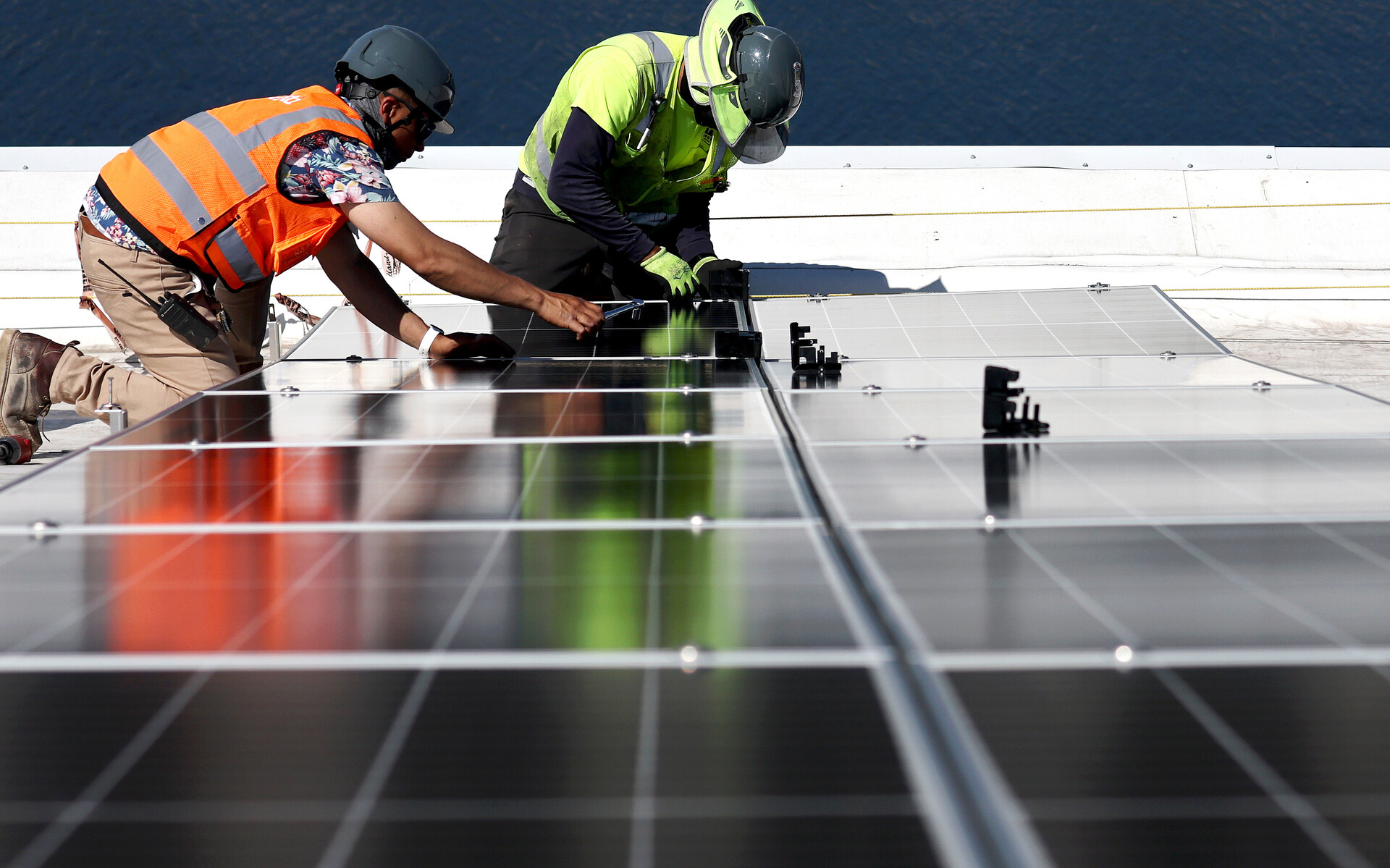
In a recent study published in Nature Energy, Rajagopal and his colleagues evaluated data from DeepSolar, an innovative public database created by researchers at the university that analyzes satellite images to identify where solar photovoltaic panels are located across the U.S.
The research team estimates that 63% of the nation’s disadvantaged communities, as identified by the federal government for lack of investment and pollution, can support 20% of household electricity demand. That’s if rooftop solar panels were installed on buildings over 10,000 square feet. Rajagopal noted that, when placed on schools and hospitals, these solar installations would benefit these institutions by bringing costs down. He also said they should be connected to households through microgrids so nearby residents could receive electricity directly. A neighborhood with a microgrid can isolate itself from the main grid during a power outage, making the energy system more resilient to disruptions.
Elena Krieger, director of research at PSE Health Energy, an Oakland-based energy policy research group, said this research is important for understanding where there are opportunities to develop solar in low-income areas.
“The DeepSolar model helps fill some important data gaps that we have on solar adoption across the country. This approach provides one of the best methods to get a reasonable national estimate,” Krieger said, who was not involved in the study.
She added that it’s important that effective policies support the transition of low-income neighborhoods to clean energy without burdening households that can’t afford to go solar. For example, she offered that if a group of buildings in one neighborhood were fully electrified but left renters on the old gas distribution system, the renters’ rates could rise because there would be fewer people paying to maintain the gas system.
The state made a controversial cut to the incentives for installing solar panels through changes to its net energy metering program last year. The California Public Utilities Commission reduced the amount rooftop solar producers receive for the extra energy they sell to the grid by up to 80%, solar advocates said. Further, buildings with multiple ratepayers, like apartments, colleges and retail centers, cannot use the energy their solar panels produce for free. Under the new rule, they must buy it at full cost from the utility.
Leaders at the California Public Utilities Commission said it was in response to rising questions about the equity of solar subsidies.
“The solar industry plays a very important role in clean energy production, but we need to be very careful about how we design subsidies for this industry when we’re using ratepayers’ public funds,” Commission President Alice Reynolds said at a public meeting in December 2022.
She said this new structure aims to ensure the state fairly distributes the cost of maintaining the grid and the benefits of switching to solar to all ratepayers and that credits for those who export electricity to the grid are based on the correct value.
Bernadette Del Chiaro is the spokesperson for the California Solar and Storage Association, which represents hundreds of rooftop solar businesses that advocated against this change. She said the new rule removed the incentive for building owners to install solar panels.
“Why would anybody go solar under those conditions?” Del Chiaro said. “Amidst all of the rhetoric and claims that we’re a clean energy leader, our actions are going in the opposite direction.”
Rooftop solar sales dropped 61% in January compared to 2022 sales, causing an estimated 17,000 layoffs, according to industry estimates.
This summer, the California Supreme Court will hear a case brought by environmental groups fighting the net energy metering changes.
Rajagopal said that for solar to expand meaningfully into disadvantaged communities, there must be community buy-in and state subsidies. “We hope people can build around this data and around these methods to actually increase the adoption of this super important technology,” he said.
Last month, President Joe Biden announced “Solar for all” grant awards, distributing $7 billion to 60 applicants that will create new or expand existing low-income solar programs across the country. California received nearly $250 million to address the regulatory, financial and building obstacles to bring affordable clean energy to those with the least access.