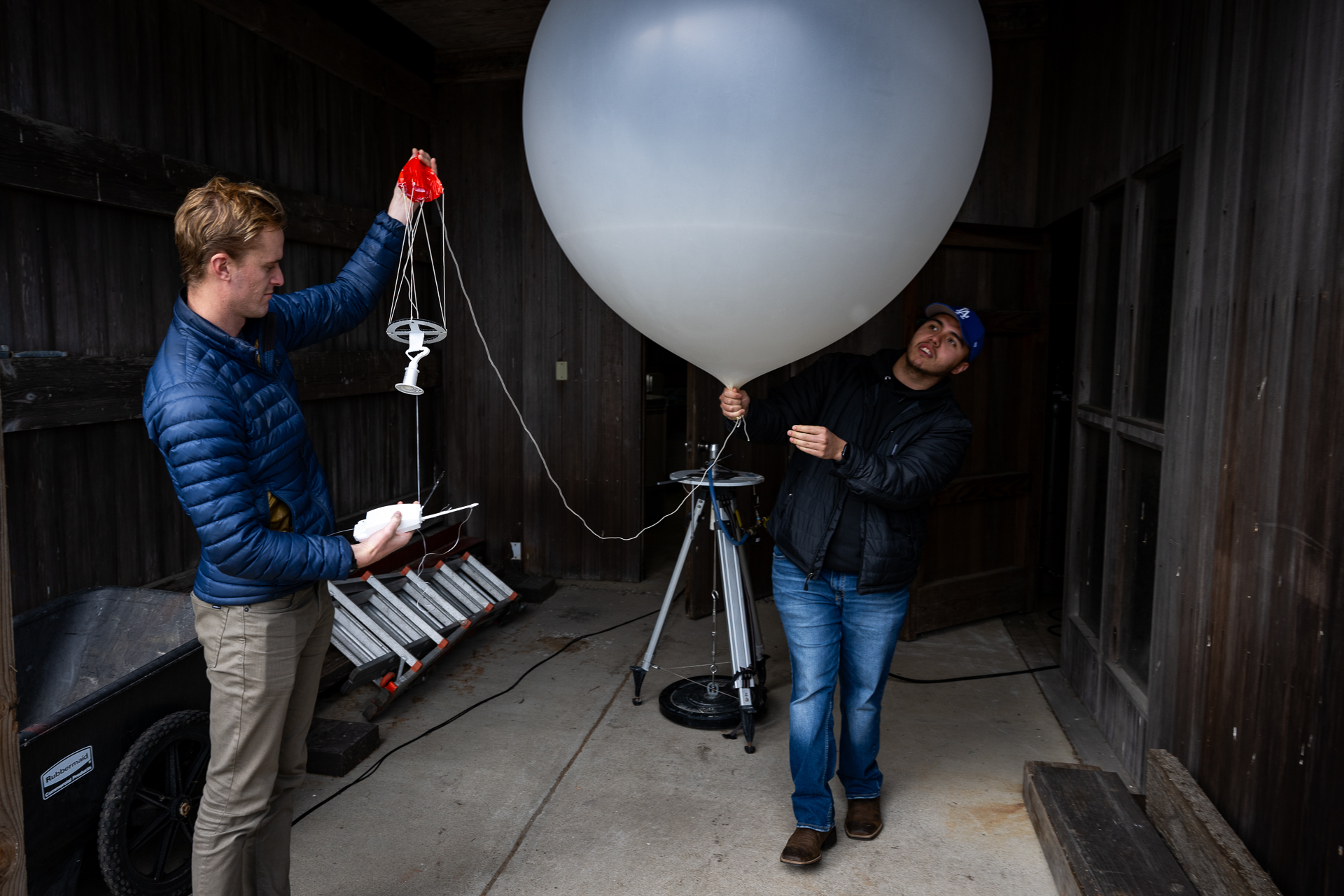
Just before the rays of dawn on Jan. 12 paraded over the cliffs that separate Bodega Bay from the expanse of the Pacific Ocean, Adolfo Lopez Miranda and Jacob Morgan inflated a shapeless giant silicone balloon with helium.
The duo worked inside a wooden gray shed.
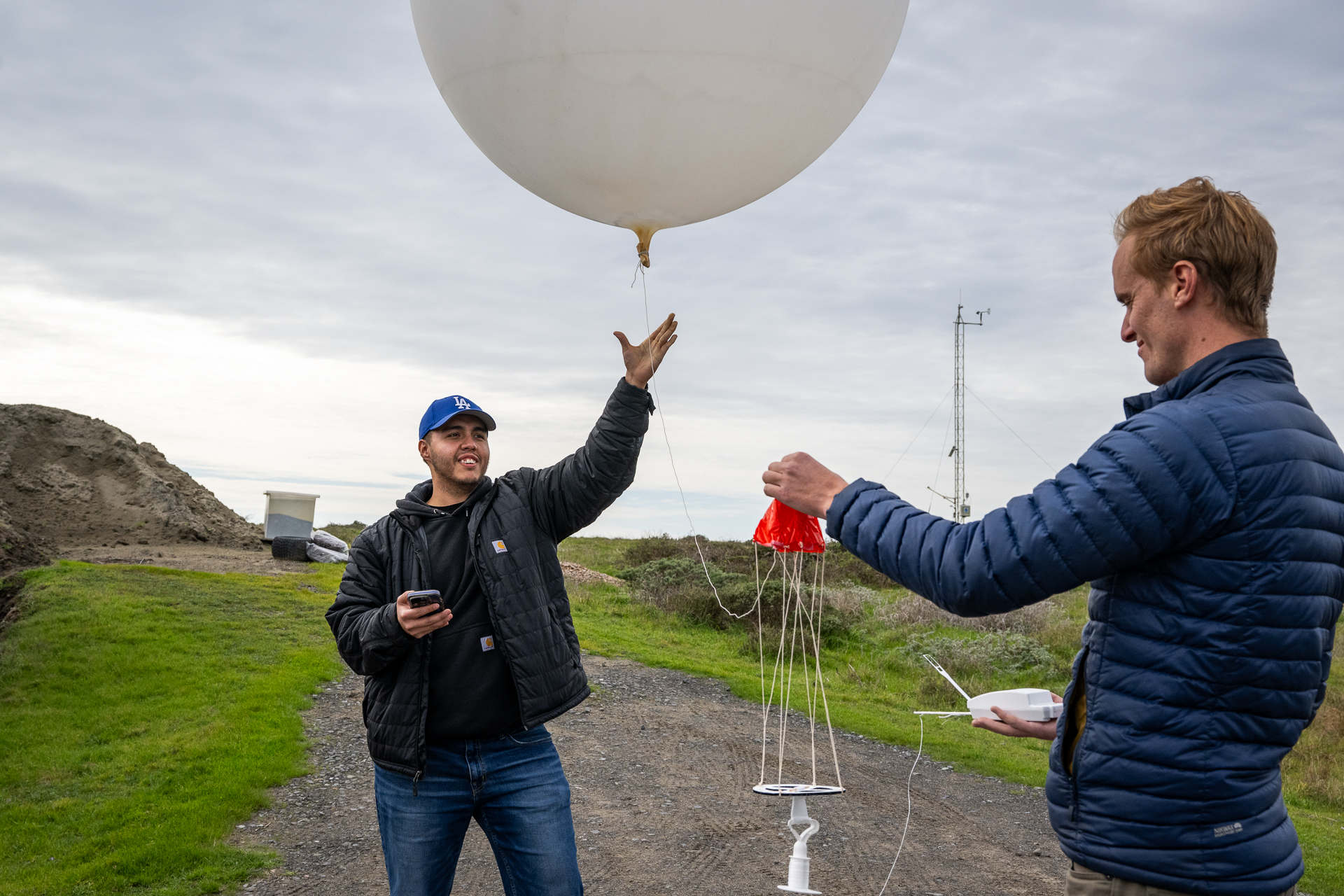
A few minutes before seven, the two men hiked to a nearby hilltop, carrying the now bulging balloon, around 3 feet long and wide.
They attached a tiny red parachute with a translucent cord, added an array of weather sensors, and released it like kids at a birthday party.
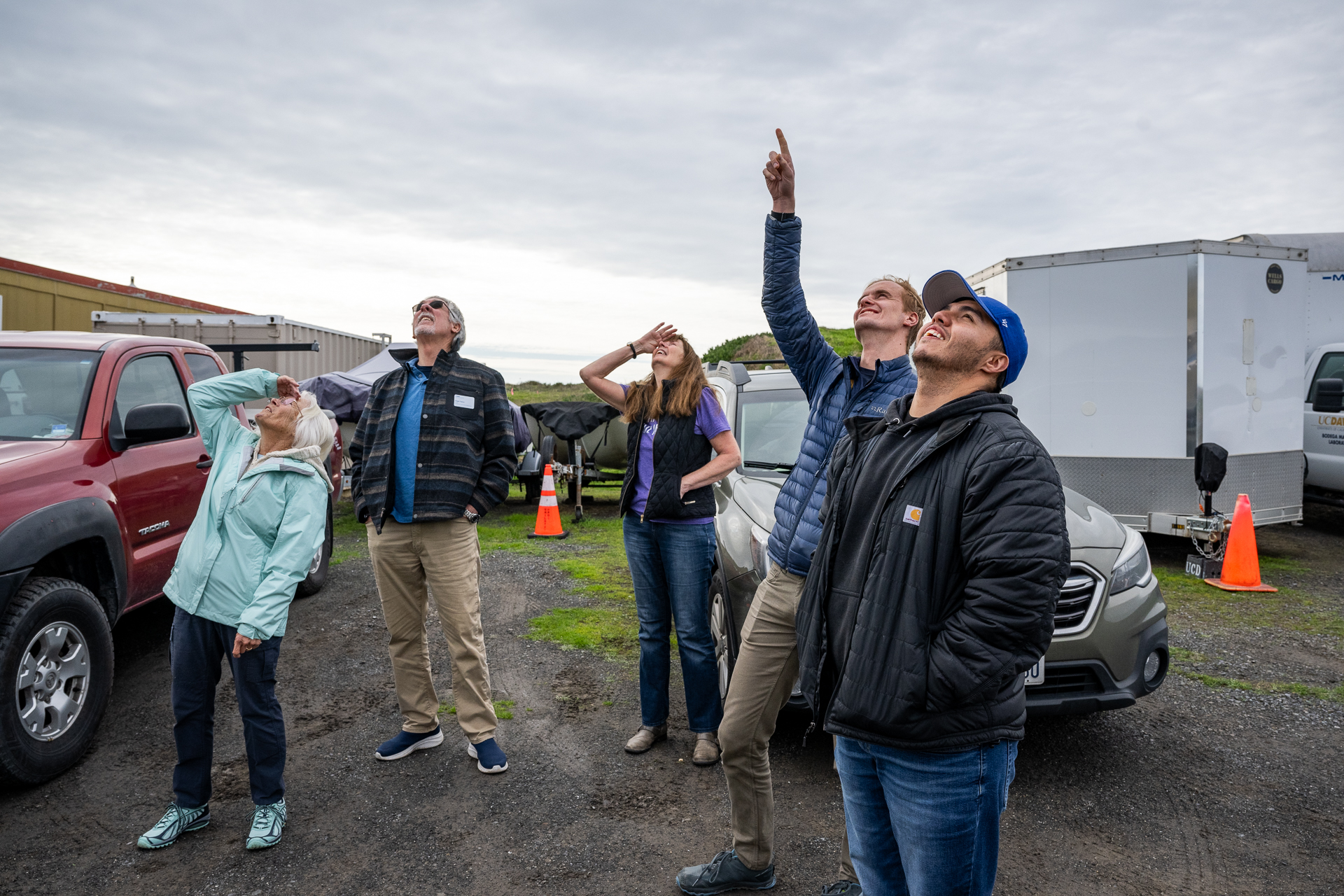
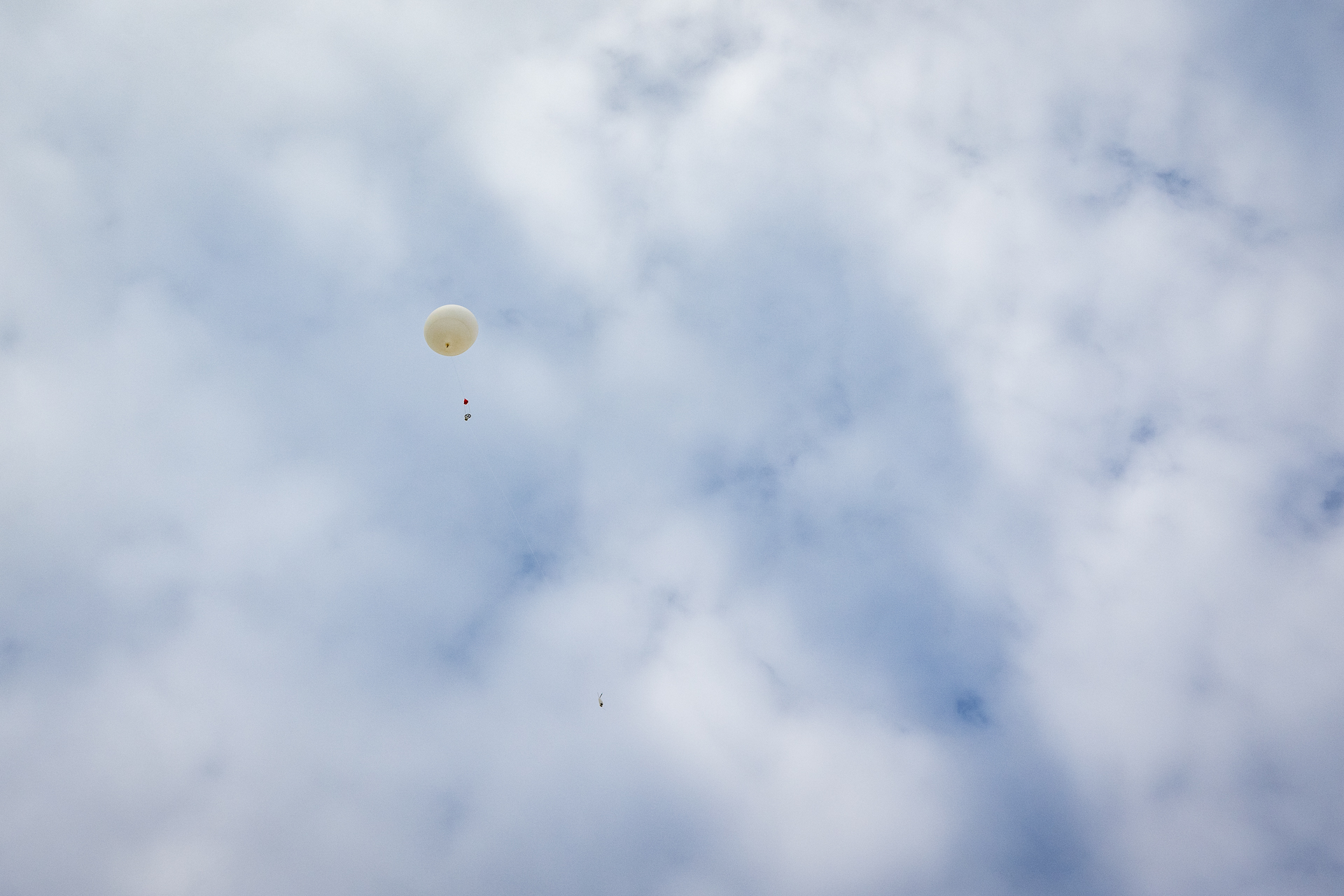
They watched it lift over the dark ocean toward an incoming rainstorm forced over the Bay Area by an extended, narrow region in the sky transporting moisture called an atmospheric river.
Lopez Miranda and Morgan, engineers with the Scripps Institution of Oceanography, are attempting to better understand these rivers in the sky, which can dump an onslaught of precipitation — several inches of rain in less than an hour — and trigger catastrophic flooding.
The duo flew up from San Diego to the UC Davis Coastal and Marine Sciences Institute’s Bodega Marine Laboratory for this storm. The weather balloon they launched directly into the atmospheric river will send back data on the storm’s course as it approaches the coast of California.
In 2022, a family of atmospheric rivers dumped so much rain over California that multiple levees crumbled from the weight and intensity of the water, destroying hundreds of homes and disrupting life for thousands of people.
For each storm, the team launches a new balloon every few hours.
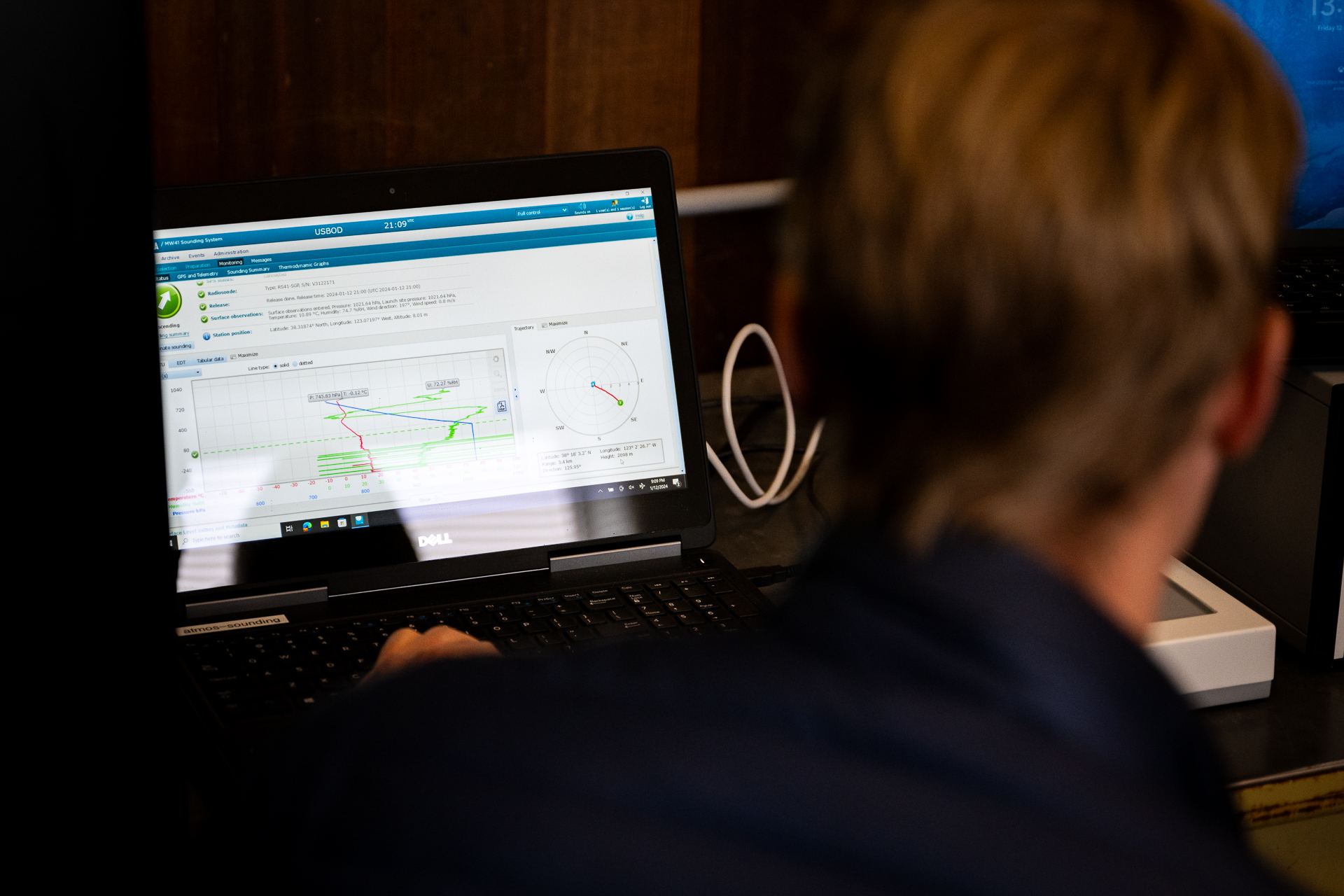
As the balloons float higher and higher into the atmosphere, they expand. Attached is a small white styrofoam radiosonde, which collects data — temperature, location, wind speed, wind direction, humidity and pressure — and transmits it to a computer in the wooden shack.
As the balloon ascends, the atmospheric pressure decreases, and the balloon eventually swells to the size of a school bus. “When it’s that big, the latex is stretched so thin that eventually it pops,” Morgan said.
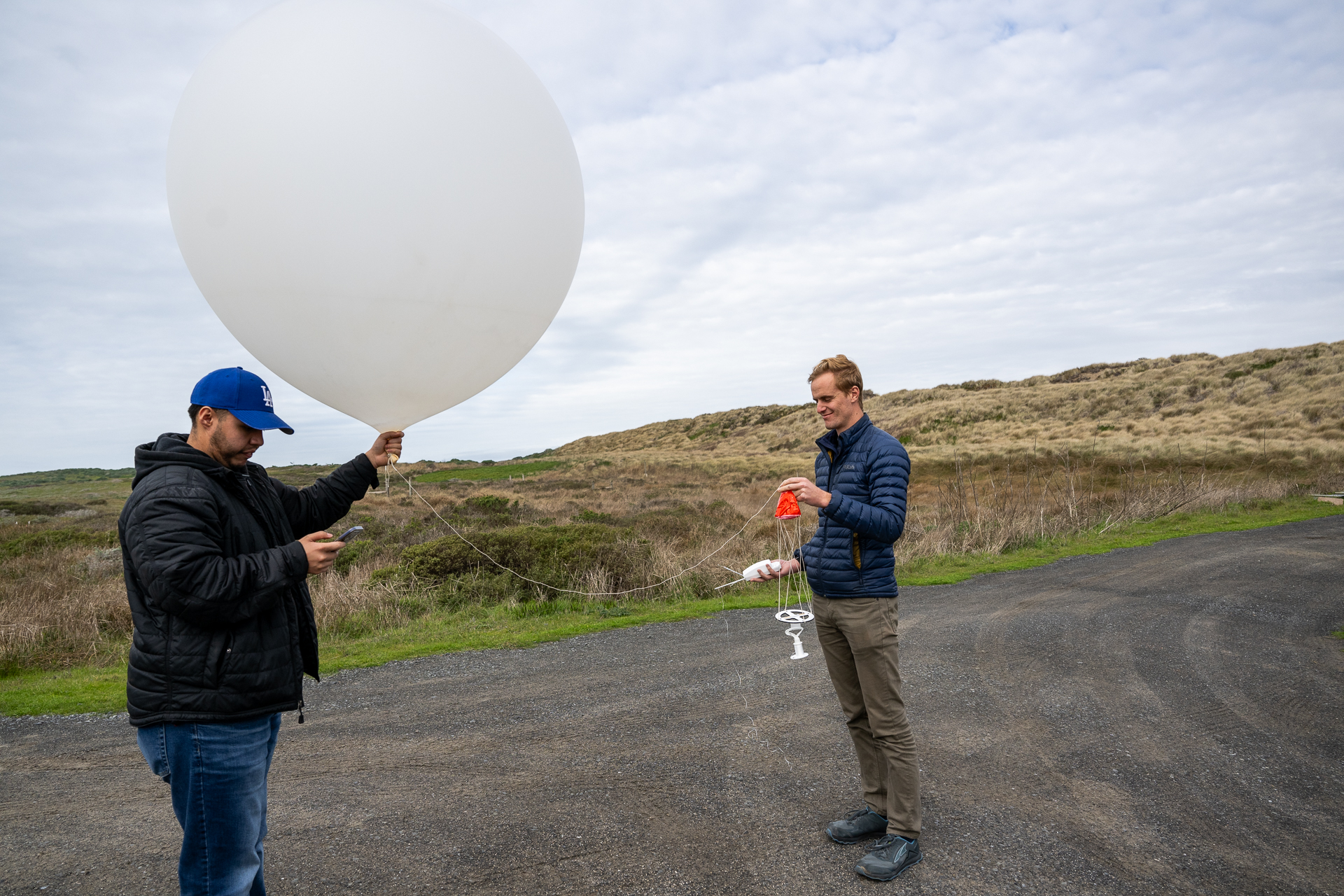
According to Morgan, the balloon he released on the morning of Jan. 12 burst around 15 miles into the atmosphere and parachuted down.
“Unfortunately, they might land in a tree or mountain,” Lopez Miranda said. “We know where they are, but sometimes they’re miles away from here where we don’t have access to.”