
California’s top health insurance authority faces mounting criticism and impatience from lawmakers and advocates who accuse the regulator of going easy on health insurers and failing to ensure they abide by a three-year-old law to provide timely mental health care to their consumers.
A barrage of complaints was lodged at an oversight hearing in Sacramento on Wednesday, just days after the Department of Managed Health Care relied on the same law to levy a historic $50 million fine against Kaiser Permanente for failing to provide timely mental health care.
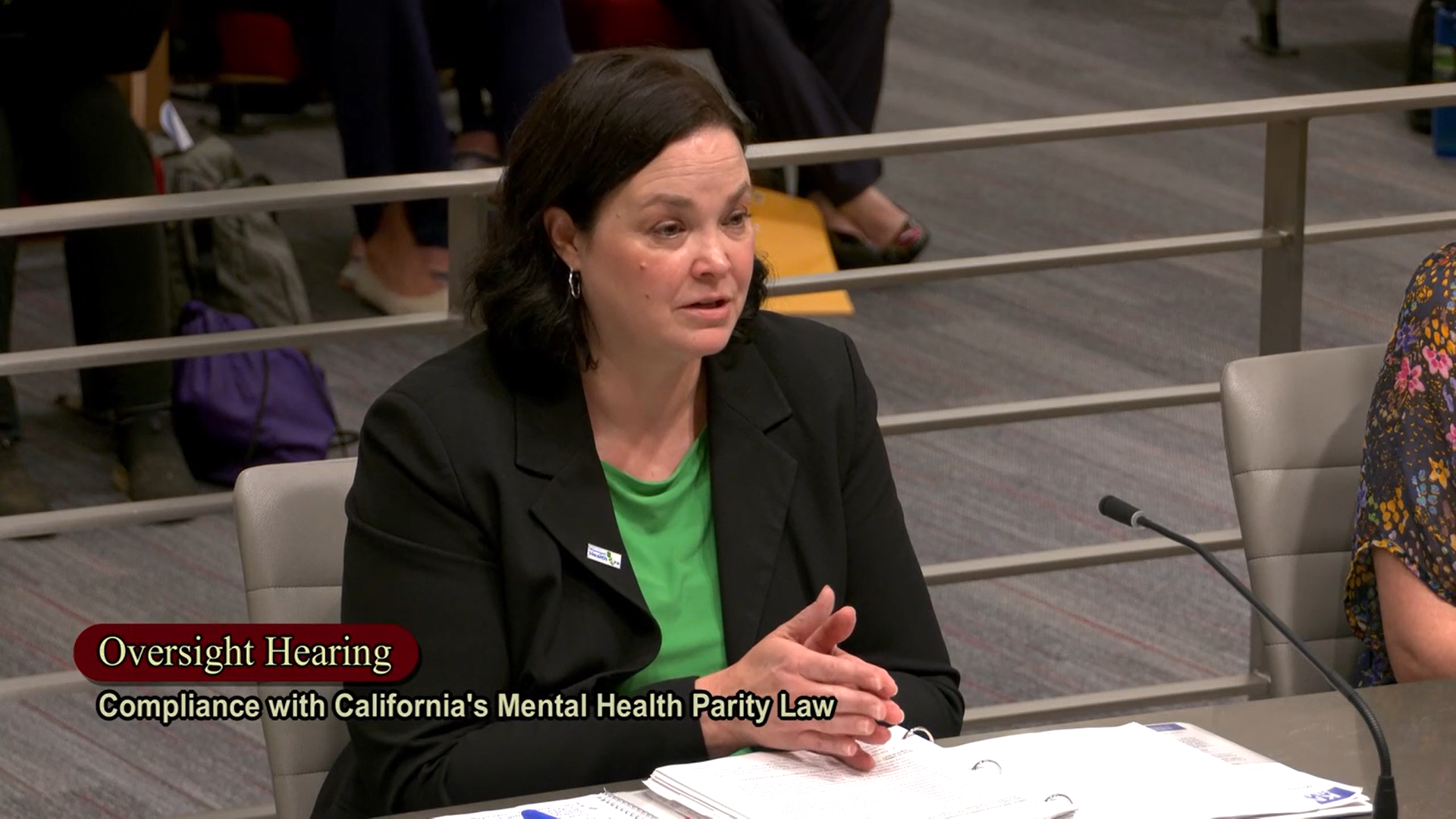
“I know everybody’s framing this as ‘I’m in the hot seat,’” Mary Watanabe, director of the department, told the Senate mental health committee. “I’m happy to be here. This is an issue that is deeply important and personal to me.”
The Department of Managed Health Care oversees 96% of the state’s commercial and government health plans covering 30 million Californians. In 2021, a new state law took effect, SB 855, which was designed to curb insurers’ ability to deny mental health and substance abuse treatments for arbitrary or cost reasons. Instead, the law requires them to use clinical guidelines established by nonprofit health associations.
However, clinicians and health administrators testified in the Senate that health plans continue to violate the law. They said Anthem and other insurers were relying on unqualified doctors who ignored the standards set by the American Society of Addiction Medicine when deciding how long a person could stay in residential treatment.
“You can’t send a podiatrist to determine whether a stage 4 liver cancer patient needs chemotherapy,” said Joan Borsten, executive director of Summit Estate Recovery Center, which runs rehabs in Saratoga and San Jose. “It’s essentially what they’re doing.”
She gave the example of a 40-year-old man, a father of two small children, who came to rehab when his wife kicked him out of the house because of his alcohol addiction. After two weeks, two doctors working for Anthem, including a geriatric psychiatrist, reviewed the man’s medical record and said he had to go home.
“If I had left residential treatment early, I probably would have relapsed, lost my job and my family,” the man told his clinicians.