It was the first time anything like it had happened in the history of California.
When the clock struck 10 a.m. on April 26, 1968, 150 of Theodore Roosevelt Junior High’s Mexican American students promptly stood up and walked out. They were protesting the racist treatment they had been subjected to by numerous teachers and, as they picketed loudly at the school gates, change began to feel possible.
One of the boys taking part in the protest that day was the son of Sofía Mendoza, a mom who had grown increasingly frustrated with the ways Chicano teens were being marginalized at the place that was supposed to be nurturing them. Sofía had heard first-hand the racial epithets some of the school’s teachers used. She had been told by students that corporal punishment was being doled out with prejudice. She also knew that, in some classes, Mexican American children were given worksheets instead of the textbooks routinely provided to their white classmates.
First, Sofía documented the infractions as she heard about them. She then rallied other Latino parents to raise awareness about what was happening behind the school gates. Together, after their complaints prompted little change, the parents encouraged their kids to take action.
Fred Hirsch, a labor rights leader and friend to Sofía, recalled in 2015 that, “Discrimination was the big issue. The tracking system that was enforced [at Roosevelt] put Latino kids at a disadvantage, especially immigrants and children whose first language was Spanish. Sofía contacted some parents, we brought in a few teachers, we had some small meetings, and through the meetings, the students learned that school funding was based on their attendance. They quickly understood they had economic power in just showing up — or not showing up.”
Three days after the walkout, 500 students held a rally in the school’s auditorium to discuss the racist practices of the school’s administration. Both actions prompted an outpouring of support around East San Jose and the school board was finally forced to take action. In quick succession, 36 teachers plus the junior high’s principal and vice principal were fired.
Sofía saw this collective victory as valuable for the teenage protesters in more ways than one.
“The students learned so much from their organizing,” she said. “They learned that they have every right to make changes without winding up in juvenile hall for being labeled as troublemakers.”
Sofía’s instinct for organizing was a product of her upbringing. Her father was a labor organizer in Arizona and Southern California, starting in the 1930s. “I was born into a lot of activity,” she recalled in 2010. As a freshman, she objected to the fact that there was no Spanish Club at her Campbell high school and won the right to start one by organizing her fellow students. Her desire to make things better for Mexican Americans in East San Jose began after she moved there with her husband and the couple had their son, Willie, and two daughters, Linda and Saundra.
”Before I moved to East San Jose,” Sofía once explained, “I heard that everybody that was bad lived in East San Jose. Everybody that was poor lived in East San Jose. The schools in East San Jose were no good. I never heard anything good about it. Never. When you drove around, without knowing it, just by appearance, what they were saying was true.”
After the sweeping changes at Roosevelt, Sofía gained a greater sense of her own power and began to think about other ways that East San Jose could be improved. Law enforcement had been of great concern to her from the moment she moved there from Campbell.
“I had never seen so many cops driving by,” she said in one 2010 speech. “In a matter of five years, cops had killed 16 people. Of course, most of them were Latino. We had no representation.” In a later interview with Santa Clara University, she recalled: “I saw cops kicking down doors in the Eastside. I saw policemen stopping people for traffic infractions at gunpoint. I saw this with my own eyes, and nobody can say I didn’t see it.”
Sofía channeled her concerns into organizing a march to City Hall that attracted 2,000 protesters, each objecting to what they saw as excessive use of force by San Jose’s Police Department. In 1968, she was key in organizing a Community Alert Patrol (CAP) with a diverse group of other concerned citizens, including members of the Our Lady of Guadalupe Church clergy and Tom Ferrito, who went on to become Mayor of Los Gatos in 1980. It was essentially a sort of Neighborhood Watch — only, instead of keeping an eye out for the activities of criminals, volunteers kept watch over the police instead.
”We monitored all the police patrols,” Sofía later explained. “We would send our cars that were equipped with two-way radios, cameras and tape recorders. Not to interfere, but only to document, so we could [use] the information [in] court. We had to go that far. We did get rid of the chief of police. That’s when … there were a lot of good changes in the police department.”
In 2015, CAP participant Fred Hirsch explained: “We put out three or four cars each weekend night and holiday occasions. We’d have three people in the car … We also monitored community events, and we were not at all immune to the actions of the police department.”
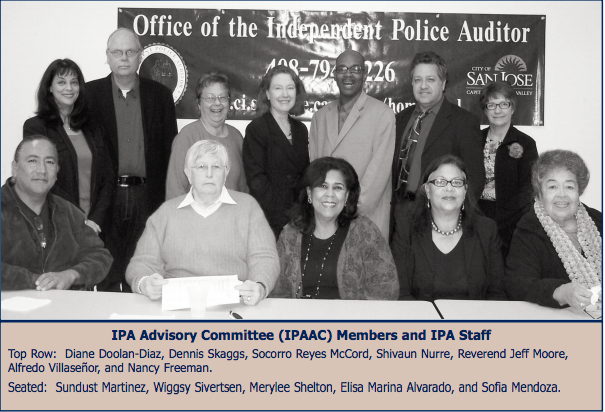
The work of CAP ultimately led to the creation of the city’s Office of the Independent Police Auditor and Sofía acted as a member of the Independent Police Auditor Advisory Committee.
By the 1970s, Sofía was a well-established and much-beloved force in her community. She battled San Jose’s Redevelopment Agency when her neighbors were suffering mass evictions. She was active in assisting Chilean refugees settle in the city, as they escaped the military coup of Augusto Pinochet. She was active in getting East San Jose its first health clinic. Like her father before her, she became involved in farmworker unionization. Sofía also led the Mexican American community in fighting for voting rights. Her campaigning even led to the reform of San Jose elections for city council members and introduced district representation, leading to a more diverse leadership.
Above all else, Sofía’s entire life was spent in service to the community. She co-founded United People Arriba, an organization that helped unify and galvanize activists in their own communities. Later in her life, she served as a social worker, a member of the board of directors at the Community Child Care Council, and a community organizer for the Family Service Association of Santa Clara County.
Throughout it all, Sofía retained an impressive sense of humility.
After her death in 2015 at the age of 80, Nannette Regua, a history teacher she had mentored, said of Sofía: “She never said, ‘I did this.’ She never said, ‘I led these community organizers.’ It was always, ‘We.’”

For stories on other Rebel Girls from Bay Area History, click here.
A book celebrating women from the Rebel Girls series, ‘Unsung Heroines: 35 Women Who Changed the Bay Area,’ is available now from City Lights.
