window.__IS_SSR__=true
window.__INITIAL_STATE__={
"attachmentsReducer": {
"audio_0": {
"type": "attachments",
"id": "audio_0",
"imgSizes": {
"kqedFullSize": {
"file": "https://ww2.kqed.org/news/wp-content/themes/KQED-unified/img/audio_bgs/background0.jpg"
}
}
},
"audio_1": {
"type": "attachments",
"id": "audio_1",
"imgSizes": {
"kqedFullSize": {
"file": "https://ww2.kqed.org/news/wp-content/themes/KQED-unified/img/audio_bgs/background1.jpg"
}
}
},
"audio_2": {
"type": "attachments",
"id": "audio_2",
"imgSizes": {
"kqedFullSize": {
"file": "https://ww2.kqed.org/news/wp-content/themes/KQED-unified/img/audio_bgs/background2.jpg"
}
}
},
"audio_3": {
"type": "attachments",
"id": "audio_3",
"imgSizes": {
"kqedFullSize": {
"file": "https://ww2.kqed.org/news/wp-content/themes/KQED-unified/img/audio_bgs/background3.jpg"
}
}
},
"audio_4": {
"type": "attachments",
"id": "audio_4",
"imgSizes": {
"kqedFullSize": {
"file": "https://ww2.kqed.org/news/wp-content/themes/KQED-unified/img/audio_bgs/background4.jpg"
}
}
},
"placeholder": {
"type": "attachments",
"id": "placeholder",
"imgSizes": {
"thumbnail": {
"file": "https://cdn.kqed.org/wp-content/uploads/2024/12/KQED-Default-Image-816638274-2000x1333-1-160x107.jpg",
"width": 160,
"height": 107,
"mimeType": "image/jpeg"
},
"medium": {
"file": "https://cdn.kqed.org/wp-content/uploads/2024/12/KQED-Default-Image-816638274-2000x1333-1-800x533.jpg",
"width": 800,
"height": 533,
"mimeType": "image/jpeg"
},
"medium_large": {
"file": "https://cdn.kqed.org/wp-content/uploads/2024/12/KQED-Default-Image-816638274-2000x1333-1-768x512.jpg",
"width": 768,
"height": 512,
"mimeType": "image/jpeg"
},
"large": {
"file": "https://cdn.kqed.org/wp-content/uploads/2024/12/KQED-Default-Image-816638274-2000x1333-1-1020x680.jpg",
"width": 1020,
"height": 680,
"mimeType": "image/jpeg"
},
"1536x1536": {
"file": "https://cdn.kqed.org/wp-content/uploads/2024/12/KQED-Default-Image-816638274-2000x1333-1-1536x1024.jpg",
"width": 1536,
"height": 1024,
"mimeType": "image/jpeg"
},
"fd-lrg": {
"file": "https://cdn.kqed.org/wp-content/uploads/2024/12/KQED-Default-Image-816638274-2000x1333-1-1536x1024.jpg",
"width": 1536,
"height": 1024,
"mimeType": "image/jpeg"
},
"fd-med": {
"file": "https://cdn.kqed.org/wp-content/uploads/2024/12/KQED-Default-Image-816638274-2000x1333-1-1020x680.jpg",
"width": 1020,
"height": 680,
"mimeType": "image/jpeg"
},
"fd-sm": {
"file": "https://cdn.kqed.org/wp-content/uploads/2024/12/KQED-Default-Image-816638274-2000x1333-1-800x533.jpg",
"width": 800,
"height": 533,
"mimeType": "image/jpeg"
},
"post-thumbnail": {
"file": "https://cdn.kqed.org/wp-content/uploads/2024/12/KQED-Default-Image-816638274-2000x1333-1-672x372.jpg",
"width": 672,
"height": 372,
"mimeType": "image/jpeg"
},
"twentyfourteen-full-width": {
"file": "https://cdn.kqed.org/wp-content/uploads/2024/12/KQED-Default-Image-816638274-2000x1333-1-1038x576.jpg",
"width": 1038,
"height": 576,
"mimeType": "image/jpeg"
},
"xxsmall": {
"file": "https://cdn.kqed.org/wp-content/uploads/2024/12/KQED-Default-Image-816638274-2000x1333-1-160x107.jpg",
"width": 160,
"height": 107,
"mimeType": "image/jpeg"
},
"xsmall": {
"file": "https://cdn.kqed.org/wp-content/uploads/2024/12/KQED-Default-Image-816638274-2000x1333-1-672x372.jpg",
"width": 672,
"height": 372,
"mimeType": "image/jpeg"
},
"small": {
"file": "https://cdn.kqed.org/wp-content/uploads/2024/12/KQED-Default-Image-816638274-2000x1333-1-672x372.jpg",
"width": 672,
"height": 372,
"mimeType": "image/jpeg"
},
"xlarge": {
"file": "https://cdn.kqed.org/wp-content/uploads/2024/12/KQED-Default-Image-816638274-2000x1333-1-1020x680.jpg",
"width": 1020,
"height": 680,
"mimeType": "image/jpeg"
},
"full-width": {
"file": "https://cdn.kqed.org/wp-content/uploads/2024/12/KQED-Default-Image-816638274-2000x1333-1-1920x1280.jpg",
"width": 1920,
"height": 1280,
"mimeType": "image/jpeg"
},
"guest-author-32": {
"file": "https://cdn.kqed.org/wp-content/uploads/2025/01/KQED-Default-Image-816638274-1333x1333-1-160x160.jpg",
"width": 32,
"height": 32,
"mimeType": "image/jpeg"
},
"guest-author-50": {
"file": "https://cdn.kqed.org/wp-content/uploads/2025/01/KQED-Default-Image-816638274-1333x1333-1-160x160.jpg",
"width": 50,
"height": 50,
"mimeType": "image/jpeg"
},
"guest-author-64": {
"file": "https://cdn.kqed.org/wp-content/uploads/2025/01/KQED-Default-Image-816638274-1333x1333-1-160x160.jpg",
"width": 64,
"height": 64,
"mimeType": "image/jpeg"
},
"guest-author-96": {
"file": "https://cdn.kqed.org/wp-content/uploads/2025/01/KQED-Default-Image-816638274-1333x1333-1-160x160.jpg",
"width": 96,
"height": 96,
"mimeType": "image/jpeg"
},
"guest-author-128": {
"file": "https://cdn.kqed.org/wp-content/uploads/2025/01/KQED-Default-Image-816638274-1333x1333-1-160x160.jpg",
"width": 128,
"height": 128,
"mimeType": "image/jpeg"
},
"detail": {
"file": "https://cdn.kqed.org/wp-content/uploads/2025/01/KQED-Default-Image-816638274-1333x1333-1-160x160.jpg",
"width": 160,
"height": 160,
"mimeType": "image/jpeg"
},
"kqedFullSize": {
"file": "https://cdn.kqed.org/wp-content/uploads/2024/12/KQED-Default-Image-816638274-2000x1333-1.jpg",
"width": 2000,
"height": 1333
}
}
},
"news_12075583": {
"type": "attachments",
"id": "news_12075583",
"meta": {
"index": "attachments_1716263798",
"site": "news",
"id": "12075583",
"found": true
},
"title": "coalinga-69aaebd0175e4",
"publishDate": 1772809212,
"status": "inherit",
"parent": 12075582,
"modified": 1772809256,
"caption": "Main Street in Coalinga on Feb. 12, 2026.",
"credit": "Branden Sandoval/KVPR",
"altTag": null,
"description": null,
"imgSizes": {
"thumbnail": {
"file": "https://cdn.kqed.org/wp-content/uploads/sites/10/2026/03/coalinga-69aaebd0175e4-160x107.jpg",
"width": 160,
"height": 107,
"mimeType": "image/jpeg"
},
"1536x1536": {
"file": "https://cdn.kqed.org/wp-content/uploads/sites/10/2026/03/coalinga-69aaebd0175e4-1536x1025.jpg",
"width": 1536,
"height": 1025,
"mimeType": "image/jpeg"
},
"post-thumbnail": {
"file": "https://cdn.kqed.org/wp-content/uploads/sites/10/2026/03/coalinga-69aaebd0175e4-672x372.jpg",
"width": 672,
"height": 372,
"mimeType": "image/jpeg"
},
"twentyfourteen-full-width": {
"file": "https://cdn.kqed.org/wp-content/uploads/sites/10/2026/03/coalinga-69aaebd0175e4-1038x576.jpg",
"width": 1038,
"height": 576,
"mimeType": "image/jpeg"
},
"npr-cds-wide": {
"file": "https://cdn.kqed.org/wp-content/uploads/sites/10/2026/03/coalinga-69aaebd0175e4-1200x675.jpg",
"width": 1200,
"height": 675,
"mimeType": "image/jpeg"
},
"kqedFullSize": {
"file": "https://cdn.kqed.org/wp-content/uploads/sites/10/2026/03/coalinga-69aaebd0175e4.jpg",
"width": 1760,
"height": 1174
}
},
"isLoading": false,
"fetchFailed": false
},
"news_12070623": {
"type": "attachments",
"id": "news_12070623",
"meta": {
"index": "attachments_1716263798",
"site": "news",
"id": "12070623",
"found": true
},
"title": "Adam Schiff,Alex Padilla",
"publishDate": 1769027855,
"status": "inherit",
"parent": 12070519,
"modified": 1769045859,
"caption": "A guard walks to the entrance of an immigration detention center during a visit by California Democrats Sen. Adam Schiff and Sen. Alex Padilla, on Jan. 20, 2026, in California City, California.",
"credit": "Marcio Jose Sanchez/AP Photo",
"altTag": null,
"description": null,
"imgSizes": {
"thumbnail": {
"file": "https://cdn.kqed.org/wp-content/uploads/sites/10/2026/01/AP26020826398216-KQED-160x107.jpg",
"width": 160,
"height": 107,
"mimeType": "image/jpeg"
},
"1536x1536": {
"file": "https://cdn.kqed.org/wp-content/uploads/sites/10/2026/01/AP26020826398216-KQED-1536x1024.jpg",
"width": 1536,
"height": 1024,
"mimeType": "image/jpeg"
},
"post-thumbnail": {
"file": "https://cdn.kqed.org/wp-content/uploads/sites/10/2026/01/AP26020826398216-KQED-672x372.jpg",
"width": 672,
"height": 372,
"mimeType": "image/jpeg"
},
"twentyfourteen-full-width": {
"file": "https://cdn.kqed.org/wp-content/uploads/sites/10/2026/01/AP26020826398216-KQED-1038x576.jpg",
"width": 1038,
"height": 576,
"mimeType": "image/jpeg"
},
"npr-cds-wide": {
"file": "https://cdn.kqed.org/wp-content/uploads/sites/10/2026/01/AP26020826398216-KQED-1200x675.jpg",
"width": 1200,
"height": 675,
"mimeType": "image/jpeg"
},
"kqedFullSize": {
"file": "https://cdn.kqed.org/wp-content/uploads/sites/10/2026/01/AP26020826398216-KQED.jpg",
"width": 2000,
"height": 1333
}
},
"isLoading": false,
"fetchFailed": false
},
"news_12068856": {
"type": "attachments",
"id": "news_12068856",
"meta": {
"index": "attachments_1716263798",
"site": "news",
"id": "12068856",
"found": true
},
"title": "US-POLITICS-ANNIVERSARY-JANUARY 6-RIOT",
"publishDate": 1767741416,
"status": "inherit",
"parent": 12068783,
"modified": 1767741545,
"caption": "Ken Sicknick (second, left), brother of late Capitol Police officer Brian Sicknick who died from injuries following the Jan. 6, 2021 attack on the US Capitol, and Sicknick's mother, Gladys Sicknick (second, right), stand alongside U.S. House Minority Leader Hakeem Jeffries, Democrat of New York, (right) and U.S. Representative and former Speaker of the House Nancy Pelosi (left), Democrat of California, prior to leading Democratic members of Congress and family members of fallen U.S. Capitol Police officers in a moment of silence marking the fifth anniversary of the Jan. 6, 2021, attacks on the U.S. Capitol, outside the U.S. Capitol in Washington, D.C., on Jan. 6, 2026. ",
"credit": "Saul Loeb/AFP via Getty Images",
"altTag": null,
"description": null,
"imgSizes": {
"thumbnail": {
"file": "https://cdn.kqed.org/wp-content/uploads/sites/10/2026/01/January6RememberanceGetty-160x107.jpg",
"width": 160,
"height": 107,
"mimeType": "image/jpeg"
},
"1536x1536": {
"file": "https://cdn.kqed.org/wp-content/uploads/sites/10/2026/01/January6RememberanceGetty-1536x1024.jpg",
"width": 1536,
"height": 1024,
"mimeType": "image/jpeg"
},
"post-thumbnail": {
"file": "https://cdn.kqed.org/wp-content/uploads/sites/10/2026/01/January6RememberanceGetty-672x372.jpg",
"width": 672,
"height": 372,
"mimeType": "image/jpeg"
},
"twentyfourteen-full-width": {
"file": "https://cdn.kqed.org/wp-content/uploads/sites/10/2026/01/January6RememberanceGetty-1038x576.jpg",
"width": 1038,
"height": 576,
"mimeType": "image/jpeg"
},
"npr-cds-wide": {
"file": "https://cdn.kqed.org/wp-content/uploads/sites/10/2026/01/January6RememberanceGetty-1200x675.jpg",
"width": 1200,
"height": 675,
"mimeType": "image/jpeg"
},
"kqedFullSize": {
"file": "https://cdn.kqed.org/wp-content/uploads/sites/10/2026/01/January6RememberanceGetty.jpg",
"width": 2000,
"height": 1333
}
},
"isLoading": false,
"fetchFailed": false
},
"news_11742606": {
"type": "attachments",
"id": "news_11742606",
"meta": {
"index": "attachments_1716263798",
"site": "news",
"id": "11742606",
"found": true
},
"title": "US - HEALTH-IMMUNIZATION - vaccines",
"publishDate": 1556142740,
"status": "inherit",
"parent": 11742525,
"modified": 1766615223,
"caption": "A nurse loads a syringe with a vaccine against hepatitis at a free immunization clinic for students before the start of the school year, in Lynwood on Aug. 27, 2013.",
"credit": "Robyn Becl/AFP/Getty Images",
"altTag": "A nurse loads a syringe with a vaccine against hepatitis at a free immunization clinic for students before the start of the school year, in Lynwood on Aug. 27, 2013.",
"description": "A nurse loads a syringe with a vaccine against hepatitis at a free immunization clinic for students before the start of the school year, in Lynwood on Aug. 27, 2013.",
"imgSizes": {
"thumbnail": {
"file": "https://cdn.kqed.org/wp-content/uploads/sites/10/2019/04/04242019_measles-vaccination-california-legislature-qut-160x107.jpg",
"width": 160,
"height": 107,
"mimeType": "image/jpeg"
},
"medium": {
"file": "https://cdn.kqed.org/wp-content/uploads/sites/10/2019/04/04242019_measles-vaccination-california-legislature-qut-800x533.jpg",
"width": 800,
"height": 533,
"mimeType": "image/jpeg"
},
"large": {
"file": "https://cdn.kqed.org/wp-content/uploads/sites/10/2019/04/04242019_measles-vaccination-california-legislature-qut-1020x679.jpg",
"width": 1020,
"height": 679,
"mimeType": "image/jpeg"
},
"complete_open_graph": {
"file": "https://cdn.kqed.org/wp-content/uploads/sites/10/2019/04/04242019_measles-vaccination-california-legislature-qut-1200x799.jpg",
"width": 1200,
"height": 799,
"mimeType": "image/jpeg"
},
"post-thumbnail": {
"file": "https://cdn.kqed.org/wp-content/uploads/sites/10/2019/04/04242019_measles-vaccination-california-legislature-qut-672x372.jpg",
"width": 672,
"height": 372,
"mimeType": "image/jpeg"
},
"twentyfourteen-full-width": {
"file": "https://cdn.kqed.org/wp-content/uploads/sites/10/2019/04/04242019_measles-vaccination-california-legislature-qut-1038x576.jpg",
"width": 1038,
"height": 576,
"mimeType": "image/jpeg"
},
"full-width": {
"file": "https://cdn.kqed.org/wp-content/uploads/sites/10/2019/04/04242019_measles-vaccination-california-legislature-qut-1920x1278.jpg",
"width": 1920,
"height": 1278,
"mimeType": "image/jpeg"
},
"kqedFullSize": {
"file": "https://cdn.kqed.org/wp-content/uploads/sites/10/2019/04/04242019_measles-vaccination-california-legislature-qut.jpg",
"width": 1920,
"height": 1278
}
},
"isLoading": false,
"fetchFailed": false
},
"news_11905241": {
"type": "attachments",
"id": "news_11905241",
"meta": {
"index": "attachments_1716263798",
"site": "news",
"id": "11905241",
"found": true
},
"title": "Rep. Zoe Lofgren (D-CA)",
"publishDate": 1644963081,
"status": "inherit",
"parent": 11905230,
"modified": 1733860778,
"caption": "Rep. Zoe Lofgren (D-San José) calls the suggestion that her concerns with some federal anti-trust legislation have been bought or influenced by donations from Silicon Valley 'obviously baloney.'",
"credit": "Kevin Dietsch/Getty Images",
"altTag": "A close-up photo of an older white woman with blonde hair wearing glasses and a blue suit jacket. Two blurry microphones can be seen in front of her.",
"description": "Rep. Zoe Lofgren (D-San José) calls the suggestion that her concerns with some federal anti-trust legislation have been bought or influenced by donations from Silicon Valley 'obviously baloney.'",
"imgSizes": {
"medium": {
"file": "https://cdn.kqed.org/wp-content/uploads/sites/10/2022/02/GettyImages-1341705984-800x534.jpg",
"width": 800,
"height": 534,
"mimeType": "image/jpeg"
},
"large": {
"file": "https://cdn.kqed.org/wp-content/uploads/sites/10/2022/02/GettyImages-1341705984-1020x680.jpg",
"width": 1020,
"height": 680,
"mimeType": "image/jpeg"
},
"thumbnail": {
"file": "https://cdn.kqed.org/wp-content/uploads/sites/10/2022/02/GettyImages-1341705984-160x107.jpg",
"width": 160,
"height": 107,
"mimeType": "image/jpeg"
},
"1536x1536": {
"file": "https://cdn.kqed.org/wp-content/uploads/sites/10/2022/02/GettyImages-1341705984-1536x1025.jpg",
"width": 1536,
"height": 1025,
"mimeType": "image/jpeg"
},
"2048x2048": {
"file": "https://cdn.kqed.org/wp-content/uploads/sites/10/2022/02/GettyImages-1341705984-2048x1366.jpg",
"width": 2048,
"height": 1366,
"mimeType": "image/jpeg"
},
"post-thumbnail": {
"file": "https://cdn.kqed.org/wp-content/uploads/sites/10/2022/02/GettyImages-1341705984-672x372.jpg",
"width": 672,
"height": 372,
"mimeType": "image/jpeg"
},
"twentyfourteen-full-width": {
"file": "https://cdn.kqed.org/wp-content/uploads/sites/10/2022/02/GettyImages-1341705984-1038x576.jpg",
"width": 1038,
"height": 576,
"mimeType": "image/jpeg"
},
"full-width": {
"file": "https://cdn.kqed.org/wp-content/uploads/sites/10/2022/02/GettyImages-1341705984-1920x1281.jpg",
"width": 1920,
"height": 1281,
"mimeType": "image/jpeg"
},
"kqedFullSize": {
"file": "https://cdn.kqed.org/wp-content/uploads/sites/10/2022/02/GettyImages-1341705984-scaled-e1645036172340.jpg",
"width": 1920,
"height": 1281
}
},
"isLoading": false,
"fetchFailed": false
},
"news_12001180": {
"type": "attachments",
"id": "news_12001180",
"meta": {
"index": "attachments_1716263798",
"site": "news",
"id": "12001180",
"found": true
},
"title": "California State Senator Scott Wiener adddresses the SF Chronicle Editorial Board on Thursday, Jan. 18, 2018 in San Francisco, Calif.",
"publishDate": 1724269970,
"status": "inherit",
"parent": 0,
"modified": 1724270090,
"caption": "Senator Scott Wiener introduced SB 1047, a bill that would mandate safety testing for developers of the largest AI models.",
"credit": "Russell Yip/San Francisco Chronicle via Getty Images",
"altTag": null,
"description": null,
"imgSizes": {
"medium": {
"file": "https://cdn.kqed.org/wp-content/uploads/sites/10/2024/08/GETTYIMAGES-1298883374-KQED-800x533.jpg",
"width": 800,
"height": 533,
"mimeType": "image/jpeg"
},
"large": {
"file": "https://cdn.kqed.org/wp-content/uploads/sites/10/2024/08/GETTYIMAGES-1298883374-KQED-1020x680.jpg",
"width": 1020,
"height": 680,
"mimeType": "image/jpeg"
},
"thumbnail": {
"file": "https://cdn.kqed.org/wp-content/uploads/sites/10/2024/08/GETTYIMAGES-1298883374-KQED-160x107.jpg",
"width": 160,
"height": 107,
"mimeType": "image/jpeg"
},
"1536x1536": {
"file": "https://cdn.kqed.org/wp-content/uploads/sites/10/2024/08/GETTYIMAGES-1298883374-KQED-1536x1024.jpg",
"width": 1536,
"height": 1024,
"mimeType": "image/jpeg"
},
"post-thumbnail": {
"file": "https://cdn.kqed.org/wp-content/uploads/sites/10/2024/08/GETTYIMAGES-1298883374-KQED-672x372.jpg",
"width": 672,
"height": 372,
"mimeType": "image/jpeg"
},
"twentyfourteen-full-width": {
"file": "https://cdn.kqed.org/wp-content/uploads/sites/10/2024/08/GETTYIMAGES-1298883374-KQED-1038x576.jpg",
"width": 1038,
"height": 576,
"mimeType": "image/jpeg"
},
"full-width": {
"file": "https://cdn.kqed.org/wp-content/uploads/sites/10/2024/08/GETTYIMAGES-1298883374-KQED-1920x1280.jpg",
"width": 1920,
"height": 1280,
"mimeType": "image/jpeg"
},
"kqedFullSize": {
"file": "https://cdn.kqed.org/wp-content/uploads/sites/10/2024/08/GETTYIMAGES-1298883374-KQED.jpg",
"width": 2000,
"height": 1333
}
},
"isLoading": false,
"fetchFailed": false
},
"news_11918442": {
"type": "attachments",
"id": "news_11918442",
"meta": {
"index": "attachments_1716263798",
"site": "news",
"id": "11918442",
"found": true
},
"parent": 11918268,
"imgSizes": {
"twentyfourteen-full-width": {
"file": "https://ww2.kqed.org/app/uploads/sites/10/2022/06/GettyImages-1241600763-1038x576.jpg",
"width": 1038,
"mimeType": "image/jpeg",
"height": 576
},
"thumbnail": {
"file": "https://ww2.kqed.org/app/uploads/sites/10/2022/06/GettyImages-1241600763-160x107.jpg",
"width": 160,
"mimeType": "image/jpeg",
"height": 107
},
"post-thumbnail": {
"file": "https://ww2.kqed.org/app/uploads/sites/10/2022/06/GettyImages-1241600763-672x372.jpg",
"width": 672,
"mimeType": "image/jpeg",
"height": 372
},
"kqedFullSize": {
"file": "https://ww2.kqed.org/app/uploads/sites/10/2022/06/GettyImages-1241600763.jpg",
"width": 1920,
"height": 1280
},
"large": {
"file": "https://ww2.kqed.org/app/uploads/sites/10/2022/06/GettyImages-1241600763-1020x680.jpg",
"width": 1020,
"mimeType": "image/jpeg",
"height": 680
},
"1536x1536": {
"file": "https://ww2.kqed.org/app/uploads/sites/10/2022/06/GettyImages-1241600763-1536x1024.jpg",
"width": 1536,
"mimeType": "image/jpeg",
"height": 1024
},
"medium": {
"file": "https://ww2.kqed.org/app/uploads/sites/10/2022/06/GettyImages-1241600763-800x533.jpg",
"width": 800,
"mimeType": "image/jpeg",
"height": 533
}
},
"publishDate": 1656545294,
"modified": 1656606133,
"caption": "Cassidy Hutchinson, an aide to Trump White House Chief of Staff Mark Meadows, is sworn in at a hearing of the House Jan. 6 select committee on Capitol Hill on Tuesday, June 28, 2022.",
"description": null,
"title": "GettyImages-1241600763",
"credit": "Demetrius Freeman/The Washington Post/Getty Images",
"status": "inherit",
"altTag": "A side photo of a woman wearing white, her right hand is raised for her testimony under oath",
"isLoading": false,
"fetchFailed": false
},
"news_11905487": {
"type": "attachments",
"id": "news_11905487",
"meta": {
"index": "attachments_1716263798",
"site": "news",
"id": "11905487",
"found": true
},
"parent": 11905230,
"imgSizes": {
"twentyfourteen-full-width": {
"file": "https://ww2.kqed.org/app/uploads/sites/10/2022/02/GettyImages-1235410527-1038x576.jpg",
"width": 1038,
"mimeType": "image/jpeg",
"height": 576
},
"thumbnail": {
"file": "https://ww2.kqed.org/app/uploads/sites/10/2022/02/GettyImages-1235410527-160x107.jpg",
"width": 160,
"mimeType": "image/jpeg",
"height": 107
},
"post-thumbnail": {
"file": "https://ww2.kqed.org/app/uploads/sites/10/2022/02/GettyImages-1235410527-672x372.jpg",
"width": 672,
"mimeType": "image/jpeg",
"height": 372
},
"kqedFullSize": {
"file": "https://ww2.kqed.org/app/uploads/sites/10/2022/02/GettyImages-1235410527-scaled-e1645129664958.jpg",
"width": 1920,
"height": 1281
},
"2048x2048": {
"file": "https://ww2.kqed.org/app/uploads/sites/10/2022/02/GettyImages-1235410527-2048x1366.jpg",
"width": 2048,
"mimeType": "image/jpeg",
"height": 1366
},
"large": {
"file": "https://ww2.kqed.org/app/uploads/sites/10/2022/02/GettyImages-1235410527-1020x680.jpg",
"width": 1020,
"mimeType": "image/jpeg",
"height": 680
},
"1536x1536": {
"file": "https://ww2.kqed.org/app/uploads/sites/10/2022/02/GettyImages-1235410527-1536x1025.jpg",
"width": 1536,
"mimeType": "image/jpeg",
"height": 1025
},
"full-width": {
"file": "https://ww2.kqed.org/app/uploads/sites/10/2022/02/GettyImages-1235410527-1920x1281.jpg",
"width": 1920,
"mimeType": "image/jpeg",
"height": 1281
},
"medium": {
"file": "https://ww2.kqed.org/app/uploads/sites/10/2022/02/GettyImages-1235410527-800x534.jpg",
"width": 800,
"mimeType": "image/jpeg",
"height": 534
}
},
"publishDate": 1645112635,
"modified": 1645139970,
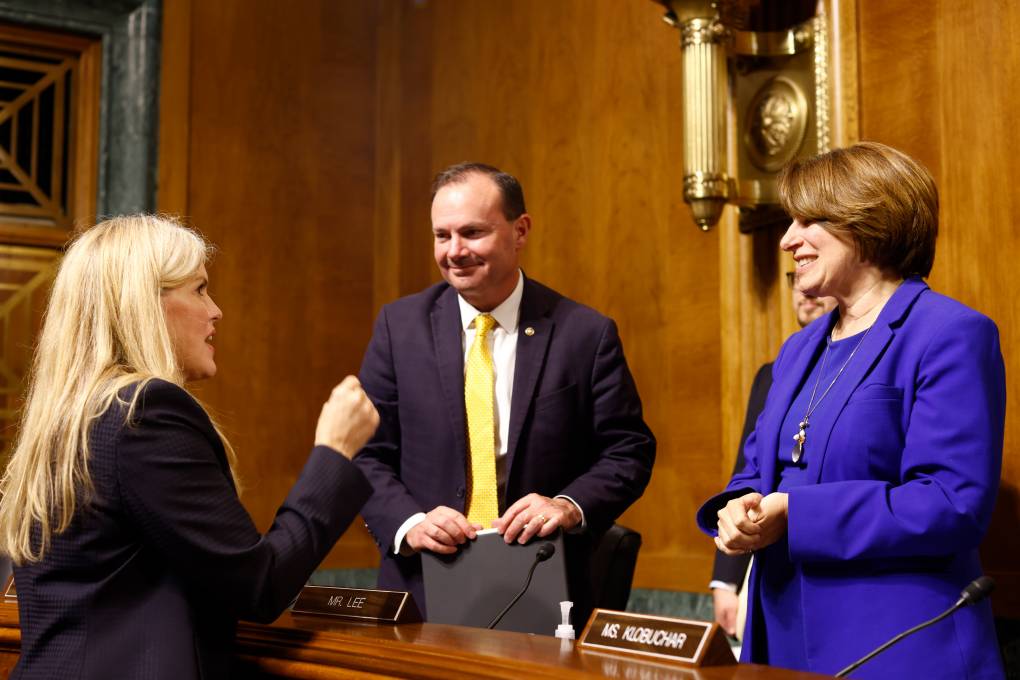
"caption": "Sen. Amy Klobuchar, D-Minnesota (right), chair of the Senate Judiciary Subcommittee on Competition Policy, Antitrust, and Consumer Rights, and ranking member Sen. Mike Lee, R-Utah, chat with Sheila Colclasure, global chief digital responsibility and public policy officer at IPG Kinesso, at the conclusion of a hearing on big data on Sept. 21, 2021, in Washington, D.C.",
"description": "Sen. Amy Klobuchar (D-MI) and chair of the Senate Judiciary Subcommittee on Competition Policy, Antitrust, and Consumer Rights, and ranking member Sen. Mike Lee (R-UT) chat with Sheila Colclasure, global chief digital responsibility and public policy officer at IPG Kinesso, after the conclusion of a hearing on September 21, 2021 in Washington, D.C. The hearing is titled Big Data, Big Questions: Implications for Competition and Consumers. ",
"title": "Senate Judiciary Hears Testimony From Tech Executives On Competition For Consumers",
"credit": "Ting Shen-Pool/Getty Images",
"status": "inherit",
"altTag": "Two U.S. senators chat with a technology company in a wood-paneled room at the U.S. Capitol.",
"isLoading": false,
"fetchFailed": false
},
"news_11903832": {
"type": "attachments",
"id": "news_11903832",
"meta": {
"index": "attachments_1716263798",
"site": "news",
"id": "11903832",
"found": true
},
"parent": 11903829,
"imgSizes": {
"twentyfourteen-full-width": {
"file": "https://ww2.kqed.org/app/uploads/sites/10/2022/02/GettyImages-1330932126-1038x576.jpg",
"width": 1038,
"mimeType": "image/jpeg",
"height": 576
},
"thumbnail": {
"file": "https://ww2.kqed.org/app/uploads/sites/10/2022/02/GettyImages-1330932126-160x109.jpg",
"width": 160,
"mimeType": "image/jpeg",
"height": 109
},
"post-thumbnail": {
"file": "https://ww2.kqed.org/app/uploads/sites/10/2022/02/GettyImages-1330932126-672x372.jpg",
"width": 672,
"mimeType": "image/jpeg",
"height": 372
},
"kqedFullSize": {
"file": "https://ww2.kqed.org/app/uploads/sites/10/2022/02/GettyImages-1330932126-scaled-e1643861298742.jpg",
"width": 1920,
"height": 1308
},
"2048x2048": {
"file": "https://ww2.kqed.org/app/uploads/sites/10/2022/02/GettyImages-1330932126-2048x1395.jpg",
"width": 2048,
"mimeType": "image/jpeg",
"height": 1395
},
"large": {
"file": "https://ww2.kqed.org/app/uploads/sites/10/2022/02/GettyImages-1330932126-1020x695.jpg",
"width": 1020,
"mimeType": "image/jpeg",
"height": 695
},
"1536x1536": {
"file": "https://ww2.kqed.org/app/uploads/sites/10/2022/02/GettyImages-1330932126-1536x1046.jpg",
"width": 1536,
"mimeType": "image/jpeg",
"height": 1046
},
"full-width": {
"file": "https://ww2.kqed.org/app/uploads/sites/10/2022/02/GettyImages-1330932126-1920x1308.jpg",
"width": 1920,
"mimeType": "image/jpeg",
"height": 1308
},
"medium": {
"file": "https://ww2.kqed.org/app/uploads/sites/10/2022/02/GettyImages-1330932126-800x545.jpg",
"width": 800,
"mimeType": "image/jpeg",
"height": 545
}
},
"publishDate": 1643861280,
"modified": 1643912814,
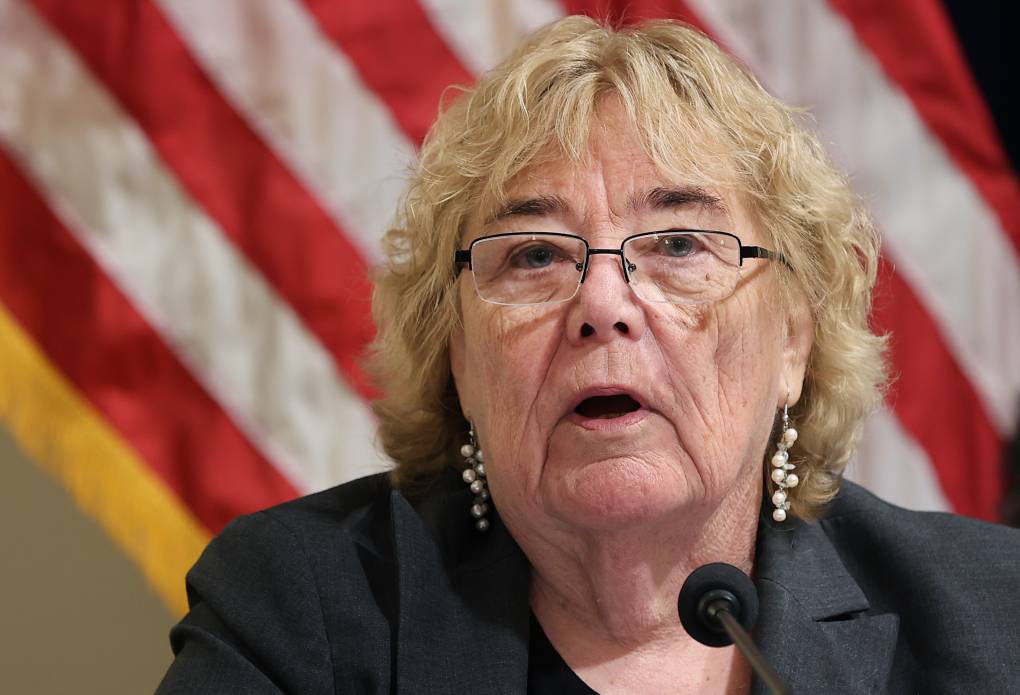
"caption": "U.S. Rep. Zoe Lofgren (D-San Jose) questions witnesses during a hearing by the House Select Committee investigating the January 6 attack on the U.S. Capitol on July 27, 2021, at the Cannon House Office Building in Washington, D.C. ",
"description": null,
"title": "House Select Committee Investigating January 6 Attack On US Capitol Holds First Hearing",
"credit": "Chip Somodevilla/Getty Images",
"status": "inherit",
"altTag": "A close shot of Zoe Lofgren, a middle-aged white woman with shoulder-length blond hair and glasses, wearing large earrings and a dark blue blazer, speaks into a microphone in front of an American flag.",
"isLoading": false,
"fetchFailed": false
},
"news_11902344": {
"type": "attachments",
"id": "news_11902344",
"meta": {
"index": "attachments_1716263798",
"site": "news",
"id": "11902344",
"found": true
},
"title": "IMG_4486",
"publishDate": 1642797019,
"status": "inherit",
"parent": 11902290,
"modified": 1764031599,
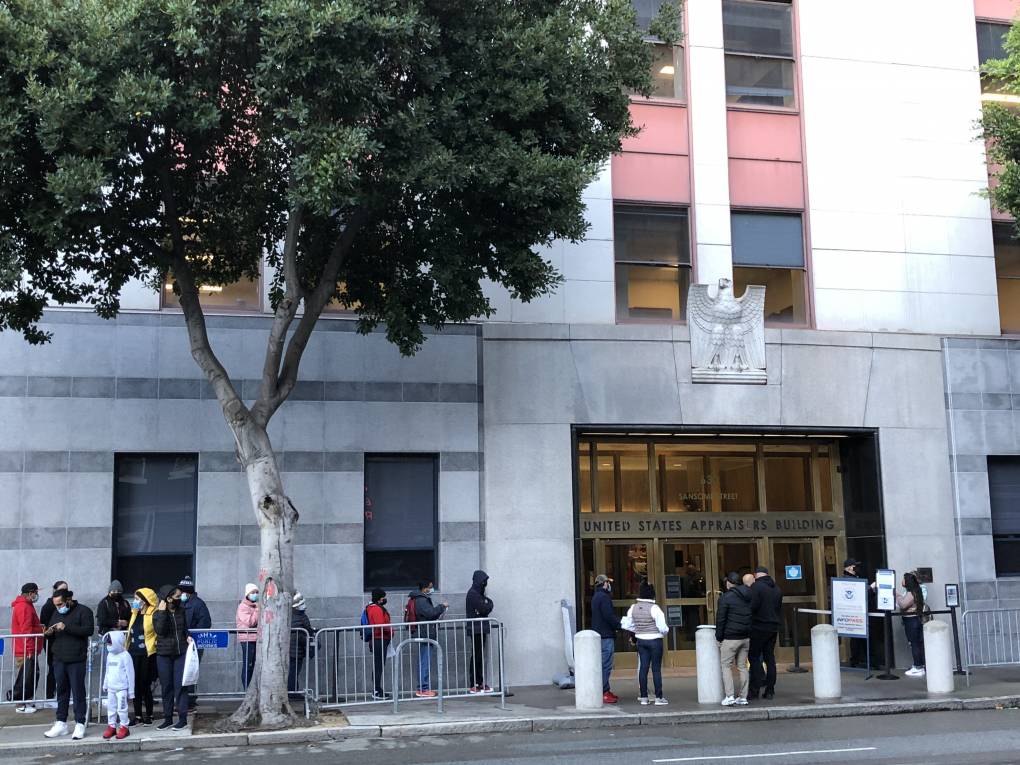
"caption": "People line up to go through security at 630 Sansome St. in San Francisco on Dec. 15, 2021, where the Executive Office for Immigration Review holds hearings for immigrants held in detention.",
"credit": "Tyche Hendricks/KQED",
"altTag": "People stand in line outside of a court building.",
"description": null,
"imgSizes": {
"medium": {
"file": "https://cdn.kqed.org/wp-content/uploads/sites/10/2022/01/IMG_4486-800x600.jpeg",
"width": 800,
"height": 600,
"mimeType": "image/jpeg"
},
"large": {
"file": "https://cdn.kqed.org/wp-content/uploads/sites/10/2022/01/IMG_4486-1020x765.jpeg",
"width": 1020,
"height": 765,
"mimeType": "image/jpeg"
},
"thumbnail": {
"file": "https://cdn.kqed.org/wp-content/uploads/sites/10/2022/01/IMG_4486-160x120.jpeg",
"width": 160,
"height": 120,
"mimeType": "image/jpeg"
},
"1536x1536": {
"file": "https://cdn.kqed.org/wp-content/uploads/sites/10/2022/01/IMG_4486-1536x1152.jpeg",
"width": 1536,
"height": 1152,
"mimeType": "image/jpeg"
},
"2048x2048": {
"file": "https://cdn.kqed.org/wp-content/uploads/sites/10/2022/01/IMG_4486-2048x1536.jpeg",
"width": 2048,
"height": 1536,
"mimeType": "image/jpeg"
},
"post-thumbnail": {
"file": "https://cdn.kqed.org/wp-content/uploads/sites/10/2022/01/IMG_4486-672x372.jpeg",
"width": 672,
"height": 372,
"mimeType": "image/jpeg"
},
"twentyfourteen-full-width": {
"file": "https://cdn.kqed.org/wp-content/uploads/sites/10/2022/01/IMG_4486-1038x576.jpeg",
"width": 1038,
"height": 576,
"mimeType": "image/jpeg"
},
"full-width": {
"file": "https://cdn.kqed.org/wp-content/uploads/sites/10/2022/01/IMG_4486-1920x1440.jpeg",
"width": 1920,
"height": 1440,
"mimeType": "image/jpeg"
},
"kqedFullSize": {
"file": "https://cdn.kqed.org/wp-content/uploads/sites/10/2022/01/IMG_4486-scaled-e1642797113744.jpeg",
"width": 1920,
"height": 1440
}
},
"isLoading": false,
"fetchFailed": false
},
"news_11885556": {
"type": "attachments",
"id": "news_11885556",
"meta": {
"index": "attachments_1716263798",
"site": "news",
"id": "11885556",
"found": true
},
"parent": 11885260,
"imgSizes": {
"twentyfourteen-full-width": {
"file": "https://ww2.kqed.org/app/uploads/sites/10/2021/08/BhaiFamily-1038x576.jpg",
"width": 1038,
"mimeType": "image/jpeg",
"height": 576
},
"thumbnail": {
"file": "https://ww2.kqed.org/app/uploads/sites/10/2021/08/BhaiFamily-160x115.jpg",
"width": 160,
"mimeType": "image/jpeg",
"height": 115
},
"post-thumbnail": {
"file": "https://ww2.kqed.org/app/uploads/sites/10/2021/08/BhaiFamily-672x372.jpg",
"width": 672,
"mimeType": "image/jpeg",
"height": 372
},
"kqedFullSize": {
"file": "https://ww2.kqed.org/app/uploads/sites/10/2021/08/BhaiFamily.jpg",
"width": 1920,
"height": 1377
},
"large": {
"file": "https://ww2.kqed.org/app/uploads/sites/10/2021/08/BhaiFamily-1020x732.jpg",
"width": 1020,
"mimeType": "image/jpeg",
"height": 732
},
"1536x1536": {
"file": "https://ww2.kqed.org/app/uploads/sites/10/2021/08/BhaiFamily-1536x1102.jpg",
"width": 1536,
"mimeType": "image/jpeg",
"height": 1102
},
"medium": {
"file": "https://ww2.kqed.org/app/uploads/sites/10/2021/08/BhaiFamily-800x574.jpg",
"width": 800,
"mimeType": "image/jpeg",
"height": 574
}
},
"publishDate": 1629312416,
"modified": 1629312449,
"caption": "Leena Bhai with her family at a recent graduation celebration. Her husband Siddharth has a job at Splunk and an H-1B visa, but because of the years-long wait time many Indian applicants face for an employment-based green card, the Bhais feel like they may have to give up on their 'American dream.'",
"description": "Leena Bhai with her family at a recent graduation celebration. Her husband Siddharth has a job at Splunk and an H-1B visa, but because of the years-long wait time many Indian applicants face for an employment-based green card, the Bhais feel like they may have to give up on their 'American dream.'",
"title": "BhaiFamily",
"credit": "Courtesy of Leena Bhai",
"status": "inherit",
"altTag": null,
"isLoading": false,
"fetchFailed": false
},
"news_11860128": {
"type": "attachments",
"id": "news_11860128",
"meta": {
"index": "attachments_1716263798",
"site": "news",
"id": "11860128",
"found": true
},
"parent": 11860113,
"imgSizes": {
"apple_news_ca_landscape_5_5": {
"file": "https://ww2.kqed.org/app/uploads/sites/10/2021/02/RS47219_IMG_2803-qut-e1613094305542-1044x783.jpg",
"width": 1044,
"mimeType": "image/jpeg",
"height": 783
},
"apple_news_ca_square_4_0": {
"file": "https://ww2.kqed.org/app/uploads/sites/10/2021/02/RS47219_IMG_2803-qut-e1613094305542-470x470.jpg",
"width": 470,
"mimeType": "image/jpeg",
"height": 470
},
"twentyfourteen-full-width": {
"file": "https://ww2.kqed.org/app/uploads/sites/10/2021/02/RS47219_IMG_2803-qut-e1613094305542-1038x576.jpg",
"width": 1038,
"mimeType": "image/jpeg",
"height": 576
},
"thumbnail": {
"file": "https://ww2.kqed.org/app/uploads/sites/10/2021/02/RS47219_IMG_2803-qut-e1613094305542-160x120.jpg",
"width": 160,
"mimeType": "image/jpeg",
"height": 120
},
"post-thumbnail": {
"file": "https://ww2.kqed.org/app/uploads/sites/10/2021/02/RS47219_IMG_2803-qut-e1613094305542-672x372.jpg",
"width": 672,
"mimeType": "image/jpeg",
"height": 372
},
"kqedFullSize": {
"file": "https://ww2.kqed.org/app/uploads/sites/10/2021/02/RS47219_IMG_2803-qut-e1613094305542.jpg",
"width": 1920,
"height": 1440
},
"apple_news_ca_landscape_4_7": {
"file": "https://ww2.kqed.org/app/uploads/sites/10/2021/02/RS47219_IMG_2803-qut-e1613094305542-632x474.jpg",
"width": 632,
"mimeType": "image/jpeg",
"height": 474
},
"large": {
"file": "https://ww2.kqed.org/app/uploads/sites/10/2021/02/RS47219_IMG_2803-qut-e1613094305542-1020x765.jpg",
"width": 1020,
"mimeType": "image/jpeg",
"height": 765
},
"apple_news_ca_landscape_4_0": {
"file": "https://ww2.kqed.org/app/uploads/sites/10/2021/02/RS47219_IMG_2803-qut-e1613094305542-536x402.jpg",
"width": 536,
"mimeType": "image/jpeg",
"height": 402
},
"apple_news_ca_portrait_12_9": {
"file": "https://ww2.kqed.org/app/uploads/sites/10/2021/02/RS47219_IMG_2803-qut-e1613094305542-1122x1440.jpg",
"width": 1122,
"mimeType": "image/jpeg",
"height": 1440
},
"medium": {
"file": "https://ww2.kqed.org/app/uploads/sites/10/2021/02/RS47219_IMG_2803-qut-e1613094305542-800x600.jpg",
"width": 800,
"mimeType": "image/jpeg",
"height": 600
},
"apple_news_ca_portrait_4_0": {
"file": "https://ww2.kqed.org/app/uploads/sites/10/2021/02/RS47219_IMG_2803-qut-e1613094305542-354x472.jpg",
"width": 354,
"mimeType": "image/jpeg",
"height": 472
},
"apple_news_ca_portrait_9_7": {
"file": "https://ww2.kqed.org/app/uploads/sites/10/2021/02/RS47219_IMG_2803-qut-e1613094305542-840x1120.jpg",
"width": 840,
"mimeType": "image/jpeg",
"height": 1120
},
"apple_news_ca_landscape_12_9": {
"file": "https://ww2.kqed.org/app/uploads/sites/10/2021/02/RS47219_IMG_2803-qut-e1613094305542-1832x1374.jpg",
"width": 1832,
"mimeType": "image/jpeg",
"height": 1374
},
"apple_news_ca_square_9_7": {
"file": "https://ww2.kqed.org/app/uploads/sites/10/2021/02/RS47219_IMG_2803-qut-e1613094305542-1104x1104.jpg",
"width": 1104,
"mimeType": "image/jpeg",
"height": 1104
},
"1536x1536": {
"file": "https://ww2.kqed.org/app/uploads/sites/10/2021/02/RS47219_IMG_2803-qut-e1613094305542-1536x1152.jpg",
"width": 1536,
"mimeType": "image/jpeg",
"height": 1152
},
"apple_news_ca_portrait_4_7": {
"file": "https://ww2.kqed.org/app/uploads/sites/10/2021/02/RS47219_IMG_2803-qut-e1613094305542-414x552.jpg",
"width": 414,
"mimeType": "image/jpeg",
"height": 552
},
"apple_news_ca_square_12_9": {
"file": "https://ww2.kqed.org/app/uploads/sites/10/2021/02/RS47219_IMG_2803-qut-e1613094305542-1472x1440.jpg",
"width": 1472,
"mimeType": "image/jpeg",
"height": 1440
},
"apple_news_ca_portrait_5_5": {
"file": "https://ww2.kqed.org/app/uploads/sites/10/2021/02/RS47219_IMG_2803-qut-e1613094305542-687x916.jpg",
"width": 687,
"mimeType": "image/jpeg",
"height": 916
},
"apple_news_ca_square_4_7": {
"file": "https://ww2.kqed.org/app/uploads/sites/10/2021/02/RS47219_IMG_2803-qut-e1613094305542-550x550.jpg",
"width": 550,
"mimeType": "image/jpeg",
"height": 550
},
"apple_news_ca_landscape_9_7": {
"file": "https://ww2.kqed.org/app/uploads/sites/10/2021/02/RS47219_IMG_2803-qut-e1613094305542-1376x1032.jpg",
"width": 1376,
"mimeType": "image/jpeg",
"height": 1032
},
"apple_news_ca_square_5_5": {
"file": "https://ww2.kqed.org/app/uploads/sites/10/2021/02/RS47219_IMG_2803-qut-e1613094305542-912x912.jpg",
"width": 912,
"mimeType": "image/jpeg",
"height": 912
}
},
"publishDate": 1613094275,
"modified": 1613094346,
"caption": "Congresswoman Zoe Lofgren on Political Breakdown.",
"description": null,
"title": "RS47219_IMG_2803-qut",
"credit": null,
"status": "inherit",
"altTag": null,
"isLoading": false,
"fetchFailed": false
}
},
"audioPlayerReducer": {
"postId": "stream_live",
"isPaused": true,
"isPlaying": false,
"pfsActive": false,
"pledgeModalIsOpen": true,
"playerDrawerIsOpen": false,
"liveAudioPlayStartedAt": 0,
"liveAudioPlayContext": ""
},
"authorsReducer": {
"rachael-myrow": {
"type": "authors",
"id": "251",
"meta": {
"index": "authors_1716337520",
"id": "251",
"found": true
},
"name": "Rachael Myrow",
"firstName": "Rachael",
"lastName": "Myrow",
"slug": "rachael-myrow",
"email": "rmyrow@kqed.org",
"display_author_email": true,
"staff_mastheads": [
"news"
],
"title": "Senior Editor of KQED's Silicon Valley News Desk",
"bio": "• I write and edit stories about how Silicon Valley power and policies shape everyday life in California. I’m also passionate about making Bay Area history and culture more accessible to a broad public. • I’ve been a journalist for most of my life, starting in high school with The Franklin Press in Los Angeles, where I grew up. While earning my first degree in English at UC Berkeley, I got my start in public radio at KALX-FM. After completing a second degree in journalism at Cal, I landed my first professional job at Marketplace, then moved on to KPCC (now LAist), and then KQED, where I hosted The California Report for more than seven years. • My reporting has appeared on NPR, The World, WBUR’s \u003ci>Here & Now\u003c/i>, and the BBC. I also guest host for KQED’s \u003ci>Forum\u003c/i>, as well as the Commonwealth Club in San Francisco. • I speak periodically on media, democracy and technology issues, and do voiceover work for documentaries and educational video projects. • Outside of the studio, you'll find me hiking Bay Area trails and whipping up Insta-ready meals in my kitchen. • I do not accept gifts, money, or favors from anyone connected to my reporting, I don't pay people for information, and I do not support or donate to political causes. • I strive to treat the people I report on with fairness, honesty, and respect. I also recognize there are often multiple sides to a story and work to verify information through multiple sources and documentation. If I get something wrong, I correct it.",
"avatar": "https://secure.gravatar.com/avatar/3ed8a3c5f26025e4a805ba634cda8cd764906b97438a6d9ce216b044e340da4e?s=600&d=blank&r=g",
"twitter": "rachaelmyrow",
"bluesky": null,
"facebook": null,
"instagram": null,
"linkedin": "https://www.linkedin.com/in/rachaelmyrow/",
"sites": [
{
"site": "arts",
"roles": [
"administrator"
]
},
{
"site": "news",
"roles": [
"edit_others_posts",
"editor"
]
},
{
"site": "futureofyou",
"roles": [
"editor"
]
},
{
"site": "bayareabites",
"roles": [
"editor"
]
},
{
"site": "stateofhealth",
"roles": [
"editor"
]
},
{
"site": "science",
"roles": [
"editor"
]
},
{
"site": "food",
"roles": [
"editor"
]
},
{
"site": "forum",
"roles": [
"editor"
]
},
{
"site": "liveblog",
"roles": [
"author"
]
}
],
"headData": {
"title": "Rachael Myrow | KQED",
"description": "Senior Editor of KQED's Silicon Valley News Desk",
"ogImgSrc": "https://secure.gravatar.com/avatar/3ed8a3c5f26025e4a805ba634cda8cd764906b97438a6d9ce216b044e340da4e?s=600&d=blank&r=g",
"twImgSrc": "https://secure.gravatar.com/avatar/3ed8a3c5f26025e4a805ba634cda8cd764906b97438a6d9ce216b044e340da4e?s=600&d=blank&r=g"
},
"isLoading": false,
"link": "/author/rachael-myrow"
},
"scottshafer": {
"type": "authors",
"id": "255",
"meta": {
"index": "authors_1716337520",
"id": "255",
"found": true
},
"name": "Scott Shafer",
"firstName": "Scott",
"lastName": "Shafer",
"slug": "scottshafer",
"email": "sshafer@kqed.org",
"display_author_email": false,
"staff_mastheads": [
"news"
],
"title": "KQED Contributor",
"bio": "Scott Shafer is a senior editor with the KQED Politics and Government desk. He is co-host of Political Breakdown, the award-winning radio show and podcast with a personal take on the world of politics. Scott came to KQED in 1998 to host the statewide\u003cem> California Report\u003c/em>. Prior to that he had extended stints in politics and government\u003cem>.\u003c/em> He uses that inside experience at KQED in his, reporting, hosting and analysis for the politics desk. Scott collaborated \u003cem>Political Breakdown a\u003c/em>nd on \u003cem>The Political Mind of Jerry Brown, \u003c/em>an eight-part series about the life and extraordinary political career of the former governor. For fun, he plays water polo with the San Francisco Tsunami.",
"avatar": "https://secure.gravatar.com/avatar/a62ebae45b79d7aed1a39a0e3bf68104?s=600&d=blank&r=g",
"twitter": "scottshafer",
"bluesky": null,
"facebook": null,
"instagram": null,
"linkedin": null,
"sites": [
{
"site": "news",
"roles": [
"editor"
]
},
{
"site": "stateofhealth",
"roles": [
"author"
]
},
{
"site": "science",
"roles": [
"author"
]
},
{
"site": "forum",
"roles": [
"subscriber"
]
},
{
"site": "liveblog",
"roles": [
"author"
]
}
],
"headData": {
"title": "Scott Shafer | KQED",
"description": "KQED Contributor",
"ogImgSrc": "https://secure.gravatar.com/avatar/a62ebae45b79d7aed1a39a0e3bf68104?s=600&d=blank&r=g",
"twImgSrc": "https://secure.gravatar.com/avatar/a62ebae45b79d7aed1a39a0e3bf68104?s=600&d=blank&r=g"
},
"isLoading": false,
"link": "/author/scottshafer"
},
"tychehendricks": {
"type": "authors",
"id": "259",
"meta": {
"index": "authors_1716337520",
"id": "259",
"found": true
},
"name": "Tyche Hendricks",
"firstName": "Tyche",
"lastName": "Hendricks",
"slug": "tychehendricks",
"email": "thendricks@kqed.org",
"display_author_email": true,
"staff_mastheads": [
"news"
],
"title": "KQED Senior Editor, Immigration",
"bio": "\u003cspan style=\"font-weight: 400;\">Tyche Hendricks is KQED’s senior editor for immigration, leading coverage of the policy and politics that affect California’s immigrant communities. Her work for KQED’s radio and online audiences is also carried on NPR and other national outlets. She has been recognized with awards from the Radio and Television News Directors Association, the Society for Professional Journalists; the Education Writers Association; the Best of the West and the National Federation of Community Broadcasters. Before joining KQED in 2010, Tyche spent more than a dozen years as a newspaper reporter, notably at the \u003c/span>\u003ci>\u003cspan style=\"font-weight: 400;\">San Francisco Chronicle\u003c/span>\u003c/i>\u003cspan style=\"font-weight: 400;\">. At different times she has covered criminal justice, government and politics and urban planning. Tyche has taught in the MFA Creative Writing program at the University of San Francisco and at UC Berkeley’s Graduate School of Journalism, where she was co-director of a national immigration symposium for professional journalists. She is the author of \u003c/span>\u003ci>\u003cspan style=\"font-weight: 400;\">The Wind Doesn't Need a Passport: Stories from the U.S.-Mexico Borderlands\u003c/span>\u003c/i>\u003cspan style=\"font-weight: 400;\"> (University of California Press). \u003c/span>",
"avatar": "https://secure.gravatar.com/avatar/b8ee458e2731c2d43df86882ce17267e?s=600&d=blank&r=g",
"twitter": "tychehendricks",
"facebook": null,
"instagram": null,
"linkedin": null,
"sites": [
{
"site": "news",
"roles": [
"editor"
]
},
{
"site": "stateofhealth",
"roles": [
"editor"
]
}
],
"headData": {
"title": "Tyche Hendricks | KQED",
"description": "KQED Senior Editor, Immigration",
"ogImgSrc": "https://secure.gravatar.com/avatar/b8ee458e2731c2d43df86882ce17267e?s=600&d=blank&r=g",
"twImgSrc": "https://secure.gravatar.com/avatar/b8ee458e2731c2d43df86882ce17267e?s=600&d=blank&r=g"
},
"isLoading": false,
"link": "/author/tychehendricks"
},
"mlagos": {
"type": "authors",
"id": "3239",
"meta": {
"index": "authors_1716337520",
"id": "3239",
"found": true
},
"name": "Marisa Lagos",
"firstName": "Marisa",
"lastName": "Lagos",
"slug": "mlagos",
"email": "mlagos@kqed.org",
"display_author_email": false,
"staff_mastheads": [
"news"
],
"title": "KQED Contributor",
"bio": "Marisa Lagos is a correspondent for KQED’s California Politics and Government Desk and co-hosts the award-winning show and podcast, Political Breakdown. At KQED, Lagos also conducts reporting, analysis and investigations into state, local and national politics for radio, TV, online and onstage. In 2022, she and co-host, Scott Shafer, moderated the only gubernatorial debate in California. In 2020, the \u003ci>Washington Post\u003c/i> named her one of the top political journalists in California; she was nominated for a Peabody and won several other awards for her work investigating the 2017 California wildfires. She has worked at the \u003ci>San Francisco Chronicle\u003c/i>, \u003ci>San Francisco Examiner\u003c/i> and \u003ci>Los Angeles Times\u003c/i>. A UC Santa Barbara graduate, she lives in San Francisco with her two sons and husband.",
"avatar": "https://secure.gravatar.com/avatar/a261a0d3696fc066871ef96b85b5e7d2?s=600&d=blank&r=g",
"twitter": "@mlagos",
"facebook": null,
"instagram": null,
"linkedin": null,
"sites": [
{
"site": "arts",
"roles": [
"author"
]
},
{
"site": "news",
"roles": [
"editor"
]
},
{
"site": "science",
"roles": [
"editor"
]
},
{
"site": "forum",
"roles": [
"author"
]
},
{
"site": "liveblog",
"roles": [
"author"
]
}
],
"headData": {
"title": "Marisa Lagos | KQED",
"description": "KQED Contributor",
"ogImgSrc": "https://secure.gravatar.com/avatar/a261a0d3696fc066871ef96b85b5e7d2?s=600&d=blank&r=g",
"twImgSrc": "https://secure.gravatar.com/avatar/a261a0d3696fc066871ef96b85b5e7d2?s=600&d=blank&r=g"
},
"isLoading": false,
"link": "/author/mlagos"
},
"mfederis": {
"type": "authors",
"id": "11509",
"meta": {
"index": "authors_1716337520",
"id": "11509",
"found": true
},
"name": "Marnette Federis",
"firstName": "Marnette",
"lastName": "Federis",
"slug": "mfederis",
"email": "mfederis@kqed.org",
"display_author_email": false,
"staff_mastheads": [],
"title": "KQED Contributor",
"bio": null,
"avatar": "https://secure.gravatar.com/avatar/4e22db56276fd54eaeb4ec94c12662c6c695a321a263331af03448665369ad7f?s=600&d=mm&r=g",
"twitter": null,
"bluesky": null,
"facebook": null,
"instagram": null,
"linkedin": null,
"sites": [
{
"site": "arts",
"roles": [
"editor"
]
},
{
"site": "news",
"roles": [
"editor"
]
},
{
"site": "mindshift",
"roles": [
"editor"
]
},
{
"site": "science",
"roles": [
"editor"
]
},
{
"site": "forum",
"roles": [
"editor"
]
},
{
"site": "podcasts",
"roles": [
"editor"
]
},
{
"site": "elections",
"roles": [
"editor"
]
}
],
"headData": {
"title": "Marnette Federis | KQED",
"description": "KQED Contributor",
"ogImgSrc": "https://secure.gravatar.com/avatar/4e22db56276fd54eaeb4ec94c12662c6c695a321a263331af03448665369ad7f?s=600&d=mm&r=g",
"twImgSrc": "https://secure.gravatar.com/avatar/4e22db56276fd54eaeb4ec94c12662c6c695a321a263331af03448665369ad7f?s=600&d=mm&r=g"
},
"isLoading": false,
"link": "/author/mfederis"
},
"kmizuguchi": {
"type": "authors",
"id": "11739",
"meta": {
"index": "authors_1716337520",
"id": "11739",
"found": true
},
"name": "Keith Mizuguchi",
"firstName": "Keith",
"lastName": "Mizuguchi",
"slug": "kmizuguchi",
"email": "kmizuguchi@kqed.org",
"display_author_email": false,
"staff_mastheads": [],
"title": "KQED Contributor",
"bio": null,
"avatar": "https://secure.gravatar.com/avatar/64d8a7de0723d4099b9fe4e915136103febcc20809abce228ee4415bcb237023?s=600&d=blank&r=g",
"twitter": null,
"bluesky": null,
"facebook": null,
"instagram": null,
"linkedin": null,
"sites": [
{
"site": "news",
"roles": [
"editor"
]
},
{
"site": "science",
"roles": [
"editor"
]
}
],
"headData": {
"title": "Keith Mizuguchi | KQED",
"description": "KQED Contributor",
"ogImgSrc": "https://secure.gravatar.com/avatar/64d8a7de0723d4099b9fe4e915136103febcc20809abce228ee4415bcb237023?s=600&d=blank&r=g",
"twImgSrc": "https://secure.gravatar.com/avatar/64d8a7de0723d4099b9fe4e915136103febcc20809abce228ee4415bcb237023?s=600&d=blank&r=g"
},
"isLoading": false,
"link": "/author/kmizuguchi"
},
"nnavarro": {
"type": "authors",
"id": "11756",
"meta": {
"index": "authors_1716337520",
"id": "11756",
"found": true
},
"name": "Natalia Navarro",
"firstName": "Natalia",
"lastName": "Navarro",
"slug": "nnavarro",
"email": "nnavarro@kqed.org",
"display_author_email": true,
"staff_mastheads": [
"news"
],
"title": "Afternoon News Anchor",
"bio": "Natalia Navarro is KQED's afternoon radio news anchor. She came to KQED in 2021 from Colorado Public Radio, where she was a reporter and host. She has received several awards for her work covering daily and breaking news from professional organizations such as the San Francisco Press Club, Society of Professional Journalists and the Colorado Broadcasters Association. Natalia is originally from Tucson, Arizona, where she got her start in journalism writing for the Arizona Daily Star, Arizona Public Media and the Tucson Weekly. Natalia earned her bachelor's degree in journalism and economics, and her master's degree in journalism from the University of Arizona.",
"avatar": "https://secure.gravatar.com/avatar/a2bdb19fd9520bdea295a2d5f9b2ad65ec51cf0bf559fb1cc041d3a0a04d62ad?s=600&d=blank&r=g",
"twitter": "@NataliaVNavarro",
"bluesky": null,
"facebook": null,
"instagram": null,
"linkedin": null,
"sites": [
{
"site": "news",
"roles": [
"editor"
]
}
],
"headData": {
"title": "Natalia Navarro | KQED",
"description": "Afternoon News Anchor",
"ogImgSrc": "https://secure.gravatar.com/avatar/a2bdb19fd9520bdea295a2d5f9b2ad65ec51cf0bf559fb1cc041d3a0a04d62ad?s=600&d=blank&r=g",
"twImgSrc": "https://secure.gravatar.com/avatar/a2bdb19fd9520bdea295a2d5f9b2ad65ec51cf0bf559fb1cc041d3a0a04d62ad?s=600&d=blank&r=g"
},
"isLoading": false,
"link": "/author/nnavarro"
},
"jgeha": {
"type": "authors",
"id": "11906",
"meta": {
"index": "authors_1716337520",
"id": "11906",
"found": true
},
"name": "Joseph Geha",
"firstName": "Joseph",
"lastName": "Geha",
"slug": "jgeha",
"email": "jgeha@kqed.org",
"display_author_email": false,
"staff_mastheads": [
"news",
"science"
],
"title": "KQED Contributor",
"bio": null,
"avatar": "https://secure.gravatar.com/avatar/ea84d2b6dd93d6369d453edf19dd583f117cd1759d2d9c9c92f9de77017354fe?s=600&d=blank&r=g",
"twitter": null,
"bluesky": null,
"facebook": null,
"instagram": null,
"linkedin": null,
"sites": [
{
"site": "news",
"roles": [
"editor"
]
},
{
"site": "liveblog",
"roles": [
"author"
]
}
],
"headData": {
"title": "Joseph Geha | KQED",
"description": "KQED Contributor",
"ogImgSrc": "https://secure.gravatar.com/avatar/ea84d2b6dd93d6369d453edf19dd583f117cd1759d2d9c9c92f9de77017354fe?s=600&d=blank&r=g",
"twImgSrc": "https://secure.gravatar.com/avatar/ea84d2b6dd93d6369d453edf19dd583f117cd1759d2d9c9c92f9de77017354fe?s=600&d=blank&r=g"
},
"isLoading": false,
"link": "/author/jgeha"
},
"aaliahmad": {
"type": "authors",
"id": "11986",
"meta": {
"index": "authors_1716337520",
"id": "11986",
"found": true
},
"name": "Ayah Ali-Ahmad",
"firstName": "Ayah",
"lastName": "Ali-Ahmad",
"slug": "aaliahmad",
"email": "aaliahmad@KQED.org",
"display_author_email": false,
"staff_mastheads": [],
"title": "KQED Contributor",
"bio": null,
"avatar": "https://secure.gravatar.com/avatar/1cf54f187a5e1064b2cfef3f3d2f1e4f93e453395d56912aca6382a6071ec3ed?s=600&d=blank&r=g",
"twitter": "ayahaliahmad",
"bluesky": null,
"facebook": null,
"instagram": null,
"linkedin": null,
"sites": [
{
"site": "news",
"roles": [
"subscriber"
]
}
],
"headData": {
"title": "Ayah Ali-Ahmad | KQED",
"description": "KQED Contributor",
"ogImgSrc": "https://secure.gravatar.com/avatar/1cf54f187a5e1064b2cfef3f3d2f1e4f93e453395d56912aca6382a6071ec3ed?s=600&d=blank&r=g",
"twImgSrc": "https://secure.gravatar.com/avatar/1cf54f187a5e1064b2cfef3f3d2f1e4f93e453395d56912aca6382a6071ec3ed?s=600&d=blank&r=g"
},
"isLoading": false,
"link": "/author/aaliahmad"
}
},
"pagesReducer": {
"news_tag_zoe-lofgren": {
"type": "terms",
"id": "news_2013",
"meta": {
"index": "terms_1716263798",
"site": "news",
"id": "2013",
"score": 10.404648
},
"featImg": null,
"name": "Zoe Lofgren",
"description": null,
"taxonomy": "tag",
"headData": {
"twImgId": null,
"twTitle": null,
"ogTitle": null,
"ogImgId": null,
"twDescription": null,
"description": null,
"title": "Zoe Lofgren Archives | KQED News",
"ogDescription": null
},
"ttid": 2028,
"slug": "zoe-lofgren",
"isLoading": false,
"title": "Zoe Lofgren",
"pageMeta": {
"site": "news",
"WpPageTemplate": "page-topic-editorial",
"currentPage": 1
},
"blocks": [
{
"blockName": "kqed/post-list",
"attrs": {
"layout": "cardArticle2",
"query": "posts/news?tag=zoe-lofgren",
"seeMore": false,
"paginated": true,
"page": 1
}
},
{
"blockName": "kqed/ad"
}
]
}
},
"pfsSessionReducer": {},
"postsReducer": {
"stream_live": {
"type": "live",
"id": "stream_live",
"audioUrl": "https://streams.kqed.org/kqedradio",
"title": "Live Stream",
"excerpt": "Live Stream information currently unavailable.",
"link": "/radio",
"featImg": "",
"label": {
"name": "KQED Live",
"link": "/"
}
},
"stream_kqedNewscast": {
"type": "posts",
"id": "stream_kqedNewscast",
"audioUrl": "https://www.kqed.org/.stream/anon/radio/RDnews/newscast.mp3?_=1",
"title": "KQED Newscast",
"featImg": "",
"label": {
"name": "88.5 FM",
"link": "/"
}
},
"news_12075582": {
"type": "posts",
"id": "news_12075582",
"meta": {
"index": "posts_1716263798",
"site": "news",
"id": "12075582",
"score": null,
"sort": [
1772825900000
]
},
"guestAuthors": [],
"slug": "california-farm-town-caught-up-in-prop-50-redistricting",
"title": "California Farm Town Caught Up in Prop 50 Redistricting",
"publishDate": 1772825900,
"format": "standard",
"headTitle": "California Farm Town Caught Up in Prop 50 Redistricting | KQED",
"labelTerm": {},
"content": "\u003cp>\u003cb>Here are the morning’s top stories on Friday, March 6, 2026\u003c/b>\u003c/p>\n\u003cul>\n\u003cli style=\"font-weight: 400\">\u003cspan style=\"font-weight: 400\">Proposition 50 is now in effect in California. The law redrew political boundaries for congressional districts. And one of the communities soon to have new congressional representation in Washington DC is Coalinga. This small, agricultural town on Fresno County’s west side is now going to be part of a district that stretches more than 100 miles to the north. \u003c/span>\u003c/li>\n\u003cli style=\"font-weight: 400\">\u003cspan style=\"font-weight: 400\">Former state assemblymember Ian Calderon is dropping out of the governor’s race and throwing his support behind Democratic Congressmember Eric Swalwell.\u003c/span>\u003c/li>\n\u003c/ul>\n\u003ch2 class=\"ArtP-headline\">\u003ca href=\"https://www.kvpr.org/government-politics/2026-02-27/a-tiny-california-farm-town-will-join-a-house-district-that-touches-silicon-valley\">\u003cstrong>A tiny California farm town will join a House district that touches Silicon Valley\u003c/strong>\u003c/a>\u003c/h2>\n\u003cp>A new law, Proposition 50, is reshaping California’s political boundaries, and one rural town in the Central Valley is feeling the impact. Prop 50, which was overwhelmingly approved by California voters last fall, redrew congressional district lines across the state. The move came as Democratic leaders sought to counter political efforts in Texas to redraw congressional maps in favor of Republicans.\u003c/p>\n\u003cp>In California’s rural San Joaquin Valley, one of the communities that has landed in a newly configured district is Coalinga. This agricultural town of 17,000 in western Fresno County will now be part of Congressional District 18. The district covers a region that stretches over 100 miles northwest to Gilroy, Salinas, and even San Jose.\u003c/p>\n\u003cp>The town, which is tucked in the western hills of the Valley, is surrounded by oil fields and farmland. It’s the kind of place where people grow up, leave, and then return. It’s also a place where everybody knows everybody. Robert Pimentel, the chancellor of the West Hills Community College District, has lived that life. He calls Coalinga, “a little jewel out here on the west side.” He says Coalinga used to be powered by prisons, a state hospital, and oil fields. Slowly, that’s been changing – just as political representation has. Before Prop 50, Coalinga belonged to Congressional District 13 and was represented by Democratic Congressman Adam Gray. Now under District 18, the town will be represented by Democratic Congresswoman Zoe Lofgren if she is reelected.\u003c/p>\n\u003cp>In this politically conservative town, that shift has sparked mixed reactions. In 2024, most voters here supported President Donald Trump. Theresa Dancses says she sees the change as being part of a “tit-for-tat” over redistricting going on nationally, and she worries about losing Republican representation in the process. Her biggest concern? Agriculture. “I think that’ll be overlooked big time, because we already don’t get enough water,” Dancses says.\u003c/p>\n\u003cp>[ad fullwidth]\u003c/p>\n\u003cp>Debbie Hill, a Coalinga resident and lifelong Republican, says Democratic leaders don’t reflect her values. “I’m a Republican all my life,” Hill says. “I vote Republican, and so I want a Republican, not a Democrat woman, because I don’t even like having a Democrat governor.” She worries that lawmakers may not fully understand communities like Coalinga, or even know where the town is located.\u003c/p>\n\u003cp>Congresswoman Lofgren says she recognizes that the Valley is different, which presents its challenges but also some opportunities. Her current district already blends agriculture with Silicon Valley tech, giving her experience navigating both the ag world and the tech world. “That’s been fun,” Lofgren told KVPR. “But what I’ve learned is you don’t go in and tell people what to think. You go in and listen to what they have, to tell you what they need and how you can help them.”\u003c/p>\n\u003ch2>\u003cstrong>Calderon drops out of gubernatorial race\u003c/strong>\u003c/h2>\n\u003cp>Former State \u003ca href=\"https://www.kqed.org/news/12073866/californias-first-millennial-lawmaker-ian-calderon-makes-his-case-for-governor\">Assemblymember Ian Calderon\u003c/a> \u003ca href=\"https://calmatters.org/politics/2026/03/glut-of-democrats-governor/\">has dropped out of the California gubernatorial race\u003c/a>. He’s throwing his support behind Democratic Congressmember Eric Swalwell.\u003c/p>\n\u003cp>“Ultimately, every candidate has to make a clear-eyed assessment about whether they can assemble the resources necessary to run a competitive statewide campaign,” Calderon said in a statement. “In a race of this scale, a message only matters if you have the resources to ensure Californians can actually see and hear it.” This comes after California Democratic Party Chair Rusty Hicks wrote \u003ca href=\"https://cadem.org/open-letter-to-the-democratic-candidates-for-governor/\">an open letter\u003c/a> this week, calling on Democratic candidates who were not polling well to drop out of the race, to avoid the possibility that two Republicans could advance to a runoff in the fall.\u003c/p>\n\u003cp>\u003c/p>\n\u003cp>Calderon has been polling in the low-single digits and said he doesn’t have the resources to make his case to Californians. The 40-year-old father of four said he’s backing Swalwell because he, too represents a new generation of leadership focused on making the state more affordable.\u003c/p>\n\n",
"blocks": [],
"excerpt": "Coalinga is now going to be part of a district that stretches more than 100 miles to the north. ",
"status": "publish",
"parent": 0,
"modified": 1772825900,
"stats": {
"hasAudio": false,
"hasVideo": false,
"hasChartOrMap": false,
"iframeSrcs": [],
"hasGoogleForm": false,
"hasGallery": false,
"hasHearkenModule": false,
"hasPolis": false,
"paragraphCount": 12,
"wordCount": 808
},
"headData": {
"title": "California Farm Town Caught Up in Prop 50 Redistricting | KQED",
"description": "Coalinga is now going to be part of a district that stretches more than 100 miles to the north. ",
"ogTitle": "",
"ogDescription": "",
"ogImgId": "",
"twTitle": "",
"twDescription": "",
"twImgId": "",
"schema": {
"@context": "https://schema.org",
"@type": "NewsArticle",
"headline": "California Farm Town Caught Up in Prop 50 Redistricting",
"datePublished": "2026-03-06T11:38:20-08:00",
"dateModified": "2026-03-06T11:38:20-08:00",
"image": "https://cdn.kqed.org/wp-content/uploads/2020/02/KQED-OG-Image@1x.png",
"isAccessibleForFree": "True",
"publisher": {
"@type": "NewsMediaOrganization",
"@id": "https://www.kqed.org/#organization",
"name": "KQED",
"logo": "https://cdn.kqed.org/wp-content/uploads/2020/02/KQED-OG-Image@1x.png",
"url": "https://www.kqed.org",
"sameAs": [
"https://www.facebook.com/KQED",
"https://twitter.com/KQED",
"https://www.instagram.com/kqed/",
"https://www.tiktok.com/@kqedofficial",
"https://www.linkedin.com/company/kqed",
"https://www.youtube.com/channel/UCeC0IOo7i1P_61zVUWbJ4nw"
]
}
}
},
"primaryCategory": {
"termId": 33520,
"slug": "podcast",
"name": "Podcast"
},
"source": "The California Report",
"sourceUrl": "https://www.kqed.org/news/tag/tcrarchive/",
"audioUrl": "https://www.podtrac.com/pts/redirect.mp3/traffic.megaphone.fm/KQINC6411124269.mp3?updated=1772809918",
"sticky": false,
"nprStoryId": "kqed-12075582",
"templateType": "standard",
"featuredImageType": "standard",
"excludeFromSiteSearch": "Include",
"articleAge": "0",
"path": "/news/12075582/california-farm-town-caught-up-in-prop-50-redistricting",
"audioTrackLength": null,
"parsedContent": [
{
"type": "contentString",
"content": "\u003cdiv class=\"post-body\">\u003cp>\u003cp>\u003cb>Here are the morning’s top stories on Friday, March 6, 2026\u003c/b>\u003c/p>\n\u003cul>\n\u003cli style=\"font-weight: 400\">\u003cspan style=\"font-weight: 400\">Proposition 50 is now in effect in California. The law redrew political boundaries for congressional districts. And one of the communities soon to have new congressional representation in Washington DC is Coalinga. This small, agricultural town on Fresno County’s west side is now going to be part of a district that stretches more than 100 miles to the north. \u003c/span>\u003c/li>\n\u003cli style=\"font-weight: 400\">\u003cspan style=\"font-weight: 400\">Former state assemblymember Ian Calderon is dropping out of the governor’s race and throwing his support behind Democratic Congressmember Eric Swalwell.\u003c/span>\u003c/li>\n\u003c/ul>\n\u003ch2 class=\"ArtP-headline\">\u003ca href=\"https://www.kvpr.org/government-politics/2026-02-27/a-tiny-california-farm-town-will-join-a-house-district-that-touches-silicon-valley\">\u003cstrong>A tiny California farm town will join a House district that touches Silicon Valley\u003c/strong>\u003c/a>\u003c/h2>\n\u003cp>A new law, Proposition 50, is reshaping California’s political boundaries, and one rural town in the Central Valley is feeling the impact. Prop 50, which was overwhelmingly approved by California voters last fall, redrew congressional district lines across the state. The move came as Democratic leaders sought to counter political efforts in Texas to redraw congressional maps in favor of Republicans.\u003c/p>\n\u003cp>In California’s rural San Joaquin Valley, one of the communities that has landed in a newly configured district is Coalinga. This agricultural town of 17,000 in western Fresno County will now be part of Congressional District 18. The district covers a region that stretches over 100 miles northwest to Gilroy, Salinas, and even San Jose.\u003c/p>\n\u003cp>The town, which is tucked in the western hills of the Valley, is surrounded by oil fields and farmland. It’s the kind of place where people grow up, leave, and then return. It’s also a place where everybody knows everybody. Robert Pimentel, the chancellor of the West Hills Community College District, has lived that life. He calls Coalinga, “a little jewel out here on the west side.” He says Coalinga used to be powered by prisons, a state hospital, and oil fields. Slowly, that’s been changing – just as political representation has. Before Prop 50, Coalinga belonged to Congressional District 13 and was represented by Democratic Congressman Adam Gray. Now under District 18, the town will be represented by Democratic Congresswoman Zoe Lofgren if she is reelected.\u003c/p>\n\u003cp>In this politically conservative town, that shift has sparked mixed reactions. In 2024, most voters here supported President Donald Trump. Theresa Dancses says she sees the change as being part of a “tit-for-tat” over redistricting going on nationally, and she worries about losing Republican representation in the process. Her biggest concern? Agriculture. “I think that’ll be overlooked big time, because we already don’t get enough water,” Dancses says.\u003c/p>\n\u003cp>\u003c/p>\u003c/div>",
"attributes": {
"named": {},
"numeric": []
}
},
{
"type": "component",
"content": "",
"name": "ad",
"attributes": {
"named": {
"label": "fullwidth"
},
"numeric": [
"fullwidth"
]
}
},
{
"type": "contentString",
"content": "\u003cdiv class=\"post-body\">\u003cp>\u003c/p>\n\u003cp>Debbie Hill, a Coalinga resident and lifelong Republican, says Democratic leaders don’t reflect her values. “I’m a Republican all my life,” Hill says. “I vote Republican, and so I want a Republican, not a Democrat woman, because I don’t even like having a Democrat governor.” She worries that lawmakers may not fully understand communities like Coalinga, or even know where the town is located.\u003c/p>\n\u003cp>Congresswoman Lofgren says she recognizes that the Valley is different, which presents its challenges but also some opportunities. Her current district already blends agriculture with Silicon Valley tech, giving her experience navigating both the ag world and the tech world. “That’s been fun,” Lofgren told KVPR. “But what I’ve learned is you don’t go in and tell people what to think. You go in and listen to what they have, to tell you what they need and how you can help them.”\u003c/p>\n\u003ch2>\u003cstrong>Calderon drops out of gubernatorial race\u003c/strong>\u003c/h2>\n\u003cp>Former State \u003ca href=\"https://www.kqed.org/news/12073866/californias-first-millennial-lawmaker-ian-calderon-makes-his-case-for-governor\">Assemblymember Ian Calderon\u003c/a> \u003ca href=\"https://calmatters.org/politics/2026/03/glut-of-democrats-governor/\">has dropped out of the California gubernatorial race\u003c/a>. He’s throwing his support behind Democratic Congressmember Eric Swalwell.\u003c/p>\n\u003cp>“Ultimately, every candidate has to make a clear-eyed assessment about whether they can assemble the resources necessary to run a competitive statewide campaign,” Calderon said in a statement. “In a race of this scale, a message only matters if you have the resources to ensure Californians can actually see and hear it.” This comes after California Democratic Party Chair Rusty Hicks wrote \u003ca href=\"https://cadem.org/open-letter-to-the-democratic-candidates-for-governor/\">an open letter\u003c/a> this week, calling on Democratic candidates who were not polling well to drop out of the race, to avoid the possibility that two Republicans could advance to a runoff in the fall.\u003c/p>\n\u003cp>\u003c/p>\n\u003cp>Calderon has been polling in the low-single digits and said he doesn’t have the resources to make his case to Californians. The 40-year-old father of four said he’s backing Swalwell because he, too represents a new generation of leadership focused on making the state more affordable.\u003c/p>\n\n\u003c/div>\u003c/p>",
"attributes": {
"named": {},
"numeric": []
}
}
],
"link": "/news/12075582/california-farm-town-caught-up-in-prop-50-redistricting",
"authors": [
"11739"
],
"programs": [
"news_72"
],
"categories": [
"news_33520",
"news_34018"
],
"tags": [
"news_36604",
"news_21216",
"news_29774",
"news_36524",
"news_35913",
"news_282",
"news_21998",
"news_21268",
"news_2013"
],
"featImg": "news_12075583",
"label": "source_news_12075582"
},
"news_12071297": {
"type": "posts",
"id": "news_12071297",
"meta": {
"index": "posts_1716263798",
"site": "news",
"id": "12071297",
"score": null,
"sort": [
1769632032000
]
},
"guestAuthors": [],
"slug": "bay-area-congressman-ramps-up-push-to-bring-ice-detention-conditions-to-light",
"title": "Bay Area Congressman Ramps Up Push to Bring ICE Detention Conditions to Light",
"publishDate": 1769632032,
"format": "standard",
"headTitle": "Bay Area Congressman Ramps Up Push to Bring ICE Detention Conditions to Light | KQED",
"labelTerm": {
"site": "news"
},
"content": "\u003cp>South Bay Rep. Ro Khanna is ramping up congressional Democrats’ push for accountability at the California City immigration detention facility in the Mojave Desert after making \u003ca href=\"https://www.kqed.org/news/12069220/south-bay-rep-ro-khanna-horrified-after-visit-to-california-city-ice-detention-center\">an oversight visit\u003c/a> this month that he described as “alarming.”\u003c/p>\n\u003cp>In a recent letter to Homeland Security Secretary Kristi Noem and acting Director of U.S. Immigration and Customs Enforcement Todd Lyons, Khanna demanded that the Trump administration turn over records on health and safety conditions at the former prison.\u003c/p>\n\u003cp>In an interview with KQED, Khanna echoed the widespread condemnation of the administration’s violent immigration enforcement escalation, which has swelled after the shooting of Alex Pretti, the second Minneapolis resident to be killed by DHS agents this month. Khanna said the behavior of immigration agents in Minneapolis and inside ICE detention centers — where a record 70,000 people are now detained — is two facets of the same problem.\u003c/p>\n\u003cp>[ad fullwidth]\u003c/p>\n\u003cp>“It’s lawlessness,” he said. “They’re mistreating immigrants on our streets, and they’re mistreating immigrants in detention. It’s violating the Constitution of the United States, and it’s violating our values.”\u003c/p>\n\u003cp>Six people have died in custody this month alone, according to ICE. That comes on top of 32 deaths in 2025, the highest number in two decades.\u003c/p>\n\u003cfigure id=\"attachment_12049483\" class=\"wp-caption aligncenter\" style=\"max-width: 2000px\">\u003cimg loading=\"lazy\" decoding=\"async\" class=\"size-full wp-image-12049483\" src=\"https://cdn.kqed.org/wp-content/uploads/sites/10/2025/07/250323-DEM-TOWN-HALLS-MD-19-KQED.jpg\" alt=\"\" width=\"2000\" height=\"1333\" srcset=\"https://cdn.kqed.org/wp-content/uploads/sites/10/2025/07/250323-DEM-TOWN-HALLS-MD-19-KQED.jpg 2000w, https://cdn.kqed.org/wp-content/uploads/sites/10/2025/07/250323-DEM-TOWN-HALLS-MD-19-KQED-160x107.jpg 160w, https://cdn.kqed.org/wp-content/uploads/sites/10/2025/07/250323-DEM-TOWN-HALLS-MD-19-KQED-1536x1024.jpg 1536w\" sizes=\"auto, (max-width: 2000px) 100vw, 2000px\">\u003cfigcaption class=\"wp-caption-text\">Rep. Ro Khanna holds a town hall meeting at the MLK Community Center in Bakersfield on March 23, 2025, the first of three town hall events Khanna was set to hold in Republican-held congressional districts across the state. \u003ccite>(Martin do Nascimento/KQED)\u003c/cite>\u003c/figcaption>\u003c/figure>\n\u003cp>In the \u003ca href=\"https://khanna.house.gov/sites/evo-subsites/khanna.house.gov/files/evo-media-document/ice-detention-letter-jan-22-2026-8.pdf\">letter\u003c/a> to Noem and Lyons, sent Jan. 22, Khanna demanded a list of records from DHS about \u003ca href=\"https://www.kqed.org/news/12054544/californias-newest-immigration-facility-is-also-its-biggest-is-it-operating-legally\">operations of the California City facility\u003c/a>, which is owned and run by the private prison company CoreCivic and began housing ICE detainees in late August. He gave them a deadline of Feb. 12 and specifically requested:\u003c/p>\n\u003cul>\n\u003cli>Contracts between ICE and CoreCivic and with medical providers;\u003c/li>\n\u003cli>Logs documenting how long it took to deliver medical care;\u003c/li>\n\u003cli>Logs documenting use of force and solitary confinement;\u003c/li>\n\u003cli>Logs documenting grievances filed by detainees;\u003c/li>\n\u003cli>Food safety and health inspection records;\u003c/li>\n\u003cli>Records of out-of-cell and recreation time.\u003c/li>\n\u003c/ul>\n\u003cp>As a member of the House Oversight Committee, Khanna said he has a “responsibility to tell the country about what’s going on” in detention facilities, which are generally hidden from public view. KQED’s request to visit the California City facility earlier this month was denied.\u003c/p>\n\u003cp>“I don’t think people understand the inhumanity,” said Khanna, who visited the facility after constituents in his Santa Clara County district raised concerns about family members who were held there. “I didn’t understand it myself until I went and saw it myself.”[aside postID=news_12070519 hero='https://cdn.kqed.org/wp-content/uploads/sites/10/2026/01/AlexPadillaAdamSchiffAP.jpg']In his letter to Noem and Lyons, Khanna said he was disturbed to see people held in civil detention treated as if they were “high-security prisoners.”\u003c/p>\n\u003cp>“Despite the fact that all visitors are subjected to invasive patdowns and escorts, detainees reported that everyone, even those classified as low-security, are required to meet lawyers and loved ones behind glass and treated as convicted prisoners,” he wrote.\u003c/p>\n\u003cp>“Most alarming,” he told the officials, “were the failures in medical care and grievance processing.\u003c/p>\n\u003cp>“Both a senior ICE official and facility staff admitted that urgent medical requests and grievances may sit unattended for weeks and are not reviewed on weekends or holidays,” he wrote. “Detainees described even longer delays and reported being placed in solitary confinement when they complained of medical needs — an extraordinarily troubling and punitive practice.”\u003c/p>\n\u003cp>ICE did not respond to KQED’s request for comment. The agency has consistently said it is detaining and deporting the “worst of the worst” violent criminals, highlighting specific people arrested in daily press releases. However, ICE’s own data show that, as of late December, just 26% of those in detention were convicted of any crime. Another 26% faced some sort of pending criminal charge, while 48% were accused of only a civil immigration violation.\u003c/p>\n\u003cp>Khanna’s oversight demands come as Democrats wage an all-out push to rein in DHS after the weekend killing of Pretti, who was filming immigration agents on a Minneapolis street.\u003c/p>\n\u003cfigure id=\"attachment_12023111\" class=\"wp-caption aligncenter\" style=\"max-width: 2000px\">\u003cimg loading=\"lazy\" decoding=\"async\" class=\"size-full wp-image-12023111\" src=\"https://cdn.kqed.org/wp-content/uploads/sites/10/2025/01/SchiffLofgrenCheneyAP.jpg\" alt=\"\" width=\"2000\" height=\"1333\" srcset=\"https://cdn.kqed.org/wp-content/uploads/sites/10/2025/01/SchiffLofgrenCheneyAP.jpg 2000w, https://cdn.kqed.org/wp-content/uploads/sites/10/2025/01/SchiffLofgrenCheneyAP-800x533.jpg 800w, https://cdn.kqed.org/wp-content/uploads/sites/10/2025/01/SchiffLofgrenCheneyAP-1020x680.jpg 1020w, https://cdn.kqed.org/wp-content/uploads/sites/10/2025/01/SchiffLofgrenCheneyAP-160x107.jpg 160w, https://cdn.kqed.org/wp-content/uploads/sites/10/2025/01/SchiffLofgrenCheneyAP-1536x1024.jpg 1536w, https://cdn.kqed.org/wp-content/uploads/sites/10/2025/01/SchiffLofgrenCheneyAP-1920x1280.jpg 1920w\" sizes=\"auto, (max-width: 2000px) 100vw, 2000px\">\u003cfigcaption class=\"wp-caption-text\">Rep. Adam Schiff, D-California, and Rep. Zoe Lofgren, D-California, right, speak with Vice Chair Liz Cheney, R-Wyoming, as the House select committee investigating the Jan. 6 attack on the U.S. Capitol holds its first public hearing to reveal the findings of a yearlong investigation, at the Capitol in Washington, D.C., on June 9, 2022. \u003ccite>(J. Scott Applewhite/AP Photo)\u003c/cite>\u003c/figcaption>\u003c/figure>\n\u003cp>Senate Democrats are vowing to vote against an appropriations bill that includes DHS funding, raising the prospect of a partial government shutdown by week’s end. Last week, all but seven House Democrats voted against the funding bill, but they lacked the votes to stop it.\u003c/p>\n\u003cp>Several Bay Area Democrats, including Reps. Zoe Lofgren, Eric Swalwell and Mike Thompson, have signed on to \u003ca href=\"https://www.congress.gov/bill/119th-congress/house-resolution/996/text\">articles of impeachment\u003c/a> against Noem.\u003c/p>\n\u003cp>Rep. Raul Ruiz, a Coachella Valley Democrat, tried to make an oversight visit to the Adelanto ICE Processing Center in San Bernardino County on Wednesday but was turned away. Ruiz said he requested the visit more than seven days in advance, following a recent ICE policy with which he disagrees. He said ICE also refused him entry to the Adelanto facility in July.\u003c/p>\n\u003cp>California Sen. Alex Padilla, who \u003ca href=\"https://www.kqed.org/news/12070519/california-senators-visit-immigration-jail-ahead-of-looming-ice-funding-bill-deadline\">made an oversight visit\u003c/a> with Sen. Adam Schiff to the California City detention facility last week, has introduced a bill to overhaul ICE detention and increase accountability. The bill, co-authored with Sen. Cory Booker, D-N.J., would:\u003c/p>\n\u003cul>\n\u003cli>End ICE family detention, where children are held;\u003c/li>\n\u003cli>Only allow DHS to detain people it can show are a threat to public safety or national security;\u003c/li>\n\u003cli>Require ICE facilities to meet the \u003ca href=\"https://www.americanbar.org/content/dam/aba/publications/commission_on_immigration/abaimmdetstds.pdf\">American Bar Association’s Civil Immigration Detention Standards\u003c/a>;\u003c/li>\n\u003cli>Mandate unannounced inspections by the DHS inspector general, along with meaningful penalties if standards are not met;\u003c/li>\n\u003cli>Phase out private detention facilities, run by for-profit companies;\u003c/li>\n\u003cli>End the use of solitary confinement in immigration detention.\u003c/li>\n\u003c/ul>\n\u003cfigure id=\"attachment_12070624\" class=\"wp-caption aligncenter\" style=\"max-width: 2000px\">\u003cimg loading=\"lazy\" decoding=\"async\" class=\"wp-image-12070624 size-full\" src=\"https://cdn.kqed.org/wp-content/uploads/sites/10/2026/01/AP26020827442794-KQED.jpg\" alt=\"\" width=\"2000\" height=\"1333\" srcset=\"https://cdn.kqed.org/wp-content/uploads/sites/10/2026/01/AP26020827442794-KQED.jpg 2000w, https://cdn.kqed.org/wp-content/uploads/sites/10/2026/01/AP26020827442794-KQED-160x107.jpg 160w, https://cdn.kqed.org/wp-content/uploads/sites/10/2026/01/AP26020827442794-KQED-1536x1024.jpg 1536w\" sizes=\"auto, (max-width: 2000px) 100vw, 2000px\">\u003cfigcaption class=\"wp-caption-text\">Sen. Adam Schiff, right, walks with Sen. Alex Padilla during a visit to an immigration detention center on Jan. 20, 2026, in California City, California. \u003ccite>(Marcio Jose Sanchez/AP Photo)\u003c/cite>\u003c/figcaption>\u003c/figure>\n\u003cp>ICE does set \u003ca href=\"https://www.ice.gov/detain/detention-management\">standards\u003c/a> for detention facilities, whether operated by the agency itself, a private-prison company or a county jail.\u003c/p>\n\u003cp>The agency is responsible for monitoring compliance with standards, and the DHS inspector general can also inspect. But compliance has long been inconsistent, and ICE has \u003ca href=\"https://www.americanimmigrationcouncil.org/fact-sheet/oversight-immigration-detention-overview/\">a history of issuing waivers\u003c/a> to facilities that fail inspections.\u003c/p>\n\u003cp>Khanna told KQED he’s considering introducing a bill to repeal $75 billion in ICE funding that was part of a July reconciliation package known as the One Big Beautiful Bill Act. And he said he would like to “tear down” ICE as an agency and replace it with something that’s more accountable.\u003c/p>\n\u003cp>[ad floatright]\u003c/p>\n",
"blocks": [],
"excerpt": "After an oversight visit to the privately run California City immigration detention facility, Rep. Ro Khanna is demanding a list of records from the Department of Homeland Security.",
"status": "publish",
"parent": 0,
"modified": 1769638766,
"stats": {
"hasAudio": false,
"hasVideo": false,
"hasChartOrMap": false,
"iframeSrcs": [],
"hasGoogleForm": false,
"hasGallery": false,
"hasHearkenModule": false,
"hasPolis": false,
"paragraphCount": 22,
"wordCount": 1210
},
"headData": {
"title": "Bay Area Congressman Ramps Up Push to Bring ICE Detention Conditions to Light | KQED",
"description": "After an oversight visit to the privately run California City immigration detention facility, Rep. Ro Khanna is demanding a list of records from the Department of Homeland Security.",
"ogTitle": "",
"ogDescription": "",
"ogImgId": "",
"twTitle": "",
"twDescription": "",
"twImgId": "",
"schema": {
"@context": "https://schema.org",
"@type": "NewsArticle",
"headline": "Bay Area Congressman Ramps Up Push to Bring ICE Detention Conditions to Light",
"datePublished": "2026-01-28T12:27:12-08:00",
"dateModified": "2026-01-28T14:19:26-08:00",
"image": "https://cdn.kqed.org/wp-content/uploads/2020/02/KQED-OG-Image@1x.png",
"isAccessibleForFree": "True",
"publisher": {
"@type": "NewsMediaOrganization",
"@id": "https://www.kqed.org/#organization",
"name": "KQED",
"logo": "https://cdn.kqed.org/wp-content/uploads/2020/02/KQED-OG-Image@1x.png",
"url": "https://www.kqed.org",
"sameAs": [
"https://www.facebook.com/KQED",
"https://twitter.com/KQED",
"https://www.instagram.com/kqed/",
"https://www.tiktok.com/@kqedofficial",
"https://www.linkedin.com/company/kqed",
"https://www.youtube.com/channel/UCeC0IOo7i1P_61zVUWbJ4nw"
]
}
}
},
"primaryCategory": {
"termId": 1169,
"slug": "immigration",
"name": "Immigration"
},
"audioUrl": "https://traffic.omny.fm/d/clips/0af137ef-751e-4b19-a055-aaef00d2d578/ffca7e9f-6831-4[…]f-aaef00f5a073/06e844e2-7b25-407e-9bcc-b3e0012118f1/audio.mp3",
"sticky": false,
"nprStoryId": "kqed-12071297",
"templateType": "standard",
"featuredImageType": "standard",
"excludeFromSiteSearch": "Include",
"articleAge": "0",
"path": "/news/12071297/bay-area-congressman-ramps-up-push-to-bring-ice-detention-conditions-to-light",
"audioTrackLength": null,
"parsedContent": [
{
"type": "contentString",
"content": "\u003cdiv class=\"post-body\">\u003cp>\u003cp>South Bay Rep. Ro Khanna is ramping up congressional Democrats’ push for accountability at the California City immigration detention facility in the Mojave Desert after making \u003ca href=\"https://www.kqed.org/news/12069220/south-bay-rep-ro-khanna-horrified-after-visit-to-california-city-ice-detention-center\">an oversight visit\u003c/a> this month that he described as “alarming.”\u003c/p>\n\u003cp>In a recent letter to Homeland Security Secretary Kristi Noem and acting Director of U.S. Immigration and Customs Enforcement Todd Lyons, Khanna demanded that the Trump administration turn over records on health and safety conditions at the former prison.\u003c/p>\n\u003cp>In an interview with KQED, Khanna echoed the widespread condemnation of the administration’s violent immigration enforcement escalation, which has swelled after the shooting of Alex Pretti, the second Minneapolis resident to be killed by DHS agents this month. Khanna said the behavior of immigration agents in Minneapolis and inside ICE detention centers — where a record 70,000 people are now detained — is two facets of the same problem.\u003c/p>\n\u003cp>\u003c/p>\u003c/div>",
"attributes": {
"named": {},
"numeric": []
}
},
{
"type": "component",
"content": "",
"name": "ad",
"attributes": {
"named": {
"label": "fullwidth"
},
"numeric": [
"fullwidth"
]
}
},
{
"type": "contentString",
"content": "\u003cdiv class=\"post-body\">\u003cp>\u003c/p>\n\u003cp>“It’s lawlessness,” he said. “They’re mistreating immigrants on our streets, and they’re mistreating immigrants in detention. It’s violating the Constitution of the United States, and it’s violating our values.”\u003c/p>\n\u003cp>Six people have died in custody this month alone, according to ICE. That comes on top of 32 deaths in 2025, the highest number in two decades.\u003c/p>\n\u003cfigure id=\"attachment_12049483\" class=\"wp-caption aligncenter\" style=\"max-width: 2000px\">\u003cimg loading=\"lazy\" decoding=\"async\" class=\"size-full wp-image-12049483\" src=\"https://cdn.kqed.org/wp-content/uploads/sites/10/2025/07/250323-DEM-TOWN-HALLS-MD-19-KQED.jpg\" alt=\"\" width=\"2000\" height=\"1333\" srcset=\"https://cdn.kqed.org/wp-content/uploads/sites/10/2025/07/250323-DEM-TOWN-HALLS-MD-19-KQED.jpg 2000w, https://cdn.kqed.org/wp-content/uploads/sites/10/2025/07/250323-DEM-TOWN-HALLS-MD-19-KQED-160x107.jpg 160w, https://cdn.kqed.org/wp-content/uploads/sites/10/2025/07/250323-DEM-TOWN-HALLS-MD-19-KQED-1536x1024.jpg 1536w\" sizes=\"auto, (max-width: 2000px) 100vw, 2000px\">\u003cfigcaption class=\"wp-caption-text\">Rep. Ro Khanna holds a town hall meeting at the MLK Community Center in Bakersfield on March 23, 2025, the first of three town hall events Khanna was set to hold in Republican-held congressional districts across the state. \u003ccite>(Martin do Nascimento/KQED)\u003c/cite>\u003c/figcaption>\u003c/figure>\n\u003cp>In the \u003ca href=\"https://khanna.house.gov/sites/evo-subsites/khanna.house.gov/files/evo-media-document/ice-detention-letter-jan-22-2026-8.pdf\">letter\u003c/a> to Noem and Lyons, sent Jan. 22, Khanna demanded a list of records from DHS about \u003ca href=\"https://www.kqed.org/news/12054544/californias-newest-immigration-facility-is-also-its-biggest-is-it-operating-legally\">operations of the California City facility\u003c/a>, which is owned and run by the private prison company CoreCivic and began housing ICE detainees in late August. He gave them a deadline of Feb. 12 and specifically requested:\u003c/p>\n\u003cul>\n\u003cli>Contracts between ICE and CoreCivic and with medical providers;\u003c/li>\n\u003cli>Logs documenting how long it took to deliver medical care;\u003c/li>\n\u003cli>Logs documenting use of force and solitary confinement;\u003c/li>\n\u003cli>Logs documenting grievances filed by detainees;\u003c/li>\n\u003cli>Food safety and health inspection records;\u003c/li>\n\u003cli>Records of out-of-cell and recreation time.\u003c/li>\n\u003c/ul>\n\u003cp>As a member of the House Oversight Committee, Khanna said he has a “responsibility to tell the country about what’s going on” in detention facilities, which are generally hidden from public view. KQED’s request to visit the California City facility earlier this month was denied.\u003c/p>\n\u003cp>“I don’t think people understand the inhumanity,” said Khanna, who visited the facility after constituents in his Santa Clara County district raised concerns about family members who were held there. “I didn’t understand it myself until I went and saw it myself.”\u003c/p>\u003c/div>",
"attributes": {
"named": {},
"numeric": []
}
},
{
"type": "component",
"content": "",
"name": "aside",
"attributes": {
"named": {
"postid": "news_12070519",
"hero": "https://cdn.kqed.org/wp-content/uploads/sites/10/2026/01/AlexPadillaAdamSchiffAP.jpg",
"label": ""
},
"numeric": []
}
},
{
"type": "contentString",
"content": "\u003cdiv class=\"post-body\">\u003cp>In his letter to Noem and Lyons, Khanna said he was disturbed to see people held in civil detention treated as if they were “high-security prisoners.”\u003c/p>\n\u003cp>“Despite the fact that all visitors are subjected to invasive patdowns and escorts, detainees reported that everyone, even those classified as low-security, are required to meet lawyers and loved ones behind glass and treated as convicted prisoners,” he wrote.\u003c/p>\n\u003cp>“Most alarming,” he told the officials, “were the failures in medical care and grievance processing.\u003c/p>\n\u003cp>“Both a senior ICE official and facility staff admitted that urgent medical requests and grievances may sit unattended for weeks and are not reviewed on weekends or holidays,” he wrote. “Detainees described even longer delays and reported being placed in solitary confinement when they complained of medical needs — an extraordinarily troubling and punitive practice.”\u003c/p>\n\u003cp>ICE did not respond to KQED’s request for comment. The agency has consistently said it is detaining and deporting the “worst of the worst” violent criminals, highlighting specific people arrested in daily press releases. However, ICE’s own data show that, as of late December, just 26% of those in detention were convicted of any crime. Another 26% faced some sort of pending criminal charge, while 48% were accused of only a civil immigration violation.\u003c/p>\n\u003cp>Khanna’s oversight demands come as Democrats wage an all-out push to rein in DHS after the weekend killing of Pretti, who was filming immigration agents on a Minneapolis street.\u003c/p>\n\u003cfigure id=\"attachment_12023111\" class=\"wp-caption aligncenter\" style=\"max-width: 2000px\">\u003cimg loading=\"lazy\" decoding=\"async\" class=\"size-full wp-image-12023111\" src=\"https://cdn.kqed.org/wp-content/uploads/sites/10/2025/01/SchiffLofgrenCheneyAP.jpg\" alt=\"\" width=\"2000\" height=\"1333\" srcset=\"https://cdn.kqed.org/wp-content/uploads/sites/10/2025/01/SchiffLofgrenCheneyAP.jpg 2000w, https://cdn.kqed.org/wp-content/uploads/sites/10/2025/01/SchiffLofgrenCheneyAP-800x533.jpg 800w, https://cdn.kqed.org/wp-content/uploads/sites/10/2025/01/SchiffLofgrenCheneyAP-1020x680.jpg 1020w, https://cdn.kqed.org/wp-content/uploads/sites/10/2025/01/SchiffLofgrenCheneyAP-160x107.jpg 160w, https://cdn.kqed.org/wp-content/uploads/sites/10/2025/01/SchiffLofgrenCheneyAP-1536x1024.jpg 1536w, https://cdn.kqed.org/wp-content/uploads/sites/10/2025/01/SchiffLofgrenCheneyAP-1920x1280.jpg 1920w\" sizes=\"auto, (max-width: 2000px) 100vw, 2000px\">\u003cfigcaption class=\"wp-caption-text\">Rep. Adam Schiff, D-California, and Rep. Zoe Lofgren, D-California, right, speak with Vice Chair Liz Cheney, R-Wyoming, as the House select committee investigating the Jan. 6 attack on the U.S. Capitol holds its first public hearing to reveal the findings of a yearlong investigation, at the Capitol in Washington, D.C., on June 9, 2022. \u003ccite>(J. Scott Applewhite/AP Photo)\u003c/cite>\u003c/figcaption>\u003c/figure>\n\u003cp>Senate Democrats are vowing to vote against an appropriations bill that includes DHS funding, raising the prospect of a partial government shutdown by week’s end. Last week, all but seven House Democrats voted against the funding bill, but they lacked the votes to stop it.\u003c/p>\n\u003cp>Several Bay Area Democrats, including Reps. Zoe Lofgren, Eric Swalwell and Mike Thompson, have signed on to \u003ca href=\"https://www.congress.gov/bill/119th-congress/house-resolution/996/text\">articles of impeachment\u003c/a> against Noem.\u003c/p>\n\u003cp>Rep. Raul Ruiz, a Coachella Valley Democrat, tried to make an oversight visit to the Adelanto ICE Processing Center in San Bernardino County on Wednesday but was turned away. Ruiz said he requested the visit more than seven days in advance, following a recent ICE policy with which he disagrees. He said ICE also refused him entry to the Adelanto facility in July.\u003c/p>\n\u003cp>California Sen. Alex Padilla, who \u003ca href=\"https://www.kqed.org/news/12070519/california-senators-visit-immigration-jail-ahead-of-looming-ice-funding-bill-deadline\">made an oversight visit\u003c/a> with Sen. Adam Schiff to the California City detention facility last week, has introduced a bill to overhaul ICE detention and increase accountability. The bill, co-authored with Sen. Cory Booker, D-N.J., would:\u003c/p>\n\u003cul>\n\u003cli>End ICE family detention, where children are held;\u003c/li>\n\u003cli>Only allow DHS to detain people it can show are a threat to public safety or national security;\u003c/li>\n\u003cli>Require ICE facilities to meet the \u003ca href=\"https://www.americanbar.org/content/dam/aba/publications/commission_on_immigration/abaimmdetstds.pdf\">American Bar Association’s Civil Immigration Detention Standards\u003c/a>;\u003c/li>\n\u003cli>Mandate unannounced inspections by the DHS inspector general, along with meaningful penalties if standards are not met;\u003c/li>\n\u003cli>Phase out private detention facilities, run by for-profit companies;\u003c/li>\n\u003cli>End the use of solitary confinement in immigration detention.\u003c/li>\n\u003c/ul>\n\u003cfigure id=\"attachment_12070624\" class=\"wp-caption aligncenter\" style=\"max-width: 2000px\">\u003cimg loading=\"lazy\" decoding=\"async\" class=\"wp-image-12070624 size-full\" src=\"https://cdn.kqed.org/wp-content/uploads/sites/10/2026/01/AP26020827442794-KQED.jpg\" alt=\"\" width=\"2000\" height=\"1333\" srcset=\"https://cdn.kqed.org/wp-content/uploads/sites/10/2026/01/AP26020827442794-KQED.jpg 2000w, https://cdn.kqed.org/wp-content/uploads/sites/10/2026/01/AP26020827442794-KQED-160x107.jpg 160w, https://cdn.kqed.org/wp-content/uploads/sites/10/2026/01/AP26020827442794-KQED-1536x1024.jpg 1536w\" sizes=\"auto, (max-width: 2000px) 100vw, 2000px\">\u003cfigcaption class=\"wp-caption-text\">Sen. Adam Schiff, right, walks with Sen. Alex Padilla during a visit to an immigration detention center on Jan. 20, 2026, in California City, California. \u003ccite>(Marcio Jose Sanchez/AP Photo)\u003c/cite>\u003c/figcaption>\u003c/figure>\n\u003cp>ICE does set \u003ca href=\"https://www.ice.gov/detain/detention-management\">standards\u003c/a> for detention facilities, whether operated by the agency itself, a private-prison company or a county jail.\u003c/p>\n\u003cp>The agency is responsible for monitoring compliance with standards, and the DHS inspector general can also inspect. But compliance has long been inconsistent, and ICE has \u003ca href=\"https://www.americanimmigrationcouncil.org/fact-sheet/oversight-immigration-detention-overview/\">a history of issuing waivers\u003c/a> to facilities that fail inspections.\u003c/p>\n\u003cp>Khanna told KQED he’s considering introducing a bill to repeal $75 billion in ICE funding that was part of a July reconciliation package known as the One Big Beautiful Bill Act. And he said he would like to “tear down” ICE as an agency and replace it with something that’s more accountable.\u003c/p>\n\u003cp>\u003c/p>\u003c/div>",
"attributes": {
"named": {},
"numeric": []
}
},
{
"type": "component",
"content": "",
"name": "ad",
"attributes": {
"named": {
"label": "floatright"
},
"numeric": [
"floatright"
]
}
},
{
"type": "contentString",
"content": "\u003cdiv class=\"post-body\">\u003cp>\u003c/p>\n\u003c/div>\u003c/p>",
"attributes": {
"named": {},
"numeric": []
}
}
],
"link": "/news/12071297/bay-area-congressman-ramps-up-push-to-bring-ice-detention-conditions-to-light",
"authors": [
"259"
],
"categories": [
"news_31795",
"news_1169",
"news_8",
"news_13"
],
"tags": [
"news_20716",
"news_19112",
"news_18538",
"news_35600",
"news_1323",
"news_27626",
"news_6884",
"news_34944",
"news_20202",
"news_6238",
"news_2013"
],
"featImg": "news_12070623",
"label": "news"
},
"news_12068783": {
"type": "posts",
"id": "news_12068783",
"meta": {
"index": "posts_1716263798",
"site": "news",
"id": "12068783",
"score": null,
"sort": [
1767741774000
]
},
"guestAuthors": [],
"slug": "california-democrats-remember-jan-6-call-to-protect-democracy",
"title": "California Democrats Remember Jan. 6, Call to Protect Democracy",
"publishDate": 1767741774,
"format": "standard",
"headTitle": "California Democrats Remember Jan. 6, Call to Protect Democracy | KQED",
"labelTerm": {
"site": "news"
},
"content": "\u003cp>\u003ca href=\"https://www.kqed.org/news/tag/california-democrats\">California Democrats\u003c/a> are marking the fifth anniversary of the Jan. 6, 2021, insurrection at the U.S. Capitol by raising alarms about what they call a continued and growing threat to democracy under President Donald Trump.\u003c/p>\n\u003cp>Members of Congress from the Golden State spoke Tuesday around Washington, reflecting on the scenes of the day, while honoring law enforcement officers who defended the Capitol building, and announcing new bills focused on the rioters who descended on the area that day.\u003c/p>\n\u003cp>The elected leaders also castigated Trump for continuing to uphold the “big lie” that he won the 2020 election and for shifting blame for the violence of the day away from himself.\u003c/p>\n\u003cp>[ad fullwidth]\u003c/p>\n\u003cp>“We will not let history be rewritten. The truth is that five years ago today, insurrectionists stormed the Capitol in an unprecedented attempt to disrupt the peaceful transfer of power,” Sen. Alex Padilla said on the Senate floor on Tuesday.\u003c/p>\n\u003cp>“The deadly Jan. 6 attack will forever remain an ugly stain on American history. And yes, thanks to the bravery of U.S. Capitol police and other law enforcement officers who risked their lives, including five officers who tragically lost their lives, the assault on our democracy failed,” he said.\u003c/p>\n\u003cp>While on the floor, Padilla repeated a call to install a plaque at the Capitol honoring law enforcement officers who protected the building on Jan. 6, which he said Republican Speaker of the House Mike Johnson is thwarting.\u003c/p>\n\u003cfigure id=\"attachment_12034002\" class=\"wp-caption aligncenter\" style=\"max-width: 2000px\">\u003cimg loading=\"lazy\" decoding=\"async\" class=\"size-full wp-image-12034002\" src=\"https://cdn.kqed.org/wp-content/uploads/sites/10/2025/04/034_SanFrancisco_AlexPadillaMissionKids_06012021_qed-1.jpg\" alt=\"\" width=\"2000\" height=\"1333\" srcset=\"https://cdn.kqed.org/wp-content/uploads/sites/10/2025/04/034_SanFrancisco_AlexPadillaMissionKids_06012021_qed-1.jpg 2000w, https://cdn.kqed.org/wp-content/uploads/sites/10/2025/04/034_SanFrancisco_AlexPadillaMissionKids_06012021_qed-1-800x533.jpg 800w, https://cdn.kqed.org/wp-content/uploads/sites/10/2025/04/034_SanFrancisco_AlexPadillaMissionKids_06012021_qed-1-1020x680.jpg 1020w, https://cdn.kqed.org/wp-content/uploads/sites/10/2025/04/034_SanFrancisco_AlexPadillaMissionKids_06012021_qed-1-160x107.jpg 160w, https://cdn.kqed.org/wp-content/uploads/sites/10/2025/04/034_SanFrancisco_AlexPadillaMissionKids_06012021_qed-1-1536x1024.jpg 1536w, https://cdn.kqed.org/wp-content/uploads/sites/10/2025/04/034_SanFrancisco_AlexPadillaMissionKids_06012021_qed-1-1920x1280.jpg 1920w\" sizes=\"auto, (max-width: 2000px) 100vw, 2000px\">\u003cfigcaption class=\"wp-caption-text\">Sen. Alex Padilla speaks at a press briefing in San Francisco on June 1, 2021. \u003ccite>(Beth LaBerge/KQED)\u003c/cite>\u003c/figcaption>\u003c/figure>\n\u003cp>Padilla, along with Sen. Sheldon Whitehouse of Rhode Island, introduced two new pieces of legislation aimed at preventing federal payouts to hundreds of rioters who stormed the building that day.\u003c/p>\n\u003cp>Some of them were convicted of assaulting or injuring police officers and are now seeking compensation from the government for the harm they claim they faced during their arrests and prosecutions, before ultimately being pardoned by Trump.\u003c/p>\n\u003cp>Trump on Tuesday, during a Republican retreat in Washington, instead cast blame on Speaker Emeritus Nancy Pelosi for the violent takeover of the Capitol building.\u003c/p>\n\u003cp>The White House also launched a website featuring the San Francisco Democrat and others who served on the Jan. 6 Select Committee, saying Democrats “masterfully reversed reality after January 6, branding peaceful patriotic protesters as ‘insurrectionists’ and framing the event as a violent coup attempt orchestrated by Trump.”[aside postID=news_12068657 hero='https://cdn.kqed.org/wp-content/uploads/sites/10/2026/01/NicolasMaduroGetty.jpg']The website also criticized Capitol police officers for “inconsistent and provocative tactics” that “turned a peaceful demonstration into chaos.”\u003c/p>\n\u003cp>Meanwhile, at an unofficial hearing held by House Democrats, Rep. Zoe Lofgren, a South Bay Democrat who served on the Select Committee, said it’s clear Trump is responsible for the attack on the Capitol.\u003c/p>\n\u003cp>“No matter how much President Trump and his allies seek to rewrite the past and cover up this stain on our history, the American people remember. With over a million documents and hundreds of hours of footage from our investigation, it is one of the most documented crimes in American history,” she said.\u003c/p>\n\u003cp>“I think it’s important that we see Jan. 6 for what it is: an illegal effort to overturn the Constitution, so Trump could have unlimited power,” Lofgren said.\u003c/p>\n\u003cp>Sen. Adam Schiff, also a member of the committee, said on the Senate floor that as he fled the Senate chambers in underground tunnels on Jan. 6, he recalled thinking back to Sept. 11, 2001, shortly after he was first elected.\u003c/p>\n\u003cfigure id=\"attachment_12023111\" class=\"wp-caption aligncenter\" style=\"max-width: 2000px\">\u003cimg loading=\"lazy\" decoding=\"async\" class=\"size-full wp-image-12023111\" src=\"https://cdn.kqed.org/wp-content/uploads/sites/10/2025/01/SchiffLofgrenCheneyAP.jpg\" alt=\"\" width=\"2000\" height=\"1333\" srcset=\"https://cdn.kqed.org/wp-content/uploads/sites/10/2025/01/SchiffLofgrenCheneyAP.jpg 2000w, https://cdn.kqed.org/wp-content/uploads/sites/10/2025/01/SchiffLofgrenCheneyAP-800x533.jpg 800w, https://cdn.kqed.org/wp-content/uploads/sites/10/2025/01/SchiffLofgrenCheneyAP-1020x680.jpg 1020w, https://cdn.kqed.org/wp-content/uploads/sites/10/2025/01/SchiffLofgrenCheneyAP-160x107.jpg 160w, https://cdn.kqed.org/wp-content/uploads/sites/10/2025/01/SchiffLofgrenCheneyAP-1536x1024.jpg 1536w, https://cdn.kqed.org/wp-content/uploads/sites/10/2025/01/SchiffLofgrenCheneyAP-1920x1280.jpg 1920w\" sizes=\"auto, (max-width: 2000px) 100vw, 2000px\">\u003cfigcaption class=\"wp-caption-text\">Rep. Adam Schiff, D-California, and Rep. Zoe Lofgren, D-California, right, speak with Vice Chair Liz Cheney, R-Wyoming, as the House select committee investigating the Jan. 6 attack on the U.S. Capitol holds its first public hearing to reveal the findings of a year-long investigation, at the Capitol in Washington, on June 9, 2022. \u003ccite>(J. Scott Applewhite/AP Photo)\u003c/cite>\u003c/figcaption>\u003c/figure>\n\u003cp>“I remember … how we had gathered on the steps of the Capitol, Democrats and Republicans, to sing God Bless America. That tragedy had been unifying for the country,” Schiff said. “And I remember thinking on Jan. 6th, as I walked through those tunnels, that this tragedy would not be unifying.”\u003c/p>\n\u003cp>Schiff said part of what saved democracy in 2021 was Republicans who were willing to stand up to Trump and defend the election results as legitimate. But he said similarly, the danger to democracy now is growing due to “die-hard partisans” and denialists.\u003c/p>\n\u003cp>“Pushing out election workers, trying to rewrite election laws, trying to seed doubt in the election system so that if necessary, if they lose the next election, they can try to deny and overturn that too,” Schiff said.\u003c/p>\n\u003cp>“We thought democracy was inevitable. We were wrong,” he said. “We have the same obligation as those that went before us to preserve this incredible legacy we’ve been given by our founders.”\u003c/p>\n\u003cp>\u003c/p>\n",
"blocks": [],
"excerpt": "Democrats from the Golden State praised the work of Capitol Police officers and other law enforcement on the fifth anniversary of Jan. 6, and lambasted President Trump for inciting violence. ",
"status": "publish",
"parent": 0,
"modified": 1767746186,
"stats": {
"hasAudio": false,
"hasVideo": false,
"hasChartOrMap": false,
"iframeSrcs": [],
"hasGoogleForm": false,
"hasGallery": false,
"hasHearkenModule": false,
"hasPolis": false,
"paragraphCount": 20,
"wordCount": 855
},
"headData": {
"title": "California Democrats Remember Jan. 6, Call to Protect Democracy | KQED",
"description": "Democrats from the Golden State praised the work of Capitol Police officers and other law enforcement on the fifth anniversary of Jan. 6, and lambasted President Trump for inciting violence. ",
"ogTitle": "",
"ogDescription": "",
"ogImgId": "",
"twTitle": "",
"twDescription": "",
"twImgId": "",
"schema": {
"@context": "https://schema.org",
"@type": "NewsArticle",
"headline": "California Democrats Remember Jan. 6, Call to Protect Democracy",
"datePublished": "2026-01-06T15:22:54-08:00",
"dateModified": "2026-01-06T16:36:26-08:00",
"image": "https://cdn.kqed.org/wp-content/uploads/2020/02/KQED-OG-Image@1x.png",
"isAccessibleForFree": "True",
"publisher": {
"@type": "NewsMediaOrganization",
"@id": "https://www.kqed.org/#organization",
"name": "KQED",
"logo": "https://cdn.kqed.org/wp-content/uploads/2020/02/KQED-OG-Image@1x.png",
"url": "https://www.kqed.org",
"sameAs": [
"https://www.facebook.com/KQED",
"https://twitter.com/KQED",
"https://www.instagram.com/kqed/",
"https://www.tiktok.com/@kqedofficial",
"https://www.linkedin.com/company/kqed",
"https://www.youtube.com/channel/UCeC0IOo7i1P_61zVUWbJ4nw"
]
}
}
},
"primaryCategory": {
"termId": 13,
"slug": "politics",
"name": "Politics"
},
"sticky": false,
"nprStoryId": "kqed-12068783",
"templateType": "standard",
"featuredImageType": "standard",
"excludeFromSiteSearch": "Include",
"articleAge": "0",
"path": "/news/12068783/california-democrats-remember-jan-6-call-to-protect-democracy",
"audioTrackLength": null,
"parsedContent": [
{
"type": "contentString",
"content": "\u003cdiv class=\"post-body\">\u003cp>\u003cp>\u003ca href=\"https://www.kqed.org/news/tag/california-democrats\">California Democrats\u003c/a> are marking the fifth anniversary of the Jan. 6, 2021, insurrection at the U.S. Capitol by raising alarms about what they call a continued and growing threat to democracy under President Donald Trump.\u003c/p>\n\u003cp>Members of Congress from the Golden State spoke Tuesday around Washington, reflecting on the scenes of the day, while honoring law enforcement officers who defended the Capitol building, and announcing new bills focused on the rioters who descended on the area that day.\u003c/p>\n\u003cp>The elected leaders also castigated Trump for continuing to uphold the “big lie” that he won the 2020 election and for shifting blame for the violence of the day away from himself.\u003c/p>\n\u003cp>\u003c/p>\u003c/div>",
"attributes": {
"named": {},
"numeric": []
}
},
{
"type": "component",
"content": "",
"name": "ad",
"attributes": {
"named": {
"label": "fullwidth"
},
"numeric": [
"fullwidth"
]
}
},
{
"type": "contentString",
"content": "\u003cdiv class=\"post-body\">\u003cp>\u003c/p>\n\u003cp>“We will not let history be rewritten. The truth is that five years ago today, insurrectionists stormed the Capitol in an unprecedented attempt to disrupt the peaceful transfer of power,” Sen. Alex Padilla said on the Senate floor on Tuesday.\u003c/p>\n\u003cp>“The deadly Jan. 6 attack will forever remain an ugly stain on American history. And yes, thanks to the bravery of U.S. Capitol police and other law enforcement officers who risked their lives, including five officers who tragically lost their lives, the assault on our democracy failed,” he said.\u003c/p>\n\u003cp>While on the floor, Padilla repeated a call to install a plaque at the Capitol honoring law enforcement officers who protected the building on Jan. 6, which he said Republican Speaker of the House Mike Johnson is thwarting.\u003c/p>\n\u003cfigure id=\"attachment_12034002\" class=\"wp-caption aligncenter\" style=\"max-width: 2000px\">\u003cimg loading=\"lazy\" decoding=\"async\" class=\"size-full wp-image-12034002\" src=\"https://cdn.kqed.org/wp-content/uploads/sites/10/2025/04/034_SanFrancisco_AlexPadillaMissionKids_06012021_qed-1.jpg\" alt=\"\" width=\"2000\" height=\"1333\" srcset=\"https://cdn.kqed.org/wp-content/uploads/sites/10/2025/04/034_SanFrancisco_AlexPadillaMissionKids_06012021_qed-1.jpg 2000w, https://cdn.kqed.org/wp-content/uploads/sites/10/2025/04/034_SanFrancisco_AlexPadillaMissionKids_06012021_qed-1-800x533.jpg 800w, https://cdn.kqed.org/wp-content/uploads/sites/10/2025/04/034_SanFrancisco_AlexPadillaMissionKids_06012021_qed-1-1020x680.jpg 1020w, https://cdn.kqed.org/wp-content/uploads/sites/10/2025/04/034_SanFrancisco_AlexPadillaMissionKids_06012021_qed-1-160x107.jpg 160w, https://cdn.kqed.org/wp-content/uploads/sites/10/2025/04/034_SanFrancisco_AlexPadillaMissionKids_06012021_qed-1-1536x1024.jpg 1536w, https://cdn.kqed.org/wp-content/uploads/sites/10/2025/04/034_SanFrancisco_AlexPadillaMissionKids_06012021_qed-1-1920x1280.jpg 1920w\" sizes=\"auto, (max-width: 2000px) 100vw, 2000px\">\u003cfigcaption class=\"wp-caption-text\">Sen. Alex Padilla speaks at a press briefing in San Francisco on June 1, 2021. \u003ccite>(Beth LaBerge/KQED)\u003c/cite>\u003c/figcaption>\u003c/figure>\n\u003cp>Padilla, along with Sen. Sheldon Whitehouse of Rhode Island, introduced two new pieces of legislation aimed at preventing federal payouts to hundreds of rioters who stormed the building that day.\u003c/p>\n\u003cp>Some of them were convicted of assaulting or injuring police officers and are now seeking compensation from the government for the harm they claim they faced during their arrests and prosecutions, before ultimately being pardoned by Trump.\u003c/p>\n\u003cp>Trump on Tuesday, during a Republican retreat in Washington, instead cast blame on Speaker Emeritus Nancy Pelosi for the violent takeover of the Capitol building.\u003c/p>\n\u003cp>The White House also launched a website featuring the San Francisco Democrat and others who served on the Jan. 6 Select Committee, saying Democrats “masterfully reversed reality after January 6, branding peaceful patriotic protesters as ‘insurrectionists’ and framing the event as a violent coup attempt orchestrated by Trump.”\u003c/p>\u003c/div>",
"attributes": {
"named": {},
"numeric": []
}
},
{
"type": "component",
"content": "",
"name": "aside",
"attributes": {
"named": {
"postid": "news_12068657",
"hero": "https://cdn.kqed.org/wp-content/uploads/sites/10/2026/01/NicolasMaduroGetty.jpg",
"label": ""
},
"numeric": []
}
},
{
"type": "contentString",
"content": "\u003cdiv class=\"post-body\">\u003cp>The website also criticized Capitol police officers for “inconsistent and provocative tactics” that “turned a peaceful demonstration into chaos.”\u003c/p>\n\u003cp>Meanwhile, at an unofficial hearing held by House Democrats, Rep. Zoe Lofgren, a South Bay Democrat who served on the Select Committee, said it’s clear Trump is responsible for the attack on the Capitol.\u003c/p>\n\u003cp>“No matter how much President Trump and his allies seek to rewrite the past and cover up this stain on our history, the American people remember. With over a million documents and hundreds of hours of footage from our investigation, it is one of the most documented crimes in American history,” she said.\u003c/p>\n\u003cp>“I think it’s important that we see Jan. 6 for what it is: an illegal effort to overturn the Constitution, so Trump could have unlimited power,” Lofgren said.\u003c/p>\n\u003cp>Sen. Adam Schiff, also a member of the committee, said on the Senate floor that as he fled the Senate chambers in underground tunnels on Jan. 6, he recalled thinking back to Sept. 11, 2001, shortly after he was first elected.\u003c/p>\n\u003cfigure id=\"attachment_12023111\" class=\"wp-caption aligncenter\" style=\"max-width: 2000px\">\u003cimg loading=\"lazy\" decoding=\"async\" class=\"size-full wp-image-12023111\" src=\"https://cdn.kqed.org/wp-content/uploads/sites/10/2025/01/SchiffLofgrenCheneyAP.jpg\" alt=\"\" width=\"2000\" height=\"1333\" srcset=\"https://cdn.kqed.org/wp-content/uploads/sites/10/2025/01/SchiffLofgrenCheneyAP.jpg 2000w, https://cdn.kqed.org/wp-content/uploads/sites/10/2025/01/SchiffLofgrenCheneyAP-800x533.jpg 800w, https://cdn.kqed.org/wp-content/uploads/sites/10/2025/01/SchiffLofgrenCheneyAP-1020x680.jpg 1020w, https://cdn.kqed.org/wp-content/uploads/sites/10/2025/01/SchiffLofgrenCheneyAP-160x107.jpg 160w, https://cdn.kqed.org/wp-content/uploads/sites/10/2025/01/SchiffLofgrenCheneyAP-1536x1024.jpg 1536w, https://cdn.kqed.org/wp-content/uploads/sites/10/2025/01/SchiffLofgrenCheneyAP-1920x1280.jpg 1920w\" sizes=\"auto, (max-width: 2000px) 100vw, 2000px\">\u003cfigcaption class=\"wp-caption-text\">Rep. Adam Schiff, D-California, and Rep. Zoe Lofgren, D-California, right, speak with Vice Chair Liz Cheney, R-Wyoming, as the House select committee investigating the Jan. 6 attack on the U.S. Capitol holds its first public hearing to reveal the findings of a year-long investigation, at the Capitol in Washington, on June 9, 2022. \u003ccite>(J. Scott Applewhite/AP Photo)\u003c/cite>\u003c/figcaption>\u003c/figure>\n\u003cp>“I remember … how we had gathered on the steps of the Capitol, Democrats and Republicans, to sing God Bless America. That tragedy had been unifying for the country,” Schiff said. “And I remember thinking on Jan. 6th, as I walked through those tunnels, that this tragedy would not be unifying.”\u003c/p>\n\u003cp>Schiff said part of what saved democracy in 2021 was Republicans who were willing to stand up to Trump and defend the election results as legitimate. But he said similarly, the danger to democracy now is growing due to “die-hard partisans” and denialists.\u003c/p>\n\u003cp>“Pushing out election workers, trying to rewrite election laws, trying to seed doubt in the election system so that if necessary, if they lose the next election, they can try to deny and overturn that too,” Schiff said.\u003c/p>\n\u003cp>“We thought democracy was inevitable. We were wrong,” he said. “We have the same obligation as those that went before us to preserve this incredible legacy we’ve been given by our founders.”\u003c/p>\n\u003cp>\u003c/p>\n\u003c/div>\u003c/p>",
"attributes": {
"named": {},
"numeric": []
}
}
],
"link": "/news/12068783/california-democrats-remember-jan-6-call-to-protect-democracy",
"authors": [
"11906"
],
"categories": [
"news_31795",
"news_8",
"news_13"
],
"tags": [
"news_20716",
"news_19112",
"news_29011",
"news_1323",
"news_27626",
"news_34377",
"news_28987",
"news_30470",
"news_17968",
"news_2013"
],
"featImg": "news_12068856",
"label": "news"
},
"news_12068387": {
"type": "posts",
"id": "news_12068387",
"meta": {
"index": "posts_1716263798",
"site": "news",
"id": "12068387",
"score": null,
"sort": [
1766615593000
]
},
"guestAuthors": [],
"slug": "south-bay-lawmaker-slams-trump-admins-1-6-million-hepatitis-b-study-in-west-africa",
"title": "South Bay Lawmaker Slams Trump Admin’s $1.6 Million Hepatitis B Study in West Africa",
"publishDate": 1766615593,
"format": "standard",
"headTitle": "South Bay Lawmaker Slams Trump Admin’s $1.6 Million Hepatitis B Study in West Africa | KQED",
"labelTerm": {
"site": "news"
},
"content": "\u003cp>A \u003ca href=\"https://www.kqed.org/news/tag/zoe-lofgren\">Bay Area lawmaker\u003c/a> slammed a Trump administration plan to conduct research on the Hepatitis B vaccine on infants in Guinea-Bissau, where nearly one in five adults lives with the virus.\u003c/p>\n\u003cp> The grant, awarded to a group of Danish scientists with ties to the anti-vaccine movement, will fund a five-year randomized control trial in the West African nation. According to the House Science, Space, and Technology Committee, 14,000 newborns will either receive the vaccine at birth or after a six-week delay to compare health outcomes.\u003c/p>\n\u003cp>South Bay Rep. Zoe Lofgren (D-San José) called the decision to approve the $1.6 million dollar study — which followed the Centers for Disease Control and Prevention rollback of newborn Hepatitis B vaccine recommendations last week — “deplorable” and a “new low.” \u003c/p>\n\u003cp>[ad fullwidth]\u003c/p>\n\u003cp>In a statement released Friday, Lofgren alleged the study is being used to promote U.S. Health Secretary Robert F. Kennedy Jr.’s “anti-vaccine agenda.”\u003c/p>\n\u003cp>“To withhold a lifesaving vaccine from babies across the globe to promote your anti-vaccine agenda at home is deplorable,” Lofgren said. “How has it come to this? RFK Jr. must be stopped.”\u003c/p>\n\u003cp>Since 1991, the CDC recommended newborns receive the Hepatitis B vaccine within 24 hours of birth. \u003c/p>\n\u003cfigure id=\"attachment_11901022\" class=\"wp-caption aligncenter\" style=\"max-width: 1024px\">\u003ca href=\"https://cdn.kqed.org/wp-content/uploads/sites/10/2022/01/GettyImages-1341705981.jpg\">\u003cimg loading=\"lazy\" decoding=\"async\" src=\"https://cdn.kqed.org/wp-content/uploads/sites/10/2022/01/GettyImages-1341705981.jpg\" alt=\"\" width=\"1024\" height=\"683\" class=\"size-full wp-image-11901022\" srcset=\"https://cdn.kqed.org/wp-content/uploads/sites/10/2022/01/GettyImages-1341705981.jpg 1024w, https://cdn.kqed.org/wp-content/uploads/sites/10/2022/01/GettyImages-1341705981-800x534.jpg 800w, https://cdn.kqed.org/wp-content/uploads/sites/10/2022/01/GettyImages-1341705981-1020x680.jpg 1020w, https://cdn.kqed.org/wp-content/uploads/sites/10/2022/01/GettyImages-1341705981-160x107.jpg 160w\" sizes=\"auto, (max-width: 1024px) 100vw, 1024px\">\u003c/a>\u003cfigcaption class=\"wp-caption-text\">Rep. Zoe Lofgren (D-CA) speaks at a news conference at the U.S. Capitol on Sept. 21, 2021 in Washington, DC. \u003ccite>(Kevin Dietsch/Getty Images)\u003c/cite>\u003c/figcaption>\u003c/figure>\n\u003cp>In an email, U.S. Department of Health and Human Services spokesperson Emily G. Hilliard defended the award as an independent study designed to fill “evidence gaps” regarding the “broader health effects” of the vaccine. Hilliard noted that because Guinea-Bissau does not plan to officially introduce the birth dose until 2027, the infants not receiving the shot are still receiving the “current standard of care.”\u003c/p>\n\u003cp>Local medical experts, however, say the science behind the birth dose is already settled. Dr. Jake Scott, an infectious disease specialist at Stanford University, said waiting six weeks to vaccinate newborns in a region where Hepatitis B is common will lead to “preventable infections.”\u003c/p>\n\u003cp>According to Scott, infants infected at birth have about a 90% chance of developing chronic hepatitis, which can lead to liver failure and cancer. He said the administration is attempting to “manufacture doubt” to justify the recent rollbacks.[aside postID=news_12068383 hero='https://ww2.kqed.org/app/uploads/sites/10/2020/04/001_KQED_Oakland_HighlandHospital_041152020-1020x680.jpg']“They’re doing that to generate evidence for a policy they have already implemented,” Scott said. “It’s clearly going to cause far more harm than any benefits.”\u003c/p>\n\u003cp>Scott estimated that if the birth dose is successfully rolled back on a larger scale, it could lead to 1,400 additional chronic pediatric infections and nearly 500 preventable deaths annually.\u003c/p>\n\u003cp>According to background information from the House Science Committee staff, the research group did not apply for an award through a standard competitive process; instead, staff said Kennedy specifically sought out the researchers.\u003c/p>\n\u003cp>“The typical way of going about it is to put out a request for proposal … and fund the most rigorous study,” Arthur Reingold, a former professor of epidemiology at UC Berkeley and a former Chief of the Respiratory Diseases Branch at the CDC, said. “Obviously, that was not done in this case.”\u003c/p>\n\u003cp>Reingold added that without a detailed study protocol, it is impossible to know if the trial can actually measure the “broader health effects” HHS claims to be looking for. He warned that if a study lacks the statistical power to answer important questions, it is a “waste of money.”\u003c/p>\n\u003cp>The House Science Committee stated it is considering all oversight options, though staff noted their authority is currently limited by their status in the Minority.\u003c/p>\n\u003cp>\u003c/p>\n",
"blocks": [],
"excerpt": "San José Democrat Zoe Lofgren joined a chorus of experts decrying the controversial vaccine trial after the administration changed recommendations for U.S. babies. ",
"status": "publish",
"parent": 0,
"modified": 1766615593,
"stats": {
"hasAudio": false,
"hasVideo": false,
"hasChartOrMap": false,
"iframeSrcs": [],
"hasGoogleForm": false,
"hasGallery": false,
"hasHearkenModule": false,
"hasPolis": false,
"paragraphCount": 16,
"wordCount": 657
},
"headData": {
"title": "South Bay Lawmaker Slams Trump Admin’s $1.6 Million Hepatitis B Study in West Africa | KQED",
"description": "San José Democrat Zoe Lofgren joined a chorus of experts decrying the controversial vaccine trial after the administration changed recommendations for U.S. babies. ",
"ogTitle": "",
"ogDescription": "",
"ogImgId": "",
"twTitle": "",
"twDescription": "",
"twImgId": "",
"schema": {
"@context": "https://schema.org",
"@type": "NewsArticle",
"headline": "South Bay Lawmaker Slams Trump Admin’s $1.6 Million Hepatitis B Study in West Africa",
"datePublished": "2025-12-24T14:33:13-08:00",
"dateModified": "2025-12-24T14:33:13-08:00",
"image": "https://cdn.kqed.org/wp-content/uploads/2020/02/KQED-OG-Image@1x.png",
"isAccessibleForFree": "True",
"publisher": {
"@type": "NewsMediaOrganization",
"@id": "https://www.kqed.org/#organization",
"name": "KQED",
"logo": "https://cdn.kqed.org/wp-content/uploads/2020/02/KQED-OG-Image@1x.png",
"url": "https://www.kqed.org",
"sameAs": [
"https://www.facebook.com/KQED",
"https://twitter.com/KQED",
"https://www.instagram.com/kqed/",
"https://www.tiktok.com/@kqedofficial",
"https://www.linkedin.com/company/kqed",
"https://www.youtube.com/channel/UCeC0IOo7i1P_61zVUWbJ4nw"
]
}
}
},
"primaryCategory": {
"termId": 457,
"slug": "health",
"name": "Health"
},
"sticky": false,
"nprStoryId": "kqed-12068387",
"templateType": "standard",
"featuredImageType": "standard",
"excludeFromSiteSearch": "Include",
"articleAge": "0",
"path": "/news/12068387/south-bay-lawmaker-slams-trump-admins-1-6-million-hepatitis-b-study-in-west-africa",
"audioTrackLength": null,
"parsedContent": [
{
"type": "contentString",
"content": "\u003cdiv class=\"post-body\">\u003cp>\u003cp>A \u003ca href=\"https://www.kqed.org/news/tag/zoe-lofgren\">Bay Area lawmaker\u003c/a> slammed a Trump administration plan to conduct research on the Hepatitis B vaccine on infants in Guinea-Bissau, where nearly one in five adults lives with the virus.\u003c/p>\n\u003cp> The grant, awarded to a group of Danish scientists with ties to the anti-vaccine movement, will fund a five-year randomized control trial in the West African nation. According to the House Science, Space, and Technology Committee, 14,000 newborns will either receive the vaccine at birth or after a six-week delay to compare health outcomes.\u003c/p>\n\u003cp>South Bay Rep. Zoe Lofgren (D-San José) called the decision to approve the $1.6 million dollar study — which followed the Centers for Disease Control and Prevention rollback of newborn Hepatitis B vaccine recommendations last week — “deplorable” and a “new low.” \u003c/p>\n\u003cp>\u003c/p>\u003c/div>",
"attributes": {
"named": {},
"numeric": []
}
},
{
"type": "component",
"content": "",
"name": "ad",
"attributes": {
"named": {
"label": "fullwidth"
},
"numeric": [
"fullwidth"
]
}
},
{
"type": "contentString",
"content": "\u003cdiv class=\"post-body\">\u003cp>\u003c/p>\n\u003cp>In a statement released Friday, Lofgren alleged the study is being used to promote U.S. Health Secretary Robert F. Kennedy Jr.’s “anti-vaccine agenda.”\u003c/p>\n\u003cp>“To withhold a lifesaving vaccine from babies across the globe to promote your anti-vaccine agenda at home is deplorable,” Lofgren said. “How has it come to this? RFK Jr. must be stopped.”\u003c/p>\n\u003cp>Since 1991, the CDC recommended newborns receive the Hepatitis B vaccine within 24 hours of birth. \u003c/p>\n\u003cfigure id=\"attachment_11901022\" class=\"wp-caption aligncenter\" style=\"max-width: 1024px\">\u003ca href=\"https://cdn.kqed.org/wp-content/uploads/sites/10/2022/01/GettyImages-1341705981.jpg\">\u003cimg loading=\"lazy\" decoding=\"async\" src=\"https://cdn.kqed.org/wp-content/uploads/sites/10/2022/01/GettyImages-1341705981.jpg\" alt=\"\" width=\"1024\" height=\"683\" class=\"size-full wp-image-11901022\" srcset=\"https://cdn.kqed.org/wp-content/uploads/sites/10/2022/01/GettyImages-1341705981.jpg 1024w, https://cdn.kqed.org/wp-content/uploads/sites/10/2022/01/GettyImages-1341705981-800x534.jpg 800w, https://cdn.kqed.org/wp-content/uploads/sites/10/2022/01/GettyImages-1341705981-1020x680.jpg 1020w, https://cdn.kqed.org/wp-content/uploads/sites/10/2022/01/GettyImages-1341705981-160x107.jpg 160w\" sizes=\"auto, (max-width: 1024px) 100vw, 1024px\">\u003c/a>\u003cfigcaption class=\"wp-caption-text\">Rep. Zoe Lofgren (D-CA) speaks at a news conference at the U.S. Capitol on Sept. 21, 2021 in Washington, DC. \u003ccite>(Kevin Dietsch/Getty Images)\u003c/cite>\u003c/figcaption>\u003c/figure>\n\u003cp>In an email, U.S. Department of Health and Human Services spokesperson Emily G. Hilliard defended the award as an independent study designed to fill “evidence gaps” regarding the “broader health effects” of the vaccine. Hilliard noted that because Guinea-Bissau does not plan to officially introduce the birth dose until 2027, the infants not receiving the shot are still receiving the “current standard of care.”\u003c/p>\n\u003cp>Local medical experts, however, say the science behind the birth dose is already settled. Dr. Jake Scott, an infectious disease specialist at Stanford University, said waiting six weeks to vaccinate newborns in a region where Hepatitis B is common will lead to “preventable infections.”\u003c/p>\n\u003cp>According to Scott, infants infected at birth have about a 90% chance of developing chronic hepatitis, which can lead to liver failure and cancer. He said the administration is attempting to “manufacture doubt” to justify the recent rollbacks.\u003c/p>\u003c/div>",
"attributes": {
"named": {},
"numeric": []
}
},
{
"type": "component",
"content": "",
"name": "aside",
"attributes": {
"named": {
"postid": "news_12068383",
"hero": "https://ww2.kqed.org/app/uploads/sites/10/2020/04/001_KQED_Oakland_HighlandHospital_041152020-1020x680.jpg",
"label": ""
},
"numeric": []
}
},
{
"type": "contentString",
"content": "\u003cdiv class=\"post-body\">\u003cp>“They’re doing that to generate evidence for a policy they have already implemented,” Scott said. “It’s clearly going to cause far more harm than any benefits.”\u003c/p>\n\u003cp>Scott estimated that if the birth dose is successfully rolled back on a larger scale, it could lead to 1,400 additional chronic pediatric infections and nearly 500 preventable deaths annually.\u003c/p>\n\u003cp>According to background information from the House Science Committee staff, the research group did not apply for an award through a standard competitive process; instead, staff said Kennedy specifically sought out the researchers.\u003c/p>\n\u003cp>“The typical way of going about it is to put out a request for proposal … and fund the most rigorous study,” Arthur Reingold, a former professor of epidemiology at UC Berkeley and a former Chief of the Respiratory Diseases Branch at the CDC, said. “Obviously, that was not done in this case.”\u003c/p>\n\u003cp>Reingold added that without a detailed study protocol, it is impossible to know if the trial can actually measure the “broader health effects” HHS claims to be looking for. He warned that if a study lacks the statistical power to answer important questions, it is a “waste of money.”\u003c/p>\n\u003cp>The House Science Committee stated it is considering all oversight options, though staff noted their authority is currently limited by their status in the Minority.\u003c/p>\n\u003cp>\u003c/p>\n\u003c/div>\u003c/p>",
"attributes": {
"named": {},
"numeric": []
}
}
],
"link": "/news/12068387/south-bay-lawmaker-slams-trump-admins-1-6-million-hepatitis-b-study-in-west-africa",
"authors": [
"11986"
],
"categories": [
"news_31795",
"news_457",
"news_8",
"news_13"
],
"tags": [
"news_22221",
"news_23099",
"news_1323",
"news_18543",
"news_35118",
"news_19904",
"news_33927",
"news_981",
"news_2013"
],
"featImg": "news_11742606",
"label": "news"
},
"news_12017426": {
"type": "posts",
"id": "news_12017426",
"meta": {
"index": "posts_1716263798",
"site": "news",
"id": "12017426",
"score": null,
"sort": [
1733860147000
]
},
"guestAuthors": [],
"slug": "trump-says-jan-6-panel-members-should-be-jailed-south-bays-zoe-lofgren-isnt-worried",
"title": "Trump Says Jan. 6 Panel Members Should Be Jailed. South Bay’s Zoe Lofgren Isn’t Worried",
"publishDate": 1733860147,
"format": "standard",
"headTitle": "Trump Says Jan. 6 Panel Members Should Be Jailed. South Bay’s Zoe Lofgren Isn’t Worried | KQED",
"labelTerm": {
"site": "news"
},
"content": "\u003cp>South Bay Rep. Zoe Lofgren said Tuesday that she’s not asking President Joe Biden for a pardon after President-elect \u003ca href=\"https://www.kqed.org/news/tag/donald-trump\">Donald Trump\u003c/a> suggested that members of \u003ca href=\"https://www.kqed.org/news/11934011/its-a-ridiculous-statement-rep-zoe-lofgren-assesses-rep-kevin-mccarthys-call-to-investigate-jan-6-committee\">the Jan. 6 committee she sat on\u003c/a> should be jailed.\u003c/p>\n\u003cp>In an interview with KQED, Lofgren said she’s not worried by Trump’s remarks about the House committee that investigated the 2021 attack on the U.S. Capitol and called him its “central cause.”\u003c/p>\n\u003cp>“I guess my first reaction was a question of whether he’s ever read the United States Constitution,” she said. “I’m scared for the country that we would have a lawless president suggesting things that are completely prohibited by the Constitution be done. But I believe in the Constitution. And I think we have a judicial branch that will make sure that the Constitution is enforced on that.”\u003c/p>\n\u003cp>[ad fullwidth]\u003c/p>\n\u003cp>Trump\u003ca href=\"https://www.nbcnews.com/politics/donald-trump/trump-will-likely-pardon-capitol-rioters-day-1-says-jan-6-committee-me-rcna183275\"> made the comments to NBC’s \u003cem>Meet the Press\u003c/em>\u003c/a> on Sunday. “Honestly, they should go to jail,” he said of the committee members, though he added that he would not direct the Department of Justice to prosecute them.\u003c/p>\n\u003cp>The president-elect also said he would consider pardoning the more than 1,500 defendants charged in the Jan. 6 attacks on his first day in office.\u003c/p>\n\u003cp>Lofgren said she’s disappointed that Trump plans to “reward criminals.”\u003c/p>\n\u003cp>“These were individuals who viciously assaulted police officers, maimed them in a violent attack. So I was not surprised by Trump’s comments, but certainly disappointed by his efforts to reward criminals and to try and criminalize non-criminal activity on the part of Congress,” she said.\u003c/p>\n\u003cp>[aside postID=news_12016294 hero='https://cdn.kqed.org/wp-content/uploads/sites/10/2024/08/NewsomCellphonesSchools-1020x680.jpg']\u003c/p>\n\u003cp>Lofgren added that she encourages Americans to \u003ca href=\"https://www.govinfo.gov/collection/january-6th-committee-final-report?path=/GPO/January%206th%20Committee%20Final%20Report%20and%20Supporting%20Materials%20Collection\">read the committee’s full report\u003c/a> or “go to the Department of Justice’s website and read the case files of the violent crimes committed by the rioters that Trump now says he plans to pardon.”\u003c/p>\n\u003cp>But she said she has not sought a pardon from Biden.\u003c/p>\n\u003cp>\u003cstrong>“\u003c/strong>That’s up to the president if he thinks it’s appropriate and he can do it,” she said. “We did nothing wrong. Matter of fact, we did a lot that was right. But if he thinks it’s important to prevent harassment, then he can use his good judgment. I will say I’m not seeking it.”\u003c/p>\n\u003cp>Lofgren said the Constitution already provides members of Congress “much broader protection than any pardon,” both civilly and criminally, but that it may be worth considering preemptive pardons for people who are not elected officials.\u003c/p>\n\u003cp>“Certainly, there are individuals who don’t have the protection of the speech or debate clause that will obviously, if we’re to believe what Trump and his nominees say, are going to be harassed and should not be,” she said.\u003c/p>\n\u003cp>Last week, on the eve of being sworn in as California’s newest U.S. senator, \u003ca href=\"https://www.kqed.org/news/12016449/bidens-pardon-has-deeply-disappointed-californias-next-senator-adam-schiff\">Adam Schiff\u003c/a> — another member of the Jan. 6 committee — told KQED he opposes preemptive pardons, even if he believes Trump will “abuse his authority” or try to.\u003c/p>\n\u003cp>“But I just don’t like the precedent of it,” he said. “I didn’t like it when Trump talked about doing that on his way out. And I don’t favor President Biden doing it either.”\u003c/p>\n\u003cp>Lofgren said she doesn’t know Pam Bondi, the former Florida attorney general Trump has named as his pick for attorney general. But she called his pick to head the FBI, \u003ca href=\"https://www.kqed.org/forum/2010101908102/trumps-picks-for-fbi-chief-and-national-intelligence-director-face-challenges\">Kash Patel\u003c/a>, “completely unqualified.”\u003c/p>\n\u003cp>“The intemperate comments that he’s made indicate his lack of balance and his lack of adherence to the rule of law,” she said.\u003c/p>\n\u003cp>Yet Lofgren, who is the ranking Democratic member on the House Science, Space and Technology Committee, said she does hope to work across the aisle in that committee and other areas. She noted that because of the GOP’s slim House majority — just two votes — they will likely need Democrats to pass legislation.\u003c/p>\n\u003cp>“They will need Democratic votes, and we will give those votes if we have bills that also meet our priorities. So we shall see how this goes,” she said. “Our goal is to stand up for our constituents and to stand up for the American people in every regard.”\u003c/p>\n\u003cp>\u003c/p>\n",
"blocks": [],
"excerpt": "Rep. Zoe Lofgren, who sat on the House committee that investigated the Capitol attack, said she’s not asking President Biden for a pardon.",
"status": "publish",
"parent": 0,
"modified": 1734028035,
"stats": {
"hasAudio": false,
"hasVideo": false,
"hasChartOrMap": false,
"iframeSrcs": [],
"hasGoogleForm": false,
"hasGallery": false,
"hasHearkenModule": false,
"hasPolis": false,
"paragraphCount": 21,
"wordCount": 777
},
"headData": {
"title": "Trump Says Jan. 6 Panel Members Should Be Jailed. South Bay’s Zoe Lofgren Isn’t Worried | KQED",
"description": "Rep. Zoe Lofgren, who sat on the House committee that investigated the Capitol attack, said she’s not asking President Biden for a pardon.",
"ogTitle": "",
"ogDescription": "",
"ogImgId": "",
"twTitle": "",
"twDescription": "",
"twImgId": "",
"schema": {
"@context": "https://schema.org",
"@type": "NewsArticle",
"headline": "Trump Says Jan. 6 Panel Members Should Be Jailed. South Bay’s Zoe Lofgren Isn’t Worried",
"datePublished": "2024-12-10T11:49:07-08:00",
"dateModified": "2024-12-12T10:27:15-08:00",
"image": "https://cdn.kqed.org/wp-content/uploads/2020/02/KQED-OG-Image@1x.png",
"isAccessibleForFree": "True",
"publisher": {
"@type": "NewsMediaOrganization",
"@id": "https://www.kqed.org/#organization",
"name": "KQED",
"logo": "https://cdn.kqed.org/wp-content/uploads/2020/02/KQED-OG-Image@1x.png",
"url": "https://www.kqed.org",
"sameAs": [
"https://www.facebook.com/KQED",
"https://twitter.com/KQED",
"https://www.instagram.com/kqed/",
"https://www.tiktok.com/@kqedofficial",
"https://www.linkedin.com/company/kqed",
"https://www.youtube.com/channel/UCeC0IOo7i1P_61zVUWbJ4nw"
]
}
}
},
"audioUrl": "https://traffic.omny.fm/d/clips/0af137ef-751e-4b19-a055-aaef00d2d578/ffca7e9f-6831-4[…]f-aaef00f5a073/f58f6510-ddc5-410b-a9f4-b24401115344/audio.mp3",
"sticky": false,
"nprStoryId": "kqed-12017426",
"excludeFromSiteSearch": "Include",
"articleAge": "0",
"path": "/news/12017426/trump-says-jan-6-panel-members-should-be-jailed-south-bays-zoe-lofgren-isnt-worried",
"audioTrackLength": null,
"parsedContent": [
{
"type": "contentString",
"content": "\u003cdiv class=\"post-body\">\u003cp>\u003cp>South Bay Rep. Zoe Lofgren said Tuesday that she’s not asking President Joe Biden for a pardon after President-elect \u003ca href=\"https://www.kqed.org/news/tag/donald-trump\">Donald Trump\u003c/a> suggested that members of \u003ca href=\"https://www.kqed.org/news/11934011/its-a-ridiculous-statement-rep-zoe-lofgren-assesses-rep-kevin-mccarthys-call-to-investigate-jan-6-committee\">the Jan. 6 committee she sat on\u003c/a> should be jailed.\u003c/p>\n\u003cp>In an interview with KQED, Lofgren said she’s not worried by Trump’s remarks about the House committee that investigated the 2021 attack on the U.S. Capitol and called him its “central cause.”\u003c/p>\n\u003cp>“I guess my first reaction was a question of whether he’s ever read the United States Constitution,” she said. “I’m scared for the country that we would have a lawless president suggesting things that are completely prohibited by the Constitution be done. But I believe in the Constitution. And I think we have a judicial branch that will make sure that the Constitution is enforced on that.”\u003c/p>\n\u003cp>\u003c/p>\u003c/div>",
"attributes": {
"named": {},
"numeric": []
}
},
{
"type": "component",
"content": "",
"name": "ad",
"attributes": {
"named": {
"label": "fullwidth"
},
"numeric": [
"fullwidth"
]
}
},
{
"type": "contentString",
"content": "\u003cdiv class=\"post-body\">\u003cp>\u003c/p>\n\u003cp>Trump\u003ca href=\"https://www.nbcnews.com/politics/donald-trump/trump-will-likely-pardon-capitol-rioters-day-1-says-jan-6-committee-me-rcna183275\"> made the comments to NBC’s \u003cem>Meet the Press\u003c/em>\u003c/a> on Sunday. “Honestly, they should go to jail,” he said of the committee members, though he added that he would not direct the Department of Justice to prosecute them.\u003c/p>\n\u003cp>The president-elect also said he would consider pardoning the more than 1,500 defendants charged in the Jan. 6 attacks on his first day in office.\u003c/p>\n\u003cp>Lofgren said she’s disappointed that Trump plans to “reward criminals.”\u003c/p>\n\u003cp>“These were individuals who viciously assaulted police officers, maimed them in a violent attack. So I was not surprised by Trump’s comments, but certainly disappointed by his efforts to reward criminals and to try and criminalize non-criminal activity on the part of Congress,” she said.\u003c/p>\n\u003cp>\u003c/p>\u003c/div>",
"attributes": {
"named": {},
"numeric": []
}
},
{
"type": "component",
"content": "",
"name": "aside",
"attributes": {
"named": {
"postid": "news_12016294",
"hero": "https://cdn.kqed.org/wp-content/uploads/sites/10/2024/08/NewsomCellphonesSchools-1020x680.jpg",
"label": ""
},
"numeric": []
}
},
{
"type": "contentString",
"content": "\u003cdiv class=\"post-body\">\u003cp>\u003c/p>\n\u003cp>Lofgren added that she encourages Americans to \u003ca href=\"https://www.govinfo.gov/collection/january-6th-committee-final-report?path=/GPO/January%206th%20Committee%20Final%20Report%20and%20Supporting%20Materials%20Collection\">read the committee’s full report\u003c/a> or “go to the Department of Justice’s website and read the case files of the violent crimes committed by the rioters that Trump now says he plans to pardon.”\u003c/p>\n\u003cp>But she said she has not sought a pardon from Biden.\u003c/p>\n\u003cp>\u003cstrong>“\u003c/strong>That’s up to the president if he thinks it’s appropriate and he can do it,” she said. “We did nothing wrong. Matter of fact, we did a lot that was right. But if he thinks it’s important to prevent harassment, then he can use his good judgment. I will say I’m not seeking it.”\u003c/p>\n\u003cp>Lofgren said the Constitution already provides members of Congress “much broader protection than any pardon,” both civilly and criminally, but that it may be worth considering preemptive pardons for people who are not elected officials.\u003c/p>\n\u003cp>“Certainly, there are individuals who don’t have the protection of the speech or debate clause that will obviously, if we’re to believe what Trump and his nominees say, are going to be harassed and should not be,” she said.\u003c/p>\n\u003cp>Last week, on the eve of being sworn in as California’s newest U.S. senator, \u003ca href=\"https://www.kqed.org/news/12016449/bidens-pardon-has-deeply-disappointed-californias-next-senator-adam-schiff\">Adam Schiff\u003c/a> — another member of the Jan. 6 committee — told KQED he opposes preemptive pardons, even if he believes Trump will “abuse his authority” or try to.\u003c/p>\n\u003cp>“But I just don’t like the precedent of it,” he said. “I didn’t like it when Trump talked about doing that on his way out. And I don’t favor President Biden doing it either.”\u003c/p>\n\u003cp>Lofgren said she doesn’t know Pam Bondi, the former Florida attorney general Trump has named as his pick for attorney general. But she called his pick to head the FBI, \u003ca href=\"https://www.kqed.org/forum/2010101908102/trumps-picks-for-fbi-chief-and-national-intelligence-director-face-challenges\">Kash Patel\u003c/a>, “completely unqualified.”\u003c/p>\n\u003cp>“The intemperate comments that he’s made indicate his lack of balance and his lack of adherence to the rule of law,” she said.\u003c/p>\n\u003cp>Yet Lofgren, who is the ranking Democratic member on the House Science, Space and Technology Committee, said she does hope to work across the aisle in that committee and other areas. She noted that because of the GOP’s slim House majority — just two votes — they will likely need Democrats to pass legislation.\u003c/p>\n\u003cp>“They will need Democratic votes, and we will give those votes if we have bills that also meet our priorities. So we shall see how this goes,” she said. “Our goal is to stand up for our constituents and to stand up for the American people in every regard.”\u003c/p>\n\u003cp>\u003c/p>\n\u003c/div>\u003c/p>",
"attributes": {
"named": {},
"numeric": []
}
}
],
"link": "/news/12017426/trump-says-jan-6-panel-members-should-be-jailed-south-bays-zoe-lofgren-isnt-worried",
"authors": [
"3239"
],
"categories": [
"news_31795",
"news_8",
"news_13"
],
"tags": [
"news_1323",
"news_34377",
"news_17968",
"news_18541",
"news_21285",
"news_2013"
],
"featImg": "news_11905241",
"label": "news"
},
"news_12000892": {
"type": "posts",
"id": "news_12000892",
"meta": {
"index": "posts_1716263798",
"site": "news",
"id": "12000892",
"score": null,
"sort": [
1724250640000
]
},
"guestAuthors": [],
"slug": "ai-safety-testing-bill-heads-for-a-floor-vote-in-sacramento-taking-heavy-fire-from-silicon-valley",
"title": "California's Most Contested AI Bill Is Up for a Vote",
"publishDate": 1724250640,
"format": "standard",
"headTitle": "California’s Most Contested AI Bill Is Up for a Vote | KQED",
"labelTerm": {
"site": "news"
},
"content": "\u003cp>Remember when, in March of 2023, more than a thousand technology leaders and researchers warned that generative AI could pose “profound risks to society and humanity”? Two months later, some of the industry’s biggest backers promised international leaders they’d be game to build necessary safeguards. A similar pledge was made last month at the White House.\u003c/p>\n\u003cp>Now, some prominent figures in the AI industry, including many who have raised safety concerns, are dismissing those worries as science fiction as they pitch an open battle against \u003ca href=\"https://leginfo.legislature.ca.gov/faces/billNavClient.xhtml?bill_id=202320240SB1047\">SB 1047\u003c/a>, a bill that would mandate safety testing for developers of the largest AI models. That measure is on the state Assembly floor for a vote after passing through the Assembly Appropriations Committee along party lines.\u003c/p>\n\u003cp>Proponents of AI have warned that SB 1047 could stifle the growth of the technology in California. And they’ve rallied three Silicon Valley Congress members — Rep. Zoe Lofgren, Rep. Ro Khanna and Speaker Emerita Nancy Pelosi — to aid their efforts to kill the bill.\u003c/p>\n\u003cp>“The view of many of us in Congress is that SB 1047 is well-intentioned but ill informed,” Pelosi wrote in an \u003ca href=\"https://pelosi.house.gov/news/press-releases/pelosi-statement-opposition-california-senate-bill-1047\">open letter\u003c/a> published last week.\u003c/p>\n\u003cp>“We’re simply requiring these labs to perform the safety testing that they have repeatedly and publicly committed to perform,” said state Sen. Scott Wiener (D-San Francisco), who\u003ca href=\"https://www.kqed.org/news/11976097/california-lawmakers-take-on-ai-regulation-with-a-host-of-bills\"> introduced\u003c/a> the bill and is expected to run to fill Pelosi’s seat once she retires, possibly against her daughter Christine Pelosi.\u003c/p>\n\u003cp>[ad fullwidth]\u003c/p>\n\u003cp>Wiener said he amended the measure to reflect counsel from leaders in the AI space, including safety groups, academics, startups and developers like Amazon-backed Anthropic. A key amendment is that the bill no longer allows California’s attorney general to sue AI companies for negligent safety practices before a catastrophic event has occurred. Also, the original text, which would have established a division within the California Department of Technology “to ensure continuous oversight and enforcement,” is gone.\u003c/p>\n\u003cp>Wiener, who heads the Senate Budget Committee, told KQED the changes were made in large part to improve the bill’s chances with lawmakers and Gov. Gavin Newsom, given that California is facing a\u003ca href=\"https://www.kqed.org/news/11985932/newsoms-solution-to-a-45-billion-budget-deficit\"> massive budget deficit\u003c/a>.\u003c/p>\n\u003cp>But, he added, “I’m not interested in passing a symbolic bill. I would not agree to amendments that would make it weak.”\u003c/p>\n\u003cp>Last month, Anthropic warned in an open letter addressed to Wiener that it could not support the bill unless it was amended to “respect the evolving nature of risk reduction practices while minimizing rigid, ambiguous, or burdensome rules.” Anthropic is the first major generative AI developer to publicly signal a willingness to work with Wiener on SB 1047.[aside label=\"Related Stories\" tag=\"ai\"]\u003c/p>\n\u003cp>Microsoft told KQED it has not taken a position on the bill. Robyn Hines, senior director of state government affairs, wrote that the company would prefer federal legislation but “will continue to work with Senator Wiener and others on legislation that will help harness AI’s full potential and advance sensible safety and security protections.”\u003c/p>\n\u003cp>In recent months, Wiener’s measure has received public criticism from respected industry voices like Andrew Ng, the Stanford professor and former Google executive who detailed his concerns in a\u003ca href=\"https://www.deeplearning.ai/the-batch/issue-252/\"> post\u003c/a> viewed by more than 1 million people\u003ca href=\"https://x.com/andrewyng/status/1798753608974139779?s=61\"> on X\u003c/a>, the social media app formerly known as Twitter.\u003c/p>\n\u003cp>“I’m glad that we’re exploring paths to the make the bill less bad because a bad bill is better than a very bad bill, but I feel that fundamentally, by regulating hypothetical risks of the technology rather than concrete risks of actual applications, I don’t think this bill will make AI safer,” Ng told KQED.\u003c/p>\n\u003cp>SB 1047 would only affect companies building the next generation of AI systems that cost more than $100 million to train. However, critics like Ng, who is the managing general partner of AI Funds, argue the mere threat of legal action from the state attorney general will discourage big tech companies from sharing open-source software with smaller ones.\u003c/p>\n\u003cp>“Here in Silicon Valley, do we want startups spending money to write code and build products for people? Or do we want those startups hiring lawyers and hiring auditors and hiring consultants to clarify legal ambiguity to guard against purely hypothetical risks?” Ng said.\u003c/p>\n\u003cp>There is a substantial faction of the AI community, though, that is concerned about hypothetical risks. In an\u003ca href=\"https://safesecureai.org/experts\"> open letter\u003c/a>, four prominent tech policy thinkers praised SB 1047. “Relative to the scale of risks we are facing, this is a remarkably light-touch piece of legislation,” they wrote.[aside label=\"Technology Coverage\" tag=\"technology\"]\u003c/p>\n\u003cp>“We have a lot of really eminent scientists who are worried and are taking these risks seriously,” said Nathan Calvin, senior policy counsel at the Center for AI Safety Action Fund, the lobbying arm of the Center for AI Safety, which is one of SB 1047’s co-sponsors.\u003c/p>\n\u003cp>People don’t need to believe the “AI-terminator-wakes-up-and-kills-everyone scenarios are plausible in order to support this bill,” Calvin said, adding that generative AI is capable of relatively banal catastrophic impacts, like enabling hackers and foreign states to take down critical infrastructure or designing and deploying bio-weapons.\u003c/p>\n\u003cp>Supporters of Wiener’s bill say opponents are asking Californians to trust Silicon Valley to self-regulate despite a demonstrated history of failing to do so, especially in regard to \u003ca href=\"https://www.kqed.org/news/11844163/proposition-24-californians-say-yes-to-expanding-on-nations-toughest-data-privacy-law\" target=\"_blank\" rel=\"noopener\">data privacy\u003c/a> and monitoring hate speech on \u003ca href=\"https://www.kqed.org/news/11702239/why-its-so-hard-to-scrub-hate-speech-off-social-media\" target=\"_blank\" rel=\"noopener\">social media\u003c/a>.\u003c/p>\n\u003cp>\u003c/p>\n\u003cp>“Innovation and safety are not mutually exclusive,” Wiener said. “We can do both, and the public wants us to do both. The public wants the benefits of AI and wants to reduce the risks of AI, and that is exactly what SB 1047 does.”\u003c/p>\n\n",
"blocks": [],
"excerpt": "As the state Assembly prepares to weigh a bill that would require safety training for AI models, prominent industry figures warn it could stifle growth.\r\n",
"status": "publish",
"parent": 0,
"modified": 1729027026,
"stats": {
"hasAudio": false,
"hasVideo": false,
"hasChartOrMap": false,
"iframeSrcs": [],
"hasGoogleForm": false,
"hasGallery": false,
"hasHearkenModule": false,
"hasPolis": false,
"paragraphCount": 21,
"wordCount": 1003
},
"headData": {
"title": "California's Most Contested AI Bill Is Up for a Vote | KQED",
"description": "As the state Assembly prepares to weigh a bill that would require safety training for AI models, prominent industry figures warn it could stifle growth.\r\n",
"ogTitle": "",
"ogDescription": "",
"ogImgId": "",
"twTitle": "",
"twDescription": "",
"twImgId": "",
"schema": {
"@context": "https://schema.org",
"@type": "NewsArticle",
"headline": "California's Most Contested AI Bill Is Up for a Vote",
"datePublished": "2024-08-21T07:30:40-07:00",
"dateModified": "2024-10-15T14:17:06-07:00",
"image": "https://cdn.kqed.org/wp-content/uploads/2020/02/KQED-OG-Image@1x.png",
"isAccessibleForFree": "True",
"publisher": {
"@type": "NewsMediaOrganization",
"@id": "https://www.kqed.org/#organization",
"name": "KQED",
"logo": "https://cdn.kqed.org/wp-content/uploads/2020/02/KQED-OG-Image@1x.png",
"url": "https://www.kqed.org",
"sameAs": [
"https://www.facebook.com/KQED",
"https://twitter.com/KQED",
"https://www.instagram.com/kqed/",
"https://www.tiktok.com/@kqedofficial",
"https://www.linkedin.com/company/kqed",
"https://www.youtube.com/channel/UCeC0IOo7i1P_61zVUWbJ4nw"
]
}
}
},
"sticky": false,
"nprStoryId": "kqed-12000892",
"excludeFromSiteSearch": "Include",
"articleAge": "0",
"path": "/news/12000892/ai-safety-testing-bill-heads-for-a-floor-vote-in-sacramento-taking-heavy-fire-from-silicon-valley",
"audioTrackLength": null,
"parsedContent": [
{
"type": "contentString",
"content": "\u003cdiv class=\"post-body\">\u003cp>\u003cp>Remember when, in March of 2023, more than a thousand technology leaders and researchers warned that generative AI could pose “profound risks to society and humanity”? Two months later, some of the industry’s biggest backers promised international leaders they’d be game to build necessary safeguards. A similar pledge was made last month at the White House.\u003c/p>\n\u003cp>Now, some prominent figures in the AI industry, including many who have raised safety concerns, are dismissing those worries as science fiction as they pitch an open battle against \u003ca href=\"https://leginfo.legislature.ca.gov/faces/billNavClient.xhtml?bill_id=202320240SB1047\">SB 1047\u003c/a>, a bill that would mandate safety testing for developers of the largest AI models. That measure is on the state Assembly floor for a vote after passing through the Assembly Appropriations Committee along party lines.\u003c/p>\n\u003cp>Proponents of AI have warned that SB 1047 could stifle the growth of the technology in California. And they’ve rallied three Silicon Valley Congress members — Rep. Zoe Lofgren, Rep. Ro Khanna and Speaker Emerita Nancy Pelosi — to aid their efforts to kill the bill.\u003c/p>\n\u003cp>“The view of many of us in Congress is that SB 1047 is well-intentioned but ill informed,” Pelosi wrote in an \u003ca href=\"https://pelosi.house.gov/news/press-releases/pelosi-statement-opposition-california-senate-bill-1047\">open letter\u003c/a> published last week.\u003c/p>\n\u003cp>“We’re simply requiring these labs to perform the safety testing that they have repeatedly and publicly committed to perform,” said state Sen. Scott Wiener (D-San Francisco), who\u003ca href=\"https://www.kqed.org/news/11976097/california-lawmakers-take-on-ai-regulation-with-a-host-of-bills\"> introduced\u003c/a> the bill and is expected to run to fill Pelosi’s seat once she retires, possibly against her daughter Christine Pelosi.\u003c/p>\n\u003cp>\u003c/p>\u003c/div>",
"attributes": {
"named": {},
"numeric": []
}
},
{
"type": "component",
"content": "",
"name": "ad",
"attributes": {
"named": {
"label": "fullwidth"
},
"numeric": [
"fullwidth"
]
}
},
{
"type": "contentString",
"content": "\u003cdiv class=\"post-body\">\u003cp>\u003c/p>\n\u003cp>Wiener said he amended the measure to reflect counsel from leaders in the AI space, including safety groups, academics, startups and developers like Amazon-backed Anthropic. A key amendment is that the bill no longer allows California’s attorney general to sue AI companies for negligent safety practices before a catastrophic event has occurred. Also, the original text, which would have established a division within the California Department of Technology “to ensure continuous oversight and enforcement,” is gone.\u003c/p>\n\u003cp>Wiener, who heads the Senate Budget Committee, told KQED the changes were made in large part to improve the bill’s chances with lawmakers and Gov. Gavin Newsom, given that California is facing a\u003ca href=\"https://www.kqed.org/news/11985932/newsoms-solution-to-a-45-billion-budget-deficit\"> massive budget deficit\u003c/a>.\u003c/p>\n\u003cp>But, he added, “I’m not interested in passing a symbolic bill. I would not agree to amendments that would make it weak.”\u003c/p>\n\u003cp>Last month, Anthropic warned in an open letter addressed to Wiener that it could not support the bill unless it was amended to “respect the evolving nature of risk reduction practices while minimizing rigid, ambiguous, or burdensome rules.” Anthropic is the first major generative AI developer to publicly signal a willingness to work with Wiener on SB 1047.\u003c/p>\u003c/div>",
"attributes": {
"named": {},
"numeric": []
}
},
{
"type": "component",
"content": "",
"name": "aside",
"attributes": {
"named": {
"label": "Related Stories ",
"tag": "ai"
},
"numeric": []
}
},
{
"type": "contentString",
"content": "\u003cdiv class=\"post-body\">\u003cp>\u003c/p>\n\u003cp>Microsoft told KQED it has not taken a position on the bill. Robyn Hines, senior director of state government affairs, wrote that the company would prefer federal legislation but “will continue to work with Senator Wiener and others on legislation that will help harness AI’s full potential and advance sensible safety and security protections.”\u003c/p>\n\u003cp>In recent months, Wiener’s measure has received public criticism from respected industry voices like Andrew Ng, the Stanford professor and former Google executive who detailed his concerns in a\u003ca href=\"https://www.deeplearning.ai/the-batch/issue-252/\"> post\u003c/a> viewed by more than 1 million people\u003ca href=\"https://x.com/andrewyng/status/1798753608974139779?s=61\"> on X\u003c/a>, the social media app formerly known as Twitter.\u003c/p>\n\u003cp>“I’m glad that we’re exploring paths to the make the bill less bad because a bad bill is better than a very bad bill, but I feel that fundamentally, by regulating hypothetical risks of the technology rather than concrete risks of actual applications, I don’t think this bill will make AI safer,” Ng told KQED.\u003c/p>\n\u003cp>SB 1047 would only affect companies building the next generation of AI systems that cost more than $100 million to train. However, critics like Ng, who is the managing general partner of AI Funds, argue the mere threat of legal action from the state attorney general will discourage big tech companies from sharing open-source software with smaller ones.\u003c/p>\n\u003cp>“Here in Silicon Valley, do we want startups spending money to write code and build products for people? Or do we want those startups hiring lawyers and hiring auditors and hiring consultants to clarify legal ambiguity to guard against purely hypothetical risks?” Ng said.\u003c/p>\n\u003cp>There is a substantial faction of the AI community, though, that is concerned about hypothetical risks. In an\u003ca href=\"https://safesecureai.org/experts\"> open letter\u003c/a>, four prominent tech policy thinkers praised SB 1047. “Relative to the scale of risks we are facing, this is a remarkably light-touch piece of legislation,” they wrote.\u003c/p>\u003c/div>",
"attributes": {
"named": {},
"numeric": []
}
},
{
"type": "component",
"content": "",
"name": "aside",
"attributes": {
"named": {
"label": "Technology Coverage ",
"tag": "technology"
},
"numeric": []
}
},
{
"type": "contentString",
"content": "\u003cdiv class=\"post-body\">\u003cp>\u003c/p>\n\u003cp>“We have a lot of really eminent scientists who are worried and are taking these risks seriously,” said Nathan Calvin, senior policy counsel at the Center for AI Safety Action Fund, the lobbying arm of the Center for AI Safety, which is one of SB 1047’s co-sponsors.\u003c/p>\n\u003cp>People don’t need to believe the “AI-terminator-wakes-up-and-kills-everyone scenarios are plausible in order to support this bill,” Calvin said, adding that generative AI is capable of relatively banal catastrophic impacts, like enabling hackers and foreign states to take down critical infrastructure or designing and deploying bio-weapons.\u003c/p>\n\u003cp>Supporters of Wiener’s bill say opponents are asking Californians to trust Silicon Valley to self-regulate despite a demonstrated history of failing to do so, especially in regard to \u003ca href=\"https://www.kqed.org/news/11844163/proposition-24-californians-say-yes-to-expanding-on-nations-toughest-data-privacy-law\" target=\"_blank\" rel=\"noopener\">data privacy\u003c/a> and monitoring hate speech on \u003ca href=\"https://www.kqed.org/news/11702239/why-its-so-hard-to-scrub-hate-speech-off-social-media\" target=\"_blank\" rel=\"noopener\">social media\u003c/a>.\u003c/p>\n\u003cp>\u003c/p>\n\u003cp>“Innovation and safety are not mutually exclusive,” Wiener said. “We can do both, and the public wants us to do both. The public wants the benefits of AI and wants to reduce the risks of AI, and that is exactly what SB 1047 does.”\u003c/p>\n\n\u003c/div>\u003c/p>",
"attributes": {
"named": {},
"numeric": []
}
}
],
"link": "/news/12000892/ai-safety-testing-bill-heads-for-a-floor-vote-in-sacramento-taking-heavy-fire-from-silicon-valley",
"authors": [
"251"
],
"categories": [
"news_31795",
"news_8",
"news_248"
],
"tags": [
"news_25184",
"news_27626",
"news_177",
"news_1217",
"news_1631",
"news_2013"
],
"featImg": "news_12001180",
"label": "news"
},
"news_11918319": {
"type": "posts",
"id": "news_11918319",
"meta": {
"index": "posts_1716263798",
"site": "news",
"id": "11918319",
"score": null,
"sort": [
1656551165000
]
},
"guestAuthors": [],
"slug": "wow-south-bay-rep-zoe-lofgren-on-hutchinsons-testimony-about-jan-6-capitol-attack",
"title": "'Wow': South Bay Rep. Zoe Lofgren on Cassidy Hutchinson's Account of Jan. 6 Capitol Attack",
"publishDate": 1656551165,
"format": "standard",
"headTitle": "‘Wow’: South Bay Rep. Zoe Lofgren on Cassidy Hutchinson’s Account of Jan. 6 Capitol Attack | KQED",
"labelTerm": {
"site": "news"
},
"content": "\u003cp>The U.S. House committee investigating the Jan. 6, 2021, assault on the Capitol held a surprise hearing Tuesday featuring testimony from former White House staffer Cassidy Hutchinson, who detailed damning revelations about former President Donald Trump’s actions on the day of the attack.\u003c/p>\n\u003cp>Hutchinson, who served as an aide to former White House Chief of Staff Mark Meadows, described an angry, defiant president who rebuffed warnings from his own security detail and tried to let armed protesters avoid security screenings during a rally that morning protesting the outcome of the 2020 presidential election. And when the events that day spiraled toward violence, with the crowd chanting “Hang Mike Pence,” Trump declined to intervene, Hutchinson testified.\u003c/p>\n\u003cp>Trump “doesn’t think they’re doing anything wrong,” Hutchinson recalled Meadows saying at the time.\u003c/p>\n\u003cp>Hutchinson’s explosive, moment-by-moment account of what was happening inside and outside the White House offered a vivid description of a Republican president so unwilling to concede his 2020 election defeat to Democrat Joe Biden that he lashed out in rage and refused to stop the siege at the Capitol. It painted a damning portrait of the chaos at the White House as those around the defeated president splintered into factions, one supporting his false claims of voter fraud and another trying unsuccessfully to prevent the violent attack.\u003c/p>\n\u003cp>At one point on Jan. 6, Hutchinson recalled, former White House counsel Pat Cipollone barreled down the hallway and confronted Meadows about rioters breaching the Capitol. Meadows, staring at his phone, told the White House lawyer that Trump didn’t want to do anything, she said.\u003c/p>\n\u003cp>[ad fullwidth]\u003c/p>\n\u003cp>Earlier, Cipollone had worried out loud that “we’re going to get charged with every crime imaginable” if Trump was to go to the Capitol after his speech at the rally, Hutchinson said.\u003c/p>\n\u003cp>[aside label=\"Related Stories\" tag=\"january-6\"]\u003c/p>\n\u003cp>Hutchinson also said Trump directed his staff, in profane terms, to take away the metal-detecting magnetometers that he thought would slow down supporters who were gathering for his speech on the Ellipse, behind the White House. In a clip of an earlier interview with the committee, she recalled the president saying words to the effect of: “I don’t f-in’ care that they have weapons.”\u003c/p>\n\u003cp>San José Rep. Zoe Lofgren, one of the committee members, spoke with KQED’s Natalia Navarro about her reaction to Hutchinson’s explosive testimony and what the public can expect in future hearings.\u003c/p>\n\u003cp>\u003cem>This interview has been edited for length and clarity.\u003c/em>\u003c/p>\n\u003cp>\u003cstrong>NATALIA NAVARRO: Why did the committee call this hearing?\u003c/strong>\u003c/p>\n\u003cp>\u003cstrong>REP. ZOE LOFGREN:\u003c/strong> Ms. Hutchinson had some new information that we felt needed to get out. Obviously, we know from other instances that there is a lot of pressure that is placed on people. And we wanted to make sure that the story that she had to tell was able to be released.\u003c/p>\n\u003cp>\u003cstrong>When did you know that Hutchinson would testify?\u003c/strong>\u003c/p>\n\u003cp>We were not positive until really late last week. I think it’s been widely reported that she sat for four interviews. Her lawyer for the first three was paid for by the Trump PAC, and when she switched lawyers, I think the testimony became ever more expansive. And it was at that point that we were able to arrange a live testimony.\u003c/p>\n\u003cp>\u003cstrong>What was your overall reaction to what she had to say yesterday?\u003c/strong>\u003c/p>\n\u003cp>I admire her courage. She seemed very candid and courageous. Obviously, she was in a key position in the White House, steps away from the Oval Office. She’s a young person but had a very responsible job, and she was in a position to see and hear quite a bit, and she’s willing to talk about it.\u003c/p>\n\u003cp>Obviously, not everything that she has told us has been reported out. There is more that will be included in upcoming hearings. Honestly, her testimony about [how] the president was told that they had discovered that people in the crowd had weapons, including AR-15s and Glocks and assault weapons, that they didn’t want to go through the magnetometers because they didn’t want their weapons taken away, that she overheard directly that he was ordering people to take the “f-ing mags away.” He didn’t care that they were armed because he didn’t think they were going to hurt him, and the telling point was that those armed people could then walk to the Capitol from the Ellipse. Wow.\u003c/p>\n\u003cp>\u003cstrong>Do you plan to present evidence that members of Trump’s inner circle met with hate groups, including the Proud Boys, Oath Keepers, other rally organizers, and knew or even helped coordinate their plan of attack?\u003c/strong>\u003c/p>\n\u003cp>I’m going to leave that for future hearings. But as the chairman has said publicly, there certainly were connections between these extremist groups and the president’s inner circle.\u003c/p>\n\u003cp>\u003cstrong>What role did Roger Stone play in all of this?\u003c/strong>\u003c/p>\n\u003cp>Again, we’re going to leave that to a future hearing. As you know, he refused to testify before the committee. He took the Fifth Amendment repeatedly, but it was pretty clear that he played an important role in putting together the plot.\u003c/p>\n\u003cfigure id=\"attachment_11918441\" class=\"wp-caption alignnone\" style=\"max-width: 800px\">\u003ca href=\"https://ww2.kqed.org/app/uploads/sites/10/2022/06/Hutchinson-GettyImages-12415934171.jpg\">\u003cimg loading=\"lazy\" decoding=\"async\" class=\"size-medium wp-image-11918441\" src=\"https://ww2.kqed.org/app/uploads/sites/10/2022/06/Hutchinson-GettyImages-12415934171-800x533.jpg\" alt=\"A wide shot of the committee hearing facing all of the committee members\" width=\"800\" height=\"533\" srcset=\"https://cdn.kqed.org/wp-content/uploads/sites/10/2022/06/Hutchinson-GettyImages-12415934171-800x533.jpg 800w, https://cdn.kqed.org/wp-content/uploads/sites/10/2022/06/Hutchinson-GettyImages-12415934171-1020x680.jpg 1020w, https://cdn.kqed.org/wp-content/uploads/sites/10/2022/06/Hutchinson-GettyImages-12415934171-160x107.jpg 160w, https://cdn.kqed.org/wp-content/uploads/sites/10/2022/06/Hutchinson-GettyImages-12415934171-1536x1024.jpg 1536w, https://cdn.kqed.org/wp-content/uploads/sites/10/2022/06/Hutchinson-GettyImages-12415934171.jpg 1920w\" sizes=\"(max-width: 800px) 100vw, 800px\">\u003c/a>\u003cfigcaption class=\"wp-caption-text\">A text from Fox News host Sean Hannity to former White House Press Secretary Kayleigh McEnany is displayed as Cassidy Hutchinson, a former top aide to Trump White House Chief of Staff Mark Meadows, testifies during the sixth hearing held by the Select Committee to Investigate the January 6th Attack on the US Capitol, on June 28, 2022, in the Cannon House Office Building in Washington, DC. \u003ccite>(Shawn Thew-Pool/Getty Images)\u003c/cite>\u003c/figcaption>\u003c/figure>\n\u003cp>\u003cstrong>Who else would you like to hear from in future hearings?\u003c/strong>\u003c/p>\n\u003cp>I’d like to hear from Pat Cipollone, the White House counsel. He came in for an informal interview. But I think especially given Hutchinson’s testimony yesterday, I think he owes it to us to come in and speak to the committee. I know from what our investigators have said, he’s acutely attentive to the role of the White House counsel moving forward. On the other hand, historically, there have been times when the White House counsel had to come forward and talk about misconduct in the White House. Although he’s relying on executive privilege, not attorney-client privilege, to the best of my knowledge there is an exception to the attorney-client privilege, and that is activity that is in furtherance of a crime or in furtherance of fraud.\u003c/p>\n\u003cp>\u003cstrong>Do you think it’s likely the committee will get Cipollone to testify?\u003c/strong>\u003c/p>\n\u003cp>I can’t say. And we were certainly asking him to do that. And based on the testimony of Ms. Hutchinson yesterday, I would hope that he is thinking about it.\u003c/p>\n\u003cp>\u003cstrong>The last time you spoke with KQED, you said it wasn’t the committee’s job to prosecute or to bring charges, and that was purely the role of the attorney general. Has any of the new information we got yesterday changed your opinion in any way?\u003c/strong>\u003c/p>\n\u003cp>Structurally, that’s just a fact. The legislative committees don’t have the legal authority to prosecute and no amount of evidence changes that structural fact. It’s part of the constitutional order. Whether we think criminal offenses have been committed, we might have a view. And we’ve yet to discuss whether we will share that opinion with the Department of Justice. We may or we may not. But in the end, under our system of laws, the Congress is not a prosecutor. The Congress is a legislative body.\u003c/p>\n\u003cp>\u003cstrong>What was new to you in yesterday’s hearing?\u003c/strong>\u003c/p>\n\u003cp>It wasn’t new because I’d read the transcripts and knew of the information. But what was new, I think, to the public was Mr. Meadows’ knowledge of the violence and his passivity, his willingness to go along with the situation that was leading to more and greater threats. The president’s direct knowledge of the violent nature of some in the crowd and his interest in sending them down to the Capitol anyhow — that’s pretty profound.\u003c/p>\n\u003cp>\u003cstrong>What’s next for the committee?\u003c/strong>\u003c/p>\n\u003cp>We will be having other hearings that will cover the topics that have not yet been covered. And honestly, new information is flowing in, I think, in response to these hearings. And so we’re scrambling to sort through information to see whether it’s relevant or not. But we will have additional hearings and lay out all the facts that we’re able to find. And ultimately, we will have recommendations on potential changes to law that might make the nation more secure.\u003c/p>\n\u003cp>[ad floatright]\u003c/p>\n\u003cp>\u003cem>The Associated Press contributed to this report.\u003c/em>\u003c/p>\n\n",
"blocks": [],
"excerpt": "San José Democratic Rep. Zoe Lofgren, a member of the US House committee investigating the Jan. 6 insurrection, spoke with KQED's Natalia Navarro shortly after hearing the explosive testimony of former White House aide Cassidy Hutchinson.",
"status": "publish",
"parent": 0,
"modified": 1721131893,
"stats": {
"hasAudio": false,
"hasVideo": false,
"hasChartOrMap": false,
"iframeSrcs": [],
"hasGoogleForm": false,
"hasGallery": false,
"hasHearkenModule": false,
"hasPolis": false,
"paragraphCount": 34,
"wordCount": 1505
},
"headData": {
"title": "'Wow': South Bay Rep. Zoe Lofgren on Cassidy Hutchinson's Account of Jan. 6 Capitol Attack | KQED",
"description": "San José Democratic Rep. Zoe Lofgren, a member of the US House committee investigating the Jan. 6 insurrection, spoke with KQED's Natalia Navarro shortly after hearing the explosive testimony of former White House aide Cassidy Hutchinson.",
"ogTitle": "",
"ogDescription": "",
"ogImgId": "",
"twTitle": "",
"twDescription": "",
"twImgId": "",
"schema": {
"@context": "https://schema.org",
"@type": "NewsArticle",
"headline": "'Wow': South Bay Rep. Zoe Lofgren on Cassidy Hutchinson's Account of Jan. 6 Capitol Attack",
"datePublished": "2022-06-29T18:06:05-07:00",
"dateModified": "2024-07-16T05:11:33-07:00",
"image": "https://cdn.kqed.org/wp-content/uploads/2020/02/KQED-OG-Image@1x.png",
"isAccessibleForFree": "True",
"publisher": {
"@type": "NewsMediaOrganization",
"@id": "https://www.kqed.org/#organization",
"name": "KQED",
"logo": "https://cdn.kqed.org/wp-content/uploads/2020/02/KQED-OG-Image@1x.png",
"url": "https://www.kqed.org",
"sameAs": [
"https://www.facebook.com/KQED",
"https://twitter.com/KQED",
"https://www.instagram.com/kqed/",
"https://www.tiktok.com/@kqedofficial",
"https://www.linkedin.com/company/kqed",
"https://www.youtube.com/channel/UCeC0IOo7i1P_61zVUWbJ4nw"
]
}
}
},
"sticky": false,
"excludeFromSiteSearch": "Include",
"showOnAuthorArchivePages": "No",
"path": "/news/11918319/wow-south-bay-rep-zoe-lofgren-on-hutchinsons-testimony-about-jan-6-capitol-attack",
"audioTrackLength": null,
"parsedContent": [
{
"type": "contentString",
"content": "\u003cdiv class=\"post-body\">\u003cp>\u003cp>The U.S. House committee investigating the Jan. 6, 2021, assault on the Capitol held a surprise hearing Tuesday featuring testimony from former White House staffer Cassidy Hutchinson, who detailed damning revelations about former President Donald Trump’s actions on the day of the attack.\u003c/p>\n\u003cp>Hutchinson, who served as an aide to former White House Chief of Staff Mark Meadows, described an angry, defiant president who rebuffed warnings from his own security detail and tried to let armed protesters avoid security screenings during a rally that morning protesting the outcome of the 2020 presidential election. And when the events that day spiraled toward violence, with the crowd chanting “Hang Mike Pence,” Trump declined to intervene, Hutchinson testified.\u003c/p>\n\u003cp>Trump “doesn’t think they’re doing anything wrong,” Hutchinson recalled Meadows saying at the time.\u003c/p>\n\u003cp>Hutchinson’s explosive, moment-by-moment account of what was happening inside and outside the White House offered a vivid description of a Republican president so unwilling to concede his 2020 election defeat to Democrat Joe Biden that he lashed out in rage and refused to stop the siege at the Capitol. It painted a damning portrait of the chaos at the White House as those around the defeated president splintered into factions, one supporting his false claims of voter fraud and another trying unsuccessfully to prevent the violent attack.\u003c/p>\n\u003cp>At one point on Jan. 6, Hutchinson recalled, former White House counsel Pat Cipollone barreled down the hallway and confronted Meadows about rioters breaching the Capitol. Meadows, staring at his phone, told the White House lawyer that Trump didn’t want to do anything, she said.\u003c/p>\n\u003cp>\u003c/p>\u003c/div>",
"attributes": {
"named": {},
"numeric": []
}
},
{
"type": "component",
"content": "",
"name": "ad",
"attributes": {
"named": {
"label": "fullwidth"
},
"numeric": [
"fullwidth"
]
}
},
{
"type": "contentString",
"content": "\u003cdiv class=\"post-body\">\u003cp>\u003c/p>\n\u003cp>Earlier, Cipollone had worried out loud that “we’re going to get charged with every crime imaginable” if Trump was to go to the Capitol after his speech at the rally, Hutchinson said.\u003c/p>\n\u003cp>\u003c/p>\u003c/div>",
"attributes": {
"named": {},
"numeric": []
}
},
{
"type": "component",
"content": "",
"name": "aside",
"attributes": {
"named": {
"label": "Related Stories ",
"tag": "january-6"
},
"numeric": []
}
},
{
"type": "contentString",
"content": "\u003cdiv class=\"post-body\">\u003cp>\u003c/p>\n\u003cp>Hutchinson also said Trump directed his staff, in profane terms, to take away the metal-detecting magnetometers that he thought would slow down supporters who were gathering for his speech on the Ellipse, behind the White House. In a clip of an earlier interview with the committee, she recalled the president saying words to the effect of: “I don’t f-in’ care that they have weapons.”\u003c/p>\n\u003cp>San José Rep. Zoe Lofgren, one of the committee members, spoke with KQED’s Natalia Navarro about her reaction to Hutchinson’s explosive testimony and what the public can expect in future hearings.\u003c/p>\n\u003cp>\u003cem>This interview has been edited for length and clarity.\u003c/em>\u003c/p>\n\u003cp>\u003cstrong>NATALIA NAVARRO: Why did the committee call this hearing?\u003c/strong>\u003c/p>\n\u003cp>\u003cstrong>REP. ZOE LOFGREN:\u003c/strong> Ms. Hutchinson had some new information that we felt needed to get out. Obviously, we know from other instances that there is a lot of pressure that is placed on people. And we wanted to make sure that the story that she had to tell was able to be released.\u003c/p>\n\u003cp>\u003cstrong>When did you know that Hutchinson would testify?\u003c/strong>\u003c/p>\n\u003cp>We were not positive until really late last week. I think it’s been widely reported that she sat for four interviews. Her lawyer for the first three was paid for by the Trump PAC, and when she switched lawyers, I think the testimony became ever more expansive. And it was at that point that we were able to arrange a live testimony.\u003c/p>\n\u003cp>\u003cstrong>What was your overall reaction to what she had to say yesterday?\u003c/strong>\u003c/p>\n\u003cp>I admire her courage. She seemed very candid and courageous. Obviously, she was in a key position in the White House, steps away from the Oval Office. She’s a young person but had a very responsible job, and she was in a position to see and hear quite a bit, and she’s willing to talk about it.\u003c/p>\n\u003cp>Obviously, not everything that she has told us has been reported out. There is more that will be included in upcoming hearings. Honestly, her testimony about [how] the president was told that they had discovered that people in the crowd had weapons, including AR-15s and Glocks and assault weapons, that they didn’t want to go through the magnetometers because they didn’t want their weapons taken away, that she overheard directly that he was ordering people to take the “f-ing mags away.” He didn’t care that they were armed because he didn’t think they were going to hurt him, and the telling point was that those armed people could then walk to the Capitol from the Ellipse. Wow.\u003c/p>\n\u003cp>\u003cstrong>Do you plan to present evidence that members of Trump’s inner circle met with hate groups, including the Proud Boys, Oath Keepers, other rally organizers, and knew or even helped coordinate their plan of attack?\u003c/strong>\u003c/p>\n\u003cp>I’m going to leave that for future hearings. But as the chairman has said publicly, there certainly were connections between these extremist groups and the president’s inner circle.\u003c/p>\n\u003cp>\u003cstrong>What role did Roger Stone play in all of this?\u003c/strong>\u003c/p>\n\u003cp>Again, we’re going to leave that to a future hearing. As you know, he refused to testify before the committee. He took the Fifth Amendment repeatedly, but it was pretty clear that he played an important role in putting together the plot.\u003c/p>\n\u003cfigure id=\"attachment_11918441\" class=\"wp-caption alignnone\" style=\"max-width: 800px\">\u003ca href=\"https://ww2.kqed.org/app/uploads/sites/10/2022/06/Hutchinson-GettyImages-12415934171.jpg\">\u003cimg loading=\"lazy\" decoding=\"async\" class=\"size-medium wp-image-11918441\" src=\"https://ww2.kqed.org/app/uploads/sites/10/2022/06/Hutchinson-GettyImages-12415934171-800x533.jpg\" alt=\"A wide shot of the committee hearing facing all of the committee members\" width=\"800\" height=\"533\" srcset=\"https://cdn.kqed.org/wp-content/uploads/sites/10/2022/06/Hutchinson-GettyImages-12415934171-800x533.jpg 800w, https://cdn.kqed.org/wp-content/uploads/sites/10/2022/06/Hutchinson-GettyImages-12415934171-1020x680.jpg 1020w, https://cdn.kqed.org/wp-content/uploads/sites/10/2022/06/Hutchinson-GettyImages-12415934171-160x107.jpg 160w, https://cdn.kqed.org/wp-content/uploads/sites/10/2022/06/Hutchinson-GettyImages-12415934171-1536x1024.jpg 1536w, https://cdn.kqed.org/wp-content/uploads/sites/10/2022/06/Hutchinson-GettyImages-12415934171.jpg 1920w\" sizes=\"(max-width: 800px) 100vw, 800px\">\u003c/a>\u003cfigcaption class=\"wp-caption-text\">A text from Fox News host Sean Hannity to former White House Press Secretary Kayleigh McEnany is displayed as Cassidy Hutchinson, a former top aide to Trump White House Chief of Staff Mark Meadows, testifies during the sixth hearing held by the Select Committee to Investigate the January 6th Attack on the US Capitol, on June 28, 2022, in the Cannon House Office Building in Washington, DC. \u003ccite>(Shawn Thew-Pool/Getty Images)\u003c/cite>\u003c/figcaption>\u003c/figure>\n\u003cp>\u003cstrong>Who else would you like to hear from in future hearings?\u003c/strong>\u003c/p>\n\u003cp>I’d like to hear from Pat Cipollone, the White House counsel. He came in for an informal interview. But I think especially given Hutchinson’s testimony yesterday, I think he owes it to us to come in and speak to the committee. I know from what our investigators have said, he’s acutely attentive to the role of the White House counsel moving forward. On the other hand, historically, there have been times when the White House counsel had to come forward and talk about misconduct in the White House. Although he’s relying on executive privilege, not attorney-client privilege, to the best of my knowledge there is an exception to the attorney-client privilege, and that is activity that is in furtherance of a crime or in furtherance of fraud.\u003c/p>\n\u003cp>\u003cstrong>Do you think it’s likely the committee will get Cipollone to testify?\u003c/strong>\u003c/p>\n\u003cp>I can’t say. And we were certainly asking him to do that. And based on the testimony of Ms. Hutchinson yesterday, I would hope that he is thinking about it.\u003c/p>\n\u003cp>\u003cstrong>The last time you spoke with KQED, you said it wasn’t the committee’s job to prosecute or to bring charges, and that was purely the role of the attorney general. Has any of the new information we got yesterday changed your opinion in any way?\u003c/strong>\u003c/p>\n\u003cp>Structurally, that’s just a fact. The legislative committees don’t have the legal authority to prosecute and no amount of evidence changes that structural fact. It’s part of the constitutional order. Whether we think criminal offenses have been committed, we might have a view. And we’ve yet to discuss whether we will share that opinion with the Department of Justice. We may or we may not. But in the end, under our system of laws, the Congress is not a prosecutor. The Congress is a legislative body.\u003c/p>\n\u003cp>\u003cstrong>What was new to you in yesterday’s hearing?\u003c/strong>\u003c/p>\n\u003cp>It wasn’t new because I’d read the transcripts and knew of the information. But what was new, I think, to the public was Mr. Meadows’ knowledge of the violence and his passivity, his willingness to go along with the situation that was leading to more and greater threats. The president’s direct knowledge of the violent nature of some in the crowd and his interest in sending them down to the Capitol anyhow — that’s pretty profound.\u003c/p>\n\u003cp>\u003cstrong>What’s next for the committee?\u003c/strong>\u003c/p>\n\u003cp>We will be having other hearings that will cover the topics that have not yet been covered. And honestly, new information is flowing in, I think, in response to these hearings. And so we’re scrambling to sort through information to see whether it’s relevant or not. But we will have additional hearings and lay out all the facts that we’re able to find. And ultimately, we will have recommendations on potential changes to law that might make the nation more secure.\u003c/p>\n\u003cp>\u003c/p>\u003c/div>",
"attributes": {
"named": {},
"numeric": []
}
},
{
"type": "component",
"content": "",
"name": "ad",
"attributes": {
"named": {
"label": "floatright"
},
"numeric": [
"floatright"
]
}
},
{
"type": "contentString",
"content": "\u003cdiv class=\"post-body\">\u003cp>\u003c/p>\n\u003cp>\u003cem>The Associated Press contributed to this report.\u003c/em>\u003c/p>\n\n\u003c/div>\u003c/p>",
"attributes": {
"named": {},
"numeric": []
}
}
],
"link": "/news/11918319/wow-south-bay-rep-zoe-lofgren-on-hutchinsons-testimony-about-jan-6-capitol-attack",
"authors": [
"11756",
"11509"
],
"categories": [
"news_8",
"news_13"
],
"tags": [
"news_29011",
"news_17725",
"news_1323",
"news_27626",
"news_28987",
"news_30470",
"news_20010",
"news_17968",
"news_20449",
"news_2013"
],
"featImg": "news_11918442",
"label": "news"
},
"news_11905230": {
"type": "posts",
"id": "news_11905230",
"meta": {
"index": "posts_1716263798",
"site": "news",
"id": "11905230",
"score": null,
"sort": [
1645141165000
]
},
"guestAuthors": [],
"slug": "do-federal-lawmakers-have-the-stomach-to-rein-in-big-tech",
"title": "Do Federal Lawmakers Have the Stomach to Rein in Big Tech?",
"publishDate": 1645141165,
"format": "audio",
"headTitle": "Do Federal Lawmakers Have the Stomach to Rein in Big Tech? | KQED",
"labelTerm": {
"term": 72,
"site": "news"
},
"content": "\u003cp>More than a dozen antitrust bills targeting Big Tech are currently in play in the nation’s capital, and Silicon Valley has mounted a full-court press to kill or soften the legislative onslaught.\u003c/p>\n\u003cp>The bills could make it more difficult for large tech companies to, among other things, acquire smaller companies, use their platforms to unduly boost their own products, and wield their huge cash stockpiles to \u003ca href=\"https://www.npr.org/2018/11/13/666274605/how-big-is-amazon\" target=\"_blank\" rel=\"noopener noreferrer\">dominate multiple, additional industries\u003c/a>.[aside postID=\"news_11889347\" hero=\"https://ww2.kqed.org/app/uploads/sites/10/2021/09/RS51554_GettyImages-1235407516-qut.jpg\"]The main companies in the sights of federal lawmakers include Amazon, Apple, Google and Meta, the latter three of which are headquartered in the Bay Area. All four have become multibillion-dollar giants of advertising through buying and selling consumer data, while also variously dominating other industries like retail, apps and entertainment.\u003c/p>\n\u003cp>Federal lawmakers on both sides of the aisle have historically taken a relatively light touch toward regulating the technology industry. But that \u003ca href=\"https://www.politico.com/news/2021/12/27/monopoly-antitrust-new-rules-tech-525161\">hands-off approach has recently shifted\u003c/a> among a growing number of Democrats, and even some Republicans, as the power and size of these companies has grown exponentially.\u003c/p>\n\u003cp>“You have companies like Google that have 90% control over search engines,” Sen. Amy Klobuchar, D-Minnesota, \u003ca href=\"https://www.facebook.com/amyklobuchar/videos/1985625218247197/\" target=\"_blank\" rel=\"noopener noreferrer\">told CNN\u003c/a> last year. “What I’m proposing is, make sure [federal agencies like the Federal Trade Commission] are able to take on trillion-dollar companies like Facebook and Google. They can’t do it with Band-Aids and duct tape.”\u003c/p>\n\u003cp>She added, “We must have laws that are as sophisticated as the companies we’re dealing with.”\u003c/p>\n\u003cp>[ad fullwidth]\u003c/p>\n\u003cp>In that vein, the slate of proposed legislation tackles a wide array of gray areas in the law to provide federal regulators with the resources — monetary and conceptual — to go after large companies. Here’s a small sampling of the bills:\u003c/p>\n\u003cp>— \u003ca href=\"https://www.congress.gov/bill/117th-congress/house-bill/3816\" target=\"_blank\" rel=\"noopener noreferrer\">HR 3816\u003c/a> and \u003ca href=\"https://www.congress.gov/bill/117th-congress/senate-bill/2992\" target=\"_blank\" rel=\"noopener noreferrer\">S 2992\u003c/a>: \u003cstrong>The American Choice and Innovation Online Act\u003c/strong> would bar platforms like Apple’s App Store or Amazon’s Marketplace from “self-preferencing,” or giving their own products an unfair advantage over those of their competitors.\u003c/p>\n\u003cp>— \u003ca href=\"https://www.congress.gov/bill/117th-congress/house-bill/3843?q=%7B%22search%22:%5B%223843%22,%223843%22%5D%7D&s=3&r=1\" target=\"_blank\" rel=\"noopener noreferrer\">HR 3843\u003c/a> and \u003ca href=\"https://www.congress.gov/bill/117th-congress/senate-bill/228?q=%7B%22search%22:%5B%22Merger+Filing+Fee+Modernization+Act%22,%22Merger%22,%22Filing%22,%22Fee%22,%22Modernization%22,%22Act%22%5D%7D&s=6&r=1\" target=\"_blank\" rel=\"noopener noreferrer\">S 228\u003c/a>: \u003cstrong>The Merger Filing Fee Modernization Act of 2021\u003c/strong> would increase the merger fees regulators collect from companies and use the additional amounts to fund aggressive enforcement of antitrust laws by the U.S. Department of Justice and the Federal Trade Commission.\u003c/p>\n\u003cp>— \u003ca href=\"https://www.congress.gov/bill/117th-congress/senate-bill/3608?q=%7B%22search%22%3A%5B%22Social+Media+NUDGE+Act%22%2C%22Social%22%2C%22Media%22%2C%22NUDGE%22%2C%22Act%22%5D%7D&s=1&r=1\" target=\"_blank\" rel=\"noopener noreferrer\">S 3608\u003c/a>: \u003cstrong>The Social Media NUDGE Act\u003c/strong> would direct the National Science Foundation and the National Academies of Sciences, Engineering and Medicine to study “content neutral” ways to address the algorithmic amplification of harmful content.[aside postID=\"forum_2010101882161\" hero=\"https://ww2.kqed.org/app/uploads/sites/43/2016/11/facebook-screen.jpg\"]But despite high-drama hearings from whistleblowers like former Facebook lead product manager \u003ca href=\"https://www.franceshaugen.com\" target=\"_blank\" rel=\"noopener noreferrer\">Frances Haugen\u003c/a>, most of these bills have yet to make it out of their respective committees. It’s entirely unclear how many will ever get a floor vote in the House or Senate.\u003c/p>\n\u003cp>Klobuchar, among the handful of lawmakers leading the antitrust charge, has acknowledged that the odds are daunting.\u003c/p>\n\u003cp>“We are up against a lot. … The tech companies have 2,500 lobbyists and probably 10,000 lawyers,” she said at a hearing of the Senate Judiciary \u003ca href=\"https://www.c-span.org/video/?516757-1/senate-hearing-impact-corporate-monopolies-innovation\" target=\"_blank\" rel=\"noopener noreferrer\">Subcommittee on Competition Policy, Antitrust, and Consumer Rights\u003c/a> last December.\u003c/p>\n\u003cp>And most analysts agree that if Republicans regain the majority in Congress after this year’s midterm elections, it’s game over for the biggest antitrust effort in generations.\u003c/p>\n\u003ch2>Strong pushback\u003c/h2>\n\u003cp>Tech industry proponents have presented a varied, and in some cases compelling, set of arguments against these legislative efforts.\u003c/p>\n\u003cp>Berin Szóka, president of TechFreedom, a \u003ca href=\"https://services.google.com/fh/files/misc/trade_association_and_third_party_groups.pdf\" target=\"_blank\" rel=\"noopener noreferrer\">tech-funded\u003c/a> think tank in Washington, D.C., argues that the bills are rushed and poorly written. He decries the lack of traditional legislative hearings and markups before floor debate, even while acknowledging this practice has fallen out of vogue in recent years.\u003c/p>\n\u003cp>“We are legislating the way that that cartoon shows the railroad bridge being built out over the canyon as the train is going — except we don’t know what the train looks like or where it’s going,” he said.[pullquote size=\"medium\" align=\"right\" citation=\"Jennifer King, privacy and data policy fellow, Stanford Institute for Human-Centered Artificial Intelligence\"]‘We now have a legislative structure that’s just as dependent on those data practices that the commercial structure is dependent on: behavioral targeting and marketing practices that are really at issue in all these cases.’[/pullquote]Efforts by Democrats, like Klobuchar, to win support from key Republicans, he says, have resulted in bills full of ticking time bombs that could explode on Democrats and their allies the next time Republicans regain control of the White House.\u003c/p>\n\u003cp>For instance, Szóka argues, the same bill that would prevent tech titans from discriminating against competitors might also prevent them from removing companies from their app stores that have violated content rules, like Parler, a social media platform that has become a safe harbor for right-wing conspiracy theorists.\u003c/p>\n\u003cp>“It’s going to be easy for these sites that cater to extremists to sue, to harass mainstream services, to rifle through emails, to depose executives,” said Szóka.\u003c/p>\n\u003cp>Similar concerns have been expressed by many in California’s congressional delegation, suggesting that Democrats could balk at supporting some of the bills.\u003c/p>\n\u003cp>Sens. Dianne Feinstein and Alex Padilla are among a large group of California Democrats who have criticized elements of the bills, mirroring some of the arguments made by tech-funded think tanks. Reps. Lou Correa, D-East LA; Ted Lieu, D-Torrance; Eric Swalwell, D-Castro Valley; Ro Khanna, D-Fremont; and Zoe Lofgren, D-San Jose also have raised concerns.\u003c/p>\n\u003cp>“I think they spent more time on the hearing than they did in writing the proposed legislation. Because it’s not well crafted and it was done in a hurry,” Lofgren recently lamented about the American Choice and Innovation Online Act.\u003c/p>\n\u003cp>In an interview last month with Julia Angwin of The Markup, \u003ca href=\"https://www.c-span.org/video/?517286-1/after-words-representative-ro-khanna\">Rep. Khanna said breakups are certainly justified\u003c/a> in some instances. “On Facebook, for example, where they’ve acquired Instagram and WhatsApp, you should have an unraveling of that company. I think you want to have a ban on mergers that are acquiring competitors.”[aside postID=\"news_11888891\" hero=\"https://ww2.kqed.org/app/uploads/sites/10/2021/09/GettyImages-461843598-scaled.jpg\"]But he cautioned about being “overly restrictive on all mergers,” noting that mergers and acquisitions are a basic element of the U.S. economy.\u003c/p>\n\u003cp>The Washington Post recently reported that \u003ca href=\"https://www.washingtonpost.com/technology/2022/01/21/tech-lobbying-in-washington/\" target=\"_blank\" rel=\"noopener noreferrer\">just seven large tech companies spent nearly $70 million\u003c/a> lobbying the U.S. government in 2021.\u003c/p>\n\u003cp>“We are genuinely concerned that they could break a wide range of popular services we offer to our users, all the work we do to make our products safe, private and secure, and in some cases can hurt American competitiveness by disadvantaging solely U.S. companies,” Google CEO Sundar Pichai said of the current bills during a recent earnings call.\u003c/p>\n\u003cp>And Lofgren and others who have voiced concerns with the current bills \u003ca href=\"https://www.washingtonpost.com/politics/2022/02/03/tech-giants-are-doling-out-political-donations-antitrust-skeptics-congress/\" target=\"_blank\" rel=\"noopener noreferrer\">continue to take money\u003c/a> from the likes of Amazon, Google, Meta and Microsoft, but say that doesn’t influence their position.\u003c/p>\n\u003cp>Lofgren told KQED, “That’s obviously baloney, and if that were the case, Anna [Eshoo] and I wouldn’t have introduced our privacy bill, which would require a huge change in the business model of any company that relies on the data of its users.”\u003c/p>\n\u003cp>The \u003ca href=\"https://www.congress.gov/bill/117th-congress/house-bill/6027/text?q=%7B%22search%22%3A%5B%22Online+Privacy+Act%22%2C%22Online%22%2C%22Privacy%22%2C%22Act%22%5D%7D&r=1&s=1\" target=\"_blank\" rel=\"noopener noreferrer\">Online Privacy Act\u003c/a> Lofgren reintroduced with fellow Silicon Valley Rep. Anna Eshoo is considered a serious threat to the personal data trading model that’s become the bread and butter for mega conglomerates. The legislation would require companies to protect users’ data, as well as establish a new federal agency to enforce privacy protections, and strengthen enforcement of privacy law violations.\u003c/p>\n\u003cp>Jennifer King, who follows data and privacy for the \u003ca href=\"http://cyberlaw.stanford.edu/about/people/jen-king\" target=\"_blank\" rel=\"noopener noreferrer\">Stanford Institute for Human-Centered Artificial Intelligence\u003c/a>, is not holding her breath for this Congress to act on any kind of revolutionary reform.\u003c/p>\n\u003cp>One big reason why: Both political parties, she notes, have grown quite fond of using targeted advertising themselves. “We now have a legislative structure that’s just as dependent on those data practices that the commercial structure is dependent on: behavioral targeting and marketing practices that are really at issue in all these cases,” King said.\u003c/p>\n\u003cp>[ad floatright]\u003c/p>\n\u003cp>The one thing most lawmakers do seem to agree on is the need for some kind of new legislation, if only to bolster funding for federal regulators like those at the Federal Trade Commission. But what exactly that should look like is where the consensus falls apart.\u003c/p>\n\n",
"blocks": [],
"excerpt": "More than a dozen antitrust bills targeting Big Tech are in play in the nation's capital right now, and Silicon Valley has mounted a full-court press to kill or soften the legislative attack.",
"status": "publish",
"parent": 0,
"modified": 1729027769,
"stats": {
"hasAudio": false,
"hasVideo": false,
"hasChartOrMap": false,
"iframeSrcs": [],
"hasGoogleForm": false,
"hasGallery": false,
"hasHearkenModule": false,
"hasPolis": false,
"paragraphCount": 31,
"wordCount": 1511
},
"headData": {
"title": "Do Federal Lawmakers Have the Stomach to Rein in Big Tech? | KQED",
"description": "More than a dozen antitrust bills targeting Big Tech are in play in the nation's capital right now, and Silicon Valley has mounted a full-court press to kill or soften the legislative attack.",
"ogTitle": "",
"ogDescription": "",
"ogImgId": "",
"twTitle": "",
"twDescription": "",
"twImgId": "",
"schema": {
"@context": "https://schema.org",
"@type": "NewsArticle",
"headline": "Do Federal Lawmakers Have the Stomach to Rein in Big Tech?",
"datePublished": "2022-02-17T15:39:25-08:00",
"dateModified": "2024-10-15T14:29:29-07:00",
"image": "https://cdn.kqed.org/wp-content/uploads/2020/02/KQED-OG-Image@1x.png",
"isAccessibleForFree": "True",
"publisher": {
"@type": "NewsMediaOrganization",
"@id": "https://www.kqed.org/#organization",
"name": "KQED",
"logo": "https://cdn.kqed.org/wp-content/uploads/2020/02/KQED-OG-Image@1x.png",
"url": "https://www.kqed.org",
"sameAs": [
"https://www.facebook.com/KQED",
"https://twitter.com/KQED",
"https://www.instagram.com/kqed/",
"https://www.tiktok.com/@kqedofficial",
"https://www.linkedin.com/company/kqed",
"https://www.youtube.com/channel/UCeC0IOo7i1P_61zVUWbJ4nw"
]
}
}
},
"audioUrl": "https://traffic.omny.fm/d/clips/0af137ef-751e-4b19-a055-aaef00d2d578/ffca7e9f-6831-41c5-bcaf-aaef00f5a073/86b2144c-161e-43c4-9c10-ae3d01176691/audio.mp3",
"sticky": false,
"excludeFromSiteSearch": "Include",
"path": "/news/11905230/do-federal-lawmakers-have-the-stomach-to-rein-in-big-tech",
"audioTrackLength": null,
"parsedContent": [
{
"type": "contentString",
"content": "\u003cdiv class=\"post-body\">\u003cp>\u003cp>More than a dozen antitrust bills targeting Big Tech are currently in play in the nation’s capital, and Silicon Valley has mounted a full-court press to kill or soften the legislative onslaught.\u003c/p>\n\u003cp>The bills could make it more difficult for large tech companies to, among other things, acquire smaller companies, use their platforms to unduly boost their own products, and wield their huge cash stockpiles to \u003ca href=\"https://www.npr.org/2018/11/13/666274605/how-big-is-amazon\" target=\"_blank\" rel=\"noopener noreferrer\">dominate multiple, additional industries\u003c/a>.\u003c/p>\u003c/div>",
"attributes": {
"named": {},
"numeric": []
}
},
{
"type": "component",
"content": "",
"name": "aside",
"attributes": {
"named": {
"postid": "news_11889347",
"hero": "https://ww2.kqed.org/app/uploads/sites/10/2021/09/RS51554_GettyImages-1235407516-qut.jpg",
"label": ""
},
"numeric": []
}
},
{
"type": "contentString",
"content": "\u003cdiv class=\"post-body\">\u003cp>The main companies in the sights of federal lawmakers include Amazon, Apple, Google and Meta, the latter three of which are headquartered in the Bay Area. All four have become multibillion-dollar giants of advertising through buying and selling consumer data, while also variously dominating other industries like retail, apps and entertainment.\u003c/p>\n\u003cp>Federal lawmakers on both sides of the aisle have historically taken a relatively light touch toward regulating the technology industry. But that \u003ca href=\"https://www.politico.com/news/2021/12/27/monopoly-antitrust-new-rules-tech-525161\">hands-off approach has recently shifted\u003c/a> among a growing number of Democrats, and even some Republicans, as the power and size of these companies has grown exponentially.\u003c/p>\n\u003cp>“You have companies like Google that have 90% control over search engines,” Sen. Amy Klobuchar, D-Minnesota, \u003ca href=\"https://www.facebook.com/amyklobuchar/videos/1985625218247197/\" target=\"_blank\" rel=\"noopener noreferrer\">told CNN\u003c/a> last year. “What I’m proposing is, make sure [federal agencies like the Federal Trade Commission] are able to take on trillion-dollar companies like Facebook and Google. They can’t do it with Band-Aids and duct tape.”\u003c/p>\n\u003cp>She added, “We must have laws that are as sophisticated as the companies we’re dealing with.”\u003c/p>\n\u003cp>\u003c/p>\u003c/div>",
"attributes": {
"named": {},
"numeric": []
}
},
{
"type": "component",
"content": "",
"name": "ad",
"attributes": {
"named": {
"label": "fullwidth"
},
"numeric": [
"fullwidth"
]
}
},
{
"type": "contentString",
"content": "\u003cdiv class=\"post-body\">\u003cp>\u003c/p>\n\u003cp>In that vein, the slate of proposed legislation tackles a wide array of gray areas in the law to provide federal regulators with the resources — monetary and conceptual — to go after large companies. Here’s a small sampling of the bills:\u003c/p>\n\u003cp>— \u003ca href=\"https://www.congress.gov/bill/117th-congress/house-bill/3816\" target=\"_blank\" rel=\"noopener noreferrer\">HR 3816\u003c/a> and \u003ca href=\"https://www.congress.gov/bill/117th-congress/senate-bill/2992\" target=\"_blank\" rel=\"noopener noreferrer\">S 2992\u003c/a>: \u003cstrong>The American Choice and Innovation Online Act\u003c/strong> would bar platforms like Apple’s App Store or Amazon’s Marketplace from “self-preferencing,” or giving their own products an unfair advantage over those of their competitors.\u003c/p>\n\u003cp>— \u003ca href=\"https://www.congress.gov/bill/117th-congress/house-bill/3843?q=%7B%22search%22:%5B%223843%22,%223843%22%5D%7D&s=3&r=1\" target=\"_blank\" rel=\"noopener noreferrer\">HR 3843\u003c/a> and \u003ca href=\"https://www.congress.gov/bill/117th-congress/senate-bill/228?q=%7B%22search%22:%5B%22Merger+Filing+Fee+Modernization+Act%22,%22Merger%22,%22Filing%22,%22Fee%22,%22Modernization%22,%22Act%22%5D%7D&s=6&r=1\" target=\"_blank\" rel=\"noopener noreferrer\">S 228\u003c/a>: \u003cstrong>The Merger Filing Fee Modernization Act of 2021\u003c/strong> would increase the merger fees regulators collect from companies and use the additional amounts to fund aggressive enforcement of antitrust laws by the U.S. Department of Justice and the Federal Trade Commission.\u003c/p>\n\u003cp>— \u003ca href=\"https://www.congress.gov/bill/117th-congress/senate-bill/3608?q=%7B%22search%22%3A%5B%22Social+Media+NUDGE+Act%22%2C%22Social%22%2C%22Media%22%2C%22NUDGE%22%2C%22Act%22%5D%7D&s=1&r=1\" target=\"_blank\" rel=\"noopener noreferrer\">S 3608\u003c/a>: \u003cstrong>The Social Media NUDGE Act\u003c/strong> would direct the National Science Foundation and the National Academies of Sciences, Engineering and Medicine to study “content neutral” ways to address the algorithmic amplification of harmful content.\u003c/p>\u003c/div>",
"attributes": {
"named": {},
"numeric": []
}
},
{
"type": "component",
"content": "",
"name": "aside",
"attributes": {
"named": {
"postid": "forum_2010101882161",
"hero": "https://ww2.kqed.org/app/uploads/sites/43/2016/11/facebook-screen.jpg",
"label": ""
},
"numeric": []
}
},
{
"type": "contentString",
"content": "\u003cdiv class=\"post-body\">\u003cp>But despite high-drama hearings from whistleblowers like former Facebook lead product manager \u003ca href=\"https://www.franceshaugen.com\" target=\"_blank\" rel=\"noopener noreferrer\">Frances Haugen\u003c/a>, most of these bills have yet to make it out of their respective committees. It’s entirely unclear how many will ever get a floor vote in the House or Senate.\u003c/p>\n\u003cp>Klobuchar, among the handful of lawmakers leading the antitrust charge, has acknowledged that the odds are daunting.\u003c/p>\n\u003cp>“We are up against a lot. … The tech companies have 2,500 lobbyists and probably 10,000 lawyers,” she said at a hearing of the Senate Judiciary \u003ca href=\"https://www.c-span.org/video/?516757-1/senate-hearing-impact-corporate-monopolies-innovation\" target=\"_blank\" rel=\"noopener noreferrer\">Subcommittee on Competition Policy, Antitrust, and Consumer Rights\u003c/a> last December.\u003c/p>\n\u003cp>And most analysts agree that if Republicans regain the majority in Congress after this year’s midterm elections, it’s game over for the biggest antitrust effort in generations.\u003c/p>\n\u003ch2>Strong pushback\u003c/h2>\n\u003cp>Tech industry proponents have presented a varied, and in some cases compelling, set of arguments against these legislative efforts.\u003c/p>\n\u003cp>Berin Szóka, president of TechFreedom, a \u003ca href=\"https://services.google.com/fh/files/misc/trade_association_and_third_party_groups.pdf\" target=\"_blank\" rel=\"noopener noreferrer\">tech-funded\u003c/a> think tank in Washington, D.C., argues that the bills are rushed and poorly written. He decries the lack of traditional legislative hearings and markups before floor debate, even while acknowledging this practice has fallen out of vogue in recent years.\u003c/p>\n\u003cp>“We are legislating the way that that cartoon shows the railroad bridge being built out over the canyon as the train is going — except we don’t know what the train looks like or where it’s going,” he said.\u003c/p>\u003c/div>",
"attributes": {
"named": {},
"numeric": []
}
},
{
"type": "component",
"content": "‘We now have a legislative structure that’s just as dependent on those data practices that the commercial structure is dependent on: behavioral targeting and marketing practices that are really at issue in all these cases.’",
"name": "pullquote",
"attributes": {
"named": {
"size": "medium",
"align": "right",
"citation": "Jennifer King, privacy and data policy fellow, Stanford Institute for Human-Centered Artificial Intelligence",
"label": ""
},
"numeric": []
}
},
{
"type": "contentString",
"content": "\u003cdiv class=\"post-body\">\u003cp>Efforts by Democrats, like Klobuchar, to win support from key Republicans, he says, have resulted in bills full of ticking time bombs that could explode on Democrats and their allies the next time Republicans regain control of the White House.\u003c/p>\n\u003cp>For instance, Szóka argues, the same bill that would prevent tech titans from discriminating against competitors might also prevent them from removing companies from their app stores that have violated content rules, like Parler, a social media platform that has become a safe harbor for right-wing conspiracy theorists.\u003c/p>\n\u003cp>“It’s going to be easy for these sites that cater to extremists to sue, to harass mainstream services, to rifle through emails, to depose executives,” said Szóka.\u003c/p>\n\u003cp>Similar concerns have been expressed by many in California’s congressional delegation, suggesting that Democrats could balk at supporting some of the bills.\u003c/p>\n\u003cp>Sens. Dianne Feinstein and Alex Padilla are among a large group of California Democrats who have criticized elements of the bills, mirroring some of the arguments made by tech-funded think tanks. Reps. Lou Correa, D-East LA; Ted Lieu, D-Torrance; Eric Swalwell, D-Castro Valley; Ro Khanna, D-Fremont; and Zoe Lofgren, D-San Jose also have raised concerns.\u003c/p>\n\u003cp>“I think they spent more time on the hearing than they did in writing the proposed legislation. Because it’s not well crafted and it was done in a hurry,” Lofgren recently lamented about the American Choice and Innovation Online Act.\u003c/p>\n\u003cp>In an interview last month with Julia Angwin of The Markup, \u003ca href=\"https://www.c-span.org/video/?517286-1/after-words-representative-ro-khanna\">Rep. Khanna said breakups are certainly justified\u003c/a> in some instances. “On Facebook, for example, where they’ve acquired Instagram and WhatsApp, you should have an unraveling of that company. I think you want to have a ban on mergers that are acquiring competitors.”\u003c/p>\u003c/div>",
"attributes": {
"named": {},
"numeric": []
}
},
{
"type": "component",
"content": "",
"name": "aside",
"attributes": {
"named": {
"postid": "news_11888891",
"hero": "https://ww2.kqed.org/app/uploads/sites/10/2021/09/GettyImages-461843598-scaled.jpg",
"label": ""
},
"numeric": []
}
},
{
"type": "contentString",
"content": "\u003cdiv class=\"post-body\">\u003cp>But he cautioned about being “overly restrictive on all mergers,” noting that mergers and acquisitions are a basic element of the U.S. economy.\u003c/p>\n\u003cp>The Washington Post recently reported that \u003ca href=\"https://www.washingtonpost.com/technology/2022/01/21/tech-lobbying-in-washington/\" target=\"_blank\" rel=\"noopener noreferrer\">just seven large tech companies spent nearly $70 million\u003c/a> lobbying the U.S. government in 2021.\u003c/p>\n\u003cp>“We are genuinely concerned that they could break a wide range of popular services we offer to our users, all the work we do to make our products safe, private and secure, and in some cases can hurt American competitiveness by disadvantaging solely U.S. companies,” Google CEO Sundar Pichai said of the current bills during a recent earnings call.\u003c/p>\n\u003cp>And Lofgren and others who have voiced concerns with the current bills \u003ca href=\"https://www.washingtonpost.com/politics/2022/02/03/tech-giants-are-doling-out-political-donations-antitrust-skeptics-congress/\" target=\"_blank\" rel=\"noopener noreferrer\">continue to take money\u003c/a> from the likes of Amazon, Google, Meta and Microsoft, but say that doesn’t influence their position.\u003c/p>\n\u003cp>Lofgren told KQED, “That’s obviously baloney, and if that were the case, Anna [Eshoo] and I wouldn’t have introduced our privacy bill, which would require a huge change in the business model of any company that relies on the data of its users.”\u003c/p>\n\u003cp>The \u003ca href=\"https://www.congress.gov/bill/117th-congress/house-bill/6027/text?q=%7B%22search%22%3A%5B%22Online+Privacy+Act%22%2C%22Online%22%2C%22Privacy%22%2C%22Act%22%5D%7D&r=1&s=1\" target=\"_blank\" rel=\"noopener noreferrer\">Online Privacy Act\u003c/a> Lofgren reintroduced with fellow Silicon Valley Rep. Anna Eshoo is considered a serious threat to the personal data trading model that’s become the bread and butter for mega conglomerates. The legislation would require companies to protect users’ data, as well as establish a new federal agency to enforce privacy protections, and strengthen enforcement of privacy law violations.\u003c/p>\n\u003cp>Jennifer King, who follows data and privacy for the \u003ca href=\"http://cyberlaw.stanford.edu/about/people/jen-king\" target=\"_blank\" rel=\"noopener noreferrer\">Stanford Institute for Human-Centered Artificial Intelligence\u003c/a>, is not holding her breath for this Congress to act on any kind of revolutionary reform.\u003c/p>\n\u003cp>One big reason why: Both political parties, she notes, have grown quite fond of using targeted advertising themselves. “We now have a legislative structure that’s just as dependent on those data practices that the commercial structure is dependent on: behavioral targeting and marketing practices that are really at issue in all these cases,” King said.\u003c/p>\n\u003cp>\u003c/p>\u003c/div>",
"attributes": {
"named": {},
"numeric": []
}
},
{
"type": "component",
"content": "",
"name": "ad",
"attributes": {
"named": {
"label": "floatright"
},
"numeric": [
"floatright"
]
}
},
{
"type": "contentString",
"content": "\u003cdiv class=\"post-body\">\u003cp>\u003c/p>\n\u003cp>The one thing most lawmakers do seem to agree on is the need for some kind of new legislation, if only to bolster funding for federal regulators like those at the Federal Trade Commission. But what exactly that should look like is where the consensus falls apart.\u003c/p>\n\n\u003c/div>\u003c/p>",
"attributes": {
"named": {},
"numeric": []
}
}
],
"link": "/news/11905230/do-federal-lawmakers-have-the-stomach-to-rein-in-big-tech",
"authors": [
"251"
],
"programs": [
"news_72"
],
"categories": [
"news_1758",
"news_8",
"news_33520",
"news_248"
],
"tags": [
"news_1611",
"news_25267",
"news_23736",
"news_19182",
"news_20910",
"news_93",
"news_30214",
"news_3952",
"news_17968",
"news_2011",
"news_6238",
"news_1631",
"news_2013"
],
"featImg": "news_11905487",
"label": "news_72"
},
"news_11903829": {
"type": "posts",
"id": "news_11903829",
"meta": {
"index": "posts_1716263798",
"site": "news",
"id": "11903829",
"score": null,
"sort": [
1643896826000
]
},
"parent": 0,
"labelTerm": {
"site": "news",
"term": 72
},
"blocks": [],
"publishDate": 1643896826,
"format": "audio",
"title": "Immigration Court Bill Would Give Judges Independence, Tackle 1.6 Million Case Backlog",
"headTitle": "Immigration Court Bill Would Give Judges Independence, Tackle 1.6 Million Case Backlog | KQED",
"content": "\u003cp>San Jose Rep. Zoe Lofgren is introducing a bill today to transform the nation’s troubled immigration courts and protect them from partisan influence by making them independent of the Department of Justice, which is led by the U.S. attorney general — the nation’s top law enforcement officer and a political appointee.\u003c/p>\n\u003cp>The bill would create a new immigration court system under Article I of the U.S. Constitution, giving it independent status akin to bankruptcy or tax courts. It would include measures to ensure that judges are qualified and impartial, that rulings and court procedures are transparent to the public, and that the court’s budget does not depend on approval by the executive branch.\u003c/p>\n\u003cp>There’s a lot at stake in immigration court, yet the current system is not structured to deliver justice fairly, said Lofgren, a former immigration lawyer and chair of the House Judiciary Committee’s Subcommittee on Immigration and Citizenship.\u003c/p>\n\u003cp>“You could be separated from your family for the rest of your life. In the case of asylum, if a decision is made incorrectly, it quite literally could result in death,” she said. “[Yet] the judges themselves are appointed by the Department of Justice. They’re not at all independent. So it’s not a real court in the way we think of, and the stakes are very, very high.”\u003c/p>\n\u003cp>The current system, formally known as the \u003ca href=\"https://www.justice.gov/eoir\">Executive Office of Immigration Review\u003c/a>, is also plagued by underfunding, an unprecedented backlog of 1.6 million cases, and a lack of protections for the rights of immigrants who appear in court to request asylum or fight deportation, observers say.\u003c/p>\n\u003cp>[ad fullwidth]\u003c/p>\n\u003cp>Separating the courts from the political pressure of the president and attorney general — regardless of party — is an important step in bringing legitimacy and fairness to immigration decisions, said \u003ca href=\"https://law.scu.edu/faculty/profile/gulasekaram-pratheepan/\">Pratheepan Gulasekaram\u003c/a>, a professor of constitutional law and immigration law at Santa Clara University.\u003c/p>\n\u003cp>“When people hear the word ‘court,’ they generally think of a state court where you have district attorneys, defense attorneys, where — everyone knows about Miranda rights — if you cannot afford an attorney, one will be appointed for you,” he said. “What I don’t think people understand is that none of those Bill of Rights protections — that you see in police procedural shows on television — apply in immigration courts. And I think just the fact that you have legislation that highlights how bankrupt this system is … is a great service.”\u003c/p>\n\u003cp>An \u003ca href=\"https://rollcall.com/2022/01/19/congress-mulls-independent-immigration-courts-as-backlog-soars/\">independent court\u003c/a> system has long been sought by the immigration judges union. Under former President Donald Trump, attorneys general stripped the judges of their authority to control their dockets, imposed case completion quotas and took steps to dismantle their union. The administration of President Joe Biden has acted to reverse these moves.\u003c/p>\n\u003cp>“The DOJ’s control over the courts has yielded extreme pendulum swings, and our apolitical judges are reeling as they navigate their judicial responsibilities on the one hand and heavy political scrutiny,” said Mimi Tsankov, president of the \u003ca href=\"https://www.naij-usa.org/\">National Association of Immigration Judges\u003c/a>, at a hearing last month before the House immigration subcommittee. An independent Article I immigration court is “a good government solution,” she said.\u003c/p>\n\u003cp>The American Bar Association, the Federal Bar Association and the American Immigration Lawyers Association also support an independent immigration court system, and worked with Lofgren’s staff to craft the new bill. It’s the first such legislation in over 20 years, according to a Lofgren aide.\u003c/p>\n\u003cp>[aside postID='news_11883227']\u003c/p>\n\u003cp>Under the proposal, appellate judges would be appointed to staggered 15-year terms by the president and confirmed by the Senate, and would in turn appoint trial court judges. One third of the appellate judges would be appointed every five years to ensure that no one president could choose an outsized share of them, protecting the court from undue political influence.\u003c/p>\n\u003cp>The courts would be required to contract with nonprofit organizations to give legal orientations explaining the law and court procedures to everyone appearing in court. Immigrants would have the right to be represented by a lawyer, as they do now, but the bill does not propose providing counsel at government expense.\u003c/p>\n\u003cp>If enacted, the bill could help reduce the historic backlog in the courts by giving judges greater power to set aside cases where an immigrant is waiting for the government to process a green card or another legal way to remain in the country. But Lofgren acknowledged it would not eliminate it.\u003c/p>\n\u003cp>The Department of Homeland Security would still control how many cases it chooses to prosecute. However, last May, Biden administration officials restored the discretion that Immigration and Customs Enforcement prosecutors had during the Obama years to focus on deporting recently arrived unauthorized immigrants and those who pose a threat to national security or public safety.\u003c/p>\n\u003cp>Another measure that could affect court backlogs is a not-yet-final rule the Biden administration has proposed that would shift most asylum claims out of the immigration court system and decide them at the DHS asylum office.\u003c/p>\n\u003cp>Lofgren admitted that it could be an uphill battle to pass the bill in a polarized Congress. She said legal organizations had identified a number of Republicans who were open to the bill but unwilling to commit to be co-sponsors.\u003c/p>\n\u003cp>\u003cb>“\u003c/b>I finally thought, I’m just going to introduce it myself, get it out there, and then people can see what it is and get comfortable with it,” she said. \u003cb>“\u003c/b>It’s quite possible it won’t happen in this Congress. It may take more than one Congress, but it’s important to get the idea out there.”\u003c/p>\n\u003cp>Overhauling the courts is not a particularly partisan issue, said Gulasekaram, and pitching a stand-alone bill could potentially get more bipartisan support than if it were attached to a larger immigration reform effort.\u003c/p>\n\u003cp>\u003cb>“\u003c/b>It might be the case that lots of people from different parts of our political spectrum are interested in lowering the backlog in immigration courts and making adjudications more fair,” he said.\u003c/p>\n\u003cp>But at last month’s hearing, Republicans on the immigration subcommittee were dismissive of an independent court system. Instead, they sought to focus attention on the U.S.-Mexico border, where asylum seekers from Central America and elsewhere have arrived in large numbers, and use that to attack Biden and Democrats for what they called “open border” policies.\u003c/p>\n\u003cp>But Lofgren said she’s determined to get the issue into the public eye.\u003c/p>\n\u003cp>[ad floatright]\u003c/p>\n\u003cp>“You never know when immigration issues touch your community or your family,” she said. “We should all be for the rule of law, and that’s what this is about. And I hope that it prevails.\u003ci>”\u003c/i>\u003c/p>\n\n",
"stats": {
"hasVideo": false,
"hasChartOrMap": false,
"hasAudio": false,
"hasPolis": false,
"wordCount": 1161,
"hasGoogleForm": false,
"hasGallery": false,
"hasHearkenModule": false,
"iframeSrcs": [],
"paragraphCount": 25
},
"modified": 1710284118,
"excerpt": "A bill introduced by Rep. Zoe Lofgren would move immigration courts out of the Department of Justice to avoid political interference, underfunding and a massive backlog of cases. ",
"headData": {
"twImgId": "",
"twTitle": "",
"ogTitle": "",
"ogImgId": "",
"twDescription": "",
"description": "A bill introduced by Rep. Zoe Lofgren would move immigration courts out of the Department of Justice to avoid political interference, underfunding and a massive backlog of cases.",
"socialDescription": "A bill introduced by Rep. Zoe Lofgren would move immigration courts out of the Department of Justice to avoid political interference, underfunding and a massive backlog of cases.",
"title": "Immigration Court Bill Would Give Judges Independence, Tackle 1.6 Million Case Backlog | KQED",
"ogDescription": "",
"schema": {
"@context": "https://schema.org",
"@type": "NewsArticle",
"headline": "Immigration Court Bill Would Give Judges Independence, Tackle 1.6 Million Case Backlog",
"datePublished": "2022-02-03T06:00:26-08:00",
"dateModified": "2024-03-12T15:55:18-07:00",
"image": "https://cdn.kqed.org/wp-content/uploads/2020/02/KQED-OG-Image@1x.png",
"isAccessibleForFree": "True",
"publisher": {
"@type": "NewsMediaOrganization",
"@id": "https://www.kqed.org/#organization",
"name": "KQED",
"logo": "https://cdn.kqed.org/wp-content/uploads/2020/02/KQED-OG-Image@1x.png",
"url": "https://www.kqed.org",
"sameAs": [
"https://www.facebook.com/KQED",
"https://twitter.com/KQED",
"https://www.instagram.com/kqed/",
"https://www.tiktok.com/@kqedofficial",
"https://www.linkedin.com/company/kqed",
"https://www.youtube.com/channel/UCeC0IOo7i1P_61zVUWbJ4nw"
]
}
}
},
"guestAuthors": [],
"slug": "immigration-court-bill-would-give-judges-independence-tackle-1-6m-case-backlog",
"status": "publish",
"audioUrl": "https://traffic.omny.fm/d/clips/0af137ef-751e-4b19-a055-aaef00d2d578/ffca7e9f-6831-41c5-bcaf-aaef00f5a073/f71df9f8-6ea2-4127-ba93-ae310119f000/audio.mp3",
"excludeFromSiteSearch": "Include",
"sticky": false,
"articleAge": "0",
"path": "/news/11903829/immigration-court-bill-would-give-judges-independence-tackle-1-6m-case-backlog",
"audioTrackLength": null,
"parsedContent": [
{
"type": "contentString",
"content": "\u003cdiv class=\"post-body\">\u003cp>\u003cp>San Jose Rep. Zoe Lofgren is introducing a bill today to transform the nation’s troubled immigration courts and protect them from partisan influence by making them independent of the Department of Justice, which is led by the U.S. attorney general — the nation’s top law enforcement officer and a political appointee.\u003c/p>\n\u003cp>The bill would create a new immigration court system under Article I of the U.S. Constitution, giving it independent status akin to bankruptcy or tax courts. It would include measures to ensure that judges are qualified and impartial, that rulings and court procedures are transparent to the public, and that the court’s budget does not depend on approval by the executive branch.\u003c/p>\n\u003cp>There’s a lot at stake in immigration court, yet the current system is not structured to deliver justice fairly, said Lofgren, a former immigration lawyer and chair of the House Judiciary Committee’s Subcommittee on Immigration and Citizenship.\u003c/p>\n\u003cp>“You could be separated from your family for the rest of your life. In the case of asylum, if a decision is made incorrectly, it quite literally could result in death,” she said. “[Yet] the judges themselves are appointed by the Department of Justice. They’re not at all independent. So it’s not a real court in the way we think of, and the stakes are very, very high.”\u003c/p>\n\u003cp>The current system, formally known as the \u003ca href=\"https://www.justice.gov/eoir\">Executive Office of Immigration Review\u003c/a>, is also plagued by underfunding, an unprecedented backlog of 1.6 million cases, and a lack of protections for the rights of immigrants who appear in court to request asylum or fight deportation, observers say.\u003c/p>\n\u003cp>\u003c/p>\u003c/div>",
"attributes": {
"named": {},
"numeric": []
}
},
{
"type": "component",
"content": "",
"name": "ad",
"attributes": {
"named": {
"label": "fullwidth"
},
"numeric": [
"fullwidth"
]
}
},
{
"type": "contentString",
"content": "\u003cdiv class=\"post-body\">\u003cp>\u003c/p>\n\u003cp>Separating the courts from the political pressure of the president and attorney general — regardless of party — is an important step in bringing legitimacy and fairness to immigration decisions, said \u003ca href=\"https://law.scu.edu/faculty/profile/gulasekaram-pratheepan/\">Pratheepan Gulasekaram\u003c/a>, a professor of constitutional law and immigration law at Santa Clara University.\u003c/p>\n\u003cp>“When people hear the word ‘court,’ they generally think of a state court where you have district attorneys, defense attorneys, where — everyone knows about Miranda rights — if you cannot afford an attorney, one will be appointed for you,” he said. “What I don’t think people understand is that none of those Bill of Rights protections — that you see in police procedural shows on television — apply in immigration courts. And I think just the fact that you have legislation that highlights how bankrupt this system is … is a great service.”\u003c/p>\n\u003cp>An \u003ca href=\"https://rollcall.com/2022/01/19/congress-mulls-independent-immigration-courts-as-backlog-soars/\">independent court\u003c/a> system has long been sought by the immigration judges union. Under former President Donald Trump, attorneys general stripped the judges of their authority to control their dockets, imposed case completion quotas and took steps to dismantle their union. The administration of President Joe Biden has acted to reverse these moves.\u003c/p>\n\u003cp>“The DOJ’s control over the courts has yielded extreme pendulum swings, and our apolitical judges are reeling as they navigate their judicial responsibilities on the one hand and heavy political scrutiny,” said Mimi Tsankov, president of the \u003ca href=\"https://www.naij-usa.org/\">National Association of Immigration Judges\u003c/a>, at a hearing last month before the House immigration subcommittee. An independent Article I immigration court is “a good government solution,” she said.\u003c/p>\n\u003cp>The American Bar Association, the Federal Bar Association and the American Immigration Lawyers Association also support an independent immigration court system, and worked with Lofgren’s staff to craft the new bill. It’s the first such legislation in over 20 years, according to a Lofgren aide.\u003c/p>\n\u003cp>\u003c/p>\u003c/div>",
"attributes": {
"named": {},
"numeric": []
}
},
{
"type": "component",
"content": "",
"name": "aside",
"attributes": {
"named": {
"postid": "news_11883227",
"label": ""
},
"numeric": []
}
},
{
"type": "contentString",
"content": "\u003cdiv class=\"post-body\">\u003cp>\u003c/p>\n\u003cp>Under the proposal, appellate judges would be appointed to staggered 15-year terms by the president and confirmed by the Senate, and would in turn appoint trial court judges. One third of the appellate judges would be appointed every five years to ensure that no one president could choose an outsized share of them, protecting the court from undue political influence.\u003c/p>\n\u003cp>The courts would be required to contract with nonprofit organizations to give legal orientations explaining the law and court procedures to everyone appearing in court. Immigrants would have the right to be represented by a lawyer, as they do now, but the bill does not propose providing counsel at government expense.\u003c/p>\n\u003cp>If enacted, the bill could help reduce the historic backlog in the courts by giving judges greater power to set aside cases where an immigrant is waiting for the government to process a green card or another legal way to remain in the country. But Lofgren acknowledged it would not eliminate it.\u003c/p>\n\u003cp>The Department of Homeland Security would still control how many cases it chooses to prosecute. However, last May, Biden administration officials restored the discretion that Immigration and Customs Enforcement prosecutors had during the Obama years to focus on deporting recently arrived unauthorized immigrants and those who pose a threat to national security or public safety.\u003c/p>\n\u003cp>Another measure that could affect court backlogs is a not-yet-final rule the Biden administration has proposed that would shift most asylum claims out of the immigration court system and decide them at the DHS asylum office.\u003c/p>\n\u003cp>Lofgren admitted that it could be an uphill battle to pass the bill in a polarized Congress. She said legal organizations had identified a number of Republicans who were open to the bill but unwilling to commit to be co-sponsors.\u003c/p>\n\u003cp>\u003cb>“\u003c/b>I finally thought, I’m just going to introduce it myself, get it out there, and then people can see what it is and get comfortable with it,” she said. \u003cb>“\u003c/b>It’s quite possible it won’t happen in this Congress. It may take more than one Congress, but it’s important to get the idea out there.”\u003c/p>\n\u003cp>Overhauling the courts is not a particularly partisan issue, said Gulasekaram, and pitching a stand-alone bill could potentially get more bipartisan support than if it were attached to a larger immigration reform effort.\u003c/p>\n\u003cp>\u003cb>“\u003c/b>It might be the case that lots of people from different parts of our political spectrum are interested in lowering the backlog in immigration courts and making adjudications more fair,” he said.\u003c/p>\n\u003cp>But at last month’s hearing, Republicans on the immigration subcommittee were dismissive of an independent court system. Instead, they sought to focus attention on the U.S.-Mexico border, where asylum seekers from Central America and elsewhere have arrived in large numbers, and use that to attack Biden and Democrats for what they called “open border” policies.\u003c/p>\n\u003cp>But Lofgren said she’s determined to get the issue into the public eye.\u003c/p>\n\u003cp>\u003c/p>\u003c/div>",
"attributes": {
"named": {},
"numeric": []
}
},
{
"type": "component",
"content": "",
"name": "ad",
"attributes": {
"named": {
"label": "floatright"
},
"numeric": [
"floatright"
]
}
},
{
"type": "contentString",
"content": "\u003cdiv class=\"post-body\">\u003cp>\u003c/p>\n\u003cp>“You never know when immigration issues touch your community or your family,” she said. “We should all be for the rule of law, and that’s what this is about. And I hope that it prevails.\u003ci>”\u003c/i>\u003c/p>\n\n\u003c/div>\u003c/p>",
"attributes": {
"named": {},
"numeric": []
}
}
],
"link": "/news/11903829/immigration-court-bill-would-give-judges-independence-tackle-1-6m-case-backlog",
"authors": [
"259"
],
"programs": [
"news_72"
],
"categories": [
"news_1169",
"news_8",
"news_13"
],
"tags": [
"news_27626",
"news_20202",
"news_6883",
"news_20857",
"news_20058",
"news_2013"
],
"featImg": "news_11903832",
"label": "news_72"
},
"news_11902290": {
"type": "posts",
"id": "news_11902290",
"meta": {
"index": "posts_1716263798",
"site": "news",
"id": "11902290",
"score": null,
"sort": [
1642795989000
]
},
"guestAuthors": [],
"slug": "south-bay-rep-calls-for-overhaul-of-immigration-court-system-to-block-political-meddling",
"title": "South Bay Rep. Calls for Overhaul of Immigration Court System to Block Political Meddling",
"publishDate": 1642795989,
"format": "standard",
"headTitle": "South Bay Rep. Calls for Overhaul of Immigration Court System to Block Political Meddling | KQED",
"labelTerm": {
"site": "news"
},
"content": "\u003cp>U.S. immigration courts are plagued with an epic backlog of \u003ca href=\"https://trac.syr.edu/immigration/reports/675/\">1.6 million cases\u003c/a> and a lack of judicial independence, while also failing to guarantee legal counsel to immigrants at risk of deportation.\u003c/p>\n\u003cp>Those were some of the issues at stake in \u003ca href=\"https://judiciary.house.gov/calendar/eventsingle.aspx?EventID=4823\">a congressional hearing\u003c/a> Thursday, chaired by San Jose Democratic Rep. Zoe Lofgren, on the future of America’s beleaguered immigration court system.[pullquote align=\"right\" size=\"medium\" citation=\"Mimi Tsankov, president, National Association of Immigration Judges\"]‘It seems like no matter how hard we work, that backlog we’re facing just keeps growing.’[/pullquote]With testimony from legal experts and the head of the immigration judges’ union, Lofgren built a case for a total overhaul of the system that would remove the courts from the control of the U.S. attorney general — the nation’s top law enforcement officer and a political appointee.\u003c/p>\n\u003cp>Lofgren, chair of the House Judiciary Committee’s Subcommittee on Immigration and Citizenship, called out the administration of former President Donald Trump for stripping immigration judges of their authority to control their dockets and making it harder for immigrants to qualify for asylum.\u003c/p>\n\u003cp>Although those policies have since been reversed by the Biden administration, she said the courts should be protected from partisan influence regardless of who is in the White House.\u003c/p>\n\u003cp>“Decades of bureaucratic and political meddling by the governing administration have undermined and eroded public trust in the system,” Lofgren said. “We should find new ways to ensure that immigration courts function as other courts do — where judges have the flexibility and resources to conduct full and fair hearings, due process is held in the highest regard, and parties on all sides have faith in the outcomes of the case.”\u003c/p>\n\u003cp>[ad fullwidth]\u003c/p>\n\u003cp>Nonpartisan legal organizations with expertise in immigration law have long argued that Congress should create a new immigration court system under Article I of the U.S. Constitution, giving it independent status akin to bankruptcy or tax courts.\u003c/p>\n\u003cp>Lofgren is preparing to introduce legislation to do just that, in a bill that could be passed by the House this year if Democrats unite behind it. But winning Republican support in the closely divided and deeply polarized Senate would be an uphill battle.\u003c/p>\n\u003cp>In making the case for an independent court system, Mimi Tsankov, president of the \u003ca href=\"https://www.naij-usa.org\">National Association of Immigration Judges\u003c/a>, said at Thursday’s hearing that her members are overwhelmed by their staggering workload, which averages 2,700 cases for each of the nation’s 580 immigration judges.\u003c/p>\n\u003cp>“It seems like no matter how hard we work, that backlog we’re facing just keeps growing,” she said.\u003c/p>\n\u003cp>The problem, said Tsankov, largely stems from the court agency, formally known as the \u003ca href=\"https://www.justice.gov/eoir\">Executive Office for Immigration Review\u003c/a>, being housed within the Department of Justice.\u003c/p>\n\u003cp>“The DOJ’s control over the courts has yielded extreme pendulum swings, and our apolitical judges are reeling as they navigate their judicial responsibilities on the one hand and heavy political scrutiny,” she said. “We need an independent Article I immigration court. It’s a good government solution. It would legitimize the integrity of immigration court outcomes, and it would support the rule of law.”\u003c/p>\n\u003cp>Elizabeth Stevens, an immigration expert with the \u003ca href=\"https://www.nationalbar.org\">National Bar Association\u003c/a>, on Thursday proposed a system in which judges would serve renewable 15-year terms. Appellate judges would be appointed by the president and confirmed by the Senate, and would in turn appoint trial court judges. Under her proposal, a third of the appellate judges would be appointed every five years to ensure that no one president could appoint an outsized share of them, protecting the court from undue political influence.\u003c/p>\n\u003cp>Rep. Jerrold Nadler, a New York Democrat who chairs the Judiciary Committee, noted that over the last two years Congress has appropriated hundreds of millions of additional dollars to hire new judges. He asked Karen Grisez, a witness from the \u003ca href=\"https://www.americanbar.org/groups/public_interest/immigration/\">American Bar Association\u003c/a>, why that hadn’t solved the backlog.\u003c/p>\n\u003cp>The problems affecting the court are complex, and include years of underfunding and continually shifting political priorities, Grisez responded. “And a big one that I would point out is access to counsel,” she added. “The court system would be more efficient if people had lawyers.”[aside label=\"related coverage\" tag=\"immigration\"]Still uncertain is whether or not a bill to reform the courts would include the right to court-appointed counsel for immigrants who can’t find or afford their own attorneys.\u003c/p>\n\u003cp>Republicans on the committee laid blame for the immigration court backlog on the growing number of migrants seeking asylum at the U.S.-Mexico border. Wisconsin Rep. Tom Tiffany blasted President Biden for what he called “anti-enforcement and open border policies.”\u003c/p>\n\u003cp>“It is unfortunate that our United States government now, as a result of the Biden administration’s actions, has become the largest human trafficking operation in the world,” he said.\u003c/p>\n\u003cp>Under U.S. and international law, the federal government is required to give an asylum hearing to anyone who demonstrates a credible fear of being persecuted if returned to their home country.\u003c/p>\n\u003cp>Andrew Arthur, a former immigration judge and current fellow with the \u003ca href=\"https://cis.org\">Center for Immigration Studies\u003c/a>, a group that favors restrictive immigration policies, also blamed the backlog on the increase in asylum seekers, which he called a “crisis at the border.” He said creating an independent Article I court would not solve the issues immigration judges face, including the need for more funding for law clerks and other support staff.\u003c/p>\n\u003cp>“Immigration is contentious,” he said. “And Congress, with the power of the purse, could easily starve an immigration court whose decisions it does not agree with.”\u003c/p>\n\u003cp>But Stevens, of the National Bar Association, argued that the country already has successful examples of Article I courts, and such a reform is the surest route to ensuring that immigration courts run efficiently and independently.\u003c/p>\n\u003cp>[ad floatright]\u003c/p>\n\u003cp>“No simple Band-Aid can fix the current broken system,” she said. “Only through major surgery can the system be restored to full and proper functionality. Let this be the Congress that addresses this problem and solves it.”\u003c/p>\n\n",
"blocks": [],
"excerpt": "San Jose Democratic Rep. Zoe Lofgren called on Thursday for an independent immigration court system shielded from partisan influence — regardless of who is in the White House.",
"status": "publish",
"parent": 0,
"modified": 1721157567,
"stats": {
"hasAudio": false,
"hasVideo": false,
"hasChartOrMap": false,
"iframeSrcs": [],
"hasGoogleForm": false,
"hasGallery": false,
"hasHearkenModule": false,
"hasPolis": false,
"paragraphCount": 23,
"wordCount": 1062
},
"headData": {
"title": "South Bay Rep. Calls for Overhaul of Immigration Court System to Block Political Meddling | KQED",
"description": "San Jose Democratic Rep. Zoe Lofgren called on Thursday for an independent immigration court system shielded from partisan influence — regardless of who is in the White House.",
"ogTitle": "",
"ogDescription": "",
"ogImgId": "",
"twTitle": "",
"twDescription": "",
"twImgId": "",
"schema": {
"@context": "https://schema.org",
"@type": "NewsArticle",
"headline": "South Bay Rep. Calls for Overhaul of Immigration Court System to Block Political Meddling",
"datePublished": "2022-01-21T12:13:09-08:00",
"dateModified": "2024-07-16T12:19:27-07:00",
"image": "https://cdn.kqed.org/wp-content/uploads/2020/02/KQED-OG-Image@1x.png",
"isAccessibleForFree": "True",
"publisher": {
"@type": "NewsMediaOrganization",
"@id": "https://www.kqed.org/#organization",
"name": "KQED",
"logo": "https://cdn.kqed.org/wp-content/uploads/2020/02/KQED-OG-Image@1x.png",
"url": "https://www.kqed.org",
"sameAs": [
"https://www.facebook.com/KQED",
"https://twitter.com/KQED",
"https://www.instagram.com/kqed/",
"https://www.tiktok.com/@kqedofficial",
"https://www.linkedin.com/company/kqed",
"https://www.youtube.com/channel/UCeC0IOo7i1P_61zVUWbJ4nw"
]
}
}
},
"audioUrl": "https://www.kqed.org/.stream/anon/radio/RDnews/2022/01/HendricksLofgrenImmigration.mp3",
"sticky": false,
"excludeFromSiteSearch": "Include",
"path": "/news/11902290/south-bay-rep-calls-for-overhaul-of-immigration-court-system-to-block-political-meddling",
"audioTrackLength": null,
"parsedContent": [
{
"type": "contentString",
"content": "\u003cdiv class=\"post-body\">\u003cp>\u003cp>U.S. immigration courts are plagued with an epic backlog of \u003ca href=\"https://trac.syr.edu/immigration/reports/675/\">1.6 million cases\u003c/a> and a lack of judicial independence, while also failing to guarantee legal counsel to immigrants at risk of deportation.\u003c/p>\n\u003cp>Those were some of the issues at stake in \u003ca href=\"https://judiciary.house.gov/calendar/eventsingle.aspx?EventID=4823\">a congressional hearing\u003c/a> Thursday, chaired by San Jose Democratic Rep. Zoe Lofgren, on the future of America’s beleaguered immigration court system.\u003c/p>\u003c/div>",
"attributes": {
"named": {},
"numeric": []
}
},
{
"type": "component",
"content": "‘It seems like no matter how hard we work, that backlog we’re facing just keeps growing.’",
"name": "pullquote",
"attributes": {
"named": {
"align": "right",
"size": "medium",
"citation": "Mimi Tsankov, president, National Association of Immigration Judges",
"label": ""
},
"numeric": []
}
},
{
"type": "contentString",
"content": "\u003cdiv class=\"post-body\">\u003cp>With testimony from legal experts and the head of the immigration judges’ union, Lofgren built a case for a total overhaul of the system that would remove the courts from the control of the U.S. attorney general — the nation’s top law enforcement officer and a political appointee.\u003c/p>\n\u003cp>Lofgren, chair of the House Judiciary Committee’s Subcommittee on Immigration and Citizenship, called out the administration of former President Donald Trump for stripping immigration judges of their authority to control their dockets and making it harder for immigrants to qualify for asylum.\u003c/p>\n\u003cp>Although those policies have since been reversed by the Biden administration, she said the courts should be protected from partisan influence regardless of who is in the White House.\u003c/p>\n\u003cp>“Decades of bureaucratic and political meddling by the governing administration have undermined and eroded public trust in the system,” Lofgren said. “We should find new ways to ensure that immigration courts function as other courts do — where judges have the flexibility and resources to conduct full and fair hearings, due process is held in the highest regard, and parties on all sides have faith in the outcomes of the case.”\u003c/p>\n\u003cp>\u003c/p>\u003c/div>",
"attributes": {
"named": {},
"numeric": []
}
},
{
"type": "component",
"content": "",
"name": "ad",
"attributes": {
"named": {
"label": "fullwidth"
},
"numeric": [
"fullwidth"
]
}
},
{
"type": "contentString",
"content": "\u003cdiv class=\"post-body\">\u003cp>\u003c/p>\n\u003cp>Nonpartisan legal organizations with expertise in immigration law have long argued that Congress should create a new immigration court system under Article I of the U.S. Constitution, giving it independent status akin to bankruptcy or tax courts.\u003c/p>\n\u003cp>Lofgren is preparing to introduce legislation to do just that, in a bill that could be passed by the House this year if Democrats unite behind it. But winning Republican support in the closely divided and deeply polarized Senate would be an uphill battle.\u003c/p>\n\u003cp>In making the case for an independent court system, Mimi Tsankov, president of the \u003ca href=\"https://www.naij-usa.org\">National Association of Immigration Judges\u003c/a>, said at Thursday’s hearing that her members are overwhelmed by their staggering workload, which averages 2,700 cases for each of the nation’s 580 immigration judges.\u003c/p>\n\u003cp>“It seems like no matter how hard we work, that backlog we’re facing just keeps growing,” she said.\u003c/p>\n\u003cp>The problem, said Tsankov, largely stems from the court agency, formally known as the \u003ca href=\"https://www.justice.gov/eoir\">Executive Office for Immigration Review\u003c/a>, being housed within the Department of Justice.\u003c/p>\n\u003cp>“The DOJ’s control over the courts has yielded extreme pendulum swings, and our apolitical judges are reeling as they navigate their judicial responsibilities on the one hand and heavy political scrutiny,” she said. “We need an independent Article I immigration court. It’s a good government solution. It would legitimize the integrity of immigration court outcomes, and it would support the rule of law.”\u003c/p>\n\u003cp>Elizabeth Stevens, an immigration expert with the \u003ca href=\"https://www.nationalbar.org\">National Bar Association\u003c/a>, on Thursday proposed a system in which judges would serve renewable 15-year terms. Appellate judges would be appointed by the president and confirmed by the Senate, and would in turn appoint trial court judges. Under her proposal, a third of the appellate judges would be appointed every five years to ensure that no one president could appoint an outsized share of them, protecting the court from undue political influence.\u003c/p>\n\u003cp>Rep. Jerrold Nadler, a New York Democrat who chairs the Judiciary Committee, noted that over the last two years Congress has appropriated hundreds of millions of additional dollars to hire new judges. He asked Karen Grisez, a witness from the \u003ca href=\"https://www.americanbar.org/groups/public_interest/immigration/\">American Bar Association\u003c/a>, why that hadn’t solved the backlog.\u003c/p>\n\u003cp>The problems affecting the court are complex, and include years of underfunding and continually shifting political priorities, Grisez responded. “And a big one that I would point out is access to counsel,” she added. “The court system would be more efficient if people had lawyers.”\u003c/p>\u003c/div>",
"attributes": {
"named": {},
"numeric": []
}
},
{
"type": "component",
"content": "",
"name": "aside",
"attributes": {
"named": {
"label": "related coverage ",
"tag": "immigration"
},
"numeric": []
}
},
{
"type": "contentString",
"content": "\u003cdiv class=\"post-body\">\u003cp>Still uncertain is whether or not a bill to reform the courts would include the right to court-appointed counsel for immigrants who can’t find or afford their own attorneys.\u003c/p>\n\u003cp>Republicans on the committee laid blame for the immigration court backlog on the growing number of migrants seeking asylum at the U.S.-Mexico border. Wisconsin Rep. Tom Tiffany blasted President Biden for what he called “anti-enforcement and open border policies.”\u003c/p>\n\u003cp>“It is unfortunate that our United States government now, as a result of the Biden administration’s actions, has become the largest human trafficking operation in the world,” he said.\u003c/p>\n\u003cp>Under U.S. and international law, the federal government is required to give an asylum hearing to anyone who demonstrates a credible fear of being persecuted if returned to their home country.\u003c/p>\n\u003cp>Andrew Arthur, a former immigration judge and current fellow with the \u003ca href=\"https://cis.org\">Center for Immigration Studies\u003c/a>, a group that favors restrictive immigration policies, also blamed the backlog on the increase in asylum seekers, which he called a “crisis at the border.” He said creating an independent Article I court would not solve the issues immigration judges face, including the need for more funding for law clerks and other support staff.\u003c/p>\n\u003cp>“Immigration is contentious,” he said. “And Congress, with the power of the purse, could easily starve an immigration court whose decisions it does not agree with.”\u003c/p>\n\u003cp>But Stevens, of the National Bar Association, argued that the country already has successful examples of Article I courts, and such a reform is the surest route to ensuring that immigration courts run efficiently and independently.\u003c/p>\n\u003cp>\u003c/p>\u003c/div>",
"attributes": {
"named": {},
"numeric": []
}
},
{
"type": "component",
"content": "",
"name": "ad",
"attributes": {
"named": {
"label": "floatright"
},
"numeric": [
"floatright"
]
}
},
{
"type": "contentString",
"content": "\u003cdiv class=\"post-body\">\u003cp>\u003c/p>\n\u003cp>“No simple Band-Aid can fix the current broken system,” she said. “Only through major surgery can the system be restored to full and proper functionality. Let this be the Congress that addresses this problem and solves it.”\u003c/p>\n\n\u003c/div>\u003c/p>",
"attributes": {
"named": {},
"numeric": []
}
}
],
"link": "/news/11902290/south-bay-rep-calls-for-overhaul-of-immigration-court-system-to-block-political-meddling",
"authors": [
"259"
],
"categories": [
"news_1169",
"news_6188",
"news_8"
],
"tags": [
"news_26233",
"news_25969",
"news_20202",
"news_6883",
"news_2013"
],
"featImg": "news_11902344",
"label": "news"
},
"news_11885260": {
"type": "posts",
"id": "news_11885260",
"meta": {
"index": "posts_1716263798",
"site": "news",
"id": "11885260",
"score": null,
"sort": [
1629314374000
]
},
"guestAuthors": [],
"slug": "silicon-valley-lawmaker-seeks-to-shorten-path-to-citizenship-for-immigrant-tech-workers",
"title": "Silicon Valley Lawmaker Seeks to Shorten Path to Citizenship for Immigrant Tech Workers",
"publishDate": 1629314374,
"format": "audio",
"headTitle": "Silicon Valley Lawmaker Seeks to Shorten Path to Citizenship for Immigrant Tech Workers | KQED",
"labelTerm": {
"site": "news"
},
"content": "\u003cp>Many skilled foreign workers — especially from India — wait years, or even decades, for a green card, which would allow them to stay and work in the United States permanently. Federal legislation\u003ca href=\"https://lofgren.house.gov/media/press-releases/lofgren-curtis-introduce-bipartisan-legislation-eliminate-arbitrary-country\" target=\"_blank\" rel=\"noopener noreferrer\"> co-sponsored\u003c/a> by Democratic Silicon Valley Rep. Zoe Lofgren would phase out some of the rules that have created that backlog. But the bill’s survival is far from certain.\u003c/p>\n\u003cp>If you spend much time in the tech world, you invariably hear about the epic queue for \u003ca href=\"https://www.uscis.gov/green-card/green-card-eligibility/green-card-for-employment-based-immigrants\" target=\"_blank\" rel=\"noopener noreferrer\">employment-based green cards\u003c/a>, especially from Indian nationals. Shibin Nambiar of Fremont did when he first moved to the U.S. in 2013 on a temporary H-1B work visa.\u003c/p>\n\u003cp>“You don’t realize it today, but down the line, when you’ll have your kid and your wife, and you’re settled and you have a house — that time you’ll realize — you just will never get your green card,” said Nambiar, a data architect at Rubrik, a cloud data management company based in Palo Alto. “It’s going to be a life of uncertainty forever.”\u003c/p>\n\u003cp>Nambiar applied for a green card in 2015, after he got married, had a kid and bought a house. But he faces a wait so long, he jokes he may have to wait for his 4-year-old son, born here in the U.S., to turn 21 and sponsor him for residency based on their family relationship. “He can file for us ultimately, and that’s the way we might get a green card!”\u003c/p>\n\u003cp>[pullquote size=\"medium\" align=\"right\" citation=\"Rep. Zoe Lofgren\"]‘If you were born in India, applications filed on Aug. 1, 2010, are being approved today. It doesn’t make any sense to organize it in this way.’[/pullquote]According to 2020 data from U.S. Citizenship and Immigration Services, more than 1 million people are waiting for an employment-based green card. And more people join the queue each year. But immigration law caps the total number of new cards at just 140,000 per year, and spouses and children of green card applicants count toward the annual cap.\u003c/p>\n\u003cp>“You know, the system that we have now has basically not been changed in many decades, and I think it’s operating in a way that people likely didn’t envision,” said Lofgren, who co-sponsored the \u003ca href=\"https://lofgren.house.gov/sites/lofgren.house.gov/files/EAGLE%20Act%20Final%20Bill%20Text.pdf\" target=\"_blank\" rel=\"noopener noreferrer\">Equal Access to Green cards for Legal Employment\u003c/a>, or EAGLE, Act of 2021. She serves on the Judiciary Committee and chairs the House Immigration and Citizenship Subcommittee.\u003c/p>\n\u003cp>The bottleneck is compounded for immigrants from high-demand countries, because U.S. law stipulates that no more than 7% of green cards can go to workers from any single country in a given year.\u003c/p>\n\u003cp>“If you were born in India, applications filed on Aug. 1, 2010, are being approved today, and it doesn’t make any sense to organize it in this way,” she added.\u003c/p>\n\u003cp>[ad fullwidth]\u003c/p>\n\u003cp>Most of those waiting for employment-based green cards are from two countries: India and China. Albania and Zimbabwe are allocated the same number as India and China, even though Albania and Zimbabwe don’t have nearly as many applicants keen to work in Silicon Valley.\u003c/p>\n\u003cp>“It’s worth remembering the only people who actually benefit from this bill are people who’ve gone through all the hoops to become legal permanent residents of the United States,” said Lofgren. “And, in a way that’s really un-American, instead of looking at their merits, we’re looking at their place of birth.”\u003c/p>\n\u003cp>The bill, H.R. 3648, phases out the 7% per-country limit on employment-based immigrant visas. It would also raise the 7% per-country limit on family-sponsored immigrant visas to 15%.\u003c/p>\n\u003cp>Reducing the bottlenecks and allowing more skilled foreign workers to make a permanent home in the U.S. will benefit the broader economy, said Sean Randolph, senior director of the Bay Area Council Economic Institute, a public-private partnership of business, labor, government and higher education.\u003c/p>\n\u003cp>“If you look at where a lot of the hiring is from in tech companies, the big story is India,” Randolph said. “There is a pretty broad consensus, on a bipartisan level, that we need to support more skilled immigration into the United States.”\u003c/p>\n\u003cp>[aside postID=\"news_10859344,news_11707255,news_11701936\" label=\"Related Coverage\"]But even though the EAGLE Act is widely supported by business interests, its future is not assured. A similar bill failed to make it to President Trump’s desk in 2019. And due to the way partisanship has frozen Washington, D.C., it’s become difficult for Republican lawmakers to publicly support a hot-button issue like immigration reform.\u003c/p>\n\u003cp>While the EAGLE Act may not move forward as a stand-alone bill, according to a Democratic staffer who asked not to be identified, there’s a plan to fold in elements of the bill when the Senate sends its budget to the House for reconciliation, sometime in September. Lofgren was one of roughly a dozen lawmakers lobbying President Biden over the summer for various immigration reforms. It’s too soon to say which parts of the bill might survive these negotiations.\u003c/p>\n\u003cp>The EAGLE Act also includes reforms to the contentious H-1B visa program, which allows foreign citizens in specialty occupations, like computer engineering, to work in the U.S. temporarily. Silicon Valley employers have long taken advantage of people on these visas — and often hire them instead of American citizens who expect better pay and working conditions. The changes the EAGLE Act would make are not enough to mollify critics like protectionist John Miano, a computer programmer turned lawyer who’s sued multiple administrations over immigration policy.\u003c/p>\n\u003cp>Among other things, he dislikes the fact that a 1990 law allowed employers of H-1B and L-1 visa holders to apply for green cards for those workers. That extended the U.S. stay of those employees while the applications are processed, and it gave hundreds of thousands of foreign workers like Nambiar hope of a permanent life here. But it also swamped the waiting line for employment-based green cards. The EAGLE Act, Miano argues, would not change that.\u003c/p>\n\u003cp>“The fundamental problem is that we have a guest worker system, and we have a permanent immigration system. The guest worker system is larger than the permanent immigration system,” said Miano. “They used to be separate. You take a large system and you pour it into a small system, and you can see what happens.”\u003c/p>\n\u003cp>Comedian John Oliver, who came to the U.S. on a work-based visa himself, explained this dynamic in a 2019 episode of his show “Last Week Tonight.”\u003c/p>\n\u003cp>“I can tell you from experience here, living on a visa can be very stressful, and involves having to jump through endless, costly hoops,” Oliver said.\u003c/p>\n\u003cp>When his employer finally presented Oliver with a green card, he said he nearly burst into tears from relief: “That is when I realized I’d been worried about my immigration status every single day.”\u003c/p>\n\u003cp>https://www.youtube.com/watch?v=tXqnRMU1fTs\u003c/p>\n\u003cp>So what do those in the epic queue for a green card think of the modest ambitions of the EAGLE Act?\u003c/p>\n\u003cp>“I feel [if a] Band-Aid is the approach, then [so be] it,” said Leena Bhai of Sunnyvale. Her family has been waiting on her husband’s green card application for five years. “Is comprehensive reform even possible? If not, let’s just work with what we can.”\u003c/p>\n\u003cp>One of Bhai’s children was born in the U.S., the other in India. If they don’t get their green cards before the child born in India — now 6 — turns 21, he will lose his dependent status, and will have to return to the country of his birth to file his own green card application.\u003c/p>\n\u003cp>At the very least, Bhai says, she’s hoping federal lawmakers make clear whether they want families like hers to stay permanently. Because if not, she and her husband are likely to move their family to another country — one where they can feel secure that their young children will be welcome to go to college when that day comes.\u003c/p>\n\u003cp>[ad floatright]\u003c/p>\n",
"blocks": [],
"excerpt": "A bill by Democratic Rep. Zoe Lofgren could reduce immigration bottlenecks that have kept 1 million skilled workers – most from India and China – waiting years for green cards.",
"status": "publish",
"parent": 0,
"modified": 1738715759,
"stats": {
"hasAudio": false,
"hasVideo": true,
"hasChartOrMap": false,
"iframeSrcs": [],
"hasGoogleForm": false,
"hasGallery": false,
"hasHearkenModule": false,
"hasPolis": false,
"paragraphCount": 27,
"wordCount": 1440
},
"headData": {
"title": "Silicon Valley Lawmaker Seeks to Shorten Path to Citizenship for Immigrant Tech Workers | KQED",
"description": "A bill by Democratic Rep. Zoe Lofgren could reduce immigration bottlenecks that have kept 1 million skilled workers – most from India and China – waiting years for green cards.",
"ogTitle": "",
"ogDescription": "",
"ogImgId": "",
"twTitle": "",
"twDescription": "",
"twImgId": "",
"schema": {
"@context": "https://schema.org",
"@type": "NewsArticle",
"headline": "Silicon Valley Lawmaker Seeks to Shorten Path to Citizenship for Immigrant Tech Workers",
"datePublished": "2021-08-18T12:19:34-07:00",
"dateModified": "2025-02-04T16:35:59-08:00",
"image": "https://cdn.kqed.org/wp-content/uploads/2020/02/KQED-OG-Image@1x.png",
"isAccessibleForFree": "True",
"publisher": {
"@type": "NewsMediaOrganization",
"@id": "https://www.kqed.org/#organization",
"name": "KQED",
"logo": "https://cdn.kqed.org/wp-content/uploads/2020/02/KQED-OG-Image@1x.png",
"url": "https://www.kqed.org",
"sameAs": [
"https://www.facebook.com/KQED",
"https://twitter.com/KQED",
"https://www.instagram.com/kqed/",
"https://www.tiktok.com/@kqedofficial",
"https://www.linkedin.com/company/kqed",
"https://www.youtube.com/channel/UCeC0IOo7i1P_61zVUWbJ4nw"
]
}
}
},
"audioUrl": "https://traffic.omny.fm/d/clips/0af137ef-751e-4b19-a055-aaef00d2d578/ffca7e9f-6831-41c5-bcaf-aaef00f5a073/42dd94fc-c723-4f18-aaff-ad880123b6ee/audio.mp3",
"sticky": false,
"path": "/news/11885260/silicon-valley-lawmaker-seeks-to-shorten-path-to-citizenship-for-immigrant-tech-workers",
"audioTrackLength": null,
"parsedContent": [
{
"type": "contentString",
"content": "\u003cdiv class=\"post-body\">\u003cp>\u003cp>Many skilled foreign workers — especially from India — wait years, or even decades, for a green card, which would allow them to stay and work in the United States permanently. Federal legislation\u003ca href=\"https://lofgren.house.gov/media/press-releases/lofgren-curtis-introduce-bipartisan-legislation-eliminate-arbitrary-country\" target=\"_blank\" rel=\"noopener noreferrer\"> co-sponsored\u003c/a> by Democratic Silicon Valley Rep. Zoe Lofgren would phase out some of the rules that have created that backlog. But the bill’s survival is far from certain.\u003c/p>\n\u003cp>If you spend much time in the tech world, you invariably hear about the epic queue for \u003ca href=\"https://www.uscis.gov/green-card/green-card-eligibility/green-card-for-employment-based-immigrants\" target=\"_blank\" rel=\"noopener noreferrer\">employment-based green cards\u003c/a>, especially from Indian nationals. Shibin Nambiar of Fremont did when he first moved to the U.S. in 2013 on a temporary H-1B work visa.\u003c/p>\n\u003cp>“You don’t realize it today, but down the line, when you’ll have your kid and your wife, and you’re settled and you have a house — that time you’ll realize — you just will never get your green card,” said Nambiar, a data architect at Rubrik, a cloud data management company based in Palo Alto. “It’s going to be a life of uncertainty forever.”\u003c/p>\n\u003cp>Nambiar applied for a green card in 2015, after he got married, had a kid and bought a house. But he faces a wait so long, he jokes he may have to wait for his 4-year-old son, born here in the U.S., to turn 21 and sponsor him for residency based on their family relationship. “He can file for us ultimately, and that’s the way we might get a green card!”\u003c/p>\n\u003cp>\u003c/p>\u003c/div>",
"attributes": {
"named": {},
"numeric": []
}
},
{
"type": "component",
"content": "‘If you were born in India, applications filed on Aug. 1, 2010, are being approved today. It doesn’t make any sense to organize it in this way.’",
"name": "pullquote",
"attributes": {
"named": {
"size": "medium",
"align": "right",
"citation": "Rep. Zoe Lofgren",
"label": ""
},
"numeric": []
}
},
{
"type": "contentString",
"content": "\u003cdiv class=\"post-body\">\u003cp>According to 2020 data from U.S. Citizenship and Immigration Services, more than 1 million people are waiting for an employment-based green card. And more people join the queue each year. But immigration law caps the total number of new cards at just 140,000 per year, and spouses and children of green card applicants count toward the annual cap.\u003c/p>\n\u003cp>“You know, the system that we have now has basically not been changed in many decades, and I think it’s operating in a way that people likely didn’t envision,” said Lofgren, who co-sponsored the \u003ca href=\"https://lofgren.house.gov/sites/lofgren.house.gov/files/EAGLE%20Act%20Final%20Bill%20Text.pdf\" target=\"_blank\" rel=\"noopener noreferrer\">Equal Access to Green cards for Legal Employment\u003c/a>, or EAGLE, Act of 2021. She serves on the Judiciary Committee and chairs the House Immigration and Citizenship Subcommittee.\u003c/p>\n\u003cp>The bottleneck is compounded for immigrants from high-demand countries, because U.S. law stipulates that no more than 7% of green cards can go to workers from any single country in a given year.\u003c/p>\n\u003cp>“If you were born in India, applications filed on Aug. 1, 2010, are being approved today, and it doesn’t make any sense to organize it in this way,” she added.\u003c/p>\n\u003cp>\u003c/p>\u003c/div>",
"attributes": {
"named": {},
"numeric": []
}
},
{
"type": "component",
"content": "",
"name": "ad",
"attributes": {
"named": {
"label": "fullwidth"
},
"numeric": [
"fullwidth"
]
}
},
{
"type": "contentString",
"content": "\u003cdiv class=\"post-body\">\u003cp>\u003c/p>\n\u003cp>Most of those waiting for employment-based green cards are from two countries: India and China. Albania and Zimbabwe are allocated the same number as India and China, even though Albania and Zimbabwe don’t have nearly as many applicants keen to work in Silicon Valley.\u003c/p>\n\u003cp>“It’s worth remembering the only people who actually benefit from this bill are people who’ve gone through all the hoops to become legal permanent residents of the United States,” said Lofgren. “And, in a way that’s really un-American, instead of looking at their merits, we’re looking at their place of birth.”\u003c/p>\n\u003cp>The bill, H.R. 3648, phases out the 7% per-country limit on employment-based immigrant visas. It would also raise the 7% per-country limit on family-sponsored immigrant visas to 15%.\u003c/p>\n\u003cp>Reducing the bottlenecks and allowing more skilled foreign workers to make a permanent home in the U.S. will benefit the broader economy, said Sean Randolph, senior director of the Bay Area Council Economic Institute, a public-private partnership of business, labor, government and higher education.\u003c/p>\n\u003cp>“If you look at where a lot of the hiring is from in tech companies, the big story is India,” Randolph said. “There is a pretty broad consensus, on a bipartisan level, that we need to support more skilled immigration into the United States.”\u003c/p>\n\u003cp>\u003c/p>\u003c/div>",
"attributes": {
"named": {},
"numeric": []
}
},
{
"type": "component",
"content": "",
"name": "aside",
"attributes": {
"named": {
"postid": "news_10859344,news_11707255,news_11701936",
"label": "Related Coverage "
},
"numeric": []
}
},
{
"type": "contentString",
"content": "\u003cdiv class=\"post-body\">\u003cp>But even though the EAGLE Act is widely supported by business interests, its future is not assured. A similar bill failed to make it to President Trump’s desk in 2019. And due to the way partisanship has frozen Washington, D.C., it’s become difficult for Republican lawmakers to publicly support a hot-button issue like immigration reform.\u003c/p>\n\u003cp>While the EAGLE Act may not move forward as a stand-alone bill, according to a Democratic staffer who asked not to be identified, there’s a plan to fold in elements of the bill when the Senate sends its budget to the House for reconciliation, sometime in September. Lofgren was one of roughly a dozen lawmakers lobbying President Biden over the summer for various immigration reforms. It’s too soon to say which parts of the bill might survive these negotiations.\u003c/p>\n\u003cp>The EAGLE Act also includes reforms to the contentious H-1B visa program, which allows foreign citizens in specialty occupations, like computer engineering, to work in the U.S. temporarily. Silicon Valley employers have long taken advantage of people on these visas — and often hire them instead of American citizens who expect better pay and working conditions. The changes the EAGLE Act would make are not enough to mollify critics like protectionist John Miano, a computer programmer turned lawyer who’s sued multiple administrations over immigration policy.\u003c/p>\n\u003cp>Among other things, he dislikes the fact that a 1990 law allowed employers of H-1B and L-1 visa holders to apply for green cards for those workers. That extended the U.S. stay of those employees while the applications are processed, and it gave hundreds of thousands of foreign workers like Nambiar hope of a permanent life here. But it also swamped the waiting line for employment-based green cards. The EAGLE Act, Miano argues, would not change that.\u003c/p>\n\u003cp>“The fundamental problem is that we have a guest worker system, and we have a permanent immigration system. The guest worker system is larger than the permanent immigration system,” said Miano. “They used to be separate. You take a large system and you pour it into a small system, and you can see what happens.”\u003c/p>\n\u003cp>Comedian John Oliver, who came to the U.S. on a work-based visa himself, explained this dynamic in a 2019 episode of his show “Last Week Tonight.”\u003c/p>\n\u003cp>“I can tell you from experience here, living on a visa can be very stressful, and involves having to jump through endless, costly hoops,” Oliver said.\u003c/p>\n\u003cp>When his employer finally presented Oliver with a green card, he said he nearly burst into tears from relief: “That is when I realized I’d been worried about my immigration status every single day.”\u003c/p>\u003c/p>\u003cp>\u003cspan class='utils-parseShortcode-shortcodes-__youtubeShortcode__embedYoutube'>\n \u003cspan class='utils-parseShortcode-shortcodes-__youtubeShortcode__embedYoutubeInside'>\n \u003ciframe\n loading='lazy'\n class='utils-parseShortcode-shortcodes-__youtubeShortcode__youtubePlayer'\n type='text/html'\n src='//www.youtube.com/embed/tXqnRMU1fTs'\n title='//www.youtube.com/embed/tXqnRMU1fTs'\n allowfullscreen='true'\n style='border:0;'>\u003c/iframe>\n \u003c/span>\n \u003c/span>\u003c/p>\u003cp>\u003cp>So what do those in the epic queue for a green card think of the modest ambitions of the EAGLE Act?\u003c/p>\n\u003cp>“I feel [if a] Band-Aid is the approach, then [so be] it,” said Leena Bhai of Sunnyvale. Her family has been waiting on her husband’s green card application for five years. “Is comprehensive reform even possible? If not, let’s just work with what we can.”\u003c/p>\n\u003cp>One of Bhai’s children was born in the U.S., the other in India. If they don’t get their green cards before the child born in India — now 6 — turns 21, he will lose his dependent status, and will have to return to the country of his birth to file his own green card application.\u003c/p>\n\u003cp>At the very least, Bhai says, she’s hoping federal lawmakers make clear whether they want families like hers to stay permanently. Because if not, she and her husband are likely to move their family to another country — one where they can feel secure that their young children will be welcome to go to college when that day comes.\u003c/p>\n\u003cp>\u003c/p>\u003c/div>",
"attributes": {
"named": {},
"numeric": []
}
},
{
"type": "component",
"content": "",
"name": "ad",
"attributes": {
"named": {
"label": "floatright"
},
"numeric": [
"floatright"
]
}
},
{
"type": "contentString",
"content": "\u003cdiv class=\"post-body\">\u003cp>\u003c/p>\n\u003c/div>\u003c/p>",
"attributes": {
"named": {},
"numeric": []
}
}
],
"link": "/news/11885260/silicon-valley-lawmaker-seeks-to-shorten-path-to-citizenship-for-immigrant-tech-workers",
"authors": [
"251"
],
"categories": [
"news_1758",
"news_1169",
"news_8",
"news_13",
"news_248"
],
"tags": [
"news_18538",
"news_20829",
"news_28145",
"news_21027",
"news_20202",
"news_22750",
"news_2011",
"news_1631",
"news_2013"
],
"featImg": "news_11885556",
"label": "news"
},
"news_11860113": {
"type": "posts",
"id": "news_11860113",
"meta": {
"index": "posts_1716263798",
"site": "news",
"id": "11860113",
"score": null,
"sort": [
1613097051000
]
},
"parent": 0,
"labelTerm": {
"site": "news",
"term": 33544
},
"blocks": [],
"publishDate": 1613097051,
"format": "audio",
"title": "Zoe Lofgren on Impeachment, Immigration Reform and Running as a 'Mother'",
"headTitle": "Zoe Lofgren on Impeachment, Immigration Reform and Running as a ‘Mother’ | KQED",
"content": "\u003cp>New polling shows California Senator Dianne Feinstein’s approval rating underwater for the first time. Scott and Marisa discuss the survey and their takeaways from former President Donald Trump’s second impeachment trial. Then, San Jose Congresswoman Zoe Lofgren joins to share stories from her participation in all four impeachment proceedings in modern history, why she was drawn to working on immigration and what happened when she tried to list “Mother” as her ballot designation during her first run for Congress.\u003c/p>\n\u003cp>[ad fullwidth]\u003c/p>\u003cp>\u003c/p>\n",
"stats": {
"hasVideo": false,
"hasChartOrMap": false,
"hasAudio": false,
"hasPolis": false,
"wordCount": 87,
"hasGoogleForm": false,
"hasGallery": false,
"hasHearkenModule": false,
"iframeSrcs": [],
"paragraphCount": 3
},
"modified": 1700875476,
"excerpt": null,
"headData": {
"twImgId": "",
"twTitle": "",
"ogTitle": "",
"ogImgId": "",
"twDescription": "",
"description": "New polling shows California Senator Dianne Feinstein's approval rating underwater for the first time. Scott and Marisa discuss the survey and their takeaways from former President Donald Trump's second impeachment trial. Then, San Jose Congresswoman Zoe Lofgren joins to share stories from her participation in all four impeachment proceedings in modern history, why she was",
"title": "Zoe Lofgren on Impeachment, Immigration Reform and Running as a 'Mother' | KQED",
"ogDescription": "",
"schema": {
"@context": "https://schema.org",
"@type": "NewsArticle",
"headline": "Zoe Lofgren on Impeachment, Immigration Reform and Running as a 'Mother'",
"datePublished": "2021-02-11T18:30:51-08:00",
"dateModified": "2023-11-24T17:24:36-08:00",
"image": "https://cdn.kqed.org/wp-content/uploads/2020/02/KQED-OG-Image@1x.png",
"isAccessibleForFree": "True",
"publisher": {
"@type": "NewsMediaOrganization",
"@id": "https://www.kqed.org/#organization",
"name": "KQED",
"logo": "https://cdn.kqed.org/wp-content/uploads/2020/02/KQED-OG-Image@1x.png",
"url": "https://www.kqed.org",
"sameAs": [
"https://www.facebook.com/KQED",
"https://twitter.com/KQED",
"https://www.instagram.com/kqed/",
"https://www.tiktok.com/@kqedofficial",
"https://www.linkedin.com/company/kqed",
"https://www.youtube.com/channel/UCeC0IOo7i1P_61zVUWbJ4nw"
]
}
}
},
"guestAuthors": [],
"slug": "zoe-lofgren-on-impeachment-immigration-reform-and-running-as-a-mother",
"status": "publish",
"audioUrl": "https://www.podtrac.com/pts/redirect.mp3/traffic.megaphone.fm/KQINC7877149266.mp3",
"path": "/news/11860113/zoe-lofgren-on-impeachment-immigration-reform-and-running-as-a-mother",
"audioDuration": 1710000,
"audioTrackLength": null,
"parsedContent": [
{
"type": "contentString",
"content": "\u003cdiv class=\"post-body\">\u003cp>\u003cp>New polling shows California Senator Dianne Feinstein’s approval rating underwater for the first time. Scott and Marisa discuss the survey and their takeaways from former President Donald Trump’s second impeachment trial. Then, San Jose Congresswoman Zoe Lofgren joins to share stories from her participation in all four impeachment proceedings in modern history, why she was drawn to working on immigration and what happened when she tried to list “Mother” as her ballot designation during her first run for Congress.\u003c/p>\n\u003cp>\u003c/p>\u003c/div>",
"attributes": {
"named": {},
"numeric": []
}
},
{
"type": "component",
"content": "",
"name": "ad",
"attributes": {
"named": {
"label": "fullwidth"
},
"numeric": [
"fullwidth"
]
}
},
{
"type": "contentString",
"content": "\u003cdiv class=\"post-body\">\u003cp>\u003c/p>\u003cp>\u003c/p>\n\u003c/div>\u003c/p>",
"attributes": {
"named": {},
"numeric": []
}
}
],
"link": "/news/11860113/zoe-lofgren-on-impeachment-immigration-reform-and-running-as-a-mother",
"authors": [
"255",
"3239"
],
"programs": [
"news_33544"
],
"categories": [
"news_8",
"news_33520"
],
"tags": [
"news_22235",
"news_2013"
],
"featImg": "news_11860128",
"label": "news_33544"
}
},
"podcastsReducer": {
"isFetching": false,
"fetchFailed": false,
"hasFetched": false,
"podcasts": {}
},
"radioProgramsReducer": {
"isFetching": false,
"fetchFailed": false,
"hasFetched": false,
"radioPrograms": {}
},
"radioSearchSegmentsReducer": {},
"programsReducer": {
"all-things-considered": {
"id": "all-things-considered",
"title": "All Things Considered",
"info": "Every weekday, \u003cem>All Things Considered\u003c/em> hosts Robert Siegel, Audie Cornish, Ari Shapiro, and Kelly McEvers present the program's trademark mix of news, interviews, commentaries, reviews, and offbeat features. Michel Martin hosts on the weekends.",
"airtime": "MON-FRI 1pm-2pm, 4:30pm-6:30pm\u003cbr />SAT-SUN 5pm-6pm",
"imageSrc": "https://cdn.kqed.org/wp-content/uploads/2024/04/All-Things-Considered-Podcast-Tile-360x360-1.jpg",
"officialWebsiteLink": "https://www.npr.org/programs/all-things-considered/",
"meta": {
"site": "news",
"source": "npr"
},
"link": "/radio/program/all-things-considered"
},
"american-suburb-podcast": {
"id": "american-suburb-podcast",
"title": "American Suburb: The Podcast",
"tagline": "The flip side of gentrification, told through one town",
"info": "Gentrification is changing cities across America, forcing people from neighborhoods they have long called home. Call them the displaced. Now those priced out of the Bay Area are looking for a better life in an unlikely place. American Suburb follows this migration to one California town along the Delta, 45 miles from San Francisco. But is this once sleepy suburb ready for them?",
"imageSrc": "https://cdn.kqed.org/wp-content/uploads/2024/04/American-Suburb-Podcast-Tile-703x703-1.jpg",
"officialWebsiteLink": "/news/series/american-suburb-podcast",
"meta": {
"site": "news",
"source": "kqed",
"order": 19
},
"link": "/news/series/american-suburb-podcast/",
"subscribe": {
"npr": "https://rpb3r.app.goo.gl/RBrW",
"apple": "https://itunes.apple.com/WebObjects/MZStore.woa/wa/viewPodcast?mt=2&id=1287748328",
"tuneIn": "https://tunein.com/radio/American-Suburb-p1086805/",
"rss": "https://ww2.kqed.org/news/series/american-suburb-podcast/feed/podcast",
"google": "https://podcasts.google.com/feed/aHR0cHM6Ly9mZWVkcy5tZWdhcGhvbmUuZm0vS1FJTkMzMDExODgxNjA5"
}
},
"baycurious": {
"id": "baycurious",
"title": "Bay Curious",
"tagline": "Exploring the Bay Area, one question at a time",
"info": "KQED’s new podcast, Bay Curious, gets to the bottom of the mysteries — both profound and peculiar — that give the Bay Area its unique identity. And we’ll do it with your help! You ask the questions. You decide what Bay Curious investigates. And you join us on the journey to find the answers.",
"imageSrc": "https://cdn.kqed.org/wp-content/uploads/2024/04/Bay-Curious-Podcast-Tile-703x703-1.jpg",
"imageAlt": "KQED Bay Curious",
"officialWebsiteLink": "/news/series/baycurious",
"meta": {
"site": "news",
"source": "kqed",
"order": 3
},
"link": "/podcasts/baycurious",
"subscribe": {
"apple": "https://podcasts.apple.com/us/podcast/bay-curious/id1172473406",
"npr": "https://www.npr.org/podcasts/500557090/bay-curious",
"rss": "https://ww2.kqed.org/news/category/bay-curious-podcast/feed/podcast",
"amazon": "https://music.amazon.com/podcasts/9a90d476-aa04-455d-9a4c-0871ed6216d4/bay-curious",
"stitcher": "https://www.stitcher.com/podcast/kqed/bay-curious",
"spotify": "https://open.spotify.com/show/6O76IdmhixfijmhTZLIJ8k"
}
},
"bbc-world-service": {
"id": "bbc-world-service",
"title": "BBC World Service",
"info": "The day's top stories from BBC News compiled twice daily in the week, once at weekends.",
"airtime": "MON-FRI 9pm-10pm, TUE-FRI 1am-2am",
"imageSrc": "https://cdn.kqed.org/wp-content/uploads/2024/04/BBC-World-Service-Podcast-Tile-360x360-1.jpg",
"officialWebsiteLink": "https://www.bbc.co.uk/sounds/play/live:bbc_world_service",
"meta": {
"site": "news",
"source": "BBC World Service"
},
"link": "/radio/program/bbc-world-service",
"subscribe": {
"apple": "https://itunes.apple.com/us/podcast/global-news-podcast/id135067274?mt=2",
"tuneIn": "https://tunein.com/radio/BBC-World-Service-p455581/",
"rss": "https://podcasts.files.bbci.co.uk/p02nq0gn.rss"
}
},
"californiareport": {
"id": "californiareport",
"title": "The California Report",
"tagline": "California, day by day",
"info": "KQED’s statewide radio news program providing daily coverage of issues, trends and public policy decisions.",
"imageSrc": "https://cdn.kqed.org/wp-content/uploads/2024/04/The-California-Report-Podcast-Tile-703x703-1.jpg",
"imageAlt": "KQED The California Report",
"officialWebsiteLink": "/californiareport",
"meta": {
"site": "news",
"source": "kqed",
"order": 8
},
"link": "/californiareport",
"subscribe": {
"apple": "https://podcasts.apple.com/us/podcast/kqeds-the-california-report/id79681292",
"amazon": "https://music.amazon.com/podcasts/26099305-72af-4542-9dde-ac1807fe36d5/kqed-s-the-california-report",
"npr": "https://www.npr.org/podcasts/432285393/the-california-report",
"stitcher": "https://www.stitcher.com/podcast/kqedfm-kqeds-the-california-report-podcast-8838",
"rss": "https://ww2.kqed.org/news/tag/tcram/feed/podcast"
}
},
"californiareportmagazine": {
"id": "californiareportmagazine",
"title": "The California Report Magazine",
"tagline": "Your state, your stories",
"info": "Every week, The California Report Magazine takes you on a road trip for the ears: to visit the places and meet the people who make California unique. The in-depth storytelling podcast from the California Report.",
"airtime": "FRI 4:30pm-5pm, 6:30pm-7pm, 11pm-11:30pm",
"imageSrc": "https://cdn.kqed.org/wp-content/uploads/2024/04/The-California-Report-Magazine-Podcast-Tile-703x703-1.jpg",
"imageAlt": "KQED The California Report Magazine",
"officialWebsiteLink": "/californiareportmagazine",
"meta": {
"site": "news",
"source": "kqed",
"order": 10
},
"link": "/californiareportmagazine",
"subscribe": {
"apple": "https://podcasts.apple.com/us/podcast/the-california-report-magazine/id1314750545",
"google": "https://podcasts.google.com/feed/aHR0cHM6Ly9mZWVkcy5tZWdhcGhvbmUuZm0vS1FJTkM3NjkwNjk1OTAz",
"npr": "https://www.npr.org/podcasts/564733126/the-california-report-magazine",
"stitcher": "https://www.stitcher.com/podcast/kqed/the-california-report-magazine",
"rss": "https://ww2.kqed.org/news/tag/tcrmag/feed/podcast"
}
},
"city-arts": {
"id": "city-arts",
"title": "City Arts & Lectures",
"info": "A one-hour radio program to hear celebrated writers, artists and thinkers address contemporary ideas and values, often discussing the creative process. Please note: tapes or transcripts are not available",
"imageSrc": "https://ww2.kqed.org/radio/wp-content/uploads/sites/50/2018/05/cityartsandlecture-300x300.jpg",
"officialWebsiteLink": "https://www.cityarts.net/",
"airtime": "SUN 1pm-2pm, TUE 10pm, WED 1am",
"meta": {
"site": "news",
"source": "City Arts & Lectures"
},
"link": "https://www.cityarts.net",
"subscribe": {
"tuneIn": "https://tunein.com/radio/City-Arts-and-Lectures-p692/",
"rss": "https://www.cityarts.net/feed/"
}
},
"closealltabs": {
"id": "closealltabs",
"title": "Close All Tabs",
"tagline": "Your irreverent guide to the trends redefining our world",
"info": "Close All Tabs breaks down how digital culture shapes our world through thoughtful insights and irreverent humor.",
"imageSrc": "https://cdn.kqed.org/wp-content/uploads/2025/02/CAT_2_Tile-scaled.jpg",
"imageAlt": "KQED Close All Tabs",
"officialWebsiteLink": "/podcasts/closealltabs",
"meta": {
"site": "news",
"source": "kqed",
"order": 1
},
"link": "/podcasts/closealltabs",
"subscribe": {
"apple": "https://podcasts.apple.com/us/podcast/close-all-tabs/id214663465",
"rss": "https://feeds.megaphone.fm/KQINC6993880386",
"amazon": "https://music.amazon.com/podcasts/92d9d4ac-67a3-4eed-b10a-fb45d45b1ef2/close-all-tabs",
"spotify": "https://open.spotify.com/show/6LAJFHnGK1pYXYzv6SIol6?si=deb0cae19813417c"
}
},
"code-switch-life-kit": {
"id": "code-switch-life-kit",
"title": "Code Switch / Life Kit",
"info": "\u003cem>Code Switch\u003c/em>, which listeners will hear in the first part of the hour, has fearless and much-needed conversations about race. Hosted by journalists of color, the show tackles the subject of race head-on, exploring how it impacts every part of society — from politics and pop culture to history, sports and more.\u003cbr />\u003cbr />\u003cem>Life Kit\u003c/em>, which will be in the second part of the hour, guides you through spaces and feelings no one prepares you for — from finances to mental health, from workplace microaggressions to imposter syndrome, from relationships to parenting. The show features experts with real world experience and shares their knowledge. Because everyone needs a little help being human.\u003cbr />\u003cbr />\u003ca href=\"https://www.npr.org/podcasts/510312/codeswitch\">\u003cem>Code Switch\u003c/em> offical site and podcast\u003c/a>\u003cbr />\u003ca href=\"https://www.npr.org/lifekit\">\u003cem>Life Kit\u003c/em> offical site and podcast\u003c/a>\u003cbr />",
"airtime": "SUN 9pm-10pm",
"imageSrc": "https://cdn.kqed.org/wp-content/uploads/2024/04/Code-Switch-Life-Kit-Podcast-Tile-360x360-1.jpg",
"meta": {
"site": "radio",
"source": "npr"
},
"link": "/radio/program/code-switch-life-kit",
"subscribe": {
"apple": "https://podcasts.apple.com/podcast/1112190608?mt=2&at=11l79Y&ct=nprdirectory",
"google": "https://podcasts.google.com/feed/aHR0cHM6Ly93d3cubnByLm9yZy9yc3MvcG9kY2FzdC5waHA_aWQ9NTEwMzEy",
"spotify": "https://open.spotify.com/show/3bExJ9JQpkwNhoHvaIIuyV",
"rss": "https://feeds.npr.org/510312/podcast.xml"
}
},
"commonwealth-club": {
"id": "commonwealth-club",
"title": "Commonwealth Club of California Podcast",
"info": "The Commonwealth Club of California is the nation's oldest and largest public affairs forum. As a non-partisan forum, The Club brings to the public airwaves diverse viewpoints on important topics. The Club's weekly radio broadcast - the oldest in the U.S., dating back to 1924 - is carried across the nation on public radio stations and is now podcasting. Our website archive features audio of our recent programs, as well as selected speeches from our long and distinguished history. This podcast feed is usually updated twice a week and is always un-edited.",
"airtime": "THU 10pm, FRI 1am",
"imageSrc": "https://cdn.kqed.org/wp-content/uploads/2024/04/Commonwealth-Club-Podcast-Tile-360x360-1.jpg",
"officialWebsiteLink": "https://www.commonwealthclub.org/podcasts",
"meta": {
"site": "news",
"source": "Commonwealth Club of California"
},
"link": "/radio/program/commonwealth-club",
"subscribe": {
"apple": "https://itunes.apple.com/us/podcast/commonwealth-club-of-california-podcast/id976334034?mt=2",
"google": "https://podcasts.google.com/feed/aHR0cDovL3d3dy5jb21tb253ZWFsdGhjbHViLm9yZy9hdWRpby9wb2RjYXN0L3dlZWtseS54bWw",
"tuneIn": "https://tunein.com/radio/Commonwealth-Club-of-California-p1060/"
}
},
"forum": {
"id": "forum",
"title": "Forum",
"tagline": "The conversation starts here",
"info": "KQED’s live call-in program discussing local, state, national and international issues, as well as in-depth interviews.",
"airtime": "MON-FRI 9am-11am, 10pm-11pm",
"imageSrc": "https://cdn.kqed.org/wp-content/uploads/2024/04/Forum-Podcast-Tile-703x703-1.jpg",
"imageAlt": "KQED Forum with Mina Kim and Alexis Madrigal",
"officialWebsiteLink": "/forum",
"meta": {
"site": "news",
"source": "kqed",
"order": 9
},
"link": "/forum",
"subscribe": {
"apple": "https://podcasts.apple.com/us/podcast/kqeds-forum/id73329719",
"google": "https://podcasts.google.com/feed/aHR0cHM6Ly9mZWVkcy5tZWdhcGhvbmUuZm0vS1FJTkM5NTU3MzgxNjMz",
"npr": "https://www.npr.org/podcasts/432307980/forum",
"stitcher": "https://www.stitcher.com/podcast/kqedfm-kqeds-forum-podcast",
"rss": "https://feeds.megaphone.fm/KQINC9557381633"
}
},
"freakonomics-radio": {
"id": "freakonomics-radio",
"title": "Freakonomics Radio",
"info": "Freakonomics Radio is a one-hour award-winning podcast and public-radio project hosted by Stephen Dubner, with co-author Steve Levitt as a regular guest. It is produced in partnership with WNYC.",
"imageSrc": "https://ww2.kqed.org/news/wp-content/uploads/sites/10/2018/05/freakonomicsRadio.png",
"officialWebsiteLink": "http://freakonomics.com/",
"airtime": "SUN 1am-2am, SAT 3pm-4pm",
"meta": {
"site": "radio",
"source": "WNYC"
},
"link": "/radio/program/freakonomics-radio",
"subscribe": {
"npr": "https://rpb3r.app.goo.gl/4s8b",
"apple": "https://itunes.apple.com/us/podcast/freakonomics-radio/id354668519",
"tuneIn": "https://tunein.com/podcasts/WNYC-Podcasts/Freakonomics-Radio-p272293/",
"rss": "https://feeds.feedburner.com/freakonomicsradio"
}
},
"fresh-air": {
"id": "fresh-air",
"title": "Fresh Air",
"info": "Hosted by Terry Gross, \u003cem>Fresh Air from WHYY\u003c/em> is the Peabody Award-winning weekday magazine of contemporary arts and issues. One of public radio's most popular programs, Fresh Air features intimate conversations with today's biggest luminaries.",
"airtime": "MON-FRI 7pm-8pm",
"imageSrc": "https://cdn.kqed.org/wp-content/uploads/2024/04/Fresh-Air-Podcast-Tile-360x360-1.jpg",
"officialWebsiteLink": "https://www.npr.org/programs/fresh-air/",
"meta": {
"site": "radio",
"source": "npr"
},
"link": "/radio/program/fresh-air",
"subscribe": {
"npr": "https://rpb3r.app.goo.gl/4s8b",
"apple": "https://itunes.apple.com/WebObjects/MZStore.woa/wa/viewPodcast?s=143441&mt=2&id=214089682&at=11l79Y&ct=nprdirectory",
"tuneIn": "https://tunein.com/radio/Fresh-Air-p17/",
"rss": "https://feeds.npr.org/381444908/podcast.xml"
}
},
"here-and-now": {
"id": "here-and-now",
"title": "Here & Now",
"info": "A live production of NPR and WBUR Boston, in collaboration with stations across the country, Here & Now reflects the fluid world of news as it's happening in the middle of the day, with timely, in-depth news, interviews and conversation. Hosted by Robin Young, Jeremy Hobson and Tonya Mosley.",
"airtime": "MON-THU 11am-12pm",
"imageSrc": "https://cdn.kqed.org/wp-content/uploads/2024/04/Here-And-Now-Podcast-Tile-360x360-1.jpg",
"officialWebsiteLink": "http://www.wbur.org/hereandnow",
"meta": {
"site": "news",
"source": "npr"
},
"link": "/radio/program/here-and-now",
"subsdcribe": {
"apple": "https://itunes.apple.com/WebObjects/MZStore.woa/wa/viewPodcast?mt=2&id=426698661",
"tuneIn": "https://tunein.com/radio/Here--Now-p211/",
"rss": "https://feeds.npr.org/510051/podcast.xml"
}
},
"hidden-brain": {
"id": "hidden-brain",
"title": "Hidden Brain",
"info": "Shankar Vedantam uses science and storytelling to reveal the unconscious patterns that drive human behavior, shape our choices and direct our relationships.",
"imageSrc": "https://ww2.kqed.org/radio/wp-content/uploads/sites/50/2018/05/hiddenbrain.jpg",
"officialWebsiteLink": "https://www.npr.org/series/423302056/hidden-brain",
"airtime": "SUN 7pm-8pm",
"meta": {
"site": "news",
"source": "NPR"
},
"link": "/radio/program/hidden-brain",
"subscribe": {
"apple": "https://itunes.apple.com/us/podcast/hidden-brain/id1028908750?mt=2",
"tuneIn": "https://tunein.com/podcasts/Science-Podcasts/Hidden-Brain-p787503/",
"rss": "https://feeds.npr.org/510308/podcast.xml"
}
},
"how-i-built-this": {
"id": "how-i-built-this",
"title": "How I Built This with Guy Raz",
"info": "Guy Raz dives into the stories behind some of the world's best known companies. How I Built This weaves a narrative journey about innovators, entrepreneurs and idealists—and the movements they built.",
"imageSrc": "https://ww2.kqed.org/news/wp-content/uploads/sites/10/2018/05/howIBuiltThis.png",
"officialWebsiteLink": "https://www.npr.org/podcasts/510313/how-i-built-this",
"airtime": "SUN 7:30pm-8pm",
"meta": {
"site": "news",
"source": "npr"
},
"link": "/radio/program/how-i-built-this",
"subscribe": {
"npr": "https://rpb3r.app.goo.gl/3zxy",
"apple": "https://itunes.apple.com/us/podcast/how-i-built-this-with-guy-raz/id1150510297?mt=2",
"tuneIn": "https://tunein.com/podcasts/Arts--Culture-Podcasts/How-I-Built-This-p910896/",
"rss": "https://feeds.npr.org/510313/podcast.xml"
}
},
"hyphenacion": {
"id": "hyphenacion",
"title": "Hyphenación",
"tagline": "Where conversation and cultura meet",
"info": "What kind of no sabo word is Hyphenación? For us, it’s about living within a hyphenation. Like being a third-gen Mexican-American from the Texas border now living that Bay Area Chicano life. Like Xorje! Each week we bring together a couple of hyphenated Latinos to talk all about personal life choices: family, careers, relationships, belonging … everything is on the table. ",
"imageSrc": "https://cdn.kqed.org/wp-content/uploads/2025/03/Hyphenacion_FinalAssets_PodcastTile.png",
"imageAlt": "KQED Hyphenación",
"officialWebsiteLink": "/podcasts/hyphenacion",
"meta": {
"site": "news",
"source": "kqed",
"order": 15
},
"link": "/podcasts/hyphenacion",
"subscribe": {
"apple": "https://podcasts.apple.com/us/podcast/hyphenaci%C3%B3n/id1191591838",
"spotify": "https://open.spotify.com/show/2p3Fifq96nw9BPcmFdIq0o?si=39209f7b25774f38",
"youtube": "https://www.youtube.com/c/kqedarts",
"amazon": "https://music.amazon.com/podcasts/6c3dd23c-93fb-4aab-97ba-1725fa6315f1/hyphenaci%C3%B3n",
"rss": "https://feeds.megaphone.fm/KQINC2275451163"
}
},
"jerrybrown": {
"id": "jerrybrown",
"title": "The Political Mind of Jerry Brown",
"tagline": "Lessons from a lifetime in politics",
"info": "The Political Mind of Jerry Brown brings listeners the wisdom of the former Governor, Mayor, and presidential candidate. Scott Shafer interviewed Brown for more than 40 hours, covering the former governor's life and half-century in the political game – and Brown has some lessons he'd like to share. ",
"imageSrc": "https://cdn.kqed.org/wp-content/uploads/2024/04/The-Political-Mind-of-Jerry-Brown-Podcast-Tile-703x703-1.jpg",
"imageAlt": "KQED The Political Mind of Jerry Brown",
"officialWebsiteLink": "/podcasts/jerrybrown",
"meta": {
"site": "news",
"source": "kqed",
"order": 18
},
"link": "/podcasts/jerrybrown",
"subscribe": {
"npr": "https://www.npr.org/podcasts/790253322/the-political-mind-of-jerry-brown",
"apple": "https://itunes.apple.com/us/podcast/id1492194549",
"rss": "https://ww2.kqed.org/news/series/jerrybrown/feed/podcast/",
"tuneIn": "http://tun.in/pjGcK",
"stitcher": "https://www.stitcher.com/podcast/kqed/the-political-mind-of-jerry-brown",
"spotify": "https://open.spotify.com/show/54C1dmuyFyKMFttY6X2j6r?si=K8SgRCoISNK6ZbjpXrX5-w",
"amazon": "https://music.amazon.com/podcasts/44420f75-3b0e-4301-ab3b-16da6b09e543/the-political-mind-of-jerry-brown"
}
},
"latino-usa": {
"id": "latino-usa",
"title": "Latino USA",
"airtime": "MON 1am-2am, SUN 6pm-7pm",
"info": "Latino USA, the radio journal of news and culture, is the only national, English-language radio program produced from a Latino perspective.",
"imageSrc": "https://ww2.kqed.org/radio/wp-content/uploads/sites/50/2018/04/latinoUsa.jpg",
"officialWebsiteLink": "http://latinousa.org/",
"meta": {
"site": "news",
"source": "npr"
},
"link": "/radio/program/latino-usa",
"subscribe": {
"npr": "https://rpb3r.app.goo.gl/xtTd",
"apple": "https://itunes.apple.com/WebObjects/MZStore.woa/wa/viewPodcast?s=143441&mt=2&id=79681317&at=11l79Y&ct=nprdirectory",
"tuneIn": "https://tunein.com/radio/Latino-USA-p621/",
"rss": "https://feeds.npr.org/510016/podcast.xml"
}
},
"marketplace": {
"id": "marketplace",
"title": "Marketplace",
"info": "Our flagship program, helmed by Kai Ryssdal, examines what the day in money delivered, through stories, conversations, newsworthy numbers and more. Updated Monday through Friday at about 3:30 p.m. PT.",
"airtime": "MON-FRI 4pm-4:30pm, MON-WED 6:30pm-7pm",
"imageSrc": "https://cdn.kqed.org/wp-content/uploads/2024/04/Marketplace-Podcast-Tile-360x360-1.jpg",
"officialWebsiteLink": "https://www.marketplace.org/",
"meta": {
"site": "news",
"source": "American Public Media"
},
"link": "/radio/program/marketplace",
"subscribe": {
"apple": "https://itunes.apple.com/WebObjects/MZStore.woa/wa/viewPodcast?s=143441&mt=2&id=201853034&at=11l79Y&ct=nprdirectory",
"tuneIn": "https://tunein.com/radio/APM-Marketplace-p88/",
"rss": "https://feeds.publicradio.org/public_feeds/marketplace-pm/rss/rss"
}
},
"masters-of-scale": {
"id": "masters-of-scale",
"title": "Masters of Scale",
"info": "Masters of Scale is an original podcast in which LinkedIn co-founder and Greylock Partner Reid Hoffman sets out to describe and prove theories that explain how great entrepreneurs take their companies from zero to a gazillion in ingenious fashion.",
"airtime": "Every other Wednesday June 12 through October 16 at 8pm (repeats Thursdays at 2am)",
"imageSrc": "https://cdn.kqed.org/wp-content/uploads/2024/04/Masters-of-Scale-Podcast-Tile-360x360-1.jpg",
"officialWebsiteLink": "https://mastersofscale.com/",
"meta": {
"site": "radio",
"source": "WaitWhat"
},
"link": "/radio/program/masters-of-scale",
"subscribe": {
"apple": "http://mastersofscale.app.link/",
"rss": "https://rss.art19.com/masters-of-scale"
}
},
"mindshift": {
"id": "mindshift",
"title": "MindShift",
"tagline": "A podcast about the future of learning and how we raise our kids",
"info": "The MindShift podcast explores the innovations in education that are shaping how kids learn. Hosts Ki Sung and Katrina Schwartz introduce listeners to educators, researchers, parents and students who are developing effective ways to improve how kids learn. We cover topics like how fed-up administrators are developing surprising tactics to deal with classroom disruptions; how listening to podcasts are helping kids develop reading skills; the consequences of overparenting; and why interdisciplinary learning can engage students on all ends of the traditional achievement spectrum. This podcast is part of the MindShift education site, a division of KQED News. KQED is an NPR/PBS member station based in San Francisco. You can also visit the MindShift website for episodes and supplemental blog posts or tweet us \u003ca href=\"https://twitter.com/MindShiftKQED\">@MindShiftKQED\u003c/a> or visit us at \u003ca href=\"/mindshift\">MindShift.KQED.org\u003c/a>",
"imageSrc": "https://cdn.kqed.org/wp-content/uploads/2024/04/Mindshift-Podcast-Tile-703x703-1.jpg",
"imageAlt": "KQED MindShift: How We Will Learn",
"officialWebsiteLink": "/mindshift/",
"meta": {
"site": "news",
"source": "kqed",
"order": 12
},
"link": "/podcasts/mindshift",
"subscribe": {
"apple": "https://podcasts.apple.com/us/podcast/mindshift-podcast/id1078765985",
"google": "https://podcasts.google.com/feed/aHR0cHM6Ly9mZWVkcy5tZWdhcGhvbmUuZm0vS1FJTkM1NzY0NjAwNDI5",
"npr": "https://www.npr.org/podcasts/464615685/mind-shift-podcast",
"stitcher": "https://www.stitcher.com/podcast/kqed/stories-teachers-share",
"spotify": "https://open.spotify.com/show/0MxSpNYZKNprFLCl7eEtyx"
}
},
"morning-edition": {
"id": "morning-edition",
"title": "Morning Edition",
"info": "\u003cem>Morning Edition\u003c/em> takes listeners around the country and the world with multi-faceted stories and commentaries every weekday. Hosts Steve Inskeep, David Greene and Rachel Martin bring you the latest breaking news and features to prepare you for the day.",
"airtime": "MON-FRI 3am-9am",
"imageSrc": "https://cdn.kqed.org/wp-content/uploads/2024/04/Morning-Edition-Podcast-Tile-360x360-1.jpg",
"officialWebsiteLink": "https://www.npr.org/programs/morning-edition/",
"meta": {
"site": "news",
"source": "npr"
},
"link": "/radio/program/morning-edition"
},
"onourwatch": {
"id": "onourwatch",
"title": "On Our Watch",
"tagline": "Deeply-reported investigative journalism",
"info": "For decades, the process for how police police themselves has been inconsistent – if not opaque. In some states, like California, these proceedings were completely hidden. After a new police transparency law unsealed scores of internal affairs files, our reporters set out to examine these cases and the shadow world of police discipline. On Our Watch brings listeners into the rooms where officers are questioned and witnesses are interrogated to find out who this system is really protecting. Is it the officers, or the public they've sworn to serve?",
"imageSrc": "https://cdn.kqed.org/wp-content/uploads/2024/04/On-Our-Watch-Podcast-Tile-703x703-1.jpg",
"imageAlt": "On Our Watch from NPR and KQED",
"officialWebsiteLink": "/podcasts/onourwatch",
"meta": {
"site": "news",
"source": "kqed",
"order": 11
},
"link": "/podcasts/onourwatch",
"subscribe": {
"apple": "https://podcasts.apple.com/podcast/id1567098962",
"google": "https://podcasts.google.com/feed/aHR0cHM6Ly9mZWVkcy5ucHIub3JnLzUxMDM2MC9wb2RjYXN0LnhtbD9zYz1nb29nbGVwb2RjYXN0cw",
"npr": "https://rpb3r.app.goo.gl/onourwatch",
"spotify": "https://open.spotify.com/show/0OLWoyizopu6tY1XiuX70x",
"tuneIn": "https://tunein.com/radio/On-Our-Watch-p1436229/",
"stitcher": "https://www.stitcher.com/show/on-our-watch",
"rss": "https://feeds.npr.org/510360/podcast.xml"
}
},
"on-the-media": {
"id": "on-the-media",
"title": "On The Media",
"info": "Our weekly podcast explores how the media 'sausage' is made, casts an incisive eye on fluctuations in the marketplace of ideas, and examines threats to the freedom of information and expression in America and abroad. For one hour a week, the show tries to lift the veil from the process of \"making media,\" especially news media, because it's through that lens that we see the world and the world sees us",
"airtime": "SUN 2pm-3pm, MON 12am-1am",
"imageSrc": "https://ww2.kqed.org/radio/wp-content/uploads/sites/50/2018/04/onTheMedia.png",
"officialWebsiteLink": "https://www.wnycstudios.org/shows/otm",
"meta": {
"site": "news",
"source": "wnyc"
},
"link": "/radio/program/on-the-media",
"subscribe": {
"apple": "https://itunes.apple.com/us/podcast/on-the-media/id73330715?mt=2",
"tuneIn": "https://tunein.com/radio/On-the-Media-p69/",
"rss": "http://feeds.wnyc.org/onthemedia"
}
},
"pbs-newshour": {
"id": "pbs-newshour",
"title": "PBS NewsHour",
"info": "Analysis, background reports and updates from the PBS NewsHour putting today's news in context.",
"airtime": "MON-FRI 3pm-4pm",
"imageSrc": "https://cdn.kqed.org/wp-content/uploads/2024/04/PBS-News-Hour-Podcast-Tile-360x360-1.jpg",
"officialWebsiteLink": "https://www.pbs.org/newshour/",
"meta": {
"site": "news",
"source": "pbs"
},
"link": "/radio/program/pbs-newshour",
"subscribe": {
"apple": "https://itunes.apple.com/us/podcast/pbs-newshour-full-show/id394432287?mt=2",
"tuneIn": "https://tunein.com/radio/PBS-NewsHour---Full-Show-p425698/",
"rss": "https://www.pbs.org/newshour/feeds/rss/podcasts/show"
}
},
"perspectives": {
"id": "perspectives",
"title": "Perspectives",
"tagline": "KQED's series of daily listener commentaries since 1991",
"info": "KQED's series of daily listener commentaries since 1991.",
"imageSrc": "https://cdn.kqed.org/wp-content/uploads/2025/01/Perspectives_Tile_Final.jpg",
"imageAlt": "KQED Perspectives",
"officialWebsiteLink": "/perspectives/",
"meta": {
"site": "radio",
"source": "kqed",
"order": 14
},
"link": "/perspectives",
"subscribe": {
"apple": "https://podcasts.apple.com/us/podcast/id73801135",
"npr": "https://www.npr.org/podcasts/432309616/perspectives",
"rss": "https://ww2.kqed.org/perspectives/category/perspectives/feed/",
"google": "https://podcasts.google.com/feed/aHR0cHM6Ly93dzIua3FlZC5vcmcvcGVyc3BlY3RpdmVzL2NhdGVnb3J5L3BlcnNwZWN0aXZlcy9mZWVkLw"
}
},
"planet-money": {
"id": "planet-money",
"title": "Planet Money",
"info": "The economy explained. Imagine you could call up a friend and say, Meet me at the bar and tell me what's going on with the economy. Now imagine that's actually a fun evening.",
"airtime": "SUN 3pm-4pm",
"imageSrc": "https://ww2.kqed.org/radio/wp-content/uploads/sites/50/2018/04/planetmoney.jpg",
"officialWebsiteLink": "https://www.npr.org/sections/money/",
"meta": {
"site": "news",
"source": "npr"
},
"link": "/radio/program/planet-money",
"subscribe": {
"npr": "https://rpb3r.app.goo.gl/M4f5",
"apple": "https://itunes.apple.com/us/podcast/planet-money/id290783428?mt=2",
"tuneIn": "https://tunein.com/podcasts/Business--Economics-Podcasts/Planet-Money-p164680/",
"rss": "https://feeds.npr.org/510289/podcast.xml"
}
},
"politicalbreakdown": {
"id": "politicalbreakdown",
"title": "Political Breakdown",
"tagline": "Politics from a personal perspective",
"info": "Political Breakdown is a new series that explores the political intersection of California and the nation. Each week hosts Scott Shafer and Marisa Lagos are joined with a new special guest to unpack politics -- with personality — and offer an insider’s glimpse at how politics happens.",
"airtime": "THU 6:30pm-7pm",
"imageSrc": "https://cdn.kqed.org/wp-content/uploads/2024/04/Political-Breakdown-2024-Podcast-Tile-703x703-1.jpg",
"imageAlt": "KQED Political Breakdown",
"officialWebsiteLink": "/podcasts/politicalbreakdown",
"meta": {
"site": "radio",
"source": "kqed",
"order": 5
},
"link": "/podcasts/politicalbreakdown",
"subscribe": {
"apple": "https://podcasts.apple.com/us/podcast/political-breakdown/id1327641087",
"amazon": "https://music.amazon.com/podcasts/e0c2d153-ad36-4c8d-901d-f1da6a724824/political-breakdown",
"npr": "https://www.npr.org/podcasts/572155894/political-breakdown",
"stitcher": "https://www.stitcher.com/podcast/kqed/political-breakdown",
"spotify": "https://open.spotify.com/show/07RVyIjIdk2WDuVehvBMoN",
"rss": "https://ww2.kqed.org/news/tag/political-breakdown/feed/podcast"
}
},
"possible": {
"id": "possible",
"title": "Possible",
"info": "Possible is hosted by entrepreneur Reid Hoffman and writer Aria Finger. Together in Possible, Hoffman and Finger lead enlightening discussions about building a brighter collective future. The show features interviews with visionary guests like Trevor Noah, Sam Altman and Janette Sadik-Khan. Possible paints an optimistic portrait of the world we can create through science, policy, business, art and our shared humanity. It asks: What if everything goes right for once? How can we get there? Each episode also includes a short fiction story generated by advanced AI GPT-4, serving as a thought-provoking springboard to speculate how humanity could leverage technology for good.",
"airtime": "SUN 2pm",
"imageSrc": "https://cdn.kqed.org/wp-content/uploads/2024/04/Possible-Podcast-Tile-360x360-1.jpg",
"officialWebsiteLink": "https://www.possible.fm/",
"meta": {
"site": "news",
"source": "Possible"
},
"link": "/radio/program/possible",
"subscribe": {
"apple": "https://podcasts.apple.com/us/podcast/possible/id1677184070",
"spotify": "https://open.spotify.com/show/730YpdUSNlMyPQwNnyjp4k"
}
},
"pri-the-world": {
"id": "pri-the-world",
"title": "PRI's The World: Latest Edition",
"info": "Each weekday, host Marco Werman and his team of producers bring you the world's most interesting stories in an hour of radio that reminds us just how small our planet really is.",
"airtime": "MON-FRI 2pm-3pm",
"imageSrc": "https://cdn.kqed.org/wp-content/uploads/2024/04/The-World-Podcast-Tile-360x360-1.jpg",
"officialWebsiteLink": "https://www.pri.org/programs/the-world",
"meta": {
"site": "news",
"source": "PRI"
},
"link": "/radio/program/pri-the-world",
"subscribe": {
"apple": "https://itunes.apple.com/us/podcast/pris-the-world-latest-edition/id278196007?mt=2",
"tuneIn": "https://tunein.com/podcasts/News--Politics-Podcasts/PRIs-The-World-p24/",
"rss": "http://feeds.feedburner.com/pri/theworld"
}
},
"radiolab": {
"id": "radiolab",
"title": "Radiolab",
"info": "A two-time Peabody Award-winner, Radiolab is an investigation told through sounds and stories, and centered around one big idea. In the Radiolab world, information sounds like music and science and culture collide. Hosted by Jad Abumrad and Robert Krulwich, the show is designed for listeners who demand skepticism, but appreciate wonder. WNYC Studios is the producer of other leading podcasts including Freakonomics Radio, Death, Sex & Money, On the Media and many more.",
"airtime": "SUN 12am-1am, SAT 2pm-3pm",
"imageSrc": "https://ww2.kqed.org/radio/wp-content/uploads/sites/50/2018/04/radiolab1400.png",
"officialWebsiteLink": "https://www.wnycstudios.org/shows/radiolab/",
"meta": {
"site": "science",
"source": "WNYC"
},
"link": "/radio/program/radiolab",
"subscribe": {
"apple": "https://itunes.apple.com/us/podcast/radiolab/id152249110?mt=2",
"tuneIn": "https://tunein.com/radio/RadioLab-p68032/",
"rss": "https://feeds.wnyc.org/radiolab"
}
},
"reveal": {
"id": "reveal",
"title": "Reveal",
"info": "Created by The Center for Investigative Reporting and PRX, Reveal is public radios first one-hour weekly radio show and podcast dedicated to investigative reporting. Credible, fact based and without a partisan agenda, Reveal combines the power and artistry of driveway moment storytelling with data-rich reporting on critically important issues. The result is stories that inform and inspire, arming our listeners with information to right injustices, hold the powerful accountable and improve lives.Reveal is hosted by Al Letson and showcases the award-winning work of CIR and newsrooms large and small across the nation. In a radio and podcast market crowded with choices, Reveal focuses on important and often surprising stories that illuminate the world for our listeners.",
"airtime": "SAT 4pm-5pm",
"imageSrc": "https://ww2.kqed.org/radio/wp-content/uploads/sites/50/2018/04/reveal300px.png",
"officialWebsiteLink": "https://www.revealnews.org/episodes/",
"meta": {
"site": "news",
"source": "npr"
},
"link": "/radio/program/reveal",
"subscribe": {
"apple": "https://itunes.apple.com/us/podcast/reveal/id886009669",
"tuneIn": "https://tunein.com/radio/Reveal-p679597/",
"rss": "http://feeds.revealradio.org/revealpodcast"
}
},
"rightnowish": {
"id": "rightnowish",
"title": "Rightnowish",
"tagline": "Art is where you find it",
"info": "Rightnowish digs into life in the Bay Area right now… ish. Journalist Pendarvis Harshaw takes us to galleries painted on the sides of liquor stores in West Oakland. We'll dance in warehouses in the Bayview, make smoothies with kids in South Berkeley, and listen to classical music in a 1984 Cutlass Supreme in Richmond. Every week, Pen talks to movers and shakers about how the Bay Area shapes what they create, and how they shape the place we call home.",
"imageSrc": "https://cdn.kqed.org/wp-content/uploads/2024/04/Rightnowish-Podcast-Tile-500x500-1.jpg",
"imageAlt": "KQED Rightnowish with Pendarvis Harshaw",
"officialWebsiteLink": "/podcasts/rightnowish",
"meta": {
"site": "arts",
"source": "kqed",
"order": 16
},
"link": "/podcasts/rightnowish",
"subscribe": {
"npr": "https://www.npr.org/podcasts/721590300/rightnowish",
"rss": "https://ww2.kqed.org/arts/programs/rightnowish/feed/podcast",
"apple": "https://podcasts.apple.com/us/podcast/rightnowish/id1482187648",
"stitcher": "https://www.stitcher.com/podcast/kqed/rightnowish",
"google": "https://podcasts.google.com/feed/aHR0cHM6Ly9mZWVkcy5tZWdhcGhvbmUuZm0vS1FJTkMxMjU5MTY3NDc4",
"spotify": "https://open.spotify.com/show/7kEJuafTzTVan7B78ttz1I"
}
},
"science-friday": {
"id": "science-friday",
"title": "Science Friday",
"info": "Science Friday is a weekly science talk show, broadcast live over public radio stations nationwide. Each week, the show focuses on science topics that are in the news and tries to bring an educated, balanced discussion to bear on the scientific issues at hand. Panels of expert guests join host Ira Flatow, a veteran science journalist, to discuss science and to take questions from listeners during the call-in portion of the program.",
"airtime": "FRI 11am-1pm",
"imageSrc": "https://cdn.kqed.org/wp-content/uploads/2024/04/Science-Friday-Podcast-Tile-360x360-1.jpg",
"officialWebsiteLink": "https://www.wnycstudios.org/shows/science-friday",
"meta": {
"site": "news",
"source": "npr"
},
"link": "/radio/program/science-friday",
"subscribe": {
"apple": "https://itunes.apple.com/WebObjects/MZStore.woa/wa/viewPodcast?s=143441&mt=2&id=73329284&at=11l79Y&ct=nprdirectory",
"tuneIn": "https://tunein.com/radio/Science-Friday-p394/",
"rss": "http://feeds.wnyc.org/science-friday"
}
},
"snap-judgment": {
"id": "snap-judgment",
"title": "Snap Judgment",
"tagline": "Real stories with killer beats",
"info": "The Snap Judgment radio show and podcast mixes real stories with killer beats to produce cinematic, dramatic radio. Snap's musical brand of storytelling dares listeners to see the world through the eyes of another. This is storytelling... with a BEAT!! Snap first aired on public radio stations nationwide in July 2010. Today, Snap Judgment airs on over 450 public radio stations and is brought to the airwaves by KQED & PRX.",
"airtime": "SAT 1pm-2pm, 9pm-10pm",
"imageSrc": "https://cdn.kqed.org/wp-content/uploads/2024/05/Snap-Judgment-Podcast-Tile-703x703-1.jpg",
"imageAlt": "KQED Snap Judgment",
"officialWebsiteLink": "https://snapjudgment.org",
"meta": {
"site": "arts",
"source": "kqed",
"order": 4
},
"link": "https://snapjudgment.org",
"subscribe": {
"apple": "https://podcasts.apple.com/us/podcast/snap-judgment/id283657561",
"npr": "https://www.npr.org/podcasts/449018144/snap-judgment",
"stitcher": "https://www.pandora.com/podcast/snap-judgment/PC:241?source=stitcher-sunset",
"spotify": "https://open.spotify.com/show/3Cct7ZWmxHNAtLgBTqjC5v",
"rss": "https://snap.feed.snapjudgment.org/"
}
},
"soldout": {
"id": "soldout",
"title": "SOLD OUT: Rethinking Housing in America",
"tagline": "A new future for housing",
"info": "Sold Out: Rethinking Housing in America",
"imageSrc": "https://cdn.kqed.org/wp-content/uploads/2024/04/Sold-Out-Podcast-Tile-703x703-1.jpg",
"imageAlt": "KQED Sold Out: Rethinking Housing in America",
"officialWebsiteLink": "/podcasts/soldout",
"meta": {
"site": "news",
"source": "kqed",
"order": 13
},
"link": "/podcasts/soldout",
"subscribe": {
"npr": "https://www.npr.org/podcasts/911586047/s-o-l-d-o-u-t-a-new-future-for-housing",
"apple": "https://podcasts.apple.com/us/podcast/introducing-sold-out-rethinking-housing-in-america/id1531354937",
"rss": "https://feeds.megaphone.fm/soldout",
"spotify": "https://open.spotify.com/show/38dTBSk2ISFoPiyYNoKn1X",
"stitcher": "https://www.stitcher.com/podcast/kqed/sold-out-rethinking-housing-in-america",
"tunein": "https://tunein.com/radio/SOLD-OUT-Rethinking-Housing-in-America-p1365871/"
}
},
"spooked": {
"id": "spooked",
"title": "Spooked",
"tagline": "True-life supernatural stories",
"info": "",
"imageSrc": "https://cdn.kqed.org/wp-content/uploads/2024/10/Spooked-Podcast-Tile-703x703-1.jpg",
"imageAlt": "KQED Spooked",
"officialWebsiteLink": "https://spookedpodcast.org/",
"meta": {
"site": "news",
"source": "kqed",
"order": 7
},
"link": "https://spookedpodcast.org/",
"subscribe": {
"apple": "https://podcasts.apple.com/us/podcast/spooked/id1279361017",
"npr": "https://www.npr.org/podcasts/549547848/snap-judgment-presents-spooked",
"spotify": "https://open.spotify.com/show/76571Rfl3m7PLJQZKQIGCT",
"rss": "https://feeds.simplecast.com/TBotaapn"
}
},
"tech-nation": {
"id": "tech-nation",
"title": "Tech Nation Radio Podcast",
"info": "Tech Nation is a weekly public radio program, hosted by Dr. Moira Gunn. Founded in 1993, it has grown from a simple interview show to a multi-faceted production, featuring conversations with noted technology and science leaders, and a weekly science and technology-related commentary.",
"airtime": "FRI 10pm",
"imageSrc": "https://cdn.kqed.org/wp-content/uploads/2024/04/Tech-Nation-Radio-Podcast-Tile-360x360-1.jpg",
"officialWebsiteLink": "http://technation.podomatic.com/",
"meta": {
"site": "science",
"source": "Tech Nation Media"
},
"link": "/radio/program/tech-nation",
"subscribe": {
"rss": "https://technation.podomatic.com/rss2.xml"
}
},
"ted-radio-hour": {
"id": "ted-radio-hour",
"title": "TED Radio Hour",
"info": "The TED Radio Hour is a journey through fascinating ideas, astonishing inventions, fresh approaches to old problems, and new ways to think and create.",
"airtime": "SUN 3pm-4pm, SAT 10pm-11pm",
"imageSrc": "https://ww2.kqed.org/radio/wp-content/uploads/sites/50/2018/04/tedRadioHour.jpg",
"officialWebsiteLink": "https://www.npr.org/programs/ted-radio-hour/?showDate=2018-06-22",
"meta": {
"site": "news",
"source": "npr"
},
"link": "/radio/program/ted-radio-hour",
"subscribe": {
"npr": "https://rpb3r.app.goo.gl/8vsS",
"apple": "https://itunes.apple.com/WebObjects/MZStore.woa/wa/viewPodcast?s=143441&mt=2&id=523121474&at=11l79Y&ct=nprdirectory",
"tuneIn": "https://tunein.com/radio/TED-Radio-Hour-p418021/",
"rss": "https://feeds.npr.org/510298/podcast.xml"
}
},
"thebay": {
"id": "thebay",
"title": "The Bay",
"tagline": "Local news to keep you rooted",
"info": "Host Devin Katayama walks you through the biggest story of the day with reporters and newsmakers.",
"imageSrc": "https://cdn.kqed.org/wp-content/uploads/2024/04/The-Bay-Podcast-Tile-703x703-1.jpg",
"imageAlt": "KQED The Bay",
"officialWebsiteLink": "/podcasts/thebay",
"meta": {
"site": "radio",
"source": "kqed",
"order": 2
},
"link": "/podcasts/thebay",
"subscribe": {
"apple": "https://podcasts.apple.com/us/podcast/the-bay/id1350043452",
"amazon": "https://music.amazon.com/podcasts/d800ea4c-7a2c-42f2-b861-edaf78a5db0b/the-bay",
"npr": "https://www.npr.org/podcasts/586725995/the-bay",
"stitcher": "https://www.stitcher.com/podcast/kqed/the-bay",
"spotify": "https://open.spotify.com/show/4BIKBKIujizLHlIlBNaAqQ",
"rss": "https://feeds.megaphone.fm/KQINC8259786327"
}
},
"thelatest": {
"id": "thelatest",
"title": "The Latest",
"tagline": "Trusted local news in real time",
"info": "",
"imageSrc": "https://cdn.kqed.org/wp-content/uploads/2025/05/The-Latest-2025-Podcast-Tile-703x703-1.jpg",
"imageAlt": "KQED The Latest",
"officialWebsiteLink": "/thelatest",
"meta": {
"site": "news",
"source": "kqed",
"order": 6
},
"link": "/thelatest",
"subscribe": {
"apple": "https://podcasts.apple.com/us/podcast/the-latest-from-kqed/id1197721799",
"npr": "https://www.npr.org/podcasts/1257949365/the-latest-from-k-q-e-d",
"spotify": "https://open.spotify.com/show/5KIIXMgM9GTi5AepwOYvIZ?si=bd3053fec7244dba",
"rss": "https://feeds.megaphone.fm/KQINC9137121918"
}
},
"theleap": {
"id": "theleap",
"title": "The Leap",
"tagline": "What if you closed your eyes, and jumped?",
"info": "Stories about people making dramatic, risky changes, told by award-winning public radio reporter Judy Campbell.",
"imageSrc": "https://cdn.kqed.org/wp-content/uploads/2024/04/The-Leap-Podcast-Tile-703x703-1.jpg",
"imageAlt": "KQED The Leap",
"officialWebsiteLink": "/podcasts/theleap",
"meta": {
"site": "news",
"source": "kqed",
"order": 17
},
"link": "/podcasts/theleap",
"subscribe": {
"apple": "https://podcasts.apple.com/us/podcast/the-leap/id1046668171",
"npr": "https://www.npr.org/podcasts/447248267/the-leap",
"stitcher": "https://www.stitcher.com/podcast/kqed/the-leap",
"spotify": "https://open.spotify.com/show/3sSlVHHzU0ytLwuGs1SD1U",
"rss": "https://ww2.kqed.org/news/programs/the-leap/feed/podcast"
}
},
"the-moth-radio-hour": {
"id": "the-moth-radio-hour",
"title": "The Moth Radio Hour",
"info": "Since its launch in 1997, The Moth has presented thousands of true stories, told live and without notes, to standing-room-only crowds worldwide. Moth storytellers stand alone, under a spotlight, with only a microphone and a roomful of strangers. The storyteller and the audience embark on a high-wire act of shared experience which is both terrifying and exhilarating. Since 2008, The Moth podcast has featured many of our favorite stories told live on Moth stages around the country. For information on all of our programs and live events, visit themoth.org.",
"airtime": "SAT 8pm-9pm and SUN 11am-12pm",
"imageSrc": "https://ww2.kqed.org/radio/wp-content/uploads/sites/50/2018/04/theMoth.jpg",
"officialWebsiteLink": "https://themoth.org/",
"meta": {
"site": "arts",
"source": "prx"
},
"link": "/radio/program/the-moth-radio-hour",
"subscribe": {
"apple": "https://itunes.apple.com/us/podcast/the-moth-podcast/id275699983?mt=2",
"tuneIn": "https://tunein.com/radio/The-Moth-p273888/",
"rss": "http://feeds.themoth.org/themothpodcast"
}
},
"the-new-yorker-radio-hour": {
"id": "the-new-yorker-radio-hour",
"title": "The New Yorker Radio Hour",
"info": "The New Yorker Radio Hour is a weekly program presented by the magazine's editor, David Remnick, and produced by WNYC Studios and The New Yorker. Each episode features a diverse mix of interviews, profiles, storytelling, and an occasional burst of humor inspired by the magazine, and shaped by its writers, artists, and editors. This isn't a radio version of a magazine, but something all its own, reflecting the rich possibilities of audio storytelling and conversation. Theme music for the show was composed and performed by Merrill Garbus of tUnE-YArDs.",
"airtime": "SAT 10am-11am",
"imageSrc": "https://cdn.kqed.org/wp-content/uploads/2024/04/The-New-Yorker-Podcast-Tile-360x360-1.jpg",
"officialWebsiteLink": "https://www.wnycstudios.org/shows/tnyradiohour",
"meta": {
"site": "arts",
"source": "WNYC"
},
"link": "/radio/program/the-new-yorker-radio-hour",
"subscribe": {
"apple": "https://itunes.apple.com/us/podcast/id1050430296",
"tuneIn": "https://tunein.com/podcasts/WNYC-Podcasts/New-Yorker-Radio-Hour-p803804/",
"rss": "https://feeds.feedburner.com/newyorkerradiohour"
}
},
"the-sam-sanders-show": {
"id": "the-sam-sanders-show",
"title": "The Sam Sanders Show",
"info": "One of public radio's most dynamic voices, Sam Sanders helped launch The NPR Politics Podcast and hosted NPR's hit show It's Been A Minute. Now, the award-winning host returns with something brand new, The Sam Sanders Show. Every week, Sam Sanders and friends dig into the culture that shapes our lives: what's driving the biggest trends, how artists really think, and even the memes you can't stop scrolling past. Sam is beloved for his way of unpacking the world and bringing you up close to fresh currents and engaging conversations. The Sam Sanders Show is smart, funny and always a good time.",
"airtime": "FRI 12-1pm AND SAT 11am-12pm",
"imageSrc": "https://cdn.kqed.org/wp-content/uploads/2025/11/The-Sam-Sanders-Show-Podcast-Tile-400x400-1.jpg",
"officialWebsiteLink": "https://www.kcrw.com/shows/the-sam-sanders-show/latest",
"meta": {
"site": "arts",
"source": "KCRW"
},
"link": "https://www.kcrw.com/shows/the-sam-sanders-show/latest",
"subscribe": {
"rss": "https://feed.cdnstream1.com/zjb/feed/download/ac/28/59/ac28594c-e1d0-4231-8728-61865cdc80e8.xml"
}
},
"the-splendid-table": {
"id": "the-splendid-table",
"title": "The Splendid Table",
"info": "\u003cem>The Splendid Table\u003c/em> hosts our nation's conversations about cooking, sustainability and food culture.",
"imageSrc": "https://cdn.kqed.org/wp-content/uploads/2024/04/The-Splendid-Table-Podcast-Tile-360x360-1.jpg",
"officialWebsiteLink": "https://www.splendidtable.org/",
"airtime": "SUN 10-11 pm",
"meta": {
"site": "radio",
"source": "npr"
},
"link": "/radio/program/the-splendid-table"
},
"this-american-life": {
"id": "this-american-life",
"title": "This American Life",
"info": "This American Life is a weekly public radio show, heard by 2.2 million people on more than 500 stations. Another 2.5 million people download the weekly podcast. It is hosted by Ira Glass, produced in collaboration with Chicago Public Media, delivered to stations by PRX The Public Radio Exchange, and has won all of the major broadcasting awards.",
"airtime": "SAT 12pm-1pm, 7pm-8pm",
"imageSrc": "https://ww2.kqed.org/radio/wp-content/uploads/sites/50/2018/04/thisAmericanLife.png",
"officialWebsiteLink": "https://www.thisamericanlife.org/",
"meta": {
"site": "news",
"source": "wbez"
},
"link": "/radio/program/this-american-life",
"subscribe": {
"apple": "https://itunes.apple.com/WebObjects/MZStore.woa/wa/viewPodcast?s=143441&mt=2&id=201671138&at=11l79Y&ct=nprdirectory",
"rss": "https://www.thisamericanlife.org/podcast/rss.xml"
}
},
"tinydeskradio": {
"id": "tinydeskradio",
"title": "Tiny Desk Radio",
"info": "We're bringing the best of Tiny Desk to the airwaves, only on public radio.",
"airtime": "SUN 8pm and SAT 9pm",
"imageSrc": "https://cdn.kqed.org/wp-content/uploads/2025/04/300x300-For-Member-Station-Logo-Tiny-Desk-Radio-@2x.png",
"officialWebsiteLink": "https://www.npr.org/series/g-s1-52030/tiny-desk-radio",
"meta": {
"site": "news",
"source": "npr"
},
"link": "/radio/program/tinydeskradio",
"subscribe": {
"rss": "https://feeds.npr.org/g-s1-52030/rss.xml"
}
},
"wait-wait-dont-tell-me": {
"id": "wait-wait-dont-tell-me",
"title": "Wait Wait... Don't Tell Me!",
"info": "Peter Sagal and Bill Kurtis host the weekly NPR News quiz show alongside some of the best and brightest news and entertainment personalities.",
"airtime": "SUN 10am-11am, SAT 11am-12pm, SAT 6pm-7pm",
"imageSrc": "https://cdn.kqed.org/wp-content/uploads/2024/04/Wait-Wait-Podcast-Tile-300x300-1.jpg",
"officialWebsiteLink": "https://www.npr.org/programs/wait-wait-dont-tell-me/",
"meta": {
"site": "news",
"source": "npr"
},
"link": "/radio/program/wait-wait-dont-tell-me",
"subscribe": {
"npr": "https://rpb3r.app.goo.gl/Xogv",
"apple": "https://itunes.apple.com/WebObjects/MZStore.woa/wa/viewPodcast?s=143441&mt=2&id=121493804&at=11l79Y&ct=nprdirectory",
"tuneIn": "https://tunein.com/radio/Wait-Wait-Dont-Tell-Me-p46/",
"rss": "https://feeds.npr.org/344098539/podcast.xml"
}
},
"weekend-edition-saturday": {
"id": "weekend-edition-saturday",
"title": "Weekend Edition Saturday",
"info": "Weekend Edition Saturday wraps up the week's news and offers a mix of analysis and features on a wide range of topics, including arts, sports, entertainment, and human interest stories. The two-hour program is hosted by NPR's Peabody Award-winning Scott Simon.",
"airtime": "SAT 5am-10am",
"imageSrc": "https://cdn.kqed.org/wp-content/uploads/2024/04/Weekend-Edition-Podcast-Tile-360x360-1.jpg",
"officialWebsiteLink": "https://www.npr.org/programs/weekend-edition-saturday/",
"meta": {
"site": "news",
"source": "npr"
},
"link": "/radio/program/weekend-edition-saturday"
},
"weekend-edition-sunday": {
"id": "weekend-edition-sunday",
"title": "Weekend Edition Sunday",
"info": "Weekend Edition Sunday features interviews with newsmakers, artists, scientists, politicians, musicians, writers, theologians and historians. The program has covered news events from Nelson Mandela's 1990 release from a South African prison to the capture of Saddam Hussein.",
"airtime": "SUN 5am-10am",
"imageSrc": "https://cdn.kqed.org/wp-content/uploads/2024/04/Weekend-Edition-Podcast-Tile-360x360-1.jpg",
"officialWebsiteLink": "https://www.npr.org/programs/weekend-edition-sunday/",
"meta": {
"site": "news",
"source": "npr"
},
"link": "/radio/program/weekend-edition-sunday"
}
},
"racesReducer": {},
"racesGenElectionReducer": {},
"racesGenElection2026Reducer": {},
"racesGenElection2026PresidentialReducer": {},
"radioSchedulesReducer": {},
"listsReducer": {
"posts/news?tag=zoe-lofgren": {
"isFetching": false,
"latestQuery": {
"from": 0,
"size": 12
},
"vitalsOnly": false,
"totalRequested": 12,
"isLoading": false,
"isLoadingMore": true,
"total": {
"value": 27,
"relation": "eq"
},
"items": [
"news_12075582",
"news_12071297",
"news_12068783",
"news_12068387",
"news_12017426",
"news_12000892",
"news_11918319",
"news_11905230",
"news_11903829",
"news_11902290",
"news_11885260",
"news_11860113"
],
"complete": true
}
},
"recallGuideReducer": {
"intros": {},
"policy": {},
"candidates": {}
},
"savedArticleReducer": {
"articles": [],
"status": {}
},
"newslettersReducer": {
"isFetching": false,
"fetchFailed": false,
"hasFetched": false,
"newsletters": {},
"isSubscribing": false,
"isUnsubscribing": false,
"subscribedNewsletters": {}
},
"termsReducer": {
"about": {
"name": "About",
"type": "terms",
"id": "about",
"slug": "about",
"link": "/about",
"taxonomy": "site"
},
"arts": {
"name": "Arts & Culture",
"grouping": [
"arts",
"pop",
"trulyca"
],
"description": "KQED Arts provides daily in-depth coverage of the Bay Area's music, art, film, performing arts, literature and arts news, as well as cultural commentary and criticism.",
"type": "terms",
"id": "arts",
"slug": "arts",
"link": "/arts",
"taxonomy": "site"
},
"artschool": {
"name": "Art School",
"parent": "arts",
"type": "terms",
"id": "artschool",
"slug": "artschool",
"link": "/artschool",
"taxonomy": "site"
},
"bayareabites": {
"name": "KQED food",
"grouping": [
"food",
"bayareabites",
"checkplease"
],
"parent": "food",
"type": "terms",
"id": "bayareabites",
"slug": "bayareabites",
"link": "/food",
"taxonomy": "site"
},
"bayareahiphop": {
"name": "Bay Area Hiphop",
"type": "terms",
"id": "bayareahiphop",
"slug": "bayareahiphop",
"link": "/bayareahiphop",
"taxonomy": "site"
},
"campaign21": {
"name": "Campaign 21",
"type": "terms",
"id": "campaign21",
"slug": "campaign21",
"link": "/campaign21",
"taxonomy": "site"
},
"careers": {
"name": "Careers",
"type": "terms",
"id": "careers",
"slug": "careers",
"link": "/careers",
"taxonomy": "site"
},
"checkplease": {
"name": "KQED food",
"grouping": [
"food",
"bayareabites",
"checkplease"
],
"parent": "food",
"type": "terms",
"id": "checkplease",
"slug": "checkplease",
"link": "/food",
"taxonomy": "site"
},
"education": {
"name": "Education",
"grouping": [
"education"
],
"type": "terms",
"id": "education",
"slug": "education",
"link": "/education",
"taxonomy": "site"
},
"elections": {
"name": "Elections",
"type": "terms",
"id": "elections",
"slug": "elections",
"link": "/elections",
"taxonomy": "site"
},
"events": {
"name": "Events",
"type": "terms",
"id": "events",
"slug": "events",
"link": "/events",
"taxonomy": "site"
},
"event": {
"name": "Event",
"alias": "events",
"type": "terms",
"id": "event",
"slug": "event",
"link": "/event",
"taxonomy": "site"
},
"filmschoolshorts": {
"name": "Film School Shorts",
"type": "terms",
"id": "filmschoolshorts",
"slug": "filmschoolshorts",
"link": "/filmschoolshorts",
"taxonomy": "site"
},
"food": {
"name": "KQED food",
"grouping": [
"food",
"bayareabites",
"checkplease"
],
"type": "terms",
"id": "food",
"slug": "food",
"link": "/food",
"taxonomy": "site"
},
"forum": {
"name": "Forum",
"relatedContentQuery": "posts/forum?",
"parent": "news",
"type": "terms",
"id": "forum",
"slug": "forum",
"link": "/forum",
"taxonomy": "site"
},
"futureofyou": {
"name": "Future of You",
"grouping": [
"science",
"futureofyou"
],
"parent": "science",
"type": "terms",
"id": "futureofyou",
"slug": "futureofyou",
"link": "/futureofyou",
"taxonomy": "site"
},
"jpepinheart": {
"name": "KQED food",
"relatedContentQuery": "posts/food,bayareabites,checkplease",
"parent": "food",
"type": "terms",
"id": "jpepinheart",
"slug": "jpepinheart",
"link": "/food",
"taxonomy": "site"
},
"liveblog": {
"name": "Live Blog",
"type": "terms",
"id": "liveblog",
"slug": "liveblog",
"link": "/liveblog",
"taxonomy": "site"
},
"livetv": {
"name": "Live TV",
"parent": "tv",
"type": "terms",
"id": "livetv",
"slug": "livetv",
"link": "/livetv",
"taxonomy": "site"
},
"lowdown": {
"name": "The Lowdown",
"relatedContentQuery": "posts/lowdown?",
"parent": "news",
"type": "terms",
"id": "lowdown",
"slug": "lowdown",
"link": "/lowdown",
"taxonomy": "site"
},
"mindshift": {
"name": "Mindshift",
"parent": "news",
"description": "MindShift explores the future of education by highlighting the innovative – and sometimes counterintuitive – ways educators and parents are helping all children succeed.",
"type": "terms",
"id": "mindshift",
"slug": "mindshift",
"link": "/mindshift",
"taxonomy": "site"
},
"news": {
"name": "News",
"grouping": [
"news",
"forum"
],
"type": "terms",
"id": "news",
"slug": "news",
"link": "/news",
"taxonomy": "site"
},
"newsletters": {
"name": "newsletters",
"type": "terms",
"id": "newsletters",
"slug": "newsletters",
"link": "/newsletters",
"taxonomy": "site"
},
"perspectives": {
"name": "Perspectives",
"parent": "radio",
"type": "terms",
"id": "perspectives",
"slug": "perspectives",
"link": "/perspectives",
"taxonomy": "site"
},
"podcasts": {
"name": "Podcasts",
"type": "terms",
"id": "podcasts",
"slug": "podcasts",
"link": "/podcasts",
"taxonomy": "site"
},
"pop": {
"name": "Pop",
"parent": "arts",
"type": "terms",
"id": "pop",
"slug": "pop",
"link": "/pop",
"taxonomy": "site"
},
"pressroom": {
"name": "Pressroom",
"type": "terms",
"id": "pressroom",
"slug": "pressroom",
"link": "/pressroom",
"taxonomy": "site"
},
"quest": {
"name": "Quest",
"parent": "science",
"type": "terms",
"id": "quest",
"slug": "quest",
"link": "/quest",
"taxonomy": "site"
},
"radio": {
"name": "Radio",
"grouping": [
"forum",
"perspectives"
],
"description": "Listen to KQED Public Radio – home of Forum and The California Report – on 88.5 FM in San Francisco, 89.3 FM in Sacramento, 88.3 FM in Santa Rosa and 88.1 FM in Martinez.",
"type": "terms",
"id": "radio",
"slug": "radio",
"link": "/radio",
"taxonomy": "site"
},
"root": {
"name": "KQED",
"image": "https://ww2.kqed.org/app/uploads/2020/02/KQED-OG-Image@1x.png",
"imageWidth": 1200,
"imageHeight": 630,
"headData": {
"title": "KQED | News, Radio, Podcasts, TV | Public Media for Northern California",
"description": "KQED provides public radio, television, and independent reporting on issues that matter to the Bay Area. We’re the NPR and PBS member station for Northern California."
},
"type": "terms",
"id": "root",
"slug": "root",
"link": "/root",
"taxonomy": "site"
},
"science": {
"name": "Science",
"grouping": [
"science",
"futureofyou"
],
"description": "KQED Science brings you award-winning science and environment coverage from the Bay Area and beyond.",
"type": "terms",
"id": "science",
"slug": "science",
"link": "/science",
"taxonomy": "site"
},
"stateofhealth": {
"name": "State of Health",
"parent": "science",
"type": "terms",
"id": "stateofhealth",
"slug": "stateofhealth",
"link": "/stateofhealth",
"taxonomy": "site"
},
"support": {
"name": "Support",
"type": "terms",
"id": "support",
"slug": "support",
"link": "/support",
"taxonomy": "site"
},
"thedolist": {
"name": "The Do List",
"parent": "arts",
"type": "terms",
"id": "thedolist",
"slug": "thedolist",
"link": "/thedolist",
"taxonomy": "site"
},
"trulyca": {
"name": "Truly CA",
"grouping": [
"arts",
"pop",
"trulyca"
],
"parent": "arts",
"type": "terms",
"id": "trulyca",
"slug": "trulyca",
"link": "/trulyca",
"taxonomy": "site"
},
"tv": {
"name": "TV",
"type": "terms",
"id": "tv",
"slug": "tv",
"link": "/tv",
"taxonomy": "site"
},
"voterguide": {
"name": "Voter Guide",
"parent": "elections",
"alias": "elections",
"type": "terms",
"id": "voterguide",
"slug": "voterguide",
"link": "/voterguide",
"taxonomy": "site"
},
"guiaelectoral": {
"name": "Guia Electoral",
"parent": "elections",
"alias": "elections",
"type": "terms",
"id": "guiaelectoral",
"slug": "guiaelectoral",
"link": "/guiaelectoral",
"taxonomy": "site"
},
"news_tag_zoe-lofgren": {
"isLoading": true
},
"news_2013": {
"type": "terms",
"id": "news_2013",
"meta": {
"index": "terms_1716263798",
"site": "news",
"id": "2013",
"found": true
},
"relationships": {},
"featImg": null,
"name": "Zoe Lofgren",
"description": null,
"taxonomy": "tag",
"headData": {
"twImgId": null,
"twTitle": null,
"ogTitle": null,
"ogImgId": null,
"twDescription": null,
"description": null,
"title": "Zoe Lofgren Archives | KQED News",
"ogDescription": null
},
"ttid": 2028,
"slug": "zoe-lofgren",
"isLoading": false,
"link": "/news/tag/zoe-lofgren"
},
"source_news_12075582": {
"type": "terms",
"id": "source_news_12075582",
"meta": {
"override": true
},
"name": "The California Report",
"link": "https://www.kqed.org/news/tag/tcrarchive/",
"isLoading": false
},
"news_72": {
"type": "terms",
"id": "news_72",
"meta": {
"index": "terms_1716263798",
"site": "news",
"id": "72",
"found": true
},
"relationships": {},
"featImg": "https://ww2.kqed.org/app/uploads/sites/10/2014/10/TCR-2-Logo-Web-Banners-03.png",
"name": "The California Report",
"description": null,
"taxonomy": "program",
"headData": {
"twImgId": null,
"twTitle": null,
"ogTitle": null,
"ogImgId": null,
"twDescription": null,
"description": null,
"title": "The California Report Archives | KQED News",
"ogDescription": null
},
"ttid": 6969,
"slug": "the-california-report",
"isLoading": false,
"link": "/news/program/the-california-report"
},
"news_33520": {
"type": "terms",
"id": "news_33520",
"meta": {
"index": "terms_1716263798",
"site": "news",
"id": "33520",
"found": true
},
"relationships": {},
"featImg": null,
"name": "Podcast",
"description": null,
"taxonomy": "category",
"headData": {
"twImgId": null,
"twTitle": null,
"ogTitle": null,
"ogImgId": null,
"twDescription": null,
"description": null,
"title": "Podcast Archives | KQED News",
"ogDescription": null
},
"ttid": 33537,
"slug": "podcast",
"isLoading": false,
"link": "/news/category/podcast"
},
"news_34018": {
"type": "terms",
"id": "news_34018",
"meta": {
"index": "terms_1716263798",
"site": "news",
"id": "34018",
"found": true
},
"relationships": {},
"featImg": null,
"name": "tcr",
"description": null,
"taxonomy": "category",
"headData": {
"twImgId": null,
"twTitle": null,
"ogTitle": null,
"ogImgId": null,
"twDescription": null,
"description": null,
"title": "tcr Archives | KQED News",
"ogDescription": null
},
"ttid": 34035,
"slug": "tcr",
"isLoading": false,
"link": "/news/category/tcr"
},
"news_36604": {
"type": "terms",
"id": "news_36604",
"meta": {
"index": "terms_1716263798",
"site": "news",
"id": "36604",
"found": true
},
"relationships": {},
"name": "Coalinga",
"slug": "coalinga",
"taxonomy": "tag",
"description": null,
"featImg": null,
"headData": {
"title": "Coalinga | KQED News",
"description": null,
"ogTitle": null,
"ogDescription": null,
"ogImgId": null,
"twTitle": null,
"twDescription": null,
"twImgId": null
},
"ttid": 36621,
"isLoading": false,
"link": "/news/tag/coalinga"
},
"news_21216": {
"type": "terms",
"id": "news_21216",
"meta": {
"index": "terms_1716263798",
"site": "news",
"id": "21216",
"found": true
},
"relationships": {},
"featImg": null,
"name": "Fresno County",
"description": null,
"taxonomy": "tag",
"headData": {
"twImgId": null,
"twTitle": null,
"ogTitle": null,
"ogImgId": null,
"twDescription": null,
"description": null,
"title": "Fresno County Archives | KQED News",
"ogDescription": null
},
"ttid": 21233,
"slug": "fresno-county",
"isLoading": false,
"link": "/news/tag/fresno-county"
},
"news_29774": {
"type": "terms",
"id": "news_29774",
"meta": {
"index": "terms_1716263798",
"site": "news",
"id": "29774",
"found": true
},
"relationships": {},
"featImg": null,
"name": "Governor's race",
"description": null,
"taxonomy": "tag",
"headData": {
"twImgId": null,
"twTitle": null,
"ogTitle": null,
"ogImgId": null,
"twDescription": null,
"description": null,
"title": "Governor's race Archives | KQED News",
"ogDescription": null
},
"ttid": 29791,
"slug": "governors-race",
"isLoading": false,
"link": "/news/tag/governors-race"
},
"news_36524": {
"type": "terms",
"id": "news_36524",
"meta": {
"index": "terms_1716263798",
"site": "news",
"id": "36524",
"found": true
},
"relationships": {},
"name": "ian calderon",
"slug": "ian-calderon",
"taxonomy": "tag",
"description": null,
"featImg": null,
"headData": {
"title": "ian calderon | KQED News",
"description": null,
"ogTitle": null,
"ogDescription": null,
"ogImgId": null,
"twTitle": null,
"twDescription": null,
"twImgId": null
},
"ttid": 36541,
"isLoading": false,
"link": "/news/tag/ian-calderon"
},
"news_35913": {
"type": "terms",
"id": "news_35913",
"meta": {
"index": "terms_1716263798",
"site": "news",
"id": "35913",
"found": true
},
"relationships": {},
"name": "prop 50",
"slug": "prop-50",
"taxonomy": "tag",
"description": null,
"featImg": null,
"headData": {
"title": "prop 50 | KQED News",
"description": null,
"ogTitle": null,
"ogDescription": null,
"ogImgId": null,
"twTitle": null,
"twDescription": null,
"twImgId": null
},
"ttid": 35930,
"isLoading": false,
"link": "/news/tag/prop-50"
},
"news_282": {
"type": "terms",
"id": "news_282",
"meta": {
"index": "terms_1716263798",
"site": "news",
"id": "282",
"found": true
},
"relationships": {},
"featImg": null,
"name": "redistricting",
"description": null,
"taxonomy": "tag",
"headData": {
"twImgId": null,
"twTitle": null,
"ogTitle": null,
"ogImgId": null,
"twDescription": null,
"description": null,
"title": "redistricting Archives | KQED News",
"ogDescription": null
},
"ttid": 290,
"slug": "redistricting",
"isLoading": false,
"link": "/news/tag/redistricting"
},
"news_21998": {
"type": "terms",
"id": "news_21998",
"meta": {
"index": "terms_1716263798",
"site": "news",
"id": "21998",
"found": true
},
"relationships": {},
"featImg": null,
"name": "TCRAM",
"description": null,
"taxonomy": "tag",
"headData": {
"twImgId": null,
"twTitle": null,
"ogTitle": null,
"ogImgId": null,
"twDescription": null,
"description": null,
"title": "TCRAM Archives | KQED News",
"ogDescription": null
},
"ttid": 22015,
"slug": "tcram",
"isLoading": false,
"link": "/news/tag/tcram"
},
"news_21268": {
"type": "terms",
"id": "news_21268",
"meta": {
"index": "terms_1716263798",
"site": "news",
"id": "21268",
"found": true
},
"relationships": {},
"featImg": null,
"name": "tcrarchive",
"description": null,
"taxonomy": "tag",
"headData": {
"twImgId": null,
"twTitle": null,
"ogTitle": null,
"ogImgId": null,
"twDescription": null,
"description": null,
"title": "tcrarchive Archives | KQED News",
"ogDescription": null
},
"ttid": 21285,
"slug": "tcrarchive",
"isLoading": false,
"link": "/news/tag/tcrarchive"
},
"news_31795": {
"type": "terms",
"id": "news_31795",
"meta": {
"index": "terms_1716263798",
"site": "news",
"id": "31795",
"found": true
},
"relationships": {},
"featImg": null,
"name": "California",
"description": null,
"taxonomy": "category",
"headData": {
"twImgId": null,
"twTitle": null,
"ogTitle": null,
"ogImgId": null,
"twDescription": null,
"description": null,
"title": "California Archives | KQED News",
"ogDescription": null
},
"ttid": 31812,
"slug": "california",
"isLoading": false,
"link": "/news/category/california"
},
"news_1169": {
"type": "terms",
"id": "news_1169",
"meta": {
"index": "terms_1716263798",
"site": "news",
"id": "1169",
"found": true
},
"relationships": {},
"featImg": null,
"name": "Immigration",
"description": null,
"taxonomy": "category",
"headData": {
"twImgId": null,
"twTitle": null,
"ogTitle": null,
"ogImgId": null,
"twDescription": null,
"description": null,
"title": "Immigration Archives | KQED News",
"ogDescription": null
},
"ttid": 1180,
"slug": "immigration",
"isLoading": false,
"link": "/news/category/immigration"
},
"news_8": {
"type": "terms",
"id": "news_8",
"meta": {
"index": "terms_1716263798",
"site": "news",
"id": "8",
"found": true
},
"relationships": {},
"featImg": null,
"name": "News",
"description": null,
"taxonomy": "category",
"headData": {
"twImgId": null,
"twTitle": null,
"ogTitle": null,
"ogImgId": null,
"twDescription": null,
"description": null,
"title": "News Archives | KQED News",
"ogDescription": null
},
"ttid": 8,
"slug": "news",
"isLoading": false,
"link": "/news/category/news"
},
"news_13": {
"type": "terms",
"id": "news_13",
"meta": {
"index": "terms_1716263798",
"site": "news",
"id": "13",
"found": true
},
"relationships": {},
"name": "Politics",
"slug": "politics",
"taxonomy": "category",
"description": null,
"featImg": null,
"headData": {
"title": "Politics | KQED News",
"description": null,
"ogTitle": null,
"ogDescription": null,
"ogImgId": null,
"twTitle": null,
"twDescription": null,
"twImgId": null
},
"ttid": 13,
"isLoading": false,
"link": "/news/category/politics"
},
"news_20716": {
"type": "terms",
"id": "news_20716",
"meta": {
"index": "terms_1716263798",
"site": "news",
"id": "20716",
"found": true
},
"relationships": {},
"featImg": null,
"name": "Adam Schiff",
"description": null,
"taxonomy": "tag",
"headData": {
"twImgId": null,
"twTitle": null,
"ogTitle": null,
"ogImgId": null,
"twDescription": null,
"description": null,
"title": "Adam Schiff Archives | KQED News",
"ogDescription": null
},
"ttid": 20733,
"slug": "adam-schiff",
"isLoading": false,
"link": "/news/tag/adam-schiff"
},
"news_19112": {
"type": "terms",
"id": "news_19112",
"meta": {
"index": "terms_1716263798",
"site": "news",
"id": "19112",
"found": true
},
"relationships": {},
"featImg": null,
"name": "Alex Padilla",
"description": null,
"taxonomy": "tag",
"headData": {
"twImgId": null,
"twTitle": null,
"ogTitle": null,
"ogImgId": null,
"twDescription": null,
"description": null,
"title": "Alex Padilla Archives | KQED News",
"ogDescription": null
},
"ttid": 19129,
"slug": "alex-padilla",
"isLoading": false,
"link": "/news/tag/alex-padilla"
},
"news_18538": {
"type": "terms",
"id": "news_18538",
"meta": {
"index": "terms_1716263798",
"site": "news",
"id": "18538",
"found": true
},
"relationships": {},
"featImg": null,
"name": "California",
"description": null,
"taxonomy": "tag",
"headData": {
"twImgId": null,
"twTitle": null,
"ogTitle": null,
"ogImgId": null,
"twDescription": null,
"description": null,
"title": "California Archives | KQED News",
"ogDescription": null
},
"ttid": 31,
"slug": "california",
"isLoading": false,
"link": "/news/tag/california"
},
"news_35600": {
"type": "terms",
"id": "news_35600",
"meta": {
"index": "terms_1716263798",
"site": "news",
"id": "35600",
"found": true
},
"relationships": {},
"name": "California City",
"slug": "california-city",
"taxonomy": "tag",
"description": null,
"featImg": null,
"headData": {
"title": "California City | KQED News",
"description": null,
"ogTitle": null,
"ogDescription": null,
"ogImgId": null,
"twTitle": null,
"twDescription": null,
"twImgId": null
},
"ttid": 35617,
"isLoading": false,
"link": "/news/tag/california-city"
},
"news_1323": {
"type": "terms",
"id": "news_1323",
"meta": {
"index": "terms_1716263798",
"site": "news",
"id": "1323",
"found": true
},
"relationships": {},
"featImg": null,
"name": "Donald Trump",
"description": null,
"taxonomy": "tag",
"headData": {
"twImgId": null,
"twTitle": null,
"ogTitle": null,
"ogImgId": null,
"twDescription": null,
"description": null,
"title": "Donald Trump Archives | KQED News",
"ogDescription": null
},
"ttid": 1335,
"slug": "donald-trump",
"isLoading": false,
"link": "/news/tag/donald-trump"
},
"news_27626": {
"type": "terms",
"id": "news_27626",
"meta": {
"index": "terms_1716263798",
"site": "news",
"id": "27626",
"found": true
},
"relationships": {},
"featImg": null,
"name": "featured-news",
"description": null,
"taxonomy": "tag",
"headData": {
"twImgId": null,
"twTitle": null,
"ogTitle": null,
"ogImgId": null,
"twDescription": null,
"description": null,
"title": "featured-news Archives | KQED News",
"ogDescription": null
},
"ttid": 27643,
"slug": "featured-news",
"isLoading": false,
"link": "/news/tag/featured-news"
},
"news_6884": {
"type": "terms",
"id": "news_6884",
"meta": {
"index": "terms_1716263798",
"site": "news",
"id": "6884",
"found": true
},
"relationships": {},
"featImg": null,
"name": "ICE detention",
"description": null,
"taxonomy": "tag",
"headData": {
"twImgId": null,
"twTitle": null,
"ogTitle": null,
"ogImgId": null,
"twDescription": null,
"description": null,
"title": "ICE detention Archives | KQED News",
"ogDescription": null
},
"ttid": 6908,
"slug": "ice-detention",
"isLoading": false,
"link": "/news/tag/ice-detention"
},
"news_34944": {
"type": "terms",
"id": "news_34944",
"meta": {
"index": "terms_1716263798",
"site": "news",
"id": "34944",
"found": true
},
"relationships": {},
"name": "ICE detention facility",
"slug": "ice-detention-facility",
"taxonomy": "tag",
"description": null,
"featImg": null,
"headData": {
"title": "ICE detention facility | KQED News",
"description": null,
"ogTitle": null,
"ogDescription": null,
"ogImgId": null,
"twTitle": null,
"twDescription": null,
"twImgId": null
},
"ttid": 34961,
"isLoading": false,
"link": "/news/tag/ice-detention-facility"
},
"news_20202": {
"type": "terms",
"id": "news_20202",
"meta": {
"index": "terms_1716263798",
"site": "news",
"id": "20202",
"found": true
},
"relationships": {},
"featImg": null,
"name": "immigration",
"description": null,
"taxonomy": "tag",
"headData": {
"twImgId": null,
"twTitle": null,
"ogTitle": null,
"ogImgId": null,
"twDescription": null,
"description": null,
"title": "immigration Archives | KQED News",
"ogDescription": null
},
"ttid": 20219,
"slug": "immigration",
"isLoading": false,
"link": "/news/tag/immigration"
},
"news_6238": {
"type": "terms",
"id": "news_6238",
"meta": {
"index": "terms_1716263798",
"site": "news",
"id": "6238",
"found": true
},
"relationships": {},
"featImg": null,
"name": "Ro Khanna",
"description": null,
"taxonomy": "tag",
"headData": {
"twImgId": null,
"twTitle": null,
"ogTitle": null,
"ogImgId": null,
"twDescription": null,
"description": null,
"title": "Ro Khanna Archives | KQED News",
"ogDescription": null
},
"ttid": 6262,
"slug": "ro-khanna",
"isLoading": false,
"link": "/news/tag/ro-khanna"
},
"news_33738": {
"type": "terms",
"id": "news_33738",
"meta": {
"index": "terms_1716263798",
"site": "news",
"id": "33738",
"found": true
},
"relationships": {},
"featImg": null,
"name": "California",
"description": null,
"taxonomy": "interest",
"headData": {
"twImgId": null,
"twTitle": null,
"ogTitle": null,
"ogImgId": null,
"twDescription": null,
"description": null,
"title": "California Archives | KQED News",
"ogDescription": null
},
"ttid": 33755,
"slug": "california",
"isLoading": false,
"link": "/news/interest/california"
},
"news_33748": {
"type": "terms",
"id": "news_33748",
"meta": {
"index": "terms_1716263798",
"site": "news",
"id": "33748",
"found": true
},
"relationships": {},
"featImg": null,
"name": "Immigration",
"description": null,
"taxonomy": "interest",
"headData": {
"twImgId": null,
"twTitle": null,
"ogTitle": null,
"ogImgId": null,
"twDescription": null,
"description": null,
"title": "Immigration Archives | KQED News",
"ogDescription": null
},
"ttid": 33765,
"slug": "immigration",
"isLoading": false,
"link": "/news/interest/immigration"
},
"news_33733": {
"type": "terms",
"id": "news_33733",
"meta": {
"index": "terms_1716263798",
"site": "news",
"id": "33733",
"found": true
},
"relationships": {},
"featImg": null,
"name": "News",
"description": null,
"taxonomy": "interest",
"headData": {
"twImgId": null,
"twTitle": null,
"ogTitle": null,
"ogImgId": null,
"twDescription": null,
"description": null,
"title": "News Archives | KQED News",
"ogDescription": null
},
"ttid": 33750,
"slug": "news",
"isLoading": false,
"link": "/news/interest/news"
},
"news_29011": {
"type": "terms",
"id": "news_29011",
"meta": {
"index": "terms_1716263798",
"site": "news",
"id": "29011",
"found": true
},
"relationships": {},
"featImg": null,
"name": "capitol insurrection",
"description": null,
"taxonomy": "tag",
"headData": {
"twImgId": null,
"twTitle": null,
"ogTitle": null,
"ogImgId": null,
"twDescription": null,
"description": null,
"title": "capitol insurrection Archives | KQED News",
"ogDescription": null
},
"ttid": 29028,
"slug": "capitol-insurrection",
"isLoading": false,
"link": "/news/tag/capitol-insurrection"
},
"news_34377": {
"type": "terms",
"id": "news_34377",
"meta": {
"index": "terms_1716263798",
"site": "news",
"id": "34377",
"found": true
},
"relationships": {},
"name": "featured-politics",
"slug": "featured-politics",
"taxonomy": "tag",
"description": null,
"featImg": null,
"headData": {
"title": "featured-politics Archives | KQED News",
"description": null,
"ogTitle": null,
"ogDescription": null,
"ogImgId": null,
"twTitle": null,
"twDescription": null,
"twImgId": null
},
"ttid": 34394,
"isLoading": false,
"link": "/news/tag/featured-politics"
},
"news_28987": {
"type": "terms",
"id": "news_28987",
"meta": {
"index": "terms_1716263798",
"site": "news",
"id": "28987",
"found": true
},
"relationships": {},
"featImg": null,
"name": "insurrection",
"description": null,
"taxonomy": "tag",
"headData": {
"twImgId": null,
"twTitle": null,
"ogTitle": null,
"ogImgId": null,
"twDescription": null,
"description": null,
"title": "insurrection Archives | KQED News",
"ogDescription": null
},
"ttid": 29004,
"slug": "insurrection",
"isLoading": false,
"link": "/news/tag/insurrection"
},
"news_30470": {
"type": "terms",
"id": "news_30470",
"meta": {
"index": "terms_1716263798",
"site": "news",
"id": "30470",
"found": true
},
"relationships": {},
"featImg": null,
"name": "January 6",
"description": null,
"taxonomy": "tag",
"headData": {
"twImgId": null,
"twTitle": null,
"ogTitle": null,
"ogImgId": null,
"twDescription": null,
"description": null,
"title": "January 6 Archives | KQED News",
"ogDescription": null
},
"ttid": 30487,
"slug": "january-6",
"isLoading": false,
"link": "/news/tag/january-6"
},
"news_17968": {
"type": "terms",
"id": "news_17968",
"meta": {
"index": "terms_1716263798",
"site": "news",
"id": "17968",
"found": true
},
"relationships": {},
"name": "Politics",
"slug": "politics",
"taxonomy": "tag",
"description": null,
"featImg": null,
"headData": {
"title": "Politics | KQED News",
"description": null,
"ogTitle": null,
"ogDescription": null,
"ogImgId": null,
"twTitle": null,
"twDescription": null,
"twImgId": null
},
"ttid": 18002,
"isLoading": false,
"link": "/news/tag/politics"
},
"news_33734": {
"type": "terms",
"id": "news_33734",
"meta": {
"index": "terms_1716263798",
"site": "news",
"id": "33734",
"found": true
},
"relationships": {},
"featImg": null,
"name": "Local Politics",
"description": null,
"taxonomy": "interest",
"headData": {
"twImgId": null,
"twTitle": null,
"ogTitle": null,
"ogImgId": null,
"twDescription": null,
"description": null,
"title": "Local Politics Archives | KQED News",
"ogDescription": null
},
"ttid": 33751,
"slug": "local-politics",
"isLoading": false,
"link": "/news/interest/local-politics"
},
"news_457": {
"type": "terms",
"id": "news_457",
"meta": {
"index": "terms_1716263798",
"site": "news",
"id": "457",
"found": true
},
"relationships": {},
"featImg": null,
"name": "Health",
"description": null,
"taxonomy": "category",
"headData": {
"twImgId": null,
"twTitle": null,
"ogTitle": null,
"ogImgId": null,
"twDescription": null,
"description": null,
"title": "Health Archives | KQED News",
"ogDescription": null
},
"ttid": 16998,
"slug": "health",
"isLoading": false,
"link": "/news/category/health"
},
"news_22221": {
"type": "terms",
"id": "news_22221",
"meta": {
"index": "terms_1716263798",
"site": "news",
"id": "22221",
"found": true
},
"relationships": {},
"featImg": null,
"name": "cdc",
"description": null,
"taxonomy": "tag",
"headData": {
"twImgId": null,
"twTitle": null,
"ogTitle": null,
"ogImgId": null,
"twDescription": null,
"description": null,
"title": "cdc Archives | KQED News",
"ogDescription": null
},
"ttid": 22238,
"slug": "cdc",
"isLoading": false,
"link": "/news/tag/cdc"
},
"news_23099": {
"type": "terms",
"id": "news_23099",
"meta": {
"index": "terms_1716263798",
"site": "news",
"id": "23099",
"found": true
},
"relationships": {},
"featImg": null,
"name": "Centers for Disease Control and Prevention",
"description": null,
"taxonomy": "tag",
"headData": {
"twImgId": null,
"twTitle": null,
"ogTitle": null,
"ogImgId": null,
"twDescription": null,
"description": null,
"title": "Centers for Disease Control and Prevention Archives | KQED News",
"ogDescription": null
},
"ttid": 23116,
"slug": "centers-for-disease-control-and-prevention",
"isLoading": false,
"link": "/news/tag/centers-for-disease-control-and-prevention"
},
"news_18543": {
"type": "terms",
"id": "news_18543",
"meta": {
"index": "terms_1716263798",
"site": "news",
"id": "18543",
"found": true
},
"relationships": {},
"featImg": null,
"name": "Health",
"description": null,
"taxonomy": "tag",
"headData": {
"twImgId": null,
"twTitle": null,
"ogTitle": null,
"ogImgId": null,
"twDescription": null,
"description": null,
"title": "Health Archives | KQED News",
"ogDescription": null
},
"ttid": 466,
"slug": "health",
"isLoading": false,
"link": "/news/tag/health"
},
"news_35118": {
"type": "terms",
"id": "news_35118",
"meta": {
"index": "terms_1716263798",
"site": "news",
"id": "35118",
"found": true
},
"relationships": {},
"name": "health care",
"slug": "health-care",
"taxonomy": "tag",
"description": null,
"featImg": null,
"headData": {
"title": "health care | KQED News",
"description": null,
"ogTitle": null,
"ogDescription": null,
"ogImgId": null,
"twTitle": null,
"twDescription": null,
"twImgId": null
},
"ttid": 35135,
"isLoading": false,
"link": "/news/tag/health-care"
},
"news_19904": {
"type": "terms",
"id": "news_19904",
"meta": {
"index": "terms_1716263798",
"site": "news",
"id": "19904",
"found": true
},
"relationships": {},
"name": "Labor",
"slug": "labor",
"taxonomy": "tag",
"description": null,
"featImg": null,
"headData": {
"title": "Labor | KQED News",
"description": null,
"ogTitle": null,
"ogDescription": null,
"ogImgId": null,
"twTitle": null,
"twDescription": null,
"twImgId": null
},
"ttid": 19921,
"isLoading": false,
"link": "/news/tag/labor"
},
"news_33927": {
"type": "terms",
"id": "news_33927",
"meta": {
"index": "terms_1716263798",
"site": "news",
"id": "33927",
"found": true
},
"relationships": {},
"featImg": null,
"name": "RFK Jr.",
"description": null,
"taxonomy": "tag",
"headData": {
"twImgId": null,
"twTitle": null,
"ogTitle": null,
"ogImgId": null,
"twDescription": null,
"description": null,
"title": "RFK Jr. Archives | KQED News",
"ogDescription": null
},
"ttid": 33944,
"slug": "rfk-jr",
"isLoading": false,
"link": "/news/tag/rfk-jr"
},
"news_981": {
"type": "terms",
"id": "news_981",
"meta": {
"index": "terms_1716263798",
"site": "news",
"id": "981",
"found": true
},
"relationships": {},
"name": "Vaccines",
"slug": "vaccines",
"taxonomy": "tag",
"description": null,
"featImg": null,
"headData": {
"title": "Vaccines | KQED News",
"description": null,
"ogTitle": null,
"ogDescription": null,
"ogImgId": null,
"twTitle": null,
"twDescription": null,
"twImgId": null
},
"ttid": 991,
"isLoading": false,
"link": "/news/tag/vaccines"
},
"news_33747": {
"type": "terms",
"id": "news_33747",
"meta": {
"index": "terms_1716263798",
"site": "news",
"id": "33747",
"found": true
},
"relationships": {},
"featImg": null,
"name": "Health",
"description": null,
"taxonomy": "interest",
"headData": {
"twImgId": null,
"twTitle": null,
"ogTitle": null,
"ogImgId": null,
"twDescription": null,
"description": null,
"title": "Health Archives | KQED News",
"ogDescription": null
},
"ttid": 33764,
"slug": "health",
"isLoading": false,
"link": "/news/interest/health"
},
"news_18541": {
"type": "terms",
"id": "news_18541",
"meta": {
"index": "terms_1716263798",
"site": "news",
"id": "18541",
"found": true
},
"relationships": {},
"featImg": null,
"name": "San Jose",
"description": null,
"taxonomy": "tag",
"headData": {
"twImgId": null,
"twTitle": null,
"ogTitle": null,
"ogImgId": null,
"twDescription": null,
"description": null,
"title": "San Jose Archives | KQED News",
"ogDescription": null
},
"ttid": 91,
"slug": "san-jose",
"isLoading": false,
"link": "/news/tag/san-jose"
},
"news_21285": {
"type": "terms",
"id": "news_21285",
"meta": {
"index": "terms_1716263798",
"site": "news",
"id": "21285",
"found": true
},
"relationships": {},
"featImg": null,
"name": "South Bay",
"description": null,
"taxonomy": "tag",
"headData": {
"twImgId": null,
"twTitle": null,
"ogTitle": null,
"ogImgId": null,
"twDescription": null,
"description": null,
"title": "South Bay Archives | KQED News",
"ogDescription": null
},
"ttid": 21302,
"slug": "south-bay",
"isLoading": false,
"link": "/news/tag/south-bay"
},
"news_33731": {
"type": "terms",
"id": "news_33731",
"meta": {
"index": "terms_1716263798",
"site": "news",
"id": "33731",
"found": true
},
"relationships": {},
"featImg": null,
"name": "South Bay",
"description": null,
"taxonomy": "interest",
"headData": {
"twImgId": null,
"twTitle": null,
"ogTitle": null,
"ogImgId": null,
"twDescription": null,
"description": null,
"title": "South Bay Archives | KQED News",
"ogDescription": null
},
"ttid": 33748,
"slug": "south-bay",
"isLoading": false,
"link": "/news/interest/south-bay"
},
"news_248": {
"type": "terms",
"id": "news_248",
"meta": {
"index": "terms_1716263798",
"site": "news",
"id": "248",
"found": true
},
"relationships": {},
"featImg": null,
"name": "Technology",
"description": null,
"taxonomy": "category",
"headData": {
"twImgId": null,
"twTitle": null,
"ogTitle": null,
"ogImgId": null,
"twDescription": null,
"description": null,
"title": "Technology Archives | KQED News",
"ogDescription": null
},
"ttid": 256,
"slug": "technology",
"isLoading": false,
"link": "/news/category/technology"
},
"news_25184": {
"type": "terms",
"id": "news_25184",
"meta": {
"index": "terms_1716263798",
"site": "news",
"id": "25184",
"found": true
},
"relationships": {},
"featImg": null,
"name": "AI",
"description": null,
"taxonomy": "tag",
"headData": {
"twImgId": null,
"twTitle": null,
"ogTitle": null,
"ogImgId": null,
"twDescription": null,
"description": null,
"title": "AI Archives | KQED News",
"ogDescription": null
},
"ttid": 25201,
"slug": "ai",
"isLoading": false,
"link": "/news/tag/ai"
},
"news_177": {
"type": "terms",
"id": "news_177",
"meta": {
"index": "terms_1716263798",
"site": "news",
"id": "177",
"found": true
},
"relationships": {},
"featImg": null,
"name": "Nancy Pelosi",
"description": null,
"taxonomy": "tag",
"headData": {
"twImgId": null,
"twTitle": null,
"ogTitle": null,
"ogImgId": null,
"twDescription": null,
"description": null,
"title": "Nancy Pelosi Archives | KQED News",
"ogDescription": null
},
"ttid": 184,
"slug": "nancy-pelosi",
"isLoading": false,
"link": "/news/tag/nancy-pelosi"
},
"news_1217": {
"type": "terms",
"id": "news_1217",
"meta": {
"index": "terms_1716263798",
"site": "news",
"id": "1217",
"found": true
},
"relationships": {},
"featImg": null,
"name": "Scott Wiener",
"description": null,
"taxonomy": "tag",
"headData": {
"twImgId": null,
"twTitle": null,
"ogTitle": null,
"ogImgId": null,
"twDescription": null,
"description": null,
"title": "Scott Wiener Archives | KQED News",
"ogDescription": null
},
"ttid": 1229,
"slug": "scott-wiener",
"isLoading": false,
"link": "/news/tag/scott-wiener"
},
"news_1631": {
"type": "terms",
"id": "news_1631",
"meta": {
"index": "terms_1716263798",
"site": "news",
"id": "1631",
"found": true
},
"relationships": {},
"name": "Technology",
"slug": "technology",
"taxonomy": "tag",
"description": null,
"featImg": null,
"headData": {
"title": "Technology | KQED News",
"description": null,
"ogTitle": null,
"ogDescription": null,
"ogImgId": null,
"twTitle": null,
"twDescription": null,
"twImgId": null
},
"ttid": 1643,
"isLoading": false,
"link": "/news/tag/technology"
},
"news_33732": {
"type": "terms",
"id": "news_33732",
"meta": {
"index": "terms_1716263798",
"site": "news",
"id": "33732",
"found": true
},
"relationships": {},
"featImg": null,
"name": "Technology",
"description": null,
"taxonomy": "interest",
"headData": {
"twImgId": null,
"twTitle": null,
"ogTitle": null,
"ogImgId": null,
"twDescription": null,
"description": null,
"title": "Technology Archives | KQED News",
"ogDescription": null
},
"ttid": 33749,
"slug": "technology",
"isLoading": false,
"link": "/news/interest/technology"
},
"news_17725": {
"type": "terms",
"id": "news_17725",
"meta": {
"index": "terms_1716263798",
"site": "news",
"id": "17725",
"found": true
},
"relationships": {},
"featImg": null,
"name": "criminal justice",
"description": null,
"taxonomy": "tag",
"headData": {
"twImgId": null,
"twTitle": null,
"ogTitle": null,
"ogImgId": null,
"twDescription": null,
"description": null,
"title": "criminal justice Archives | KQED News",
"ogDescription": null
},
"ttid": 17759,
"slug": "criminal-justice",
"isLoading": false,
"link": "/news/tag/criminal-justice"
},
"news_20010": {
"type": "terms",
"id": "news_20010",
"meta": {
"index": "terms_1716263798",
"site": "news",
"id": "20010",
"found": true
},
"relationships": {},
"featImg": null,
"name": "Mike Pence",
"description": null,
"taxonomy": "tag",
"headData": {
"twImgId": null,
"twTitle": null,
"ogTitle": null,
"ogImgId": null,
"twDescription": null,
"description": null,
"title": "Mike Pence Archives | KQED News",
"ogDescription": null
},
"ttid": 20027,
"slug": "mike-pence",
"isLoading": false,
"link": "/news/tag/mike-pence"
},
"news_20449": {
"type": "terms",
"id": "news_20449",
"meta": {
"index": "terms_1716263798",
"site": "news",
"id": "20449",
"found": true
},
"relationships": {},
"featImg": null,
"name": "White House",
"description": null,
"taxonomy": "tag",
"headData": {
"twImgId": null,
"twTitle": null,
"ogTitle": null,
"ogImgId": null,
"twDescription": null,
"description": null,
"title": "White House Archives | KQED News",
"ogDescription": null
},
"ttid": 20466,
"slug": "white-house",
"isLoading": false,
"link": "/news/tag/white-house"
},
"news_1758": {
"type": "terms",
"id": "news_1758",
"meta": {
"index": "terms_1716263798",
"site": "news",
"id": "1758",
"found": true
},
"relationships": {},
"featImg": null,
"name": "Economy",
"description": null,
"taxonomy": "category",
"headData": {
"twImgId": null,
"twTitle": null,
"ogTitle": null,
"ogImgId": null,
"twDescription": null,
"description": "Full coverage of the economy",
"title": "Economy Archives | KQED News",
"ogDescription": null
},
"ttid": 2648,
"slug": "economy",
"isLoading": false,
"link": "/news/category/economy"
},
"news_1611": {
"type": "terms",
"id": "news_1611",
"meta": {
"index": "terms_1716263798",
"site": "news",
"id": "1611",
"found": true
},
"relationships": {},
"featImg": null,
"name": "Amazon",
"description": null,
"taxonomy": "tag",
"headData": {
"twImgId": null,
"twTitle": null,
"ogTitle": null,
"ogImgId": null,
"twDescription": null,
"description": null,
"title": "Amazon Archives | KQED News",
"ogDescription": null
},
"ttid": 1623,
"slug": "amazon",
"isLoading": false,
"link": "/news/tag/amazon"
},
"news_25267": {
"type": "terms",
"id": "news_25267",
"meta": {
"index": "terms_1716263798",
"site": "news",
"id": "25267",
"found": true
},
"relationships": {},
"featImg": null,
"name": "Amy Klobuchar",
"description": null,
"taxonomy": "tag",
"headData": {
"twImgId": null,
"twTitle": null,
"ogTitle": null,
"ogImgId": null,
"twDescription": null,
"description": null,
"title": "Amy Klobuchar Archives | KQED News",
"ogDescription": null
},
"ttid": 25284,
"slug": "amy-klobuchar",
"isLoading": false,
"link": "/news/tag/amy-klobuchar"
},
"news_23736": {
"type": "terms",
"id": "news_23736",
"meta": {
"index": "terms_1716263798",
"site": "news",
"id": "23736",
"found": true
},
"relationships": {},
"featImg": null,
"name": "antitrust",
"description": null,
"taxonomy": "tag",
"headData": {
"twImgId": null,
"twTitle": null,
"ogTitle": null,
"ogImgId": null,
"twDescription": null,
"description": null,
"title": "antitrust Archives | KQED News",
"ogDescription": null
},
"ttid": 23753,
"slug": "antitrust",
"isLoading": false,
"link": "/news/tag/antitrust"
},
"news_19182": {
"type": "terms",
"id": "news_19182",
"meta": {
"index": "terms_1716263798",
"site": "news",
"id": "19182",
"found": true
},
"relationships": {},
"featImg": null,
"name": "Apple",
"description": null,
"taxonomy": "tag",
"headData": {
"twImgId": null,
"twTitle": null,
"ogTitle": null,
"ogImgId": null,
"twDescription": null,
"description": null,
"title": "Apple Archives | KQED News",
"ogDescription": null
},
"ttid": 19199,
"slug": "apple",
"isLoading": false,
"link": "/news/tag/apple"
},
"news_20910": {
"type": "terms",
"id": "news_20910",
"meta": {
"index": "terms_1716263798",
"site": "news",
"id": "20910",
"found": true
},
"relationships": {},
"featImg": null,
"name": "Eric Swalwell",
"description": null,
"taxonomy": "tag",
"headData": {
"twImgId": null,
"twTitle": null,
"ogTitle": null,
"ogImgId": null,
"twDescription": null,
"description": null,
"title": "Eric Swalwell Archives | KQED News",
"ogDescription": null
},
"ttid": 20927,
"slug": "eric-swalwell",
"isLoading": false,
"link": "/news/tag/eric-swalwell"
},
"news_93": {
"type": "terms",
"id": "news_93",
"meta": {
"index": "terms_1716263798",
"site": "news",
"id": "93",
"found": true
},
"relationships": {},
"featImg": null,
"name": "Google",
"description": null,
"taxonomy": "tag",
"headData": {
"twImgId": null,
"twTitle": null,
"ogTitle": null,
"ogImgId": null,
"twDescription": null,
"description": null,
"title": "Google Archives | KQED News",
"ogDescription": null
},
"ttid": 96,
"slug": "google",
"isLoading": false,
"link": "/news/tag/google"
},
"news_30214": {
"type": "terms",
"id": "news_30214",
"meta": {
"index": "terms_1716263798",
"site": "news",
"id": "30214",
"found": true
},
"relationships": {},
"featImg": null,
"name": "Meta",
"description": null,
"taxonomy": "tag",
"headData": {
"twImgId": null,
"twTitle": null,
"ogTitle": null,
"ogImgId": null,
"twDescription": null,
"description": null,
"title": "Meta Archives | KQED News",
"ogDescription": null
},
"ttid": 30231,
"slug": "meta",
"isLoading": false,
"link": "/news/tag/meta"
},
"news_3952": {
"type": "terms",
"id": "news_3952",
"meta": {
"index": "terms_1716263798",
"site": "news",
"id": "3952",
"found": true
},
"relationships": {},
"featImg": null,
"name": "Microsoft",
"description": null,
"taxonomy": "tag",
"headData": {
"twImgId": null,
"twTitle": null,
"ogTitle": null,
"ogImgId": null,
"twDescription": null,
"description": null,
"title": "Microsoft Archives | KQED News",
"ogDescription": null
},
"ttid": 3971,
"slug": "microsoft",
"isLoading": false,
"link": "/news/tag/microsoft"
},
"news_2011": {
"type": "terms",
"id": "news_2011",
"meta": {
"index": "terms_1716263798",
"site": "news",
"id": "2011",
"found": true
},
"relationships": {},
"featImg": null,
"name": "Rachael Myrow",
"description": null,
"taxonomy": "tag",
"headData": {
"twImgId": null,
"twTitle": null,
"ogTitle": null,
"ogImgId": null,
"twDescription": null,
"description": null,
"title": "Rachael Myrow Archives | KQED News",
"ogDescription": null
},
"ttid": 2026,
"slug": "rachael-myrow-2",
"isLoading": false,
"link": "/news/tag/rachael-myrow-2"
},
"news_6883": {
"type": "terms",
"id": "news_6883",
"meta": {
"index": "terms_1716263798",
"site": "news",
"id": "6883",
"found": true
},
"relationships": {},
"featImg": null,
"name": "immigration courts",
"description": null,
"taxonomy": "tag",
"headData": {
"twImgId": null,
"twTitle": null,
"ogTitle": null,
"ogImgId": null,
"twDescription": null,
"description": null,
"title": "immigration courts Archives | KQED News",
"ogDescription": null
},
"ttid": 6907,
"slug": "immigration-courts",
"isLoading": false,
"link": "/news/tag/immigration-courts"
},
"news_20857": {
"type": "terms",
"id": "news_20857",
"meta": {
"index": "terms_1716263798",
"site": "news",
"id": "20857",
"found": true
},
"relationships": {},
"featImg": null,
"name": "Immigration Customs and Enforcement",
"description": null,
"taxonomy": "tag",
"headData": {
"twImgId": null,
"twTitle": null,
"ogTitle": null,
"ogImgId": null,
"twDescription": null,
"description": null,
"title": "Immigration Customs and Enforcement Archives | KQED News",
"ogDescription": null
},
"ttid": 20874,
"slug": "immigration-customs-and-enforcement",
"isLoading": false,
"link": "/news/tag/immigration-customs-and-enforcement"
},
"news_20058": {
"type": "terms",
"id": "news_20058",
"meta": {
"index": "terms_1716263798",
"site": "news",
"id": "20058",
"found": true
},
"relationships": {},
"featImg": null,
"name": "U.S. Department of Justice",
"description": null,
"taxonomy": "tag",
"headData": {
"twImgId": null,
"twTitle": null,
"ogTitle": null,
"ogImgId": null,
"twDescription": null,
"description": null,
"title": "U.S. Department of Justice Archives | KQED News",
"ogDescription": null
},
"ttid": 20075,
"slug": "u-s-department-of-justice",
"isLoading": false,
"link": "/news/tag/u-s-department-of-justice"
},
"news_6188": {
"type": "terms",
"id": "news_6188",
"meta": {
"index": "terms_1716263798",
"site": "news",
"id": "6188",
"found": true
},
"relationships": {},
"featImg": null,
"name": "Law and Justice",
"description": null,
"taxonomy": "category",
"headData": {
"twImgId": null,
"twTitle": null,
"ogTitle": null,
"ogImgId": null,
"twDescription": null,
"description": null,
"title": "Law and Justice Archives | KQED News",
"ogDescription": null
},
"ttid": 6212,
"slug": "law-and-justice",
"isLoading": false,
"link": "/news/category/law-and-justice"
},
"news_26233": {
"type": "terms",
"id": "news_26233",
"meta": {
"index": "terms_1716263798",
"site": "news",
"id": "26233",
"found": true
},
"relationships": {},
"featImg": null,
"name": "asylum seeker",
"description": null,
"taxonomy": "tag",
"headData": {
"twImgId": null,
"twTitle": null,
"ogTitle": null,
"ogImgId": null,
"twDescription": null,
"description": null,
"title": "asylum seeker Archives | KQED News",
"ogDescription": null
},
"ttid": 26250,
"slug": "asylum-seeker",
"isLoading": false,
"link": "/news/tag/asylum-seeker"
},
"news_25969": {
"type": "terms",
"id": "news_25969",
"meta": {
"index": "terms_1716263798",
"site": "news",
"id": "25969",
"found": true
},
"relationships": {},
"featImg": null,
"name": "border crisis",
"description": null,
"taxonomy": "tag",
"headData": {
"twImgId": null,
"twTitle": null,
"ogTitle": null,
"ogImgId": null,
"twDescription": null,
"description": null,
"title": "border crisis Archives | KQED News",
"ogDescription": null
},
"ttid": 25986,
"slug": "border-crisis",
"isLoading": false,
"link": "/news/tag/border-crisis"
},
"news_20829": {
"type": "terms",
"id": "news_20829",
"meta": {
"index": "terms_1716263798",
"site": "news",
"id": "20829",
"found": true
},
"relationships": {},
"featImg": null,
"name": "green card",
"description": null,
"taxonomy": "tag",
"headData": {
"twImgId": null,
"twTitle": null,
"ogTitle": null,
"ogImgId": null,
"twDescription": null,
"description": null,
"title": "green card Archives | KQED News",
"ogDescription": null
},
"ttid": 20846,
"slug": "green-card",
"isLoading": false,
"link": "/news/tag/green-card"
},
"news_28145": {
"type": "terms",
"id": "news_28145",
"meta": {
"index": "terms_1716263798",
"site": "news",
"id": "28145",
"found": true
},
"relationships": {},
"featImg": null,
"name": "H1B visas",
"description": null,
"taxonomy": "tag",
"headData": {
"twImgId": null,
"twTitle": null,
"ogTitle": null,
"ogImgId": null,
"twDescription": null,
"description": null,
"title": "H1B visas Archives | KQED News",
"ogDescription": null
},
"ttid": 28162,
"slug": "h1b-visas",
"isLoading": false,
"link": "/news/tag/h1b-visas"
},
"news_21027": {
"type": "terms",
"id": "news_21027",
"meta": {
"index": "terms_1716263798",
"site": "news",
"id": "21027",
"found": true
},
"relationships": {},
"featImg": null,
"name": "ICE",
"description": null,
"taxonomy": "tag",
"headData": {
"twImgId": null,
"twTitle": null,
"ogTitle": null,
"ogImgId": null,
"twDescription": null,
"description": null,
"title": "ICE Archives | KQED News",
"ogDescription": null
},
"ttid": 21044,
"slug": "ice",
"isLoading": false,
"link": "/news/tag/ice"
},
"news_22750": {
"type": "terms",
"id": "news_22750",
"meta": {
"index": "terms_1716263798",
"site": "news",
"id": "22750",
"found": true
},
"relationships": {},
"featImg": null,
"name": "Indians",
"description": null,
"taxonomy": "tag",
"headData": {
"twImgId": null,
"twTitle": null,
"ogTitle": null,
"ogImgId": null,
"twDescription": null,
"description": null,
"title": "Indians Archives | KQED News",
"ogDescription": null
},
"ttid": 22767,
"slug": "indians",
"isLoading": false,
"link": "/news/tag/indians"
},
"news_33544": {
"type": "terms",
"id": "news_33544",
"meta": {
"index": "terms_1716263798",
"site": "news",
"id": "33544",
"found": true
},
"relationships": {},
"featImg": null,
"name": "Political Breakdown",
"description": null,
"taxonomy": "program",
"headData": {
"twImgId": null,
"twTitle": null,
"ogTitle": null,
"ogImgId": null,
"twDescription": null,
"description": null,
"title": "Political Breakdown Archives | KQED News",
"ogDescription": null
},
"ttid": 33561,
"slug": "political-breakdown",
"isLoading": false,
"link": "/news/program/political-breakdown"
},
"news_22235": {
"type": "terms",
"id": "news_22235",
"meta": {
"index": "terms_1716263798",
"site": "news",
"id": "22235",
"found": true
},
"relationships": {},
"featImg": null,
"name": "Political Breakdown",
"description": "\u003cimg class=\"alignnone size-medium wp-image-11638190\" src=\"https://ww2.kqed.org/news/wp-content/uploads/sites/10/2018/01/PB-for-FB-links.png\" alt=\"\" />\r\n\r\nJoin hosts\u003cstrong> Scott Shafer\u003c/strong> and \u003cstrong>Marisa Lagos\u003c/strong> as they unpack the week in politics with a California perspective. Featuring interviews with reporters and other insiders involved in the craft of politics—including elected officials, candidates, pollsters, campaign managers, fundraisers, and other political players—\u003ci>Political Breakdown \u003c/i>pulls back the curtain to offer an insider’s glimpse at how politics works today.\r\n\r\n\u003ca href=\"https://itunes.apple.com/us/podcast/political-breakdown/id1327641087?mt=2\">\u003cimg src=\"https://ww2.kqed.org/news/wp-content/uploads/sites/10/2018/01/Listen_on_Apple_Podcasts_sRGB_US-e1515635079510.png\" />\u003c/a>",
"taxonomy": "tag",
"headData": {
"twImgId": null,
"twTitle": null,
"ogTitle": null,
"ogImgId": null,
"twDescription": null,
"description": "Join hosts Scott Shafer and Marisa Lagos as they unpack the week in politics with a California perspective. Featuring interviews with reporters and other insiders involved in the craft of politics—including elected officials, candidates, pollsters, campaign managers, fundraisers, and other political players—Political Breakdown pulls back the curtain to offer an insider’s glimpse at how politics works today.",
"title": "Political Breakdown Archives | KQED News",
"ogDescription": null
},
"ttid": 22252,
"slug": "political-breakdown",
"isLoading": false,
"link": "/news/tag/political-breakdown"
}
},
"userPermissionsReducer": {
"wpLoggedIn": false
},
"eventsReducer": {},
"fssReducer": {},
"tvDailyScheduleReducer": {},
"tvWeeklyScheduleReducer": {},
"tvPrimetimeScheduleReducer": {},
"tvMonthlyScheduleReducer": {},
"userAccountReducer": {
"user": {
"email": null,
"emailStatus": "EMAIL_UNVALIDATED",
"loggedStatus": "LOGGED_OUT",
"loggingChecked": false,
"articles": [],
"firstName": null,
"lastName": null,
"phoneNumber": null,
"fetchingMembership": false,
"membershipError": false,
"memberships": [
{
"id": null,
"startDate": null,
"firstName": null,
"lastName": null,
"familyNumber": null,
"memberNumber": null,
"memberSince": null,
"expirationDate": null,
"pfsEligible": false,
"isSustaining": false,
"membershipLevel": "Prospect",
"membershipStatus": "Non Member",
"lastGiftDate": null,
"renewalDate": null,
"lastDonationAmount": null
}
]
},
"authModal": {
"isOpen": false,
"view": "LANDING_VIEW"
},
"error": null
},
"youthMediaReducer": {},
"checkPleaseReducer": {
"filterData": {
"region": {
"key": "Restaurant Region",
"filters": [
"Any Region"
]
},
"cuisine": {
"key": "Restaurant Cuisine",
"filters": [
"Any Cuisine"
]
}
},
"restaurantDataById": {},
"restaurantIdsSorted": [],
"error": null
},
"userAgentReducer": {
"userAgent": "Mozilla/5.0 AppleWebKit/537.36 (KHTML, like Gecko; compatible; ClaudeBot/1.0; +claudebot@anthropic.com)",
"isBot": true
},
"requestOutcomesReducer": {
"notFound": []
}
}