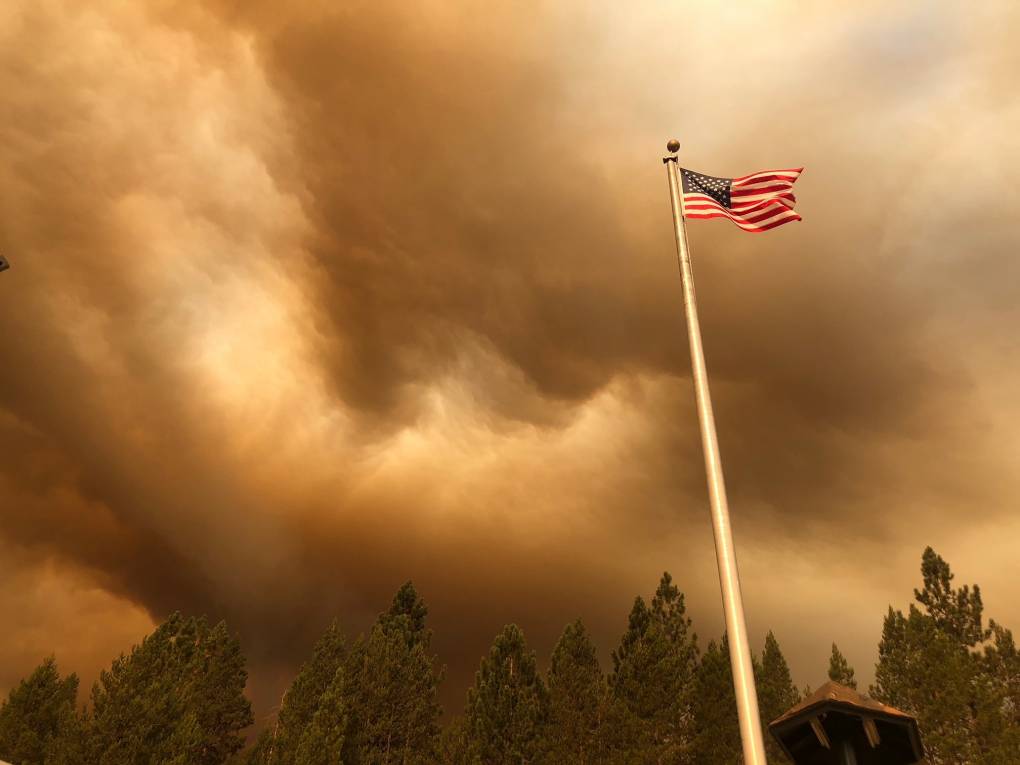
Wildfire Smoke Could Kill Over 5,000 Californians a Year By 2050, Study Shows
‘It Just Felt Like the World Was Burning’: Remembering the 2020 Fires
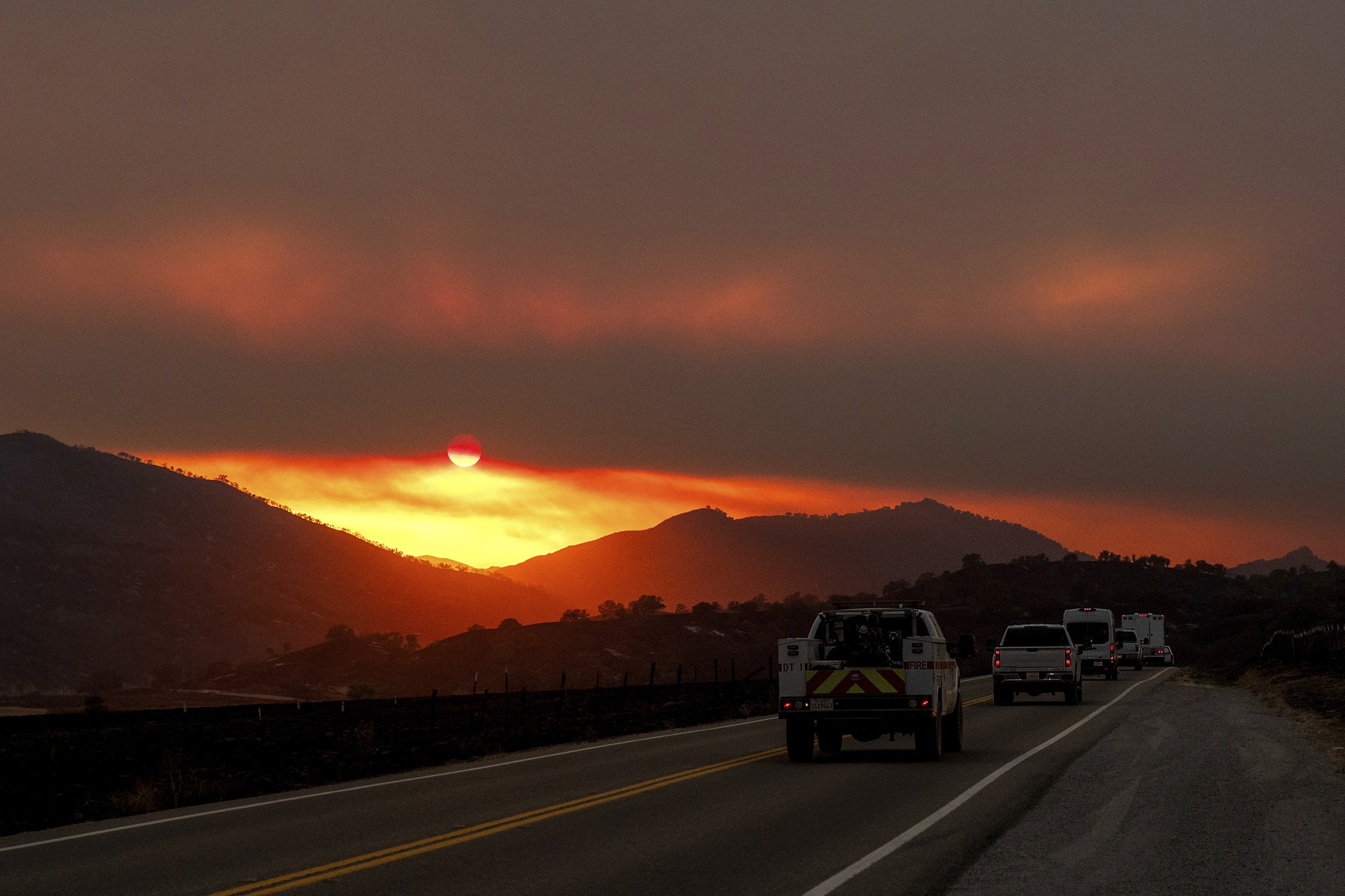
Smoke From California’s Largest Wildfire This Year Is Expected to Hit Bay Area on Tuesday
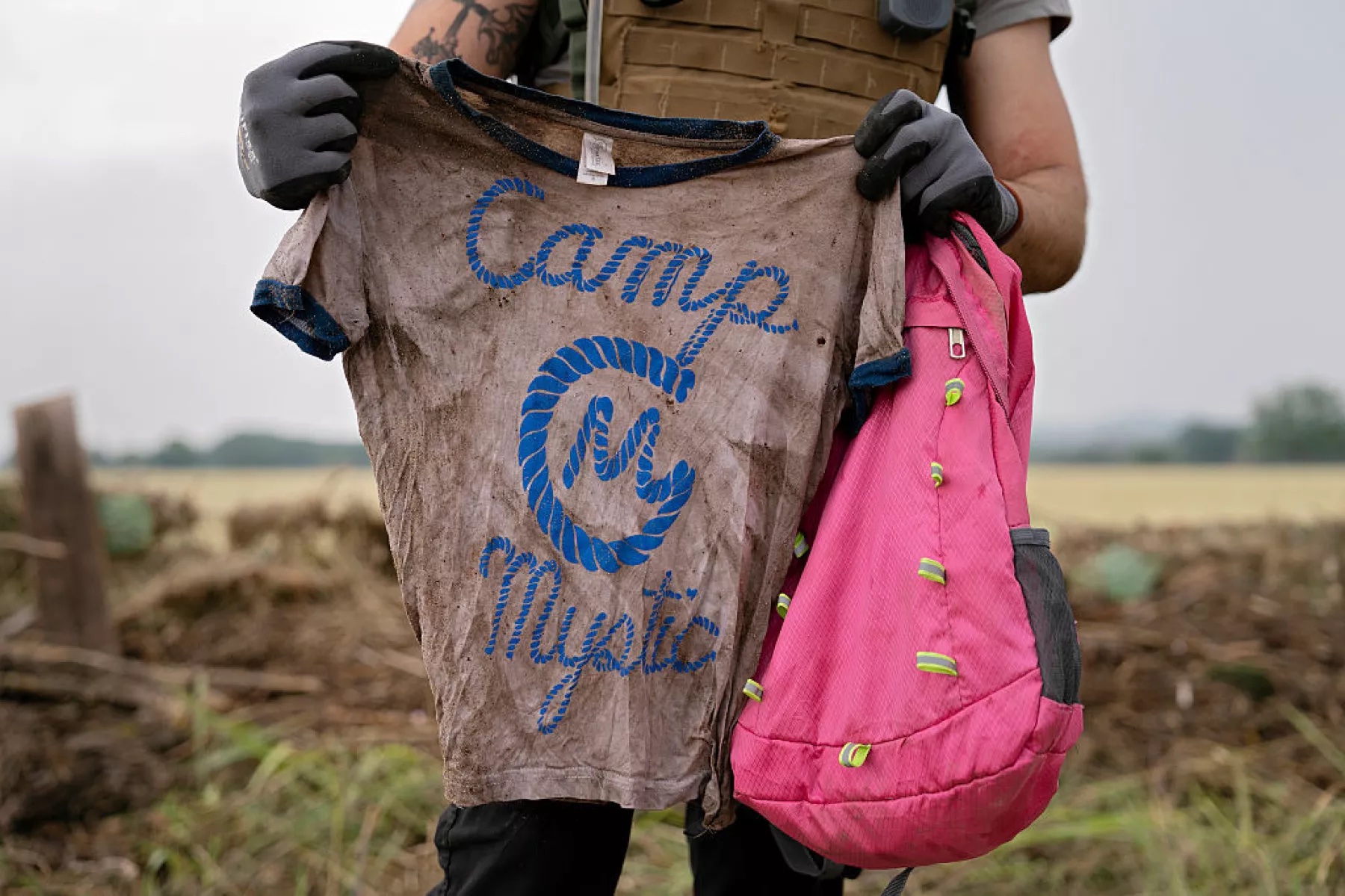
Key Questions to Ask Your Kids' Camps About Heat and Flood Safety
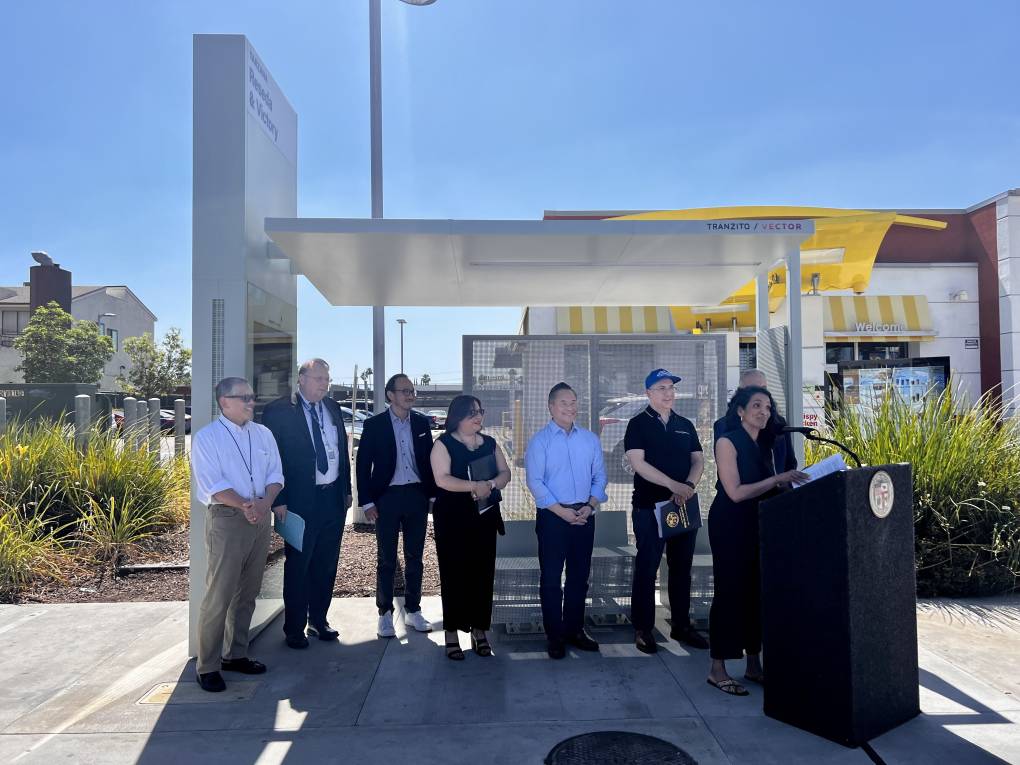
LA Looks To Make Improvements To Bus Stops In The City
Bay Area Smoke Thickens, Air Quality Warning Issued Through Thursday
As Smoke Returns, Bay Area Air Quality Expected to Worsen Over Next Few Days
San Francisco Teen Creates a Free App to Calculate Skin Risk Based on Location
As Wildfire Smoke Worsens Public Health, Government Watchdog Calls EPA Response ‘Ad Hoc’
Sponsored
Player sponsored by
window.__IS_SSR__=true
window.__INITIAL_STATE__={
"attachmentsReducer": {
"audio_0": {
"type": "attachments",
"id": "audio_0",
"imgSizes": {
"kqedFullSize": {
"file": "https://ww2.kqed.org/news/wp-content/themes/KQED-unified/img/audio_bgs/background0.jpg"
}
}
},
"audio_1": {
"type": "attachments",
"id": "audio_1",
"imgSizes": {
"kqedFullSize": {
"file": "https://ww2.kqed.org/news/wp-content/themes/KQED-unified/img/audio_bgs/background1.jpg"
}
}
},
"audio_2": {
"type": "attachments",
"id": "audio_2",
"imgSizes": {
"kqedFullSize": {
"file": "https://ww2.kqed.org/news/wp-content/themes/KQED-unified/img/audio_bgs/background2.jpg"
}
}
},
"audio_3": {
"type": "attachments",
"id": "audio_3",
"imgSizes": {
"kqedFullSize": {
"file": "https://ww2.kqed.org/news/wp-content/themes/KQED-unified/img/audio_bgs/background3.jpg"
}
}
},
"audio_4": {
"type": "attachments",
"id": "audio_4",
"imgSizes": {
"kqedFullSize": {
"file": "https://ww2.kqed.org/news/wp-content/themes/KQED-unified/img/audio_bgs/background4.jpg"
}
}
},
"placeholder": {
"type": "attachments",
"id": "placeholder",
"imgSizes": {
"thumbnail": {
"file": "https://cdn.kqed.org/wp-content/uploads/2024/12/KQED-Default-Image-816638274-2000x1333-1-160x107.jpg",
"width": 160,
"height": 107,
"mimeType": "image/jpeg"
},
"medium": {
"file": "https://cdn.kqed.org/wp-content/uploads/2024/12/KQED-Default-Image-816638274-2000x1333-1-800x533.jpg",
"width": 800,
"height": 533,
"mimeType": "image/jpeg"
},
"medium_large": {
"file": "https://cdn.kqed.org/wp-content/uploads/2024/12/KQED-Default-Image-816638274-2000x1333-1-768x512.jpg",
"width": 768,
"height": 512,
"mimeType": "image/jpeg"
},
"large": {
"file": "https://cdn.kqed.org/wp-content/uploads/2024/12/KQED-Default-Image-816638274-2000x1333-1-1020x680.jpg",
"width": 1020,
"height": 680,
"mimeType": "image/jpeg"
},
"1536x1536": {
"file": "https://cdn.kqed.org/wp-content/uploads/2024/12/KQED-Default-Image-816638274-2000x1333-1-1536x1024.jpg",
"width": 1536,
"height": 1024,
"mimeType": "image/jpeg"
},
"fd-lrg": {
"file": "https://cdn.kqed.org/wp-content/uploads/2024/12/KQED-Default-Image-816638274-2000x1333-1-1536x1024.jpg",
"width": 1536,
"height": 1024,
"mimeType": "image/jpeg"
},
"fd-med": {
"file": "https://cdn.kqed.org/wp-content/uploads/2024/12/KQED-Default-Image-816638274-2000x1333-1-1020x680.jpg",
"width": 1020,
"height": 680,
"mimeType": "image/jpeg"
},
"fd-sm": {
"file": "https://cdn.kqed.org/wp-content/uploads/2024/12/KQED-Default-Image-816638274-2000x1333-1-800x533.jpg",
"width": 800,
"height": 533,
"mimeType": "image/jpeg"
},
"post-thumbnail": {
"file": "https://cdn.kqed.org/wp-content/uploads/2024/12/KQED-Default-Image-816638274-2000x1333-1-672x372.jpg",
"width": 672,
"height": 372,
"mimeType": "image/jpeg"
},
"twentyfourteen-full-width": {
"file": "https://cdn.kqed.org/wp-content/uploads/2024/12/KQED-Default-Image-816638274-2000x1333-1-1038x576.jpg",
"width": 1038,
"height": 576,
"mimeType": "image/jpeg"
},
"xxsmall": {
"file": "https://cdn.kqed.org/wp-content/uploads/2024/12/KQED-Default-Image-816638274-2000x1333-1-160x107.jpg",
"width": 160,
"height": 107,
"mimeType": "image/jpeg"
},
"xsmall": {
"file": "https://cdn.kqed.org/wp-content/uploads/2024/12/KQED-Default-Image-816638274-2000x1333-1-672x372.jpg",
"width": 672,
"height": 372,
"mimeType": "image/jpeg"
},
"small": {
"file": "https://cdn.kqed.org/wp-content/uploads/2024/12/KQED-Default-Image-816638274-2000x1333-1-672x372.jpg",
"width": 672,
"height": 372,
"mimeType": "image/jpeg"
},
"xlarge": {
"file": "https://cdn.kqed.org/wp-content/uploads/2024/12/KQED-Default-Image-816638274-2000x1333-1-1020x680.jpg",
"width": 1020,
"height": 680,
"mimeType": "image/jpeg"
},
"full-width": {
"file": "https://cdn.kqed.org/wp-content/uploads/2024/12/KQED-Default-Image-816638274-2000x1333-1-1920x1280.jpg",
"width": 1920,
"height": 1280,
"mimeType": "image/jpeg"
},
"guest-author-32": {
"file": "https://cdn.kqed.org/wp-content/uploads/2025/01/KQED-Default-Image-816638274-1333x1333-1-160x160.jpg",
"width": 32,
"height": 32,
"mimeType": "image/jpeg"
},
"guest-author-50": {
"file": "https://cdn.kqed.org/wp-content/uploads/2025/01/KQED-Default-Image-816638274-1333x1333-1-160x160.jpg",
"width": 50,
"height": 50,
"mimeType": "image/jpeg"
},
"guest-author-64": {
"file": "https://cdn.kqed.org/wp-content/uploads/2025/01/KQED-Default-Image-816638274-1333x1333-1-160x160.jpg",
"width": 64,
"height": 64,
"mimeType": "image/jpeg"
},
"guest-author-96": {
"file": "https://cdn.kqed.org/wp-content/uploads/2025/01/KQED-Default-Image-816638274-1333x1333-1-160x160.jpg",
"width": 96,
"height": 96,
"mimeType": "image/jpeg"
},
"guest-author-128": {
"file": "https://cdn.kqed.org/wp-content/uploads/2025/01/KQED-Default-Image-816638274-1333x1333-1-160x160.jpg",
"width": 128,
"height": 128,
"mimeType": "image/jpeg"
},
"detail": {
"file": "https://cdn.kqed.org/wp-content/uploads/2025/01/KQED-Default-Image-816638274-1333x1333-1-160x160.jpg",
"width": 160,
"height": 160,
"mimeType": "image/jpeg"
},
"kqedFullSize": {
"file": "https://cdn.kqed.org/wp-content/uploads/2024/12/KQED-Default-Image-816638274-2000x1333-1.jpg",
"width": 2000,
"height": 1333
}
}
},
"news_11886687": {
"type": "attachments",
"id": "news_11886687",
"meta": {
"index": "attachments_1716263798",
"site": "news",
"id": "11886687",
"found": true
},
"title": "Middlebrook 2",
"publishDate": 1630111529,
"status": "inherit",
"parent": 11886683,
"modified": 1758235118,
"caption": "South Lake Tahoe is enshrouded in smoke as the Caldor Fire burns along Highway 50 on Aug. 27, 2021. New research from Stanford University estimates an increase to as many as 70,000 annual deaths across the U.S. from wildfire smoke as climate change drives up fire activity. ",
"credit": "Courtesy of Devin Middlebrook",
"altTag": null,
"description": "South Lake Tahoe in enshrouded in smoke as the Caldor Fire burns along Highway 50.",
"imgSizes": {
"medium": {
"file": "https://cdn.kqed.org/wp-content/uploads/sites/10/2021/08/Middlebrook-2-800x600.jpg",
"width": 800,
"height": 600,
"mimeType": "image/jpeg"
},
"large": {
"file": "https://cdn.kqed.org/wp-content/uploads/sites/10/2021/08/Middlebrook-2-1020x765.jpg",
"width": 1020,
"height": 765,
"mimeType": "image/jpeg"
},
"thumbnail": {
"file": "https://cdn.kqed.org/wp-content/uploads/sites/10/2021/08/Middlebrook-2-160x120.jpg",
"width": 160,
"height": 120,
"mimeType": "image/jpeg"
},
"1536x1536": {
"file": "https://cdn.kqed.org/wp-content/uploads/sites/10/2021/08/Middlebrook-2-1536x1152.jpg",
"width": 1536,
"height": 1152,
"mimeType": "image/jpeg"
},
"post-thumbnail": {
"file": "https://cdn.kqed.org/wp-content/uploads/sites/10/2021/08/Middlebrook-2-672x372.jpg",
"width": 672,
"height": 372,
"mimeType": "image/jpeg"
},
"twentyfourteen-full-width": {
"file": "https://cdn.kqed.org/wp-content/uploads/sites/10/2021/08/Middlebrook-2-1038x576.jpg",
"width": 1038,
"height": 576,
"mimeType": "image/jpeg"
},
"full-width": {
"file": "https://cdn.kqed.org/wp-content/uploads/sites/10/2021/08/Middlebrook-2-1920x1440.jpg",
"width": 1920,
"height": 1440,
"mimeType": "image/jpeg"
},
"kqedFullSize": {
"file": "https://cdn.kqed.org/wp-content/uploads/sites/10/2021/08/Middlebrook-2-e1758228624465.jpg",
"width": 2000,
"height": 1500
}
},
"fetchFailed": false,
"isLoading": false
},
"news_11837339": {
"type": "attachments",
"id": "news_11837339",
"meta": {
"index": "attachments_1716263798",
"site": "news",
"id": "11837339",
"found": true
},
"parent": 11837333,
"imgSizes": {
"apple_news_ca_landscape_5_5": {
"file": "https://ww2.kqed.org/app/uploads/sites/10/2020/09/RS44801_017_KQED_SanFrancisco_OrangeSky_09092020-qut-1044x783.jpg",
"width": 1044,
"mimeType": "image/jpeg",
"height": 783
},
"apple_news_ca_square_4_0": {
"file": "https://ww2.kqed.org/app/uploads/sites/10/2020/09/RS44801_017_KQED_SanFrancisco_OrangeSky_09092020-qut-470x470.jpg",
"width": 470,
"mimeType": "image/jpeg",
"height": 470
},
"twentyfourteen-full-width": {
"file": "https://ww2.kqed.org/app/uploads/sites/10/2020/09/RS44801_017_KQED_SanFrancisco_OrangeSky_09092020-qut-1038x576.jpg",
"width": 1038,
"mimeType": "image/jpeg",
"height": 576
},
"thumbnail": {
"file": "https://ww2.kqed.org/app/uploads/sites/10/2020/09/RS44801_017_KQED_SanFrancisco_OrangeSky_09092020-qut-160x107.jpg",
"width": 160,
"mimeType": "image/jpeg",
"height": 107
},
"post-thumbnail": {
"file": "https://ww2.kqed.org/app/uploads/sites/10/2020/09/RS44801_017_KQED_SanFrancisco_OrangeSky_09092020-qut-672x372.jpg",
"width": 672,
"mimeType": "image/jpeg",
"height": 372
},
"kqedFullSize": {
"file": "https://ww2.kqed.org/app/uploads/sites/10/2020/09/RS44801_017_KQED_SanFrancisco_OrangeSky_09092020-qut.jpg",
"width": 1920,
"height": 1280
},
"apple_news_ca_landscape_4_7": {
"file": "https://ww2.kqed.org/app/uploads/sites/10/2020/09/RS44801_017_KQED_SanFrancisco_OrangeSky_09092020-qut-632x474.jpg",
"width": 632,
"mimeType": "image/jpeg",
"height": 474
},
"large": {
"file": "https://ww2.kqed.org/app/uploads/sites/10/2020/09/RS44801_017_KQED_SanFrancisco_OrangeSky_09092020-qut-1020x680.jpg",
"width": 1020,
"mimeType": "image/jpeg",
"height": 680
},
"apple_news_ca_landscape_4_0": {
"file": "https://ww2.kqed.org/app/uploads/sites/10/2020/09/RS44801_017_KQED_SanFrancisco_OrangeSky_09092020-qut-536x402.jpg",
"width": 536,
"mimeType": "image/jpeg",
"height": 402
},
"apple_news_ca_portrait_12_9": {
"file": "https://ww2.kqed.org/app/uploads/sites/10/2020/09/RS44801_017_KQED_SanFrancisco_OrangeSky_09092020-qut-1122x1280.jpg",
"width": 1122,
"mimeType": "image/jpeg",
"height": 1280
},
"medium": {
"file": "https://ww2.kqed.org/app/uploads/sites/10/2020/09/RS44801_017_KQED_SanFrancisco_OrangeSky_09092020-qut-800x533.jpg",
"width": 800,
"mimeType": "image/jpeg",
"height": 533
},
"apple_news_ca_portrait_4_0": {
"file": "https://ww2.kqed.org/app/uploads/sites/10/2020/09/RS44801_017_KQED_SanFrancisco_OrangeSky_09092020-qut-354x472.jpg",
"width": 354,
"mimeType": "image/jpeg",
"height": 472
},
"apple_news_ca_portrait_9_7": {
"file": "https://ww2.kqed.org/app/uploads/sites/10/2020/09/RS44801_017_KQED_SanFrancisco_OrangeSky_09092020-qut-840x1120.jpg",
"width": 840,
"mimeType": "image/jpeg",
"height": 1120
},
"apple_news_ca_landscape_12_9": {
"file": "https://ww2.kqed.org/app/uploads/sites/10/2020/09/RS44801_017_KQED_SanFrancisco_OrangeSky_09092020-qut-1832x1280.jpg",
"width": 1832,
"mimeType": "image/jpeg",
"height": 1280
},
"apple_news_ca_square_9_7": {
"file": "https://ww2.kqed.org/app/uploads/sites/10/2020/09/RS44801_017_KQED_SanFrancisco_OrangeSky_09092020-qut-1104x1104.jpg",
"width": 1104,
"mimeType": "image/jpeg",
"height": 1104
},
"1536x1536": {
"file": "https://ww2.kqed.org/app/uploads/sites/10/2020/09/RS44801_017_KQED_SanFrancisco_OrangeSky_09092020-qut-1536x1024.jpg",
"width": 1536,
"mimeType": "image/jpeg",
"height": 1024
},
"apple_news_ca_portrait_4_7": {
"file": "https://ww2.kqed.org/app/uploads/sites/10/2020/09/RS44801_017_KQED_SanFrancisco_OrangeSky_09092020-qut-414x552.jpg",
"width": 414,
"mimeType": "image/jpeg",
"height": 552
},
"apple_news_ca_square_12_9": {
"file": "https://ww2.kqed.org/app/uploads/sites/10/2020/09/RS44801_017_KQED_SanFrancisco_OrangeSky_09092020-qut-1472x1280.jpg",
"width": 1472,
"mimeType": "image/jpeg",
"height": 1280
},
"apple_news_ca_portrait_5_5": {
"file": "https://ww2.kqed.org/app/uploads/sites/10/2020/09/RS44801_017_KQED_SanFrancisco_OrangeSky_09092020-qut-687x916.jpg",
"width": 687,
"mimeType": "image/jpeg",
"height": 916
},
"apple_news_ca_square_4_7": {
"file": "https://ww2.kqed.org/app/uploads/sites/10/2020/09/RS44801_017_KQED_SanFrancisco_OrangeSky_09092020-qut-550x550.jpg",
"width": 550,
"mimeType": "image/jpeg",
"height": 550
},
"apple_news_ca_landscape_9_7": {
"file": "https://ww2.kqed.org/app/uploads/sites/10/2020/09/RS44801_017_KQED_SanFrancisco_OrangeSky_09092020-qut-1376x1032.jpg",
"width": 1376,
"mimeType": "image/jpeg",
"height": 1032
},
"apple_news_ca_square_5_5": {
"file": "https://ww2.kqed.org/app/uploads/sites/10/2020/09/RS44801_017_KQED_SanFrancisco_OrangeSky_09092020-qut-912x912.jpg",
"width": 912,
"mimeType": "image/jpeg",
"height": 912
}
},
"publishDate": 1599768061,
"modified": 1599768381,
"caption": "Matt Cowdrey, Mark Paiz and Kyle Ortega get ready to paddle out and surf Ocean Beach in San Francisco under an orange-red sky caused by wildfires on Sep. 9, 2020.",
"description": null,
"title": "RS44801_017_KQED_SanFrancisco_OrangeSky_09092020-qut",
"credit": "Beth LaBerge/KQED",
"status": "inherit",
"fetchFailed": false,
"isLoading": false
},
"news_12051881": {
"type": "attachments",
"id": "news_12051881",
"meta": {
"index": "attachments_1716263798",
"site": "news",
"id": "12051881",
"found": true
},
"title": "California Wildfires",
"publishDate": 1755025372,
"status": "inherit",
"parent": 12051870,
"modified": 1755030586,
"caption": "Smoke from the Gifford Fire fills the sky as the sun sets over Los Padres National Forest, California, on Monday, Aug. 4, 2025. ",
"credit": "Noah Berger/AP Photo",
"altTag": null,
"description": null,
"imgSizes": {
"thumbnail": {
"file": "https://cdn.kqed.org/wp-content/uploads/sites/10/2025/08/GiffordFireSmokeAP-160x107.jpg",
"width": 160,
"height": 107,
"mimeType": "image/jpeg"
},
"1536x1536": {
"file": "https://cdn.kqed.org/wp-content/uploads/sites/10/2025/08/GiffordFireSmokeAP-1536x1024.jpg",
"width": 1536,
"height": 1024,
"mimeType": "image/jpeg"
},
"post-thumbnail": {
"file": "https://cdn.kqed.org/wp-content/uploads/sites/10/2025/08/GiffordFireSmokeAP-672x372.jpg",
"width": 672,
"height": 372,
"mimeType": "image/jpeg"
},
"twentyfourteen-full-width": {
"file": "https://cdn.kqed.org/wp-content/uploads/sites/10/2025/08/GiffordFireSmokeAP-1038x576.jpg",
"width": 1038,
"height": 576,
"mimeType": "image/jpeg"
},
"kqedFullSize": {
"file": "https://cdn.kqed.org/wp-content/uploads/sites/10/2025/08/GiffordFireSmokeAP.jpg",
"width": 2000,
"height": 1333
}
},
"fetchFailed": false,
"isLoading": false
},
"news_12048821": {
"type": "attachments",
"id": "news_12048821",
"meta": {
"index": "attachments_1716263798",
"site": "news",
"id": "12048821",
"found": true
},
"title": "npr.brightspotcdn copy",
"publishDate": 1752869055,
"status": "inherit",
"parent": 12048819,
"modified": 1752869079,
"caption": "Experts say there are key questions parents and guardians should ask camp operators about wildfires, flood and heat risk.",
"credit": "Danielle Villasana for The Washington Post via Getty Images",
"altTag": null,
"description": null,
"imgSizes": {
"thumbnail": {
"file": "https://cdn.kqed.org/wp-content/uploads/sites/10/2025/07/npr.brightspotcdn-copy-9-160x107.jpg",
"width": 160,
"height": 107,
"mimeType": "image/jpeg"
},
"1536x1536": {
"file": "https://cdn.kqed.org/wp-content/uploads/sites/10/2025/07/npr.brightspotcdn-copy-9-1536x1023.jpg",
"width": 1536,
"height": 1023,
"mimeType": "image/jpeg"
},
"post-thumbnail": {
"file": "https://cdn.kqed.org/wp-content/uploads/sites/10/2025/07/npr.brightspotcdn-copy-9-672x372.jpg",
"width": 672,
"height": 372,
"mimeType": "image/jpeg"
},
"twentyfourteen-full-width": {
"file": "https://cdn.kqed.org/wp-content/uploads/sites/10/2025/07/npr.brightspotcdn-copy-9-1038x576.jpg",
"width": 1038,
"height": 576,
"mimeType": "image/jpeg"
},
"kqedFullSize": {
"file": "https://cdn.kqed.org/wp-content/uploads/sites/10/2025/07/npr.brightspotcdn-copy-9.jpg",
"width": 1800,
"height": 1199
}
},
"fetchFailed": false,
"isLoading": false
},
"news_11997943": {
"type": "attachments",
"id": "news_11997943",
"meta": {
"index": "attachments_1716263798",
"site": "news",
"id": "11997943",
"found": true
},
"title": "BusShelter",
"publishDate": 1722348907,
"status": "inherit",
"parent": 11997942,
"modified": 1722348984,
"caption": "A new bus stop opening in Reseda, one of the more than 3.000 the city wants to install in the coming years supported by ad revenue.",
"credit": "Saul Gonzalez/The California Report",
"altTag": null,
"description": null,
"imgSizes": {
"medium": {
"file": "https://cdn.kqed.org/wp-content/uploads/sites/10/2024/07/BusShelter-800x600.jpeg",
"width": 800,
"height": 600,
"mimeType": "image/jpeg"
},
"large": {
"file": "https://cdn.kqed.org/wp-content/uploads/sites/10/2024/07/BusShelter-1020x765.jpeg",
"width": 1020,
"height": 765,
"mimeType": "image/jpeg"
},
"thumbnail": {
"file": "https://cdn.kqed.org/wp-content/uploads/sites/10/2024/07/BusShelter-160x120.jpeg",
"width": 160,
"height": 120,
"mimeType": "image/jpeg"
},
"1536x1536": {
"file": "https://cdn.kqed.org/wp-content/uploads/sites/10/2024/07/BusShelter-1536x1152.jpeg",
"width": 1536,
"height": 1152,
"mimeType": "image/jpeg"
},
"2048x2048": {
"file": "https://cdn.kqed.org/wp-content/uploads/sites/10/2024/07/BusShelter-2048x1536.jpeg",
"width": 2048,
"height": 1536,
"mimeType": "image/jpeg"
},
"post-thumbnail": {
"file": "https://cdn.kqed.org/wp-content/uploads/sites/10/2024/07/BusShelter-672x372.jpeg",
"width": 672,
"height": 372,
"mimeType": "image/jpeg"
},
"twentyfourteen-full-width": {
"file": "https://cdn.kqed.org/wp-content/uploads/sites/10/2024/07/BusShelter-1038x576.jpeg",
"width": 1038,
"height": 576,
"mimeType": "image/jpeg"
},
"full-width": {
"file": "https://cdn.kqed.org/wp-content/uploads/sites/10/2024/07/BusShelter-1920x1440.jpeg",
"width": 1920,
"height": 1440,
"mimeType": "image/jpeg"
},
"kqedFullSize": {
"file": "https://cdn.kqed.org/wp-content/uploads/sites/10/2024/07/BusShelter-scaled.jpeg",
"width": 2560,
"height": 1920
}
},
"fetchFailed": false,
"isLoading": false
},
"news_11961892": {
"type": "attachments",
"id": "news_11961892",
"meta": {
"index": "attachments_1716263798",
"site": "news",
"id": "11961892",
"found": true
},
"parent": 0,
"imgSizes": {
"twentyfourteen-full-width": {
"file": "https://ww2.kqed.org/app/uploads/sites/10/2023/09/230920-OAKLAND-AIR-QUALITY-MD-01-KQED-1038x576.jpg",
"width": 1038,
"mimeType": "image/jpeg",
"height": 576
},
"thumbnail": {
"file": "https://ww2.kqed.org/app/uploads/sites/10/2023/09/230920-OAKLAND-AIR-QUALITY-MD-01-KQED-160x107.jpg",
"width": 160,
"mimeType": "image/jpeg",
"height": 107
},
"post-thumbnail": {
"file": "https://ww2.kqed.org/app/uploads/sites/10/2023/09/230920-OAKLAND-AIR-QUALITY-MD-01-KQED-672x372.jpg",
"width": 672,
"mimeType": "image/jpeg",
"height": 372
},
"kqedFullSize": {
"file": "https://ww2.kqed.org/app/uploads/sites/10/2023/09/230920-OAKLAND-AIR-QUALITY-MD-01-KQED.jpg",
"width": 2000,
"height": 1333
},
"large": {
"file": "https://ww2.kqed.org/app/uploads/sites/10/2023/09/230920-OAKLAND-AIR-QUALITY-MD-01-KQED-1020x680.jpg",
"width": 1020,
"mimeType": "image/jpeg",
"height": 680
},
"1536x1536": {
"file": "https://ww2.kqed.org/app/uploads/sites/10/2023/09/230920-OAKLAND-AIR-QUALITY-MD-01-KQED-1536x1024.jpg",
"width": 1536,
"mimeType": "image/jpeg",
"height": 1024
},
"full-width": {
"file": "https://ww2.kqed.org/app/uploads/sites/10/2023/09/230920-OAKLAND-AIR-QUALITY-MD-01-KQED-1920x1280.jpg",
"width": 1920,
"mimeType": "image/jpeg",
"height": 1280
},
"medium": {
"file": "https://ww2.kqed.org/app/uploads/sites/10/2023/09/230920-OAKLAND-AIR-QUALITY-MD-01-KQED-800x533.jpg",
"width": 800,
"mimeType": "image/jpeg",
"height": 533
}
},
"publishDate": 1695232818,
"modified": 1695316526,
"caption": "The Oakland hills are seen shrouded in a thick haze on Wednesday morning, as northerly winds continue to funnel smoke from wildfires in the far northern part of the state, creating unhealthy air conditions throughout much of the Bay Area.",
"description": null,
"title": "230920-OAKLAND AIR QUALITY-MD-01-KQED",
"credit": "Martin do Nascimento/KQED",
"status": "inherit",
"altTag": "Homes on a hillside are seen through hazy air.",
"fetchFailed": false,
"isLoading": false
},
"news_11961831": {
"type": "attachments",
"id": "news_11961831",
"meta": {
"index": "attachments_1716263798",
"site": "news",
"id": "11961831",
"found": true
},
"parent": 0,
"imgSizes": {
"twentyfourteen-full-width": {
"file": "https://ww2.kqed.org/app/uploads/sites/10/2023/09/230919-SAN-FRANCISCO-AIR-QUALITY-Getty-JS-KQED-1038x576.jpg",
"width": 1038,
"mimeType": "image/jpeg",
"height": 576
},
"thumbnail": {
"file": "https://ww2.kqed.org/app/uploads/sites/10/2023/09/230919-SAN-FRANCISCO-AIR-QUALITY-Getty-JS-KQED-160x104.jpg",
"width": 160,
"mimeType": "image/jpeg",
"height": 104
},
"post-thumbnail": {
"file": "https://ww2.kqed.org/app/uploads/sites/10/2023/09/230919-SAN-FRANCISCO-AIR-QUALITY-Getty-JS-KQED-672x372.jpg",
"width": 672,
"mimeType": "image/jpeg",
"height": 372
},
"kqedFullSize": {
"file": "https://ww2.kqed.org/app/uploads/sites/10/2023/09/230919-SAN-FRANCISCO-AIR-QUALITY-Getty-JS-KQED.jpg",
"width": 2000,
"height": 1306
},
"large": {
"file": "https://ww2.kqed.org/app/uploads/sites/10/2023/09/230919-SAN-FRANCISCO-AIR-QUALITY-Getty-JS-KQED-1020x666.jpg",
"width": 1020,
"mimeType": "image/jpeg",
"height": 666
},
"1536x1536": {
"file": "https://ww2.kqed.org/app/uploads/sites/10/2023/09/230919-SAN-FRANCISCO-AIR-QUALITY-Getty-JS-KQED-1536x1003.jpg",
"width": 1536,
"mimeType": "image/jpeg",
"height": 1003
},
"full-width": {
"file": "https://ww2.kqed.org/app/uploads/sites/10/2023/09/230919-SAN-FRANCISCO-AIR-QUALITY-Getty-JS-KQED-1920x1254.jpg",
"width": 1920,
"mimeType": "image/jpeg",
"height": 1254
},
"medium": {
"file": "https://ww2.kqed.org/app/uploads/sites/10/2023/09/230919-SAN-FRANCISCO-AIR-QUALITY-Getty-JS-KQED-800x522.jpg",
"width": 800,
"mimeType": "image/jpeg",
"height": 522
}
},
"publishDate": 1695168415,
"modified": 1695171475,
"caption": "The San Francisco skyline seen through hazy and smoky conditions in September 2020.",
"description": null,
"title": "Lingering Wildfires Cause Unhealthy Air Quality In Bay Area",
"credit": "Photo by Justin Sullivan/Getty Images",
"status": "inherit",
"altTag": "A city skyline blends into a gray haze as a bird flies by.",
"fetchFailed": false,
"isLoading": false
},
"news_11959581": {
"type": "attachments",
"id": "news_11959581",
"meta": {
"index": "attachments_1716263798",
"site": "news",
"id": "11959581",
"found": true
},
"parent": 0,
"imgSizes": {
"twentyfourteen-full-width": {
"file": "https://ww2.kqed.org/app/uploads/sites/10/2023/08/230830-HEAT-WAVE-AM-KQED-1038x576.jpg",
"width": 1038,
"mimeType": "image/jpeg",
"height": 576
},
"thumbnail": {
"file": "https://ww2.kqed.org/app/uploads/sites/10/2023/08/230830-HEAT-WAVE-AM-KQED-160x107.jpg",
"width": 160,
"mimeType": "image/jpeg",
"height": 107
},
"post-thumbnail": {
"file": "https://ww2.kqed.org/app/uploads/sites/10/2023/08/230830-HEAT-WAVE-AM-KQED-672x372.jpg",
"width": 672,
"mimeType": "image/jpeg",
"height": 372
},
"kqedFullSize": {
"file": "https://ww2.kqed.org/app/uploads/sites/10/2023/08/230830-HEAT-WAVE-AM-KQED.jpg",
"width": 2000,
"height": 1333
},
"large": {
"file": "https://ww2.kqed.org/app/uploads/sites/10/2023/08/230830-HEAT-WAVE-AM-KQED-1020x680.jpg",
"width": 1020,
"mimeType": "image/jpeg",
"height": 680
},
"1536x1536": {
"file": "https://ww2.kqed.org/app/uploads/sites/10/2023/08/230830-HEAT-WAVE-AM-KQED-1536x1024.jpg",
"width": 1536,
"mimeType": "image/jpeg",
"height": 1024
},
"full-width": {
"file": "https://ww2.kqed.org/app/uploads/sites/10/2023/08/230830-HEAT-WAVE-AM-KQED-1920x1280.jpg",
"width": 1920,
"mimeType": "image/jpeg",
"height": 1280
},
"medium": {
"file": "https://ww2.kqed.org/app/uploads/sites/10/2023/08/230830-HEAT-WAVE-AM-KQED-800x533.jpg",
"width": 800,
"mimeType": "image/jpeg",
"height": 533
}
},
"publishDate": 1693416718,
"modified": 1693416809,
"caption": "A fisherman waits under the shade of his umbrella in front of the Bay Bridge on June 17, 2020.",
"description": null,
"title": "230830-HEAT WAVE-AM-KQED",
"credit": "Arash Malekzadeh/KQED",
"status": "inherit",
"altTag": "A fisherman waits under the shade of his umbrella in front of the Bay Bridge.",
"fetchFailed": false,
"isLoading": false
},
"news_11950397": {
"type": "attachments",
"id": "news_11950397",
"meta": {
"index": "attachments_1716263798",
"site": "news",
"id": "11950397",
"found": true
},
"parent": 11950351,
"imgSizes": {
"twentyfourteen-full-width": {
"file": "https://ww2.kqed.org/app/uploads/sites/10/2023/05/RS44792_006_KQED_SanFrancisco_OrangeSky_09092020-qut-1038x576.jpg",
"width": 1038,
"mimeType": "image/jpeg",
"height": 576
},
"thumbnail": {
"file": "https://ww2.kqed.org/app/uploads/sites/10/2023/05/RS44792_006_KQED_SanFrancisco_OrangeSky_09092020-qut-160x107.jpg",
"width": 160,
"mimeType": "image/jpeg",
"height": 107
},
"post-thumbnail": {
"file": "https://ww2.kqed.org/app/uploads/sites/10/2023/05/RS44792_006_KQED_SanFrancisco_OrangeSky_09092020-qut-672x372.jpg",
"width": 672,
"mimeType": "image/jpeg",
"height": 372
},
"kqedFullSize": {
"file": "https://ww2.kqed.org/app/uploads/sites/10/2023/05/RS44792_006_KQED_SanFrancisco_OrangeSky_09092020-qut.jpg",
"width": 1920,
"height": 1280
},
"large": {
"file": "https://ww2.kqed.org/app/uploads/sites/10/2023/05/RS44792_006_KQED_SanFrancisco_OrangeSky_09092020-qut-1020x680.jpg",
"width": 1020,
"mimeType": "image/jpeg",
"height": 680
},
"1536x1536": {
"file": "https://ww2.kqed.org/app/uploads/sites/10/2023/05/RS44792_006_KQED_SanFrancisco_OrangeSky_09092020-qut-1536x1024.jpg",
"width": 1536,
"mimeType": "image/jpeg",
"height": 1024
},
"medium": {
"file": "https://ww2.kqed.org/app/uploads/sites/10/2023/05/RS44792_006_KQED_SanFrancisco_OrangeSky_09092020-qut-800x533.jpg",
"width": 800,
"mimeType": "image/jpeg",
"height": 533
}
},
"publishDate": 1684792955,
"modified": 1684793078,
"caption": "A view of the San Francisco skyline from Dolores Park in San Francisco on Sept. 9, 2020.",
"description": null,
"title": "RS44792_006_KQED_SanFrancisco_OrangeSky_09092020-qut",
"credit": "Beth LaBerge/KQED",
"status": "inherit",
"altTag": "A photo of a polluted orange-colored city skyline with palm trees.",
"fetchFailed": false,
"isLoading": false
}
},
"audioPlayerReducer": {
"postId": "stream_live",
"isPaused": true,
"isPlaying": false,
"pfsActive": false,
"pledgeModalIsOpen": true,
"playerDrawerIsOpen": false
},
"authorsReducer": {
"byline_news_12048819": {
"type": "authors",
"id": "byline_news_12048819",
"meta": {
"override": true
},
"slug": "byline_news_12048819",
"name": "Julia Simon, NPR",
"isLoading": false
},
"byline_news_11950351": {
"type": "authors",
"id": "byline_news_11950351",
"meta": {
"override": true
},
"slug": "byline_news_11950351",
"name": "Molly Peterson (The California Newsroom) and Dillon Bergin (MuckRock)",
"isLoading": false
},
"dmarks": {
"type": "authors",
"id": "182",
"meta": {
"index": "authors_1716337520",
"id": "182",
"found": true
},
"name": "David Marks",
"firstName": "David",
"lastName": "Marks",
"slug": "dmarks",
"email": "dmarks@kqed.org",
"display_author_email": false,
"staff_mastheads": [],
"title": "KQED Editor",
"bio": "David Marks is a senior digital editor for KQED News. \u003c/a>Reach him at dmarks@kqed.org.",
"avatar": "https://secure.gravatar.com/avatar/b88bd6227ce6cb96ae33fefaf42b2a29?s=600&d=mm&r=g",
"twitter": "divadskram",
"facebook": null,
"instagram": null,
"linkedin": null,
"sites": [
{
"site": "news",
"roles": []
},
{
"site": "science",
"roles": []
},
{
"site": "perspectives",
"roles": []
},
{
"site": "liveblog",
"roles": []
}
],
"headData": {
"title": "David Marks | KQED",
"description": "KQED Editor",
"ogImgSrc": "https://secure.gravatar.com/avatar/b88bd6227ce6cb96ae33fefaf42b2a29?s=600&d=mm&r=g",
"twImgSrc": "https://secure.gravatar.com/avatar/b88bd6227ce6cb96ae33fefaf42b2a29?s=600&d=mm&r=g"
},
"isLoading": false,
"link": "/author/dmarks"
},
"dventon": {
"type": "authors",
"id": "11088",
"meta": {
"index": "authors_1716337520",
"id": "11088",
"found": true
},
"name": "Danielle Venton",
"firstName": "Danielle",
"lastName": "Venton",
"slug": "dventon",
"email": "dventon@kqed.org",
"display_author_email": true,
"staff_mastheads": [
"science"
],
"title": "Science reporter",
"bio": "Danielle Venton is a reporter for KQED Science. She covers wildfires, space and oceans (though she is prone to sea sickness).\r\n\r\nBefore joining KQED in 2015, Danielle was a staff reporter at KRCB in Sonoma County and a freelancer. She studied science communication at UC Santa Cruz and formerly worked at CERN in Geneva, Switzerland where she wrote about computing. She lives in Sonoma County and enjoys backpacking.",
"avatar": "https://secure.gravatar.com/avatar/ebaf11ee6cfb7bb40329a143d463829e?s=600&d=blank&r=g",
"twitter": "DanielleVenton",
"facebook": null,
"instagram": null,
"linkedin": null,
"sites": [
{
"site": "arts",
"roles": [
"contributor"
]
},
{
"site": "news",
"roles": [
"editor"
]
},
{
"site": "futureofyou",
"roles": [
"editor"
]
},
{
"site": "science",
"roles": [
"editor"
]
},
{
"site": "liveblog",
"roles": [
"contributor"
]
}
],
"headData": {
"title": "Danielle Venton | KQED",
"description": "Science reporter",
"ogImgSrc": "https://secure.gravatar.com/avatar/ebaf11ee6cfb7bb40329a143d463829e?s=600&d=blank&r=g",
"twImgSrc": "https://secure.gravatar.com/avatar/ebaf11ee6cfb7bb40329a143d463829e?s=600&d=blank&r=g"
},
"isLoading": false,
"link": "/author/dventon"
},
"lesleymcclurg": {
"type": "authors",
"id": "11229",
"meta": {
"index": "authors_1716337520",
"id": "11229",
"found": true
},
"name": "Lesley McClurg",
"firstName": "Lesley",
"lastName": "McClurg",
"slug": "lesleymcclurg",
"email": "lmcclurg@KQED.org",
"display_author_email": false,
"staff_mastheads": [
"news",
"science"
],
"title": "KQED Health Correspondent",
"bio": "Lesley McClurg is a health correspondent and fill-in host whose work is regularly rebroadcast on NPR and PBS programs. She’s earned multiple regional Emmy awards, a national and a regional Edward R. Murrow award, and was named Best Beat Reporter by the Association of Health Care Journalists. The Society of Professional Journalists has recognized her work several times, and the Society of Environmental Journalists spotlighted her coverage of California’s historic drought.\r\n\r\nBefore joining KQED in 2016, Lesley covered food and sustainability for Capital Public Radio, environmental issues for Colorado Public Radio, and reported for KUOW and KCTS 9 in Seattle. Away from the newsroom, she loves skiing with her daughter, mountain biking with her partner, and playing with Ollie, the family’s goldendoodle. On deadline, she runs almost entirely on chocolate chips.\r\n\r\n ",
"avatar": "https://secure.gravatar.com/avatar/3fb78e873af3312f34d0bc1d60a07c7f?s=600&d=blank&r=g",
"twitter": "lesleywmcclurg",
"facebook": null,
"instagram": null,
"linkedin": null,
"sites": [
{
"site": "arts",
"roles": [
"author"
]
},
{
"site": "news",
"roles": [
"editor"
]
},
{
"site": "futureofyou",
"roles": [
"editor"
]
},
{
"site": "stateofhealth",
"roles": [
"author"
]
},
{
"site": "science",
"roles": [
"editor"
]
},
{
"site": "quest",
"roles": [
"subscriber"
]
},
{
"site": "forum",
"roles": [
"administrator"
]
},
{
"site": "liveblog",
"roles": [
"author"
]
}
],
"headData": {
"title": "Lesley McClurg | KQED",
"description": "KQED Health Correspondent",
"ogImgSrc": "https://secure.gravatar.com/avatar/3fb78e873af3312f34d0bc1d60a07c7f?s=600&d=blank&r=g",
"twImgSrc": "https://secure.gravatar.com/avatar/3fb78e873af3312f34d0bc1d60a07c7f?s=600&d=blank&r=g"
},
"isLoading": false,
"link": "/author/lesleymcclurg"
},
"amontecillo": {
"type": "authors",
"id": "11649",
"meta": {
"index": "authors_1716337520",
"id": "11649",
"found": true
},
"name": "Alan Montecillo",
"firstName": "Alan",
"lastName": "Montecillo",
"slug": "amontecillo",
"email": "amontecillo@kqed.org",
"display_author_email": false,
"staff_mastheads": [
"news"
],
"title": "KQED Contributor",
"bio": "Alan Montecillo is the senior editor of \u003cem>\u003ca href=\"http://kqed.org/thebay\">The Bay\u003c/a>, \u003c/em> KQED's local news podcast. Before moving to the Bay Area, he worked as a senior talk show producer for WILL in Champaign-Urbana, Illinois and at Oregon Public Broadcasting in Portland, Oregon. He has won journalism awards from the Society of Professional Journalists Northern California, the Public Media Journalists Association, The Signal Awards, and has also received a regional Edward R. Murrow award. Alan is a Filipino American from Hong Kong and a graduate of Reed College.",
"avatar": "https://secure.gravatar.com/avatar/d5e4e7a76481969ccba76f4e2b5ccabc?s=600&d=blank&r=g",
"twitter": "alanmontecillo",
"facebook": null,
"instagram": null,
"linkedin": null,
"sites": [
{
"site": "",
"roles": [
"editor"
]
},
{
"site": "news",
"roles": [
"editor",
"manage_categories"
]
}
],
"headData": {
"title": "Alan Montecillo | KQED",
"description": "KQED Contributor",
"ogImgSrc": "https://secure.gravatar.com/avatar/d5e4e7a76481969ccba76f4e2b5ccabc?s=600&d=blank&r=g",
"twImgSrc": "https://secure.gravatar.com/avatar/d5e4e7a76481969ccba76f4e2b5ccabc?s=600&d=blank&r=g"
},
"isLoading": false,
"link": "/author/amontecillo"
},
"agonzalez": {
"type": "authors",
"id": "11724",
"meta": {
"index": "authors_1716337520",
"id": "11724",
"found": true
},
"name": "Alexander Gonzalez",
"firstName": "Alexander",
"lastName": "Gonzalez",
"slug": "agonzalez",
"email": "AlexanderGonzalez@KQED.org",
"display_author_email": false,
"staff_mastheads": [
"news"
],
"title": "KQED Contributor",
"bio": null,
"avatar": "https://secure.gravatar.com/avatar/63d43593dd7ebcafcd638e851a9bce5a?s=600&d=blank&r=g",
"twitter": null,
"facebook": null,
"instagram": null,
"linkedin": null,
"sites": [
{
"site": "arts",
"roles": [
"editor"
]
},
{
"site": "news",
"roles": [
"editor"
]
}
],
"headData": {
"title": "Alexander Gonzalez | KQED",
"description": "KQED Contributor",
"ogImgSrc": "https://secure.gravatar.com/avatar/63d43593dd7ebcafcd638e851a9bce5a?s=600&d=blank&r=g",
"twImgSrc": "https://secure.gravatar.com/avatar/63d43593dd7ebcafcd638e851a9bce5a?s=600&d=blank&r=g"
},
"isLoading": false,
"link": "/author/agonzalez"
},
"kmizuguchi": {
"type": "authors",
"id": "11739",
"meta": {
"index": "authors_1716337520",
"id": "11739",
"found": true
},
"name": "Keith Mizuguchi",
"firstName": "Keith",
"lastName": "Mizuguchi",
"slug": "kmizuguchi",
"email": "kmizuguchi@kqed.org",
"display_author_email": false,
"staff_mastheads": [],
"title": "KQED Contributor",
"bio": null,
"avatar": "https://secure.gravatar.com/avatar/ce1182f9924192ae5ea66d39a75cd7d1?s=600&d=blank&r=g",
"twitter": null,
"facebook": null,
"instagram": null,
"linkedin": null,
"sites": [
{
"site": "news",
"roles": [
"editor"
]
},
{
"site": "science",
"roles": [
"editor"
]
}
],
"headData": {
"title": "Keith Mizuguchi | KQED",
"description": "KQED Contributor",
"ogImgSrc": "https://secure.gravatar.com/avatar/ce1182f9924192ae5ea66d39a75cd7d1?s=600&d=blank&r=g",
"twImgSrc": "https://secure.gravatar.com/avatar/ce1182f9924192ae5ea66d39a75cd7d1?s=600&d=blank&r=g"
},
"isLoading": false,
"link": "/author/kmizuguchi"
},
"jessicakariisa": {
"type": "authors",
"id": "11831",
"meta": {
"index": "authors_1716337520",
"id": "11831",
"found": true
},
"name": "Jessica Kariisa",
"firstName": "Jessica",
"lastName": "Kariisa",
"slug": "jessicakariisa",
"email": "jkariisa@kqed.org",
"display_author_email": false,
"staff_mastheads": [
"news"
],
"title": "Producer, The Bay",
"bio": "Jessica Kariisa is the producer of The Bay. She first joined KQED as an intern for The California Report Magazine, after which she became an on-call producer. She reported a Bay Curious episode on the use of rap lyrics in criminal trials which won a Society of Professional Journalists award in 2023 for Excellence in Features Journalism and the 2023 Signal Award for Best Conversation Starter. She’s worked on podcasts for Snap Judgment and American Public Media. Before embarking on her audio career, she was a music journalist.\r\n\r\nJessica Kariisa is represented by SAG-AFTRA.",
"avatar": "https://secure.gravatar.com/avatar/4afd355fd24f5515aeab77fd6c72b671?s=600&d=blank&r=g",
"twitter": null,
"facebook": null,
"instagram": null,
"linkedin": null,
"sites": [
{
"site": "arts",
"roles": [
"author"
]
},
{
"site": "news",
"roles": [
"editor",
"manage_categories"
]
}
],
"headData": {
"title": "Jessica Kariisa | KQED",
"description": "Producer, The Bay",
"ogImgSrc": "https://secure.gravatar.com/avatar/4afd355fd24f5515aeab77fd6c72b671?s=600&d=blank&r=g",
"twImgSrc": "https://secure.gravatar.com/avatar/4afd355fd24f5515aeab77fd6c72b671?s=600&d=blank&r=g"
},
"isLoading": false,
"link": "/author/jessicakariisa"
},
"sjohnson": {
"type": "authors",
"id": "11840",
"meta": {
"index": "authors_1716337520",
"id": "11840",
"found": true
},
"name": "Sydney Johnson",
"firstName": "Sydney",
"lastName": "Johnson",
"slug": "sjohnson",
"email": "sjohnson@kqed.org",
"display_author_email": false,
"staff_mastheads": [
"news"
],
"title": "KQED Reporter",
"bio": "Sydney Johnson is a general assignment reporter at KQED. She previously reported on public health and city government at the San Francisco Examiner, and before that, she covered statewide education policy for EdSource. Her reporting has won multiple local, state and national awards. Sydney is a graduate of the University of California, Berkeley and lives in San Francisco.",
"avatar": "https://secure.gravatar.com/avatar/97855f2719b72ad6190b7c535fe642c8?s=600&d=blank&r=g",
"twitter": "sydneyfjohnson",
"facebook": null,
"instagram": null,
"linkedin": null,
"sites": [
{
"site": "news",
"roles": [
"editor"
]
}
],
"headData": {
"title": "Sydney Johnson | KQED",
"description": "KQED Reporter",
"ogImgSrc": "https://secure.gravatar.com/avatar/97855f2719b72ad6190b7c535fe642c8?s=600&d=blank&r=g",
"twImgSrc": "https://secure.gravatar.com/avatar/97855f2719b72ad6190b7c535fe642c8?s=600&d=blank&r=g"
},
"isLoading": false,
"link": "/author/sjohnson"
},
"emanoukian": {
"type": "authors",
"id": "11925",
"meta": {
"index": "authors_1716337520",
"id": "11925",
"found": true
},
"name": "Elize Manoukian",
"firstName": "Elize",
"lastName": "Manoukian",
"slug": "emanoukian",
"email": "emanoukian@KQED.org",
"display_author_email": false,
"staff_mastheads": [
"news"
],
"title": "KQED Contributor",
"bio": null,
"avatar": "https://secure.gravatar.com/avatar/3ae2b7f374920c4c6bdbb4c21d5d065f?s=600&d=blank&r=g",
"twitter": null,
"facebook": null,
"instagram": null,
"linkedin": null,
"sites": [
{
"site": "arts",
"roles": [
"editor"
]
},
{
"site": "news",
"roles": [
"editor"
]
},
{
"site": "science",
"roles": [
"editor"
]
},
{
"site": "liveblog",
"roles": [
"author"
]
}
],
"headData": {
"title": "Elize Manoukian | KQED",
"description": "KQED Contributor",
"ogImgSrc": "https://secure.gravatar.com/avatar/3ae2b7f374920c4c6bdbb4c21d5d065f?s=600&d=blank&r=g",
"twImgSrc": "https://secure.gravatar.com/avatar/3ae2b7f374920c4c6bdbb4c21d5d065f?s=600&d=blank&r=g"
},
"isLoading": false,
"link": "/author/emanoukian"
},
"skennedy": {
"type": "authors",
"id": "11935",
"meta": {
"index": "authors_1716337520",
"id": "11935",
"found": true
},
"name": "Samantha Kennedy",
"firstName": "Samantha",
"lastName": "Kennedy",
"slug": "skennedy",
"email": "SKennedy@kqed.org",
"display_author_email": false,
"staff_mastheads": [],
"title": "KQED Contributor",
"bio": null,
"avatar": "https://secure.gravatar.com/avatar/43c08445062d04cdb6776b73517064c6?s=600&d=blank&r=g",
"twitter": null,
"facebook": null,
"instagram": null,
"linkedin": null,
"sites": [
{
"site": "news",
"roles": [
"author"
]
}
],
"headData": {
"title": "Samantha Kennedy | KQED",
"description": "KQED Contributor",
"ogImgSrc": "https://secure.gravatar.com/avatar/43c08445062d04cdb6776b73517064c6?s=600&d=blank&r=g",
"twImgSrc": "https://secure.gravatar.com/avatar/43c08445062d04cdb6776b73517064c6?s=600&d=blank&r=g"
},
"isLoading": false,
"link": "/author/skennedy"
},
"aamaral": {
"type": "authors",
"id": "11947",
"meta": {
"index": "authors_1716337520",
"id": "11947",
"found": true
},
"name": "Ana De Almeida Amaral",
"firstName": "Ana",
"lastName": "De Almeida Amaral",
"slug": "aamaral",
"email": "aamaral@kqed.org",
"display_author_email": false,
"staff_mastheads": [],
"title": "KQED Contributor",
"bio": null,
"avatar": "https://secure.gravatar.com/avatar/672b76ff04db4395a9d984fc88202b4e?s=600&d=blank&r=g",
"twitter": null,
"facebook": null,
"instagram": null,
"linkedin": null,
"sites": [
{
"site": "arts",
"roles": [
"editor"
]
}
],
"headData": {
"title": "Ana De Almeida Amaral | KQED",
"description": "KQED Contributor",
"ogImgSrc": "https://secure.gravatar.com/avatar/672b76ff04db4395a9d984fc88202b4e?s=600&d=blank&r=g",
"twImgSrc": "https://secure.gravatar.com/avatar/672b76ff04db4395a9d984fc88202b4e?s=600&d=blank&r=g"
},
"isLoading": false,
"link": "/author/aamaral"
}
},
"breakingNewsReducer": {},
"pagesReducer": {},
"postsReducer": {
"stream_live": {
"type": "live",
"id": "stream_live",
"audioUrl": "https://streams.kqed.org/kqedradio",
"title": "Live Stream",
"excerpt": "Live Stream information currently unavailable.",
"link": "/radio",
"featImg": "",
"label": {
"name": "KQED Live",
"link": "/"
}
},
"stream_kqedNewscast": {
"type": "posts",
"id": "stream_kqedNewscast",
"audioUrl": "https://www.kqed.org/.stream/anon/radio/RDnews/newscast.mp3?_=1",
"title": "KQED Newscast",
"featImg": "",
"label": {
"name": "88.5 FM",
"link": "/"
}
},
"news_12056655": {
"type": "posts",
"id": "news_12056655",
"meta": {
"index": "posts_1716263798",
"site": "news",
"id": "12056655",
"score": null,
"sort": [
1758290456000
]
},
"guestAuthors": [],
"slug": "wildfire-smoke-could-kill-over-5000-californians-a-year-by-2050-study-shows",
"title": "Wildfire Smoke Could Kill Over 5,000 Californians a Year By 2050, Study Shows",
"publishDate": 1758290456,
"format": "standard",
"headTitle": "Wildfire Smoke Could Kill Over 5,000 Californians a Year By 2050, Study Shows | KQED",
"labelTerm": {
"site": "news"
},
"content": "\u003cp>If the planet continues to warm at the current rate, smoke from \u003ca href=\"https://www.kqed.org/wildfires\">wildfires\u003c/a> will kill as many as 70,000 Americans a year by 2050, according to new research from Stanford University.\u003c/p>\n\u003cp>The research, published Thursday in the journal \u003ca href=\"https://www.nature.com/articles/s41586-025-09611-w\">Nature\u003c/a>, found that wildfire smoke is already killing around 40,000 people a year in the U.S.\u003c/p>\n\u003cp>The study is some of the strongest evidence available suggesting that the harms of wildfire smoke could become among the most dangerous consequences of climate change in the U.S. It contributes to a growing body of evidence demonstrating the link between human-caused climate change and worsening public health outcomes.\u003c/p>\n\u003cp>[ad fullwidth]\u003c/p>\n\u003cp>Californians are \u003ca href=\"https://www.kqed.org/news/11929330/in-california-unhealthy-pollution-from-wildfire-smoke-has-become-dangerously-common\">disproportionately at risk\u003c/a> due to a substantial increase in wildfire activity in the Western U.S., said Marshall Burke, an environmental economist at Stanford and co-author of the study. The researchers estimate an excess of 5,060 deaths in the Golden State per year, compared to 2011–2020 — deaths that wouldn’t have happened if not for the effects of wildfire smoke.\u003c/p>\n\u003cp>“Northern California in particular has experienced immense wildfire smoke exposure in the past five to 10 years,” Burke told KQED. “Unfortunately, we project that’s going to increase in the future.”\u003c/p>\n\u003cfigure id=\"attachment_11960144\" class=\"wp-caption aligncenter\" style=\"max-width: 2000px\">\u003cimg loading=\"lazy\" decoding=\"async\" class=\"size-full wp-image-11960144\" src=\"https://cdn.kqed.org/wp-content/uploads/sites/10/2023/09/CMWildfire02.jpg\" alt=\"The San Francisco skyline is illuminated in a burnt, orange smog during wildfire season.\" width=\"2000\" height=\"1333\" srcset=\"https://cdn.kqed.org/wp-content/uploads/sites/10/2023/09/CMWildfire02.jpg 2000w, https://cdn.kqed.org/wp-content/uploads/sites/10/2023/09/CMWildfire02-800x533.jpg 800w, https://cdn.kqed.org/wp-content/uploads/sites/10/2023/09/CMWildfire02-1020x680.jpg 1020w, https://cdn.kqed.org/wp-content/uploads/sites/10/2023/09/CMWildfire02-160x107.jpg 160w, https://cdn.kqed.org/wp-content/uploads/sites/10/2023/09/CMWildfire02-1536x1024.jpg 1536w, https://cdn.kqed.org/wp-content/uploads/sites/10/2023/09/CMWildfire02-1920x1280.jpg 1920w\" sizes=\"auto, (max-width: 2000px) 100vw, 2000px\">\u003cfigcaption class=\"wp-caption-text\">The San Francisco skyline in the distance behind Crissy Field is barely visible due to smoke from wildfires burning across California on Sept. 9, 2020. \u003ccite>(Eric Risberg/AP Photo)\u003c/cite>\u003c/figcaption>\u003c/figure>\n\u003cp>Decades of research have shown the relationship between a warming climate and more intense, more frequent wildfire activity. In California, this was most evident in \u003ca href=\"https://www.kqed.org/science/1998245/the-summer-that-changed-california-forever\">the fire season of 2020\u003c/a>, which saw more land burned than any year in recorded state history.\u003c/p>\n\u003cp>“We wanted to understand, what does that mean for the future?” Burke said. “Can we project how changes in wildfire activities and resulting smoke exposure will change under future climate, and can we map that all the way to health impacts, try to understand the health burden?”\u003c/p>\n\u003cp>Wildfire smoke is so dangerous because it contains \u003ca href=\"https://www.kqed.org/news/12051870/smoke-from-californias-largest-wildfire-this-year-is-expected-to-hit-bay-area-today\">fine particulate matter\u003c/a> — small particles of ash and soot that can get deep into the lungs and bloodstream.[aside postID=science_1998512 hero='https://cdn.kqed.org/wp-content/uploads/sites/35/2025/09/GETTYIMAGES-1409142795-KQED.jpg']In many parts of the Western U.S., the particulate matter from wildfire smoke in extreme smoke years has accounted for more than half of all air pollution, the study noted, and has led to reversals of 20-year gains in air quality since the passage of the Clean Air Act.\u003c/p>\n\u003cp>Other research has found that Indigenous Californians are \u003ca href=\"https://www.kqed.org/science/1994434/how-researchers-measure-wildfire-smoke-exposure-doesnt-capture-long-term-health-effects-%E2%88%92-and-hides-racial-disparities\">disproportionately exposed \u003c/a>to fine particulate matter from wildfires, experiencing 1.68 times more than expected.\u003c/p>\n\u003cp>Of course, every year will not be as drastic as 2020, but Burke said the overall trend is clear. The study found that what has played out in the state over the past decade “is likely to increase in the future.”\u003c/p>\n\u003cp>These deaths will also exact a heavy financial toll, exceeding estimates of climate-caused damages from all other causes in the U.S. combined.\u003c/p>\n\u003cp>The study pointed to an “urgent need” for wildfire smoke adaptation and mitigation if these damages are to be avoided. Burke recommended forest management strategies like thinning and prescribed burns to reduce the dry vegetation that acts as a fuel for forest fires. Californians, especially those who are more vulnerable to wildfire smoke, can also reduce their exposure and protect themselves by staying indoors on hazy days and using air filters.\u003c/p>\n\u003cp>“These are projections, not inevitabilities,” Burke said. “There’s a lot that we can do to hopefully make sure they don’t come to pass, that our projections are in fact wrong.”\u003c/p>\n\u003cp>\u003cem>KQED’s Amanda Hernandez contributed to this report.\u003c/em>\u003c/p>\n\u003cp>\u003c/p>\n",
"blocks": [],
"excerpt": "New research from Stanford University estimates an increase to as many as 70,000 annual deaths across the U.S. from wildfire smoke as climate change drives up fire activity. ",
"status": "publish",
"parent": 0,
"modified": 1758243599,
"stats": {
"hasAudio": false,
"hasVideo": false,
"hasChartOrMap": false,
"iframeSrcs": [],
"hasGoogleForm": false,
"hasGallery": false,
"hasHearkenModule": false,
"hasPolis": false,
"paragraphCount": 16,
"wordCount": 643
},
"headData": {
"title": "Wildfire Smoke Could Kill Over 5,000 Californians a Year By 2050, Study Shows | KQED",
"description": "New research from Stanford University estimates an increase to as many as 70,000 annual deaths across the U.S. from wildfire smoke as climate change drives up fire activity. ",
"ogTitle": "",
"ogDescription": "",
"ogImgId": "",
"twTitle": "",
"twDescription": "",
"twImgId": "",
"schema": {
"@context": "https://schema.org",
"@type": "NewsArticle",
"headline": "Wildfire Smoke Could Kill Over 5,000 Californians a Year By 2050, Study Shows",
"datePublished": "2025-09-19T07:00:56-07:00",
"dateModified": "2025-09-18T17:59:59-07:00",
"image": "https://cdn.kqed.org/wp-content/uploads/2020/02/KQED-OG-Image@1x.png",
"isAccessibleForFree": "True",
"publisher": {
"@type": "NewsMediaOrganization",
"@id": "https://www.kqed.org/#organization",
"name": "KQED",
"logo": "https://cdn.kqed.org/wp-content/uploads/2020/02/KQED-OG-Image@1x.png",
"url": "https://www.kqed.org",
"sameAs": [
"https://www.facebook.com/KQED",
"https://twitter.com/KQED",
"https://www.instagram.com/kqed/",
"https://www.tiktok.com/@kqedofficial",
"https://www.linkedin.com/company/kqed",
"https://www.youtube.com/channel/UCeC0IOo7i1P_61zVUWbJ4nw"
]
}
}
},
"primaryCategory": {
"termId": 34165,
"slug": "climate",
"name": "Climate"
},
"sticky": false,
"templateType": "standard",
"featuredImageType": "standard",
"excludeFromSiteSearch": "Include",
"articleAge": "0",
"path": "/news/12056655/wildfire-smoke-could-kill-over-5000-californians-a-year-by-2050-study-shows",
"audioTrackLength": null,
"parsedContent": [
{
"type": "contentString",
"content": "\u003cdiv class=\"post-body\">\u003cp>\u003cp>If the planet continues to warm at the current rate, smoke from \u003ca href=\"https://www.kqed.org/wildfires\">wildfires\u003c/a> will kill as many as 70,000 Americans a year by 2050, according to new research from Stanford University.\u003c/p>\n\u003cp>The research, published Thursday in the journal \u003ca href=\"https://www.nature.com/articles/s41586-025-09611-w\">Nature\u003c/a>, found that wildfire smoke is already killing around 40,000 people a year in the U.S.\u003c/p>\n\u003cp>The study is some of the strongest evidence available suggesting that the harms of wildfire smoke could become among the most dangerous consequences of climate change in the U.S. It contributes to a growing body of evidence demonstrating the link between human-caused climate change and worsening public health outcomes.\u003c/p>\n\u003cp>\u003c/p>\u003c/div>",
"attributes": {
"named": {},
"numeric": []
}
},
{
"type": "component",
"content": "",
"name": "ad",
"attributes": {
"named": {
"label": "fullwidth"
},
"numeric": [
"fullwidth"
]
}
},
{
"type": "contentString",
"content": "\u003cdiv class=\"post-body\">\u003cp>\u003c/p>\n\u003cp>Californians are \u003ca href=\"https://www.kqed.org/news/11929330/in-california-unhealthy-pollution-from-wildfire-smoke-has-become-dangerously-common\">disproportionately at risk\u003c/a> due to a substantial increase in wildfire activity in the Western U.S., said Marshall Burke, an environmental economist at Stanford and co-author of the study. The researchers estimate an excess of 5,060 deaths in the Golden State per year, compared to 2011–2020 — deaths that wouldn’t have happened if not for the effects of wildfire smoke.\u003c/p>\n\u003cp>“Northern California in particular has experienced immense wildfire smoke exposure in the past five to 10 years,” Burke told KQED. “Unfortunately, we project that’s going to increase in the future.”\u003c/p>\n\u003cfigure id=\"attachment_11960144\" class=\"wp-caption aligncenter\" style=\"max-width: 2000px\">\u003cimg loading=\"lazy\" decoding=\"async\" class=\"size-full wp-image-11960144\" src=\"https://cdn.kqed.org/wp-content/uploads/sites/10/2023/09/CMWildfire02.jpg\" alt=\"The San Francisco skyline is illuminated in a burnt, orange smog during wildfire season.\" width=\"2000\" height=\"1333\" srcset=\"https://cdn.kqed.org/wp-content/uploads/sites/10/2023/09/CMWildfire02.jpg 2000w, https://cdn.kqed.org/wp-content/uploads/sites/10/2023/09/CMWildfire02-800x533.jpg 800w, https://cdn.kqed.org/wp-content/uploads/sites/10/2023/09/CMWildfire02-1020x680.jpg 1020w, https://cdn.kqed.org/wp-content/uploads/sites/10/2023/09/CMWildfire02-160x107.jpg 160w, https://cdn.kqed.org/wp-content/uploads/sites/10/2023/09/CMWildfire02-1536x1024.jpg 1536w, https://cdn.kqed.org/wp-content/uploads/sites/10/2023/09/CMWildfire02-1920x1280.jpg 1920w\" sizes=\"auto, (max-width: 2000px) 100vw, 2000px\">\u003cfigcaption class=\"wp-caption-text\">The San Francisco skyline in the distance behind Crissy Field is barely visible due to smoke from wildfires burning across California on Sept. 9, 2020. \u003ccite>(Eric Risberg/AP Photo)\u003c/cite>\u003c/figcaption>\u003c/figure>\n\u003cp>Decades of research have shown the relationship between a warming climate and more intense, more frequent wildfire activity. In California, this was most evident in \u003ca href=\"https://www.kqed.org/science/1998245/the-summer-that-changed-california-forever\">the fire season of 2020\u003c/a>, which saw more land burned than any year in recorded state history.\u003c/p>\n\u003cp>“We wanted to understand, what does that mean for the future?” Burke said. “Can we project how changes in wildfire activities and resulting smoke exposure will change under future climate, and can we map that all the way to health impacts, try to understand the health burden?”\u003c/p>\n\u003cp>Wildfire smoke is so dangerous because it contains \u003ca href=\"https://www.kqed.org/news/12051870/smoke-from-californias-largest-wildfire-this-year-is-expected-to-hit-bay-area-today\">fine particulate matter\u003c/a> — small particles of ash and soot that can get deep into the lungs and bloodstream.\u003c/p>\u003c/div>",
"attributes": {
"named": {},
"numeric": []
}
},
{
"type": "component",
"content": "",
"name": "aside",
"attributes": {
"named": {
"postid": "science_1998512",
"hero": "https://cdn.kqed.org/wp-content/uploads/sites/35/2025/09/GETTYIMAGES-1409142795-KQED.jpg",
"label": ""
},
"numeric": []
}
},
{
"type": "contentString",
"content": "\u003cdiv class=\"post-body\">\u003cp>In many parts of the Western U.S., the particulate matter from wildfire smoke in extreme smoke years has accounted for more than half of all air pollution, the study noted, and has led to reversals of 20-year gains in air quality since the passage of the Clean Air Act.\u003c/p>\n\u003cp>Other research has found that Indigenous Californians are \u003ca href=\"https://www.kqed.org/science/1994434/how-researchers-measure-wildfire-smoke-exposure-doesnt-capture-long-term-health-effects-%E2%88%92-and-hides-racial-disparities\">disproportionately exposed \u003c/a>to fine particulate matter from wildfires, experiencing 1.68 times more than expected.\u003c/p>\n\u003cp>Of course, every year will not be as drastic as 2020, but Burke said the overall trend is clear. The study found that what has played out in the state over the past decade “is likely to increase in the future.”\u003c/p>\n\u003cp>These deaths will also exact a heavy financial toll, exceeding estimates of climate-caused damages from all other causes in the U.S. combined.\u003c/p>\n\u003cp>The study pointed to an “urgent need” for wildfire smoke adaptation and mitigation if these damages are to be avoided. Burke recommended forest management strategies like thinning and prescribed burns to reduce the dry vegetation that acts as a fuel for forest fires. Californians, especially those who are more vulnerable to wildfire smoke, can also reduce their exposure and protect themselves by staying indoors on hazy days and using air filters.\u003c/p>\n\u003cp>“These are projections, not inevitabilities,” Burke said. “There’s a lot that we can do to hopefully make sure they don’t come to pass, that our projections are in fact wrong.”\u003c/p>\n\u003cp>\u003cem>KQED’s Amanda Hernandez contributed to this report.\u003c/em>\u003c/p>\n\u003cp>\u003c/p>\n\u003c/div>\u003c/p>",
"attributes": {
"named": {},
"numeric": []
}
}
],
"link": "/news/12056655/wildfire-smoke-could-kill-over-5000-californians-a-year-by-2050-study-shows",
"authors": [
"11925"
],
"categories": [
"news_34165",
"news_19906",
"news_457",
"news_8",
"news_356"
],
"tags": [
"news_18538",
"news_19204",
"news_255",
"news_35486",
"news_22434",
"news_27626",
"news_18543",
"news_19960",
"news_35563",
"news_178",
"news_29851",
"news_4463"
],
"featImg": "news_11886687",
"label": "news"
},
"news_12054897": {
"type": "posts",
"id": "news_12054897",
"meta": {
"index": "posts_1716263798",
"site": "news",
"id": "12054897",
"score": null,
"sort": [
1757325602000
]
},
"guestAuthors": [],
"slug": "it-just-felt-like-the-world-was-burning-remembering-the-2020-fires",
"title": "‘It Just Felt Like the World Was Burning’: Remembering the 2020 Fires",
"publishDate": 1757325602,
"format": "audio",
"headTitle": "‘It Just Felt Like the World Was Burning’: Remembering the 2020 Fires | KQED",
"labelTerm": {},
"content": "\u003cp>\u003cspan style=\"font-weight: 400\">In August 2020, a dry lightning storm kicked off an unprecedented siege of wildfires. These firestorms lasted for months, destroyed 9,000 structures and killed 31 people. Millions of residents throughout the region breathed in toxic smoke as the sky turned orange and the pandemic raged on.\u003c/span>\u003c/p>\n\u003cp>\u003cspan style=\"font-weight: 400\">As we mark five years since the sky turned orange, we’re bringing you stories from people who lived through the 2020 fires, in their own words.\u003c/span>\u003c/p>\n\u003cp>\u003cem>\u003ci>Some members of the KQED podcast team are represented by The Screen Actors Guild, American Federation of Television and Radio Artists. San Francisco Northern California Local.\u003c/i>\u003c/em>\u003c/p>\n\u003cp>\u003cstrong>Links:\u003c/strong>\u003c/p>\n\u003cul>\n\u003cli>\u003ca href=\"https://www.kqed.org/science/1998245/the-summer-that-changed-california-forever\">The Summer That Changed California Forever\u003c/a>\u003c/li>\n\u003c/ul>\n\u003cp>\u003c!-- iframe plugin v.4.3 wordpress.org/plugins/iframe/ -->\u003cbr>\n\u003ciframe loading=\"lazy\" frameborder=\"0\" height=\"200\" scrolling=\"no\" src=\"https://playlist.megaphone.fm?e=KQINC1752199076&light=true\" width=\"100%\" class=\"iframe-class\">\u003c/iframe>\u003c/p>\n\u003cp>[ad fullwidth]\u003c/p>\n\u003cp>\u003cem>This is a computer-generated transcript. While our team has reviewed it, there may be errors.\u003c/em>\u003c/p>\n\u003cp>\u003cstrong>Alan Montecillo \u003c/strong>[00:00:00] I’m Alan Montesilio, in for Erika Cruz Guevara, and welcome to The Bay. Local news to keep you rooted. Five years ago, a dry lightning storm raged through northern California. After weeks of extreme heat, made worse by climate change, had dried out grass, brush, and trees.\u003c/p>\n\u003cp>\u003cstrong>George Morris III \u003c/strong>[00:00:23] We had a dry lightning event that was epic in proportion, so about 15,000 lightning strikes over a three-day period.\u003c/p>\n\u003cp>\u003cstrong>Alan Montecillo \u003c/strong>[00:00:31] The winds kicked up, and before long, there was fire and smoke.\u003c/p>\n\u003cp>\u003cstrong>Brian Watt \u003c/strong>[00:00:37] Live from KQED News, I’m Brian Watt. A fast-burning complex of fires in the North Bay has forced thousands of people from their\u003c/p>\n\u003cp>\u003cstrong>Tara Siler \u003c/strong>[00:00:45] Lightning-caused fires burning in Santa Cruz and San Mateo counties have triggered widespread evacuations.\u003c/p>\n\u003cp>\u003cstrong>Erin DeMerritt \u003c/strong>[00:00:50] The areas most heavily impacted by smoke are South San Francisco, Pacifica, San Mateio, Redwood City.\u003c/p>\n\u003cp>\u003cstrong>Julia McEvoy \u003c/strong>[00:00:58] If you were here, you’d be choking on the smoke right now, Brian. It’s very, very sick and the sun rose blood red just a few minutes ago. People are just waking up and trying to find their way to some sort of normality here right now.\u003c/p>\n\u003cp>\u003cstrong>Alan Montecillo \u003c/strong>[00:01:10] Now, if you were living here in 2020, you remember how it felt. The smell of smoke in the air for weeks on end. That apocalyptic orange sky. And oh yeah, the pandemic was only in its fifth month.\u003c/p>\n\u003cp>\u003cstrong>George Morris III \u003c/strong>[00:01:25] For 2020, we recognized that as it was going on at this year in the middle of a historic event. It is the most consequential fire season of my career. I’ve been working for 29 years.\u003c/p>\n\u003cp>\u003cstrong>Alan Montecillo \u003c/strong>[00:01:42] In the end, these fires killed 31 people and destroyed approximately 9,000 structures. Overall, 4.2 million acres across California burned during the firestorms of 2020, the most in the recorded history of the state. So today on the show, as we mark five years since that orange sky day, we’re bringing you stories from the people who lived through the 2020 fires in their own words. Stay with us.\u003c/p>\n\u003cp>\u003cstrong>Nate Ericson \u003c/strong>[00:02:12] My name is Nate Erickson. I lived in the Bay Area, lived in South Bay up until 2016. Moved up to Sonoma County, lived in Santa Rosa and Petaluma. And then in 2020, I got a new territory. I was in sales in Livermore. I moved to Livermore March 1st, and then March 17th, everything shut down. So my birthday was August 14th. And I decided to go camping by myself up in Humboldt. So I put my phone away, had the best time that I could possibly have in the Redwoods, a very peaceful, amazing time. I was really enjoying myself.\u003c/p>\n\u003cp>\u003cstrong>Nate Ericson \u003c/strong>[00:02:55] But then Sunday came around, I pulled out my phone just to check my route, and that’s when I learned about the fires. I saw my stepmom posting that she was, she and my dad were being evacuated. All the alarm bells in my head went off. And so realized that there was a fire in Mendocino between me and home. And so just trying to figure out all of the details necessary to get home. So I just got on 101 South and started going. As I started to get close to Mendocin, I did start to see just this massive plume of smoke. As I kept getting closer to it, it was just such a surreal experience. And I think I also remember being on 101 and just seeing on the hill to my right, just seeing fire at the crest of that hill right there. And after the previous couple years of the previous fires, that was probably the closest that I had come to actually being face-to-face with the fire. I really just remember this seeing that plume of smoke and just not wanting to keep going. I mean, it’s kind of that fight or flight situation where I don’t want to go towards this anymore, but it’s between me and home. Also just thinking about my parents, my dad and my stepmom, just thinking what’s happening to them. They live still in the Santa Cruz mountains. I came to find out later the fire came within a half mile of their house. My parents got into a hotel, they told me to stay away. They were taking the COVID precautions very serious. They told me they were safe.\u003c/p>\n\u003cp>\u003cstrong>Nate Ericson \u003c/strong>[00:04:42] When I got home, I think that just became a time of doom scrolling and making phone calls. Finding out not just my dad and my stepmom, what’s going on with them, but just other friends with their shelter in place that was happening. I didn’t really have a lot of other options. That was kind of a. Helpless feeling too, because you have your friends that are potentially in danger, and during normal times, you would drive to them and try to support. But at that point, I didn’t really know what to do. Uh, it was very smoky, uh, in Livermore. That I think that was more of a hit to my psyche than just the fire itself. Just because after the previous couple of years of living through similar situations of just breathing in smoke for a couple of weeks, it’s just, it became to be a lot. The week of the orange skies, that was very surreal. Uh, I remember that day very specifically. I was sitting in. Parking lot and that was the day of my review with my bosses. I was so frustrated and just really upset and just like, are we really doing this right now? Does this, we still have to jump through these corporate hoops and fill out, check these boxes and the sky looks like the apocalypse or Mars or something and we’re talking about KPIs.\u003c/p>\n\u003cp>\u003cstrong>Nate Ericson \u003c/strong>[00:06:09] What led to the point of me wanting to move to Wisconsin, I don’t know if it was an exact moment where like a switch flipped, but it was a very quick decision. After the previous years of living through the fires and breathing in smoke and also just the cost of living, I had enough money to purchase a home, but never in the Bay Area. It’s that uncertainty, right? I didn’t know if this was gonna be an annual thing now. It was three years in a row, and then that was kind of the climax of that story, right? I definitely think about that time quite a bit. It’s definitely still like unresolved, unprocessed trauma. Moving here now with the Canada wildfires, pushing smoke into the Midwest. And I was back going to the hardware store to buy N95 masks again. That first time I was just. So upset and we had it again this year so it’s always like a constant annual reminder of just how I felt.\u003c/p>\n\u003cp>\u003cstrong>George Morris III \u003c/strong>[00:07:26] When I look back at that time and 4.2 million acres burned, it is the most consequential fire season of my career. I’ve been working for 29 years. My name is George Morris III, and I am the Northern Region Chief for CAL FIRE. My area of responsibility is from Monterey County up to the Oregon border.\u003c/p>\n\u003cp>\u003cstrong>George Morris III \u003c/strong>[00:07:47] So leading into August 15th, which is when the lightning started, we had a heat dome laid over California for a significant amount of time, and some record temperatures were hitting. We were in the 110 degree range for weeks coming out of that It was a tropical storm, Fausto started to break up and this monsoonal moisture came up the Sierras. And everything came down to in those early moments, allocation of resources and trying to figure out, okay, we have finite resources, namely our incident management teams. Where do we deploy them? Where do commit them? We were on a continuous deployment of resources essentially through that time. And every time you thought you were gonna, you’re gonna get ahead, The original lightning-caused fires gave way to other mega-fires like the glass fire in Napa County and Sonoma County that just continued to stress the system over that period. In my career, every 10 years or so, there’s a lightning siege.\u003c/p>\n\u003cp>\u003cstrong>George Morris III \u003c/strong>[00:08:55] You can look at 1999, 2008, and then 2020. But in the era of the megafire, that propagation of large and damaging fire has just been really pronounced. And for 2020, we recognized that as it was going on at this we’re in the middle of a historic event. Just dealing with the fires on the landscape was a challenge in and of itself, but they were also doing an incredible amount of damage to property. In the example of the North Complex, killing civilians as it moved into Berry Creek, they were significant complex events. It’s funny when I think back on it now, just how hard we were going and for how long. I’m happy that we could limit the damage to 4.2 million acres, given how difficult that operational reality was. So fast forward to today, you know, we learned a lot through that process too. Our technological capability has increased since 2020. We are, our predictive modeling is, is better. It’s at the, it’s at the fingertips of the firefighter now. So the next one we get, the public will be better informed to make good decisions and hopefully loss of life can be We’re in the era of the mega fire and we’re likely to see large and damaging fires in California for a variety of reasons. Climate change is one of those reasons. Encroachment into the wildland-urban interface. Most fires are caused by human activity. It was kind of a recipe there that are making fires larger and more damaging. In my early career, you could go on a 30,000 acre fire and you think I’ll never see anything like that again. But that is a naive thought as a young firefighter because the reality is it’s California, it’s a Mediterranean climate. It has always had a recipe for fire, and fire has always been part of its landscape. But there’s 40 million people on that landscape.\u003c/p>\n\u003cp>\u003cstrong>Danielle Venton \u003c/strong>[00:11:14] Tell me, tell me who you are.\u003c/p>\n\u003cp>\u003cstrong>Alana Samuels \u003c/strong>[00:11:18] Alana Semuels. Right now I’m in New York City, but I live in the Hudson Valley in New york state. Um, so yeah, so I was living in San Francisco. I should start off by saying San Francisco is like my favorite place in the whole world. I love just walking around and seeing all the beautiful views. I remember I saw the went to went to ocean beach to see the sunset and the colors are really vivid and I kind of thought, Oh, that’s unusual. That usually happens when there’s a fire.\u003c/p>\n\u003cp>\u003cstrong>Alana Samuels \u003c/strong>[00:11:46] And over the next couple of days, um, you know, there were, I think there were a couple of fires going on at the time. And the air quality got worse and worse. I was pregnant at the time, so I stopped taking walks outside, the air was really hazy, we didn’t have air conditioning, and it was just really unpleasant. We couldn’t open our windows. We lived in a west-facing apartment, so it got a lot of heat. And I don’t know if I would say sun, because the sun was kind of blocked by the haze and the bad air. But just kind of everything I loved about San Francisco was suddenly gone. My husband and I just kept having this debate of should we open the windows? He didn’t want to because he thought the air quality was too bad. I was just like, we’re suffocating in here. It feels like we’re in some box. And the air got a little cooler at night. So one night I got so desperate, I was so hot that I went outside to sleep on our deck chairs and get some relief, at least get a little breeze or a little cool air. And I remember waking up with just kind of a fine layer of grit on the chairs and on me. And just feeling filthy and going back inside and wanting to hide it from my husband that I’d been outside because he was so worried about the air quality. I think I was about eight months pregnant at the time. And I remember calling UCSF, which is where I was getting care and expecting them to be like, oh, you’re fine, don’t worry about it. And they were like, well, if you’re not breathing properly, then your baby’s not getting the oxygen or just the baby isn’t getting what it needs. And that’s when we decided to rent a hotel room to at least get some air conditioning to feel like I could breathe deeply. It just felt like there was no relief. There was nowhere you could go to get relief and to feel clean and to feel like you’re breathing clean air. And even, you know, I think even in LA it was happening. So it just felt like the world was burning. It wasn’t just San Francisco.\u003c/p>\n\u003cp>\u003cstrong>Alana Samuels \u003c/strong>[00:14:02] We rented Airbnb in South San Francisco, this was probably the worst day. And we woke up and it was like eight and it’s like the sun hadn’t come up. And I was like, did all the clocks fail? Or did what happened? We drove back to our house and it was just like people had their lights on. It was still dark out and it was that day that everything turned orange and for whatever reason, I guess it was the haze and the smoke, the sun just didn’t really come up and you took pictures and everything looked orange and that was when we were really like, this is not sustainable. I don’t know if we can continue to live like this. We had been talking about moving to the East Coast because both of our families are on the East coast, but San Francisco is my favorite place on the planet. And, you know, it’s just a place that kind of makes my chest relax and I just love it. And I think after that summer and after those days, we just felt like we couldn’t go through it again unless we had a lot of money. You know, you can probably install some sort of air purifying air conditioning system. To your house if you own your house, which we couldn’t afford to do. And it just felt like we couldn’t do that summer after summer after Summer. This place is ahead of the rest of the country in terms of what it’s gonna have to deal with, with the water as well. And we just thought it’s just too much of a sacrifice to make, which I’m really sad about. I wish that wasn’t the case because I love San Francisco and I’m jealous of people who are able to live there.\u003c/p>\n\u003cp>\u003cstrong>Leigh-Anne Lehrman \u003c/strong>[00:16:05] I saw the lightning that night and I knew immediately that it was a high fire risk and then I couldn’t reach them because the power went out right away. I am Leigh-Anne Lehrman, and I am a CZU fire survivor, as are my kids. So I had actually just been diagnosed with an aggressive form of breast cancer. So I was up, I was actually not staying there that August. I was staying up in Woodside with my fiance. My older daughter was in between her freshman and sophomore year. Of college at Berkeley and her younger sister was only 15 and they were holding out in the fort in Bonny Doon. It’s a rural area, really tight community. We had lived there since 2001 so we were very embedded in the community. The girls obviously grew up there. They were born there in the house that we had. I had just had a double mastectomy like a week before, and we woke up in the middle of the night to lightning strikes all over the place. It was beautiful but also terrifying.\u003c/p>\n\u003cp>\u003cstrong>Leigh-Anne Lehrman \u003c/strong>[00:17:36] Over the course of the next two days, the winds were very strong, it was blowing it right in their direction, and it was spreading by embers from hilltop to hilltop, so it’s spread very, very fast and. It was not looking good for Bonnie Doon. I started really panicking, and then I couldn’t reach them at all. And there was a long night when I was trying to get a hold of them and tell them to get out. I didn’t know if they were there or not now because all the cell phones weren’t working. Finally at six in the morning, I caught a hold a friend of mine who had evacuated down to Davenport, which is where all our neighbors were gathering. And she drove back up there, and they were packing the car when she got there. By that time we knew it was not looking good. And then, you know, there was nothing to be done. We, they were, the girls were safe. They were staying with friends, with all of our pets. And the day that the house burned, I went to a physical therapy appointment and. Uh, somehow in the middle of it, because of a trimfist, as to, you know, what was going on. And I think my house is burning right now as we speak. And she was just, she was like, what are you doing here? So there’s absolutely nothing I can do about it. We did have one of my daughters, my older daughter’s friends who was college age, actually snuck past the barricade lines the day before the house burned and to get her cat out of their house. And she happened to call me.\u003c/p>\n\u003cp>[ad floatright]\u003c/p>\n\u003cp>\u003cstrong>Leigh-Anne Lehrman \u003c/strong>[00:19:24] I was at work and I happened to pick up the phone and she said, I’m going up to Monique. Is there anything you want me to grab from your house? And I said to her, you know, please don’t go up there. Does not say should that be going up. Up there was a reason why the roads are closed but she was like I’m going so tell me now you want me to go by your house drive me right by it so I said if you all if you do I told her where that this box of family photos were like like all we had left because my father’s house burnt down in 2017 at Santa Rosa I had one bin left of all the old family photos going back a couple generations. I told her where it was and I totally forgot about it until like three weeks later when she told me she had it. Wherever we all gather is where we’re a family. I’m not sure I would have believed that before. I always associated family with our home, but now we can kind of reconstitute our family and our family culture in any room that we are in.\u003c/p>\n\n",
"blocks": [],
"excerpt": "As we mark five years since the sky turned orange, we’re bringing you stories from people who lived through the 2020 fires, in their own words.",
"status": "publish",
"parent": 0,
"modified": 1757366377,
"stats": {
"hasAudio": true,
"hasVideo": false,
"hasChartOrMap": false,
"iframeSrcs": [],
"hasGoogleForm": false,
"hasGallery": false,
"hasHearkenModule": false,
"hasPolis": false,
"paragraphCount": 32,
"wordCount": 3569
},
"headData": {
"title": "‘It Just Felt Like the World Was Burning’: Remembering the 2020 Fires | KQED",
"description": "As we mark five years since the sky turned orange, we’re bringing you stories from people who lived through the 2020 fires, in their own words.",
"ogTitle": "",
"ogDescription": "",
"ogImgId": "",
"twTitle": "",
"twDescription": "",
"twImgId": "",
"schema": {
"@context": "https://schema.org",
"@type": "NewsArticle",
"headline": "‘It Just Felt Like the World Was Burning’: Remembering the 2020 Fires",
"datePublished": "2025-09-08T03:00:02-07:00",
"dateModified": "2025-09-08T14:19:37-07:00",
"image": "https://cdn.kqed.org/wp-content/uploads/2020/02/KQED-OG-Image@1x.png",
"isAccessibleForFree": "True",
"publisher": {
"@type": "NewsMediaOrganization",
"@id": "https://www.kqed.org/#organization",
"name": "KQED",
"logo": "https://cdn.kqed.org/wp-content/uploads/2020/02/KQED-OG-Image@1x.png",
"url": "https://www.kqed.org",
"sameAs": [
"https://www.facebook.com/KQED",
"https://twitter.com/KQED",
"https://www.instagram.com/kqed/",
"https://www.tiktok.com/@kqedofficial",
"https://www.linkedin.com/company/kqed",
"https://www.youtube.com/channel/UCeC0IOo7i1P_61zVUWbJ4nw"
]
}
}
},
"primaryCategory": {
"termId": 8,
"slug": "news",
"name": "News"
},
"source": "The Bay",
"sourceUrl": "https://www.kqed.org/podcasts/thebay",
"audioUrl": "https://www.podtrac.com/pts/redirect.mp3/chrt.fm/track/G6C7C3/traffic.megaphone.fm/KQINC1752199076.mp3",
"sticky": false,
"nprStoryId": "kqed-12054897",
"templateType": "standard",
"featuredImageType": "standard",
"excludeFromSiteSearch": "Include",
"articleAge": "0",
"path": "/news/12054897/it-just-felt-like-the-world-was-burning-remembering-the-2020-fires",
"audioTrackLength": null,
"parsedContent": [
{
"type": "contentString",
"content": "\u003cdiv class=\"post-body\">\u003cp>\u003cp>\u003cspan style=\"font-weight: 400\">In August 2020, a dry lightning storm kicked off an unprecedented siege of wildfires. These firestorms lasted for months, destroyed 9,000 structures and killed 31 people. Millions of residents throughout the region breathed in toxic smoke as the sky turned orange and the pandemic raged on.\u003c/span>\u003c/p>\n\u003cp>\u003cspan style=\"font-weight: 400\">As we mark five years since the sky turned orange, we’re bringing you stories from people who lived through the 2020 fires, in their own words.\u003c/span>\u003c/p>\n\u003cp>\u003cem>\u003ci>Some members of the KQED podcast team are represented by The Screen Actors Guild, American Federation of Television and Radio Artists. San Francisco Northern California Local.\u003c/i>\u003c/em>\u003c/p>\n\u003cp>\u003cstrong>Links:\u003c/strong>\u003c/p>\n\u003cul>\n\u003cli>\u003ca href=\"https://www.kqed.org/science/1998245/the-summer-that-changed-california-forever\">The Summer That Changed California Forever\u003c/a>\u003c/li>\n\u003c/ul>\n\u003cp>\u003c!-- iframe plugin v.4.3 wordpress.org/plugins/iframe/ -->\u003cbr>\n\u003ciframe loading=\"lazy\" frameborder=\"0\" height=\"200\" scrolling=\"no\" src=\"https://playlist.megaphone.fm?e=KQINC1752199076&light=true\" width=\"100%\" class=\"iframe-class\">\u003c/iframe>\u003c/p>\n\u003cp>\u003c/p>\u003c/div>",
"attributes": {
"named": {},
"numeric": []
}
},
{
"type": "component",
"content": "",
"name": "ad",
"attributes": {
"named": {
"label": "fullwidth"
},
"numeric": [
"fullwidth"
]
}
},
{
"type": "contentString",
"content": "\u003cdiv class=\"post-body\">\u003cp>\u003c/p>\n\u003cp>\u003cem>This is a computer-generated transcript. While our team has reviewed it, there may be errors.\u003c/em>\u003c/p>\n\u003cp>\u003cstrong>Alan Montecillo \u003c/strong>[00:00:00] I’m Alan Montesilio, in for Erika Cruz Guevara, and welcome to The Bay. Local news to keep you rooted. Five years ago, a dry lightning storm raged through northern California. After weeks of extreme heat, made worse by climate change, had dried out grass, brush, and trees.\u003c/p>\n\u003cp>\u003cstrong>George Morris III \u003c/strong>[00:00:23] We had a dry lightning event that was epic in proportion, so about 15,000 lightning strikes over a three-day period.\u003c/p>\n\u003cp>\u003cstrong>Alan Montecillo \u003c/strong>[00:00:31] The winds kicked up, and before long, there was fire and smoke.\u003c/p>\n\u003cp>\u003cstrong>Brian Watt \u003c/strong>[00:00:37] Live from KQED News, I’m Brian Watt. A fast-burning complex of fires in the North Bay has forced thousands of people from their\u003c/p>\n\u003cp>\u003cstrong>Tara Siler \u003c/strong>[00:00:45] Lightning-caused fires burning in Santa Cruz and San Mateo counties have triggered widespread evacuations.\u003c/p>\n\u003cp>\u003cstrong>Erin DeMerritt \u003c/strong>[00:00:50] The areas most heavily impacted by smoke are South San Francisco, Pacifica, San Mateio, Redwood City.\u003c/p>\n\u003cp>\u003cstrong>Julia McEvoy \u003c/strong>[00:00:58] If you were here, you’d be choking on the smoke right now, Brian. It’s very, very sick and the sun rose blood red just a few minutes ago. People are just waking up and trying to find their way to some sort of normality here right now.\u003c/p>\n\u003cp>\u003cstrong>Alan Montecillo \u003c/strong>[00:01:10] Now, if you were living here in 2020, you remember how it felt. The smell of smoke in the air for weeks on end. That apocalyptic orange sky. And oh yeah, the pandemic was only in its fifth month.\u003c/p>\n\u003cp>\u003cstrong>George Morris III \u003c/strong>[00:01:25] For 2020, we recognized that as it was going on at this year in the middle of a historic event. It is the most consequential fire season of my career. I’ve been working for 29 years.\u003c/p>\n\u003cp>\u003cstrong>Alan Montecillo \u003c/strong>[00:01:42] In the end, these fires killed 31 people and destroyed approximately 9,000 structures. Overall, 4.2 million acres across California burned during the firestorms of 2020, the most in the recorded history of the state. So today on the show, as we mark five years since that orange sky day, we’re bringing you stories from the people who lived through the 2020 fires in their own words. Stay with us.\u003c/p>\n\u003cp>\u003cstrong>Nate Ericson \u003c/strong>[00:02:12] My name is Nate Erickson. I lived in the Bay Area, lived in South Bay up until 2016. Moved up to Sonoma County, lived in Santa Rosa and Petaluma. And then in 2020, I got a new territory. I was in sales in Livermore. I moved to Livermore March 1st, and then March 17th, everything shut down. So my birthday was August 14th. And I decided to go camping by myself up in Humboldt. So I put my phone away, had the best time that I could possibly have in the Redwoods, a very peaceful, amazing time. I was really enjoying myself.\u003c/p>\n\u003cp>\u003cstrong>Nate Ericson \u003c/strong>[00:02:55] But then Sunday came around, I pulled out my phone just to check my route, and that’s when I learned about the fires. I saw my stepmom posting that she was, she and my dad were being evacuated. All the alarm bells in my head went off. And so realized that there was a fire in Mendocino between me and home. And so just trying to figure out all of the details necessary to get home. So I just got on 101 South and started going. As I started to get close to Mendocin, I did start to see just this massive plume of smoke. As I kept getting closer to it, it was just such a surreal experience. And I think I also remember being on 101 and just seeing on the hill to my right, just seeing fire at the crest of that hill right there. And after the previous couple years of the previous fires, that was probably the closest that I had come to actually being face-to-face with the fire. I really just remember this seeing that plume of smoke and just not wanting to keep going. I mean, it’s kind of that fight or flight situation where I don’t want to go towards this anymore, but it’s between me and home. Also just thinking about my parents, my dad and my stepmom, just thinking what’s happening to them. They live still in the Santa Cruz mountains. I came to find out later the fire came within a half mile of their house. My parents got into a hotel, they told me to stay away. They were taking the COVID precautions very serious. They told me they were safe.\u003c/p>\n\u003cp>\u003cstrong>Nate Ericson \u003c/strong>[00:04:42] When I got home, I think that just became a time of doom scrolling and making phone calls. Finding out not just my dad and my stepmom, what’s going on with them, but just other friends with their shelter in place that was happening. I didn’t really have a lot of other options. That was kind of a. Helpless feeling too, because you have your friends that are potentially in danger, and during normal times, you would drive to them and try to support. But at that point, I didn’t really know what to do. Uh, it was very smoky, uh, in Livermore. That I think that was more of a hit to my psyche than just the fire itself. Just because after the previous couple of years of living through similar situations of just breathing in smoke for a couple of weeks, it’s just, it became to be a lot. The week of the orange skies, that was very surreal. Uh, I remember that day very specifically. I was sitting in. Parking lot and that was the day of my review with my bosses. I was so frustrated and just really upset and just like, are we really doing this right now? Does this, we still have to jump through these corporate hoops and fill out, check these boxes and the sky looks like the apocalypse or Mars or something and we’re talking about KPIs.\u003c/p>\n\u003cp>\u003cstrong>Nate Ericson \u003c/strong>[00:06:09] What led to the point of me wanting to move to Wisconsin, I don’t know if it was an exact moment where like a switch flipped, but it was a very quick decision. After the previous years of living through the fires and breathing in smoke and also just the cost of living, I had enough money to purchase a home, but never in the Bay Area. It’s that uncertainty, right? I didn’t know if this was gonna be an annual thing now. It was three years in a row, and then that was kind of the climax of that story, right? I definitely think about that time quite a bit. It’s definitely still like unresolved, unprocessed trauma. Moving here now with the Canada wildfires, pushing smoke into the Midwest. And I was back going to the hardware store to buy N95 masks again. That first time I was just. So upset and we had it again this year so it’s always like a constant annual reminder of just how I felt.\u003c/p>\n\u003cp>\u003cstrong>George Morris III \u003c/strong>[00:07:26] When I look back at that time and 4.2 million acres burned, it is the most consequential fire season of my career. I’ve been working for 29 years. My name is George Morris III, and I am the Northern Region Chief for CAL FIRE. My area of responsibility is from Monterey County up to the Oregon border.\u003c/p>\n\u003cp>\u003cstrong>George Morris III \u003c/strong>[00:07:47] So leading into August 15th, which is when the lightning started, we had a heat dome laid over California for a significant amount of time, and some record temperatures were hitting. We were in the 110 degree range for weeks coming out of that It was a tropical storm, Fausto started to break up and this monsoonal moisture came up the Sierras. And everything came down to in those early moments, allocation of resources and trying to figure out, okay, we have finite resources, namely our incident management teams. Where do we deploy them? Where do commit them? We were on a continuous deployment of resources essentially through that time. And every time you thought you were gonna, you’re gonna get ahead, The original lightning-caused fires gave way to other mega-fires like the glass fire in Napa County and Sonoma County that just continued to stress the system over that period. In my career, every 10 years or so, there’s a lightning siege.\u003c/p>\n\u003cp>\u003cstrong>George Morris III \u003c/strong>[00:08:55] You can look at 1999, 2008, and then 2020. But in the era of the megafire, that propagation of large and damaging fire has just been really pronounced. And for 2020, we recognized that as it was going on at this we’re in the middle of a historic event. Just dealing with the fires on the landscape was a challenge in and of itself, but they were also doing an incredible amount of damage to property. In the example of the North Complex, killing civilians as it moved into Berry Creek, they were significant complex events. It’s funny when I think back on it now, just how hard we were going and for how long. I’m happy that we could limit the damage to 4.2 million acres, given how difficult that operational reality was. So fast forward to today, you know, we learned a lot through that process too. Our technological capability has increased since 2020. We are, our predictive modeling is, is better. It’s at the, it’s at the fingertips of the firefighter now. So the next one we get, the public will be better informed to make good decisions and hopefully loss of life can be We’re in the era of the mega fire and we’re likely to see large and damaging fires in California for a variety of reasons. Climate change is one of those reasons. Encroachment into the wildland-urban interface. Most fires are caused by human activity. It was kind of a recipe there that are making fires larger and more damaging. In my early career, you could go on a 30,000 acre fire and you think I’ll never see anything like that again. But that is a naive thought as a young firefighter because the reality is it’s California, it’s a Mediterranean climate. It has always had a recipe for fire, and fire has always been part of its landscape. But there’s 40 million people on that landscape.\u003c/p>\n\u003cp>\u003cstrong>Danielle Venton \u003c/strong>[00:11:14] Tell me, tell me who you are.\u003c/p>\n\u003cp>\u003cstrong>Alana Samuels \u003c/strong>[00:11:18] Alana Semuels. Right now I’m in New York City, but I live in the Hudson Valley in New york state. Um, so yeah, so I was living in San Francisco. I should start off by saying San Francisco is like my favorite place in the whole world. I love just walking around and seeing all the beautiful views. I remember I saw the went to went to ocean beach to see the sunset and the colors are really vivid and I kind of thought, Oh, that’s unusual. That usually happens when there’s a fire.\u003c/p>\n\u003cp>\u003cstrong>Alana Samuels \u003c/strong>[00:11:46] And over the next couple of days, um, you know, there were, I think there were a couple of fires going on at the time. And the air quality got worse and worse. I was pregnant at the time, so I stopped taking walks outside, the air was really hazy, we didn’t have air conditioning, and it was just really unpleasant. We couldn’t open our windows. We lived in a west-facing apartment, so it got a lot of heat. And I don’t know if I would say sun, because the sun was kind of blocked by the haze and the bad air. But just kind of everything I loved about San Francisco was suddenly gone. My husband and I just kept having this debate of should we open the windows? He didn’t want to because he thought the air quality was too bad. I was just like, we’re suffocating in here. It feels like we’re in some box. And the air got a little cooler at night. So one night I got so desperate, I was so hot that I went outside to sleep on our deck chairs and get some relief, at least get a little breeze or a little cool air. And I remember waking up with just kind of a fine layer of grit on the chairs and on me. And just feeling filthy and going back inside and wanting to hide it from my husband that I’d been outside because he was so worried about the air quality. I think I was about eight months pregnant at the time. And I remember calling UCSF, which is where I was getting care and expecting them to be like, oh, you’re fine, don’t worry about it. And they were like, well, if you’re not breathing properly, then your baby’s not getting the oxygen or just the baby isn’t getting what it needs. And that’s when we decided to rent a hotel room to at least get some air conditioning to feel like I could breathe deeply. It just felt like there was no relief. There was nowhere you could go to get relief and to feel clean and to feel like you’re breathing clean air. And even, you know, I think even in LA it was happening. So it just felt like the world was burning. It wasn’t just San Francisco.\u003c/p>\n\u003cp>\u003cstrong>Alana Samuels \u003c/strong>[00:14:02] We rented Airbnb in South San Francisco, this was probably the worst day. And we woke up and it was like eight and it’s like the sun hadn’t come up. And I was like, did all the clocks fail? Or did what happened? We drove back to our house and it was just like people had their lights on. It was still dark out and it was that day that everything turned orange and for whatever reason, I guess it was the haze and the smoke, the sun just didn’t really come up and you took pictures and everything looked orange and that was when we were really like, this is not sustainable. I don’t know if we can continue to live like this. We had been talking about moving to the East Coast because both of our families are on the East coast, but San Francisco is my favorite place on the planet. And, you know, it’s just a place that kind of makes my chest relax and I just love it. And I think after that summer and after those days, we just felt like we couldn’t go through it again unless we had a lot of money. You know, you can probably install some sort of air purifying air conditioning system. To your house if you own your house, which we couldn’t afford to do. And it just felt like we couldn’t do that summer after summer after Summer. This place is ahead of the rest of the country in terms of what it’s gonna have to deal with, with the water as well. And we just thought it’s just too much of a sacrifice to make, which I’m really sad about. I wish that wasn’t the case because I love San Francisco and I’m jealous of people who are able to live there.\u003c/p>\n\u003cp>\u003cstrong>Leigh-Anne Lehrman \u003c/strong>[00:16:05] I saw the lightning that night and I knew immediately that it was a high fire risk and then I couldn’t reach them because the power went out right away. I am Leigh-Anne Lehrman, and I am a CZU fire survivor, as are my kids. So I had actually just been diagnosed with an aggressive form of breast cancer. So I was up, I was actually not staying there that August. I was staying up in Woodside with my fiance. My older daughter was in between her freshman and sophomore year. Of college at Berkeley and her younger sister was only 15 and they were holding out in the fort in Bonny Doon. It’s a rural area, really tight community. We had lived there since 2001 so we were very embedded in the community. The girls obviously grew up there. They were born there in the house that we had. I had just had a double mastectomy like a week before, and we woke up in the middle of the night to lightning strikes all over the place. It was beautiful but also terrifying.\u003c/p>\n\u003cp>\u003cstrong>Leigh-Anne Lehrman \u003c/strong>[00:17:36] Over the course of the next two days, the winds were very strong, it was blowing it right in their direction, and it was spreading by embers from hilltop to hilltop, so it’s spread very, very fast and. It was not looking good for Bonnie Doon. I started really panicking, and then I couldn’t reach them at all. And there was a long night when I was trying to get a hold of them and tell them to get out. I didn’t know if they were there or not now because all the cell phones weren’t working. Finally at six in the morning, I caught a hold a friend of mine who had evacuated down to Davenport, which is where all our neighbors were gathering. And she drove back up there, and they were packing the car when she got there. By that time we knew it was not looking good. And then, you know, there was nothing to be done. We, they were, the girls were safe. They were staying with friends, with all of our pets. And the day that the house burned, I went to a physical therapy appointment and. Uh, somehow in the middle of it, because of a trimfist, as to, you know, what was going on. And I think my house is burning right now as we speak. And she was just, she was like, what are you doing here? So there’s absolutely nothing I can do about it. We did have one of my daughters, my older daughter’s friends who was college age, actually snuck past the barricade lines the day before the house burned and to get her cat out of their house. And she happened to call me.\u003c/p>\n\u003cp>\u003c/p>\u003c/div>",
"attributes": {
"named": {},
"numeric": []
}
},
{
"type": "component",
"content": "",
"name": "ad",
"attributes": {
"named": {
"label": "floatright"
},
"numeric": [
"floatright"
]
}
},
{
"type": "contentString",
"content": "\u003cdiv class=\"post-body\">\u003cp>\u003c/p>\n\u003cp>\u003cstrong>Leigh-Anne Lehrman \u003c/strong>[00:19:24] I was at work and I happened to pick up the phone and she said, I’m going up to Monique. Is there anything you want me to grab from your house? And I said to her, you know, please don’t go up there. Does not say should that be going up. Up there was a reason why the roads are closed but she was like I’m going so tell me now you want me to go by your house drive me right by it so I said if you all if you do I told her where that this box of family photos were like like all we had left because my father’s house burnt down in 2017 at Santa Rosa I had one bin left of all the old family photos going back a couple generations. I told her where it was and I totally forgot about it until like three weeks later when she told me she had it. Wherever we all gather is where we’re a family. I’m not sure I would have believed that before. I always associated family with our home, but now we can kind of reconstitute our family and our family culture in any room that we are in.\u003c/p>\n\n\u003c/div>\u003c/p>",
"attributes": {
"named": {},
"numeric": []
}
}
],
"link": "/news/12054897/it-just-felt-like-the-world-was-burning-remembering-the-2020-fires",
"authors": [
"11649",
"11088",
"11229",
"11947",
"11831"
],
"programs": [
"news_28779"
],
"categories": [
"news_8"
],
"tags": [
"news_35838",
"news_34196",
"news_25135",
"news_19204",
"news_255",
"news_35840",
"news_28442",
"news_18512",
"news_33812",
"news_35839",
"news_20527",
"news_4981",
"news_22598",
"news_34684",
"news_29851"
],
"featImg": "news_11837339",
"label": "source_news_12054897"
},
"news_12051870": {
"type": "posts",
"id": "news_12051870",
"meta": {
"index": "posts_1716263798",
"site": "news",
"id": "12051870",
"score": null,
"sort": [
1755028462000
]
},
"guestAuthors": [],
"slug": "smoke-from-californias-largest-wildfire-this-year-is-expected-to-hit-bay-area-today",
"title": "Smoke From California’s Largest Wildfire This Year Is Expected to Hit Bay Area on Tuesday",
"publishDate": 1755028462,
"format": "standard",
"headTitle": "Smoke From California’s Largest Wildfire This Year Is Expected to Hit Bay Area on Tuesday | KQED",
"labelTerm": {
"site": "news"
},
"content": "\u003cp>Smoke from California’s largest \u003ca href=\"https://www.kqed.org/wildfires\">wildfire\u003c/a> this year is expected to move into the Bay Area on Tuesday, prompting an air quality advisory from the Bay Area Air District.\u003c/p>\n\u003cp>The \u003ca href=\"https://www.kqed.org/news/12050852/fire-danger-on-the-rise-this-week-as-crews-battle-multiple-blazes-in-california\">Gifford Fire\u003c/a> is burning about 200 miles away in parts of Santa Barbara and San Luis Obispo counties, but air district spokesperson Aaron Richardson said southern winds overnight and into the morning brought a large plume over the Bay Area. That could result in smoky and hazy skies, and at higher elevations, the air district said the smell of smoke could be present.\u003c/p>\n\u003cp>“We’re not calling a full spare the air alert; we don’t think the impacts at ground level will be too bad,” Richardson said. “We might have some broader air quality, but we don’t expect federal health standards to be exceeded throughout the Bay Area.”\u003c/p>\n\u003cp>[ad fullwidth]\u003c/p>\n\u003cp>Though the advisory covers the entire Bay Area, Richardson said portions of the South Bay and the East Bay are especially expected to see the impacts of the smoke.\u003c/p>\n\u003cp>Wildfire smoke contains fine particulate matter and other harmful pollutants, according to the district, and exposure is unhealthy, “even for short periods of time.”\u003c/p>\n\u003cfigure id=\"attachment_12042385\" class=\"wp-caption aligncenter\" style=\"max-width: 1999px\">\u003cimg loading=\"lazy\" decoding=\"async\" class=\"size-full wp-image-12042385\" src=\"https://cdn.kqed.org/wp-content/uploads/sites/10/2025/06/230920-OAKLAND-AIR-QUALITY-MD-07_qed.jpg\" alt=\"\" width=\"1999\" height=\"1333\" srcset=\"https://cdn.kqed.org/wp-content/uploads/sites/10/2025/06/230920-OAKLAND-AIR-QUALITY-MD-07_qed.jpg 1999w, https://cdn.kqed.org/wp-content/uploads/sites/10/2025/06/230920-OAKLAND-AIR-QUALITY-MD-07_qed-800x533.jpg 800w, https://cdn.kqed.org/wp-content/uploads/sites/10/2025/06/230920-OAKLAND-AIR-QUALITY-MD-07_qed-1020x680.jpg 1020w, https://cdn.kqed.org/wp-content/uploads/sites/10/2025/06/230920-OAKLAND-AIR-QUALITY-MD-07_qed-160x107.jpg 160w, https://cdn.kqed.org/wp-content/uploads/sites/10/2025/06/230920-OAKLAND-AIR-QUALITY-MD-07_qed-1536x1024.jpg 1536w, https://cdn.kqed.org/wp-content/uploads/sites/10/2025/06/230920-OAKLAND-AIR-QUALITY-MD-07_qed-1920x1280.jpg 1920w\" sizes=\"auto, (max-width: 1999px) 100vw, 1999px\">\u003cfigcaption class=\"wp-caption-text\">Downtown Oakland is seen through the wildfire-caused haze in Oakland on Sept. 20, 2023. \u003ccite>(Martin do Nascimento/KQED)\u003c/cite>\u003c/figcaption>\u003c/figure>\n\u003cp>The smoke can irritate eyes, airways and sinuses, which could result in coughing and a scratchy throat. Children, older adults and those with respiratory illnesses are among those especially at risk from the effects of smoke.\u003c/p>\n\u003cp>Richardson said the air district doesn’t expect high concentrations of smoke at ground levels on Tuesday, but it is monitoring the situation to see whether the advisory will need to be extended into Wednesday.[aside postID=news_12051487 hero='https://cdn.kqed.org/wp-content/uploads/sites/10/2025/08/GiffordFireAP.jpg']Conditions can “change rapidly,” and knowing the amount of smoke at ground levels as a result of the wildfire is hard to predict, according to the district.\u003c/p>\n\u003cp>Generally, Richardson said, when wildfire smoke is affecting the region, residents should stay inside with windows and doors closed. If not possible, residents can also reduce smoke exposure by setting their car systems to recirculate, which prevents outside air from getting inside.\u003c/p>\n\u003cp>Bay Area residents can monitor real-time smoke pollution levels in their area on the U.S. Environmental Protection Agency’s online \u003ca href=\"https://fire.airnow.gov/\">fire and smoke map\u003c/a>. The California Air Resources Board also offers a map of clean air centers with filtered air and good ventilation on its \u003ca href=\"https://ww2.arb.ca.gov/cleanaircenters\">website.\u003c/a>\u003c/p>\n\u003cp>The Gifford Fire has grown to 122,065 acres since it started Aug. 1, \u003ca href=\"https://www.fire.ca.gov/incidents/2025/8/1/gifford-fire\">according to Cal Fire\u003c/a>. The wildfire, the largest in the state this year, is 33% contained so far.\u003c/p>\n\u003cp>More than 4,800 personnel have been deployed to respond to the blaze, Cal Fire said. The California Office of Emergency Services said that 19 fire agencies from the Bay Area — including those from the San Francisco and Oakland fire departments — are \u003ca href=\"https://www.kqed.org/news/12051487/bay-area-fire-departments-dispatch-engines-strike-teams-to-fight-gifford-fire-in-slo\">assisting other first responders\u003c/a> with managing the fire.\u003c/p>\n\u003cp>\u003c/p>\n",
"blocks": [],
"excerpt": "Winds overnight and into the morning brought a large plume from the Gifford Fire over the Bay Area, prompting an air quality advisory.",
"status": "publish",
"parent": 0,
"modified": 1755031004,
"stats": {
"hasAudio": false,
"hasVideo": false,
"hasChartOrMap": false,
"iframeSrcs": [],
"hasGoogleForm": false,
"hasGallery": false,
"hasHearkenModule": false,
"hasPolis": false,
"paragraphCount": 13,
"wordCount": 517
},
"headData": {
"title": "Smoke From California’s Largest Wildfire This Year Is Expected to Hit Bay Area on Tuesday | KQED",
"description": "Winds overnight and into the morning brought a large plume from the Gifford Fire over the Bay Area, prompting an air quality advisory.",
"ogTitle": "",
"ogDescription": "",
"ogImgId": "",
"twTitle": "",
"twDescription": "",
"twImgId": "",
"schema": {
"@context": "https://schema.org",
"@type": "NewsArticle",
"headline": "Smoke From California’s Largest Wildfire This Year Is Expected to Hit Bay Area on Tuesday",
"datePublished": "2025-08-12T12:54:22-07:00",
"dateModified": "2025-08-12T13:36:44-07:00",
"image": "https://cdn.kqed.org/wp-content/uploads/2020/02/KQED-OG-Image@1x.png",
"isAccessibleForFree": "True",
"publisher": {
"@type": "NewsMediaOrganization",
"@id": "https://www.kqed.org/#organization",
"name": "KQED",
"logo": "https://cdn.kqed.org/wp-content/uploads/2020/02/KQED-OG-Image@1x.png",
"url": "https://www.kqed.org",
"sameAs": [
"https://www.facebook.com/KQED",
"https://twitter.com/KQED",
"https://www.instagram.com/kqed/",
"https://www.tiktok.com/@kqedofficial",
"https://www.linkedin.com/company/kqed",
"https://www.youtube.com/channel/UCeC0IOo7i1P_61zVUWbJ4nw"
]
}
}
},
"primaryCategory": {
"termId": 8,
"slug": "news",
"name": "News"
},
"sticky": false,
"nprStoryId": "kqed-12051870",
"templateType": "standard",
"featuredImageType": "standard",
"excludeFromSiteSearch": "Include",
"articleAge": "0",
"path": "/news/12051870/smoke-from-californias-largest-wildfire-this-year-is-expected-to-hit-bay-area-today",
"audioTrackLength": null,
"parsedContent": [
{
"type": "contentString",
"content": "\u003cdiv class=\"post-body\">\u003cp>\u003cp>Smoke from California’s largest \u003ca href=\"https://www.kqed.org/wildfires\">wildfire\u003c/a> this year is expected to move into the Bay Area on Tuesday, prompting an air quality advisory from the Bay Area Air District.\u003c/p>\n\u003cp>The \u003ca href=\"https://www.kqed.org/news/12050852/fire-danger-on-the-rise-this-week-as-crews-battle-multiple-blazes-in-california\">Gifford Fire\u003c/a> is burning about 200 miles away in parts of Santa Barbara and San Luis Obispo counties, but air district spokesperson Aaron Richardson said southern winds overnight and into the morning brought a large plume over the Bay Area. That could result in smoky and hazy skies, and at higher elevations, the air district said the smell of smoke could be present.\u003c/p>\n\u003cp>“We’re not calling a full spare the air alert; we don’t think the impacts at ground level will be too bad,” Richardson said. “We might have some broader air quality, but we don’t expect federal health standards to be exceeded throughout the Bay Area.”\u003c/p>\n\u003cp>\u003c/p>\u003c/div>",
"attributes": {
"named": {},
"numeric": []
}
},
{
"type": "component",
"content": "",
"name": "ad",
"attributes": {
"named": {
"label": "fullwidth"
},
"numeric": [
"fullwidth"
]
}
},
{
"type": "contentString",
"content": "\u003cdiv class=\"post-body\">\u003cp>\u003c/p>\n\u003cp>Though the advisory covers the entire Bay Area, Richardson said portions of the South Bay and the East Bay are especially expected to see the impacts of the smoke.\u003c/p>\n\u003cp>Wildfire smoke contains fine particulate matter and other harmful pollutants, according to the district, and exposure is unhealthy, “even for short periods of time.”\u003c/p>\n\u003cfigure id=\"attachment_12042385\" class=\"wp-caption aligncenter\" style=\"max-width: 1999px\">\u003cimg loading=\"lazy\" decoding=\"async\" class=\"size-full wp-image-12042385\" src=\"https://cdn.kqed.org/wp-content/uploads/sites/10/2025/06/230920-OAKLAND-AIR-QUALITY-MD-07_qed.jpg\" alt=\"\" width=\"1999\" height=\"1333\" srcset=\"https://cdn.kqed.org/wp-content/uploads/sites/10/2025/06/230920-OAKLAND-AIR-QUALITY-MD-07_qed.jpg 1999w, https://cdn.kqed.org/wp-content/uploads/sites/10/2025/06/230920-OAKLAND-AIR-QUALITY-MD-07_qed-800x533.jpg 800w, https://cdn.kqed.org/wp-content/uploads/sites/10/2025/06/230920-OAKLAND-AIR-QUALITY-MD-07_qed-1020x680.jpg 1020w, https://cdn.kqed.org/wp-content/uploads/sites/10/2025/06/230920-OAKLAND-AIR-QUALITY-MD-07_qed-160x107.jpg 160w, https://cdn.kqed.org/wp-content/uploads/sites/10/2025/06/230920-OAKLAND-AIR-QUALITY-MD-07_qed-1536x1024.jpg 1536w, https://cdn.kqed.org/wp-content/uploads/sites/10/2025/06/230920-OAKLAND-AIR-QUALITY-MD-07_qed-1920x1280.jpg 1920w\" sizes=\"auto, (max-width: 1999px) 100vw, 1999px\">\u003cfigcaption class=\"wp-caption-text\">Downtown Oakland is seen through the wildfire-caused haze in Oakland on Sept. 20, 2023. \u003ccite>(Martin do Nascimento/KQED)\u003c/cite>\u003c/figcaption>\u003c/figure>\n\u003cp>The smoke can irritate eyes, airways and sinuses, which could result in coughing and a scratchy throat. Children, older adults and those with respiratory illnesses are among those especially at risk from the effects of smoke.\u003c/p>\n\u003cp>Richardson said the air district doesn’t expect high concentrations of smoke at ground levels on Tuesday, but it is monitoring the situation to see whether the advisory will need to be extended into Wednesday.\u003c/p>\u003c/div>",
"attributes": {
"named": {},
"numeric": []
}
},
{
"type": "component",
"content": "",
"name": "aside",
"attributes": {
"named": {
"postid": "news_12051487",
"hero": "https://cdn.kqed.org/wp-content/uploads/sites/10/2025/08/GiffordFireAP.jpg",
"label": ""
},
"numeric": []
}
},
{
"type": "contentString",
"content": "\u003cdiv class=\"post-body\">\u003cp>Conditions can “change rapidly,” and knowing the amount of smoke at ground levels as a result of the wildfire is hard to predict, according to the district.\u003c/p>\n\u003cp>Generally, Richardson said, when wildfire smoke is affecting the region, residents should stay inside with windows and doors closed. If not possible, residents can also reduce smoke exposure by setting their car systems to recirculate, which prevents outside air from getting inside.\u003c/p>\n\u003cp>Bay Area residents can monitor real-time smoke pollution levels in their area on the U.S. Environmental Protection Agency’s online \u003ca href=\"https://fire.airnow.gov/\">fire and smoke map\u003c/a>. The California Air Resources Board also offers a map of clean air centers with filtered air and good ventilation on its \u003ca href=\"https://ww2.arb.ca.gov/cleanaircenters\">website.\u003c/a>\u003c/p>\n\u003cp>The Gifford Fire has grown to 122,065 acres since it started Aug. 1, \u003ca href=\"https://www.fire.ca.gov/incidents/2025/8/1/gifford-fire\">according to Cal Fire\u003c/a>. The wildfire, the largest in the state this year, is 33% contained so far.\u003c/p>\n\u003cp>More than 4,800 personnel have been deployed to respond to the blaze, Cal Fire said. The California Office of Emergency Services said that 19 fire agencies from the Bay Area — including those from the San Francisco and Oakland fire departments — are \u003ca href=\"https://www.kqed.org/news/12051487/bay-area-fire-departments-dispatch-engines-strike-teams-to-fight-gifford-fire-in-slo\">assisting other first responders\u003c/a> with managing the fire.\u003c/p>\n\u003cp>\u003c/p>\n\u003c/div>\u003c/p>",
"attributes": {
"named": {},
"numeric": []
}
}
],
"link": "/news/12051870/smoke-from-californias-largest-wildfire-this-year-is-expected-to-hit-bay-area-today",
"authors": [
"11935"
],
"categories": [
"news_31795",
"news_34165",
"news_19906",
"news_457",
"news_8"
],
"tags": [
"news_2036",
"news_2928",
"news_1386",
"news_18538",
"news_19204",
"news_255",
"news_28199",
"news_16",
"news_18543",
"news_881",
"news_19960",
"news_22456",
"news_21147",
"news_35738",
"news_18044",
"news_21169",
"news_18355",
"news_29851",
"news_4463"
],
"featImg": "news_12051881",
"label": "news"
},
"news_12048819": {
"type": "posts",
"id": "news_12048819",
"meta": {
"index": "posts_1716263798",
"site": "news",
"id": "12048819",
"score": null,
"sort": [
1752955216000
]
},
"guestAuthors": [],
"slug": "key-questions-to-ask-your-kids-camps-about-heat-and-flood-safety",
"title": "Key Questions to Ask Your Kids' Camps About Heat and Flood Safety",
"publishDate": 1752955216,
"format": "standard",
"headTitle": "Key Questions to Ask Your Kids’ Camps About Heat and Flood Safety | KQED",
"labelTerm": {
"term": 253,
"site": "news"
},
"content": "\u003cp>The deaths of at least 27 children and staff at Camp Mystic in Kerr County, Texas have some parents and guardians questioning the safety of summer camps, especially as global warming increases risks of extreme weather.\u003c/p>\n\u003cp>Part of summer camp’s allure is that children are outside in nature. But that can also raise the possibility of heat illness and risks from greater proximity to wildfire or flood-prone areas, says Tracey Gaslin, chief executive of the nonprofit \u003ca href=\"https://allianceforcamphealth.org/\">\u003cu>Alliance for Camp Health\u003c/u>\u003c/a> in Kentucky.\u003c/p>\n\u003cp>Outside of regulations that apply to all businesses, there are no federal standards that are specific to camps, says Henry DeHart, interim chief executive of the \u003ca href=\"https://www.acacamps.org/\">\u003cu>American Camp Association\u003c/u>\u003c/a> (ACA). The ACA has a national accreditation program that includes some health and safety standards, but it’s voluntary and only about 12% of the country’s \u003ca href=\"https://www.acacamps.org/resources/national-economic-impact-study-camp-industry\">\u003cu>roughly 20,000\u003c/u>\u003c/a> camps have participated, he says.\u003c/p>\n\u003cp>[ad fullwidth]\u003c/p>\n\u003cp>On the state level, DeHart says some state agencies conduct camp health and safety inspections. But oversight and protections vary considerably from state to state, and some states have very little regulation.\u003c/p>\n\u003cp>“There are a lot of states that have very little or no regulation related to camp,” DeHart says. “The regulatory framework is wide and varied and, in some places, it’s not very robust.”\u003c/p>\n\u003cp>Because of the gaps in the current regulatory framework, some experts on climate-related risks say parents and guardians should ask more detailed questions about campers’ safety. Chad Berginnis, the executive director of the \u003ca href=\"https://www.floods.org/about/staff/\">\u003cu>Association of State Floodplain Managers\u003c/u>\u003c/a>, dropped off his 8-year-old daughter at Girl Scout Camp earlier this month, and realized he, too, had many more questions about his daughter’s camp’s flood precautions.\u003c/p>\n\u003cp>“Even as a floodplain manager,” he says, “I don’t think I even had appreciation for what, as a parent, I should be thinking about when sending kids to camp.”\u003c/p>\n\u003cp>Now, Berginnis has a list of points to cover. For parents or guardians sending children to any kind of camp, here are the top questions experts say you should be asking about increased risks of heat, wildfires and floods.\u003c/p>\n\u003cfigure id=\"attachment_12048822\" class=\"wp-caption aligncenter\" style=\"max-width: 1800px\">\u003cimg loading=\"lazy\" decoding=\"async\" class=\"size-full wp-image-12048822\" src=\"https://cdn.kqed.org/wp-content/uploads/sites/10/2025/07/npr.brightspotcdn-copy-10.jpg\" alt=\"\" width=\"1800\" height=\"1350\" srcset=\"https://cdn.kqed.org/wp-content/uploads/sites/10/2025/07/npr.brightspotcdn-copy-10.jpg 1800w, https://cdn.kqed.org/wp-content/uploads/sites/10/2025/07/npr.brightspotcdn-copy-10-160x120.jpg 160w, https://cdn.kqed.org/wp-content/uploads/sites/10/2025/07/npr.brightspotcdn-copy-10-1536x1152.jpg 1536w\" sizes=\"auto, (max-width: 1800px) 100vw, 1800px\">\u003cfigcaption class=\"wp-caption-text\">Camps can be great for kids, but can also expose them to heat. Children and teenagers’ developing bodies aren’t as good at regulating their body temperatures as adult bodies. \u003ccite>(Serhii Bezrukyi/Getty Images)\u003c/cite>\u003c/figcaption>\u003c/figure>\n\u003ch2 class=\"edTag\">\u003cstrong>What is the camp doing to reduce risk of heat-related illness and death?\u003c/strong>\u003c/h2>\n\u003cp>This question is important because heat-related illness and death are major and growing risks in the U.S. — and that threat is often underestimated.\u003c/p>\n\u003cp>[aside postID=news_12045055 hero='https://cdn.kqed.org/wp-content/uploads/sites/10/2025/06/GettyImages-1450590312-2000x1334.jpg']\u003c/p>\n\u003cp>Also, children and teenagers’ developing bodies aren’t as good at regulating their body temperatures as adult bodies, says Rupa Basu, senior science advisor for the University of California, San Francisco \u003ca href=\"https://climatehealth.ucsf.edu/\">\u003cu>Center for Climate Health and Equity\u003c/u>\u003c/a>. That makes them more at risk for heat illness, she says.\u003c/p>\n\u003cp>“I think that people don’t even think of children often as being high risk populations,” Basu says. “ But they absolutely are.”\u003c/p>\n\u003cp>For these reasons, Gaslin at the Alliance for Camp Health thinks parents and guardians should be asking camps how they are thinking about heat and hydration. She suggests parents and guardians ask about how the camp’s physical site is designed.\u003c/p>\n\u003cp>“Do you have things like shade structures? Misting systems?” Gaslin says. “A really solid infrastructure build is important.”\u003c/p>\n\u003cp>Gaslin also thinks parents and guardians should be asking about how “climate-aware” the campers’ schedules are. That can look like an activity in a cool location, then an activity outside in a warmer location, then back into the cool, she says. Also it’s important to ask about how frequently counselors are reminding campers to hydrate.\u003c/p>\n\u003cp>“It’s really about giving conscious thought to how do we manage that impact of heat,” she says. “If we’re gonna be outdoors, guess what? Water activities are a great thing to do.”\u003c/p>\n\u003cfigure id=\"attachment_12048823\" class=\"wp-caption aligncenter\" style=\"max-width: 1800px\">\u003cimg loading=\"lazy\" decoding=\"async\" class=\"size-full wp-image-12048823\" src=\"https://cdn.kqed.org/wp-content/uploads/sites/10/2025/07/npr.brightspotcdn-copy-11.jpg\" alt=\"\" width=\"1800\" height=\"1201\" srcset=\"https://cdn.kqed.org/wp-content/uploads/sites/10/2025/07/npr.brightspotcdn-copy-11.jpg 1800w, https://cdn.kqed.org/wp-content/uploads/sites/10/2025/07/npr.brightspotcdn-copy-11-160x107.jpg 160w, https://cdn.kqed.org/wp-content/uploads/sites/10/2025/07/npr.brightspotcdn-copy-11-1536x1025.jpg 1536w\" sizes=\"auto, (max-width: 1800px) 100vw, 1800px\">\u003cfigcaption class=\"wp-caption-text\">Chad Berginnis, the executive director of the Association of State Floodplain Managers, thinks parents and guardians need to know if their kids’ camp is in a floodplain, and what the camp is doing about it. \u003ccite>(Ronaldo Schemidt/AFP)\u003c/cite>\u003c/figcaption>\u003c/figure>\n\u003ch2>What is the camp doing to reduce risks from flooding?\u003c/h2>\n\u003cp>This question is key because many camps are located in flood-prone areas, Berginnis says.\u003c/p>\n\u003cp>He says — in many ways — that’s understandable. “To me, it makes logical sense that you’d have a lot of camps there because it has really interesting habitats. It has interesting animals and geology and everything, and kids can learn a lot there,” Berginnis says.[aside postID=news_11834305 hero='https://cdn.kqed.org/wp-content/uploads/sites/10/2020/08/RS44514_GettyImages-1261921915-qut.jpg']But he thinks parents and guardians need to know if their kids’ camp is in a floodplain, and what the camp is doing about it. Berginnis says adults can look up risks on this \u003ca href=\"https://msc.fema.gov/portal/home\">\u003cu>FEMA website\u003c/u>\u003c/a>. Parents and guardians can also plug in \u003ca href=\"https://firststreet.org/\">\u003cu>addresses to this database from First Street\u003c/u>\u003c/a>, a climate risk modeling company. If it’s a sleep-away camp, Berginnis says it’s important to ask where the kids’ sleeping quarters are located.\u003c/p>\n\u003cp>“If it’s an overnight camp, any kind of residential lodging overnight for the kids, if it’s in a floodway, that should be a huge red flag right there,” he says.\u003c/p>\n\u003cp>And he says parents and guardians should ask camps about things like flood sirens and specifics of emergency action plans.\u003c/p>\n\u003cp>“I would be very blunt with a campground: I wanna know the procedure. If a flash flood warning is declared for the area, what does the camp do? What do the counselors do? So that they can talk it through with you,” he says in an email. “Do not be satisfied with a generic answer like ‘we have an emergency action plan’. Ask them about specific actions like is there anyone monitoring the weather at night? What are the designated evacuation areas? And if they cannot talk that through with you, again, I would say, that’s another red flag.”\u003c/p>\n\u003cfigure id=\"attachment_12048824\" class=\"wp-caption aligncenter\" style=\"max-width: 1800px\">\u003cimg loading=\"lazy\" decoding=\"async\" class=\"size-full wp-image-12048824\" src=\"https://cdn.kqed.org/wp-content/uploads/sites/10/2025/07/npr.brightspotcdn-copy-12.jpg\" alt=\"\" width=\"1800\" height=\"1213\" srcset=\"https://cdn.kqed.org/wp-content/uploads/sites/10/2025/07/npr.brightspotcdn-copy-12.jpg 1800w, https://cdn.kqed.org/wp-content/uploads/sites/10/2025/07/npr.brightspotcdn-copy-12-160x108.jpg 160w, https://cdn.kqed.org/wp-content/uploads/sites/10/2025/07/npr.brightspotcdn-copy-12-1536x1035.jpg 1536w\" sizes=\"auto, (max-width: 1800px) 100vw, 1800px\">\u003cfigcaption class=\"wp-caption-text\">Tracey Gaslin at the Alliance for Camp Health says parents and guardians should make sure that all camp emergency action plans are regularly updated and reviewed by local emergency partners, including emergency medical staff. \u003ccite>(Sandy Huffaker/Getty Images)\u003c/cite>\u003c/figcaption>\u003c/figure>\n\u003ch2>What is the camp doing to reduce risks of wildfires and wildfire smoke?\u003c/h2>\n\u003cp>As with flood risks, parents and guardians should be asking about emergency action plans and preparedness for wildfire and smoke, Gaslin says.\u003c/p>\n\u003cp>“Parents can ask camps, do they monitor air quality?” she says, “What’s their evacuation plan? How are they gonna communicate with families? So families are gonna be able to say, in a moment of crisis, I wanna be able to communicate with you in some way.”\u003c/p>\n\u003cp>Gaslin says it’s important to make sure that all camp emergency action plans are regularly updated and reviewed by local emergency partners, including emergency medical staff.\u003c/p>\n\u003cp>Gaslin says parents and guardians should make sure there are always staff monitoring the weather, and at sleepaway camps there should be a solid communication system so at night, individuals are alerted to environmental changes or concerns. That means at least some staff with cell phones and radios at all hours, to monitor for wildfire risk, flash floods, or any other hazards.\u003c/p>\n\u003cp>[ad floatright]\u003c/p>\n",
"blocks": [],
"excerpt": "Part of summer camp's allure is that children are outside in nature. But that can also raise the possibility of heat illness and risks from greater proximity to wildfire or flood-prone areas. Here are some expert tips questions to ask your kids' camp.",
"status": "publish",
"parent": 0,
"modified": 1752955285,
"stats": {
"hasAudio": false,
"hasVideo": false,
"hasChartOrMap": false,
"iframeSrcs": [],
"hasGoogleForm": false,
"hasGallery": false,
"hasHearkenModule": false,
"hasPolis": false,
"paragraphCount": 27,
"wordCount": 1316
},
"headData": {
"title": "Key Questions to Ask Your Kids' Camps About Heat and Flood Safety | KQED",
"description": "Part of summer camp's allure is that children are outside in nature. But that can also raise the possibility of heat illness and risks from greater proximity to wildfire or flood-prone areas. Here are some expert tips questions to ask your kids' camp.",
"ogTitle": "",
"ogDescription": "",
"ogImgId": "",
"twTitle": "",
"twDescription": "",
"twImgId": "",
"schema": {
"@context": "https://schema.org",
"@type": "NewsArticle",
"headline": "Key Questions to Ask Your Kids' Camps About Heat and Flood Safety",
"datePublished": "2025-07-19T13:00:16-07:00",
"dateModified": "2025-07-19T13:01:25-07:00",
"image": "https://cdn.kqed.org/wp-content/uploads/2020/02/KQED-OG-Image@1x.png",
"isAccessibleForFree": "True",
"publisher": {
"@type": "NewsMediaOrganization",
"@id": "https://www.kqed.org/#organization",
"name": "KQED",
"logo": "https://cdn.kqed.org/wp-content/uploads/2020/02/KQED-OG-Image@1x.png",
"url": "https://www.kqed.org",
"sameAs": [
"https://www.facebook.com/KQED",
"https://twitter.com/KQED",
"https://www.instagram.com/kqed/",
"https://www.tiktok.com/@kqedofficial",
"https://www.linkedin.com/company/kqed",
"https://www.youtube.com/channel/UCeC0IOo7i1P_61zVUWbJ4nw"
]
}
}
},
"primaryCategory": {
"termId": 8,
"slug": "news",
"name": "News"
},
"sticky": false,
"nprByline": "Julia Simon, NPR",
"nprStoryId": "kqed-12048819",
"templateType": "standard",
"featuredImageType": "standard",
"excludeFromSiteSearch": "Include",
"showOnAuthorArchivePages": "No",
"articleAge": "0",
"path": "/news/12048819/key-questions-to-ask-your-kids-camps-about-heat-and-flood-safety",
"audioTrackLength": null,
"parsedContent": [
{
"type": "contentString",
"content": "\u003cdiv class=\"post-body\">\u003cp>\u003cp>The deaths of at least 27 children and staff at Camp Mystic in Kerr County, Texas have some parents and guardians questioning the safety of summer camps, especially as global warming increases risks of extreme weather.\u003c/p>\n\u003cp>Part of summer camp’s allure is that children are outside in nature. But that can also raise the possibility of heat illness and risks from greater proximity to wildfire or flood-prone areas, says Tracey Gaslin, chief executive of the nonprofit \u003ca href=\"https://allianceforcamphealth.org/\">\u003cu>Alliance for Camp Health\u003c/u>\u003c/a> in Kentucky.\u003c/p>\n\u003cp>Outside of regulations that apply to all businesses, there are no federal standards that are specific to camps, says Henry DeHart, interim chief executive of the \u003ca href=\"https://www.acacamps.org/\">\u003cu>American Camp Association\u003c/u>\u003c/a> (ACA). The ACA has a national accreditation program that includes some health and safety standards, but it’s voluntary and only about 12% of the country’s \u003ca href=\"https://www.acacamps.org/resources/national-economic-impact-study-camp-industry\">\u003cu>roughly 20,000\u003c/u>\u003c/a> camps have participated, he says.\u003c/p>\n\u003cp>\u003c/p>\u003c/div>",
"attributes": {
"named": {},
"numeric": []
}
},
{
"type": "component",
"content": "",
"name": "ad",
"attributes": {
"named": {
"label": "fullwidth"
},
"numeric": [
"fullwidth"
]
}
},
{
"type": "contentString",
"content": "\u003cdiv class=\"post-body\">\u003cp>\u003c/p>\n\u003cp>On the state level, DeHart says some state agencies conduct camp health and safety inspections. But oversight and protections vary considerably from state to state, and some states have very little regulation.\u003c/p>\n\u003cp>“There are a lot of states that have very little or no regulation related to camp,” DeHart says. “The regulatory framework is wide and varied and, in some places, it’s not very robust.”\u003c/p>\n\u003cp>Because of the gaps in the current regulatory framework, some experts on climate-related risks say parents and guardians should ask more detailed questions about campers’ safety. Chad Berginnis, the executive director of the \u003ca href=\"https://www.floods.org/about/staff/\">\u003cu>Association of State Floodplain Managers\u003c/u>\u003c/a>, dropped off his 8-year-old daughter at Girl Scout Camp earlier this month, and realized he, too, had many more questions about his daughter’s camp’s flood precautions.\u003c/p>\n\u003cp>“Even as a floodplain manager,” he says, “I don’t think I even had appreciation for what, as a parent, I should be thinking about when sending kids to camp.”\u003c/p>\n\u003cp>Now, Berginnis has a list of points to cover. For parents or guardians sending children to any kind of camp, here are the top questions experts say you should be asking about increased risks of heat, wildfires and floods.\u003c/p>\n\u003cfigure id=\"attachment_12048822\" class=\"wp-caption aligncenter\" style=\"max-width: 1800px\">\u003cimg loading=\"lazy\" decoding=\"async\" class=\"size-full wp-image-12048822\" src=\"https://cdn.kqed.org/wp-content/uploads/sites/10/2025/07/npr.brightspotcdn-copy-10.jpg\" alt=\"\" width=\"1800\" height=\"1350\" srcset=\"https://cdn.kqed.org/wp-content/uploads/sites/10/2025/07/npr.brightspotcdn-copy-10.jpg 1800w, https://cdn.kqed.org/wp-content/uploads/sites/10/2025/07/npr.brightspotcdn-copy-10-160x120.jpg 160w, https://cdn.kqed.org/wp-content/uploads/sites/10/2025/07/npr.brightspotcdn-copy-10-1536x1152.jpg 1536w\" sizes=\"auto, (max-width: 1800px) 100vw, 1800px\">\u003cfigcaption class=\"wp-caption-text\">Camps can be great for kids, but can also expose them to heat. Children and teenagers’ developing bodies aren’t as good at regulating their body temperatures as adult bodies. \u003ccite>(Serhii Bezrukyi/Getty Images)\u003c/cite>\u003c/figcaption>\u003c/figure>\n\u003ch2 class=\"edTag\">\u003cstrong>What is the camp doing to reduce risk of heat-related illness and death?\u003c/strong>\u003c/h2>\n\u003cp>This question is important because heat-related illness and death are major and growing risks in the U.S. — and that threat is often underestimated.\u003c/p>\n\u003cp>\u003c/p>\u003c/div>",
"attributes": {
"named": {},
"numeric": []
}
},
{
"type": "component",
"content": "",
"name": "aside",
"attributes": {
"named": {
"postid": "news_12045055",
"hero": "https://cdn.kqed.org/wp-content/uploads/sites/10/2025/06/GettyImages-1450590312-2000x1334.jpg",
"label": ""
},
"numeric": []
}
},
{
"type": "contentString",
"content": "\u003cdiv class=\"post-body\">\u003cp>\u003c/p>\n\u003cp>Also, children and teenagers’ developing bodies aren’t as good at regulating their body temperatures as adult bodies, says Rupa Basu, senior science advisor for the University of California, San Francisco \u003ca href=\"https://climatehealth.ucsf.edu/\">\u003cu>Center for Climate Health and Equity\u003c/u>\u003c/a>. That makes them more at risk for heat illness, she says.\u003c/p>\n\u003cp>“I think that people don’t even think of children often as being high risk populations,” Basu says. “ But they absolutely are.”\u003c/p>\n\u003cp>For these reasons, Gaslin at the Alliance for Camp Health thinks parents and guardians should be asking camps how they are thinking about heat and hydration. She suggests parents and guardians ask about how the camp’s physical site is designed.\u003c/p>\n\u003cp>“Do you have things like shade structures? Misting systems?” Gaslin says. “A really solid infrastructure build is important.”\u003c/p>\n\u003cp>Gaslin also thinks parents and guardians should be asking about how “climate-aware” the campers’ schedules are. That can look like an activity in a cool location, then an activity outside in a warmer location, then back into the cool, she says. Also it’s important to ask about how frequently counselors are reminding campers to hydrate.\u003c/p>\n\u003cp>“It’s really about giving conscious thought to how do we manage that impact of heat,” she says. “If we’re gonna be outdoors, guess what? Water activities are a great thing to do.”\u003c/p>\n\u003cfigure id=\"attachment_12048823\" class=\"wp-caption aligncenter\" style=\"max-width: 1800px\">\u003cimg loading=\"lazy\" decoding=\"async\" class=\"size-full wp-image-12048823\" src=\"https://cdn.kqed.org/wp-content/uploads/sites/10/2025/07/npr.brightspotcdn-copy-11.jpg\" alt=\"\" width=\"1800\" height=\"1201\" srcset=\"https://cdn.kqed.org/wp-content/uploads/sites/10/2025/07/npr.brightspotcdn-copy-11.jpg 1800w, https://cdn.kqed.org/wp-content/uploads/sites/10/2025/07/npr.brightspotcdn-copy-11-160x107.jpg 160w, https://cdn.kqed.org/wp-content/uploads/sites/10/2025/07/npr.brightspotcdn-copy-11-1536x1025.jpg 1536w\" sizes=\"auto, (max-width: 1800px) 100vw, 1800px\">\u003cfigcaption class=\"wp-caption-text\">Chad Berginnis, the executive director of the Association of State Floodplain Managers, thinks parents and guardians need to know if their kids’ camp is in a floodplain, and what the camp is doing about it. \u003ccite>(Ronaldo Schemidt/AFP)\u003c/cite>\u003c/figcaption>\u003c/figure>\n\u003ch2>What is the camp doing to reduce risks from flooding?\u003c/h2>\n\u003cp>This question is key because many camps are located in flood-prone areas, Berginnis says.\u003c/p>\n\u003cp>He says — in many ways — that’s understandable. “To me, it makes logical sense that you’d have a lot of camps there because it has really interesting habitats. It has interesting animals and geology and everything, and kids can learn a lot there,” Berginnis says.\u003c/p>\u003c/div>",
"attributes": {
"named": {},
"numeric": []
}
},
{
"type": "component",
"content": "",
"name": "aside",
"attributes": {
"named": {
"postid": "news_11834305",
"hero": "https://cdn.kqed.org/wp-content/uploads/sites/10/2020/08/RS44514_GettyImages-1261921915-qut.jpg",
"label": ""
},
"numeric": []
}
},
{
"type": "contentString",
"content": "\u003cdiv class=\"post-body\">\u003cp>But he thinks parents and guardians need to know if their kids’ camp is in a floodplain, and what the camp is doing about it. Berginnis says adults can look up risks on this \u003ca href=\"https://msc.fema.gov/portal/home\">\u003cu>FEMA website\u003c/u>\u003c/a>. Parents and guardians can also plug in \u003ca href=\"https://firststreet.org/\">\u003cu>addresses to this database from First Street\u003c/u>\u003c/a>, a climate risk modeling company. If it’s a sleep-away camp, Berginnis says it’s important to ask where the kids’ sleeping quarters are located.\u003c/p>\n\u003cp>“If it’s an overnight camp, any kind of residential lodging overnight for the kids, if it’s in a floodway, that should be a huge red flag right there,” he says.\u003c/p>\n\u003cp>And he says parents and guardians should ask camps about things like flood sirens and specifics of emergency action plans.\u003c/p>\n\u003cp>“I would be very blunt with a campground: I wanna know the procedure. If a flash flood warning is declared for the area, what does the camp do? What do the counselors do? So that they can talk it through with you,” he says in an email. “Do not be satisfied with a generic answer like ‘we have an emergency action plan’. Ask them about specific actions like is there anyone monitoring the weather at night? What are the designated evacuation areas? And if they cannot talk that through with you, again, I would say, that’s another red flag.”\u003c/p>\n\u003cfigure id=\"attachment_12048824\" class=\"wp-caption aligncenter\" style=\"max-width: 1800px\">\u003cimg loading=\"lazy\" decoding=\"async\" class=\"size-full wp-image-12048824\" src=\"https://cdn.kqed.org/wp-content/uploads/sites/10/2025/07/npr.brightspotcdn-copy-12.jpg\" alt=\"\" width=\"1800\" height=\"1213\" srcset=\"https://cdn.kqed.org/wp-content/uploads/sites/10/2025/07/npr.brightspotcdn-copy-12.jpg 1800w, https://cdn.kqed.org/wp-content/uploads/sites/10/2025/07/npr.brightspotcdn-copy-12-160x108.jpg 160w, https://cdn.kqed.org/wp-content/uploads/sites/10/2025/07/npr.brightspotcdn-copy-12-1536x1035.jpg 1536w\" sizes=\"auto, (max-width: 1800px) 100vw, 1800px\">\u003cfigcaption class=\"wp-caption-text\">Tracey Gaslin at the Alliance for Camp Health says parents and guardians should make sure that all camp emergency action plans are regularly updated and reviewed by local emergency partners, including emergency medical staff. \u003ccite>(Sandy Huffaker/Getty Images)\u003c/cite>\u003c/figcaption>\u003c/figure>\n\u003ch2>What is the camp doing to reduce risks of wildfires and wildfire smoke?\u003c/h2>\n\u003cp>As with flood risks, parents and guardians should be asking about emergency action plans and preparedness for wildfire and smoke, Gaslin says.\u003c/p>\n\u003cp>“Parents can ask camps, do they monitor air quality?” she says, “What’s their evacuation plan? How are they gonna communicate with families? So families are gonna be able to say, in a moment of crisis, I wanna be able to communicate with you in some way.”\u003c/p>\n\u003cp>Gaslin says it’s important to make sure that all camp emergency action plans are regularly updated and reviewed by local emergency partners, including emergency medical staff.\u003c/p>\n\u003cp>Gaslin says parents and guardians should make sure there are always staff monitoring the weather, and at sleepaway camps there should be a solid communication system so at night, individuals are alerted to environmental changes or concerns. That means at least some staff with cell phones and radios at all hours, to monitor for wildfire risk, flash floods, or any other hazards.\u003c/p>\n\u003cp>\u003c/p>\u003c/div>",
"attributes": {
"named": {},
"numeric": []
}
},
{
"type": "component",
"content": "",
"name": "ad",
"attributes": {
"named": {
"label": "floatright"
},
"numeric": [
"floatright"
]
}
},
{
"type": "contentString",
"content": "\u003cdiv class=\"post-body\">\u003cp>\u003c/p>\n\u003c/div>\u003c/p>",
"attributes": {
"named": {},
"numeric": []
}
}
],
"link": "/news/12048819/key-questions-to-ask-your-kids-camps-about-heat-and-flood-safety",
"authors": [
"byline_news_12048819"
],
"categories": [
"news_34165",
"news_18540",
"news_457",
"news_8"
],
"tags": [
"news_29886",
"news_19204",
"news_20013",
"news_3431",
"news_2929",
"news_17762",
"news_22456",
"news_34684",
"news_29851"
],
"affiliates": [
"news_253"
],
"featImg": "news_12048821",
"label": "news_253"
},
"news_11997942": {
"type": "posts",
"id": "news_11997942",
"meta": {
"index": "posts_1716263798",
"site": "news",
"id": "11997942",
"score": null,
"sort": [
1722365346000
]
},
"guestAuthors": [],
"slug": "la-looks-to-make-improvements-to-bus-stops-in-the-city",
"title": "LA Looks To Make Improvements To Bus Stops In The City",
"publishDate": 1722365346,
"format": "standard",
"headTitle": "LA Looks To Make Improvements To Bus Stops In The City | KQED",
"labelTerm": {},
"content": "\u003cp>\u003cb>Here are the morning’s top stories on Tuesday, July 30, 2024…\u003c/b>\u003c/p>\n\u003cul>\n\u003cli style=\"font-weight: 400\">\u003cspan style=\"font-weight: 400\">A persistent misconception about Los Angeles is that the city doesn’t have a real mass transit system, especially when it comes to buses. But L.A. has one of the largest transit ridership levels in the country. Unfortunately, many of the bus shelters are shoddy, with no canopies, shelters or night time lighting. But the city is \u003c/span>\u003ca href=\"https://streetsla.lacity.org/bus-shelter\">\u003cspan style=\"font-weight: 400\">working to make improvements.\u003c/span>\u003c/a>\u003c/li>\n\u003cli style=\"font-weight: 400\">\u003cspan style=\"font-weight: 400\">The \u003c/span>\u003ca href=\"https://www.fire.ca.gov/incidents/2024/7/24/park-fire\">\u003cspan style=\"font-weight: 400\">Park Fire\u003c/span>\u003c/a>\u003cspan style=\"font-weight: 400\"> continues to grow in Northern California. The fire has now grown to more than 380,000 acres, now \u003c/span>\u003ca href=\"https://x.com/CAL_FIRE/status/1818311222443610301\">\u003cspan style=\"font-weight: 400\">the fifth largest in state history.\u003c/span>\u003c/a>\u003c/li>\n\u003cli>All \u003ca href=\"https://www.kqed.org/news/11834132/see-where-wildfires-are-burning-in-california\">the wildfires\u003c/a> burning in California are causing unhealthy air for many communities across the state. And according to \u003ca href=\"https://aaic.alz.org/releases-2024/exposure-wildfire-smoke-raises-dementia-risk.asp\">a new study\u003c/a>, wildfire smoke increases the risk of dementia, more than other air pollutants.\u003c/li>\n\u003c/ul>\n\u003ch2>\u003cb>LA Slowly Works To Improve Bus Stops\u003c/b>\u003c/h2>\n\u003cp>\u003cspan style=\"font-weight: 400\">Los Angeles commuters who use public transit, particularly the city’s bus system, have been waiting for improvements for awhile. And not necessarily to the buses themselves – but the actual bus stops.\u003c/span>\u003c/p>\n\u003cp>\u003cspan style=\"font-weight: 400\">Back in late 2023,\u003c/span>\u003ca href=\"https://laist.com/news/climate-environment/la-secures-funding-for-bus-shelters-community-calls-it-long-overdue\">\u003cspan style=\"font-weight: 400\"> L.A. Mayor Karen Bass announced\u003c/span>\u003c/a>\u003cspan style=\"font-weight: 400\"> that she has secured funding to address some of the effects of the climate crisis, mostly by building more shade structures. Roughly $93.5 million dollars will be allocated toward addressing \u003c/span>\u003ca href=\"https://laist.com/news/climate-environment/the-climate-crisis-is-changing-the-definition-of-extreme-heat\">\u003cspan style=\"font-weight: 400\">extreme heat\u003c/span>\u003c/a>\u003cspan style=\"font-weight: 400\">, with the majority of the funding for building bus shelters. Other money will go toward planting more trees and installing cooling pavement.\u003c/span>\u003c/p>\n\u003cp>\u003cspan style=\"font-weight: 400\">The funding, said Councilmember Imelda Padilla, will \u003c/span>\u003ca href=\"https://streetsla.lacity.org/bus-shelter\">\u003cspan style=\"font-weight: 400\">help the city\u003c/span>\u003c/a>\u003cspan style=\"font-weight: 400\"> add 3,000 more bus shelters and 450 shade structures over 10 years. Many bus stops are currently in very poor condition – with no canopies or shelter, nighttime lighting, or in some cases, a place to sit. \u003c/span>\u003c/p>\n\u003ch2>\u003cb>Park Fire Now State’s Fifth Largest\u003c/b>\u003c/h2>\n\u003cp>\u003cspan style=\"font-weight: 400\">As of Tuesday morning, the Park Fire, burning in four Northern California counties, has \u003c/span>\u003ca href=\"https://www.fire.ca.gov/incidents/2024/7/24/park-fire\">\u003cspan style=\"font-weight: 400\">scorched more than 383,000 acres. \u003c/span>\u003c/a>\u003c/p>\n\u003cp>[ad fullwidth]\u003c/p>\n\u003cp>\u003cspan style=\"font-weight: 400\">Many evacuation warnings were lifted Monday for surrounding communities. And once evacuation orders are lifted, Butte County Sheriff Kory Honea said residents need to be aware of their surroundings. “It’s very important that people as they go back into those areas, especially if they’re in areas that have been burned through, that they’re careful,” he said. “There could be hot spots or hazards that they have to be cognizant of. If you see something like that, you need to avoid it and call the fire department to come out and help you deal with that.” \u003c/span>\u003c/p>\n\u003ch2>\u003ca href=\"https://laist.com/news/climate-environment/study-wildfire-smoke-exposure-increases-risk-of-dementia\">\u003cb>Wildfire Smoke Exposure Increases Risk Of Dementia\u003c/b>\u003c/a>\u003c/h2>\n\u003cp>\u003cspan style=\"font-weight: 400\">\u003ca href=\"https://aaic.alz.org/releases-2024/exposure-wildfire-smoke-raises-dementia-risk.asp\">New research\u003c/a> has found that exposure to wildfire smoke increases the risk of being diagnosed with dementia.\u003c/span>\u003c/p>\n\u003cp>\u003cspan style=\"font-weight: 400\">Scientists studied the health records of more than 1.2 million Southern Californians over 10 years, and found that wildfire smoke is more damaging to brain health than air pollution from cars and factories. They presented their research at the Alzheimer’s Association International Conference in Philadelphia.\u003c/span>\u003c/p>\n\u003cp>\u003c/p>\n\u003cp>\u003cspan style=\"font-weight: 400\">The new research was released as California’s fire season is\u003c/span>\u003ca href=\"https://specialreports.news.uci.edu/climate-change/the-problem/californias-wildfire-season-has-lengthened.php\">\u003cspan style=\"font-weight: 400\"> getting longer and starting earlier\u003c/span>\u003c/a>\u003cspan style=\"font-weight: 400\">, in part due to climate change.\u003c/span>\u003c/p>\n\n",
"blocks": [],
"excerpt": null,
"status": "publish",
"parent": 0,
"modified": 1722365346,
"stats": {
"hasAudio": false,
"hasVideo": false,
"hasChartOrMap": false,
"iframeSrcs": [],
"hasGoogleForm": false,
"hasGallery": false,
"hasHearkenModule": false,
"hasPolis": false,
"paragraphCount": 11,
"wordCount": 527
},
"headData": {
"title": "LA Looks To Make Improvements To Bus Stops In The City | KQED",
"description": "Here are the morning's top stories on Tuesday, July 30, 2024… A persistent misconception about Los Angeles is that the city doesn't have a real mass transit system, especially when it comes to buses. But L.A. has one of the largest transit ridership levels in the country. Unfortunately, many of the bus shelters are shoddy, with no canopies, shelters or night time lighting. But the city is working to make improvements. The Park Fire continues to grow in Northern California. The fire has now grown to more than 380,000 acres, now the fifth largest in state history. All the wildfires",
"ogTitle": "",
"ogDescription": "",
"ogImgId": "",
"twTitle": "",
"twDescription": "",
"twImgId": "",
"schema": {
"@context": "https://schema.org",
"@type": "NewsArticle",
"headline": "LA Looks To Make Improvements To Bus Stops In The City",
"datePublished": "2024-07-30T11:49:06-07:00",
"dateModified": "2024-07-30T11:49:06-07:00",
"image": "https://cdn.kqed.org/wp-content/uploads/2020/02/KQED-OG-Image@1x.png",
"isAccessibleForFree": "True",
"publisher": {
"@type": "NewsMediaOrganization",
"@id": "https://www.kqed.org/#organization",
"name": "KQED",
"logo": "https://cdn.kqed.org/wp-content/uploads/2020/02/KQED-OG-Image@1x.png",
"url": "https://www.kqed.org",
"sameAs": [
"https://www.facebook.com/KQED",
"https://twitter.com/KQED",
"https://www.instagram.com/kqed/",
"https://www.tiktok.com/@kqedofficial",
"https://www.linkedin.com/company/kqed",
"https://www.youtube.com/channel/UCeC0IOo7i1P_61zVUWbJ4nw"
]
}
}
},
"source": "The California Report",
"sourceUrl": "https://www.kqed.org/news/tag/tcrarchive/",
"audioUrl": "https://www.podtrac.com/pts/redirect.mp3/chrt.fm/track/G6C7C3/traffic.megaphone.fm/KQINC6269162529.mp3?updated=1722350468",
"sticky": false,
"nprStoryId": "kqed-11997942",
"excludeFromSiteSearch": "Include",
"articleAge": "0",
"path": "/news/11997942/la-looks-to-make-improvements-to-bus-stops-in-the-city",
"audioTrackLength": null,
"parsedContent": [
{
"type": "contentString",
"content": "\u003cdiv class=\"post-body\">\u003cp>\u003cp>\u003cb>Here are the morning’s top stories on Tuesday, July 30, 2024…\u003c/b>\u003c/p>\n\u003cul>\n\u003cli style=\"font-weight: 400\">\u003cspan style=\"font-weight: 400\">A persistent misconception about Los Angeles is that the city doesn’t have a real mass transit system, especially when it comes to buses. But L.A. has one of the largest transit ridership levels in the country. Unfortunately, many of the bus shelters are shoddy, with no canopies, shelters or night time lighting. But the city is \u003c/span>\u003ca href=\"https://streetsla.lacity.org/bus-shelter\">\u003cspan style=\"font-weight: 400\">working to make improvements.\u003c/span>\u003c/a>\u003c/li>\n\u003cli style=\"font-weight: 400\">\u003cspan style=\"font-weight: 400\">The \u003c/span>\u003ca href=\"https://www.fire.ca.gov/incidents/2024/7/24/park-fire\">\u003cspan style=\"font-weight: 400\">Park Fire\u003c/span>\u003c/a>\u003cspan style=\"font-weight: 400\"> continues to grow in Northern California. The fire has now grown to more than 380,000 acres, now \u003c/span>\u003ca href=\"https://x.com/CAL_FIRE/status/1818311222443610301\">\u003cspan style=\"font-weight: 400\">the fifth largest in state history.\u003c/span>\u003c/a>\u003c/li>\n\u003cli>All \u003ca href=\"https://www.kqed.org/news/11834132/see-where-wildfires-are-burning-in-california\">the wildfires\u003c/a> burning in California are causing unhealthy air for many communities across the state. And according to \u003ca href=\"https://aaic.alz.org/releases-2024/exposure-wildfire-smoke-raises-dementia-risk.asp\">a new study\u003c/a>, wildfire smoke increases the risk of dementia, more than other air pollutants.\u003c/li>\n\u003c/ul>\n\u003ch2>\u003cb>LA Slowly Works To Improve Bus Stops\u003c/b>\u003c/h2>\n\u003cp>\u003cspan style=\"font-weight: 400\">Los Angeles commuters who use public transit, particularly the city’s bus system, have been waiting for improvements for awhile. And not necessarily to the buses themselves – but the actual bus stops.\u003c/span>\u003c/p>\n\u003cp>\u003cspan style=\"font-weight: 400\">Back in late 2023,\u003c/span>\u003ca href=\"https://laist.com/news/climate-environment/la-secures-funding-for-bus-shelters-community-calls-it-long-overdue\">\u003cspan style=\"font-weight: 400\"> L.A. Mayor Karen Bass announced\u003c/span>\u003c/a>\u003cspan style=\"font-weight: 400\"> that she has secured funding to address some of the effects of the climate crisis, mostly by building more shade structures. Roughly $93.5 million dollars will be allocated toward addressing \u003c/span>\u003ca href=\"https://laist.com/news/climate-environment/the-climate-crisis-is-changing-the-definition-of-extreme-heat\">\u003cspan style=\"font-weight: 400\">extreme heat\u003c/span>\u003c/a>\u003cspan style=\"font-weight: 400\">, with the majority of the funding for building bus shelters. Other money will go toward planting more trees and installing cooling pavement.\u003c/span>\u003c/p>\n\u003cp>\u003cspan style=\"font-weight: 400\">The funding, said Councilmember Imelda Padilla, will \u003c/span>\u003ca href=\"https://streetsla.lacity.org/bus-shelter\">\u003cspan style=\"font-weight: 400\">help the city\u003c/span>\u003c/a>\u003cspan style=\"font-weight: 400\"> add 3,000 more bus shelters and 450 shade structures over 10 years. Many bus stops are currently in very poor condition – with no canopies or shelter, nighttime lighting, or in some cases, a place to sit. \u003c/span>\u003c/p>\n\u003ch2>\u003cb>Park Fire Now State’s Fifth Largest\u003c/b>\u003c/h2>\n\u003cp>\u003cspan style=\"font-weight: 400\">As of Tuesday morning, the Park Fire, burning in four Northern California counties, has \u003c/span>\u003ca href=\"https://www.fire.ca.gov/incidents/2024/7/24/park-fire\">\u003cspan style=\"font-weight: 400\">scorched more than 383,000 acres. \u003c/span>\u003c/a>\u003c/p>\n\u003cp>\u003c/p>\u003c/div>",
"attributes": {
"named": {},
"numeric": []
}
},
{
"type": "component",
"content": "",
"name": "ad",
"attributes": {
"named": {
"label": "fullwidth"
},
"numeric": [
"fullwidth"
]
}
},
{
"type": "contentString",
"content": "\u003cdiv class=\"post-body\">\u003cp>\u003c/p>\n\u003cp>\u003cspan style=\"font-weight: 400\">Many evacuation warnings were lifted Monday for surrounding communities. And once evacuation orders are lifted, Butte County Sheriff Kory Honea said residents need to be aware of their surroundings. “It’s very important that people as they go back into those areas, especially if they’re in areas that have been burned through, that they’re careful,” he said. “There could be hot spots or hazards that they have to be cognizant of. If you see something like that, you need to avoid it and call the fire department to come out and help you deal with that.” \u003c/span>\u003c/p>\n\u003ch2>\u003ca href=\"https://laist.com/news/climate-environment/study-wildfire-smoke-exposure-increases-risk-of-dementia\">\u003cb>Wildfire Smoke Exposure Increases Risk Of Dementia\u003c/b>\u003c/a>\u003c/h2>\n\u003cp>\u003cspan style=\"font-weight: 400\">\u003ca href=\"https://aaic.alz.org/releases-2024/exposure-wildfire-smoke-raises-dementia-risk.asp\">New research\u003c/a> has found that exposure to wildfire smoke increases the risk of being diagnosed with dementia.\u003c/span>\u003c/p>\n\u003cp>\u003cspan style=\"font-weight: 400\">Scientists studied the health records of more than 1.2 million Southern Californians over 10 years, and found that wildfire smoke is more damaging to brain health than air pollution from cars and factories. They presented their research at the Alzheimer’s Association International Conference in Philadelphia.\u003c/span>\u003c/p>\n\u003cp>\u003c/p>\n\u003cp>\u003cspan style=\"font-weight: 400\">The new research was released as California’s fire season is\u003c/span>\u003ca href=\"https://specialreports.news.uci.edu/climate-change/the-problem/californias-wildfire-season-has-lengthened.php\">\u003cspan style=\"font-weight: 400\"> getting longer and starting earlier\u003c/span>\u003c/a>\u003cspan style=\"font-weight: 400\">, in part due to climate change.\u003c/span>\u003c/p>\n\n\u003c/div>\u003c/p>",
"attributes": {
"named": {},
"numeric": []
}
}
],
"link": "/news/11997942/la-looks-to-make-improvements-to-bus-stops-in-the-city",
"authors": [
"11739"
],
"categories": [
"news_34018"
],
"tags": [
"news_34342",
"news_21406",
"news_34332",
"news_32879",
"news_29851",
"news_4463"
],
"featImg": "news_11997943",
"label": "source_news_11997942"
},
"news_11961902": {
"type": "posts",
"id": "news_11961902",
"meta": {
"index": "posts_1716263798",
"site": "news",
"id": "11961902",
"score": null,
"sort": [
1695238243000
]
},
"parent": 0,
"labelTerm": {
"site": "news"
},
"blocks": [],
"publishDate": 1695238243,
"format": "standard",
"title": "Bay Area Smoke Thickens, Air Quality Warning Issued Through Thursday",
"headTitle": "Bay Area Smoke Thickens, Air Quality Warning Issued Through Thursday | KQED",
"content": "\u003cp>\u003ca href=\"https://www.kqed.org/liveblog/wildfire-smoke-in-the-bay-area\">\u003cstrong>\u003cem>Follow live updates from KQED reporters\u003c/em>\u003c/strong>\u003c/a>\u003c/p>\n\u003cp>The Bay Area Air Quality Management District has issued \u003ca href=\"https://www.sparetheair.org/\">a Spare the Air alert\u003c/a> for Wednesday and Thursday as smoke from multiple wildfires burning in far Northern California continues to blanket parts of the Bay Area.\u003c/p>\n\u003cp>Smoke from the fires in Siskiyou, Trinity and Humboldt counties began creeping into parts of the Bay Area \u003ca href=\"https://www.kqed.org/news/11961815/as-smoke-returns-bay-area-air-quality-expected-to-worsen-over-next-few-days\">on Tuesday afternoon\u003c/a>. By Wednesday morning, air quality in San Francisco, Oakland, Berkeley and San José had reached unhealthy levels, officials said, triggering the air quality alert.\u003c/p>\n\u003cp>[aside postID=science_1976747,science_1930023 label='What to Know About Air Quality']“Yesterday, the impact began around noon over the north bay,” said Duc Nguyen of the Bay Area Air Quality Management District at a press conference Wednesday morning. “As the day progressed, more dense plumes from over the ocean entered the Golden Gate and filtered out across the Bay Area.”\u003c/p>\n\u003cp>\u003ca href=\"https://www.sparetheair.org/\">Spare the Air alerts\u003c/a> are issued if pollution reaches unhealthy levels. The alert puts into effect a ban on burning wood, manufactured fire logs or other solid fuel indoors and outdoors. It also encourages people to decrease their driving and to protect their health by staying indoors.\u003c/p>\n\u003cp>During wildfires, air quality officials look for dangerous levels of particulate matter in the air, known as PM2.5. The amount of pollutants and particulate matter is measured on an air quality index, \u003ca href=\"https://www.kqed.org/science/1976747/what-the-air-quality-index-actually-means\">known as the AQI\u003c/a>. As of 10 a.m. on Wednesday morning, the AQI for parts of the Bay Area had reached above 150, categorized as “unhealthy” levels.\u003c/p>\n\u003cp>Health experts are advising people in affected areas to keep outdoor activities short and light, and stay indoors with windows closed if possible. This is especially true for sensitive groups, such as people with heart or lung disease, older adults, children and pregnant people.\u003c/p>\n\u003cp>Smoke can irritate the eyes and airways. Coughing, a dry scratchy throat and irritated sinuses are common symptoms from overexposure to unhealthy air, and it can trigger wheezing in those who suffer from asthma, emphysema or COPD.\u003c/p>\n\u003cp>[ad fullwidth]\u003c/p>\n\u003cp>Although smoke was noticeable in many neighborhoods around the Bay Area on Tuesday, air quality officials said they didn’t notify the public earlier because the 24-hour average air quality was at moderate levels, Nguyen said.\u003c/p>\n\u003cp>“Initially we did not expect to see this amount of smoke,” said Charley Knoderer, manager at the Bay Area Air Quality Management District at the press briefing on Wednesday. “A lot of the models we looked at predicted lower concentrations than what actually came into the Bay Area. So we had to up our forecast.”\u003c/p>\n\u003cp>Wildfires and smoke are \u003ca href=\"https://www.epa.gov/climate-indicators/climate-change-indicators-wildfires\">growing more common as changes in climate\u003c/a> have impacted soil and foliage, leading to an increase in the intensity, size, severity and duration of wildfires in California and beyond.\u003c/p>\n\u003cp>Many Bay Area residents remember the “\u003ca href=\"https://www.kqed.org/news/11837787/the-week-in-photos-an-orange-sky-to-a-charred-big-basin\">orange sky\u003c/a>” day in September 2020, when wildfire smoke was scattered and absorbed by sunlight, creating an orange haze across the region.\u003c/p>\n\u003cp>Meteorologist Daneil Alrick said the air quality was actually somewhat better back on the orange sky day, however, because much of the smoke was trapped higher in the atmosphere than the smoke creeping into the Bay Area this week.\u003c/p>\n\u003cp>“In the case of the smoke today, we don’t have that same set up,” Alrick explained. “We have more smoke at the ground level, but it’s not quite as dense and thick as a smoke plume as we had during that [2020] event.”\u003c/p>\n\u003cp>\u003c/p>\n",
"stats": {
"hasVideo": false,
"hasChartOrMap": false,
"hasAudio": false,
"hasPolis": false,
"wordCount": 595,
"hasGoogleForm": false,
"hasGallery": false,
"hasHearkenModule": false,
"iframeSrcs": [],
"paragraphCount": 16
},
"modified": 1695313242,
"excerpt": "With smoke from northern wildfires expected to continue, health experts are advising people to keep outdoor activities short and to stay indoors with windows closed if possible.",
"headData": {
"twImgId": "",
"twTitle": "",
"ogTitle": "",
"ogImgId": "",
"twDescription": "",
"description": "With smoke from northern wildfires expected to continue, health experts are advising people to keep outdoor activities short and to stay indoors with windows closed if possible.",
"title": "Bay Area Smoke Thickens, Air Quality Warning Issued Through Thursday | KQED",
"ogDescription": "",
"schema": {
"@context": "https://schema.org",
"@type": "NewsArticle",
"headline": "Bay Area Smoke Thickens, Air Quality Warning Issued Through Thursday",
"datePublished": "2023-09-20T12:30:43-07:00",
"dateModified": "2023-09-21T09:20:42-07:00",
"image": "https://cdn.kqed.org/wp-content/uploads/2020/02/KQED-OG-Image@1x.png",
"isAccessibleForFree": "True",
"publisher": {
"@type": "NewsMediaOrganization",
"@id": "https://www.kqed.org/#organization",
"name": "KQED",
"logo": "https://cdn.kqed.org/wp-content/uploads/2020/02/KQED-OG-Image@1x.png",
"url": "https://www.kqed.org",
"sameAs": [
"https://www.facebook.com/KQED",
"https://twitter.com/KQED",
"https://www.instagram.com/kqed/",
"https://www.tiktok.com/@kqedofficial",
"https://www.linkedin.com/company/kqed",
"https://www.youtube.com/channel/UCeC0IOo7i1P_61zVUWbJ4nw"
]
}
}
},
"guestAuthors": [],
"slug": "bay-area-smoke-thickens-air-quality-warning-issued-through-thursday",
"status": "publish",
"excludeFromSiteSearch": "Include",
"articleAge": "0",
"path": "/news/11961902/bay-area-smoke-thickens-air-quality-warning-issued-through-thursday",
"audioTrackLength": null,
"parsedContent": [
{
"type": "contentString",
"content": "\u003cdiv class=\"post-body\">\u003cp>\u003cp>\u003ca href=\"https://www.kqed.org/liveblog/wildfire-smoke-in-the-bay-area\">\u003cstrong>\u003cem>Follow live updates from KQED reporters\u003c/em>\u003c/strong>\u003c/a>\u003c/p>\n\u003cp>The Bay Area Air Quality Management District has issued \u003ca href=\"https://www.sparetheair.org/\">a Spare the Air alert\u003c/a> for Wednesday and Thursday as smoke from multiple wildfires burning in far Northern California continues to blanket parts of the Bay Area.\u003c/p>\n\u003cp>Smoke from the fires in Siskiyou, Trinity and Humboldt counties began creeping into parts of the Bay Area \u003ca href=\"https://www.kqed.org/news/11961815/as-smoke-returns-bay-area-air-quality-expected-to-worsen-over-next-few-days\">on Tuesday afternoon\u003c/a>. By Wednesday morning, air quality in San Francisco, Oakland, Berkeley and San José had reached unhealthy levels, officials said, triggering the air quality alert.\u003c/p>\n\u003cp>\u003c/p>\u003c/div>",
"attributes": {
"named": {},
"numeric": []
}
},
{
"type": "component",
"content": "",
"name": "aside",
"attributes": {
"named": {
"postid": "science_1976747,science_1930023",
"label": "What to Know About Air Quality "
},
"numeric": []
}
},
{
"type": "contentString",
"content": "\u003cdiv class=\"post-body\">\u003cp>“Yesterday, the impact began around noon over the north bay,” said Duc Nguyen of the Bay Area Air Quality Management District at a press conference Wednesday morning. “As the day progressed, more dense plumes from over the ocean entered the Golden Gate and filtered out across the Bay Area.”\u003c/p>\n\u003cp>\u003ca href=\"https://www.sparetheair.org/\">Spare the Air alerts\u003c/a> are issued if pollution reaches unhealthy levels. The alert puts into effect a ban on burning wood, manufactured fire logs or other solid fuel indoors and outdoors. It also encourages people to decrease their driving and to protect their health by staying indoors.\u003c/p>\n\u003cp>During wildfires, air quality officials look for dangerous levels of particulate matter in the air, known as PM2.5. The amount of pollutants and particulate matter is measured on an air quality index, \u003ca href=\"https://www.kqed.org/science/1976747/what-the-air-quality-index-actually-means\">known as the AQI\u003c/a>. As of 10 a.m. on Wednesday morning, the AQI for parts of the Bay Area had reached above 150, categorized as “unhealthy” levels.\u003c/p>\n\u003cp>Health experts are advising people in affected areas to keep outdoor activities short and light, and stay indoors with windows closed if possible. This is especially true for sensitive groups, such as people with heart or lung disease, older adults, children and pregnant people.\u003c/p>\n\u003cp>Smoke can irritate the eyes and airways. Coughing, a dry scratchy throat and irritated sinuses are common symptoms from overexposure to unhealthy air, and it can trigger wheezing in those who suffer from asthma, emphysema or COPD.\u003c/p>\n\u003cp>\u003c/p>\u003c/div>",
"attributes": {
"named": {},
"numeric": []
}
},
{
"type": "component",
"content": "",
"name": "ad",
"attributes": {
"named": {
"label": "fullwidth"
},
"numeric": [
"fullwidth"
]
}
},
{
"type": "contentString",
"content": "\u003cdiv class=\"post-body\">\u003cp>\u003c/p>\n\u003cp>Although smoke was noticeable in many neighborhoods around the Bay Area on Tuesday, air quality officials said they didn’t notify the public earlier because the 24-hour average air quality was at moderate levels, Nguyen said.\u003c/p>\n\u003cp>“Initially we did not expect to see this amount of smoke,” said Charley Knoderer, manager at the Bay Area Air Quality Management District at the press briefing on Wednesday. “A lot of the models we looked at predicted lower concentrations than what actually came into the Bay Area. So we had to up our forecast.”\u003c/p>\n\u003cp>Wildfires and smoke are \u003ca href=\"https://www.epa.gov/climate-indicators/climate-change-indicators-wildfires\">growing more common as changes in climate\u003c/a> have impacted soil and foliage, leading to an increase in the intensity, size, severity and duration of wildfires in California and beyond.\u003c/p>\n\u003cp>Many Bay Area residents remember the “\u003ca href=\"https://www.kqed.org/news/11837787/the-week-in-photos-an-orange-sky-to-a-charred-big-basin\">orange sky\u003c/a>” day in September 2020, when wildfire smoke was scattered and absorbed by sunlight, creating an orange haze across the region.\u003c/p>\n\u003cp>Meteorologist Daneil Alrick said the air quality was actually somewhat better back on the orange sky day, however, because much of the smoke was trapped higher in the atmosphere than the smoke creeping into the Bay Area this week.\u003c/p>\n\u003cp>“In the case of the smoke today, we don’t have that same set up,” Alrick explained. “We have more smoke at the ground level, but it’s not quite as dense and thick as a smoke plume as we had during that [2020] event.”\u003c/p>\n\u003cp>\u003c/p>\n\u003c/div>\u003c/p>",
"attributes": {
"named": {},
"numeric": []
}
}
],
"link": "/news/11961902/bay-area-smoke-thickens-air-quality-warning-issued-through-thursday",
"authors": [
"11840"
],
"categories": [
"news_8"
],
"tags": [
"news_2928",
"news_32193",
"news_20628",
"news_2936",
"news_29851"
],
"featImg": "news_11961892",
"label": "news"
},
"news_11961815": {
"type": "posts",
"id": "news_11961815",
"meta": {
"index": "posts_1716263798",
"site": "news",
"id": "11961815",
"score": null,
"sort": [
1695172265000
]
},
"parent": 0,
"labelTerm": {
"site": "news"
},
"blocks": [],
"publishDate": 1695172265,
"format": "standard",
"title": "As Smoke Returns, Bay Area Air Quality Expected to Worsen Over Next Few Days",
"headTitle": "As Smoke Returns, Bay Area Air Quality Expected to Worsen Over Next Few Days | KQED",
"content": "\u003cp>\u003cstrong>Update, 9:30 a.m. Wednesday: \u003c/strong>\u003cbr>\nThe Bay Area Air Quality Management District upgraded its air quality advisory Wednesday morning to a Spare the Air Alert, which is in effect through Thursday due to continued impacts from wildfire smoke blowing into the region.\u003c/p>\n\u003cp>The alert bans the burning of wood or any solid fuel, both indoors and outdoors. Air quality across much of the Bay Area has degraded to mostly ‘unhealthy for sensitive groups’ and ‘unhealthy’ Air Quality Index (AQI) levels, \u003ca href=\"https://www.baaqmd.gov/~/media/files/communications-and-outreach/publications/news-releases/2023/2023_039_aqadvisoryupgrade_091923-pdf.pdf?la=en&rev=f8ccae09226d449992be1be9110cfcb0\">the air district said\u003c/a>, urging residents — especially children and people with respiratory conditions — to limit outdoor exposure.\u003c/p>\n\u003cp>\u003ca href=\"https://www.kqed.org/science/1930023/map-heres-your-daily-air-quality-report-for-the-bay-area\">\u003cem>Explore an updated Bay Area air quality map\u003c/em>.\u003c/a>\u003c/p>\n\u003cp>\u003cstrong>Original story, 6 p.m. Tuesday:\u003c/strong>\u003cbr>\nAir quality across most of the Bay Area took a nosedive Tuesday afternoon as smoke from wildfires burning in the far northwestern quadrant of the state crept into the region.\u003c/p>\n\u003cp>Early Tuesday, the Bay Area Air Quality Management District \u003ca href=\"https://www.baaqmd.gov/news-and-events/page-resources/2023-news/091923-aq-advisory\">issued an air quality advisory through Wednesday\u003c/a> due to the smoke, and urged residents to remain cautious and limit their outdoor exposure.\u003c/p>\n\u003cp>[aside postID=science_1926793,science_1930023]“Wildfire smoke can be unpredictable,” Juan Romero, an air district spokesperson, told KQED. “So we tell people to take the precautions necessary to avoid exposure. If you smell the smoke, stay indoors with your windows and doors closed if you can.”\u003c/p>\n\u003cp>Romero also recommended setting air conditioners to recirculate air, and said people with respiratory diseases like asthma should take extra care.\u003c/p>\n\u003cp>By late Tuesday afternoon, as the smoke thickened, San Francisco’s Department of Emergency Management said air quality had reached the “unhealthy for sensitive groups” threshold and \u003ca href=\"https://x.com/SF_emergency/status/1704285443720986688?s=20\">encouraged residents to wear face coverings when going outside\u003c/a>.\u003c/p>\n\u003cp>By 5 p.m., readings at official air monitoring sites in San Francisco and West Oakland had reached the red, “unhealthy” category, with PM2.5 indexes of 161 and 154, respectively.\u003c/p>\n\u003cp>A low-pressure system is expected to continue drawing smoke from the far-northern wildfires, with northerly and northeasterly winds carrying it down the coast as far south as Central California over the next few days, according to the National Weather Service.\u003c/p>\n\u003cp>https://twitter.com/NWSBayArea/status/1704242174064525672\u003c/p>\n\u003cp>Numerous lightning strikes touched off the fires in mid-August, and have produced heavy smoke for weeks, creating occasionally unhealthy-to-hazardous air quality in northwestern California.\u003c/p>\n\u003cp>The biggest of those blazes is the \u003ca href=\"https://www.fire.ca.gov/incidents/2023/8/15/smith-river-complex/\">Smith River Complex\u003c/a>, which began in Del Norte County and has since crossed into southern Oregon, burning a total of more than 140 square miles. Smoke from the \u003ca href=\"https://www.fire.ca.gov/incidents/2023/8/16/happy-camp-complex\">Happy Camp Complex\u003c/a> in Siskiyou County, and the \u003ca href=\"https://www.fire.ca.gov/incidents/2022/8/5/six-rivers-srf-lightning-complex\">Six Rivers Complex\u003c/a> in Trinity and Humboldt counties — and from other fires in southern Oregon — is also being funneled down the coast and contributing to the current poor air quality in the Bay Area.\u003c/p>\n\u003cp>\u003cem>KQED’s Natalia Navarro and Dan Brekke contributed to this story. \u003c/em>\u003c/p>\n\u003cp>[ad fullwidth]\u003c/p>\n\u003cp>\u003c/p>\n",
"stats": {
"hasVideo": false,
"hasChartOrMap": false,
"hasAudio": false,
"hasPolis": false,
"wordCount": 489,
"hasGoogleForm": false,
"hasGallery": false,
"hasHearkenModule": false,
"iframeSrcs": [],
"paragraphCount": 15
},
"modified": 1695230019,
"excerpt": "The Bay Area Air Quality Management District issued a Spare the Air Alert Wednesday morning as smoke from fires in far northern California continues to blow into the region.",
"headData": {
"twImgId": "",
"twTitle": "",
"ogTitle": "",
"ogImgId": "",
"twDescription": "",
"description": "The Bay Area Air Quality Management District issued a Spare the Air Alert Wednesday morning as smoke from fires in far northern California continues to blow into the region.",
"title": "As Smoke Returns, Bay Area Air Quality Expected to Worsen Over Next Few Days | KQED",
"ogDescription": "",
"schema": {
"@context": "https://schema.org",
"@type": "NewsArticle",
"headline": "As Smoke Returns, Bay Area Air Quality Expected to Worsen Over Next Few Days",
"datePublished": "2023-09-19T18:11:05-07:00",
"dateModified": "2023-09-20T10:13:39-07:00",
"image": "https://cdn.kqed.org/wp-content/uploads/2020/02/KQED-OG-Image@1x.png",
"isAccessibleForFree": "True",
"publisher": {
"@type": "NewsMediaOrganization",
"@id": "https://www.kqed.org/#organization",
"name": "KQED",
"logo": "https://cdn.kqed.org/wp-content/uploads/2020/02/KQED-OG-Image@1x.png",
"url": "https://www.kqed.org",
"sameAs": [
"https://www.facebook.com/KQED",
"https://twitter.com/KQED",
"https://www.instagram.com/kqed/",
"https://www.tiktok.com/@kqedofficial",
"https://www.linkedin.com/company/kqed",
"https://www.youtube.com/channel/UCeC0IOo7i1P_61zVUWbJ4nw"
]
}
}
},
"guestAuthors": [],
"slug": "as-smoke-returns-bay-area-air-quality-expected-to-worsen-over-next-few-days",
"status": "publish",
"excludeFromSiteSearch": "Include",
"articleAge": "0",
"path": "/news/11961815/as-smoke-returns-bay-area-air-quality-expected-to-worsen-over-next-few-days",
"audioTrackLength": null,
"parsedContent": [
{
"type": "contentString",
"content": "\u003cdiv class=\"post-body\">\u003cp>\u003cp>\u003cstrong>Update, 9:30 a.m. Wednesday: \u003c/strong>\u003cbr>\nThe Bay Area Air Quality Management District upgraded its air quality advisory Wednesday morning to a Spare the Air Alert, which is in effect through Thursday due to continued impacts from wildfire smoke blowing into the region.\u003c/p>\n\u003cp>The alert bans the burning of wood or any solid fuel, both indoors and outdoors. Air quality across much of the Bay Area has degraded to mostly ‘unhealthy for sensitive groups’ and ‘unhealthy’ Air Quality Index (AQI) levels, \u003ca href=\"https://www.baaqmd.gov/~/media/files/communications-and-outreach/publications/news-releases/2023/2023_039_aqadvisoryupgrade_091923-pdf.pdf?la=en&rev=f8ccae09226d449992be1be9110cfcb0\">the air district said\u003c/a>, urging residents — especially children and people with respiratory conditions — to limit outdoor exposure.\u003c/p>\n\u003cp>\u003ca href=\"https://www.kqed.org/science/1930023/map-heres-your-daily-air-quality-report-for-the-bay-area\">\u003cem>Explore an updated Bay Area air quality map\u003c/em>.\u003c/a>\u003c/p>\n\u003cp>\u003cstrong>Original story, 6 p.m. Tuesday:\u003c/strong>\u003cbr>\nAir quality across most of the Bay Area took a nosedive Tuesday afternoon as smoke from wildfires burning in the far northwestern quadrant of the state crept into the region.\u003c/p>\n\u003cp>Early Tuesday, the Bay Area Air Quality Management District \u003ca href=\"https://www.baaqmd.gov/news-and-events/page-resources/2023-news/091923-aq-advisory\">issued an air quality advisory through Wednesday\u003c/a> due to the smoke, and urged residents to remain cautious and limit their outdoor exposure.\u003c/p>\n\u003cp>\u003c/p>\u003c/div>",
"attributes": {
"named": {},
"numeric": []
}
},
{
"type": "component",
"content": "",
"name": "aside",
"attributes": {
"named": {
"postid": "science_1926793,science_1930023",
"label": ""
},
"numeric": []
}
},
{
"type": "contentString",
"content": "\u003cdiv class=\"post-body\">\u003cp>“Wildfire smoke can be unpredictable,” Juan Romero, an air district spokesperson, told KQED. “So we tell people to take the precautions necessary to avoid exposure. If you smell the smoke, stay indoors with your windows and doors closed if you can.”\u003c/p>\n\u003cp>Romero also recommended setting air conditioners to recirculate air, and said people with respiratory diseases like asthma should take extra care.\u003c/p>\n\u003cp>By late Tuesday afternoon, as the smoke thickened, San Francisco’s Department of Emergency Management said air quality had reached the “unhealthy for sensitive groups” threshold and \u003ca href=\"https://x.com/SF_emergency/status/1704285443720986688?s=20\">encouraged residents to wear face coverings when going outside\u003c/a>.\u003c/p>\n\u003cp>By 5 p.m., readings at official air monitoring sites in San Francisco and West Oakland had reached the red, “unhealthy” category, with PM2.5 indexes of 161 and 154, respectively.\u003c/p>\n\u003cp>A low-pressure system is expected to continue drawing smoke from the far-northern wildfires, with northerly and northeasterly winds carrying it down the coast as far south as Central California over the next few days, according to the National Weather Service.\u003c/p>\u003c/p>\u003c/div>",
"attributes": {
"named": {},
"numeric": []
}
},
{
"type": "component",
"content": "",
"name": "singleTwitterStatus",
"attributes": {
"named": {
"id": "1704242174064525672"
},
"numeric": []
}
},
{
"type": "contentString",
"content": "\u003cdiv class=\"post-body\">\u003cp>\n\u003cp>Numerous lightning strikes touched off the fires in mid-August, and have produced heavy smoke for weeks, creating occasionally unhealthy-to-hazardous air quality in northwestern California.\u003c/p>\n\u003cp>The biggest of those blazes is the \u003ca href=\"https://www.fire.ca.gov/incidents/2023/8/15/smith-river-complex/\">Smith River Complex\u003c/a>, which began in Del Norte County and has since crossed into southern Oregon, burning a total of more than 140 square miles. Smoke from the \u003ca href=\"https://www.fire.ca.gov/incidents/2023/8/16/happy-camp-complex\">Happy Camp Complex\u003c/a> in Siskiyou County, and the \u003ca href=\"https://www.fire.ca.gov/incidents/2022/8/5/six-rivers-srf-lightning-complex\">Six Rivers Complex\u003c/a> in Trinity and Humboldt counties — and from other fires in southern Oregon — is also being funneled down the coast and contributing to the current poor air quality in the Bay Area.\u003c/p>\n\u003cp>\u003cem>KQED’s Natalia Navarro and Dan Brekke contributed to this story. \u003c/em>\u003c/p>\n\u003cp>\u003c/p>\u003c/div>",
"attributes": {
"named": {},
"numeric": []
}
},
{
"type": "component",
"content": "",
"name": "ad",
"attributes": {
"named": {
"label": "fullwidth"
},
"numeric": [
"fullwidth"
]
}
},
{
"type": "contentString",
"content": "\u003cdiv class=\"post-body\">\u003cp>\u003c/p>\n\u003cp>\u003c/p>\n\u003c/div>\u003c/p>",
"attributes": {
"named": {},
"numeric": []
}
}
],
"link": "/news/11961815/as-smoke-returns-bay-area-air-quality-expected-to-worsen-over-next-few-days",
"authors": [
"182"
],
"categories": [
"news_19906",
"news_457",
"news_8"
],
"tags": [
"news_2928",
"news_20628",
"news_20120",
"news_27626",
"news_2936",
"news_3",
"news_29851",
"news_4463"
],
"featImg": "news_11961831",
"label": "news"
},
"news_11959651": {
"type": "posts",
"id": "news_11959651",
"meta": {
"index": "posts_1716263798",
"site": "news",
"id": "11959651",
"score": null,
"sort": [
1693479603000
]
},
"guestAuthors": [],
"slug": "this-free-app-created-by-a-bay-area-teen-calculates-skin-health-risk-as-california-faces-heat-waves-and-wildfire-smoke",
"title": "San Francisco Teen Creates a Free App to Calculate Skin Risk Based on Location",
"publishDate": 1693479603,
"format": "audio",
"headTitle": "San Francisco Teen Creates a Free App to Calculate Skin Risk Based on Location | KQED",
"labelTerm": {
"site": "news"
},
"content": "\u003cp>India Poetzscher has quantified the environmental risks to the largest organ in the human body. That’s no small feat for a senior attending University High School in San Francisco.\u003c/p>\n\u003cp>The 17-year-old created the \u003ca href=\"https://apps.apple.com/us/app/skinchem/id6447789991\">Skin Chem app\u003c/a>, which gives users a risk score based on their location. This number helps show how environmental conditions, such as sun exposure and air pollution, threaten skin health.\u003c/p>\n\u003cp>“A lot of people are becoming more aware about UV and how that affects your skin, but there are all these other chemicals that I don’t think they’re as aware of,” she said.\u003c/p>\n\u003cp>Beyond the UV index, Poetzscher wanted to highlight air pollution and other factors that affect skin health. The app includes a calculator feature that takes into account cigarette smoking, car traffic and daily sunscreen use.\u003c/p>\n\u003cp>“I decided to make an app because I feel like it’s very accessible in today’s society,” Poetzscher said.\u003c/p>\n\u003cp>She has long been interested in skin care. As she learned about chemistry, she noticed certain beauty products have toxic compounds. She then began doing her own research, leading her to pursue an independent study class at school. Thus, the Skin Chem app was born. It won the 2022 Congressional App Challenge for California’s 12th District.\u003c/p>\n\u003cp>https://twitter.com/SpeakerPelosi/status/1649174665816932352\u003c/p>\n\u003cp>Dr. Divya Seth, a procedural dermatology fellow at UCSF’s Dermatologic Surgery and Laser Center, said Skin Chem is promising in how it draws on environmental data to give people a snapshot of their risk on a particular day. During her medical training, she studied how the environment affects our skin, and in doing that work, she looked for similar tools. Nothing came close to Skin Chem, she said.\u003c/p>\n\u003cp>“Although there are some different tools out there related to other types of environmental exposures, they don’t really come together in a way that directly allows you to figure out how they impact your skin specifically,” Seth said. “I think this app is unique in that it brings together that environmental data.”\u003c/p>\n\u003cp>When asked about potential improvements to the app, Seth said while she sees the app as a great first step, she would like to see the technology give people actionable prompts. Right now, users get a risk score and are asked to take precautions — but the app doesn’t tell people to wear sunscreen or put on a hat. “As we think about how UV exposure leads to skin cancer, or how the particulate matter index can lead to different inflammatory skin conditions, I think having those next steps could be really important,” she said.\u003c/p>\n\u003cp>While Poetzscher’s project initially began from an interest in personal skin care, the stakes for skin health could be getting higher as the climate crisis intensifies. A \u003ca href=\"https://www.ametsoc.org/index.cfm/ams/publications/bulletin-of-the-american-meteorological-society-bams/explaining-extreme-events-from-a-climate-perspective/\">report by the American Meteorological Society\u003c/a> found that climate change drove unprecedented heat waves, floods and droughts in recent years.\u003c/p>\n\u003cp>This summer, extreme heat has been making headlines in places like \u003ca href=\"https://www.npr.org/2023/08/01/1191238086/phoenix-ends-31-day-streak-of-highs-at-or-above-110-degrees-by-reaching-108#:~:text=Phoenix%20ends%2031%2Dday%20streak,degrees%20%E2%80%94%20by%20reaching%20108%20%3A%20NPR&text=Hourly%20News-,Phoenix%20ends%2031%2Dday%20streak%20of%20highs%20at%20or%20above,Arizona%20and%20into%20California's%20desert.\">Phoenix\u003c/a>, where record-breaking temperatures of more than 110 degrees lasted over a month. The hot weather spread into California, as well, with triple-digit temperatures seen in parts of the Bay and in the Central Valley.[aside tag=\"wildfire, technology\" label=\"More Related Stories\"]Institutions like UCSF are exploring the relationship between skin health and the climate. According to a 2021 \u003ca href=\"https://jamanetwork.com/journals/jamadermatology/fullarticle/2778632?guestAccessKey=8ae10d43-5a47-49a9-871f-333058452007\">UCSF study\u003c/a>, during the 2018 Camp Fire, which choked the Bay Area in wildfire smoke, health clinics in San Francisco saw an increase in the number of patient visits for eczema. The findings suggest that short-term exposure to hazardous air can be damaging to skin health.\u003c/p>\n\u003cp>According to Seth, other U.S. research has shown that as pollutants or exposure to different factories in your area increases, there’s an increased risk of different inflammatory skin conditions. Lately, she has been looking into neighborhood disparities. Where you live may determine your propensity to certain skin conditions.\u003c/p>\n\u003cp>“One thing that I think is powerful about this app is looking at those hyperlocal conditions and understanding how those can change just based on built environment factors,” said Sadie Wilson, senior resilience manager at Greenbelt Alliance, a Bay Area nonprofit climate advocacy organization.\u003c/p>\n\u003cp>This hyperlocal attention — seen in the location-based approach of the Skin Chem app — is key to combating the larger threats emerging from the climate crisis.\u003c/p>\n\u003cp>“While we think about climate change, usually in global emissions, all of them are adding up to have these huge shifts in our climate, we don’t often talk about how that results in really local conditions,” Wilson said.\u003c/p>\n\u003cp>[ad fullwidth]\u003c/p>\n\u003cp>This local focus is showing up in the Greenbelt Alliance’s work with the summer launch of its \u003ca href=\"https://www.greenbelt.org/hotspots/\">Resilience Hotspots Initiative\u003c/a>, which identifies several climate-vulnerable communities — North Richmond shoreline, Suisun City, Newark, southwest Santa Rosa and Gilroy — and how they could benefit from nature-based solutions, or using the natural environment as resilience solutions.\u003c/p>\n\u003cp>“Not just understanding a tree for its aesthetic purposes, but really understanding how that plays a role in stormwater capture and heat reduction in air purification,” Wilson said.\u003c/p>\n\u003cp>The initiative’s work in Gilroy and Santa Rosa is geared toward partnerships with local organizations to help respond to heat and wildfire risks while keeping equity in mind. In parts of Santa Rosa and other agriculture-based communities, predominantly Latino farmworker communities face the brunt of working outside in extreme heat.\u003c/p>\n\u003cp>Wilson said education is a big part of the gap that needs to be filled to help communities of color especially become resilient to climate impacts.\u003c/p>\n\u003cp>“Organizing and getting involved locally are some of the best ways to make change,” she said.\u003c/p>\n\u003cp>For Poetzscher, who is part of a new climate-conscious generation, it’s the spirit of outreach that could promote hope in the face of our planet’s biggest crisis.\u003c/p>\n\u003cp>“I learned so much during this project,” she said. “There’s still a lot of work to be done in terms of spreading awareness about this issue. But I think it’s better than before and it’s improving.”\u003c/p>\n\u003cp>\u003cem>KQED’s Brian Watt interviewed India Poetzscher. Listen to the audio \u003ca href=\"https://traffic.omny.fm/d/clips/0af137ef-751e-4b19-a055-aaef00d2d578/ffca7e9f-6831-41c5-bcaf-aaef00f5a073/a717d537-56e0-46c2-842c-b06d0111e106/audio.mp3\">here\u003c/a>.\u003c/em>\u003c/p>\n\u003cp>[ad fullwidth]\u003c/p>\n\u003cp>[ad floatright]\u003c/p>\n",
"blocks": [],
"excerpt": "The Skin Chem app, winner of the 2022 Congressional App Challenge in San Francisco County, aims to raise skin health awareness. ",
"status": "publish",
"parent": 0,
"modified": 1721134487,
"stats": {
"hasAudio": false,
"hasVideo": false,
"hasChartOrMap": false,
"iframeSrcs": [],
"hasGoogleForm": false,
"hasGallery": false,
"hasHearkenModule": false,
"hasPolis": false,
"paragraphCount": 26,
"wordCount": 1074
},
"headData": {
"title": "San Francisco Teen Creates a Free App to Calculate Skin Risk Based on Location | KQED",
"description": "The Skin Chem app, winner of the 2022 Congressional App Challenge in San Francisco County, aims to raise skin health awareness. ",
"ogTitle": "",
"ogDescription": "",
"ogImgId": "",
"twTitle": "",
"twDescription": "",
"twImgId": "",
"schema": {
"@context": "https://schema.org",
"@type": "NewsArticle",
"headline": "San Francisco Teen Creates a Free App to Calculate Skin Risk Based on Location",
"datePublished": "2023-08-31T04:00:03-07:00",
"dateModified": "2024-07-16T05:54:47-07:00",
"image": "https://cdn.kqed.org/wp-content/uploads/2020/02/KQED-OG-Image@1x.png",
"isAccessibleForFree": "True",
"publisher": {
"@type": "NewsMediaOrganization",
"@id": "https://www.kqed.org/#organization",
"name": "KQED",
"logo": "https://cdn.kqed.org/wp-content/uploads/2020/02/KQED-OG-Image@1x.png",
"url": "https://www.kqed.org",
"sameAs": [
"https://www.facebook.com/KQED",
"https://twitter.com/KQED",
"https://www.instagram.com/kqed/",
"https://www.tiktok.com/@kqedofficial",
"https://www.linkedin.com/company/kqed",
"https://www.youtube.com/channel/UCeC0IOo7i1P_61zVUWbJ4nw"
]
}
}
},
"audioUrl": "https://traffic.omny.fm/d/clips/0af137ef-751e-4b19-a055-aaef00d2d578/ffca7e9f-6831-41c5-bcaf-aaef00f5a073/a717d537-56e0-46c2-842c-b06d0111e106/audio.mp3",
"sticky": false,
"excludeFromSiteSearch": "Include",
"articleAge": "0",
"path": "/news/11959651/this-free-app-created-by-a-bay-area-teen-calculates-skin-health-risk-as-california-faces-heat-waves-and-wildfire-smoke",
"audioTrackLength": null,
"parsedContent": [
{
"type": "contentString",
"content": "\u003cdiv class=\"post-body\">\u003cp>\u003cp>India Poetzscher has quantified the environmental risks to the largest organ in the human body. That’s no small feat for a senior attending University High School in San Francisco.\u003c/p>\n\u003cp>The 17-year-old created the \u003ca href=\"https://apps.apple.com/us/app/skinchem/id6447789991\">Skin Chem app\u003c/a>, which gives users a risk score based on their location. This number helps show how environmental conditions, such as sun exposure and air pollution, threaten skin health.\u003c/p>\n\u003cp>“A lot of people are becoming more aware about UV and how that affects your skin, but there are all these other chemicals that I don’t think they’re as aware of,” she said.\u003c/p>\n\u003cp>Beyond the UV index, Poetzscher wanted to highlight air pollution and other factors that affect skin health. The app includes a calculator feature that takes into account cigarette smoking, car traffic and daily sunscreen use.\u003c/p>\n\u003cp>“I decided to make an app because I feel like it’s very accessible in today’s society,” Poetzscher said.\u003c/p>\n\u003cp>She has long been interested in skin care. As she learned about chemistry, she noticed certain beauty products have toxic compounds. She then began doing her own research, leading her to pursue an independent study class at school. Thus, the Skin Chem app was born. It won the 2022 Congressional App Challenge for California’s 12th District.\u003c/p>\u003c/p>\u003c/div>",
"attributes": {
"named": {},
"numeric": []
}
},
{
"type": "component",
"content": "",
"name": "singleTwitterStatus",
"attributes": {
"named": {
"id": "1649174665816932352"
},
"numeric": []
}
},
{
"type": "contentString",
"content": "\u003cdiv class=\"post-body\">\u003cp>\n\u003cp>Dr. Divya Seth, a procedural dermatology fellow at UCSF’s Dermatologic Surgery and Laser Center, said Skin Chem is promising in how it draws on environmental data to give people a snapshot of their risk on a particular day. During her medical training, she studied how the environment affects our skin, and in doing that work, she looked for similar tools. Nothing came close to Skin Chem, she said.\u003c/p>\n\u003cp>“Although there are some different tools out there related to other types of environmental exposures, they don’t really come together in a way that directly allows you to figure out how they impact your skin specifically,” Seth said. “I think this app is unique in that it brings together that environmental data.”\u003c/p>\n\u003cp>When asked about potential improvements to the app, Seth said while she sees the app as a great first step, she would like to see the technology give people actionable prompts. Right now, users get a risk score and are asked to take precautions — but the app doesn’t tell people to wear sunscreen or put on a hat. “As we think about how UV exposure leads to skin cancer, or how the particulate matter index can lead to different inflammatory skin conditions, I think having those next steps could be really important,” she said.\u003c/p>\n\u003cp>While Poetzscher’s project initially began from an interest in personal skin care, the stakes for skin health could be getting higher as the climate crisis intensifies. A \u003ca href=\"https://www.ametsoc.org/index.cfm/ams/publications/bulletin-of-the-american-meteorological-society-bams/explaining-extreme-events-from-a-climate-perspective/\">report by the American Meteorological Society\u003c/a> found that climate change drove unprecedented heat waves, floods and droughts in recent years.\u003c/p>\n\u003cp>This summer, extreme heat has been making headlines in places like \u003ca href=\"https://www.npr.org/2023/08/01/1191238086/phoenix-ends-31-day-streak-of-highs-at-or-above-110-degrees-by-reaching-108#:~:text=Phoenix%20ends%2031%2Dday%20streak,degrees%20%E2%80%94%20by%20reaching%20108%20%3A%20NPR&text=Hourly%20News-,Phoenix%20ends%2031%2Dday%20streak%20of%20highs%20at%20or%20above,Arizona%20and%20into%20California's%20desert.\">Phoenix\u003c/a>, where record-breaking temperatures of more than 110 degrees lasted over a month. The hot weather spread into California, as well, with triple-digit temperatures seen in parts of the Bay and in the Central Valley.\u003c/p>\u003c/div>",
"attributes": {
"named": {},
"numeric": []
}
},
{
"type": "component",
"content": "",
"name": "aside",
"attributes": {
"named": {
"tag": "wildfire, technology",
"label": "More Related Stories "
},
"numeric": []
}
},
{
"type": "contentString",
"content": "\u003cdiv class=\"post-body\">\u003cp>Institutions like UCSF are exploring the relationship between skin health and the climate. According to a 2021 \u003ca href=\"https://jamanetwork.com/journals/jamadermatology/fullarticle/2778632?guestAccessKey=8ae10d43-5a47-49a9-871f-333058452007\">UCSF study\u003c/a>, during the 2018 Camp Fire, which choked the Bay Area in wildfire smoke, health clinics in San Francisco saw an increase in the number of patient visits for eczema. The findings suggest that short-term exposure to hazardous air can be damaging to skin health.\u003c/p>\n\u003cp>According to Seth, other U.S. research has shown that as pollutants or exposure to different factories in your area increases, there’s an increased risk of different inflammatory skin conditions. Lately, she has been looking into neighborhood disparities. Where you live may determine your propensity to certain skin conditions.\u003c/p>\n\u003cp>“One thing that I think is powerful about this app is looking at those hyperlocal conditions and understanding how those can change just based on built environment factors,” said Sadie Wilson, senior resilience manager at Greenbelt Alliance, a Bay Area nonprofit climate advocacy organization.\u003c/p>\n\u003cp>This hyperlocal attention — seen in the location-based approach of the Skin Chem app — is key to combating the larger threats emerging from the climate crisis.\u003c/p>\n\u003cp>“While we think about climate change, usually in global emissions, all of them are adding up to have these huge shifts in our climate, we don’t often talk about how that results in really local conditions,” Wilson said.\u003c/p>\n\u003cp>\u003c/p>\u003c/div>",
"attributes": {
"named": {},
"numeric": []
}
},
{
"type": "component",
"content": "",
"name": "ad",
"attributes": {
"named": {
"label": "fullwidth"
},
"numeric": [
"fullwidth"
]
}
},
{
"type": "contentString",
"content": "\u003cdiv class=\"post-body\">\u003cp>\u003c/p>\n\u003cp>This local focus is showing up in the Greenbelt Alliance’s work with the summer launch of its \u003ca href=\"https://www.greenbelt.org/hotspots/\">Resilience Hotspots Initiative\u003c/a>, which identifies several climate-vulnerable communities — North Richmond shoreline, Suisun City, Newark, southwest Santa Rosa and Gilroy — and how they could benefit from nature-based solutions, or using the natural environment as resilience solutions.\u003c/p>\n\u003cp>“Not just understanding a tree for its aesthetic purposes, but really understanding how that plays a role in stormwater capture and heat reduction in air purification,” Wilson said.\u003c/p>\n\u003cp>The initiative’s work in Gilroy and Santa Rosa is geared toward partnerships with local organizations to help respond to heat and wildfire risks while keeping equity in mind. In parts of Santa Rosa and other agriculture-based communities, predominantly Latino farmworker communities face the brunt of working outside in extreme heat.\u003c/p>\n\u003cp>Wilson said education is a big part of the gap that needs to be filled to help communities of color especially become resilient to climate impacts.\u003c/p>\n\u003cp>“Organizing and getting involved locally are some of the best ways to make change,” she said.\u003c/p>\n\u003cp>For Poetzscher, who is part of a new climate-conscious generation, it’s the spirit of outreach that could promote hope in the face of our planet’s biggest crisis.\u003c/p>\n\u003cp>“I learned so much during this project,” she said. “There’s still a lot of work to be done in terms of spreading awareness about this issue. But I think it’s better than before and it’s improving.”\u003c/p>\n\u003cp>\u003cem>KQED’s Brian Watt interviewed India Poetzscher. Listen to the audio \u003ca href=\"https://traffic.omny.fm/d/clips/0af137ef-751e-4b19-a055-aaef00d2d578/ffca7e9f-6831-41c5-bcaf-aaef00f5a073/a717d537-56e0-46c2-842c-b06d0111e106/audio.mp3\">here\u003c/a>.\u003c/em>\u003c/p>\n\u003cp>\u003c/p>\u003c/div>",
"attributes": {
"named": {},
"numeric": []
}
},
{
"type": "component",
"content": "",
"name": "ad",
"attributes": {
"named": {
"label": "fullwidth"
},
"numeric": [
"fullwidth"
]
}
},
{
"type": "contentString",
"content": "\u003cdiv class=\"post-body\">\u003cp>\u003c/p>\n\u003cp>\u003c/p>\u003c/div>",
"attributes": {
"named": {},
"numeric": []
}
},
{
"type": "component",
"content": "",
"name": "ad",
"attributes": {
"named": {
"label": "floatright"
},
"numeric": [
"floatright"
]
}
},
{
"type": "contentString",
"content": "\u003cdiv class=\"post-body\">\u003cp>\u003c/p>\n\u003c/div>\u003c/p>",
"attributes": {
"named": {},
"numeric": []
}
}
],
"link": "/news/11959651/this-free-app-created-by-a-bay-area-teen-calculates-skin-health-risk-as-california-faces-heat-waves-and-wildfire-smoke",
"authors": [
"11724"
],
"categories": [
"news_19906",
"news_28250",
"news_8",
"news_356",
"news_248"
],
"tags": [
"news_2036",
"news_2929",
"news_29851"
],
"featImg": "news_11959581",
"label": "news"
},
"news_11950351": {
"type": "posts",
"id": "news_11950351",
"meta": {
"index": "posts_1716263798",
"site": "news",
"id": "11950351",
"score": null,
"sort": [
1684846846000
]
},
"guestAuthors": [],
"slug": "as-wildfire-smoke-worsens-public-health-government-watchdog-calls-epa-response-ad-hoc",
"title": "As Wildfire Smoke Worsens Public Health, Government Watchdog Calls EPA Response ‘Ad Hoc’",
"publishDate": 1684846846,
"format": "standard",
"headTitle": "As Wildfire Smoke Worsens Public Health, Government Watchdog Calls EPA Response ‘Ad Hoc’ | KQED",
"labelTerm": {
"site": "news"
},
"content": "\u003cp>A new father drove home from the hospital in downtown Modesto, scared — not by having a newborn baby, but by smoke-filled, “apocalyptic-looking skies.” Tom Helme couldn’t see past the next stoplight on the flat, straight road ahead. On that fall day in 2017, it was dark, he said, “like if a nuclear bomb went off, or something blocked the sun.” The San Joaquin Valley was already years into what regulators now say is a downward slide in air quality, choked by smoke from frequent wildfires.\u003c/p>\n\u003cp>In a recent report, the U.S. Government Accountability Office, the investigative arm of Congress, concluded that the Environmental Protection Agency’s response to wildfire smoke is “ad hoc,” poorly resourced and muddled by a lack of coordination with other agencies.\u003c/p>\n\u003cp>\u003cstrong>Jump straight to:\u003c/strong>\u003c/p>\n\u003cul>\n\u003cli>\u003cstrong>\u003ca href=\"#howwildfiresmokeimpactsyou\">How has wildfire smoke impacted your life? Let us know\u003c/a>\u003c/strong>\u003c/li>\n\u003c/ul>\n\u003cp>[pullquote size=\"medium\" align=\"right\" citation=\"Meredith Bauer, assistant director for the air and radiation division, Environmental Protection Agency\"]‘If pollution is created by people and it’s controllable, that’s what we want to manage.’[/pullquote]“You could ask anybody working on wildfire smoke and the answer is no, we’re not doing enough,” said Meredith Bauer, assistant director for the air and radiation division in EPA Region 9, which includes California. “Not yet. Not yet.”\u003c/p>\n\u003cp>Over the last three decades, \u003ca href=\"https://github.com/MuckRock/gao-wildfire-exceptions\">the number of acres burned by wildfire\u003c/a> has grown, spewing smoke across California and the country. The new GAO report highlights how a loophole in the Clean Air Act permits the EPA to erase pollution — not from the sky, but from the record.\u003c/p>\n\u003cp>The tool for erasing some of the worst air-pollution days is called the “exceptional events” rule — a legal pathway that allows local regulators to make a case that air pollution from “natural” wildfires shouldn’t count against their federal air quality goals.\u003c/p>\n\u003cp>Local regulators who seek to designate wildfires as exceptional events say doing so sets off a complex, burdensome process that is nonetheless essential to avoid slipping further away from meeting air quality standards — even if removing wildfire smoke from the record doesn’t actually clean up the air. According to the GAO, federal \u003ca href=\"https://github.com/MuckRock/gao-wildfire-exceptions\">regulators have granted such requests more often\u003c/a> over the last decade.\u003c/p>\n\u003cp>In Modesto, Helme first heard about exceptional events more than a year before his son’s birth, as a member of an environmental justice advisory group that meets with regulators. Officials at the San Joaquin Valley Air Pollution Control District had explained to the group that federal law permitted communities to avoid tighter regulation when pollution is “outside the control of the region.”\u003c/p>\n\u003cp>Helme says that at that meeting, he wondered out loud whether smoke from fires was going to become the norm. “Do you picture a time when it’s not going to be considered exceptional because it happens every single year?” he asked. “And what are our options with that?”\u003c/p>\n\u003cp>\u003c!-- iframe plugin v.4.3 wordpress.org/plugins/iframe/ -->\u003cbr>\n\u003ciframe loading=\"lazy\" src=\"https://felt.com/embed/map/Wildfires-by-decade-1980-2021-QBFznerjRpK6BWnGzY9BRYC?lat=40.428019&lon=-101.796478&zoom=4.24\" width=\"800\" height=\"600\" scrolling=\"yes\" class=\"iframe-class\" frameborder=\"0\">\u003c/iframe>\u003c/p>\n\u003ch2>Erasing dangerous smoke from the data\u003c/h2>\n\u003cp>[aside postID=\"science_1982166,science_1982448,science_1982494\" label=\"Related Posts\"]Wildfire smoke is one of the fastest-growing sources of air pollution in the United States. Particulate pollution from fires drives health risks that are significant to pregnant people, children, outdoor workers, residents of leaky buildings and anyone with heart or lung ailments. Ozone produced by wildfires can cause irritation and inflammation of the lungs; even short-term exposure above certain levels raises the risk of premature death.\u003c/p>\n\u003cp>Yet, the 1970 Clean Air Act gives regulators little ability to take actions that could limit wildfire smoke. That’s because the landmark law focused on soot spewing from smokestacks and tailpipes. Policymakers viewed human-made pollution as the primary threat to public health, said University of Colorado at Boulder geographer Katie Clifford. “Ultimately the thinking about pollution was not about natural risks,” she said.\u003c/p>\n\u003cp>In contrast, the EPA, which enforces the Clean Air Act, has treated some wildfires, dust storms and volcanic eruptions as naturally occurring outliers.\u003c/p>\n\u003cp>“If pollution is created by people and it’s controllable, that’s what we want to manage,” said the EPA’s Meredith Bauer. “It’s everything that’s outside of that that we would call an exceptional event.”\u003c/p>\n\u003cp>The exceptional events rule, added to the Clean Air Act in 2005, has enabled regulators to ignore pollution data from some events when deciding whether a particular region must do more to improve its air quality. The closer that regions come to meeting federal air quality standards, the fewer restrictions local businesses and other polluters face. Forgiving wildfire pollution helps them meet those standards — and it has been happening more frequently over the last decade, according to the new GAO analysis, which named California, Colorado, Rhode Island and Texas as places that have sought to have wildfire pollution data excused.\u003c/p>\n\u003cp>\u003c!-- iframe plugin v.4.3 wordpress.org/plugins/iframe/ -->\u003cbr>\n\u003ciframe loading=\"lazy\" src=\"https://datawrapper.dwcdn.net/534YN/6/\" width=\"1000\" height=\"350\" scrolling=\"yes\" class=\"iframe-class\" frameborder=\"0\">\u003c/iframe>\u003c/p>\n\u003cp>Michael Wara, a Stanford Law School professor who directs the Climate and Energy Policy Program at the Stanford Woods Institute for the Environment, says the GAO’s findings are concerning.\u003c/p>\n\u003cp>“The whole point of the Clean Air Act is to protect people,” he said. “If a part of the law that was seldom used becomes frequently used, then the entire purposes of the act are being undermined.”\u003c/p>\n\u003cp>The GAO report makes it clear that the exceptional events rule is one of the few tools the EPA has to respond to the problem.\u003c/p>\n\u003cp>“There’s very little legal or regulatory language defining EPA’s role in smoke management other than our exceptional events program,” said Anna Mebust, an atmospheric scientist at the Environmental Protection Agency who works on exceptional events.\u003c/p>\n\u003cp>Wildfire smoke is “not something that the law was written to handle,” added Wara.\u003c/p>\n\u003ch2>Hundreds of hours, hundreds of thousands of dollars\u003c/h2>\n\u003cp>The GAO’s investigation also found that proving an exceptional event is burdensome. The EPA told the watchdog that “providing guidance for and reviewing the analyses demand a significant resource investment” for its regional offices. Local regulators described the process as overly cumbersome and convoluted.\u003c/p>\n\u003cp>“It is literally hundreds of hours of work” to prove that smoke pollution is an exceptional event, said Mark Loutzenhiser, who manages monitoring, programs and rules for the Sacramento Metropolitan Air Quality Management District.\u003c/p>\n\u003cp>Exceptional event demonstrations can run to hundreds of pages, just to write off smoke pollution for a day or two. Successful arguments help local communities avoid having to enforce stricter pollution controls.\u003c/p>\n\u003cp>“You have to show where the wildfire is. Was the wind actually blowing it there? Do you have satellite proof?” Loutzenhiser said. The EPA “look[s] at all of the pollutants. They look at all the weather conditions and they check to see, what do we think the pollution should have been, versus what did we actually measure? And you have to do this for every day of these exceptional events.”\u003c/p>\n\u003cp>[ad fullwidth]\u003c/p>\n\u003cp>Julie Hunter, interim air pollution control officer for the Northern Sierra Air Quality Management District, says preparing for a future exceptional event designation also means extra work tracking public health advisories and media reports about fire severity — even while it’s still burning.\u003c/p>\n\u003cp>All that effort during and after wildfires is costly. The GAO says some local and state regulators hire consultants to help, including government scientists at the National Oceanic and Atmospheric Administration. In public documents, states estimate it can cost from $50,000 to $150,000 to prepare a filing.\u003c/p>\n\u003cp>As \u003ca href=\"https://www.kqed.org/science/1982166/the-epa-wants-cleaner-air-but-fire-experts-worry-new-rule-risks-making-it-worse\">the EPA considers tightening the national standard for fine particulates\u003c/a>, and as conditions for wildfires are worsening with climate change, regulators say they may see more requests to excuse that pollution.\u003c/p>\n\u003cp>“We do need some help here. If the EPA will be constantly asking us for these large, resource-intensive packages … can we not streamline that, with EPA assisting us, saying, yes, we know that there was this giant wildfire?” Hunter said. “That’s our plea to EPA: Please help us streamline this process.”\u003c/p>\n\u003cp>\u003c!-- iframe plugin v.4.3 wordpress.org/plugins/iframe/ -->\u003cbr>\n\u003ciframe loading=\"lazy\" src=\"https://datawrapper.dwcdn.net/EjL0r/2/\" width=\"800\" height=\"800\" scrolling=\"yes\" class=\"iframe-class\" frameborder=\"0\">\u003c/iframe>\u003c/p>\n\u003ch2>Health risks grow, resources don’t\u003c/h2>\n\u003cp>Even as smoke pollutes our air, the GAO reports that the EPA “does not have a coordinated agency-wide program or dedicated staff and resources for the agency’s work related to helping communities prepare for and respond to wildfire smoke.”\u003c/p>\n\u003cp>According to the report, work on wildfire smoke by the EPA is “done in addition to employees’ regular job duties.” Working on wildfire pollution is “like our Cinderella project — you know, after you’ve cleaned everything, you can go to the ball,” said EPA’s Bauer. “We work on this out of a passion for helping people.”\u003c/p>\n\u003cp>“It’s very difficult to tap resources when we don’t have a mandate,” said the EPA’s Mebust. “I think our federal partners, their roles are more clearly defined.”\u003c/p>\n\u003cp>The GAO report makes a number of recommendations for the EPA to begin to better address pollution caused by wildfires. They include coordinating with other agencies to communicate risk and looking for ways to help reduce the likelihood of future smoke events.\u003c/p>\n\u003cp>In its response, EPA officials told the GAO that the programs that would accomplish these goals are underfunded and that it is “limited by its resources in its ability to respond to this growing threat.”\u003c/p>\n\u003cp>Meanwhile, exceptional events for wildfires are becoming less and less exceptional. “The data demonstrates that,” said Wara. “And we should be concerned.”\u003c/p>\n\u003cp>The federal Office of Management and Budget estimates \u003ca href=\"https://www.whitehouse.gov/wp-content/uploads/2022/04/OMB_Climate_Risk_Exposure_2022.pdf\">wildfire smoke exposure could increase federal health care expenditures by $128 million (PDF)\u003c/a> to $226 million each year by the end of the century.\u003c/p>\n\u003cp>In the San Joaquin Valley, Tom Helme’s son, now 5, struggles with asthma.\u003c/p>\n\u003cp>Helme knows there are always going to be wildfires in California. But he’s not satisfied with the response of officials to those fires. “I don’t think they’re completely outside our control,” he said.\u003c/p>\n\u003cp>\u003cstrong>\u003ca id=\"howwildfiresmokeimpactsyou\">\u003c/a>How has wildfire smoke impacted your life? Let us know\u003c/strong>\u003c/p>\n\u003cp>\u003c!-- iframe plugin v.4.3 wordpress.org/plugins/iframe/ -->\u003cbr>\n\u003ciframe loading=\"lazy\" src=\"https://airtable.com/embed/shrtUxclfxepSjs9C?backgroundColor=purple\" width=\"800\" height=\"800\" scrolling=\"yes\" class=\"iframe-class\" frameborder=\"0\">\u003c/iframe>\u003c/p>\n\u003cp>\u003cem>The California Newsroom is a collaboration of California public radio stations. MuckRock is a nonprofit, collaborative platform and newsroom that brings together journalists, researchers and the public to request, analyze and share primary source data and documents in the public interest.\u003c/em>\u003c/p>\n\u003cp>[ad floatright]\u003c/p>\n",
"blocks": [],
"excerpt": "Over the last three decades, the number of acres burned by wildfire has grown, spewing smoke across California and the country. A new GAO report highlights how a loophole in the Clean Air Act permits the EPA to erase pollution — not from the sky, but from the record.",
"status": "publish",
"parent": 0,
"modified": 1726004948,
"stats": {
"hasAudio": false,
"hasVideo": false,
"hasChartOrMap": true,
"iframeSrcs": [
"https://felt.com/embed/map/Wildfires-by-decade-1980-2021-QBFznerjRpK6BWnGzY9BRYC",
"https://datawrapper.dwcdn.net/534YN/6/",
"https://datawrapper.dwcdn.net/EjL0r/2/",
"https://airtable.com/embed/shrtUxclfxepSjs9C"
],
"hasGoogleForm": false,
"hasGallery": false,
"hasHearkenModule": false,
"hasPolis": false,
"paragraphCount": 44,
"wordCount": 1783
},
"headData": {
"title": "As Wildfire Smoke Worsens Public Health, Government Watchdog Calls EPA Response ‘Ad Hoc’ | KQED",
"description": "Over the last three decades, the number of acres burned by wildfire has grown, spewing smoke across California and the country. A new GAO report highlights how a loophole in the Clean Air Act permits the EPA to erase pollution — not from the sky, but from the record.",
"ogTitle": "",
"ogDescription": "",
"ogImgId": "",
"twTitle": "",
"twDescription": "",
"twImgId": "",
"schema": {
"@context": "https://schema.org",
"@type": "NewsArticle",
"headline": "As Wildfire Smoke Worsens Public Health, Government Watchdog Calls EPA Response ‘Ad Hoc’",
"datePublished": "2023-05-23T06:00:46-07:00",
"dateModified": "2024-09-10T14:49:08-07:00",
"image": "https://cdn.kqed.org/wp-content/uploads/2020/02/KQED-OG-Image@1x.png",
"isAccessibleForFree": "True",
"publisher": {
"@type": "NewsMediaOrganization",
"@id": "https://www.kqed.org/#organization",
"name": "KQED",
"logo": "https://cdn.kqed.org/wp-content/uploads/2020/02/KQED-OG-Image@1x.png",
"url": "https://www.kqed.org",
"sameAs": [
"https://www.facebook.com/KQED",
"https://twitter.com/KQED",
"https://www.instagram.com/kqed/",
"https://www.tiktok.com/@kqedofficial",
"https://www.linkedin.com/company/kqed",
"https://www.youtube.com/channel/UCeC0IOo7i1P_61zVUWbJ4nw"
]
}
}
},
"sticky": false,
"nprByline": "Molly Peterson (The California Newsroom) and Dillon Bergin (MuckRock)",
"excludeFromSiteSearch": "Include",
"showOnAuthorArchivePages": "No",
"articleAge": "0",
"path": "/news/11950351/as-wildfire-smoke-worsens-public-health-government-watchdog-calls-epa-response-ad-hoc",
"audioTrackLength": null,
"parsedContent": [
{
"type": "contentString",
"content": "\u003cdiv class=\"post-body\">\u003cp>\u003cp>A new father drove home from the hospital in downtown Modesto, scared — not by having a newborn baby, but by smoke-filled, “apocalyptic-looking skies.” Tom Helme couldn’t see past the next stoplight on the flat, straight road ahead. On that fall day in 2017, it was dark, he said, “like if a nuclear bomb went off, or something blocked the sun.” The San Joaquin Valley was already years into what regulators now say is a downward slide in air quality, choked by smoke from frequent wildfires.\u003c/p>\n\u003cp>In a recent report, the U.S. Government Accountability Office, the investigative arm of Congress, concluded that the Environmental Protection Agency’s response to wildfire smoke is “ad hoc,” poorly resourced and muddled by a lack of coordination with other agencies.\u003c/p>\n\u003cp>\u003cstrong>Jump straight to:\u003c/strong>\u003c/p>\n\u003cul>\n\u003cli>\u003cstrong>\u003ca href=\"#howwildfiresmokeimpactsyou\">How has wildfire smoke impacted your life? Let us know\u003c/a>\u003c/strong>\u003c/li>\n\u003c/ul>\n\u003cp>\u003c/p>\u003c/div>",
"attributes": {
"named": {},
"numeric": []
}
},
{
"type": "component",
"content": "‘If pollution is created by people and it’s controllable, that’s what we want to manage.’",
"name": "pullquote",
"attributes": {
"named": {
"size": "medium",
"align": "right",
"citation": "Meredith Bauer, assistant director for the air and radiation division, Environmental Protection Agency",
"label": ""
},
"numeric": []
}
},
{
"type": "contentString",
"content": "\u003cdiv class=\"post-body\">\u003cp>“You could ask anybody working on wildfire smoke and the answer is no, we’re not doing enough,” said Meredith Bauer, assistant director for the air and radiation division in EPA Region 9, which includes California. “Not yet. Not yet.”\u003c/p>\n\u003cp>Over the last three decades, \u003ca href=\"https://github.com/MuckRock/gao-wildfire-exceptions\">the number of acres burned by wildfire\u003c/a> has grown, spewing smoke across California and the country. The new GAO report highlights how a loophole in the Clean Air Act permits the EPA to erase pollution — not from the sky, but from the record.\u003c/p>\n\u003cp>The tool for erasing some of the worst air-pollution days is called the “exceptional events” rule — a legal pathway that allows local regulators to make a case that air pollution from “natural” wildfires shouldn’t count against their federal air quality goals.\u003c/p>\n\u003cp>Local regulators who seek to designate wildfires as exceptional events say doing so sets off a complex, burdensome process that is nonetheless essential to avoid slipping further away from meeting air quality standards — even if removing wildfire smoke from the record doesn’t actually clean up the air. According to the GAO, federal \u003ca href=\"https://github.com/MuckRock/gao-wildfire-exceptions\">regulators have granted such requests more often\u003c/a> over the last decade.\u003c/p>\n\u003cp>In Modesto, Helme first heard about exceptional events more than a year before his son’s birth, as a member of an environmental justice advisory group that meets with regulators. Officials at the San Joaquin Valley Air Pollution Control District had explained to the group that federal law permitted communities to avoid tighter regulation when pollution is “outside the control of the region.”\u003c/p>\n\u003cp>Helme says that at that meeting, he wondered out loud whether smoke from fires was going to become the norm. “Do you picture a time when it’s not going to be considered exceptional because it happens every single year?” he asked. “And what are our options with that?”\u003c/p>\n\u003cp>\u003c!-- iframe plugin v.4.3 wordpress.org/plugins/iframe/ -->\u003cbr>\n\u003ciframe loading=\"lazy\" src=\"https://felt.com/embed/map/Wildfires-by-decade-1980-2021-QBFznerjRpK6BWnGzY9BRYC?lat=40.428019&lon=-101.796478&zoom=4.24\" width=\"800\" height=\"600\" scrolling=\"yes\" class=\"iframe-class\" frameborder=\"0\">\u003c/iframe>\u003c/p>\n\u003ch2>Erasing dangerous smoke from the data\u003c/h2>\n\u003cp>\u003c/p>\u003c/div>",
"attributes": {
"named": {},
"numeric": []
}
},
{
"type": "component",
"content": "",
"name": "aside",
"attributes": {
"named": {
"postid": "science_1982166,science_1982448,science_1982494",
"label": "Related Posts "
},
"numeric": []
}
},
{
"type": "contentString",
"content": "\u003cdiv class=\"post-body\">\u003cp>Wildfire smoke is one of the fastest-growing sources of air pollution in the United States. Particulate pollution from fires drives health risks that are significant to pregnant people, children, outdoor workers, residents of leaky buildings and anyone with heart or lung ailments. Ozone produced by wildfires can cause irritation and inflammation of the lungs; even short-term exposure above certain levels raises the risk of premature death.\u003c/p>\n\u003cp>Yet, the 1970 Clean Air Act gives regulators little ability to take actions that could limit wildfire smoke. That’s because the landmark law focused on soot spewing from smokestacks and tailpipes. Policymakers viewed human-made pollution as the primary threat to public health, said University of Colorado at Boulder geographer Katie Clifford. “Ultimately the thinking about pollution was not about natural risks,” she said.\u003c/p>\n\u003cp>In contrast, the EPA, which enforces the Clean Air Act, has treated some wildfires, dust storms and volcanic eruptions as naturally occurring outliers.\u003c/p>\n\u003cp>“If pollution is created by people and it’s controllable, that’s what we want to manage,” said the EPA’s Meredith Bauer. “It’s everything that’s outside of that that we would call an exceptional event.”\u003c/p>\n\u003cp>The exceptional events rule, added to the Clean Air Act in 2005, has enabled regulators to ignore pollution data from some events when deciding whether a particular region must do more to improve its air quality. The closer that regions come to meeting federal air quality standards, the fewer restrictions local businesses and other polluters face. Forgiving wildfire pollution helps them meet those standards — and it has been happening more frequently over the last decade, according to the new GAO analysis, which named California, Colorado, Rhode Island and Texas as places that have sought to have wildfire pollution data excused.\u003c/p>\n\u003cp>\u003c!-- iframe plugin v.4.3 wordpress.org/plugins/iframe/ -->\u003cbr>\n\u003ciframe loading=\"lazy\" src=\"https://datawrapper.dwcdn.net/534YN/6/\" width=\"1000\" height=\"350\" scrolling=\"yes\" class=\"iframe-class\" frameborder=\"0\">\u003c/iframe>\u003c/p>\n\u003cp>Michael Wara, a Stanford Law School professor who directs the Climate and Energy Policy Program at the Stanford Woods Institute for the Environment, says the GAO’s findings are concerning.\u003c/p>\n\u003cp>“The whole point of the Clean Air Act is to protect people,” he said. “If a part of the law that was seldom used becomes frequently used, then the entire purposes of the act are being undermined.”\u003c/p>\n\u003cp>The GAO report makes it clear that the exceptional events rule is one of the few tools the EPA has to respond to the problem.\u003c/p>\n\u003cp>“There’s very little legal or regulatory language defining EPA’s role in smoke management other than our exceptional events program,” said Anna Mebust, an atmospheric scientist at the Environmental Protection Agency who works on exceptional events.\u003c/p>\n\u003cp>Wildfire smoke is “not something that the law was written to handle,” added Wara.\u003c/p>\n\u003ch2>Hundreds of hours, hundreds of thousands of dollars\u003c/h2>\n\u003cp>The GAO’s investigation also found that proving an exceptional event is burdensome. The EPA told the watchdog that “providing guidance for and reviewing the analyses demand a significant resource investment” for its regional offices. Local regulators described the process as overly cumbersome and convoluted.\u003c/p>\n\u003cp>“It is literally hundreds of hours of work” to prove that smoke pollution is an exceptional event, said Mark Loutzenhiser, who manages monitoring, programs and rules for the Sacramento Metropolitan Air Quality Management District.\u003c/p>\n\u003cp>Exceptional event demonstrations can run to hundreds of pages, just to write off smoke pollution for a day or two. Successful arguments help local communities avoid having to enforce stricter pollution controls.\u003c/p>\n\u003cp>“You have to show where the wildfire is. Was the wind actually blowing it there? Do you have satellite proof?” Loutzenhiser said. The EPA “look[s] at all of the pollutants. They look at all the weather conditions and they check to see, what do we think the pollution should have been, versus what did we actually measure? And you have to do this for every day of these exceptional events.”\u003c/p>\n\u003cp>\u003c/p>\u003c/div>",
"attributes": {
"named": {},
"numeric": []
}
},
{
"type": "component",
"content": "",
"name": "ad",
"attributes": {
"named": {
"label": "fullwidth"
},
"numeric": [
"fullwidth"
]
}
},
{
"type": "contentString",
"content": "\u003cdiv class=\"post-body\">\u003cp>\u003c/p>\n\u003cp>Julie Hunter, interim air pollution control officer for the Northern Sierra Air Quality Management District, says preparing for a future exceptional event designation also means extra work tracking public health advisories and media reports about fire severity — even while it’s still burning.\u003c/p>\n\u003cp>All that effort during and after wildfires is costly. The GAO says some local and state regulators hire consultants to help, including government scientists at the National Oceanic and Atmospheric Administration. In public documents, states estimate it can cost from $50,000 to $150,000 to prepare a filing.\u003c/p>\n\u003cp>As \u003ca href=\"https://www.kqed.org/science/1982166/the-epa-wants-cleaner-air-but-fire-experts-worry-new-rule-risks-making-it-worse\">the EPA considers tightening the national standard for fine particulates\u003c/a>, and as conditions for wildfires are worsening with climate change, regulators say they may see more requests to excuse that pollution.\u003c/p>\n\u003cp>“We do need some help here. If the EPA will be constantly asking us for these large, resource-intensive packages … can we not streamline that, with EPA assisting us, saying, yes, we know that there was this giant wildfire?” Hunter said. “That’s our plea to EPA: Please help us streamline this process.”\u003c/p>\n\u003cp>\u003c!-- iframe plugin v.4.3 wordpress.org/plugins/iframe/ -->\u003cbr>\n\u003ciframe loading=\"lazy\" src=\"https://datawrapper.dwcdn.net/EjL0r/2/\" width=\"800\" height=\"800\" scrolling=\"yes\" class=\"iframe-class\" frameborder=\"0\">\u003c/iframe>\u003c/p>\n\u003ch2>Health risks grow, resources don’t\u003c/h2>\n\u003cp>Even as smoke pollutes our air, the GAO reports that the EPA “does not have a coordinated agency-wide program or dedicated staff and resources for the agency’s work related to helping communities prepare for and respond to wildfire smoke.”\u003c/p>\n\u003cp>According to the report, work on wildfire smoke by the EPA is “done in addition to employees’ regular job duties.” Working on wildfire pollution is “like our Cinderella project — you know, after you’ve cleaned everything, you can go to the ball,” said EPA’s Bauer. “We work on this out of a passion for helping people.”\u003c/p>\n\u003cp>“It’s very difficult to tap resources when we don’t have a mandate,” said the EPA’s Mebust. “I think our federal partners, their roles are more clearly defined.”\u003c/p>\n\u003cp>The GAO report makes a number of recommendations for the EPA to begin to better address pollution caused by wildfires. They include coordinating with other agencies to communicate risk and looking for ways to help reduce the likelihood of future smoke events.\u003c/p>\n\u003cp>In its response, EPA officials told the GAO that the programs that would accomplish these goals are underfunded and that it is “limited by its resources in its ability to respond to this growing threat.”\u003c/p>\n\u003cp>Meanwhile, exceptional events for wildfires are becoming less and less exceptional. “The data demonstrates that,” said Wara. “And we should be concerned.”\u003c/p>\n\u003cp>The federal Office of Management and Budget estimates \u003ca href=\"https://www.whitehouse.gov/wp-content/uploads/2022/04/OMB_Climate_Risk_Exposure_2022.pdf\">wildfire smoke exposure could increase federal health care expenditures by $128 million (PDF)\u003c/a> to $226 million each year by the end of the century.\u003c/p>\n\u003cp>In the San Joaquin Valley, Tom Helme’s son, now 5, struggles with asthma.\u003c/p>\n\u003cp>Helme knows there are always going to be wildfires in California. But he’s not satisfied with the response of officials to those fires. “I don’t think they’re completely outside our control,” he said.\u003c/p>\n\u003cp>\u003cstrong>\u003ca id=\"howwildfiresmokeimpactsyou\">\u003c/a>How has wildfire smoke impacted your life? Let us know\u003c/strong>\u003c/p>\n\u003cp>\u003c!-- iframe plugin v.4.3 wordpress.org/plugins/iframe/ -->\u003cbr>\n\u003ciframe loading=\"lazy\" src=\"https://airtable.com/embed/shrtUxclfxepSjs9C?backgroundColor=purple\" width=\"800\" height=\"800\" scrolling=\"yes\" class=\"iframe-class\" frameborder=\"0\">\u003c/iframe>\u003c/p>\n\u003cp>\u003cem>The California Newsroom is a collaboration of California public radio stations. MuckRock is a nonprofit, collaborative platform and newsroom that brings together journalists, researchers and the public to request, analyze and share primary source data and documents in the public interest.\u003c/em>\u003c/p>\n\u003cp>\u003c/p>\u003c/div>",
"attributes": {
"named": {},
"numeric": []
}
},
{
"type": "component",
"content": "",
"name": "ad",
"attributes": {
"named": {
"label": "floatright"
},
"numeric": [
"floatright"
]
}
},
{
"type": "contentString",
"content": "\u003cdiv class=\"post-body\">\u003cp>\u003c/p>\n\u003c/div>\u003c/p>",
"attributes": {
"named": {},
"numeric": []
}
}
],
"link": "/news/11950351/as-wildfire-smoke-worsens-public-health-government-watchdog-calls-epa-response-ad-hoc",
"authors": [
"byline_news_11950351"
],
"categories": [
"news_457",
"news_8",
"news_356"
],
"tags": [
"news_2036",
"news_2928",
"news_18543",
"news_29851"
],
"featImg": "news_11950397",
"label": "news"
}
},
"programsReducer": {
"all-things-considered": {
"id": "all-things-considered",
"title": "All Things Considered",
"info": "Every weekday, \u003cem>All Things Considered\u003c/em> hosts Robert Siegel, Audie Cornish, Ari Shapiro, and Kelly McEvers present the program's trademark mix of news, interviews, commentaries, reviews, and offbeat features. Michel Martin hosts on the weekends.",
"airtime": "MON-FRI 1pm-2pm, 4:30pm-6:30pm\u003cbr />SAT-SUN 5pm-6pm",
"imageSrc": "https://cdn.kqed.org/wp-content/uploads/2024/04/All-Things-Considered-Podcast-Tile-360x360-1.jpg",
"officialWebsiteLink": "https://www.npr.org/programs/all-things-considered/",
"meta": {
"site": "news",
"source": "npr"
},
"link": "/radio/program/all-things-considered"
},
"american-suburb-podcast": {
"id": "american-suburb-podcast",
"title": "American Suburb: The Podcast",
"tagline": "The flip side of gentrification, told through one town",
"info": "Gentrification is changing cities across America, forcing people from neighborhoods they have long called home. Call them the displaced. Now those priced out of the Bay Area are looking for a better life in an unlikely place. American Suburb follows this migration to one California town along the Delta, 45 miles from San Francisco. But is this once sleepy suburb ready for them?",
"imageSrc": "https://cdn.kqed.org/wp-content/uploads/2024/04/American-Suburb-Podcast-Tile-703x703-1.jpg",
"officialWebsiteLink": "/news/series/american-suburb-podcast",
"meta": {
"site": "news",
"source": "kqed",
"order": 19
},
"link": "/news/series/american-suburb-podcast/",
"subscribe": {
"npr": "https://rpb3r.app.goo.gl/RBrW",
"apple": "https://itunes.apple.com/WebObjects/MZStore.woa/wa/viewPodcast?mt=2&id=1287748328",
"tuneIn": "https://tunein.com/radio/American-Suburb-p1086805/",
"rss": "https://ww2.kqed.org/news/series/american-suburb-podcast/feed/podcast",
"google": "https://podcasts.google.com/feed/aHR0cHM6Ly9mZWVkcy5tZWdhcGhvbmUuZm0vS1FJTkMzMDExODgxNjA5"
}
},
"baycurious": {
"id": "baycurious",
"title": "Bay Curious",
"tagline": "Exploring the Bay Area, one question at a time",
"info": "KQED’s new podcast, Bay Curious, gets to the bottom of the mysteries — both profound and peculiar — that give the Bay Area its unique identity. And we’ll do it with your help! You ask the questions. You decide what Bay Curious investigates. And you join us on the journey to find the answers.",
"imageSrc": "https://cdn.kqed.org/wp-content/uploads/2024/04/Bay-Curious-Podcast-Tile-703x703-1.jpg",
"imageAlt": "\"KQED Bay Curious",
"officialWebsiteLink": "/news/series/baycurious",
"meta": {
"site": "news",
"source": "kqed",
"order": 3
},
"link": "/podcasts/baycurious",
"subscribe": {
"apple": "https://podcasts.apple.com/us/podcast/bay-curious/id1172473406",
"npr": "https://www.npr.org/podcasts/500557090/bay-curious",
"rss": "https://ww2.kqed.org/news/category/bay-curious-podcast/feed/podcast",
"google": "https://podcasts.google.com/feed/aHR0cHM6Ly93dzIua3FlZC5vcmcvbmV3cy9jYXRlZ29yeS9iYXktY3VyaW91cy1wb2RjYXN0L2ZlZWQvcG9kY2FzdA",
"stitcher": "https://www.stitcher.com/podcast/kqed/bay-curious",
"spotify": "https://open.spotify.com/show/6O76IdmhixfijmhTZLIJ8k"
}
},
"bbc-world-service": {
"id": "bbc-world-service",
"title": "BBC World Service",
"info": "The day's top stories from BBC News compiled twice daily in the week, once at weekends.",
"airtime": "MON-FRI 9pm-10pm, TUE-FRI 1am-2am",
"imageSrc": "https://cdn.kqed.org/wp-content/uploads/2024/04/BBC-World-Service-Podcast-Tile-360x360-1.jpg",
"officialWebsiteLink": "https://www.bbc.co.uk/sounds/play/live:bbc_world_service",
"meta": {
"site": "news",
"source": "BBC World Service"
},
"link": "/radio/program/bbc-world-service",
"subscribe": {
"apple": "https://itunes.apple.com/us/podcast/global-news-podcast/id135067274?mt=2",
"tuneIn": "https://tunein.com/radio/BBC-World-Service-p455581/",
"rss": "https://podcasts.files.bbci.co.uk/p02nq0gn.rss"
}
},
"californiareport": {
"id": "californiareport",
"title": "The California Report",
"tagline": "California, day by day",
"info": "KQED’s statewide radio news program providing daily coverage of issues, trends and public policy decisions.",
"imageSrc": "https://cdn.kqed.org/wp-content/uploads/2024/04/The-California-Report-Podcast-Tile-703x703-1.jpg",
"imageAlt": "KQED The California Report",
"officialWebsiteLink": "/californiareport",
"meta": {
"site": "news",
"source": "kqed",
"order": 8
},
"link": "/californiareport",
"subscribe": {
"apple": "https://podcasts.apple.com/us/podcast/kqeds-the-california-report/id79681292",
"google": "https://podcasts.google.com/feed/aHR0cHM6Ly9mZWVkcy5tZWdhcGhvbmUuZm0vS1FJTkM1MDAyODE4NTgz",
"npr": "https://www.npr.org/podcasts/432285393/the-california-report",
"stitcher": "https://www.stitcher.com/podcast/kqedfm-kqeds-the-california-report-podcast-8838",
"rss": "https://ww2.kqed.org/news/tag/tcram/feed/podcast"
}
},
"californiareportmagazine": {
"id": "californiareportmagazine",
"title": "The California Report Magazine",
"tagline": "Your state, your stories",
"info": "Every week, The California Report Magazine takes you on a road trip for the ears: to visit the places and meet the people who make California unique. The in-depth storytelling podcast from the California Report.",
"airtime": "FRI 4:30pm-5pm, 6:30pm-7pm, 11pm-11:30pm",
"imageSrc": "https://cdn.kqed.org/wp-content/uploads/2024/04/The-California-Report-Magazine-Podcast-Tile-703x703-1.jpg",
"imageAlt": "KQED The California Report Magazine",
"officialWebsiteLink": "/californiareportmagazine",
"meta": {
"site": "news",
"source": "kqed",
"order": 10
},
"link": "/californiareportmagazine",
"subscribe": {
"apple": "https://podcasts.apple.com/us/podcast/the-california-report-magazine/id1314750545",
"google": "https://podcasts.google.com/feed/aHR0cHM6Ly9mZWVkcy5tZWdhcGhvbmUuZm0vS1FJTkM3NjkwNjk1OTAz",
"npr": "https://www.npr.org/podcasts/564733126/the-california-report-magazine",
"stitcher": "https://www.stitcher.com/podcast/kqed/the-california-report-magazine",
"rss": "https://ww2.kqed.org/news/tag/tcrmag/feed/podcast"
}
},
"city-arts": {
"id": "city-arts",
"title": "City Arts & Lectures",
"info": "A one-hour radio program to hear celebrated writers, artists and thinkers address contemporary ideas and values, often discussing the creative process. Please note: tapes or transcripts are not available",
"imageSrc": "https://ww2.kqed.org/radio/wp-content/uploads/sites/50/2018/05/cityartsandlecture-300x300.jpg",
"officialWebsiteLink": "https://www.cityarts.net/",
"airtime": "SUN 1pm-2pm, TUE 10pm, WED 1am",
"meta": {
"site": "news",
"source": "City Arts & Lectures"
},
"link": "https://www.cityarts.net",
"subscribe": {
"tuneIn": "https://tunein.com/radio/City-Arts-and-Lectures-p692/",
"rss": "https://www.cityarts.net/feed/"
}
},
"closealltabs": {
"id": "closealltabs",
"title": "Close All Tabs",
"tagline": "Your irreverent guide to the trends redefining our world",
"info": "Close All Tabs breaks down how digital culture shapes our world through thoughtful insights and irreverent humor.",
"imageSrc": "https://cdn.kqed.org/wp-content/uploads/2025/02/CAT_2_Tile-scaled.jpg",
"imageAlt": "\"KQED Close All Tabs",
"officialWebsiteLink": "/podcasts/closealltabs",
"meta": {
"site": "news",
"source": "kqed",
"order": 1
},
"link": "/podcasts/closealltabs",
"subscribe": {
"apple": "https://podcasts.apple.com/us/podcast/close-all-tabs/id214663465",
"rss": "https://feeds.megaphone.fm/KQINC6993880386",
"amazon": "https://music.amazon.com/podcasts/92d9d4ac-67a3-4eed-b10a-fb45d45b1ef2/close-all-tabs",
"spotify": "https://open.spotify.com/show/6LAJFHnGK1pYXYzv6SIol6?si=deb0cae19813417c"
}
},
"code-switch-life-kit": {
"id": "code-switch-life-kit",
"title": "Code Switch / Life Kit",
"info": "\u003cem>Code Switch\u003c/em>, which listeners will hear in the first part of the hour, has fearless and much-needed conversations about race. Hosted by journalists of color, the show tackles the subject of race head-on, exploring how it impacts every part of society — from politics and pop culture to history, sports and more.\u003cbr />\u003cbr />\u003cem>Life Kit\u003c/em>, which will be in the second part of the hour, guides you through spaces and feelings no one prepares you for — from finances to mental health, from workplace microaggressions to imposter syndrome, from relationships to parenting. The show features experts with real world experience and shares their knowledge. Because everyone needs a little help being human.\u003cbr />\u003cbr />\u003ca href=\"https://www.npr.org/podcasts/510312/codeswitch\">\u003cem>Code Switch\u003c/em> offical site and podcast\u003c/a>\u003cbr />\u003ca href=\"https://www.npr.org/lifekit\">\u003cem>Life Kit\u003c/em> offical site and podcast\u003c/a>\u003cbr />",
"airtime": "SUN 9pm-10pm",
"imageSrc": "https://cdn.kqed.org/wp-content/uploads/2024/04/Code-Switch-Life-Kit-Podcast-Tile-360x360-1.jpg",
"meta": {
"site": "radio",
"source": "npr"
},
"link": "/radio/program/code-switch-life-kit",
"subscribe": {
"apple": "https://podcasts.apple.com/podcast/1112190608?mt=2&at=11l79Y&ct=nprdirectory",
"google": "https://podcasts.google.com/feed/aHR0cHM6Ly93d3cubnByLm9yZy9yc3MvcG9kY2FzdC5waHA_aWQ9NTEwMzEy",
"spotify": "https://open.spotify.com/show/3bExJ9JQpkwNhoHvaIIuyV",
"rss": "https://feeds.npr.org/510312/podcast.xml"
}
},
"commonwealth-club": {
"id": "commonwealth-club",
"title": "Commonwealth Club of California Podcast",
"info": "The Commonwealth Club of California is the nation's oldest and largest public affairs forum. As a non-partisan forum, The Club brings to the public airwaves diverse viewpoints on important topics. The Club's weekly radio broadcast - the oldest in the U.S., dating back to 1924 - is carried across the nation on public radio stations and is now podcasting. Our website archive features audio of our recent programs, as well as selected speeches from our long and distinguished history. This podcast feed is usually updated twice a week and is always un-edited.",
"airtime": "THU 10pm, FRI 1am",
"imageSrc": "https://cdn.kqed.org/wp-content/uploads/2024/04/Commonwealth-Club-Podcast-Tile-360x360-1.jpg",
"officialWebsiteLink": "https://www.commonwealthclub.org/podcasts",
"meta": {
"site": "news",
"source": "Commonwealth Club of California"
},
"link": "/radio/program/commonwealth-club",
"subscribe": {
"apple": "https://itunes.apple.com/us/podcast/commonwealth-club-of-california-podcast/id976334034?mt=2",
"google": "https://podcasts.google.com/feed/aHR0cDovL3d3dy5jb21tb253ZWFsdGhjbHViLm9yZy9hdWRpby9wb2RjYXN0L3dlZWtseS54bWw",
"tuneIn": "https://tunein.com/radio/Commonwealth-Club-of-California-p1060/"
}
},
"forum": {
"id": "forum",
"title": "Forum",
"tagline": "The conversation starts here",
"info": "KQED’s live call-in program discussing local, state, national and international issues, as well as in-depth interviews.",
"airtime": "MON-FRI 9am-11am, 10pm-11pm",
"imageSrc": "https://cdn.kqed.org/wp-content/uploads/2024/04/Forum-Podcast-Tile-703x703-1.jpg",
"imageAlt": "KQED Forum with Mina Kim and Alexis Madrigal",
"officialWebsiteLink": "/forum",
"meta": {
"site": "news",
"source": "kqed",
"order": 9
},
"link": "/forum",
"subscribe": {
"apple": "https://podcasts.apple.com/us/podcast/kqeds-forum/id73329719",
"google": "https://podcasts.google.com/feed/aHR0cHM6Ly9mZWVkcy5tZWdhcGhvbmUuZm0vS1FJTkM5NTU3MzgxNjMz",
"npr": "https://www.npr.org/podcasts/432307980/forum",
"stitcher": "https://www.stitcher.com/podcast/kqedfm-kqeds-forum-podcast",
"rss": "https://feeds.megaphone.fm/KQINC9557381633"
}
},
"freakonomics-radio": {
"id": "freakonomics-radio",
"title": "Freakonomics Radio",
"info": "Freakonomics Radio is a one-hour award-winning podcast and public-radio project hosted by Stephen Dubner, with co-author Steve Levitt as a regular guest. It is produced in partnership with WNYC.",
"imageSrc": "https://ww2.kqed.org/news/wp-content/uploads/sites/10/2018/05/freakonomicsRadio.png",
"officialWebsiteLink": "http://freakonomics.com/",
"airtime": "SUN 1am-2am, SAT 3pm-4pm",
"meta": {
"site": "radio",
"source": "WNYC"
},
"link": "/radio/program/freakonomics-radio",
"subscribe": {
"npr": "https://rpb3r.app.goo.gl/4s8b",
"apple": "https://itunes.apple.com/us/podcast/freakonomics-radio/id354668519",
"tuneIn": "https://tunein.com/podcasts/WNYC-Podcasts/Freakonomics-Radio-p272293/",
"rss": "https://feeds.feedburner.com/freakonomicsradio"
}
},
"fresh-air": {
"id": "fresh-air",
"title": "Fresh Air",
"info": "Hosted by Terry Gross, \u003cem>Fresh Air from WHYY\u003c/em> is the Peabody Award-winning weekday magazine of contemporary arts and issues. One of public radio's most popular programs, Fresh Air features intimate conversations with today's biggest luminaries.",
"airtime": "MON-FRI 7pm-8pm",
"imageSrc": "https://cdn.kqed.org/wp-content/uploads/2024/04/Fresh-Air-Podcast-Tile-360x360-1.jpg",
"officialWebsiteLink": "https://www.npr.org/programs/fresh-air/",
"meta": {
"site": "radio",
"source": "npr"
},
"link": "/radio/program/fresh-air",
"subscribe": {
"npr": "https://rpb3r.app.goo.gl/4s8b",
"apple": "https://itunes.apple.com/WebObjects/MZStore.woa/wa/viewPodcast?s=143441&mt=2&id=214089682&at=11l79Y&ct=nprdirectory",
"tuneIn": "https://tunein.com/radio/Fresh-Air-p17/",
"rss": "https://feeds.npr.org/381444908/podcast.xml"
}
},
"here-and-now": {
"id": "here-and-now",
"title": "Here & Now",
"info": "A live production of NPR and WBUR Boston, in collaboration with stations across the country, Here & Now reflects the fluid world of news as it's happening in the middle of the day, with timely, in-depth news, interviews and conversation. Hosted by Robin Young, Jeremy Hobson and Tonya Mosley.",
"airtime": "MON-THU 11am-12pm",
"imageSrc": "https://cdn.kqed.org/wp-content/uploads/2024/04/Here-And-Now-Podcast-Tile-360x360-1.jpg",
"officialWebsiteLink": "http://www.wbur.org/hereandnow",
"meta": {
"site": "news",
"source": "npr"
},
"link": "/radio/program/here-and-now",
"subsdcribe": {
"apple": "https://itunes.apple.com/WebObjects/MZStore.woa/wa/viewPodcast?mt=2&id=426698661",
"tuneIn": "https://tunein.com/radio/Here--Now-p211/",
"rss": "https://feeds.npr.org/510051/podcast.xml"
}
},
"hidden-brain": {
"id": "hidden-brain",
"title": "Hidden Brain",
"info": "Shankar Vedantam uses science and storytelling to reveal the unconscious patterns that drive human behavior, shape our choices and direct our relationships.",
"imageSrc": "https://ww2.kqed.org/radio/wp-content/uploads/sites/50/2018/05/hiddenbrain.jpg",
"officialWebsiteLink": "https://www.npr.org/series/423302056/hidden-brain",
"airtime": "SUN 7pm-8pm",
"meta": {
"site": "news",
"source": "NPR"
},
"link": "/radio/program/hidden-brain",
"subscribe": {
"apple": "https://itunes.apple.com/us/podcast/hidden-brain/id1028908750?mt=2",
"tuneIn": "https://tunein.com/podcasts/Science-Podcasts/Hidden-Brain-p787503/",
"rss": "https://feeds.npr.org/510308/podcast.xml"
}
},
"how-i-built-this": {
"id": "how-i-built-this",
"title": "How I Built This with Guy Raz",
"info": "Guy Raz dives into the stories behind some of the world's best known companies. How I Built This weaves a narrative journey about innovators, entrepreneurs and idealists—and the movements they built.",
"imageSrc": "https://ww2.kqed.org/news/wp-content/uploads/sites/10/2018/05/howIBuiltThis.png",
"officialWebsiteLink": "https://www.npr.org/podcasts/510313/how-i-built-this",
"airtime": "SUN 7:30pm-8pm",
"meta": {
"site": "news",
"source": "npr"
},
"link": "/radio/program/how-i-built-this",
"subscribe": {
"npr": "https://rpb3r.app.goo.gl/3zxy",
"apple": "https://itunes.apple.com/us/podcast/how-i-built-this-with-guy-raz/id1150510297?mt=2",
"tuneIn": "https://tunein.com/podcasts/Arts--Culture-Podcasts/How-I-Built-This-p910896/",
"rss": "https://feeds.npr.org/510313/podcast.xml"
}
},
"hyphenacion": {
"id": "hyphenacion",
"title": "Hyphenación",
"tagline": "Where conversation and cultura meet",
"info": "What kind of no sabo word is Hyphenación? For us, it’s about living within a hyphenation. Like being a third-gen Mexican-American from the Texas border now living that Bay Area Chicano life. Like Xorje! Each week we bring together a couple of hyphenated Latinos to talk all about personal life choices: family, careers, relationships, belonging … everything is on the table. ",
"imageSrc": "https://cdn.kqed.org/wp-content/uploads/2025/03/Hyphenacion_FinalAssets_PodcastTile.png",
"imageAlt": "KQED Hyphenación",
"officialWebsiteLink": "/podcasts/hyphenacion",
"meta": {
"site": "news",
"source": "kqed",
"order": 15
},
"link": "/podcasts/hyphenacion",
"subscribe": {
"apple": "https://podcasts.apple.com/us/podcast/hyphenaci%C3%B3n/id1191591838",
"spotify": "https://open.spotify.com/show/2p3Fifq96nw9BPcmFdIq0o?si=39209f7b25774f38",
"youtube": "https://www.youtube.com/c/kqedarts",
"amazon": "https://music.amazon.com/podcasts/6c3dd23c-93fb-4aab-97ba-1725fa6315f1/hyphenaci%C3%B3n",
"rss": "https://feeds.megaphone.fm/KQINC2275451163"
}
},
"jerrybrown": {
"id": "jerrybrown",
"title": "The Political Mind of Jerry Brown",
"tagline": "Lessons from a lifetime in politics",
"info": "The Political Mind of Jerry Brown brings listeners the wisdom of the former Governor, Mayor, and presidential candidate. Scott Shafer interviewed Brown for more than 40 hours, covering the former governor's life and half-century in the political game – and Brown has some lessons he'd like to share. ",
"imageSrc": "https://cdn.kqed.org/wp-content/uploads/2024/04/The-Political-Mind-of-Jerry-Brown-Podcast-Tile-703x703-1.jpg",
"imageAlt": "KQED The Political Mind of Jerry Brown",
"officialWebsiteLink": "/podcasts/jerrybrown",
"meta": {
"site": "news",
"source": "kqed",
"order": 18
},
"link": "/podcasts/jerrybrown",
"subscribe": {
"npr": "https://www.npr.org/podcasts/790253322/the-political-mind-of-jerry-brown",
"apple": "https://itunes.apple.com/us/podcast/id1492194549",
"rss": "https://ww2.kqed.org/news/series/jerrybrown/feed/podcast/",
"tuneIn": "http://tun.in/pjGcK",
"stitcher": "https://www.stitcher.com/podcast/kqed/the-political-mind-of-jerry-brown",
"spotify": "https://open.spotify.com/show/54C1dmuyFyKMFttY6X2j6r?si=K8SgRCoISNK6ZbjpXrX5-w",
"google": "https://podcasts.google.com/feed/aHR0cHM6Ly93dzIua3FlZC5vcmcvbmV3cy9zZXJpZXMvamVycnlicm93bi9mZWVkL3BvZGNhc3Qv"
}
},
"latino-usa": {
"id": "latino-usa",
"title": "Latino USA",
"airtime": "MON 1am-2am, SUN 6pm-7pm",
"info": "Latino USA, the radio journal of news and culture, is the only national, English-language radio program produced from a Latino perspective.",
"imageSrc": "https://ww2.kqed.org/radio/wp-content/uploads/sites/50/2018/04/latinoUsa.jpg",
"officialWebsiteLink": "http://latinousa.org/",
"meta": {
"site": "news",
"source": "npr"
},
"link": "/radio/program/latino-usa",
"subscribe": {
"npr": "https://rpb3r.app.goo.gl/xtTd",
"apple": "https://itunes.apple.com/WebObjects/MZStore.woa/wa/viewPodcast?s=143441&mt=2&id=79681317&at=11l79Y&ct=nprdirectory",
"tuneIn": "https://tunein.com/radio/Latino-USA-p621/",
"rss": "https://feeds.npr.org/510016/podcast.xml"
}
},
"marketplace": {
"id": "marketplace",
"title": "Marketplace",
"info": "Our flagship program, helmed by Kai Ryssdal, examines what the day in money delivered, through stories, conversations, newsworthy numbers and more. Updated Monday through Friday at about 3:30 p.m. PT.",
"airtime": "MON-FRI 4pm-4:30pm, MON-WED 6:30pm-7pm",
"imageSrc": "https://cdn.kqed.org/wp-content/uploads/2024/04/Marketplace-Podcast-Tile-360x360-1.jpg",
"officialWebsiteLink": "https://www.marketplace.org/",
"meta": {
"site": "news",
"source": "American Public Media"
},
"link": "/radio/program/marketplace",
"subscribe": {
"apple": "https://itunes.apple.com/WebObjects/MZStore.woa/wa/viewPodcast?s=143441&mt=2&id=201853034&at=11l79Y&ct=nprdirectory",
"tuneIn": "https://tunein.com/radio/APM-Marketplace-p88/",
"rss": "https://feeds.publicradio.org/public_feeds/marketplace-pm/rss/rss"
}
},
"masters-of-scale": {
"id": "masters-of-scale",
"title": "Masters of Scale",
"info": "Masters of Scale is an original podcast in which LinkedIn co-founder and Greylock Partner Reid Hoffman sets out to describe and prove theories that explain how great entrepreneurs take their companies from zero to a gazillion in ingenious fashion.",
"airtime": "Every other Wednesday June 12 through October 16 at 8pm (repeats Thursdays at 2am)",
"imageSrc": "https://cdn.kqed.org/wp-content/uploads/2024/04/Masters-of-Scale-Podcast-Tile-360x360-1.jpg",
"officialWebsiteLink": "https://mastersofscale.com/",
"meta": {
"site": "radio",
"source": "WaitWhat"
},
"link": "/radio/program/masters-of-scale",
"subscribe": {
"apple": "http://mastersofscale.app.link/",
"rss": "https://rss.art19.com/masters-of-scale"
}
},
"mindshift": {
"id": "mindshift",
"title": "MindShift",
"tagline": "A podcast about the future of learning and how we raise our kids",
"info": "The MindShift podcast explores the innovations in education that are shaping how kids learn. Hosts Ki Sung and Katrina Schwartz introduce listeners to educators, researchers, parents and students who are developing effective ways to improve how kids learn. We cover topics like how fed-up administrators are developing surprising tactics to deal with classroom disruptions; how listening to podcasts are helping kids develop reading skills; the consequences of overparenting; and why interdisciplinary learning can engage students on all ends of the traditional achievement spectrum. This podcast is part of the MindShift education site, a division of KQED News. KQED is an NPR/PBS member station based in San Francisco. You can also visit the MindShift website for episodes and supplemental blog posts or tweet us \u003ca href=\"https://twitter.com/MindShiftKQED\">@MindShiftKQED\u003c/a> or visit us at \u003ca href=\"/mindshift\">MindShift.KQED.org\u003c/a>",
"imageSrc": "https://cdn.kqed.org/wp-content/uploads/2024/04/Mindshift-Podcast-Tile-703x703-1.jpg",
"imageAlt": "KQED MindShift: How We Will Learn",
"officialWebsiteLink": "/mindshift/",
"meta": {
"site": "news",
"source": "kqed",
"order": 12
},
"link": "/podcasts/mindshift",
"subscribe": {
"apple": "https://podcasts.apple.com/us/podcast/mindshift-podcast/id1078765985",
"google": "https://podcasts.google.com/feed/aHR0cHM6Ly9mZWVkcy5tZWdhcGhvbmUuZm0vS1FJTkM1NzY0NjAwNDI5",
"npr": "https://www.npr.org/podcasts/464615685/mind-shift-podcast",
"stitcher": "https://www.stitcher.com/podcast/kqed/stories-teachers-share",
"spotify": "https://open.spotify.com/show/0MxSpNYZKNprFLCl7eEtyx"
}
},
"morning-edition": {
"id": "morning-edition",
"title": "Morning Edition",
"info": "\u003cem>Morning Edition\u003c/em> takes listeners around the country and the world with multi-faceted stories and commentaries every weekday. Hosts Steve Inskeep, David Greene and Rachel Martin bring you the latest breaking news and features to prepare you for the day.",
"airtime": "MON-FRI 3am-9am",
"imageSrc": "https://cdn.kqed.org/wp-content/uploads/2024/04/Morning-Edition-Podcast-Tile-360x360-1.jpg",
"officialWebsiteLink": "https://www.npr.org/programs/morning-edition/",
"meta": {
"site": "news",
"source": "npr"
},
"link": "/radio/program/morning-edition"
},
"onourwatch": {
"id": "onourwatch",
"title": "On Our Watch",
"tagline": "Deeply-reported investigative journalism",
"info": "For decades, the process for how police police themselves has been inconsistent – if not opaque. In some states, like California, these proceedings were completely hidden. After a new police transparency law unsealed scores of internal affairs files, our reporters set out to examine these cases and the shadow world of police discipline. On Our Watch brings listeners into the rooms where officers are questioned and witnesses are interrogated to find out who this system is really protecting. Is it the officers, or the public they've sworn to serve?",
"imageSrc": "https://cdn.kqed.org/wp-content/uploads/2024/04/On-Our-Watch-Podcast-Tile-703x703-1.jpg",
"imageAlt": "On Our Watch from NPR and KQED",
"officialWebsiteLink": "/podcasts/onourwatch",
"meta": {
"site": "news",
"source": "kqed",
"order": 11
},
"link": "/podcasts/onourwatch",
"subscribe": {
"apple": "https://podcasts.apple.com/podcast/id1567098962",
"google": "https://podcasts.google.com/feed/aHR0cHM6Ly9mZWVkcy5ucHIub3JnLzUxMDM2MC9wb2RjYXN0LnhtbD9zYz1nb29nbGVwb2RjYXN0cw",
"npr": "https://rpb3r.app.goo.gl/onourwatch",
"spotify": "https://open.spotify.com/show/0OLWoyizopu6tY1XiuX70x",
"tuneIn": "https://tunein.com/radio/On-Our-Watch-p1436229/",
"stitcher": "https://www.stitcher.com/show/on-our-watch",
"rss": "https://feeds.npr.org/510360/podcast.xml"
}
},
"on-the-media": {
"id": "on-the-media",
"title": "On The Media",
"info": "Our weekly podcast explores how the media 'sausage' is made, casts an incisive eye on fluctuations in the marketplace of ideas, and examines threats to the freedom of information and expression in America and abroad. For one hour a week, the show tries to lift the veil from the process of \"making media,\" especially news media, because it's through that lens that we see the world and the world sees us",
"airtime": "SUN 2pm-3pm, MON 12am-1am",
"imageSrc": "https://ww2.kqed.org/radio/wp-content/uploads/sites/50/2018/04/onTheMedia.png",
"officialWebsiteLink": "https://www.wnycstudios.org/shows/otm",
"meta": {
"site": "news",
"source": "wnyc"
},
"link": "/radio/program/on-the-media",
"subscribe": {
"apple": "https://itunes.apple.com/us/podcast/on-the-media/id73330715?mt=2",
"tuneIn": "https://tunein.com/radio/On-the-Media-p69/",
"rss": "http://feeds.wnyc.org/onthemedia"
}
},
"pbs-newshour": {
"id": "pbs-newshour",
"title": "PBS NewsHour",
"info": "Analysis, background reports and updates from the PBS NewsHour putting today's news in context.",
"airtime": "MON-FRI 3pm-4pm",
"imageSrc": "https://cdn.kqed.org/wp-content/uploads/2024/04/PBS-News-Hour-Podcast-Tile-360x360-1.jpg",
"officialWebsiteLink": "https://www.pbs.org/newshour/",
"meta": {
"site": "news",
"source": "pbs"
},
"link": "/radio/program/pbs-newshour",
"subscribe": {
"apple": "https://itunes.apple.com/us/podcast/pbs-newshour-full-show/id394432287?mt=2",
"tuneIn": "https://tunein.com/radio/PBS-NewsHour---Full-Show-p425698/",
"rss": "https://www.pbs.org/newshour/feeds/rss/podcasts/show"
}
},
"perspectives": {
"id": "perspectives",
"title": "Perspectives",
"tagline": "KQED's series of daily listener commentaries since 1991",
"info": "KQED's series of daily listener commentaries since 1991.",
"imageSrc": "https://cdn.kqed.org/wp-content/uploads/2025/01/Perspectives_Tile_Final.jpg",
"officialWebsiteLink": "/perspectives/",
"meta": {
"site": "radio",
"source": "kqed",
"order": 14
},
"link": "/perspectives",
"subscribe": {
"apple": "https://podcasts.apple.com/us/podcast/id73801135",
"npr": "https://www.npr.org/podcasts/432309616/perspectives",
"rss": "https://ww2.kqed.org/perspectives/category/perspectives/feed/",
"google": "https://podcasts.google.com/feed/aHR0cHM6Ly93dzIua3FlZC5vcmcvcGVyc3BlY3RpdmVzL2NhdGVnb3J5L3BlcnNwZWN0aXZlcy9mZWVkLw"
}
},
"planet-money": {
"id": "planet-money",
"title": "Planet Money",
"info": "The economy explained. Imagine you could call up a friend and say, Meet me at the bar and tell me what's going on with the economy. Now imagine that's actually a fun evening.",
"airtime": "SUN 3pm-4pm",
"imageSrc": "https://ww2.kqed.org/radio/wp-content/uploads/sites/50/2018/04/planetmoney.jpg",
"officialWebsiteLink": "https://www.npr.org/sections/money/",
"meta": {
"site": "news",
"source": "npr"
},
"link": "/radio/program/planet-money",
"subscribe": {
"npr": "https://rpb3r.app.goo.gl/M4f5",
"apple": "https://itunes.apple.com/us/podcast/planet-money/id290783428?mt=2",
"tuneIn": "https://tunein.com/podcasts/Business--Economics-Podcasts/Planet-Money-p164680/",
"rss": "https://feeds.npr.org/510289/podcast.xml"
}
},
"politicalbreakdown": {
"id": "politicalbreakdown",
"title": "Political Breakdown",
"tagline": "Politics from a personal perspective",
"info": "Political Breakdown is a new series that explores the political intersection of California and the nation. Each week hosts Scott Shafer and Marisa Lagos are joined with a new special guest to unpack politics -- with personality — and offer an insider’s glimpse at how politics happens.",
"airtime": "THU 6:30pm-7pm",
"imageSrc": "https://cdn.kqed.org/wp-content/uploads/2024/04/Political-Breakdown-2024-Podcast-Tile-703x703-1.jpg",
"imageAlt": "KQED Political Breakdown",
"officialWebsiteLink": "/podcasts/politicalbreakdown",
"meta": {
"site": "radio",
"source": "kqed",
"order": 5
},
"link": "/podcasts/politicalbreakdown",
"subscribe": {
"apple": "https://podcasts.apple.com/us/podcast/political-breakdown/id1327641087",
"google": "https://podcasts.google.com/feed/aHR0cHM6Ly9mZWVkcy5tZWdhcGhvbmUuZm0vS1FJTkM5Nzk2MzI2MTEx",
"npr": "https://www.npr.org/podcasts/572155894/political-breakdown",
"stitcher": "https://www.stitcher.com/podcast/kqed/political-breakdown",
"spotify": "https://open.spotify.com/show/07RVyIjIdk2WDuVehvBMoN",
"rss": "https://ww2.kqed.org/news/tag/political-breakdown/feed/podcast"
}
},
"possible": {
"id": "possible",
"title": "Possible",
"info": "Possible is hosted by entrepreneur Reid Hoffman and writer Aria Finger. Together in Possible, Hoffman and Finger lead enlightening discussions about building a brighter collective future. The show features interviews with visionary guests like Trevor Noah, Sam Altman and Janette Sadik-Khan. Possible paints an optimistic portrait of the world we can create through science, policy, business, art and our shared humanity. It asks: What if everything goes right for once? How can we get there? Each episode also includes a short fiction story generated by advanced AI GPT-4, serving as a thought-provoking springboard to speculate how humanity could leverage technology for good.",
"airtime": "SUN 2pm",
"imageSrc": "https://cdn.kqed.org/wp-content/uploads/2024/04/Possible-Podcast-Tile-360x360-1.jpg",
"officialWebsiteLink": "https://www.possible.fm/",
"meta": {
"site": "news",
"source": "Possible"
},
"link": "/radio/program/possible",
"subscribe": {
"apple": "https://podcasts.apple.com/us/podcast/possible/id1677184070",
"spotify": "https://open.spotify.com/show/730YpdUSNlMyPQwNnyjp4k"
}
},
"pri-the-world": {
"id": "pri-the-world",
"title": "PRI's The World: Latest Edition",
"info": "Each weekday, host Marco Werman and his team of producers bring you the world's most interesting stories in an hour of radio that reminds us just how small our planet really is.",
"airtime": "MON-FRI 2pm-3pm",
"imageSrc": "https://cdn.kqed.org/wp-content/uploads/2024/04/The-World-Podcast-Tile-360x360-1.jpg",
"officialWebsiteLink": "https://www.pri.org/programs/the-world",
"meta": {
"site": "news",
"source": "PRI"
},
"link": "/radio/program/pri-the-world",
"subscribe": {
"apple": "https://itunes.apple.com/us/podcast/pris-the-world-latest-edition/id278196007?mt=2",
"tuneIn": "https://tunein.com/podcasts/News--Politics-Podcasts/PRIs-The-World-p24/",
"rss": "http://feeds.feedburner.com/pri/theworld"
}
},
"radiolab": {
"id": "radiolab",
"title": "Radiolab",
"info": "A two-time Peabody Award-winner, Radiolab is an investigation told through sounds and stories, and centered around one big idea. In the Radiolab world, information sounds like music and science and culture collide. Hosted by Jad Abumrad and Robert Krulwich, the show is designed for listeners who demand skepticism, but appreciate wonder. WNYC Studios is the producer of other leading podcasts including Freakonomics Radio, Death, Sex & Money, On the Media and many more.",
"airtime": "SUN 12am-1am, SAT 2pm-3pm",
"imageSrc": "https://ww2.kqed.org/radio/wp-content/uploads/sites/50/2018/04/radiolab1400.png",
"officialWebsiteLink": "https://www.wnycstudios.org/shows/radiolab/",
"meta": {
"site": "science",
"source": "WNYC"
},
"link": "/radio/program/radiolab",
"subscribe": {
"apple": "https://itunes.apple.com/us/podcast/radiolab/id152249110?mt=2",
"tuneIn": "https://tunein.com/radio/RadioLab-p68032/",
"rss": "https://feeds.wnyc.org/radiolab"
}
},
"reveal": {
"id": "reveal",
"title": "Reveal",
"info": "Created by The Center for Investigative Reporting and PRX, Reveal is public radios first one-hour weekly radio show and podcast dedicated to investigative reporting. Credible, fact based and without a partisan agenda, Reveal combines the power and artistry of driveway moment storytelling with data-rich reporting on critically important issues. The result is stories that inform and inspire, arming our listeners with information to right injustices, hold the powerful accountable and improve lives.Reveal is hosted by Al Letson and showcases the award-winning work of CIR and newsrooms large and small across the nation. In a radio and podcast market crowded with choices, Reveal focuses on important and often surprising stories that illuminate the world for our listeners.",
"airtime": "SAT 4pm-5pm",
"imageSrc": "https://ww2.kqed.org/radio/wp-content/uploads/sites/50/2018/04/reveal300px.png",
"officialWebsiteLink": "https://www.revealnews.org/episodes/",
"meta": {
"site": "news",
"source": "npr"
},
"link": "/radio/program/reveal",
"subscribe": {
"apple": "https://itunes.apple.com/us/podcast/reveal/id886009669",
"tuneIn": "https://tunein.com/radio/Reveal-p679597/",
"rss": "http://feeds.revealradio.org/revealpodcast"
}
},
"rightnowish": {
"id": "rightnowish",
"title": "Rightnowish",
"tagline": "Art is where you find it",
"info": "Rightnowish digs into life in the Bay Area right now… ish. Journalist Pendarvis Harshaw takes us to galleries painted on the sides of liquor stores in West Oakland. We'll dance in warehouses in the Bayview, make smoothies with kids in South Berkeley, and listen to classical music in a 1984 Cutlass Supreme in Richmond. Every week, Pen talks to movers and shakers about how the Bay Area shapes what they create, and how they shape the place we call home.",
"imageSrc": "https://cdn.kqed.org/wp-content/uploads/2024/04/Rightnowish-Podcast-Tile-500x500-1.jpg",
"imageAlt": "KQED Rightnowish with Pendarvis Harshaw",
"officialWebsiteLink": "/podcasts/rightnowish",
"meta": {
"site": "arts",
"source": "kqed",
"order": 16
},
"link": "/podcasts/rightnowish",
"subscribe": {
"npr": "https://www.npr.org/podcasts/721590300/rightnowish",
"rss": "https://ww2.kqed.org/arts/programs/rightnowish/feed/podcast",
"apple": "https://podcasts.apple.com/us/podcast/rightnowish/id1482187648",
"stitcher": "https://www.stitcher.com/podcast/kqed/rightnowish",
"google": "https://podcasts.google.com/feed/aHR0cHM6Ly9mZWVkcy5tZWdhcGhvbmUuZm0vS1FJTkMxMjU5MTY3NDc4",
"spotify": "https://open.spotify.com/show/7kEJuafTzTVan7B78ttz1I"
}
},
"science-friday": {
"id": "science-friday",
"title": "Science Friday",
"info": "Science Friday is a weekly science talk show, broadcast live over public radio stations nationwide. Each week, the show focuses on science topics that are in the news and tries to bring an educated, balanced discussion to bear on the scientific issues at hand. Panels of expert guests join host Ira Flatow, a veteran science journalist, to discuss science and to take questions from listeners during the call-in portion of the program.",
"airtime": "FRI 11am-1pm",
"imageSrc": "https://cdn.kqed.org/wp-content/uploads/2024/04/Science-Friday-Podcast-Tile-360x360-1.jpg",
"officialWebsiteLink": "https://www.wnycstudios.org/shows/science-friday",
"meta": {
"site": "news",
"source": "npr"
},
"link": "/radio/program/science-friday",
"subscribe": {
"apple": "https://itunes.apple.com/WebObjects/MZStore.woa/wa/viewPodcast?s=143441&mt=2&id=73329284&at=11l79Y&ct=nprdirectory",
"tuneIn": "https://tunein.com/radio/Science-Friday-p394/",
"rss": "http://feeds.wnyc.org/science-friday"
}
},
"snap-judgment": {
"id": "snap-judgment",
"title": "Snap Judgment",
"tagline": "Real stories with killer beats",
"info": "The Snap Judgment radio show and podcast mixes real stories with killer beats to produce cinematic, dramatic radio. Snap's musical brand of storytelling dares listeners to see the world through the eyes of another. This is storytelling... with a BEAT!! Snap first aired on public radio stations nationwide in July 2010. Today, Snap Judgment airs on over 450 public radio stations and is brought to the airwaves by KQED & PRX.",
"airtime": "SAT 1pm-2pm, 9pm-10pm",
"imageSrc": "https://cdn.kqed.org/wp-content/uploads/2024/05/Snap-Judgment-Podcast-Tile-703x703-1.jpg",
"officialWebsiteLink": "https://snapjudgment.org",
"meta": {
"site": "arts",
"source": "kqed",
"order": 4
},
"link": "https://snapjudgment.org",
"subscribe": {
"apple": "https://podcasts.apple.com/us/podcast/snap-judgment/id283657561",
"npr": "https://www.npr.org/podcasts/449018144/snap-judgment",
"stitcher": "https://www.pandora.com/podcast/snap-judgment/PC:241?source=stitcher-sunset",
"spotify": "https://open.spotify.com/show/3Cct7ZWmxHNAtLgBTqjC5v",
"rss": "https://snap.feed.snapjudgment.org/"
}
},
"soldout": {
"id": "soldout",
"title": "SOLD OUT: Rethinking Housing in America",
"tagline": "A new future for housing",
"info": "Sold Out: Rethinking Housing in America",
"imageSrc": "https://cdn.kqed.org/wp-content/uploads/2024/04/Sold-Out-Podcast-Tile-703x703-1.jpg",
"imageAlt": "KQED Sold Out: Rethinking Housing in America",
"officialWebsiteLink": "/podcasts/soldout",
"meta": {
"site": "news",
"source": "kqed",
"order": 13
},
"link": "/podcasts/soldout",
"subscribe": {
"npr": "https://www.npr.org/podcasts/911586047/s-o-l-d-o-u-t-a-new-future-for-housing",
"apple": "https://podcasts.apple.com/us/podcast/introducing-sold-out-rethinking-housing-in-america/id1531354937",
"rss": "https://feeds.megaphone.fm/soldout",
"spotify": "https://open.spotify.com/show/38dTBSk2ISFoPiyYNoKn1X",
"stitcher": "https://www.stitcher.com/podcast/kqed/sold-out-rethinking-housing-in-america",
"tunein": "https://tunein.com/radio/SOLD-OUT-Rethinking-Housing-in-America-p1365871/",
"google": "https://podcasts.google.com/feed/aHR0cHM6Ly9mZWVkcy5tZWdhcGhvbmUuZm0vc29sZG91dA"
}
},
"spooked": {
"id": "spooked",
"title": "Spooked",
"tagline": "True-life supernatural stories",
"info": "",
"imageSrc": "https://cdn.kqed.org/wp-content/uploads/2024/10/Spooked-Podcast-Tile-703x703-1.jpg",
"imageAlt": "",
"officialWebsiteLink": "https://spookedpodcast.org/",
"meta": {
"site": "news",
"source": "kqed",
"order": 7
},
"link": "https://spookedpodcast.org/",
"subscribe": {
"apple": "https://podcasts.apple.com/us/podcast/spooked/id1279361017",
"npr": "https://www.npr.org/podcasts/549547848/snap-judgment-presents-spooked",
"spotify": "https://open.spotify.com/show/76571Rfl3m7PLJQZKQIGCT",
"rss": "https://feeds.simplecast.com/TBotaapn"
}
},
"tech-nation": {
"id": "tech-nation",
"title": "Tech Nation Radio Podcast",
"info": "Tech Nation is a weekly public radio program, hosted by Dr. Moira Gunn. Founded in 1993, it has grown from a simple interview show to a multi-faceted production, featuring conversations with noted technology and science leaders, and a weekly science and technology-related commentary.",
"airtime": "FRI 10pm",
"imageSrc": "https://cdn.kqed.org/wp-content/uploads/2024/04/Tech-Nation-Radio-Podcast-Tile-360x360-1.jpg",
"officialWebsiteLink": "http://technation.podomatic.com/",
"meta": {
"site": "science",
"source": "Tech Nation Media"
},
"link": "/radio/program/tech-nation",
"subscribe": {
"rss": "https://technation.podomatic.com/rss2.xml"
}
},
"ted-radio-hour": {
"id": "ted-radio-hour",
"title": "TED Radio Hour",
"info": "The TED Radio Hour is a journey through fascinating ideas, astonishing inventions, fresh approaches to old problems, and new ways to think and create.",
"airtime": "SUN 3pm-4pm, SAT 10pm-11pm",
"imageSrc": "https://ww2.kqed.org/radio/wp-content/uploads/sites/50/2018/04/tedRadioHour.jpg",
"officialWebsiteLink": "https://www.npr.org/programs/ted-radio-hour/?showDate=2018-06-22",
"meta": {
"site": "news",
"source": "npr"
},
"link": "/radio/program/ted-radio-hour",
"subscribe": {
"npr": "https://rpb3r.app.goo.gl/8vsS",
"apple": "https://itunes.apple.com/WebObjects/MZStore.woa/wa/viewPodcast?s=143441&mt=2&id=523121474&at=11l79Y&ct=nprdirectory",
"tuneIn": "https://tunein.com/radio/TED-Radio-Hour-p418021/",
"rss": "https://feeds.npr.org/510298/podcast.xml"
}
},
"thebay": {
"id": "thebay",
"title": "The Bay",
"tagline": "Local news to keep you rooted",
"info": "Host Devin Katayama walks you through the biggest story of the day with reporters and newsmakers.",
"imageSrc": "https://cdn.kqed.org/wp-content/uploads/2024/04/The-Bay-Podcast-Tile-703x703-1.jpg",
"imageAlt": "KQED The Bay",
"officialWebsiteLink": "/podcasts/thebay",
"meta": {
"site": "radio",
"source": "kqed",
"order": 2
},
"link": "/podcasts/thebay",
"subscribe": {
"apple": "https://podcasts.apple.com/us/podcast/the-bay/id1350043452",
"google": "https://podcasts.google.com/feed/aHR0cHM6Ly9mZWVkcy5tZWdhcGhvbmUuZm0vS1FJTkM4MjU5Nzg2MzI3",
"npr": "https://www.npr.org/podcasts/586725995/the-bay",
"stitcher": "https://www.stitcher.com/podcast/kqed/the-bay",
"spotify": "https://open.spotify.com/show/4BIKBKIujizLHlIlBNaAqQ",
"rss": "https://feeds.megaphone.fm/KQINC8259786327"
}
},
"thelatest": {
"id": "thelatest",
"title": "The Latest",
"tagline": "Trusted local news in real time",
"info": "",
"imageSrc": "https://cdn.kqed.org/wp-content/uploads/2025/05/The-Latest-2025-Podcast-Tile-703x703-1.jpg",
"imageAlt": "KQED The Latest",
"officialWebsiteLink": "/thelatest",
"meta": {
"site": "news",
"source": "kqed",
"order": 6
},
"link": "/thelatest",
"subscribe": {
"apple": "https://podcasts.apple.com/us/podcast/the-latest-from-kqed/id1197721799",
"npr": "https://www.npr.org/podcasts/1257949365/the-latest-from-k-q-e-d",
"spotify": "https://open.spotify.com/show/5KIIXMgM9GTi5AepwOYvIZ?si=bd3053fec7244dba",
"rss": "https://feeds.megaphone.fm/KQINC9137121918"
}
},
"theleap": {
"id": "theleap",
"title": "The Leap",
"tagline": "What if you closed your eyes, and jumped?",
"info": "Stories about people making dramatic, risky changes, told by award-winning public radio reporter Judy Campbell.",
"imageSrc": "https://cdn.kqed.org/wp-content/uploads/2024/04/The-Leap-Podcast-Tile-703x703-1.jpg",
"imageAlt": "KQED The Leap",
"officialWebsiteLink": "/podcasts/theleap",
"meta": {
"site": "news",
"source": "kqed",
"order": 17
},
"link": "/podcasts/theleap",
"subscribe": {
"apple": "https://podcasts.apple.com/us/podcast/the-leap/id1046668171",
"google": "https://podcasts.google.com/feed/aHR0cHM6Ly9mZWVkcy5tZWdhcGhvbmUuZm0vS1FJTkM0NTcwODQ2MjY2",
"npr": "https://www.npr.org/podcasts/447248267/the-leap",
"stitcher": "https://www.stitcher.com/podcast/kqed/the-leap",
"spotify": "https://open.spotify.com/show/3sSlVHHzU0ytLwuGs1SD1U",
"rss": "https://ww2.kqed.org/news/programs/the-leap/feed/podcast"
}
},
"the-moth-radio-hour": {
"id": "the-moth-radio-hour",
"title": "The Moth Radio Hour",
"info": "Since its launch in 1997, The Moth has presented thousands of true stories, told live and without notes, to standing-room-only crowds worldwide. Moth storytellers stand alone, under a spotlight, with only a microphone and a roomful of strangers. The storyteller and the audience embark on a high-wire act of shared experience which is both terrifying and exhilarating. Since 2008, The Moth podcast has featured many of our favorite stories told live on Moth stages around the country. For information on all of our programs and live events, visit themoth.org.",
"airtime": "SAT 8pm-9pm and SUN 11am-12pm",
"imageSrc": "https://ww2.kqed.org/radio/wp-content/uploads/sites/50/2018/04/theMoth.jpg",
"officialWebsiteLink": "https://themoth.org/",
"meta": {
"site": "arts",
"source": "prx"
},
"link": "/radio/program/the-moth-radio-hour",
"subscribe": {
"apple": "https://itunes.apple.com/us/podcast/the-moth-podcast/id275699983?mt=2",
"tuneIn": "https://tunein.com/radio/The-Moth-p273888/",
"rss": "http://feeds.themoth.org/themothpodcast"
}
},
"the-new-yorker-radio-hour": {
"id": "the-new-yorker-radio-hour",
"title": "The New Yorker Radio Hour",
"info": "The New Yorker Radio Hour is a weekly program presented by the magazine's editor, David Remnick, and produced by WNYC Studios and The New Yorker. Each episode features a diverse mix of interviews, profiles, storytelling, and an occasional burst of humor inspired by the magazine, and shaped by its writers, artists, and editors. This isn't a radio version of a magazine, but something all its own, reflecting the rich possibilities of audio storytelling and conversation. Theme music for the show was composed and performed by Merrill Garbus of tUnE-YArDs.",
"airtime": "SAT 10am-11am",
"imageSrc": "https://cdn.kqed.org/wp-content/uploads/2024/04/The-New-Yorker-Podcast-Tile-360x360-1.jpg",
"officialWebsiteLink": "https://www.wnycstudios.org/shows/tnyradiohour",
"meta": {
"site": "arts",
"source": "WNYC"
},
"link": "/radio/program/the-new-yorker-radio-hour",
"subscribe": {
"apple": "https://itunes.apple.com/us/podcast/id1050430296",
"tuneIn": "https://tunein.com/podcasts/WNYC-Podcasts/New-Yorker-Radio-Hour-p803804/",
"rss": "https://feeds.feedburner.com/newyorkerradiohour"
}
},
"the-sam-sanders-show": {
"id": "the-sam-sanders-show",
"title": "The Sam Sanders Show",
"info": "One of public radio's most dynamic voices, Sam Sanders helped launch The NPR Politics Podcast and hosted NPR's hit show It's Been A Minute. Now, the award-winning host returns with something brand new, The Sam Sanders Show. Every week, Sam Sanders and friends dig into the culture that shapes our lives: what's driving the biggest trends, how artists really think, and even the memes you can't stop scrolling past. Sam is beloved for his way of unpacking the world and bringing you up close to fresh currents and engaging conversations. The Sam Sanders Show is smart, funny and always a good time.",
"airtime": "FRI 12-1pm AND SAT 11am-12pm",
"imageSrc": "https://cdn.kqed.org/wp-content/uploads/2025/11/The-Sam-Sanders-Show-Podcast-Tile-400x400-1.jpg",
"officialWebsiteLink": "https://www.kcrw.com/shows/the-sam-sanders-show/latest",
"meta": {
"site": "arts",
"source": "KCRW"
},
"link": "https://www.kcrw.com/shows/the-sam-sanders-show/latest",
"subscribe": {
"rss": "https://feed.cdnstream1.com/zjb/feed/download/ac/28/59/ac28594c-e1d0-4231-8728-61865cdc80e8.xml"
}
},
"the-splendid-table": {
"id": "the-splendid-table",
"title": "The Splendid Table",
"info": "\u003cem>The Splendid Table\u003c/em> hosts our nation's conversations about cooking, sustainability and food culture.",
"imageSrc": "https://cdn.kqed.org/wp-content/uploads/2024/04/The-Splendid-Table-Podcast-Tile-360x360-1.jpg",
"officialWebsiteLink": "https://www.splendidtable.org/",
"airtime": "SUN 10-11 pm",
"meta": {
"site": "radio",
"source": "npr"
},
"link": "/radio/program/the-splendid-table"
},
"this-american-life": {
"id": "this-american-life",
"title": "This American Life",
"info": "This American Life is a weekly public radio show, heard by 2.2 million people on more than 500 stations. Another 2.5 million people download the weekly podcast. It is hosted by Ira Glass, produced in collaboration with Chicago Public Media, delivered to stations by PRX The Public Radio Exchange, and has won all of the major broadcasting awards.",
"airtime": "SAT 12pm-1pm, 7pm-8pm",
"imageSrc": "https://ww2.kqed.org/radio/wp-content/uploads/sites/50/2018/04/thisAmericanLife.png",
"officialWebsiteLink": "https://www.thisamericanlife.org/",
"meta": {
"site": "news",
"source": "wbez"
},
"link": "/radio/program/this-american-life",
"subscribe": {
"apple": "https://itunes.apple.com/WebObjects/MZStore.woa/wa/viewPodcast?s=143441&mt=2&id=201671138&at=11l79Y&ct=nprdirectory",
"rss": "https://www.thisamericanlife.org/podcast/rss.xml"
}
},
"tinydeskradio": {
"id": "tinydeskradio",
"title": "Tiny Desk Radio",
"info": "We're bringing the best of Tiny Desk to the airwaves, only on public radio.",
"airtime": "SUN 8pm and SAT 9pm",
"imageSrc": "https://cdn.kqed.org/wp-content/uploads/2025/04/300x300-For-Member-Station-Logo-Tiny-Desk-Radio-@2x.png",
"officialWebsiteLink": "https://www.npr.org/series/g-s1-52030/tiny-desk-radio",
"meta": {
"site": "news",
"source": "npr"
},
"link": "/radio/program/tinydeskradio",
"subscribe": {
"rss": "https://feeds.npr.org/g-s1-52030/rss.xml"
}
},
"wait-wait-dont-tell-me": {
"id": "wait-wait-dont-tell-me",
"title": "Wait Wait... Don't Tell Me!",
"info": "Peter Sagal and Bill Kurtis host the weekly NPR News quiz show alongside some of the best and brightest news and entertainment personalities.",
"airtime": "SUN 10am-11am, SAT 11am-12pm, SAT 6pm-7pm",
"imageSrc": "https://cdn.kqed.org/wp-content/uploads/2024/04/Wait-Wait-Podcast-Tile-300x300-1.jpg",
"officialWebsiteLink": "https://www.npr.org/programs/wait-wait-dont-tell-me/",
"meta": {
"site": "news",
"source": "npr"
},
"link": "/radio/program/wait-wait-dont-tell-me",
"subscribe": {
"npr": "https://rpb3r.app.goo.gl/Xogv",
"apple": "https://itunes.apple.com/WebObjects/MZStore.woa/wa/viewPodcast?s=143441&mt=2&id=121493804&at=11l79Y&ct=nprdirectory",
"tuneIn": "https://tunein.com/radio/Wait-Wait-Dont-Tell-Me-p46/",
"rss": "https://feeds.npr.org/344098539/podcast.xml"
}
},
"weekend-edition-saturday": {
"id": "weekend-edition-saturday",
"title": "Weekend Edition Saturday",
"info": "Weekend Edition Saturday wraps up the week's news and offers a mix of analysis and features on a wide range of topics, including arts, sports, entertainment, and human interest stories. The two-hour program is hosted by NPR's Peabody Award-winning Scott Simon.",
"airtime": "SAT 5am-10am",
"imageSrc": "https://cdn.kqed.org/wp-content/uploads/2024/04/Weekend-Edition-Podcast-Tile-360x360-1.jpg",
"officialWebsiteLink": "https://www.npr.org/programs/weekend-edition-saturday/",
"meta": {
"site": "news",
"source": "npr"
},
"link": "/radio/program/weekend-edition-saturday"
},
"weekend-edition-sunday": {
"id": "weekend-edition-sunday",
"title": "Weekend Edition Sunday",
"info": "Weekend Edition Sunday features interviews with newsmakers, artists, scientists, politicians, musicians, writers, theologians and historians. The program has covered news events from Nelson Mandela's 1990 release from a South African prison to the capture of Saddam Hussein.",
"airtime": "SUN 5am-10am",
"imageSrc": "https://cdn.kqed.org/wp-content/uploads/2024/04/Weekend-Edition-Podcast-Tile-360x360-1.jpg",
"officialWebsiteLink": "https://www.npr.org/programs/weekend-edition-sunday/",
"meta": {
"site": "news",
"source": "npr"
},
"link": "/radio/program/weekend-edition-sunday"
}
},
"racesReducer": {},
"racesGenElectionReducer": {},
"radioSchedulesReducer": {},
"listsReducer": {
"posts/news?tag=wildfire-smoke": {
"isFetching": false,
"latestQuery": {
"from": 0,
"postsToRender": 9
},
"tag": null,
"vitalsOnly": true,
"totalRequested": 9,
"isLoading": false,
"isLoadingMore": true,
"total": {
"value": 15,
"relation": "eq"
},
"items": [
"news_12056655",
"news_12054897",
"news_12051870",
"news_12048819",
"news_11997942",
"news_11961902",
"news_11961815",
"news_11959651",
"news_11950351"
]
}
},
"recallGuideReducer": {
"intros": {},
"policy": {},
"candidates": {}
},
"savedArticleReducer": {
"articles": [],
"status": {}
},
"pfsSessionReducer": {},
"subscriptionsReducer": {},
"termsReducer": {
"about": {
"name": "About",
"type": "terms",
"id": "about",
"slug": "about",
"link": "/about",
"taxonomy": "site"
},
"arts": {
"name": "Arts & Culture",
"grouping": [
"arts",
"pop",
"trulyca"
],
"description": "KQED Arts provides daily in-depth coverage of the Bay Area's music, art, film, performing arts, literature and arts news, as well as cultural commentary and criticism.",
"type": "terms",
"id": "arts",
"slug": "arts",
"link": "/arts",
"taxonomy": "site"
},
"artschool": {
"name": "Art School",
"parent": "arts",
"type": "terms",
"id": "artschool",
"slug": "artschool",
"link": "/artschool",
"taxonomy": "site"
},
"bayareabites": {
"name": "KQED food",
"grouping": [
"food",
"bayareabites",
"checkplease"
],
"parent": "food",
"type": "terms",
"id": "bayareabites",
"slug": "bayareabites",
"link": "/food",
"taxonomy": "site"
},
"bayareahiphop": {
"name": "Bay Area Hiphop",
"type": "terms",
"id": "bayareahiphop",
"slug": "bayareahiphop",
"link": "/bayareahiphop",
"taxonomy": "site"
},
"campaign21": {
"name": "Campaign 21",
"type": "terms",
"id": "campaign21",
"slug": "campaign21",
"link": "/campaign21",
"taxonomy": "site"
},
"checkplease": {
"name": "KQED food",
"grouping": [
"food",
"bayareabites",
"checkplease"
],
"parent": "food",
"type": "terms",
"id": "checkplease",
"slug": "checkplease",
"link": "/food",
"taxonomy": "site"
},
"education": {
"name": "Education",
"grouping": [
"education"
],
"type": "terms",
"id": "education",
"slug": "education",
"link": "/education",
"taxonomy": "site"
},
"elections": {
"name": "Elections",
"type": "terms",
"id": "elections",
"slug": "elections",
"link": "/elections",
"taxonomy": "site"
},
"events": {
"name": "Events",
"type": "terms",
"id": "events",
"slug": "events",
"link": "/events",
"taxonomy": "site"
},
"event": {
"name": "Event",
"alias": "events",
"type": "terms",
"id": "event",
"slug": "event",
"link": "/event",
"taxonomy": "site"
},
"filmschoolshorts": {
"name": "Film School Shorts",
"type": "terms",
"id": "filmschoolshorts",
"slug": "filmschoolshorts",
"link": "/filmschoolshorts",
"taxonomy": "site"
},
"food": {
"name": "KQED food",
"grouping": [
"food",
"bayareabites",
"checkplease"
],
"type": "terms",
"id": "food",
"slug": "food",
"link": "/food",
"taxonomy": "site"
},
"forum": {
"name": "Forum",
"relatedContentQuery": "posts/forum?",
"parent": "news",
"type": "terms",
"id": "forum",
"slug": "forum",
"link": "/forum",
"taxonomy": "site"
},
"futureofyou": {
"name": "Future of You",
"grouping": [
"science",
"futureofyou"
],
"parent": "science",
"type": "terms",
"id": "futureofyou",
"slug": "futureofyou",
"link": "/futureofyou",
"taxonomy": "site"
},
"jpepinheart": {
"name": "KQED food",
"relatedContentQuery": "posts/food,bayareabites,checkplease",
"parent": "food",
"type": "terms",
"id": "jpepinheart",
"slug": "jpepinheart",
"link": "/food",
"taxonomy": "site"
},
"liveblog": {
"name": "Live Blog",
"type": "terms",
"id": "liveblog",
"slug": "liveblog",
"link": "/liveblog",
"taxonomy": "site"
},
"livetv": {
"name": "Live TV",
"parent": "tv",
"type": "terms",
"id": "livetv",
"slug": "livetv",
"link": "/livetv",
"taxonomy": "site"
},
"lowdown": {
"name": "The Lowdown",
"relatedContentQuery": "posts/lowdown?",
"parent": "news",
"type": "terms",
"id": "lowdown",
"slug": "lowdown",
"link": "/lowdown",
"taxonomy": "site"
},
"mindshift": {
"name": "Mindshift",
"parent": "news",
"description": "MindShift explores the future of education by highlighting the innovative – and sometimes counterintuitive – ways educators and parents are helping all children succeed.",
"type": "terms",
"id": "mindshift",
"slug": "mindshift",
"link": "/mindshift",
"taxonomy": "site"
},
"news": {
"name": "News",
"grouping": [
"news",
"forum"
],
"type": "terms",
"id": "news",
"slug": "news",
"link": "/news",
"taxonomy": "site"
},
"perspectives": {
"name": "Perspectives",
"parent": "radio",
"type": "terms",
"id": "perspectives",
"slug": "perspectives",
"link": "/perspectives",
"taxonomy": "site"
},
"podcasts": {
"name": "Podcasts",
"type": "terms",
"id": "podcasts",
"slug": "podcasts",
"link": "/podcasts",
"taxonomy": "site"
},
"pop": {
"name": "Pop",
"parent": "arts",
"type": "terms",
"id": "pop",
"slug": "pop",
"link": "/pop",
"taxonomy": "site"
},
"pressroom": {
"name": "Pressroom",
"type": "terms",
"id": "pressroom",
"slug": "pressroom",
"link": "/pressroom",
"taxonomy": "site"
},
"quest": {
"name": "Quest",
"parent": "science",
"type": "terms",
"id": "quest",
"slug": "quest",
"link": "/quest",
"taxonomy": "site"
},
"radio": {
"name": "Radio",
"grouping": [
"forum",
"perspectives"
],
"description": "Listen to KQED Public Radio – home of Forum and The California Report – on 88.5 FM in San Francisco, 89.3 FM in Sacramento, 88.3 FM in Santa Rosa and 88.1 FM in Martinez.",
"type": "terms",
"id": "radio",
"slug": "radio",
"link": "/radio",
"taxonomy": "site"
},
"root": {
"name": "KQED",
"image": "https://ww2.kqed.org/app/uploads/2020/02/KQED-OG-Image@1x.png",
"imageWidth": 1200,
"imageHeight": 630,
"headData": {
"title": "KQED | News, Radio, Podcasts, TV | Public Media for Northern California",
"description": "KQED provides public radio, television, and independent reporting on issues that matter to the Bay Area. We’re the NPR and PBS member station for Northern California."
},
"type": "terms",
"id": "root",
"slug": "root",
"link": "/root",
"taxonomy": "site"
},
"science": {
"name": "Science",
"grouping": [
"science",
"futureofyou"
],
"description": "KQED Science brings you award-winning science and environment coverage from the Bay Area and beyond.",
"type": "terms",
"id": "science",
"slug": "science",
"link": "/science",
"taxonomy": "site"
},
"stateofhealth": {
"name": "State of Health",
"parent": "science",
"type": "terms",
"id": "stateofhealth",
"slug": "stateofhealth",
"link": "/stateofhealth",
"taxonomy": "site"
},
"support": {
"name": "Support",
"type": "terms",
"id": "support",
"slug": "support",
"link": "/support",
"taxonomy": "site"
},
"thedolist": {
"name": "The Do List",
"parent": "arts",
"type": "terms",
"id": "thedolist",
"slug": "thedolist",
"link": "/thedolist",
"taxonomy": "site"
},
"trulyca": {
"name": "Truly CA",
"grouping": [
"arts",
"pop",
"trulyca"
],
"parent": "arts",
"type": "terms",
"id": "trulyca",
"slug": "trulyca",
"link": "/trulyca",
"taxonomy": "site"
},
"tv": {
"name": "TV",
"type": "terms",
"id": "tv",
"slug": "tv",
"link": "/tv",
"taxonomy": "site"
},
"voterguide": {
"name": "Voter Guide",
"parent": "elections",
"alias": "elections",
"type": "terms",
"id": "voterguide",
"slug": "voterguide",
"link": "/voterguide",
"taxonomy": "site"
},
"guiaelectoral": {
"name": "Guia Electoral",
"parent": "elections",
"alias": "elections",
"type": "terms",
"id": "guiaelectoral",
"slug": "guiaelectoral",
"link": "/guiaelectoral",
"taxonomy": "site"
},
"news_29851": {
"type": "terms",
"id": "news_29851",
"meta": {
"index": "terms_1716263798",
"site": "news",
"id": "29851",
"found": true
},
"relationships": {},
"featImg": null,
"name": "wildfire smoke",
"description": null,
"taxonomy": "tag",
"headData": {
"twImgId": null,
"twTitle": null,
"ogTitle": null,
"ogImgId": null,
"twDescription": null,
"description": null,
"title": "wildfire smoke Archives | KQED News",
"ogDescription": null,
"imageData": {
"ogImageSize": {
"file": "https://cdn.kqed.org/wp-content/uploads/2020/02/KQED-OG-Image@1x.png",
"width": 1200,
"height": 630
},
"twImageSize": {
"file": "https://cdn.kqed.org/wp-content/uploads/2020/02/KQED-OG-Image@1x.png"
},
"twitterCard": "summary_large_image"
}
},
"ttid": 29868,
"slug": "wildfire-smoke",
"isLoading": false,
"link": "/news/tag/wildfire-smoke"
},
"source_news_12054897": {
"type": "terms",
"id": "source_news_12054897",
"meta": {
"override": true
},
"name": "The Bay",
"link": "https://www.kqed.org/podcasts/thebay",
"isLoading": false
},
"source_news_11997942": {
"type": "terms",
"id": "source_news_11997942",
"meta": {
"override": true
},
"name": "The California Report",
"link": "https://www.kqed.org/news/tag/tcrarchive/",
"isLoading": false
},
"news_34165": {
"type": "terms",
"id": "news_34165",
"meta": {
"index": "terms_1716263798",
"site": "news",
"id": "34165",
"found": true
},
"relationships": {},
"name": "Climate",
"slug": "climate",
"taxonomy": "category",
"description": null,
"featImg": null,
"headData": {
"title": "Climate Archives | KQED News",
"description": null,
"ogTitle": null,
"ogDescription": null,
"ogImgId": null,
"twTitle": null,
"twDescription": null,
"twImgId": null
},
"ttid": 34182,
"isLoading": false,
"link": "/news/category/climate"
},
"news_19906": {
"type": "terms",
"id": "news_19906",
"meta": {
"index": "terms_1716263798",
"site": "news",
"id": "19906",
"found": true
},
"relationships": {},
"featImg": null,
"name": "Environment",
"description": null,
"taxonomy": "category",
"headData": {
"twImgId": null,
"twTitle": null,
"ogTitle": null,
"ogImgId": null,
"twDescription": null,
"description": null,
"title": "Environment Archives | KQED News",
"ogDescription": null
},
"ttid": 19923,
"slug": "environment",
"isLoading": false,
"link": "/news/category/environment"
},
"news_457": {
"type": "terms",
"id": "news_457",
"meta": {
"index": "terms_1716263798",
"site": "news",
"id": "457",
"found": true
},
"relationships": {},
"featImg": null,
"name": "Health",
"description": null,
"taxonomy": "category",
"headData": {
"twImgId": null,
"twTitle": null,
"ogTitle": null,
"ogImgId": null,
"twDescription": null,
"description": null,
"title": "Health Archives | KQED News",
"ogDescription": null
},
"ttid": 16998,
"slug": "health",
"isLoading": false,
"link": "/news/category/health"
},
"news_8": {
"type": "terms",
"id": "news_8",
"meta": {
"index": "terms_1716263798",
"site": "news",
"id": "8",
"found": true
},
"relationships": {},
"featImg": null,
"name": "News",
"description": null,
"taxonomy": "category",
"headData": {
"twImgId": null,
"twTitle": null,
"ogTitle": null,
"ogImgId": null,
"twDescription": null,
"description": null,
"title": "News Archives | KQED News",
"ogDescription": null
},
"ttid": 8,
"slug": "news",
"isLoading": false,
"link": "/news/category/news"
},
"news_356": {
"type": "terms",
"id": "news_356",
"meta": {
"index": "terms_1716263798",
"site": "news",
"id": "356",
"found": true
},
"relationships": {},
"featImg": null,
"name": "Science",
"description": null,
"taxonomy": "category",
"headData": {
"twImgId": null,
"twTitle": null,
"ogTitle": null,
"ogImgId": null,
"twDescription": null,
"description": null,
"title": "Science Archives | KQED News",
"ogDescription": null
},
"ttid": 364,
"slug": "science",
"isLoading": false,
"link": "/news/category/science"
},
"news_18538": {
"type": "terms",
"id": "news_18538",
"meta": {
"index": "terms_1716263798",
"site": "news",
"id": "18538",
"found": true
},
"relationships": {},
"featImg": null,
"name": "California",
"description": null,
"taxonomy": "tag",
"headData": {
"twImgId": null,
"twTitle": null,
"ogTitle": null,
"ogImgId": null,
"twDescription": null,
"description": null,
"title": "California Archives | KQED News",
"ogDescription": null
},
"ttid": 31,
"slug": "california",
"isLoading": false,
"link": "/news/tag/california"
},
"news_19204": {
"type": "terms",
"id": "news_19204",
"meta": {
"index": "terms_1716263798",
"site": "news",
"id": "19204",
"found": true
},
"relationships": {},
"featImg": null,
"name": "climate",
"description": null,
"taxonomy": "tag",
"headData": {
"twImgId": null,
"twTitle": null,
"ogTitle": null,
"ogImgId": null,
"twDescription": null,
"description": null,
"title": "climate Archives | KQED News",
"ogDescription": null
},
"ttid": 19221,
"slug": "climate",
"isLoading": false,
"link": "/news/tag/climate"
},
"news_255": {
"type": "terms",
"id": "news_255",
"meta": {
"index": "terms_1716263798",
"site": "news",
"id": "255",
"found": true
},
"relationships": {},
"featImg": null,
"name": "climate change",
"description": null,
"taxonomy": "tag",
"headData": {
"twImgId": null,
"twTitle": null,
"ogTitle": null,
"ogImgId": null,
"twDescription": null,
"description": null,
"title": "climate change Archives | KQED News",
"ogDescription": null
},
"ttid": 263,
"slug": "climate-change",
"isLoading": false,
"link": "/news/tag/climate-change"
},
"news_35486": {
"type": "terms",
"id": "news_35486",
"meta": {
"index": "terms_1716263798",
"site": "news",
"id": "35486",
"found": true
},
"relationships": {},
"name": "climate research",
"slug": "climate-research",
"taxonomy": "tag",
"description": null,
"featImg": null,
"headData": {
"title": "climate research | KQED News",
"description": null,
"ogTitle": null,
"ogDescription": null,
"ogImgId": null,
"twTitle": null,
"twDescription": null,
"twImgId": null
},
"ttid": 35503,
"isLoading": false,
"link": "/news/tag/climate-research"
},
"news_22434": {
"type": "terms",
"id": "news_22434",
"meta": {
"index": "terms_1716263798",
"site": "news",
"id": "22434",
"found": true
},
"relationships": {},
"featImg": null,
"name": "death",
"description": null,
"taxonomy": "tag",
"headData": {
"twImgId": null,
"twTitle": null,
"ogTitle": null,
"ogImgId": null,
"twDescription": null,
"description": null,
"title": "death Archives | KQED News",
"ogDescription": null
},
"ttid": 22451,
"slug": "death",
"isLoading": false,
"link": "/news/tag/death"
},
"news_27626": {
"type": "terms",
"id": "news_27626",
"meta": {
"index": "terms_1716263798",
"site": "news",
"id": "27626",
"found": true
},
"relationships": {},
"featImg": null,
"name": "featured-news",
"description": null,
"taxonomy": "tag",
"headData": {
"twImgId": null,
"twTitle": null,
"ogTitle": null,
"ogImgId": null,
"twDescription": null,
"description": null,
"title": "featured-news Archives | KQED News",
"ogDescription": null
},
"ttid": 27643,
"slug": "featured-news",
"isLoading": false,
"link": "/news/tag/featured-news"
},
"news_18543": {
"type": "terms",
"id": "news_18543",
"meta": {
"index": "terms_1716263798",
"site": "news",
"id": "18543",
"found": true
},
"relationships": {},
"featImg": null,
"name": "Health",
"description": null,
"taxonomy": "tag",
"headData": {
"twImgId": null,
"twTitle": null,
"ogTitle": null,
"ogImgId": null,
"twDescription": null,
"description": null,
"title": "Health Archives | KQED News",
"ogDescription": null
},
"ttid": 466,
"slug": "health",
"isLoading": false,
"link": "/news/tag/health"
},
"news_19960": {
"type": "terms",
"id": "news_19960",
"meta": {
"index": "terms_1716263798",
"site": "news",
"id": "19960",
"found": true
},
"relationships": {},
"featImg": null,
"name": "public health",
"description": null,
"taxonomy": "tag",
"headData": {
"twImgId": null,
"twTitle": null,
"ogTitle": null,
"ogImgId": null,
"twDescription": null,
"description": null,
"title": "public health Archives | KQED News",
"ogDescription": null
},
"ttid": 19977,
"slug": "public-health",
"isLoading": false,
"link": "/news/tag/public-health"
},
"news_35563": {
"type": "terms",
"id": "news_35563",
"meta": {
"index": "terms_1716263798",
"site": "news",
"id": "35563",
"found": true
},
"relationships": {},
"name": "scientists",
"slug": "scientists",
"taxonomy": "tag",
"description": null,
"featImg": null,
"headData": {
"title": "scientists | KQED News",
"description": null,
"ogTitle": null,
"ogDescription": null,
"ogImgId": null,
"twTitle": null,
"twDescription": null,
"twImgId": null
},
"ttid": 35580,
"isLoading": false,
"link": "/news/tag/scientists"
},
"news_178": {
"type": "terms",
"id": "news_178",
"meta": {
"index": "terms_1716263798",
"site": "news",
"id": "178",
"found": true
},
"relationships": {},
"featImg": null,
"name": "Stanford",
"description": null,
"taxonomy": "tag",
"headData": {
"twImgId": null,
"twTitle": null,
"ogTitle": null,
"ogImgId": null,
"twDescription": null,
"description": null,
"title": "Stanford Archives | KQED News",
"ogDescription": null
},
"ttid": 185,
"slug": "stanford",
"isLoading": false,
"link": "/news/tag/stanford"
},
"news_4463": {
"type": "terms",
"id": "news_4463",
"meta": {
"index": "terms_1716263798",
"site": "news",
"id": "4463",
"found": true
},
"relationships": {},
"featImg": null,
"name": "wildfires",
"description": null,
"taxonomy": "tag",
"headData": {
"twImgId": null,
"twTitle": null,
"ogTitle": null,
"ogImgId": null,
"twDescription": null,
"description": null,
"title": "wildfires Archives | KQED News",
"ogDescription": null
},
"ttid": 4482,
"slug": "wildfires",
"isLoading": false,
"link": "/news/tag/wildfires"
},
"news_33738": {
"type": "terms",
"id": "news_33738",
"meta": {
"index": "terms_1716263798",
"site": "news",
"id": "33738",
"found": true
},
"relationships": {},
"featImg": null,
"name": "California",
"description": null,
"taxonomy": "interest",
"headData": {
"twImgId": null,
"twTitle": null,
"ogTitle": null,
"ogImgId": null,
"twDescription": null,
"description": null,
"title": "California Archives | KQED News",
"ogDescription": null
},
"ttid": 33755,
"slug": "california",
"isLoading": false,
"link": "/news/interest/california"
},
"news_33750": {
"type": "terms",
"id": "news_33750",
"meta": {
"index": "terms_1716263798",
"site": "news",
"id": "33750",
"found": true
},
"relationships": {},
"featImg": null,
"name": "Climate",
"description": null,
"taxonomy": "interest",
"headData": {
"twImgId": null,
"twTitle": null,
"ogTitle": null,
"ogImgId": null,
"twDescription": null,
"description": null,
"title": "Climate Archives | KQED News",
"ogDescription": null
},
"ttid": 33767,
"slug": "climate",
"isLoading": false,
"link": "/news/interest/climate"
},
"news_33747": {
"type": "terms",
"id": "news_33747",
"meta": {
"index": "terms_1716263798",
"site": "news",
"id": "33747",
"found": true
},
"relationships": {},
"featImg": null,
"name": "Health",
"description": null,
"taxonomy": "interest",
"headData": {
"twImgId": null,
"twTitle": null,
"ogTitle": null,
"ogImgId": null,
"twDescription": null,
"description": null,
"title": "Health Archives | KQED News",
"ogDescription": null
},
"ttid": 33764,
"slug": "health",
"isLoading": false,
"link": "/news/interest/health"
},
"news_28779": {
"type": "terms",
"id": "news_28779",
"meta": {
"index": "terms_1716263798",
"site": "news",
"id": "28779",
"found": true
},
"relationships": {},
"featImg": null,
"name": "The Bay",
"description": null,
"taxonomy": "program",
"headData": {
"twImgId": null,
"twTitle": null,
"ogTitle": null,
"ogImgId": null,
"twDescription": null,
"description": "The Bay is a daily news and culture program from KQED that covers the latest headlines, trends, and stories that matter to the Bay Area.",
"title": "The Bay Area Archives | KQED",
"ogDescription": null
},
"ttid": 28796,
"slug": "the-bay",
"isLoading": false,
"link": "/news/program/the-bay"
},
"news_35838": {
"type": "terms",
"id": "news_35838",
"meta": {
"index": "terms_1716263798",
"site": "news",
"id": "35838",
"found": true
},
"relationships": {},
"name": "2020 fires",
"slug": "2020-fires",
"taxonomy": "tag",
"description": null,
"featImg": null,
"headData": {
"title": "2020 fires | KQED News",
"description": null,
"ogTitle": null,
"ogDescription": null,
"ogImgId": null,
"twTitle": null,
"twDescription": null,
"twImgId": null
},
"ttid": 35855,
"isLoading": false,
"link": "/news/tag/2020-fires"
},
"news_34196": {
"type": "terms",
"id": "news_34196",
"meta": {
"index": "terms_1716263798",
"site": "news",
"id": "34196",
"found": true
},
"relationships": {},
"name": "CalFire",
"slug": "calfire",
"taxonomy": "tag",
"description": null,
"featImg": null,
"headData": {
"title": "CalFire Archives | KQED News",
"description": null,
"ogTitle": null,
"ogDescription": null,
"ogImgId": null,
"twTitle": null,
"twDescription": null,
"twImgId": null
},
"ttid": 34213,
"isLoading": false,
"link": "/news/tag/calfire"
},
"news_25135": {
"type": "terms",
"id": "news_25135",
"meta": {
"index": "terms_1716263798",
"site": "news",
"id": "25135",
"found": true
},
"relationships": {},
"featImg": null,
"name": "California fires",
"description": null,
"taxonomy": "tag",
"headData": {
"twImgId": null,
"twTitle": null,
"ogTitle": null,
"ogImgId": null,
"twDescription": null,
"description": null,
"title": "California fires Archives | KQED News",
"ogDescription": null
},
"ttid": 25152,
"slug": "california-fires",
"isLoading": false,
"link": "/news/tag/california-fires"
},
"news_35840": {
"type": "terms",
"id": "news_35840",
"meta": {
"index": "terms_1716263798",
"site": "news",
"id": "35840",
"found": true
},
"relationships": {},
"name": "CZU fire",
"slug": "czu-fire",
"taxonomy": "tag",
"description": null,
"featImg": null,
"headData": {
"title": "CZU fire | KQED News",
"description": null,
"ogTitle": null,
"ogDescription": null,
"ogImgId": null,
"twTitle": null,
"twDescription": null,
"twImgId": null
},
"ttid": 35857,
"isLoading": false,
"link": "/news/tag/czu-fire"
},
"news_28442": {
"type": "terms",
"id": "news_28442",
"meta": {
"index": "terms_1716263798",
"site": "news",
"id": "28442",
"found": true
},
"relationships": {},
"featImg": null,
"name": "CZULightningcomplex",
"description": null,
"taxonomy": "tag",
"headData": {
"twImgId": null,
"twTitle": null,
"ogTitle": null,
"ogImgId": null,
"twDescription": null,
"description": null,
"title": "CZULightningcomplex Archives | KQED News",
"ogDescription": null
},
"ttid": 28459,
"slug": "czulightningcomplex",
"isLoading": false,
"link": "/news/tag/czulightningcomplex"
},
"news_18512": {
"type": "terms",
"id": "news_18512",
"meta": {
"index": "terms_1716263798",
"site": "news",
"id": "18512",
"found": true
},
"relationships": {},
"featImg": null,
"name": "firefighters",
"description": null,
"taxonomy": "tag",
"headData": {
"twImgId": null,
"twTitle": null,
"ogTitle": null,
"ogImgId": null,
"twDescription": null,
"description": null,
"title": "firefighters Archives | KQED News",
"ogDescription": null
},
"ttid": 18546,
"slug": "firefighters",
"isLoading": false,
"link": "/news/tag/firefighters"
},
"news_33812": {
"type": "terms",
"id": "news_33812",
"meta": {
"index": "terms_1716263798",
"site": "news",
"id": "33812",
"found": true
},
"relationships": {},
"featImg": null,
"name": "Interests",
"description": null,
"taxonomy": "tag",
"headData": {
"twImgId": null,
"twTitle": null,
"ogTitle": null,
"ogImgId": null,
"twDescription": null,
"description": null,
"title": "Interests Archives | KQED News",
"ogDescription": null
},
"ttid": 33829,
"slug": "interests",
"isLoading": false,
"link": "/news/tag/interests"
},
"news_35839": {
"type": "terms",
"id": "news_35839",
"meta": {
"index": "terms_1716263798",
"site": "news",
"id": "35839",
"found": true
},
"relationships": {},
"name": "orange sky",
"slug": "orange-sky",
"taxonomy": "tag",
"description": null,
"featImg": null,
"headData": {
"title": "orange sky | KQED News",
"description": null,
"ogTitle": null,
"ogDescription": null,
"ogImgId": null,
"twTitle": null,
"twDescription": null,
"twImgId": null
},
"ttid": 35856,
"isLoading": false,
"link": "/news/tag/orange-sky"
},
"news_20527": {
"type": "terms",
"id": "news_20527",
"meta": {
"index": "terms_1716263798",
"site": "news",
"id": "20527",
"found": true
},
"relationships": {},
"featImg": null,
"name": "Santa Cruz County",
"description": null,
"taxonomy": "tag",
"headData": {
"twImgId": null,
"twTitle": null,
"ogTitle": null,
"ogImgId": null,
"twDescription": null,
"description": null,
"title": "Santa Cruz County Archives | KQED News",
"ogDescription": null
},
"ttid": 20544,
"slug": "santa-cruz-county",
"isLoading": false,
"link": "/news/tag/santa-cruz-county"
},
"news_4981": {
"type": "terms",
"id": "news_4981",
"meta": {
"index": "terms_1716263798",
"site": "news",
"id": "4981",
"found": true
},
"relationships": {},
"featImg": null,
"name": "Sonoma County",
"description": null,
"taxonomy": "tag",
"headData": {
"twImgId": null,
"twTitle": null,
"ogTitle": null,
"ogImgId": null,
"twDescription": null,
"description": null,
"title": "Sonoma County Archives | KQED News",
"ogDescription": null
},
"ttid": 5000,
"slug": "sonoma-county",
"isLoading": false,
"link": "/news/tag/sonoma-county"
},
"news_22598": {
"type": "terms",
"id": "news_22598",
"meta": {
"index": "terms_1716263798",
"site": "news",
"id": "22598",
"found": true
},
"relationships": {},
"featImg": null,
"name": "The Bay",
"description": "\u003cimg class=\"alignnone size-medium wp-image-11638190\" src=\"https://ww2.kqed.org/news/wp-content/uploads/sites/10/2018/02/TheBay_1200x6301.png\" alt=\"\" />\r\n\u003cbr/>\r\n\r\nEvery good story starts local. So that’s where we start. \u003ci>The Bay\u003c/i> is storytelling for daily news. KQED host Devin Katayama talks with reporters to help us make sense of what’s happening in the Bay Area. One story. One conversation. One idea.\r\n\r\n\u003cstrong>Subscribe to The Bay:\u003c/strong>\r\n\r\n\u003ca href=\"https://itunes.apple.com/us/podcast/the-bay/id1350043452?mt=2\">\u003cimg src=\"https://ww2.kqed.org/news/wp-content/uploads/sites/10/2018/01/Listen_on_Apple_Podcasts_sRGB_US-e1515635079510.png\" />\u003c/a>",
"taxonomy": "tag",
"headData": {
"twImgId": null,
"twTitle": null,
"ogTitle": null,
"ogImgId": null,
"twDescription": null,
"description": "Every good story starts local. So that’s where we start. The Bay is storytelling for daily news. KQED host Devin Katayama talks with reporters to help us make sense of what’s happening in the Bay Area. One story. One conversation. One idea. Subscribe to The Bay:",
"title": "The Bay Archives | KQED News",
"ogDescription": null
},
"ttid": 22615,
"slug": "the-bay",
"isLoading": false,
"link": "/news/tag/the-bay"
},
"news_34684": {
"type": "terms",
"id": "news_34684",
"meta": {
"index": "terms_1716263798",
"site": "news",
"id": "34684",
"found": true
},
"relationships": {},
"name": "wildfire",
"slug": "wildfire",
"taxonomy": "tag",
"description": null,
"featImg": null,
"headData": {
"title": "wildfire | KQED News",
"description": null,
"ogTitle": null,
"ogDescription": null,
"ogImgId": null,
"twTitle": null,
"twDescription": null,
"twImgId": null
},
"ttid": 34701,
"isLoading": false,
"link": "/news/tag/wildfire"
},
"news_31795": {
"type": "terms",
"id": "news_31795",
"meta": {
"index": "terms_1716263798",
"site": "news",
"id": "31795",
"found": true
},
"relationships": {},
"featImg": null,
"name": "California",
"description": null,
"taxonomy": "category",
"headData": {
"twImgId": null,
"twTitle": null,
"ogTitle": null,
"ogImgId": null,
"twDescription": null,
"description": null,
"title": "California Archives | KQED News",
"ogDescription": null
},
"ttid": 31812,
"slug": "california",
"isLoading": false,
"link": "/news/category/california"
},
"news_2036": {
"type": "terms",
"id": "news_2036",
"meta": {
"index": "terms_1716263798",
"site": "news",
"id": "2036",
"found": true
},
"relationships": {},
"featImg": null,
"name": "air pollution",
"description": null,
"taxonomy": "tag",
"headData": {
"twImgId": null,
"twTitle": null,
"ogTitle": null,
"ogImgId": null,
"twDescription": null,
"description": null,
"title": "air pollution Archives | KQED News",
"ogDescription": null
},
"ttid": 2051,
"slug": "air-pollution",
"isLoading": false,
"link": "/news/tag/air-pollution"
},
"news_2928": {
"type": "terms",
"id": "news_2928",
"meta": {
"index": "terms_1716263798",
"site": "news",
"id": "2928",
"found": true
},
"relationships": {},
"featImg": null,
"name": "air quality",
"description": null,
"taxonomy": "tag",
"headData": {
"twImgId": null,
"twTitle": null,
"ogTitle": null,
"ogImgId": null,
"twDescription": null,
"description": null,
"title": "air quality Archives | KQED News",
"ogDescription": null
},
"ttid": 2946,
"slug": "air-quality",
"isLoading": false,
"link": "/news/tag/air-quality"
},
"news_1386": {
"type": "terms",
"id": "news_1386",
"meta": {
"index": "terms_1716263798",
"site": "news",
"id": "1386",
"found": true
},
"relationships": {},
"featImg": null,
"name": "Bay Area",
"description": null,
"taxonomy": "tag",
"headData": {
"twImgId": null,
"twTitle": null,
"ogTitle": null,
"ogImgId": null,
"twDescription": null,
"description": null,
"title": "Bay Area Archives | KQED News",
"ogDescription": null
},
"ttid": 1398,
"slug": "bay-area",
"isLoading": false,
"link": "/news/tag/bay-area"
},
"news_28199": {
"type": "terms",
"id": "news_28199",
"meta": {
"index": "terms_1716263798",
"site": "news",
"id": "28199",
"found": true
},
"relationships": {},
"featImg": null,
"name": "featured-science",
"description": null,
"taxonomy": "tag",
"headData": {
"twImgId": null,
"twTitle": null,
"ogTitle": null,
"ogImgId": null,
"twDescription": null,
"description": null,
"title": "featured-science Archives | KQED News",
"ogDescription": null
},
"ttid": 28216,
"slug": "featured-science",
"isLoading": false,
"link": "/news/tag/featured-science"
},
"news_16": {
"type": "terms",
"id": "news_16",
"meta": {
"index": "terms_1716263798",
"site": "news",
"id": "16",
"found": true
},
"relationships": {},
"featImg": null,
"name": "Gavin Newsom",
"description": null,
"taxonomy": "tag",
"headData": {
"twImgId": null,
"twTitle": null,
"ogTitle": null,
"ogImgId": null,
"twDescription": null,
"description": null,
"title": "Gavin Newsom Archives | KQED News",
"ogDescription": null
},
"ttid": 16,
"slug": "gavin-newsom",
"isLoading": false,
"link": "/news/tag/gavin-newsom"
},
"news_881": {
"type": "terms",
"id": "news_881",
"meta": {
"index": "terms_1716263798",
"site": "news",
"id": "881",
"found": true
},
"relationships": {},
"featImg": null,
"name": "Natural Disasters",
"description": null,
"taxonomy": "tag",
"headData": {
"twImgId": null,
"twTitle": null,
"ogTitle": null,
"ogImgId": null,
"twDescription": null,
"description": null,
"title": "Natural Disasters Archives | KQED News",
"ogDescription": null
},
"ttid": 891,
"slug": "natural-disasters",
"isLoading": false,
"link": "/news/tag/natural-disasters"
},
"news_22456": {
"type": "terms",
"id": "news_22456",
"meta": {
"index": "terms_1716263798",
"site": "news",
"id": "22456",
"found": true
},
"relationships": {},
"featImg": null,
"name": "public safety",
"description": null,
"taxonomy": "tag",
"headData": {
"twImgId": null,
"twTitle": null,
"ogTitle": null,
"ogImgId": null,
"twDescription": null,
"description": null,
"title": "public safety Archives | KQED News",
"ogDescription": null
},
"ttid": 22473,
"slug": "public-safety",
"isLoading": false,
"link": "/news/tag/public-safety"
},
"news_21147": {
"type": "terms",
"id": "news_21147",
"meta": {
"index": "terms_1716263798",
"site": "news",
"id": "21147",
"found": true
},
"relationships": {},
"featImg": null,
"name": "San Luis Obispo",
"description": null,
"taxonomy": "tag",
"headData": {
"twImgId": null,
"twTitle": null,
"ogTitle": null,
"ogImgId": null,
"twDescription": null,
"description": null,
"title": "San Luis Obispo Archives | KQED News",
"ogDescription": null
},
"ttid": 21164,
"slug": "san-luis-obispo",
"isLoading": false,
"link": "/news/tag/san-luis-obispo"
},
"news_35738": {
"type": "terms",
"id": "news_35738",
"meta": {
"index": "terms_1716263798",
"site": "news",
"id": "35738",
"found": true
},
"relationships": {},
"name": "San Luis Obispo County",
"slug": "san-luis-obispo-county",
"taxonomy": "tag",
"description": null,
"featImg": null,
"headData": {
"title": "San Luis Obispo County | KQED News",
"description": null,
"ogTitle": null,
"ogDescription": null,
"ogImgId": null,
"twTitle": null,
"twDescription": null,
"twImgId": null
},
"ttid": 35755,
"isLoading": false,
"link": "/news/tag/san-luis-obispo-county"
},
"news_18044": {
"type": "terms",
"id": "news_18044",
"meta": {
"index": "terms_1716263798",
"site": "news",
"id": "18044",
"found": true
},
"relationships": {},
"featImg": null,
"name": "Santa Barbara",
"description": null,
"taxonomy": "tag",
"headData": {
"twImgId": null,
"twTitle": null,
"ogTitle": null,
"ogImgId": null,
"twDescription": null,
"description": null,
"title": "Santa Barbara Archives | KQED News",
"ogDescription": null
},
"ttid": 18078,
"slug": "santa-barbara",
"isLoading": false,
"link": "/news/tag/santa-barbara"
},
"news_21169": {
"type": "terms",
"id": "news_21169",
"meta": {
"index": "terms_1716263798",
"site": "news",
"id": "21169",
"found": true
},
"relationships": {},
"featImg": null,
"name": "Santa Barbara County",
"description": null,
"taxonomy": "tag",
"headData": {
"twImgId": null,
"twTitle": null,
"ogTitle": null,
"ogImgId": null,
"twDescription": null,
"description": null,
"title": "Santa Barbara County Archives | KQED News",
"ogDescription": null
},
"ttid": 21186,
"slug": "santa-barbara-county",
"isLoading": false,
"link": "/news/tag/santa-barbara-county"
},
"news_18355": {
"type": "terms",
"id": "news_18355",
"meta": {
"index": "terms_1716263798",
"site": "news",
"id": "18355",
"found": true
},
"relationships": {},
"featImg": null,
"name": "Southern California",
"description": null,
"taxonomy": "tag",
"headData": {
"twImgId": null,
"twTitle": null,
"ogTitle": null,
"ogImgId": null,
"twDescription": null,
"description": null,
"title": "Southern California Archives | KQED News",
"ogDescription": null
},
"ttid": 18389,
"slug": "southern-california",
"isLoading": false,
"link": "/news/tag/southern-california"
},
"news_33733": {
"type": "terms",
"id": "news_33733",
"meta": {
"index": "terms_1716263798",
"site": "news",
"id": "33733",
"found": true
},
"relationships": {},
"featImg": null,
"name": "News",
"description": null,
"taxonomy": "interest",
"headData": {
"twImgId": null,
"twTitle": null,
"ogTitle": null,
"ogImgId": null,
"twDescription": null,
"description": null,
"title": "News Archives | KQED News",
"ogDescription": null
},
"ttid": 33750,
"slug": "news",
"isLoading": false,
"link": "/news/interest/news"
},
"news_18540": {
"type": "terms",
"id": "news_18540",
"meta": {
"index": "terms_1716263798",
"site": "news",
"id": "18540",
"found": true
},
"relationships": {},
"featImg": null,
"name": "Education",
"description": null,
"taxonomy": "category",
"headData": {
"twImgId": null,
"twTitle": null,
"ogTitle": null,
"ogImgId": null,
"twDescription": null,
"description": null,
"title": "Education Archives | KQED News",
"ogDescription": null
},
"ttid": 2595,
"slug": "education",
"isLoading": false,
"link": "/news/category/education"
},
"news_29886": {
"type": "terms",
"id": "news_29886",
"meta": {
"index": "terms_1716263798",
"site": "news",
"id": "29886",
"found": true
},
"relationships": {},
"featImg": null,
"name": "children's health",
"description": null,
"taxonomy": "tag",
"headData": {
"twImgId": null,
"twTitle": null,
"ogTitle": null,
"ogImgId": null,
"twDescription": null,
"description": null,
"title": "children's health Archives | KQED News",
"ogDescription": null
},
"ttid": 29903,
"slug": "childrens-health",
"isLoading": false,
"link": "/news/tag/childrens-health"
},
"news_20013": {
"type": "terms",
"id": "news_20013",
"meta": {
"index": "terms_1716263798",
"site": "news",
"id": "20013",
"found": true
},
"relationships": {},
"featImg": null,
"name": "education",
"description": null,
"taxonomy": "tag",
"headData": {
"twImgId": null,
"twTitle": null,
"ogTitle": null,
"ogImgId": null,
"twDescription": null,
"description": null,
"title": "education Archives | KQED News",
"ogDescription": null
},
"ttid": 20030,
"slug": "education",
"isLoading": false,
"link": "/news/tag/education"
},
"news_3431": {
"type": "terms",
"id": "news_3431",
"meta": {
"index": "terms_1716263798",
"site": "news",
"id": "3431",
"found": true
},
"relationships": {},
"name": "Flooding",
"slug": "flooding",
"taxonomy": "tag",
"description": null,
"featImg": null,
"headData": {
"title": "Flooding | KQED News",
"description": null,
"ogTitle": null,
"ogDescription": null,
"ogImgId": null,
"twTitle": null,
"twDescription": null,
"twImgId": null
},
"ttid": 3449,
"isLoading": false,
"link": "/news/tag/flooding"
},
"news_2929": {
"type": "terms",
"id": "news_2929",
"meta": {
"index": "terms_1716263798",
"site": "news",
"id": "2929",
"found": true
},
"relationships": {},
"featImg": null,
"name": "heat",
"description": null,
"taxonomy": "tag",
"headData": {
"twImgId": null,
"twTitle": null,
"ogTitle": null,
"ogImgId": null,
"twDescription": null,
"description": null,
"title": "heat Archives | KQED News",
"ogDescription": null
},
"ttid": 2947,
"slug": "heat",
"isLoading": false,
"link": "/news/tag/heat"
},
"news_17762": {
"type": "terms",
"id": "news_17762",
"meta": {
"index": "terms_1716263798",
"site": "news",
"id": "17762",
"found": true
},
"relationships": {},
"featImg": null,
"name": "kids",
"description": null,
"taxonomy": "tag",
"headData": {
"twImgId": null,
"twTitle": null,
"ogTitle": null,
"ogImgId": null,
"twDescription": null,
"description": null,
"title": "kids Archives | KQED News",
"ogDescription": null
},
"ttid": 17796,
"slug": "kids",
"isLoading": false,
"link": "/news/tag/kids"
},
"news_253": {
"type": "terms",
"id": "news_253",
"meta": {
"index": "terms_1716263798",
"site": "news",
"id": "253",
"found": true
},
"relationships": {},
"featImg": null,
"name": "NPR",
"description": null,
"taxonomy": "affiliate",
"headData": {
"twImgId": null,
"twTitle": null,
"ogTitle": null,
"ogImgId": null,
"twDescription": null,
"description": "KQED is the NPR station for the Bay Area, providing award-winning news, programming, and community engagement.",
"title": "NPR Archives - Get the Latest News and Reports from California | KQED",
"ogDescription": null
},
"ttid": 7083,
"slug": "npr",
"isLoading": false,
"link": "/news/affiliate/npr"
},
"news_33746": {
"type": "terms",
"id": "news_33746",
"meta": {
"index": "terms_1716263798",
"site": "news",
"id": "33746",
"found": true
},
"relationships": {},
"featImg": null,
"name": "Education",
"description": null,
"taxonomy": "interest",
"headData": {
"twImgId": null,
"twTitle": null,
"ogTitle": null,
"ogImgId": null,
"twDescription": null,
"description": null,
"title": "Education Archives | KQED News",
"ogDescription": null
},
"ttid": 33763,
"slug": "education",
"isLoading": false,
"link": "/news/interest/education"
},
"news_34018": {
"type": "terms",
"id": "news_34018",
"meta": {
"index": "terms_1716263798",
"site": "news",
"id": "34018",
"found": true
},
"relationships": {},
"featImg": null,
"name": "tcr",
"description": null,
"taxonomy": "category",
"headData": {
"twImgId": null,
"twTitle": null,
"ogTitle": null,
"ogImgId": null,
"twDescription": null,
"description": null,
"title": "tcr Archives | KQED News",
"ogDescription": null
},
"ttid": 34035,
"slug": "tcr",
"isLoading": false,
"link": "/news/category/tcr"
},
"news_34342": {
"type": "terms",
"id": "news_34342",
"meta": {
"index": "terms_1716263798",
"site": "news",
"id": "34342",
"found": true
},
"relationships": {},
"name": "bus stops",
"slug": "bus-stops",
"taxonomy": "tag",
"description": null,
"featImg": null,
"headData": {
"title": "bus stops Archives | KQED News",
"description": null,
"ogTitle": null,
"ogDescription": null,
"ogImgId": null,
"twTitle": null,
"twDescription": null,
"twImgId": null
},
"ttid": 34359,
"isLoading": false,
"link": "/news/tag/bus-stops"
},
"news_21406": {
"type": "terms",
"id": "news_21406",
"meta": {
"index": "terms_1716263798",
"site": "news",
"id": "21406",
"found": true
},
"relationships": {},
"featImg": null,
"name": "dementia",
"description": null,
"taxonomy": "tag",
"headData": {
"twImgId": null,
"twTitle": null,
"ogTitle": null,
"ogImgId": null,
"twDescription": null,
"description": null,
"title": "dementia Archives | KQED News",
"ogDescription": null
},
"ttid": 21423,
"slug": "dementia",
"isLoading": false,
"link": "/news/tag/dementia"
},
"news_34332": {
"type": "terms",
"id": "news_34332",
"meta": {
"index": "terms_1716263798",
"site": "news",
"id": "34332",
"found": true
},
"relationships": {},
"name": "Park Fire",
"slug": "park-fire",
"taxonomy": "tag",
"description": null,
"featImg": null,
"headData": {
"title": "Park Fire Archives | KQED News",
"description": null,
"ogTitle": null,
"ogDescription": null,
"ogImgId": null,
"twTitle": null,
"twDescription": null,
"twImgId": null
},
"ttid": 34349,
"isLoading": false,
"link": "/news/tag/park-fire"
},
"news_32879": {
"type": "terms",
"id": "news_32879",
"meta": {
"index": "terms_1716263798",
"site": "news",
"id": "32879",
"found": true
},
"relationships": {},
"name": "TCRAM. tcrarchive",
"slug": "tcram-tcrarchive",
"taxonomy": "tag",
"description": null,
"featImg": null,
"headData": {
"title": "TCRAM. tcrarchive | KQED News",
"description": null,
"ogTitle": null,
"ogDescription": null,
"ogImgId": null,
"twTitle": null,
"twDescription": null,
"twImgId": null,
"metaRobotsNoIndex": "noindex"
},
"ttid": 32896,
"isLoading": false,
"link": "/news/tag/tcram-tcrarchive"
},
"news_32193": {
"type": "terms",
"id": "news_32193",
"meta": {
"index": "terms_1716263798",
"site": "news",
"id": "32193",
"found": true
},
"relationships": {},
"name": "aqi",
"slug": "aqi",
"taxonomy": "tag",
"description": null,
"featImg": null,
"headData": {
"title": "aqi | KQED News",
"description": null,
"ogTitle": null,
"ogDescription": null,
"ogImgId": null,
"twTitle": null,
"twDescription": null,
"twImgId": null,
"metaRobotsNoIndex": "noindex"
},
"ttid": 32210,
"isLoading": false,
"link": "/news/tag/aqi"
},
"news_20628": {
"type": "terms",
"id": "news_20628",
"meta": {
"index": "terms_1716263798",
"site": "news",
"id": "20628",
"found": true
},
"relationships": {},
"featImg": null,
"name": "Bay Area Air Quality Management District",
"description": null,
"taxonomy": "tag",
"headData": {
"twImgId": null,
"twTitle": null,
"ogTitle": null,
"ogImgId": null,
"twDescription": null,
"description": null,
"title": "Bay Area Air Quality Management District Archives | KQED News",
"ogDescription": null
},
"ttid": 20645,
"slug": "bay-area-air-quality-management-district",
"isLoading": false,
"link": "/news/tag/bay-area-air-quality-management-district"
},
"news_2936": {
"type": "terms",
"id": "news_2936",
"meta": {
"index": "terms_1716263798",
"site": "news",
"id": "2936",
"found": true
},
"relationships": {},
"featImg": null,
"name": "smoke",
"description": null,
"taxonomy": "tag",
"headData": {
"twImgId": null,
"twTitle": null,
"ogTitle": null,
"ogImgId": null,
"twDescription": null,
"description": null,
"title": "smoke Archives | KQED News",
"ogDescription": null
},
"ttid": 2954,
"slug": "smoke",
"isLoading": false,
"link": "/news/tag/smoke"
},
"news_3": {
"type": "terms",
"id": "news_3",
"meta": {
"index": "terms_1716263798",
"site": "news",
"id": "3",
"found": true
},
"relationships": {},
"featImg": null,
"name": "weather",
"description": null,
"taxonomy": "tag",
"headData": {
"twImgId": null,
"twTitle": null,
"ogTitle": null,
"ogImgId": null,
"twDescription": null,
"description": null,
"title": "weather Archives | KQED News",
"ogDescription": null
},
"ttid": 3,
"slug": "weather",
"isLoading": false,
"link": "/news/tag/weather"
},
"news_28250": {
"type": "terms",
"id": "news_28250",
"meta": {
"index": "terms_1716263798",
"site": "news",
"id": "28250",
"found": true
},
"relationships": {},
"featImg": null,
"name": "Local",
"description": null,
"taxonomy": "category",
"headData": {
"twImgId": null,
"twTitle": null,
"ogTitle": null,
"ogImgId": null,
"twDescription": null,
"description": null,
"title": "Local Archives | KQED News",
"ogDescription": null
},
"ttid": 28267,
"slug": "local",
"isLoading": false,
"link": "/news/category/local"
},
"news_248": {
"type": "terms",
"id": "news_248",
"meta": {
"index": "terms_1716263798",
"site": "news",
"id": "248",
"found": true
},
"relationships": {},
"featImg": null,
"name": "Technology",
"description": null,
"taxonomy": "category",
"headData": {
"twImgId": null,
"twTitle": null,
"ogTitle": null,
"ogImgId": null,
"twDescription": null,
"description": null,
"title": "Technology Archives | KQED News",
"ogDescription": null
},
"ttid": 256,
"slug": "technology",
"isLoading": false,
"link": "/news/category/technology"
}
},
"userAgentReducer": {
"userAgent": "Mozilla/5.0 AppleWebKit/537.36 (KHTML, like Gecko; compatible; ClaudeBot/1.0; +claudebot@anthropic.com)",
"isBot": true
},
"userPermissionsReducer": {
"wpLoggedIn": false
},
"localStorageReducer": {},
"browserHistoryReducer": [],
"eventsReducer": {},
"fssReducer": {},
"tvDailyScheduleReducer": {},
"tvWeeklyScheduleReducer": {},
"tvPrimetimeScheduleReducer": {},
"tvMonthlyScheduleReducer": {},
"userAccountReducer": {
"user": {
"email": null,
"emailStatus": "EMAIL_UNVALIDATED",
"loggedStatus": "LOGGED_OUT",
"loggingChecked": false,
"articles": [],
"firstName": null,
"lastName": null,
"phoneNumber": null,
"fetchingMembership": false,
"membershipError": false,
"memberships": [
{
"id": null,
"startDate": null,
"firstName": null,
"lastName": null,
"familyNumber": null,
"memberNumber": null,
"memberSince": null,
"expirationDate": null,
"pfsEligible": false,
"isSustaining": false,
"membershipLevel": "Prospect",
"membershipStatus": "Non Member",
"lastGiftDate": null,
"renewalDate": null,
"lastDonationAmount": null
}
]
},
"authModal": {
"isOpen": false,
"view": "LANDING_VIEW"
},
"error": null
},
"youthMediaReducer": {},
"checkPleaseReducer": {
"filterData": {},
"restaurantData": []
},
"location": {
"pathname": "/news/tag/wildfire-smoke",
"previousPathname": "/"
}
}