window.__IS_SSR__=true
window.__INITIAL_STATE__={
"attachmentsReducer": {
"audio_0": {
"type": "attachments",
"id": "audio_0",
"imgSizes": {
"kqedFullSize": {
"file": "https://ww2.kqed.org/news/wp-content/themes/KQED-unified/img/audio_bgs/background0.jpg"
}
}
},
"audio_1": {
"type": "attachments",
"id": "audio_1",
"imgSizes": {
"kqedFullSize": {
"file": "https://ww2.kqed.org/news/wp-content/themes/KQED-unified/img/audio_bgs/background1.jpg"
}
}
},
"audio_2": {
"type": "attachments",
"id": "audio_2",
"imgSizes": {
"kqedFullSize": {
"file": "https://ww2.kqed.org/news/wp-content/themes/KQED-unified/img/audio_bgs/background2.jpg"
}
}
},
"audio_3": {
"type": "attachments",
"id": "audio_3",
"imgSizes": {
"kqedFullSize": {
"file": "https://ww2.kqed.org/news/wp-content/themes/KQED-unified/img/audio_bgs/background3.jpg"
}
}
},
"audio_4": {
"type": "attachments",
"id": "audio_4",
"imgSizes": {
"kqedFullSize": {
"file": "https://ww2.kqed.org/news/wp-content/themes/KQED-unified/img/audio_bgs/background4.jpg"
}
}
},
"placeholder": {
"type": "attachments",
"id": "placeholder",
"imgSizes": {
"thumbnail": {
"file": "https://cdn.kqed.org/wp-content/uploads/2024/12/KQED-Default-Image-816638274-2000x1333-1-160x107.jpg",
"width": 160,
"height": 107,
"mimeType": "image/jpeg"
},
"medium": {
"file": "https://cdn.kqed.org/wp-content/uploads/2024/12/KQED-Default-Image-816638274-2000x1333-1-800x533.jpg",
"width": 800,
"height": 533,
"mimeType": "image/jpeg"
},
"medium_large": {
"file": "https://cdn.kqed.org/wp-content/uploads/2024/12/KQED-Default-Image-816638274-2000x1333-1-768x512.jpg",
"width": 768,
"height": 512,
"mimeType": "image/jpeg"
},
"large": {
"file": "https://cdn.kqed.org/wp-content/uploads/2024/12/KQED-Default-Image-816638274-2000x1333-1-1020x680.jpg",
"width": 1020,
"height": 680,
"mimeType": "image/jpeg"
},
"1536x1536": {
"file": "https://cdn.kqed.org/wp-content/uploads/2024/12/KQED-Default-Image-816638274-2000x1333-1-1536x1024.jpg",
"width": 1536,
"height": 1024,
"mimeType": "image/jpeg"
},
"fd-lrg": {
"file": "https://cdn.kqed.org/wp-content/uploads/2024/12/KQED-Default-Image-816638274-2000x1333-1-1536x1024.jpg",
"width": 1536,
"height": 1024,
"mimeType": "image/jpeg"
},
"fd-med": {
"file": "https://cdn.kqed.org/wp-content/uploads/2024/12/KQED-Default-Image-816638274-2000x1333-1-1020x680.jpg",
"width": 1020,
"height": 680,
"mimeType": "image/jpeg"
},
"fd-sm": {
"file": "https://cdn.kqed.org/wp-content/uploads/2024/12/KQED-Default-Image-816638274-2000x1333-1-800x533.jpg",
"width": 800,
"height": 533,
"mimeType": "image/jpeg"
},
"post-thumbnail": {
"file": "https://cdn.kqed.org/wp-content/uploads/2024/12/KQED-Default-Image-816638274-2000x1333-1-672x372.jpg",
"width": 672,
"height": 372,
"mimeType": "image/jpeg"
},
"twentyfourteen-full-width": {
"file": "https://cdn.kqed.org/wp-content/uploads/2024/12/KQED-Default-Image-816638274-2000x1333-1-1038x576.jpg",
"width": 1038,
"height": 576,
"mimeType": "image/jpeg"
},
"xxsmall": {
"file": "https://cdn.kqed.org/wp-content/uploads/2024/12/KQED-Default-Image-816638274-2000x1333-1-160x107.jpg",
"width": 160,
"height": 107,
"mimeType": "image/jpeg"
},
"xsmall": {
"file": "https://cdn.kqed.org/wp-content/uploads/2024/12/KQED-Default-Image-816638274-2000x1333-1-672x372.jpg",
"width": 672,
"height": 372,
"mimeType": "image/jpeg"
},
"small": {
"file": "https://cdn.kqed.org/wp-content/uploads/2024/12/KQED-Default-Image-816638274-2000x1333-1-672x372.jpg",
"width": 672,
"height": 372,
"mimeType": "image/jpeg"
},
"xlarge": {
"file": "https://cdn.kqed.org/wp-content/uploads/2024/12/KQED-Default-Image-816638274-2000x1333-1-1020x680.jpg",
"width": 1020,
"height": 680,
"mimeType": "image/jpeg"
},
"full-width": {
"file": "https://cdn.kqed.org/wp-content/uploads/2024/12/KQED-Default-Image-816638274-2000x1333-1-1920x1280.jpg",
"width": 1920,
"height": 1280,
"mimeType": "image/jpeg"
},
"guest-author-32": {
"file": "https://cdn.kqed.org/wp-content/uploads/2025/01/KQED-Default-Image-816638274-1333x1333-1-160x160.jpg",
"width": 32,
"height": 32,
"mimeType": "image/jpeg"
},
"guest-author-50": {
"file": "https://cdn.kqed.org/wp-content/uploads/2025/01/KQED-Default-Image-816638274-1333x1333-1-160x160.jpg",
"width": 50,
"height": 50,
"mimeType": "image/jpeg"
},
"guest-author-64": {
"file": "https://cdn.kqed.org/wp-content/uploads/2025/01/KQED-Default-Image-816638274-1333x1333-1-160x160.jpg",
"width": 64,
"height": 64,
"mimeType": "image/jpeg"
},
"guest-author-96": {
"file": "https://cdn.kqed.org/wp-content/uploads/2025/01/KQED-Default-Image-816638274-1333x1333-1-160x160.jpg",
"width": 96,
"height": 96,
"mimeType": "image/jpeg"
},
"guest-author-128": {
"file": "https://cdn.kqed.org/wp-content/uploads/2025/01/KQED-Default-Image-816638274-1333x1333-1-160x160.jpg",
"width": 128,
"height": 128,
"mimeType": "image/jpeg"
},
"detail": {
"file": "https://cdn.kqed.org/wp-content/uploads/2025/01/KQED-Default-Image-816638274-1333x1333-1-160x160.jpg",
"width": 160,
"height": 160,
"mimeType": "image/jpeg"
},
"kqedFullSize": {
"file": "https://cdn.kqed.org/wp-content/uploads/2024/12/KQED-Default-Image-816638274-2000x1333-1.jpg",
"width": 2000,
"height": 1333
}
}
},
"news_12097886": {
"type": "attachments",
"id": "news_12097886",
"meta": {
"index": "attachments_1716263798",
"site": "news",
"id": "12097886",
"found": true
},
"title": "Kaiser Labor-5-KQED",
"publishDate": 1788289946,
"status": "inherit",
"parent": 0,
"modified": 1788290727,
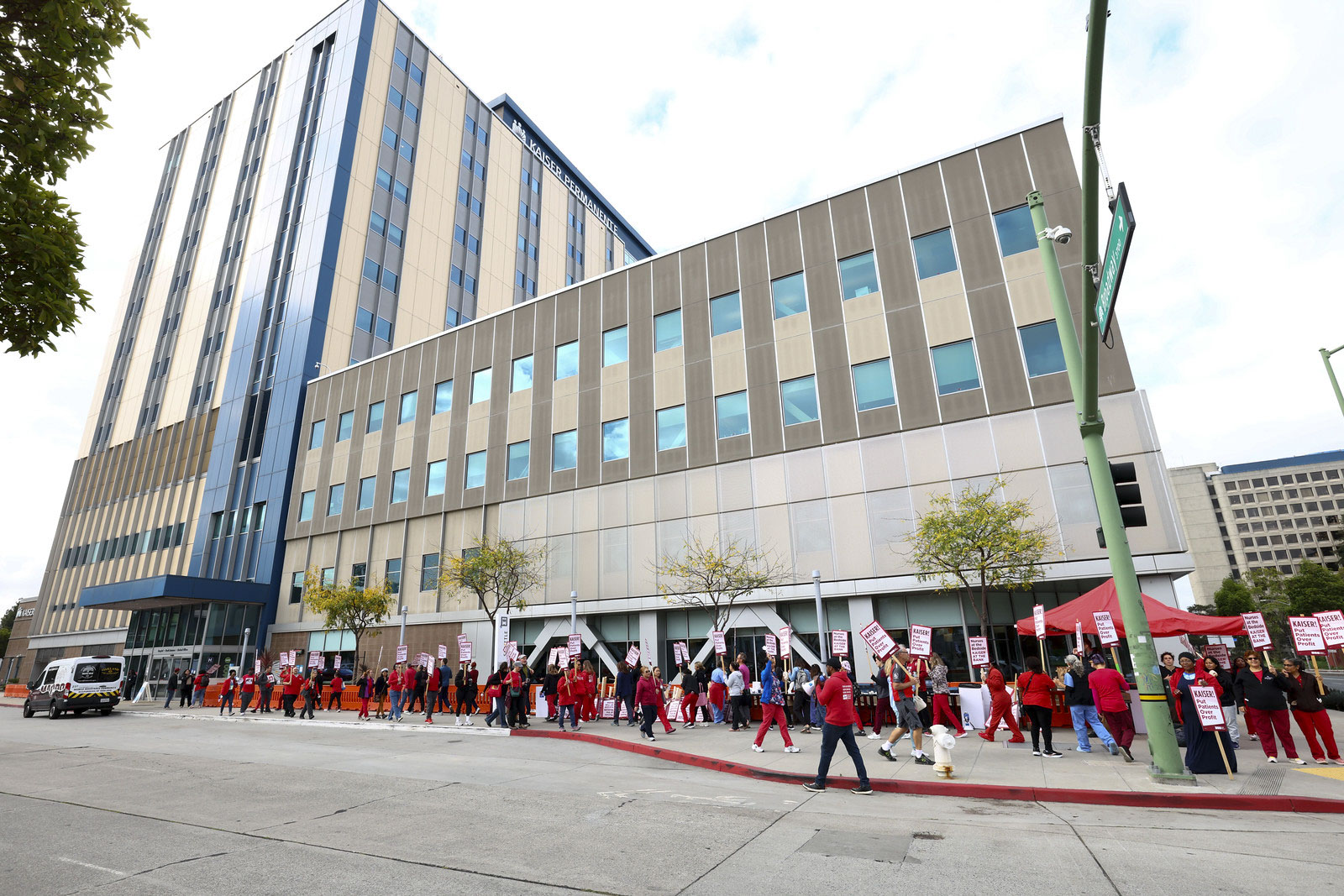
"caption": "Dozens of nurses staged what they called an \"informational picket\" outside Kaiser Permanente Oakland Medical Center on Sept. 1, 2026, to demand better staffing levels and limits on AI.",
"credit": "Courtesy of California Nurses Association",
"altTag": null,
"description": null,
"imgSizes": {
"thumbnail": {
"file": "https://cdn.kqed.org/wp-content/uploads/sites/10/2026/09/Kaiser-Labor-5-KQED-160x107.jpg",
"width": 160,
"height": 107,
"mimeType": "image/jpeg"
},
"1536x1536": {
"file": "https://cdn.kqed.org/wp-content/uploads/sites/10/2026/09/Kaiser-Labor-5-KQED-1536x1024.jpg",
"width": 1536,
"height": 1024,
"mimeType": "image/jpeg"
},
"post-thumbnail": {
"file": "https://cdn.kqed.org/wp-content/uploads/sites/10/2026/09/Kaiser-Labor-5-KQED-672x372.jpg",
"width": 672,
"height": 372,
"mimeType": "image/jpeg"
},
"twentyfourteen-full-width": {
"file": "https://cdn.kqed.org/wp-content/uploads/sites/10/2026/09/Kaiser-Labor-5-KQED-1038x576.jpg",
"width": 1038,
"height": 576,
"mimeType": "image/jpeg"
},
"npr-cds-wide": {
"file": "https://cdn.kqed.org/wp-content/uploads/sites/10/2026/09/Kaiser-Labor-5-KQED-1200x675.jpg",
"width": 1200,
"height": 675,
"mimeType": "image/jpeg"
},
"npr-cds-square": {
"file": "https://cdn.kqed.org/wp-content/uploads/sites/10/2026/09/Kaiser-Labor-5-KQED-600x600.jpg",
"width": 600,
"height": 600,
"mimeType": "image/jpeg"
},
"kqedFullSize": {
"file": "https://cdn.kqed.org/wp-content/uploads/sites/10/2026/09/Kaiser-Labor-5-KQED.jpg",
"width": 1600,
"height": 1067
}
},
"isLoading": false,
"fetchFailed": false
},
"news_11928851": {
"type": "attachments",
"id": "news_11928851",
"meta": {
"index": "attachments_1716263798",
"site": "news",
"id": "11928851",
"found": true
},
"parent": 11928844,
"imgSizes": {
"twentyfourteen-full-width": {
"file": "https://ww2.kqed.org/app/uploads/sites/10/2022/10/RS59361_IMG_5929-qut-1038x576.jpg",
"width": 1038,
"mimeType": "image/jpeg",
"height": 576
},
"thumbnail": {
"file": "https://ww2.kqed.org/app/uploads/sites/10/2022/10/RS59361_IMG_5929-qut-160x120.jpg",
"width": 160,
"mimeType": "image/jpeg",
"height": 120
},
"post-thumbnail": {
"file": "https://ww2.kqed.org/app/uploads/sites/10/2022/10/RS59361_IMG_5929-qut-672x372.jpg",
"width": 672,
"mimeType": "image/jpeg",
"height": 372
},
"kqedFullSize": {
"file": "https://ww2.kqed.org/app/uploads/sites/10/2022/10/RS59361_IMG_5929-qut.jpg",
"width": 1920,
"height": 1440
},
"large": {
"file": "https://ww2.kqed.org/app/uploads/sites/10/2022/10/RS59361_IMG_5929-qut-1020x765.jpg",
"width": 1020,
"mimeType": "image/jpeg",
"height": 765
},
"1536x1536": {
"file": "https://ww2.kqed.org/app/uploads/sites/10/2022/10/RS59361_IMG_5929-qut-1536x1152.jpg",
"width": 1536,
"mimeType": "image/jpeg",
"height": 1152
},
"medium": {
"file": "https://ww2.kqed.org/app/uploads/sites/10/2022/10/RS59361_IMG_5929-qut-800x600.jpg",
"width": 800,
"mimeType": "image/jpeg",
"height": 600
}
},
"publishDate": 1665710540,
"modified": 1665711909,
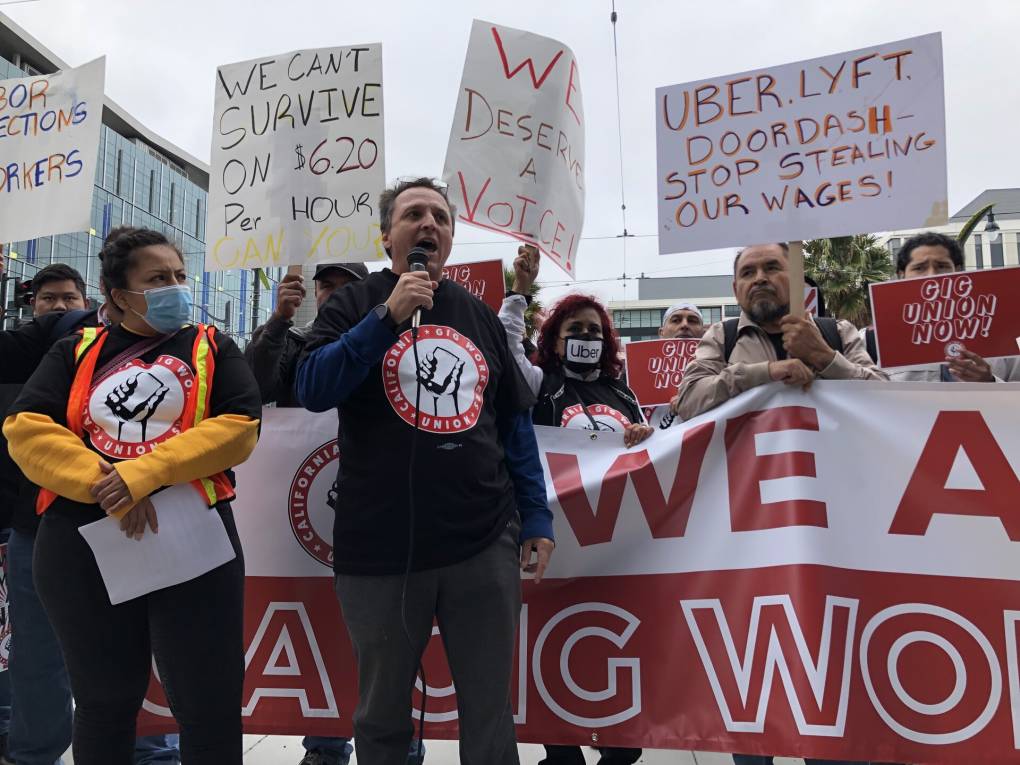
"caption": "Hector Castellanos, an Uber and Lyft driver from Antioch, speaks at a rally to announce the formation of the California Gig Workers Union before Uber's headquarters in San Francisco on Oct. 12, 2022.",
"description": null,
"title": "RS59361_IMG_5929-qut",
"credit": "Farida Jhabvala Romero/KQED",
"status": "inherit",
"altTag": "A man with a microphone speaks while protestors holding signs rally behind him.",
"isLoading": false,
"fetchFailed": false
},
"news_12037906": {
"type": "attachments",
"id": "news_12037906",
"meta": {
"index": "attachments_1716263798",
"site": "news",
"id": "12037906",
"found": true
},
"title": "Santa Clara County Superior Court in San Jose on March 24, 2025.",
"publishDate": 1745862782,
"status": "inherit",
"parent": 0,
"modified": 1771464563,
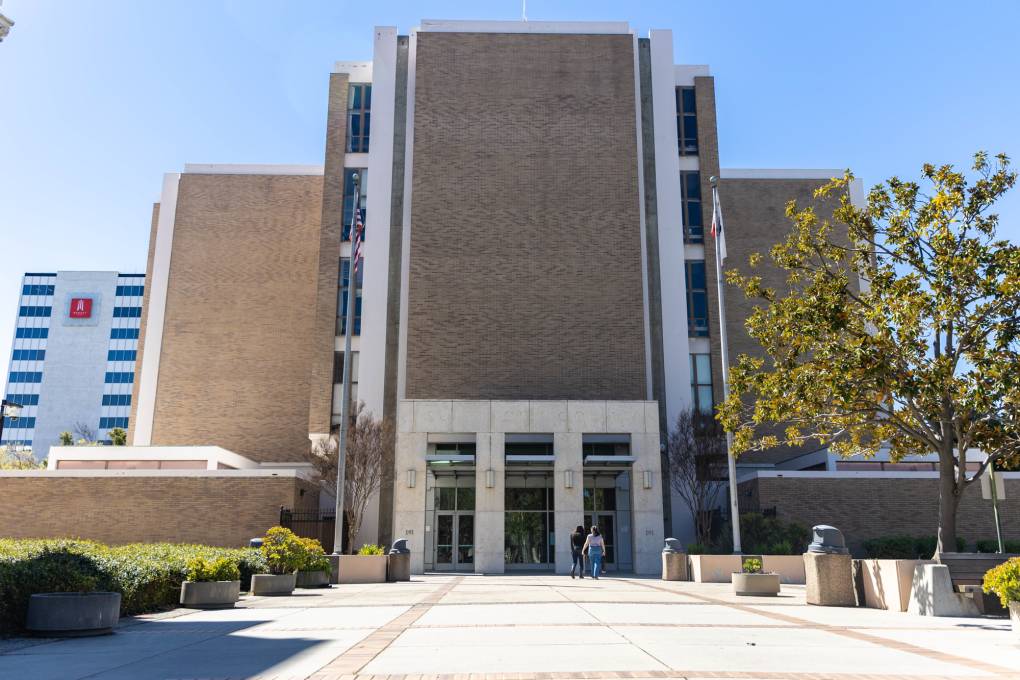
"caption": "Santa Clara County Superior Court in San José on March 24, 2025.",
"credit": "Gina Castro/KQED",
"altTag": null,
"description": null,
"imgSizes": {
"medium": {
"file": "https://cdn.kqed.org/wp-content/uploads/sites/10/2025/04/20250324_SANTACLARASUPERIORCOURT-6-KQED-800x533.jpg",
"width": 800,
"height": 533,
"mimeType": "image/jpeg"
},
"large": {
"file": "https://cdn.kqed.org/wp-content/uploads/sites/10/2025/04/20250324_SANTACLARASUPERIORCOURT-6-KQED-1020x680.jpg",
"width": 1020,
"height": 680,
"mimeType": "image/jpeg"
},
"thumbnail": {
"file": "https://cdn.kqed.org/wp-content/uploads/sites/10/2025/04/20250324_SANTACLARASUPERIORCOURT-6-KQED-160x107.jpg",
"width": 160,
"height": 107,
"mimeType": "image/jpeg"
},
"1536x1536": {
"file": "https://cdn.kqed.org/wp-content/uploads/sites/10/2025/04/20250324_SANTACLARASUPERIORCOURT-6-KQED-1536x1024.jpg",
"width": 1536,
"height": 1024,
"mimeType": "image/jpeg"
},
"post-thumbnail": {
"file": "https://cdn.kqed.org/wp-content/uploads/sites/10/2025/04/20250324_SANTACLARASUPERIORCOURT-6-KQED-672x372.jpg",
"width": 672,
"height": 372,
"mimeType": "image/jpeg"
},
"twentyfourteen-full-width": {
"file": "https://cdn.kqed.org/wp-content/uploads/sites/10/2025/04/20250324_SANTACLARASUPERIORCOURT-6-KQED-1038x576.jpg",
"width": 1038,
"height": 576,
"mimeType": "image/jpeg"
},
"full-width": {
"file": "https://cdn.kqed.org/wp-content/uploads/sites/10/2025/04/20250324_SANTACLARASUPERIORCOURT-6-KQED-1920x1280.jpg",
"width": 1920,
"height": 1280,
"mimeType": "image/jpeg"
},
"kqedFullSize": {
"file": "https://cdn.kqed.org/wp-content/uploads/sites/10/2025/04/20250324_SANTACLARASUPERIORCOURT-6-KQED.jpg",
"width": 2000,
"height": 1333
}
},
"isLoading": false,
"fetchFailed": false
},
"news_11955918": {
"type": "attachments",
"id": "news_11955918",
"meta": {
"index": "attachments_1716263798",
"site": "news",
"id": "11955918",
"found": true
},
"parent": 0,
"imgSizes": {
"twentyfourteen-full-width": {
"file": "https://ww2.kqed.org/app/uploads/sites/10/2023/07/230718-CAR-WASH-WAGE-THEFT-Getty-GM-KQED-1038x576.jpg",
"width": 1038,
"mimeType": "image/jpeg",
"height": 576
},
"thumbnail": {
"file": "https://ww2.kqed.org/app/uploads/sites/10/2023/07/230718-CAR-WASH-WAGE-THEFT-Getty-GM-KQED-160x107.jpg",
"width": 160,
"mimeType": "image/jpeg",
"height": 107
},
"post-thumbnail": {
"file": "https://ww2.kqed.org/app/uploads/sites/10/2023/07/230718-CAR-WASH-WAGE-THEFT-Getty-GM-KQED-672x372.jpg",
"width": 672,
"mimeType": "image/jpeg",
"height": 372
},
"kqedFullSize": {
"file": "https://ww2.kqed.org/app/uploads/sites/10/2023/07/230718-CAR-WASH-WAGE-THEFT-Getty-GM-KQED.jpg",
"width": 2000,
"height": 1333
},
"large": {
"file": "https://ww2.kqed.org/app/uploads/sites/10/2023/07/230718-CAR-WASH-WAGE-THEFT-Getty-GM-KQED-1020x680.jpg",
"width": 1020,
"mimeType": "image/jpeg",
"height": 680
},
"1536x1536": {
"file": "https://ww2.kqed.org/app/uploads/sites/10/2023/07/230718-CAR-WASH-WAGE-THEFT-Getty-GM-KQED-1536x1024.jpg",
"width": 1536,
"mimeType": "image/jpeg",
"height": 1024
},
"full-width": {
"file": "https://ww2.kqed.org/app/uploads/sites/10/2023/07/230718-CAR-WASH-WAGE-THEFT-Getty-GM-KQED-1920x1280.jpg",
"width": 1920,
"mimeType": "image/jpeg",
"height": 1280
},
"medium": {
"file": "https://ww2.kqed.org/app/uploads/sites/10/2023/07/230718-CAR-WASH-WAGE-THEFT-Getty-GM-KQED-800x533.jpg",
"width": 800,
"mimeType": "image/jpeg",
"height": 533
}
},
"publishDate": 1689697200,
"modified": 1689718244,
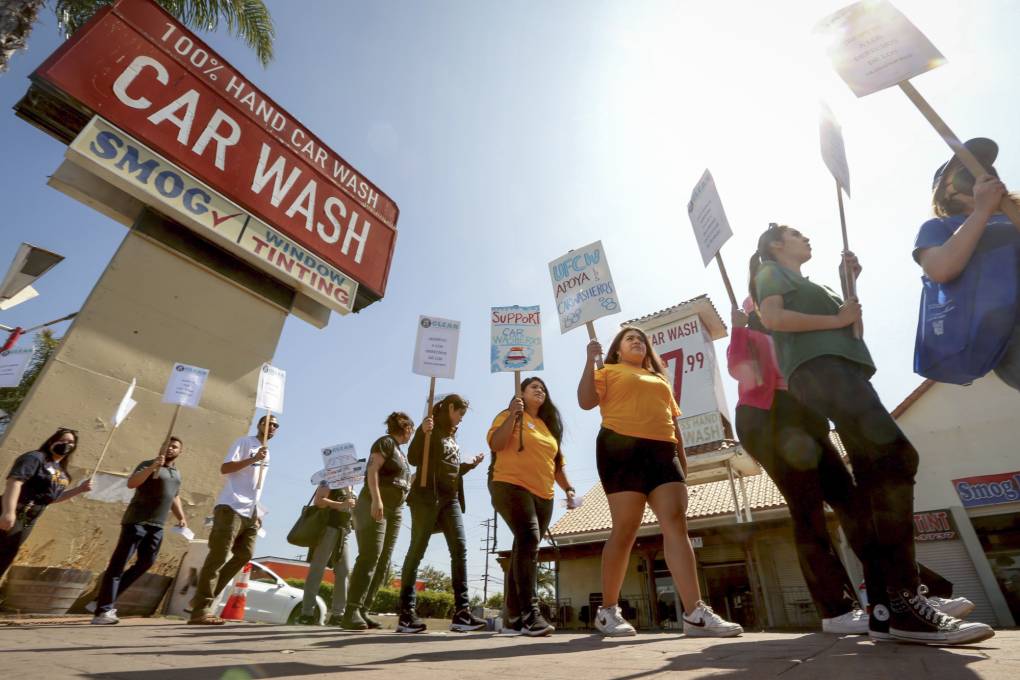
"caption": "Protesters picket in front of the Shine N Brite Car Wash in Inglewood on July 11, 2023. Shine N Brite Car Wash was cited last November after state regulators found the carwash operator paid workers as low as $7 an hour.",
"description": null,
"title": "Hot weather photos",
"credit": "Genaro Molina/Los Angeles Times via Getty Images",
"status": "inherit",
"altTag": "A group of people holds signs and walks in a line in front of a car wash on a sunny day.",
"isLoading": false,
"fetchFailed": false
},
"news_12098304": {
"type": "attachments",
"id": "news_12098304",
"meta": {
"index": "attachments_1716263798",
"site": "news",
"id": "12098304",
"found": true
},
"title": "240522-KQEDheadquarters-10-BL_qed",
"publishDate": 1788467514,
"status": "inherit",
"parent": 12098297,
"modified": 1788467527,
"caption": "A KQED sign in the entrance way to the organization's headquarters in San Francisco on May 22, 2024.",
"credit": "Beth LaBerge/KQED",
"altTag": null,
"description": null,
"imgSizes": {
"thumbnail": {
"file": "https://cdn.kqed.org/wp-content/uploads/sites/10/2026/09/240522-KQEDheadquarters-10-BL_qed-160x107.jpg",
"width": 160,
"height": 107,
"mimeType": "image/jpeg"
},
"1536x1536": {
"file": "https://cdn.kqed.org/wp-content/uploads/sites/10/2026/09/240522-KQEDheadquarters-10-BL_qed-1536x1024.jpg",
"width": 1536,
"height": 1024,
"mimeType": "image/jpeg"
},
"post-thumbnail": {
"file": "https://cdn.kqed.org/wp-content/uploads/sites/10/2026/09/240522-KQEDheadquarters-10-BL_qed-672x372.jpg",
"width": 672,
"height": 372,
"mimeType": "image/jpeg"
},
"twentyfourteen-full-width": {
"file": "https://cdn.kqed.org/wp-content/uploads/sites/10/2026/09/240522-KQEDheadquarters-10-BL_qed-1038x576.jpg",
"width": 1038,
"height": 576,
"mimeType": "image/jpeg"
},
"npr-cds-wide": {
"file": "https://cdn.kqed.org/wp-content/uploads/sites/10/2026/09/240522-KQEDheadquarters-10-BL_qed-1200x675.jpg",
"width": 1200,
"height": 675,
"mimeType": "image/jpeg"
},
"npr-cds-square": {
"file": "https://cdn.kqed.org/wp-content/uploads/sites/10/2026/09/240522-KQEDheadquarters-10-BL_qed-600x600.jpg",
"width": 600,
"height": 600,
"mimeType": "image/jpeg"
},
"kqedFullSize": {
"file": "https://cdn.kqed.org/wp-content/uploads/sites/10/2026/09/240522-KQEDheadquarters-10-BL_qed.jpg",
"width": 2000,
"height": 1333
}
},
"isLoading": false,
"fetchFailed": false
},
"news_11984237": {
"type": "attachments",
"id": "news_11984237",
"meta": {
"index": "attachments_1716263798",
"site": "news",
"id": "11984237",
"found": true
},
"title": "20240426_DEPTOFLABORANNOUNCEMENT-16-GC-KQED",
"publishDate": 1714168027,
"status": "inherit",
"parent": 0,
"modified": 1777581725,
"caption": "California state Labor Commissioner Lilia García- Brower speaks during a press conference announcing new protections for H2A immigrant farmworkers to ensure fair labor standards are met in the U.S. agricultural industry, in Santa Rosa on Friday, April 26, 2024.",
"credit": null,
"altTag": null,
"description": null,
"imgSizes": {
"medium": {
"file": "https://cdn.kqed.org/wp-content/uploads/sites/10/2024/04/20240426_DEPTOFLABORANNOUNCEMENT-16-GC-KQED-800x533.jpg",
"width": 800,
"height": 533,
"mimeType": "image/jpeg"
},
"large": {
"file": "https://cdn.kqed.org/wp-content/uploads/sites/10/2024/04/20240426_DEPTOFLABORANNOUNCEMENT-16-GC-KQED-1020x680.jpg",
"width": 1020,
"height": 680,
"mimeType": "image/jpeg"
},
"thumbnail": {
"file": "https://cdn.kqed.org/wp-content/uploads/sites/10/2024/04/20240426_DEPTOFLABORANNOUNCEMENT-16-GC-KQED-160x107.jpg",
"width": 160,
"height": 107,
"mimeType": "image/jpeg"
},
"1536x1536": {
"file": "https://cdn.kqed.org/wp-content/uploads/sites/10/2024/04/20240426_DEPTOFLABORANNOUNCEMENT-16-GC-KQED-1536x1024.jpg",
"width": 1536,
"height": 1024,
"mimeType": "image/jpeg"
},
"post-thumbnail": {
"file": "https://cdn.kqed.org/wp-content/uploads/sites/10/2024/04/20240426_DEPTOFLABORANNOUNCEMENT-16-GC-KQED-672x372.jpg",
"width": 672,
"height": 372,
"mimeType": "image/jpeg"
},
"twentyfourteen-full-width": {
"file": "https://cdn.kqed.org/wp-content/uploads/sites/10/2024/04/20240426_DEPTOFLABORANNOUNCEMENT-16-GC-KQED-1038x576.jpg",
"width": 1038,
"height": 576,
"mimeType": "image/jpeg"
},
"full-width": {
"file": "https://cdn.kqed.org/wp-content/uploads/sites/10/2024/04/20240426_DEPTOFLABORANNOUNCEMENT-16-GC-KQED-1920x1280.jpg",
"width": 1920,
"height": 1280,
"mimeType": "image/jpeg"
},
"kqedFullSize": {
"file": "https://cdn.kqed.org/wp-content/uploads/sites/10/2024/04/20240426_DEPTOFLABORANNOUNCEMENT-16-GC-KQED.jpg",
"width": 2000,
"height": 1333
}
},
"isLoading": false,
"fetchFailed": false
},
"news_12081537": {
"type": "attachments",
"id": "news_12081537",
"meta": {
"index": "attachments_1716263798",
"site": "news",
"id": "12081537",
"found": true
},
"title": "260427-CONSTRUCTIONWORKERS-19-BL-KQED",
"publishDate": 1777323932,
"status": "inherit",
"parent": 0,
"modified": 1777331473,
"caption": "Construction workers and supporters march through Oakland to the Lion Creek Crossings, an affordable housing complex, on April 27, 2026, as part of a demonstration calling for more than $300,000 in unpaid wages from Bay Area contractors Milestone Roofing and Saarman Construction.",
"credit": "Beth LaBerge/KQED",
"altTag": null,
"description": null,
"imgSizes": {
"thumbnail": {
"file": "https://cdn.kqed.org/wp-content/uploads/sites/10/2026/04/260427-CONSTRUCTIONWORKERS-19-BL-KQED-160x107.jpg",
"width": 160,
"height": 107,
"mimeType": "image/jpeg"
},
"1536x1536": {
"file": "https://cdn.kqed.org/wp-content/uploads/sites/10/2026/04/260427-CONSTRUCTIONWORKERS-19-BL-KQED-1536x1024.jpg",
"width": 1536,
"height": 1024,
"mimeType": "image/jpeg"
},
"post-thumbnail": {
"file": "https://cdn.kqed.org/wp-content/uploads/sites/10/2026/04/260427-CONSTRUCTIONWORKERS-19-BL-KQED-672x372.jpg",
"width": 672,
"height": 372,
"mimeType": "image/jpeg"
},
"twentyfourteen-full-width": {
"file": "https://cdn.kqed.org/wp-content/uploads/sites/10/2026/04/260427-CONSTRUCTIONWORKERS-19-BL-KQED-1038x576.jpg",
"width": 1038,
"height": 576,
"mimeType": "image/jpeg"
},
"npr-cds-wide": {
"file": "https://cdn.kqed.org/wp-content/uploads/sites/10/2026/04/260427-CONSTRUCTIONWORKERS-19-BL-KQED-1200x675.jpg",
"width": 1200,
"height": 675,
"mimeType": "image/jpeg"
},
"npr-cds-square": {
"file": "https://cdn.kqed.org/wp-content/uploads/sites/10/2026/04/260427-CONSTRUCTIONWORKERS-19-BL-KQED-600x600.jpg",
"width": 600,
"height": 600,
"mimeType": "image/jpeg"
},
"kqedFullSize": {
"file": "https://cdn.kqed.org/wp-content/uploads/sites/10/2026/04/260427-CONSTRUCTIONWORKERS-19-BL-KQED.jpg",
"width": 2000,
"height": 1333
}
},
"isLoading": false,
"fetchFailed": false
},
"news_12076910": {
"type": "attachments",
"id": "news_12076910",
"meta": {
"index": "attachments_1716263798",
"site": "news",
"id": "12076910",
"found": true
},
"title": "049_KQED_UnitedFarmWorkersMarch_08242022_qed",
"publishDate": 1773859574,
"status": "inherit",
"parent": 0,
"modified": 1773859614,
"caption": "United Farm Workers and their supporters march next to the Sacramento River as they pass through Walnut Grove on Day 22 of a 24-day \"March for the Governor’s Signature\" on Aug. 24, 2022, to convince Gov. Gavin Newsom to sign Assembly Bill 2183, the Agricultural Labor Relations Voting Choice Act. The march started in the Central Valley and will conclude with a rally in Sacramento on Aug. 26, 2022.",
"credit": "Beth LaBerge/KQED",
"altTag": null,
"description": null,
"imgSizes": {
"thumbnail": {
"file": "https://cdn.kqed.org/wp-content/uploads/sites/10/2026/03/049_KQED_UnitedFarmWorkersMarch_08242022_qed-160x107.jpg",
"width": 160,
"height": 107,
"mimeType": "image/jpeg"
},
"1536x1536": {
"file": "https://cdn.kqed.org/wp-content/uploads/sites/10/2026/03/049_KQED_UnitedFarmWorkersMarch_08242022_qed-1536x1024.jpg",
"width": 1536,
"height": 1024,
"mimeType": "image/jpeg"
},
"post-thumbnail": {
"file": "https://cdn.kqed.org/wp-content/uploads/sites/10/2026/03/049_KQED_UnitedFarmWorkersMarch_08242022_qed-672x372.jpg",
"width": 672,
"height": 372,
"mimeType": "image/jpeg"
},
"twentyfourteen-full-width": {
"file": "https://cdn.kqed.org/wp-content/uploads/sites/10/2026/03/049_KQED_UnitedFarmWorkersMarch_08242022_qed-1038x576.jpg",
"width": 1038,
"height": 576,
"mimeType": "image/jpeg"
},
"npr-cds-wide": {
"file": "https://cdn.kqed.org/wp-content/uploads/sites/10/2026/03/049_KQED_UnitedFarmWorkersMarch_08242022_qed-1200x675.jpg",
"width": 1200,
"height": 675,
"mimeType": "image/jpeg"
},
"kqedFullSize": {
"file": "https://cdn.kqed.org/wp-content/uploads/sites/10/2026/03/049_KQED_UnitedFarmWorkersMarch_08242022_qed.jpg",
"width": 2000,
"height": 1333
}
},
"isLoading": false,
"fetchFailed": false
},
"news_12063947": {
"type": "attachments",
"id": "news_12063947",
"meta": {
"index": "attachments_1716263798",
"site": "news",
"id": "12063947",
"found": true
},
"title": "Home healthcare",
"publishDate": 1762998778,
"status": "inherit",
"parent": 12063843,
"modified": 1762998817,
"caption": "A senior woman at home receiving health care.",
"credit": "LPETTET via Getty Images",
"altTag": null,
"description": null,
"imgSizes": {
"thumbnail": {
"file": "https://cdn.kqed.org/wp-content/uploads/sites/10/2025/11/CaregiverGetty-160x107.jpg",
"width": 160,
"height": 107,
"mimeType": "image/jpeg"
},
"1536x1536": {
"file": "https://cdn.kqed.org/wp-content/uploads/sites/10/2025/11/CaregiverGetty-1536x1024.jpg",
"width": 1536,
"height": 1024,
"mimeType": "image/jpeg"
},
"post-thumbnail": {
"file": "https://cdn.kqed.org/wp-content/uploads/sites/10/2025/11/CaregiverGetty-672x372.jpg",
"width": 672,
"height": 372,
"mimeType": "image/jpeg"
},
"twentyfourteen-full-width": {
"file": "https://cdn.kqed.org/wp-content/uploads/sites/10/2025/11/CaregiverGetty-1038x576.jpg",
"width": 1038,
"height": 576,
"mimeType": "image/jpeg"
},
"npr-cds-wide": {
"file": "https://cdn.kqed.org/wp-content/uploads/sites/10/2025/11/CaregiverGetty-1200x675.jpg",
"width": 1200,
"height": 675,
"mimeType": "image/jpeg"
},
"kqedFullSize": {
"file": "https://cdn.kqed.org/wp-content/uploads/sites/10/2025/11/CaregiverGetty.jpg",
"width": 2000,
"height": 1333
}
},
"isLoading": false,
"fetchFailed": false
},
"news_12062815": {
"type": "attachments",
"id": "news_12062815",
"meta": {
"index": "attachments_1716263798",
"site": "news",
"id": "12062815",
"found": true
},
"title": "Costco Delivery",
"publishDate": 1762285206,
"status": "inherit",
"parent": 12062811,
"modified": 1762285267,
"caption": "Costco Business truck completing a delivery in the Financial District neighborhood of San Francisco, California, on Sept. 26, 2016.",
"credit": "Smith Collection/Gado via Getty Images",
"altTag": null,
"description": null,
"imgSizes": {
"thumbnail": {
"file": "https://cdn.kqed.org/wp-content/uploads/sites/10/2025/11/CostcoTruckGetty-160x107.jpg",
"width": 160,
"height": 107,
"mimeType": "image/jpeg"
},
"1536x1536": {
"file": "https://cdn.kqed.org/wp-content/uploads/sites/10/2025/11/CostcoTruckGetty-1536x1024.jpg",
"width": 1536,
"height": 1024,
"mimeType": "image/jpeg"
},
"post-thumbnail": {
"file": "https://cdn.kqed.org/wp-content/uploads/sites/10/2025/11/CostcoTruckGetty-672x372.jpg",
"width": 672,
"height": 372,
"mimeType": "image/jpeg"
},
"twentyfourteen-full-width": {
"file": "https://cdn.kqed.org/wp-content/uploads/sites/10/2025/11/CostcoTruckGetty-1038x576.jpg",
"width": 1038,
"height": 576,
"mimeType": "image/jpeg"
},
"npr-cds-wide": {
"file": "https://cdn.kqed.org/wp-content/uploads/sites/10/2025/11/CostcoTruckGetty-1200x675.jpg",
"width": 1200,
"height": 675,
"mimeType": "image/jpeg"
},
"kqedFullSize": {
"file": "https://cdn.kqed.org/wp-content/uploads/sites/10/2025/11/CostcoTruckGetty.jpg",
"width": 2000,
"height": 1333
}
},
"isLoading": false,
"fetchFailed": false
},
"news_12046155": {
"type": "attachments",
"id": "news_12046155",
"meta": {
"index": "attachments_1716263798",
"site": "news",
"id": "12046155",
"found": true
},
"title": "Alex stands outside of City Hall in Oakland on June 26, 2025.",
"publishDate": 1750969312,
"status": "inherit",
"parent": 12046137,
"modified": 1751027177,
"caption": "Alex, a day laborer in Oakland stands outside of City Hall in Oakland on June 26, 2025.",
"credit": "Martin do Nascimento/KQED",
"altTag": null,
"description": null,
"imgSizes": {
"thumbnail": {
"file": "https://cdn.kqed.org/wp-content/uploads/sites/10/2025/06/250626-OAKLAND-DAY-LABORERS-MD-06-KQED-160x107.jpg",
"width": 160,
"height": 107,
"mimeType": "image/jpeg"
},
"1536x1536": {
"file": "https://cdn.kqed.org/wp-content/uploads/sites/10/2025/06/250626-OAKLAND-DAY-LABORERS-MD-06-KQED-1536x1025.jpg",
"width": 1536,
"height": 1025,
"mimeType": "image/jpeg"
},
"post-thumbnail": {
"file": "https://cdn.kqed.org/wp-content/uploads/sites/10/2025/06/250626-OAKLAND-DAY-LABORERS-MD-06-KQED-672x372.jpg",
"width": 672,
"height": 372,
"mimeType": "image/jpeg"
},
"twentyfourteen-full-width": {
"file": "https://cdn.kqed.org/wp-content/uploads/sites/10/2025/06/250626-OAKLAND-DAY-LABORERS-MD-06-KQED-1038x576.jpg",
"width": 1038,
"height": 576,
"mimeType": "image/jpeg"
},
"kqedFullSize": {
"file": "https://cdn.kqed.org/wp-content/uploads/sites/10/2025/06/250626-OAKLAND-DAY-LABORERS-MD-06-KQED.jpg",
"width": 2000,
"height": 1334
}
},
"isLoading": false,
"fetchFailed": false
}
},
"audioPlayerReducer": {
"postId": "stream_live",
"isPaused": true,
"isPlaying": false,
"pfsActive": false,
"pledgeModalIsOpen": true,
"playerDrawerIsOpen": false,
"liveAudioPlayStartedAt": 0,
"liveAudioPlayContext": ""
},
"authorsReducer": {
"rachael-myrow": {
"type": "authors",
"id": "251",
"meta": {
"index": "authors_1716337520",
"id": "251",
"found": true
},
"name": "Rachael Myrow",
"firstName": "Rachael",
"lastName": "Myrow",
"slug": "rachael-myrow",
"email": "rmyrow@kqed.org",
"display_author_email": true,
"staff_mastheads": [
"news"
],
"title": "Senior Editor of KQED's Silicon Valley News Desk",
"bio": "• I write and edit stories about how Silicon Valley power and policies shape everyday life in California. I’m also passionate about making Bay Area history and culture more accessible to a broad public. • I’ve been a journalist for most of my life, starting in high school with The Franklin Press in Los Angeles, where I grew up. While earning my first degree in English at UC Berkeley, I got my start in public radio at KALX-FM. After completing a second degree in journalism at Cal, I landed my first professional job at Marketplace, then moved on to KPCC (now LAist), and then KQED, where I hosted The California Report for more than seven years. • My reporting has appeared on NPR, The World, WBUR’s \u003ci>Here & Now\u003c/i>, and the BBC. I also guest host for KQED’s \u003ci>Forum\u003c/i>, as well as the Commonwealth Club in San Francisco. • I speak periodically on media, democracy and technology issues, and do voiceover work for documentaries and educational video projects. • Outside of the studio, you'll find me hiking Bay Area trails and whipping up Insta-ready meals in my kitchen. • I do not accept gifts, money, or favors from anyone connected to my reporting, I don't pay people for information, and I do not support or donate to political causes. • I strive to treat the people I report on with fairness, honesty, and respect. I also recognize there are often multiple sides to a story and work to verify information through multiple sources and documentation. If I get something wrong, I correct it.",
"avatar": "https://secure.gravatar.com/avatar/3ed8a3c5f26025e4a805ba634cda8cd764906b97438a6d9ce216b044e340da4e?s=600&d=blank&r=g",
"twitter": "rachaelmyrow",
"bluesky": null,
"facebook": null,
"instagram": null,
"linkedin": "https://www.linkedin.com/in/rachaelmyrow/",
"sites": [
{
"site": "arts",
"roles": [
"administrator"
]
},
{
"site": "news",
"roles": [
"edit_others_posts",
"editor"
]
},
{
"site": "futureofyou",
"roles": [
"editor"
]
},
{
"site": "bayareabites",
"roles": [
"editor"
]
},
{
"site": "stateofhealth",
"roles": [
"editor"
]
},
{
"site": "science",
"roles": [
"editor"
]
},
{
"site": "food",
"roles": [
"editor"
]
},
{
"site": "forum",
"roles": [
"editor"
]
},
{
"site": "liveblog",
"roles": [
"author"
]
}
],
"headData": {
"title": "Rachael Myrow | KQED",
"description": "Senior Editor of KQED's Silicon Valley News Desk",
"ogImgSrc": "https://secure.gravatar.com/avatar/3ed8a3c5f26025e4a805ba634cda8cd764906b97438a6d9ce216b044e340da4e?s=600&d=blank&r=g",
"twImgSrc": "https://secure.gravatar.com/avatar/3ed8a3c5f26025e4a805ba634cda8cd764906b97438a6d9ce216b044e340da4e?s=600&d=blank&r=g"
},
"isLoading": false,
"link": "/author/rachael-myrow"
},
"fjhabvala": {
"type": "authors",
"id": "8659",
"meta": {
"index": "authors_1716337520",
"id": "8659",
"found": true
},
"name": "Farida Jhabvala Romero",
"firstName": "Farida",
"lastName": "Jhabvala Romero",
"slug": "fjhabvala",
"email": "fjhabvala@kqed.org",
"display_author_email": true,
"staff_mastheads": [
"news"
],
"title": "KQED Contributor",
"bio": "Farida Jhabvala Romero is a Labor Correspondent for KQED. She previously covered immigration. Farida was \u003ca href=\"https://www.ccnma.org/2022-most-influential-latina-journalists\">named\u003c/a> one of the 10 Most Influential Latina Journalists in California in 2022 by the California Chicano News Media Association. Her work has won awards from the Society of Professional Journalists (Northern California), as well as a national and regional Edward M. Murrow Award for the collaborative reporting projects “Dangerous Air” and “Graying California.” Before joining KQED, Farida worked as a producer at Radio Bilingüe, a national public radio network. Farida earned her master’s degree in journalism from Stanford University.",
"avatar": "https://secure.gravatar.com/avatar/f9f022d4e2609741874222a1e9d41f48fea74011aa7c615eef91d9a50c944ebe?s=600&d=blank&r=g",
"twitter": "FaridaJhabvala",
"bluesky": null,
"facebook": null,
"instagram": null,
"linkedin": "https://www.linkedin.com/in/faridajhabvala/",
"sites": [
{
"site": "news",
"roles": [
"editor"
]
},
{
"site": "stateofhealth",
"roles": [
"author"
]
},
{
"site": "liveblog",
"roles": [
"author"
]
}
],
"headData": {
"title": "Farida Jhabvala Romero | KQED",
"description": "KQED Contributor",
"ogImgSrc": "https://secure.gravatar.com/avatar/f9f022d4e2609741874222a1e9d41f48fea74011aa7c615eef91d9a50c944ebe?s=600&d=blank&r=g",
"twImgSrc": "https://secure.gravatar.com/avatar/f9f022d4e2609741874222a1e9d41f48fea74011aa7c615eef91d9a50c944ebe?s=600&d=blank&r=g"
},
"isLoading": false,
"link": "/author/fjhabvala"
},
"ebaldassari": {
"type": "authors",
"id": "11652",
"meta": {
"index": "authors_1716337520",
"id": "11652",
"found": true
},
"name": "Erin Baldassari",
"firstName": "Erin",
"lastName": "Baldassari",
"slug": "ebaldassari",
"email": "ebaldassari@KQED.org",
"display_author_email": true,
"staff_mastheads": [
"news"
],
"title": "Staff Writer",
"bio": "Erin Baldassari covers housing for KQED. She's a former print journalist and most recently worked as the transportation reporter for the \u003cem>Mercury News\u003c/em> and \u003cem>East Bay Times. \u003c/em>There, she focused on how the Bay Area’s housing shortage has changed the way people move around the region. She also served on the \u003cem>East Bay Times\u003c/em>’ 2017 Pulitzer Prize-winning team for coverage of the Ghost Ship Fire in Oakland. Prior to that, Erin worked as a breaking news and general assignment reporter for a variety of outlets in the Bay Area and the greater Boston area. A Tufts University alumna, Erin grew up in the foothills of the Sierra Nevada mountains and in Sonoma County. She is a life-long KQED listener.",
"avatar": "https://secure.gravatar.com/avatar/5e95cad64a8ca08288082212e199d2b0cbeb4fd8e8ef5339395f361032bbe005?s=600&d=blank&r=g",
"twitter": "e_baldi",
"bluesky": null,
"facebook": null,
"instagram": null,
"linkedin": null,
"sites": [
{
"site": "news",
"roles": [
"edit_others_posts",
"editor"
]
},
{
"site": "science",
"roles": [
"editor"
]
},
{
"site": "liveblog",
"roles": [
"editor"
]
}
],
"headData": {
"title": "Erin Baldassari | KQED",
"description": "Staff Writer",
"ogImgSrc": "https://secure.gravatar.com/avatar/5e95cad64a8ca08288082212e199d2b0cbeb4fd8e8ef5339395f361032bbe005?s=600&d=blank&r=g",
"twImgSrc": "https://secure.gravatar.com/avatar/5e95cad64a8ca08288082212e199d2b0cbeb4fd8e8ef5339395f361032bbe005?s=600&d=blank&r=g"
},
"isLoading": false,
"link": "/author/ebaldassari"
},
"jlara": {
"type": "authors",
"id": "11761",
"meta": {
"index": "authors_1716337520",
"id": "11761",
"found": true
},
"name": "Juan Carlos Lara",
"firstName": "Juan Carlos",
"lastName": "Lara",
"slug": "jlara",
"email": "jlara@kqed.org",
"display_author_email": false,
"staff_mastheads": [],
"title": "KQED Contributor",
"bio": null,
"avatar": "https://secure.gravatar.com/avatar/19e2052b9b05657c5ff2af2121846e9c?s=600&d=blank&r=g",
"twitter": null,
"facebook": null,
"instagram": null,
"linkedin": null,
"sites": [
{
"site": "arts",
"roles": [
"editor"
]
},
{
"site": "news",
"roles": [
"editor"
]
},
{
"site": "forum",
"roles": [
"editor"
]
},
{
"site": "liveblog",
"roles": [
"contributor"
]
}
],
"headData": {
"title": "Juan Carlos Lara | KQED",
"description": "KQED Contributor",
"ogImgSrc": "https://secure.gravatar.com/avatar/19e2052b9b05657c5ff2af2121846e9c?s=600&d=blank&r=g",
"twImgSrc": "https://secure.gravatar.com/avatar/19e2052b9b05657c5ff2af2121846e9c?s=600&d=blank&r=g"
},
"isLoading": false,
"link": "/author/jlara"
},
"aaliahmad": {
"type": "authors",
"id": "11986",
"meta": {
"index": "authors_1716337520",
"id": "11986",
"found": true
},
"name": "Ayah Ali-Ahmad",
"firstName": "Ayah",
"lastName": "Ali-Ahmad",
"slug": "aaliahmad",
"email": "aaliahmad@KQED.org",
"display_author_email": false,
"staff_mastheads": [],
"title": "KQED Contributor",
"bio": null,
"avatar": "https://secure.gravatar.com/avatar/1cf54f187a5e1064b2cfef3f3d2f1e4f93e453395d56912aca6382a6071ec3ed?s=600&d=blank&r=g",
"twitter": "ayahaliahmad",
"bluesky": null,
"facebook": null,
"instagram": null,
"linkedin": null,
"sites": [
{
"site": "news",
"roles": [
"subscriber"
]
}
],
"headData": {
"title": "Ayah Ali-Ahmad | KQED",
"description": "KQED Contributor",
"ogImgSrc": "https://secure.gravatar.com/avatar/1cf54f187a5e1064b2cfef3f3d2f1e4f93e453395d56912aca6382a6071ec3ed?s=600&d=blank&r=g",
"twImgSrc": "https://secure.gravatar.com/avatar/1cf54f187a5e1064b2cfef3f3d2f1e4f93e453395d56912aca6382a6071ec3ed?s=600&d=blank&r=g"
},
"isLoading": false,
"link": "/author/aaliahmad"
}
},
"pagesReducer": {
"news_tag_wage-theft": {
"type": "terms",
"id": "news_18208",
"meta": {
"index": "terms_1716263798",
"site": "news",
"id": "18208",
"score": 9.893801
},
"featImg": null,
"name": "wage theft",
"description": null,
"taxonomy": "tag",
"headData": {
"twImgId": null,
"twTitle": null,
"ogTitle": null,
"ogImgId": null,
"twDescription": null,
"description": null,
"title": "wage theft Archives | KQED News",
"ogDescription": null
},
"ttid": 18242,
"slug": "wage-theft",
"isLoading": false,
"title": "wage theft",
"pageMeta": {
"site": "news",
"WpPageTemplate": "page-topic-editorial",
"currentPage": 1
},
"blocks": [
{
"blockName": "kqed/post-list",
"attrs": {
"layout": "cardArticle2",
"query": "posts/news?tag=wage-theft",
"seeMore": false,
"paginated": true,
"page": 1
}
},
{
"blockName": "kqed/ad"
}
]
}
},
"pfsSessionReducer": {},
"postsReducer": {
"stream_live": {
"type": "live",
"id": "stream_live",
"audioUrl": "https://streams.kqed.org/kqedradio",
"title": "Live Stream",
"excerpt": "Live Stream information currently unavailable.",
"link": "/radio",
"featImg": "",
"label": {
"name": "KQED Live",
"link": "/"
}
},
"stream_kqedNewscast": {
"type": "posts",
"id": "stream_kqedNewscast",
"audioUrl": "https://www.kqed.org/.stream/anon/radio/RDnews/newscast.mp3?_=1",
"title": "KQED Newscast",
"featImg": "",
"label": {
"name": "88.5 FM",
"link": "/"
}
},
"news_12102930": {
"type": "posts",
"id": "news_12102930",
"meta": {
"index": "posts_1716263798",
"site": "news",
"id": "12102930",
"score": null,
"sort": [
1791242941000
]
},
"guestAuthors": [],
"slug": "kaiser-permanente-to-pay-owed-wages-to-more-than-1000-nurses-says-union",
"title": "Kaiser Permanente to Pay Owed Wages to More Than 1,000 Nurses, Says Union",
"publishDate": 1791242941,
"format": "standard",
"headTitle": "Kaiser Permanente to Pay Owed Wages to More Than 1,000 Nurses, Says Union | KQED",
"labelTerm": {
"site": "news"
},
"content": "\n\u003cp>\u003ca href=\"https://www.kqed.org/news/tag/kaiser\">Kaiser\u003c/a> Permanente must pay more than 1,000 registered nurses owed wages that could total tens of millions of dollars after a payroll mistake, according to the union that represents the nurses.\u003c/p>\n\n\n\n\u003cp>The California Nurses Association \u003ca href=\"https://www.nationalnursesunited.org/press/nurses-celebrate-massive-historic-victory-against-disgusting-kaiser-wage-theft\">celebrated\u003c/a> Monday an arbitrator’s resolution of the yearslong dispute as a “historic victory against wage theft.” \u003c/p>\n\n\n\n\u003cp>“They changed their payroll system, messed it up and let the mistake steal millions of dollars from nurses,” CNA President Michelle Gutierrez Vo, a family medicine nurse at Kaiser Fremont Medical Center, said in a statement. \u003c/p>\n\n\n\n\u003cp>“When we called them on it, their fancy lawyers fought us tooth and nail for every single dollar,” she said. “Nurses wouldn’t take no for an answer, and we won back millions of dollars in stolen wages.”\u003c/p>\n\n\n\n\u003cfigure class=\"wp-block-image size-full\">\u003cimg loading=\"lazy\" decoding=\"async\" width=\"1600\" height=\"1067\" src=\"https://cdn.kqed.org/wp-content/uploads/sites/10/2026/09/Kaiser-Labor-2-KQED.jpg\" alt=\"\" class=\"wp-image-12097883\" srcset=\"https://cdn.kqed.org/wp-content/uploads/sites/10/2026/09/Kaiser-Labor-2-KQED.jpg 1600w, https://cdn.kqed.org/wp-content/uploads/sites/10/2026/09/Kaiser-Labor-2-KQED-160x107.jpg 160w, https://cdn.kqed.org/wp-content/uploads/sites/10/2026/09/Kaiser-Labor-2-KQED-1536x1024.jpg 1536w\" sizes=\"auto, (max-width: 1600px) 100vw, 1600px\" />\u003cfigcaption class=\"wp-element-caption\">Dozens of nurses staged what they called an “informational picket” outside Kaiser Permanente Oakland Medical Center on Tuesday to demand better staffing levels and limits on AI. (Courtesy of California Nurses Association)\u003c/figcaption>\u003c/figure>\n\n\n\n\u003cp>The union, which represents about 25,000 nurses at 22 Kaiser facilities, said members first alerted the company to the underpayment problem, dating back to at least 2021, after Kaiser changed its payroll system. It’s unclear how much money each nurse is set to receive.\u003c/p>\n\n\n\n\u003cp>In a statement, Kaiser said it disagrees with the union’s characterization but will honor its obligations under the arbitrator’s decision, reached in a process outlined in their labor contract. \u003c/p>\n\n\n\n\n\n\u003cp>California’s \u003ca href=\"https://about.kaiserpermanente.org/expertise-and-impact/public-policy/our-impact/news-perspectives-on-public-policy-california\">largest private employer\u003c/a>, with a workforce of 183,000 in the state, declined to disclose more information about the payroll issue that shorted its employees.\u003c/p>\n\n\n\n\u003cp>“Our nurses are among the most skilled and dedicated in the country, and we are committed to ensuring every one of them is paid accurately and in full accordance with their contract,” a company spokesperson said in a statement. \u003c/p>\n\n\n\n\u003cp>“We will reach out directly to every affected nurse promptly.” \u003c/p>\n\n\n\n\u003cp>Kaiser said its nurses are among the best-compensated in the industry. \u003c/p>\n\n\n\n\u003cp>A \u003ca href=\"https://www.kaiserpermanentejobs.org/job/oakland/staff-nurse-ii/641/101436268128\">Staff Nurse II\u003c/a> in Northern California often earns more than $100 per hour before overtime and premium pay, roughly 7% above market for comparable roles at other health systems, according to the company, one of the nation’s largest nonprofit health plans and providers.\u003c/p>\n\n\n\n\u003cp>The news that Kaiser nurses are set to collectively recover millions of dollars in compensation comes as the employer negotiates a new contract with the California Nurses Association. \u003c/p>\n\n\n\n\u003cp>Top union demands focus on staffing levels, wages and more say over the use of artificial intelligence in patient care.\u003c/p>\n\n\n\n\u003cp>Gov. Gavin Newsom recently signed into law a union-sponsored bill that \u003ca href=\"https://www.nationalnursesunited.org/press/nurses-celebrate-historic-victory-as-gov-newsom-signs-landmark-ai-protection-into-law\">limits the use of AI \u003c/a>in clinical decisions. \u003ca href=\"https://leginfo.legislature.ca.gov/faces/billTextClient.xhtml?bill_id=202520260AB1979\">AB 1979\u003c/a> by Oakland Assemblymember Mia Bonta requires a health facility or physicians’ office to take reasonable steps to ensure that nurses, doctors and other licensed healthcare professionals decide a patient’s care.\u003c/p>\n",
"blocks": [
{
"blockName": "core/paragraph",
"attrs": {
"dropCap": false
},
"innerHTML": "\n\u003cp>\u003ca href=\"https://www.kqed.org/news/tag/kaiser\">Kaiser\u003c/a> Permanente must pay more than 1,000 registered nurses owed wages that could total tens of millions of dollars after a payroll mistake, according to the union that represents the nurses.\u003c/p>\n",
"innerContent": [
"\n\u003cp>\u003ca href=\"https://www.kqed.org/news/tag/kaiser\">Kaiser\u003c/a> Permanente must pay more than 1,000 registered nurses owed wages that could total tens of millions of dollars after a payroll mistake, according to the union that represents the nurses.\u003c/p>\n"
],
"innerBlocks": []
},
{
"blockName": "core/paragraph",
"attrs": {
"dropCap": false
},
"innerHTML": "\n\u003cp>The California Nurses Association \u003ca href=\"https://www.nationalnursesunited.org/press/nurses-celebrate-massive-historic-victory-against-disgusting-kaiser-wage-theft\">celebrated\u003c/a> Monday an arbitrator’s resolution of the yearslong dispute as a “historic victory against wage theft.” \u003c/p>\n",
"innerContent": [
"\n\u003cp>The California Nurses Association \u003ca href=\"https://www.nationalnursesunited.org/press/nurses-celebrate-massive-historic-victory-against-disgusting-kaiser-wage-theft\">celebrated\u003c/a> Monday an arbitrator’s resolution of the yearslong dispute as a “historic victory against wage theft.” \u003c/p>\n"
],
"innerBlocks": []
},
{
"blockName": "core/paragraph",
"attrs": {
"dropCap": false
},
"innerHTML": "\n\u003cp>“They changed their payroll system, messed it up and let the mistake steal millions of dollars from nurses,” CNA President Michelle Gutierrez Vo, a family medicine nurse at Kaiser Fremont Medical Center, said in a statement. \u003c/p>\n",
"innerContent": [
"\n\u003cp>“They changed their payroll system, messed it up and let the mistake steal millions of dollars from nurses,” CNA President Michelle Gutierrez Vo, a family medicine nurse at Kaiser Fremont Medical Center, said in a statement. \u003c/p>\n"
],
"innerBlocks": []
},
{
"blockName": "core/paragraph",
"attrs": {
"dropCap": false
},
"innerHTML": "\n\u003cp>“When we called them on it, their fancy lawyers fought us tooth and nail for every single dollar,” she said. “Nurses wouldn’t take no for an answer, and we won back millions of dollars in stolen wages.”\u003c/p>\n",
"innerContent": [
"\n\u003cp>“When we called them on it, their fancy lawyers fought us tooth and nail for every single dollar,” she said. “Nurses wouldn’t take no for an answer, and we won back millions of dollars in stolen wages.”\u003c/p>\n"
],
"innerBlocks": []
},
{
"blockName": "core/image",
"attrs": {
"id": 12097883,
"sizeSlug": "full",
"linkDestination": "none",
"alt": "",
"srcset": "https://cdn.kqed.org/wp-content/uploads/sites/10/2026/09/Kaiser-Labor-2-KQED.jpg 1600w, https://cdn.kqed.org/wp-content/uploads/sites/10/2026/09/Kaiser-Labor-2-KQED-160x107.jpg 160w, https://cdn.kqed.org/wp-content/uploads/sites/10/2026/09/Kaiser-Labor-2-KQED-1536x1024.jpg 1536w",
"sizes": "(min-width: 992px) min(100vw, 1536px), (min-width: 768px) min(100vw, 1280px), min(100vw, 1020px)"
},
"innerHTML": "\n\u003cfigure class=\"wp-block-image size-full\">\u003cimg src=\"https://cdn.kqed.org/wp-content/uploads/sites/10/2026/09/Kaiser-Labor-2-KQED.jpg\" alt=\"\" class=\"wp-image-12097883\" srcset=\"https://cdn.kqed.org/wp-content/uploads/sites/10/2026/09/Kaiser-Labor-2-KQED.jpg 1600w, https://cdn.kqed.org/wp-content/uploads/sites/10/2026/09/Kaiser-Labor-2-KQED-160x107.jpg 160w, https://cdn.kqed.org/wp-content/uploads/sites/10/2026/09/Kaiser-Labor-2-KQED-1536x1024.jpg 1536w\" sizes=\"(min-width: 992px) min(100vw, 1536px), (min-width: 768px) min(100vw, 1280px), min(100vw, 1020px)\"/>\u003cfigcaption class=\"wp-element-caption\">Dozens of nurses staged what they called an “informational picket” outside Kaiser Permanente Oakland Medical Center on Tuesday to demand better staffing levels and limits on AI.\u003ccite class=\"wp-inline-image-credit\"> (Courtesy of California Nurses Association)\u003c/cite>\u003c/figcaption>\u003c/figure>\n",
"innerContent": [
"\n\u003cfigure class=\"wp-block-image size-full\">\u003cimg src=\"https://cdn.kqed.org/wp-content/uploads/sites/10/2026/09/Kaiser-Labor-2-KQED.jpg\" alt=\"\" class=\"wp-image-12097883\"/>\u003cfigcaption class=\"wp-element-caption\">Dozens of nurses staged what they called an “informational picket” outside Kaiser Permanente Oakland Medical Center on Tuesday to demand better staffing levels and limits on AI.\u003ccite class=\"wp-inline-image-credit\"> (Courtesy of California Nurses Association)\u003c/cite>\u003c/figcaption>\u003c/figure>\n"
],
"innerBlocks": []
},
{
"blockName": "core/paragraph",
"attrs": {
"dropCap": false
},
"innerHTML": "\n\u003cp>The union, which represents about 25,000 nurses at 22 Kaiser facilities, said members first alerted the company to the underpayment problem, dating back to at least 2021, after Kaiser changed its payroll system. It’s unclear how much money each nurse is set to receive.\u003c/p>\n",
"innerContent": [
"\n\u003cp>The union, which represents about 25,000 nurses at 22 Kaiser facilities, said members first alerted the company to the underpayment problem, dating back to at least 2021, after Kaiser changed its payroll system. It’s unclear how much money each nurse is set to receive.\u003c/p>\n"
],
"innerBlocks": []
},
{
"blockName": "core/paragraph",
"attrs": {
"dropCap": false
},
"innerHTML": "\n\u003cp>In a statement, Kaiser said it disagrees with the union’s characterization but will honor its obligations under the arbitrator’s decision, reached in a process outlined in their labor contract. \u003c/p>\n",
"innerContent": [
"\n\u003cp>In a statement, Kaiser said it disagrees with the union’s characterization but will honor its obligations under the arbitrator’s decision, reached in a process outlined in their labor contract. \u003c/p>\n"
],
"innerBlocks": []
},
{
"blockName": "kqed-v2/related-articles",
"attrs": {
"postIds": [
"news_12102378"
],
"label": "Related Articles",
"maxPosts": 1,
"showImages": false,
"heroImage": "https://ww2.kqed.org/app/uploads/sites/10/2022/10/RS59361_IMG_5929-qut.jpg",
"query": "",
"labelWasCleared": false,
"heroImageAlt": "",
"heroImageLink": "",
"labelLink": "",
"alignment": "right",
"target": "_self",
"manualLinks": [],
"posts": []
},
"innerHTML": "",
"innerContent": [],
"innerBlocks": []
},
{
"blockName": "core/paragraph",
"attrs": {
"dropCap": false
},
"innerHTML": "\n\u003cp>California’s \u003ca href=\"https://about.kaiserpermanente.org/expertise-and-impact/public-policy/our-impact/news-perspectives-on-public-policy-california\">largest private employer\u003c/a>, with a workforce of 183,000 in the state, declined to disclose more information about the payroll issue that shorted its employees.\u003c/p>\n",
"innerContent": [
"\n\u003cp>California’s \u003ca href=\"https://about.kaiserpermanente.org/expertise-and-impact/public-policy/our-impact/news-perspectives-on-public-policy-california\">largest private employer\u003c/a>, with a workforce of 183,000 in the state, declined to disclose more information about the payroll issue that shorted its employees.\u003c/p>\n"
],
"innerBlocks": []
},
{
"blockName": "core/paragraph",
"attrs": {
"dropCap": false
},
"innerHTML": "\n\u003cp>“Our nurses are among the most skilled and dedicated in the country, and we are committed to ensuring every one of them is paid accurately and in full accordance with their contract,” a company spokesperson said in a statement. \u003c/p>\n",
"innerContent": [
"\n\u003cp>“Our nurses are among the most skilled and dedicated in the country, and we are committed to ensuring every one of them is paid accurately and in full accordance with their contract,” a company spokesperson said in a statement. \u003c/p>\n"
],
"innerBlocks": []
},
{
"blockName": "core/paragraph",
"attrs": {
"dropCap": false
},
"innerHTML": "\n\u003cp>“We will reach out directly to every affected nurse promptly.” \u003c/p>\n",
"innerContent": [
"\n\u003cp>“We will reach out directly to every affected nurse promptly.” \u003c/p>\n"
],
"innerBlocks": []
},
{
"blockName": "core/paragraph",
"attrs": {
"dropCap": false
},
"innerHTML": "\n\u003cp>Kaiser said its nurses are among the best-compensated in the industry. \u003c/p>\n",
"innerContent": [
"\n\u003cp>Kaiser said its nurses are among the best-compensated in the industry. \u003c/p>\n"
],
"innerBlocks": []
},
{
"blockName": "core/paragraph",
"attrs": {
"dropCap": false
},
"innerHTML": "\n\u003cp>A \u003ca href=\"https://www.kaiserpermanentejobs.org/job/oakland/staff-nurse-ii/641/101436268128\">Staff Nurse II\u003c/a> in Northern California often earns more than $100 per hour before overtime and premium pay, roughly 7% above market for comparable roles at other health systems, according to the company, one of the nation’s largest nonprofit health plans and providers.\u003c/p>\n",
"innerContent": [
"\n\u003cp>A \u003ca href=\"https://www.kaiserpermanentejobs.org/job/oakland/staff-nurse-ii/641/101436268128\">Staff Nurse II\u003c/a> in Northern California often earns more than $100 per hour before overtime and premium pay, roughly 7% above market for comparable roles at other health systems, according to the company, one of the nation’s largest nonprofit health plans and providers.\u003c/p>\n"
],
"innerBlocks": []
},
{
"blockName": "core/paragraph",
"attrs": {
"dropCap": false
},
"innerHTML": "\n\u003cp>The news that Kaiser nurses are set to collectively recover millions of dollars in compensation comes as the employer negotiates a new contract with the California Nurses Association. \u003c/p>\n",
"innerContent": [
"\n\u003cp>The news that Kaiser nurses are set to collectively recover millions of dollars in compensation comes as the employer negotiates a new contract with the California Nurses Association. \u003c/p>\n"
],
"innerBlocks": []
},
{
"blockName": "core/paragraph",
"attrs": {
"dropCap": false
},
"innerHTML": "\n\u003cp>Top union demands focus on staffing levels, wages and more say over the use of artificial intelligence in patient care.\u003c/p>\n",
"innerContent": [
"\n\u003cp>Top union demands focus on staffing levels, wages and more say over the use of artificial intelligence in patient care.\u003c/p>\n"
],
"innerBlocks": []
},
{
"blockName": "core/paragraph",
"attrs": {
"dropCap": false
},
"innerHTML": "\n\u003cp>Gov. Gavin Newsom recently signed into law a union-sponsored bill that \u003ca href=\"https://www.nationalnursesunited.org/press/nurses-celebrate-historic-victory-as-gov-newsom-signs-landmark-ai-protection-into-law\">limits the use of AI \u003c/a>in clinical decisions. \u003ca href=\"https://leginfo.legislature.ca.gov/faces/billTextClient.xhtml?bill_id=202520260AB1979\">AB 1979\u003c/a> by Oakland Assemblymember Mia Bonta requires a health facility or physicians’ office to take reasonable steps to ensure that nurses, doctors and other licensed healthcare professionals decide a patient’s care.\u003c/p>\n",
"innerContent": [
"\n\u003cp>Gov. Gavin Newsom recently signed into law a union-sponsored bill that \u003ca href=\"https://www.nationalnursesunited.org/press/nurses-celebrate-historic-victory-as-gov-newsom-signs-landmark-ai-protection-into-law\">limits the use of AI \u003c/a>in clinical decisions. \u003ca href=\"https://leginfo.legislature.ca.gov/faces/billTextClient.xhtml?bill_id=202520260AB1979\">AB 1979\u003c/a> by Oakland Assemblymember Mia Bonta requires a health facility or physicians’ office to take reasonable steps to ensure that nurses, doctors and other licensed healthcare professionals decide a patient’s care.\u003c/p>\n"
],
"innerBlocks": []
}
],
"excerpt": "The California Nurses Association estimates total missed pay in the tens of millions of dollars.",
"status": "publish",
"parent": 0,
"modified": 1791251133,
"stats": {
"hasAudio": false,
"hasVideo": false,
"hasChartOrMap": false,
"iframeSrcs": [],
"hasGoogleForm": false,
"hasGallery": false,
"hasHearkenModule": false,
"hasPolis": false,
"paragraphCount": 14,
"wordCount": 475
},
"headData": {
"title": "Kaiser Permanente to Pay Owed Wages to More Than 1,000 Nurses, Says Union | KQED",
"description": "The California Nurses Association estimates total missed pay in the tens of millions of dollars.",
"ogTitle": "",
"ogDescription": "",
"ogImgId": "",
"twTitle": "",
"twDescription": "",
"twImgId": "",
"schema": {
"@context": "https://schema.org",
"@type": "NewsArticle",
"headline": "Kaiser Permanente to Pay Owed Wages to More Than 1,000 Nurses, Says Union",
"datePublished": "2026-10-05T16:29:01-07:00",
"dateModified": "2026-10-05T18:45:33-07:00",
"image": "https://cdn.kqed.org/wp-content/uploads/2020/02/KQED-OG-Image@1x.png",
"isAccessibleForFree": "True",
"publisher": {
"@type": "NewsMediaOrganization",
"@id": "https://www.kqed.org/#organization",
"name": "KQED",
"logo": "https://cdn.kqed.org/wp-content/uploads/2020/02/KQED-OG-Image@1x.png",
"url": "https://www.kqed.org",
"sameAs": [
"https://www.facebook.com/KQED",
"https://twitter.com/KQED",
"https://www.instagram.com/kqed/",
"https://www.tiktok.com/@kqedofficial",
"https://www.linkedin.com/company/kqed",
"https://www.youtube.com/channel/UCeC0IOo7i1P_61zVUWbJ4nw"
]
}
}
},
"primaryCategory": {
"termId": 34551,
"slug": "labor",
"name": "Labor"
},
"sticky": false,
"nprStoryId": "kqed-12102930",
"templateType": "standard",
"featuredImageType": "standard",
"excludeFromSiteSearch": "Include",
"articleAge": "0",
"path": "/news/12102930/kaiser-permanente-to-pay-owed-wages-to-more-than-1000-nurses-says-union",
"audioTrackLength": null,
"parsedContent": [
{
"type": "contentString",
"content": "\u003cdiv class=\"post-body\">\u003cp>\n\u003cp>\u003ca href=\"https://www.kqed.org/news/tag/kaiser\">Kaiser\u003c/a> Permanente must pay more than 1,000 registered nurses owed wages that could total tens of millions of dollars after a payroll mistake, according to the union that represents the nurses.\u003c/p>\n\n\n\n\u003cp>The California Nurses Association \u003ca href=\"https://www.nationalnursesunited.org/press/nurses-celebrate-massive-historic-victory-against-disgusting-kaiser-wage-theft\">celebrated\u003c/a> Monday an arbitrator’s resolution of the yearslong dispute as a “historic victory against wage theft.” \u003c/p>\n\n\n\n\u003cp>“They changed their payroll system, messed it up and let the mistake steal millions of dollars from nurses,” CNA President Michelle Gutierrez Vo, a family medicine nurse at Kaiser Fremont Medical Center, said in a statement. \u003c/p>\n\n\n\n\u003cp>“When we called them on it, their fancy lawyers fought us tooth and nail for every single dollar,” she said. “Nurses wouldn’t take no for an answer, and we won back millions of dollars in stolen wages.”\u003c/p>\n\n\n\n\u003cfigure class=\"wp-block-image size-full\">\u003cimg loading=\"lazy\" decoding=\"async\" width=\"1600\" height=\"1067\" src=\"https://cdn.kqed.org/wp-content/uploads/sites/10/2026/09/Kaiser-Labor-2-KQED.jpg\" alt=\"\" class=\"wp-image-12097883\" srcset=\"https://cdn.kqed.org/wp-content/uploads/sites/10/2026/09/Kaiser-Labor-2-KQED.jpg 1600w, https://cdn.kqed.org/wp-content/uploads/sites/10/2026/09/Kaiser-Labor-2-KQED-160x107.jpg 160w, https://cdn.kqed.org/wp-content/uploads/sites/10/2026/09/Kaiser-Labor-2-KQED-1536x1024.jpg 1536w\" sizes=\"auto, (max-width: 1600px) 100vw, 1600px\" />\u003cfigcaption class=\"wp-element-caption\">Dozens of nurses staged what they called an “informational picket” outside Kaiser Permanente Oakland Medical Center on Tuesday to demand better staffing levels and limits on AI. (Courtesy of California Nurses Association)\u003c/figcaption>\u003c/figure>\n\n\n\n\u003cp>The union, which represents about 25,000 nurses at 22 Kaiser facilities, said members first alerted the company to the underpayment problem, dating back to at least 2021, after Kaiser changed its payroll system. It’s unclear how much money each nurse is set to receive.\u003c/p>\n\n\n\n\u003cp>In a statement, Kaiser said it disagrees with the union’s characterization but will honor its obligations under the arbitrator’s decision, reached in a process outlined in their labor contract. \u003c/p>\n\n\n\n\n\n\u003cp>California’s \u003ca href=\"https://about.kaiserpermanente.org/expertise-and-impact/public-policy/our-impact/news-perspectives-on-public-policy-california\">largest private employer\u003c/a>, with a workforce of 183,000 in the state, declined to disclose more information about the payroll issue that shorted its employees.\u003c/p>\n\n\n\n\u003cp>“Our nurses are among the most skilled and dedicated in the country, and we are committed to ensuring every one of them is paid accurately and in full accordance with their contract,” a company spokesperson said in a statement. \u003c/p>\n\n\n\n\u003cp>“We will reach out directly to every affected nurse promptly.” \u003c/p>\n\n\n\n\u003cp>Kaiser said its nurses are among the best-compensated in the industry. \u003c/p>\n\n\n\n\u003cp>A \u003ca href=\"https://www.kaiserpermanentejobs.org/job/oakland/staff-nurse-ii/641/101436268128\">Staff Nurse II\u003c/a> in Northern California often earns more than $100 per hour before overtime and premium pay, roughly 7% above market for comparable roles at other health systems, according to the company, one of the nation’s largest nonprofit health plans and providers.\u003c/p>\n\n\n\n\u003cp>The news that Kaiser nurses are set to collectively recover millions of dollars in compensation comes as the employer negotiates a new contract with the California Nurses Association. \u003c/p>\n\n\n\n\u003cp>Top union demands focus on staffing levels, wages and more say over the use of artificial intelligence in patient care.\u003c/p>\n\n\n\n\u003cp>Gov. Gavin Newsom recently signed into law a union-sponsored bill that \u003ca href=\"https://www.nationalnursesunited.org/press/nurses-celebrate-historic-victory-as-gov-newsom-signs-landmark-ai-protection-into-law\">limits the use of AI \u003c/a>in clinical decisions. \u003ca href=\"https://leginfo.legislature.ca.gov/faces/billTextClient.xhtml?bill_id=202520260AB1979\">AB 1979\u003c/a> by Oakland Assemblymember Mia Bonta requires a health facility or physicians’ office to take reasonable steps to ensure that nurses, doctors and other licensed healthcare professionals decide a patient’s care.\u003c/p>\n\u003c/div>\u003c/p>",
"attributes": {
"named": {},
"numeric": []
}
}
],
"link": "/news/12102930/kaiser-permanente-to-pay-owed-wages-to-more-than-1000-nurses-says-union",
"authors": [
"8659"
],
"categories": [
"news_457",
"news_34551",
"news_28250",
"news_8"
],
"tags": [
"news_18543",
"news_24939",
"news_21790",
"news_421",
"news_33310",
"news_19904",
"news_21789",
"news_745",
"news_794",
"news_18208"
],
"featImg": "news_12097886",
"label": "news"
},
"news_12102378": {
"type": "posts",
"id": "news_12102378",
"meta": {
"index": "posts_1716263798",
"site": "news",
"id": "12102378",
"score": null,
"sort": [
1790897058000
]
},
"guestAuthors": [],
"slug": "lyft-agrees-to-272-million-wage-theft-lawsuit-as-uber-fights-on",
"title": "Lyft Agrees to $272 Million Wage Theft Lawsuit as Uber Fights On",
"publishDate": 1790897058,
"format": "standard",
"headTitle": "Lyft Agrees to $272 Million Wage Theft Lawsuit as Uber Fights On | KQED",
"labelTerm": {
"site": "news"
},
"content": "\n\u003cp>\u003ca href=\"https://www.kqed.org/news/tag/lyft\">Lyft\u003c/a> has agreed to pay more than $272 million to settle a state lawsuit alleging it committed wage theft by misclassifying California drivers as independent contractors, rather than employees, from 2016 to 2020. \u003c/p>\n\n\n\n\u003cp>Attorney General Rob Bonta \u003ca href=\"https://oag.ca.gov/news/press-releases/attorney-general-bonta-city-attorneys-san-francisco-san-diego-and-los-angeles\">announced\u003c/a> the deal on Thursday alongside city attorneys for San Francisco, Los Angeles and San Diego. He said Lyft, which has argued its drivers were always properly classified, spent years trying to push the case into private arbitration.\u003c/p>\n\n\n\n\u003cp>“All the while Lyft grew into a multibillion-dollar company, and a household name. Its success depended on its drivers, many of whom came from immigrant communities and communities of color, and still, Lyft failed to protect those drivers and failed to pay them fairly,” Bonta said.\u003c/p>\n\n\n\n\u003cp>He called it the largest worker misclassification settlement in California history. \u003c/p>\n\n\n\n\u003cp>“The bottom line is that eligible drivers are going to get paid. That’s money in the pockets of the workers who drove this company’s success,” the attorney general said.\u003c/p>\n\n\n\n\u003cfigure class=\"wp-block-image size-full\">\u003cimg loading=\"lazy\" decoding=\"async\" width=\"2000\" height=\"1255\" src=\"https://cdn.kqed.org/wp-content/uploads/sites/10/2026/10/M6A2496_qed.jpg\" alt=\"\" class=\"wp-image-12102488\" srcset=\"https://cdn.kqed.org/wp-content/uploads/sites/10/2026/10/M6A2496_qed.jpg 2000w, https://cdn.kqed.org/wp-content/uploads/sites/10/2026/10/M6A2496_qed-160x100.jpg 160w, https://cdn.kqed.org/wp-content/uploads/sites/10/2026/10/M6A2496_qed-1536x964.jpg 1536w\" sizes=\"auto, (max-width: 2000px) 100vw, 2000px\" />\u003cfigcaption class=\"wp-element-caption\">Taking care of his mother and family, Uber and Lyft driver Malik Ali calls on Uber CEO Dara Khosrowshahi to help drivers keep a living wage. “You see one driver, but you don’t see the family behind. At least give us our share. I have to work every day because of the strict rules for the driver, which is ripping us off. I can’t afford to miss days to pay my rent. They don’t see the family behind us.” (Sruti Mamidanna/KQED)\u003c/figcaption>\u003c/figure>\n\n\n\n\u003cp>Most of the money, at least $237 million, is set to go to drivers. \u003c/p>\n\n\n\n\u003cp>“This was rent that didn’t get paid, food that wasn’t there for hungry kids. We’ve waited six years for this,” said Alvaro Bolainez, vice president of Rideshare Drivers United, a union representing over 20,000 drivers, in a statement. “It’s a big settlement — but it’s not big enough to cover the real harm that’s happened to drivers over the years.” \u003c/p>\n\n\n\n\u003cp>The settlement still needs a judge’s approval. In a statement, Lyft said the deal “closes a chapter from a very different time, before Prop 22,” \u003ca href=\"https://www.kqed.org/news/tag/prop-22\">the 2020 ballot measure\u003c/a> that let app-based companies keep treating drivers as contractors. \u003c/p>\n\n\n\n\u003cp>The debate over driver classification has raged in California for more than a decade. As independent contractors, Lyft and Uber drivers don’t get overtime, paid sick leave or unemployment insurance, and the state’s minimum wage doesn’t apply to them. Proposition 22 instead guarantees an earnings floor for time spent on trips, plus some health and accident coverage.\u003c/p>\n\n\n\n\n\n\u003cp>California’s lawsuit against Lyft, joined by the cities of Los Angeles, San Francisco and San Diego, was first brought in 2020. The case was later merged with the Labor Commissioner’s separate suit and with private suits by drivers.\u003c/p>\n\n\n\n\u003cp>With litigation underway, Lyft joined Uber and other gig companies in putting forward the state ballot measure to exempt ride-share and delivery drivers from \u003ca href=\"https://www.kqed.org/news/11774025/which-jobs-will-be-impacted-by-ab-5-californias-landmark-employment-measure\">AB 5\u003c/a>, a state law that would have made many of them employees. \u003c/p>\n\n\n\n\u003cp>In a win for the companies, voters approved the measure in November 2020, and it took effect the following month. That’s why the new settlement only covers work done through Dec. 15, 2020.\u003c/p>\n\n\n\n\u003cp>The companies fought the case at nearly every turn. A state appeals court upheld a 2020 order requiring them to reclassify drivers as employees, though Proposition 22 passed weeks later. In 2024, the U.S. Supreme Court \u003ca href=\"https://www.kqed.org/news/12008292/uber-and-lyfts-appeal-in-california-labor-case-wont-be-heard-by-supreme-court\">declined to hear their bid\u003c/a> to move the state’s claims into private arbitration.\u003c/p>\n\n\n\n\u003cp>Uber, the other defendant in the case, is still fighting. “The job is not done when it comes to protecting drivers here in California who have been misclassified, and Uber is a major violator,” Bonta said.\u003c/p>\n\n\n\n\u003cp>KQED reached out to Uber but did not hear back in time for publication.\u003c/p>\n\n\n\n\u003cp>Silicon Valley’s \u003ca href=\"https://www.kqed.org/news/11898302/how-the-gig-economy-changes-work-one-janitors-story\">gigification\u003c/a> of labor is not limited to ride-share driving. A host of other companies in everything from home services to food delivery treat workers as independent contractors instead of employees with all the benefits that classification would entail. \u003c/p>\n\n\n\n\u003cp>In September, New York Mayor Zohran Mamdani announced a $131.5 million enforcement action \u003ca href=\"https://www.nyc.gov/mayors-office/news/2026/09/mayor-mamdani-wins-record--131-5-million-from-doordash-for-deliv\">against DoorDash\u003c/a> for violations of New York City’s Delivery Worker Laws regarding minimum-pay rules for workers who are contractors by law.\u003c/p>\n",
"blocks": [
{
"blockName": "core/paragraph",
"attrs": {
"dropCap": false
},
"innerHTML": "\n\u003cp>\u003ca href=\"https://www.kqed.org/news/tag/lyft\">Lyft\u003c/a> has agreed to pay more than $272 million to settle a state lawsuit alleging it committed wage theft by misclassifying California drivers as independent contractors, rather than employees, from 2016 to 2020. \u003c/p>\n",
"innerContent": [
"\n\u003cp>\u003ca href=\"https://www.kqed.org/news/tag/lyft\">Lyft\u003c/a> has agreed to pay more than $272 million to settle a state lawsuit alleging it committed wage theft by misclassifying California drivers as independent contractors, rather than employees, from 2016 to 2020. \u003c/p>\n"
],
"innerBlocks": []
},
{
"blockName": "core/paragraph",
"attrs": {
"dropCap": false
},
"innerHTML": "\n\u003cp>Attorney General Rob Bonta \u003ca href=\"https://oag.ca.gov/news/press-releases/attorney-general-bonta-city-attorneys-san-francisco-san-diego-and-los-angeles\">announced\u003c/a> the deal on Thursday alongside city attorneys for San Francisco, Los Angeles and San Diego. He said Lyft, which has argued its drivers were always properly classified, spent years trying to push the case into private arbitration.\u003c/p>\n",
"innerContent": [
"\n\u003cp>Attorney General Rob Bonta \u003ca href=\"https://oag.ca.gov/news/press-releases/attorney-general-bonta-city-attorneys-san-francisco-san-diego-and-los-angeles\">announced\u003c/a> the deal on Thursday alongside city attorneys for San Francisco, Los Angeles and San Diego. He said Lyft, which has argued its drivers were always properly classified, spent years trying to push the case into private arbitration.\u003c/p>\n"
],
"innerBlocks": []
},
{
"blockName": "core/paragraph",
"attrs": {
"dropCap": false
},
"innerHTML": "\n\u003cp>“All the while Lyft grew into a multibillion-dollar company, and a household name. Its success depended on its drivers, many of whom came from immigrant communities and communities of color, and still, Lyft failed to protect those drivers and failed to pay them fairly,” Bonta said.\u003c/p>\n",
"innerContent": [
"\n\u003cp>“All the while Lyft grew into a multibillion-dollar company, and a household name. Its success depended on its drivers, many of whom came from immigrant communities and communities of color, and still, Lyft failed to protect those drivers and failed to pay them fairly,” Bonta said.\u003c/p>\n"
],
"innerBlocks": []
},
{
"blockName": "core/paragraph",
"attrs": {
"dropCap": false
},
"innerHTML": "\n\u003cp>He called it the largest worker misclassification settlement in California history. \u003c/p>\n",
"innerContent": [
"\n\u003cp>He called it the largest worker misclassification settlement in California history. \u003c/p>\n"
],
"innerBlocks": []
},
{
"blockName": "core/paragraph",
"attrs": {
"dropCap": false
},
"innerHTML": "\n\u003cp>“The bottom line is that eligible drivers are going to get paid. That’s money in the pockets of the workers who drove this company’s success,” the attorney general said.\u003c/p>\n",
"innerContent": [
"\n\u003cp>“The bottom line is that eligible drivers are going to get paid. That’s money in the pockets of the workers who drove this company’s success,” the attorney general said.\u003c/p>\n"
],
"innerBlocks": []
},
{
"blockName": "core/image",
"attrs": {
"id": 12102488,
"sizeSlug": "full",
"linkDestination": "none",
"alt": "",
"srcset": "https://cdn.kqed.org/wp-content/uploads/sites/10/2026/10/M6A2496_qed.jpg 2000w, https://cdn.kqed.org/wp-content/uploads/sites/10/2026/10/M6A2496_qed-160x100.jpg 160w, https://cdn.kqed.org/wp-content/uploads/sites/10/2026/10/M6A2496_qed-1536x964.jpg 1536w",
"sizes": "(min-width: 992px) min(100vw, 1536px), (min-width: 768px) min(100vw, 1280px), min(100vw, 1020px)"
},
"innerHTML": "\n\u003cfigure class=\"wp-block-image size-full\">\u003cimg src=\"https://cdn.kqed.org/wp-content/uploads/sites/10/2026/10/M6A2496_qed.jpg\" alt=\"\" class=\"wp-image-12102488\" srcset=\"https://cdn.kqed.org/wp-content/uploads/sites/10/2026/10/M6A2496_qed.jpg 2000w, https://cdn.kqed.org/wp-content/uploads/sites/10/2026/10/M6A2496_qed-160x100.jpg 160w, https://cdn.kqed.org/wp-content/uploads/sites/10/2026/10/M6A2496_qed-1536x964.jpg 1536w\" sizes=\"(min-width: 992px) min(100vw, 1536px), (min-width: 768px) min(100vw, 1280px), min(100vw, 1020px)\"/>\u003cfigcaption class=\"wp-element-caption\">Taking care of his mother and family, Uber and Lyft driver Malik Ali calls on Uber CEO Dara Khosrowshahi to help drivers keep a living wage. “You see one driver, but you don’t see the family behind. At least give us our share. I have to work every day because of the strict rules for the driver, which is ripping us off. I can’t afford to miss days to pay my rent. They don’t see the family behind us.”\u003ccite class=\"wp-inline-image-credit\"> (Sruti Mamidanna/KQED)\u003c/cite>\u003c/figcaption>\u003c/figure>\n",
"innerContent": [
"\n\u003cfigure class=\"wp-block-image size-full\">\u003cimg src=\"https://cdn.kqed.org/wp-content/uploads/sites/10/2026/10/M6A2496_qed.jpg\" alt=\"\" class=\"wp-image-12102488\"/>\u003cfigcaption class=\"wp-element-caption\">Taking care of his mother and family, Uber and Lyft driver Malik Ali calls on Uber CEO Dara Khosrowshahi to help drivers keep a living wage. “You see one driver, but you don’t see the family behind. At least give us our share. I have to work every day because of the strict rules for the driver, which is ripping us off. I can’t afford to miss days to pay my rent. They don’t see the family behind us.”\u003ccite class=\"wp-inline-image-credit\"> (Sruti Mamidanna/KQED)\u003c/cite>\u003c/figcaption>\u003c/figure>\n"
],
"innerBlocks": []
},
{
"blockName": "core/paragraph",
"attrs": {
"dropCap": false
},
"innerHTML": "\n\u003cp>Most of the money, at least $237 million, is set to go to drivers. \u003c/p>\n",
"innerContent": [
"\n\u003cp>Most of the money, at least $237 million, is set to go to drivers. \u003c/p>\n"
],
"innerBlocks": []
},
{
"blockName": "core/paragraph",
"attrs": {
"dropCap": false
},
"innerHTML": "\n\u003cp>“This was rent that didn’t get paid, food that wasn’t there for hungry kids. We’ve waited six years for this,” said Alvaro Bolainez, vice president of Rideshare Drivers United, a union representing over 20,000 drivers, in a statement. “It’s a big settlement — but it’s not big enough to cover the real harm that’s happened to drivers over the years.” \u003c/p>\n",
"innerContent": [
"\n\u003cp>“This was rent that didn’t get paid, food that wasn’t there for hungry kids. We’ve waited six years for this,” said Alvaro Bolainez, vice president of Rideshare Drivers United, a union representing over 20,000 drivers, in a statement. “It’s a big settlement — but it’s not big enough to cover the real harm that’s happened to drivers over the years.” \u003c/p>\n"
],
"innerBlocks": []
},
{
"blockName": "core/paragraph",
"attrs": {
"dropCap": false
},
"innerHTML": "\n\u003cp>The settlement still needs a judge’s approval. In a statement, Lyft said the deal “closes a chapter from a very different time, before Prop 22,” \u003ca href=\"https://www.kqed.org/news/tag/prop-22\">the 2020 ballot measure\u003c/a> that let app-based companies keep treating drivers as contractors. \u003c/p>\n",
"innerContent": [
"\n\u003cp>The settlement still needs a judge’s approval. In a statement, Lyft said the deal “closes a chapter from a very different time, before Prop 22,” \u003ca href=\"https://www.kqed.org/news/tag/prop-22\">the 2020 ballot measure\u003c/a> that let app-based companies keep treating drivers as contractors. \u003c/p>\n"
],
"innerBlocks": []
},
{
"blockName": "core/paragraph",
"attrs": {
"dropCap": false
},
"innerHTML": "\n\u003cp>The debate over driver classification has raged in California for more than a decade. As independent contractors, Lyft and Uber drivers don’t get overtime, paid sick leave or unemployment insurance, and the state’s minimum wage doesn’t apply to them. Proposition 22 instead guarantees an earnings floor for time spent on trips, plus some health and accident coverage.\u003c/p>\n",
"innerContent": [
"\n\u003cp>The debate over driver classification has raged in California for more than a decade. As independent contractors, Lyft and Uber drivers don’t get overtime, paid sick leave or unemployment insurance, and the state’s minimum wage doesn’t apply to them. Proposition 22 instead guarantees an earnings floor for time spent on trips, plus some health and accident coverage.\u003c/p>\n"
],
"innerBlocks": []
},
{
"blockName": "kqed-v2/related-articles",
"attrs": {
"postIds": [
"news_12102337"
],
"label": "Related Articles",
"maxPosts": 1,
"showImages": false,
"heroImage": "https://cdn.kqed.org/wp-content/uploads/sites/10/2026/10/GavinNewsomGetty.jpg",
"query": "",
"labelWasCleared": false,
"heroImageAlt": "",
"heroImageLink": "",
"labelLink": "",
"alignment": "right",
"target": "_self",
"manualLinks": [],
"posts": []
},
"innerHTML": "",
"innerContent": [],
"innerBlocks": []
},
{
"blockName": "core/paragraph",
"attrs": {
"dropCap": false
},
"innerHTML": "\n\u003cp>California’s lawsuit against Lyft, joined by the cities of Los Angeles, San Francisco and San Diego, was first brought in 2020. The case was later merged with the Labor Commissioner’s separate suit and with private suits by drivers.\u003c/p>\n",
"innerContent": [
"\n\u003cp>California’s lawsuit against Lyft, joined by the cities of Los Angeles, San Francisco and San Diego, was first brought in 2020. The case was later merged with the Labor Commissioner’s separate suit and with private suits by drivers.\u003c/p>\n"
],
"innerBlocks": []
},
{
"blockName": "core/paragraph",
"attrs": {
"dropCap": false
},
"innerHTML": "\n\u003cp>With litigation underway, Lyft joined Uber and other gig companies in putting forward the state ballot measure to exempt ride-share and delivery drivers from \u003ca href=\"https://www.kqed.org/news/11774025/which-jobs-will-be-impacted-by-ab-5-californias-landmark-employment-measure\">AB 5\u003c/a>, a state law that would have made many of them employees. \u003c/p>\n",
"innerContent": [
"\n\u003cp>With litigation underway, Lyft joined Uber and other gig companies in putting forward the state ballot measure to exempt ride-share and delivery drivers from \u003ca href=\"https://www.kqed.org/news/11774025/which-jobs-will-be-impacted-by-ab-5-californias-landmark-employment-measure\">AB 5\u003c/a>, a state law that would have made many of them employees. \u003c/p>\n"
],
"innerBlocks": []
},
{
"blockName": "core/paragraph",
"attrs": {
"dropCap": false
},
"innerHTML": "\n\u003cp>In a win for the companies, voters approved the measure in November 2020, and it took effect the following month. That’s why the new settlement only covers work done through Dec. 15, 2020.\u003c/p>\n",
"innerContent": [
"\n\u003cp>In a win for the companies, voters approved the measure in November 2020, and it took effect the following month. That’s why the new settlement only covers work done through Dec. 15, 2020.\u003c/p>\n"
],
"innerBlocks": []
},
{
"blockName": "core/paragraph",
"attrs": {
"dropCap": false
},
"innerHTML": "\n\u003cp>The companies fought the case at nearly every turn. A state appeals court upheld a 2020 order requiring them to reclassify drivers as employees, though Proposition 22 passed weeks later. In 2024, the U.S. Supreme Court \u003ca href=\"https://www.kqed.org/news/12008292/uber-and-lyfts-appeal-in-california-labor-case-wont-be-heard-by-supreme-court\">declined to hear their bid\u003c/a> to move the state’s claims into private arbitration.\u003c/p>\n",
"innerContent": [
"\n\u003cp>The companies fought the case at nearly every turn. A state appeals court upheld a 2020 order requiring them to reclassify drivers as employees, though Proposition 22 passed weeks later. In 2024, the U.S. Supreme Court \u003ca href=\"https://www.kqed.org/news/12008292/uber-and-lyfts-appeal-in-california-labor-case-wont-be-heard-by-supreme-court\">declined to hear their bid\u003c/a> to move the state’s claims into private arbitration.\u003c/p>\n"
],
"innerBlocks": []
},
{
"blockName": "core/paragraph",
"attrs": {
"dropCap": false
},
"innerHTML": "\n\u003cp>Uber, the other defendant in the case, is still fighting. “The job is not done when it comes to protecting drivers here in California who have been misclassified, and Uber is a major violator,” Bonta said.\u003c/p>\n",
"innerContent": [
"\n\u003cp>Uber, the other defendant in the case, is still fighting. “The job is not done when it comes to protecting drivers here in California who have been misclassified, and Uber is a major violator,” Bonta said.\u003c/p>\n"
],
"innerBlocks": []
},
{
"blockName": "core/paragraph",
"attrs": {
"dropCap": false
},
"innerHTML": "\n\u003cp>KQED reached out to Uber but did not hear back in time for publication.\u003c/p>\n",
"innerContent": [
"\n\u003cp>KQED reached out to Uber but did not hear back in time for publication.\u003c/p>\n"
],
"innerBlocks": []
},
{
"blockName": "core/paragraph",
"attrs": {
"dropCap": false
},
"innerHTML": "\n\u003cp>Silicon Valley’s \u003ca href=\"https://www.kqed.org/news/11898302/how-the-gig-economy-changes-work-one-janitors-story\">gigification\u003c/a> of labor is not limited to ride-share driving. A host of other companies in everything from home services to food delivery treat workers as independent contractors instead of employees with all the benefits that classification would entail. \u003c/p>\n",
"innerContent": [
"\n\u003cp>Silicon Valley’s \u003ca href=\"https://www.kqed.org/news/11898302/how-the-gig-economy-changes-work-one-janitors-story\">gigification\u003c/a> of labor is not limited to ride-share driving. A host of other companies in everything from home services to food delivery treat workers as independent contractors instead of employees with all the benefits that classification would entail. \u003c/p>\n"
],
"innerBlocks": []
},
{
"blockName": "core/paragraph",
"attrs": {
"dropCap": false
},
"innerHTML": "\n\u003cp>In September, New York Mayor Zohran Mamdani announced a $131.5 million enforcement action \u003ca href=\"https://www.nyc.gov/mayors-office/news/2026/09/mayor-mamdani-wins-record--131-5-million-from-doordash-for-deliv\">against DoorDash\u003c/a> for violations of New York City’s Delivery Worker Laws regarding minimum-pay rules for workers who are contractors by law.\u003c/p>\n",
"innerContent": [
"\n\u003cp>In September, New York Mayor Zohran Mamdani announced a $131.5 million enforcement action \u003ca href=\"https://www.nyc.gov/mayors-office/news/2026/09/mayor-mamdani-wins-record--131-5-million-from-doordash-for-deliv\">against DoorDash\u003c/a> for violations of New York City’s Delivery Worker Laws regarding minimum-pay rules for workers who are contractors by law.\u003c/p>\n"
],
"innerBlocks": []
}
],
"excerpt": "A state lawsuit alleged the rideshare giant misclassified California drivers as independent contractors for four years. ",
"status": "publish",
"parent": 0,
"modified": 1790899926,
"stats": {
"hasAudio": false,
"hasVideo": false,
"hasChartOrMap": false,
"iframeSrcs": [],
"hasGoogleForm": false,
"hasGallery": false,
"hasHearkenModule": false,
"hasPolis": false,
"paragraphCount": 17,
"wordCount": 730
},
"headData": {
"title": "Lyft Agrees to $272 Million Wage Theft Lawsuit as Uber Fights On | KQED",
"description": "A state lawsuit alleged the rideshare giant misclassified California drivers as independent contractors for four years. ",
"ogTitle": "",
"ogDescription": "",
"ogImgId": "",
"twTitle": "",
"twDescription": "",
"twImgId": "",
"schema": {
"@context": "https://schema.org",
"@type": "NewsArticle",
"headline": "Lyft Agrees to $272 Million Wage Theft Lawsuit as Uber Fights On",
"datePublished": "2026-10-01T16:24:18-07:00",
"dateModified": "2026-10-01T17:12:06-07:00",
"image": "https://cdn.kqed.org/wp-content/uploads/2020/02/KQED-OG-Image@1x.png",
"isAccessibleForFree": "True",
"publisher": {
"@type": "NewsMediaOrganization",
"@id": "https://www.kqed.org/#organization",
"name": "KQED",
"logo": "https://cdn.kqed.org/wp-content/uploads/2020/02/KQED-OG-Image@1x.png",
"url": "https://www.kqed.org",
"sameAs": [
"https://www.facebook.com/KQED",
"https://twitter.com/KQED",
"https://www.instagram.com/kqed/",
"https://www.tiktok.com/@kqedofficial",
"https://www.linkedin.com/company/kqed",
"https://www.youtube.com/channel/UCeC0IOo7i1P_61zVUWbJ4nw"
]
}
}
},
"primaryCategory": {
"termId": 34551,
"slug": "labor",
"name": "Labor"
},
"sticky": false,
"nprStoryId": "kqed-12102378",
"templateType": "standard",
"featuredImageType": "standard",
"excludeFromSiteSearch": "Include",
"articleAge": "0",
"path": "/news/12102378/lyft-agrees-to-272-million-wage-theft-lawsuit-as-uber-fights-on",
"audioTrackLength": null,
"parsedContent": [
{
"type": "contentString",
"content": "\u003cdiv class=\"post-body\">\u003cp>\n\u003cp>\u003ca href=\"https://www.kqed.org/news/tag/lyft\">Lyft\u003c/a> has agreed to pay more than $272 million to settle a state lawsuit alleging it committed wage theft by misclassifying California drivers as independent contractors, rather than employees, from 2016 to 2020. \u003c/p>\n\n\n\n\u003cp>Attorney General Rob Bonta \u003ca href=\"https://oag.ca.gov/news/press-releases/attorney-general-bonta-city-attorneys-san-francisco-san-diego-and-los-angeles\">announced\u003c/a> the deal on Thursday alongside city attorneys for San Francisco, Los Angeles and San Diego. He said Lyft, which has argued its drivers were always properly classified, spent years trying to push the case into private arbitration.\u003c/p>\n\n\n\n\u003cp>“All the while Lyft grew into a multibillion-dollar company, and a household name. Its success depended on its drivers, many of whom came from immigrant communities and communities of color, and still, Lyft failed to protect those drivers and failed to pay them fairly,” Bonta said.\u003c/p>\n\n\n\n\u003cp>He called it the largest worker misclassification settlement in California history. \u003c/p>\n\n\n\n\u003cp>“The bottom line is that eligible drivers are going to get paid. That’s money in the pockets of the workers who drove this company’s success,” the attorney general said.\u003c/p>\n\n\n\n\u003cfigure class=\"wp-block-image size-full\">\u003cimg loading=\"lazy\" decoding=\"async\" width=\"2000\" height=\"1255\" src=\"https://cdn.kqed.org/wp-content/uploads/sites/10/2026/10/M6A2496_qed.jpg\" alt=\"\" class=\"wp-image-12102488\" srcset=\"https://cdn.kqed.org/wp-content/uploads/sites/10/2026/10/M6A2496_qed.jpg 2000w, https://cdn.kqed.org/wp-content/uploads/sites/10/2026/10/M6A2496_qed-160x100.jpg 160w, https://cdn.kqed.org/wp-content/uploads/sites/10/2026/10/M6A2496_qed-1536x964.jpg 1536w\" sizes=\"auto, (max-width: 2000px) 100vw, 2000px\" />\u003cfigcaption class=\"wp-element-caption\">Taking care of his mother and family, Uber and Lyft driver Malik Ali calls on Uber CEO Dara Khosrowshahi to help drivers keep a living wage. “You see one driver, but you don’t see the family behind. At least give us our share. I have to work every day because of the strict rules for the driver, which is ripping us off. I can’t afford to miss days to pay my rent. They don’t see the family behind us.” (Sruti Mamidanna/KQED)\u003c/figcaption>\u003c/figure>\n\n\n\n\u003cp>Most of the money, at least $237 million, is set to go to drivers. \u003c/p>\n\n\n\n\u003cp>“This was rent that didn’t get paid, food that wasn’t there for hungry kids. We’ve waited six years for this,” said Alvaro Bolainez, vice president of Rideshare Drivers United, a union representing over 20,000 drivers, in a statement. “It’s a big settlement — but it’s not big enough to cover the real harm that’s happened to drivers over the years.” \u003c/p>\n\n\n\n\u003cp>The settlement still needs a judge’s approval. In a statement, Lyft said the deal “closes a chapter from a very different time, before Prop 22,” \u003ca href=\"https://www.kqed.org/news/tag/prop-22\">the 2020 ballot measure\u003c/a> that let app-based companies keep treating drivers as contractors. \u003c/p>\n\n\n\n\u003cp>The debate over driver classification has raged in California for more than a decade. As independent contractors, Lyft and Uber drivers don’t get overtime, paid sick leave or unemployment insurance, and the state’s minimum wage doesn’t apply to them. Proposition 22 instead guarantees an earnings floor for time spent on trips, plus some health and accident coverage.\u003c/p>\n\n\n\n\n\n\u003cp>California’s lawsuit against Lyft, joined by the cities of Los Angeles, San Francisco and San Diego, was first brought in 2020. The case was later merged with the Labor Commissioner’s separate suit and with private suits by drivers.\u003c/p>\n\n\n\n\u003cp>With litigation underway, Lyft joined Uber and other gig companies in putting forward the state ballot measure to exempt ride-share and delivery drivers from \u003ca href=\"https://www.kqed.org/news/11774025/which-jobs-will-be-impacted-by-ab-5-californias-landmark-employment-measure\">AB 5\u003c/a>, a state law that would have made many of them employees. \u003c/p>\n\n\n\n\u003cp>In a win for the companies, voters approved the measure in November 2020, and it took effect the following month. That’s why the new settlement only covers work done through Dec. 15, 2020.\u003c/p>\n\n\n\n\u003cp>The companies fought the case at nearly every turn. A state appeals court upheld a 2020 order requiring them to reclassify drivers as employees, though Proposition 22 passed weeks later. In 2024, the U.S. Supreme Court \u003ca href=\"https://www.kqed.org/news/12008292/uber-and-lyfts-appeal-in-california-labor-case-wont-be-heard-by-supreme-court\">declined to hear their bid\u003c/a> to move the state’s claims into private arbitration.\u003c/p>\n\n\n\n\u003cp>Uber, the other defendant in the case, is still fighting. “The job is not done when it comes to protecting drivers here in California who have been misclassified, and Uber is a major violator,” Bonta said.\u003c/p>\n\n\n\n\u003cp>KQED reached out to Uber but did not hear back in time for publication.\u003c/p>\n\n\n\n\u003cp>Silicon Valley’s \u003ca href=\"https://www.kqed.org/news/11898302/how-the-gig-economy-changes-work-one-janitors-story\">gigification\u003c/a> of labor is not limited to ride-share driving. A host of other companies in everything from home services to food delivery treat workers as independent contractors instead of employees with all the benefits that classification would entail. \u003c/p>\n\n\n\n\u003cp>In September, New York Mayor Zohran Mamdani announced a $131.5 million enforcement action \u003ca href=\"https://www.nyc.gov/mayors-office/news/2026/09/mayor-mamdani-wins-record--131-5-million-from-doordash-for-deliv\">against DoorDash\u003c/a> for violations of New York City’s Delivery Worker Laws regarding minimum-pay rules for workers who are contractors by law.\u003c/p>\n\u003c/div>\u003c/p>",
"attributes": {
"named": {},
"numeric": []
}
}
],
"link": "/news/12102378/lyft-agrees-to-272-million-wage-theft-lawsuit-as-uber-fights-on",
"authors": [
"251"
],
"categories": [
"news_31795",
"news_34551",
"news_6188",
"news_8",
"news_1397"
],
"tags": [
"news_18538",
"news_167",
"news_36371",
"news_19904",
"news_19954",
"news_21891",
"news_4524",
"news_35207",
"news_4756",
"news_25675",
"news_4658",
"news_3674",
"news_3064",
"news_20517",
"news_18208"
],
"featImg": "news_11928851",
"label": "news"
},
"news_12101829": {
"type": "posts",
"id": "news_12101829",
"meta": {
"index": "posts_1716263798",
"site": "news",
"id": "12101829",
"score": null,
"sort": [
1790727194000
]
},
"guestAuthors": [],
"slug": "santa-clara-county-sues-restaurant-owners-under-new-wage-theft-law",
"title": "Santa Clara County Sues Restaurant Owners Under New Wage-Theft Law",
"publishDate": 1790727194,
"format": "standard",
"headTitle": "Santa Clara County Sues Restaurant Owners Under New Wage-Theft Law | KQED",
"labelTerm": {
"site": "news"
},
"content": "\n\u003cp>In a novel move aimed at curbing wage theft, attorneys for Santa Clara County are seeking stiff penalties from local restaurant employers who allegedly evaded for more than a decade state regulators’ orders to pay employees.\u003c/p>\n\n\n\n\u003cp>The \u003ca href=\"https://www.documentcloud.org/documents/28698686-complaint-liangs-village-filed/\">lawsuit\u003c/a>, which county officials said is one of the first of its kind, wields a recently passed state law that encourages local governments to help tackle a pervasive problem: business owners who owe wages but never pay, leaving thousands of workers statewide without restitution.\u003c/p>\n\n\n\n\u003cp>“It signals to the employer community that there are civil prosecutors out there that will track you down,” said Tony LoPresti, Santa Clara County counsel. His office filed the complaint on Tuesday in Santa Clara County Superior Court, arguing that the defendants profited from unlawful practices that gave them an unfair advantage over law-abiding employers. \u003c/p>\n\n\n\n\u003cp>“We want them to comply with the law while they are operating, and we want them to make the workers who they stole from whole,” he said.\u003c/p>\n\n\n\u003cdiv class=\"wp-block-image\">\n\u003cfigure class=\"aligncenter size-full\">\u003cimg loading=\"lazy\" decoding=\"async\" width=\"2000\" height=\"1333\" src=\"https://cdn.kqed.org/wp-content/uploads/sites/10/2026/09/260914-GilroyICEFolo-01-BL.jpg\" alt=\"\" class=\"wp-image-12099677\" srcset=\"https://cdn.kqed.org/wp-content/uploads/sites/10/2026/09/260914-GilroyICEFolo-01-BL.jpg 2000w, https://cdn.kqed.org/wp-content/uploads/sites/10/2026/09/260914-GilroyICEFolo-01-BL-160x107.jpg 160w, https://cdn.kqed.org/wp-content/uploads/sites/10/2026/09/260914-GilroyICEFolo-01-BL-1536x1024.jpg 1536w\" sizes=\"auto, (max-width: 2000px) 100vw, 2000px\" />\u003cfigcaption class=\"wp-element-caption\">Santa Clara County Counsel Tony LoPresti speaks during a press conference in San José on Sept. 14, 2026. (Beth LaBerge/KQED)\u003c/figcaption>\u003c/figure>\n\u003c/div>\n\n\n\u003cp>California workers lose billions of dollars annually to paycheck violations, an amount that’s estimated to \u003ca href=\"https://www.epi.org/publication/wage-theft-bigger-problem-forms-theft-workers/\">be larger\u003c/a> than other types of robberies. Just one kind of wage theft, failure to pay the minimum wage, costs workers in San José, San Francisco, Los Angeles and San Diego metro areas more than $2.3 billion annually, according to a 2024 \u003ca href=\"https://www.smlr.rutgers.edu/news-events/smlr-news/minimum-wage-theft-rises-sharply-california\">Rutgers University \u003c/a>study. \u003c/p>\n\n\n\n\u003cp>The California Labor Commissioner’s Office, tasked with enforcing state labor laws, investigates worker complaints and helps recover owed wages. But winning a case, often after \u003ca href=\"https://www.kqed.org/news/11906889/california-workers-face-years-long-waits-for-justice-in-wage-theft-cases-state-data-shows\">a yearslong wait\u003c/a> due to agency backlogs and short staffing, is no guarantee of collecting payment. \u003c/p>\n\n\n\n\u003cp>“When the Labor Commissioner’s Office and public prosecutors work together, we strengthen accountability and expand access to justice for workers,” California Labor Commissioner Lilia García-Brower said in a statement. “Enforcing judgments is a critical part of ensuring workers are paid the wages they are owed and their rights are protected.”\u003c/p>\n\n\n\n\u003cp>Many businesses skirt settling wage judgments by \u003ca href=\"https://www.kqed.org/news/11979626/workers-lost-millions-to-californias-worst-known-wage-thief-and-hes-still-in-business\">hiding assets\u003c/a> or \u003ca href=\"https://www.kqed.org/news/11958124/santa-clara-county-pushes-food-businesses-to-pay-worker-wages-or-lose-permits\">closing operations\u003c/a> and reopening under a new name — a “shell game” that has become rampant, according to LoPresti. In Santa Clara County, hundreds of employers failed to settle $23.3 million in judgments between 2013 and 2024, according to a county analysis of Labor Commissioner data. \u003c/p>\n\n\n\n\u003cp>California lawmakers have responded to the problem by stiffening penalties for employers who fail to settle those debts and increasing the authority of the state — as well as public civil prosecutors — to recover unpaid wages.\u003c/p>\n\n\n\n\u003cp>\u003ca href=\"https://leginfo.legislature.ca.gov/faces/billNavClient.xhtml?bill_id=202520260SB261\">SB 261\u003c/a>, a bill that went into effect this year, makes noncompliant businesses liable for up to three times the amount of an outstanding wage judgment plus attorney’s fees, which LoPresti said would help cover the costs of investigating and litigating these cases. \u003c/p>\n\n\n\n\n\n\u003cp>“Suddenly a business is running this huge financial risk in not paying its wage theft judgment,” said LoPresti, who pushed for the change as chair of the \u003ca href=\"https://www.calcivilprosecutors.org/about/\">Civil Prosecutors Coalition\u003c/a>, an association of city and county attorneys in California that collaborates on litigation strategies. \u003c/p>\n\n\n\n\u003cp>According to the Santa Clara County Counsel’s complaint, the owners of a Cupertino-based Taiwanese restaurant could be liable for more than $800,000 after ignoring wage-theft judgments first recorded by the state in 2013. The county said the seven impacted cooks and kitchen employees were required to work 12-hour days with minimal breaks, and irregular pay periods.\u003c/p>\n\n\n\n\u003cp>In 2019, the Labor Commissioner’s Office ordered Liang’s Kitchen Cupertino to halt operations until the business addressed an initial $93,000 debt plus ongoing late fines. But the family owners instead shuttered their restaurant and reopened out of the same location under the name Liang’s Village, which became a busy establishment.\u003c/p>\n\n\n\n\u003cp>Santa Clara County has a first-in-the-nation \u003ca href=\"https://www.kqed.org/news/11958124/santa-clara-county-pushes-food-businesses-to-pay-worker-wages-or-lose-permits\">program\u003c/a> that can suspend a restaurant’s permit to operate until it settles wage violations, but it only works when the business name matches the one in Labor Commissioner records. \u003c/p>\n\n\n\n\u003cp>The Liang family could not be reached for comment. \u003c/p>\n\n\n\n\u003cp>The employers’ alleged brazen actions illustrate the kind of “shady maneuvers” some unscrupulous employers use to avoid paying workers the money they are owed, said Terri Gerstein, a former labor bureau chief at the New York State Attorney General’s Office.\u003c/p>\n\n\n\u003cdiv class=\"wp-block-image\">\n\u003cfigure class=\"aligncenter size-full\">\u003cimg loading=\"lazy\" decoding=\"async\" width=\"2000\" height=\"1333\" src=\"https://cdn.kqed.org/wp-content/uploads/sites/10/2025/04/20240324_SANTACLARASUPERIORCOURT_GC-2-KQED.jpg\" alt=\"\" class=\"wp-image-12037905\" srcset=\"https://cdn.kqed.org/wp-content/uploads/sites/10/2025/04/20240324_SANTACLARASUPERIORCOURT_GC-2-KQED.jpg 2000w, https://cdn.kqed.org/wp-content/uploads/sites/10/2025/04/20240324_SANTACLARASUPERIORCOURT_GC-2-KQED-800x533.jpg 800w, https://cdn.kqed.org/wp-content/uploads/sites/10/2025/04/20240324_SANTACLARASUPERIORCOURT_GC-2-KQED-1020x680.jpg 1020w, https://cdn.kqed.org/wp-content/uploads/sites/10/2025/04/20240324_SANTACLARASUPERIORCOURT_GC-2-KQED-160x107.jpg 160w, https://cdn.kqed.org/wp-content/uploads/sites/10/2025/04/20240324_SANTACLARASUPERIORCOURT_GC-2-KQED-1536x1024.jpg 1536w, https://cdn.kqed.org/wp-content/uploads/sites/10/2025/04/20240324_SANTACLARASUPERIORCOURT_GC-2-KQED-1920x1280.jpg 1920w\" sizes=\"auto, (max-width: 2000px) 100vw, 2000px\" />\u003cfigcaption class=\"wp-element-caption\">Santa Clara County Superior Court in San José on March 24, 2025. (Gina Castro/KQED)\u003c/figcaption>\u003c/figure>\n\u003c/div>\n\n\n\u003cp>“This kind of lawsuit is important because it shows the commitment of the county to take action on behalf of workers, sending a strong message to employers that they have to comply with the law, and that if they don’t, the county is going to do something about it,” she said. \u003c/p>\n\n\n\n\u003cp>The legal action comes as local governments have stepped up efforts to protect workers’ rights, and state and federal labor enforcement agencies continue to struggle with underfunding and shortstaffing. \u003c/p>\n\n\n\n\u003cp>San Francisco became the nation’s first city to establish a municipal labor department to investigate workplace complaints 25 years ago. Now, dozens of cities and counties nationwide — including San Diego, Seattle, Austin and Cleveland — have similar initiatives. \u003c/p>\n\n\n\n\u003cp>The push to protect workers locally from abuses has grown under the employer-friendly first and current Trump administrations, said Gerstein, who now runs New York University’s Wagner Labor Initiative. \u003c/p>\n\n\n\n\u003cp>She pointed to New York City officials’ recent \u003ca href=\"https://www.nbcnewyork.com/new-york-city/doordash-settlement-nyc-how-pay/6550655/\">announcement\u003c/a> that DoorDash agreed to pay $131 million to settle claims that the company underpaid 260,000 delivery workers.\u003c/p>\n\n\n\n\u003cp>“Cities and counties getting involved has made a very big difference for the workers themselves involved in these cases, for employers in these communities,” she said.\u003c/p>\n",
"blocks": [
{
"blockName": "core/paragraph",
"attrs": {
"dropCap": false
},
"innerHTML": "\n\u003cp>In a novel move aimed at curbing wage theft, attorneys for Santa Clara County are seeking stiff penalties from local restaurant employers who allegedly evaded for more than a decade state regulators’ orders to pay employees.\u003c/p>\n",
"innerContent": [
"\n\u003cp>In a novel move aimed at curbing wage theft, attorneys for Santa Clara County are seeking stiff penalties from local restaurant employers who allegedly evaded for more than a decade state regulators’ orders to pay employees.\u003c/p>\n"
],
"innerBlocks": []
},
{
"blockName": "core/paragraph",
"attrs": {
"dropCap": false
},
"innerHTML": "\n\u003cp>The \u003ca href=\"https://www.documentcloud.org/documents/28698686-complaint-liangs-village-filed/\">lawsuit\u003c/a>, which county officials said is one of the first of its kind, wields a recently passed state law that encourages local governments to help tackle a pervasive problem: business owners who owe wages but never pay, leaving thousands of workers statewide without restitution.\u003c/p>\n",
"innerContent": [
"\n\u003cp>The \u003ca href=\"https://www.documentcloud.org/documents/28698686-complaint-liangs-village-filed/\">lawsuit\u003c/a>, which county officials said is one of the first of its kind, wields a recently passed state law that encourages local governments to help tackle a pervasive problem: business owners who owe wages but never pay, leaving thousands of workers statewide without restitution.\u003c/p>\n"
],
"innerBlocks": []
},
{
"blockName": "core/paragraph",
"attrs": {
"dropCap": false
},
"innerHTML": "\n\u003cp>“It signals to the employer community that there are civil prosecutors out there that will track you down,” said Tony LoPresti, Santa Clara County counsel. His office filed the complaint on Tuesday in Santa Clara County Superior Court, arguing that the defendants profited from unlawful practices that gave them an unfair advantage over law-abiding employers. \u003c/p>\n",
"innerContent": [
"\n\u003cp>“It signals to the employer community that there are civil prosecutors out there that will track you down,” said Tony LoPresti, Santa Clara County counsel. His office filed the complaint on Tuesday in Santa Clara County Superior Court, arguing that the defendants profited from unlawful practices that gave them an unfair advantage over law-abiding employers. \u003c/p>\n"
],
"innerBlocks": []
},
{
"blockName": "core/paragraph",
"attrs": {
"dropCap": false
},
"innerHTML": "\n\u003cp>“We want them to comply with the law while they are operating, and we want them to make the workers who they stole from whole,” he said.\u003c/p>\n",
"innerContent": [
"\n\u003cp>“We want them to comply with the law while they are operating, and we want them to make the workers who they stole from whole,” he said.\u003c/p>\n"
],
"innerBlocks": []
},
{
"blockName": "core/image",
"attrs": {
"id": 12099677,
"sizeSlug": "full",
"linkDestination": "none",
"align": "center",
"alt": "",
"srcset": "https://cdn.kqed.org/wp-content/uploads/sites/10/2026/09/260914-GilroyICEFolo-01-BL.jpg 2000w, https://cdn.kqed.org/wp-content/uploads/sites/10/2026/09/260914-GilroyICEFolo-01-BL-160x107.jpg 160w, https://cdn.kqed.org/wp-content/uploads/sites/10/2026/09/260914-GilroyICEFolo-01-BL-1536x1024.jpg 1536w",
"sizes": "(min-width: 992px) min(100vw, 1536px), (min-width: 768px) min(100vw, 1280px), min(100vw, 1020px)"
},
"innerHTML": "\n\u003cfigure class=\"wp-block-image aligncenter size-full\">\u003cimg src=\"https://cdn.kqed.org/wp-content/uploads/sites/10/2026/09/260914-GilroyICEFolo-01-BL.jpg\" alt=\"\" class=\"wp-image-12099677\" srcset=\"https://cdn.kqed.org/wp-content/uploads/sites/10/2026/09/260914-GilroyICEFolo-01-BL.jpg 2000w, https://cdn.kqed.org/wp-content/uploads/sites/10/2026/09/260914-GilroyICEFolo-01-BL-160x107.jpg 160w, https://cdn.kqed.org/wp-content/uploads/sites/10/2026/09/260914-GilroyICEFolo-01-BL-1536x1024.jpg 1536w\" sizes=\"(min-width: 992px) min(100vw, 1536px), (min-width: 768px) min(100vw, 1280px), min(100vw, 1020px)\"/>\u003cfigcaption class=\"wp-element-caption\">Santa Clara County Counsel Tony LoPresti speaks during a press conference in San José on Sept. 14, 2026.\u003ccite class=\"wp-inline-image-credit\"> (Beth LaBerge/KQED)\u003c/cite>\u003c/figcaption>\u003c/figure>\n",
"innerContent": [
"\n\u003cfigure class=\"wp-block-image aligncenter size-full\">\u003cimg src=\"https://cdn.kqed.org/wp-content/uploads/sites/10/2026/09/260914-GilroyICEFolo-01-BL.jpg\" alt=\"\" class=\"wp-image-12099677\"/>\u003cfigcaption class=\"wp-element-caption\">Santa Clara County Counsel Tony LoPresti speaks during a press conference in San José on Sept. 14, 2026.\u003ccite class=\"wp-inline-image-credit\"> (Beth LaBerge/KQED)\u003c/cite>\u003c/figcaption>\u003c/figure>\n"
],
"innerBlocks": []
},
{
"blockName": "core/paragraph",
"attrs": {
"dropCap": false
},
"innerHTML": "\n\u003cp>California workers lose billions of dollars annually to paycheck violations, an amount that’s estimated to \u003ca href=\"https://www.epi.org/publication/wage-theft-bigger-problem-forms-theft-workers/\">be larger\u003c/a> than other types of robberies. Just one kind of wage theft, failure to pay the minimum wage, costs workers in San José, San Francisco, Los Angeles and San Diego metro areas more than $2.3 billion annually, according to a 2024 \u003ca href=\"https://www.smlr.rutgers.edu/news-events/smlr-news/minimum-wage-theft-rises-sharply-california\">Rutgers University \u003c/a>study. \u003c/p>\n",
"innerContent": [
"\n\u003cp>California workers lose billions of dollars annually to paycheck violations, an amount that’s estimated to \u003ca href=\"https://www.epi.org/publication/wage-theft-bigger-problem-forms-theft-workers/\">be larger\u003c/a> than other types of robberies. Just one kind of wage theft, failure to pay the minimum wage, costs workers in San José, San Francisco, Los Angeles and San Diego metro areas more than $2.3 billion annually, according to a 2024 \u003ca href=\"https://www.smlr.rutgers.edu/news-events/smlr-news/minimum-wage-theft-rises-sharply-california\">Rutgers University \u003c/a>study. \u003c/p>\n"
],
"innerBlocks": []
},
{
"blockName": "core/paragraph",
"attrs": {
"dropCap": false
},
"innerHTML": "\n\u003cp>The California Labor Commissioner’s Office, tasked with enforcing state labor laws, investigates worker complaints and helps recover owed wages. But winning a case, often after \u003ca href=\"https://www.kqed.org/news/11906889/california-workers-face-years-long-waits-for-justice-in-wage-theft-cases-state-data-shows\">a yearslong wait\u003c/a> due to agency backlogs and short staffing, is no guarantee of collecting payment. \u003c/p>\n",
"innerContent": [
"\n\u003cp>The California Labor Commissioner’s Office, tasked with enforcing state labor laws, investigates worker complaints and helps recover owed wages. But winning a case, often after \u003ca href=\"https://www.kqed.org/news/11906889/california-workers-face-years-long-waits-for-justice-in-wage-theft-cases-state-data-shows\">a yearslong wait\u003c/a> due to agency backlogs and short staffing, is no guarantee of collecting payment. \u003c/p>\n"
],
"innerBlocks": []
},
{
"blockName": "core/paragraph",
"attrs": {
"dropCap": false
},
"innerHTML": "\n\u003cp>“When the Labor Commissioner’s Office and public prosecutors work together, we strengthen accountability and expand access to justice for workers,” California Labor Commissioner Lilia García-Brower said in a statement. “Enforcing judgments is a critical part of ensuring workers are paid the wages they are owed and their rights are protected.”\u003c/p>\n",
"innerContent": [
"\n\u003cp>“When the Labor Commissioner’s Office and public prosecutors work together, we strengthen accountability and expand access to justice for workers,” California Labor Commissioner Lilia García-Brower said in a statement. “Enforcing judgments is a critical part of ensuring workers are paid the wages they are owed and their rights are protected.”\u003c/p>\n"
],
"innerBlocks": []
},
{
"blockName": "core/paragraph",
"attrs": {
"dropCap": false
},
"innerHTML": "\n\u003cp>Many businesses skirt settling wage judgments by \u003ca href=\"https://www.kqed.org/news/11979626/workers-lost-millions-to-californias-worst-known-wage-thief-and-hes-still-in-business\">hiding assets\u003c/a> or \u003ca href=\"https://www.kqed.org/news/11958124/santa-clara-county-pushes-food-businesses-to-pay-worker-wages-or-lose-permits\">closing operations\u003c/a> and reopening under a new name — a “shell game” that has become rampant, according to LoPresti. In Santa Clara County, hundreds of employers failed to settle $23.3 million in judgments between 2013 and 2024, according to a county analysis of Labor Commissioner data. \u003c/p>\n",
"innerContent": [
"\n\u003cp>Many businesses skirt settling wage judgments by \u003ca href=\"https://www.kqed.org/news/11979626/workers-lost-millions-to-californias-worst-known-wage-thief-and-hes-still-in-business\">hiding assets\u003c/a> or \u003ca href=\"https://www.kqed.org/news/11958124/santa-clara-county-pushes-food-businesses-to-pay-worker-wages-or-lose-permits\">closing operations\u003c/a> and reopening under a new name — a “shell game” that has become rampant, according to LoPresti. In Santa Clara County, hundreds of employers failed to settle $23.3 million in judgments between 2013 and 2024, according to a county analysis of Labor Commissioner data. \u003c/p>\n"
],
"innerBlocks": []
},
{
"blockName": "core/paragraph",
"attrs": {
"dropCap": false
},
"innerHTML": "\n\u003cp>California lawmakers have responded to the problem by stiffening penalties for employers who fail to settle those debts and increasing the authority of the state — as well as public civil prosecutors — to recover unpaid wages.\u003c/p>\n",
"innerContent": [
"\n\u003cp>California lawmakers have responded to the problem by stiffening penalties for employers who fail to settle those debts and increasing the authority of the state — as well as public civil prosecutors — to recover unpaid wages.\u003c/p>\n"
],
"innerBlocks": []
},
{
"blockName": "core/paragraph",
"attrs": {
"dropCap": false
},
"innerHTML": "\n\u003cp>\u003ca href=\"https://leginfo.legislature.ca.gov/faces/billNavClient.xhtml?bill_id=202520260SB261\">SB 261\u003c/a>, a bill that went into effect this year, makes noncompliant businesses liable for up to three times the amount of an outstanding wage judgment plus attorney’s fees, which LoPresti said would help cover the costs of investigating and litigating these cases. \u003c/p>\n",
"innerContent": [
"\n\u003cp>\u003ca href=\"https://leginfo.legislature.ca.gov/faces/billNavClient.xhtml?bill_id=202520260SB261\">SB 261\u003c/a>, a bill that went into effect this year, makes noncompliant businesses liable for up to three times the amount of an outstanding wage judgment plus attorney’s fees, which LoPresti said would help cover the costs of investigating and litigating these cases. \u003c/p>\n"
],
"innerBlocks": []
},
{
"blockName": "kqed-v2/related-articles",
"attrs": {
"postIds": [
"news_12099966"
],
"label": "Related Articles",
"maxPosts": 1,
"showImages": false,
"heroImage": "https://ww2.kqed.org/app/uploads/sites/10/2023/07/230718-CAR-WASH-WAGE-THEFT-Getty-GM-KQED-1020x680.jpg",
"query": "",
"labelWasCleared": false,
"heroImageAlt": "",
"heroImageLink": "",
"labelLink": "",
"alignment": "right",
"target": "_self",
"manualLinks": [],
"posts": []
},
"innerHTML": "",
"innerContent": [],
"innerBlocks": []
},
{
"blockName": "core/paragraph",
"attrs": {
"dropCap": false
},
"innerHTML": "\n\u003cp>“Suddenly a business is running this huge financial risk in not paying its wage theft judgment,” said LoPresti, who pushed for the change as chair of the \u003ca href=\"https://www.calcivilprosecutors.org/about/\">Civil Prosecutors Coalition\u003c/a>, an association of city and county attorneys in California that collaborates on litigation strategies. \u003c/p>\n",
"innerContent": [
"\n\u003cp>“Suddenly a business is running this huge financial risk in not paying its wage theft judgment,” said LoPresti, who pushed for the change as chair of the \u003ca href=\"https://www.calcivilprosecutors.org/about/\">Civil Prosecutors Coalition\u003c/a>, an association of city and county attorneys in California that collaborates on litigation strategies. \u003c/p>\n"
],
"innerBlocks": []
},
{
"blockName": "core/paragraph",
"attrs": {
"dropCap": false
},
"innerHTML": "\n\u003cp>According to the Santa Clara County Counsel’s complaint, the owners of a Cupertino-based Taiwanese restaurant could be liable for more than $800,000 after ignoring wage-theft judgments first recorded by the state in 2013. The county said the seven impacted cooks and kitchen employees were required to work 12-hour days with minimal breaks, and irregular pay periods.\u003c/p>\n",
"innerContent": [
"\n\u003cp>According to the Santa Clara County Counsel’s complaint, the owners of a Cupertino-based Taiwanese restaurant could be liable for more than $800,000 after ignoring wage-theft judgments first recorded by the state in 2013. The county said the seven impacted cooks and kitchen employees were required to work 12-hour days with minimal breaks, and irregular pay periods.\u003c/p>\n"
],
"innerBlocks": []
},
{
"blockName": "core/paragraph",
"attrs": {
"dropCap": false
},
"innerHTML": "\n\u003cp>In 2019, the Labor Commissioner’s Office ordered Liang’s Kitchen Cupertino to halt operations until the business addressed an initial $93,000 debt plus ongoing late fines. But the family owners instead shuttered their restaurant and reopened out of the same location under the name Liang’s Village, which became a busy establishment.\u003c/p>\n",
"innerContent": [
"\n\u003cp>In 2019, the Labor Commissioner’s Office ordered Liang’s Kitchen Cupertino to halt operations until the business addressed an initial $93,000 debt plus ongoing late fines. But the family owners instead shuttered their restaurant and reopened out of the same location under the name Liang’s Village, which became a busy establishment.\u003c/p>\n"
],
"innerBlocks": []
},
{
"blockName": "core/paragraph",
"attrs": {
"dropCap": false
},
"innerHTML": "\n\u003cp>Santa Clara County has a first-in-the-nation \u003ca href=\"https://www.kqed.org/news/11958124/santa-clara-county-pushes-food-businesses-to-pay-worker-wages-or-lose-permits\">program\u003c/a> that can suspend a restaurant’s permit to operate until it settles wage violations, but it only works when the business name matches the one in Labor Commissioner records. \u003c/p>\n",
"innerContent": [
"\n\u003cp>Santa Clara County has a first-in-the-nation \u003ca href=\"https://www.kqed.org/news/11958124/santa-clara-county-pushes-food-businesses-to-pay-worker-wages-or-lose-permits\">program\u003c/a> that can suspend a restaurant’s permit to operate until it settles wage violations, but it only works when the business name matches the one in Labor Commissioner records. \u003c/p>\n"
],
"innerBlocks": []
},
{
"blockName": "core/paragraph",
"attrs": {
"dropCap": false
},
"innerHTML": "\n\u003cp>The Liang family could not be reached for comment. \u003c/p>\n",
"innerContent": [
"\n\u003cp>The Liang family could not be reached for comment. \u003c/p>\n"
],
"innerBlocks": []
},
{
"blockName": "core/paragraph",
"attrs": {
"dropCap": false
},
"innerHTML": "\n\u003cp>The employers’ alleged brazen actions illustrate the kind of “shady maneuvers” some unscrupulous employers use to avoid paying workers the money they are owed, said Terri Gerstein, a former labor bureau chief at the New York State Attorney General’s Office.\u003c/p>\n",
"innerContent": [
"\n\u003cp>The employers’ alleged brazen actions illustrate the kind of “shady maneuvers” some unscrupulous employers use to avoid paying workers the money they are owed, said Terri Gerstein, a former labor bureau chief at the New York State Attorney General’s Office.\u003c/p>\n"
],
"innerBlocks": []
},
{
"blockName": "core/image",
"attrs": {
"id": 12037905,
"sizeSlug": "full",
"linkDestination": "none",
"align": "center",
"alt": "",
"srcset": "https://cdn.kqed.org/wp-content/uploads/sites/10/2025/04/20240324_SANTACLARASUPERIORCOURT_GC-2-KQED.jpg 2000w, https://cdn.kqed.org/wp-content/uploads/sites/10/2025/04/20240324_SANTACLARASUPERIORCOURT_GC-2-KQED-800x533.jpg 800w, https://cdn.kqed.org/wp-content/uploads/sites/10/2025/04/20240324_SANTACLARASUPERIORCOURT_GC-2-KQED-1020x680.jpg 1020w, https://cdn.kqed.org/wp-content/uploads/sites/10/2025/04/20240324_SANTACLARASUPERIORCOURT_GC-2-KQED-160x107.jpg 160w, https://cdn.kqed.org/wp-content/uploads/sites/10/2025/04/20240324_SANTACLARASUPERIORCOURT_GC-2-KQED-1536x1024.jpg 1536w, https://cdn.kqed.org/wp-content/uploads/sites/10/2025/04/20240324_SANTACLARASUPERIORCOURT_GC-2-KQED-1920x1280.jpg 1920w",
"sizes": "(min-width: 992px) min(100vw, 1536px), (min-width: 768px) min(100vw, 1280px), min(100vw, 1020px)"
},
"innerHTML": "\n\u003cfigure class=\"wp-block-image aligncenter size-full\">\u003cimg src=\"https://cdn.kqed.org/wp-content/uploads/sites/10/2025/04/20240324_SANTACLARASUPERIORCOURT_GC-2-KQED.jpg\" alt=\"\" class=\"wp-image-12037905\" srcset=\"https://cdn.kqed.org/wp-content/uploads/sites/10/2025/04/20240324_SANTACLARASUPERIORCOURT_GC-2-KQED.jpg 2000w, https://cdn.kqed.org/wp-content/uploads/sites/10/2025/04/20240324_SANTACLARASUPERIORCOURT_GC-2-KQED-800x533.jpg 800w, https://cdn.kqed.org/wp-content/uploads/sites/10/2025/04/20240324_SANTACLARASUPERIORCOURT_GC-2-KQED-1020x680.jpg 1020w, https://cdn.kqed.org/wp-content/uploads/sites/10/2025/04/20240324_SANTACLARASUPERIORCOURT_GC-2-KQED-160x107.jpg 160w, https://cdn.kqed.org/wp-content/uploads/sites/10/2025/04/20240324_SANTACLARASUPERIORCOURT_GC-2-KQED-1536x1024.jpg 1536w, https://cdn.kqed.org/wp-content/uploads/sites/10/2025/04/20240324_SANTACLARASUPERIORCOURT_GC-2-KQED-1920x1280.jpg 1920w\" sizes=\"(min-width: 992px) min(100vw, 1536px), (min-width: 768px) min(100vw, 1280px), min(100vw, 1020px)\"/>\u003cfigcaption class=\"wp-element-caption\">Santa Clara County Superior Court in San José on March 24, 2025.\u003ccite class=\"wp-inline-image-credit\"> (Gina Castro/KQED)\u003c/cite>\u003c/figcaption>\u003c/figure>\n",
"innerContent": [
"\n\u003cfigure class=\"wp-block-image aligncenter size-full\">\u003cimg src=\"https://cdn.kqed.org/wp-content/uploads/sites/10/2025/04/20240324_SANTACLARASUPERIORCOURT_GC-2-KQED.jpg\" alt=\"\" class=\"wp-image-12037905\"/>\u003cfigcaption class=\"wp-element-caption\">Santa Clara County Superior Court in San José on March 24, 2025.\u003ccite class=\"wp-inline-image-credit\"> (Gina Castro/KQED)\u003c/cite>\u003c/figcaption>\u003c/figure>\n"
],
"innerBlocks": []
},
{
"blockName": "core/paragraph",
"attrs": {
"dropCap": false
},
"innerHTML": "\n\u003cp>“This kind of lawsuit is important because it shows the commitment of the county to take action on behalf of workers, sending a strong message to employers that they have to comply with the law, and that if they don’t, the county is going to do something about it,” she said. \u003c/p>\n",
"innerContent": [
"\n\u003cp>“This kind of lawsuit is important because it shows the commitment of the county to take action on behalf of workers, sending a strong message to employers that they have to comply with the law, and that if they don’t, the county is going to do something about it,” she said. \u003c/p>\n"
],
"innerBlocks": []
},
{
"blockName": "core/paragraph",
"attrs": {
"dropCap": false
},
"innerHTML": "\n\u003cp>The legal action comes as local governments have stepped up efforts to protect workers’ rights, and state and federal labor enforcement agencies continue to struggle with underfunding and shortstaffing. \u003c/p>\n",
"innerContent": [
"\n\u003cp>The legal action comes as local governments have stepped up efforts to protect workers’ rights, and state and federal labor enforcement agencies continue to struggle with underfunding and shortstaffing. \u003c/p>\n"
],
"innerBlocks": []
},
{
"blockName": "core/paragraph",
"attrs": {
"dropCap": false
},
"innerHTML": "\n\u003cp>San Francisco became the nation’s first city to establish a municipal labor department to investigate workplace complaints 25 years ago. Now, dozens of cities and counties nationwide — including San Diego, Seattle, Austin and Cleveland — have similar initiatives. \u003c/p>\n",
"innerContent": [
"\n\u003cp>San Francisco became the nation’s first city to establish a municipal labor department to investigate workplace complaints 25 years ago. Now, dozens of cities and counties nationwide — including San Diego, Seattle, Austin and Cleveland — have similar initiatives. \u003c/p>\n"
],
"innerBlocks": []
},
{
"blockName": "core/paragraph",
"attrs": {
"dropCap": false
},
"innerHTML": "\n\u003cp>The push to protect workers locally from abuses has grown under the employer-friendly first and current Trump administrations, said Gerstein, who now runs New York University’s Wagner Labor Initiative. \u003c/p>\n",
"innerContent": [
"\n\u003cp>The push to protect workers locally from abuses has grown under the employer-friendly first and current Trump administrations, said Gerstein, who now runs New York University’s Wagner Labor Initiative. \u003c/p>\n"
],
"innerBlocks": []
},
{
"blockName": "core/paragraph",
"attrs": {
"dropCap": false
},
"innerHTML": "\n\u003cp>She pointed to New York City officials’ recent \u003ca href=\"https://www.nbcnewyork.com/new-york-city/doordash-settlement-nyc-how-pay/6550655/\">announcement\u003c/a> that DoorDash agreed to pay $131 million to settle claims that the company underpaid 260,000 delivery workers.\u003c/p>\n",
"innerContent": [
"\n\u003cp>She pointed to New York City officials’ recent \u003ca href=\"https://www.nbcnewyork.com/new-york-city/doordash-settlement-nyc-how-pay/6550655/\">announcement\u003c/a> that DoorDash agreed to pay $131 million to settle claims that the company underpaid 260,000 delivery workers.\u003c/p>\n"
],
"innerBlocks": []
},
{
"blockName": "core/paragraph",
"attrs": {
"dropCap": false
},
"innerHTML": "\n\u003cp>“Cities and counties getting involved has made a very big difference for the workers themselves involved in these cases, for employers in these communities,” she said.\u003c/p>\n",
"innerContent": [
"\n\u003cp>“Cities and counties getting involved has made a very big difference for the workers themselves involved in these cases, for employers in these communities,” she said.\u003c/p>\n"
],
"innerBlocks": []
}
],
"excerpt": "The lawsuit on Tuesday against a local restaurant employer is one of the first under a state law that went into effect this year, according to county officials. ",
"status": "publish",
"parent": 0,
"modified": 1790793294,
"stats": {
"hasAudio": false,
"hasVideo": false,
"hasChartOrMap": false,
"iframeSrcs": [],
"hasGoogleForm": false,
"hasGallery": false,
"hasHearkenModule": false,
"hasPolis": false,
"paragraphCount": 22,
"wordCount": 956
},
"headData": {
"title": "Santa Clara County Sues Restaurant Owners Under New Wage-Theft Law | KQED",
"description": "The lawsuit on Tuesday against a local restaurant employer is one of the first under a state law that went into effect this year, according to county officials. ",
"ogTitle": "",
"ogDescription": "",
"ogImgId": "",
"twTitle": "",
"twDescription": "",
"twImgId": "",
"schema": {
"@context": "https://schema.org",
"@type": "NewsArticle",
"headline": "Santa Clara County Sues Restaurant Owners Under New Wage-Theft Law",
"datePublished": "2026-09-29T17:13:14-07:00",
"dateModified": "2026-09-30T11:34:54-07:00",
"image": "https://cdn.kqed.org/wp-content/uploads/2020/02/KQED-OG-Image@1x.png",
"isAccessibleForFree": "True",
"publisher": {
"@type": "NewsMediaOrganization",
"@id": "https://www.kqed.org/#organization",
"name": "KQED",
"logo": "https://cdn.kqed.org/wp-content/uploads/2020/02/KQED-OG-Image@1x.png",
"url": "https://www.kqed.org",
"sameAs": [
"https://www.facebook.com/KQED",
"https://twitter.com/KQED",
"https://www.instagram.com/kqed/",
"https://www.tiktok.com/@kqedofficial",
"https://www.linkedin.com/company/kqed",
"https://www.youtube.com/channel/UCeC0IOo7i1P_61zVUWbJ4nw"
]
}
}
},
"primaryCategory": {
"termId": 34551,
"slug": "labor",
"name": "Labor"
},
"sticky": false,
"nprStoryId": "kqed-12101829",
"templateType": "standard",
"featuredImageType": "standard",
"excludeFromSiteSearch": "Include",
"articleAge": "0",
"path": "/news/12101829/santa-clara-county-sues-restaurant-owners-under-new-wage-theft-law",
"audioTrackLength": null,
"parsedContent": [
{
"type": "contentString",
"content": "\u003cdiv class=\"post-body\">\u003cp>\n\u003cp>In a novel move aimed at curbing wage theft, attorneys for Santa Clara County are seeking stiff penalties from local restaurant employers who allegedly evaded for more than a decade state regulators’ orders to pay employees.\u003c/p>\n\n\n\n\u003cp>The \u003ca href=\"https://www.documentcloud.org/documents/28698686-complaint-liangs-village-filed/\">lawsuit\u003c/a>, which county officials said is one of the first of its kind, wields a recently passed state law that encourages local governments to help tackle a pervasive problem: business owners who owe wages but never pay, leaving thousands of workers statewide without restitution.\u003c/p>\n\n\n\n\u003cp>“It signals to the employer community that there are civil prosecutors out there that will track you down,” said Tony LoPresti, Santa Clara County counsel. His office filed the complaint on Tuesday in Santa Clara County Superior Court, arguing that the defendants profited from unlawful practices that gave them an unfair advantage over law-abiding employers. \u003c/p>\n\n\n\n\u003cp>“We want them to comply with the law while they are operating, and we want them to make the workers who they stole from whole,” he said.\u003c/p>\n\n\n\u003cdiv class=\"wp-block-image\">\n\u003cfigure class=\"aligncenter size-full\">\u003cimg loading=\"lazy\" decoding=\"async\" width=\"2000\" height=\"1333\" src=\"https://cdn.kqed.org/wp-content/uploads/sites/10/2026/09/260914-GilroyICEFolo-01-BL.jpg\" alt=\"\" class=\"wp-image-12099677\" srcset=\"https://cdn.kqed.org/wp-content/uploads/sites/10/2026/09/260914-GilroyICEFolo-01-BL.jpg 2000w, https://cdn.kqed.org/wp-content/uploads/sites/10/2026/09/260914-GilroyICEFolo-01-BL-160x107.jpg 160w, https://cdn.kqed.org/wp-content/uploads/sites/10/2026/09/260914-GilroyICEFolo-01-BL-1536x1024.jpg 1536w\" sizes=\"auto, (max-width: 2000px) 100vw, 2000px\" />\u003cfigcaption class=\"wp-element-caption\">Santa Clara County Counsel Tony LoPresti speaks during a press conference in San José on Sept. 14, 2026. (Beth LaBerge/KQED)\u003c/figcaption>\u003c/figure>\n\u003c/div>\n\n\n\u003cp>California workers lose billions of dollars annually to paycheck violations, an amount that’s estimated to \u003ca href=\"https://www.epi.org/publication/wage-theft-bigger-problem-forms-theft-workers/\">be larger\u003c/a> than other types of robberies. Just one kind of wage theft, failure to pay the minimum wage, costs workers in San José, San Francisco, Los Angeles and San Diego metro areas more than $2.3 billion annually, according to a 2024 \u003ca href=\"https://www.smlr.rutgers.edu/news-events/smlr-news/minimum-wage-theft-rises-sharply-california\">Rutgers University \u003c/a>study. \u003c/p>\n\n\n\n\u003cp>The California Labor Commissioner’s Office, tasked with enforcing state labor laws, investigates worker complaints and helps recover owed wages. But winning a case, often after \u003ca href=\"https://www.kqed.org/news/11906889/california-workers-face-years-long-waits-for-justice-in-wage-theft-cases-state-data-shows\">a yearslong wait\u003c/a> due to agency backlogs and short staffing, is no guarantee of collecting payment. \u003c/p>\n\n\n\n\u003cp>“When the Labor Commissioner’s Office and public prosecutors work together, we strengthen accountability and expand access to justice for workers,” California Labor Commissioner Lilia García-Brower said in a statement. “Enforcing judgments is a critical part of ensuring workers are paid the wages they are owed and their rights are protected.”\u003c/p>\n\n\n\n\u003cp>Many businesses skirt settling wage judgments by \u003ca href=\"https://www.kqed.org/news/11979626/workers-lost-millions-to-californias-worst-known-wage-thief-and-hes-still-in-business\">hiding assets\u003c/a> or \u003ca href=\"https://www.kqed.org/news/11958124/santa-clara-county-pushes-food-businesses-to-pay-worker-wages-or-lose-permits\">closing operations\u003c/a> and reopening under a new name — a “shell game” that has become rampant, according to LoPresti. In Santa Clara County, hundreds of employers failed to settle $23.3 million in judgments between 2013 and 2024, according to a county analysis of Labor Commissioner data. \u003c/p>\n\n\n\n\u003cp>California lawmakers have responded to the problem by stiffening penalties for employers who fail to settle those debts and increasing the authority of the state — as well as public civil prosecutors — to recover unpaid wages.\u003c/p>\n\n\n\n\u003cp>\u003ca href=\"https://leginfo.legislature.ca.gov/faces/billNavClient.xhtml?bill_id=202520260SB261\">SB 261\u003c/a>, a bill that went into effect this year, makes noncompliant businesses liable for up to three times the amount of an outstanding wage judgment plus attorney’s fees, which LoPresti said would help cover the costs of investigating and litigating these cases. \u003c/p>\n\n\n\n\n\n\u003cp>“Suddenly a business is running this huge financial risk in not paying its wage theft judgment,” said LoPresti, who pushed for the change as chair of the \u003ca href=\"https://www.calcivilprosecutors.org/about/\">Civil Prosecutors Coalition\u003c/a>, an association of city and county attorneys in California that collaborates on litigation strategies. \u003c/p>\n\n\n\n\u003cp>According to the Santa Clara County Counsel’s complaint, the owners of a Cupertino-based Taiwanese restaurant could be liable for more than $800,000 after ignoring wage-theft judgments first recorded by the state in 2013. The county said the seven impacted cooks and kitchen employees were required to work 12-hour days with minimal breaks, and irregular pay periods.\u003c/p>\n\n\n\n\u003cp>In 2019, the Labor Commissioner’s Office ordered Liang’s Kitchen Cupertino to halt operations until the business addressed an initial $93,000 debt plus ongoing late fines. But the family owners instead shuttered their restaurant and reopened out of the same location under the name Liang’s Village, which became a busy establishment.\u003c/p>\n\n\n\n\u003cp>Santa Clara County has a first-in-the-nation \u003ca href=\"https://www.kqed.org/news/11958124/santa-clara-county-pushes-food-businesses-to-pay-worker-wages-or-lose-permits\">program\u003c/a> that can suspend a restaurant’s permit to operate until it settles wage violations, but it only works when the business name matches the one in Labor Commissioner records. \u003c/p>\n\n\n\n\u003cp>The Liang family could not be reached for comment. \u003c/p>\n\n\n\n\u003cp>The employers’ alleged brazen actions illustrate the kind of “shady maneuvers” some unscrupulous employers use to avoid paying workers the money they are owed, said Terri Gerstein, a former labor bureau chief at the New York State Attorney General’s Office.\u003c/p>\n\n\n\u003cdiv class=\"wp-block-image\">\n\u003cfigure class=\"aligncenter size-full\">\u003cimg loading=\"lazy\" decoding=\"async\" width=\"2000\" height=\"1333\" src=\"https://cdn.kqed.org/wp-content/uploads/sites/10/2025/04/20240324_SANTACLARASUPERIORCOURT_GC-2-KQED.jpg\" alt=\"\" class=\"wp-image-12037905\" srcset=\"https://cdn.kqed.org/wp-content/uploads/sites/10/2025/04/20240324_SANTACLARASUPERIORCOURT_GC-2-KQED.jpg 2000w, https://cdn.kqed.org/wp-content/uploads/sites/10/2025/04/20240324_SANTACLARASUPERIORCOURT_GC-2-KQED-800x533.jpg 800w, https://cdn.kqed.org/wp-content/uploads/sites/10/2025/04/20240324_SANTACLARASUPERIORCOURT_GC-2-KQED-1020x680.jpg 1020w, https://cdn.kqed.org/wp-content/uploads/sites/10/2025/04/20240324_SANTACLARASUPERIORCOURT_GC-2-KQED-160x107.jpg 160w, https://cdn.kqed.org/wp-content/uploads/sites/10/2025/04/20240324_SANTACLARASUPERIORCOURT_GC-2-KQED-1536x1024.jpg 1536w, https://cdn.kqed.org/wp-content/uploads/sites/10/2025/04/20240324_SANTACLARASUPERIORCOURT_GC-2-KQED-1920x1280.jpg 1920w\" sizes=\"auto, (max-width: 2000px) 100vw, 2000px\" />\u003cfigcaption class=\"wp-element-caption\">Santa Clara County Superior Court in San José on March 24, 2025. (Gina Castro/KQED)\u003c/figcaption>\u003c/figure>\n\u003c/div>\n\n\n\u003cp>“This kind of lawsuit is important because it shows the commitment of the county to take action on behalf of workers, sending a strong message to employers that they have to comply with the law, and that if they don’t, the county is going to do something about it,” she said. \u003c/p>\n\n\n\n\u003cp>The legal action comes as local governments have stepped up efforts to protect workers’ rights, and state and federal labor enforcement agencies continue to struggle with underfunding and shortstaffing. \u003c/p>\n\n\n\n\u003cp>San Francisco became the nation’s first city to establish a municipal labor department to investigate workplace complaints 25 years ago. Now, dozens of cities and counties nationwide — including San Diego, Seattle, Austin and Cleveland — have similar initiatives. \u003c/p>\n\n\n\n\u003cp>The push to protect workers locally from abuses has grown under the employer-friendly first and current Trump administrations, said Gerstein, who now runs New York University’s Wagner Labor Initiative. \u003c/p>\n\n\n\n\u003cp>She pointed to New York City officials’ recent \u003ca href=\"https://www.nbcnewyork.com/new-york-city/doordash-settlement-nyc-how-pay/6550655/\">announcement\u003c/a> that DoorDash agreed to pay $131 million to settle claims that the company underpaid 260,000 delivery workers.\u003c/p>\n\n\n\n\u003cp>“Cities and counties getting involved has made a very big difference for the workers themselves involved in these cases, for employers in these communities,” she said.\u003c/p>\n\u003c/div>\u003c/p>",
"attributes": {
"named": {},
"numeric": []
}
}
],
"link": "/news/12101829/santa-clara-county-sues-restaurant-owners-under-new-wage-theft-law",
"authors": [
"8659"
],
"categories": [
"news_31795",
"news_34551",
"news_6188",
"news_8"
],
"tags": [
"news_18538",
"news_19904",
"news_21891",
"news_18188",
"news_21285",
"news_18208"
],
"featImg": "news_12037906",
"label": "news"
},
"news_12099966": {
"type": "posts",
"id": "news_12099966",
"meta": {
"index": "posts_1716263798",
"site": "news",
"id": "12099966",
"score": null,
"sort": [
1789988400000
]
},
"guestAuthors": [],
"slug": "lawsuit-pressuring-california-to-decide-wage-theft-claims-faster-moves-forward",
"title": "Lawsuit Pressuring California to Decide Wage-Theft Claims Faster Moves Forward",
"publishDate": 1789988400,
"format": "standard",
"headTitle": "Lawsuit Pressuring California to Decide Wage-Theft Claims Faster Moves Forward | KQED",
"labelTerm": {
"site": "news"
},
"content": "\n\u003cp>A legal challenge seeking to pressure \u003ca href=\"https://www.kqed.org/news/tag/california\">California\u003c/a> to correct long delays in deciding wage-theft claims can move forward, according to a state judge in Alameda County.\u003c/p>\n\n\n\n\u003cp>By law, the California Division of Labor Standards Enforcement must resolve worker complaints of underpayment within 135 days, or less than five months. But the agency, also known as the Labor Commissioner’s Office, often takes years to determine whether employers owe any money. \u003c/p>\n\n\n\n\u003cp>The failure hurts low-income people seeking restitution for wages owed and undermines state efforts to hold employers accountable, said Alexx Campbell, an attorney with Legal Aid at Work in San Francisco, who has seen clients mired in a backlog impacting thousands of Californians. Many workers give up, he added. \u003c/p>\n\n\n\n\u003cp>“We just need the state government as a whole, and that includes the Labor Commissioner’s Office, to come up with solutions to figure out how to provide workers with access to a functional process where they can recover their wages,” Campbell said. “Because right now, that’s not happening.”\u003c/p>\n\n\n\n\u003cfigure class=\"wp-block-image size-full\">\u003cimg loading=\"lazy\" decoding=\"async\" width=\"1920\" height=\"1273\" src=\"https://cdn.kqed.org/wp-content/uploads/sites/10/2022/01/IMG_7563.jpg\" alt=\"A group of people holding signs in Spanish, protesting in front of a Burger King restaurant.\" class=\"wp-image-11903335\" srcset=\"https://cdn.kqed.org/wp-content/uploads/sites/10/2022/01/IMG_7563.jpg 1920w, https://cdn.kqed.org/wp-content/uploads/sites/10/2022/01/IMG_7563-800x530.jpg 800w, https://cdn.kqed.org/wp-content/uploads/sites/10/2022/01/IMG_7563-1020x676.jpg 1020w, https://cdn.kqed.org/wp-content/uploads/sites/10/2022/01/IMG_7563-160x106.jpg 160w, https://cdn.kqed.org/wp-content/uploads/sites/10/2022/01/IMG_7563-1536x1018.jpg 1536w\" sizes=\"auto, (max-width: 1920px) 100vw, 1920px\" />\u003cfigcaption class=\"wp-element-caption\">Workers demand a Burger King franchisee pay wages owed to them, on Oct. 25, 2019. The company operating the franchise, Golden Gate Restaurant Group, was cited by the state Labor Commissioner’s Office for multiple violations, including failing to pay workers minimum wage and other violations. (Farida Jhabvala Romero/KQED)\u003c/figcaption>\u003c/figure>\n\n\n\n\u003cp>Researchers estimate that workers statewide lose $2 billion to $4 billion per year in pay due to employer violations of minimum wage, overtime, meal breaks and other required protections. Those most impacted are often in lower-income jobs in construction, garment manufacturing, agriculture, restaurants and other industries.\u003c/p>\n\n\n\n\u003cp>The Labor Commissioner’s wage-claim process was designed as a faster, no-cost, accessible alternative to the court system. But persistent \u003ca href=\"https://www.kqed.org/news/11955920/california-wage-theft-investigators-staffing-crisis\">understaffing\u003c/a> at the agency contributed to a growing backlog of cases. \u003c/p>\n\n\n\n\u003cp>In 2023, the agency took a median processing time of 854 days, or more than two years — six times longer than the maximum allowed by law — according to a 2024 state auditor’s report requested by lawmakers. Thousands of complaints had been pending for five years or more. \u003c/p>\n\n\n\n\u003cp>A spokesperson with the Department of Industrial Relations, which oversees the Labor Commissioner’s Office, declined to comment on the lawsuit but said the agency has since cut its intake backlog from 30,000 cases to about 6,000, and lowered overall vacancy rates from 33% to 20%. \u003c/p>\n\n\n\n\n\n\u003cp>“The DIR does not comment on pending litigation,” the spokesperson wrote. The Labor Commissioner’s Office recovered $78 million in owed wages last year, about a third more than in 2024, he said. \u003c/p>\n\n\n\n\u003cp>In February, a worker with an unresolved claim, represented by Moss Bollinger LLP, sued the agency over its processing delays. A second worker, represented by Legal Aid at Work, later joined the case. \u003c/p>\n\n\n\n\u003cp>State attorneys for the division and Labor Commissioner Lilia García-Brower, who is also named as a defendant, argued the case should be dismissed, saying it is too complicated for a judge to weigh in and that the court would be intruding on the executive branch’s role. \u003c/p>\n\n\n\n\u003cp>But Alameda County Superior Court Judge Rebekah Evenson disagreed, determining \u003ca href=\"https://legalaidatwork.org/workers-advocates-sue-the-labor-commissioners-office-over-years-long-delays/\">on Sept. 10\u003c/a> that the case can continue. A hearing is expected in the coming months. \u003c/p>\n\n\n\n\u003cp>“This is a good decision from the judge at this early stage in the case that allows the workers to continue to fight for changes,” Campbell said. “It’s not a question of a court telling the labor commissioner how to allocate their budget or how to staff their agency. It’s really just a question of a court requiring the labor commissioner to follow these very clear deadlines in the law.” \u003c/p>\n\n\n\n\u003cp>One of the Californians waiting years for restitution is Ali Jahansir, who estimates an Orange County employer owes him more than $6,000 in overtime pay for frequent 12-hour shifts as a security guard. Jahansir said he was fired after his employer learned he had filed a wage claim with the labor commissioner in 2023. He has yet to receive a hearing.\u003c/p>\n\n\n\n\u003cp>“I never thought it would take this long, and, especially at my age, that’s difficult,” said Jahansir, now 76 and a Legal Aid at Work client. “I believe I did the right thing by speaking up to my employer and filing a claim, but having to wait so long makes me worry that I will never see the wages that the company kept from me.”\u003c/p>\n",
"blocks": [
{
"blockName": "core/paragraph",
"attrs": {
"dropCap": false
},
"innerHTML": "\n\u003cp>A legal challenge seeking to pressure \u003ca href=\"https://www.kqed.org/news/tag/california\">California\u003c/a> to correct long delays in deciding wage-theft claims can move forward, according to a state judge in Alameda County.\u003c/p>\n",
"innerContent": [
"\n\u003cp>A legal challenge seeking to pressure \u003ca href=\"https://www.kqed.org/news/tag/california\">California\u003c/a> to correct long delays in deciding wage-theft claims can move forward, according to a state judge in Alameda County.\u003c/p>\n"
],
"innerBlocks": []
},
{
"blockName": "core/paragraph",
"attrs": {
"dropCap": false
},
"innerHTML": "\n\u003cp>By law, the California Division of Labor Standards Enforcement must resolve worker complaints of underpayment within 135 days, or less than five months. But the agency, also known as the Labor Commissioner’s Office, often takes years to determine whether employers owe any money. \u003c/p>\n",
"innerContent": [
"\n\u003cp>By law, the California Division of Labor Standards Enforcement must resolve worker complaints of underpayment within 135 days, or less than five months. But the agency, also known as the Labor Commissioner’s Office, often takes years to determine whether employers owe any money. \u003c/p>\n"
],
"innerBlocks": []
},
{
"blockName": "core/paragraph",
"attrs": {
"dropCap": false
},
"innerHTML": "\n\u003cp>The failure hurts low-income people seeking restitution for wages owed and undermines state efforts to hold employers accountable, said Alexx Campbell, an attorney with Legal Aid at Work in San Francisco, who has seen clients mired in a backlog impacting thousands of Californians. Many workers give up, he added. \u003c/p>\n",
"innerContent": [
"\n\u003cp>The failure hurts low-income people seeking restitution for wages owed and undermines state efforts to hold employers accountable, said Alexx Campbell, an attorney with Legal Aid at Work in San Francisco, who has seen clients mired in a backlog impacting thousands of Californians. Many workers give up, he added. \u003c/p>\n"
],
"innerBlocks": []
},
{
"blockName": "core/paragraph",
"attrs": {
"dropCap": false
},
"innerHTML": "\n\u003cp>“We just need the state government as a whole, and that includes the Labor Commissioner’s Office, to come up with solutions to figure out how to provide workers with access to a functional process where they can recover their wages,” Campbell said. “Because right now, that’s not happening.”\u003c/p>\n",
"innerContent": [
"\n\u003cp>“We just need the state government as a whole, and that includes the Labor Commissioner’s Office, to come up with solutions to figure out how to provide workers with access to a functional process where they can recover their wages,” Campbell said. “Because right now, that’s not happening.”\u003c/p>\n"
],
"innerBlocks": []
},
{
"blockName": "core/image",
"attrs": {
"id": 11903335,
"sizeSlug": "full",
"linkDestination": "none",
"alt": "A group of people holding signs in Spanish, protesting in front of a Burger King restaurant.",
"srcset": "https://cdn.kqed.org/wp-content/uploads/sites/10/2022/01/IMG_7563.jpg 1920w, https://cdn.kqed.org/wp-content/uploads/sites/10/2022/01/IMG_7563-800x530.jpg 800w, https://cdn.kqed.org/wp-content/uploads/sites/10/2022/01/IMG_7563-1020x676.jpg 1020w, https://cdn.kqed.org/wp-content/uploads/sites/10/2022/01/IMG_7563-160x106.jpg 160w, https://cdn.kqed.org/wp-content/uploads/sites/10/2022/01/IMG_7563-1536x1018.jpg 1536w",
"sizes": "(min-width: 992px) min(100vw, 1536px), (min-width: 768px) min(100vw, 1280px), min(100vw, 1020px)"
},
"innerHTML": "\n\u003cfigure class=\"wp-block-image size-full\">\u003cimg src=\"https://cdn.kqed.org/wp-content/uploads/sites/10/2022/01/IMG_7563.jpg\" alt=\"A group of people holding signs in Spanish, protesting in front of a Burger King restaurant.\" class=\"wp-image-11903335\" srcset=\"https://cdn.kqed.org/wp-content/uploads/sites/10/2022/01/IMG_7563.jpg 1920w, https://cdn.kqed.org/wp-content/uploads/sites/10/2022/01/IMG_7563-800x530.jpg 800w, https://cdn.kqed.org/wp-content/uploads/sites/10/2022/01/IMG_7563-1020x676.jpg 1020w, https://cdn.kqed.org/wp-content/uploads/sites/10/2022/01/IMG_7563-160x106.jpg 160w, https://cdn.kqed.org/wp-content/uploads/sites/10/2022/01/IMG_7563-1536x1018.jpg 1536w\" sizes=\"(min-width: 992px) min(100vw, 1536px), (min-width: 768px) min(100vw, 1280px), min(100vw, 1020px)\"/>\u003cfigcaption class=\"wp-element-caption\">Workers demand a Burger King franchisee pay wages owed to them, on Oct. 25, 2019. The company operating the franchise, Golden Gate Restaurant Group, was cited by the state Labor Commissioner’s Office for multiple violations, including failing to pay workers minimum wage and other violations.\u003ccite class=\"wp-inline-image-credit\"> (Farida Jhabvala Romero/KQED)\u003c/cite>\u003c/figcaption>\u003c/figure>\n",
"innerContent": [
"\n\u003cfigure class=\"wp-block-image size-full\">\u003cimg src=\"https://cdn.kqed.org/wp-content/uploads/sites/10/2022/01/IMG_7563.jpg\" alt=\"A group of people holding signs in Spanish, protesting in front of a Burger King restaurant.\" class=\"wp-image-11903335\"/>\u003cfigcaption class=\"wp-element-caption\">Workers demand a Burger King franchisee pay wages owed to them, on Oct. 25, 2019. The company operating the franchise, Golden Gate Restaurant Group, was cited by the state Labor Commissioner’s Office for multiple violations, including failing to pay workers minimum wage and other violations.\u003ccite class=\"wp-inline-image-credit\"> (Farida Jhabvala Romero/KQED)\u003c/cite>\u003c/figcaption>\u003c/figure>\n"
],
"innerBlocks": []
},
{
"blockName": "core/paragraph",
"attrs": {
"dropCap": false
},
"innerHTML": "\n\u003cp>Researchers estimate that workers statewide lose $2 billion to $4 billion per year in pay due to employer violations of minimum wage, overtime, meal breaks and other required protections. Those most impacted are often in lower-income jobs in construction, garment manufacturing, agriculture, restaurants and other industries.\u003c/p>\n",
"innerContent": [
"\n\u003cp>Researchers estimate that workers statewide lose $2 billion to $4 billion per year in pay due to employer violations of minimum wage, overtime, meal breaks and other required protections. Those most impacted are often in lower-income jobs in construction, garment manufacturing, agriculture, restaurants and other industries.\u003c/p>\n"
],
"innerBlocks": []
},
{
"blockName": "core/paragraph",
"attrs": {
"dropCap": false
},
"innerHTML": "\n\u003cp>The Labor Commissioner’s wage-claim process was designed as a faster, no-cost, accessible alternative to the court system. But persistent \u003ca href=\"https://www.kqed.org/news/11955920/california-wage-theft-investigators-staffing-crisis\">understaffing\u003c/a> at the agency contributed to a growing backlog of cases. \u003c/p>\n",
"innerContent": [
"\n\u003cp>The Labor Commissioner’s wage-claim process was designed as a faster, no-cost, accessible alternative to the court system. But persistent \u003ca href=\"https://www.kqed.org/news/11955920/california-wage-theft-investigators-staffing-crisis\">understaffing\u003c/a> at the agency contributed to a growing backlog of cases. \u003c/p>\n"
],
"innerBlocks": []
},
{
"blockName": "core/paragraph",
"attrs": {
"dropCap": false
},
"innerHTML": "\n\u003cp>In 2023, the agency took a median processing time of 854 days, or more than two years — six times longer than the maximum allowed by law — according to a 2024 state auditor’s report requested by lawmakers. Thousands of complaints had been pending for five years or more. \u003c/p>\n",
"innerContent": [
"\n\u003cp>In 2023, the agency took a median processing time of 854 days, or more than two years — six times longer than the maximum allowed by law — according to a 2024 state auditor’s report requested by lawmakers. Thousands of complaints had been pending for five years or more. \u003c/p>\n"
],
"innerBlocks": []
},
{
"blockName": "core/paragraph",
"attrs": {
"dropCap": false
},
"innerHTML": "\n\u003cp>A spokesperson with the Department of Industrial Relations, which oversees the Labor Commissioner’s Office, declined to comment on the lawsuit but said the agency has since cut its intake backlog from 30,000 cases to about 6,000, and lowered overall vacancy rates from 33% to 20%. \u003c/p>\n",
"innerContent": [
"\n\u003cp>A spokesperson with the Department of Industrial Relations, which oversees the Labor Commissioner’s Office, declined to comment on the lawsuit but said the agency has since cut its intake backlog from 30,000 cases to about 6,000, and lowered overall vacancy rates from 33% to 20%. \u003c/p>\n"
],
"innerBlocks": []
},
{
"blockName": "kqed-v2/related-articles",
"attrs": {
"postIds": [
"news_11903291"
],
"label": "Related Articles",
"maxPosts": 1,
"showImages": false,
"heroImage": "https://ww2.kqed.org/app/uploads/sites/10/2022/01/RS53268_008_SanFrancisco_WageTheftSoniaCrisostomo_01242022-qut-1536x1024.jpg",
"query": "",
"labelWasCleared": false,
"heroImageAlt": "",
"heroImageLink": "",
"labelLink": "",
"alignment": "right",
"target": "_self",
"manualLinks": [],
"posts": []
},
"innerHTML": "",
"innerContent": [],
"innerBlocks": []
},
{
"blockName": "core/paragraph",
"attrs": {
"dropCap": false
},
"innerHTML": "\n\u003cp>“The DIR does not comment on pending litigation,” the spokesperson wrote. The Labor Commissioner’s Office recovered $78 million in owed wages last year, about a third more than in 2024, he said. \u003c/p>\n",
"innerContent": [
"\n\u003cp>“The DIR does not comment on pending litigation,” the spokesperson wrote. The Labor Commissioner’s Office recovered $78 million in owed wages last year, about a third more than in 2024, he said. \u003c/p>\n"
],
"innerBlocks": []
},
{
"blockName": "core/paragraph",
"attrs": {
"dropCap": false
},
"innerHTML": "\n\u003cp>In February, a worker with an unresolved claim, represented by Moss Bollinger LLP, sued the agency over its processing delays. A second worker, represented by Legal Aid at Work, later joined the case. \u003c/p>\n",
"innerContent": [
"\n\u003cp>In February, a worker with an unresolved claim, represented by Moss Bollinger LLP, sued the agency over its processing delays. A second worker, represented by Legal Aid at Work, later joined the case. \u003c/p>\n"
],
"innerBlocks": []
},
{
"blockName": "core/paragraph",
"attrs": {
"dropCap": false
},
"innerHTML": "\n\u003cp>State attorneys for the division and Labor Commissioner Lilia García-Brower, who is also named as a defendant, argued the case should be dismissed, saying it is too complicated for a judge to weigh in and that the court would be intruding on the executive branch’s role. \u003c/p>\n",
"innerContent": [
"\n\u003cp>State attorneys for the division and Labor Commissioner Lilia García-Brower, who is also named as a defendant, argued the case should be dismissed, saying it is too complicated for a judge to weigh in and that the court would be intruding on the executive branch’s role. \u003c/p>\n"
],
"innerBlocks": []
},
{
"blockName": "core/paragraph",
"attrs": {
"dropCap": false
},
"innerHTML": "\n\u003cp>But Alameda County Superior Court Judge Rebekah Evenson disagreed, determining \u003ca href=\"https://legalaidatwork.org/workers-advocates-sue-the-labor-commissioners-office-over-years-long-delays/\">on Sept. 10\u003c/a> that the case can continue. A hearing is expected in the coming months. \u003c/p>\n",
"innerContent": [
"\n\u003cp>But Alameda County Superior Court Judge Rebekah Evenson disagreed, determining \u003ca href=\"https://legalaidatwork.org/workers-advocates-sue-the-labor-commissioners-office-over-years-long-delays/\">on Sept. 10\u003c/a> that the case can continue. A hearing is expected in the coming months. \u003c/p>\n"
],
"innerBlocks": []
},
{
"blockName": "core/paragraph",
"attrs": {
"dropCap": false
},
"innerHTML": "\n\u003cp>“This is a good decision from the judge at this early stage in the case that allows the workers to continue to fight for changes,” Campbell said. “It’s not a question of a court telling the labor commissioner how to allocate their budget or how to staff their agency. It’s really just a question of a court requiring the labor commissioner to follow these very clear deadlines in the law.” \u003c/p>\n",
"innerContent": [
"\n\u003cp>“This is a good decision from the judge at this early stage in the case that allows the workers to continue to fight for changes,” Campbell said. “It’s not a question of a court telling the labor commissioner how to allocate their budget or how to staff their agency. It’s really just a question of a court requiring the labor commissioner to follow these very clear deadlines in the law.” \u003c/p>\n"
],
"innerBlocks": []
},
{
"blockName": "core/paragraph",
"attrs": {
"dropCap": false
},
"innerHTML": "\n\u003cp>One of the Californians waiting years for restitution is Ali Jahansir, who estimates an Orange County employer owes him more than $6,000 in overtime pay for frequent 12-hour shifts as a security guard. Jahansir said he was fired after his employer learned he had filed a wage claim with the labor commissioner in 2023. He has yet to receive a hearing.\u003c/p>\n",
"innerContent": [
"\n\u003cp>One of the Californians waiting years for restitution is Ali Jahansir, who estimates an Orange County employer owes him more than $6,000 in overtime pay for frequent 12-hour shifts as a security guard. Jahansir said he was fired after his employer learned he had filed a wage claim with the labor commissioner in 2023. He has yet to receive a hearing.\u003c/p>\n"
],
"innerBlocks": []
},
{
"blockName": "core/paragraph",
"attrs": {
"dropCap": false
},
"innerHTML": "\n\u003cp>“I never thought it would take this long, and, especially at my age, that’s difficult,” said Jahansir, now 76 and a Legal Aid at Work client. “I believe I did the right thing by speaking up to my employer and filing a claim, but having to wait so long makes me worry that I will never see the wages that the company kept from me.”\u003c/p>\n",
"innerContent": [
"\n\u003cp>“I never thought it would take this long, and, especially at my age, that’s difficult,” said Jahansir, now 76 and a Legal Aid at Work client. “I believe I did the right thing by speaking up to my employer and filing a claim, but having to wait so long makes me worry that I will never see the wages that the company kept from me.”\u003c/p>\n"
],
"innerBlocks": []
}
],
"excerpt": "The Labor Commissioner’s Office often takes years to decide workers’ claims of unpaid wages, though the agency said it has made improvements to reduce its backlog.",
"status": "publish",
"parent": 0,
"modified": 1790014345,
"stats": {
"hasAudio": false,
"hasVideo": false,
"hasChartOrMap": false,
"iframeSrcs": [],
"hasGoogleForm": false,
"hasGallery": false,
"hasHearkenModule": false,
"hasPolis": false,
"paragraphCount": 15,
"wordCount": 753
},
"headData": {
"title": "Lawsuit Pressuring California to Decide Wage-Theft Claims Faster Moves Forward | KQED",
"description": "The Labor Commissioner’s Office often takes years to decide workers’ claims of unpaid wages, though the agency said it has made improvements to reduce its backlog.",
"ogTitle": "",
"ogDescription": "",
"ogImgId": "",
"twTitle": "",
"twDescription": "",
"twImgId": "",
"schema": {
"@context": "https://schema.org",
"@type": "NewsArticle",
"headline": "Lawsuit Pressuring California to Decide Wage-Theft Claims Faster Moves Forward",
"datePublished": "2026-09-21T04:00:00-07:00",
"dateModified": "2026-09-21T11:12:25-07:00",
"image": "https://cdn.kqed.org/wp-content/uploads/2020/02/KQED-OG-Image@1x.png",
"isAccessibleForFree": "True",
"publisher": {
"@type": "NewsMediaOrganization",
"@id": "https://www.kqed.org/#organization",
"name": "KQED",
"logo": "https://cdn.kqed.org/wp-content/uploads/2020/02/KQED-OG-Image@1x.png",
"url": "https://www.kqed.org",
"sameAs": [
"https://www.facebook.com/KQED",
"https://twitter.com/KQED",
"https://www.instagram.com/kqed/",
"https://www.tiktok.com/@kqedofficial",
"https://www.linkedin.com/company/kqed",
"https://www.youtube.com/channel/UCeC0IOo7i1P_61zVUWbJ4nw"
]
}
}
},
"primaryCategory": {
"termId": 34551,
"slug": "labor",
"name": "Labor"
},
"sticky": false,
"nprStoryId": "kqed-12099966",
"templateType": "standard",
"featuredImageType": "standard",
"excludeFromSiteSearch": "Include",
"articleAge": "0",
"path": "/news/12099966/lawsuit-pressuring-california-to-decide-wage-theft-claims-faster-moves-forward",
"audioTrackLength": null,
"parsedContent": [
{
"type": "contentString",
"content": "\u003cdiv class=\"post-body\">\u003cp>\n\u003cp>A legal challenge seeking to pressure \u003ca href=\"https://www.kqed.org/news/tag/california\">California\u003c/a> to correct long delays in deciding wage-theft claims can move forward, according to a state judge in Alameda County.\u003c/p>\n\n\n\n\u003cp>By law, the California Division of Labor Standards Enforcement must resolve worker complaints of underpayment within 135 days, or less than five months. But the agency, also known as the Labor Commissioner’s Office, often takes years to determine whether employers owe any money. \u003c/p>\n\n\n\n\u003cp>The failure hurts low-income people seeking restitution for wages owed and undermines state efforts to hold employers accountable, said Alexx Campbell, an attorney with Legal Aid at Work in San Francisco, who has seen clients mired in a backlog impacting thousands of Californians. Many workers give up, he added. \u003c/p>\n\n\n\n\u003cp>“We just need the state government as a whole, and that includes the Labor Commissioner’s Office, to come up with solutions to figure out how to provide workers with access to a functional process where they can recover their wages,” Campbell said. “Because right now, that’s not happening.”\u003c/p>\n\n\n\n\u003cfigure class=\"wp-block-image size-full\">\u003cimg loading=\"lazy\" decoding=\"async\" width=\"1920\" height=\"1273\" src=\"https://cdn.kqed.org/wp-content/uploads/sites/10/2022/01/IMG_7563.jpg\" alt=\"A group of people holding signs in Spanish, protesting in front of a Burger King restaurant.\" class=\"wp-image-11903335\" srcset=\"https://cdn.kqed.org/wp-content/uploads/sites/10/2022/01/IMG_7563.jpg 1920w, https://cdn.kqed.org/wp-content/uploads/sites/10/2022/01/IMG_7563-800x530.jpg 800w, https://cdn.kqed.org/wp-content/uploads/sites/10/2022/01/IMG_7563-1020x676.jpg 1020w, https://cdn.kqed.org/wp-content/uploads/sites/10/2022/01/IMG_7563-160x106.jpg 160w, https://cdn.kqed.org/wp-content/uploads/sites/10/2022/01/IMG_7563-1536x1018.jpg 1536w\" sizes=\"auto, (max-width: 1920px) 100vw, 1920px\" />\u003cfigcaption class=\"wp-element-caption\">Workers demand a Burger King franchisee pay wages owed to them, on Oct. 25, 2019. The company operating the franchise, Golden Gate Restaurant Group, was cited by the state Labor Commissioner’s Office for multiple violations, including failing to pay workers minimum wage and other violations. (Farida Jhabvala Romero/KQED)\u003c/figcaption>\u003c/figure>\n\n\n\n\u003cp>Researchers estimate that workers statewide lose $2 billion to $4 billion per year in pay due to employer violations of minimum wage, overtime, meal breaks and other required protections. Those most impacted are often in lower-income jobs in construction, garment manufacturing, agriculture, restaurants and other industries.\u003c/p>\n\n\n\n\u003cp>The Labor Commissioner’s wage-claim process was designed as a faster, no-cost, accessible alternative to the court system. But persistent \u003ca href=\"https://www.kqed.org/news/11955920/california-wage-theft-investigators-staffing-crisis\">understaffing\u003c/a> at the agency contributed to a growing backlog of cases. \u003c/p>\n\n\n\n\u003cp>In 2023, the agency took a median processing time of 854 days, or more than two years — six times longer than the maximum allowed by law — according to a 2024 state auditor’s report requested by lawmakers. Thousands of complaints had been pending for five years or more. \u003c/p>\n\n\n\n\u003cp>A spokesperson with the Department of Industrial Relations, which oversees the Labor Commissioner’s Office, declined to comment on the lawsuit but said the agency has since cut its intake backlog from 30,000 cases to about 6,000, and lowered overall vacancy rates from 33% to 20%. \u003c/p>\n\n\n\n\n\n\u003cp>“The DIR does not comment on pending litigation,” the spokesperson wrote. The Labor Commissioner’s Office recovered $78 million in owed wages last year, about a third more than in 2024, he said. \u003c/p>\n\n\n\n\u003cp>In February, a worker with an unresolved claim, represented by Moss Bollinger LLP, sued the agency over its processing delays. A second worker, represented by Legal Aid at Work, later joined the case. \u003c/p>\n\n\n\n\u003cp>State attorneys for the division and Labor Commissioner Lilia García-Brower, who is also named as a defendant, argued the case should be dismissed, saying it is too complicated for a judge to weigh in and that the court would be intruding on the executive branch’s role. \u003c/p>\n\n\n\n\u003cp>But Alameda County Superior Court Judge Rebekah Evenson disagreed, determining \u003ca href=\"https://legalaidatwork.org/workers-advocates-sue-the-labor-commissioners-office-over-years-long-delays/\">on Sept. 10\u003c/a> that the case can continue. A hearing is expected in the coming months. \u003c/p>\n\n\n\n\u003cp>“This is a good decision from the judge at this early stage in the case that allows the workers to continue to fight for changes,” Campbell said. “It’s not a question of a court telling the labor commissioner how to allocate their budget or how to staff their agency. It’s really just a question of a court requiring the labor commissioner to follow these very clear deadlines in the law.” \u003c/p>\n\n\n\n\u003cp>One of the Californians waiting years for restitution is Ali Jahansir, who estimates an Orange County employer owes him more than $6,000 in overtime pay for frequent 12-hour shifts as a security guard. Jahansir said he was fired after his employer learned he had filed a wage claim with the labor commissioner in 2023. He has yet to receive a hearing.\u003c/p>\n\n\n\n\u003cp>“I never thought it would take this long, and, especially at my age, that’s difficult,” said Jahansir, now 76 and a Legal Aid at Work client. “I believe I did the right thing by speaking up to my employer and filing a claim, but having to wait so long makes me worry that I will never see the wages that the company kept from me.”\u003c/p>\n\u003c/div>\u003c/p>",
"attributes": {
"named": {},
"numeric": []
}
}
],
"link": "/news/12099966/lawsuit-pressuring-california-to-decide-wage-theft-claims-faster-moves-forward",
"authors": [
"8659"
],
"categories": [
"news_31795",
"news_34551",
"news_28250",
"news_8"
],
"tags": [
"news_260",
"news_18538",
"news_27626",
"news_19904",
"news_33039",
"news_24863",
"news_19954",
"news_18208",
"news_3733"
],
"featImg": "news_11955918",
"label": "news"
},
"news_12098297": {
"type": "posts",
"id": "news_12098297",
"meta": {
"index": "posts_1716263798",
"site": "news",
"id": "12098297",
"score": null,
"sort": [
1788541530000
]
},
"guestAuthors": [],
"slug": "kqed-will-pay-nearly-900000-to-settle-wage-theft-class-action",
"title": "KQED Will Pay Nearly $900,000 to Settle Wage-Theft Class Action",
"publishDate": 1788541530,
"format": "standard",
"headTitle": "KQED Will Pay Nearly $900,000 to Settle Wage-Theft Class Action | KQED",
"labelTerm": {
"site": "news"
},
"content": "\n\u003cp>\u003ca href=\"https://www.kqed.org/news/tag/kqed\">KQED\u003c/a> has agreed to pay nearly $900,000 to settle a class action lawsuit that accuses the news organization of wage theft and other labor violations.\u003c/p>\n\n\n\n\u003cp>Plaintiff Dominic Dulaney, on behalf of other KQED hourly employees, filed the suit in February 2024, alleging the San Francisco-based nonprofit failed to pay for all hours worked, including overtime; failed to provide meal breaks or permit rest periods; and failed to furnish accurate wage statements or produce employment records upon request, among other allegations.\u003c/p>\n\n\n\n\u003cp>“Defendants would, at times, manufacture time keeping records to falsely show that [Dulaney] and the Class took meal periods when in fact they worked ‘off-the-clock,’ uncompensated,” the complaint states. “Much of this unpaid work should have been paid at the overtime rate.”\u003c/p>\n\n\n\n\u003cp>KQED spokesperson Peter Cavagnaro said Thursday the organization denied the claims, but agreed to settle to “protect the station, our members and the community we serve from a protracted and more expensive legal battle.”\u003c/p>\n\n\n\n\u003cfigure class=\"wp-block-image size-full\">\u003cimg loading=\"lazy\" decoding=\"async\" width=\"2000\" height=\"1333\" src=\"https://cdn.kqed.org/wp-content/uploads/sites/10/2026/09/240522-KQEDheadquarters-13-BL_qed.jpg\" alt=\"\" class=\"wp-image-12098302\" srcset=\"https://cdn.kqed.org/wp-content/uploads/sites/10/2026/09/240522-KQEDheadquarters-13-BL_qed.jpg 2000w, https://cdn.kqed.org/wp-content/uploads/sites/10/2026/09/240522-KQEDheadquarters-13-BL_qed-160x107.jpg 160w, https://cdn.kqed.org/wp-content/uploads/sites/10/2026/09/240522-KQEDheadquarters-13-BL_qed-1536x1024.jpg 1536w\" sizes=\"auto, (max-width: 2000px) 100vw, 2000px\" />\u003cfigcaption class=\"wp-element-caption\">KQED headquarters in San Francisco on May 22, 2024. (Beth LaBerge/KQED)\u003c/figcaption>\u003c/figure>\n\n\n\n\u003cp>Dulaney worked at KQED as an hourly employee between May 2018 and November 2022. He was not a member of the station’s newsroom. He could not immediately be reached for comment, and attorneys representing Dulaney did not respond to requests for comment. \u003c/p>\n\n\n\n\u003cp>San Francisco Superior Court Judge Ethan Schulman granted preliminary approval of the settlement on May 4, and some KQED employees began receiving notices of the proposed payouts earlier this week. A hearing to grant or deny final approval of the settlement terms is scheduled for Nov. 4. \u003c/p>\n\n\n\n\u003cp>Under the proposed terms, KQED will pay a total of approximately $895,000, a little less than two-thirds of which could be distributed to more than 580 members of the settlement class — hourly employees who worked at KQED between August 2019 and May 2025. \u003c/p>\n\n\n\n\n\n\u003cp>Of that, KQED will pay $37,500 in fines to the state Labor and Workforce Development Agency, with an additional $12,500 in fines paid to hourly employees who worked at KQED between November 2022 and May 2025. \u003c/p>\n\n\n\n\u003cp>The amount each individual will receive from the settlement or associated fine depends on how many hours they worked during the time periods in question. Employees are also able to opt out.\u003c/p>\n\n\n\n\u003cp>As the class representative, Dulaney will receive up to $10,000, according to court records. \u003c/p>\n\n\n\n\u003cp>Representatives of the Screen Actors Guild-American Federation of Television and Radio Artists and the National Association of Broadcast Employees and Technicians-Communications Workers of America — two unions representing KQED employees, including those who are party to the lawsuit — did not respond to requests for comment. \u003c/p>\n\n\n\n\u003cp>\u003cem>This story was reported and written by KQED senior editor Erin Baldassari and edited by KQED senior digital editor Emily DeRuy. Under KQED’s standard practices for reporting on itself, no member of KQED management or its news executives reviewed this story before it was posted publicly. \u003c/em>\u003c/p>\n\n\n\n\u003cp>\u003cem>Full Disclosure: Erin Baldassari was an hourly employee at KQED during a portion of the time period covered in the lawsuit. As of the time of publication, she has not received any correspondence regarding the proposed settlement.\u003c/em>\u003c/p>\n",
"blocks": [
{
"blockName": "core/paragraph",
"attrs": {
"dropCap": false
},
"innerHTML": "\n\u003cp>\u003ca href=\"https://www.kqed.org/news/tag/kqed\">KQED\u003c/a> has agreed to pay nearly $900,000 to settle a class action lawsuit that accuses the news organization of wage theft and other labor violations.\u003c/p>\n",
"innerContent": [
"\n\u003cp>\u003ca href=\"https://www.kqed.org/news/tag/kqed\">KQED\u003c/a> has agreed to pay nearly $900,000 to settle a class action lawsuit that accuses the news organization of wage theft and other labor violations.\u003c/p>\n"
],
"innerBlocks": []
},
{
"blockName": "core/paragraph",
"attrs": {
"dropCap": false
},
"innerHTML": "\n\u003cp>Plaintiff Dominic Dulaney, on behalf of other KQED hourly employees, filed the suit in February 2024, alleging the San Francisco-based nonprofit failed to pay for all hours worked, including overtime; failed to provide meal breaks or permit rest periods; and failed to furnish accurate wage statements or produce employment records upon request, among other allegations.\u003c/p>\n",
"innerContent": [
"\n\u003cp>Plaintiff Dominic Dulaney, on behalf of other KQED hourly employees, filed the suit in February 2024, alleging the San Francisco-based nonprofit failed to pay for all hours worked, including overtime; failed to provide meal breaks or permit rest periods; and failed to furnish accurate wage statements or produce employment records upon request, among other allegations.\u003c/p>\n"
],
"innerBlocks": []
},
{
"blockName": "core/paragraph",
"attrs": {
"dropCap": false
},
"innerHTML": "\n\u003cp>“Defendants would, at times, manufacture time keeping records to falsely show that [Dulaney] and the Class took meal periods when in fact they worked ‘off-the-clock,’ uncompensated,” the complaint states. “Much of this unpaid work should have been paid at the overtime rate.”\u003c/p>\n",
"innerContent": [
"\n\u003cp>“Defendants would, at times, manufacture time keeping records to falsely show that [Dulaney] and the Class took meal periods when in fact they worked ‘off-the-clock,’ uncompensated,” the complaint states. “Much of this unpaid work should have been paid at the overtime rate.”\u003c/p>\n"
],
"innerBlocks": []
},
{
"blockName": "core/paragraph",
"attrs": {
"dropCap": false
},
"innerHTML": "\n\u003cp>KQED spokesperson Peter Cavagnaro said Thursday the organization denied the claims, but agreed to settle to “protect the station, our members and the community we serve from a protracted and more expensive legal battle.”\u003c/p>\n",
"innerContent": [
"\n\u003cp>KQED spokesperson Peter Cavagnaro said Thursday the organization denied the claims, but agreed to settle to “protect the station, our members and the community we serve from a protracted and more expensive legal battle.”\u003c/p>\n"
],
"innerBlocks": []
},
{
"blockName": "core/image",
"attrs": {
"id": 12098302,
"sizeSlug": "full",
"linkDestination": "none",
"alt": "",
"srcset": "https://cdn.kqed.org/wp-content/uploads/sites/10/2026/09/240522-KQEDheadquarters-13-BL_qed.jpg 2000w, https://cdn.kqed.org/wp-content/uploads/sites/10/2026/09/240522-KQEDheadquarters-13-BL_qed-160x107.jpg 160w, https://cdn.kqed.org/wp-content/uploads/sites/10/2026/09/240522-KQEDheadquarters-13-BL_qed-1536x1024.jpg 1536w",
"sizes": "(min-width: 992px) min(100vw, 1536px), (min-width: 768px) min(100vw, 1280px), min(100vw, 1020px)"
},
"innerHTML": "\n\u003cfigure class=\"wp-block-image size-full\">\u003cimg src=\"https://cdn.kqed.org/wp-content/uploads/sites/10/2026/09/240522-KQEDheadquarters-13-BL_qed.jpg\" alt=\"\" class=\"wp-image-12098302\" srcset=\"https://cdn.kqed.org/wp-content/uploads/sites/10/2026/09/240522-KQEDheadquarters-13-BL_qed.jpg 2000w, https://cdn.kqed.org/wp-content/uploads/sites/10/2026/09/240522-KQEDheadquarters-13-BL_qed-160x107.jpg 160w, https://cdn.kqed.org/wp-content/uploads/sites/10/2026/09/240522-KQEDheadquarters-13-BL_qed-1536x1024.jpg 1536w\" sizes=\"(min-width: 992px) min(100vw, 1536px), (min-width: 768px) min(100vw, 1280px), min(100vw, 1020px)\"/>\u003cfigcaption class=\"wp-element-caption\">KQED headquarters in San Francisco on May 22, 2024.\u003ccite class=\"wp-inline-image-credit\"> (Beth LaBerge/KQED)\u003c/cite>\u003c/figcaption>\u003c/figure>\n",
"innerContent": [
"\n\u003cfigure class=\"wp-block-image size-full\">\u003cimg src=\"https://cdn.kqed.org/wp-content/uploads/sites/10/2026/09/240522-KQEDheadquarters-13-BL_qed.jpg\" alt=\"\" class=\"wp-image-12098302\"/>\u003cfigcaption class=\"wp-element-caption\">KQED headquarters in San Francisco on May 22, 2024.\u003ccite class=\"wp-inline-image-credit\"> (Beth LaBerge/KQED)\u003c/cite>\u003c/figcaption>\u003c/figure>\n"
],
"innerBlocks": []
},
{
"blockName": "core/paragraph",
"attrs": {
"dropCap": false
},
"innerHTML": "\n\u003cp>Dulaney worked at KQED as an hourly employee between May 2018 and November 2022. He was not a member of the station’s newsroom. He could not immediately be reached for comment, and attorneys representing Dulaney did not respond to requests for comment. \u003c/p>\n",
"innerContent": [
"\n\u003cp>Dulaney worked at KQED as an hourly employee between May 2018 and November 2022. He was not a member of the station’s newsroom. He could not immediately be reached for comment, and attorneys representing Dulaney did not respond to requests for comment. \u003c/p>\n"
],
"innerBlocks": []
},
{
"blockName": "core/paragraph",
"attrs": {
"dropCap": false
},
"innerHTML": "\n\u003cp>San Francisco Superior Court Judge Ethan Schulman granted preliminary approval of the settlement on May 4, and some KQED employees began receiving notices of the proposed payouts earlier this week. A hearing to grant or deny final approval of the settlement terms is scheduled for Nov. 4. \u003c/p>\n",
"innerContent": [
"\n\u003cp>San Francisco Superior Court Judge Ethan Schulman granted preliminary approval of the settlement on May 4, and some KQED employees began receiving notices of the proposed payouts earlier this week. A hearing to grant or deny final approval of the settlement terms is scheduled for Nov. 4. \u003c/p>\n"
],
"innerBlocks": []
},
{
"blockName": "core/paragraph",
"attrs": {
"dropCap": false
},
"innerHTML": "\n\u003cp>Under the proposed terms, KQED will pay a total of approximately $895,000, a little less than two-thirds of which could be distributed to more than 580 members of the settlement class — hourly employees who worked at KQED between August 2019 and May 2025. \u003c/p>\n",
"innerContent": [
"\n\u003cp>Under the proposed terms, KQED will pay a total of approximately $895,000, a little less than two-thirds of which could be distributed to more than 580 members of the settlement class — hourly employees who worked at KQED between August 2019 and May 2025. \u003c/p>\n"
],
"innerBlocks": []
},
{
"blockName": "kqed-v2/related-articles",
"attrs": {
"postIds": [
"news_12098063"
],
"label": "Related Articles",
"maxPosts": 1,
"showImages": false,
"heroImage": "https://cdn.kqed.org/wp-content/uploads/sites/10/2026/09/260902-SecurityStrike-NG-11_qed.jpg",
"query": "",
"labelWasCleared": false,
"heroImageAlt": "",
"heroImageLink": "",
"labelLink": "",
"alignment": "right",
"target": "_self",
"manualLinks": [],
"posts": []
},
"innerHTML": "",
"innerContent": [],
"innerBlocks": []
},
{
"blockName": "core/paragraph",
"attrs": {
"dropCap": false
},
"innerHTML": "\n\u003cp>Of that, KQED will pay $37,500 in fines to the state Labor and Workforce Development Agency, with an additional $12,500 in fines paid to hourly employees who worked at KQED between November 2022 and May 2025. \u003c/p>\n",
"innerContent": [
"\n\u003cp>Of that, KQED will pay $37,500 in fines to the state Labor and Workforce Development Agency, with an additional $12,500 in fines paid to hourly employees who worked at KQED between November 2022 and May 2025. \u003c/p>\n"
],
"innerBlocks": []
},
{
"blockName": "core/paragraph",
"attrs": {
"dropCap": false
},
"innerHTML": "\n\u003cp>The amount each individual will receive from the settlement or associated fine depends on how many hours they worked during the time periods in question. Employees are also able to opt out.\u003c/p>\n",
"innerContent": [
"\n\u003cp>The amount each individual will receive from the settlement or associated fine depends on how many hours they worked during the time periods in question. Employees are also able to opt out.\u003c/p>\n"
],
"innerBlocks": []
},
{
"blockName": "core/paragraph",
"attrs": {
"dropCap": false
},
"innerHTML": "\n\u003cp>As the class representative, Dulaney will receive up to $10,000, according to court records. \u003c/p>\n",
"innerContent": [
"\n\u003cp>As the class representative, Dulaney will receive up to $10,000, according to court records. \u003c/p>\n"
],
"innerBlocks": []
},
{
"blockName": "core/paragraph",
"attrs": {
"dropCap": false
},
"innerHTML": "\n\u003cp>Representatives of the Screen Actors Guild-American Federation of Television and Radio Artists and the National Association of Broadcast Employees and Technicians-Communications Workers of America — two unions representing KQED employees, including those who are party to the lawsuit — did not respond to requests for comment. \u003c/p>\n",
"innerContent": [
"\n\u003cp>Representatives of the Screen Actors Guild-American Federation of Television and Radio Artists and the National Association of Broadcast Employees and Technicians-Communications Workers of America — two unions representing KQED employees, including those who are party to the lawsuit — did not respond to requests for comment. \u003c/p>\n"
],
"innerBlocks": []
},
{
"blockName": "core/paragraph",
"attrs": {
"dropCap": false
},
"innerHTML": "\n\u003cp>\u003cem>This story was reported and written by KQED senior editor Erin Baldassari and edited by KQED senior digital editor Emily DeRuy. Under KQED’s standard practices for reporting on itself, no member of KQED management or its news executives reviewed this story before it was posted publicly. \u003c/em>\u003c/p>\n",
"innerContent": [
"\n\u003cp>\u003cem>This story was reported and written by KQED senior editor Erin Baldassari and edited by KQED senior digital editor Emily DeRuy. Under KQED’s standard practices for reporting on itself, no member of KQED management or its news executives reviewed this story before it was posted publicly. \u003c/em>\u003c/p>\n"
],
"innerBlocks": []
},
{
"blockName": "core/paragraph",
"attrs": {
"dropCap": false
},
"innerHTML": "\n\u003cp>\u003cem>Full Disclosure: Erin Baldassari was an hourly employee at KQED during a portion of the time period covered in the lawsuit. As of the time of publication, she has not received any correspondence regarding the proposed settlement.\u003c/em>\u003c/p>\n",
"innerContent": [
"\n\u003cp>\u003cem>Full Disclosure: Erin Baldassari was an hourly employee at KQED during a portion of the time period covered in the lawsuit. As of the time of publication, she has not received any correspondence regarding the proposed settlement.\u003c/em>\u003c/p>\n"
],
"innerBlocks": []
}
],
"excerpt": "The lawsuit alleges that the news organization failed to pay for all of the hours employees worked and to provide off-duty meal breaks, among other labor violations. ",
"status": "publish",
"parent": 0,
"modified": 1788541537,
"stats": {
"hasAudio": false,
"hasVideo": false,
"hasChartOrMap": false,
"iframeSrcs": [],
"hasGoogleForm": false,
"hasGallery": false,
"hasHearkenModule": false,
"hasPolis": false,
"paragraphCount": 13,
"wordCount": 529
},
"headData": {
"title": "KQED Will Pay Nearly $900,000 to Settle Wage-Theft Class Action | KQED",
"description": "The lawsuit alleges that the news organization failed to pay for all of the hours employees worked and to provide off-duty meal breaks, among other labor violations. ",
"ogTitle": "",
"ogDescription": "",
"ogImgId": "",
"twTitle": "",
"twDescription": "",
"twImgId": "",
"schema": {
"@context": "https://schema.org",
"@type": "NewsArticle",
"headline": "KQED Will Pay Nearly $900,000 to Settle Wage-Theft Class Action",
"datePublished": "2026-09-04T10:05:30-07:00",
"dateModified": "2026-09-04T10:05:37-07:00",
"image": "https://cdn.kqed.org/wp-content/uploads/2020/02/KQED-OG-Image@1x.png",
"isAccessibleForFree": "True",
"publisher": {
"@type": "NewsMediaOrganization",
"@id": "https://www.kqed.org/#organization",
"name": "KQED",
"logo": "https://cdn.kqed.org/wp-content/uploads/2020/02/KQED-OG-Image@1x.png",
"url": "https://www.kqed.org",
"sameAs": [
"https://www.facebook.com/KQED",
"https://twitter.com/KQED",
"https://www.instagram.com/kqed/",
"https://www.tiktok.com/@kqedofficial",
"https://www.linkedin.com/company/kqed",
"https://www.youtube.com/channel/UCeC0IOo7i1P_61zVUWbJ4nw"
]
}
}
},
"primaryCategory": {
"termId": 34551,
"slug": "labor",
"name": "Labor"
},
"sticky": false,
"nprStoryId": "kqed-12098297",
"templateType": "standard",
"featuredImageType": "standard",
"excludeFromSiteSearch": "Include",
"articleAge": "0",
"path": "/news/12098297/kqed-will-pay-nearly-900000-to-settle-wage-theft-class-action",
"audioTrackLength": null,
"parsedContent": [
{
"type": "contentString",
"content": "\u003cdiv class=\"post-body\">\u003cp>\n\u003cp>\u003ca href=\"https://www.kqed.org/news/tag/kqed\">KQED\u003c/a> has agreed to pay nearly $900,000 to settle a class action lawsuit that accuses the news organization of wage theft and other labor violations.\u003c/p>\n\n\n\n\u003cp>Plaintiff Dominic Dulaney, on behalf of other KQED hourly employees, filed the suit in February 2024, alleging the San Francisco-based nonprofit failed to pay for all hours worked, including overtime; failed to provide meal breaks or permit rest periods; and failed to furnish accurate wage statements or produce employment records upon request, among other allegations.\u003c/p>\n\n\n\n\u003cp>“Defendants would, at times, manufacture time keeping records to falsely show that [Dulaney] and the Class took meal periods when in fact they worked ‘off-the-clock,’ uncompensated,” the complaint states. “Much of this unpaid work should have been paid at the overtime rate.”\u003c/p>\n\n\n\n\u003cp>KQED spokesperson Peter Cavagnaro said Thursday the organization denied the claims, but agreed to settle to “protect the station, our members and the community we serve from a protracted and more expensive legal battle.”\u003c/p>\n\n\n\n\u003cfigure class=\"wp-block-image size-full\">\u003cimg loading=\"lazy\" decoding=\"async\" width=\"2000\" height=\"1333\" src=\"https://cdn.kqed.org/wp-content/uploads/sites/10/2026/09/240522-KQEDheadquarters-13-BL_qed.jpg\" alt=\"\" class=\"wp-image-12098302\" srcset=\"https://cdn.kqed.org/wp-content/uploads/sites/10/2026/09/240522-KQEDheadquarters-13-BL_qed.jpg 2000w, https://cdn.kqed.org/wp-content/uploads/sites/10/2026/09/240522-KQEDheadquarters-13-BL_qed-160x107.jpg 160w, https://cdn.kqed.org/wp-content/uploads/sites/10/2026/09/240522-KQEDheadquarters-13-BL_qed-1536x1024.jpg 1536w\" sizes=\"auto, (max-width: 2000px) 100vw, 2000px\" />\u003cfigcaption class=\"wp-element-caption\">KQED headquarters in San Francisco on May 22, 2024. (Beth LaBerge/KQED)\u003c/figcaption>\u003c/figure>\n\n\n\n\u003cp>Dulaney worked at KQED as an hourly employee between May 2018 and November 2022. He was not a member of the station’s newsroom. He could not immediately be reached for comment, and attorneys representing Dulaney did not respond to requests for comment. \u003c/p>\n\n\n\n\u003cp>San Francisco Superior Court Judge Ethan Schulman granted preliminary approval of the settlement on May 4, and some KQED employees began receiving notices of the proposed payouts earlier this week. A hearing to grant or deny final approval of the settlement terms is scheduled for Nov. 4. \u003c/p>\n\n\n\n\u003cp>Under the proposed terms, KQED will pay a total of approximately $895,000, a little less than two-thirds of which could be distributed to more than 580 members of the settlement class — hourly employees who worked at KQED between August 2019 and May 2025. \u003c/p>\n\n\n\n\n\n\u003cp>Of that, KQED will pay $37,500 in fines to the state Labor and Workforce Development Agency, with an additional $12,500 in fines paid to hourly employees who worked at KQED between November 2022 and May 2025. \u003c/p>\n\n\n\n\u003cp>The amount each individual will receive from the settlement or associated fine depends on how many hours they worked during the time periods in question. Employees are also able to opt out.\u003c/p>\n\n\n\n\u003cp>As the class representative, Dulaney will receive up to $10,000, according to court records. \u003c/p>\n\n\n\n\u003cp>Representatives of the Screen Actors Guild-American Federation of Television and Radio Artists and the National Association of Broadcast Employees and Technicians-Communications Workers of America — two unions representing KQED employees, including those who are party to the lawsuit — did not respond to requests for comment. \u003c/p>\n\n\n\n\u003cp>\u003cem>This story was reported and written by KQED senior editor Erin Baldassari and edited by KQED senior digital editor Emily DeRuy. Under KQED’s standard practices for reporting on itself, no member of KQED management or its news executives reviewed this story before it was posted publicly. \u003c/em>\u003c/p>\n\n\n\n\u003cp>\u003cem>Full Disclosure: Erin Baldassari was an hourly employee at KQED during a portion of the time period covered in the lawsuit. As of the time of publication, she has not received any correspondence regarding the proposed settlement.\u003c/em>\u003c/p>\n\u003c/div>\u003c/p>",
"attributes": {
"named": {},
"numeric": []
}
}
],
"link": "/news/12098297/kqed-will-pay-nearly-900000-to-settle-wage-theft-class-action",
"authors": [
"11652"
],
"categories": [
"news_34551",
"news_6188",
"news_28250",
"news_8"
],
"tags": [
"news_1386",
"news_9",
"news_19904",
"news_24863",
"news_29865",
"news_21891",
"news_205",
"news_1401",
"news_38",
"news_18208"
],
"featImg": "news_12098304",
"label": "news"
},
"news_12081923": {
"type": "posts",
"id": "news_12081923",
"meta": {
"index": "posts_1716263798",
"site": "news",
"id": "12081923",
"score": null,
"sort": [
1777581318000
]
},
"guestAuthors": [],
"slug": "california-wage-theft-law-needs-more-enforcement-muscle-advocates-say",
"title": "California Wage-Theft Law Needs More Enforcement Muscle, Advocates Say",
"publishDate": 1777581318,
"format": "standard",
"headTitle": "California Wage-Theft Law Needs More Enforcement Muscle, Advocates Say | KQED",
"labelTerm": {
"site": "news"
},
"content": "\u003cp>Home health aide Marta Lepe Martinez \u003ca href=\"https://www.kqed.org/news/category/labor\">cared \u003c/a>for an elderly woman in Sacramento for eight years. She was so underpaid by the woman’s son that California regulators determined the employer owed her $350,000 in 2019. To this day, Lepe Martinez hasn’t been compensated.\u003c/p>\n\u003cp>“My husband and I were evicted, and we faced a big crisis both economically and emotionally,” Lepe Martinez told state lawmakers on Wednesday. “I had hoped that this process would be fast so that I could rebuild my life.”\u003c/p>\n\u003cp>Each year, California workers\u003ca href=\"https://www.kqed.org/news/tag/wage-theft\"> lose more than $4 billion\u003c/a> to employers’ violations of minimum wage, overtime, meal breaks and other required protections, with those most impacted often in low-wage industries, researchers estimate.\u003c/p>\n\u003cp>[ad fullwidth]\u003c/p>\n\u003cp>Martinez’s story underscores a common experience for many workers who pursue and win wage theft claims: Though a decade-old California law that armed regulators with debt-collecting tools similar to those of banks has increased victims’ success in recovering millions in restitution, \u003ca href=\"https://www.kqed.org/news/11979626/workers-lost-millions-to-californias-worst-known-wage-thief-and-hes-still-in-business\">some employers don’t ever pay\u003c/a>.\u003c/p>\n\u003cp>Advocates in Sacramento on Wednesday called for lawmakers to strengthen enforcement at a state Assembly Labor Committee \u003ca href=\"https://albr.assembly.ca.gov/system/files/2026-04/labor-and-employment-outcomes-review-hearing-updated-agenda.pdf\">hearing\u003c/a>.\u003c/p>\n\u003cp>In 2015, \u003ca href=\"https://leginfo.legislature.ca.gov/faces/billNavClient.xhtml?bill_id=201520160SB588\">SB 588\u003c/a> gave new powers to the California Labor Commissioner’s Office to collect court judgments for unpaid wages after an investigation, including by placing liens and levies on an employer’s property. The law also made companies hiring contractors for janitorial, security guard and other services jointly liable when their contractors broke labor laws.\u003c/p>\n\u003cfigure id=\"attachment_12064376\" class=\"wp-caption aligncenter\" style=\"max-width: 2000px\">\u003cimg loading=\"lazy\" decoding=\"async\" class=\"size-full wp-image-12064376\" src=\"https://cdn.kqed.org/wp-content/uploads/sites/10/2025/11/TeslaFremontGetty.jpg\" alt=\"\" width=\"2000\" height=\"1190\" srcset=\"https://cdn.kqed.org/wp-content/uploads/sites/10/2025/11/TeslaFremontGetty.jpg 2000w, https://cdn.kqed.org/wp-content/uploads/sites/10/2025/11/TeslaFremontGetty-160x95.jpg 160w, https://cdn.kqed.org/wp-content/uploads/sites/10/2025/11/TeslaFremontGetty-1536x914.jpg 1536w\" sizes=\"auto, (max-width: 2000px) 100vw, 2000px\">\u003cfigcaption class=\"wp-caption-text\">The Tesla manufacturing facility on Sept. 18, 2023, in Fremont, California. \u003ccite>(Justin Sullivan/Getty Images)\u003c/cite>\u003c/figcaption>\u003c/figure>\n\u003cp>The law helped recover money for hundreds of workers cleaning a Tesla facility, Cheesecake Factory kitchens and Optum healthcare exam rooms after those companies’ janitorial contractors were found responsible for serious wage violations, said Chloe Osmer, executive director of the Maintenance Cooperation Trust Fund, a nonprofit watchdog in the janitorial industry based in Los Angeles.\u003c/p>\n\u003cp>“In these cases, SB 588 meant that the janitors who mopped the floors, who cleaned the toilets, who emptied the trash for these multi-million dollar companies are actually getting those stolen wages back,” Osmer said.\u003cstrong> \u003c/strong>\u003c/p>\n\u003cp>But gaps in the law make it less effective across other industries, with some unscrupulous bosses continuing to evade accountability by dissolving their businesses, and selling or shifting assets, worker advocates said. They called on lawmakers to invest in more enforcement staffers at the Labor Commissioner’s Office and expand the agency’s authority to record liens before a court judgment is issued.\u003c/p>\n\u003cp>The state wage claim process can take years, ultimately resulting in a court judgment if a guilty employer fails to settle owed wages. Most businesses pay before a judgment is issued, but some refuse or can’t do so even after the court order against them.[aside postID=news_12081466 hero='https://cdn.kqed.org/wp-content/uploads/sites/10/2026/04/260427-CONSTRUCTIONWORKERS-19-BL-KQED.jpg']“Without strong judgment enforcement, wage theft decisions risk becoming paper victories rather than real justice,” said Daniela Urban, executive director of the Center for Workers’ Rights in Sacramento, who represented Lepe Martinez in claims before the Labor Commissioner’s Office.\u003c/p>\n\u003cp>Urban said that a years-long delay in deciding Lepe Martinez’s case allowed her former employer to sell a property before a judgment was issued and the agency could place a lien on it. The caregiver’s payment now depends on whether the employer, an 87-year-old man, eventually sells his home, she said.\u003c/p>\n\u003cp>“The earlier the Labor Commissioner has authority to preserve assets, the more likely there will be payment,” Urban said.\u003c/p>\n\u003cp>The state Labor Commissioner Lilia García-Brower said 72% of employers pay settlements or demands as a result of the wage claim process, and only 7% of cases are referred to the agency’s Judgment Enforcement Unit to help workers with collections.\u003c/p>\n\u003cp>“These businesses often represent the criminal element and require extensive resources to hold accountable,” García-Brower said. “Thus, our judgment enforcement efforts focus on the hardest cases against the worst operators on behalf of the most vulnerable workers.”\u003c/p>\n\u003cp>Before SB 588 was approved, the employer’s payment rate in the first year of a judgment pursued by the Labor Commissioner’s Office was just 17%. That rate increased to 46% today, she said, adding that the agency has moved “in the right direction,” but needs additional support.\u003c/p>\n\u003cp>Since the law’s enactment, the agency’s Judgment Enforcement Unit has recovered $125 million for workers, she added. The unit has increased its number of funded positions from fewer than two dozen three years ago to 33, to handle \u003ca href=\"https://www.kqed.org/news/11958124/santa-clara-county-pushes-food-businesses-to-pay-worker-wages-or-lose-permits\">thousands\u003c/a> of the hardest wage collection cases statewide.\u003c/p>\n\u003cp>\u003c/p>\n",
"blocks": [],
"excerpt": "The state Labor Commissioner said 72% of employers pay settlements or demands as a result of the wage claim process. But many victims of wage theft don’t recover what they are owed. ",
"status": "publish",
"parent": 0,
"modified": 1777582256,
"stats": {
"hasAudio": false,
"hasVideo": false,
"hasChartOrMap": false,
"iframeSrcs": [],
"hasGoogleForm": false,
"hasGallery": false,
"hasHearkenModule": false,
"hasPolis": false,
"paragraphCount": 18,
"wordCount": 815
},
"headData": {
"title": "California Wage-Theft Law Needs More Enforcement Muscle, Advocates Say | KQED",
"description": "The state Labor Commissioner said 72% of employers pay settlements or demands as a result of the wage claim process. But many victims of wage theft don’t recover what they are owed. ",
"ogTitle": "",
"ogDescription": "",
"ogImgId": "",
"twTitle": "",
"twDescription": "",
"twImgId": "",
"schema": {
"@context": "https://schema.org",
"@type": "NewsArticle",
"headline": "California Wage-Theft Law Needs More Enforcement Muscle, Advocates Say",
"datePublished": "2026-04-30T13:35:18-07:00",
"dateModified": "2026-04-30T13:50:56-07:00",
"image": "https://cdn.kqed.org/wp-content/uploads/2020/02/KQED-OG-Image@1x.png",
"isAccessibleForFree": "True",
"publisher": {
"@type": "NewsMediaOrganization",
"@id": "https://www.kqed.org/#organization",
"name": "KQED",
"logo": "https://cdn.kqed.org/wp-content/uploads/2020/02/KQED-OG-Image@1x.png",
"url": "https://www.kqed.org",
"sameAs": [
"https://www.facebook.com/KQED",
"https://twitter.com/KQED",
"https://www.instagram.com/kqed/",
"https://www.tiktok.com/@kqedofficial",
"https://www.linkedin.com/company/kqed",
"https://www.youtube.com/channel/UCeC0IOo7i1P_61zVUWbJ4nw"
]
}
}
},
"primaryCategory": {
"termId": 34551,
"slug": "labor",
"name": "Labor"
},
"sticky": false,
"nprStoryId": "kqed-12081923",
"templateType": "standard",
"featuredImageType": "standard",
"excludeFromSiteSearch": "Include",
"articleAge": "0",
"path": "/news/12081923/california-wage-theft-law-needs-more-enforcement-muscle-advocates-say",
"audioTrackLength": null,
"parsedContent": [
{
"type": "contentString",
"content": "\u003cdiv class=\"post-body\">\u003cp>\u003cp>Home health aide Marta Lepe Martinez \u003ca href=\"https://www.kqed.org/news/category/labor\">cared \u003c/a>for an elderly woman in Sacramento for eight years. She was so underpaid by the woman’s son that California regulators determined the employer owed her $350,000 in 2019. To this day, Lepe Martinez hasn’t been compensated.\u003c/p>\n\u003cp>“My husband and I were evicted, and we faced a big crisis both economically and emotionally,” Lepe Martinez told state lawmakers on Wednesday. “I had hoped that this process would be fast so that I could rebuild my life.”\u003c/p>\n\u003cp>Each year, California workers\u003ca href=\"https://www.kqed.org/news/tag/wage-theft\"> lose more than $4 billion\u003c/a> to employers’ violations of minimum wage, overtime, meal breaks and other required protections, with those most impacted often in low-wage industries, researchers estimate.\u003c/p>\n\u003cp>\u003c/p>\u003c/div>",
"attributes": {
"named": {},
"numeric": []
}
},
{
"type": "component",
"content": "",
"name": "ad",
"attributes": {
"named": {
"label": "fullwidth"
},
"numeric": [
"fullwidth"
]
}
},
{
"type": "contentString",
"content": "\u003cdiv class=\"post-body\">\u003cp>\u003c/p>\n\u003cp>Martinez’s story underscores a common experience for many workers who pursue and win wage theft claims: Though a decade-old California law that armed regulators with debt-collecting tools similar to those of banks has increased victims’ success in recovering millions in restitution, \u003ca href=\"https://www.kqed.org/news/11979626/workers-lost-millions-to-californias-worst-known-wage-thief-and-hes-still-in-business\">some employers don’t ever pay\u003c/a>.\u003c/p>\n\u003cp>Advocates in Sacramento on Wednesday called for lawmakers to strengthen enforcement at a state Assembly Labor Committee \u003ca href=\"https://albr.assembly.ca.gov/system/files/2026-04/labor-and-employment-outcomes-review-hearing-updated-agenda.pdf\">hearing\u003c/a>.\u003c/p>\n\u003cp>In 2015, \u003ca href=\"https://leginfo.legislature.ca.gov/faces/billNavClient.xhtml?bill_id=201520160SB588\">SB 588\u003c/a> gave new powers to the California Labor Commissioner’s Office to collect court judgments for unpaid wages after an investigation, including by placing liens and levies on an employer’s property. The law also made companies hiring contractors for janitorial, security guard and other services jointly liable when their contractors broke labor laws.\u003c/p>\n\u003cfigure id=\"attachment_12064376\" class=\"wp-caption aligncenter\" style=\"max-width: 2000px\">\u003cimg loading=\"lazy\" decoding=\"async\" class=\"size-full wp-image-12064376\" src=\"https://cdn.kqed.org/wp-content/uploads/sites/10/2025/11/TeslaFremontGetty.jpg\" alt=\"\" width=\"2000\" height=\"1190\" srcset=\"https://cdn.kqed.org/wp-content/uploads/sites/10/2025/11/TeslaFremontGetty.jpg 2000w, https://cdn.kqed.org/wp-content/uploads/sites/10/2025/11/TeslaFremontGetty-160x95.jpg 160w, https://cdn.kqed.org/wp-content/uploads/sites/10/2025/11/TeslaFremontGetty-1536x914.jpg 1536w\" sizes=\"auto, (max-width: 2000px) 100vw, 2000px\">\u003cfigcaption class=\"wp-caption-text\">The Tesla manufacturing facility on Sept. 18, 2023, in Fremont, California. \u003ccite>(Justin Sullivan/Getty Images)\u003c/cite>\u003c/figcaption>\u003c/figure>\n\u003cp>The law helped recover money for hundreds of workers cleaning a Tesla facility, Cheesecake Factory kitchens and Optum healthcare exam rooms after those companies’ janitorial contractors were found responsible for serious wage violations, said Chloe Osmer, executive director of the Maintenance Cooperation Trust Fund, a nonprofit watchdog in the janitorial industry based in Los Angeles.\u003c/p>\n\u003cp>“In these cases, SB 588 meant that the janitors who mopped the floors, who cleaned the toilets, who emptied the trash for these multi-million dollar companies are actually getting those stolen wages back,” Osmer said.\u003cstrong> \u003c/strong>\u003c/p>\n\u003cp>But gaps in the law make it less effective across other industries, with some unscrupulous bosses continuing to evade accountability by dissolving their businesses, and selling or shifting assets, worker advocates said. They called on lawmakers to invest in more enforcement staffers at the Labor Commissioner’s Office and expand the agency’s authority to record liens before a court judgment is issued.\u003c/p>\n\u003cp>The state wage claim process can take years, ultimately resulting in a court judgment if a guilty employer fails to settle owed wages. Most businesses pay before a judgment is issued, but some refuse or can’t do so even after the court order against them.\u003c/p>\u003c/div>",
"attributes": {
"named": {},
"numeric": []
}
},
{
"type": "component",
"content": "",
"name": "aside",
"attributes": {
"named": {
"postid": "news_12081466",
"hero": "https://cdn.kqed.org/wp-content/uploads/sites/10/2026/04/260427-CONSTRUCTIONWORKERS-19-BL-KQED.jpg",
"label": ""
},
"numeric": []
}
},
{
"type": "contentString",
"content": "\u003cdiv class=\"post-body\">\u003cp>“Without strong judgment enforcement, wage theft decisions risk becoming paper victories rather than real justice,” said Daniela Urban, executive director of the Center for Workers’ Rights in Sacramento, who represented Lepe Martinez in claims before the Labor Commissioner’s Office.\u003c/p>\n\u003cp>Urban said that a years-long delay in deciding Lepe Martinez’s case allowed her former employer to sell a property before a judgment was issued and the agency could place a lien on it. The caregiver’s payment now depends on whether the employer, an 87-year-old man, eventually sells his home, she said.\u003c/p>\n\u003cp>“The earlier the Labor Commissioner has authority to preserve assets, the more likely there will be payment,” Urban said.\u003c/p>\n\u003cp>The state Labor Commissioner Lilia García-Brower said 72% of employers pay settlements or demands as a result of the wage claim process, and only 7% of cases are referred to the agency’s Judgment Enforcement Unit to help workers with collections.\u003c/p>\n\u003cp>“These businesses often represent the criminal element and require extensive resources to hold accountable,” García-Brower said. “Thus, our judgment enforcement efforts focus on the hardest cases against the worst operators on behalf of the most vulnerable workers.”\u003c/p>\n\u003cp>Before SB 588 was approved, the employer’s payment rate in the first year of a judgment pursued by the Labor Commissioner’s Office was just 17%. That rate increased to 46% today, she said, adding that the agency has moved “in the right direction,” but needs additional support.\u003c/p>\n\u003cp>Since the law’s enactment, the agency’s Judgment Enforcement Unit has recovered $125 million for workers, she added. The unit has increased its number of funded positions from fewer than two dozen three years ago to 33, to handle \u003ca href=\"https://www.kqed.org/news/11958124/santa-clara-county-pushes-food-businesses-to-pay-worker-wages-or-lose-permits\">thousands\u003c/a> of the hardest wage collection cases statewide.\u003c/p>\n\u003cp>\u003c/p>\n\u003c/div>\u003c/p>",
"attributes": {
"named": {},
"numeric": []
}
}
],
"link": "/news/12081923/california-wage-theft-law-needs-more-enforcement-muscle-advocates-say",
"authors": [
"8659"
],
"categories": [
"news_1758",
"news_34551",
"news_8"
],
"tags": [
"news_30731",
"news_19904",
"news_18208",
"news_34072"
],
"featImg": "news_11984237",
"label": "news"
},
"news_12081466": {
"type": "posts",
"id": "news_12081466",
"meta": {
"index": "posts_1716263798",
"site": "news",
"id": "12081466",
"score": null,
"sort": [
1777336744000
]
},
"guestAuthors": [],
"slug": "oakland-laborers-allege-over-300000-in-wage-theft-at-public-housing-redevelopment",
"title": "Oakland Laborers Allege Over $300,000 in Wage Theft at Public Housing Redevelopment",
"publishDate": 1777336744,
"format": "standard",
"headTitle": "Oakland Laborers Allege Over $300,000 in Wage Theft at Public Housing Redevelopment | KQED",
"labelTerm": {
"site": "news"
},
"content": "\u003cp>In East Oakland, several construction workers allege that they are owed more than $300,000 in total wages for their roofing \u003ca href=\"https://www.kqed.org/news/tag/labor\">labor\u003c/a> on a large, publicly funded affordable housing development.\u003c/p>\n\u003cp>Partially funded by the Oakland Housing Authority, the renovation project took place last year at Lion Creek Crossings, which has hundreds of affordable housing units near the Coliseum BART station.\u003c/p>\n\u003cp>At least 21 workers said that they were underpaid for weeks, and in some cases months, by Milestone Roofing, a subcontractor of Alameda-based Saarman Construction Ltd. Since last October, more than 10 of those laborers have filed complaints with the California Labor Commissioner’s Office to try to recover pay, according to a legal aid group assisting them.\u003c/p>\n\u003cp>[ad fullwidth]\u003c/p>\n\u003cp>At a press conference on Monday, organized by the nonprofit Trabajadores Unidos Workers United, some of the workers said they struggled to support their families and were forced to deplete their savings while receiving partial or no paychecks from Milestone.\u003c/p>\n\u003cp>“It was extremely difficult when rent came due — especially when it came to paying for gas just to get to work,” said Jesus Martinez, 32, in Spanish. “At the same time, it was incredibly frustrating not having an income — particularly because I was dependent on this job.”\u003c/p>\n\u003cp>Martinez, the father of a 9-year-old girl, estimates his due wages at $18,000.\u003c/p>\n\u003cfigure id=\"attachment_12081538\" class=\"wp-caption alignnone\" style=\"max-width: 2000px\">\u003cimg loading=\"lazy\" decoding=\"async\" class=\"size-full wp-image-12081538\" src=\"https://cdn.kqed.org/wp-content/uploads/sites/10/2026/04/260427-CONSTRUCTIONWORKERS-22-BL-KQED.jpg\" alt=\"\" width=\"2000\" height=\"1333\" srcset=\"https://cdn.kqed.org/wp-content/uploads/sites/10/2026/04/260427-CONSTRUCTIONWORKERS-22-BL-KQED.jpg 2000w, https://cdn.kqed.org/wp-content/uploads/sites/10/2026/04/260427-CONSTRUCTIONWORKERS-22-BL-KQED-160x107.jpg 160w, https://cdn.kqed.org/wp-content/uploads/sites/10/2026/04/260427-CONSTRUCTIONWORKERS-22-BL-KQED-1536x1024.jpg 1536w\" sizes=\"auto, (max-width: 2000px) 100vw, 2000px\">\u003cfigcaption class=\"wp-caption-text\">Construction workers and supporters march through Oakland to the Lion Creek Crossings, an affordable housing complex, on April 27, 2026, as part of a demonstration calling for more than $300,000 in unpaid wages from Bay Area contractors Milestone Roofing and Saarman Construction. \u003ccite>(Beth LaBerge/KQED)\u003c/cite>\u003c/figcaption>\u003c/figure>\n\u003cp>His father, 54-year-old Eusebio Martinez, a foreman in the project, said he himself lost sleep and saw his diabetes worsen because of the alleged wage theft. Despite fielding questions from other roofers who were not receiving their full paychecks, Martinez said he got no clear answers.\u003c/p>\n\u003cp>“The stress made me sick…. I had such severe anxiety that the doctor prescribed medication for it,” said the elder Martinez, who has worked as a roofer for 25 years. “Wage theft is unfair; it is undignified. I felt frustrated. I had no money to bring home.”\u003c/p>\n\u003cp>As part of Monday’s announcement, more than a dozen workers and supporters marched to Saarman’s offices to deliver a follow-up letter demanding they be properly paid.\u003c/p>\n\u003cp>In a statement, a Milestone Roofing representative said the Tracy-based company is investigating the accuracy of the workers’ allegations.[aside postID=news_12046137 hero='https://cdn.kqed.org/wp-content/uploads/sites/10/2025/06/250626-OAKLAND-DAY-LABORERS-MD-06-KQED.jpg']“Negotiations with Saarman Construction, the contracting party, are ongoing,” the spokesperson said, adding that the company is “not in a position to offer further comment” until those matters are settled.\u003c/p>\n\u003cp>General contractor Saarman Construction said the workers alleging underpayment were hired by its subcontractor Milestone Roofing, not Saarman. The construction firm, founded more than 40 years ago, said that it’s also reviewing the allegations against Milestone.\u003c/p>\n\u003cp>“We take wage compliance on all our projects seriously and expect all our subcontractors to do the same,” the company said. “We are working to verify the facts and are engaging with counsel for the workers to address their claims.”\u003c/p>\n\u003cp>A spokesperson with the Labor Commissioner’s Office, which is tasked with enforcing labor laws, confirmed it has received complaints involving Saarman Construction and Milestone Roofing, but declined to comment further.\u003c/p>\n\u003cp>The roofers worked in two phases of the \u003ca href=\"https://www.relatedcalifornia.com/our-company/properties/lion-creek-crossings\">Lion Creek Crossings\u003c/a> project, involving 261 affordable housing units at the site of an older public housing complex called Coliseum Gardens. The transit-oriented development now features a large public park and community center.\u003c/p>\n\u003cp>Alexx Campbell, a senior staff attorney with Legal Aid at Work who represents some of the roofers claiming unpaid wages, said the city referred their query to the project’s private developer, Related California.\u003c/p>\n\u003cp>Campbell said that Related California seems to have deflected any responsibility to Saarman, which oversaw the project, and its subcontractor Milestone.\u003c/p>\n\u003cfigure id=\"attachment_12081535\" class=\"wp-caption aligncenter\" style=\"max-width: 2000px\">\u003cimg loading=\"lazy\" decoding=\"async\" class=\"size-full wp-image-12081535\" src=\"https://cdn.kqed.org/wp-content/uploads/sites/10/2026/04/260427-CONSTRUCTIONWORKERS-06-BL-KQED.jpg\" alt=\"\" width=\"2000\" height=\"1333\" srcset=\"https://cdn.kqed.org/wp-content/uploads/sites/10/2026/04/260427-CONSTRUCTIONWORKERS-06-BL-KQED.jpg 2000w, https://cdn.kqed.org/wp-content/uploads/sites/10/2026/04/260427-CONSTRUCTIONWORKERS-06-BL-KQED-160x107.jpg 160w, https://cdn.kqed.org/wp-content/uploads/sites/10/2026/04/260427-CONSTRUCTIONWORKERS-06-BL-KQED-1536x1024.jpg 1536w\" sizes=\"auto, (max-width: 2000px) 100vw, 2000px\">\u003cfigcaption class=\"wp-caption-text\">Construction workers and supporters march through Oakland to the Lion Creek Crossings, an affordable housing complex, on April 27, 2026, as part of a demonstration calling for more than $300,000 in unpaid wages from Bay Area contractors Milestone Roofing and Saarman Construction. \u003ccite>(Beth LaBerge/KQED)\u003c/cite>\u003c/figcaption>\u003c/figure>\n\u003cp>He added that the workers, undertaking difficult and often dangerous roofing tasks, were entitled to a prevailing wage of $74.78 per hour that they failed to receive. Employers in public works projects are required to pay \u003ca href=\"https://www.dir.ca.gov/public-works/prevailing-wage.html\">prevailing wage\u003c/a> rates set by state regulators, which are higher than the minimum wage for all other workers.\u003c/p>\n\u003cp>Campbell pointed to the publicly funded nature of the project, saying that “it used taxpayer money, and when that happens, it’s even more important that the employers who hire workers to work on that kind of project follow the law.”\u003c/p>\n\u003cp>The Oakland Housing Authority said in a statement that projects like Lion Creek Crossings provide meaningful job opportunities for Oakland workers and hundreds of affordable homes, adding that its development partners hire construction firms that operate separately from the housing authority.\u003c/p>\n\u003cp>“The Oakland Housing Authority (OHA) takes concerns about wage compliance seriously and expects all contractors and subcontractors working on developments that receive public funding to follow all applicable labor laws,” the statement said.\u003c/p>\n\u003cfigure id=\"attachment_12081534\" class=\"wp-caption aligncenter\" style=\"max-width: 2000px\">\u003cimg loading=\"lazy\" decoding=\"async\" class=\"size-full wp-image-12081534\" src=\"https://cdn.kqed.org/wp-content/uploads/sites/10/2026/04/260427-CONSTRUCTIONWORKERS-01-BL-KQED.jpg\" alt=\"\" width=\"2000\" height=\"1333\" srcset=\"https://cdn.kqed.org/wp-content/uploads/sites/10/2026/04/260427-CONSTRUCTIONWORKERS-01-BL-KQED.jpg 2000w, https://cdn.kqed.org/wp-content/uploads/sites/10/2026/04/260427-CONSTRUCTIONWORKERS-01-BL-KQED-160x107.jpg 160w, https://cdn.kqed.org/wp-content/uploads/sites/10/2026/04/260427-CONSTRUCTIONWORKERS-01-BL-KQED-1536x1024.jpg 1536w\" sizes=\"auto, (max-width: 2000px) 100vw, 2000px\">\u003cfigcaption class=\"wp-caption-text\">Construction workers and supporters march through Oakland to the Lion Creek Crossings, an affordable housing complex, on April 27, 2026, as part of a demonstration calling for more than $300,000 in unpaid wages from Bay Area contractors Milestone Roofing and Saarman Construction. \u003ccite>(Beth LaBerge/KQED)\u003c/cite>\u003c/figcaption>\u003c/figure>\n\u003cp>Saarman and Milestone have been involved in previous worker complaints, including other public works projects, Campbell said.\u003c/p>\n\u003cp>In 2023, Saarman Construction agreed to pay a $150,000 settlement to resolve a 2018 lawsuit, filed in San Francisco Superior Court by three workers who alleged that the company failed to pay them and others both prevailing and overtime wages.\u003c/p>\n\u003cp>“I would think that the city of Oakland, the Oakland Housing Authority, would want to see workers on a project like this, on a public housing project, be paid properly,” Campbell said.\u003c/p>\n\u003cp>\u003c/p>\n",
"blocks": [],
"excerpt": "More than 20 workers said they received partial or no pay over the course of weeks and months, with one complainant estimating $18,000 owed for his roofing labor.",
"status": "publish",
"parent": 0,
"modified": 1777409158,
"stats": {
"hasAudio": false,
"hasVideo": false,
"hasChartOrMap": false,
"iframeSrcs": [],
"hasGoogleForm": false,
"hasGallery": false,
"hasHearkenModule": false,
"hasPolis": false,
"paragraphCount": 25,
"wordCount": 1057
},
"headData": {
"title": "Oakland Laborers Allege Over $300,000 in Wage Theft at Public Housing Redevelopment | KQED",
"description": "More than 20 workers said they received partial or no pay over the course of weeks and months, with one complainant estimating $18,000 owed for his roofing labor.",
"ogTitle": "",
"ogDescription": "",
"ogImgId": "",
"twTitle": "",
"twDescription": "",
"twImgId": "",
"schema": {
"@context": "https://schema.org",
"@type": "NewsArticle",
"headline": "Oakland Laborers Allege Over $300,000 in Wage Theft at Public Housing Redevelopment",
"datePublished": "2026-04-27T17:39:04-07:00",
"dateModified": "2026-04-28T13:45:58-07:00",
"image": "https://cdn.kqed.org/wp-content/uploads/2020/02/KQED-OG-Image@1x.png",
"isAccessibleForFree": "True",
"publisher": {
"@type": "NewsMediaOrganization",
"@id": "https://www.kqed.org/#organization",
"name": "KQED",
"logo": "https://cdn.kqed.org/wp-content/uploads/2020/02/KQED-OG-Image@1x.png",
"url": "https://www.kqed.org",
"sameAs": [
"https://www.facebook.com/KQED",
"https://twitter.com/KQED",
"https://www.instagram.com/kqed/",
"https://www.tiktok.com/@kqedofficial",
"https://www.linkedin.com/company/kqed",
"https://www.youtube.com/channel/UCeC0IOo7i1P_61zVUWbJ4nw"
]
}
}
},
"primaryCategory": {
"termId": 34551,
"slug": "labor",
"name": "Labor"
},
"sticky": false,
"nprStoryId": "kqed-12081466",
"templateType": "standard",
"featuredImageType": "standard",
"excludeFromSiteSearch": "Include",
"articleAge": "0",
"path": "/news/12081466/oakland-laborers-allege-over-300000-in-wage-theft-at-public-housing-redevelopment",
"audioTrackLength": null,
"parsedContent": [
{
"type": "contentString",
"content": "\u003cdiv class=\"post-body\">\u003cp>\u003cp>In East Oakland, several construction workers allege that they are owed more than $300,000 in total wages for their roofing \u003ca href=\"https://www.kqed.org/news/tag/labor\">labor\u003c/a> on a large, publicly funded affordable housing development.\u003c/p>\n\u003cp>Partially funded by the Oakland Housing Authority, the renovation project took place last year at Lion Creek Crossings, which has hundreds of affordable housing units near the Coliseum BART station.\u003c/p>\n\u003cp>At least 21 workers said that they were underpaid for weeks, and in some cases months, by Milestone Roofing, a subcontractor of Alameda-based Saarman Construction Ltd. Since last October, more than 10 of those laborers have filed complaints with the California Labor Commissioner’s Office to try to recover pay, according to a legal aid group assisting them.\u003c/p>\n\u003cp>\u003c/p>\u003c/div>",
"attributes": {
"named": {},
"numeric": []
}
},
{
"type": "component",
"content": "",
"name": "ad",
"attributes": {
"named": {
"label": "fullwidth"
},
"numeric": [
"fullwidth"
]
}
},
{
"type": "contentString",
"content": "\u003cdiv class=\"post-body\">\u003cp>\u003c/p>\n\u003cp>At a press conference on Monday, organized by the nonprofit Trabajadores Unidos Workers United, some of the workers said they struggled to support their families and were forced to deplete their savings while receiving partial or no paychecks from Milestone.\u003c/p>\n\u003cp>“It was extremely difficult when rent came due — especially when it came to paying for gas just to get to work,” said Jesus Martinez, 32, in Spanish. “At the same time, it was incredibly frustrating not having an income — particularly because I was dependent on this job.”\u003c/p>\n\u003cp>Martinez, the father of a 9-year-old girl, estimates his due wages at $18,000.\u003c/p>\n\u003cfigure id=\"attachment_12081538\" class=\"wp-caption alignnone\" style=\"max-width: 2000px\">\u003cimg loading=\"lazy\" decoding=\"async\" class=\"size-full wp-image-12081538\" src=\"https://cdn.kqed.org/wp-content/uploads/sites/10/2026/04/260427-CONSTRUCTIONWORKERS-22-BL-KQED.jpg\" alt=\"\" width=\"2000\" height=\"1333\" srcset=\"https://cdn.kqed.org/wp-content/uploads/sites/10/2026/04/260427-CONSTRUCTIONWORKERS-22-BL-KQED.jpg 2000w, https://cdn.kqed.org/wp-content/uploads/sites/10/2026/04/260427-CONSTRUCTIONWORKERS-22-BL-KQED-160x107.jpg 160w, https://cdn.kqed.org/wp-content/uploads/sites/10/2026/04/260427-CONSTRUCTIONWORKERS-22-BL-KQED-1536x1024.jpg 1536w\" sizes=\"auto, (max-width: 2000px) 100vw, 2000px\">\u003cfigcaption class=\"wp-caption-text\">Construction workers and supporters march through Oakland to the Lion Creek Crossings, an affordable housing complex, on April 27, 2026, as part of a demonstration calling for more than $300,000 in unpaid wages from Bay Area contractors Milestone Roofing and Saarman Construction. \u003ccite>(Beth LaBerge/KQED)\u003c/cite>\u003c/figcaption>\u003c/figure>\n\u003cp>His father, 54-year-old Eusebio Martinez, a foreman in the project, said he himself lost sleep and saw his diabetes worsen because of the alleged wage theft. Despite fielding questions from other roofers who were not receiving their full paychecks, Martinez said he got no clear answers.\u003c/p>\n\u003cp>“The stress made me sick…. I had such severe anxiety that the doctor prescribed medication for it,” said the elder Martinez, who has worked as a roofer for 25 years. “Wage theft is unfair; it is undignified. I felt frustrated. I had no money to bring home.”\u003c/p>\n\u003cp>As part of Monday’s announcement, more than a dozen workers and supporters marched to Saarman’s offices to deliver a follow-up letter demanding they be properly paid.\u003c/p>\n\u003cp>In a statement, a Milestone Roofing representative said the Tracy-based company is investigating the accuracy of the workers’ allegations.\u003c/p>\u003c/div>",
"attributes": {
"named": {},
"numeric": []
}
},
{
"type": "component",
"content": "",
"name": "aside",
"attributes": {
"named": {
"postid": "news_12046137",
"hero": "https://cdn.kqed.org/wp-content/uploads/sites/10/2025/06/250626-OAKLAND-DAY-LABORERS-MD-06-KQED.jpg",
"label": ""
},
"numeric": []
}
},
{
"type": "contentString",
"content": "\u003cdiv class=\"post-body\">\u003cp>“Negotiations with Saarman Construction, the contracting party, are ongoing,” the spokesperson said, adding that the company is “not in a position to offer further comment” until those matters are settled.\u003c/p>\n\u003cp>General contractor Saarman Construction said the workers alleging underpayment were hired by its subcontractor Milestone Roofing, not Saarman. The construction firm, founded more than 40 years ago, said that it’s also reviewing the allegations against Milestone.\u003c/p>\n\u003cp>“We take wage compliance on all our projects seriously and expect all our subcontractors to do the same,” the company said. “We are working to verify the facts and are engaging with counsel for the workers to address their claims.”\u003c/p>\n\u003cp>A spokesperson with the Labor Commissioner’s Office, which is tasked with enforcing labor laws, confirmed it has received complaints involving Saarman Construction and Milestone Roofing, but declined to comment further.\u003c/p>\n\u003cp>The roofers worked in two phases of the \u003ca href=\"https://www.relatedcalifornia.com/our-company/properties/lion-creek-crossings\">Lion Creek Crossings\u003c/a> project, involving 261 affordable housing units at the site of an older public housing complex called Coliseum Gardens. The transit-oriented development now features a large public park and community center.\u003c/p>\n\u003cp>Alexx Campbell, a senior staff attorney with Legal Aid at Work who represents some of the roofers claiming unpaid wages, said the city referred their query to the project’s private developer, Related California.\u003c/p>\n\u003cp>Campbell said that Related California seems to have deflected any responsibility to Saarman, which oversaw the project, and its subcontractor Milestone.\u003c/p>\n\u003cfigure id=\"attachment_12081535\" class=\"wp-caption aligncenter\" style=\"max-width: 2000px\">\u003cimg loading=\"lazy\" decoding=\"async\" class=\"size-full wp-image-12081535\" src=\"https://cdn.kqed.org/wp-content/uploads/sites/10/2026/04/260427-CONSTRUCTIONWORKERS-06-BL-KQED.jpg\" alt=\"\" width=\"2000\" height=\"1333\" srcset=\"https://cdn.kqed.org/wp-content/uploads/sites/10/2026/04/260427-CONSTRUCTIONWORKERS-06-BL-KQED.jpg 2000w, https://cdn.kqed.org/wp-content/uploads/sites/10/2026/04/260427-CONSTRUCTIONWORKERS-06-BL-KQED-160x107.jpg 160w, https://cdn.kqed.org/wp-content/uploads/sites/10/2026/04/260427-CONSTRUCTIONWORKERS-06-BL-KQED-1536x1024.jpg 1536w\" sizes=\"auto, (max-width: 2000px) 100vw, 2000px\">\u003cfigcaption class=\"wp-caption-text\">Construction workers and supporters march through Oakland to the Lion Creek Crossings, an affordable housing complex, on April 27, 2026, as part of a demonstration calling for more than $300,000 in unpaid wages from Bay Area contractors Milestone Roofing and Saarman Construction. \u003ccite>(Beth LaBerge/KQED)\u003c/cite>\u003c/figcaption>\u003c/figure>\n\u003cp>He added that the workers, undertaking difficult and often dangerous roofing tasks, were entitled to a prevailing wage of $74.78 per hour that they failed to receive. Employers in public works projects are required to pay \u003ca href=\"https://www.dir.ca.gov/public-works/prevailing-wage.html\">prevailing wage\u003c/a> rates set by state regulators, which are higher than the minimum wage for all other workers.\u003c/p>\n\u003cp>Campbell pointed to the publicly funded nature of the project, saying that “it used taxpayer money, and when that happens, it’s even more important that the employers who hire workers to work on that kind of project follow the law.”\u003c/p>\n\u003cp>The Oakland Housing Authority said in a statement that projects like Lion Creek Crossings provide meaningful job opportunities for Oakland workers and hundreds of affordable homes, adding that its development partners hire construction firms that operate separately from the housing authority.\u003c/p>\n\u003cp>“The Oakland Housing Authority (OHA) takes concerns about wage compliance seriously and expects all contractors and subcontractors working on developments that receive public funding to follow all applicable labor laws,” the statement said.\u003c/p>\n\u003cfigure id=\"attachment_12081534\" class=\"wp-caption aligncenter\" style=\"max-width: 2000px\">\u003cimg loading=\"lazy\" decoding=\"async\" class=\"size-full wp-image-12081534\" src=\"https://cdn.kqed.org/wp-content/uploads/sites/10/2026/04/260427-CONSTRUCTIONWORKERS-01-BL-KQED.jpg\" alt=\"\" width=\"2000\" height=\"1333\" srcset=\"https://cdn.kqed.org/wp-content/uploads/sites/10/2026/04/260427-CONSTRUCTIONWORKERS-01-BL-KQED.jpg 2000w, https://cdn.kqed.org/wp-content/uploads/sites/10/2026/04/260427-CONSTRUCTIONWORKERS-01-BL-KQED-160x107.jpg 160w, https://cdn.kqed.org/wp-content/uploads/sites/10/2026/04/260427-CONSTRUCTIONWORKERS-01-BL-KQED-1536x1024.jpg 1536w\" sizes=\"auto, (max-width: 2000px) 100vw, 2000px\">\u003cfigcaption class=\"wp-caption-text\">Construction workers and supporters march through Oakland to the Lion Creek Crossings, an affordable housing complex, on April 27, 2026, as part of a demonstration calling for more than $300,000 in unpaid wages from Bay Area contractors Milestone Roofing and Saarman Construction. \u003ccite>(Beth LaBerge/KQED)\u003c/cite>\u003c/figcaption>\u003c/figure>\n\u003cp>Saarman and Milestone have been involved in previous worker complaints, including other public works projects, Campbell said.\u003c/p>\n\u003cp>In 2023, Saarman Construction agreed to pay a $150,000 settlement to resolve a 2018 lawsuit, filed in San Francisco Superior Court by three workers who alleged that the company failed to pay them and others both prevailing and overtime wages.\u003c/p>\n\u003cp>“I would think that the city of Oakland, the Oakland Housing Authority, would want to see workers on a project like this, on a public housing project, be paid properly,” Campbell said.\u003c/p>\n\u003cp>\u003c/p>\n\u003c/div>\u003c/p>",
"attributes": {
"named": {},
"numeric": []
}
}
],
"link": "/news/12081466/oakland-laborers-allege-over-300000-in-wage-theft-at-public-housing-redevelopment",
"authors": [
"8659"
],
"categories": [
"news_31795",
"news_6266",
"news_34551",
"news_28250",
"news_8"
],
"tags": [
"news_3921",
"news_260",
"news_1386",
"news_18538",
"news_27626",
"news_1775",
"news_19904",
"news_34054",
"news_18208",
"news_3733"
],
"featImg": "news_12081537",
"label": "news"
},
"news_12077789": {
"type": "posts",
"id": "news_12077789",
"meta": {
"index": "posts_1716263798",
"site": "news",
"id": "12077789",
"score": null,
"sort": [
1774897258000
]
},
"guestAuthors": [],
"slug": "farmworker-advocates-grapple-with-legacy-changes-as-california-replaces-chavez-holiday",
"title": "Farmworker Advocates Grapple With Legacy Changes as California Replaces Chávez Holiday",
"publishDate": 1774897258,
"format": "standard",
"headTitle": "Farmworker Advocates Grapple With Legacy Changes as California Replaces Chávez Holiday | KQED",
"labelTerm": {
"site": "news"
},
"content": "\u003cp>Reading about \u003ca href=\"https://www.kqed.org/news/tag/cesar-chavez\">Cesar Chavez\u003c/a> inspired Rosalinda Guillen to organize strawberry pickers in Salinas with the union he co-founded, the United Farm Workers, in the 1990s, after the late labor leader had died.\u003c/p>\n\u003cp>Now, as California has renamed Cesar Chavez Day — observed annually on March 31 — as Farmworkers Day — and begins \u003ca href=\"https://www.kqed.org/news/12077059/san-francisco-fought-to-name-a-major-street-after-cesar-chavez-will-it-be-renamed-again\">reconsidering how it honors\u003c/a> the civil rights icon, advocates like Guillen are confronting a deeper question: What happens to the farmworker movement when its most recognizable figure becomes a source of pain and controversy?\u003c/p>\n\u003cp>Guillen, 74, is worried the shattering of Chavez’s image by rape allegations \u003ca href=\"https://www.kqed.org/news/12077073/cesar-chavez-was-a-hero-to-farmworkers-now-they-confront-the-pain-of-alleged-abuse\">could demoralize organizers\u003c/a> and provide ammunition to agricultural corporations opposing raising wages for some of the nation’s lowest-paid laborers.\u003c/p>\n\u003cp>[ad fullwidth]\u003c/p>\n\u003cp>“Organizing for the rights of farmworkers anywhere in this country is one of the heaviest lifts that there is,” said Guillen, a former berry picker herself who \u003ca href=\"https://depts.washington.edu/civilr/guillen.htm\">helped reach\u003c/a> Washington state’s first union contract covering agricultural workers at a large winery in 1995.\u003c/p>\n\u003cp>“Any type of benefit that we fight for or organize for, the pushback from the industry is just huge,” she said. “There’s such a huge power imbalance that everything matters for us as we continue to move forward.”\u003c/p>\n\u003cp>Newly surfaced sexual abuse allegations against Chavez are \u003ca href=\"https://www.kqed.org/news/12076859/california-reacts-to-shocking-cesar-chavez-sexual-misconduct-revelations\">reverberating across California\u003c/a> and beyond, fueling a reckoning within farmworker communities while raising concerns among organizers that fallout could weaken already fragile efforts to build worker power, influence policy and protect some of the country’s most vulnerable laborers.\u003c/p>\n\u003cfigure id=\"attachment_12077027\" class=\"wp-caption aligncenter\" style=\"max-width: 2000px\">\u003cimg loading=\"lazy\" decoding=\"async\" class=\"size-full wp-image-12077027\" src=\"https://cdn.kqed.org/wp-content/uploads/sites/10/2026/03/GettyImages-515109272-scaled-e1773940356467.jpg\" alt=\"\" width=\"2000\" height=\"1443\">\u003cfigcaption class=\"wp-caption-text\">Farm labor leader Cesar Chavez pickets outside the San Diego-area headquarters of Safeway markets. It was in protest over the arrest of 29 persons at a Delano, California, Safeway. \u003ccite>(Getty Images)\u003c/cite>\u003c/figcaption>\u003c/figure>\n\u003cp>The allegations that Chavez sexually abused UFW co-founder Dolores Huerta and underage girls decades ago unleashed grief and soul-searching among advocates. Across California, labor leaders and elected officials have emphasized that the movement must extend beyond any one individual, even as they grapple with the emotional toll of the revelations.\u003c/p>\n\u003cp>One week after the allegations were made public by the \u003cem>New York Times\u003c/em>, California lawmakers voted unanimously to rename a March 31 holiday on Chavez’s birthday as Farmworker Day, a move intended to shift recognition to the broader workforce rather than a single leader. Community leaders planned to remove Chavez’s likeness from school murals, statues and other public spaces.\u003c/p>\n\u003cp>For many farmworkers, the emotional impact has been disorienting. Some described learning about the allegations through word of mouth, social media or conversations at work, struggling to reconcile admiration for Chavez as an organizer with anger and sadness.\u003c/p>\n\u003cp>“It’s going to harm us,” UFW member Maria Garcia Hernández said in Spanish, a Tulare County resident.[aside postID=news_12077073 hero='https://cdn.kqed.org/wp-content/uploads/sites/10/2026/03/CesarChavezGetty2.jpg']The 52-year-old weighed whether the union would lose any influence in Sacramento or the rural communities where it operates, an open question. She worried about encountering antagonism or even aggression when volunteering as a union canvasser in Republican areas.\u003c/p>\n\u003cp>“It could undermine the politicians we support — for whom we go door-to-door for, so they can hold office and represent us,” said Garcia Hernández, a farmworker for more than 30 years. “Now, people won’t want to accept us.”\u003c/p>\n\u003cp>The reckoning comes as the U.S. Department of Labor issued a rule to make it cheaper for employers to hire seasonal foreign agricultural workers through H-2A visas — a policy the Economic Policy Institute \u003ca href=\"https://www.epi.org/blog/trumps-new-h-2a-wage-rule-will-radically-cut-the-wages-of-all-farmworkers-new-estimates-show-farmworkers-stand-to-lose-4-4-to-5-4-billion-annually-under-dols-updated-adverse-effec/\">estimates\u003c/a> could drive down wages for farmworkers nationwide by more than $4.4 billion annually.\u003c/p>\n\u003cp>The Trump administration has also signaled plans to ramp up deportations in a workforce where about half are undocumented, leaving many vulnerable to exploitation and reluctant to challenge employers.\u003c/p>\n\u003cp>“It’s a legitimate concern for a lot of folks to wonder what happens now,” said Eladio Bobadilla, a historian at the University of Pittsburgh who studies U.S. social movements. “How these particular revelations will impact people on the ground, the ordinary farm workers who are trying to find themselves in a better economic and social position.”\u003c/p>\n\u003cp>The historian, who grew up with farmworker parents in Delano, the former UFW headquarters in the 1960s, said there were problems in how Chavez’s leadership was widely remembered and celebrated, even before the new accusations came to light. Chavez ran the union autocratically, purging critics and surrounding himself with loyalists, which weakened a movement that gave him too much power, Bobadilla said.\u003c/p>\n\u003cfigure id=\"attachment_12076930\" class=\"wp-caption aligncenter\" style=\"max-width: 2000px\">\u003cimg loading=\"lazy\" decoding=\"async\" class=\"size-full wp-image-12076930\" src=\"https://cdn.kqed.org/wp-content/uploads/sites/10/2026/03/CesarChavezGetty1.jpg\" alt=\"\" width=\"2000\" height=\"1333\" srcset=\"https://cdn.kqed.org/wp-content/uploads/sites/10/2026/03/CesarChavezGetty1.jpg 2000w, https://cdn.kqed.org/wp-content/uploads/sites/10/2026/03/CesarChavezGetty1-160x107.jpg 160w, https://cdn.kqed.org/wp-content/uploads/sites/10/2026/03/CesarChavezGetty1-1536x1024.jpg 1536w\" sizes=\"auto, (max-width: 2000px) 100vw, 2000px\">\u003cfigcaption class=\"wp-caption-text\">Pedestrians walk past César Chávez Elementary School on March 18, 2026, in San Francisco, California. Labor activist César Chávez has been accused in an investigation of sexual abuse of women and minors. \u003ccite>(Benjamin Fanjoy/Getty Images)\u003c/cite>\u003c/figcaption>\u003c/figure>\n\u003cp>One crack in the movement was Chavez’s hostility toward undocumented immigrants, whom he considered strikebreakers. Under his reign, the UFW harassed, beat and reported undocumented people to immigration authorities in the 1970s, Bobadilla said. His forthcoming book explores nativism debates through the eyes of Latinos. Later, the UFW and Huerta emerged as strong advocates for immigrant rights.\u003c/p>\n\u003cp>“It will be essential to decouple the farm workers’ struggle from this one man,” he said. “How the union and how activists choose to do that, I don’t know, but I think it will be essential to really untangle themselves from this one person, something that should have been done decades ago.”\u003c/p>\n\u003cp>Since the 1930s, federal law has excluded agricultural workers from many protections afforded to other workers, including overtime pay and collective bargaining rights. Even in California, which expanded farmworkers’ rights, field crop laborers still often face deep poverty, wage theft by employers and dangerous working conditions, including \u003ca href=\"https://www.kqed.org/news/11897789/california-largely-failed-to-enforce-worker-smoke-protections-under-bidens-new-osha-pick\">wildfire smoke\u003c/a> and extreme heat.\u003c/p>\n\u003cp>Agricultural workers are \u003ca href=\"https://pmc.ncbi.nlm.nih.gov/articles/PMC4657558/#:~:text=Table%20II,13%20times%20the%20risk\">far more likely to die\u003c/a> from heat-related illness than workers in other industries, and the U.S. still lacks federal regulations requiring employers to protect workers from heat hazards.[aside postID=news_12077059 hero='https://cdn.kqed.org/wp-content/uploads/sites/10/2026/03/260319-CESAR-CHAVEZ-STREET-MD-01-KQED.jpg']Today, most of the nation’s 2.2 million farmworkers are not unionized. The UFW counts about 10,000 members in California, Oregon, Washington and New York, a fraction of the roughly 60,000 in its heyday during the 1970s.\u003c/p>\n\u003cp>Beyond organizing, the UFW helped build a broader civil rights movement that trained generations of community activists, said Oliver Rosales, a historian at Bakersfield College in Delano. At its peak in the 1960s, the Delano grape boycott drew participation from an estimated 14 to 17 million Americans, reflecting the nationwide impact of the farmworker movement.\u003c/p>\n\u003cp>“It was like the heart and soul of the Mexican-American civil rights movement,” Rosales said. “The farm worker movement ultimately, despite its long-run failures to organize farm workers within the union, inspired activism all across and well beyond the fields. That, to me, is its ultimate legacy.”\u003c/p>\n\u003cp>The UFW continues to fight well-resourced grower associations, sometimes successfully, said Daniel Costa, who directs immigration policy at the Economic Policy Institute and co-authored the H-2A wage rule analysis. The UFW helped beat a similar pay-cut policy during the first Trump administration, he added, which helped hundreds of thousands of agricultural workers.\u003c/p>\n\u003cp>“They are punching above their weight for sure,” Costa said. “They’ve been able to leverage the attention that they’ve gotten over the years to really make a big impact.”\u003c/p>\n\u003cp>Teresa Romero, the first female UFW President, said she’s still grappling with the ramifications of the exposé about Chavez by \u003cem>New York Times\u003c/em> reporters, who signaled more women may come forward with additional accusations. The union is reviewing training and policies for its 55 staffers, she added.\u003c/p>\n\u003cfigure id=\"attachment_11941675\" class=\"wp-caption aligncenter\" style=\"max-width: 1920px\">\u003cimg loading=\"lazy\" decoding=\"async\" class=\"size-full wp-image-11941675\" src=\"https://cdn.kqed.org/wp-content/uploads/sites/10/2023/02/RS58208_075_KQED_UnitedFarmWorkersMarch_08242022-qut.jpg\" alt=\"\" width=\"1920\" height=\"1278\" srcset=\"https://cdn.kqed.org/wp-content/uploads/sites/10/2023/02/RS58208_075_KQED_UnitedFarmWorkersMarch_08242022-qut.jpg 1920w, https://cdn.kqed.org/wp-content/uploads/sites/10/2023/02/RS58208_075_KQED_UnitedFarmWorkersMarch_08242022-qut-800x533.jpg 800w, https://cdn.kqed.org/wp-content/uploads/sites/10/2023/02/RS58208_075_KQED_UnitedFarmWorkersMarch_08242022-qut-1020x679.jpg 1020w, https://cdn.kqed.org/wp-content/uploads/sites/10/2023/02/RS58208_075_KQED_UnitedFarmWorkersMarch_08242022-qut-160x107.jpg 160w, https://cdn.kqed.org/wp-content/uploads/sites/10/2023/02/RS58208_075_KQED_UnitedFarmWorkersMarch_08242022-qut-1536x1022.jpg 1536w\" sizes=\"auto, (max-width: 1920px) 100vw, 1920px\">\u003cfigcaption class=\"wp-caption-text\">Teresa Romero, President of the United Farm Workers union, speaks to marchers in Walnut Grove, Calif., before setting out on Day 22 of a 24-day “March for the Governor’s Signature” on Aug. 24, 2022. \u003ccite>(Beth LaBerge/KQED)\u003c/cite>\u003c/figcaption>\u003c/figure>\n\u003cp>But controversy or not, politicians who support farmworkers understand their plight remains dire, she said, and just as important as it was three decades ago, when Chavez died. Strong opposition to the union is part of its history, she noted, just like the allegations against Chavez now are.\u003c/p>\n\u003cp>“We never depended on growers appreciating their workforce and treating them with respect and dignity and paying them fairly. That’s why we exist,” Romero said.\u003c/p>\n\u003cp>The union continues to organize workers and push for labor protections, including collective bargaining rights and safeguards against extreme heat.\u003c/p>\n\u003cp>With California replacing a holiday bearing Chavez’s name with one honoring farmworkers, Romero said the focus must stay on those still laboring in the fields.\u003c/p>\n\u003cp>“It saddens me to know what happened with our founder, but it hasn’t changed my commitment or my understanding of who I serve, and that is farmworkers,” Romero said. “I don’t serve our history or Cesar Chavez.”\u003c/p>\n\u003cp>[ad floatright]\u003c/p>\n",
"blocks": [],
"excerpt": "California lawmakers renamed César Chávez Day to Farmworker Day as sexual abuse allegations spark debate over the legacy of the UFW founder and the future of farmworker organizing.",
"status": "publish",
"parent": 0,
"modified": 1774897479,
"stats": {
"hasAudio": false,
"hasVideo": false,
"hasChartOrMap": false,
"iframeSrcs": [],
"hasGoogleForm": false,
"hasGallery": false,
"hasHearkenModule": false,
"hasPolis": false,
"paragraphCount": 31,
"wordCount": 1563
},
"headData": {
"title": "Farmworker Advocates Grapple With Legacy Changes as California Replaces Chávez Holiday | KQED",
"description": "California lawmakers renamed César Chávez Day to Farmworker Day as sexual abuse allegations spark debate over the legacy of the UFW founder and the future of farmworker organizing.",
"ogTitle": "",
"ogDescription": "",
"ogImgId": "",
"twTitle": "",
"twDescription": "",
"twImgId": "",
"schema": {
"@context": "https://schema.org",
"@type": "NewsArticle",
"headline": "Farmworker Advocates Grapple With Legacy Changes as California Replaces Chávez Holiday",
"datePublished": "2026-03-30T12:00:58-07:00",
"dateModified": "2026-03-30T12:04:39-07:00",
"image": "https://cdn.kqed.org/wp-content/uploads/2020/02/KQED-OG-Image@1x.png",
"isAccessibleForFree": "True",
"publisher": {
"@type": "NewsMediaOrganization",
"@id": "https://www.kqed.org/#organization",
"name": "KQED",
"logo": "https://cdn.kqed.org/wp-content/uploads/2020/02/KQED-OG-Image@1x.png",
"url": "https://www.kqed.org",
"sameAs": [
"https://www.facebook.com/KQED",
"https://twitter.com/KQED",
"https://www.instagram.com/kqed/",
"https://www.tiktok.com/@kqedofficial",
"https://www.linkedin.com/company/kqed",
"https://www.youtube.com/channel/UCeC0IOo7i1P_61zVUWbJ4nw"
]
}
}
},
"primaryCategory": {
"termId": 34551,
"slug": "labor",
"name": "Labor"
},
"audioUrl": "https://traffic.omny.fm/d/clips/0af137ef-751e-4b19-a055-aaef00d2d578/ffca7e9f-6831-4[…]f-aaef00f5a073/30a0763a-ac07-47eb-9ccf-b4190117e78a/audio.mp3",
"sticky": false,
"nprStoryId": "kqed-12077789",
"templateType": "standard",
"featuredImageType": "standard",
"excludeFromSiteSearch": "Include",
"articleAge": "0",
"path": "/news/12077789/farmworker-advocates-grapple-with-legacy-changes-as-california-replaces-chavez-holiday",
"audioTrackLength": null,
"parsedContent": [
{
"type": "contentString",
"content": "\u003cdiv class=\"post-body\">\u003cp>\u003cp>Reading about \u003ca href=\"https://www.kqed.org/news/tag/cesar-chavez\">Cesar Chavez\u003c/a> inspired Rosalinda Guillen to organize strawberry pickers in Salinas with the union he co-founded, the United Farm Workers, in the 1990s, after the late labor leader had died.\u003c/p>\n\u003cp>Now, as California has renamed Cesar Chavez Day — observed annually on March 31 — as Farmworkers Day — and begins \u003ca href=\"https://www.kqed.org/news/12077059/san-francisco-fought-to-name-a-major-street-after-cesar-chavez-will-it-be-renamed-again\">reconsidering how it honors\u003c/a> the civil rights icon, advocates like Guillen are confronting a deeper question: What happens to the farmworker movement when its most recognizable figure becomes a source of pain and controversy?\u003c/p>\n\u003cp>Guillen, 74, is worried the shattering of Chavez’s image by rape allegations \u003ca href=\"https://www.kqed.org/news/12077073/cesar-chavez-was-a-hero-to-farmworkers-now-they-confront-the-pain-of-alleged-abuse\">could demoralize organizers\u003c/a> and provide ammunition to agricultural corporations opposing raising wages for some of the nation’s lowest-paid laborers.\u003c/p>\n\u003cp>\u003c/p>\u003c/div>",
"attributes": {
"named": {},
"numeric": []
}
},
{
"type": "component",
"content": "",
"name": "ad",
"attributes": {
"named": {
"label": "fullwidth"
},
"numeric": [
"fullwidth"
]
}
},
{
"type": "contentString",
"content": "\u003cdiv class=\"post-body\">\u003cp>\u003c/p>\n\u003cp>“Organizing for the rights of farmworkers anywhere in this country is one of the heaviest lifts that there is,” said Guillen, a former berry picker herself who \u003ca href=\"https://depts.washington.edu/civilr/guillen.htm\">helped reach\u003c/a> Washington state’s first union contract covering agricultural workers at a large winery in 1995.\u003c/p>\n\u003cp>“Any type of benefit that we fight for or organize for, the pushback from the industry is just huge,” she said. “There’s such a huge power imbalance that everything matters for us as we continue to move forward.”\u003c/p>\n\u003cp>Newly surfaced sexual abuse allegations against Chavez are \u003ca href=\"https://www.kqed.org/news/12076859/california-reacts-to-shocking-cesar-chavez-sexual-misconduct-revelations\">reverberating across California\u003c/a> and beyond, fueling a reckoning within farmworker communities while raising concerns among organizers that fallout could weaken already fragile efforts to build worker power, influence policy and protect some of the country’s most vulnerable laborers.\u003c/p>\n\u003cfigure id=\"attachment_12077027\" class=\"wp-caption aligncenter\" style=\"max-width: 2000px\">\u003cimg loading=\"lazy\" decoding=\"async\" class=\"size-full wp-image-12077027\" src=\"https://cdn.kqed.org/wp-content/uploads/sites/10/2026/03/GettyImages-515109272-scaled-e1773940356467.jpg\" alt=\"\" width=\"2000\" height=\"1443\">\u003cfigcaption class=\"wp-caption-text\">Farm labor leader Cesar Chavez pickets outside the San Diego-area headquarters of Safeway markets. It was in protest over the arrest of 29 persons at a Delano, California, Safeway. \u003ccite>(Getty Images)\u003c/cite>\u003c/figcaption>\u003c/figure>\n\u003cp>The allegations that Chavez sexually abused UFW co-founder Dolores Huerta and underage girls decades ago unleashed grief and soul-searching among advocates. Across California, labor leaders and elected officials have emphasized that the movement must extend beyond any one individual, even as they grapple with the emotional toll of the revelations.\u003c/p>\n\u003cp>One week after the allegations were made public by the \u003cem>New York Times\u003c/em>, California lawmakers voted unanimously to rename a March 31 holiday on Chavez’s birthday as Farmworker Day, a move intended to shift recognition to the broader workforce rather than a single leader. Community leaders planned to remove Chavez’s likeness from school murals, statues and other public spaces.\u003c/p>\n\u003cp>For many farmworkers, the emotional impact has been disorienting. Some described learning about the allegations through word of mouth, social media or conversations at work, struggling to reconcile admiration for Chavez as an organizer with anger and sadness.\u003c/p>\n\u003cp>“It’s going to harm us,” UFW member Maria Garcia Hernández said in Spanish, a Tulare County resident.\u003c/p>\u003c/div>",
"attributes": {
"named": {},
"numeric": []
}
},
{
"type": "component",
"content": "",
"name": "aside",
"attributes": {
"named": {
"postid": "news_12077073",
"hero": "https://cdn.kqed.org/wp-content/uploads/sites/10/2026/03/CesarChavezGetty2.jpg",
"label": ""
},
"numeric": []
}
},
{
"type": "contentString",
"content": "\u003cdiv class=\"post-body\">\u003cp>The 52-year-old weighed whether the union would lose any influence in Sacramento or the rural communities where it operates, an open question. She worried about encountering antagonism or even aggression when volunteering as a union canvasser in Republican areas.\u003c/p>\n\u003cp>“It could undermine the politicians we support — for whom we go door-to-door for, so they can hold office and represent us,” said Garcia Hernández, a farmworker for more than 30 years. “Now, people won’t want to accept us.”\u003c/p>\n\u003cp>The reckoning comes as the U.S. Department of Labor issued a rule to make it cheaper for employers to hire seasonal foreign agricultural workers through H-2A visas — a policy the Economic Policy Institute \u003ca href=\"https://www.epi.org/blog/trumps-new-h-2a-wage-rule-will-radically-cut-the-wages-of-all-farmworkers-new-estimates-show-farmworkers-stand-to-lose-4-4-to-5-4-billion-annually-under-dols-updated-adverse-effec/\">estimates\u003c/a> could drive down wages for farmworkers nationwide by more than $4.4 billion annually.\u003c/p>\n\u003cp>The Trump administration has also signaled plans to ramp up deportations in a workforce where about half are undocumented, leaving many vulnerable to exploitation and reluctant to challenge employers.\u003c/p>\n\u003cp>“It’s a legitimate concern for a lot of folks to wonder what happens now,” said Eladio Bobadilla, a historian at the University of Pittsburgh who studies U.S. social movements. “How these particular revelations will impact people on the ground, the ordinary farm workers who are trying to find themselves in a better economic and social position.”\u003c/p>\n\u003cp>The historian, who grew up with farmworker parents in Delano, the former UFW headquarters in the 1960s, said there were problems in how Chavez’s leadership was widely remembered and celebrated, even before the new accusations came to light. Chavez ran the union autocratically, purging critics and surrounding himself with loyalists, which weakened a movement that gave him too much power, Bobadilla said.\u003c/p>\n\u003cfigure id=\"attachment_12076930\" class=\"wp-caption aligncenter\" style=\"max-width: 2000px\">\u003cimg loading=\"lazy\" decoding=\"async\" class=\"size-full wp-image-12076930\" src=\"https://cdn.kqed.org/wp-content/uploads/sites/10/2026/03/CesarChavezGetty1.jpg\" alt=\"\" width=\"2000\" height=\"1333\" srcset=\"https://cdn.kqed.org/wp-content/uploads/sites/10/2026/03/CesarChavezGetty1.jpg 2000w, https://cdn.kqed.org/wp-content/uploads/sites/10/2026/03/CesarChavezGetty1-160x107.jpg 160w, https://cdn.kqed.org/wp-content/uploads/sites/10/2026/03/CesarChavezGetty1-1536x1024.jpg 1536w\" sizes=\"auto, (max-width: 2000px) 100vw, 2000px\">\u003cfigcaption class=\"wp-caption-text\">Pedestrians walk past César Chávez Elementary School on March 18, 2026, in San Francisco, California. Labor activist César Chávez has been accused in an investigation of sexual abuse of women and minors. \u003ccite>(Benjamin Fanjoy/Getty Images)\u003c/cite>\u003c/figcaption>\u003c/figure>\n\u003cp>One crack in the movement was Chavez’s hostility toward undocumented immigrants, whom he considered strikebreakers. Under his reign, the UFW harassed, beat and reported undocumented people to immigration authorities in the 1970s, Bobadilla said. His forthcoming book explores nativism debates through the eyes of Latinos. Later, the UFW and Huerta emerged as strong advocates for immigrant rights.\u003c/p>\n\u003cp>“It will be essential to decouple the farm workers’ struggle from this one man,” he said. “How the union and how activists choose to do that, I don’t know, but I think it will be essential to really untangle themselves from this one person, something that should have been done decades ago.”\u003c/p>\n\u003cp>Since the 1930s, federal law has excluded agricultural workers from many protections afforded to other workers, including overtime pay and collective bargaining rights. Even in California, which expanded farmworkers’ rights, field crop laborers still often face deep poverty, wage theft by employers and dangerous working conditions, including \u003ca href=\"https://www.kqed.org/news/11897789/california-largely-failed-to-enforce-worker-smoke-protections-under-bidens-new-osha-pick\">wildfire smoke\u003c/a> and extreme heat.\u003c/p>\n\u003cp>Agricultural workers are \u003ca href=\"https://pmc.ncbi.nlm.nih.gov/articles/PMC4657558/#:~:text=Table%20II,13%20times%20the%20risk\">far more likely to die\u003c/a> from heat-related illness than workers in other industries, and the U.S. still lacks federal regulations requiring employers to protect workers from heat hazards.\u003c/p>\u003c/div>",
"attributes": {
"named": {},
"numeric": []
}
},
{
"type": "component",
"content": "",
"name": "aside",
"attributes": {
"named": {
"postid": "news_12077059",
"hero": "https://cdn.kqed.org/wp-content/uploads/sites/10/2026/03/260319-CESAR-CHAVEZ-STREET-MD-01-KQED.jpg",
"label": ""
},
"numeric": []
}
},
{
"type": "contentString",
"content": "\u003cdiv class=\"post-body\">\u003cp>Today, most of the nation’s 2.2 million farmworkers are not unionized. The UFW counts about 10,000 members in California, Oregon, Washington and New York, a fraction of the roughly 60,000 in its heyday during the 1970s.\u003c/p>\n\u003cp>Beyond organizing, the UFW helped build a broader civil rights movement that trained generations of community activists, said Oliver Rosales, a historian at Bakersfield College in Delano. At its peak in the 1960s, the Delano grape boycott drew participation from an estimated 14 to 17 million Americans, reflecting the nationwide impact of the farmworker movement.\u003c/p>\n\u003cp>“It was like the heart and soul of the Mexican-American civil rights movement,” Rosales said. “The farm worker movement ultimately, despite its long-run failures to organize farm workers within the union, inspired activism all across and well beyond the fields. That, to me, is its ultimate legacy.”\u003c/p>\n\u003cp>The UFW continues to fight well-resourced grower associations, sometimes successfully, said Daniel Costa, who directs immigration policy at the Economic Policy Institute and co-authored the H-2A wage rule analysis. The UFW helped beat a similar pay-cut policy during the first Trump administration, he added, which helped hundreds of thousands of agricultural workers.\u003c/p>\n\u003cp>“They are punching above their weight for sure,” Costa said. “They’ve been able to leverage the attention that they’ve gotten over the years to really make a big impact.”\u003c/p>\n\u003cp>Teresa Romero, the first female UFW President, said she’s still grappling with the ramifications of the exposé about Chavez by \u003cem>New York Times\u003c/em> reporters, who signaled more women may come forward with additional accusations. The union is reviewing training and policies for its 55 staffers, she added.\u003c/p>\n\u003cfigure id=\"attachment_11941675\" class=\"wp-caption aligncenter\" style=\"max-width: 1920px\">\u003cimg loading=\"lazy\" decoding=\"async\" class=\"size-full wp-image-11941675\" src=\"https://cdn.kqed.org/wp-content/uploads/sites/10/2023/02/RS58208_075_KQED_UnitedFarmWorkersMarch_08242022-qut.jpg\" alt=\"\" width=\"1920\" height=\"1278\" srcset=\"https://cdn.kqed.org/wp-content/uploads/sites/10/2023/02/RS58208_075_KQED_UnitedFarmWorkersMarch_08242022-qut.jpg 1920w, https://cdn.kqed.org/wp-content/uploads/sites/10/2023/02/RS58208_075_KQED_UnitedFarmWorkersMarch_08242022-qut-800x533.jpg 800w, https://cdn.kqed.org/wp-content/uploads/sites/10/2023/02/RS58208_075_KQED_UnitedFarmWorkersMarch_08242022-qut-1020x679.jpg 1020w, https://cdn.kqed.org/wp-content/uploads/sites/10/2023/02/RS58208_075_KQED_UnitedFarmWorkersMarch_08242022-qut-160x107.jpg 160w, https://cdn.kqed.org/wp-content/uploads/sites/10/2023/02/RS58208_075_KQED_UnitedFarmWorkersMarch_08242022-qut-1536x1022.jpg 1536w\" sizes=\"auto, (max-width: 1920px) 100vw, 1920px\">\u003cfigcaption class=\"wp-caption-text\">Teresa Romero, President of the United Farm Workers union, speaks to marchers in Walnut Grove, Calif., before setting out on Day 22 of a 24-day “March for the Governor’s Signature” on Aug. 24, 2022. \u003ccite>(Beth LaBerge/KQED)\u003c/cite>\u003c/figcaption>\u003c/figure>\n\u003cp>But controversy or not, politicians who support farmworkers understand their plight remains dire, she said, and just as important as it was three decades ago, when Chavez died. Strong opposition to the union is part of its history, she noted, just like the allegations against Chavez now are.\u003c/p>\n\u003cp>“We never depended on growers appreciating their workforce and treating them with respect and dignity and paying them fairly. That’s why we exist,” Romero said.\u003c/p>\n\u003cp>The union continues to organize workers and push for labor protections, including collective bargaining rights and safeguards against extreme heat.\u003c/p>\n\u003cp>With California replacing a holiday bearing Chavez’s name with one honoring farmworkers, Romero said the focus must stay on those still laboring in the fields.\u003c/p>\n\u003cp>“It saddens me to know what happened with our founder, but it hasn’t changed my commitment or my understanding of who I serve, and that is farmworkers,” Romero said. “I don’t serve our history or Cesar Chavez.”\u003c/p>\n\u003cp>\u003c/p>\u003c/div>",
"attributes": {
"named": {},
"numeric": []
}
},
{
"type": "component",
"content": "",
"name": "ad",
"attributes": {
"named": {
"label": "floatright"
},
"numeric": [
"floatright"
]
}
},
{
"type": "contentString",
"content": "\u003cdiv class=\"post-body\">\u003cp>\u003c/p>\n\u003c/div>\u003c/p>",
"attributes": {
"named": {},
"numeric": []
}
}
],
"link": "/news/12077789/farmworker-advocates-grapple-with-legacy-changes-as-california-replaces-chavez-holiday",
"authors": [
"8659"
],
"categories": [
"news_31795",
"news_34551",
"news_8"
],
"tags": [
"news_4092",
"news_18538",
"news_885",
"news_18269",
"news_27626",
"news_20579",
"news_20202",
"news_19904",
"news_29865",
"news_18208"
],
"featImg": "news_12076910",
"label": "news"
},
"news_12063843": {
"type": "posts",
"id": "news_12063843",
"meta": {
"index": "posts_1716263798",
"site": "news",
"id": "12063843",
"score": null,
"sort": [
1763049632000
]
},
"guestAuthors": [],
"slug": "santa-clara-county-sues-home-care-business-over-wage-theft-exploiting-immigrant-workers",
"title": "Santa Clara County Sues Home Care Business Over Wage Theft, Exploiting Immigrant Workers",
"publishDate": 1763049632,
"format": "standard",
"headTitle": "Santa Clara County Sues Home Care Business Over Wage Theft, Exploiting Immigrant Workers | KQED",
"labelTerm": {
"site": "news"
},
"content": "\u003cp>\u003ca href=\"https://www.kqed.org/news/tag/santa-clara-county\">Santa Clara County\u003c/a> officials announced Wednesday a sweeping civil enforcement action against a Milpitas-based home care business, alleging its owners perpetrated a complex scheme to exploit immigrant caregivers.\u003c/p>\n\u003cp>The county said the owners paid “extreme sub-minimum wages,” forced “egregious work conditions” and committed identity theft.\u003c/p>\n\u003cp>County Counsel Tony LoPresti filed the lawsuit against Safejourney Transport LLC, which conducts business under the title Happy Trip Home Care. The \u003ca href=\"https://drive.google.com/file/d/1t8RT7C1soYl52WmmJd1u3okq84BA9Xx5/view?usp=sharing\">complaint\u003c/a> said its owners, who used multiple aliases to operate, recruited primarily Filipino immigrants through word-of-mouth networks. The owners then allegedly compensated them in cash or by electronic transfer for grueling 24-hour shifts, sometimes paying as little as $4.17 an hour.\u003c/p>\n\u003cp>[ad fullwidth]\u003c/p>\n\u003cp>At a Nov. 12 press conference in San José, LoPresti said the lawsuit sends a “clear and simple” message to employers.\u003c/p>\n\u003cp>“We will hold accountable employers who seek to profit by violating the law and exploiting vulnerable immigrant workers,” LoPresti said. “We will be sure that they face their day in court.”\u003c/p>\n\u003cp>The county alleged Armando Ogerio De Castro Jr., Michelle Sison Delos Reyes and Edmund Vasquez Olaso charged clients $300 to $500 a day for 24-hour care, but only paid the caregivers $100 to $250. The defendants “routinely pocketed more than half of the money” that clients paid for the caregivers’ work, the complaint states.\u003c/p>\n\u003cp>By paying in cash and not issuing itemized wage statements, the complaint said, the business ensured caregivers did not have the documents that would “reflect their true hours, employer, and hourly rate.”\u003c/p>\n\u003cp>Caregivers were expected to be on call for their entire 24-hour shift, often woken “every few hours at night” to assist clients. The county alleged workers were denied all meal and rest breaks, and in some cases, were directed to perform uncompensated domestic labor like cooking and cleaning for the owners themselves, or clients’ spouses.[aside postID=news_12062811 hero='https://cdn.kqed.org/wp-content/uploads/sites/10/2025/11/CostcoTruckGetty.jpg']“The job these immigrant workers perform is grueling,” said LoPresti, who added that the lawsuit is a result of a yearlong investigation. “And yet, in spite of shouldering that very heavy responsibility, defendants pay them next to nothing.”\u003c/p>\n\u003cp>The allegations extend beyond wage theft, detailing at least one instance where defendants took possession of a caregiver’s passport and bank account information. They then allegedly “performed numerous unauthorized transactions” using the caregiver’s account to transfer money to themselves, pay their own landlord and attorney and make personal purchases.\u003c/p>\n\u003cp>The business is not licensed under the Home Care Consumer Protection Act, according to the county. The complaint also states that two of the owners, Delos Reyes and Olaso, have previously been subject to two separate elder abuse restraining orders, filed by the County’s Public Guardian.\u003c/p>\n\u003cp>Officials emphasized that this business model hinges on exploiting a vulnerable population. Speaking at the conference, former in-home care worker Tess Brillante said caregivers, many of whom are immigrants, are often desperate for work.\u003c/p>\n\u003cp>“Workers not only need the job for their livelihood, but also to send money back home to support their families,” Brillante said. “And most caregivers will endure anything to just keep their job.”\u003c/p>\n\u003cp>By 2030, older adults will outnumber children in Santa Clara County, increasing the demand for these services, according to the California Department of Finance.\u003c/p>\n\u003cp>This lawsuit is the latest move in Santa Clara County’s multi-pronged effort to combat wage theft, an issue that costs workers nationwide an estimated $15 billion annually. In October, the county successfully pushed for SB 261, a new state law that \u003ca href=\"https://www.kqed.org/news/12060714/new-california-law-imposes-massive-fines-on-employers-who-refuse-to-pay-stolen-wages\">imposes triple penalties on employers\u003c/a> who ignore wage theft judgments.\u003c/p>\n\u003cp>This new lawsuit, LoPresti said, is a direct message of protection for immigrants at a time when these communities are being increasingly targeted.\u003c/p>\n\u003cp>“When the federal administration is doing everything they can, trying to create a culture of fear in these communities, we want to make sure that those immigrant workers know that they still have rights.”\u003c/p>\n\u003cp>The business and its owners could not immediately be reached for comment.\u003c/p>\n\u003cp>\u003c/p>\n",
"blocks": [],
"excerpt": "Santa Clara County alleged immigrant caregivers were paid as little as $4 an hour for 24-hour shifts, while owners pocketed over half of client fees and stole one worker's passport.",
"status": "publish",
"parent": 0,
"modified": 1763421734,
"stats": {
"hasAudio": false,
"hasVideo": false,
"hasChartOrMap": false,
"iframeSrcs": [],
"hasGoogleForm": false,
"hasGallery": false,
"hasHearkenModule": false,
"hasPolis": false,
"paragraphCount": 19,
"wordCount": 713
},
"headData": {
"title": "Santa Clara County Sues Home Care Business Over Wage Theft, Exploiting Immigrant Workers | KQED",
"description": "Santa Clara County alleged immigrant caregivers were paid as little as $4 an hour for 24-hour shifts, while owners pocketed over half of client fees and stole one worker's passport.",
"ogTitle": "",
"ogDescription": "",
"ogImgId": "",
"twTitle": "",
"twDescription": "",
"twImgId": "",
"schema": {
"@context": "https://schema.org",
"@type": "NewsArticle",
"headline": "Santa Clara County Sues Home Care Business Over Wage Theft, Exploiting Immigrant Workers",
"datePublished": "2025-11-13T08:00:32-08:00",
"dateModified": "2025-11-17T15:22:14-08:00",
"image": "https://cdn.kqed.org/wp-content/uploads/2020/02/KQED-OG-Image@1x.png",
"isAccessibleForFree": "True",
"publisher": {
"@type": "NewsMediaOrganization",
"@id": "https://www.kqed.org/#organization",
"name": "KQED",
"logo": "https://cdn.kqed.org/wp-content/uploads/2020/02/KQED-OG-Image@1x.png",
"url": "https://www.kqed.org",
"sameAs": [
"https://www.facebook.com/KQED",
"https://twitter.com/KQED",
"https://www.instagram.com/kqed/",
"https://www.tiktok.com/@kqedofficial",
"https://www.linkedin.com/company/kqed",
"https://www.youtube.com/channel/UCeC0IOo7i1P_61zVUWbJ4nw"
]
}
}
},
"primaryCategory": {
"termId": 34551,
"slug": "labor",
"name": "Labor"
},
"sticky": false,
"nprStoryId": "kqed-12063843",
"templateType": "standard",
"featuredImageType": "standard",
"excludeFromSiteSearch": "Include",
"showOnAuthorArchivePages": "No",
"articleAge": "0",
"path": "/news/12063843/santa-clara-county-sues-home-care-business-over-wage-theft-exploiting-immigrant-workers",
"audioTrackLength": null,
"parsedContent": [
{
"type": "contentString",
"content": "\u003cdiv class=\"post-body\">\u003cp>\u003cp>\u003ca href=\"https://www.kqed.org/news/tag/santa-clara-county\">Santa Clara County\u003c/a> officials announced Wednesday a sweeping civil enforcement action against a Milpitas-based home care business, alleging its owners perpetrated a complex scheme to exploit immigrant caregivers.\u003c/p>\n\u003cp>The county said the owners paid “extreme sub-minimum wages,” forced “egregious work conditions” and committed identity theft.\u003c/p>\n\u003cp>County Counsel Tony LoPresti filed the lawsuit against Safejourney Transport LLC, which conducts business under the title Happy Trip Home Care. The \u003ca href=\"https://drive.google.com/file/d/1t8RT7C1soYl52WmmJd1u3okq84BA9Xx5/view?usp=sharing\">complaint\u003c/a> said its owners, who used multiple aliases to operate, recruited primarily Filipino immigrants through word-of-mouth networks. The owners then allegedly compensated them in cash or by electronic transfer for grueling 24-hour shifts, sometimes paying as little as $4.17 an hour.\u003c/p>\n\u003cp>\u003c/p>\u003c/div>",
"attributes": {
"named": {},
"numeric": []
}
},
{
"type": "component",
"content": "",
"name": "ad",
"attributes": {
"named": {
"label": "fullwidth"
},
"numeric": [
"fullwidth"
]
}
},
{
"type": "contentString",
"content": "\u003cdiv class=\"post-body\">\u003cp>\u003c/p>\n\u003cp>At a Nov. 12 press conference in San José, LoPresti said the lawsuit sends a “clear and simple” message to employers.\u003c/p>\n\u003cp>“We will hold accountable employers who seek to profit by violating the law and exploiting vulnerable immigrant workers,” LoPresti said. “We will be sure that they face their day in court.”\u003c/p>\n\u003cp>The county alleged Armando Ogerio De Castro Jr., Michelle Sison Delos Reyes and Edmund Vasquez Olaso charged clients $300 to $500 a day for 24-hour care, but only paid the caregivers $100 to $250. The defendants “routinely pocketed more than half of the money” that clients paid for the caregivers’ work, the complaint states.\u003c/p>\n\u003cp>By paying in cash and not issuing itemized wage statements, the complaint said, the business ensured caregivers did not have the documents that would “reflect their true hours, employer, and hourly rate.”\u003c/p>\n\u003cp>Caregivers were expected to be on call for their entire 24-hour shift, often woken “every few hours at night” to assist clients. The county alleged workers were denied all meal and rest breaks, and in some cases, were directed to perform uncompensated domestic labor like cooking and cleaning for the owners themselves, or clients’ spouses.\u003c/p>\u003c/div>",
"attributes": {
"named": {},
"numeric": []
}
},
{
"type": "component",
"content": "",
"name": "aside",
"attributes": {
"named": {
"postid": "news_12062811",
"hero": "https://cdn.kqed.org/wp-content/uploads/sites/10/2025/11/CostcoTruckGetty.jpg",
"label": ""
},
"numeric": []
}
},
{
"type": "contentString",
"content": "\u003cdiv class=\"post-body\">\u003cp>“The job these immigrant workers perform is grueling,” said LoPresti, who added that the lawsuit is a result of a yearlong investigation. “And yet, in spite of shouldering that very heavy responsibility, defendants pay them next to nothing.”\u003c/p>\n\u003cp>The allegations extend beyond wage theft, detailing at least one instance where defendants took possession of a caregiver’s passport and bank account information. They then allegedly “performed numerous unauthorized transactions” using the caregiver’s account to transfer money to themselves, pay their own landlord and attorney and make personal purchases.\u003c/p>\n\u003cp>The business is not licensed under the Home Care Consumer Protection Act, according to the county. The complaint also states that two of the owners, Delos Reyes and Olaso, have previously been subject to two separate elder abuse restraining orders, filed by the County’s Public Guardian.\u003c/p>\n\u003cp>Officials emphasized that this business model hinges on exploiting a vulnerable population. Speaking at the conference, former in-home care worker Tess Brillante said caregivers, many of whom are immigrants, are often desperate for work.\u003c/p>\n\u003cp>“Workers not only need the job for their livelihood, but also to send money back home to support their families,” Brillante said. “And most caregivers will endure anything to just keep their job.”\u003c/p>\n\u003cp>By 2030, older adults will outnumber children in Santa Clara County, increasing the demand for these services, according to the California Department of Finance.\u003c/p>\n\u003cp>This lawsuit is the latest move in Santa Clara County’s multi-pronged effort to combat wage theft, an issue that costs workers nationwide an estimated $15 billion annually. In October, the county successfully pushed for SB 261, a new state law that \u003ca href=\"https://www.kqed.org/news/12060714/new-california-law-imposes-massive-fines-on-employers-who-refuse-to-pay-stolen-wages\">imposes triple penalties on employers\u003c/a> who ignore wage theft judgments.\u003c/p>\n\u003cp>This new lawsuit, LoPresti said, is a direct message of protection for immigrants at a time when these communities are being increasingly targeted.\u003c/p>\n\u003cp>“When the federal administration is doing everything they can, trying to create a culture of fear in these communities, we want to make sure that those immigrant workers know that they still have rights.”\u003c/p>\n\u003cp>The business and its owners could not immediately be reached for comment.\u003c/p>\n\u003cp>\u003c/p>\n\u003c/div>\u003c/p>",
"attributes": {
"named": {},
"numeric": []
}
}
],
"link": "/news/12063843/santa-clara-county-sues-home-care-business-over-wage-theft-exploiting-immigrant-workers",
"authors": [
"11986"
],
"categories": [
"news_457",
"news_1169",
"news_34551",
"news_6188",
"news_28250",
"news_8"
],
"tags": [
"news_18538",
"news_20579",
"news_35825",
"news_20202",
"news_19904",
"news_24863",
"news_32377",
"news_29865",
"news_1749",
"news_18188",
"news_32380",
"news_18208",
"news_3733"
],
"featImg": "news_12063947",
"label": "news"
},
"news_12062811": {
"type": "posts",
"id": "news_12062811",
"meta": {
"index": "posts_1716263798",
"site": "news",
"id": "12062811",
"score": null,
"sort": [
1762290017000
]
},
"guestAuthors": [],
"slug": "california-regulators-fine-costco-more-than-800k-for-drivers-owed-wages",
"title": "California Regulators Fine Costco More Than $800,000 for Drivers’ Owed Wages",
"publishDate": 1762290017,
"format": "standard",
"headTitle": "California Regulators Fine Costco More Than $800,000 for Drivers’ Owed Wages | KQED",
"labelTerm": {
"site": "news"
},
"content": "\u003cp>State labor regulators have found Costco, the membership-only wholesale retailer, liable for the underpayment of dozens of delivery drivers in the \u003ca href=\"https://www.kqed.org/news/tag/san-diego\">San Diego\u003c/a> region.\u003c/p>\n\u003cp>The California Labor Commissioner jointly cited Costco Wholesale Corporation, a delivery contractor and a trucking subcontractor, for nearly $870,000, according to an \u003ca href=\"https://www.dir.ca.gov/DIRNews/2025/2025-111.html\">announcement\u003c/a> Thursday.\u003c/p>\n\u003cp>Investigators found Mega Nice Trucking LLC misclassified 58 drivers as independent contractors, denying them employee rights such as minimum wage, overtime pay and other benefits for a two-year period between August 2022 and September 2024.\u003c/p>\n\u003cp>[ad fullwidth]\u003c/p>\n\u003cp>The agency also held Costco and contractor Ryder Last Mile Inc. equally responsible as employers for the alleged wage theft, because they closely monitored the drivers’ performance, scheduled deliveries and mandated uniforms.\u003c/p>\n\u003cp>“Companies that exert control over workers cannot evade responsibility by hiding behind layers of subcontracting,” Labor Commissioner Lilia García-Brower said in a statement. “Misclassification strips workers of their rights and protections, and employers who direct and control their workforce are responsible for paying all wages owed.”\u003c/p>\n\u003cp>Costco, Ryder Last Mile and Mega Nice Trucking did not respond to requests for comment. All three companies have appealed the citation. That process will determine the amount each employer may ultimately pay, according to an agency spokesperson.\u003c/p>\n\u003cfigure id=\"attachment_10770963\" class=\"wp-caption aligncenter\" style=\"max-width: 1920px\">\u003cimg loading=\"lazy\" decoding=\"async\" class=\"wp-image-10770963 size-full\" src=\"https://cdn.kqed.org/wp-content/uploads/sites/10/2015/11/Costco.jpg\" alt=\"A Costco store\" width=\"1920\" height=\"1283\" srcset=\"https://cdn.kqed.org/wp-content/uploads/sites/10/2015/11/Costco.jpg 1920w, https://cdn.kqed.org/wp-content/uploads/sites/10/2015/11/Costco-400x267.jpg 400w, https://cdn.kqed.org/wp-content/uploads/sites/10/2015/11/Costco-800x535.jpg 800w, https://cdn.kqed.org/wp-content/uploads/sites/10/2015/11/Costco-1440x962.jpg 1440w, https://cdn.kqed.org/wp-content/uploads/sites/10/2015/11/Costco-1180x789.jpg 1180w, https://cdn.kqed.org/wp-content/uploads/sites/10/2015/11/Costco-960x642.jpg 960w\" sizes=\"auto, (max-width: 1920px) 100vw, 1920px\">\u003cfigcaption class=\"wp-caption-text\">Costco, along with a delivery contractor and a trucking subcontractor, was jointly cited for nearly $870,000 by the California Labor Commissioner, officials announced Thursday. \u003ccite>(Mike Mozart via Flickr)\u003c/cite>\u003c/figcaption>\u003c/figure>\n\u003cp>Under \u003ca href=\"https://www.everee.com/blog/ab5-abc-test/\">state law\u003c/a>, most drivers for trucking and logistics companies should be considered employees, as their labor is engaged in the core activity of the firm’s operations. (App-based companies such as Uber and DoorDash carved out an exemption through a 2020 voter-approved ballot measure.)\u003c/p>\n\u003cp>Yet, tens of thousands of truck and delivery drivers in California could be misclassified as independent contractors because it’s cheaper for the hiring entity, said Steve Viscelli, a sociologist and industry expert at the University of Pennsylvania.\u003c/p>\n\u003cp>Employers do not have to pay for an independent contractor’s sick days, workers’ compensation insurance or share of social security taxes. In trucking, the costs of fuel, insurance costs and vehicle repairs are also passed on to these workers, Viscelli said, which further decreases their earnings.[aside postID=news_12060714 hero='https://ww2.kqed.org/app/uploads/sites/10/2023/07/230718-CAR-WASH-WAGE-THEFT-Getty-GM-KQED-1020x680.jpg']“A lot of times, you can see drivers who are working for really subpar wages. And that can add up to big savings for the trucking carrier and for the companies that are shipping products with them,” he said.\u003c/p>\n\u003cp>One in five U.S. Costco warehouses is located in California. The international corporation, headquartered in Issaquah, Washington, posted a \u003ca href=\"https://investor.costco.com/news/news-details/2025/Costco-Wholesale-Corporation-Reports-Fourth-Quarter-and-Fiscal-Year-2025-Operating-Results/default.aspx\">net income\u003c/a> of $8 billion this year, up from $7.4 billion in 2024.\u003c/p>\n\u003cp>The Labor Commissioner’s Bureau of Field Enforcement began its investigation in July 2024 after two former Mega Nice Trucking employees complained of misclassification and wage theft. The agency said the company, which had been penalized for similar violations in the past, paid drivers a flat daily rate and falsified payroll records to conceal ongoing violations. Martin Medina, Mega Nice Trucking’s CEO, was also named as an individual in the $868,000 citation.\u003c/p>\n\u003cp>About 75% of the proposed penalties would be payable to the impacted workers, according to the agency. But restitution is often elusive, as the Labor Commissioner’s Office, also known as the Division of Labor Standards Enforcement, has been \u003ca href=\"https://www.kqed.org/news/11979626/workers-lost-millions-to-californias-worst-known-wage-thief-and-hes-still-in-business\">plagued with delays\u003c/a> and understaffing.\u003c/p>\n\u003cp>Small companies in trucking, construction and other industries that are cited for wage theft often close down and resurface with a different name to avoid paying penalties, according to experts. Holding large employers accountable for violations is critical to make workers’ whole and promote compliance, said Lorena Gonzalez, president of the California Federation of Labor Unions, AFL-CIO.\u003c/p>\n\u003cp>“Because of the laws in California, you can’t plead ignorance because you just keep outsourcing the work. So Costco knew and should have known that those workers were misclassified,” she said. “We need to hold every [guilty] company accountable because they know what they are supposed to be doing and they just try to get by.”\u003c/p>\n\u003cp>The Labor Commissioner also cited Medina and Mega Nice Trucking $520,000 in a separate case for alleged violations from July 2021 through Sept. 2024, impacting 38 workers in San Diego.\u003c/p>\n\u003cp>Misclassification costs workers and the social security net thousands of dollars per year. Light truck drivers, who drive small trucks or vans wrongfully considered independent contractors in California, lose as much as $26,000 in annual compensation, according to \u003ca href=\"https://www.epi.org/publication/misclassifying-workers-2025-update/\">estimates\u003c/a> by the Employment Policy Institute.\u003c/p>\n\u003cp>\u003c/p>\n",
"blocks": [],
"excerpt": "Tens of thousands of truck and delivery drivers in California could be misclassified as independent contractors, depriving them of minimum wage, overtime pay and other compensation.\r\n",
"status": "publish",
"parent": 0,
"modified": 1762366535,
"stats": {
"hasAudio": false,
"hasVideo": false,
"hasChartOrMap": false,
"iframeSrcs": [],
"hasGoogleForm": false,
"hasGallery": false,
"hasHearkenModule": false,
"hasPolis": false,
"paragraphCount": 18,
"wordCount": 794
},
"headData": {
"title": "California Regulators Fine Costco More Than $800,000 for Drivers’ Owed Wages | KQED",
"description": "Tens of thousands of truck and delivery drivers in California could be misclassified as independent contractors, depriving them of minimum wage, overtime pay and other compensation.\r\n",
"ogTitle": "",
"ogDescription": "",
"ogImgId": "",
"twTitle": "",
"twDescription": "",
"twImgId": "",
"schema": {
"@context": "https://schema.org",
"@type": "NewsArticle",
"headline": "California Regulators Fine Costco More Than $800,000 for Drivers’ Owed Wages",
"datePublished": "2025-11-04T13:00:17-08:00",
"dateModified": "2025-11-05T10:15:35-08:00",
"image": "https://cdn.kqed.org/wp-content/uploads/2020/02/KQED-OG-Image@1x.png",
"isAccessibleForFree": "True",
"publisher": {
"@type": "NewsMediaOrganization",
"@id": "https://www.kqed.org/#organization",
"name": "KQED",
"logo": "https://cdn.kqed.org/wp-content/uploads/2020/02/KQED-OG-Image@1x.png",
"url": "https://www.kqed.org",
"sameAs": [
"https://www.facebook.com/KQED",
"https://twitter.com/KQED",
"https://www.instagram.com/kqed/",
"https://www.tiktok.com/@kqedofficial",
"https://www.linkedin.com/company/kqed",
"https://www.youtube.com/channel/UCeC0IOo7i1P_61zVUWbJ4nw"
]
}
}
},
"primaryCategory": {
"termId": 34551,
"slug": "labor",
"name": "Labor"
},
"audioUrl": "https://traffic.omny.fm/d/clips/0af137ef-751e-4b19-a055-aaef00d2d578/ffca7e9f-6831-41c5-bcaf-aaef00f5a073/5ecc4151-f91a-49f4-9901-b38b01222b31/audio.mp3",
"sticky": false,
"nprStoryId": "kqed-12062811",
"templateType": "standard",
"featuredImageType": "standard",
"excludeFromSiteSearch": "Include",
"articleAge": "0",
"path": "/news/12062811/california-regulators-fine-costco-more-than-800k-for-drivers-owed-wages",
"audioTrackLength": null,
"parsedContent": [
{
"type": "contentString",
"content": "\u003cdiv class=\"post-body\">\u003cp>\u003cp>State labor regulators have found Costco, the membership-only wholesale retailer, liable for the underpayment of dozens of delivery drivers in the \u003ca href=\"https://www.kqed.org/news/tag/san-diego\">San Diego\u003c/a> region.\u003c/p>\n\u003cp>The California Labor Commissioner jointly cited Costco Wholesale Corporation, a delivery contractor and a trucking subcontractor, for nearly $870,000, according to an \u003ca href=\"https://www.dir.ca.gov/DIRNews/2025/2025-111.html\">announcement\u003c/a> Thursday.\u003c/p>\n\u003cp>Investigators found Mega Nice Trucking LLC misclassified 58 drivers as independent contractors, denying them employee rights such as minimum wage, overtime pay and other benefits for a two-year period between August 2022 and September 2024.\u003c/p>\n\u003cp>\u003c/p>\u003c/div>",
"attributes": {
"named": {},
"numeric": []
}
},
{
"type": "component",
"content": "",
"name": "ad",
"attributes": {
"named": {
"label": "fullwidth"
},
"numeric": [
"fullwidth"
]
}
},
{
"type": "contentString",
"content": "\u003cdiv class=\"post-body\">\u003cp>\u003c/p>\n\u003cp>The agency also held Costco and contractor Ryder Last Mile Inc. equally responsible as employers for the alleged wage theft, because they closely monitored the drivers’ performance, scheduled deliveries and mandated uniforms.\u003c/p>\n\u003cp>“Companies that exert control over workers cannot evade responsibility by hiding behind layers of subcontracting,” Labor Commissioner Lilia García-Brower said in a statement. “Misclassification strips workers of their rights and protections, and employers who direct and control their workforce are responsible for paying all wages owed.”\u003c/p>\n\u003cp>Costco, Ryder Last Mile and Mega Nice Trucking did not respond to requests for comment. All three companies have appealed the citation. That process will determine the amount each employer may ultimately pay, according to an agency spokesperson.\u003c/p>\n\u003cfigure id=\"attachment_10770963\" class=\"wp-caption aligncenter\" style=\"max-width: 1920px\">\u003cimg loading=\"lazy\" decoding=\"async\" class=\"wp-image-10770963 size-full\" src=\"https://cdn.kqed.org/wp-content/uploads/sites/10/2015/11/Costco.jpg\" alt=\"A Costco store\" width=\"1920\" height=\"1283\" srcset=\"https://cdn.kqed.org/wp-content/uploads/sites/10/2015/11/Costco.jpg 1920w, https://cdn.kqed.org/wp-content/uploads/sites/10/2015/11/Costco-400x267.jpg 400w, https://cdn.kqed.org/wp-content/uploads/sites/10/2015/11/Costco-800x535.jpg 800w, https://cdn.kqed.org/wp-content/uploads/sites/10/2015/11/Costco-1440x962.jpg 1440w, https://cdn.kqed.org/wp-content/uploads/sites/10/2015/11/Costco-1180x789.jpg 1180w, https://cdn.kqed.org/wp-content/uploads/sites/10/2015/11/Costco-960x642.jpg 960w\" sizes=\"auto, (max-width: 1920px) 100vw, 1920px\">\u003cfigcaption class=\"wp-caption-text\">Costco, along with a delivery contractor and a trucking subcontractor, was jointly cited for nearly $870,000 by the California Labor Commissioner, officials announced Thursday. \u003ccite>(Mike Mozart via Flickr)\u003c/cite>\u003c/figcaption>\u003c/figure>\n\u003cp>Under \u003ca href=\"https://www.everee.com/blog/ab5-abc-test/\">state law\u003c/a>, most drivers for trucking and logistics companies should be considered employees, as their labor is engaged in the core activity of the firm’s operations. (App-based companies such as Uber and DoorDash carved out an exemption through a 2020 voter-approved ballot measure.)\u003c/p>\n\u003cp>Yet, tens of thousands of truck and delivery drivers in California could be misclassified as independent contractors because it’s cheaper for the hiring entity, said Steve Viscelli, a sociologist and industry expert at the University of Pennsylvania.\u003c/p>\n\u003cp>Employers do not have to pay for an independent contractor’s sick days, workers’ compensation insurance or share of social security taxes. In trucking, the costs of fuel, insurance costs and vehicle repairs are also passed on to these workers, Viscelli said, which further decreases their earnings.\u003c/p>\u003c/div>",
"attributes": {
"named": {},
"numeric": []
}
},
{
"type": "component",
"content": "",
"name": "aside",
"attributes": {
"named": {
"postid": "news_12060714",
"hero": "https://ww2.kqed.org/app/uploads/sites/10/2023/07/230718-CAR-WASH-WAGE-THEFT-Getty-GM-KQED-1020x680.jpg",
"label": ""
},
"numeric": []
}
},
{
"type": "contentString",
"content": "\u003cdiv class=\"post-body\">\u003cp>“A lot of times, you can see drivers who are working for really subpar wages. And that can add up to big savings for the trucking carrier and for the companies that are shipping products with them,” he said.\u003c/p>\n\u003cp>One in five U.S. Costco warehouses is located in California. The international corporation, headquartered in Issaquah, Washington, posted a \u003ca href=\"https://investor.costco.com/news/news-details/2025/Costco-Wholesale-Corporation-Reports-Fourth-Quarter-and-Fiscal-Year-2025-Operating-Results/default.aspx\">net income\u003c/a> of $8 billion this year, up from $7.4 billion in 2024.\u003c/p>\n\u003cp>The Labor Commissioner’s Bureau of Field Enforcement began its investigation in July 2024 after two former Mega Nice Trucking employees complained of misclassification and wage theft. The agency said the company, which had been penalized for similar violations in the past, paid drivers a flat daily rate and falsified payroll records to conceal ongoing violations. Martin Medina, Mega Nice Trucking’s CEO, was also named as an individual in the $868,000 citation.\u003c/p>\n\u003cp>About 75% of the proposed penalties would be payable to the impacted workers, according to the agency. But restitution is often elusive, as the Labor Commissioner’s Office, also known as the Division of Labor Standards Enforcement, has been \u003ca href=\"https://www.kqed.org/news/11979626/workers-lost-millions-to-californias-worst-known-wage-thief-and-hes-still-in-business\">plagued with delays\u003c/a> and understaffing.\u003c/p>\n\u003cp>Small companies in trucking, construction and other industries that are cited for wage theft often close down and resurface with a different name to avoid paying penalties, according to experts. Holding large employers accountable for violations is critical to make workers’ whole and promote compliance, said Lorena Gonzalez, president of the California Federation of Labor Unions, AFL-CIO.\u003c/p>\n\u003cp>“Because of the laws in California, you can’t plead ignorance because you just keep outsourcing the work. So Costco knew and should have known that those workers were misclassified,” she said. “We need to hold every [guilty] company accountable because they know what they are supposed to be doing and they just try to get by.”\u003c/p>\n\u003cp>The Labor Commissioner also cited Medina and Mega Nice Trucking $520,000 in a separate case for alleged violations from July 2021 through Sept. 2024, impacting 38 workers in San Diego.\u003c/p>\n\u003cp>Misclassification costs workers and the social security net thousands of dollars per year. Light truck drivers, who drive small trucks or vans wrongfully considered independent contractors in California, lose as much as $26,000 in annual compensation, according to \u003ca href=\"https://www.epi.org/publication/misclassifying-workers-2025-update/\">estimates\u003c/a> by the Employment Policy Institute.\u003c/p>\n\u003cp>\u003c/p>\n\u003c/div>\u003c/p>",
"attributes": {
"named": {},
"numeric": []
}
}
],
"link": "/news/12062811/california-regulators-fine-costco-more-than-800k-for-drivers-owed-wages",
"authors": [
"8659"
],
"categories": [
"news_31795",
"news_34551",
"news_8"
],
"tags": [
"news_18538",
"news_30731",
"news_26532",
"news_35557",
"news_19904",
"news_34070",
"news_32377",
"news_29865",
"news_4486",
"news_20517",
"news_4523",
"news_18208"
],
"featImg": "news_12062815",
"label": "news"
},
"news_12060714": {
"type": "posts",
"id": "news_12060714",
"meta": {
"index": "posts_1716263798",
"site": "news",
"id": "12060714",
"score": null,
"sort": [
1761003098000
]
},
"guestAuthors": [],
"slug": "new-california-law-imposes-massive-fines-on-employers-who-refuse-to-pay-stolen-wages",
"title": "New California Law Imposes Massive Fines on Employers Who Refuse to Pay Stolen Wages",
"publishDate": 1761003098,
"format": "standard",
"headTitle": "New California Law Imposes Massive Fines on Employers Who Refuse to Pay Stolen Wages | KQED",
"labelTerm": {
"site": "news"
},
"content": "\u003cp>\u003ca href=\"https://www.kqed.org/news/tag/california\">California\u003c/a> has raised the stakes for businesses that steal wages and tripled the price of wage theft.\u003c/p>\n\u003cp>On Oct. 13, Gov. Gavin Newsom signed \u003ca href=\"https://legiscan.com/CA/text/SB261/id/3097188\">SB 261\u003c/a>, a bill championed by Santa Clara County officials and labor leaders. The new law imposes \u003ca href=\"https://legiscan.com/CA/text/SB261/id/3273327\">severe financial penalties\u003c/a> on unpaid wage judgments, with the aim of addressing the systemic failure of collection that has cost the state billions.\u003c/p>\n\u003cp>“Employers need to pay their employees what they are owed,” bill author and state Sen. Aisha Wahab, D-Fremont, said at a press conference on Monday. “These employees work hard. They deserve every single dollar they work for. And the fact that employers are circumventing pay is a crime.”\u003c/p>\n\u003cp>[ad fullwidth]\u003c/p>\n\u003cp>State and local officials said that employers have historically been able to ignore court-ordered wage judgments with impunity, leaving tens of thousands of workers uncompensated.\u003c/p>\n\u003cp>“There has not been any repercussion for employers that refuse to pay on wage theft judgment. This law changes that,” said Tony LoPresti, county counsel for Santa Clara County. He noted that the monetary loss from wage theft nationwide is “five times what the monetary loss is for burglary and larceny and robbery combined.”\u003c/p>\n\u003cfigure id=\"attachment_12014943\" class=\"wp-caption aligncenter\" style=\"max-width: 2000px\">\u003cimg loading=\"lazy\" decoding=\"async\" class=\"size-full wp-image-12014943\" src=\"https://cdn.kqed.org/wp-content/uploads/sites/10/2024/11/GettyImages-567385215-scaled-e1761002972718.jpg\" alt=\"\" width=\"2000\" height=\"1396\">\u003cfigcaption class=\"wp-caption-text\">Labor groups and workers, including John Beard, with the L.A. Black Worker Center (holding sign), participates in a news conference on the steps of City Hall, to urge the City Council to raise the Los Angeles minimum wage to $15 per hour and include paid sick days and wage theft protections. \u003ccite>(Katie Falkenberg/Los Angeles Times via Getty Images)\u003c/cite>\u003c/figcaption>\u003c/figure>\n\u003cp>Starting Jan. 1, 2026, employers who refuse to pay a wage theft judgment for 180 days will face a civil penalty of up to three times the outstanding judgment amount, plus interest.\u003c/p>\n\u003cp>Half of the resulting penalty will go directly to the affected workers, while the other half supports increased enforcement efforts by the Division of Labor Standards Enforcement.\u003c/p>\n\u003cp>The bill also requires courts award workers and county prosecutors reasonable attorney fees and costs, making efforts towards enforcement of the law more sustainable, LoPresti said.\u003c/p>\n\u003cp>Furthermore, the law will help prevent companies from simply closing and reorganizing to erase their debt, according to Ruth Silver Taube, supervising attorney of the Worker’s Rights Clinic at Santa Clara University School of Law.[aside postID=news_12060288 hero='https://cdn.kqed.org/wp-content/uploads/sites/10/2025/10/251014-KAISER-STRIKE-START-MD-06-KQED.jpg']“This collaboration is a model for everybody in our communities to recognize that the economy, that workers, that government, and leaders can come together and say we demand better for working families,” said Jean Cohen, executive officer of the South Bay AFL-CIO Labor Council. “This legislation is a perfect example of the outcome of that commitment.”\u003c/p>\n\u003cp>Wage theft is a particularly serious problem in Santa Clara County. Supervisor Betty Duong noted that since 2010, the Labor Commissioner’s Office has issued over $35 million in unpaid wage theft judgments in the county alone.\u003c/p>\n\u003cp>“Wage theft isn’t a victimless crime. It’s the theft of rent money, grocery money and child care money,” Duong said.\u003c/p>\n\u003cp>The failure to collect disproportionately impacts vulnerable groups. According to Wahab, workers in industries like construction — many of whom are immigrants and English language learners — are highly susceptible to wage theft and rarely see payments after winning their claims. Collection statistics underscore this crisis: a 2023 California State Auditor \u003ca href=\"https://www.auditor.ca.gov/reports/2023-104/\">report\u003c/a> found that the Labor Commission only fully collected on 12% of judgments between 2018 and 2023.\u003c/p>\n\u003cp>“Some days at the Law Center’s clinic and on the advice line, I will get five or six clients coming in, or callers calling, that have not got wage theft judgment paid for years and years,” Taube said. “And it’s a huge problem, and it’s heartbreaking to hear their stories because they’ve actually done the work, went through a hearing, and a judgment was recorded.”\u003c/p>\n\u003cp>Santa Clara County’s own programs served as a model for SB 261. The county’s Food Permit Enforcement Program \u003ca href=\"https://www.kqed.org/news/11958124/santa-clara-county-pushes-food-businesses-to-pay-worker-wages-or-lose-permits\">leverages health permits\u003c/a> to compel food retailers with unpaid wage judgments to comply, or risk losing their authorization to operate.\u003c/p>\n\u003cp>Duong confirmed that the county’s permits are contingent on following all applicable workplace laws, meaning that employers with unpaid judgments should now expect issues with permits.\u003c/p>\n\u003cp>Since 2019, this program has helped collect more than $110,000 for workers.\u003c/p>\n\u003cp>Now, LoPresti said the state can ensure that justice for workers no longer “ends with a piece of paper. It ends with a paycheck”\u003c/p>\n\u003cp>\u003c/p>\n",
"blocks": [],
"excerpt": "The bill, championed by Santa Clara County, significantly transforms the state’s enforcement of labor laws. ",
"status": "publish",
"parent": 0,
"modified": 1763421701,
"stats": {
"hasAudio": false,
"hasVideo": false,
"hasChartOrMap": false,
"iframeSrcs": [],
"hasGoogleForm": false,
"hasGallery": false,
"hasHearkenModule": false,
"hasPolis": false,
"paragraphCount": 19,
"wordCount": 787
},
"headData": {
"title": "New California Law Imposes Massive Fines on Employers Who Refuse to Pay Stolen Wages | KQED",
"description": "The bill, championed by Santa Clara County, significantly transforms the state’s enforcement of labor laws. ",
"ogTitle": "",
"ogDescription": "",
"ogImgId": "",
"twTitle": "",
"twDescription": "",
"twImgId": "",
"schema": {
"@context": "https://schema.org",
"@type": "NewsArticle",
"headline": "New California Law Imposes Massive Fines on Employers Who Refuse to Pay Stolen Wages",
"datePublished": "2025-10-20T16:31:38-07:00",
"dateModified": "2025-11-17T15:21:41-08:00",
"image": "https://cdn.kqed.org/wp-content/uploads/2020/02/KQED-OG-Image@1x.png",
"isAccessibleForFree": "True",
"publisher": {
"@type": "NewsMediaOrganization",
"@id": "https://www.kqed.org/#organization",
"name": "KQED",
"logo": "https://cdn.kqed.org/wp-content/uploads/2020/02/KQED-OG-Image@1x.png",
"url": "https://www.kqed.org",
"sameAs": [
"https://www.facebook.com/KQED",
"https://twitter.com/KQED",
"https://www.instagram.com/kqed/",
"https://www.tiktok.com/@kqedofficial",
"https://www.linkedin.com/company/kqed",
"https://www.youtube.com/channel/UCeC0IOo7i1P_61zVUWbJ4nw"
]
}
}
},
"primaryCategory": {
"termId": 34551,
"slug": "labor",
"name": "Labor"
},
"sticky": false,
"nprStoryId": "kqed-12060714",
"templateType": "standard",
"featuredImageType": "standard",
"excludeFromSiteSearch": "Include",
"showOnAuthorArchivePages": "No",
"articleAge": "0",
"path": "/news/12060714/new-california-law-imposes-massive-fines-on-employers-who-refuse-to-pay-stolen-wages",
"audioTrackLength": null,
"parsedContent": [
{
"type": "contentString",
"content": "\u003cdiv class=\"post-body\">\u003cp>\u003cp>\u003ca href=\"https://www.kqed.org/news/tag/california\">California\u003c/a> has raised the stakes for businesses that steal wages and tripled the price of wage theft.\u003c/p>\n\u003cp>On Oct. 13, Gov. Gavin Newsom signed \u003ca href=\"https://legiscan.com/CA/text/SB261/id/3097188\">SB 261\u003c/a>, a bill championed by Santa Clara County officials and labor leaders. The new law imposes \u003ca href=\"https://legiscan.com/CA/text/SB261/id/3273327\">severe financial penalties\u003c/a> on unpaid wage judgments, with the aim of addressing the systemic failure of collection that has cost the state billions.\u003c/p>\n\u003cp>“Employers need to pay their employees what they are owed,” bill author and state Sen. Aisha Wahab, D-Fremont, said at a press conference on Monday. “These employees work hard. They deserve every single dollar they work for. And the fact that employers are circumventing pay is a crime.”\u003c/p>\n\u003cp>\u003c/p>\u003c/div>",
"attributes": {
"named": {},
"numeric": []
}
},
{
"type": "component",
"content": "",
"name": "ad",
"attributes": {
"named": {
"label": "fullwidth"
},
"numeric": [
"fullwidth"
]
}
},
{
"type": "contentString",
"content": "\u003cdiv class=\"post-body\">\u003cp>\u003c/p>\n\u003cp>State and local officials said that employers have historically been able to ignore court-ordered wage judgments with impunity, leaving tens of thousands of workers uncompensated.\u003c/p>\n\u003cp>“There has not been any repercussion for employers that refuse to pay on wage theft judgment. This law changes that,” said Tony LoPresti, county counsel for Santa Clara County. He noted that the monetary loss from wage theft nationwide is “five times what the monetary loss is for burglary and larceny and robbery combined.”\u003c/p>\n\u003cfigure id=\"attachment_12014943\" class=\"wp-caption aligncenter\" style=\"max-width: 2000px\">\u003cimg loading=\"lazy\" decoding=\"async\" class=\"size-full wp-image-12014943\" src=\"https://cdn.kqed.org/wp-content/uploads/sites/10/2024/11/GettyImages-567385215-scaled-e1761002972718.jpg\" alt=\"\" width=\"2000\" height=\"1396\">\u003cfigcaption class=\"wp-caption-text\">Labor groups and workers, including John Beard, with the L.A. Black Worker Center (holding sign), participates in a news conference on the steps of City Hall, to urge the City Council to raise the Los Angeles minimum wage to $15 per hour and include paid sick days and wage theft protections. \u003ccite>(Katie Falkenberg/Los Angeles Times via Getty Images)\u003c/cite>\u003c/figcaption>\u003c/figure>\n\u003cp>Starting Jan. 1, 2026, employers who refuse to pay a wage theft judgment for 180 days will face a civil penalty of up to three times the outstanding judgment amount, plus interest.\u003c/p>\n\u003cp>Half of the resulting penalty will go directly to the affected workers, while the other half supports increased enforcement efforts by the Division of Labor Standards Enforcement.\u003c/p>\n\u003cp>The bill also requires courts award workers and county prosecutors reasonable attorney fees and costs, making efforts towards enforcement of the law more sustainable, LoPresti said.\u003c/p>\n\u003cp>Furthermore, the law will help prevent companies from simply closing and reorganizing to erase their debt, according to Ruth Silver Taube, supervising attorney of the Worker’s Rights Clinic at Santa Clara University School of Law.\u003c/p>\u003c/div>",
"attributes": {
"named": {},
"numeric": []
}
},
{
"type": "component",
"content": "",
"name": "aside",
"attributes": {
"named": {
"postid": "news_12060288",
"hero": "https://cdn.kqed.org/wp-content/uploads/sites/10/2025/10/251014-KAISER-STRIKE-START-MD-06-KQED.jpg",
"label": ""
},
"numeric": []
}
},
{
"type": "contentString",
"content": "\u003cdiv class=\"post-body\">\u003cp>“This collaboration is a model for everybody in our communities to recognize that the economy, that workers, that government, and leaders can come together and say we demand better for working families,” said Jean Cohen, executive officer of the South Bay AFL-CIO Labor Council. “This legislation is a perfect example of the outcome of that commitment.”\u003c/p>\n\u003cp>Wage theft is a particularly serious problem in Santa Clara County. Supervisor Betty Duong noted that since 2010, the Labor Commissioner’s Office has issued over $35 million in unpaid wage theft judgments in the county alone.\u003c/p>\n\u003cp>“Wage theft isn’t a victimless crime. It’s the theft of rent money, grocery money and child care money,” Duong said.\u003c/p>\n\u003cp>The failure to collect disproportionately impacts vulnerable groups. According to Wahab, workers in industries like construction — many of whom are immigrants and English language learners — are highly susceptible to wage theft and rarely see payments after winning their claims. Collection statistics underscore this crisis: a 2023 California State Auditor \u003ca href=\"https://www.auditor.ca.gov/reports/2023-104/\">report\u003c/a> found that the Labor Commission only fully collected on 12% of judgments between 2018 and 2023.\u003c/p>\n\u003cp>“Some days at the Law Center’s clinic and on the advice line, I will get five or six clients coming in, or callers calling, that have not got wage theft judgment paid for years and years,” Taube said. “And it’s a huge problem, and it’s heartbreaking to hear their stories because they’ve actually done the work, went through a hearing, and a judgment was recorded.”\u003c/p>\n\u003cp>Santa Clara County’s own programs served as a model for SB 261. The county’s Food Permit Enforcement Program \u003ca href=\"https://www.kqed.org/news/11958124/santa-clara-county-pushes-food-businesses-to-pay-worker-wages-or-lose-permits\">leverages health permits\u003c/a> to compel food retailers with unpaid wage judgments to comply, or risk losing their authorization to operate.\u003c/p>\n\u003cp>Duong confirmed that the county’s permits are contingent on following all applicable workplace laws, meaning that employers with unpaid judgments should now expect issues with permits.\u003c/p>\n\u003cp>Since 2019, this program has helped collect more than $110,000 for workers.\u003c/p>\n\u003cp>Now, LoPresti said the state can ensure that justice for workers no longer “ends with a piece of paper. It ends with a paycheck”\u003c/p>\n\u003cp>\u003c/p>\n\u003c/div>\u003c/p>",
"attributes": {
"named": {},
"numeric": []
}
}
],
"link": "/news/12060714/new-california-law-imposes-massive-fines-on-employers-who-refuse-to-pay-stolen-wages",
"authors": [
"11986"
],
"categories": [
"news_34551",
"news_28250",
"news_8"
],
"tags": [
"news_18538",
"news_17725",
"news_16",
"news_19904",
"news_18541",
"news_18188",
"news_34586",
"news_18208"
],
"featImg": "news_11955918",
"label": "news"
},
"news_12046137": {
"type": "posts",
"id": "news_12046137",
"meta": {
"index": "posts_1716263798",
"site": "news",
"id": "12046137",
"score": null,
"sort": [
1751025615000
]
},
"guestAuthors": [],
"slug": "stealing-day-laborers-wages-could-worsen-due-to-ice-raids-researchers-warn",
"title": "Stealing Day Laborers’ Wages Could Worsen Due to ICE Raids, Researchers Warn",
"publishDate": 1751025615,
"format": "standard",
"headTitle": "Stealing Day Laborers’ Wages Could Worsen Due to ICE Raids, Researchers Warn | KQED",
"labelTerm": {
"site": "news"
},
"content": "\u003cp>Alex finds temporary work as a business promoter in \u003ca href=\"https://www.kqed.org/news/tag/oakland\">Oakland\u003c/a>. It’s a difficult job, he said, that sometimes involves wearing a costume with little “protection” to draw people to businesses or events, sometimes in uncomfortable heat.\u003c/p>\n\u003cp>What makes his work more challenging, he told KQED in Spanish, is that his employers have on many occasions tried to pay him less than the minimum wage or deny him breaks or overtime pay.\u003c/p>\n\u003cp>“If a boss says they’re not going to pay me the same day of the job, then I don’t work. I refuse to work,” Alex said. He asked not to use his last name due to concerns of retaliation.\u003c/p>\n\u003cp>[ad fullwidth]\u003c/p>\n\u003cp>A report released Thursday showed that Oakland’s day laborers suffer widespread wage theft and labor violations, but few report it.\u003c/p>\n\u003cp>Fewer than a dozen advocates gathered before Oakland City Hall to share their findings on Thursday. The report focused on Oakland but stemmed from a statewide survey of day laborers — workers seeking temporary employment in informal settings, like landscaping and construction — conducted by the National Day Laborer Organizing Network last October.\u003c/p>\n\u003cfigure id=\"attachment_12046154\" class=\"wp-caption aligncenter\" style=\"max-width: 2000px\">\u003cimg loading=\"lazy\" decoding=\"async\" class=\"wp-image-12046154 size-full\" src=\"https://cdn.kqed.org/wp-content/uploads/sites/10/2025/06/250626-OAKLAND-DAY-LABORERS-MD-03-KQED.jpg\" alt=\"\" width=\"2000\" height=\"1334\" srcset=\"https://cdn.kqed.org/wp-content/uploads/sites/10/2025/06/250626-OAKLAND-DAY-LABORERS-MD-03-KQED.jpg 2000w, https://cdn.kqed.org/wp-content/uploads/sites/10/2025/06/250626-OAKLAND-DAY-LABORERS-MD-03-KQED-160x107.jpg 160w, https://cdn.kqed.org/wp-content/uploads/sites/10/2025/06/250626-OAKLAND-DAY-LABORERS-MD-03-KQED-1536x1025.jpg 1536w\" sizes=\"auto, (max-width: 2000px) 100vw, 2000px\">\u003cfigcaption class=\"wp-caption-text\">Nik Theodore speaks at a rally in front of City Hall in Oakland on June 26, 2025. \u003ccite>(Martin do Nascimento/KQED)\u003c/cite>\u003c/figcaption>\u003c/figure>\n\u003cp>Of the 138 Oakland workers surveyed, nearly one in three reported experiencing some form of wage theft, and one in four reported getting paid less than had been agreed upon in the previous two months. Workers rarely tried to file claims over the theft, researchers added, often due to a lack of awareness or confidence in their ability to recoup their lost pay, or fears of retaliation and deportation.\u003c/p>\n\u003cp>“Even among those who have attempted to recover [wages], an even lower percentage have actually done it,” said Nik Theodore, the report’s main author and director of the Center for Urban Economic Development at the University of Illinois, Chicago. “So our systems really are failing day laborers and are allowing this kind of abuse to continue.”\u003c/p>\n\u003cp>Theodore said common tactics of wage theft include employers promising to pay their workers at the end of the day or the end of a multi-day project, then abandoning the worker at the job site once the work is completed, or complaining about the quality of the work and trying to pay less than agreed upon.[aside postID=news_12044748 hero='https://cdn.kqed.org/wp-content/uploads/sites/10/2025/06/CaliforniaFarmworkersGetty.jpg']Sometimes, Theodore said, employers pay a portion of the promised wage, but delay full payment to string along the worker.\u003c/p>\n\u003cp>“The day laborer has a choice: ‘Do I walk away from this job and lose the money that I am owed, or do I stay with it with the hopes of recovering those wages?’” Theodore said.\u003c/p>\n\u003cp>Surveyed workers reported that the average theft amount in the previous two months was over $1,300. Researchers said that the high figure is due in part to the fact that workers stay with a job over multiple days, expecting employers to eventually pay out.\u003c/p>\n\u003cp>Both Alex and Theodore said it’s not uncommon for employers to threaten to report workers to immigration authorities in order to get away with wage theft.\u003c/p>\n\u003cp>This concern has only increased with increasing immigration enforcement actions, some of which have included locations where day laborers gather, like Home Depot locations in Southern California.\u003c/p>\n\u003cp>“Those threats of turning workers over to the immigration authorities have increased force,” Theodore said. “And so unscrupulous employers feel emboldened even more so now than ever.”\u003c/p>\n\u003cp>\u003c/p>\n",
"blocks": [],
"excerpt": "New research shows Oakland day laborers experience widespread wage theft, which may worsen with increasing immigration enforcement. ",
"status": "publish",
"parent": 0,
"modified": 1751027249,
"stats": {
"hasAudio": false,
"hasVideo": false,
"hasChartOrMap": false,
"iframeSrcs": [],
"hasGoogleForm": false,
"hasGallery": false,
"hasHearkenModule": false,
"hasPolis": false,
"paragraphCount": 15,
"wordCount": 614
},
"headData": {
"title": "Stealing Day Laborers’ Wages Could Worsen Due to ICE Raids, Researchers Warn | KQED",
"description": "New research shows Oakland day laborers experience widespread wage theft, which may worsen with increasing immigration enforcement. ",
"ogTitle": "",
"ogDescription": "",
"ogImgId": "",
"twTitle": "",
"twDescription": "",
"twImgId": "",
"schema": {
"@context": "https://schema.org",
"@type": "NewsArticle",
"headline": "Stealing Day Laborers’ Wages Could Worsen Due to ICE Raids, Researchers Warn",
"datePublished": "2025-06-27T05:00:15-07:00",
"dateModified": "2025-06-27T05:27:29-07:00",
"image": "https://cdn.kqed.org/wp-content/uploads/2020/02/KQED-OG-Image@1x.png",
"isAccessibleForFree": "True",
"publisher": {
"@type": "NewsMediaOrganization",
"@id": "https://www.kqed.org/#organization",
"name": "KQED",
"logo": "https://cdn.kqed.org/wp-content/uploads/2020/02/KQED-OG-Image@1x.png",
"url": "https://www.kqed.org",
"sameAs": [
"https://www.facebook.com/KQED",
"https://twitter.com/KQED",
"https://www.instagram.com/kqed/",
"https://www.tiktok.com/@kqedofficial",
"https://www.linkedin.com/company/kqed",
"https://www.youtube.com/channel/UCeC0IOo7i1P_61zVUWbJ4nw"
]
}
}
},
"primaryCategory": {
"termId": 8,
"slug": "news",
"name": "News"
},
"sticky": false,
"nprStoryId": "kqed-12046137",
"templateType": "standard",
"featuredImageType": "standard",
"excludeFromSiteSearch": "Include",
"articleAge": "0",
"path": "/news/12046137/stealing-day-laborers-wages-could-worsen-due-to-ice-raids-researchers-warn",
"audioTrackLength": null,
"parsedContent": [
{
"type": "contentString",
"content": "\u003cdiv class=\"post-body\">\u003cp>\u003cp>Alex finds temporary work as a business promoter in \u003ca href=\"https://www.kqed.org/news/tag/oakland\">Oakland\u003c/a>. It’s a difficult job, he said, that sometimes involves wearing a costume with little “protection” to draw people to businesses or events, sometimes in uncomfortable heat.\u003c/p>\n\u003cp>What makes his work more challenging, he told KQED in Spanish, is that his employers have on many occasions tried to pay him less than the minimum wage or deny him breaks or overtime pay.\u003c/p>\n\u003cp>“If a boss says they’re not going to pay me the same day of the job, then I don’t work. I refuse to work,” Alex said. He asked not to use his last name due to concerns of retaliation.\u003c/p>\n\u003cp>\u003c/p>\u003c/div>",
"attributes": {
"named": {},
"numeric": []
}
},
{
"type": "component",
"content": "",
"name": "ad",
"attributes": {
"named": {
"label": "fullwidth"
},
"numeric": [
"fullwidth"
]
}
},
{
"type": "contentString",
"content": "\u003cdiv class=\"post-body\">\u003cp>\u003c/p>\n\u003cp>A report released Thursday showed that Oakland’s day laborers suffer widespread wage theft and labor violations, but few report it.\u003c/p>\n\u003cp>Fewer than a dozen advocates gathered before Oakland City Hall to share their findings on Thursday. The report focused on Oakland but stemmed from a statewide survey of day laborers — workers seeking temporary employment in informal settings, like landscaping and construction — conducted by the National Day Laborer Organizing Network last October.\u003c/p>\n\u003cfigure id=\"attachment_12046154\" class=\"wp-caption aligncenter\" style=\"max-width: 2000px\">\u003cimg loading=\"lazy\" decoding=\"async\" class=\"wp-image-12046154 size-full\" src=\"https://cdn.kqed.org/wp-content/uploads/sites/10/2025/06/250626-OAKLAND-DAY-LABORERS-MD-03-KQED.jpg\" alt=\"\" width=\"2000\" height=\"1334\" srcset=\"https://cdn.kqed.org/wp-content/uploads/sites/10/2025/06/250626-OAKLAND-DAY-LABORERS-MD-03-KQED.jpg 2000w, https://cdn.kqed.org/wp-content/uploads/sites/10/2025/06/250626-OAKLAND-DAY-LABORERS-MD-03-KQED-160x107.jpg 160w, https://cdn.kqed.org/wp-content/uploads/sites/10/2025/06/250626-OAKLAND-DAY-LABORERS-MD-03-KQED-1536x1025.jpg 1536w\" sizes=\"auto, (max-width: 2000px) 100vw, 2000px\">\u003cfigcaption class=\"wp-caption-text\">Nik Theodore speaks at a rally in front of City Hall in Oakland on June 26, 2025. \u003ccite>(Martin do Nascimento/KQED)\u003c/cite>\u003c/figcaption>\u003c/figure>\n\u003cp>Of the 138 Oakland workers surveyed, nearly one in three reported experiencing some form of wage theft, and one in four reported getting paid less than had been agreed upon in the previous two months. Workers rarely tried to file claims over the theft, researchers added, often due to a lack of awareness or confidence in their ability to recoup their lost pay, or fears of retaliation and deportation.\u003c/p>\n\u003cp>“Even among those who have attempted to recover [wages], an even lower percentage have actually done it,” said Nik Theodore, the report’s main author and director of the Center for Urban Economic Development at the University of Illinois, Chicago. “So our systems really are failing day laborers and are allowing this kind of abuse to continue.”\u003c/p>\n\u003cp>Theodore said common tactics of wage theft include employers promising to pay their workers at the end of the day or the end of a multi-day project, then abandoning the worker at the job site once the work is completed, or complaining about the quality of the work and trying to pay less than agreed upon.\u003c/p>\u003c/div>",
"attributes": {
"named": {},
"numeric": []
}
},
{
"type": "component",
"content": "",
"name": "aside",
"attributes": {
"named": {
"postid": "news_12044748",
"hero": "https://cdn.kqed.org/wp-content/uploads/sites/10/2025/06/CaliforniaFarmworkersGetty.jpg",
"label": ""
},
"numeric": []
}
},
{
"type": "contentString",
"content": "\u003cdiv class=\"post-body\">\u003cp>Sometimes, Theodore said, employers pay a portion of the promised wage, but delay full payment to string along the worker.\u003c/p>\n\u003cp>“The day laborer has a choice: ‘Do I walk away from this job and lose the money that I am owed, or do I stay with it with the hopes of recovering those wages?’” Theodore said.\u003c/p>\n\u003cp>Surveyed workers reported that the average theft amount in the previous two months was over $1,300. Researchers said that the high figure is due in part to the fact that workers stay with a job over multiple days, expecting employers to eventually pay out.\u003c/p>\n\u003cp>Both Alex and Theodore said it’s not uncommon for employers to threaten to report workers to immigration authorities in order to get away with wage theft.\u003c/p>\n\u003cp>This concern has only increased with increasing immigration enforcement actions, some of which have included locations where day laborers gather, like Home Depot locations in Southern California.\u003c/p>\n\u003cp>“Those threats of turning workers over to the immigration authorities have increased force,” Theodore said. “And so unscrupulous employers feel emboldened even more so now than ever.”\u003c/p>\n\u003cp>\u003c/p>\n\u003c/div>\u003c/p>",
"attributes": {
"named": {},
"numeric": []
}
}
],
"link": "/news/12046137/stealing-day-laborers-wages-could-worsen-due-to-ice-raids-researchers-warn",
"authors": [
"11761"
],
"categories": [
"news_31795",
"news_1169",
"news_34551",
"news_28250",
"news_8"
],
"tags": [
"news_35134",
"news_18269",
"news_20202",
"news_19904",
"news_34054",
"news_20529",
"news_244",
"news_18208"
],
"featImg": "news_12046155",
"label": "news"
}
},
"podcastsReducer": {
"isFetching": false,
"fetchFailed": false,
"hasFetched": false,
"podcasts": {}
},
"radioProgramsReducer": {
"isFetching": false,
"fetchFailed": false,
"hasFetched": false,
"radioPrograms": {}
},
"radioSearchSegmentsReducer": {},
"programsReducer": {
"all-things-considered": {
"id": "all-things-considered",
"title": "All Things Considered",
"info": "Every weekday, \u003cem>All Things Considered\u003c/em> hosts Robert Siegel, Audie Cornish, Ari Shapiro, and Kelly McEvers present the program's trademark mix of news, interviews, commentaries, reviews, and offbeat features. Michel Martin hosts on the weekends.",
"airtime": "MON-FRI 1pm-2pm, 4:30pm-6:30pm\u003cbr />SAT-SUN 5pm-6pm",
"imageSrc": "https://cdn.kqed.org/wp-content/uploads/2024/04/All-Things-Considered-Podcast-Tile-360x360-1.jpg",
"officialWebsiteLink": "https://www.npr.org/programs/all-things-considered/",
"meta": {
"site": "news",
"source": "npr"
},
"link": "/radio/program/all-things-considered"
},
"american-suburb-podcast": {
"id": "american-suburb-podcast",
"title": "American Suburb: The Podcast",
"tagline": "The flip side of gentrification, told through one town",
"info": "Gentrification is changing cities across America, forcing people from neighborhoods they have long called home. Call them the displaced. Now those priced out of the Bay Area are looking for a better life in an unlikely place. American Suburb follows this migration to one California town along the Delta, 45 miles from San Francisco. But is this once sleepy suburb ready for them?",
"imageSrc": "https://cdn.kqed.org/wp-content/uploads/2024/04/American-Suburb-Podcast-Tile-703x703-1.jpg",
"officialWebsiteLink": "/news/series/american-suburb-podcast",
"meta": {
"site": "news",
"source": "kqed",
"order": 19
},
"link": "/news/series/american-suburb-podcast/",
"subscribe": {
"npr": "https://rpb3r.app.goo.gl/RBrW",
"apple": "https://itunes.apple.com/WebObjects/MZStore.woa/wa/viewPodcast?mt=2&id=1287748328",
"tuneIn": "https://tunein.com/radio/American-Suburb-p1086805/",
"rss": "https://ww2.kqed.org/news/series/american-suburb-podcast/feed/podcast",
"google": "https://podcasts.google.com/feed/aHR0cHM6Ly9mZWVkcy5tZWdhcGhvbmUuZm0vS1FJTkMzMDExODgxNjA5"
}
},
"baycurious": {
"id": "baycurious",
"title": "Bay Curious",
"tagline": "Exploring the Bay Area, one question at a time",
"info": "KQED’s new podcast, Bay Curious, gets to the bottom of the mysteries — both profound and peculiar — that give the Bay Area its unique identity. And we’ll do it with your help! You ask the questions. You decide what Bay Curious investigates. And you join us on the journey to find the answers.",
"imageSrc": "https://cdn.kqed.org/wp-content/uploads/2024/04/Bay-Curious-Podcast-Tile-703x703-1.jpg",
"imageAlt": "KQED Bay Curious",
"officialWebsiteLink": "/news/series/baycurious",
"meta": {
"site": "news",
"source": "kqed",
"order": 3
},
"link": "/podcasts/baycurious",
"subscribe": {
"apple": "https://podcasts.apple.com/us/podcast/bay-curious/id1172473406",
"npr": "https://www.npr.org/podcasts/500557090/bay-curious",
"rss": "https://ww2.kqed.org/news/category/bay-curious-podcast/feed/podcast",
"amazon": "https://music.amazon.com/podcasts/9a90d476-aa04-455d-9a4c-0871ed6216d4/bay-curious",
"stitcher": "https://www.stitcher.com/podcast/kqed/bay-curious",
"spotify": "https://open.spotify.com/show/6O76IdmhixfijmhTZLIJ8k"
}
},
"bbc-world-service": {
"id": "bbc-world-service",
"title": "BBC World Service",
"info": "The day's top stories from BBC News compiled twice daily in the week, once at weekends.",
"airtime": "MON-FRI 9pm-10pm, TUE-FRI 1am-2am",
"imageSrc": "https://cdn.kqed.org/wp-content/uploads/2024/04/BBC-World-Service-Podcast-Tile-360x360-1.jpg",
"officialWebsiteLink": "https://www.bbc.co.uk/sounds/play/live:bbc_world_service",
"meta": {
"site": "news",
"source": "BBC World Service"
},
"link": "/radio/program/bbc-world-service",
"subscribe": {
"apple": "https://itunes.apple.com/us/podcast/global-news-podcast/id135067274?mt=2",
"tuneIn": "https://tunein.com/radio/BBC-World-Service-p455581/",
"rss": "https://podcasts.files.bbci.co.uk/p02nq0gn.rss"
}
},
"californiareport": {
"id": "californiareport",
"title": "The California Report",
"tagline": "California, day by day",
"info": "KQED’s statewide radio news program providing daily coverage of issues, trends and public policy decisions.",
"imageSrc": "https://cdn.kqed.org/wp-content/uploads/2024/04/The-California-Report-Podcast-Tile-703x703-1.jpg",
"imageAlt": "KQED The California Report",
"officialWebsiteLink": "/californiareport",
"meta": {
"site": "news",
"source": "kqed",
"order": 8
},
"link": "/californiareport",
"subscribe": {
"apple": "https://podcasts.apple.com/us/podcast/kqeds-the-california-report/id79681292",
"amazon": "https://music.amazon.com/podcasts/26099305-72af-4542-9dde-ac1807fe36d5/kqed-s-the-california-report",
"npr": "https://www.npr.org/podcasts/432285393/the-california-report",
"stitcher": "https://www.stitcher.com/podcast/kqedfm-kqeds-the-california-report-podcast-8838",
"rss": "https://ww2.kqed.org/news/tag/tcram/feed/podcast"
}
},
"californiareportmagazine": {
"id": "californiareportmagazine",
"title": "The California Report Magazine",
"tagline": "Your state, your stories",
"info": "Every week, The California Report Magazine takes you on a road trip for the ears: to visit the places and meet the people who make California unique. The in-depth storytelling podcast from the California Report.",
"airtime": "FRI 4:30pm-5pm, 6:30pm-7pm, 11pm-11:30pm",
"imageSrc": "https://cdn.kqed.org/wp-content/uploads/2024/04/The-California-Report-Magazine-Podcast-Tile-703x703-1.jpg",
"imageAlt": "KQED The California Report Magazine",
"officialWebsiteLink": "/californiareportmagazine",
"meta": {
"site": "news",
"source": "kqed",
"order": 10
},
"link": "/californiareportmagazine",
"subscribe": {
"apple": "https://podcasts.apple.com/us/podcast/the-california-report-magazine/id1314750545",
"google": "https://podcasts.google.com/feed/aHR0cHM6Ly9mZWVkcy5tZWdhcGhvbmUuZm0vS1FJTkM3NjkwNjk1OTAz",
"npr": "https://www.npr.org/podcasts/564733126/the-california-report-magazine",
"stitcher": "https://www.stitcher.com/podcast/kqed/the-california-report-magazine",
"rss": "https://ww2.kqed.org/news/tag/tcrmag/feed/podcast"
}
},
"city-arts": {
"id": "city-arts",
"title": "City Arts & Lectures",
"info": "A one-hour radio program to hear celebrated writers, artists and thinkers address contemporary ideas and values, often discussing the creative process. Please note: tapes or transcripts are not available",
"imageSrc": "https://ww2.kqed.org/radio/wp-content/uploads/sites/50/2018/05/cityartsandlecture-300x300.jpg",
"officialWebsiteLink": "https://www.cityarts.net/",
"airtime": "SUN 1pm-2pm, TUE 10pm, WED 1am",
"meta": {
"site": "news",
"source": "City Arts & Lectures"
},
"link": "https://www.cityarts.net",
"subscribe": {
"tuneIn": "https://tunein.com/radio/City-Arts-and-Lectures-p692/",
"rss": "https://www.cityarts.net/feed/"
}
},
"closealltabs": {
"id": "closealltabs",
"title": "Close All Tabs",
"tagline": "Your irreverent guide to the trends redefining our world",
"info": "Close All Tabs breaks down how digital culture shapes our world through thoughtful insights and irreverent humor.",
"imageSrc": "https://cdn.kqed.org/wp-content/uploads/2025/02/CAT_2_Tile-scaled.jpg",
"imageAlt": "KQED Close All Tabs",
"officialWebsiteLink": "/podcasts/closealltabs",
"meta": {
"site": "news",
"source": "kqed",
"order": 1
},
"link": "/podcasts/closealltabs",
"subscribe": {
"apple": "https://podcasts.apple.com/us/podcast/close-all-tabs/id214663465",
"rss": "https://feeds.megaphone.fm/KQINC6993880386",
"amazon": "https://music.amazon.com/podcasts/92d9d4ac-67a3-4eed-b10a-fb45d45b1ef2/close-all-tabs",
"spotify": "https://open.spotify.com/show/6LAJFHnGK1pYXYzv6SIol6?si=deb0cae19813417c"
}
},
"code-switch-life-kit": {
"id": "code-switch-life-kit",
"title": "Code Switch / Life Kit",
"info": "\u003cem>Code Switch\u003c/em>, which listeners will hear in the first part of the hour, has fearless and much-needed conversations about race. Hosted by journalists of color, the show tackles the subject of race head-on, exploring how it impacts every part of society — from politics and pop culture to history, sports and more.\u003cbr />\u003cbr />\u003cem>Life Kit\u003c/em>, which will be in the second part of the hour, guides you through spaces and feelings no one prepares you for — from finances to mental health, from workplace microaggressions to imposter syndrome, from relationships to parenting. The show features experts with real world experience and shares their knowledge. Because everyone needs a little help being human.\u003cbr />\u003cbr />\u003ca href=\"https://www.npr.org/podcasts/510312/codeswitch\">\u003cem>Code Switch\u003c/em> offical site and podcast\u003c/a>\u003cbr />\u003ca href=\"https://www.npr.org/lifekit\">\u003cem>Life Kit\u003c/em> offical site and podcast\u003c/a>\u003cbr />",
"airtime": "SUN 9pm-10pm",
"imageSrc": "https://cdn.kqed.org/wp-content/uploads/2024/04/Code-Switch-Life-Kit-Podcast-Tile-360x360-1.jpg",
"meta": {
"site": "radio",
"source": "npr"
},
"link": "/radio/program/code-switch-life-kit",
"subscribe": {
"apple": "https://podcasts.apple.com/podcast/1112190608?mt=2&at=11l79Y&ct=nprdirectory",
"google": "https://podcasts.google.com/feed/aHR0cHM6Ly93d3cubnByLm9yZy9yc3MvcG9kY2FzdC5waHA_aWQ9NTEwMzEy",
"spotify": "https://open.spotify.com/show/3bExJ9JQpkwNhoHvaIIuyV",
"rss": "https://feeds.npr.org/510312/podcast.xml"
}
},
"commonwealth-club": {
"id": "commonwealth-club",
"title": "Commonwealth Club of California Podcast",
"info": "The Commonwealth Club of California is the nation's oldest and largest public affairs forum. As a non-partisan forum, The Club brings to the public airwaves diverse viewpoints on important topics. The Club's weekly radio broadcast - the oldest in the U.S., dating back to 1924 - is carried across the nation on public radio stations and is now podcasting. Our website archive features audio of our recent programs, as well as selected speeches from our long and distinguished history. This podcast feed is usually updated twice a week and is always un-edited.",
"airtime": "THU 10pm, FRI 1am",
"imageSrc": "https://cdn.kqed.org/wp-content/uploads/2024/04/Commonwealth-Club-Podcast-Tile-360x360-1.jpg",
"officialWebsiteLink": "https://www.commonwealthclub.org/podcasts",
"meta": {
"site": "news",
"source": "Commonwealth Club of California"
},
"link": "/radio/program/commonwealth-club",
"subscribe": {
"apple": "https://itunes.apple.com/us/podcast/commonwealth-club-of-california-podcast/id976334034?mt=2",
"google": "https://podcasts.google.com/feed/aHR0cDovL3d3dy5jb21tb253ZWFsdGhjbHViLm9yZy9hdWRpby9wb2RjYXN0L3dlZWtseS54bWw",
"tuneIn": "https://tunein.com/radio/Commonwealth-Club-of-California-p1060/"
}
},
"forum": {
"id": "forum",
"title": "Forum",
"tagline": "The conversation starts here",
"info": "KQED’s live call-in program discussing local, state, national and international issues, as well as in-depth interviews.",
"airtime": "MON-FRI 9am-11am, 10pm-11pm",
"imageSrc": "https://cdn.kqed.org/wp-content/uploads/2024/04/Forum-Podcast-Tile-703x703-1.jpg",
"imageAlt": "KQED Forum with Mina Kim and Alexis Madrigal",
"officialWebsiteLink": "/forum",
"meta": {
"site": "news",
"source": "kqed",
"order": 9
},
"link": "/forum",
"subscribe": {
"apple": "https://podcasts.apple.com/us/podcast/kqeds-forum/id73329719",
"google": "https://podcasts.google.com/feed/aHR0cHM6Ly9mZWVkcy5tZWdhcGhvbmUuZm0vS1FJTkM5NTU3MzgxNjMz",
"npr": "https://www.npr.org/podcasts/432307980/forum",
"stitcher": "https://www.stitcher.com/podcast/kqedfm-kqeds-forum-podcast",
"rss": "https://feeds.megaphone.fm/KQINC9557381633"
}
},
"freakonomics-radio": {
"id": "freakonomics-radio",
"title": "Freakonomics Radio",
"info": "Freakonomics Radio is a one-hour award-winning podcast and public-radio project hosted by Stephen Dubner, with co-author Steve Levitt as a regular guest. It is produced in partnership with WNYC.",
"imageSrc": "https://ww2.kqed.org/news/wp-content/uploads/sites/10/2018/05/freakonomicsRadio.png",
"officialWebsiteLink": "http://freakonomics.com/",
"airtime": "SUN 1am-2am, SAT 3pm-4pm",
"meta": {
"site": "radio",
"source": "WNYC"
},
"link": "/radio/program/freakonomics-radio",
"subscribe": {
"npr": "https://rpb3r.app.goo.gl/4s8b",
"apple": "https://itunes.apple.com/us/podcast/freakonomics-radio/id354668519",
"tuneIn": "https://tunein.com/podcasts/WNYC-Podcasts/Freakonomics-Radio-p272293/",
"rss": "https://feeds.feedburner.com/freakonomicsradio"
}
},
"fresh-air": {
"id": "fresh-air",
"title": "Fresh Air",
"info": "Hosted by Terry Gross, \u003cem>Fresh Air from WHYY\u003c/em> is the Peabody Award-winning weekday magazine of contemporary arts and issues. One of public radio's most popular programs, Fresh Air features intimate conversations with today's biggest luminaries.",
"airtime": "MON-FRI 7pm-8pm",
"imageSrc": "https://cdn.kqed.org/wp-content/uploads/2024/04/Fresh-Air-Podcast-Tile-360x360-1.jpg",
"officialWebsiteLink": "https://www.npr.org/programs/fresh-air/",
"meta": {
"site": "radio",
"source": "npr"
},
"link": "/radio/program/fresh-air",
"subscribe": {
"npr": "https://rpb3r.app.goo.gl/4s8b",
"apple": "https://itunes.apple.com/WebObjects/MZStore.woa/wa/viewPodcast?s=143441&mt=2&id=214089682&at=11l79Y&ct=nprdirectory",
"tuneIn": "https://tunein.com/radio/Fresh-Air-p17/",
"rss": "https://feeds.npr.org/381444908/podcast.xml"
}
},
"here-and-now": {
"id": "here-and-now",
"title": "Here & Now",
"info": "A live production of NPR and WBUR Boston, in collaboration with stations across the country, Here & Now reflects the fluid world of news as it's happening in the middle of the day, with timely, in-depth news, interviews and conversation. Hosted by Robin Young, Jeremy Hobson and Tonya Mosley.",
"airtime": "MON-THU 11am-12pm",
"imageSrc": "https://cdn.kqed.org/wp-content/uploads/2024/04/Here-And-Now-Podcast-Tile-360x360-1.jpg",
"officialWebsiteLink": "http://www.wbur.org/hereandnow",
"meta": {
"site": "news",
"source": "npr"
},
"link": "/radio/program/here-and-now",
"subsdcribe": {
"apple": "https://itunes.apple.com/WebObjects/MZStore.woa/wa/viewPodcast?mt=2&id=426698661",
"tuneIn": "https://tunein.com/radio/Here--Now-p211/",
"rss": "https://feeds.npr.org/510051/podcast.xml"
}
},
"hidden-brain": {
"id": "hidden-brain",
"title": "Hidden Brain",
"info": "Shankar Vedantam uses science and storytelling to reveal the unconscious patterns that drive human behavior, shape our choices and direct our relationships.",
"imageSrc": "https://ww2.kqed.org/radio/wp-content/uploads/sites/50/2018/05/hiddenbrain.jpg",
"officialWebsiteLink": "https://www.npr.org/series/423302056/hidden-brain",
"airtime": "SUN 7pm-8pm",
"meta": {
"site": "news",
"source": "NPR"
},
"link": "/radio/program/hidden-brain",
"subscribe": {
"apple": "https://itunes.apple.com/us/podcast/hidden-brain/id1028908750?mt=2",
"tuneIn": "https://tunein.com/podcasts/Science-Podcasts/Hidden-Brain-p787503/",
"rss": "https://feeds.npr.org/510308/podcast.xml"
}
},
"how-i-built-this": {
"id": "how-i-built-this",
"title": "How I Built This with Guy Raz",
"info": "Guy Raz dives into the stories behind some of the world's best known companies. How I Built This weaves a narrative journey about innovators, entrepreneurs and idealists—and the movements they built.",
"imageSrc": "https://ww2.kqed.org/news/wp-content/uploads/sites/10/2018/05/howIBuiltThis.png",
"officialWebsiteLink": "https://www.npr.org/podcasts/510313/how-i-built-this",
"airtime": "SUN 7:30pm-8pm",
"meta": {
"site": "news",
"source": "npr"
},
"link": "/radio/program/how-i-built-this",
"subscribe": {
"npr": "https://rpb3r.app.goo.gl/3zxy",
"apple": "https://itunes.apple.com/us/podcast/how-i-built-this-with-guy-raz/id1150510297?mt=2",
"tuneIn": "https://tunein.com/podcasts/Arts--Culture-Podcasts/How-I-Built-This-p910896/",
"rss": "https://feeds.npr.org/510313/podcast.xml"
}
},
"hyphenacion": {
"id": "hyphenacion",
"title": "Hyphenación",
"tagline": "Where conversation and cultura meet",
"info": "What kind of no sabo word is Hyphenación? For us, it’s about living within a hyphenation. Like being a third-gen Mexican-American from the Texas border now living that Bay Area Chicano life. Like Xorje! Each week we bring together a couple of hyphenated Latinos to talk all about personal life choices: family, careers, relationships, belonging … everything is on the table. ",
"imageSrc": "https://cdn.kqed.org/wp-content/uploads/2025/03/Hyphenacion_FinalAssets_PodcastTile.png",
"imageAlt": "KQED Hyphenación",
"officialWebsiteLink": "/podcasts/hyphenacion",
"meta": {
"site": "news",
"source": "kqed",
"order": 15
},
"link": "/podcasts/hyphenacion",
"subscribe": {
"apple": "https://podcasts.apple.com/us/podcast/hyphenaci%C3%B3n/id1191591838",
"spotify": "https://open.spotify.com/show/2p3Fifq96nw9BPcmFdIq0o?si=39209f7b25774f38",
"youtube": "https://www.youtube.com/c/kqedarts",
"amazon": "https://music.amazon.com/podcasts/6c3dd23c-93fb-4aab-97ba-1725fa6315f1/hyphenaci%C3%B3n",
"rss": "https://feeds.megaphone.fm/KQINC2275451163"
}
},
"jerrybrown": {
"id": "jerrybrown",
"title": "The Political Mind of Jerry Brown",
"tagline": "Lessons from a lifetime in politics",
"info": "The Political Mind of Jerry Brown brings listeners the wisdom of the former Governor, Mayor, and presidential candidate. Scott Shafer interviewed Brown for more than 40 hours, covering the former governor's life and half-century in the political game – and Brown has some lessons he'd like to share. ",
"imageSrc": "https://cdn.kqed.org/wp-content/uploads/2024/04/The-Political-Mind-of-Jerry-Brown-Podcast-Tile-703x703-1.jpg",
"imageAlt": "KQED The Political Mind of Jerry Brown",
"officialWebsiteLink": "/podcasts/jerrybrown",
"meta": {
"site": "news",
"source": "kqed",
"order": 18
},
"link": "/podcasts/jerrybrown",
"subscribe": {
"npr": "https://www.npr.org/podcasts/790253322/the-political-mind-of-jerry-brown",
"apple": "https://itunes.apple.com/us/podcast/id1492194549",
"rss": "https://ww2.kqed.org/news/series/jerrybrown/feed/podcast/",
"tuneIn": "http://tun.in/pjGcK",
"stitcher": "https://www.stitcher.com/podcast/kqed/the-political-mind-of-jerry-brown",
"spotify": "https://open.spotify.com/show/54C1dmuyFyKMFttY6X2j6r?si=K8SgRCoISNK6ZbjpXrX5-w",
"amazon": "https://music.amazon.com/podcasts/44420f75-3b0e-4301-ab3b-16da6b09e543/the-political-mind-of-jerry-brown"
}
},
"latino-usa": {
"id": "latino-usa",
"title": "Latino USA",
"airtime": "MON 1am-2am, SUN 6pm-7pm",
"info": "Latino USA, the radio journal of news and culture, is the only national, English-language radio program produced from a Latino perspective.",
"imageSrc": "https://ww2.kqed.org/radio/wp-content/uploads/sites/50/2018/04/latinoUsa.jpg",
"officialWebsiteLink": "http://latinousa.org/",
"meta": {
"site": "news",
"source": "npr"
},
"link": "/radio/program/latino-usa",
"subscribe": {
"npr": "https://rpb3r.app.goo.gl/xtTd",
"apple": "https://itunes.apple.com/WebObjects/MZStore.woa/wa/viewPodcast?s=143441&mt=2&id=79681317&at=11l79Y&ct=nprdirectory",
"tuneIn": "https://tunein.com/radio/Latino-USA-p621/",
"rss": "https://feeds.npr.org/510016/podcast.xml"
}
},
"marketplace": {
"id": "marketplace",
"title": "Marketplace",
"info": "Our flagship program, helmed by Kai Ryssdal, examines what the day in money delivered, through stories, conversations, newsworthy numbers and more. Updated Monday through Friday at about 3:30 p.m. PT.",
"airtime": "MON-FRI 4pm-4:30pm, MON-WED 6:30pm-7pm",
"imageSrc": "https://cdn.kqed.org/wp-content/uploads/2024/04/Marketplace-Podcast-Tile-360x360-1.jpg",
"officialWebsiteLink": "https://www.marketplace.org/",
"meta": {
"site": "news",
"source": "American Public Media"
},
"link": "/radio/program/marketplace",
"subscribe": {
"apple": "https://itunes.apple.com/WebObjects/MZStore.woa/wa/viewPodcast?s=143441&mt=2&id=201853034&at=11l79Y&ct=nprdirectory",
"tuneIn": "https://tunein.com/radio/APM-Marketplace-p88/",
"rss": "https://feeds.publicradio.org/public_feeds/marketplace-pm/rss/rss"
}
},
"masters-of-scale": {
"id": "masters-of-scale",
"title": "Masters of Scale",
"info": "Masters of Scale is an original podcast in which LinkedIn co-founder and Greylock Partner Reid Hoffman sets out to describe and prove theories that explain how great entrepreneurs take their companies from zero to a gazillion in ingenious fashion.",
"airtime": "Every other Wednesday June 12 through October 16 at 8pm (repeats Thursdays at 2am)",
"imageSrc": "https://cdn.kqed.org/wp-content/uploads/2024/04/Masters-of-Scale-Podcast-Tile-360x360-1.jpg",
"officialWebsiteLink": "https://mastersofscale.com/",
"meta": {
"site": "radio",
"source": "WaitWhat"
},
"link": "/radio/program/masters-of-scale",
"subscribe": {
"apple": "http://mastersofscale.app.link/",
"rss": "https://rss.art19.com/masters-of-scale"
}
},
"mindshift": {
"id": "mindshift",
"title": "MindShift",
"tagline": "A podcast about the future of learning and how we raise our kids",
"info": "The MindShift podcast explores the innovations in education that are shaping how kids learn. Hosts Ki Sung and Katrina Schwartz introduce listeners to educators, researchers, parents and students who are developing effective ways to improve how kids learn. We cover topics like how fed-up administrators are developing surprising tactics to deal with classroom disruptions; how listening to podcasts are helping kids develop reading skills; the consequences of overparenting; and why interdisciplinary learning can engage students on all ends of the traditional achievement spectrum. This podcast is part of the MindShift education site, a division of KQED News. KQED is an NPR/PBS member station based in San Francisco. You can also visit the MindShift website for episodes and supplemental blog posts or tweet us \u003ca href=\"https://twitter.com/MindShiftKQED\">@MindShiftKQED\u003c/a> or visit us at \u003ca href=\"/mindshift\">MindShift.KQED.org\u003c/a>",
"imageSrc": "https://cdn.kqed.org/wp-content/uploads/2024/04/Mindshift-Podcast-Tile-703x703-1.jpg",
"imageAlt": "KQED MindShift: How We Will Learn",
"officialWebsiteLink": "/mindshift/",
"meta": {
"site": "news",
"source": "kqed",
"order": 12
},
"link": "/podcasts/mindshift",
"subscribe": {
"apple": "https://podcasts.apple.com/us/podcast/mindshift-podcast/id1078765985",
"google": "https://podcasts.google.com/feed/aHR0cHM6Ly9mZWVkcy5tZWdhcGhvbmUuZm0vS1FJTkM1NzY0NjAwNDI5",
"npr": "https://www.npr.org/podcasts/464615685/mind-shift-podcast",
"stitcher": "https://www.stitcher.com/podcast/kqed/stories-teachers-share",
"spotify": "https://open.spotify.com/show/0MxSpNYZKNprFLCl7eEtyx"
}
},
"morning-edition": {
"id": "morning-edition",
"title": "Morning Edition",
"info": "\u003cem>Morning Edition\u003c/em> takes listeners around the country and the world with multi-faceted stories and commentaries every weekday. Hosts Steve Inskeep, David Greene and Rachel Martin bring you the latest breaking news and features to prepare you for the day.",
"airtime": "MON-FRI 3am-9am",
"imageSrc": "https://cdn.kqed.org/wp-content/uploads/2024/04/Morning-Edition-Podcast-Tile-360x360-1.jpg",
"officialWebsiteLink": "https://www.npr.org/programs/morning-edition/",
"meta": {
"site": "news",
"source": "npr"
},
"link": "/radio/program/morning-edition"
},
"onourwatch": {
"id": "onourwatch",
"title": "On Our Watch",
"tagline": "Deeply-reported investigative journalism",
"info": "For decades, the process for how police police themselves has been inconsistent – if not opaque. In some states, like California, these proceedings were completely hidden. After a new police transparency law unsealed scores of internal affairs files, our reporters set out to examine these cases and the shadow world of police discipline. On Our Watch brings listeners into the rooms where officers are questioned and witnesses are interrogated to find out who this system is really protecting. Is it the officers, or the public they've sworn to serve?",
"imageSrc": "https://cdn.kqed.org/wp-content/uploads/2024/04/On-Our-Watch-Podcast-Tile-703x703-1.jpg",
"imageAlt": "On Our Watch from NPR and KQED",
"officialWebsiteLink": "/podcasts/onourwatch",
"meta": {
"site": "news",
"source": "kqed",
"order": 11
},
"link": "/podcasts/onourwatch",
"subscribe": {
"apple": "https://podcasts.apple.com/podcast/id1567098962",
"google": "https://podcasts.google.com/feed/aHR0cHM6Ly9mZWVkcy5ucHIub3JnLzUxMDM2MC9wb2RjYXN0LnhtbD9zYz1nb29nbGVwb2RjYXN0cw",
"npr": "https://rpb3r.app.goo.gl/onourwatch",
"spotify": "https://open.spotify.com/show/0OLWoyizopu6tY1XiuX70x",
"tuneIn": "https://tunein.com/radio/On-Our-Watch-p1436229/",
"stitcher": "https://www.stitcher.com/show/on-our-watch",
"rss": "https://feeds.npr.org/510360/podcast.xml"
}
},
"on-the-media": {
"id": "on-the-media",
"title": "On The Media",
"info": "Our weekly podcast explores how the media 'sausage' is made, casts an incisive eye on fluctuations in the marketplace of ideas, and examines threats to the freedom of information and expression in America and abroad. For one hour a week, the show tries to lift the veil from the process of \"making media,\" especially news media, because it's through that lens that we see the world and the world sees us",
"airtime": "SUN 2pm-3pm, MON 12am-1am",
"imageSrc": "https://ww2.kqed.org/radio/wp-content/uploads/sites/50/2018/04/onTheMedia.png",
"officialWebsiteLink": "https://www.wnycstudios.org/shows/otm",
"meta": {
"site": "news",
"source": "wnyc"
},
"link": "/radio/program/on-the-media",
"subscribe": {
"apple": "https://itunes.apple.com/us/podcast/on-the-media/id73330715?mt=2",
"tuneIn": "https://tunein.com/radio/On-the-Media-p69/",
"rss": "http://feeds.wnyc.org/onthemedia"
}
},
"pbs-newshour": {
"id": "pbs-newshour",
"title": "PBS NewsHour",
"info": "Analysis, background reports and updates from the PBS NewsHour putting today's news in context.",
"airtime": "MON-FRI 3pm-4pm",
"imageSrc": "https://cdn.kqed.org/wp-content/uploads/2024/04/PBS-News-Hour-Podcast-Tile-360x360-1.jpg",
"officialWebsiteLink": "https://www.pbs.org/newshour/",
"meta": {
"site": "news",
"source": "pbs"
},
"link": "/radio/program/pbs-newshour",
"subscribe": {
"apple": "https://itunes.apple.com/us/podcast/pbs-newshour-full-show/id394432287?mt=2",
"tuneIn": "https://tunein.com/radio/PBS-NewsHour---Full-Show-p425698/",
"rss": "https://www.pbs.org/newshour/feeds/rss/podcasts/show"
}
},
"perspectives": {
"id": "perspectives",
"title": "Perspectives",
"tagline": "KQED's series of daily listener commentaries since 1991",
"info": "KQED's series of daily listener commentaries since 1991.",
"imageSrc": "https://cdn.kqed.org/wp-content/uploads/2025/01/Perspectives_Tile_Final.jpg",
"imageAlt": "KQED Perspectives",
"officialWebsiteLink": "/perspectives/",
"meta": {
"site": "radio",
"source": "kqed",
"order": 14
},
"link": "/perspectives",
"subscribe": {
"apple": "https://podcasts.apple.com/us/podcast/id73801135",
"npr": "https://www.npr.org/podcasts/432309616/perspectives",
"rss": "https://ww2.kqed.org/perspectives/category/perspectives/feed/",
"google": "https://podcasts.google.com/feed/aHR0cHM6Ly93dzIua3FlZC5vcmcvcGVyc3BlY3RpdmVzL2NhdGVnb3J5L3BlcnNwZWN0aXZlcy9mZWVkLw"
}
},
"planet-money": {
"id": "planet-money",
"title": "Planet Money",
"info": "The economy explained. Imagine you could call up a friend and say, Meet me at the bar and tell me what's going on with the economy. Now imagine that's actually a fun evening.",
"airtime": "SUN 3pm-4pm",
"imageSrc": "https://ww2.kqed.org/radio/wp-content/uploads/sites/50/2018/04/planetmoney.jpg",
"officialWebsiteLink": "https://www.npr.org/sections/money/",
"meta": {
"site": "news",
"source": "npr"
},
"link": "/radio/program/planet-money",
"subscribe": {
"npr": "https://rpb3r.app.goo.gl/M4f5",
"apple": "https://itunes.apple.com/us/podcast/planet-money/id290783428?mt=2",
"tuneIn": "https://tunein.com/podcasts/Business--Economics-Podcasts/Planet-Money-p164680/",
"rss": "https://feeds.npr.org/510289/podcast.xml"
}
},
"politicalbreakdown": {
"id": "politicalbreakdown",
"title": "Political Breakdown",
"tagline": "Politics from a personal perspective",
"info": "Political Breakdown is a new series that explores the political intersection of California and the nation. Each week hosts Scott Shafer and Marisa Lagos are joined with a new special guest to unpack politics -- with personality — and offer an insider’s glimpse at how politics happens.",
"airtime": "THU 6:30pm-7pm",
"imageSrc": "https://cdn.kqed.org/wp-content/uploads/2024/04/Political-Breakdown-2024-Podcast-Tile-703x703-1.jpg",
"imageAlt": "KQED Political Breakdown",
"officialWebsiteLink": "/podcasts/politicalbreakdown",
"meta": {
"site": "radio",
"source": "kqed",
"order": 5
},
"link": "/podcasts/politicalbreakdown",
"subscribe": {
"apple": "https://podcasts.apple.com/us/podcast/political-breakdown/id1327641087",
"amazon": "https://music.amazon.com/podcasts/e0c2d153-ad36-4c8d-901d-f1da6a724824/political-breakdown",
"npr": "https://www.npr.org/podcasts/572155894/political-breakdown",
"stitcher": "https://www.stitcher.com/podcast/kqed/political-breakdown",
"spotify": "https://open.spotify.com/show/07RVyIjIdk2WDuVehvBMoN",
"rss": "https://ww2.kqed.org/news/tag/political-breakdown/feed/podcast"
}
},
"possible": {
"id": "possible",
"title": "Possible",
"info": "Possible is hosted by entrepreneur Reid Hoffman and writer Aria Finger. Together in Possible, Hoffman and Finger lead enlightening discussions about building a brighter collective future. The show features interviews with visionary guests like Trevor Noah, Sam Altman and Janette Sadik-Khan. Possible paints an optimistic portrait of the world we can create through science, policy, business, art and our shared humanity. It asks: What if everything goes right for once? How can we get there? Each episode also includes a short fiction story generated by advanced AI GPT-4, serving as a thought-provoking springboard to speculate how humanity could leverage technology for good.",
"airtime": "SUN 2pm",
"imageSrc": "https://cdn.kqed.org/wp-content/uploads/2024/04/Possible-Podcast-Tile-360x360-1.jpg",
"officialWebsiteLink": "https://www.possible.fm/",
"meta": {
"site": "news",
"source": "Possible"
},
"link": "/radio/program/possible",
"subscribe": {
"apple": "https://podcasts.apple.com/us/podcast/possible/id1677184070",
"spotify": "https://open.spotify.com/show/730YpdUSNlMyPQwNnyjp4k"
}
},
"pri-the-world": {
"id": "pri-the-world",
"title": "PRI's The World: Latest Edition",
"info": "Each weekday, host Marco Werman and his team of producers bring you the world's most interesting stories in an hour of radio that reminds us just how small our planet really is.",
"airtime": "MON-FRI 2pm-3pm",
"imageSrc": "https://cdn.kqed.org/wp-content/uploads/2024/04/The-World-Podcast-Tile-360x360-1.jpg",
"officialWebsiteLink": "https://www.pri.org/programs/the-world",
"meta": {
"site": "news",
"source": "PRI"
},
"link": "/radio/program/pri-the-world",
"subscribe": {
"apple": "https://itunes.apple.com/us/podcast/pris-the-world-latest-edition/id278196007?mt=2",
"tuneIn": "https://tunein.com/podcasts/News--Politics-Podcasts/PRIs-The-World-p24/",
"rss": "http://feeds.feedburner.com/pri/theworld"
}
},
"radiolab": {
"id": "radiolab",
"title": "Radiolab",
"info": "A two-time Peabody Award-winner, Radiolab is an investigation told through sounds and stories, and centered around one big idea. In the Radiolab world, information sounds like music and science and culture collide. Hosted by Jad Abumrad and Robert Krulwich, the show is designed for listeners who demand skepticism, but appreciate wonder. WNYC Studios is the producer of other leading podcasts including Freakonomics Radio, Death, Sex & Money, On the Media and many more.",
"airtime": "SUN 12am-1am, SAT 2pm-3pm",
"imageSrc": "https://ww2.kqed.org/radio/wp-content/uploads/sites/50/2018/04/radiolab1400.png",
"officialWebsiteLink": "https://www.wnycstudios.org/shows/radiolab/",
"meta": {
"site": "science",
"source": "WNYC"
},
"link": "/radio/program/radiolab",
"subscribe": {
"apple": "https://itunes.apple.com/us/podcast/radiolab/id152249110?mt=2",
"tuneIn": "https://tunein.com/radio/RadioLab-p68032/",
"rss": "https://feeds.wnyc.org/radiolab"
}
},
"reveal": {
"id": "reveal",
"title": "Reveal",
"info": "Created by The Center for Investigative Reporting and PRX, Reveal is public radios first one-hour weekly radio show and podcast dedicated to investigative reporting. Credible, fact based and without a partisan agenda, Reveal combines the power and artistry of driveway moment storytelling with data-rich reporting on critically important issues. The result is stories that inform and inspire, arming our listeners with information to right injustices, hold the powerful accountable and improve lives.Reveal is hosted by Al Letson and showcases the award-winning work of CIR and newsrooms large and small across the nation. In a radio and podcast market crowded with choices, Reveal focuses on important and often surprising stories that illuminate the world for our listeners.",
"airtime": "SAT 4pm-5pm",
"imageSrc": "https://ww2.kqed.org/radio/wp-content/uploads/sites/50/2018/04/reveal300px.png",
"officialWebsiteLink": "https://www.revealnews.org/episodes/",
"meta": {
"site": "news",
"source": "npr"
},
"link": "/radio/program/reveal",
"subscribe": {
"apple": "https://itunes.apple.com/us/podcast/reveal/id886009669",
"tuneIn": "https://tunein.com/radio/Reveal-p679597/",
"rss": "http://feeds.revealradio.org/revealpodcast"
}
},
"rightnowish": {
"id": "rightnowish",
"title": "Rightnowish",
"tagline": "Art is where you find it",
"info": "Rightnowish digs into life in the Bay Area right now… ish. Journalist Pendarvis Harshaw takes us to galleries painted on the sides of liquor stores in West Oakland. We'll dance in warehouses in the Bayview, make smoothies with kids in South Berkeley, and listen to classical music in a 1984 Cutlass Supreme in Richmond. Every week, Pen talks to movers and shakers about how the Bay Area shapes what they create, and how they shape the place we call home.",
"imageSrc": "https://cdn.kqed.org/wp-content/uploads/2024/04/Rightnowish-Podcast-Tile-500x500-1.jpg",
"imageAlt": "KQED Rightnowish with Pendarvis Harshaw",
"officialWebsiteLink": "/podcasts/rightnowish",
"meta": {
"site": "arts",
"source": "kqed",
"order": 16
},
"link": "/podcasts/rightnowish",
"subscribe": {
"npr": "https://www.npr.org/podcasts/721590300/rightnowish",
"rss": "https://ww2.kqed.org/arts/programs/rightnowish/feed/podcast",
"apple": "https://podcasts.apple.com/us/podcast/rightnowish/id1482187648",
"stitcher": "https://www.stitcher.com/podcast/kqed/rightnowish",
"google": "https://podcasts.google.com/feed/aHR0cHM6Ly9mZWVkcy5tZWdhcGhvbmUuZm0vS1FJTkMxMjU5MTY3NDc4",
"spotify": "https://open.spotify.com/show/7kEJuafTzTVan7B78ttz1I"
}
},
"science-friday": {
"id": "science-friday",
"title": "Science Friday",
"info": "Science Friday is a weekly science talk show, broadcast live over public radio stations nationwide. Each week, the show focuses on science topics that are in the news and tries to bring an educated, balanced discussion to bear on the scientific issues at hand. Panels of expert guests join host Ira Flatow, a veteran science journalist, to discuss science and to take questions from listeners during the call-in portion of the program.",
"airtime": "FRI 11am-1pm",
"imageSrc": "https://cdn.kqed.org/wp-content/uploads/2024/04/Science-Friday-Podcast-Tile-360x360-1.jpg",
"officialWebsiteLink": "https://www.wnycstudios.org/shows/science-friday",
"meta": {
"site": "news",
"source": "npr"
},
"link": "/radio/program/science-friday",
"subscribe": {
"apple": "https://itunes.apple.com/WebObjects/MZStore.woa/wa/viewPodcast?s=143441&mt=2&id=73329284&at=11l79Y&ct=nprdirectory",
"tuneIn": "https://tunein.com/radio/Science-Friday-p394/",
"rss": "http://feeds.wnyc.org/science-friday"
}
},
"snap-judgment": {
"id": "snap-judgment",
"title": "Snap Judgment",
"tagline": "Real stories with killer beats",
"info": "The Snap Judgment radio show and podcast mixes real stories with killer beats to produce cinematic, dramatic radio. Snap's musical brand of storytelling dares listeners to see the world through the eyes of another. This is storytelling... with a BEAT!! Snap first aired on public radio stations nationwide in July 2010. Today, Snap Judgment airs on over 450 public radio stations and is brought to the airwaves by KQED & PRX.",
"airtime": "SAT 1pm-2pm, 9pm-10pm",
"imageSrc": "https://cdn.kqed.org/wp-content/uploads/2024/05/Snap-Judgment-Podcast-Tile-703x703-1.jpg",
"imageAlt": "KQED Snap Judgment",
"officialWebsiteLink": "https://snapjudgment.org",
"meta": {
"site": "arts",
"source": "kqed",
"order": 4
},
"link": "https://snapjudgment.org",
"subscribe": {
"apple": "https://podcasts.apple.com/us/podcast/snap-judgment/id283657561",
"npr": "https://www.npr.org/podcasts/449018144/snap-judgment",
"stitcher": "https://www.pandora.com/podcast/snap-judgment/PC:241?source=stitcher-sunset",
"spotify": "https://open.spotify.com/show/3Cct7ZWmxHNAtLgBTqjC5v",
"rss": "https://snap.feed.snapjudgment.org/"
}
},
"soldout": {
"id": "soldout",
"title": "SOLD OUT: Rethinking Housing in America",
"tagline": "A new future for housing",
"info": "Sold Out: Rethinking Housing in America",
"imageSrc": "https://cdn.kqed.org/wp-content/uploads/2024/04/Sold-Out-Podcast-Tile-703x703-1.jpg",
"imageAlt": "KQED Sold Out: Rethinking Housing in America",
"officialWebsiteLink": "/podcasts/soldout",
"meta": {
"site": "news",
"source": "kqed",
"order": 13
},
"link": "/podcasts/soldout",
"subscribe": {
"npr": "https://www.npr.org/podcasts/911586047/s-o-l-d-o-u-t-a-new-future-for-housing",
"apple": "https://podcasts.apple.com/us/podcast/introducing-sold-out-rethinking-housing-in-america/id1531354937",
"rss": "https://feeds.megaphone.fm/soldout",
"spotify": "https://open.spotify.com/show/38dTBSk2ISFoPiyYNoKn1X",
"stitcher": "https://www.stitcher.com/podcast/kqed/sold-out-rethinking-housing-in-america",
"tunein": "https://tunein.com/radio/SOLD-OUT-Rethinking-Housing-in-America-p1365871/"
}
},
"spooked": {
"id": "spooked",
"title": "Spooked",
"tagline": "True-life supernatural stories",
"info": "",
"imageSrc": "https://cdn.kqed.org/wp-content/uploads/2024/10/Spooked-Podcast-Tile-703x703-1.jpg",
"imageAlt": "KQED Spooked",
"officialWebsiteLink": "https://spookedpodcast.org/",
"meta": {
"site": "news",
"source": "kqed",
"order": 7
},
"link": "https://spookedpodcast.org/",
"subscribe": {
"apple": "https://podcasts.apple.com/us/podcast/spooked/id1279361017",
"npr": "https://www.npr.org/podcasts/549547848/snap-judgment-presents-spooked",
"spotify": "https://open.spotify.com/show/76571Rfl3m7PLJQZKQIGCT",
"rss": "https://feeds.simplecast.com/TBotaapn"
}
},
"tech-nation": {
"id": "tech-nation",
"title": "Tech Nation Radio Podcast",
"info": "Tech Nation is a weekly public radio program, hosted by Dr. Moira Gunn. Founded in 1993, it has grown from a simple interview show to a multi-faceted production, featuring conversations with noted technology and science leaders, and a weekly science and technology-related commentary.",
"airtime": "FRI 10pm",
"imageSrc": "https://cdn.kqed.org/wp-content/uploads/2024/04/Tech-Nation-Radio-Podcast-Tile-360x360-1.jpg",
"officialWebsiteLink": "http://technation.podomatic.com/",
"meta": {
"site": "science",
"source": "Tech Nation Media"
},
"link": "/radio/program/tech-nation",
"subscribe": {
"rss": "https://technation.podomatic.com/rss2.xml"
}
},
"ted-radio-hour": {
"id": "ted-radio-hour",
"title": "TED Radio Hour",
"info": "The TED Radio Hour is a journey through fascinating ideas, astonishing inventions, fresh approaches to old problems, and new ways to think and create.",
"airtime": "SUN 3pm-4pm, SAT 10pm-11pm",
"imageSrc": "https://ww2.kqed.org/radio/wp-content/uploads/sites/50/2018/04/tedRadioHour.jpg",
"officialWebsiteLink": "https://www.npr.org/programs/ted-radio-hour/?showDate=2018-06-22",
"meta": {
"site": "news",
"source": "npr"
},
"link": "/radio/program/ted-radio-hour",
"subscribe": {
"npr": "https://rpb3r.app.goo.gl/8vsS",
"apple": "https://itunes.apple.com/WebObjects/MZStore.woa/wa/viewPodcast?s=143441&mt=2&id=523121474&at=11l79Y&ct=nprdirectory",
"tuneIn": "https://tunein.com/radio/TED-Radio-Hour-p418021/",
"rss": "https://feeds.npr.org/510298/podcast.xml"
}
},
"thebay": {
"id": "thebay",
"title": "The Bay",
"tagline": "Local news to keep you rooted",
"info": "Host Devin Katayama walks you through the biggest story of the day with reporters and newsmakers.",
"imageSrc": "https://cdn.kqed.org/wp-content/uploads/2024/04/The-Bay-Podcast-Tile-703x703-1.jpg",
"imageAlt": "KQED The Bay",
"officialWebsiteLink": "/podcasts/thebay",
"meta": {
"site": "radio",
"source": "kqed",
"order": 2
},
"link": "/podcasts/thebay",
"subscribe": {
"apple": "https://podcasts.apple.com/us/podcast/the-bay/id1350043452",
"amazon": "https://music.amazon.com/podcasts/d800ea4c-7a2c-42f2-b861-edaf78a5db0b/the-bay",
"npr": "https://www.npr.org/podcasts/586725995/the-bay",
"stitcher": "https://www.stitcher.com/podcast/kqed/the-bay",
"spotify": "https://open.spotify.com/show/4BIKBKIujizLHlIlBNaAqQ",
"rss": "https://feeds.megaphone.fm/KQINC8259786327"
}
},
"thelatest": {
"id": "thelatest",
"title": "The Latest",
"tagline": "Trusted local news in real time",
"info": "",
"imageSrc": "https://cdn.kqed.org/wp-content/uploads/2025/05/The-Latest-2025-Podcast-Tile-703x703-1.jpg",
"imageAlt": "KQED The Latest",
"officialWebsiteLink": "/thelatest",
"meta": {
"site": "news",
"source": "kqed",
"order": 6
},
"link": "/thelatest",
"subscribe": {
"apple": "https://podcasts.apple.com/us/podcast/the-latest-from-kqed/id1197721799",
"npr": "https://www.npr.org/podcasts/1257949365/the-latest-from-k-q-e-d",
"spotify": "https://open.spotify.com/show/5KIIXMgM9GTi5AepwOYvIZ?si=bd3053fec7244dba",
"rss": "https://feeds.megaphone.fm/KQINC9137121918"
}
},
"theleap": {
"id": "theleap",
"title": "The Leap",
"tagline": "What if you closed your eyes, and jumped?",
"info": "Stories about people making dramatic, risky changes, told by award-winning public radio reporter Judy Campbell.",
"imageSrc": "https://cdn.kqed.org/wp-content/uploads/2024/04/The-Leap-Podcast-Tile-703x703-1.jpg",
"imageAlt": "KQED The Leap",
"officialWebsiteLink": "/podcasts/theleap",
"meta": {
"site": "news",
"source": "kqed",
"order": 17
},
"link": "/podcasts/theleap",
"subscribe": {
"apple": "https://podcasts.apple.com/us/podcast/the-leap/id1046668171",
"npr": "https://www.npr.org/podcasts/447248267/the-leap",
"stitcher": "https://www.stitcher.com/podcast/kqed/the-leap",
"spotify": "https://open.spotify.com/show/3sSlVHHzU0ytLwuGs1SD1U",
"rss": "https://ww2.kqed.org/news/programs/the-leap/feed/podcast"
}
},
"the-moth-radio-hour": {
"id": "the-moth-radio-hour",
"title": "The Moth Radio Hour",
"info": "Since its launch in 1997, The Moth has presented thousands of true stories, told live and without notes, to standing-room-only crowds worldwide. Moth storytellers stand alone, under a spotlight, with only a microphone and a roomful of strangers. The storyteller and the audience embark on a high-wire act of shared experience which is both terrifying and exhilarating. Since 2008, The Moth podcast has featured many of our favorite stories told live on Moth stages around the country. For information on all of our programs and live events, visit themoth.org.",
"airtime": "SAT 8pm-9pm and SUN 11am-12pm",
"imageSrc": "https://ww2.kqed.org/radio/wp-content/uploads/sites/50/2018/04/theMoth.jpg",
"officialWebsiteLink": "https://themoth.org/",
"meta": {
"site": "arts",
"source": "prx"
},
"link": "/radio/program/the-moth-radio-hour",
"subscribe": {
"apple": "https://itunes.apple.com/us/podcast/the-moth-podcast/id275699983?mt=2",
"tuneIn": "https://tunein.com/radio/The-Moth-p273888/",
"rss": "http://feeds.themoth.org/themothpodcast"
}
},
"the-new-yorker-radio-hour": {
"id": "the-new-yorker-radio-hour",
"title": "The New Yorker Radio Hour",
"info": "The New Yorker Radio Hour is a weekly program presented by the magazine's editor, David Remnick, and produced by WNYC Studios and The New Yorker. Each episode features a diverse mix of interviews, profiles, storytelling, and an occasional burst of humor inspired by the magazine, and shaped by its writers, artists, and editors. This isn't a radio version of a magazine, but something all its own, reflecting the rich possibilities of audio storytelling and conversation. Theme music for the show was composed and performed by Merrill Garbus of tUnE-YArDs.",
"airtime": "SAT 10am-11am",
"imageSrc": "https://cdn.kqed.org/wp-content/uploads/2024/04/The-New-Yorker-Podcast-Tile-360x360-1.jpg",
"officialWebsiteLink": "https://www.wnycstudios.org/shows/tnyradiohour",
"meta": {
"site": "arts",
"source": "WNYC"
},
"link": "/radio/program/the-new-yorker-radio-hour",
"subscribe": {
"apple": "https://itunes.apple.com/us/podcast/id1050430296",
"tuneIn": "https://tunein.com/podcasts/WNYC-Podcasts/New-Yorker-Radio-Hour-p803804/",
"rss": "https://feeds.feedburner.com/newyorkerradiohour"
}
},
"the-sam-sanders-show": {
"id": "the-sam-sanders-show",
"title": "The Sam Sanders Show",
"info": "One of public radio's most dynamic voices, Sam Sanders helped launch The NPR Politics Podcast and hosted NPR's hit show It's Been A Minute. Now, the award-winning host returns with something brand new, The Sam Sanders Show. Every week, Sam Sanders and friends dig into the culture that shapes our lives: what's driving the biggest trends, how artists really think, and even the memes you can't stop scrolling past. Sam is beloved for his way of unpacking the world and bringing you up close to fresh currents and engaging conversations. The Sam Sanders Show is smart, funny and always a good time.",
"airtime": "FRI 12-1pm AND SAT 11am-12pm",
"imageSrc": "https://cdn.kqed.org/wp-content/uploads/2025/11/The-Sam-Sanders-Show-Podcast-Tile-400x400-1.jpg",
"officialWebsiteLink": "https://www.kcrw.com/shows/the-sam-sanders-show/latest",
"meta": {
"site": "arts",
"source": "KCRW"
},
"link": "https://www.kcrw.com/shows/the-sam-sanders-show/latest",
"subscribe": {
"rss": "https://feed.cdnstream1.com/zjb/feed/download/ac/28/59/ac28594c-e1d0-4231-8728-61865cdc80e8.xml"
}
},
"the-splendid-table": {
"id": "the-splendid-table",
"title": "The Splendid Table",
"info": "\u003cem>The Splendid Table\u003c/em> hosts our nation's conversations about cooking, sustainability and food culture.",
"imageSrc": "https://cdn.kqed.org/wp-content/uploads/2024/04/The-Splendid-Table-Podcast-Tile-360x360-1.jpg",
"officialWebsiteLink": "https://www.splendidtable.org/",
"airtime": "SUN 10-11 pm",
"meta": {
"site": "radio",
"source": "npr"
},
"link": "/radio/program/the-splendid-table"
},
"this-american-life": {
"id": "this-american-life",
"title": "This American Life",
"info": "This American Life is a weekly public radio show, heard by 2.2 million people on more than 500 stations. Another 2.5 million people download the weekly podcast. It is hosted by Ira Glass, produced in collaboration with Chicago Public Media, delivered to stations by PRX The Public Radio Exchange, and has won all of the major broadcasting awards.",
"airtime": "SAT 12pm-1pm, 7pm-8pm",
"imageSrc": "https://ww2.kqed.org/radio/wp-content/uploads/sites/50/2018/04/thisAmericanLife.png",
"officialWebsiteLink": "https://www.thisamericanlife.org/",
"meta": {
"site": "news",
"source": "wbez"
},
"link": "/radio/program/this-american-life",
"subscribe": {
"apple": "https://itunes.apple.com/WebObjects/MZStore.woa/wa/viewPodcast?s=143441&mt=2&id=201671138&at=11l79Y&ct=nprdirectory",
"rss": "https://www.thisamericanlife.org/podcast/rss.xml"
}
},
"tinydeskradio": {
"id": "tinydeskradio",
"title": "Tiny Desk Radio",
"info": "We're bringing the best of Tiny Desk to the airwaves, only on public radio.",
"airtime": "SUN 8pm and SAT 9pm",
"imageSrc": "https://cdn.kqed.org/wp-content/uploads/2025/04/300x300-For-Member-Station-Logo-Tiny-Desk-Radio-@2x.png",
"officialWebsiteLink": "https://www.npr.org/series/g-s1-52030/tiny-desk-radio",
"meta": {
"site": "news",
"source": "npr"
},
"link": "/radio/program/tinydeskradio",
"subscribe": {
"rss": "https://feeds.npr.org/g-s1-52030/rss.xml"
}
},
"wait-wait-dont-tell-me": {
"id": "wait-wait-dont-tell-me",
"title": "Wait Wait... Don't Tell Me!",
"info": "Peter Sagal and Bill Kurtis host the weekly NPR News quiz show alongside some of the best and brightest news and entertainment personalities.",
"airtime": "SUN 10am-11am, SAT 11am-12pm, SAT 6pm-7pm",
"imageSrc": "https://cdn.kqed.org/wp-content/uploads/2024/04/Wait-Wait-Podcast-Tile-300x300-1.jpg",
"officialWebsiteLink": "https://www.npr.org/programs/wait-wait-dont-tell-me/",
"meta": {
"site": "news",
"source": "npr"
},
"link": "/radio/program/wait-wait-dont-tell-me",
"subscribe": {
"npr": "https://rpb3r.app.goo.gl/Xogv",
"apple": "https://itunes.apple.com/WebObjects/MZStore.woa/wa/viewPodcast?s=143441&mt=2&id=121493804&at=11l79Y&ct=nprdirectory",
"tuneIn": "https://tunein.com/radio/Wait-Wait-Dont-Tell-Me-p46/",
"rss": "https://feeds.npr.org/344098539/podcast.xml"
}
},
"weekend-edition-saturday": {
"id": "weekend-edition-saturday",
"title": "Weekend Edition Saturday",
"info": "Weekend Edition Saturday wraps up the week's news and offers a mix of analysis and features on a wide range of topics, including arts, sports, entertainment, and human interest stories. The two-hour program is hosted by NPR's Peabody Award-winning Scott Simon.",
"airtime": "SAT 5am-10am",
"imageSrc": "https://cdn.kqed.org/wp-content/uploads/2024/04/Weekend-Edition-Podcast-Tile-360x360-1.jpg",
"officialWebsiteLink": "https://www.npr.org/programs/weekend-edition-saturday/",
"meta": {
"site": "news",
"source": "npr"
},
"link": "/radio/program/weekend-edition-saturday"
},
"weekend-edition-sunday": {
"id": "weekend-edition-sunday",
"title": "Weekend Edition Sunday",
"info": "Weekend Edition Sunday features interviews with newsmakers, artists, scientists, politicians, musicians, writers, theologians and historians. The program has covered news events from Nelson Mandela's 1990 release from a South African prison to the capture of Saddam Hussein.",
"airtime": "SUN 5am-10am",
"imageSrc": "https://cdn.kqed.org/wp-content/uploads/2024/04/Weekend-Edition-Podcast-Tile-360x360-1.jpg",
"officialWebsiteLink": "https://www.npr.org/programs/weekend-edition-sunday/",
"meta": {
"site": "news",
"source": "npr"
},
"link": "/radio/program/weekend-edition-sunday"
}
},
"racesReducer": {},
"racesGenElectionReducer": {},
"racesGenElection2026Reducer": {},
"racesGenElection2026PresidentialReducer": {},
"radioSchedulesReducer": {},
"listsReducer": {
"posts/news?tag=wage-theft": {
"isFetching": false,
"latestQuery": {
"from": 0,
"size": 12
},
"vitalsOnly": false,
"totalRequested": 12,
"isLoading": false,
"isLoadingMore": true,
"total": {
"value": 46,
"relation": "eq"
},
"items": [
"news_12102930",
"news_12102378",
"news_12101829",
"news_12099966",
"news_12098297",
"news_12081923",
"news_12081466",
"news_12077789",
"news_12063843",
"news_12062811",
"news_12060714",
"news_12046137"
],
"complete": true
}
},
"recallGuideReducer": {
"intros": {},
"policy": {},
"candidates": {}
},
"savedArticleReducer": {
"articles": [],
"status": {}
},
"newslettersReducer": {
"isFetching": false,
"fetchFailed": false,
"hasFetched": false,
"newsletters": {},
"isSubscribing": false,
"isUnsubscribing": false,
"subscribedNewsletters": {}
},
"termsReducer": {
"about": {
"name": "About",
"type": "terms",
"id": "about",
"slug": "about",
"link": "/about",
"taxonomy": "site"
},
"arts": {
"name": "Arts & Culture",
"grouping": [
"arts",
"pop",
"trulyca"
],
"description": "KQED Arts provides daily in-depth coverage of the Bay Area's music, art, film, performing arts, literature and arts news, as well as cultural commentary and criticism.",
"type": "terms",
"id": "arts",
"slug": "arts",
"link": "/arts",
"taxonomy": "site"
},
"artschool": {
"name": "Art School",
"parent": "arts",
"type": "terms",
"id": "artschool",
"slug": "artschool",
"link": "/artschool",
"taxonomy": "site"
},
"bayareabites": {
"name": "KQED food",
"grouping": [
"food",
"bayareabites",
"checkplease"
],
"parent": "food",
"type": "terms",
"id": "bayareabites",
"slug": "bayareabites",
"link": "/food",
"taxonomy": "site"
},
"bayareahiphop": {
"name": "Bay Area Hiphop",
"type": "terms",
"id": "bayareahiphop",
"slug": "bayareahiphop",
"link": "/bayareahiphop",
"taxonomy": "site"
},
"campaign21": {
"name": "Campaign 21",
"type": "terms",
"id": "campaign21",
"slug": "campaign21",
"link": "/campaign21",
"taxonomy": "site"
},
"careers": {
"name": "Careers",
"type": "terms",
"id": "careers",
"slug": "careers",
"link": "/careers",
"taxonomy": "site"
},
"checkplease": {
"name": "KQED food",
"grouping": [
"food",
"bayareabites",
"checkplease"
],
"parent": "food",
"type": "terms",
"id": "checkplease",
"slug": "checkplease",
"link": "/food",
"taxonomy": "site"
},
"education": {
"name": "Education",
"grouping": [
"education"
],
"type": "terms",
"id": "education",
"slug": "education",
"link": "/education",
"taxonomy": "site"
},
"elections": {
"name": "Elections",
"type": "terms",
"id": "elections",
"slug": "elections",
"link": "/elections",
"taxonomy": "site"
},
"events": {
"name": "Events",
"type": "terms",
"id": "events",
"slug": "events",
"link": "/events",
"taxonomy": "site"
},
"event": {
"name": "Event",
"alias": "events",
"type": "terms",
"id": "event",
"slug": "event",
"link": "/event",
"taxonomy": "site"
},
"filmschoolshorts": {
"name": "Film School Shorts",
"type": "terms",
"id": "filmschoolshorts",
"slug": "filmschoolshorts",
"link": "/filmschoolshorts",
"taxonomy": "site"
},
"food": {
"name": "KQED food",
"grouping": [
"food",
"bayareabites",
"checkplease"
],
"type": "terms",
"id": "food",
"slug": "food",
"link": "/food",
"taxonomy": "site"
},
"forum": {
"name": "Forum",
"relatedContentQuery": "posts/forum?",
"parent": "news",
"type": "terms",
"id": "forum",
"slug": "forum",
"link": "/forum",
"taxonomy": "site"
},
"futureofyou": {
"name": "Future of You",
"grouping": [
"science",
"futureofyou"
],
"parent": "science",
"type": "terms",
"id": "futureofyou",
"slug": "futureofyou",
"link": "/futureofyou",
"taxonomy": "site"
},
"jpepinheart": {
"name": "KQED food",
"relatedContentQuery": "posts/food,bayareabites,checkplease",
"parent": "food",
"type": "terms",
"id": "jpepinheart",
"slug": "jpepinheart",
"link": "/food",
"taxonomy": "site"
},
"liveblog": {
"name": "Live Blog",
"type": "terms",
"id": "liveblog",
"slug": "liveblog",
"link": "/liveblog",
"taxonomy": "site"
},
"livetv": {
"name": "Live TV",
"parent": "tv",
"type": "terms",
"id": "livetv",
"slug": "livetv",
"link": "/livetv",
"taxonomy": "site"
},
"lowdown": {
"name": "The Lowdown",
"relatedContentQuery": "posts/lowdown?",
"parent": "news",
"type": "terms",
"id": "lowdown",
"slug": "lowdown",
"link": "/lowdown",
"taxonomy": "site"
},
"mindshift": {
"name": "Mindshift",
"parent": "news",
"description": "MindShift explores the future of education by highlighting the innovative – and sometimes counterintuitive – ways educators and parents are helping all children succeed.",
"type": "terms",
"id": "mindshift",
"slug": "mindshift",
"link": "/mindshift",
"taxonomy": "site"
},
"news": {
"name": "News",
"grouping": [
"news",
"forum"
],
"type": "terms",
"id": "news",
"slug": "news",
"link": "/news",
"taxonomy": "site"
},
"newsletters": {
"name": "newsletters",
"type": "terms",
"id": "newsletters",
"slug": "newsletters",
"link": "/newsletters",
"taxonomy": "site"
},
"perspectives": {
"name": "Perspectives",
"parent": "radio",
"type": "terms",
"id": "perspectives",
"slug": "perspectives",
"link": "/perspectives",
"taxonomy": "site"
},
"podcasts": {
"name": "Podcasts",
"type": "terms",
"id": "podcasts",
"slug": "podcasts",
"link": "/podcasts",
"taxonomy": "site"
},
"pop": {
"name": "Pop",
"parent": "arts",
"type": "terms",
"id": "pop",
"slug": "pop",
"link": "/pop",
"taxonomy": "site"
},
"pressroom": {
"name": "Pressroom",
"type": "terms",
"id": "pressroom",
"slug": "pressroom",
"link": "/pressroom",
"taxonomy": "site"
},
"quest": {
"name": "Quest",
"parent": "science",
"type": "terms",
"id": "quest",
"slug": "quest",
"link": "/quest",
"taxonomy": "site"
},
"radio": {
"name": "Radio",
"grouping": [
"forum",
"perspectives"
],
"description": "Listen to KQED Public Radio – home of Forum and The California Report – on 88.5 FM in San Francisco, 89.3 FM in Sacramento, 88.3 FM in Santa Rosa and 88.1 FM in Martinez.",
"type": "terms",
"id": "radio",
"slug": "radio",
"link": "/radio",
"taxonomy": "site"
},
"root": {
"name": "KQED",
"image": "https://ww2.kqed.org/app/uploads/2020/02/KQED-OG-Image@1x.png",
"imageWidth": 1200,
"imageHeight": 630,
"headData": {
"title": "KQED | News, Radio, Podcasts, TV | Public Media for Northern California",
"description": "KQED provides public radio, television, and independent reporting on issues that matter to the Bay Area. We’re the NPR and PBS member station for Northern California."
},
"type": "terms",
"id": "root",
"slug": "root",
"link": "/root",
"taxonomy": "site"
},
"science": {
"name": "Science",
"grouping": [
"science",
"futureofyou"
],
"description": "KQED Science brings you award-winning science and environment coverage from the Bay Area and beyond.",
"type": "terms",
"id": "science",
"slug": "science",
"link": "/science",
"taxonomy": "site"
},
"stateofhealth": {
"name": "State of Health",
"parent": "science",
"type": "terms",
"id": "stateofhealth",
"slug": "stateofhealth",
"link": "/stateofhealth",
"taxonomy": "site"
},
"support": {
"name": "Support",
"type": "terms",
"id": "support",
"slug": "support",
"link": "/support",
"taxonomy": "site"
},
"thedolist": {
"name": "The Do List",
"parent": "arts",
"type": "terms",
"id": "thedolist",
"slug": "thedolist",
"link": "/thedolist",
"taxonomy": "site"
},
"trulyca": {
"name": "Truly CA",
"grouping": [
"arts",
"pop",
"trulyca"
],
"parent": "arts",
"type": "terms",
"id": "trulyca",
"slug": "trulyca",
"link": "/trulyca",
"taxonomy": "site"
},
"tv": {
"name": "TV",
"type": "terms",
"id": "tv",
"slug": "tv",
"link": "/tv",
"taxonomy": "site"
},
"voterguide": {
"name": "Voter Guide",
"parent": "elections",
"alias": "elections",
"type": "terms",
"id": "voterguide",
"slug": "voterguide",
"link": "/voterguide",
"taxonomy": "site"
},
"guiaelectoral": {
"name": "Guia Electoral",
"parent": "elections",
"alias": "elections",
"type": "terms",
"id": "guiaelectoral",
"slug": "guiaelectoral",
"link": "/guiaelectoral",
"taxonomy": "site"
},
"news_tag_wage-theft": {
"isLoading": true
},
"news_18208": {
"type": "terms",
"id": "news_18208",
"meta": {
"index": "terms_1716263798",
"site": "news",
"id": "18208",
"found": true
},
"relationships": {},
"featImg": null,
"name": "wage theft",
"description": null,
"taxonomy": "tag",
"headData": {
"twImgId": null,
"twTitle": null,
"ogTitle": null,
"ogImgId": null,
"twDescription": null,
"description": null,
"title": "wage theft Archives | KQED News",
"ogDescription": null
},
"ttid": 18242,
"slug": "wage-theft",
"isLoading": false,
"link": "/news/tag/wage-theft"
},
"news_457": {
"type": "terms",
"id": "news_457",
"meta": {
"index": "terms_1716263798",
"site": "news",
"id": "457",
"found": true
},
"relationships": {},
"featImg": null,
"name": "Health",
"description": null,
"taxonomy": "category",
"headData": {
"twImgId": null,
"twTitle": null,
"ogTitle": null,
"ogImgId": null,
"twDescription": null,
"description": null,
"title": "Health Archives | KQED News",
"ogDescription": null
},
"ttid": 16998,
"slug": "health",
"isLoading": false,
"link": "/news/category/health"
},
"news_34551": {
"type": "terms",
"id": "news_34551",
"meta": {
"index": "terms_1716263798",
"site": "news",
"id": "34551",
"found": true
},
"relationships": {},
"name": "Labor",
"slug": "labor",
"taxonomy": "category",
"description": "We examine worker safety, workplace regulation, employment trends and union organizing.",
"featImg": null,
"headData": {
"title": "Labor | KQED News",
"description": "We examine worker safety, workplace regulation, employment trends and union organizing.",
"ogTitle": null,
"ogDescription": null,
"ogImgId": null,
"twTitle": null,
"twDescription": null,
"twImgId": null
},
"ttid": 34568,
"isLoading": false,
"link": "/news/category/labor"
},
"news_28250": {
"type": "terms",
"id": "news_28250",
"meta": {
"index": "terms_1716263798",
"site": "news",
"id": "28250",
"found": true
},
"relationships": {},
"featImg": null,
"name": "Local",
"description": null,
"taxonomy": "category",
"headData": {
"twImgId": null,
"twTitle": null,
"ogTitle": null,
"ogImgId": null,
"twDescription": null,
"description": null,
"title": "Local Archives | KQED News",
"ogDescription": null
},
"ttid": 28267,
"slug": "local",
"isLoading": false,
"link": "/news/category/local"
},
"news_8": {
"type": "terms",
"id": "news_8",
"meta": {
"index": "terms_1716263798",
"site": "news",
"id": "8",
"found": true
},
"relationships": {},
"featImg": null,
"name": "News",
"description": null,
"taxonomy": "category",
"headData": {
"twImgId": null,
"twTitle": null,
"ogTitle": null,
"ogImgId": null,
"twDescription": null,
"description": null,
"title": "News Archives | KQED News",
"ogDescription": null
},
"ttid": 8,
"slug": "news",
"isLoading": false,
"link": "/news/category/news"
},
"news_18543": {
"type": "terms",
"id": "news_18543",
"meta": {
"index": "terms_1716263798",
"site": "news",
"id": "18543",
"found": true
},
"relationships": {},
"featImg": null,
"name": "Health",
"description": null,
"taxonomy": "tag",
"headData": {
"twImgId": null,
"twTitle": null,
"ogTitle": null,
"ogImgId": null,
"twDescription": null,
"description": null,
"title": "Health Archives | KQED News",
"ogDescription": null
},
"ttid": 466,
"slug": "health",
"isLoading": false,
"link": "/news/tag/health"
},
"news_24939": {
"type": "terms",
"id": "news_24939",
"meta": {
"index": "terms_1716263798",
"site": "news",
"id": "24939",
"found": true
},
"relationships": {},
"featImg": null,
"name": "health care workers",
"description": null,
"taxonomy": "tag",
"headData": {
"twImgId": null,
"twTitle": null,
"ogTitle": null,
"ogImgId": null,
"twDescription": null,
"description": null,
"title": "health care workers Archives | KQED News",
"ogDescription": null
},
"ttid": 24956,
"slug": "health-care-workers",
"isLoading": false,
"link": "/news/tag/health-care-workers"
},
"news_21790": {
"type": "terms",
"id": "news_21790",
"meta": {
"index": "terms_1716263798",
"site": "news",
"id": "21790",
"found": true
},
"relationships": {},
"featImg": null,
"name": "Kaiser",
"description": null,
"taxonomy": "tag",
"headData": {
"twImgId": null,
"twTitle": null,
"ogTitle": null,
"ogImgId": null,
"twDescription": null,
"description": null,
"title": "Kaiser Archives | KQED News",
"ogDescription": null
},
"ttid": 21807,
"slug": "kaiser",
"isLoading": false,
"link": "/news/tag/kaiser"
},
"news_421": {
"type": "terms",
"id": "news_421",
"meta": {
"index": "terms_1716263798",
"site": "news",
"id": "421",
"found": true
},
"relationships": {},
"featImg": null,
"name": "Kaiser Permanente",
"description": null,
"taxonomy": "tag",
"headData": {
"twImgId": null,
"twTitle": null,
"ogTitle": null,
"ogImgId": null,
"twDescription": null,
"description": null,
"title": "Kaiser Permanente Archives | KQED News",
"ogDescription": null
},
"ttid": 430,
"slug": "kaiser-permanente",
"isLoading": false,
"link": "/news/tag/kaiser-permanente"
},
"news_33310": {
"type": "terms",
"id": "news_33310",
"meta": {
"index": "terms_1716263798",
"site": "news",
"id": "33310",
"found": true
},
"relationships": {},
"name": "kaiser workers",
"slug": "kaiser-workers",
"taxonomy": "tag",
"description": null,
"featImg": null,
"headData": {
"title": "kaiser workers | KQED News",
"description": null,
"ogTitle": null,
"ogDescription": null,
"ogImgId": null,
"twTitle": null,
"twDescription": null,
"twImgId": null,
"metaRobotsNoIndex": "noindex"
},
"ttid": 33327,
"isLoading": false,
"link": "/news/tag/kaiser-workers"
},
"news_19904": {
"type": "terms",
"id": "news_19904",
"meta": {
"index": "terms_1716263798",
"site": "news",
"id": "19904",
"found": true
},
"relationships": {},
"name": "Labor",
"slug": "labor",
"taxonomy": "tag",
"description": null,
"featImg": null,
"headData": {
"title": "Labor | KQED News",
"description": null,
"ogTitle": null,
"ogDescription": null,
"ogImgId": null,
"twTitle": null,
"twDescription": null,
"twImgId": null
},
"ttid": 19921,
"isLoading": false,
"link": "/news/tag/labor"
},
"news_21789": {
"type": "terms",
"id": "news_21789",
"meta": {
"index": "terms_1716263798",
"site": "news",
"id": "21789",
"found": true
},
"relationships": {},
"featImg": null,
"name": "nurses",
"description": null,
"taxonomy": "tag",
"headData": {
"twImgId": null,
"twTitle": null,
"ogTitle": null,
"ogImgId": null,
"twDescription": null,
"description": null,
"title": "nurses Archives | KQED News",
"ogDescription": null
},
"ttid": 21806,
"slug": "nurses",
"isLoading": false,
"link": "/news/tag/nurses"
},
"news_745": {
"type": "terms",
"id": "news_745",
"meta": {
"index": "terms_1716263798",
"site": "news",
"id": "745",
"found": true
},
"relationships": {},
"featImg": null,
"name": "protests",
"description": null,
"taxonomy": "tag",
"headData": {
"twImgId": null,
"twTitle": null,
"ogTitle": null,
"ogImgId": null,
"twDescription": null,
"description": null,
"title": "protests Archives | KQED News",
"ogDescription": null
},
"ttid": 754,
"slug": "protests",
"isLoading": false,
"link": "/news/tag/protests"
},
"news_794": {
"type": "terms",
"id": "news_794",
"meta": {
"index": "terms_1716263798",
"site": "news",
"id": "794",
"found": true
},
"relationships": {},
"name": "Unions",
"slug": "unions",
"taxonomy": "tag",
"description": null,
"featImg": null,
"headData": {
"title": "Unions | KQED News",
"description": null,
"ogTitle": null,
"ogDescription": null,
"ogImgId": null,
"twTitle": null,
"twDescription": null,
"twImgId": null
},
"ttid": 804,
"isLoading": false,
"link": "/news/tag/unions"
},
"news_33747": {
"type": "terms",
"id": "news_33747",
"meta": {
"index": "terms_1716263798",
"site": "news",
"id": "33747",
"found": true
},
"relationships": {},
"featImg": null,
"name": "Health",
"description": null,
"taxonomy": "interest",
"headData": {
"twImgId": null,
"twTitle": null,
"ogTitle": null,
"ogImgId": null,
"twDescription": null,
"description": null,
"title": "Health Archives | KQED News",
"ogDescription": null
},
"ttid": 33764,
"slug": "health",
"isLoading": false,
"link": "/news/interest/health"
},
"news_33733": {
"type": "terms",
"id": "news_33733",
"meta": {
"index": "terms_1716263798",
"site": "news",
"id": "33733",
"found": true
},
"relationships": {},
"featImg": null,
"name": "News",
"description": null,
"taxonomy": "interest",
"headData": {
"twImgId": null,
"twTitle": null,
"ogTitle": null,
"ogImgId": null,
"twDescription": null,
"description": null,
"title": "News Archives | KQED News",
"ogDescription": null
},
"ttid": 33750,
"slug": "news",
"isLoading": false,
"link": "/news/interest/news"
},
"news_31795": {
"type": "terms",
"id": "news_31795",
"meta": {
"index": "terms_1716263798",
"site": "news",
"id": "31795",
"found": true
},
"relationships": {},
"featImg": null,
"name": "California",
"description": null,
"taxonomy": "category",
"headData": {
"twImgId": null,
"twTitle": null,
"ogTitle": null,
"ogImgId": null,
"twDescription": null,
"description": null,
"title": "California Archives | KQED News",
"ogDescription": null
},
"ttid": 31812,
"slug": "california",
"isLoading": false,
"link": "/news/category/california"
},
"news_6188": {
"type": "terms",
"id": "news_6188",
"meta": {
"index": "terms_1716263798",
"site": "news",
"id": "6188",
"found": true
},
"relationships": {},
"featImg": null,
"name": "Law and Justice",
"description": null,
"taxonomy": "category",
"headData": {
"twImgId": null,
"twTitle": null,
"ogTitle": null,
"ogImgId": null,
"twDescription": null,
"description": null,
"title": "Law and Justice Archives | KQED News",
"ogDescription": null
},
"ttid": 6212,
"slug": "law-and-justice",
"isLoading": false,
"link": "/news/category/law-and-justice"
},
"news_1397": {
"type": "terms",
"id": "news_1397",
"meta": {
"index": "terms_1716263798",
"site": "news",
"id": "1397",
"found": true
},
"relationships": {},
"featImg": null,
"name": "Transportation",
"description": null,
"taxonomy": "category",
"headData": {
"twImgId": null,
"twTitle": null,
"ogTitle": null,
"ogImgId": null,
"twDescription": null,
"description": null,
"title": "Transportation Archives | KQED News",
"ogDescription": null
},
"ttid": 1409,
"slug": "transportation",
"isLoading": false,
"link": "/news/category/transportation"
},
"news_18538": {
"type": "terms",
"id": "news_18538",
"meta": {
"index": "terms_1716263798",
"site": "news",
"id": "18538",
"found": true
},
"relationships": {},
"featImg": null,
"name": "California",
"description": null,
"taxonomy": "tag",
"headData": {
"twImgId": null,
"twTitle": null,
"ogTitle": null,
"ogImgId": null,
"twDescription": null,
"description": null,
"title": "California Archives | KQED News",
"ogDescription": null
},
"ttid": 31,
"slug": "california",
"isLoading": false,
"link": "/news/tag/california"
},
"news_167": {
"type": "terms",
"id": "news_167",
"meta": {
"index": "terms_1716263798",
"site": "news",
"id": "167",
"found": true
},
"relationships": {},
"featImg": null,
"name": "David Chiu",
"description": null,
"taxonomy": "tag",
"headData": {
"twImgId": null,
"twTitle": null,
"ogTitle": null,
"ogImgId": null,
"twDescription": null,
"description": null,
"title": "David Chiu Archives | KQED News",
"ogDescription": null
},
"ttid": 174,
"slug": "david-chiu",
"isLoading": false,
"link": "/news/tag/david-chiu"
},
"news_36371": {
"type": "terms",
"id": "news_36371",
"meta": {
"index": "terms_1716263798",
"site": "news",
"id": "36371",
"found": true
},
"relationships": {},
"name": "drivers",
"slug": "drivers",
"taxonomy": "tag",
"description": null,
"featImg": null,
"headData": {
"title": "drivers | KQED News",
"description": null,
"ogTitle": null,
"ogDescription": null,
"ogImgId": null,
"twTitle": null,
"twDescription": null,
"twImgId": null
},
"ttid": 36388,
"isLoading": false,
"link": "/news/tag/drivers"
},
"news_19954": {
"type": "terms",
"id": "news_19954",
"meta": {
"index": "terms_1716263798",
"site": "news",
"id": "19954",
"found": true
},
"relationships": {},
"featImg": null,
"name": "Law and Justice",
"description": null,
"taxonomy": "tag",
"headData": {
"twImgId": null,
"twTitle": null,
"ogTitle": null,
"ogImgId": null,
"twDescription": null,
"description": null,
"title": "Law and Justice Archives | KQED News",
"ogDescription": null
},
"ttid": 19971,
"slug": "law-and-justice",
"isLoading": false,
"link": "/news/tag/law-and-justice"
},
"news_21891": {
"type": "terms",
"id": "news_21891",
"meta": {
"index": "terms_1716263798",
"site": "news",
"id": "21891",
"found": true
},
"relationships": {},
"featImg": null,
"name": "lawsuits",
"description": null,
"taxonomy": "tag",
"headData": {
"twImgId": null,
"twTitle": null,
"ogTitle": null,
"ogImgId": null,
"twDescription": null,
"description": null,
"title": "lawsuits Archives | KQED News",
"ogDescription": null
},
"ttid": 21908,
"slug": "lawsuits",
"isLoading": false,
"link": "/news/tag/lawsuits"
},
"news_4524": {
"type": "terms",
"id": "news_4524",
"meta": {
"index": "terms_1716263798",
"site": "news",
"id": "4524",
"found": true
},
"relationships": {},
"featImg": null,
"name": "Lyft",
"description": null,
"taxonomy": "tag",
"headData": {
"twImgId": null,
"twTitle": null,
"ogTitle": null,
"ogImgId": null,
"twDescription": null,
"description": null,
"title": "Lyft Archives | KQED News",
"ogDescription": null
},
"ttid": 4543,
"slug": "lyft",
"isLoading": false,
"link": "/news/tag/lyft"
},
"news_35207": {
"type": "terms",
"id": "news_35207",
"meta": {
"index": "terms_1716263798",
"site": "news",
"id": "35207",
"found": true
},
"relationships": {},
"name": "ride hail drivers",
"slug": "ride-hail-drivers",
"taxonomy": "tag",
"description": null,
"featImg": null,
"headData": {
"title": "ride hail drivers | KQED News",
"description": null,
"ogTitle": null,
"ogDescription": null,
"ogImgId": null,
"twTitle": null,
"twDescription": null,
"twImgId": null
},
"ttid": 35224,
"isLoading": false,
"link": "/news/tag/ride-hail-drivers"
},
"news_4756": {
"type": "terms",
"id": "news_4756",
"meta": {
"index": "terms_1716263798",
"site": "news",
"id": "4756",
"found": true
},
"relationships": {},
"featImg": null,
"name": "ride-sharing",
"description": null,
"taxonomy": "tag",
"headData": {
"twImgId": null,
"twTitle": null,
"ogTitle": null,
"ogImgId": null,
"twDescription": null,
"description": null,
"title": "ride-sharing Archives | KQED News",
"ogDescription": null
},
"ttid": 4775,
"slug": "ride-sharing",
"isLoading": false,
"link": "/news/tag/ride-sharing"
},
"news_25675": {
"type": "terms",
"id": "news_25675",
"meta": {
"index": "terms_1716263798",
"site": "news",
"id": "25675",
"found": true
},
"relationships": {},
"featImg": null,
"name": "rideshare",
"description": null,
"taxonomy": "tag",
"headData": {
"twImgId": null,
"twTitle": null,
"ogTitle": null,
"ogImgId": null,
"twDescription": null,
"description": null,
"title": "rideshare Archives | KQED News",
"ogDescription": null
},
"ttid": 25692,
"slug": "rideshare",
"isLoading": false,
"link": "/news/tag/rideshare"
},
"news_4658": {
"type": "terms",
"id": "news_4658",
"meta": {
"index": "terms_1716263798",
"site": "news",
"id": "4658",
"found": true
},
"relationships": {},
"featImg": null,
"name": "ridesharing",
"description": null,
"taxonomy": "tag",
"headData": {
"twImgId": null,
"twTitle": null,
"ogTitle": null,
"ogImgId": null,
"twDescription": null,
"description": null,
"title": "ridesharing Archives | KQED News",
"ogDescription": null
},
"ttid": 4677,
"slug": "ridesharing",
"isLoading": false,
"link": "/news/tag/ridesharing"
},
"news_3674": {
"type": "terms",
"id": "news_3674",
"meta": {
"index": "terms_1716263798",
"site": "news",
"id": "3674",
"found": true
},
"relationships": {},
"featImg": null,
"name": "Rob Bonta",
"description": null,
"taxonomy": "tag",
"headData": {
"twImgId": null,
"twTitle": null,
"ogTitle": null,
"ogImgId": null,
"twDescription": null,
"description": null,
"title": "Rob Bonta Archives | KQED News",
"ogDescription": null
},
"ttid": 3692,
"slug": "rob-bonta",
"isLoading": false,
"link": "/news/tag/rob-bonta"
},
"news_3064": {
"type": "terms",
"id": "news_3064",
"meta": {
"index": "terms_1716263798",
"site": "news",
"id": "3064",
"found": true
},
"relationships": {},
"featImg": null,
"name": "settlement",
"description": null,
"taxonomy": "tag",
"headData": {
"twImgId": null,
"twTitle": null,
"ogTitle": null,
"ogImgId": null,
"twDescription": null,
"description": null,
"title": "settlement Archives | KQED News",
"ogDescription": null
},
"ttid": 3082,
"slug": "settlement",
"isLoading": false,
"link": "/news/tag/settlement"
},
"news_20517": {
"type": "terms",
"id": "news_20517",
"meta": {
"index": "terms_1716263798",
"site": "news",
"id": "20517",
"found": true
},
"relationships": {},
"featImg": null,
"name": "transportation",
"description": null,
"taxonomy": "tag",
"headData": {
"twImgId": null,
"twTitle": null,
"ogTitle": null,
"ogImgId": null,
"twDescription": null,
"description": null,
"title": "transportation Archives | KQED News",
"ogDescription": null
},
"ttid": 20534,
"slug": "transportation",
"isLoading": false,
"link": "/news/tag/transportation"
},
"news_33738": {
"type": "terms",
"id": "news_33738",
"meta": {
"index": "terms_1716263798",
"site": "news",
"id": "33738",
"found": true
},
"relationships": {},
"featImg": null,
"name": "California",
"description": null,
"taxonomy": "interest",
"headData": {
"twImgId": null,
"twTitle": null,
"ogTitle": null,
"ogImgId": null,
"twDescription": null,
"description": null,
"title": "California Archives | KQED News",
"ogDescription": null
},
"ttid": 33755,
"slug": "california",
"isLoading": false,
"link": "/news/interest/california"
},
"news_18188": {
"type": "terms",
"id": "news_18188",
"meta": {
"index": "terms_1716263798",
"site": "news",
"id": "18188",
"found": true
},
"relationships": {},
"featImg": null,
"name": "Santa Clara County",
"description": null,
"taxonomy": "tag",
"headData": {
"twImgId": null,
"twTitle": null,
"ogTitle": null,
"ogImgId": null,
"twDescription": null,
"description": null,
"title": "Santa Clara County Archives | KQED News",
"ogDescription": null
},
"ttid": 18222,
"slug": "santa-clara-county",
"isLoading": false,
"link": "/news/tag/santa-clara-county"
},
"news_21285": {
"type": "terms",
"id": "news_21285",
"meta": {
"index": "terms_1716263798",
"site": "news",
"id": "21285",
"found": true
},
"relationships": {},
"featImg": null,
"name": "South Bay",
"description": null,
"taxonomy": "tag",
"headData": {
"twImgId": null,
"twTitle": null,
"ogTitle": null,
"ogImgId": null,
"twDescription": null,
"description": null,
"title": "South Bay Archives | KQED News",
"ogDescription": null
},
"ttid": 21302,
"slug": "south-bay",
"isLoading": false,
"link": "/news/tag/south-bay"
},
"news_33734": {
"type": "terms",
"id": "news_33734",
"meta": {
"index": "terms_1716263798",
"site": "news",
"id": "33734",
"found": true
},
"relationships": {},
"featImg": null,
"name": "Local Politics",
"description": null,
"taxonomy": "interest",
"headData": {
"twImgId": null,
"twTitle": null,
"ogTitle": null,
"ogImgId": null,
"twDescription": null,
"description": null,
"title": "Local Politics Archives | KQED News",
"ogDescription": null
},
"ttid": 33751,
"slug": "local-politics",
"isLoading": false,
"link": "/news/interest/local-politics"
},
"news_33731": {
"type": "terms",
"id": "news_33731",
"meta": {
"index": "terms_1716263798",
"site": "news",
"id": "33731",
"found": true
},
"relationships": {},
"featImg": null,
"name": "South Bay",
"description": null,
"taxonomy": "interest",
"headData": {
"twImgId": null,
"twTitle": null,
"ogTitle": null,
"ogImgId": null,
"twDescription": null,
"description": null,
"title": "South Bay Archives | KQED News",
"ogDescription": null
},
"ttid": 33748,
"slug": "south-bay",
"isLoading": false,
"link": "/news/interest/south-bay"
},
"news_260": {
"type": "terms",
"id": "news_260",
"meta": {
"index": "terms_1716263798",
"site": "news",
"id": "260",
"found": true
},
"relationships": {},
"featImg": null,
"name": "Alameda County",
"description": null,
"taxonomy": "tag",
"headData": {
"twImgId": null,
"twTitle": null,
"ogTitle": null,
"ogImgId": null,
"twDescription": null,
"description": null,
"title": "Alameda County Archives | KQED News",
"ogDescription": null
},
"ttid": 268,
"slug": "alameda-county",
"isLoading": false,
"link": "/news/tag/alameda-county"
},
"news_27626": {
"type": "terms",
"id": "news_27626",
"meta": {
"index": "terms_1716263798",
"site": "news",
"id": "27626",
"found": true
},
"relationships": {},
"featImg": null,
"name": "featured-news",
"description": null,
"taxonomy": "tag",
"headData": {
"twImgId": null,
"twTitle": null,
"ogTitle": null,
"ogImgId": null,
"twDescription": null,
"description": null,
"title": "featured-news Archives | KQED News",
"ogDescription": null
},
"ttid": 27643,
"slug": "featured-news",
"isLoading": false,
"link": "/news/tag/featured-news"
},
"news_33039": {
"type": "terms",
"id": "news_33039",
"meta": {
"index": "terms_1716263798",
"site": "news",
"id": "33039",
"found": true
},
"relationships": {},
"name": "Labor Commissioner’s Office",
"slug": "labor-commissioners-office",
"taxonomy": "tag",
"description": null,
"featImg": null,
"headData": {
"title": "Labor Commissioner’s Office | KQED News",
"description": null,
"ogTitle": null,
"ogDescription": null,
"ogImgId": null,
"twTitle": null,
"twDescription": null,
"twImgId": null,
"metaRobotsNoIndex": "noindex"
},
"ttid": 33056,
"isLoading": false,
"link": "/news/tag/labor-commissioners-office"
},
"news_24863": {
"type": "terms",
"id": "news_24863",
"meta": {
"index": "terms_1716263798",
"site": "news",
"id": "24863",
"found": true
},
"relationships": {},
"featImg": null,
"name": "labor disputes",
"description": null,
"taxonomy": "tag",
"headData": {
"twImgId": null,
"twTitle": null,
"ogTitle": null,
"ogImgId": null,
"twDescription": null,
"description": null,
"title": "labor disputes Archives | KQED News",
"ogDescription": null
},
"ttid": 24880,
"slug": "labor-disputes",
"isLoading": false,
"link": "/news/tag/labor-disputes"
},
"news_3733": {
"type": "terms",
"id": "news_3733",
"meta": {
"index": "terms_1716263798",
"site": "news",
"id": "3733",
"found": true
},
"relationships": {},
"featImg": null,
"name": "wages",
"description": null,
"taxonomy": "tag",
"headData": {
"twImgId": null,
"twTitle": null,
"ogTitle": null,
"ogImgId": null,
"twDescription": null,
"description": null,
"title": "wages Archives | KQED News",
"ogDescription": null
},
"ttid": 3751,
"slug": "wages",
"isLoading": false,
"link": "/news/tag/wages"
},
"news_33741": {
"type": "terms",
"id": "news_33741",
"meta": {
"index": "terms_1716263798",
"site": "news",
"id": "33741",
"found": true
},
"relationships": {},
"featImg": null,
"name": "East Bay",
"description": null,
"taxonomy": "interest",
"headData": {
"twImgId": null,
"twTitle": null,
"ogTitle": null,
"ogImgId": null,
"twDescription": null,
"description": null,
"title": "East Bay Archives | KQED News",
"ogDescription": null
},
"ttid": 33758,
"slug": "east-bay",
"isLoading": false,
"link": "/news/interest/east-bay"
},
"news_1386": {
"type": "terms",
"id": "news_1386",
"meta": {
"index": "terms_1716263798",
"site": "news",
"id": "1386",
"found": true
},
"relationships": {},
"featImg": null,
"name": "Bay Area",
"description": null,
"taxonomy": "tag",
"headData": {
"twImgId": null,
"twTitle": null,
"ogTitle": null,
"ogImgId": null,
"twDescription": null,
"description": null,
"title": "Bay Area Archives | KQED News",
"ogDescription": null
},
"ttid": 1398,
"slug": "bay-area",
"isLoading": false,
"link": "/news/tag/bay-area"
},
"news_9": {
"type": "terms",
"id": "news_9",
"meta": {
"index": "terms_1716263798",
"site": "news",
"id": "9",
"found": true
},
"relationships": {},
"featImg": null,
"name": "KQED",
"description": null,
"taxonomy": "tag",
"headData": {
"twImgId": null,
"twTitle": null,
"ogTitle": null,
"ogImgId": null,
"twDescription": null,
"description": null,
"title": "KQED Archives | KQED News",
"ogDescription": null
},
"ttid": 150,
"slug": "kqed",
"isLoading": false,
"link": "/news/tag/kqed"
},
"news_29865": {
"type": "terms",
"id": "news_29865",
"meta": {
"index": "terms_1716263798",
"site": "news",
"id": "29865",
"found": true
},
"relationships": {},
"featImg": null,
"name": "labor rights",
"description": null,
"taxonomy": "tag",
"headData": {
"twImgId": null,
"twTitle": null,
"ogTitle": null,
"ogImgId": null,
"twDescription": null,
"description": null,
"title": "labor rights Archives | KQED News",
"ogDescription": null
},
"ttid": 29882,
"slug": "labor-rights",
"isLoading": false,
"link": "/news/tag/labor-rights"
},
"news_205": {
"type": "terms",
"id": "news_205",
"meta": {
"index": "terms_1716263798",
"site": "news",
"id": "205",
"found": true
},
"relationships": {},
"featImg": null,
"name": "Media",
"description": null,
"taxonomy": "tag",
"headData": {
"twImgId": null,
"twTitle": null,
"ogTitle": null,
"ogImgId": null,
"twDescription": null,
"description": null,
"title": "Media Archives | KQED News",
"ogDescription": null
},
"ttid": 213,
"slug": "media",
"isLoading": false,
"link": "/news/tag/media"
},
"news_1401": {
"type": "terms",
"id": "news_1401",
"meta": {
"index": "terms_1716263798",
"site": "news",
"id": "1401",
"found": true
},
"relationships": {},
"featImg": null,
"name": "public media",
"description": null,
"taxonomy": "tag",
"headData": {
"twImgId": null,
"twTitle": null,
"ogTitle": null,
"ogImgId": null,
"twDescription": null,
"description": null,
"title": "public media Archives | KQED News",
"ogDescription": null
},
"ttid": 1413,
"slug": "public-media",
"isLoading": false,
"link": "/news/tag/public-media"
},
"news_38": {
"type": "terms",
"id": "news_38",
"meta": {
"index": "terms_1716263798",
"site": "news",
"id": "38",
"found": true
},
"relationships": {},
"featImg": null,
"name": "San Francisco",
"description": null,
"taxonomy": "tag",
"headData": {
"twImgId": null,
"twTitle": null,
"ogTitle": null,
"ogImgId": null,
"twDescription": null,
"description": null,
"title": "San Francisco Archives | KQED News",
"ogDescription": null
},
"ttid": 58,
"slug": "san-francisco",
"isLoading": false,
"link": "/news/tag/san-francisco"
},
"news_33729": {
"type": "terms",
"id": "news_33729",
"meta": {
"index": "terms_1716263798",
"site": "news",
"id": "33729",
"found": true
},
"relationships": {},
"featImg": null,
"name": "San Francisco",
"description": null,
"taxonomy": "interest",
"headData": {
"twImgId": null,
"twTitle": null,
"ogTitle": null,
"ogImgId": null,
"twDescription": null,
"description": null,
"title": "San Francisco Archives | KQED News",
"ogDescription": null
},
"ttid": 33746,
"slug": "san-francisco",
"isLoading": false,
"link": "/news/interest/san-francisco"
},
"news_1758": {
"type": "terms",
"id": "news_1758",
"meta": {
"index": "terms_1716263798",
"site": "news",
"id": "1758",
"found": true
},
"relationships": {},
"featImg": null,
"name": "Economy",
"description": null,
"taxonomy": "category",
"headData": {
"twImgId": null,
"twTitle": null,
"ogTitle": null,
"ogImgId": null,
"twDescription": null,
"description": "Full coverage of the economy",
"title": "Economy Archives | KQED News",
"ogDescription": null
},
"ttid": 2648,
"slug": "economy",
"isLoading": false,
"link": "/news/category/economy"
},
"news_30731": {
"type": "terms",
"id": "news_30731",
"meta": {
"index": "terms_1716263798",
"site": "news",
"id": "30731",
"found": true
},
"relationships": {},
"featImg": null,
"name": "California Labor Commissioner’s Office",
"description": null,
"taxonomy": "tag",
"headData": {
"twImgId": null,
"twTitle": null,
"ogTitle": null,
"ogImgId": null,
"twDescription": null,
"description": null,
"title": "California Labor Commissioner’s Office Archives | KQED News",
"ogDescription": null
},
"ttid": 30748,
"slug": "california-labor-commissioners-office",
"isLoading": false,
"link": "/news/tag/california-labor-commissioners-office"
},
"news_34072": {
"type": "terms",
"id": "news_34072",
"meta": {
"index": "terms_1716263798",
"site": "news",
"id": "34072",
"found": true
},
"relationships": {},
"name": "workplace",
"slug": "workplace",
"taxonomy": "tag",
"description": null,
"featImg": null,
"headData": {
"title": "workplace | KQED News",
"description": null,
"ogTitle": null,
"ogDescription": null,
"ogImgId": null,
"twTitle": null,
"twDescription": null,
"twImgId": null,
"metaRobotsNoIndex": "noindex"
},
"ttid": 34089,
"isLoading": false,
"link": "/news/tag/workplace"
},
"news_6266": {
"type": "terms",
"id": "news_6266",
"meta": {
"index": "terms_1716263798",
"site": "news",
"id": "6266",
"found": true
},
"relationships": {},
"featImg": null,
"name": "Housing",
"description": null,
"taxonomy": "category",
"headData": {
"twImgId": null,
"twTitle": null,
"ogTitle": null,
"ogImgId": null,
"twDescription": null,
"description": null,
"title": "Housing Archives | KQED News",
"ogDescription": null
},
"ttid": 6290,
"slug": "housing",
"isLoading": false,
"link": "/news/category/housing"
},
"news_3921": {
"type": "terms",
"id": "news_3921",
"meta": {
"index": "terms_1716263798",
"site": "news",
"id": "3921",
"found": true
},
"relationships": {},
"featImg": null,
"name": "affordable housing",
"description": null,
"taxonomy": "tag",
"headData": {
"twImgId": null,
"twTitle": null,
"ogTitle": null,
"ogImgId": null,
"twDescription": null,
"description": null,
"title": "affordable housing Archives | KQED News",
"ogDescription": null
},
"ttid": 3940,
"slug": "affordable-housing",
"isLoading": false,
"link": "/news/tag/affordable-housing"
},
"news_1775": {
"type": "terms",
"id": "news_1775",
"meta": {
"index": "terms_1716263798",
"site": "news",
"id": "1775",
"found": true
},
"relationships": {},
"featImg": null,
"name": "housing",
"description": null,
"taxonomy": "tag",
"headData": {
"twImgId": null,
"twTitle": null,
"ogTitle": null,
"ogImgId": null,
"twDescription": null,
"description": null,
"title": "housing Archives | KQED News",
"ogDescription": null
},
"ttid": 1790,
"slug": "housing",
"isLoading": false,
"link": "/news/tag/housing"
},
"news_34054": {
"type": "terms",
"id": "news_34054",
"meta": {
"index": "terms_1716263798",
"site": "news",
"id": "34054",
"found": true
},
"relationships": {},
"featImg": null,
"name": "oakland",
"description": null,
"taxonomy": "tag",
"headData": {
"twImgId": null,
"twTitle": null,
"ogTitle": null,
"ogImgId": null,
"twDescription": null,
"description": null,
"title": "oakland Archives | KQED News",
"ogDescription": null
},
"ttid": 34071,
"slug": "oakland",
"isLoading": false,
"link": "/news/tag/oakland"
},
"news_33739": {
"type": "terms",
"id": "news_33739",
"meta": {
"index": "terms_1716263798",
"site": "news",
"id": "33739",
"found": true
},
"relationships": {},
"featImg": null,
"name": "Housing",
"description": null,
"taxonomy": "interest",
"headData": {
"twImgId": null,
"twTitle": null,
"ogTitle": null,
"ogImgId": null,
"twDescription": null,
"description": null,
"title": "Housing Archives | KQED News",
"ogDescription": null
},
"ttid": 33756,
"slug": "housing",
"isLoading": false,
"link": "/news/interest/housing"
},
"news_33730": {
"type": "terms",
"id": "news_33730",
"meta": {
"index": "terms_1716263798",
"site": "news",
"id": "33730",
"found": true
},
"relationships": {},
"featImg": null,
"name": "Oakland",
"description": null,
"taxonomy": "interest",
"headData": {
"twImgId": null,
"twTitle": null,
"ogTitle": null,
"ogImgId": null,
"twDescription": null,
"description": null,
"title": "Oakland Archives | KQED News",
"ogDescription": null
},
"ttid": 33747,
"slug": "oakland",
"isLoading": false,
"link": "/news/interest/oakland"
},
"news_4092": {
"type": "terms",
"id": "news_4092",
"meta": {
"index": "terms_1716263798",
"site": "news",
"id": "4092",
"found": true
},
"relationships": {},
"featImg": null,
"name": "agriculture",
"description": null,
"taxonomy": "tag",
"headData": {
"twImgId": null,
"twTitle": null,
"ogTitle": null,
"ogImgId": null,
"twDescription": null,
"description": null,
"title": "agriculture Archives | KQED News",
"ogDescription": null
},
"ttid": 4111,
"slug": "agriculture-2",
"isLoading": false,
"link": "/news/tag/agriculture-2"
},
"news_885": {
"type": "terms",
"id": "news_885",
"meta": {
"index": "terms_1716263798",
"site": "news",
"id": "885",
"found": true
},
"relationships": {},
"featImg": null,
"name": "Cesar Chavez",
"description": null,
"taxonomy": "tag",
"headData": {
"twImgId": null,
"twTitle": null,
"ogTitle": null,
"ogImgId": null,
"twDescription": null,
"description": null,
"title": "Cesar Chavez Archives | KQED News",
"ogDescription": null
},
"ttid": 895,
"slug": "cesar-chavez",
"isLoading": false,
"link": "/news/tag/cesar-chavez"
},
"news_18269": {
"type": "terms",
"id": "news_18269",
"meta": {
"index": "terms_1716263798",
"site": "news",
"id": "18269",
"found": true
},
"relationships": {},
"featImg": null,
"name": "farmworkers",
"description": null,
"taxonomy": "tag",
"headData": {
"twImgId": null,
"twTitle": null,
"ogTitle": null,
"ogImgId": null,
"twDescription": null,
"description": null,
"title": "farmworkers Archives | KQED News",
"ogDescription": null
},
"ttid": 18303,
"slug": "farmworkers",
"isLoading": false,
"link": "/news/tag/farmworkers"
},
"news_20579": {
"type": "terms",
"id": "news_20579",
"meta": {
"index": "terms_1716263798",
"site": "news",
"id": "20579",
"found": true
},
"relationships": {},
"featImg": null,
"name": "immigrant rights",
"description": null,
"taxonomy": "tag",
"headData": {
"twImgId": null,
"twTitle": null,
"ogTitle": null,
"ogImgId": null,
"twDescription": null,
"description": null,
"title": "immigrant rights Archives | KQED News",
"ogDescription": null
},
"ttid": 20596,
"slug": "immigrant-rights",
"isLoading": false,
"link": "/news/tag/immigrant-rights"
},
"news_20202": {
"type": "terms",
"id": "news_20202",
"meta": {
"index": "terms_1716263798",
"site": "news",
"id": "20202",
"found": true
},
"relationships": {},
"featImg": null,
"name": "immigration",
"description": null,
"taxonomy": "tag",
"headData": {
"twImgId": null,
"twTitle": null,
"ogTitle": null,
"ogImgId": null,
"twDescription": null,
"description": null,
"title": "immigration Archives | KQED News",
"ogDescription": null
},
"ttid": 20219,
"slug": "immigration",
"isLoading": false,
"link": "/news/tag/immigration"
},
"news_33748": {
"type": "terms",
"id": "news_33748",
"meta": {
"index": "terms_1716263798",
"site": "news",
"id": "33748",
"found": true
},
"relationships": {},
"featImg": null,
"name": "Immigration",
"description": null,
"taxonomy": "interest",
"headData": {
"twImgId": null,
"twTitle": null,
"ogTitle": null,
"ogImgId": null,
"twDescription": null,
"description": null,
"title": "Immigration Archives | KQED News",
"ogDescription": null
},
"ttid": 33765,
"slug": "immigration",
"isLoading": false,
"link": "/news/interest/immigration"
},
"news_1169": {
"type": "terms",
"id": "news_1169",
"meta": {
"index": "terms_1716263798",
"site": "news",
"id": "1169",
"found": true
},
"relationships": {},
"featImg": null,
"name": "Immigration",
"description": null,
"taxonomy": "category",
"headData": {
"twImgId": null,
"twTitle": null,
"ogTitle": null,
"ogImgId": null,
"twDescription": null,
"description": null,
"title": "Immigration Archives | KQED News",
"ogDescription": null
},
"ttid": 1180,
"slug": "immigration",
"isLoading": false,
"link": "/news/category/immigration"
},
"news_35825": {
"type": "terms",
"id": "news_35825",
"meta": {
"index": "terms_1716263798",
"site": "news",
"id": "35825",
"found": true
},
"relationships": {},
"name": "immigrant workers",
"slug": "immigrant-workers",
"taxonomy": "tag",
"description": null,
"featImg": null,
"headData": {
"title": "immigrant workers | KQED News",
"description": null,
"ogTitle": null,
"ogDescription": null,
"ogImgId": null,
"twTitle": null,
"twDescription": null,
"twImgId": null
},
"ttid": 35842,
"isLoading": false,
"link": "/news/tag/immigrant-workers"
},
"news_32377": {
"type": "terms",
"id": "news_32377",
"meta": {
"index": "terms_1716263798",
"site": "news",
"id": "32377",
"found": true
},
"relationships": {},
"featImg": null,
"name": "labor laws",
"description": null,
"taxonomy": "tag",
"headData": {
"twImgId": null,
"twTitle": null,
"ogTitle": null,
"ogImgId": null,
"twDescription": null,
"description": null,
"title": "labor laws Archives | KQED News",
"ogDescription": null
},
"ttid": 32394,
"slug": "labor-laws",
"isLoading": false,
"link": "/news/tag/labor-laws"
},
"news_1749": {
"type": "terms",
"id": "news_1749",
"meta": {
"index": "terms_1716263798",
"site": "news",
"id": "1749",
"found": true
},
"relationships": {},
"featImg": null,
"name": "Santa Clara",
"description": null,
"taxonomy": "tag",
"headData": {
"twImgId": null,
"twTitle": null,
"ogTitle": null,
"ogImgId": null,
"twDescription": null,
"description": null,
"title": "Santa Clara Archives | KQED News",
"ogDescription": null
},
"ttid": 1761,
"slug": "santa-clara",
"isLoading": false,
"link": "/news/tag/santa-clara"
},
"news_32380": {
"type": "terms",
"id": "news_32380",
"meta": {
"index": "terms_1716263798",
"site": "news",
"id": "32380",
"found": true
},
"relationships": {},
"featImg": null,
"name": "undocumented workers",
"description": null,
"taxonomy": "tag",
"headData": {
"twImgId": null,
"twTitle": null,
"ogTitle": null,
"ogImgId": null,
"twDescription": null,
"description": null,
"title": "undocumented workers Archives | KQED News",
"ogDescription": null
},
"ttid": 32397,
"slug": "undocumented-workers",
"isLoading": false,
"link": "/news/tag/undocumented-workers"
},
"news_26532": {
"type": "terms",
"id": "news_26532",
"meta": {
"index": "terms_1716263798",
"site": "news",
"id": "26532",
"found": true
},
"relationships": {},
"featImg": null,
"name": "doordash",
"description": null,
"taxonomy": "tag",
"headData": {
"twImgId": null,
"twTitle": null,
"ogTitle": null,
"ogImgId": null,
"twDescription": null,
"description": null,
"title": "doordash Archives | KQED News",
"ogDescription": null
},
"ttid": 26549,
"slug": "doordash",
"isLoading": false,
"link": "/news/tag/doordash"
},
"news_35557": {
"type": "terms",
"id": "news_35557",
"meta": {
"index": "terms_1716263798",
"site": "news",
"id": "35557",
"found": true
},
"relationships": {},
"name": "food delivery",
"slug": "food-delivery",
"taxonomy": "tag",
"description": null,
"featImg": null,
"headData": {
"title": "food delivery | KQED News",
"description": null,
"ogTitle": null,
"ogDescription": null,
"ogImgId": null,
"twTitle": null,
"twDescription": null,
"twImgId": null
},
"ttid": 35574,
"isLoading": false,
"link": "/news/tag/food-delivery"
},
"news_34070": {
"type": "terms",
"id": "news_34070",
"meta": {
"index": "terms_1716263798",
"site": "news",
"id": "34070",
"found": true
},
"relationships": {},
"name": "labor dispute",
"slug": "labor-dispute",
"taxonomy": "tag",
"description": null,
"featImg": null,
"headData": {
"title": "labor dispute | KQED News",
"description": null,
"ogTitle": null,
"ogDescription": null,
"ogImgId": null,
"twTitle": null,
"twDescription": null,
"twImgId": null,
"metaRobotsNoIndex": "noindex"
},
"ttid": 34087,
"isLoading": false,
"link": "/news/tag/labor-dispute"
},
"news_4486": {
"type": "terms",
"id": "news_4486",
"meta": {
"index": "terms_1716263798",
"site": "news",
"id": "4486",
"found": true
},
"relationships": {},
"featImg": null,
"name": "San Diego",
"description": null,
"taxonomy": "tag",
"headData": {
"twImgId": null,
"twTitle": null,
"ogTitle": null,
"ogImgId": null,
"twDescription": null,
"description": null,
"title": "San Diego Archives | KQED News",
"ogDescription": null
},
"ttid": 4505,
"slug": "san-diego",
"isLoading": false,
"link": "/news/tag/san-diego"
},
"news_4523": {
"type": "terms",
"id": "news_4523",
"meta": {
"index": "terms_1716263798",
"site": "news",
"id": "4523",
"found": true
},
"relationships": {},
"featImg": null,
"name": "Uber",
"description": null,
"taxonomy": "tag",
"headData": {
"twImgId": null,
"twTitle": null,
"ogTitle": null,
"ogImgId": null,
"twDescription": null,
"description": null,
"title": "Uber Archives | KQED News",
"ogDescription": null
},
"ttid": 4542,
"slug": "uber",
"isLoading": false,
"link": "/news/tag/uber"
},
"news_17725": {
"type": "terms",
"id": "news_17725",
"meta": {
"index": "terms_1716263798",
"site": "news",
"id": "17725",
"found": true
},
"relationships": {},
"featImg": null,
"name": "criminal justice",
"description": null,
"taxonomy": "tag",
"headData": {
"twImgId": null,
"twTitle": null,
"ogTitle": null,
"ogImgId": null,
"twDescription": null,
"description": null,
"title": "criminal justice Archives | KQED News",
"ogDescription": null
},
"ttid": 17759,
"slug": "criminal-justice",
"isLoading": false,
"link": "/news/tag/criminal-justice"
},
"news_16": {
"type": "terms",
"id": "news_16",
"meta": {
"index": "terms_1716263798",
"site": "news",
"id": "16",
"found": true
},
"relationships": {},
"featImg": null,
"name": "Gavin Newsom",
"description": null,
"taxonomy": "tag",
"headData": {
"twImgId": null,
"twTitle": null,
"ogTitle": null,
"ogImgId": null,
"twDescription": null,
"description": null,
"title": "Gavin Newsom Archives | KQED News",
"ogDescription": null
},
"ttid": 16,
"slug": "gavin-newsom",
"isLoading": false,
"link": "/news/tag/gavin-newsom"
},
"news_18541": {
"type": "terms",
"id": "news_18541",
"meta": {
"index": "terms_1716263798",
"site": "news",
"id": "18541",
"found": true
},
"relationships": {},
"featImg": null,
"name": "San Jose",
"description": null,
"taxonomy": "tag",
"headData": {
"twImgId": null,
"twTitle": null,
"ogTitle": null,
"ogImgId": null,
"twDescription": null,
"description": null,
"title": "San Jose Archives | KQED News",
"ogDescription": null
},
"ttid": 91,
"slug": "san-jose",
"isLoading": false,
"link": "/news/tag/san-jose"
},
"news_34586": {
"type": "terms",
"id": "news_34586",
"meta": {
"index": "terms_1716263798",
"site": "news",
"id": "34586",
"found": true
},
"relationships": {},
"name": "Silicon Valley",
"slug": "silicon-valley",
"taxonomy": "tag",
"description": null,
"featImg": null,
"headData": {
"title": "Silicon Valley | KQED News",
"description": null,
"ogTitle": null,
"ogDescription": null,
"ogImgId": null,
"twTitle": null,
"twDescription": null,
"twImgId": null
},
"ttid": 34603,
"isLoading": false,
"link": "/news/tag/silicon-valley"
},
"news_33745": {
"type": "terms",
"id": "news_33745",
"meta": {
"index": "terms_1716263798",
"site": "news",
"id": "33745",
"found": true
},
"relationships": {},
"featImg": null,
"name": "Criminal Justice",
"description": null,
"taxonomy": "interest",
"headData": {
"twImgId": null,
"twTitle": null,
"ogTitle": null,
"ogImgId": null,
"twDescription": null,
"description": null,
"title": "Criminal Justice Archives | KQED News",
"ogDescription": null
},
"ttid": 33762,
"slug": "criminal-justice",
"isLoading": false,
"link": "/news/interest/criminal-justice"
},
"news_35134": {
"type": "terms",
"id": "news_35134",
"meta": {
"index": "terms_1716263798",
"site": "news",
"id": "35134",
"found": true
},
"relationships": {},
"name": "day laborers",
"slug": "day-laborers",
"taxonomy": "tag",
"description": null,
"featImg": null,
"headData": {
"title": "day laborers | KQED News",
"description": null,
"ogTitle": null,
"ogDescription": null,
"ogImgId": null,
"twTitle": null,
"twDescription": null,
"twImgId": null
},
"ttid": 35151,
"isLoading": false,
"link": "/news/tag/day-laborers"
},
"news_20529": {
"type": "terms",
"id": "news_20529",
"meta": {
"index": "terms_1716263798",
"site": "news",
"id": "20529",
"found": true
},
"relationships": {},
"featImg": null,
"name": "U.S. Immigration and Customs Enforcement",
"description": null,
"taxonomy": "tag",
"headData": {
"twImgId": null,
"twTitle": null,
"ogTitle": null,
"ogImgId": null,
"twDescription": null,
"description": null,
"title": "U.S. Immigration and Customs Enforcement Archives | KQED News",
"ogDescription": null
},
"ttid": 20546,
"slug": "u-s-immigration-and-customs-enforcement",
"isLoading": false,
"link": "/news/tag/u-s-immigration-and-customs-enforcement"
},
"news_244": {
"type": "terms",
"id": "news_244",
"meta": {
"index": "terms_1716263798",
"site": "news",
"id": "244",
"found": true
},
"relationships": {},
"featImg": null,
"name": "undocumented immigrants",
"description": null,
"taxonomy": "tag",
"headData": {
"twImgId": null,
"twTitle": null,
"ogTitle": null,
"ogImgId": null,
"twDescription": null,
"description": null,
"title": "undocumented immigrants Archives | KQED News",
"ogDescription": null
},
"ttid": 252,
"slug": "undocumented-immigrants",
"isLoading": false,
"link": "/news/tag/undocumented-immigrants"
}
},
"userPermissionsReducer": {
"wpLoggedIn": false
},
"eventsReducer": {},
"fssReducer": {},
"tvDailyScheduleReducer": {},
"tvWeeklyScheduleReducer": {},
"tvPrimetimeScheduleReducer": {},
"tvMonthlyScheduleReducer": {},
"userAccountReducer": {
"user": {
"email": null,
"emailStatus": "EMAIL_UNVALIDATED",
"loggedStatus": "LOGGED_OUT",
"loggingChecked": false,
"articles": [],
"firstName": null,
"lastName": null,
"phoneNumber": null,
"fetchingMembership": false,
"membershipError": false,
"memberships": [
{
"id": null,
"startDate": null,
"firstName": null,
"lastName": null,
"familyNumber": null,
"memberNumber": null,
"memberSince": null,
"expirationDate": null,
"pfsEligible": false,
"isSustaining": false,
"membershipLevel": "Prospect",
"membershipStatus": "Non Member",
"lastGiftDate": null,
"renewalDate": null,
"lastDonationAmount": null
}
]
},
"authModal": {
"isOpen": false,
"view": "LANDING_VIEW"
},
"error": null
},
"youthMediaReducer": {},
"checkPleaseReducer": {
"filterData": {
"region": {
"key": "Restaurant Region",
"filters": [
"Any Region"
]
},
"cuisine": {
"key": "Restaurant Cuisine",
"filters": [
"Any Cuisine"
]
}
},
"restaurantDataById": {},
"restaurantIdsSorted": [],
"error": null
},
"userAgentReducer": {
"userAgent": "Mozilla/5.0 AppleWebKit/537.36 (KHTML, like Gecko; compatible; ClaudeBot/1.0; +claudebot@anthropic.com)",
"isBot": true
},
"requestOutcomesReducer": {
"notFound": []
}
}