UC Law's Refugee Center Joins Lawsuit Against Trump’s Asylum Suspension Order
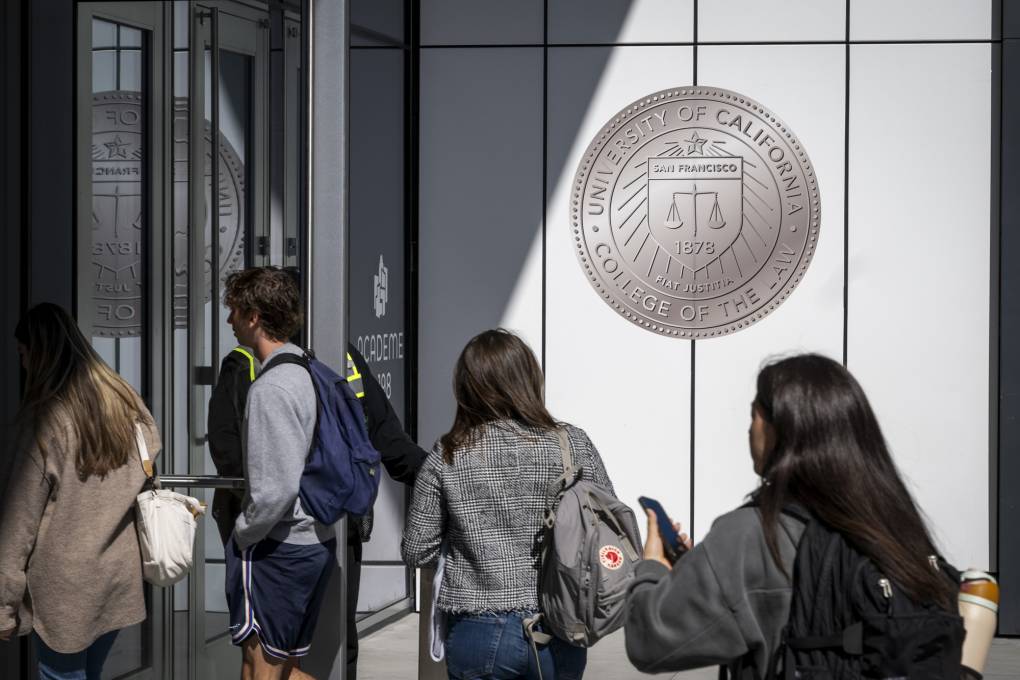
Student Workers File to Unionize at UC Law San Francisco
California Tax Deadline Extension: What You Need to Know
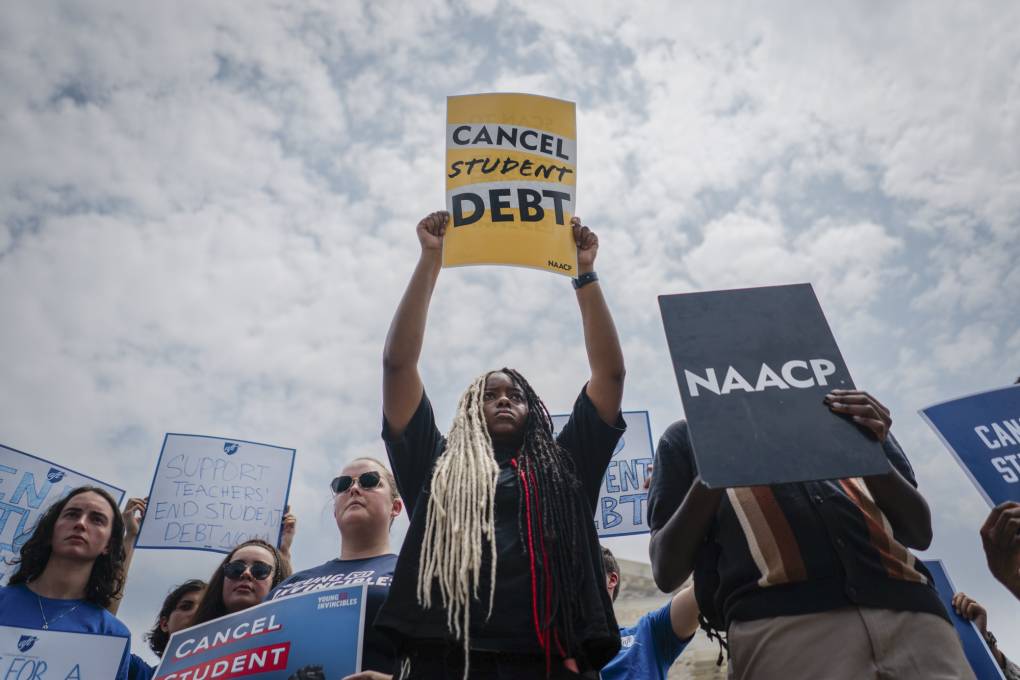
How to Navigate Student Loans & Affirmative Action: What You Need to Know
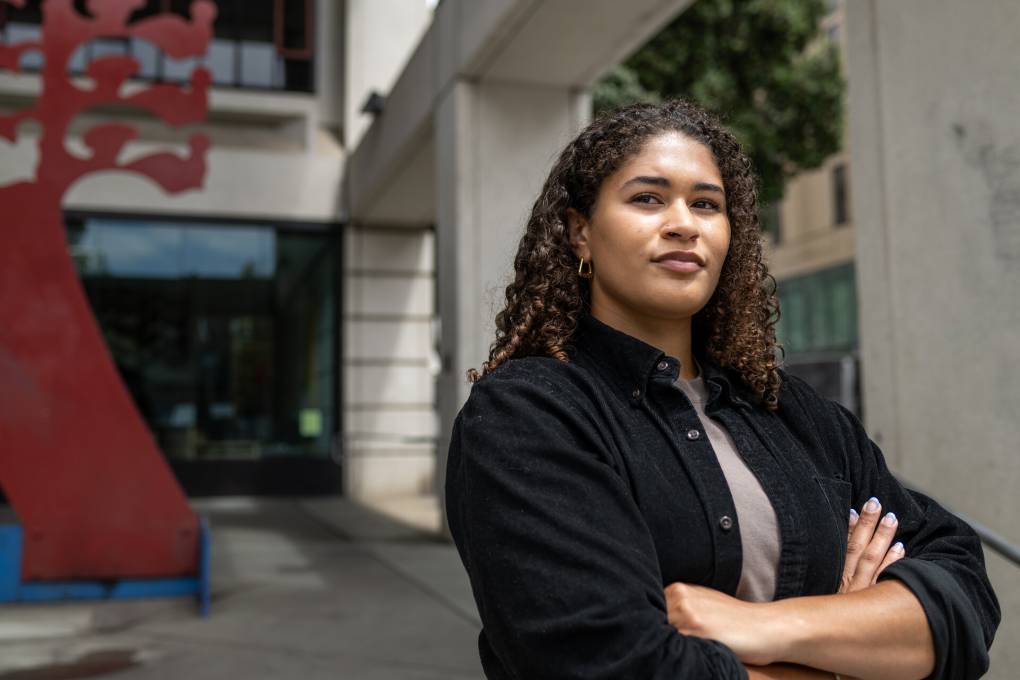
UC Law SF Students Say Complaints of Racism and Discrimination Were Dismissed
Sponsored
Player sponsored by
window.__IS_SSR__=true
window.__INITIAL_STATE__={
"attachmentsReducer": {
"audio_0": {
"type": "attachments",
"id": "audio_0",
"imgSizes": {
"kqedFullSize": {
"file": "https://ww2.kqed.org/news/wp-content/themes/KQED-unified/img/audio_bgs/background0.jpg"
}
}
},
"audio_1": {
"type": "attachments",
"id": "audio_1",
"imgSizes": {
"kqedFullSize": {
"file": "https://ww2.kqed.org/news/wp-content/themes/KQED-unified/img/audio_bgs/background1.jpg"
}
}
},
"audio_2": {
"type": "attachments",
"id": "audio_2",
"imgSizes": {
"kqedFullSize": {
"file": "https://ww2.kqed.org/news/wp-content/themes/KQED-unified/img/audio_bgs/background2.jpg"
}
}
},
"audio_3": {
"type": "attachments",
"id": "audio_3",
"imgSizes": {
"kqedFullSize": {
"file": "https://ww2.kqed.org/news/wp-content/themes/KQED-unified/img/audio_bgs/background3.jpg"
}
}
},
"audio_4": {
"type": "attachments",
"id": "audio_4",
"imgSizes": {
"kqedFullSize": {
"file": "https://ww2.kqed.org/news/wp-content/themes/KQED-unified/img/audio_bgs/background4.jpg"
}
}
},
"placeholder": {
"type": "attachments",
"id": "placeholder",
"imgSizes": {
"thumbnail": {
"file": "https://cdn.kqed.org/wp-content/uploads/2024/12/KQED-Default-Image-816638274-2000x1333-1-160x107.jpg",
"width": 160,
"height": 107,
"mimeType": "image/jpeg"
},
"medium": {
"file": "https://cdn.kqed.org/wp-content/uploads/2024/12/KQED-Default-Image-816638274-2000x1333-1-800x533.jpg",
"width": 800,
"height": 533,
"mimeType": "image/jpeg"
},
"medium_large": {
"file": "https://cdn.kqed.org/wp-content/uploads/2024/12/KQED-Default-Image-816638274-2000x1333-1-768x512.jpg",
"width": 768,
"height": 512,
"mimeType": "image/jpeg"
},
"large": {
"file": "https://cdn.kqed.org/wp-content/uploads/2024/12/KQED-Default-Image-816638274-2000x1333-1-1020x680.jpg",
"width": 1020,
"height": 680,
"mimeType": "image/jpeg"
},
"1536x1536": {
"file": "https://cdn.kqed.org/wp-content/uploads/2024/12/KQED-Default-Image-816638274-2000x1333-1-1536x1024.jpg",
"width": 1536,
"height": 1024,
"mimeType": "image/jpeg"
},
"fd-lrg": {
"file": "https://cdn.kqed.org/wp-content/uploads/2024/12/KQED-Default-Image-816638274-2000x1333-1-1536x1024.jpg",
"width": 1536,
"height": 1024,
"mimeType": "image/jpeg"
},
"fd-med": {
"file": "https://cdn.kqed.org/wp-content/uploads/2024/12/KQED-Default-Image-816638274-2000x1333-1-1020x680.jpg",
"width": 1020,
"height": 680,
"mimeType": "image/jpeg"
},
"fd-sm": {
"file": "https://cdn.kqed.org/wp-content/uploads/2024/12/KQED-Default-Image-816638274-2000x1333-1-800x533.jpg",
"width": 800,
"height": 533,
"mimeType": "image/jpeg"
},
"post-thumbnail": {
"file": "https://cdn.kqed.org/wp-content/uploads/2024/12/KQED-Default-Image-816638274-2000x1333-1-672x372.jpg",
"width": 672,
"height": 372,
"mimeType": "image/jpeg"
},
"twentyfourteen-full-width": {
"file": "https://cdn.kqed.org/wp-content/uploads/2024/12/KQED-Default-Image-816638274-2000x1333-1-1038x576.jpg",
"width": 1038,
"height": 576,
"mimeType": "image/jpeg"
},
"xxsmall": {
"file": "https://cdn.kqed.org/wp-content/uploads/2024/12/KQED-Default-Image-816638274-2000x1333-1-160x107.jpg",
"width": 160,
"height": 107,
"mimeType": "image/jpeg"
},
"xsmall": {
"file": "https://cdn.kqed.org/wp-content/uploads/2024/12/KQED-Default-Image-816638274-2000x1333-1-672x372.jpg",
"width": 672,
"height": 372,
"mimeType": "image/jpeg"
},
"small": {
"file": "https://cdn.kqed.org/wp-content/uploads/2024/12/KQED-Default-Image-816638274-2000x1333-1-672x372.jpg",
"width": 672,
"height": 372,
"mimeType": "image/jpeg"
},
"xlarge": {
"file": "https://cdn.kqed.org/wp-content/uploads/2024/12/KQED-Default-Image-816638274-2000x1333-1-1020x680.jpg",
"width": 1020,
"height": 680,
"mimeType": "image/jpeg"
},
"full-width": {
"file": "https://cdn.kqed.org/wp-content/uploads/2024/12/KQED-Default-Image-816638274-2000x1333-1-1920x1280.jpg",
"width": 1920,
"height": 1280,
"mimeType": "image/jpeg"
},
"guest-author-32": {
"file": "https://cdn.kqed.org/wp-content/uploads/2025/01/KQED-Default-Image-816638274-1333x1333-1-160x160.jpg",
"width": 32,
"height": 32,
"mimeType": "image/jpeg"
},
"guest-author-50": {
"file": "https://cdn.kqed.org/wp-content/uploads/2025/01/KQED-Default-Image-816638274-1333x1333-1-160x160.jpg",
"width": 50,
"height": 50,
"mimeType": "image/jpeg"
},
"guest-author-64": {
"file": "https://cdn.kqed.org/wp-content/uploads/2025/01/KQED-Default-Image-816638274-1333x1333-1-160x160.jpg",
"width": 64,
"height": 64,
"mimeType": "image/jpeg"
},
"guest-author-96": {
"file": "https://cdn.kqed.org/wp-content/uploads/2025/01/KQED-Default-Image-816638274-1333x1333-1-160x160.jpg",
"width": 96,
"height": 96,
"mimeType": "image/jpeg"
},
"guest-author-128": {
"file": "https://cdn.kqed.org/wp-content/uploads/2025/01/KQED-Default-Image-816638274-1333x1333-1-160x160.jpg",
"width": 128,
"height": 128,
"mimeType": "image/jpeg"
},
"detail": {
"file": "https://cdn.kqed.org/wp-content/uploads/2025/01/KQED-Default-Image-816638274-1333x1333-1-160x160.jpg",
"width": 160,
"height": 160,
"mimeType": "image/jpeg"
},
"kqedFullSize": {
"file": "https://cdn.kqed.org/wp-content/uploads/2024/12/KQED-Default-Image-816638274-2000x1333-1.jpg",
"width": 2000,
"height": 1333
}
}
},
"news_12023105": {
"type": "attachments",
"id": "news_12023105",
"meta": {
"index": "attachments_1716263798",
"site": "news",
"id": "12023105",
"found": true
},
"title": "060324-CBP-Arrest-GETTY-CM-1",
"publishDate": 1737392456,
"status": "inherit",
"parent": 12023104,
"modified": 1737392496,
"caption": "Immigrant advocates are closely watching California sheriffs to see how they'll uphold the state's sanctuary law in a new Trump administration. Here, people seeking asylum are detained by border patrol after crossing the U.S. and Mexico border near Campo on June 3, 2024. President Trump’s executive order suspending entry to asylum seekers was met with an immediate challenge on Monday. ",
"credit": "Robert Gauthier/Los Angeles Times via Getty Images",
"altTag": null,
"description": null,
"imgSizes": {
"medium": {
"file": "https://cdn.kqed.org/wp-content/uploads/sites/10/2025/01/060324-CBP-Arrest-GETTY-CM-1-800x533.jpg",
"width": 800,
"height": 533,
"mimeType": "image/jpeg"
},
"large": {
"file": "https://cdn.kqed.org/wp-content/uploads/sites/10/2025/01/060324-CBP-Arrest-GETTY-CM-1-1020x680.jpg",
"width": 1020,
"height": 680,
"mimeType": "image/jpeg"
},
"thumbnail": {
"file": "https://cdn.kqed.org/wp-content/uploads/sites/10/2025/01/060324-CBP-Arrest-GETTY-CM-1-160x107.jpg",
"width": 160,
"height": 107,
"mimeType": "image/jpeg"
},
"1536x1536": {
"file": "https://cdn.kqed.org/wp-content/uploads/sites/10/2025/01/060324-CBP-Arrest-GETTY-CM-1-1536x1024.jpg",
"width": 1536,
"height": 1024,
"mimeType": "image/jpeg"
},
"post-thumbnail": {
"file": "https://cdn.kqed.org/wp-content/uploads/sites/10/2025/01/060324-CBP-Arrest-GETTY-CM-1-672x372.jpg",
"width": 672,
"height": 372,
"mimeType": "image/jpeg"
},
"twentyfourteen-full-width": {
"file": "https://cdn.kqed.org/wp-content/uploads/sites/10/2025/01/060324-CBP-Arrest-GETTY-CM-1-1038x576.jpg",
"width": 1038,
"height": 576,
"mimeType": "image/jpeg"
},
"full-width": {
"file": "https://cdn.kqed.org/wp-content/uploads/sites/10/2025/01/060324-CBP-Arrest-GETTY-CM-1-1920x1280.jpg",
"width": 1920,
"height": 1280,
"mimeType": "image/jpeg"
},
"kqedFullSize": {
"file": "https://cdn.kqed.org/wp-content/uploads/sites/10/2025/01/060324-CBP-Arrest-GETTY-CM-1.jpg",
"width": 2000,
"height": 1333
}
},
"fetchFailed": false,
"isLoading": false
},
"news_11982310": {
"type": "attachments",
"id": "news_11982310",
"meta": {
"index": "attachments_1716263798",
"site": "news",
"id": "11982310",
"found": true
},
"parent": 0,
"imgSizes": {
"twentyfourteen-full-width": {
"file": "https://cdn.kqed.org/wp-content/uploads/sites/10/2024/04/240408-UCLAWSF-014-BL-KQED-1038x576.jpg",
"width": 1038,
"mimeType": "image/jpeg",
"height": 576
},
"thumbnail": {
"file": "https://cdn.kqed.org/wp-content/uploads/sites/10/2024/04/240408-UCLAWSF-014-BL-KQED-160x107.jpg",
"width": 160,
"mimeType": "image/jpeg",
"height": 107
},
"post-thumbnail": {
"file": "https://cdn.kqed.org/wp-content/uploads/sites/10/2024/04/240408-UCLAWSF-014-BL-KQED-672x372.jpg",
"width": 672,
"mimeType": "image/jpeg",
"height": 372
},
"kqedFullSize": {
"file": "https://cdn.kqed.org/wp-content/uploads/sites/10/2024/04/240408-UCLAWSF-014-BL-KQED.jpg",
"width": 2000,
"height": 1333
},
"large": {
"file": "https://cdn.kqed.org/wp-content/uploads/sites/10/2024/04/240408-UCLAWSF-014-BL-KQED-1020x680.jpg",
"width": 1020,
"mimeType": "image/jpeg",
"height": 680
},
"1536x1536": {
"file": "https://cdn.kqed.org/wp-content/uploads/sites/10/2024/04/240408-UCLAWSF-014-BL-KQED-1536x1024.jpg",
"width": 1536,
"mimeType": "image/jpeg",
"height": 1024
},
"full-width": {
"file": "https://cdn.kqed.org/wp-content/uploads/sites/10/2024/04/240408-UCLAWSF-014-BL-KQED-1920x1280.jpg",
"width": 1920,
"mimeType": "image/jpeg",
"height": 1280
},
"medium": {
"file": "https://cdn.kqed.org/wp-content/uploads/sites/10/2024/04/240408-UCLAWSF-014-BL-KQED-800x533.jpg",
"width": 800,
"mimeType": "image/jpeg",
"height": 533
}
},
"publishDate": 1712621442,
"modified": 1712688347,
"caption": "Students walk into UC Law San Francisco, formerly known as UC Hastings, on April 8, 2024.",
"description": null,
"title": "240408-UCLAWSF-014-BL-KQED",
"credit": "Beth LaBerge/KQED",
"status": "inherit",
"altTag": null,
"fetchFailed": false,
"isLoading": false
},
"news_11964303": {
"type": "attachments",
"id": "news_11964303",
"meta": {
"index": "attachments_1716263798",
"site": "news",
"id": "11964303",
"found": true
},
"title": "Black woman, budget and home finance on laptop for accounting, money planning and fintech investment. Paper bills, savings and web payment review, online banking and insurance loan of financial taxes",
"publishDate": 1697148227,
"status": "inherit",
"parent": 11964241,
"modified": 1697148424,
"caption": "For almost all California counties, the extended tax deadline is Monday, Oct. 16.",
"credit": "Pixdeluxe via Getty Images",
"altTag": "A Black woman wearing a tan sweater sits at a desk holding a piece of paper in one hand and staring at a laptop.",
"description": null,
"imgSizes": {
"medium": {
"file": "https://cdn.kqed.org/wp-content/uploads/sites/10/2023/10/GettyImages-1438452854-800x534.jpg",
"width": 800,
"height": 534,
"mimeType": "image/jpeg"
},
"large": {
"file": "https://cdn.kqed.org/wp-content/uploads/sites/10/2023/10/GettyImages-1438452854-1020x680.jpg",
"width": 1020,
"height": 680,
"mimeType": "image/jpeg"
},
"thumbnail": {
"file": "https://cdn.kqed.org/wp-content/uploads/sites/10/2023/10/GettyImages-1438452854-160x107.jpg",
"width": 160,
"height": 107,
"mimeType": "image/jpeg"
},
"1536x1536": {
"file": "https://cdn.kqed.org/wp-content/uploads/sites/10/2023/10/GettyImages-1438452854-1536x1024.jpg",
"width": 1536,
"height": 1024,
"mimeType": "image/jpeg"
},
"2048x2048": {
"file": "https://cdn.kqed.org/wp-content/uploads/sites/10/2023/10/GettyImages-1438452854-2048x1366.jpg",
"width": 2048,
"height": 1366,
"mimeType": "image/jpeg"
},
"post-thumbnail": {
"file": "https://cdn.kqed.org/wp-content/uploads/sites/10/2023/10/GettyImages-1438452854-672x372.jpg",
"width": 672,
"height": 372,
"mimeType": "image/jpeg"
},
"twentyfourteen-full-width": {
"file": "https://cdn.kqed.org/wp-content/uploads/sites/10/2023/10/GettyImages-1438452854-1038x576.jpg",
"width": 1038,
"height": 576,
"mimeType": "image/jpeg"
},
"full-width": {
"file": "https://cdn.kqed.org/wp-content/uploads/sites/10/2023/10/GettyImages-1438452854-1920x1281.jpg",
"width": 1920,
"height": 1281,
"mimeType": "image/jpeg"
},
"kqedFullSize": {
"file": "https://cdn.kqed.org/wp-content/uploads/sites/10/2023/10/GettyImages-1438452854-e1741641207115.jpg",
"width": 2000,
"height": 1334
}
},
"fetchFailed": false,
"isLoading": false
},
"news_11955727": {
"type": "attachments",
"id": "news_11955727",
"meta": {
"index": "attachments_1716263798",
"site": "news",
"id": "11955727",
"found": true
},
"title": "Supreme Courts Rules On Major LGBTQ Case And Strikes Down Biden's Student Loan Forgiveness Plan",
"publishDate": 1689360216,
"status": "inherit",
"parent": 12065967,
"modified": 1765577210,
"caption": "D'Aungilique Jackson, of Fresno, California, holds a \"Cancel Student Debt\" sign outside of the Supreme Court of the United States after the nation's high court struck down President Biden's student debt relief program in Washington, D.C., on June 30, 2023.",
"credit": "Kent Nishimura/Los Angeles Times via Getty Images",
"altTag": "A person with long hair and a black T-shirt holds up a bright yellow sign reading \"Cancel Student Debt\" amidst others doing similar.",
"description": null,
"imgSizes": {
"medium": {
"file": "https://cdn.kqed.org/wp-content/uploads/sites/10/2023/07/230714-SUPREME-COURT-STUDENT-DEBT-Getty-KN-KQED-800x533.jpg",
"width": 800,
"height": 533,
"mimeType": "image/jpeg"
},
"large": {
"file": "https://cdn.kqed.org/wp-content/uploads/sites/10/2023/07/230714-SUPREME-COURT-STUDENT-DEBT-Getty-KN-KQED-1020x680.jpg",
"width": 1020,
"height": 680,
"mimeType": "image/jpeg"
},
"thumbnail": {
"file": "https://cdn.kqed.org/wp-content/uploads/sites/10/2023/07/230714-SUPREME-COURT-STUDENT-DEBT-Getty-KN-KQED-160x107.jpg",
"width": 160,
"height": 107,
"mimeType": "image/jpeg"
},
"1536x1536": {
"file": "https://cdn.kqed.org/wp-content/uploads/sites/10/2023/07/230714-SUPREME-COURT-STUDENT-DEBT-Getty-KN-KQED-1536x1024.jpg",
"width": 1536,
"height": 1024,
"mimeType": "image/jpeg"
},
"post-thumbnail": {
"file": "https://cdn.kqed.org/wp-content/uploads/sites/10/2023/07/230714-SUPREME-COURT-STUDENT-DEBT-Getty-KN-KQED-672x372.jpg",
"width": 672,
"height": 372,
"mimeType": "image/jpeg"
},
"twentyfourteen-full-width": {
"file": "https://cdn.kqed.org/wp-content/uploads/sites/10/2023/07/230714-SUPREME-COURT-STUDENT-DEBT-Getty-KN-KQED-1038x576.jpg",
"width": 1038,
"height": 576,
"mimeType": "image/jpeg"
},
"full-width": {
"file": "https://cdn.kqed.org/wp-content/uploads/sites/10/2023/07/230714-SUPREME-COURT-STUDENT-DEBT-Getty-KN-KQED-1920x1280.jpg",
"width": 1920,
"height": 1280,
"mimeType": "image/jpeg"
},
"kqedFullSize": {
"file": "https://cdn.kqed.org/wp-content/uploads/sites/10/2023/07/230714-SUPREME-COURT-STUDENT-DEBT-Getty-KN-KQED.jpg",
"width": 2000,
"height": 1333
}
},
"fetchFailed": false,
"isLoading": false
},
"news_11949815": {
"type": "attachments",
"id": "news_11949815",
"meta": {
"index": "attachments_1716263798",
"site": "news",
"id": "11949815",
"found": true
},
"parent": 11949802,
"imgSizes": {
"twentyfourteen-full-width": {
"file": "https://ww2.kqed.org/app/uploads/sites/10/2023/05/RS65582_007_KQED_UCHastingsMeganWilhelm_05152023-qut-1038x576.jpg",
"width": 1038,
"mimeType": "image/jpeg",
"height": 576
},
"thumbnail": {
"file": "https://ww2.kqed.org/app/uploads/sites/10/2023/05/RS65582_007_KQED_UCHastingsMeganWilhelm_05152023-qut-160x107.jpg",
"width": 160,
"mimeType": "image/jpeg",
"height": 107
},
"post-thumbnail": {
"file": "https://ww2.kqed.org/app/uploads/sites/10/2023/05/RS65582_007_KQED_UCHastingsMeganWilhelm_05152023-qut-672x372.jpg",
"width": 672,
"mimeType": "image/jpeg",
"height": 372
},
"kqedFullSize": {
"file": "https://ww2.kqed.org/app/uploads/sites/10/2023/05/RS65582_007_KQED_UCHastingsMeganWilhelm_05152023-qut.jpg",
"width": 1920,
"height": 1280
},
"large": {
"file": "https://ww2.kqed.org/app/uploads/sites/10/2023/05/RS65582_007_KQED_UCHastingsMeganWilhelm_05152023-qut-1020x680.jpg",
"width": 1020,
"mimeType": "image/jpeg",
"height": 680
},
"1536x1536": {
"file": "https://ww2.kqed.org/app/uploads/sites/10/2023/05/RS65582_007_KQED_UCHastingsMeganWilhelm_05152023-qut-1536x1024.jpg",
"width": 1536,
"mimeType": "image/jpeg",
"height": 1024
},
"medium": {
"file": "https://ww2.kqed.org/app/uploads/sites/10/2023/05/RS65582_007_KQED_UCHastingsMeganWilhelm_05152023-qut-800x533.jpg",
"width": 800,
"mimeType": "image/jpeg",
"height": 533
}
},
"publishDate": 1684346844,
"modified": 1684787498,
"caption": "Megan Wilhelm, a member of the Black Law Student Association at UC Law SF (formerly UC Hastings), stands outside the campus on May 15, 2023. She alleges student accounts of racism on campus have gone ignored by the school's administration.",
"description": null,
"title": "RS65582_007_KQED_UCHastingsMeganWilhelm_05152023-qut",
"credit": "Beth LaBerge/KQED",
"status": "inherit",
"altTag": "A young African American woman stands with arms crossed while looking at camera with a building behind her.",
"fetchFailed": false,
"isLoading": false
}
},
"audioPlayerReducer": {
"postId": "stream_live",
"isPaused": true,
"isPlaying": false,
"pfsActive": false,
"pledgeModalIsOpen": true,
"playerDrawerIsOpen": false
},
"authorsReducer": {
"carlysevern": {
"type": "authors",
"id": "3243",
"meta": {
"index": "authors_1716337520",
"id": "3243",
"found": true
},
"name": "Carly Severn",
"firstName": "Carly",
"lastName": "Severn",
"slug": "carlysevern",
"email": "csevern@kqed.org",
"display_author_email": false,
"staff_mastheads": [
"news"
],
"title": "Senior Editor, Audience News ",
"bio": "Carly is KQED's Senior Editor of Audience News on the Digital News team, and has reported for the California Report Magazine, Bay Curious and KQED Arts. She's formerly the host of \u003ca href=\"http://ww2.kqed.org/pop/category/the-cooler/\" rel=\"noopener noreferrer\">The Cooler\u003c/a> podcast.",
"avatar": "https://secure.gravatar.com/avatar/2d8d6765f186e64c798cf7f0c8088a41?s=600&d=blank&r=g",
"twitter": "teacupinthebay",
"facebook": null,
"instagram": null,
"linkedin": null,
"sites": [
{
"site": "",
"roles": [
"editor"
]
},
{
"site": "arts",
"roles": [
"editor"
]
},
{
"site": "news",
"roles": [
"administrator"
]
},
{
"site": "pop",
"roles": [
"editor"
]
},
{
"site": "futureofyou",
"roles": [
"editor"
]
},
{
"site": "about",
"roles": [
"administrator"
]
},
{
"site": "mindshift",
"roles": [
"editor"
]
},
{
"site": "bayareabites",
"roles": [
"editor"
]
},
{
"site": "stateofhealth",
"roles": [
"editor"
]
},
{
"site": "science",
"roles": [
"editor"
]
},
{
"site": "food",
"roles": [
"contributor"
]
},
{
"site": "forum",
"roles": [
"editor"
]
},
{
"site": "perspectives",
"roles": [
"administrator"
]
},
{
"site": "liveblog",
"roles": [
"editor"
]
}
],
"headData": {
"title": "Carly Severn | KQED",
"description": "Senior Editor, Audience News ",
"ogImgSrc": "https://secure.gravatar.com/avatar/2d8d6765f186e64c798cf7f0c8088a41?s=600&d=blank&r=g",
"twImgSrc": "https://secure.gravatar.com/avatar/2d8d6765f186e64c798cf7f0c8088a41?s=600&d=blank&r=g"
},
"isLoading": false,
"link": "/author/carlysevern"
},
"sjohnson": {
"type": "authors",
"id": "11840",
"meta": {
"index": "authors_1716337520",
"id": "11840",
"found": true
},
"name": "Sydney Johnson",
"firstName": "Sydney",
"lastName": "Johnson",
"slug": "sjohnson",
"email": "sjohnson@kqed.org",
"display_author_email": false,
"staff_mastheads": [
"news"
],
"title": "KQED Reporter",
"bio": "Sydney Johnson is a general assignment reporter at KQED. She previously reported on public health and city government at the San Francisco Examiner, and before that, she covered statewide education policy for EdSource. Her reporting has won multiple local, state and national awards. Sydney is a graduate of the University of California, Berkeley and lives in San Francisco.",
"avatar": "https://secure.gravatar.com/avatar/97855f2719b72ad6190b7c535fe642c8?s=600&d=blank&r=g",
"twitter": "sydneyfjohnson",
"facebook": null,
"instagram": null,
"linkedin": null,
"sites": [
{
"site": "news",
"roles": [
"editor"
]
}
],
"headData": {
"title": "Sydney Johnson | KQED",
"description": "KQED Reporter",
"ogImgSrc": "https://secure.gravatar.com/avatar/97855f2719b72ad6190b7c535fe642c8?s=600&d=blank&r=g",
"twImgSrc": "https://secure.gravatar.com/avatar/97855f2719b72ad6190b7c535fe642c8?s=600&d=blank&r=g"
},
"isLoading": false,
"link": "/author/sjohnson"
},
"kdebenedetti": {
"type": "authors",
"id": "11913",
"meta": {
"index": "authors_1716337520",
"id": "11913",
"found": true
},
"name": "Katie DeBenedetti",
"firstName": "Katie",
"lastName": "DeBenedetti",
"slug": "kdebenedetti",
"email": "kdebenedetti@kqed.org",
"display_author_email": false,
"staff_mastheads": [
"news",
"science"
],
"title": "KQED Contributor",
"bio": "Katie DeBenedetti is a digital reporter covering daily news for the Express Desk. Prior to joining KQED as a culture reporting intern in January 2024, she covered education and city government for the Napa Valley Register.",
"avatar": "https://secure.gravatar.com/avatar/6e31073cb8f7e4214ab03f42771d0f45?s=600&d=blank&r=g",
"twitter": null,
"facebook": null,
"instagram": null,
"linkedin": null,
"sites": [
{
"site": "news",
"roles": [
"author"
]
},
{
"site": "science",
"roles": [
"author"
]
},
{
"site": "liveblog",
"roles": [
"author"
]
}
],
"headData": {
"title": "Katie DeBenedetti | KQED",
"description": "KQED Contributor",
"ogImgSrc": "https://secure.gravatar.com/avatar/6e31073cb8f7e4214ab03f42771d0f45?s=600&d=blank&r=g",
"twImgSrc": "https://secure.gravatar.com/avatar/6e31073cb8f7e4214ab03f42771d0f45?s=600&d=blank&r=g"
},
"isLoading": false,
"link": "/author/kdebenedetti"
}
},
"breakingNewsReducer": {},
"pagesReducer": {},
"postsReducer": {
"stream_live": {
"type": "live",
"id": "stream_live",
"audioUrl": "https://streams.kqed.org/kqedradio",
"title": "Live Stream",
"excerpt": "Live Stream information currently unavailable.",
"link": "/radio",
"featImg": "",
"label": {
"name": "KQED Live",
"link": "/"
}
},
"stream_kqedNewscast": {
"type": "posts",
"id": "stream_kqedNewscast",
"audioUrl": "https://www.kqed.org/.stream/anon/radio/RDnews/newscast.mp3?_=1",
"title": "KQED Newscast",
"featImg": "",
"label": {
"name": "88.5 FM",
"link": "/"
}
},
"news_12025493": {
"type": "posts",
"id": "news_12025493",
"meta": {
"index": "posts_1716263798",
"site": "news",
"id": "12025493",
"score": null,
"sort": [
1738674015000
]
},
"guestAuthors": [],
"slug": "uc-law-joins-lawsuit-against-trumps-asylum-suspension-order-unlawful",
"title": "UC Law's Refugee Center Joins Lawsuit Against Trump’s Asylum Suspension Order",
"publishDate": 1738674015,
"format": "standard",
"headTitle": "UC Law’s Refugee Center Joins Lawsuit Against Trump’s Asylum Suspension Order | KQED",
"labelTerm": {
"site": "news"
},
"content": "\u003cp>The Center for Gender and Refugee Studies at UC Law San Francisco and other legal service providers are challenging an executive order by \u003ca href=\"https://www.kqed.org/news/tag/donald-trump\">President Donald Trump\u003c/a> that suspends entry to the United States for asylum seekers, claiming that it violates immigration protections put in place by Congress.\u003c/p>\n\u003cp>The center joined a federal lawsuit Monday opposing Trump’s proclamation that there was an “invasion” at the U.S.-Mexico border. The suit claims that the order is in violation of federal law, which requires the U.S. to allow people to enter the country to apply for asylum and prohibits the government from returning people to a country where they face the threat of persecution or torture.\u003c/p>\n\u003cp>“Under the Proclamation, the government is doing just what Congress by statute decreed that the United States must not do. It is returning asylum seekers — not just single adults, but families too — to countries where they face persecution or torture, without allowing them to invoke the protections Congress has provided,” the suit reads.\u003c/p>\n\u003cp>[ad fullwidth]\u003c/p>\n\u003cp>Trump’s order relies on Section 212(f) of the Immigration and Nationality Act, which says that the president can “suspend the entry” of non-citizens when their entry “would be detrimental to the interest of the United States.”\u003c/p>\n\u003cp>The order classifies immigration at the southern border as an “invasion” and says that under Article IV of the Constitution, the president has the responsibility to protect the country. Trump has ordered the Secretary of Homeland Security, Secretary of State and Attorney General to block asylum seekers from entering the country.\u003c/p>\n\u003cp>The lawsuit argues that Trump has not given a definition of an invasion and that immigration at any scale would not be considered one.\u003c/p>\n\u003cfigure id=\"attachment_12024922\" class=\"wp-caption aligncenter\" style=\"max-width: 2000px\">\u003cimg loading=\"lazy\" decoding=\"async\" class=\"size-full wp-image-12024922\" src=\"https://cdn.kqed.org/wp-content/uploads/sites/10/2025/01/GettyImages-2194989581.jpg\" alt=\"\" width=\"2000\" height=\"1333\" srcset=\"https://cdn.kqed.org/wp-content/uploads/sites/10/2025/01/GettyImages-2194989581.jpg 2000w, https://cdn.kqed.org/wp-content/uploads/sites/10/2025/01/GettyImages-2194989581-800x533.jpg 800w, https://cdn.kqed.org/wp-content/uploads/sites/10/2025/01/GettyImages-2194989581-1020x680.jpg 1020w, https://cdn.kqed.org/wp-content/uploads/sites/10/2025/01/GettyImages-2194989581-160x107.jpg 160w, https://cdn.kqed.org/wp-content/uploads/sites/10/2025/01/GettyImages-2194989581-1536x1024.jpg 1536w, https://cdn.kqed.org/wp-content/uploads/sites/10/2025/01/GettyImages-2194989581-1920x1280.jpg 1920w\" sizes=\"auto, (max-width: 2000px) 100vw, 2000px\">\u003cfigcaption class=\"wp-caption-text\">President Donald Trump signs executive orders in the Oval Office on January 20, 2025, in Washington, D.C. \u003ccite>(Anna Monkeymaker/Getty)\u003c/cite>\u003c/figcaption>\u003c/figure>\n\u003cp>“The invasion provision of the Constitution has in the past been used in wartime,” said Melissa Crow, the director of litigation for the Center for Gender and Refugee Studies. “We are alleging that [Trump] is abusing his authority, both because there’s not an invasion and because there are numerous separate provisions of the immigration law that give people who are either physically present in the United States or who arrive in the United States the right to apply for asylum.”\u003c/p>\n\u003cp>Other sections of the Immigration and Nationality Act prevent the U.S. from removing people who have reached ports of entry or entered the country without inspection. The law says that anyone who does arrive is entitled to apply for asylum and prohibits the country from removing non-citizens to a country where their life or freedom would be threatened or returning them to a country where the U.S. believes they would be in danger of being tortured.\u003c/p>\n\u003cp>[aside postID=news_12025063 hero='https://cdn.kqed.org/wp-content/uploads/sites/10/2024/09/081723_Assembly-Floor-File_SN_CM-05-1020x680.jpg']\u003c/p>\n\u003cp>“As far as we can tell, under the terms of the proclamation, these people will be expelled from the United States without any process,” Crow said. “Immigration laws provide a very specific process that people have to go through before they can be removed or deported from the United States. That is not happening here.”\u003c/p>\n\u003cp>Under the Immigration and Nationality Act, asylum seekers who arrive without valid documents, like a visa, are entitled to an interview with an asylum officer to determine if they have a “credible fear” of returning to the country from which they fled. If fear is established, they are eligible for a full hearing. Immigration judges decide whether to grant asylum.\u003c/p>\n\u003cp>Trump’s order calls for the suspension of that process entirely, including for unaccompanied children who previously had additional protections.\u003c/p>\n\u003cp>In 2016, the U.S. began putting constraints on the flow of asylum seekers through metering. U.S. Customs and Border Protection officials began “turnbacks” when people “were simply told that there wasn’t capacity to process them,” Crow told KQED.\u003c/p>\n\u003cp>She said the issue isn’t so much that too many people are arriving at the border but that the immigration system hasn’t been bolstered to process people in a reasonable amount of time.\u003c/p>\n\u003cp>The Center for Gender and Refugee Studies and other legal providers have been litigating the metering policy for years, alleging that it violates federal and international law. Now, they are also fighting the new order.\u003c/p>\n\u003cp>“People are going to keep coming because they are fleeing for their lives,” she said. “The fact that they’re going to be turned back is something they’re only going to realize when they get here.”\u003c/p>\n\u003cp>\u003cem>Feb. 5: This story’s headline was updated to distinguish the Center for Gender and Refugee Studies from the full UC Law San Francisco college.\u003c/em>\u003c/p>\n\u003cp>\u003c/p>\n",
"blocks": [],
"excerpt": "President Donald Trump’s executive order suspending entry to asylum seekers was met with an immediate challenge.",
"status": "publish",
"parent": 0,
"modified": 1738772638,
"stats": {
"hasAudio": false,
"hasVideo": false,
"hasChartOrMap": false,
"iframeSrcs": [],
"hasGoogleForm": false,
"hasGallery": false,
"hasHearkenModule": false,
"hasPolis": false,
"paragraphCount": 19,
"wordCount": 835
},
"headData": {
"title": "UC Law's Refugee Center Joins Lawsuit Against Trump’s Asylum Suspension Order | KQED",
"description": "President Donald Trump’s executive order suspending entry to asylum seekers was met with an immediate challenge.",
"ogTitle": "",
"ogDescription": "",
"ogImgId": "",
"twTitle": "",
"twDescription": "",
"twImgId": "",
"schema": {
"@context": "https://schema.org",
"@type": "NewsArticle",
"headline": "UC Law's Refugee Center Joins Lawsuit Against Trump’s Asylum Suspension Order",
"datePublished": "2025-02-04T05:00:15-08:00",
"dateModified": "2025-02-05T08:23:58-08:00",
"image": "https://cdn.kqed.org/wp-content/uploads/2020/02/KQED-OG-Image@1x.png",
"isAccessibleForFree": "True",
"publisher": {
"@type": "NewsMediaOrganization",
"@id": "https://www.kqed.org/#organization",
"name": "KQED",
"logo": "https://cdn.kqed.org/wp-content/uploads/2020/02/KQED-OG-Image@1x.png",
"url": "https://www.kqed.org",
"sameAs": [
"https://www.facebook.com/KQED",
"https://twitter.com/KQED",
"https://www.instagram.com/kqed/",
"https://www.tiktok.com/@kqedofficial",
"https://www.linkedin.com/company/kqed",
"https://www.youtube.com/channel/UCeC0IOo7i1P_61zVUWbJ4nw"
]
}
}
},
"sticky": false,
"nprStoryId": "kqed-12025493",
"excludeFromSiteSearch": "Include",
"articleAge": "0",
"path": "/news/12025493/uc-law-joins-lawsuit-against-trumps-asylum-suspension-order-unlawful",
"audioTrackLength": null,
"parsedContent": [
{
"type": "contentString",
"content": "\u003cdiv class=\"post-body\">\u003cp>\u003cp>The Center for Gender and Refugee Studies at UC Law San Francisco and other legal service providers are challenging an executive order by \u003ca href=\"https://www.kqed.org/news/tag/donald-trump\">President Donald Trump\u003c/a> that suspends entry to the United States for asylum seekers, claiming that it violates immigration protections put in place by Congress.\u003c/p>\n\u003cp>The center joined a federal lawsuit Monday opposing Trump’s proclamation that there was an “invasion” at the U.S.-Mexico border. The suit claims that the order is in violation of federal law, which requires the U.S. to allow people to enter the country to apply for asylum and prohibits the government from returning people to a country where they face the threat of persecution or torture.\u003c/p>\n\u003cp>“Under the Proclamation, the government is doing just what Congress by statute decreed that the United States must not do. It is returning asylum seekers — not just single adults, but families too — to countries where they face persecution or torture, without allowing them to invoke the protections Congress has provided,” the suit reads.\u003c/p>\n\u003cp>\u003c/p>\u003c/div>",
"attributes": {
"named": {},
"numeric": []
}
},
{
"type": "component",
"content": "",
"name": "ad",
"attributes": {
"named": {
"label": "fullwidth"
},
"numeric": [
"fullwidth"
]
}
},
{
"type": "contentString",
"content": "\u003cdiv class=\"post-body\">\u003cp>\u003c/p>\n\u003cp>Trump’s order relies on Section 212(f) of the Immigration and Nationality Act, which says that the president can “suspend the entry” of non-citizens when their entry “would be detrimental to the interest of the United States.”\u003c/p>\n\u003cp>The order classifies immigration at the southern border as an “invasion” and says that under Article IV of the Constitution, the president has the responsibility to protect the country. Trump has ordered the Secretary of Homeland Security, Secretary of State and Attorney General to block asylum seekers from entering the country.\u003c/p>\n\u003cp>The lawsuit argues that Trump has not given a definition of an invasion and that immigration at any scale would not be considered one.\u003c/p>\n\u003cfigure id=\"attachment_12024922\" class=\"wp-caption aligncenter\" style=\"max-width: 2000px\">\u003cimg loading=\"lazy\" decoding=\"async\" class=\"size-full wp-image-12024922\" src=\"https://cdn.kqed.org/wp-content/uploads/sites/10/2025/01/GettyImages-2194989581.jpg\" alt=\"\" width=\"2000\" height=\"1333\" srcset=\"https://cdn.kqed.org/wp-content/uploads/sites/10/2025/01/GettyImages-2194989581.jpg 2000w, https://cdn.kqed.org/wp-content/uploads/sites/10/2025/01/GettyImages-2194989581-800x533.jpg 800w, https://cdn.kqed.org/wp-content/uploads/sites/10/2025/01/GettyImages-2194989581-1020x680.jpg 1020w, https://cdn.kqed.org/wp-content/uploads/sites/10/2025/01/GettyImages-2194989581-160x107.jpg 160w, https://cdn.kqed.org/wp-content/uploads/sites/10/2025/01/GettyImages-2194989581-1536x1024.jpg 1536w, https://cdn.kqed.org/wp-content/uploads/sites/10/2025/01/GettyImages-2194989581-1920x1280.jpg 1920w\" sizes=\"auto, (max-width: 2000px) 100vw, 2000px\">\u003cfigcaption class=\"wp-caption-text\">President Donald Trump signs executive orders in the Oval Office on January 20, 2025, in Washington, D.C. \u003ccite>(Anna Monkeymaker/Getty)\u003c/cite>\u003c/figcaption>\u003c/figure>\n\u003cp>“The invasion provision of the Constitution has in the past been used in wartime,” said Melissa Crow, the director of litigation for the Center for Gender and Refugee Studies. “We are alleging that [Trump] is abusing his authority, both because there’s not an invasion and because there are numerous separate provisions of the immigration law that give people who are either physically present in the United States or who arrive in the United States the right to apply for asylum.”\u003c/p>\n\u003cp>Other sections of the Immigration and Nationality Act prevent the U.S. from removing people who have reached ports of entry or entered the country without inspection. The law says that anyone who does arrive is entitled to apply for asylum and prohibits the country from removing non-citizens to a country where their life or freedom would be threatened or returning them to a country where the U.S. believes they would be in danger of being tortured.\u003c/p>\n\u003cp>\u003c/p>\u003c/div>",
"attributes": {
"named": {},
"numeric": []
}
},
{
"type": "component",
"content": "",
"name": "aside",
"attributes": {
"named": {
"postid": "news_12025063",
"hero": "https://cdn.kqed.org/wp-content/uploads/sites/10/2024/09/081723_Assembly-Floor-File_SN_CM-05-1020x680.jpg",
"label": ""
},
"numeric": []
}
},
{
"type": "contentString",
"content": "\u003cdiv class=\"post-body\">\u003cp>\u003c/p>\n\u003cp>“As far as we can tell, under the terms of the proclamation, these people will be expelled from the United States without any process,” Crow said. “Immigration laws provide a very specific process that people have to go through before they can be removed or deported from the United States. That is not happening here.”\u003c/p>\n\u003cp>Under the Immigration and Nationality Act, asylum seekers who arrive without valid documents, like a visa, are entitled to an interview with an asylum officer to determine if they have a “credible fear” of returning to the country from which they fled. If fear is established, they are eligible for a full hearing. Immigration judges decide whether to grant asylum.\u003c/p>\n\u003cp>Trump’s order calls for the suspension of that process entirely, including for unaccompanied children who previously had additional protections.\u003c/p>\n\u003cp>In 2016, the U.S. began putting constraints on the flow of asylum seekers through metering. U.S. Customs and Border Protection officials began “turnbacks” when people “were simply told that there wasn’t capacity to process them,” Crow told KQED.\u003c/p>\n\u003cp>She said the issue isn’t so much that too many people are arriving at the border but that the immigration system hasn’t been bolstered to process people in a reasonable amount of time.\u003c/p>\n\u003cp>The Center for Gender and Refugee Studies and other legal providers have been litigating the metering policy for years, alleging that it violates federal and international law. Now, they are also fighting the new order.\u003c/p>\n\u003cp>“People are going to keep coming because they are fleeing for their lives,” she said. “The fact that they’re going to be turned back is something they’re only going to realize when they get here.”\u003c/p>\n\u003cp>\u003cem>Feb. 5: This story’s headline was updated to distinguish the Center for Gender and Refugee Studies from the full UC Law San Francisco college.\u003c/em>\u003c/p>\n\u003cp>\u003c/p>\n\u003c/div>\u003c/p>",
"attributes": {
"named": {},
"numeric": []
}
}
],
"link": "/news/12025493/uc-law-joins-lawsuit-against-trumps-asylum-suspension-order-unlawful",
"authors": [
"11913"
],
"categories": [
"news_31795",
"news_8",
"news_13"
],
"tags": [
"news_23087",
"news_23653",
"news_18538",
"news_20226",
"news_1323",
"news_34377",
"news_20202",
"news_17968",
"news_19006",
"news_38",
"news_20445",
"news_32743"
],
"featImg": "news_12023105",
"label": "news"
},
"news_11982354": {
"type": "posts",
"id": "news_11982354",
"meta": {
"index": "posts_1716263798",
"site": "news",
"id": "11982354",
"score": null,
"sort": [
1712689226000
]
},
"parent": 0,
"labelTerm": {
"site": "news"
},
"blocks": [],
"publishDate": 1712689226,
"format": "standard",
"title": "Student Workers File to Unionize at UC Law San Francisco",
"headTitle": "Student Workers File to Unionize at UC Law San Francisco | KQED",
"content": "\u003cp>A group of approximately 200 graduate student workers at UC Law San Francisco on Tuesday filed to form a union, according to organizers.\u003c/p>\n\u003cp>The new collective bargaining unit, called \u003ca href=\"https://uaw2865.org/uclsf/\">United Legal Educators\u003c/a>, comes as undergraduate and graduate workers have won collective bargaining rights across the state and country in recent years.\u003c/p>\n\u003cp>“It’s been hard for an isolated law school to come together for student workers and get a unified voice. But, luckily, there’s been a lot of effort in this unionization space,” said Stephen Cosenza, a legal research and writing teaching assistant at UC Law San Francisco. “We saw what was happening at other UCs and felt that momentum on our own campus and ran with it.”\u003c/p>\n\u003cp>[ad fullwidth]\u003c/p>\n\u003cp>Organizers with United Legal Educators submitted paperwork with the California Public Employment Relations Board on Tuesday asking the state agency to officially recognize the union, which will represent library workers, admissions workers, teaching assistants, researchers and other student employees at the law school formerly called UC Hastings. Next, state and school officials must verify and recognize the union.\u003c/p>\n\u003cp>Graduate students organizing for better bargaining power at the law school said the two big issues they hope a union will help them address are resolving pay discrepancies and better responding to \u003ca href=\"https://www.kqed.org/news/11949802/uc-law-sf-students-say-complaints-of-racism-and-discrimination-on-campus-were-dismissed\">reports of discrimination\u003c/a>.\u003c/p>\n\u003cp>[aside postID=news_11949802]Organizers like Cosenza cite higher pay at UC Berkeley’s graduate law school, where graduate student workers are represented by UAW 4811.\u003c/p>\n\u003cp>“I’m getting paid like $4 an hour. And we provide such an essential function,” Cosenza said. “We’re just trying to get something that is more equitable, you know, ideally at least on par with minimum wage.”\u003c/p>\n\u003cp>UC Law SF student workers are seeking to be recognized as a new bargaining unit with United Auto Workers, which currently represents more than 36,000 teaching assistants, as well as graduate student instructors, researchers and readers across the University of California system.\u003c/p>\n\u003cp>They will join tens of thousands of student workers across the country. In 2023 alone, 30 new student-worker collective bargaining units formed across the country, more than any year in the last decade, according to a \u003ca href=\"https://slu.cuny.edu/wp-content/uploads/2023/08/Union-Density-2023.pdf\">2023 study\u003c/a> from the CUNY School of Labor and Urban Studies.\u003c/p>\n\u003cp>“It’s thrilling to see over 70% of student workers come together to raise the standards at UC Law SF,” said Mike Miller, director of UAW Region 6, in a press statement. “As these workers join 15,000 other UAW academic workers in the Bay Area and thousands more across the country, they are more than ready to negotiate a strong first contract.”\u003c/p>\n\u003cp>The largest strike in the history of U.S. higher education took place in 2022, when around \u003ca href=\"https://www.insidehighered.com/news/2022/11/15/48000-u-california-student-workers-researchers-strike\">48,000 student workers, researchers, postdoctoral scholars and more walked out of the University of California’s 10 campuses\u003c/a>.\u003c/p>\n\u003cp>“We’re excited to be joining a movement of academic workers forming unions across the country,” said Mikaela Gareeb, a legal research and writing teaching assistant at UC Law SF. “Many of us like our jobs because they give us an opportunity to help our peers build their skills; however, we deserve to be fairly compensated for the work that we put in.”\u003c/p>\n\u003cp>In a statement emailed to KQED, a spokesperson for UC Law SF said the institution supports student workers’ rights to unionize under the law.\u003c/p>\n\u003cp>“UC Law SF supports employees’ rights to decide whether or not they think union representation would be beneficial for them,” said John Kepley Chief Communications Officer for UC Law SF. “We have nothing further to add at this time and will engage with the process set forth by [the Higher Education Employer-Employee Relations Act].”\u003c/p>\n\u003cp>\u003cem>This story has been updated.\u003c/em>\u003c/p>\n\u003cp>\u003c/p>\n",
"stats": {
"hasVideo": false,
"hasChartOrMap": false,
"hasAudio": false,
"hasPolis": false,
"wordCount": 644,
"hasGoogleForm": false,
"hasGallery": false,
"hasHearkenModule": false,
"iframeSrcs": [],
"paragraphCount": 17
},
"modified": 1712698963,
"excerpt": "The move comes as undergraduate and graduate workers have won collective bargaining rights across the country in recent years.",
"headData": {
"twImgId": "",
"twTitle": "",
"ogTitle": "",
"ogImgId": "",
"twDescription": "",
"description": "The move comes as undergraduate and graduate workers have won collective bargaining rights across the country in recent years.",
"title": "Student Workers File to Unionize at UC Law San Francisco | KQED",
"ogDescription": "",
"schema": {
"@context": "https://schema.org",
"@type": "NewsArticle",
"headline": "Student Workers File to Unionize at UC Law San Francisco",
"datePublished": "2024-04-09T12:00:26-07:00",
"dateModified": "2024-04-09T14:42:43-07:00",
"image": "https://cdn.kqed.org/wp-content/uploads/2020/02/KQED-OG-Image@1x.png",
"isAccessibleForFree": "True",
"publisher": {
"@type": "NewsMediaOrganization",
"@id": "https://www.kqed.org/#organization",
"name": "KQED",
"logo": "https://cdn.kqed.org/wp-content/uploads/2020/02/KQED-OG-Image@1x.png",
"url": "https://www.kqed.org",
"sameAs": [
"https://www.facebook.com/KQED",
"https://twitter.com/KQED",
"https://www.instagram.com/kqed/",
"https://www.tiktok.com/@kqedofficial",
"https://www.linkedin.com/company/kqed",
"https://www.youtube.com/channel/UCeC0IOo7i1P_61zVUWbJ4nw"
]
}
}
},
"guestAuthors": [],
"slug": "student-workers-file-to-unionize-at-uc-law-san-francisco",
"status": "publish",
"excludeFromSiteSearch": "Include",
"sticky": false,
"articleAge": "0",
"path": "/news/11982354/student-workers-file-to-unionize-at-uc-law-san-francisco",
"audioTrackLength": null,
"parsedContent": [
{
"type": "contentString",
"content": "\u003cdiv class=\"post-body\">\u003cp>\u003cp>A group of approximately 200 graduate student workers at UC Law San Francisco on Tuesday filed to form a union, according to organizers.\u003c/p>\n\u003cp>The new collective bargaining unit, called \u003ca href=\"https://uaw2865.org/uclsf/\">United Legal Educators\u003c/a>, comes as undergraduate and graduate workers have won collective bargaining rights across the state and country in recent years.\u003c/p>\n\u003cp>“It’s been hard for an isolated law school to come together for student workers and get a unified voice. But, luckily, there’s been a lot of effort in this unionization space,” said Stephen Cosenza, a legal research and writing teaching assistant at UC Law San Francisco. “We saw what was happening at other UCs and felt that momentum on our own campus and ran with it.”\u003c/p>\n\u003cp>\u003c/p>\u003c/div>",
"attributes": {
"named": {},
"numeric": []
}
},
{
"type": "component",
"content": "",
"name": "ad",
"attributes": {
"named": {
"label": "fullwidth"
},
"numeric": [
"fullwidth"
]
}
},
{
"type": "contentString",
"content": "\u003cdiv class=\"post-body\">\u003cp>\u003c/p>\n\u003cp>Organizers with United Legal Educators submitted paperwork with the California Public Employment Relations Board on Tuesday asking the state agency to officially recognize the union, which will represent library workers, admissions workers, teaching assistants, researchers and other student employees at the law school formerly called UC Hastings. Next, state and school officials must verify and recognize the union.\u003c/p>\n\u003cp>Graduate students organizing for better bargaining power at the law school said the two big issues they hope a union will help them address are resolving pay discrepancies and better responding to \u003ca href=\"https://www.kqed.org/news/11949802/uc-law-sf-students-say-complaints-of-racism-and-discrimination-on-campus-were-dismissed\">reports of discrimination\u003c/a>.\u003c/p>\n\u003cp>\u003c/p>\u003c/div>",
"attributes": {
"named": {},
"numeric": []
}
},
{
"type": "component",
"content": "",
"name": "aside",
"attributes": {
"named": {
"postid": "news_11949802",
"label": ""
},
"numeric": []
}
},
{
"type": "contentString",
"content": "\u003cdiv class=\"post-body\">\u003cp>Organizers like Cosenza cite higher pay at UC Berkeley’s graduate law school, where graduate student workers are represented by UAW 4811.\u003c/p>\n\u003cp>“I’m getting paid like $4 an hour. And we provide such an essential function,” Cosenza said. “We’re just trying to get something that is more equitable, you know, ideally at least on par with minimum wage.”\u003c/p>\n\u003cp>UC Law SF student workers are seeking to be recognized as a new bargaining unit with United Auto Workers, which currently represents more than 36,000 teaching assistants, as well as graduate student instructors, researchers and readers across the University of California system.\u003c/p>\n\u003cp>They will join tens of thousands of student workers across the country. In 2023 alone, 30 new student-worker collective bargaining units formed across the country, more than any year in the last decade, according to a \u003ca href=\"https://slu.cuny.edu/wp-content/uploads/2023/08/Union-Density-2023.pdf\">2023 study\u003c/a> from the CUNY School of Labor and Urban Studies.\u003c/p>\n\u003cp>“It’s thrilling to see over 70% of student workers come together to raise the standards at UC Law SF,” said Mike Miller, director of UAW Region 6, in a press statement. “As these workers join 15,000 other UAW academic workers in the Bay Area and thousands more across the country, they are more than ready to negotiate a strong first contract.”\u003c/p>\n\u003cp>The largest strike in the history of U.S. higher education took place in 2022, when around \u003ca href=\"https://www.insidehighered.com/news/2022/11/15/48000-u-california-student-workers-researchers-strike\">48,000 student workers, researchers, postdoctoral scholars and more walked out of the University of California’s 10 campuses\u003c/a>.\u003c/p>\n\u003cp>“We’re excited to be joining a movement of academic workers forming unions across the country,” said Mikaela Gareeb, a legal research and writing teaching assistant at UC Law SF. “Many of us like our jobs because they give us an opportunity to help our peers build their skills; however, we deserve to be fairly compensated for the work that we put in.”\u003c/p>\n\u003cp>In a statement emailed to KQED, a spokesperson for UC Law SF said the institution supports student workers’ rights to unionize under the law.\u003c/p>\n\u003cp>“UC Law SF supports employees’ rights to decide whether or not they think union representation would be beneficial for them,” said John Kepley Chief Communications Officer for UC Law SF. “We have nothing further to add at this time and will engage with the process set forth by [the Higher Education Employer-Employee Relations Act].”\u003c/p>\n\u003cp>\u003cem>This story has been updated.\u003c/em>\u003c/p>\n\u003cp>\u003c/p>\n\u003c/div>\u003c/p>",
"attributes": {
"named": {},
"numeric": []
}
}
],
"link": "/news/11982354/student-workers-file-to-unionize-at-uc-law-san-francisco",
"authors": [
"11840"
],
"categories": [
"news_18540",
"news_8"
],
"tags": [
"news_20013",
"news_19904",
"news_38",
"news_32743",
"news_794"
],
"featImg": "news_11982310",
"label": "news"
},
"news_11964241": {
"type": "posts",
"id": "news_11964241",
"meta": {
"index": "posts_1716263798",
"site": "news",
"id": "11964241",
"score": null,
"sort": [
1697194808000
]
},
"guestAuthors": [],
"slug": "tax-deadline-california-october-16",
"title": "California Tax Deadline Extension: What You Need to Know",
"publishDate": 1697194808,
"format": "standard",
"headTitle": "California Tax Deadline Extension: What You Need to Know | KQED",
"labelTerm": {
"site": "news"
},
"content": "\u003cp>\u003cstrong>Update 7:20 p.m. Monday: \u003c/strong>The deadline to file and pay both federal and state taxes for almost all California counties has now been pushed back by a month, to Nov. 16 2023.\u003c/p>\n\u003cp>\u003ca href=\"https://www.irs.gov/newsroom/for-california-storm-victims-irs-postpones-tax-filing-and-tax-payment-deadline-to-nov-16\">The Internal Revenue Service (IRS) earlier Monday issued this additional extension\u003c/a> to the deadline for most Californians to file and pay their federal taxes. “As a result, most individuals and businesses in California will now have until Nov. 16 to file their 2022 returns and pay any tax due,” said the IRS statement — giving people in every county but Lassen, Modoc and Shasta counties an extra month to handle their federal taxes.\u003c/p>\n\u003cp>On Monday evening, with just hours to go until the original Oct. 16 deadline, the State of California Franchise Tax Board confirmed that \u003ca href=\"https://www.ftb.ca.gov/about-ftb/newsroom/news-releases/2023-10-due-date-for-tax-returns-payments-moved.html\">the deadline to file and pay state taxes would also be extended\u003c/a> to Nov. 16. So if you haven’t yet filed and paid your taxes, you don’t need to do anything to get these extensions, which are owing to \u003ca href=\"https://www.kqed.org/news/11941996/federal-tax-deadline-moved-to-oct-16-for-california-disaster-areas-including-all-bay-area-counties\">the severe winter storms that hit the state earlier in the year.\u003c/a>\u003c/p>\n\u003cp>\u003cstrong>Original story:\u003c/strong> If you live or own a business in the Bay Area, \u003ca href=\"https://www.kqed.org/news/11941996/federal-tax-deadline-moved-to-oct-16-for-california-disaster-areas-including-all-bay-area-counties\">your deadline to file and pay both federal and state taxes was extended earlier this year, to Monday, Oct. 16\u003c/a>.\u003c/p>\n\u003cp>Which now means that this new, extended deadline is right around the corner. And if you were one of many Californians who took advantage of the automatic extension for most counties in the state, you need to prepare your taxes ASAP.\u003c/p>\n\u003cp>Keep reading for what you need to know about the extension, who’s eligible, and about filing your taxes before the deadline.\u003c/p>\n\u003ch2>Remind me: Why did the Bay Area get this tax deadline extension?\u003c/h2>\n\u003cp>For most Americans, Tax Day this year still fell on April 18. But earlier this year, \u003ca href=\"https://www.kqed.org/news/11946379/tax-deadline-2023-california-bay-area-extension\">both federal and state tax deadlines were extended for the majority of California counties\u003c/a>, including all nine Bay Area counties — because of \u003ca href=\"https://www.kqed.org/news/11941996/federal-tax-deadline-moved-to-oct-16-for-california-disaster-areas-including-all-bay-area-counties\">the severe winter storms that hit the state from late December to early January\u003c/a>.\u003c/p>\n\u003cp>\u003ca href=\"https://www.ftb.ca.gov/file/when-to-file/Emergency-tax-relief.html\">The only California counties that \u003ci>didn’t \u003c/i>get that extension\u003c/a> are Lassen, Modoc and Shasta. And because the extension was granted automatically to everyone in the affected areas, there was no application to fill out: The IRS and the state of California knew where you lived or owned a business during the tax year, so they used that information to extend this relief to you.\u003c/p>\n\u003cp>[aside postID=\"news_11943464\" hero=\"https://ww2.kqed.org/app/uploads/sites/10/2023/03/pexels-emma-bauso-2253879-1020x681.jpg\"]Many Californians had their homes and belongings devastated by these storms and by the flooding, landslides, mudslides and evacuations they caused. A \u003cem>Los Angeles Times\u003c/em> report estimated that \u003ca href=\"https://www.latimes.com/california/story/2023-01-10/california-storm-costs-could-add-up-to-nations-first-billion-dollar-disaster-of-2023#:~:text=California%20storm%20costs%20could%20add,floodwaters%20Tuesday%20in%20Merced%2C%20Calif.&text=As%20severe%20storms%20continue%20to,in%20excess%20of%20%241%20billion.\">this year’s winter storms have caused nearly $1 billion in damage\u003c/a>. This extension was intended as a form of tax relief for the majority of Californians, in light of those severe weather events.\u003c/p>\n\u003cp>But you didn’t need to have been directly affected by the winter storms — as in, having your home or your documents damaged during a storm — to get this extension on your federal and state taxes, even though the storms were the reason for the extensions.\u003c/p>\n\u003cp>“As long as you lived or worked in one of the affected counties, you are eligible to take advantage of the extended deadline,” confirmed Amy Spivey, visiting assistant professor and clinic director for UC Law SF’s Low-Income Taxpayer Clinic. “You do not have to have been personally impacted by the flooding in order to receive the benefit of the extended filing and payment deadlines.” You won’t be asked to provide any evidence at the time of filing that you were affected by these storms, either.\u003c/p>\n\u003cp>See the \u003ca href=\"https://www.kqed.org/news/11946379/tax-deadline-2023-california-bay-area-extension\">three separate IRS announcements on the federal tax deadline extension\u003c/a> that included the Bay Area, and \u003ca href=\"https://www.ftb.ca.gov/file/when-to-file/Emergency-tax-relief.html\">the announcement from the California Franchise Tax Board\u003c/a> on the state tax deadline extension for those California counties named in those IRS announcements.\u003c/p>\n\u003cp>The IRS also confirmed that if you live in one of the affected areas, \u003ca href=\"https://www.irs.gov/newsroom/irs-may-15-tax-deadline-extended-to-oct-16-for-disaster-area-taxpayers-in-california-alabama-and-georgia\">you have until Oct. 16 to make 2022 contributions to your IRAs and health savings accounts\u003c/a>.\u003c/p>\n\u003ch2>Why might some people have chosen to take advantage of the extended deadline?\u003c/h2>\n\u003cp>The big downside of not filing earlier, of course, is not getting any refund you’re owed earlier.\u003c/p>\n\u003cp>But, as UC Law’s Spivey notes, \u003ca href=\"https://www.kqed.org/news/11943464/irs-child-tax-credits-how-much-changes\">many folks won’t have been eligible for a refund this year\u003c/a>, and would instead have owed payments to the IRS. And unlike a regular extension, this disaster extension on filing your federal and state taxes was also an extension on \u003cem>paying\u003c/em> your taxes — which Spivey said she saw come as a welcome delay for some of the people coming to UC Law SF’s Low-Income Taxpayer Clinic back around the original filing deadline of April.\u003c/p>\n\u003cp>So “if you tried to file by April but maybe didn’t have the money to pay the tax bill, you won’t be incurring any penalties or interest as long as you pay by October 16th this year,” said Spivey. “For many folks, that actually ended up being a benefit if they owed, and weren’t able to pay their taxes by that deadline.”\u003c/p>\n\u003ch2>Can I request another extension on filing or paying my taxes beyond Oct. 16?\u003c/h2>\n\u003cp>No, unfortunately you can’t request another extension.\u003c/p>\n\u003cp>Oct. 16 is the final deadline for everyone in those affected California counties to file and pay their taxes.\u003c/p>\n\u003cp>[ad fullwidth]\u003c/p>\n\u003ch2>I lived or worked in one of the eligible California counties but I still got a late notice from the IRS. What do I do?\u003c/h2>\n\u003cp>The extensions on filing your federal and state taxes were wholly automatic, confirms UC Law’s Spivey — you didn’t need to opt into them, or request the extensions.\u003c/p>\n\u003cp>That said, it’s possible that “you still may get a bill for penalties and interest in certain circumstances,” she noted. One reason you might get such a bill: If you moved to a different county, and your new address is no longer in one of the California counties eligible for the extensions.\u003c/p>\n\u003cp>But \u003ca href=\"https://www.irs.gov/newsroom/irs-may-15-tax-deadline-extended-to-oct-16-for-disaster-area-taxpayers-in-california-alabama-and-georgia\">if you \u003cem>do\u003c/em> get a late filing or a late payment notice from the IRS before Oct. 16\u003c/a>, don’t panic. Just call the telephone number that’s on the notice, and as long as you lived or worked in one of the eligible California counties during the tax year, the IRS says you can get the penalty wiped.\u003c/p>\n\u003cp>“Explain the situation, and they should be able to reverse that for you,” said Spivey.\u003c/p>\n\u003cul>\n\u003cli>\u003cstrong>\u003ca href=\"#tellus\">Tell us: What else do you need information about right now?\u003c/a>\u003c/strong>\u003c/li>\n\u003c/ul>\n\u003ch2>Where can I still find free or low-cost help preparing my taxes?\u003c/h2>\n\u003cp>You can consult the following tools to see if there’s a free or low-cost tax preparation clinic near you:\u003c/p>\n\u003cul>\n\u003cli>\u003ca href=\"http://earnitkeepitsaveit.org\">\u003cstrong>United Way Bay Area’s Free Tax Help portal\u003c/strong>\u003c/a>\u003c/li>\n\u003cli>\u003ca href=\"https://www.irs.gov/individuals/free-tax-return-preparation-for-qualifying-taxpayers\">\u003cstrong>The VITA site locator tool from the IRS\u003c/strong>\u003c/a>\u003c/li>\n\u003c/ul>\n\u003cp>Spivey also confirms that it’s not too late in the year for undocumented immigrants to request an Individual Taxpayer Identification Number (ITIN), the tax-processing given out by the IRS to individuals so they can file and pay their taxes regardless of their immigration status or whether they have a Social Security number. If that’s you, “you would file a form W7 along with your tax return,” advised Spivey, alongside which you’ll provide various identification documents like your passport or birth certificate. If you’re (understandably) nervous about submitting your original documents, Spivey advises that you can visit a certified acceptance agent (CAA) who can sign off on your documents visually on behalf of the IRS.\u003c/p>\n\u003ch2>\u003ca id=\"tellus\">\u003c/a>Tell us: What else do you need information about?\u003c/h2>\n\u003cp>At KQED News, we know that it can sometimes be hard to track down the answers to navigate life in the Bay Area in 2023. We’ve published \u003ca href=\"https://www.kqed.org/news/tag/coronavirus-resources-and-explainers\">clear, practical explainers and guides about COVID\u003c/a>, \u003ca href=\"https://www.kqed.org/news/11936674/how-to-prepare-for-this-weeks-atmospheric-river-storm-sandbags-emergency-kits-and-more\">how to cope with intense winter weather\u003c/a> and \u003ca href=\"https://www.kqed.org/news/11821950/how-to-safely-attend-a-protest-in-the-bay-area\">how to exercise your right to protest safely\u003c/a>.\u003c/p>\n\u003cp>So tell us: What do you need to know more about? Tell us, and you could see your question answered online or on social media. What you submit will make our reporting stronger, and help us decide what to cover here on our site, and on KQED Public Radio, too.\u003c/p>\n\u003cp>[hearken id=\"10483\" src=\"https://modules.wearehearken.com/kqed/embed/10483.js\"]\u003c/p>\n\u003cp>[ad floatright]\u003c/p>\n",
"blocks": [],
"excerpt": "Hours before Monday's original deadline, the IRS and the state announced another extension on filing and paying federal and state taxes — making Tax Day Nov. 16 for most Californians. ",
"status": "publish",
"parent": 0,
"modified": 1747675618,
"stats": {
"hasAudio": false,
"hasVideo": false,
"hasChartOrMap": false,
"iframeSrcs": [],
"hasGoogleForm": false,
"hasGallery": false,
"hasHearkenModule": true,
"hasPolis": false,
"paragraphCount": 29,
"wordCount": 1455
},
"headData": {
"title": "California Tax Filing Extension: What You Should Know | KQED",
"description": "Learn how California’s tax deadline extension—granted after severe winter storms—could affect your filing and payment plans this year.",
"ogTitle": "",
"ogDescription": "",
"ogImgId": "",
"twTitle": "",
"twDescription": "",
"twImgId": "",
"socialTitle": "California Tax Filing Extension: What You Should Know | KQED",
"socialDescription": "Learn how California’s tax deadline extension—granted after severe winter storms—could affect your filing and payment plans this year.",
"schema": {
"@context": "https://schema.org",
"@type": "NewsArticle",
"headline": "California Tax Deadline Extension: What You Need to Know",
"datePublished": "2023-10-13T04:00:08-07:00",
"dateModified": "2025-05-19T10:26:58-07:00",
"image": "https://cdn.kqed.org/wp-content/uploads/2020/02/KQED-OG-Image@1x.png",
"isAccessibleForFree": "True",
"publisher": {
"@type": "NewsMediaOrganization",
"@id": "https://www.kqed.org/#organization",
"name": "KQED",
"logo": "https://cdn.kqed.org/wp-content/uploads/2020/02/KQED-OG-Image@1x.png",
"url": "https://www.kqed.org",
"sameAs": [
"https://www.facebook.com/KQED",
"https://twitter.com/KQED",
"https://www.instagram.com/kqed/",
"https://www.tiktok.com/@kqedofficial",
"https://www.linkedin.com/company/kqed",
"https://www.youtube.com/channel/UCeC0IOo7i1P_61zVUWbJ4nw"
]
}
}
},
"sticky": false,
"templateType": "standard",
"featuredImageType": "standard",
"excludeFromSiteSearch": "Include",
"articleAge": "0",
"path": "/news/11964241/tax-deadline-california-october-16",
"audioTrackLength": null,
"parsedContent": [
{
"type": "contentString",
"content": "\u003cdiv class=\"post-body\">\u003cp>\u003cp>\u003cstrong>Update 7:20 p.m. Monday: \u003c/strong>The deadline to file and pay both federal and state taxes for almost all California counties has now been pushed back by a month, to Nov. 16 2023.\u003c/p>\n\u003cp>\u003ca href=\"https://www.irs.gov/newsroom/for-california-storm-victims-irs-postpones-tax-filing-and-tax-payment-deadline-to-nov-16\">The Internal Revenue Service (IRS) earlier Monday issued this additional extension\u003c/a> to the deadline for most Californians to file and pay their federal taxes. “As a result, most individuals and businesses in California will now have until Nov. 16 to file their 2022 returns and pay any tax due,” said the IRS statement — giving people in every county but Lassen, Modoc and Shasta counties an extra month to handle their federal taxes.\u003c/p>\n\u003cp>On Monday evening, with just hours to go until the original Oct. 16 deadline, the State of California Franchise Tax Board confirmed that \u003ca href=\"https://www.ftb.ca.gov/about-ftb/newsroom/news-releases/2023-10-due-date-for-tax-returns-payments-moved.html\">the deadline to file and pay state taxes would also be extended\u003c/a> to Nov. 16. So if you haven’t yet filed and paid your taxes, you don’t need to do anything to get these extensions, which are owing to \u003ca href=\"https://www.kqed.org/news/11941996/federal-tax-deadline-moved-to-oct-16-for-california-disaster-areas-including-all-bay-area-counties\">the severe winter storms that hit the state earlier in the year.\u003c/a>\u003c/p>\n\u003cp>\u003cstrong>Original story:\u003c/strong> If you live or own a business in the Bay Area, \u003ca href=\"https://www.kqed.org/news/11941996/federal-tax-deadline-moved-to-oct-16-for-california-disaster-areas-including-all-bay-area-counties\">your deadline to file and pay both federal and state taxes was extended earlier this year, to Monday, Oct. 16\u003c/a>.\u003c/p>\n\u003cp>Which now means that this new, extended deadline is right around the corner. And if you were one of many Californians who took advantage of the automatic extension for most counties in the state, you need to prepare your taxes ASAP.\u003c/p>\n\u003cp>Keep reading for what you need to know about the extension, who’s eligible, and about filing your taxes before the deadline.\u003c/p>\n\u003ch2>Remind me: Why did the Bay Area get this tax deadline extension?\u003c/h2>\n\u003cp>For most Americans, Tax Day this year still fell on April 18. But earlier this year, \u003ca href=\"https://www.kqed.org/news/11946379/tax-deadline-2023-california-bay-area-extension\">both federal and state tax deadlines were extended for the majority of California counties\u003c/a>, including all nine Bay Area counties — because of \u003ca href=\"https://www.kqed.org/news/11941996/federal-tax-deadline-moved-to-oct-16-for-california-disaster-areas-including-all-bay-area-counties\">the severe winter storms that hit the state from late December to early January\u003c/a>.\u003c/p>\n\u003cp>\u003ca href=\"https://www.ftb.ca.gov/file/when-to-file/Emergency-tax-relief.html\">The only California counties that \u003ci>didn’t \u003c/i>get that extension\u003c/a> are Lassen, Modoc and Shasta. And because the extension was granted automatically to everyone in the affected areas, there was no application to fill out: The IRS and the state of California knew where you lived or owned a business during the tax year, so they used that information to extend this relief to you.\u003c/p>\n\u003cp>\u003c/p>\u003c/div>",
"attributes": {
"named": {},
"numeric": []
}
},
{
"type": "component",
"content": "",
"name": "aside",
"attributes": {
"named": {
"postid": "news_11943464",
"hero": "https://ww2.kqed.org/app/uploads/sites/10/2023/03/pexels-emma-bauso-2253879-1020x681.jpg",
"label": ""
},
"numeric": []
}
},
{
"type": "contentString",
"content": "\u003cdiv class=\"post-body\">\u003cp>Many Californians had their homes and belongings devastated by these storms and by the flooding, landslides, mudslides and evacuations they caused. A \u003cem>Los Angeles Times\u003c/em> report estimated that \u003ca href=\"https://www.latimes.com/california/story/2023-01-10/california-storm-costs-could-add-up-to-nations-first-billion-dollar-disaster-of-2023#:~:text=California%20storm%20costs%20could%20add,floodwaters%20Tuesday%20in%20Merced%2C%20Calif.&text=As%20severe%20storms%20continue%20to,in%20excess%20of%20%241%20billion.\">this year’s winter storms have caused nearly $1 billion in damage\u003c/a>. This extension was intended as a form of tax relief for the majority of Californians, in light of those severe weather events.\u003c/p>\n\u003cp>But you didn’t need to have been directly affected by the winter storms — as in, having your home or your documents damaged during a storm — to get this extension on your federal and state taxes, even though the storms were the reason for the extensions.\u003c/p>\n\u003cp>“As long as you lived or worked in one of the affected counties, you are eligible to take advantage of the extended deadline,” confirmed Amy Spivey, visiting assistant professor and clinic director for UC Law SF’s Low-Income Taxpayer Clinic. “You do not have to have been personally impacted by the flooding in order to receive the benefit of the extended filing and payment deadlines.” You won’t be asked to provide any evidence at the time of filing that you were affected by these storms, either.\u003c/p>\n\u003cp>See the \u003ca href=\"https://www.kqed.org/news/11946379/tax-deadline-2023-california-bay-area-extension\">three separate IRS announcements on the federal tax deadline extension\u003c/a> that included the Bay Area, and \u003ca href=\"https://www.ftb.ca.gov/file/when-to-file/Emergency-tax-relief.html\">the announcement from the California Franchise Tax Board\u003c/a> on the state tax deadline extension for those California counties named in those IRS announcements.\u003c/p>\n\u003cp>The IRS also confirmed that if you live in one of the affected areas, \u003ca href=\"https://www.irs.gov/newsroom/irs-may-15-tax-deadline-extended-to-oct-16-for-disaster-area-taxpayers-in-california-alabama-and-georgia\">you have until Oct. 16 to make 2022 contributions to your IRAs and health savings accounts\u003c/a>.\u003c/p>\n\u003ch2>Why might some people have chosen to take advantage of the extended deadline?\u003c/h2>\n\u003cp>The big downside of not filing earlier, of course, is not getting any refund you’re owed earlier.\u003c/p>\n\u003cp>But, as UC Law’s Spivey notes, \u003ca href=\"https://www.kqed.org/news/11943464/irs-child-tax-credits-how-much-changes\">many folks won’t have been eligible for a refund this year\u003c/a>, and would instead have owed payments to the IRS. And unlike a regular extension, this disaster extension on filing your federal and state taxes was also an extension on \u003cem>paying\u003c/em> your taxes — which Spivey said she saw come as a welcome delay for some of the people coming to UC Law SF’s Low-Income Taxpayer Clinic back around the original filing deadline of April.\u003c/p>\n\u003cp>So “if you tried to file by April but maybe didn’t have the money to pay the tax bill, you won’t be incurring any penalties or interest as long as you pay by October 16th this year,” said Spivey. “For many folks, that actually ended up being a benefit if they owed, and weren’t able to pay their taxes by that deadline.”\u003c/p>\n\u003ch2>Can I request another extension on filing or paying my taxes beyond Oct. 16?\u003c/h2>\n\u003cp>No, unfortunately you can’t request another extension.\u003c/p>\n\u003cp>Oct. 16 is the final deadline for everyone in those affected California counties to file and pay their taxes.\u003c/p>\n\u003cp>\u003c/p>\u003c/div>",
"attributes": {
"named": {},
"numeric": []
}
},
{
"type": "component",
"content": "",
"name": "ad",
"attributes": {
"named": {
"label": "fullwidth"
},
"numeric": [
"fullwidth"
]
}
},
{
"type": "contentString",
"content": "\u003cdiv class=\"post-body\">\u003cp>\u003c/p>\n\u003ch2>I lived or worked in one of the eligible California counties but I still got a late notice from the IRS. What do I do?\u003c/h2>\n\u003cp>The extensions on filing your federal and state taxes were wholly automatic, confirms UC Law’s Spivey — you didn’t need to opt into them, or request the extensions.\u003c/p>\n\u003cp>That said, it’s possible that “you still may get a bill for penalties and interest in certain circumstances,” she noted. One reason you might get such a bill: If you moved to a different county, and your new address is no longer in one of the California counties eligible for the extensions.\u003c/p>\n\u003cp>But \u003ca href=\"https://www.irs.gov/newsroom/irs-may-15-tax-deadline-extended-to-oct-16-for-disaster-area-taxpayers-in-california-alabama-and-georgia\">if you \u003cem>do\u003c/em> get a late filing or a late payment notice from the IRS before Oct. 16\u003c/a>, don’t panic. Just call the telephone number that’s on the notice, and as long as you lived or worked in one of the eligible California counties during the tax year, the IRS says you can get the penalty wiped.\u003c/p>\n\u003cp>“Explain the situation, and they should be able to reverse that for you,” said Spivey.\u003c/p>\n\u003cul>\n\u003cli>\u003cstrong>\u003ca href=\"#tellus\">Tell us: What else do you need information about right now?\u003c/a>\u003c/strong>\u003c/li>\n\u003c/ul>\n\u003ch2>Where can I still find free or low-cost help preparing my taxes?\u003c/h2>\n\u003cp>You can consult the following tools to see if there’s a free or low-cost tax preparation clinic near you:\u003c/p>\n\u003cul>\n\u003cli>\u003ca href=\"http://earnitkeepitsaveit.org\">\u003cstrong>United Way Bay Area’s Free Tax Help portal\u003c/strong>\u003c/a>\u003c/li>\n\u003cli>\u003ca href=\"https://www.irs.gov/individuals/free-tax-return-preparation-for-qualifying-taxpayers\">\u003cstrong>The VITA site locator tool from the IRS\u003c/strong>\u003c/a>\u003c/li>\n\u003c/ul>\n\u003cp>Spivey also confirms that it’s not too late in the year for undocumented immigrants to request an Individual Taxpayer Identification Number (ITIN), the tax-processing given out by the IRS to individuals so they can file and pay their taxes regardless of their immigration status or whether they have a Social Security number. If that’s you, “you would file a form W7 along with your tax return,” advised Spivey, alongside which you’ll provide various identification documents like your passport or birth certificate. If you’re (understandably) nervous about submitting your original documents, Spivey advises that you can visit a certified acceptance agent (CAA) who can sign off on your documents visually on behalf of the IRS.\u003c/p>\n\u003ch2>\u003ca id=\"tellus\">\u003c/a>Tell us: What else do you need information about?\u003c/h2>\n\u003cp>At KQED News, we know that it can sometimes be hard to track down the answers to navigate life in the Bay Area in 2023. We’ve published \u003ca href=\"https://www.kqed.org/news/tag/coronavirus-resources-and-explainers\">clear, practical explainers and guides about COVID\u003c/a>, \u003ca href=\"https://www.kqed.org/news/11936674/how-to-prepare-for-this-weeks-atmospheric-river-storm-sandbags-emergency-kits-and-more\">how to cope with intense winter weather\u003c/a> and \u003ca href=\"https://www.kqed.org/news/11821950/how-to-safely-attend-a-protest-in-the-bay-area\">how to exercise your right to protest safely\u003c/a>.\u003c/p>\n\u003cp>So tell us: What do you need to know more about? Tell us, and you could see your question answered online or on social media. What you submit will make our reporting stronger, and help us decide what to cover here on our site, and on KQED Public Radio, too.\u003c/p>\n\u003cp>\u003c/p>\u003c/div>",
"attributes": {
"named": {},
"numeric": []
}
},
{
"type": "component",
"content": "",
"name": "hearken",
"attributes": {
"named": {
"id": "10483",
"src": "https://modules.wearehearken.com/kqed/embed/10483.js",
"label": ""
},
"numeric": []
}
},
{
"type": "contentString",
"content": "\u003cdiv class=\"post-body\">\u003cp>\u003c/p>\n\u003cp>\u003c/p>\u003c/div>",
"attributes": {
"named": {},
"numeric": []
}
},
{
"type": "component",
"content": "",
"name": "ad",
"attributes": {
"named": {
"label": "floatright"
},
"numeric": [
"floatright"
]
}
},
{
"type": "contentString",
"content": "\u003cdiv class=\"post-body\">\u003cp>\u003c/p>\n\u003c/div>\u003c/p>",
"attributes": {
"named": {},
"numeric": []
}
}
],
"link": "/news/11964241/tax-deadline-california-october-16",
"authors": [
"3243"
],
"categories": [
"news_8"
],
"tags": [
"news_32707",
"news_423",
"news_32743"
],
"featImg": "news_11964303",
"label": "news"
},
"news_11955675": {
"type": "posts",
"id": "news_11955675",
"meta": {
"index": "posts_1716263798",
"site": "news",
"id": "11955675",
"score": null,
"sort": [
1689615214000
]
},
"guestAuthors": [],
"slug": "how-to-navigate-student-loans-affirmative-action-scotus",
"title": "How to Navigate Student Loans & Affirmative Action: What You Need to Know",
"publishDate": 1689615214,
"format": "standard",
"headTitle": "How to Navigate Student Loans & Affirmative Action: What You Need to Know | KQED",
"labelTerm": {
"site": "news"
},
"content": "\u003cp>\u003cem>Read Part One of this story about \u003ca href=\"https://www.kqed.org/news/11955680/explaining-303-creative-decision\">the Supreme Court’s recent ruling on LGBTQ+ discrimination\u003c/a>.\u003c/em>\u003c/p>\n\u003cp>In the last days of June, the Supreme Court struck down affirmative action, opened the door to LGBTQ+ discrimination and outlawed the Biden administration’s plan to forgive student loans. These are monumental rulings that directly affect people of color, queer folks, prospective students and the 43 million Americans who would have had some relief from their student debt — leaving many devastated and fearful for the future.[aside label='More Supreme Court Explainers' tag='explaining-the-supreme-court']\u003c/p>\n\u003cp>In \u003ca href=\"https://www.kqed.org/news/tag/explaining-the-supreme-court\">our series on the ramifications of these Supreme Court decisions\u003c/a>, we’re unpacking how they’ll affect you — and what can be done about it. In this explainer, we hear from experts about the Supreme Court’s two decisions that affect students: namely, the court’s rulings against affirmative action, and student loan forgiveness.\u003c/p>\n\u003cp>What do you need to know if you’re a current or prospective student? How will these decisions impact social mobility and diversity — not only in higher education but in the workforce and society more broadly? And how can you empower yourself in the face of these rulings that have proven devastating news for many?\u003c/p>\n\u003cp>Speaking in front of an assembled crowd at Manny’s, a San Francisco community space, was the panel:\u003c/p>\n\u003cul>\n\u003cli>\u003cstrong>Courtney Liss\u003c/strong>, associate at San Francisco law firm Keker, Van Nest and Peters\u003c/li>\n\u003cli>\u003cstrong>Cody Harri\u003c/strong>s, partner at Keker, Van Nest and Peters\u003c/li>\n\u003cli>\u003cstrong>Matthew Coles\u003c/strong>, professor of practice at UC Law SF (formerly UC Hastings)\u003c/li>\n\u003c/ul>\n\u003ch2>June 29: The Supreme Court strikes down affirmative action in college admissions\u003c/h2>\n\u003cp>In the case \u003ca href=\"https://www.supremecourt.gov/opinions/22pdf/20-1199_hgdj.pdf\">Students for Fair Admissions, Inc. v. President and Fellows of Harvard College\u003c/a>, the Supreme Court declared that race cannot be a factor in admissions. Colleges and admissions can no longer consider an applicant’s race as one of many factors in deciding who to admit.[aside label='More Stories on Affirmative Action' tag='affirmative-action']\u003c/p>\n\u003cp>The court’s conservative majority effectively overturned cases reaching back 45 years in invalidating admissions plans at Harvard and the University of North Carolina, the nation’s oldest private and public colleges, respectively.\u003c/p>\n\u003cp>In the decision for the court majority, Chief Justice John Roberts said that the nation’s colleges and universities must use colorblind criteria in admissions. Justice Ketanji Brown Jackson, the first-ever Black female justice on the Supreme Court, wrote in her dissent that “with let-them-eat-cake obliviousness,” the court’s majority “pulls the ripcord and announces ‘colorblindness for all’ by legal fiat. But deeming race irrelevant in law does not make it so in life.” \u003ca href=\"https://www.npr.org/2023/06/29/1181138066/affirmative-action-supreme-court-decision\">Read more on the affirmative action ruling from NPR.\u003c/a>\u003c/p>\n\u003cp>\u003cstrong>What prospective students need to know about these changes\u003c/strong>\u003c/p>\n\u003cp>“You can technically still, in your main essay, write about diversity,” said San Francisco lawyer Courtney Liss, “as long as you are discussing how it individually strengthens \u003cem>your \u003c/em>application.”\u003c/p>\n\u003cp>Giving the example of her own background, Liss said that she herself could write in her application essay about how “growing up with a mom who’s a refugee, who didn’t know how to navigate social systems, made me want to go to law school.” But then, Liss added, college admissions officers now have to consider, “Did my race impact me personally in being braver?”\u003c/p>\n\u003cp>“They can’t say, ‘Yeah, it’s automatically hard to have parents who don’t speak English.’ Even though it is often very hard,” Liss said.\u003c/p>\n\u003cp>\u003cstrong>Who’s behind this case?\u003c/strong>\u003c/p>\n\u003cp>The affirmative action cases were brought by conservative activist Edward Blum, the founder of Students for Fair Admissions — the group that filed the lawsuits against both schools in 2014. The group’s argument was that the Constitution forbids the use of race in college admissions and called for overturning earlier Supreme Court decisions that said otherwise.\u003c/p>\n\u003cp>[pullquote size=\"medium\" align=\"right\" citation=\"Courtney Liss, lawyer, Keker, Van Nest and Peters\"]‘You can technically still, in your main essay, write about diversity,” said San Francisco lawyer Courtney Liss, “as long as you are discussing how it individually strengthens your application.’[/pullquote]\u003c/p>\n\u003cp>Students for Fair Admissions’ suit claimed that the schools particularly discriminated against Asian American students. Liss noted that as an Asian American who was the first in her family to go to college, she found this case “really tragic” in how she saw the Asian American community being “pitted against or used against, like as a wedge, in the broader community of color in which we are — and should be considered — part.”\u003c/p>\n\u003cp>She also noted the plurality of experiences among Asian Americans, saying, “So many of which are so far removed from this lawsuit” — and how the perception that “Asians are harmed by affirmative action practices” is based on this notion of the community as a monolith.\u003c/p>\n\u003cp>\u003cstrong>How this ruling could impact students and society now\u003c/strong>\u003c/p>\n\u003cp>In June, NPR reported on places where affirmative action has already been eliminated and found that \u003ca href=\"https://www.npr.org/2023/06/29/1181138066/affirmative-action-supreme-court-decision\">there was a severe drop in admissions of people of color\u003c/a> — particularly among Black students.\u003c/p>\n\u003cfigure id=\"attachment_11955729\" class=\"wp-caption aligncenter\" style=\"max-width: 2000px\">\u003cimg loading=\"lazy\" decoding=\"async\" class=\"size-full wp-image-11955729\" src=\"https://ww2.kqed.org/app/uploads/sites/10/2023/07/230714-AFFIRMATIVE-ACTION-GETTY-IMAGES-KN-KQED.jpg\" alt=\"Dozens of people protest holding signs and yelling in each other's faces.\" width=\"2000\" height=\"1333\" srcset=\"https://cdn.kqed.org/wp-content/uploads/sites/10/2023/07/230714-AFFIRMATIVE-ACTION-GETTY-IMAGES-KN-KQED.jpg 2000w, https://cdn.kqed.org/wp-content/uploads/sites/10/2023/07/230714-AFFIRMATIVE-ACTION-GETTY-IMAGES-KN-KQED-800x533.jpg 800w, https://cdn.kqed.org/wp-content/uploads/sites/10/2023/07/230714-AFFIRMATIVE-ACTION-GETTY-IMAGES-KN-KQED-1020x680.jpg 1020w, https://cdn.kqed.org/wp-content/uploads/sites/10/2023/07/230714-AFFIRMATIVE-ACTION-GETTY-IMAGES-KN-KQED-160x107.jpg 160w, https://cdn.kqed.org/wp-content/uploads/sites/10/2023/07/230714-AFFIRMATIVE-ACTION-GETTY-IMAGES-KN-KQED-1536x1024.jpg 1536w, https://cdn.kqed.org/wp-content/uploads/sites/10/2023/07/230714-AFFIRMATIVE-ACTION-GETTY-IMAGES-KN-KQED-1920x1280.jpg 1920w\" sizes=\"auto, (max-width: 2000px) 100vw, 2000px\">\u003cfigcaption class=\"wp-caption-text\">Pro-affirmative action supporters and counterprotesters shout at each outside the Supreme Court in Washington, DC, on June 29, 2023. \u003ccite>(Kent Nishimura / Los Angeles Times via Getty Images)\u003c/cite>\u003c/figcaption>\u003c/figure>\n\u003cp>These places include the University of California, which \u003ca href=\"https://edsource.org/2023/university-of-california-looks-to-share-expertise-after-decades-without-affirmative-action/693374\">in 1996, was prohibited from considering race as a factor in admissions\u003c/a> after the state’s voters passed a ballot measure against affirmative action.\u003c/p>\n\u003cp>After the Supreme Court’s decision on June 29, UC President Michael Drake wrote that without being able to consider race in the admissions process, institutions would now have to “work much harder to identify and address the root causes of societal inequities that hinder diverse students in pursuing and achieving a higher education.”\u003c/p>\n\u003cp>[pullquote size=\"medium\" align=\"right\" citation=\"Courtney Liss, lawyer, Keker, Van Nest and Peters\"]‘We live in a country where there are so few CEOs of color, and this only strengthens that — and it only strengthens the pipeline for white students, against the interests of students of color.’[/pullquote]\u003c/p>\n\u003cp>Striking down affirmative action, Liss said, will not only hold back individuals, but society more broadly.\u003c/p>\n\u003cp>“When you have fewer students of color in college, you have fewer students of color in med school and fewer students of color who become doctors … already, we live in a country with some of the highest maternal mortality rates, especially for Black mothers,” Liss said.\u003c/p>\n\u003cp>“We live in a country where there are so few CEOs of color, and this only strengthens that — and it only strengthens the pipeline for white students, against the interests of students of color,” she said.\u003c/p>\n\u003ch2>June 30: The Supreme Court strikes down Biden’s student loan forgiveness program\u003c/h2>\n\u003cp>By ruling against the Biden administration in the case \u003ca href=\"https://www.supremecourt.gov/opinions/22pdf/22-506_nmip.pdf\">Biden v. Nebraska\u003c/a>, the Supreme Court effectively \u003ca href=\"https://www.kqed.org/news/11954741/supreme-court-student-loan-decision-how-affects-you\">killed the White House’s $400 billion plan\u003c/a> to cancel or reduce federal student loan debts for millions of Americans.\u003c/p>\n\u003cp>The 6-3 decision, with conservative justices in the majority, said the Biden administration overstepped its authority with the plan, and it left borrowers on the hook for \u003ca href=\"https://www.kqed.org/news/11954741/supreme-court-student-loan-decision-how-affects-you\">repayments that are expected to resume in the fall\u003c/a>.\u003c/p>\n\u003cp>Biden’s loan forgiveness plan would have canceled up to $20,000 in federal student loans for 43 million people. Of those, 20 million would have had their remaining student debt erased completely.\u003c/p>\n\u003cp>\u003cstrong>How the student loans case will impact prospective students\u003c/strong>\u003c/p>\n\u003cp>Addressing the practical impact of this decision on student loans, Liss said: “A lot of students like me, and like a lot of other people, won’t go [to college] … or they won’t be able to afford to go.” It was a decision, she said, that would undoubtedly “disproportionately affect people of color and people from other underrepresented backgrounds.”\u003c/p>\n\u003cp>For those students who would still take on massive student loans to be able to go to college, Liss expressed deep concern about how the decision could change “the shape of their lives” on account of the sheer amount of debt they’d undertake.\u003c/p>\n\u003cp>When thinking about the professions that many graduates now wouldn’t feel able to embark upon — “students who might be future doctors or lawyers or legislators” — because they couldn’t afford to, Liss said it was “really f—— sad.”\u003c/p>\n\u003cp>“My education has been not just like a door for me, but a door for my whole family,” Liss said. “And it’s like, just slamming that door shut in people’s faces.”\u003c/p>\n\u003cp>\u003cstrong>What’s the future of student loan forgiveness after this ruling?\u003c/strong>\u003c/p>\n\u003cp>In response to the Supreme Court’s decision, Biden vowed to push ahead with a new plan to provide student loan relief for millions of borrowers, while blaming Republican “hypocrisy” for triggering the decision that wiped out his original plan.\u003c/p>\n\u003cp>If you have student loans,\u003ca href=\"https://www.kqed.org/news/11954741/supreme-court-student-loan-decision-how-affects-you\"> payment requirements for student loans will resume in October\u003c/a>. But Biden said that in the coming weeks, he’ll work under the authority of the Higher Education Act to begin a new program designed to \u003ca href=\"https://apnews.com/article/student-loan-new-proposal-biden-b74e9dd2b535c97a7ce0f43b600fa28b\">ease borrowers’ threat of default\u003c/a> if they fall behind over the next year. \u003ca href=\"https://apnews.com/article/student-loan-new-proposal-biden-b74e9dd2b535c97a7ce0f43b600fa28b\">Read more about the White House’s plans for student debt forgiveness after the Supreme Court ruling\u003c/a>.\u003c/p>\n\u003cp>Biden’s SAVE Plan, framed as “a student loan safety net,” would also allow millions of Americans with student loans to enroll in a new repayment plan that offers some of the most lenient terms ever.\u003c/p>\n\u003cp>Interest won’t pile up as long as borrowers make regular payments. Millions of people will have monthly payments reduced to $0. And in as little as 10 years, any remaining debt will be canceled. The Education Department says the SAVE Plan will be available to all borrowers in the Direct Loan Program who are in good standing on their loans, and that borrowers will be notified when the new application process launches this summer. \u003ca href=\"https://apnews.com/article/student-loans-debt-college-cancellation-forgiveness-34152bb5000128a413efd2287887a37a\">Read more about the SAVE Plan.\u003c/a>\u003c/p>\n\u003cp>In addition, more than 800,000 federal student loan borrowers will still have their student loan debts automatically erased, independent of the Supreme Court’s recent decision — as part of a one-time “account adjustment” for those borrowers specifically impacted by \u003ca href=\"https://www.npr.org/2022/04/19/1093310151/student-loans-income-based-repayment\">the White House’s controversial income-driven repayment (IDR) plans\u003c/a>.\u003c/p>\n\u003cp>This targeted student loan forgiveness is the result of the Biden administration’s 2022 pledge to help these borrowers after multiple complaints, lawsuits and \u003ca href=\"https://www.npr.org/2022/04/01/1089750113/student-loan-debt-investigation\">an NPR investigation into IDR plans\u003c/a> into mismanagement by the department and loan servicers. \u003ca href=\"https://www.npr.org/2023/07/14/1187660793/student-loan-forgiveness-income-driven-repayment\">Read more about student loan forgiveness for these borrowers around IDR plans.\u003c/a>\u003c/p>\n\u003cp>[ad fullwidth]\u003c/p>\n\u003ch2>Answering more questions about the Supreme Court\u003c/h2>\n\u003cp>\u003cstrong>Why it’s important to engage with Supreme Court rulings — even when the content is painful\u003c/strong>\u003c/p>\n\u003cp>Harris issued a general urge for audiences to read and educate themselves about Supreme Court cases by finding and downloading them online.\u003c/p>\n\u003cul>\n\u003cli>\u003cstrong>\u003ca href=\"#tellus\">Tell us: What else do you need information about right now?\u003c/a>\u003c/strong>\u003c/li>\n\u003c/ul>\n\u003cp>“They’re daunting at first,” he acknowledged. “But you get used to them as you read them” — adding that people shouldn’t worry if they want to “skip the boring parts and kind of get to the guts.” Eventually, Harris said, their Supreme Court-reading “muscle” will develop and they’ll “get the feel for what these things are like.”\u003c/p>\n\u003cp>Why \u003cem>should \u003c/em>you read Supreme Court cases for yourself?\u003c/p>\n\u003cp>“If we just leave these issues to people like us — lawyers, professors — that’s you sort of giving away your birthright,” Harris warned. “This is part of the country. This is part of our charter of government. These people — these nine people, these lawyers in robes — are making a lot of decisions that affect all of us very personally — and our country and how it operates.”\u003c/p>\n\u003cp>“It’s incumbent upon all of us as Americans,” Harris urged, “to engage with it — as difficult as it is.”\u003c/p>\n\u003cp>\u003cstrong>Could the Supreme Court be changed?\u003c/strong>\u003c/p>\n\u003cp>With these recent rulings on affirmative action, student loan forgiveness, discrimination against LGBTQ+ people and the constitutional right to an abortion, the Supreme Court’s conservative supermajority has led many to question what’s even possible in terms of reforming the Court.\u003c/p>\n\u003cp>Could there, hypothetically, be another court \u003cem>above \u003c/em>the Supreme Court?\u003c/p>\n\u003cp>“The answer is no,” Harris confirmed. “The Constitution only provides for one court, which is the Supreme Court. It doesn’t say how many justices have to be in it, but it’s just one.”\u003c/p>\n\u003cp>[pullquote size=\"medium\" align=\"right\" citation=\"Cody Harris, lawyer, Keker, Van Nest and Peters\"]‘This hasn’t been a steady march towards equality. It’s like a sine wave. It’s gone up and down — and up and down.’[/pullquote]\u003c/p>\n\u003cp>But Harris was nonetheless keen to provide context and perspective for how the Supreme Court’s rulings have, historically, “changed over time” depending on the composition of its justices.\u003c/p>\n\u003cp>“This hasn’t been a steady march towards equality,” he said. “It’s like a sine wave. It’s gone up and down — and up and down.”\u003c/p>\n\u003cp>A key focus of reform advocates has been the term limits of Supreme Court justices. On June 30, California Representative Ro Khanna (D-Fremont) reintroduced the \u003ca href=\"https://khanna.house.gov/media/press-releases/khanna-and-beyer-reintroduce-scotus-term-limits-bill-following-court-blocking\">Supreme Court Term Limits and Regular Appointments Act\u003c/a>, specifically prompted by the Supreme Court’s decision that blocked the Biden administration’s plan to forgive student loan debt. Khanna’s bill aims to enact 18-year term limits for the justices and to “stop extreme partisanship” in a court he described as “regressive.”\u003c/p>\n\u003cp>\u003ca href=\"https://www.kqed.org/news/11955326/supreme-court-reform-would-ro-khannas-term-limit-proposal-work\">Read more about how Khanna’s bill would work, and its potential chances of success.\u003c/a>\u003c/p>\n\u003cfigure id=\"attachment_11955722\" class=\"wp-caption aligncenter\" style=\"max-width: 2000px\">\u003cimg loading=\"lazy\" decoding=\"async\" class=\"size-full wp-image-11955722\" src=\"https://ww2.kqed.org/app/uploads/sites/10/2023/07/230714-SUPREME-COURT-STUDENT-DEBT-Getty-KD-KQED.jpg\" alt='People hold signs reading \"Cancel Student Debt Now!\" in front of the columned facade of the supreme court.' width=\"2000\" height=\"1302\" srcset=\"https://cdn.kqed.org/wp-content/uploads/sites/10/2023/07/230714-SUPREME-COURT-STUDENT-DEBT-Getty-KD-KQED.jpg 2000w, https://cdn.kqed.org/wp-content/uploads/sites/10/2023/07/230714-SUPREME-COURT-STUDENT-DEBT-Getty-KD-KQED-800x521.jpg 800w, https://cdn.kqed.org/wp-content/uploads/sites/10/2023/07/230714-SUPREME-COURT-STUDENT-DEBT-Getty-KD-KQED-1020x664.jpg 1020w, https://cdn.kqed.org/wp-content/uploads/sites/10/2023/07/230714-SUPREME-COURT-STUDENT-DEBT-Getty-KD-KQED-160x104.jpg 160w, https://cdn.kqed.org/wp-content/uploads/sites/10/2023/07/230714-SUPREME-COURT-STUDENT-DEBT-Getty-KD-KQED-1536x1000.jpg 1536w, https://cdn.kqed.org/wp-content/uploads/sites/10/2023/07/230714-SUPREME-COURT-STUDENT-DEBT-Getty-KD-KQED-1920x1250.jpg 1920w\" sizes=\"auto, (max-width: 2000px) 100vw, 2000px\">\u003cfigcaption class=\"wp-caption-text\">Student debt relief activists participate in a rally at the US Supreme Court on June 30, 2023, in Washington, DC. \u003ccite>(Kevin Dietsch/Getty Images)\u003c/cite>\u003c/figcaption>\u003c/figure>\n\u003cp>\u003cstrong>Does the Supreme Court care about public opinion?\u003c/strong>\u003c/p>\n\u003cp>From Dobbs in 2022 to affirmative action last month, the Court’s recent rulings have drawn sharp criticism and spurred many public protests. Does this dissent have an impact on the justices?\u003c/p>\n\u003cp>Perhaps, Harris said — who noted that throughout its history, the Supreme Court has been “very mindful of its legitimacy — and its jealously guards it because it’s all it has.”\u003c/p>\n\u003cp>Unlike \u003ca href=\"https://www.whitehouse.gov/about-the-white-house/our-government/the-executive-branch/\">the executive branch\u003c/a> of the United States government, which includes the military, the Supreme Court “doesn’t have an army to enforce its rules and its rulings,” Harris stressed. So amid the absence of that ability to enforce its rules, “what they have is legitimacy — that when they speak, everyone up to and including the President of the United States and the military [says] ‘OK, the court has spoken.’”\u003c/p>\n\u003cp>If that accord was to ever go away, Harris said, “That’s how you get what’s called a constitutional crisis.”\u003c/p>\n\u003cp>“I think they’re beginning to get sensitive to the notion that there’s wide, ever-growing public belief that some of what they’re doing is not legitimate,” said Matthew Coles of the conservative justices.\u003c/p>\n\u003cp>“It’s really important if you think what they’re doing is not legitimate, to keep voicing that.”\u003c/p>\n\u003cp>\u003cem>This story contains reporting from The Associated Press.\u003c/em>\u003c/p>\n\u003ch2>\u003ca id=\"tellus\">\u003c/a>Tell us: What else do you need information about?\u003c/h2>\n\u003cp>At KQED News, we know that it can sometimes be hard to track down the answers to navigate life in the Bay Area in 2023. We’ve published \u003ca href=\"https://www.kqed.org/news/tag/coronavirus-resources-and-explainers\">clear, practical explainers and guides about COVID\u003c/a>, \u003ca href=\"https://www.kqed.org/news/11936674/how-to-prepare-for-this-weeks-atmospheric-river-storm-sandbags-emergency-kits-and-more\">how to cope with intense winter weather\u003c/a> and \u003ca href=\"https://www.kqed.org/news/11821950/how-to-safely-attend-a-protest-in-the-bay-area\">how to exercise your right to protest safely\u003c/a>.\u003c/p>\n\u003cp>So tell us: What do you need to know more about? Tell us, and you could see your question answered online or on social media. What you submit will make our reporting stronger, and help us decide what to cover here on our site, and on KQED Public Radio, too.\u003c/p>\n\u003cp>[hearken id=\"10483\" src=\"https://modules.wearehearken.com/kqed/embed/10483.js\"]\u003c/p>\n\u003cp>[ad floatright]\u003c/p>\n",
"blocks": [],
"excerpt": "SCOTUS' monumental rulings directly affect people of color, queer folks, prospective students and 43 million Americans who stood to gain student debt relief.",
"status": "publish",
"parent": 0,
"modified": 1746618470,
"stats": {
"hasAudio": false,
"hasVideo": false,
"hasChartOrMap": false,
"iframeSrcs": [],
"hasGoogleForm": false,
"hasGallery": false,
"hasHearkenModule": true,
"hasPolis": false,
"paragraphCount": 68,
"wordCount": 2823
},
"headData": {
"title": "Understand Student Loans & Affirmative Action Changes | KQED",
"description": "Manage student loans after the Supreme Court rulings on affirmative action. Get guidance on repayment options and understand the changes.",
"ogTitle": "",
"ogDescription": "",
"ogImgId": "",
"twTitle": "",
"twDescription": "",
"twImgId": "",
"socialTitle": "Understand Student Loans & Affirmative Action Changes | KQED",
"socialDescription": "Manage student loans after the Supreme Court rulings on affirmative action. Get guidance on repayment options and understand the changes.",
"schema": {
"@context": "https://schema.org",
"@type": "NewsArticle",
"headline": "How to Navigate Student Loans & Affirmative Action: What You Need to Know",
"datePublished": "2023-07-17T10:33:34-07:00",
"dateModified": "2025-05-07T04:47:50-07:00",
"image": "https://cdn.kqed.org/wp-content/uploads/2020/02/KQED-OG-Image@1x.png",
"isAccessibleForFree": "True",
"publisher": {
"@type": "NewsMediaOrganization",
"@id": "https://www.kqed.org/#organization",
"name": "KQED",
"logo": "https://cdn.kqed.org/wp-content/uploads/2020/02/KQED-OG-Image@1x.png",
"url": "https://www.kqed.org",
"sameAs": [
"https://www.facebook.com/KQED",
"https://twitter.com/KQED",
"https://www.instagram.com/kqed/",
"https://www.tiktok.com/@kqedofficial",
"https://www.linkedin.com/company/kqed",
"https://www.youtube.com/channel/UCeC0IOo7i1P_61zVUWbJ4nw"
]
}
}
},
"sticky": false,
"templateType": "standard",
"featuredImageType": "standard",
"excludeFromSiteSearch": "Include",
"articleAge": "0",
"path": "/news/11955675/how-to-navigate-student-loans-affirmative-action-scotus",
"audioTrackLength": null,
"parsedContent": [
{
"type": "contentString",
"content": "\u003cdiv class=\"post-body\">\u003cp>\u003cp>\u003cem>Read Part One of this story about \u003ca href=\"https://www.kqed.org/news/11955680/explaining-303-creative-decision\">the Supreme Court’s recent ruling on LGBTQ+ discrimination\u003c/a>.\u003c/em>\u003c/p>\n\u003cp>In the last days of June, the Supreme Court struck down affirmative action, opened the door to LGBTQ+ discrimination and outlawed the Biden administration’s plan to forgive student loans. These are monumental rulings that directly affect people of color, queer folks, prospective students and the 43 million Americans who would have had some relief from their student debt — leaving many devastated and fearful for the future.\u003c/p>\u003c/div>",
"attributes": {
"named": {},
"numeric": []
}
},
{
"type": "component",
"content": "",
"name": "aside",
"attributes": {
"named": {
"label": "More Supreme Court Explainers ",
"tag": "explaining-the-supreme-court"
},
"numeric": []
}
},
{
"type": "contentString",
"content": "\u003cdiv class=\"post-body\">\u003cp>\u003c/p>\n\u003cp>In \u003ca href=\"https://www.kqed.org/news/tag/explaining-the-supreme-court\">our series on the ramifications of these Supreme Court decisions\u003c/a>, we’re unpacking how they’ll affect you — and what can be done about it. In this explainer, we hear from experts about the Supreme Court’s two decisions that affect students: namely, the court’s rulings against affirmative action, and student loan forgiveness.\u003c/p>\n\u003cp>What do you need to know if you’re a current or prospective student? How will these decisions impact social mobility and diversity — not only in higher education but in the workforce and society more broadly? And how can you empower yourself in the face of these rulings that have proven devastating news for many?\u003c/p>\n\u003cp>Speaking in front of an assembled crowd at Manny’s, a San Francisco community space, was the panel:\u003c/p>\n\u003cul>\n\u003cli>\u003cstrong>Courtney Liss\u003c/strong>, associate at San Francisco law firm Keker, Van Nest and Peters\u003c/li>\n\u003cli>\u003cstrong>Cody Harri\u003c/strong>s, partner at Keker, Van Nest and Peters\u003c/li>\n\u003cli>\u003cstrong>Matthew Coles\u003c/strong>, professor of practice at UC Law SF (formerly UC Hastings)\u003c/li>\n\u003c/ul>\n\u003ch2>June 29: The Supreme Court strikes down affirmative action in college admissions\u003c/h2>\n\u003cp>In the case \u003ca href=\"https://www.supremecourt.gov/opinions/22pdf/20-1199_hgdj.pdf\">Students for Fair Admissions, Inc. v. President and Fellows of Harvard College\u003c/a>, the Supreme Court declared that race cannot be a factor in admissions. Colleges and admissions can no longer consider an applicant’s race as one of many factors in deciding who to admit.\u003c/p>\u003c/div>",
"attributes": {
"named": {},
"numeric": []
}
},
{
"type": "component",
"content": "",
"name": "aside",
"attributes": {
"named": {
"label": "More Stories on Affirmative Action ",
"tag": "affirmative-action"
},
"numeric": []
}
},
{
"type": "contentString",
"content": "\u003cdiv class=\"post-body\">\u003cp>\u003c/p>\n\u003cp>The court’s conservative majority effectively overturned cases reaching back 45 years in invalidating admissions plans at Harvard and the University of North Carolina, the nation’s oldest private and public colleges, respectively.\u003c/p>\n\u003cp>In the decision for the court majority, Chief Justice John Roberts said that the nation’s colleges and universities must use colorblind criteria in admissions. Justice Ketanji Brown Jackson, the first-ever Black female justice on the Supreme Court, wrote in her dissent that “with let-them-eat-cake obliviousness,” the court’s majority “pulls the ripcord and announces ‘colorblindness for all’ by legal fiat. But deeming race irrelevant in law does not make it so in life.” \u003ca href=\"https://www.npr.org/2023/06/29/1181138066/affirmative-action-supreme-court-decision\">Read more on the affirmative action ruling from NPR.\u003c/a>\u003c/p>\n\u003cp>\u003cstrong>What prospective students need to know about these changes\u003c/strong>\u003c/p>\n\u003cp>“You can technically still, in your main essay, write about diversity,” said San Francisco lawyer Courtney Liss, “as long as you are discussing how it individually strengthens \u003cem>your \u003c/em>application.”\u003c/p>\n\u003cp>Giving the example of her own background, Liss said that she herself could write in her application essay about how “growing up with a mom who’s a refugee, who didn’t know how to navigate social systems, made me want to go to law school.” But then, Liss added, college admissions officers now have to consider, “Did my race impact me personally in being braver?”\u003c/p>\n\u003cp>“They can’t say, ‘Yeah, it’s automatically hard to have parents who don’t speak English.’ Even though it is often very hard,” Liss said.\u003c/p>\n\u003cp>\u003cstrong>Who’s behind this case?\u003c/strong>\u003c/p>\n\u003cp>The affirmative action cases were brought by conservative activist Edward Blum, the founder of Students for Fair Admissions — the group that filed the lawsuits against both schools in 2014. The group’s argument was that the Constitution forbids the use of race in college admissions and called for overturning earlier Supreme Court decisions that said otherwise.\u003c/p>\n\u003cp>\u003c/p>\u003c/div>",
"attributes": {
"named": {},
"numeric": []
}
},
{
"type": "component",
"content": "‘You can technically still, in your main essay, write about diversity,” said San Francisco lawyer Courtney Liss, “as long as you are discussing how it individually strengthens your application.’",
"name": "pullquote",
"attributes": {
"named": {
"size": "medium",
"align": "right",
"citation": "Courtney Liss, lawyer, Keker, Van Nest and Peters",
"label": ""
},
"numeric": []
}
},
{
"type": "contentString",
"content": "\u003cdiv class=\"post-body\">\u003cp>\u003c/p>\n\u003cp>Students for Fair Admissions’ suit claimed that the schools particularly discriminated against Asian American students. Liss noted that as an Asian American who was the first in her family to go to college, she found this case “really tragic” in how she saw the Asian American community being “pitted against or used against, like as a wedge, in the broader community of color in which we are — and should be considered — part.”\u003c/p>\n\u003cp>She also noted the plurality of experiences among Asian Americans, saying, “So many of which are so far removed from this lawsuit” — and how the perception that “Asians are harmed by affirmative action practices” is based on this notion of the community as a monolith.\u003c/p>\n\u003cp>\u003cstrong>How this ruling could impact students and society now\u003c/strong>\u003c/p>\n\u003cp>In June, NPR reported on places where affirmative action has already been eliminated and found that \u003ca href=\"https://www.npr.org/2023/06/29/1181138066/affirmative-action-supreme-court-decision\">there was a severe drop in admissions of people of color\u003c/a> — particularly among Black students.\u003c/p>\n\u003cfigure id=\"attachment_11955729\" class=\"wp-caption aligncenter\" style=\"max-width: 2000px\">\u003cimg loading=\"lazy\" decoding=\"async\" class=\"size-full wp-image-11955729\" src=\"https://ww2.kqed.org/app/uploads/sites/10/2023/07/230714-AFFIRMATIVE-ACTION-GETTY-IMAGES-KN-KQED.jpg\" alt=\"Dozens of people protest holding signs and yelling in each other's faces.\" width=\"2000\" height=\"1333\" srcset=\"https://cdn.kqed.org/wp-content/uploads/sites/10/2023/07/230714-AFFIRMATIVE-ACTION-GETTY-IMAGES-KN-KQED.jpg 2000w, https://cdn.kqed.org/wp-content/uploads/sites/10/2023/07/230714-AFFIRMATIVE-ACTION-GETTY-IMAGES-KN-KQED-800x533.jpg 800w, https://cdn.kqed.org/wp-content/uploads/sites/10/2023/07/230714-AFFIRMATIVE-ACTION-GETTY-IMAGES-KN-KQED-1020x680.jpg 1020w, https://cdn.kqed.org/wp-content/uploads/sites/10/2023/07/230714-AFFIRMATIVE-ACTION-GETTY-IMAGES-KN-KQED-160x107.jpg 160w, https://cdn.kqed.org/wp-content/uploads/sites/10/2023/07/230714-AFFIRMATIVE-ACTION-GETTY-IMAGES-KN-KQED-1536x1024.jpg 1536w, https://cdn.kqed.org/wp-content/uploads/sites/10/2023/07/230714-AFFIRMATIVE-ACTION-GETTY-IMAGES-KN-KQED-1920x1280.jpg 1920w\" sizes=\"auto, (max-width: 2000px) 100vw, 2000px\">\u003cfigcaption class=\"wp-caption-text\">Pro-affirmative action supporters and counterprotesters shout at each outside the Supreme Court in Washington, DC, on June 29, 2023. \u003ccite>(Kent Nishimura / Los Angeles Times via Getty Images)\u003c/cite>\u003c/figcaption>\u003c/figure>\n\u003cp>These places include the University of California, which \u003ca href=\"https://edsource.org/2023/university-of-california-looks-to-share-expertise-after-decades-without-affirmative-action/693374\">in 1996, was prohibited from considering race as a factor in admissions\u003c/a> after the state’s voters passed a ballot measure against affirmative action.\u003c/p>\n\u003cp>After the Supreme Court’s decision on June 29, UC President Michael Drake wrote that without being able to consider race in the admissions process, institutions would now have to “work much harder to identify and address the root causes of societal inequities that hinder diverse students in pursuing and achieving a higher education.”\u003c/p>\n\u003cp>\u003c/p>\u003c/div>",
"attributes": {
"named": {},
"numeric": []
}
},
{
"type": "component",
"content": "‘We live in a country where there are so few CEOs of color, and this only strengthens that — and it only strengthens the pipeline for white students, against the interests of students of color.’",
"name": "pullquote",
"attributes": {
"named": {
"size": "medium",
"align": "right",
"citation": "Courtney Liss, lawyer, Keker, Van Nest and Peters",
"label": ""
},
"numeric": []
}
},
{
"type": "contentString",
"content": "\u003cdiv class=\"post-body\">\u003cp>\u003c/p>\n\u003cp>Striking down affirmative action, Liss said, will not only hold back individuals, but society more broadly.\u003c/p>\n\u003cp>“When you have fewer students of color in college, you have fewer students of color in med school and fewer students of color who become doctors … already, we live in a country with some of the highest maternal mortality rates, especially for Black mothers,” Liss said.\u003c/p>\n\u003cp>“We live in a country where there are so few CEOs of color, and this only strengthens that — and it only strengthens the pipeline for white students, against the interests of students of color,” she said.\u003c/p>\n\u003ch2>June 30: The Supreme Court strikes down Biden’s student loan forgiveness program\u003c/h2>\n\u003cp>By ruling against the Biden administration in the case \u003ca href=\"https://www.supremecourt.gov/opinions/22pdf/22-506_nmip.pdf\">Biden v. Nebraska\u003c/a>, the Supreme Court effectively \u003ca href=\"https://www.kqed.org/news/11954741/supreme-court-student-loan-decision-how-affects-you\">killed the White House’s $400 billion plan\u003c/a> to cancel or reduce federal student loan debts for millions of Americans.\u003c/p>\n\u003cp>The 6-3 decision, with conservative justices in the majority, said the Biden administration overstepped its authority with the plan, and it left borrowers on the hook for \u003ca href=\"https://www.kqed.org/news/11954741/supreme-court-student-loan-decision-how-affects-you\">repayments that are expected to resume in the fall\u003c/a>.\u003c/p>\n\u003cp>Biden’s loan forgiveness plan would have canceled up to $20,000 in federal student loans for 43 million people. Of those, 20 million would have had their remaining student debt erased completely.\u003c/p>\n\u003cp>\u003cstrong>How the student loans case will impact prospective students\u003c/strong>\u003c/p>\n\u003cp>Addressing the practical impact of this decision on student loans, Liss said: “A lot of students like me, and like a lot of other people, won’t go [to college] … or they won’t be able to afford to go.” It was a decision, she said, that would undoubtedly “disproportionately affect people of color and people from other underrepresented backgrounds.”\u003c/p>\n\u003cp>For those students who would still take on massive student loans to be able to go to college, Liss expressed deep concern about how the decision could change “the shape of their lives” on account of the sheer amount of debt they’d undertake.\u003c/p>\n\u003cp>When thinking about the professions that many graduates now wouldn’t feel able to embark upon — “students who might be future doctors or lawyers or legislators” — because they couldn’t afford to, Liss said it was “really f—— sad.”\u003c/p>\n\u003cp>“My education has been not just like a door for me, but a door for my whole family,” Liss said. “And it’s like, just slamming that door shut in people’s faces.”\u003c/p>\n\u003cp>\u003cstrong>What’s the future of student loan forgiveness after this ruling?\u003c/strong>\u003c/p>\n\u003cp>In response to the Supreme Court’s decision, Biden vowed to push ahead with a new plan to provide student loan relief for millions of borrowers, while blaming Republican “hypocrisy” for triggering the decision that wiped out his original plan.\u003c/p>\n\u003cp>If you have student loans,\u003ca href=\"https://www.kqed.org/news/11954741/supreme-court-student-loan-decision-how-affects-you\"> payment requirements for student loans will resume in October\u003c/a>. But Biden said that in the coming weeks, he’ll work under the authority of the Higher Education Act to begin a new program designed to \u003ca href=\"https://apnews.com/article/student-loan-new-proposal-biden-b74e9dd2b535c97a7ce0f43b600fa28b\">ease borrowers’ threat of default\u003c/a> if they fall behind over the next year. \u003ca href=\"https://apnews.com/article/student-loan-new-proposal-biden-b74e9dd2b535c97a7ce0f43b600fa28b\">Read more about the White House’s plans for student debt forgiveness after the Supreme Court ruling\u003c/a>.\u003c/p>\n\u003cp>Biden’s SAVE Plan, framed as “a student loan safety net,” would also allow millions of Americans with student loans to enroll in a new repayment plan that offers some of the most lenient terms ever.\u003c/p>\n\u003cp>Interest won’t pile up as long as borrowers make regular payments. Millions of people will have monthly payments reduced to $0. And in as little as 10 years, any remaining debt will be canceled. The Education Department says the SAVE Plan will be available to all borrowers in the Direct Loan Program who are in good standing on their loans, and that borrowers will be notified when the new application process launches this summer. \u003ca href=\"https://apnews.com/article/student-loans-debt-college-cancellation-forgiveness-34152bb5000128a413efd2287887a37a\">Read more about the SAVE Plan.\u003c/a>\u003c/p>\n\u003cp>In addition, more than 800,000 federal student loan borrowers will still have their student loan debts automatically erased, independent of the Supreme Court’s recent decision — as part of a one-time “account adjustment” for those borrowers specifically impacted by \u003ca href=\"https://www.npr.org/2022/04/19/1093310151/student-loans-income-based-repayment\">the White House’s controversial income-driven repayment (IDR) plans\u003c/a>.\u003c/p>\n\u003cp>This targeted student loan forgiveness is the result of the Biden administration’s 2022 pledge to help these borrowers after multiple complaints, lawsuits and \u003ca href=\"https://www.npr.org/2022/04/01/1089750113/student-loan-debt-investigation\">an NPR investigation into IDR plans\u003c/a> into mismanagement by the department and loan servicers. \u003ca href=\"https://www.npr.org/2023/07/14/1187660793/student-loan-forgiveness-income-driven-repayment\">Read more about student loan forgiveness for these borrowers around IDR plans.\u003c/a>\u003c/p>\n\u003cp>\u003c/p>\u003c/div>",
"attributes": {
"named": {},
"numeric": []
}
},
{
"type": "component",
"content": "",
"name": "ad",
"attributes": {
"named": {
"label": "fullwidth"
},
"numeric": [
"fullwidth"
]
}
},
{
"type": "contentString",
"content": "\u003cdiv class=\"post-body\">\u003cp>\u003c/p>\n\u003ch2>Answering more questions about the Supreme Court\u003c/h2>\n\u003cp>\u003cstrong>Why it’s important to engage with Supreme Court rulings — even when the content is painful\u003c/strong>\u003c/p>\n\u003cp>Harris issued a general urge for audiences to read and educate themselves about Supreme Court cases by finding and downloading them online.\u003c/p>\n\u003cul>\n\u003cli>\u003cstrong>\u003ca href=\"#tellus\">Tell us: What else do you need information about right now?\u003c/a>\u003c/strong>\u003c/li>\n\u003c/ul>\n\u003cp>“They’re daunting at first,” he acknowledged. “But you get used to them as you read them” — adding that people shouldn’t worry if they want to “skip the boring parts and kind of get to the guts.” Eventually, Harris said, their Supreme Court-reading “muscle” will develop and they’ll “get the feel for what these things are like.”\u003c/p>\n\u003cp>Why \u003cem>should \u003c/em>you read Supreme Court cases for yourself?\u003c/p>\n\u003cp>“If we just leave these issues to people like us — lawyers, professors — that’s you sort of giving away your birthright,” Harris warned. “This is part of the country. This is part of our charter of government. These people — these nine people, these lawyers in robes — are making a lot of decisions that affect all of us very personally — and our country and how it operates.”\u003c/p>\n\u003cp>“It’s incumbent upon all of us as Americans,” Harris urged, “to engage with it — as difficult as it is.”\u003c/p>\n\u003cp>\u003cstrong>Could the Supreme Court be changed?\u003c/strong>\u003c/p>\n\u003cp>With these recent rulings on affirmative action, student loan forgiveness, discrimination against LGBTQ+ people and the constitutional right to an abortion, the Supreme Court’s conservative supermajority has led many to question what’s even possible in terms of reforming the Court.\u003c/p>\n\u003cp>Could there, hypothetically, be another court \u003cem>above \u003c/em>the Supreme Court?\u003c/p>\n\u003cp>“The answer is no,” Harris confirmed. “The Constitution only provides for one court, which is the Supreme Court. It doesn’t say how many justices have to be in it, but it’s just one.”\u003c/p>\n\u003cp>\u003c/p>\u003c/div>",
"attributes": {
"named": {},
"numeric": []
}
},
{
"type": "component",
"content": "‘This hasn’t been a steady march towards equality. It’s like a sine wave. It’s gone up and down — and up and down.’",
"name": "pullquote",
"attributes": {
"named": {
"size": "medium",
"align": "right",
"citation": "Cody Harris, lawyer, Keker, Van Nest and Peters",
"label": ""
},
"numeric": []
}
},
{
"type": "contentString",
"content": "\u003cdiv class=\"post-body\">\u003cp>\u003c/p>\n\u003cp>But Harris was nonetheless keen to provide context and perspective for how the Supreme Court’s rulings have, historically, “changed over time” depending on the composition of its justices.\u003c/p>\n\u003cp>“This hasn’t been a steady march towards equality,” he said. “It’s like a sine wave. It’s gone up and down — and up and down.”\u003c/p>\n\u003cp>A key focus of reform advocates has been the term limits of Supreme Court justices. On June 30, California Representative Ro Khanna (D-Fremont) reintroduced the \u003ca href=\"https://khanna.house.gov/media/press-releases/khanna-and-beyer-reintroduce-scotus-term-limits-bill-following-court-blocking\">Supreme Court Term Limits and Regular Appointments Act\u003c/a>, specifically prompted by the Supreme Court’s decision that blocked the Biden administration’s plan to forgive student loan debt. Khanna’s bill aims to enact 18-year term limits for the justices and to “stop extreme partisanship” in a court he described as “regressive.”\u003c/p>\n\u003cp>\u003ca href=\"https://www.kqed.org/news/11955326/supreme-court-reform-would-ro-khannas-term-limit-proposal-work\">Read more about how Khanna’s bill would work, and its potential chances of success.\u003c/a>\u003c/p>\n\u003cfigure id=\"attachment_11955722\" class=\"wp-caption aligncenter\" style=\"max-width: 2000px\">\u003cimg loading=\"lazy\" decoding=\"async\" class=\"size-full wp-image-11955722\" src=\"https://ww2.kqed.org/app/uploads/sites/10/2023/07/230714-SUPREME-COURT-STUDENT-DEBT-Getty-KD-KQED.jpg\" alt='People hold signs reading \"Cancel Student Debt Now!\" in front of the columned facade of the supreme court.' width=\"2000\" height=\"1302\" srcset=\"https://cdn.kqed.org/wp-content/uploads/sites/10/2023/07/230714-SUPREME-COURT-STUDENT-DEBT-Getty-KD-KQED.jpg 2000w, https://cdn.kqed.org/wp-content/uploads/sites/10/2023/07/230714-SUPREME-COURT-STUDENT-DEBT-Getty-KD-KQED-800x521.jpg 800w, https://cdn.kqed.org/wp-content/uploads/sites/10/2023/07/230714-SUPREME-COURT-STUDENT-DEBT-Getty-KD-KQED-1020x664.jpg 1020w, https://cdn.kqed.org/wp-content/uploads/sites/10/2023/07/230714-SUPREME-COURT-STUDENT-DEBT-Getty-KD-KQED-160x104.jpg 160w, https://cdn.kqed.org/wp-content/uploads/sites/10/2023/07/230714-SUPREME-COURT-STUDENT-DEBT-Getty-KD-KQED-1536x1000.jpg 1536w, https://cdn.kqed.org/wp-content/uploads/sites/10/2023/07/230714-SUPREME-COURT-STUDENT-DEBT-Getty-KD-KQED-1920x1250.jpg 1920w\" sizes=\"auto, (max-width: 2000px) 100vw, 2000px\">\u003cfigcaption class=\"wp-caption-text\">Student debt relief activists participate in a rally at the US Supreme Court on June 30, 2023, in Washington, DC. \u003ccite>(Kevin Dietsch/Getty Images)\u003c/cite>\u003c/figcaption>\u003c/figure>\n\u003cp>\u003cstrong>Does the Supreme Court care about public opinion?\u003c/strong>\u003c/p>\n\u003cp>From Dobbs in 2022 to affirmative action last month, the Court’s recent rulings have drawn sharp criticism and spurred many public protests. Does this dissent have an impact on the justices?\u003c/p>\n\u003cp>Perhaps, Harris said — who noted that throughout its history, the Supreme Court has been “very mindful of its legitimacy — and its jealously guards it because it’s all it has.”\u003c/p>\n\u003cp>Unlike \u003ca href=\"https://www.whitehouse.gov/about-the-white-house/our-government/the-executive-branch/\">the executive branch\u003c/a> of the United States government, which includes the military, the Supreme Court “doesn’t have an army to enforce its rules and its rulings,” Harris stressed. So amid the absence of that ability to enforce its rules, “what they have is legitimacy — that when they speak, everyone up to and including the President of the United States and the military [says] ‘OK, the court has spoken.’”\u003c/p>\n\u003cp>If that accord was to ever go away, Harris said, “That’s how you get what’s called a constitutional crisis.”\u003c/p>\n\u003cp>“I think they’re beginning to get sensitive to the notion that there’s wide, ever-growing public belief that some of what they’re doing is not legitimate,” said Matthew Coles of the conservative justices.\u003c/p>\n\u003cp>“It’s really important if you think what they’re doing is not legitimate, to keep voicing that.”\u003c/p>\n\u003cp>\u003cem>This story contains reporting from The Associated Press.\u003c/em>\u003c/p>\n\u003ch2>\u003ca id=\"tellus\">\u003c/a>Tell us: What else do you need information about?\u003c/h2>\n\u003cp>At KQED News, we know that it can sometimes be hard to track down the answers to navigate life in the Bay Area in 2023. We’ve published \u003ca href=\"https://www.kqed.org/news/tag/coronavirus-resources-and-explainers\">clear, practical explainers and guides about COVID\u003c/a>, \u003ca href=\"https://www.kqed.org/news/11936674/how-to-prepare-for-this-weeks-atmospheric-river-storm-sandbags-emergency-kits-and-more\">how to cope with intense winter weather\u003c/a> and \u003ca href=\"https://www.kqed.org/news/11821950/how-to-safely-attend-a-protest-in-the-bay-area\">how to exercise your right to protest safely\u003c/a>.\u003c/p>\n\u003cp>So tell us: What do you need to know more about? Tell us, and you could see your question answered online or on social media. What you submit will make our reporting stronger, and help us decide what to cover here on our site, and on KQED Public Radio, too.\u003c/p>\n\u003cp>\u003c/p>\u003c/div>",
"attributes": {
"named": {},
"numeric": []
}
},
{
"type": "component",
"content": "",
"name": "hearken",
"attributes": {
"named": {
"id": "10483",
"src": "https://modules.wearehearken.com/kqed/embed/10483.js",
"label": ""
},
"numeric": []
}
},
{
"type": "contentString",
"content": "\u003cdiv class=\"post-body\">\u003cp>\u003c/p>\n\u003cp>\u003c/p>\u003c/div>",
"attributes": {
"named": {},
"numeric": []
}
},
{
"type": "component",
"content": "",
"name": "ad",
"attributes": {
"named": {
"label": "floatright"
},
"numeric": [
"floatright"
]
}
},
{
"type": "contentString",
"content": "\u003cdiv class=\"post-body\">\u003cp>\u003c/p>\n\u003c/div>\u003c/p>",
"attributes": {
"named": {},
"numeric": []
}
}
],
"link": "/news/11955675/how-to-navigate-student-loans-affirmative-action-scotus",
"authors": [
"3243"
],
"categories": [
"news_18540",
"news_8",
"news_13"
],
"tags": [
"news_1895",
"news_32707",
"news_18538",
"news_22809",
"news_20228",
"news_20013",
"news_32909",
"news_27626",
"news_20004",
"news_38",
"news_201",
"news_25523",
"news_18037",
"news_32743"
],
"featImg": "news_11955727",
"label": "news"
},
"news_11949802": {
"type": "posts",
"id": "news_11949802",
"meta": {
"index": "posts_1716263798",
"site": "news",
"id": "11949802",
"score": null,
"sort": [
1684788720000
]
},
"parent": 0,
"labelTerm": {
"site": "news"
},
"blocks": [],
"publishDate": 1684788720,
"format": "standard",
"title": "UC Law SF Students Say Complaints of Racism and Discrimination Were Dismissed",
"headTitle": "UC Law SF Students Say Complaints of Racism and Discrimination Were Dismissed | KQED",
"content": "\u003cp>A group of students of color at \u003cspan style=\"font-weight: 400\">UC College of the Law, San Francisco,\u003c/span> allege the school downplayed multiple complaints of discriminatory behavior and racist marginalization on campus and claim administrators have done little to develop a more inclusive environment.\u003c/p>\n\u003cp>The issue became abundantly clear to Megan Wilhelm during her first year at the law school formerly known as UC Hastings.\u003c/p>\n\u003cp>“I would cry every day,” said Wilhelm, who just finished her second year at the school. “It got to the point where I didn’t know if I was going to come back that year. ‘Draining’ is the word I would use.”\u003c/p>\n\u003cp>During a legal research and writing class, Wilhelm was assigned an oral argument around workplace discrimination. The case involved an employee who called another employee the N-word, and Wilhelm was tasked with defending the perpetrator’s employer.\u003c/p>\n\u003cp>Wilhelm recalls being the only Black student in the room asked to participate, and said she felt alienated when a teacher’s assistant told other students they could use the N-word because it was a fact of the case.\u003c/p>\n\u003cfigure id=\"attachment_11949830\" class=\"wp-caption alignnone\" style=\"max-width: 1920px\">\u003cimg decoding=\"async\" loading=\"lazy\" class=\"wp-image-11949830 size-full\" src=\"https://ww2.kqed.org/app/uploads/sites/10/2024/05/RS64621__DSC5581-qut.jpg\" alt=\"Students seated in a circle while in discussion, outside in a courtyard with buildings behind them and a little lawn underneath them.\" width=\"1920\" height=\"1280\" srcset=\"https://ww2.kqed.org/app/uploads/sites/10/2024/05/RS64621__DSC5581-qut.jpg 1920w, https://ww2.kqed.org/app/uploads/sites/10/2024/05/RS64621__DSC5581-qut-800x533.jpg 800w, https://ww2.kqed.org/app/uploads/sites/10/2024/05/RS64621__DSC5581-qut-1020x680.jpg 1020w, https://ww2.kqed.org/app/uploads/sites/10/2024/05/RS64621__DSC5581-qut-160x107.jpg 160w, https://ww2.kqed.org/app/uploads/sites/10/2024/05/RS64621__DSC5581-qut-1536x1024.jpg 1536w\" sizes=\"(max-width: 1920px) 100vw, 1920px\">\u003cfigcaption class=\"wp-caption-text\">Student organizers debrief outside UC Law SF after demonstrating against an alleged pattern of inaction from school staff regarding student concerns, on April 18, 2023. \u003ccite>(Aryk Copley/KQED)\u003c/cite>\u003c/figcaption>\u003c/figure>\n\u003cp>After discovering that the case involved a majority-Black workplace, Wilhelm said she recalled telling the class, “You have no idea what this conversation is.”\u003c/p>\n\u003cp>She said she was marked down on her grade for the assignment, and later broke down crying in the library.\u003c/p>\n\u003cp>When she complained to her professor about the experience, the professor brought the issue to Dean of Students Grace Hum, who was also responsible for advising on issues of diversity and inclusion, as well as providing guidance on student and personal life, according to the university’s website. But the professor later informed Wilhelm that the dean did not consider it a pressing issue.\u003c/p>\n\u003cp>Hum resigned last month to take a job in the executive office of the 9th Circuit Court of Appeals. The university provided a written statement but declined requests to interview Hum or other officials.\u003c/p>\n\u003ch2>‘We need more Black attorneys’\u003c/h2>\n\u003cp>“There was no source, no outlet to talk about it and make sure that it could change,” Wilhelm said. “Why was this even an option of cases that we should be discussing without any background or any cultural education about it?”[pullquote align=\"right\" size=\"medium\" citation=\"Dominique Armstrong, student, UC Law SF\"]‘For us, it was trying to convey a message that we are tired of being treated like second-class citizens. We are paying the same tuition as white students and we aren’t getting the same treatment.’[/pullquote]Wilhelm is among a group of students of color at the school who say they are struggling from a lack of support, and have accused some professors and key administrators of largely dismissing their grievances. That, they argue, is an issue of particular concern, as they prepare to enter a field vastly overrepresented by white people.\u003c/p>\n\u003cp>“It’s also not about individual students. It’s a pattern,” Wilhem said. “I just know that if I don’t say something, more people are going to be hurt, and we need more Black attorneys, not less.”\u003c/p>\n\u003cp>In California, like much of the rest of the country, Wilhelm notes, there is a striking dearth of lawyers of color, with numbers that fail to reflect the diversity of the larger population. In 2022, \u003ca href=\"https://publications.calbar.ca.gov/2022-diversity-report-card/diversity-2022-california-licensed-attorneys\">just 3% of all licensed attorneys in California were Black, and just 6% were Latino\u003c/a>, according to data from the State Bar of California.\u003c/p>\n\u003cp>“And if they’re going to sit here and advertise that they’re a social justice-focused school, they need to have a system that supports us and protects us from the harms that they are continuing to put us through,” Wilhem added.\u003c/p>\n\u003ch2>A quiet pattern\u003c/h2>\n\u003cp>Just over a year ago, students at UC Law SF shut down a speaking engagement featuring Ilya Shapiro, a conservative legal scholar. Shapiro, who was invited by the campus’ chapter of the Federalist Society, a conservative legal group, had recently posted racist tweets denigrating the Black female judges President Biden was considering for the Supreme Court.\u003c/p>\n\u003cp>\u003ca href=\"https://www.sfchronicle.com/bayarea/justinphillips/article/When-Black-people-refuse-to-quietly-endure-17029870.php\">The protesters successfully halted the event.\u003c/a>\u003c/p>\n\u003cp>“For us, it was trying to convey a message that we are tired of being treated like second-class citizens. We are paying the same tuition as white students and we aren’t getting the same treatment,” said Dominique Armstrong, then co-president of the school’s Black Law Student Association, who helped organize the protest.\u003c/p>\n\u003cp>“There isn’t much acknowledgement of race, and our administration has done little to address the racism and misogyny in our coursework,” she said.\u003c/p>\n\u003cp>But shortly after the demonstration, the administration sent students an updated policy introducing new rules for campus protests and counterprotests.\u003c/p>\n\u003cfigure id=\"attachment_11949820\" class=\"wp-caption alignnone\" style=\"max-width: 1920px\">\u003cimg decoding=\"async\" loading=\"lazy\" class=\"size-full wp-image-11949820\" src=\"https://ww2.kqed.org/app/uploads/sites/10/2023/05/RS64627_DSC05494-qut.jpg\" alt=\"A young African American woman wearing a denim jacket leans against a building while looking away from the camera.\" width=\"1920\" height=\"1280\" srcset=\"https://ww2.kqed.org/app/uploads/sites/10/2023/05/RS64627_DSC05494-qut.jpg 1920w, https://ww2.kqed.org/app/uploads/sites/10/2023/05/RS64627_DSC05494-qut-800x533.jpg 800w, https://ww2.kqed.org/app/uploads/sites/10/2023/05/RS64627_DSC05494-qut-1020x680.jpg 1020w, https://ww2.kqed.org/app/uploads/sites/10/2023/05/RS64627_DSC05494-qut-160x107.jpg 160w, https://ww2.kqed.org/app/uploads/sites/10/2023/05/RS64627_DSC05494-qut-1536x1024.jpg 1536w\" sizes=\"(max-width: 1920px) 100vw, 1920px\">\u003cfigcaption class=\"wp-caption-text\">Dominique Armstrong, a third-year law student at UC Law SF, has been working to organize other law students at the university to enact change in the way the administration responds to student accounts of racism and ableism on campus. \u003ccite>(Aryk Copley/KQED)\u003c/cite>\u003c/figcaption>\u003c/figure>\n\u003cp>“Impermissible forms of protest are those that substantially disrupt an in-person or virtual event in a way that has the effect of silencing a speaker,” \u003ca href=\"https://www.documentcloud.org/documents/23817782-10122-event-policy-adopted-1\">the document reads\u003c/a>. “This includes but is not limited to forcing a change to the planned event format; disregarding time limits or other event guidelines to prevent speakers or other attendees from participating; preventing a person from speaking or being heard via such means as heckling, making noise, standing in the area of a room reserved for the speaker, blocking the speaker or event organizers from accessing AV equipment, blocking the views of attendees attempting to view the speaker; using or implementing technology features, such as the mute button and the camera button.”\u003c/p>\n\u003cp>The updated policies were adopted Oct. 1, 2022.\u003c/p>\n\u003cp>Now, students involved in that organizing effort say the protest was merely a flashpoint in a much broader campus discussion about freedom of speech and how administrators should respond when students bring up their experiences of racism and sexism.\u003c/p>\n\u003cp>Until meeting other organizers at that protest, Sonja Chen, who just completed her second year as a student, didn’t realize that a traumatizing experience she had had soon after starting the school was hardly unique.\u003c/p>\n\u003cp>During orientation, a fellow classmate taunted Chen over her race, she said.\u003c/p>\n\u003cp>“Without prompting, this person immediately was like, ‘You should thank Lyndon B. Johnson and the New Deal for you being a student at this law school, because without him, Chinese people wouldn’t be allowed in this space,’” Chen, who is Chinese and white, told KQED.\u003c/p>\n\u003cp>“I was very much taken aback by that framing of history,” she added. “But also I wasn’t wearing a name tag or anything that was identifying me specifically as Chinese, and I thought that that was just very confronting to be called out immediately on one specific race, especially after COVID.”\u003c/p>\n\u003cfigure id=\"attachment_11949821\" class=\"wp-caption alignnone\" style=\"max-width: 1920px\">\u003cimg decoding=\"async\" loading=\"lazy\" class=\"size-full wp-image-11949821\" src=\"https://ww2.kqed.org/app/uploads/sites/10/2023/05/RS64645_DSC05709-qut.jpg\" alt=\"A young woman of half-white, half-Asian descent leans against a wall and looks at the camera. \" width=\"1920\" height=\"1280\" srcset=\"https://ww2.kqed.org/app/uploads/sites/10/2023/05/RS64645_DSC05709-qut.jpg 1920w, https://ww2.kqed.org/app/uploads/sites/10/2023/05/RS64645_DSC05709-qut-800x533.jpg 800w, https://ww2.kqed.org/app/uploads/sites/10/2023/05/RS64645_DSC05709-qut-1020x680.jpg 1020w, https://ww2.kqed.org/app/uploads/sites/10/2023/05/RS64645_DSC05709-qut-160x107.jpg 160w, https://ww2.kqed.org/app/uploads/sites/10/2023/05/RS64645_DSC05709-qut-1536x1024.jpg 1536w\" sizes=\"(max-width: 1920px) 100vw, 1920px\">\u003cfigcaption class=\"wp-caption-text\">Sonja Chen raised concerns about racism on the UC Law SF campus, but feels her voice went unheard when it came to taking action. \u003ccite>(Aryk Copley/KQED)\u003c/cite>\u003c/figcaption>\u003c/figure>\n\u003cp>Chen came to Hum, the dean of students, to report the interaction.\u003c/p>\n\u003cp>“When I first brought this to [the dean’s] attention, she focused on the individual man’s rights around free speech and basically said there’s nothing that she can do,” Chen said. “There was no option generating. There was no plan of action. And I left feeling really disheartened.”\u003c/p>\n\u003cp>According to Chen, the dean later offered to change Chen’s schedule so she and the other student wouldn’t have any classes together.\u003c/p>\n\u003cp>“The second meeting, I told her this is still on my mind,” she said. “And she offered me to switch sections, which means you have to switch your section for every single class. So that’s just a very disruptive offering.”\u003c/p>\n\u003ch2>Incremental changes\u003c/h2>\n\u003cp>Officials at the university declined to comment on specific incidents, but said the administration is actively working to address its systems and culture to be more inclusive of students from all backgrounds.\u003c/p>\n\u003cp>“When a student would like to express a concern about racist or other bias-related issues, they have a variety of resources upon which to rely, including reporting the issue to the Provost and Academic Dean, the Dean of Students, or a variety of other administrators ready to support,” UC Law SF Chancellor and Dean David Faigman said in an email response to KQED. “Administrators and staff members often engage in informal mechanisms to help resolve differences and provide opportunities for learning and reflections for all community members, including faculty, staff, and students.”\u003c/p>\n\u003cfigure id=\"attachment_11949840\" class=\"wp-caption alignnone\" style=\"max-width: 1920px\">\u003cimg decoding=\"async\" loading=\"lazy\" class=\"wp-image-11949840 size-full\" src=\"https://ww2.kqed.org/app/uploads/sites/10/2024/05/RS64625_DSC05457-qut.jpg\" alt=\"Three students walk down a brightly lit indoor hallway with florescent lighting and white walls.\" width=\"1920\" height=\"1280\" srcset=\"https://ww2.kqed.org/app/uploads/sites/10/2024/05/RS64625_DSC05457-qut.jpg 1920w, https://ww2.kqed.org/app/uploads/sites/10/2024/05/RS64625_DSC05457-qut-800x533.jpg 800w, https://ww2.kqed.org/app/uploads/sites/10/2024/05/RS64625_DSC05457-qut-1020x680.jpg 1020w, https://ww2.kqed.org/app/uploads/sites/10/2024/05/RS64625_DSC05457-qut-160x107.jpg 160w, https://ww2.kqed.org/app/uploads/sites/10/2024/05/RS64625_DSC05457-qut-1536x1024.jpg 1536w\" sizes=\"(max-width: 1920px) 100vw, 1920px\">\u003cfigcaption class=\"wp-caption-text\">Miquela Kallenberger leads students to the office of Academic Dean Morris Ratner to demonstrate against an alleged lack of accountability from school officials, on April 18, 2023, on the UC Law SF campus. \u003ccite>(Aryk Copley/KQED)\u003c/cite>\u003c/figcaption>\u003c/figure>\n\u003cp>The school is also actively recruiting its first ombudsperson to facilitate conflict resolution, Faigman said. He pointed to a list of initiatives on campus that aim to promote diversity and inclusion, such as a program specifically for students who are the first in their families to go to law school; merit-based scholarships for students from historically Black colleges or universities (HBCUs); and about 20 affinity groups.\u003c/p>\n\u003cp>“UC Law SF is committed to ensuring that all our law students feel a sense of belonging, so we intentionally and thoughtfully created programs and initiatives to inculcate that feeling within our community,” Faigman added.\u003c/p>\n\u003cp>[ad fullwidth]\u003c/p>\n\u003cp>In 2022, the school decided to change its name, following years of pressure by advocates who underscored that Serranus Hastings, the school’s founder and a prominent politician and rancher, participated in the genocide of thousands of the Indigenous people in California. The new name went into effect on Jan. 1, 2023.\u003c/p>\n\u003cp>Still, many student advocates of color say the school’s recent efforts fall short and student voices are not driving the conversations about inclusivity.\u003c/p>\n\u003cp>“To hear those discussions coming from the faculty of the name change and how it would affect all these student organizations, it was totally missing the mark,” said Chen. “Y’all are out searching for Pluto and we’re looking for water on Earth right now.”\u003c/p>\n\u003ch2>New tactics\u003c/h2>\n\u003cp>As classes were wrapping up for the most recent school year, students from the protest and others who had come forward to report issues with racism made one final push to elevate some of the roadblocks they’d run into when reporting discrimination on campus.\u003c/p>\n\u003cp>They posted flyers asking peers to share their experiences with Hum. Within days, they received dozens of examples in which the dean and other administrators had responded dismissively to student concerns.\u003c/p>\n\u003cfigure id=\"attachment_11949824\" class=\"wp-caption alignnone\" style=\"max-width: 1920px\">\u003cimg decoding=\"async\" loading=\"lazy\" class=\"size-full wp-image-11949824\" src=\"https://ww2.kqed.org/app/uploads/sites/10/2024/05/RS64623_DSC05483-qut.jpg\" alt=\"Two students, one male, the other female, stand on either side of a door with their backs to the camera, through the door we see a white man in a brown suit sitting behind a desk explaining something.\" width=\"1920\" height=\"1280\" srcset=\"https://ww2.kqed.org/app/uploads/sites/10/2024/05/RS64623_DSC05483-qut.jpg 1920w, https://ww2.kqed.org/app/uploads/sites/10/2024/05/RS64623_DSC05483-qut-800x533.jpg 800w, https://ww2.kqed.org/app/uploads/sites/10/2024/05/RS64623_DSC05483-qut-1020x680.jpg 1020w, https://ww2.kqed.org/app/uploads/sites/10/2024/05/RS64623_DSC05483-qut-160x107.jpg 160w, https://ww2.kqed.org/app/uploads/sites/10/2024/05/RS64623_DSC05483-qut-1536x1024.jpg 1536w\" sizes=\"(max-width: 1920px) 100vw, 1920px\">\u003cfigcaption class=\"wp-caption-text\">Academic Dean Morris Ratner talks with students about an alleged pattern of inaction from Dean Grace Hum and other school staff regarding reports of racism and ableism on campus, on April 18, 2023. \u003ccite>(Aryk Copley/KQED)\u003c/cite>\u003c/figcaption>\u003c/figure>\n\u003cp>During the last week of classes in April, a group of about 15 students attempted to hand-deliver a hard copy of the examples to Hum, only to find she was not on campus that day.\u003c/p>\n\u003cp>They instead met with Morris Ratner, the school’s academic dean, who spoke with them for nearly 30 minutes about their concerns and advised them to refer to formal complaint processes in the student handbook.\u003c/p>\n\u003cp>After the meeting, students hugged with teary eyes. For some, it would be the last time they would see each other before graduating. Others said they planned to continue pushing their demands next fall.\u003c/p>\n\u003cfigure id=\"attachment_11949827\" class=\"wp-caption alignnone\" style=\"max-width: 1920px\">\u003cimg decoding=\"async\" loading=\"lazy\" class=\"size-full wp-image-11949827\" src=\"https://ww2.kqed.org/app/uploads/sites/10/2024/05/RS64622__DSC5562-qut.jpg\" alt=\"Various students seated and standing in an office listening to somebody speak (who is not in the photo), with a sign that says 'Dean of Students, Listen to Students.'\" width=\"1920\" height=\"1280\" srcset=\"https://ww2.kqed.org/app/uploads/sites/10/2024/05/RS64622__DSC5562-qut.jpg 1920w, https://ww2.kqed.org/app/uploads/sites/10/2024/05/RS64622__DSC5562-qut-800x533.jpg 800w, https://ww2.kqed.org/app/uploads/sites/10/2024/05/RS64622__DSC5562-qut-1020x680.jpg 1020w, https://ww2.kqed.org/app/uploads/sites/10/2024/05/RS64622__DSC5562-qut-160x107.jpg 160w, https://ww2.kqed.org/app/uploads/sites/10/2024/05/RS64622__DSC5562-qut-1536x1024.jpg 1536w\" sizes=\"(max-width: 1920px) 100vw, 1920px\">\u003cfigcaption class=\"wp-caption-text\">Students at UC Law SF stage a protest against the school’s administration, in San Francisco on April 18, 2023, alleging that concerns of racism and ableism on campus are often ignored or brushed off. \u003ccite>(Aryk Copley/KQED)\u003c/cite>\u003c/figcaption>\u003c/figure>\n\u003cp>The school has since started its search for a new dean of students, and several student organizers told KQED they would like to see students from different corners of campus represented in the hiring process.\u003c/p>\n\u003cp>“They know why I applied to law school. It was to change a systemic issue of oppression. It was to address racism in our country. It was to call people out for hurting others and making spaces feel like they aren’t meant for people like me,” Wilhelm said. “That was in my admissions essay. But they’re surprised now that I’m saying something.”\u003c/p>\n\u003cp>[ad floatright]\u003c/p>\n",
"stats": {
"hasVideo": false,
"hasChartOrMap": false,
"hasAudio": false,
"hasPolis": false,
"wordCount": 2160,
"hasGoogleForm": false,
"hasGallery": false,
"hasHearkenModule": false,
"iframeSrcs": [],
"paragraphCount": 45
},
"modified": 1684867634,
"excerpt": "A group of students of color say they have felt repeatedly marginalized and that the school’s administration has done little to address their concerns.",
"headData": {
"twImgId": "",
"twTitle": "",
"ogTitle": "",
"ogImgId": "",
"twDescription": "",
"description": "A group of students of color say they have felt repeatedly marginalized and that the school’s administration has done little to address their concerns.",
"title": "UC Law SF Students Say Complaints of Racism and Discrimination Were Dismissed | KQED",
"ogDescription": "",
"schema": {
"@context": "https://schema.org",
"@type": "NewsArticle",
"headline": "UC Law SF Students Say Complaints of Racism and Discrimination Were Dismissed",
"datePublished": "2023-05-22T13:52:00-07:00",
"dateModified": "2023-05-23T11:47:14-07:00",
"image": "https://cdn.kqed.org/wp-content/uploads/2020/02/KQED-OG-Image@1x.png",
"isAccessibleForFree": "True",
"publisher": {
"@type": "NewsMediaOrganization",
"@id": "https://www.kqed.org/#organization",
"name": "KQED",
"logo": "https://cdn.kqed.org/wp-content/uploads/2020/02/KQED-OG-Image@1x.png",
"url": "https://www.kqed.org",
"sameAs": [
"https://www.facebook.com/KQED",
"https://twitter.com/KQED",
"https://www.instagram.com/kqed/",
"https://www.tiktok.com/@kqedofficial",
"https://www.linkedin.com/company/kqed",
"https://www.youtube.com/channel/UCeC0IOo7i1P_61zVUWbJ4nw"
]
}
}
},
"guestAuthors": [],
"slug": "uc-law-sf-students-say-complaints-of-racism-and-discrimination-on-campus-were-dismissed",
"status": "publish",
"excludeFromSiteSearch": "Include",
"articleAge": "0",
"path": "/news/11949802/uc-law-sf-students-say-complaints-of-racism-and-discrimination-on-campus-were-dismissed",
"audioTrackLength": null,
"parsedContent": [
{
"type": "contentString",
"content": "\u003cdiv class=\"post-body\">\u003cp>\u003cp>A group of students of color at \u003cspan style=\"font-weight: 400\">UC College of the Law, San Francisco,\u003c/span> allege the school downplayed multiple complaints of discriminatory behavior and racist marginalization on campus and claim administrators have done little to develop a more inclusive environment.\u003c/p>\n\u003cp>The issue became abundantly clear to Megan Wilhelm during her first year at the law school formerly known as UC Hastings.\u003c/p>\n\u003cp>“I would cry every day,” said Wilhelm, who just finished her second year at the school. “It got to the point where I didn’t know if I was going to come back that year. ‘Draining’ is the word I would use.”\u003c/p>\n\u003cp>During a legal research and writing class, Wilhelm was assigned an oral argument around workplace discrimination. The case involved an employee who called another employee the N-word, and Wilhelm was tasked with defending the perpetrator’s employer.\u003c/p>\n\u003cp>Wilhelm recalls being the only Black student in the room asked to participate, and said she felt alienated when a teacher’s assistant told other students they could use the N-word because it was a fact of the case.\u003c/p>\n\u003cfigure id=\"attachment_11949830\" class=\"wp-caption alignnone\" style=\"max-width: 1920px\">\u003cimg decoding=\"async\" loading=\"lazy\" class=\"wp-image-11949830 size-full\" src=\"https://ww2.kqed.org/app/uploads/sites/10/2024/05/RS64621__DSC5581-qut.jpg\" alt=\"Students seated in a circle while in discussion, outside in a courtyard with buildings behind them and a little lawn underneath them.\" width=\"1920\" height=\"1280\" srcset=\"https://ww2.kqed.org/app/uploads/sites/10/2024/05/RS64621__DSC5581-qut.jpg 1920w, https://ww2.kqed.org/app/uploads/sites/10/2024/05/RS64621__DSC5581-qut-800x533.jpg 800w, https://ww2.kqed.org/app/uploads/sites/10/2024/05/RS64621__DSC5581-qut-1020x680.jpg 1020w, https://ww2.kqed.org/app/uploads/sites/10/2024/05/RS64621__DSC5581-qut-160x107.jpg 160w, https://ww2.kqed.org/app/uploads/sites/10/2024/05/RS64621__DSC5581-qut-1536x1024.jpg 1536w\" sizes=\"(max-width: 1920px) 100vw, 1920px\">\u003cfigcaption class=\"wp-caption-text\">Student organizers debrief outside UC Law SF after demonstrating against an alleged pattern of inaction from school staff regarding student concerns, on April 18, 2023. \u003ccite>(Aryk Copley/KQED)\u003c/cite>\u003c/figcaption>\u003c/figure>\n\u003cp>After discovering that the case involved a majority-Black workplace, Wilhelm said she recalled telling the class, “You have no idea what this conversation is.”\u003c/p>\n\u003cp>She said she was marked down on her grade for the assignment, and later broke down crying in the library.\u003c/p>\n\u003cp>When she complained to her professor about the experience, the professor brought the issue to Dean of Students Grace Hum, who was also responsible for advising on issues of diversity and inclusion, as well as providing guidance on student and personal life, according to the university’s website. But the professor later informed Wilhelm that the dean did not consider it a pressing issue.\u003c/p>\n\u003cp>Hum resigned last month to take a job in the executive office of the 9th Circuit Court of Appeals. The university provided a written statement but declined requests to interview Hum or other officials.\u003c/p>\n\u003ch2>‘We need more Black attorneys’\u003c/h2>\n\u003cp>“There was no source, no outlet to talk about it and make sure that it could change,” Wilhelm said. “Why was this even an option of cases that we should be discussing without any background or any cultural education about it?”\u003c/p>\u003c/div>",
"attributes": {
"named": {},
"numeric": []
}
},
{
"type": "component",
"content": "‘For us, it was trying to convey a message that we are tired of being treated like second-class citizens. We are paying the same tuition as white students and we aren’t getting the same treatment.’",
"name": "pullquote",
"attributes": {
"named": {
"align": "right",
"size": "medium",
"citation": "Dominique Armstrong, student, UC Law SF",
"label": ""
},
"numeric": []
}
},
{
"type": "contentString",
"content": "\u003cdiv class=\"post-body\">\u003cp>Wilhelm is among a group of students of color at the school who say they are struggling from a lack of support, and have accused some professors and key administrators of largely dismissing their grievances. That, they argue, is an issue of particular concern, as they prepare to enter a field vastly overrepresented by white people.\u003c/p>\n\u003cp>“It’s also not about individual students. It’s a pattern,” Wilhem said. “I just know that if I don’t say something, more people are going to be hurt, and we need more Black attorneys, not less.”\u003c/p>\n\u003cp>In California, like much of the rest of the country, Wilhelm notes, there is a striking dearth of lawyers of color, with numbers that fail to reflect the diversity of the larger population. In 2022, \u003ca href=\"https://publications.calbar.ca.gov/2022-diversity-report-card/diversity-2022-california-licensed-attorneys\">just 3% of all licensed attorneys in California were Black, and just 6% were Latino\u003c/a>, according to data from the State Bar of California.\u003c/p>\n\u003cp>“And if they’re going to sit here and advertise that they’re a social justice-focused school, they need to have a system that supports us and protects us from the harms that they are continuing to put us through,” Wilhem added.\u003c/p>\n\u003ch2>A quiet pattern\u003c/h2>\n\u003cp>Just over a year ago, students at UC Law SF shut down a speaking engagement featuring Ilya Shapiro, a conservative legal scholar. Shapiro, who was invited by the campus’ chapter of the Federalist Society, a conservative legal group, had recently posted racist tweets denigrating the Black female judges President Biden was considering for the Supreme Court.\u003c/p>\n\u003cp>\u003ca href=\"https://www.sfchronicle.com/bayarea/justinphillips/article/When-Black-people-refuse-to-quietly-endure-17029870.php\">The protesters successfully halted the event.\u003c/a>\u003c/p>\n\u003cp>“For us, it was trying to convey a message that we are tired of being treated like second-class citizens. We are paying the same tuition as white students and we aren’t getting the same treatment,” said Dominique Armstrong, then co-president of the school’s Black Law Student Association, who helped organize the protest.\u003c/p>\n\u003cp>“There isn’t much acknowledgement of race, and our administration has done little to address the racism and misogyny in our coursework,” she said.\u003c/p>\n\u003cp>But shortly after the demonstration, the administration sent students an updated policy introducing new rules for campus protests and counterprotests.\u003c/p>\n\u003cfigure id=\"attachment_11949820\" class=\"wp-caption alignnone\" style=\"max-width: 1920px\">\u003cimg decoding=\"async\" loading=\"lazy\" class=\"size-full wp-image-11949820\" src=\"https://ww2.kqed.org/app/uploads/sites/10/2023/05/RS64627_DSC05494-qut.jpg\" alt=\"A young African American woman wearing a denim jacket leans against a building while looking away from the camera.\" width=\"1920\" height=\"1280\" srcset=\"https://ww2.kqed.org/app/uploads/sites/10/2023/05/RS64627_DSC05494-qut.jpg 1920w, https://ww2.kqed.org/app/uploads/sites/10/2023/05/RS64627_DSC05494-qut-800x533.jpg 800w, https://ww2.kqed.org/app/uploads/sites/10/2023/05/RS64627_DSC05494-qut-1020x680.jpg 1020w, https://ww2.kqed.org/app/uploads/sites/10/2023/05/RS64627_DSC05494-qut-160x107.jpg 160w, https://ww2.kqed.org/app/uploads/sites/10/2023/05/RS64627_DSC05494-qut-1536x1024.jpg 1536w\" sizes=\"(max-width: 1920px) 100vw, 1920px\">\u003cfigcaption class=\"wp-caption-text\">Dominique Armstrong, a third-year law student at UC Law SF, has been working to organize other law students at the university to enact change in the way the administration responds to student accounts of racism and ableism on campus. \u003ccite>(Aryk Copley/KQED)\u003c/cite>\u003c/figcaption>\u003c/figure>\n\u003cp>“Impermissible forms of protest are those that substantially disrupt an in-person or virtual event in a way that has the effect of silencing a speaker,” \u003ca href=\"https://www.documentcloud.org/documents/23817782-10122-event-policy-adopted-1\">the document reads\u003c/a>. “This includes but is not limited to forcing a change to the planned event format; disregarding time limits or other event guidelines to prevent speakers or other attendees from participating; preventing a person from speaking or being heard via such means as heckling, making noise, standing in the area of a room reserved for the speaker, blocking the speaker or event organizers from accessing AV equipment, blocking the views of attendees attempting to view the speaker; using or implementing technology features, such as the mute button and the camera button.”\u003c/p>\n\u003cp>The updated policies were adopted Oct. 1, 2022.\u003c/p>\n\u003cp>Now, students involved in that organizing effort say the protest was merely a flashpoint in a much broader campus discussion about freedom of speech and how administrators should respond when students bring up their experiences of racism and sexism.\u003c/p>\n\u003cp>Until meeting other organizers at that protest, Sonja Chen, who just completed her second year as a student, didn’t realize that a traumatizing experience she had had soon after starting the school was hardly unique.\u003c/p>\n\u003cp>During orientation, a fellow classmate taunted Chen over her race, she said.\u003c/p>\n\u003cp>“Without prompting, this person immediately was like, ‘You should thank Lyndon B. Johnson and the New Deal for you being a student at this law school, because without him, Chinese people wouldn’t be allowed in this space,’” Chen, who is Chinese and white, told KQED.\u003c/p>\n\u003cp>“I was very much taken aback by that framing of history,” she added. “But also I wasn’t wearing a name tag or anything that was identifying me specifically as Chinese, and I thought that that was just very confronting to be called out immediately on one specific race, especially after COVID.”\u003c/p>\n\u003cfigure id=\"attachment_11949821\" class=\"wp-caption alignnone\" style=\"max-width: 1920px\">\u003cimg decoding=\"async\" loading=\"lazy\" class=\"size-full wp-image-11949821\" src=\"https://ww2.kqed.org/app/uploads/sites/10/2023/05/RS64645_DSC05709-qut.jpg\" alt=\"A young woman of half-white, half-Asian descent leans against a wall and looks at the camera. \" width=\"1920\" height=\"1280\" srcset=\"https://ww2.kqed.org/app/uploads/sites/10/2023/05/RS64645_DSC05709-qut.jpg 1920w, https://ww2.kqed.org/app/uploads/sites/10/2023/05/RS64645_DSC05709-qut-800x533.jpg 800w, https://ww2.kqed.org/app/uploads/sites/10/2023/05/RS64645_DSC05709-qut-1020x680.jpg 1020w, https://ww2.kqed.org/app/uploads/sites/10/2023/05/RS64645_DSC05709-qut-160x107.jpg 160w, https://ww2.kqed.org/app/uploads/sites/10/2023/05/RS64645_DSC05709-qut-1536x1024.jpg 1536w\" sizes=\"(max-width: 1920px) 100vw, 1920px\">\u003cfigcaption class=\"wp-caption-text\">Sonja Chen raised concerns about racism on the UC Law SF campus, but feels her voice went unheard when it came to taking action. \u003ccite>(Aryk Copley/KQED)\u003c/cite>\u003c/figcaption>\u003c/figure>\n\u003cp>Chen came to Hum, the dean of students, to report the interaction.\u003c/p>\n\u003cp>“When I first brought this to [the dean’s] attention, she focused on the individual man’s rights around free speech and basically said there’s nothing that she can do,” Chen said. “There was no option generating. There was no plan of action. And I left feeling really disheartened.”\u003c/p>\n\u003cp>According to Chen, the dean later offered to change Chen’s schedule so she and the other student wouldn’t have any classes together.\u003c/p>\n\u003cp>“The second meeting, I told her this is still on my mind,” she said. “And she offered me to switch sections, which means you have to switch your section for every single class. So that’s just a very disruptive offering.”\u003c/p>\n\u003ch2>Incremental changes\u003c/h2>\n\u003cp>Officials at the university declined to comment on specific incidents, but said the administration is actively working to address its systems and culture to be more inclusive of students from all backgrounds.\u003c/p>\n\u003cp>“When a student would like to express a concern about racist or other bias-related issues, they have a variety of resources upon which to rely, including reporting the issue to the Provost and Academic Dean, the Dean of Students, or a variety of other administrators ready to support,” UC Law SF Chancellor and Dean David Faigman said in an email response to KQED. “Administrators and staff members often engage in informal mechanisms to help resolve differences and provide opportunities for learning and reflections for all community members, including faculty, staff, and students.”\u003c/p>\n\u003cfigure id=\"attachment_11949840\" class=\"wp-caption alignnone\" style=\"max-width: 1920px\">\u003cimg decoding=\"async\" loading=\"lazy\" class=\"wp-image-11949840 size-full\" src=\"https://ww2.kqed.org/app/uploads/sites/10/2024/05/RS64625_DSC05457-qut.jpg\" alt=\"Three students walk down a brightly lit indoor hallway with florescent lighting and white walls.\" width=\"1920\" height=\"1280\" srcset=\"https://ww2.kqed.org/app/uploads/sites/10/2024/05/RS64625_DSC05457-qut.jpg 1920w, https://ww2.kqed.org/app/uploads/sites/10/2024/05/RS64625_DSC05457-qut-800x533.jpg 800w, https://ww2.kqed.org/app/uploads/sites/10/2024/05/RS64625_DSC05457-qut-1020x680.jpg 1020w, https://ww2.kqed.org/app/uploads/sites/10/2024/05/RS64625_DSC05457-qut-160x107.jpg 160w, https://ww2.kqed.org/app/uploads/sites/10/2024/05/RS64625_DSC05457-qut-1536x1024.jpg 1536w\" sizes=\"(max-width: 1920px) 100vw, 1920px\">\u003cfigcaption class=\"wp-caption-text\">Miquela Kallenberger leads students to the office of Academic Dean Morris Ratner to demonstrate against an alleged lack of accountability from school officials, on April 18, 2023, on the UC Law SF campus. \u003ccite>(Aryk Copley/KQED)\u003c/cite>\u003c/figcaption>\u003c/figure>\n\u003cp>The school is also actively recruiting its first ombudsperson to facilitate conflict resolution, Faigman said. He pointed to a list of initiatives on campus that aim to promote diversity and inclusion, such as a program specifically for students who are the first in their families to go to law school; merit-based scholarships for students from historically Black colleges or universities (HBCUs); and about 20 affinity groups.\u003c/p>\n\u003cp>“UC Law SF is committed to ensuring that all our law students feel a sense of belonging, so we intentionally and thoughtfully created programs and initiatives to inculcate that feeling within our community,” Faigman added.\u003c/p>\n\u003cp>\u003c/p>\u003c/div>",
"attributes": {
"named": {},
"numeric": []
}
},
{
"type": "component",
"content": "",
"name": "ad",
"attributes": {
"named": {
"label": "fullwidth"
},
"numeric": [
"fullwidth"
]
}
},
{
"type": "contentString",
"content": "\u003cdiv class=\"post-body\">\u003cp>\u003c/p>\n\u003cp>In 2022, the school decided to change its name, following years of pressure by advocates who underscored that Serranus Hastings, the school’s founder and a prominent politician and rancher, participated in the genocide of thousands of the Indigenous people in California. The new name went into effect on Jan. 1, 2023.\u003c/p>\n\u003cp>Still, many student advocates of color say the school’s recent efforts fall short and student voices are not driving the conversations about inclusivity.\u003c/p>\n\u003cp>“To hear those discussions coming from the faculty of the name change and how it would affect all these student organizations, it was totally missing the mark,” said Chen. “Y’all are out searching for Pluto and we’re looking for water on Earth right now.”\u003c/p>\n\u003ch2>New tactics\u003c/h2>\n\u003cp>As classes were wrapping up for the most recent school year, students from the protest and others who had come forward to report issues with racism made one final push to elevate some of the roadblocks they’d run into when reporting discrimination on campus.\u003c/p>\n\u003cp>They posted flyers asking peers to share their experiences with Hum. Within days, they received dozens of examples in which the dean and other administrators had responded dismissively to student concerns.\u003c/p>\n\u003cfigure id=\"attachment_11949824\" class=\"wp-caption alignnone\" style=\"max-width: 1920px\">\u003cimg decoding=\"async\" loading=\"lazy\" class=\"size-full wp-image-11949824\" src=\"https://ww2.kqed.org/app/uploads/sites/10/2024/05/RS64623_DSC05483-qut.jpg\" alt=\"Two students, one male, the other female, stand on either side of a door with their backs to the camera, through the door we see a white man in a brown suit sitting behind a desk explaining something.\" width=\"1920\" height=\"1280\" srcset=\"https://ww2.kqed.org/app/uploads/sites/10/2024/05/RS64623_DSC05483-qut.jpg 1920w, https://ww2.kqed.org/app/uploads/sites/10/2024/05/RS64623_DSC05483-qut-800x533.jpg 800w, https://ww2.kqed.org/app/uploads/sites/10/2024/05/RS64623_DSC05483-qut-1020x680.jpg 1020w, https://ww2.kqed.org/app/uploads/sites/10/2024/05/RS64623_DSC05483-qut-160x107.jpg 160w, https://ww2.kqed.org/app/uploads/sites/10/2024/05/RS64623_DSC05483-qut-1536x1024.jpg 1536w\" sizes=\"(max-width: 1920px) 100vw, 1920px\">\u003cfigcaption class=\"wp-caption-text\">Academic Dean Morris Ratner talks with students about an alleged pattern of inaction from Dean Grace Hum and other school staff regarding reports of racism and ableism on campus, on April 18, 2023. \u003ccite>(Aryk Copley/KQED)\u003c/cite>\u003c/figcaption>\u003c/figure>\n\u003cp>During the last week of classes in April, a group of about 15 students attempted to hand-deliver a hard copy of the examples to Hum, only to find she was not on campus that day.\u003c/p>\n\u003cp>They instead met with Morris Ratner, the school’s academic dean, who spoke with them for nearly 30 minutes about their concerns and advised them to refer to formal complaint processes in the student handbook.\u003c/p>\n\u003cp>After the meeting, students hugged with teary eyes. For some, it would be the last time they would see each other before graduating. Others said they planned to continue pushing their demands next fall.\u003c/p>\n\u003cfigure id=\"attachment_11949827\" class=\"wp-caption alignnone\" style=\"max-width: 1920px\">\u003cimg decoding=\"async\" loading=\"lazy\" class=\"size-full wp-image-11949827\" src=\"https://ww2.kqed.org/app/uploads/sites/10/2024/05/RS64622__DSC5562-qut.jpg\" alt=\"Various students seated and standing in an office listening to somebody speak (who is not in the photo), with a sign that says 'Dean of Students, Listen to Students.'\" width=\"1920\" height=\"1280\" srcset=\"https://ww2.kqed.org/app/uploads/sites/10/2024/05/RS64622__DSC5562-qut.jpg 1920w, https://ww2.kqed.org/app/uploads/sites/10/2024/05/RS64622__DSC5562-qut-800x533.jpg 800w, https://ww2.kqed.org/app/uploads/sites/10/2024/05/RS64622__DSC5562-qut-1020x680.jpg 1020w, https://ww2.kqed.org/app/uploads/sites/10/2024/05/RS64622__DSC5562-qut-160x107.jpg 160w, https://ww2.kqed.org/app/uploads/sites/10/2024/05/RS64622__DSC5562-qut-1536x1024.jpg 1536w\" sizes=\"(max-width: 1920px) 100vw, 1920px\">\u003cfigcaption class=\"wp-caption-text\">Students at UC Law SF stage a protest against the school’s administration, in San Francisco on April 18, 2023, alleging that concerns of racism and ableism on campus are often ignored or brushed off. \u003ccite>(Aryk Copley/KQED)\u003c/cite>\u003c/figcaption>\u003c/figure>\n\u003cp>The school has since started its search for a new dean of students, and several student organizers told KQED they would like to see students from different corners of campus represented in the hiring process.\u003c/p>\n\u003cp>“They know why I applied to law school. It was to change a systemic issue of oppression. It was to address racism in our country. It was to call people out for hurting others and making spaces feel like they aren’t meant for people like me,” Wilhelm said. “That was in my admissions essay. But they’re surprised now that I’m saying something.”\u003c/p>\n\u003cp>\u003c/p>\u003c/div>",
"attributes": {
"named": {},
"numeric": []
}
},
{
"type": "component",
"content": "",
"name": "ad",
"attributes": {
"named": {
"label": "floatright"
},
"numeric": [
"floatright"
]
}
},
{
"type": "contentString",
"content": "\u003cdiv class=\"post-body\">\u003cp>\u003c/p>\n\u003c/div>\u003c/p>",
"attributes": {
"named": {},
"numeric": []
}
}
],
"link": "/news/11949802/uc-law-sf-students-say-complaints-of-racism-and-discrimination-on-campus-were-dismissed",
"authors": [
"11840"
],
"categories": [
"news_18540",
"news_6188",
"news_8"
],
"tags": [
"news_27626",
"news_32745",
"news_3457",
"news_32744",
"news_32743"
],
"featImg": "news_11949815",
"label": "news"
}
},
"programsReducer": {
"all-things-considered": {
"id": "all-things-considered",
"title": "All Things Considered",
"info": "Every weekday, \u003cem>All Things Considered\u003c/em> hosts Robert Siegel, Audie Cornish, Ari Shapiro, and Kelly McEvers present the program's trademark mix of news, interviews, commentaries, reviews, and offbeat features. Michel Martin hosts on the weekends.",
"airtime": "MON-FRI 1pm-2pm, 4:30pm-6:30pm\u003cbr />SAT-SUN 5pm-6pm",
"imageSrc": "https://cdn.kqed.org/wp-content/uploads/2024/04/All-Things-Considered-Podcast-Tile-360x360-1.jpg",
"officialWebsiteLink": "https://www.npr.org/programs/all-things-considered/",
"meta": {
"site": "news",
"source": "npr"
},
"link": "/radio/program/all-things-considered"
},
"american-suburb-podcast": {
"id": "american-suburb-podcast",
"title": "American Suburb: The Podcast",
"tagline": "The flip side of gentrification, told through one town",
"info": "Gentrification is changing cities across America, forcing people from neighborhoods they have long called home. Call them the displaced. Now those priced out of the Bay Area are looking for a better life in an unlikely place. American Suburb follows this migration to one California town along the Delta, 45 miles from San Francisco. But is this once sleepy suburb ready for them?",
"imageSrc": "https://cdn.kqed.org/wp-content/uploads/2024/04/American-Suburb-Podcast-Tile-703x703-1.jpg",
"officialWebsiteLink": "/news/series/american-suburb-podcast",
"meta": {
"site": "news",
"source": "kqed",
"order": 19
},
"link": "/news/series/american-suburb-podcast/",
"subscribe": {
"npr": "https://rpb3r.app.goo.gl/RBrW",
"apple": "https://itunes.apple.com/WebObjects/MZStore.woa/wa/viewPodcast?mt=2&id=1287748328",
"tuneIn": "https://tunein.com/radio/American-Suburb-p1086805/",
"rss": "https://ww2.kqed.org/news/series/american-suburb-podcast/feed/podcast",
"google": "https://podcasts.google.com/feed/aHR0cHM6Ly9mZWVkcy5tZWdhcGhvbmUuZm0vS1FJTkMzMDExODgxNjA5"
}
},
"baycurious": {
"id": "baycurious",
"title": "Bay Curious",
"tagline": "Exploring the Bay Area, one question at a time",
"info": "KQED’s new podcast, Bay Curious, gets to the bottom of the mysteries — both profound and peculiar — that give the Bay Area its unique identity. And we’ll do it with your help! You ask the questions. You decide what Bay Curious investigates. And you join us on the journey to find the answers.",
"imageSrc": "https://cdn.kqed.org/wp-content/uploads/2024/04/Bay-Curious-Podcast-Tile-703x703-1.jpg",
"imageAlt": "\"KQED Bay Curious",
"officialWebsiteLink": "/news/series/baycurious",
"meta": {
"site": "news",
"source": "kqed",
"order": 3
},
"link": "/podcasts/baycurious",
"subscribe": {
"apple": "https://podcasts.apple.com/us/podcast/bay-curious/id1172473406",
"npr": "https://www.npr.org/podcasts/500557090/bay-curious",
"rss": "https://ww2.kqed.org/news/category/bay-curious-podcast/feed/podcast",
"google": "https://podcasts.google.com/feed/aHR0cHM6Ly93dzIua3FlZC5vcmcvbmV3cy9jYXRlZ29yeS9iYXktY3VyaW91cy1wb2RjYXN0L2ZlZWQvcG9kY2FzdA",
"stitcher": "https://www.stitcher.com/podcast/kqed/bay-curious",
"spotify": "https://open.spotify.com/show/6O76IdmhixfijmhTZLIJ8k"
}
},
"bbc-world-service": {
"id": "bbc-world-service",
"title": "BBC World Service",
"info": "The day's top stories from BBC News compiled twice daily in the week, once at weekends.",
"airtime": "MON-FRI 9pm-10pm, TUE-FRI 1am-2am",
"imageSrc": "https://cdn.kqed.org/wp-content/uploads/2024/04/BBC-World-Service-Podcast-Tile-360x360-1.jpg",
"officialWebsiteLink": "https://www.bbc.co.uk/sounds/play/live:bbc_world_service",
"meta": {
"site": "news",
"source": "BBC World Service"
},
"link": "/radio/program/bbc-world-service",
"subscribe": {
"apple": "https://itunes.apple.com/us/podcast/global-news-podcast/id135067274?mt=2",
"tuneIn": "https://tunein.com/radio/BBC-World-Service-p455581/",
"rss": "https://podcasts.files.bbci.co.uk/p02nq0gn.rss"
}
},
"californiareport": {
"id": "californiareport",
"title": "The California Report",
"tagline": "California, day by day",
"info": "KQED’s statewide radio news program providing daily coverage of issues, trends and public policy decisions.",
"imageSrc": "https://cdn.kqed.org/wp-content/uploads/2024/04/The-California-Report-Podcast-Tile-703x703-1.jpg",
"imageAlt": "KQED The California Report",
"officialWebsiteLink": "/californiareport",
"meta": {
"site": "news",
"source": "kqed",
"order": 8
},
"link": "/californiareport",
"subscribe": {
"apple": "https://podcasts.apple.com/us/podcast/kqeds-the-california-report/id79681292",
"google": "https://podcasts.google.com/feed/aHR0cHM6Ly9mZWVkcy5tZWdhcGhvbmUuZm0vS1FJTkM1MDAyODE4NTgz",
"npr": "https://www.npr.org/podcasts/432285393/the-california-report",
"stitcher": "https://www.stitcher.com/podcast/kqedfm-kqeds-the-california-report-podcast-8838",
"rss": "https://ww2.kqed.org/news/tag/tcram/feed/podcast"
}
},
"californiareportmagazine": {
"id": "californiareportmagazine",
"title": "The California Report Magazine",
"tagline": "Your state, your stories",
"info": "Every week, The California Report Magazine takes you on a road trip for the ears: to visit the places and meet the people who make California unique. The in-depth storytelling podcast from the California Report.",
"airtime": "FRI 4:30pm-5pm, 6:30pm-7pm, 11pm-11:30pm",
"imageSrc": "https://cdn.kqed.org/wp-content/uploads/2024/04/The-California-Report-Magazine-Podcast-Tile-703x703-1.jpg",
"imageAlt": "KQED The California Report Magazine",
"officialWebsiteLink": "/californiareportmagazine",
"meta": {
"site": "news",
"source": "kqed",
"order": 10
},
"link": "/californiareportmagazine",
"subscribe": {
"apple": "https://podcasts.apple.com/us/podcast/the-california-report-magazine/id1314750545",
"google": "https://podcasts.google.com/feed/aHR0cHM6Ly9mZWVkcy5tZWdhcGhvbmUuZm0vS1FJTkM3NjkwNjk1OTAz",
"npr": "https://www.npr.org/podcasts/564733126/the-california-report-magazine",
"stitcher": "https://www.stitcher.com/podcast/kqed/the-california-report-magazine",
"rss": "https://ww2.kqed.org/news/tag/tcrmag/feed/podcast"
}
},
"city-arts": {
"id": "city-arts",
"title": "City Arts & Lectures",
"info": "A one-hour radio program to hear celebrated writers, artists and thinkers address contemporary ideas and values, often discussing the creative process. Please note: tapes or transcripts are not available",
"imageSrc": "https://ww2.kqed.org/radio/wp-content/uploads/sites/50/2018/05/cityartsandlecture-300x300.jpg",
"officialWebsiteLink": "https://www.cityarts.net/",
"airtime": "SUN 1pm-2pm, TUE 10pm, WED 1am",
"meta": {
"site": "news",
"source": "City Arts & Lectures"
},
"link": "https://www.cityarts.net",
"subscribe": {
"tuneIn": "https://tunein.com/radio/City-Arts-and-Lectures-p692/",
"rss": "https://www.cityarts.net/feed/"
}
},
"closealltabs": {
"id": "closealltabs",
"title": "Close All Tabs",
"tagline": "Your irreverent guide to the trends redefining our world",
"info": "Close All Tabs breaks down how digital culture shapes our world through thoughtful insights and irreverent humor.",
"imageSrc": "https://cdn.kqed.org/wp-content/uploads/2025/02/CAT_2_Tile-scaled.jpg",
"imageAlt": "\"KQED Close All Tabs",
"officialWebsiteLink": "/podcasts/closealltabs",
"meta": {
"site": "news",
"source": "kqed",
"order": 1
},
"link": "/podcasts/closealltabs",
"subscribe": {
"apple": "https://podcasts.apple.com/us/podcast/close-all-tabs/id214663465",
"rss": "https://feeds.megaphone.fm/KQINC6993880386",
"amazon": "https://music.amazon.com/podcasts/92d9d4ac-67a3-4eed-b10a-fb45d45b1ef2/close-all-tabs",
"spotify": "https://open.spotify.com/show/6LAJFHnGK1pYXYzv6SIol6?si=deb0cae19813417c"
}
},
"code-switch-life-kit": {
"id": "code-switch-life-kit",
"title": "Code Switch / Life Kit",
"info": "\u003cem>Code Switch\u003c/em>, which listeners will hear in the first part of the hour, has fearless and much-needed conversations about race. Hosted by journalists of color, the show tackles the subject of race head-on, exploring how it impacts every part of society — from politics and pop culture to history, sports and more.\u003cbr />\u003cbr />\u003cem>Life Kit\u003c/em>, which will be in the second part of the hour, guides you through spaces and feelings no one prepares you for — from finances to mental health, from workplace microaggressions to imposter syndrome, from relationships to parenting. The show features experts with real world experience and shares their knowledge. Because everyone needs a little help being human.\u003cbr />\u003cbr />\u003ca href=\"https://www.npr.org/podcasts/510312/codeswitch\">\u003cem>Code Switch\u003c/em> offical site and podcast\u003c/a>\u003cbr />\u003ca href=\"https://www.npr.org/lifekit\">\u003cem>Life Kit\u003c/em> offical site and podcast\u003c/a>\u003cbr />",
"airtime": "SUN 9pm-10pm",
"imageSrc": "https://cdn.kqed.org/wp-content/uploads/2024/04/Code-Switch-Life-Kit-Podcast-Tile-360x360-1.jpg",
"meta": {
"site": "radio",
"source": "npr"
},
"link": "/radio/program/code-switch-life-kit",
"subscribe": {
"apple": "https://podcasts.apple.com/podcast/1112190608?mt=2&at=11l79Y&ct=nprdirectory",
"google": "https://podcasts.google.com/feed/aHR0cHM6Ly93d3cubnByLm9yZy9yc3MvcG9kY2FzdC5waHA_aWQ9NTEwMzEy",
"spotify": "https://open.spotify.com/show/3bExJ9JQpkwNhoHvaIIuyV",
"rss": "https://feeds.npr.org/510312/podcast.xml"
}
},
"commonwealth-club": {
"id": "commonwealth-club",
"title": "Commonwealth Club of California Podcast",
"info": "The Commonwealth Club of California is the nation's oldest and largest public affairs forum. As a non-partisan forum, The Club brings to the public airwaves diverse viewpoints on important topics. The Club's weekly radio broadcast - the oldest in the U.S., dating back to 1924 - is carried across the nation on public radio stations and is now podcasting. Our website archive features audio of our recent programs, as well as selected speeches from our long and distinguished history. This podcast feed is usually updated twice a week and is always un-edited.",
"airtime": "THU 10pm, FRI 1am",
"imageSrc": "https://cdn.kqed.org/wp-content/uploads/2024/04/Commonwealth-Club-Podcast-Tile-360x360-1.jpg",
"officialWebsiteLink": "https://www.commonwealthclub.org/podcasts",
"meta": {
"site": "news",
"source": "Commonwealth Club of California"
},
"link": "/radio/program/commonwealth-club",
"subscribe": {
"apple": "https://itunes.apple.com/us/podcast/commonwealth-club-of-california-podcast/id976334034?mt=2",
"google": "https://podcasts.google.com/feed/aHR0cDovL3d3dy5jb21tb253ZWFsdGhjbHViLm9yZy9hdWRpby9wb2RjYXN0L3dlZWtseS54bWw",
"tuneIn": "https://tunein.com/radio/Commonwealth-Club-of-California-p1060/"
}
},
"forum": {
"id": "forum",
"title": "Forum",
"tagline": "The conversation starts here",
"info": "KQED’s live call-in program discussing local, state, national and international issues, as well as in-depth interviews.",
"airtime": "MON-FRI 9am-11am, 10pm-11pm",
"imageSrc": "https://cdn.kqed.org/wp-content/uploads/2024/04/Forum-Podcast-Tile-703x703-1.jpg",
"imageAlt": "KQED Forum with Mina Kim and Alexis Madrigal",
"officialWebsiteLink": "/forum",
"meta": {
"site": "news",
"source": "kqed",
"order": 9
},
"link": "/forum",
"subscribe": {
"apple": "https://podcasts.apple.com/us/podcast/kqeds-forum/id73329719",
"google": "https://podcasts.google.com/feed/aHR0cHM6Ly9mZWVkcy5tZWdhcGhvbmUuZm0vS1FJTkM5NTU3MzgxNjMz",
"npr": "https://www.npr.org/podcasts/432307980/forum",
"stitcher": "https://www.stitcher.com/podcast/kqedfm-kqeds-forum-podcast",
"rss": "https://feeds.megaphone.fm/KQINC9557381633"
}
},
"freakonomics-radio": {
"id": "freakonomics-radio",
"title": "Freakonomics Radio",
"info": "Freakonomics Radio is a one-hour award-winning podcast and public-radio project hosted by Stephen Dubner, with co-author Steve Levitt as a regular guest. It is produced in partnership with WNYC.",
"imageSrc": "https://ww2.kqed.org/news/wp-content/uploads/sites/10/2018/05/freakonomicsRadio.png",
"officialWebsiteLink": "http://freakonomics.com/",
"airtime": "SUN 1am-2am, SAT 3pm-4pm",
"meta": {
"site": "radio",
"source": "WNYC"
},
"link": "/radio/program/freakonomics-radio",
"subscribe": {
"npr": "https://rpb3r.app.goo.gl/4s8b",
"apple": "https://itunes.apple.com/us/podcast/freakonomics-radio/id354668519",
"tuneIn": "https://tunein.com/podcasts/WNYC-Podcasts/Freakonomics-Radio-p272293/",
"rss": "https://feeds.feedburner.com/freakonomicsradio"
}
},
"fresh-air": {
"id": "fresh-air",
"title": "Fresh Air",
"info": "Hosted by Terry Gross, \u003cem>Fresh Air from WHYY\u003c/em> is the Peabody Award-winning weekday magazine of contemporary arts and issues. One of public radio's most popular programs, Fresh Air features intimate conversations with today's biggest luminaries.",
"airtime": "MON-FRI 7pm-8pm",
"imageSrc": "https://cdn.kqed.org/wp-content/uploads/2024/04/Fresh-Air-Podcast-Tile-360x360-1.jpg",
"officialWebsiteLink": "https://www.npr.org/programs/fresh-air/",
"meta": {
"site": "radio",
"source": "npr"
},
"link": "/radio/program/fresh-air",
"subscribe": {
"npr": "https://rpb3r.app.goo.gl/4s8b",
"apple": "https://itunes.apple.com/WebObjects/MZStore.woa/wa/viewPodcast?s=143441&mt=2&id=214089682&at=11l79Y&ct=nprdirectory",
"tuneIn": "https://tunein.com/radio/Fresh-Air-p17/",
"rss": "https://feeds.npr.org/381444908/podcast.xml"
}
},
"here-and-now": {
"id": "here-and-now",
"title": "Here & Now",
"info": "A live production of NPR and WBUR Boston, in collaboration with stations across the country, Here & Now reflects the fluid world of news as it's happening in the middle of the day, with timely, in-depth news, interviews and conversation. Hosted by Robin Young, Jeremy Hobson and Tonya Mosley.",
"airtime": "MON-THU 11am-12pm",
"imageSrc": "https://cdn.kqed.org/wp-content/uploads/2024/04/Here-And-Now-Podcast-Tile-360x360-1.jpg",
"officialWebsiteLink": "http://www.wbur.org/hereandnow",
"meta": {
"site": "news",
"source": "npr"
},
"link": "/radio/program/here-and-now",
"subsdcribe": {
"apple": "https://itunes.apple.com/WebObjects/MZStore.woa/wa/viewPodcast?mt=2&id=426698661",
"tuneIn": "https://tunein.com/radio/Here--Now-p211/",
"rss": "https://feeds.npr.org/510051/podcast.xml"
}
},
"hidden-brain": {
"id": "hidden-brain",
"title": "Hidden Brain",
"info": "Shankar Vedantam uses science and storytelling to reveal the unconscious patterns that drive human behavior, shape our choices and direct our relationships.",
"imageSrc": "https://ww2.kqed.org/radio/wp-content/uploads/sites/50/2018/05/hiddenbrain.jpg",
"officialWebsiteLink": "https://www.npr.org/series/423302056/hidden-brain",
"airtime": "SUN 7pm-8pm",
"meta": {
"site": "news",
"source": "NPR"
},
"link": "/radio/program/hidden-brain",
"subscribe": {
"apple": "https://itunes.apple.com/us/podcast/hidden-brain/id1028908750?mt=2",
"tuneIn": "https://tunein.com/podcasts/Science-Podcasts/Hidden-Brain-p787503/",
"rss": "https://feeds.npr.org/510308/podcast.xml"
}
},
"how-i-built-this": {
"id": "how-i-built-this",
"title": "How I Built This with Guy Raz",
"info": "Guy Raz dives into the stories behind some of the world's best known companies. How I Built This weaves a narrative journey about innovators, entrepreneurs and idealists—and the movements they built.",
"imageSrc": "https://ww2.kqed.org/news/wp-content/uploads/sites/10/2018/05/howIBuiltThis.png",
"officialWebsiteLink": "https://www.npr.org/podcasts/510313/how-i-built-this",
"airtime": "SUN 7:30pm-8pm",
"meta": {
"site": "news",
"source": "npr"
},
"link": "/radio/program/how-i-built-this",
"subscribe": {
"npr": "https://rpb3r.app.goo.gl/3zxy",
"apple": "https://itunes.apple.com/us/podcast/how-i-built-this-with-guy-raz/id1150510297?mt=2",
"tuneIn": "https://tunein.com/podcasts/Arts--Culture-Podcasts/How-I-Built-This-p910896/",
"rss": "https://feeds.npr.org/510313/podcast.xml"
}
},
"hyphenacion": {
"id": "hyphenacion",
"title": "Hyphenación",
"tagline": "Where conversation and cultura meet",
"info": "What kind of no sabo word is Hyphenación? For us, it’s about living within a hyphenation. Like being a third-gen Mexican-American from the Texas border now living that Bay Area Chicano life. Like Xorje! Each week we bring together a couple of hyphenated Latinos to talk all about personal life choices: family, careers, relationships, belonging … everything is on the table. ",
"imageSrc": "https://cdn.kqed.org/wp-content/uploads/2025/03/Hyphenacion_FinalAssets_PodcastTile.png",
"imageAlt": "KQED Hyphenación",
"officialWebsiteLink": "/podcasts/hyphenacion",
"meta": {
"site": "news",
"source": "kqed",
"order": 15
},
"link": "/podcasts/hyphenacion",
"subscribe": {
"apple": "https://podcasts.apple.com/us/podcast/hyphenaci%C3%B3n/id1191591838",
"spotify": "https://open.spotify.com/show/2p3Fifq96nw9BPcmFdIq0o?si=39209f7b25774f38",
"youtube": "https://www.youtube.com/c/kqedarts",
"amazon": "https://music.amazon.com/podcasts/6c3dd23c-93fb-4aab-97ba-1725fa6315f1/hyphenaci%C3%B3n",
"rss": "https://feeds.megaphone.fm/KQINC2275451163"
}
},
"jerrybrown": {
"id": "jerrybrown",
"title": "The Political Mind of Jerry Brown",
"tagline": "Lessons from a lifetime in politics",
"info": "The Political Mind of Jerry Brown brings listeners the wisdom of the former Governor, Mayor, and presidential candidate. Scott Shafer interviewed Brown for more than 40 hours, covering the former governor's life and half-century in the political game – and Brown has some lessons he'd like to share. ",
"imageSrc": "https://cdn.kqed.org/wp-content/uploads/2024/04/The-Political-Mind-of-Jerry-Brown-Podcast-Tile-703x703-1.jpg",
"imageAlt": "KQED The Political Mind of Jerry Brown",
"officialWebsiteLink": "/podcasts/jerrybrown",
"meta": {
"site": "news",
"source": "kqed",
"order": 18
},
"link": "/podcasts/jerrybrown",
"subscribe": {
"npr": "https://www.npr.org/podcasts/790253322/the-political-mind-of-jerry-brown",
"apple": "https://itunes.apple.com/us/podcast/id1492194549",
"rss": "https://ww2.kqed.org/news/series/jerrybrown/feed/podcast/",
"tuneIn": "http://tun.in/pjGcK",
"stitcher": "https://www.stitcher.com/podcast/kqed/the-political-mind-of-jerry-brown",
"spotify": "https://open.spotify.com/show/54C1dmuyFyKMFttY6X2j6r?si=K8SgRCoISNK6ZbjpXrX5-w",
"google": "https://podcasts.google.com/feed/aHR0cHM6Ly93dzIua3FlZC5vcmcvbmV3cy9zZXJpZXMvamVycnlicm93bi9mZWVkL3BvZGNhc3Qv"
}
},
"latino-usa": {
"id": "latino-usa",
"title": "Latino USA",
"airtime": "MON 1am-2am, SUN 6pm-7pm",
"info": "Latino USA, the radio journal of news and culture, is the only national, English-language radio program produced from a Latino perspective.",
"imageSrc": "https://ww2.kqed.org/radio/wp-content/uploads/sites/50/2018/04/latinoUsa.jpg",
"officialWebsiteLink": "http://latinousa.org/",
"meta": {
"site": "news",
"source": "npr"
},
"link": "/radio/program/latino-usa",
"subscribe": {
"npr": "https://rpb3r.app.goo.gl/xtTd",
"apple": "https://itunes.apple.com/WebObjects/MZStore.woa/wa/viewPodcast?s=143441&mt=2&id=79681317&at=11l79Y&ct=nprdirectory",
"tuneIn": "https://tunein.com/radio/Latino-USA-p621/",
"rss": "https://feeds.npr.org/510016/podcast.xml"
}
},
"marketplace": {
"id": "marketplace",
"title": "Marketplace",
"info": "Our flagship program, helmed by Kai Ryssdal, examines what the day in money delivered, through stories, conversations, newsworthy numbers and more. Updated Monday through Friday at about 3:30 p.m. PT.",
"airtime": "MON-FRI 4pm-4:30pm, MON-WED 6:30pm-7pm",
"imageSrc": "https://cdn.kqed.org/wp-content/uploads/2024/04/Marketplace-Podcast-Tile-360x360-1.jpg",
"officialWebsiteLink": "https://www.marketplace.org/",
"meta": {
"site": "news",
"source": "American Public Media"
},
"link": "/radio/program/marketplace",
"subscribe": {
"apple": "https://itunes.apple.com/WebObjects/MZStore.woa/wa/viewPodcast?s=143441&mt=2&id=201853034&at=11l79Y&ct=nprdirectory",
"tuneIn": "https://tunein.com/radio/APM-Marketplace-p88/",
"rss": "https://feeds.publicradio.org/public_feeds/marketplace-pm/rss/rss"
}
},
"masters-of-scale": {
"id": "masters-of-scale",
"title": "Masters of Scale",
"info": "Masters of Scale is an original podcast in which LinkedIn co-founder and Greylock Partner Reid Hoffman sets out to describe and prove theories that explain how great entrepreneurs take their companies from zero to a gazillion in ingenious fashion.",
"airtime": "Every other Wednesday June 12 through October 16 at 8pm (repeats Thursdays at 2am)",
"imageSrc": "https://cdn.kqed.org/wp-content/uploads/2024/04/Masters-of-Scale-Podcast-Tile-360x360-1.jpg",
"officialWebsiteLink": "https://mastersofscale.com/",
"meta": {
"site": "radio",
"source": "WaitWhat"
},
"link": "/radio/program/masters-of-scale",
"subscribe": {
"apple": "http://mastersofscale.app.link/",
"rss": "https://rss.art19.com/masters-of-scale"
}
},
"mindshift": {
"id": "mindshift",
"title": "MindShift",
"tagline": "A podcast about the future of learning and how we raise our kids",
"info": "The MindShift podcast explores the innovations in education that are shaping how kids learn. Hosts Ki Sung and Katrina Schwartz introduce listeners to educators, researchers, parents and students who are developing effective ways to improve how kids learn. We cover topics like how fed-up administrators are developing surprising tactics to deal with classroom disruptions; how listening to podcasts are helping kids develop reading skills; the consequences of overparenting; and why interdisciplinary learning can engage students on all ends of the traditional achievement spectrum. This podcast is part of the MindShift education site, a division of KQED News. KQED is an NPR/PBS member station based in San Francisco. You can also visit the MindShift website for episodes and supplemental blog posts or tweet us \u003ca href=\"https://twitter.com/MindShiftKQED\">@MindShiftKQED\u003c/a> or visit us at \u003ca href=\"/mindshift\">MindShift.KQED.org\u003c/a>",
"imageSrc": "https://cdn.kqed.org/wp-content/uploads/2024/04/Mindshift-Podcast-Tile-703x703-1.jpg",
"imageAlt": "KQED MindShift: How We Will Learn",
"officialWebsiteLink": "/mindshift/",
"meta": {
"site": "news",
"source": "kqed",
"order": 12
},
"link": "/podcasts/mindshift",
"subscribe": {
"apple": "https://podcasts.apple.com/us/podcast/mindshift-podcast/id1078765985",
"google": "https://podcasts.google.com/feed/aHR0cHM6Ly9mZWVkcy5tZWdhcGhvbmUuZm0vS1FJTkM1NzY0NjAwNDI5",
"npr": "https://www.npr.org/podcasts/464615685/mind-shift-podcast",
"stitcher": "https://www.stitcher.com/podcast/kqed/stories-teachers-share",
"spotify": "https://open.spotify.com/show/0MxSpNYZKNprFLCl7eEtyx"
}
},
"morning-edition": {
"id": "morning-edition",
"title": "Morning Edition",
"info": "\u003cem>Morning Edition\u003c/em> takes listeners around the country and the world with multi-faceted stories and commentaries every weekday. Hosts Steve Inskeep, David Greene and Rachel Martin bring you the latest breaking news and features to prepare you for the day.",
"airtime": "MON-FRI 3am-9am",
"imageSrc": "https://cdn.kqed.org/wp-content/uploads/2024/04/Morning-Edition-Podcast-Tile-360x360-1.jpg",
"officialWebsiteLink": "https://www.npr.org/programs/morning-edition/",
"meta": {
"site": "news",
"source": "npr"
},
"link": "/radio/program/morning-edition"
},
"onourwatch": {
"id": "onourwatch",
"title": "On Our Watch",
"tagline": "Deeply-reported investigative journalism",
"info": "For decades, the process for how police police themselves has been inconsistent – if not opaque. In some states, like California, these proceedings were completely hidden. After a new police transparency law unsealed scores of internal affairs files, our reporters set out to examine these cases and the shadow world of police discipline. On Our Watch brings listeners into the rooms where officers are questioned and witnesses are interrogated to find out who this system is really protecting. Is it the officers, or the public they've sworn to serve?",
"imageSrc": "https://cdn.kqed.org/wp-content/uploads/2024/04/On-Our-Watch-Podcast-Tile-703x703-1.jpg",
"imageAlt": "On Our Watch from NPR and KQED",
"officialWebsiteLink": "/podcasts/onourwatch",
"meta": {
"site": "news",
"source": "kqed",
"order": 11
},
"link": "/podcasts/onourwatch",
"subscribe": {
"apple": "https://podcasts.apple.com/podcast/id1567098962",
"google": "https://podcasts.google.com/feed/aHR0cHM6Ly9mZWVkcy5ucHIub3JnLzUxMDM2MC9wb2RjYXN0LnhtbD9zYz1nb29nbGVwb2RjYXN0cw",
"npr": "https://rpb3r.app.goo.gl/onourwatch",
"spotify": "https://open.spotify.com/show/0OLWoyizopu6tY1XiuX70x",
"tuneIn": "https://tunein.com/radio/On-Our-Watch-p1436229/",
"stitcher": "https://www.stitcher.com/show/on-our-watch",
"rss": "https://feeds.npr.org/510360/podcast.xml"
}
},
"on-the-media": {
"id": "on-the-media",
"title": "On The Media",
"info": "Our weekly podcast explores how the media 'sausage' is made, casts an incisive eye on fluctuations in the marketplace of ideas, and examines threats to the freedom of information and expression in America and abroad. For one hour a week, the show tries to lift the veil from the process of \"making media,\" especially news media, because it's through that lens that we see the world and the world sees us",
"airtime": "SUN 2pm-3pm, MON 12am-1am",
"imageSrc": "https://ww2.kqed.org/radio/wp-content/uploads/sites/50/2018/04/onTheMedia.png",
"officialWebsiteLink": "https://www.wnycstudios.org/shows/otm",
"meta": {
"site": "news",
"source": "wnyc"
},
"link": "/radio/program/on-the-media",
"subscribe": {
"apple": "https://itunes.apple.com/us/podcast/on-the-media/id73330715?mt=2",
"tuneIn": "https://tunein.com/radio/On-the-Media-p69/",
"rss": "http://feeds.wnyc.org/onthemedia"
}
},
"pbs-newshour": {
"id": "pbs-newshour",
"title": "PBS NewsHour",
"info": "Analysis, background reports and updates from the PBS NewsHour putting today's news in context.",
"airtime": "MON-FRI 3pm-4pm",
"imageSrc": "https://cdn.kqed.org/wp-content/uploads/2024/04/PBS-News-Hour-Podcast-Tile-360x360-1.jpg",
"officialWebsiteLink": "https://www.pbs.org/newshour/",
"meta": {
"site": "news",
"source": "pbs"
},
"link": "/radio/program/pbs-newshour",
"subscribe": {
"apple": "https://itunes.apple.com/us/podcast/pbs-newshour-full-show/id394432287?mt=2",
"tuneIn": "https://tunein.com/radio/PBS-NewsHour---Full-Show-p425698/",
"rss": "https://www.pbs.org/newshour/feeds/rss/podcasts/show"
}
},
"perspectives": {
"id": "perspectives",
"title": "Perspectives",
"tagline": "KQED's series of daily listener commentaries since 1991",
"info": "KQED's series of daily listener commentaries since 1991.",
"imageSrc": "https://cdn.kqed.org/wp-content/uploads/2025/01/Perspectives_Tile_Final.jpg",
"officialWebsiteLink": "/perspectives/",
"meta": {
"site": "radio",
"source": "kqed",
"order": 14
},
"link": "/perspectives",
"subscribe": {
"apple": "https://podcasts.apple.com/us/podcast/id73801135",
"npr": "https://www.npr.org/podcasts/432309616/perspectives",
"rss": "https://ww2.kqed.org/perspectives/category/perspectives/feed/",
"google": "https://podcasts.google.com/feed/aHR0cHM6Ly93dzIua3FlZC5vcmcvcGVyc3BlY3RpdmVzL2NhdGVnb3J5L3BlcnNwZWN0aXZlcy9mZWVkLw"
}
},
"planet-money": {
"id": "planet-money",
"title": "Planet Money",
"info": "The economy explained. Imagine you could call up a friend and say, Meet me at the bar and tell me what's going on with the economy. Now imagine that's actually a fun evening.",
"airtime": "SUN 3pm-4pm",
"imageSrc": "https://ww2.kqed.org/radio/wp-content/uploads/sites/50/2018/04/planetmoney.jpg",
"officialWebsiteLink": "https://www.npr.org/sections/money/",
"meta": {
"site": "news",
"source": "npr"
},
"link": "/radio/program/planet-money",
"subscribe": {
"npr": "https://rpb3r.app.goo.gl/M4f5",
"apple": "https://itunes.apple.com/us/podcast/planet-money/id290783428?mt=2",
"tuneIn": "https://tunein.com/podcasts/Business--Economics-Podcasts/Planet-Money-p164680/",
"rss": "https://feeds.npr.org/510289/podcast.xml"
}
},
"politicalbreakdown": {
"id": "politicalbreakdown",
"title": "Political Breakdown",
"tagline": "Politics from a personal perspective",
"info": "Political Breakdown is a new series that explores the political intersection of California and the nation. Each week hosts Scott Shafer and Marisa Lagos are joined with a new special guest to unpack politics -- with personality — and offer an insider’s glimpse at how politics happens.",
"airtime": "THU 6:30pm-7pm",
"imageSrc": "https://cdn.kqed.org/wp-content/uploads/2024/04/Political-Breakdown-2024-Podcast-Tile-703x703-1.jpg",
"imageAlt": "KQED Political Breakdown",
"officialWebsiteLink": "/podcasts/politicalbreakdown",
"meta": {
"site": "radio",
"source": "kqed",
"order": 5
},
"link": "/podcasts/politicalbreakdown",
"subscribe": {
"apple": "https://podcasts.apple.com/us/podcast/political-breakdown/id1327641087",
"google": "https://podcasts.google.com/feed/aHR0cHM6Ly9mZWVkcy5tZWdhcGhvbmUuZm0vS1FJTkM5Nzk2MzI2MTEx",
"npr": "https://www.npr.org/podcasts/572155894/political-breakdown",
"stitcher": "https://www.stitcher.com/podcast/kqed/political-breakdown",
"spotify": "https://open.spotify.com/show/07RVyIjIdk2WDuVehvBMoN",
"rss": "https://ww2.kqed.org/news/tag/political-breakdown/feed/podcast"
}
},
"possible": {
"id": "possible",
"title": "Possible",
"info": "Possible is hosted by entrepreneur Reid Hoffman and writer Aria Finger. Together in Possible, Hoffman and Finger lead enlightening discussions about building a brighter collective future. The show features interviews with visionary guests like Trevor Noah, Sam Altman and Janette Sadik-Khan. Possible paints an optimistic portrait of the world we can create through science, policy, business, art and our shared humanity. It asks: What if everything goes right for once? How can we get there? Each episode also includes a short fiction story generated by advanced AI GPT-4, serving as a thought-provoking springboard to speculate how humanity could leverage technology for good.",
"airtime": "SUN 2pm",
"imageSrc": "https://cdn.kqed.org/wp-content/uploads/2024/04/Possible-Podcast-Tile-360x360-1.jpg",
"officialWebsiteLink": "https://www.possible.fm/",
"meta": {
"site": "news",
"source": "Possible"
},
"link": "/radio/program/possible",
"subscribe": {
"apple": "https://podcasts.apple.com/us/podcast/possible/id1677184070",
"spotify": "https://open.spotify.com/show/730YpdUSNlMyPQwNnyjp4k"
}
},
"pri-the-world": {
"id": "pri-the-world",
"title": "PRI's The World: Latest Edition",
"info": "Each weekday, host Marco Werman and his team of producers bring you the world's most interesting stories in an hour of radio that reminds us just how small our planet really is.",
"airtime": "MON-FRI 2pm-3pm",
"imageSrc": "https://cdn.kqed.org/wp-content/uploads/2024/04/The-World-Podcast-Tile-360x360-1.jpg",
"officialWebsiteLink": "https://www.pri.org/programs/the-world",
"meta": {
"site": "news",
"source": "PRI"
},
"link": "/radio/program/pri-the-world",
"subscribe": {
"apple": "https://itunes.apple.com/us/podcast/pris-the-world-latest-edition/id278196007?mt=2",
"tuneIn": "https://tunein.com/podcasts/News--Politics-Podcasts/PRIs-The-World-p24/",
"rss": "http://feeds.feedburner.com/pri/theworld"
}
},
"radiolab": {
"id": "radiolab",
"title": "Radiolab",
"info": "A two-time Peabody Award-winner, Radiolab is an investigation told through sounds and stories, and centered around one big idea. In the Radiolab world, information sounds like music and science and culture collide. Hosted by Jad Abumrad and Robert Krulwich, the show is designed for listeners who demand skepticism, but appreciate wonder. WNYC Studios is the producer of other leading podcasts including Freakonomics Radio, Death, Sex & Money, On the Media and many more.",
"airtime": "SUN 12am-1am, SAT 2pm-3pm",
"imageSrc": "https://ww2.kqed.org/radio/wp-content/uploads/sites/50/2018/04/radiolab1400.png",
"officialWebsiteLink": "https://www.wnycstudios.org/shows/radiolab/",
"meta": {
"site": "science",
"source": "WNYC"
},
"link": "/radio/program/radiolab",
"subscribe": {
"apple": "https://itunes.apple.com/us/podcast/radiolab/id152249110?mt=2",
"tuneIn": "https://tunein.com/radio/RadioLab-p68032/",
"rss": "https://feeds.wnyc.org/radiolab"
}
},
"reveal": {
"id": "reveal",
"title": "Reveal",
"info": "Created by The Center for Investigative Reporting and PRX, Reveal is public radios first one-hour weekly radio show and podcast dedicated to investigative reporting. Credible, fact based and without a partisan agenda, Reveal combines the power and artistry of driveway moment storytelling with data-rich reporting on critically important issues. The result is stories that inform and inspire, arming our listeners with information to right injustices, hold the powerful accountable and improve lives.Reveal is hosted by Al Letson and showcases the award-winning work of CIR and newsrooms large and small across the nation. In a radio and podcast market crowded with choices, Reveal focuses on important and often surprising stories that illuminate the world for our listeners.",
"airtime": "SAT 4pm-5pm",
"imageSrc": "https://ww2.kqed.org/radio/wp-content/uploads/sites/50/2018/04/reveal300px.png",
"officialWebsiteLink": "https://www.revealnews.org/episodes/",
"meta": {
"site": "news",
"source": "npr"
},
"link": "/radio/program/reveal",
"subscribe": {
"apple": "https://itunes.apple.com/us/podcast/reveal/id886009669",
"tuneIn": "https://tunein.com/radio/Reveal-p679597/",
"rss": "http://feeds.revealradio.org/revealpodcast"
}
},
"rightnowish": {
"id": "rightnowish",
"title": "Rightnowish",
"tagline": "Art is where you find it",
"info": "Rightnowish digs into life in the Bay Area right now… ish. Journalist Pendarvis Harshaw takes us to galleries painted on the sides of liquor stores in West Oakland. We'll dance in warehouses in the Bayview, make smoothies with kids in South Berkeley, and listen to classical music in a 1984 Cutlass Supreme in Richmond. Every week, Pen talks to movers and shakers about how the Bay Area shapes what they create, and how they shape the place we call home.",
"imageSrc": "https://cdn.kqed.org/wp-content/uploads/2024/04/Rightnowish-Podcast-Tile-500x500-1.jpg",
"imageAlt": "KQED Rightnowish with Pendarvis Harshaw",
"officialWebsiteLink": "/podcasts/rightnowish",
"meta": {
"site": "arts",
"source": "kqed",
"order": 16
},
"link": "/podcasts/rightnowish",
"subscribe": {
"npr": "https://www.npr.org/podcasts/721590300/rightnowish",
"rss": "https://ww2.kqed.org/arts/programs/rightnowish/feed/podcast",
"apple": "https://podcasts.apple.com/us/podcast/rightnowish/id1482187648",
"stitcher": "https://www.stitcher.com/podcast/kqed/rightnowish",
"google": "https://podcasts.google.com/feed/aHR0cHM6Ly9mZWVkcy5tZWdhcGhvbmUuZm0vS1FJTkMxMjU5MTY3NDc4",
"spotify": "https://open.spotify.com/show/7kEJuafTzTVan7B78ttz1I"
}
},
"science-friday": {
"id": "science-friday",
"title": "Science Friday",
"info": "Science Friday is a weekly science talk show, broadcast live over public radio stations nationwide. Each week, the show focuses on science topics that are in the news and tries to bring an educated, balanced discussion to bear on the scientific issues at hand. Panels of expert guests join host Ira Flatow, a veteran science journalist, to discuss science and to take questions from listeners during the call-in portion of the program.",
"airtime": "FRI 11am-1pm",
"imageSrc": "https://cdn.kqed.org/wp-content/uploads/2024/04/Science-Friday-Podcast-Tile-360x360-1.jpg",
"officialWebsiteLink": "https://www.wnycstudios.org/shows/science-friday",
"meta": {
"site": "news",
"source": "npr"
},
"link": "/radio/program/science-friday",
"subscribe": {
"apple": "https://itunes.apple.com/WebObjects/MZStore.woa/wa/viewPodcast?s=143441&mt=2&id=73329284&at=11l79Y&ct=nprdirectory",
"tuneIn": "https://tunein.com/radio/Science-Friday-p394/",
"rss": "http://feeds.wnyc.org/science-friday"
}
},
"snap-judgment": {
"id": "snap-judgment",
"title": "Snap Judgment",
"tagline": "Real stories with killer beats",
"info": "The Snap Judgment radio show and podcast mixes real stories with killer beats to produce cinematic, dramatic radio. Snap's musical brand of storytelling dares listeners to see the world through the eyes of another. This is storytelling... with a BEAT!! Snap first aired on public radio stations nationwide in July 2010. Today, Snap Judgment airs on over 450 public radio stations and is brought to the airwaves by KQED & PRX.",
"airtime": "SAT 1pm-2pm, 9pm-10pm",
"imageSrc": "https://cdn.kqed.org/wp-content/uploads/2024/05/Snap-Judgment-Podcast-Tile-703x703-1.jpg",
"officialWebsiteLink": "https://snapjudgment.org",
"meta": {
"site": "arts",
"source": "kqed",
"order": 4
},
"link": "https://snapjudgment.org",
"subscribe": {
"apple": "https://podcasts.apple.com/us/podcast/snap-judgment/id283657561",
"npr": "https://www.npr.org/podcasts/449018144/snap-judgment",
"stitcher": "https://www.pandora.com/podcast/snap-judgment/PC:241?source=stitcher-sunset",
"spotify": "https://open.spotify.com/show/3Cct7ZWmxHNAtLgBTqjC5v",
"rss": "https://snap.feed.snapjudgment.org/"
}
},
"soldout": {
"id": "soldout",
"title": "SOLD OUT: Rethinking Housing in America",
"tagline": "A new future for housing",
"info": "Sold Out: Rethinking Housing in America",
"imageSrc": "https://cdn.kqed.org/wp-content/uploads/2024/04/Sold-Out-Podcast-Tile-703x703-1.jpg",
"imageAlt": "KQED Sold Out: Rethinking Housing in America",
"officialWebsiteLink": "/podcasts/soldout",
"meta": {
"site": "news",
"source": "kqed",
"order": 13
},
"link": "/podcasts/soldout",
"subscribe": {
"npr": "https://www.npr.org/podcasts/911586047/s-o-l-d-o-u-t-a-new-future-for-housing",
"apple": "https://podcasts.apple.com/us/podcast/introducing-sold-out-rethinking-housing-in-america/id1531354937",
"rss": "https://feeds.megaphone.fm/soldout",
"spotify": "https://open.spotify.com/show/38dTBSk2ISFoPiyYNoKn1X",
"stitcher": "https://www.stitcher.com/podcast/kqed/sold-out-rethinking-housing-in-america",
"tunein": "https://tunein.com/radio/SOLD-OUT-Rethinking-Housing-in-America-p1365871/",
"google": "https://podcasts.google.com/feed/aHR0cHM6Ly9mZWVkcy5tZWdhcGhvbmUuZm0vc29sZG91dA"
}
},
"spooked": {
"id": "spooked",
"title": "Spooked",
"tagline": "True-life supernatural stories",
"info": "",
"imageSrc": "https://cdn.kqed.org/wp-content/uploads/2024/10/Spooked-Podcast-Tile-703x703-1.jpg",
"imageAlt": "",
"officialWebsiteLink": "https://spookedpodcast.org/",
"meta": {
"site": "news",
"source": "kqed",
"order": 7
},
"link": "https://spookedpodcast.org/",
"subscribe": {
"apple": "https://podcasts.apple.com/us/podcast/spooked/id1279361017",
"npr": "https://www.npr.org/podcasts/549547848/snap-judgment-presents-spooked",
"spotify": "https://open.spotify.com/show/76571Rfl3m7PLJQZKQIGCT",
"rss": "https://feeds.simplecast.com/TBotaapn"
}
},
"tech-nation": {
"id": "tech-nation",
"title": "Tech Nation Radio Podcast",
"info": "Tech Nation is a weekly public radio program, hosted by Dr. Moira Gunn. Founded in 1993, it has grown from a simple interview show to a multi-faceted production, featuring conversations with noted technology and science leaders, and a weekly science and technology-related commentary.",
"airtime": "FRI 10pm",
"imageSrc": "https://cdn.kqed.org/wp-content/uploads/2024/04/Tech-Nation-Radio-Podcast-Tile-360x360-1.jpg",
"officialWebsiteLink": "http://technation.podomatic.com/",
"meta": {
"site": "science",
"source": "Tech Nation Media"
},
"link": "/radio/program/tech-nation",
"subscribe": {
"rss": "https://technation.podomatic.com/rss2.xml"
}
},
"ted-radio-hour": {
"id": "ted-radio-hour",
"title": "TED Radio Hour",
"info": "The TED Radio Hour is a journey through fascinating ideas, astonishing inventions, fresh approaches to old problems, and new ways to think and create.",
"airtime": "SUN 3pm-4pm, SAT 10pm-11pm",
"imageSrc": "https://ww2.kqed.org/radio/wp-content/uploads/sites/50/2018/04/tedRadioHour.jpg",
"officialWebsiteLink": "https://www.npr.org/programs/ted-radio-hour/?showDate=2018-06-22",
"meta": {
"site": "news",
"source": "npr"
},
"link": "/radio/program/ted-radio-hour",
"subscribe": {
"npr": "https://rpb3r.app.goo.gl/8vsS",
"apple": "https://itunes.apple.com/WebObjects/MZStore.woa/wa/viewPodcast?s=143441&mt=2&id=523121474&at=11l79Y&ct=nprdirectory",
"tuneIn": "https://tunein.com/radio/TED-Radio-Hour-p418021/",
"rss": "https://feeds.npr.org/510298/podcast.xml"
}
},
"thebay": {
"id": "thebay",
"title": "The Bay",
"tagline": "Local news to keep you rooted",
"info": "Host Devin Katayama walks you through the biggest story of the day with reporters and newsmakers.",
"imageSrc": "https://cdn.kqed.org/wp-content/uploads/2024/04/The-Bay-Podcast-Tile-703x703-1.jpg",
"imageAlt": "KQED The Bay",
"officialWebsiteLink": "/podcasts/thebay",
"meta": {
"site": "radio",
"source": "kqed",
"order": 2
},
"link": "/podcasts/thebay",
"subscribe": {
"apple": "https://podcasts.apple.com/us/podcast/the-bay/id1350043452",
"google": "https://podcasts.google.com/feed/aHR0cHM6Ly9mZWVkcy5tZWdhcGhvbmUuZm0vS1FJTkM4MjU5Nzg2MzI3",
"npr": "https://www.npr.org/podcasts/586725995/the-bay",
"stitcher": "https://www.stitcher.com/podcast/kqed/the-bay",
"spotify": "https://open.spotify.com/show/4BIKBKIujizLHlIlBNaAqQ",
"rss": "https://feeds.megaphone.fm/KQINC8259786327"
}
},
"thelatest": {
"id": "thelatest",
"title": "The Latest",
"tagline": "Trusted local news in real time",
"info": "",
"imageSrc": "https://cdn.kqed.org/wp-content/uploads/2025/05/The-Latest-2025-Podcast-Tile-703x703-1.jpg",
"imageAlt": "KQED The Latest",
"officialWebsiteLink": "/thelatest",
"meta": {
"site": "news",
"source": "kqed",
"order": 6
},
"link": "/thelatest",
"subscribe": {
"apple": "https://podcasts.apple.com/us/podcast/the-latest-from-kqed/id1197721799",
"npr": "https://www.npr.org/podcasts/1257949365/the-latest-from-k-q-e-d",
"spotify": "https://open.spotify.com/show/5KIIXMgM9GTi5AepwOYvIZ?si=bd3053fec7244dba",
"rss": "https://feeds.megaphone.fm/KQINC9137121918"
}
},
"theleap": {
"id": "theleap",
"title": "The Leap",
"tagline": "What if you closed your eyes, and jumped?",
"info": "Stories about people making dramatic, risky changes, told by award-winning public radio reporter Judy Campbell.",
"imageSrc": "https://cdn.kqed.org/wp-content/uploads/2024/04/The-Leap-Podcast-Tile-703x703-1.jpg",
"imageAlt": "KQED The Leap",
"officialWebsiteLink": "/podcasts/theleap",
"meta": {
"site": "news",
"source": "kqed",
"order": 17
},
"link": "/podcasts/theleap",
"subscribe": {
"apple": "https://podcasts.apple.com/us/podcast/the-leap/id1046668171",
"google": "https://podcasts.google.com/feed/aHR0cHM6Ly9mZWVkcy5tZWdhcGhvbmUuZm0vS1FJTkM0NTcwODQ2MjY2",
"npr": "https://www.npr.org/podcasts/447248267/the-leap",
"stitcher": "https://www.stitcher.com/podcast/kqed/the-leap",
"spotify": "https://open.spotify.com/show/3sSlVHHzU0ytLwuGs1SD1U",
"rss": "https://ww2.kqed.org/news/programs/the-leap/feed/podcast"
}
},
"the-moth-radio-hour": {
"id": "the-moth-radio-hour",
"title": "The Moth Radio Hour",
"info": "Since its launch in 1997, The Moth has presented thousands of true stories, told live and without notes, to standing-room-only crowds worldwide. Moth storytellers stand alone, under a spotlight, with only a microphone and a roomful of strangers. The storyteller and the audience embark on a high-wire act of shared experience which is both terrifying and exhilarating. Since 2008, The Moth podcast has featured many of our favorite stories told live on Moth stages around the country. For information on all of our programs and live events, visit themoth.org.",
"airtime": "SAT 8pm-9pm and SUN 11am-12pm",
"imageSrc": "https://ww2.kqed.org/radio/wp-content/uploads/sites/50/2018/04/theMoth.jpg",
"officialWebsiteLink": "https://themoth.org/",
"meta": {
"site": "arts",
"source": "prx"
},
"link": "/radio/program/the-moth-radio-hour",
"subscribe": {
"apple": "https://itunes.apple.com/us/podcast/the-moth-podcast/id275699983?mt=2",
"tuneIn": "https://tunein.com/radio/The-Moth-p273888/",
"rss": "http://feeds.themoth.org/themothpodcast"
}
},
"the-new-yorker-radio-hour": {
"id": "the-new-yorker-radio-hour",
"title": "The New Yorker Radio Hour",
"info": "The New Yorker Radio Hour is a weekly program presented by the magazine's editor, David Remnick, and produced by WNYC Studios and The New Yorker. Each episode features a diverse mix of interviews, profiles, storytelling, and an occasional burst of humor inspired by the magazine, and shaped by its writers, artists, and editors. This isn't a radio version of a magazine, but something all its own, reflecting the rich possibilities of audio storytelling and conversation. Theme music for the show was composed and performed by Merrill Garbus of tUnE-YArDs.",
"airtime": "SAT 10am-11am",
"imageSrc": "https://cdn.kqed.org/wp-content/uploads/2024/04/The-New-Yorker-Podcast-Tile-360x360-1.jpg",
"officialWebsiteLink": "https://www.wnycstudios.org/shows/tnyradiohour",
"meta": {
"site": "arts",
"source": "WNYC"
},
"link": "/radio/program/the-new-yorker-radio-hour",
"subscribe": {
"apple": "https://itunes.apple.com/us/podcast/id1050430296",
"tuneIn": "https://tunein.com/podcasts/WNYC-Podcasts/New-Yorker-Radio-Hour-p803804/",
"rss": "https://feeds.feedburner.com/newyorkerradiohour"
}
},
"the-sam-sanders-show": {
"id": "the-sam-sanders-show",
"title": "The Sam Sanders Show",
"info": "One of public radio's most dynamic voices, Sam Sanders helped launch The NPR Politics Podcast and hosted NPR's hit show It's Been A Minute. Now, the award-winning host returns with something brand new, The Sam Sanders Show. Every week, Sam Sanders and friends dig into the culture that shapes our lives: what's driving the biggest trends, how artists really think, and even the memes you can't stop scrolling past. Sam is beloved for his way of unpacking the world and bringing you up close to fresh currents and engaging conversations. The Sam Sanders Show is smart, funny and always a good time.",
"airtime": "FRI 12-1pm AND SAT 11am-12pm",
"imageSrc": "https://cdn.kqed.org/wp-content/uploads/2025/11/The-Sam-Sanders-Show-Podcast-Tile-400x400-1.jpg",
"officialWebsiteLink": "https://www.kcrw.com/shows/the-sam-sanders-show/latest",
"meta": {
"site": "arts",
"source": "KCRW"
},
"link": "https://www.kcrw.com/shows/the-sam-sanders-show/latest",
"subscribe": {
"rss": "https://feed.cdnstream1.com/zjb/feed/download/ac/28/59/ac28594c-e1d0-4231-8728-61865cdc80e8.xml"
}
},
"the-splendid-table": {
"id": "the-splendid-table",
"title": "The Splendid Table",
"info": "\u003cem>The Splendid Table\u003c/em> hosts our nation's conversations about cooking, sustainability and food culture.",
"imageSrc": "https://cdn.kqed.org/wp-content/uploads/2024/04/The-Splendid-Table-Podcast-Tile-360x360-1.jpg",
"officialWebsiteLink": "https://www.splendidtable.org/",
"airtime": "SUN 10-11 pm",
"meta": {
"site": "radio",
"source": "npr"
},
"link": "/radio/program/the-splendid-table"
},
"this-american-life": {
"id": "this-american-life",
"title": "This American Life",
"info": "This American Life is a weekly public radio show, heard by 2.2 million people on more than 500 stations. Another 2.5 million people download the weekly podcast. It is hosted by Ira Glass, produced in collaboration with Chicago Public Media, delivered to stations by PRX The Public Radio Exchange, and has won all of the major broadcasting awards.",
"airtime": "SAT 12pm-1pm, 7pm-8pm",
"imageSrc": "https://ww2.kqed.org/radio/wp-content/uploads/sites/50/2018/04/thisAmericanLife.png",
"officialWebsiteLink": "https://www.thisamericanlife.org/",
"meta": {
"site": "news",
"source": "wbez"
},
"link": "/radio/program/this-american-life",
"subscribe": {
"apple": "https://itunes.apple.com/WebObjects/MZStore.woa/wa/viewPodcast?s=143441&mt=2&id=201671138&at=11l79Y&ct=nprdirectory",
"rss": "https://www.thisamericanlife.org/podcast/rss.xml"
}
},
"tinydeskradio": {
"id": "tinydeskradio",
"title": "Tiny Desk Radio",
"info": "We're bringing the best of Tiny Desk to the airwaves, only on public radio.",
"airtime": "SUN 8pm and SAT 9pm",
"imageSrc": "https://cdn.kqed.org/wp-content/uploads/2025/04/300x300-For-Member-Station-Logo-Tiny-Desk-Radio-@2x.png",
"officialWebsiteLink": "https://www.npr.org/series/g-s1-52030/tiny-desk-radio",
"meta": {
"site": "news",
"source": "npr"
},
"link": "/radio/program/tinydeskradio",
"subscribe": {
"rss": "https://feeds.npr.org/g-s1-52030/rss.xml"
}
},
"wait-wait-dont-tell-me": {
"id": "wait-wait-dont-tell-me",
"title": "Wait Wait... Don't Tell Me!",
"info": "Peter Sagal and Bill Kurtis host the weekly NPR News quiz show alongside some of the best and brightest news and entertainment personalities.",
"airtime": "SUN 10am-11am, SAT 11am-12pm, SAT 6pm-7pm",
"imageSrc": "https://cdn.kqed.org/wp-content/uploads/2024/04/Wait-Wait-Podcast-Tile-300x300-1.jpg",
"officialWebsiteLink": "https://www.npr.org/programs/wait-wait-dont-tell-me/",
"meta": {
"site": "news",
"source": "npr"
},
"link": "/radio/program/wait-wait-dont-tell-me",
"subscribe": {
"npr": "https://rpb3r.app.goo.gl/Xogv",
"apple": "https://itunes.apple.com/WebObjects/MZStore.woa/wa/viewPodcast?s=143441&mt=2&id=121493804&at=11l79Y&ct=nprdirectory",
"tuneIn": "https://tunein.com/radio/Wait-Wait-Dont-Tell-Me-p46/",
"rss": "https://feeds.npr.org/344098539/podcast.xml"
}
},
"weekend-edition-saturday": {
"id": "weekend-edition-saturday",
"title": "Weekend Edition Saturday",
"info": "Weekend Edition Saturday wraps up the week's news and offers a mix of analysis and features on a wide range of topics, including arts, sports, entertainment, and human interest stories. The two-hour program is hosted by NPR's Peabody Award-winning Scott Simon.",
"airtime": "SAT 5am-10am",
"imageSrc": "https://cdn.kqed.org/wp-content/uploads/2024/04/Weekend-Edition-Podcast-Tile-360x360-1.jpg",
"officialWebsiteLink": "https://www.npr.org/programs/weekend-edition-saturday/",
"meta": {
"site": "news",
"source": "npr"
},
"link": "/radio/program/weekend-edition-saturday"
},
"weekend-edition-sunday": {
"id": "weekend-edition-sunday",
"title": "Weekend Edition Sunday",
"info": "Weekend Edition Sunday features interviews with newsmakers, artists, scientists, politicians, musicians, writers, theologians and historians. The program has covered news events from Nelson Mandela's 1990 release from a South African prison to the capture of Saddam Hussein.",
"airtime": "SUN 5am-10am",
"imageSrc": "https://cdn.kqed.org/wp-content/uploads/2024/04/Weekend-Edition-Podcast-Tile-360x360-1.jpg",
"officialWebsiteLink": "https://www.npr.org/programs/weekend-edition-sunday/",
"meta": {
"site": "news",
"source": "npr"
},
"link": "/radio/program/weekend-edition-sunday"
}
},
"racesReducer": {},
"racesGenElectionReducer": {},
"radioSchedulesReducer": {},
"listsReducer": {
"posts/news?tag=uc-law-sf": {
"isFetching": false,
"latestQuery": {
"from": 0,
"postsToRender": 9
},
"tag": null,
"vitalsOnly": true,
"totalRequested": 5,
"isLoading": false,
"isLoadingMore": true,
"total": {
"value": 5,
"relation": "eq"
},
"items": [
"news_12025493",
"news_11982354",
"news_11964241",
"news_11955675",
"news_11949802"
]
}
},
"recallGuideReducer": {
"intros": {},
"policy": {},
"candidates": {}
},
"savedArticleReducer": {
"articles": [],
"status": {}
},
"pfsSessionReducer": {},
"subscriptionsReducer": {},
"termsReducer": {
"about": {
"name": "About",
"type": "terms",
"id": "about",
"slug": "about",
"link": "/about",
"taxonomy": "site"
},
"arts": {
"name": "Arts & Culture",
"grouping": [
"arts",
"pop",
"trulyca"
],
"description": "KQED Arts provides daily in-depth coverage of the Bay Area's music, art, film, performing arts, literature and arts news, as well as cultural commentary and criticism.",
"type": "terms",
"id": "arts",
"slug": "arts",
"link": "/arts",
"taxonomy": "site"
},
"artschool": {
"name": "Art School",
"parent": "arts",
"type": "terms",
"id": "artschool",
"slug": "artschool",
"link": "/artschool",
"taxonomy": "site"
},
"bayareabites": {
"name": "KQED food",
"grouping": [
"food",
"bayareabites",
"checkplease"
],
"parent": "food",
"type": "terms",
"id": "bayareabites",
"slug": "bayareabites",
"link": "/food",
"taxonomy": "site"
},
"bayareahiphop": {
"name": "Bay Area Hiphop",
"type": "terms",
"id": "bayareahiphop",
"slug": "bayareahiphop",
"link": "/bayareahiphop",
"taxonomy": "site"
},
"campaign21": {
"name": "Campaign 21",
"type": "terms",
"id": "campaign21",
"slug": "campaign21",
"link": "/campaign21",
"taxonomy": "site"
},
"checkplease": {
"name": "KQED food",
"grouping": [
"food",
"bayareabites",
"checkplease"
],
"parent": "food",
"type": "terms",
"id": "checkplease",
"slug": "checkplease",
"link": "/food",
"taxonomy": "site"
},
"education": {
"name": "Education",
"grouping": [
"education"
],
"type": "terms",
"id": "education",
"slug": "education",
"link": "/education",
"taxonomy": "site"
},
"elections": {
"name": "Elections",
"type": "terms",
"id": "elections",
"slug": "elections",
"link": "/elections",
"taxonomy": "site"
},
"events": {
"name": "Events",
"type": "terms",
"id": "events",
"slug": "events",
"link": "/events",
"taxonomy": "site"
},
"event": {
"name": "Event",
"alias": "events",
"type": "terms",
"id": "event",
"slug": "event",
"link": "/event",
"taxonomy": "site"
},
"filmschoolshorts": {
"name": "Film School Shorts",
"type": "terms",
"id": "filmschoolshorts",
"slug": "filmschoolshorts",
"link": "/filmschoolshorts",
"taxonomy": "site"
},
"food": {
"name": "KQED food",
"grouping": [
"food",
"bayareabites",
"checkplease"
],
"type": "terms",
"id": "food",
"slug": "food",
"link": "/food",
"taxonomy": "site"
},
"forum": {
"name": "Forum",
"relatedContentQuery": "posts/forum?",
"parent": "news",
"type": "terms",
"id": "forum",
"slug": "forum",
"link": "/forum",
"taxonomy": "site"
},
"futureofyou": {
"name": "Future of You",
"grouping": [
"science",
"futureofyou"
],
"parent": "science",
"type": "terms",
"id": "futureofyou",
"slug": "futureofyou",
"link": "/futureofyou",
"taxonomy": "site"
},
"jpepinheart": {
"name": "KQED food",
"relatedContentQuery": "posts/food,bayareabites,checkplease",
"parent": "food",
"type": "terms",
"id": "jpepinheart",
"slug": "jpepinheart",
"link": "/food",
"taxonomy": "site"
},
"liveblog": {
"name": "Live Blog",
"type": "terms",
"id": "liveblog",
"slug": "liveblog",
"link": "/liveblog",
"taxonomy": "site"
},
"livetv": {
"name": "Live TV",
"parent": "tv",
"type": "terms",
"id": "livetv",
"slug": "livetv",
"link": "/livetv",
"taxonomy": "site"
},
"lowdown": {
"name": "The Lowdown",
"relatedContentQuery": "posts/lowdown?",
"parent": "news",
"type": "terms",
"id": "lowdown",
"slug": "lowdown",
"link": "/lowdown",
"taxonomy": "site"
},
"mindshift": {
"name": "Mindshift",
"parent": "news",
"description": "MindShift explores the future of education by highlighting the innovative – and sometimes counterintuitive – ways educators and parents are helping all children succeed.",
"type": "terms",
"id": "mindshift",
"slug": "mindshift",
"link": "/mindshift",
"taxonomy": "site"
},
"news": {
"name": "News",
"grouping": [
"news",
"forum"
],
"type": "terms",
"id": "news",
"slug": "news",
"link": "/news",
"taxonomy": "site"
},
"perspectives": {
"name": "Perspectives",
"parent": "radio",
"type": "terms",
"id": "perspectives",
"slug": "perspectives",
"link": "/perspectives",
"taxonomy": "site"
},
"podcasts": {
"name": "Podcasts",
"type": "terms",
"id": "podcasts",
"slug": "podcasts",
"link": "/podcasts",
"taxonomy": "site"
},
"pop": {
"name": "Pop",
"parent": "arts",
"type": "terms",
"id": "pop",
"slug": "pop",
"link": "/pop",
"taxonomy": "site"
},
"pressroom": {
"name": "Pressroom",
"type": "terms",
"id": "pressroom",
"slug": "pressroom",
"link": "/pressroom",
"taxonomy": "site"
},
"quest": {
"name": "Quest",
"parent": "science",
"type": "terms",
"id": "quest",
"slug": "quest",
"link": "/quest",
"taxonomy": "site"
},
"radio": {
"name": "Radio",
"grouping": [
"forum",
"perspectives"
],
"description": "Listen to KQED Public Radio – home of Forum and The California Report – on 88.5 FM in San Francisco, 89.3 FM in Sacramento, 88.3 FM in Santa Rosa and 88.1 FM in Martinez.",
"type": "terms",
"id": "radio",
"slug": "radio",
"link": "/radio",
"taxonomy": "site"
},
"root": {
"name": "KQED",
"image": "https://ww2.kqed.org/app/uploads/2020/02/KQED-OG-Image@1x.png",
"imageWidth": 1200,
"imageHeight": 630,
"headData": {
"title": "KQED | News, Radio, Podcasts, TV | Public Media for Northern California",
"description": "KQED provides public radio, television, and independent reporting on issues that matter to the Bay Area. We’re the NPR and PBS member station for Northern California."
},
"type": "terms",
"id": "root",
"slug": "root",
"link": "/root",
"taxonomy": "site"
},
"science": {
"name": "Science",
"grouping": [
"science",
"futureofyou"
],
"description": "KQED Science brings you award-winning science and environment coverage from the Bay Area and beyond.",
"type": "terms",
"id": "science",
"slug": "science",
"link": "/science",
"taxonomy": "site"
},
"stateofhealth": {
"name": "State of Health",
"parent": "science",
"type": "terms",
"id": "stateofhealth",
"slug": "stateofhealth",
"link": "/stateofhealth",
"taxonomy": "site"
},
"support": {
"name": "Support",
"type": "terms",
"id": "support",
"slug": "support",
"link": "/support",
"taxonomy": "site"
},
"thedolist": {
"name": "The Do List",
"parent": "arts",
"type": "terms",
"id": "thedolist",
"slug": "thedolist",
"link": "/thedolist",
"taxonomy": "site"
},
"trulyca": {
"name": "Truly CA",
"grouping": [
"arts",
"pop",
"trulyca"
],
"parent": "arts",
"type": "terms",
"id": "trulyca",
"slug": "trulyca",
"link": "/trulyca",
"taxonomy": "site"
},
"tv": {
"name": "TV",
"type": "terms",
"id": "tv",
"slug": "tv",
"link": "/tv",
"taxonomy": "site"
},
"voterguide": {
"name": "Voter Guide",
"parent": "elections",
"alias": "elections",
"type": "terms",
"id": "voterguide",
"slug": "voterguide",
"link": "/voterguide",
"taxonomy": "site"
},
"guiaelectoral": {
"name": "Guia Electoral",
"parent": "elections",
"alias": "elections",
"type": "terms",
"id": "guiaelectoral",
"slug": "guiaelectoral",
"link": "/guiaelectoral",
"taxonomy": "site"
},
"news_32743": {
"type": "terms",
"id": "news_32743",
"meta": {
"index": "terms_1716263798",
"site": "news",
"id": "32743",
"found": true
},
"relationships": {},
"featImg": null,
"name": "UC Law SF",
"description": null,
"taxonomy": "tag",
"headData": {
"twImgId": null,
"twTitle": null,
"ogTitle": null,
"ogImgId": null,
"twDescription": null,
"description": null,
"title": "UC Law SF Archives | KQED News",
"ogDescription": null,
"imageData": {
"ogImageSize": {
"file": "https://cdn.kqed.org/wp-content/uploads/2020/02/KQED-OG-Image@1x.png",
"width": 1200,
"height": 630
},
"twImageSize": {
"file": "https://cdn.kqed.org/wp-content/uploads/2020/02/KQED-OG-Image@1x.png"
},
"twitterCard": "summary_large_image"
}
},
"ttid": 32760,
"slug": "uc-law-sf",
"isLoading": false,
"link": "/news/tag/uc-law-sf"
},
"news_31795": {
"type": "terms",
"id": "news_31795",
"meta": {
"index": "terms_1716263798",
"site": "news",
"id": "31795",
"found": true
},
"relationships": {},
"featImg": null,
"name": "California",
"description": null,
"taxonomy": "category",
"headData": {
"twImgId": null,
"twTitle": null,
"ogTitle": null,
"ogImgId": null,
"twDescription": null,
"description": null,
"title": "California Archives | KQED News",
"ogDescription": null
},
"ttid": 31812,
"slug": "california",
"isLoading": false,
"link": "/news/category/california"
},
"news_8": {
"type": "terms",
"id": "news_8",
"meta": {
"index": "terms_1716263798",
"site": "news",
"id": "8",
"found": true
},
"relationships": {},
"featImg": null,
"name": "News",
"description": null,
"taxonomy": "category",
"headData": {
"twImgId": null,
"twTitle": null,
"ogTitle": null,
"ogImgId": null,
"twDescription": null,
"description": null,
"title": "News Archives | KQED News",
"ogDescription": null
},
"ttid": 8,
"slug": "news",
"isLoading": false,
"link": "/news/category/news"
},
"news_13": {
"type": "terms",
"id": "news_13",
"meta": {
"index": "terms_1716263798",
"site": "news",
"id": "13",
"found": true
},
"relationships": {},
"name": "Politics",
"slug": "politics",
"taxonomy": "category",
"description": null,
"featImg": null,
"headData": {
"title": "Politics | KQED News",
"description": null,
"ogTitle": null,
"ogDescription": null,
"ogImgId": null,
"twTitle": null,
"twDescription": null,
"twImgId": null
},
"ttid": 13,
"isLoading": false,
"link": "/news/category/politics"
},
"news_23087": {
"type": "terms",
"id": "news_23087",
"meta": {
"index": "terms_1716263798",
"site": "news",
"id": "23087",
"found": true
},
"relationships": {},
"featImg": null,
"name": "Asylum",
"description": null,
"taxonomy": "tag",
"headData": {
"twImgId": null,
"twTitle": null,
"ogTitle": null,
"ogImgId": null,
"twDescription": null,
"description": null,
"title": "Asylum Archives | KQED News",
"ogDescription": null
},
"ttid": 23104,
"slug": "asylum",
"isLoading": false,
"link": "/news/tag/asylum"
},
"news_23653": {
"type": "terms",
"id": "news_23653",
"meta": {
"index": "terms_1716263798",
"site": "news",
"id": "23653",
"found": true
},
"relationships": {},
"featImg": null,
"name": "Asylum-seekers",
"description": null,
"taxonomy": "tag",
"headData": {
"twImgId": null,
"twTitle": null,
"ogTitle": null,
"ogImgId": null,
"twDescription": null,
"description": null,
"title": "Asylum-seekers Archives | KQED News",
"ogDescription": null
},
"ttid": 23670,
"slug": "asylum-seekers",
"isLoading": false,
"link": "/news/tag/asylum-seekers"
},
"news_18538": {
"type": "terms",
"id": "news_18538",
"meta": {
"index": "terms_1716263798",
"site": "news",
"id": "18538",
"found": true
},
"relationships": {},
"featImg": null,
"name": "California",
"description": null,
"taxonomy": "tag",
"headData": {
"twImgId": null,
"twTitle": null,
"ogTitle": null,
"ogImgId": null,
"twDescription": null,
"description": null,
"title": "California Archives | KQED News",
"ogDescription": null
},
"ttid": 31,
"slug": "california",
"isLoading": false,
"link": "/news/tag/california"
},
"news_20226": {
"type": "terms",
"id": "news_20226",
"meta": {
"index": "terms_1716263798",
"site": "news",
"id": "20226",
"found": true
},
"relationships": {},
"featImg": null,
"name": "DACA",
"description": null,
"taxonomy": "tag",
"headData": {
"twImgId": null,
"twTitle": null,
"ogTitle": null,
"ogImgId": null,
"twDescription": null,
"description": null,
"title": "DACA Archives | KQED News",
"ogDescription": null
},
"ttid": 20243,
"slug": "daca",
"isLoading": false,
"link": "/news/tag/daca"
},
"news_1323": {
"type": "terms",
"id": "news_1323",
"meta": {
"index": "terms_1716263798",
"site": "news",
"id": "1323",
"found": true
},
"relationships": {},
"featImg": null,
"name": "Donald Trump",
"description": null,
"taxonomy": "tag",
"headData": {
"twImgId": null,
"twTitle": null,
"ogTitle": null,
"ogImgId": null,
"twDescription": null,
"description": null,
"title": "Donald Trump Archives | KQED News",
"ogDescription": null
},
"ttid": 1335,
"slug": "donald-trump",
"isLoading": false,
"link": "/news/tag/donald-trump"
},
"news_34377": {
"type": "terms",
"id": "news_34377",
"meta": {
"index": "terms_1716263798",
"site": "news",
"id": "34377",
"found": true
},
"relationships": {},
"name": "featured-politics",
"slug": "featured-politics",
"taxonomy": "tag",
"description": null,
"featImg": null,
"headData": {
"title": "featured-politics Archives | KQED News",
"description": null,
"ogTitle": null,
"ogDescription": null,
"ogImgId": null,
"twTitle": null,
"twDescription": null,
"twImgId": null
},
"ttid": 34394,
"isLoading": false,
"link": "/news/tag/featured-politics"
},
"news_20202": {
"type": "terms",
"id": "news_20202",
"meta": {
"index": "terms_1716263798",
"site": "news",
"id": "20202",
"found": true
},
"relationships": {},
"featImg": null,
"name": "immigration",
"description": null,
"taxonomy": "tag",
"headData": {
"twImgId": null,
"twTitle": null,
"ogTitle": null,
"ogImgId": null,
"twDescription": null,
"description": null,
"title": "immigration Archives | KQED News",
"ogDescription": null
},
"ttid": 20219,
"slug": "immigration",
"isLoading": false,
"link": "/news/tag/immigration"
},
"news_17968": {
"type": "terms",
"id": "news_17968",
"meta": {
"index": "terms_1716263798",
"site": "news",
"id": "17968",
"found": true
},
"relationships": {},
"name": "Politics",
"slug": "politics",
"taxonomy": "tag",
"description": null,
"featImg": null,
"headData": {
"title": "Politics | KQED News",
"description": null,
"ogTitle": null,
"ogDescription": null,
"ogImgId": null,
"twTitle": null,
"twDescription": null,
"twImgId": null
},
"ttid": 18002,
"isLoading": false,
"link": "/news/tag/politics"
},
"news_19006": {
"type": "terms",
"id": "news_19006",
"meta": {
"index": "terms_1716263798",
"site": "news",
"id": "19006",
"found": true
},
"relationships": {},
"featImg": null,
"name": "refugees",
"description": null,
"taxonomy": "tag",
"headData": {
"twImgId": null,
"twTitle": null,
"ogTitle": null,
"ogImgId": null,
"twDescription": null,
"description": null,
"title": "refugees Archives | KQED News",
"ogDescription": null
},
"ttid": 19023,
"slug": "refugees",
"isLoading": false,
"link": "/news/tag/refugees"
},
"news_38": {
"type": "terms",
"id": "news_38",
"meta": {
"index": "terms_1716263798",
"site": "news",
"id": "38",
"found": true
},
"relationships": {},
"featImg": null,
"name": "San Francisco",
"description": null,
"taxonomy": "tag",
"headData": {
"twImgId": null,
"twTitle": null,
"ogTitle": null,
"ogImgId": null,
"twDescription": null,
"description": null,
"title": "San Francisco Archives | KQED News",
"ogDescription": null
},
"ttid": 58,
"slug": "san-francisco",
"isLoading": false,
"link": "/news/tag/san-francisco"
},
"news_20445": {
"type": "terms",
"id": "news_20445",
"meta": {
"index": "terms_1716263798",
"site": "news",
"id": "20445",
"found": true
},
"relationships": {},
"featImg": null,
"name": "Sanctuary Cities",
"description": null,
"taxonomy": "tag",
"headData": {
"twImgId": null,
"twTitle": null,
"ogTitle": null,
"ogImgId": null,
"twDescription": null,
"description": null,
"title": "Sanctuary Cities Archives | KQED News",
"ogDescription": null
},
"ttid": 20462,
"slug": "sanctuary-cities",
"isLoading": false,
"link": "/news/tag/sanctuary-cities"
},
"news_33734": {
"type": "terms",
"id": "news_33734",
"meta": {
"index": "terms_1716263798",
"site": "news",
"id": "33734",
"found": true
},
"relationships": {},
"featImg": null,
"name": "Local Politics",
"description": null,
"taxonomy": "interest",
"headData": {
"twImgId": null,
"twTitle": null,
"ogTitle": null,
"ogImgId": null,
"twDescription": null,
"description": null,
"title": "Local Politics Archives | KQED News",
"ogDescription": null
},
"ttid": 33751,
"slug": "local-politics",
"isLoading": false,
"link": "/news/interest/local-politics"
},
"news_33733": {
"type": "terms",
"id": "news_33733",
"meta": {
"index": "terms_1716263798",
"site": "news",
"id": "33733",
"found": true
},
"relationships": {},
"featImg": null,
"name": "News",
"description": null,
"taxonomy": "interest",
"headData": {
"twImgId": null,
"twTitle": null,
"ogTitle": null,
"ogImgId": null,
"twDescription": null,
"description": null,
"title": "News Archives | KQED News",
"ogDescription": null
},
"ttid": 33750,
"slug": "news",
"isLoading": false,
"link": "/news/interest/news"
},
"news_33729": {
"type": "terms",
"id": "news_33729",
"meta": {
"index": "terms_1716263798",
"site": "news",
"id": "33729",
"found": true
},
"relationships": {},
"featImg": null,
"name": "San Francisco",
"description": null,
"taxonomy": "interest",
"headData": {
"twImgId": null,
"twTitle": null,
"ogTitle": null,
"ogImgId": null,
"twDescription": null,
"description": null,
"title": "San Francisco Archives | KQED News",
"ogDescription": null
},
"ttid": 33746,
"slug": "san-francisco",
"isLoading": false,
"link": "/news/interest/san-francisco"
},
"news_18540": {
"type": "terms",
"id": "news_18540",
"meta": {
"index": "terms_1716263798",
"site": "news",
"id": "18540",
"found": true
},
"relationships": {},
"featImg": null,
"name": "Education",
"description": null,
"taxonomy": "category",
"headData": {
"twImgId": null,
"twTitle": null,
"ogTitle": null,
"ogImgId": null,
"twDescription": null,
"description": null,
"title": "Education Archives | KQED News",
"ogDescription": null
},
"ttid": 2595,
"slug": "education",
"isLoading": false,
"link": "/news/category/education"
},
"news_20013": {
"type": "terms",
"id": "news_20013",
"meta": {
"index": "terms_1716263798",
"site": "news",
"id": "20013",
"found": true
},
"relationships": {},
"featImg": null,
"name": "education",
"description": null,
"taxonomy": "tag",
"headData": {
"twImgId": null,
"twTitle": null,
"ogTitle": null,
"ogImgId": null,
"twDescription": null,
"description": null,
"title": "education Archives | KQED News",
"ogDescription": null
},
"ttid": 20030,
"slug": "education",
"isLoading": false,
"link": "/news/tag/education"
},
"news_19904": {
"type": "terms",
"id": "news_19904",
"meta": {
"index": "terms_1716263798",
"site": "news",
"id": "19904",
"found": true
},
"relationships": {},
"name": "Labor",
"slug": "labor",
"taxonomy": "tag",
"description": null,
"featImg": null,
"headData": {
"title": "Labor | KQED News",
"description": null,
"ogTitle": null,
"ogDescription": null,
"ogImgId": null,
"twTitle": null,
"twDescription": null,
"twImgId": null
},
"ttid": 19921,
"isLoading": false,
"link": "/news/tag/labor"
},
"news_794": {
"type": "terms",
"id": "news_794",
"meta": {
"index": "terms_1716263798",
"site": "news",
"id": "794",
"found": true
},
"relationships": {},
"name": "Unions",
"slug": "unions",
"taxonomy": "tag",
"description": null,
"featImg": null,
"headData": {
"title": "Unions | KQED News",
"description": null,
"ogTitle": null,
"ogDescription": null,
"ogImgId": null,
"twTitle": null,
"twDescription": null,
"twImgId": null
},
"ttid": 804,
"isLoading": false,
"link": "/news/tag/unions"
},
"news_32707": {
"type": "terms",
"id": "news_32707",
"meta": {
"index": "terms_1716263798",
"site": "news",
"id": "32707",
"found": true
},
"relationships": {},
"featImg": null,
"name": "audience-news",
"description": null,
"taxonomy": "tag",
"headData": {
"twImgId": null,
"twTitle": null,
"ogTitle": null,
"ogImgId": null,
"twDescription": null,
"description": null,
"title": "audience-news Archives | KQED News",
"ogDescription": null
},
"ttid": 32724,
"slug": "audience-news",
"isLoading": false,
"link": "/news/tag/audience-news"
},
"news_423": {
"type": "terms",
"id": "news_423",
"meta": {
"index": "terms_1716263798",
"site": "news",
"id": "423",
"found": true
},
"relationships": {},
"featImg": null,
"name": "taxes",
"description": null,
"taxonomy": "tag",
"headData": {
"twImgId": null,
"twTitle": null,
"ogTitle": null,
"ogImgId": null,
"twDescription": null,
"description": null,
"title": "taxes Archives | KQED News",
"ogDescription": null
},
"ttid": 432,
"slug": "taxes",
"isLoading": false,
"link": "/news/tag/taxes"
},
"news_1895": {
"type": "terms",
"id": "news_1895",
"meta": {
"index": "terms_1716263798",
"site": "news",
"id": "1895",
"found": true
},
"relationships": {},
"featImg": null,
"name": "affirmative action",
"description": null,
"taxonomy": "tag",
"headData": {
"twImgId": null,
"twTitle": null,
"ogTitle": null,
"ogImgId": null,
"twDescription": null,
"description": null,
"title": "affirmative action Archives | KQED News",
"ogDescription": null
},
"ttid": 1910,
"slug": "affirmative-action",
"isLoading": false,
"link": "/news/tag/affirmative-action"
},
"news_22809": {
"type": "terms",
"id": "news_22809",
"meta": {
"index": "terms_1716263798",
"site": "news",
"id": "22809",
"found": true
},
"relationships": {},
"featImg": null,
"name": "college admissions",
"description": null,
"taxonomy": "tag",
"headData": {
"twImgId": null,
"twTitle": null,
"ogTitle": null,
"ogImgId": null,
"twDescription": null,
"description": null,
"title": "college admissions Archives | KQED News",
"ogDescription": null
},
"ttid": 22826,
"slug": "college-admissions",
"isLoading": false,
"link": "/news/tag/college-admissions"
},
"news_20228": {
"type": "terms",
"id": "news_20228",
"meta": {
"index": "terms_1716263798",
"site": "news",
"id": "20228",
"found": true
},
"relationships": {},
"featImg": null,
"name": "discrimination",
"description": null,
"taxonomy": "tag",
"headData": {
"twImgId": null,
"twTitle": null,
"ogTitle": null,
"ogImgId": null,
"twDescription": null,
"description": null,
"title": "discrimination Archives | KQED News",
"ogDescription": null
},
"ttid": 20245,
"slug": "discrimination",
"isLoading": false,
"link": "/news/tag/discrimination"
},
"news_32909": {
"type": "terms",
"id": "news_32909",
"meta": {
"index": "terms_1716263798",
"site": "news",
"id": "32909",
"found": true
},
"relationships": {},
"name": "Explaining the Supreme Court",
"slug": "explaining-the-supreme-court",
"taxonomy": "tag",
"description": null,
"featImg": null,
"headData": {
"title": "Explaining the Supreme Court | KQED News",
"description": null,
"ogTitle": null,
"ogDescription": null,
"ogImgId": null,
"twTitle": null,
"twDescription": null,
"twImgId": null,
"metaRobotsNoIndex": "noindex"
},
"ttid": 32926,
"isLoading": false,
"link": "/news/tag/explaining-the-supreme-court"
},
"news_27626": {
"type": "terms",
"id": "news_27626",
"meta": {
"index": "terms_1716263798",
"site": "news",
"id": "27626",
"found": true
},
"relationships": {},
"featImg": null,
"name": "featured-news",
"description": null,
"taxonomy": "tag",
"headData": {
"twImgId": null,
"twTitle": null,
"ogTitle": null,
"ogImgId": null,
"twDescription": null,
"description": null,
"title": "featured-news Archives | KQED News",
"ogDescription": null
},
"ttid": 27643,
"slug": "featured-news",
"isLoading": false,
"link": "/news/tag/featured-news"
},
"news_20004": {
"type": "terms",
"id": "news_20004",
"meta": {
"index": "terms_1716263798",
"site": "news",
"id": "20004",
"found": true
},
"relationships": {},
"featImg": null,
"name": "LGBTQ",
"description": null,
"taxonomy": "tag",
"headData": {
"twImgId": null,
"twTitle": null,
"ogTitle": null,
"ogImgId": null,
"twDescription": null,
"description": null,
"title": "LGBTQ Archives | KQED News",
"ogDescription": null
},
"ttid": 20021,
"slug": "lgbtq",
"isLoading": false,
"link": "/news/tag/lgbtq"
},
"news_201": {
"type": "terms",
"id": "news_201",
"meta": {
"index": "terms_1716263798",
"site": "news",
"id": "201",
"found": true
},
"relationships": {},
"featImg": null,
"name": "SCOTUS",
"description": null,
"taxonomy": "tag",
"headData": {
"twImgId": null,
"twTitle": null,
"ogTitle": null,
"ogImgId": null,
"twDescription": null,
"description": null,
"title": "SCOTUS Archives | KQED News",
"ogDescription": null
},
"ttid": 209,
"slug": "scotus",
"isLoading": false,
"link": "/news/tag/scotus"
},
"news_25523": {
"type": "terms",
"id": "news_25523",
"meta": {
"index": "terms_1716263798",
"site": "news",
"id": "25523",
"found": true
},
"relationships": {},
"featImg": null,
"name": "student loans",
"description": null,
"taxonomy": "tag",
"headData": {
"twImgId": null,
"twTitle": null,
"ogTitle": null,
"ogImgId": null,
"twDescription": null,
"description": null,
"title": "student loans Archives | KQED News",
"ogDescription": null
},
"ttid": 25540,
"slug": "student-loans",
"isLoading": false,
"link": "/news/tag/student-loans"
},
"news_18037": {
"type": "terms",
"id": "news_18037",
"meta": {
"index": "terms_1716263798",
"site": "news",
"id": "18037",
"found": true
},
"relationships": {},
"featImg": null,
"name": "Supreme Court of the United States",
"description": null,
"taxonomy": "tag",
"headData": {
"twImgId": null,
"twTitle": null,
"ogTitle": null,
"ogImgId": null,
"twDescription": null,
"description": null,
"title": "Supreme Court of the United States Archives | KQED News",
"ogDescription": null
},
"ttid": 18071,
"slug": "supreme-court-of-the-united-states",
"isLoading": false,
"link": "/news/tag/supreme-court-of-the-united-states"
},
"news_6188": {
"type": "terms",
"id": "news_6188",
"meta": {
"index": "terms_1716263798",
"site": "news",
"id": "6188",
"found": true
},
"relationships": {},
"featImg": null,
"name": "Law and Justice",
"description": null,
"taxonomy": "category",
"headData": {
"twImgId": null,
"twTitle": null,
"ogTitle": null,
"ogImgId": null,
"twDescription": null,
"description": null,
"title": "Law and Justice Archives | KQED News",
"ogDescription": null
},
"ttid": 6212,
"slug": "law-and-justice",
"isLoading": false,
"link": "/news/category/law-and-justice"
},
"news_3457": {
"type": "terms",
"id": "news_3457",
"meta": {
"index": "terms_1716263798",
"site": "news",
"id": "3457",
"found": true
},
"relationships": {},
"name": "Students",
"slug": "students",
"taxonomy": "tag",
"description": null,
"featImg": null,
"headData": {
"title": "Students | KQED News",
"description": null,
"ogTitle": null,
"ogDescription": null,
"ogImgId": null,
"twTitle": null,
"twDescription": null,
"twImgId": null
},
"ttid": 3475,
"isLoading": false,
"link": "/news/tag/students"
}
},
"userAgentReducer": {
"userAgent": "Mozilla/5.0 AppleWebKit/537.36 (KHTML, like Gecko; compatible; ClaudeBot/1.0; +claudebot@anthropic.com)",
"isBot": true
},
"userPermissionsReducer": {
"wpLoggedIn": false
},
"localStorageReducer": {},
"browserHistoryReducer": [],
"eventsReducer": {},
"fssReducer": {},
"tvDailyScheduleReducer": {},
"tvWeeklyScheduleReducer": {},
"tvPrimetimeScheduleReducer": {},
"tvMonthlyScheduleReducer": {},
"userAccountReducer": {
"user": {
"email": null,
"emailStatus": "EMAIL_UNVALIDATED",
"loggedStatus": "LOGGED_OUT",
"loggingChecked": false,
"articles": [],
"firstName": null,
"lastName": null,
"phoneNumber": null,
"fetchingMembership": false,
"membershipError": false,
"memberships": [
{
"id": null,
"startDate": null,
"firstName": null,
"lastName": null,
"familyNumber": null,
"memberNumber": null,
"memberSince": null,
"expirationDate": null,
"pfsEligible": false,
"isSustaining": false,
"membershipLevel": "Prospect",
"membershipStatus": "Non Member",
"lastGiftDate": null,
"renewalDate": null,
"lastDonationAmount": null
}
]
},
"authModal": {
"isOpen": false,
"view": "LANDING_VIEW"
},
"error": null
},
"youthMediaReducer": {},
"checkPleaseReducer": {
"filterData": {},
"restaurantData": []
},
"location": {
"pathname": "/news/tag/uc-law-sf",
"previousPathname": "/"
}
}