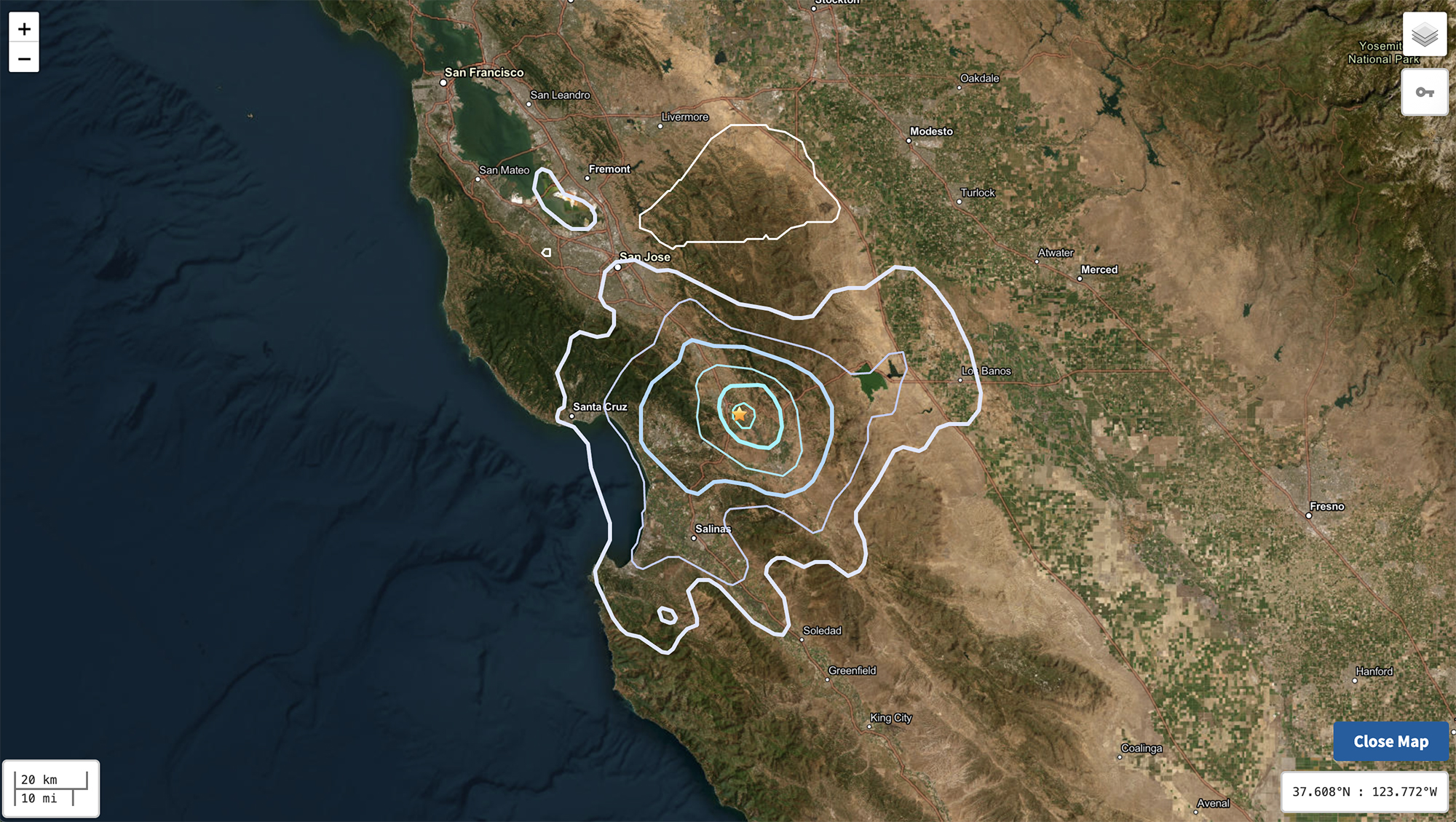
Early Morning Earthquake Cluster Rattles Gilroy and the Bay Area
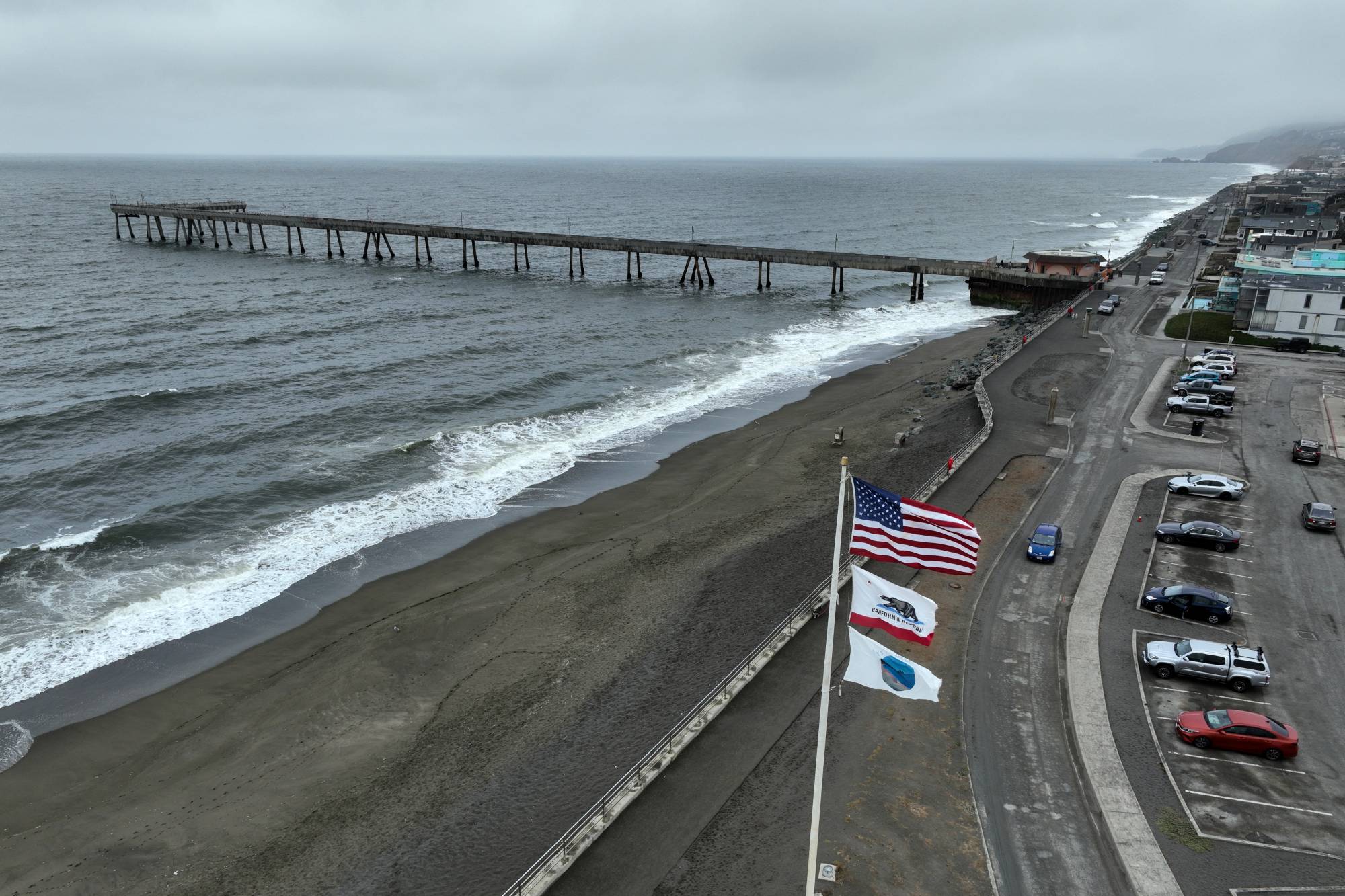
Why Even Small Tsunamis — and 1-Foot Waves — Can Wreak Havoc in California
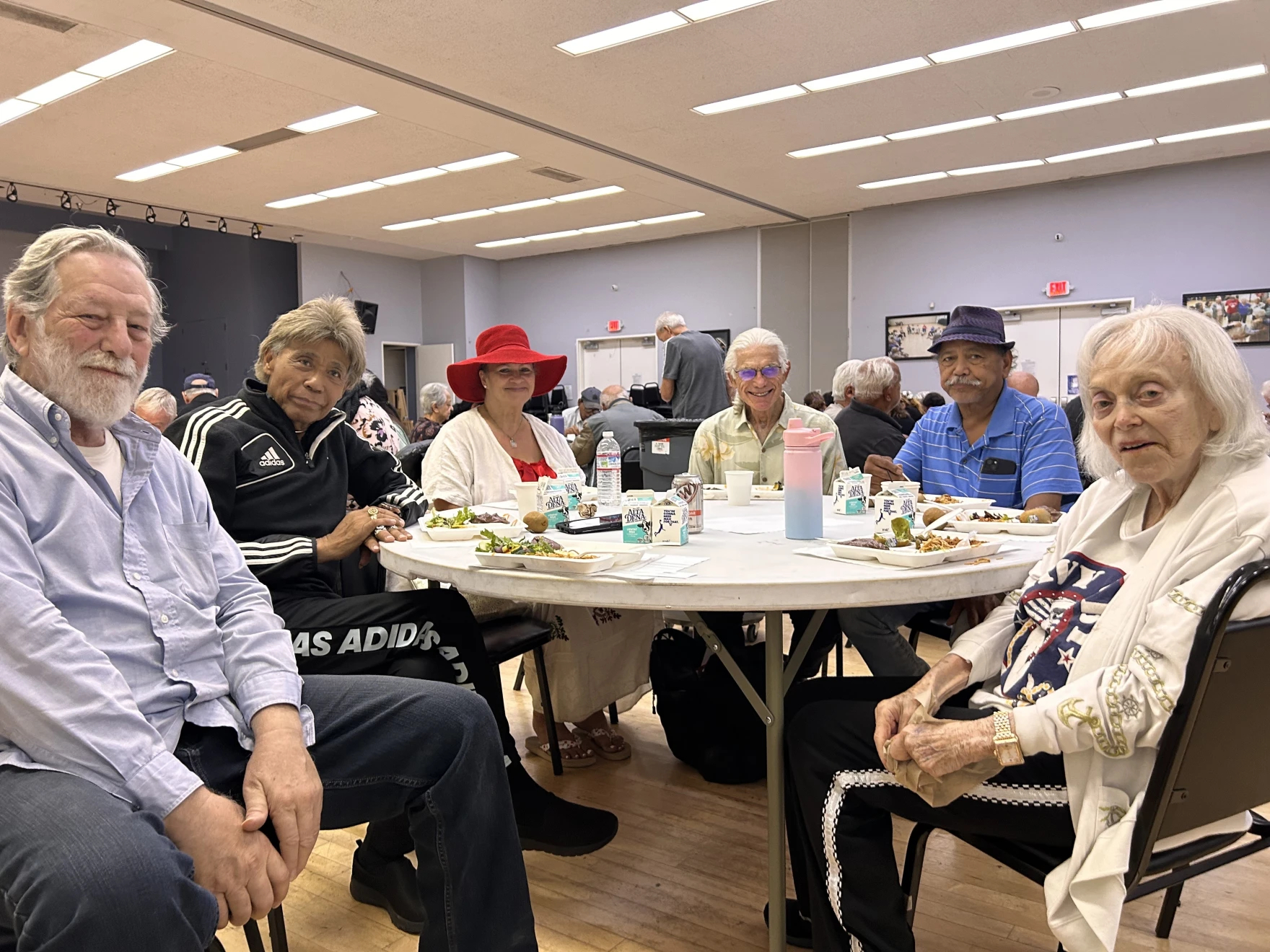
Unhoused Senior Population Grows In Los Angeles As Services Are Cut
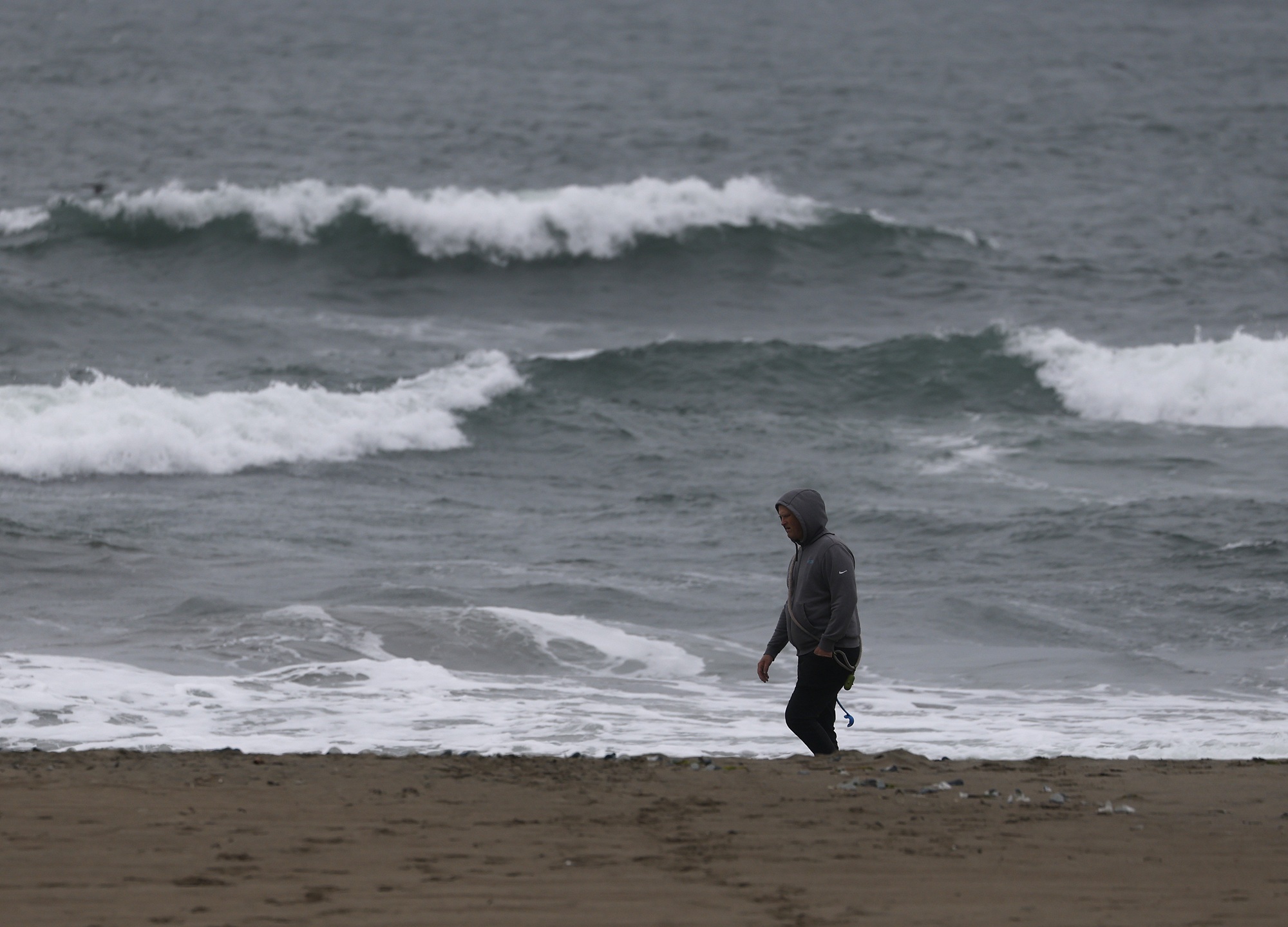
Tsunami Advisory Canceled for Bay Area and Central Coast, With No Damage So Far
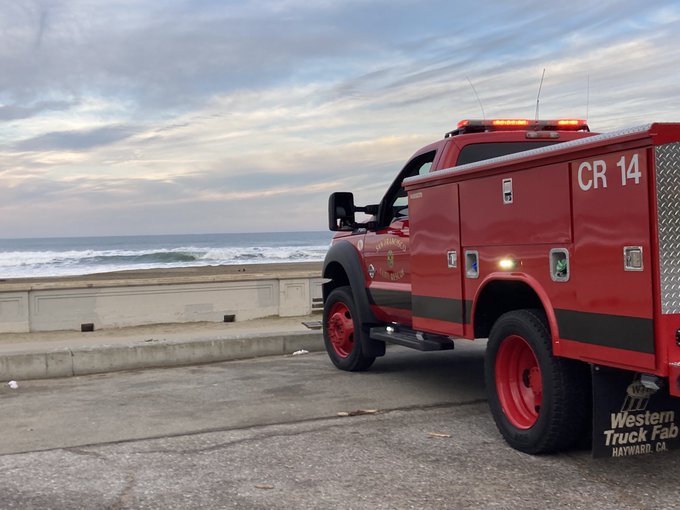
How to Prepare for a Tsunami in California — and What to Do if Another Warning Hits
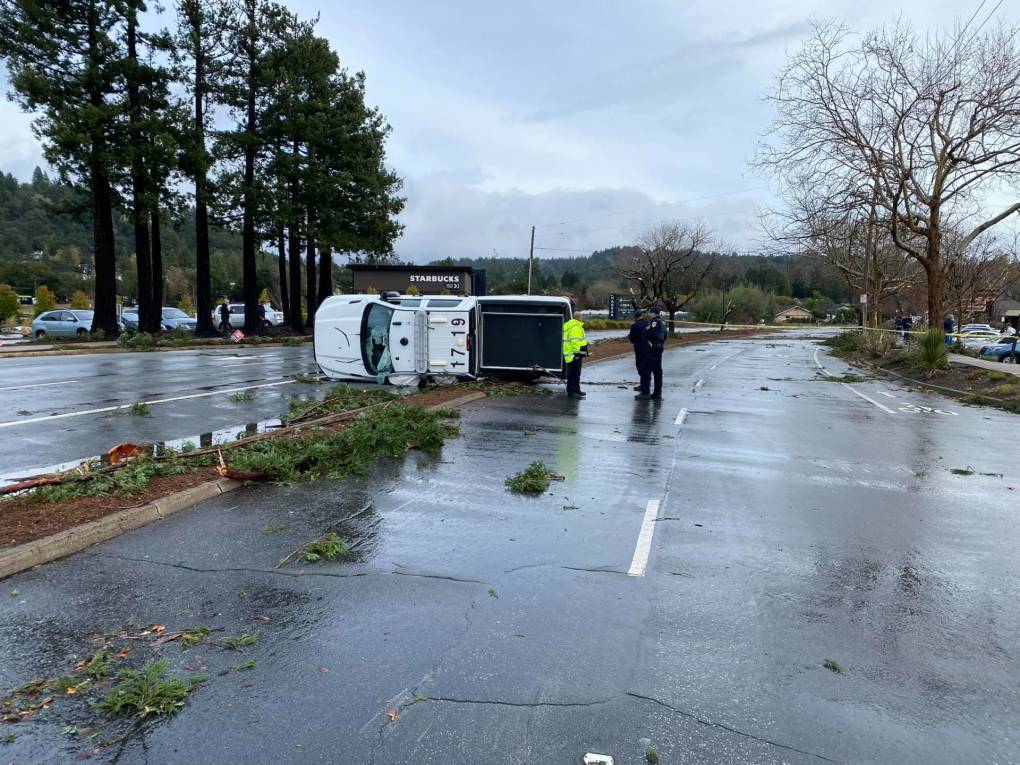
Why Did SF Get Tornado Warning But Not Scotts Valley, Where Twister Hit?
Berkeley Defends Tsunami Evacuations Amid Concerns of ‘Crying Wolf’ With Warnings
More Aftershocks Likely for Northern California in Coming Days, Experts Say
How Confusion Over California's Tsunami Warning Shows the Limits of US Forecasting
Sponsored
Player sponsored by
window.__IS_SSR__=true
window.__INITIAL_STATE__={
"attachmentsReducer": {
"audio_0": {
"type": "attachments",
"id": "audio_0",
"imgSizes": {
"kqedFullSize": {
"file": "https://ww2.kqed.org/news/wp-content/themes/KQED-unified/img/audio_bgs/background0.jpg"
}
}
},
"audio_1": {
"type": "attachments",
"id": "audio_1",
"imgSizes": {
"kqedFullSize": {
"file": "https://ww2.kqed.org/news/wp-content/themes/KQED-unified/img/audio_bgs/background1.jpg"
}
}
},
"audio_2": {
"type": "attachments",
"id": "audio_2",
"imgSizes": {
"kqedFullSize": {
"file": "https://ww2.kqed.org/news/wp-content/themes/KQED-unified/img/audio_bgs/background2.jpg"
}
}
},
"audio_3": {
"type": "attachments",
"id": "audio_3",
"imgSizes": {
"kqedFullSize": {
"file": "https://ww2.kqed.org/news/wp-content/themes/KQED-unified/img/audio_bgs/background3.jpg"
}
}
},
"audio_4": {
"type": "attachments",
"id": "audio_4",
"imgSizes": {
"kqedFullSize": {
"file": "https://ww2.kqed.org/news/wp-content/themes/KQED-unified/img/audio_bgs/background4.jpg"
}
}
},
"placeholder": {
"type": "attachments",
"id": "placeholder",
"imgSizes": {
"thumbnail": {
"file": "https://cdn.kqed.org/wp-content/uploads/2024/12/KQED-Default-Image-816638274-2000x1333-1-160x107.jpg",
"width": 160,
"height": 107,
"mimeType": "image/jpeg"
},
"medium": {
"file": "https://cdn.kqed.org/wp-content/uploads/2024/12/KQED-Default-Image-816638274-2000x1333-1-800x533.jpg",
"width": 800,
"height": 533,
"mimeType": "image/jpeg"
},
"medium_large": {
"file": "https://cdn.kqed.org/wp-content/uploads/2024/12/KQED-Default-Image-816638274-2000x1333-1-768x512.jpg",
"width": 768,
"height": 512,
"mimeType": "image/jpeg"
},
"large": {
"file": "https://cdn.kqed.org/wp-content/uploads/2024/12/KQED-Default-Image-816638274-2000x1333-1-1020x680.jpg",
"width": 1020,
"height": 680,
"mimeType": "image/jpeg"
},
"1536x1536": {
"file": "https://cdn.kqed.org/wp-content/uploads/2024/12/KQED-Default-Image-816638274-2000x1333-1-1536x1024.jpg",
"width": 1536,
"height": 1024,
"mimeType": "image/jpeg"
},
"fd-lrg": {
"file": "https://cdn.kqed.org/wp-content/uploads/2024/12/KQED-Default-Image-816638274-2000x1333-1-1536x1024.jpg",
"width": 1536,
"height": 1024,
"mimeType": "image/jpeg"
},
"fd-med": {
"file": "https://cdn.kqed.org/wp-content/uploads/2024/12/KQED-Default-Image-816638274-2000x1333-1-1020x680.jpg",
"width": 1020,
"height": 680,
"mimeType": "image/jpeg"
},
"fd-sm": {
"file": "https://cdn.kqed.org/wp-content/uploads/2024/12/KQED-Default-Image-816638274-2000x1333-1-800x533.jpg",
"width": 800,
"height": 533,
"mimeType": "image/jpeg"
},
"post-thumbnail": {
"file": "https://cdn.kqed.org/wp-content/uploads/2024/12/KQED-Default-Image-816638274-2000x1333-1-672x372.jpg",
"width": 672,
"height": 372,
"mimeType": "image/jpeg"
},
"twentyfourteen-full-width": {
"file": "https://cdn.kqed.org/wp-content/uploads/2024/12/KQED-Default-Image-816638274-2000x1333-1-1038x576.jpg",
"width": 1038,
"height": 576,
"mimeType": "image/jpeg"
},
"xxsmall": {
"file": "https://cdn.kqed.org/wp-content/uploads/2024/12/KQED-Default-Image-816638274-2000x1333-1-160x107.jpg",
"width": 160,
"height": 107,
"mimeType": "image/jpeg"
},
"xsmall": {
"file": "https://cdn.kqed.org/wp-content/uploads/2024/12/KQED-Default-Image-816638274-2000x1333-1-672x372.jpg",
"width": 672,
"height": 372,
"mimeType": "image/jpeg"
},
"small": {
"file": "https://cdn.kqed.org/wp-content/uploads/2024/12/KQED-Default-Image-816638274-2000x1333-1-672x372.jpg",
"width": 672,
"height": 372,
"mimeType": "image/jpeg"
},
"xlarge": {
"file": "https://cdn.kqed.org/wp-content/uploads/2024/12/KQED-Default-Image-816638274-2000x1333-1-1020x680.jpg",
"width": 1020,
"height": 680,
"mimeType": "image/jpeg"
},
"full-width": {
"file": "https://cdn.kqed.org/wp-content/uploads/2024/12/KQED-Default-Image-816638274-2000x1333-1-1920x1280.jpg",
"width": 1920,
"height": 1280,
"mimeType": "image/jpeg"
},
"guest-author-32": {
"file": "https://cdn.kqed.org/wp-content/uploads/2025/01/KQED-Default-Image-816638274-1333x1333-1-160x160.jpg",
"width": 32,
"height": 32,
"mimeType": "image/jpeg"
},
"guest-author-50": {
"file": "https://cdn.kqed.org/wp-content/uploads/2025/01/KQED-Default-Image-816638274-1333x1333-1-160x160.jpg",
"width": 50,
"height": 50,
"mimeType": "image/jpeg"
},
"guest-author-64": {
"file": "https://cdn.kqed.org/wp-content/uploads/2025/01/KQED-Default-Image-816638274-1333x1333-1-160x160.jpg",
"width": 64,
"height": 64,
"mimeType": "image/jpeg"
},
"guest-author-96": {
"file": "https://cdn.kqed.org/wp-content/uploads/2025/01/KQED-Default-Image-816638274-1333x1333-1-160x160.jpg",
"width": 96,
"height": 96,
"mimeType": "image/jpeg"
},
"guest-author-128": {
"file": "https://cdn.kqed.org/wp-content/uploads/2025/01/KQED-Default-Image-816638274-1333x1333-1-160x160.jpg",
"width": 128,
"height": 128,
"mimeType": "image/jpeg"
},
"detail": {
"file": "https://cdn.kqed.org/wp-content/uploads/2025/01/KQED-Default-Image-816638274-1333x1333-1-160x160.jpg",
"width": 160,
"height": 160,
"mimeType": "image/jpeg"
},
"kqedFullSize": {
"file": "https://cdn.kqed.org/wp-content/uploads/2024/12/KQED-Default-Image-816638274-2000x1333-1.jpg",
"width": 2000,
"height": 1333
}
}
},
"news_12065449": {
"type": "attachments",
"id": "news_12065449",
"meta": {
"index": "attachments_1716263798",
"site": "news",
"id": "12065449",
"found": true
},
"title": "251126-GILROY EARTHQUAKE-KQED",
"publishDate": 1764177549,
"status": "inherit",
"parent": 0,
"modified": 1764178703,
"caption": "A 4.0 magnitude earthquake struck about 5 miles northeast of Gilroy, according to data from the U.S. Geological Survey. \n\n",
"credit": "Courtesy of USGS",
"altTag": null,
"description": null,
"imgSizes": {
"thumbnail": {
"file": "https://cdn.kqed.org/wp-content/uploads/sites/10/2025/11/251126-GILROY-EARTHQUAKE-KQED-160x90.jpg",
"width": 160,
"height": 90,
"mimeType": "image/jpeg"
},
"1536x1536": {
"file": "https://cdn.kqed.org/wp-content/uploads/sites/10/2025/11/251126-GILROY-EARTHQUAKE-KQED-1536x867.jpg",
"width": 1536,
"height": 867,
"mimeType": "image/jpeg"
},
"post-thumbnail": {
"file": "https://cdn.kqed.org/wp-content/uploads/sites/10/2025/11/251126-GILROY-EARTHQUAKE-KQED-672x372.jpg",
"width": 672,
"height": 372,
"mimeType": "image/jpeg"
},
"twentyfourteen-full-width": {
"file": "https://cdn.kqed.org/wp-content/uploads/sites/10/2025/11/251126-GILROY-EARTHQUAKE-KQED-1038x576.jpg",
"width": 1038,
"height": 576,
"mimeType": "image/jpeg"
},
"npr-cds-wide": {
"file": "https://cdn.kqed.org/wp-content/uploads/sites/10/2025/11/251126-GILROY-EARTHQUAKE-KQED-1200x675.jpg",
"width": 1200,
"height": 675,
"mimeType": "image/jpeg"
},
"kqedFullSize": {
"file": "https://cdn.kqed.org/wp-content/uploads/sites/10/2025/11/251126-GILROY-EARTHQUAKE-KQED.jpg",
"width": 2000,
"height": 1129
}
},
"fetchFailed": false,
"isLoading": false
},
"news_12050295": {
"type": "attachments",
"id": "news_12050295",
"meta": {
"index": "attachments_1716263798",
"site": "news",
"id": "12050295",
"found": true
},
"title": "Tsunami alerts issued at California Coast after magnitude 8.8 earthquake off Russia",
"publishDate": 1753907661,
"status": "inherit",
"parent": 12050282,
"modified": 1753914278,
"caption": "A view of the Pacific Ocean along the coastline at Pacifica Municipal Pier in Pacifica, California, United States on July 30, 2025. Tsunami alerts were issued along the California Coast after a magnitude 8.8 earthquake off Russia.",
"credit": "Photo by Tayfun Coskun/Anadolu via Getty Images",
"altTag": null,
"description": null,
"imgSizes": {
"medium": {
"file": "https://cdn.kqed.org/wp-content/uploads/sites/10/2025/07/GettyImages-2227074366-2000x1333.jpg",
"width": 2000,
"height": 1333,
"mimeType": "image/jpeg"
},
"large": {
"file": "https://cdn.kqed.org/wp-content/uploads/sites/10/2025/07/GettyImages-2227074366-2000x1333.jpg",
"width": 2000,
"height": 1333,
"mimeType": "image/jpeg"
},
"thumbnail": {
"file": "https://cdn.kqed.org/wp-content/uploads/sites/10/2025/07/GettyImages-2227074366-160x107.jpg",
"width": 160,
"height": 107,
"mimeType": "image/jpeg"
},
"1536x1536": {
"file": "https://cdn.kqed.org/wp-content/uploads/sites/10/2025/07/GettyImages-2227074366-1536x1024.jpg",
"width": 1536,
"height": 1024,
"mimeType": "image/jpeg"
},
"2048x2048": {
"file": "https://cdn.kqed.org/wp-content/uploads/sites/10/2025/07/GettyImages-2227074366-2048x1365.jpg",
"width": 2048,
"height": 1365,
"mimeType": "image/jpeg"
},
"post-thumbnail": {
"file": "https://cdn.kqed.org/wp-content/uploads/sites/10/2025/07/GettyImages-2227074366-672x372.jpg",
"width": 672,
"height": 372,
"mimeType": "image/jpeg"
},
"twentyfourteen-full-width": {
"file": "https://cdn.kqed.org/wp-content/uploads/sites/10/2025/07/GettyImages-2227074366-1038x576.jpg",
"width": 1038,
"height": 576,
"mimeType": "image/jpeg"
},
"full-width": {
"file": "https://cdn.kqed.org/wp-content/uploads/sites/10/2025/07/GettyImages-2227074366-2000x1333.jpg",
"width": 2000,
"height": 1333,
"mimeType": "image/jpeg"
},
"kqedFullSize": {
"file": "https://cdn.kqed.org/wp-content/uploads/sites/10/2025/07/GettyImages-2227074366-scaled-e1758749155173.jpg",
"width": 2000,
"height": 1334
}
},
"fetchFailed": false,
"isLoading": false
},
"news_12050211": {
"type": "attachments",
"id": "news_12050211",
"meta": {
"index": "attachments_1716263798",
"site": "news",
"id": "12050211",
"found": true
},
"title": "la-seniors-688a20454f1fc",
"publishDate": 1753882724,
"status": "inherit",
"parent": 12050210,
"modified": 1753882788,
"caption": "Mark Schneider, center right, sits with friends at ONEgeneration's Senior Enrichment Center in Reseda.",
"credit": "Makenna Sievertson/LAist",
"altTag": null,
"description": null,
"imgSizes": {
"thumbnail": {
"file": "https://cdn.kqed.org/wp-content/uploads/sites/10/2025/07/la-seniors-688a20454f1fc-160x120.jpg",
"width": 160,
"height": 120,
"mimeType": "image/jpeg"
},
"1536x1536": {
"file": "https://cdn.kqed.org/wp-content/uploads/sites/10/2025/07/la-seniors-688a20454f1fc-1536x1152.jpg",
"width": 1536,
"height": 1152,
"mimeType": "image/jpeg"
},
"post-thumbnail": {
"file": "https://cdn.kqed.org/wp-content/uploads/sites/10/2025/07/la-seniors-688a20454f1fc-672x372.jpg",
"width": 672,
"height": 372,
"mimeType": "image/jpeg"
},
"twentyfourteen-full-width": {
"file": "https://cdn.kqed.org/wp-content/uploads/sites/10/2025/07/la-seniors-688a20454f1fc-1038x576.jpg",
"width": 1038,
"height": 576,
"mimeType": "image/jpeg"
},
"kqedFullSize": {
"file": "https://cdn.kqed.org/wp-content/uploads/sites/10/2025/07/la-seniors-688a20454f1fc.jpg",
"width": 1760,
"height": 1320
}
},
"fetchFailed": false,
"isLoading": false
},
"news_12050223": {
"type": "attachments",
"id": "news_12050223",
"meta": {
"index": "attachments_1716263798",
"site": "news",
"id": "12050223",
"found": true
},
"title": "Tsunami Warnings Issued For CA After 8.8 Magnitude Earthquake Off Russia Coast",
"publishDate": 1753894793,
"status": "inherit",
"parent": 12050219,
"modified": 1753895641,
"caption": "A beachgoer walks on the beach during a tsunami advisory at Ocean Beach on July 30, 2025, in San Francisco, California. Authorities are warning people to stay away from beaches following a massive 8.8 earthquake on the East Coast of Russia, which triggered a tsunami warning for Hawaii and the West Coast of the United States. No major damage has been reported.",
"credit": "Justin Sullivan/Getty Images",
"altTag": null,
"description": null,
"imgSizes": {
"thumbnail": {
"file": "https://cdn.kqed.org/wp-content/uploads/sites/10/2025/07/SFTsunamiWarningGetty-160x115.jpg",
"width": 160,
"height": 115,
"mimeType": "image/jpeg"
},
"1536x1536": {
"file": "https://cdn.kqed.org/wp-content/uploads/sites/10/2025/07/SFTsunamiWarningGetty-1536x1105.jpg",
"width": 1536,
"height": 1105,
"mimeType": "image/jpeg"
},
"post-thumbnail": {
"file": "https://cdn.kqed.org/wp-content/uploads/sites/10/2025/07/SFTsunamiWarningGetty-672x372.jpg",
"width": 672,
"height": 372,
"mimeType": "image/jpeg"
},
"twentyfourteen-full-width": {
"file": "https://cdn.kqed.org/wp-content/uploads/sites/10/2025/07/SFTsunamiWarningGetty-1038x576.jpg",
"width": 1038,
"height": 576,
"mimeType": "image/jpeg"
},
"kqedFullSize": {
"file": "https://cdn.kqed.org/wp-content/uploads/sites/10/2025/07/SFTsunamiWarningGetty.jpg",
"width": 2000,
"height": 1439
}
},
"fetchFailed": false,
"isLoading": false
},
"news_11901840": {
"type": "attachments",
"id": "news_11901840",
"meta": {
"index": "attachments_1716263798",
"site": "news",
"id": "11901840",
"found": true
},
"title": "OceanBeachTedG",
"publishDate": 1642278761,
"status": "inherit",
"parent": 11901839,
"modified": 1742593743,
"caption": "Emergency crews patrolling Bay Area beaches, like Ocean Beach in San Francisco, after a tsunami advisory.",
"credit": "Ted Goldberg/KQED",
"altTag": "An emergency vehicle, red, sits on the right side of the frame facing Ocean Beach, which features stormy waves.",
"description": null,
"imgSizes": {
"thumbnail": {
"file": "https://cdn.kqed.org/wp-content/uploads/sites/10/2022/01/OceanBeachTedG-160x120.jpeg",
"width": 160,
"height": 120,
"mimeType": "image/jpeg"
},
"post-thumbnail": {
"file": "https://cdn.kqed.org/wp-content/uploads/sites/10/2022/01/OceanBeachTedG-672x372.jpeg",
"width": 672,
"height": 372,
"mimeType": "image/jpeg"
},
"kqedFullSize": {
"file": "https://cdn.kqed.org/wp-content/uploads/sites/10/2022/01/OceanBeachTedG.jpeg",
"width": 680,
"height": 510
}
},
"fetchFailed": false,
"isLoading": false
},
"news_12018696": {
"type": "attachments",
"id": "news_12018696",
"meta": {
"index": "attachments_1716263798",
"site": "news",
"id": "12018696",
"found": true
},
"title": "scotts_valley2",
"publishDate": 1734474678,
"status": "inherit",
"parent": 0,
"modified": 1734480309,
"caption": "A twister touched down in the small Santa Cruz County mountain town of Scotts Valley on Dec. 14, 2024, flipping several cars, damaging power lines and downing trees. ",
"credit": "Courtesy of Scotts Valley Police Department",
"altTag": null,
"description": null,
"imgSizes": {
"medium": {
"file": "https://cdn.kqed.org/wp-content/uploads/sites/10/2024/12/scotts_valley2-800x600.jpg",
"width": 800,
"height": 600,
"mimeType": "image/jpeg"
},
"large": {
"file": "https://cdn.kqed.org/wp-content/uploads/sites/10/2024/12/scotts_valley2-1020x765.jpg",
"width": 1020,
"height": 765,
"mimeType": "image/jpeg"
},
"thumbnail": {
"file": "https://cdn.kqed.org/wp-content/uploads/sites/10/2024/12/scotts_valley2-160x120.jpg",
"width": 160,
"height": 120,
"mimeType": "image/jpeg"
},
"1536x1536": {
"file": "https://cdn.kqed.org/wp-content/uploads/sites/10/2024/12/scotts_valley2-1536x1152.jpg",
"width": 1536,
"height": 1152,
"mimeType": "image/jpeg"
},
"post-thumbnail": {
"file": "https://cdn.kqed.org/wp-content/uploads/sites/10/2024/12/scotts_valley2-672x372.jpg",
"width": 672,
"height": 372,
"mimeType": "image/jpeg"
},
"twentyfourteen-full-width": {
"file": "https://cdn.kqed.org/wp-content/uploads/sites/10/2024/12/scotts_valley2-1038x576.jpg",
"width": 1038,
"height": 576,
"mimeType": "image/jpeg"
},
"kqedFullSize": {
"file": "https://cdn.kqed.org/wp-content/uploads/sites/10/2024/12/scotts_valley2.jpg",
"width": 1920,
"height": 1440
}
},
"fetchFailed": false,
"isLoading": false
},
"news_12016880": {
"type": "attachments",
"id": "news_12016880",
"meta": {
"index": "attachments_1716263798",
"site": "news",
"id": "12016880",
"found": true
},
"title": "Tsunami Warning",
"publishDate": 1733433844,
"status": "inherit",
"parent": 0,
"modified": 1734387284,
"caption": "A state police vehicle patrols at Brickyard Cove in Berkeley, California, on Thursday, Dec. 5, 2024. Officials recommended evacuation of coastal areas due to a tsunami warning, that was later lifted.",
"credit": "David M. Barreda/KQED",
"altTag": null,
"description": null,
"imgSizes": {
"medium": {
"file": "https://cdn.kqed.org/wp-content/uploads/sites/10/2024/12/20241205_Tsunami-Warning_DMB_0666-800x533.jpg",
"width": 800,
"height": 533,
"mimeType": "image/jpeg"
},
"large": {
"file": "https://cdn.kqed.org/wp-content/uploads/sites/10/2024/12/20241205_Tsunami-Warning_DMB_0666-1020x679.jpg",
"width": 1020,
"height": 679,
"mimeType": "image/jpeg"
},
"thumbnail": {
"file": "https://cdn.kqed.org/wp-content/uploads/sites/10/2024/12/20241205_Tsunami-Warning_DMB_0666-160x107.jpg",
"width": 160,
"height": 107,
"mimeType": "image/jpeg"
},
"1536x1536": {
"file": "https://cdn.kqed.org/wp-content/uploads/sites/10/2024/12/20241205_Tsunami-Warning_DMB_0666-1536x1023.jpg",
"width": 1536,
"height": 1023,
"mimeType": "image/jpeg"
},
"post-thumbnail": {
"file": "https://cdn.kqed.org/wp-content/uploads/sites/10/2024/12/20241205_Tsunami-Warning_DMB_0666-672x372.jpg",
"width": 672,
"height": 372,
"mimeType": "image/jpeg"
},
"twentyfourteen-full-width": {
"file": "https://cdn.kqed.org/wp-content/uploads/sites/10/2024/12/20241205_Tsunami-Warning_DMB_0666-1038x576.jpg",
"width": 1038,
"height": 576,
"mimeType": "image/jpeg"
},
"full-width": {
"file": "https://cdn.kqed.org/wp-content/uploads/sites/10/2024/12/20241205_Tsunami-Warning_DMB_0666-1920x1279.jpg",
"width": 1920,
"height": 1279,
"mimeType": "image/jpeg"
},
"kqedFullSize": {
"file": "https://cdn.kqed.org/wp-content/uploads/sites/10/2024/12/20241205_Tsunami-Warning_DMB_0666.jpg",
"width": 2000,
"height": 1332
}
},
"fetchFailed": false,
"isLoading": false
},
"news_12016881": {
"type": "attachments",
"id": "news_12016881",
"meta": {
"index": "attachments_1716263798",
"site": "news",
"id": "12016881",
"found": true
},
"title": "20241205-Tsunami-JY-001",
"publishDate": 1733433849,
"status": "inherit",
"parent": 12025352,
"modified": 1738616045,
"caption": "People watch for a tsunami at Ocean Beach in San Francisco on Thursday, Dec. 5, 2024.",
"credit": "Juliana Yamada/KQED",
"altTag": "People look out over the ocean.",
"description": null,
"imgSizes": {
"medium": {
"file": "https://cdn.kqed.org/wp-content/uploads/sites/10/2024/12/20241205-Tsunami-JY-001-800x533.jpg",
"width": 800,
"height": 533,
"mimeType": "image/jpeg"
},
"large": {
"file": "https://cdn.kqed.org/wp-content/uploads/sites/10/2024/12/20241205-Tsunami-JY-001-1020x679.jpg",
"width": 1020,
"height": 679,
"mimeType": "image/jpeg"
},
"thumbnail": {
"file": "https://cdn.kqed.org/wp-content/uploads/sites/10/2024/12/20241205-Tsunami-JY-001-160x107.jpg",
"width": 160,
"height": 107,
"mimeType": "image/jpeg"
},
"1536x1536": {
"file": "https://cdn.kqed.org/wp-content/uploads/sites/10/2024/12/20241205-Tsunami-JY-001-1536x1023.jpg",
"width": 1536,
"height": 1023,
"mimeType": "image/jpeg"
},
"post-thumbnail": {
"file": "https://cdn.kqed.org/wp-content/uploads/sites/10/2024/12/20241205-Tsunami-JY-001-672x372.jpg",
"width": 672,
"height": 372,
"mimeType": "image/jpeg"
},
"twentyfourteen-full-width": {
"file": "https://cdn.kqed.org/wp-content/uploads/sites/10/2024/12/20241205-Tsunami-JY-001-1038x576.jpg",
"width": 1038,
"height": 576,
"mimeType": "image/jpeg"
},
"full-width": {
"file": "https://cdn.kqed.org/wp-content/uploads/sites/10/2024/12/20241205-Tsunami-JY-001-1920x1279.jpg",
"width": 1920,
"height": 1279,
"mimeType": "image/jpeg"
},
"kqedFullSize": {
"file": "https://cdn.kqed.org/wp-content/uploads/sites/10/2024/12/20241205-Tsunami-JY-001.jpg",
"width": 2000,
"height": 1332
}
},
"fetchFailed": false,
"isLoading": false
},
"news_12016887": {
"type": "attachments",
"id": "news_12016887",
"meta": {
"index": "attachments_1716263798",
"site": "news",
"id": "12016887",
"found": true
},
"title": "20241205-Tsunami-JY-008",
"publishDate": 1733433874,
"status": "inherit",
"parent": 0,
"modified": 1733517469,
"caption": "A SFFD firefighter warns surfers in the water to evacuate for a tsunami warning at Ocean Beach in San Francisco on Thursday, Dec. 5, 2024.",
"credit": "Juliana Yamada/KQED",
"altTag": null,
"description": null,
"imgSizes": {
"medium": {
"file": "https://cdn.kqed.org/wp-content/uploads/sites/10/2024/12/20241205-Tsunami-JY-008-800x533.jpg",
"width": 800,
"height": 533,
"mimeType": "image/jpeg"
},
"large": {
"file": "https://cdn.kqed.org/wp-content/uploads/sites/10/2024/12/20241205-Tsunami-JY-008-1020x679.jpg",
"width": 1020,
"height": 679,
"mimeType": "image/jpeg"
},
"thumbnail": {
"file": "https://cdn.kqed.org/wp-content/uploads/sites/10/2024/12/20241205-Tsunami-JY-008-160x107.jpg",
"width": 160,
"height": 107,
"mimeType": "image/jpeg"
},
"1536x1536": {
"file": "https://cdn.kqed.org/wp-content/uploads/sites/10/2024/12/20241205-Tsunami-JY-008-1536x1023.jpg",
"width": 1536,
"height": 1023,
"mimeType": "image/jpeg"
},
"post-thumbnail": {
"file": "https://cdn.kqed.org/wp-content/uploads/sites/10/2024/12/20241205-Tsunami-JY-008-672x372.jpg",
"width": 672,
"height": 372,
"mimeType": "image/jpeg"
},
"twentyfourteen-full-width": {
"file": "https://cdn.kqed.org/wp-content/uploads/sites/10/2024/12/20241205-Tsunami-JY-008-1038x576.jpg",
"width": 1038,
"height": 576,
"mimeType": "image/jpeg"
},
"full-width": {
"file": "https://cdn.kqed.org/wp-content/uploads/sites/10/2024/12/20241205-Tsunami-JY-008-1920x1279.jpg",
"width": 1920,
"height": 1279,
"mimeType": "image/jpeg"
},
"kqedFullSize": {
"file": "https://cdn.kqed.org/wp-content/uploads/sites/10/2024/12/20241205-Tsunami-JY-008.jpg",
"width": 2000,
"height": 1332
}
},
"fetchFailed": false,
"isLoading": false
}
},
"audioPlayerReducer": {
"postId": "stream_live",
"isPaused": true,
"isPlaying": false,
"pfsActive": false,
"pledgeModalIsOpen": true,
"playerDrawerIsOpen": false
},
"authorsReducer": {
"byline_news_12017134": {
"type": "authors",
"id": "byline_news_12017134",
"meta": {
"override": true
},
"slug": "byline_news_12017134",
"name": "Samantha Kennedy",
"isLoading": false
},
"danbrekke": {
"type": "authors",
"id": "222",
"meta": {
"index": "authors_1716337520",
"id": "222",
"found": true
},
"name": "Dan Brekke",
"firstName": "Dan",
"lastName": "Brekke",
"slug": "danbrekke",
"email": "dbrekke@kqed.org",
"display_author_email": true,
"staff_mastheads": [
"news",
"science"
],
"title": "KQED Editor and Reporter",
"bio": "Dan Brekke is a reporter and editor for KQED News, responsible for coverage of topics ranging from California water issues to the Bay Area's transportation challenges. In a newsroom career that began in Chicago in 1972, Dan has worked for \u003cem>The San Francisco Examiner,\u003c/em> Wired and TechTV and has been published in The New York Times, The New York Times Magazine, Business 2.0, Salon and elsewhere.\r\n\r\nSince joining KQED in 2007, Dan has reported, edited and produced both radio and online features and breaking news pieces. He has shared as both editor and reporter in four Society of Professional Journalists Norcal Excellence in Journalism awards and one Edward R. Murrow regional award. He was chosen for a spring 2017 residency at the Mesa Refuge to advance his research on California salmon.\r\n\r\nEmail Dan at: \u003ca href=\"mailto:dbrekke@kqed.org\">dbrekke@kqed.org\u003c/a>\r\n\r\n\u003cstrong>Twitter:\u003c/strong> \u003ca href=\"https://twitter.com/danbrekke\" rel=\"noopener noreferrer\">twitter.com/danbrekke\u003c/a>\r\n\u003cstrong>Facebook:\u003c/strong> \u003ca href=\"https://www.facebook.com/danbrekke\" rel=\"noopener noreferrer\">www.facebook.com/danbrekke\u003c/a>\r\n\u003cstrong>LinkedIn:\u003c/strong> \u003ca href=\"https://www.linkedin.com/in/danbrekke\" rel=\"noopener noreferrer\">www.linkedin.com/in/danbrekke\u003c/a>",
"avatar": "https://secure.gravatar.com/avatar/c8126230345efca3f7aa89b1a402be45?s=600&d=mm&r=g",
"twitter": "danbrekke",
"facebook": null,
"instagram": "https://www.instagram.com/dan.brekke/",
"linkedin": "https://www.linkedin.com/in/danbrekke/",
"sites": [
{
"site": "news",
"roles": [
"administrator",
"create_posts"
]
},
{
"site": "stateofhealth",
"roles": [
"editor"
]
},
{
"site": "science",
"roles": [
"editor"
]
},
{
"site": "quest",
"roles": [
"contributor"
]
},
{
"site": "food",
"roles": [
"contributor"
]
},
{
"site": "forum",
"roles": [
"contributor"
]
},
{
"site": "liveblog",
"roles": [
"editor"
]
}
],
"headData": {
"title": "Dan Brekke | KQED",
"description": "KQED Editor and Reporter",
"ogImgSrc": "https://secure.gravatar.com/avatar/c8126230345efca3f7aa89b1a402be45?s=600&d=mm&r=g",
"twImgSrc": "https://secure.gravatar.com/avatar/c8126230345efca3f7aa89b1a402be45?s=600&d=mm&r=g"
},
"isLoading": false,
"link": "/author/danbrekke"
},
"kqed": {
"type": "authors",
"id": "236",
"meta": {
"index": "authors_1716337520",
"id": "236",
"found": true
},
"name": "KQED News Staff",
"firstName": "KQED News Staff",
"lastName": null,
"slug": "kqed",
"email": "faq@kqed.org",
"display_author_email": false,
"staff_mastheads": [],
"title": null,
"bio": null,
"avatar": "https://secure.gravatar.com/avatar/ef0e801a68c4c54afa9180db14084167?s=600&d=blank&r=g",
"twitter": null,
"facebook": null,
"instagram": null,
"linkedin": null,
"sites": [
{
"site": "arts",
"roles": [
"contributor"
]
},
{
"site": "news",
"roles": [
"editor"
]
},
{
"site": "futureofyou",
"roles": [
"author"
]
}
],
"headData": {
"title": "KQED News Staff | KQED",
"description": null,
"ogImgSrc": "https://secure.gravatar.com/avatar/ef0e801a68c4c54afa9180db14084167?s=600&d=blank&r=g",
"twImgSrc": "https://secure.gravatar.com/avatar/ef0e801a68c4c54afa9180db14084167?s=600&d=blank&r=g"
},
"isLoading": false,
"link": "/author/kqed"
},
"kmizuguchi": {
"type": "authors",
"id": "11739",
"meta": {
"index": "authors_1716337520",
"id": "11739",
"found": true
},
"name": "Keith Mizuguchi",
"firstName": "Keith",
"lastName": "Mizuguchi",
"slug": "kmizuguchi",
"email": "kmizuguchi@kqed.org",
"display_author_email": false,
"staff_mastheads": [],
"title": "KQED Contributor",
"bio": null,
"avatar": "https://secure.gravatar.com/avatar/ce1182f9924192ae5ea66d39a75cd7d1?s=600&d=blank&r=g",
"twitter": null,
"facebook": null,
"instagram": null,
"linkedin": null,
"sites": [
{
"site": "news",
"roles": [
"editor"
]
},
{
"site": "science",
"roles": [
"editor"
]
}
],
"headData": {
"title": "Keith Mizuguchi | KQED",
"description": "KQED Contributor",
"ogImgSrc": "https://secure.gravatar.com/avatar/ce1182f9924192ae5ea66d39a75cd7d1?s=600&d=blank&r=g",
"twImgSrc": "https://secure.gravatar.com/avatar/ce1182f9924192ae5ea66d39a75cd7d1?s=600&d=blank&r=g"
},
"isLoading": false,
"link": "/author/kmizuguchi"
},
"eromero": {
"type": "authors",
"id": "11746",
"meta": {
"index": "authors_1716337520",
"id": "11746",
"found": true
},
"name": "Ezra David Romero",
"firstName": "Ezra David",
"lastName": "Romero",
"slug": "eromero",
"email": "eromero@kqed.org",
"display_author_email": true,
"staff_mastheads": [
"news",
"science"
],
"title": "Climate Reporter",
"bio": "Ezra David Romero is a climate reporter for KQED News. He covers the absence and excess of water in the Bay Area — think sea level rise, flooding and drought. For nearly a decade he’s covered how warming temperatures are altering the lives of Californians. He’s reported on farmers worried their pistachio trees aren’t getting enough sleep, families desperate for water, scientists studying dying giant sequoias, and alongside firefighters containing wildfires. His work has appeared on local stations across California and nationally on public radio shows like Morning Edition, Here and Now, All Things Considered and Science Friday. ",
"avatar": "https://secure.gravatar.com/avatar/9c15bb8bab267e058708a9eeaeef16bf?s=600&d=blank&r=g",
"twitter": "ezraromero",
"facebook": null,
"instagram": null,
"linkedin": null,
"sites": [
{
"site": "arts",
"roles": [
"editor"
]
},
{
"site": "news",
"roles": [
"editor"
]
},
{
"site": "science",
"roles": [
"editor"
]
},
{
"site": "liveblog",
"roles": [
"author"
]
}
],
"headData": {
"title": "Ezra David Romero | KQED",
"description": "Climate Reporter",
"ogImgSrc": "https://secure.gravatar.com/avatar/9c15bb8bab267e058708a9eeaeef16bf?s=600&d=blank&r=g",
"twImgSrc": "https://secure.gravatar.com/avatar/9c15bb8bab267e058708a9eeaeef16bf?s=600&d=blank&r=g"
},
"isLoading": false,
"link": "/author/eromero"
},
"nkhan": {
"type": "authors",
"id": "11867",
"meta": {
"index": "authors_1716337520",
"id": "11867",
"found": true
},
"name": "Nisa Khan",
"firstName": "Nisa",
"lastName": "Khan",
"slug": "nkhan",
"email": "nkhan@kqed.org",
"display_author_email": false,
"staff_mastheads": [],
"title": "KQED Contributor",
"bio": "Nisa Khan is a reporter for KQED's Audience News Desk. She was formerly a data reporter at Michigan Radio. She earned a Bachelor of Science in Information from the University of Michigan and a Master of Arts in Communication from Stanford University.",
"avatar": "https://secure.gravatar.com/avatar/a3bf1efcfbe7658d13a434cc54d0b2e3?s=600&d=blank&r=g",
"twitter": "mnisakhan",
"facebook": null,
"instagram": null,
"linkedin": null,
"sites": [
{
"site": "arts",
"roles": [
"editor"
]
},
{
"site": "news",
"roles": [
"editor"
]
},
{
"site": "forum",
"roles": [
"editor"
]
},
{
"site": "liveblog",
"roles": [
"contributor"
]
}
],
"headData": {
"title": "Nisa Khan | KQED",
"description": "KQED Contributor",
"ogImgSrc": "https://secure.gravatar.com/avatar/a3bf1efcfbe7658d13a434cc54d0b2e3?s=600&d=blank&r=g",
"twImgSrc": "https://secure.gravatar.com/avatar/a3bf1efcfbe7658d13a434cc54d0b2e3?s=600&d=blank&r=g"
},
"isLoading": false,
"link": "/author/nkhan"
},
"kdebenedetti": {
"type": "authors",
"id": "11913",
"meta": {
"index": "authors_1716337520",
"id": "11913",
"found": true
},
"name": "Katie DeBenedetti",
"firstName": "Katie",
"lastName": "DeBenedetti",
"slug": "kdebenedetti",
"email": "kdebenedetti@kqed.org",
"display_author_email": false,
"staff_mastheads": [
"news",
"science"
],
"title": "KQED Contributor",
"bio": "Katie DeBenedetti is a digital reporter covering daily news for the Express Desk. Prior to joining KQED as a culture reporting intern in January 2024, she covered education and city government for the Napa Valley Register.",
"avatar": "https://secure.gravatar.com/avatar/6e31073cb8f7e4214ab03f42771d0f45?s=600&d=blank&r=g",
"twitter": null,
"facebook": null,
"instagram": null,
"linkedin": null,
"sites": [
{
"site": "news",
"roles": [
"author"
]
},
{
"site": "science",
"roles": [
"author"
]
},
{
"site": "liveblog",
"roles": [
"author"
]
}
],
"headData": {
"title": "Katie DeBenedetti | KQED",
"description": "KQED Contributor",
"ogImgSrc": "https://secure.gravatar.com/avatar/6e31073cb8f7e4214ab03f42771d0f45?s=600&d=blank&r=g",
"twImgSrc": "https://secure.gravatar.com/avatar/6e31073cb8f7e4214ab03f42771d0f45?s=600&d=blank&r=g"
},
"isLoading": false,
"link": "/author/kdebenedetti"
},
"sarahwright": {
"type": "authors",
"id": "11956",
"meta": {
"index": "authors_1716337520",
"id": "11956",
"found": true
},
"name": "Sarah Wright",
"firstName": "Sarah",
"lastName": "Wright",
"slug": "sarahwright",
"email": "swright@kqed.org",
"display_author_email": true,
"staff_mastheads": [],
"title": "Outdoors Engagement Reporter",
"bio": "Sarah Wright is KQED's Outdoors Engagement Reporter. Originally from Lake Tahoe, she completed a thru-hike of the Pacific Crest Trail in 2019 and was a U.S. Fulbright Program grantee to Argentina in 2023. Her journalism has appeared in The Guardian, The San Francisco Standard, The Palo Alto Weekly and the Half Moon Bay Review.",
"avatar": "https://secure.gravatar.com/avatar/585b7a53f459b86d1d3ca1561541ab4b?s=600&d=blank&r=g",
"twitter": null,
"facebook": null,
"instagram": null,
"linkedin": null,
"sites": [
{
"site": "arts",
"roles": [
"editor"
]
},
{
"site": "news",
"roles": [
"editor"
]
},
{
"site": "science",
"roles": [
"contributor",
"author"
]
},
{
"site": "forum",
"roles": [
"editor"
]
}
],
"headData": {
"title": "Sarah Wright | KQED",
"description": "Outdoors Engagement Reporter",
"ogImgSrc": "https://secure.gravatar.com/avatar/585b7a53f459b86d1d3ca1561541ab4b?s=600&d=blank&r=g",
"twImgSrc": "https://secure.gravatar.com/avatar/585b7a53f459b86d1d3ca1561541ab4b?s=600&d=blank&r=g"
},
"isLoading": false,
"link": "/author/sarahwright"
}
},
"breakingNewsReducer": {},
"pagesReducer": {},
"postsReducer": {
"stream_live": {
"type": "live",
"id": "stream_live",
"audioUrl": "https://streams.kqed.org/kqedradio",
"title": "Live Stream",
"excerpt": "Live Stream information currently unavailable.",
"link": "/radio",
"featImg": "",
"label": {
"name": "KQED Live",
"link": "/"
}
},
"stream_kqedNewscast": {
"type": "posts",
"id": "stream_kqedNewscast",
"audioUrl": "https://www.kqed.org/.stream/anon/radio/RDnews/newscast.mp3?_=1",
"title": "KQED Newscast",
"featImg": "",
"label": {
"name": "88.5 FM",
"link": "/"
}
},
"news_12065447": {
"type": "posts",
"id": "news_12065447",
"meta": {
"index": "posts_1716263798",
"site": "news",
"id": "12065447",
"score": null,
"sort": [
1764178647000
]
},
"guestAuthors": [],
"slug": "early-morning-earthquake-cluster-rattles-gilroy-and-the-bay-area",
"title": "Early Morning Earthquake Cluster Rattles Gilroy and the Bay Area",
"publishDate": 1764178647,
"format": "standard",
"headTitle": "Early Morning Earthquake Cluster Rattles Gilroy and the Bay Area | KQED",
"labelTerm": {
"site": "news"
},
"content": "\u003cp>The South Bay was rattled by a cluster of small earthquakes on Wednesday morning, according to data from the \u003ca href=\"https://earthquake.usgs.gov/earthquakes/map/?currentFeatureId=nc75269596&extent=36.78399,-122.0842&extent=37.45633,-120.99106&listOnlyShown=true\">U.S. Geological Survey\u003c/a>.\u003c/p>\n\u003cp>A magnitude 4.0 quake hit just east of Gilroy at 6:16 a.m., and it was followed within minutes by two smaller tremors.\u003c/p>\n\u003cp>At 6:18 a.m., a magnitude 2.7 aftershock hit less than a mile from the epicenter of the first, and at 6:20 a.m., a magnitude 3.6 quake struck slightly south.\u003c/p>\n\u003cp>[ad fullwidth]\u003c/p>\n\u003cp>The shaking appears to have been centered in San José and throughout the South Bay, with light to moderate shaking closest to the epicenter of the largest quake, though people as far north as Antioch and south as San Lucas \u003ca href=\"https://earthquake.usgs.gov/earthquakes/eventpage/ew1764166600/map?shakemap-code=75269596&shakemap-source=nc&shakemap-intensity=true&shakemap-mmi-contours=false&shakemap-macroseismic-stations=true&shakemap-seismic-stations=true\">reported feeling the quake\u003c/a>. No reports of damage were immediately available.\u003c/p>\n\u003cp>According to the USGS, the Calaveras Fault likely produced the earthquakes. The last large quake recorded on the slip-strike fault was a magnitude 6.2 quake that jolted \u003ca href=\"https://earthquake.usgs.gov/earthquakes/eventpage/ew1764166600/region-info\">Morgan Hill in 1984.\u003c/a> Cavaleras is believed to have about an 11% chance of producing a larger quake by 2033.\u003c/p>\n\u003cp>The odds that Wednesday’s cluster of quakes is a precursor to a much bigger one are low — USGS data shows there is about a \u003ca href=\"https://earthquake.usgs.gov/earthquakes/eventpage/ew1764166600/oaf/overview\">14% chance\u003c/a> of another one above magnitude 3.0, and those odds drop to 2% for a magnitude 4.0 or higher quake.\u003c/p>\n\u003cp>\u003c/p>\n",
"blocks": [],
"excerpt": "A magnitude 4.0 earthquake hit just east of Gilroy at 6:16 a.m. Wednesday, and it was followed within minutes by two smaller aftershocks.",
"status": "publish",
"parent": 0,
"modified": 1764183399,
"stats": {
"hasAudio": false,
"hasVideo": false,
"hasChartOrMap": false,
"iframeSrcs": [],
"hasGoogleForm": false,
"hasGallery": false,
"hasHearkenModule": false,
"hasPolis": false,
"paragraphCount": 8,
"wordCount": 233
},
"headData": {
"title": "Early Morning Earthquake Cluster Rattles Gilroy and the Bay Area | KQED",
"description": "A magnitude 4.0 earthquake hit just east of Gilroy at 6:16 a.m. Wednesday, and it was followed within minutes by two smaller aftershocks.",
"ogTitle": "",
"ogDescription": "",
"ogImgId": "",
"twTitle": "",
"twDescription": "",
"twImgId": "",
"schema": {
"@context": "https://schema.org",
"@type": "NewsArticle",
"headline": "Early Morning Earthquake Cluster Rattles Gilroy and the Bay Area",
"datePublished": "2025-11-26T09:37:27-08:00",
"dateModified": "2025-11-26T10:56:39-08:00",
"image": "https://cdn.kqed.org/wp-content/uploads/2020/02/KQED-OG-Image@1x.png",
"isAccessibleForFree": "True",
"publisher": {
"@type": "NewsMediaOrganization",
"@id": "https://www.kqed.org/#organization",
"name": "KQED",
"logo": "https://cdn.kqed.org/wp-content/uploads/2020/02/KQED-OG-Image@1x.png",
"url": "https://www.kqed.org",
"sameAs": [
"https://www.facebook.com/KQED",
"https://twitter.com/KQED",
"https://www.instagram.com/kqed/",
"https://www.tiktok.com/@kqedofficial",
"https://www.linkedin.com/company/kqed",
"https://www.youtube.com/channel/UCeC0IOo7i1P_61zVUWbJ4nw"
]
}
}
},
"primaryCategory": {
"termId": 31795,
"slug": "california",
"name": "California"
},
"sticky": false,
"nprStoryId": "kqed-12065447",
"templateType": "standard",
"featuredImageType": "standard",
"excludeFromSiteSearch": "Include",
"showOnAuthorArchivePages": "No",
"articleAge": "0",
"path": "/news/12065447/early-morning-earthquake-cluster-rattles-gilroy-and-the-bay-area",
"audioTrackLength": null,
"parsedContent": [
{
"type": "contentString",
"content": "\u003cdiv class=\"post-body\">\u003cp>\u003cp>The South Bay was rattled by a cluster of small earthquakes on Wednesday morning, according to data from the \u003ca href=\"https://earthquake.usgs.gov/earthquakes/map/?currentFeatureId=nc75269596&extent=36.78399,-122.0842&extent=37.45633,-120.99106&listOnlyShown=true\">U.S. Geological Survey\u003c/a>.\u003c/p>\n\u003cp>A magnitude 4.0 quake hit just east of Gilroy at 6:16 a.m., and it was followed within minutes by two smaller tremors.\u003c/p>\n\u003cp>At 6:18 a.m., a magnitude 2.7 aftershock hit less than a mile from the epicenter of the first, and at 6:20 a.m., a magnitude 3.6 quake struck slightly south.\u003c/p>\n\u003cp>\u003c/p>\u003c/div>",
"attributes": {
"named": {},
"numeric": []
}
},
{
"type": "component",
"content": "",
"name": "ad",
"attributes": {
"named": {
"label": "fullwidth"
},
"numeric": [
"fullwidth"
]
}
},
{
"type": "contentString",
"content": "\u003cdiv class=\"post-body\">\u003cp>\u003c/p>\n\u003cp>The shaking appears to have been centered in San José and throughout the South Bay, with light to moderate shaking closest to the epicenter of the largest quake, though people as far north as Antioch and south as San Lucas \u003ca href=\"https://earthquake.usgs.gov/earthquakes/eventpage/ew1764166600/map?shakemap-code=75269596&shakemap-source=nc&shakemap-intensity=true&shakemap-mmi-contours=false&shakemap-macroseismic-stations=true&shakemap-seismic-stations=true\">reported feeling the quake\u003c/a>. No reports of damage were immediately available.\u003c/p>\n\u003cp>According to the USGS, the Calaveras Fault likely produced the earthquakes. The last large quake recorded on the slip-strike fault was a magnitude 6.2 quake that jolted \u003ca href=\"https://earthquake.usgs.gov/earthquakes/eventpage/ew1764166600/region-info\">Morgan Hill in 1984.\u003c/a> Cavaleras is believed to have about an 11% chance of producing a larger quake by 2033.\u003c/p>\n\u003cp>The odds that Wednesday’s cluster of quakes is a precursor to a much bigger one are low — USGS data shows there is about a \u003ca href=\"https://earthquake.usgs.gov/earthquakes/eventpage/ew1764166600/oaf/overview\">14% chance\u003c/a> of another one above magnitude 3.0, and those odds drop to 2% for a magnitude 4.0 or higher quake.\u003c/p>\n\u003cp>\u003c/p>\n\u003c/div>\u003c/p>",
"attributes": {
"named": {},
"numeric": []
}
}
],
"link": "/news/12065447/early-morning-earthquake-cluster-rattles-gilroy-and-the-bay-area",
"authors": [
"11913"
],
"categories": [
"news_31795",
"news_34165",
"news_19906",
"news_8"
],
"tags": [
"news_17826",
"news_881",
"news_1013"
],
"featImg": "news_12065449",
"label": "news"
},
"news_12050282": {
"type": "posts",
"id": "news_12050282",
"meta": {
"index": "posts_1716263798",
"site": "news",
"id": "12050282",
"score": null,
"sort": [
1753914039000
]
},
"guestAuthors": [],
"slug": "california-tsunami-warning-alert-advisory-san-francisco-2025-danger-safety-small-waves",
"title": "Why Even Small Tsunamis — and 1-Foot Waves — Can Wreak Havoc in California",
"publishDate": 1753914039,
"format": "standard",
"headTitle": "Why Even Small Tsunamis — and 1-Foot Waves — Can Wreak Havoc in California | KQED",
"labelTerm": {
"site": "news"
},
"content": "\u003cp>On Wednesday, I was supposed to be out on assignment on a kayak off the San Francisco shore, recording a radio interview on the waters of \u003ca href=\"https://www.kqed.org/news/12039317/watch-sf-giants-kayak-rental-mccovey-cove-this-season\">McCovey Cove\u003c/a> as the \u003ca href=\"https://www.kqed.org/news/12039317/watch-sf-giants-kayak-rental-mccovey-cove-this-season\">San Francisco Giants played a day game. \u003c/a>\u003c/p>\n\u003cp>But after an 8.8-magnitude earthquake occurred off the coast of Russia’s Kamchatka Peninsula on Tuesday afternoon, regions across the Pacific Ocean, including all of the Northern California coast, \u003ca href=\"https://www.kqed.org/news/12050219/tsunami-waves-expected-to-last-into-afternoon-across-bay-area-with-no-damage-so-far\">were given notice about potential tsunami waves\u003c/a>.\u003c/p>\n\u003cp>Suddenly, being out on a kayak that day — in a location marked as “hazardous” on \u003ca href=\"https://maps.conservation.ca.gov/cgs/informationwarehouse/ts_evacuation/\">the state’s tsunami danger map \u003c/a>— didn’t seem like such a good idea.\u003c/p>\n\u003cp>[ad fullwidth]\u003c/p>\n\u003cp>While “tsunami” can \u003ca href=\"https://www.kqed.org/news/10628782/what-would-really-happen-if-a-tsunami-hit-san-francisco\">conjure images of towering waves\u003c/a>, these swells caused by quakes are frequently much smaller. On Tuesday night, the National Weather Service predicted the waves that would hit San Francisco early Wednesday morning would be less than a foot high, and it \u003ca href=\"https://www.tsunami.gov/events/PAAQ/2025/07/29/t06p1k/22/WEAK51/WEAK51.txt\">has now measured them at 1.2 feet, \u003c/a> with no damage reported near the Bay Area so far.\u003c/p>\n\u003cp>So, how unsafe would my kayak trip \u003cem>really \u003c/em>have been?\u003c/p>\n\u003cfigure id=\"attachment_12050223\" class=\"wp-caption aligncenter\" style=\"max-width: 2000px\">\u003ca href=\"https://cdn.kqed.org/wp-content/uploads/sites/10/2025/07/SFTsunamiWarningGetty.jpg\">\u003cimg loading=\"lazy\" decoding=\"async\" class=\"size-full wp-image-12050223\" src=\"https://cdn.kqed.org/wp-content/uploads/sites/10/2025/07/SFTsunamiWarningGetty.jpg\" alt=\"\" width=\"2000\" height=\"1439\" srcset=\"https://cdn.kqed.org/wp-content/uploads/sites/10/2025/07/SFTsunamiWarningGetty.jpg 2000w, https://cdn.kqed.org/wp-content/uploads/sites/10/2025/07/SFTsunamiWarningGetty-160x115.jpg 160w, https://cdn.kqed.org/wp-content/uploads/sites/10/2025/07/SFTsunamiWarningGetty-1536x1105.jpg 1536w\" sizes=\"auto, (max-width: 2000px) 100vw, 2000px\">\u003c/a>\u003cfigcaption class=\"wp-caption-text\">A beachgoer walks on the beach during a tsunami advisory at Ocean Beach on July 30, 2025, in San Francisco, California. Authorities are warning people to stay away from beaches following a massive 8.8 earthquake on the East Coast of Russia, which triggered a tsunami warning for Hawaii and the West Coast of the United States. No major damage has been reported. \u003ccite>(Justin Sullivan/Getty Images)\u003c/cite>\u003c/figcaption>\u003c/figure>\n\u003cp>Experts say that even puny waves can have a big impact. Lori Dengler, a tsunami expert from Cal Poly Humboldt, said even if 1 foot sounds manageable, the dangers are hiding in the deep.\u003c/p>\n\u003cp>“It’s not how high the water is, it’s how strong that water is flowing in and out,” she said.\u003c/p>\n\u003cul>\n\u003cli>\u003cstrong>Jump straight to: \u003c/strong>\u003cstrong>\u003ca href=\"#smaller-tsunami-waves\">What should you do — and not do — when smaller tsunami waves hit?\u003c/a>\u003c/strong>\u003c/li>\n\u003c/ul>\n\u003ch2>How dangerous can these ‘small’ tsunami waves be?\u003c/h2>\n\u003cp>As it turns out, even “small” waves can pose big hazards.\u003c/p>\n\u003cp>Dalton Behringer, a meteorologist with the National Weather Service’s Bay Area office, said that a 1-foot swell may sound small, but when you add that foot to normal tide behavior, the swings from high to low can give a tsunami that extra push and boost \u003cem>overall \u003c/em>wave heights much higher.\u003c/p>\n\u003cfigure id=\"attachment_12050367\" class=\"wp-caption aligncenter\" style=\"max-width: 2000px\">\u003cimg loading=\"lazy\" decoding=\"async\" class=\"size-full wp-image-12050367\" src=\"https://cdn.kqed.org/wp-content/uploads/sites/10/2025/07/Tsunami-tides.png\" alt=\"\" width=\"2000\" height=\"1561\" srcset=\"https://cdn.kqed.org/wp-content/uploads/sites/10/2025/07/Tsunami-tides.png 2000w, https://cdn.kqed.org/wp-content/uploads/sites/10/2025/07/Tsunami-tides-160x125.png 160w, https://cdn.kqed.org/wp-content/uploads/sites/10/2025/07/Tsunami-tides-1536x1199.png 1536w\" sizes=\"auto, (max-width: 2000px) 100vw, 2000px\">\u003cfigcaption class=\"wp-caption-text\">This data from San Francisco’s Pier 17 shows that water levels start with normal, wave-like tidal patterns, then suddenly shift to sharp, irregular, high-frequency oscillations when the tsunami arrives. \u003ccite>(Courtesy of The Exploratorium)\u003c/cite>\u003c/figcaption>\u003c/figure>\n\u003cp>Think of it as not so much a single wave, Behringer said, but “as going from a normal low tide to a normal high tide,” — and this happening \u003cem>fast\u003c/em>. Such a shift would usually happen over six hours, he said, but in a tsunami, such a rise “happens over 10 to 15 minutes,” Behringer said.\u003c/p>\n\u003cp>Following \u003ca href=\"https://www.ncei.noaa.gov/news/day-2011-japan-earthquake-and-tsunami\">the huge 2011 earthquake in Japan\u003c/a> that sent 9.0-magnitude shocks across the Pacific Ocean, \u003ca href=\"https://www.reddit.com/r/bayarea/comments/1mcvwmf/video_1_foot_tsunami_in_santa_cruz_after_2011/\">a 1-foot tsunami caused significant damage to boats docked all the way in Santa Cruz.\u003c/a>\u003c/p>\n\u003cp>Jim Pruett, general manager of Pillar Point Harbor in Half Moon Bay, said the first, second or even third waves from a tsunami should not be taken lightly. That’s because tsunamis are more like powerful swells than waves and don’t “crash,” meaning each wave can do substantial damage.\u003c/p>\n\u003cp>https://www.youtube.com/watch?v=C0Afa4pjWg4\u003c/p>\n\u003cp>“It may be only a 12-inch wave, but there is a \u003cem>lot \u003c/em>of water behind that wave,” Pruett said. “It’s traveled across the Pacific Ocean, and when the swell hits, it doesn’t stop. All that water continues to come in, so it surprises people.”\u003c/p>\n\u003cp>In a place like Pillar Point, which is well protected due to being a natural harbor, small swells like these usually only mean the harbor fills and empties like a bathtub, Pruett said. Still, he advised always to heed warnings from local authorities if they advise staying out of the water, away from beaches or to evacuate.\u003c/p>\n\u003cp>Another thing to remember: sometimes the later tsunami swells are even worse than the initial ones, Behringer said.\u003c/p>\n\u003cp>https://www.youtube.com/watch?v=2tX5S9uSLmM\u003c/p>\n\u003cp>“The highest [swell] that we’ve seen so far has come a few hours after the initial wave,” Behringer said. “With tsunami waves, we can see the wave energy actually build for several hours after the initial waves and then dissipate.”\u003c/p>\n\u003cp>Pamalah MacNeily, owner at \u003ca href=\"https://bluewaterskayaking.com/\">Blue Waters Kayaking\u003c/a> in Tomales Bay, said she canceled a kayak tour on Wednesday as a precaution, just like I did. It isn’t the first time MacNeily’s done so after a tsunami warning, either, even when the weather looks nice and the bay seems fairly unaffected.\u003c/p>\n\u003cp>“We have to be cautious,” she said. If a tsunami came in from just the right direction, Tomales Bay “would be crushed,” MacNeily said.\u003c/p>\n\u003cp>“We have to be cautious with people’s lives, and we also obey the advisories,” she said.\u003c/p>\n\u003ch2>What should you do\u003ca id=\"smaller-tsunami-waves\">\u003c/a> — and not do — when smaller tsunami waves hit?\u003c/h2>\n\u003cp>“Please don’t go and try to look at them,” Dengler said.\u003c/p>\n\u003cp>Instead, she and others \u003ca href=\"https://tidesandcurrents.noaa.gov/tsunami/\">advised going online to the National Oceanic and Atmospheric Administration’s website\u003c/a> to watch the swells, since they are few and far between — and may not even look like much to the naked eye.\u003c/p>\n\u003cp>“This type of tsunami is actually arriving relatively slowly,” she said. “There is really nothing dramatic to see.”[aside postID=news_12032295 hero='https://cdn.kqed.org/wp-content/uploads/sites/10/2022/01/OceanBeachTedG.jpeg']A one-foot swell might not sound that bad in a kayak or near shore. But even if you assume you’d be able to handle it, the real dangers are lurking below and around you in the currents — and the dangerous objects, like boats, that might get tossed in your direction.\u003c/p>\n\u003cp>“Once the swell hits the shoreline, all that water has to retreat back to the ocean,” Pruett said. “So the normal currents will be extremely strong, ripping people or structures back out to sea.”\u003c/p>\n\u003cp>Swimmers and people in small crafts should get themselves and their boats out of the water. Conversely, “the safest place for a larger vessel is out at sea,” Pruett said, pointing to \u003ca href=\"https://news.sky.com/video/boats-evacuate-honolulu-harbour-as-russian-earthquake-triggers-tsunami-warning-13404126\">Tuesday night’s mass evacuation of boats off Honolulu’s shores\u003c/a> into the ocean, where they can more adeptly handle large swells and won’t be tossed into the shoreline.\u003c/p>\n\u003cp>Pruett said \u003ca href=\"https://www.youtube.com/watch?v=TDpXP0rbajA\">during a volcano-triggered tsunami in 2022\u003c/a>, the swells hit at high tide, when the water levels were already high — damaging the Santa Cruz Harbor, which is artificially constructed — and therefore less resilient to tsunami-like swells.\u003c/p>\n\u003cp>“Even though it was less than a foot, it still raised the harbor about 3 to 5 feet. Because when it hit the shore, it built up,” he said.\u003c/p>\n\u003ch2>How can I prepare for a future tsunami?\u003c/h2>\n\u003cp>The good news: Pruett said the San Francisco Bay is especially resilient to tsunami-like waves and that “the mouth of the Golden Gate will significantly knock down any large swells.” Nonetheless, in a future tsunami, “large amounts of water will still come into the Bay,” he said.\u003c/p>\n\u003cp>And if you needed another reason to take tsunamis seriously, \u003ca href=\"https://www.youtube.com/watch?v=bP_AIWgknfI\">this simulation\u003c/a> shows the effect that just one tsunami wave could have on the bay.\u003c/p>\n\u003cp>Luckily, there’s a lot you can do to prepare for if and when the next tsunami advisory happens. \u003ca href=\"https://www.kqed.org/news/12032295/how-to-prepare-for-a-tsunami-emergency-warning-california\">First of all, make sure you sign up for alerts;\u003c/a> know the difference between a tsunami warning, watch and advisory; and have an evacuation plan just in case.\u003c/p>\n\u003cp>\u003ca href=\"https://www.kqed.org/news/12032295/how-to-prepare-for-a-tsunami-emergency-warning-california\">Read our full guide on how to prepare for a possible tsunami.\u003c/a>\u003c/p>\n\u003ch2>And which coastal areas \u003cem>were \u003c/em>more affected by Wednesday’s tsunami?\u003c/h2>\n\u003cp>In \u003ca href=\"https://krcrtv.com/news/local/tsunami-waves-reach-north-coast-after-major-88m-quake-in-russia\">California, Crescent City in Del Norte County\u003c/a> was the most vulnerable, seeing waves of up to 4 feet.\u003c/p>\n\u003cp>Many residents were prepared and even pulled their boats out of the water on Tuesday night in anticipation of any large swells.\u003c/p>\n\u003cfigure id=\"attachment_12050315\" class=\"wp-caption aligncenter\" style=\"max-width: 2560px\">\u003ca href=\"https://cdn.kqed.org/wp-content/uploads/sites/10/2025/07/GettyImages-1321990137-scaled.jpg\">\u003cimg loading=\"lazy\" decoding=\"async\" class=\"size-full wp-image-12050315\" src=\"https://cdn.kqed.org/wp-content/uploads/sites/10/2025/07/GettyImages-1321990137-scaled.jpg\" alt=\"\" width=\"2560\" height=\"1576\" srcset=\"https://cdn.kqed.org/wp-content/uploads/sites/10/2025/07/GettyImages-1321990137-scaled.jpg 2560w, https://cdn.kqed.org/wp-content/uploads/sites/10/2025/07/GettyImages-1321990137-2000x1231.jpg 2000w, https://cdn.kqed.org/wp-content/uploads/sites/10/2025/07/GettyImages-1321990137-160x98.jpg 160w, https://cdn.kqed.org/wp-content/uploads/sites/10/2025/07/GettyImages-1321990137-1536x945.jpg 1536w, https://cdn.kqed.org/wp-content/uploads/sites/10/2025/07/GettyImages-1321990137-2048x1261.jpg 2048w\" sizes=\"auto, (max-width: 2560px) 100vw, 2560px\">\u003c/a>\u003cfigcaption class=\"wp-caption-text\">The Crescent City Harbor, on March 12, 2011, sustained the most damage of any harbor along the California coast after the Japan earthquake triggered a tsunami. \u003ccite>(Photo By Michael Macor/The San Francisco Chronicle via Getty Images)\u003c/cite>\u003c/figcaption>\u003c/figure>\n\u003cp>In 1964, Crescent City was the site of \u003ca href=\"https://www.crescentcity.org/tsunamitour/\">the worst tsunami recorded in the United States\u003c/a>, which killed 11 people, injured 24 and wiped out 29 city blocks.\u003c/p>\n\u003cp>Cal Poly’s Dengler said so far on Wednesday, she’s seen up to five feet in Hilo, Hawaii, and \u003ca href=\"https://www.reuters.com/business/environment/huge-quake-rocks-russias-far-east-triggering-tsunami-warnings-around-pacific-2025-07-30/\">15 feet on the coast of Russia\u003c/a>.\u003c/p>\n\u003cp>“It’s not just the surge coming across the Pacific and that first wave stopping,” she said. “A tsunami always generates a long train of waves, but then when it hits the coast, it reacts to the shape of the shoreline, the shape of the continental shelf and the shape of bays.\u003c/p>\n\u003cp>“All of those different shapes set up oscillations and vibrations,” she said. “You end up, especially at Crescent City, with amplification of waves.”\u003c/p>\n\u003cp>\u003cem>KQED’s \u003ca href=\"https://www.kqed.org/author/tgoldberg\">Ted Goldberg\u003c/a> and \u003ca href=\"https://www.kqed.org/author/jlara\">Juan Carlos Lara\u003c/a> contributed to this report.\u003c/em>\u003c/p>\n\u003cp>[ad floatright]\u003c/p>\n",
"blocks": [],
"excerpt": "One-foot waves in the Bay Area may seem trivial, but they’re way more powerful than you may think.",
"status": "publish",
"parent": 0,
"modified": 1753919198,
"stats": {
"hasAudio": false,
"hasVideo": true,
"hasChartOrMap": false,
"iframeSrcs": [],
"hasGoogleForm": false,
"hasGallery": false,
"hasHearkenModule": false,
"hasPolis": false,
"paragraphCount": 39,
"wordCount": 1610
},
"headData": {
"title": "Why Even Small Tsunamis — and 1-Foot Waves — Can Wreak Havoc in California | KQED",
"description": "One-foot waves in the Bay Area may seem trivial, but they’re way more powerful than you may think.",
"ogTitle": "",
"ogDescription": "",
"ogImgId": "",
"twTitle": "",
"twDescription": "",
"twImgId": "",
"schema": {
"@context": "https://schema.org",
"@type": "NewsArticle",
"headline": "Why Even Small Tsunamis — and 1-Foot Waves — Can Wreak Havoc in California",
"datePublished": "2025-07-30T15:20:39-07:00",
"dateModified": "2025-07-30T16:46:38-07:00",
"image": "https://cdn.kqed.org/wp-content/uploads/2020/02/KQED-OG-Image@1x.png",
"isAccessibleForFree": "True",
"publisher": {
"@type": "NewsMediaOrganization",
"@id": "https://www.kqed.org/#organization",
"name": "KQED",
"logo": "https://cdn.kqed.org/wp-content/uploads/2020/02/KQED-OG-Image@1x.png",
"url": "https://www.kqed.org",
"sameAs": [
"https://www.facebook.com/KQED",
"https://twitter.com/KQED",
"https://www.instagram.com/kqed/",
"https://www.tiktok.com/@kqedofficial",
"https://www.linkedin.com/company/kqed",
"https://www.youtube.com/channel/UCeC0IOo7i1P_61zVUWbJ4nw"
]
}
}
},
"primaryCategory": {
"termId": 8,
"slug": "news",
"name": "News"
},
"sticky": false,
"nprStoryId": "kqed-12050282",
"templateType": "standard",
"featuredImageType": "standard",
"excludeFromSiteSearch": "Include",
"articleAge": "0",
"path": "/news/12050282/california-tsunami-warning-alert-advisory-san-francisco-2025-danger-safety-small-waves",
"audioTrackLength": null,
"parsedContent": [
{
"type": "contentString",
"content": "\u003cdiv class=\"post-body\">\u003cp>\u003cp>On Wednesday, I was supposed to be out on assignment on a kayak off the San Francisco shore, recording a radio interview on the waters of \u003ca href=\"https://www.kqed.org/news/12039317/watch-sf-giants-kayak-rental-mccovey-cove-this-season\">McCovey Cove\u003c/a> as the \u003ca href=\"https://www.kqed.org/news/12039317/watch-sf-giants-kayak-rental-mccovey-cove-this-season\">San Francisco Giants played a day game. \u003c/a>\u003c/p>\n\u003cp>But after an 8.8-magnitude earthquake occurred off the coast of Russia’s Kamchatka Peninsula on Tuesday afternoon, regions across the Pacific Ocean, including all of the Northern California coast, \u003ca href=\"https://www.kqed.org/news/12050219/tsunami-waves-expected-to-last-into-afternoon-across-bay-area-with-no-damage-so-far\">were given notice about potential tsunami waves\u003c/a>.\u003c/p>\n\u003cp>Suddenly, being out on a kayak that day — in a location marked as “hazardous” on \u003ca href=\"https://maps.conservation.ca.gov/cgs/informationwarehouse/ts_evacuation/\">the state’s tsunami danger map \u003c/a>— didn’t seem like such a good idea.\u003c/p>\n\u003cp>\u003c/p>\u003c/div>",
"attributes": {
"named": {},
"numeric": []
}
},
{
"type": "component",
"content": "",
"name": "ad",
"attributes": {
"named": {
"label": "fullwidth"
},
"numeric": [
"fullwidth"
]
}
},
{
"type": "contentString",
"content": "\u003cdiv class=\"post-body\">\u003cp>\u003c/p>\n\u003cp>While “tsunami” can \u003ca href=\"https://www.kqed.org/news/10628782/what-would-really-happen-if-a-tsunami-hit-san-francisco\">conjure images of towering waves\u003c/a>, these swells caused by quakes are frequently much smaller. On Tuesday night, the National Weather Service predicted the waves that would hit San Francisco early Wednesday morning would be less than a foot high, and it \u003ca href=\"https://www.tsunami.gov/events/PAAQ/2025/07/29/t06p1k/22/WEAK51/WEAK51.txt\">has now measured them at 1.2 feet, \u003c/a> with no damage reported near the Bay Area so far.\u003c/p>\n\u003cp>So, how unsafe would my kayak trip \u003cem>really \u003c/em>have been?\u003c/p>\n\u003cfigure id=\"attachment_12050223\" class=\"wp-caption aligncenter\" style=\"max-width: 2000px\">\u003ca href=\"https://cdn.kqed.org/wp-content/uploads/sites/10/2025/07/SFTsunamiWarningGetty.jpg\">\u003cimg loading=\"lazy\" decoding=\"async\" class=\"size-full wp-image-12050223\" src=\"https://cdn.kqed.org/wp-content/uploads/sites/10/2025/07/SFTsunamiWarningGetty.jpg\" alt=\"\" width=\"2000\" height=\"1439\" srcset=\"https://cdn.kqed.org/wp-content/uploads/sites/10/2025/07/SFTsunamiWarningGetty.jpg 2000w, https://cdn.kqed.org/wp-content/uploads/sites/10/2025/07/SFTsunamiWarningGetty-160x115.jpg 160w, https://cdn.kqed.org/wp-content/uploads/sites/10/2025/07/SFTsunamiWarningGetty-1536x1105.jpg 1536w\" sizes=\"auto, (max-width: 2000px) 100vw, 2000px\">\u003c/a>\u003cfigcaption class=\"wp-caption-text\">A beachgoer walks on the beach during a tsunami advisory at Ocean Beach on July 30, 2025, in San Francisco, California. Authorities are warning people to stay away from beaches following a massive 8.8 earthquake on the East Coast of Russia, which triggered a tsunami warning for Hawaii and the West Coast of the United States. No major damage has been reported. \u003ccite>(Justin Sullivan/Getty Images)\u003c/cite>\u003c/figcaption>\u003c/figure>\n\u003cp>Experts say that even puny waves can have a big impact. Lori Dengler, a tsunami expert from Cal Poly Humboldt, said even if 1 foot sounds manageable, the dangers are hiding in the deep.\u003c/p>\n\u003cp>“It’s not how high the water is, it’s how strong that water is flowing in and out,” she said.\u003c/p>\n\u003cul>\n\u003cli>\u003cstrong>Jump straight to: \u003c/strong>\u003cstrong>\u003ca href=\"#smaller-tsunami-waves\">What should you do — and not do — when smaller tsunami waves hit?\u003c/a>\u003c/strong>\u003c/li>\n\u003c/ul>\n\u003ch2>How dangerous can these ‘small’ tsunami waves be?\u003c/h2>\n\u003cp>As it turns out, even “small” waves can pose big hazards.\u003c/p>\n\u003cp>Dalton Behringer, a meteorologist with the National Weather Service’s Bay Area office, said that a 1-foot swell may sound small, but when you add that foot to normal tide behavior, the swings from high to low can give a tsunami that extra push and boost \u003cem>overall \u003c/em>wave heights much higher.\u003c/p>\n\u003cfigure id=\"attachment_12050367\" class=\"wp-caption aligncenter\" style=\"max-width: 2000px\">\u003cimg loading=\"lazy\" decoding=\"async\" class=\"size-full wp-image-12050367\" src=\"https://cdn.kqed.org/wp-content/uploads/sites/10/2025/07/Tsunami-tides.png\" alt=\"\" width=\"2000\" height=\"1561\" srcset=\"https://cdn.kqed.org/wp-content/uploads/sites/10/2025/07/Tsunami-tides.png 2000w, https://cdn.kqed.org/wp-content/uploads/sites/10/2025/07/Tsunami-tides-160x125.png 160w, https://cdn.kqed.org/wp-content/uploads/sites/10/2025/07/Tsunami-tides-1536x1199.png 1536w\" sizes=\"auto, (max-width: 2000px) 100vw, 2000px\">\u003cfigcaption class=\"wp-caption-text\">This data from San Francisco’s Pier 17 shows that water levels start with normal, wave-like tidal patterns, then suddenly shift to sharp, irregular, high-frequency oscillations when the tsunami arrives. \u003ccite>(Courtesy of The Exploratorium)\u003c/cite>\u003c/figcaption>\u003c/figure>\n\u003cp>Think of it as not so much a single wave, Behringer said, but “as going from a normal low tide to a normal high tide,” — and this happening \u003cem>fast\u003c/em>. Such a shift would usually happen over six hours, he said, but in a tsunami, such a rise “happens over 10 to 15 minutes,” Behringer said.\u003c/p>\n\u003cp>Following \u003ca href=\"https://www.ncei.noaa.gov/news/day-2011-japan-earthquake-and-tsunami\">the huge 2011 earthquake in Japan\u003c/a> that sent 9.0-magnitude shocks across the Pacific Ocean, \u003ca href=\"https://www.reddit.com/r/bayarea/comments/1mcvwmf/video_1_foot_tsunami_in_santa_cruz_after_2011/\">a 1-foot tsunami caused significant damage to boats docked all the way in Santa Cruz.\u003c/a>\u003c/p>\n\u003cp>Jim Pruett, general manager of Pillar Point Harbor in Half Moon Bay, said the first, second or even third waves from a tsunami should not be taken lightly. That’s because tsunamis are more like powerful swells than waves and don’t “crash,” meaning each wave can do substantial damage.\u003c/p>\u003c/p>\u003cp>\u003cspan class='utils-parseShortcode-shortcodes-__youtubeShortcode__embedYoutube'>\n \u003cspan class='utils-parseShortcode-shortcodes-__youtubeShortcode__embedYoutubeInside'>\n \u003ciframe\n loading='lazy'\n class='utils-parseShortcode-shortcodes-__youtubeShortcode__youtubePlayer'\n type='text/html'\n src='//www.youtube.com/embed/C0Afa4pjWg4'\n title='//www.youtube.com/embed/C0Afa4pjWg4'\n allowfullscreen='true'\n style='border:0;'>\u003c/iframe>\n \u003c/span>\n \u003c/span>\u003c/p>\u003cp>\u003cp>“It may be only a 12-inch wave, but there is a \u003cem>lot \u003c/em>of water behind that wave,” Pruett said. “It’s traveled across the Pacific Ocean, and when the swell hits, it doesn’t stop. All that water continues to come in, so it surprises people.”\u003c/p>\n\u003cp>In a place like Pillar Point, which is well protected due to being a natural harbor, small swells like these usually only mean the harbor fills and empties like a bathtub, Pruett said. Still, he advised always to heed warnings from local authorities if they advise staying out of the water, away from beaches or to evacuate.\u003c/p>\n\u003cp>Another thing to remember: sometimes the later tsunami swells are even worse than the initial ones, Behringer said.\u003c/p>\u003c/p>\u003cp>\u003cspan class='utils-parseShortcode-shortcodes-__youtubeShortcode__embedYoutube'>\n \u003cspan class='utils-parseShortcode-shortcodes-__youtubeShortcode__embedYoutubeInside'>\n \u003ciframe\n loading='lazy'\n class='utils-parseShortcode-shortcodes-__youtubeShortcode__youtubePlayer'\n type='text/html'\n src='//www.youtube.com/embed/2tX5S9uSLmM'\n title='//www.youtube.com/embed/2tX5S9uSLmM'\n allowfullscreen='true'\n style='border:0;'>\u003c/iframe>\n \u003c/span>\n \u003c/span>\u003c/p>\u003cp>\u003cp>“The highest [swell] that we’ve seen so far has come a few hours after the initial wave,” Behringer said. “With tsunami waves, we can see the wave energy actually build for several hours after the initial waves and then dissipate.”\u003c/p>\n\u003cp>Pamalah MacNeily, owner at \u003ca href=\"https://bluewaterskayaking.com/\">Blue Waters Kayaking\u003c/a> in Tomales Bay, said she canceled a kayak tour on Wednesday as a precaution, just like I did. It isn’t the first time MacNeily’s done so after a tsunami warning, either, even when the weather looks nice and the bay seems fairly unaffected.\u003c/p>\n\u003cp>“We have to be cautious,” she said. If a tsunami came in from just the right direction, Tomales Bay “would be crushed,” MacNeily said.\u003c/p>\n\u003cp>“We have to be cautious with people’s lives, and we also obey the advisories,” she said.\u003c/p>\n\u003ch2>What should you do\u003ca id=\"smaller-tsunami-waves\">\u003c/a> — and not do — when smaller tsunami waves hit?\u003c/h2>\n\u003cp>“Please don’t go and try to look at them,” Dengler said.\u003c/p>\n\u003cp>Instead, she and others \u003ca href=\"https://tidesandcurrents.noaa.gov/tsunami/\">advised going online to the National Oceanic and Atmospheric Administration’s website\u003c/a> to watch the swells, since they are few and far between — and may not even look like much to the naked eye.\u003c/p>\n\u003cp>“This type of tsunami is actually arriving relatively slowly,” she said. “There is really nothing dramatic to see.”\u003c/p>\u003c/div>",
"attributes": {
"named": {},
"numeric": []
}
},
{
"type": "component",
"content": "",
"name": "aside",
"attributes": {
"named": {
"postid": "news_12032295",
"hero": "https://cdn.kqed.org/wp-content/uploads/sites/10/2022/01/OceanBeachTedG.jpeg",
"label": ""
},
"numeric": []
}
},
{
"type": "contentString",
"content": "\u003cdiv class=\"post-body\">\u003cp>A one-foot swell might not sound that bad in a kayak or near shore. But even if you assume you’d be able to handle it, the real dangers are lurking below and around you in the currents — and the dangerous objects, like boats, that might get tossed in your direction.\u003c/p>\n\u003cp>“Once the swell hits the shoreline, all that water has to retreat back to the ocean,” Pruett said. “So the normal currents will be extremely strong, ripping people or structures back out to sea.”\u003c/p>\n\u003cp>Swimmers and people in small crafts should get themselves and their boats out of the water. Conversely, “the safest place for a larger vessel is out at sea,” Pruett said, pointing to \u003ca href=\"https://news.sky.com/video/boats-evacuate-honolulu-harbour-as-russian-earthquake-triggers-tsunami-warning-13404126\">Tuesday night’s mass evacuation of boats off Honolulu’s shores\u003c/a> into the ocean, where they can more adeptly handle large swells and won’t be tossed into the shoreline.\u003c/p>\n\u003cp>Pruett said \u003ca href=\"https://www.youtube.com/watch?v=TDpXP0rbajA\">during a volcano-triggered tsunami in 2022\u003c/a>, the swells hit at high tide, when the water levels were already high — damaging the Santa Cruz Harbor, which is artificially constructed — and therefore less resilient to tsunami-like swells.\u003c/p>\n\u003cp>“Even though it was less than a foot, it still raised the harbor about 3 to 5 feet. Because when it hit the shore, it built up,” he said.\u003c/p>\n\u003ch2>How can I prepare for a future tsunami?\u003c/h2>\n\u003cp>The good news: Pruett said the San Francisco Bay is especially resilient to tsunami-like waves and that “the mouth of the Golden Gate will significantly knock down any large swells.” Nonetheless, in a future tsunami, “large amounts of water will still come into the Bay,” he said.\u003c/p>\n\u003cp>And if you needed another reason to take tsunamis seriously, \u003ca href=\"https://www.youtube.com/watch?v=bP_AIWgknfI\">this simulation\u003c/a> shows the effect that just one tsunami wave could have on the bay.\u003c/p>\n\u003cp>Luckily, there’s a lot you can do to prepare for if and when the next tsunami advisory happens. \u003ca href=\"https://www.kqed.org/news/12032295/how-to-prepare-for-a-tsunami-emergency-warning-california\">First of all, make sure you sign up for alerts;\u003c/a> know the difference between a tsunami warning, watch and advisory; and have an evacuation plan just in case.\u003c/p>\n\u003cp>\u003ca href=\"https://www.kqed.org/news/12032295/how-to-prepare-for-a-tsunami-emergency-warning-california\">Read our full guide on how to prepare for a possible tsunami.\u003c/a>\u003c/p>\n\u003ch2>And which coastal areas \u003cem>were \u003c/em>more affected by Wednesday’s tsunami?\u003c/h2>\n\u003cp>In \u003ca href=\"https://krcrtv.com/news/local/tsunami-waves-reach-north-coast-after-major-88m-quake-in-russia\">California, Crescent City in Del Norte County\u003c/a> was the most vulnerable, seeing waves of up to 4 feet.\u003c/p>\n\u003cp>Many residents were prepared and even pulled their boats out of the water on Tuesday night in anticipation of any large swells.\u003c/p>\n\u003cfigure id=\"attachment_12050315\" class=\"wp-caption aligncenter\" style=\"max-width: 2560px\">\u003ca href=\"https://cdn.kqed.org/wp-content/uploads/sites/10/2025/07/GettyImages-1321990137-scaled.jpg\">\u003cimg loading=\"lazy\" decoding=\"async\" class=\"size-full wp-image-12050315\" src=\"https://cdn.kqed.org/wp-content/uploads/sites/10/2025/07/GettyImages-1321990137-scaled.jpg\" alt=\"\" width=\"2560\" height=\"1576\" srcset=\"https://cdn.kqed.org/wp-content/uploads/sites/10/2025/07/GettyImages-1321990137-scaled.jpg 2560w, https://cdn.kqed.org/wp-content/uploads/sites/10/2025/07/GettyImages-1321990137-2000x1231.jpg 2000w, https://cdn.kqed.org/wp-content/uploads/sites/10/2025/07/GettyImages-1321990137-160x98.jpg 160w, https://cdn.kqed.org/wp-content/uploads/sites/10/2025/07/GettyImages-1321990137-1536x945.jpg 1536w, https://cdn.kqed.org/wp-content/uploads/sites/10/2025/07/GettyImages-1321990137-2048x1261.jpg 2048w\" sizes=\"auto, (max-width: 2560px) 100vw, 2560px\">\u003c/a>\u003cfigcaption class=\"wp-caption-text\">The Crescent City Harbor, on March 12, 2011, sustained the most damage of any harbor along the California coast after the Japan earthquake triggered a tsunami. \u003ccite>(Photo By Michael Macor/The San Francisco Chronicle via Getty Images)\u003c/cite>\u003c/figcaption>\u003c/figure>\n\u003cp>In 1964, Crescent City was the site of \u003ca href=\"https://www.crescentcity.org/tsunamitour/\">the worst tsunami recorded in the United States\u003c/a>, which killed 11 people, injured 24 and wiped out 29 city blocks.\u003c/p>\n\u003cp>Cal Poly’s Dengler said so far on Wednesday, she’s seen up to five feet in Hilo, Hawaii, and \u003ca href=\"https://www.reuters.com/business/environment/huge-quake-rocks-russias-far-east-triggering-tsunami-warnings-around-pacific-2025-07-30/\">15 feet on the coast of Russia\u003c/a>.\u003c/p>\n\u003cp>“It’s not just the surge coming across the Pacific and that first wave stopping,” she said. “A tsunami always generates a long train of waves, but then when it hits the coast, it reacts to the shape of the shoreline, the shape of the continental shelf and the shape of bays.\u003c/p>\n\u003cp>“All of those different shapes set up oscillations and vibrations,” she said. “You end up, especially at Crescent City, with amplification of waves.”\u003c/p>\n\u003cp>\u003cem>KQED’s \u003ca href=\"https://www.kqed.org/author/tgoldberg\">Ted Goldberg\u003c/a> and \u003ca href=\"https://www.kqed.org/author/jlara\">Juan Carlos Lara\u003c/a> contributed to this report.\u003c/em>\u003c/p>\n\u003cp>\u003c/p>\u003c/div>",
"attributes": {
"named": {},
"numeric": []
}
},
{
"type": "component",
"content": "",
"name": "ad",
"attributes": {
"named": {
"label": "floatright"
},
"numeric": [
"floatright"
]
}
},
{
"type": "contentString",
"content": "\u003cdiv class=\"post-body\">\u003cp>\u003c/p>\n\u003c/div>\u003c/p>",
"attributes": {
"named": {},
"numeric": []
}
}
],
"link": "/news/12050282/california-tsunami-warning-alert-advisory-san-francisco-2025-danger-safety-small-waves",
"authors": [
"11956"
],
"categories": [
"news_19906",
"news_34168",
"news_8",
"news_356"
],
"tags": [
"news_32707",
"news_27626",
"news_3396",
"news_1013",
"news_1015"
],
"featImg": "news_12050295",
"label": "news"
},
"news_12050210": {
"type": "posts",
"id": "news_12050210",
"meta": {
"index": "posts_1716263798",
"site": "news",
"id": "12050210",
"score": null,
"sort": [
1753904347000
]
},
"guestAuthors": [],
"slug": "unhoused-senior-population-grows-in-los-angeles-as-services-are-cut",
"title": "Unhoused Senior Population Grows In Los Angeles As Services Are Cut",
"publishDate": 1753904347,
"format": "audio",
"headTitle": "Unhoused Senior Population Grows In Los Angeles As Services Are Cut | KQED",
"labelTerm": {},
"content": "\u003cp>\u003cb>Here are the morning’s top stories on Wednesday, July 30, 2025…\u003c/b>\u003c/p>\n\u003cul>\n\u003cli style=\"font-weight: 400\">\u003cspan style=\"font-weight: 400\">More older adults in Los Angeles are \u003c/span>\u003ca href=\"https://laist.com/news/housing-homelessness/la-population-of-unhoused-older-adults-is-growing-while-services-are-being-cut\">\u003cspan style=\"font-weight: 400\">falling into homelessness.\u003c/span>\u003c/a>\u003cspan style=\"font-weight: 400\"> That’s according to recently released data from the region’s annual point in time count. Meanwhile, organizations that serve vulnerable seniors are being forced to cut back in the face of funding cuts. \u003c/span>\u003c/li>\n\u003cli style=\"font-weight: 400\">\u003cspan style=\"font-weight: 400\">California’s coastal areas are on alert after a massive earthquake Tuesday off the eastern coast of Russia. Much of the coast remains under a tsunami advisory and there’s a portion of northern California under a tsunami warning.\u003c/span>\u003c/li>\n\u003c/ul>\n\u003ch2 class=\"ArticlePage-headline\">\u003ca href=\"https://laist.com/news/housing-homelessness/la-population-of-unhoused-older-adults-is-growing-while-services-are-being-cut\">\u003cstrong>LA’s Population Of Unhoused Older Adults Is Growing While Services Are Being Cut\u003c/strong>\u003c/a>\u003c/h2>\n\u003cp>The number of unhoused people living in and around Los Angeles is trending downward, local experts say, but that’s not the case for at least one group: older adults. In the city of L.A., the number of people aged 65 and older experiencing homelessness jumped more than 17% since last year, and more than 36% in two years, according to \u003ca class=\"Link\" href=\"https://laist.com/news/housing-homelessness/homelessness-la-region-annual-count-2025\" data-cms-ai=\"0\">\u003cu>annual point-in-time counts\u003c/u>\u003c/a>.\u003c/p>\n\u003cp>Among the unhoused, older adults are estimated to be the \u003ca class=\"Link\" href=\"https://calmatters.org/health/2023/02/california-homeless-seniors/\" target=\"_blank\" rel=\"noopener\" data-cms-ai=\"0\">\u003cu>fastest-growing\u003c/u>\u003c/a> population in California, experts say.\u003c/p>\n\u003cp>Meanwhile, organizations that serve older adults are pulling back on services because of budget shortfalls while bracing for the effects of the Trump administration’s cuts to Medicaid. That means people are being turned away from free food programs, senior centers and other supportive resources. And even before that, people who had housing were already struggling to keep it.\u003c/p>\n\u003cp>“They were having to choose between their medications, or keeping their lights on, or having food on the table, or paying their rent,” said Yvonne Sun of Special Service for Groups SILVER, an L.A.-based nonprofit that provides resources to older adults in need by meeting them where they are.\u003c/p>\n\u003cp>[ad fullwidth]\u003c/p>\n\u003cp>Many local organizations for older adults pay for the services they provide through grants and fundraising. But they also receive federal funding, particularly through the Older Americans Act, which was designed to boost community social services for older people. Now, the services some older Angelenos rely on are at risk.\u003c/p>\n\u003ch2>\u003ca href=\"https://www.kqed.org/news/12050219/tsunami-waves-expected-to-last-into-afternoon-across-bay-area-with-no-damage-so-far\">Tsunami Waves Hit California Coast\u003c/a>\u003c/h2>\n\u003cp>\u003ca href=\"https://www.kqed.org/news/12032295/how-to-prepare-for-a-tsunami-emergency-warning-california\">Tsunami waves\u003c/a> have been hitting the California coastline for much of Wednesday morning. The northern part of the state was hit especially hard. Waves grew to nearly four feet above normal \u003ca href=\"https://www.ijpr.org/disasters-and-accidents/2025-07-30/overnight-tsunami-causes-minimal-damage-advisory-is-lifted-in-most-locations\">in Crescent City\u003c/a> in Del Norte County.\u003c/p>\n\u003cp>Crescent City Harbormaster Mike Rademaker said after a \u003ca class=\"Link\" href=\"https://www.nytimes.com/2011/03/17/us/17crescent.html\" target=\"_blank\" rel=\"noopener\" data-cms-ai=\"0\">\u003cu>2011 tsunami\u003c/u>\u003c/a> caused millions in damage to the docks, the city rebuilt the docks to be tsunami-resistant. “Notably, H dock was engineered as a wave and current attenuator with closely spaced pilings, which are specifically designed to disrupt and dissipate tsunami energy before it reaches the Inner Harbor,” he said. “So its sacrificial role in the overall design appears to have functioned as intended, absorbing the brunt of the surge, helping to protect the more interior docks.”\u003c/p>\n\u003cp>Rademaker said that the H dock was submerged and broke apart, causing electric sparking. But they haven’t noticed any loose or damaged boats. The estimated cost of repairs to the dock are $100,000. Vessels have been prohibited from leaving or entering the harbor as of Wednesday morning because of the dangerous conditions.\u003c/p>\n\u003cp>\u003c/p>\n\u003cp>Strong waves could be seen across the state, from the northern part of California to the Bay Area and central and southern California. As of late Wednesday morning, no significant damage has been reported in other regions of the state.\u003c/p>\n\n",
"blocks": [],
"excerpt": "Organizations that serve vulnerable seniors are being forced to cut back in the face of funding cuts. ",
"status": "publish",
"parent": 0,
"modified": 1753904347,
"stats": {
"hasAudio": false,
"hasVideo": false,
"hasChartOrMap": false,
"iframeSrcs": [],
"hasGoogleForm": false,
"hasGallery": false,
"hasHearkenModule": false,
"hasPolis": false,
"paragraphCount": 12,
"wordCount": 602
},
"headData": {
"title": "Unhoused Senior Population Grows In Los Angeles As Services Are Cut | KQED",
"description": "Organizations that serve vulnerable seniors are being forced to cut back in the face of funding cuts. ",
"ogTitle": "",
"ogDescription": "",
"ogImgId": "",
"twTitle": "",
"twDescription": "",
"twImgId": "",
"schema": {
"@context": "https://schema.org",
"@type": "NewsArticle",
"headline": "Unhoused Senior Population Grows In Los Angeles As Services Are Cut",
"datePublished": "2025-07-30T12:39:07-07:00",
"dateModified": "2025-07-30T12:39:07-07:00",
"image": "https://cdn.kqed.org/wp-content/uploads/2020/02/KQED-OG-Image@1x.png",
"isAccessibleForFree": "True",
"publisher": {
"@type": "NewsMediaOrganization",
"@id": "https://www.kqed.org/#organization",
"name": "KQED",
"logo": "https://cdn.kqed.org/wp-content/uploads/2020/02/KQED-OG-Image@1x.png",
"url": "https://www.kqed.org",
"sameAs": [
"https://www.facebook.com/KQED",
"https://twitter.com/KQED",
"https://www.instagram.com/kqed/",
"https://www.tiktok.com/@kqedofficial",
"https://www.linkedin.com/company/kqed",
"https://www.youtube.com/channel/UCeC0IOo7i1P_61zVUWbJ4nw"
]
}
}
},
"primaryCategory": {
"termId": 33520,
"slug": "podcast",
"name": "Podcast"
},
"source": "The California Report",
"sourceUrl": "https://www.kqed.org/news/tag/tcrarchive/",
"audioUrl": "https://www.podtrac.com/pts/redirect.mp3/chrt.fm/track/G6C7C3/traffic.megaphone.fm/KQINC9147166928.mp3?updated=1753884500",
"sticky": false,
"nprStoryId": "kqed-12050210",
"templateType": "standard",
"featuredImageType": "standard",
"excludeFromSiteSearch": "Include",
"articleAge": "0",
"path": "/news/12050210/unhoused-senior-population-grows-in-los-angeles-as-services-are-cut",
"audioTrackLength": null,
"parsedContent": [
{
"type": "contentString",
"content": "\u003cdiv class=\"post-body\">\u003cp>\u003cp>\u003cb>Here are the morning’s top stories on Wednesday, July 30, 2025…\u003c/b>\u003c/p>\n\u003cul>\n\u003cli style=\"font-weight: 400\">\u003cspan style=\"font-weight: 400\">More older adults in Los Angeles are \u003c/span>\u003ca href=\"https://laist.com/news/housing-homelessness/la-population-of-unhoused-older-adults-is-growing-while-services-are-being-cut\">\u003cspan style=\"font-weight: 400\">falling into homelessness.\u003c/span>\u003c/a>\u003cspan style=\"font-weight: 400\"> That’s according to recently released data from the region’s annual point in time count. Meanwhile, organizations that serve vulnerable seniors are being forced to cut back in the face of funding cuts. \u003c/span>\u003c/li>\n\u003cli style=\"font-weight: 400\">\u003cspan style=\"font-weight: 400\">California’s coastal areas are on alert after a massive earthquake Tuesday off the eastern coast of Russia. Much of the coast remains under a tsunami advisory and there’s a portion of northern California under a tsunami warning.\u003c/span>\u003c/li>\n\u003c/ul>\n\u003ch2 class=\"ArticlePage-headline\">\u003ca href=\"https://laist.com/news/housing-homelessness/la-population-of-unhoused-older-adults-is-growing-while-services-are-being-cut\">\u003cstrong>LA’s Population Of Unhoused Older Adults Is Growing While Services Are Being Cut\u003c/strong>\u003c/a>\u003c/h2>\n\u003cp>The number of unhoused people living in and around Los Angeles is trending downward, local experts say, but that’s not the case for at least one group: older adults. In the city of L.A., the number of people aged 65 and older experiencing homelessness jumped more than 17% since last year, and more than 36% in two years, according to \u003ca class=\"Link\" href=\"https://laist.com/news/housing-homelessness/homelessness-la-region-annual-count-2025\" data-cms-ai=\"0\">\u003cu>annual point-in-time counts\u003c/u>\u003c/a>.\u003c/p>\n\u003cp>Among the unhoused, older adults are estimated to be the \u003ca class=\"Link\" href=\"https://calmatters.org/health/2023/02/california-homeless-seniors/\" target=\"_blank\" rel=\"noopener\" data-cms-ai=\"0\">\u003cu>fastest-growing\u003c/u>\u003c/a> population in California, experts say.\u003c/p>\n\u003cp>Meanwhile, organizations that serve older adults are pulling back on services because of budget shortfalls while bracing for the effects of the Trump administration’s cuts to Medicaid. That means people are being turned away from free food programs, senior centers and other supportive resources. And even before that, people who had housing were already struggling to keep it.\u003c/p>\n\u003cp>“They were having to choose between their medications, or keeping their lights on, or having food on the table, or paying their rent,” said Yvonne Sun of Special Service for Groups SILVER, an L.A.-based nonprofit that provides resources to older adults in need by meeting them where they are.\u003c/p>\n\u003cp>\u003c/p>\u003c/div>",
"attributes": {
"named": {},
"numeric": []
}
},
{
"type": "component",
"content": "",
"name": "ad",
"attributes": {
"named": {
"label": "fullwidth"
},
"numeric": [
"fullwidth"
]
}
},
{
"type": "contentString",
"content": "\u003cdiv class=\"post-body\">\u003cp>\u003c/p>\n\u003cp>Many local organizations for older adults pay for the services they provide through grants and fundraising. But they also receive federal funding, particularly through the Older Americans Act, which was designed to boost community social services for older people. Now, the services some older Angelenos rely on are at risk.\u003c/p>\n\u003ch2>\u003ca href=\"https://www.kqed.org/news/12050219/tsunami-waves-expected-to-last-into-afternoon-across-bay-area-with-no-damage-so-far\">Tsunami Waves Hit California Coast\u003c/a>\u003c/h2>\n\u003cp>\u003ca href=\"https://www.kqed.org/news/12032295/how-to-prepare-for-a-tsunami-emergency-warning-california\">Tsunami waves\u003c/a> have been hitting the California coastline for much of Wednesday morning. The northern part of the state was hit especially hard. Waves grew to nearly four feet above normal \u003ca href=\"https://www.ijpr.org/disasters-and-accidents/2025-07-30/overnight-tsunami-causes-minimal-damage-advisory-is-lifted-in-most-locations\">in Crescent City\u003c/a> in Del Norte County.\u003c/p>\n\u003cp>Crescent City Harbormaster Mike Rademaker said after a \u003ca class=\"Link\" href=\"https://www.nytimes.com/2011/03/17/us/17crescent.html\" target=\"_blank\" rel=\"noopener\" data-cms-ai=\"0\">\u003cu>2011 tsunami\u003c/u>\u003c/a> caused millions in damage to the docks, the city rebuilt the docks to be tsunami-resistant. “Notably, H dock was engineered as a wave and current attenuator with closely spaced pilings, which are specifically designed to disrupt and dissipate tsunami energy before it reaches the Inner Harbor,” he said. “So its sacrificial role in the overall design appears to have functioned as intended, absorbing the brunt of the surge, helping to protect the more interior docks.”\u003c/p>\n\u003cp>Rademaker said that the H dock was submerged and broke apart, causing electric sparking. But they haven’t noticed any loose or damaged boats. The estimated cost of repairs to the dock are $100,000. Vessels have been prohibited from leaving or entering the harbor as of Wednesday morning because of the dangerous conditions.\u003c/p>\n\u003cp>\u003c/p>\n\u003cp>Strong waves could be seen across the state, from the northern part of California to the Bay Area and central and southern California. As of late Wednesday morning, no significant damage has been reported in other regions of the state.\u003c/p>\n\n\u003c/div>\u003c/p>",
"attributes": {
"named": {},
"numeric": []
}
}
],
"link": "/news/12050210/unhoused-senior-population-grows-in-los-angeles-as-services-are-cut",
"authors": [
"11739"
],
"programs": [
"news_72"
],
"categories": [
"news_33520",
"news_34018"
],
"tags": [
"news_35129",
"news_2081",
"news_21998",
"news_21268",
"news_1013",
"news_29607",
"news_35698"
],
"featImg": "news_12050211",
"label": "source_news_12050210"
},
"news_12050219": {
"type": "posts",
"id": "news_12050219",
"meta": {
"index": "posts_1716263798",
"site": "news",
"id": "12050219",
"score": null,
"sort": [
1753895077000
]
},
"guestAuthors": [],
"slug": "tsunami-waves-expected-to-last-into-afternoon-across-bay-area-with-no-damage-so-far",
"title": "Tsunami Advisory Canceled for Bay Area and Central Coast, With No Damage So Far",
"publishDate": 1753895077,
"format": "standard",
"headTitle": "Tsunami Advisory Canceled for Bay Area and Central Coast, With No Damage So Far | KQED",
"labelTerm": {
"site": "news"
},
"content": "\u003cp>\u003cem>Updated 11:53 a.m. Wednesday\u003c/em>\u003c/p>\n\u003cp>A \u003ca href=\"https://www.kqed.org/news/12032295/how-to-prepare-for-a-tsunami-emergency-warning-california\">tsunami advisory\u003c/a> that was in effect for the Bay Area and Central Coast was canceled Wednesday morning after a massive earthquake Tuesday night off the eastern coast of Russia.\u003c/p>\n\u003cp>Waves began hitting the Bay Area coastline around 1 a.m., though they were far from damaging.\u003c/p>\n\u003cp>For most of the Bay Area coast, the tsunami has led to waves up to a foot higher. Areas like Point Reyes in Marin County and Port San Luis in San Luis Obispo County have seen significant waves so far, and the tsunami advisory remains in effect for parts of the California coast.\u003c/p>\n\u003cp>[ad fullwidth]\u003c/p>\n\u003cp>There are no reports of damage along Bay Area coastlines. Although the \u003ca href=\"https://www.tsunami.gov/\">tsunami advisory\u003c/a> was canceled for the region around 11 a.m., officials warned that fluctuating water levels would continue to make the ocean “dynamic and dangerous,” with possible strong currents.\u003c/p>\n\u003cp>“The highest that we’ve seen so far has come a few hours after the initial waves,” said Dalton Behringer, a meteorologist with the National Weather Service’s Bay Area office. “So, with tsunami waves, we can see the wave energy actually build for several hours after the initial waves and then dissipate.”\u003c/p>\n\u003cp>Tsunamis are not single waves but a series of waves carrying a large amount of water, according to the NWS. Emergency officials like those in San Francisco warned people to stay out of the water and move away from all beaches, docks and piers.[aside postID=news_12032295 hero='https://cdn.kqed.org/wp-content/uploads/sites/10/2022/01/OceanBeachTedG.jpeg']Wednesday’s waves “hit Monterey Bay first and then lagged behind a little bit into the San Francisco Bay Area,” Behringer said.\u003c/p>\n\u003cp>Farther north, officials are keeping a close eye on Crescent City in Del Norte County. A tsunami warning, indicating the possibility of dangerous coastal flooding and powerful currents, was in effect there before being downgraded to an advisory Wednesday morning.\u003c/p>\n\u003cp>“We’ve recorded wave heights of 3.5 to almost 4 feet in Crescent City,” said Danny Schmiegel, a meteorologist with the National Weather Service office in Eureka. “So they’ve been coming in, and the periods between those waves are quite long as well, within multiple hours apart from each other.”\u003c/p>\n\u003cp>Crescent City has historically been \u003ca href=\"https://www.kqed.org/news/19627/1964-a-distant-quake-a-disastrous-california-tsunami\">vulnerable to tsunamis\u003c/a>. Dozens of boats were destroyed following a tsunami from the \u003ca href=\"https://www.kqed.org/science/15192/three-years-after-disaster-crescent-city-sports-a-new-tsunami-resistant-harbor\">devastating Japan earthquake\u003c/a> in 2011. This time, they were prepared, Schmiegel said.\u003c/p>\n\u003cp>“We were able to let folks know who had boats and had that kind of investment in that area to get their boats out to a depth of 180 feet, which at that point the tsunami will just pass under them with no harm,” he said.\u003c/p>\n\u003cp>\u003cem>KQED’s \u003c/em>\u003ca href=\"https://www.kqed.org/author/jservantez\">\u003cem>Jared Servantez\u003c/em>\u003c/a>\u003cem> contributed to this report.\u003c/em>\u003c/p>\n\u003cp>\u003c/p>\n",
"blocks": [],
"excerpt": "A tsunami advisory remains in effect for the entire Bay Area coast and other coastal areas in California after a massive earthquake off the eastern coast of Russia.",
"status": "publish",
"parent": 0,
"modified": 1753901649,
"stats": {
"hasAudio": false,
"hasVideo": false,
"hasChartOrMap": false,
"iframeSrcs": [],
"hasGoogleForm": false,
"hasGallery": false,
"hasHearkenModule": false,
"hasPolis": false,
"paragraphCount": 14,
"wordCount": 482
},
"headData": {
"title": "Tsunami Advisory Canceled for Bay Area and Central Coast, With No Damage So Far | KQED",
"description": "A tsunami advisory remains in effect for the entire Bay Area coast and other coastal areas in California after a massive earthquake off the eastern coast of Russia.",
"ogTitle": "",
"ogDescription": "",
"ogImgId": "",
"twTitle": "",
"twDescription": "",
"twImgId": "",
"schema": {
"@context": "https://schema.org",
"@type": "NewsArticle",
"headline": "Tsunami Advisory Canceled for Bay Area and Central Coast, With No Damage So Far",
"datePublished": "2025-07-30T10:04:37-07:00",
"dateModified": "2025-07-30T11:54:09-07:00",
"image": "https://cdn.kqed.org/wp-content/uploads/2020/02/KQED-OG-Image@1x.png",
"isAccessibleForFree": "True",
"publisher": {
"@type": "NewsMediaOrganization",
"@id": "https://www.kqed.org/#organization",
"name": "KQED",
"logo": "https://cdn.kqed.org/wp-content/uploads/2020/02/KQED-OG-Image@1x.png",
"url": "https://www.kqed.org",
"sameAs": [
"https://www.facebook.com/KQED",
"https://twitter.com/KQED",
"https://www.instagram.com/kqed/",
"https://www.tiktok.com/@kqedofficial",
"https://www.linkedin.com/company/kqed",
"https://www.youtube.com/channel/UCeC0IOo7i1P_61zVUWbJ4nw"
]
}
}
},
"primaryCategory": {
"termId": 8,
"slug": "news",
"name": "News"
},
"sticky": false,
"nprStoryId": "kqed-12050219",
"templateType": "standard",
"featuredImageType": "standard",
"excludeFromSiteSearch": "Include",
"articleAge": "0",
"path": "/news/12050219/tsunami-waves-expected-to-last-into-afternoon-across-bay-area-with-no-damage-so-far",
"audioTrackLength": null,
"parsedContent": [
{
"type": "contentString",
"content": "\u003cdiv class=\"post-body\">\u003cp>\u003cp>\u003cem>Updated 11:53 a.m. Wednesday\u003c/em>\u003c/p>\n\u003cp>A \u003ca href=\"https://www.kqed.org/news/12032295/how-to-prepare-for-a-tsunami-emergency-warning-california\">tsunami advisory\u003c/a> that was in effect for the Bay Area and Central Coast was canceled Wednesday morning after a massive earthquake Tuesday night off the eastern coast of Russia.\u003c/p>\n\u003cp>Waves began hitting the Bay Area coastline around 1 a.m., though they were far from damaging.\u003c/p>\n\u003cp>For most of the Bay Area coast, the tsunami has led to waves up to a foot higher. Areas like Point Reyes in Marin County and Port San Luis in San Luis Obispo County have seen significant waves so far, and the tsunami advisory remains in effect for parts of the California coast.\u003c/p>\n\u003cp>\u003c/p>\u003c/div>",
"attributes": {
"named": {},
"numeric": []
}
},
{
"type": "component",
"content": "",
"name": "ad",
"attributes": {
"named": {
"label": "fullwidth"
},
"numeric": [
"fullwidth"
]
}
},
{
"type": "contentString",
"content": "\u003cdiv class=\"post-body\">\u003cp>\u003c/p>\n\u003cp>There are no reports of damage along Bay Area coastlines. Although the \u003ca href=\"https://www.tsunami.gov/\">tsunami advisory\u003c/a> was canceled for the region around 11 a.m., officials warned that fluctuating water levels would continue to make the ocean “dynamic and dangerous,” with possible strong currents.\u003c/p>\n\u003cp>“The highest that we’ve seen so far has come a few hours after the initial waves,” said Dalton Behringer, a meteorologist with the National Weather Service’s Bay Area office. “So, with tsunami waves, we can see the wave energy actually build for several hours after the initial waves and then dissipate.”\u003c/p>\n\u003cp>Tsunamis are not single waves but a series of waves carrying a large amount of water, according to the NWS. Emergency officials like those in San Francisco warned people to stay out of the water and move away from all beaches, docks and piers.\u003c/p>\u003c/div>",
"attributes": {
"named": {},
"numeric": []
}
},
{
"type": "component",
"content": "",
"name": "aside",
"attributes": {
"named": {
"postid": "news_12032295",
"hero": "https://cdn.kqed.org/wp-content/uploads/sites/10/2022/01/OceanBeachTedG.jpeg",
"label": ""
},
"numeric": []
}
},
{
"type": "contentString",
"content": "\u003cdiv class=\"post-body\">\u003cp>Wednesday’s waves “hit Monterey Bay first and then lagged behind a little bit into the San Francisco Bay Area,” Behringer said.\u003c/p>\n\u003cp>Farther north, officials are keeping a close eye on Crescent City in Del Norte County. A tsunami warning, indicating the possibility of dangerous coastal flooding and powerful currents, was in effect there before being downgraded to an advisory Wednesday morning.\u003c/p>\n\u003cp>“We’ve recorded wave heights of 3.5 to almost 4 feet in Crescent City,” said Danny Schmiegel, a meteorologist with the National Weather Service office in Eureka. “So they’ve been coming in, and the periods between those waves are quite long as well, within multiple hours apart from each other.”\u003c/p>\n\u003cp>Crescent City has historically been \u003ca href=\"https://www.kqed.org/news/19627/1964-a-distant-quake-a-disastrous-california-tsunami\">vulnerable to tsunamis\u003c/a>. Dozens of boats were destroyed following a tsunami from the \u003ca href=\"https://www.kqed.org/science/15192/three-years-after-disaster-crescent-city-sports-a-new-tsunami-resistant-harbor\">devastating Japan earthquake\u003c/a> in 2011. This time, they were prepared, Schmiegel said.\u003c/p>\n\u003cp>“We were able to let folks know who had boats and had that kind of investment in that area to get their boats out to a depth of 180 feet, which at that point the tsunami will just pass under them with no harm,” he said.\u003c/p>\n\u003cp>\u003cem>KQED’s \u003c/em>\u003ca href=\"https://www.kqed.org/author/jservantez\">\u003cem>Jared Servantez\u003c/em>\u003c/a>\u003cem> contributed to this report.\u003c/em>\u003c/p>\n\u003cp>\u003c/p>\n\u003c/div>\u003c/p>",
"attributes": {
"named": {},
"numeric": []
}
}
],
"link": "/news/12050219/tsunami-waves-expected-to-last-into-afternoon-across-bay-area-with-no-damage-so-far",
"authors": [
"236"
],
"categories": [
"news_31795",
"news_34165",
"news_28250",
"news_8"
],
"tags": [
"news_1386",
"news_18538",
"news_19204",
"news_255",
"news_17826",
"news_27626",
"news_28199",
"news_1013"
],
"featImg": "news_12050223",
"label": "news"
},
"news_12032295": {
"type": "posts",
"id": "news_12032295",
"meta": {
"index": "posts_1716263798",
"site": "news",
"id": "12032295",
"score": null,
"sort": [
1753837258000
]
},
"guestAuthors": [],
"slug": "how-to-prepare-for-a-tsunami-emergency-warning-california",
"title": "How to Prepare for a Tsunami in California — and What to Do if Another Warning Hits",
"publishDate": 1753837258,
"format": "standard",
"headTitle": "How to Prepare for a Tsunami in California — and What to Do if Another Warning Hits | KQED",
"labelTerm": {
"site": "news"
},
"content": "\u003cp>\u003cem>\u003cem>Update 8:50 p.m. on July 30:\u003c/em> \u003c/em>\u003c/p>\n\u003cp>\u003cem>A magnitude 8.8 earthquake that occurred at 4:24 p.m. Pacific Time off the coast of Russia’s Kamchatka Peninsula has led the National Weather Service to issue \u003ca href=\"https://www.tsunami.gov/\">a widespread “tsunami advisory” for the California coast. \u003c/a>\u003c/em>\u003c/p>\n\u003cp>\u003cem>\u003ca href=\"https://www.tsunami.gov/events/PAAQ/2025/07/29/t06p1k/5/WEAK51/WEAK51.txt\">A more severe “tsunami warning”\u003c/a> has now been issued for the northernmost coast in Humboldt and Del Norte counties, stretching from Cape Mendocino (about 25 miles south of Eureka) up to the Oregon border.\u003c/em>\u003c/p>\n\u003cp>https://twitter.com/NWSBayArea/status/1950392597651898678\u003c/p>\n\u003cp>\u003cem>The National Weather Service forecasts that \u003ca href=\"https://www.tsunami.gov/events/PAAQ/2025/07/29/t06p1k/5/WEAK51/WEAK51.txt\">a potential tsunami would arrive on the San Francisco coast at 12:40 a.m.\u003c/a> early Wednesday morning. The current estimate is waves of less than 1 foot.\u003c/em>\u003c/p>\n\u003cp>\u003cem>By contrast, the NWS prediction for Crescent City, close to the Oregon border, is between 2.9 and 4.8 feet with a potential duration of wave activity of 30 hours.\u003c/em>\u003c/p>\n\u003cp>\u003cem>You can find the latest updates at\u003ca href=\"https://www.tsunami.gov/\"> tsunami.gov\u003c/a>, and jump straight to our information on \u003ca href=\"#C\">how to prepare for a possible tsunami.\u003c/a>\u003c/em>\u003c/p>\n\u003cp>\u003cem>Our original story from March 2025 on tsunami preparedness:\u003c/em>\u003c/p>\n\u003cp>While December 2024 may feel like a lifetime ago at this stage, it was only a little over three months ago that \u003ca href=\"https://www.kqed.org/news/12016827/pair-of-large-earthquakes-rattle-northern-california-and-trigger-tsunami-warning\">a magnitude 7.0 earthquake\u003c/a> off the coast of Humboldt County triggered a widespread tsunami warning for \u003ca href=\"https://www.pbs.org/newshour/nation/tsunami-warning-issued-on-west-coast-after-earthquake-strikes-off-california\">at least 5.3 million \u003c/a>Northern California residents.\u003c/p>\n\u003cp>Reactions to the \u003ca href=\"https://www.kqed.org/news/12016827/pair-of-large-earthquakes-rattle-northern-california-and-trigger-tsunami-warning\">Dec. 5 message\u003c/a> — which warned “You are in danger” and urged people to “Get away from coastal waters” — varied. Some people\u003ca href=\"https://mashable.com/article/california-tsunami-alert\"> panicked\u003c/a> as residents in areas like West Berkeley fled their homes following evacuation orders and Oakland schools sheltered in place. Other people \u003ca href=\"https://x.com/zaygranet/status/1864745653836091828\">posted through it\u003c/a> on social media — as many are inclined to do in \u003ca href=\"https://www.vox.com/even-better/23892562/messy-art-posting-through-it-instagram-tiktok\">anxiety-provoking \u003c/a>situations:\u003c/p>\n\u003cp>https://twitter.com/noampomsky/status/1864759957192847791\u003c/p>\n\u003cp>In a few hours, the alert was withdrawn — causing many Californians to dismiss the warning’s validity altogether. And while there is an\u003ca href=\"https://www.kqed.org/news/12016934/qa-imperfect-science-behind-tsunami-warnings\"> “imperfect science”\u003c/a> behind tsunami warnings, experts said they wanted to make sure people didn’t see that day as a “false alarm.”\u003c/p>\n\u003cp>\u003cstrong>Jump straight to:\u003c/strong>\u003c/p>\n\u003cul>\n\u003cli>\u003cstrong>\u003ca href=\"#A\">When was the last major tsunami in California?\u003c/a>\u003c/strong>\u003c/li>\n\u003cli>\u003cstrong>\u003ca href=\"#B\">How far inland could a tsunami reach in the Bay Area?\u003c/a>\u003c/strong>\u003c/li>\n\u003cli>\u003cstrong>\u003ca href=\"#C\">How can I prepare for a tsunami?\u003c/a>\u003c/strong>\u003c/li>\n\u003c/ul>\n\u003cp>“The alert issued today was the \u003ca href=\"https://www.kqed.org/news/12016827/pair-of-large-earthquakes-rattle-northern-california-and-trigger-tsunami-warning\">highest level of tsunami warning \u003c/a>that we have,” Justin Schorr, a rescue captain with the San Francisco Fire Department, told KQED that day. “If we weren’t prepared today to evacuate inland or to higher ground, this gives us a great opportunity to be prepared for next time.”\u003c/p>\n\u003cp>[ad fullwidth]\u003c/p>\n\u003ch2>\u003cstrong>‘Seriously, think about what could happen’\u003c/strong>\u003c/h2>\n\u003cp>Preparing for that “next time” is the mission of \u003ca href=\"https://www.tsunamizone.org/california/\">Tsunami Preparedness Week\u003c/a>, an initiative from several government agencies, including the Governor’s Office of Emergency Services and the National Oceanic and Atmospheric Administration. And \u003ca href=\"https://www.latimes.com/california/story/2025-03-18/these-california-coastal-cities-face-heightened-flood-danger-from-tsunami-data-show\">experts\u003c/a> said that the need to be aware of tsunami hazard zones is even more pressing in the light of research showing the risk of damaging\u003ca href=\"https://www.latimes.com/california/story/2025-03-18/these-california-coastal-cities-face-heightened-flood-danger-from-tsunami-data-show\"> tsunami flooding\u003c/a> to coastal cities may be even greater than realized.\u003c/p>\n\u003cp>“It may be to our advantage that [the December alert is] fresh in people’s minds,” said Lori Nezhura, deputy director of planning, preparedness, prevention at the Cal OES. “I hope that recent experience will drive people to seriously think about what could happen and how they should prepare for a tsunami in California.”\u003c/p>\n\u003cp>Nezhura called the act of preparing for an emergency as developing “muscle memory” — and “you’ve got to stretch and exercise it every now and then otherwise, you forget you’ve got that muscle.”\u003c/p>\n\u003cp>So if you were one of the many people who took little or no action — or just didn’t know what to do — on Dec. 5 after that tsunami alert, what \u003cem>should \u003c/em>you do if that “next time” comes, and your phone receives another warning one day? Keep reading for what experts advise.\u003c/p>\n\u003ch2>\u003ca id=\"A\">\u003c/a>Do tsunamis even happen in California?\u003c/h2>\n\u003cfigure id=\"attachment_130211\" class=\"wp-caption aligncenter\" style=\"max-width: 640px\">\u003cimg loading=\"lazy\" decoding=\"async\" class=\"size-full wp-image-130211\" src=\"https://cdn.kqed.org/wp-content/uploads/sites/10/2014/03/Crescent2011_0524.jpg\" alt=\"\" width=\"640\" height=\"360\">\u003cfigcaption class=\"wp-caption-text\">The aftermath of a tsunami in Crescent City harbor, Del Norte County, March 12, 2011. \u003ccite>(Craig Miller/KQED)\u003c/cite>\u003c/figcaption>\u003c/figure>\n\u003cp>Tsunamis — giant waves that can be triggered by an earthquake, undersea volcanic eruption, \u003ca href=\"https://abag.ca.gov/our-work/resilience/data-research/tsunami-additional-hazards#:~:text=Tsunamis%20affecting%20the%20Bay%20Area,triggered%20by%20the%201906%20earthquake).\">seismic activity\u003c/a> or landslide — are relatively \u003ca href=\"https://myhazards.caloes.ca.gov/\">rare along California\u003c/a>’s shores, but they do happen. According to the state, since 1800, more than 150 tsunamis have hit parts of California. But even though many of those have been\u003ca href=\"https://www.conservation.ca.gov/index/Pages/News/New-Tsunami-Hazard-Maps-Alameda-Monterey-San-Mateo.aspx\"> “barely noticeable,”\u003c/a> the officials at Cal OES stress that “the entire California coastline \u003ca href=\"https://myhazards.caloes.ca.gov/\">is vulnerable \u003c/a>to these events.”\u003c/p>\n\u003cp>The state’s most destructive tsunami hit in 1964 in Crescent City near the Oregon border. Several hours after a magnitude 9.2 earthquake rocked Alaska, waves reaching up to 21 feet crashed against the Del Norte County shoreline, causing the deaths of 12 people and destroying many homes and buildings.\u003c/p>\n\u003cp>In 2011, the tsunami that devastated large parts of the\u003ca href=\"https://www.conservation.ca.gov/cgs/tsunami/tohoku\"> Tōhoku region of Japan\u003c/a> also caused\u003ca href=\"https://www.conservation.ca.gov/index/Pages/News/New-Tsunami-Hazard-Maps-Alameda-Monterey-San-Mateo.aspx\"> $100 million\u003c/a> of damage to harbors across California. And more recently, in 2022, the collapse of a volcano near New Zealand and Fiji led to a tsunami that caused up to \u003ca href=\"https://www.conservation.ca.gov/cgs/Documents/Tsunami/california-tsunami-history-poster-a11y.pdf\">$10 million (PDF)\u003c/a> in damage along California’s coasts, \u003ca href=\"https://www.latimes.com/california/story/2022-01-22/the-tsunami-that-battered-santa-cruz-highlights-the-threat-facing-californias-coast\">with Santa Cruz\u003c/a> and\u003ca href=\"https://www.conservation.ca.gov/cgs/tsunami/tonga\"> Ventura\u003c/a> particularly affected.\u003c/p>\n\u003cp>https://www.youtube.com/watch?v=bP_AIWgknfI\u003c/p>\n\u003cp>\u003cstrong>Related: \u003ca href=\"https://www.kqed.org/news/12016913/what-would-a-tsunami-in-the-bay-area-actually-look-like\">What would a tsunami in the Bay Area actually look like?\u003c/a>\u003c/strong>\u003c/p>\n\u003ch2>\u003cstrong>Who sends tsunami alerts, and how serious are they? \u003c/strong>\u003c/h2>\n\u003cp>Monterey-based National Weather Service meteorologist Brian Garcia told KQED that local offices are “wholly and \u003ca href=\"https://www.kqed.org/news/12016934/qa-imperfect-science-behind-tsunami-warnings\">completely dependent”\u003c/a> on the \u003ca href=\"https://www.tsunami.gov/\">National Tsunami Warning Center\u003c/a>, which is run by the National Oceanic and Atmospheric Administration — a federal agency that faced\u003ca href=\"https://www.kqed.org/news/12029178/trumps-mass-layoffs-noaa-cut-into-bay-area-weather-service\"> major cuts \u003c/a>by President Donald Trump.[aside postID=news_12016934 hero='https://cdn.kqed.org/wp-content/uploads/sites/10/2024/12/20241205-Tsunami-JY-001-1020x679.jpg']When the Center issues a tsunami warning, “it triggers \u003ca href=\"https://www.kqed.org/science/1994754/emergency-alert-phone-earthquake-test-2024-myshake\">the Wireless Emergency Alert\u003c/a> that hits your phones immediately from their office,” Garcia said. “So it doesn’t even come to our local [NWS] office before it hits the Wireless Emergency Alerts across phones.”\u003c/p>\n\u003cp>Different types of alerts pop up on your phone during natural disasters — like an earthquake, or a tsunami — and they require different responses from you:\u003c/p>\n\u003cp>\u003cstrong>A tsunami warning\u003c/strong> is issued when “a tsunami with the potential to generate \u003ca href=\"https://www.tsunami.gov/?page=tsunamiFAQ\">widespread inundation [flooding] \u003c/a>is imminent, expected, or occurring” and is the highest level of alert. Emergency management officials will start to take action immediately. Warnings can be updated or downgraded, but usually will urge people to\u003ca href=\"https://www.tsunamizone.org/wp-content/themes/tsunami/downloads/Tsunami_Infographic_Warning_Messages.png\"> move to high ground \u003c/a>or inland. (More on this below)\u003c/p>\n\u003cp>\u003cstrong>A tsunami advisory\u003c/strong> is given when a tsunami has the potential to generate strong currents or dangerous waves to those nearby. An advisory may lead to closed beaches and evacuated harbors.\u003c/p>\n\u003cp>\u003cstrong>A tsunami watch\u003c/strong> is issued when a tsunami may impact the area, and people “should prepare \u003ca href=\"https://www.tsunami.gov/?page=tsunamiFAQ\">to take action\u003c/a>.”\u003c/p>\n\u003cp>\u003cstrong>A tsunami information statement\u003c/strong> is given when there is no threat of a destructive tsunami, but an earthquake or a tsunami has occurred that may be of interest to residents.\u003c/p>\n\u003cp>\u003cimg loading=\"lazy\" decoding=\"async\" class=\"alignright size-medium wp-image-12032508\" src=\"https://cdn.kqed.org/wp-content/uploads/sites/10/2025/03/Tsunami_Infographic_Warning_Messages-800x1162.png\" alt=\"\" width=\"800\" height=\"1162\" srcset=\"https://cdn.kqed.org/wp-content/uploads/sites/10/2025/03/Tsunami_Infographic_Warning_Messages-800x1162.png 800w, https://cdn.kqed.org/wp-content/uploads/sites/10/2025/03/Tsunami_Infographic_Warning_Messages-1020x1481.png 1020w, https://cdn.kqed.org/wp-content/uploads/sites/10/2025/03/Tsunami_Infographic_Warning_Messages-160x232.png 160w, https://cdn.kqed.org/wp-content/uploads/sites/10/2025/03/Tsunami_Infographic_Warning_Messages-1058x1536.png 1058w, https://cdn.kqed.org/wp-content/uploads/sites/10/2025/03/Tsunami_Infographic_Warning_Messages-1410x2048.png 1410w, https://cdn.kqed.org/wp-content/uploads/sites/10/2025/03/Tsunami_Infographic_Warning_Messages-1920x2788.png 1920w\" sizes=\"auto, (max-width: 800px) 100vw, 800px\">\u003c/p>\n\u003cp> \u003c/p>\n\u003ch2>\u003ca id=\"B\">\u003c/a>Where in the Bay Area is most at risk during a tsunami?\u003c/h2>\n\u003cp>Bay Area residents can look up their neighborhood’s risk of being flooded by a tsunami online using:\u003c/p>\n\u003cul>\n\u003cli>The Cal OES\u003ca href=\"https://myhazards.caloes.ca.gov/\"> MyHazards maps\u003c/a> (which you can also use to look up your flood, earthquake and fire risks).\u003c/li>\n\u003cli>California’s Department of Conservation \u003ca href=\"https://www.conservation.ca.gov/cgs/tsunami/maps\">Tsunami Maps\u003c/a>.\u003c/li>\n\u003c/ul>\n\u003cfigure id=\"attachment_12032503\" class=\"wp-caption aligncenter\" style=\"max-width: 1260px\">\u003cimg loading=\"lazy\" decoding=\"async\" class=\"size-full wp-image-12032503\" src=\"https://cdn.kqed.org/wp-content/uploads/sites/10/2025/03/Image-3-21-25-at-1.40%E2%80%AFPM-scaled-e1742589760932.jpg\" alt=\"\" width=\"1260\" height=\"905\" srcset=\"https://cdn.kqed.org/wp-content/uploads/sites/10/2025/03/Image-3-21-25-at-1.40 PM-scaled-e1742589760932.jpg 1260w, https://cdn.kqed.org/wp-content/uploads/sites/10/2025/03/Image-3-21-25-at-1.40 PM-scaled-e1742589760932-800x575.jpg 800w, https://cdn.kqed.org/wp-content/uploads/sites/10/2025/03/Image-3-21-25-at-1.40 PM-scaled-e1742589760932-1020x733.jpg 1020w, https://cdn.kqed.org/wp-content/uploads/sites/10/2025/03/Image-3-21-25-at-1.40 PM-scaled-e1742589760932-160x115.jpg 160w\" sizes=\"auto, (max-width: 1260px) 100vw, 1260px\">\u003cfigcaption class=\"wp-caption-text\">A map showing \u003ca href=\"https://www.conservation.ca.gov/cgs/tsunami/maps\">California tsunami hazard areas\u003c/a>. \u003ccite>(California Geological Survey/Department of Conservation )\u003c/cite>\u003c/figcaption>\u003c/figure>\n\u003cp>These maps highlight “hazard areas,” meaning areas you should\u003ca href=\"https://cadoc.maps.arcgis.com/apps/MapSeries/index.html?appid=61bc8d30b53e4fb5927ae199d31f5aef&_gl=1*ur4cka*_ga*MTAxOTQ3NTE0Mi4xNzE4NzI0MDg3*_ga_N4MB98DBXY*MTcyNDI1MjIzMS4xOC4xLjE3MjQyNTMzMDAuMC4wLjA.\"> leave immediately\u003c/a> if a tsunami warning was issued.\u003c/p>\n\u003cp>“I’d say anywhere you have people in close proximity or a large urban population in a tsunami zone, it’s extremely vulnerable,” said Nezhura from the Cal OES.[aside postID=forum_2010101908068 hero='https://cdn.kqed.org/wp-content/uploads/sites/43/2024/12/iStock-145236147-tsunami-sign-1020x574.jpg']She emphasized that residents should use the maps to zoom into specific areas and zero in on neighborhoods with highest risk. For example, in \u003ca href=\"https://www.latimes.com/california/story/2024-12-23/where-is-most-at-risk-for-tsunami-flooding-in-norcal-check-these-maps\">San Francisco\u003c/a>, places deemed at high risk from a tsunami include:\u003c/p>\n\u003cul>\n\u003cli>The Ferry Building\u003c/li>\n\u003cli>The Palace of Fine Arts\u003c/li>\n\u003cli>Fisherman’s Wharf\u003c/li>\n\u003cli>Parts of the Marina\u003c/li>\n\u003cli>Parts of SOMA\u003c/li>\n\u003cli>Parts of the Richmond\u003c/li>\n\u003cli>Parts of Outer Sunset\u003c/li>\n\u003c/ul>\n\u003cp>Another example would be the East Bay, where the city of Alameda is labeled as high risk, as well as parts of Oakland. In past tsunamis, \u003ca href=\"https://www.latimes.com/california/story/2022-01-22/the-tsunami-that-battered-santa-cruz-highlights-the-threat-facing-californias-coast\">places like Santa Cruz\u003c/a> have also been hit especially hard.\u003c/p>\n\u003cp>Your county may also have its own map to assess the tsunami risk where you live or work, including:\u003c/p>\n\u003cul>\n\u003cli>\u003ca href=\"https://www.conservation.ca.gov/cgs/tsunami/maps/alameda\">Alameda County Tsunami Hazard Areas\u003c/a>\u003c/li>\n\u003cli>\u003ca href=\"https://www.conservation.ca.gov/cgs/tsunami/maps/contra-costa\">Contra Costa County Tsunami Hazard Areas\u003c/a>\u003c/li>\n\u003cli>\u003ca href=\"https://www.conservation.ca.gov/cgs/tsunami/maps/marin\">Marin County Tsunami Hazard Areas\u003c/a>\u003c/li>\n\u003cli>\u003ca href=\"https://www.conservation.ca.gov/cgs/tsunami/maps/napa\">Napa County Tsunami Hazard Areas\u003c/a>\u003c/li>\n\u003cli>\u003ca href=\"https://www.conservation.ca.gov/cgs/tsunami/maps/san-francisco\">San Francisco County Tsunami Hazard Areas\u003c/a>\u003c/li>\n\u003cli>\u003ca href=\"https://www.conservation.ca.gov/cgs/tsunami/maps/san-mateo\">San Mateo County Tsunami Hazard Areas\u003c/a>\u003c/li>\n\u003cli>\u003ca href=\"https://www.conservation.ca.gov/cgs/tsunami/maps/santa-clara\">Santa Clara County Tsunami Hazard Areas\u003c/a>\u003c/li>\n\u003cli>\u003ca href=\"https://www.conservation.ca.gov/cgs/tsunami/maps/santa-cruz\">Santa Cruz County Tsunami Hazard Areas\u003c/a>\u003c/li>\n\u003cli>\u003ca href=\"https://www.conservation.ca.gov/cgs/tsunami/maps/solano\">Solano County Tsunami Hazard Areas\u003c/a>\u003c/li>\n\u003cli>\u003ca href=\"https://www.conservation.ca.gov/cgs/tsunami/maps/sonoma\">Sonoma County Tsunami Hazard Areas\u003c/a>\u003c/li>\n\u003c/ul>\n\u003ch2>\u003cstrong>If I get another tsunami warning, what should I do? \u003c/strong>\u003c/h2>\n\u003cp>\u003cstrong>If you are in an earthquake, take cover\u003c/strong>\u003c/p>\n\u003cp>While a tsunami in California could be triggered by an earthquake \u003ca href=\"https://www.nbclosangeles.com/news/earthquakes/tsunami-california-coast-earthquakes/3575644/#:~:text=Although%20not%20nearly%20as%20destructive,Crescent%20City%20and%20Santa%20Cruz.\">as far away as Japan\u003c/a>, tsunamis can also be caused by more local quakes — meaning you could technically face an earthquake followed by a tsunami in quick succession.\u003c/p>\n\u003cp>In general, the Bay Area is more likely to see a tsunami triggered by further earthquakes rather than local ones. And despite every Bay Area resident’s\u003ca href=\"https://www.kqed.org/science/1936949/do-little-quakes-mean-the-big-one-is-close-at-hand\"> anxiety about the “Big One” \u003c/a>hitting our region, experts told KQED in 2017 that an earthquake specifically along the San Andreas fault is \u003ca href=\"https://www.kqed.org/news/10628782/what-would-really-happen-if-a-tsunami-hit-san-francisco\">unlikely to produce \u003c/a>a major tsunami due to the type of movement exhibited by these tectonic plates. However, the \u003ca href=\"https://www.caloes.ca.gov/wp-content/uploads/Preparedness/Documents/CalOES_FactSheet_Cascadia_v2023_06_22-final.pdf\">Cascadia Subduction Zone (PDF)\u003c/a> — a fault that stretches from Northern California to Vancouver Island, Canada — could pose a future\u003ca href=\"https://www.newyorker.com/magazine/2015/07/20/the-really-big-one\"> earthquake and tsunami risk \u003c/a>to the state.\u003c/p>\n\u003cp>If you\u003ca href=\"https://www.oregon.gov/tsunamisafe/English/Pages/default.aspx\"> feel an earthquake\u003c/a>, drop, take cover under a structure like a desk, hold onto it and cover your\u003ca href=\"https://www.conservation.ca.gov/cgs/Documents/Tsunami/How-to-Survive-a-Tsunami.pdf\"> head and neck (PDF)\u003c/a>. Do not stand in a doorway, since it cannot protect you from \u003ca href=\"https://ok.ng.mil/Portals/56/Safety/The%20Great%20ShakeOut%20-%20OCT%2021st.pdf\">falling debris (PDF)\u003c/a> — and do not run outside, since you could get hit by\u003ca href=\"https://ok.ng.mil/Portals/56/Safety/The%20Great%20ShakeOut%20-%20OCT%2021st.pdf\"> masonry and glass (PDF)\u003c/a>. KQED has a thorough guide on \u003ca href=\"https://www.kqed.org/science/1949019/its-about-time-how-to-get-ready-for-the-next-emergency\">how to prepare \u003c/a>for the next big quake.\u003c/p>\n\u003cp>Even during small earthquakes, if you are near a beach, experts recommend that you run to high ground — like a nearby hill — immediately.\u003c/p>\n\u003cfigure id=\"attachment_12032527\" class=\"wp-caption aligncenter\" style=\"max-width: 1777px\">\u003cimg loading=\"lazy\" decoding=\"async\" class=\"size-full wp-image-12032527\" src=\"https://cdn.kqed.org/wp-content/uploads/sites/10/2025/03/IMG_0542_qed.jpg\" alt=\"\" width=\"1777\" height=\"1333\" srcset=\"https://cdn.kqed.org/wp-content/uploads/sites/10/2025/03/IMG_0542_qed.jpg 1777w, https://cdn.kqed.org/wp-content/uploads/sites/10/2025/03/IMG_0542_qed-800x600.jpg 800w, https://cdn.kqed.org/wp-content/uploads/sites/10/2025/03/IMG_0542_qed-1020x765.jpg 1020w, https://cdn.kqed.org/wp-content/uploads/sites/10/2025/03/IMG_0542_qed-160x120.jpg 160w, https://cdn.kqed.org/wp-content/uploads/sites/10/2025/03/IMG_0542_qed-1536x1152.jpg 1536w\" sizes=\"auto, (max-width: 1777px) 100vw, 1777px\">\u003cfigcaption class=\"wp-caption-text\">A tsunami warning sign from Crescent City, Del Norte County, on March 11, 2011. \u003ccite>(Craig Miller/Climate Watch)\u003c/cite>\u003c/figcaption>\u003c/figure>\n\u003cp>\u003cstrong>Know your evacuation routes — and how long you have to flee the coast\u003c/strong>\u003c/p>\n\u003cp>A large tsunami can flood a coast \u003ca href=\"https://www.tsunami.gov/?page=tsunamiFAQ\">for a mile inland\u003c/a> — and even small ones can cause damage by sweeping up debris that can hit people.\u003c/p>\n\u003cp>A tsunami that’s been triggered by an earthquake far away could take several hours to hit the Bay. But a tsunami that’s triggered by a local earthquake will begin much faster and could only give \u003ca href=\"https://www.conservation.ca.gov/index/Pages/News/CGS-Issues-New-Tsunami-Maps-for-Humboldt-County.aspx\">you a few minutes\u003c/a> to get away from the coast before the wave hits.\u003c/p>\n\u003cp>The best practice during a tsunami warning is:\u003c/p>\n\u003cul>\n\u003cli>Get at least\u003ca href=\"https://www.ready.gov/tsunamis\"> one mile inland.\u003c/a>\u003c/li>\n\u003cli>Find high ground, like a hill that is \u003ca href=\"https://www.ready.gov/tsunamis\">100 feet or more \u003c/a>above sea level.\u003c/li>\n\u003cli>Or go to\u003ca href=\"https://www.tsunami.gov/?page=tsunamiFAQ\"> the upper floors \u003c/a>of a sturdy building if you’re unable to find or reach high ground.\u003c/li>\n\u003cli>As a last resort, climb a tree.\u003c/li>\n\u003c/ul>\n\u003cp>To plan an evacuation route, use the\u003ca href=\"https://maps.conservation.ca.gov/cgs/informationwarehouse/ts_evacuation/#data_s=id%3AdataSource_3-1918f9f263a-layer-15%3A38\"> Tsunami Hazard Map\u003c/a> to determine if you live or work in a hazard “yellow zone” and how far you need to travel to reach a safer “green zone.” Bear in mind that you may need to evacuate on foot if the tsunami has been caused by an earthquake that’s\u003ca href=\"https://www.oregon.gov/tsunamisafe/English/Pages/default.aspx\"> damaged nearby roads\u003c/a>.\u003c/p>\n\u003cp>If you are outside of the hazard zone when a tsunami hits, the good news is that you should be safe — and in fact, officials urge you \u003ca href=\"https://www.oregon.gov/tsunamisafe/English/Pages/default.aspx\">not to contribute to traffic\u003c/a> by trying to evacuate, too.\u003c/p>\n\u003cp>\u003cstrong>Once you’re away from the coast, stay away from the coast\u003c/strong>\u003c/p>\n\u003cp>Don’t return to coastal areas, even after the first few\u003ca href=\"https://www.oregon.gov/tsunamisafe/English/Pages/default.aspx\"> wave surges\u003c/a> — instead, wait for official word that it’s safe to go back. Why: There could be more waves to follow, and it’s hard to predict which wave will be the most dangerous.\u003c/p>\n\u003ch2>\u003ca id=\"C\">\u003c/a>Have a disaster kit prepared\u003c/h2>\n\u003cp>This is advice you’ve likely heard when preparing for a wildfire: Have\u003ca href=\"https://www.ready.gov/kit\"> an emergency kit prepared\u003c/a> to transport crucial items like food, water, medication and flashlights in the case of a tsunami. This is especially important if you live in a tsunami hazard zone and may not be able to return to your home immediately after evacuation.\u003c/p>\n\u003cp>KQED has\u003ca href=\"https://www.kqed.org/news/11833686/what-to-pack-in-your-emergency-bag-with-covid-19-in-mind\"> a thorough guide \u003c/a>on what to pack in a “go bag” in the case of a natural disaster.\u003c/p>\n\u003ch2>\u003cstrong>Make sure you are signed up for alerts\u003c/strong>\u003c/h2>\n\u003cp>Because of the federal \u003ca href=\"https://www.fema.gov/emergency-managers/practitioners/integrated-public-alert-warning-system\">Integrated Public Alert & Warning System\u003c/a>, emergency alerts — like warnings for disasters — should appear automatically on your phone.\u003c/p>\n\u003cp>You can make sure these alerts show up on your phone by heading to Settings and then Notifications. Usually, the list of \u003ca href=\"https://www.kqed.org/news/11963137/fema-fcc-emergency-alert\">government alerts\u003c/a> (like emergency and public safety alerts) are at the bottom of this page. Here, you can opt in and out of these alerts.\u003c/p>\n\u003cp>\u003cimg loading=\"lazy\" decoding=\"async\" class=\"aligncenter size-full wp-image-12032507\" src=\"https://cdn.kqed.org/wp-content/uploads/sites/10/2025/03/Tsunami-Evacuation-2-pager-11x8p5-Landscape_BACK_Rev4_large__1596555142077.gif\" alt=\"\" width=\"1188\" height=\"918\">\u003c/p>\n\u003cp>Reasons you may\u003ca href=\"https://www.fema.gov/emergency-managers/practitioners/integrated-public-alert-warning-system/public/wireless-emergency-alerts\"> not get an alert\u003c/a> may be due to your phone being in airplane mode, using a VPN set to a different location or your cell service does not work with the warning system. Read more about\u003ca href=\"https://www.kqed.org/news/11963137/fema-fcc-emergency-alert\"> troubleshooting emergency alerts \u003c/a>on your phone\u003ca href=\"https://www.kqed.org/news/11963137/fema-fcc-emergency-alert\">.\u003c/a>\u003c/p>\n\u003cp>You can also sign up for state or county-specific alert system, like:\u003c/p>\n\u003cul>\n\u003cli>\u003ca href=\"https://calalerts.org/\">CalAlerts\u003c/a>\u003c/li>\n\u003cli>\u003ca href=\"https://www.acgov.org/emergencysite/documents/ACAlertSignUp.pdf\">AC Alerts (Alameda County)\u003c/a>\u003c/li>\n\u003cli>\u003ca href=\"https://local.nixle.com/county/ca/alameda/\">Alameda County Nixle alerts\u003c/a>\u003c/li>\n\u003cli>\u003ca href=\"https://www.cocosheriff.org/disaster-preparedness/community-warning-system\">Contra Costa County’s Community Warning System\u003c/a>\u003c/li>\n\u003cli>\u003ca href=\"https://local.nixle.com/county/ca/contra-costa/\">Contra Costa County Nixle alerts\u003c/a>\u003c/li>\n\u003cli>\u003ca href=\"https://emergency.marincounty.gov/pages/alertmarin\">Alert Marin\u003c/a>\u003c/li>\n\u003cli>\u003ca href=\"https://readynapacounty.org/214/ALERT-Napa-County\">Alert Napa County\u003c/a>\u003c/li>\n\u003cli>\u003ca href=\"https://local.nixle.com/county/ca/napa/\">Napa County Nixle alerts\u003c/a>\u003c/li>\n\u003cli>\u003ca href=\"https://sfdem.org/public-alerts\">AlertSF (San Francisco County)\u003c/a>\u003c/li>\n\u003cli>\u003ca href=\"https://www.smcgov.org/dem/smc-alert\">SMC Alert (San Mateo County)\u003c/a>\u003c/li>\n\u003cli>\u003ca href=\"https://oem.santaclaracounty.gov/prepare-4-steps/register-alerts\">AlertSCC (Santa Clara County)\u003c/a>\u003c/li>\n\u003cli>\u003ca href=\"https://local.nixle.com/county/ca/santa-clara/\">Santa Clara County Nixle alerts\u003c/a>\u003c/li>\n\u003cli>\u003ca href=\"https://www.santacruzcountyca.gov/OR3/Response/PlanandPrepare/AlertNotificationApplication.aspx\">Cruz Aware\u003c/a>\u003c/li>\n\u003cli>\u003ca href=\"https://member.everbridge.net/453003085614570/new\">Alert Solano\u003c/a>\u003c/li>\n\u003cli>\u003ca href=\"https://socoemergency.org/get-ready/sign-up/socoalert/\">SoCoAlert (Sonoma County)\u003c/a>\u003c/li>\n\u003cli>\u003ca href=\"https://local.nixle.com/county/ca/sonoma/\">Sonoma County Nixle alerts\u003c/a>\u003c/li>\n\u003c/ul>\n\u003ch2>\u003cstrong>More tsunami preparedness resources\u003c/strong>\u003c/h2>\n\u003cul>\n\u003cli>State of Oregon’s \u003ca href=\"https://www.oregon.gov/tsunamisafe/English/Pages/default.aspx\">Tsunami Preparedness Lesson Plan\u003c/a>\u003c/li>\n\u003cli>\u003ca href=\"https://www.tsunamizone.org/\">The Tsunami Zone\u003c/a>\u003c/li>\n\u003cli>\u003ca href=\"https://www.sf72.org/\">SF72\u003c/a>\u003c/li>\n\u003cli>\u003ca href=\"https://www.conservation.ca.gov/cgs/tsunami\">The California Department of Conversation\u003c/a>\u003c/li>\n\u003cli>\u003ca href=\"https://www.caloes.ca.gov/office-of-the-director/operations/planning-preparedness-prevention/seismic-hazards/tsunami-preparedness/\">Cal OES’s Tsunami Preparedness\u003c/a>\u003c/li>\n\u003c/ul>\n\u003cp>\u003cem>This story contains reporting by KQED’s Dan Brekke, Carly Severn and Katie DeBenedetti.\u003c/em>\u003c/p>\n\u003cp>[ad floatright]\u003c/p>\n",
"blocks": [],
"excerpt": "Our guide on how to prepare for a tsunami alert after the National Weather Service issued a Tsunami Watch for the California coast. ",
"status": "publish",
"parent": 0,
"modified": 1756003579,
"stats": {
"hasAudio": false,
"hasVideo": true,
"hasChartOrMap": false,
"iframeSrcs": [],
"hasGoogleForm": false,
"hasGallery": false,
"hasHearkenModule": false,
"hasPolis": false,
"paragraphCount": 55,
"wordCount": 2462
},
"headData": {
"title": "How to Prepare for a Tsunami in California — and What to Do if Another Warning Hits | KQED",
"description": "Our guide on how to prepare for a tsunami alert after the National Weather Service issued a Tsunami Watch for the California coast. ",
"ogTitle": "",
"ogDescription": "",
"ogImgId": "",
"twTitle": "",
"twDescription": "",
"twImgId": "",
"schema": {
"@context": "https://schema.org",
"@type": "NewsArticle",
"headline": "How to Prepare for a Tsunami in California — and What to Do if Another Warning Hits",
"datePublished": "2025-07-29T18:00:58-07:00",
"dateModified": "2025-08-23T19:46:19-07:00",
"image": "https://cdn.kqed.org/wp-content/uploads/2020/02/KQED-OG-Image@1x.png",
"isAccessibleForFree": "True",
"publisher": {
"@type": "NewsMediaOrganization",
"@id": "https://www.kqed.org/#organization",
"name": "KQED",
"logo": "https://cdn.kqed.org/wp-content/uploads/2020/02/KQED-OG-Image@1x.png",
"url": "https://www.kqed.org",
"sameAs": [
"https://www.facebook.com/KQED",
"https://twitter.com/KQED",
"https://www.instagram.com/kqed/",
"https://www.tiktok.com/@kqedofficial",
"https://www.linkedin.com/company/kqed",
"https://www.youtube.com/channel/UCeC0IOo7i1P_61zVUWbJ4nw"
]
}
}
},
"primaryCategory": {
"termId": 8,
"slug": "news",
"name": "News"
},
"sticky": false,
"nprStoryId": "kqed-12032295",
"templateType": "standard",
"featuredImageType": "standard",
"excludeFromSiteSearch": "Include",
"articleAge": "0",
"path": "/news/12032295/how-to-prepare-for-a-tsunami-emergency-warning-california",
"audioTrackLength": null,
"parsedContent": [
{
"type": "contentString",
"content": "\u003cdiv class=\"post-body\">\u003cp>\u003cp>\u003cem>\u003cem>Update 8:50 p.m. on July 30:\u003c/em> \u003c/em>\u003c/p>\n\u003cp>\u003cem>A magnitude 8.8 earthquake that occurred at 4:24 p.m. Pacific Time off the coast of Russia’s Kamchatka Peninsula has led the National Weather Service to issue \u003ca href=\"https://www.tsunami.gov/\">a widespread “tsunami advisory” for the California coast. \u003c/a>\u003c/em>\u003c/p>\n\u003cp>\u003cem>\u003ca href=\"https://www.tsunami.gov/events/PAAQ/2025/07/29/t06p1k/5/WEAK51/WEAK51.txt\">A more severe “tsunami warning”\u003c/a> has now been issued for the northernmost coast in Humboldt and Del Norte counties, stretching from Cape Mendocino (about 25 miles south of Eureka) up to the Oregon border.\u003c/em>\u003c/p>\u003c/p>\u003c/div>",
"attributes": {
"named": {},
"numeric": []
}
},
{
"type": "component",
"content": "",
"name": "singleTwitterStatus",
"attributes": {
"named": {
"id": "1950392597651898678"
},
"numeric": []
}
},
{
"type": "contentString",
"content": "\u003cdiv class=\"post-body\">\u003cp>\n\u003cp>\u003cem>The National Weather Service forecasts that \u003ca href=\"https://www.tsunami.gov/events/PAAQ/2025/07/29/t06p1k/5/WEAK51/WEAK51.txt\">a potential tsunami would arrive on the San Francisco coast at 12:40 a.m.\u003c/a> early Wednesday morning. The current estimate is waves of less than 1 foot.\u003c/em>\u003c/p>\n\u003cp>\u003cem>By contrast, the NWS prediction for Crescent City, close to the Oregon border, is between 2.9 and 4.8 feet with a potential duration of wave activity of 30 hours.\u003c/em>\u003c/p>\n\u003cp>\u003cem>You can find the latest updates at\u003ca href=\"https://www.tsunami.gov/\"> tsunami.gov\u003c/a>, and jump straight to our information on \u003ca href=\"#C\">how to prepare for a possible tsunami.\u003c/a>\u003c/em>\u003c/p>\n\u003cp>\u003cem>Our original story from March 2025 on tsunami preparedness:\u003c/em>\u003c/p>\n\u003cp>While December 2024 may feel like a lifetime ago at this stage, it was only a little over three months ago that \u003ca href=\"https://www.kqed.org/news/12016827/pair-of-large-earthquakes-rattle-northern-california-and-trigger-tsunami-warning\">a magnitude 7.0 earthquake\u003c/a> off the coast of Humboldt County triggered a widespread tsunami warning for \u003ca href=\"https://www.pbs.org/newshour/nation/tsunami-warning-issued-on-west-coast-after-earthquake-strikes-off-california\">at least 5.3 million \u003c/a>Northern California residents.\u003c/p>\n\u003cp>Reactions to the \u003ca href=\"https://www.kqed.org/news/12016827/pair-of-large-earthquakes-rattle-northern-california-and-trigger-tsunami-warning\">Dec. 5 message\u003c/a> — which warned “You are in danger” and urged people to “Get away from coastal waters” — varied. Some people\u003ca href=\"https://mashable.com/article/california-tsunami-alert\"> panicked\u003c/a> as residents in areas like West Berkeley fled their homes following evacuation orders and Oakland schools sheltered in place. Other people \u003ca href=\"https://x.com/zaygranet/status/1864745653836091828\">posted through it\u003c/a> on social media — as many are inclined to do in \u003ca href=\"https://www.vox.com/even-better/23892562/messy-art-posting-through-it-instagram-tiktok\">anxiety-provoking \u003c/a>situations:\u003c/p>\u003c/p>\u003c/div>",
"attributes": {
"named": {},
"numeric": []
}
},
{
"type": "component",
"content": "",
"name": "singleTwitterStatus",
"attributes": {
"named": {
"id": "1864759957192847791"
},
"numeric": []
}
},
{
"type": "contentString",
"content": "\u003cdiv class=\"post-body\">\u003cp>\n\u003cp>In a few hours, the alert was withdrawn — causing many Californians to dismiss the warning’s validity altogether. And while there is an\u003ca href=\"https://www.kqed.org/news/12016934/qa-imperfect-science-behind-tsunami-warnings\"> “imperfect science”\u003c/a> behind tsunami warnings, experts said they wanted to make sure people didn’t see that day as a “false alarm.”\u003c/p>\n\u003cp>\u003cstrong>Jump straight to:\u003c/strong>\u003c/p>\n\u003cul>\n\u003cli>\u003cstrong>\u003ca href=\"#A\">When was the last major tsunami in California?\u003c/a>\u003c/strong>\u003c/li>\n\u003cli>\u003cstrong>\u003ca href=\"#B\">How far inland could a tsunami reach in the Bay Area?\u003c/a>\u003c/strong>\u003c/li>\n\u003cli>\u003cstrong>\u003ca href=\"#C\">How can I prepare for a tsunami?\u003c/a>\u003c/strong>\u003c/li>\n\u003c/ul>\n\u003cp>“The alert issued today was the \u003ca href=\"https://www.kqed.org/news/12016827/pair-of-large-earthquakes-rattle-northern-california-and-trigger-tsunami-warning\">highest level of tsunami warning \u003c/a>that we have,” Justin Schorr, a rescue captain with the San Francisco Fire Department, told KQED that day. “If we weren’t prepared today to evacuate inland or to higher ground, this gives us a great opportunity to be prepared for next time.”\u003c/p>\n\u003cp>\u003c/p>\u003c/div>",
"attributes": {
"named": {},
"numeric": []
}
},
{
"type": "component",
"content": "",
"name": "ad",
"attributes": {
"named": {
"label": "fullwidth"
},
"numeric": [
"fullwidth"
]
}
},
{
"type": "contentString",
"content": "\u003cdiv class=\"post-body\">\u003cp>\u003c/p>\n\u003ch2>\u003cstrong>‘Seriously, think about what could happen’\u003c/strong>\u003c/h2>\n\u003cp>Preparing for that “next time” is the mission of \u003ca href=\"https://www.tsunamizone.org/california/\">Tsunami Preparedness Week\u003c/a>, an initiative from several government agencies, including the Governor’s Office of Emergency Services and the National Oceanic and Atmospheric Administration. And \u003ca href=\"https://www.latimes.com/california/story/2025-03-18/these-california-coastal-cities-face-heightened-flood-danger-from-tsunami-data-show\">experts\u003c/a> said that the need to be aware of tsunami hazard zones is even more pressing in the light of research showing the risk of damaging\u003ca href=\"https://www.latimes.com/california/story/2025-03-18/these-california-coastal-cities-face-heightened-flood-danger-from-tsunami-data-show\"> tsunami flooding\u003c/a> to coastal cities may be even greater than realized.\u003c/p>\n\u003cp>“It may be to our advantage that [the December alert is] fresh in people’s minds,” said Lori Nezhura, deputy director of planning, preparedness, prevention at the Cal OES. “I hope that recent experience will drive people to seriously think about what could happen and how they should prepare for a tsunami in California.”\u003c/p>\n\u003cp>Nezhura called the act of preparing for an emergency as developing “muscle memory” — and “you’ve got to stretch and exercise it every now and then otherwise, you forget you’ve got that muscle.”\u003c/p>\n\u003cp>So if you were one of the many people who took little or no action — or just didn’t know what to do — on Dec. 5 after that tsunami alert, what \u003cem>should \u003c/em>you do if that “next time” comes, and your phone receives another warning one day? Keep reading for what experts advise.\u003c/p>\n\u003ch2>\u003ca id=\"A\">\u003c/a>Do tsunamis even happen in California?\u003c/h2>\n\u003cfigure id=\"attachment_130211\" class=\"wp-caption aligncenter\" style=\"max-width: 640px\">\u003cimg loading=\"lazy\" decoding=\"async\" class=\"size-full wp-image-130211\" src=\"https://cdn.kqed.org/wp-content/uploads/sites/10/2014/03/Crescent2011_0524.jpg\" alt=\"\" width=\"640\" height=\"360\">\u003cfigcaption class=\"wp-caption-text\">The aftermath of a tsunami in Crescent City harbor, Del Norte County, March 12, 2011. \u003ccite>(Craig Miller/KQED)\u003c/cite>\u003c/figcaption>\u003c/figure>\n\u003cp>Tsunamis — giant waves that can be triggered by an earthquake, undersea volcanic eruption, \u003ca href=\"https://abag.ca.gov/our-work/resilience/data-research/tsunami-additional-hazards#:~:text=Tsunamis%20affecting%20the%20Bay%20Area,triggered%20by%20the%201906%20earthquake).\">seismic activity\u003c/a> or landslide — are relatively \u003ca href=\"https://myhazards.caloes.ca.gov/\">rare along California\u003c/a>’s shores, but they do happen. According to the state, since 1800, more than 150 tsunamis have hit parts of California. But even though many of those have been\u003ca href=\"https://www.conservation.ca.gov/index/Pages/News/New-Tsunami-Hazard-Maps-Alameda-Monterey-San-Mateo.aspx\"> “barely noticeable,”\u003c/a> the officials at Cal OES stress that “the entire California coastline \u003ca href=\"https://myhazards.caloes.ca.gov/\">is vulnerable \u003c/a>to these events.”\u003c/p>\n\u003cp>The state’s most destructive tsunami hit in 1964 in Crescent City near the Oregon border. Several hours after a magnitude 9.2 earthquake rocked Alaska, waves reaching up to 21 feet crashed against the Del Norte County shoreline, causing the deaths of 12 people and destroying many homes and buildings.\u003c/p>\n\u003cp>In 2011, the tsunami that devastated large parts of the\u003ca href=\"https://www.conservation.ca.gov/cgs/tsunami/tohoku\"> Tōhoku region of Japan\u003c/a> also caused\u003ca href=\"https://www.conservation.ca.gov/index/Pages/News/New-Tsunami-Hazard-Maps-Alameda-Monterey-San-Mateo.aspx\"> $100 million\u003c/a> of damage to harbors across California. And more recently, in 2022, the collapse of a volcano near New Zealand and Fiji led to a tsunami that caused up to \u003ca href=\"https://www.conservation.ca.gov/cgs/Documents/Tsunami/california-tsunami-history-poster-a11y.pdf\">$10 million (PDF)\u003c/a> in damage along California’s coasts, \u003ca href=\"https://www.latimes.com/california/story/2022-01-22/the-tsunami-that-battered-santa-cruz-highlights-the-threat-facing-californias-coast\">with Santa Cruz\u003c/a> and\u003ca href=\"https://www.conservation.ca.gov/cgs/tsunami/tonga\"> Ventura\u003c/a> particularly affected.\u003c/p>\u003c/p>\u003cp>\u003cspan class='utils-parseShortcode-shortcodes-__youtubeShortcode__embedYoutube'>\n \u003cspan class='utils-parseShortcode-shortcodes-__youtubeShortcode__embedYoutubeInside'>\n \u003ciframe\n loading='lazy'\n class='utils-parseShortcode-shortcodes-__youtubeShortcode__youtubePlayer'\n type='text/html'\n src='//www.youtube.com/embed/bP_AIWgknfI'\n title='//www.youtube.com/embed/bP_AIWgknfI'\n allowfullscreen='true'\n style='border:0;'>\u003c/iframe>\n \u003c/span>\n \u003c/span>\u003c/p>\u003cp>\u003cp>\u003cstrong>Related: \u003ca href=\"https://www.kqed.org/news/12016913/what-would-a-tsunami-in-the-bay-area-actually-look-like\">What would a tsunami in the Bay Area actually look like?\u003c/a>\u003c/strong>\u003c/p>\n\u003ch2>\u003cstrong>Who sends tsunami alerts, and how serious are they? \u003c/strong>\u003c/h2>\n\u003cp>Monterey-based National Weather Service meteorologist Brian Garcia told KQED that local offices are “wholly and \u003ca href=\"https://www.kqed.org/news/12016934/qa-imperfect-science-behind-tsunami-warnings\">completely dependent”\u003c/a> on the \u003ca href=\"https://www.tsunami.gov/\">National Tsunami Warning Center\u003c/a>, which is run by the National Oceanic and Atmospheric Administration — a federal agency that faced\u003ca href=\"https://www.kqed.org/news/12029178/trumps-mass-layoffs-noaa-cut-into-bay-area-weather-service\"> major cuts \u003c/a>by President Donald Trump.\u003c/p>\u003c/div>",
"attributes": {
"named": {},
"numeric": []
}
},
{
"type": "component",
"content": "",
"name": "aside",
"attributes": {
"named": {
"postid": "news_12016934",
"hero": "https://cdn.kqed.org/wp-content/uploads/sites/10/2024/12/20241205-Tsunami-JY-001-1020x679.jpg",
"label": ""
},
"numeric": []
}
},
{
"type": "contentString",
"content": "\u003cdiv class=\"post-body\">\u003cp>When the Center issues a tsunami warning, “it triggers \u003ca href=\"https://www.kqed.org/science/1994754/emergency-alert-phone-earthquake-test-2024-myshake\">the Wireless Emergency Alert\u003c/a> that hits your phones immediately from their office,” Garcia said. “So it doesn’t even come to our local [NWS] office before it hits the Wireless Emergency Alerts across phones.”\u003c/p>\n\u003cp>Different types of alerts pop up on your phone during natural disasters — like an earthquake, or a tsunami — and they require different responses from you:\u003c/p>\n\u003cp>\u003cstrong>A tsunami warning\u003c/strong> is issued when “a tsunami with the potential to generate \u003ca href=\"https://www.tsunami.gov/?page=tsunamiFAQ\">widespread inundation [flooding] \u003c/a>is imminent, expected, or occurring” and is the highest level of alert. Emergency management officials will start to take action immediately. Warnings can be updated or downgraded, but usually will urge people to\u003ca href=\"https://www.tsunamizone.org/wp-content/themes/tsunami/downloads/Tsunami_Infographic_Warning_Messages.png\"> move to high ground \u003c/a>or inland. (More on this below)\u003c/p>\n\u003cp>\u003cstrong>A tsunami advisory\u003c/strong> is given when a tsunami has the potential to generate strong currents or dangerous waves to those nearby. An advisory may lead to closed beaches and evacuated harbors.\u003c/p>\n\u003cp>\u003cstrong>A tsunami watch\u003c/strong> is issued when a tsunami may impact the area, and people “should prepare \u003ca href=\"https://www.tsunami.gov/?page=tsunamiFAQ\">to take action\u003c/a>.”\u003c/p>\n\u003cp>\u003cstrong>A tsunami information statement\u003c/strong> is given when there is no threat of a destructive tsunami, but an earthquake or a tsunami has occurred that may be of interest to residents.\u003c/p>\n\u003cp>\u003cimg loading=\"lazy\" decoding=\"async\" class=\"alignright size-medium wp-image-12032508\" src=\"https://cdn.kqed.org/wp-content/uploads/sites/10/2025/03/Tsunami_Infographic_Warning_Messages-800x1162.png\" alt=\"\" width=\"800\" height=\"1162\" srcset=\"https://cdn.kqed.org/wp-content/uploads/sites/10/2025/03/Tsunami_Infographic_Warning_Messages-800x1162.png 800w, https://cdn.kqed.org/wp-content/uploads/sites/10/2025/03/Tsunami_Infographic_Warning_Messages-1020x1481.png 1020w, https://cdn.kqed.org/wp-content/uploads/sites/10/2025/03/Tsunami_Infographic_Warning_Messages-160x232.png 160w, https://cdn.kqed.org/wp-content/uploads/sites/10/2025/03/Tsunami_Infographic_Warning_Messages-1058x1536.png 1058w, https://cdn.kqed.org/wp-content/uploads/sites/10/2025/03/Tsunami_Infographic_Warning_Messages-1410x2048.png 1410w, https://cdn.kqed.org/wp-content/uploads/sites/10/2025/03/Tsunami_Infographic_Warning_Messages-1920x2788.png 1920w\" sizes=\"auto, (max-width: 800px) 100vw, 800px\">\u003c/p>\n\u003cp> \u003c/p>\n\u003ch2>\u003ca id=\"B\">\u003c/a>Where in the Bay Area is most at risk during a tsunami?\u003c/h2>\n\u003cp>Bay Area residents can look up their neighborhood’s risk of being flooded by a tsunami online using:\u003c/p>\n\u003cul>\n\u003cli>The Cal OES\u003ca href=\"https://myhazards.caloes.ca.gov/\"> MyHazards maps\u003c/a> (which you can also use to look up your flood, earthquake and fire risks).\u003c/li>\n\u003cli>California’s Department of Conservation \u003ca href=\"https://www.conservation.ca.gov/cgs/tsunami/maps\">Tsunami Maps\u003c/a>.\u003c/li>\n\u003c/ul>\n\u003cfigure id=\"attachment_12032503\" class=\"wp-caption aligncenter\" style=\"max-width: 1260px\">\u003cimg loading=\"lazy\" decoding=\"async\" class=\"size-full wp-image-12032503\" src=\"https://cdn.kqed.org/wp-content/uploads/sites/10/2025/03/Image-3-21-25-at-1.40%E2%80%AFPM-scaled-e1742589760932.jpg\" alt=\"\" width=\"1260\" height=\"905\" srcset=\"https://cdn.kqed.org/wp-content/uploads/sites/10/2025/03/Image-3-21-25-at-1.40 PM-scaled-e1742589760932.jpg 1260w, https://cdn.kqed.org/wp-content/uploads/sites/10/2025/03/Image-3-21-25-at-1.40 PM-scaled-e1742589760932-800x575.jpg 800w, https://cdn.kqed.org/wp-content/uploads/sites/10/2025/03/Image-3-21-25-at-1.40 PM-scaled-e1742589760932-1020x733.jpg 1020w, https://cdn.kqed.org/wp-content/uploads/sites/10/2025/03/Image-3-21-25-at-1.40 PM-scaled-e1742589760932-160x115.jpg 160w\" sizes=\"auto, (max-width: 1260px) 100vw, 1260px\">\u003cfigcaption class=\"wp-caption-text\">A map showing \u003ca href=\"https://www.conservation.ca.gov/cgs/tsunami/maps\">California tsunami hazard areas\u003c/a>. \u003ccite>(California Geological Survey/Department of Conservation )\u003c/cite>\u003c/figcaption>\u003c/figure>\n\u003cp>These maps highlight “hazard areas,” meaning areas you should\u003ca href=\"https://cadoc.maps.arcgis.com/apps/MapSeries/index.html?appid=61bc8d30b53e4fb5927ae199d31f5aef&_gl=1*ur4cka*_ga*MTAxOTQ3NTE0Mi4xNzE4NzI0MDg3*_ga_N4MB98DBXY*MTcyNDI1MjIzMS4xOC4xLjE3MjQyNTMzMDAuMC4wLjA.\"> leave immediately\u003c/a> if a tsunami warning was issued.\u003c/p>\n\u003cp>“I’d say anywhere you have people in close proximity or a large urban population in a tsunami zone, it’s extremely vulnerable,” said Nezhura from the Cal OES.\u003c/p>\u003c/div>",
"attributes": {
"named": {},
"numeric": []
}
},
{
"type": "component",
"content": "",
"name": "aside",
"attributes": {
"named": {
"postid": "forum_2010101908068",
"hero": "https://cdn.kqed.org/wp-content/uploads/sites/43/2024/12/iStock-145236147-tsunami-sign-1020x574.jpg",
"label": ""
},
"numeric": []
}
},
{
"type": "contentString",
"content": "\u003cdiv class=\"post-body\">\u003cp>She emphasized that residents should use the maps to zoom into specific areas and zero in on neighborhoods with highest risk. For example, in \u003ca href=\"https://www.latimes.com/california/story/2024-12-23/where-is-most-at-risk-for-tsunami-flooding-in-norcal-check-these-maps\">San Francisco\u003c/a>, places deemed at high risk from a tsunami include:\u003c/p>\n\u003cul>\n\u003cli>The Ferry Building\u003c/li>\n\u003cli>The Palace of Fine Arts\u003c/li>\n\u003cli>Fisherman’s Wharf\u003c/li>\n\u003cli>Parts of the Marina\u003c/li>\n\u003cli>Parts of SOMA\u003c/li>\n\u003cli>Parts of the Richmond\u003c/li>\n\u003cli>Parts of Outer Sunset\u003c/li>\n\u003c/ul>\n\u003cp>Another example would be the East Bay, where the city of Alameda is labeled as high risk, as well as parts of Oakland. In past tsunamis, \u003ca href=\"https://www.latimes.com/california/story/2022-01-22/the-tsunami-that-battered-santa-cruz-highlights-the-threat-facing-californias-coast\">places like Santa Cruz\u003c/a> have also been hit especially hard.\u003c/p>\n\u003cp>Your county may also have its own map to assess the tsunami risk where you live or work, including:\u003c/p>\n\u003cul>\n\u003cli>\u003ca href=\"https://www.conservation.ca.gov/cgs/tsunami/maps/alameda\">Alameda County Tsunami Hazard Areas\u003c/a>\u003c/li>\n\u003cli>\u003ca href=\"https://www.conservation.ca.gov/cgs/tsunami/maps/contra-costa\">Contra Costa County Tsunami Hazard Areas\u003c/a>\u003c/li>\n\u003cli>\u003ca href=\"https://www.conservation.ca.gov/cgs/tsunami/maps/marin\">Marin County Tsunami Hazard Areas\u003c/a>\u003c/li>\n\u003cli>\u003ca href=\"https://www.conservation.ca.gov/cgs/tsunami/maps/napa\">Napa County Tsunami Hazard Areas\u003c/a>\u003c/li>\n\u003cli>\u003ca href=\"https://www.conservation.ca.gov/cgs/tsunami/maps/san-francisco\">San Francisco County Tsunami Hazard Areas\u003c/a>\u003c/li>\n\u003cli>\u003ca href=\"https://www.conservation.ca.gov/cgs/tsunami/maps/san-mateo\">San Mateo County Tsunami Hazard Areas\u003c/a>\u003c/li>\n\u003cli>\u003ca href=\"https://www.conservation.ca.gov/cgs/tsunami/maps/santa-clara\">Santa Clara County Tsunami Hazard Areas\u003c/a>\u003c/li>\n\u003cli>\u003ca href=\"https://www.conservation.ca.gov/cgs/tsunami/maps/santa-cruz\">Santa Cruz County Tsunami Hazard Areas\u003c/a>\u003c/li>\n\u003cli>\u003ca href=\"https://www.conservation.ca.gov/cgs/tsunami/maps/solano\">Solano County Tsunami Hazard Areas\u003c/a>\u003c/li>\n\u003cli>\u003ca href=\"https://www.conservation.ca.gov/cgs/tsunami/maps/sonoma\">Sonoma County Tsunami Hazard Areas\u003c/a>\u003c/li>\n\u003c/ul>\n\u003ch2>\u003cstrong>If I get another tsunami warning, what should I do? \u003c/strong>\u003c/h2>\n\u003cp>\u003cstrong>If you are in an earthquake, take cover\u003c/strong>\u003c/p>\n\u003cp>While a tsunami in California could be triggered by an earthquake \u003ca href=\"https://www.nbclosangeles.com/news/earthquakes/tsunami-california-coast-earthquakes/3575644/#:~:text=Although%20not%20nearly%20as%20destructive,Crescent%20City%20and%20Santa%20Cruz.\">as far away as Japan\u003c/a>, tsunamis can also be caused by more local quakes — meaning you could technically face an earthquake followed by a tsunami in quick succession.\u003c/p>\n\u003cp>In general, the Bay Area is more likely to see a tsunami triggered by further earthquakes rather than local ones. And despite every Bay Area resident’s\u003ca href=\"https://www.kqed.org/science/1936949/do-little-quakes-mean-the-big-one-is-close-at-hand\"> anxiety about the “Big One” \u003c/a>hitting our region, experts told KQED in 2017 that an earthquake specifically along the San Andreas fault is \u003ca href=\"https://www.kqed.org/news/10628782/what-would-really-happen-if-a-tsunami-hit-san-francisco\">unlikely to produce \u003c/a>a major tsunami due to the type of movement exhibited by these tectonic plates. However, the \u003ca href=\"https://www.caloes.ca.gov/wp-content/uploads/Preparedness/Documents/CalOES_FactSheet_Cascadia_v2023_06_22-final.pdf\">Cascadia Subduction Zone (PDF)\u003c/a> — a fault that stretches from Northern California to Vancouver Island, Canada — could pose a future\u003ca href=\"https://www.newyorker.com/magazine/2015/07/20/the-really-big-one\"> earthquake and tsunami risk \u003c/a>to the state.\u003c/p>\n\u003cp>If you\u003ca href=\"https://www.oregon.gov/tsunamisafe/English/Pages/default.aspx\"> feel an earthquake\u003c/a>, drop, take cover under a structure like a desk, hold onto it and cover your\u003ca href=\"https://www.conservation.ca.gov/cgs/Documents/Tsunami/How-to-Survive-a-Tsunami.pdf\"> head and neck (PDF)\u003c/a>. Do not stand in a doorway, since it cannot protect you from \u003ca href=\"https://ok.ng.mil/Portals/56/Safety/The%20Great%20ShakeOut%20-%20OCT%2021st.pdf\">falling debris (PDF)\u003c/a> — and do not run outside, since you could get hit by\u003ca href=\"https://ok.ng.mil/Portals/56/Safety/The%20Great%20ShakeOut%20-%20OCT%2021st.pdf\"> masonry and glass (PDF)\u003c/a>. KQED has a thorough guide on \u003ca href=\"https://www.kqed.org/science/1949019/its-about-time-how-to-get-ready-for-the-next-emergency\">how to prepare \u003c/a>for the next big quake.\u003c/p>\n\u003cp>Even during small earthquakes, if you are near a beach, experts recommend that you run to high ground — like a nearby hill — immediately.\u003c/p>\n\u003cfigure id=\"attachment_12032527\" class=\"wp-caption aligncenter\" style=\"max-width: 1777px\">\u003cimg loading=\"lazy\" decoding=\"async\" class=\"size-full wp-image-12032527\" src=\"https://cdn.kqed.org/wp-content/uploads/sites/10/2025/03/IMG_0542_qed.jpg\" alt=\"\" width=\"1777\" height=\"1333\" srcset=\"https://cdn.kqed.org/wp-content/uploads/sites/10/2025/03/IMG_0542_qed.jpg 1777w, https://cdn.kqed.org/wp-content/uploads/sites/10/2025/03/IMG_0542_qed-800x600.jpg 800w, https://cdn.kqed.org/wp-content/uploads/sites/10/2025/03/IMG_0542_qed-1020x765.jpg 1020w, https://cdn.kqed.org/wp-content/uploads/sites/10/2025/03/IMG_0542_qed-160x120.jpg 160w, https://cdn.kqed.org/wp-content/uploads/sites/10/2025/03/IMG_0542_qed-1536x1152.jpg 1536w\" sizes=\"auto, (max-width: 1777px) 100vw, 1777px\">\u003cfigcaption class=\"wp-caption-text\">A tsunami warning sign from Crescent City, Del Norte County, on March 11, 2011. \u003ccite>(Craig Miller/Climate Watch)\u003c/cite>\u003c/figcaption>\u003c/figure>\n\u003cp>\u003cstrong>Know your evacuation routes — and how long you have to flee the coast\u003c/strong>\u003c/p>\n\u003cp>A large tsunami can flood a coast \u003ca href=\"https://www.tsunami.gov/?page=tsunamiFAQ\">for a mile inland\u003c/a> — and even small ones can cause damage by sweeping up debris that can hit people.\u003c/p>\n\u003cp>A tsunami that’s been triggered by an earthquake far away could take several hours to hit the Bay. But a tsunami that’s triggered by a local earthquake will begin much faster and could only give \u003ca href=\"https://www.conservation.ca.gov/index/Pages/News/CGS-Issues-New-Tsunami-Maps-for-Humboldt-County.aspx\">you a few minutes\u003c/a> to get away from the coast before the wave hits.\u003c/p>\n\u003cp>The best practice during a tsunami warning is:\u003c/p>\n\u003cul>\n\u003cli>Get at least\u003ca href=\"https://www.ready.gov/tsunamis\"> one mile inland.\u003c/a>\u003c/li>\n\u003cli>Find high ground, like a hill that is \u003ca href=\"https://www.ready.gov/tsunamis\">100 feet or more \u003c/a>above sea level.\u003c/li>\n\u003cli>Or go to\u003ca href=\"https://www.tsunami.gov/?page=tsunamiFAQ\"> the upper floors \u003c/a>of a sturdy building if you’re unable to find or reach high ground.\u003c/li>\n\u003cli>As a last resort, climb a tree.\u003c/li>\n\u003c/ul>\n\u003cp>To plan an evacuation route, use the\u003ca href=\"https://maps.conservation.ca.gov/cgs/informationwarehouse/ts_evacuation/#data_s=id%3AdataSource_3-1918f9f263a-layer-15%3A38\"> Tsunami Hazard Map\u003c/a> to determine if you live or work in a hazard “yellow zone” and how far you need to travel to reach a safer “green zone.” Bear in mind that you may need to evacuate on foot if the tsunami has been caused by an earthquake that’s\u003ca href=\"https://www.oregon.gov/tsunamisafe/English/Pages/default.aspx\"> damaged nearby roads\u003c/a>.\u003c/p>\n\u003cp>If you are outside of the hazard zone when a tsunami hits, the good news is that you should be safe — and in fact, officials urge you \u003ca href=\"https://www.oregon.gov/tsunamisafe/English/Pages/default.aspx\">not to contribute to traffic\u003c/a> by trying to evacuate, too.\u003c/p>\n\u003cp>\u003cstrong>Once you’re away from the coast, stay away from the coast\u003c/strong>\u003c/p>\n\u003cp>Don’t return to coastal areas, even after the first few\u003ca href=\"https://www.oregon.gov/tsunamisafe/English/Pages/default.aspx\"> wave surges\u003c/a> — instead, wait for official word that it’s safe to go back. Why: There could be more waves to follow, and it’s hard to predict which wave will be the most dangerous.\u003c/p>\n\u003ch2>\u003ca id=\"C\">\u003c/a>Have a disaster kit prepared\u003c/h2>\n\u003cp>This is advice you’ve likely heard when preparing for a wildfire: Have\u003ca href=\"https://www.ready.gov/kit\"> an emergency kit prepared\u003c/a> to transport crucial items like food, water, medication and flashlights in the case of a tsunami. This is especially important if you live in a tsunami hazard zone and may not be able to return to your home immediately after evacuation.\u003c/p>\n\u003cp>KQED has\u003ca href=\"https://www.kqed.org/news/11833686/what-to-pack-in-your-emergency-bag-with-covid-19-in-mind\"> a thorough guide \u003c/a>on what to pack in a “go bag” in the case of a natural disaster.\u003c/p>\n\u003ch2>\u003cstrong>Make sure you are signed up for alerts\u003c/strong>\u003c/h2>\n\u003cp>Because of the federal \u003ca href=\"https://www.fema.gov/emergency-managers/practitioners/integrated-public-alert-warning-system\">Integrated Public Alert & Warning System\u003c/a>, emergency alerts — like warnings for disasters — should appear automatically on your phone.\u003c/p>\n\u003cp>You can make sure these alerts show up on your phone by heading to Settings and then Notifications. Usually, the list of \u003ca href=\"https://www.kqed.org/news/11963137/fema-fcc-emergency-alert\">government alerts\u003c/a> (like emergency and public safety alerts) are at the bottom of this page. Here, you can opt in and out of these alerts.\u003c/p>\n\u003cp>\u003cimg loading=\"lazy\" decoding=\"async\" class=\"aligncenter size-full wp-image-12032507\" src=\"https://cdn.kqed.org/wp-content/uploads/sites/10/2025/03/Tsunami-Evacuation-2-pager-11x8p5-Landscape_BACK_Rev4_large__1596555142077.gif\" alt=\"\" width=\"1188\" height=\"918\">\u003c/p>\n\u003cp>Reasons you may\u003ca href=\"https://www.fema.gov/emergency-managers/practitioners/integrated-public-alert-warning-system/public/wireless-emergency-alerts\"> not get an alert\u003c/a> may be due to your phone being in airplane mode, using a VPN set to a different location or your cell service does not work with the warning system. Read more about\u003ca href=\"https://www.kqed.org/news/11963137/fema-fcc-emergency-alert\"> troubleshooting emergency alerts \u003c/a>on your phone\u003ca href=\"https://www.kqed.org/news/11963137/fema-fcc-emergency-alert\">.\u003c/a>\u003c/p>\n\u003cp>You can also sign up for state or county-specific alert system, like:\u003c/p>\n\u003cul>\n\u003cli>\u003ca href=\"https://calalerts.org/\">CalAlerts\u003c/a>\u003c/li>\n\u003cli>\u003ca href=\"https://www.acgov.org/emergencysite/documents/ACAlertSignUp.pdf\">AC Alerts (Alameda County)\u003c/a>\u003c/li>\n\u003cli>\u003ca href=\"https://local.nixle.com/county/ca/alameda/\">Alameda County Nixle alerts\u003c/a>\u003c/li>\n\u003cli>\u003ca href=\"https://www.cocosheriff.org/disaster-preparedness/community-warning-system\">Contra Costa County’s Community Warning System\u003c/a>\u003c/li>\n\u003cli>\u003ca href=\"https://local.nixle.com/county/ca/contra-costa/\">Contra Costa County Nixle alerts\u003c/a>\u003c/li>\n\u003cli>\u003ca href=\"https://emergency.marincounty.gov/pages/alertmarin\">Alert Marin\u003c/a>\u003c/li>\n\u003cli>\u003ca href=\"https://readynapacounty.org/214/ALERT-Napa-County\">Alert Napa County\u003c/a>\u003c/li>\n\u003cli>\u003ca href=\"https://local.nixle.com/county/ca/napa/\">Napa County Nixle alerts\u003c/a>\u003c/li>\n\u003cli>\u003ca href=\"https://sfdem.org/public-alerts\">AlertSF (San Francisco County)\u003c/a>\u003c/li>\n\u003cli>\u003ca href=\"https://www.smcgov.org/dem/smc-alert\">SMC Alert (San Mateo County)\u003c/a>\u003c/li>\n\u003cli>\u003ca href=\"https://oem.santaclaracounty.gov/prepare-4-steps/register-alerts\">AlertSCC (Santa Clara County)\u003c/a>\u003c/li>\n\u003cli>\u003ca href=\"https://local.nixle.com/county/ca/santa-clara/\">Santa Clara County Nixle alerts\u003c/a>\u003c/li>\n\u003cli>\u003ca href=\"https://www.santacruzcountyca.gov/OR3/Response/PlanandPrepare/AlertNotificationApplication.aspx\">Cruz Aware\u003c/a>\u003c/li>\n\u003cli>\u003ca href=\"https://member.everbridge.net/453003085614570/new\">Alert Solano\u003c/a>\u003c/li>\n\u003cli>\u003ca href=\"https://socoemergency.org/get-ready/sign-up/socoalert/\">SoCoAlert (Sonoma County)\u003c/a>\u003c/li>\n\u003cli>\u003ca href=\"https://local.nixle.com/county/ca/sonoma/\">Sonoma County Nixle alerts\u003c/a>\u003c/li>\n\u003c/ul>\n\u003ch2>\u003cstrong>More tsunami preparedness resources\u003c/strong>\u003c/h2>\n\u003cul>\n\u003cli>State of Oregon’s \u003ca href=\"https://www.oregon.gov/tsunamisafe/English/Pages/default.aspx\">Tsunami Preparedness Lesson Plan\u003c/a>\u003c/li>\n\u003cli>\u003ca href=\"https://www.tsunamizone.org/\">The Tsunami Zone\u003c/a>\u003c/li>\n\u003cli>\u003ca href=\"https://www.sf72.org/\">SF72\u003c/a>\u003c/li>\n\u003cli>\u003ca href=\"https://www.conservation.ca.gov/cgs/tsunami\">The California Department of Conversation\u003c/a>\u003c/li>\n\u003cli>\u003ca href=\"https://www.caloes.ca.gov/office-of-the-director/operations/planning-preparedness-prevention/seismic-hazards/tsunami-preparedness/\">Cal OES’s Tsunami Preparedness\u003c/a>\u003c/li>\n\u003c/ul>\n\u003cp>\u003cem>This story contains reporting by KQED’s Dan Brekke, Carly Severn and Katie DeBenedetti.\u003c/em>\u003c/p>\n\u003cp>\u003c/p>\u003c/div>",
"attributes": {
"named": {},
"numeric": []
}
},
{
"type": "component",
"content": "",
"name": "ad",
"attributes": {
"named": {
"label": "floatright"
},
"numeric": [
"floatright"
]
}
},
{
"type": "contentString",
"content": "\u003cdiv class=\"post-body\">\u003cp>\u003c/p>\n\u003c/div>\u003c/p>",
"attributes": {
"named": {},
"numeric": []
}
}
],
"link": "/news/12032295/how-to-prepare-for-a-tsunami-emergency-warning-california",
"authors": [
"11867"
],
"categories": [
"news_19906",
"news_34168",
"news_8",
"news_356"
],
"tags": [
"news_32707",
"news_27626",
"news_3396",
"news_1013",
"news_1015"
],
"featImg": "news_11901840",
"label": "news"
},
"news_12018477": {
"type": "posts",
"id": "news_12018477",
"meta": {
"index": "posts_1716263798",
"site": "news",
"id": "12018477",
"score": null,
"sort": [
1734471008000
]
},
"guestAuthors": [],
"slug": "why-did-sf-get-tornado-warning-but-not-scotts-valley-where-twister-hit",
"title": "Why Did SF Get Tornado Warning But Not Scotts Valley, Where Twister Hit?",
"publishDate": 1734471008,
"format": "standard",
"headTitle": "Why Did SF Get Tornado Warning But Not Scotts Valley, Where Twister Hit? | KQED",
"labelTerm": {
"site": "news"
},
"content": "\u003cp>When Mary Ellen Carroll’s phone blared an emergency weather alert just before 6 a.m. Saturday, she paid it little mind. As San Francisco’s top emergency management official, she had known a day earlier that a severe thunderstorm would possibly bring flash flooding.\u003c/p>\n\u003cp>But as she poured her first cup of coffee and checked in with her staff, she realized San Francisco was dealing with \u003ca href=\"https://www.kqed.org/news/12018356/the-tornado-warning-is-over-heres-why-it-was-issued\">something entirely new\u003c/a>.\u003c/p>\n\u003cp>“The fact that it was a tornado [warning] came out of nowhere,” said Carroll, executive director of San Francisco’s Department of Emergency Management. “It took us a second because we didn’t have messaging for tornadoes.”\u003c/p>\n\u003cp>[ad fullwidth]\u003c/p>\n\u003cp>San Francisco’s first-ever tornado warning lasted less than half an hour before the National Weather Service canceled it. Although straight-line winds of up to 80 mph were recorded around Golden Gate Park and the Mission District, there was no evidence of a tornado — leaving some residents questioning the messaging, especially after a tsunami warning had spurred a scrambled response less than two weeks earlier.\u003c/p>\n\u003cp>In the small Santa Cruz County mountain town of Scotts Valley, on the other hand, \u003ca href=\"https://www.kqed.org/news/12018406/tornado-hits-santa-cruz-county\">a twister touched down\u003c/a> early Saturday afternoon, causing several hundred thousand dollars in damage by flipping several cars and wrenching traffic signals from concrete — yet there was no tornado warning.\u003c/p>\n\u003cfigure id=\"attachment_12018666\" class=\"wp-caption aligncenter\" style=\"max-width: 2000px\">\u003cimg loading=\"lazy\" decoding=\"async\" class=\"size-full wp-image-12018666\" src=\"https://cdn.kqed.org/wp-content/uploads/sites/10/2024/12/SFTornadoPath.jpg\" alt=\"\" width=\"2000\" height=\"1334\" srcset=\"https://cdn.kqed.org/wp-content/uploads/sites/10/2024/12/SFTornadoPath.jpg 2000w, https://cdn.kqed.org/wp-content/uploads/sites/10/2024/12/SFTornadoPath-800x534.jpg 800w, https://cdn.kqed.org/wp-content/uploads/sites/10/2024/12/SFTornadoPath-1020x680.jpg 1020w, https://cdn.kqed.org/wp-content/uploads/sites/10/2024/12/SFTornadoPath-160x107.jpg 160w, https://cdn.kqed.org/wp-content/uploads/sites/10/2024/12/SFTornadoPath-1536x1025.jpg 1536w, https://cdn.kqed.org/wp-content/uploads/sites/10/2024/12/SFTornadoPath-1920x1281.jpg 1920w\" sizes=\"auto, (max-width: 2000px) 100vw, 2000px\">\u003cfigcaption class=\"wp-caption-text\">The path of the storm that prompted the National Weather Service’s tornado warning for San Francisco on Dec. 14, 2024. \u003ccite>(Courtesy of John Monteverdi)\u003c/cite>\u003c/figcaption>\u003c/figure>\n\u003cp>“People were just out Christmas shopping and getting ready for the holidays,” said Mali LaGoe, city manager for Scotts Valley. “It was originally reported as a six-car pileup because no one could believe it was actually a tornado.”\u003c/p>\n\u003cp>With two tornadic moments in eight hours, weather experts questioned why the National Weather Service issued a tornado warning for San Francisco but not Scotts Valley. The weather service defended its messaging, stating national guidelines limit when it can trigger phone alerts: A low-level severe thunderstorm like the one forecast for Scotts Valley doesn’t qualify, but a tornado — when the signs are clearly in view — does.\u003c/p>\n\u003cp>John Monteverdi, emeritus professor of meteorology at San Francisco State University, thinks the San Francisco warning was justified. Still, for Scotts Valley, he isn’t sure why the weather service “didn’t issue a tornado warning because, to me, this was a stronger rotation than they saw for San Francisco. Tornadoes can occur without warning in severe thunderstorms.”\u003c/p>\n\u003cp>Although a tornado warning is very rare for the region, Monteverdi said tornadoes themselves are “infrequent in California, but not rare” because they are part of the state’s climatology and weather patterns. The National Oceanic and Atmospheric Administration \u003ca href=\"https://www.spc.noaa.gov/climo/online/sp3/plot.php?lat=37.755&lon=121.466&zoom=280&mode=0&bdate=19510411/1200&edate=20231215/1200&torflag=1&windflag=-1&hailflag=-1&t01=0&t02=5&t03=0&t04=9999&t05=0&t06=9999&t07=0&t08=9999&t09=0&t10=9999&h01=0&h02=9999&w01=0&w02=9999&showt=0&legend=1&showh=0&showw=0\">details more than 100 tornadoes across the state since 1950\u003c/a>, including a smattering of twisters across the Bay Area.\u003c/p>\n\u003cfigure id=\"attachment_12018668\" class=\"wp-caption aligncenter\" style=\"max-width: 2000px\">\u003cimg loading=\"lazy\" decoding=\"async\" class=\"size-full wp-image-12018668\" src=\"https://cdn.kqed.org/wp-content/uploads/sites/10/2024/12/ScottsValleyTornadoPath.jpg\" alt=\"\" width=\"2000\" height=\"1066\" srcset=\"https://cdn.kqed.org/wp-content/uploads/sites/10/2024/12/ScottsValleyTornadoPath.jpg 2000w, https://cdn.kqed.org/wp-content/uploads/sites/10/2024/12/ScottsValleyTornadoPath-800x426.jpg 800w, https://cdn.kqed.org/wp-content/uploads/sites/10/2024/12/ScottsValleyTornadoPath-1020x544.jpg 1020w, https://cdn.kqed.org/wp-content/uploads/sites/10/2024/12/ScottsValleyTornadoPath-160x85.jpg 160w, https://cdn.kqed.org/wp-content/uploads/sites/10/2024/12/ScottsValleyTornadoPath-1536x819.jpg 1536w, https://cdn.kqed.org/wp-content/uploads/sites/10/2024/12/ScottsValleyTornadoPath-1920x1023.jpg 1920w\" sizes=\"auto, (max-width: 2000px) 100vw, 2000px\">\u003cfigcaption class=\"wp-caption-text\">The path of the storm and tornado that took place in Scotts Valley on Dec. 14, 2024. \u003ccite>(Courtesy of John Monteverdi)\u003c/cite>\u003c/figcaption>\u003c/figure>\n\u003cp>Tornadoes are rare in mountainous areas — like Scotts Valley — but less so along the coast and Central Valley, Monteverdi said. But occasionally, when a storm is large enough and warm and cold air masses collide, a spiral of air can move upward and “be a precursor to a Wizard of Oz type of tornado, which happened down in Scotts Valley.”\u003c/p>\n\u003cp>And tornadoes often stem from severe thunderstorms. While there’s no scientific consensus that human-caused climate change is increasing the frequency of tornadoes, there is evidence that the intensity of thunderstorms is likely accelerating as the climate warms.\u003c/p>\n\u003cp>“It stands to reason that when the conditions are otherwise favorable, perhaps a greater fraction of thunderstorms could occur in environments favorable for tornadoes,” UCLA climate scientist Daniel Swain said.\u003c/p>\n\u003cp>The National Weather Service plans to run simulations of last weekend’s storm to assess whether warnings should come sooner next time in both cities. Brian Garcia, warning coordination meteorologist for the agency’s Bay Area office, acknowledged that thunderstorms are becoming more intense and noted that, as a result, the frequency of tornadoes might also increase.\u003c/p>\n\u003cfigure id=\"attachment_12018670\" class=\"wp-caption alignleft\" style=\"max-width: 800px\">\u003cimg loading=\"lazy\" decoding=\"async\" class=\"size-medium wp-image-12018670\" src=\"https://cdn.kqed.org/wp-content/uploads/sites/10/2024/12/CaliforniaTornados-800x702.jpg\" alt=\"\" width=\"800\" height=\"702\" srcset=\"https://cdn.kqed.org/wp-content/uploads/sites/10/2024/12/CaliforniaTornados-800x702.jpg 800w, https://cdn.kqed.org/wp-content/uploads/sites/10/2024/12/CaliforniaTornados-160x140.jpg 160w, https://cdn.kqed.org/wp-content/uploads/sites/10/2024/12/CaliforniaTornados.jpg 950w\" sizes=\"auto, (max-width: 800px) 100vw, 800px\">\u003cfigcaption class=\"wp-caption-text\">More than 100 tornadoes have made landfall in California since 1950. Each red signature marks a tornado landfall. \u003ccite>(SPC National Severe Weather Database Browser)\u003c/cite>\u003c/figcaption>\u003c/figure>\n\u003cp>“We can’t wait for perfect data 10 to 40 years down the road,” he said. “We’ve got to start acting now like it is caused by climate change so we can lean forward and hopefully protect more people.”\u003c/p>\n\u003cp>Still, Garcia defended how the agency handled its messaging during the storm. A wireless emergency alert went out for San Francisco but not the Santa Cruz area because the weather service has a national threshold for alerting on severe thunderstorms based on forecast potential destruction, which Garcia said is defined by 80 mph winds and or baseball-sized hail.\u003c/p>\n\u003cp>The agency issued a severe thunderstorm warning for the Santa Cruz area, which means that media outlets and localities have a choice in how they message the public, but cellphones are not automatically alerted.\u003c/p>\n\u003cp>Garcia argued that while the word “tornado” sounds scarier, a severe thunderstorm carries just as much destructive power.\u003c/p>\n\u003cp>“Either way you shake it, both a severe thunderstorm and tornado warning tell you to seek shelter in an interior room of your house or the lowest floor of your home,” he said. “To try to have a one-size-fits-all all for everybody is obviously a holy grail. But it’s also not going to happen. We’re not going to be able to speak to everybody in the way that they can take an appropriate response to it.”\u003c/p>\n\u003cp>[aside postID=news_12018475 hero='https://cdn.kqed.org/wp-content/uploads/sites/10/2024/12/20241216_SFStormCleanup_GC-17-1020x679.jpg']\u003c/p>\n\u003cp>LaGoe in Scotts Valley and Carroll in San Francisco said they felt the weather service operated within reason. However, they said the more significant effect of the storm is that residents now know tornadoes are possible where they live.\u003c/p>\n\u003cp>“This event was a wake-up call as far as what is possible and how we prepare for the future,” LaGoe said. “This isn’t tornado alley, and I think it’s highly unlikely to happen again. But it’s just something we all need to recognize could happen.”\u003c/p>\n\u003cp>Carroll said there was “very little wiggle room” for any other actions her department could have taken to protect San Franciscans from the storm, which ultimately \u003ca href=\"https://www.kqed.org/news/12018475/no-tornado-sf-crews-still-working-clear-hundreds-downed-trees\">downed more than 400 trees\u003c/a> but did not lead to any reported injuries.\u003c/p>\n\u003cp>The city’s Department of Emergency Management has another option: using sirens to alert the public of a tornado. However, Carroll said the outdoor public warning system, built in the 1950s to warn residents of Cold War threats, was turned off in 2019 due to security vulnerabilities. The system could be restored, she said, but it could cost more than $20 million.\u003c/p>\n\u003cp>Phone alerts are a more efficient real-time solution, Carroll said, because “cellphones are like our mini sirens, and they’re much more effective because they have more information than a siren.”\u003c/p>\n\u003cp>Carroll said her department is now prepared with messaging in case of another future tornado warning. But after the recent phone alerts for a tsunami and a tornado didn’t pan out, she worries residents won’t take the messaging seriously and see city contact as “a boy who cried wolf.”\u003c/p>\n\u003cp>[ad floatright]\u003c/p>\n",
"blocks": [],
"excerpt": "A tornado warning jolted cellphones in San Francisco but not Scotts Valley, where a severe thunderstorm was forecast. Now emergency management officials are preparing for a future with the possibility of more tornadoes. ",
"status": "publish",
"parent": 0,
"modified": 1744050322,
"stats": {
"hasAudio": false,
"hasVideo": false,
"hasChartOrMap": false,
"iframeSrcs": [],
"hasGoogleForm": false,
"hasGallery": false,
"hasHearkenModule": false,
"hasPolis": false,
"paragraphCount": 27,
"wordCount": 1291
},
"headData": {
"title": "Why Did SF Get Tornado Warning But Not Scotts Valley, Where Twister Hit? | KQED",
"description": "A tornado warning jolted cellphones in San Francisco but not Scotts Valley, where a severe thunderstorm was forecast. Now emergency management officials are preparing for a future with the possibility of more tornadoes. ",
"ogTitle": "",
"ogDescription": "",
"ogImgId": "",
"twTitle": "",
"twDescription": "",
"twImgId": "",
"schema": {
"@context": "https://schema.org",
"@type": "NewsArticle",
"headline": "Why Did SF Get Tornado Warning But Not Scotts Valley, Where Twister Hit?",
"datePublished": "2024-12-17T13:30:08-08:00",
"dateModified": "2025-04-07T11:25:22-07:00",
"image": "https://cdn.kqed.org/wp-content/uploads/2020/02/KQED-OG-Image@1x.png",
"isAccessibleForFree": "True",
"publisher": {
"@type": "NewsMediaOrganization",
"@id": "https://www.kqed.org/#organization",
"name": "KQED",
"logo": "https://cdn.kqed.org/wp-content/uploads/2020/02/KQED-OG-Image@1x.png",
"url": "https://www.kqed.org",
"sameAs": [
"https://www.facebook.com/KQED",
"https://twitter.com/KQED",
"https://www.instagram.com/kqed/",
"https://www.tiktok.com/@kqedofficial",
"https://www.linkedin.com/company/kqed",
"https://www.youtube.com/channel/UCeC0IOo7i1P_61zVUWbJ4nw"
]
}
}
},
"sticky": false,
"nprStoryId": "kqed-12018477",
"templateType": "standard",
"featuredImageType": "standard",
"excludeFromSiteSearch": "Include",
"articleAge": "0",
"path": "/news/12018477/why-did-sf-get-tornado-warning-but-not-scotts-valley-where-twister-hit",
"audioTrackLength": null,
"parsedContent": [
{
"type": "contentString",
"content": "\u003cdiv class=\"post-body\">\u003cp>\u003cp>When Mary Ellen Carroll’s phone blared an emergency weather alert just before 6 a.m. Saturday, she paid it little mind. As San Francisco’s top emergency management official, she had known a day earlier that a severe thunderstorm would possibly bring flash flooding.\u003c/p>\n\u003cp>But as she poured her first cup of coffee and checked in with her staff, she realized San Francisco was dealing with \u003ca href=\"https://www.kqed.org/news/12018356/the-tornado-warning-is-over-heres-why-it-was-issued\">something entirely new\u003c/a>.\u003c/p>\n\u003cp>“The fact that it was a tornado [warning] came out of nowhere,” said Carroll, executive director of San Francisco’s Department of Emergency Management. “It took us a second because we didn’t have messaging for tornadoes.”\u003c/p>\n\u003cp>\u003c/p>\u003c/div>",
"attributes": {
"named": {},
"numeric": []
}
},
{
"type": "component",
"content": "",
"name": "ad",
"attributes": {
"named": {
"label": "fullwidth"
},
"numeric": [
"fullwidth"
]
}
},
{
"type": "contentString",
"content": "\u003cdiv class=\"post-body\">\u003cp>\u003c/p>\n\u003cp>San Francisco’s first-ever tornado warning lasted less than half an hour before the National Weather Service canceled it. Although straight-line winds of up to 80 mph were recorded around Golden Gate Park and the Mission District, there was no evidence of a tornado — leaving some residents questioning the messaging, especially after a tsunami warning had spurred a scrambled response less than two weeks earlier.\u003c/p>\n\u003cp>In the small Santa Cruz County mountain town of Scotts Valley, on the other hand, \u003ca href=\"https://www.kqed.org/news/12018406/tornado-hits-santa-cruz-county\">a twister touched down\u003c/a> early Saturday afternoon, causing several hundred thousand dollars in damage by flipping several cars and wrenching traffic signals from concrete — yet there was no tornado warning.\u003c/p>\n\u003cfigure id=\"attachment_12018666\" class=\"wp-caption aligncenter\" style=\"max-width: 2000px\">\u003cimg loading=\"lazy\" decoding=\"async\" class=\"size-full wp-image-12018666\" src=\"https://cdn.kqed.org/wp-content/uploads/sites/10/2024/12/SFTornadoPath.jpg\" alt=\"\" width=\"2000\" height=\"1334\" srcset=\"https://cdn.kqed.org/wp-content/uploads/sites/10/2024/12/SFTornadoPath.jpg 2000w, https://cdn.kqed.org/wp-content/uploads/sites/10/2024/12/SFTornadoPath-800x534.jpg 800w, https://cdn.kqed.org/wp-content/uploads/sites/10/2024/12/SFTornadoPath-1020x680.jpg 1020w, https://cdn.kqed.org/wp-content/uploads/sites/10/2024/12/SFTornadoPath-160x107.jpg 160w, https://cdn.kqed.org/wp-content/uploads/sites/10/2024/12/SFTornadoPath-1536x1025.jpg 1536w, https://cdn.kqed.org/wp-content/uploads/sites/10/2024/12/SFTornadoPath-1920x1281.jpg 1920w\" sizes=\"auto, (max-width: 2000px) 100vw, 2000px\">\u003cfigcaption class=\"wp-caption-text\">The path of the storm that prompted the National Weather Service’s tornado warning for San Francisco on Dec. 14, 2024. \u003ccite>(Courtesy of John Monteverdi)\u003c/cite>\u003c/figcaption>\u003c/figure>\n\u003cp>“People were just out Christmas shopping and getting ready for the holidays,” said Mali LaGoe, city manager for Scotts Valley. “It was originally reported as a six-car pileup because no one could believe it was actually a tornado.”\u003c/p>\n\u003cp>With two tornadic moments in eight hours, weather experts questioned why the National Weather Service issued a tornado warning for San Francisco but not Scotts Valley. The weather service defended its messaging, stating national guidelines limit when it can trigger phone alerts: A low-level severe thunderstorm like the one forecast for Scotts Valley doesn’t qualify, but a tornado — when the signs are clearly in view — does.\u003c/p>\n\u003cp>John Monteverdi, emeritus professor of meteorology at San Francisco State University, thinks the San Francisco warning was justified. Still, for Scotts Valley, he isn’t sure why the weather service “didn’t issue a tornado warning because, to me, this was a stronger rotation than they saw for San Francisco. Tornadoes can occur without warning in severe thunderstorms.”\u003c/p>\n\u003cp>Although a tornado warning is very rare for the region, Monteverdi said tornadoes themselves are “infrequent in California, but not rare” because they are part of the state’s climatology and weather patterns. The National Oceanic and Atmospheric Administration \u003ca href=\"https://www.spc.noaa.gov/climo/online/sp3/plot.php?lat=37.755&lon=121.466&zoom=280&mode=0&bdate=19510411/1200&edate=20231215/1200&torflag=1&windflag=-1&hailflag=-1&t01=0&t02=5&t03=0&t04=9999&t05=0&t06=9999&t07=0&t08=9999&t09=0&t10=9999&h01=0&h02=9999&w01=0&w02=9999&showt=0&legend=1&showh=0&showw=0\">details more than 100 tornadoes across the state since 1950\u003c/a>, including a smattering of twisters across the Bay Area.\u003c/p>\n\u003cfigure id=\"attachment_12018668\" class=\"wp-caption aligncenter\" style=\"max-width: 2000px\">\u003cimg loading=\"lazy\" decoding=\"async\" class=\"size-full wp-image-12018668\" src=\"https://cdn.kqed.org/wp-content/uploads/sites/10/2024/12/ScottsValleyTornadoPath.jpg\" alt=\"\" width=\"2000\" height=\"1066\" srcset=\"https://cdn.kqed.org/wp-content/uploads/sites/10/2024/12/ScottsValleyTornadoPath.jpg 2000w, https://cdn.kqed.org/wp-content/uploads/sites/10/2024/12/ScottsValleyTornadoPath-800x426.jpg 800w, https://cdn.kqed.org/wp-content/uploads/sites/10/2024/12/ScottsValleyTornadoPath-1020x544.jpg 1020w, https://cdn.kqed.org/wp-content/uploads/sites/10/2024/12/ScottsValleyTornadoPath-160x85.jpg 160w, https://cdn.kqed.org/wp-content/uploads/sites/10/2024/12/ScottsValleyTornadoPath-1536x819.jpg 1536w, https://cdn.kqed.org/wp-content/uploads/sites/10/2024/12/ScottsValleyTornadoPath-1920x1023.jpg 1920w\" sizes=\"auto, (max-width: 2000px) 100vw, 2000px\">\u003cfigcaption class=\"wp-caption-text\">The path of the storm and tornado that took place in Scotts Valley on Dec. 14, 2024. \u003ccite>(Courtesy of John Monteverdi)\u003c/cite>\u003c/figcaption>\u003c/figure>\n\u003cp>Tornadoes are rare in mountainous areas — like Scotts Valley — but less so along the coast and Central Valley, Monteverdi said. But occasionally, when a storm is large enough and warm and cold air masses collide, a spiral of air can move upward and “be a precursor to a Wizard of Oz type of tornado, which happened down in Scotts Valley.”\u003c/p>\n\u003cp>And tornadoes often stem from severe thunderstorms. While there’s no scientific consensus that human-caused climate change is increasing the frequency of tornadoes, there is evidence that the intensity of thunderstorms is likely accelerating as the climate warms.\u003c/p>\n\u003cp>“It stands to reason that when the conditions are otherwise favorable, perhaps a greater fraction of thunderstorms could occur in environments favorable for tornadoes,” UCLA climate scientist Daniel Swain said.\u003c/p>\n\u003cp>The National Weather Service plans to run simulations of last weekend’s storm to assess whether warnings should come sooner next time in both cities. Brian Garcia, warning coordination meteorologist for the agency’s Bay Area office, acknowledged that thunderstorms are becoming more intense and noted that, as a result, the frequency of tornadoes might also increase.\u003c/p>\n\u003cfigure id=\"attachment_12018670\" class=\"wp-caption alignleft\" style=\"max-width: 800px\">\u003cimg loading=\"lazy\" decoding=\"async\" class=\"size-medium wp-image-12018670\" src=\"https://cdn.kqed.org/wp-content/uploads/sites/10/2024/12/CaliforniaTornados-800x702.jpg\" alt=\"\" width=\"800\" height=\"702\" srcset=\"https://cdn.kqed.org/wp-content/uploads/sites/10/2024/12/CaliforniaTornados-800x702.jpg 800w, https://cdn.kqed.org/wp-content/uploads/sites/10/2024/12/CaliforniaTornados-160x140.jpg 160w, https://cdn.kqed.org/wp-content/uploads/sites/10/2024/12/CaliforniaTornados.jpg 950w\" sizes=\"auto, (max-width: 800px) 100vw, 800px\">\u003cfigcaption class=\"wp-caption-text\">More than 100 tornadoes have made landfall in California since 1950. Each red signature marks a tornado landfall. \u003ccite>(SPC National Severe Weather Database Browser)\u003c/cite>\u003c/figcaption>\u003c/figure>\n\u003cp>“We can’t wait for perfect data 10 to 40 years down the road,” he said. “We’ve got to start acting now like it is caused by climate change so we can lean forward and hopefully protect more people.”\u003c/p>\n\u003cp>Still, Garcia defended how the agency handled its messaging during the storm. A wireless emergency alert went out for San Francisco but not the Santa Cruz area because the weather service has a national threshold for alerting on severe thunderstorms based on forecast potential destruction, which Garcia said is defined by 80 mph winds and or baseball-sized hail.\u003c/p>\n\u003cp>The agency issued a severe thunderstorm warning for the Santa Cruz area, which means that media outlets and localities have a choice in how they message the public, but cellphones are not automatically alerted.\u003c/p>\n\u003cp>Garcia argued that while the word “tornado” sounds scarier, a severe thunderstorm carries just as much destructive power.\u003c/p>\n\u003cp>“Either way you shake it, both a severe thunderstorm and tornado warning tell you to seek shelter in an interior room of your house or the lowest floor of your home,” he said. “To try to have a one-size-fits-all all for everybody is obviously a holy grail. But it’s also not going to happen. We’re not going to be able to speak to everybody in the way that they can take an appropriate response to it.”\u003c/p>\n\u003cp>\u003c/p>\u003c/div>",
"attributes": {
"named": {},
"numeric": []
}
},
{
"type": "component",
"content": "",
"name": "aside",
"attributes": {
"named": {
"postid": "news_12018475",
"hero": "https://cdn.kqed.org/wp-content/uploads/sites/10/2024/12/20241216_SFStormCleanup_GC-17-1020x679.jpg",
"label": ""
},
"numeric": []
}
},
{
"type": "contentString",
"content": "\u003cdiv class=\"post-body\">\u003cp>\u003c/p>\n\u003cp>LaGoe in Scotts Valley and Carroll in San Francisco said they felt the weather service operated within reason. However, they said the more significant effect of the storm is that residents now know tornadoes are possible where they live.\u003c/p>\n\u003cp>“This event was a wake-up call as far as what is possible and how we prepare for the future,” LaGoe said. “This isn’t tornado alley, and I think it’s highly unlikely to happen again. But it’s just something we all need to recognize could happen.”\u003c/p>\n\u003cp>Carroll said there was “very little wiggle room” for any other actions her department could have taken to protect San Franciscans from the storm, which ultimately \u003ca href=\"https://www.kqed.org/news/12018475/no-tornado-sf-crews-still-working-clear-hundreds-downed-trees\">downed more than 400 trees\u003c/a> but did not lead to any reported injuries.\u003c/p>\n\u003cp>The city’s Department of Emergency Management has another option: using sirens to alert the public of a tornado. However, Carroll said the outdoor public warning system, built in the 1950s to warn residents of Cold War threats, was turned off in 2019 due to security vulnerabilities. The system could be restored, she said, but it could cost more than $20 million.\u003c/p>\n\u003cp>Phone alerts are a more efficient real-time solution, Carroll said, because “cellphones are like our mini sirens, and they’re much more effective because they have more information than a siren.”\u003c/p>\n\u003cp>Carroll said her department is now prepared with messaging in case of another future tornado warning. But after the recent phone alerts for a tsunami and a tornado didn’t pan out, she worries residents won’t take the messaging seriously and see city contact as “a boy who cried wolf.”\u003c/p>\n\u003cp>\u003c/p>\u003c/div>",
"attributes": {
"named": {},
"numeric": []
}
},
{
"type": "component",
"content": "",
"name": "ad",
"attributes": {
"named": {
"label": "floatright"
},
"numeric": [
"floatright"
]
}
},
{
"type": "contentString",
"content": "\u003cdiv class=\"post-body\">\u003cp>\u003c/p>\n\u003c/div>\u003c/p>",
"attributes": {
"named": {},
"numeric": []
}
}
],
"link": "/news/12018477/why-did-sf-get-tornado-warning-but-not-scotts-valley-where-twister-hit",
"authors": [
"11746"
],
"categories": [
"news_31795",
"news_34165",
"news_8",
"news_356"
],
"tags": [
"news_18538",
"news_19204",
"news_27626",
"news_28199",
"news_3431",
"news_1073",
"news_1013",
"news_2792",
"news_3"
],
"featImg": "news_12018696",
"label": "news"
},
"news_12018025": {
"type": "posts",
"id": "news_12018025",
"meta": {
"index": "posts_1716263798",
"site": "news",
"id": "12018025",
"score": null,
"sort": [
1734387444000
]
},
"guestAuthors": [],
"slug": "berkeley-defends-tsunami-evacuations-amid-concerns-warnings",
"title": "Berkeley Defends Tsunami Evacuations Amid Concerns of ‘Crying Wolf’ With Warnings",
"publishDate": 1734387444,
"format": "standard",
"headTitle": "Berkeley Defends Tsunami Evacuations Amid Concerns of ‘Crying Wolf’ With Warnings | KQED",
"labelTerm": {
"site": "news"
},
"content": "\u003cp>When a 7.0-magnitude earthquake struck off the Humboldt County coast this month, and federal forecasters \u003ca href=\"https://www.kqed.org/news/12016827/pair-of-large-earthquakes-rattle-northern-california-and-trigger-tsunami-warning\">warned that a tsunami would arrive\u003c/a> in the Bay Area within 80 minutes, officials throughout the region scrambled to respond.\u003c/p>\n\u003cp>Several cities and counties warned residents they should head for higher ground.\u003c/p>\n\u003cp>Berkeley went further. Guided by \u003ca href=\"https://maps.conservation.ca.gov/cgs/informationwarehouse/ts_evacuation/\">an inundation map\u003c/a> from the California Geological Survey representing the worst-case flooding impacts from a potential tsunami, the city issued a mandatory evacuation order for areas along its bay shore. Emergency speakers blared warnings. Police and fire personnel cleared people from the waterfront. Schools and businesses, including some outside the danger zone, emptied.\u003c/p>\n\u003cp>[ad fullwidth]\u003c/p>\n\u003cp>But just as all these steps were completed, the National Tsunami Warning Center — which had forecast a tsunami of at least 3 feet — canceled the alert when it became apparent there was no threat anywhere along the coast.\u003c/p>\n\u003cp>Now, Berkeley officials are defending the aggressiveness of their response to the Dec. 5 alert while saying they’d like to see \u003ca href=\"https://www.kqed.org/news/12017058/how-confusion-over-californias-tsunami-warning-shows-limits-us-forecasting\">improvements in how tsunami warnings are handled\u003c/a> in the future.\u003c/p>\n\u003cfigure id=\"attachment_12016878\" class=\"wp-caption aligncenter\" style=\"max-width: 2000px\">\u003cimg loading=\"lazy\" decoding=\"async\" class=\"wp-image-12016878 size-full\" src=\"https://cdn.kqed.org/wp-content/uploads/sites/10/2024/12/20241205_Tsunami-Warning_DMB_0542.jpg\" alt=\"People look out over a railing into an open space.\" width=\"2000\" height=\"1332\" srcset=\"https://cdn.kqed.org/wp-content/uploads/sites/10/2024/12/20241205_Tsunami-Warning_DMB_0542.jpg 2000w, https://cdn.kqed.org/wp-content/uploads/sites/10/2024/12/20241205_Tsunami-Warning_DMB_0542-800x533.jpg 800w, https://cdn.kqed.org/wp-content/uploads/sites/10/2024/12/20241205_Tsunami-Warning_DMB_0542-1020x679.jpg 1020w, https://cdn.kqed.org/wp-content/uploads/sites/10/2024/12/20241205_Tsunami-Warning_DMB_0542-160x107.jpg 160w, https://cdn.kqed.org/wp-content/uploads/sites/10/2024/12/20241205_Tsunami-Warning_DMB_0542-1536x1023.jpg 1536w, https://cdn.kqed.org/wp-content/uploads/sites/10/2024/12/20241205_Tsunami-Warning_DMB_0542-1920x1279.jpg 1920w\" sizes=\"auto, (max-width: 2000px) 100vw, 2000px\">\u003cfigcaption class=\"wp-caption-text\">People watch for signs of a tsunami from an overlook point at Brickyard Cove in Berkeley on Thursday, Dec. 5, 2024. \u003ccite>(David M. Barreda/KQED)\u003c/cite>\u003c/figcaption>\u003c/figure>\n\u003cp>The city recognizes that the evacuation order raised concerns about “over-alerting and crying wolf,” Sarah Lana, Berkeley’s emergency manager, said in an interview last week. “I know that some people are concerned that the tsunami didn’t come, and we recognize that it’s a very significant impact to people, to their families, to their businesses, to do a big evacuation.”\u003c/p>\n\u003cp>It’s a question that has taken on renewed importance for emergency response officials after San Franciscans were jolted awake by \u003ca href=\"https://www.kqed.org/news/12018356/the-tornado-warning-is-over-heres-why-it-was-issued\">a tornado warning\u003c/a> on Saturday morning — the Bay Area’s second wireless emergency alert in as many weeks. That warning again left many wondering how they were supposed to respond to such an unfamiliar alert for the area.\u003c/p>\n\u003cp>“Regardless of the final determination of what kind of storm it was, residents were understandably anxious to receive an alert about something we don’t associate with our region,” the San Francisco Department of Emergency Management \u003ca href=\"https://x.com/SF_emergency/status/1868087841802338321/photo/1\">said in a statement\u003c/a>. “Heightening the concern is the fact that this is the second WEA in the past two weeks for hazards with low probability like tornados and tsunamis.”\u003c/p>\n\u003cp>[aside postID=news_12018468 hero='https://cdn.kqed.org/wp-content/uploads/sites/10/2024/11/241122-StormHitsBayArea-04-BL-1020x680.jpg']\u003c/p>\n\u003cp>Lana said several factors came together to prompt Berkeley’s tsunami evacuation order, including that the National Tsunami Warning Center had issued its highest level of alert and that the state’s inundation map showed a serious threat to West Berkeley. The location of the earthquake, about 225 miles northwest of the Golden Gate, was also crucial.\u003c/p>\n\u003cp>“This earthquake was so close, relatively speaking, to the Bay Area that the processes for measuring and confirming this tsunami were just not fast enough for us to be able to wait on taking action,” Lana said.\u003c/p>\n\u003cp>Places such as San Francisco, San Mateo County, Alameda County and the city of Fremont warned residents to head for higher ground after the tsunami warning but did not roll out widespread evacuation orders like Berkeley.\u003c/p>\n\u003cp>Lana said it’s important for emergency officials to be able to act even “with not all the information they need.” That means trusting guidance from federal and state sources about potential threats.\u003c/p>\n\u003cp>“They’ve been working very hard on providing guidance that we can implement quickly when the time comes. And that’s what we opted to do,” she said.\u003c/p>\n\u003cp>In the aftermath, Lana said she’s talked to federal officials about the need for \u003ca href=\"https://www.kqed.org/news/12016934/qa-imperfect-science-behind-tsunami-warnings\">more precise warnings\u003c/a>.\u003c/p>\n\u003cp>“I have expressed those concerns to our partners at the National Oceanic and Atmospheric Administration,” she said. “I think this is a place where we just need to be able to support our government scientists and making the changes that we all want to make and they also want to make.”\u003c/p>\n\u003cp>Lana said the city will continue to lean toward the side of caution to keep residents safe.\u003c/p>\n\u003cp>“It’s important that if we have the potential for people to be in danger and that we have that information, that we act quickly,” Lana said. “And hopefully, it’s for just a warning that doesn’t materialize. But, you know, one of these days, it’s not going to be a warning. It’s going to be a real thing.”\u003c/p>\n\u003cp>\u003c/p>\n",
"blocks": [],
"excerpt": "Berkeley officials also said they’d like to see improvements in how tsunami warnings are handled. The city’s aggressive response was based on a broad federal warning and a 'worst-case' state inundation map.",
"status": "publish",
"parent": 0,
"modified": 1734389148,
"stats": {
"hasAudio": false,
"hasVideo": false,
"hasChartOrMap": false,
"iframeSrcs": [],
"hasGoogleForm": false,
"hasGallery": false,
"hasHearkenModule": false,
"hasPolis": false,
"paragraphCount": 20,
"wordCount": 796
},
"headData": {
"title": "Berkeley Defends Tsunami Evacuations Amid Concerns of ‘Crying Wolf’ With Warnings | KQED",
"description": "Berkeley officials also said they’d like to see improvements in how tsunami warnings are handled. The city’s aggressive response was based on a broad federal warning and a 'worst-case' state inundation map.",
"ogTitle": "",
"ogDescription": "",
"ogImgId": "",
"twTitle": "",
"twDescription": "",
"twImgId": "",
"schema": {
"@context": "https://schema.org",
"@type": "NewsArticle",
"headline": "Berkeley Defends Tsunami Evacuations Amid Concerns of ‘Crying Wolf’ With Warnings",
"datePublished": "2024-12-16T14:17:24-08:00",
"dateModified": "2024-12-16T14:45:48-08:00",
"image": "https://cdn.kqed.org/wp-content/uploads/2020/02/KQED-OG-Image@1x.png",
"isAccessibleForFree": "True",
"publisher": {
"@type": "NewsMediaOrganization",
"@id": "https://www.kqed.org/#organization",
"name": "KQED",
"logo": "https://cdn.kqed.org/wp-content/uploads/2020/02/KQED-OG-Image@1x.png",
"url": "https://www.kqed.org",
"sameAs": [
"https://www.facebook.com/KQED",
"https://twitter.com/KQED",
"https://www.instagram.com/kqed/",
"https://www.tiktok.com/@kqedofficial",
"https://www.linkedin.com/company/kqed",
"https://www.youtube.com/channel/UCeC0IOo7i1P_61zVUWbJ4nw"
]
}
}
},
"sticky": false,
"nprStoryId": "kqed-12018025",
"excludeFromSiteSearch": "Include",
"articleAge": "0",
"path": "/news/12018025/berkeley-defends-tsunami-evacuations-amid-concerns-warnings",
"audioTrackLength": null,
"parsedContent": [
{
"type": "contentString",
"content": "\u003cdiv class=\"post-body\">\u003cp>\u003cp>When a 7.0-magnitude earthquake struck off the Humboldt County coast this month, and federal forecasters \u003ca href=\"https://www.kqed.org/news/12016827/pair-of-large-earthquakes-rattle-northern-california-and-trigger-tsunami-warning\">warned that a tsunami would arrive\u003c/a> in the Bay Area within 80 minutes, officials throughout the region scrambled to respond.\u003c/p>\n\u003cp>Several cities and counties warned residents they should head for higher ground.\u003c/p>\n\u003cp>Berkeley went further. Guided by \u003ca href=\"https://maps.conservation.ca.gov/cgs/informationwarehouse/ts_evacuation/\">an inundation map\u003c/a> from the California Geological Survey representing the worst-case flooding impacts from a potential tsunami, the city issued a mandatory evacuation order for areas along its bay shore. Emergency speakers blared warnings. Police and fire personnel cleared people from the waterfront. Schools and businesses, including some outside the danger zone, emptied.\u003c/p>\n\u003cp>\u003c/p>\u003c/div>",
"attributes": {
"named": {},
"numeric": []
}
},
{
"type": "component",
"content": "",
"name": "ad",
"attributes": {
"named": {
"label": "fullwidth"
},
"numeric": [
"fullwidth"
]
}
},
{
"type": "contentString",
"content": "\u003cdiv class=\"post-body\">\u003cp>\u003c/p>\n\u003cp>But just as all these steps were completed, the National Tsunami Warning Center — which had forecast a tsunami of at least 3 feet — canceled the alert when it became apparent there was no threat anywhere along the coast.\u003c/p>\n\u003cp>Now, Berkeley officials are defending the aggressiveness of their response to the Dec. 5 alert while saying they’d like to see \u003ca href=\"https://www.kqed.org/news/12017058/how-confusion-over-californias-tsunami-warning-shows-limits-us-forecasting\">improvements in how tsunami warnings are handled\u003c/a> in the future.\u003c/p>\n\u003cfigure id=\"attachment_12016878\" class=\"wp-caption aligncenter\" style=\"max-width: 2000px\">\u003cimg loading=\"lazy\" decoding=\"async\" class=\"wp-image-12016878 size-full\" src=\"https://cdn.kqed.org/wp-content/uploads/sites/10/2024/12/20241205_Tsunami-Warning_DMB_0542.jpg\" alt=\"People look out over a railing into an open space.\" width=\"2000\" height=\"1332\" srcset=\"https://cdn.kqed.org/wp-content/uploads/sites/10/2024/12/20241205_Tsunami-Warning_DMB_0542.jpg 2000w, https://cdn.kqed.org/wp-content/uploads/sites/10/2024/12/20241205_Tsunami-Warning_DMB_0542-800x533.jpg 800w, https://cdn.kqed.org/wp-content/uploads/sites/10/2024/12/20241205_Tsunami-Warning_DMB_0542-1020x679.jpg 1020w, https://cdn.kqed.org/wp-content/uploads/sites/10/2024/12/20241205_Tsunami-Warning_DMB_0542-160x107.jpg 160w, https://cdn.kqed.org/wp-content/uploads/sites/10/2024/12/20241205_Tsunami-Warning_DMB_0542-1536x1023.jpg 1536w, https://cdn.kqed.org/wp-content/uploads/sites/10/2024/12/20241205_Tsunami-Warning_DMB_0542-1920x1279.jpg 1920w\" sizes=\"auto, (max-width: 2000px) 100vw, 2000px\">\u003cfigcaption class=\"wp-caption-text\">People watch for signs of a tsunami from an overlook point at Brickyard Cove in Berkeley on Thursday, Dec. 5, 2024. \u003ccite>(David M. Barreda/KQED)\u003c/cite>\u003c/figcaption>\u003c/figure>\n\u003cp>The city recognizes that the evacuation order raised concerns about “over-alerting and crying wolf,” Sarah Lana, Berkeley’s emergency manager, said in an interview last week. “I know that some people are concerned that the tsunami didn’t come, and we recognize that it’s a very significant impact to people, to their families, to their businesses, to do a big evacuation.”\u003c/p>\n\u003cp>It’s a question that has taken on renewed importance for emergency response officials after San Franciscans were jolted awake by \u003ca href=\"https://www.kqed.org/news/12018356/the-tornado-warning-is-over-heres-why-it-was-issued\">a tornado warning\u003c/a> on Saturday morning — the Bay Area’s second wireless emergency alert in as many weeks. That warning again left many wondering how they were supposed to respond to such an unfamiliar alert for the area.\u003c/p>\n\u003cp>“Regardless of the final determination of what kind of storm it was, residents were understandably anxious to receive an alert about something we don’t associate with our region,” the San Francisco Department of Emergency Management \u003ca href=\"https://x.com/SF_emergency/status/1868087841802338321/photo/1\">said in a statement\u003c/a>. “Heightening the concern is the fact that this is the second WEA in the past two weeks for hazards with low probability like tornados and tsunamis.”\u003c/p>\n\u003cp>\u003c/p>\u003c/div>",
"attributes": {
"named": {},
"numeric": []
}
},
{
"type": "component",
"content": "",
"name": "aside",
"attributes": {
"named": {
"postid": "news_12018468",
"hero": "https://cdn.kqed.org/wp-content/uploads/sites/10/2024/11/241122-StormHitsBayArea-04-BL-1020x680.jpg",
"label": ""
},
"numeric": []
}
},
{
"type": "contentString",
"content": "\u003cdiv class=\"post-body\">\u003cp>\u003c/p>\n\u003cp>Lana said several factors came together to prompt Berkeley’s tsunami evacuation order, including that the National Tsunami Warning Center had issued its highest level of alert and that the state’s inundation map showed a serious threat to West Berkeley. The location of the earthquake, about 225 miles northwest of the Golden Gate, was also crucial.\u003c/p>\n\u003cp>“This earthquake was so close, relatively speaking, to the Bay Area that the processes for measuring and confirming this tsunami were just not fast enough for us to be able to wait on taking action,” Lana said.\u003c/p>\n\u003cp>Places such as San Francisco, San Mateo County, Alameda County and the city of Fremont warned residents to head for higher ground after the tsunami warning but did not roll out widespread evacuation orders like Berkeley.\u003c/p>\n\u003cp>Lana said it’s important for emergency officials to be able to act even “with not all the information they need.” That means trusting guidance from federal and state sources about potential threats.\u003c/p>\n\u003cp>“They’ve been working very hard on providing guidance that we can implement quickly when the time comes. And that’s what we opted to do,” she said.\u003c/p>\n\u003cp>In the aftermath, Lana said she’s talked to federal officials about the need for \u003ca href=\"https://www.kqed.org/news/12016934/qa-imperfect-science-behind-tsunami-warnings\">more precise warnings\u003c/a>.\u003c/p>\n\u003cp>“I have expressed those concerns to our partners at the National Oceanic and Atmospheric Administration,” she said. “I think this is a place where we just need to be able to support our government scientists and making the changes that we all want to make and they also want to make.”\u003c/p>\n\u003cp>Lana said the city will continue to lean toward the side of caution to keep residents safe.\u003c/p>\n\u003cp>“It’s important that if we have the potential for people to be in danger and that we have that information, that we act quickly,” Lana said. “And hopefully, it’s for just a warning that doesn’t materialize. But, you know, one of these days, it’s not going to be a warning. It’s going to be a real thing.”\u003c/p>\n\u003cp>\u003c/p>\n\u003c/div>\u003c/p>",
"attributes": {
"named": {},
"numeric": []
}
}
],
"link": "/news/12018025/berkeley-defends-tsunami-evacuations-amid-concerns-warnings",
"authors": [
"222"
],
"categories": [
"news_31795",
"news_34165",
"news_8"
],
"tags": [
"news_1386",
"news_129",
"news_18538",
"news_19204",
"news_27626",
"news_3431",
"news_1013",
"news_3"
],
"featImg": "news_12016880",
"label": "news"
},
"news_12017134": {
"type": "posts",
"id": "news_12017134",
"meta": {
"index": "posts_1716263798",
"site": "news",
"id": "12017134",
"score": null,
"sort": [
1733580033000
]
},
"guestAuthors": [],
"slug": "more-aftershocks-likely-for-northern-california-in-the-coming-days-experts-say",
"title": "More Aftershocks Likely for Northern California in Coming Days, Experts Say",
"publishDate": 1733580033,
"format": "standard",
"headTitle": "More Aftershocks Likely for Northern California in Coming Days, Experts Say | KQED",
"labelTerm": {
"site": "news"
},
"content": "\u003cp>Nearly 200 aftershocks have rattled Northern California since a 7.0 magnitude earthquake struck off the coast of Humboldt County on Thursday morning, \u003ca href=\"https://earthquake.usgs.gov/earthquakes/eventpage/us7000nw7b/executive\">according to the U.S. Geological Survey\u003c/a>.\u003c/p>\n\u003cp>And experts say more aftershocks are likely. But that’s par for the course — especially in this region.\u003c/p>\n\u003cp>“The bottom line is we live in earthquake country,” said Robert de Groot, operations coordinator of \u003ca href=\"https://www.shakealert.org/\">ShakeAlert\u003c/a>, an earthquake early warning system operated by the U.S. Geological Survey.\u003c/p>\n\u003cp>[ad fullwidth]\u003c/p>\n\u003cp>Continued aftershocks of 3.0 or 4.0 magnitude are more than 99% and 98% certain, respectively, for at least the next week, according to de Groot.\u003c/p>\n\u003cp>“The chances of earthquakes from this event begin to dwindle over time and they decrease in terms of number,” he said, noting that larger aftershocks are unlikely. There’s only about a 5% chance that anything nearing a 6.0 magnitude aftershock could happen, he said.\u003c/p>\n\u003cp>The epicenter of the initial 7.0 temblor which struck at 10:44 a.m. about 40 miles off the Humboldt coast, is on the active Mendocino Fault, where the Pacific, Juan de Fuca and North American tectonic plates meet — and where the San Andreas Fault ends.\u003c/p>\n\u003cp>\u003ciframe id=\"datawrapper-chart-8OXaW\" style=\"width: 0; min-width: 100% !important; border: none;\" title=\"Northern California magnitude 7.0 earthquake intensity\" src=\"https://datawrapper.dwcdn.net/8OXaW/4/\" height=\"544\" frameborder=\"0\" scrolling=\"no\" aria-label=\"Locator map\" data-external=\"1\">\u003c/iframe>\u003cscript type=\"text/javascript\">!function(){\"use strict\";window.addEventListener(\"message\",(function(a){if(void 0!==a.data[\"datawrapper-height\"]){var e=document.querySelectorAll(\"iframe\");for(var t in a.data[\"datawrapper-height\"])for(var r=0;r\u003ce.length;r++)if(e[r].contentWindow===a.source){var i=a.data[\"datawrapper-height\"][t]+\"px\";e[r].style.height=i}}}))}();\n\u003c/script>\u003c/p>\n\u003cp>The earthquake prompted a tsunami warning that reached more than 5 million people, \u003ca href=\"https://twitter.com/NWS_NTWC/status/1864746520924618813\">from Southern Oregon to Santa Cruz County\u003c/a>. The warning, which was canceled just over an hour later, prompted BART to temporarily stop service in the Transbay Tube and drove thousands of Northern California residents to temporarily evacuate in search of higher ground.\u003c/p>\n\u003cp>Three minutes later, a 4.1 magnitude earthquake hit near Lake and Sonoma counties.\u003c/p>\n\u003cp>The ShakeAlert system alerted around 4.5 million people, some as far as Salinas in Monterey County, de Groot said.\u003c/p>\n\u003cp>De Groot said aftershocks are not likely to happen along the San Andreas Fault — which extends some 750 miles south through California — because they typically happen closer to the epicenter of the initial earthquake.\u003c/p>\n\u003cp>“Think of it as parts of that fault that didn't move quite as far as it should’ve, so it’s not like you’re going to have earthquakes in this region and all of a sudden have an earthquake that’s down in Hayward or in Berkeley,” he said. “That’s way too far away.”\u003c/p>\n\u003cfigure id=\"attachment_12017174\" class=\"wp-caption alignnone\" style=\"max-width: 800px\">\u003ca href=\"https://cdn.kqed.org/wp-content/uploads/sites/10/2024/12/Screen-Shot-2024-12-07-at-8.07.16-AM.png\">\u003cimg loading=\"lazy\" decoding=\"async\" class=\"wp-image-12017174 size-medium\" src=\"https://cdn.kqed.org/wp-content/uploads/sites/10/2024/12/Screen-Shot-2024-12-07-at-8.07.16-AM-800x485.png\" alt=\"A map of earthquakes and faultlines.\" width=\"800\" height=\"485\" srcset=\"https://cdn.kqed.org/wp-content/uploads/sites/10/2024/12/Screen-Shot-2024-12-07-at-8.07.16-AM-800x485.png 800w, https://cdn.kqed.org/wp-content/uploads/sites/10/2024/12/Screen-Shot-2024-12-07-at-8.07.16-AM-1020x618.png 1020w, https://cdn.kqed.org/wp-content/uploads/sites/10/2024/12/Screen-Shot-2024-12-07-at-8.07.16-AM-160x97.png 160w, https://cdn.kqed.org/wp-content/uploads/sites/10/2024/12/Screen-Shot-2024-12-07-at-8.07.16-AM-1536x931.png 1536w, https://cdn.kqed.org/wp-content/uploads/sites/10/2024/12/Screen-Shot-2024-12-07-at-8.07.16-AM.png 1746w\" sizes=\"auto, (max-width: 800px) 100vw, 800px\">\u003c/a>\u003cfigcaption class=\"wp-caption-text\">Aftershocks since a 7.0 magnitude 7.0 earthquake (orange) struck off the coast of Humboldt County at 10:44 a.m. Thursday. Fault lines are marked in red. Source: USGS \u003ccite>(Matthew Green/KQED)\u003c/cite>\u003c/figcaption>\u003c/figure>\n\u003cp>But Roland Bürgmann, a geophysics professor at UC Berkeley, says it’s still important to keep an eye on the San Andreas Fault right now.\u003c/p>\n\u003cp>“The San Andreas Fault ends right where the aftershocks end from this last event,” said Bürgmann, emphasizing that the location of the earthquake's epicenter remains “very active.” “So that means the San Andreas Fault is feeling a lot of pressure right now. It got a lot of shaking and changes and stress.”\u003c/p>\n\u003cp>Justin Rubinstein, a research geophysicist with the USGS, said the agency creates forecasts that estimate the probabilities of certain magnitude aftershocks.\u003c/p>\n\u003cp>Right now, he says, the probability of at least one aftershock with a magnitude of 5.0 over the next week is 35%.\u003c/p>\n\u003cp>“I think we can certainly expect aftershocks to last for weeks or months,” he said.\u003c/p>\n\u003cp>\u003c/p>\n",
"blocks": [],
"excerpt": "Nearly 200 aftershocks have rattled Northern California since a 7.0 magnitude earthquake struck off the coast of Humboldt County on Thursday morning, and experts say to expect more.",
"status": "publish",
"parent": 0,
"modified": 1733587959,
"stats": {
"hasAudio": false,
"hasVideo": false,
"hasChartOrMap": true,
"iframeSrcs": [
"https://datawrapper.dwcdn.net/8OXaW/4/"
],
"hasGoogleForm": false,
"hasGallery": false,
"hasHearkenModule": false,
"hasPolis": false,
"paragraphCount": 8,
"wordCount": 233
},
"headData": {
"title": "More Aftershocks Likely for Northern California in Coming Days, Experts Say | KQED",
"description": "Nearly 200 aftershocks have rattled Northern California since a 7.0 magnitude earthquake struck off the coast of Humboldt County on Thursday morning, and experts say to expect more.",
"ogTitle": "",
"ogDescription": "",
"ogImgId": "",
"twTitle": "",
"twDescription": "",
"twImgId": "",
"schema": {
"@context": "https://schema.org",
"@type": "NewsArticle",
"headline": "More Aftershocks Likely for Northern California in Coming Days, Experts Say",
"datePublished": "2024-12-07T06:00:33-08:00",
"dateModified": "2024-12-07T08:12:39-08:00",
"image": "https://cdn.kqed.org/wp-content/uploads/2020/02/KQED-OG-Image@1x.png",
"isAccessibleForFree": "True",
"publisher": {
"@type": "NewsMediaOrganization",
"@id": "https://www.kqed.org/#organization",
"name": "KQED",
"logo": "https://cdn.kqed.org/wp-content/uploads/2020/02/KQED-OG-Image@1x.png",
"url": "https://www.kqed.org",
"sameAs": [
"https://www.facebook.com/KQED",
"https://twitter.com/KQED",
"https://www.instagram.com/kqed/",
"https://www.tiktok.com/@kqedofficial",
"https://www.linkedin.com/company/kqed",
"https://www.youtube.com/channel/UCeC0IOo7i1P_61zVUWbJ4nw"
]
}
}
},
"sticky": false,
"nprByline": "Samantha Kennedy",
"nprStoryId": "kqed-12017134",
"excludeFromSiteSearch": "Include",
"showOnAuthorArchivePages": "No",
"articleAge": "0",
"path": "/news/12017134/more-aftershocks-likely-for-northern-california-in-the-coming-days-experts-say",
"audioTrackLength": null,
"parsedContent": [
{
"type": "contentString",
"content": "\u003cdiv class=\"post-body\">\u003cp>\u003cp>Nearly 200 aftershocks have rattled Northern California since a 7.0 magnitude earthquake struck off the coast of Humboldt County on Thursday morning, \u003ca href=\"https://earthquake.usgs.gov/earthquakes/eventpage/us7000nw7b/executive\">according to the U.S. Geological Survey\u003c/a>.\u003c/p>\n\u003cp>And experts say more aftershocks are likely. But that’s par for the course — especially in this region.\u003c/p>\n\u003cp>“The bottom line is we live in earthquake country,” said Robert de Groot, operations coordinator of \u003ca href=\"https://www.shakealert.org/\">ShakeAlert\u003c/a>, an earthquake early warning system operated by the U.S. Geological Survey.\u003c/p>\n\u003cp>\u003c/p>\u003c/div>",
"attributes": {
"named": {},
"numeric": []
}
},
{
"type": "component",
"content": "",
"name": "ad",
"attributes": {
"named": {
"label": "fullwidth"
},
"numeric": [
"fullwidth"
]
}
},
{
"type": "contentString",
"content": "\u003cdiv class=\"post-body\">\u003cp>\u003c/p>\n\u003cp>Continued aftershocks of 3.0 or 4.0 magnitude are more than 99% and 98% certain, respectively, for at least the next week, according to de Groot.\u003c/p>\n\u003cp>“The chances of earthquakes from this event begin to dwindle over time and they decrease in terms of number,” he said, noting that larger aftershocks are unlikely. There’s only about a 5% chance that anything nearing a 6.0 magnitude aftershock could happen, he said.\u003c/p>\n\u003cp>The epicenter of the initial 7.0 temblor which struck at 10:44 a.m. about 40 miles off the Humboldt coast, is on the active Mendocino Fault, where the Pacific, Juan de Fuca and North American tectonic plates meet — and where the San Andreas Fault ends.\u003c/p>\n\u003cp>\u003ciframe id=\"datawrapper-chart-8OXaW\" style=\"width: 0; min-width: 100% !important; border: none;\" title=\"Northern California magnitude 7.0 earthquake intensity\" src=\"https://datawrapper.dwcdn.net/8OXaW/4/\" height=\"544\" frameborder=\"0\" scrolling=\"no\" aria-label=\"Locator map\" data-external=\"1\">\u003c/iframe>\u003cscript type=\"text/javascript\">!function(){\"use strict\";window.addEventListener(\"message\",(function(a){if(void 0!==a.data[\"datawrapper-height\"]){var e=document.querySelectorAll(\"iframe\");for(var t in a.data[\"datawrapper-height\"])for(var r=0;r\u003ce.length;r++)if(e[r].contentWindow===a.source){var i=a.data[\"datawrapper-height\"][t]+\"px\";e[r].style.height=i}}}))}();\n\u003c/script>\u003c/p>\n\u003cp>The earthquake prompted a tsunami warning that reached more than 5 million people, \u003ca href=\"https://twitter.com/NWS_NTWC/status/1864746520924618813\">from Southern Oregon to Santa Cruz County\u003c/a>. The warning, which was canceled just over an hour later, prompted BART to temporarily stop service in the Transbay Tube and drove thousands of Northern California residents to temporarily evacuate in search of higher ground.\u003c/p>\n\u003cp>Three minutes later, a 4.1 magnitude earthquake hit near Lake and Sonoma counties.\u003c/p>\n\u003cp>The ShakeAlert system alerted around 4.5 million people, some as far as Salinas in Monterey County, de Groot said.\u003c/p>\n\u003cp>De Groot said aftershocks are not likely to happen along the San Andreas Fault — which extends some 750 miles south through California — because they typically happen closer to the epicenter of the initial earthquake.\u003c/p>\n\u003cp>“Think of it as parts of that fault that didn't move quite as far as it should’ve, so it’s not like you’re going to have earthquakes in this region and all of a sudden have an earthquake that’s down in Hayward or in Berkeley,” he said. “That’s way too far away.”\u003c/p>\n\u003cfigure id=\"attachment_12017174\" class=\"wp-caption alignnone\" style=\"max-width: 800px\">\u003ca href=\"https://cdn.kqed.org/wp-content/uploads/sites/10/2024/12/Screen-Shot-2024-12-07-at-8.07.16-AM.png\">\u003cimg loading=\"lazy\" decoding=\"async\" class=\"wp-image-12017174 size-medium\" src=\"https://cdn.kqed.org/wp-content/uploads/sites/10/2024/12/Screen-Shot-2024-12-07-at-8.07.16-AM-800x485.png\" alt=\"A map of earthquakes and faultlines.\" width=\"800\" height=\"485\" srcset=\"https://cdn.kqed.org/wp-content/uploads/sites/10/2024/12/Screen-Shot-2024-12-07-at-8.07.16-AM-800x485.png 800w, https://cdn.kqed.org/wp-content/uploads/sites/10/2024/12/Screen-Shot-2024-12-07-at-8.07.16-AM-1020x618.png 1020w, https://cdn.kqed.org/wp-content/uploads/sites/10/2024/12/Screen-Shot-2024-12-07-at-8.07.16-AM-160x97.png 160w, https://cdn.kqed.org/wp-content/uploads/sites/10/2024/12/Screen-Shot-2024-12-07-at-8.07.16-AM-1536x931.png 1536w, https://cdn.kqed.org/wp-content/uploads/sites/10/2024/12/Screen-Shot-2024-12-07-at-8.07.16-AM.png 1746w\" sizes=\"auto, (max-width: 800px) 100vw, 800px\">\u003c/a>\u003cfigcaption class=\"wp-caption-text\">Aftershocks since a 7.0 magnitude 7.0 earthquake (orange) struck off the coast of Humboldt County at 10:44 a.m. Thursday. Fault lines are marked in red. Source: USGS \u003ccite>(Matthew Green/KQED)\u003c/cite>\u003c/figcaption>\u003c/figure>\n\u003cp>But Roland Bürgmann, a geophysics professor at UC Berkeley, says it’s still important to keep an eye on the San Andreas Fault right now.\u003c/p>\n\u003cp>“The San Andreas Fault ends right where the aftershocks end from this last event,” said Bürgmann, emphasizing that the location of the earthquake's epicenter remains “very active.” “So that means the San Andreas Fault is feeling a lot of pressure right now. It got a lot of shaking and changes and stress.”\u003c/p>\n\u003cp>Justin Rubinstein, a research geophysicist with the USGS, said the agency creates forecasts that estimate the probabilities of certain magnitude aftershocks.\u003c/p>\n\u003cp>Right now, he says, the probability of at least one aftershock with a magnitude of 5.0 over the next week is 35%.\u003c/p>\n\u003cp>“I think we can certainly expect aftershocks to last for weeks or months,” he said.\u003c/p>\n\u003cp>\u003c/p>\n\u003c/div>\u003c/p>",
"attributes": {
"named": {},
"numeric": []
}
}
],
"link": "/news/12017134/more-aftershocks-likely-for-northern-california-in-the-coming-days-experts-say",
"authors": [
"byline_news_12017134"
],
"categories": [
"news_8"
],
"tags": [
"news_17826",
"news_881",
"news_1013"
],
"featImg": "news_12016881",
"label": "news"
},
"news_12017058": {
"type": "posts",
"id": "news_12017058",
"meta": {
"index": "posts_1716263798",
"site": "news",
"id": "12017058",
"score": null,
"sort": [
1733529269000
]
},
"guestAuthors": [],
"slug": "how-confusion-over-californias-tsunami-warning-shows-limits-us-forecasting",
"title": "How Confusion Over California's Tsunami Warning Shows the Limits of US Forecasting",
"publishDate": 1733529269,
"format": "standard",
"headTitle": "How Confusion Over California’s Tsunami Warning Shows the Limits of US Forecasting | KQED",
"labelTerm": {
"site": "news"
},
"content": "\u003cp>After Thursday’s blaring tsunami alert sent out \u003ca href=\"https://www.kqed.org/news/12016827/pair-of-large-earthquakes-rattle-northern-california-and-trigger-tsunami-warning\">a wave of confusion across Northern California\u003c/a>, authorities are using it as a lesson in preparing for future disasters.\u003c/p>\n\u003cp>But one expert in Humboldt said the day reveals just how much the country has to learn about forecasting tsunamis, calling it “deja vu all over again.”\u003c/p>\n\u003cp>According to Lori Dengler, an emeritus professor of geology at Cal Poly Humboldt, not much has changed about the U.S.’s \u003ca href=\"https://www.kqed.org/news/12016934/qa-imperfect-science-behind-tsunami-warnings\">tsunami warning system\u003c/a> since a similar near-coast earthquake hit in 2005.\u003c/p>\n\u003cp>[ad fullwidth]\u003c/p>\n\u003cp>“The entire West Coast from San Diego up to the Canadian border was put into a tsunami warning and a tsunami did not materialize,” she said. “[The U.S.] is still in the relative infancy or maybe toddlerhood of the tsunami warning world in terms of having the kinds of instrumentation offshore, having the kinds of models to forecast [their] impacts.”\u003c/p>\n\u003cp>It wasn’t until the 1990s that many people realized that tsunamis don’t only come to the West Coast from far away, she said. They can actually originate as close as the Cascadia Subduction Zone, a fault that spans a long stretch about 100 miles offshore.\u003c/p>\n\u003cfigure id=\"attachment_12016883\" class=\"wp-caption aligncenter\" style=\"max-width: 2000px\">\u003cimg loading=\"lazy\" decoding=\"async\" class=\"size-full wp-image-12016883\" src=\"https://cdn.kqed.org/wp-content/uploads/sites/10/2024/12/20241205-Tsunami-JY-015.jpg\" alt=\"\" width=\"2000\" height=\"1332\" srcset=\"https://cdn.kqed.org/wp-content/uploads/sites/10/2024/12/20241205-Tsunami-JY-015.jpg 2000w, https://cdn.kqed.org/wp-content/uploads/sites/10/2024/12/20241205-Tsunami-JY-015-800x533.jpg 800w, https://cdn.kqed.org/wp-content/uploads/sites/10/2024/12/20241205-Tsunami-JY-015-1020x679.jpg 1020w, https://cdn.kqed.org/wp-content/uploads/sites/10/2024/12/20241205-Tsunami-JY-015-160x107.jpg 160w, https://cdn.kqed.org/wp-content/uploads/sites/10/2024/12/20241205-Tsunami-JY-015-1536x1023.jpg 1536w, https://cdn.kqed.org/wp-content/uploads/sites/10/2024/12/20241205-Tsunami-JY-015-1920x1279.jpg 1920w\" sizes=\"auto, (max-width: 2000px) 100vw, 2000px\">\u003cfigcaption class=\"wp-caption-text\">SFFD arrives on the scene to evacuate people for a tsunami warning at Ocean Beach in San Francisco on Thursday, Dec. 5, 2024. \u003ccite>(Juliana Yamada/KQED)\u003c/cite>\u003c/figcaption>\u003c/figure>\n\u003cp>The U.S. officially began tsunami forecasting in 1949 and has opened two Tsunami Warning Centers in Alaska and Hawaii since. The centers’ notifications have three levels of ascending seriousness: watch, advisory, and what was issued Thursday: warning.\u003c/p>\n\u003cp>Dengler said there are a lot of shades of grey under that “warning” umbrella.\u003c/p>\n\u003cp>“In Japan, they have three levels of tsunami warnings,” she told KQED. “They have a small tsunami, a medium tsunami and a big tsunami. In the U.S., we just have one level. We just have ‘warning.’”\u003c/p>\n\u003cp>An earthquake that meets a prespecified set of standards based on magnitude, location and depth triggers a warning, no matter how close, or far, from the cut-off it is.\u003c/p>\n\u003cp>The map of at-risk zones and guidance for a local response, when there’s a warning issued, is based on a model researchers designed for a worst-case earthquake event on that underwater Cascadia fault — “the big one” — Dengler said.\u003c/p>\n\u003cp>\u003c!-- iframe plugin v.4.3 wordpress.org/plugins/iframe/ -->\u003cbr>\n\u003ciframe loading=\"lazy\" src=\"https://kqedsf.maps.arcgis.com/apps/instant/basic/index.html?appid=3e222feda41b4d1097acecb377cb1b5a\" width=\"1000\" height=\"600\" frameborder=\"0\" style=\"border:0\" scrolling=\"yes\" class=\"iframe-class\">\u003c/iframe>\u003cbr>\n\u003cspan style=\"font-size: 14px;\">Map by Matthew Green/KQED\u003c/span>\u003c/p>\n\u003cp>\u003cem>The tsunami hazard area (shaded orange) represents the “maximum considered tsunami runup from several extreme, infrequent, and realistic tsunami sources,” according to the California Department of Conservation, which provided the geographic data for this map.\u003c/em>\u003c/p>\n\u003cp>“We don’t have a ‘little’ tsunami evacuation zone,” Dengler said. “We can’t tell people, ‘This is only a tsunami ‘C,’ not a tsunami ‘B’ or ‘A,’ and so these are the only areas that are at risk because we don’t have the basic science or the instrumentation to be able to do that level of detail yet.”\u003c/p>\n\u003cp>That’s why Thursday’s tsunami warning — which many people have been tempted to deem an overreaction — was so far-reaching, and confusing for even city governments trying to decide how to keep their populations safe.\u003c/p>\n\u003cp>Berkeley probably took the warning most seriously, implementing an evacuation order for West Berkeley’s evacuation zone within about a half hour. Fourth Street businesses closed\u003cem>, \u003c/em>Interstate 80’s onramp at University Avenue shut down and at least one \u003ca href=\"https://www.berkeleyside.org/2024/12/05/tsunami-warning-issued-for-california-berkeley\">day care asked parents to pick up their kids\u003c/a> before the warning was called off less than an hour later.\u003c/p>\n\u003cp>Officials there say the decision was based on state guidance after the city received the blanket “warning” Dengler referenced.\u003c/p>\n\u003cp>“The message indicated that a ‘Warning-level’ tsunami of at least 3 feet would hit the shores of San Francisco by 12:10pm, implying that Berkeley would likely be hit shortly thereafter,” spokesperson Matthai Chakko wrote via email. “Pre-existing state guidance indicated that such a tsunami could reach as far east as portions of 7th Street” and “prompted the City to issue an evacuation order for the affected area.”\u003c/p>\n\u003cfigure id=\"attachment_12016881\" class=\"wp-caption aligncenter\" style=\"max-width: 2000px\">\u003cimg loading=\"lazy\" decoding=\"async\" class=\"size-full wp-image-12016881\" src=\"https://cdn.kqed.org/wp-content/uploads/sites/10/2024/12/20241205-Tsunami-JY-001.jpg\" alt=\"\" width=\"2000\" height=\"1332\" srcset=\"https://cdn.kqed.org/wp-content/uploads/sites/10/2024/12/20241205-Tsunami-JY-001.jpg 2000w, https://cdn.kqed.org/wp-content/uploads/sites/10/2024/12/20241205-Tsunami-JY-001-800x533.jpg 800w, https://cdn.kqed.org/wp-content/uploads/sites/10/2024/12/20241205-Tsunami-JY-001-1020x679.jpg 1020w, https://cdn.kqed.org/wp-content/uploads/sites/10/2024/12/20241205-Tsunami-JY-001-160x107.jpg 160w, https://cdn.kqed.org/wp-content/uploads/sites/10/2024/12/20241205-Tsunami-JY-001-1536x1023.jpg 1536w, https://cdn.kqed.org/wp-content/uploads/sites/10/2024/12/20241205-Tsunami-JY-001-1920x1279.jpg 1920w\" sizes=\"auto, (max-width: 2000px) 100vw, 2000px\">\u003cfigcaption class=\"wp-caption-text\">People watch for a tsunami at Ocean Beach in San Francisco on Thursday, Dec. 5, 2024. \u003ccite>(Juliana Yamada/KQED)\u003c/cite>\u003c/figcaption>\u003c/figure>\n\u003cp>Other disruptions rippled throughout the bay: BART temporarily shut down service in its Transbay Tube, Salesforce Tower began an evacuation, and San Francisco warned coastal residents to move at least a block inland and avoid evacuation zones.\u003c/p>\n\u003cp>After the immediate threat had passed, San Francisco fire rescue captain Justin Schorr warned residents not to write off the day as a false alarm.\u003c/p>\n\u003cp>“If we weren’t prepared today to evacuate inland or to higher ground, this gives us a great opportunity to be prepared for next time,” he told KQED.\u003c/p>\n\u003cp>So how prepared is the Bay Area, and wider West Coast?[aside postID=news_12016934 hero='https://cdn.kqed.org/wp-content/uploads/sites/10/2024/12/20241205-Tsunami-JY-001-1020x679.jpg']Delger said that refining the national Tsunami Warning System would require investment in offshore instruments and more personnel.\u003c/p>\n\u003cp>“There’s no way right now to pull the San Francisco Bay’s communities — Alameda, the Marin County part that’s on the bay — there’s no way to pull those communities out of the warning,” she told KQED. “The system is not set up now to do localized threats within Puget Sound, within San Francisco Bay, or really parsing the details of any of the coasts.”\u003c/p>\n\u003cp>Local cities also have kinks to work out.\u003c/p>\n\u003cp>Hours after its evacuation was called off, Berkeley sent out a survey requesting feedback about how it handled the morning.\u003c/p>\n\u003cp>In nearby Alameda, resident David Howard said he didn’t receive any of the city’s text messages until after the warning had passed, though it says it sent out multiple through its alert system. Traffic was also backed up at Posey Tube, the westernmost exit off the island.\u003c/p>\n\u003cp>In the event of a tsunami that does materialize, Howard worries the city isn’t prepared to safely evacuate everyone who could be in a risk zone.\u003c/p>\n\u003cfigure id=\"attachment_12016878\" class=\"wp-caption aligncenter\" style=\"max-width: 2000px\">\u003cimg loading=\"lazy\" decoding=\"async\" class=\"size-full wp-image-12016878\" src=\"https://cdn.kqed.org/wp-content/uploads/sites/10/2024/12/20241205_Tsunami-Warning_DMB_0542.jpg\" alt=\"\" width=\"2000\" height=\"1332\" srcset=\"https://cdn.kqed.org/wp-content/uploads/sites/10/2024/12/20241205_Tsunami-Warning_DMB_0542.jpg 2000w, https://cdn.kqed.org/wp-content/uploads/sites/10/2024/12/20241205_Tsunami-Warning_DMB_0542-800x533.jpg 800w, https://cdn.kqed.org/wp-content/uploads/sites/10/2024/12/20241205_Tsunami-Warning_DMB_0542-1020x679.jpg 1020w, https://cdn.kqed.org/wp-content/uploads/sites/10/2024/12/20241205_Tsunami-Warning_DMB_0542-160x107.jpg 160w, https://cdn.kqed.org/wp-content/uploads/sites/10/2024/12/20241205_Tsunami-Warning_DMB_0542-1536x1023.jpg 1536w, https://cdn.kqed.org/wp-content/uploads/sites/10/2024/12/20241205_Tsunami-Warning_DMB_0542-1920x1279.jpg 1920w\" sizes=\"auto, (max-width: 2000px) 100vw, 2000px\">\u003cfigcaption class=\"wp-caption-text\">People watch for signs of a tsunami from an overlook point at Brickyard Cove in Berkeley, on Thursday, Dec. 5, 2024. \u003ccite>(David M. Barreda/KQED)\u003c/cite>\u003c/figcaption>\u003c/figure>\n\u003cp>“It’s about how do we evacuate people off the island? I don’t have faith in my government that we have a good plan,” he said.\u003c/p>\n\u003cp>A comment from the city of Alameda was not available by the time this story was published.\u003c/p>\n\u003cp>In San Francisco, there was a noticeable lack of blaring emergency sirens, which residents got used to \u003ca href=\"https://www.kqed.org/news/11696153/7-things-to-know-about-san-franciscos-tuesday-noon-siren\">hearing at lunchtime on Tuesdays\u003c/a> before they were taken out of commission in 2019 for repairs. The system was expected to return to service after two years, but it remains offline.[aside postID=news_12017000 hero='https://cdn.kqed.org/wp-content/uploads/sites/10/2024/12/EarthquakeSukeyLewis-1020x765.jpg']Mary Ellen Carroll, the executive director of the San Francisco Department of Emergency Management, said that after initial assessments, the total cost to refurbish the system ballooned from about $2 million to over $20 million, and currently, the city has no money budgeted for these repairs.\u003c/p>\n\u003cp>She also said that the most effective channels of communication have evolved since the system was built in the 1940s.\u003c/p>\n\u003cp>“The Wireless Emergency Alert [WEA] yesterday is the way that we do alerting in this country for major events,” she told KQED. “The main thing is that it gave you information, whereas a siren does not. A siren just goes off, and then you have to figure out why is the siren going off. A WEA, a text alert, a phone call — those are ways that are much more effective.”\u003c/p>\n\u003cp>Dengler warned, though, that in the event of a really “big one,” these methods of communication might not be ironclad.\u003c/p>\n\u003cp>“When we have a magnitude 9 earthquake on the Cascadia Subduction Zone, people aren’t going to get an alert because our infrastructure is likely to be damaged,” she said. “They have to know on their own what to do and where to go.”\u003c/p>\n\u003cp>Still, Carroll said repairing the existing Outdoor Public Warning System isn’t a top priority. The DEM has been looking into other ways to provide the same value — reaching people without phones when cell service or power is out — with newer technology that sends more targeted messages.\u003c/p>\n\u003cp>This upgrade, and many others being discussed to prepare the Bay Area for “the big one” will require more investment than seems to be coming from the local or federal level.\u003c/p>\n\u003cp>“If we want a better tsunami warning system, we have to put resources into allowing our warning system to give us more quality, localized information,” Dengler said. “If we had done that, we probably would have seen a very different story in terms of the tsunami warning area for this particular event.”\u003c/p>\n\u003cp>[ad floatright]\u003c/p>\n",
"blocks": [],
"excerpt": "After this week’s warning triggered by a magnitude 7.0 earthquake off the coast of Northern California, one expert said the US tsunami warning system has a long way to go.",
"status": "publish",
"parent": 0,
"modified": 1733533574,
"stats": {
"hasAudio": false,
"hasVideo": false,
"hasChartOrMap": true,
"iframeSrcs": [
"https://kqedsf.maps.arcgis.com/apps/instant/basic/index.html"
],
"hasGoogleForm": false,
"hasGallery": false,
"hasHearkenModule": false,
"hasPolis": false,
"paragraphCount": 38,
"wordCount": 1564
},
"headData": {
"title": "How Confusion Over California's Tsunami Warning Shows the Limits of US Forecasting | KQED",
"description": "After this week’s warning triggered by a magnitude 7.0 earthquake off the coast of Northern California, one expert said the US tsunami warning system has a long way to go.",
"ogTitle": "",
"ogDescription": "",
"ogImgId": "",
"twTitle": "",
"twDescription": "",
"twImgId": "",
"schema": {
"@context": "https://schema.org",
"@type": "NewsArticle",
"headline": "How Confusion Over California's Tsunami Warning Shows the Limits of US Forecasting",
"datePublished": "2024-12-06T15:54:29-08:00",
"dateModified": "2024-12-06T17:06:14-08:00",
"image": "https://cdn.kqed.org/wp-content/uploads/2020/02/KQED-OG-Image@1x.png",
"isAccessibleForFree": "True",
"publisher": {
"@type": "NewsMediaOrganization",
"@id": "https://www.kqed.org/#organization",
"name": "KQED",
"logo": "https://cdn.kqed.org/wp-content/uploads/2020/02/KQED-OG-Image@1x.png",
"url": "https://www.kqed.org",
"sameAs": [
"https://www.facebook.com/KQED",
"https://twitter.com/KQED",
"https://www.instagram.com/kqed/",
"https://www.tiktok.com/@kqedofficial",
"https://www.linkedin.com/company/kqed",
"https://www.youtube.com/channel/UCeC0IOo7i1P_61zVUWbJ4nw"
]
}
}
},
"audioUrl": "https://traffic.omny.fm/d/clips/0af137ef-751e-4b19-a055-aaef00d2d578/ffca7e9f-6831-41c5-bcaf-aaef00f5a073/dad353e9-7370-4faa-9624-b23e011ca7b5/audio.mp3",
"sticky": false,
"nprStoryId": "kqed-12017058",
"excludeFromSiteSearch": "Include",
"articleAge": "0",
"path": "/news/12017058/how-confusion-over-californias-tsunami-warning-shows-limits-us-forecasting",
"audioTrackLength": null,
"parsedContent": [
{
"type": "contentString",
"content": "\u003cdiv class=\"post-body\">\u003cp>\u003cp>After Thursday’s blaring tsunami alert sent out \u003ca href=\"https://www.kqed.org/news/12016827/pair-of-large-earthquakes-rattle-northern-california-and-trigger-tsunami-warning\">a wave of confusion across Northern California\u003c/a>, authorities are using it as a lesson in preparing for future disasters.\u003c/p>\n\u003cp>But one expert in Humboldt said the day reveals just how much the country has to learn about forecasting tsunamis, calling it “deja vu all over again.”\u003c/p>\n\u003cp>According to Lori Dengler, an emeritus professor of geology at Cal Poly Humboldt, not much has changed about the U.S.’s \u003ca href=\"https://www.kqed.org/news/12016934/qa-imperfect-science-behind-tsunami-warnings\">tsunami warning system\u003c/a> since a similar near-coast earthquake hit in 2005.\u003c/p>\n\u003cp>\u003c/p>\u003c/div>",
"attributes": {
"named": {},
"numeric": []
}
},
{
"type": "component",
"content": "",
"name": "ad",
"attributes": {
"named": {
"label": "fullwidth"
},
"numeric": [
"fullwidth"
]
}
},
{
"type": "contentString",
"content": "\u003cdiv class=\"post-body\">\u003cp>\u003c/p>\n\u003cp>“The entire West Coast from San Diego up to the Canadian border was put into a tsunami warning and a tsunami did not materialize,” she said. “[The U.S.] is still in the relative infancy or maybe toddlerhood of the tsunami warning world in terms of having the kinds of instrumentation offshore, having the kinds of models to forecast [their] impacts.”\u003c/p>\n\u003cp>It wasn’t until the 1990s that many people realized that tsunamis don’t only come to the West Coast from far away, she said. They can actually originate as close as the Cascadia Subduction Zone, a fault that spans a long stretch about 100 miles offshore.\u003c/p>\n\u003cfigure id=\"attachment_12016883\" class=\"wp-caption aligncenter\" style=\"max-width: 2000px\">\u003cimg loading=\"lazy\" decoding=\"async\" class=\"size-full wp-image-12016883\" src=\"https://cdn.kqed.org/wp-content/uploads/sites/10/2024/12/20241205-Tsunami-JY-015.jpg\" alt=\"\" width=\"2000\" height=\"1332\" srcset=\"https://cdn.kqed.org/wp-content/uploads/sites/10/2024/12/20241205-Tsunami-JY-015.jpg 2000w, https://cdn.kqed.org/wp-content/uploads/sites/10/2024/12/20241205-Tsunami-JY-015-800x533.jpg 800w, https://cdn.kqed.org/wp-content/uploads/sites/10/2024/12/20241205-Tsunami-JY-015-1020x679.jpg 1020w, https://cdn.kqed.org/wp-content/uploads/sites/10/2024/12/20241205-Tsunami-JY-015-160x107.jpg 160w, https://cdn.kqed.org/wp-content/uploads/sites/10/2024/12/20241205-Tsunami-JY-015-1536x1023.jpg 1536w, https://cdn.kqed.org/wp-content/uploads/sites/10/2024/12/20241205-Tsunami-JY-015-1920x1279.jpg 1920w\" sizes=\"auto, (max-width: 2000px) 100vw, 2000px\">\u003cfigcaption class=\"wp-caption-text\">SFFD arrives on the scene to evacuate people for a tsunami warning at Ocean Beach in San Francisco on Thursday, Dec. 5, 2024. \u003ccite>(Juliana Yamada/KQED)\u003c/cite>\u003c/figcaption>\u003c/figure>\n\u003cp>The U.S. officially began tsunami forecasting in 1949 and has opened two Tsunami Warning Centers in Alaska and Hawaii since. The centers’ notifications have three levels of ascending seriousness: watch, advisory, and what was issued Thursday: warning.\u003c/p>\n\u003cp>Dengler said there are a lot of shades of grey under that “warning” umbrella.\u003c/p>\n\u003cp>“In Japan, they have three levels of tsunami warnings,” she told KQED. “They have a small tsunami, a medium tsunami and a big tsunami. In the U.S., we just have one level. We just have ‘warning.’”\u003c/p>\n\u003cp>An earthquake that meets a prespecified set of standards based on magnitude, location and depth triggers a warning, no matter how close, or far, from the cut-off it is.\u003c/p>\n\u003cp>The map of at-risk zones and guidance for a local response, when there’s a warning issued, is based on a model researchers designed for a worst-case earthquake event on that underwater Cascadia fault — “the big one” — Dengler said.\u003c/p>\n\u003cp>\u003c!-- iframe plugin v.4.3 wordpress.org/plugins/iframe/ -->\u003cbr>\n\u003ciframe loading=\"lazy\" src=\"https://kqedsf.maps.arcgis.com/apps/instant/basic/index.html?appid=3e222feda41b4d1097acecb377cb1b5a\" width=\"1000\" height=\"600\" frameborder=\"0\" style=\"border:0\" scrolling=\"yes\" class=\"iframe-class\">\u003c/iframe>\u003cbr>\n\u003cspan style=\"font-size: 14px;\">Map by Matthew Green/KQED\u003c/span>\u003c/p>\n\u003cp>\u003cem>The tsunami hazard area (shaded orange) represents the “maximum considered tsunami runup from several extreme, infrequent, and realistic tsunami sources,” according to the California Department of Conservation, which provided the geographic data for this map.\u003c/em>\u003c/p>\n\u003cp>“We don’t have a ‘little’ tsunami evacuation zone,” Dengler said. “We can’t tell people, ‘This is only a tsunami ‘C,’ not a tsunami ‘B’ or ‘A,’ and so these are the only areas that are at risk because we don’t have the basic science or the instrumentation to be able to do that level of detail yet.”\u003c/p>\n\u003cp>That’s why Thursday’s tsunami warning — which many people have been tempted to deem an overreaction — was so far-reaching, and confusing for even city governments trying to decide how to keep their populations safe.\u003c/p>\n\u003cp>Berkeley probably took the warning most seriously, implementing an evacuation order for West Berkeley’s evacuation zone within about a half hour. Fourth Street businesses closed\u003cem>, \u003c/em>Interstate 80’s onramp at University Avenue shut down and at least one \u003ca href=\"https://www.berkeleyside.org/2024/12/05/tsunami-warning-issued-for-california-berkeley\">day care asked parents to pick up their kids\u003c/a> before the warning was called off less than an hour later.\u003c/p>\n\u003cp>Officials there say the decision was based on state guidance after the city received the blanket “warning” Dengler referenced.\u003c/p>\n\u003cp>“The message indicated that a ‘Warning-level’ tsunami of at least 3 feet would hit the shores of San Francisco by 12:10pm, implying that Berkeley would likely be hit shortly thereafter,” spokesperson Matthai Chakko wrote via email. “Pre-existing state guidance indicated that such a tsunami could reach as far east as portions of 7th Street” and “prompted the City to issue an evacuation order for the affected area.”\u003c/p>\n\u003cfigure id=\"attachment_12016881\" class=\"wp-caption aligncenter\" style=\"max-width: 2000px\">\u003cimg loading=\"lazy\" decoding=\"async\" class=\"size-full wp-image-12016881\" src=\"https://cdn.kqed.org/wp-content/uploads/sites/10/2024/12/20241205-Tsunami-JY-001.jpg\" alt=\"\" width=\"2000\" height=\"1332\" srcset=\"https://cdn.kqed.org/wp-content/uploads/sites/10/2024/12/20241205-Tsunami-JY-001.jpg 2000w, https://cdn.kqed.org/wp-content/uploads/sites/10/2024/12/20241205-Tsunami-JY-001-800x533.jpg 800w, https://cdn.kqed.org/wp-content/uploads/sites/10/2024/12/20241205-Tsunami-JY-001-1020x679.jpg 1020w, https://cdn.kqed.org/wp-content/uploads/sites/10/2024/12/20241205-Tsunami-JY-001-160x107.jpg 160w, https://cdn.kqed.org/wp-content/uploads/sites/10/2024/12/20241205-Tsunami-JY-001-1536x1023.jpg 1536w, https://cdn.kqed.org/wp-content/uploads/sites/10/2024/12/20241205-Tsunami-JY-001-1920x1279.jpg 1920w\" sizes=\"auto, (max-width: 2000px) 100vw, 2000px\">\u003cfigcaption class=\"wp-caption-text\">People watch for a tsunami at Ocean Beach in San Francisco on Thursday, Dec. 5, 2024. \u003ccite>(Juliana Yamada/KQED)\u003c/cite>\u003c/figcaption>\u003c/figure>\n\u003cp>Other disruptions rippled throughout the bay: BART temporarily shut down service in its Transbay Tube, Salesforce Tower began an evacuation, and San Francisco warned coastal residents to move at least a block inland and avoid evacuation zones.\u003c/p>\n\u003cp>After the immediate threat had passed, San Francisco fire rescue captain Justin Schorr warned residents not to write off the day as a false alarm.\u003c/p>\n\u003cp>“If we weren’t prepared today to evacuate inland or to higher ground, this gives us a great opportunity to be prepared for next time,” he told KQED.\u003c/p>\n\u003cp>So how prepared is the Bay Area, and wider West Coast?\u003c/p>\u003c/div>",
"attributes": {
"named": {},
"numeric": []
}
},
{
"type": "component",
"content": "",
"name": "aside",
"attributes": {
"named": {
"postid": "news_12016934",
"hero": "https://cdn.kqed.org/wp-content/uploads/sites/10/2024/12/20241205-Tsunami-JY-001-1020x679.jpg",
"label": ""
},
"numeric": []
}
},
{
"type": "contentString",
"content": "\u003cdiv class=\"post-body\">\u003cp>Delger said that refining the national Tsunami Warning System would require investment in offshore instruments and more personnel.\u003c/p>\n\u003cp>“There’s no way right now to pull the San Francisco Bay’s communities — Alameda, the Marin County part that’s on the bay — there’s no way to pull those communities out of the warning,” she told KQED. “The system is not set up now to do localized threats within Puget Sound, within San Francisco Bay, or really parsing the details of any of the coasts.”\u003c/p>\n\u003cp>Local cities also have kinks to work out.\u003c/p>\n\u003cp>Hours after its evacuation was called off, Berkeley sent out a survey requesting feedback about how it handled the morning.\u003c/p>\n\u003cp>In nearby Alameda, resident David Howard said he didn’t receive any of the city’s text messages until after the warning had passed, though it says it sent out multiple through its alert system. Traffic was also backed up at Posey Tube, the westernmost exit off the island.\u003c/p>\n\u003cp>In the event of a tsunami that does materialize, Howard worries the city isn’t prepared to safely evacuate everyone who could be in a risk zone.\u003c/p>\n\u003cfigure id=\"attachment_12016878\" class=\"wp-caption aligncenter\" style=\"max-width: 2000px\">\u003cimg loading=\"lazy\" decoding=\"async\" class=\"size-full wp-image-12016878\" src=\"https://cdn.kqed.org/wp-content/uploads/sites/10/2024/12/20241205_Tsunami-Warning_DMB_0542.jpg\" alt=\"\" width=\"2000\" height=\"1332\" srcset=\"https://cdn.kqed.org/wp-content/uploads/sites/10/2024/12/20241205_Tsunami-Warning_DMB_0542.jpg 2000w, https://cdn.kqed.org/wp-content/uploads/sites/10/2024/12/20241205_Tsunami-Warning_DMB_0542-800x533.jpg 800w, https://cdn.kqed.org/wp-content/uploads/sites/10/2024/12/20241205_Tsunami-Warning_DMB_0542-1020x679.jpg 1020w, https://cdn.kqed.org/wp-content/uploads/sites/10/2024/12/20241205_Tsunami-Warning_DMB_0542-160x107.jpg 160w, https://cdn.kqed.org/wp-content/uploads/sites/10/2024/12/20241205_Tsunami-Warning_DMB_0542-1536x1023.jpg 1536w, https://cdn.kqed.org/wp-content/uploads/sites/10/2024/12/20241205_Tsunami-Warning_DMB_0542-1920x1279.jpg 1920w\" sizes=\"auto, (max-width: 2000px) 100vw, 2000px\">\u003cfigcaption class=\"wp-caption-text\">People watch for signs of a tsunami from an overlook point at Brickyard Cove in Berkeley, on Thursday, Dec. 5, 2024. \u003ccite>(David M. Barreda/KQED)\u003c/cite>\u003c/figcaption>\u003c/figure>\n\u003cp>“It’s about how do we evacuate people off the island? I don’t have faith in my government that we have a good plan,” he said.\u003c/p>\n\u003cp>A comment from the city of Alameda was not available by the time this story was published.\u003c/p>\n\u003cp>In San Francisco, there was a noticeable lack of blaring emergency sirens, which residents got used to \u003ca href=\"https://www.kqed.org/news/11696153/7-things-to-know-about-san-franciscos-tuesday-noon-siren\">hearing at lunchtime on Tuesdays\u003c/a> before they were taken out of commission in 2019 for repairs. The system was expected to return to service after two years, but it remains offline.\u003c/p>\u003c/div>",
"attributes": {
"named": {},
"numeric": []
}
},
{
"type": "component",
"content": "",
"name": "aside",
"attributes": {
"named": {
"postid": "news_12017000",
"hero": "https://cdn.kqed.org/wp-content/uploads/sites/10/2024/12/EarthquakeSukeyLewis-1020x765.jpg",
"label": ""
},
"numeric": []
}
},
{
"type": "contentString",
"content": "\u003cdiv class=\"post-body\">\u003cp>Mary Ellen Carroll, the executive director of the San Francisco Department of Emergency Management, said that after initial assessments, the total cost to refurbish the system ballooned from about $2 million to over $20 million, and currently, the city has no money budgeted for these repairs.\u003c/p>\n\u003cp>She also said that the most effective channels of communication have evolved since the system was built in the 1940s.\u003c/p>\n\u003cp>“The Wireless Emergency Alert [WEA] yesterday is the way that we do alerting in this country for major events,” she told KQED. “The main thing is that it gave you information, whereas a siren does not. A siren just goes off, and then you have to figure out why is the siren going off. A WEA, a text alert, a phone call — those are ways that are much more effective.”\u003c/p>\n\u003cp>Dengler warned, though, that in the event of a really “big one,” these methods of communication might not be ironclad.\u003c/p>\n\u003cp>“When we have a magnitude 9 earthquake on the Cascadia Subduction Zone, people aren’t going to get an alert because our infrastructure is likely to be damaged,” she said. “They have to know on their own what to do and where to go.”\u003c/p>\n\u003cp>Still, Carroll said repairing the existing Outdoor Public Warning System isn’t a top priority. The DEM has been looking into other ways to provide the same value — reaching people without phones when cell service or power is out — with newer technology that sends more targeted messages.\u003c/p>\n\u003cp>This upgrade, and many others being discussed to prepare the Bay Area for “the big one” will require more investment than seems to be coming from the local or federal level.\u003c/p>\n\u003cp>“If we want a better tsunami warning system, we have to put resources into allowing our warning system to give us more quality, localized information,” Dengler said. “If we had done that, we probably would have seen a very different story in terms of the tsunami warning area for this particular event.”\u003c/p>\n\u003cp>\u003c/p>\u003c/div>",
"attributes": {
"named": {},
"numeric": []
}
},
{
"type": "component",
"content": "",
"name": "ad",
"attributes": {
"named": {
"label": "floatright"
},
"numeric": [
"floatright"
]
}
},
{
"type": "contentString",
"content": "\u003cdiv class=\"post-body\">\u003cp>\u003c/p>\n\u003c/div>\u003c/p>",
"attributes": {
"named": {},
"numeric": []
}
}
],
"link": "/news/12017058/how-confusion-over-californias-tsunami-warning-shows-limits-us-forecasting",
"authors": [
"11913"
],
"categories": [
"news_31795",
"news_34165",
"news_8"
],
"tags": [
"news_18538",
"news_1012",
"news_27626",
"news_1013"
],
"featImg": "news_12016887",
"label": "news"
}
},
"programsReducer": {
"all-things-considered": {
"id": "all-things-considered",
"title": "All Things Considered",
"info": "Every weekday, \u003cem>All Things Considered\u003c/em> hosts Robert Siegel, Audie Cornish, Ari Shapiro, and Kelly McEvers present the program's trademark mix of news, interviews, commentaries, reviews, and offbeat features. Michel Martin hosts on the weekends.",
"airtime": "MON-FRI 1pm-2pm, 4:30pm-6:30pm\u003cbr />SAT-SUN 5pm-6pm",
"imageSrc": "https://cdn.kqed.org/wp-content/uploads/2024/04/All-Things-Considered-Podcast-Tile-360x360-1.jpg",
"officialWebsiteLink": "https://www.npr.org/programs/all-things-considered/",
"meta": {
"site": "news",
"source": "npr"
},
"link": "/radio/program/all-things-considered"
},
"american-suburb-podcast": {
"id": "american-suburb-podcast",
"title": "American Suburb: The Podcast",
"tagline": "The flip side of gentrification, told through one town",
"info": "Gentrification is changing cities across America, forcing people from neighborhoods they have long called home. Call them the displaced. Now those priced out of the Bay Area are looking for a better life in an unlikely place. American Suburb follows this migration to one California town along the Delta, 45 miles from San Francisco. But is this once sleepy suburb ready for them?",
"imageSrc": "https://cdn.kqed.org/wp-content/uploads/2024/04/American-Suburb-Podcast-Tile-703x703-1.jpg",
"officialWebsiteLink": "/news/series/american-suburb-podcast",
"meta": {
"site": "news",
"source": "kqed",
"order": 19
},
"link": "/news/series/american-suburb-podcast/",
"subscribe": {
"npr": "https://rpb3r.app.goo.gl/RBrW",
"apple": "https://itunes.apple.com/WebObjects/MZStore.woa/wa/viewPodcast?mt=2&id=1287748328",
"tuneIn": "https://tunein.com/radio/American-Suburb-p1086805/",
"rss": "https://ww2.kqed.org/news/series/american-suburb-podcast/feed/podcast",
"google": "https://podcasts.google.com/feed/aHR0cHM6Ly9mZWVkcy5tZWdhcGhvbmUuZm0vS1FJTkMzMDExODgxNjA5"
}
},
"baycurious": {
"id": "baycurious",
"title": "Bay Curious",
"tagline": "Exploring the Bay Area, one question at a time",
"info": "KQED’s new podcast, Bay Curious, gets to the bottom of the mysteries — both profound and peculiar — that give the Bay Area its unique identity. And we’ll do it with your help! You ask the questions. You decide what Bay Curious investigates. And you join us on the journey to find the answers.",
"imageSrc": "https://cdn.kqed.org/wp-content/uploads/2024/04/Bay-Curious-Podcast-Tile-703x703-1.jpg",
"imageAlt": "\"KQED Bay Curious",
"officialWebsiteLink": "/news/series/baycurious",
"meta": {
"site": "news",
"source": "kqed",
"order": 3
},
"link": "/podcasts/baycurious",
"subscribe": {
"apple": "https://podcasts.apple.com/us/podcast/bay-curious/id1172473406",
"npr": "https://www.npr.org/podcasts/500557090/bay-curious",
"rss": "https://ww2.kqed.org/news/category/bay-curious-podcast/feed/podcast",
"google": "https://podcasts.google.com/feed/aHR0cHM6Ly93dzIua3FlZC5vcmcvbmV3cy9jYXRlZ29yeS9iYXktY3VyaW91cy1wb2RjYXN0L2ZlZWQvcG9kY2FzdA",
"stitcher": "https://www.stitcher.com/podcast/kqed/bay-curious",
"spotify": "https://open.spotify.com/show/6O76IdmhixfijmhTZLIJ8k"
}
},
"bbc-world-service": {
"id": "bbc-world-service",
"title": "BBC World Service",
"info": "The day's top stories from BBC News compiled twice daily in the week, once at weekends.",
"airtime": "MON-FRI 9pm-10pm, TUE-FRI 1am-2am",
"imageSrc": "https://cdn.kqed.org/wp-content/uploads/2024/04/BBC-World-Service-Podcast-Tile-360x360-1.jpg",
"officialWebsiteLink": "https://www.bbc.co.uk/sounds/play/live:bbc_world_service",
"meta": {
"site": "news",
"source": "BBC World Service"
},
"link": "/radio/program/bbc-world-service",
"subscribe": {
"apple": "https://itunes.apple.com/us/podcast/global-news-podcast/id135067274?mt=2",
"tuneIn": "https://tunein.com/radio/BBC-World-Service-p455581/",
"rss": "https://podcasts.files.bbci.co.uk/p02nq0gn.rss"
}
},
"californiareport": {
"id": "californiareport",
"title": "The California Report",
"tagline": "California, day by day",
"info": "KQED’s statewide radio news program providing daily coverage of issues, trends and public policy decisions.",
"imageSrc": "https://cdn.kqed.org/wp-content/uploads/2024/04/The-California-Report-Podcast-Tile-703x703-1.jpg",
"imageAlt": "KQED The California Report",
"officialWebsiteLink": "/californiareport",
"meta": {
"site": "news",
"source": "kqed",
"order": 8
},
"link": "/californiareport",
"subscribe": {
"apple": "https://podcasts.apple.com/us/podcast/kqeds-the-california-report/id79681292",
"google": "https://podcasts.google.com/feed/aHR0cHM6Ly9mZWVkcy5tZWdhcGhvbmUuZm0vS1FJTkM1MDAyODE4NTgz",
"npr": "https://www.npr.org/podcasts/432285393/the-california-report",
"stitcher": "https://www.stitcher.com/podcast/kqedfm-kqeds-the-california-report-podcast-8838",
"rss": "https://ww2.kqed.org/news/tag/tcram/feed/podcast"
}
},
"californiareportmagazine": {
"id": "californiareportmagazine",
"title": "The California Report Magazine",
"tagline": "Your state, your stories",
"info": "Every week, The California Report Magazine takes you on a road trip for the ears: to visit the places and meet the people who make California unique. The in-depth storytelling podcast from the California Report.",
"airtime": "FRI 4:30pm-5pm, 6:30pm-7pm, 11pm-11:30pm",
"imageSrc": "https://cdn.kqed.org/wp-content/uploads/2024/04/The-California-Report-Magazine-Podcast-Tile-703x703-1.jpg",
"imageAlt": "KQED The California Report Magazine",
"officialWebsiteLink": "/californiareportmagazine",
"meta": {
"site": "news",
"source": "kqed",
"order": 10
},
"link": "/californiareportmagazine",
"subscribe": {
"apple": "https://podcasts.apple.com/us/podcast/the-california-report-magazine/id1314750545",
"google": "https://podcasts.google.com/feed/aHR0cHM6Ly9mZWVkcy5tZWdhcGhvbmUuZm0vS1FJTkM3NjkwNjk1OTAz",
"npr": "https://www.npr.org/podcasts/564733126/the-california-report-magazine",
"stitcher": "https://www.stitcher.com/podcast/kqed/the-california-report-magazine",
"rss": "https://ww2.kqed.org/news/tag/tcrmag/feed/podcast"
}
},
"city-arts": {
"id": "city-arts",
"title": "City Arts & Lectures",
"info": "A one-hour radio program to hear celebrated writers, artists and thinkers address contemporary ideas and values, often discussing the creative process. Please note: tapes or transcripts are not available",
"imageSrc": "https://ww2.kqed.org/radio/wp-content/uploads/sites/50/2018/05/cityartsandlecture-300x300.jpg",
"officialWebsiteLink": "https://www.cityarts.net/",
"airtime": "SUN 1pm-2pm, TUE 10pm, WED 1am",
"meta": {
"site": "news",
"source": "City Arts & Lectures"
},
"link": "https://www.cityarts.net",
"subscribe": {
"tuneIn": "https://tunein.com/radio/City-Arts-and-Lectures-p692/",
"rss": "https://www.cityarts.net/feed/"
}
},
"closealltabs": {
"id": "closealltabs",
"title": "Close All Tabs",
"tagline": "Your irreverent guide to the trends redefining our world",
"info": "Close All Tabs breaks down how digital culture shapes our world through thoughtful insights and irreverent humor.",
"imageSrc": "https://cdn.kqed.org/wp-content/uploads/2025/02/CAT_2_Tile-scaled.jpg",
"imageAlt": "\"KQED Close All Tabs",
"officialWebsiteLink": "/podcasts/closealltabs",
"meta": {
"site": "news",
"source": "kqed",
"order": 1
},
"link": "/podcasts/closealltabs",
"subscribe": {
"apple": "https://podcasts.apple.com/us/podcast/close-all-tabs/id214663465",
"rss": "https://feeds.megaphone.fm/KQINC6993880386",
"amazon": "https://music.amazon.com/podcasts/92d9d4ac-67a3-4eed-b10a-fb45d45b1ef2/close-all-tabs",
"spotify": "https://open.spotify.com/show/6LAJFHnGK1pYXYzv6SIol6?si=deb0cae19813417c"
}
},
"code-switch-life-kit": {
"id": "code-switch-life-kit",
"title": "Code Switch / Life Kit",
"info": "\u003cem>Code Switch\u003c/em>, which listeners will hear in the first part of the hour, has fearless and much-needed conversations about race. Hosted by journalists of color, the show tackles the subject of race head-on, exploring how it impacts every part of society — from politics and pop culture to history, sports and more.\u003cbr />\u003cbr />\u003cem>Life Kit\u003c/em>, which will be in the second part of the hour, guides you through spaces and feelings no one prepares you for — from finances to mental health, from workplace microaggressions to imposter syndrome, from relationships to parenting. The show features experts with real world experience and shares their knowledge. Because everyone needs a little help being human.\u003cbr />\u003cbr />\u003ca href=\"https://www.npr.org/podcasts/510312/codeswitch\">\u003cem>Code Switch\u003c/em> offical site and podcast\u003c/a>\u003cbr />\u003ca href=\"https://www.npr.org/lifekit\">\u003cem>Life Kit\u003c/em> offical site and podcast\u003c/a>\u003cbr />",
"airtime": "SUN 9pm-10pm",
"imageSrc": "https://cdn.kqed.org/wp-content/uploads/2024/04/Code-Switch-Life-Kit-Podcast-Tile-360x360-1.jpg",
"meta": {
"site": "radio",
"source": "npr"
},
"link": "/radio/program/code-switch-life-kit",
"subscribe": {
"apple": "https://podcasts.apple.com/podcast/1112190608?mt=2&at=11l79Y&ct=nprdirectory",
"google": "https://podcasts.google.com/feed/aHR0cHM6Ly93d3cubnByLm9yZy9yc3MvcG9kY2FzdC5waHA_aWQ9NTEwMzEy",
"spotify": "https://open.spotify.com/show/3bExJ9JQpkwNhoHvaIIuyV",
"rss": "https://feeds.npr.org/510312/podcast.xml"
}
},
"commonwealth-club": {
"id": "commonwealth-club",
"title": "Commonwealth Club of California Podcast",
"info": "The Commonwealth Club of California is the nation's oldest and largest public affairs forum. As a non-partisan forum, The Club brings to the public airwaves diverse viewpoints on important topics. The Club's weekly radio broadcast - the oldest in the U.S., dating back to 1924 - is carried across the nation on public radio stations and is now podcasting. Our website archive features audio of our recent programs, as well as selected speeches from our long and distinguished history. This podcast feed is usually updated twice a week and is always un-edited.",
"airtime": "THU 10pm, FRI 1am",
"imageSrc": "https://cdn.kqed.org/wp-content/uploads/2024/04/Commonwealth-Club-Podcast-Tile-360x360-1.jpg",
"officialWebsiteLink": "https://www.commonwealthclub.org/podcasts",
"meta": {
"site": "news",
"source": "Commonwealth Club of California"
},
"link": "/radio/program/commonwealth-club",
"subscribe": {
"apple": "https://itunes.apple.com/us/podcast/commonwealth-club-of-california-podcast/id976334034?mt=2",
"google": "https://podcasts.google.com/feed/aHR0cDovL3d3dy5jb21tb253ZWFsdGhjbHViLm9yZy9hdWRpby9wb2RjYXN0L3dlZWtseS54bWw",
"tuneIn": "https://tunein.com/radio/Commonwealth-Club-of-California-p1060/"
}
},
"forum": {
"id": "forum",
"title": "Forum",
"tagline": "The conversation starts here",
"info": "KQED’s live call-in program discussing local, state, national and international issues, as well as in-depth interviews.",
"airtime": "MON-FRI 9am-11am, 10pm-11pm",
"imageSrc": "https://cdn.kqed.org/wp-content/uploads/2024/04/Forum-Podcast-Tile-703x703-1.jpg",
"imageAlt": "KQED Forum with Mina Kim and Alexis Madrigal",
"officialWebsiteLink": "/forum",
"meta": {
"site": "news",
"source": "kqed",
"order": 9
},
"link": "/forum",
"subscribe": {
"apple": "https://podcasts.apple.com/us/podcast/kqeds-forum/id73329719",
"google": "https://podcasts.google.com/feed/aHR0cHM6Ly9mZWVkcy5tZWdhcGhvbmUuZm0vS1FJTkM5NTU3MzgxNjMz",
"npr": "https://www.npr.org/podcasts/432307980/forum",
"stitcher": "https://www.stitcher.com/podcast/kqedfm-kqeds-forum-podcast",
"rss": "https://feeds.megaphone.fm/KQINC9557381633"
}
},
"freakonomics-radio": {
"id": "freakonomics-radio",
"title": "Freakonomics Radio",
"info": "Freakonomics Radio is a one-hour award-winning podcast and public-radio project hosted by Stephen Dubner, with co-author Steve Levitt as a regular guest. It is produced in partnership with WNYC.",
"imageSrc": "https://ww2.kqed.org/news/wp-content/uploads/sites/10/2018/05/freakonomicsRadio.png",
"officialWebsiteLink": "http://freakonomics.com/",
"airtime": "SUN 1am-2am, SAT 3pm-4pm",
"meta": {
"site": "radio",
"source": "WNYC"
},
"link": "/radio/program/freakonomics-radio",
"subscribe": {
"npr": "https://rpb3r.app.goo.gl/4s8b",
"apple": "https://itunes.apple.com/us/podcast/freakonomics-radio/id354668519",
"tuneIn": "https://tunein.com/podcasts/WNYC-Podcasts/Freakonomics-Radio-p272293/",
"rss": "https://feeds.feedburner.com/freakonomicsradio"
}
},
"fresh-air": {
"id": "fresh-air",
"title": "Fresh Air",
"info": "Hosted by Terry Gross, \u003cem>Fresh Air from WHYY\u003c/em> is the Peabody Award-winning weekday magazine of contemporary arts and issues. One of public radio's most popular programs, Fresh Air features intimate conversations with today's biggest luminaries.",
"airtime": "MON-FRI 7pm-8pm",
"imageSrc": "https://cdn.kqed.org/wp-content/uploads/2024/04/Fresh-Air-Podcast-Tile-360x360-1.jpg",
"officialWebsiteLink": "https://www.npr.org/programs/fresh-air/",
"meta": {
"site": "radio",
"source": "npr"
},
"link": "/radio/program/fresh-air",
"subscribe": {
"npr": "https://rpb3r.app.goo.gl/4s8b",
"apple": "https://itunes.apple.com/WebObjects/MZStore.woa/wa/viewPodcast?s=143441&mt=2&id=214089682&at=11l79Y&ct=nprdirectory",
"tuneIn": "https://tunein.com/radio/Fresh-Air-p17/",
"rss": "https://feeds.npr.org/381444908/podcast.xml"
}
},
"here-and-now": {
"id": "here-and-now",
"title": "Here & Now",
"info": "A live production of NPR and WBUR Boston, in collaboration with stations across the country, Here & Now reflects the fluid world of news as it's happening in the middle of the day, with timely, in-depth news, interviews and conversation. Hosted by Robin Young, Jeremy Hobson and Tonya Mosley.",
"airtime": "MON-THU 11am-12pm",
"imageSrc": "https://cdn.kqed.org/wp-content/uploads/2024/04/Here-And-Now-Podcast-Tile-360x360-1.jpg",
"officialWebsiteLink": "http://www.wbur.org/hereandnow",
"meta": {
"site": "news",
"source": "npr"
},
"link": "/radio/program/here-and-now",
"subsdcribe": {
"apple": "https://itunes.apple.com/WebObjects/MZStore.woa/wa/viewPodcast?mt=2&id=426698661",
"tuneIn": "https://tunein.com/radio/Here--Now-p211/",
"rss": "https://feeds.npr.org/510051/podcast.xml"
}
},
"hidden-brain": {
"id": "hidden-brain",
"title": "Hidden Brain",
"info": "Shankar Vedantam uses science and storytelling to reveal the unconscious patterns that drive human behavior, shape our choices and direct our relationships.",
"imageSrc": "https://ww2.kqed.org/radio/wp-content/uploads/sites/50/2018/05/hiddenbrain.jpg",
"officialWebsiteLink": "https://www.npr.org/series/423302056/hidden-brain",
"airtime": "SUN 7pm-8pm",
"meta": {
"site": "news",
"source": "NPR"
},
"link": "/radio/program/hidden-brain",
"subscribe": {
"apple": "https://itunes.apple.com/us/podcast/hidden-brain/id1028908750?mt=2",
"tuneIn": "https://tunein.com/podcasts/Science-Podcasts/Hidden-Brain-p787503/",
"rss": "https://feeds.npr.org/510308/podcast.xml"
}
},
"how-i-built-this": {
"id": "how-i-built-this",
"title": "How I Built This with Guy Raz",
"info": "Guy Raz dives into the stories behind some of the world's best known companies. How I Built This weaves a narrative journey about innovators, entrepreneurs and idealists—and the movements they built.",
"imageSrc": "https://ww2.kqed.org/news/wp-content/uploads/sites/10/2018/05/howIBuiltThis.png",
"officialWebsiteLink": "https://www.npr.org/podcasts/510313/how-i-built-this",
"airtime": "SUN 7:30pm-8pm",
"meta": {
"site": "news",
"source": "npr"
},
"link": "/radio/program/how-i-built-this",
"subscribe": {
"npr": "https://rpb3r.app.goo.gl/3zxy",
"apple": "https://itunes.apple.com/us/podcast/how-i-built-this-with-guy-raz/id1150510297?mt=2",
"tuneIn": "https://tunein.com/podcasts/Arts--Culture-Podcasts/How-I-Built-This-p910896/",
"rss": "https://feeds.npr.org/510313/podcast.xml"
}
},
"hyphenacion": {
"id": "hyphenacion",
"title": "Hyphenación",
"tagline": "Where conversation and cultura meet",
"info": "What kind of no sabo word is Hyphenación? For us, it’s about living within a hyphenation. Like being a third-gen Mexican-American from the Texas border now living that Bay Area Chicano life. Like Xorje! Each week we bring together a couple of hyphenated Latinos to talk all about personal life choices: family, careers, relationships, belonging … everything is on the table. ",
"imageSrc": "https://cdn.kqed.org/wp-content/uploads/2025/03/Hyphenacion_FinalAssets_PodcastTile.png",
"imageAlt": "KQED Hyphenación",
"officialWebsiteLink": "/podcasts/hyphenacion",
"meta": {
"site": "news",
"source": "kqed",
"order": 15
},
"link": "/podcasts/hyphenacion",
"subscribe": {
"apple": "https://podcasts.apple.com/us/podcast/hyphenaci%C3%B3n/id1191591838",
"spotify": "https://open.spotify.com/show/2p3Fifq96nw9BPcmFdIq0o?si=39209f7b25774f38",
"youtube": "https://www.youtube.com/c/kqedarts",
"amazon": "https://music.amazon.com/podcasts/6c3dd23c-93fb-4aab-97ba-1725fa6315f1/hyphenaci%C3%B3n",
"rss": "https://feeds.megaphone.fm/KQINC2275451163"
}
},
"jerrybrown": {
"id": "jerrybrown",
"title": "The Political Mind of Jerry Brown",
"tagline": "Lessons from a lifetime in politics",
"info": "The Political Mind of Jerry Brown brings listeners the wisdom of the former Governor, Mayor, and presidential candidate. Scott Shafer interviewed Brown for more than 40 hours, covering the former governor's life and half-century in the political game – and Brown has some lessons he'd like to share. ",
"imageSrc": "https://cdn.kqed.org/wp-content/uploads/2024/04/The-Political-Mind-of-Jerry-Brown-Podcast-Tile-703x703-1.jpg",
"imageAlt": "KQED The Political Mind of Jerry Brown",
"officialWebsiteLink": "/podcasts/jerrybrown",
"meta": {
"site": "news",
"source": "kqed",
"order": 18
},
"link": "/podcasts/jerrybrown",
"subscribe": {
"npr": "https://www.npr.org/podcasts/790253322/the-political-mind-of-jerry-brown",
"apple": "https://itunes.apple.com/us/podcast/id1492194549",
"rss": "https://ww2.kqed.org/news/series/jerrybrown/feed/podcast/",
"tuneIn": "http://tun.in/pjGcK",
"stitcher": "https://www.stitcher.com/podcast/kqed/the-political-mind-of-jerry-brown",
"spotify": "https://open.spotify.com/show/54C1dmuyFyKMFttY6X2j6r?si=K8SgRCoISNK6ZbjpXrX5-w",
"google": "https://podcasts.google.com/feed/aHR0cHM6Ly93dzIua3FlZC5vcmcvbmV3cy9zZXJpZXMvamVycnlicm93bi9mZWVkL3BvZGNhc3Qv"
}
},
"latino-usa": {
"id": "latino-usa",
"title": "Latino USA",
"airtime": "MON 1am-2am, SUN 6pm-7pm",
"info": "Latino USA, the radio journal of news and culture, is the only national, English-language radio program produced from a Latino perspective.",
"imageSrc": "https://ww2.kqed.org/radio/wp-content/uploads/sites/50/2018/04/latinoUsa.jpg",
"officialWebsiteLink": "http://latinousa.org/",
"meta": {
"site": "news",
"source": "npr"
},
"link": "/radio/program/latino-usa",
"subscribe": {
"npr": "https://rpb3r.app.goo.gl/xtTd",
"apple": "https://itunes.apple.com/WebObjects/MZStore.woa/wa/viewPodcast?s=143441&mt=2&id=79681317&at=11l79Y&ct=nprdirectory",
"tuneIn": "https://tunein.com/radio/Latino-USA-p621/",
"rss": "https://feeds.npr.org/510016/podcast.xml"
}
},
"marketplace": {
"id": "marketplace",
"title": "Marketplace",
"info": "Our flagship program, helmed by Kai Ryssdal, examines what the day in money delivered, through stories, conversations, newsworthy numbers and more. Updated Monday through Friday at about 3:30 p.m. PT.",
"airtime": "MON-FRI 4pm-4:30pm, MON-WED 6:30pm-7pm",
"imageSrc": "https://cdn.kqed.org/wp-content/uploads/2024/04/Marketplace-Podcast-Tile-360x360-1.jpg",
"officialWebsiteLink": "https://www.marketplace.org/",
"meta": {
"site": "news",
"source": "American Public Media"
},
"link": "/radio/program/marketplace",
"subscribe": {
"apple": "https://itunes.apple.com/WebObjects/MZStore.woa/wa/viewPodcast?s=143441&mt=2&id=201853034&at=11l79Y&ct=nprdirectory",
"tuneIn": "https://tunein.com/radio/APM-Marketplace-p88/",
"rss": "https://feeds.publicradio.org/public_feeds/marketplace-pm/rss/rss"
}
},
"masters-of-scale": {
"id": "masters-of-scale",
"title": "Masters of Scale",
"info": "Masters of Scale is an original podcast in which LinkedIn co-founder and Greylock Partner Reid Hoffman sets out to describe and prove theories that explain how great entrepreneurs take their companies from zero to a gazillion in ingenious fashion.",
"airtime": "Every other Wednesday June 12 through October 16 at 8pm (repeats Thursdays at 2am)",
"imageSrc": "https://cdn.kqed.org/wp-content/uploads/2024/04/Masters-of-Scale-Podcast-Tile-360x360-1.jpg",
"officialWebsiteLink": "https://mastersofscale.com/",
"meta": {
"site": "radio",
"source": "WaitWhat"
},
"link": "/radio/program/masters-of-scale",
"subscribe": {
"apple": "http://mastersofscale.app.link/",
"rss": "https://rss.art19.com/masters-of-scale"
}
},
"mindshift": {
"id": "mindshift",
"title": "MindShift",
"tagline": "A podcast about the future of learning and how we raise our kids",
"info": "The MindShift podcast explores the innovations in education that are shaping how kids learn. Hosts Ki Sung and Katrina Schwartz introduce listeners to educators, researchers, parents and students who are developing effective ways to improve how kids learn. We cover topics like how fed-up administrators are developing surprising tactics to deal with classroom disruptions; how listening to podcasts are helping kids develop reading skills; the consequences of overparenting; and why interdisciplinary learning can engage students on all ends of the traditional achievement spectrum. This podcast is part of the MindShift education site, a division of KQED News. KQED is an NPR/PBS member station based in San Francisco. You can also visit the MindShift website for episodes and supplemental blog posts or tweet us \u003ca href=\"https://twitter.com/MindShiftKQED\">@MindShiftKQED\u003c/a> or visit us at \u003ca href=\"/mindshift\">MindShift.KQED.org\u003c/a>",
"imageSrc": "https://cdn.kqed.org/wp-content/uploads/2024/04/Mindshift-Podcast-Tile-703x703-1.jpg",
"imageAlt": "KQED MindShift: How We Will Learn",
"officialWebsiteLink": "/mindshift/",
"meta": {
"site": "news",
"source": "kqed",
"order": 12
},
"link": "/podcasts/mindshift",
"subscribe": {
"apple": "https://podcasts.apple.com/us/podcast/mindshift-podcast/id1078765985",
"google": "https://podcasts.google.com/feed/aHR0cHM6Ly9mZWVkcy5tZWdhcGhvbmUuZm0vS1FJTkM1NzY0NjAwNDI5",
"npr": "https://www.npr.org/podcasts/464615685/mind-shift-podcast",
"stitcher": "https://www.stitcher.com/podcast/kqed/stories-teachers-share",
"spotify": "https://open.spotify.com/show/0MxSpNYZKNprFLCl7eEtyx"
}
},
"morning-edition": {
"id": "morning-edition",
"title": "Morning Edition",
"info": "\u003cem>Morning Edition\u003c/em> takes listeners around the country and the world with multi-faceted stories and commentaries every weekday. Hosts Steve Inskeep, David Greene and Rachel Martin bring you the latest breaking news and features to prepare you for the day.",
"airtime": "MON-FRI 3am-9am",
"imageSrc": "https://cdn.kqed.org/wp-content/uploads/2024/04/Morning-Edition-Podcast-Tile-360x360-1.jpg",
"officialWebsiteLink": "https://www.npr.org/programs/morning-edition/",
"meta": {
"site": "news",
"source": "npr"
},
"link": "/radio/program/morning-edition"
},
"onourwatch": {
"id": "onourwatch",
"title": "On Our Watch",
"tagline": "Deeply-reported investigative journalism",
"info": "For decades, the process for how police police themselves has been inconsistent – if not opaque. In some states, like California, these proceedings were completely hidden. After a new police transparency law unsealed scores of internal affairs files, our reporters set out to examine these cases and the shadow world of police discipline. On Our Watch brings listeners into the rooms where officers are questioned and witnesses are interrogated to find out who this system is really protecting. Is it the officers, or the public they've sworn to serve?",
"imageSrc": "https://cdn.kqed.org/wp-content/uploads/2024/04/On-Our-Watch-Podcast-Tile-703x703-1.jpg",
"imageAlt": "On Our Watch from NPR and KQED",
"officialWebsiteLink": "/podcasts/onourwatch",
"meta": {
"site": "news",
"source": "kqed",
"order": 11
},
"link": "/podcasts/onourwatch",
"subscribe": {
"apple": "https://podcasts.apple.com/podcast/id1567098962",
"google": "https://podcasts.google.com/feed/aHR0cHM6Ly9mZWVkcy5ucHIub3JnLzUxMDM2MC9wb2RjYXN0LnhtbD9zYz1nb29nbGVwb2RjYXN0cw",
"npr": "https://rpb3r.app.goo.gl/onourwatch",
"spotify": "https://open.spotify.com/show/0OLWoyizopu6tY1XiuX70x",
"tuneIn": "https://tunein.com/radio/On-Our-Watch-p1436229/",
"stitcher": "https://www.stitcher.com/show/on-our-watch",
"rss": "https://feeds.npr.org/510360/podcast.xml"
}
},
"on-the-media": {
"id": "on-the-media",
"title": "On The Media",
"info": "Our weekly podcast explores how the media 'sausage' is made, casts an incisive eye on fluctuations in the marketplace of ideas, and examines threats to the freedom of information and expression in America and abroad. For one hour a week, the show tries to lift the veil from the process of \"making media,\" especially news media, because it's through that lens that we see the world and the world sees us",
"airtime": "SUN 2pm-3pm, MON 12am-1am",
"imageSrc": "https://ww2.kqed.org/radio/wp-content/uploads/sites/50/2018/04/onTheMedia.png",
"officialWebsiteLink": "https://www.wnycstudios.org/shows/otm",
"meta": {
"site": "news",
"source": "wnyc"
},
"link": "/radio/program/on-the-media",
"subscribe": {
"apple": "https://itunes.apple.com/us/podcast/on-the-media/id73330715?mt=2",
"tuneIn": "https://tunein.com/radio/On-the-Media-p69/",
"rss": "http://feeds.wnyc.org/onthemedia"
}
},
"pbs-newshour": {
"id": "pbs-newshour",
"title": "PBS NewsHour",
"info": "Analysis, background reports and updates from the PBS NewsHour putting today's news in context.",
"airtime": "MON-FRI 3pm-4pm",
"imageSrc": "https://cdn.kqed.org/wp-content/uploads/2024/04/PBS-News-Hour-Podcast-Tile-360x360-1.jpg",
"officialWebsiteLink": "https://www.pbs.org/newshour/",
"meta": {
"site": "news",
"source": "pbs"
},
"link": "/radio/program/pbs-newshour",
"subscribe": {
"apple": "https://itunes.apple.com/us/podcast/pbs-newshour-full-show/id394432287?mt=2",
"tuneIn": "https://tunein.com/radio/PBS-NewsHour---Full-Show-p425698/",
"rss": "https://www.pbs.org/newshour/feeds/rss/podcasts/show"
}
},
"perspectives": {
"id": "perspectives",
"title": "Perspectives",
"tagline": "KQED's series of daily listener commentaries since 1991",
"info": "KQED's series of daily listener commentaries since 1991.",
"imageSrc": "https://cdn.kqed.org/wp-content/uploads/2025/01/Perspectives_Tile_Final.jpg",
"officialWebsiteLink": "/perspectives/",
"meta": {
"site": "radio",
"source": "kqed",
"order": 14
},
"link": "/perspectives",
"subscribe": {
"apple": "https://podcasts.apple.com/us/podcast/id73801135",
"npr": "https://www.npr.org/podcasts/432309616/perspectives",
"rss": "https://ww2.kqed.org/perspectives/category/perspectives/feed/",
"google": "https://podcasts.google.com/feed/aHR0cHM6Ly93dzIua3FlZC5vcmcvcGVyc3BlY3RpdmVzL2NhdGVnb3J5L3BlcnNwZWN0aXZlcy9mZWVkLw"
}
},
"planet-money": {
"id": "planet-money",
"title": "Planet Money",
"info": "The economy explained. Imagine you could call up a friend and say, Meet me at the bar and tell me what's going on with the economy. Now imagine that's actually a fun evening.",
"airtime": "SUN 3pm-4pm",
"imageSrc": "https://ww2.kqed.org/radio/wp-content/uploads/sites/50/2018/04/planetmoney.jpg",
"officialWebsiteLink": "https://www.npr.org/sections/money/",
"meta": {
"site": "news",
"source": "npr"
},
"link": "/radio/program/planet-money",
"subscribe": {
"npr": "https://rpb3r.app.goo.gl/M4f5",
"apple": "https://itunes.apple.com/us/podcast/planet-money/id290783428?mt=2",
"tuneIn": "https://tunein.com/podcasts/Business--Economics-Podcasts/Planet-Money-p164680/",
"rss": "https://feeds.npr.org/510289/podcast.xml"
}
},
"politicalbreakdown": {
"id": "politicalbreakdown",
"title": "Political Breakdown",
"tagline": "Politics from a personal perspective",
"info": "Political Breakdown is a new series that explores the political intersection of California and the nation. Each week hosts Scott Shafer and Marisa Lagos are joined with a new special guest to unpack politics -- with personality — and offer an insider’s glimpse at how politics happens.",
"airtime": "THU 6:30pm-7pm",
"imageSrc": "https://cdn.kqed.org/wp-content/uploads/2024/04/Political-Breakdown-2024-Podcast-Tile-703x703-1.jpg",
"imageAlt": "KQED Political Breakdown",
"officialWebsiteLink": "/podcasts/politicalbreakdown",
"meta": {
"site": "radio",
"source": "kqed",
"order": 5
},
"link": "/podcasts/politicalbreakdown",
"subscribe": {
"apple": "https://podcasts.apple.com/us/podcast/political-breakdown/id1327641087",
"google": "https://podcasts.google.com/feed/aHR0cHM6Ly9mZWVkcy5tZWdhcGhvbmUuZm0vS1FJTkM5Nzk2MzI2MTEx",
"npr": "https://www.npr.org/podcasts/572155894/political-breakdown",
"stitcher": "https://www.stitcher.com/podcast/kqed/political-breakdown",
"spotify": "https://open.spotify.com/show/07RVyIjIdk2WDuVehvBMoN",
"rss": "https://ww2.kqed.org/news/tag/political-breakdown/feed/podcast"
}
},
"possible": {
"id": "possible",
"title": "Possible",
"info": "Possible is hosted by entrepreneur Reid Hoffman and writer Aria Finger. Together in Possible, Hoffman and Finger lead enlightening discussions about building a brighter collective future. The show features interviews with visionary guests like Trevor Noah, Sam Altman and Janette Sadik-Khan. Possible paints an optimistic portrait of the world we can create through science, policy, business, art and our shared humanity. It asks: What if everything goes right for once? How can we get there? Each episode also includes a short fiction story generated by advanced AI GPT-4, serving as a thought-provoking springboard to speculate how humanity could leverage technology for good.",
"airtime": "SUN 2pm",
"imageSrc": "https://cdn.kqed.org/wp-content/uploads/2024/04/Possible-Podcast-Tile-360x360-1.jpg",
"officialWebsiteLink": "https://www.possible.fm/",
"meta": {
"site": "news",
"source": "Possible"
},
"link": "/radio/program/possible",
"subscribe": {
"apple": "https://podcasts.apple.com/us/podcast/possible/id1677184070",
"spotify": "https://open.spotify.com/show/730YpdUSNlMyPQwNnyjp4k"
}
},
"pri-the-world": {
"id": "pri-the-world",
"title": "PRI's The World: Latest Edition",
"info": "Each weekday, host Marco Werman and his team of producers bring you the world's most interesting stories in an hour of radio that reminds us just how small our planet really is.",
"airtime": "MON-FRI 2pm-3pm",
"imageSrc": "https://cdn.kqed.org/wp-content/uploads/2024/04/The-World-Podcast-Tile-360x360-1.jpg",
"officialWebsiteLink": "https://www.pri.org/programs/the-world",
"meta": {
"site": "news",
"source": "PRI"
},
"link": "/radio/program/pri-the-world",
"subscribe": {
"apple": "https://itunes.apple.com/us/podcast/pris-the-world-latest-edition/id278196007?mt=2",
"tuneIn": "https://tunein.com/podcasts/News--Politics-Podcasts/PRIs-The-World-p24/",
"rss": "http://feeds.feedburner.com/pri/theworld"
}
},
"radiolab": {
"id": "radiolab",
"title": "Radiolab",
"info": "A two-time Peabody Award-winner, Radiolab is an investigation told through sounds and stories, and centered around one big idea. In the Radiolab world, information sounds like music and science and culture collide. Hosted by Jad Abumrad and Robert Krulwich, the show is designed for listeners who demand skepticism, but appreciate wonder. WNYC Studios is the producer of other leading podcasts including Freakonomics Radio, Death, Sex & Money, On the Media and many more.",
"airtime": "SUN 12am-1am, SAT 2pm-3pm",
"imageSrc": "https://ww2.kqed.org/radio/wp-content/uploads/sites/50/2018/04/radiolab1400.png",
"officialWebsiteLink": "https://www.wnycstudios.org/shows/radiolab/",
"meta": {
"site": "science",
"source": "WNYC"
},
"link": "/radio/program/radiolab",
"subscribe": {
"apple": "https://itunes.apple.com/us/podcast/radiolab/id152249110?mt=2",
"tuneIn": "https://tunein.com/radio/RadioLab-p68032/",
"rss": "https://feeds.wnyc.org/radiolab"
}
},
"reveal": {
"id": "reveal",
"title": "Reveal",
"info": "Created by The Center for Investigative Reporting and PRX, Reveal is public radios first one-hour weekly radio show and podcast dedicated to investigative reporting. Credible, fact based and without a partisan agenda, Reveal combines the power and artistry of driveway moment storytelling with data-rich reporting on critically important issues. The result is stories that inform and inspire, arming our listeners with information to right injustices, hold the powerful accountable and improve lives.Reveal is hosted by Al Letson and showcases the award-winning work of CIR and newsrooms large and small across the nation. In a radio and podcast market crowded with choices, Reveal focuses on important and often surprising stories that illuminate the world for our listeners.",
"airtime": "SAT 4pm-5pm",
"imageSrc": "https://ww2.kqed.org/radio/wp-content/uploads/sites/50/2018/04/reveal300px.png",
"officialWebsiteLink": "https://www.revealnews.org/episodes/",
"meta": {
"site": "news",
"source": "npr"
},
"link": "/radio/program/reveal",
"subscribe": {
"apple": "https://itunes.apple.com/us/podcast/reveal/id886009669",
"tuneIn": "https://tunein.com/radio/Reveal-p679597/",
"rss": "http://feeds.revealradio.org/revealpodcast"
}
},
"rightnowish": {
"id": "rightnowish",
"title": "Rightnowish",
"tagline": "Art is where you find it",
"info": "Rightnowish digs into life in the Bay Area right now… ish. Journalist Pendarvis Harshaw takes us to galleries painted on the sides of liquor stores in West Oakland. We'll dance in warehouses in the Bayview, make smoothies with kids in South Berkeley, and listen to classical music in a 1984 Cutlass Supreme in Richmond. Every week, Pen talks to movers and shakers about how the Bay Area shapes what they create, and how they shape the place we call home.",
"imageSrc": "https://cdn.kqed.org/wp-content/uploads/2024/04/Rightnowish-Podcast-Tile-500x500-1.jpg",
"imageAlt": "KQED Rightnowish with Pendarvis Harshaw",
"officialWebsiteLink": "/podcasts/rightnowish",
"meta": {
"site": "arts",
"source": "kqed",
"order": 16
},
"link": "/podcasts/rightnowish",
"subscribe": {
"npr": "https://www.npr.org/podcasts/721590300/rightnowish",
"rss": "https://ww2.kqed.org/arts/programs/rightnowish/feed/podcast",
"apple": "https://podcasts.apple.com/us/podcast/rightnowish/id1482187648",
"stitcher": "https://www.stitcher.com/podcast/kqed/rightnowish",
"google": "https://podcasts.google.com/feed/aHR0cHM6Ly9mZWVkcy5tZWdhcGhvbmUuZm0vS1FJTkMxMjU5MTY3NDc4",
"spotify": "https://open.spotify.com/show/7kEJuafTzTVan7B78ttz1I"
}
},
"science-friday": {
"id": "science-friday",
"title": "Science Friday",
"info": "Science Friday is a weekly science talk show, broadcast live over public radio stations nationwide. Each week, the show focuses on science topics that are in the news and tries to bring an educated, balanced discussion to bear on the scientific issues at hand. Panels of expert guests join host Ira Flatow, a veteran science journalist, to discuss science and to take questions from listeners during the call-in portion of the program.",
"airtime": "FRI 11am-1pm",
"imageSrc": "https://cdn.kqed.org/wp-content/uploads/2024/04/Science-Friday-Podcast-Tile-360x360-1.jpg",
"officialWebsiteLink": "https://www.wnycstudios.org/shows/science-friday",
"meta": {
"site": "news",
"source": "npr"
},
"link": "/radio/program/science-friday",
"subscribe": {
"apple": "https://itunes.apple.com/WebObjects/MZStore.woa/wa/viewPodcast?s=143441&mt=2&id=73329284&at=11l79Y&ct=nprdirectory",
"tuneIn": "https://tunein.com/radio/Science-Friday-p394/",
"rss": "http://feeds.wnyc.org/science-friday"
}
},
"snap-judgment": {
"id": "snap-judgment",
"title": "Snap Judgment",
"tagline": "Real stories with killer beats",
"info": "The Snap Judgment radio show and podcast mixes real stories with killer beats to produce cinematic, dramatic radio. Snap's musical brand of storytelling dares listeners to see the world through the eyes of another. This is storytelling... with a BEAT!! Snap first aired on public radio stations nationwide in July 2010. Today, Snap Judgment airs on over 450 public radio stations and is brought to the airwaves by KQED & PRX.",
"airtime": "SAT 1pm-2pm, 9pm-10pm",
"imageSrc": "https://cdn.kqed.org/wp-content/uploads/2024/05/Snap-Judgment-Podcast-Tile-703x703-1.jpg",
"officialWebsiteLink": "https://snapjudgment.org",
"meta": {
"site": "arts",
"source": "kqed",
"order": 4
},
"link": "https://snapjudgment.org",
"subscribe": {
"apple": "https://podcasts.apple.com/us/podcast/snap-judgment/id283657561",
"npr": "https://www.npr.org/podcasts/449018144/snap-judgment",
"stitcher": "https://www.pandora.com/podcast/snap-judgment/PC:241?source=stitcher-sunset",
"spotify": "https://open.spotify.com/show/3Cct7ZWmxHNAtLgBTqjC5v",
"rss": "https://snap.feed.snapjudgment.org/"
}
},
"soldout": {
"id": "soldout",
"title": "SOLD OUT: Rethinking Housing in America",
"tagline": "A new future for housing",
"info": "Sold Out: Rethinking Housing in America",
"imageSrc": "https://cdn.kqed.org/wp-content/uploads/2024/04/Sold-Out-Podcast-Tile-703x703-1.jpg",
"imageAlt": "KQED Sold Out: Rethinking Housing in America",
"officialWebsiteLink": "/podcasts/soldout",
"meta": {
"site": "news",
"source": "kqed",
"order": 13
},
"link": "/podcasts/soldout",
"subscribe": {
"npr": "https://www.npr.org/podcasts/911586047/s-o-l-d-o-u-t-a-new-future-for-housing",
"apple": "https://podcasts.apple.com/us/podcast/introducing-sold-out-rethinking-housing-in-america/id1531354937",
"rss": "https://feeds.megaphone.fm/soldout",
"spotify": "https://open.spotify.com/show/38dTBSk2ISFoPiyYNoKn1X",
"stitcher": "https://www.stitcher.com/podcast/kqed/sold-out-rethinking-housing-in-america",
"tunein": "https://tunein.com/radio/SOLD-OUT-Rethinking-Housing-in-America-p1365871/",
"google": "https://podcasts.google.com/feed/aHR0cHM6Ly9mZWVkcy5tZWdhcGhvbmUuZm0vc29sZG91dA"
}
},
"spooked": {
"id": "spooked",
"title": "Spooked",
"tagline": "True-life supernatural stories",
"info": "",
"imageSrc": "https://cdn.kqed.org/wp-content/uploads/2024/10/Spooked-Podcast-Tile-703x703-1.jpg",
"imageAlt": "",
"officialWebsiteLink": "https://spookedpodcast.org/",
"meta": {
"site": "news",
"source": "kqed",
"order": 7
},
"link": "https://spookedpodcast.org/",
"subscribe": {
"apple": "https://podcasts.apple.com/us/podcast/spooked/id1279361017",
"npr": "https://www.npr.org/podcasts/549547848/snap-judgment-presents-spooked",
"spotify": "https://open.spotify.com/show/76571Rfl3m7PLJQZKQIGCT",
"rss": "https://feeds.simplecast.com/TBotaapn"
}
},
"tech-nation": {
"id": "tech-nation",
"title": "Tech Nation Radio Podcast",
"info": "Tech Nation is a weekly public radio program, hosted by Dr. Moira Gunn. Founded in 1993, it has grown from a simple interview show to a multi-faceted production, featuring conversations with noted technology and science leaders, and a weekly science and technology-related commentary.",
"airtime": "FRI 10pm",
"imageSrc": "https://cdn.kqed.org/wp-content/uploads/2024/04/Tech-Nation-Radio-Podcast-Tile-360x360-1.jpg",
"officialWebsiteLink": "http://technation.podomatic.com/",
"meta": {
"site": "science",
"source": "Tech Nation Media"
},
"link": "/radio/program/tech-nation",
"subscribe": {
"rss": "https://technation.podomatic.com/rss2.xml"
}
},
"ted-radio-hour": {
"id": "ted-radio-hour",
"title": "TED Radio Hour",
"info": "The TED Radio Hour is a journey through fascinating ideas, astonishing inventions, fresh approaches to old problems, and new ways to think and create.",
"airtime": "SUN 3pm-4pm, SAT 10pm-11pm",
"imageSrc": "https://ww2.kqed.org/radio/wp-content/uploads/sites/50/2018/04/tedRadioHour.jpg",
"officialWebsiteLink": "https://www.npr.org/programs/ted-radio-hour/?showDate=2018-06-22",
"meta": {
"site": "news",
"source": "npr"
},
"link": "/radio/program/ted-radio-hour",
"subscribe": {
"npr": "https://rpb3r.app.goo.gl/8vsS",
"apple": "https://itunes.apple.com/WebObjects/MZStore.woa/wa/viewPodcast?s=143441&mt=2&id=523121474&at=11l79Y&ct=nprdirectory",
"tuneIn": "https://tunein.com/radio/TED-Radio-Hour-p418021/",
"rss": "https://feeds.npr.org/510298/podcast.xml"
}
},
"thebay": {
"id": "thebay",
"title": "The Bay",
"tagline": "Local news to keep you rooted",
"info": "Host Devin Katayama walks you through the biggest story of the day with reporters and newsmakers.",
"imageSrc": "https://cdn.kqed.org/wp-content/uploads/2024/04/The-Bay-Podcast-Tile-703x703-1.jpg",
"imageAlt": "KQED The Bay",
"officialWebsiteLink": "/podcasts/thebay",
"meta": {
"site": "radio",
"source": "kqed",
"order": 2
},
"link": "/podcasts/thebay",
"subscribe": {
"apple": "https://podcasts.apple.com/us/podcast/the-bay/id1350043452",
"google": "https://podcasts.google.com/feed/aHR0cHM6Ly9mZWVkcy5tZWdhcGhvbmUuZm0vS1FJTkM4MjU5Nzg2MzI3",
"npr": "https://www.npr.org/podcasts/586725995/the-bay",
"stitcher": "https://www.stitcher.com/podcast/kqed/the-bay",
"spotify": "https://open.spotify.com/show/4BIKBKIujizLHlIlBNaAqQ",
"rss": "https://feeds.megaphone.fm/KQINC8259786327"
}
},
"thelatest": {
"id": "thelatest",
"title": "The Latest",
"tagline": "Trusted local news in real time",
"info": "",
"imageSrc": "https://cdn.kqed.org/wp-content/uploads/2025/05/The-Latest-2025-Podcast-Tile-703x703-1.jpg",
"imageAlt": "KQED The Latest",
"officialWebsiteLink": "/thelatest",
"meta": {
"site": "news",
"source": "kqed",
"order": 6
},
"link": "/thelatest",
"subscribe": {
"apple": "https://podcasts.apple.com/us/podcast/the-latest-from-kqed/id1197721799",
"npr": "https://www.npr.org/podcasts/1257949365/the-latest-from-k-q-e-d",
"spotify": "https://open.spotify.com/show/5KIIXMgM9GTi5AepwOYvIZ?si=bd3053fec7244dba",
"rss": "https://feeds.megaphone.fm/KQINC9137121918"
}
},
"theleap": {
"id": "theleap",
"title": "The Leap",
"tagline": "What if you closed your eyes, and jumped?",
"info": "Stories about people making dramatic, risky changes, told by award-winning public radio reporter Judy Campbell.",
"imageSrc": "https://cdn.kqed.org/wp-content/uploads/2024/04/The-Leap-Podcast-Tile-703x703-1.jpg",
"imageAlt": "KQED The Leap",
"officialWebsiteLink": "/podcasts/theleap",
"meta": {
"site": "news",
"source": "kqed",
"order": 17
},
"link": "/podcasts/theleap",
"subscribe": {
"apple": "https://podcasts.apple.com/us/podcast/the-leap/id1046668171",
"google": "https://podcasts.google.com/feed/aHR0cHM6Ly9mZWVkcy5tZWdhcGhvbmUuZm0vS1FJTkM0NTcwODQ2MjY2",
"npr": "https://www.npr.org/podcasts/447248267/the-leap",
"stitcher": "https://www.stitcher.com/podcast/kqed/the-leap",
"spotify": "https://open.spotify.com/show/3sSlVHHzU0ytLwuGs1SD1U",
"rss": "https://ww2.kqed.org/news/programs/the-leap/feed/podcast"
}
},
"the-moth-radio-hour": {
"id": "the-moth-radio-hour",
"title": "The Moth Radio Hour",
"info": "Since its launch in 1997, The Moth has presented thousands of true stories, told live and without notes, to standing-room-only crowds worldwide. Moth storytellers stand alone, under a spotlight, with only a microphone and a roomful of strangers. The storyteller and the audience embark on a high-wire act of shared experience which is both terrifying and exhilarating. Since 2008, The Moth podcast has featured many of our favorite stories told live on Moth stages around the country. For information on all of our programs and live events, visit themoth.org.",
"airtime": "SAT 8pm-9pm and SUN 11am-12pm",
"imageSrc": "https://ww2.kqed.org/radio/wp-content/uploads/sites/50/2018/04/theMoth.jpg",
"officialWebsiteLink": "https://themoth.org/",
"meta": {
"site": "arts",
"source": "prx"
},
"link": "/radio/program/the-moth-radio-hour",
"subscribe": {
"apple": "https://itunes.apple.com/us/podcast/the-moth-podcast/id275699983?mt=2",
"tuneIn": "https://tunein.com/radio/The-Moth-p273888/",
"rss": "http://feeds.themoth.org/themothpodcast"
}
},
"the-new-yorker-radio-hour": {
"id": "the-new-yorker-radio-hour",
"title": "The New Yorker Radio Hour",
"info": "The New Yorker Radio Hour is a weekly program presented by the magazine's editor, David Remnick, and produced by WNYC Studios and The New Yorker. Each episode features a diverse mix of interviews, profiles, storytelling, and an occasional burst of humor inspired by the magazine, and shaped by its writers, artists, and editors. This isn't a radio version of a magazine, but something all its own, reflecting the rich possibilities of audio storytelling and conversation. Theme music for the show was composed and performed by Merrill Garbus of tUnE-YArDs.",
"airtime": "SAT 10am-11am",
"imageSrc": "https://cdn.kqed.org/wp-content/uploads/2024/04/The-New-Yorker-Podcast-Tile-360x360-1.jpg",
"officialWebsiteLink": "https://www.wnycstudios.org/shows/tnyradiohour",
"meta": {
"site": "arts",
"source": "WNYC"
},
"link": "/radio/program/the-new-yorker-radio-hour",
"subscribe": {
"apple": "https://itunes.apple.com/us/podcast/id1050430296",
"tuneIn": "https://tunein.com/podcasts/WNYC-Podcasts/New-Yorker-Radio-Hour-p803804/",
"rss": "https://feeds.feedburner.com/newyorkerradiohour"
}
},
"the-sam-sanders-show": {
"id": "the-sam-sanders-show",
"title": "The Sam Sanders Show",
"info": "One of public radio's most dynamic voices, Sam Sanders helped launch The NPR Politics Podcast and hosted NPR's hit show It's Been A Minute. Now, the award-winning host returns with something brand new, The Sam Sanders Show. Every week, Sam Sanders and friends dig into the culture that shapes our lives: what's driving the biggest trends, how artists really think, and even the memes you can't stop scrolling past. Sam is beloved for his way of unpacking the world and bringing you up close to fresh currents and engaging conversations. The Sam Sanders Show is smart, funny and always a good time.",
"airtime": "FRI 12-1pm AND SAT 11am-12pm",
"imageSrc": "https://cdn.kqed.org/wp-content/uploads/2025/11/The-Sam-Sanders-Show-Podcast-Tile-400x400-1.jpg",
"officialWebsiteLink": "https://www.kcrw.com/shows/the-sam-sanders-show/latest",
"meta": {
"site": "arts",
"source": "KCRW"
},
"link": "https://www.kcrw.com/shows/the-sam-sanders-show/latest",
"subscribe": {
"rss": "https://feed.cdnstream1.com/zjb/feed/download/ac/28/59/ac28594c-e1d0-4231-8728-61865cdc80e8.xml"
}
},
"the-splendid-table": {
"id": "the-splendid-table",
"title": "The Splendid Table",
"info": "\u003cem>The Splendid Table\u003c/em> hosts our nation's conversations about cooking, sustainability and food culture.",
"imageSrc": "https://cdn.kqed.org/wp-content/uploads/2024/04/The-Splendid-Table-Podcast-Tile-360x360-1.jpg",
"officialWebsiteLink": "https://www.splendidtable.org/",
"airtime": "SUN 10-11 pm",
"meta": {
"site": "radio",
"source": "npr"
},
"link": "/radio/program/the-splendid-table"
},
"this-american-life": {
"id": "this-american-life",
"title": "This American Life",
"info": "This American Life is a weekly public radio show, heard by 2.2 million people on more than 500 stations. Another 2.5 million people download the weekly podcast. It is hosted by Ira Glass, produced in collaboration with Chicago Public Media, delivered to stations by PRX The Public Radio Exchange, and has won all of the major broadcasting awards.",
"airtime": "SAT 12pm-1pm, 7pm-8pm",
"imageSrc": "https://ww2.kqed.org/radio/wp-content/uploads/sites/50/2018/04/thisAmericanLife.png",
"officialWebsiteLink": "https://www.thisamericanlife.org/",
"meta": {
"site": "news",
"source": "wbez"
},
"link": "/radio/program/this-american-life",
"subscribe": {
"apple": "https://itunes.apple.com/WebObjects/MZStore.woa/wa/viewPodcast?s=143441&mt=2&id=201671138&at=11l79Y&ct=nprdirectory",
"rss": "https://www.thisamericanlife.org/podcast/rss.xml"
}
},
"tinydeskradio": {
"id": "tinydeskradio",
"title": "Tiny Desk Radio",
"info": "We're bringing the best of Tiny Desk to the airwaves, only on public radio.",
"airtime": "SUN 8pm and SAT 9pm",
"imageSrc": "https://cdn.kqed.org/wp-content/uploads/2025/04/300x300-For-Member-Station-Logo-Tiny-Desk-Radio-@2x.png",
"officialWebsiteLink": "https://www.npr.org/series/g-s1-52030/tiny-desk-radio",
"meta": {
"site": "news",
"source": "npr"
},
"link": "/radio/program/tinydeskradio",
"subscribe": {
"rss": "https://feeds.npr.org/g-s1-52030/rss.xml"
}
},
"wait-wait-dont-tell-me": {
"id": "wait-wait-dont-tell-me",
"title": "Wait Wait... Don't Tell Me!",
"info": "Peter Sagal and Bill Kurtis host the weekly NPR News quiz show alongside some of the best and brightest news and entertainment personalities.",
"airtime": "SUN 10am-11am, SAT 11am-12pm, SAT 6pm-7pm",
"imageSrc": "https://cdn.kqed.org/wp-content/uploads/2024/04/Wait-Wait-Podcast-Tile-300x300-1.jpg",
"officialWebsiteLink": "https://www.npr.org/programs/wait-wait-dont-tell-me/",
"meta": {
"site": "news",
"source": "npr"
},
"link": "/radio/program/wait-wait-dont-tell-me",
"subscribe": {
"npr": "https://rpb3r.app.goo.gl/Xogv",
"apple": "https://itunes.apple.com/WebObjects/MZStore.woa/wa/viewPodcast?s=143441&mt=2&id=121493804&at=11l79Y&ct=nprdirectory",
"tuneIn": "https://tunein.com/radio/Wait-Wait-Dont-Tell-Me-p46/",
"rss": "https://feeds.npr.org/344098539/podcast.xml"
}
},
"weekend-edition-saturday": {
"id": "weekend-edition-saturday",
"title": "Weekend Edition Saturday",
"info": "Weekend Edition Saturday wraps up the week's news and offers a mix of analysis and features on a wide range of topics, including arts, sports, entertainment, and human interest stories. The two-hour program is hosted by NPR's Peabody Award-winning Scott Simon.",
"airtime": "SAT 5am-10am",
"imageSrc": "https://cdn.kqed.org/wp-content/uploads/2024/04/Weekend-Edition-Podcast-Tile-360x360-1.jpg",
"officialWebsiteLink": "https://www.npr.org/programs/weekend-edition-saturday/",
"meta": {
"site": "news",
"source": "npr"
},
"link": "/radio/program/weekend-edition-saturday"
},
"weekend-edition-sunday": {
"id": "weekend-edition-sunday",
"title": "Weekend Edition Sunday",
"info": "Weekend Edition Sunday features interviews with newsmakers, artists, scientists, politicians, musicians, writers, theologians and historians. The program has covered news events from Nelson Mandela's 1990 release from a South African prison to the capture of Saddam Hussein.",
"airtime": "SUN 5am-10am",
"imageSrc": "https://cdn.kqed.org/wp-content/uploads/2024/04/Weekend-Edition-Podcast-Tile-360x360-1.jpg",
"officialWebsiteLink": "https://www.npr.org/programs/weekend-edition-sunday/",
"meta": {
"site": "news",
"source": "npr"
},
"link": "/radio/program/weekend-edition-sunday"
}
},
"racesReducer": {},
"racesGenElectionReducer": {},
"radioSchedulesReducer": {},
"listsReducer": {
"posts/news?tag=tsunami": {
"isFetching": false,
"latestQuery": {
"from": 0,
"postsToRender": 9
},
"tag": null,
"vitalsOnly": true,
"totalRequested": 9,
"isLoading": false,
"isLoadingMore": true,
"total": {
"value": 40,
"relation": "eq"
},
"items": [
"news_12065447",
"news_12050282",
"news_12050210",
"news_12050219",
"news_12032295",
"news_12018477",
"news_12018025",
"news_12017134",
"news_12017058"
]
}
},
"recallGuideReducer": {
"intros": {},
"policy": {},
"candidates": {}
},
"savedArticleReducer": {
"articles": [],
"status": {}
},
"pfsSessionReducer": {},
"subscriptionsReducer": {},
"termsReducer": {
"about": {
"name": "About",
"type": "terms",
"id": "about",
"slug": "about",
"link": "/about",
"taxonomy": "site"
},
"arts": {
"name": "Arts & Culture",
"grouping": [
"arts",
"pop",
"trulyca"
],
"description": "KQED Arts provides daily in-depth coverage of the Bay Area's music, art, film, performing arts, literature and arts news, as well as cultural commentary and criticism.",
"type": "terms",
"id": "arts",
"slug": "arts",
"link": "/arts",
"taxonomy": "site"
},
"artschool": {
"name": "Art School",
"parent": "arts",
"type": "terms",
"id": "artschool",
"slug": "artschool",
"link": "/artschool",
"taxonomy": "site"
},
"bayareabites": {
"name": "KQED food",
"grouping": [
"food",
"bayareabites",
"checkplease"
],
"parent": "food",
"type": "terms",
"id": "bayareabites",
"slug": "bayareabites",
"link": "/food",
"taxonomy": "site"
},
"bayareahiphop": {
"name": "Bay Area Hiphop",
"type": "terms",
"id": "bayareahiphop",
"slug": "bayareahiphop",
"link": "/bayareahiphop",
"taxonomy": "site"
},
"campaign21": {
"name": "Campaign 21",
"type": "terms",
"id": "campaign21",
"slug": "campaign21",
"link": "/campaign21",
"taxonomy": "site"
},
"checkplease": {
"name": "KQED food",
"grouping": [
"food",
"bayareabites",
"checkplease"
],
"parent": "food",
"type": "terms",
"id": "checkplease",
"slug": "checkplease",
"link": "/food",
"taxonomy": "site"
},
"education": {
"name": "Education",
"grouping": [
"education"
],
"type": "terms",
"id": "education",
"slug": "education",
"link": "/education",
"taxonomy": "site"
},
"elections": {
"name": "Elections",
"type": "terms",
"id": "elections",
"slug": "elections",
"link": "/elections",
"taxonomy": "site"
},
"events": {
"name": "Events",
"type": "terms",
"id": "events",
"slug": "events",
"link": "/events",
"taxonomy": "site"
},
"event": {
"name": "Event",
"alias": "events",
"type": "terms",
"id": "event",
"slug": "event",
"link": "/event",
"taxonomy": "site"
},
"filmschoolshorts": {
"name": "Film School Shorts",
"type": "terms",
"id": "filmschoolshorts",
"slug": "filmschoolshorts",
"link": "/filmschoolshorts",
"taxonomy": "site"
},
"food": {
"name": "KQED food",
"grouping": [
"food",
"bayareabites",
"checkplease"
],
"type": "terms",
"id": "food",
"slug": "food",
"link": "/food",
"taxonomy": "site"
},
"forum": {
"name": "Forum",
"relatedContentQuery": "posts/forum?",
"parent": "news",
"type": "terms",
"id": "forum",
"slug": "forum",
"link": "/forum",
"taxonomy": "site"
},
"futureofyou": {
"name": "Future of You",
"grouping": [
"science",
"futureofyou"
],
"parent": "science",
"type": "terms",
"id": "futureofyou",
"slug": "futureofyou",
"link": "/futureofyou",
"taxonomy": "site"
},
"jpepinheart": {
"name": "KQED food",
"relatedContentQuery": "posts/food,bayareabites,checkplease",
"parent": "food",
"type": "terms",
"id": "jpepinheart",
"slug": "jpepinheart",
"link": "/food",
"taxonomy": "site"
},
"liveblog": {
"name": "Live Blog",
"type": "terms",
"id": "liveblog",
"slug": "liveblog",
"link": "/liveblog",
"taxonomy": "site"
},
"livetv": {
"name": "Live TV",
"parent": "tv",
"type": "terms",
"id": "livetv",
"slug": "livetv",
"link": "/livetv",
"taxonomy": "site"
},
"lowdown": {
"name": "The Lowdown",
"relatedContentQuery": "posts/lowdown?",
"parent": "news",
"type": "terms",
"id": "lowdown",
"slug": "lowdown",
"link": "/lowdown",
"taxonomy": "site"
},
"mindshift": {
"name": "Mindshift",
"parent": "news",
"description": "MindShift explores the future of education by highlighting the innovative – and sometimes counterintuitive – ways educators and parents are helping all children succeed.",
"type": "terms",
"id": "mindshift",
"slug": "mindshift",
"link": "/mindshift",
"taxonomy": "site"
},
"news": {
"name": "News",
"grouping": [
"news",
"forum"
],
"type": "terms",
"id": "news",
"slug": "news",
"link": "/news",
"taxonomy": "site"
},
"perspectives": {
"name": "Perspectives",
"parent": "radio",
"type": "terms",
"id": "perspectives",
"slug": "perspectives",
"link": "/perspectives",
"taxonomy": "site"
},
"podcasts": {
"name": "Podcasts",
"type": "terms",
"id": "podcasts",
"slug": "podcasts",
"link": "/podcasts",
"taxonomy": "site"
},
"pop": {
"name": "Pop",
"parent": "arts",
"type": "terms",
"id": "pop",
"slug": "pop",
"link": "/pop",
"taxonomy": "site"
},
"pressroom": {
"name": "Pressroom",
"type": "terms",
"id": "pressroom",
"slug": "pressroom",
"link": "/pressroom",
"taxonomy": "site"
},
"quest": {
"name": "Quest",
"parent": "science",
"type": "terms",
"id": "quest",
"slug": "quest",
"link": "/quest",
"taxonomy": "site"
},
"radio": {
"name": "Radio",
"grouping": [
"forum",
"perspectives"
],
"description": "Listen to KQED Public Radio – home of Forum and The California Report – on 88.5 FM in San Francisco, 89.3 FM in Sacramento, 88.3 FM in Santa Rosa and 88.1 FM in Martinez.",
"type": "terms",
"id": "radio",
"slug": "radio",
"link": "/radio",
"taxonomy": "site"
},
"root": {
"name": "KQED",
"image": "https://ww2.kqed.org/app/uploads/2020/02/KQED-OG-Image@1x.png",
"imageWidth": 1200,
"imageHeight": 630,
"headData": {
"title": "KQED | News, Radio, Podcasts, TV | Public Media for Northern California",
"description": "KQED provides public radio, television, and independent reporting on issues that matter to the Bay Area. We’re the NPR and PBS member station for Northern California."
},
"type": "terms",
"id": "root",
"slug": "root",
"link": "/root",
"taxonomy": "site"
},
"science": {
"name": "Science",
"grouping": [
"science",
"futureofyou"
],
"description": "KQED Science brings you award-winning science and environment coverage from the Bay Area and beyond.",
"type": "terms",
"id": "science",
"slug": "science",
"link": "/science",
"taxonomy": "site"
},
"stateofhealth": {
"name": "State of Health",
"parent": "science",
"type": "terms",
"id": "stateofhealth",
"slug": "stateofhealth",
"link": "/stateofhealth",
"taxonomy": "site"
},
"support": {
"name": "Support",
"type": "terms",
"id": "support",
"slug": "support",
"link": "/support",
"taxonomy": "site"
},
"thedolist": {
"name": "The Do List",
"parent": "arts",
"type": "terms",
"id": "thedolist",
"slug": "thedolist",
"link": "/thedolist",
"taxonomy": "site"
},
"trulyca": {
"name": "Truly CA",
"grouping": [
"arts",
"pop",
"trulyca"
],
"parent": "arts",
"type": "terms",
"id": "trulyca",
"slug": "trulyca",
"link": "/trulyca",
"taxonomy": "site"
},
"tv": {
"name": "TV",
"type": "terms",
"id": "tv",
"slug": "tv",
"link": "/tv",
"taxonomy": "site"
},
"voterguide": {
"name": "Voter Guide",
"parent": "elections",
"alias": "elections",
"type": "terms",
"id": "voterguide",
"slug": "voterguide",
"link": "/voterguide",
"taxonomy": "site"
},
"guiaelectoral": {
"name": "Guia Electoral",
"parent": "elections",
"alias": "elections",
"type": "terms",
"id": "guiaelectoral",
"slug": "guiaelectoral",
"link": "/guiaelectoral",
"taxonomy": "site"
},
"news_1013": {
"type": "terms",
"id": "news_1013",
"meta": {
"index": "terms_1716263798",
"site": "news",
"id": "1013",
"found": true
},
"relationships": {},
"featImg": null,
"name": "tsunami",
"description": null,
"taxonomy": "tag",
"headData": {
"twImgId": null,
"twTitle": null,
"ogTitle": null,
"ogImgId": null,
"twDescription": null,
"description": null,
"title": "tsunami Archives | KQED News",
"ogDescription": null,
"imageData": {
"ogImageSize": {
"file": "https://cdn.kqed.org/wp-content/uploads/2020/02/KQED-OG-Image@1x.png",
"width": 1200,
"height": 630
},
"twImageSize": {
"file": "https://cdn.kqed.org/wp-content/uploads/2020/02/KQED-OG-Image@1x.png"
},
"twitterCard": "summary_large_image"
}
},
"ttid": 1023,
"slug": "tsunami",
"isLoading": false,
"link": "/news/tag/tsunami"
},
"source_news_12050210": {
"type": "terms",
"id": "source_news_12050210",
"meta": {
"override": true
},
"name": "The California Report",
"link": "https://www.kqed.org/news/tag/tcrarchive/",
"isLoading": false
},
"news_31795": {
"type": "terms",
"id": "news_31795",
"meta": {
"index": "terms_1716263798",
"site": "news",
"id": "31795",
"found": true
},
"relationships": {},
"featImg": null,
"name": "California",
"description": null,
"taxonomy": "category",
"headData": {
"twImgId": null,
"twTitle": null,
"ogTitle": null,
"ogImgId": null,
"twDescription": null,
"description": null,
"title": "California Archives | KQED News",
"ogDescription": null
},
"ttid": 31812,
"slug": "california",
"isLoading": false,
"link": "/news/category/california"
},
"news_34165": {
"type": "terms",
"id": "news_34165",
"meta": {
"index": "terms_1716263798",
"site": "news",
"id": "34165",
"found": true
},
"relationships": {},
"name": "Climate",
"slug": "climate",
"taxonomy": "category",
"description": null,
"featImg": null,
"headData": {
"title": "Climate Archives | KQED News",
"description": null,
"ogTitle": null,
"ogDescription": null,
"ogImgId": null,
"twTitle": null,
"twDescription": null,
"twImgId": null
},
"ttid": 34182,
"isLoading": false,
"link": "/news/category/climate"
},
"news_19906": {
"type": "terms",
"id": "news_19906",
"meta": {
"index": "terms_1716263798",
"site": "news",
"id": "19906",
"found": true
},
"relationships": {},
"featImg": null,
"name": "Environment",
"description": null,
"taxonomy": "category",
"headData": {
"twImgId": null,
"twTitle": null,
"ogTitle": null,
"ogImgId": null,
"twDescription": null,
"description": null,
"title": "Environment Archives | KQED News",
"ogDescription": null
},
"ttid": 19923,
"slug": "environment",
"isLoading": false,
"link": "/news/category/environment"
},
"news_8": {
"type": "terms",
"id": "news_8",
"meta": {
"index": "terms_1716263798",
"site": "news",
"id": "8",
"found": true
},
"relationships": {},
"featImg": null,
"name": "News",
"description": null,
"taxonomy": "category",
"headData": {
"twImgId": null,
"twTitle": null,
"ogTitle": null,
"ogImgId": null,
"twDescription": null,
"description": null,
"title": "News Archives | KQED News",
"ogDescription": null
},
"ttid": 8,
"slug": "news",
"isLoading": false,
"link": "/news/category/news"
},
"news_17826": {
"type": "terms",
"id": "news_17826",
"meta": {
"index": "terms_1716263798",
"site": "news",
"id": "17826",
"found": true
},
"relationships": {},
"featImg": null,
"name": "earthquakes",
"description": null,
"taxonomy": "tag",
"headData": {
"twImgId": null,
"twTitle": null,
"ogTitle": null,
"ogImgId": null,
"twDescription": null,
"description": null,
"title": "earthquakes Archives | KQED News",
"ogDescription": null
},
"ttid": 17860,
"slug": "earthquakes",
"isLoading": false,
"link": "/news/tag/earthquakes"
},
"news_881": {
"type": "terms",
"id": "news_881",
"meta": {
"index": "terms_1716263798",
"site": "news",
"id": "881",
"found": true
},
"relationships": {},
"featImg": null,
"name": "Natural Disasters",
"description": null,
"taxonomy": "tag",
"headData": {
"twImgId": null,
"twTitle": null,
"ogTitle": null,
"ogImgId": null,
"twDescription": null,
"description": null,
"title": "Natural Disasters Archives | KQED News",
"ogDescription": null
},
"ttid": 891,
"slug": "natural-disasters",
"isLoading": false,
"link": "/news/tag/natural-disasters"
},
"news_33738": {
"type": "terms",
"id": "news_33738",
"meta": {
"index": "terms_1716263798",
"site": "news",
"id": "33738",
"found": true
},
"relationships": {},
"featImg": null,
"name": "California",
"description": null,
"taxonomy": "interest",
"headData": {
"twImgId": null,
"twTitle": null,
"ogTitle": null,
"ogImgId": null,
"twDescription": null,
"description": null,
"title": "California Archives | KQED News",
"ogDescription": null
},
"ttid": 33755,
"slug": "california",
"isLoading": false,
"link": "/news/interest/california"
},
"news_33733": {
"type": "terms",
"id": "news_33733",
"meta": {
"index": "terms_1716263798",
"site": "news",
"id": "33733",
"found": true
},
"relationships": {},
"featImg": null,
"name": "News",
"description": null,
"taxonomy": "interest",
"headData": {
"twImgId": null,
"twTitle": null,
"ogTitle": null,
"ogImgId": null,
"twDescription": null,
"description": null,
"title": "News Archives | KQED News",
"ogDescription": null
},
"ttid": 33750,
"slug": "news",
"isLoading": false,
"link": "/news/interest/news"
},
"news_33731": {
"type": "terms",
"id": "news_33731",
"meta": {
"index": "terms_1716263798",
"site": "news",
"id": "33731",
"found": true
},
"relationships": {},
"featImg": null,
"name": "South Bay",
"description": null,
"taxonomy": "interest",
"headData": {
"twImgId": null,
"twTitle": null,
"ogTitle": null,
"ogImgId": null,
"twDescription": null,
"description": null,
"title": "South Bay Archives | KQED News",
"ogDescription": null
},
"ttid": 33748,
"slug": "south-bay",
"isLoading": false,
"link": "/news/interest/south-bay"
},
"news_34168": {
"type": "terms",
"id": "news_34168",
"meta": {
"index": "terms_1716263798",
"site": "news",
"id": "34168",
"found": true
},
"relationships": {},
"name": "Guides and Explainers",
"slug": "guides-and-explainers",
"taxonomy": "category",
"description": null,
"featImg": null,
"headData": {
"title": "Guides and Explainers Archives | KQED News",
"description": null,
"ogTitle": null,
"ogDescription": null,
"ogImgId": null,
"twTitle": null,
"twDescription": null,
"twImgId": null
},
"ttid": 34185,
"isLoading": false,
"link": "/news/category/guides-and-explainers"
},
"news_356": {
"type": "terms",
"id": "news_356",
"meta": {
"index": "terms_1716263798",
"site": "news",
"id": "356",
"found": true
},
"relationships": {},
"featImg": null,
"name": "Science",
"description": null,
"taxonomy": "category",
"headData": {
"twImgId": null,
"twTitle": null,
"ogTitle": null,
"ogImgId": null,
"twDescription": null,
"description": null,
"title": "Science Archives | KQED News",
"ogDescription": null
},
"ttid": 364,
"slug": "science",
"isLoading": false,
"link": "/news/category/science"
},
"news_32707": {
"type": "terms",
"id": "news_32707",
"meta": {
"index": "terms_1716263798",
"site": "news",
"id": "32707",
"found": true
},
"relationships": {},
"featImg": null,
"name": "audience-news",
"description": null,
"taxonomy": "tag",
"headData": {
"twImgId": null,
"twTitle": null,
"ogTitle": null,
"ogImgId": null,
"twDescription": null,
"description": null,
"title": "audience-news Archives | KQED News",
"ogDescription": null
},
"ttid": 32724,
"slug": "audience-news",
"isLoading": false,
"link": "/news/tag/audience-news"
},
"news_27626": {
"type": "terms",
"id": "news_27626",
"meta": {
"index": "terms_1716263798",
"site": "news",
"id": "27626",
"found": true
},
"relationships": {},
"featImg": null,
"name": "featured-news",
"description": null,
"taxonomy": "tag",
"headData": {
"twImgId": null,
"twTitle": null,
"ogTitle": null,
"ogImgId": null,
"twDescription": null,
"description": null,
"title": "featured-news Archives | KQED News",
"ogDescription": null
},
"ttid": 27643,
"slug": "featured-news",
"isLoading": false,
"link": "/news/tag/featured-news"
},
"news_3396": {
"type": "terms",
"id": "news_3396",
"meta": {
"index": "terms_1716263798",
"site": "news",
"id": "3396",
"found": true
},
"relationships": {},
"featImg": null,
"name": "natural disaster",
"description": null,
"taxonomy": "tag",
"headData": {
"twImgId": null,
"twTitle": null,
"ogTitle": null,
"ogImgId": null,
"twDescription": null,
"description": null,
"title": "natural disaster Archives | KQED News",
"ogDescription": null
},
"ttid": 3414,
"slug": "natural-disaster",
"isLoading": false,
"link": "/news/tag/natural-disaster"
},
"news_1015": {
"type": "terms",
"id": "news_1015",
"meta": {
"index": "terms_1716263798",
"site": "news",
"id": "1015",
"found": true
},
"relationships": {},
"featImg": null,
"name": "tsunami warning center",
"description": null,
"taxonomy": "tag",
"headData": {
"twImgId": null,
"twTitle": null,
"ogTitle": null,
"ogImgId": null,
"twDescription": null,
"description": null,
"title": "tsunami warning center Archives | KQED News",
"ogDescription": null
},
"ttid": 1025,
"slug": "tsunami-warning-center",
"isLoading": false,
"link": "/news/tag/tsunami-warning-center"
},
"news_33729": {
"type": "terms",
"id": "news_33729",
"meta": {
"index": "terms_1716263798",
"site": "news",
"id": "33729",
"found": true
},
"relationships": {},
"featImg": null,
"name": "San Francisco",
"description": null,
"taxonomy": "interest",
"headData": {
"twImgId": null,
"twTitle": null,
"ogTitle": null,
"ogImgId": null,
"twDescription": null,
"description": null,
"title": "San Francisco Archives | KQED News",
"ogDescription": null
},
"ttid": 33746,
"slug": "san-francisco",
"isLoading": false,
"link": "/news/interest/san-francisco"
},
"news_33737": {
"type": "terms",
"id": "news_33737",
"meta": {
"index": "terms_1716263798",
"site": "news",
"id": "33737",
"found": true
},
"relationships": {},
"featImg": null,
"name": "Science",
"description": null,
"taxonomy": "interest",
"headData": {
"twImgId": null,
"twTitle": null,
"ogTitle": null,
"ogImgId": null,
"twDescription": null,
"description": null,
"title": "Science Archives | KQED News",
"ogDescription": null
},
"ttid": 33754,
"slug": "science",
"isLoading": false,
"link": "/news/interest/science"
},
"news_72": {
"type": "terms",
"id": "news_72",
"meta": {
"index": "terms_1716263798",
"site": "news",
"id": "72",
"found": true
},
"relationships": {},
"featImg": "https://ww2.kqed.org/app/uploads/sites/10/2014/10/TCR-2-Logo-Web-Banners-03.png",
"name": "The California Report",
"description": null,
"taxonomy": "program",
"headData": {
"twImgId": null,
"twTitle": null,
"ogTitle": null,
"ogImgId": null,
"twDescription": null,
"description": null,
"title": "The California Report Archives | KQED News",
"ogDescription": null
},
"ttid": 6969,
"slug": "the-california-report",
"isLoading": false,
"link": "/news/program/the-california-report"
},
"news_33520": {
"type": "terms",
"id": "news_33520",
"meta": {
"index": "terms_1716263798",
"site": "news",
"id": "33520",
"found": true
},
"relationships": {},
"featImg": null,
"name": "Podcast",
"description": null,
"taxonomy": "category",
"headData": {
"twImgId": null,
"twTitle": null,
"ogTitle": null,
"ogImgId": null,
"twDescription": null,
"description": null,
"title": "Podcast Archives | KQED News",
"ogDescription": null
},
"ttid": 33537,
"slug": "podcast",
"isLoading": false,
"link": "/news/category/podcast"
},
"news_34018": {
"type": "terms",
"id": "news_34018",
"meta": {
"index": "terms_1716263798",
"site": "news",
"id": "34018",
"found": true
},
"relationships": {},
"featImg": null,
"name": "tcr",
"description": null,
"taxonomy": "category",
"headData": {
"twImgId": null,
"twTitle": null,
"ogTitle": null,
"ogImgId": null,
"twDescription": null,
"description": null,
"title": "tcr Archives | KQED News",
"ogDescription": null
},
"ttid": 34035,
"slug": "tcr",
"isLoading": false,
"link": "/news/category/tcr"
},
"news_35129": {
"type": "terms",
"id": "news_35129",
"meta": {
"index": "terms_1716263798",
"site": "news",
"id": "35129",
"found": true
},
"relationships": {},
"name": "homeless",
"slug": "homeless",
"taxonomy": "tag",
"description": null,
"featImg": null,
"headData": {
"title": "homeless | KQED News",
"description": null,
"ogTitle": null,
"ogDescription": null,
"ogImgId": null,
"twTitle": null,
"twDescription": null,
"twImgId": null
},
"ttid": 35146,
"isLoading": false,
"link": "/news/tag/homeless"
},
"news_2081": {
"type": "terms",
"id": "news_2081",
"meta": {
"index": "terms_1716263798",
"site": "news",
"id": "2081",
"found": true
},
"relationships": {},
"featImg": null,
"name": "Seniors",
"description": null,
"taxonomy": "tag",
"headData": {
"twImgId": null,
"twTitle": null,
"ogTitle": null,
"ogImgId": null,
"twDescription": null,
"description": null,
"title": "Seniors Archives | KQED News",
"ogDescription": null
},
"ttid": 2096,
"slug": "seniors",
"isLoading": false,
"link": "/news/tag/seniors"
},
"news_21998": {
"type": "terms",
"id": "news_21998",
"meta": {
"index": "terms_1716263798",
"site": "news",
"id": "21998",
"found": true
},
"relationships": {},
"featImg": null,
"name": "TCRAM",
"description": null,
"taxonomy": "tag",
"headData": {
"twImgId": null,
"twTitle": null,
"ogTitle": null,
"ogImgId": null,
"twDescription": null,
"description": null,
"title": "TCRAM Archives | KQED News",
"ogDescription": null
},
"ttid": 22015,
"slug": "tcram",
"isLoading": false,
"link": "/news/tag/tcram"
},
"news_21268": {
"type": "terms",
"id": "news_21268",
"meta": {
"index": "terms_1716263798",
"site": "news",
"id": "21268",
"found": true
},
"relationships": {},
"featImg": null,
"name": "tcrarchive",
"description": null,
"taxonomy": "tag",
"headData": {
"twImgId": null,
"twTitle": null,
"ogTitle": null,
"ogImgId": null,
"twDescription": null,
"description": null,
"title": "tcrarchive Archives | KQED News",
"ogDescription": null
},
"ttid": 21285,
"slug": "tcrarchive",
"isLoading": false,
"link": "/news/tag/tcrarchive"
},
"news_29607": {
"type": "terms",
"id": "news_29607",
"meta": {
"index": "terms_1716263798",
"site": "news",
"id": "29607",
"found": true
},
"relationships": {},
"featImg": null,
"name": "unhoused",
"description": null,
"taxonomy": "tag",
"headData": {
"twImgId": null,
"twTitle": null,
"ogTitle": null,
"ogImgId": null,
"twDescription": null,
"description": null,
"title": "unhoused Archives | KQED News",
"ogDescription": null
},
"ttid": 29624,
"slug": "unhoused",
"isLoading": false,
"link": "/news/tag/unhoused"
},
"news_35698": {
"type": "terms",
"id": "news_35698",
"meta": {
"index": "terms_1716263798",
"site": "news",
"id": "35698",
"found": true
},
"relationships": {},
"name": "waves",
"slug": "waves",
"taxonomy": "tag",
"description": null,
"featImg": null,
"headData": {
"title": "waves | KQED News",
"description": null,
"ogTitle": null,
"ogDescription": null,
"ogImgId": null,
"twTitle": null,
"twDescription": null,
"twImgId": null
},
"ttid": 35715,
"isLoading": false,
"link": "/news/tag/waves"
},
"news_28250": {
"type": "terms",
"id": "news_28250",
"meta": {
"index": "terms_1716263798",
"site": "news",
"id": "28250",
"found": true
},
"relationships": {},
"featImg": null,
"name": "Local",
"description": null,
"taxonomy": "category",
"headData": {
"twImgId": null,
"twTitle": null,
"ogTitle": null,
"ogImgId": null,
"twDescription": null,
"description": null,
"title": "Local Archives | KQED News",
"ogDescription": null
},
"ttid": 28267,
"slug": "local",
"isLoading": false,
"link": "/news/category/local"
},
"news_1386": {
"type": "terms",
"id": "news_1386",
"meta": {
"index": "terms_1716263798",
"site": "news",
"id": "1386",
"found": true
},
"relationships": {},
"featImg": null,
"name": "Bay Area",
"description": null,
"taxonomy": "tag",
"headData": {
"twImgId": null,
"twTitle": null,
"ogTitle": null,
"ogImgId": null,
"twDescription": null,
"description": null,
"title": "Bay Area Archives | KQED News",
"ogDescription": null
},
"ttid": 1398,
"slug": "bay-area",
"isLoading": false,
"link": "/news/tag/bay-area"
},
"news_18538": {
"type": "terms",
"id": "news_18538",
"meta": {
"index": "terms_1716263798",
"site": "news",
"id": "18538",
"found": true
},
"relationships": {},
"featImg": null,
"name": "California",
"description": null,
"taxonomy": "tag",
"headData": {
"twImgId": null,
"twTitle": null,
"ogTitle": null,
"ogImgId": null,
"twDescription": null,
"description": null,
"title": "California Archives | KQED News",
"ogDescription": null
},
"ttid": 31,
"slug": "california",
"isLoading": false,
"link": "/news/tag/california"
},
"news_19204": {
"type": "terms",
"id": "news_19204",
"meta": {
"index": "terms_1716263798",
"site": "news",
"id": "19204",
"found": true
},
"relationships": {},
"featImg": null,
"name": "climate",
"description": null,
"taxonomy": "tag",
"headData": {
"twImgId": null,
"twTitle": null,
"ogTitle": null,
"ogImgId": null,
"twDescription": null,
"description": null,
"title": "climate Archives | KQED News",
"ogDescription": null
},
"ttid": 19221,
"slug": "climate",
"isLoading": false,
"link": "/news/tag/climate"
},
"news_255": {
"type": "terms",
"id": "news_255",
"meta": {
"index": "terms_1716263798",
"site": "news",
"id": "255",
"found": true
},
"relationships": {},
"featImg": null,
"name": "climate change",
"description": null,
"taxonomy": "tag",
"headData": {
"twImgId": null,
"twTitle": null,
"ogTitle": null,
"ogImgId": null,
"twDescription": null,
"description": null,
"title": "climate change Archives | KQED News",
"ogDescription": null
},
"ttid": 263,
"slug": "climate-change",
"isLoading": false,
"link": "/news/tag/climate-change"
},
"news_28199": {
"type": "terms",
"id": "news_28199",
"meta": {
"index": "terms_1716263798",
"site": "news",
"id": "28199",
"found": true
},
"relationships": {},
"featImg": null,
"name": "featured-science",
"description": null,
"taxonomy": "tag",
"headData": {
"twImgId": null,
"twTitle": null,
"ogTitle": null,
"ogImgId": null,
"twDescription": null,
"description": null,
"title": "featured-science Archives | KQED News",
"ogDescription": null
},
"ttid": 28216,
"slug": "featured-science",
"isLoading": false,
"link": "/news/tag/featured-science"
},
"news_33750": {
"type": "terms",
"id": "news_33750",
"meta": {
"index": "terms_1716263798",
"site": "news",
"id": "33750",
"found": true
},
"relationships": {},
"featImg": null,
"name": "Climate",
"description": null,
"taxonomy": "interest",
"headData": {
"twImgId": null,
"twTitle": null,
"ogTitle": null,
"ogImgId": null,
"twDescription": null,
"description": null,
"title": "Climate Archives | KQED News",
"ogDescription": null
},
"ttid": 33767,
"slug": "climate",
"isLoading": false,
"link": "/news/interest/climate"
},
"news_3431": {
"type": "terms",
"id": "news_3431",
"meta": {
"index": "terms_1716263798",
"site": "news",
"id": "3431",
"found": true
},
"relationships": {},
"name": "Flooding",
"slug": "flooding",
"taxonomy": "tag",
"description": null,
"featImg": null,
"headData": {
"title": "Flooding | KQED News",
"description": null,
"ogTitle": null,
"ogDescription": null,
"ogImgId": null,
"twTitle": null,
"twDescription": null,
"twImgId": null
},
"ttid": 3449,
"isLoading": false,
"link": "/news/tag/flooding"
},
"news_1073": {
"type": "terms",
"id": "news_1073",
"meta": {
"index": "terms_1716263798",
"site": "news",
"id": "1073",
"found": true
},
"relationships": {},
"name": "tornadoes",
"slug": "tornadoes",
"taxonomy": "tag",
"description": null,
"featImg": null,
"headData": {
"title": "tornadoes | KQED News",
"description": null,
"ogTitle": null,
"ogDescription": null,
"ogImgId": null,
"twTitle": null,
"twDescription": null,
"twImgId": null,
"metaRobotsNoIndex": "noindex"
},
"ttid": 1084,
"isLoading": false,
"link": "/news/tag/tornadoes"
},
"news_2792": {
"type": "terms",
"id": "news_2792",
"meta": {
"index": "terms_1716263798",
"site": "news",
"id": "2792",
"found": true
},
"relationships": {},
"featImg": null,
"name": "UCLA",
"description": null,
"taxonomy": "tag",
"headData": {
"twImgId": null,
"twTitle": null,
"ogTitle": null,
"ogImgId": null,
"twDescription": null,
"description": null,
"title": "UCLA Archives | KQED News",
"ogDescription": null
},
"ttid": 2810,
"slug": "ucla",
"isLoading": false,
"link": "/news/tag/ucla"
},
"news_3": {
"type": "terms",
"id": "news_3",
"meta": {
"index": "terms_1716263798",
"site": "news",
"id": "3",
"found": true
},
"relationships": {},
"featImg": null,
"name": "weather",
"description": null,
"taxonomy": "tag",
"headData": {
"twImgId": null,
"twTitle": null,
"ogTitle": null,
"ogImgId": null,
"twDescription": null,
"description": null,
"title": "weather Archives | KQED News",
"ogDescription": null
},
"ttid": 3,
"slug": "weather",
"isLoading": false,
"link": "/news/tag/weather"
},
"news_129": {
"type": "terms",
"id": "news_129",
"meta": {
"index": "terms_1716263798",
"site": "news",
"id": "129",
"found": true
},
"relationships": {},
"featImg": null,
"name": "Berkeley",
"description": null,
"taxonomy": "tag",
"headData": {
"twImgId": null,
"twTitle": null,
"ogTitle": null,
"ogImgId": null,
"twDescription": null,
"description": null,
"title": "Berkeley Archives | KQED News",
"ogDescription": null
},
"ttid": 133,
"slug": "berkeley",
"isLoading": false,
"link": "/news/tag/berkeley"
},
"news_33742": {
"type": "terms",
"id": "news_33742",
"meta": {
"index": "terms_1716263798",
"site": "news",
"id": "33742",
"found": true
},
"relationships": {},
"featImg": null,
"name": "Berkeley",
"description": null,
"taxonomy": "interest",
"headData": {
"twImgId": null,
"twTitle": null,
"ogTitle": null,
"ogImgId": null,
"twDescription": null,
"description": null,
"title": "Berkeley Archives | KQED News",
"ogDescription": null
},
"ttid": 33759,
"slug": "berkeley",
"isLoading": false,
"link": "/news/interest/berkeley"
},
"news_1012": {
"type": "terms",
"id": "news_1012",
"meta": {
"index": "terms_1716263798",
"site": "news",
"id": "1012",
"found": true
},
"relationships": {},
"featImg": null,
"name": "earthquake",
"description": null,
"taxonomy": "tag",
"headData": {
"twImgId": null,
"twTitle": null,
"ogTitle": null,
"ogImgId": null,
"twDescription": null,
"description": null,
"title": "earthquake Archives | KQED News",
"ogDescription": null
},
"ttid": 1022,
"slug": "earthquake",
"isLoading": false,
"link": "/news/tag/earthquake"
}
},
"userAgentReducer": {
"userAgent": "Mozilla/5.0 AppleWebKit/537.36 (KHTML, like Gecko; compatible; ClaudeBot/1.0; +claudebot@anthropic.com)",
"isBot": true
},
"userPermissionsReducer": {
"wpLoggedIn": false
},
"localStorageReducer": {},
"browserHistoryReducer": [],
"eventsReducer": {},
"fssReducer": {},
"tvDailyScheduleReducer": {},
"tvWeeklyScheduleReducer": {},
"tvPrimetimeScheduleReducer": {},
"tvMonthlyScheduleReducer": {},
"userAccountReducer": {
"user": {
"email": null,
"emailStatus": "EMAIL_UNVALIDATED",
"loggedStatus": "LOGGED_OUT",
"loggingChecked": false,
"articles": [],
"firstName": null,
"lastName": null,
"phoneNumber": null,
"fetchingMembership": false,
"membershipError": false,
"memberships": [
{
"id": null,
"startDate": null,
"firstName": null,
"lastName": null,
"familyNumber": null,
"memberNumber": null,
"memberSince": null,
"expirationDate": null,
"pfsEligible": false,
"isSustaining": false,
"membershipLevel": "Prospect",
"membershipStatus": "Non Member",
"lastGiftDate": null,
"renewalDate": null,
"lastDonationAmount": null
}
]
},
"authModal": {
"isOpen": false,
"view": "LANDING_VIEW"
},
"error": null
},
"youthMediaReducer": {},
"checkPleaseReducer": {
"filterData": {},
"restaurantData": []
},
"location": {
"pathname": "/news/tag/tsunami",
"previousPathname": "/"
}
}