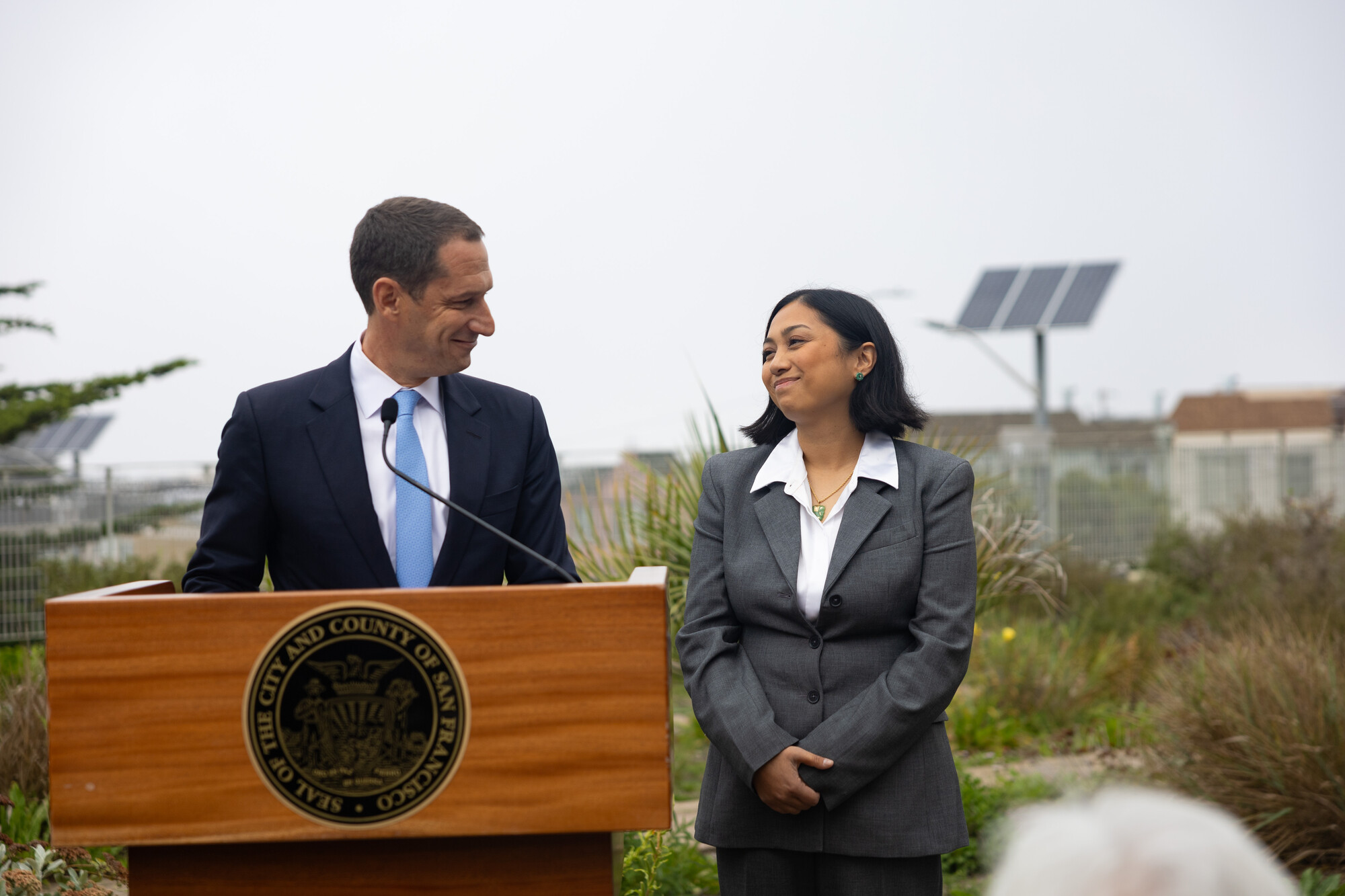
Sunset Supervisor to Back Ballot Measure to Put Cars Back on the Great Highway
SF Mayor Lurie Appoints City College Trustee Alan Wong as Sunset District Supervisor
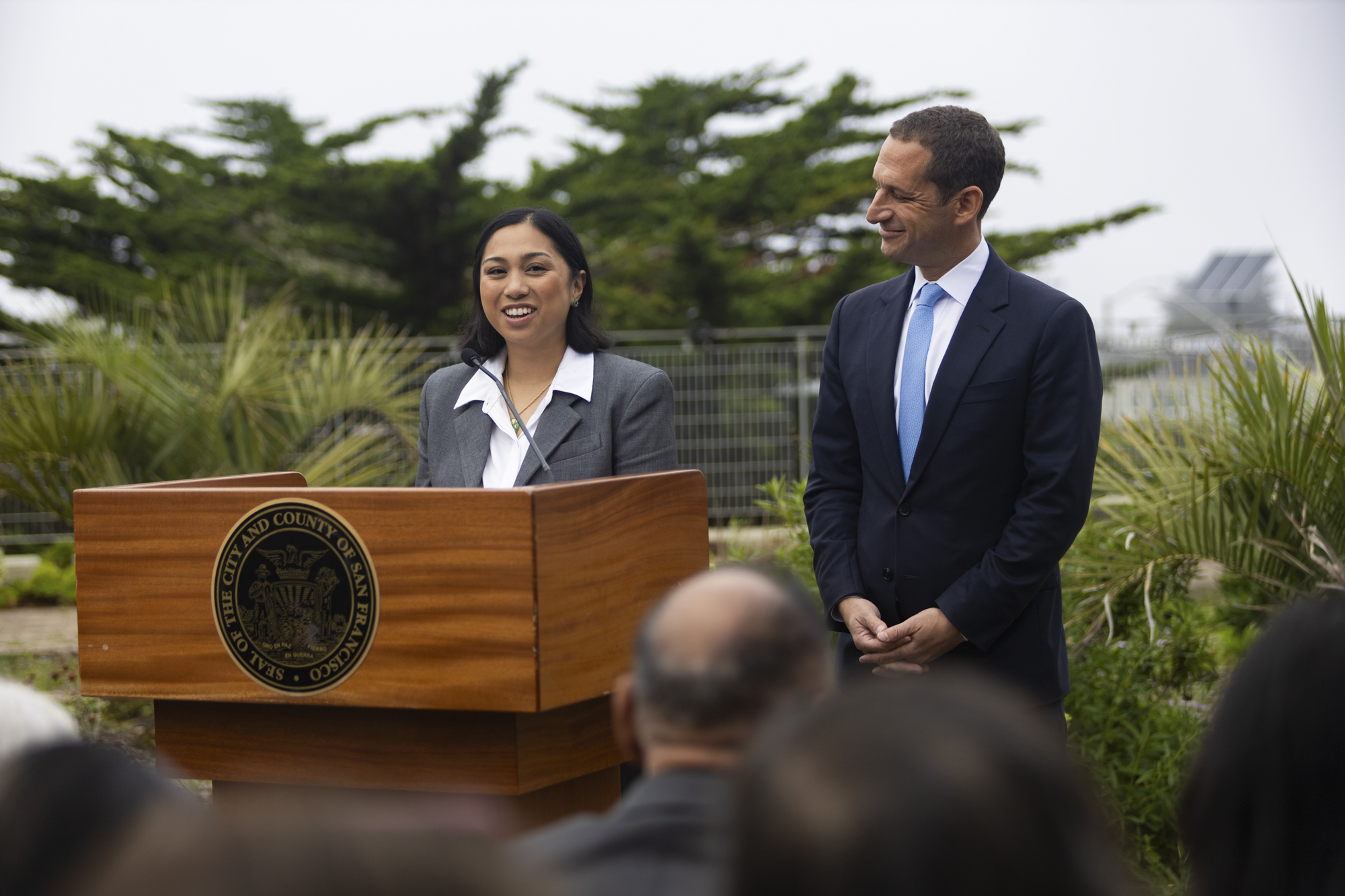
After Appointment Fail, What’s Next for Mayor Daniel Lurie and the Sunset District?
Behind the 7-Day Term of Mayor Lurie's Pick for Sunset Supervisor
Mayor Daniel Lurie’s Pick for Sunset Supervisor Resigns After 1 Week
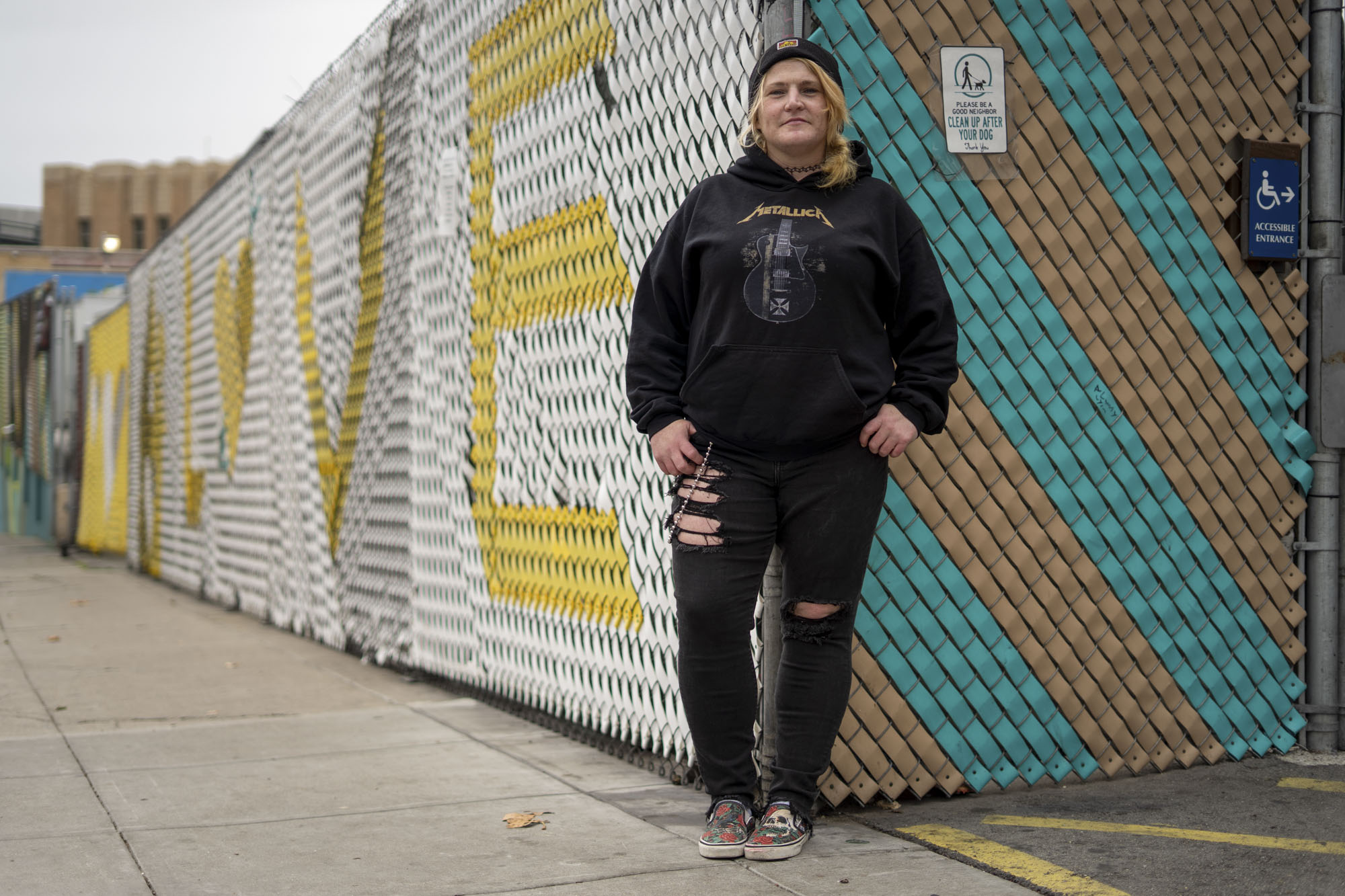
Bay Area Cities Expand Homeless Shelters. Winning Over Neighbors Is the Hard Part
Report Projects Weak Housing Production Under San Francisco Zoning Plan Over Next 20 Years
SF’s Sunset District Has Spoken. What Does Engardio’s Recall Mean for SF and Beyond?
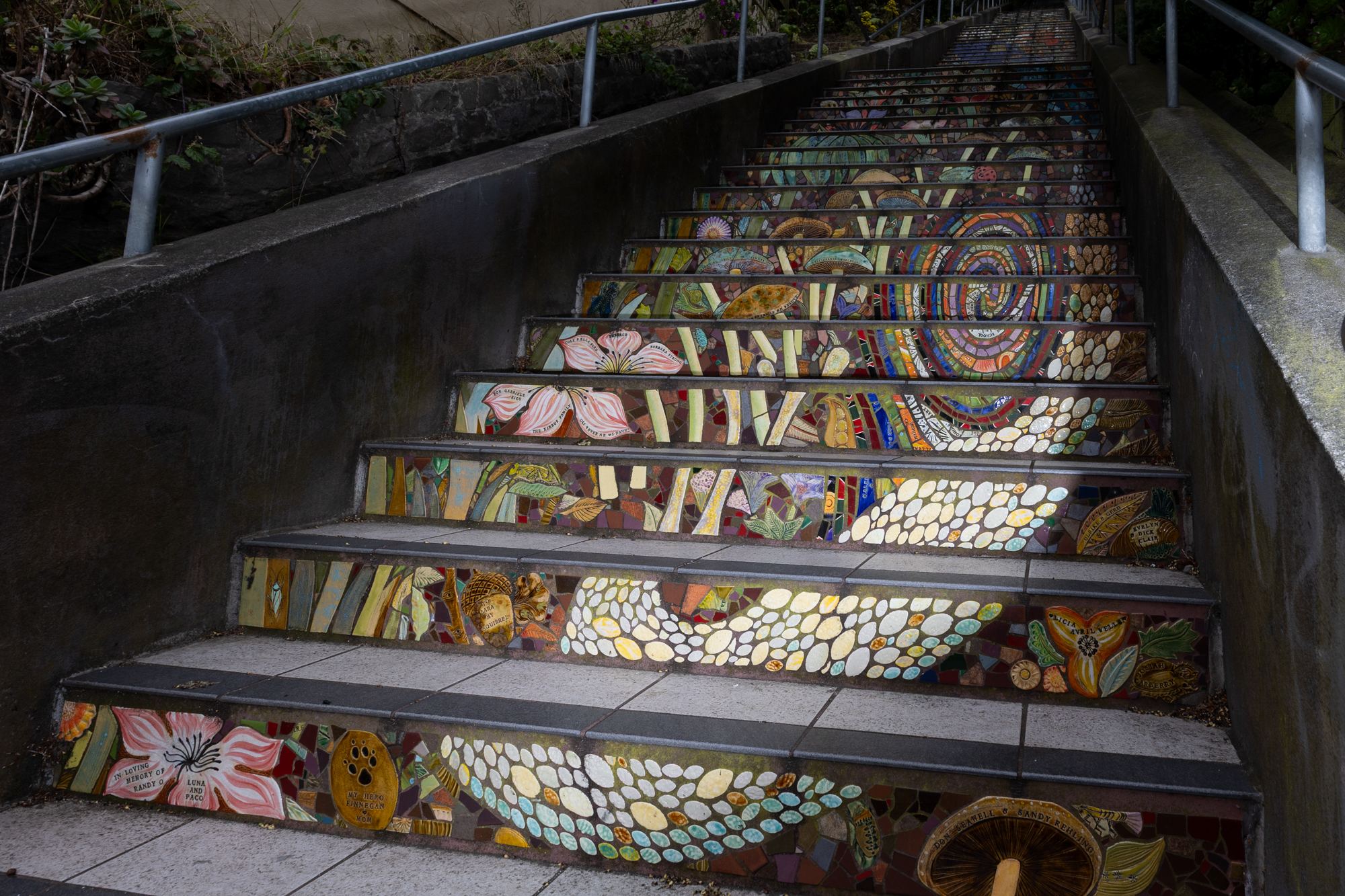
Stairways Crisscross the Hills of San Francisco. Here's Why People Love Them
Sponsored
Player sponsored by
window.__IS_SSR__=true
window.__INITIAL_STATE__={
"attachmentsReducer": {
"audio_0": {
"type": "attachments",
"id": "audio_0",
"imgSizes": {
"kqedFullSize": {
"file": "https://ww2.kqed.org/news/wp-content/themes/KQED-unified/img/audio_bgs/background0.jpg"
}
}
},
"audio_1": {
"type": "attachments",
"id": "audio_1",
"imgSizes": {
"kqedFullSize": {
"file": "https://ww2.kqed.org/news/wp-content/themes/KQED-unified/img/audio_bgs/background1.jpg"
}
}
},
"audio_2": {
"type": "attachments",
"id": "audio_2",
"imgSizes": {
"kqedFullSize": {
"file": "https://ww2.kqed.org/news/wp-content/themes/KQED-unified/img/audio_bgs/background2.jpg"
}
}
},
"audio_3": {
"type": "attachments",
"id": "audio_3",
"imgSizes": {
"kqedFullSize": {
"file": "https://ww2.kqed.org/news/wp-content/themes/KQED-unified/img/audio_bgs/background3.jpg"
}
}
},
"audio_4": {
"type": "attachments",
"id": "audio_4",
"imgSizes": {
"kqedFullSize": {
"file": "https://ww2.kqed.org/news/wp-content/themes/KQED-unified/img/audio_bgs/background4.jpg"
}
}
},
"placeholder": {
"type": "attachments",
"id": "placeholder",
"imgSizes": {
"thumbnail": {
"file": "https://cdn.kqed.org/wp-content/uploads/2024/12/KQED-Default-Image-816638274-2000x1333-1-160x107.jpg",
"width": 160,
"height": 107,
"mimeType": "image/jpeg"
},
"medium": {
"file": "https://cdn.kqed.org/wp-content/uploads/2024/12/KQED-Default-Image-816638274-2000x1333-1-800x533.jpg",
"width": 800,
"height": 533,
"mimeType": "image/jpeg"
},
"medium_large": {
"file": "https://cdn.kqed.org/wp-content/uploads/2024/12/KQED-Default-Image-816638274-2000x1333-1-768x512.jpg",
"width": 768,
"height": 512,
"mimeType": "image/jpeg"
},
"large": {
"file": "https://cdn.kqed.org/wp-content/uploads/2024/12/KQED-Default-Image-816638274-2000x1333-1-1020x680.jpg",
"width": 1020,
"height": 680,
"mimeType": "image/jpeg"
},
"1536x1536": {
"file": "https://cdn.kqed.org/wp-content/uploads/2024/12/KQED-Default-Image-816638274-2000x1333-1-1536x1024.jpg",
"width": 1536,
"height": 1024,
"mimeType": "image/jpeg"
},
"fd-lrg": {
"file": "https://cdn.kqed.org/wp-content/uploads/2024/12/KQED-Default-Image-816638274-2000x1333-1-1536x1024.jpg",
"width": 1536,
"height": 1024,
"mimeType": "image/jpeg"
},
"fd-med": {
"file": "https://cdn.kqed.org/wp-content/uploads/2024/12/KQED-Default-Image-816638274-2000x1333-1-1020x680.jpg",
"width": 1020,
"height": 680,
"mimeType": "image/jpeg"
},
"fd-sm": {
"file": "https://cdn.kqed.org/wp-content/uploads/2024/12/KQED-Default-Image-816638274-2000x1333-1-800x533.jpg",
"width": 800,
"height": 533,
"mimeType": "image/jpeg"
},
"post-thumbnail": {
"file": "https://cdn.kqed.org/wp-content/uploads/2024/12/KQED-Default-Image-816638274-2000x1333-1-672x372.jpg",
"width": 672,
"height": 372,
"mimeType": "image/jpeg"
},
"twentyfourteen-full-width": {
"file": "https://cdn.kqed.org/wp-content/uploads/2024/12/KQED-Default-Image-816638274-2000x1333-1-1038x576.jpg",
"width": 1038,
"height": 576,
"mimeType": "image/jpeg"
},
"xxsmall": {
"file": "https://cdn.kqed.org/wp-content/uploads/2024/12/KQED-Default-Image-816638274-2000x1333-1-160x107.jpg",
"width": 160,
"height": 107,
"mimeType": "image/jpeg"
},
"xsmall": {
"file": "https://cdn.kqed.org/wp-content/uploads/2024/12/KQED-Default-Image-816638274-2000x1333-1-672x372.jpg",
"width": 672,
"height": 372,
"mimeType": "image/jpeg"
},
"small": {
"file": "https://cdn.kqed.org/wp-content/uploads/2024/12/KQED-Default-Image-816638274-2000x1333-1-672x372.jpg",
"width": 672,
"height": 372,
"mimeType": "image/jpeg"
},
"xlarge": {
"file": "https://cdn.kqed.org/wp-content/uploads/2024/12/KQED-Default-Image-816638274-2000x1333-1-1020x680.jpg",
"width": 1020,
"height": 680,
"mimeType": "image/jpeg"
},
"full-width": {
"file": "https://cdn.kqed.org/wp-content/uploads/2024/12/KQED-Default-Image-816638274-2000x1333-1-1920x1280.jpg",
"width": 1920,
"height": 1280,
"mimeType": "image/jpeg"
},
"guest-author-32": {
"file": "https://cdn.kqed.org/wp-content/uploads/2025/01/KQED-Default-Image-816638274-1333x1333-1-160x160.jpg",
"width": 32,
"height": 32,
"mimeType": "image/jpeg"
},
"guest-author-50": {
"file": "https://cdn.kqed.org/wp-content/uploads/2025/01/KQED-Default-Image-816638274-1333x1333-1-160x160.jpg",
"width": 50,
"height": 50,
"mimeType": "image/jpeg"
},
"guest-author-64": {
"file": "https://cdn.kqed.org/wp-content/uploads/2025/01/KQED-Default-Image-816638274-1333x1333-1-160x160.jpg",
"width": 64,
"height": 64,
"mimeType": "image/jpeg"
},
"guest-author-96": {
"file": "https://cdn.kqed.org/wp-content/uploads/2025/01/KQED-Default-Image-816638274-1333x1333-1-160x160.jpg",
"width": 96,
"height": 96,
"mimeType": "image/jpeg"
},
"guest-author-128": {
"file": "https://cdn.kqed.org/wp-content/uploads/2025/01/KQED-Default-Image-816638274-1333x1333-1-160x160.jpg",
"width": 128,
"height": 128,
"mimeType": "image/jpeg"
},
"detail": {
"file": "https://cdn.kqed.org/wp-content/uploads/2025/01/KQED-Default-Image-816638274-1333x1333-1-160x160.jpg",
"width": 160,
"height": 160,
"mimeType": "image/jpeg"
},
"kqedFullSize": {
"file": "https://cdn.kqed.org/wp-content/uploads/2024/12/KQED-Default-Image-816638274-2000x1333-1.jpg",
"width": 2000,
"height": 1333
}
}
},
"news_12068008": {
"type": "attachments",
"id": "news_12068008",
"meta": {
"index": "attachments_1716263798",
"site": "news",
"id": "12068008",
"found": true
},
"title": "251201-NewSFSupervisor-16-BL_qed",
"publishDate": 1766171433,
"status": "inherit",
"parent": 12067992,
"modified": 1766171467,
"caption": "Alan Wong greets members of the public after he is sworn in as District 4 supervisor by Mayor Daniel Lurie at Abraham Lincoln High School in San Francisco on Dec. 1, 2025. Wong plans to sponsor a ballot measure that would allow voters to decide, again, whether cars should be allowed on the Great Highway on weekdays.",
"credit": "Beth LaBerge/KQED",
"altTag": null,
"description": null,
"imgSizes": {
"thumbnail": {
"file": "https://cdn.kqed.org/wp-content/uploads/sites/10/2025/12/251201-NewSFSupervisor-16-BL_qed-160x107.jpg",
"width": 160,
"height": 107,
"mimeType": "image/jpeg"
},
"1536x1536": {
"file": "https://cdn.kqed.org/wp-content/uploads/sites/10/2025/12/251201-NewSFSupervisor-16-BL_qed-1536x1024.jpg",
"width": 1536,
"height": 1024,
"mimeType": "image/jpeg"
},
"post-thumbnail": {
"file": "https://cdn.kqed.org/wp-content/uploads/sites/10/2025/12/251201-NewSFSupervisor-16-BL_qed-672x372.jpg",
"width": 672,
"height": 372,
"mimeType": "image/jpeg"
},
"twentyfourteen-full-width": {
"file": "https://cdn.kqed.org/wp-content/uploads/sites/10/2025/12/251201-NewSFSupervisor-16-BL_qed-1038x576.jpg",
"width": 1038,
"height": 576,
"mimeType": "image/jpeg"
},
"npr-cds-wide": {
"file": "https://cdn.kqed.org/wp-content/uploads/sites/10/2025/12/251201-NewSFSupervisor-16-BL_qed-1200x675.jpg",
"width": 1200,
"height": 675,
"mimeType": "image/jpeg"
},
"kqedFullSize": {
"file": "https://cdn.kqed.org/wp-content/uploads/sites/10/2025/12/251201-NewSFSupervisor-16-BL_qed.jpg",
"width": 1999,
"height": 1333
}
},
"fetchFailed": false,
"isLoading": false
},
"news_12065674": {
"type": "attachments",
"id": "news_12065674",
"meta": {
"index": "attachments_1716263798",
"site": "news",
"id": "12065674",
"found": true
},
"title": "251201-NEWSFSUPERVISOR-12-BL-KQED",
"publishDate": 1764631429,
"status": "inherit",
"parent": 0,
"modified": 1764631456,
"caption": "Alan Wong poses for a photo after he is sworn in as District 4 supervisor by Mayor Daniel Lurie at Abraham Lincoln High School in San Francisco on Dec. 1, 2025.",
"credit": "Beth LaBerge/KQED",
"altTag": null,
"description": null,
"imgSizes": {
"thumbnail": {
"file": "https://cdn.kqed.org/wp-content/uploads/sites/10/2025/12/251201-NEWSFSUPERVISOR-12-BL-KQED-160x107.jpg",
"width": 160,
"height": 107,
"mimeType": "image/jpeg"
},
"1536x1536": {
"file": "https://cdn.kqed.org/wp-content/uploads/sites/10/2025/12/251201-NEWSFSUPERVISOR-12-BL-KQED-1536x1024.jpg",
"width": 1536,
"height": 1024,
"mimeType": "image/jpeg"
},
"post-thumbnail": {
"file": "https://cdn.kqed.org/wp-content/uploads/sites/10/2025/12/251201-NEWSFSUPERVISOR-12-BL-KQED-672x372.jpg",
"width": 672,
"height": 372,
"mimeType": "image/jpeg"
},
"twentyfourteen-full-width": {
"file": "https://cdn.kqed.org/wp-content/uploads/sites/10/2025/12/251201-NEWSFSUPERVISOR-12-BL-KQED-1038x576.jpg",
"width": 1038,
"height": 576,
"mimeType": "image/jpeg"
},
"npr-cds-wide": {
"file": "https://cdn.kqed.org/wp-content/uploads/sites/10/2025/12/251201-NEWSFSUPERVISOR-12-BL-KQED-1200x675.jpg",
"width": 1200,
"height": 675,
"mimeType": "image/jpeg"
},
"kqedFullSize": {
"file": "https://cdn.kqed.org/wp-content/uploads/sites/10/2025/12/251201-NEWSFSUPERVISOR-12-BL-KQED.jpg",
"width": 2000,
"height": 1333
}
},
"fetchFailed": false,
"isLoading": false
},
"news_12064345": {
"type": "attachments",
"id": "news_12064345",
"meta": {
"index": "attachments_1716263798",
"site": "news",
"id": "12064345",
"found": true
},
"title": "20251106_SFD4Supervisor_GC-3_qed",
"publishDate": 1763406959,
"status": "inherit",
"parent": 12064341,
"modified": 1763493540,
"caption": "Mayor Daniel Lurie, left, speaks during a press conference announcing Isabella “Beya” Alcaraz, right, as the next District 4 supervisor, representing the Sunset district, at Ortega Branch Library on Nov. 6, 2025. Alcaraz is the first Filipina American to serve on the Board of Supervisors.",
"credit": "Gina Castro/KQED",
"altTag": null,
"description": null,
"imgSizes": {
"thumbnail": {
"file": "https://cdn.kqed.org/wp-content/uploads/sites/10/2025/11/20251106_SFD4Supervisor_GC-3_qed-160x107.jpg",
"width": 160,
"height": 107,
"mimeType": "image/jpeg"
},
"1536x1536": {
"file": "https://cdn.kqed.org/wp-content/uploads/sites/10/2025/11/20251106_SFD4Supervisor_GC-3_qed-1536x1024.jpg",
"width": 1536,
"height": 1024,
"mimeType": "image/jpeg"
},
"post-thumbnail": {
"file": "https://cdn.kqed.org/wp-content/uploads/sites/10/2025/11/20251106_SFD4Supervisor_GC-3_qed-672x372.jpg",
"width": 672,
"height": 372,
"mimeType": "image/jpeg"
},
"twentyfourteen-full-width": {
"file": "https://cdn.kqed.org/wp-content/uploads/sites/10/2025/11/20251106_SFD4Supervisor_GC-3_qed-1038x576.jpg",
"width": 1038,
"height": 576,
"mimeType": "image/jpeg"
},
"npr-cds-wide": {
"file": "https://cdn.kqed.org/wp-content/uploads/sites/10/2025/11/20251106_SFD4Supervisor_GC-3_qed-1200x675.jpg",
"width": 1200,
"height": 675,
"mimeType": "image/jpeg"
},
"kqedFullSize": {
"file": "https://cdn.kqed.org/wp-content/uploads/sites/10/2025/11/20251106_SFD4Supervisor_GC-3_qed.jpg",
"width": 2000,
"height": 1333
}
},
"fetchFailed": false,
"isLoading": false
},
"news_12063245": {
"type": "attachments",
"id": "news_12063245",
"meta": {
"index": "attachments_1716263798",
"site": "news",
"id": "12063245",
"found": true
},
"title": "20251106_SFD4SUPERVISOR_GC-11-KQED",
"publishDate": 1762459899,
"status": "inherit",
"parent": 0,
"modified": 1762459995,
"caption": "Isabella “Beya” Alcaraz, speaks during a presser, following the announcement of her as the next District 4 supervisor, representing the Sunset district, at Ortega Branch Library on Nov. 6, 2025. Alcaraz is the first Filipina-American to serve on the Board of Supervisors.",
"credit": "Gina Castro for KQED",
"altTag": null,
"description": null,
"imgSizes": {
"thumbnail": {
"file": "https://cdn.kqed.org/wp-content/uploads/sites/10/2025/11/20251106_SFD4SUPERVISOR_GC-11-KQED-160x107.jpg",
"width": 160,
"height": 107,
"mimeType": "image/jpeg"
},
"1536x1536": {
"file": "https://cdn.kqed.org/wp-content/uploads/sites/10/2025/11/20251106_SFD4SUPERVISOR_GC-11-KQED-1536x1024.jpg",
"width": 1536,
"height": 1024,
"mimeType": "image/jpeg"
},
"post-thumbnail": {
"file": "https://cdn.kqed.org/wp-content/uploads/sites/10/2025/11/20251106_SFD4SUPERVISOR_GC-11-KQED-672x372.jpg",
"width": 672,
"height": 372,
"mimeType": "image/jpeg"
},
"twentyfourteen-full-width": {
"file": "https://cdn.kqed.org/wp-content/uploads/sites/10/2025/11/20251106_SFD4SUPERVISOR_GC-11-KQED-1038x576.jpg",
"width": 1038,
"height": 576,
"mimeType": "image/jpeg"
},
"npr-cds-wide": {
"file": "https://cdn.kqed.org/wp-content/uploads/sites/10/2025/11/20251106_SFD4SUPERVISOR_GC-11-KQED-1200x675.jpg",
"width": 1200,
"height": 675,
"mimeType": "image/jpeg"
},
"kqedFullSize": {
"file": "https://cdn.kqed.org/wp-content/uploads/sites/10/2025/11/20251106_SFD4SUPERVISOR_GC-11-KQED.jpg",
"width": 2000,
"height": 1333
}
},
"fetchFailed": false,
"isLoading": false
},
"news_12063244": {
"type": "attachments",
"id": "news_12063244",
"meta": {
"index": "attachments_1716263798",
"site": "news",
"id": "12063244",
"found": true
},
"title": "20251106_SFD4SUPERVISOR_GC-6-KQED",
"publishDate": 1762459895,
"status": "inherit",
"parent": 12063157,
"modified": 1762466502,
"caption": "Isabella “Beya” Alcaraz, right, takes the oath of office as the next District 4 supervisor, representing the Sunset district, at Ortega Branch Library on Nov. 6, 2025. Alcaraz is the first Filipina-American to serve on the Board of Supervisors.",
"credit": "Gina Castro for KQED",
"altTag": null,
"description": null,
"imgSizes": {
"thumbnail": {
"file": "https://cdn.kqed.org/wp-content/uploads/sites/10/2025/11/20251106_SFD4SUPERVISOR_GC-6-KQED-160x107.jpg",
"width": 160,
"height": 107,
"mimeType": "image/jpeg"
},
"1536x1536": {
"file": "https://cdn.kqed.org/wp-content/uploads/sites/10/2025/11/20251106_SFD4SUPERVISOR_GC-6-KQED-1536x1024.jpg",
"width": 1536,
"height": 1024,
"mimeType": "image/jpeg"
},
"post-thumbnail": {
"file": "https://cdn.kqed.org/wp-content/uploads/sites/10/2025/11/20251106_SFD4SUPERVISOR_GC-6-KQED-672x372.jpg",
"width": 672,
"height": 372,
"mimeType": "image/jpeg"
},
"twentyfourteen-full-width": {
"file": "https://cdn.kqed.org/wp-content/uploads/sites/10/2025/11/20251106_SFD4SUPERVISOR_GC-6-KQED-1038x576.jpg",
"width": 1038,
"height": 576,
"mimeType": "image/jpeg"
},
"npr-cds-wide": {
"file": "https://cdn.kqed.org/wp-content/uploads/sites/10/2025/11/20251106_SFD4SUPERVISOR_GC-6-KQED-1200x675.jpg",
"width": 1200,
"height": 675,
"mimeType": "image/jpeg"
},
"kqedFullSize": {
"file": "https://cdn.kqed.org/wp-content/uploads/sites/10/2025/11/20251106_SFD4SUPERVISOR_GC-6-KQED.jpg",
"width": 2000,
"height": 1333
}
},
"fetchFailed": false,
"isLoading": false
},
"news_12058500": {
"type": "attachments",
"id": "news_12058500",
"meta": {
"index": "attachments_1716263798",
"site": "news",
"id": "12058500",
"found": true
},
"title": "251001_BAYAREASHELTER_-17-KQED",
"publishDate": 1759447814,
"status": "inherit",
"parent": 0,
"modified": 1759447933,
"caption": "Sarah Spillane, a resident of the DignityMoves tiny home cabins, outside the entrance in SoMa in San Francisco on Oct. 1, 2025.",
"credit": "Gustavo Hernandez/KQED",
"altTag": null,
"description": null,
"imgSizes": {
"thumbnail": {
"file": "https://cdn.kqed.org/wp-content/uploads/sites/10/2025/10/251001_BAYAREASHELTER_-17-KQED-160x107.jpg",
"width": 160,
"height": 107,
"mimeType": "image/jpeg"
},
"1536x1536": {
"file": "https://cdn.kqed.org/wp-content/uploads/sites/10/2025/10/251001_BAYAREASHELTER_-17-KQED-1536x1024.jpg",
"width": 1536,
"height": 1024,
"mimeType": "image/jpeg"
},
"post-thumbnail": {
"file": "https://cdn.kqed.org/wp-content/uploads/sites/10/2025/10/251001_BAYAREASHELTER_-17-KQED-672x372.jpg",
"width": 672,
"height": 372,
"mimeType": "image/jpeg"
},
"twentyfourteen-full-width": {
"file": "https://cdn.kqed.org/wp-content/uploads/sites/10/2025/10/251001_BAYAREASHELTER_-17-KQED-1038x576.jpg",
"width": 1038,
"height": 576,
"mimeType": "image/jpeg"
},
"kqedFullSize": {
"file": "https://cdn.kqed.org/wp-content/uploads/sites/10/2025/10/251001_BAYAREASHELTER_-17-KQED.jpg",
"width": 2000,
"height": 1333
}
},
"fetchFailed": false,
"isLoading": false
},
"news_12062182": {
"type": "attachments",
"id": "news_12062182",
"meta": {
"index": "attachments_1716263798",
"site": "news",
"id": "12062182",
"found": true
},
"title": "250519-AffordableHousingFile-13-BL_qed (1)",
"publishDate": 1761779265,
"status": "inherit",
"parent": 12062042,
"modified": 1764725123,
"caption": "Construction is underway on an affordable housing apartment building at 2550 Irving St. in San Francisco’s Sunset District on May 19, 2025.",
"credit": "Beth LaBerge/KQED",
"altTag": null,
"description": null,
"imgSizes": {
"thumbnail": {
"file": "https://cdn.kqed.org/wp-content/uploads/sites/10/2025/10/250519-AffordableHousingFile-13-BL_qed-1-160x107.jpg",
"width": 160,
"height": 107,
"mimeType": "image/jpeg"
},
"1536x1536": {
"file": "https://cdn.kqed.org/wp-content/uploads/sites/10/2025/10/250519-AffordableHousingFile-13-BL_qed-1-1536x1024.jpg",
"width": 1536,
"height": 1024,
"mimeType": "image/jpeg"
},
"post-thumbnail": {
"file": "https://cdn.kqed.org/wp-content/uploads/sites/10/2025/10/250519-AffordableHousingFile-13-BL_qed-1-672x372.jpg",
"width": 672,
"height": 372,
"mimeType": "image/jpeg"
},
"twentyfourteen-full-width": {
"file": "https://cdn.kqed.org/wp-content/uploads/sites/10/2025/10/250519-AffordableHousingFile-13-BL_qed-1-1038x576.jpg",
"width": 1038,
"height": 576,
"mimeType": "image/jpeg"
},
"npr-cds-wide": {
"file": "https://cdn.kqed.org/wp-content/uploads/sites/10/2025/10/250519-AffordableHousingFile-13-BL_qed-1-1600x900.jpg",
"width": 1600,
"height": 900,
"mimeType": "image/jpeg"
},
"kqedFullSize": {
"file": "https://cdn.kqed.org/wp-content/uploads/sites/10/2025/10/250519-AffordableHousingFile-13-BL_qed-1.jpg",
"width": 2000,
"height": 1333
}
},
"fetchFailed": false,
"isLoading": false
},
"news_12056241": {
"type": "attachments",
"id": "news_12056241",
"meta": {
"index": "attachments_1716263798",
"site": "news",
"id": "12056241",
"found": true
},
"title": "250916-RecallElectionNight-45-BL",
"publishDate": 1758085389,
"status": "inherit",
"parent": 12055340,
"modified": 1758086631,
"caption": "Supervisor Joel Engardio greets supporters at his election night gathering in the Sunset District of San Francisco on Sept. 16, 2025.",
"credit": "Beth LaBerge/KQED",
"altTag": null,
"description": null,
"imgSizes": {
"thumbnail": {
"file": "https://cdn.kqed.org/wp-content/uploads/sites/10/2025/09/250916-RecallElectionNight-45-BL-160x107.jpg",
"width": 160,
"height": 107,
"mimeType": "image/jpeg"
},
"1536x1536": {
"file": "https://cdn.kqed.org/wp-content/uploads/sites/10/2025/09/250916-RecallElectionNight-45-BL-1536x1024.jpg",
"width": 1536,
"height": 1024,
"mimeType": "image/jpeg"
},
"post-thumbnail": {
"file": "https://cdn.kqed.org/wp-content/uploads/sites/10/2025/09/250916-RecallElectionNight-45-BL-672x372.jpg",
"width": 672,
"height": 372,
"mimeType": "image/jpeg"
},
"twentyfourteen-full-width": {
"file": "https://cdn.kqed.org/wp-content/uploads/sites/10/2025/09/250916-RecallElectionNight-45-BL-1038x576.jpg",
"width": 1038,
"height": 576,
"mimeType": "image/jpeg"
},
"kqedFullSize": {
"file": "https://cdn.kqed.org/wp-content/uploads/sites/10/2025/09/250916-RecallElectionNight-45-BL.jpg",
"width": 2000,
"height": 1333
}
},
"fetchFailed": false,
"isLoading": false
},
"news_12053518": {
"type": "attachments",
"id": "news_12053518",
"meta": {
"index": "attachments_1716263798",
"site": "news",
"id": "12053518",
"found": true
},
"title": "250730_BAY CURIOUS_ STAIRS_ 0019_GH-KQED",
"publishDate": 1756138826,
"status": "inherit",
"parent": 0,
"modified": 1756139024,
"caption": "The Hidden Garden Steps on 16th Avenue and Kirkham Street, on July 30, 2025, feature a 148-step mosaic filled with butterflies, poppies, and native flora.",
"credit": "Gustavo Hernandez/KQED",
"altTag": null,
"description": null,
"imgSizes": {
"thumbnail": {
"file": "https://cdn.kqed.org/wp-content/uploads/sites/10/2025/08/250730_BAY-CURIOUS_-STAIRS_-0019_GH-KQED-160x107.jpg",
"width": 160,
"height": 107,
"mimeType": "image/jpeg"
},
"1536x1536": {
"file": "https://cdn.kqed.org/wp-content/uploads/sites/10/2025/08/250730_BAY-CURIOUS_-STAIRS_-0019_GH-KQED-1536x1024.jpg",
"width": 1536,
"height": 1024,
"mimeType": "image/jpeg"
},
"post-thumbnail": {
"file": "https://cdn.kqed.org/wp-content/uploads/sites/10/2025/08/250730_BAY-CURIOUS_-STAIRS_-0019_GH-KQED-672x372.jpg",
"width": 672,
"height": 372,
"mimeType": "image/jpeg"
},
"twentyfourteen-full-width": {
"file": "https://cdn.kqed.org/wp-content/uploads/sites/10/2025/08/250730_BAY-CURIOUS_-STAIRS_-0019_GH-KQED-1038x576.jpg",
"width": 1038,
"height": 576,
"mimeType": "image/jpeg"
},
"kqedFullSize": {
"file": "https://cdn.kqed.org/wp-content/uploads/sites/10/2025/08/250730_BAY-CURIOUS_-STAIRS_-0019_GH-KQED.jpg",
"width": 2000,
"height": 1333
}
},
"fetchFailed": false,
"isLoading": false
}
},
"audioPlayerReducer": {
"postId": "stream_live",
"isPaused": true,
"isPlaying": false,
"pfsActive": false,
"pledgeModalIsOpen": true,
"playerDrawerIsOpen": false
},
"authorsReducer": {
"gmarzorati": {
"type": "authors",
"id": "227",
"meta": {
"index": "authors_1716337520",
"id": "227",
"found": true
},
"name": "Guy Marzorati",
"firstName": "Guy",
"lastName": "Marzorati",
"slug": "gmarzorati",
"email": "gmarzorati@KQED.org",
"display_author_email": true,
"staff_mastheads": [
"news"
],
"title": "Correspondent",
"bio": "Guy Marzorati is a correspondent on KQED's California Politics and Government Desk, based in San Jose. A graduate of Santa Clara University, Guy joined KQED in 2013. He reports on state and local politics and produces KQED's digital voter guide.",
"avatar": "https://secure.gravatar.com/avatar/e7038b8dbfd55b104369b76b1cd0b9de?s=600&d=blank&r=g",
"twitter": "guymarzorati",
"facebook": null,
"instagram": null,
"linkedin": null,
"sites": [
{
"site": "",
"roles": [
"editor"
]
},
{
"site": "news",
"roles": [
"editor"
]
},
{
"site": "science",
"roles": [
"editor"
]
},
{
"site": "forum",
"roles": [
"editor"
]
},
{
"site": "elections",
"roles": [
"editor"
]
},
{
"site": "liveblog",
"roles": [
"editor"
]
}
],
"headData": {
"title": "Guy Marzorati | KQED",
"description": "Correspondent",
"ogImgSrc": "https://secure.gravatar.com/avatar/e7038b8dbfd55b104369b76b1cd0b9de?s=600&d=blank&r=g",
"twImgSrc": "https://secure.gravatar.com/avatar/e7038b8dbfd55b104369b76b1cd0b9de?s=600&d=blank&r=g"
},
"isLoading": false,
"link": "/author/gmarzorati"
},
"scottshafer": {
"type": "authors",
"id": "255",
"meta": {
"index": "authors_1716337520",
"id": "255",
"found": true
},
"name": "Scott Shafer",
"firstName": "Scott",
"lastName": "Shafer",
"slug": "scottshafer",
"email": "sshafer@kqed.org",
"display_author_email": false,
"staff_mastheads": [
"news"
],
"title": "KQED Contributor",
"bio": "Scott Shafer is a senior editor with the KQED Politics and Government desk. He is co-host of Political Breakdown, the award-winning radio show and podcast with a personal take on the world of politics. Scott came to KQED in 1998 to host the statewide\u003cem> California Report\u003c/em>. Prior to that he had extended stints in politics and government\u003cem>.\u003c/em> He uses that inside experience at KQED in his, reporting, hosting and analysis for the politics desk. Scott collaborated \u003cem>Political Breakdown a\u003c/em>nd on \u003cem>The Political Mind of Jerry Brown, \u003c/em>an eight-part series about the life and extraordinary political career of the former governor. For fun, he plays water polo with the San Francisco Tsunami.",
"avatar": "https://secure.gravatar.com/avatar/a62ebae45b79d7aed1a39a0e3bf68104?s=600&d=blank&r=g",
"twitter": "scottshafer",
"facebook": null,
"instagram": null,
"linkedin": null,
"sites": [
{
"site": "news",
"roles": [
"editor"
]
},
{
"site": "stateofhealth",
"roles": [
"author"
]
},
{
"site": "science",
"roles": [
"author"
]
},
{
"site": "forum",
"roles": [
"subscriber"
]
}
],
"headData": {
"title": "Scott Shafer | KQED",
"description": "KQED Contributor",
"ogImgSrc": "https://secure.gravatar.com/avatar/a62ebae45b79d7aed1a39a0e3bf68104?s=600&d=blank&r=g",
"twImgSrc": "https://secure.gravatar.com/avatar/a62ebae45b79d7aed1a39a0e3bf68104?s=600&d=blank&r=g"
},
"isLoading": false,
"link": "/author/scottshafer"
},
"mlagos": {
"type": "authors",
"id": "3239",
"meta": {
"index": "authors_1716337520",
"id": "3239",
"found": true
},
"name": "Marisa Lagos",
"firstName": "Marisa",
"lastName": "Lagos",
"slug": "mlagos",
"email": "mlagos@kqed.org",
"display_author_email": false,
"staff_mastheads": [
"news"
],
"title": "KQED Contributor",
"bio": "Marisa Lagos is a correspondent for KQED’s California Politics and Government Desk and co-hosts the award-winning show and podcast, Political Breakdown. At KQED, Lagos also conducts reporting, analysis and investigations into state, local and national politics for radio, TV, online and onstage. In 2022, she and co-host, Scott Shafer, moderated the only gubernatorial debate in California. In 2020, the \u003ci>Washington Post\u003c/i> named her one of the top political journalists in California; she was nominated for a Peabody and won several other awards for her work investigating the 2017 California wildfires. She has worked at the \u003ci>San Francisco Chronicle\u003c/i>, \u003ci>San Francisco Examiner\u003c/i> and \u003ci>Los Angeles Times\u003c/i>. A UC Santa Barbara graduate, she lives in San Francisco with her two sons and husband.",
"avatar": "https://secure.gravatar.com/avatar/a261a0d3696fc066871ef96b85b5e7d2?s=600&d=blank&r=g",
"twitter": "@mlagos",
"facebook": null,
"instagram": null,
"linkedin": null,
"sites": [
{
"site": "arts",
"roles": [
"author"
]
},
{
"site": "news",
"roles": [
"editor"
]
},
{
"site": "science",
"roles": [
"editor"
]
},
{
"site": "forum",
"roles": [
"author"
]
},
{
"site": "liveblog",
"roles": [
"author"
]
}
],
"headData": {
"title": "Marisa Lagos | KQED",
"description": "KQED Contributor",
"ogImgSrc": "https://secure.gravatar.com/avatar/a261a0d3696fc066871ef96b85b5e7d2?s=600&d=blank&r=g",
"twImgSrc": "https://secure.gravatar.com/avatar/a261a0d3696fc066871ef96b85b5e7d2?s=600&d=blank&r=g"
},
"isLoading": false,
"link": "/author/mlagos"
},
"abandlamudi": {
"type": "authors",
"id": "11672",
"meta": {
"index": "authors_1716337520",
"id": "11672",
"found": true
},
"name": "Adhiti Bandlamudi",
"firstName": "Adhiti",
"lastName": "Bandlamudi",
"slug": "abandlamudi",
"email": "abandlamudi@kqed.org",
"display_author_email": false,
"staff_mastheads": [
"news"
],
"title": "KQED Housing Reporter",
"bio": "Adhiti Bandlamudi reports for KQED's Housing desk. She focuses on how housing gets built across the Bay Area. Before joining KQED in 2020, she reported for WUNC in Durham, North Carolina, WABE in Atlanta, Georgia and Capital Public Radio in Sacramento. In 2017, she was awarded a Kroc Fellowship at NPR where she reported on everything from sprinkles to the Golden State Killer's arrest. When she's not reporting, she's baking new recipes in her kitchen or watching movies with friends and family. She's originally from Georgia and has strong opinions about Great British Bake Off.",
"avatar": "https://secure.gravatar.com/avatar/868129c8b257bb99a3500e2c86a65400?s=600&d=mm&r=g",
"twitter": "oddity_adhiti",
"facebook": null,
"instagram": null,
"linkedin": null,
"sites": [
{
"site": "arts",
"roles": [
"author"
]
},
{
"site": "news",
"roles": [
"editor"
]
},
{
"site": "liveblog",
"roles": [
"author"
]
}
],
"headData": {
"title": "Adhiti Bandlamudi | KQED",
"description": "KQED Housing Reporter",
"ogImgSrc": "https://secure.gravatar.com/avatar/868129c8b257bb99a3500e2c86a65400?s=600&d=mm&r=g",
"twImgSrc": "https://secure.gravatar.com/avatar/868129c8b257bb99a3500e2c86a65400?s=600&d=mm&r=g"
},
"isLoading": false,
"link": "/author/abandlamudi"
},
"sjohnson": {
"type": "authors",
"id": "11840",
"meta": {
"index": "authors_1716337520",
"id": "11840",
"found": true
},
"name": "Sydney Johnson",
"firstName": "Sydney",
"lastName": "Johnson",
"slug": "sjohnson",
"email": "sjohnson@kqed.org",
"display_author_email": false,
"staff_mastheads": [
"news"
],
"title": "KQED Reporter",
"bio": "Sydney Johnson is a general assignment reporter at KQED. She previously reported on public health and city government at the San Francisco Examiner, and before that, she covered statewide education policy for EdSource. Her reporting has won multiple local, state and national awards. Sydney is a graduate of the University of California, Berkeley and lives in San Francisco.",
"avatar": "https://secure.gravatar.com/avatar/97855f2719b72ad6190b7c535fe642c8?s=600&d=blank&r=g",
"twitter": "sydneyfjohnson",
"facebook": null,
"instagram": null,
"linkedin": null,
"sites": [
{
"site": "news",
"roles": [
"editor"
]
}
],
"headData": {
"title": "Sydney Johnson | KQED",
"description": "KQED Reporter",
"ogImgSrc": "https://secure.gravatar.com/avatar/97855f2719b72ad6190b7c535fe642c8?s=600&d=blank&r=g",
"twImgSrc": "https://secure.gravatar.com/avatar/97855f2719b72ad6190b7c535fe642c8?s=600&d=blank&r=g"
},
"isLoading": false,
"link": "/author/sjohnson"
},
"gglueck": {
"type": "authors",
"id": "11946",
"meta": {
"index": "authors_1716337520",
"id": "11946",
"found": true
},
"name": "Gabriela Glueck",
"firstName": "Gabriela",
"lastName": "Glueck",
"slug": "gglueck",
"email": "gglueck@kqed.org",
"display_author_email": false,
"staff_mastheads": [
"news"
],
"title": "KQED Contributor",
"bio": null,
"avatar": "https://secure.gravatar.com/avatar/097b777fe1ad90e753bb1882b1ae01f3?s=600&d=blank&r=g",
"twitter": null,
"facebook": null,
"instagram": null,
"linkedin": null,
"sites": [
{
"site": "news",
"roles": [
"editor"
]
}
],
"headData": {
"title": "Gabriela Glueck | KQED",
"description": "KQED Contributor",
"ogImgSrc": "https://secure.gravatar.com/avatar/097b777fe1ad90e753bb1882b1ae01f3?s=600&d=blank&r=g",
"twImgSrc": "https://secure.gravatar.com/avatar/097b777fe1ad90e753bb1882b1ae01f3?s=600&d=blank&r=g"
},
"isLoading": false,
"link": "/author/gglueck"
}
},
"breakingNewsReducer": {},
"pagesReducer": {},
"postsReducer": {
"stream_live": {
"type": "live",
"id": "stream_live",
"audioUrl": "https://streams.kqed.org/kqedradio",
"title": "Live Stream",
"excerpt": "Live Stream information currently unavailable.",
"link": "/radio",
"featImg": "",
"label": {
"name": "KQED Live",
"link": "/"
}
},
"stream_kqedNewscast": {
"type": "posts",
"id": "stream_kqedNewscast",
"audioUrl": "https://www.kqed.org/.stream/anon/radio/RDnews/newscast.mp3?_=1",
"title": "KQED Newscast",
"featImg": "",
"label": {
"name": "88.5 FM",
"link": "/"
}
},
"news_12067992": {
"type": "posts",
"id": "news_12067992",
"meta": {
"index": "posts_1716263798",
"site": "news",
"id": "12067992",
"score": null,
"sort": [
1766181680000
]
},
"guestAuthors": [],
"slug": "sunset-supervisor-to-back-ballot-measure-to-put-cars-back-on-the-great-highway",
"title": "Sunset Supervisor to Back Ballot Measure to Put Cars Back on the Great Highway",
"publishDate": 1766181680,
"format": "standard",
"headTitle": "Sunset Supervisor to Back Ballot Measure to Put Cars Back on the Great Highway | KQED",
"labelTerm": {
"site": "news"
},
"content": "\u003cp>The sand hasn’t settled on \u003ca href=\"https://www.kqed.org/news/tag/san-francisco\">San Francisco\u003c/a>’s \u003ca href=\"https://www.kqed.org/news/tag/great-highway\">Great Highway\u003c/a>. Newly appointed District 4 Supervisor Alan Wong announced Friday that he plans to sponsor a ballot measure that would reopen the coastal thoroughfare to cars, setting the stage for yet another contentious showdown in the months ahead.\u003c/p>\n\u003cp>In September, District 4 residents recalled their former supervisor, Joel Engardio, for his support of a plan to remove cars from the road and create a park in its place. Mayor Daniel Lurie appointed Wong to fill Engardio’s seat earlier this month, but he’s been quiet about the controversial road. Wong, who previously worked as a legislative aide to former District 4 Supervisor Gordon Mar, made his plans for the Great Highway clear on Friday when pulling papers at City Hall to run for the supervisor seat in next year’s election.\u003c/p>\n\u003cp>“I believe my values align with the majority of Sunset residents who support reopening the Great Highway to cars on weekdays,” Wong said. “For the past 20 years, as a Sunset resident and military officer who runs along the Great Highway trail every other night, I’ve never had an issue sharing it with people driving or taking their kids to school.”\u003c/p>\n\u003cp>[ad fullwidth]\u003c/p>\n\u003cp>City leaders agreed to close a stretch of the Great Highway to cars during the pandemic to create more space for recreation and social distancing. As pandemic closures waned, a compromise was set so that the road would remain open to cars on weekdays but closed off on the weekends.\u003c/p>\n\u003cp>San Francisco voters across the city voted to permanently close the upper portion of the Great Highway by passing Proposition K in 2024, making way for a beachside park now called Sunset Dunes. But the majority of voters in the Sunset, who live closest to the park, voted against the measure, arguing it would snarl traffic and extend commute times.\u003c/p>\n\u003cfigure id=\"attachment_12030758\" class=\"wp-caption aligncenter\" style=\"max-width: 2000px\">\u003cimg loading=\"lazy\" decoding=\"async\" class=\"size-full wp-image-12030758\" src=\"https://cdn.kqed.org/wp-content/uploads/sites/10/2025/03/241115-PropKFolo-24-BL_qed.jpg\" alt=\"\" width=\"2000\" height=\"1333\" srcset=\"https://cdn.kqed.org/wp-content/uploads/sites/10/2025/03/241115-PropKFolo-24-BL_qed.jpg 2000w, https://cdn.kqed.org/wp-content/uploads/sites/10/2025/03/241115-PropKFolo-24-BL_qed-800x533.jpg 800w, https://cdn.kqed.org/wp-content/uploads/sites/10/2025/03/241115-PropKFolo-24-BL_qed-1020x680.jpg 1020w, https://cdn.kqed.org/wp-content/uploads/sites/10/2025/03/241115-PropKFolo-24-BL_qed-160x107.jpg 160w, https://cdn.kqed.org/wp-content/uploads/sites/10/2025/03/241115-PropKFolo-24-BL_qed-1536x1024.jpg 1536w, https://cdn.kqed.org/wp-content/uploads/sites/10/2025/03/241115-PropKFolo-24-BL_qed-1920x1280.jpg 1920w\" sizes=\"auto, (max-width: 2000px) 100vw, 2000px\">\u003cfigcaption class=\"wp-caption-text\">Vehicles drive along the Great Highway between Sloat Boulevard in San Francisco on Nov. 15, 2024. \u003ccite>(Beth LaBerge/KQED)\u003c/cite>\u003c/figcaption>\u003c/figure>\n\u003cp>To put the fate of the Great Highway before voters, again, Wong will need at least three additional supervisors to sign on to his proposal. It could go before residents next year. Some supervisors, including Connie Chan, Chyanne Chen and Shamann Walton, have expressed support for the idea in the past.\u003c/p>\n\u003cp>Engardio has continued to maintain his support for Sunset Dunes even after the recall, previously telling KQED that he believes he will be on the “right side of history.”\u003c/p>\n\u003cp>In a text message on Friday, Engardio said: “The future of the Great Highway was put to a citywide vote twice already in 2022 and 2024, and we should consider Sunset Dunes settled … Another ballot measure will not heal, help or solve anything. It will only cause harm by taking away all the benefits the park is delivering for the environment, the local economy and the physical and mental health of everyone enjoying more access to their coast.”[aside postID=news_12065576 hero='https://cdn.kqed.org/wp-content/uploads/sites/10/2025/12/251201-NEWSFSUPERVISOR-12-BL-KQED.jpg']Critics of the park say that the road closure has led to increased traffic in the area, however studies from the San Francisco Municipal Transportation Agency have shown minimal impacts and the city has been working to improve the flow of cars on other nearby streets. Others have claimed it was unfair for voters across the city to vote on a plan that heavily impacted one neighborhood.\u003c/p>\n\u003cp>“For too long, the Sunset has felt that government is something imposed on them rather than something that works for them,” said Wong, who was born and raised by immigrants from Hong Kong in the Sunset. He has served as a City College trustee, union organizer and member of the Army National Guard.\u003c/p>\n\u003cp>But supporters of the park, which include environmental groups, SF YIMBY Action, the Bike Coalition and others, have argued the road is already doomed because of climate change. The lower portion of the highway is already closed due to coastal erosion.\u003c/p>\n\u003cp>“The Great Highway lost its greatest utility as a direct connection to Daly City when the southern section fell into the ocean due to extreme coastal erosion. Traffic had to divert inland no matter what,” Engardio said. “Sunset Dunes is the best outcome for this situation, given the idle section of the Great Highway never had access ramps for cars.”\u003c/p>\n\u003cp>Other supporters point out that many residents from the neighborhood, across the city and region come to ride bikes, stroll and partake in other activities on the road now that it’s a public open space. Several local businesses told KQED they have seen an uptick in foot traffic since the park opened.\u003c/p>\n\u003cfigure id=\"attachment_12035808\" class=\"wp-caption aligncenter\" style=\"max-width: 2000px\">\u003cimg loading=\"lazy\" decoding=\"async\" class=\"size-full wp-image-12035808\" src=\"https://cdn.kqed.org/wp-content/uploads/sites/10/2025/04/20250412_SunsetDunesGrandOpening_GC-17_qed.jpg\" alt=\"\" width=\"2000\" height=\"1333\" srcset=\"https://cdn.kqed.org/wp-content/uploads/sites/10/2025/04/20250412_SunsetDunesGrandOpening_GC-17_qed.jpg 2000w, https://cdn.kqed.org/wp-content/uploads/sites/10/2025/04/20250412_SunsetDunesGrandOpening_GC-17_qed-800x533.jpg 800w, https://cdn.kqed.org/wp-content/uploads/sites/10/2025/04/20250412_SunsetDunesGrandOpening_GC-17_qed-1020x680.jpg 1020w, https://cdn.kqed.org/wp-content/uploads/sites/10/2025/04/20250412_SunsetDunesGrandOpening_GC-17_qed-160x107.jpg 160w, https://cdn.kqed.org/wp-content/uploads/sites/10/2025/04/20250412_SunsetDunesGrandOpening_GC-17_qed-1536x1024.jpg 1536w, https://cdn.kqed.org/wp-content/uploads/sites/10/2025/04/20250412_SunsetDunesGrandOpening_GC-17_qed-1920x1280.jpg 1920w\" sizes=\"auto, (max-width: 2000px) 100vw, 2000px\">\u003cfigcaption class=\"wp-caption-text\">Individuals attend the Sunset Dunes Park grand opening on the Upper Great Highway in San Francisco on April 12, 2025. \u003ccite>(Gina Castro/KQED)\u003c/cite>\u003c/figcaption>\u003c/figure>\n\u003cp>Lucas Lux, president of Friends of Sunset Dunes, called Wong’s decision to reignite the debate a “betrayal.”\u003c/p>\n\u003cp>“We are deeply disappointed with Supervisor Wong. We believed that he was serious when he said he wanted to help restore trust after a divisive few years in the Sunset. Instead, he’s doing the opposite: claiming he’d listen to constituents while actively turning his back on them,” Lux said. “The future of our coast will be a park, no matter what elected officials trying to score cheap political points do now. Climate change has decided that for us.”\u003c/p>\n\u003cp>Lurie stood by his appointee both literally and figuratively on Friday during his announcement to run next year to become the district’s elected supervisor. Wong was his second appointment to fill the seat, after an initial pick resigned within about a week following reports that she skirted taxes on her former pet store business in the neighborhood.\u003c/p>\n\u003cp>“Supervisor Alan Wong has already gotten off to an incredibly strong start,” Lurie said on Friday. “I look forward to supporting him in the June election.”\u003c/p>\n\u003cp>\u003cem>KQED’s Eliza Peppel contributed to this report.\u003c/em>\u003c/p>\n\u003cp>\u003c/p>\n",
"blocks": [],
"excerpt": "District 4 Supervisor Alan Wong plans to sponsor a ballot measure that would allow voters to decide, again, whether cars should be allowed on the Great Highway on weekdays.",
"status": "publish",
"parent": 0,
"modified": 1766184759,
"stats": {
"hasAudio": false,
"hasVideo": false,
"hasChartOrMap": false,
"iframeSrcs": [],
"hasGoogleForm": false,
"hasGallery": false,
"hasHearkenModule": false,
"hasPolis": false,
"paragraphCount": 19,
"wordCount": 1038
},
"headData": {
"title": "Sunset Supervisor to Back Ballot Measure to Put Cars Back on the Great Highway | KQED",
"description": "District 4 Supervisor Alan Wong plans to sponsor a ballot measure that would allow voters to decide, again, whether cars should be allowed on the Great Highway on weekdays.",
"ogTitle": "",
"ogDescription": "",
"ogImgId": "",
"twTitle": "",
"twDescription": "",
"twImgId": "",
"schema": {
"@context": "https://schema.org",
"@type": "NewsArticle",
"headline": "Sunset Supervisor to Back Ballot Measure to Put Cars Back on the Great Highway",
"datePublished": "2025-12-19T14:01:20-08:00",
"dateModified": "2025-12-19T14:52:39-08:00",
"image": "https://cdn.kqed.org/wp-content/uploads/2020/02/KQED-OG-Image@1x.png",
"isAccessibleForFree": "True",
"publisher": {
"@type": "NewsMediaOrganization",
"@id": "https://www.kqed.org/#organization",
"name": "KQED",
"logo": "https://cdn.kqed.org/wp-content/uploads/2020/02/KQED-OG-Image@1x.png",
"url": "https://www.kqed.org",
"sameAs": [
"https://www.facebook.com/KQED",
"https://twitter.com/KQED",
"https://www.instagram.com/kqed/",
"https://www.tiktok.com/@kqedofficial",
"https://www.linkedin.com/company/kqed",
"https://www.youtube.com/channel/UCeC0IOo7i1P_61zVUWbJ4nw"
]
}
}
},
"primaryCategory": {
"termId": 13,
"slug": "politics",
"name": "Politics"
},
"sticky": false,
"nprStoryId": "kqed-12067992",
"templateType": "standard",
"featuredImageType": "standard",
"excludeFromSiteSearch": "Include",
"articleAge": "0",
"path": "/news/12067992/sunset-supervisor-to-back-ballot-measure-to-put-cars-back-on-the-great-highway",
"audioTrackLength": null,
"parsedContent": [
{
"type": "contentString",
"content": "\u003cdiv class=\"post-body\">\u003cp>\u003cp>The sand hasn’t settled on \u003ca href=\"https://www.kqed.org/news/tag/san-francisco\">San Francisco\u003c/a>’s \u003ca href=\"https://www.kqed.org/news/tag/great-highway\">Great Highway\u003c/a>. Newly appointed District 4 Supervisor Alan Wong announced Friday that he plans to sponsor a ballot measure that would reopen the coastal thoroughfare to cars, setting the stage for yet another contentious showdown in the months ahead.\u003c/p>\n\u003cp>In September, District 4 residents recalled their former supervisor, Joel Engardio, for his support of a plan to remove cars from the road and create a park in its place. Mayor Daniel Lurie appointed Wong to fill Engardio’s seat earlier this month, but he’s been quiet about the controversial road. Wong, who previously worked as a legislative aide to former District 4 Supervisor Gordon Mar, made his plans for the Great Highway clear on Friday when pulling papers at City Hall to run for the supervisor seat in next year’s election.\u003c/p>\n\u003cp>“I believe my values align with the majority of Sunset residents who support reopening the Great Highway to cars on weekdays,” Wong said. “For the past 20 years, as a Sunset resident and military officer who runs along the Great Highway trail every other night, I’ve never had an issue sharing it with people driving or taking their kids to school.”\u003c/p>\n\u003cp>\u003c/p>\u003c/div>",
"attributes": {
"named": {},
"numeric": []
}
},
{
"type": "component",
"content": "",
"name": "ad",
"attributes": {
"named": {
"label": "fullwidth"
},
"numeric": [
"fullwidth"
]
}
},
{
"type": "contentString",
"content": "\u003cdiv class=\"post-body\">\u003cp>\u003c/p>\n\u003cp>City leaders agreed to close a stretch of the Great Highway to cars during the pandemic to create more space for recreation and social distancing. As pandemic closures waned, a compromise was set so that the road would remain open to cars on weekdays but closed off on the weekends.\u003c/p>\n\u003cp>San Francisco voters across the city voted to permanently close the upper portion of the Great Highway by passing Proposition K in 2024, making way for a beachside park now called Sunset Dunes. But the majority of voters in the Sunset, who live closest to the park, voted against the measure, arguing it would snarl traffic and extend commute times.\u003c/p>\n\u003cfigure id=\"attachment_12030758\" class=\"wp-caption aligncenter\" style=\"max-width: 2000px\">\u003cimg loading=\"lazy\" decoding=\"async\" class=\"size-full wp-image-12030758\" src=\"https://cdn.kqed.org/wp-content/uploads/sites/10/2025/03/241115-PropKFolo-24-BL_qed.jpg\" alt=\"\" width=\"2000\" height=\"1333\" srcset=\"https://cdn.kqed.org/wp-content/uploads/sites/10/2025/03/241115-PropKFolo-24-BL_qed.jpg 2000w, https://cdn.kqed.org/wp-content/uploads/sites/10/2025/03/241115-PropKFolo-24-BL_qed-800x533.jpg 800w, https://cdn.kqed.org/wp-content/uploads/sites/10/2025/03/241115-PropKFolo-24-BL_qed-1020x680.jpg 1020w, https://cdn.kqed.org/wp-content/uploads/sites/10/2025/03/241115-PropKFolo-24-BL_qed-160x107.jpg 160w, https://cdn.kqed.org/wp-content/uploads/sites/10/2025/03/241115-PropKFolo-24-BL_qed-1536x1024.jpg 1536w, https://cdn.kqed.org/wp-content/uploads/sites/10/2025/03/241115-PropKFolo-24-BL_qed-1920x1280.jpg 1920w\" sizes=\"auto, (max-width: 2000px) 100vw, 2000px\">\u003cfigcaption class=\"wp-caption-text\">Vehicles drive along the Great Highway between Sloat Boulevard in San Francisco on Nov. 15, 2024. \u003ccite>(Beth LaBerge/KQED)\u003c/cite>\u003c/figcaption>\u003c/figure>\n\u003cp>To put the fate of the Great Highway before voters, again, Wong will need at least three additional supervisors to sign on to his proposal. It could go before residents next year. Some supervisors, including Connie Chan, Chyanne Chen and Shamann Walton, have expressed support for the idea in the past.\u003c/p>\n\u003cp>Engardio has continued to maintain his support for Sunset Dunes even after the recall, previously telling KQED that he believes he will be on the “right side of history.”\u003c/p>\n\u003cp>In a text message on Friday, Engardio said: “The future of the Great Highway was put to a citywide vote twice already in 2022 and 2024, and we should consider Sunset Dunes settled … Another ballot measure will not heal, help or solve anything. It will only cause harm by taking away all the benefits the park is delivering for the environment, the local economy and the physical and mental health of everyone enjoying more access to their coast.”\u003c/p>\u003c/div>",
"attributes": {
"named": {},
"numeric": []
}
},
{
"type": "component",
"content": "",
"name": "aside",
"attributes": {
"named": {
"postid": "news_12065576",
"hero": "https://cdn.kqed.org/wp-content/uploads/sites/10/2025/12/251201-NEWSFSUPERVISOR-12-BL-KQED.jpg",
"label": ""
},
"numeric": []
}
},
{
"type": "contentString",
"content": "\u003cdiv class=\"post-body\">\u003cp>Critics of the park say that the road closure has led to increased traffic in the area, however studies from the San Francisco Municipal Transportation Agency have shown minimal impacts and the city has been working to improve the flow of cars on other nearby streets. Others have claimed it was unfair for voters across the city to vote on a plan that heavily impacted one neighborhood.\u003c/p>\n\u003cp>“For too long, the Sunset has felt that government is something imposed on them rather than something that works for them,” said Wong, who was born and raised by immigrants from Hong Kong in the Sunset. He has served as a City College trustee, union organizer and member of the Army National Guard.\u003c/p>\n\u003cp>But supporters of the park, which include environmental groups, SF YIMBY Action, the Bike Coalition and others, have argued the road is already doomed because of climate change. The lower portion of the highway is already closed due to coastal erosion.\u003c/p>\n\u003cp>“The Great Highway lost its greatest utility as a direct connection to Daly City when the southern section fell into the ocean due to extreme coastal erosion. Traffic had to divert inland no matter what,” Engardio said. “Sunset Dunes is the best outcome for this situation, given the idle section of the Great Highway never had access ramps for cars.”\u003c/p>\n\u003cp>Other supporters point out that many residents from the neighborhood, across the city and region come to ride bikes, stroll and partake in other activities on the road now that it’s a public open space. Several local businesses told KQED they have seen an uptick in foot traffic since the park opened.\u003c/p>\n\u003cfigure id=\"attachment_12035808\" class=\"wp-caption aligncenter\" style=\"max-width: 2000px\">\u003cimg loading=\"lazy\" decoding=\"async\" class=\"size-full wp-image-12035808\" src=\"https://cdn.kqed.org/wp-content/uploads/sites/10/2025/04/20250412_SunsetDunesGrandOpening_GC-17_qed.jpg\" alt=\"\" width=\"2000\" height=\"1333\" srcset=\"https://cdn.kqed.org/wp-content/uploads/sites/10/2025/04/20250412_SunsetDunesGrandOpening_GC-17_qed.jpg 2000w, https://cdn.kqed.org/wp-content/uploads/sites/10/2025/04/20250412_SunsetDunesGrandOpening_GC-17_qed-800x533.jpg 800w, https://cdn.kqed.org/wp-content/uploads/sites/10/2025/04/20250412_SunsetDunesGrandOpening_GC-17_qed-1020x680.jpg 1020w, https://cdn.kqed.org/wp-content/uploads/sites/10/2025/04/20250412_SunsetDunesGrandOpening_GC-17_qed-160x107.jpg 160w, https://cdn.kqed.org/wp-content/uploads/sites/10/2025/04/20250412_SunsetDunesGrandOpening_GC-17_qed-1536x1024.jpg 1536w, https://cdn.kqed.org/wp-content/uploads/sites/10/2025/04/20250412_SunsetDunesGrandOpening_GC-17_qed-1920x1280.jpg 1920w\" sizes=\"auto, (max-width: 2000px) 100vw, 2000px\">\u003cfigcaption class=\"wp-caption-text\">Individuals attend the Sunset Dunes Park grand opening on the Upper Great Highway in San Francisco on April 12, 2025. \u003ccite>(Gina Castro/KQED)\u003c/cite>\u003c/figcaption>\u003c/figure>\n\u003cp>Lucas Lux, president of Friends of Sunset Dunes, called Wong’s decision to reignite the debate a “betrayal.”\u003c/p>\n\u003cp>“We are deeply disappointed with Supervisor Wong. We believed that he was serious when he said he wanted to help restore trust after a divisive few years in the Sunset. Instead, he’s doing the opposite: claiming he’d listen to constituents while actively turning his back on them,” Lux said. “The future of our coast will be a park, no matter what elected officials trying to score cheap political points do now. Climate change has decided that for us.”\u003c/p>\n\u003cp>Lurie stood by his appointee both literally and figuratively on Friday during his announcement to run next year to become the district’s elected supervisor. Wong was his second appointment to fill the seat, after an initial pick resigned within about a week following reports that she skirted taxes on her former pet store business in the neighborhood.\u003c/p>\n\u003cp>“Supervisor Alan Wong has already gotten off to an incredibly strong start,” Lurie said on Friday. “I look forward to supporting him in the June election.”\u003c/p>\n\u003cp>\u003cem>KQED’s Eliza Peppel contributed to this report.\u003c/em>\u003c/p>\n\u003cp>\u003c/p>\n\u003c/div>\u003c/p>",
"attributes": {
"named": {},
"numeric": []
}
}
],
"link": "/news/12067992/sunset-supervisor-to-back-ballot-measure-to-put-cars-back-on-the-great-highway",
"authors": [
"11840"
],
"categories": [
"news_28250",
"news_8",
"news_13"
],
"tags": [
"news_17768",
"news_34055",
"news_27626",
"news_3841",
"news_17968",
"news_38",
"news_31584",
"news_35297"
],
"featImg": "news_12068008",
"label": "news"
},
"news_12065576": {
"type": "posts",
"id": "news_12065576",
"meta": {
"index": "posts_1716263798",
"site": "news",
"id": "12065576",
"score": null,
"sort": [
1764615307000
]
},
"guestAuthors": [],
"slug": "sf-mayor-lurie-appoints-city-college-trustee-alan-wong-as-sunset-district-supervisor",
"title": "SF Mayor Lurie Appoints City College Trustee Alan Wong as Sunset District Supervisor",
"publishDate": 1764615307,
"format": "standard",
"headTitle": "SF Mayor Lurie Appoints City College Trustee Alan Wong as Sunset District Supervisor | KQED",
"labelTerm": {
"site": "news"
},
"content": "\u003cp>Mayor Daniel Lurie has announced that Sunset District native Alan Wong will fill the Board of Supervisors seat left vacant after a \u003ca href=\"https://www.kqed.org/news/12055340/san-francisco-supervisor-joel-engardio-braces-for-tuesday-recall-vote\">recall election\u003c/a> and \u003ca href=\"https://www.kqed.org/news/12064108/mayor-daniel-luries-pick-for-sunset-supervisor-resigns-after-1-week\">abrupt resignation\u003c/a> by the two most recent District 4 leaders.\u003c/p>\n\u003cp>Wong, an elected trustee for City College of San Francisco who worked as a legislative aide for former Sunset Supervisor Gordon Mar, faces the daunting task of trying to steer the Sunset forward after a tumultuous period of land use debates, racial politics and a merry-go-round of leadership.\u003c/p>\n\u003cp>“We need leadership that restores trust in city government, keeps our neighborhoods safe, supports working families, expands housing opportunities, and helps residents actually access the services their tax dollars fund,” Wong said at his swearing-in ceremony on Monday, located outside his alma mater, Abraham Lincoln High School. “For too long, the Sunset community has felt that local government is more of a burden imposed on them than a valuable service. I’m here to change that.”\u003c/p>\n\u003cp>[ad fullwidth]\u003c/p>\n\u003cp>Residents in the district have scuffled for years over whether to allow cars back on the Great Highway, a fight that led to the recall of Supervisor Joel Engardio in September, after he supported a citywide ballot measure to transform a two-mile stretch of the road into a beachside park.\u003c/p>\n\u003cp>Residents’ frustration bubbled over after Lurie’s pick to replace him, Beya Alcaraz, quickly stepped down after reports showed she may have falsified expenses to skirt business taxes for her former pet store.\u003c/p>\n\u003cfigure id=\"attachment_12065673\" class=\"wp-caption aligncenter\" style=\"max-width: 2000px\">\u003cimg loading=\"lazy\" decoding=\"async\" class=\"size-full wp-image-12065673\" src=\"https://cdn.kqed.org/wp-content/uploads/sites/10/2025/12/251201-NEWSFSUPERVISOR-11-BL-KQED.jpg\" alt=\"\" width=\"2000\" height=\"1333\" srcset=\"https://cdn.kqed.org/wp-content/uploads/sites/10/2025/12/251201-NEWSFSUPERVISOR-11-BL-KQED.jpg 2000w, https://cdn.kqed.org/wp-content/uploads/sites/10/2025/12/251201-NEWSFSUPERVISOR-11-BL-KQED-160x107.jpg 160w, https://cdn.kqed.org/wp-content/uploads/sites/10/2025/12/251201-NEWSFSUPERVISOR-11-BL-KQED-1536x1024.jpg 1536w\" sizes=\"auto, (max-width: 2000px) 100vw, 2000px\">\u003cfigcaption class=\"wp-caption-text\">Alan Wong speaks after he is sworn in as District 4 supervisor by Mayor Daniel Lurie at Abraham Lincoln High School in San Francisco on Dec. 1, 2025. \u003ccite>(Beth LaBerge/KQED)\u003c/cite>\u003c/figcaption>\u003c/figure>\n\u003cp>Wong was the second appointee for the foggy, coastal neighborhood in a month, after Lurie’s recent pick, a 29-year-old political newcomer, flopped after just a week on the job.\u003c/p>\n\u003cp>“Throughout my conversations with the residents of the Sunset and Parkside, one message came through clearly: This district needs a supervisor who can be a strong, steady voice on the issues that matter most. With Alan Wong as the supervisor, District 4 will have that voice,” Lurie said at the press conference on Monday.\u003c/p>\n\u003cp>Lurie said he chose Alacaraz because of her small business background and her ability to bring a fresh perspective to City Hall. While her business decisions that came to light ultimately led to her swift downfall, she had no government or community organizing experience.[aside postID=news_12064341 hero='https://cdn.kqed.org/wp-content/uploads/sites/10/2025/11/20251106_SFD4Supervisor_GC-3_qed.jpg']But Alcaraz also vowed to support Lurie’s controversial Family Zoning Plan, which could bring thousands of new homes to the quiet, residential Sunset and has been a point of friction among residents who want to see more capacity for housing versus those who say the plan will invite real estate speculation and displace low-income families.\u003c/p>\n\u003cp>In Wong, Lurie selected a far more experienced candidate, but also one who could potentially challenge some of Lurie’s more moderate policies. Wong has not clearly stated his position on the zoning plan yet, but Lurie may have already secured the votes he needs in order to pass it once it goes before the full Board of Supervisors on Dec. 2.\u003c/p>\n\u003cp>“From the very beginning, I’ve been clear about the kind of Supervisor District 4 needs: Someone who lives and breathes the district, and someone who can build bridges within it,” Lurie said.\u003c/p>\n\u003cp>At his swearing-in ceremony, Wong said he plans to back the rezoning plan when the Board votes on Tuesday.\u003c/p>\n\u003cp>“I plan to support the Family Zoning Plan and, at the same time, it is my commitment to follow through with trailing legislation and potential amendments as I gather feedback as I begin my term as supervisor for this district,” Wong said.\u003c/p>\n\u003cfigure id=\"attachment_12065672\" class=\"wp-caption aligncenter\" style=\"max-width: 2000px\">\u003cimg loading=\"lazy\" decoding=\"async\" class=\"size-full wp-image-12065672\" src=\"https://cdn.kqed.org/wp-content/uploads/sites/10/2025/12/251201-NEWSFSUPERVISOR-08-BL-KQED.jpg\" alt=\"\" width=\"2000\" height=\"1333\" srcset=\"https://cdn.kqed.org/wp-content/uploads/sites/10/2025/12/251201-NEWSFSUPERVISOR-08-BL-KQED.jpg 2000w, https://cdn.kqed.org/wp-content/uploads/sites/10/2025/12/251201-NEWSFSUPERVISOR-08-BL-KQED-160x107.jpg 160w, https://cdn.kqed.org/wp-content/uploads/sites/10/2025/12/251201-NEWSFSUPERVISOR-08-BL-KQED-1536x1024.jpg 1536w\" sizes=\"auto, (max-width: 2000px) 100vw, 2000px\">\u003cfigcaption class=\"wp-caption-text\">Alan Wong speaks after he is sworn in as District 4 supervisor by Mayor Daniel Lurie at Abraham Lincoln High School in San Francisco on Dec. 1, 2025. \u003ccite>(Beth LaBerge/KQED)\u003c/cite>\u003c/figcaption>\u003c/figure>\n\u003cp>When asked about the district’s other hot-button issue—whether to allow cars back on the Great Highway—Wong said he supported the city’s previous compromise that closed the road to cars only on weekends. He also stated that he voted no on Proposition K, the November 2024 ballot measure that permanently banned cars from the upper portion of the Great Highway to open Sunset Dunes park.\u003c/p>\n\u003cp>“I want to be able to bring people together and listen to both perspectives, listen to people that supported both the compromise and those that supported closing the Great Highway,” Wong said. “Maybe not everybody will agree with whatever decision I move forward with, but I want to ensure that people know it was well considered and has public legitimacy and trust.”\u003c/p>\n\u003cp>Other candidates on Lurie’s shortlist for the appointment, including Natalie Gee, had also said they would revisit the idea of putting cars back on the thoroughfare to appease angry residents.\u003c/p>\n\u003cp>But park supporters say the road is doomed anyway due to climate change, and that the neighborhood needs to adapt. Some local businesses say that people who come to the park from all over the city and region to ride bikes, check out the park’s art displays or walk around have led to an uptick in sales.\u003c/p>\n\u003cfigure id=\"attachment_12035816\" class=\"wp-caption aligncenter\" style=\"max-width: 2000px\">\u003cimg loading=\"lazy\" decoding=\"async\" class=\"size-full wp-image-12035816\" src=\"https://cdn.kqed.org/wp-content/uploads/sites/10/2025/04/20250412_SunsetDunesGrandOpening_GC-27_qed.jpg\" alt=\"\" width=\"2000\" height=\"1333\" srcset=\"https://cdn.kqed.org/wp-content/uploads/sites/10/2025/04/20250412_SunsetDunesGrandOpening_GC-27_qed.jpg 2000w, https://cdn.kqed.org/wp-content/uploads/sites/10/2025/04/20250412_SunsetDunesGrandOpening_GC-27_qed-800x533.jpg 800w, https://cdn.kqed.org/wp-content/uploads/sites/10/2025/04/20250412_SunsetDunesGrandOpening_GC-27_qed-1020x680.jpg 1020w, https://cdn.kqed.org/wp-content/uploads/sites/10/2025/04/20250412_SunsetDunesGrandOpening_GC-27_qed-160x107.jpg 160w, https://cdn.kqed.org/wp-content/uploads/sites/10/2025/04/20250412_SunsetDunesGrandOpening_GC-27_qed-1536x1024.jpg 1536w, https://cdn.kqed.org/wp-content/uploads/sites/10/2025/04/20250412_SunsetDunesGrandOpening_GC-27_qed-1920x1280.jpg 1920w\" sizes=\"auto, (max-width: 2000px) 100vw, 2000px\">\u003cfigcaption class=\"wp-caption-text\">People enjoy Ocean Beach during the Sunset Dunes Park grand opening in San Francisco on April 12, 2025. \u003ccite>(Gina Castro/KQED)\u003c/cite>\u003c/figcaption>\u003c/figure>\n\u003cp>“A coastal park does more good than a crumbling coastal bypass road ever could. Many of even the loudest park skeptics understand that, due to the reality of climate change, the future of our coastline will need to be a park, not a road,” said Lucas Lux, president of Friends of Sunset Dunes. “Meanwhile, local business is booming, data continues to show that traffic is flowing as expected, and the city is saving millions of dollars in sand clearance and road maintenance.\u003c/p>\n\u003cp>In addition to working for Mar, a progressive supervisor on the board from 2019 to 2023, Wong is a first lieutenant in the California National Guard and served as the policy director at the Children’s Council of San Francisco. As a City College trustee, Wong has frequently advocated for \u003ca href=\"https://www.kqed.org/news/11953666/city-college-of-san-francisco-withdraws-previously-approved-cantonese-program\">preserving the school’s Cantonese language\u003c/a> program.\u003c/p>\n\u003cp>He is also a former member of the board of directors of Stop Crime SF, a local tough-on-crime nonprofit.\u003c/p>\n\u003cp>“No one is more qualified than Alan,” said Frank Noto, co-founder of the public safety group, in a statement included in a press release from the mayor’s office. “He has the requisite policy, political and community experience to serve as an exemplary member of the Board serving the Sunset.”\u003c/p>\n\u003cp>At his swearing-in ceremony, Wong stressed the importance of public safety as he stood flanked by the city’s top brass, including the chief of police and fire chief, as well as members of the military and two of the city’s moderate Democratic supervisors.\u003c/p>\n\u003cp>David Ho, a political consultant who worked on Wong’s campaign for City College trustee, said that while Wong historically held support from the city’s progressive political factions, the newest supervisor has “started to evolve towards more of a center-left platform.”\u003c/p>\n\u003cp>“So the question is,” Ho said, “is he still too liberal for his constituents in the Sunset?”\u003c/p>\n\u003cp>[ad floatright]\u003c/p>\n",
"blocks": [],
"excerpt": "Wong marks Lurie’s second appointee for the foggy, coastal neighborhood in a month, after the mayor’s recent pick flopped after just a week on the job.",
"status": "publish",
"parent": 0,
"modified": 1764635244,
"stats": {
"hasAudio": false,
"hasVideo": false,
"hasChartOrMap": false,
"iframeSrcs": [],
"hasGoogleForm": false,
"hasGallery": false,
"hasHearkenModule": false,
"hasPolis": false,
"paragraphCount": 25,
"wordCount": 1280
},
"headData": {
"title": "SF Mayor Lurie Appoints City College Trustee Alan Wong as Sunset District Supervisor | KQED",
"description": "Wong marks Lurie’s second appointee for the foggy, coastal neighborhood in a month, after the mayor’s recent pick flopped after just a week on the job.",
"ogTitle": "",
"ogDescription": "",
"ogImgId": "",
"twTitle": "",
"twDescription": "",
"twImgId": "",
"schema": {
"@context": "https://schema.org",
"@type": "NewsArticle",
"headline": "SF Mayor Lurie Appoints City College Trustee Alan Wong as Sunset District Supervisor",
"datePublished": "2025-12-01T10:55:07-08:00",
"dateModified": "2025-12-01T16:27:24-08:00",
"image": "https://cdn.kqed.org/wp-content/uploads/2020/02/KQED-OG-Image@1x.png",
"isAccessibleForFree": "True",
"publisher": {
"@type": "NewsMediaOrganization",
"@id": "https://www.kqed.org/#organization",
"name": "KQED",
"logo": "https://cdn.kqed.org/wp-content/uploads/2020/02/KQED-OG-Image@1x.png",
"url": "https://www.kqed.org",
"sameAs": [
"https://www.facebook.com/KQED",
"https://twitter.com/KQED",
"https://www.instagram.com/kqed/",
"https://www.tiktok.com/@kqedofficial",
"https://www.linkedin.com/company/kqed",
"https://www.youtube.com/channel/UCeC0IOo7i1P_61zVUWbJ4nw"
]
}
}
},
"primaryCategory": {
"termId": 13,
"slug": "politics",
"name": "Politics"
},
"sticky": false,
"nprStoryId": "kqed-12065576",
"templateType": "standard",
"featuredImageType": "standard",
"excludeFromSiteSearch": "Include",
"articleAge": "0",
"path": "/news/12065576/sf-mayor-lurie-appoints-city-college-trustee-alan-wong-as-sunset-district-supervisor",
"audioTrackLength": null,
"parsedContent": [
{
"type": "contentString",
"content": "\u003cdiv class=\"post-body\">\u003cp>\u003cp>Mayor Daniel Lurie has announced that Sunset District native Alan Wong will fill the Board of Supervisors seat left vacant after a \u003ca href=\"https://www.kqed.org/news/12055340/san-francisco-supervisor-joel-engardio-braces-for-tuesday-recall-vote\">recall election\u003c/a> and \u003ca href=\"https://www.kqed.org/news/12064108/mayor-daniel-luries-pick-for-sunset-supervisor-resigns-after-1-week\">abrupt resignation\u003c/a> by the two most recent District 4 leaders.\u003c/p>\n\u003cp>Wong, an elected trustee for City College of San Francisco who worked as a legislative aide for former Sunset Supervisor Gordon Mar, faces the daunting task of trying to steer the Sunset forward after a tumultuous period of land use debates, racial politics and a merry-go-round of leadership.\u003c/p>\n\u003cp>“We need leadership that restores trust in city government, keeps our neighborhoods safe, supports working families, expands housing opportunities, and helps residents actually access the services their tax dollars fund,” Wong said at his swearing-in ceremony on Monday, located outside his alma mater, Abraham Lincoln High School. “For too long, the Sunset community has felt that local government is more of a burden imposed on them than a valuable service. I’m here to change that.”\u003c/p>\n\u003cp>\u003c/p>\u003c/div>",
"attributes": {
"named": {},
"numeric": []
}
},
{
"type": "component",
"content": "",
"name": "ad",
"attributes": {
"named": {
"label": "fullwidth"
},
"numeric": [
"fullwidth"
]
}
},
{
"type": "contentString",
"content": "\u003cdiv class=\"post-body\">\u003cp>\u003c/p>\n\u003cp>Residents in the district have scuffled for years over whether to allow cars back on the Great Highway, a fight that led to the recall of Supervisor Joel Engardio in September, after he supported a citywide ballot measure to transform a two-mile stretch of the road into a beachside park.\u003c/p>\n\u003cp>Residents’ frustration bubbled over after Lurie’s pick to replace him, Beya Alcaraz, quickly stepped down after reports showed she may have falsified expenses to skirt business taxes for her former pet store.\u003c/p>\n\u003cfigure id=\"attachment_12065673\" class=\"wp-caption aligncenter\" style=\"max-width: 2000px\">\u003cimg loading=\"lazy\" decoding=\"async\" class=\"size-full wp-image-12065673\" src=\"https://cdn.kqed.org/wp-content/uploads/sites/10/2025/12/251201-NEWSFSUPERVISOR-11-BL-KQED.jpg\" alt=\"\" width=\"2000\" height=\"1333\" srcset=\"https://cdn.kqed.org/wp-content/uploads/sites/10/2025/12/251201-NEWSFSUPERVISOR-11-BL-KQED.jpg 2000w, https://cdn.kqed.org/wp-content/uploads/sites/10/2025/12/251201-NEWSFSUPERVISOR-11-BL-KQED-160x107.jpg 160w, https://cdn.kqed.org/wp-content/uploads/sites/10/2025/12/251201-NEWSFSUPERVISOR-11-BL-KQED-1536x1024.jpg 1536w\" sizes=\"auto, (max-width: 2000px) 100vw, 2000px\">\u003cfigcaption class=\"wp-caption-text\">Alan Wong speaks after he is sworn in as District 4 supervisor by Mayor Daniel Lurie at Abraham Lincoln High School in San Francisco on Dec. 1, 2025. \u003ccite>(Beth LaBerge/KQED)\u003c/cite>\u003c/figcaption>\u003c/figure>\n\u003cp>Wong was the second appointee for the foggy, coastal neighborhood in a month, after Lurie’s recent pick, a 29-year-old political newcomer, flopped after just a week on the job.\u003c/p>\n\u003cp>“Throughout my conversations with the residents of the Sunset and Parkside, one message came through clearly: This district needs a supervisor who can be a strong, steady voice on the issues that matter most. With Alan Wong as the supervisor, District 4 will have that voice,” Lurie said at the press conference on Monday.\u003c/p>\n\u003cp>Lurie said he chose Alacaraz because of her small business background and her ability to bring a fresh perspective to City Hall. While her business decisions that came to light ultimately led to her swift downfall, she had no government or community organizing experience.\u003c/p>\u003c/div>",
"attributes": {
"named": {},
"numeric": []
}
},
{
"type": "component",
"content": "",
"name": "aside",
"attributes": {
"named": {
"postid": "news_12064341",
"hero": "https://cdn.kqed.org/wp-content/uploads/sites/10/2025/11/20251106_SFD4Supervisor_GC-3_qed.jpg",
"label": ""
},
"numeric": []
}
},
{
"type": "contentString",
"content": "\u003cdiv class=\"post-body\">\u003cp>But Alcaraz also vowed to support Lurie’s controversial Family Zoning Plan, which could bring thousands of new homes to the quiet, residential Sunset and has been a point of friction among residents who want to see more capacity for housing versus those who say the plan will invite real estate speculation and displace low-income families.\u003c/p>\n\u003cp>In Wong, Lurie selected a far more experienced candidate, but also one who could potentially challenge some of Lurie’s more moderate policies. Wong has not clearly stated his position on the zoning plan yet, but Lurie may have already secured the votes he needs in order to pass it once it goes before the full Board of Supervisors on Dec. 2.\u003c/p>\n\u003cp>“From the very beginning, I’ve been clear about the kind of Supervisor District 4 needs: Someone who lives and breathes the district, and someone who can build bridges within it,” Lurie said.\u003c/p>\n\u003cp>At his swearing-in ceremony, Wong said he plans to back the rezoning plan when the Board votes on Tuesday.\u003c/p>\n\u003cp>“I plan to support the Family Zoning Plan and, at the same time, it is my commitment to follow through with trailing legislation and potential amendments as I gather feedback as I begin my term as supervisor for this district,” Wong said.\u003c/p>\n\u003cfigure id=\"attachment_12065672\" class=\"wp-caption aligncenter\" style=\"max-width: 2000px\">\u003cimg loading=\"lazy\" decoding=\"async\" class=\"size-full wp-image-12065672\" src=\"https://cdn.kqed.org/wp-content/uploads/sites/10/2025/12/251201-NEWSFSUPERVISOR-08-BL-KQED.jpg\" alt=\"\" width=\"2000\" height=\"1333\" srcset=\"https://cdn.kqed.org/wp-content/uploads/sites/10/2025/12/251201-NEWSFSUPERVISOR-08-BL-KQED.jpg 2000w, https://cdn.kqed.org/wp-content/uploads/sites/10/2025/12/251201-NEWSFSUPERVISOR-08-BL-KQED-160x107.jpg 160w, https://cdn.kqed.org/wp-content/uploads/sites/10/2025/12/251201-NEWSFSUPERVISOR-08-BL-KQED-1536x1024.jpg 1536w\" sizes=\"auto, (max-width: 2000px) 100vw, 2000px\">\u003cfigcaption class=\"wp-caption-text\">Alan Wong speaks after he is sworn in as District 4 supervisor by Mayor Daniel Lurie at Abraham Lincoln High School in San Francisco on Dec. 1, 2025. \u003ccite>(Beth LaBerge/KQED)\u003c/cite>\u003c/figcaption>\u003c/figure>\n\u003cp>When asked about the district’s other hot-button issue—whether to allow cars back on the Great Highway—Wong said he supported the city’s previous compromise that closed the road to cars only on weekends. He also stated that he voted no on Proposition K, the November 2024 ballot measure that permanently banned cars from the upper portion of the Great Highway to open Sunset Dunes park.\u003c/p>\n\u003cp>“I want to be able to bring people together and listen to both perspectives, listen to people that supported both the compromise and those that supported closing the Great Highway,” Wong said. “Maybe not everybody will agree with whatever decision I move forward with, but I want to ensure that people know it was well considered and has public legitimacy and trust.”\u003c/p>\n\u003cp>Other candidates on Lurie’s shortlist for the appointment, including Natalie Gee, had also said they would revisit the idea of putting cars back on the thoroughfare to appease angry residents.\u003c/p>\n\u003cp>But park supporters say the road is doomed anyway due to climate change, and that the neighborhood needs to adapt. Some local businesses say that people who come to the park from all over the city and region to ride bikes, check out the park’s art displays or walk around have led to an uptick in sales.\u003c/p>\n\u003cfigure id=\"attachment_12035816\" class=\"wp-caption aligncenter\" style=\"max-width: 2000px\">\u003cimg loading=\"lazy\" decoding=\"async\" class=\"size-full wp-image-12035816\" src=\"https://cdn.kqed.org/wp-content/uploads/sites/10/2025/04/20250412_SunsetDunesGrandOpening_GC-27_qed.jpg\" alt=\"\" width=\"2000\" height=\"1333\" srcset=\"https://cdn.kqed.org/wp-content/uploads/sites/10/2025/04/20250412_SunsetDunesGrandOpening_GC-27_qed.jpg 2000w, https://cdn.kqed.org/wp-content/uploads/sites/10/2025/04/20250412_SunsetDunesGrandOpening_GC-27_qed-800x533.jpg 800w, https://cdn.kqed.org/wp-content/uploads/sites/10/2025/04/20250412_SunsetDunesGrandOpening_GC-27_qed-1020x680.jpg 1020w, https://cdn.kqed.org/wp-content/uploads/sites/10/2025/04/20250412_SunsetDunesGrandOpening_GC-27_qed-160x107.jpg 160w, https://cdn.kqed.org/wp-content/uploads/sites/10/2025/04/20250412_SunsetDunesGrandOpening_GC-27_qed-1536x1024.jpg 1536w, https://cdn.kqed.org/wp-content/uploads/sites/10/2025/04/20250412_SunsetDunesGrandOpening_GC-27_qed-1920x1280.jpg 1920w\" sizes=\"auto, (max-width: 2000px) 100vw, 2000px\">\u003cfigcaption class=\"wp-caption-text\">People enjoy Ocean Beach during the Sunset Dunes Park grand opening in San Francisco on April 12, 2025. \u003ccite>(Gina Castro/KQED)\u003c/cite>\u003c/figcaption>\u003c/figure>\n\u003cp>“A coastal park does more good than a crumbling coastal bypass road ever could. Many of even the loudest park skeptics understand that, due to the reality of climate change, the future of our coastline will need to be a park, not a road,” said Lucas Lux, president of Friends of Sunset Dunes. “Meanwhile, local business is booming, data continues to show that traffic is flowing as expected, and the city is saving millions of dollars in sand clearance and road maintenance.\u003c/p>\n\u003cp>In addition to working for Mar, a progressive supervisor on the board from 2019 to 2023, Wong is a first lieutenant in the California National Guard and served as the policy director at the Children’s Council of San Francisco. As a City College trustee, Wong has frequently advocated for \u003ca href=\"https://www.kqed.org/news/11953666/city-college-of-san-francisco-withdraws-previously-approved-cantonese-program\">preserving the school’s Cantonese language\u003c/a> program.\u003c/p>\n\u003cp>He is also a former member of the board of directors of Stop Crime SF, a local tough-on-crime nonprofit.\u003c/p>\n\u003cp>“No one is more qualified than Alan,” said Frank Noto, co-founder of the public safety group, in a statement included in a press release from the mayor’s office. “He has the requisite policy, political and community experience to serve as an exemplary member of the Board serving the Sunset.”\u003c/p>\n\u003cp>At his swearing-in ceremony, Wong stressed the importance of public safety as he stood flanked by the city’s top brass, including the chief of police and fire chief, as well as members of the military and two of the city’s moderate Democratic supervisors.\u003c/p>\n\u003cp>David Ho, a political consultant who worked on Wong’s campaign for City College trustee, said that while Wong historically held support from the city’s progressive political factions, the newest supervisor has “started to evolve towards more of a center-left platform.”\u003c/p>\n\u003cp>“So the question is,” Ho said, “is he still too liberal for his constituents in the Sunset?”\u003c/p>\n\u003cp>\u003c/p>\u003c/div>",
"attributes": {
"named": {},
"numeric": []
}
},
{
"type": "component",
"content": "",
"name": "ad",
"attributes": {
"named": {
"label": "floatright"
},
"numeric": [
"floatright"
]
}
},
{
"type": "contentString",
"content": "\u003cdiv class=\"post-body\">\u003cp>\u003c/p>\n\u003c/div>\u003c/p>",
"attributes": {
"named": {},
"numeric": []
}
}
],
"link": "/news/12065576/sf-mayor-lurie-appoints-city-college-trustee-alan-wong-as-sunset-district-supervisor",
"authors": [
"11840"
],
"categories": [
"news_28250",
"news_8",
"news_13"
],
"tags": [
"news_36105",
"news_34055",
"news_34377",
"news_3841",
"news_31578",
"news_17968",
"news_38",
"news_31584",
"news_35297"
],
"featImg": "news_12065674",
"label": "news"
},
"news_12064341": {
"type": "posts",
"id": "news_12064341",
"meta": {
"index": "posts_1716263798",
"site": "news",
"id": "12064341",
"score": null,
"sort": [
1763488068000
]
},
"guestAuthors": [],
"slug": "after-appointment-fail-whats-next-for-mayor-daniel-lurie-and-the-sunset-district",
"title": "After Appointment Fail, What’s Next for Mayor Daniel Lurie and the Sunset District?",
"publishDate": 1763488068,
"format": "standard",
"headTitle": "After Appointment Fail, What’s Next for Mayor Daniel Lurie and the Sunset District? | KQED",
"labelTerm": {
"site": "news"
},
"content": "\u003cp>As an outsider with no political experience, \u003ca href=\"https://www.kqed.org/news/tag/san-francisco\">San Francisco\u003c/a> Mayor Daniel Lurie promised voters a fresh perspective on local governance and has enjoyed a relatively smooth first year in office. But the honeymoon period appears to have ended with \u003ca href=\"https://www.kqed.org/news/12064108/mayor-daniel-luries-pick-for-sunset-supervisor-resigns-after-1-week\">the abrupt resignation of the supervisor\u003c/a> he appointed — a shift that could complicate his relationship with residents on the city’s westside and his own political agenda.\u003c/p>\n\u003cp>“The sophomore slump has officially started,” David Ho, a political consultant, said. “He’s entering this period where he’s going to struggle to maintain the confidence of the voters.”\u003c/p>\n\u003cp>Lurie carried the westside and did well among Sunset District voters in his own 2024 election. And he has weathered several challenges as mayor so far, including passing a controversial budget earlier this year and, more recently, successfully averting a federal immigration crackdown in the city.\u003c/p>\n\u003cp>[ad fullwidth]\u003c/p>\n\u003cp>But the fallout over his recent District 4 appointment to the Board of Supervisors, Beya Alcaraz, marked a major misstep. The 29-year-old with no prior experience in government was not active in community organizing and was relatively unknown in the neighborhood and City Hall when the mayor picked her to replace recalled supervisor Joel Engardio.\u003c/p>\n\u003cp>Lurie said he chose Alcaraz because of her grit and small business background, plus her connection to the neighborhood. He knew she lacked the chops of a career politician, but she also didn’t come with political baggage — and had stated she would support his controversial family zoning plan, one of his chief agenda items. She was also a choice that initially appeased pro-recall voters when she agreed to revisit whether cars could be allowed back on the Great Highway — a flashpoint in the recall campaign.\u003c/p>\n\u003cfigure id=\"attachment_12063247\" class=\"wp-caption aligncenter\" style=\"max-width: 2000px\">\u003cimg loading=\"lazy\" decoding=\"async\" class=\"size-full wp-image-12063247\" src=\"https://cdn.kqed.org/wp-content/uploads/sites/10/2025/11/20251106_SFD4SUPERVISOR_GC-21-KQED.jpg\" alt=\"\" width=\"2000\" height=\"1333\" srcset=\"https://cdn.kqed.org/wp-content/uploads/sites/10/2025/11/20251106_SFD4SUPERVISOR_GC-21-KQED.jpg 2000w, https://cdn.kqed.org/wp-content/uploads/sites/10/2025/11/20251106_SFD4SUPERVISOR_GC-21-KQED-160x107.jpg 160w, https://cdn.kqed.org/wp-content/uploads/sites/10/2025/11/20251106_SFD4SUPERVISOR_GC-21-KQED-1536x1024.jpg 1536w\" sizes=\"auto, (max-width: 2000px) 100vw, 2000px\">\u003cfigcaption class=\"wp-caption-text\">Isabella “Beya” Alcaraz, left, shakes a supporter’s hand, following the announcement of her as the next District 4 supervisor, representing the Sunset district, at Ortega Branch Library on Nov. 6, 2025. \u003ccite>(Gina Castro for KQED)\u003c/cite>\u003c/figcaption>\u003c/figure>\n\u003cp>What Lurie’s team failed to get ahead of, however, was that Alcaraz also apparently misrepresented her business background. Shortly after her appointment, numerous news outlets reported her former pet shop was left in unsanitary conditions after she passed it over to a new owner in 2025, and \u003cem>Mission Local\u003c/em> first reported that she admitted to paying workers under the table to skirt taxes.\u003c/p>\n\u003cp>In choosing Alcaraz, Lurie “made a decision to do something which he hasn’t done yet in his tenure, which was to go off script,” said Patrick Murphy, a professor of public affairs at the University of San Francisco.\u003c/p>\n\u003cp>Lurie has taken full credit for the botched pick.\u003c/p>\n\u003cp>“This is not the first time that I have gotten something wrong. It won’t be the last. But what I commit to all of you and to the people of San Francisco is that I’m going to learn from this and I’m going to grow,” he said the day after Alcaraz resigned.[aside postID=news_12064108 hero='https://cdn.kqed.org/wp-content/uploads/sites/10/2025/11/20251106_SFD4SUPERVISOR_GC-6-KQED.jpg']But political analysts who spoke to KQED said that the brouhaha revealed gaps in the mayor’s own resume when it comes to political maneuvering. Lurie, an heir to the Levi Strauss fortune, comes from a well-connected family and has experience running a major nonprofit, Tipping Point.\u003c/p>\n\u003cp>He showed serious political chops after steering President Donald Trump clear of sending the National Guard to San Francisco, leveraging close ties to powerful tech billionaires to sway the commander in chief.\u003c/p>\n\u003cp>He’s largely stayed out of political tiffs. Lurie did not endorse Engardio in the recall, for example, and has avoided ever mentioning Trump’s name publicly. Polling on Lurie’s tenure has largely been positive.\u003c/p>\n\u003cp>So this bluster surprised some residents and analysts.\u003c/p>\n\u003cp>“It was actually a kind of rookie mistake to avoid the more foreseeable pitfalls,” said Keally McBride, professor of politics at the University of San Francisco. “They chose an untested candidate who ended up being quite an embarrassment.”\u003c/p>\n\u003cp>Alcaraz was the first Filipina woman to serve on the Board of Supervisors. But Ho said it was shocking to him that the mayor didn’t pick someone with closer ties to the powerful Chinese American community, which drove the recall election.\u003c/p>\n\u003cfigure id=\"attachment_12021089\" class=\"wp-caption aligncenter\" style=\"max-width: 2000px\">\u003cimg loading=\"lazy\" decoding=\"async\" class=\"size-full wp-image-12021089\" src=\"https://cdn.kqed.org/wp-content/uploads/sites/10/2025/01/20250108_LurieChinatownMarket_DMB_00098.jpg\" alt=\"\" width=\"2000\" height=\"1333\" srcset=\"https://cdn.kqed.org/wp-content/uploads/sites/10/2025/01/20250108_LurieChinatownMarket_DMB_00098.jpg 2000w, https://cdn.kqed.org/wp-content/uploads/sites/10/2025/01/20250108_LurieChinatownMarket_DMB_00098-800x533.jpg 800w, https://cdn.kqed.org/wp-content/uploads/sites/10/2025/01/20250108_LurieChinatownMarket_DMB_00098-1020x680.jpg 1020w, https://cdn.kqed.org/wp-content/uploads/sites/10/2025/01/20250108_LurieChinatownMarket_DMB_00098-160x107.jpg 160w, https://cdn.kqed.org/wp-content/uploads/sites/10/2025/01/20250108_LurieChinatownMarket_DMB_00098-1536x1024.jpg 1536w, https://cdn.kqed.org/wp-content/uploads/sites/10/2025/01/20250108_LurieChinatownMarket_DMB_00098-1920x1280.jpg 1920w\" sizes=\"auto, (max-width: 2000px) 100vw, 2000px\">\u003cfigcaption class=\"wp-caption-text\">Mayor Daniel Lurie, center, lights fireworks during the Chinatown Night Market on Grant Avenue on his Inauguration Day in San Francisco on Jan. 8, 2025. \u003ccite>(David M. Barreda/KQED)\u003c/cite>\u003c/figcaption>\u003c/figure>\n\u003cp>“People were surprised he didn’t pick a much more seasoned candidate that was ready to step into the role of supervisor,” Ho said. “I was also surprised that it wasn’t someone with deeper involvement in the Chinese American community or someone with a deep connection to that segment of the district.”\u003c/p>\n\u003cp>Groups on both sides of the Engardio recall have expressed concern about the fallout from the resignation, after only a week, of Lurie’s initial supervisor pick.\u003c/p>\n\u003cp>“The Sunset is once again left without representation, especially during a critical period when major policy decisions like the Family Zoning Plan are moving forward without a D4 voice at the table,” said Julia Kwon, a Sunset resident who advocates for the Chinese American Democratic Club. “The outcome shows that the initial vetting process did not meet the level of rigor that District 4 deserves.”\u003c/p>\n\u003cp>Lucas Lux, who backed Engardio and is a vocal advocate for Sunset Dunes, the park that has replaced a stretch of the Great Highway, said Lurie is stuck trying to straddle two very different kinds of voters in the neighborhood: those who support the park and his zoning plan, which would allow denser housing on the westside, versus those who want cars back on the Great Highway and oppose bringing thousands of new homes in the district.\u003c/p>\n\u003cfigure id=\"attachment_12040913\" class=\"wp-caption aligncenter\" style=\"max-width: 2000px\">\u003cimg loading=\"lazy\" decoding=\"async\" class=\"size-full wp-image-12040913\" src=\"https://cdn.kqed.org/wp-content/uploads/sites/10/2025/05/SunsetDunesGetty.jpg\" alt=\"\" width=\"2000\" height=\"1333\" srcset=\"https://cdn.kqed.org/wp-content/uploads/sites/10/2025/05/SunsetDunesGetty.jpg 2000w, https://cdn.kqed.org/wp-content/uploads/sites/10/2025/05/SunsetDunesGetty-800x533.jpg 800w, https://cdn.kqed.org/wp-content/uploads/sites/10/2025/05/SunsetDunesGetty-1020x680.jpg 1020w, https://cdn.kqed.org/wp-content/uploads/sites/10/2025/05/SunsetDunesGetty-160x107.jpg 160w, https://cdn.kqed.org/wp-content/uploads/sites/10/2025/05/SunsetDunesGetty-1536x1024.jpg 1536w, https://cdn.kqed.org/wp-content/uploads/sites/10/2025/05/SunsetDunesGetty-1920x1280.jpg 1920w\" sizes=\"auto, (max-width: 2000px) 100vw, 2000px\">\u003cfigcaption class=\"wp-caption-text\">Visitors are seen during the grand opening of the Sunset Dunes Park along the former Upper Great Highway, in San Francisco, on April 12, 2025. \u003ccite>(Stephen Lam/San Francisco Chronicle via Getty Images)\u003c/cite>\u003c/figcaption>\u003c/figure>\n\u003cp>“The mayor signaled to us very clearly that he’s willing to move against the will of the voters on Sunset Dunes in order to placate a small voter base on the westside,” Lux said. “The Lurie Administration has not decided who their voters are on the westside. Lurie got elected with more conservative votes on the westside, and his family zoning plan is going to challenge that.”\u003c/p>\n\u003cp>The challenge is even greater in the wake of the Alcaraz situation because some everyday residents have started to feel disillusioned.\u003c/p>\n\u003cp>“There’s been a revolving door of politicians … and hopefully there’ll be someone soon that doesn’t turn out to have been corrupt in some way or shady in some way,” Sunset resident Sandra Krista said while on a recent stroll at Sunset Dunes. “But until then, I’m happy that the Great Highway is open as a park. So at least we got something out of it.”\u003c/p>\n\u003cp>Still, others aren’t holding it all against the mayor.\u003c/p>\n\u003cfigure id=\"attachment_12031306\" class=\"wp-caption aligncenter\" style=\"max-width: 2000px\">\u003cimg loading=\"lazy\" decoding=\"async\" class=\"size-full wp-image-12031306\" src=\"https://cdn.kqed.org/wp-content/uploads/sites/10/2025/03/240214-CoastalCommission-33-BL_qed.jpg\" alt=\"\" width=\"2000\" height=\"1333\" srcset=\"https://cdn.kqed.org/wp-content/uploads/sites/10/2025/03/240214-CoastalCommission-33-BL_qed.jpg 2000w, https://cdn.kqed.org/wp-content/uploads/sites/10/2025/03/240214-CoastalCommission-33-BL_qed-800x533.jpg 800w, https://cdn.kqed.org/wp-content/uploads/sites/10/2025/03/240214-CoastalCommission-33-BL_qed-1020x680.jpg 1020w, https://cdn.kqed.org/wp-content/uploads/sites/10/2025/03/240214-CoastalCommission-33-BL_qed-160x107.jpg 160w, https://cdn.kqed.org/wp-content/uploads/sites/10/2025/03/240214-CoastalCommission-33-BL_qed-1536x1024.jpg 1536w, https://cdn.kqed.org/wp-content/uploads/sites/10/2025/03/240214-CoastalCommission-33-BL_qed-1920x1280.jpg 1920w\" sizes=\"auto, (max-width: 2000px) 100vw, 2000px\">\u003cfigcaption class=\"wp-caption-text\">People walk along the Great Highway in San Francisco on Feb. 14, 2024. \u003ccite>(Beth LaBerge/KQED)\u003c/cite>\u003c/figcaption>\u003c/figure>\n\u003cp>“I don’t think it’s a reflection on him,” Stelios Vafiadis, a Sunset resident who voted for Lurie, said while sipping coffee outside Java Beach Cafe on La Playa. “Maybe [Alcaraz] just couldn’t deal with all the obligations.”\u003c/p>\n\u003cp>Lurie said his office will be vetting potential supervisors more thoroughly and is already reviewing candidates to fill the seat as quickly as possible.\u003c/p>\n\u003cp>He’ll be looking, again, for a unicorn: someone willing to jump into the lion’s den, who has the qualifications to navigate a district in turmoil, and who supports his family zoning plan but also promises to at least look into putting cars back on the Great Highway.\u003c/p>\n\u003cp>It’s unclear if he’ll pick a caretaker to help get his zoning plan approved, which must be done by January, or if he’ll risk adding a new leader whom he doesn’t align with as closely ideologically but who could be popular in the Sunset.\u003c/p>\n\u003cp>The appointment is not Lurie’s only test ahead. The next budget cycle is just around the corner.\u003c/p>\n\u003cp>“Will folks be looking for his next mistake? Absolutely,” Murphy said. “But let’s be honest, the honeymoon was going to end in January, regardless, because he’s got to put forward a budget.”\u003c/p>\n\u003cp>[ad floatright]\u003c/p>\n",
"blocks": [],
"excerpt": "Lurie had strong westside support in his November election. Sunset residents and experts say that’s now teetering after his supervisor appointee abruptly resigned after one week.",
"status": "publish",
"parent": 0,
"modified": 1763665643,
"stats": {
"hasAudio": false,
"hasVideo": false,
"hasChartOrMap": false,
"iframeSrcs": [],
"hasGoogleForm": false,
"hasGallery": false,
"hasHearkenModule": false,
"hasPolis": false,
"paragraphCount": 30,
"wordCount": 1475
},
"headData": {
"title": "After Appointment Fail, What’s Next for Mayor Daniel Lurie and the Sunset District? | KQED",
"description": "Lurie had strong westside support in his November election. Sunset residents and experts say that’s now teetering after his supervisor appointee abruptly resigned after one week.",
"ogTitle": "",
"ogDescription": "",
"ogImgId": "",
"twTitle": "",
"twDescription": "",
"twImgId": "",
"schema": {
"@context": "https://schema.org",
"@type": "NewsArticle",
"headline": "After Appointment Fail, What’s Next for Mayor Daniel Lurie and the Sunset District?",
"datePublished": "2025-11-18T09:47:48-08:00",
"dateModified": "2025-11-20T11:07:23-08:00",
"image": "https://cdn.kqed.org/wp-content/uploads/2020/02/KQED-OG-Image@1x.png",
"isAccessibleForFree": "True",
"publisher": {
"@type": "NewsMediaOrganization",
"@id": "https://www.kqed.org/#organization",
"name": "KQED",
"logo": "https://cdn.kqed.org/wp-content/uploads/2020/02/KQED-OG-Image@1x.png",
"url": "https://www.kqed.org",
"sameAs": [
"https://www.facebook.com/KQED",
"https://twitter.com/KQED",
"https://www.instagram.com/kqed/",
"https://www.tiktok.com/@kqedofficial",
"https://www.linkedin.com/company/kqed",
"https://www.youtube.com/channel/UCeC0IOo7i1P_61zVUWbJ4nw"
]
}
}
},
"primaryCategory": {
"termId": 13,
"slug": "politics",
"name": "Politics"
},
"audioUrl": "https://traffic.omny.fm/d/clips/0af137ef-751e-4b19-a055-aaef00d2d578/ffca7e9f-6831-41c5-bcaf-aaef00f5a073/6a8ecf2c-d229-4939-a8f3-b39b011c1372/audio.mp3",
"sticky": false,
"nprStoryId": "kqed-12064341",
"templateType": "standard",
"featuredImageType": "standard",
"excludeFromSiteSearch": "Include",
"articleAge": "0",
"path": "/news/12064341/after-appointment-fail-whats-next-for-mayor-daniel-lurie-and-the-sunset-district",
"audioTrackLength": null,
"parsedContent": [
{
"type": "contentString",
"content": "\u003cdiv class=\"post-body\">\u003cp>\u003cp>As an outsider with no political experience, \u003ca href=\"https://www.kqed.org/news/tag/san-francisco\">San Francisco\u003c/a> Mayor Daniel Lurie promised voters a fresh perspective on local governance and has enjoyed a relatively smooth first year in office. But the honeymoon period appears to have ended with \u003ca href=\"https://www.kqed.org/news/12064108/mayor-daniel-luries-pick-for-sunset-supervisor-resigns-after-1-week\">the abrupt resignation of the supervisor\u003c/a> he appointed — a shift that could complicate his relationship with residents on the city’s westside and his own political agenda.\u003c/p>\n\u003cp>“The sophomore slump has officially started,” David Ho, a political consultant, said. “He’s entering this period where he’s going to struggle to maintain the confidence of the voters.”\u003c/p>\n\u003cp>Lurie carried the westside and did well among Sunset District voters in his own 2024 election. And he has weathered several challenges as mayor so far, including passing a controversial budget earlier this year and, more recently, successfully averting a federal immigration crackdown in the city.\u003c/p>\n\u003cp>\u003c/p>\u003c/div>",
"attributes": {
"named": {},
"numeric": []
}
},
{
"type": "component",
"content": "",
"name": "ad",
"attributes": {
"named": {
"label": "fullwidth"
},
"numeric": [
"fullwidth"
]
}
},
{
"type": "contentString",
"content": "\u003cdiv class=\"post-body\">\u003cp>\u003c/p>\n\u003cp>But the fallout over his recent District 4 appointment to the Board of Supervisors, Beya Alcaraz, marked a major misstep. The 29-year-old with no prior experience in government was not active in community organizing and was relatively unknown in the neighborhood and City Hall when the mayor picked her to replace recalled supervisor Joel Engardio.\u003c/p>\n\u003cp>Lurie said he chose Alcaraz because of her grit and small business background, plus her connection to the neighborhood. He knew she lacked the chops of a career politician, but she also didn’t come with political baggage — and had stated she would support his controversial family zoning plan, one of his chief agenda items. She was also a choice that initially appeased pro-recall voters when she agreed to revisit whether cars could be allowed back on the Great Highway — a flashpoint in the recall campaign.\u003c/p>\n\u003cfigure id=\"attachment_12063247\" class=\"wp-caption aligncenter\" style=\"max-width: 2000px\">\u003cimg loading=\"lazy\" decoding=\"async\" class=\"size-full wp-image-12063247\" src=\"https://cdn.kqed.org/wp-content/uploads/sites/10/2025/11/20251106_SFD4SUPERVISOR_GC-21-KQED.jpg\" alt=\"\" width=\"2000\" height=\"1333\" srcset=\"https://cdn.kqed.org/wp-content/uploads/sites/10/2025/11/20251106_SFD4SUPERVISOR_GC-21-KQED.jpg 2000w, https://cdn.kqed.org/wp-content/uploads/sites/10/2025/11/20251106_SFD4SUPERVISOR_GC-21-KQED-160x107.jpg 160w, https://cdn.kqed.org/wp-content/uploads/sites/10/2025/11/20251106_SFD4SUPERVISOR_GC-21-KQED-1536x1024.jpg 1536w\" sizes=\"auto, (max-width: 2000px) 100vw, 2000px\">\u003cfigcaption class=\"wp-caption-text\">Isabella “Beya” Alcaraz, left, shakes a supporter’s hand, following the announcement of her as the next District 4 supervisor, representing the Sunset district, at Ortega Branch Library on Nov. 6, 2025. \u003ccite>(Gina Castro for KQED)\u003c/cite>\u003c/figcaption>\u003c/figure>\n\u003cp>What Lurie’s team failed to get ahead of, however, was that Alcaraz also apparently misrepresented her business background. Shortly after her appointment, numerous news outlets reported her former pet shop was left in unsanitary conditions after she passed it over to a new owner in 2025, and \u003cem>Mission Local\u003c/em> first reported that she admitted to paying workers under the table to skirt taxes.\u003c/p>\n\u003cp>In choosing Alcaraz, Lurie “made a decision to do something which he hasn’t done yet in his tenure, which was to go off script,” said Patrick Murphy, a professor of public affairs at the University of San Francisco.\u003c/p>\n\u003cp>Lurie has taken full credit for the botched pick.\u003c/p>\n\u003cp>“This is not the first time that I have gotten something wrong. It won’t be the last. But what I commit to all of you and to the people of San Francisco is that I’m going to learn from this and I’m going to grow,” he said the day after Alcaraz resigned.\u003c/p>\u003c/div>",
"attributes": {
"named": {},
"numeric": []
}
},
{
"type": "component",
"content": "",
"name": "aside",
"attributes": {
"named": {
"postid": "news_12064108",
"hero": "https://cdn.kqed.org/wp-content/uploads/sites/10/2025/11/20251106_SFD4SUPERVISOR_GC-6-KQED.jpg",
"label": ""
},
"numeric": []
}
},
{
"type": "contentString",
"content": "\u003cdiv class=\"post-body\">\u003cp>But political analysts who spoke to KQED said that the brouhaha revealed gaps in the mayor’s own resume when it comes to political maneuvering. Lurie, an heir to the Levi Strauss fortune, comes from a well-connected family and has experience running a major nonprofit, Tipping Point.\u003c/p>\n\u003cp>He showed serious political chops after steering President Donald Trump clear of sending the National Guard to San Francisco, leveraging close ties to powerful tech billionaires to sway the commander in chief.\u003c/p>\n\u003cp>He’s largely stayed out of political tiffs. Lurie did not endorse Engardio in the recall, for example, and has avoided ever mentioning Trump’s name publicly. Polling on Lurie’s tenure has largely been positive.\u003c/p>\n\u003cp>So this bluster surprised some residents and analysts.\u003c/p>\n\u003cp>“It was actually a kind of rookie mistake to avoid the more foreseeable pitfalls,” said Keally McBride, professor of politics at the University of San Francisco. “They chose an untested candidate who ended up being quite an embarrassment.”\u003c/p>\n\u003cp>Alcaraz was the first Filipina woman to serve on the Board of Supervisors. But Ho said it was shocking to him that the mayor didn’t pick someone with closer ties to the powerful Chinese American community, which drove the recall election.\u003c/p>\n\u003cfigure id=\"attachment_12021089\" class=\"wp-caption aligncenter\" style=\"max-width: 2000px\">\u003cimg loading=\"lazy\" decoding=\"async\" class=\"size-full wp-image-12021089\" src=\"https://cdn.kqed.org/wp-content/uploads/sites/10/2025/01/20250108_LurieChinatownMarket_DMB_00098.jpg\" alt=\"\" width=\"2000\" height=\"1333\" srcset=\"https://cdn.kqed.org/wp-content/uploads/sites/10/2025/01/20250108_LurieChinatownMarket_DMB_00098.jpg 2000w, https://cdn.kqed.org/wp-content/uploads/sites/10/2025/01/20250108_LurieChinatownMarket_DMB_00098-800x533.jpg 800w, https://cdn.kqed.org/wp-content/uploads/sites/10/2025/01/20250108_LurieChinatownMarket_DMB_00098-1020x680.jpg 1020w, https://cdn.kqed.org/wp-content/uploads/sites/10/2025/01/20250108_LurieChinatownMarket_DMB_00098-160x107.jpg 160w, https://cdn.kqed.org/wp-content/uploads/sites/10/2025/01/20250108_LurieChinatownMarket_DMB_00098-1536x1024.jpg 1536w, https://cdn.kqed.org/wp-content/uploads/sites/10/2025/01/20250108_LurieChinatownMarket_DMB_00098-1920x1280.jpg 1920w\" sizes=\"auto, (max-width: 2000px) 100vw, 2000px\">\u003cfigcaption class=\"wp-caption-text\">Mayor Daniel Lurie, center, lights fireworks during the Chinatown Night Market on Grant Avenue on his Inauguration Day in San Francisco on Jan. 8, 2025. \u003ccite>(David M. Barreda/KQED)\u003c/cite>\u003c/figcaption>\u003c/figure>\n\u003cp>“People were surprised he didn’t pick a much more seasoned candidate that was ready to step into the role of supervisor,” Ho said. “I was also surprised that it wasn’t someone with deeper involvement in the Chinese American community or someone with a deep connection to that segment of the district.”\u003c/p>\n\u003cp>Groups on both sides of the Engardio recall have expressed concern about the fallout from the resignation, after only a week, of Lurie’s initial supervisor pick.\u003c/p>\n\u003cp>“The Sunset is once again left without representation, especially during a critical period when major policy decisions like the Family Zoning Plan are moving forward without a D4 voice at the table,” said Julia Kwon, a Sunset resident who advocates for the Chinese American Democratic Club. “The outcome shows that the initial vetting process did not meet the level of rigor that District 4 deserves.”\u003c/p>\n\u003cp>Lucas Lux, who backed Engardio and is a vocal advocate for Sunset Dunes, the park that has replaced a stretch of the Great Highway, said Lurie is stuck trying to straddle two very different kinds of voters in the neighborhood: those who support the park and his zoning plan, which would allow denser housing on the westside, versus those who want cars back on the Great Highway and oppose bringing thousands of new homes in the district.\u003c/p>\n\u003cfigure id=\"attachment_12040913\" class=\"wp-caption aligncenter\" style=\"max-width: 2000px\">\u003cimg loading=\"lazy\" decoding=\"async\" class=\"size-full wp-image-12040913\" src=\"https://cdn.kqed.org/wp-content/uploads/sites/10/2025/05/SunsetDunesGetty.jpg\" alt=\"\" width=\"2000\" height=\"1333\" srcset=\"https://cdn.kqed.org/wp-content/uploads/sites/10/2025/05/SunsetDunesGetty.jpg 2000w, https://cdn.kqed.org/wp-content/uploads/sites/10/2025/05/SunsetDunesGetty-800x533.jpg 800w, https://cdn.kqed.org/wp-content/uploads/sites/10/2025/05/SunsetDunesGetty-1020x680.jpg 1020w, https://cdn.kqed.org/wp-content/uploads/sites/10/2025/05/SunsetDunesGetty-160x107.jpg 160w, https://cdn.kqed.org/wp-content/uploads/sites/10/2025/05/SunsetDunesGetty-1536x1024.jpg 1536w, https://cdn.kqed.org/wp-content/uploads/sites/10/2025/05/SunsetDunesGetty-1920x1280.jpg 1920w\" sizes=\"auto, (max-width: 2000px) 100vw, 2000px\">\u003cfigcaption class=\"wp-caption-text\">Visitors are seen during the grand opening of the Sunset Dunes Park along the former Upper Great Highway, in San Francisco, on April 12, 2025. \u003ccite>(Stephen Lam/San Francisco Chronicle via Getty Images)\u003c/cite>\u003c/figcaption>\u003c/figure>\n\u003cp>“The mayor signaled to us very clearly that he’s willing to move against the will of the voters on Sunset Dunes in order to placate a small voter base on the westside,” Lux said. “The Lurie Administration has not decided who their voters are on the westside. Lurie got elected with more conservative votes on the westside, and his family zoning plan is going to challenge that.”\u003c/p>\n\u003cp>The challenge is even greater in the wake of the Alcaraz situation because some everyday residents have started to feel disillusioned.\u003c/p>\n\u003cp>“There’s been a revolving door of politicians … and hopefully there’ll be someone soon that doesn’t turn out to have been corrupt in some way or shady in some way,” Sunset resident Sandra Krista said while on a recent stroll at Sunset Dunes. “But until then, I’m happy that the Great Highway is open as a park. So at least we got something out of it.”\u003c/p>\n\u003cp>Still, others aren’t holding it all against the mayor.\u003c/p>\n\u003cfigure id=\"attachment_12031306\" class=\"wp-caption aligncenter\" style=\"max-width: 2000px\">\u003cimg loading=\"lazy\" decoding=\"async\" class=\"size-full wp-image-12031306\" src=\"https://cdn.kqed.org/wp-content/uploads/sites/10/2025/03/240214-CoastalCommission-33-BL_qed.jpg\" alt=\"\" width=\"2000\" height=\"1333\" srcset=\"https://cdn.kqed.org/wp-content/uploads/sites/10/2025/03/240214-CoastalCommission-33-BL_qed.jpg 2000w, https://cdn.kqed.org/wp-content/uploads/sites/10/2025/03/240214-CoastalCommission-33-BL_qed-800x533.jpg 800w, https://cdn.kqed.org/wp-content/uploads/sites/10/2025/03/240214-CoastalCommission-33-BL_qed-1020x680.jpg 1020w, https://cdn.kqed.org/wp-content/uploads/sites/10/2025/03/240214-CoastalCommission-33-BL_qed-160x107.jpg 160w, https://cdn.kqed.org/wp-content/uploads/sites/10/2025/03/240214-CoastalCommission-33-BL_qed-1536x1024.jpg 1536w, https://cdn.kqed.org/wp-content/uploads/sites/10/2025/03/240214-CoastalCommission-33-BL_qed-1920x1280.jpg 1920w\" sizes=\"auto, (max-width: 2000px) 100vw, 2000px\">\u003cfigcaption class=\"wp-caption-text\">People walk along the Great Highway in San Francisco on Feb. 14, 2024. \u003ccite>(Beth LaBerge/KQED)\u003c/cite>\u003c/figcaption>\u003c/figure>\n\u003cp>“I don’t think it’s a reflection on him,” Stelios Vafiadis, a Sunset resident who voted for Lurie, said while sipping coffee outside Java Beach Cafe on La Playa. “Maybe [Alcaraz] just couldn’t deal with all the obligations.”\u003c/p>\n\u003cp>Lurie said his office will be vetting potential supervisors more thoroughly and is already reviewing candidates to fill the seat as quickly as possible.\u003c/p>\n\u003cp>He’ll be looking, again, for a unicorn: someone willing to jump into the lion’s den, who has the qualifications to navigate a district in turmoil, and who supports his family zoning plan but also promises to at least look into putting cars back on the Great Highway.\u003c/p>\n\u003cp>It’s unclear if he’ll pick a caretaker to help get his zoning plan approved, which must be done by January, or if he’ll risk adding a new leader whom he doesn’t align with as closely ideologically but who could be popular in the Sunset.\u003c/p>\n\u003cp>The appointment is not Lurie’s only test ahead. The next budget cycle is just around the corner.\u003c/p>\n\u003cp>“Will folks be looking for his next mistake? Absolutely,” Murphy said. “But let’s be honest, the honeymoon was going to end in January, regardless, because he’s got to put forward a budget.”\u003c/p>\n\u003cp>\u003c/p>\u003c/div>",
"attributes": {
"named": {},
"numeric": []
}
},
{
"type": "component",
"content": "",
"name": "ad",
"attributes": {
"named": {
"label": "floatright"
},
"numeric": [
"floatright"
]
}
},
{
"type": "contentString",
"content": "\u003cdiv class=\"post-body\">\u003cp>\u003c/p>\n\u003c/div>\u003c/p>",
"attributes": {
"named": {},
"numeric": []
}
}
],
"link": "/news/12064341/after-appointment-fail-whats-next-for-mayor-daniel-lurie-and-the-sunset-district",
"authors": [
"11840"
],
"categories": [
"news_28250",
"news_8",
"news_13"
],
"tags": [
"news_34055",
"news_34377",
"news_17968",
"news_38",
"news_196",
"news_31584"
],
"featImg": "news_12064345",
"label": "news"
},
"news_12064145": {
"type": "posts",
"id": "news_12064145",
"meta": {
"index": "posts_1716263798",
"site": "news",
"id": "12064145",
"score": null,
"sort": [
1763166194000
]
},
"guestAuthors": [],
"slug": "behind-the-7-day-term-of-mayor-luries-pick-for-sunset-supervisor",
"title": "Behind the 7-Day Term of Mayor Lurie's Pick for Sunset Supervisor",
"publishDate": 1763166194,
"format": "audio",
"headTitle": "Behind the 7-Day Term of Mayor Lurie’s Pick for Sunset Supervisor | KQED",
"labelTerm": {},
"content": "\u003cp>Following voter approval of Proposition 50 which redraws California’s congressional maps, the Department of Justice this week\u003ca href=\"https://www.kqed.org/news/12064030/justice-department-joins-gop-lawsuit-to-block-proposition-50-map\"> joined a federal lawsuit\u003c/a> to block the maps from taking effect. Scott and Guy discuss the suit and which California politicians are launching campaigns in the new congressional districts.\u003c/p>\n\u003cp>Then, they’re joined by KQED’s Sydney Johnson to talk about the remarkably short term for San Francisco Supervisor Isabella “Beya” Alcaraz, who \u003ca href=\"https://www.kqed.org/news/12064108/mayor-daniel-luries-pick-for-sunset-supervisor-resigns-after-1-week\">resigned last night\u003c/a> after just a week of representing the Sunset District. Her resignation comes after a wave of media reports described mice infestations and questionable financial practices at her former business.\u003c/p>\n\u003cp>Check out \u003ca class=\"c-link c-link--underline\" href=\"https://www.kqed.org/newsletters/political-breakdown\" target=\"_blank\" rel=\"noopener noreferrer\" data-stringify-link=\"https://www.kqed.org/newsletters/political-breakdown\" data-sk=\"tooltip_parent\">Political Breakdown’s weekly newsletter\u003c/a>, delivered straight to your inbox.\u003c/p>\n\u003cp> \u003c/p>\n\u003cp>[ad fullwidth]\u003c/p>\u003cp>\u003c/p>\n",
"blocks": [],
"excerpt": null,
"status": "publish",
"parent": 0,
"modified": 1763166194,
"stats": {
"hasAudio": false,
"hasVideo": false,
"hasChartOrMap": false,
"iframeSrcs": [],
"hasGoogleForm": false,
"hasGallery": false,
"hasHearkenModule": false,
"hasPolis": false,
"paragraphCount": 5,
"wordCount": 125
},
"headData": {
"title": "Behind the 7-Day Term of Mayor Lurie's Pick for Sunset Supervisor | KQED",
"description": "Following voter approval of Proposition 50 which redraws California's congressional maps, the Department of Justice this week joined a federal lawsuit to block the maps from taking effect. Scott and Guy discuss the suit and which California politicians are launching campaigns in the new congressional districts. Then, they're joined by KQED's Sydney Johnson to talk about the remarkably short term for San Francisco Supervisor Isabella "Beya" Alcaraz, who resigned last night after just a week of representing the Sunset District. Her resignation comes after a wave of media reports described mice infestations and questionable financial practices at her former business.",
"ogTitle": "",
"ogDescription": "",
"ogImgId": "",
"twTitle": "",
"twDescription": "",
"twImgId": "",
"schema": {
"@context": "https://schema.org",
"@type": "NewsArticle",
"headline": "Behind the 7-Day Term of Mayor Lurie's Pick for Sunset Supervisor",
"datePublished": "2025-11-14T16:23:14-08:00",
"dateModified": "2025-11-14T16:23:14-08:00",
"image": "https://cdn.kqed.org/wp-content/uploads/2020/02/KQED-OG-Image@1x.png",
"isAccessibleForFree": "True",
"publisher": {
"@type": "NewsMediaOrganization",
"@id": "https://www.kqed.org/#organization",
"name": "KQED",
"logo": "https://cdn.kqed.org/wp-content/uploads/2020/02/KQED-OG-Image@1x.png",
"url": "https://www.kqed.org",
"sameAs": [
"https://www.facebook.com/KQED",
"https://twitter.com/KQED",
"https://www.instagram.com/kqed/",
"https://www.tiktok.com/@kqedofficial",
"https://www.linkedin.com/company/kqed",
"https://www.youtube.com/channel/UCeC0IOo7i1P_61zVUWbJ4nw"
]
}
}
},
"primaryCategory": {
"termId": 13,
"slug": "politics",
"name": "Politics"
},
"source": "Political Breakdown",
"audioUrl": "https://www.podtrac.com/pts/redirect.mp3/chrt.fm/track/G6C7C3/traffic.megaphone.fm/KQINC9963281455.mp3",
"sticky": false,
"nprStoryId": "kqed-12064145",
"templateType": "standard",
"featuredImageType": "standard",
"excludeFromSiteSearch": "Include",
"articleAge": "0",
"path": "/news/12064145/behind-the-7-day-term-of-mayor-luries-pick-for-sunset-supervisor",
"audioTrackLength": null,
"parsedContent": [
{
"type": "contentString",
"content": "\u003cdiv class=\"post-body\">\u003cp>\u003cp>Following voter approval of Proposition 50 which redraws California’s congressional maps, the Department of Justice this week\u003ca href=\"https://www.kqed.org/news/12064030/justice-department-joins-gop-lawsuit-to-block-proposition-50-map\"> joined a federal lawsuit\u003c/a> to block the maps from taking effect. Scott and Guy discuss the suit and which California politicians are launching campaigns in the new congressional districts.\u003c/p>\n\u003cp>Then, they’re joined by KQED’s Sydney Johnson to talk about the remarkably short term for San Francisco Supervisor Isabella “Beya” Alcaraz, who \u003ca href=\"https://www.kqed.org/news/12064108/mayor-daniel-luries-pick-for-sunset-supervisor-resigns-after-1-week\">resigned last night\u003c/a> after just a week of representing the Sunset District. Her resignation comes after a wave of media reports described mice infestations and questionable financial practices at her former business.\u003c/p>\n\u003cp>Check out \u003ca class=\"c-link c-link--underline\" href=\"https://www.kqed.org/newsletters/political-breakdown\" target=\"_blank\" rel=\"noopener noreferrer\" data-stringify-link=\"https://www.kqed.org/newsletters/political-breakdown\" data-sk=\"tooltip_parent\">Political Breakdown’s weekly newsletter\u003c/a>, delivered straight to your inbox.\u003c/p>\n\u003cp> \u003c/p>\n\u003cp>\u003c/p>\u003c/div>",
"attributes": {
"named": {},
"numeric": []
}
},
{
"type": "component",
"content": "",
"name": "ad",
"attributes": {
"named": {
"label": "fullwidth"
},
"numeric": [
"fullwidth"
]
}
},
{
"type": "contentString",
"content": "\u003cdiv class=\"post-body\">\u003cp>\u003c/p>\u003cp>\u003c/p>\n\u003c/div>\u003c/p>",
"attributes": {
"named": {},
"numeric": []
}
}
],
"link": "/news/12064145/behind-the-7-day-term-of-mayor-luries-pick-for-sunset-supervisor",
"authors": [
"255",
"227",
"11840"
],
"programs": [
"news_33544"
],
"categories": [
"news_8",
"news_13"
],
"tags": [
"news_34671",
"news_36105",
"news_34055",
"news_34377",
"news_36104",
"news_36106",
"news_22235",
"news_17968",
"news_31584"
],
"featImg": "news_12063245",
"label": "source_news_12064145"
},
"news_12064108": {
"type": "posts",
"id": "news_12064108",
"meta": {
"index": "posts_1716263798",
"site": "news",
"id": "12064108",
"score": null,
"sort": [
1763143670000
]
},
"guestAuthors": [],
"slug": "mayor-daniel-luries-pick-for-sunset-supervisor-resigns-after-1-week",
"title": "Mayor Daniel Lurie’s Pick for Sunset Supervisor Resigns After 1 Week",
"publishDate": 1763143670,
"format": "standard",
"headTitle": "Mayor Daniel Lurie’s Pick for Sunset Supervisor Resigns After 1 Week | KQED",
"labelTerm": {
"site": "news"
},
"content": "\u003cp>Isabella “Beya” Alcaraz, \u003ca href=\"https://www.kqed.org/news/tag/san-francisco\">San Francisco\u003c/a> Mayor Daniel Lurie’s surprising choice for supervisor, resigned as District 4’s representative on the powerful board after just a week of representing the Sunset District and following a rapid flurry of media reports citing mice infestations and dubious financial moves at her former business.\u003c/p>\n\u003cp>The resignation marks a major blow for Lurie, a political novice who has been mayor for less than a year but who has earned praise for his leadership of the city and ability to avert a federal immigration crackdown by the Trump administration.\u003c/p>\n\u003cp>Alcaraz’s selection came as a surprise to many and arrived after Sunset voters recalled their former supervisor, Joel Engardio. The 29-year-old was not known to be active in community organizing circles and had never had a role in government before. Instead, she formerly owned a pet shop called the Animal Connection in the Sunset and most recently taught music and art classes to young children.\u003c/p>\n\u003cp>[ad fullwidth]\u003c/p>\n\u003cp>Just days after Lurie announced she was his pick, multiple news outlets reported that the pet store had issues with mice and unsanitary conditions. On Thursday night, Mission Local reported screenshots of text messages from Alacaraz where she said she paid workers under the table, kept tens of thousands of dollars in cash on top of reported revenue and misrepresented expenditures on taxes.\u003c/p>\n\u003cp>Within hours of the report, Lurie announced that Alacaraz had resigned and canceled a planned public appearance slated to happen on Friday.\u003c/p>\n\u003cp>“I spoke to Supervisor Alcaraz tonight. She and I agreed, as we always have, that the Sunset deserves a supervisor who is fully focused on serving the community. We also agreed that the new information about her conduct while running her small business, which I learned today, would be a significant distraction from that work. In our conversation, she told me she intends to resign as supervisor,” Lurie said in a statement. “My team and I will get back to work finding that person right away.”\u003c/p>\n\u003cfigure id=\"attachment_12044183\" class=\"wp-caption aligncenter\" style=\"max-width: 1937px\">\u003cimg loading=\"lazy\" decoding=\"async\" class=\"size-full wp-image-12044183\" src=\"https://cdn.kqed.org/wp-content/uploads/sites/10/2025/06/20250428_WarrantlessSearches_GC-29_qed.jpg\" alt=\"\" width=\"1937\" height=\"1333\" srcset=\"https://cdn.kqed.org/wp-content/uploads/sites/10/2025/06/20250428_WarrantlessSearches_GC-29_qed.jpg 1937w, https://cdn.kqed.org/wp-content/uploads/sites/10/2025/06/20250428_WarrantlessSearches_GC-29_qed-160x110.jpg 160w, https://cdn.kqed.org/wp-content/uploads/sites/10/2025/06/20250428_WarrantlessSearches_GC-29_qed-1536x1057.jpg 1536w\" sizes=\"auto, (max-width: 1937px) 100vw, 1937px\">\u003cfigcaption class=\"wp-caption-text\">Mayor Daniel Lurie attends a press conference outside of San Francisco City Hall on April 28, 2025. \u003ccite>(Gina Castro/KQED)\u003c/cite>\u003c/figcaption>\u003c/figure>\n\u003cp>Alcaraz spoke to KQED Forum on Tuesday, two days before stepping down, and defended her business after reports emerged about filthy conditions at the Animal Connection, which she sold earlier this year.\u003c/p>\n\u003cp>“I know what it’s like to keep the lights on and fight to pay my employees and keep my animals well-fed during a pandemic. And I’ve served this community as a business owner for the last six years, and it’s because of my business experience,” she said. “That is what positions me to do the best job as supervisor, and that’s why I’m gonna fight for every single business owner in the Sunset.”\u003c/p>\n\u003cp>The supervisor’s abrupt resignation marks another ripple in the Sunset’s recent political turmoil.\u003c/p>\n\u003cp>Engardio’s recall election stemmed from local residents’ frustration over Engardio’s support for closing the Upper Great Highway to open a park, but ultimately touched on everything from housing policy to racial dynamics on the westside.[aside postID=news_12063157 hero='https://cdn.kqed.org/wp-content/uploads/sites/10/2025/11/20251106_SFD4SUPERVISOR_GC-23-KQED.jpg']Alacaraz was the first Filipina to serve on the Board of Supervisors, and among the youngest. But her brief time in office and the allegations that led to her departure have led to questions about the vetting process behind her appointment.\u003c/p>\n\u003cp>“I think [Lurie] needs to realize in this new position that he’s no longer the head of a nonprofit where people can’t challenge him, and the people of the Sunset are demanding real representation from someone with serious credentials,” said Sunset resident Lisa Arjes, who supported Engardio’s recall. “He’s made a serious mismove here and he’s starting to lose westside support.”\u003c/p>\n\u003cp>Lurie, who carried the Sunset in the mayoral election, defended his selection after initial reports about the pet shop came out, but shifted his tune after more serious allegations of illegal expenditure reporting came forward.\u003c/p>\n\u003cp>“When I took office, I promised San Franciscans leadership, accountability, and a government that would work every day to make their lives better,” Lurie said. “If that’s not happening, it’s my job as mayor to be accountable and to fix it.”\u003c/p>\n\u003cp>In 2008, San Francisco Supervisor Ed Jew gave up his post and subsequently served time behind bars for bribery, extortion and perjury. Carmen Chu, another 29-year-old political novice, was selected by then-Mayor Gavin Newsom to fill the seat. She was then elected to the board.\u003c/p>\n\u003cp>Now, Lurie will need to appoint another supervisor to serve until at least June 2026, when residents will elect a supervisor. The turmoil comes as he tries to shore up support for his controversial Family Zoning Plan, which would allow taller, denser construction in some neighborhoods, including on the west side.\u003c/p>\n\u003cfigure id=\"attachment_12055055\" class=\"wp-caption aligncenter\" style=\"max-width: 2000px\">\u003cimg loading=\"lazy\" decoding=\"async\" class=\"size-full wp-image-12055055\" src=\"https://cdn.kqed.org/wp-content/uploads/sites/10/2025/09/250903-SUNSETCHINESERECALL00096_TV-KQED.jpg\" alt=\"\" width=\"2000\" height=\"1333\" srcset=\"https://cdn.kqed.org/wp-content/uploads/sites/10/2025/09/250903-SUNSETCHINESERECALL00096_TV-KQED.jpg 2000w, https://cdn.kqed.org/wp-content/uploads/sites/10/2025/09/250903-SUNSETCHINESERECALL00096_TV-KQED-160x107.jpg 160w, https://cdn.kqed.org/wp-content/uploads/sites/10/2025/09/250903-SUNSETCHINESERECALL00096_TV-KQED-1536x1024.jpg 1536w\" sizes=\"auto, (max-width: 2000px) 100vw, 2000px\">\u003cfigcaption class=\"wp-caption-text\">Albert Chow, a business owner of Great Wall in the Sunset District, walks through Taraval Street in San Francisco on Sept. 3, 2025. \u003ccite>(Tâm Vũ/KQED)\u003c/cite>\u003c/figcaption>\u003c/figure>\n\u003cp>Albert Chow, a small business owner in the Sunset who vocally backed the Engardio recall and was interviewed for the District 4 appointment, said he is still open to the role but that this week has given him pause. He has concerns about the Family Zoning Plan, and Lurie is likely to select someone who backs the proposal for the seat.\u003c/p>\n\u003cp>“If [Lurie] does call me, I would certainly listen, but I won’t be pigeon-holed into a corner. Now the vote is coming for family zoning. I would definitely have to talk about that,” Chow said. “So I’m just sitting around to wait and see.”\u003c/p>\n\u003cp>At a press conference on Friday, Lurie did not share whether he would be looking for more experience in his next appointment. However, he said he would make sure his staff completes a more thorough vetting process.\u003c/p>\n\u003cp>Revelations about Alcaraz’s business came to light after reporters spoke with the current owner of Animal Connection. Lurie did not answer whether his team spoke to her before they made the selection, but they did contact her afterward.\u003c/p>\n\u003cp>“We are reviewing our vetting process,” Lurie said Friday, taking credit for the failed appointment. “We’ll get better and, already, I have meetings later today. We have names being submitted. And we have a list, and we’ll continue the search starting right now.”\u003c/p>\n\u003cp>[ad floatright]\u003c/p>\n",
"blocks": [],
"excerpt": "Isabella “Beya” Alcaraz resigned as District 4 supervisor after a flood of media reports citing mice infestations and questionable financial decisions at her former business.",
"status": "publish",
"parent": 0,
"modified": 1763160328,
"stats": {
"hasAudio": false,
"hasVideo": false,
"hasChartOrMap": false,
"iframeSrcs": [],
"hasGoogleForm": false,
"hasGallery": false,
"hasHearkenModule": false,
"hasPolis": false,
"paragraphCount": 22,
"wordCount": 1132
},
"headData": {
"title": "Mayor Daniel Lurie’s Pick for Sunset Supervisor Resigns After 1 Week | KQED",
"description": "Isabella “Beya” Alcaraz resigned as District 4 supervisor after a flood of media reports citing mice infestations and questionable financial decisions at her former business.",
"ogTitle": "",
"ogDescription": "",
"ogImgId": "",
"twTitle": "",
"twDescription": "",
"twImgId": "",
"schema": {
"@context": "https://schema.org",
"@type": "NewsArticle",
"headline": "Mayor Daniel Lurie’s Pick for Sunset Supervisor Resigns After 1 Week",
"datePublished": "2025-11-14T10:07:50-08:00",
"dateModified": "2025-11-14T14:45:28-08:00",
"image": "https://cdn.kqed.org/wp-content/uploads/2020/02/KQED-OG-Image@1x.png",
"isAccessibleForFree": "True",
"publisher": {
"@type": "NewsMediaOrganization",
"@id": "https://www.kqed.org/#organization",
"name": "KQED",
"logo": "https://cdn.kqed.org/wp-content/uploads/2020/02/KQED-OG-Image@1x.png",
"url": "https://www.kqed.org",
"sameAs": [
"https://www.facebook.com/KQED",
"https://twitter.com/KQED",
"https://www.instagram.com/kqed/",
"https://www.tiktok.com/@kqedofficial",
"https://www.linkedin.com/company/kqed",
"https://www.youtube.com/channel/UCeC0IOo7i1P_61zVUWbJ4nw"
]
}
}
},
"primaryCategory": {
"termId": 13,
"slug": "politics",
"name": "Politics"
},
"sticky": false,
"nprStoryId": "kqed-12064108",
"templateType": "standard",
"featuredImageType": "standard",
"excludeFromSiteSearch": "Include",
"articleAge": "0",
"path": "/news/12064108/mayor-daniel-luries-pick-for-sunset-supervisor-resigns-after-1-week",
"audioTrackLength": null,
"parsedContent": [
{
"type": "contentString",
"content": "\u003cdiv class=\"post-body\">\u003cp>\u003cp>Isabella “Beya” Alcaraz, \u003ca href=\"https://www.kqed.org/news/tag/san-francisco\">San Francisco\u003c/a> Mayor Daniel Lurie’s surprising choice for supervisor, resigned as District 4’s representative on the powerful board after just a week of representing the Sunset District and following a rapid flurry of media reports citing mice infestations and dubious financial moves at her former business.\u003c/p>\n\u003cp>The resignation marks a major blow for Lurie, a political novice who has been mayor for less than a year but who has earned praise for his leadership of the city and ability to avert a federal immigration crackdown by the Trump administration.\u003c/p>\n\u003cp>Alcaraz’s selection came as a surprise to many and arrived after Sunset voters recalled their former supervisor, Joel Engardio. The 29-year-old was not known to be active in community organizing circles and had never had a role in government before. Instead, she formerly owned a pet shop called the Animal Connection in the Sunset and most recently taught music and art classes to young children.\u003c/p>\n\u003cp>\u003c/p>\u003c/div>",
"attributes": {
"named": {},
"numeric": []
}
},
{
"type": "component",
"content": "",
"name": "ad",
"attributes": {
"named": {
"label": "fullwidth"
},
"numeric": [
"fullwidth"
]
}
},
{
"type": "contentString",
"content": "\u003cdiv class=\"post-body\">\u003cp>\u003c/p>\n\u003cp>Just days after Lurie announced she was his pick, multiple news outlets reported that the pet store had issues with mice and unsanitary conditions. On Thursday night, Mission Local reported screenshots of text messages from Alacaraz where she said she paid workers under the table, kept tens of thousands of dollars in cash on top of reported revenue and misrepresented expenditures on taxes.\u003c/p>\n\u003cp>Within hours of the report, Lurie announced that Alacaraz had resigned and canceled a planned public appearance slated to happen on Friday.\u003c/p>\n\u003cp>“I spoke to Supervisor Alcaraz tonight. She and I agreed, as we always have, that the Sunset deserves a supervisor who is fully focused on serving the community. We also agreed that the new information about her conduct while running her small business, which I learned today, would be a significant distraction from that work. In our conversation, she told me she intends to resign as supervisor,” Lurie said in a statement. “My team and I will get back to work finding that person right away.”\u003c/p>\n\u003cfigure id=\"attachment_12044183\" class=\"wp-caption aligncenter\" style=\"max-width: 1937px\">\u003cimg loading=\"lazy\" decoding=\"async\" class=\"size-full wp-image-12044183\" src=\"https://cdn.kqed.org/wp-content/uploads/sites/10/2025/06/20250428_WarrantlessSearches_GC-29_qed.jpg\" alt=\"\" width=\"1937\" height=\"1333\" srcset=\"https://cdn.kqed.org/wp-content/uploads/sites/10/2025/06/20250428_WarrantlessSearches_GC-29_qed.jpg 1937w, https://cdn.kqed.org/wp-content/uploads/sites/10/2025/06/20250428_WarrantlessSearches_GC-29_qed-160x110.jpg 160w, https://cdn.kqed.org/wp-content/uploads/sites/10/2025/06/20250428_WarrantlessSearches_GC-29_qed-1536x1057.jpg 1536w\" sizes=\"auto, (max-width: 1937px) 100vw, 1937px\">\u003cfigcaption class=\"wp-caption-text\">Mayor Daniel Lurie attends a press conference outside of San Francisco City Hall on April 28, 2025. \u003ccite>(Gina Castro/KQED)\u003c/cite>\u003c/figcaption>\u003c/figure>\n\u003cp>Alcaraz spoke to KQED Forum on Tuesday, two days before stepping down, and defended her business after reports emerged about filthy conditions at the Animal Connection, which she sold earlier this year.\u003c/p>\n\u003cp>“I know what it’s like to keep the lights on and fight to pay my employees and keep my animals well-fed during a pandemic. And I’ve served this community as a business owner for the last six years, and it’s because of my business experience,” she said. “That is what positions me to do the best job as supervisor, and that’s why I’m gonna fight for every single business owner in the Sunset.”\u003c/p>\n\u003cp>The supervisor’s abrupt resignation marks another ripple in the Sunset’s recent political turmoil.\u003c/p>\n\u003cp>Engardio’s recall election stemmed from local residents’ frustration over Engardio’s support for closing the Upper Great Highway to open a park, but ultimately touched on everything from housing policy to racial dynamics on the westside.\u003c/p>\u003c/div>",
"attributes": {
"named": {},
"numeric": []
}
},
{
"type": "component",
"content": "",
"name": "aside",
"attributes": {
"named": {
"postid": "news_12063157",
"hero": "https://cdn.kqed.org/wp-content/uploads/sites/10/2025/11/20251106_SFD4SUPERVISOR_GC-23-KQED.jpg",
"label": ""
},
"numeric": []
}
},
{
"type": "contentString",
"content": "\u003cdiv class=\"post-body\">\u003cp>Alacaraz was the first Filipina to serve on the Board of Supervisors, and among the youngest. But her brief time in office and the allegations that led to her departure have led to questions about the vetting process behind her appointment.\u003c/p>\n\u003cp>“I think [Lurie] needs to realize in this new position that he’s no longer the head of a nonprofit where people can’t challenge him, and the people of the Sunset are demanding real representation from someone with serious credentials,” said Sunset resident Lisa Arjes, who supported Engardio’s recall. “He’s made a serious mismove here and he’s starting to lose westside support.”\u003c/p>\n\u003cp>Lurie, who carried the Sunset in the mayoral election, defended his selection after initial reports about the pet shop came out, but shifted his tune after more serious allegations of illegal expenditure reporting came forward.\u003c/p>\n\u003cp>“When I took office, I promised San Franciscans leadership, accountability, and a government that would work every day to make their lives better,” Lurie said. “If that’s not happening, it’s my job as mayor to be accountable and to fix it.”\u003c/p>\n\u003cp>In 2008, San Francisco Supervisor Ed Jew gave up his post and subsequently served time behind bars for bribery, extortion and perjury. Carmen Chu, another 29-year-old political novice, was selected by then-Mayor Gavin Newsom to fill the seat. She was then elected to the board.\u003c/p>\n\u003cp>Now, Lurie will need to appoint another supervisor to serve until at least June 2026, when residents will elect a supervisor. The turmoil comes as he tries to shore up support for his controversial Family Zoning Plan, which would allow taller, denser construction in some neighborhoods, including on the west side.\u003c/p>\n\u003cfigure id=\"attachment_12055055\" class=\"wp-caption aligncenter\" style=\"max-width: 2000px\">\u003cimg loading=\"lazy\" decoding=\"async\" class=\"size-full wp-image-12055055\" src=\"https://cdn.kqed.org/wp-content/uploads/sites/10/2025/09/250903-SUNSETCHINESERECALL00096_TV-KQED.jpg\" alt=\"\" width=\"2000\" height=\"1333\" srcset=\"https://cdn.kqed.org/wp-content/uploads/sites/10/2025/09/250903-SUNSETCHINESERECALL00096_TV-KQED.jpg 2000w, https://cdn.kqed.org/wp-content/uploads/sites/10/2025/09/250903-SUNSETCHINESERECALL00096_TV-KQED-160x107.jpg 160w, https://cdn.kqed.org/wp-content/uploads/sites/10/2025/09/250903-SUNSETCHINESERECALL00096_TV-KQED-1536x1024.jpg 1536w\" sizes=\"auto, (max-width: 2000px) 100vw, 2000px\">\u003cfigcaption class=\"wp-caption-text\">Albert Chow, a business owner of Great Wall in the Sunset District, walks through Taraval Street in San Francisco on Sept. 3, 2025. \u003ccite>(Tâm Vũ/KQED)\u003c/cite>\u003c/figcaption>\u003c/figure>\n\u003cp>Albert Chow, a small business owner in the Sunset who vocally backed the Engardio recall and was interviewed for the District 4 appointment, said he is still open to the role but that this week has given him pause. He has concerns about the Family Zoning Plan, and Lurie is likely to select someone who backs the proposal for the seat.\u003c/p>\n\u003cp>“If [Lurie] does call me, I would certainly listen, but I won’t be pigeon-holed into a corner. Now the vote is coming for family zoning. I would definitely have to talk about that,” Chow said. “So I’m just sitting around to wait and see.”\u003c/p>\n\u003cp>At a press conference on Friday, Lurie did not share whether he would be looking for more experience in his next appointment. However, he said he would make sure his staff completes a more thorough vetting process.\u003c/p>\n\u003cp>Revelations about Alcaraz’s business came to light after reporters spoke with the current owner of Animal Connection. Lurie did not answer whether his team spoke to her before they made the selection, but they did contact her afterward.\u003c/p>\n\u003cp>“We are reviewing our vetting process,” Lurie said Friday, taking credit for the failed appointment. “We’ll get better and, already, I have meetings later today. We have names being submitted. And we have a list, and we’ll continue the search starting right now.”\u003c/p>\n\u003cp>\u003c/p>\u003c/div>",
"attributes": {
"named": {},
"numeric": []
}
},
{
"type": "component",
"content": "",
"name": "ad",
"attributes": {
"named": {
"label": "floatright"
},
"numeric": [
"floatright"
]
}
},
{
"type": "contentString",
"content": "\u003cdiv class=\"post-body\">\u003cp>\u003c/p>\n\u003c/div>\u003c/p>",
"attributes": {
"named": {},
"numeric": []
}
}
],
"link": "/news/12064108/mayor-daniel-luries-pick-for-sunset-supervisor-resigns-after-1-week",
"authors": [
"11840"
],
"categories": [
"news_28250",
"news_8",
"news_13"
],
"tags": [
"news_34055",
"news_34377",
"news_3841",
"news_31578",
"news_17968",
"news_38",
"news_31584"
],
"featImg": "news_12063244",
"label": "news"
},
"news_12059460": {
"type": "posts",
"id": "news_12059460",
"meta": {
"index": "posts_1716263798",
"site": "news",
"id": "12059460",
"score": null,
"sort": [
1762862459000
]
},
"guestAuthors": [],
"slug": "bay-area-cities-expand-homeless-shelters-winning-over-neighbors-is-the-hard-part",
"title": "Bay Area Cities Expand Homeless Shelters. Winning Over Neighbors Is the Hard Part",
"publishDate": 1762862459,
"format": "standard",
"headTitle": "Bay Area Cities Expand Homeless Shelters. Winning Over Neighbors Is the Hard Part | KQED",
"labelTerm": {
"site": "news"
},
"content": "\u003cp>Sarah Spillane is a proud native of \u003ca href=\"https://www.kqed.org/news/tag/san-francisco\">San Francisco\u003c/a>’s Sunset District. “Born and raised, Sunset,” she said while standing outside of her current residence, a modest, tiny cabin near Mid-Market, several miles from the foggy avenues where she grew up.\u003c/p>\n\u003cp>Spillane has lived in this homeless shelter with 70 private cabins for nearly two years, since being picked up by the city’s Homeless Outreach Team nearly a decade after she lost her housing on the westside.\u003c/p>\n\u003cp>Before that, “I did primarily stay in the Sunset when I was homeless,” Spillane said.\u003c/p>\n\u003cp>[ad fullwidth]\u003c/p>\n\u003cp>While her tiny home offers some privacy in the form of her own unit with a lock and key, her goal is to move closer to the Sunset, where her son, who is about to enter high school, still lives. But Spillane can’t afford to live in the neighborhood and the city’s homeless services are primarily concentrated downtown.\u003c/p>\n\u003cp>“Even though I’m from the city, it can get really ugly down here,” she said.\u003c/p>\n\u003cp>As Bay Area cities like San Francisco, San José and Oakland look to curb homelessness, many are turning their focus to expanding transitional housing like this tiny home site, in order to move people off the street quicker.\u003c/p>\n\u003cfigure id=\"attachment_12058494\" class=\"wp-caption aligncenter\" style=\"max-width: 2000px\">\u003cimg loading=\"lazy\" decoding=\"async\" class=\"size-full wp-image-12058494\" src=\"https://cdn.kqed.org/wp-content/uploads/sites/10/2025/10/251001_BAYAREASHELTER_-2-KQED.jpg\" alt=\"\" width=\"2000\" height=\"1333\" srcset=\"https://cdn.kqed.org/wp-content/uploads/sites/10/2025/10/251001_BAYAREASHELTER_-2-KQED.jpg 2000w, https://cdn.kqed.org/wp-content/uploads/sites/10/2025/10/251001_BAYAREASHELTER_-2-KQED-160x107.jpg 160w, https://cdn.kqed.org/wp-content/uploads/sites/10/2025/10/251001_BAYAREASHELTER_-2-KQED-1536x1024.jpg 1536w\" sizes=\"auto, (max-width: 2000px) 100vw, 2000px\">\u003cfigcaption class=\"wp-caption-text\">RVs and trailers parked on Lake Merced Boulevard and State Drive near San Francisco State University in San Francisco on Oct. 1, 2025. \u003ccite>(Gustavo Hernandez/KQED)\u003c/cite>\u003c/figcaption>\u003c/figure>\n\u003cp>But as community and government leaders push to add shelter space in neighborhoods where it’s traditionally been absent, they are grappling with fresh resistance from residents concerned that placing services for homeless people nearby will upend their community.\u003c/p>\n\u003cp>The debate comes on the heels of a Supreme Court ruling in 2024, the \u003cem>City of Grants Pass v. Johnson\u003c/em>, that now allows cities to force unhoused people to move off sidewalks, regardless of whether shelter is available.\u003c/p>\n\u003cp>Cities can cite or arrest individuals who refuse offers of shelter, and instances of both have ramped up across the Bay Area since the ruling, particularly in \u003ca href=\"https://www.kqed.org/news/12051236/an-unhoused-san-francisco-resident-navigates-a-new-era-of-street-enforcement\">major cities like San Francisco\u003c/a> and \u003ca href=\"https://sanjosespotlight.com/san-jose-homeless-housing-wont-be-ready-ahead-of-big-sweep/\">San José\u003c/a>.\u003c/p>\n\u003ch2>San Francisco, San José look to put shelters in new neighborhoods\u003c/h2>\n\u003cp>In San Francisco, as elsewhere, political opposition and constraints on land and transportation have long kept shelters out of many neighborhoods, including single-family home communities like the Sunset. But that dynamic has angered many residents who live in areas like the Tenderloin, Bayview and Mission District, which have a higher concentration of shelters than other parts of the city.\u003c/p>\n\u003cp>The issue recently spurred some local elected leaders to \u003ca href=\"https://www.kqed.org/news/12059519/empty-tiny-homes-headed-to-the-bayview-ruffle-feathers-in-city-hall\">push for greater geographic equity\u003c/a> as more temporary housing is built.\u003c/p>\n\u003cfigure id=\"attachment_12051931\" class=\"wp-caption aligncenter\" style=\"max-width: 2000px\">\u003cimg loading=\"lazy\" decoding=\"async\" class=\"size-full wp-image-12051931\" src=\"https://cdn.kqed.org/wp-content/uploads/sites/10/2025/08/250812-TNDC-UNION-MD-07-KQED.jpg\" alt=\"\" width=\"2000\" height=\"1334\" srcset=\"https://cdn.kqed.org/wp-content/uploads/sites/10/2025/08/250812-TNDC-UNION-MD-07-KQED.jpg 2000w, https://cdn.kqed.org/wp-content/uploads/sites/10/2025/08/250812-TNDC-UNION-MD-07-KQED-160x107.jpg 160w, https://cdn.kqed.org/wp-content/uploads/sites/10/2025/08/250812-TNDC-UNION-MD-07-KQED-1536x1025.jpg 1536w\" sizes=\"auto, (max-width: 2000px) 100vw, 2000px\">\u003cfigcaption class=\"wp-caption-text\">Supervisor Bilal Mahmood speaks at an event celebrating the creation of a union by the workers at the Tenderloin Neighborhood Development Corporation at Boeddeker Park in San Francisco on Aug. 12, 2025. \u003ccite>(Martin do Nascimento/KQED)\u003c/cite>\u003c/figcaption>\u003c/figure>\n\u003cp>“Neighborhoods like the Tenderloin have more resources than unsheltered residents. Other parts of the city are unable to provide life-saving services to those that need it most,” said San Francisco Supervisor Bilal Mahmood, who represents the Tenderloin and recently sponsored an ordinance that requires the city to build shelter in areas where they are lacking.\u003c/p>\n\u003cp>A Budget and Legislative Office analysis shows which parts of the city have the greatest discrepancy between services and people who need them. The Sunset, for example, accounted for 3.8% of the total unhoused population according to 2024 federal data, but provides 0% of year-round shelter. That’s compared to the Tenderloin, which has 19.4% of the unsheltered population and 33.8% of the city’s shelters.\u003c/p>\n\u003cp>San Francisco Mayor Daniel Lurie signed Mahmood’s legislation this fall. Beginning in January, the city will be prohibited from opening new shelters or transitional housing facilities in neighborhoods where the number of existing beds and services exceeds the number of unhoused residents.[aside postID=news_12059519 hero='https://ww2.kqed.org/app/uploads/sites/10/2022/10/RS50006_047_SanFrancisco_JuneteenthKickoffRally_06172021-qut-1020x679.jpg']“Why should someone have to move across the city to access help?” said Edie Irons, director of communications at All Home, a nonprofit that works on regional approaches to solving homelessness. “They might turn down shelter for many reasons. One could be they are far away from where they became homeless.”\u003c/p>\n\u003cp>In San Francisco, proponents of the ordinance hope the legislation will help win over reluctant homeowners, which hasn’t proven easy.\u003c/p>\n\u003cp>Vera Genkin lives in the Sunset and said she “has a big heart for all these people,” but she worries unhoused people from other places will come to her quiet neighborhood looking for services, despite \u003ca href=\"https://www.sf.gov/reports--september-2024--2024-point-time-count\">evidence\u003c/a> showing people often live in the neighborhoods and cities where they became homeless.\u003c/p>\n\u003cp>“Why are we being expected to pick up problems of homelessness that did not start here?” she said. “Why is this county supposed to pay with city municipal funds for some other county’s homelessness? I don’t understand that either, so the same equation applies to me between districts.”\u003c/p>\n\u003cp>Efforts to expand shelters to new neighborhoods have been fraught across the Bay Area.\u003c/p>\n\u003cp>At a town hall meeting earlier this summer, San José’s housing director Erik Soliván presented a plan to open the first temporary housing site in the city’s sleepy Cambrian neighborhood: a converted motel that would provide shelter for senior women and mothers with children.\u003c/p>\n\u003cfigure id=\"attachment_12058493\" class=\"wp-caption aligncenter\" style=\"max-width: 2000px\">\u003cimg loading=\"lazy\" decoding=\"async\" class=\"size-full wp-image-12058493\" src=\"https://cdn.kqed.org/wp-content/uploads/sites/10/2025/10/251001_BAYAREASHELTER_-1-KQED.jpg\" alt=\"\" width=\"2000\" height=\"1333\" srcset=\"https://cdn.kqed.org/wp-content/uploads/sites/10/2025/10/251001_BAYAREASHELTER_-1-KQED.jpg 2000w, https://cdn.kqed.org/wp-content/uploads/sites/10/2025/10/251001_BAYAREASHELTER_-1-KQED-160x107.jpg 160w, https://cdn.kqed.org/wp-content/uploads/sites/10/2025/10/251001_BAYAREASHELTER_-1-KQED-1536x1024.jpg 1536w\" sizes=\"auto, (max-width: 2000px) 100vw, 2000px\">\u003cfigcaption class=\"wp-caption-text\">An RV trailer parked on Lake Merced Boulevard and State Drive near San Francisco State University in San Francisco on Oct. 1, 2025. \u003ccite>(Gustavo Hernandez/KQED)\u003c/cite>\u003c/figcaption>\u003c/figure>\n\u003cp>He was met with jeers.\u003c/p>\n\u003cp>“Put it in your backyard!” one man yelled, in a video \u003ca href=\"https://www.tiktok.com/@sanjosespotlight/video/7515232924657143082\">recorded by the San Jose Spotlight\u003c/a>.\u003c/p>\n\u003cp>“I live in downtown, and I have three of them,” Soliván replied.\u003c/p>\n\u003cp>San José Mayor Matt Mahan and the city council have embarked on an \u003ca href=\"https://www.kqed.org/news/12042688/mahan-unveils-final-san-jose-budget-plan\">aggressive expansion \u003c/a>of short-term shelter in recent years — building out a system of tiny home villages, RV parking lots and sanctioned encampments that have amounted to nearly 1,900 placements across 22 locations as of June.\u003c/p>\n\u003cp>As in San Francisco, most of them remain clustered in the city’s downtown core, or in South San José near Monterey Road. Meanwhile, more upscale neighborhoods such as West San José and Evergreen have no shelter sites.\u003c/p>\n\u003cfigure id=\"attachment_12063652\" class=\"wp-caption aligncenter\" style=\"max-width: 1999px\">\u003cimg loading=\"lazy\" decoding=\"async\" class=\"size-full wp-image-12063652\" src=\"https://cdn.kqed.org/wp-content/uploads/sites/10/2025/11/250512-DAY-WITHOUT-CHILDCARE-MD-06_qed.jpg\" alt=\"\" width=\"1999\" height=\"1333\" srcset=\"https://cdn.kqed.org/wp-content/uploads/sites/10/2025/11/250512-DAY-WITHOUT-CHILDCARE-MD-06_qed.jpg 1999w, https://cdn.kqed.org/wp-content/uploads/sites/10/2025/11/250512-DAY-WITHOUT-CHILDCARE-MD-06_qed-160x107.jpg 160w, https://cdn.kqed.org/wp-content/uploads/sites/10/2025/11/250512-DAY-WITHOUT-CHILDCARE-MD-06_qed-1536x1024.jpg 1536w\" sizes=\"auto, (max-width: 1999px) 100vw, 1999px\">\u003cfigcaption class=\"wp-caption-text\">San José City Councilmember Pamela Campos speaks the Day Without Childcare rally in front of the Federal Building in San José on May 12, 2025. \u003ccite>(Martin do Nascimento/KQED)\u003c/cite>\u003c/figcaption>\u003c/figure>\n\u003cp>“These emergency interim housing sites are one part of what is needed in the continuum of housing, and so we need to make sure that we are distributing them equitably throughout the city,” said Councilmember Pamela Campos, whose District 2 seat includes much of South San José. “Every district in San José is affected by homelessness; therefore, every district should be playing their part in addressing our homelessness crisis.”\u003c/p>\n\u003cp>Earlier this month, the Rue Ferrari interim housing site, in Campos’ district, was expanded from 122 to 266 beds, making it the largest tiny home community in the city. Campos celebrated the move but worried that her sprawling district lacks public transit for residents of Rue Ferrari to easily access jobs and services.\u003c/p>\n\u003cp>“If there’s a way to ensure that we are not putting more than the fair share of emergency interim housing in one district than others, that’s definitely a policy that is worth exploring,” she said. “It cannot continue to be the same neighborhoods and the same places, especially when we’re going into neighborhoods that are severely lacking in the resources and amenities that are needed to support people who are working hard to stabilize their lives and move forward in an upward trajectory.”\u003c/p>\n\u003ch2>Resistance isn’t the only barrier\u003c/h2>\n\u003cp>Mahan has said he would like to see shelters expand into every council district in the city. But he pointed to barriers beyond community pushback. In District 1, for example, which borders Sunnyvale and Cupertino, Mahan said available land is simply too scarce.\u003c/p>\n\u003cp>“That is one of the most densely built-out and expensive places in the city, where it is very hard to secure land. We just don’t have a good parcel that is city-owned to build a solution there,” he said. “And it can’t be a tiny parcel because we need enough scale to make it worth taxpayers’ investment in providing services. So there are just many factors.”\u003c/p>\n\u003cfigure id=\"attachment_12050503\" class=\"wp-caption aligncenter\" style=\"max-width: 2000px\">\u003cimg loading=\"lazy\" decoding=\"async\" class=\"wp-image-12050503 size-full\" src=\"https://cdn.kqed.org/wp-content/uploads/sites/10/2025/07/250731-DEPORTBILL-JG-3_qed.jpg\" alt=\"\" width=\"2000\" height=\"1333\" srcset=\"https://cdn.kqed.org/wp-content/uploads/sites/10/2025/07/250731-DEPORTBILL-JG-3_qed.jpg 2000w, https://cdn.kqed.org/wp-content/uploads/sites/10/2025/07/250731-DEPORTBILL-JG-3_qed-160x107.jpg 160w, https://cdn.kqed.org/wp-content/uploads/sites/10/2025/07/250731-DEPORTBILL-JG-3_qed-1536x1024.jpg 1536w\" sizes=\"auto, (max-width: 2000px) 100vw, 2000px\">\u003cfigcaption class=\"wp-caption-text\">San José Mayor Matt Mahan speaks during a press conference outside City Hall on July 31, 2025. \u003ccite>(Joseph Geha/KQED)\u003c/cite>\u003c/figcaption>\u003c/figure>\n\u003cp>And he said any ordinance governing shelter placement, such as the one passed in San Francisco, could limit opportunities to quickly move people off the street. Mahan pointed to another South San José tiny home site that opened earlier this year, on private land owned by developer John Sobrato, who leased it to the city at virtually no cost.\u003c/p>\n\u003cp>“If we had had a restriction on having a second site within half a mile, we would not have been able to move forward [with] that site,” Mahan said. “So if you create a straitjacket through policy, you start missing opportunities.”\u003c/p>\n\u003cp>Mahan and the council have instead sought to placate the concerns of residents living near existing shelters by instituting a no-encampment zone around each site, granting first preference for beds to people living in the immediate area, and starting community advisory groups to solicit feedback after a shelter opens.[aside postID=news_12058952 hero='https://cdn.kqed.org/wp-content/uploads/sites/10/2025/06/20250616_UNHOUSEDCREEKRESTORATION_GC-37-KQED.jpg']Still, there’s a danger to this approach of trying to convince residents to “share the burden” of homelessness, said Marlene Bennett, an adjunct professor of health law at Santa Clara University.\u003c/p>\n\u003cp>“That unfortunately just propels these negative stereotypes and misinformation about the housing crisis and folks who are experiencing homelessness or maybe living with mental illness or using substances or all three,” Bennett said.\u003c/p>\n\u003cp>There’s also the issue of funding. In San Francisco, Lurie shifted some of the city’s funding for permanent housing toward interim housing in the latest budget cycle, a move that was met with pushback from housing advocates and experts, pointing out that homelessness doesn’t end with shelter.\u003c/p>\n\u003cp>But supporters say the funding is needed to build out temporary options where people can move off the street.\u003c/p>\n\u003cp>“The reality is that they both have the same problem, which is there is not enough funding for shelter,” said Elizabeth Funk, CEO of Dignity Moves, which contracts with both San José and San Francisco to build tiny home shelters. “From HUD all the way down, they’ve decided shelter doesn’t work. We’re trying to change that form of shelter, what you think of as a big warehouse of bunk beds, and focus on interim housing. There needs to be funding for that.”\u003c/p>\n\u003cp>Oakland has not expanded shelter as aggressively because of funding challenges, even as Alameda County is increasing resources for homelessness services.\u003c/p>\n\u003cfigure id=\"attachment_11986458\" class=\"wp-caption aligncenter\" style=\"max-width: 2000px\">\u003cimg loading=\"lazy\" decoding=\"async\" class=\"size-full wp-image-11986458\" src=\"https://cdn.kqed.org/wp-content/uploads/sites/10/2024/05/GettyImages-1247572601-scaled-e1760372488675.jpg\" alt=\"Tents line a city street.\" width=\"2000\" height=\"1334\">\u003cfigcaption class=\"wp-caption-text\">A large tent encampment where people live in West Oakland in February 2023. \u003ccite>(Tayfun CoÅkun/Anadolu Agency via Getty Images)\u003c/cite>\u003c/figcaption>\u003c/figure>\n\u003cp>“We have observed that siting is often the most challenging part of the process of standing up new shelter, due to community pushback,” Irons, with All Home, said, pointing out that many smaller cities are not yet trying to build shelters in neighborhoods where they have historically been absent.\u003c/p>\n\u003cp>In Alameda County, millions of dollars from Measure W, a 2020 ballot measure that authorized a 10-year sales tax, will soon go to a variety of homeless resources across the county, including for transitional housing and shelter.\u003c/p>\n\u003cp>“We are really trying to have a county-wide approach and distribute these resources,” Supervisor Nikki Fortunato Bas said. As a councilmember in Oakland, Fortunato Bas oversaw a tiny home project in her district, which has since transformed into an affordable housing project. “We know that it’s largely African-American residents and more and more seniors.”\u003c/p>\n\u003cp>Oakland is facing cuts to shelter services in the short term before those Measure W funds become available, however.\u003c/p>\n\u003cfigure id=\"attachment_12024498\" class=\"wp-caption aligncenter\" style=\"max-width: 2000px\">\u003cimg loading=\"lazy\" decoding=\"async\" class=\"size-full wp-image-12024498\" src=\"https://cdn.kqed.org/wp-content/uploads/sites/10/2025/01/027_KQED_WoodStreetEncampment_07192022_qed.jpg\" alt=\"\" width=\"2000\" height=\"1333\" srcset=\"https://cdn.kqed.org/wp-content/uploads/sites/10/2025/01/027_KQED_WoodStreetEncampment_07192022_qed.jpg 2000w, https://cdn.kqed.org/wp-content/uploads/sites/10/2025/01/027_KQED_WoodStreetEncampment_07192022_qed-800x533.jpg 800w, https://cdn.kqed.org/wp-content/uploads/sites/10/2025/01/027_KQED_WoodStreetEncampment_07192022_qed-1020x680.jpg 1020w, https://cdn.kqed.org/wp-content/uploads/sites/10/2025/01/027_KQED_WoodStreetEncampment_07192022_qed-160x107.jpg 160w, https://cdn.kqed.org/wp-content/uploads/sites/10/2025/01/027_KQED_WoodStreetEncampment_07192022_qed-1536x1024.jpg 1536w, https://cdn.kqed.org/wp-content/uploads/sites/10/2025/01/027_KQED_WoodStreetEncampment_07192022_qed-1920x1280.jpg 1920w\" sizes=\"auto, (max-width: 2000px) 100vw, 2000px\">\u003cfigcaption class=\"wp-caption-text\">A sign says, “Housing is a Human Right” at the Cob on Wood Project at the Wood Street encampment in West Oakland on July 19, 2022. \u003ccite>(Beth LaBerge/KQED)\u003c/cite>\u003c/figcaption>\u003c/figure>\n\u003cp>Homelessness experts there say that the increased policing that stems from the Grants Pass ruling has not significantly decreased the unhoused population.\u003c/p>\n\u003cp>“We are seeing more and more of an attempt to solve homelessness through the enforcement-forward approach, and a belief that [unhoused] people who are in our community are not from here,” said Sasha Hauswald, interim chief homelessness solutions officer for Oakland. “Those two things actually are positively reinforcing of one another, because the more you have enforcement without real housing options for people to move into, the more people have to move.”\u003c/p>\n\u003cp>In Oakland, just as in San Francisco and Santa Clara counties, most unhoused residents became homeless in the city where they were living.\u003c/p>\n\u003cfigure id=\"attachment_12063655\" class=\"wp-caption aligncenter\" style=\"max-width: 2000px\">\u003cimg loading=\"lazy\" decoding=\"async\" class=\"size-full wp-image-12063655\" src=\"https://cdn.kqed.org/wp-content/uploads/sites/10/2025/11/251001_BayAreaShelter_-16_qed.jpg\" alt=\"\" width=\"2000\" height=\"1333\" srcset=\"https://cdn.kqed.org/wp-content/uploads/sites/10/2025/11/251001_BayAreaShelter_-16_qed.jpg 2000w, https://cdn.kqed.org/wp-content/uploads/sites/10/2025/11/251001_BayAreaShelter_-16_qed-160x107.jpg 160w, https://cdn.kqed.org/wp-content/uploads/sites/10/2025/11/251001_BayAreaShelter_-16_qed-1536x1024.jpg 1536w\" sizes=\"auto, (max-width: 2000px) 100vw, 2000px\">\u003cfigcaption class=\"wp-caption-text\">Sarah Spillane, a resident of the DignityMoves tiny home cabins, outside the entrance in SoMa on Oct. 1, 2025. \u003ccite>(Gustavo Hernandez/KQED)\u003c/cite>\u003c/figcaption>\u003c/figure>\n\u003cp>“Each person is someone’s child, sister, brother — often whole families who have nowhere to go and could use a helping hand,” Mahmood, the San Francisco supervisor, said.\u003c/p>\n\u003cp>Spillane, the Sunset native, hopes that as San Francisco expands shelter options across the city, she’ll be able to move to the neighborhood she considers home.\u003c/p>\n\u003cp>She said having a space like where she’s living now, but closer to her family in the Sunset, “would be an answer to my prayers, big time.”\u003c/p>\n\u003cp>She goes back to the neighborhood as often as she can. “That’s where my heart is.”\u003c/p>\n\u003cp>[ad floatright]\u003c/p>\n",
"blocks": [],
"excerpt": "San Francisco and San José are looking to expand shelters and transitional housing in new neighborhoods to move people off the street quicker, but resistance remains high. ",
"status": "publish",
"parent": 0,
"modified": 1764709520,
"stats": {
"hasAudio": false,
"hasVideo": false,
"hasChartOrMap": false,
"iframeSrcs": [],
"hasGoogleForm": false,
"hasGallery": false,
"hasHearkenModule": false,
"hasPolis": false,
"paragraphCount": 50,
"wordCount": 2401
},
"headData": {
"title": "Bay Area Cities Expand Homeless Shelters. Winning Over Neighbors Is the Hard Part | KQED",
"description": "San Francisco and San José are looking to expand shelters and transitional housing in new neighborhoods to move people off the street quicker, but resistance remains high. ",
"ogTitle": "",
"ogDescription": "",
"ogImgId": "",
"twTitle": "",
"twDescription": "",
"twImgId": "",
"schema": {
"@context": "https://schema.org",
"@type": "NewsArticle",
"headline": "Bay Area Cities Expand Homeless Shelters. Winning Over Neighbors Is the Hard Part",
"datePublished": "2025-11-11T04:00:59-08:00",
"dateModified": "2025-12-02T13:05:20-08:00",
"image": "https://cdn.kqed.org/wp-content/uploads/2020/02/KQED-OG-Image@1x.png",
"isAccessibleForFree": "True",
"publisher": {
"@type": "NewsMediaOrganization",
"@id": "https://www.kqed.org/#organization",
"name": "KQED",
"logo": "https://cdn.kqed.org/wp-content/uploads/2020/02/KQED-OG-Image@1x.png",
"url": "https://www.kqed.org",
"sameAs": [
"https://www.facebook.com/KQED",
"https://twitter.com/KQED",
"https://www.instagram.com/kqed/",
"https://www.tiktok.com/@kqedofficial",
"https://www.linkedin.com/company/kqed",
"https://www.youtube.com/channel/UCeC0IOo7i1P_61zVUWbJ4nw"
]
}
}
},
"primaryCategory": {
"termId": 6266,
"slug": "housing",
"name": "Housing"
},
"audioUrl": "https://traffic.omny.fm/d/clips/0af137ef-751e-4b19-a055-aaef00d2d578/ffca7e9f-6831-41c5-bcaf-aaef00f5a073/30aa3e27-b2da-4d99-beb4-b3a7011d3019/audio.mp3",
"sticky": false,
"nprStoryId": "kqed-12059460",
"templateType": "standard",
"featuredImageType": "standard",
"excludeFromSiteSearch": "Include",
"articleAge": "0",
"path": "/news/12059460/bay-area-cities-expand-homeless-shelters-winning-over-neighbors-is-the-hard-part",
"audioTrackLength": null,
"parsedContent": [
{
"type": "contentString",
"content": "\u003cdiv class=\"post-body\">\u003cp>\u003cp>Sarah Spillane is a proud native of \u003ca href=\"https://www.kqed.org/news/tag/san-francisco\">San Francisco\u003c/a>’s Sunset District. “Born and raised, Sunset,” she said while standing outside of her current residence, a modest, tiny cabin near Mid-Market, several miles from the foggy avenues where she grew up.\u003c/p>\n\u003cp>Spillane has lived in this homeless shelter with 70 private cabins for nearly two years, since being picked up by the city’s Homeless Outreach Team nearly a decade after she lost her housing on the westside.\u003c/p>\n\u003cp>Before that, “I did primarily stay in the Sunset when I was homeless,” Spillane said.\u003c/p>\n\u003cp>\u003c/p>\u003c/div>",
"attributes": {
"named": {},
"numeric": []
}
},
{
"type": "component",
"content": "",
"name": "ad",
"attributes": {
"named": {
"label": "fullwidth"
},
"numeric": [
"fullwidth"
]
}
},
{
"type": "contentString",
"content": "\u003cdiv class=\"post-body\">\u003cp>\u003c/p>\n\u003cp>While her tiny home offers some privacy in the form of her own unit with a lock and key, her goal is to move closer to the Sunset, where her son, who is about to enter high school, still lives. But Spillane can’t afford to live in the neighborhood and the city’s homeless services are primarily concentrated downtown.\u003c/p>\n\u003cp>“Even though I’m from the city, it can get really ugly down here,” she said.\u003c/p>\n\u003cp>As Bay Area cities like San Francisco, San José and Oakland look to curb homelessness, many are turning their focus to expanding transitional housing like this tiny home site, in order to move people off the street quicker.\u003c/p>\n\u003cfigure id=\"attachment_12058494\" class=\"wp-caption aligncenter\" style=\"max-width: 2000px\">\u003cimg loading=\"lazy\" decoding=\"async\" class=\"size-full wp-image-12058494\" src=\"https://cdn.kqed.org/wp-content/uploads/sites/10/2025/10/251001_BAYAREASHELTER_-2-KQED.jpg\" alt=\"\" width=\"2000\" height=\"1333\" srcset=\"https://cdn.kqed.org/wp-content/uploads/sites/10/2025/10/251001_BAYAREASHELTER_-2-KQED.jpg 2000w, https://cdn.kqed.org/wp-content/uploads/sites/10/2025/10/251001_BAYAREASHELTER_-2-KQED-160x107.jpg 160w, https://cdn.kqed.org/wp-content/uploads/sites/10/2025/10/251001_BAYAREASHELTER_-2-KQED-1536x1024.jpg 1536w\" sizes=\"auto, (max-width: 2000px) 100vw, 2000px\">\u003cfigcaption class=\"wp-caption-text\">RVs and trailers parked on Lake Merced Boulevard and State Drive near San Francisco State University in San Francisco on Oct. 1, 2025. \u003ccite>(Gustavo Hernandez/KQED)\u003c/cite>\u003c/figcaption>\u003c/figure>\n\u003cp>But as community and government leaders push to add shelter space in neighborhoods where it’s traditionally been absent, they are grappling with fresh resistance from residents concerned that placing services for homeless people nearby will upend their community.\u003c/p>\n\u003cp>The debate comes on the heels of a Supreme Court ruling in 2024, the \u003cem>City of Grants Pass v. Johnson\u003c/em>, that now allows cities to force unhoused people to move off sidewalks, regardless of whether shelter is available.\u003c/p>\n\u003cp>Cities can cite or arrest individuals who refuse offers of shelter, and instances of both have ramped up across the Bay Area since the ruling, particularly in \u003ca href=\"https://www.kqed.org/news/12051236/an-unhoused-san-francisco-resident-navigates-a-new-era-of-street-enforcement\">major cities like San Francisco\u003c/a> and \u003ca href=\"https://sanjosespotlight.com/san-jose-homeless-housing-wont-be-ready-ahead-of-big-sweep/\">San José\u003c/a>.\u003c/p>\n\u003ch2>San Francisco, San José look to put shelters in new neighborhoods\u003c/h2>\n\u003cp>In San Francisco, as elsewhere, political opposition and constraints on land and transportation have long kept shelters out of many neighborhoods, including single-family home communities like the Sunset. But that dynamic has angered many residents who live in areas like the Tenderloin, Bayview and Mission District, which have a higher concentration of shelters than other parts of the city.\u003c/p>\n\u003cp>The issue recently spurred some local elected leaders to \u003ca href=\"https://www.kqed.org/news/12059519/empty-tiny-homes-headed-to-the-bayview-ruffle-feathers-in-city-hall\">push for greater geographic equity\u003c/a> as more temporary housing is built.\u003c/p>\n\u003cfigure id=\"attachment_12051931\" class=\"wp-caption aligncenter\" style=\"max-width: 2000px\">\u003cimg loading=\"lazy\" decoding=\"async\" class=\"size-full wp-image-12051931\" src=\"https://cdn.kqed.org/wp-content/uploads/sites/10/2025/08/250812-TNDC-UNION-MD-07-KQED.jpg\" alt=\"\" width=\"2000\" height=\"1334\" srcset=\"https://cdn.kqed.org/wp-content/uploads/sites/10/2025/08/250812-TNDC-UNION-MD-07-KQED.jpg 2000w, https://cdn.kqed.org/wp-content/uploads/sites/10/2025/08/250812-TNDC-UNION-MD-07-KQED-160x107.jpg 160w, https://cdn.kqed.org/wp-content/uploads/sites/10/2025/08/250812-TNDC-UNION-MD-07-KQED-1536x1025.jpg 1536w\" sizes=\"auto, (max-width: 2000px) 100vw, 2000px\">\u003cfigcaption class=\"wp-caption-text\">Supervisor Bilal Mahmood speaks at an event celebrating the creation of a union by the workers at the Tenderloin Neighborhood Development Corporation at Boeddeker Park in San Francisco on Aug. 12, 2025. \u003ccite>(Martin do Nascimento/KQED)\u003c/cite>\u003c/figcaption>\u003c/figure>\n\u003cp>“Neighborhoods like the Tenderloin have more resources than unsheltered residents. Other parts of the city are unable to provide life-saving services to those that need it most,” said San Francisco Supervisor Bilal Mahmood, who represents the Tenderloin and recently sponsored an ordinance that requires the city to build shelter in areas where they are lacking.\u003c/p>\n\u003cp>A Budget and Legislative Office analysis shows which parts of the city have the greatest discrepancy between services and people who need them. The Sunset, for example, accounted for 3.8% of the total unhoused population according to 2024 federal data, but provides 0% of year-round shelter. That’s compared to the Tenderloin, which has 19.4% of the unsheltered population and 33.8% of the city’s shelters.\u003c/p>\n\u003cp>San Francisco Mayor Daniel Lurie signed Mahmood’s legislation this fall. Beginning in January, the city will be prohibited from opening new shelters or transitional housing facilities in neighborhoods where the number of existing beds and services exceeds the number of unhoused residents.\u003c/p>\u003c/div>",
"attributes": {
"named": {},
"numeric": []
}
},
{
"type": "component",
"content": "",
"name": "aside",
"attributes": {
"named": {
"postid": "news_12059519",
"hero": "https://ww2.kqed.org/app/uploads/sites/10/2022/10/RS50006_047_SanFrancisco_JuneteenthKickoffRally_06172021-qut-1020x679.jpg",
"label": ""
},
"numeric": []
}
},
{
"type": "contentString",
"content": "\u003cdiv class=\"post-body\">\u003cp>“Why should someone have to move across the city to access help?” said Edie Irons, director of communications at All Home, a nonprofit that works on regional approaches to solving homelessness. “They might turn down shelter for many reasons. One could be they are far away from where they became homeless.”\u003c/p>\n\u003cp>In San Francisco, proponents of the ordinance hope the legislation will help win over reluctant homeowners, which hasn’t proven easy.\u003c/p>\n\u003cp>Vera Genkin lives in the Sunset and said she “has a big heart for all these people,” but she worries unhoused people from other places will come to her quiet neighborhood looking for services, despite \u003ca href=\"https://www.sf.gov/reports--september-2024--2024-point-time-count\">evidence\u003c/a> showing people often live in the neighborhoods and cities where they became homeless.\u003c/p>\n\u003cp>“Why are we being expected to pick up problems of homelessness that did not start here?” she said. “Why is this county supposed to pay with city municipal funds for some other county’s homelessness? I don’t understand that either, so the same equation applies to me between districts.”\u003c/p>\n\u003cp>Efforts to expand shelters to new neighborhoods have been fraught across the Bay Area.\u003c/p>\n\u003cp>At a town hall meeting earlier this summer, San José’s housing director Erik Soliván presented a plan to open the first temporary housing site in the city’s sleepy Cambrian neighborhood: a converted motel that would provide shelter for senior women and mothers with children.\u003c/p>\n\u003cfigure id=\"attachment_12058493\" class=\"wp-caption aligncenter\" style=\"max-width: 2000px\">\u003cimg loading=\"lazy\" decoding=\"async\" class=\"size-full wp-image-12058493\" src=\"https://cdn.kqed.org/wp-content/uploads/sites/10/2025/10/251001_BAYAREASHELTER_-1-KQED.jpg\" alt=\"\" width=\"2000\" height=\"1333\" srcset=\"https://cdn.kqed.org/wp-content/uploads/sites/10/2025/10/251001_BAYAREASHELTER_-1-KQED.jpg 2000w, https://cdn.kqed.org/wp-content/uploads/sites/10/2025/10/251001_BAYAREASHELTER_-1-KQED-160x107.jpg 160w, https://cdn.kqed.org/wp-content/uploads/sites/10/2025/10/251001_BAYAREASHELTER_-1-KQED-1536x1024.jpg 1536w\" sizes=\"auto, (max-width: 2000px) 100vw, 2000px\">\u003cfigcaption class=\"wp-caption-text\">An RV trailer parked on Lake Merced Boulevard and State Drive near San Francisco State University in San Francisco on Oct. 1, 2025. \u003ccite>(Gustavo Hernandez/KQED)\u003c/cite>\u003c/figcaption>\u003c/figure>\n\u003cp>He was met with jeers.\u003c/p>\n\u003cp>“Put it in your backyard!” one man yelled, in a video \u003ca href=\"https://www.tiktok.com/@sanjosespotlight/video/7515232924657143082\">recorded by the San Jose Spotlight\u003c/a>.\u003c/p>\n\u003cp>“I live in downtown, and I have three of them,” Soliván replied.\u003c/p>\n\u003cp>San José Mayor Matt Mahan and the city council have embarked on an \u003ca href=\"https://www.kqed.org/news/12042688/mahan-unveils-final-san-jose-budget-plan\">aggressive expansion \u003c/a>of short-term shelter in recent years — building out a system of tiny home villages, RV parking lots and sanctioned encampments that have amounted to nearly 1,900 placements across 22 locations as of June.\u003c/p>\n\u003cp>As in San Francisco, most of them remain clustered in the city’s downtown core, or in South San José near Monterey Road. Meanwhile, more upscale neighborhoods such as West San José and Evergreen have no shelter sites.\u003c/p>\n\u003cfigure id=\"attachment_12063652\" class=\"wp-caption aligncenter\" style=\"max-width: 1999px\">\u003cimg loading=\"lazy\" decoding=\"async\" class=\"size-full wp-image-12063652\" src=\"https://cdn.kqed.org/wp-content/uploads/sites/10/2025/11/250512-DAY-WITHOUT-CHILDCARE-MD-06_qed.jpg\" alt=\"\" width=\"1999\" height=\"1333\" srcset=\"https://cdn.kqed.org/wp-content/uploads/sites/10/2025/11/250512-DAY-WITHOUT-CHILDCARE-MD-06_qed.jpg 1999w, https://cdn.kqed.org/wp-content/uploads/sites/10/2025/11/250512-DAY-WITHOUT-CHILDCARE-MD-06_qed-160x107.jpg 160w, https://cdn.kqed.org/wp-content/uploads/sites/10/2025/11/250512-DAY-WITHOUT-CHILDCARE-MD-06_qed-1536x1024.jpg 1536w\" sizes=\"auto, (max-width: 1999px) 100vw, 1999px\">\u003cfigcaption class=\"wp-caption-text\">San José City Councilmember Pamela Campos speaks the Day Without Childcare rally in front of the Federal Building in San José on May 12, 2025. \u003ccite>(Martin do Nascimento/KQED)\u003c/cite>\u003c/figcaption>\u003c/figure>\n\u003cp>“These emergency interim housing sites are one part of what is needed in the continuum of housing, and so we need to make sure that we are distributing them equitably throughout the city,” said Councilmember Pamela Campos, whose District 2 seat includes much of South San José. “Every district in San José is affected by homelessness; therefore, every district should be playing their part in addressing our homelessness crisis.”\u003c/p>\n\u003cp>Earlier this month, the Rue Ferrari interim housing site, in Campos’ district, was expanded from 122 to 266 beds, making it the largest tiny home community in the city. Campos celebrated the move but worried that her sprawling district lacks public transit for residents of Rue Ferrari to easily access jobs and services.\u003c/p>\n\u003cp>“If there’s a way to ensure that we are not putting more than the fair share of emergency interim housing in one district than others, that’s definitely a policy that is worth exploring,” she said. “It cannot continue to be the same neighborhoods and the same places, especially when we’re going into neighborhoods that are severely lacking in the resources and amenities that are needed to support people who are working hard to stabilize their lives and move forward in an upward trajectory.”\u003c/p>\n\u003ch2>Resistance isn’t the only barrier\u003c/h2>\n\u003cp>Mahan has said he would like to see shelters expand into every council district in the city. But he pointed to barriers beyond community pushback. In District 1, for example, which borders Sunnyvale and Cupertino, Mahan said available land is simply too scarce.\u003c/p>\n\u003cp>“That is one of the most densely built-out and expensive places in the city, where it is very hard to secure land. We just don’t have a good parcel that is city-owned to build a solution there,” he said. “And it can’t be a tiny parcel because we need enough scale to make it worth taxpayers’ investment in providing services. So there are just many factors.”\u003c/p>\n\u003cfigure id=\"attachment_12050503\" class=\"wp-caption aligncenter\" style=\"max-width: 2000px\">\u003cimg loading=\"lazy\" decoding=\"async\" class=\"wp-image-12050503 size-full\" src=\"https://cdn.kqed.org/wp-content/uploads/sites/10/2025/07/250731-DEPORTBILL-JG-3_qed.jpg\" alt=\"\" width=\"2000\" height=\"1333\" srcset=\"https://cdn.kqed.org/wp-content/uploads/sites/10/2025/07/250731-DEPORTBILL-JG-3_qed.jpg 2000w, https://cdn.kqed.org/wp-content/uploads/sites/10/2025/07/250731-DEPORTBILL-JG-3_qed-160x107.jpg 160w, https://cdn.kqed.org/wp-content/uploads/sites/10/2025/07/250731-DEPORTBILL-JG-3_qed-1536x1024.jpg 1536w\" sizes=\"auto, (max-width: 2000px) 100vw, 2000px\">\u003cfigcaption class=\"wp-caption-text\">San José Mayor Matt Mahan speaks during a press conference outside City Hall on July 31, 2025. \u003ccite>(Joseph Geha/KQED)\u003c/cite>\u003c/figcaption>\u003c/figure>\n\u003cp>And he said any ordinance governing shelter placement, such as the one passed in San Francisco, could limit opportunities to quickly move people off the street. Mahan pointed to another South San José tiny home site that opened earlier this year, on private land owned by developer John Sobrato, who leased it to the city at virtually no cost.\u003c/p>\n\u003cp>“If we had had a restriction on having a second site within half a mile, we would not have been able to move forward [with] that site,” Mahan said. “So if you create a straitjacket through policy, you start missing opportunities.”\u003c/p>\n\u003cp>Mahan and the council have instead sought to placate the concerns of residents living near existing shelters by instituting a no-encampment zone around each site, granting first preference for beds to people living in the immediate area, and starting community advisory groups to solicit feedback after a shelter opens.\u003c/p>\u003c/div>",
"attributes": {
"named": {},
"numeric": []
}
},
{
"type": "component",
"content": "",
"name": "aside",
"attributes": {
"named": {
"postid": "news_12058952",
"hero": "https://cdn.kqed.org/wp-content/uploads/sites/10/2025/06/20250616_UNHOUSEDCREEKRESTORATION_GC-37-KQED.jpg",
"label": ""
},
"numeric": []
}
},
{
"type": "contentString",
"content": "\u003cdiv class=\"post-body\">\u003cp>Still, there’s a danger to this approach of trying to convince residents to “share the burden” of homelessness, said Marlene Bennett, an adjunct professor of health law at Santa Clara University.\u003c/p>\n\u003cp>“That unfortunately just propels these negative stereotypes and misinformation about the housing crisis and folks who are experiencing homelessness or maybe living with mental illness or using substances or all three,” Bennett said.\u003c/p>\n\u003cp>There’s also the issue of funding. In San Francisco, Lurie shifted some of the city’s funding for permanent housing toward interim housing in the latest budget cycle, a move that was met with pushback from housing advocates and experts, pointing out that homelessness doesn’t end with shelter.\u003c/p>\n\u003cp>But supporters say the funding is needed to build out temporary options where people can move off the street.\u003c/p>\n\u003cp>“The reality is that they both have the same problem, which is there is not enough funding for shelter,” said Elizabeth Funk, CEO of Dignity Moves, which contracts with both San José and San Francisco to build tiny home shelters. “From HUD all the way down, they’ve decided shelter doesn’t work. We’re trying to change that form of shelter, what you think of as a big warehouse of bunk beds, and focus on interim housing. There needs to be funding for that.”\u003c/p>\n\u003cp>Oakland has not expanded shelter as aggressively because of funding challenges, even as Alameda County is increasing resources for homelessness services.\u003c/p>\n\u003cfigure id=\"attachment_11986458\" class=\"wp-caption aligncenter\" style=\"max-width: 2000px\">\u003cimg loading=\"lazy\" decoding=\"async\" class=\"size-full wp-image-11986458\" src=\"https://cdn.kqed.org/wp-content/uploads/sites/10/2024/05/GettyImages-1247572601-scaled-e1760372488675.jpg\" alt=\"Tents line a city street.\" width=\"2000\" height=\"1334\">\u003cfigcaption class=\"wp-caption-text\">A large tent encampment where people live in West Oakland in February 2023. \u003ccite>(Tayfun CoÅkun/Anadolu Agency via Getty Images)\u003c/cite>\u003c/figcaption>\u003c/figure>\n\u003cp>“We have observed that siting is often the most challenging part of the process of standing up new shelter, due to community pushback,” Irons, with All Home, said, pointing out that many smaller cities are not yet trying to build shelters in neighborhoods where they have historically been absent.\u003c/p>\n\u003cp>In Alameda County, millions of dollars from Measure W, a 2020 ballot measure that authorized a 10-year sales tax, will soon go to a variety of homeless resources across the county, including for transitional housing and shelter.\u003c/p>\n\u003cp>“We are really trying to have a county-wide approach and distribute these resources,” Supervisor Nikki Fortunato Bas said. As a councilmember in Oakland, Fortunato Bas oversaw a tiny home project in her district, which has since transformed into an affordable housing project. “We know that it’s largely African-American residents and more and more seniors.”\u003c/p>\n\u003cp>Oakland is facing cuts to shelter services in the short term before those Measure W funds become available, however.\u003c/p>\n\u003cfigure id=\"attachment_12024498\" class=\"wp-caption aligncenter\" style=\"max-width: 2000px\">\u003cimg loading=\"lazy\" decoding=\"async\" class=\"size-full wp-image-12024498\" src=\"https://cdn.kqed.org/wp-content/uploads/sites/10/2025/01/027_KQED_WoodStreetEncampment_07192022_qed.jpg\" alt=\"\" width=\"2000\" height=\"1333\" srcset=\"https://cdn.kqed.org/wp-content/uploads/sites/10/2025/01/027_KQED_WoodStreetEncampment_07192022_qed.jpg 2000w, https://cdn.kqed.org/wp-content/uploads/sites/10/2025/01/027_KQED_WoodStreetEncampment_07192022_qed-800x533.jpg 800w, https://cdn.kqed.org/wp-content/uploads/sites/10/2025/01/027_KQED_WoodStreetEncampment_07192022_qed-1020x680.jpg 1020w, https://cdn.kqed.org/wp-content/uploads/sites/10/2025/01/027_KQED_WoodStreetEncampment_07192022_qed-160x107.jpg 160w, https://cdn.kqed.org/wp-content/uploads/sites/10/2025/01/027_KQED_WoodStreetEncampment_07192022_qed-1536x1024.jpg 1536w, https://cdn.kqed.org/wp-content/uploads/sites/10/2025/01/027_KQED_WoodStreetEncampment_07192022_qed-1920x1280.jpg 1920w\" sizes=\"auto, (max-width: 2000px) 100vw, 2000px\">\u003cfigcaption class=\"wp-caption-text\">A sign says, “Housing is a Human Right” at the Cob on Wood Project at the Wood Street encampment in West Oakland on July 19, 2022. \u003ccite>(Beth LaBerge/KQED)\u003c/cite>\u003c/figcaption>\u003c/figure>\n\u003cp>Homelessness experts there say that the increased policing that stems from the Grants Pass ruling has not significantly decreased the unhoused population.\u003c/p>\n\u003cp>“We are seeing more and more of an attempt to solve homelessness through the enforcement-forward approach, and a belief that [unhoused] people who are in our community are not from here,” said Sasha Hauswald, interim chief homelessness solutions officer for Oakland. “Those two things actually are positively reinforcing of one another, because the more you have enforcement without real housing options for people to move into, the more people have to move.”\u003c/p>\n\u003cp>In Oakland, just as in San Francisco and Santa Clara counties, most unhoused residents became homeless in the city where they were living.\u003c/p>\n\u003cfigure id=\"attachment_12063655\" class=\"wp-caption aligncenter\" style=\"max-width: 2000px\">\u003cimg loading=\"lazy\" decoding=\"async\" class=\"size-full wp-image-12063655\" src=\"https://cdn.kqed.org/wp-content/uploads/sites/10/2025/11/251001_BayAreaShelter_-16_qed.jpg\" alt=\"\" width=\"2000\" height=\"1333\" srcset=\"https://cdn.kqed.org/wp-content/uploads/sites/10/2025/11/251001_BayAreaShelter_-16_qed.jpg 2000w, https://cdn.kqed.org/wp-content/uploads/sites/10/2025/11/251001_BayAreaShelter_-16_qed-160x107.jpg 160w, https://cdn.kqed.org/wp-content/uploads/sites/10/2025/11/251001_BayAreaShelter_-16_qed-1536x1024.jpg 1536w\" sizes=\"auto, (max-width: 2000px) 100vw, 2000px\">\u003cfigcaption class=\"wp-caption-text\">Sarah Spillane, a resident of the DignityMoves tiny home cabins, outside the entrance in SoMa on Oct. 1, 2025. \u003ccite>(Gustavo Hernandez/KQED)\u003c/cite>\u003c/figcaption>\u003c/figure>\n\u003cp>“Each person is someone’s child, sister, brother — often whole families who have nowhere to go and could use a helping hand,” Mahmood, the San Francisco supervisor, said.\u003c/p>\n\u003cp>Spillane, the Sunset native, hopes that as San Francisco expands shelter options across the city, she’ll be able to move to the neighborhood she considers home.\u003c/p>\n\u003cp>She said having a space like where she’s living now, but closer to her family in the Sunset, “would be an answer to my prayers, big time.”\u003c/p>\n\u003cp>She goes back to the neighborhood as often as she can. “That’s where my heart is.”\u003c/p>\n\u003cp>\u003c/p>\u003c/div>",
"attributes": {
"named": {},
"numeric": []
}
},
{
"type": "component",
"content": "",
"name": "ad",
"attributes": {
"named": {
"label": "floatright"
},
"numeric": [
"floatright"
]
}
},
{
"type": "contentString",
"content": "\u003cdiv class=\"post-body\">\u003cp>\u003c/p>\n\u003c/div>\u003c/p>",
"attributes": {
"named": {},
"numeric": []
}
}
],
"link": "/news/12059460/bay-area-cities-expand-homeless-shelters-winning-over-neighbors-is-the-hard-part",
"authors": [
"11840",
"227"
],
"categories": [
"news_31795",
"news_6266",
"news_28250",
"news_8",
"news_13"
],
"tags": [
"news_3921",
"news_1386",
"news_34055",
"news_18352",
"news_27626",
"news_34377",
"news_35213",
"news_4020",
"news_1775",
"news_31197",
"news_34054",
"news_17968",
"news_38",
"news_18541",
"news_21285",
"news_31584"
],
"featImg": "news_12058500",
"label": "news"
},
"news_12062042": {
"type": "posts",
"id": "news_12062042",
"meta": {
"index": "posts_1716263798",
"site": "news",
"id": "12062042",
"score": null,
"sort": [
1761780125000
]
},
"guestAuthors": [],
"slug": "report-projects-weak-housing-production-under-san-francisco-zoning-plan-over-next-20-years",
"title": "Report Projects Weak Housing Production Under San Francisco Zoning Plan Over Next 20 Years",
"publishDate": 1761780125,
"format": "standard",
"headTitle": "Report Projects Weak Housing Production Under San Francisco Zoning Plan Over Next 20 Years | KQED",
"labelTerm": {
"site": "news"
},
"content": "\u003cp>\u003ca href=\"https://www.kqed.org/news/tag/san-francisco\">San Francisco\u003c/a>’s contentious \u003ca href=\"https://sfplanning.org/sf-family-zoning-plan\">rezoning plan\u003c/a> is unlikely to produce the number of homes the city is required to build to meet state requirements, according to projections in a report released Thursday by the city’s chief economist.\u003c/p>\n\u003cp>San Francisco is on the hook to make way for 82,000 new homes by 2031, and risks losing state funding and control over housing development if a local rezoning plan is not adopted by January 2026. The report could add another hurdle for the housing proposal, which has already been a major test for Mayor Daniel Lurie, who had never served in public office before this year.\u003c/p>\n\u003cp>The report suggests that Lurie’s Family Zoning Plan could lead to a “significant increase in the city’s housing supply.” But even optimistic modeling projected only about 14,600 new units, due to construction costs and the plan’s dependency on market conditions.\u003c/p>\n\u003cp>[ad fullwidth]\u003c/p>\n\u003cp>“The context for housing development in San Francisco has changed profoundly in the past several years,” the report read.\u003c/p>\n\u003cp>“Nevertheless, under both scenarios considered in this report, the proposed rezoning would lead to a significant increase in the city’s housing supply, and have broadly positive effects on housing prices and the city’s broader economy.”\u003c/p>\n\u003cp>The city’s Office of Economic Analysis reviews all new legislation introduced at the board and will report on its economic effects if it’s determined to have a significant impact.\u003c/p>\n\u003cfigure id=\"attachment_12062183\" class=\"wp-caption aligncenter\" style=\"max-width: 2000px\">\u003cimg loading=\"lazy\" decoding=\"async\" class=\"wp-image-12062183 size-full\" src=\"https://cdn.kqed.org/wp-content/uploads/sites/10/2025/10/240214-CoastalCommission-56-BL_qed.jpg\" alt=\"\" width=\"2000\" height=\"1333\" srcset=\"https://cdn.kqed.org/wp-content/uploads/sites/10/2025/10/240214-CoastalCommission-56-BL_qed.jpg 2000w, https://cdn.kqed.org/wp-content/uploads/sites/10/2025/10/240214-CoastalCommission-56-BL_qed-160x107.jpg 160w, https://cdn.kqed.org/wp-content/uploads/sites/10/2025/10/240214-CoastalCommission-56-BL_qed-1536x1024.jpg 1536w\" sizes=\"auto, (max-width: 2000px) 100vw, 2000px\">\u003cfigcaption class=\"wp-caption-text\">Houses line Lawton Street in San Francisco’s Sunset District on Feb. 14, 2024. \u003ccite>(Beth LaBerge/KQED)\u003c/cite>\u003c/figcaption>\u003c/figure>\n\u003cp>The Family Zoning Plan increases citywide capacity for about 39,000 additional homes, meeting the state target of 36,200 units in the city’s more residential \u003ca href=\"https://www.kqed.org/news/12057448/on-sfs-west-side-a-push-to-protect-historic-landmarks-amid-plans-for-more-housing\">western\u003c/a> and northern neighborhoods. The plan does not include blueprints for actual developments, but instead permits more units to be built on some 92,000 parcels in the city to allow denser and taller housing in areas where development is restricted.\u003c/p>\n\u003cp>A separate \u003ca href=\"https://sfplanning.org/sites/default/files/documents/citywide/FZP-Factsheet-Capacity-Calculations.pdf\">financial feasibility\u003c/a> analysis by the Planning Department found that the plan could produce about 19,000 units of moderate and above moderate income units, meeting the state-mandated target of 16,000 for these income categories.\u003c/p>\n\u003cp>The report analyzes market trends before and after the 2010s, when housing production sharply increased following a post-recession low. But the chief economist points out that housing is now more expensive to build than before the coronavirus pandemic, with no clear signals that could change or revert back any time soon.[aside postID=news_12059533 hero='https://cdn.kqed.org/wp-content/uploads/sites/10/2025/06/002_KQED_Housing_Oakland_02212020_3417_qed-1020x680.jpg']“An expansive rezoning effort, like the proposed Family Zoning plan, will be challenged to match the 2010s levels of new housing development in the city, even under an optimistic high-growth scenario,” the report read.\u003c/p>\n\u003cp>California Department of Housing and Community Development, in its preliminary review in September, said the city’s rezoning plan is largely compliant. It’s unclear how they will view the latest report or whether it will affect the city’s standing with the state.\u003c/p>\n\u003cp>If the city fails to pass a rezoning plan by January, state officials could withhold local funding and take over San Francisco’s housing production approval processes.\u003c/p>\n\u003cp>“Too many parents are already afraid their kids won’t be able to afford to live in San Francisco,” said Charles Lutvak, a spokesperson for the mayor’s office. “Mayor Lurie’s Family Zoning Plan will help build the housing we need and meet our obligations under state law — we just need to get it done.”\u003c/p>\n\u003cp>Yes In My Backyard (YIMBY) organizers who support the rezoning proposal have been pushing for more permissive rules to allow for more density and housing across the city.\u003c/p>\n\u003cp>“We still should be doing family zoning, but we need to do a lot more to actually produce the housing we need as a city,” said Jane Natoli, Organizing Director at YIMBY Action in San Francisco, who stressed that the plan needs to pass. “I am concerned because we have a target that we’re supposed to be moving toward.”\u003c/p>\n\u003cfigure id=\"attachment_12046616\" class=\"wp-caption aligncenter\" style=\"max-width: 2000px\">\u003cimg loading=\"lazy\" decoding=\"async\" class=\"size-full wp-image-12046616\" src=\"https://cdn.kqed.org/wp-content/uploads/sites/10/2025/06/250618-NewTeacherHousing-19-BL_qed.jpg\" alt=\"\" width=\"2000\" height=\"1333\" srcset=\"https://cdn.kqed.org/wp-content/uploads/sites/10/2025/06/250618-NewTeacherHousing-19-BL_qed.jpg 2000w, https://cdn.kqed.org/wp-content/uploads/sites/10/2025/06/250618-NewTeacherHousing-19-BL_qed-160x107.jpg 160w, https://cdn.kqed.org/wp-content/uploads/sites/10/2025/06/250618-NewTeacherHousing-19-BL_qed-1536x1024.jpg 1536w\" sizes=\"auto, (max-width: 2000px) 100vw, 2000px\">\u003cfigcaption class=\"wp-caption-text\">Construction workers build at 750 Golden Gate Avenue in San Francisco on June 18, 2025, during a groundbreaking ceremony marking the start of two affordable housing projects. One will deliver 75 units prioritized for SFUSD and City College educators, and the other at 850 Turk will add 92 family apartments. \u003ccite>(Beth LaBerge/KQED)\u003c/cite>\u003c/figcaption>\u003c/figure>\n\u003cp>Critics of the plan, which span from homeowners fearful of changes in their neighborhoods to housing watchdogs who say the plan doesn’t do enough to protect renters and small businesses, said the latest findings match some of their concerns, too.\u003c/p>\n\u003cp>\u003cstrong>“\u003c/strong>The problem isn’t zoning; it’s financing, construction costs, and an outdated RHNA formula driven by politics rather than real demand,” said Lori Brooks with Neighborhoods United SF, using an acronym that stands for Regional Housing Needs Allocation and refers to the number of homes each jurisdiction must build.\u003c/p>\n\u003cp>Some supervisors are simultaneously pushing for a \u003ca href=\"https://www.kqed.org/news/12058853/san-francisco-public-bank-supporters-eye-2026-ballot-measure\">public bank that could help finance the thousands of affordable units\u003c/a> that are already approved in San Francisco, but are stalled in the development pipeline due to a lack of funding. Other datasets show \u003ca href=\"https://www.sfchronicle.com/sf/article/housing-megaprojects-stalled-20812460.php\">private development has also slowed\u003c/a>.[aside postID=news_12061468 hero='https://cdn.kqed.org/wp-content/uploads/sites/10/2025/10/251015-FAIRFAXRECALL-24-BL-KQED.jpg']“Instead of focusing on what’s actually needed — preserving existing rent-controlled housing, supporting small businesses, and building truly affordable homes — this plan upzones nearly the entire west and northeast sides of the city with no guardrails, no affordability guarantees, and silences the voice of residents in how their communities should grow,” Brooks said.\u003c/p>\n\u003cp>The report casts two projections based on a high-growth scenario and a low-growth scenario.\u003c/p>\n\u003cp>The high-growth scenario assumes that the city’s housing process returns to pre-pandemic levels by 2030 and grows until 2045, projecting a 10% increase in housing prices over the next five years. Under that model, the report found the plan could add 14,646 additional housing units, beyond what the city’s existing zoning might produce, over the next 20 years.\u003c/p>\n\u003cp>The low-growth scenario assumes that San Francisco housing prices increase only at the U.S. long-term rate of 1.8% annually, and that housing prices won’t reach pre-pandemic levels until 2041. That projection would lead to only 8,504 new units in 20 years.\u003c/p>\n\u003cp>The report also highlights changes to the housing market that have occurred in westside and northern neighborhoods, which are a focus of the rezoning plan to increase density. Condos downtown and in the South of Market neighborhood have experienced price drops of nearly 40% since 2016, while the Richmond and Sunset have fallen only slightly.\u003c/p>\n\u003cfigure id=\"attachment_12042431\" class=\"wp-caption aligncenter\" style=\"max-width: 2000px\">\u003cimg loading=\"lazy\" decoding=\"async\" class=\"size-full wp-image-12042431\" src=\"https://cdn.kqed.org/wp-content/uploads/sites/10/2025/06/250519-AffordableHousingFile-10-BL_qed.jpg\" alt=\"\" width=\"2000\" height=\"1333\" srcset=\"https://cdn.kqed.org/wp-content/uploads/sites/10/2025/06/250519-AffordableHousingFile-10-BL_qed.jpg 2000w, https://cdn.kqed.org/wp-content/uploads/sites/10/2025/06/250519-AffordableHousingFile-10-BL_qed-800x533.jpg 800w, https://cdn.kqed.org/wp-content/uploads/sites/10/2025/06/250519-AffordableHousingFile-10-BL_qed-1020x680.jpg 1020w, https://cdn.kqed.org/wp-content/uploads/sites/10/2025/06/250519-AffordableHousingFile-10-BL_qed-160x107.jpg 160w, https://cdn.kqed.org/wp-content/uploads/sites/10/2025/06/250519-AffordableHousingFile-10-BL_qed-1536x1024.jpg 1536w, https://cdn.kqed.org/wp-content/uploads/sites/10/2025/06/250519-AffordableHousingFile-10-BL_qed-1920x1280.jpg 1920w\" sizes=\"auto, (max-width: 2000px) 100vw, 2000px\">\u003cfigcaption class=\"wp-caption-text\">Housing in San Francisco’s Sunset District on May 19, 2025. \u003ccite>(Beth LaBerge/KQED)\u003c/cite>\u003c/figcaption>\u003c/figure>\n\u003cp>Jeff Bellisario, executive director of the Bay Area Council, said he’s projecting insignificant shifts in construction and labor costs in the years ahead. But other market factors could pose a challenge for the city in its effort to build thousands of new affordable homes.\u003c/p>\n\u003cp>“The real question is, where do rents go in the city? They have been increasing in the last 12 months. Do they continue on an upward trajectory?” he said. “Even if costs continue to move in an upward fashion or stay elevated, that may not matter if developers are able to recapture that via rents or if their condos are for-sale units via higher home prices. So I think that’s really the equation to think about.”\u003c/p>\n\u003cp>The report notes that the amount of housing that will be produced as a result of rezoning, and its economic impact on the city, depends on the future housing market conditions, creating uncertainty in the projections.\u003c/p>\n\u003cp>“If market conditions were such that the 36,000 unit target was achieved, as a result of the rezoning, the economic impact on the city would likely be significantly more positive than the estimates in this report,” it read.\u003c/p>\n\u003cp>San Francisco’s Planning Commission approved the city’s zoning plan in September. In the weeks since, supervisors have put forward amendments, including to prohibit demolition of buildings with more than two rent-controlled units and to incentivize developers to replace lost commercial space.\u003c/p>\n\u003cp>Those amendments were not included in the city economist’s latest report, but could lower the housing production projections even more.\u003c/p>\n\u003cp>“As for the amendments, some are improvements, but they do not go far enough to protect tenants, small businesses, or neighborhood-serving corridors,” Brooks, of Neighborhoods United SF, said. “A responsible housing plan must balance production with protection and preservation. This one does not.”\u003c/p>\n\u003cp>[ad floatright]\u003c/p>\n",
"blocks": [],
"excerpt": "But the report acknowledges that Mayor Daniel Lurie’s Family Zoning Plan could lead to a “significant increase in the city’s housing supply.” ",
"status": "publish",
"parent": 0,
"modified": 1761851232,
"stats": {
"hasAudio": false,
"hasVideo": false,
"hasChartOrMap": false,
"iframeSrcs": [],
"hasGoogleForm": false,
"hasGallery": false,
"hasHearkenModule": false,
"hasPolis": false,
"paragraphCount": 30,
"wordCount": 1517
},
"headData": {
"title": "Report Projects Weak Housing Production Under San Francisco Zoning Plan Over Next 20 Years | KQED",
"description": "But the report acknowledges that Mayor Daniel Lurie’s Family Zoning Plan could lead to a “significant increase in the city’s housing supply.” ",
"ogTitle": "",
"ogDescription": "",
"ogImgId": "",
"twTitle": "",
"twDescription": "",
"twImgId": "",
"schema": {
"@context": "https://schema.org",
"@type": "NewsArticle",
"headline": "Report Projects Weak Housing Production Under San Francisco Zoning Plan Over Next 20 Years",
"datePublished": "2025-10-29T16:22:05-07:00",
"dateModified": "2025-10-30T12:07:12-07:00",
"image": "https://cdn.kqed.org/wp-content/uploads/2020/02/KQED-OG-Image@1x.png",
"isAccessibleForFree": "True",
"publisher": {
"@type": "NewsMediaOrganization",
"@id": "https://www.kqed.org/#organization",
"name": "KQED",
"logo": "https://cdn.kqed.org/wp-content/uploads/2020/02/KQED-OG-Image@1x.png",
"url": "https://www.kqed.org",
"sameAs": [
"https://www.facebook.com/KQED",
"https://twitter.com/KQED",
"https://www.instagram.com/kqed/",
"https://www.tiktok.com/@kqedofficial",
"https://www.linkedin.com/company/kqed",
"https://www.youtube.com/channel/UCeC0IOo7i1P_61zVUWbJ4nw"
]
}
}
},
"primaryCategory": {
"termId": 6266,
"slug": "housing",
"name": "Housing"
},
"sticky": false,
"nprStoryId": "kqed-12062042",
"templateType": "standard",
"featuredImageType": "standard",
"excludeFromSiteSearch": "Include",
"articleAge": "0",
"path": "/news/12062042/report-projects-weak-housing-production-under-san-francisco-zoning-plan-over-next-20-years",
"audioTrackLength": null,
"parsedContent": [
{
"type": "contentString",
"content": "\u003cdiv class=\"post-body\">\u003cp>\u003cp>\u003ca href=\"https://www.kqed.org/news/tag/san-francisco\">San Francisco\u003c/a>’s contentious \u003ca href=\"https://sfplanning.org/sf-family-zoning-plan\">rezoning plan\u003c/a> is unlikely to produce the number of homes the city is required to build to meet state requirements, according to projections in a report released Thursday by the city’s chief economist.\u003c/p>\n\u003cp>San Francisco is on the hook to make way for 82,000 new homes by 2031, and risks losing state funding and control over housing development if a local rezoning plan is not adopted by January 2026. The report could add another hurdle for the housing proposal, which has already been a major test for Mayor Daniel Lurie, who had never served in public office before this year.\u003c/p>\n\u003cp>The report suggests that Lurie’s Family Zoning Plan could lead to a “significant increase in the city’s housing supply.” But even optimistic modeling projected only about 14,600 new units, due to construction costs and the plan’s dependency on market conditions.\u003c/p>\n\u003cp>\u003c/p>\u003c/div>",
"attributes": {
"named": {},
"numeric": []
}
},
{
"type": "component",
"content": "",
"name": "ad",
"attributes": {
"named": {
"label": "fullwidth"
},
"numeric": [
"fullwidth"
]
}
},
{
"type": "contentString",
"content": "\u003cdiv class=\"post-body\">\u003cp>\u003c/p>\n\u003cp>“The context for housing development in San Francisco has changed profoundly in the past several years,” the report read.\u003c/p>\n\u003cp>“Nevertheless, under both scenarios considered in this report, the proposed rezoning would lead to a significant increase in the city’s housing supply, and have broadly positive effects on housing prices and the city’s broader economy.”\u003c/p>\n\u003cp>The city’s Office of Economic Analysis reviews all new legislation introduced at the board and will report on its economic effects if it’s determined to have a significant impact.\u003c/p>\n\u003cfigure id=\"attachment_12062183\" class=\"wp-caption aligncenter\" style=\"max-width: 2000px\">\u003cimg loading=\"lazy\" decoding=\"async\" class=\"wp-image-12062183 size-full\" src=\"https://cdn.kqed.org/wp-content/uploads/sites/10/2025/10/240214-CoastalCommission-56-BL_qed.jpg\" alt=\"\" width=\"2000\" height=\"1333\" srcset=\"https://cdn.kqed.org/wp-content/uploads/sites/10/2025/10/240214-CoastalCommission-56-BL_qed.jpg 2000w, https://cdn.kqed.org/wp-content/uploads/sites/10/2025/10/240214-CoastalCommission-56-BL_qed-160x107.jpg 160w, https://cdn.kqed.org/wp-content/uploads/sites/10/2025/10/240214-CoastalCommission-56-BL_qed-1536x1024.jpg 1536w\" sizes=\"auto, (max-width: 2000px) 100vw, 2000px\">\u003cfigcaption class=\"wp-caption-text\">Houses line Lawton Street in San Francisco’s Sunset District on Feb. 14, 2024. \u003ccite>(Beth LaBerge/KQED)\u003c/cite>\u003c/figcaption>\u003c/figure>\n\u003cp>The Family Zoning Plan increases citywide capacity for about 39,000 additional homes, meeting the state target of 36,200 units in the city’s more residential \u003ca href=\"https://www.kqed.org/news/12057448/on-sfs-west-side-a-push-to-protect-historic-landmarks-amid-plans-for-more-housing\">western\u003c/a> and northern neighborhoods. The plan does not include blueprints for actual developments, but instead permits more units to be built on some 92,000 parcels in the city to allow denser and taller housing in areas where development is restricted.\u003c/p>\n\u003cp>A separate \u003ca href=\"https://sfplanning.org/sites/default/files/documents/citywide/FZP-Factsheet-Capacity-Calculations.pdf\">financial feasibility\u003c/a> analysis by the Planning Department found that the plan could produce about 19,000 units of moderate and above moderate income units, meeting the state-mandated target of 16,000 for these income categories.\u003c/p>\n\u003cp>The report analyzes market trends before and after the 2010s, when housing production sharply increased following a post-recession low. But the chief economist points out that housing is now more expensive to build than before the coronavirus pandemic, with no clear signals that could change or revert back any time soon.\u003c/p>\u003c/div>",
"attributes": {
"named": {},
"numeric": []
}
},
{
"type": "component",
"content": "",
"name": "aside",
"attributes": {
"named": {
"postid": "news_12059533",
"hero": "https://cdn.kqed.org/wp-content/uploads/sites/10/2025/06/002_KQED_Housing_Oakland_02212020_3417_qed-1020x680.jpg",
"label": ""
},
"numeric": []
}
},
{
"type": "contentString",
"content": "\u003cdiv class=\"post-body\">\u003cp>“An expansive rezoning effort, like the proposed Family Zoning plan, will be challenged to match the 2010s levels of new housing development in the city, even under an optimistic high-growth scenario,” the report read.\u003c/p>\n\u003cp>California Department of Housing and Community Development, in its preliminary review in September, said the city’s rezoning plan is largely compliant. It’s unclear how they will view the latest report or whether it will affect the city’s standing with the state.\u003c/p>\n\u003cp>If the city fails to pass a rezoning plan by January, state officials could withhold local funding and take over San Francisco’s housing production approval processes.\u003c/p>\n\u003cp>“Too many parents are already afraid their kids won’t be able to afford to live in San Francisco,” said Charles Lutvak, a spokesperson for the mayor’s office. “Mayor Lurie’s Family Zoning Plan will help build the housing we need and meet our obligations under state law — we just need to get it done.”\u003c/p>\n\u003cp>Yes In My Backyard (YIMBY) organizers who support the rezoning proposal have been pushing for more permissive rules to allow for more density and housing across the city.\u003c/p>\n\u003cp>“We still should be doing family zoning, but we need to do a lot more to actually produce the housing we need as a city,” said Jane Natoli, Organizing Director at YIMBY Action in San Francisco, who stressed that the plan needs to pass. “I am concerned because we have a target that we’re supposed to be moving toward.”\u003c/p>\n\u003cfigure id=\"attachment_12046616\" class=\"wp-caption aligncenter\" style=\"max-width: 2000px\">\u003cimg loading=\"lazy\" decoding=\"async\" class=\"size-full wp-image-12046616\" src=\"https://cdn.kqed.org/wp-content/uploads/sites/10/2025/06/250618-NewTeacherHousing-19-BL_qed.jpg\" alt=\"\" width=\"2000\" height=\"1333\" srcset=\"https://cdn.kqed.org/wp-content/uploads/sites/10/2025/06/250618-NewTeacherHousing-19-BL_qed.jpg 2000w, https://cdn.kqed.org/wp-content/uploads/sites/10/2025/06/250618-NewTeacherHousing-19-BL_qed-160x107.jpg 160w, https://cdn.kqed.org/wp-content/uploads/sites/10/2025/06/250618-NewTeacherHousing-19-BL_qed-1536x1024.jpg 1536w\" sizes=\"auto, (max-width: 2000px) 100vw, 2000px\">\u003cfigcaption class=\"wp-caption-text\">Construction workers build at 750 Golden Gate Avenue in San Francisco on June 18, 2025, during a groundbreaking ceremony marking the start of two affordable housing projects. One will deliver 75 units prioritized for SFUSD and City College educators, and the other at 850 Turk will add 92 family apartments. \u003ccite>(Beth LaBerge/KQED)\u003c/cite>\u003c/figcaption>\u003c/figure>\n\u003cp>Critics of the plan, which span from homeowners fearful of changes in their neighborhoods to housing watchdogs who say the plan doesn’t do enough to protect renters and small businesses, said the latest findings match some of their concerns, too.\u003c/p>\n\u003cp>\u003cstrong>“\u003c/strong>The problem isn’t zoning; it’s financing, construction costs, and an outdated RHNA formula driven by politics rather than real demand,” said Lori Brooks with Neighborhoods United SF, using an acronym that stands for Regional Housing Needs Allocation and refers to the number of homes each jurisdiction must build.\u003c/p>\n\u003cp>Some supervisors are simultaneously pushing for a \u003ca href=\"https://www.kqed.org/news/12058853/san-francisco-public-bank-supporters-eye-2026-ballot-measure\">public bank that could help finance the thousands of affordable units\u003c/a> that are already approved in San Francisco, but are stalled in the development pipeline due to a lack of funding. Other datasets show \u003ca href=\"https://www.sfchronicle.com/sf/article/housing-megaprojects-stalled-20812460.php\">private development has also slowed\u003c/a>.\u003c/p>\u003c/div>",
"attributes": {
"named": {},
"numeric": []
}
},
{
"type": "component",
"content": "",
"name": "aside",
"attributes": {
"named": {
"postid": "news_12061468",
"hero": "https://cdn.kqed.org/wp-content/uploads/sites/10/2025/10/251015-FAIRFAXRECALL-24-BL-KQED.jpg",
"label": ""
},
"numeric": []
}
},
{
"type": "contentString",
"content": "\u003cdiv class=\"post-body\">\u003cp>“Instead of focusing on what’s actually needed — preserving existing rent-controlled housing, supporting small businesses, and building truly affordable homes — this plan upzones nearly the entire west and northeast sides of the city with no guardrails, no affordability guarantees, and silences the voice of residents in how their communities should grow,” Brooks said.\u003c/p>\n\u003cp>The report casts two projections based on a high-growth scenario and a low-growth scenario.\u003c/p>\n\u003cp>The high-growth scenario assumes that the city’s housing process returns to pre-pandemic levels by 2030 and grows until 2045, projecting a 10% increase in housing prices over the next five years. Under that model, the report found the plan could add 14,646 additional housing units, beyond what the city’s existing zoning might produce, over the next 20 years.\u003c/p>\n\u003cp>The low-growth scenario assumes that San Francisco housing prices increase only at the U.S. long-term rate of 1.8% annually, and that housing prices won’t reach pre-pandemic levels until 2041. That projection would lead to only 8,504 new units in 20 years.\u003c/p>\n\u003cp>The report also highlights changes to the housing market that have occurred in westside and northern neighborhoods, which are a focus of the rezoning plan to increase density. Condos downtown and in the South of Market neighborhood have experienced price drops of nearly 40% since 2016, while the Richmond and Sunset have fallen only slightly.\u003c/p>\n\u003cfigure id=\"attachment_12042431\" class=\"wp-caption aligncenter\" style=\"max-width: 2000px\">\u003cimg loading=\"lazy\" decoding=\"async\" class=\"size-full wp-image-12042431\" src=\"https://cdn.kqed.org/wp-content/uploads/sites/10/2025/06/250519-AffordableHousingFile-10-BL_qed.jpg\" alt=\"\" width=\"2000\" height=\"1333\" srcset=\"https://cdn.kqed.org/wp-content/uploads/sites/10/2025/06/250519-AffordableHousingFile-10-BL_qed.jpg 2000w, https://cdn.kqed.org/wp-content/uploads/sites/10/2025/06/250519-AffordableHousingFile-10-BL_qed-800x533.jpg 800w, https://cdn.kqed.org/wp-content/uploads/sites/10/2025/06/250519-AffordableHousingFile-10-BL_qed-1020x680.jpg 1020w, https://cdn.kqed.org/wp-content/uploads/sites/10/2025/06/250519-AffordableHousingFile-10-BL_qed-160x107.jpg 160w, https://cdn.kqed.org/wp-content/uploads/sites/10/2025/06/250519-AffordableHousingFile-10-BL_qed-1536x1024.jpg 1536w, https://cdn.kqed.org/wp-content/uploads/sites/10/2025/06/250519-AffordableHousingFile-10-BL_qed-1920x1280.jpg 1920w\" sizes=\"auto, (max-width: 2000px) 100vw, 2000px\">\u003cfigcaption class=\"wp-caption-text\">Housing in San Francisco’s Sunset District on May 19, 2025. \u003ccite>(Beth LaBerge/KQED)\u003c/cite>\u003c/figcaption>\u003c/figure>\n\u003cp>Jeff Bellisario, executive director of the Bay Area Council, said he’s projecting insignificant shifts in construction and labor costs in the years ahead. But other market factors could pose a challenge for the city in its effort to build thousands of new affordable homes.\u003c/p>\n\u003cp>“The real question is, where do rents go in the city? They have been increasing in the last 12 months. Do they continue on an upward trajectory?” he said. “Even if costs continue to move in an upward fashion or stay elevated, that may not matter if developers are able to recapture that via rents or if their condos are for-sale units via higher home prices. So I think that’s really the equation to think about.”\u003c/p>\n\u003cp>The report notes that the amount of housing that will be produced as a result of rezoning, and its economic impact on the city, depends on the future housing market conditions, creating uncertainty in the projections.\u003c/p>\n\u003cp>“If market conditions were such that the 36,000 unit target was achieved, as a result of the rezoning, the economic impact on the city would likely be significantly more positive than the estimates in this report,” it read.\u003c/p>\n\u003cp>San Francisco’s Planning Commission approved the city’s zoning plan in September. In the weeks since, supervisors have put forward amendments, including to prohibit demolition of buildings with more than two rent-controlled units and to incentivize developers to replace lost commercial space.\u003c/p>\n\u003cp>Those amendments were not included in the city economist’s latest report, but could lower the housing production projections even more.\u003c/p>\n\u003cp>“As for the amendments, some are improvements, but they do not go far enough to protect tenants, small businesses, or neighborhood-serving corridors,” Brooks, of Neighborhoods United SF, said. “A responsible housing plan must balance production with protection and preservation. This one does not.”\u003c/p>\n\u003cp>\u003c/p>\u003c/div>",
"attributes": {
"named": {},
"numeric": []
}
},
{
"type": "component",
"content": "",
"name": "ad",
"attributes": {
"named": {
"label": "floatright"
},
"numeric": [
"floatright"
]
}
},
{
"type": "contentString",
"content": "\u003cdiv class=\"post-body\">\u003cp>\u003c/p>\n\u003c/div>\u003c/p>",
"attributes": {
"named": {},
"numeric": []
}
}
],
"link": "/news/12062042/report-projects-weak-housing-production-under-san-francisco-zoning-plan-over-next-20-years",
"authors": [
"11840",
"11672"
],
"categories": [
"news_6266",
"news_28250",
"news_8",
"news_13"
],
"tags": [
"news_3921",
"news_3651",
"news_34055",
"news_21863",
"news_18545",
"news_1775",
"news_38",
"news_31584"
],
"featImg": "news_12062182",
"label": "news"
},
"news_12056888": {
"type": "posts",
"id": "news_12056888",
"meta": {
"index": "posts_1716263798",
"site": "news",
"id": "12056888",
"score": null,
"sort": [
1758324179000
]
},
"guestAuthors": [],
"slug": "sfs-sunset-district-has-spoken-what-does-engardios-recall-mean-for-sf-and-beyond",
"title": "SF’s Sunset District Has Spoken. What Does Engardio’s Recall Mean for SF and Beyond?",
"publishDate": 1758324179,
"format": "audio",
"headTitle": "SF’s Sunset District Has Spoken. What Does Engardio’s Recall Mean for SF and Beyond? | KQED",
"labelTerm": {},
"content": "\u003cp>\u003cspan style=\"font-weight: 400\">Voters in San Francisco’s Sunset District overwhelmingly recalled Supervisor Joel Engardio this week over his support for closing the Great Highway and turning it into a new park. Scott, Marisa, Guy and KQED’s Sydney Johnson talk about what the recall says about local politics, the city’s rezoning battle and how it could make elected officials think twice before crossing their constituents. \u003c/span>\u003c/p>\n\u003cp>Read more: \u003ca href=\"https://www.kqed.org/news/12056059/supervisor-joel-engardio-is-out-whats-next-for-san-franciscos-sunset-district\">Supervisor Joel Engardio Is Out. What’s Next for San Francisco’s Sunset District?\u003c/a>\u003c/p>\n\u003cp>Check out \u003ca class=\"c-link\" href=\"https://www.kqed.org/newsletters/political-breakdown\" target=\"_blank\" rel=\"noopener noreferrer\" data-stringify-link=\"https://www.kqed.org/newsletters/political-breakdown\" data-sk=\"tooltip_parent\">Political Breakdown’s weekly newsletter\u003c/a>, delivered straight to your inbox.\u003c/p>\n\u003cp>[ad fullwidth]\u003c/p>\u003cp>\u003c/p>\n",
"blocks": [],
"excerpt": null,
"status": "publish",
"parent": 0,
"modified": 1758324179,
"stats": {
"hasAudio": false,
"hasVideo": false,
"hasChartOrMap": false,
"iframeSrcs": [],
"hasGoogleForm": false,
"hasGallery": false,
"hasHearkenModule": false,
"hasPolis": false,
"paragraphCount": 5,
"wordCount": 103
},
"headData": {
"title": "SF’s Sunset District Has Spoken. What Does Engardio’s Recall Mean for SF and Beyond? | KQED",
"description": "Voters in San Francisco’s Sunset District overwhelmingly recalled Supervisor Joel Engardio this week over his support for closing the Great Highway and turning it into a new park. Scott, Marisa, Guy and KQED's Sydney Johnson talk about what the recall says about local politics, the city's rezoning battle and how it could make elected officials think twice before crossing their constituents. Read more: Supervisor Joel Engardio Is Out. What’s Next for San Francisco’s Sunset District? Check out Political Breakdown’s weekly newsletter, delivered straight to your inbox.",
"ogTitle": "",
"ogDescription": "",
"ogImgId": "",
"twTitle": "",
"twDescription": "",
"twImgId": "",
"schema": {
"@context": "https://schema.org",
"@type": "NewsArticle",
"headline": "SF’s Sunset District Has Spoken. What Does Engardio’s Recall Mean for SF and Beyond?",
"datePublished": "2025-09-19T16:22:59-07:00",
"dateModified": "2025-09-19T16:22:59-07:00",
"image": "https://cdn.kqed.org/wp-content/uploads/2020/02/KQED-OG-Image@1x.png",
"isAccessibleForFree": "True",
"publisher": {
"@type": "NewsMediaOrganization",
"@id": "https://www.kqed.org/#organization",
"name": "KQED",
"logo": "https://cdn.kqed.org/wp-content/uploads/2020/02/KQED-OG-Image@1x.png",
"url": "https://www.kqed.org",
"sameAs": [
"https://www.facebook.com/KQED",
"https://twitter.com/KQED",
"https://www.instagram.com/kqed/",
"https://www.tiktok.com/@kqedofficial",
"https://www.linkedin.com/company/kqed",
"https://www.youtube.com/channel/UCeC0IOo7i1P_61zVUWbJ4nw"
]
}
}
},
"primaryCategory": {
"termId": 8,
"slug": "news",
"name": "News"
},
"source": "Political Breakdown",
"audioUrl": "https://www.podtrac.com/pts/redirect.mp3/chrt.fm/track/G6C7C3/traffic.megaphone.fm/KQINC3014027519.mp3",
"sticky": false,
"nprStoryId": "kqed-12056888",
"templateType": "standard",
"featuredImageType": "standard",
"excludeFromSiteSearch": "Include",
"articleAge": "0",
"path": "/news/12056888/sfs-sunset-district-has-spoken-what-does-engardios-recall-mean-for-sf-and-beyond",
"audioTrackLength": null,
"parsedContent": [
{
"type": "contentString",
"content": "\u003cdiv class=\"post-body\">\u003cp>\u003cp>\u003cspan style=\"font-weight: 400\">Voters in San Francisco’s Sunset District overwhelmingly recalled Supervisor Joel Engardio this week over his support for closing the Great Highway and turning it into a new park. Scott, Marisa, Guy and KQED’s Sydney Johnson talk about what the recall says about local politics, the city’s rezoning battle and how it could make elected officials think twice before crossing their constituents. \u003c/span>\u003c/p>\n\u003cp>Read more: \u003ca href=\"https://www.kqed.org/news/12056059/supervisor-joel-engardio-is-out-whats-next-for-san-franciscos-sunset-district\">Supervisor Joel Engardio Is Out. What’s Next for San Francisco’s Sunset District?\u003c/a>\u003c/p>\n\u003cp>Check out \u003ca class=\"c-link\" href=\"https://www.kqed.org/newsletters/political-breakdown\" target=\"_blank\" rel=\"noopener noreferrer\" data-stringify-link=\"https://www.kqed.org/newsletters/political-breakdown\" data-sk=\"tooltip_parent\">Political Breakdown’s weekly newsletter\u003c/a>, delivered straight to your inbox.\u003c/p>\n\u003cp>\u003c/p>\u003c/div>",
"attributes": {
"named": {},
"numeric": []
}
},
{
"type": "component",
"content": "",
"name": "ad",
"attributes": {
"named": {
"label": "fullwidth"
},
"numeric": [
"fullwidth"
]
}
},
{
"type": "contentString",
"content": "\u003cdiv class=\"post-body\">\u003cp>\u003c/p>\u003cp>\u003c/p>\n\u003c/div>\u003c/p>",
"attributes": {
"named": {},
"numeric": []
}
}
],
"link": "/news/12056888/sfs-sunset-district-has-spoken-what-does-engardios-recall-mean-for-sf-and-beyond",
"authors": [
"255",
"3239",
"227",
"11840"
],
"programs": [
"news_33544"
],
"categories": [
"news_8"
],
"tags": [
"news_34377",
"news_31578",
"news_22235",
"news_17968",
"news_34624",
"news_31584"
],
"featImg": "news_12056241",
"label": "source_news_12056888"
},
"news_12056338": {
"type": "posts",
"id": "news_12056338",
"meta": {
"index": "posts_1716263798",
"site": "news",
"id": "12056338",
"score": null,
"sort": [
1758189634000
]
},
"guestAuthors": [],
"slug": "stairways-crisscross-the-hills-of-san-francisco-heres-why-people-love-them",
"title": "Stairways Crisscross the Hills of San Francisco. Here's Why People Love Them",
"publishDate": 1758189634,
"format": "standard",
"headTitle": "Stairways Crisscross the Hills of San Francisco. Here’s Why People Love Them | KQED",
"labelTerm": {},
"content": "\u003cp>\u003ca href=\"#episode-transcript\">\u003ci>View the full episode transcript.\u003c/i>\u003c/a>\u003c/p>\n\u003cp>\u003ca href=\"https://www.kqed.org/news/tag/san-francisco\">San Francisco\u003c/a> is widely considered \u003ca href=\"https://www.sfgate.com/entertainment/article/CITY-OF-HILLS-With-50-plus-hills-it-s-no-2676064.php\">one of the hilliest cities in the world.\u003c/a>\u003cbr>\n[baycuriouspodcastinfo]\u003cbr>\nBut all this elevation gain comes with a price: stairs. The city boasts more than \u003ca href=\"https://www.kqed.org/forum/201107221000/urban-stairs-of-the-bay-area\">900 public stairways\u003c/a> — everything from winding wooden paths to mosaiced climbs. It’s a charming urban feature that’s given rise to a community of stair enthusiasts.\u003c/p>\n\u003cp>This week’s question asker, George Krause, is one of many San Francisco stair admirers. He’s a photographer, and he stumbled upon the stairways during his work trips to the city.\u003c/p>\n\u003cp>[ad fullwidth]\u003c/p>\n\u003cp>“Between shoots in San Francisco … [I’d] ride public transportation to a neighborhood that I had not been to before, and then just walk the streets with my camera doing street photography,” Krause said.\u003c/p>\n\u003cp>“Every neighborhood in San Francisco has got these hidden stairway walks, Castro and Potrero Hill and Excelsior and you name it … they’re everywhere. So it’s like a free, fun thing to do.”\u003c/p>\n\u003cfigure id=\"attachment_12053514\" class=\"wp-caption aligncenter\" style=\"max-width: 2000px\">\u003ca href=\"https://cdn.kqed.org/wp-content/uploads/sites/10/2025/08/250730_BAY-CURIOUS_-STAIRS_-0008_GH-KQED.jpg\">\u003cimg loading=\"lazy\" decoding=\"async\" class=\"size-full wp-image-12053514\" src=\"https://cdn.kqed.org/wp-content/uploads/sites/10/2025/08/250730_BAY-CURIOUS_-STAIRS_-0008_GH-KQED.jpg\" alt=\"\" width=\"2000\" height=\"1333\" srcset=\"https://cdn.kqed.org/wp-content/uploads/sites/10/2025/08/250730_BAY-CURIOUS_-STAIRS_-0008_GH-KQED.jpg 2000w, https://cdn.kqed.org/wp-content/uploads/sites/10/2025/08/250730_BAY-CURIOUS_-STAIRS_-0008_GH-KQED-160x107.jpg 160w, https://cdn.kqed.org/wp-content/uploads/sites/10/2025/08/250730_BAY-CURIOUS_-STAIRS_-0008_GH-KQED-1536x1024.jpg 1536w\" sizes=\"auto, (max-width: 2000px) 100vw, 2000px\">\u003c/a>\u003cfigcaption class=\"wp-caption-text\">The twists and turns of Oakhurst Lane snake up the hillside, offering one of San Francisco’s longest and most hidden climbs on July 30, 2025. \u003ccite>(Gustavo Hernandez/KQED)\u003c/cite>\u003c/figcaption>\u003c/figure>\n\u003cp>All this got him wondering. What’s the shortest stairway in San Francisco? What’s the longest? What’s the steepest?\u003c/p>\n\u003ch2>The Shortest Stairway\u003c/h2>\n\u003cp>When it comes to measuring the city’s stairways, there’s a lot more debate than data. I sat down with one of the city’s leading stair enthusiasts, Alexandra Kenin, to try to get to the bottom of it all.\u003c/p>\n\u003cp>Kenin claims to have walked 99.99% of all the city’s stairs. She’s also compiled a \u003ca href=\"https://www.urbanhikersf.com/sfstairmap\">digital stairway map.\u003c/a>[aside postID=news_11907457 hero='https://ww2.kqed.org/app/uploads/sites/10/2022/03/garden-from-above-1020x574.jpeg']According to Kenin, San Francisco’s shortest stair is a single step in the city’s Financial District. It’s on Sansome Street, between Broadway and Pacific.\u003c/p>\n\u003cp>“There’s literally railings like you would have on a multi-step stairway, yet there is just one stair,” Kenin said. “So it kind of looks like a stairway, because there’s stairway infrastructure.”\u003c/p>\n\u003cp>Some people would not call this one step a stairway; others would swear that it is. San Francisco Public Works, which maintains public rights of way, including stairs, offers an alternative. They list the city’s shortest stair as a five-stepper at \u003ca href=\"https://maps.app.goo.gl/yTWf4T9d8a7XXxHD6\">14th Avenue and Fanning Way.\u003c/a>\u003c/p>\n\u003ch2>The Longest Stairway\u003c/h2>\n\u003cp>If you ask most San Franciscans to name the city’s longest stairway, they’ll probably point you towards \u003ca href=\"https://www.kqed.org/news/11907457/how-the-filbert-steps-came-to-be-an-oasis-in-san-francisco\">the famous Filbert or Greenwich steps\u003c/a>. Located in the Telegraph Hill neighborhood, they both offer scenic climbs up to Coit Tower.\u003c/p>\n\u003cp>But there’s a catch: those stairways are broken up by roads.\u003c/p>\n\u003cfigure id=\"attachment_12053513\" class=\"wp-caption aligncenter\" style=\"max-width: 2000px\">\u003ca href=\"https://cdn.kqed.org/wp-content/uploads/sites/10/2025/08/250730_BAY-CURIOUS_-STAIRS_-0005_GH-KQED.jpg\">\u003cimg loading=\"lazy\" decoding=\"async\" class=\"size-full wp-image-12053513\" src=\"https://cdn.kqed.org/wp-content/uploads/sites/10/2025/08/250730_BAY-CURIOUS_-STAIRS_-0005_GH-KQED.jpg\" alt=\"\" width=\"2000\" height=\"1333\" srcset=\"https://cdn.kqed.org/wp-content/uploads/sites/10/2025/08/250730_BAY-CURIOUS_-STAIRS_-0005_GH-KQED.jpg 2000w, https://cdn.kqed.org/wp-content/uploads/sites/10/2025/08/250730_BAY-CURIOUS_-STAIRS_-0005_GH-KQED-160x107.jpg 160w, https://cdn.kqed.org/wp-content/uploads/sites/10/2025/08/250730_BAY-CURIOUS_-STAIRS_-0005_GH-KQED-1536x1024.jpg 1536w\" sizes=\"auto, (max-width: 2000px) 100vw, 2000px\">\u003c/a>\u003cfigcaption class=\"wp-caption-text\">Alex Kenin pauses at the top of Oakhurst Lane, the longest staircase in San Francisco, on July 30, 2025. The staircase winds through the Forest Knolls neighborhood. \u003ccite>(Gustavo Hernandez/KQED)\u003c/cite>\u003c/figcaption>\u003c/figure>\n\u003cp>“So we should debate, is it the longest continuous stairway?” Kenin queried. Or is it the most total steps?\u003c/p>\n\u003cp>According to Public Works, the \u003ca href=\"https://www.sfstairways.com/stairways/oakhurst-lane/\">Oakhurst Lane stairs\u003c/a> are actually the longest. They’re on the sloping hillside of Mount Sutro near Laguna Honda Hospital. Unlike the Telegraph Hill steps, Oakhurst Lane is uninterrupted — a steady climb that amounts to an estimated 290 feet. That’s roughly 10 feet higher than the Filbert and Greenwich steps.\u003c/p>\n\u003ch2>The Steepest Stairway\u003c/h2>\n\u003cp>Nailing down San Francisco’s steepest staircase is even trickier. Public works doesn’t track the steepest stairways, and it’s hard to pull together accurate data about the city’s stairs.\u003c/p>\n\u003cp>But based on some Geographic Information System (GIS) mapping endeavors and Kenin’s real-life experience, here are a few top contenders.\u003c/p>\n\u003cp>\u003cstrong>The Filbert Street Steps:\u003c/strong>\u003cbr>\nThese steps are scenic and punishing, climbing through lush gardens up Telegraph Hill.\u003c/p>\n\u003cfigure id=\"attachment_11907460\" class=\"wp-caption aligncenter\" style=\"max-width: 1920px\">\u003ca href=\"https://cdn.kqed.org/wp-content/uploads/sites/10/2022/03/Eric-Johnson-sized.jpg\">\u003cimg loading=\"lazy\" decoding=\"async\" class=\"size-full wp-image-11907460\" src=\"https://cdn.kqed.org/wp-content/uploads/sites/10/2022/03/Eric-Johnson-sized.jpg\" alt=\"A man in a red t-shirt, sunglasses and backpack poses on a set of wooden steps with a lush garden to his right.\" width=\"1920\" height=\"1080\" srcset=\"https://cdn.kqed.org/wp-content/uploads/sites/10/2022/03/Eric-Johnson-sized.jpg 1920w, https://cdn.kqed.org/wp-content/uploads/sites/10/2022/03/Eric-Johnson-sized-800x450.jpg 800w, https://cdn.kqed.org/wp-content/uploads/sites/10/2022/03/Eric-Johnson-sized-1020x574.jpg 1020w, https://cdn.kqed.org/wp-content/uploads/sites/10/2022/03/Eric-Johnson-sized-160x90.jpg 160w, https://cdn.kqed.org/wp-content/uploads/sites/10/2022/03/Eric-Johnson-sized-1536x864.jpg 1536w\" sizes=\"auto, (max-width: 1920px) 100vw, 1920px\">\u003c/a>\u003cfigcaption class=\"wp-caption-text\">Bay Curious listener Eric Johnson poses on the Filbert steps. \u003ccite>(Katrina Schwartz/KQED)\u003c/cite>\u003c/figcaption>\u003c/figure>\n\u003cp>\u003cstrong>The Normandie Terrace Steps:\u003c/strong>\u003cbr>\nThis little-known but dizzying flight of stairs connects one street to a cul-de-sac far above.\u003c/p>\n\u003cfigure id=\"attachment_12056079\" class=\"wp-caption aligncenter\" style=\"max-width: 2000px\">\u003ca href=\"https://cdn.kqed.org/wp-content/uploads/sites/10/2025/09/250911_BAY-CURIOUS-STAIRS-0015_GH-KQED.jpg\">\u003cimg loading=\"lazy\" decoding=\"async\" class=\"size-full wp-image-12056079\" src=\"https://cdn.kqed.org/wp-content/uploads/sites/10/2025/09/250911_BAY-CURIOUS-STAIRS-0015_GH-KQED.jpg\" alt=\"\" width=\"2000\" height=\"1333\" srcset=\"https://cdn.kqed.org/wp-content/uploads/sites/10/2025/09/250911_BAY-CURIOUS-STAIRS-0015_GH-KQED.jpg 2000w, https://cdn.kqed.org/wp-content/uploads/sites/10/2025/09/250911_BAY-CURIOUS-STAIRS-0015_GH-KQED-160x107.jpg 160w, https://cdn.kqed.org/wp-content/uploads/sites/10/2025/09/250911_BAY-CURIOUS-STAIRS-0015_GH-KQED-1536x1024.jpg 1536w\" sizes=\"auto, (max-width: 2000px) 100vw, 2000px\">\u003c/a>\u003cfigcaption class=\"wp-caption-text\">Stairs connect Vallejo Street between Divisadero and Scott streets to the north end of Normandie Terrace in San Francisco’s Pacific Heights neighborhood on Sept. 10, 2025. \u003ccite>(Gustavo Hernandez/KQED)\u003c/cite>\u003c/figcaption>\u003c/figure>\n\u003cp>\u003cstrong>22nd Street and Vicksburg Steps:\u003c/strong>\u003cbr>\nThis block is one of the steepest streets in the city. The grade? An estimated 31.5%. The sidewalk is a stairway.\u003c/p>\n\u003cfigure id=\"attachment_12056076\" class=\"wp-caption aligncenter\" style=\"max-width: 2000px\">\u003ca href=\"https://cdn.kqed.org/wp-content/uploads/sites/10/2025/09/250911_BAY-CURIOUS-STAIRS-0002_GH-KQED.jpg\">\u003cimg loading=\"lazy\" decoding=\"async\" class=\"size-full wp-image-12056076\" src=\"https://cdn.kqed.org/wp-content/uploads/sites/10/2025/09/250911_BAY-CURIOUS-STAIRS-0002_GH-KQED.jpg\" alt=\"\" width=\"2000\" height=\"1333\" srcset=\"https://cdn.kqed.org/wp-content/uploads/sites/10/2025/09/250911_BAY-CURIOUS-STAIRS-0002_GH-KQED.jpg 2000w, https://cdn.kqed.org/wp-content/uploads/sites/10/2025/09/250911_BAY-CURIOUS-STAIRS-0002_GH-KQED-160x107.jpg 160w, https://cdn.kqed.org/wp-content/uploads/sites/10/2025/09/250911_BAY-CURIOUS-STAIRS-0002_GH-KQED-1536x1024.jpg 1536w\" sizes=\"auto, (max-width: 2000px) 100vw, 2000px\">\u003c/a>\u003cfigcaption class=\"wp-caption-text\">A man makes his way up the staircase at 22nd and Vicksburg streets on Sept. 10, 2025. \u003ccite>(Gustavo Hernandez/KQED)\u003c/cite>\u003c/figcaption>\u003c/figure>\n\u003cp>\u003cstrong>Iron Alley Steps:\u003c/strong>\u003cbr>\nThis steep stairway is no joke. One stair \u003ca href=\"https://www.sfstairways.com/stairways/iron-alley-clayton-street-to-corbett-avenue/\">database \u003c/a>lists measurements that amount to a 51% grade slope.\u003c/p>\n\u003cfigure id=\"attachment_12056078\" class=\"wp-caption aligncenter\" style=\"max-width: 2000px\">\u003ca href=\"https://cdn.kqed.org/wp-content/uploads/sites/10/2025/09/250911_BAY-CURIOUS-STAIRS-0011_GH-KQED.jpg\">\u003cimg loading=\"lazy\" decoding=\"async\" class=\"size-full wp-image-12056078\" src=\"https://cdn.kqed.org/wp-content/uploads/sites/10/2025/09/250911_BAY-CURIOUS-STAIRS-0011_GH-KQED.jpg\" alt=\"\" width=\"2000\" height=\"1333\" srcset=\"https://cdn.kqed.org/wp-content/uploads/sites/10/2025/09/250911_BAY-CURIOUS-STAIRS-0011_GH-KQED.jpg 2000w, https://cdn.kqed.org/wp-content/uploads/sites/10/2025/09/250911_BAY-CURIOUS-STAIRS-0011_GH-KQED-160x107.jpg 160w, https://cdn.kqed.org/wp-content/uploads/sites/10/2025/09/250911_BAY-CURIOUS-STAIRS-0011_GH-KQED-1536x1024.jpg 1536w\" sizes=\"auto, (max-width: 2000px) 100vw, 2000px\">\u003c/a>\u003cfigcaption class=\"wp-caption-text\">Wooden stairs connect Clayton Street near Market Street to Corbett Avenue at Iron Alley in San Francisco’s Upper Market/Twin Peaks neighborhood on Sept. 10, 2025. \u003ccite>(Gustavo Hernandez/KQED)\u003c/cite>\u003c/figcaption>\u003c/figure>\n\u003ch2>Why People Love San Francisco’s Stairs\u003c/h2>\n\u003cp>For Kenin, stairway walks aren’t just about exercise or views. They’re about connecting with the city in a more mindful way.\u003c/p>\n\u003cp>“You get a visceral experience,” she said. “It all of a sudden becomes quieter. You can see beauty with your eyes. You might smell a jasmine plant that is blooming in someone’s lawn right next to the stairway. … You could hear a hummingbird float by.”[aside postID=news_11185731 hero='https://ww2.kqed.org/app/uploads/sites/10/2016/11/2924064112_df11d9e7ec_o-1180x785.jpg']The stairs also offer a link to San Francisco’s history. Back in the day, when people got around on horseback, stairs were a practical pedestrian solution. Some streets were just too steep for horse-drawn carriages.\u003c/p>\n\u003cp>“It’s kind of a cool connection to the past because people have been going up and down these stairways, probably some of them since the 1800s,” Kenin said. “So I like that.”\u003c/p>\n\u003cp>If you’re interested in walking some of San Francisco’s most iconic stairs, \u003ca href=\"https://www.urbanhikersf.com/sfstairmap\">check out Kenin’s stairway map to chart out a route of your own.\u003c/a> And, October happens to be \u003ca href=\"https://sanfranciscoparksalliance.org/our-work/programs-events/sf-stairway-month/\">“SF Stairway Month,”\u003c/a> a new thing that started in 2024. So, it’s the perfect time to get out and explore!\u003c/p>\n\u003cp>[baycuriousquestion]\u003c/p>\n\u003ch2 id=\"episode-transcript\">Episode Transcript\u003c/h2>\n\u003cp>\u003cstrong>Katrina Schwartz:\u003c/strong> Almost every day when I get home from work I strap on a baby carrier and take my one year old daughter, Esme, out for a walk.\u003c/p>\n\u003cp>\u003cstrong>Katrina Schwartz in scene: \u003c/strong>So, Esme and I are walking up the Franconia Street Steps in Bernal Heights.\u003c/p>\n\u003cp>\u003cem>Sounds of Esme humming\u003c/em>\u003c/p>\n\u003cp>\u003cstrong>Katrina Schwartz in scene: \u003c/strong>Look at that, Esme, you can see the fog comin’ in. Isn’t it beautiful?\u003c/p>\n\u003cp>\u003cem>Esme babbling sounds\u003c/em>\u003c/p>\n\u003cp>\u003cstrong>Katrina Schwartz: \u003c/strong>Some of the stairways we take have swings on them. Others are beautifully cared for, with terraced gardens.\u003c/p>\n\u003cp>\u003cstrong>Katrina Schwartz in scene: \u003c/strong>Hello. We love your steps, they’re so beautiful.\u003c/p>\n\u003cp>\u003cstrong>Katrina Schwartz: \u003c/strong>All have sweeping views.\u003c/p>\n\u003cp>\u003cstrong>Katrina Schwartz in scene: \u003c/strong>Phew, at the top of the hill now\u003c/p>\n\u003cp>\u003cem>Esme sounds\u003c/em>\u003c/p>\n\u003cp>\u003cstrong>Katrina Schwartz: \u003c/strong>San Francisco has countless winding pathways like this, from simple wooden stairs to mosaiced climbs and utilitarian concrete steps. It’s incredibly charming and a delightful surprise to many visitors.\u003c/p>\n\u003cp>\u003cstrong>George Krause: \u003c/strong>Every neighborhood in San Francisco has got these hidden stairway watch Castro and Potrero Hill and Excelsior and you name it. You know, there’s, they’re everywhere. So it’s like a free, fun thing to do, you know.\u003c/p>\n\u003cp>\u003cstrong>Katrina Schwartz: \u003c/strong>Our question asker this week, George Krause, is a photographer. He often comes to the city for work and likes to spend time on the stairs.\u003c/p>\n\u003cp>\u003cstrong>George Krause: \u003c/strong>When I wasn’t shooting, you know, between shoots in San Francisco. That’s basically what I did — ride public transportation to a neighborhood that I had not been to before, and then just walk the streets with my camera, doing street photography.\u003c/p>\n\u003cp>\u003cstrong>Katrina Schwartz: \u003c/strong>San Francisco is one of the hilliest cities in the world — and stairs are often the most direct way to get from A to B.\u003c/p>\n\u003cp>All this got George wondering. …\u003c/p>\n\u003cp>\u003cstrong>George Krause:\u003c/strong> What is the longest stairway in San Francisco? What is the shortest? What is the steepest?\u003c/p>\n\u003cp>\u003cstrong>Katrina Schwartz: \u003c/strong>George’s question won a Bay Curious voting round, so we know many of you are stair-curious too!\u003c/p>\n\u003cp>Today, we’re devoting the show to walking San Francisco’s iconic stairways. We’ll meet some stair lovers and see what’s powering their uphill devotion. Then we’ll talk with a map expert to try and answer some basic questions about the city’s stairs.\u003c/p>\n\u003cp>I’m Katrina Schwartz, you’re listening to Bay Curious. Stay with us.\u003c/p>\n\u003cp>\u003cem>Sponsor message\u003c/em>\u003c/p>\n\u003cp>\u003cstrong>Katrina Schwartz: \u003c/strong>With more than 900 public stairways, it’s safe to say that San Francisco is a city of stairs. But when it comes to measuring them, there’s a lot more debate than data. Pinpointing the longest, the shortest, and the steepest stairways turned out to be a bigger challenge than we imagined, but Bay Curious producer Gabriela Glueck was up to the job. She met up with one stair fanatic to get some answers.\u003c/p>\n\u003cp>\u003cstrong>Gabriela Glueck:\u003c/strong> Alexandra Kenin is a quintessential stair enthusiast. She claims to have hiked 99.99% of all the city’s stairs.\u003c/p>\n\u003cp>It’s an obsession that started back in 2007, when she first moved to San Francisco and started leafing through some guidebooks her dad had given her.\u003c/p>\n\u003cp>\u003cstrong>Alexandra Kenin:\u003c/strong> So he gave me, at the time, what was popular, which was a Zagat guide for restaurants, and he gave me Stairway Walks in San Francisco.\u003c/p>\n\u003cp>\u003cstrong>Gabriela Glueck: \u003c/strong>\u003cem>Stairway Walks in San Francisco \u003c/em>was written by Adah Bakalinsky, the so-called Queen of San Francisco’s stairs. It’s got step-by-step directions to find hidden stairways, gives background info on neighborhood history and generally celebrates this unique side of San Francisco life.\u003c/p>\n\u003cp>For Alex, that book became a lifesaver when the coronavirus pandemic hit.\u003c/p>\n\u003cp>\u003cstrong>Alexandra Kenin:\u003c/strong> You know, we were stuck at home, and I was kind of going stir crazy. My partner and I found ourselves juggling a one and a half year old between meetings, and it was really stressful, and we needed a stress release.\u003c/p>\n\u003cp>\u003cstrong>Gabriela Glueck: \u003c/strong>So, she started walking, following Adah’s directions. Her quest? Walk \u003cem>all\u003c/em> of the city’s stairs.\u003c/p>\n\u003cp>\u003cstrong>Alexandra Kenin:\u003c/strong> You get a visceral experience …It all of a sudden becomes quieter. You can see beauty with your eyes. You might smell a jasmine plant that is blooming in someone’s lawn right next to the stairway. You could hear a hummingbird float by.\u003c/p>\n\u003cp>\u003cstrong>Gabriela Glueck: \u003c/strong>The stairs also offer a window into the city’s past. Back in the day, when people got around on horseback, stairs were a practical pedestrian solution. Some streets were just too steep for horse-drawn carriages.\u003c/p>\n\u003cp>\u003cstrong>Alexandra Kenin: \u003c/strong>And it’s kind of a cool connection to the past, because people have been going up and down these stairways, probably, some of them, since the 1800s, so I like that.\u003c/p>\n\u003cp>\u003cstrong>Gabriela Glueck: \u003c/strong>But Alex has also brought stair walking into the 21st century with an online map that features many of Adah’s favorites as well as some new ones. If there’s anyone who can help me figure out the longest, shortest and steepest stairway — it’s Alex.\u003c/p>\n\u003cp>We’ll start with the shortest. Sansome Street, between Broadway and Pacific\u003c/p>\n\u003cp>\u003cstrong>Alexandra Kenin:\u003c/strong> There is literally a random one step, which makes me laugh. …\u003c/p>\n\u003cp>\u003cstrong>Gabriela Glueck: \u003c/strong>The Sansome Street step is on the edge of the city’s Financial District, with a nice view of the Transamerica Pyramid in the background. And then, the single stair.\u003c/p>\n\u003cp>\u003cstrong>Alexandra Kenin: \u003c/strong>There’s literally railings like you would have on a multi-step stairway, yet there is just one stair. So it kind of looks like a stairway, because there’s stairway infrastructure.\u003c/p>\n\u003cp>\u003cstrong>Gabriela Glueck in scene:\u003c/strong> So here I am at the shortest staircase in San Francisco. It is just one step. For the sake of journalism, I’m gonna walk it.\u003c/p>\n\u003cp>\u003cem>Sound of taking a step\u003c/em>\u003c/p>\n\u003cp>\u003cstrong>Gabriela Glueck: \u003c/strong>I feel like this is a good place to talk about the definition of a stairway. Some people would \u003cem>not\u003c/em> call this one-step a staircase … others would swear that it is.\u003c/p>\n\u003cp>\u003cstrong>Alexandra Kenin:\u003c/strong> It really depends on your definition of a stairway. So I didn’t know if I should put that in there, but it is a stair. So I did want to include it.\u003c/p>\n\u003cp>\u003cstrong>Gabriela Glueck: \u003c/strong>Many people define a stairway as two or more steps. Alex says there are plenty of two-steppers throughout the city.\u003c/p>\n\u003cp>But according to San Francisco Public Works — which maintains public rights of way, including stairs — the shortest stair is a five-stepper at 14th Avenue and Fanning Way. Do with that what you will.\u003c/p>\n\u003cp>Next, the longest.\u003c/p>\n\u003cp>\u003cstrong>Alexandra Kenin:\u003c/strong> So I think it’s either the Filbert or Greenwich Street steps going up to Telegraph Hill. …\u003c/p>\n\u003cp>\u003cstrong>Gabriela Glueck: \u003c/strong>The Filbert and Greenwich Street steps are many people’s first guesses. They both offer scenic climbs up to Coit Tower. The lush Filbert Street steps are also home to a famous flock of parrots featured in film, “The Wild Parrots of Telegraph Hill.”\u003c/p>\n\u003cp>\u003cem>Parrot sounds\u003c/em>\u003c/p>\n\u003cp>\u003cstrong>Gabriela Glueck: \u003c/strong>But — and this is where things started to get even trickier — how do you define “the longest?”\u003c/p>\n\u003cp>\u003cstrong>Alexandra Kenin: OK\u003c/strong>, so we should debate, is it the longest continuous stairway? So when you do the Filbert or Greenwich Street steps, you are crossing various roads. So does that count?\u003c/p>\n\u003cp>\u003cstrong>Gabriela Glueck: \u003c/strong>Or is it the most total steps?\u003c/p>\n\u003cp>\u003cstrong>Alexandra Kenin:\u003c/strong> Those two stairways, Greenwich Street steps, Filbert Street steps, are around 380 to 390.\u003c/p>\n\u003cp>\u003cstrong>Gabriela Glueck: \u003c/strong>According to Public Works, the Oakhurst Lane stairs — on Mount Sutro near Laguna Honda Hospital — are actually the longest. That’s because, unlike Filbert and Greenwich, the lane is a continuous stairway; there aren’t roads in the middle breaking it apart.\u003c/p>\n\u003cp>It has fewer total steps, but climbs an estimated 290 feet. Making it the longest continuous stairway in the city.\u003c/p>\n\u003cp>So, Alex and I headed to Mount Sutro to check it out for ourselves.\u003c/p>\n\u003cp>\u003cstrong>Alexandra Kenin:\u003c/strong> Alright, here we go. We’re climbing the first flight of stairs. We’ve got some concrete steps.\u003c/p>\n\u003cp>\u003cem>Sounds of climbing stairs\u003c/em>\u003c/p>\n\u003cp>\u003cstrong>Alexandra Kenin:\u003c/strong> It’s a foggy day. The eucalyptus trees are swaying. It’s a very atmospheric day. And if you take a look, it’s kind of funny. There’s moss growing on the stairs. I’m pretty sure it’s foggy here a lot of the time.\u003c/p>\n\u003cp>\u003cstrong>Gabriela Glueck: \u003c/strong>As we make our way up the steps, the city kind of fades away. It feels like an isolated residential path, sandwiched between houses. And, like many San Francisco stairs, it’s cared for by community members.\u003c/p>\n\u003cp>\u003cstrong>Rick:\u003c/strong> I’m just clipping the poison oak so people can walk up and down Oakhurst Lane.\u003c/p>\n\u003cp>\u003cstrong>Gabriela Glueck: \u003c/strong>This is Rick, Alex and I ran into him on our walk. He lives in the neighborhood and has been walking the lane for 30 years. He’s seen all kinds of people on these steps.\u003c/p>\n\u003cp>\u003cstrong>Rick: \u003c/strong>There was one guy, he was training to go up Mount Whitney, and he put on this really heavy pack, and I think he went up and down like 15 times. But this guy was sweating, and he was just like, step by step by step. …\u003c/p>\n\u003cp>\u003cstrong>Gabriela Glueck: \u003c/strong>OK, we’ve been to the shortest and longest stairways and my legs are officially warmed up. Time for part three of the question. What is the steepest stair? Or, as our question asker George reframed it, what’s the most challenging one?\u003c/p>\n\u003cp>This is where I started to run into some \u003cem>real\u003c/em> trouble.\u003c/p>\n\u003cp>\u003cstrong>Alexandra Kenin: \u003c/strong>This is a thing that people debate. What is the steepest Street in San Francisco? I can find 10 articles on the internet right now telling me different streets are the steepest.\u003c/p>\n\u003cp>\u003cstrong>Gabriela Glueck: \u003c/strong>There are a lot of close contenders and not a lot of accurate measuring going on.\u003c/p>\n\u003cp>When I asked Public Works about the steepest stairway, one representative said that quote, “We don’t track the steepest but likely will capture that in a longer-term asset management initiative.” Translation: they don’t know.\u003c/p>\n\u003cp>But this seemed like the kind of problem you could answer, if only you had a digital mapping specialist in your corner.\u003c/p>\n\u003cp>\u003cstrong>David Medeiros: \u003c/strong>OK, the analysis question that I’m trying to answer is, which San Francisco City staircase is the steepest?\u003c/p>\n\u003cp>\u003cstrong>Gabriela Glueck: \u003c/strong>David Medeiros is a geospatial reference and instruction specialist at Stanford. Basically, a map expert.Which is why I sent him a city data set dedicated to structures in the public right-of-way, including stairs. Then I asked him for help.\u003c/p>\n\u003cp>\u003cstrong>David Medeiros: \u003c/strong>So, from a technical standpoint, the process is not difficult. So, you just need one other piece of data, and that’s an elevation model for the city.\u003c/p>\n\u003cp>\u003cstrong>Gabriela Glueck: \u003c/strong>David’s plan? Take a map of all the stairs and overlay it on a map of the city’s peaks and valleys and boom.\u003c/p>\n\u003cp>\u003cstrong>David Medeiros: \u003c/strong>OK, I have QGIS open, and I’m going to add the data sets now. … I’m going to bring in the 1-meter digital elevation model for San Francisco. \u003cem>(Fades under)\u003c/em> First, I’m going to go grab the SF stairs, or the stairs structures, line features and overlay them on the digital elevation model.\u003c/p>\n\u003cp>\u003cstrong>Gabriela Glueck: \u003c/strong>I’m fast forwarding here, but once he’s got the two maps, it’s a simple slope calculation. Rise over run.\u003c/p>\n\u003cp>\u003cstrong>David Medeiros: \u003c/strong>So now I have a list or a table of the slope, the percent slopes for all of these things that the city has in this structures data set, that includes stairs and viaducts and retaining walls and that sort of stuff.\u003c/p>\n\u003cp>\u003cstrong>Gabriela Glueck in scene:\u003c/strong> And what is the steepest stair? What did you find?\u003c/p>\n\u003cp>\u003cstrong>Gabriela Glueck: \u003c/strong>If you thought this was gonna be the payoff moment — so did I. But no.\u003c/p>\n\u003cp>As we started looking at our top steep contenders on Google Street View, many of them just didn’t look that steep.\u003c/p>\n\u003cp>\u003cstrong>David Medeiros: \u003c/strong>The more difficult part of it is the data itself. It’s the staircase data is a mess.\u003c/p>\n\u003cp>\u003cstrong>Gabriela Glueck: \u003c/strong>David says the lengths weren’t precise enough. That the public right-of-way info is more like a rough sketch. Not the kind of picture you could build a case on.\u003c/p>\n\u003cp>\u003cstrong>David Medeiros: \u003c/strong>So I feel like, I feel like I failed a little bit, in a sense, like the all the work that we did, all the information it, the the actual workflow is fine. It works. The underlying elevation data is a good resource. It’s just that we don’t have good data for the stairs, the real stairs, what they really look like in the real world.\u003c/p>\n\u003cp>\u003cstrong>Gabriela Glueck: \u003c/strong>According to David, this data-to-real-world gap is a pretty common digital mapping challenge. Sometimes there’s no substitute for just going to see for yourself.\u003c/p>\n\u003cp>\u003cstrong>Gabriela Glueck in scene:\u003c/strong> So I’m at the first stop on the steepest stair tour, and we are at the Glendale street stairs, and they look pretty, pretty steep.\u003c/p>\n\u003cp>\u003cstrong>Gabriela Glueck: \u003c/strong>With the help of David’s data, Alex’s real-world experience, and countless internet searches, I compiled a list of top five \u003cem>potentially\u003c/em> — and I emphasize potentially — steepest stairs in the city.\u003c/p>\n\u003cp>Then, I devoted an entire day to \u003cem>walking all of them.\u003c/em>\u003c/p>\n\u003cp>The first one? Glendale street stairs in Twin Peaks.\u003c/p>\n\u003cp>\u003cstrong>Gabriela Glueck in scene:\u003c/strong> They’re kind of boring. …They’re in between two apartment buildings, and below it is this really steep road.\u003c/p>\n\u003cp>\u003cem>Sounds of walking\u003c/em>\u003c/p>\n\u003cp>\u003cstrong>Gabriela Glueck in scene:\u003c/strong> OK, so I’m at the second stair stop on this steep stairs journey, and I’m at the Normandy terrace stairs in Pacific Heights. They’re very grand, they kind of zigzag up a vertical wall.\u003c/p>\n\u003cp>\u003cem>Sounds of walking up steps\u003c/em>\u003c/p>\n\u003cp>\u003cstrong>Gabriela Glueck in scene, out of breath:\u003c/strong> You can see the bay and kind of the whole expanse of the city stretching out before you. And it is a pretty good view. And recommend you\u003c/p>\n\u003cp>\u003cstrong>Gabriela Glueck in scene:\u003c/strong> All right, I’m walking over to our next stair stop, and it’s 22nd Street and Vicksburg.\u003c/p>\n\u003cp>\u003cstrong>Gabriela Glueck: \u003c/strong>These stairs are in Noe Valley… a small stretch of the 22nd street incline.\u003c/p>\n\u003cp>\u003cstrong>Gabriela Glueck in scene: \u003c/strong>So these are pretty amazing. It’s on an extremely steep San Francisco street, and the … basically, the sidewalk is a staircase. They’ve carved out stairs in the concrete because it’s just … it’s just too steep to walk by yourself. So here goes.\u003c/p>\n\u003cp>\u003cstrong>Gabriela Glueck: \u003c/strong>This block is one of the steepest streets in the city. The grade? An estimated 31.5%. As local resident Laura tells me, it’s enough to make drivers change their plans. Also, she says it’s a prime spot for shenanigans.\u003c/p>\n\u003cp>\u003cstrong>Laura: \u003c/strong>Halloween? People roll pumpkins down the hill. …\u003c/p>\n\u003cp>\u003cstrong>Gabriela Glueck in scene:\u003c/strong> So I’m here at the Iron Alley stairways in the Twin Peaks neighborhood, and this one looks pretty steep, not gonna lie, goes straight down.\u003c/p>\n\u003cp>\u003cstrong>Gabriela Glueck: \u003c/strong>Iron Alley is no joke. Averaging numbers from one stair website and my own online mapping endeavors, I’m estimating something around a 46- to-51% grade slope.\u003c/p>\n\u003cp>\u003cstrong>Gabriela Glueck in scene and out of breath: \u003c/strong>\u003cem>1.2.3.4.5.6. …\u003c/em>\u003c/p>\n\u003cp>\u003cstrong>Gabriela Glueck: \u003c/strong>Given the information available and my experience walking them, I think Iron Alley might be the steepest stairway. Some neighborhood gardeners I met on the stairs seemed to agree.\u003c/p>\n\u003cp>\u003cstrong>Neighbor: \u003c/strong>Man, you take a tumble, you could be going all the way.\u003c/p>\n\u003cp>\u003cstrong>Gabriela Glueck: \u003c/strong>I have to say that defining the longest, shortest, and steepest stairs in San Francisco ended up being a lot harder than I’d imagined.\u003c/p>\n\u003cp>And in some ways, besides the point.\u003c/p>\n\u003cp>\u003cstrong>First stair love note:\u003c/strong> Really, I love stairs because they are a vital part of urban infrastructure, they are beautiful, they are a great workout, they give you a sense of accomplishment when you climb them.\u003c/p>\n\u003cp>\u003cstrong>Second stair love note: \u003c/strong>It feels like I’m living in a game or story universe where I’m discovering new pieces of the map\u003c/p>\n\u003cp>\u003cstrong>Third stair love note:\u003c/strong> My favorite hike is starting in the Forest Knolls neighborhood. The stairs are green and floating and surrounded by eucalyptus trees\u003cspan style=\"text-decoration: line-through;\">.\u003c/span>\u003c/p>\n\u003cp>\u003cstrong>Fourth stair love note:\u003c/strong> they are so beautiful and surprising and mysterious.\u003c/p>\n\u003cp>\u003cstrong>Katrina Schwartz:\u003c/strong> Those were stair love notes from Bay Curious listeners.\u003c/p>\n\u003cp>That story was brought to you by producer Gabriela Glueck. If you were listening closely, you may have noticed that Gabriela said she was going to walk the five steepest stairways, but she only talked about 4. You’re right! The fifth contender was the Filbert Street steps, but \u003ca href=\"https://www.kqed.org/news/11907457/how-the-filbert-steps-came-to-be-an-oasis-in-san-francisco\">we have an entire episode about the history of that stairway \u003c/a>and the beautiful garden that runs next to it. I’ll put a link in our show notes.\u003c/p>\n\u003cp>Bay Curious is produced at member-supported KQED in San Francisco.\u003c/p>\n\u003cp>Our show is made by Gabriela Glueck, Christopher Beale and me, Katrina Schwartz.\u003cbr>\nWith extra support from Maha Sanad, Katie Sprenger, Jen Chien, Ethan Toven-Lindsey and everyone on team KQED.\u003c/p>\n\u003cp>Thanks for listening. Have a great week.\u003c/p>\n\u003cp>[ad floatright]\u003c/p>\n",
"blocks": [],
"excerpt": "San Francisco neighborhoods are known for steep hills and stairways to help residents navigate. Whether it’s Bernal Heights, Mount Sutro, Noe Valley or Telegraph Hill, we went on an adventure to find the shortest, longest and steepest stairways.",
"status": "publish",
"parent": 0,
"modified": 1758324092,
"stats": {
"hasAudio": false,
"hasVideo": false,
"hasChartOrMap": false,
"iframeSrcs": [],
"hasGoogleForm": false,
"hasGallery": false,
"hasHearkenModule": true,
"hasPolis": false,
"paragraphCount": 138,
"wordCount": 4105
},
"headData": {
"title": "Stairways Crisscross the Hills of San Francisco. Here's Why People Love Them | KQED",
"description": "San Francisco neighborhoods are known for steep hills and stairways to help residents navigate. Whether it’s Bernal Heights, Mount Sutro, Noe Valley or Telegraph Hill, we went on an adventure to find the shortest, longest and steepest stairways.",
"ogTitle": "",
"ogDescription": "",
"ogImgId": "",
"twTitle": "",
"twDescription": "",
"twImgId": "",
"schema": {
"@context": "https://schema.org",
"@type": "NewsArticle",
"headline": "Stairways Crisscross the Hills of San Francisco. Here's Why People Love Them",
"datePublished": "2025-09-18T03:00:34-07:00",
"dateModified": "2025-09-19T16:21:32-07:00",
"image": "https://cdn.kqed.org/wp-content/uploads/2020/02/KQED-OG-Image@1x.png",
"isAccessibleForFree": "True",
"publisher": {
"@type": "NewsMediaOrganization",
"@id": "https://www.kqed.org/#organization",
"name": "KQED",
"logo": "https://cdn.kqed.org/wp-content/uploads/2020/02/KQED-OG-Image@1x.png",
"url": "https://www.kqed.org",
"sameAs": [
"https://www.facebook.com/KQED",
"https://twitter.com/KQED",
"https://www.instagram.com/kqed/",
"https://www.tiktok.com/@kqedofficial",
"https://www.linkedin.com/company/kqed",
"https://www.youtube.com/channel/UCeC0IOo7i1P_61zVUWbJ4nw"
]
}
}
},
"primaryCategory": {
"termId": 33520,
"slug": "podcast",
"name": "Podcast"
},
"source": "Bay Curious",
"sourceUrl": "https://www.kqed.org/podcasts/baycurious",
"audioUrl": "https://www.podtrac.com/pts/redirect.mp3/pdst.fm/e/chrt.fm/track/G6C7C3/traffic.megaphone.fm/KQINC4938244148.mp3?updated=1758064610",
"sticky": false,
"templateType": "standard",
"featuredImageType": "standard",
"excludeFromSiteSearch": "Include",
"articleAge": "0",
"path": "/news/12056338/stairways-crisscross-the-hills-of-san-francisco-heres-why-people-love-them",
"audioTrackLength": null,
"parsedContent": [
{
"type": "contentString",
"content": "\u003cdiv class=\"post-body\">\u003cp>\u003cp>\u003ca href=\"#episode-transcript\">\u003ci>View the full episode transcript.\u003c/i>\u003c/a>\u003c/p>\n\u003cp>\u003ca href=\"https://www.kqed.org/news/tag/san-francisco\">San Francisco\u003c/a> is widely considered \u003ca href=\"https://www.sfgate.com/entertainment/article/CITY-OF-HILLS-With-50-plus-hills-it-s-no-2676064.php\">one of the hilliest cities in the world.\u003c/a>\u003cbr>\n\u003c/p>\u003cp>\u003caside class=\"alignleft utils-parseShortcode-shortcodes-__bayCuriousPodcastShortcode__bayCurious\">\u003cimg src=https://cdn.kqed.org/wp-content/uploads/2023/02/bayCuriousLogo.png alt=\"Bay Curious Podcast\" loading=\"lazy\" />\n \u003ca href=\"/news/series/baycurious\">Bay Curious\u003c/a> is a podcast that answers your questions about the Bay Area.\n Subscribe on \u003ca href=\"https://itunes.apple.com/us/podcast/bay-curious/id1172473406\" target=\"_blank\" rel=\"noopener noreferrer\">Apple Podcasts\u003c/a>,\n \u003ca href=\"http://www.npr.org/podcasts/500557090/bay-curious\" target=\"_blank\" rel=\"noopener noreferrer\">NPR One\u003c/a> or your favorite podcast platform.\u003c/aside>\u003c/p>\u003cp>\u003cbr>\nBut all this elevation gain comes with a price: stairs. The city boasts more than \u003ca href=\"https://www.kqed.org/forum/201107221000/urban-stairs-of-the-bay-area\">900 public stairways\u003c/a> — everything from winding wooden paths to mosaiced climbs. It’s a charming urban feature that’s given rise to a community of stair enthusiasts.\u003c/p>\n\u003cp>This week’s question asker, George Krause, is one of many San Francisco stair admirers. He’s a photographer, and he stumbled upon the stairways during his work trips to the city.\u003c/p>\n\u003cp>\u003c/p>\u003c/div>",
"attributes": {
"named": {},
"numeric": []
}
},
{
"type": "component",
"content": "",
"name": "ad",
"attributes": {
"named": {
"label": "fullwidth"
},
"numeric": [
"fullwidth"
]
}
},
{
"type": "contentString",
"content": "\u003cdiv class=\"post-body\">\u003cp>\u003c/p>\n\u003cp>“Between shoots in San Francisco … [I’d] ride public transportation to a neighborhood that I had not been to before, and then just walk the streets with my camera doing street photography,” Krause said.\u003c/p>\n\u003cp>“Every neighborhood in San Francisco has got these hidden stairway walks, Castro and Potrero Hill and Excelsior and you name it … they’re everywhere. So it’s like a free, fun thing to do.”\u003c/p>\n\u003cfigure id=\"attachment_12053514\" class=\"wp-caption aligncenter\" style=\"max-width: 2000px\">\u003ca href=\"https://cdn.kqed.org/wp-content/uploads/sites/10/2025/08/250730_BAY-CURIOUS_-STAIRS_-0008_GH-KQED.jpg\">\u003cimg loading=\"lazy\" decoding=\"async\" class=\"size-full wp-image-12053514\" src=\"https://cdn.kqed.org/wp-content/uploads/sites/10/2025/08/250730_BAY-CURIOUS_-STAIRS_-0008_GH-KQED.jpg\" alt=\"\" width=\"2000\" height=\"1333\" srcset=\"https://cdn.kqed.org/wp-content/uploads/sites/10/2025/08/250730_BAY-CURIOUS_-STAIRS_-0008_GH-KQED.jpg 2000w, https://cdn.kqed.org/wp-content/uploads/sites/10/2025/08/250730_BAY-CURIOUS_-STAIRS_-0008_GH-KQED-160x107.jpg 160w, https://cdn.kqed.org/wp-content/uploads/sites/10/2025/08/250730_BAY-CURIOUS_-STAIRS_-0008_GH-KQED-1536x1024.jpg 1536w\" sizes=\"auto, (max-width: 2000px) 100vw, 2000px\">\u003c/a>\u003cfigcaption class=\"wp-caption-text\">The twists and turns of Oakhurst Lane snake up the hillside, offering one of San Francisco’s longest and most hidden climbs on July 30, 2025. \u003ccite>(Gustavo Hernandez/KQED)\u003c/cite>\u003c/figcaption>\u003c/figure>\n\u003cp>All this got him wondering. What’s the shortest stairway in San Francisco? What’s the longest? What’s the steepest?\u003c/p>\n\u003ch2>The Shortest Stairway\u003c/h2>\n\u003cp>When it comes to measuring the city’s stairways, there’s a lot more debate than data. I sat down with one of the city’s leading stair enthusiasts, Alexandra Kenin, to try to get to the bottom of it all.\u003c/p>\n\u003cp>Kenin claims to have walked 99.99% of all the city’s stairs. She’s also compiled a \u003ca href=\"https://www.urbanhikersf.com/sfstairmap\">digital stairway map.\u003c/a>\u003c/p>\u003c/div>",
"attributes": {
"named": {},
"numeric": []
}
},
{
"type": "component",
"content": "",
"name": "aside",
"attributes": {
"named": {
"postid": "news_11907457",
"hero": "https://ww2.kqed.org/app/uploads/sites/10/2022/03/garden-from-above-1020x574.jpeg",
"label": ""
},
"numeric": []
}
},
{
"type": "contentString",
"content": "\u003cdiv class=\"post-body\">\u003cp>According to Kenin, San Francisco’s shortest stair is a single step in the city’s Financial District. It’s on Sansome Street, between Broadway and Pacific.\u003c/p>\n\u003cp>“There’s literally railings like you would have on a multi-step stairway, yet there is just one stair,” Kenin said. “So it kind of looks like a stairway, because there’s stairway infrastructure.”\u003c/p>\n\u003cp>Some people would not call this one step a stairway; others would swear that it is. San Francisco Public Works, which maintains public rights of way, including stairs, offers an alternative. They list the city’s shortest stair as a five-stepper at \u003ca href=\"https://maps.app.goo.gl/yTWf4T9d8a7XXxHD6\">14th Avenue and Fanning Way.\u003c/a>\u003c/p>\n\u003ch2>The Longest Stairway\u003c/h2>\n\u003cp>If you ask most San Franciscans to name the city’s longest stairway, they’ll probably point you towards \u003ca href=\"https://www.kqed.org/news/11907457/how-the-filbert-steps-came-to-be-an-oasis-in-san-francisco\">the famous Filbert or Greenwich steps\u003c/a>. Located in the Telegraph Hill neighborhood, they both offer scenic climbs up to Coit Tower.\u003c/p>\n\u003cp>But there’s a catch: those stairways are broken up by roads.\u003c/p>\n\u003cfigure id=\"attachment_12053513\" class=\"wp-caption aligncenter\" style=\"max-width: 2000px\">\u003ca href=\"https://cdn.kqed.org/wp-content/uploads/sites/10/2025/08/250730_BAY-CURIOUS_-STAIRS_-0005_GH-KQED.jpg\">\u003cimg loading=\"lazy\" decoding=\"async\" class=\"size-full wp-image-12053513\" src=\"https://cdn.kqed.org/wp-content/uploads/sites/10/2025/08/250730_BAY-CURIOUS_-STAIRS_-0005_GH-KQED.jpg\" alt=\"\" width=\"2000\" height=\"1333\" srcset=\"https://cdn.kqed.org/wp-content/uploads/sites/10/2025/08/250730_BAY-CURIOUS_-STAIRS_-0005_GH-KQED.jpg 2000w, https://cdn.kqed.org/wp-content/uploads/sites/10/2025/08/250730_BAY-CURIOUS_-STAIRS_-0005_GH-KQED-160x107.jpg 160w, https://cdn.kqed.org/wp-content/uploads/sites/10/2025/08/250730_BAY-CURIOUS_-STAIRS_-0005_GH-KQED-1536x1024.jpg 1536w\" sizes=\"auto, (max-width: 2000px) 100vw, 2000px\">\u003c/a>\u003cfigcaption class=\"wp-caption-text\">Alex Kenin pauses at the top of Oakhurst Lane, the longest staircase in San Francisco, on July 30, 2025. The staircase winds through the Forest Knolls neighborhood. \u003ccite>(Gustavo Hernandez/KQED)\u003c/cite>\u003c/figcaption>\u003c/figure>\n\u003cp>“So we should debate, is it the longest continuous stairway?” Kenin queried. Or is it the most total steps?\u003c/p>\n\u003cp>According to Public Works, the \u003ca href=\"https://www.sfstairways.com/stairways/oakhurst-lane/\">Oakhurst Lane stairs\u003c/a> are actually the longest. They’re on the sloping hillside of Mount Sutro near Laguna Honda Hospital. Unlike the Telegraph Hill steps, Oakhurst Lane is uninterrupted — a steady climb that amounts to an estimated 290 feet. That’s roughly 10 feet higher than the Filbert and Greenwich steps.\u003c/p>\n\u003ch2>The Steepest Stairway\u003c/h2>\n\u003cp>Nailing down San Francisco’s steepest staircase is even trickier. Public works doesn’t track the steepest stairways, and it’s hard to pull together accurate data about the city’s stairs.\u003c/p>\n\u003cp>But based on some Geographic Information System (GIS) mapping endeavors and Kenin’s real-life experience, here are a few top contenders.\u003c/p>\n\u003cp>\u003cstrong>The Filbert Street Steps:\u003c/strong>\u003cbr>\nThese steps are scenic and punishing, climbing through lush gardens up Telegraph Hill.\u003c/p>\n\u003cfigure id=\"attachment_11907460\" class=\"wp-caption aligncenter\" style=\"max-width: 1920px\">\u003ca href=\"https://cdn.kqed.org/wp-content/uploads/sites/10/2022/03/Eric-Johnson-sized.jpg\">\u003cimg loading=\"lazy\" decoding=\"async\" class=\"size-full wp-image-11907460\" src=\"https://cdn.kqed.org/wp-content/uploads/sites/10/2022/03/Eric-Johnson-sized.jpg\" alt=\"A man in a red t-shirt, sunglasses and backpack poses on a set of wooden steps with a lush garden to his right.\" width=\"1920\" height=\"1080\" srcset=\"https://cdn.kqed.org/wp-content/uploads/sites/10/2022/03/Eric-Johnson-sized.jpg 1920w, https://cdn.kqed.org/wp-content/uploads/sites/10/2022/03/Eric-Johnson-sized-800x450.jpg 800w, https://cdn.kqed.org/wp-content/uploads/sites/10/2022/03/Eric-Johnson-sized-1020x574.jpg 1020w, https://cdn.kqed.org/wp-content/uploads/sites/10/2022/03/Eric-Johnson-sized-160x90.jpg 160w, https://cdn.kqed.org/wp-content/uploads/sites/10/2022/03/Eric-Johnson-sized-1536x864.jpg 1536w\" sizes=\"auto, (max-width: 1920px) 100vw, 1920px\">\u003c/a>\u003cfigcaption class=\"wp-caption-text\">Bay Curious listener Eric Johnson poses on the Filbert steps. \u003ccite>(Katrina Schwartz/KQED)\u003c/cite>\u003c/figcaption>\u003c/figure>\n\u003cp>\u003cstrong>The Normandie Terrace Steps:\u003c/strong>\u003cbr>\nThis little-known but dizzying flight of stairs connects one street to a cul-de-sac far above.\u003c/p>\n\u003cfigure id=\"attachment_12056079\" class=\"wp-caption aligncenter\" style=\"max-width: 2000px\">\u003ca href=\"https://cdn.kqed.org/wp-content/uploads/sites/10/2025/09/250911_BAY-CURIOUS-STAIRS-0015_GH-KQED.jpg\">\u003cimg loading=\"lazy\" decoding=\"async\" class=\"size-full wp-image-12056079\" src=\"https://cdn.kqed.org/wp-content/uploads/sites/10/2025/09/250911_BAY-CURIOUS-STAIRS-0015_GH-KQED.jpg\" alt=\"\" width=\"2000\" height=\"1333\" srcset=\"https://cdn.kqed.org/wp-content/uploads/sites/10/2025/09/250911_BAY-CURIOUS-STAIRS-0015_GH-KQED.jpg 2000w, https://cdn.kqed.org/wp-content/uploads/sites/10/2025/09/250911_BAY-CURIOUS-STAIRS-0015_GH-KQED-160x107.jpg 160w, https://cdn.kqed.org/wp-content/uploads/sites/10/2025/09/250911_BAY-CURIOUS-STAIRS-0015_GH-KQED-1536x1024.jpg 1536w\" sizes=\"auto, (max-width: 2000px) 100vw, 2000px\">\u003c/a>\u003cfigcaption class=\"wp-caption-text\">Stairs connect Vallejo Street between Divisadero and Scott streets to the north end of Normandie Terrace in San Francisco’s Pacific Heights neighborhood on Sept. 10, 2025. \u003ccite>(Gustavo Hernandez/KQED)\u003c/cite>\u003c/figcaption>\u003c/figure>\n\u003cp>\u003cstrong>22nd Street and Vicksburg Steps:\u003c/strong>\u003cbr>\nThis block is one of the steepest streets in the city. The grade? An estimated 31.5%. The sidewalk is a stairway.\u003c/p>\n\u003cfigure id=\"attachment_12056076\" class=\"wp-caption aligncenter\" style=\"max-width: 2000px\">\u003ca href=\"https://cdn.kqed.org/wp-content/uploads/sites/10/2025/09/250911_BAY-CURIOUS-STAIRS-0002_GH-KQED.jpg\">\u003cimg loading=\"lazy\" decoding=\"async\" class=\"size-full wp-image-12056076\" src=\"https://cdn.kqed.org/wp-content/uploads/sites/10/2025/09/250911_BAY-CURIOUS-STAIRS-0002_GH-KQED.jpg\" alt=\"\" width=\"2000\" height=\"1333\" srcset=\"https://cdn.kqed.org/wp-content/uploads/sites/10/2025/09/250911_BAY-CURIOUS-STAIRS-0002_GH-KQED.jpg 2000w, https://cdn.kqed.org/wp-content/uploads/sites/10/2025/09/250911_BAY-CURIOUS-STAIRS-0002_GH-KQED-160x107.jpg 160w, https://cdn.kqed.org/wp-content/uploads/sites/10/2025/09/250911_BAY-CURIOUS-STAIRS-0002_GH-KQED-1536x1024.jpg 1536w\" sizes=\"auto, (max-width: 2000px) 100vw, 2000px\">\u003c/a>\u003cfigcaption class=\"wp-caption-text\">A man makes his way up the staircase at 22nd and Vicksburg streets on Sept. 10, 2025. \u003ccite>(Gustavo Hernandez/KQED)\u003c/cite>\u003c/figcaption>\u003c/figure>\n\u003cp>\u003cstrong>Iron Alley Steps:\u003c/strong>\u003cbr>\nThis steep stairway is no joke. One stair \u003ca href=\"https://www.sfstairways.com/stairways/iron-alley-clayton-street-to-corbett-avenue/\">database \u003c/a>lists measurements that amount to a 51% grade slope.\u003c/p>\n\u003cfigure id=\"attachment_12056078\" class=\"wp-caption aligncenter\" style=\"max-width: 2000px\">\u003ca href=\"https://cdn.kqed.org/wp-content/uploads/sites/10/2025/09/250911_BAY-CURIOUS-STAIRS-0011_GH-KQED.jpg\">\u003cimg loading=\"lazy\" decoding=\"async\" class=\"size-full wp-image-12056078\" src=\"https://cdn.kqed.org/wp-content/uploads/sites/10/2025/09/250911_BAY-CURIOUS-STAIRS-0011_GH-KQED.jpg\" alt=\"\" width=\"2000\" height=\"1333\" srcset=\"https://cdn.kqed.org/wp-content/uploads/sites/10/2025/09/250911_BAY-CURIOUS-STAIRS-0011_GH-KQED.jpg 2000w, https://cdn.kqed.org/wp-content/uploads/sites/10/2025/09/250911_BAY-CURIOUS-STAIRS-0011_GH-KQED-160x107.jpg 160w, https://cdn.kqed.org/wp-content/uploads/sites/10/2025/09/250911_BAY-CURIOUS-STAIRS-0011_GH-KQED-1536x1024.jpg 1536w\" sizes=\"auto, (max-width: 2000px) 100vw, 2000px\">\u003c/a>\u003cfigcaption class=\"wp-caption-text\">Wooden stairs connect Clayton Street near Market Street to Corbett Avenue at Iron Alley in San Francisco’s Upper Market/Twin Peaks neighborhood on Sept. 10, 2025. \u003ccite>(Gustavo Hernandez/KQED)\u003c/cite>\u003c/figcaption>\u003c/figure>\n\u003ch2>Why People Love San Francisco’s Stairs\u003c/h2>\n\u003cp>For Kenin, stairway walks aren’t just about exercise or views. They’re about connecting with the city in a more mindful way.\u003c/p>\n\u003cp>“You get a visceral experience,” she said. “It all of a sudden becomes quieter. You can see beauty with your eyes. You might smell a jasmine plant that is blooming in someone’s lawn right next to the stairway. … You could hear a hummingbird float by.”\u003c/p>\u003c/div>",
"attributes": {
"named": {},
"numeric": []
}
},
{
"type": "component",
"content": "",
"name": "aside",
"attributes": {
"named": {
"postid": "news_11185731",
"hero": "https://ww2.kqed.org/app/uploads/sites/10/2016/11/2924064112_df11d9e7ec_o-1180x785.jpg",
"label": ""
},
"numeric": []
}
},
{
"type": "contentString",
"content": "\u003cdiv class=\"post-body\">\u003cp>The stairs also offer a link to San Francisco’s history. Back in the day, when people got around on horseback, stairs were a practical pedestrian solution. Some streets were just too steep for horse-drawn carriages.\u003c/p>\n\u003cp>“It’s kind of a cool connection to the past because people have been going up and down these stairways, probably some of them since the 1800s,” Kenin said. “So I like that.”\u003c/p>\n\u003cp>If you’re interested in walking some of San Francisco’s most iconic stairs, \u003ca href=\"https://www.urbanhikersf.com/sfstairmap\">check out Kenin’s stairway map to chart out a route of your own.\u003c/a> And, October happens to be \u003ca href=\"https://sanfranciscoparksalliance.org/our-work/programs-events/sf-stairway-month/\">“SF Stairway Month,”\u003c/a> a new thing that started in 2024. So, it’s the perfect time to get out and explore!\u003c/p>\n\u003cp>\u003c/p>\u003c/div>",
"attributes": {
"named": {},
"numeric": []
}
},
{
"type": "component",
"content": "",
"name": "baycuriousquestion",
"attributes": {
"named": {
"label": ""
},
"numeric": []
}
},
{
"type": "contentString",
"content": "\u003cdiv class=\"post-body\">\u003cp>\u003c/p>\n\u003ch2 id=\"episode-transcript\">Episode Transcript\u003c/h2>\n\u003cp>\u003cstrong>Katrina Schwartz:\u003c/strong> Almost every day when I get home from work I strap on a baby carrier and take my one year old daughter, Esme, out for a walk.\u003c/p>\n\u003cp>\u003cstrong>Katrina Schwartz in scene: \u003c/strong>So, Esme and I are walking up the Franconia Street Steps in Bernal Heights.\u003c/p>\n\u003cp>\u003cem>Sounds of Esme humming\u003c/em>\u003c/p>\n\u003cp>\u003cstrong>Katrina Schwartz in scene: \u003c/strong>Look at that, Esme, you can see the fog comin’ in. Isn’t it beautiful?\u003c/p>\n\u003cp>\u003cem>Esme babbling sounds\u003c/em>\u003c/p>\n\u003cp>\u003cstrong>Katrina Schwartz: \u003c/strong>Some of the stairways we take have swings on them. Others are beautifully cared for, with terraced gardens.\u003c/p>\n\u003cp>\u003cstrong>Katrina Schwartz in scene: \u003c/strong>Hello. We love your steps, they’re so beautiful.\u003c/p>\n\u003cp>\u003cstrong>Katrina Schwartz: \u003c/strong>All have sweeping views.\u003c/p>\n\u003cp>\u003cstrong>Katrina Schwartz in scene: \u003c/strong>Phew, at the top of the hill now\u003c/p>\n\u003cp>\u003cem>Esme sounds\u003c/em>\u003c/p>\n\u003cp>\u003cstrong>Katrina Schwartz: \u003c/strong>San Francisco has countless winding pathways like this, from simple wooden stairs to mosaiced climbs and utilitarian concrete steps. It’s incredibly charming and a delightful surprise to many visitors.\u003c/p>\n\u003cp>\u003cstrong>George Krause: \u003c/strong>Every neighborhood in San Francisco has got these hidden stairway watch Castro and Potrero Hill and Excelsior and you name it. You know, there’s, they’re everywhere. So it’s like a free, fun thing to do, you know.\u003c/p>\n\u003cp>\u003cstrong>Katrina Schwartz: \u003c/strong>Our question asker this week, George Krause, is a photographer. He often comes to the city for work and likes to spend time on the stairs.\u003c/p>\n\u003cp>\u003cstrong>George Krause: \u003c/strong>When I wasn’t shooting, you know, between shoots in San Francisco. That’s basically what I did — ride public transportation to a neighborhood that I had not been to before, and then just walk the streets with my camera, doing street photography.\u003c/p>\n\u003cp>\u003cstrong>Katrina Schwartz: \u003c/strong>San Francisco is one of the hilliest cities in the world — and stairs are often the most direct way to get from A to B.\u003c/p>\n\u003cp>All this got George wondering. …\u003c/p>\n\u003cp>\u003cstrong>George Krause:\u003c/strong> What is the longest stairway in San Francisco? What is the shortest? What is the steepest?\u003c/p>\n\u003cp>\u003cstrong>Katrina Schwartz: \u003c/strong>George’s question won a Bay Curious voting round, so we know many of you are stair-curious too!\u003c/p>\n\u003cp>Today, we’re devoting the show to walking San Francisco’s iconic stairways. We’ll meet some stair lovers and see what’s powering their uphill devotion. Then we’ll talk with a map expert to try and answer some basic questions about the city’s stairs.\u003c/p>\n\u003cp>I’m Katrina Schwartz, you’re listening to Bay Curious. Stay with us.\u003c/p>\n\u003cp>\u003cem>Sponsor message\u003c/em>\u003c/p>\n\u003cp>\u003cstrong>Katrina Schwartz: \u003c/strong>With more than 900 public stairways, it’s safe to say that San Francisco is a city of stairs. But when it comes to measuring them, there’s a lot more debate than data. Pinpointing the longest, the shortest, and the steepest stairways turned out to be a bigger challenge than we imagined, but Bay Curious producer Gabriela Glueck was up to the job. She met up with one stair fanatic to get some answers.\u003c/p>\n\u003cp>\u003cstrong>Gabriela Glueck:\u003c/strong> Alexandra Kenin is a quintessential stair enthusiast. She claims to have hiked 99.99% of all the city’s stairs.\u003c/p>\n\u003cp>It’s an obsession that started back in 2007, when she first moved to San Francisco and started leafing through some guidebooks her dad had given her.\u003c/p>\n\u003cp>\u003cstrong>Alexandra Kenin:\u003c/strong> So he gave me, at the time, what was popular, which was a Zagat guide for restaurants, and he gave me Stairway Walks in San Francisco.\u003c/p>\n\u003cp>\u003cstrong>Gabriela Glueck: \u003c/strong>\u003cem>Stairway Walks in San Francisco \u003c/em>was written by Adah Bakalinsky, the so-called Queen of San Francisco’s stairs. It’s got step-by-step directions to find hidden stairways, gives background info on neighborhood history and generally celebrates this unique side of San Francisco life.\u003c/p>\n\u003cp>For Alex, that book became a lifesaver when the coronavirus pandemic hit.\u003c/p>\n\u003cp>\u003cstrong>Alexandra Kenin:\u003c/strong> You know, we were stuck at home, and I was kind of going stir crazy. My partner and I found ourselves juggling a one and a half year old between meetings, and it was really stressful, and we needed a stress release.\u003c/p>\n\u003cp>\u003cstrong>Gabriela Glueck: \u003c/strong>So, she started walking, following Adah’s directions. Her quest? Walk \u003cem>all\u003c/em> of the city’s stairs.\u003c/p>\n\u003cp>\u003cstrong>Alexandra Kenin:\u003c/strong> You get a visceral experience …It all of a sudden becomes quieter. You can see beauty with your eyes. You might smell a jasmine plant that is blooming in someone’s lawn right next to the stairway. You could hear a hummingbird float by.\u003c/p>\n\u003cp>\u003cstrong>Gabriela Glueck: \u003c/strong>The stairs also offer a window into the city’s past. Back in the day, when people got around on horseback, stairs were a practical pedestrian solution. Some streets were just too steep for horse-drawn carriages.\u003c/p>\n\u003cp>\u003cstrong>Alexandra Kenin: \u003c/strong>And it’s kind of a cool connection to the past, because people have been going up and down these stairways, probably, some of them, since the 1800s, so I like that.\u003c/p>\n\u003cp>\u003cstrong>Gabriela Glueck: \u003c/strong>But Alex has also brought stair walking into the 21st century with an online map that features many of Adah’s favorites as well as some new ones. If there’s anyone who can help me figure out the longest, shortest and steepest stairway — it’s Alex.\u003c/p>\n\u003cp>We’ll start with the shortest. Sansome Street, between Broadway and Pacific\u003c/p>\n\u003cp>\u003cstrong>Alexandra Kenin:\u003c/strong> There is literally a random one step, which makes me laugh. …\u003c/p>\n\u003cp>\u003cstrong>Gabriela Glueck: \u003c/strong>The Sansome Street step is on the edge of the city’s Financial District, with a nice view of the Transamerica Pyramid in the background. And then, the single stair.\u003c/p>\n\u003cp>\u003cstrong>Alexandra Kenin: \u003c/strong>There’s literally railings like you would have on a multi-step stairway, yet there is just one stair. So it kind of looks like a stairway, because there’s stairway infrastructure.\u003c/p>\n\u003cp>\u003cstrong>Gabriela Glueck in scene:\u003c/strong> So here I am at the shortest staircase in San Francisco. It is just one step. For the sake of journalism, I’m gonna walk it.\u003c/p>\n\u003cp>\u003cem>Sound of taking a step\u003c/em>\u003c/p>\n\u003cp>\u003cstrong>Gabriela Glueck: \u003c/strong>I feel like this is a good place to talk about the definition of a stairway. Some people would \u003cem>not\u003c/em> call this one-step a staircase … others would swear that it is.\u003c/p>\n\u003cp>\u003cstrong>Alexandra Kenin:\u003c/strong> It really depends on your definition of a stairway. So I didn’t know if I should put that in there, but it is a stair. So I did want to include it.\u003c/p>\n\u003cp>\u003cstrong>Gabriela Glueck: \u003c/strong>Many people define a stairway as two or more steps. Alex says there are plenty of two-steppers throughout the city.\u003c/p>\n\u003cp>But according to San Francisco Public Works — which maintains public rights of way, including stairs — the shortest stair is a five-stepper at 14th Avenue and Fanning Way. Do with that what you will.\u003c/p>\n\u003cp>Next, the longest.\u003c/p>\n\u003cp>\u003cstrong>Alexandra Kenin:\u003c/strong> So I think it’s either the Filbert or Greenwich Street steps going up to Telegraph Hill. …\u003c/p>\n\u003cp>\u003cstrong>Gabriela Glueck: \u003c/strong>The Filbert and Greenwich Street steps are many people’s first guesses. They both offer scenic climbs up to Coit Tower. The lush Filbert Street steps are also home to a famous flock of parrots featured in film, “The Wild Parrots of Telegraph Hill.”\u003c/p>\n\u003cp>\u003cem>Parrot sounds\u003c/em>\u003c/p>\n\u003cp>\u003cstrong>Gabriela Glueck: \u003c/strong>But — and this is where things started to get even trickier — how do you define “the longest?”\u003c/p>\n\u003cp>\u003cstrong>Alexandra Kenin: OK\u003c/strong>, so we should debate, is it the longest continuous stairway? So when you do the Filbert or Greenwich Street steps, you are crossing various roads. So does that count?\u003c/p>\n\u003cp>\u003cstrong>Gabriela Glueck: \u003c/strong>Or is it the most total steps?\u003c/p>\n\u003cp>\u003cstrong>Alexandra Kenin:\u003c/strong> Those two stairways, Greenwich Street steps, Filbert Street steps, are around 380 to 390.\u003c/p>\n\u003cp>\u003cstrong>Gabriela Glueck: \u003c/strong>According to Public Works, the Oakhurst Lane stairs — on Mount Sutro near Laguna Honda Hospital — are actually the longest. That’s because, unlike Filbert and Greenwich, the lane is a continuous stairway; there aren’t roads in the middle breaking it apart.\u003c/p>\n\u003cp>It has fewer total steps, but climbs an estimated 290 feet. Making it the longest continuous stairway in the city.\u003c/p>\n\u003cp>So, Alex and I headed to Mount Sutro to check it out for ourselves.\u003c/p>\n\u003cp>\u003cstrong>Alexandra Kenin:\u003c/strong> Alright, here we go. We’re climbing the first flight of stairs. We’ve got some concrete steps.\u003c/p>\n\u003cp>\u003cem>Sounds of climbing stairs\u003c/em>\u003c/p>\n\u003cp>\u003cstrong>Alexandra Kenin:\u003c/strong> It’s a foggy day. The eucalyptus trees are swaying. It’s a very atmospheric day. And if you take a look, it’s kind of funny. There’s moss growing on the stairs. I’m pretty sure it’s foggy here a lot of the time.\u003c/p>\n\u003cp>\u003cstrong>Gabriela Glueck: \u003c/strong>As we make our way up the steps, the city kind of fades away. It feels like an isolated residential path, sandwiched between houses. And, like many San Francisco stairs, it’s cared for by community members.\u003c/p>\n\u003cp>\u003cstrong>Rick:\u003c/strong> I’m just clipping the poison oak so people can walk up and down Oakhurst Lane.\u003c/p>\n\u003cp>\u003cstrong>Gabriela Glueck: \u003c/strong>This is Rick, Alex and I ran into him on our walk. He lives in the neighborhood and has been walking the lane for 30 years. He’s seen all kinds of people on these steps.\u003c/p>\n\u003cp>\u003cstrong>Rick: \u003c/strong>There was one guy, he was training to go up Mount Whitney, and he put on this really heavy pack, and I think he went up and down like 15 times. But this guy was sweating, and he was just like, step by step by step. …\u003c/p>\n\u003cp>\u003cstrong>Gabriela Glueck: \u003c/strong>OK, we’ve been to the shortest and longest stairways and my legs are officially warmed up. Time for part three of the question. What is the steepest stair? Or, as our question asker George reframed it, what’s the most challenging one?\u003c/p>\n\u003cp>This is where I started to run into some \u003cem>real\u003c/em> trouble.\u003c/p>\n\u003cp>\u003cstrong>Alexandra Kenin: \u003c/strong>This is a thing that people debate. What is the steepest Street in San Francisco? I can find 10 articles on the internet right now telling me different streets are the steepest.\u003c/p>\n\u003cp>\u003cstrong>Gabriela Glueck: \u003c/strong>There are a lot of close contenders and not a lot of accurate measuring going on.\u003c/p>\n\u003cp>When I asked Public Works about the steepest stairway, one representative said that quote, “We don’t track the steepest but likely will capture that in a longer-term asset management initiative.” Translation: they don’t know.\u003c/p>\n\u003cp>But this seemed like the kind of problem you could answer, if only you had a digital mapping specialist in your corner.\u003c/p>\n\u003cp>\u003cstrong>David Medeiros: \u003c/strong>OK, the analysis question that I’m trying to answer is, which San Francisco City staircase is the steepest?\u003c/p>\n\u003cp>\u003cstrong>Gabriela Glueck: \u003c/strong>David Medeiros is a geospatial reference and instruction specialist at Stanford. Basically, a map expert.Which is why I sent him a city data set dedicated to structures in the public right-of-way, including stairs. Then I asked him for help.\u003c/p>\n\u003cp>\u003cstrong>David Medeiros: \u003c/strong>So, from a technical standpoint, the process is not difficult. So, you just need one other piece of data, and that’s an elevation model for the city.\u003c/p>\n\u003cp>\u003cstrong>Gabriela Glueck: \u003c/strong>David’s plan? Take a map of all the stairs and overlay it on a map of the city’s peaks and valleys and boom.\u003c/p>\n\u003cp>\u003cstrong>David Medeiros: \u003c/strong>OK, I have QGIS open, and I’m going to add the data sets now. … I’m going to bring in the 1-meter digital elevation model for San Francisco. \u003cem>(Fades under)\u003c/em> First, I’m going to go grab the SF stairs, or the stairs structures, line features and overlay them on the digital elevation model.\u003c/p>\n\u003cp>\u003cstrong>Gabriela Glueck: \u003c/strong>I’m fast forwarding here, but once he’s got the two maps, it’s a simple slope calculation. Rise over run.\u003c/p>\n\u003cp>\u003cstrong>David Medeiros: \u003c/strong>So now I have a list or a table of the slope, the percent slopes for all of these things that the city has in this structures data set, that includes stairs and viaducts and retaining walls and that sort of stuff.\u003c/p>\n\u003cp>\u003cstrong>Gabriela Glueck in scene:\u003c/strong> And what is the steepest stair? What did you find?\u003c/p>\n\u003cp>\u003cstrong>Gabriela Glueck: \u003c/strong>If you thought this was gonna be the payoff moment — so did I. But no.\u003c/p>\n\u003cp>As we started looking at our top steep contenders on Google Street View, many of them just didn’t look that steep.\u003c/p>\n\u003cp>\u003cstrong>David Medeiros: \u003c/strong>The more difficult part of it is the data itself. It’s the staircase data is a mess.\u003c/p>\n\u003cp>\u003cstrong>Gabriela Glueck: \u003c/strong>David says the lengths weren’t precise enough. That the public right-of-way info is more like a rough sketch. Not the kind of picture you could build a case on.\u003c/p>\n\u003cp>\u003cstrong>David Medeiros: \u003c/strong>So I feel like, I feel like I failed a little bit, in a sense, like the all the work that we did, all the information it, the the actual workflow is fine. It works. The underlying elevation data is a good resource. It’s just that we don’t have good data for the stairs, the real stairs, what they really look like in the real world.\u003c/p>\n\u003cp>\u003cstrong>Gabriela Glueck: \u003c/strong>According to David, this data-to-real-world gap is a pretty common digital mapping challenge. Sometimes there’s no substitute for just going to see for yourself.\u003c/p>\n\u003cp>\u003cstrong>Gabriela Glueck in scene:\u003c/strong> So I’m at the first stop on the steepest stair tour, and we are at the Glendale street stairs, and they look pretty, pretty steep.\u003c/p>\n\u003cp>\u003cstrong>Gabriela Glueck: \u003c/strong>With the help of David’s data, Alex’s real-world experience, and countless internet searches, I compiled a list of top five \u003cem>potentially\u003c/em> — and I emphasize potentially — steepest stairs in the city.\u003c/p>\n\u003cp>Then, I devoted an entire day to \u003cem>walking all of them.\u003c/em>\u003c/p>\n\u003cp>The first one? Glendale street stairs in Twin Peaks.\u003c/p>\n\u003cp>\u003cstrong>Gabriela Glueck in scene:\u003c/strong> They’re kind of boring. …They’re in between two apartment buildings, and below it is this really steep road.\u003c/p>\n\u003cp>\u003cem>Sounds of walking\u003c/em>\u003c/p>\n\u003cp>\u003cstrong>Gabriela Glueck in scene:\u003c/strong> OK, so I’m at the second stair stop on this steep stairs journey, and I’m at the Normandy terrace stairs in Pacific Heights. They’re very grand, they kind of zigzag up a vertical wall.\u003c/p>\n\u003cp>\u003cem>Sounds of walking up steps\u003c/em>\u003c/p>\n\u003cp>\u003cstrong>Gabriela Glueck in scene, out of breath:\u003c/strong> You can see the bay and kind of the whole expanse of the city stretching out before you. And it is a pretty good view. And recommend you\u003c/p>\n\u003cp>\u003cstrong>Gabriela Glueck in scene:\u003c/strong> All right, I’m walking over to our next stair stop, and it’s 22nd Street and Vicksburg.\u003c/p>\n\u003cp>\u003cstrong>Gabriela Glueck: \u003c/strong>These stairs are in Noe Valley… a small stretch of the 22nd street incline.\u003c/p>\n\u003cp>\u003cstrong>Gabriela Glueck in scene: \u003c/strong>So these are pretty amazing. It’s on an extremely steep San Francisco street, and the … basically, the sidewalk is a staircase. They’ve carved out stairs in the concrete because it’s just … it’s just too steep to walk by yourself. So here goes.\u003c/p>\n\u003cp>\u003cstrong>Gabriela Glueck: \u003c/strong>This block is one of the steepest streets in the city. The grade? An estimated 31.5%. As local resident Laura tells me, it’s enough to make drivers change their plans. Also, she says it’s a prime spot for shenanigans.\u003c/p>\n\u003cp>\u003cstrong>Laura: \u003c/strong>Halloween? People roll pumpkins down the hill. …\u003c/p>\n\u003cp>\u003cstrong>Gabriela Glueck in scene:\u003c/strong> So I’m here at the Iron Alley stairways in the Twin Peaks neighborhood, and this one looks pretty steep, not gonna lie, goes straight down.\u003c/p>\n\u003cp>\u003cstrong>Gabriela Glueck: \u003c/strong>Iron Alley is no joke. Averaging numbers from one stair website and my own online mapping endeavors, I’m estimating something around a 46- to-51% grade slope.\u003c/p>\n\u003cp>\u003cstrong>Gabriela Glueck in scene and out of breath: \u003c/strong>\u003cem>1.2.3.4.5.6. …\u003c/em>\u003c/p>\n\u003cp>\u003cstrong>Gabriela Glueck: \u003c/strong>Given the information available and my experience walking them, I think Iron Alley might be the steepest stairway. Some neighborhood gardeners I met on the stairs seemed to agree.\u003c/p>\n\u003cp>\u003cstrong>Neighbor: \u003c/strong>Man, you take a tumble, you could be going all the way.\u003c/p>\n\u003cp>\u003cstrong>Gabriela Glueck: \u003c/strong>I have to say that defining the longest, shortest, and steepest stairs in San Francisco ended up being a lot harder than I’d imagined.\u003c/p>\n\u003cp>And in some ways, besides the point.\u003c/p>\n\u003cp>\u003cstrong>First stair love note:\u003c/strong> Really, I love stairs because they are a vital part of urban infrastructure, they are beautiful, they are a great workout, they give you a sense of accomplishment when you climb them.\u003c/p>\n\u003cp>\u003cstrong>Second stair love note: \u003c/strong>It feels like I’m living in a game or story universe where I’m discovering new pieces of the map\u003c/p>\n\u003cp>\u003cstrong>Third stair love note:\u003c/strong> My favorite hike is starting in the Forest Knolls neighborhood. The stairs are green and floating and surrounded by eucalyptus trees\u003cspan style=\"text-decoration: line-through;\">.\u003c/span>\u003c/p>\n\u003cp>\u003cstrong>Fourth stair love note:\u003c/strong> they are so beautiful and surprising and mysterious.\u003c/p>\n\u003cp>\u003cstrong>Katrina Schwartz:\u003c/strong> Those were stair love notes from Bay Curious listeners.\u003c/p>\n\u003cp>That story was brought to you by producer Gabriela Glueck. If you were listening closely, you may have noticed that Gabriela said she was going to walk the five steepest stairways, but she only talked about 4. You’re right! The fifth contender was the Filbert Street steps, but \u003ca href=\"https://www.kqed.org/news/11907457/how-the-filbert-steps-came-to-be-an-oasis-in-san-francisco\">we have an entire episode about the history of that stairway \u003c/a>and the beautiful garden that runs next to it. I’ll put a link in our show notes.\u003c/p>\n\u003cp>Bay Curious is produced at member-supported KQED in San Francisco.\u003c/p>\n\u003cp>Our show is made by Gabriela Glueck, Christopher Beale and me, Katrina Schwartz.\u003cbr>\nWith extra support from Maha Sanad, Katie Sprenger, Jen Chien, Ethan Toven-Lindsey and everyone on team KQED.\u003c/p>\n\u003cp>Thanks for listening. Have a great week.\u003c/p>\n\u003cp>\u003c/p>\u003c/div>",
"attributes": {
"named": {},
"numeric": []
}
},
{
"type": "component",
"content": "",
"name": "ad",
"attributes": {
"named": {
"label": "floatright"
},
"numeric": [
"floatright"
]
}
},
{
"type": "contentString",
"content": "\u003cdiv class=\"post-body\">\u003cp>\u003c/p>\n\u003c/div>\u003c/p>",
"attributes": {
"named": {},
"numeric": []
}
}
],
"link": "/news/12056338/stairways-crisscross-the-hills-of-san-francisco-heres-why-people-love-them",
"authors": [
"11946"
],
"programs": [
"news_33523",
"news_34552",
"news_28779"
],
"series": [
"news_17986"
],
"categories": [
"news_223",
"news_6266",
"news_28250",
"news_8",
"news_33520"
],
"tags": [
"news_18426",
"news_18538",
"news_28426",
"news_38",
"news_31584"
],
"featImg": "news_12053518",
"label": "source_news_12056338"
}
},
"programsReducer": {
"all-things-considered": {
"id": "all-things-considered",
"title": "All Things Considered",
"info": "Every weekday, \u003cem>All Things Considered\u003c/em> hosts Robert Siegel, Audie Cornish, Ari Shapiro, and Kelly McEvers present the program's trademark mix of news, interviews, commentaries, reviews, and offbeat features. Michel Martin hosts on the weekends.",
"airtime": "MON-FRI 1pm-2pm, 4:30pm-6:30pm\u003cbr />SAT-SUN 5pm-6pm",
"imageSrc": "https://cdn.kqed.org/wp-content/uploads/2024/04/All-Things-Considered-Podcast-Tile-360x360-1.jpg",
"officialWebsiteLink": "https://www.npr.org/programs/all-things-considered/",
"meta": {
"site": "news",
"source": "npr"
},
"link": "/radio/program/all-things-considered"
},
"american-suburb-podcast": {
"id": "american-suburb-podcast",
"title": "American Suburb: The Podcast",
"tagline": "The flip side of gentrification, told through one town",
"info": "Gentrification is changing cities across America, forcing people from neighborhoods they have long called home. Call them the displaced. Now those priced out of the Bay Area are looking for a better life in an unlikely place. American Suburb follows this migration to one California town along the Delta, 45 miles from San Francisco. But is this once sleepy suburb ready for them?",
"imageSrc": "https://cdn.kqed.org/wp-content/uploads/2024/04/American-Suburb-Podcast-Tile-703x703-1.jpg",
"officialWebsiteLink": "/news/series/american-suburb-podcast",
"meta": {
"site": "news",
"source": "kqed",
"order": 19
},
"link": "/news/series/american-suburb-podcast/",
"subscribe": {
"npr": "https://rpb3r.app.goo.gl/RBrW",
"apple": "https://itunes.apple.com/WebObjects/MZStore.woa/wa/viewPodcast?mt=2&id=1287748328",
"tuneIn": "https://tunein.com/radio/American-Suburb-p1086805/",
"rss": "https://ww2.kqed.org/news/series/american-suburb-podcast/feed/podcast",
"google": "https://podcasts.google.com/feed/aHR0cHM6Ly9mZWVkcy5tZWdhcGhvbmUuZm0vS1FJTkMzMDExODgxNjA5"
}
},
"baycurious": {
"id": "baycurious",
"title": "Bay Curious",
"tagline": "Exploring the Bay Area, one question at a time",
"info": "KQED’s new podcast, Bay Curious, gets to the bottom of the mysteries — both profound and peculiar — that give the Bay Area its unique identity. And we’ll do it with your help! You ask the questions. You decide what Bay Curious investigates. And you join us on the journey to find the answers.",
"imageSrc": "https://cdn.kqed.org/wp-content/uploads/2024/04/Bay-Curious-Podcast-Tile-703x703-1.jpg",
"imageAlt": "\"KQED Bay Curious",
"officialWebsiteLink": "/news/series/baycurious",
"meta": {
"site": "news",
"source": "kqed",
"order": 3
},
"link": "/podcasts/baycurious",
"subscribe": {
"apple": "https://podcasts.apple.com/us/podcast/bay-curious/id1172473406",
"npr": "https://www.npr.org/podcasts/500557090/bay-curious",
"rss": "https://ww2.kqed.org/news/category/bay-curious-podcast/feed/podcast",
"google": "https://podcasts.google.com/feed/aHR0cHM6Ly93dzIua3FlZC5vcmcvbmV3cy9jYXRlZ29yeS9iYXktY3VyaW91cy1wb2RjYXN0L2ZlZWQvcG9kY2FzdA",
"stitcher": "https://www.stitcher.com/podcast/kqed/bay-curious",
"spotify": "https://open.spotify.com/show/6O76IdmhixfijmhTZLIJ8k"
}
},
"bbc-world-service": {
"id": "bbc-world-service",
"title": "BBC World Service",
"info": "The day's top stories from BBC News compiled twice daily in the week, once at weekends.",
"airtime": "MON-FRI 9pm-10pm, TUE-FRI 1am-2am",
"imageSrc": "https://cdn.kqed.org/wp-content/uploads/2024/04/BBC-World-Service-Podcast-Tile-360x360-1.jpg",
"officialWebsiteLink": "https://www.bbc.co.uk/sounds/play/live:bbc_world_service",
"meta": {
"site": "news",
"source": "BBC World Service"
},
"link": "/radio/program/bbc-world-service",
"subscribe": {
"apple": "https://itunes.apple.com/us/podcast/global-news-podcast/id135067274?mt=2",
"tuneIn": "https://tunein.com/radio/BBC-World-Service-p455581/",
"rss": "https://podcasts.files.bbci.co.uk/p02nq0gn.rss"
}
},
"californiareport": {
"id": "californiareport",
"title": "The California Report",
"tagline": "California, day by day",
"info": "KQED’s statewide radio news program providing daily coverage of issues, trends and public policy decisions.",
"imageSrc": "https://cdn.kqed.org/wp-content/uploads/2024/04/The-California-Report-Podcast-Tile-703x703-1.jpg",
"imageAlt": "KQED The California Report",
"officialWebsiteLink": "/californiareport",
"meta": {
"site": "news",
"source": "kqed",
"order": 8
},
"link": "/californiareport",
"subscribe": {
"apple": "https://podcasts.apple.com/us/podcast/kqeds-the-california-report/id79681292",
"google": "https://podcasts.google.com/feed/aHR0cHM6Ly9mZWVkcy5tZWdhcGhvbmUuZm0vS1FJTkM1MDAyODE4NTgz",
"npr": "https://www.npr.org/podcasts/432285393/the-california-report",
"stitcher": "https://www.stitcher.com/podcast/kqedfm-kqeds-the-california-report-podcast-8838",
"rss": "https://ww2.kqed.org/news/tag/tcram/feed/podcast"
}
},
"californiareportmagazine": {
"id": "californiareportmagazine",
"title": "The California Report Magazine",
"tagline": "Your state, your stories",
"info": "Every week, The California Report Magazine takes you on a road trip for the ears: to visit the places and meet the people who make California unique. The in-depth storytelling podcast from the California Report.",
"airtime": "FRI 4:30pm-5pm, 6:30pm-7pm, 11pm-11:30pm",
"imageSrc": "https://cdn.kqed.org/wp-content/uploads/2024/04/The-California-Report-Magazine-Podcast-Tile-703x703-1.jpg",
"imageAlt": "KQED The California Report Magazine",
"officialWebsiteLink": "/californiareportmagazine",
"meta": {
"site": "news",
"source": "kqed",
"order": 10
},
"link": "/californiareportmagazine",
"subscribe": {
"apple": "https://podcasts.apple.com/us/podcast/the-california-report-magazine/id1314750545",
"google": "https://podcasts.google.com/feed/aHR0cHM6Ly9mZWVkcy5tZWdhcGhvbmUuZm0vS1FJTkM3NjkwNjk1OTAz",
"npr": "https://www.npr.org/podcasts/564733126/the-california-report-magazine",
"stitcher": "https://www.stitcher.com/podcast/kqed/the-california-report-magazine",
"rss": "https://ww2.kqed.org/news/tag/tcrmag/feed/podcast"
}
},
"city-arts": {
"id": "city-arts",
"title": "City Arts & Lectures",
"info": "A one-hour radio program to hear celebrated writers, artists and thinkers address contemporary ideas and values, often discussing the creative process. Please note: tapes or transcripts are not available",
"imageSrc": "https://ww2.kqed.org/radio/wp-content/uploads/sites/50/2018/05/cityartsandlecture-300x300.jpg",
"officialWebsiteLink": "https://www.cityarts.net/",
"airtime": "SUN 1pm-2pm, TUE 10pm, WED 1am",
"meta": {
"site": "news",
"source": "City Arts & Lectures"
},
"link": "https://www.cityarts.net",
"subscribe": {
"tuneIn": "https://tunein.com/radio/City-Arts-and-Lectures-p692/",
"rss": "https://www.cityarts.net/feed/"
}
},
"closealltabs": {
"id": "closealltabs",
"title": "Close All Tabs",
"tagline": "Your irreverent guide to the trends redefining our world",
"info": "Close All Tabs breaks down how digital culture shapes our world through thoughtful insights and irreverent humor.",
"imageSrc": "https://cdn.kqed.org/wp-content/uploads/2025/02/CAT_2_Tile-scaled.jpg",
"imageAlt": "\"KQED Close All Tabs",
"officialWebsiteLink": "/podcasts/closealltabs",
"meta": {
"site": "news",
"source": "kqed",
"order": 1
},
"link": "/podcasts/closealltabs",
"subscribe": {
"apple": "https://podcasts.apple.com/us/podcast/close-all-tabs/id214663465",
"rss": "https://feeds.megaphone.fm/KQINC6993880386",
"amazon": "https://music.amazon.com/podcasts/92d9d4ac-67a3-4eed-b10a-fb45d45b1ef2/close-all-tabs",
"spotify": "https://open.spotify.com/show/6LAJFHnGK1pYXYzv6SIol6?si=deb0cae19813417c"
}
},
"code-switch-life-kit": {
"id": "code-switch-life-kit",
"title": "Code Switch / Life Kit",
"info": "\u003cem>Code Switch\u003c/em>, which listeners will hear in the first part of the hour, has fearless and much-needed conversations about race. Hosted by journalists of color, the show tackles the subject of race head-on, exploring how it impacts every part of society — from politics and pop culture to history, sports and more.\u003cbr />\u003cbr />\u003cem>Life Kit\u003c/em>, which will be in the second part of the hour, guides you through spaces and feelings no one prepares you for — from finances to mental health, from workplace microaggressions to imposter syndrome, from relationships to parenting. The show features experts with real world experience and shares their knowledge. Because everyone needs a little help being human.\u003cbr />\u003cbr />\u003ca href=\"https://www.npr.org/podcasts/510312/codeswitch\">\u003cem>Code Switch\u003c/em> offical site and podcast\u003c/a>\u003cbr />\u003ca href=\"https://www.npr.org/lifekit\">\u003cem>Life Kit\u003c/em> offical site and podcast\u003c/a>\u003cbr />",
"airtime": "SUN 9pm-10pm",
"imageSrc": "https://cdn.kqed.org/wp-content/uploads/2024/04/Code-Switch-Life-Kit-Podcast-Tile-360x360-1.jpg",
"meta": {
"site": "radio",
"source": "npr"
},
"link": "/radio/program/code-switch-life-kit",
"subscribe": {
"apple": "https://podcasts.apple.com/podcast/1112190608?mt=2&at=11l79Y&ct=nprdirectory",
"google": "https://podcasts.google.com/feed/aHR0cHM6Ly93d3cubnByLm9yZy9yc3MvcG9kY2FzdC5waHA_aWQ9NTEwMzEy",
"spotify": "https://open.spotify.com/show/3bExJ9JQpkwNhoHvaIIuyV",
"rss": "https://feeds.npr.org/510312/podcast.xml"
}
},
"commonwealth-club": {
"id": "commonwealth-club",
"title": "Commonwealth Club of California Podcast",
"info": "The Commonwealth Club of California is the nation's oldest and largest public affairs forum. As a non-partisan forum, The Club brings to the public airwaves diverse viewpoints on important topics. The Club's weekly radio broadcast - the oldest in the U.S., dating back to 1924 - is carried across the nation on public radio stations and is now podcasting. Our website archive features audio of our recent programs, as well as selected speeches from our long and distinguished history. This podcast feed is usually updated twice a week and is always un-edited.",
"airtime": "THU 10pm, FRI 1am",
"imageSrc": "https://cdn.kqed.org/wp-content/uploads/2024/04/Commonwealth-Club-Podcast-Tile-360x360-1.jpg",
"officialWebsiteLink": "https://www.commonwealthclub.org/podcasts",
"meta": {
"site": "news",
"source": "Commonwealth Club of California"
},
"link": "/radio/program/commonwealth-club",
"subscribe": {
"apple": "https://itunes.apple.com/us/podcast/commonwealth-club-of-california-podcast/id976334034?mt=2",
"google": "https://podcasts.google.com/feed/aHR0cDovL3d3dy5jb21tb253ZWFsdGhjbHViLm9yZy9hdWRpby9wb2RjYXN0L3dlZWtseS54bWw",
"tuneIn": "https://tunein.com/radio/Commonwealth-Club-of-California-p1060/"
}
},
"forum": {
"id": "forum",
"title": "Forum",
"tagline": "The conversation starts here",
"info": "KQED’s live call-in program discussing local, state, national and international issues, as well as in-depth interviews.",
"airtime": "MON-FRI 9am-11am, 10pm-11pm",
"imageSrc": "https://cdn.kqed.org/wp-content/uploads/2024/04/Forum-Podcast-Tile-703x703-1.jpg",
"imageAlt": "KQED Forum with Mina Kim and Alexis Madrigal",
"officialWebsiteLink": "/forum",
"meta": {
"site": "news",
"source": "kqed",
"order": 9
},
"link": "/forum",
"subscribe": {
"apple": "https://podcasts.apple.com/us/podcast/kqeds-forum/id73329719",
"google": "https://podcasts.google.com/feed/aHR0cHM6Ly9mZWVkcy5tZWdhcGhvbmUuZm0vS1FJTkM5NTU3MzgxNjMz",
"npr": "https://www.npr.org/podcasts/432307980/forum",
"stitcher": "https://www.stitcher.com/podcast/kqedfm-kqeds-forum-podcast",
"rss": "https://feeds.megaphone.fm/KQINC9557381633"
}
},
"freakonomics-radio": {
"id": "freakonomics-radio",
"title": "Freakonomics Radio",
"info": "Freakonomics Radio is a one-hour award-winning podcast and public-radio project hosted by Stephen Dubner, with co-author Steve Levitt as a regular guest. It is produced in partnership with WNYC.",
"imageSrc": "https://ww2.kqed.org/news/wp-content/uploads/sites/10/2018/05/freakonomicsRadio.png",
"officialWebsiteLink": "http://freakonomics.com/",
"airtime": "SUN 1am-2am, SAT 3pm-4pm",
"meta": {
"site": "radio",
"source": "WNYC"
},
"link": "/radio/program/freakonomics-radio",
"subscribe": {
"npr": "https://rpb3r.app.goo.gl/4s8b",
"apple": "https://itunes.apple.com/us/podcast/freakonomics-radio/id354668519",
"tuneIn": "https://tunein.com/podcasts/WNYC-Podcasts/Freakonomics-Radio-p272293/",
"rss": "https://feeds.feedburner.com/freakonomicsradio"
}
},
"fresh-air": {
"id": "fresh-air",
"title": "Fresh Air",
"info": "Hosted by Terry Gross, \u003cem>Fresh Air from WHYY\u003c/em> is the Peabody Award-winning weekday magazine of contemporary arts and issues. One of public radio's most popular programs, Fresh Air features intimate conversations with today's biggest luminaries.",
"airtime": "MON-FRI 7pm-8pm",
"imageSrc": "https://cdn.kqed.org/wp-content/uploads/2024/04/Fresh-Air-Podcast-Tile-360x360-1.jpg",
"officialWebsiteLink": "https://www.npr.org/programs/fresh-air/",
"meta": {
"site": "radio",
"source": "npr"
},
"link": "/radio/program/fresh-air",
"subscribe": {
"npr": "https://rpb3r.app.goo.gl/4s8b",
"apple": "https://itunes.apple.com/WebObjects/MZStore.woa/wa/viewPodcast?s=143441&mt=2&id=214089682&at=11l79Y&ct=nprdirectory",
"tuneIn": "https://tunein.com/radio/Fresh-Air-p17/",
"rss": "https://feeds.npr.org/381444908/podcast.xml"
}
},
"here-and-now": {
"id": "here-and-now",
"title": "Here & Now",
"info": "A live production of NPR and WBUR Boston, in collaboration with stations across the country, Here & Now reflects the fluid world of news as it's happening in the middle of the day, with timely, in-depth news, interviews and conversation. Hosted by Robin Young, Jeremy Hobson and Tonya Mosley.",
"airtime": "MON-THU 11am-12pm",
"imageSrc": "https://cdn.kqed.org/wp-content/uploads/2024/04/Here-And-Now-Podcast-Tile-360x360-1.jpg",
"officialWebsiteLink": "http://www.wbur.org/hereandnow",
"meta": {
"site": "news",
"source": "npr"
},
"link": "/radio/program/here-and-now",
"subsdcribe": {
"apple": "https://itunes.apple.com/WebObjects/MZStore.woa/wa/viewPodcast?mt=2&id=426698661",
"tuneIn": "https://tunein.com/radio/Here--Now-p211/",
"rss": "https://feeds.npr.org/510051/podcast.xml"
}
},
"hidden-brain": {
"id": "hidden-brain",
"title": "Hidden Brain",
"info": "Shankar Vedantam uses science and storytelling to reveal the unconscious patterns that drive human behavior, shape our choices and direct our relationships.",
"imageSrc": "https://ww2.kqed.org/radio/wp-content/uploads/sites/50/2018/05/hiddenbrain.jpg",
"officialWebsiteLink": "https://www.npr.org/series/423302056/hidden-brain",
"airtime": "SUN 7pm-8pm",
"meta": {
"site": "news",
"source": "NPR"
},
"link": "/radio/program/hidden-brain",
"subscribe": {
"apple": "https://itunes.apple.com/us/podcast/hidden-brain/id1028908750?mt=2",
"tuneIn": "https://tunein.com/podcasts/Science-Podcasts/Hidden-Brain-p787503/",
"rss": "https://feeds.npr.org/510308/podcast.xml"
}
},
"how-i-built-this": {
"id": "how-i-built-this",
"title": "How I Built This with Guy Raz",
"info": "Guy Raz dives into the stories behind some of the world's best known companies. How I Built This weaves a narrative journey about innovators, entrepreneurs and idealists—and the movements they built.",
"imageSrc": "https://ww2.kqed.org/news/wp-content/uploads/sites/10/2018/05/howIBuiltThis.png",
"officialWebsiteLink": "https://www.npr.org/podcasts/510313/how-i-built-this",
"airtime": "SUN 7:30pm-8pm",
"meta": {
"site": "news",
"source": "npr"
},
"link": "/radio/program/how-i-built-this",
"subscribe": {
"npr": "https://rpb3r.app.goo.gl/3zxy",
"apple": "https://itunes.apple.com/us/podcast/how-i-built-this-with-guy-raz/id1150510297?mt=2",
"tuneIn": "https://tunein.com/podcasts/Arts--Culture-Podcasts/How-I-Built-This-p910896/",
"rss": "https://feeds.npr.org/510313/podcast.xml"
}
},
"hyphenacion": {
"id": "hyphenacion",
"title": "Hyphenación",
"tagline": "Where conversation and cultura meet",
"info": "What kind of no sabo word is Hyphenación? For us, it’s about living within a hyphenation. Like being a third-gen Mexican-American from the Texas border now living that Bay Area Chicano life. Like Xorje! Each week we bring together a couple of hyphenated Latinos to talk all about personal life choices: family, careers, relationships, belonging … everything is on the table. ",
"imageSrc": "https://cdn.kqed.org/wp-content/uploads/2025/03/Hyphenacion_FinalAssets_PodcastTile.png",
"imageAlt": "KQED Hyphenación",
"officialWebsiteLink": "/podcasts/hyphenacion",
"meta": {
"site": "news",
"source": "kqed",
"order": 15
},
"link": "/podcasts/hyphenacion",
"subscribe": {
"apple": "https://podcasts.apple.com/us/podcast/hyphenaci%C3%B3n/id1191591838",
"spotify": "https://open.spotify.com/show/2p3Fifq96nw9BPcmFdIq0o?si=39209f7b25774f38",
"youtube": "https://www.youtube.com/c/kqedarts",
"amazon": "https://music.amazon.com/podcasts/6c3dd23c-93fb-4aab-97ba-1725fa6315f1/hyphenaci%C3%B3n",
"rss": "https://feeds.megaphone.fm/KQINC2275451163"
}
},
"jerrybrown": {
"id": "jerrybrown",
"title": "The Political Mind of Jerry Brown",
"tagline": "Lessons from a lifetime in politics",
"info": "The Political Mind of Jerry Brown brings listeners the wisdom of the former Governor, Mayor, and presidential candidate. Scott Shafer interviewed Brown for more than 40 hours, covering the former governor's life and half-century in the political game – and Brown has some lessons he'd like to share. ",
"imageSrc": "https://cdn.kqed.org/wp-content/uploads/2024/04/The-Political-Mind-of-Jerry-Brown-Podcast-Tile-703x703-1.jpg",
"imageAlt": "KQED The Political Mind of Jerry Brown",
"officialWebsiteLink": "/podcasts/jerrybrown",
"meta": {
"site": "news",
"source": "kqed",
"order": 18
},
"link": "/podcasts/jerrybrown",
"subscribe": {
"npr": "https://www.npr.org/podcasts/790253322/the-political-mind-of-jerry-brown",
"apple": "https://itunes.apple.com/us/podcast/id1492194549",
"rss": "https://ww2.kqed.org/news/series/jerrybrown/feed/podcast/",
"tuneIn": "http://tun.in/pjGcK",
"stitcher": "https://www.stitcher.com/podcast/kqed/the-political-mind-of-jerry-brown",
"spotify": "https://open.spotify.com/show/54C1dmuyFyKMFttY6X2j6r?si=K8SgRCoISNK6ZbjpXrX5-w",
"google": "https://podcasts.google.com/feed/aHR0cHM6Ly93dzIua3FlZC5vcmcvbmV3cy9zZXJpZXMvamVycnlicm93bi9mZWVkL3BvZGNhc3Qv"
}
},
"latino-usa": {
"id": "latino-usa",
"title": "Latino USA",
"airtime": "MON 1am-2am, SUN 6pm-7pm",
"info": "Latino USA, the radio journal of news and culture, is the only national, English-language radio program produced from a Latino perspective.",
"imageSrc": "https://ww2.kqed.org/radio/wp-content/uploads/sites/50/2018/04/latinoUsa.jpg",
"officialWebsiteLink": "http://latinousa.org/",
"meta": {
"site": "news",
"source": "npr"
},
"link": "/radio/program/latino-usa",
"subscribe": {
"npr": "https://rpb3r.app.goo.gl/xtTd",
"apple": "https://itunes.apple.com/WebObjects/MZStore.woa/wa/viewPodcast?s=143441&mt=2&id=79681317&at=11l79Y&ct=nprdirectory",
"tuneIn": "https://tunein.com/radio/Latino-USA-p621/",
"rss": "https://feeds.npr.org/510016/podcast.xml"
}
},
"marketplace": {
"id": "marketplace",
"title": "Marketplace",
"info": "Our flagship program, helmed by Kai Ryssdal, examines what the day in money delivered, through stories, conversations, newsworthy numbers and more. Updated Monday through Friday at about 3:30 p.m. PT.",
"airtime": "MON-FRI 4pm-4:30pm, MON-WED 6:30pm-7pm",
"imageSrc": "https://cdn.kqed.org/wp-content/uploads/2024/04/Marketplace-Podcast-Tile-360x360-1.jpg",
"officialWebsiteLink": "https://www.marketplace.org/",
"meta": {
"site": "news",
"source": "American Public Media"
},
"link": "/radio/program/marketplace",
"subscribe": {
"apple": "https://itunes.apple.com/WebObjects/MZStore.woa/wa/viewPodcast?s=143441&mt=2&id=201853034&at=11l79Y&ct=nprdirectory",
"tuneIn": "https://tunein.com/radio/APM-Marketplace-p88/",
"rss": "https://feeds.publicradio.org/public_feeds/marketplace-pm/rss/rss"
}
},
"masters-of-scale": {
"id": "masters-of-scale",
"title": "Masters of Scale",
"info": "Masters of Scale is an original podcast in which LinkedIn co-founder and Greylock Partner Reid Hoffman sets out to describe and prove theories that explain how great entrepreneurs take their companies from zero to a gazillion in ingenious fashion.",
"airtime": "Every other Wednesday June 12 through October 16 at 8pm (repeats Thursdays at 2am)",
"imageSrc": "https://cdn.kqed.org/wp-content/uploads/2024/04/Masters-of-Scale-Podcast-Tile-360x360-1.jpg",
"officialWebsiteLink": "https://mastersofscale.com/",
"meta": {
"site": "radio",
"source": "WaitWhat"
},
"link": "/radio/program/masters-of-scale",
"subscribe": {
"apple": "http://mastersofscale.app.link/",
"rss": "https://rss.art19.com/masters-of-scale"
}
},
"mindshift": {
"id": "mindshift",
"title": "MindShift",
"tagline": "A podcast about the future of learning and how we raise our kids",
"info": "The MindShift podcast explores the innovations in education that are shaping how kids learn. Hosts Ki Sung and Katrina Schwartz introduce listeners to educators, researchers, parents and students who are developing effective ways to improve how kids learn. We cover topics like how fed-up administrators are developing surprising tactics to deal with classroom disruptions; how listening to podcasts are helping kids develop reading skills; the consequences of overparenting; and why interdisciplinary learning can engage students on all ends of the traditional achievement spectrum. This podcast is part of the MindShift education site, a division of KQED News. KQED is an NPR/PBS member station based in San Francisco. You can also visit the MindShift website for episodes and supplemental blog posts or tweet us \u003ca href=\"https://twitter.com/MindShiftKQED\">@MindShiftKQED\u003c/a> or visit us at \u003ca href=\"/mindshift\">MindShift.KQED.org\u003c/a>",
"imageSrc": "https://cdn.kqed.org/wp-content/uploads/2024/04/Mindshift-Podcast-Tile-703x703-1.jpg",
"imageAlt": "KQED MindShift: How We Will Learn",
"officialWebsiteLink": "/mindshift/",
"meta": {
"site": "news",
"source": "kqed",
"order": 12
},
"link": "/podcasts/mindshift",
"subscribe": {
"apple": "https://podcasts.apple.com/us/podcast/mindshift-podcast/id1078765985",
"google": "https://podcasts.google.com/feed/aHR0cHM6Ly9mZWVkcy5tZWdhcGhvbmUuZm0vS1FJTkM1NzY0NjAwNDI5",
"npr": "https://www.npr.org/podcasts/464615685/mind-shift-podcast",
"stitcher": "https://www.stitcher.com/podcast/kqed/stories-teachers-share",
"spotify": "https://open.spotify.com/show/0MxSpNYZKNprFLCl7eEtyx"
}
},
"morning-edition": {
"id": "morning-edition",
"title": "Morning Edition",
"info": "\u003cem>Morning Edition\u003c/em> takes listeners around the country and the world with multi-faceted stories and commentaries every weekday. Hosts Steve Inskeep, David Greene and Rachel Martin bring you the latest breaking news and features to prepare you for the day.",
"airtime": "MON-FRI 3am-9am",
"imageSrc": "https://cdn.kqed.org/wp-content/uploads/2024/04/Morning-Edition-Podcast-Tile-360x360-1.jpg",
"officialWebsiteLink": "https://www.npr.org/programs/morning-edition/",
"meta": {
"site": "news",
"source": "npr"
},
"link": "/radio/program/morning-edition"
},
"onourwatch": {
"id": "onourwatch",
"title": "On Our Watch",
"tagline": "Deeply-reported investigative journalism",
"info": "For decades, the process for how police police themselves has been inconsistent – if not opaque. In some states, like California, these proceedings were completely hidden. After a new police transparency law unsealed scores of internal affairs files, our reporters set out to examine these cases and the shadow world of police discipline. On Our Watch brings listeners into the rooms where officers are questioned and witnesses are interrogated to find out who this system is really protecting. Is it the officers, or the public they've sworn to serve?",
"imageSrc": "https://cdn.kqed.org/wp-content/uploads/2024/04/On-Our-Watch-Podcast-Tile-703x703-1.jpg",
"imageAlt": "On Our Watch from NPR and KQED",
"officialWebsiteLink": "/podcasts/onourwatch",
"meta": {
"site": "news",
"source": "kqed",
"order": 11
},
"link": "/podcasts/onourwatch",
"subscribe": {
"apple": "https://podcasts.apple.com/podcast/id1567098962",
"google": "https://podcasts.google.com/feed/aHR0cHM6Ly9mZWVkcy5ucHIub3JnLzUxMDM2MC9wb2RjYXN0LnhtbD9zYz1nb29nbGVwb2RjYXN0cw",
"npr": "https://rpb3r.app.goo.gl/onourwatch",
"spotify": "https://open.spotify.com/show/0OLWoyizopu6tY1XiuX70x",
"tuneIn": "https://tunein.com/radio/On-Our-Watch-p1436229/",
"stitcher": "https://www.stitcher.com/show/on-our-watch",
"rss": "https://feeds.npr.org/510360/podcast.xml"
}
},
"on-the-media": {
"id": "on-the-media",
"title": "On The Media",
"info": "Our weekly podcast explores how the media 'sausage' is made, casts an incisive eye on fluctuations in the marketplace of ideas, and examines threats to the freedom of information and expression in America and abroad. For one hour a week, the show tries to lift the veil from the process of \"making media,\" especially news media, because it's through that lens that we see the world and the world sees us",
"airtime": "SUN 2pm-3pm, MON 12am-1am",
"imageSrc": "https://ww2.kqed.org/radio/wp-content/uploads/sites/50/2018/04/onTheMedia.png",
"officialWebsiteLink": "https://www.wnycstudios.org/shows/otm",
"meta": {
"site": "news",
"source": "wnyc"
},
"link": "/radio/program/on-the-media",
"subscribe": {
"apple": "https://itunes.apple.com/us/podcast/on-the-media/id73330715?mt=2",
"tuneIn": "https://tunein.com/radio/On-the-Media-p69/",
"rss": "http://feeds.wnyc.org/onthemedia"
}
},
"pbs-newshour": {
"id": "pbs-newshour",
"title": "PBS NewsHour",
"info": "Analysis, background reports and updates from the PBS NewsHour putting today's news in context.",
"airtime": "MON-FRI 3pm-4pm",
"imageSrc": "https://cdn.kqed.org/wp-content/uploads/2024/04/PBS-News-Hour-Podcast-Tile-360x360-1.jpg",
"officialWebsiteLink": "https://www.pbs.org/newshour/",
"meta": {
"site": "news",
"source": "pbs"
},
"link": "/radio/program/pbs-newshour",
"subscribe": {
"apple": "https://itunes.apple.com/us/podcast/pbs-newshour-full-show/id394432287?mt=2",
"tuneIn": "https://tunein.com/radio/PBS-NewsHour---Full-Show-p425698/",
"rss": "https://www.pbs.org/newshour/feeds/rss/podcasts/show"
}
},
"perspectives": {
"id": "perspectives",
"title": "Perspectives",
"tagline": "KQED's series of daily listener commentaries since 1991",
"info": "KQED's series of daily listener commentaries since 1991.",
"imageSrc": "https://cdn.kqed.org/wp-content/uploads/2025/01/Perspectives_Tile_Final.jpg",
"officialWebsiteLink": "/perspectives/",
"meta": {
"site": "radio",
"source": "kqed",
"order": 14
},
"link": "/perspectives",
"subscribe": {
"apple": "https://podcasts.apple.com/us/podcast/id73801135",
"npr": "https://www.npr.org/podcasts/432309616/perspectives",
"rss": "https://ww2.kqed.org/perspectives/category/perspectives/feed/",
"google": "https://podcasts.google.com/feed/aHR0cHM6Ly93dzIua3FlZC5vcmcvcGVyc3BlY3RpdmVzL2NhdGVnb3J5L3BlcnNwZWN0aXZlcy9mZWVkLw"
}
},
"planet-money": {
"id": "planet-money",
"title": "Planet Money",
"info": "The economy explained. Imagine you could call up a friend and say, Meet me at the bar and tell me what's going on with the economy. Now imagine that's actually a fun evening.",
"airtime": "SUN 3pm-4pm",
"imageSrc": "https://ww2.kqed.org/radio/wp-content/uploads/sites/50/2018/04/planetmoney.jpg",
"officialWebsiteLink": "https://www.npr.org/sections/money/",
"meta": {
"site": "news",
"source": "npr"
},
"link": "/radio/program/planet-money",
"subscribe": {
"npr": "https://rpb3r.app.goo.gl/M4f5",
"apple": "https://itunes.apple.com/us/podcast/planet-money/id290783428?mt=2",
"tuneIn": "https://tunein.com/podcasts/Business--Economics-Podcasts/Planet-Money-p164680/",
"rss": "https://feeds.npr.org/510289/podcast.xml"
}
},
"politicalbreakdown": {
"id": "politicalbreakdown",
"title": "Political Breakdown",
"tagline": "Politics from a personal perspective",
"info": "Political Breakdown is a new series that explores the political intersection of California and the nation. Each week hosts Scott Shafer and Marisa Lagos are joined with a new special guest to unpack politics -- with personality — and offer an insider’s glimpse at how politics happens.",
"airtime": "THU 6:30pm-7pm",
"imageSrc": "https://cdn.kqed.org/wp-content/uploads/2024/04/Political-Breakdown-2024-Podcast-Tile-703x703-1.jpg",
"imageAlt": "KQED Political Breakdown",
"officialWebsiteLink": "/podcasts/politicalbreakdown",
"meta": {
"site": "radio",
"source": "kqed",
"order": 5
},
"link": "/podcasts/politicalbreakdown",
"subscribe": {
"apple": "https://podcasts.apple.com/us/podcast/political-breakdown/id1327641087",
"google": "https://podcasts.google.com/feed/aHR0cHM6Ly9mZWVkcy5tZWdhcGhvbmUuZm0vS1FJTkM5Nzk2MzI2MTEx",
"npr": "https://www.npr.org/podcasts/572155894/political-breakdown",
"stitcher": "https://www.stitcher.com/podcast/kqed/political-breakdown",
"spotify": "https://open.spotify.com/show/07RVyIjIdk2WDuVehvBMoN",
"rss": "https://ww2.kqed.org/news/tag/political-breakdown/feed/podcast"
}
},
"possible": {
"id": "possible",
"title": "Possible",
"info": "Possible is hosted by entrepreneur Reid Hoffman and writer Aria Finger. Together in Possible, Hoffman and Finger lead enlightening discussions about building a brighter collective future. The show features interviews with visionary guests like Trevor Noah, Sam Altman and Janette Sadik-Khan. Possible paints an optimistic portrait of the world we can create through science, policy, business, art and our shared humanity. It asks: What if everything goes right for once? How can we get there? Each episode also includes a short fiction story generated by advanced AI GPT-4, serving as a thought-provoking springboard to speculate how humanity could leverage technology for good.",
"airtime": "SUN 2pm",
"imageSrc": "https://cdn.kqed.org/wp-content/uploads/2024/04/Possible-Podcast-Tile-360x360-1.jpg",
"officialWebsiteLink": "https://www.possible.fm/",
"meta": {
"site": "news",
"source": "Possible"
},
"link": "/radio/program/possible",
"subscribe": {
"apple": "https://podcasts.apple.com/us/podcast/possible/id1677184070",
"spotify": "https://open.spotify.com/show/730YpdUSNlMyPQwNnyjp4k"
}
},
"pri-the-world": {
"id": "pri-the-world",
"title": "PRI's The World: Latest Edition",
"info": "Each weekday, host Marco Werman and his team of producers bring you the world's most interesting stories in an hour of radio that reminds us just how small our planet really is.",
"airtime": "MON-FRI 2pm-3pm",
"imageSrc": "https://cdn.kqed.org/wp-content/uploads/2024/04/The-World-Podcast-Tile-360x360-1.jpg",
"officialWebsiteLink": "https://www.pri.org/programs/the-world",
"meta": {
"site": "news",
"source": "PRI"
},
"link": "/radio/program/pri-the-world",
"subscribe": {
"apple": "https://itunes.apple.com/us/podcast/pris-the-world-latest-edition/id278196007?mt=2",
"tuneIn": "https://tunein.com/podcasts/News--Politics-Podcasts/PRIs-The-World-p24/",
"rss": "http://feeds.feedburner.com/pri/theworld"
}
},
"radiolab": {
"id": "radiolab",
"title": "Radiolab",
"info": "A two-time Peabody Award-winner, Radiolab is an investigation told through sounds and stories, and centered around one big idea. In the Radiolab world, information sounds like music and science and culture collide. Hosted by Jad Abumrad and Robert Krulwich, the show is designed for listeners who demand skepticism, but appreciate wonder. WNYC Studios is the producer of other leading podcasts including Freakonomics Radio, Death, Sex & Money, On the Media and many more.",
"airtime": "SUN 12am-1am, SAT 2pm-3pm",
"imageSrc": "https://ww2.kqed.org/radio/wp-content/uploads/sites/50/2018/04/radiolab1400.png",
"officialWebsiteLink": "https://www.wnycstudios.org/shows/radiolab/",
"meta": {
"site": "science",
"source": "WNYC"
},
"link": "/radio/program/radiolab",
"subscribe": {
"apple": "https://itunes.apple.com/us/podcast/radiolab/id152249110?mt=2",
"tuneIn": "https://tunein.com/radio/RadioLab-p68032/",
"rss": "https://feeds.wnyc.org/radiolab"
}
},
"reveal": {
"id": "reveal",
"title": "Reveal",
"info": "Created by The Center for Investigative Reporting and PRX, Reveal is public radios first one-hour weekly radio show and podcast dedicated to investigative reporting. Credible, fact based and without a partisan agenda, Reveal combines the power and artistry of driveway moment storytelling with data-rich reporting on critically important issues. The result is stories that inform and inspire, arming our listeners with information to right injustices, hold the powerful accountable and improve lives.Reveal is hosted by Al Letson and showcases the award-winning work of CIR and newsrooms large and small across the nation. In a radio and podcast market crowded with choices, Reveal focuses on important and often surprising stories that illuminate the world for our listeners.",
"airtime": "SAT 4pm-5pm",
"imageSrc": "https://ww2.kqed.org/radio/wp-content/uploads/sites/50/2018/04/reveal300px.png",
"officialWebsiteLink": "https://www.revealnews.org/episodes/",
"meta": {
"site": "news",
"source": "npr"
},
"link": "/radio/program/reveal",
"subscribe": {
"apple": "https://itunes.apple.com/us/podcast/reveal/id886009669",
"tuneIn": "https://tunein.com/radio/Reveal-p679597/",
"rss": "http://feeds.revealradio.org/revealpodcast"
}
},
"rightnowish": {
"id": "rightnowish",
"title": "Rightnowish",
"tagline": "Art is where you find it",
"info": "Rightnowish digs into life in the Bay Area right now… ish. Journalist Pendarvis Harshaw takes us to galleries painted on the sides of liquor stores in West Oakland. We'll dance in warehouses in the Bayview, make smoothies with kids in South Berkeley, and listen to classical music in a 1984 Cutlass Supreme in Richmond. Every week, Pen talks to movers and shakers about how the Bay Area shapes what they create, and how they shape the place we call home.",
"imageSrc": "https://cdn.kqed.org/wp-content/uploads/2024/04/Rightnowish-Podcast-Tile-500x500-1.jpg",
"imageAlt": "KQED Rightnowish with Pendarvis Harshaw",
"officialWebsiteLink": "/podcasts/rightnowish",
"meta": {
"site": "arts",
"source": "kqed",
"order": 16
},
"link": "/podcasts/rightnowish",
"subscribe": {
"npr": "https://www.npr.org/podcasts/721590300/rightnowish",
"rss": "https://ww2.kqed.org/arts/programs/rightnowish/feed/podcast",
"apple": "https://podcasts.apple.com/us/podcast/rightnowish/id1482187648",
"stitcher": "https://www.stitcher.com/podcast/kqed/rightnowish",
"google": "https://podcasts.google.com/feed/aHR0cHM6Ly9mZWVkcy5tZWdhcGhvbmUuZm0vS1FJTkMxMjU5MTY3NDc4",
"spotify": "https://open.spotify.com/show/7kEJuafTzTVan7B78ttz1I"
}
},
"science-friday": {
"id": "science-friday",
"title": "Science Friday",
"info": "Science Friday is a weekly science talk show, broadcast live over public radio stations nationwide. Each week, the show focuses on science topics that are in the news and tries to bring an educated, balanced discussion to bear on the scientific issues at hand. Panels of expert guests join host Ira Flatow, a veteran science journalist, to discuss science and to take questions from listeners during the call-in portion of the program.",
"airtime": "FRI 11am-1pm",
"imageSrc": "https://cdn.kqed.org/wp-content/uploads/2024/04/Science-Friday-Podcast-Tile-360x360-1.jpg",
"officialWebsiteLink": "https://www.wnycstudios.org/shows/science-friday",
"meta": {
"site": "news",
"source": "npr"
},
"link": "/radio/program/science-friday",
"subscribe": {
"apple": "https://itunes.apple.com/WebObjects/MZStore.woa/wa/viewPodcast?s=143441&mt=2&id=73329284&at=11l79Y&ct=nprdirectory",
"tuneIn": "https://tunein.com/radio/Science-Friday-p394/",
"rss": "http://feeds.wnyc.org/science-friday"
}
},
"snap-judgment": {
"id": "snap-judgment",
"title": "Snap Judgment",
"tagline": "Real stories with killer beats",
"info": "The Snap Judgment radio show and podcast mixes real stories with killer beats to produce cinematic, dramatic radio. Snap's musical brand of storytelling dares listeners to see the world through the eyes of another. This is storytelling... with a BEAT!! Snap first aired on public radio stations nationwide in July 2010. Today, Snap Judgment airs on over 450 public radio stations and is brought to the airwaves by KQED & PRX.",
"airtime": "SAT 1pm-2pm, 9pm-10pm",
"imageSrc": "https://cdn.kqed.org/wp-content/uploads/2024/05/Snap-Judgment-Podcast-Tile-703x703-1.jpg",
"officialWebsiteLink": "https://snapjudgment.org",
"meta": {
"site": "arts",
"source": "kqed",
"order": 4
},
"link": "https://snapjudgment.org",
"subscribe": {
"apple": "https://podcasts.apple.com/us/podcast/snap-judgment/id283657561",
"npr": "https://www.npr.org/podcasts/449018144/snap-judgment",
"stitcher": "https://www.pandora.com/podcast/snap-judgment/PC:241?source=stitcher-sunset",
"spotify": "https://open.spotify.com/show/3Cct7ZWmxHNAtLgBTqjC5v",
"rss": "https://snap.feed.snapjudgment.org/"
}
},
"soldout": {
"id": "soldout",
"title": "SOLD OUT: Rethinking Housing in America",
"tagline": "A new future for housing",
"info": "Sold Out: Rethinking Housing in America",
"imageSrc": "https://cdn.kqed.org/wp-content/uploads/2024/04/Sold-Out-Podcast-Tile-703x703-1.jpg",
"imageAlt": "KQED Sold Out: Rethinking Housing in America",
"officialWebsiteLink": "/podcasts/soldout",
"meta": {
"site": "news",
"source": "kqed",
"order": 13
},
"link": "/podcasts/soldout",
"subscribe": {
"npr": "https://www.npr.org/podcasts/911586047/s-o-l-d-o-u-t-a-new-future-for-housing",
"apple": "https://podcasts.apple.com/us/podcast/introducing-sold-out-rethinking-housing-in-america/id1531354937",
"rss": "https://feeds.megaphone.fm/soldout",
"spotify": "https://open.spotify.com/show/38dTBSk2ISFoPiyYNoKn1X",
"stitcher": "https://www.stitcher.com/podcast/kqed/sold-out-rethinking-housing-in-america",
"tunein": "https://tunein.com/radio/SOLD-OUT-Rethinking-Housing-in-America-p1365871/",
"google": "https://podcasts.google.com/feed/aHR0cHM6Ly9mZWVkcy5tZWdhcGhvbmUuZm0vc29sZG91dA"
}
},
"spooked": {
"id": "spooked",
"title": "Spooked",
"tagline": "True-life supernatural stories",
"info": "",
"imageSrc": "https://cdn.kqed.org/wp-content/uploads/2024/10/Spooked-Podcast-Tile-703x703-1.jpg",
"imageAlt": "",
"officialWebsiteLink": "https://spookedpodcast.org/",
"meta": {
"site": "news",
"source": "kqed",
"order": 7
},
"link": "https://spookedpodcast.org/",
"subscribe": {
"apple": "https://podcasts.apple.com/us/podcast/spooked/id1279361017",
"npr": "https://www.npr.org/podcasts/549547848/snap-judgment-presents-spooked",
"spotify": "https://open.spotify.com/show/76571Rfl3m7PLJQZKQIGCT",
"rss": "https://feeds.simplecast.com/TBotaapn"
}
},
"tech-nation": {
"id": "tech-nation",
"title": "Tech Nation Radio Podcast",
"info": "Tech Nation is a weekly public radio program, hosted by Dr. Moira Gunn. Founded in 1993, it has grown from a simple interview show to a multi-faceted production, featuring conversations with noted technology and science leaders, and a weekly science and technology-related commentary.",
"airtime": "FRI 10pm",
"imageSrc": "https://cdn.kqed.org/wp-content/uploads/2024/04/Tech-Nation-Radio-Podcast-Tile-360x360-1.jpg",
"officialWebsiteLink": "http://technation.podomatic.com/",
"meta": {
"site": "science",
"source": "Tech Nation Media"
},
"link": "/radio/program/tech-nation",
"subscribe": {
"rss": "https://technation.podomatic.com/rss2.xml"
}
},
"ted-radio-hour": {
"id": "ted-radio-hour",
"title": "TED Radio Hour",
"info": "The TED Radio Hour is a journey through fascinating ideas, astonishing inventions, fresh approaches to old problems, and new ways to think and create.",
"airtime": "SUN 3pm-4pm, SAT 10pm-11pm",
"imageSrc": "https://ww2.kqed.org/radio/wp-content/uploads/sites/50/2018/04/tedRadioHour.jpg",
"officialWebsiteLink": "https://www.npr.org/programs/ted-radio-hour/?showDate=2018-06-22",
"meta": {
"site": "news",
"source": "npr"
},
"link": "/radio/program/ted-radio-hour",
"subscribe": {
"npr": "https://rpb3r.app.goo.gl/8vsS",
"apple": "https://itunes.apple.com/WebObjects/MZStore.woa/wa/viewPodcast?s=143441&mt=2&id=523121474&at=11l79Y&ct=nprdirectory",
"tuneIn": "https://tunein.com/radio/TED-Radio-Hour-p418021/",
"rss": "https://feeds.npr.org/510298/podcast.xml"
}
},
"thebay": {
"id": "thebay",
"title": "The Bay",
"tagline": "Local news to keep you rooted",
"info": "Host Devin Katayama walks you through the biggest story of the day with reporters and newsmakers.",
"imageSrc": "https://cdn.kqed.org/wp-content/uploads/2024/04/The-Bay-Podcast-Tile-703x703-1.jpg",
"imageAlt": "KQED The Bay",
"officialWebsiteLink": "/podcasts/thebay",
"meta": {
"site": "radio",
"source": "kqed",
"order": 2
},
"link": "/podcasts/thebay",
"subscribe": {
"apple": "https://podcasts.apple.com/us/podcast/the-bay/id1350043452",
"google": "https://podcasts.google.com/feed/aHR0cHM6Ly9mZWVkcy5tZWdhcGhvbmUuZm0vS1FJTkM4MjU5Nzg2MzI3",
"npr": "https://www.npr.org/podcasts/586725995/the-bay",
"stitcher": "https://www.stitcher.com/podcast/kqed/the-bay",
"spotify": "https://open.spotify.com/show/4BIKBKIujizLHlIlBNaAqQ",
"rss": "https://feeds.megaphone.fm/KQINC8259786327"
}
},
"thelatest": {
"id": "thelatest",
"title": "The Latest",
"tagline": "Trusted local news in real time",
"info": "",
"imageSrc": "https://cdn.kqed.org/wp-content/uploads/2025/05/The-Latest-2025-Podcast-Tile-703x703-1.jpg",
"imageAlt": "KQED The Latest",
"officialWebsiteLink": "/thelatest",
"meta": {
"site": "news",
"source": "kqed",
"order": 6
},
"link": "/thelatest",
"subscribe": {
"apple": "https://podcasts.apple.com/us/podcast/the-latest-from-kqed/id1197721799",
"npr": "https://www.npr.org/podcasts/1257949365/the-latest-from-k-q-e-d",
"spotify": "https://open.spotify.com/show/5KIIXMgM9GTi5AepwOYvIZ?si=bd3053fec7244dba",
"rss": "https://feeds.megaphone.fm/KQINC9137121918"
}
},
"theleap": {
"id": "theleap",
"title": "The Leap",
"tagline": "What if you closed your eyes, and jumped?",
"info": "Stories about people making dramatic, risky changes, told by award-winning public radio reporter Judy Campbell.",
"imageSrc": "https://cdn.kqed.org/wp-content/uploads/2024/04/The-Leap-Podcast-Tile-703x703-1.jpg",
"imageAlt": "KQED The Leap",
"officialWebsiteLink": "/podcasts/theleap",
"meta": {
"site": "news",
"source": "kqed",
"order": 17
},
"link": "/podcasts/theleap",
"subscribe": {
"apple": "https://podcasts.apple.com/us/podcast/the-leap/id1046668171",
"google": "https://podcasts.google.com/feed/aHR0cHM6Ly9mZWVkcy5tZWdhcGhvbmUuZm0vS1FJTkM0NTcwODQ2MjY2",
"npr": "https://www.npr.org/podcasts/447248267/the-leap",
"stitcher": "https://www.stitcher.com/podcast/kqed/the-leap",
"spotify": "https://open.spotify.com/show/3sSlVHHzU0ytLwuGs1SD1U",
"rss": "https://ww2.kqed.org/news/programs/the-leap/feed/podcast"
}
},
"the-moth-radio-hour": {
"id": "the-moth-radio-hour",
"title": "The Moth Radio Hour",
"info": "Since its launch in 1997, The Moth has presented thousands of true stories, told live and without notes, to standing-room-only crowds worldwide. Moth storytellers stand alone, under a spotlight, with only a microphone and a roomful of strangers. The storyteller and the audience embark on a high-wire act of shared experience which is both terrifying and exhilarating. Since 2008, The Moth podcast has featured many of our favorite stories told live on Moth stages around the country. For information on all of our programs and live events, visit themoth.org.",
"airtime": "SAT 8pm-9pm and SUN 11am-12pm",
"imageSrc": "https://ww2.kqed.org/radio/wp-content/uploads/sites/50/2018/04/theMoth.jpg",
"officialWebsiteLink": "https://themoth.org/",
"meta": {
"site": "arts",
"source": "prx"
},
"link": "/radio/program/the-moth-radio-hour",
"subscribe": {
"apple": "https://itunes.apple.com/us/podcast/the-moth-podcast/id275699983?mt=2",
"tuneIn": "https://tunein.com/radio/The-Moth-p273888/",
"rss": "http://feeds.themoth.org/themothpodcast"
}
},
"the-new-yorker-radio-hour": {
"id": "the-new-yorker-radio-hour",
"title": "The New Yorker Radio Hour",
"info": "The New Yorker Radio Hour is a weekly program presented by the magazine's editor, David Remnick, and produced by WNYC Studios and The New Yorker. Each episode features a diverse mix of interviews, profiles, storytelling, and an occasional burst of humor inspired by the magazine, and shaped by its writers, artists, and editors. This isn't a radio version of a magazine, but something all its own, reflecting the rich possibilities of audio storytelling and conversation. Theme music for the show was composed and performed by Merrill Garbus of tUnE-YArDs.",
"airtime": "SAT 10am-11am",
"imageSrc": "https://cdn.kqed.org/wp-content/uploads/2024/04/The-New-Yorker-Podcast-Tile-360x360-1.jpg",
"officialWebsiteLink": "https://www.wnycstudios.org/shows/tnyradiohour",
"meta": {
"site": "arts",
"source": "WNYC"
},
"link": "/radio/program/the-new-yorker-radio-hour",
"subscribe": {
"apple": "https://itunes.apple.com/us/podcast/id1050430296",
"tuneIn": "https://tunein.com/podcasts/WNYC-Podcasts/New-Yorker-Radio-Hour-p803804/",
"rss": "https://feeds.feedburner.com/newyorkerradiohour"
}
},
"the-sam-sanders-show": {
"id": "the-sam-sanders-show",
"title": "The Sam Sanders Show",
"info": "One of public radio's most dynamic voices, Sam Sanders helped launch The NPR Politics Podcast and hosted NPR's hit show It's Been A Minute. Now, the award-winning host returns with something brand new, The Sam Sanders Show. Every week, Sam Sanders and friends dig into the culture that shapes our lives: what's driving the biggest trends, how artists really think, and even the memes you can't stop scrolling past. Sam is beloved for his way of unpacking the world and bringing you up close to fresh currents and engaging conversations. The Sam Sanders Show is smart, funny and always a good time.",
"airtime": "FRI 12-1pm AND SAT 11am-12pm",
"imageSrc": "https://cdn.kqed.org/wp-content/uploads/2025/11/The-Sam-Sanders-Show-Podcast-Tile-400x400-1.jpg",
"officialWebsiteLink": "https://www.kcrw.com/shows/the-sam-sanders-show/latest",
"meta": {
"site": "arts",
"source": "KCRW"
},
"link": "https://www.kcrw.com/shows/the-sam-sanders-show/latest",
"subscribe": {
"rss": "https://feed.cdnstream1.com/zjb/feed/download/ac/28/59/ac28594c-e1d0-4231-8728-61865cdc80e8.xml"
}
},
"the-splendid-table": {
"id": "the-splendid-table",
"title": "The Splendid Table",
"info": "\u003cem>The Splendid Table\u003c/em> hosts our nation's conversations about cooking, sustainability and food culture.",
"imageSrc": "https://cdn.kqed.org/wp-content/uploads/2024/04/The-Splendid-Table-Podcast-Tile-360x360-1.jpg",
"officialWebsiteLink": "https://www.splendidtable.org/",
"airtime": "SUN 10-11 pm",
"meta": {
"site": "radio",
"source": "npr"
},
"link": "/radio/program/the-splendid-table"
},
"this-american-life": {
"id": "this-american-life",
"title": "This American Life",
"info": "This American Life is a weekly public radio show, heard by 2.2 million people on more than 500 stations. Another 2.5 million people download the weekly podcast. It is hosted by Ira Glass, produced in collaboration with Chicago Public Media, delivered to stations by PRX The Public Radio Exchange, and has won all of the major broadcasting awards.",
"airtime": "SAT 12pm-1pm, 7pm-8pm",
"imageSrc": "https://ww2.kqed.org/radio/wp-content/uploads/sites/50/2018/04/thisAmericanLife.png",
"officialWebsiteLink": "https://www.thisamericanlife.org/",
"meta": {
"site": "news",
"source": "wbez"
},
"link": "/radio/program/this-american-life",
"subscribe": {
"apple": "https://itunes.apple.com/WebObjects/MZStore.woa/wa/viewPodcast?s=143441&mt=2&id=201671138&at=11l79Y&ct=nprdirectory",
"rss": "https://www.thisamericanlife.org/podcast/rss.xml"
}
},
"tinydeskradio": {
"id": "tinydeskradio",
"title": "Tiny Desk Radio",
"info": "We're bringing the best of Tiny Desk to the airwaves, only on public radio.",
"airtime": "SUN 8pm and SAT 9pm",
"imageSrc": "https://cdn.kqed.org/wp-content/uploads/2025/04/300x300-For-Member-Station-Logo-Tiny-Desk-Radio-@2x.png",
"officialWebsiteLink": "https://www.npr.org/series/g-s1-52030/tiny-desk-radio",
"meta": {
"site": "news",
"source": "npr"
},
"link": "/radio/program/tinydeskradio",
"subscribe": {
"rss": "https://feeds.npr.org/g-s1-52030/rss.xml"
}
},
"wait-wait-dont-tell-me": {
"id": "wait-wait-dont-tell-me",
"title": "Wait Wait... Don't Tell Me!",
"info": "Peter Sagal and Bill Kurtis host the weekly NPR News quiz show alongside some of the best and brightest news and entertainment personalities.",
"airtime": "SUN 10am-11am, SAT 11am-12pm, SAT 6pm-7pm",
"imageSrc": "https://cdn.kqed.org/wp-content/uploads/2024/04/Wait-Wait-Podcast-Tile-300x300-1.jpg",
"officialWebsiteLink": "https://www.npr.org/programs/wait-wait-dont-tell-me/",
"meta": {
"site": "news",
"source": "npr"
},
"link": "/radio/program/wait-wait-dont-tell-me",
"subscribe": {
"npr": "https://rpb3r.app.goo.gl/Xogv",
"apple": "https://itunes.apple.com/WebObjects/MZStore.woa/wa/viewPodcast?s=143441&mt=2&id=121493804&at=11l79Y&ct=nprdirectory",
"tuneIn": "https://tunein.com/radio/Wait-Wait-Dont-Tell-Me-p46/",
"rss": "https://feeds.npr.org/344098539/podcast.xml"
}
},
"weekend-edition-saturday": {
"id": "weekend-edition-saturday",
"title": "Weekend Edition Saturday",
"info": "Weekend Edition Saturday wraps up the week's news and offers a mix of analysis and features on a wide range of topics, including arts, sports, entertainment, and human interest stories. The two-hour program is hosted by NPR's Peabody Award-winning Scott Simon.",
"airtime": "SAT 5am-10am",
"imageSrc": "https://cdn.kqed.org/wp-content/uploads/2024/04/Weekend-Edition-Podcast-Tile-360x360-1.jpg",
"officialWebsiteLink": "https://www.npr.org/programs/weekend-edition-saturday/",
"meta": {
"site": "news",
"source": "npr"
},
"link": "/radio/program/weekend-edition-saturday"
},
"weekend-edition-sunday": {
"id": "weekend-edition-sunday",
"title": "Weekend Edition Sunday",
"info": "Weekend Edition Sunday features interviews with newsmakers, artists, scientists, politicians, musicians, writers, theologians and historians. The program has covered news events from Nelson Mandela's 1990 release from a South African prison to the capture of Saddam Hussein.",
"airtime": "SUN 5am-10am",
"imageSrc": "https://cdn.kqed.org/wp-content/uploads/2024/04/Weekend-Edition-Podcast-Tile-360x360-1.jpg",
"officialWebsiteLink": "https://www.npr.org/programs/weekend-edition-sunday/",
"meta": {
"site": "news",
"source": "npr"
},
"link": "/radio/program/weekend-edition-sunday"
}
},
"racesReducer": {},
"racesGenElectionReducer": {},
"radioSchedulesReducer": {},
"listsReducer": {
"posts/news?tag=sunset-district": {
"isFetching": false,
"latestQuery": {
"from": 0,
"postsToRender": 9
},
"tag": null,
"vitalsOnly": true,
"totalRequested": 9,
"isLoading": false,
"isLoadingMore": true,
"total": {
"value": 25,
"relation": "eq"
},
"items": [
"news_12067992",
"news_12065576",
"news_12064341",
"news_12064145",
"news_12064108",
"news_12059460",
"news_12062042",
"news_12056888",
"news_12056338"
]
}
},
"recallGuideReducer": {
"intros": {},
"policy": {},
"candidates": {}
},
"savedArticleReducer": {
"articles": [],
"status": {}
},
"pfsSessionReducer": {},
"subscriptionsReducer": {},
"termsReducer": {
"about": {
"name": "About",
"type": "terms",
"id": "about",
"slug": "about",
"link": "/about",
"taxonomy": "site"
},
"arts": {
"name": "Arts & Culture",
"grouping": [
"arts",
"pop",
"trulyca"
],
"description": "KQED Arts provides daily in-depth coverage of the Bay Area's music, art, film, performing arts, literature and arts news, as well as cultural commentary and criticism.",
"type": "terms",
"id": "arts",
"slug": "arts",
"link": "/arts",
"taxonomy": "site"
},
"artschool": {
"name": "Art School",
"parent": "arts",
"type": "terms",
"id": "artschool",
"slug": "artschool",
"link": "/artschool",
"taxonomy": "site"
},
"bayareabites": {
"name": "KQED food",
"grouping": [
"food",
"bayareabites",
"checkplease"
],
"parent": "food",
"type": "terms",
"id": "bayareabites",
"slug": "bayareabites",
"link": "/food",
"taxonomy": "site"
},
"bayareahiphop": {
"name": "Bay Area Hiphop",
"type": "terms",
"id": "bayareahiphop",
"slug": "bayareahiphop",
"link": "/bayareahiphop",
"taxonomy": "site"
},
"campaign21": {
"name": "Campaign 21",
"type": "terms",
"id": "campaign21",
"slug": "campaign21",
"link": "/campaign21",
"taxonomy": "site"
},
"checkplease": {
"name": "KQED food",
"grouping": [
"food",
"bayareabites",
"checkplease"
],
"parent": "food",
"type": "terms",
"id": "checkplease",
"slug": "checkplease",
"link": "/food",
"taxonomy": "site"
},
"education": {
"name": "Education",
"grouping": [
"education"
],
"type": "terms",
"id": "education",
"slug": "education",
"link": "/education",
"taxonomy": "site"
},
"elections": {
"name": "Elections",
"type": "terms",
"id": "elections",
"slug": "elections",
"link": "/elections",
"taxonomy": "site"
},
"events": {
"name": "Events",
"type": "terms",
"id": "events",
"slug": "events",
"link": "/events",
"taxonomy": "site"
},
"event": {
"name": "Event",
"alias": "events",
"type": "terms",
"id": "event",
"slug": "event",
"link": "/event",
"taxonomy": "site"
},
"filmschoolshorts": {
"name": "Film School Shorts",
"type": "terms",
"id": "filmschoolshorts",
"slug": "filmschoolshorts",
"link": "/filmschoolshorts",
"taxonomy": "site"
},
"food": {
"name": "KQED food",
"grouping": [
"food",
"bayareabites",
"checkplease"
],
"type": "terms",
"id": "food",
"slug": "food",
"link": "/food",
"taxonomy": "site"
},
"forum": {
"name": "Forum",
"relatedContentQuery": "posts/forum?",
"parent": "news",
"type": "terms",
"id": "forum",
"slug": "forum",
"link": "/forum",
"taxonomy": "site"
},
"futureofyou": {
"name": "Future of You",
"grouping": [
"science",
"futureofyou"
],
"parent": "science",
"type": "terms",
"id": "futureofyou",
"slug": "futureofyou",
"link": "/futureofyou",
"taxonomy": "site"
},
"jpepinheart": {
"name": "KQED food",
"relatedContentQuery": "posts/food,bayareabites,checkplease",
"parent": "food",
"type": "terms",
"id": "jpepinheart",
"slug": "jpepinheart",
"link": "/food",
"taxonomy": "site"
},
"liveblog": {
"name": "Live Blog",
"type": "terms",
"id": "liveblog",
"slug": "liveblog",
"link": "/liveblog",
"taxonomy": "site"
},
"livetv": {
"name": "Live TV",
"parent": "tv",
"type": "terms",
"id": "livetv",
"slug": "livetv",
"link": "/livetv",
"taxonomy": "site"
},
"lowdown": {
"name": "The Lowdown",
"relatedContentQuery": "posts/lowdown?",
"parent": "news",
"type": "terms",
"id": "lowdown",
"slug": "lowdown",
"link": "/lowdown",
"taxonomy": "site"
},
"mindshift": {
"name": "Mindshift",
"parent": "news",
"description": "MindShift explores the future of education by highlighting the innovative – and sometimes counterintuitive – ways educators and parents are helping all children succeed.",
"type": "terms",
"id": "mindshift",
"slug": "mindshift",
"link": "/mindshift",
"taxonomy": "site"
},
"news": {
"name": "News",
"grouping": [
"news",
"forum"
],
"type": "terms",
"id": "news",
"slug": "news",
"link": "/news",
"taxonomy": "site"
},
"perspectives": {
"name": "Perspectives",
"parent": "radio",
"type": "terms",
"id": "perspectives",
"slug": "perspectives",
"link": "/perspectives",
"taxonomy": "site"
},
"podcasts": {
"name": "Podcasts",
"type": "terms",
"id": "podcasts",
"slug": "podcasts",
"link": "/podcasts",
"taxonomy": "site"
},
"pop": {
"name": "Pop",
"parent": "arts",
"type": "terms",
"id": "pop",
"slug": "pop",
"link": "/pop",
"taxonomy": "site"
},
"pressroom": {
"name": "Pressroom",
"type": "terms",
"id": "pressroom",
"slug": "pressroom",
"link": "/pressroom",
"taxonomy": "site"
},
"quest": {
"name": "Quest",
"parent": "science",
"type": "terms",
"id": "quest",
"slug": "quest",
"link": "/quest",
"taxonomy": "site"
},
"radio": {
"name": "Radio",
"grouping": [
"forum",
"perspectives"
],
"description": "Listen to KQED Public Radio – home of Forum and The California Report – on 88.5 FM in San Francisco, 89.3 FM in Sacramento, 88.3 FM in Santa Rosa and 88.1 FM in Martinez.",
"type": "terms",
"id": "radio",
"slug": "radio",
"link": "/radio",
"taxonomy": "site"
},
"root": {
"name": "KQED",
"image": "https://ww2.kqed.org/app/uploads/2020/02/KQED-OG-Image@1x.png",
"imageWidth": 1200,
"imageHeight": 630,
"headData": {
"title": "KQED | News, Radio, Podcasts, TV | Public Media for Northern California",
"description": "KQED provides public radio, television, and independent reporting on issues that matter to the Bay Area. We’re the NPR and PBS member station for Northern California."
},
"type": "terms",
"id": "root",
"slug": "root",
"link": "/root",
"taxonomy": "site"
},
"science": {
"name": "Science",
"grouping": [
"science",
"futureofyou"
],
"description": "KQED Science brings you award-winning science and environment coverage from the Bay Area and beyond.",
"type": "terms",
"id": "science",
"slug": "science",
"link": "/science",
"taxonomy": "site"
},
"stateofhealth": {
"name": "State of Health",
"parent": "science",
"type": "terms",
"id": "stateofhealth",
"slug": "stateofhealth",
"link": "/stateofhealth",
"taxonomy": "site"
},
"support": {
"name": "Support",
"type": "terms",
"id": "support",
"slug": "support",
"link": "/support",
"taxonomy": "site"
},
"thedolist": {
"name": "The Do List",
"parent": "arts",
"type": "terms",
"id": "thedolist",
"slug": "thedolist",
"link": "/thedolist",
"taxonomy": "site"
},
"trulyca": {
"name": "Truly CA",
"grouping": [
"arts",
"pop",
"trulyca"
],
"parent": "arts",
"type": "terms",
"id": "trulyca",
"slug": "trulyca",
"link": "/trulyca",
"taxonomy": "site"
},
"tv": {
"name": "TV",
"type": "terms",
"id": "tv",
"slug": "tv",
"link": "/tv",
"taxonomy": "site"
},
"voterguide": {
"name": "Voter Guide",
"parent": "elections",
"alias": "elections",
"type": "terms",
"id": "voterguide",
"slug": "voterguide",
"link": "/voterguide",
"taxonomy": "site"
},
"guiaelectoral": {
"name": "Guia Electoral",
"parent": "elections",
"alias": "elections",
"type": "terms",
"id": "guiaelectoral",
"slug": "guiaelectoral",
"link": "/guiaelectoral",
"taxonomy": "site"
},
"news_31584": {
"type": "terms",
"id": "news_31584",
"meta": {
"index": "terms_1716263798",
"site": "news",
"id": "31584",
"found": true
},
"relationships": {},
"featImg": null,
"name": "sunset district",
"description": null,
"taxonomy": "tag",
"headData": {
"twImgId": null,
"twTitle": null,
"ogTitle": null,
"ogImgId": null,
"twDescription": null,
"description": null,
"title": "sunset district Archives | KQED News",
"ogDescription": null,
"imageData": {
"ogImageSize": {
"file": "https://cdn.kqed.org/wp-content/uploads/2020/02/KQED-OG-Image@1x.png",
"width": 1200,
"height": 630
},
"twImageSize": {
"file": "https://cdn.kqed.org/wp-content/uploads/2020/02/KQED-OG-Image@1x.png"
},
"twitterCard": "summary_large_image"
}
},
"ttid": 31601,
"slug": "sunset-district",
"isLoading": false,
"link": "/news/tag/sunset-district"
},
"source_news_12064145": {
"type": "terms",
"id": "source_news_12064145",
"meta": {
"override": true
},
"name": "Political Breakdown",
"isLoading": false
},
"source_news_12056888": {
"type": "terms",
"id": "source_news_12056888",
"meta": {
"override": true
},
"name": "Political Breakdown",
"isLoading": false
},
"source_news_12056338": {
"type": "terms",
"id": "source_news_12056338",
"meta": {
"override": true
},
"name": "Bay Curious",
"link": "https://www.kqed.org/podcasts/baycurious",
"isLoading": false
},
"news_28250": {
"type": "terms",
"id": "news_28250",
"meta": {
"index": "terms_1716263798",
"site": "news",
"id": "28250",
"found": true
},
"relationships": {},
"featImg": null,
"name": "Local",
"description": null,
"taxonomy": "category",
"headData": {
"twImgId": null,
"twTitle": null,
"ogTitle": null,
"ogImgId": null,
"twDescription": null,
"description": null,
"title": "Local Archives | KQED News",
"ogDescription": null
},
"ttid": 28267,
"slug": "local",
"isLoading": false,
"link": "/news/category/local"
},
"news_8": {
"type": "terms",
"id": "news_8",
"meta": {
"index": "terms_1716263798",
"site": "news",
"id": "8",
"found": true
},
"relationships": {},
"featImg": null,
"name": "News",
"description": null,
"taxonomy": "category",
"headData": {
"twImgId": null,
"twTitle": null,
"ogTitle": null,
"ogImgId": null,
"twDescription": null,
"description": null,
"title": "News Archives | KQED News",
"ogDescription": null
},
"ttid": 8,
"slug": "news",
"isLoading": false,
"link": "/news/category/news"
},
"news_13": {
"type": "terms",
"id": "news_13",
"meta": {
"index": "terms_1716263798",
"site": "news",
"id": "13",
"found": true
},
"relationships": {},
"name": "Politics",
"slug": "politics",
"taxonomy": "category",
"description": null,
"featImg": null,
"headData": {
"title": "Politics | KQED News",
"description": null,
"ogTitle": null,
"ogDescription": null,
"ogImgId": null,
"twTitle": null,
"twDescription": null,
"twImgId": null
},
"ttid": 13,
"isLoading": false,
"link": "/news/category/politics"
},
"news_17768": {
"type": "terms",
"id": "news_17768",
"meta": {
"index": "terms_1716263798",
"site": "news",
"id": "17768",
"found": true
},
"relationships": {},
"featImg": null,
"name": "commuting",
"description": null,
"taxonomy": "tag",
"headData": {
"twImgId": null,
"twTitle": null,
"ogTitle": null,
"ogImgId": null,
"twDescription": null,
"description": null,
"title": "commuting Archives | KQED News",
"ogDescription": null
},
"ttid": 17802,
"slug": "commuting",
"isLoading": false,
"link": "/news/tag/commuting"
},
"news_34055": {
"type": "terms",
"id": "news_34055",
"meta": {
"index": "terms_1716263798",
"site": "news",
"id": "34055",
"found": true
},
"relationships": {},
"name": "Daniel Lurie",
"slug": "daniel-lurie",
"taxonomy": "tag",
"description": null,
"featImg": null,
"headData": {
"title": "Daniel Lurie | KQED News",
"description": null,
"ogTitle": null,
"ogDescription": null,
"ogImgId": null,
"twTitle": null,
"twDescription": null,
"twImgId": null
},
"ttid": 34072,
"isLoading": false,
"link": "/news/tag/daniel-lurie"
},
"news_27626": {
"type": "terms",
"id": "news_27626",
"meta": {
"index": "terms_1716263798",
"site": "news",
"id": "27626",
"found": true
},
"relationships": {},
"featImg": null,
"name": "featured-news",
"description": null,
"taxonomy": "tag",
"headData": {
"twImgId": null,
"twTitle": null,
"ogTitle": null,
"ogImgId": null,
"twDescription": null,
"description": null,
"title": "featured-news Archives | KQED News",
"ogDescription": null
},
"ttid": 27643,
"slug": "featured-news",
"isLoading": false,
"link": "/news/tag/featured-news"
},
"news_3841": {
"type": "terms",
"id": "news_3841",
"meta": {
"index": "terms_1716263798",
"site": "news",
"id": "3841",
"found": true
},
"relationships": {},
"featImg": null,
"name": "Great Highway",
"description": null,
"taxonomy": "tag",
"headData": {
"twImgId": null,
"twTitle": null,
"ogTitle": null,
"ogImgId": null,
"twDescription": null,
"description": null,
"title": "Great Highway Archives | KQED News",
"ogDescription": null
},
"ttid": 3860,
"slug": "great-highway",
"isLoading": false,
"link": "/news/tag/great-highway"
},
"news_17968": {
"type": "terms",
"id": "news_17968",
"meta": {
"index": "terms_1716263798",
"site": "news",
"id": "17968",
"found": true
},
"relationships": {},
"name": "Politics",
"slug": "politics",
"taxonomy": "tag",
"description": null,
"featImg": null,
"headData": {
"title": "Politics | KQED News",
"description": null,
"ogTitle": null,
"ogDescription": null,
"ogImgId": null,
"twTitle": null,
"twDescription": null,
"twImgId": null
},
"ttid": 18002,
"isLoading": false,
"link": "/news/tag/politics"
},
"news_38": {
"type": "terms",
"id": "news_38",
"meta": {
"index": "terms_1716263798",
"site": "news",
"id": "38",
"found": true
},
"relationships": {},
"featImg": null,
"name": "San Francisco",
"description": null,
"taxonomy": "tag",
"headData": {
"twImgId": null,
"twTitle": null,
"ogTitle": null,
"ogImgId": null,
"twDescription": null,
"description": null,
"title": "San Francisco Archives | KQED News",
"ogDescription": null
},
"ttid": 58,
"slug": "san-francisco",
"isLoading": false,
"link": "/news/tag/san-francisco"
},
"news_35297": {
"type": "terms",
"id": "news_35297",
"meta": {
"index": "terms_1716263798",
"site": "news",
"id": "35297",
"found": true
},
"relationships": {},
"name": "Sunset Dunes",
"slug": "sunset-dunes",
"taxonomy": "tag",
"description": null,
"featImg": null,
"headData": {
"title": "Sunset Dunes | KQED News",
"description": null,
"ogTitle": null,
"ogDescription": null,
"ogImgId": null,
"twTitle": null,
"twDescription": null,
"twImgId": null
},
"ttid": 35314,
"isLoading": false,
"link": "/news/tag/sunset-dunes"
},
"news_33734": {
"type": "terms",
"id": "news_33734",
"meta": {
"index": "terms_1716263798",
"site": "news",
"id": "33734",
"found": true
},
"relationships": {},
"featImg": null,
"name": "Local Politics",
"description": null,
"taxonomy": "interest",
"headData": {
"twImgId": null,
"twTitle": null,
"ogTitle": null,
"ogImgId": null,
"twDescription": null,
"description": null,
"title": "Local Politics Archives | KQED News",
"ogDescription": null
},
"ttid": 33751,
"slug": "local-politics",
"isLoading": false,
"link": "/news/interest/local-politics"
},
"news_33733": {
"type": "terms",
"id": "news_33733",
"meta": {
"index": "terms_1716263798",
"site": "news",
"id": "33733",
"found": true
},
"relationships": {},
"featImg": null,
"name": "News",
"description": null,
"taxonomy": "interest",
"headData": {
"twImgId": null,
"twTitle": null,
"ogTitle": null,
"ogImgId": null,
"twDescription": null,
"description": null,
"title": "News Archives | KQED News",
"ogDescription": null
},
"ttid": 33750,
"slug": "news",
"isLoading": false,
"link": "/news/interest/news"
},
"news_33729": {
"type": "terms",
"id": "news_33729",
"meta": {
"index": "terms_1716263798",
"site": "news",
"id": "33729",
"found": true
},
"relationships": {},
"featImg": null,
"name": "San Francisco",
"description": null,
"taxonomy": "interest",
"headData": {
"twImgId": null,
"twTitle": null,
"ogTitle": null,
"ogImgId": null,
"twDescription": null,
"description": null,
"title": "San Francisco Archives | KQED News",
"ogDescription": null
},
"ttid": 33746,
"slug": "san-francisco",
"isLoading": false,
"link": "/news/interest/san-francisco"
},
"news_36105": {
"type": "terms",
"id": "news_36105",
"meta": {
"index": "terms_1716263798",
"site": "news",
"id": "36105",
"found": true
},
"relationships": {},
"name": "Beya Alcaraz",
"slug": "beya-alcaraz",
"taxonomy": "tag",
"description": null,
"featImg": null,
"headData": {
"title": "Beya Alcaraz | KQED News",
"description": null,
"ogTitle": null,
"ogDescription": null,
"ogImgId": null,
"twTitle": null,
"twDescription": null,
"twImgId": null
},
"ttid": 36122,
"isLoading": false,
"link": "/news/tag/beya-alcaraz"
},
"news_34377": {
"type": "terms",
"id": "news_34377",
"meta": {
"index": "terms_1716263798",
"site": "news",
"id": "34377",
"found": true
},
"relationships": {},
"name": "featured-politics",
"slug": "featured-politics",
"taxonomy": "tag",
"description": null,
"featImg": null,
"headData": {
"title": "featured-politics Archives | KQED News",
"description": null,
"ogTitle": null,
"ogDescription": null,
"ogImgId": null,
"twTitle": null,
"twDescription": null,
"twImgId": null
},
"ttid": 34394,
"isLoading": false,
"link": "/news/tag/featured-politics"
},
"news_31578": {
"type": "terms",
"id": "news_31578",
"meta": {
"index": "terms_1716263798",
"site": "news",
"id": "31578",
"found": true
},
"relationships": {},
"featImg": null,
"name": "Joel Engardio",
"description": null,
"taxonomy": "tag",
"headData": {
"twImgId": null,
"twTitle": null,
"ogTitle": null,
"ogImgId": null,
"twDescription": null,
"description": null,
"title": "Joel Engardio Archives | KQED News",
"ogDescription": null
},
"ttid": 31595,
"slug": "joel-engardio",
"isLoading": false,
"link": "/news/tag/joel-engardio"
},
"news_196": {
"type": "terms",
"id": "news_196",
"meta": {
"index": "terms_1716263798",
"site": "news",
"id": "196",
"found": true
},
"relationships": {},
"featImg": null,
"name": "San Francisco Board of Supervisors",
"description": null,
"taxonomy": "tag",
"headData": {
"twImgId": null,
"twTitle": null,
"ogTitle": null,
"ogImgId": null,
"twDescription": null,
"description": null,
"title": "San Francisco Board of Supervisors Archives | KQED News",
"ogDescription": null
},
"ttid": 204,
"slug": "san-francisco-board-of-supervisors",
"isLoading": false,
"link": "/news/tag/san-francisco-board-of-supervisors"
},
"news_33544": {
"type": "terms",
"id": "news_33544",
"meta": {
"index": "terms_1716263798",
"site": "news",
"id": "33544",
"found": true
},
"relationships": {},
"featImg": null,
"name": "Political Breakdown",
"description": null,
"taxonomy": "program",
"headData": {
"twImgId": null,
"twTitle": null,
"ogTitle": null,
"ogImgId": null,
"twDescription": null,
"description": null,
"title": "Political Breakdown Archives | KQED News",
"ogDescription": null
},
"ttid": 33561,
"slug": "political-breakdown",
"isLoading": false,
"link": "/news/program/political-breakdown"
},
"news_34671": {
"type": "terms",
"id": "news_34671",
"meta": {
"index": "terms_1716263798",
"site": "news",
"id": "34671",
"found": true
},
"relationships": {},
"name": "adam gray",
"slug": "adam-gray",
"taxonomy": "tag",
"description": null,
"featImg": null,
"headData": {
"title": "adam gray | KQED News",
"description": null,
"ogTitle": null,
"ogDescription": null,
"ogImgId": null,
"twTitle": null,
"twDescription": null,
"twImgId": null,
"metaRobotsNoIndex": "noindex"
},
"ttid": 34688,
"isLoading": false,
"link": "/news/tag/adam-gray"
},
"news_36104": {
"type": "terms",
"id": "news_36104",
"meta": {
"index": "terms_1716263798",
"site": "news",
"id": "36104",
"found": true
},
"relationships": {},
"name": "Isabella Alcaraz",
"slug": "isabella-alcaraz",
"taxonomy": "tag",
"description": null,
"featImg": null,
"headData": {
"title": "Isabella Alcaraz | KQED News",
"description": null,
"ogTitle": null,
"ogDescription": null,
"ogImgId": null,
"twTitle": null,
"twDescription": null,
"twImgId": null
},
"ttid": 36121,
"isLoading": false,
"link": "/news/tag/isabella-alcaraz"
},
"news_36106": {
"type": "terms",
"id": "news_36106",
"meta": {
"index": "terms_1716263798",
"site": "news",
"id": "36106",
"found": true
},
"relationships": {},
"name": "Mike McGuire",
"slug": "mike-mcguire",
"taxonomy": "tag",
"description": null,
"featImg": null,
"headData": {
"title": "Mike McGuire | KQED News",
"description": null,
"ogTitle": null,
"ogDescription": null,
"ogImgId": null,
"twTitle": null,
"twDescription": null,
"twImgId": null
},
"ttid": 36123,
"isLoading": false,
"link": "/news/tag/mike-mcguire"
},
"news_22235": {
"type": "terms",
"id": "news_22235",
"meta": {
"index": "terms_1716263798",
"site": "news",
"id": "22235",
"found": true
},
"relationships": {},
"featImg": null,
"name": "Political Breakdown",
"description": "\u003cimg class=\"alignnone size-medium wp-image-11638190\" src=\"https://ww2.kqed.org/news/wp-content/uploads/sites/10/2018/01/PB-for-FB-links.png\" alt=\"\" />\r\n\r\nJoin hosts\u003cstrong> Scott Shafer\u003c/strong> and \u003cstrong>Marisa Lagos\u003c/strong> as they unpack the week in politics with a California perspective. Featuring interviews with reporters and other insiders involved in the craft of politics—including elected officials, candidates, pollsters, campaign managers, fundraisers, and other political players—\u003ci>Political Breakdown \u003c/i>pulls back the curtain to offer an insider’s glimpse at how politics works today.\r\n\r\n\u003ca href=\"https://itunes.apple.com/us/podcast/political-breakdown/id1327641087?mt=2\">\u003cimg src=\"https://ww2.kqed.org/news/wp-content/uploads/sites/10/2018/01/Listen_on_Apple_Podcasts_sRGB_US-e1515635079510.png\" />\u003c/a>",
"taxonomy": "tag",
"headData": {
"twImgId": null,
"twTitle": null,
"ogTitle": null,
"ogImgId": null,
"twDescription": null,
"description": "Join hosts Scott Shafer and Marisa Lagos as they unpack the week in politics with a California perspective. Featuring interviews with reporters and other insiders involved in the craft of politics—including elected officials, candidates, pollsters, campaign managers, fundraisers, and other political players—Political Breakdown pulls back the curtain to offer an insider’s glimpse at how politics works today.",
"title": "Political Breakdown Archives | KQED News",
"ogDescription": null
},
"ttid": 22252,
"slug": "political-breakdown",
"isLoading": false,
"link": "/news/tag/political-breakdown"
},
"news_31795": {
"type": "terms",
"id": "news_31795",
"meta": {
"index": "terms_1716263798",
"site": "news",
"id": "31795",
"found": true
},
"relationships": {},
"featImg": null,
"name": "California",
"description": null,
"taxonomy": "category",
"headData": {
"twImgId": null,
"twTitle": null,
"ogTitle": null,
"ogImgId": null,
"twDescription": null,
"description": null,
"title": "California Archives | KQED News",
"ogDescription": null
},
"ttid": 31812,
"slug": "california",
"isLoading": false,
"link": "/news/category/california"
},
"news_6266": {
"type": "terms",
"id": "news_6266",
"meta": {
"index": "terms_1716263798",
"site": "news",
"id": "6266",
"found": true
},
"relationships": {},
"featImg": null,
"name": "Housing",
"description": null,
"taxonomy": "category",
"headData": {
"twImgId": null,
"twTitle": null,
"ogTitle": null,
"ogImgId": null,
"twDescription": null,
"description": null,
"title": "Housing Archives | KQED News",
"ogDescription": null
},
"ttid": 6290,
"slug": "housing",
"isLoading": false,
"link": "/news/category/housing"
},
"news_3921": {
"type": "terms",
"id": "news_3921",
"meta": {
"index": "terms_1716263798",
"site": "news",
"id": "3921",
"found": true
},
"relationships": {},
"featImg": null,
"name": "affordable housing",
"description": null,
"taxonomy": "tag",
"headData": {
"twImgId": null,
"twTitle": null,
"ogTitle": null,
"ogImgId": null,
"twDescription": null,
"description": null,
"title": "affordable housing Archives | KQED News",
"ogDescription": null
},
"ttid": 3940,
"slug": "affordable-housing",
"isLoading": false,
"link": "/news/tag/affordable-housing"
},
"news_1386": {
"type": "terms",
"id": "news_1386",
"meta": {
"index": "terms_1716263798",
"site": "news",
"id": "1386",
"found": true
},
"relationships": {},
"featImg": null,
"name": "Bay Area",
"description": null,
"taxonomy": "tag",
"headData": {
"twImgId": null,
"twTitle": null,
"ogTitle": null,
"ogImgId": null,
"twDescription": null,
"description": null,
"title": "Bay Area Archives | KQED News",
"ogDescription": null
},
"ttid": 1398,
"slug": "bay-area",
"isLoading": false,
"link": "/news/tag/bay-area"
},
"news_18352": {
"type": "terms",
"id": "news_18352",
"meta": {
"index": "terms_1716263798",
"site": "news",
"id": "18352",
"found": true
},
"relationships": {},
"featImg": null,
"name": "East Bay",
"description": null,
"taxonomy": "tag",
"headData": {
"twImgId": null,
"twTitle": null,
"ogTitle": null,
"ogImgId": null,
"twDescription": null,
"description": null,
"title": "East Bay Archives | KQED News",
"ogDescription": null
},
"ttid": 18386,
"slug": "east-bay",
"isLoading": false,
"link": "/news/tag/east-bay"
},
"news_35213": {
"type": "terms",
"id": "news_35213",
"meta": {
"index": "terms_1716263798",
"site": "news",
"id": "35213",
"found": true
},
"relationships": {},
"name": "homeless shelters",
"slug": "homeless-shelters",
"taxonomy": "tag",
"description": null,
"featImg": null,
"headData": {
"title": "homeless shelters | KQED News",
"description": null,
"ogTitle": null,
"ogDescription": null,
"ogImgId": null,
"twTitle": null,
"twDescription": null,
"twImgId": null
},
"ttid": 35230,
"isLoading": false,
"link": "/news/tag/homeless-shelters"
},
"news_4020": {
"type": "terms",
"id": "news_4020",
"meta": {
"index": "terms_1716263798",
"site": "news",
"id": "4020",
"found": true
},
"relationships": {},
"name": "Homelessness",
"slug": "homelessness",
"taxonomy": "tag",
"description": null,
"featImg": null,
"headData": {
"title": "Homelessness | KQED News",
"description": null,
"ogTitle": null,
"ogDescription": null,
"ogImgId": null,
"twTitle": null,
"twDescription": null,
"twImgId": null,
"metaRobotsNoIndex": "index"
},
"ttid": 4039,
"isLoading": false,
"link": "/news/tag/homelessness"
},
"news_1775": {
"type": "terms",
"id": "news_1775",
"meta": {
"index": "terms_1716263798",
"site": "news",
"id": "1775",
"found": true
},
"relationships": {},
"featImg": null,
"name": "housing",
"description": null,
"taxonomy": "tag",
"headData": {
"twImgId": null,
"twTitle": null,
"ogTitle": null,
"ogImgId": null,
"twDescription": null,
"description": null,
"title": "housing Archives | KQED News",
"ogDescription": null
},
"ttid": 1790,
"slug": "housing",
"isLoading": false,
"link": "/news/tag/housing"
},
"news_31197": {
"type": "terms",
"id": "news_31197",
"meta": {
"index": "terms_1716263798",
"site": "news",
"id": "31197",
"found": true
},
"relationships": {},
"featImg": null,
"name": "matt mahan",
"description": null,
"taxonomy": "tag",
"headData": {
"twImgId": null,
"twTitle": null,
"ogTitle": null,
"ogImgId": null,
"twDescription": null,
"description": null,
"title": "matt mahan Archives | KQED News",
"ogDescription": null
},
"ttid": 31214,
"slug": "matt-mahan",
"isLoading": false,
"link": "/news/tag/matt-mahan"
},
"news_34054": {
"type": "terms",
"id": "news_34054",
"meta": {
"index": "terms_1716263798",
"site": "news",
"id": "34054",
"found": true
},
"relationships": {},
"featImg": null,
"name": "oakland",
"description": null,
"taxonomy": "tag",
"headData": {
"twImgId": null,
"twTitle": null,
"ogTitle": null,
"ogImgId": null,
"twDescription": null,
"description": null,
"title": "oakland Archives | KQED News",
"ogDescription": null
},
"ttid": 34071,
"slug": "oakland",
"isLoading": false,
"link": "/news/tag/oakland"
},
"news_18541": {
"type": "terms",
"id": "news_18541",
"meta": {
"index": "terms_1716263798",
"site": "news",
"id": "18541",
"found": true
},
"relationships": {},
"featImg": null,
"name": "San Jose",
"description": null,
"taxonomy": "tag",
"headData": {
"twImgId": null,
"twTitle": null,
"ogTitle": null,
"ogImgId": null,
"twDescription": null,
"description": null,
"title": "San Jose Archives | KQED News",
"ogDescription": null
},
"ttid": 91,
"slug": "san-jose",
"isLoading": false,
"link": "/news/tag/san-jose"
},
"news_21285": {
"type": "terms",
"id": "news_21285",
"meta": {
"index": "terms_1716263798",
"site": "news",
"id": "21285",
"found": true
},
"relationships": {},
"featImg": null,
"name": "South Bay",
"description": null,
"taxonomy": "tag",
"headData": {
"twImgId": null,
"twTitle": null,
"ogTitle": null,
"ogImgId": null,
"twDescription": null,
"description": null,
"title": "South Bay Archives | KQED News",
"ogDescription": null
},
"ttid": 21302,
"slug": "south-bay",
"isLoading": false,
"link": "/news/tag/south-bay"
},
"news_33739": {
"type": "terms",
"id": "news_33739",
"meta": {
"index": "terms_1716263798",
"site": "news",
"id": "33739",
"found": true
},
"relationships": {},
"featImg": null,
"name": "Housing",
"description": null,
"taxonomy": "interest",
"headData": {
"twImgId": null,
"twTitle": null,
"ogTitle": null,
"ogImgId": null,
"twDescription": null,
"description": null,
"title": "Housing Archives | KQED News",
"ogDescription": null
},
"ttid": 33756,
"slug": "housing",
"isLoading": false,
"link": "/news/interest/housing"
},
"news_3651": {
"type": "terms",
"id": "news_3651",
"meta": {
"index": "terms_1716263798",
"site": "news",
"id": "3651",
"found": true
},
"relationships": {},
"featImg": null,
"name": "California economy",
"description": null,
"taxonomy": "tag",
"headData": {
"twImgId": null,
"twTitle": null,
"ogTitle": null,
"ogImgId": null,
"twDescription": null,
"description": null,
"title": "California economy Archives | KQED News",
"ogDescription": null
},
"ttid": 3669,
"slug": "california-economy",
"isLoading": false,
"link": "/news/tag/california-economy"
},
"news_21863": {
"type": "terms",
"id": "news_21863",
"meta": {
"index": "terms_1716263798",
"site": "news",
"id": "21863",
"found": true
},
"relationships": {},
"featImg": null,
"name": "development",
"description": null,
"taxonomy": "tag",
"headData": {
"twImgId": null,
"twTitle": null,
"ogTitle": null,
"ogImgId": null,
"twDescription": null,
"description": null,
"title": "development Archives | KQED News",
"ogDescription": null
},
"ttid": 21880,
"slug": "development",
"isLoading": false,
"link": "/news/tag/development"
},
"news_18545": {
"type": "terms",
"id": "news_18545",
"meta": {
"index": "terms_1716263798",
"site": "news",
"id": "18545",
"found": true
},
"relationships": {},
"featImg": null,
"name": "Economy",
"description": null,
"taxonomy": "tag",
"headData": {
"twImgId": null,
"twTitle": null,
"ogTitle": null,
"ogImgId": null,
"twDescription": null,
"description": null,
"title": "Economy Archives | KQED News",
"ogDescription": null
},
"ttid": 1771,
"slug": "economy",
"isLoading": false,
"link": "/news/tag/economy"
},
"news_34624": {
"type": "terms",
"id": "news_34624",
"meta": {
"index": "terms_1716263798",
"site": "news",
"id": "34624",
"found": true
},
"relationships": {},
"name": "politics featured",
"slug": "politics-featured",
"taxonomy": "tag",
"description": null,
"featImg": null,
"headData": {
"title": "politics featured | KQED News",
"description": null,
"ogTitle": null,
"ogDescription": null,
"ogImgId": null,
"twTitle": null,
"twDescription": null,
"twImgId": null
},
"ttid": 34641,
"isLoading": false,
"link": "/news/tag/politics-featured"
},
"news_33523": {
"type": "terms",
"id": "news_33523",
"meta": {
"index": "terms_1716263798",
"site": "news",
"id": "33523",
"found": true
},
"relationships": {},
"featImg": null,
"name": "Bay Curious",
"description": null,
"taxonomy": "program",
"headData": {
"twImgId": null,
"twTitle": null,
"ogTitle": null,
"ogImgId": null,
"twDescription": null,
"description": null,
"title": "Bay Curious Archives | KQED News",
"ogDescription": null
},
"ttid": 33540,
"slug": "bay-curious",
"isLoading": false,
"link": "/news/program/bay-curious"
},
"news_34552": {
"type": "terms",
"id": "news_34552",
"meta": {
"index": "terms_1716263798",
"site": "news",
"id": "34552",
"found": true
},
"relationships": {},
"name": "baycurious",
"slug": "baycurious",
"taxonomy": "program",
"description": null,
"featImg": null,
"headData": {
"title": "baycurious | KQED News",
"description": null,
"ogTitle": null,
"ogDescription": null,
"ogImgId": null,
"twTitle": null,
"twDescription": null,
"twImgId": null
},
"ttid": 34569,
"isLoading": false,
"link": "/news/program/baycurious"
},
"news_28779": {
"type": "terms",
"id": "news_28779",
"meta": {
"index": "terms_1716263798",
"site": "news",
"id": "28779",
"found": true
},
"relationships": {},
"featImg": null,
"name": "The Bay",
"description": null,
"taxonomy": "program",
"headData": {
"twImgId": null,
"twTitle": null,
"ogTitle": null,
"ogImgId": null,
"twDescription": null,
"description": "The Bay is a daily news and culture program from KQED that covers the latest headlines, trends, and stories that matter to the Bay Area.",
"title": "The Bay Area Archives | KQED",
"ogDescription": null
},
"ttid": 28796,
"slug": "the-bay",
"isLoading": false,
"link": "/news/program/the-bay"
},
"news_17986": {
"type": "terms",
"id": "news_17986",
"meta": {
"index": "terms_1716263798",
"site": "news",
"id": "17986",
"found": true
},
"relationships": {},
"featImg": "https://ww2.kqed.org/app/uploads/sites/10/2016/11/BayCuriousLogoFinal01-e1493662037229.png",
"name": "Bay Curious",
"description": "\u003ch2>A podcast exploring the Bay Area one question at a time\u003c/h2>\r\n\r\n\u003caside>\r\n\u003cdiv style=\"width: 100%; padding-right: 20px;\">\r\n\r\nKQED’s \u003cstrong>Bay Curious\u003c/strong> gets to the bottom of the mysteries — both profound and peculiar — that give the Bay Area its unique identity. And we’ll do it with your help! You ask the questions. You decide what Bay Curious investigates. And you join us on the journey to find the answers.\r\n\u003cbr />\r\n\u003cspan class=\"alignleft\">\u003ca href=\"https://itunes.apple.com/us/podcast/id1172473406\">\u003cimg width=\"75px\" src=\"https://ww2.kqed.org/news/wp-content/uploads/sites/10/2016/11/DownloadOniTunes_100x100.png\">\u003c/a> \u003ca href=\"https://goo.gl/app/playmusic?ibi=com.google.PlayMusic&isi=691797987&ius=googleplaymusic&link=https://play.google.com/music/m/Ipi2mc5aqfen4nr2daayiziiyuy?t%3DBay_Curious\">\u003cimg width=\"75px\" src=\"https://ww2.kqed.org/news/wp-content/uploads/sites/10/2016/11/Google_Play_100x100.png\">\u003c/a>\u003c/span>\u003c/div>\r\n\u003c/aside> \r\n\u003ch2>What's your question?\u003c/h2>\r\n\u003cdiv id=\"huxq6\" class=\"curiosity-module\" data-pym-src=\"//modules.wearehearken.com/kqed/curiosity_modules/133\">\u003c/div>\r\n\u003cscript src=\"//assets.wearehearken.com/production/thirdparty/p.m.js\">\u003c/script>\r\n\u003ch2>Bay Curious monthly newsletter\u003c/h2>\r\nWe're launching it soon! \u003ca href=\"https://docs.google.com/forms/d/e/1FAIpQLSdEtzbyNbSQkRHCCAkKhoGiAl3Bd0zWxhk0ZseJ1KH_o_ZDjQ/viewform\" target=\"_blank\">Sign up\u003c/a> so you don't miss it when it drops.\r\n",
"taxonomy": "series",
"headData": {
"twImgId": null,
"twTitle": null,
"ogTitle": null,
"ogImgId": null,
"twDescription": null,
"description": "A podcast exploring the Bay Area one question at a time KQED’s Bay Curious gets to the bottom of the mysteries — both profound and peculiar — that give the Bay Area its unique identity. And we’ll do it with your help! You ask the questions. You decide what Bay Curious investigates. And you join us on the journey to find the answers. What's your question? Bay Curious monthly newsletter We're launching it soon! Sign up so you don't miss it when it drops.",
"title": "Bay Curious Archives | KQED News",
"ogDescription": null
},
"ttid": 18020,
"slug": "baycurious",
"isLoading": false,
"link": "/news/series/baycurious"
},
"news_223": {
"type": "terms",
"id": "news_223",
"meta": {
"index": "terms_1716263798",
"site": "news",
"id": "223",
"found": true
},
"relationships": {},
"featImg": null,
"name": "Arts and Culture",
"description": null,
"taxonomy": "category",
"headData": {
"twImgId": null,
"twTitle": null,
"ogTitle": null,
"ogImgId": null,
"twDescription": null,
"description": null,
"title": "Arts and Culture Archives | KQED News",
"ogDescription": null
},
"ttid": 231,
"slug": "arts-and-culture",
"isLoading": false,
"link": "/news/category/arts-and-culture"
},
"news_33520": {
"type": "terms",
"id": "news_33520",
"meta": {
"index": "terms_1716263798",
"site": "news",
"id": "33520",
"found": true
},
"relationships": {},
"featImg": null,
"name": "Podcast",
"description": null,
"taxonomy": "category",
"headData": {
"twImgId": null,
"twTitle": null,
"ogTitle": null,
"ogImgId": null,
"twDescription": null,
"description": null,
"title": "Podcast Archives | KQED News",
"ogDescription": null
},
"ttid": 33537,
"slug": "podcast",
"isLoading": false,
"link": "/news/category/podcast"
},
"news_18426": {
"type": "terms",
"id": "news_18426",
"meta": {
"index": "terms_1716263798",
"site": "news",
"id": "18426",
"found": true
},
"relationships": {},
"featImg": null,
"name": "Bay Curious",
"description": null,
"taxonomy": "tag",
"headData": {
"twImgId": null,
"twTitle": null,
"ogTitle": null,
"ogImgId": null,
"twDescription": null,
"description": null,
"title": "Bay Curious Archives | KQED News",
"ogDescription": null
},
"ttid": 18460,
"slug": "bay-curious",
"isLoading": false,
"link": "/news/tag/bay-curious"
},
"news_18538": {
"type": "terms",
"id": "news_18538",
"meta": {
"index": "terms_1716263798",
"site": "news",
"id": "18538",
"found": true
},
"relationships": {},
"featImg": null,
"name": "California",
"description": null,
"taxonomy": "tag",
"headData": {
"twImgId": null,
"twTitle": null,
"ogTitle": null,
"ogImgId": null,
"twDescription": null,
"description": null,
"title": "California Archives | KQED News",
"ogDescription": null
},
"ttid": 31,
"slug": "california",
"isLoading": false,
"link": "/news/tag/california"
},
"news_28426": {
"type": "terms",
"id": "news_28426",
"meta": {
"index": "terms_1716263798",
"site": "news",
"id": "28426",
"found": true
},
"relationships": {},
"featImg": null,
"name": "podcast",
"description": null,
"taxonomy": "tag",
"headData": {
"twImgId": null,
"twTitle": null,
"ogTitle": null,
"ogImgId": null,
"twDescription": null,
"description": null,
"title": "podcast Archives | KQED News",
"ogDescription": null
},
"ttid": 28443,
"slug": "podcast",
"isLoading": false,
"link": "/news/tag/podcast"
},
"news_33736": {
"type": "terms",
"id": "news_33736",
"meta": {
"index": "terms_1716263798",
"site": "news",
"id": "33736",
"found": true
},
"relationships": {},
"featImg": null,
"name": "Arts and Culture",
"description": null,
"taxonomy": "interest",
"headData": {
"twImgId": null,
"twTitle": null,
"ogTitle": null,
"ogImgId": null,
"twDescription": null,
"description": null,
"title": "Arts and Culture Archives | KQED News",
"ogDescription": null
},
"ttid": 33753,
"slug": "arts-and-culture",
"isLoading": false,
"link": "/news/interest/arts-and-culture"
},
"news_33738": {
"type": "terms",
"id": "news_33738",
"meta": {
"index": "terms_1716263798",
"site": "news",
"id": "33738",
"found": true
},
"relationships": {},
"featImg": null,
"name": "California",
"description": null,
"taxonomy": "interest",
"headData": {
"twImgId": null,
"twTitle": null,
"ogTitle": null,
"ogImgId": null,
"twDescription": null,
"description": null,
"title": "California Archives | KQED News",
"ogDescription": null
},
"ttid": 33755,
"slug": "california",
"isLoading": false,
"link": "/news/interest/california"
}
},
"userAgentReducer": {
"userAgent": "Mozilla/5.0 AppleWebKit/537.36 (KHTML, like Gecko; compatible; ClaudeBot/1.0; +claudebot@anthropic.com)",
"isBot": true
},
"userPermissionsReducer": {
"wpLoggedIn": false
},
"localStorageReducer": {},
"browserHistoryReducer": [],
"eventsReducer": {},
"fssReducer": {},
"tvDailyScheduleReducer": {},
"tvWeeklyScheduleReducer": {},
"tvPrimetimeScheduleReducer": {},
"tvMonthlyScheduleReducer": {},
"userAccountReducer": {
"user": {
"email": null,
"emailStatus": "EMAIL_UNVALIDATED",
"loggedStatus": "LOGGED_OUT",
"loggingChecked": false,
"articles": [],
"firstName": null,
"lastName": null,
"phoneNumber": null,
"fetchingMembership": false,
"membershipError": false,
"memberships": [
{
"id": null,
"startDate": null,
"firstName": null,
"lastName": null,
"familyNumber": null,
"memberNumber": null,
"memberSince": null,
"expirationDate": null,
"pfsEligible": false,
"isSustaining": false,
"membershipLevel": "Prospect",
"membershipStatus": "Non Member",
"lastGiftDate": null,
"renewalDate": null,
"lastDonationAmount": null
}
]
},
"authModal": {
"isOpen": false,
"view": "LANDING_VIEW"
},
"error": null
},
"youthMediaReducer": {},
"checkPleaseReducer": {
"filterData": {},
"restaurantData": []
},
"location": {
"pathname": "/news/tag/sunset-district",
"previousPathname": "/"
}
}