window.__IS_SSR__=true
window.__INITIAL_STATE__={
"attachmentsReducer": {
"audio_0": {
"type": "attachments",
"id": "audio_0",
"imgSizes": {
"kqedFullSize": {
"file": "https://ww2.kqed.org/news/wp-content/themes/KQED-unified/img/audio_bgs/background0.jpg"
}
}
},
"audio_1": {
"type": "attachments",
"id": "audio_1",
"imgSizes": {
"kqedFullSize": {
"file": "https://ww2.kqed.org/news/wp-content/themes/KQED-unified/img/audio_bgs/background1.jpg"
}
}
},
"audio_2": {
"type": "attachments",
"id": "audio_2",
"imgSizes": {
"kqedFullSize": {
"file": "https://ww2.kqed.org/news/wp-content/themes/KQED-unified/img/audio_bgs/background2.jpg"
}
}
},
"audio_3": {
"type": "attachments",
"id": "audio_3",
"imgSizes": {
"kqedFullSize": {
"file": "https://ww2.kqed.org/news/wp-content/themes/KQED-unified/img/audio_bgs/background3.jpg"
}
}
},
"audio_4": {
"type": "attachments",
"id": "audio_4",
"imgSizes": {
"kqedFullSize": {
"file": "https://ww2.kqed.org/news/wp-content/themes/KQED-unified/img/audio_bgs/background4.jpg"
}
}
},
"placeholder": {
"type": "attachments",
"id": "placeholder",
"imgSizes": {
"thumbnail": {
"file": "https://cdn.kqed.org/wp-content/uploads/2024/12/KQED-Default-Image-816638274-2000x1333-1-160x107.jpg",
"width": 160,
"height": 107,
"mimeType": "image/jpeg"
},
"medium": {
"file": "https://cdn.kqed.org/wp-content/uploads/2024/12/KQED-Default-Image-816638274-2000x1333-1-800x533.jpg",
"width": 800,
"height": 533,
"mimeType": "image/jpeg"
},
"medium_large": {
"file": "https://cdn.kqed.org/wp-content/uploads/2024/12/KQED-Default-Image-816638274-2000x1333-1-768x512.jpg",
"width": 768,
"height": 512,
"mimeType": "image/jpeg"
},
"large": {
"file": "https://cdn.kqed.org/wp-content/uploads/2024/12/KQED-Default-Image-816638274-2000x1333-1-1020x680.jpg",
"width": 1020,
"height": 680,
"mimeType": "image/jpeg"
},
"1536x1536": {
"file": "https://cdn.kqed.org/wp-content/uploads/2024/12/KQED-Default-Image-816638274-2000x1333-1-1536x1024.jpg",
"width": 1536,
"height": 1024,
"mimeType": "image/jpeg"
},
"fd-lrg": {
"file": "https://cdn.kqed.org/wp-content/uploads/2024/12/KQED-Default-Image-816638274-2000x1333-1-1536x1024.jpg",
"width": 1536,
"height": 1024,
"mimeType": "image/jpeg"
},
"fd-med": {
"file": "https://cdn.kqed.org/wp-content/uploads/2024/12/KQED-Default-Image-816638274-2000x1333-1-1020x680.jpg",
"width": 1020,
"height": 680,
"mimeType": "image/jpeg"
},
"fd-sm": {
"file": "https://cdn.kqed.org/wp-content/uploads/2024/12/KQED-Default-Image-816638274-2000x1333-1-800x533.jpg",
"width": 800,
"height": 533,
"mimeType": "image/jpeg"
},
"post-thumbnail": {
"file": "https://cdn.kqed.org/wp-content/uploads/2024/12/KQED-Default-Image-816638274-2000x1333-1-672x372.jpg",
"width": 672,
"height": 372,
"mimeType": "image/jpeg"
},
"twentyfourteen-full-width": {
"file": "https://cdn.kqed.org/wp-content/uploads/2024/12/KQED-Default-Image-816638274-2000x1333-1-1038x576.jpg",
"width": 1038,
"height": 576,
"mimeType": "image/jpeg"
},
"xxsmall": {
"file": "https://cdn.kqed.org/wp-content/uploads/2024/12/KQED-Default-Image-816638274-2000x1333-1-160x107.jpg",
"width": 160,
"height": 107,
"mimeType": "image/jpeg"
},
"xsmall": {
"file": "https://cdn.kqed.org/wp-content/uploads/2024/12/KQED-Default-Image-816638274-2000x1333-1-672x372.jpg",
"width": 672,
"height": 372,
"mimeType": "image/jpeg"
},
"small": {
"file": "https://cdn.kqed.org/wp-content/uploads/2024/12/KQED-Default-Image-816638274-2000x1333-1-672x372.jpg",
"width": 672,
"height": 372,
"mimeType": "image/jpeg"
},
"xlarge": {
"file": "https://cdn.kqed.org/wp-content/uploads/2024/12/KQED-Default-Image-816638274-2000x1333-1-1020x680.jpg",
"width": 1020,
"height": 680,
"mimeType": "image/jpeg"
},
"full-width": {
"file": "https://cdn.kqed.org/wp-content/uploads/2024/12/KQED-Default-Image-816638274-2000x1333-1-1920x1280.jpg",
"width": 1920,
"height": 1280,
"mimeType": "image/jpeg"
},
"guest-author-32": {
"file": "https://cdn.kqed.org/wp-content/uploads/2025/01/KQED-Default-Image-816638274-1333x1333-1-160x160.jpg",
"width": 32,
"height": 32,
"mimeType": "image/jpeg"
},
"guest-author-50": {
"file": "https://cdn.kqed.org/wp-content/uploads/2025/01/KQED-Default-Image-816638274-1333x1333-1-160x160.jpg",
"width": 50,
"height": 50,
"mimeType": "image/jpeg"
},
"guest-author-64": {
"file": "https://cdn.kqed.org/wp-content/uploads/2025/01/KQED-Default-Image-816638274-1333x1333-1-160x160.jpg",
"width": 64,
"height": 64,
"mimeType": "image/jpeg"
},
"guest-author-96": {
"file": "https://cdn.kqed.org/wp-content/uploads/2025/01/KQED-Default-Image-816638274-1333x1333-1-160x160.jpg",
"width": 96,
"height": 96,
"mimeType": "image/jpeg"
},
"guest-author-128": {
"file": "https://cdn.kqed.org/wp-content/uploads/2025/01/KQED-Default-Image-816638274-1333x1333-1-160x160.jpg",
"width": 128,
"height": 128,
"mimeType": "image/jpeg"
},
"detail": {
"file": "https://cdn.kqed.org/wp-content/uploads/2025/01/KQED-Default-Image-816638274-1333x1333-1-160x160.jpg",
"width": 160,
"height": 160,
"mimeType": "image/jpeg"
},
"kqedFullSize": {
"file": "https://cdn.kqed.org/wp-content/uploads/2024/12/KQED-Default-Image-816638274-2000x1333-1.jpg",
"width": 2000,
"height": 1333
}
}
},
"news_11913343": {
"type": "attachments",
"id": "news_11913343",
"meta": {
"index": "attachments_1716263798",
"site": "news",
"id": "11913343",
"found": true
},
"parent": 11913342,
"imgSizes": {
"twentyfourteen-full-width": {
"file": "https://ww2.kqed.org/app/uploads/sites/10/2022/05/IMG_7680-1038x576.jpg",
"width": 1038,
"mimeType": "image/jpeg",
"height": 576
},
"thumbnail": {
"file": "https://ww2.kqed.org/app/uploads/sites/10/2022/05/IMG_7680-160x120.jpg",
"width": 160,
"mimeType": "image/jpeg",
"height": 120
},
"post-thumbnail": {
"file": "https://ww2.kqed.org/app/uploads/sites/10/2022/05/IMG_7680-672x372.jpg",
"width": 672,
"mimeType": "image/jpeg",
"height": 372
},
"kqedFullSize": {
"file": "https://ww2.kqed.org/app/uploads/sites/10/2022/05/IMG_7680-scaled.jpg",
"width": 2560,
"height": 1920
},
"2048x2048": {
"file": "https://ww2.kqed.org/app/uploads/sites/10/2022/05/IMG_7680-2048x1536.jpg",
"width": 2048,
"mimeType": "image/jpeg",
"height": 1536
},
"large": {
"file": "https://ww2.kqed.org/app/uploads/sites/10/2022/05/IMG_7680-1020x765.jpg",
"width": 1020,
"mimeType": "image/jpeg",
"height": 765
},
"1536x1536": {
"file": "https://ww2.kqed.org/app/uploads/sites/10/2022/05/IMG_7680-1536x1152.jpg",
"width": 1536,
"mimeType": "image/jpeg",
"height": 1152
},
"full-width": {
"file": "https://ww2.kqed.org/app/uploads/sites/10/2022/05/IMG_7680-1920x1440.jpg",
"width": 1920,
"mimeType": "image/jpeg",
"height": 1440
},
"medium": {
"file": "https://ww2.kqed.org/app/uploads/sites/10/2022/05/IMG_7680-800x600.jpg",
"width": 800,
"mimeType": "image/jpeg",
"height": 600
}
},
"publishDate": 1651790293,
"modified": 1651790446,
"caption": "Dylan Pena Perez (left) attends a West Sonoma County High School District Board of Trustees meeting regarding the removal of racist plaques on May 4, 2022.",
"description": null,
"title": "IMG_7680",
"credit": "Julia McEvoy",
"status": "inherit",
"altTag": null,
"isLoading": false,
"fetchFailed": false
},
"news_11912024": {
"type": "attachments",
"id": "news_11912024",
"meta": {
"index": "attachments_1716263798",
"site": "news",
"id": "11912024",
"found": true
},
"parent": 11911968,
"imgSizes": {
"twentyfourteen-full-width": {
"file": "https://ww2.kqed.org/app/uploads/sites/10/2022/04/image1-1-1038x576.jpg",
"width": 1038,
"mimeType": "image/jpeg",
"height": 576
},
"thumbnail": {
"file": "https://ww2.kqed.org/app/uploads/sites/10/2022/04/image1-1-160x107.jpg",
"width": 160,
"mimeType": "image/jpeg",
"height": 107
},
"post-thumbnail": {
"file": "https://ww2.kqed.org/app/uploads/sites/10/2022/04/image1-1-672x372.jpg",
"width": 672,
"mimeType": "image/jpeg",
"height": 372
},
"kqedFullSize": {
"file": "https://ww2.kqed.org/app/uploads/sites/10/2022/04/image1-1.jpg",
"width": 1920,
"height": 1278
},
"large": {
"file": "https://ww2.kqed.org/app/uploads/sites/10/2022/04/image1-1-1020x679.jpg",
"width": 1020,
"mimeType": "image/jpeg",
"height": 679
},
"1536x1536": {
"file": "https://ww2.kqed.org/app/uploads/sites/10/2022/04/image1-1-1536x1022.jpg",
"width": 1536,
"mimeType": "image/jpeg",
"height": 1022
},
"medium": {
"file": "https://ww2.kqed.org/app/uploads/sites/10/2022/04/image1-1-800x533.jpg",
"width": 800,
"mimeType": "image/jpeg",
"height": 533
}
},
"publishDate": 1650664699,
"modified": 1650664699,
"caption": null,
"description": null,
"title": "image1",
"credit": null,
"status": "inherit",
"altTag": null,
"isLoading": false,
"fetchFailed": false
},
"news_11906812": {
"type": "attachments",
"id": "news_11906812",
"meta": {
"index": "attachments_1716263798",
"site": "news",
"id": "11906812",
"found": true
},
"parent": 11906800,
"imgSizes": {
"twentyfourteen-full-width": {
"file": "https://ww2.kqed.org/app/uploads/sites/10/2022/02/Paloma-Reyes-1020x765-1-1019x576.jpg",
"width": 1019,
"mimeType": "image/jpeg",
"height": 576
},
"thumbnail": {
"file": "https://ww2.kqed.org/app/uploads/sites/10/2022/02/Paloma-Reyes-1020x765-1-160x107.jpg",
"width": 160,
"mimeType": "image/jpeg",
"height": 107
},
"post-thumbnail": {
"file": "https://ww2.kqed.org/app/uploads/sites/10/2022/02/Paloma-Reyes-1020x765-1-672x372.jpg",
"width": 672,
"mimeType": "image/jpeg",
"height": 372
},
"kqedFullSize": {
"file": "https://ww2.kqed.org/app/uploads/sites/10/2022/02/Paloma-Reyes-1020x765-1.jpg",
"width": 1019,
"height": 680
},
"medium": {
"file": "https://ww2.kqed.org/app/uploads/sites/10/2022/02/Paloma-Reyes-1020x765-1-800x534.jpg",
"width": 800,
"mimeType": "image/jpeg",
"height": 534
}
},
"publishDate": 1646092447,
"modified": 1646092572,
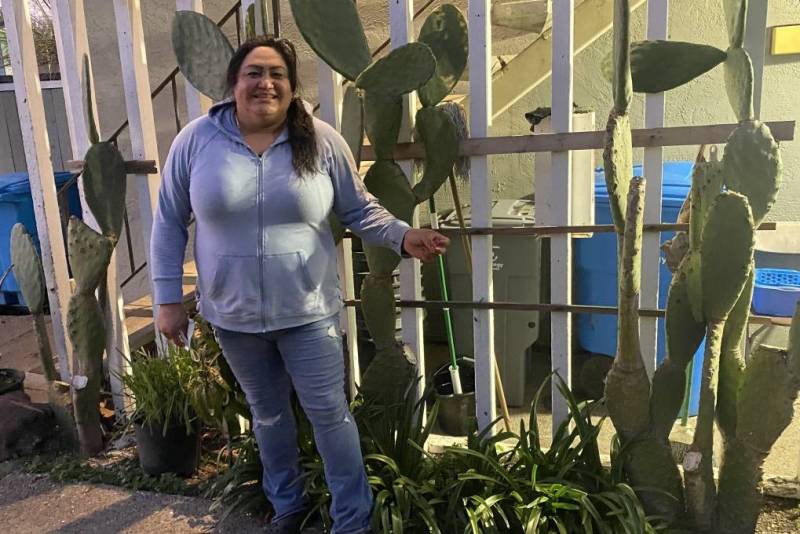
"caption": "Paloma Reyes, una mujer trans y trabajadora agrícola de Santa Rosa, ayuda a dirigir un grupo que defiende los derechos de trabajadores agrícolas trans.",
"description": "Paloma Reyes, una mujer trans y trabajadora agrícola de Santa Rosa, ayuda a dirigir un grupo que defiende los derechos de trabajadores agrícolas trans.",
"title": "Paloma-Reyes-1020x765",
"credit": "Ezra David Romero/KQED",
"status": "inherit",
"altTag": "Una persona aparece parada afuera de un hogar y posa a lado de unos nopales.",
"isLoading": false,
"fetchFailed": false
},
"news_11901765": {
"type": "attachments",
"id": "news_11901765",
"meta": {
"index": "attachments_1716263798",
"site": "news",
"id": "11901765",
"found": true
},
"parent": 11901749,
"imgSizes": {
"twentyfourteen-full-width": {
"file": "https://ww2.kqed.org/app/uploads/sites/10/2022/01/RS31770_sfmayor0712.0003-qut-1038x576.jpg",
"width": 1038,
"mimeType": "image/jpeg",
"height": 576
},
"thumbnail": {
"file": "https://ww2.kqed.org/app/uploads/sites/10/2022/01/RS31770_sfmayor0712.0003-qut-160x107.jpg",
"width": 160,
"mimeType": "image/jpeg",
"height": 107
},
"post-thumbnail": {
"file": "https://ww2.kqed.org/app/uploads/sites/10/2022/01/RS31770_sfmayor0712.0003-qut-672x372.jpg",
"width": 672,
"mimeType": "image/jpeg",
"height": 372
},
"kqedFullSize": {
"file": "https://ww2.kqed.org/app/uploads/sites/10/2022/01/RS31770_sfmayor0712.0003-qut.jpg",
"width": 1920,
"height": 1281
},
"large": {
"file": "https://ww2.kqed.org/app/uploads/sites/10/2022/01/RS31770_sfmayor0712.0003-qut-1020x681.jpg",
"width": 1020,
"mimeType": "image/jpeg",
"height": 681
},
"1536x1536": {
"file": "https://ww2.kqed.org/app/uploads/sites/10/2022/01/RS31770_sfmayor0712.0003-qut-1536x1025.jpg",
"width": 1536,
"mimeType": "image/jpeg",
"height": 1025
},
"medium": {
"file": "https://ww2.kqed.org/app/uploads/sites/10/2022/01/RS31770_sfmayor0712.0003-qut-800x534.jpg",
"width": 800,
"mimeType": "image/jpeg",
"height": 534
}
},
"publishDate": 1642200111,
"modified": 1642200111,
"caption": "San Francisco Mayor London Breed waits to walk out of City Hall for her inauguration in San Francisco, Calif. on Wednesday, July 11, 2018.",
"description": null,
"title": "SFMayor0712",
"credit": null,
"status": "inherit",
"altTag": null,
"isLoading": false,
"fetchFailed": false
},
"news_11888527": {
"type": "attachments",
"id": "news_11888527",
"meta": {
"index": "attachments_1716263798",
"site": "news",
"id": "11888527",
"found": true
},
"parent": 11888512,
"imgSizes": {
"twentyfourteen-full-width": {
"file": "https://ww2.kqed.org/app/uploads/sites/10/2021/09/VotingBooths-1038x576.jpeg",
"width": 1038,
"mimeType": "image/jpeg",
"height": 576
},
"thumbnail": {
"file": "https://ww2.kqed.org/app/uploads/sites/10/2021/09/VotingBooths-160x111.jpeg",
"width": 160,
"mimeType": "image/jpeg",
"height": 111
},
"post-thumbnail": {
"file": "https://ww2.kqed.org/app/uploads/sites/10/2021/09/VotingBooths-672x372.jpeg",
"width": 672,
"mimeType": "image/jpeg",
"height": 372
},
"kqedFullSize": {
"file": "https://ww2.kqed.org/app/uploads/sites/10/2021/09/VotingBooths.jpeg",
"width": 1920,
"height": 1332
},
"large": {
"file": "https://ww2.kqed.org/app/uploads/sites/10/2021/09/VotingBooths-1020x708.jpeg",
"width": 1020,
"mimeType": "image/jpeg",
"height": 708
},
"1536x1536": {
"file": "https://ww2.kqed.org/app/uploads/sites/10/2021/09/VotingBooths-1536x1066.jpeg",
"width": 1536,
"mimeType": "image/jpeg",
"height": 1066
},
"medium": {
"file": "https://ww2.kqed.org/app/uploads/sites/10/2021/09/VotingBooths-800x555.jpeg",
"width": 800,
"mimeType": "image/jpeg",
"height": 555
}
},
"publishDate": 1631655164,
"modified": 1631727251,
"caption": null,
"description": null,
"title": "Voting Booths",
"credit": "BILL WECHTER/AFP/Getty Images",
"status": "inherit",
"altTag": "Voting booths at a polling station.",
"isLoading": false,
"fetchFailed": false
},
"news_11881356": {
"type": "attachments",
"id": "news_11881356",
"meta": {
"index": "attachments_1716263798",
"site": "news",
"id": "11881356",
"found": true
},
"parent": 11881334,
"imgSizes": {
"twentyfourteen-full-width": {
"file": "https://ww2.kqed.org/app/uploads/sites/10/2021/07/GettyImages-1233724654-1038x576.jpg",
"width": 1038,
"mimeType": "image/jpeg",
"height": 576
},
"thumbnail": {
"file": "https://ww2.kqed.org/app/uploads/sites/10/2021/07/GettyImages-1233724654-160x96.jpg",
"width": 160,
"mimeType": "image/jpeg",
"height": 96
},
"post-thumbnail": {
"file": "https://ww2.kqed.org/app/uploads/sites/10/2021/07/GettyImages-1233724654-672x372.jpg",
"width": 672,
"mimeType": "image/jpeg",
"height": 372
},
"kqedFullSize": {
"file": "https://ww2.kqed.org/app/uploads/sites/10/2021/07/GettyImages-1233724654.jpg",
"width": 1920,
"height": 1150
},
"large": {
"file": "https://ww2.kqed.org/app/uploads/sites/10/2021/07/GettyImages-1233724654-1020x611.jpg",
"width": 1020,
"mimeType": "image/jpeg",
"height": 611
},
"1536x1536": {
"file": "https://ww2.kqed.org/app/uploads/sites/10/2021/07/GettyImages-1233724654-1536x920.jpg",
"width": 1536,
"mimeType": "image/jpeg",
"height": 920
},
"medium": {
"file": "https://ww2.kqed.org/app/uploads/sites/10/2021/07/GettyImages-1233724654-800x479.jpg",
"width": 800,
"mimeType": "image/jpeg",
"height": 479
}
},
"publishDate": 1626392637,
"modified": 1626392894,
"caption": "Masked and unmasked people make their way through Grand Central Market in Los Angeles, California on June 29, 2021. County officials announced Thursday, July 15, 2021, it will restore an indoor mask mandate for all individuals regardless of vaccination status as COVID-19 cases spike in recent weeks.",
"description": "Masked and unmasked people make their way through Grand Central Market in Los Angeles, California on June 29, 2021. County officials announced Thursday, July 15, 2021, it will restore an indoor mask mandate for all individuals regardless of vaccination status as COVID-19 cases spike in recent weeks.",
"title": "US-HEALTH-VIRUS",
"credit": "Frederic J. Brown/AFP via Getty Images",
"status": "inherit",
"altTag": null,
"isLoading": false,
"fetchFailed": false
},
"news_11880763": {
"type": "attachments",
"id": "news_11880763",
"meta": {
"index": "attachments_1716263798",
"site": "news",
"id": "11880763",
"found": true
},
"parent": 11880762,
"imgSizes": {
"twentyfourteen-full-width": {
"file": "https://ww2.kqed.org/app/uploads/sites/10/2021/07/santa-rosa-samuel-jones-hall-1038x576.png",
"width": 1038,
"mimeType": "image/png",
"height": 576
},
"thumbnail": {
"file": "https://ww2.kqed.org/app/uploads/sites/10/2021/07/santa-rosa-samuel-jones-hall-160x100.png",
"width": 160,
"mimeType": "image/png",
"height": 100
},
"post-thumbnail": {
"file": "https://ww2.kqed.org/app/uploads/sites/10/2021/07/santa-rosa-samuel-jones-hall-672x372.png",
"width": 672,
"mimeType": "image/png",
"height": 372
},
"kqedFullSize": {
"file": "https://ww2.kqed.org/app/uploads/sites/10/2021/07/santa-rosa-samuel-jones-hall.png",
"width": 1920,
"height": 1200
},
"large": {
"file": "https://ww2.kqed.org/app/uploads/sites/10/2021/07/santa-rosa-samuel-jones-hall-1020x638.png",
"width": 1020,
"mimeType": "image/png",
"height": 638
},
"1536x1536": {
"file": "https://ww2.kqed.org/app/uploads/sites/10/2021/07/santa-rosa-samuel-jones-hall-1536x960.png",
"width": 1536,
"mimeType": "image/png",
"height": 960
},
"medium": {
"file": "https://ww2.kqed.org/app/uploads/sites/10/2021/07/santa-rosa-samuel-jones-hall-800x500.png",
"width": 800,
"mimeType": "image/png",
"height": 500
}
},
"publishDate": 1625866024,
"modified": 1625871965,
"caption": "Almost a third of the 153 residents at Samuel L. Jones Hall, a homeless shelter in Santa Rosa and Sonoma County’s largest shelter, tested positive for COVID-19.",
"description": "47 residents at Samuel L. Jones Hall, a homeless shelter in Santa Rosa, tested positive for COVID-19.",
"title": "santa rosa samuel jones hall",
"credit": "Google Maps",
"status": "inherit",
"altTag": null,
"isLoading": false,
"fetchFailed": false
},
"news_11784837": {
"type": "attachments",
"id": "news_11784837",
"meta": {
"index": "attachments_1716263798",
"site": "news",
"id": "11784837",
"found": true
},
"parent": 11784767,
"imgSizes": {
"apple_news_ca_landscape_5_5": {
"file": "https://ww2.kqed.org/app/uploads/sites/10/2019/11/GettyImages-1178415471-1044x783.jpg",
"width": 1044,
"mimeType": "image/jpeg",
"height": 783
},
"apple_news_ca_square_4_0": {
"file": "https://ww2.kqed.org/app/uploads/sites/10/2019/11/GettyImages-1178415471-470x470.jpg",
"width": 470,
"mimeType": "image/jpeg",
"height": 470
},
"twentyfourteen-full-width": {
"file": "https://ww2.kqed.org/app/uploads/sites/10/2019/11/GettyImages-1178415471-1038x576.jpg",
"width": 1038,
"mimeType": "image/jpeg",
"height": 576
},
"thumbnail": {
"file": "https://ww2.kqed.org/app/uploads/sites/10/2019/11/GettyImages-1178415471-160x107.jpg",
"width": 160,
"mimeType": "image/jpeg",
"height": 107
},
"post-thumbnail": {
"file": "https://ww2.kqed.org/app/uploads/sites/10/2019/11/GettyImages-1178415471-672x372.jpg",
"width": 672,
"mimeType": "image/jpeg",
"height": 372
},
"kqedFullSize": {
"file": "https://ww2.kqed.org/app/uploads/sites/10/2019/11/GettyImages-1178415471-e1572903966123.jpg",
"width": 1920,
"height": 1280
},
"apple_news_ca_landscape_4_7": {
"file": "https://ww2.kqed.org/app/uploads/sites/10/2019/11/GettyImages-1178415471-632x474.jpg",
"width": 632,
"mimeType": "image/jpeg",
"height": 474
},
"large": {
"file": "https://ww2.kqed.org/app/uploads/sites/10/2019/11/GettyImages-1178415471-1020x680.jpg",
"width": 1020,
"mimeType": "image/jpeg",
"height": 680
},
"complete_open_graph": {
"file": "https://ww2.kqed.org/app/uploads/sites/10/2019/11/GettyImages-1178415471-1200x800.jpg",
"width": 1200,
"mimeType": "image/jpeg",
"height": 800
},
"apple_news_ca_landscape_4_0": {
"file": "https://ww2.kqed.org/app/uploads/sites/10/2019/11/GettyImages-1178415471-536x402.jpg",
"width": 536,
"mimeType": "image/jpeg",
"height": 402
},
"apple_news_ca_portrait_12_9": {
"file": "https://ww2.kqed.org/app/uploads/sites/10/2019/11/GettyImages-1178415471-1122x1496.jpg",
"width": 1122,
"mimeType": "image/jpeg",
"height": 1496
},
"medium": {
"file": "https://ww2.kqed.org/app/uploads/sites/10/2019/11/GettyImages-1178415471-800x533.jpg",
"width": 800,
"mimeType": "image/jpeg",
"height": 533
},
"apple_news_ca_portrait_4_0": {
"file": "https://ww2.kqed.org/app/uploads/sites/10/2019/11/GettyImages-1178415471-354x472.jpg",
"width": 354,
"mimeType": "image/jpeg",
"height": 472
},
"apple_news_ca_portrait_9_7": {
"file": "https://ww2.kqed.org/app/uploads/sites/10/2019/11/GettyImages-1178415471-840x1120.jpg",
"width": 840,
"mimeType": "image/jpeg",
"height": 1120
},
"apple_news_ca_landscape_12_9": {
"file": "https://ww2.kqed.org/app/uploads/sites/10/2019/11/GettyImages-1178415471-1832x1374.jpg",
"width": 1832,
"mimeType": "image/jpeg",
"height": 1374
},
"apple_news_ca_square_9_7": {
"file": "https://ww2.kqed.org/app/uploads/sites/10/2019/11/GettyImages-1178415471-1104x1104.jpg",
"width": 1104,
"mimeType": "image/jpeg",
"height": 1104
},
"apple_news_ca_portrait_4_7": {
"file": "https://ww2.kqed.org/app/uploads/sites/10/2019/11/GettyImages-1178415471-414x552.jpg",
"width": 414,
"mimeType": "image/jpeg",
"height": 552
},
"apple_news_ca_square_12_9": {
"file": "https://ww2.kqed.org/app/uploads/sites/10/2019/11/GettyImages-1178415471-1472x1472.jpg",
"width": 1472,
"mimeType": "image/jpeg",
"height": 1472
},
"apple_news_ca_portrait_5_5": {
"file": "https://ww2.kqed.org/app/uploads/sites/10/2019/11/GettyImages-1178415471-687x916.jpg",
"width": 687,
"mimeType": "image/jpeg",
"height": 916
},
"full-width": {
"file": "https://ww2.kqed.org/app/uploads/sites/10/2019/11/GettyImages-1178415471-1920x1280.jpg",
"width": 1920,
"mimeType": "image/jpeg",
"height": 1280
},
"apple_news_ca_square_4_7": {
"file": "https://ww2.kqed.org/app/uploads/sites/10/2019/11/GettyImages-1178415471-550x550.jpg",
"width": 550,
"mimeType": "image/jpeg",
"height": 550
},
"apple_news_ca_landscape_9_7": {
"file": "https://ww2.kqed.org/app/uploads/sites/10/2019/11/GettyImages-1178415471-1376x1032.jpg",
"width": 1376,
"mimeType": "image/jpeg",
"height": 1032
},
"apple_news_ca_square_5_5": {
"file": "https://ww2.kqed.org/app/uploads/sites/10/2019/11/GettyImages-1178415471-912x912.jpg",
"width": 912,
"mimeType": "image/jpeg",
"height": 912
}
},
"publishDate": 1572903839,
"modified": 1573676853,
"caption": "Firefighters watch a backfire set near PG&E transmission lines on Oct. 26, 2019, during the battle against the Kincade Fire in Sonoma County. ",
"description": "Firefighters watch a backfire set near PG&E transmission lines on Oct. 26, 2019, during the battle against the Kincade Fire in Sonoma County. ",
"title": "US-CALIFORNIA-FIRE-EMERGENCY",
"credit": "Philip Pacheco/AFP-Getty Images",
"status": "inherit",
"isLoading": false,
"fetchFailed": false
},
"news_11853687": {
"type": "attachments",
"id": "news_11853687",
"meta": {
"index": "attachments_1716263798",
"site": "news",
"id": "11853687",
"found": true
},
"parent": 11853491,
"imgSizes": {
"apple_news_ca_landscape_5_5": {
"file": "https://ww2.kqed.org/app/uploads/sites/10/2021/01/Busy-Casino-1044x783.jpg",
"width": 1044,
"mimeType": "image/jpeg",
"height": 783
},
"apple_news_ca_square_4_0": {
"file": "https://ww2.kqed.org/app/uploads/sites/10/2021/01/Busy-Casino-470x470.jpg",
"width": 470,
"mimeType": "image/jpeg",
"height": 470
},
"twentyfourteen-full-width": {
"file": "https://ww2.kqed.org/app/uploads/sites/10/2021/01/Busy-Casino-1038x576.jpg",
"width": 1038,
"mimeType": "image/jpeg",
"height": 576
},
"thumbnail": {
"file": "https://ww2.kqed.org/app/uploads/sites/10/2021/01/Busy-Casino-160x90.jpg",
"width": 160,
"mimeType": "image/jpeg",
"height": 90
},
"post-thumbnail": {
"file": "https://ww2.kqed.org/app/uploads/sites/10/2021/01/Busy-Casino-672x372.jpg",
"width": 672,
"mimeType": "image/jpeg",
"height": 372
},
"kqedFullSize": {
"file": "https://ww2.kqed.org/app/uploads/sites/10/2021/01/Busy-Casino.jpg",
"width": 1920,
"height": 1075
},
"apple_news_ca_landscape_4_7": {
"file": "https://ww2.kqed.org/app/uploads/sites/10/2021/01/Busy-Casino-632x474.jpg",
"width": 632,
"mimeType": "image/jpeg",
"height": 474
},
"large": {
"file": "https://ww2.kqed.org/app/uploads/sites/10/2021/01/Busy-Casino-1020x571.jpg",
"width": 1020,
"mimeType": "image/jpeg",
"height": 571
},
"apple_news_ca_landscape_4_0": {
"file": "https://ww2.kqed.org/app/uploads/sites/10/2021/01/Busy-Casino-536x402.jpg",
"width": 536,
"mimeType": "image/jpeg",
"height": 402
},
"apple_news_ca_portrait_12_9": {
"file": "https://ww2.kqed.org/app/uploads/sites/10/2021/01/Busy-Casino-1122x1075.jpg",
"width": 1122,
"mimeType": "image/jpeg",
"height": 1075
},
"medium": {
"file": "https://ww2.kqed.org/app/uploads/sites/10/2021/01/Busy-Casino-800x448.jpg",
"width": 800,
"mimeType": "image/jpeg",
"height": 448
},
"apple_news_ca_portrait_4_0": {
"file": "https://ww2.kqed.org/app/uploads/sites/10/2021/01/Busy-Casino-354x472.jpg",
"width": 354,
"mimeType": "image/jpeg",
"height": 472
},
"apple_news_ca_portrait_9_7": {
"file": "https://ww2.kqed.org/app/uploads/sites/10/2021/01/Busy-Casino-840x1075.jpg",
"width": 840,
"mimeType": "image/jpeg",
"height": 1075
},
"apple_news_ca_landscape_12_9": {
"file": "https://ww2.kqed.org/app/uploads/sites/10/2021/01/Busy-Casino-1832x1075.jpg",
"width": 1832,
"mimeType": "image/jpeg",
"height": 1075
},
"apple_news_ca_square_9_7": {
"file": "https://ww2.kqed.org/app/uploads/sites/10/2021/01/Busy-Casino-1104x1075.jpg",
"width": 1104,
"mimeType": "image/jpeg",
"height": 1075
},
"1536x1536": {
"file": "https://ww2.kqed.org/app/uploads/sites/10/2021/01/Busy-Casino-1536x860.jpg",
"width": 1536,
"mimeType": "image/jpeg",
"height": 860
},
"apple_news_ca_portrait_4_7": {
"file": "https://ww2.kqed.org/app/uploads/sites/10/2021/01/Busy-Casino-414x552.jpg",
"width": 414,
"mimeType": "image/jpeg",
"height": 552
},
"apple_news_ca_square_12_9": {
"file": "https://ww2.kqed.org/app/uploads/sites/10/2021/01/Busy-Casino-1472x1075.jpg",
"width": 1472,
"mimeType": "image/jpeg",
"height": 1075
},
"apple_news_ca_portrait_5_5": {
"file": "https://ww2.kqed.org/app/uploads/sites/10/2021/01/Busy-Casino-687x916.jpg",
"width": 687,
"mimeType": "image/jpeg",
"height": 916
},
"apple_news_ca_square_4_7": {
"file": "https://ww2.kqed.org/app/uploads/sites/10/2021/01/Busy-Casino-550x550.jpg",
"width": 550,
"mimeType": "image/jpeg",
"height": 550
},
"apple_news_ca_landscape_9_7": {
"file": "https://ww2.kqed.org/app/uploads/sites/10/2021/01/Busy-Casino-1376x1032.jpg",
"width": 1376,
"mimeType": "image/jpeg",
"height": 1032
},
"apple_news_ca_square_5_5": {
"file": "https://ww2.kqed.org/app/uploads/sites/10/2021/01/Busy-Casino-912x912.jpg",
"width": 912,
"mimeType": "image/jpeg",
"height": 912
}
},
"publishDate": 1609810209,
"modified": 1609811916,
"caption": "A crowded indoor poker room at Graton Resort and Casino in Rohnert Park in late December 2020. Casinos on tribal lands in California are not required to adhere to statewide COVID-19 orders.",
"description": "A crowded indoor poker room at Graton Resort and Casino in Rohnert Park in late Dec., 2020. Casinos on tribal lands in California are not required to adhere to statewide COVID-19 orders.",
"title": "Busy-Casino",
"credit": "Courtesy of Graton Casino and Resort employee",
"status": "inherit",
"altTag": "crowded poker rooom with full tables",
"isLoading": false,
"fetchFailed": false
},
"news_11846856": {
"type": "attachments",
"id": "news_11846856",
"meta": {
"index": "attachments_1716263798",
"site": "news",
"id": "11846856",
"found": true
},
"parent": 11846850,
"imgSizes": {
"apple_news_ca_landscape_5_5": {
"file": "https://ww2.kqed.org/app/uploads/sites/10/2020/11/GettyImages-186224932-1044x783.jpg",
"width": 1044,
"mimeType": "image/jpeg",
"height": 783
},
"apple_news_ca_square_4_0": {
"file": "https://ww2.kqed.org/app/uploads/sites/10/2020/11/GettyImages-186224932-470x470.jpg",
"width": 470,
"mimeType": "image/jpeg",
"height": 470
},
"twentyfourteen-full-width": {
"file": "https://ww2.kqed.org/app/uploads/sites/10/2020/11/GettyImages-186224932-1038x576.jpg",
"width": 1038,
"mimeType": "image/jpeg",
"height": 576
},
"thumbnail": {
"file": "https://ww2.kqed.org/app/uploads/sites/10/2020/11/GettyImages-186224932-160x112.jpg",
"width": 160,
"mimeType": "image/jpeg",
"height": 112
},
"post-thumbnail": {
"file": "https://ww2.kqed.org/app/uploads/sites/10/2020/11/GettyImages-186224932-672x372.jpg",
"width": 672,
"mimeType": "image/jpeg",
"height": 372
},
"kqedFullSize": {
"file": "https://ww2.kqed.org/app/uploads/sites/10/2020/11/GettyImages-186224932-scaled.jpg",
"width": 2560,
"height": 1789
},
"2048x2048": {
"file": "https://ww2.kqed.org/app/uploads/sites/10/2020/11/GettyImages-186224932-2048x1432.jpg",
"width": 2048,
"mimeType": "image/jpeg",
"height": 1432
},
"apple_news_ca_landscape_4_7": {
"file": "https://ww2.kqed.org/app/uploads/sites/10/2020/11/GettyImages-186224932-632x474.jpg",
"width": 632,
"mimeType": "image/jpeg",
"height": 474
},
"large": {
"file": "https://ww2.kqed.org/app/uploads/sites/10/2020/11/GettyImages-186224932-1020x713.jpg",
"width": 1020,
"mimeType": "image/jpeg",
"height": 713
},
"apple_news_ca_landscape_4_0": {
"file": "https://ww2.kqed.org/app/uploads/sites/10/2020/11/GettyImages-186224932-536x402.jpg",
"width": 536,
"mimeType": "image/jpeg",
"height": 402
},
"apple_news_ca_portrait_12_9": {
"file": "https://ww2.kqed.org/app/uploads/sites/10/2020/11/GettyImages-186224932-1122x1496.jpg",
"width": 1122,
"mimeType": "image/jpeg",
"height": 1496
},
"medium": {
"file": "https://ww2.kqed.org/app/uploads/sites/10/2020/11/GettyImages-186224932-800x559.jpg",
"width": 800,
"mimeType": "image/jpeg",
"height": 559
},
"apple_news_ca_portrait_4_0": {
"file": "https://ww2.kqed.org/app/uploads/sites/10/2020/11/GettyImages-186224932-354x472.jpg",
"width": 354,
"mimeType": "image/jpeg",
"height": 472
},
"apple_news_ca_portrait_9_7": {
"file": "https://ww2.kqed.org/app/uploads/sites/10/2020/11/GettyImages-186224932-840x1120.jpg",
"width": 840,
"mimeType": "image/jpeg",
"height": 1120
},
"apple_news_ca_landscape_12_9": {
"file": "https://ww2.kqed.org/app/uploads/sites/10/2020/11/GettyImages-186224932-1832x1374.jpg",
"width": 1832,
"mimeType": "image/jpeg",
"height": 1374
},
"apple_news_ca_square_9_7": {
"file": "https://ww2.kqed.org/app/uploads/sites/10/2020/11/GettyImages-186224932-1104x1104.jpg",
"width": 1104,
"mimeType": "image/jpeg",
"height": 1104
},
"1536x1536": {
"file": "https://ww2.kqed.org/app/uploads/sites/10/2020/11/GettyImages-186224932-1536x1074.jpg",
"width": 1536,
"mimeType": "image/jpeg",
"height": 1074
},
"apple_news_ca_portrait_4_7": {
"file": "https://ww2.kqed.org/app/uploads/sites/10/2020/11/GettyImages-186224932-414x552.jpg",
"width": 414,
"mimeType": "image/jpeg",
"height": 552
},
"apple_news_ca_square_12_9": {
"file": "https://ww2.kqed.org/app/uploads/sites/10/2020/11/GettyImages-186224932-1472x1472.jpg",
"width": 1472,
"mimeType": "image/jpeg",
"height": 1472
},
"apple_news_ca_portrait_5_5": {
"file": "https://ww2.kqed.org/app/uploads/sites/10/2020/11/GettyImages-186224932-687x916.jpg",
"width": 687,
"mimeType": "image/jpeg",
"height": 916
},
"full-width": {
"file": "https://ww2.kqed.org/app/uploads/sites/10/2020/11/GettyImages-186224932-1920x1342.jpg",
"width": 1920,
"mimeType": "image/jpeg",
"height": 1342
},
"apple_news_ca_square_4_7": {
"file": "https://ww2.kqed.org/app/uploads/sites/10/2020/11/GettyImages-186224932-550x550.jpg",
"width": 550,
"mimeType": "image/jpeg",
"height": 550
},
"apple_news_ca_landscape_9_7": {
"file": "https://ww2.kqed.org/app/uploads/sites/10/2020/11/GettyImages-186224932-1376x1032.jpg",
"width": 1376,
"mimeType": "image/jpeg",
"height": 1032
},
"apple_news_ca_square_5_5": {
"file": "https://ww2.kqed.org/app/uploads/sites/10/2020/11/GettyImages-186224932-912x912.jpg",
"width": 912,
"mimeType": "image/jpeg",
"height": 912
}
},
"publishDate": 1605037921,
"modified": 1605062215,
"caption": "Sonoma County sheriff's deputies line up in front of protestors during a rally in front of the Sonoma County sheriff's office for 13 year-old Andy Lopez who was shot by a Sonoma County sheriff's deputy on October 29, 2013 in Santa Rosa, California. (Photo by Justin Sullivan/Getty Images)",
"description": null,
"title": "Rally And March Held In Protest Of 13-Year-Old Shot By Police Officer",
"credit": null,
"status": "inherit",
"isLoading": false,
"fetchFailed": false
},
"news_11841620": {
"type": "attachments",
"id": "news_11841620",
"meta": {
"index": "attachments_1716263798",
"site": "news",
"id": "11841620",
"found": true
},
"parent": 11841618,
"imgSizes": {
"apple_news_ca_landscape_5_5": {
"file": "https://ww2.kqed.org/app/uploads/sites/10/2020/10/RS45254_IMG_2690-qut-1044x783.jpg",
"width": 1044,
"mimeType": "image/jpeg",
"height": 783
},
"apple_news_ca_square_4_0": {
"file": "https://ww2.kqed.org/app/uploads/sites/10/2020/10/RS45254_IMG_2690-qut-470x470.jpg",
"width": 470,
"mimeType": "image/jpeg",
"height": 470
},
"twentyfourteen-full-width": {
"file": "https://ww2.kqed.org/app/uploads/sites/10/2020/10/RS45254_IMG_2690-qut-1038x576.jpg",
"width": 1038,
"mimeType": "image/jpeg",
"height": 576
},
"thumbnail": {
"file": "https://ww2.kqed.org/app/uploads/sites/10/2020/10/RS45254_IMG_2690-qut-160x120.jpg",
"width": 160,
"mimeType": "image/jpeg",
"height": 120
},
"post-thumbnail": {
"file": "https://ww2.kqed.org/app/uploads/sites/10/2020/10/RS45254_IMG_2690-qut-672x372.jpg",
"width": 672,
"mimeType": "image/jpeg",
"height": 372
},
"kqedFullSize": {
"file": "https://ww2.kqed.org/app/uploads/sites/10/2020/10/RS45254_IMG_2690-qut.jpg",
"width": 1920,
"height": 1440
},
"apple_news_ca_landscape_4_7": {
"file": "https://ww2.kqed.org/app/uploads/sites/10/2020/10/RS45254_IMG_2690-qut-632x474.jpg",
"width": 632,
"mimeType": "image/jpeg",
"height": 474
},
"large": {
"file": "https://ww2.kqed.org/app/uploads/sites/10/2020/10/RS45254_IMG_2690-qut-1020x765.jpg",
"width": 1020,
"mimeType": "image/jpeg",
"height": 765
},
"apple_news_ca_landscape_4_0": {
"file": "https://ww2.kqed.org/app/uploads/sites/10/2020/10/RS45254_IMG_2690-qut-536x402.jpg",
"width": 536,
"mimeType": "image/jpeg",
"height": 402
},
"apple_news_ca_portrait_12_9": {
"file": "https://ww2.kqed.org/app/uploads/sites/10/2020/10/RS45254_IMG_2690-qut-1122x1440.jpg",
"width": 1122,
"mimeType": "image/jpeg",
"height": 1440
},
"medium": {
"file": "https://ww2.kqed.org/app/uploads/sites/10/2020/10/RS45254_IMG_2690-qut-800x600.jpg",
"width": 800,
"mimeType": "image/jpeg",
"height": 600
},
"apple_news_ca_portrait_4_0": {
"file": "https://ww2.kqed.org/app/uploads/sites/10/2020/10/RS45254_IMG_2690-qut-354x472.jpg",
"width": 354,
"mimeType": "image/jpeg",
"height": 472
},
"apple_news_ca_portrait_9_7": {
"file": "https://ww2.kqed.org/app/uploads/sites/10/2020/10/RS45254_IMG_2690-qut-840x1120.jpg",
"width": 840,
"mimeType": "image/jpeg",
"height": 1120
},
"apple_news_ca_landscape_12_9": {
"file": "https://ww2.kqed.org/app/uploads/sites/10/2020/10/RS45254_IMG_2690-qut-1832x1374.jpg",
"width": 1832,
"mimeType": "image/jpeg",
"height": 1374
},
"apple_news_ca_square_9_7": {
"file": "https://ww2.kqed.org/app/uploads/sites/10/2020/10/RS45254_IMG_2690-qut-1104x1104.jpg",
"width": 1104,
"mimeType": "image/jpeg",
"height": 1104
},
"1536x1536": {
"file": "https://ww2.kqed.org/app/uploads/sites/10/2020/10/RS45254_IMG_2690-qut-1536x1152.jpg",
"width": 1536,
"mimeType": "image/jpeg",
"height": 1152
},
"apple_news_ca_portrait_4_7": {
"file": "https://ww2.kqed.org/app/uploads/sites/10/2020/10/RS45254_IMG_2690-qut-414x552.jpg",
"width": 414,
"mimeType": "image/jpeg",
"height": 552
},
"apple_news_ca_square_12_9": {
"file": "https://ww2.kqed.org/app/uploads/sites/10/2020/10/RS45254_IMG_2690-qut-1472x1440.jpg",
"width": 1472,
"mimeType": "image/jpeg",
"height": 1440
},
"apple_news_ca_portrait_5_5": {
"file": "https://ww2.kqed.org/app/uploads/sites/10/2020/10/RS45254_IMG_2690-qut-687x916.jpg",
"width": 687,
"mimeType": "image/jpeg",
"height": 916
},
"apple_news_ca_square_4_7": {
"file": "https://ww2.kqed.org/app/uploads/sites/10/2020/10/RS45254_IMG_2690-qut-550x550.jpg",
"width": 550,
"mimeType": "image/jpeg",
"height": 550
},
"apple_news_ca_landscape_9_7": {
"file": "https://ww2.kqed.org/app/uploads/sites/10/2020/10/RS45254_IMG_2690-qut-1376x1032.jpg",
"width": 1376,
"mimeType": "image/jpeg",
"height": 1032
},
"apple_news_ca_square_5_5": {
"file": "https://ww2.kqed.org/app/uploads/sites/10/2020/10/RS45254_IMG_2690-qut-912x912.jpg",
"width": 912,
"mimeType": "image/jpeg",
"height": 912
}
},
"publishDate": 1602203449,
"modified": 1602285641,
"caption": "Yalitza Garcia (left) and sister-in-law Silvia Arroyo gather boxed lunches at an evacuation center at Napa Valley College on Oct. 5, 2020. Both women said the pandemic and wildfires have meant income losses.",
"description": "Yalitza Garcia (left) and sister-in-law Silvia Arroyo gather boxed lunches at an evacuation center at Napa Valley College on Oct. 5, 2020. Both women said the pandemic and wildfires have meant income losses.",
"title": "RS45254_IMG_2690-qut",
"credit": "Farida Jhabvala Romero/KQED",
"status": "inherit",
"isLoading": false,
"fetchFailed": false
},
"news_11841048": {
"type": "attachments",
"id": "news_11841048",
"meta": {
"index": "attachments_1716263798",
"site": "news",
"id": "11841048",
"found": true
},
"parent": 11841037,
"imgSizes": {
"apple_news_ca_square_4_0": {
"file": "https://ww2.kqed.org/app/uploads/sites/10/2020/10/GettyImages-1277931684-470x470.jpg",
"width": 470,
"mimeType": "image/jpeg",
"height": 470
},
"twentyfourteen-full-width": {
"file": "https://ww2.kqed.org/app/uploads/sites/10/2020/10/GettyImages-1277931684-1024x576.jpg",
"width": 1024,
"mimeType": "image/jpeg",
"height": 576
},
"thumbnail": {
"file": "https://ww2.kqed.org/app/uploads/sites/10/2020/10/GettyImages-1277931684-160x109.jpg",
"width": 160,
"mimeType": "image/jpeg",
"height": 109
},
"post-thumbnail": {
"file": "https://ww2.kqed.org/app/uploads/sites/10/2020/10/GettyImages-1277931684-672x372.jpg",
"width": 672,
"mimeType": "image/jpeg",
"height": 372
},
"kqedFullSize": {
"file": "https://ww2.kqed.org/app/uploads/sites/10/2020/10/GettyImages-1277931684.jpg",
"width": 1024,
"height": 700
},
"apple_news_ca_landscape_4_7": {
"file": "https://ww2.kqed.org/app/uploads/sites/10/2020/10/GettyImages-1277931684-632x474.jpg",
"width": 632,
"mimeType": "image/jpeg",
"height": 474
},
"large": {
"file": "https://ww2.kqed.org/app/uploads/sites/10/2020/10/GettyImages-1277931684-1020x697.jpg",
"width": 1020,
"mimeType": "image/jpeg",
"height": 697
},
"apple_news_ca_landscape_4_0": {
"file": "https://ww2.kqed.org/app/uploads/sites/10/2020/10/GettyImages-1277931684-536x402.jpg",
"width": 536,
"mimeType": "image/jpeg",
"height": 402
},
"medium": {
"file": "https://ww2.kqed.org/app/uploads/sites/10/2020/10/GettyImages-1277931684-800x547.jpg",
"width": 800,
"mimeType": "image/jpeg",
"height": 547
},
"apple_news_ca_portrait_4_0": {
"file": "https://ww2.kqed.org/app/uploads/sites/10/2020/10/GettyImages-1277931684-354x472.jpg",
"width": 354,
"mimeType": "image/jpeg",
"height": 472
},
"apple_news_ca_portrait_9_7": {
"file": "https://ww2.kqed.org/app/uploads/sites/10/2020/10/GettyImages-1277931684-840x700.jpg",
"width": 840,
"mimeType": "image/jpeg",
"height": 700
},
"apple_news_ca_portrait_4_7": {
"file": "https://ww2.kqed.org/app/uploads/sites/10/2020/10/GettyImages-1277931684-414x552.jpg",
"width": 414,
"mimeType": "image/jpeg",
"height": 552
},
"apple_news_ca_portrait_5_5": {
"file": "https://ww2.kqed.org/app/uploads/sites/10/2020/10/GettyImages-1277931684-687x700.jpg",
"width": 687,
"mimeType": "image/jpeg",
"height": 700
},
"apple_news_ca_square_4_7": {
"file": "https://ww2.kqed.org/app/uploads/sites/10/2020/10/GettyImages-1277931684-550x550.jpg",
"width": 550,
"mimeType": "image/jpeg",
"height": 550
},
"apple_news_ca_square_5_5": {
"file": "https://ww2.kqed.org/app/uploads/sites/10/2020/10/GettyImages-1277931684-912x700.jpg",
"width": 912,
"mimeType": "image/jpeg",
"height": 700
}
},
"publishDate": 1601923661,
"modified": 1601923909,
"caption": "A firefighter sprays water on hot spots from the Glass Fire near the city of Calistoga on Oct. 1, 2020. Fire crews made steady progress over the weekend, increasing containment of the blaze to 30%. ",
"description": null,
"title": "Cluster Of Destructive Wildfires Burns Through Napa And Sonoma Counties In California",
"credit": "Justin Sullivan/Getty Images",
"status": "inherit",
"isLoading": false,
"fetchFailed": false
}
},
"audioPlayerReducer": {
"postId": "stream_live",
"isPaused": true,
"isPlaying": false,
"pfsActive": false,
"pledgeModalIsOpen": true,
"playerDrawerIsOpen": false,
"liveAudioPlayStartedAt": 0,
"liveAudioPlayContext": ""
},
"authorsReducer": {
"danbrekke": {
"type": "authors",
"id": "222",
"meta": {
"index": "authors_1716337520",
"id": "222",
"found": true
},
"name": "Dan Brekke",
"firstName": "Dan",
"lastName": "Brekke",
"slug": "danbrekke",
"email": "dbrekke@kqed.org",
"display_author_email": true,
"staff_mastheads": [
"news",
"science"
],
"title": "KQED Editor and Reporter",
"bio": "Dan Brekke is a reporter and editor for KQED News, responsible for coverage of topics ranging from California water issues to the Bay Area's transportation challenges. In a newsroom career that began in Chicago in 1972, Dan has worked for \u003cem>The San Francisco Examiner,\u003c/em> Wired and TechTV and has been published in The New York Times, The New York Times Magazine, Business 2.0, Salon and elsewhere.\r\n\r\nSince joining KQED in 2007, Dan has reported, edited and produced both radio and online features and breaking news pieces. He has shared as both editor and reporter in four Society of Professional Journalists Norcal Excellence in Journalism awards and one Edward R. Murrow regional award. He was chosen for a spring 2017 residency at the Mesa Refuge to advance his research on California salmon.\r\n\r\nEmail Dan at: \u003ca href=\"mailto:dbrekke@kqed.org\">dbrekke@kqed.org\u003c/a>\r\n\r\n\u003cstrong>Twitter:\u003c/strong> \u003ca href=\"https://twitter.com/danbrekke\" rel=\"noopener noreferrer\">twitter.com/danbrekke\u003c/a>\r\n\u003cstrong>Facebook:\u003c/strong> \u003ca href=\"https://www.facebook.com/danbrekke\" rel=\"noopener noreferrer\">www.facebook.com/danbrekke\u003c/a>\r\n\u003cstrong>LinkedIn:\u003c/strong> \u003ca href=\"https://www.linkedin.com/in/danbrekke\" rel=\"noopener noreferrer\">www.linkedin.com/in/danbrekke\u003c/a>",
"avatar": "https://secure.gravatar.com/avatar/8f1f0d2a978fb3b23426c922c7e2af558fa36905b49c4ce76a97dc3c72d27226?s=600&d=mm&r=g",
"twitter": "danbrekke",
"bluesky": null,
"facebook": null,
"instagram": "https://www.instagram.com/dan.brekke/",
"linkedin": "https://www.linkedin.com/in/danbrekke/",
"sites": [
{
"site": "news",
"roles": [
"administrator",
"create_posts"
]
},
{
"site": "stateofhealth",
"roles": [
"editor"
]
},
{
"site": "science",
"roles": [
"editor"
]
},
{
"site": "quest",
"roles": [
"contributor"
]
},
{
"site": "food",
"roles": [
"contributor"
]
},
{
"site": "forum",
"roles": [
"contributor"
]
},
{
"site": "elections",
"roles": [
"editor"
]
},
{
"site": "liveblog",
"roles": [
"editor"
]
}
],
"headData": {
"title": "Dan Brekke | KQED",
"description": "KQED Editor and Reporter",
"ogImgSrc": "https://secure.gravatar.com/avatar/8f1f0d2a978fb3b23426c922c7e2af558fa36905b49c4ce76a97dc3c72d27226?s=600&d=mm&r=g",
"twImgSrc": "https://secure.gravatar.com/avatar/8f1f0d2a978fb3b23426c922c7e2af558fa36905b49c4ce76a97dc3c72d27226?s=600&d=mm&r=g"
},
"isLoading": false,
"link": "/author/danbrekke"
},
"jmcevoy": {
"type": "authors",
"id": "231",
"meta": {
"index": "authors_1716337520",
"id": "231",
"found": true
},
"name": "Julia McEvoy",
"firstName": "Julia",
"lastName": "McEvoy",
"slug": "jmcevoy",
"email": "jmcevoy@KQED.org",
"display_author_email": true,
"staff_mastheads": [
"news"
],
"title": "KQED Senior Editor",
"bio": "Julia McEvoy is KQED's Senior Editor, Education Equity.\r\n\r\nJulia heads KQED’s education coverage examining inequities students face in Bay Area and California schools, and reports on what it will take to educate the next generation.\r\n\r\nJulia's editorial work has received a Peabody Award, a Casey Medal for Coverage of Children and Families, several Edward R. Murrow awards, as well as awards from the Public Radio News Directors Inc. and the Society for Professional Journalists.",
"avatar": "https://secure.gravatar.com/avatar/aec3ce21abe02b302fd33638abd56a22?s=600&d=blank&r=g",
"twitter": "juliamcevoy1",
"facebook": null,
"instagram": null,
"linkedin": null,
"sites": [
{
"site": "news",
"roles": []
},
{
"site": "stateofhealth",
"roles": [
"author"
]
}
],
"headData": {
"title": "Julia McEvoy | KQED",
"description": "KQED Senior Editor",
"ogImgSrc": "https://secure.gravatar.com/avatar/aec3ce21abe02b302fd33638abd56a22?s=600&d=blank&r=g",
"twImgSrc": "https://secure.gravatar.com/avatar/aec3ce21abe02b302fd33638abd56a22?s=600&d=blank&r=g"
},
"isLoading": false,
"link": "/author/jmcevoy"
},
"kqed": {
"type": "authors",
"id": "236",
"meta": {
"index": "authors_1716337520",
"id": "236",
"found": true
},
"name": "KQED News Staff",
"firstName": "KQED News Staff",
"lastName": null,
"slug": "kqed",
"email": "faq@kqed.org",
"display_author_email": false,
"staff_mastheads": [],
"title": null,
"bio": null,
"avatar": "https://secure.gravatar.com/avatar/ef0e801a68c4c54afa9180db14084167?s=600&d=blank&r=g",
"twitter": null,
"facebook": null,
"instagram": null,
"linkedin": null,
"sites": [
{
"site": "arts",
"roles": [
"contributor"
]
},
{
"site": "news",
"roles": [
"editor"
]
},
{
"site": "futureofyou",
"roles": [
"author"
]
}
],
"headData": {
"title": "KQED News Staff | KQED",
"description": null,
"ogImgSrc": "https://secure.gravatar.com/avatar/ef0e801a68c4c54afa9180db14084167?s=600&d=blank&r=g",
"twImgSrc": "https://secure.gravatar.com/avatar/ef0e801a68c4c54afa9180db14084167?s=600&d=blank&r=g"
},
"isLoading": false,
"link": "/author/kqed"
},
"kqednewsstaffandwires": {
"type": "authors",
"id": "237",
"meta": {
"index": "authors_1716337520",
"id": "237",
"found": true
},
"name": "KQED News Staff and Wires",
"firstName": "KQED News Staff and Wires",
"lastName": null,
"slug": "kqednewsstaffandwires",
"email": "onlinenewsstaff@kqed.org",
"display_author_email": false,
"staff_mastheads": [],
"title": null,
"bio": null,
"avatar": "https://secure.gravatar.com/avatar/72295af8ebbfbd19a4948f5271285664?s=600&d=blank&r=g",
"twitter": null,
"facebook": null,
"instagram": null,
"linkedin": null,
"sites": [
{
"site": "arts",
"roles": [
"contributor"
]
},
{
"site": "news",
"roles": [
"contributor"
]
},
{
"site": "lowdown",
"roles": [
"author"
]
},
{
"site": "stateofhealth",
"roles": [
"contributor"
]
},
{
"site": "food",
"roles": [
"author"
]
}
],
"headData": {
"title": "KQED News Staff and Wires | KQED",
"description": null,
"ogImgSrc": "https://secure.gravatar.com/avatar/72295af8ebbfbd19a4948f5271285664?s=600&d=blank&r=g",
"twImgSrc": "https://secure.gravatar.com/avatar/72295af8ebbfbd19a4948f5271285664?s=600&d=blank&r=g"
},
"isLoading": false,
"link": "/author/kqednewsstaffandwires"
},
"matthewgreen": {
"type": "authors",
"id": "1263",
"meta": {
"index": "authors_1716337520",
"id": "1263",
"found": true
},
"name": "Matthew Green",
"firstName": "Matthew",
"lastName": "Green",
"slug": "matthewgreen",
"email": "mgreen@kqed.org",
"display_author_email": false,
"staff_mastheads": [],
"title": "KQED Editor/Reporter",
"bio": "Matthew Green is a digital media producer for KQED News. He previously produced \u003ca href=\"http://www.kqed.org/lowdown\">The Lowdown\u003c/a>, KQED’s multimedia news education blog. Matthew's written for numerous Bay Area publications, including the Oakland Tribune and San Francisco Chronicle. He also taught journalism classes at Fremont High School in East Oakland.\r\n\r\nEmail: mgreen@kqed.org; Twitter: @MGreenKQED",
"avatar": "https://secure.gravatar.com/avatar/3bf498d1267ca02c8494f33d8cfc575e?s=600&d=blank&r=g",
"twitter": "MGreenKQED",
"facebook": null,
"instagram": null,
"linkedin": null,
"sites": [
{
"site": "news",
"roles": []
},
{
"site": "lowdown",
"roles": []
},
{
"site": "science",
"roles": []
},
{
"site": "education",
"roles": []
},
{
"site": "quest",
"roles": []
},
{
"site": "liveblog",
"roles": []
}
],
"headData": {
"title": "Matthew Green | KQED",
"description": "KQED Editor/Reporter",
"ogImgSrc": "https://secure.gravatar.com/avatar/3bf498d1267ca02c8494f33d8cfc575e?s=600&d=blank&r=g",
"twImgSrc": "https://secure.gravatar.com/avatar/3bf498d1267ca02c8494f33d8cfc575e?s=600&d=blank&r=g"
},
"isLoading": false,
"link": "/author/matthewgreen"
},
"dkatayama": {
"type": "authors",
"id": "7240",
"meta": {
"index": "authors_1716337520",
"id": "7240",
"found": true
},
"name": "Devin Katayama",
"firstName": "Devin",
"lastName": "Katayama",
"slug": "dkatayama",
"email": "dkatayama@kqed.org",
"display_author_email": true,
"staff_mastheads": [
"news"
],
"title": "Editor of Talent and Development",
"bio": "Devin Katayama is former Editor of Talent and Development for KQED. He supported our internship program and on-call staff by looking for equitable opportunities to improve the newsroom.\r\n\r\nHe previously hosted The Bay and American Suburb podcasts from KQED News. Prior to returning to the Bay Area in 2015, Devin was the education reporter for WFPL in Louisville and worked as a producer with radio stations in Chicago and Portland, OR. His work has appeared on NPR’s \u003cem>Morning Edition, All Things Considered, The Takeaway\u003c/em> and \u003cem>Here and Now.\u003c/em>\r\n\r\nDevin earned his MA in Journalism from Columbia College Chicago, where he was a Follett Fellow and the recipient of the 2011 Studs Terkel Community Media Workshop Scholarship for his story on Chicago's homeless youth. He won WBUR's 2014 Daniel Schorr award and a regional RTNDA Edward R. Murrow Award for his documentary \"At Risk\" that looked at issues facing some of Louisville's students. Devin has also received numerous local awards from the Associated Press and the Society of Professional Journalists.",
"avatar": "https://secure.gravatar.com/avatar/d0d2978a31002fb2de107921a8e18405?s=600&d=blank&r=g",
"twitter": "RadioDevin",
"facebook": null,
"instagram": null,
"linkedin": null,
"sites": [
{
"site": "arts",
"roles": []
},
{
"site": "news",
"roles": [
"author"
]
},
{
"site": "stateofhealth",
"roles": [
"author"
]
},
{
"site": "forum",
"roles": [
"editor"
]
},
{
"site": "perspectives",
"roles": [
"editor"
]
}
],
"headData": {
"title": "Devin Katayama | KQED",
"description": "Editor of Talent and Development",
"ogImgSrc": "https://secure.gravatar.com/avatar/d0d2978a31002fb2de107921a8e18405?s=600&d=blank&r=g",
"twImgSrc": "https://secure.gravatar.com/avatar/d0d2978a31002fb2de107921a8e18405?s=600&d=blank&r=g"
},
"isLoading": false,
"link": "/author/dkatayama"
},
"ecruzguevarra": {
"type": "authors",
"id": "8654",
"meta": {
"index": "authors_1716337520",
"id": "8654",
"found": true
},
"name": "Ericka Cruz Guevarra",
"firstName": "Ericka",
"lastName": "Cruz Guevarra",
"slug": "ecruzguevarra",
"email": "ecruzguevarra@kqed.org",
"display_author_email": true,
"staff_mastheads": [
"news"
],
"title": "Producer, The Bay Podcast",
"bio": "Ericka Cruz Guevarra is host of \u003ca href=\"https://www.kqed.org/podcasts/thebay\">\u003cem>The Bay\u003c/em>\u003c/a> podcast at KQED. Before host, she was the show’s producer. Her work in that capacity includes a three-part reported series on policing in Vallejo, which won a 2020 excellence in journalism award from the Society of Professional Journalists. Ericka has worked as a breaking news reporter at Oregon Public Broadcasting, helped produce the Code Switch podcast, and was KQED’s inaugural Raul Ramirez Diversity Fund intern. She’s also an alumna of NPR’s Next Generation Radio program. Send her an email if you have strong feelings about whether Fairfield and Suisun City are the Bay. Ericka is represented by SAG-AFTRA.",
"avatar": "https://secure.gravatar.com/avatar/accefc1de4bafc7e234b69bcb9b6f6536c130fd84709bc3069ef11a78787e1bb?s=600&d=blank&r=g",
"twitter": "NotoriousECG",
"bluesky": null,
"facebook": null,
"instagram": null,
"linkedin": null,
"sites": [
{
"site": "arts",
"roles": [
"subscriber"
]
},
{
"site": "news",
"roles": [
"editor",
"manage_categories"
]
},
{
"site": "futureofyou",
"roles": [
"subscriber"
]
},
{
"site": "stateofhealth",
"roles": [
"subscriber"
]
},
{
"site": "science",
"roles": [
"editor"
]
},
{
"site": "forum",
"roles": [
"subscriber"
]
}
],
"headData": {
"title": "Ericka Cruz Guevarra | KQED",
"description": "Producer, The Bay Podcast",
"ogImgSrc": "https://secure.gravatar.com/avatar/accefc1de4bafc7e234b69bcb9b6f6536c130fd84709bc3069ef11a78787e1bb?s=600&d=blank&r=g",
"twImgSrc": "https://secure.gravatar.com/avatar/accefc1de4bafc7e234b69bcb9b6f6536c130fd84709bc3069ef11a78787e1bb?s=600&d=blank&r=g"
},
"isLoading": false,
"link": "/author/ecruzguevarra"
},
"fjhabvala": {
"type": "authors",
"id": "8659",
"meta": {
"index": "authors_1716337520",
"id": "8659",
"found": true
},
"name": "Farida Jhabvala Romero",
"firstName": "Farida",
"lastName": "Jhabvala Romero",
"slug": "fjhabvala",
"email": "fjhabvala@kqed.org",
"display_author_email": true,
"staff_mastheads": [
"news"
],
"title": "KQED Contributor",
"bio": "Farida Jhabvala Romero is a Labor Correspondent for KQED. She previously covered immigration. Farida was \u003ca href=\"https://www.ccnma.org/2022-most-influential-latina-journalists\">named\u003c/a> one of the 10 Most Influential Latina Journalists in California in 2022 by the California Chicano News Media Association. Her work has won awards from the Society of Professional Journalists (Northern California), as well as a national and regional Edward M. Murrow Award for the collaborative reporting projects “Dangerous Air” and “Graying California.” Before joining KQED, Farida worked as a producer at Radio Bilingüe, a national public radio network. Farida earned her master’s degree in journalism from Stanford University.",
"avatar": "https://secure.gravatar.com/avatar/f9f022d4e2609741874222a1e9d41f48fea74011aa7c615eef91d9a50c944ebe?s=600&d=blank&r=g",
"twitter": "FaridaJhabvala",
"bluesky": null,
"facebook": null,
"instagram": null,
"linkedin": "https://www.linkedin.com/in/faridajhabvala/",
"sites": [
{
"site": "news",
"roles": [
"editor"
]
},
{
"site": "stateofhealth",
"roles": [
"author"
]
},
{
"site": "liveblog",
"roles": [
"author"
]
}
],
"headData": {
"title": "Farida Jhabvala Romero | KQED",
"description": "KQED Contributor",
"ogImgSrc": "https://secure.gravatar.com/avatar/f9f022d4e2609741874222a1e9d41f48fea74011aa7c615eef91d9a50c944ebe?s=600&d=blank&r=g",
"twImgSrc": "https://secure.gravatar.com/avatar/f9f022d4e2609741874222a1e9d41f48fea74011aa7c615eef91d9a50c944ebe?s=600&d=blank&r=g"
},
"isLoading": false,
"link": "/author/fjhabvala"
},
"lsarah": {
"type": "authors",
"id": "11626",
"meta": {
"index": "authors_1716337520",
"id": "11626",
"found": true
},
"name": "Lakshmi Sarah",
"firstName": "Lakshmi",
"lastName": "Sarah",
"slug": "lsarah",
"email": "lsarah@kqed.org",
"display_author_email": false,
"staff_mastheads": [],
"title": "Digital Producer",
"bio": "Lakshmi Sarah is an educator, author and journalist with a focus on innovative storytelling. She has worked with newspapers, radio and magazines from Ahmedabad, India to Los Angeles, California. She has written and produced for Die Zeit, Global Voices, AJ+, KQED, Fusion Media Group and the New York Times.",
"avatar": "https://secure.gravatar.com/avatar/652dcaecd8b28826fc17a8b2d6bb4e93?s=600&d=blank&r=g",
"twitter": "lakitalki",
"facebook": null,
"instagram": "https://www.instagram.com/laki.talki/",
"linkedin": "https://www.linkedin.com/in/lakisarah/",
"sites": [
{
"site": "arts",
"roles": []
},
{
"site": "news",
"roles": []
},
{
"site": "bayareabites",
"roles": []
},
{
"site": "science",
"roles": []
}
],
"headData": {
"title": "Lakshmi Sarah | KQED",
"description": "Digital Producer",
"ogImgSrc": "https://secure.gravatar.com/avatar/652dcaecd8b28826fc17a8b2d6bb4e93?s=600&d=blank&r=g",
"twImgSrc": "https://secure.gravatar.com/avatar/652dcaecd8b28826fc17a8b2d6bb4e93?s=600&d=blank&r=g"
},
"isLoading": false,
"link": "/author/lsarah"
},
"kmoghadam": {
"type": "authors",
"id": "11637",
"meta": {
"index": "authors_1716337520",
"id": "11637",
"found": true
},
"name": "Kyana Moghadam",
"firstName": "Kyana",
"lastName": "Moghadam",
"slug": "kmoghadam",
"email": "kmoghadam@kqed.org",
"display_author_email": false,
"staff_mastheads": [
"news"
],
"title": "Senior Producer ",
"bio": "Kyana Moghadam is a senior producer at KQED. Prior to joining KQED, she was an audio producer and editor with Al Jazeera, Jetty Studios, VOX Media, Democracy Now!, and Global Press.",
"avatar": "https://secure.gravatar.com/avatar/cdbd6cb0b9e99deaa9eb618abdba56f265d374a2c614710aebeb4e58decbc5f0?s=600&d=blank&r=g",
"twitter": null,
"bluesky": null,
"facebook": null,
"instagram": null,
"linkedin": "https://www.linkedin.com/in/kyanamoghadam/",
"sites": [
{
"site": "",
"roles": [
"editor"
]
},
{
"site": "arts",
"roles": [
"editor"
]
},
{
"site": "news",
"roles": [
"administrator"
]
},
{
"site": "pop",
"roles": [
"editor"
]
},
{
"site": "about",
"roles": [
"editor"
]
},
{
"site": "forum",
"roles": [
"editor"
]
},
{
"site": "perspectives",
"roles": [
"editor"
]
},
{
"site": "podcasts",
"roles": [
"administrator"
]
}
],
"headData": {
"title": "Kyana Moghadam | KQED",
"description": "Senior Producer ",
"ogImgSrc": "https://secure.gravatar.com/avatar/cdbd6cb0b9e99deaa9eb618abdba56f265d374a2c614710aebeb4e58decbc5f0?s=600&d=blank&r=g",
"twImgSrc": "https://secure.gravatar.com/avatar/cdbd6cb0b9e99deaa9eb618abdba56f265d374a2c614710aebeb4e58decbc5f0?s=600&d=blank&r=g"
},
"isLoading": false,
"link": "/author/kmoghadam"
},
"amontecillo": {
"type": "authors",
"id": "11649",
"meta": {
"index": "authors_1716337520",
"id": "11649",
"found": true
},
"name": "Alan Montecillo",
"firstName": "Alan",
"lastName": "Montecillo",
"slug": "amontecillo",
"email": "amontecillo@kqed.org",
"display_author_email": false,
"staff_mastheads": [
"news"
],
"title": "KQED Contributor",
"bio": "Alan Montecillo is the senior editor of \u003cem>\u003ca href=\"http://kqed.org/thebay\">The Bay\u003c/a>, \u003c/em> KQED's local news podcast. Before moving to the Bay Area, he worked as a senior talk show producer for WILL in Champaign-Urbana, Illinois and at Oregon Public Broadcasting in Portland, Oregon. He has won journalism awards from the Society of Professional Journalists Northern California, the Public Media Journalists Association, The Signal Awards, and has also received a regional Edward R. Murrow award. Alan is a Filipino American from Hong Kong and a graduate of Reed College.",
"avatar": "https://secure.gravatar.com/avatar/268f53a2066899ea9efdd8a5900218b17c822d9862cbc9326cccec53ef41d349?s=600&d=blank&r=g",
"twitter": "alanmontecillo",
"bluesky": null,
"facebook": null,
"instagram": null,
"linkedin": null,
"sites": [
{
"site": "",
"roles": [
"editor"
]
},
{
"site": "news",
"roles": [
"editor",
"manage_categories"
]
}
],
"headData": {
"title": "Alan Montecillo | KQED",
"description": "KQED Contributor",
"ogImgSrc": "https://secure.gravatar.com/avatar/268f53a2066899ea9efdd8a5900218b17c822d9862cbc9326cccec53ef41d349?s=600&d=blank&r=g",
"twImgSrc": "https://secure.gravatar.com/avatar/268f53a2066899ea9efdd8a5900218b17c822d9862cbc9326cccec53ef41d349?s=600&d=blank&r=g"
},
"isLoading": false,
"link": "/author/amontecillo"
},
"eromero": {
"type": "authors",
"id": "11746",
"meta": {
"index": "authors_1716337520",
"id": "11746",
"found": true
},
"name": "Ezra David Romero",
"firstName": "Ezra David",
"lastName": "Romero",
"slug": "eromero",
"email": "eromero@kqed.org",
"display_author_email": true,
"staff_mastheads": [
"news",
"science"
],
"title": "Climate Reporter",
"bio": "Ezra David Romero is a climate reporter for KQED News. He covers the absence and excess of water in the Bay Area — think sea level rise, flooding and drought. For nearly a decade he’s covered how warming temperatures are altering the lives of Californians. He’s reported on farmers worried their pistachio trees aren’t getting enough sleep, families desperate for water, scientists studying dying giant sequoias, and alongside firefighters containing wildfires. His work has appeared on local stations across California and nationally on public radio shows like Morning Edition, Here and Now, All Things Considered and Science Friday. ",
"avatar": "https://secure.gravatar.com/avatar/c76404d287c10ed40224227551ac36e24352c7306f106632caf6fead76f8801f?s=600&d=blank&r=g",
"twitter": "ezraromero",
"bluesky": null,
"facebook": null,
"instagram": null,
"linkedin": null,
"sites": [
{
"site": "arts",
"roles": [
"editor"
]
},
{
"site": "news",
"roles": [
"editor"
]
},
{
"site": "science",
"roles": [
"editor"
]
},
{
"site": "liveblog",
"roles": [
"author"
]
}
],
"headData": {
"title": "Ezra David Romero | KQED",
"description": "Climate Reporter",
"ogImgSrc": "https://secure.gravatar.com/avatar/c76404d287c10ed40224227551ac36e24352c7306f106632caf6fead76f8801f?s=600&d=blank&r=g",
"twImgSrc": "https://secure.gravatar.com/avatar/c76404d287c10ed40224227551ac36e24352c7306f106632caf6fead76f8801f?s=600&d=blank&r=g"
},
"isLoading": false,
"link": "/author/eromero"
},
"rsmith": {
"type": "authors",
"id": "11762",
"meta": {
"index": "authors_1716337520",
"id": "11762",
"found": true
},
"name": "Rebecca Smith",
"firstName": "Rebecca",
"lastName": "Smith",
"slug": "rsmith",
"email": "rebeccasmith@kqed.org",
"display_author_email": false,
"staff_mastheads": [],
"title": "KQED Contributor",
"bio": null,
"avatar": "https://secure.gravatar.com/avatar/13dc9b2ea3fe97fdea45141eda6e33e9?s=600&d=blank&r=g",
"twitter": null,
"facebook": null,
"instagram": null,
"linkedin": null,
"sites": [
{
"site": "news",
"roles": [
"contributor"
]
}
],
"headData": {
"title": "Rebecca Smith | KQED",
"description": "KQED Contributor",
"ogImgSrc": "https://secure.gravatar.com/avatar/13dc9b2ea3fe97fdea45141eda6e33e9?s=600&d=blank&r=g",
"twImgSrc": "https://secure.gravatar.com/avatar/13dc9b2ea3fe97fdea45141eda6e33e9?s=600&d=blank&r=g"
},
"isLoading": false,
"link": "/author/rsmith"
},
"mesquinca": {
"type": "authors",
"id": "11802",
"meta": {
"index": "authors_1716337520",
"id": "11802",
"found": true
},
"name": "Maria Esquinca",
"firstName": "Maria",
"lastName": "Esquinca",
"slug": "mesquinca",
"email": "mesquinca@kqed.org",
"display_author_email": false,
"staff_mastheads": [],
"title": "Producer, The Bay",
"bio": "María Esquinca is a producer of The Bay. Before that, she was a New York Women’s Foundation IGNITE Fellow at Latino USA. She worked at Radio Bilingue where she covered the San Joaquin Valley. Maria has interned at WLRN, News 21, The New York Times Student Journalism Institute and at Crain’s Detroit Business as a Dow Jones News Fund Business Reporting Intern. She is an MFA graduate from the University of Miami. In 2017, she graduated from the Walter Cronkite School of Journalism and Mass Communication with a Master of Mass Communication. A fronteriza, she was born in Ciudad Juárez, Chihuahua, Mexico and grew up in El Paso, Texas.",
"avatar": "https://secure.gravatar.com/avatar/77cedba18aae91da775038ba06dcd8d0?s=600&d=blank&r=g",
"twitter": "@m_esquinca",
"facebook": null,
"instagram": null,
"linkedin": null,
"sites": [
{
"site": "news",
"roles": []
}
],
"headData": {
"title": "Maria Esquinca | KQED",
"description": "Producer, The Bay",
"ogImgSrc": "https://secure.gravatar.com/avatar/77cedba18aae91da775038ba06dcd8d0?s=600&d=blank&r=g",
"twImgSrc": "https://secure.gravatar.com/avatar/77cedba18aae91da775038ba06dcd8d0?s=600&d=blank&r=g"
},
"isLoading": false,
"link": "/author/mesquinca"
}
},
"pagesReducer": {
"news_tag_sonoma-county": {
"type": "terms",
"id": "news_4981",
"meta": {
"index": "terms_1716263798",
"site": "news",
"id": "4981",
"score": 9.108477
},
"featImg": null,
"name": "Sonoma County",
"description": null,
"taxonomy": "tag",
"headData": {
"twImgId": null,
"twTitle": null,
"ogTitle": null,
"ogImgId": null,
"twDescription": null,
"description": null,
"title": "Sonoma County Archives | KQED News",
"ogDescription": null
},
"ttid": 5000,
"slug": "sonoma-county",
"isLoading": false,
"title": "Sonoma County",
"pageMeta": {
"site": "news",
"WpPageTemplate": "page-topic-editorial",
"currentPage": 8
},
"blocks": [
{
"blockName": "kqed/post-list",
"attrs": {
"layout": "cardArticle2",
"query": "posts/news?tag=sonoma-county",
"seeMore": false,
"paginated": true,
"page": 8
}
},
{
"blockName": "kqed/ad"
}
]
}
},
"pfsSessionReducer": {},
"postsReducer": {
"stream_live": {
"type": "live",
"id": "stream_live",
"audioUrl": "https://hls.kqed.org/hls/kqed_app/playlist.m3u8",
"title": "Live Stream",
"excerpt": "Live Stream information currently unavailable.",
"link": "/radio",
"featImg": "",
"label": {
"name": "KQED Live",
"link": "/"
}
},
"stream_kqedNewscast": {
"type": "posts",
"id": "stream_kqedNewscast",
"audioUrl": "https://www.kqed.org/.stream/anon/radio/RDnews/newscast.mp3?_=1",
"title": "KQED Newscast",
"featImg": "",
"label": {
"name": "88.5 FM",
"link": "/"
}
},
"news_11913342": {
"type": "posts",
"id": "news_11913342",
"meta": {
"index": "posts_1716263798",
"site": "news",
"id": "11913342",
"score": null,
"sort": [
1651831246000
]
},
"guestAuthors": [],
"slug": "in-sebastopol-students-want-adults-to-do-more-about-racist-bullying",
"title": "In Sebastopol, Students Want Adults to Do More About Racist Bullying",
"publishDate": 1651831246,
"format": "audio",
"headTitle": "In Sebastopol, Students Want Adults to Do More About Racist Bullying | KQED",
"labelTerm": {},
"content": "\u003cp>\u003cspan style=\"font-weight: 400\">At West County High School in Sebastopol, there are way fewer students of color compared with schools in many Bay Area cities. And the students there have been fighting racist bullying for years. \u003c/span>\u003cspan style=\"font-weight: 400\">In 2016, the federal government investigated the West Sonoma County Union High School District for how it handled racist bullying at its schools.\u003c/span>\u003c/p>\n\u003cp>\u003cspan style=\"font-weight: 400\">Over the past month, this issue has gotten a ton of attention from the community again — and students of color say not much has changed.\u003c/span>\u003c/p>\n\u003cp>\u003cspan style=\"font-weight: 400\">\u003cstrong>Guest\u003c/strong>: \u003ca href=\"https://twitter.com/juliamcevoy1\">Julia McEvoy\u003c/a>, KQED senior editor\u003c/span>\u003c/p>\n\u003cp>\u003ca href=\"https://bit.ly/38ccy4z\" target=\"_blank\" rel=\"noopener noreferrer\">\u003cem>Episode Transcript\u003c/em>\u003c/a>\u003c/p>\n\u003cdiv class=\"card card--enclosed grey\">\n\u003cp id=\"embed-code\" class=\"inconsolata\">\n\u003c!-- iframe plugin v.4.3 wordpress.org/plugins/iframe/ -->\u003cbr>\n\u003ciframe loading=\"lazy\" frameborder=\"0\" height=\"200\" scrolling=\"no\" src=\"https://playlist.megaphone.fm?e=KQINC5933264204&light=true\" width=\"100%\" class=\"iframe-class\">\u003c/iframe>\n\u003c/p>\n\u003c/div>\n\u003cp>[ad fullwidth]\u003c/p>\u003cp>\u003c/p>\n",
"blocks": [],
"excerpt": null,
"status": "publish",
"parent": 0,
"modified": 1721131020,
"stats": {
"hasAudio": true,
"hasVideo": false,
"hasChartOrMap": false,
"iframeSrcs": [],
"hasGoogleForm": false,
"hasGallery": false,
"hasHearkenModule": false,
"hasPolis": false,
"paragraphCount": 6,
"wordCount": 93
},
"headData": {
"title": "In Sebastopol, Students Want Adults to Do More About Racist Bullying | KQED",
"description": "At West County High School in Sebastopol, there are way fewer students of color compared with schools in many Bay Area cities. And the students there have been fighting racist bullying for years. In 2016, the federal government investigated the West Sonoma County Union High School District for how it handled racist bullying at its",
"ogTitle": "",
"ogDescription": "",
"ogImgId": "",
"twTitle": "",
"twDescription": "",
"twImgId": "",
"schema": {
"@context": "https://schema.org",
"@type": "NewsArticle",
"headline": "In Sebastopol, Students Want Adults to Do More About Racist Bullying",
"datePublished": "2022-05-06T03:00:46-07:00",
"dateModified": "2024-07-16T04:57:00-07:00",
"image": "https://cdn.kqed.org/wp-content/uploads/2020/02/KQED-OG-Image@1x.png",
"isAccessibleForFree": "True",
"publisher": {
"@type": "NewsMediaOrganization",
"@id": "https://www.kqed.org/#organization",
"name": "KQED",
"logo": "https://cdn.kqed.org/wp-content/uploads/2020/02/KQED-OG-Image@1x.png",
"url": "https://www.kqed.org",
"sameAs": [
"https://www.facebook.com/KQED",
"https://twitter.com/KQED",
"https://www.instagram.com/kqed/",
"https://www.tiktok.com/@kqedofficial",
"https://www.linkedin.com/company/kqed",
"https://www.youtube.com/channel/UCeC0IOo7i1P_61zVUWbJ4nw"
]
}
}
},
"source": "The Bay",
"sourceUrl": "https://www.kqed.org/podcasts/thebay",
"audioUrl": "https://www.podtrac.com/pts/redirect.mp3/traffic.megaphone.fm/KQINC5933264204.mp3?updated=1651791255",
"sticky": false,
"excludeFromSiteSearch": "Include",
"path": "/news/11913342/in-sebastopol-students-want-adults-to-do-more-about-racist-bullying",
"audioTrackLength": null,
"parsedContent": [
{
"type": "contentString",
"content": "\u003cdiv class=\"post-body\">\u003cp>\u003cp>\u003cspan style=\"font-weight: 400\">At West County High School in Sebastopol, there are way fewer students of color compared with schools in many Bay Area cities. And the students there have been fighting racist bullying for years. \u003c/span>\u003cspan style=\"font-weight: 400\">In 2016, the federal government investigated the West Sonoma County Union High School District for how it handled racist bullying at its schools.\u003c/span>\u003c/p>\n\u003cp>\u003cspan style=\"font-weight: 400\">Over the past month, this issue has gotten a ton of attention from the community again — and students of color say not much has changed.\u003c/span>\u003c/p>\n\u003cp>\u003cspan style=\"font-weight: 400\">\u003cstrong>Guest\u003c/strong>: \u003ca href=\"https://twitter.com/juliamcevoy1\">Julia McEvoy\u003c/a>, KQED senior editor\u003c/span>\u003c/p>\n\u003cp>\u003ca href=\"https://bit.ly/38ccy4z\" target=\"_blank\" rel=\"noopener noreferrer\">\u003cem>Episode Transcript\u003c/em>\u003c/a>\u003c/p>\n\u003cdiv class=\"card card--enclosed grey\">\n\u003cp id=\"embed-code\" class=\"inconsolata\">\n\u003c!-- iframe plugin v.4.3 wordpress.org/plugins/iframe/ -->\u003cbr>\n\u003ciframe loading=\"lazy\" frameborder=\"0\" height=\"200\" scrolling=\"no\" src=\"https://playlist.megaphone.fm?e=KQINC5933264204&light=true\" width=\"100%\" class=\"iframe-class\">\u003c/iframe>\n\u003c/p>\n\u003c/div>\n\u003cp>\u003c/p>\u003c/div>",
"attributes": {
"named": {},
"numeric": []
}
},
{
"type": "component",
"content": "",
"name": "ad",
"attributes": {
"named": {
"label": "fullwidth"
},
"numeric": [
"fullwidth"
]
}
},
{
"type": "contentString",
"content": "\u003cdiv class=\"post-body\">\u003cp>\u003c/p>\u003cp>\u003c/p>\n\u003c/div>\u003c/p>",
"attributes": {
"named": {},
"numeric": []
}
}
],
"link": "/news/11913342/in-sebastopol-students-want-adults-to-do-more-about-racist-bullying",
"authors": [
"8654",
"231",
"11802",
"11649"
],
"programs": [
"news_28779"
],
"categories": [
"news_8",
"news_33520"
],
"tags": [
"news_4981",
"news_22646",
"news_22598"
],
"featImg": "news_11913343",
"label": "source_news_11913342"
},
"news_11911968": {
"type": "posts",
"id": "news_11911968",
"meta": {
"index": "posts_1716263798",
"site": "news",
"id": "11911968",
"score": null,
"sort": [
1650670799000
]
},
"guestAuthors": [],
"slug": "earth-day-special-cas-water-explained-jared-blumenfeld-sustainable-wine",
"title": "Earth Day Special: CA's Water Explained | Jared Blumenfeld | Sustainable Wine",
"publishDate": 1650670799,
"format": "video",
"headTitle": "Earth Day Special: CA’s Water Explained | Jared Blumenfeld | Sustainable Wine | KQED",
"labelTerm": {
"term": 7052,
"site": "news"
},
"content": "\u003cp>\u003cb>California’s Water Explained\u003cbr>\n\u003c/b>\u003cspan style=\"font-weight: 400\">California works hard to provide water throughout the state — through major aqueduct projects, dams and reservoirs. Still, the supply of water never seems to quench our increasing thirst. Why is that? \u003c/span>\u003cspan style=\"font-weight: 400\">KQED reporters Katherine Shok and Ezra David Romero teamed up with graphic designers \u003c/span>\u003cspan style=\"font-weight: 400\">Kelly Heigert and Rebecca Kao to explain.\u003c/span>\u003c/p>\n\u003cp> \u003c/p>\n\u003cp>\u003cb>CalEPA Secretary Jared Blumenfeld\u003cbr>\n\u003c/b>\u003cspan style=\"font-weight: 400\">Earlier this month, the California Legislative Analyst’s Office released a six-part report updating the impacts of climate change on the state. We talk to the head of the state’s environmental protection agency, Jared Blumenfeld, about how the state is addressing our most urgent problems.\u003c/span>\u003c/p>\n\u003cp>\u003cspan style=\"font-weight: 400\">Guest: Jared Blumenfeld, California secretary for environmental protection\u003c/span>\u003c/p>\n\u003cp> \u003c/p>\n\u003cp>[ad fullwidth]\u003c/p>\n\u003cp>\u003cb>Sonoma County’s Sustainable Vineyards\u003cbr>\n\u003c/b>\u003cspan style=\"font-weight: 400\">Sonoma County, known for its fine wines, has become a leader in sustainable agriculture. Ninety-nine percent of the county’s wine grapes have been certified as grown under sustainable practices, through an innovative program launched by Karissa Kruse, president of Sonoma County Winegrowers. \u003c/span>\u003c/p>\n\u003cp>\u003cspan style=\"font-weight: 400\">Guest: Karissa Kruse, Sonoma County Winegrowers president\u003c/span>\u003c/p>\n\u003cp> \u003c/p>\n\u003cp>\u003c/p>\n\u003cp>\u003cb>Something Beautiful: Hayward Japanese Gardens\u003cbr>\n\u003c/b>\u003cspan style=\"font-weight: 400\">This week’s Something Beautiful is a visit to a serene garden nestled in the East Bay. The Hayward Japanese Gardens follows traditional design principles while using California native stone and plants to create its manicured gardens and sculpted trees.\u003c/span>\u003c/p>\n\n",
"blocks": [],
"excerpt": null,
"status": "publish",
"parent": 0,
"modified": 1721157839,
"stats": {
"hasAudio": false,
"hasVideo": false,
"hasChartOrMap": false,
"iframeSrcs": [],
"hasGoogleForm": false,
"hasGallery": false,
"hasHearkenModule": false,
"hasPolis": false,
"paragraphCount": 8,
"wordCount": 228
},
"headData": {
"title": "Earth Day Special: CA's Water Explained | Jared Blumenfeld | Sustainable Wine | KQED",
"description": "California’s Water Explained California works hard to provide water throughout the state — through major aqueduct projects, dams and reservoirs. Still, the supply of water never seems to quench our increasing thirst. Why is that? KQED reporters Katherine Shok and Ezra David Romero teamed up with graphic designers Kelly Heigert and Rebecca Kao to explain.",
"ogTitle": "",
"ogDescription": "",
"ogImgId": "",
"twTitle": "",
"twDescription": "",
"twImgId": "",
"schema": {
"@context": "https://schema.org",
"@type": "NewsArticle",
"headline": "Earth Day Special: CA's Water Explained | Jared Blumenfeld | Sustainable Wine",
"datePublished": "2022-04-22T16:39:59-07:00",
"dateModified": "2024-07-16T12:23:59-07:00",
"image": "https://cdn.kqed.org/wp-content/uploads/2020/02/KQED-OG-Image@1x.png",
"isAccessibleForFree": "True",
"publisher": {
"@type": "NewsMediaOrganization",
"@id": "https://www.kqed.org/#organization",
"name": "KQED",
"logo": "https://cdn.kqed.org/wp-content/uploads/2020/02/KQED-OG-Image@1x.png",
"url": "https://www.kqed.org",
"sameAs": [
"https://www.facebook.com/KQED",
"https://twitter.com/KQED",
"https://www.instagram.com/kqed/",
"https://www.tiktok.com/@kqedofficial",
"https://www.linkedin.com/company/kqed",
"https://www.youtube.com/channel/UCeC0IOo7i1P_61zVUWbJ4nw"
]
}
}
},
"videoEmbed": "https://youtu.be/qgcX_9517iA",
"sticky": false,
"excludeFromSiteSearch": "Include",
"path": "/news/11911968/earth-day-special-cas-water-explained-jared-blumenfeld-sustainable-wine",
"audioTrackLength": null,
"parsedContent": [
{
"type": "contentString",
"content": "\u003cdiv class=\"post-body\">\u003cp>\u003cp>\u003cb>California’s Water Explained\u003cbr>\n\u003c/b>\u003cspan style=\"font-weight: 400\">California works hard to provide water throughout the state — through major aqueduct projects, dams and reservoirs. Still, the supply of water never seems to quench our increasing thirst. Why is that? \u003c/span>\u003cspan style=\"font-weight: 400\">KQED reporters Katherine Shok and Ezra David Romero teamed up with graphic designers \u003c/span>\u003cspan style=\"font-weight: 400\">Kelly Heigert and Rebecca Kao to explain.\u003c/span>\u003c/p>\n\u003cp> \u003c/p>\n\u003cp>\u003cb>CalEPA Secretary Jared Blumenfeld\u003cbr>\n\u003c/b>\u003cspan style=\"font-weight: 400\">Earlier this month, the California Legislative Analyst’s Office released a six-part report updating the impacts of climate change on the state. We talk to the head of the state’s environmental protection agency, Jared Blumenfeld, about how the state is addressing our most urgent problems.\u003c/span>\u003c/p>\n\u003cp>\u003cspan style=\"font-weight: 400\">Guest: Jared Blumenfeld, California secretary for environmental protection\u003c/span>\u003c/p>\n\u003cp> \u003c/p>\n\u003cp>\u003c/p>\u003c/div>",
"attributes": {
"named": {},
"numeric": []
}
},
{
"type": "component",
"content": "",
"name": "ad",
"attributes": {
"named": {
"label": "fullwidth"
},
"numeric": [
"fullwidth"
]
}
},
{
"type": "contentString",
"content": "\u003cdiv class=\"post-body\">\u003cp>\u003c/p>\n\u003cp>\u003cb>Sonoma County’s Sustainable Vineyards\u003cbr>\n\u003c/b>\u003cspan style=\"font-weight: 400\">Sonoma County, known for its fine wines, has become a leader in sustainable agriculture. Ninety-nine percent of the county’s wine grapes have been certified as grown under sustainable practices, through an innovative program launched by Karissa Kruse, president of Sonoma County Winegrowers. \u003c/span>\u003c/p>\n\u003cp>\u003cspan style=\"font-weight: 400\">Guest: Karissa Kruse, Sonoma County Winegrowers president\u003c/span>\u003c/p>\n\u003cp> \u003c/p>\n\u003cp>\u003c/p>\n\u003cp>\u003cb>Something Beautiful: Hayward Japanese Gardens\u003cbr>\n\u003c/b>\u003cspan style=\"font-weight: 400\">This week’s Something Beautiful is a visit to a serene garden nestled in the East Bay. The Hayward Japanese Gardens follows traditional design principles while using California native stone and plants to create its manicured gardens and sculpted trees.\u003c/span>\u003c/p>\n\n\u003c/div>\u003c/p>",
"attributes": {
"named": {},
"numeric": []
}
}
],
"link": "/news/11911968/earth-day-special-cas-water-explained-jared-blumenfeld-sustainable-wine",
"authors": [
"236"
],
"programs": [
"news_7052"
],
"categories": [
"news_223",
"news_19906",
"news_13",
"news_356"
],
"tags": [
"news_1386",
"news_18538",
"news_18352",
"news_9",
"news_20297",
"news_19177",
"news_30632",
"news_4981"
],
"featImg": "news_11912024",
"label": "news_7052"
},
"news_11906800": {
"type": "posts",
"id": "news_11906800",
"meta": {
"index": "posts_1716263798",
"site": "news",
"id": "11906800",
"score": null,
"sort": [
1646143219000
]
},
"guestAuthors": [],
"slug": "comunidades-lgbtq-quedan-fuera-de-la-planificacion-de-catastrofes",
"title": "Comunidades LGBTQ+ quedan fuera de la planificación de catástrofes",
"publishDate": 1646143219,
"format": "audio",
"headTitle": "Comunidades LGBTQ+ quedan fuera de la planificación de catástrofes | KQED",
"labelTerm": {},
"content": "\u003cp>\u003ca href=\"https://www.kqed.org/science/1978439/queer-communities-often-left-out-of-disaster-planning-research-shows\">\u003cem>Read in English\u003c/em>\u003c/a>\u003c/p>\n\u003cp>Cuando el incendio Tubbs se desató en 2017, las manos enguantadas de Paloma Reyes no rozaron la suave textura de los racimos de uva en las viñas durante varias semanas.\u003c/p>\n\u003cp>“En ese tiempo de los incendios, no trabajamos”, dijo Reyes, quien acababa de llegar de un viñedo en Napa donde había estado preparando las vides para la primavera.\u003c/p>\n\u003cp>Durante meses el aire lleno de humo y la amenaza de que los incendios quemaran los viñedos mantuvieron a Reyes y a otros trabajadores agrícolas fuera de los campos el tiempo suficiente como para que les afectara.\u003c/p>\n\u003cp>“En esos meses en los que se produjo el incendio, no ahorramos lo suficiente para mantenernos a nosotros mismos durante el invierno”, dijo.\u003c/p>\n\u003cfigure id=\"attachment_11906828\" class=\"wp-caption alignright\" style=\"max-width: 800px\">\u003cimg loading=\"lazy\" decoding=\"async\" class=\"size-full wp-image-11906828\" src=\"https://ww2.kqed.org/app/uploads/sites/10/2022/02/IMG_5589-800x1067-1.jpg\" alt='Imagen estilo \"selfie\" de Paloma Reyes, quien viste ropa para trabajar en el campo.' width=\"800\" height=\"1067\" srcset=\"https://cdn.kqed.org/wp-content/uploads/sites/10/2022/02/IMG_5589-800x1067-1.jpg 800w, https://cdn.kqed.org/wp-content/uploads/sites/10/2022/02/IMG_5589-800x1067-1-160x213.jpg 160w\" sizes=\"auto, (max-width: 800px) 100vw, 800px\">\u003cfigcaption class=\"wp-caption-text\">Paloma Reyes dice que no está preparada mentalmente para otro incendio forestal, pero sabe que cuando el próximo fuego se encienda se unirá a su grupo de amistades trans. \u003ccite>(Cortesía de Paloma Reyes)\u003c/cite>\u003c/figcaption>\u003c/figure>\n\u003cp>El incendio Tubbs fue el primer fuego que obligó a Reyes a salir de los viñedos abarrotados de humo y a refugiarse en su apartamento ubicado cerca de una línea de tren para pasajeros en Santa Rosa, en el condado de Sonoma.\u003c/p>\n\u003cp>“El 2017 fue el año que nos marcó a todas las chicas”, dijo.\u003c/p>\n\u003cp>Lo que mantuvo a Reyes de pie durante ese incendio, y la serie de incendios en los años posteriores, es la comunidad que ella trabajó durante seis años para fomentar \u003ca href=\"https://www.facebook.com/santarosatranslatinas\">Santa Rosa Trans Latinas\u003c/a>, una red de apoyo de personas transgénero, incluidas las trabajadoras agrícolas que se defienden mutuamente en la región vinícola de California. Reyes lleva más de dos décadas viviendo en Santa Rosa.\u003c/p>\n\u003cp>“Nos apoyamos mutuamente”, dijo sobre las semanas después del incendio Tubbs que impidió a su comunidad trabajar. “No fue fácil para nosotras, las chicas trans que trabajamos en la agricultura”.\u003c/p>\n\u003cp>La vida de Reyes es un ejemplo de cómo las personas LGBTQ+ a menudo tienen que crear un espacio para sí mismas, especialmente durante las catástrofes climáticas, porque los servicios que se ofrecen a la mayoría de la gente pueden no existir o no estar disponibles para este otro grupo. Y cuando hay una catástrofe climática, las personas LGBTQ+ suelen ser más vulnerables debido a factores que se entrecruzan, como la pobreza, el encarcelamiento, la falta de vivienda, el estatus migratorio y la discriminación.\u003c/p>\n\u003cp>[aside postID=\"news_11881727\" hero=\"https://ww2.kqed.org/app/uploads/sites/43/2020/05/GettyImages-1059463226-2-1920x1080.jpg\"]“Cuando se planifica para una vulnerabilidad social, se descarta totalmente a la comunidad LGBTQ+ porque es caracterizada de raza blanca y rica”, afirmó \u003ca href=\"http://www.michaelanthonymendez.com/\">Michael Méndez\u003c/a>, profesor de política y planificación medioambiental de la Universidad de California en Irvine.\u003c/p>\n\u003cp>Méndez forma parte de un grupo de profesores LGBTQ+ cuya nueva investigación demuestra que \u003ca href=\"https://drive.google.com/file/d/1T2vODQCT_XOXvXW4q61WZ5ksus0fDm2A/view\">los esfuerzos para prepararse y recuperarse de las catástrofes excluyen habitualmente a las personas LGBTQ+\u003c/a> (sólo disponible en inglés).\u003c/p>\n\u003cp>Los investigadores de la Universidad de Yale, la Universidad de Georgia y la Universidad de Irvine han formulado recomendaciones sobre cómo los gobiernos y los grupos de ayuda pueden hacer que la preparación y la recuperación de las catástrofes sean inclusivas y seguras para las personas LGBTQ+.\u003cbr>\nhttps://youtu.be/0xHTa7dAwkE\u003c/p>\n\u003ch2>\u003cstrong>‘Invisibilizados’\u003c/strong>\u003c/h2>\n\u003cp>Méndez afirma que hay demasiados casos de personas LGBTQ+ que son abandonadas, maltratadas o directamente discriminadas cuando intentan obtener ayuda. En un caso, una pareja de lesbianas fingió que eran hermanas para compartir una habitación en un refugio de emergencia.\u003c/p>\n\u003cp>“También hubo varios casos que demostraron que las personas transgénero fueron detenidas durante algunos de los huracanes por usar una ducha que no coincidía con su nacimiento biológico”, dijo.\u003c/p>\n\u003cp>En el 2012, la Campaña de Derechos Humanos detalló \u003ca href=\"https://www.hrc.org/press-releases/hrc-releases-competency-guide-for-emergency-responders\">la mejor manera de trabajar en colaboración con las personas LGBTQ+\u003c/a> (sólo disponible en inglés) y eliminar la discriminación en la preparación y respuesta a los desastres. Méndez dice que, a nivel nacional, muy pocos grupos de asistencia utilizan la guía.\u003c/p>\n\u003cp>[aside postID=\"news_11852044\"]En el 2019, California aprobó una ley que obliga a los gobiernos locales a incluir \u003ca href=\"https://leginfo.legislature.ca.gov/faces/billTextClient.xhtml?bill_id=201920200SB160\">la competencia cultural en la planificación de la preparación ante desastres\u003c/a> (sólo disponible en inglés). Méndez dice que esta legislación proporciona “protecciones LGBTQ+ mínimas”.\u003c/p>\n\u003cp>Dice que la ley no es lo suficientemente explícita y tiene poca responsabilidad. Por ejemplo, no exige que los planificadores de catástrofes sepan dónde se concentran las comunidades LGBTQ+. Le gustaría que los legisladores presentaran un proyecto de ley que obligará a los gobiernos a analizar dónde viven las personas LGBTQ+ y a utilizar esos datos para planificar las catástrofes.\u003c/p>\n\u003cp>“Esos son los puntos ciegos que tiene incluso California”, dijo. “Esencialmente, la comunidad LGBTQ+ aquí en California y en toda la nación se vuelve invisible en el contexto de los desastres, las políticas públicas y la planificación”.\u003c/p>\n\u003ch2>\u003cstrong>El hogar es una “dura batalla”\u003c/strong>\u003c/h2>\n\u003cp>Méndez y los demás investigadores también recomiendan encarecidamente que los planes de catástrofe reflejen las estructuras únicas de las familias LGBTQ+.\u003c/p>\n\u003cp>“Algunos individuos LGBTQ+ siguen siendo rechazados por sus familiares”, dijo. “Tienen una familia elegida que consideran parte de su familia inmediata, y debería ser reconocida”.\u003c/p>\n\u003cp>Cuando las comunidades LGBTQ+ participan en la reducción de su propio riesgo, Méndez afirma que las pérdidas derivadas de una catástrofe son mucho menores. Dice que prevenir más daños es vital para las personas LGBTQ+ porque a menudo ya no tienen un sentido de hogar.\u003c/p>\n\u003cp>[pullquote align=\"right\" size=\"medium\" citation=\"Freddie Francis, Activista\"]‘Estoy trabajando para construir una comunidad y amistades que son más fuertes … creo que si algo nos va a ayudar, será esa conexión.’[/pullquote]Los incendios en el condado de Sonoma han reavivado la necesidad de comunidad y de hogar para \u003ca href=\"https://twitter.com/silverspeakers\">Freddie Francis\u003c/a>, quien se trasladó en el 2017 del condado de Butte a Sebastopol, una zona que acoge a la comunidad LGBTQ+.\u003c/p>\n\u003cp>“Como persona trans, siempre me he sentido un poco excluido”, dijo Francis. “Cuando encuentro un hogar, eso es algo muy difícil de conseguir. Así que, cuando algo que está fuera de mi control llega y pone eso en peligro, por supuesto que activa esos profundos temores y heridas de no tener un hogar estable.”\u003c/p>\n\u003cp>Lo que ha salvado a Francis del trauma anual de tener que evacuar al Área de la Bahía cuando el cielo se oscurece con el humo, es su comunidad de amistades LGBTQ+ en la zona occidental del Condado de Sonoma.\u003c/p>\n\u003cp>“Realmente hay un valor de cubrirse las espaldas unos a otros”, dijo Francis. “Sentir esa conexión es un buen antídoto contra el aislamiento y la desesperación a veces, y tratar de cultivar pequeños momentos de alegría y conexión a lo largo de todo esto”.\u003c/p>\n\u003cp>A medida que la crisis climática empeora, Francis dice que la población LGBTQ+ será más resistente gracias a que ya existe una cultura de ayuda mutua dentro de esa comunidad.\u003c/p>\n\u003cp>“Estoy trabajando para construir una comunidad y amistades que son más fuertes, y cultivar esas relaciones”, dijo Francis. “Creo que si algo nos va a ayudar, será esa conexión”.\u003c/p>\n\u003cp>[ad fullwidth]\u003c/p>\n\u003ch2>\u003cstrong>Más allá de la religión como herramienta de ayuda\u003c/strong>\u003c/h2>\n\u003cp>Los investigadores universitarios detrás del estudio también recomiendan que servicios de ayuda sean prestados por una amplia gama de fuentes comunitarias, las cuales no sean únicamente religiosas y que también se incluya a grupos que ya trabajan con poblaciones LGBTQ+. Esto podría incluir la financiación y la formación de centros comunitarios LGBTQ+ que ya existen para que estos puedan calificarse como refugios de emergencia federales y estatales.\u003c/p>\n\u003cp>El estudio señala que la gran cantidad de ayuda proviene de fuentes religiosas y que muchas personas LGBTQ+ no se sienten cómodas recibiendo apoyo de individuos que se niegan a reconocer esta comunidad.\u003c/p>\n\u003cp>Los investigadores se refieren a \u003ca href=\"https://www.pewresearch.org/social-trends/2013/06/13/a-survey-of-lgbt-americans/\">una encuesta del Pew Research Center de 2013\u003c/a> (sólo disponible en inglés) en la que la mayoría de los encuestados “por márgenes abrumadores” calificaron a las seis principales religiones “como más antipáticas que amistosas” hacia la comunidad LGBTQ+. También encontraron que el 73% de los encuestados dicen que las iglesias evangélicas son poco amigables.\u003c/p>\n\u003cp>La reverenda Lindsey Bell-Kerr, pastora de la iglesia \u003ca href=\"https://www.srchristchurch.org/\">Christ Church United Methodist de Santa Rosa\u003c/a>, está trabajando activamente para socavar los estereotipos sobre las iglesias y las personas LGBTQ+ para que puedan acceder fácilmente a la ayuda cuando se produzcan catástrofes.\u003c/p>\n\u003cfigure id=\"attachment_11906832\" class=\"wp-caption alignright\" style=\"max-width: 1543px\">\u003cimg loading=\"lazy\" decoding=\"async\" class=\"size-full wp-image-11906832\" src=\"https://ww2.kqed.org/app/uploads/sites/10/2022/02/IMG_7223-scaled-e1645572428462-1.jpg\" alt=\"Una persona aparece parada dentro de una iglesia y lleva puesto un cubrebocas.\" width=\"1543\" height=\"1158\" srcset=\"https://cdn.kqed.org/wp-content/uploads/sites/10/2022/02/IMG_7223-scaled-e1645572428462-1.jpg 1543w, https://cdn.kqed.org/wp-content/uploads/sites/10/2022/02/IMG_7223-scaled-e1645572428462-1-800x600.jpg 800w, https://cdn.kqed.org/wp-content/uploads/sites/10/2022/02/IMG_7223-scaled-e1645572428462-1-1020x765.jpg 1020w, https://cdn.kqed.org/wp-content/uploads/sites/10/2022/02/IMG_7223-scaled-e1645572428462-1-160x120.jpg 160w, https://cdn.kqed.org/wp-content/uploads/sites/10/2022/02/IMG_7223-scaled-e1645572428462-1-1536x1153.jpg 1536w\" sizes=\"auto, (max-width: 1543px) 100vw, 1543px\">\u003cfigcaption class=\"wp-caption-text\">La reverenda Lindsey Bell-Kerr dice que se desviven por trabajar con la gente de Santa Rosa, para que cuando surjan necesidades sepan que pueden acudir a su congregación en busca de ayuda. \u003ccite>(Ezra David Romero/KQED)\u003c/cite>\u003c/figcaption>\u003c/figure>\n\u003cp>“Santa Rosa es un lugar en el que todavía me encuentro con gente que me pregunta qué significan esas letras en LGBTQAI+”, dijo. “Es una oportunidad para enseñar. Es una oportunidad para mover la aguja de la aceptación”.\u003c/p>\n\u003cp>Bell-Kerr entiende que, aunque su iglesia apoya a las personas LGBTQ+, muchas personas de esta comunidad todavía no se sienten seguros en recibir ayuda de cualquier entidad de carácter religioso.\u003c/p>\n\u003cp>“En realidad, para mí es muy útil que alguien me identifique como una persona queer”, dijo. “Porque no parezco el tipo de persona que va a hacer que se arrepientan [por sus pecados] antes de recibir un sandwich”.\u003c/p>\n\u003cp>[pullquote align=\"right\" size=\"medium\" citation=\"Rev. Lindsey Bell-Kerr\"]‘Para mí es muy útil que alguien me identifique como una persona queer … porque no parezco el tipo de persona que va a hacer que se arrepientan [por sus pecados] antes de recibir un sandwich.’[/pullquote]Nadie necesita creer en ningún poder superior para recibir ayuda a través de esta iglesia. Su estacionamiento está siempre abierto para que las personas sin hogar pasen la noche en sus vehículos, y la iglesia da de comer y alberga a las personas afectadas durante los incendios forestales.\u003c/p>\n\u003cp>“Si la gente no se siente segura entrando en el edificio de la iglesia, y estamos ofreciendo comidas, tenemos contenedores para llevar y se los llevaré”, dijo Bell-Kerr. “Ese tipo de alojamiento sólo requiere prestar atención a cómo se siente la gente y cómo van llegando a ese lugar”.\u003c/p>\n\u003ch2>\u003cstrong>“Ya no soy una prisionera”\u003c/strong>\u003c/h2>\n\u003cp>Después de los incendios de 2017, Reyes, la trabajadora agrícola de Santa Rosa, y algunos de sus amistades finalmente recibieron alimentos y fondos de algunas organizaciones locales para pagar sus facturas pendientes.\u003c/p>\n\u003cp>Pero después de cuatro años de vivir a lado de la amenaza constante que representan los incendios forestales, la pandemia del coronavirus y la discriminación como persona LGBTQ+, Reyes dice que la idea de otro incendio es desalentadora.\u003c/p>\n\u003cp>[aside label='Más de KQED en Español' tag='incendios-forestales']“No creo que esté mentalmente preparada para otro incendio”, dijo. “Ni mis compañeros ni mi grupo trans están preparados para otro incendio de la magnitud del que ocurrió en 2017”.\u003c/p>\n\u003cp>Pese a que no se siente preparada mentalmente para ver los cielos del Condado de Sonoma llenos de humo otra vez, Reyes dice que su comunidad de amistades y compañeros trans es la red en la que se apoyará y proveerá en los momentos de crisis.\u003c/p>\n\u003cp>Dice que su labor de acoger a otros trabajadores agrícolas trans en su grupo la ha liberado aún más.\u003c/p>\n\u003cp>“Ya no tengo miedo”, dijo. “El grupo me ha dado mucha fuerza para poder hablar, para no perderme en el miedo. Ya no soy una prisionera. Seguiré haciéndolo mientras viva”.\u003c/p>\n\u003cp>\u003cem>Este artículo fue traducido por la periodista, \u003ca href=\"https://www.kqed.org/author/mpena/\">María Peña\u003c/a>.\u003c/em>\u003c/p>\n\u003cp>[ad fullwidth]\u003c/p>\n\u003cp>[ad floatright]\u003c/p>\n",
"blocks": [],
"excerpt": "Las comunidades LGBTQ+ pueden ser especialmente vulnerables a los efectos de los desastres climáticos debido a la discriminación, la pobreza, el racismo y otros factores.",
"status": "publish",
"parent": 0,
"modified": 1738777349,
"stats": {
"hasAudio": false,
"hasVideo": false,
"hasChartOrMap": false,
"iframeSrcs": [],
"hasGoogleForm": false,
"hasGallery": false,
"hasHearkenModule": false,
"hasPolis": false,
"paragraphCount": 47,
"wordCount": 2280
},
"headData": {
"title": "Comunidades LGBTQ+ quedan fuera de la planificación de catástrofes | KQED",
"description": "Las comunidades LGBTQ+ pueden ser especialmente vulnerables a los efectos de los desastres climáticos debido a la discriminación, la pobreza, el racismo y otros factores.",
"ogTitle": "",
"ogDescription": "",
"ogImgId": "",
"twTitle": "",
"twDescription": "",
"twImgId": "",
"schema": {
"@context": "https://schema.org",
"@type": "NewsArticle",
"headline": "Comunidades LGBTQ+ quedan fuera de la planificación de catástrofes",
"datePublished": "2022-03-01T06:00:19-08:00",
"dateModified": "2025-02-05T09:42:29-08:00",
"image": "https://cdn.kqed.org/wp-content/uploads/2020/02/KQED-OG-Image@1x.png",
"isAccessibleForFree": "True",
"publisher": {
"@type": "NewsMediaOrganization",
"@id": "https://www.kqed.org/#organization",
"name": "KQED",
"logo": "https://cdn.kqed.org/wp-content/uploads/2020/02/KQED-OG-Image@1x.png",
"url": "https://www.kqed.org",
"sameAs": [
"https://www.facebook.com/KQED",
"https://twitter.com/KQED",
"https://www.instagram.com/kqed/",
"https://www.tiktok.com/@kqedofficial",
"https://www.linkedin.com/company/kqed",
"https://www.youtube.com/channel/UCeC0IOo7i1P_61zVUWbJ4nw"
]
}
}
},
"source": "KQED en Español",
"sourceUrl": "https://www.kqed.org/kqedenespanol/",
"audioUrl": "https://omny.fm/shows/kqed-segmented-audio/new-research-shows-when-disaster-strikes-lgbtq-fol",
"sticky": false,
"excludeFromSiteSearch": "Include",
"path": "/news/11906800/comunidades-lgbtq-quedan-fuera-de-la-planificacion-de-catastrofes",
"audioTrackLength": null,
"parsedContent": [
{
"type": "contentString",
"content": "\u003cdiv class=\"post-body\">\u003cp>\u003cp>\u003ca href=\"https://www.kqed.org/science/1978439/queer-communities-often-left-out-of-disaster-planning-research-shows\">\u003cem>Read in English\u003c/em>\u003c/a>\u003c/p>\n\u003cp>Cuando el incendio Tubbs se desató en 2017, las manos enguantadas de Paloma Reyes no rozaron la suave textura de los racimos de uva en las viñas durante varias semanas.\u003c/p>\n\u003cp>“En ese tiempo de los incendios, no trabajamos”, dijo Reyes, quien acababa de llegar de un viñedo en Napa donde había estado preparando las vides para la primavera.\u003c/p>\n\u003cp>Durante meses el aire lleno de humo y la amenaza de que los incendios quemaran los viñedos mantuvieron a Reyes y a otros trabajadores agrícolas fuera de los campos el tiempo suficiente como para que les afectara.\u003c/p>\n\u003cp>“En esos meses en los que se produjo el incendio, no ahorramos lo suficiente para mantenernos a nosotros mismos durante el invierno”, dijo.\u003c/p>\n\u003cfigure id=\"attachment_11906828\" class=\"wp-caption alignright\" style=\"max-width: 800px\">\u003cimg loading=\"lazy\" decoding=\"async\" class=\"size-full wp-image-11906828\" src=\"https://ww2.kqed.org/app/uploads/sites/10/2022/02/IMG_5589-800x1067-1.jpg\" alt='Imagen estilo \"selfie\" de Paloma Reyes, quien viste ropa para trabajar en el campo.' width=\"800\" height=\"1067\" srcset=\"https://cdn.kqed.org/wp-content/uploads/sites/10/2022/02/IMG_5589-800x1067-1.jpg 800w, https://cdn.kqed.org/wp-content/uploads/sites/10/2022/02/IMG_5589-800x1067-1-160x213.jpg 160w\" sizes=\"auto, (max-width: 800px) 100vw, 800px\">\u003cfigcaption class=\"wp-caption-text\">Paloma Reyes dice que no está preparada mentalmente para otro incendio forestal, pero sabe que cuando el próximo fuego se encienda se unirá a su grupo de amistades trans. \u003ccite>(Cortesía de Paloma Reyes)\u003c/cite>\u003c/figcaption>\u003c/figure>\n\u003cp>El incendio Tubbs fue el primer fuego que obligó a Reyes a salir de los viñedos abarrotados de humo y a refugiarse en su apartamento ubicado cerca de una línea de tren para pasajeros en Santa Rosa, en el condado de Sonoma.\u003c/p>\n\u003cp>“El 2017 fue el año que nos marcó a todas las chicas”, dijo.\u003c/p>\n\u003cp>Lo que mantuvo a Reyes de pie durante ese incendio, y la serie de incendios en los años posteriores, es la comunidad que ella trabajó durante seis años para fomentar \u003ca href=\"https://www.facebook.com/santarosatranslatinas\">Santa Rosa Trans Latinas\u003c/a>, una red de apoyo de personas transgénero, incluidas las trabajadoras agrícolas que se defienden mutuamente en la región vinícola de California. Reyes lleva más de dos décadas viviendo en Santa Rosa.\u003c/p>\n\u003cp>“Nos apoyamos mutuamente”, dijo sobre las semanas después del incendio Tubbs que impidió a su comunidad trabajar. “No fue fácil para nosotras, las chicas trans que trabajamos en la agricultura”.\u003c/p>\n\u003cp>La vida de Reyes es un ejemplo de cómo las personas LGBTQ+ a menudo tienen que crear un espacio para sí mismas, especialmente durante las catástrofes climáticas, porque los servicios que se ofrecen a la mayoría de la gente pueden no existir o no estar disponibles para este otro grupo. Y cuando hay una catástrofe climática, las personas LGBTQ+ suelen ser más vulnerables debido a factores que se entrecruzan, como la pobreza, el encarcelamiento, la falta de vivienda, el estatus migratorio y la discriminación.\u003c/p>\n\u003cp>\u003c/p>\u003c/div>",
"attributes": {
"named": {},
"numeric": []
}
},
{
"type": "component",
"content": "",
"name": "aside",
"attributes": {
"named": {
"postid": "news_11881727",
"hero": "https://ww2.kqed.org/app/uploads/sites/43/2020/05/GettyImages-1059463226-2-1920x1080.jpg",
"label": ""
},
"numeric": []
}
},
{
"type": "contentString",
"content": "\u003cdiv class=\"post-body\">\u003cp>“Cuando se planifica para una vulnerabilidad social, se descarta totalmente a la comunidad LGBTQ+ porque es caracterizada de raza blanca y rica”, afirmó \u003ca href=\"http://www.michaelanthonymendez.com/\">Michael Méndez\u003c/a>, profesor de política y planificación medioambiental de la Universidad de California en Irvine.\u003c/p>\n\u003cp>Méndez forma parte de un grupo de profesores LGBTQ+ cuya nueva investigación demuestra que \u003ca href=\"https://drive.google.com/file/d/1T2vODQCT_XOXvXW4q61WZ5ksus0fDm2A/view\">los esfuerzos para prepararse y recuperarse de las catástrofes excluyen habitualmente a las personas LGBTQ+\u003c/a> (sólo disponible en inglés).\u003c/p>\n\u003cp>Los investigadores de la Universidad de Yale, la Universidad de Georgia y la Universidad de Irvine han formulado recomendaciones sobre cómo los gobiernos y los grupos de ayuda pueden hacer que la preparación y la recuperación de las catástrofes sean inclusivas y seguras para las personas LGBTQ+.\u003cbr>\u003c/p>\u003cp>\u003cspan class='utils-parseShortcode-shortcodes-__youtubeShortcode__embedYoutube'>\n \u003cspan class='utils-parseShortcode-shortcodes-__youtubeShortcode__embedYoutubeInside'>\n \u003ciframe\n loading='lazy'\n class='utils-parseShortcode-shortcodes-__youtubeShortcode__youtubePlayer'\n type='text/html'\n src='//www.youtube.com/embed/0xHTa7dAwkE'\n title='//www.youtube.com/embed/0xHTa7dAwkE'\n allowfullscreen='true'\n style='border:0;'>\u003c/iframe>\n \u003c/span>\n \u003c/span>\u003c/p>\u003cp>\u003ch2>\u003cstrong>‘Invisibilizados’\u003c/strong>\u003c/h2>\n\u003cp>Méndez afirma que hay demasiados casos de personas LGBTQ+ que son abandonadas, maltratadas o directamente discriminadas cuando intentan obtener ayuda. En un caso, una pareja de lesbianas fingió que eran hermanas para compartir una habitación en un refugio de emergencia.\u003c/p>\n\u003cp>“También hubo varios casos que demostraron que las personas transgénero fueron detenidas durante algunos de los huracanes por usar una ducha que no coincidía con su nacimiento biológico”, dijo.\u003c/p>\n\u003cp>En el 2012, la Campaña de Derechos Humanos detalló \u003ca href=\"https://www.hrc.org/press-releases/hrc-releases-competency-guide-for-emergency-responders\">la mejor manera de trabajar en colaboración con las personas LGBTQ+\u003c/a> (sólo disponible en inglés) y eliminar la discriminación en la preparación y respuesta a los desastres. Méndez dice que, a nivel nacional, muy pocos grupos de asistencia utilizan la guía.\u003c/p>\n\u003cp>\u003c/p>\u003c/div>",
"attributes": {
"named": {},
"numeric": []
}
},
{
"type": "component",
"content": "",
"name": "aside",
"attributes": {
"named": {
"postid": "news_11852044",
"label": ""
},
"numeric": []
}
},
{
"type": "contentString",
"content": "\u003cdiv class=\"post-body\">\u003cp>En el 2019, California aprobó una ley que obliga a los gobiernos locales a incluir \u003ca href=\"https://leginfo.legislature.ca.gov/faces/billTextClient.xhtml?bill_id=201920200SB160\">la competencia cultural en la planificación de la preparación ante desastres\u003c/a> (sólo disponible en inglés). Méndez dice que esta legislación proporciona “protecciones LGBTQ+ mínimas”.\u003c/p>\n\u003cp>Dice que la ley no es lo suficientemente explícita y tiene poca responsabilidad. Por ejemplo, no exige que los planificadores de catástrofes sepan dónde se concentran las comunidades LGBTQ+. Le gustaría que los legisladores presentaran un proyecto de ley que obligará a los gobiernos a analizar dónde viven las personas LGBTQ+ y a utilizar esos datos para planificar las catástrofes.\u003c/p>\n\u003cp>“Esos son los puntos ciegos que tiene incluso California”, dijo. “Esencialmente, la comunidad LGBTQ+ aquí en California y en toda la nación se vuelve invisible en el contexto de los desastres, las políticas públicas y la planificación”.\u003c/p>\n\u003ch2>\u003cstrong>El hogar es una “dura batalla”\u003c/strong>\u003c/h2>\n\u003cp>Méndez y los demás investigadores también recomiendan encarecidamente que los planes de catástrofe reflejen las estructuras únicas de las familias LGBTQ+.\u003c/p>\n\u003cp>“Algunos individuos LGBTQ+ siguen siendo rechazados por sus familiares”, dijo. “Tienen una familia elegida que consideran parte de su familia inmediata, y debería ser reconocida”.\u003c/p>\n\u003cp>Cuando las comunidades LGBTQ+ participan en la reducción de su propio riesgo, Méndez afirma que las pérdidas derivadas de una catástrofe son mucho menores. Dice que prevenir más daños es vital para las personas LGBTQ+ porque a menudo ya no tienen un sentido de hogar.\u003c/p>\n\u003cp>\u003c/p>\u003c/div>",
"attributes": {
"named": {},
"numeric": []
}
},
{
"type": "component",
"content": "‘Estoy trabajando para construir una comunidad y amistades que son más fuertes … creo que si algo nos va a ayudar, será esa conexión.’",
"name": "pullquote",
"attributes": {
"named": {
"align": "right",
"size": "medium",
"citation": "Freddie Francis, Activista",
"label": ""
},
"numeric": []
}
},
{
"type": "contentString",
"content": "\u003cdiv class=\"post-body\">\u003cp>Los incendios en el condado de Sonoma han reavivado la necesidad de comunidad y de hogar para \u003ca href=\"https://twitter.com/silverspeakers\">Freddie Francis\u003c/a>, quien se trasladó en el 2017 del condado de Butte a Sebastopol, una zona que acoge a la comunidad LGBTQ+.\u003c/p>\n\u003cp>“Como persona trans, siempre me he sentido un poco excluido”, dijo Francis. “Cuando encuentro un hogar, eso es algo muy difícil de conseguir. Así que, cuando algo que está fuera de mi control llega y pone eso en peligro, por supuesto que activa esos profundos temores y heridas de no tener un hogar estable.”\u003c/p>\n\u003cp>Lo que ha salvado a Francis del trauma anual de tener que evacuar al Área de la Bahía cuando el cielo se oscurece con el humo, es su comunidad de amistades LGBTQ+ en la zona occidental del Condado de Sonoma.\u003c/p>\n\u003cp>“Realmente hay un valor de cubrirse las espaldas unos a otros”, dijo Francis. “Sentir esa conexión es un buen antídoto contra el aislamiento y la desesperación a veces, y tratar de cultivar pequeños momentos de alegría y conexión a lo largo de todo esto”.\u003c/p>\n\u003cp>A medida que la crisis climática empeora, Francis dice que la población LGBTQ+ será más resistente gracias a que ya existe una cultura de ayuda mutua dentro de esa comunidad.\u003c/p>\n\u003cp>“Estoy trabajando para construir una comunidad y amistades que son más fuertes, y cultivar esas relaciones”, dijo Francis. “Creo que si algo nos va a ayudar, será esa conexión”.\u003c/p>\n\u003cp>\u003c/p>\u003c/div>",
"attributes": {
"named": {},
"numeric": []
}
},
{
"type": "component",
"content": "",
"name": "ad",
"attributes": {
"named": {
"label": "fullwidth"
},
"numeric": [
"fullwidth"
]
}
},
{
"type": "contentString",
"content": "\u003cdiv class=\"post-body\">\u003cp>\u003c/p>\n\u003ch2>\u003cstrong>Más allá de la religión como herramienta de ayuda\u003c/strong>\u003c/h2>\n\u003cp>Los investigadores universitarios detrás del estudio también recomiendan que servicios de ayuda sean prestados por una amplia gama de fuentes comunitarias, las cuales no sean únicamente religiosas y que también se incluya a grupos que ya trabajan con poblaciones LGBTQ+. Esto podría incluir la financiación y la formación de centros comunitarios LGBTQ+ que ya existen para que estos puedan calificarse como refugios de emergencia federales y estatales.\u003c/p>\n\u003cp>El estudio señala que la gran cantidad de ayuda proviene de fuentes religiosas y que muchas personas LGBTQ+ no se sienten cómodas recibiendo apoyo de individuos que se niegan a reconocer esta comunidad.\u003c/p>\n\u003cp>Los investigadores se refieren a \u003ca href=\"https://www.pewresearch.org/social-trends/2013/06/13/a-survey-of-lgbt-americans/\">una encuesta del Pew Research Center de 2013\u003c/a> (sólo disponible en inglés) en la que la mayoría de los encuestados “por márgenes abrumadores” calificaron a las seis principales religiones “como más antipáticas que amistosas” hacia la comunidad LGBTQ+. También encontraron que el 73% de los encuestados dicen que las iglesias evangélicas son poco amigables.\u003c/p>\n\u003cp>La reverenda Lindsey Bell-Kerr, pastora de la iglesia \u003ca href=\"https://www.srchristchurch.org/\">Christ Church United Methodist de Santa Rosa\u003c/a>, está trabajando activamente para socavar los estereotipos sobre las iglesias y las personas LGBTQ+ para que puedan acceder fácilmente a la ayuda cuando se produzcan catástrofes.\u003c/p>\n\u003cfigure id=\"attachment_11906832\" class=\"wp-caption alignright\" style=\"max-width: 1543px\">\u003cimg loading=\"lazy\" decoding=\"async\" class=\"size-full wp-image-11906832\" src=\"https://ww2.kqed.org/app/uploads/sites/10/2022/02/IMG_7223-scaled-e1645572428462-1.jpg\" alt=\"Una persona aparece parada dentro de una iglesia y lleva puesto un cubrebocas.\" width=\"1543\" height=\"1158\" srcset=\"https://cdn.kqed.org/wp-content/uploads/sites/10/2022/02/IMG_7223-scaled-e1645572428462-1.jpg 1543w, https://cdn.kqed.org/wp-content/uploads/sites/10/2022/02/IMG_7223-scaled-e1645572428462-1-800x600.jpg 800w, https://cdn.kqed.org/wp-content/uploads/sites/10/2022/02/IMG_7223-scaled-e1645572428462-1-1020x765.jpg 1020w, https://cdn.kqed.org/wp-content/uploads/sites/10/2022/02/IMG_7223-scaled-e1645572428462-1-160x120.jpg 160w, https://cdn.kqed.org/wp-content/uploads/sites/10/2022/02/IMG_7223-scaled-e1645572428462-1-1536x1153.jpg 1536w\" sizes=\"auto, (max-width: 1543px) 100vw, 1543px\">\u003cfigcaption class=\"wp-caption-text\">La reverenda Lindsey Bell-Kerr dice que se desviven por trabajar con la gente de Santa Rosa, para que cuando surjan necesidades sepan que pueden acudir a su congregación en busca de ayuda. \u003ccite>(Ezra David Romero/KQED)\u003c/cite>\u003c/figcaption>\u003c/figure>\n\u003cp>“Santa Rosa es un lugar en el que todavía me encuentro con gente que me pregunta qué significan esas letras en LGBTQAI+”, dijo. “Es una oportunidad para enseñar. Es una oportunidad para mover la aguja de la aceptación”.\u003c/p>\n\u003cp>Bell-Kerr entiende que, aunque su iglesia apoya a las personas LGBTQ+, muchas personas de esta comunidad todavía no se sienten seguros en recibir ayuda de cualquier entidad de carácter religioso.\u003c/p>\n\u003cp>“En realidad, para mí es muy útil que alguien me identifique como una persona queer”, dijo. “Porque no parezco el tipo de persona que va a hacer que se arrepientan [por sus pecados] antes de recibir un sandwich”.\u003c/p>\n\u003cp>\u003c/p>\u003c/div>",
"attributes": {
"named": {},
"numeric": []
}
},
{
"type": "component",
"content": "‘Para mí es muy útil que alguien me identifique como una persona queer … porque no parezco el tipo de persona que va a hacer que se arrepientan [por sus pecados] antes de recibir un sandwich.’",
"name": "pullquote",
"attributes": {
"named": {
"align": "right",
"size": "medium",
"citation": "Rev. Lindsey Bell-Kerr",
"label": ""
},
"numeric": []
}
},
{
"type": "contentString",
"content": "\u003cdiv class=\"post-body\">\u003cp>Nadie necesita creer en ningún poder superior para recibir ayuda a través de esta iglesia. Su estacionamiento está siempre abierto para que las personas sin hogar pasen la noche en sus vehículos, y la iglesia da de comer y alberga a las personas afectadas durante los incendios forestales.\u003c/p>\n\u003cp>“Si la gente no se siente segura entrando en el edificio de la iglesia, y estamos ofreciendo comidas, tenemos contenedores para llevar y se los llevaré”, dijo Bell-Kerr. “Ese tipo de alojamiento sólo requiere prestar atención a cómo se siente la gente y cómo van llegando a ese lugar”.\u003c/p>\n\u003ch2>\u003cstrong>“Ya no soy una prisionera”\u003c/strong>\u003c/h2>\n\u003cp>Después de los incendios de 2017, Reyes, la trabajadora agrícola de Santa Rosa, y algunos de sus amistades finalmente recibieron alimentos y fondos de algunas organizaciones locales para pagar sus facturas pendientes.\u003c/p>\n\u003cp>Pero después de cuatro años de vivir a lado de la amenaza constante que representan los incendios forestales, la pandemia del coronavirus y la discriminación como persona LGBTQ+, Reyes dice que la idea de otro incendio es desalentadora.\u003c/p>\n\u003cp>\u003c/p>\u003c/div>",
"attributes": {
"named": {},
"numeric": []
}
},
{
"type": "component",
"content": "",
"name": "aside",
"attributes": {
"named": {
"label": "Más de KQED en Español ",
"tag": "incendios-forestales"
},
"numeric": []
}
},
{
"type": "contentString",
"content": "\u003cdiv class=\"post-body\">\u003cp>“No creo que esté mentalmente preparada para otro incendio”, dijo. “Ni mis compañeros ni mi grupo trans están preparados para otro incendio de la magnitud del que ocurrió en 2017”.\u003c/p>\n\u003cp>Pese a que no se siente preparada mentalmente para ver los cielos del Condado de Sonoma llenos de humo otra vez, Reyes dice que su comunidad de amistades y compañeros trans es la red en la que se apoyará y proveerá en los momentos de crisis.\u003c/p>\n\u003cp>Dice que su labor de acoger a otros trabajadores agrícolas trans en su grupo la ha liberado aún más.\u003c/p>\n\u003cp>“Ya no tengo miedo”, dijo. “El grupo me ha dado mucha fuerza para poder hablar, para no perderme en el miedo. Ya no soy una prisionera. Seguiré haciéndolo mientras viva”.\u003c/p>\n\u003cp>\u003cem>Este artículo fue traducido por la periodista, \u003ca href=\"https://www.kqed.org/author/mpena/\">María Peña\u003c/a>.\u003c/em>\u003c/p>\n\u003cp>\u003c/p>\u003c/div>",
"attributes": {
"named": {},
"numeric": []
}
},
{
"type": "component",
"content": "",
"name": "ad",
"attributes": {
"named": {
"label": "fullwidth"
},
"numeric": [
"fullwidth"
]
}
},
{
"type": "contentString",
"content": "\u003cdiv class=\"post-body\">\u003cp>\u003c/p>\n\u003cp>\u003c/p>\u003c/div>",
"attributes": {
"named": {},
"numeric": []
}
},
{
"type": "component",
"content": "",
"name": "ad",
"attributes": {
"named": {
"label": "floatright"
},
"numeric": [
"floatright"
]
}
},
{
"type": "contentString",
"content": "\u003cdiv class=\"post-body\">\u003cp>\u003c/p>\n\u003c/div>\u003c/p>",
"attributes": {
"named": {},
"numeric": []
}
}
],
"link": "/news/11906800/comunidades-lgbtq-quedan-fuera-de-la-planificacion-de-catastrofes",
"authors": [
"11746"
],
"categories": [
"news_19906",
"news_28523",
"news_8",
"news_356"
],
"tags": [
"news_28586",
"news_28423",
"news_28462",
"news_27775",
"news_28444",
"news_82",
"news_20004",
"news_20003",
"news_19345",
"news_856",
"news_4981",
"news_2486"
],
"featImg": "news_11906812",
"label": "source_news_11906800"
},
"news_11901749": {
"type": "posts",
"id": "news_11901749",
"meta": {
"index": "posts_1716263798",
"site": "news",
"id": "11901749",
"score": null,
"sort": [
1642208734000
]
},
"guestAuthors": [],
"slug": "covid-19-london-breed-this-week-in-california-politics",
"title": "COVID-19 | London Breed | This Week in California Politics",
"publishDate": 1642208734,
"format": "video",
"headTitle": "COVID-19 | London Breed | This Week in California Politics | KQED",
"labelTerm": {
"term": 7052,
"site": "news"
},
"content": "\u003cp>\u003cb>COVID-19 Update\u003cbr>\n\u003c/b>\u003cspan style=\"font-weight: 400\">It’s been a week of pandemic record highs across the nation and in California. State health officials say 23% of professionally administered COVID-19 tests are positive, while the daily count of new cases has been topping 100,000 for the past several days. Some school districts have closed their doors and returned temporarily to online learning, while Sonoma County has taken the step of banning large indoor and outdoor gatherings for the next month.\u003c/span>\u003c/p>\n\u003cp>\u003cspan style=\"font-weight: 400\">Guest:\u003c/span>\u003c/p>\n\u003cul>\n\u003cli style=\"font-weight: 400\">\u003cspan style=\"font-weight: 400\">Dr. Sundari R. Mase, Sonoma County Health Officer\u003c/span>\u003c/li>\n\u003c/ul>\n\u003cp>\u003cb>SF Mayor London Breed\u003cbr>\n\u003c/b>\u003cspan style=\"font-weight: 400\">Last month, Mayor London Breed declared a state of emergency in the Tenderloin neighborhood, vowing a police crackdown on the regular — and open — crime there. Criticism of her call for increased police intervention came swiftly from the city’s district attorney, Chesa Boudin, and other city leaders. The situation in the Tenderloin, and the debate over how to handle it, reveal tensions in a city known for its progressive politics.\u003c/span>\u003c/p>\n\u003cp>\u003cspan style=\"font-weight: 400\">Guest:\u003c/span>\u003c/p>\n\u003cul>\n\u003cli style=\"font-weight: 400\">\u003cspan style=\"font-weight: 400\">San Francisco Mayor London Breed\u003c/span>\u003c/li>\n\u003c/ul>\n\u003cp>\u003cb>This Week in California Politics\u003cbr>\n\u003c/b>\u003cspan style=\"font-weight: 400\">This week, Gov. Gavin Newsom unveiled a $286 billion budget that includes a surplus of $45 billion. Newsom’s proposal aims to address five key areas: COVID-19, climate change, homelessness, the cost of living, and public safety. Our panel of reporters looks at what these spending priorities mean for where California is heading.\u003c/span>\u003c/p>\n\u003cp>[ad fullwidth]\u003c/p>\n\u003cp>\u003cspan style=\"font-weight: 400\">Guests:\u003c/span>\u003c/p>\n\u003cul>\n\u003cli style=\"font-weight: 400\">\u003cspan style=\"font-weight: 400\">Scott Shafer, KQED senior politics and government editor\u003c/span>\u003c/li>\n\u003cli style=\"font-weight: 400\">\u003cspan style=\"font-weight: 400\">Tal Kopan, San Francisco Chronicle Washington, D.C., correspondent\u003c/span>\u003c/li>\n\u003c/ul>\n\u003cp>\u003c/p>\n\u003cp>\u003cb>Something Beautiful: Baughman’s Western Outfitters\u003cbr>\n\u003c/b>\u003cspan style=\"font-weight: 400\">We don’t usually feature a store in this segment, but Baughman’s Western Outfitters has a strong local history: It’s been family-owned for 140 years. If you want to visit a piece of California’s Wild West past, check out their selection of jeans, cowboy hats and boots. \u003c/span>\u003c/p>\n\n",
"blocks": [],
"excerpt": null,
"status": "publish",
"parent": 0,
"modified": 1722986864,
"stats": {
"hasAudio": false,
"hasVideo": false,
"hasChartOrMap": false,
"iframeSrcs": [],
"hasGoogleForm": false,
"hasGallery": false,
"hasHearkenModule": false,
"hasPolis": false,
"paragraphCount": 9,
"wordCount": 314
},
"headData": {
"title": "COVID-19 | London Breed | This Week in California Politics | KQED",
"description": "COVID-19 Update It's been a week of pandemic record highs across the nation and in California. State health officials say 23% of professionally administered COVID-19 tests are positive, while the daily count of new cases has been topping 100,000 for the past several days. Some school districts have closed their doors and returned temporarily to online learning, while Sonoma County has taken the step of banning large indoor and outdoor gatherings for the next month. Guest: Dr. Sundari R. Mase, Sonoma County Health Officer SF Mayor London Breed Last month, Mayor London Breed declared a state of emergency in the",
"ogTitle": "",
"ogDescription": "",
"ogImgId": "",
"twTitle": "",
"twDescription": "",
"twImgId": "",
"schema": {
"@context": "https://schema.org",
"@type": "NewsArticle",
"headline": "COVID-19 | London Breed | This Week in California Politics",
"datePublished": "2022-01-14T17:05:34-08:00",
"dateModified": "2024-08-06T16:27:44-07:00",
"image": "https://cdn.kqed.org/wp-content/uploads/2020/02/KQED-OG-Image@1x.png",
"isAccessibleForFree": "True",
"publisher": {
"@type": "NewsMediaOrganization",
"@id": "https://www.kqed.org/#organization",
"name": "KQED",
"logo": "https://cdn.kqed.org/wp-content/uploads/2020/02/KQED-OG-Image@1x.png",
"url": "https://www.kqed.org",
"sameAs": [
"https://www.facebook.com/KQED",
"https://twitter.com/KQED",
"https://www.instagram.com/kqed/",
"https://www.tiktok.com/@kqedofficial",
"https://www.linkedin.com/company/kqed",
"https://www.youtube.com/channel/UCeC0IOo7i1P_61zVUWbJ4nw"
]
}
}
},
"videoEmbed": "https://youtu.be/b74hapHIOIk",
"sticky": false,
"excludeFromSiteSearch": "Include",
"path": "/news/11901749/covid-19-london-breed-this-week-in-california-politics",
"audioTrackLength": null,
"parsedContent": [
{
"type": "contentString",
"content": "\u003cdiv class=\"post-body\">\u003cp>\u003cp>\u003cb>COVID-19 Update\u003cbr>\n\u003c/b>\u003cspan style=\"font-weight: 400\">It’s been a week of pandemic record highs across the nation and in California. State health officials say 23% of professionally administered COVID-19 tests are positive, while the daily count of new cases has been topping 100,000 for the past several days. Some school districts have closed their doors and returned temporarily to online learning, while Sonoma County has taken the step of banning large indoor and outdoor gatherings for the next month.\u003c/span>\u003c/p>\n\u003cp>\u003cspan style=\"font-weight: 400\">Guest:\u003c/span>\u003c/p>\n\u003cul>\n\u003cli style=\"font-weight: 400\">\u003cspan style=\"font-weight: 400\">Dr. Sundari R. Mase, Sonoma County Health Officer\u003c/span>\u003c/li>\n\u003c/ul>\n\u003cp>\u003cb>SF Mayor London Breed\u003cbr>\n\u003c/b>\u003cspan style=\"font-weight: 400\">Last month, Mayor London Breed declared a state of emergency in the Tenderloin neighborhood, vowing a police crackdown on the regular — and open — crime there. Criticism of her call for increased police intervention came swiftly from the city’s district attorney, Chesa Boudin, and other city leaders. The situation in the Tenderloin, and the debate over how to handle it, reveal tensions in a city known for its progressive politics.\u003c/span>\u003c/p>\n\u003cp>\u003cspan style=\"font-weight: 400\">Guest:\u003c/span>\u003c/p>\n\u003cul>\n\u003cli style=\"font-weight: 400\">\u003cspan style=\"font-weight: 400\">San Francisco Mayor London Breed\u003c/span>\u003c/li>\n\u003c/ul>\n\u003cp>\u003cb>This Week in California Politics\u003cbr>\n\u003c/b>\u003cspan style=\"font-weight: 400\">This week, Gov. Gavin Newsom unveiled a $286 billion budget that includes a surplus of $45 billion. Newsom’s proposal aims to address five key areas: COVID-19, climate change, homelessness, the cost of living, and public safety. Our panel of reporters looks at what these spending priorities mean for where California is heading.\u003c/span>\u003c/p>\n\u003cp>\u003c/p>\u003c/div>",
"attributes": {
"named": {},
"numeric": []
}
},
{
"type": "component",
"content": "",
"name": "ad",
"attributes": {
"named": {
"label": "fullwidth"
},
"numeric": [
"fullwidth"
]
}
},
{
"type": "contentString",
"content": "\u003cdiv class=\"post-body\">\u003cp>\u003c/p>\n\u003cp>\u003cspan style=\"font-weight: 400\">Guests:\u003c/span>\u003c/p>\n\u003cul>\n\u003cli style=\"font-weight: 400\">\u003cspan style=\"font-weight: 400\">Scott Shafer, KQED senior politics and government editor\u003c/span>\u003c/li>\n\u003cli style=\"font-weight: 400\">\u003cspan style=\"font-weight: 400\">Tal Kopan, San Francisco Chronicle Washington, D.C., correspondent\u003c/span>\u003c/li>\n\u003c/ul>\n\u003cp>\u003c/p>\n\u003cp>\u003cb>Something Beautiful: Baughman’s Western Outfitters\u003cbr>\n\u003c/b>\u003cspan style=\"font-weight: 400\">We don’t usually feature a store in this segment, but Baughman’s Western Outfitters has a strong local history: It’s been family-owned for 140 years. If you want to visit a piece of California’s Wild West past, check out their selection of jeans, cowboy hats and boots. \u003c/span>\u003c/p>\n\n\u003c/div>\u003c/p>",
"attributes": {
"named": {},
"numeric": []
}
}
],
"link": "/news/11901749/covid-19-london-breed-this-week-in-california-politics",
"authors": [
"236"
],
"programs": [
"news_7052"
],
"categories": [
"news_1758",
"news_19906",
"news_457",
"news_6188",
"news_8",
"news_13"
],
"tags": [
"news_24162",
"news_27504",
"news_16",
"news_804",
"news_6931",
"news_30305",
"news_163",
"news_4981",
"news_25049",
"news_3181"
],
"featImg": "news_11901765",
"label": "news_7052"
},
"news_11888512": {
"type": "posts",
"id": "news_11888512",
"meta": {
"index": "posts_1716263798",
"site": "news",
"id": "11888512",
"score": null,
"sort": [
1631680492000
]
},
"parent": 0,
"labelTerm": {
"site": "news"
},
"blocks": [],
"publishDate": 1631680492,
"format": "standard",
"disqusTitle": "Sonoma County District Attorney Jill Ravitch Squashes Recall Bid",
"title": "Sonoma County District Attorney Jill Ravitch Squashes Recall Bid",
"headTitle": "KQED News",
"content": "\u003cp>Not even close.\u003c/p>\n\u003cfigure id=\"attachment_11888704\" class=\"wp-caption alignright\" style=\"max-width: 194px\">\u003ca href=\"https://ww2.kqed.org/app/uploads/sites/10/2021/09/jill_ravitch.jpeg\">\u003cimg class=\"size-full wp-image-11888704\" src=\"https://ww2.kqed.org/app/uploads/sites/10/2021/09/jill_ravitch.jpeg\" alt=\"\" width=\"194\" height=\"244\" srcset=\"https://ww2.kqed.org/app/uploads/sites/10/2021/09/jill_ravitch.jpeg 194w, https://ww2.kqed.org/app/uploads/sites/10/2021/09/jill_ravitch-160x201.jpeg 160w\" sizes=\"(max-width: 194px) 100vw, 194px\">\u003c/a>\u003cfigcaption class=\"wp-caption-text\">Sonoma County DA Jill Ravitch \u003ccite>(Courtesy Sonoma County DA's Office)\u003c/cite>\u003c/figcaption>\u003c/figure>\n\u003cp>Nearly \u003ca href=\"https://results.enr.clarityelections.com/CA/Sonoma/110587/web.278093/#/summary\">80% of voters\u003c/a> on Tuesday rejected a long-shot effort to recall Sonoma County District Attorney Jill Ravitch.\u003c/p>\n\u003cp>With the decisive outcome, Ravitch will finish out her term through 2022. She does not plan to run for reelection.\u003c/p>\n\u003cp>The recall campaign was launched and funded by one man — Sonoma County developer Bill Gallaher. There were no official candidates on the ballot to replace Ravitch if she had been recalled, though two people campaigned in recent weeks as write-in candidates.\u003c/p>\n\u003cp>Critics claimed that the recall was an attempt to oust the prosecutor because of a personal vendetta: Gallaher began the recall effort last October, about a month after settling with county prosecutors over the abandonment of elderly residents at two Santa Rosa care facilities during the 2017 Tubbs Fire. Ravitch worked on the case and Gallaher owns the facilities that were under investigation.\u003c/p>\n\u003cp>Sonoma State Professor David McCuan said he expected the recall to be unsuccessful. He said this recall attempt differed wildly from Tuesday’s gubernatorial recall election and other attempts to oust local prosecutors from office — in part because it was launched after the district attorney had said she wouldn't run for reelection.\u003c/p>\n\u003cp>\"What’s happening in Sonoma County is a little bit different because this particular recall qualified for the ballot using professional signature gatherers, and in a very high-profile effort by one individual to go after the district attorney,\" he said.\u003c/p>\n\u003cp>McCuan added that this election was unique because of the amount of money that was poured into it. Gallaher alone spent over $1.5 million.\u003c/p>\n\u003cp>This recall election also cost taxpayers between $606,000 and $909,000, according to the Sonoma County Registrar of Voters.\u003c/p>\n\u003cp>[ad fullwidth]\u003c/p>\n\u003cp>\u003c/p>\n",
"disqusIdentifier": "11888512 https://ww2.kqed.org/news/?p=11888512",
"disqusUrl": "https://ww2.kqed.org/news/2021/09/14/sonoma-county-district-attorney-on-track-to-beat-recall/",
"stats": {
"hasVideo": false,
"hasChartOrMap": false,
"hasAudio": false,
"hasPolis": false,
"wordCount": 304,
"hasGoogleForm": false,
"hasGallery": false,
"hasHearkenModule": false,
"iframeSrcs": [],
"paragraphCount": 11
},
"modified": 1631737034,
"excerpt": "Close to 80% of voters rejected the DA recall campaign, which was launched and funded by one man — Sonoma County developer Bill Gallaher. ",
"headData": {
"twImgId": "",
"twTitle": "",
"ogTitle": "",
"ogImgId": "",
"twDescription": "",
"description": "Close to 80% of voters rejected the DA recall campaign, which was launched and funded by one man — Sonoma County developer Bill Gallaher. ",
"title": "Sonoma County District Attorney Jill Ravitch Squashes Recall Bid | KQED",
"ogDescription": "",
"schema": {
"@context": "https://schema.org",
"@type": "NewsArticle",
"headline": "Sonoma County District Attorney Jill Ravitch Squashes Recall Bid",
"datePublished": "2021-09-14T21:34:52-07:00",
"dateModified": "2021-09-15T13:17:14-07:00",
"image": "https://cdn.kqed.org/wp-content/uploads/2020/02/KQED-OG-Image@1x.png",
"isAccessibleForFree": "True",
"publisher": {
"@type": "NewsMediaOrganization",
"@id": "https://www.kqed.org/#organization",
"name": "KQED",
"logo": "https://cdn.kqed.org/wp-content/uploads/2020/02/KQED-OG-Image@1x.png",
"url": "https://www.kqed.org",
"sameAs": [
"https://www.facebook.com/KQED",
"https://twitter.com/KQED",
"https://www.instagram.com/kqed/",
"https://www.tiktok.com/@kqedofficial",
"https://www.linkedin.com/company/kqed",
"https://www.youtube.com/channel/UCeC0IOo7i1P_61zVUWbJ4nw"
]
}
}
},
"guestAuthors": [],
"slug": "sonoma-county-district-attorney-on-track-to-beat-recall",
"status": "publish",
"path": "/news/11888512/sonoma-county-district-attorney-on-track-to-beat-recall",
"audioTrackLength": null,
"parsedContent": [
{
"type": "contentString",
"content": "\u003cdiv class=\"post-body\">\u003cp>\u003cp>Not even close.\u003c/p>\n\u003cfigure id=\"attachment_11888704\" class=\"wp-caption alignright\" style=\"max-width: 194px\">\u003ca href=\"https://ww2.kqed.org/app/uploads/sites/10/2021/09/jill_ravitch.jpeg\">\u003cimg class=\"size-full wp-image-11888704\" src=\"https://ww2.kqed.org/app/uploads/sites/10/2021/09/jill_ravitch.jpeg\" alt=\"\" width=\"194\" height=\"244\" srcset=\"https://ww2.kqed.org/app/uploads/sites/10/2021/09/jill_ravitch.jpeg 194w, https://ww2.kqed.org/app/uploads/sites/10/2021/09/jill_ravitch-160x201.jpeg 160w\" sizes=\"(max-width: 194px) 100vw, 194px\">\u003c/a>\u003cfigcaption class=\"wp-caption-text\">Sonoma County DA Jill Ravitch \u003ccite>(Courtesy Sonoma County DA's Office)\u003c/cite>\u003c/figcaption>\u003c/figure>\n\u003cp>Nearly \u003ca href=\"https://results.enr.clarityelections.com/CA/Sonoma/110587/web.278093/#/summary\">80% of voters\u003c/a> on Tuesday rejected a long-shot effort to recall Sonoma County District Attorney Jill Ravitch.\u003c/p>\n\u003cp>With the decisive outcome, Ravitch will finish out her term through 2022. She does not plan to run for reelection.\u003c/p>\n\u003cp>The recall campaign was launched and funded by one man — Sonoma County developer Bill Gallaher. There were no official candidates on the ballot to replace Ravitch if she had been recalled, though two people campaigned in recent weeks as write-in candidates.\u003c/p>\n\u003cp>Critics claimed that the recall was an attempt to oust the prosecutor because of a personal vendetta: Gallaher began the recall effort last October, about a month after settling with county prosecutors over the abandonment of elderly residents at two Santa Rosa care facilities during the 2017 Tubbs Fire. Ravitch worked on the case and Gallaher owns the facilities that were under investigation.\u003c/p>\n\u003cp>Sonoma State Professor David McCuan said he expected the recall to be unsuccessful. He said this recall attempt differed wildly from Tuesday’s gubernatorial recall election and other attempts to oust local prosecutors from office — in part because it was launched after the district attorney had said she wouldn't run for reelection.\u003c/p>\n\u003cp>\"What’s happening in Sonoma County is a little bit different because this particular recall qualified for the ballot using professional signature gatherers, and in a very high-profile effort by one individual to go after the district attorney,\" he said.\u003c/p>\n\u003cp>McCuan added that this election was unique because of the amount of money that was poured into it. Gallaher alone spent over $1.5 million.\u003c/p>\n\u003cp>This recall election also cost taxpayers between $606,000 and $909,000, according to the Sonoma County Registrar of Voters.\u003c/p>\n\u003cp>\u003c/p>\u003c/div>",
"attributes": {
"named": {},
"numeric": []
}
},
{
"type": "component",
"content": "",
"name": "ad",
"attributes": {
"named": {
"label": "fullwidth"
},
"numeric": [
"fullwidth"
]
}
},
{
"type": "contentString",
"content": "\u003cdiv class=\"post-body\">\u003cp>\u003c/p>\n\u003cp>\u003c/p>\n\u003c/div>\u003c/p>",
"attributes": {
"named": {},
"numeric": []
}
}
],
"link": "/news/11888512/sonoma-county-district-attorney-on-track-to-beat-recall",
"authors": [
"11762"
],
"categories": [
"news_8",
"news_13"
],
"tags": [
"news_29903",
"news_23420",
"news_4981",
"news_29902"
],
"featImg": "news_11888527",
"label": "news"
},
"news_11881334": {
"type": "posts",
"id": "news_11881334",
"meta": {
"index": "posts_1716263798",
"site": "news",
"id": "11881334",
"score": null,
"sort": [
1626395519000
]
},
"parent": 0,
"labelTerm": {
"site": "news"
},
"blocks": [],
"publishDate": 1626395519,
"format": "standard",
"disqusTitle": "LA County Brings Back Mask Mandate Indoors — Even If You're Vaccinated",
"title": "LA County Brings Back Mask Mandate Indoors — Even If You're Vaccinated",
"headTitle": "KQED News",
"content": "\u003cp>A rapid and sustained increase in COVID-19 cases in the nation's largest county requires restoring an indoor mask mandate even when people are vaccinated, Los Angeles County's public health officer said Thursday.\u003c/p>\n\u003cp>Dr. Muntu Davis said at a virtual press conference that a public health order requiring masks indoors will go into effect Saturday.\u003c/p>\n\u003cp>\"This is an all-hands-on-deck moment,\" he said.\u003c/p>\n\u003cp>Davis didn't fully detail what he said would be some exceptions but said for example, people could still go out to eat and take off their masks only while eating and drinking.\u003c/p>\n\u003cp>The county has been recording more than 1,000 new cases each day for a week, and there is now \"substantial community transmission,\" Davis said.\u003c/p>\n\u003cp>[ad fullwidth]\u003c/p>\n\u003ch3>San Francisco Encouraging Vaccinations\u003c/h3>\n\u003cp>San Francisco city officials released a \u003ca href=\"https://sfmayor.org/article/city-officials-encourage-residents-get-vaccinated-combat-covid-19-variants\" target=\"_blank\" rel=\"noopener noreferrer\">statement\u003c/a> Thursday, shortly after LA County's indoor masking announcement, encouraging residents to get vaccinated as the delta variant of COVID-19 is spreading in the region.\u003c/p>\n\u003cp>All Bay Area counties have seen at least a doubling of new COVID-19 cases over the last three weeks, according to the statement.\u003c/p>\n\u003cp>“In particular, the Black community has the lowest vaccination rate compared to the citywide rate, which means more people who are already struggling with significant disparities in this City might get sick,\" Mayor London Breed said in the statement.\u003c/p>\n\u003cp>As of July 13, 83% of people ages 12 and older in San Francisco have received at least one dose and 76% are fully vaccinated.\u003c/p>\n\u003cp>Average daily new cases of COVID-19 have increased four-fold from mid-June to early July. The city recorded 9.9 new cases per day on June 19 which jumped to 42 new cases per day on July 7. The city estimates that number will increase to at least 73 new cases per day this week.\u003c/p>\n\u003cp>“As we have seen since the beginning of the pandemic, COVID-19 infections are not distributed evenly throughout all neighborhoods and communities in San Francisco,” said Dr. Grant Colfax, Director of Health for the City and County of San Francisco, in the statement.\u003c/p>\n\u003cp>“Bayview-Hunters Point is still one of the hardest hit areas with COVID-19 infections, particularly in the African American community. With the new delta variant that is more transmissible, it is critical that our community gets vaccinated as soon as possible,” said Shamann Walton, President of the Board of Supervisors, in the statement.\u003c/p>\n\u003ch3>A Shelter Has Been Hit With a Cluster of Cases\u003c/h3>\n\u003cp>Meanwhile, in Northern California, at least 59 residents at a homeless shelter have tested positive for the virus, half of whom were vaccinated, health officials said.\u003c/p>\n\u003cp>Of those infected at the shelter in Santa Rosa, 28 were fully vaccinated, Dr. Sundari Mase, Sonoma County's health officer, said Wednesday. Officials were reviewing an additional 26 possible positive cases.\u003c/p>\n\u003cp>[aside postID=news_11880762 hero='https://ww2.kqed.org/app/uploads/sites/10/2021/07/santa-rosa-samuel-jones-hall-1020x638.png']Of the 59 people with confirmed infections at Samuel L. Jones Hall, nine were hospitalized, including six who were fully vaccinated and had \"multiple, significant\" underlying health conditions, including diabetes and pulmonary disease, health officials said. Four have since been discharged, and five remain hospitalized.\u003c/p>\n\u003cp>Officials said that fewer than half of the 153 residents had received at least partial vaccination and they do not know whether the outbreak started with a vaccinated or unvaccinated resident.\u003c/p>\n\u003cp>\"We know congregate settings are at much higher risk,\" Mase said. \"We also know there is a very high proportion of unvaccinated individuals that were in this setting.\"\u003c/p>\n\u003cp>Most of the 69 vaccinated residents had received the single-shot Johnson & Johnson dose but Mase said it was hard to determine whether that was a factor in the outbreak.\u003c/p>\n\u003ch3>Vaccines Protect Against Severe COVID Consequences\u003c/h3>\n\u003cp>Vaccines decrease the severity of the illness, reduce hospitalizations and decrease the risk of death. Clinical trials showed that a single dose of the J&J vaccine was 72% effective against moderate to severe COVID-19 in the United States, compared to 95% for the Pfizer and Moderna vaccines. A Food and Drug Administration analysis cautioned that it's not clear how well the vaccines work against each variant.\u003c/p>\n\u003cp>The outbreak is only the second time the coronavirus has been detected at the Sam Jones shelter. There was a smaller cluster of cases in January during the peak of the pandemic, said Jennielynn Holmes, head of homelessness services at Catholic Charities in Santa Rosa, which manages the shelter.\u003c/p>\n\u003cp>The shelter first became aware of the most recent outbreak on July 2, when it reported 20 positive cases.\u003c/p>\n\u003cp>\"Something is different. This is different than what we've seen the entire pandemic,\" Holmes said.\u003c/p>\n\u003cp>[aside tag=\"delta-variant\" label=\"more on the delta variant\"]Holmes and city officials had said last week the outbreak was caused by the delta variant, which is far more contagious than the original strain of the virus. County officials said they had not confirmed that and need more time to review the infections.\u003c/p>\n\u003cp>Clarissa Millarker, a Sam Jones resident since March, said that prior to the outbreak, shelter staff had been lax in enforcing health protocols, particularly masking.\u003c/p>\n\u003cp>\"I feel like it's entirely likely that I'm going to turn up infected,\" Millarker, who is vaccinated, told \u003ca href=\"https://www.pressdemocrat.com/article/news/officials-report-wider-covid-19-outbreak-at-sonoma-countys-largest-homeles/\" target=\"_blank\" rel=\"noopener noreferrer\">The Press Democrat\u003c/a> of Santa Rosa.\u003c/p>\n\u003cp>Millarker said staff have since ramped up sanitation, been more vigilant about masks and started testing every few days. Still, there is confusion and anger over how the situation was handled by shelter operators, she said.\u003c/p>\n\u003cp>\"People are upset, and they're right to be,\" she said.\u003c/p>\n\u003cp>\u003cem>This story includes reporting from The Associated Press and KQED's Julie Chang.\u003c/em>\u003c/p>\n\u003cp>\u003c/p>\n",
"disqusIdentifier": "11881334 https://ww2.kqed.org/news/?p=11881334",
"disqusUrl": "https://ww2.kqed.org/news/2021/07/15/la-county-brings-back-mask-mandate-indoors-even-if-youre-vaccinated/",
"stats": {
"hasVideo": false,
"hasChartOrMap": false,
"hasAudio": false,
"hasPolis": false,
"wordCount": 960,
"hasGoogleForm": false,
"hasGallery": false,
"hasHearkenModule": false,
"iframeSrcs": [],
"paragraphCount": 30
},
"modified": 1626399244,
"excerpt": "A rapid and sustained increase in COVID-19 cases requires a return to mandatory mask-wearing indoors, the county's public health officer says. He didn't detail what he said would be some exceptions.",
"headData": {
"twImgId": "",
"twTitle": "",
"ogTitle": "",
"ogImgId": "",
"twDescription": "",
"description": "A rapid and sustained increase in COVID-19 cases requires a return to mandatory mask-wearing indoors, the county's public health officer says. He didn't detail what he said would be some exceptions.",
"title": "LA County Brings Back Mask Mandate Indoors — Even If You're Vaccinated | KQED",
"ogDescription": "",
"schema": {
"@context": "https://schema.org",
"@type": "NewsArticle",
"headline": "LA County Brings Back Mask Mandate Indoors — Even If You're Vaccinated",
"datePublished": "2021-07-15T17:31:59-07:00",
"dateModified": "2021-07-15T18:34:04-07:00",
"image": "https://cdn.kqed.org/wp-content/uploads/2020/02/KQED-OG-Image@1x.png",
"isAccessibleForFree": "True",
"publisher": {
"@type": "NewsMediaOrganization",
"@id": "https://www.kqed.org/#organization",
"name": "KQED",
"logo": "https://cdn.kqed.org/wp-content/uploads/2020/02/KQED-OG-Image@1x.png",
"url": "https://www.kqed.org",
"sameAs": [
"https://www.facebook.com/KQED",
"https://twitter.com/KQED",
"https://www.instagram.com/kqed/",
"https://www.tiktok.com/@kqedofficial",
"https://www.linkedin.com/company/kqed",
"https://www.youtube.com/channel/UCeC0IOo7i1P_61zVUWbJ4nw"
]
}
}
},
"guestAuthors": [],
"slug": "la-county-brings-back-mask-mandate-indoors-even-if-youre-vaccinated",
"status": "publish",
"path": "/news/11881334/la-county-brings-back-mask-mandate-indoors-even-if-youre-vaccinated",
"audioTrackLength": null,
"parsedContent": [
{
"type": "contentString",
"content": "\u003cdiv class=\"post-body\">\u003cp>\u003cp>A rapid and sustained increase in COVID-19 cases in the nation's largest county requires restoring an indoor mask mandate even when people are vaccinated, Los Angeles County's public health officer said Thursday.\u003c/p>\n\u003cp>Dr. Muntu Davis said at a virtual press conference that a public health order requiring masks indoors will go into effect Saturday.\u003c/p>\n\u003cp>\"This is an all-hands-on-deck moment,\" he said.\u003c/p>\n\u003cp>Davis didn't fully detail what he said would be some exceptions but said for example, people could still go out to eat and take off their masks only while eating and drinking.\u003c/p>\n\u003cp>The county has been recording more than 1,000 new cases each day for a week, and there is now \"substantial community transmission,\" Davis said.\u003c/p>\n\u003cp>\u003c/p>\u003c/div>",
"attributes": {
"named": {},
"numeric": []
}
},
{
"type": "component",
"content": "",
"name": "ad",
"attributes": {
"named": {
"label": "fullwidth"
},
"numeric": [
"fullwidth"
]
}
},
{
"type": "contentString",
"content": "\u003cdiv class=\"post-body\">\u003cp>\u003c/p>\n\u003ch3>San Francisco Encouraging Vaccinations\u003c/h3>\n\u003cp>San Francisco city officials released a \u003ca href=\"https://sfmayor.org/article/city-officials-encourage-residents-get-vaccinated-combat-covid-19-variants\" target=\"_blank\" rel=\"noopener noreferrer\">statement\u003c/a> Thursday, shortly after LA County's indoor masking announcement, encouraging residents to get vaccinated as the delta variant of COVID-19 is spreading in the region.\u003c/p>\n\u003cp>All Bay Area counties have seen at least a doubling of new COVID-19 cases over the last three weeks, according to the statement.\u003c/p>\n\u003cp>“In particular, the Black community has the lowest vaccination rate compared to the citywide rate, which means more people who are already struggling with significant disparities in this City might get sick,\" Mayor London Breed said in the statement.\u003c/p>\n\u003cp>As of July 13, 83% of people ages 12 and older in San Francisco have received at least one dose and 76% are fully vaccinated.\u003c/p>\n\u003cp>Average daily new cases of COVID-19 have increased four-fold from mid-June to early July. The city recorded 9.9 new cases per day on June 19 which jumped to 42 new cases per day on July 7. The city estimates that number will increase to at least 73 new cases per day this week.\u003c/p>\n\u003cp>“As we have seen since the beginning of the pandemic, COVID-19 infections are not distributed evenly throughout all neighborhoods and communities in San Francisco,” said Dr. Grant Colfax, Director of Health for the City and County of San Francisco, in the statement.\u003c/p>\n\u003cp>“Bayview-Hunters Point is still one of the hardest hit areas with COVID-19 infections, particularly in the African American community. With the new delta variant that is more transmissible, it is critical that our community gets vaccinated as soon as possible,” said Shamann Walton, President of the Board of Supervisors, in the statement.\u003c/p>\n\u003ch3>A Shelter Has Been Hit With a Cluster of Cases\u003c/h3>\n\u003cp>Meanwhile, in Northern California, at least 59 residents at a homeless shelter have tested positive for the virus, half of whom were vaccinated, health officials said.\u003c/p>\n\u003cp>Of those infected at the shelter in Santa Rosa, 28 were fully vaccinated, Dr. Sundari Mase, Sonoma County's health officer, said Wednesday. Officials were reviewing an additional 26 possible positive cases.\u003c/p>\n\u003cp>\u003c/p>\u003c/div>",
"attributes": {
"named": {},
"numeric": []
}
},
{
"type": "component",
"content": "",
"name": "aside",
"attributes": {
"named": {
"postid": "news_11880762",
"hero": "https://ww2.kqed.org/app/uploads/sites/10/2021/07/santa-rosa-samuel-jones-hall-1020x638.png",
"label": ""
},
"numeric": []
}
},
{
"type": "contentString",
"content": "\u003cdiv class=\"post-body\">\u003cp>Of the 59 people with confirmed infections at Samuel L. Jones Hall, nine were hospitalized, including six who were fully vaccinated and had \"multiple, significant\" underlying health conditions, including diabetes and pulmonary disease, health officials said. Four have since been discharged, and five remain hospitalized.\u003c/p>\n\u003cp>Officials said that fewer than half of the 153 residents had received at least partial vaccination and they do not know whether the outbreak started with a vaccinated or unvaccinated resident.\u003c/p>\n\u003cp>\"We know congregate settings are at much higher risk,\" Mase said. \"We also know there is a very high proportion of unvaccinated individuals that were in this setting.\"\u003c/p>\n\u003cp>Most of the 69 vaccinated residents had received the single-shot Johnson & Johnson dose but Mase said it was hard to determine whether that was a factor in the outbreak.\u003c/p>\n\u003ch3>Vaccines Protect Against Severe COVID Consequences\u003c/h3>\n\u003cp>Vaccines decrease the severity of the illness, reduce hospitalizations and decrease the risk of death. Clinical trials showed that a single dose of the J&J vaccine was 72% effective against moderate to severe COVID-19 in the United States, compared to 95% for the Pfizer and Moderna vaccines. A Food and Drug Administration analysis cautioned that it's not clear how well the vaccines work against each variant.\u003c/p>\n\u003cp>The outbreak is only the second time the coronavirus has been detected at the Sam Jones shelter. There was a smaller cluster of cases in January during the peak of the pandemic, said Jennielynn Holmes, head of homelessness services at Catholic Charities in Santa Rosa, which manages the shelter.\u003c/p>\n\u003cp>The shelter first became aware of the most recent outbreak on July 2, when it reported 20 positive cases.\u003c/p>\n\u003cp>\"Something is different. This is different than what we've seen the entire pandemic,\" Holmes said.\u003c/p>\n\u003cp>\u003c/p>\u003c/div>",
"attributes": {
"named": {},
"numeric": []
}
},
{
"type": "component",
"content": "",
"name": "aside",
"attributes": {
"named": {
"tag": "delta-variant",
"label": "more on the delta variant "
},
"numeric": []
}
},
{
"type": "contentString",
"content": "\u003cdiv class=\"post-body\">\u003cp>Holmes and city officials had said last week the outbreak was caused by the delta variant, which is far more contagious than the original strain of the virus. County officials said they had not confirmed that and need more time to review the infections.\u003c/p>\n\u003cp>Clarissa Millarker, a Sam Jones resident since March, said that prior to the outbreak, shelter staff had been lax in enforcing health protocols, particularly masking.\u003c/p>\n\u003cp>\"I feel like it's entirely likely that I'm going to turn up infected,\" Millarker, who is vaccinated, told \u003ca href=\"https://www.pressdemocrat.com/article/news/officials-report-wider-covid-19-outbreak-at-sonoma-countys-largest-homeles/\" target=\"_blank\" rel=\"noopener noreferrer\">The Press Democrat\u003c/a> of Santa Rosa.\u003c/p>\n\u003cp>Millarker said staff have since ramped up sanitation, been more vigilant about masks and started testing every few days. Still, there is confusion and anger over how the situation was handled by shelter operators, she said.\u003c/p>\n\u003cp>\"People are upset, and they're right to be,\" she said.\u003c/p>\n\u003cp>\u003cem>This story includes reporting from The Associated Press and KQED's Julie Chang.\u003c/em>\u003c/p>\n\u003cp>\u003c/p>\n\u003c/div>\u003c/p>",
"attributes": {
"named": {},
"numeric": []
}
}
],
"link": "/news/11881334/la-county-brings-back-mask-mandate-indoors-even-if-youre-vaccinated",
"authors": [
"237"
],
"categories": [
"news_457",
"news_8",
"news_13"
],
"tags": [
"news_28801",
"news_27504",
"news_29644",
"news_27626",
"news_4",
"news_21238",
"news_29535",
"news_27651",
"news_474",
"news_4981"
],
"featImg": "news_11881356",
"label": "news"
},
"news_11880762": {
"type": "posts",
"id": "news_11880762",
"meta": {
"index": "posts_1716263798",
"site": "news",
"id": "11880762",
"score": null,
"sort": [
1625871559000
]
},
"guestAuthors": [],
"slug": "47-residents-at-sonoma-county-homeless-shelter-test-positive-for-delta-variant",
"title": "47 Residents at Sonoma County Homeless Shelter Test Positive for Delta Variant",
"publishDate": 1625871559,
"format": "standard",
"headTitle": "47 Residents at Sonoma County Homeless Shelter Test Positive for Delta Variant | KQED",
"labelTerm": {
"site": "news"
},
"content": "\u003cp>A total of 47 residents at a homeless shelter in Santa Rosa have tested positive for the delta variant of the coronavirus over the last week, officials said.\u003c/p>\n\u003cp>The outbreak has affected almost a third of the 153 residents at Samuel L. Jones Hall, Sonoma County’s largest homeless shelter.\u003c/p>\n\u003cp>[pullquote size=\"medium\" align=\"right\" citation=\"Jennielynn Holmes, Catholic Charities\"]‘The delta variant is reacting with the homeless population much differently than the original COVID situation.’[/pullquote]The majority of those infected were unvaccinated, Jennielynn Holmes \u003ca href=\"https://www.pressdemocrat.com/article/news/47-test-positive-for-delta-variant-at-sonoma-countys-largest-homeless-cent/\" target=\"_blank\" rel=\"noopener noreferrer\">said on Thursday\u003c/a>. Holmes leads homeless services at Catholic Charities, the nonprofit managing the shelter.\u003c/p>\n\u003cp>According to Holmes, just one homeless resident has been hospitalized, and no one else with a positive test has severe symptoms.\u003c/p>\n\u003cp>She said they’re fortunate to have enough space to help those who have tested positive and those who haven’t.\u003c/p>\n\u003cp>“We can separate the two populations and make sure that we’re giving the appropriate medical care and isolation space for those who are positive, while also continuing to test at a pretty regular basis those that are living in our other site,” Holmes said.\u003c/p>\n\u003cp>She said they’ve maintained fairly strict COVID guidelines, even after the state and the Centers for Disease Control and Prevention lifted some rules. They still require masking and social distancing, and are cleaning the facilities multiple times a day.\u003c/p>\n\u003cp>Sonoma County’s “case rate and hospitalization rate has been slowly increasing, due primarily to spread of the virus among unvaccinated individuals,” according to a \u003ca href=\"https://sonomacounty.ca.gov/CAO/Press-Releases/More-than-325-000-Sonoma-County-residents-now-vaccinated/\" target=\"_blank\" rel=\"noopener noreferrer\">press release from Tuesday\u003c/a>.\u003c/p>\n\u003cp>[ad fullwidth]\u003c/p>\n\u003cp>The highly contagious delta variant of the coronavirus has spread rapidly among the unvaccinated population, causing a rise in new cases and hospitalizations. It now accounts for the majority of all new infections in the state.\u003c/p>\n\u003cp>In California, anyone 12 and over is eligible for the vaccine. So far, \u003ca href=\"https://covid19.ca.gov/vaccination-progress-data/\" target=\"_blank\" rel=\"noopener noreferrer\">about 70%\u003c/a> of that population in California has received at least one dose.\u003c/p>\n\u003cp>[aside tag=\"delta-variant\" label=\"more on the delta variant\"]Homeless people have been among the hardest to reach in the months-long inoculation campaign.\u003c/p>\n\u003cp>The outbreak is only the second time the coronavirus has been detected at the Samuel Jones Hall shelter. There was a smaller cluster of cases in January during the peak of the pandemic, according to Holmes.\u003c/p>\n\u003cp>“The delta variant is reacting with the homeless population much differently than the original COVID situation,” she said. “We had very few cases for the entire pandemic.”\u003c/p>\n\u003cp>Across Sonoma County, 62 homeless people have tested positive within the past two weeks, according to Kathryn Pack, a manager of the county health department’s epidemiology team. That’s a 48% jump in the homeless population’s total COVID-19 caseload, which now stands at 191 since the start of the pandemic.\u003c/p>\n\u003cp>\u003cem>This story includes reporting from KQED’s Keith Mizuguchi and The Associated Press.\u003c/em>\u003c/p>\n\u003cp>\u003c/p>\n",
"blocks": [],
"excerpt": "The outbreak has affected almost a third of the 153 residents at Samuel L. Jones Hall, Santa Rosa’s primary homeless shelter.",
"status": "publish",
"parent": 0,
"modified": 1740614387,
"stats": {
"hasAudio": false,
"hasVideo": false,
"hasChartOrMap": false,
"iframeSrcs": [],
"hasGoogleForm": false,
"hasGallery": false,
"hasHearkenModule": false,
"hasPolis": false,
"paragraphCount": 17,
"wordCount": 495
},
"headData": {
"title": "47 Residents at Sonoma County Homeless Shelter Test Positive for Delta Variant | KQED",
"description": "The outbreak has affected almost a third of the 153 residents at Samuel L. Jones Hall, Santa Rosa’s primary homeless shelter.",
"ogTitle": "",
"ogDescription": "",
"ogImgId": "",
"twTitle": "",
"twDescription": "",
"twImgId": "",
"schema": {
"@context": "https://schema.org",
"@type": "NewsArticle",
"headline": "47 Residents at Sonoma County Homeless Shelter Test Positive for Delta Variant",
"datePublished": "2021-07-09T15:59:19-07:00",
"dateModified": "2025-02-26T15:59:47-08:00",
"image": "https://cdn.kqed.org/wp-content/uploads/2020/02/KQED-OG-Image@1x.png",
"isAccessibleForFree": "True",
"publisher": {
"@type": "NewsMediaOrganization",
"@id": "https://www.kqed.org/#organization",
"name": "KQED",
"logo": "https://cdn.kqed.org/wp-content/uploads/2020/02/KQED-OG-Image@1x.png",
"url": "https://www.kqed.org",
"sameAs": [
"https://www.facebook.com/KQED",
"https://twitter.com/KQED",
"https://www.instagram.com/kqed/",
"https://www.tiktok.com/@kqedofficial",
"https://www.linkedin.com/company/kqed",
"https://www.youtube.com/channel/UCeC0IOo7i1P_61zVUWbJ4nw"
]
}
}
},
"audioUrl": "https://www.kqed.org/.stream/anon/radio/RDnews/2021/07/COVID19Homeless.mp3",
"sticky": false,
"path": "/news/11880762/47-residents-at-sonoma-county-homeless-shelter-test-positive-for-delta-variant",
"audioTrackLength": null,
"parsedContent": [
{
"type": "contentString",
"content": "\u003cdiv class=\"post-body\">\u003cp>\u003cp>A total of 47 residents at a homeless shelter in Santa Rosa have tested positive for the delta variant of the coronavirus over the last week, officials said.\u003c/p>\n\u003cp>The outbreak has affected almost a third of the 153 residents at Samuel L. Jones Hall, Sonoma County’s largest homeless shelter.\u003c/p>\n\u003cp>\u003c/p>\u003c/div>",
"attributes": {
"named": {},
"numeric": []
}
},
{
"type": "component",
"content": "‘The delta variant is reacting with the homeless population much differently than the original COVID situation.’",
"name": "pullquote",
"attributes": {
"named": {
"size": "medium",
"align": "right",
"citation": "Jennielynn Holmes, Catholic Charities",
"label": ""
},
"numeric": []
}
},
{
"type": "contentString",
"content": "\u003cdiv class=\"post-body\">\u003cp>The majority of those infected were unvaccinated, Jennielynn Holmes \u003ca href=\"https://www.pressdemocrat.com/article/news/47-test-positive-for-delta-variant-at-sonoma-countys-largest-homeless-cent/\" target=\"_blank\" rel=\"noopener noreferrer\">said on Thursday\u003c/a>. Holmes leads homeless services at Catholic Charities, the nonprofit managing the shelter.\u003c/p>\n\u003cp>According to Holmes, just one homeless resident has been hospitalized, and no one else with a positive test has severe symptoms.\u003c/p>\n\u003cp>She said they’re fortunate to have enough space to help those who have tested positive and those who haven’t.\u003c/p>\n\u003cp>“We can separate the two populations and make sure that we’re giving the appropriate medical care and isolation space for those who are positive, while also continuing to test at a pretty regular basis those that are living in our other site,” Holmes said.\u003c/p>\n\u003cp>She said they’ve maintained fairly strict COVID guidelines, even after the state and the Centers for Disease Control and Prevention lifted some rules. They still require masking and social distancing, and are cleaning the facilities multiple times a day.\u003c/p>\n\u003cp>Sonoma County’s “case rate and hospitalization rate has been slowly increasing, due primarily to spread of the virus among unvaccinated individuals,” according to a \u003ca href=\"https://sonomacounty.ca.gov/CAO/Press-Releases/More-than-325-000-Sonoma-County-residents-now-vaccinated/\" target=\"_blank\" rel=\"noopener noreferrer\">press release from Tuesday\u003c/a>.\u003c/p>\n\u003cp>\u003c/p>\u003c/div>",
"attributes": {
"named": {},
"numeric": []
}
},
{
"type": "component",
"content": "",
"name": "ad",
"attributes": {
"named": {
"label": "fullwidth"
},
"numeric": [
"fullwidth"
]
}
},
{
"type": "contentString",
"content": "\u003cdiv class=\"post-body\">\u003cp>\u003c/p>\n\u003cp>The highly contagious delta variant of the coronavirus has spread rapidly among the unvaccinated population, causing a rise in new cases and hospitalizations. It now accounts for the majority of all new infections in the state.\u003c/p>\n\u003cp>In California, anyone 12 and over is eligible for the vaccine. So far, \u003ca href=\"https://covid19.ca.gov/vaccination-progress-data/\" target=\"_blank\" rel=\"noopener noreferrer\">about 70%\u003c/a> of that population in California has received at least one dose.\u003c/p>\n\u003cp>\u003c/p>\u003c/div>",
"attributes": {
"named": {},
"numeric": []
}
},
{
"type": "component",
"content": "",
"name": "aside",
"attributes": {
"named": {
"tag": "delta-variant",
"label": "more on the delta variant "
},
"numeric": []
}
},
{
"type": "contentString",
"content": "\u003cdiv class=\"post-body\">\u003cp>Homeless people have been among the hardest to reach in the months-long inoculation campaign.\u003c/p>\n\u003cp>The outbreak is only the second time the coronavirus has been detected at the Samuel Jones Hall shelter. There was a smaller cluster of cases in January during the peak of the pandemic, according to Holmes.\u003c/p>\n\u003cp>“The delta variant is reacting with the homeless population much differently than the original COVID situation,” she said. “We had very few cases for the entire pandemic.”\u003c/p>\n\u003cp>Across Sonoma County, 62 homeless people have tested positive within the past two weeks, according to Kathryn Pack, a manager of the county health department’s epidemiology team. That’s a 48% jump in the homeless population’s total COVID-19 caseload, which now stands at 191 since the start of the pandemic.\u003c/p>\n\u003cp>\u003cem>This story includes reporting from KQED’s Keith Mizuguchi and The Associated Press.\u003c/em>\u003c/p>\n\u003cp>\u003c/p>\n\u003c/div>\u003c/p>",
"attributes": {
"named": {},
"numeric": []
}
}
],
"link": "/news/11880762/47-residents-at-sonoma-county-homeless-shelter-test-positive-for-delta-variant",
"authors": [
"237"
],
"categories": [
"news_457",
"news_28250",
"news_8"
],
"tags": [
"news_27350",
"news_28801",
"news_27504",
"news_29644",
"news_4020",
"news_474",
"news_4981"
],
"featImg": "news_11880763",
"label": "news"
},
"news_11868261": {
"type": "posts",
"id": "news_11868261",
"meta": {
"index": "posts_1716263798",
"site": "news",
"id": "11868261",
"score": null,
"sort": [
1617754239000
]
},
"guestAuthors": [],
"slug": "sonoma-county-files-criminal-charges-against-pge-for-starting-2019-kincade-fire",
"title": "Sonoma County Files Criminal Charges Against PG&E for Starting 2019 Kincade Fire",
"publishDate": 1617754239,
"format": "standard",
"headTitle": "Sonoma County Files Criminal Charges Against PG&E for Starting 2019 Kincade Fire | KQED",
"labelTerm": {
"site": "news"
},
"content": "\u003cp>Sonoma County prosecutors have filed \u003ca href=\"https://assets.documentcloud.org/documents/20588262/people-v-pge-sonoma-county-criminal-complaint-re-2019-kincade-fire.pdf\" target=\"_blank\" rel=\"noopener noreferrer\">a criminal complaint\u003c/a> charging PG&E with five felony and 28 misdemeanor counts in connection with the 2019 Kincade Fire, a blaze that injured six firefighters, incinerated more than 170 homes and forced the evacuation of more than 100,000 people.\u003c/p>\n\u003cp>The complaint filed in Sonoma County Superior Court on Tuesday morning not only accuses the utility of recklessly sparking a fire that caused serious injuries and extensive property damage, but of also unleashing clouds of wildfire smoke that posed a potentially deadly danger to residents.\u003c/p>\n\u003cp>In a statement, PG&E said it was “saddened” by the fire’s impact on the community but rejected the idea it had committed any crime.\u003c/p>\n\u003cp>The fire \u003ca href=\"https://www.kqed.org/news/11782251/kincade-fire-sonoma-county-geyserville-healdsburg\" target=\"_blank\" rel=\"noopener noreferrer\">began\u003c/a> the night of Oct. 23, 2019, as hot, dry, gusty winds swept the mountains in the northeastern corner of Sonoma County. PG&E had initiated a wildfire safety power shutoff in much of the county, but had left a high-voltage transmission line energized in The Geysers geothermal field, northwest of Calistoga.\u003c/p>\n\u003cp>\u003ca href=\"https://www.kqed.org/news/11829285/pge-was-responsible-for-2019s-kincade-fire-cal-fire-says\" target=\"_blank\" rel=\"noopener noreferrer\">Cal Fire announced\u003c/a> last July that its investigation of the fire traced the cause to a PG&E transmission tower in The Geysers. The firefighting agency said an energized cable on the tower had broken free, swung against the tower and caused an arc — a prolonged electrical discharge. Molten metal fell into the surrounding vegetation and, with winds in the area gusting over 80 mph, the resulting blaze began racing toward the towns of Geyserville and Healdsburg.\u003c/p>\n\u003cp>[ad fullwidth]\u003c/p>\n\u003cp>The wildfire destroyed 174 homes and 200 other structures, burning vineyards and prompting authorities to order 100,000 residents from Geyserville, Windsor and Santa Rosa to leave their homes. Six firefighters were injured as crews struggled to stop the flames from making a catastrophic leap into more densely populated neighborhoods.\u003c/p>\n\u003cp>In a statement, Sonoma County District Attorney Jill Ravitch said she and others from her office began investigating the scene of the fire start in 2019 “as soon as it was safe to do so.” After Cal Fire concluded its probe and turned its findings over to Sonoma County, Ravitch said, the office’s investigators interviewed dozens of witnesses, issued search warrants and obtained hundreds of thousands of pages of documents for review.\u003c/p>\n\u003cp>The day after the fire started, PG&E made a preliminary report, noting that Cal Fire crews had spotted damage on a transmission tower near the fire’s suspected point of origin. In the following days, Bill Johnson, PG&E’s CEO at the time, said repeatedly that the tower where the problem occurred had been inspected four times in the two years before the fire, and that several maintenance issues found on equipment there had been addressed.[aside label=\"Related Stories\" postID=\"news_11841815,news_11824596,news_11829285\"]Last year, PG&E declined to comment on Cal Fire’s investigation, saying it didn’t have access to the agency’s report or to the evidence it was based on. But in February, the utility acknowledged — apparently \u003ca href=\"https://www.abc10.com/article/news/local/wildfire/pge-executive-power-line-sparked-kincade-fire/103-370b4bb8-a518-4725-822a-4103c7429295\" target=\"_blank\" rel=\"noopener noreferrer\">for the first time\u003c/a> in public — that it had caused the fire.\u003c/p>\n\u003cp>“We understand at a high level that our equipment was responsible for that fire,” Aaron Johnson, the company’s vice president for wildfire safety, said during a California Public Utilities Commission workshop.\u003c/p>\n\u003cp>On Tuesday, PG&E issued a statement saying it was “saddened by the property losses and personal impacts” due to the fire. The utility went on to say it will accept Cal Fire’s conclusions about the fire’s cause. But it disputed the notion the fire’s start involved any criminal wrongdoing.\u003c/p>\n\u003cp>“We do not believe there was any crime here,” the company said. “We remain committed to making it right for all those impacted and working to further reduce wildfire risk on our system.”\u003c/p>\n\u003cp>Tuesday’s criminal complaint is just the latest legal difficulty for a company \u003ca href=\"https://www.kqed.org/news/11841815/pge-under-investigation-in-connection-with-deadly-shasta-county-wildfire\">whose aging equipment has been shown to be\u003c/a> the cause of numerous massive fires that have killed more than 110 Californians since 2015.\u003c/p>\n\u003cp>Those wildfire calamities include the North Bay fires of October 2017, in which 22 people died in blazes that Cal Fire found to involve PG&E equipment.\u003c/p>\n\u003cp>PG&E also pleaded guilty to \u003ca href=\"https://www.kqed.org/news/11824596/pge-pleads-guilty-to-84-deaths-in-wildfire-that-destroyed-paradise\">84 counts of involuntary manslaughter\u003c/a> for the 2018 Camp Fire, which destroyed about 14,000 homes in and around the Butte County town of Paradise.\u003c/p>\n\u003cp>Those disasters set the stage for the company’s filing for bankruptcy protection in 2019 — a year that passed without anyone dying in a PG&E-related fire.\u003c/p>\n\u003cp>But last September, a tree fell on a PG&E power line southwest of Redding, in Shasta County, sparking a fire that killed four residents of a rural community. Cal Fire has turned over results of its investigation into that blaze — \u003ca href=\"https://www.kqed.org/news/11852218/how-the-failure-to-remove-a-tree-could-have-sparked-zogg-fire\">the Zogg Fire\u003c/a> — to Shasta County prosecutors.\u003c/p>\n\u003cp>The Zogg Fire is also the subject of an ongoing inquiry by U.S. District Judge William Alsup in San Francisco, who oversees PG&E’s criminal probation for convictions arising from the \u003ca href=\"https://www.kqed.org/news/11287618/pge-gets-3m-fine-for-san-bruno-blast-must-advertise-its-conviction-on-tv\">San Bruno natural gas pipeline blast\u003c/a> of September 2010, that killed eight people.\u003c/p>\n\u003cp>Alsup has questioned whether the tree that fell on the power line posed an obvious hazard and should have been removed, and has also raised questions about the competence and effectiveness of PG&E’s vegetation management program.\u003c/p>\n\u003cp>\u003c/p>\n\u003cp>The judge is currently weighing additional conditions of probation against the company, including whether to require it to consider the presence of hazardous trees near power lines when it decides on the scope of future public safety power shutoffs.\u003c/p>\n\n",
"blocks": [],
"excerpt": "The complaint includes five felony counts and 28 misdemeanors on charges ranging from recklessly starting a fire that caused serious injuries to causing a public health threat by subjecting the community to wildfire smoke. ",
"status": "publish",
"parent": 0,
"modified": 1721124181,
"stats": {
"hasAudio": false,
"hasVideo": false,
"hasChartOrMap": false,
"iframeSrcs": [],
"hasGoogleForm": false,
"hasGallery": false,
"hasHearkenModule": false,
"hasPolis": false,
"paragraphCount": 21,
"wordCount": 968
},
"headData": {
"title": "Sonoma County Files Criminal Charges Against PG&E for Starting 2019 Kincade Fire | KQED",
"description": "Complaint includes five felony accounts and 28 misdemeanors on charges ranging from recklessly starting a fire that caused serious injuries to causing a public health threat by subjecting community to wildfire smoke.",
"ogTitle": "",
"ogDescription": "",
"ogImgId": "",
"twTitle": "",
"twDescription": "",
"twImgId": "",
"socialDescription": "Complaint includes five felony accounts and 28 misdemeanors on charges ranging from recklessly starting a fire that caused serious injuries to causing a public health threat by subjecting community to wildfire smoke.",
"schema": {
"@context": "https://schema.org",
"@type": "NewsArticle",
"headline": "Sonoma County Files Criminal Charges Against PG&E for Starting 2019 Kincade Fire",
"datePublished": "2021-04-06T17:10:39-07:00",
"dateModified": "2024-07-16T03:03:01-07:00",
"image": "https://cdn.kqed.org/wp-content/uploads/2020/02/KQED-OG-Image@1x.png",
"isAccessibleForFree": "True",
"publisher": {
"@type": "NewsMediaOrganization",
"@id": "https://www.kqed.org/#organization",
"name": "KQED",
"logo": "https://cdn.kqed.org/wp-content/uploads/2020/02/KQED-OG-Image@1x.png",
"url": "https://www.kqed.org",
"sameAs": [
"https://www.facebook.com/KQED",
"https://twitter.com/KQED",
"https://www.instagram.com/kqed/",
"https://www.tiktok.com/@kqedofficial",
"https://www.linkedin.com/company/kqed",
"https://www.youtube.com/channel/UCeC0IOo7i1P_61zVUWbJ4nw"
]
}
}
},
"sticky": false,
"path": "/news/11868261/sonoma-county-files-criminal-charges-against-pge-for-starting-2019-kincade-fire",
"audioTrackLength": null,
"parsedContent": [
{
"type": "contentString",
"content": "\u003cdiv class=\"post-body\">\u003cp>\u003cp>Sonoma County prosecutors have filed \u003ca href=\"https://assets.documentcloud.org/documents/20588262/people-v-pge-sonoma-county-criminal-complaint-re-2019-kincade-fire.pdf\" target=\"_blank\" rel=\"noopener noreferrer\">a criminal complaint\u003c/a> charging PG&E with five felony and 28 misdemeanor counts in connection with the 2019 Kincade Fire, a blaze that injured six firefighters, incinerated more than 170 homes and forced the evacuation of more than 100,000 people.\u003c/p>\n\u003cp>The complaint filed in Sonoma County Superior Court on Tuesday morning not only accuses the utility of recklessly sparking a fire that caused serious injuries and extensive property damage, but of also unleashing clouds of wildfire smoke that posed a potentially deadly danger to residents.\u003c/p>\n\u003cp>In a statement, PG&E said it was “saddened” by the fire’s impact on the community but rejected the idea it had committed any crime.\u003c/p>\n\u003cp>The fire \u003ca href=\"https://www.kqed.org/news/11782251/kincade-fire-sonoma-county-geyserville-healdsburg\" target=\"_blank\" rel=\"noopener noreferrer\">began\u003c/a> the night of Oct. 23, 2019, as hot, dry, gusty winds swept the mountains in the northeastern corner of Sonoma County. PG&E had initiated a wildfire safety power shutoff in much of the county, but had left a high-voltage transmission line energized in The Geysers geothermal field, northwest of Calistoga.\u003c/p>\n\u003cp>\u003ca href=\"https://www.kqed.org/news/11829285/pge-was-responsible-for-2019s-kincade-fire-cal-fire-says\" target=\"_blank\" rel=\"noopener noreferrer\">Cal Fire announced\u003c/a> last July that its investigation of the fire traced the cause to a PG&E transmission tower in The Geysers. The firefighting agency said an energized cable on the tower had broken free, swung against the tower and caused an arc — a prolonged electrical discharge. Molten metal fell into the surrounding vegetation and, with winds in the area gusting over 80 mph, the resulting blaze began racing toward the towns of Geyserville and Healdsburg.\u003c/p>\n\u003cp>\u003c/p>\u003c/div>",
"attributes": {
"named": {},
"numeric": []
}
},
{
"type": "component",
"content": "",
"name": "ad",
"attributes": {
"named": {
"label": "fullwidth"
},
"numeric": [
"fullwidth"
]
}
},
{
"type": "contentString",
"content": "\u003cdiv class=\"post-body\">\u003cp>\u003c/p>\n\u003cp>The wildfire destroyed 174 homes and 200 other structures, burning vineyards and prompting authorities to order 100,000 residents from Geyserville, Windsor and Santa Rosa to leave their homes. Six firefighters were injured as crews struggled to stop the flames from making a catastrophic leap into more densely populated neighborhoods.\u003c/p>\n\u003cp>In a statement, Sonoma County District Attorney Jill Ravitch said she and others from her office began investigating the scene of the fire start in 2019 “as soon as it was safe to do so.” After Cal Fire concluded its probe and turned its findings over to Sonoma County, Ravitch said, the office’s investigators interviewed dozens of witnesses, issued search warrants and obtained hundreds of thousands of pages of documents for review.\u003c/p>\n\u003cp>The day after the fire started, PG&E made a preliminary report, noting that Cal Fire crews had spotted damage on a transmission tower near the fire’s suspected point of origin. In the following days, Bill Johnson, PG&E’s CEO at the time, said repeatedly that the tower where the problem occurred had been inspected four times in the two years before the fire, and that several maintenance issues found on equipment there had been addressed.\u003c/p>\u003c/div>",
"attributes": {
"named": {},
"numeric": []
}
},
{
"type": "component",
"content": "",
"name": "aside",
"attributes": {
"named": {
"label": "Related Stories ",
"postid": "news_11841815,news_11824596,news_11829285"
},
"numeric": []
}
},
{
"type": "contentString",
"content": "\u003cdiv class=\"post-body\">\u003cp>Last year, PG&E declined to comment on Cal Fire’s investigation, saying it didn’t have access to the agency’s report or to the evidence it was based on. But in February, the utility acknowledged — apparently \u003ca href=\"https://www.abc10.com/article/news/local/wildfire/pge-executive-power-line-sparked-kincade-fire/103-370b4bb8-a518-4725-822a-4103c7429295\" target=\"_blank\" rel=\"noopener noreferrer\">for the first time\u003c/a> in public — that it had caused the fire.\u003c/p>\n\u003cp>“We understand at a high level that our equipment was responsible for that fire,” Aaron Johnson, the company’s vice president for wildfire safety, said during a California Public Utilities Commission workshop.\u003c/p>\n\u003cp>On Tuesday, PG&E issued a statement saying it was “saddened by the property losses and personal impacts” due to the fire. The utility went on to say it will accept Cal Fire’s conclusions about the fire’s cause. But it disputed the notion the fire’s start involved any criminal wrongdoing.\u003c/p>\n\u003cp>“We do not believe there was any crime here,” the company said. “We remain committed to making it right for all those impacted and working to further reduce wildfire risk on our system.”\u003c/p>\n\u003cp>Tuesday’s criminal complaint is just the latest legal difficulty for a company \u003ca href=\"https://www.kqed.org/news/11841815/pge-under-investigation-in-connection-with-deadly-shasta-county-wildfire\">whose aging equipment has been shown to be\u003c/a> the cause of numerous massive fires that have killed more than 110 Californians since 2015.\u003c/p>\n\u003cp>Those wildfire calamities include the North Bay fires of October 2017, in which 22 people died in blazes that Cal Fire found to involve PG&E equipment.\u003c/p>\n\u003cp>PG&E also pleaded guilty to \u003ca href=\"https://www.kqed.org/news/11824596/pge-pleads-guilty-to-84-deaths-in-wildfire-that-destroyed-paradise\">84 counts of involuntary manslaughter\u003c/a> for the 2018 Camp Fire, which destroyed about 14,000 homes in and around the Butte County town of Paradise.\u003c/p>\n\u003cp>Those disasters set the stage for the company’s filing for bankruptcy protection in 2019 — a year that passed without anyone dying in a PG&E-related fire.\u003c/p>\n\u003cp>But last September, a tree fell on a PG&E power line southwest of Redding, in Shasta County, sparking a fire that killed four residents of a rural community. Cal Fire has turned over results of its investigation into that blaze — \u003ca href=\"https://www.kqed.org/news/11852218/how-the-failure-to-remove-a-tree-could-have-sparked-zogg-fire\">the Zogg Fire\u003c/a> — to Shasta County prosecutors.\u003c/p>\n\u003cp>The Zogg Fire is also the subject of an ongoing inquiry by U.S. District Judge William Alsup in San Francisco, who oversees PG&E’s criminal probation for convictions arising from the \u003ca href=\"https://www.kqed.org/news/11287618/pge-gets-3m-fine-for-san-bruno-blast-must-advertise-its-conviction-on-tv\">San Bruno natural gas pipeline blast\u003c/a> of September 2010, that killed eight people.\u003c/p>\n\u003cp>Alsup has questioned whether the tree that fell on the power line posed an obvious hazard and should have been removed, and has also raised questions about the competence and effectiveness of PG&E’s vegetation management program.\u003c/p>\n\u003cp>\u003c/p>\n\u003cp>The judge is currently weighing additional conditions of probation against the company, including whether to require it to consider the presence of hazardous trees near power lines when it decides on the scope of future public safety power shutoffs.\u003c/p>\n\n\u003c/div>\u003c/p>",
"attributes": {
"named": {},
"numeric": []
}
}
],
"link": "/news/11868261/sonoma-county-files-criminal-charges-against-pge-for-starting-2019-kincade-fire",
"authors": [
"222"
],
"categories": [
"news_6188",
"news_8"
],
"tags": [
"news_26914",
"news_140",
"news_26868",
"news_4981"
],
"featImg": "news_11784837",
"label": "news"
},
"news_11853491": {
"type": "posts",
"id": "news_11853491",
"meta": {
"index": "posts_1716263798",
"site": "news",
"id": "11853491",
"score": null,
"sort": [
1609858905000
]
},
"guestAuthors": [],
"slug": "slammed-many-california-casinos-are-still-open-and-some-workers-are-worried",
"title": "'Slammed': Many California Casinos Are Still Open, and Some Workers Are Worried",
"publishDate": 1609858905,
"format": "standard",
"headTitle": "‘Slammed’: Many California Casinos Are Still Open, and Some Workers Are Worried | KQED",
"labelTerm": {
"site": "news"
},
"content": "\u003cp>As California continues to grapple with a worsening winter surge of COVID-19 cases, some businesses remain able to operate outside the purview of state shutdown orders aimed to protect public health during the pandemic. Tribal resorts and casinos in California operate under federal law on federally protected sovereign land known as rancherias – so they’re not required to comply with orders issued by Gov. Newsom or county officials.\u003c/p>\n\u003cp>The Graton Resort and Casino, located on tribal land in Rohnert Park, came under criticism for announcing that it would host a 4,000-person New Year’s Eve party. After a public-shaming, the Sonoma County casino \u003ca href=\"https://www.sfchronicle.com/local-politics/article/Sonoma-casino-cancels-controversial-indoor-New-15827599.php\">canceled the event\u003c/a> last week and “apologized for any inconvenience” in a statement online.\u003c/p>\n\u003cp>Sonoma County Public Health Officer Sundari Mase recently \u003ca href=\"https://abc7news.com/graton-casino-new-years-eve-2020-party-sonoma-county-coronavirus/9042379/\">told ABC7 News\u003c/a> the department was working with the casino to mitigate risk, “in terms of limiting indoor capacity to 20% of what’s normal, in terms of enforcing facial coverings or masks and social distancing.”\u003c/p>\n\u003cp>But the casino may not be adhering to that 20% capacity threshold, according to some employees who say their employer’s practices make them fear for their safety.\u003c/p>\n\u003cp>“At a poker table, we’re sitting seven players, plus a dealer. That’s eight people sitting at a table that’s 6 feet long,” said an employee of the Graton Resort and Casino who asked to remain anonymous for fear of losing his job.\u003c/p>\n\u003cp>[pullquote size=\"medium\" align=\"right\" citation=\"Graton Resort and Casino employee\"]‘It’s scary … I don’t even understand why we’re open, honestly.’[/pullquote]\u003c/p>\n\u003cp>The employee, who has worked there for several years, told KQED the casino was “slammed” the last week of December. As the coronavirus surged through the state and regional businesses limited their capacity or shut down entirely, poker players continued traveling to the few places still open.\u003c/p>\n\u003cp>“They all started traveling up here,” he said, adding that many players are traveling over two hours to spend the day playing poker. “We’re sitting with these people for eight hours a day. They’re playing 10, 12 hours a day in the same room with the same seats, the same people.”\u003c/p>\n\u003cp>While players are required to have masks on inside and cannot eat at the poker table, they’re allowed to smoke and can sit in the food court and eat.\u003c/p>\n\u003cp>“It’s scary … I don’t even understand why we’re open, honestly,” he said. But he added that the holidays are one of the biggest times for business and the poker room had every available seat filled on Wednesday, Thursday and Friday over the Christmas holiday.\u003c/p>\n\u003cp>[ad fullwidth]\u003c/p>\n\u003cp>“The Federated Indians of Graton Rancheria continue to work closely with the Sonoma County Public Health Officer,” said Greg Sarris, Tribal Chairman of the Federated Indians of Graton Rancheria in an emailed statement to KQED. The casino will remain open “on a limited basis and [it] continues to exceed all CDC safety requirements,” the statement said, adding that team members are tested for COVID-19 every two weeks and that they wear “digital devices that ensure social distancing.” The statement also said casino bars will continue to remain closed, and alcohol service ends at 9 p.m.\u003c/p>\n\u003cp>One of the elements of the \u003ca href=\"https://www.cdc.gov/coronavirus/2019-ncov/community/reopen-guidance.html\" target=\"_blank\" rel=\"noopener noreferrer\">CDC’s guidance\u003c/a> is to “maintain safe behavioral practices,” which includes social distancing of 6 feet. But as evidenced by images sent by the employee, social distancing is nearly impossible at a poker table.\u003c/p>\n\u003cp>“Many of us are scared for our families and community,” the employee said.\u003c/p>\n\u003cp>[aside label='Related Coverage' tag='worker-safety']With the most recent surge, as someone who is constantly thinking about numbers, the employee said it’s hard to avoid thinking about the potential impact.\u003c/p>\n\u003cp>“We in the poker industry, we’re math people — we’re statistics people,” he said. “I can’t help but think about California’s positivity rate — 2% to 3% right now. And if you apply that to 105 people [the poker room capacity], statistically two to three people in that room are positive at any given point.”\u003c/p>\n\u003cp>On Jan. 1, 2021 a new California law, \u003ca href=\"https://www.cdph.ca.gov/Programs/CID/DCDC/Pages/COVID-19/ab685.aspx\" target=\"_blank\" rel=\"noopener noreferrer\">Assembly Bill 685\u003c/a>, went into effect. The law requires employers to notify employees who may have been exposed to COVID-19 and to report workplace outbreaks to the local health department. It also expands the power of California’s Division of Occupational Safety and Health by allowing Cal/OSHA to shut down worksites that expose employees to an “imminent hazard” related to COVID-19. But Cal/OSHA would not have the authority to shut down any work site on tribal land, as those lands fall outside state jurisdiction.\u003c/p>\n\u003ch3>Resources:\u003c/h3>\n\u003cul>\n\u003cli>\u003ca href=\"https://www.dir.ca.gov/dosh/coronavirus/AB6852020FAQs.html\" target=\"_blank\" rel=\"noopener noreferrer\">COVID-19 Infection Prevention Requirements (AB 685)\u003c/a>\u003c/li>\n\u003cli>\u003ca href=\"https://files.covid19.ca.gov/pdf/responding-to-covid19-workplace--en.pdf\" target=\"_blank\" rel=\"noopener noreferrer\">Responding to COVID-19 in the Workplace for Employers\u003c/a>: California Department of Public Health guidance for employers on how to respond to cases of COVID-19 in the workplace\u003c/li>\n\u003cli>\u003ca href=\"https://covid19.ca.gov/industry-guidance/\" target=\"_blank\" rel=\"noopener noreferrer\">Industry Guidance to Reduce Risk\u003c/a>: Information and resources for reopening businesses and facilities safely in California\u003c/li>\n\u003cli>\u003ca href=\"https://www.dir.ca.gov/dosh/coronavirus/COVID19FAQs.html\" target=\"_blank\" rel=\"noopener noreferrer\">Cal/OSHA COVID-19 Emergency Temporary Standards\u003c/a>\u003c/li>\n\u003c/ul>\n\u003cp>\u003c/p>\n",
"blocks": [],
"excerpt": "As COVID-19 continues to ravage California, some businesses remain outside the purview of state law: resorts and casinos operating under federal law on tribal land.",
"status": "publish",
"parent": 0,
"modified": 1721156652,
"stats": {
"hasAudio": false,
"hasVideo": false,
"hasChartOrMap": false,
"iframeSrcs": [],
"hasGoogleForm": false,
"hasGallery": false,
"hasHearkenModule": false,
"hasPolis": false,
"paragraphCount": 18,
"wordCount": 899
},
"headData": {
"title": "'Slammed': Many California Casinos Are Still Open, and Some Workers Are Worried | KQED",
"description": "As COVID-19 continues to ravage California, some businesses remain outside the purview of state law: resorts and casinos operating under federal law on tribal land.",
"ogTitle": "",
"ogDescription": "",
"ogImgId": "",
"twTitle": "",
"twDescription": "",
"twImgId": "",
"schema": {
"@context": "https://schema.org",
"@type": "NewsArticle",
"headline": "'Slammed': Many California Casinos Are Still Open, and Some Workers Are Worried",
"datePublished": "2021-01-05T07:01:45-08:00",
"dateModified": "2024-07-16T12:04:12-07:00",
"image": "https://cdn.kqed.org/wp-content/uploads/2020/02/KQED-OG-Image@1x.png",
"isAccessibleForFree": "True",
"publisher": {
"@type": "NewsMediaOrganization",
"@id": "https://www.kqed.org/#organization",
"name": "KQED",
"logo": "https://cdn.kqed.org/wp-content/uploads/2020/02/KQED-OG-Image@1x.png",
"url": "https://www.kqed.org",
"sameAs": [
"https://www.facebook.com/KQED",
"https://twitter.com/KQED",
"https://www.instagram.com/kqed/",
"https://www.tiktok.com/@kqedofficial",
"https://www.linkedin.com/company/kqed",
"https://www.youtube.com/channel/UCeC0IOo7i1P_61zVUWbJ4nw"
]
}
}
},
"sticky": false,
"path": "/news/11853491/slammed-many-california-casinos-are-still-open-and-some-workers-are-worried",
"audioTrackLength": null,
"parsedContent": [
{
"type": "contentString",
"content": "\u003cdiv class=\"post-body\">\u003cp>\u003cp>As California continues to grapple with a worsening winter surge of COVID-19 cases, some businesses remain able to operate outside the purview of state shutdown orders aimed to protect public health during the pandemic. Tribal resorts and casinos in California operate under federal law on federally protected sovereign land known as rancherias – so they’re not required to comply with orders issued by Gov. Newsom or county officials.\u003c/p>\n\u003cp>The Graton Resort and Casino, located on tribal land in Rohnert Park, came under criticism for announcing that it would host a 4,000-person New Year’s Eve party. After a public-shaming, the Sonoma County casino \u003ca href=\"https://www.sfchronicle.com/local-politics/article/Sonoma-casino-cancels-controversial-indoor-New-15827599.php\">canceled the event\u003c/a> last week and “apologized for any inconvenience” in a statement online.\u003c/p>\n\u003cp>Sonoma County Public Health Officer Sundari Mase recently \u003ca href=\"https://abc7news.com/graton-casino-new-years-eve-2020-party-sonoma-county-coronavirus/9042379/\">told ABC7 News\u003c/a> the department was working with the casino to mitigate risk, “in terms of limiting indoor capacity to 20% of what’s normal, in terms of enforcing facial coverings or masks and social distancing.”\u003c/p>\n\u003cp>But the casino may not be adhering to that 20% capacity threshold, according to some employees who say their employer’s practices make them fear for their safety.\u003c/p>\n\u003cp>“At a poker table, we’re sitting seven players, plus a dealer. That’s eight people sitting at a table that’s 6 feet long,” said an employee of the Graton Resort and Casino who asked to remain anonymous for fear of losing his job.\u003c/p>\n\u003cp>\u003c/p>\u003c/div>",
"attributes": {
"named": {},
"numeric": []
}
},
{
"type": "component",
"content": "‘It’s scary … I don’t even understand why we’re open, honestly.’",
"name": "pullquote",
"attributes": {
"named": {
"size": "medium",
"align": "right",
"citation": "Graton Resort and Casino employee",
"label": ""
},
"numeric": []
}
},
{
"type": "contentString",
"content": "\u003cdiv class=\"post-body\">\u003cp>\u003c/p>\n\u003cp>The employee, who has worked there for several years, told KQED the casino was “slammed” the last week of December. As the coronavirus surged through the state and regional businesses limited their capacity or shut down entirely, poker players continued traveling to the few places still open.\u003c/p>\n\u003cp>“They all started traveling up here,” he said, adding that many players are traveling over two hours to spend the day playing poker. “We’re sitting with these people for eight hours a day. They’re playing 10, 12 hours a day in the same room with the same seats, the same people.”\u003c/p>\n\u003cp>While players are required to have masks on inside and cannot eat at the poker table, they’re allowed to smoke and can sit in the food court and eat.\u003c/p>\n\u003cp>“It’s scary … I don’t even understand why we’re open, honestly,” he said. But he added that the holidays are one of the biggest times for business and the poker room had every available seat filled on Wednesday, Thursday and Friday over the Christmas holiday.\u003c/p>\n\u003cp>\u003c/p>\u003c/div>",
"attributes": {
"named": {},
"numeric": []
}
},
{
"type": "component",
"content": "",
"name": "ad",
"attributes": {
"named": {
"label": "fullwidth"
},
"numeric": [
"fullwidth"
]
}
},
{
"type": "contentString",
"content": "\u003cdiv class=\"post-body\">\u003cp>\u003c/p>\n\u003cp>“The Federated Indians of Graton Rancheria continue to work closely with the Sonoma County Public Health Officer,” said Greg Sarris, Tribal Chairman of the Federated Indians of Graton Rancheria in an emailed statement to KQED. The casino will remain open “on a limited basis and [it] continues to exceed all CDC safety requirements,” the statement said, adding that team members are tested for COVID-19 every two weeks and that they wear “digital devices that ensure social distancing.” The statement also said casino bars will continue to remain closed, and alcohol service ends at 9 p.m.\u003c/p>\n\u003cp>One of the elements of the \u003ca href=\"https://www.cdc.gov/coronavirus/2019-ncov/community/reopen-guidance.html\" target=\"_blank\" rel=\"noopener noreferrer\">CDC’s guidance\u003c/a> is to “maintain safe behavioral practices,” which includes social distancing of 6 feet. But as evidenced by images sent by the employee, social distancing is nearly impossible at a poker table.\u003c/p>\n\u003cp>“Many of us are scared for our families and community,” the employee said.\u003c/p>\n\u003cp>\u003c/p>\u003c/div>",
"attributes": {
"named": {},
"numeric": []
}
},
{
"type": "component",
"content": "",
"name": "aside",
"attributes": {
"named": {
"label": "Related Coverage ",
"tag": "worker-safety"
},
"numeric": []
}
},
{
"type": "contentString",
"content": "\u003cdiv class=\"post-body\">\u003cp>With the most recent surge, as someone who is constantly thinking about numbers, the employee said it’s hard to avoid thinking about the potential impact.\u003c/p>\n\u003cp>“We in the poker industry, we’re math people — we’re statistics people,” he said. “I can’t help but think about California’s positivity rate — 2% to 3% right now. And if you apply that to 105 people [the poker room capacity], statistically two to three people in that room are positive at any given point.”\u003c/p>\n\u003cp>On Jan. 1, 2021 a new California law, \u003ca href=\"https://www.cdph.ca.gov/Programs/CID/DCDC/Pages/COVID-19/ab685.aspx\" target=\"_blank\" rel=\"noopener noreferrer\">Assembly Bill 685\u003c/a>, went into effect. The law requires employers to notify employees who may have been exposed to COVID-19 and to report workplace outbreaks to the local health department. It also expands the power of California’s Division of Occupational Safety and Health by allowing Cal/OSHA to shut down worksites that expose employees to an “imminent hazard” related to COVID-19. But Cal/OSHA would not have the authority to shut down any work site on tribal land, as those lands fall outside state jurisdiction.\u003c/p>\n\u003ch3>Resources:\u003c/h3>\n\u003cul>\n\u003cli>\u003ca href=\"https://www.dir.ca.gov/dosh/coronavirus/AB6852020FAQs.html\" target=\"_blank\" rel=\"noopener noreferrer\">COVID-19 Infection Prevention Requirements (AB 685)\u003c/a>\u003c/li>\n\u003cli>\u003ca href=\"https://files.covid19.ca.gov/pdf/responding-to-covid19-workplace--en.pdf\" target=\"_blank\" rel=\"noopener noreferrer\">Responding to COVID-19 in the Workplace for Employers\u003c/a>: California Department of Public Health guidance for employers on how to respond to cases of COVID-19 in the workplace\u003c/li>\n\u003cli>\u003ca href=\"https://covid19.ca.gov/industry-guidance/\" target=\"_blank\" rel=\"noopener noreferrer\">Industry Guidance to Reduce Risk\u003c/a>: Information and resources for reopening businesses and facilities safely in California\u003c/li>\n\u003cli>\u003ca href=\"https://www.dir.ca.gov/dosh/coronavirus/COVID19FAQs.html\" target=\"_blank\" rel=\"noopener noreferrer\">Cal/OSHA COVID-19 Emergency Temporary Standards\u003c/a>\u003c/li>\n\u003c/ul>\n\u003cp>\u003c/p>\n\u003c/div>\u003c/p>",
"attributes": {
"named": {},
"numeric": []
}
}
],
"link": "/news/11853491/slammed-many-california-casinos-are-still-open-and-some-workers-are-worried",
"authors": [
"11626"
],
"categories": [
"news_1758",
"news_457",
"news_8"
],
"tags": [
"news_17611",
"news_18538",
"news_27350",
"news_27504",
"news_27626",
"news_19904",
"news_1262",
"news_5026",
"news_4981",
"news_23007"
],
"featImg": "news_11853687",
"label": "news"
},
"news_11846850": {
"type": "posts",
"id": "news_11846850",
"meta": {
"index": "posts_1716263798",
"site": "news",
"id": "11846850",
"score": null,
"sort": [
1605092412000
]
},
"parent": 0,
"labelTerm": {
"site": "news",
"term": 28779
},
"blocks": [],
"publishDate": 1605092412,
"format": "audio",
"title": "What Measure P in Sonoma County Says About Police Accountability",
"headTitle": "What Measure P in Sonoma County Says About Police Accountability | KQED",
"content": "\u003cp>\u003cspan style=\"font-weight: 400\">The Bay Area passed \u003ca href=\"https://www.kqed.org/news/11841767/6-bay-area-ballot-measures-that-could-strengthen-civilian-oversight-of-police#P\" target=\"_blank\" rel=\"noopener noreferrer\">a number of local measures\u003c/a> related to civilian oversight of police this election. This means an increase in access for what citizens get to know, and get to do, about issues within their local police departments – including policy changes and police misconduct. \u003c/span>\u003c/p>\n\u003cp>\u003cspan style=\"font-weight: 400\">We look at the recently passed \u003ca href=\"https://sonomacounty.ca.gov/CRA/Registrar-of-Voters/Elections/11-03-2020/Measures/\" target=\"_blank\" rel=\"noopener noreferrer\">Measure P,\u003c/a> out of Sonoma County, which increases the powers of the Independent Office of Law Enforcement Review and Outreach (IOLERO). And the public outcry for police accountability, dating back to the 2013 fatal shooting of 13-year-old \u003ca href=\"https://www.kqed.org/news/tag/andy-lopez/\">Andy Lopez\u003c/a>. \u003c/span>\u003c/p>\n\u003cp>\u003cspan style=\"font-weight: 400\">Guest: \u003ca href=\"https://www.kqed.org/author/aemslie\" target=\"_blank\" rel=\"noopener noreferrer\">Alex Emslie\u003c/a>, KQED Criminal Justice Editor\u003c/span>\u003c/p>\n\u003cp>\u003c!-- iframe plugin v.4.3 wordpress.org/plugins/iframe/ -->\u003cbr>\n\u003ciframe loading=\"lazy\" frameborder=\"0\" height=\"200\" scrolling=\"no\" src=\"https://playlist.megaphone.fm?e=KQINC2528820039&light=true\" width=\"100%\" class=\"iframe-class\">\u003c/iframe>\u003c/p>\n\u003cp>Read the transcript \u003ca href=\"https://bit.ly/3pd5tEF\" target=\"_blank\" rel=\"noopener noreferrer\">here\u003c/a>.\u003c/p>\n\u003cp>[ad fullwidth]\u003c/p>\u003cp>\u003c/p>\n",
"stats": {
"hasVideo": false,
"hasChartOrMap": false,
"hasAudio": true,
"hasPolis": false,
"wordCount": 109,
"hasGoogleForm": false,
"hasGallery": false,
"hasHearkenModule": false,
"iframeSrcs": [],
"paragraphCount": 7
},
"modified": 1700693770,
"excerpt": null,
"headData": {
"twImgId": "",
"twTitle": "",
"ogTitle": "",
"ogImgId": "",
"twDescription": "",
"description": "The Bay Area passed a number of local measures related to civilian oversight of police this election. This means an increase in access for what citizens get to know, and get to do, about issues within their local police departments – including policy changes and police misconduct. We look at the recently passed Measure P,",
"title": "What Measure P in Sonoma County Says About Police Accountability | KQED",
"ogDescription": "",
"schema": {
"@context": "https://schema.org",
"@type": "NewsArticle",
"headline": "What Measure P in Sonoma County Says About Police Accountability",
"datePublished": "2020-11-11T03:00:12-08:00",
"dateModified": "2023-11-22T14:56:10-08:00",
"image": "https://cdn.kqed.org/wp-content/uploads/2020/02/KQED-OG-Image@1x.png",
"isAccessibleForFree": "True",
"publisher": {
"@type": "NewsMediaOrganization",
"@id": "https://www.kqed.org/#organization",
"name": "KQED",
"logo": "https://cdn.kqed.org/wp-content/uploads/2020/02/KQED-OG-Image@1x.png",
"url": "https://www.kqed.org",
"sameAs": [
"https://www.facebook.com/KQED",
"https://twitter.com/KQED",
"https://www.instagram.com/kqed/",
"https://www.tiktok.com/@kqedofficial",
"https://www.linkedin.com/company/kqed",
"https://www.youtube.com/channel/UCeC0IOo7i1P_61zVUWbJ4nw"
]
}
}
},
"guestAuthors": [],
"slug": "what-measure-p-in-sonoma-county-says-about-police-accountability",
"status": "publish",
"audioUrl": "https://www.podtrac.com/pts/redirect.mp3/traffic.megaphone.fm/KQINC2528820039.mp3",
"path": "/news/11846850/what-measure-p-in-sonoma-county-says-about-police-accountability",
"audioTrackLength": null,
"parsedContent": [
{
"type": "contentString",
"content": "\u003cdiv class=\"post-body\">\u003cp>\u003cp>\u003cspan style=\"font-weight: 400\">The Bay Area passed \u003ca href=\"https://www.kqed.org/news/11841767/6-bay-area-ballot-measures-that-could-strengthen-civilian-oversight-of-police#P\" target=\"_blank\" rel=\"noopener noreferrer\">a number of local measures\u003c/a> related to civilian oversight of police this election. This means an increase in access for what citizens get to know, and get to do, about issues within their local police departments – including policy changes and police misconduct. \u003c/span>\u003c/p>\n\u003cp>\u003cspan style=\"font-weight: 400\">We look at the recently passed \u003ca href=\"https://sonomacounty.ca.gov/CRA/Registrar-of-Voters/Elections/11-03-2020/Measures/\" target=\"_blank\" rel=\"noopener noreferrer\">Measure P,\u003c/a> out of Sonoma County, which increases the powers of the Independent Office of Law Enforcement Review and Outreach (IOLERO). And the public outcry for police accountability, dating back to the 2013 fatal shooting of 13-year-old \u003ca href=\"https://www.kqed.org/news/tag/andy-lopez/\">Andy Lopez\u003c/a>. \u003c/span>\u003c/p>\n\u003cp>\u003cspan style=\"font-weight: 400\">Guest: \u003ca href=\"https://www.kqed.org/author/aemslie\" target=\"_blank\" rel=\"noopener noreferrer\">Alex Emslie\u003c/a>, KQED Criminal Justice Editor\u003c/span>\u003c/p>\n\u003cp>\u003c!-- iframe plugin v.4.3 wordpress.org/plugins/iframe/ -->\u003cbr>\n\u003ciframe loading=\"lazy\" frameborder=\"0\" height=\"200\" scrolling=\"no\" src=\"https://playlist.megaphone.fm?e=KQINC2528820039&light=true\" width=\"100%\" class=\"iframe-class\">\u003c/iframe>\u003c/p>\n\u003cp>Read the transcript \u003ca href=\"https://bit.ly/3pd5tEF\" target=\"_blank\" rel=\"noopener noreferrer\">here\u003c/a>.\u003c/p>\n\u003cp>\u003c/p>\u003c/div>",
"attributes": {
"named": {},
"numeric": []
}
},
{
"type": "component",
"content": "",
"name": "ad",
"attributes": {
"named": {
"label": "fullwidth"
},
"numeric": [
"fullwidth"
]
}
},
{
"type": "contentString",
"content": "\u003cdiv class=\"post-body\">\u003cp>\u003c/p>\u003cp>\u003c/p>\n\u003c/div>\u003c/p>",
"attributes": {
"named": {},
"numeric": []
}
}
],
"link": "/news/11846850/what-measure-p-in-sonoma-county-says-about-police-accountability",
"authors": [
"11637",
"11649",
"7240",
"8654"
],
"programs": [
"news_28779"
],
"categories": [
"news_8",
"news_33520"
],
"tags": [
"news_4983",
"news_28782",
"news_28781",
"news_9",
"news_23361",
"news_28426",
"news_116",
"news_28780",
"news_20625",
"news_4981",
"news_22598"
],
"featImg": "news_11846856",
"label": "news_28779"
},
"news_11841618": {
"type": "posts",
"id": "news_11841618",
"meta": {
"index": "posts_1716263798",
"site": "news",
"id": "11841618",
"score": null,
"sort": [
1602272542000
]
},
"parent": 0,
"labelTerm": {
"site": "news"
},
"blocks": [],
"publishDate": 1602272542,
"format": "standard",
"disqusTitle": "Immigrant Workers Power Napa Valley's Economy – But Fires and COVID-19 Are Destroying Jobs",
"title": "Immigrant Workers Power Napa Valley's Economy – But Fires and COVID-19 Are Destroying Jobs",
"headTitle": "KQED News",
"content": "\u003cp>\u003cem>\u003ca href=\"https://www.kqed.org/news/11842308/los-trabajadores-inmigrantes-impulsan-la-economia-del-valle-de-napa-pero-los-incendios-y-el-covid-19-estan-eliminando-esos-trabajos\">Leer en Español\u003c/a>\u003c/em>\u003c/p>\n\u003cp>Carlos Arnulfo Vergara, an evacuee forced to flee from the Glass Fire burning in Napa and Sonoma counties, arrived at an emergency center at Napa Valley College earlier this week with a furrowed brow.\u003c/p>\n\u003cp>Vergara, a farmworker for more than two decades, had planned on working the entire harvest season. But the destruction wrought by recent wildfires in the form of scorched vineyards and smoke-damaged grapes has cut short many local vineyard and winery jobs, he said.\u003c/p>\n\u003cp>“It’s over. The fire came and finished everything,” said Vergara, 59, an immigrant from Mexico who lives at the \u003ca href=\"https://www.countyofnapa.org/467/Housing-Authority\">Calistoga Farmworker Center\u003c/a>. “I’m not going to work the rest of October or November. That’s money that won’t go into my pocket.”\u003c/p>\n\u003cp>[pullquote size=\"medium\" align=\"right\" citation=\"Jenny Ocón, executive director of UpValley Family Centers\"]'It’s just devastating for the community. It’s been one thing after another.'[/pullquote]\u003c/p>\n\u003cp>The immediate danger to thousands of residents of Calistoga, St. Helena and other Napa Valley communities has subsided as firefighters continue to make progress against the \u003ca href=\"https://www.fire.ca.gov/incidents/2020/9/27/glass-fire/\">Glass Fire\u003c/a>, which has charred over 67,000 acres since igniting on Sept. 27 and is now nearly 75% contained.\u003c/p>\n\u003cp>But many of the region’s Latino immigrant workers – who are key to the local economy – say this year’s wildfires have intensified another danger: income and job losses.\u003c/p>\n\u003cp>[ad fullwidth]\u003c/p>\n\u003cp>Since the start of the coronavirus pandemic, many local families have struggled financially as shelter-in-place measures hampered tourism, restaurants and wine businesses, said Jenny Ocón, executive director for UpValley Family Centers.\u003c/p>\n\u003cp>“It’s just devastating for the community. It’s been one thing after another,” she said. “And in particular, the immigrant community is pretty hard-hit because often certain members are not eligible for federal benefits.”\u003c/p>\n\u003cp>Undocumented immigrants are ineligible for unemployment insurance, coronavirus aid or other government benefits — even when they pay taxes. And more than half of California’s farmworkers are undocumented, according to \u003ca href=\"https://www.doleta.gov/naws/research/data-tables/\">estimates\u003c/a> by the U.S. Department of Labor.\u003c/p>\n\u003cp>UpValley and other nonprofits in the Napa Valley Community Organizations Active in Disaster (COAD) network have channeled more than $150,000 in private donations to provide evacuees with emergency gift cards for gas, groceries and other basic needs, said Ocón.\u003c/p>\n\u003cp>But she foresees more long-term help will be needed, including rental assistance for vulnerable residents.\u003c/p>\n\u003cfigure id=\"attachment_11841621\" class=\"wp-caption aligncenter\" style=\"max-width: 1920px\">\u003cimg class=\"size-full wp-image-11841621\" src=\"https://ww2.kqed.org/app/uploads/sites/10/2020/10/RS45256_IMG_2701-qut.jpg\" alt=\"\" width=\"1920\" height=\"1440\" srcset=\"https://ww2.kqed.org/app/uploads/sites/10/2020/10/RS45256_IMG_2701-qut.jpg 1920w, https://ww2.kqed.org/app/uploads/sites/10/2020/10/RS45256_IMG_2701-qut-800x600.jpg 800w, https://ww2.kqed.org/app/uploads/sites/10/2020/10/RS45256_IMG_2701-qut-1020x765.jpg 1020w, https://ww2.kqed.org/app/uploads/sites/10/2020/10/RS45256_IMG_2701-qut-160x120.jpg 160w, https://ww2.kqed.org/app/uploads/sites/10/2020/10/RS45256_IMG_2701-qut-1536x1152.jpg 1536w, https://ww2.kqed.org/app/uploads/sites/10/2020/10/RS45256_IMG_2701-qut-1832x1374.jpg 1832w, https://ww2.kqed.org/app/uploads/sites/10/2020/10/RS45256_IMG_2701-qut-1376x1032.jpg 1376w, https://ww2.kqed.org/app/uploads/sites/10/2020/10/RS45256_IMG_2701-qut-1044x783.jpg 1044w, https://ww2.kqed.org/app/uploads/sites/10/2020/10/RS45256_IMG_2701-qut-632x474.jpg 632w, https://ww2.kqed.org/app/uploads/sites/10/2020/10/RS45256_IMG_2701-qut-536x402.jpg 536w\" sizes=\"(max-width: 1920px) 100vw, 1920px\">\u003cfigcaption class=\"wp-caption-text\">Susana Garcia-Sanchez at UpValley Family Centers holds gift cards for evacuees to purchase food, gas and other basic needs. The nonprofit is part of a network, Napa Valley Community Organizations Active in Disaster, that has distributed more than $150,000 in gift cards to local evacuees. \u003ccite>(Farida Jhabvala Romero/KQED)\u003c/cite>\u003c/figcaption>\u003c/figure>\n\u003cp>Before the Glass Fire destroyed more than 300 homes in Napa County, some low-income families were already struggling to afford rent. This new loss of housing stock could make it even more difficult for them to continue living in the area, Ocón said.\u003c/p>\n\u003cp>“I do think it will displace some families,” she said. “Housing is already really expensive here.”\u003c/p>\n\u003cp>The median rent in the city of Napa is more than $2,400 a month, according to \u003ca href=\"https://napavalleyregister.com/news/local/city-napa-tenants-need-47-an-hour-to-afford-median-rent/article_5967495b-7352-5c54-a895-e56e49ca113f.htm\" target=\"_blank\" rel=\"noopener noreferrer\">city officials\u003c/a>.\u003c/p>\n\u003cp>The displacement of workers could spell trouble for restaurants, hotels, wineries and vineyards that rely on low-wage immigrant workers to be competitive, said Sonoma State University economics professor Robert Eyler.\u003c/p>\n\u003cp>“Once they want to hire workers back in earnest, they might find a labor market that doesn't have as much supply as they used to,” he said.\u003c/p>\n\u003cp>[aside label='Related Coverage' tag='farmworkers']Eyler estimates that more than 80% of Napa County’s economy is connected in some way to tourism or the wine industry.\u003c/p>\n\u003cp>“If people can’t find work here and other states are opening more quickly and have fewer COVID cases, have fewer fires affecting their agriculture and hospitality, people might move on,” said Eyler, who grew up in the area.\u003c/p>\n\u003cp>Low-wage workers facing food insecurity and the inability to pay rent will need more long-term support to hang on in the region, he said, but the pandemic and decreased tax revenues have shrunk local and state budgets.\u003c/p>\n\u003cp>Yalitza Garcia, another evacuee, said she lost her six-year job as a waitress at a restaurant in Yountville during the pandemic.\u003c/p>\n\u003cp>In June, she found another position as a server, but the restaurant — which can only seat up to 25% of its capacity indoors — lost customers as the smoky air meant patrons couldn’t sit outdoors either, she said.\u003c/p>\n\u003cp>“It’s really difficult,” said Garcia, the mother of two young children. “My wages have gone down a lot.”\u003c/p>\n\u003cp>She is one of nearly 2,000 evacuees the county of Napa has helped shelter in hotel rooms during the Glass Fire, according to county officials.\u003c/p>\n\u003cp>Garcia came to the evacuation center with Silvia Arroyo, her sister-in-law, to get boxed lunches for relatives staying at their hotel.\u003c/p>\n\u003cp>Arroyo, a house cleaner, said the fire burnt two houses in St. Helena where she worked. She had already lost clients and income during the pandemic.\u003c/p>\n\u003cp>Both women said they were grateful for the immediate aid of food and hotel rooms to shelter in. But they are also applying for rental assistance from the county, which could keep their families housed until they can make more money, Garcia said.\u003c/p>\n\u003cp>“But we have to wait,” she said. “Because a lot of other people have also applied.”\u003c/p>\n\u003ch3>Resources for Immigrant Workers\u003c/h3>\n\u003cp>These organizations offer cash assistance to undocumented immigrants in wine country:\u003c/p>\n\u003cul>\n\u003cli>\u003ca href=\"https://undocufund.org/\">UndocuFund for Disaster Relief in Sonoma County\u003c/a>\u003c/li>\n\u003cli>\u003ca href=\"http://www.upvalleyfamilycenters.org/\">UpValley Relief Fund (includes Napa and Lake counties)\u003c/a>\u003c/li>\n\u003cli>\u003ca href=\"https://www.onthemovebayarea.org/ncrc\">Down Valley Relief Fund (Napa County)\u003c/a>\u003c/li>\n\u003c/ul>\n\u003cp>Find a full list of organizations providing assistance in Northern California \u003ca href=\"https://www.immigrantfundca.org/northern-california\">here\u003c/a> via the California Immigrant Resilience Fund.\u003c/p>\n\u003cp>Find COVID-19-related resources from the state of California for immigrants in Spanish, Vietnamese and other languages \u003ca href=\"https://covid19.ca.gov/guide-immigrant-californians/\">here\u003c/a>.\u003c/p>\n\u003cp>\u003c/p>\n",
"disqusIdentifier": "11841618 https://ww2.kqed.org/news/?p=11841618",
"disqusUrl": "https://ww2.kqed.org/news/2020/10/09/immigrant-workers-power-napa-valleys-economy-but-fires-and-covid-are-destroying-jobs/",
"stats": {
"hasVideo": false,
"hasChartOrMap": false,
"hasAudio": false,
"hasPolis": false,
"wordCount": 1030,
"hasGoogleForm": false,
"hasGallery": false,
"hasHearkenModule": false,
"iframeSrcs": [],
"paragraphCount": 33
},
"modified": 1603220322,
"excerpt": "Without steady income, low-income Latino families could be displaced, advocates fear. ",
"headData": {
"twImgId": "",
"twTitle": "",
"ogTitle": "",
"ogImgId": "",
"twDescription": "",
"description": "Without steady income, low-income Latino families could be displaced, advocates fear. ",
"title": "Immigrant Workers Power Napa Valley's Economy – But Fires and COVID-19 Are Destroying Jobs | KQED",
"ogDescription": "",
"schema": {
"@context": "https://schema.org",
"@type": "NewsArticle",
"headline": "Immigrant Workers Power Napa Valley's Economy – But Fires and COVID-19 Are Destroying Jobs",
"datePublished": "2020-10-09T12:42:22-07:00",
"dateModified": "2020-10-20T11:58:42-07:00",
"image": "https://cdn.kqed.org/wp-content/uploads/2020/02/KQED-OG-Image@1x.png",
"isAccessibleForFree": "True",
"publisher": {
"@type": "NewsMediaOrganization",
"@id": "https://www.kqed.org/#organization",
"name": "KQED",
"logo": "https://cdn.kqed.org/wp-content/uploads/2020/02/KQED-OG-Image@1x.png",
"url": "https://www.kqed.org",
"sameAs": [
"https://www.facebook.com/KQED",
"https://twitter.com/KQED",
"https://www.instagram.com/kqed/",
"https://www.tiktok.com/@kqedofficial",
"https://www.linkedin.com/company/kqed",
"https://www.youtube.com/channel/UCeC0IOo7i1P_61zVUWbJ4nw"
]
}
}
},
"guestAuthors": [],
"slug": "immigrant-workers-power-napa-valleys-economy-but-fires-and-covid-are-destroying-jobs",
"status": "publish",
"audioUrl": "https://traffic.omny.fm/d/clips/0af137ef-751e-4b19-a055-aaef00d2d578/ffca7e9f-6831-41c5-bcaf-aaef00f5a073/33e61d2e-79a5-46f9-99bb-ac4e012e71a8/audio.mp3",
"path": "/news/11841618/immigrant-workers-power-napa-valleys-economy-but-fires-and-covid-are-destroying-jobs",
"audioTrackLength": null,
"parsedContent": [
{
"type": "contentString",
"content": "\u003cdiv class=\"post-body\">\u003cp>\u003cp>\u003cem>\u003ca href=\"https://www.kqed.org/news/11842308/los-trabajadores-inmigrantes-impulsan-la-economia-del-valle-de-napa-pero-los-incendios-y-el-covid-19-estan-eliminando-esos-trabajos\">Leer en Español\u003c/a>\u003c/em>\u003c/p>\n\u003cp>Carlos Arnulfo Vergara, an evacuee forced to flee from the Glass Fire burning in Napa and Sonoma counties, arrived at an emergency center at Napa Valley College earlier this week with a furrowed brow.\u003c/p>\n\u003cp>Vergara, a farmworker for more than two decades, had planned on working the entire harvest season. But the destruction wrought by recent wildfires in the form of scorched vineyards and smoke-damaged grapes has cut short many local vineyard and winery jobs, he said.\u003c/p>\n\u003cp>“It’s over. The fire came and finished everything,” said Vergara, 59, an immigrant from Mexico who lives at the \u003ca href=\"https://www.countyofnapa.org/467/Housing-Authority\">Calistoga Farmworker Center\u003c/a>. “I’m not going to work the rest of October or November. That’s money that won’t go into my pocket.”\u003c/p>\n\u003cp>\u003c/p>\u003c/div>",
"attributes": {
"named": {},
"numeric": []
}
},
{
"type": "component",
"content": "'It’s just devastating for the community. It’s been one thing after another.'",
"name": "pullquote",
"attributes": {
"named": {
"size": "medium",
"align": "right",
"citation": "Jenny Ocón, executive director of UpValley Family Centers",
"label": ""
},
"numeric": []
}
},
{
"type": "contentString",
"content": "\u003cdiv class=\"post-body\">\u003cp>\u003c/p>\n\u003cp>The immediate danger to thousands of residents of Calistoga, St. Helena and other Napa Valley communities has subsided as firefighters continue to make progress against the \u003ca href=\"https://www.fire.ca.gov/incidents/2020/9/27/glass-fire/\">Glass Fire\u003c/a>, which has charred over 67,000 acres since igniting on Sept. 27 and is now nearly 75% contained.\u003c/p>\n\u003cp>But many of the region’s Latino immigrant workers – who are key to the local economy – say this year’s wildfires have intensified another danger: income and job losses.\u003c/p>\n\u003cp>\u003c/p>\u003c/div>",
"attributes": {
"named": {},
"numeric": []
}
},
{
"type": "component",
"content": "",
"name": "ad",
"attributes": {
"named": {
"label": "fullwidth"
},
"numeric": [
"fullwidth"
]
}
},
{
"type": "contentString",
"content": "\u003cdiv class=\"post-body\">\u003cp>\u003c/p>\n\u003cp>Since the start of the coronavirus pandemic, many local families have struggled financially as shelter-in-place measures hampered tourism, restaurants and wine businesses, said Jenny Ocón, executive director for UpValley Family Centers.\u003c/p>\n\u003cp>“It’s just devastating for the community. It’s been one thing after another,” she said. “And in particular, the immigrant community is pretty hard-hit because often certain members are not eligible for federal benefits.”\u003c/p>\n\u003cp>Undocumented immigrants are ineligible for unemployment insurance, coronavirus aid or other government benefits — even when they pay taxes. And more than half of California’s farmworkers are undocumented, according to \u003ca href=\"https://www.doleta.gov/naws/research/data-tables/\">estimates\u003c/a> by the U.S. Department of Labor.\u003c/p>\n\u003cp>UpValley and other nonprofits in the Napa Valley Community Organizations Active in Disaster (COAD) network have channeled more than $150,000 in private donations to provide evacuees with emergency gift cards for gas, groceries and other basic needs, said Ocón.\u003c/p>\n\u003cp>But she foresees more long-term help will be needed, including rental assistance for vulnerable residents.\u003c/p>\n\u003cfigure id=\"attachment_11841621\" class=\"wp-caption aligncenter\" style=\"max-width: 1920px\">\u003cimg class=\"size-full wp-image-11841621\" src=\"https://ww2.kqed.org/app/uploads/sites/10/2020/10/RS45256_IMG_2701-qut.jpg\" alt=\"\" width=\"1920\" height=\"1440\" srcset=\"https://ww2.kqed.org/app/uploads/sites/10/2020/10/RS45256_IMG_2701-qut.jpg 1920w, https://ww2.kqed.org/app/uploads/sites/10/2020/10/RS45256_IMG_2701-qut-800x600.jpg 800w, https://ww2.kqed.org/app/uploads/sites/10/2020/10/RS45256_IMG_2701-qut-1020x765.jpg 1020w, https://ww2.kqed.org/app/uploads/sites/10/2020/10/RS45256_IMG_2701-qut-160x120.jpg 160w, https://ww2.kqed.org/app/uploads/sites/10/2020/10/RS45256_IMG_2701-qut-1536x1152.jpg 1536w, https://ww2.kqed.org/app/uploads/sites/10/2020/10/RS45256_IMG_2701-qut-1832x1374.jpg 1832w, https://ww2.kqed.org/app/uploads/sites/10/2020/10/RS45256_IMG_2701-qut-1376x1032.jpg 1376w, https://ww2.kqed.org/app/uploads/sites/10/2020/10/RS45256_IMG_2701-qut-1044x783.jpg 1044w, https://ww2.kqed.org/app/uploads/sites/10/2020/10/RS45256_IMG_2701-qut-632x474.jpg 632w, https://ww2.kqed.org/app/uploads/sites/10/2020/10/RS45256_IMG_2701-qut-536x402.jpg 536w\" sizes=\"(max-width: 1920px) 100vw, 1920px\">\u003cfigcaption class=\"wp-caption-text\">Susana Garcia-Sanchez at UpValley Family Centers holds gift cards for evacuees to purchase food, gas and other basic needs. The nonprofit is part of a network, Napa Valley Community Organizations Active in Disaster, that has distributed more than $150,000 in gift cards to local evacuees. \u003ccite>(Farida Jhabvala Romero/KQED)\u003c/cite>\u003c/figcaption>\u003c/figure>\n\u003cp>Before the Glass Fire destroyed more than 300 homes in Napa County, some low-income families were already struggling to afford rent. This new loss of housing stock could make it even more difficult for them to continue living in the area, Ocón said.\u003c/p>\n\u003cp>“I do think it will displace some families,” she said. “Housing is already really expensive here.”\u003c/p>\n\u003cp>The median rent in the city of Napa is more than $2,400 a month, according to \u003ca href=\"https://napavalleyregister.com/news/local/city-napa-tenants-need-47-an-hour-to-afford-median-rent/article_5967495b-7352-5c54-a895-e56e49ca113f.htm\" target=\"_blank\" rel=\"noopener noreferrer\">city officials\u003c/a>.\u003c/p>\n\u003cp>The displacement of workers could spell trouble for restaurants, hotels, wineries and vineyards that rely on low-wage immigrant workers to be competitive, said Sonoma State University economics professor Robert Eyler.\u003c/p>\n\u003cp>“Once they want to hire workers back in earnest, they might find a labor market that doesn't have as much supply as they used to,” he said.\u003c/p>\n\u003cp>\u003c/p>\u003c/div>",
"attributes": {
"named": {},
"numeric": []
}
},
{
"type": "component",
"content": "",
"name": "aside",
"attributes": {
"named": {
"label": "Related Coverage ",
"tag": "farmworkers"
},
"numeric": []
}
},
{
"type": "contentString",
"content": "\u003cdiv class=\"post-body\">\u003cp>Eyler estimates that more than 80% of Napa County’s economy is connected in some way to tourism or the wine industry.\u003c/p>\n\u003cp>“If people can’t find work here and other states are opening more quickly and have fewer COVID cases, have fewer fires affecting their agriculture and hospitality, people might move on,” said Eyler, who grew up in the area.\u003c/p>\n\u003cp>Low-wage workers facing food insecurity and the inability to pay rent will need more long-term support to hang on in the region, he said, but the pandemic and decreased tax revenues have shrunk local and state budgets.\u003c/p>\n\u003cp>Yalitza Garcia, another evacuee, said she lost her six-year job as a waitress at a restaurant in Yountville during the pandemic.\u003c/p>\n\u003cp>In June, she found another position as a server, but the restaurant — which can only seat up to 25% of its capacity indoors — lost customers as the smoky air meant patrons couldn’t sit outdoors either, she said.\u003c/p>\n\u003cp>“It’s really difficult,” said Garcia, the mother of two young children. “My wages have gone down a lot.”\u003c/p>\n\u003cp>She is one of nearly 2,000 evacuees the county of Napa has helped shelter in hotel rooms during the Glass Fire, according to county officials.\u003c/p>\n\u003cp>Garcia came to the evacuation center with Silvia Arroyo, her sister-in-law, to get boxed lunches for relatives staying at their hotel.\u003c/p>\n\u003cp>Arroyo, a house cleaner, said the fire burnt two houses in St. Helena where she worked. She had already lost clients and income during the pandemic.\u003c/p>\n\u003cp>Both women said they were grateful for the immediate aid of food and hotel rooms to shelter in. But they are also applying for rental assistance from the county, which could keep their families housed until they can make more money, Garcia said.\u003c/p>\n\u003cp>“But we have to wait,” she said. “Because a lot of other people have also applied.”\u003c/p>\n\u003ch3>Resources for Immigrant Workers\u003c/h3>\n\u003cp>These organizations offer cash assistance to undocumented immigrants in wine country:\u003c/p>\n\u003cul>\n\u003cli>\u003ca href=\"https://undocufund.org/\">UndocuFund for Disaster Relief in Sonoma County\u003c/a>\u003c/li>\n\u003cli>\u003ca href=\"http://www.upvalleyfamilycenters.org/\">UpValley Relief Fund (includes Napa and Lake counties)\u003c/a>\u003c/li>\n\u003cli>\u003ca href=\"https://www.onthemovebayarea.org/ncrc\">Down Valley Relief Fund (Napa County)\u003c/a>\u003c/li>\n\u003c/ul>\n\u003cp>Find a full list of organizations providing assistance in Northern California \u003ca href=\"https://www.immigrantfundca.org/northern-california\">here\u003c/a> via the California Immigrant Resilience Fund.\u003c/p>\n\u003cp>Find COVID-19-related resources from the state of California for immigrants in Spanish, Vietnamese and other languages \u003ca href=\"https://covid19.ca.gov/guide-immigrant-californians/\">here\u003c/a>.\u003c/p>\n\u003cp>\u003c/p>\n\u003c/div>\u003c/p>",
"attributes": {
"named": {},
"numeric": []
}
}
],
"link": "/news/11841618/immigrant-workers-power-napa-valleys-economy-but-fires-and-covid-are-destroying-jobs",
"authors": [
"8659"
],
"categories": [
"news_24114",
"news_1169",
"news_8"
],
"tags": [
"news_18538",
"news_18269",
"news_27626",
"news_20202",
"news_19904",
"news_20605",
"news_6565",
"news_4981",
"news_4463",
"news_21765",
"news_21991"
],
"featImg": "news_11841620",
"label": "news"
},
"news_11841037": {
"type": "posts",
"id": "news_11841037",
"meta": {
"index": "posts_1716263798",
"site": "news",
"id": "11841037",
"score": null,
"sort": [
1601937993000
]
},
"guestAuthors": [],
"slug": "crews-make-gains-on-glass-fire-allowing-thousands-of-residents-to-return-home",
"title": "Crews Make Gains on Glass Fire, Allowing Thousands to Return Home",
"publishDate": 1601937993,
"format": "standard",
"headTitle": "Crews Make Gains on Glass Fire, Allowing Thousands to Return Home | KQED",
"labelTerm": {
"site": "news"
},
"content": "\u003cp>\u003cstrong>\u003ca href=\"#orders\">Skip to latest evacuation orders and shelter information\u003c/a>\u003c/strong>\u003c/p>\n\u003cp>\u003cb>Update, 10 a.m. Tuesday:\u003c/b>\u003cspan style=\"font-weight: 400\"> As of the morning of Oct. 6, the Glass Fire had burned 66,840 acres and was 50% contained. It had destroyed over 1,000 structures, including 310 single-family residences in Sonoma County and 290 in Napa County. Nearly 21,785 other structures were still under threat. \u003c/span>\u003c/p>\n\u003cp>\u003cstrong>Original post, 3:30 p.m. Monday:\u003cbr>\n\u003c/strong>Firefighters made steady progress over the weekend in their battle to rein in the Glass Fire in Napa and Sonoma counties, keeping much of the fire at bay, despite windy, critically dry conditions and temperatures that reached into the triple digits.\u003c/p>\n\u003cp>Crews by Monday morning had increased \u003ca href=\"https://twitter.com/CALFIRELNU/status/1313121953985687552\">containment of the voracious blaze\u003c/a> to 30%, successfully holding control lines and allowing thousands of residents to return to their homes.\u003c/p>\n\u003cp>Warnings of powerful winds that officials feared could further drive flames never fully materialized, and ground crews received much-need assistance from above, as skies in some areas cleared enough to allow large air tankers — previously sidelined because of smoke — to drop retardant on some of the most active parts of the fire.\u003c/p>\n\u003cp>“In certain areas, we were able to get quite a bit of aircraft in. So we really pounded a couple different areas hard with aircraft,” Cal Fire spokesman Scott McLean said. “If the weather does what is predicted, we’re on that glide path I hope. But that doesn’t diminish the amount of work that still needs to be done.”\u003c/p>\n\u003cp>https://twitter.com/CALFIRECZU/status/1313151205397262345\u003c/p>\n\u003cp>The fire, which ignited Sept. 27 in the hills above the Napa Valley and spread rapidly westward toward Santa Rosa, has already charred more than 65,500 acres in Sonoma and Napa counties, destroying at least 1,200 structures, including nearly 500 single-family residences in both counties. Almost 22,000 structures are still under threat.\u003c/p>\n\u003cp>The Glass Fire is the fourth major blaze in the region in three years — burning between the scars of previous blazes — and comes just ahead of the third anniversary of the 2017 Tubbs Fire which killed 22 people.\u003c/p>\n\u003cp>[aside postID=\"news_11833686,news_11834132,news_11840375\" label=\"Wildfire Resources\"]More than 2,700 firefighters continued to work in revolving 24-hour shifts on the Glass Fire, one of the state’s top firefighting priorities among the 23 major blazes currently burning across California. Fire officials on Monday offered a fairly optimistic outlook, reporting no major movement of the fire for several days near the communities of St. Helena and Calistoga on the eastern side of the Napa Valley, as well as to the east, near the hillside community of Angwin.\u003c/p>\n\u003cp>“Everything’s looking really good. we’ve had no movement of the fire in there,” said Cal Fire Battalion Chief Sean Norman at a Monday morning briefing.\u003c/p>\n\u003cp>Control lines in Sonoma County’s Sugarloaf Ridge State Park had also held through the weekend, Norman said, blocking flames from reaching the adjacent community of Kenwood. And further west, on the Highway 12 corridor into the community of Oakmont on the outskirts of Santa Rosa, the fire hadn’t advanced in over four days, he added. All operations in that area are now centered around “mopping up” hot spots, with most evacuation orders reduced to warnings.\u003c/p>\n\u003cp>“We’re feeling good about our lines,” Norman said. “We don’t consider the fire contained or controlled — it’ll be weeks before we get to that benchmark. But that doesn’t mean we feel an imminent threat to any specific community.”\u003c/p>\n\u003cp>On Sunday, officials reduced evacuation orders to warnings for both the Oakmont and Kenwood communities, as well as those living along the Porter Creek Road corridor and the Mark West Springs drainage.\u003c/p>\n\u003cp>\u003c!-- iframe plugin v.4.3 wordpress.org/plugins/iframe/ -->\u003cbr>\n\u003ciframe loading=\"lazy\" src=\"https://sonomacounty.maps.arcgis.com/apps/webappviewer/index.html?id=69a0e54e9e2b48c086d122027b21c961\" width=\"800\" height=\"600\" scrolling=\"yes\" class=\"iframe-class\" frameborder=\"0\">\u003c/iframe>\u003c/p>\n\u003cp>“Welcome back all the residents of Oakmont. I’m glad your home,” said Santa Rosa Fire Chief Tony Gossner on Monday morning, urging residents to stay off the roads if possible.\u003c/p>\n\u003cp>In Napa County, residents of Calistoga — who had been under evacuation orders since last Monday — were also allowed to return to their homes Sunday, even as new evacuation orders were issued for areas to the north near Mount St. Helena and into the southern edge of Lake County.\u003c/p>\n\u003cp>\u003c!-- iframe plugin v.4.3 wordpress.org/plugins/iframe/ -->\u003cbr>\n\u003ciframe loading=\"lazy\" src=\"https://www.arcgis.com/apps/webappviewer/index.html?id=83d73b75423c4201aecd08e15fa8e6e7\" width=\"1000\" height=\"600\" scrolling=\"yes\" class=\"iframe-class\" frameborder=\"0\">\u003c/iframe>\u003c/p>\n\u003cp>That region, of steep, rugged terrain and heavy fuel loads, remained the biggest challenge for firefighters, where shifting winds on Sunday repelled ground crews and sent a huge tower of smoke high above the ridge, Norman said.\u003c/p>\n\u003cp>https://twitter.com/i/status/1312893257936904193\u003c/p>\n\u003cp>Officials also said high temperatures and winds were expected to diminish throughout the week, yielding more favorable conditions for firefighting operations.\u003c/p>\n\u003cp>“I think with pretty high confidence we can say that we’ve gotten past the peak of the most extreme conditions that we’ve seen across the fire since its initiation a week or so ago,” Cal Fire meteorologist Tom Bird said Monday. He added, however, that above-average temperatures and very low humidity would likely linger until Wednesday, when slowing northeast winds would allow a marine layer to form, bringing moisture and noticeably cooler temperatures — at least until next week, when dry hazardous conditions could return.\u003c/p>\n\u003cp>“That will really work in our favor,” Bird said. “Going forward, we are trending in a better direction.”\u003c/p>\n\u003cp>The positive outlook came as California reached a grim milestone — wildfires have now burned over 4 million acres this year.\u003c/p>\n\u003cp>Cal Fire said the state hit that mark Sunday with about two months still remaining in the fire season. The previous record was set two years ago when wildfires destroyed 1.67 million acres.\u003c/p>\n\u003cp>[ad fullwidth]\u003c/p>\n\u003cp>Since the beginning of the year, more than 8,200 California wildfires have scorched “well over 4 million acres” or 6,250 square miles, killing 31 people and destroying more than 8,400 buildings, Cal Fire reported on Sunday.\u003c/p>\n\u003cp>Numerous studies have linked bigger wildfires in America to climate change from the burning of coal, oil and gas. Scientists say climate change has made California much drier, meaning trees and other plants are more flammable.\u003c/p>\n\u003cp>One of those fires — the still active \u003ca href=\"https://www.fire.ca.gov/incidents/2020/8/16/august-complex-includes-doe-fire/\">August Complex\u003c/a> in Northern California’s Coast Range — surpassed 1 million acres on Monday, more than double the previous record of any single incident. The blaze, which began when dozens of smaller fires were ignited by lightning in mid-August in Mendocino National Forest, has burned more than 1,500 square miles and is just over 50% contained.\u003c/p>\n\u003cp>“The 4 million mark is unfathomable. It boggles the mind, and it takes your breath away,” said Cal Fire’s McLean. “And that number will grow.”\u003c/p>\n\u003ch3>\u003ca id=\"orders\">\u003c/a>Latest Evacuation Information\u003c/h3>\n\u003cul>\n\u003cli>\u003ca href=\"https://sonomacounty.maps.arcgis.com/apps/webappviewer/index.html?id=69a0e54e9e2b48c086d122027b21c961\" target=\"_blank\" rel=\"noopener noreferrer\">Sonoma County evacuation map\u003c/a>\u003c/li>\n\u003c/ul>\n\u003cul>\n\u003cli>\u003ca href=\"https://www.arcgis.com/apps/webappviewer/index.html?id=83d73b75423c4201aecd08e15fa8e6e7\" target=\"_blank\" rel=\"noopener noreferrer\">Napa County evacuation map\u003c/a>\u003c/li>\n\u003c/ul>\n\u003cul>\n\u003cli>\u003ca href=\"https://twitter.com/CALFIRELNU/\">Cal Fire Twitter updates\u003c/a>\u003c/li>\n\u003c/ul>\n\u003cul>\n\u003cli>\u003ca href=\"https://local.nixle.com/napa-county-oes/\">Napa County evacuation information\u003c/a>\u003c/li>\n\u003c/ul>\n\u003cul>\n\u003cli>\u003ca href=\"https://local.nixle.com/city-of-calistoga/\">City of Calistoga evacuation information\u003c/a>\u003c/li>\n\u003c/ul>\n\u003cul>\n\u003cli>\u003ca href=\"https://local.nixle.com/sonoma-county-sheriffs-office/\">Sonoma County evacuation information\u003c/a>\u003c/li>\n\u003c/ul>\n\u003cul>\n\u003cli>Santa Rosa Evacuation Information: \u003ca href=\"https://srcity.org/3365/Evacuation-Orders\">here\u003c/a> and \u003ca href=\"https://local.nixle.com/santa-rosa-police-department/\">here\u003c/a>\u003c/li>\n\u003c/ul>\n\u003ch3>Latest Evacuation Center Information\u003c/h3>\n\u003cul>\n\u003cli>\u003ca href=\"https://socoemergency.org/emergency/wildfire/evacuation-centers/\">Sonoma County\u003c/a>\u003c/li>\n\u003c/ul>\n\u003cul>\n\u003cli>\u003ca href=\"https://www.countyofnapa.org/CivicAlerts.aspx?AID=203\">Napa County\u003c/a>\u003c/li>\n\u003c/ul>\n\u003ch3>Road Closures Information:\u003c/h3>\n\u003cul>\n\u003cli>\u003ca href=\"https://t.co/bK4p5hxcwl\">Current road closure information in Napa County\u003c/a>\u003c/li>\n\u003c/ul>\n\u003cul>\n\u003cli>\u003ca href=\"https://roadclosures-sonomacounty.hub.arcgis.com/\">Current road closure information in Sonoma County\u003c/a>\u003c/li>\n\u003c/ul>\n\u003ch3>Animal Evacuations Center(s)\u003c/h3>\n\u003cul>\n\u003cli>\u003ca href=\"http://www.napacart.org\">Napa County\u003c/a>\u003c/li>\n\u003c/ul>\n\u003cul>\n\u003cli>\u003ca href=\"http://www.sonomacountyfair.com/animal-evacuation.php\">Sonoma County\u003c/a>\u003c/li>\n\u003c/ul>\n\u003cp>\u003cem>This story includes additional reporting from the Associated Press.\u003c/em>\u003c/p>\n\u003cp>[ad floatright]\u003c/p>\n",
"blocks": [],
"excerpt": "The blaze ravaging parts of Sonoma and Napa counties was 30% contained on Monday, with weather conditions expected to improve through the week. ",
"status": "publish",
"parent": 0,
"modified": 1721126829,
"stats": {
"hasAudio": false,
"hasVideo": false,
"hasChartOrMap": true,
"iframeSrcs": [
"https://sonomacounty.maps.arcgis.com/apps/webappviewer/index.html",
"https://www.arcgis.com/apps/webappviewer/index.html"
],
"hasGoogleForm": false,
"hasGallery": false,
"hasHearkenModule": false,
"hasPolis": false,
"paragraphCount": 30,
"wordCount": 1225
},
"headData": {
"title": "Crews Make Gains on Glass Fire, Allowing Thousands to Return Home | KQED",
"description": "The blaze ravaging parts of Sonoma and Napa counties was 30% contained on Monday, with weather conditions expected to improve through the week. ",
"ogTitle": "",
"ogDescription": "",
"ogImgId": "",
"twTitle": "",
"twDescription": "",
"twImgId": "",
"schema": {
"@context": "https://schema.org",
"@type": "NewsArticle",
"headline": "Crews Make Gains on Glass Fire, Allowing Thousands to Return Home",
"datePublished": "2020-10-05T15:46:33-07:00",
"dateModified": "2024-07-16T03:47:09-07:00",
"image": "https://cdn.kqed.org/wp-content/uploads/2020/02/KQED-OG-Image@1x.png",
"isAccessibleForFree": "True",
"publisher": {
"@type": "NewsMediaOrganization",
"@id": "https://www.kqed.org/#organization",
"name": "KQED",
"logo": "https://cdn.kqed.org/wp-content/uploads/2020/02/KQED-OG-Image@1x.png",
"url": "https://www.kqed.org",
"sameAs": [
"https://www.facebook.com/KQED",
"https://twitter.com/KQED",
"https://www.instagram.com/kqed/",
"https://www.tiktok.com/@kqedofficial",
"https://www.linkedin.com/company/kqed",
"https://www.youtube.com/channel/UCeC0IOo7i1P_61zVUWbJ4nw"
]
}
}
},
"sticky": false,
"path": "/news/11841037/crews-make-gains-on-glass-fire-allowing-thousands-of-residents-to-return-home",
"audioTrackLength": null,
"parsedContent": [
{
"type": "contentString",
"content": "\u003cdiv class=\"post-body\">\u003cp>\u003cp>\u003cstrong>\u003ca href=\"#orders\">Skip to latest evacuation orders and shelter information\u003c/a>\u003c/strong>\u003c/p>\n\u003cp>\u003cb>Update, 10 a.m. Tuesday:\u003c/b>\u003cspan style=\"font-weight: 400\"> As of the morning of Oct. 6, the Glass Fire had burned 66,840 acres and was 50% contained. It had destroyed over 1,000 structures, including 310 single-family residences in Sonoma County and 290 in Napa County. Nearly 21,785 other structures were still under threat. \u003c/span>\u003c/p>\n\u003cp>\u003cstrong>Original post, 3:30 p.m. Monday:\u003cbr>\n\u003c/strong>Firefighters made steady progress over the weekend in their battle to rein in the Glass Fire in Napa and Sonoma counties, keeping much of the fire at bay, despite windy, critically dry conditions and temperatures that reached into the triple digits.\u003c/p>\n\u003cp>Crews by Monday morning had increased \u003ca href=\"https://twitter.com/CALFIRELNU/status/1313121953985687552\">containment of the voracious blaze\u003c/a> to 30%, successfully holding control lines and allowing thousands of residents to return to their homes.\u003c/p>\n\u003cp>Warnings of powerful winds that officials feared could further drive flames never fully materialized, and ground crews received much-need assistance from above, as skies in some areas cleared enough to allow large air tankers — previously sidelined because of smoke — to drop retardant on some of the most active parts of the fire.\u003c/p>\n\u003cp>“In certain areas, we were able to get quite a bit of aircraft in. So we really pounded a couple different areas hard with aircraft,” Cal Fire spokesman Scott McLean said. “If the weather does what is predicted, we’re on that glide path I hope. But that doesn’t diminish the amount of work that still needs to be done.”\u003c/p>\u003c/p>\u003c/div>",
"attributes": {
"named": {},
"numeric": []
}
},
{
"type": "component",
"content": "",
"name": "singleTwitterStatus",
"attributes": {
"named": {
"id": "1313151205397262345"
},
"numeric": []
}
},
{
"type": "contentString",
"content": "\u003cdiv class=\"post-body\">\u003cp>\n\u003cp>The fire, which ignited Sept. 27 in the hills above the Napa Valley and spread rapidly westward toward Santa Rosa, has already charred more than 65,500 acres in Sonoma and Napa counties, destroying at least 1,200 structures, including nearly 500 single-family residences in both counties. Almost 22,000 structures are still under threat.\u003c/p>\n\u003cp>The Glass Fire is the fourth major blaze in the region in three years — burning between the scars of previous blazes — and comes just ahead of the third anniversary of the 2017 Tubbs Fire which killed 22 people.\u003c/p>\n\u003cp>\u003c/p>\u003c/div>",
"attributes": {
"named": {},
"numeric": []
}
},
{
"type": "component",
"content": "",
"name": "aside",
"attributes": {
"named": {
"postid": "news_11833686,news_11834132,news_11840375",
"label": "Wildfire Resources "
},
"numeric": []
}
},
{
"type": "contentString",
"content": "\u003cdiv class=\"post-body\">\u003cp>More than 2,700 firefighters continued to work in revolving 24-hour shifts on the Glass Fire, one of the state’s top firefighting priorities among the 23 major blazes currently burning across California. Fire officials on Monday offered a fairly optimistic outlook, reporting no major movement of the fire for several days near the communities of St. Helena and Calistoga on the eastern side of the Napa Valley, as well as to the east, near the hillside community of Angwin.\u003c/p>\n\u003cp>“Everything’s looking really good. we’ve had no movement of the fire in there,” said Cal Fire Battalion Chief Sean Norman at a Monday morning briefing.\u003c/p>\n\u003cp>Control lines in Sonoma County’s Sugarloaf Ridge State Park had also held through the weekend, Norman said, blocking flames from reaching the adjacent community of Kenwood. And further west, on the Highway 12 corridor into the community of Oakmont on the outskirts of Santa Rosa, the fire hadn’t advanced in over four days, he added. All operations in that area are now centered around “mopping up” hot spots, with most evacuation orders reduced to warnings.\u003c/p>\n\u003cp>“We’re feeling good about our lines,” Norman said. “We don’t consider the fire contained or controlled — it’ll be weeks before we get to that benchmark. But that doesn’t mean we feel an imminent threat to any specific community.”\u003c/p>\n\u003cp>On Sunday, officials reduced evacuation orders to warnings for both the Oakmont and Kenwood communities, as well as those living along the Porter Creek Road corridor and the Mark West Springs drainage.\u003c/p>\n\u003cp>\u003c!-- iframe plugin v.4.3 wordpress.org/plugins/iframe/ -->\u003cbr>\n\u003ciframe loading=\"lazy\" src=\"https://sonomacounty.maps.arcgis.com/apps/webappviewer/index.html?id=69a0e54e9e2b48c086d122027b21c961\" width=\"800\" height=\"600\" scrolling=\"yes\" class=\"iframe-class\" frameborder=\"0\">\u003c/iframe>\u003c/p>\n\u003cp>“Welcome back all the residents of Oakmont. I’m glad your home,” said Santa Rosa Fire Chief Tony Gossner on Monday morning, urging residents to stay off the roads if possible.\u003c/p>\n\u003cp>In Napa County, residents of Calistoga — who had been under evacuation orders since last Monday — were also allowed to return to their homes Sunday, even as new evacuation orders were issued for areas to the north near Mount St. Helena and into the southern edge of Lake County.\u003c/p>\n\u003cp>\u003c!-- iframe plugin v.4.3 wordpress.org/plugins/iframe/ -->\u003cbr>\n\u003ciframe loading=\"lazy\" src=\"https://www.arcgis.com/apps/webappviewer/index.html?id=83d73b75423c4201aecd08e15fa8e6e7\" width=\"1000\" height=\"600\" scrolling=\"yes\" class=\"iframe-class\" frameborder=\"0\">\u003c/iframe>\u003c/p>\n\u003cp>That region, of steep, rugged terrain and heavy fuel loads, remained the biggest challenge for firefighters, where shifting winds on Sunday repelled ground crews and sent a huge tower of smoke high above the ridge, Norman said.\u003c/p>\u003c/p>\u003c/div>",
"attributes": {
"named": {},
"numeric": []
}
},
{
"type": "component",
"content": "",
"name": "singleTwitterStatus",
"attributes": {
"named": {
"id": "1312893257936904193"
},
"numeric": []
}
},
{
"type": "contentString",
"content": "\u003cdiv class=\"post-body\">\u003cp>\n\u003cp>Officials also said high temperatures and winds were expected to diminish throughout the week, yielding more favorable conditions for firefighting operations.\u003c/p>\n\u003cp>“I think with pretty high confidence we can say that we’ve gotten past the peak of the most extreme conditions that we’ve seen across the fire since its initiation a week or so ago,” Cal Fire meteorologist Tom Bird said Monday. He added, however, that above-average temperatures and very low humidity would likely linger until Wednesday, when slowing northeast winds would allow a marine layer to form, bringing moisture and noticeably cooler temperatures — at least until next week, when dry hazardous conditions could return.\u003c/p>\n\u003cp>“That will really work in our favor,” Bird said. “Going forward, we are trending in a better direction.”\u003c/p>\n\u003cp>The positive outlook came as California reached a grim milestone — wildfires have now burned over 4 million acres this year.\u003c/p>\n\u003cp>Cal Fire said the state hit that mark Sunday with about two months still remaining in the fire season. The previous record was set two years ago when wildfires destroyed 1.67 million acres.\u003c/p>\n\u003cp>\u003c/p>\u003c/div>",
"attributes": {
"named": {},
"numeric": []
}
},
{
"type": "component",
"content": "",
"name": "ad",
"attributes": {
"named": {
"label": "fullwidth"
},
"numeric": [
"fullwidth"
]
}
},
{
"type": "contentString",
"content": "\u003cdiv class=\"post-body\">\u003cp>\u003c/p>\n\u003cp>Since the beginning of the year, more than 8,200 California wildfires have scorched “well over 4 million acres” or 6,250 square miles, killing 31 people and destroying more than 8,400 buildings, Cal Fire reported on Sunday.\u003c/p>\n\u003cp>Numerous studies have linked bigger wildfires in America to climate change from the burning of coal, oil and gas. Scientists say climate change has made California much drier, meaning trees and other plants are more flammable.\u003c/p>\n\u003cp>One of those fires — the still active \u003ca href=\"https://www.fire.ca.gov/incidents/2020/8/16/august-complex-includes-doe-fire/\">August Complex\u003c/a> in Northern California’s Coast Range — surpassed 1 million acres on Monday, more than double the previous record of any single incident. The blaze, which began when dozens of smaller fires were ignited by lightning in mid-August in Mendocino National Forest, has burned more than 1,500 square miles and is just over 50% contained.\u003c/p>\n\u003cp>“The 4 million mark is unfathomable. It boggles the mind, and it takes your breath away,” said Cal Fire’s McLean. “And that number will grow.”\u003c/p>\n\u003ch3>\u003ca id=\"orders\">\u003c/a>Latest Evacuation Information\u003c/h3>\n\u003cul>\n\u003cli>\u003ca href=\"https://sonomacounty.maps.arcgis.com/apps/webappviewer/index.html?id=69a0e54e9e2b48c086d122027b21c961\" target=\"_blank\" rel=\"noopener noreferrer\">Sonoma County evacuation map\u003c/a>\u003c/li>\n\u003c/ul>\n\u003cul>\n\u003cli>\u003ca href=\"https://www.arcgis.com/apps/webappviewer/index.html?id=83d73b75423c4201aecd08e15fa8e6e7\" target=\"_blank\" rel=\"noopener noreferrer\">Napa County evacuation map\u003c/a>\u003c/li>\n\u003c/ul>\n\u003cul>\n\u003cli>\u003ca href=\"https://twitter.com/CALFIRELNU/\">Cal Fire Twitter updates\u003c/a>\u003c/li>\n\u003c/ul>\n\u003cul>\n\u003cli>\u003ca href=\"https://local.nixle.com/napa-county-oes/\">Napa County evacuation information\u003c/a>\u003c/li>\n\u003c/ul>\n\u003cul>\n\u003cli>\u003ca href=\"https://local.nixle.com/city-of-calistoga/\">City of Calistoga evacuation information\u003c/a>\u003c/li>\n\u003c/ul>\n\u003cul>\n\u003cli>\u003ca href=\"https://local.nixle.com/sonoma-county-sheriffs-office/\">Sonoma County evacuation information\u003c/a>\u003c/li>\n\u003c/ul>\n\u003cul>\n\u003cli>Santa Rosa Evacuation Information: \u003ca href=\"https://srcity.org/3365/Evacuation-Orders\">here\u003c/a> and \u003ca href=\"https://local.nixle.com/santa-rosa-police-department/\">here\u003c/a>\u003c/li>\n\u003c/ul>\n\u003ch3>Latest Evacuation Center Information\u003c/h3>\n\u003cul>\n\u003cli>\u003ca href=\"https://socoemergency.org/emergency/wildfire/evacuation-centers/\">Sonoma County\u003c/a>\u003c/li>\n\u003c/ul>\n\u003cul>\n\u003cli>\u003ca href=\"https://www.countyofnapa.org/CivicAlerts.aspx?AID=203\">Napa County\u003c/a>\u003c/li>\n\u003c/ul>\n\u003ch3>Road Closures Information:\u003c/h3>\n\u003cul>\n\u003cli>\u003ca href=\"https://t.co/bK4p5hxcwl\">Current road closure information in Napa County\u003c/a>\u003c/li>\n\u003c/ul>\n\u003cul>\n\u003cli>\u003ca href=\"https://roadclosures-sonomacounty.hub.arcgis.com/\">Current road closure information in Sonoma County\u003c/a>\u003c/li>\n\u003c/ul>\n\u003ch3>Animal Evacuations Center(s)\u003c/h3>\n\u003cul>\n\u003cli>\u003ca href=\"http://www.napacart.org\">Napa County\u003c/a>\u003c/li>\n\u003c/ul>\n\u003cul>\n\u003cli>\u003ca href=\"http://www.sonomacountyfair.com/animal-evacuation.php\">Sonoma County\u003c/a>\u003c/li>\n\u003c/ul>\n\u003cp>\u003cem>This story includes additional reporting from the Associated Press.\u003c/em>\u003c/p>\n\u003cp>\u003c/p>\u003c/div>",
"attributes": {
"named": {},
"numeric": []
}
},
{
"type": "component",
"content": "",
"name": "ad",
"attributes": {
"named": {
"label": "floatright"
},
"numeric": [
"floatright"
]
}
},
{
"type": "contentString",
"content": "\u003cdiv class=\"post-body\">\u003cp>\u003c/p>\n\u003c/div>\u003c/p>",
"attributes": {
"named": {},
"numeric": []
}
}
],
"link": "/news/11841037/crews-make-gains-on-glass-fire-allowing-thousands-of-residents-to-return-home",
"authors": [
"1263"
],
"categories": [
"news_19906",
"news_8",
"news_356"
],
"tags": [
"news_6383",
"news_18538",
"news_28610",
"news_27626",
"news_28199",
"news_28600",
"news_474",
"news_28604",
"news_4981",
"news_4463"
],
"featImg": "news_11841048",
"label": "news"
}
},
"podcastsReducer": {
"isFetching": false,
"fetchFailed": false,
"hasFetched": false,
"podcasts": {}
},
"radioProgramsReducer": {
"isFetching": false,
"fetchFailed": false,
"hasFetched": false,
"radioPrograms": {}
},
"radioSearchSegmentsReducer": {},
"programsReducer": {
"all-things-considered": {
"id": "all-things-considered",
"title": "All Things Considered",
"info": "Every weekday, \u003cem>All Things Considered\u003c/em> hosts Robert Siegel, Audie Cornish, Ari Shapiro, and Kelly McEvers present the program's trademark mix of news, interviews, commentaries, reviews, and offbeat features. Michel Martin hosts on the weekends.",
"airtime": "MON-FRI 1pm-2pm, 4:30pm-6:30pm\u003cbr />SAT-SUN 5pm-6pm",
"imageSrc": "https://cdn.kqed.org/wp-content/uploads/2024/04/All-Things-Considered-Podcast-Tile-360x360-1.jpg",
"officialWebsiteLink": "https://www.npr.org/programs/all-things-considered/",
"meta": {
"site": "news",
"source": "npr"
},
"link": "/radio/program/all-things-considered"
},
"american-suburb-podcast": {
"id": "american-suburb-podcast",
"title": "American Suburb: The Podcast",
"tagline": "The flip side of gentrification, told through one town",
"info": "Gentrification is changing cities across America, forcing people from neighborhoods they have long called home. Call them the displaced. Now those priced out of the Bay Area are looking for a better life in an unlikely place. American Suburb follows this migration to one California town along the Delta, 45 miles from San Francisco. But is this once sleepy suburb ready for them?",
"imageSrc": "https://cdn.kqed.org/wp-content/uploads/2024/04/American-Suburb-Podcast-Tile-703x703-1.jpg",
"officialWebsiteLink": "/news/series/american-suburb-podcast",
"meta": {
"site": "news",
"source": "kqed",
"order": 19
},
"link": "/news/series/american-suburb-podcast/",
"subscribe": {
"npr": "https://rpb3r.app.goo.gl/RBrW",
"apple": "https://itunes.apple.com/WebObjects/MZStore.woa/wa/viewPodcast?mt=2&id=1287748328",
"tuneIn": "https://tunein.com/radio/American-Suburb-p1086805/",
"rss": "https://ww2.kqed.org/news/series/american-suburb-podcast/feed/podcast",
"google": "https://podcasts.google.com/feed/aHR0cHM6Ly9mZWVkcy5tZWdhcGhvbmUuZm0vS1FJTkMzMDExODgxNjA5"
}
},
"baycurious": {
"id": "baycurious",
"title": "Bay Curious",
"tagline": "Exploring the Bay Area, one question at a time",
"info": "KQED’s new podcast, Bay Curious, gets to the bottom of the mysteries — both profound and peculiar — that give the Bay Area its unique identity. And we’ll do it with your help! You ask the questions. You decide what Bay Curious investigates. And you join us on the journey to find the answers.",
"imageSrc": "https://cdn.kqed.org/wp-content/uploads/2024/04/Bay-Curious-Podcast-Tile-703x703-1.jpg",
"imageAlt": "KQED Bay Curious",
"officialWebsiteLink": "/news/series/baycurious",
"meta": {
"site": "news",
"source": "kqed",
"order": 3
},
"link": "/podcasts/baycurious",
"subscribe": {
"apple": "https://podcasts.apple.com/us/podcast/bay-curious/id1172473406",
"npr": "https://www.npr.org/podcasts/500557090/bay-curious",
"rss": "https://ww2.kqed.org/news/category/bay-curious-podcast/feed/podcast",
"amazon": "https://music.amazon.com/podcasts/9a90d476-aa04-455d-9a4c-0871ed6216d4/bay-curious",
"stitcher": "https://www.stitcher.com/podcast/kqed/bay-curious",
"spotify": "https://open.spotify.com/show/6O76IdmhixfijmhTZLIJ8k"
}
},
"bbc-world-service": {
"id": "bbc-world-service",
"title": "BBC World Service",
"info": "The day's top stories from BBC News compiled twice daily in the week, once at weekends.",
"airtime": "MON-FRI 9pm-10pm, TUE-FRI 1am-2am",
"imageSrc": "https://cdn.kqed.org/wp-content/uploads/2024/04/BBC-World-Service-Podcast-Tile-360x360-1.jpg",
"officialWebsiteLink": "https://www.bbc.co.uk/sounds/play/live:bbc_world_service",
"meta": {
"site": "news",
"source": "BBC World Service"
},
"link": "/radio/program/bbc-world-service",
"subscribe": {
"apple": "https://itunes.apple.com/us/podcast/global-news-podcast/id135067274?mt=2",
"tuneIn": "https://tunein.com/radio/BBC-World-Service-p455581/",
"rss": "https://podcasts.files.bbci.co.uk/p02nq0gn.rss"
}
},
"californiareport": {
"id": "californiareport",
"title": "The California Report",
"tagline": "California, day by day",
"info": "KQED’s statewide radio news program providing daily coverage of issues, trends and public policy decisions.",
"imageSrc": "https://cdn.kqed.org/wp-content/uploads/2024/04/The-California-Report-Podcast-Tile-703x703-1.jpg",
"imageAlt": "KQED The California Report",
"officialWebsiteLink": "/californiareport",
"meta": {
"site": "news",
"source": "kqed",
"order": 8
},
"link": "/californiareport",
"subscribe": {
"apple": "https://podcasts.apple.com/us/podcast/kqeds-the-california-report/id79681292",
"amazon": "https://music.amazon.com/podcasts/26099305-72af-4542-9dde-ac1807fe36d5/kqed-s-the-california-report",
"npr": "https://www.npr.org/podcasts/432285393/the-california-report",
"stitcher": "https://www.stitcher.com/podcast/kqedfm-kqeds-the-california-report-podcast-8838",
"rss": "https://ww2.kqed.org/news/tag/tcram/feed/podcast"
}
},
"californiareportmagazine": {
"id": "californiareportmagazine",
"title": "The California Report Magazine",
"tagline": "Your state, your stories",
"info": "Every week, The California Report Magazine takes you on a road trip for the ears: to visit the places and meet the people who make California unique. The in-depth storytelling podcast from the California Report.",
"airtime": "FRI 4:30pm-5pm, 6:30pm-7pm, 11pm-11:30pm",
"imageSrc": "https://cdn.kqed.org/wp-content/uploads/2024/04/The-California-Report-Magazine-Podcast-Tile-703x703-1.jpg",
"imageAlt": "KQED The California Report Magazine",
"officialWebsiteLink": "/californiareportmagazine",
"meta": {
"site": "news",
"source": "kqed",
"order": 10
},
"link": "/californiareportmagazine",
"subscribe": {
"apple": "https://podcasts.apple.com/us/podcast/the-california-report-magazine/id1314750545",
"google": "https://podcasts.google.com/feed/aHR0cHM6Ly9mZWVkcy5tZWdhcGhvbmUuZm0vS1FJTkM3NjkwNjk1OTAz",
"npr": "https://www.npr.org/podcasts/564733126/the-california-report-magazine",
"stitcher": "https://www.stitcher.com/podcast/kqed/the-california-report-magazine",
"rss": "https://ww2.kqed.org/news/tag/tcrmag/feed/podcast"
}
},
"city-arts": {
"id": "city-arts",
"title": "City Arts & Lectures",
"info": "A one-hour radio program to hear celebrated writers, artists and thinkers address contemporary ideas and values, often discussing the creative process. Please note: tapes or transcripts are not available",
"imageSrc": "https://ww2.kqed.org/radio/wp-content/uploads/sites/50/2018/05/cityartsandlecture-300x300.jpg",
"officialWebsiteLink": "https://www.cityarts.net/",
"airtime": "SUN 1pm-2pm, TUE 10pm, WED 1am",
"meta": {
"site": "news",
"source": "City Arts & Lectures"
},
"link": "https://www.cityarts.net",
"subscribe": {
"tuneIn": "https://tunein.com/radio/City-Arts-and-Lectures-p692/",
"rss": "https://www.cityarts.net/feed/"
}
},
"closealltabs": {
"id": "closealltabs",
"title": "Close All Tabs",
"tagline": "Your irreverent guide to the trends redefining our world",
"info": "Close All Tabs breaks down how digital culture shapes our world through thoughtful insights and irreverent humor.",
"imageSrc": "https://cdn.kqed.org/wp-content/uploads/2025/02/CAT_2_Tile-scaled.jpg",
"imageAlt": "KQED Close All Tabs",
"officialWebsiteLink": "/podcasts/closealltabs",
"meta": {
"site": "news",
"source": "kqed",
"order": 1
},
"link": "/podcasts/closealltabs",
"subscribe": {
"apple": "https://podcasts.apple.com/us/podcast/close-all-tabs/id214663465",
"rss": "https://feeds.megaphone.fm/KQINC6993880386",
"amazon": "https://music.amazon.com/podcasts/92d9d4ac-67a3-4eed-b10a-fb45d45b1ef2/close-all-tabs",
"spotify": "https://open.spotify.com/show/6LAJFHnGK1pYXYzv6SIol6?si=deb0cae19813417c"
}
},
"code-switch-life-kit": {
"id": "code-switch-life-kit",
"title": "Code Switch / Life Kit",
"info": "\u003cem>Code Switch\u003c/em>, which listeners will hear in the first part of the hour, has fearless and much-needed conversations about race. Hosted by journalists of color, the show tackles the subject of race head-on, exploring how it impacts every part of society — from politics and pop culture to history, sports and more.\u003cbr />\u003cbr />\u003cem>Life Kit\u003c/em>, which will be in the second part of the hour, guides you through spaces and feelings no one prepares you for — from finances to mental health, from workplace microaggressions to imposter syndrome, from relationships to parenting. The show features experts with real world experience and shares their knowledge. Because everyone needs a little help being human.\u003cbr />\u003cbr />\u003ca href=\"https://www.npr.org/podcasts/510312/codeswitch\">\u003cem>Code Switch\u003c/em> offical site and podcast\u003c/a>\u003cbr />\u003ca href=\"https://www.npr.org/lifekit\">\u003cem>Life Kit\u003c/em> offical site and podcast\u003c/a>\u003cbr />",
"airtime": "SUN 9pm-10pm",
"imageSrc": "https://cdn.kqed.org/wp-content/uploads/2024/04/Code-Switch-Life-Kit-Podcast-Tile-360x360-1.jpg",
"meta": {
"site": "radio",
"source": "npr"
},
"link": "/radio/program/code-switch-life-kit",
"subscribe": {
"apple": "https://podcasts.apple.com/podcast/1112190608?mt=2&at=11l79Y&ct=nprdirectory",
"google": "https://podcasts.google.com/feed/aHR0cHM6Ly93d3cubnByLm9yZy9yc3MvcG9kY2FzdC5waHA_aWQ9NTEwMzEy",
"spotify": "https://open.spotify.com/show/3bExJ9JQpkwNhoHvaIIuyV",
"rss": "https://feeds.npr.org/510312/podcast.xml"
}
},
"commonwealth-club": {
"id": "commonwealth-club",
"title": "Commonwealth Club of California Podcast",
"info": "The Commonwealth Club of California is the nation's oldest and largest public affairs forum. As a non-partisan forum, The Club brings to the public airwaves diverse viewpoints on important topics. The Club's weekly radio broadcast - the oldest in the U.S., dating back to 1924 - is carried across the nation on public radio stations and is now podcasting. Our website archive features audio of our recent programs, as well as selected speeches from our long and distinguished history. This podcast feed is usually updated twice a week and is always un-edited.",
"airtime": "THU 10pm, FRI 1am",
"imageSrc": "https://cdn.kqed.org/wp-content/uploads/2024/04/Commonwealth-Club-Podcast-Tile-360x360-1.jpg",
"officialWebsiteLink": "https://www.commonwealthclub.org/podcasts",
"meta": {
"site": "news",
"source": "Commonwealth Club of California"
},
"link": "/radio/program/commonwealth-club",
"subscribe": {
"apple": "https://itunes.apple.com/us/podcast/commonwealth-club-of-california-podcast/id976334034?mt=2",
"google": "https://podcasts.google.com/feed/aHR0cDovL3d3dy5jb21tb253ZWFsdGhjbHViLm9yZy9hdWRpby9wb2RjYXN0L3dlZWtseS54bWw",
"tuneIn": "https://tunein.com/radio/Commonwealth-Club-of-California-p1060/"
}
},
"forum": {
"id": "forum",
"title": "Forum",
"tagline": "The conversation starts here",
"info": "KQED’s live call-in program discussing local, state, national and international issues, as well as in-depth interviews.",
"airtime": "MON-FRI 9am-11am, 10pm-11pm",
"imageSrc": "https://cdn.kqed.org/wp-content/uploads/2024/04/Forum-Podcast-Tile-703x703-1.jpg",
"imageAlt": "KQED Forum with Mina Kim and Alexis Madrigal",
"officialWebsiteLink": "/forum",
"meta": {
"site": "news",
"source": "kqed",
"order": 9
},
"link": "/forum",
"subscribe": {
"apple": "https://podcasts.apple.com/us/podcast/kqeds-forum/id73329719",
"google": "https://podcasts.google.com/feed/aHR0cHM6Ly9mZWVkcy5tZWdhcGhvbmUuZm0vS1FJTkM5NTU3MzgxNjMz",
"npr": "https://www.npr.org/podcasts/432307980/forum",
"stitcher": "https://www.stitcher.com/podcast/kqedfm-kqeds-forum-podcast",
"rss": "https://feeds.megaphone.fm/KQINC9557381633"
}
},
"freakonomics-radio": {
"id": "freakonomics-radio",
"title": "Freakonomics Radio",
"info": "Freakonomics Radio is a one-hour award-winning podcast and public-radio project hosted by Stephen Dubner, with co-author Steve Levitt as a regular guest. It is produced in partnership with WNYC.",
"imageSrc": "https://ww2.kqed.org/news/wp-content/uploads/sites/10/2018/05/freakonomicsRadio.png",
"officialWebsiteLink": "http://freakonomics.com/",
"airtime": "SUN 1am-2am, SAT 3pm-4pm",
"meta": {
"site": "radio",
"source": "WNYC"
},
"link": "/radio/program/freakonomics-radio",
"subscribe": {
"npr": "https://rpb3r.app.goo.gl/4s8b",
"apple": "https://itunes.apple.com/us/podcast/freakonomics-radio/id354668519",
"tuneIn": "https://tunein.com/podcasts/WNYC-Podcasts/Freakonomics-Radio-p272293/",
"rss": "https://feeds.feedburner.com/freakonomicsradio"
}
},
"fresh-air": {
"id": "fresh-air",
"title": "Fresh Air",
"info": "Hosted by Terry Gross, \u003cem>Fresh Air from WHYY\u003c/em> is the Peabody Award-winning weekday magazine of contemporary arts and issues. One of public radio's most popular programs, Fresh Air features intimate conversations with today's biggest luminaries.",
"airtime": "MON-FRI 7pm-8pm",
"imageSrc": "https://cdn.kqed.org/wp-content/uploads/2024/04/Fresh-Air-Podcast-Tile-360x360-1.jpg",
"officialWebsiteLink": "https://www.npr.org/programs/fresh-air/",
"meta": {
"site": "radio",
"source": "npr"
},
"link": "/radio/program/fresh-air",
"subscribe": {
"npr": "https://rpb3r.app.goo.gl/4s8b",
"apple": "https://itunes.apple.com/WebObjects/MZStore.woa/wa/viewPodcast?s=143441&mt=2&id=214089682&at=11l79Y&ct=nprdirectory",
"tuneIn": "https://tunein.com/radio/Fresh-Air-p17/",
"rss": "https://feeds.npr.org/381444908/podcast.xml"
}
},
"here-and-now": {
"id": "here-and-now",
"title": "Here & Now",
"info": "A live production of NPR and WBUR Boston, in collaboration with stations across the country, Here & Now reflects the fluid world of news as it's happening in the middle of the day, with timely, in-depth news, interviews and conversation. Hosted by Robin Young, Jeremy Hobson and Tonya Mosley.",
"airtime": "MON-THU 11am-12pm",
"imageSrc": "https://cdn.kqed.org/wp-content/uploads/2024/04/Here-And-Now-Podcast-Tile-360x360-1.jpg",
"officialWebsiteLink": "http://www.wbur.org/hereandnow",
"meta": {
"site": "news",
"source": "npr"
},
"link": "/radio/program/here-and-now",
"subsdcribe": {
"apple": "https://itunes.apple.com/WebObjects/MZStore.woa/wa/viewPodcast?mt=2&id=426698661",
"tuneIn": "https://tunein.com/radio/Here--Now-p211/",
"rss": "https://feeds.npr.org/510051/podcast.xml"
}
},
"hidden-brain": {
"id": "hidden-brain",
"title": "Hidden Brain",
"info": "Shankar Vedantam uses science and storytelling to reveal the unconscious patterns that drive human behavior, shape our choices and direct our relationships.",
"imageSrc": "https://ww2.kqed.org/radio/wp-content/uploads/sites/50/2018/05/hiddenbrain.jpg",
"officialWebsiteLink": "https://www.npr.org/series/423302056/hidden-brain",
"airtime": "SUN 7pm-8pm",
"meta": {
"site": "news",
"source": "NPR"
},
"link": "/radio/program/hidden-brain",
"subscribe": {
"apple": "https://itunes.apple.com/us/podcast/hidden-brain/id1028908750?mt=2",
"tuneIn": "https://tunein.com/podcasts/Science-Podcasts/Hidden-Brain-p787503/",
"rss": "https://feeds.npr.org/510308/podcast.xml"
}
},
"how-i-built-this": {
"id": "how-i-built-this",
"title": "How I Built This with Guy Raz",
"info": "Guy Raz dives into the stories behind some of the world's best known companies. How I Built This weaves a narrative journey about innovators, entrepreneurs and idealists—and the movements they built.",
"imageSrc": "https://ww2.kqed.org/news/wp-content/uploads/sites/10/2018/05/howIBuiltThis.png",
"officialWebsiteLink": "https://www.npr.org/podcasts/510313/how-i-built-this",
"airtime": "SUN 7:30pm-8pm",
"meta": {
"site": "news",
"source": "npr"
},
"link": "/radio/program/how-i-built-this",
"subscribe": {
"npr": "https://rpb3r.app.goo.gl/3zxy",
"apple": "https://itunes.apple.com/us/podcast/how-i-built-this-with-guy-raz/id1150510297?mt=2",
"tuneIn": "https://tunein.com/podcasts/Arts--Culture-Podcasts/How-I-Built-This-p910896/",
"rss": "https://feeds.npr.org/510313/podcast.xml"
}
},
"hyphenacion": {
"id": "hyphenacion",
"title": "Hyphenación",
"tagline": "Where conversation and cultura meet",
"info": "What kind of no sabo word is Hyphenación? For us, it’s about living within a hyphenation. Like being a third-gen Mexican-American from the Texas border now living that Bay Area Chicano life. Like Xorje! Each week we bring together a couple of hyphenated Latinos to talk all about personal life choices: family, careers, relationships, belonging … everything is on the table. ",
"imageSrc": "https://cdn.kqed.org/wp-content/uploads/2025/03/Hyphenacion_FinalAssets_PodcastTile.png",
"imageAlt": "KQED Hyphenación",
"officialWebsiteLink": "/podcasts/hyphenacion",
"meta": {
"site": "news",
"source": "kqed",
"order": 15
},
"link": "/podcasts/hyphenacion",
"subscribe": {
"apple": "https://podcasts.apple.com/us/podcast/hyphenaci%C3%B3n/id1191591838",
"spotify": "https://open.spotify.com/show/2p3Fifq96nw9BPcmFdIq0o?si=39209f7b25774f38",
"youtube": "https://www.youtube.com/c/kqedarts",
"amazon": "https://music.amazon.com/podcasts/6c3dd23c-93fb-4aab-97ba-1725fa6315f1/hyphenaci%C3%B3n",
"rss": "https://feeds.megaphone.fm/KQINC2275451163"
}
},
"jerrybrown": {
"id": "jerrybrown",
"title": "The Political Mind of Jerry Brown",
"tagline": "Lessons from a lifetime in politics",
"info": "The Political Mind of Jerry Brown brings listeners the wisdom of the former Governor, Mayor, and presidential candidate. Scott Shafer interviewed Brown for more than 40 hours, covering the former governor's life and half-century in the political game – and Brown has some lessons he'd like to share. ",
"imageSrc": "https://cdn.kqed.org/wp-content/uploads/2024/04/The-Political-Mind-of-Jerry-Brown-Podcast-Tile-703x703-1.jpg",
"imageAlt": "KQED The Political Mind of Jerry Brown",
"officialWebsiteLink": "/podcasts/jerrybrown",
"meta": {
"site": "news",
"source": "kqed",
"order": 18
},
"link": "/podcasts/jerrybrown",
"subscribe": {
"npr": "https://www.npr.org/podcasts/790253322/the-political-mind-of-jerry-brown",
"apple": "https://itunes.apple.com/us/podcast/id1492194549",
"rss": "https://ww2.kqed.org/news/series/jerrybrown/feed/podcast/",
"tuneIn": "http://tun.in/pjGcK",
"stitcher": "https://www.stitcher.com/podcast/kqed/the-political-mind-of-jerry-brown",
"spotify": "https://open.spotify.com/show/54C1dmuyFyKMFttY6X2j6r?si=K8SgRCoISNK6ZbjpXrX5-w",
"amazon": "https://music.amazon.com/podcasts/44420f75-3b0e-4301-ab3b-16da6b09e543/the-political-mind-of-jerry-brown"
}
},
"latino-usa": {
"id": "latino-usa",
"title": "Latino USA",
"airtime": "MON 1am-2am, SUN 6pm-7pm",
"info": "Latino USA, the radio journal of news and culture, is the only national, English-language radio program produced from a Latino perspective.",
"imageSrc": "https://ww2.kqed.org/radio/wp-content/uploads/sites/50/2018/04/latinoUsa.jpg",
"officialWebsiteLink": "http://latinousa.org/",
"meta": {
"site": "news",
"source": "npr"
},
"link": "/radio/program/latino-usa",
"subscribe": {
"npr": "https://rpb3r.app.goo.gl/xtTd",
"apple": "https://itunes.apple.com/WebObjects/MZStore.woa/wa/viewPodcast?s=143441&mt=2&id=79681317&at=11l79Y&ct=nprdirectory",
"tuneIn": "https://tunein.com/radio/Latino-USA-p621/",
"rss": "https://feeds.npr.org/510016/podcast.xml"
}
},
"marketplace": {
"id": "marketplace",
"title": "Marketplace",
"info": "Our flagship program, helmed by Kai Ryssdal, examines what the day in money delivered, through stories, conversations, newsworthy numbers and more. Updated Monday through Friday at about 3:30 p.m. PT.",
"airtime": "MON-FRI 4pm-4:30pm, MON-WED 6:30pm-7pm",
"imageSrc": "https://cdn.kqed.org/wp-content/uploads/2024/04/Marketplace-Podcast-Tile-360x360-1.jpg",
"officialWebsiteLink": "https://www.marketplace.org/",
"meta": {
"site": "news",
"source": "American Public Media"
},
"link": "/radio/program/marketplace",
"subscribe": {
"apple": "https://itunes.apple.com/WebObjects/MZStore.woa/wa/viewPodcast?s=143441&mt=2&id=201853034&at=11l79Y&ct=nprdirectory",
"tuneIn": "https://tunein.com/radio/APM-Marketplace-p88/",
"rss": "https://feeds.publicradio.org/public_feeds/marketplace-pm/rss/rss"
}
},
"masters-of-scale": {
"id": "masters-of-scale",
"title": "Masters of Scale",
"info": "Masters of Scale is an original podcast in which LinkedIn co-founder and Greylock Partner Reid Hoffman sets out to describe and prove theories that explain how great entrepreneurs take their companies from zero to a gazillion in ingenious fashion.",
"airtime": "Every other Wednesday June 12 through October 16 at 8pm (repeats Thursdays at 2am)",
"imageSrc": "https://cdn.kqed.org/wp-content/uploads/2024/04/Masters-of-Scale-Podcast-Tile-360x360-1.jpg",
"officialWebsiteLink": "https://mastersofscale.com/",
"meta": {
"site": "radio",
"source": "WaitWhat"
},
"link": "/radio/program/masters-of-scale",
"subscribe": {
"apple": "http://mastersofscale.app.link/",
"rss": "https://rss.art19.com/masters-of-scale"
}
},
"mindshift": {
"id": "mindshift",
"title": "MindShift",
"tagline": "A podcast about the future of learning and how we raise our kids",
"info": "The MindShift podcast explores the innovations in education that are shaping how kids learn. Hosts Ki Sung and Katrina Schwartz introduce listeners to educators, researchers, parents and students who are developing effective ways to improve how kids learn. We cover topics like how fed-up administrators are developing surprising tactics to deal with classroom disruptions; how listening to podcasts are helping kids develop reading skills; the consequences of overparenting; and why interdisciplinary learning can engage students on all ends of the traditional achievement spectrum. This podcast is part of the MindShift education site, a division of KQED News. KQED is an NPR/PBS member station based in San Francisco. You can also visit the MindShift website for episodes and supplemental blog posts or tweet us \u003ca href=\"https://twitter.com/MindShiftKQED\">@MindShiftKQED\u003c/a> or visit us at \u003ca href=\"/mindshift\">MindShift.KQED.org\u003c/a>",
"imageSrc": "https://cdn.kqed.org/wp-content/uploads/2024/04/Mindshift-Podcast-Tile-703x703-1.jpg",
"imageAlt": "KQED MindShift: How We Will Learn",
"officialWebsiteLink": "/mindshift/",
"meta": {
"site": "news",
"source": "kqed",
"order": 12
},
"link": "/podcasts/mindshift",
"subscribe": {
"apple": "https://podcasts.apple.com/us/podcast/mindshift-podcast/id1078765985",
"google": "https://podcasts.google.com/feed/aHR0cHM6Ly9mZWVkcy5tZWdhcGhvbmUuZm0vS1FJTkM1NzY0NjAwNDI5",
"npr": "https://www.npr.org/podcasts/464615685/mind-shift-podcast",
"stitcher": "https://www.stitcher.com/podcast/kqed/stories-teachers-share",
"spotify": "https://open.spotify.com/show/0MxSpNYZKNprFLCl7eEtyx"
}
},
"morning-edition": {
"id": "morning-edition",
"title": "Morning Edition",
"info": "\u003cem>Morning Edition\u003c/em> takes listeners around the country and the world with multi-faceted stories and commentaries every weekday. Hosts Steve Inskeep, David Greene and Rachel Martin bring you the latest breaking news and features to prepare you for the day.",
"airtime": "MON-FRI 3am-9am",
"imageSrc": "https://cdn.kqed.org/wp-content/uploads/2024/04/Morning-Edition-Podcast-Tile-360x360-1.jpg",
"officialWebsiteLink": "https://www.npr.org/programs/morning-edition/",
"meta": {
"site": "news",
"source": "npr"
},
"link": "/radio/program/morning-edition"
},
"onourwatch": {
"id": "onourwatch",
"title": "On Our Watch",
"tagline": "Deeply-reported investigative journalism",
"info": "For decades, the process for how police police themselves has been inconsistent – if not opaque. In some states, like California, these proceedings were completely hidden. After a new police transparency law unsealed scores of internal affairs files, our reporters set out to examine these cases and the shadow world of police discipline. On Our Watch brings listeners into the rooms where officers are questioned and witnesses are interrogated to find out who this system is really protecting. Is it the officers, or the public they've sworn to serve?",
"imageSrc": "https://cdn.kqed.org/wp-content/uploads/2024/04/On-Our-Watch-Podcast-Tile-703x703-1.jpg",
"imageAlt": "On Our Watch from NPR and KQED",
"officialWebsiteLink": "/podcasts/onourwatch",
"meta": {
"site": "news",
"source": "kqed",
"order": 11
},
"link": "/podcasts/onourwatch",
"subscribe": {
"apple": "https://podcasts.apple.com/podcast/id1567098962",
"google": "https://podcasts.google.com/feed/aHR0cHM6Ly9mZWVkcy5ucHIub3JnLzUxMDM2MC9wb2RjYXN0LnhtbD9zYz1nb29nbGVwb2RjYXN0cw",
"npr": "https://rpb3r.app.goo.gl/onourwatch",
"spotify": "https://open.spotify.com/show/0OLWoyizopu6tY1XiuX70x",
"tuneIn": "https://tunein.com/radio/On-Our-Watch-p1436229/",
"stitcher": "https://www.stitcher.com/show/on-our-watch",
"rss": "https://feeds.npr.org/510360/podcast.xml"
}
},
"on-the-media": {
"id": "on-the-media",
"title": "On The Media",
"info": "Our weekly podcast explores how the media 'sausage' is made, casts an incisive eye on fluctuations in the marketplace of ideas, and examines threats to the freedom of information and expression in America and abroad. For one hour a week, the show tries to lift the veil from the process of \"making media,\" especially news media, because it's through that lens that we see the world and the world sees us",
"airtime": "SUN 2pm-3pm, MON 12am-1am",
"imageSrc": "https://ww2.kqed.org/radio/wp-content/uploads/sites/50/2018/04/onTheMedia.png",
"officialWebsiteLink": "https://www.wnycstudios.org/shows/otm",
"meta": {
"site": "news",
"source": "wnyc"
},
"link": "/radio/program/on-the-media",
"subscribe": {
"apple": "https://itunes.apple.com/us/podcast/on-the-media/id73330715?mt=2",
"tuneIn": "https://tunein.com/radio/On-the-Media-p69/",
"rss": "http://feeds.wnyc.org/onthemedia"
}
},
"pbs-newshour": {
"id": "pbs-newshour",
"title": "PBS NewsHour",
"info": "Analysis, background reports and updates from the PBS NewsHour putting today's news in context.",
"airtime": "MON-FRI 3pm-4pm",
"imageSrc": "https://cdn.kqed.org/wp-content/uploads/2024/04/PBS-News-Hour-Podcast-Tile-360x360-1.jpg",
"officialWebsiteLink": "https://www.pbs.org/newshour/",
"meta": {
"site": "news",
"source": "pbs"
},
"link": "/radio/program/pbs-newshour",
"subscribe": {
"apple": "https://itunes.apple.com/us/podcast/pbs-newshour-full-show/id394432287?mt=2",
"tuneIn": "https://tunein.com/radio/PBS-NewsHour---Full-Show-p425698/",
"rss": "https://www.pbs.org/newshour/feeds/rss/podcasts/show"
}
},
"perspectives": {
"id": "perspectives",
"title": "Perspectives",
"tagline": "KQED's series of daily listener commentaries since 1991",
"info": "KQED's series of daily listener commentaries since 1991.",
"imageSrc": "https://cdn.kqed.org/wp-content/uploads/2025/01/Perspectives_Tile_Final.jpg",
"imageAlt": "KQED Perspectives",
"officialWebsiteLink": "/perspectives/",
"meta": {
"site": "radio",
"source": "kqed",
"order": 14
},
"link": "/perspectives",
"subscribe": {
"apple": "https://podcasts.apple.com/us/podcast/id73801135",
"npr": "https://www.npr.org/podcasts/432309616/perspectives",
"rss": "https://ww2.kqed.org/perspectives/category/perspectives/feed/",
"google": "https://podcasts.google.com/feed/aHR0cHM6Ly93dzIua3FlZC5vcmcvcGVyc3BlY3RpdmVzL2NhdGVnb3J5L3BlcnNwZWN0aXZlcy9mZWVkLw"
}
},
"planet-money": {
"id": "planet-money",
"title": "Planet Money",
"info": "The economy explained. Imagine you could call up a friend and say, Meet me at the bar and tell me what's going on with the economy. Now imagine that's actually a fun evening.",
"airtime": "SUN 3pm-4pm",
"imageSrc": "https://ww2.kqed.org/radio/wp-content/uploads/sites/50/2018/04/planetmoney.jpg",
"officialWebsiteLink": "https://www.npr.org/sections/money/",
"meta": {
"site": "news",
"source": "npr"
},
"link": "/radio/program/planet-money",
"subscribe": {
"npr": "https://rpb3r.app.goo.gl/M4f5",
"apple": "https://itunes.apple.com/us/podcast/planet-money/id290783428?mt=2",
"tuneIn": "https://tunein.com/podcasts/Business--Economics-Podcasts/Planet-Money-p164680/",
"rss": "https://feeds.npr.org/510289/podcast.xml"
}
},
"politicalbreakdown": {
"id": "politicalbreakdown",
"title": "Political Breakdown",
"tagline": "Politics from a personal perspective",
"info": "Political Breakdown is a new series that explores the political intersection of California and the nation. Each week hosts Scott Shafer and Marisa Lagos are joined with a new special guest to unpack politics -- with personality — and offer an insider’s glimpse at how politics happens.",
"airtime": "THU 6:30pm-7pm",
"imageSrc": "https://cdn.kqed.org/wp-content/uploads/2024/04/Political-Breakdown-2024-Podcast-Tile-703x703-1.jpg",
"imageAlt": "KQED Political Breakdown",
"officialWebsiteLink": "/podcasts/politicalbreakdown",
"meta": {
"site": "radio",
"source": "kqed",
"order": 5
},
"link": "/podcasts/politicalbreakdown",
"subscribe": {
"apple": "https://podcasts.apple.com/us/podcast/political-breakdown/id1327641087",
"amazon": "https://music.amazon.com/podcasts/e0c2d153-ad36-4c8d-901d-f1da6a724824/political-breakdown",
"npr": "https://www.npr.org/podcasts/572155894/political-breakdown",
"stitcher": "https://www.stitcher.com/podcast/kqed/political-breakdown",
"spotify": "https://open.spotify.com/show/07RVyIjIdk2WDuVehvBMoN",
"rss": "https://ww2.kqed.org/news/tag/political-breakdown/feed/podcast"
}
},
"possible": {
"id": "possible",
"title": "Possible",
"info": "Possible is hosted by entrepreneur Reid Hoffman and writer Aria Finger. Together in Possible, Hoffman and Finger lead enlightening discussions about building a brighter collective future. The show features interviews with visionary guests like Trevor Noah, Sam Altman and Janette Sadik-Khan. Possible paints an optimistic portrait of the world we can create through science, policy, business, art and our shared humanity. It asks: What if everything goes right for once? How can we get there? Each episode also includes a short fiction story generated by advanced AI GPT-4, serving as a thought-provoking springboard to speculate how humanity could leverage technology for good.",
"airtime": "SUN 2pm",
"imageSrc": "https://cdn.kqed.org/wp-content/uploads/2024/04/Possible-Podcast-Tile-360x360-1.jpg",
"officialWebsiteLink": "https://www.possible.fm/",
"meta": {
"site": "news",
"source": "Possible"
},
"link": "/radio/program/possible",
"subscribe": {
"apple": "https://podcasts.apple.com/us/podcast/possible/id1677184070",
"spotify": "https://open.spotify.com/show/730YpdUSNlMyPQwNnyjp4k"
}
},
"pri-the-world": {
"id": "pri-the-world",
"title": "PRI's The World: Latest Edition",
"info": "Each weekday, host Marco Werman and his team of producers bring you the world's most interesting stories in an hour of radio that reminds us just how small our planet really is.",
"airtime": "MON-FRI 2pm-3pm",
"imageSrc": "https://cdn.kqed.org/wp-content/uploads/2024/04/The-World-Podcast-Tile-360x360-1.jpg",
"officialWebsiteLink": "https://www.pri.org/programs/the-world",
"meta": {
"site": "news",
"source": "PRI"
},
"link": "/radio/program/pri-the-world",
"subscribe": {
"apple": "https://itunes.apple.com/us/podcast/pris-the-world-latest-edition/id278196007?mt=2",
"tuneIn": "https://tunein.com/podcasts/News--Politics-Podcasts/PRIs-The-World-p24/",
"rss": "http://feeds.feedburner.com/pri/theworld"
}
},
"radiolab": {
"id": "radiolab",
"title": "Radiolab",
"info": "A two-time Peabody Award-winner, Radiolab is an investigation told through sounds and stories, and centered around one big idea. In the Radiolab world, information sounds like music and science and culture collide. Hosted by Jad Abumrad and Robert Krulwich, the show is designed for listeners who demand skepticism, but appreciate wonder. WNYC Studios is the producer of other leading podcasts including Freakonomics Radio, Death, Sex & Money, On the Media and many more.",
"airtime": "SUN 12am-1am, SAT 2pm-3pm",
"imageSrc": "https://ww2.kqed.org/radio/wp-content/uploads/sites/50/2018/04/radiolab1400.png",
"officialWebsiteLink": "https://www.wnycstudios.org/shows/radiolab/",
"meta": {
"site": "science",
"source": "WNYC"
},
"link": "/radio/program/radiolab",
"subscribe": {
"apple": "https://itunes.apple.com/us/podcast/radiolab/id152249110?mt=2",
"tuneIn": "https://tunein.com/radio/RadioLab-p68032/",
"rss": "https://feeds.wnyc.org/radiolab"
}
},
"reveal": {
"id": "reveal",
"title": "Reveal",
"info": "Created by The Center for Investigative Reporting and PRX, Reveal is public radios first one-hour weekly radio show and podcast dedicated to investigative reporting. Credible, fact based and without a partisan agenda, Reveal combines the power and artistry of driveway moment storytelling with data-rich reporting on critically important issues. The result is stories that inform and inspire, arming our listeners with information to right injustices, hold the powerful accountable and improve lives.Reveal is hosted by Al Letson and showcases the award-winning work of CIR and newsrooms large and small across the nation. In a radio and podcast market crowded with choices, Reveal focuses on important and often surprising stories that illuminate the world for our listeners.",
"airtime": "SAT 4pm-5pm",
"imageSrc": "https://ww2.kqed.org/radio/wp-content/uploads/sites/50/2018/04/reveal300px.png",
"officialWebsiteLink": "https://www.revealnews.org/episodes/",
"meta": {
"site": "news",
"source": "npr"
},
"link": "/radio/program/reveal",
"subscribe": {
"apple": "https://itunes.apple.com/us/podcast/reveal/id886009669",
"tuneIn": "https://tunein.com/radio/Reveal-p679597/",
"rss": "http://feeds.revealradio.org/revealpodcast"
}
},
"rightnowish": {
"id": "rightnowish",
"title": "Rightnowish",
"tagline": "Art is where you find it",
"info": "Rightnowish digs into life in the Bay Area right now… ish. Journalist Pendarvis Harshaw takes us to galleries painted on the sides of liquor stores in West Oakland. We'll dance in warehouses in the Bayview, make smoothies with kids in South Berkeley, and listen to classical music in a 1984 Cutlass Supreme in Richmond. Every week, Pen talks to movers and shakers about how the Bay Area shapes what they create, and how they shape the place we call home.",
"imageSrc": "https://cdn.kqed.org/wp-content/uploads/2024/04/Rightnowish-Podcast-Tile-500x500-1.jpg",
"imageAlt": "KQED Rightnowish with Pendarvis Harshaw",
"officialWebsiteLink": "/podcasts/rightnowish",
"meta": {
"site": "arts",
"source": "kqed",
"order": 16
},
"link": "/podcasts/rightnowish",
"subscribe": {
"npr": "https://www.npr.org/podcasts/721590300/rightnowish",
"rss": "https://ww2.kqed.org/arts/programs/rightnowish/feed/podcast",
"apple": "https://podcasts.apple.com/us/podcast/rightnowish/id1482187648",
"stitcher": "https://www.stitcher.com/podcast/kqed/rightnowish",
"google": "https://podcasts.google.com/feed/aHR0cHM6Ly9mZWVkcy5tZWdhcGhvbmUuZm0vS1FJTkMxMjU5MTY3NDc4",
"spotify": "https://open.spotify.com/show/7kEJuafTzTVan7B78ttz1I"
}
},
"science-friday": {
"id": "science-friday",
"title": "Science Friday",
"info": "Science Friday is a weekly science talk show, broadcast live over public radio stations nationwide. Each week, the show focuses on science topics that are in the news and tries to bring an educated, balanced discussion to bear on the scientific issues at hand. Panels of expert guests join host Ira Flatow, a veteran science journalist, to discuss science and to take questions from listeners during the call-in portion of the program.",
"airtime": "FRI 11am-1pm",
"imageSrc": "https://cdn.kqed.org/wp-content/uploads/2024/04/Science-Friday-Podcast-Tile-360x360-1.jpg",
"officialWebsiteLink": "https://www.wnycstudios.org/shows/science-friday",
"meta": {
"site": "news",
"source": "npr"
},
"link": "/radio/program/science-friday",
"subscribe": {
"apple": "https://itunes.apple.com/WebObjects/MZStore.woa/wa/viewPodcast?s=143441&mt=2&id=73329284&at=11l79Y&ct=nprdirectory",
"tuneIn": "https://tunein.com/radio/Science-Friday-p394/",
"rss": "http://feeds.wnyc.org/science-friday"
}
},
"snap-judgment": {
"id": "snap-judgment",
"title": "Snap Judgment",
"tagline": "Real stories with killer beats",
"info": "The Snap Judgment radio show and podcast mixes real stories with killer beats to produce cinematic, dramatic radio. Snap's musical brand of storytelling dares listeners to see the world through the eyes of another. This is storytelling... with a BEAT!! Snap first aired on public radio stations nationwide in July 2010. Today, Snap Judgment airs on over 450 public radio stations and is brought to the airwaves by KQED & PRX.",
"airtime": "SAT 1pm-2pm, 9pm-10pm",
"imageSrc": "https://cdn.kqed.org/wp-content/uploads/2024/05/Snap-Judgment-Podcast-Tile-703x703-1.jpg",
"imageAlt": "KQED Snap Judgment",
"officialWebsiteLink": "https://snapjudgment.org",
"meta": {
"site": "arts",
"source": "kqed",
"order": 4
},
"link": "https://snapjudgment.org",
"subscribe": {
"apple": "https://podcasts.apple.com/us/podcast/snap-judgment/id283657561",
"npr": "https://www.npr.org/podcasts/449018144/snap-judgment",
"stitcher": "https://www.pandora.com/podcast/snap-judgment/PC:241?source=stitcher-sunset",
"spotify": "https://open.spotify.com/show/3Cct7ZWmxHNAtLgBTqjC5v",
"rss": "https://snap.feed.snapjudgment.org/"
}
},
"soldout": {
"id": "soldout",
"title": "SOLD OUT: Rethinking Housing in America",
"tagline": "A new future for housing",
"info": "Sold Out: Rethinking Housing in America",
"imageSrc": "https://cdn.kqed.org/wp-content/uploads/2024/04/Sold-Out-Podcast-Tile-703x703-1.jpg",
"imageAlt": "KQED Sold Out: Rethinking Housing in America",
"officialWebsiteLink": "/podcasts/soldout",
"meta": {
"site": "news",
"source": "kqed",
"order": 13
},
"link": "/podcasts/soldout",
"subscribe": {
"npr": "https://www.npr.org/podcasts/911586047/s-o-l-d-o-u-t-a-new-future-for-housing",
"apple": "https://podcasts.apple.com/us/podcast/introducing-sold-out-rethinking-housing-in-america/id1531354937",
"rss": "https://feeds.megaphone.fm/soldout",
"spotify": "https://open.spotify.com/show/38dTBSk2ISFoPiyYNoKn1X",
"stitcher": "https://www.stitcher.com/podcast/kqed/sold-out-rethinking-housing-in-america",
"tunein": "https://tunein.com/radio/SOLD-OUT-Rethinking-Housing-in-America-p1365871/"
}
},
"spooked": {
"id": "spooked",
"title": "Spooked",
"tagline": "True-life supernatural stories",
"info": "",
"imageSrc": "https://cdn.kqed.org/wp-content/uploads/2024/10/Spooked-Podcast-Tile-703x703-1.jpg",
"imageAlt": "KQED Spooked",
"officialWebsiteLink": "https://spookedpodcast.org/",
"meta": {
"site": "news",
"source": "kqed",
"order": 7
},
"link": "https://spookedpodcast.org/",
"subscribe": {
"apple": "https://podcasts.apple.com/us/podcast/spooked/id1279361017",
"npr": "https://www.npr.org/podcasts/549547848/snap-judgment-presents-spooked",
"spotify": "https://open.spotify.com/show/76571Rfl3m7PLJQZKQIGCT",
"rss": "https://feeds.simplecast.com/TBotaapn"
}
},
"tech-nation": {
"id": "tech-nation",
"title": "Tech Nation Radio Podcast",
"info": "Tech Nation is a weekly public radio program, hosted by Dr. Moira Gunn. Founded in 1993, it has grown from a simple interview show to a multi-faceted production, featuring conversations with noted technology and science leaders, and a weekly science and technology-related commentary.",
"airtime": "FRI 10pm",
"imageSrc": "https://cdn.kqed.org/wp-content/uploads/2024/04/Tech-Nation-Radio-Podcast-Tile-360x360-1.jpg",
"officialWebsiteLink": "http://technation.podomatic.com/",
"meta": {
"site": "science",
"source": "Tech Nation Media"
},
"link": "/radio/program/tech-nation",
"subscribe": {
"rss": "https://technation.podomatic.com/rss2.xml"
}
},
"ted-radio-hour": {
"id": "ted-radio-hour",
"title": "TED Radio Hour",
"info": "The TED Radio Hour is a journey through fascinating ideas, astonishing inventions, fresh approaches to old problems, and new ways to think and create.",
"airtime": "SUN 3pm-4pm, SAT 10pm-11pm",
"imageSrc": "https://ww2.kqed.org/radio/wp-content/uploads/sites/50/2018/04/tedRadioHour.jpg",
"officialWebsiteLink": "https://www.npr.org/programs/ted-radio-hour/?showDate=2018-06-22",
"meta": {
"site": "news",
"source": "npr"
},
"link": "/radio/program/ted-radio-hour",
"subscribe": {
"npr": "https://rpb3r.app.goo.gl/8vsS",
"apple": "https://itunes.apple.com/WebObjects/MZStore.woa/wa/viewPodcast?s=143441&mt=2&id=523121474&at=11l79Y&ct=nprdirectory",
"tuneIn": "https://tunein.com/radio/TED-Radio-Hour-p418021/",
"rss": "https://feeds.npr.org/510298/podcast.xml"
}
},
"thebay": {
"id": "thebay",
"title": "The Bay",
"tagline": "Local news to keep you rooted",
"info": "Host Devin Katayama walks you through the biggest story of the day with reporters and newsmakers.",
"imageSrc": "https://cdn.kqed.org/wp-content/uploads/2024/04/The-Bay-Podcast-Tile-703x703-1.jpg",
"imageAlt": "KQED The Bay",
"officialWebsiteLink": "/podcasts/thebay",
"meta": {
"site": "radio",
"source": "kqed",
"order": 2
},
"link": "/podcasts/thebay",
"subscribe": {
"apple": "https://podcasts.apple.com/us/podcast/the-bay/id1350043452",
"amazon": "https://music.amazon.com/podcasts/d800ea4c-7a2c-42f2-b861-edaf78a5db0b/the-bay",
"npr": "https://www.npr.org/podcasts/586725995/the-bay",
"stitcher": "https://www.stitcher.com/podcast/kqed/the-bay",
"spotify": "https://open.spotify.com/show/4BIKBKIujizLHlIlBNaAqQ",
"rss": "https://feeds.megaphone.fm/KQINC8259786327"
}
},
"thelatest": {
"id": "thelatest",
"title": "The Latest",
"tagline": "Trusted local news in real time",
"info": "",
"imageSrc": "https://cdn.kqed.org/wp-content/uploads/2025/05/The-Latest-2025-Podcast-Tile-703x703-1.jpg",
"imageAlt": "KQED The Latest",
"officialWebsiteLink": "/thelatest",
"meta": {
"site": "news",
"source": "kqed",
"order": 6
},
"link": "/thelatest",
"subscribe": {
"apple": "https://podcasts.apple.com/us/podcast/the-latest-from-kqed/id1197721799",
"npr": "https://www.npr.org/podcasts/1257949365/the-latest-from-k-q-e-d",
"spotify": "https://open.spotify.com/show/5KIIXMgM9GTi5AepwOYvIZ?si=bd3053fec7244dba",
"rss": "https://feeds.megaphone.fm/KQINC9137121918"
}
},
"theleap": {
"id": "theleap",
"title": "The Leap",
"tagline": "What if you closed your eyes, and jumped?",
"info": "Stories about people making dramatic, risky changes, told by award-winning public radio reporter Judy Campbell.",
"imageSrc": "https://cdn.kqed.org/wp-content/uploads/2024/04/The-Leap-Podcast-Tile-703x703-1.jpg",
"imageAlt": "KQED The Leap",
"officialWebsiteLink": "/podcasts/theleap",
"meta": {
"site": "news",
"source": "kqed",
"order": 17
},
"link": "/podcasts/theleap",
"subscribe": {
"apple": "https://podcasts.apple.com/us/podcast/the-leap/id1046668171",
"npr": "https://www.npr.org/podcasts/447248267/the-leap",
"stitcher": "https://www.stitcher.com/podcast/kqed/the-leap",
"spotify": "https://open.spotify.com/show/3sSlVHHzU0ytLwuGs1SD1U",
"rss": "https://ww2.kqed.org/news/programs/the-leap/feed/podcast"
}
},
"the-moth-radio-hour": {
"id": "the-moth-radio-hour",
"title": "The Moth Radio Hour",
"info": "Since its launch in 1997, The Moth has presented thousands of true stories, told live and without notes, to standing-room-only crowds worldwide. Moth storytellers stand alone, under a spotlight, with only a microphone and a roomful of strangers. The storyteller and the audience embark on a high-wire act of shared experience which is both terrifying and exhilarating. Since 2008, The Moth podcast has featured many of our favorite stories told live on Moth stages around the country. For information on all of our programs and live events, visit themoth.org.",
"airtime": "SAT 8pm-9pm and SUN 11am-12pm",
"imageSrc": "https://ww2.kqed.org/radio/wp-content/uploads/sites/50/2018/04/theMoth.jpg",
"officialWebsiteLink": "https://themoth.org/",
"meta": {
"site": "arts",
"source": "prx"
},
"link": "/radio/program/the-moth-radio-hour",
"subscribe": {
"apple": "https://itunes.apple.com/us/podcast/the-moth-podcast/id275699983?mt=2",
"tuneIn": "https://tunein.com/radio/The-Moth-p273888/",
"rss": "http://feeds.themoth.org/themothpodcast"
}
},
"the-new-yorker-radio-hour": {
"id": "the-new-yorker-radio-hour",
"title": "The New Yorker Radio Hour",
"info": "The New Yorker Radio Hour is a weekly program presented by the magazine's editor, David Remnick, and produced by WNYC Studios and The New Yorker. Each episode features a diverse mix of interviews, profiles, storytelling, and an occasional burst of humor inspired by the magazine, and shaped by its writers, artists, and editors. This isn't a radio version of a magazine, but something all its own, reflecting the rich possibilities of audio storytelling and conversation. Theme music for the show was composed and performed by Merrill Garbus of tUnE-YArDs.",
"airtime": "SAT 10am-11am",
"imageSrc": "https://cdn.kqed.org/wp-content/uploads/2024/04/The-New-Yorker-Podcast-Tile-360x360-1.jpg",
"officialWebsiteLink": "https://www.wnycstudios.org/shows/tnyradiohour",
"meta": {
"site": "arts",
"source": "WNYC"
},
"link": "/radio/program/the-new-yorker-radio-hour",
"subscribe": {
"apple": "https://itunes.apple.com/us/podcast/id1050430296",
"tuneIn": "https://tunein.com/podcasts/WNYC-Podcasts/New-Yorker-Radio-Hour-p803804/",
"rss": "https://feeds.feedburner.com/newyorkerradiohour"
}
},
"the-sam-sanders-show": {
"id": "the-sam-sanders-show",
"title": "The Sam Sanders Show",
"info": "One of public radio's most dynamic voices, Sam Sanders helped launch The NPR Politics Podcast and hosted NPR's hit show It's Been A Minute. Now, the award-winning host returns with something brand new, The Sam Sanders Show. Every week, Sam Sanders and friends dig into the culture that shapes our lives: what's driving the biggest trends, how artists really think, and even the memes you can't stop scrolling past. Sam is beloved for his way of unpacking the world and bringing you up close to fresh currents and engaging conversations. The Sam Sanders Show is smart, funny and always a good time.",
"airtime": "FRI 12-1pm AND SAT 11am-12pm",
"imageSrc": "https://cdn.kqed.org/wp-content/uploads/2025/11/The-Sam-Sanders-Show-Podcast-Tile-400x400-1.jpg",
"officialWebsiteLink": "https://www.kcrw.com/shows/the-sam-sanders-show/latest",
"meta": {
"site": "arts",
"source": "KCRW"
},
"link": "https://www.kcrw.com/shows/the-sam-sanders-show/latest",
"subscribe": {
"rss": "https://feed.cdnstream1.com/zjb/feed/download/ac/28/59/ac28594c-e1d0-4231-8728-61865cdc80e8.xml"
}
},
"the-splendid-table": {
"id": "the-splendid-table",
"title": "The Splendid Table",
"info": "\u003cem>The Splendid Table\u003c/em> hosts our nation's conversations about cooking, sustainability and food culture.",
"imageSrc": "https://cdn.kqed.org/wp-content/uploads/2024/04/The-Splendid-Table-Podcast-Tile-360x360-1.jpg",
"officialWebsiteLink": "https://www.splendidtable.org/",
"airtime": "SUN 10-11 pm",
"meta": {
"site": "radio",
"source": "npr"
},
"link": "/radio/program/the-splendid-table"
},
"this-american-life": {
"id": "this-american-life",
"title": "This American Life",
"info": "This American Life is a weekly public radio show, heard by 2.2 million people on more than 500 stations. Another 2.5 million people download the weekly podcast. It is hosted by Ira Glass, produced in collaboration with Chicago Public Media, delivered to stations by PRX The Public Radio Exchange, and has won all of the major broadcasting awards.",
"airtime": "SAT 12pm-1pm, 7pm-8pm",
"imageSrc": "https://ww2.kqed.org/radio/wp-content/uploads/sites/50/2018/04/thisAmericanLife.png",
"officialWebsiteLink": "https://www.thisamericanlife.org/",
"meta": {
"site": "news",
"source": "wbez"
},
"link": "/radio/program/this-american-life",
"subscribe": {
"apple": "https://itunes.apple.com/WebObjects/MZStore.woa/wa/viewPodcast?s=143441&mt=2&id=201671138&at=11l79Y&ct=nprdirectory",
"rss": "https://www.thisamericanlife.org/podcast/rss.xml"
}
},
"tinydeskradio": {
"id": "tinydeskradio",
"title": "Tiny Desk Radio",
"info": "We're bringing the best of Tiny Desk to the airwaves, only on public radio.",
"airtime": "SUN 8pm and SAT 9pm",
"imageSrc": "https://cdn.kqed.org/wp-content/uploads/2025/04/300x300-For-Member-Station-Logo-Tiny-Desk-Radio-@2x.png",
"officialWebsiteLink": "https://www.npr.org/series/g-s1-52030/tiny-desk-radio",
"meta": {
"site": "news",
"source": "npr"
},
"link": "/radio/program/tinydeskradio",
"subscribe": {
"rss": "https://feeds.npr.org/g-s1-52030/rss.xml"
}
},
"wait-wait-dont-tell-me": {
"id": "wait-wait-dont-tell-me",
"title": "Wait Wait... Don't Tell Me!",
"info": "Peter Sagal and Bill Kurtis host the weekly NPR News quiz show alongside some of the best and brightest news and entertainment personalities.",
"airtime": "SUN 10am-11am, SAT 11am-12pm, SAT 6pm-7pm",
"imageSrc": "https://cdn.kqed.org/wp-content/uploads/2024/04/Wait-Wait-Podcast-Tile-300x300-1.jpg",
"officialWebsiteLink": "https://www.npr.org/programs/wait-wait-dont-tell-me/",
"meta": {
"site": "news",
"source": "npr"
},
"link": "/radio/program/wait-wait-dont-tell-me",
"subscribe": {
"npr": "https://rpb3r.app.goo.gl/Xogv",
"apple": "https://itunes.apple.com/WebObjects/MZStore.woa/wa/viewPodcast?s=143441&mt=2&id=121493804&at=11l79Y&ct=nprdirectory",
"tuneIn": "https://tunein.com/radio/Wait-Wait-Dont-Tell-Me-p46/",
"rss": "https://feeds.npr.org/344098539/podcast.xml"
}
},
"weekend-edition-saturday": {
"id": "weekend-edition-saturday",
"title": "Weekend Edition Saturday",
"info": "Weekend Edition Saturday wraps up the week's news and offers a mix of analysis and features on a wide range of topics, including arts, sports, entertainment, and human interest stories. The two-hour program is hosted by NPR's Peabody Award-winning Scott Simon.",
"airtime": "SAT 5am-10am",
"imageSrc": "https://cdn.kqed.org/wp-content/uploads/2024/04/Weekend-Edition-Podcast-Tile-360x360-1.jpg",
"officialWebsiteLink": "https://www.npr.org/programs/weekend-edition-saturday/",
"meta": {
"site": "news",
"source": "npr"
},
"link": "/radio/program/weekend-edition-saturday"
},
"weekend-edition-sunday": {
"id": "weekend-edition-sunday",
"title": "Weekend Edition Sunday",
"info": "Weekend Edition Sunday features interviews with newsmakers, artists, scientists, politicians, musicians, writers, theologians and historians. The program has covered news events from Nelson Mandela's 1990 release from a South African prison to the capture of Saddam Hussein.",
"airtime": "SUN 5am-10am",
"imageSrc": "https://cdn.kqed.org/wp-content/uploads/2024/04/Weekend-Edition-Podcast-Tile-360x360-1.jpg",
"officialWebsiteLink": "https://www.npr.org/programs/weekend-edition-sunday/",
"meta": {
"site": "news",
"source": "npr"
},
"link": "/radio/program/weekend-edition-sunday"
}
},
"racesReducer": {},
"racesGenElectionReducer": {},
"racesGenElection2026Reducer": {},
"racesGeneralEl2026Reducer": {},
"radioSchedulesReducer": {},
"listsReducer": {
"posts/news?tag=sonoma-county": {
"isFetching": false,
"latestQuery": {
"from": 84,
"size": 12
},
"vitalsOnly": false,
"totalRequested": 12,
"isLoading": false,
"isLoadingMore": true,
"total": {
"value": 236,
"relation": "eq"
},
"items": [
"news_11913342",
"news_11911968",
"news_11906800",
"news_11901749",
"news_11888512",
"news_11881334",
"news_11880762",
"news_11868261",
"news_11853491",
"news_11846850",
"news_11841618",
"news_11841037"
],
"complete": true
}
},
"recallGuideReducer": {
"intros": {},
"policy": {},
"candidates": {}
},
"savedArticleReducer": {
"articles": [],
"status": {}
},
"newslettersReducer": {
"isFetching": false,
"fetchFailed": false,
"hasFetched": false,
"newsletters": {},
"isSubscribing": false,
"isUnsubscribing": false,
"subscribedNewsletters": {}
},
"termsReducer": {
"about": {
"name": "About",
"type": "terms",
"id": "about",
"slug": "about",
"link": "/about",
"taxonomy": "site"
},
"arts": {
"name": "Arts & Culture",
"grouping": [
"arts",
"pop",
"trulyca"
],
"description": "KQED Arts provides daily in-depth coverage of the Bay Area's music, art, film, performing arts, literature and arts news, as well as cultural commentary and criticism.",
"type": "terms",
"id": "arts",
"slug": "arts",
"link": "/arts",
"taxonomy": "site"
},
"artschool": {
"name": "Art School",
"parent": "arts",
"type": "terms",
"id": "artschool",
"slug": "artschool",
"link": "/artschool",
"taxonomy": "site"
},
"bayareabites": {
"name": "KQED food",
"grouping": [
"food",
"bayareabites",
"checkplease"
],
"parent": "food",
"type": "terms",
"id": "bayareabites",
"slug": "bayareabites",
"link": "/food",
"taxonomy": "site"
},
"bayareahiphop": {
"name": "Bay Area Hiphop",
"type": "terms",
"id": "bayareahiphop",
"slug": "bayareahiphop",
"link": "/bayareahiphop",
"taxonomy": "site"
},
"campaign21": {
"name": "Campaign 21",
"type": "terms",
"id": "campaign21",
"slug": "campaign21",
"link": "/campaign21",
"taxonomy": "site"
},
"careers": {
"name": "Careers",
"type": "terms",
"id": "careers",
"slug": "careers",
"link": "/careers",
"taxonomy": "site"
},
"checkplease": {
"name": "KQED food",
"grouping": [
"food",
"bayareabites",
"checkplease"
],
"parent": "food",
"type": "terms",
"id": "checkplease",
"slug": "checkplease",
"link": "/food",
"taxonomy": "site"
},
"education": {
"name": "Education",
"grouping": [
"education"
],
"type": "terms",
"id": "education",
"slug": "education",
"link": "/education",
"taxonomy": "site"
},
"elections": {
"name": "Elections",
"type": "terms",
"id": "elections",
"slug": "elections",
"link": "/elections",
"taxonomy": "site"
},
"events": {
"name": "Events",
"type": "terms",
"id": "events",
"slug": "events",
"link": "/events",
"taxonomy": "site"
},
"event": {
"name": "Event",
"alias": "events",
"type": "terms",
"id": "event",
"slug": "event",
"link": "/event",
"taxonomy": "site"
},
"filmschoolshorts": {
"name": "Film School Shorts",
"type": "terms",
"id": "filmschoolshorts",
"slug": "filmschoolshorts",
"link": "/filmschoolshorts",
"taxonomy": "site"
},
"food": {
"name": "KQED food",
"grouping": [
"food",
"bayareabites",
"checkplease"
],
"type": "terms",
"id": "food",
"slug": "food",
"link": "/food",
"taxonomy": "site"
},
"forum": {
"name": "Forum",
"relatedContentQuery": "posts/forum?",
"parent": "news",
"type": "terms",
"id": "forum",
"slug": "forum",
"link": "/forum",
"taxonomy": "site"
},
"futureofyou": {
"name": "Future of You",
"grouping": [
"science",
"futureofyou"
],
"parent": "science",
"type": "terms",
"id": "futureofyou",
"slug": "futureofyou",
"link": "/futureofyou",
"taxonomy": "site"
},
"jpepinheart": {
"name": "KQED food",
"relatedContentQuery": "posts/food,bayareabites,checkplease",
"parent": "food",
"type": "terms",
"id": "jpepinheart",
"slug": "jpepinheart",
"link": "/food",
"taxonomy": "site"
},
"liveblog": {
"name": "Live Blog",
"type": "terms",
"id": "liveblog",
"slug": "liveblog",
"link": "/liveblog",
"taxonomy": "site"
},
"livetv": {
"name": "Live TV",
"parent": "tv",
"type": "terms",
"id": "livetv",
"slug": "livetv",
"link": "/livetv",
"taxonomy": "site"
},
"lowdown": {
"name": "The Lowdown",
"relatedContentQuery": "posts/lowdown?",
"parent": "news",
"type": "terms",
"id": "lowdown",
"slug": "lowdown",
"link": "/lowdown",
"taxonomy": "site"
},
"mindshift": {
"name": "Mindshift",
"parent": "news",
"description": "MindShift explores the future of education by highlighting the innovative – and sometimes counterintuitive – ways educators and parents are helping all children succeed.",
"type": "terms",
"id": "mindshift",
"slug": "mindshift",
"link": "/mindshift",
"taxonomy": "site"
},
"news": {
"name": "News",
"grouping": [
"news",
"forum"
],
"type": "terms",
"id": "news",
"slug": "news",
"link": "/news",
"taxonomy": "site"
},
"newsletters": {
"name": "newsletters",
"type": "terms",
"id": "newsletters",
"slug": "newsletters",
"link": "/newsletters",
"taxonomy": "site"
},
"perspectives": {
"name": "Perspectives",
"parent": "radio",
"type": "terms",
"id": "perspectives",
"slug": "perspectives",
"link": "/perspectives",
"taxonomy": "site"
},
"podcasts": {
"name": "Podcasts",
"type": "terms",
"id": "podcasts",
"slug": "podcasts",
"link": "/podcasts",
"taxonomy": "site"
},
"pop": {
"name": "Pop",
"parent": "arts",
"type": "terms",
"id": "pop",
"slug": "pop",
"link": "/pop",
"taxonomy": "site"
},
"pressroom": {
"name": "Pressroom",
"type": "terms",
"id": "pressroom",
"slug": "pressroom",
"link": "/pressroom",
"taxonomy": "site"
},
"quest": {
"name": "Quest",
"parent": "science",
"type": "terms",
"id": "quest",
"slug": "quest",
"link": "/quest",
"taxonomy": "site"
},
"radio": {
"name": "Radio",
"grouping": [
"forum",
"perspectives"
],
"description": "Listen to KQED Public Radio – home of Forum and The California Report – on 88.5 FM in San Francisco, 89.3 FM in Sacramento, 88.3 FM in Santa Rosa and 88.1 FM in Martinez.",
"type": "terms",
"id": "radio",
"slug": "radio",
"link": "/radio",
"taxonomy": "site"
},
"root": {
"name": "KQED",
"image": "https://ww2.kqed.org/app/uploads/2020/02/KQED-OG-Image@1x.png",
"imageWidth": 1200,
"imageHeight": 630,
"headData": {
"title": "KQED | News, Radio, Podcasts, TV | Public Media for Northern California",
"description": "KQED provides public radio, television, and independent reporting on issues that matter to the Bay Area. We’re the NPR and PBS member station for Northern California."
},
"type": "terms",
"id": "root",
"slug": "root",
"link": "/root",
"taxonomy": "site"
},
"science": {
"name": "Science",
"grouping": [
"science",
"futureofyou"
],
"description": "KQED Science brings you award-winning science and environment coverage from the Bay Area and beyond.",
"type": "terms",
"id": "science",
"slug": "science",
"link": "/science",
"taxonomy": "site"
},
"stateofhealth": {
"name": "State of Health",
"parent": "science",
"type": "terms",
"id": "stateofhealth",
"slug": "stateofhealth",
"link": "/stateofhealth",
"taxonomy": "site"
},
"support": {
"name": "Support",
"type": "terms",
"id": "support",
"slug": "support",
"link": "/support",
"taxonomy": "site"
},
"thedolist": {
"name": "The Do List",
"parent": "arts",
"type": "terms",
"id": "thedolist",
"slug": "thedolist",
"link": "/thedolist",
"taxonomy": "site"
},
"trulyca": {
"name": "Truly CA",
"grouping": [
"arts",
"pop",
"trulyca"
],
"parent": "arts",
"type": "terms",
"id": "trulyca",
"slug": "trulyca",
"link": "/trulyca",
"taxonomy": "site"
},
"tv": {
"name": "TV",
"type": "terms",
"id": "tv",
"slug": "tv",
"link": "/tv",
"taxonomy": "site"
},
"voterguide": {
"name": "Voter Guide",
"parent": "elections",
"alias": "elections",
"type": "terms",
"id": "voterguide",
"slug": "voterguide",
"link": "/voterguide",
"taxonomy": "site"
},
"guiaelectoral": {
"name": "Guia Electoral",
"parent": "elections",
"alias": "elections",
"type": "terms",
"id": "guiaelectoral",
"slug": "guiaelectoral",
"link": "/guiaelectoral",
"taxonomy": "site"
},
"news_tag_sonoma-county": {
"isLoading": true
},
"news_4981": {
"type": "terms",
"id": "news_4981",
"meta": {
"index": "terms_1716263798",
"site": "news",
"id": "4981",
"found": true
},
"relationships": {},
"featImg": null,
"name": "Sonoma County",
"description": null,
"taxonomy": "tag",
"headData": {
"twImgId": null,
"twTitle": null,
"ogTitle": null,
"ogImgId": null,
"twDescription": null,
"description": null,
"title": "Sonoma County Archives | KQED News",
"ogDescription": null
},
"ttid": 5000,
"slug": "sonoma-county",
"isLoading": false,
"link": "/news/tag/sonoma-county"
},
"source_news_11913342": {
"type": "terms",
"id": "source_news_11913342",
"meta": {
"override": true
},
"name": "The Bay",
"link": "https://www.kqed.org/podcasts/thebay",
"isLoading": false
},
"source_news_11906800": {
"type": "terms",
"id": "source_news_11906800",
"meta": {
"override": true
},
"name": "KQED en Español",
"link": "https://www.kqed.org/kqedenespanol/",
"isLoading": false
},
"news_28779": {
"type": "terms",
"id": "news_28779",
"meta": {
"index": "terms_1716263798",
"site": "news",
"id": "28779",
"found": true
},
"relationships": {},
"featImg": null,
"name": "The Bay",
"description": null,
"taxonomy": "program",
"headData": {
"twImgId": null,
"twTitle": null,
"ogTitle": null,
"ogImgId": null,
"twDescription": null,
"description": "The Bay is a daily news and culture program from KQED that covers the latest headlines, trends, and stories that matter to the Bay Area.",
"title": "The Bay Area Archives | KQED",
"ogDescription": null
},
"ttid": 28796,
"slug": "the-bay",
"isLoading": false,
"link": "/news/program/the-bay"
},
"news_8": {
"type": "terms",
"id": "news_8",
"meta": {
"index": "terms_1716263798",
"site": "news",
"id": "8",
"found": true
},
"relationships": {},
"featImg": null,
"name": "News",
"description": null,
"taxonomy": "category",
"headData": {
"twImgId": null,
"twTitle": null,
"ogTitle": null,
"ogImgId": null,
"twDescription": null,
"description": null,
"title": "News Archives | KQED News",
"ogDescription": null
},
"ttid": 8,
"slug": "news",
"isLoading": false,
"link": "/news/category/news"
},
"news_33520": {
"type": "terms",
"id": "news_33520",
"meta": {
"index": "terms_1716263798",
"site": "news",
"id": "33520",
"found": true
},
"relationships": {},
"featImg": null,
"name": "Podcast",
"description": null,
"taxonomy": "category",
"headData": {
"twImgId": null,
"twTitle": null,
"ogTitle": null,
"ogImgId": null,
"twDescription": null,
"description": null,
"title": "Podcast Archives | KQED News",
"ogDescription": null
},
"ttid": 33537,
"slug": "podcast",
"isLoading": false,
"link": "/news/category/podcast"
},
"news_22646": {
"type": "terms",
"id": "news_22646",
"meta": {
"index": "terms_1716263798",
"site": "news",
"id": "22646",
"found": true
},
"relationships": {},
"featImg": null,
"name": "student activism",
"description": null,
"taxonomy": "tag",
"headData": {
"twImgId": null,
"twTitle": null,
"ogTitle": null,
"ogImgId": null,
"twDescription": null,
"description": null,
"title": "student activism Archives | KQED News",
"ogDescription": null
},
"ttid": 22663,
"slug": "student-activism",
"isLoading": false,
"link": "/news/tag/student-activism"
},
"news_22598": {
"type": "terms",
"id": "news_22598",
"meta": {
"index": "terms_1716263798",
"site": "news",
"id": "22598",
"found": true
},
"relationships": {},
"featImg": null,
"name": "The Bay",
"description": "\u003cimg class=\"alignnone size-medium wp-image-11638190\" src=\"https://ww2.kqed.org/news/wp-content/uploads/sites/10/2018/02/TheBay_1200x6301.png\" alt=\"\" />\r\n\u003cbr/>\r\n\r\nEvery good story starts local. So that’s where we start. \u003ci>The Bay\u003c/i> is storytelling for daily news. KQED host Devin Katayama talks with reporters to help us make sense of what’s happening in the Bay Area. One story. One conversation. One idea.\r\n\r\n\u003cstrong>Subscribe to The Bay:\u003c/strong>\r\n\r\n\u003ca href=\"https://itunes.apple.com/us/podcast/the-bay/id1350043452?mt=2\">\u003cimg src=\"https://ww2.kqed.org/news/wp-content/uploads/sites/10/2018/01/Listen_on_Apple_Podcasts_sRGB_US-e1515635079510.png\" />\u003c/a>",
"taxonomy": "tag",
"headData": {
"twImgId": null,
"twTitle": null,
"ogTitle": null,
"ogImgId": null,
"twDescription": null,
"description": "Every good story starts local. So that’s where we start. The Bay is storytelling for daily news. KQED host Devin Katayama talks with reporters to help us make sense of what’s happening in the Bay Area. One story. One conversation. One idea. Subscribe to The Bay:",
"title": "The Bay Archives | KQED News",
"ogDescription": null
},
"ttid": 22615,
"slug": "the-bay",
"isLoading": false,
"link": "/news/tag/the-bay"
},
"news_7052": {
"type": "terms",
"id": "news_7052",
"meta": {
"index": "terms_1716263798",
"site": "news",
"id": "7052",
"found": true
},
"relationships": {
"ogImgId": {
"data": {
"type": "attachments",
"id": "news_117396"
}
}
},
"featImg": "https://ww2.kqed.org/app/uploads/sites/10/2014/10/KQED-Newsroom-Logo-Web-Banners-051.png",
"name": "KQED Newsroom",
"description": null,
"taxonomy": "program",
"headData": {
"twImgId": null,
"twTitle": null,
"ogTitle": "KQED Newsroom",
"ogImgId": "news_117396",
"twDescription": null,
"description": "KQED Newsroom airs every Friday on KQED-9",
"title": "KQED Newsroom | KQED Arts",
"ogDescription": "KQED Newsroom is our weekly show highlighting the issues that matter most to the people of Northern California."
},
"ttid": 7078,
"slug": "kqed-newsroom",
"isLoading": false,
"link": "/news/program/kqed-newsroom"
},
"news_223": {
"type": "terms",
"id": "news_223",
"meta": {
"index": "terms_1716263798",
"site": "news",
"id": "223",
"found": true
},
"relationships": {},
"featImg": null,
"name": "Arts and Culture",
"description": null,
"taxonomy": "category",
"headData": {
"twImgId": null,
"twTitle": null,
"ogTitle": null,
"ogImgId": null,
"twDescription": null,
"description": null,
"title": "Arts and Culture Archives | KQED News",
"ogDescription": null
},
"ttid": 231,
"slug": "arts-and-culture",
"isLoading": false,
"link": "/news/category/arts-and-culture"
},
"news_19906": {
"type": "terms",
"id": "news_19906",
"meta": {
"index": "terms_1716263798",
"site": "news",
"id": "19906",
"found": true
},
"relationships": {},
"featImg": null,
"name": "Environment",
"description": null,
"taxonomy": "category",
"headData": {
"twImgId": null,
"twTitle": null,
"ogTitle": null,
"ogImgId": null,
"twDescription": null,
"description": null,
"title": "Environment Archives | KQED News",
"ogDescription": null
},
"ttid": 19923,
"slug": "environment",
"isLoading": false,
"link": "/news/category/environment"
},
"news_13": {
"type": "terms",
"id": "news_13",
"meta": {
"index": "terms_1716263798",
"site": "news",
"id": "13",
"found": true
},
"relationships": {},
"name": "Politics",
"slug": "politics",
"taxonomy": "category",
"description": null,
"featImg": null,
"headData": {
"title": "Politics | KQED News",
"description": null,
"ogTitle": null,
"ogDescription": null,
"ogImgId": null,
"twTitle": null,
"twDescription": null,
"twImgId": null
},
"ttid": 13,
"isLoading": false,
"link": "/news/category/politics"
},
"news_356": {
"type": "terms",
"id": "news_356",
"meta": {
"index": "terms_1716263798",
"site": "news",
"id": "356",
"found": true
},
"relationships": {},
"featImg": null,
"name": "Science",
"description": null,
"taxonomy": "category",
"headData": {
"twImgId": null,
"twTitle": null,
"ogTitle": null,
"ogImgId": null,
"twDescription": null,
"description": null,
"title": "Science Archives | KQED News",
"ogDescription": null
},
"ttid": 364,
"slug": "science",
"isLoading": false,
"link": "/news/category/science"
},
"news_1386": {
"type": "terms",
"id": "news_1386",
"meta": {
"index": "terms_1716263798",
"site": "news",
"id": "1386",
"found": true
},
"relationships": {},
"featImg": null,
"name": "Bay Area",
"description": null,
"taxonomy": "tag",
"headData": {
"twImgId": null,
"twTitle": null,
"ogTitle": null,
"ogImgId": null,
"twDescription": null,
"description": null,
"title": "Bay Area Archives | KQED News",
"ogDescription": null
},
"ttid": 1398,
"slug": "bay-area",
"isLoading": false,
"link": "/news/tag/bay-area"
},
"news_18538": {
"type": "terms",
"id": "news_18538",
"meta": {
"index": "terms_1716263798",
"site": "news",
"id": "18538",
"found": true
},
"relationships": {},
"featImg": null,
"name": "California",
"description": null,
"taxonomy": "tag",
"headData": {
"twImgId": null,
"twTitle": null,
"ogTitle": null,
"ogImgId": null,
"twDescription": null,
"description": null,
"title": "California Archives | KQED News",
"ogDescription": null
},
"ttid": 31,
"slug": "california",
"isLoading": false,
"link": "/news/tag/california"
},
"news_18352": {
"type": "terms",
"id": "news_18352",
"meta": {
"index": "terms_1716263798",
"site": "news",
"id": "18352",
"found": true
},
"relationships": {},
"featImg": null,
"name": "East Bay",
"description": null,
"taxonomy": "tag",
"headData": {
"twImgId": null,
"twTitle": null,
"ogTitle": null,
"ogImgId": null,
"twDescription": null,
"description": null,
"title": "East Bay Archives | KQED News",
"ogDescription": null
},
"ttid": 18386,
"slug": "east-bay",
"isLoading": false,
"link": "/news/tag/east-bay"
},
"news_9": {
"type": "terms",
"id": "news_9",
"meta": {
"index": "terms_1716263798",
"site": "news",
"id": "9",
"found": true
},
"relationships": {},
"featImg": null,
"name": "KQED",
"description": null,
"taxonomy": "tag",
"headData": {
"twImgId": null,
"twTitle": null,
"ogTitle": null,
"ogImgId": null,
"twDescription": null,
"description": null,
"title": "KQED Archives | KQED News",
"ogDescription": null
},
"ttid": 150,
"slug": "kqed",
"isLoading": false,
"link": "/news/tag/kqed"
},
"news_20297": {
"type": "terms",
"id": "news_20297",
"meta": {
"index": "terms_1716263798",
"site": "news",
"id": "20297",
"found": true
},
"relationships": {},
"featImg": "https://ww2.kqed.org/app/uploads/sites/10/2014/10/KQED-Newsroom-Logo-Web-Banners-051.png",
"name": "KQED Newsroom Full Episodes",
"description": null,
"taxonomy": "tag",
"headData": {
"twImgId": null,
"twTitle": null,
"ogTitle": null,
"ogImgId": null,
"twDescription": null,
"description": null,
"title": "KQED Newsroom Full Episodes Archives | KQED News",
"ogDescription": null
},
"ttid": 20314,
"slug": "kqed-newsroom-episode",
"isLoading": false,
"link": "/news/tag/kqed-newsroom-episode"
},
"news_19177": {
"type": "terms",
"id": "news_19177",
"meta": {
"index": "terms_1716263798",
"site": "news",
"id": "19177",
"found": true
},
"relationships": {},
"featImg": null,
"name": "kqed-newsroom-featured",
"description": null,
"taxonomy": "tag",
"headData": {
"twImgId": null,
"twTitle": null,
"ogTitle": null,
"ogImgId": null,
"twDescription": null,
"description": null,
"title": "kqed-newsroom-featured Archives | KQED News",
"ogDescription": null
},
"ttid": 19194,
"slug": "kqed-newsroom-featured",
"isLoading": false,
"link": "/news/tag/kqed-newsroom-featured"
},
"news_30632": {
"type": "terms",
"id": "news_30632",
"meta": {
"index": "terms_1716263798",
"site": "news",
"id": "30632",
"found": true
},
"relationships": {},
"featImg": null,
"name": "Something Beautiful",
"description": null,
"taxonomy": "tag",
"headData": {
"twImgId": null,
"twTitle": null,
"ogTitle": null,
"ogImgId": null,
"twDescription": null,
"description": null,
"title": "Something Beautiful Archives | KQED News",
"ogDescription": null
},
"ttid": 30649,
"slug": "something-beautiful",
"isLoading": false,
"link": "/news/tag/something-beautiful"
},
"news_28523": {
"type": "terms",
"id": "news_28523",
"meta": {
"index": "terms_1716263798",
"site": "news",
"id": "28523",
"found": true
},
"relationships": {},
"featImg": null,
"name": "KQED en Español",
"description": null,
"taxonomy": "category",
"headData": {
"twImgId": null,
"twTitle": null,
"ogTitle": null,
"ogImgId": null,
"twDescription": null,
"description": null,
"title": "KQED en Español Archives | KQED News",
"ogDescription": null
},
"ttid": 28540,
"slug": "kqed-en-espanol",
"isLoading": false,
"link": "/news/category/kqed-en-espanol"
},
"news_28586": {
"type": "terms",
"id": "news_28586",
"meta": {
"index": "terms_1716263798",
"site": "news",
"id": "28586",
"found": true
},
"relationships": {},
"featImg": null,
"name": "en español",
"description": null,
"taxonomy": "tag",
"headData": {
"twImgId": null,
"twTitle": null,
"ogTitle": null,
"ogImgId": null,
"twDescription": null,
"description": null,
"title": "en español Archives | KQED News",
"ogDescription": null
},
"ttid": 28603,
"slug": "en-espanol",
"isLoading": false,
"link": "/news/tag/en-espanol"
},
"news_28423": {
"type": "terms",
"id": "news_28423",
"meta": {
"index": "terms_1716263798",
"site": "news",
"id": "28423",
"found": true
},
"relationships": {},
"featImg": null,
"name": "incendios",
"description": null,
"taxonomy": "tag",
"headData": {
"twImgId": null,
"twTitle": null,
"ogTitle": null,
"ogImgId": null,
"twDescription": null,
"description": null,
"title": "incendios Archives | KQED News",
"ogDescription": null
},
"ttid": 28440,
"slug": "incendios",
"isLoading": false,
"link": "/news/tag/incendios"
},
"news_28462": {
"type": "terms",
"id": "news_28462",
"meta": {
"index": "terms_1716263798",
"site": "news",
"id": "28462",
"found": true
},
"relationships": {},
"featImg": null,
"name": "incendios forestales",
"description": null,
"taxonomy": "tag",
"headData": {
"twImgId": null,
"twTitle": null,
"ogTitle": null,
"ogImgId": null,
"twDescription": null,
"description": null,
"title": "incendios forestales Archives | KQED News",
"ogDescription": null
},
"ttid": 28479,
"slug": "incendios-forestales",
"isLoading": false,
"link": "/news/tag/incendios-forestales"
},
"news_27775": {
"type": "terms",
"id": "news_27775",
"meta": {
"index": "terms_1716263798",
"site": "news",
"id": "27775",
"found": true
},
"relationships": {},
"featImg": null,
"name": "kqed en español",
"description": null,
"taxonomy": "tag",
"headData": {
"twImgId": null,
"twTitle": null,
"ogTitle": null,
"ogImgId": null,
"twDescription": null,
"description": null,
"title": "kqed en español Archives | KQED News",
"ogDescription": null
},
"ttid": 27792,
"slug": "kqed-en-espanol",
"isLoading": false,
"link": "/news/tag/kqed-en-espanol"
},
"news_28444": {
"type": "terms",
"id": "news_28444",
"meta": {
"index": "terms_1716263798",
"site": "news",
"id": "28444",
"found": true
},
"relationships": {},
"featImg": null,
"name": "kqedenespanol",
"description": null,
"taxonomy": "tag",
"headData": {
"twImgId": null,
"twTitle": null,
"ogTitle": null,
"ogImgId": null,
"twDescription": null,
"description": null,
"title": "kqedenespanol Archives | KQED News",
"ogDescription": null
},
"ttid": 28461,
"slug": "kqedenespanol",
"isLoading": false,
"link": "/news/tag/kqedenespanol"
},
"news_82": {
"type": "terms",
"id": "news_82",
"meta": {
"index": "terms_1716263798",
"site": "news",
"id": "82",
"found": true
},
"relationships": {},
"featImg": null,
"name": "LGBT",
"description": null,
"taxonomy": "tag",
"headData": {
"twImgId": null,
"twTitle": null,
"ogTitle": null,
"ogImgId": null,
"twDescription": null,
"description": null,
"title": "LGBT Archives | KQED News",
"ogDescription": null
},
"ttid": 83,
"slug": "lgbt",
"isLoading": false,
"link": "/news/tag/lgbt"
},
"news_20004": {
"type": "terms",
"id": "news_20004",
"meta": {
"index": "terms_1716263798",
"site": "news",
"id": "20004",
"found": true
},
"relationships": {},
"featImg": null,
"name": "LGBTQ",
"description": null,
"taxonomy": "tag",
"headData": {
"twImgId": null,
"twTitle": null,
"ogTitle": null,
"ogImgId": null,
"twDescription": null,
"description": null,
"title": "LGBTQ Archives | KQED News",
"ogDescription": null
},
"ttid": 20021,
"slug": "lgbtq",
"isLoading": false,
"link": "/news/tag/lgbtq"
},
"news_20003": {
"type": "terms",
"id": "news_20003",
"meta": {
"index": "terms_1716263798",
"site": "news",
"id": "20003",
"found": true
},
"relationships": {},
"featImg": null,
"name": "LGBTQ community",
"description": null,
"taxonomy": "tag",
"headData": {
"twImgId": null,
"twTitle": null,
"ogTitle": null,
"ogImgId": null,
"twDescription": null,
"description": null,
"title": "LGBTQ community Archives | KQED News",
"ogDescription": null
},
"ttid": 20020,
"slug": "lgbtq-community",
"isLoading": false,
"link": "/news/tag/lgbtq-community"
},
"news_19345": {
"type": "terms",
"id": "news_19345",
"meta": {
"index": "terms_1716263798",
"site": "news",
"id": "19345",
"found": true
},
"relationships": {},
"featImg": null,
"name": "LGBTQ rights",
"description": null,
"taxonomy": "tag",
"headData": {
"twImgId": null,
"twTitle": null,
"ogTitle": null,
"ogImgId": null,
"twDescription": null,
"description": null,
"title": "LGBTQ rights Archives | KQED News",
"ogDescription": null
},
"ttid": 19362,
"slug": "lgbtq-rights",
"isLoading": false,
"link": "/news/tag/lgbtq-rights"
},
"news_856": {
"type": "terms",
"id": "news_856",
"meta": {
"index": "terms_1716263798",
"site": "news",
"id": "856",
"found": true
},
"relationships": {},
"featImg": null,
"name": "Religion",
"description": null,
"taxonomy": "tag",
"headData": {
"twImgId": null,
"twTitle": null,
"ogTitle": null,
"ogImgId": null,
"twDescription": null,
"description": null,
"title": "Religion Archives | KQED News",
"ogDescription": null
},
"ttid": 866,
"slug": "religion",
"isLoading": false,
"link": "/news/tag/religion"
},
"news_2486": {
"type": "terms",
"id": "news_2486",
"meta": {
"index": "terms_1716263798",
"site": "news",
"id": "2486",
"found": true
},
"relationships": {},
"featImg": null,
"name": "transgender",
"description": null,
"taxonomy": "tag",
"headData": {
"twImgId": null,
"twTitle": null,
"ogTitle": null,
"ogImgId": null,
"twDescription": null,
"description": null,
"title": "transgender Archives | KQED News",
"ogDescription": null
},
"ttid": 2501,
"slug": "transgender",
"isLoading": false,
"link": "/news/tag/transgender"
},
"news_1758": {
"type": "terms",
"id": "news_1758",
"meta": {
"index": "terms_1716263798",
"site": "news",
"id": "1758",
"found": true
},
"relationships": {},
"featImg": null,
"name": "Economy",
"description": null,
"taxonomy": "category",
"headData": {
"twImgId": null,
"twTitle": null,
"ogTitle": null,
"ogImgId": null,
"twDescription": null,
"description": "Full coverage of the economy",
"title": "Economy Archives | KQED News",
"ogDescription": null
},
"ttid": 2648,
"slug": "economy",
"isLoading": false,
"link": "/news/category/economy"
},
"news_457": {
"type": "terms",
"id": "news_457",
"meta": {
"index": "terms_1716263798",
"site": "news",
"id": "457",
"found": true
},
"relationships": {},
"featImg": null,
"name": "Health",
"description": null,
"taxonomy": "category",
"headData": {
"twImgId": null,
"twTitle": null,
"ogTitle": null,
"ogImgId": null,
"twDescription": null,
"description": null,
"title": "Health Archives | KQED News",
"ogDescription": null
},
"ttid": 16998,
"slug": "health",
"isLoading": false,
"link": "/news/category/health"
},
"news_6188": {
"type": "terms",
"id": "news_6188",
"meta": {
"index": "terms_1716263798",
"site": "news",
"id": "6188",
"found": true
},
"relationships": {},
"featImg": null,
"name": "Law and Justice",
"description": null,
"taxonomy": "category",
"headData": {
"twImgId": null,
"twTitle": null,
"ogTitle": null,
"ogImgId": null,
"twDescription": null,
"description": null,
"title": "Law and Justice Archives | KQED News",
"ogDescription": null
},
"ttid": 6212,
"slug": "law-and-justice",
"isLoading": false,
"link": "/news/category/law-and-justice"
},
"news_24162": {
"type": "terms",
"id": "news_24162",
"meta": {
"index": "terms_1716263798",
"site": "news",
"id": "24162",
"found": true
},
"relationships": {},
"featImg": null,
"name": "Chesa Boudin",
"description": null,
"taxonomy": "tag",
"headData": {
"twImgId": null,
"twTitle": null,
"ogTitle": null,
"ogImgId": null,
"twDescription": null,
"description": null,
"title": "Chesa Boudin Archives | KQED News",
"ogDescription": null
},
"ttid": 24179,
"slug": "chesa-boudin",
"isLoading": false,
"link": "/news/tag/chesa-boudin"
},
"news_27504": {
"type": "terms",
"id": "news_27504",
"meta": {
"index": "terms_1716263798",
"site": "news",
"id": "27504",
"found": true
},
"relationships": {},
"featImg": null,
"name": "covid-19",
"description": null,
"taxonomy": "tag",
"headData": {
"twImgId": null,
"twTitle": null,
"ogTitle": null,
"ogImgId": null,
"twDescription": null,
"description": null,
"title": "covid-19 Archives | KQED News",
"ogDescription": null
},
"ttid": 27521,
"slug": "covid-19",
"isLoading": false,
"link": "/news/tag/covid-19"
},
"news_16": {
"type": "terms",
"id": "news_16",
"meta": {
"index": "terms_1716263798",
"site": "news",
"id": "16",
"found": true
},
"relationships": {},
"featImg": null,
"name": "Gavin Newsom",
"description": null,
"taxonomy": "tag",
"headData": {
"twImgId": null,
"twTitle": null,
"ogTitle": null,
"ogImgId": null,
"twDescription": null,
"description": null,
"title": "Gavin Newsom Archives | KQED News",
"ogDescription": null
},
"ttid": 16,
"slug": "gavin-newsom",
"isLoading": false,
"link": "/news/tag/gavin-newsom"
},
"news_804": {
"type": "terms",
"id": "news_804",
"meta": {
"index": "terms_1716263798",
"site": "news",
"id": "804",
"found": true
},
"relationships": {},
"featImg": null,
"name": "Livermore",
"description": null,
"taxonomy": "tag",
"headData": {
"twImgId": null,
"twTitle": null,
"ogTitle": null,
"ogImgId": null,
"twDescription": null,
"description": null,
"title": "Livermore Archives | KQED News",
"ogDescription": null
},
"ttid": 814,
"slug": "livermore",
"isLoading": false,
"link": "/news/tag/livermore"
},
"news_6931": {
"type": "terms",
"id": "news_6931",
"meta": {
"index": "terms_1716263798",
"site": "news",
"id": "6931",
"found": true
},
"relationships": {},
"featImg": null,
"name": "London Breed",
"description": null,
"taxonomy": "tag",
"headData": {
"twImgId": null,
"twTitle": null,
"ogTitle": null,
"ogImgId": null,
"twDescription": null,
"description": null,
"title": "London Breed Archives | KQED News",
"ogDescription": null
},
"ttid": 6955,
"slug": "london-breed",
"isLoading": false,
"link": "/news/tag/london-breed"
},
"news_30305": {
"type": "terms",
"id": "news_30305",
"meta": {
"index": "terms_1716263798",
"site": "news",
"id": "30305",
"found": true
},
"relationships": {},
"featImg": null,
"name": "omicron",
"description": null,
"taxonomy": "tag",
"headData": {
"twImgId": null,
"twTitle": null,
"ogTitle": null,
"ogImgId": null,
"twDescription": null,
"description": null,
"title": "omicron Archives | KQED News",
"ogDescription": null
},
"ttid": 30322,
"slug": "omicron",
"isLoading": false,
"link": "/news/tag/omicron"
},
"news_163": {
"type": "terms",
"id": "news_163",
"meta": {
"index": "terms_1716263798",
"site": "news",
"id": "163",
"found": true
},
"relationships": {},
"featImg": null,
"name": "Scott Shafer",
"description": null,
"taxonomy": "tag",
"headData": {
"twImgId": null,
"twTitle": null,
"ogTitle": null,
"ogImgId": null,
"twDescription": null,
"description": null,
"title": "Scott Shafer Archives | KQED News",
"ogDescription": null
},
"ttid": 170,
"slug": "scott-shafer",
"isLoading": false,
"link": "/news/tag/scott-shafer"
},
"news_25049": {
"type": "terms",
"id": "news_25049",
"meta": {
"index": "terms_1716263798",
"site": "news",
"id": "25049",
"found": true
},
"relationships": {},
"featImg": null,
"name": "tal kopan",
"description": null,
"taxonomy": "tag",
"headData": {
"twImgId": null,
"twTitle": null,
"ogTitle": null,
"ogImgId": null,
"twDescription": null,
"description": null,
"title": "tal kopan Archives | KQED News",
"ogDescription": null
},
"ttid": 25066,
"slug": "tal-kopan",
"isLoading": false,
"link": "/news/tag/tal-kopan"
},
"news_3181": {
"type": "terms",
"id": "news_3181",
"meta": {
"index": "terms_1716263798",
"site": "news",
"id": "3181",
"found": true
},
"relationships": {},
"featImg": null,
"name": "Tenderloin",
"description": null,
"taxonomy": "tag",
"headData": {
"twImgId": null,
"twTitle": null,
"ogTitle": null,
"ogImgId": null,
"twDescription": null,
"description": null,
"title": "Tenderloin Archives | KQED News",
"ogDescription": null
},
"ttid": 3199,
"slug": "tenderloin",
"isLoading": false,
"link": "/news/tag/tenderloin"
},
"news_28801": {
"type": "terms",
"id": "news_28801",
"meta": {
"index": "terms_1716263798",
"site": "news",
"id": "28801",
"found": true
},
"relationships": {},
"name": "COVID vaccines",
"slug": "covid-vaccines",
"taxonomy": "tag",
"description": null,
"featImg": null,
"headData": {
"title": "COVID vaccines | KQED News",
"description": null,
"ogTitle": null,
"ogDescription": null,
"ogImgId": null,
"twTitle": null,
"twDescription": null,
"twImgId": null
},
"ttid": 28818,
"isLoading": false,
"link": "/news/tag/covid-vaccines"
},
"news_29644": {
"type": "terms",
"id": "news_29644",
"meta": {
"index": "terms_1716263798",
"site": "news",
"id": "29644",
"found": true
},
"relationships": {},
"featImg": null,
"name": "delta variant",
"description": null,
"taxonomy": "tag",
"headData": {
"twImgId": null,
"twTitle": null,
"ogTitle": null,
"ogImgId": null,
"twDescription": null,
"description": null,
"title": "delta variant Archives | KQED News",
"ogDescription": null
},
"ttid": 29661,
"slug": "delta-variant",
"isLoading": false,
"link": "/news/tag/delta-variant"
},
"news_27626": {
"type": "terms",
"id": "news_27626",
"meta": {
"index": "terms_1716263798",
"site": "news",
"id": "27626",
"found": true
},
"relationships": {},
"featImg": null,
"name": "featured-news",
"description": null,
"taxonomy": "tag",
"headData": {
"twImgId": null,
"twTitle": null,
"ogTitle": null,
"ogImgId": null,
"twDescription": null,
"description": null,
"title": "featured-news Archives | KQED News",
"ogDescription": null
},
"ttid": 27643,
"slug": "featured-news",
"isLoading": false,
"link": "/news/tag/featured-news"
},
"news_4": {
"type": "terms",
"id": "news_4",
"meta": {
"index": "terms_1716263798",
"site": "news",
"id": "4",
"found": true
},
"relationships": {},
"featImg": null,
"name": "los angeles",
"description": null,
"taxonomy": "tag",
"headData": {
"twImgId": null,
"twTitle": null,
"ogTitle": null,
"ogImgId": null,
"twDescription": null,
"description": null,
"title": "los angeles Archives | KQED News",
"ogDescription": null
},
"ttid": 4,
"slug": "los-angeles",
"isLoading": false,
"link": "/news/tag/los-angeles"
},
"news_21238": {
"type": "terms",
"id": "news_21238",
"meta": {
"index": "terms_1716263798",
"site": "news",
"id": "21238",
"found": true
},
"relationships": {},
"featImg": null,
"name": "Los Angeles County",
"description": null,
"taxonomy": "tag",
"headData": {
"twImgId": null,
"twTitle": null,
"ogTitle": null,
"ogImgId": null,
"twDescription": null,
"description": null,
"title": "Los Angeles County Archives | KQED News",
"ogDescription": null
},
"ttid": 21255,
"slug": "los-angeles-county",
"isLoading": false,
"link": "/news/tag/los-angeles-county"
},
"news_29535": {
"type": "terms",
"id": "news_29535",
"meta": {
"index": "terms_1716263798",
"site": "news",
"id": "29535",
"found": true
},
"relationships": {},
"featImg": null,
"name": "mask mandate",
"description": null,
"taxonomy": "tag",
"headData": {
"twImgId": null,
"twTitle": null,
"ogTitle": null,
"ogImgId": null,
"twDescription": null,
"description": null,
"title": "mask mandate Archives | KQED News",
"ogDescription": null
},
"ttid": 29552,
"slug": "mask-mandate",
"isLoading": false,
"link": "/news/tag/mask-mandate"
},
"news_27651": {
"type": "terms",
"id": "news_27651",
"meta": {
"index": "terms_1716263798",
"site": "news",
"id": "27651",
"found": true
},
"relationships": {},
"featImg": null,
"name": "masks",
"description": null,
"taxonomy": "tag",
"headData": {
"twImgId": null,
"twTitle": null,
"ogTitle": null,
"ogImgId": null,
"twDescription": null,
"description": null,
"title": "masks Archives | KQED News",
"ogDescription": null
},
"ttid": 27668,
"slug": "masks",
"isLoading": false,
"link": "/news/tag/masks"
},
"news_474": {
"type": "terms",
"id": "news_474",
"meta": {
"index": "terms_1716263798",
"site": "news",
"id": "474",
"found": true
},
"relationships": {},
"featImg": null,
"name": "Santa Rosa",
"description": null,
"taxonomy": "tag",
"headData": {
"twImgId": null,
"twTitle": null,
"ogTitle": null,
"ogImgId": null,
"twDescription": null,
"description": null,
"title": "Santa Rosa Archives | KQED News",
"ogDescription": null
},
"ttid": 483,
"slug": "santa-rosa",
"isLoading": false,
"link": "/news/tag/santa-rosa"
},
"news_28250": {
"type": "terms",
"id": "news_28250",
"meta": {
"index": "terms_1716263798",
"site": "news",
"id": "28250",
"found": true
},
"relationships": {},
"featImg": null,
"name": "Local",
"description": null,
"taxonomy": "category",
"headData": {
"twImgId": null,
"twTitle": null,
"ogTitle": null,
"ogImgId": null,
"twDescription": null,
"description": null,
"title": "Local Archives | KQED News",
"ogDescription": null
},
"ttid": 28267,
"slug": "local",
"isLoading": false,
"link": "/news/category/local"
},
"news_27350": {
"type": "terms",
"id": "news_27350",
"meta": {
"index": "terms_1716263798",
"site": "news",
"id": "27350",
"found": true
},
"relationships": {},
"featImg": null,
"name": "coronavirus",
"description": null,
"taxonomy": "tag",
"headData": {
"twImgId": null,
"twTitle": null,
"ogTitle": null,
"ogImgId": null,
"twDescription": null,
"description": null,
"title": "coronavirus Archives | KQED News",
"ogDescription": null
},
"ttid": 27367,
"slug": "coronavirus",
"isLoading": false,
"link": "/news/tag/coronavirus"
},
"news_4020": {
"type": "terms",
"id": "news_4020",
"meta": {
"index": "terms_1716263798",
"site": "news",
"id": "4020",
"found": true
},
"relationships": {},
"name": "Homelessness",
"slug": "homelessness",
"taxonomy": "tag",
"description": null,
"featImg": null,
"headData": {
"title": "Homelessness | KQED News",
"description": null,
"ogTitle": null,
"ogDescription": null,
"ogImgId": null,
"twTitle": null,
"twDescription": null,
"twImgId": null,
"metaRobotsNoIndex": "index"
},
"ttid": 4039,
"isLoading": false,
"link": "/news/tag/homelessness"
},
"news_26914": {
"type": "terms",
"id": "news_26914",
"meta": {
"index": "terms_1716263798",
"site": "news",
"id": "26914",
"found": true
},
"relationships": {},
"featImg": null,
"name": "Kincade Fire",
"description": null,
"taxonomy": "tag",
"headData": {
"twImgId": null,
"twTitle": null,
"ogTitle": null,
"ogImgId": null,
"twDescription": null,
"description": null,
"title": "Kincade Fire Archives | KQED News",
"ogDescription": null
},
"ttid": 26931,
"slug": "kincade-fire",
"isLoading": false,
"link": "/news/tag/kincade-fire"
},
"news_140": {
"type": "terms",
"id": "news_140",
"meta": {
"index": "terms_1716263798",
"site": "news",
"id": "140",
"found": true
},
"relationships": {},
"featImg": null,
"name": "PG&E",
"description": null,
"taxonomy": "tag",
"headData": {
"twImgId": null,
"twTitle": null,
"ogTitle": null,
"ogImgId": null,
"twDescription": null,
"description": null,
"title": "PG&E Archives | KQED News",
"ogDescription": null
},
"ttid": 144,
"slug": "pge",
"isLoading": false,
"link": "/news/tag/pge"
},
"news_26868": {
"type": "terms",
"id": "news_26868",
"meta": {
"index": "terms_1716263798",
"site": "news",
"id": "26868",
"found": true
},
"relationships": {},
"featImg": null,
"name": "PG&E power shutoffs",
"description": null,
"taxonomy": "tag",
"headData": {
"twImgId": null,
"twTitle": null,
"ogTitle": null,
"ogImgId": null,
"twDescription": null,
"description": null,
"title": "PG&E power shutoffs Archives | KQED News",
"ogDescription": null
},
"ttid": 26885,
"slug": "pge-power-shutoffs",
"isLoading": false,
"link": "/news/tag/pge-power-shutoffs"
},
"news_17611": {
"type": "terms",
"id": "news_17611",
"meta": {
"index": "terms_1716263798",
"site": "news",
"id": "17611",
"found": true
},
"relationships": {},
"featImg": null,
"name": "business",
"description": null,
"taxonomy": "tag",
"headData": {
"twImgId": null,
"twTitle": null,
"ogTitle": null,
"ogImgId": null,
"twDescription": null,
"description": null,
"title": "business Archives | KQED News",
"ogDescription": null
},
"ttid": 17645,
"slug": "business",
"isLoading": false,
"link": "/news/tag/business"
},
"news_19904": {
"type": "terms",
"id": "news_19904",
"meta": {
"index": "terms_1716263798",
"site": "news",
"id": "19904",
"found": true
},
"relationships": {},
"name": "Labor",
"slug": "labor",
"taxonomy": "tag",
"description": null,
"featImg": null,
"headData": {
"title": "Labor | KQED News",
"description": null,
"ogTitle": null,
"ogDescription": null,
"ogImgId": null,
"twTitle": null,
"twDescription": null,
"twImgId": null
},
"ttid": 19921,
"isLoading": false,
"link": "/news/tag/labor"
},
"news_1262": {
"type": "terms",
"id": "news_1262",
"meta": {
"index": "terms_1716263798",
"site": "news",
"id": "1262",
"found": true
},
"relationships": {},
"featImg": null,
"name": "native americans",
"description": null,
"taxonomy": "tag",
"headData": {
"twImgId": null,
"twTitle": null,
"ogTitle": null,
"ogImgId": null,
"twDescription": null,
"description": null,
"title": "native americans Archives | KQED News",
"ogDescription": null
},
"ttid": 1274,
"slug": "native-americans",
"isLoading": false,
"link": "/news/tag/native-americans"
},
"news_5026": {
"type": "terms",
"id": "news_5026",
"meta": {
"index": "terms_1716263798",
"site": "news",
"id": "5026",
"found": true
},
"relationships": {},
"featImg": null,
"name": "Rohnert Park",
"description": null,
"taxonomy": "tag",
"headData": {
"twImgId": null,
"twTitle": null,
"ogTitle": null,
"ogImgId": null,
"twDescription": null,
"description": null,
"title": "Rohnert Park Archives | KQED News",
"ogDescription": null
},
"ttid": 5045,
"slug": "rohnert-park",
"isLoading": false,
"link": "/news/tag/rohnert-park"
},
"news_23007": {
"type": "terms",
"id": "news_23007",
"meta": {
"index": "terms_1716263798",
"site": "news",
"id": "23007",
"found": true
},
"relationships": {},
"featImg": null,
"name": "worker safety",
"description": null,
"taxonomy": "tag",
"headData": {
"twImgId": null,
"twTitle": null,
"ogTitle": null,
"ogImgId": null,
"twDescription": null,
"description": null,
"title": "worker safety Archives | KQED News",
"ogDescription": null
},
"ttid": 23024,
"slug": "worker-safety",
"isLoading": false,
"link": "/news/tag/worker-safety"
},
"news_4983": {
"type": "terms",
"id": "news_4983",
"meta": {
"index": "terms_1716263798",
"site": "news",
"id": "4983",
"found": true
},
"relationships": {},
"featImg": null,
"name": "Andy Lopez",
"description": null,
"taxonomy": "tag",
"headData": {
"twImgId": null,
"twTitle": null,
"ogTitle": null,
"ogImgId": null,
"twDescription": null,
"description": null,
"title": "Andy Lopez Archives | KQED News",
"ogDescription": null
},
"ttid": 5002,
"slug": "andy-lopez",
"isLoading": false,
"link": "/news/tag/andy-lopez"
},
"news_23361": {
"type": "terms",
"id": "news_23361",
"meta": {
"index": "terms_1716263798",
"site": "news",
"id": "23361",
"found": true
},
"relationships": {},
"featImg": null,
"name": "measure p",
"description": null,
"taxonomy": "tag",
"headData": {
"twImgId": null,
"twTitle": null,
"ogTitle": null,
"ogImgId": null,
"twDescription": null,
"description": null,
"title": "measure p Archives | KQED News",
"ogDescription": null
},
"ttid": 23378,
"slug": "measure-p",
"isLoading": false,
"link": "/news/tag/measure-p"
},
"news_28426": {
"type": "terms",
"id": "news_28426",
"meta": {
"index": "terms_1716263798",
"site": "news",
"id": "28426",
"found": true
},
"relationships": {},
"featImg": null,
"name": "podcast",
"description": null,
"taxonomy": "tag",
"headData": {
"twImgId": null,
"twTitle": null,
"ogTitle": null,
"ogImgId": null,
"twDescription": null,
"description": null,
"title": "podcast Archives | KQED News",
"ogDescription": null
},
"ttid": 28443,
"slug": "podcast",
"isLoading": false,
"link": "/news/tag/podcast"
},
"news_116": {
"type": "terms",
"id": "news_116",
"meta": {
"index": "terms_1716263798",
"site": "news",
"id": "116",
"found": true
},
"relationships": {},
"featImg": null,
"name": "police",
"description": null,
"taxonomy": "tag",
"headData": {
"twImgId": null,
"twTitle": null,
"ogTitle": null,
"ogImgId": null,
"twDescription": null,
"description": null,
"title": "police Archives | KQED News",
"ogDescription": null
},
"ttid": 120,
"slug": "police",
"isLoading": false,
"link": "/news/tag/police"
},
"news_28780": {
"type": "terms",
"id": "news_28780",
"meta": {
"index": "terms_1716263798",
"site": "news",
"id": "28780",
"found": true
},
"relationships": {},
"featImg": null,
"name": "police accountability",
"description": null,
"taxonomy": "tag",
"headData": {
"twImgId": null,
"twTitle": null,
"ogTitle": null,
"ogImgId": null,
"twDescription": null,
"description": null,
"title": "police accountability Archives | KQED News",
"ogDescription": null
},
"ttid": 28797,
"slug": "police-accountability",
"isLoading": false,
"link": "/news/tag/police-accountability"
},
"news_20625": {
"type": "terms",
"id": "news_20625",
"meta": {
"index": "terms_1716263798",
"site": "news",
"id": "20625",
"found": true
},
"relationships": {},
"featImg": null,
"name": "policing",
"description": null,
"taxonomy": "tag",
"headData": {
"twImgId": null,
"twTitle": null,
"ogTitle": null,
"ogImgId": null,
"twDescription": null,
"description": null,
"title": "policing Archives | KQED News",
"ogDescription": null
},
"ttid": 20642,
"slug": "policing",
"isLoading": false,
"link": "/news/tag/policing"
},
"news_24114": {
"type": "terms",
"id": "news_24114",
"meta": {
"index": "terms_1716263798",
"site": "news",
"id": "24114",
"found": true
},
"relationships": {},
"featImg": null,
"name": "Food",
"description": null,
"taxonomy": "category",
"headData": {
"twImgId": null,
"twTitle": null,
"ogTitle": null,
"ogImgId": null,
"twDescription": null,
"description": null,
"title": "Food Archives | KQED News",
"ogDescription": null
},
"ttid": 24131,
"slug": "food",
"isLoading": false,
"link": "/news/category/food"
},
"news_1169": {
"type": "terms",
"id": "news_1169",
"meta": {
"index": "terms_1716263798",
"site": "news",
"id": "1169",
"found": true
},
"relationships": {},
"featImg": null,
"name": "Immigration",
"description": null,
"taxonomy": "category",
"headData": {
"twImgId": null,
"twTitle": null,
"ogTitle": null,
"ogImgId": null,
"twDescription": null,
"description": null,
"title": "Immigration Archives | KQED News",
"ogDescription": null
},
"ttid": 1180,
"slug": "immigration",
"isLoading": false,
"link": "/news/category/immigration"
},
"news_18269": {
"type": "terms",
"id": "news_18269",
"meta": {
"index": "terms_1716263798",
"site": "news",
"id": "18269",
"found": true
},
"relationships": {},
"featImg": null,
"name": "farmworkers",
"description": null,
"taxonomy": "tag",
"headData": {
"twImgId": null,
"twTitle": null,
"ogTitle": null,
"ogImgId": null,
"twDescription": null,
"description": null,
"title": "farmworkers Archives | KQED News",
"ogDescription": null
},
"ttid": 18303,
"slug": "farmworkers",
"isLoading": false,
"link": "/news/tag/farmworkers"
},
"news_20202": {
"type": "terms",
"id": "news_20202",
"meta": {
"index": "terms_1716263798",
"site": "news",
"id": "20202",
"found": true
},
"relationships": {},
"featImg": null,
"name": "immigration",
"description": null,
"taxonomy": "tag",
"headData": {
"twImgId": null,
"twTitle": null,
"ogTitle": null,
"ogImgId": null,
"twDescription": null,
"description": null,
"title": "immigration Archives | KQED News",
"ogDescription": null
},
"ttid": 20219,
"slug": "immigration",
"isLoading": false,
"link": "/news/tag/immigration"
},
"news_20605": {
"type": "terms",
"id": "news_20605",
"meta": {
"index": "terms_1716263798",
"site": "news",
"id": "20605",
"found": true
},
"relationships": {},
"featImg": null,
"name": "Latino",
"description": null,
"taxonomy": "tag",
"headData": {
"twImgId": null,
"twTitle": null,
"ogTitle": null,
"ogImgId": null,
"twDescription": null,
"description": null,
"title": "Latino Archives | KQED News",
"ogDescription": null
},
"ttid": 20622,
"slug": "latino",
"isLoading": false,
"link": "/news/tag/latino"
},
"news_6565": {
"type": "terms",
"id": "news_6565",
"meta": {
"index": "terms_1716263798",
"site": "news",
"id": "6565",
"found": true
},
"relationships": {},
"featImg": null,
"name": "Napa County",
"description": null,
"taxonomy": "tag",
"headData": {
"twImgId": null,
"twTitle": null,
"ogTitle": null,
"ogImgId": null,
"twDescription": null,
"description": null,
"title": "Napa County Archives | KQED News",
"ogDescription": null
},
"ttid": 6589,
"slug": "napa-county",
"isLoading": false,
"link": "/news/tag/napa-county"
},
"news_4463": {
"type": "terms",
"id": "news_4463",
"meta": {
"index": "terms_1716263798",
"site": "news",
"id": "4463",
"found": true
},
"relationships": {},
"featImg": null,
"name": "wildfires",
"description": null,
"taxonomy": "tag",
"headData": {
"twImgId": null,
"twTitle": null,
"ogTitle": null,
"ogImgId": null,
"twDescription": null,
"description": null,
"title": "wildfires Archives | KQED News",
"ogDescription": null
},
"ttid": 4482,
"slug": "wildfires",
"isLoading": false,
"link": "/news/tag/wildfires"
},
"news_21765": {
"type": "terms",
"id": "news_21765",
"meta": {
"index": "terms_1716263798",
"site": "news",
"id": "21765",
"found": true
},
"relationships": {},
"featImg": null,
"name": "wine country",
"description": null,
"taxonomy": "tag",
"headData": {
"twImgId": null,
"twTitle": null,
"ogTitle": null,
"ogImgId": null,
"twDescription": null,
"description": null,
"title": "wine country Archives | KQED News",
"ogDescription": null
},
"ttid": 21782,
"slug": "wine-country",
"isLoading": false,
"link": "/news/tag/wine-country"
},
"news_21991": {
"type": "terms",
"id": "news_21991",
"meta": {
"index": "terms_1716263798",
"site": "news",
"id": "21991",
"found": true
},
"relationships": {},
"featImg": null,
"name": "wineries",
"description": null,
"taxonomy": "tag",
"headData": {
"twImgId": null,
"twTitle": null,
"ogTitle": null,
"ogImgId": null,
"twDescription": null,
"description": null,
"title": "wineries Archives | KQED News",
"ogDescription": null
},
"ttid": 22008,
"slug": "wineries",
"isLoading": false,
"link": "/news/tag/wineries"
},
"news_6383": {
"type": "terms",
"id": "news_6383",
"meta": {
"index": "terms_1716263798",
"site": "news",
"id": "6383",
"found": true
},
"relationships": {},
"featImg": null,
"name": "Cal Fire",
"description": null,
"taxonomy": "tag",
"headData": {
"twImgId": null,
"twTitle": null,
"ogTitle": null,
"ogImgId": null,
"twDescription": null,
"description": null,
"title": "Cal Fire Archives | KQED News",
"ogDescription": null
},
"ttid": 6407,
"slug": "cal-fire",
"isLoading": false,
"link": "/news/tag/cal-fire"
},
"news_28610": {
"type": "terms",
"id": "news_28610",
"meta": {
"index": "terms_1716263798",
"site": "news",
"id": "28610",
"found": true
},
"relationships": {},
"featImg": null,
"name": "Calistoga",
"description": null,
"taxonomy": "tag",
"headData": {
"twImgId": null,
"twTitle": null,
"ogTitle": null,
"ogImgId": null,
"twDescription": null,
"description": null,
"title": "Calistoga Archives | KQED News",
"ogDescription": null
},
"ttid": 28627,
"slug": "calistoga",
"isLoading": false,
"link": "/news/tag/calistoga"
},
"news_28199": {
"type": "terms",
"id": "news_28199",
"meta": {
"index": "terms_1716263798",
"site": "news",
"id": "28199",
"found": true
},
"relationships": {},
"featImg": null,
"name": "featured-science",
"description": null,
"taxonomy": "tag",
"headData": {
"twImgId": null,
"twTitle": null,
"ogTitle": null,
"ogImgId": null,
"twDescription": null,
"description": null,
"title": "featured-science Archives | KQED News",
"ogDescription": null
},
"ttid": 28216,
"slug": "featured-science",
"isLoading": false,
"link": "/news/tag/featured-science"
},
"news_28600": {
"type": "terms",
"id": "news_28600",
"meta": {
"index": "terms_1716263798",
"site": "news",
"id": "28600",
"found": true
},
"relationships": {},
"featImg": null,
"name": "glass fire",
"description": null,
"taxonomy": "tag",
"headData": {
"twImgId": null,
"twTitle": null,
"ogTitle": null,
"ogImgId": null,
"twDescription": null,
"description": null,
"title": "glass fire Archives | KQED News",
"ogDescription": null
},
"ttid": 28617,
"slug": "glass-fire",
"isLoading": false,
"link": "/news/tag/glass-fire"
},
"news_28604": {
"type": "terms",
"id": "news_28604",
"meta": {
"index": "terms_1716263798",
"site": "news",
"id": "28604",
"found": true
},
"relationships": {},
"featImg": null,
"name": "Shady Fire",
"description": null,
"taxonomy": "tag",
"headData": {
"twImgId": null,
"twTitle": null,
"ogTitle": null,
"ogImgId": null,
"twDescription": null,
"description": null,
"title": "Shady Fire Archives | KQED News",
"ogDescription": null
},
"ttid": 28621,
"slug": "shady-fire",
"isLoading": false,
"link": "/news/tag/shady-fire"
}
},
"userPermissionsReducer": {
"wpLoggedIn": false
},
"eventsReducer": {},
"fssReducer": {},
"tvDailyScheduleReducer": {},
"tvWeeklyScheduleReducer": {},
"tvPrimetimeScheduleReducer": {},
"tvMonthlyScheduleReducer": {},
"userAccountReducer": {
"user": {
"email": null,
"emailStatus": "EMAIL_UNVALIDATED",
"loggedStatus": "LOGGED_OUT",
"loggingChecked": false,
"articles": [],
"firstName": null,
"lastName": null,
"phoneNumber": null,
"fetchingMembership": false,
"membershipError": false,
"memberships": [
{
"id": null,
"startDate": null,
"firstName": null,
"lastName": null,
"familyNumber": null,
"memberNumber": null,
"memberSince": null,
"expirationDate": null,
"pfsEligible": false,
"isSustaining": false,
"membershipLevel": "Prospect",
"membershipStatus": "Non Member",
"lastGiftDate": null,
"renewalDate": null,
"lastDonationAmount": null
}
]
},
"authModal": {
"isOpen": false,
"view": "LANDING_VIEW"
},
"error": null
},
"youthMediaReducer": {},
"checkPleaseReducer": {
"filterData": {
"region": {
"key": "Restaurant Region",
"filters": [
"Any Region"
]
},
"cuisine": {
"key": "Restaurant Cuisine",
"filters": [
"Any Cuisine"
]
}
},
"restaurantDataById": {},
"restaurantIdsSorted": [],
"error": null
},
"userAgentReducer": {
"userAgent": "Mozilla/5.0 AppleWebKit/537.36 (KHTML, like Gecko; compatible; ClaudeBot/1.0; +claudebot@anthropic.com)",
"isBot": true
},
"requestOutcomesReducer": {
"notFound": []
},
"navPromosReducer": {
"isFetching": false,
"fetchFailed": false,
"hasFetched": true,
"promos": {
"news": {},
"podcasts-radio": {},
"video-tv": {},
"events": {},
"support": {
"name": "Shop exclusive Bay Area offers",
"link": "https://shop.kqed.org/",
"imageURL": "https://cdn.kqed.org/wp-content/uploads/2026/11/Nav-Support-KQED-Marketplace@2x-e29b8111.png",
"description": "100% of net proceeds go to support KQED’s mission."
}
}
}
}