window.__IS_SSR__=true
window.__INITIAL_STATE__={
"attachmentsReducer": {
"audio_0": {
"type": "attachments",
"id": "audio_0",
"imgSizes": {
"kqedFullSize": {
"file": "https://ww2.kqed.org/news/wp-content/themes/KQED-unified/img/audio_bgs/background0.jpg"
}
}
},
"audio_1": {
"type": "attachments",
"id": "audio_1",
"imgSizes": {
"kqedFullSize": {
"file": "https://ww2.kqed.org/news/wp-content/themes/KQED-unified/img/audio_bgs/background1.jpg"
}
}
},
"audio_2": {
"type": "attachments",
"id": "audio_2",
"imgSizes": {
"kqedFullSize": {
"file": "https://ww2.kqed.org/news/wp-content/themes/KQED-unified/img/audio_bgs/background2.jpg"
}
}
},
"audio_3": {
"type": "attachments",
"id": "audio_3",
"imgSizes": {
"kqedFullSize": {
"file": "https://ww2.kqed.org/news/wp-content/themes/KQED-unified/img/audio_bgs/background3.jpg"
}
}
},
"audio_4": {
"type": "attachments",
"id": "audio_4",
"imgSizes": {
"kqedFullSize": {
"file": "https://ww2.kqed.org/news/wp-content/themes/KQED-unified/img/audio_bgs/background4.jpg"
}
}
},
"placeholder": {
"type": "attachments",
"id": "placeholder",
"imgSizes": {
"thumbnail": {
"file": "https://cdn.kqed.org/wp-content/uploads/2024/12/KQED-Default-Image-816638274-2000x1333-1-160x107.jpg",
"width": 160,
"height": 107,
"mimeType": "image/jpeg"
},
"medium": {
"file": "https://cdn.kqed.org/wp-content/uploads/2024/12/KQED-Default-Image-816638274-2000x1333-1-800x533.jpg",
"width": 800,
"height": 533,
"mimeType": "image/jpeg"
},
"medium_large": {
"file": "https://cdn.kqed.org/wp-content/uploads/2024/12/KQED-Default-Image-816638274-2000x1333-1-768x512.jpg",
"width": 768,
"height": 512,
"mimeType": "image/jpeg"
},
"large": {
"file": "https://cdn.kqed.org/wp-content/uploads/2024/12/KQED-Default-Image-816638274-2000x1333-1-1020x680.jpg",
"width": 1020,
"height": 680,
"mimeType": "image/jpeg"
},
"1536x1536": {
"file": "https://cdn.kqed.org/wp-content/uploads/2024/12/KQED-Default-Image-816638274-2000x1333-1-1536x1024.jpg",
"width": 1536,
"height": 1024,
"mimeType": "image/jpeg"
},
"fd-lrg": {
"file": "https://cdn.kqed.org/wp-content/uploads/2024/12/KQED-Default-Image-816638274-2000x1333-1-1536x1024.jpg",
"width": 1536,
"height": 1024,
"mimeType": "image/jpeg"
},
"fd-med": {
"file": "https://cdn.kqed.org/wp-content/uploads/2024/12/KQED-Default-Image-816638274-2000x1333-1-1020x680.jpg",
"width": 1020,
"height": 680,
"mimeType": "image/jpeg"
},
"fd-sm": {
"file": "https://cdn.kqed.org/wp-content/uploads/2024/12/KQED-Default-Image-816638274-2000x1333-1-800x533.jpg",
"width": 800,
"height": 533,
"mimeType": "image/jpeg"
},
"post-thumbnail": {
"file": "https://cdn.kqed.org/wp-content/uploads/2024/12/KQED-Default-Image-816638274-2000x1333-1-672x372.jpg",
"width": 672,
"height": 372,
"mimeType": "image/jpeg"
},
"twentyfourteen-full-width": {
"file": "https://cdn.kqed.org/wp-content/uploads/2024/12/KQED-Default-Image-816638274-2000x1333-1-1038x576.jpg",
"width": 1038,
"height": 576,
"mimeType": "image/jpeg"
},
"xxsmall": {
"file": "https://cdn.kqed.org/wp-content/uploads/2024/12/KQED-Default-Image-816638274-2000x1333-1-160x107.jpg",
"width": 160,
"height": 107,
"mimeType": "image/jpeg"
},
"xsmall": {
"file": "https://cdn.kqed.org/wp-content/uploads/2024/12/KQED-Default-Image-816638274-2000x1333-1-672x372.jpg",
"width": 672,
"height": 372,
"mimeType": "image/jpeg"
},
"small": {
"file": "https://cdn.kqed.org/wp-content/uploads/2024/12/KQED-Default-Image-816638274-2000x1333-1-672x372.jpg",
"width": 672,
"height": 372,
"mimeType": "image/jpeg"
},
"xlarge": {
"file": "https://cdn.kqed.org/wp-content/uploads/2024/12/KQED-Default-Image-816638274-2000x1333-1-1020x680.jpg",
"width": 1020,
"height": 680,
"mimeType": "image/jpeg"
},
"full-width": {
"file": "https://cdn.kqed.org/wp-content/uploads/2024/12/KQED-Default-Image-816638274-2000x1333-1-1920x1280.jpg",
"width": 1920,
"height": 1280,
"mimeType": "image/jpeg"
},
"guest-author-32": {
"file": "https://cdn.kqed.org/wp-content/uploads/2025/01/KQED-Default-Image-816638274-1333x1333-1-160x160.jpg",
"width": 32,
"height": 32,
"mimeType": "image/jpeg"
},
"guest-author-50": {
"file": "https://cdn.kqed.org/wp-content/uploads/2025/01/KQED-Default-Image-816638274-1333x1333-1-160x160.jpg",
"width": 50,
"height": 50,
"mimeType": "image/jpeg"
},
"guest-author-64": {
"file": "https://cdn.kqed.org/wp-content/uploads/2025/01/KQED-Default-Image-816638274-1333x1333-1-160x160.jpg",
"width": 64,
"height": 64,
"mimeType": "image/jpeg"
},
"guest-author-96": {
"file": "https://cdn.kqed.org/wp-content/uploads/2025/01/KQED-Default-Image-816638274-1333x1333-1-160x160.jpg",
"width": 96,
"height": 96,
"mimeType": "image/jpeg"
},
"guest-author-128": {
"file": "https://cdn.kqed.org/wp-content/uploads/2025/01/KQED-Default-Image-816638274-1333x1333-1-160x160.jpg",
"width": 128,
"height": 128,
"mimeType": "image/jpeg"
},
"detail": {
"file": "https://cdn.kqed.org/wp-content/uploads/2025/01/KQED-Default-Image-816638274-1333x1333-1-160x160.jpg",
"width": 160,
"height": 160,
"mimeType": "image/jpeg"
},
"kqedFullSize": {
"file": "https://cdn.kqed.org/wp-content/uploads/2024/12/KQED-Default-Image-816638274-2000x1333-1.jpg",
"width": 2000,
"height": 1333
}
}
},
"news_11630561": {
"type": "attachments",
"id": "news_11630561",
"meta": {
"index": "attachments_1716263798",
"site": "news",
"id": "11630561",
"found": true
},
"parent": 11630558,
"imgSizes": {
"small": {
"file": "https://ww2.kqed.org/app/uploads/sites/10/2017/11/img_1175_slide-a0a1a658c750c4f61ffab3f3bfce2d1a27b48ebc-520x346.jpg",
"width": 520,
"mimeType": "image/jpeg",
"height": 346
},
"twentyfourteen-full-width": {
"file": "https://ww2.kqed.org/app/uploads/sites/10/2017/11/img_1175_slide-a0a1a658c750c4f61ffab3f3bfce2d1a27b48ebc-1038x576.jpg",
"width": 1038,
"mimeType": "image/jpeg",
"height": 576
},
"thumbnail": {
"file": "https://ww2.kqed.org/app/uploads/sites/10/2017/11/img_1175_slide-a0a1a658c750c4f61ffab3f3bfce2d1a27b48ebc-160x107.jpg",
"width": 160,
"mimeType": "image/jpeg",
"height": 107
},
"fd-sm": {
"file": "https://ww2.kqed.org/app/uploads/sites/10/2017/11/img_1175_slide-a0a1a658c750c4f61ffab3f3bfce2d1a27b48ebc-960x640.jpg",
"width": 960,
"mimeType": "image/jpeg",
"height": 640
},
"post-thumbnail": {
"file": "https://ww2.kqed.org/app/uploads/sites/10/2017/11/img_1175_slide-a0a1a658c750c4f61ffab3f3bfce2d1a27b48ebc-672x372.jpg",
"width": 672,
"mimeType": "image/jpeg",
"height": 372
},
"xsmall": {
"file": "https://ww2.kqed.org/app/uploads/sites/10/2017/11/img_1175_slide-a0a1a658c750c4f61ffab3f3bfce2d1a27b48ebc-375x250.jpg",
"width": 375,
"mimeType": "image/jpeg",
"height": 250
},
"kqedFullSize": {
"file": "https://ww2.kqed.org/app/uploads/sites/10/2017/11/img_1175_slide-a0a1a658c750c4f61ffab3f3bfce2d1a27b48ebc-e1510615713801.jpg",
"width": 1920,
"height": 1279
},
"large": {
"file": "https://ww2.kqed.org/app/uploads/sites/10/2017/11/img_1175_slide-a0a1a658c750c4f61ffab3f3bfce2d1a27b48ebc-1020x680.jpg",
"width": 1020,
"mimeType": "image/jpeg",
"height": 680
},
"xlarge": {
"file": "https://ww2.kqed.org/app/uploads/sites/10/2017/11/img_1175_slide-a0a1a658c750c4f61ffab3f3bfce2d1a27b48ebc-1180x786.jpg",
"width": 1180,
"mimeType": "image/jpeg",
"height": 786
},
"guest-author-50": {
"file": "https://ww2.kqed.org/app/uploads/sites/10/2017/11/img_1175_slide-a0a1a658c750c4f61ffab3f3bfce2d1a27b48ebc-50x50.jpg",
"width": 50,
"mimeType": "image/jpeg",
"height": 50
},
"guest-author-96": {
"file": "https://ww2.kqed.org/app/uploads/sites/10/2017/11/img_1175_slide-a0a1a658c750c4f61ffab3f3bfce2d1a27b48ebc-96x96.jpg",
"width": 96,
"mimeType": "image/jpeg",
"height": 96
},
"medium": {
"file": "https://ww2.kqed.org/app/uploads/sites/10/2017/11/img_1175_slide-a0a1a658c750c4f61ffab3f3bfce2d1a27b48ebc-800x533.jpg",
"width": 800,
"mimeType": "image/jpeg",
"height": 533
},
"guest-author-64": {
"file": "https://ww2.kqed.org/app/uploads/sites/10/2017/11/img_1175_slide-a0a1a658c750c4f61ffab3f3bfce2d1a27b48ebc-64x64.jpg",
"width": 64,
"mimeType": "image/jpeg",
"height": 64
},
"guest-author-32": {
"file": "https://ww2.kqed.org/app/uploads/sites/10/2017/11/img_1175_slide-a0a1a658c750c4f61ffab3f3bfce2d1a27b48ebc-32x32.jpg",
"width": 32,
"mimeType": "image/jpeg",
"height": 32
},
"fd-lrg": {
"file": "https://ww2.kqed.org/app/uploads/sites/10/2017/11/img_1175_slide-a0a1a658c750c4f61ffab3f3bfce2d1a27b48ebc-1920x1279.jpg",
"width": 1920,
"mimeType": "image/jpeg",
"height": 1279
},
"fd-med": {
"file": "https://ww2.kqed.org/app/uploads/sites/10/2017/11/img_1175_slide-a0a1a658c750c4f61ffab3f3bfce2d1a27b48ebc-1180x786.jpg",
"width": 1180,
"mimeType": "image/jpeg",
"height": 786
},
"full-width": {
"file": "https://ww2.kqed.org/app/uploads/sites/10/2017/11/img_1175_slide-a0a1a658c750c4f61ffab3f3bfce2d1a27b48ebc-1920x1279.jpg",
"width": 1920,
"mimeType": "image/jpeg",
"height": 1279
},
"detail": {
"file": "https://ww2.kqed.org/app/uploads/sites/10/2017/11/img_1175_slide-a0a1a658c750c4f61ffab3f3bfce2d1a27b48ebc-150x150.jpg",
"width": 150,
"mimeType": "image/jpeg",
"height": 150
},
"guest-author-128": {
"file": "https://ww2.kqed.org/app/uploads/sites/10/2017/11/img_1175_slide-a0a1a658c750c4f61ffab3f3bfce2d1a27b48ebc-128x128.jpg",
"width": 128,
"mimeType": "image/jpeg",
"height": 128
},
"xxsmall": {
"file": "https://ww2.kqed.org/app/uploads/sites/10/2017/11/img_1175_slide-a0a1a658c750c4f61ffab3f3bfce2d1a27b48ebc-240x160.jpg",
"width": 240,
"mimeType": "image/jpeg",
"height": 160
}
},
"publishDate": 1510614179,
"modified": 1695773026,
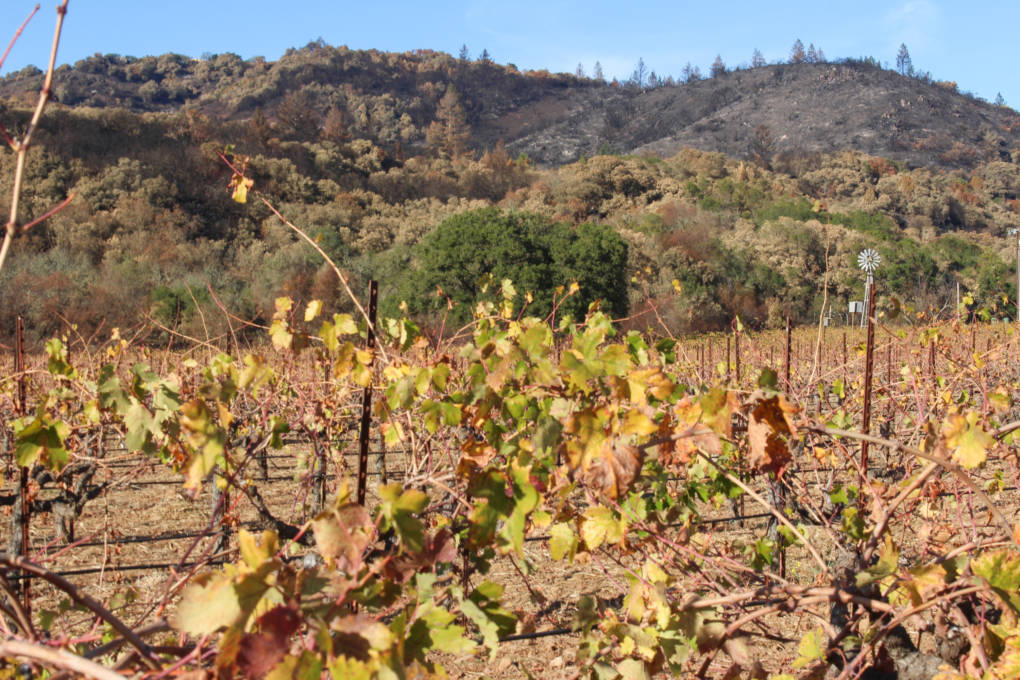
"caption": "Charred hills are seen near vineyards in Sonoma Valley on Nov. 7, 2017. Local wineries such as Buena Vista were close to the flames.",
"description": null,
"title": "Charred hills are near vineyards in Sonoma Valley, Calif. on Nov. 7, 2017. Local wineries such as Buena Vista were close to the flames.",
"credit": "Farida Jhabvala Romero/KQED",
"status": "inherit",
"altTag": null,
"isLoading": false,
"fetchFailed": false
},
"news_11961868": {
"type": "attachments",
"id": "news_11961868",
"meta": {
"index": "attachments_1716263798",
"site": "news",
"id": "11961868",
"found": true
},
"parent": 0,
"imgSizes": {
"twentyfourteen-full-width": {
"file": "https://ww2.kqed.org/app/uploads/sites/10/2023/09/GettyImages-1308989307-1038x576.jpg",
"width": 1038,
"mimeType": "image/jpeg",
"height": 576
},
"thumbnail": {
"file": "https://ww2.kqed.org/app/uploads/sites/10/2023/09/GettyImages-1308989307-160x110.jpg",
"width": 160,
"mimeType": "image/jpeg",
"height": 110
},
"post-thumbnail": {
"file": "https://ww2.kqed.org/app/uploads/sites/10/2023/09/GettyImages-1308989307-672x372.jpg",
"width": 672,
"mimeType": "image/jpeg",
"height": 372
},
"kqedFullSize": {
"file": "https://ww2.kqed.org/app/uploads/sites/10/2023/09/GettyImages-1308989307-scaled.jpg",
"width": 2560,
"height": 1756
},
"2048x2048": {
"file": "https://ww2.kqed.org/app/uploads/sites/10/2023/09/GettyImages-1308989307-2048x1404.jpg",
"width": 2048,
"mimeType": "image/jpeg",
"height": 1404
},
"large": {
"file": "https://ww2.kqed.org/app/uploads/sites/10/2023/09/GettyImages-1308989307-1020x699.jpg",
"width": 1020,
"mimeType": "image/jpeg",
"height": 699
},
"1536x1536": {
"file": "https://ww2.kqed.org/app/uploads/sites/10/2023/09/GettyImages-1308989307-1536x1053.jpg",
"width": 1536,
"mimeType": "image/jpeg",
"height": 1053
},
"full-width": {
"file": "https://ww2.kqed.org/app/uploads/sites/10/2023/09/GettyImages-1308989307-1920x1317.jpg",
"width": 1920,
"mimeType": "image/jpeg",
"height": 1317
},
"medium": {
"file": "https://ww2.kqed.org/app/uploads/sites/10/2023/09/GettyImages-1308989307-800x549.jpg",
"width": 800,
"mimeType": "image/jpeg",
"height": 549
}
},
"publishDate": 1695228987,
"modified": 1695231246,
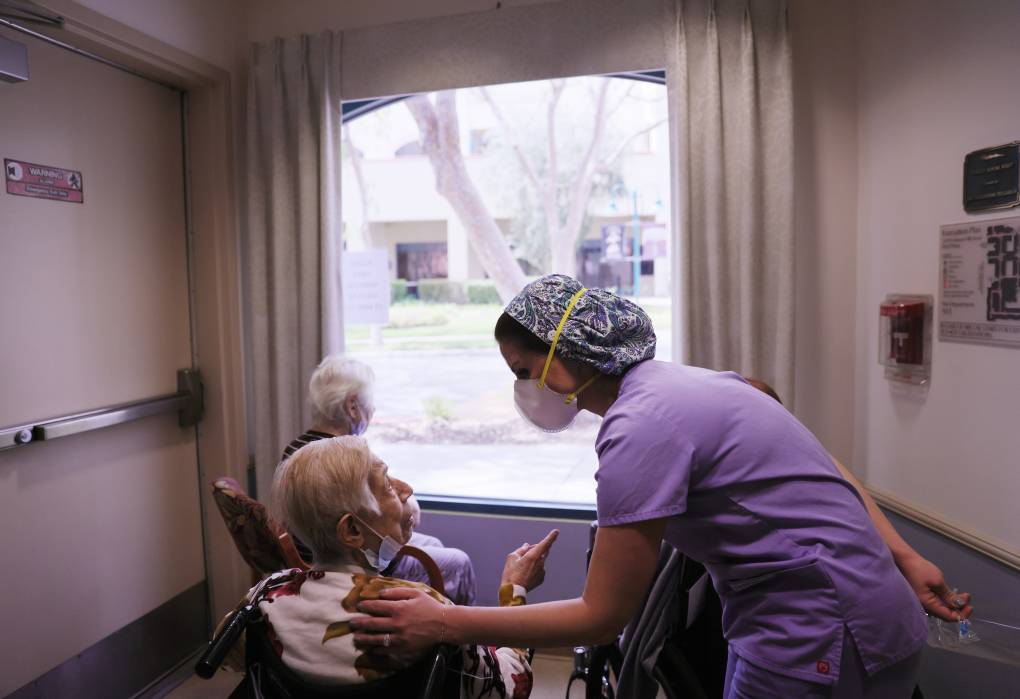
"caption": "In response to increased COVID-19 cases in the Bay Area — which health officials attribute to the latest mutated strain — Contra Costa Health Services CEO Anna Roth said Contra Costa Health and other Bay Area health agencies are implementing new mask requirements for health care workers. Sonoma County advisers issued the same precautions as well.",
"description": null,
"title": "First Day Of In-Room Family Member Visits At Skilled Nursing Facility",
"credit": "Mario Tama/Getty Images",
"status": "inherit",
"altTag": "A nurse wearing a mask and hair net addresses a patient in a wheelchair near a window.",
"isLoading": false,
"fetchFailed": false
},
"news_11957506": {
"type": "attachments",
"id": "news_11957506",
"meta": {
"index": "attachments_1716263798",
"site": "news",
"id": "11957506",
"found": true
},
"parent": 11957505,
"imgSizes": {
"twentyfourteen-full-width": {
"file": "https://ww2.kqed.org/app/uploads/sites/10/2023/08/farmworker-lady-and-supporters-1020x576.jpg",
"width": 1020,
"mimeType": "image/jpeg",
"height": 576
},
"thumbnail": {
"file": "https://ww2.kqed.org/app/uploads/sites/10/2023/08/farmworker-lady-and-supporters-160x107.jpg",
"width": 160,
"mimeType": "image/jpeg",
"height": 107
},
"post-thumbnail": {
"file": "https://ww2.kqed.org/app/uploads/sites/10/2023/08/farmworker-lady-and-supporters-672x372.jpg",
"width": 672,
"mimeType": "image/jpeg",
"height": 372
},
"kqedFullSize": {
"file": "https://ww2.kqed.org/app/uploads/sites/10/2023/08/farmworker-lady-and-supporters.jpg",
"width": 1020,
"height": 680
},
"medium": {
"file": "https://ww2.kqed.org/app/uploads/sites/10/2023/08/farmworker-lady-and-supporters-800x533.jpg",
"width": 800,
"mimeType": "image/jpeg",
"height": 533
}
},
"publishDate": 1691215775,
"modified": 1694506565,
"caption": "La trabajadora agrícola Sandra de León asiste a una conferencia de prensa en la plaza central de Healdsburg, en el condado de Sonoma, el lunes 24 de julio de 2023. Trabajadores agrícolas y defensores del grupo de derechos laborales North Bay Jobs With Justice se reunieron en la plaza para celebrar la resolución de una demanda con Mauritson Farms Inc. después de presentar una demanda por prácticas laborales injustas ante los reguladores de California.",
"description": null,
"title": "farmworker lady and supporters",
"credit": " (Juliana Yamada/KQED)",
"status": "inherit",
"altTag": null,
"isLoading": false,
"fetchFailed": false
},
"news_11959245": {
"type": "attachments",
"id": "news_11959245",
"meta": {
"index": "attachments_1716263798",
"site": "news",
"id": "11959245",
"found": true
},
"parent": 11959242,
"imgSizes": {
"twentyfourteen-full-width": {
"file": "https://ww2.kqed.org/app/uploads/sites/10/2023/08/GettyImages-1242795552-1038x576.jpg",
"width": 1038,
"mimeType": "image/jpeg",
"height": 576
},
"thumbnail": {
"file": "https://ww2.kqed.org/app/uploads/sites/10/2023/08/GettyImages-1242795552-160x107.jpg",
"width": 160,
"mimeType": "image/jpeg",
"height": 107
},
"post-thumbnail": {
"file": "https://ww2.kqed.org/app/uploads/sites/10/2023/08/GettyImages-1242795552-672x372.jpg",
"width": 672,
"mimeType": "image/jpeg",
"height": 372
},
"kqedFullSize": {
"file": "https://ww2.kqed.org/app/uploads/sites/10/2023/08/GettyImages-1242795552.jpg",
"width": 2000,
"height": 1333
},
"large": {
"file": "https://ww2.kqed.org/app/uploads/sites/10/2023/08/GettyImages-1242795552-1020x680.jpg",
"width": 1020,
"mimeType": "image/jpeg",
"height": 680
},
"1536x1536": {
"file": "https://ww2.kqed.org/app/uploads/sites/10/2023/08/GettyImages-1242795552-1536x1024.jpg",
"width": 1536,
"mimeType": "image/jpeg",
"height": 1024
},
"full-width": {
"file": "https://ww2.kqed.org/app/uploads/sites/10/2023/08/GettyImages-1242795552-1920x1280.jpg",
"width": 1920,
"mimeType": "image/jpeg",
"height": 1280
},
"medium": {
"file": "https://ww2.kqed.org/app/uploads/sites/10/2023/08/GettyImages-1242795552-800x533.jpg",
"width": 800,
"mimeType": "image/jpeg",
"height": 533
}
},
"publishDate": 1693014286,
"modified": 1693014370,
"caption": "Competitors take part in the Tough Mudder event in Sonoma in 2022.",
"description": null,
"title": "Tough Mudder event in Sonoma Valley of California",
"credit": "Tayfun Coskun/Anadolu Agency via Getty Images",
"status": "inherit",
"altTag": "a dozen people, dressed in athletic gear, climb in and out of a muddy pit in a field",
"isLoading": false,
"fetchFailed": false
},
"news_11956456": {
"type": "attachments",
"id": "news_11956456",
"meta": {
"index": "attachments_1716263798",
"site": "news",
"id": "11956456",
"found": true
},
"parent": 0,
"imgSizes": {
"twentyfourteen-full-width": {
"file": "https://ww2.kqed.org/app/uploads/sites/10/2023/07/RS67229_20230724-NBJWJPresser-08-JY-KQED-1-1038x576.jpg",
"width": 1038,
"mimeType": "image/jpeg",
"height": 576
},
"thumbnail": {
"file": "https://ww2.kqed.org/app/uploads/sites/10/2023/07/RS67229_20230724-NBJWJPresser-08-JY-KQED-1-160x107.jpg",
"width": 160,
"mimeType": "image/jpeg",
"height": 107
},
"post-thumbnail": {
"file": "https://ww2.kqed.org/app/uploads/sites/10/2023/07/RS67229_20230724-NBJWJPresser-08-JY-KQED-1-672x372.jpg",
"width": 672,
"mimeType": "image/jpeg",
"height": 372
},
"kqedFullSize": {
"file": "https://ww2.kqed.org/app/uploads/sites/10/2023/07/RS67229_20230724-NBJWJPresser-08-JY-KQED-1.jpg",
"width": 2000,
"height": 1333
},
"large": {
"file": "https://ww2.kqed.org/app/uploads/sites/10/2023/07/RS67229_20230724-NBJWJPresser-08-JY-KQED-1-1020x680.jpg",
"width": 1020,
"mimeType": "image/jpeg",
"height": 680
},
"1536x1536": {
"file": "https://ww2.kqed.org/app/uploads/sites/10/2023/07/RS67229_20230724-NBJWJPresser-08-JY-KQED-1-1536x1024.jpg",
"width": 1536,
"mimeType": "image/jpeg",
"height": 1024
},
"full-width": {
"file": "https://ww2.kqed.org/app/uploads/sites/10/2023/07/RS67229_20230724-NBJWJPresser-08-JY-KQED-1-1920x1280.jpg",
"width": 1920,
"mimeType": "image/jpeg",
"height": 1280
},
"medium": {
"file": "https://ww2.kqed.org/app/uploads/sites/10/2023/07/RS67229_20230724-NBJWJPresser-08-JY-KQED-1-800x533.jpg",
"width": 800,
"mimeType": "image/jpeg",
"height": 533
}
},
"publishDate": 1690306440,
"modified": 1690311797,
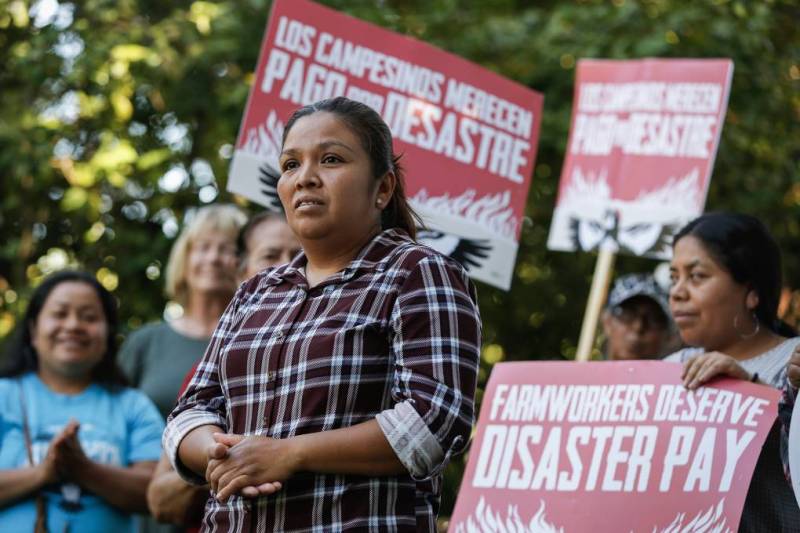
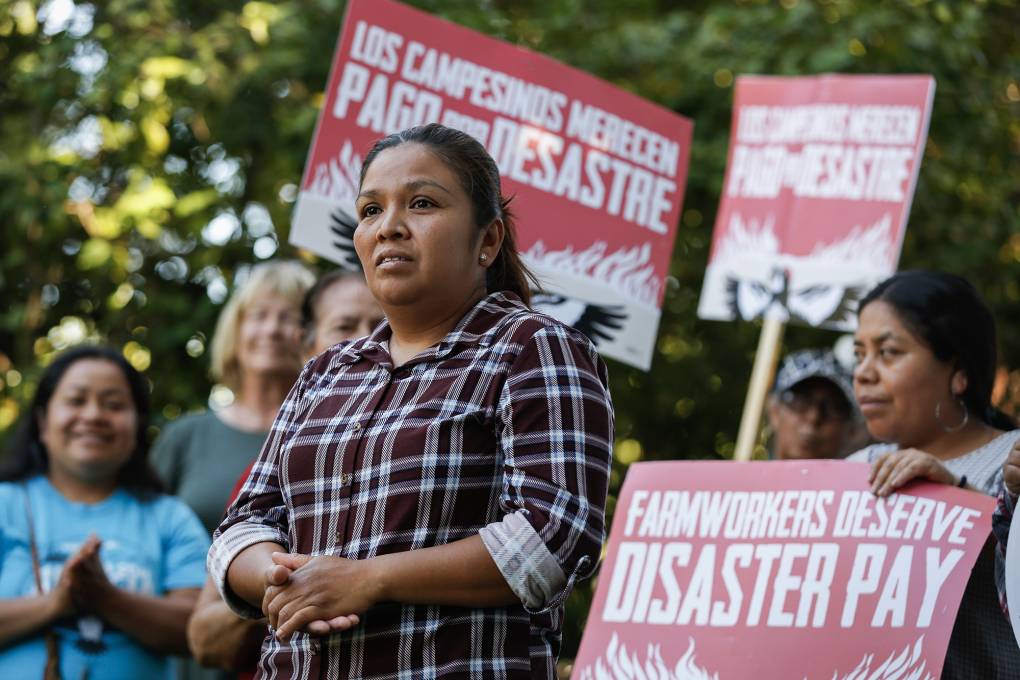
"caption": "Farmworker Sandra de Leon attends a press conference at Healdsburg Plaza in Healdsburg, Sonoma County, on Monday, July 24, 2023. Farmworkers and advocates with the labor rights group North Bay Jobs With Justice gathered in the plaza to celebrate settling a lawsuit with Mauritson Farms Inc. after filing an unfair labor practices claim with California regulators.",
"description": null,
"title": "RS67229_20230724-NBJWJPresser-08-JY-KQED-1",
"credit": "Juliana Yamada/KQED",
"status": "inherit",
"altTag": "A person with long hair and a plaid shirt stands in front of others holding signs reading \"Farmworkers Deserve Disaster Pay\" in an outdoor setting.",
"isLoading": false,
"fetchFailed": false
},
"news_11940732": {
"type": "attachments",
"id": "news_11940732",
"meta": {
"index": "attachments_1716263798",
"site": "news",
"id": "11940732",
"found": true
},
"parent": 11940706,
"imgSizes": {
"twentyfourteen-full-width": {
"file": "https://ww2.kqed.org/app/uploads/sites/10/2023/02/DSC2355-1038x576.jpg",
"width": 1038,
"mimeType": "image/jpeg",
"height": 576
},
"thumbnail": {
"file": "https://ww2.kqed.org/app/uploads/sites/10/2023/02/DSC2355-160x107.jpg",
"width": 160,
"mimeType": "image/jpeg",
"height": 107
},
"post-thumbnail": {
"file": "https://ww2.kqed.org/app/uploads/sites/10/2023/02/DSC2355-672x372.jpg",
"width": 672,
"mimeType": "image/jpeg",
"height": 372
},
"kqedFullSize": {
"file": "https://ww2.kqed.org/app/uploads/sites/10/2023/02/DSC2355.jpg",
"width": 2000,
"height": 1333
},
"large": {
"file": "https://ww2.kqed.org/app/uploads/sites/10/2023/02/DSC2355-1020x680.jpg",
"width": 1020,
"mimeType": "image/jpeg",
"height": 680
},
"1536x1536": {
"file": "https://ww2.kqed.org/app/uploads/sites/10/2023/02/DSC2355-1536x1024.jpg",
"width": 1536,
"mimeType": "image/jpeg",
"height": 1024
},
"full-width": {
"file": "https://ww2.kqed.org/app/uploads/sites/10/2023/02/DSC2355-1920x1280.jpg",
"width": 1920,
"mimeType": "image/jpeg",
"height": 1280
},
"medium": {
"file": "https://ww2.kqed.org/app/uploads/sites/10/2023/02/DSC2355-800x533.jpg",
"width": 800,
"mimeType": "image/jpeg",
"height": 533
}
},
"publishDate": 1676071898,
"modified": 1676080036,
"caption": "Fairmont Sonoma Mission Inn and Spa aesthetician Alè Santorio prepares to give a speech during a candlelight vigil on Feb. 9, 2023, as part of an ongoing effort among workers to unionize.",
"description": null,
"title": "_DSC2355",
"credit": "Aryk Copley/KQED",
"status": "inherit",
"altTag": "A crowd of people hold candles outside at dusk.",
"isLoading": false,
"fetchFailed": false
},
"news_11921089": {
"type": "attachments",
"id": "news_11921089",
"meta": {
"index": "attachments_1716263798",
"site": "news",
"id": "11921089",
"found": true
},
"parent": 11921034,
"imgSizes": {
"twentyfourteen-full-width": {
"file": "https://ww2.kqed.org/app/uploads/sites/10/2022/07/RS57198_021_KQED_EARTHseedFarmSonoma_07082022-qut-1038x576.jpg",
"width": 1038,
"mimeType": "image/jpeg",
"height": 576
},
"thumbnail": {
"file": "https://ww2.kqed.org/app/uploads/sites/10/2022/07/RS57198_021_KQED_EARTHseedFarmSonoma_07082022-qut-160x107.jpg",
"width": 160,
"mimeType": "image/jpeg",
"height": 107
},
"post-thumbnail": {
"file": "https://ww2.kqed.org/app/uploads/sites/10/2022/07/RS57198_021_KQED_EARTHseedFarmSonoma_07082022-qut-672x372.jpg",
"width": 672,
"mimeType": "image/jpeg",
"height": 372
},
"kqedFullSize": {
"file": "https://ww2.kqed.org/app/uploads/sites/10/2022/07/RS57198_021_KQED_EARTHseedFarmSonoma_07082022-qut.jpg",
"width": 1920,
"height": 1280
},
"large": {
"file": "https://ww2.kqed.org/app/uploads/sites/10/2022/07/RS57198_021_KQED_EARTHseedFarmSonoma_07082022-qut-1020x680.jpg",
"width": 1020,
"mimeType": "image/jpeg",
"height": 680
},
"1536x1536": {
"file": "https://ww2.kqed.org/app/uploads/sites/10/2022/07/RS57198_021_KQED_EARTHseedFarmSonoma_07082022-qut-1536x1024.jpg",
"width": 1536,
"mimeType": "image/jpeg",
"height": 1024
},
"medium": {
"file": "https://ww2.kqed.org/app/uploads/sites/10/2022/07/RS57198_021_KQED_EARTHseedFarmSonoma_07082022-qut-800x533.jpg",
"width": 800,
"mimeType": "image/jpeg",
"height": 533
}
},
"publishDate": 1659373175,
"modified": 1659373219,
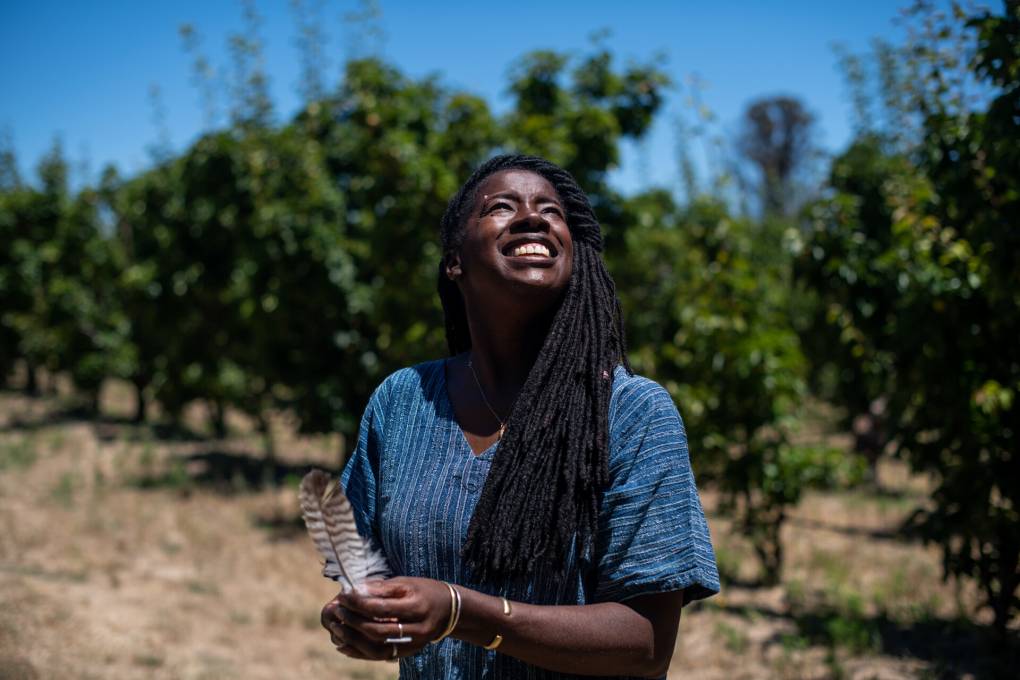
"caption": "EARTHseed Farm founder Pandora Thomas finds a feather at the farm and orchard in Sonoma County. The farm operates on Afro-Indigenous permaculture principles.",
"description": null,
"title": "RS57198_021_KQED_EARTHseedFarmSonoma_07082022-qut",
"credit": "Beth LaBerge/KQED",
"status": "inherit",
"altTag": "a woman holding a feather in an orchard",
"isLoading": false,
"fetchFailed": false
},
"news_11913660": {
"type": "attachments",
"id": "news_11913660",
"meta": {
"index": "attachments_1716263798",
"site": "news",
"id": "11913660",
"found": true
},
"parent": 11913501,
"imgSizes": {
"twentyfourteen-full-width": {
"file": "https://ww2.kqed.org/app/uploads/sites/10/2022/05/hate-1038x576.jpg",
"width": 1038,
"mimeType": "image/jpeg",
"height": 576
},
"thumbnail": {
"file": "https://ww2.kqed.org/app/uploads/sites/10/2022/05/hate-160x105.jpg",
"width": 160,
"mimeType": "image/jpeg",
"height": 105
},
"post-thumbnail": {
"file": "https://ww2.kqed.org/app/uploads/sites/10/2022/05/hate-672x372.jpg",
"width": 672,
"mimeType": "image/jpeg",
"height": 372
},
"kqedFullSize": {
"file": "https://ww2.kqed.org/app/uploads/sites/10/2022/05/hate-scaled.jpg",
"width": 2560,
"height": 1679
},
"2048x2048": {
"file": "https://ww2.kqed.org/app/uploads/sites/10/2022/05/hate-2048x1343.jpg",
"width": 2048,
"mimeType": "image/jpeg",
"height": 1343
},
"large": {
"file": "https://ww2.kqed.org/app/uploads/sites/10/2022/05/hate-1020x669.jpg",
"width": 1020,
"mimeType": "image/jpeg",
"height": 669
},
"1536x1536": {
"file": "https://ww2.kqed.org/app/uploads/sites/10/2022/05/hate-1536x1008.jpg",
"width": 1536,
"mimeType": "image/jpeg",
"height": 1008
},
"full-width": {
"file": "https://ww2.kqed.org/app/uploads/sites/10/2022/05/hate-1920x1259.jpg",
"width": 1920,
"mimeType": "image/jpeg",
"height": 1259
},
"medium": {
"file": "https://ww2.kqed.org/app/uploads/sites/10/2022/05/hate-800x525.jpg",
"width": 800,
"mimeType": "image/jpeg",
"height": 525
}
},
"publishDate": 1652142137,
"modified": 1652462508,
"caption": "Some 300 students walked out of West County High School on April 21, 2022, to protest how the school is handling racist student behavior.",
"description": null,
"title": "Your Hate Is Disgusting",
"credit": "Courtesy of West County High student Giselle Evans",
"status": "inherit",
"altTag": "White T-shirt with the message \"your hate is disgusting\" in red ink.",
"isLoading": false,
"fetchFailed": false
},
"news_11913343": {
"type": "attachments",
"id": "news_11913343",
"meta": {
"index": "attachments_1716263798",
"site": "news",
"id": "11913343",
"found": true
},
"parent": 11913342,
"imgSizes": {
"twentyfourteen-full-width": {
"file": "https://ww2.kqed.org/app/uploads/sites/10/2022/05/IMG_7680-1038x576.jpg",
"width": 1038,
"mimeType": "image/jpeg",
"height": 576
},
"thumbnail": {
"file": "https://ww2.kqed.org/app/uploads/sites/10/2022/05/IMG_7680-160x120.jpg",
"width": 160,
"mimeType": "image/jpeg",
"height": 120
},
"post-thumbnail": {
"file": "https://ww2.kqed.org/app/uploads/sites/10/2022/05/IMG_7680-672x372.jpg",
"width": 672,
"mimeType": "image/jpeg",
"height": 372
},
"kqedFullSize": {
"file": "https://ww2.kqed.org/app/uploads/sites/10/2022/05/IMG_7680-scaled.jpg",
"width": 2560,
"height": 1920
},
"2048x2048": {
"file": "https://ww2.kqed.org/app/uploads/sites/10/2022/05/IMG_7680-2048x1536.jpg",
"width": 2048,
"mimeType": "image/jpeg",
"height": 1536
},
"large": {
"file": "https://ww2.kqed.org/app/uploads/sites/10/2022/05/IMG_7680-1020x765.jpg",
"width": 1020,
"mimeType": "image/jpeg",
"height": 765
},
"1536x1536": {
"file": "https://ww2.kqed.org/app/uploads/sites/10/2022/05/IMG_7680-1536x1152.jpg",
"width": 1536,
"mimeType": "image/jpeg",
"height": 1152
},
"full-width": {
"file": "https://ww2.kqed.org/app/uploads/sites/10/2022/05/IMG_7680-1920x1440.jpg",
"width": 1920,
"mimeType": "image/jpeg",
"height": 1440
},
"medium": {
"file": "https://ww2.kqed.org/app/uploads/sites/10/2022/05/IMG_7680-800x600.jpg",
"width": 800,
"mimeType": "image/jpeg",
"height": 600
}
},
"publishDate": 1651790293,
"modified": 1651790446,
"caption": "Dylan Pena Perez (left) attends a West Sonoma County High School District Board of Trustees meeting regarding the removal of racist plaques on May 4, 2022.",
"description": null,
"title": "IMG_7680",
"credit": "Julia McEvoy",
"status": "inherit",
"altTag": null,
"isLoading": false,
"fetchFailed": false
},
"news_11912024": {
"type": "attachments",
"id": "news_11912024",
"meta": {
"index": "attachments_1716263798",
"site": "news",
"id": "11912024",
"found": true
},
"parent": 11911968,
"imgSizes": {
"twentyfourteen-full-width": {
"file": "https://ww2.kqed.org/app/uploads/sites/10/2022/04/image1-1-1038x576.jpg",
"width": 1038,
"mimeType": "image/jpeg",
"height": 576
},
"thumbnail": {
"file": "https://ww2.kqed.org/app/uploads/sites/10/2022/04/image1-1-160x107.jpg",
"width": 160,
"mimeType": "image/jpeg",
"height": 107
},
"post-thumbnail": {
"file": "https://ww2.kqed.org/app/uploads/sites/10/2022/04/image1-1-672x372.jpg",
"width": 672,
"mimeType": "image/jpeg",
"height": 372
},
"kqedFullSize": {
"file": "https://ww2.kqed.org/app/uploads/sites/10/2022/04/image1-1.jpg",
"width": 1920,
"height": 1278
},
"large": {
"file": "https://ww2.kqed.org/app/uploads/sites/10/2022/04/image1-1-1020x679.jpg",
"width": 1020,
"mimeType": "image/jpeg",
"height": 679
},
"1536x1536": {
"file": "https://ww2.kqed.org/app/uploads/sites/10/2022/04/image1-1-1536x1022.jpg",
"width": 1536,
"mimeType": "image/jpeg",
"height": 1022
},
"medium": {
"file": "https://ww2.kqed.org/app/uploads/sites/10/2022/04/image1-1-800x533.jpg",
"width": 800,
"mimeType": "image/jpeg",
"height": 533
}
},
"publishDate": 1650664699,
"modified": 1650664699,
"caption": null,
"description": null,
"title": "image1",
"credit": null,
"status": "inherit",
"altTag": null,
"isLoading": false,
"fetchFailed": false
},
"news_11906812": {
"type": "attachments",
"id": "news_11906812",
"meta": {
"index": "attachments_1716263798",
"site": "news",
"id": "11906812",
"found": true
},
"parent": 11906800,
"imgSizes": {
"twentyfourteen-full-width": {
"file": "https://ww2.kqed.org/app/uploads/sites/10/2022/02/Paloma-Reyes-1020x765-1-1019x576.jpg",
"width": 1019,
"mimeType": "image/jpeg",
"height": 576
},
"thumbnail": {
"file": "https://ww2.kqed.org/app/uploads/sites/10/2022/02/Paloma-Reyes-1020x765-1-160x107.jpg",
"width": 160,
"mimeType": "image/jpeg",
"height": 107
},
"post-thumbnail": {
"file": "https://ww2.kqed.org/app/uploads/sites/10/2022/02/Paloma-Reyes-1020x765-1-672x372.jpg",
"width": 672,
"mimeType": "image/jpeg",
"height": 372
},
"kqedFullSize": {
"file": "https://ww2.kqed.org/app/uploads/sites/10/2022/02/Paloma-Reyes-1020x765-1.jpg",
"width": 1019,
"height": 680
},
"medium": {
"file": "https://ww2.kqed.org/app/uploads/sites/10/2022/02/Paloma-Reyes-1020x765-1-800x534.jpg",
"width": 800,
"mimeType": "image/jpeg",
"height": 534
}
},
"publishDate": 1646092447,
"modified": 1646092572,
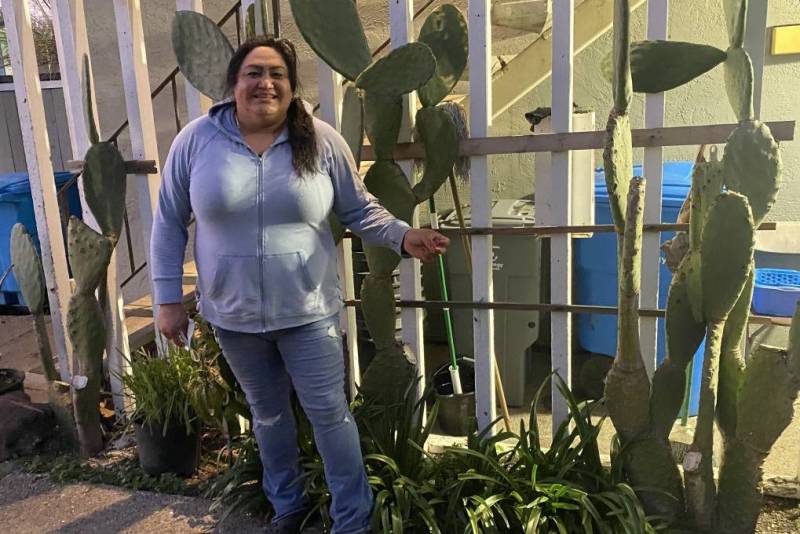
"caption": "Paloma Reyes, una mujer trans y trabajadora agrícola de Santa Rosa, ayuda a dirigir un grupo que defiende los derechos de trabajadores agrícolas trans.",
"description": "Paloma Reyes, una mujer trans y trabajadora agrícola de Santa Rosa, ayuda a dirigir un grupo que defiende los derechos de trabajadores agrícolas trans.",
"title": "Paloma-Reyes-1020x765",
"credit": "Ezra David Romero/KQED",
"status": "inherit",
"altTag": "Una persona aparece parada afuera de un hogar y posa a lado de unos nopales.",
"isLoading": false,
"fetchFailed": false
},
"news_11901765": {
"type": "attachments",
"id": "news_11901765",
"meta": {
"index": "attachments_1716263798",
"site": "news",
"id": "11901765",
"found": true
},
"parent": 11901749,
"imgSizes": {
"twentyfourteen-full-width": {
"file": "https://ww2.kqed.org/app/uploads/sites/10/2022/01/RS31770_sfmayor0712.0003-qut-1038x576.jpg",
"width": 1038,
"mimeType": "image/jpeg",
"height": 576
},
"thumbnail": {
"file": "https://ww2.kqed.org/app/uploads/sites/10/2022/01/RS31770_sfmayor0712.0003-qut-160x107.jpg",
"width": 160,
"mimeType": "image/jpeg",
"height": 107
},
"post-thumbnail": {
"file": "https://ww2.kqed.org/app/uploads/sites/10/2022/01/RS31770_sfmayor0712.0003-qut-672x372.jpg",
"width": 672,
"mimeType": "image/jpeg",
"height": 372
},
"kqedFullSize": {
"file": "https://ww2.kqed.org/app/uploads/sites/10/2022/01/RS31770_sfmayor0712.0003-qut.jpg",
"width": 1920,
"height": 1281
},
"large": {
"file": "https://ww2.kqed.org/app/uploads/sites/10/2022/01/RS31770_sfmayor0712.0003-qut-1020x681.jpg",
"width": 1020,
"mimeType": "image/jpeg",
"height": 681
},
"1536x1536": {
"file": "https://ww2.kqed.org/app/uploads/sites/10/2022/01/RS31770_sfmayor0712.0003-qut-1536x1025.jpg",
"width": 1536,
"mimeType": "image/jpeg",
"height": 1025
},
"medium": {
"file": "https://ww2.kqed.org/app/uploads/sites/10/2022/01/RS31770_sfmayor0712.0003-qut-800x534.jpg",
"width": 800,
"mimeType": "image/jpeg",
"height": 534
}
},
"publishDate": 1642200111,
"modified": 1642200111,
"caption": "San Francisco Mayor London Breed waits to walk out of City Hall for her inauguration in San Francisco, Calif. on Wednesday, July 11, 2018.",
"description": null,
"title": "SFMayor0712",
"credit": null,
"status": "inherit",
"altTag": null,
"isLoading": false,
"fetchFailed": false
}
},
"audioPlayerReducer": {
"postId": "stream_live",
"isPaused": true,
"isPlaying": false,
"pfsActive": false,
"pledgeModalIsOpen": true,
"playerDrawerIsOpen": false,
"liveAudioPlayStartedAt": 0,
"liveAudioPlayContext": ""
},
"authorsReducer": {
"byline_news_11961817": {
"type": "authors",
"id": "byline_news_11961817",
"meta": {
"override": true
},
"slug": "byline_news_11961817",
"name": "\u003ca href=\"https://twitter.com/TonyBaloney1967\">Tony Hicks\u003c/a>\u003cbr>Bay City News",
"isLoading": false
},
"jmcevoy": {
"type": "authors",
"id": "231",
"meta": {
"index": "authors_1716337520",
"id": "231",
"found": true
},
"name": "Julia McEvoy",
"firstName": "Julia",
"lastName": "McEvoy",
"slug": "jmcevoy",
"email": "jmcevoy@KQED.org",
"display_author_email": true,
"staff_mastheads": [
"news"
],
"title": "KQED Senior Editor",
"bio": "Julia McEvoy is KQED's Senior Editor, Education Equity.\r\n\r\nJulia heads KQED’s education coverage examining inequities students face in Bay Area and California schools, and reports on what it will take to educate the next generation.\r\n\r\nJulia's editorial work has received a Peabody Award, a Casey Medal for Coverage of Children and Families, several Edward R. Murrow awards, as well as awards from the Public Radio News Directors Inc. and the Society for Professional Journalists.",
"avatar": "https://secure.gravatar.com/avatar/aec3ce21abe02b302fd33638abd56a22?s=600&d=blank&r=g",
"twitter": "juliamcevoy1",
"facebook": null,
"instagram": null,
"linkedin": null,
"sites": [
{
"site": "news",
"roles": []
},
{
"site": "stateofhealth",
"roles": [
"author"
]
}
],
"headData": {
"title": "Julia McEvoy | KQED",
"description": "KQED Senior Editor",
"ogImgSrc": "https://secure.gravatar.com/avatar/aec3ce21abe02b302fd33638abd56a22?s=600&d=blank&r=g",
"twImgSrc": "https://secure.gravatar.com/avatar/aec3ce21abe02b302fd33638abd56a22?s=600&d=blank&r=g"
},
"isLoading": false,
"link": "/author/jmcevoy"
},
"kqed": {
"type": "authors",
"id": "236",
"meta": {
"index": "authors_1716337520",
"id": "236",
"found": true
},
"name": "KQED News Staff",
"firstName": "KQED News Staff",
"lastName": null,
"slug": "kqed",
"email": "faq@kqed.org",
"display_author_email": false,
"staff_mastheads": [],
"title": null,
"bio": null,
"avatar": "https://secure.gravatar.com/avatar/ef0e801a68c4c54afa9180db14084167?s=600&d=blank&r=g",
"twitter": null,
"facebook": null,
"instagram": null,
"linkedin": null,
"sites": [
{
"site": "arts",
"roles": [
"contributor"
]
},
{
"site": "news",
"roles": [
"editor"
]
},
{
"site": "futureofyou",
"roles": [
"author"
]
}
],
"headData": {
"title": "KQED News Staff | KQED",
"description": null,
"ogImgSrc": "https://secure.gravatar.com/avatar/ef0e801a68c4c54afa9180db14084167?s=600&d=blank&r=g",
"twImgSrc": "https://secure.gravatar.com/avatar/ef0e801a68c4c54afa9180db14084167?s=600&d=blank&r=g"
},
"isLoading": false,
"link": "/author/kqed"
},
"kdomara": {
"type": "authors",
"id": "1459",
"meta": {
"index": "authors_1716337520",
"id": "1459",
"found": true
},
"name": "Kelly O'Mara",
"firstName": "Kelly",
"lastName": "O'Mara",
"slug": "kdomara",
"email": "komara@kqed.org",
"display_author_email": false,
"staff_mastheads": [
"news"
],
"title": "KQED Contributor",
"bio": "Kelly O'Mara is a writer and reporter in the San Francisco Bay Area. She writes about food, health, sports, travel, business and California news. Her work has appeared on KQED, online for Outside Magazine, epsnW, VICE and in Competitor Magazine, among others. Follow Kelly on Twitter \u003ca href=\"https://twitter.com/kellydomara\">@kellydomara\u003c/a>.",
"avatar": "https://secure.gravatar.com/avatar/768fec7412028b72f13bdd0f5f9d8186?s=600&d=blank&r=g",
"twitter": null,
"facebook": null,
"instagram": null,
"linkedin": null,
"sites": [
{
"site": "arts",
"roles": []
},
{
"site": "news",
"roles": []
},
{
"site": "bayareabites",
"roles": []
},
{
"site": "stateofhealth",
"roles": []
},
{
"site": "science",
"roles": []
},
{
"site": "checkplease",
"roles": [
"editor"
]
},
{
"site": "food",
"roles": []
},
{
"site": "forum",
"roles": [
"editor"
]
},
{
"site": "liveblog",
"roles": [
"editor"
]
}
],
"headData": {
"title": "Kelly O'Mara | KQED",
"description": "KQED Contributor",
"ogImgSrc": "https://secure.gravatar.com/avatar/768fec7412028b72f13bdd0f5f9d8186?s=600&d=blank&r=g",
"twImgSrc": "https://secure.gravatar.com/avatar/768fec7412028b72f13bdd0f5f9d8186?s=600&d=blank&r=g"
},
"isLoading": false,
"link": "/author/kdomara"
},
"ecruzguevarra": {
"type": "authors",
"id": "8654",
"meta": {
"index": "authors_1716337520",
"id": "8654",
"found": true
},
"name": "Ericka Cruz Guevarra",
"firstName": "Ericka",
"lastName": "Cruz Guevarra",
"slug": "ecruzguevarra",
"email": "ecruzguevarra@kqed.org",
"display_author_email": true,
"staff_mastheads": [
"news"
],
"title": "Producer, The Bay Podcast",
"bio": "Ericka Cruz Guevarra is host of \u003ca href=\"https://www.kqed.org/podcasts/thebay\">\u003cem>The Bay\u003c/em>\u003c/a> podcast at KQED. Before host, she was the show’s producer. Her work in that capacity includes a three-part reported series on policing in Vallejo, which won a 2020 excellence in journalism award from the Society of Professional Journalists. Ericka has worked as a breaking news reporter at Oregon Public Broadcasting, helped produce the Code Switch podcast, and was KQED’s inaugural Raul Ramirez Diversity Fund intern. She’s also an alumna of NPR’s Next Generation Radio program. Send her an email if you have strong feelings about whether Fairfield and Suisun City are the Bay. Ericka is represented by SAG-AFTRA.",
"avatar": "https://secure.gravatar.com/avatar/accefc1de4bafc7e234b69bcb9b6f6536c130fd84709bc3069ef11a78787e1bb?s=600&d=blank&r=g",
"twitter": "NotoriousECG",
"bluesky": null,
"facebook": null,
"instagram": null,
"linkedin": null,
"sites": [
{
"site": "arts",
"roles": [
"subscriber"
]
},
{
"site": "news",
"roles": [
"editor",
"manage_categories"
]
},
{
"site": "futureofyou",
"roles": [
"subscriber"
]
},
{
"site": "stateofhealth",
"roles": [
"subscriber"
]
},
{
"site": "science",
"roles": [
"editor"
]
},
{
"site": "forum",
"roles": [
"subscriber"
]
}
],
"headData": {
"title": "Ericka Cruz Guevarra | KQED",
"description": "Producer, The Bay Podcast",
"ogImgSrc": "https://secure.gravatar.com/avatar/accefc1de4bafc7e234b69bcb9b6f6536c130fd84709bc3069ef11a78787e1bb?s=600&d=blank&r=g",
"twImgSrc": "https://secure.gravatar.com/avatar/accefc1de4bafc7e234b69bcb9b6f6536c130fd84709bc3069ef11a78787e1bb?s=600&d=blank&r=g"
},
"isLoading": false,
"link": "/author/ecruzguevarra"
},
"fjhabvala": {
"type": "authors",
"id": "8659",
"meta": {
"index": "authors_1716337520",
"id": "8659",
"found": true
},
"name": "Farida Jhabvala Romero",
"firstName": "Farida",
"lastName": "Jhabvala Romero",
"slug": "fjhabvala",
"email": "fjhabvala@kqed.org",
"display_author_email": true,
"staff_mastheads": [
"news"
],
"title": "KQED Contributor",
"bio": "Farida Jhabvala Romero is a Labor Correspondent for KQED. She previously covered immigration. Farida was \u003ca href=\"https://www.ccnma.org/2022-most-influential-latina-journalists\">named\u003c/a> one of the 10 Most Influential Latina Journalists in California in 2022 by the California Chicano News Media Association. Her work has won awards from the Society of Professional Journalists (Northern California), as well as a national and regional Edward M. Murrow Award for the collaborative reporting projects “Dangerous Air” and “Graying California.” Before joining KQED, Farida worked as a producer at Radio Bilingüe, a national public radio network. Farida earned her master’s degree in journalism from Stanford University.",
"avatar": "https://secure.gravatar.com/avatar/f9f022d4e2609741874222a1e9d41f48fea74011aa7c615eef91d9a50c944ebe?s=600&d=blank&r=g",
"twitter": "FaridaJhabvala",
"bluesky": null,
"facebook": null,
"instagram": null,
"linkedin": "https://www.linkedin.com/in/faridajhabvala/",
"sites": [
{
"site": "news",
"roles": [
"editor"
]
},
{
"site": "stateofhealth",
"roles": [
"author"
]
},
{
"site": "liveblog",
"roles": [
"author"
]
}
],
"headData": {
"title": "Farida Jhabvala Romero | KQED",
"description": "KQED Contributor",
"ogImgSrc": "https://secure.gravatar.com/avatar/f9f022d4e2609741874222a1e9d41f48fea74011aa7c615eef91d9a50c944ebe?s=600&d=blank&r=g",
"twImgSrc": "https://secure.gravatar.com/avatar/f9f022d4e2609741874222a1e9d41f48fea74011aa7c615eef91d9a50c944ebe?s=600&d=blank&r=g"
},
"isLoading": false,
"link": "/author/fjhabvala"
},
"aproehl": {
"type": "authors",
"id": "11296",
"meta": {
"index": "authors_1716337520",
"id": "11296",
"found": true
},
"name": "Ariana Proehl",
"firstName": "Ariana",
"lastName": "Proehl",
"slug": "aproehl",
"email": "aproehl@KQED.org",
"display_author_email": true,
"staff_mastheads": [
"news"
],
"title": "Culture Reporter, KQED",
"bio": "Ariana Proehl is a Culture Reporter and Host.",
"avatar": "https://secure.gravatar.com/avatar/c96b24567eb5bb3a4f8bb295ed53e232?s=600&d=blank&r=g",
"twitter": "ArianaProehl",
"facebook": null,
"instagram": null,
"linkedin": null,
"sites": [
{
"site": "arts",
"roles": []
},
{
"site": "news",
"roles": []
},
{
"site": "education",
"roles": []
},
{
"site": "forum",
"roles": []
}
],
"headData": {
"title": "Ariana Proehl | KQED",
"description": "Culture Reporter, KQED",
"ogImgSrc": "https://secure.gravatar.com/avatar/c96b24567eb5bb3a4f8bb295ed53e232?s=600&d=blank&r=g",
"twImgSrc": "https://secure.gravatar.com/avatar/c96b24567eb5bb3a4f8bb295ed53e232?s=600&d=blank&r=g"
},
"isLoading": false,
"link": "/author/aproehl"
},
"amontecillo": {
"type": "authors",
"id": "11649",
"meta": {
"index": "authors_1716337520",
"id": "11649",
"found": true
},
"name": "Alan Montecillo",
"firstName": "Alan",
"lastName": "Montecillo",
"slug": "amontecillo",
"email": "amontecillo@kqed.org",
"display_author_email": false,
"staff_mastheads": [
"news"
],
"title": "KQED Contributor",
"bio": "Alan Montecillo is the senior editor of \u003cem>\u003ca href=\"http://kqed.org/thebay\">The Bay\u003c/a>, \u003c/em> KQED's local news podcast. Before moving to the Bay Area, he worked as a senior talk show producer for WILL in Champaign-Urbana, Illinois and at Oregon Public Broadcasting in Portland, Oregon. He has won journalism awards from the Society of Professional Journalists Northern California, the Public Media Journalists Association, The Signal Awards, and has also received a regional Edward R. Murrow award. Alan is a Filipino American from Hong Kong and a graduate of Reed College.",
"avatar": "https://secure.gravatar.com/avatar/268f53a2066899ea9efdd8a5900218b17c822d9862cbc9326cccec53ef41d349?s=600&d=blank&r=g",
"twitter": "alanmontecillo",
"bluesky": null,
"facebook": null,
"instagram": null,
"linkedin": null,
"sites": [
{
"site": "",
"roles": [
"editor"
]
},
{
"site": "news",
"roles": [
"editor",
"manage_categories"
]
}
],
"headData": {
"title": "Alan Montecillo | KQED",
"description": "KQED Contributor",
"ogImgSrc": "https://secure.gravatar.com/avatar/268f53a2066899ea9efdd8a5900218b17c822d9862cbc9326cccec53ef41d349?s=600&d=blank&r=g",
"twImgSrc": "https://secure.gravatar.com/avatar/268f53a2066899ea9efdd8a5900218b17c822d9862cbc9326cccec53ef41d349?s=600&d=blank&r=g"
},
"isLoading": false,
"link": "/author/amontecillo"
},
"ccabreralomeli": {
"type": "authors",
"id": "11708",
"meta": {
"index": "authors_1716337520",
"id": "11708",
"found": true
},
"name": "Carlos Cabrera-Lomelí",
"firstName": "Carlos",
"lastName": "Cabrera-Lomelí",
"slug": "ccabreralomeli",
"email": "ccabreralomeli@KQED.org",
"display_author_email": true,
"staff_mastheads": [
"news"
],
"title": "Community Reporter",
"bio": "Carlos Cabrera-Lomelí is a community reporter with KQED's digital engagement team. He also reports and co-produces for KQED's bilingual news hub KQED en Español. He grew up in San Francisco's Mission District and has previously worked with Univision, 48 Hills and REFORMA in Mexico City.",
"avatar": "https://secure.gravatar.com/avatar/c309be9665e484f887b818c89e273ecc673004f426f36b24d00a4d813a2e0518?s=600&d=blank&r=g",
"twitter": "@LomeliCabrera",
"bluesky": null,
"facebook": null,
"instagram": null,
"linkedin": null,
"sites": [
{
"site": "arts",
"roles": [
"editor"
]
},
{
"site": "news",
"roles": [
"editor"
]
},
{
"site": "about",
"roles": [
"editor"
]
},
{
"site": "science",
"roles": [
"editor"
]
},
{
"site": "perspectives",
"roles": [
"editor"
]
},
{
"site": "elections",
"roles": [
"editor"
]
},
{
"site": "liveblog",
"roles": [
"contributor"
]
}
],
"headData": {
"title": "Carlos Cabrera-Lomelí | KQED",
"description": "Community Reporter",
"ogImgSrc": "https://secure.gravatar.com/avatar/c309be9665e484f887b818c89e273ecc673004f426f36b24d00a4d813a2e0518?s=600&d=blank&r=g",
"twImgSrc": "https://secure.gravatar.com/avatar/c309be9665e484f887b818c89e273ecc673004f426f36b24d00a4d813a2e0518?s=600&d=blank&r=g"
},
"isLoading": false,
"link": "/author/ccabreralomeli"
},
"eromero": {
"type": "authors",
"id": "11746",
"meta": {
"index": "authors_1716337520",
"id": "11746",
"found": true
},
"name": "Ezra David Romero",
"firstName": "Ezra David",
"lastName": "Romero",
"slug": "eromero",
"email": "eromero@kqed.org",
"display_author_email": true,
"staff_mastheads": [
"news",
"science"
],
"title": "Climate Reporter",
"bio": "Ezra David Romero is a climate reporter for KQED News. He covers the absence and excess of water in the Bay Area — think sea level rise, flooding and drought. For nearly a decade he’s covered how warming temperatures are altering the lives of Californians. He’s reported on farmers worried their pistachio trees aren’t getting enough sleep, families desperate for water, scientists studying dying giant sequoias, and alongside firefighters containing wildfires. His work has appeared on local stations across California and nationally on public radio shows like Morning Edition, Here and Now, All Things Considered and Science Friday. ",
"avatar": "https://secure.gravatar.com/avatar/c76404d287c10ed40224227551ac36e24352c7306f106632caf6fead76f8801f?s=600&d=blank&r=g",
"twitter": "ezraromero",
"bluesky": null,
"facebook": null,
"instagram": null,
"linkedin": null,
"sites": [
{
"site": "arts",
"roles": [
"editor"
]
},
{
"site": "news",
"roles": [
"editor"
]
},
{
"site": "science",
"roles": [
"editor"
]
},
{
"site": "liveblog",
"roles": [
"author"
]
}
],
"headData": {
"title": "Ezra David Romero | KQED",
"description": "Climate Reporter",
"ogImgSrc": "https://secure.gravatar.com/avatar/c76404d287c10ed40224227551ac36e24352c7306f106632caf6fead76f8801f?s=600&d=blank&r=g",
"twImgSrc": "https://secure.gravatar.com/avatar/c76404d287c10ed40224227551ac36e24352c7306f106632caf6fead76f8801f?s=600&d=blank&r=g"
},
"isLoading": false,
"link": "/author/eromero"
},
"mesquinca": {
"type": "authors",
"id": "11802",
"meta": {
"index": "authors_1716337520",
"id": "11802",
"found": true
},
"name": "Maria Esquinca",
"firstName": "Maria",
"lastName": "Esquinca",
"slug": "mesquinca",
"email": "mesquinca@kqed.org",
"display_author_email": false,
"staff_mastheads": [],
"title": "Producer, The Bay",
"bio": "María Esquinca is a producer of The Bay. Before that, she was a New York Women’s Foundation IGNITE Fellow at Latino USA. She worked at Radio Bilingue where she covered the San Joaquin Valley. Maria has interned at WLRN, News 21, The New York Times Student Journalism Institute and at Crain’s Detroit Business as a Dow Jones News Fund Business Reporting Intern. She is an MFA graduate from the University of Miami. In 2017, she graduated from the Walter Cronkite School of Journalism and Mass Communication with a Master of Mass Communication. A fronteriza, she was born in Ciudad Juárez, Chihuahua, Mexico and grew up in El Paso, Texas.",
"avatar": "https://secure.gravatar.com/avatar/77cedba18aae91da775038ba06dcd8d0?s=600&d=blank&r=g",
"twitter": "@m_esquinca",
"facebook": null,
"instagram": null,
"linkedin": null,
"sites": [
{
"site": "news",
"roles": []
}
],
"headData": {
"title": "Maria Esquinca | KQED",
"description": "Producer, The Bay",
"ogImgSrc": "https://secure.gravatar.com/avatar/77cedba18aae91da775038ba06dcd8d0?s=600&d=blank&r=g",
"twImgSrc": "https://secure.gravatar.com/avatar/77cedba18aae91da775038ba06dcd8d0?s=600&d=blank&r=g"
},
"isLoading": false,
"link": "/author/mesquinca"
}
},
"pagesReducer": {
"news_tag_sonoma-county": {
"type": "terms",
"id": "news_4981",
"meta": {
"index": "terms_1716263798",
"site": "news",
"id": "4981",
"score": 9.10407
},
"featImg": null,
"name": "Sonoma County",
"description": null,
"taxonomy": "tag",
"headData": {
"twImgId": null,
"twTitle": null,
"ogTitle": null,
"ogImgId": null,
"twDescription": null,
"description": null,
"title": "Sonoma County Archives | KQED News",
"ogDescription": null
},
"ttid": 5000,
"slug": "sonoma-county",
"isLoading": false,
"title": "Sonoma County",
"pageMeta": {
"site": "news",
"WpPageTemplate": "page-topic-editorial",
"currentPage": 7
},
"blocks": [
{
"blockName": "kqed/post-list",
"attrs": {
"layout": "cardArticle2",
"query": "posts/news?tag=sonoma-county",
"seeMore": false,
"paginated": true,
"page": 7
}
},
{
"blockName": "kqed/ad"
}
]
}
},
"pfsSessionReducer": {},
"postsReducer": {
"stream_live": {
"type": "live",
"id": "stream_live",
"audioUrl": "https://streams.kqed.org/kqedradio",
"title": "Live Stream",
"excerpt": "Live Stream information currently unavailable.",
"link": "/radio",
"featImg": "",
"label": {
"name": "KQED Live",
"link": "/"
}
},
"stream_kqedNewscast": {
"type": "posts",
"id": "stream_kqedNewscast",
"audioUrl": "https://www.kqed.org/.stream/anon/radio/RDnews/newscast.mp3?_=1",
"title": "KQED Newscast",
"featImg": "",
"label": {
"name": "88.5 FM",
"link": "/"
}
},
"news_11962503": {
"type": "posts",
"id": "news_11962503",
"meta": {
"index": "posts_1716263798",
"site": "news",
"id": "11962503",
"score": null,
"sort": [
1695808805000
]
},
"parent": 0,
"labelTerm": {
"site": "news",
"term": 28779
},
"blocks": [],
"publishDate": 1695808805,
"format": "audio",
"title": "Should Farmworkers Be Allowed to Pick Wine Grapes in Wildfire Evacuation Zones?",
"headTitle": "Should Farmworkers Be Allowed to Pick Wine Grapes in Wildfire Evacuation Zones? | KQED",
"content": "\u003cp>\u003ci data-stringify-type=\"italic\">A full transcript will be available 1–2 workdays after the episode’s publication.\u003c/i>\u003c/p>\n\u003cp>\u003cspan style=\"font-weight: 400\">Sonoma County will now allow wine grape harvests in fire evacuation zones for some farmworkers, in a reversal of a contentious 2022 decision. \u003cem>The Press Democrat\u003c/em>’s Phil Barber explains how it happened.\u003c/span>\u003c/p>\n\u003cdiv class=\"card card--enclosed grey\">\n\u003cp id=\"embed-code\" class=\"inconsolata\">\n\u003c!-- iframe plugin v.4.3 wordpress.org/plugins/iframe/ -->\u003cbr>\n\u003ciframe loading=\"lazy\" frameborder=\"0\" height=\"200\" scrolling=\"no\" src=\"https://playlist.megaphone.fm/?e=KQINC6053755638&light=true\" width=\"100%\" class=\"iframe-class\">\u003c/iframe>\n\u003c/p>\n\u003c/div>\n\u003cp>[ad fullwidth]\u003c/p>\u003cp>\u003c/p>\n",
"stats": {
"hasVideo": false,
"hasChartOrMap": false,
"hasAudio": true,
"hasPolis": false,
"wordCount": 52,
"hasGoogleForm": false,
"hasGallery": false,
"hasHearkenModule": false,
"iframeSrcs": [],
"paragraphCount": 4
},
"modified": 1700689077,
"excerpt": "Sonoma County will now allow wine grape harvests in fire evacuation zones for some farmworkers, in a reversal of a contentious 2022 decision.",
"headData": {
"twImgId": "",
"twTitle": "",
"ogTitle": "",
"ogImgId": "",
"twDescription": "",
"description": "Sonoma County will now allow wine grape harvests in fire evacuation zones for some farmworkers, in a reversal of a contentious 2022 decision.",
"title": "Should Farmworkers Be Allowed to Pick Wine Grapes in Wildfire Evacuation Zones? | KQED",
"ogDescription": "",
"schema": {
"@context": "https://schema.org",
"@type": "NewsArticle",
"headline": "Should Farmworkers Be Allowed to Pick Wine Grapes in Wildfire Evacuation Zones?",
"datePublished": "2023-09-27T03:00:05-07:00",
"dateModified": "2023-11-22T13:37:57-08:00",
"image": "https://cdn.kqed.org/wp-content/uploads/2020/02/KQED-OG-Image@1x.png",
"isAccessibleForFree": "True",
"publisher": {
"@type": "NewsMediaOrganization",
"@id": "https://www.kqed.org/#organization",
"name": "KQED",
"logo": "https://cdn.kqed.org/wp-content/uploads/2020/02/KQED-OG-Image@1x.png",
"url": "https://www.kqed.org",
"sameAs": [
"https://www.facebook.com/KQED",
"https://twitter.com/KQED",
"https://www.instagram.com/kqed/",
"https://www.tiktok.com/@kqedofficial",
"https://www.linkedin.com/company/kqed",
"https://www.youtube.com/channel/UCeC0IOo7i1P_61zVUWbJ4nw"
]
}
}
},
"guestAuthors": [],
"slug": "should-farmworkers-be-allowed-to-pick-wine-grapes-in-wildfire-evacuation-zones",
"status": "publish",
"audioUrl": "https://www.podtrac.com/pts/redirect.mp3/chrt.fm/track/G6C7C3/traffic.megaphone.fm/KQINC6053755638.mp3?updated=1695764527",
"excludeFromSiteSearch": "Include",
"articleAge": "0",
"path": "/news/11962503/should-farmworkers-be-allowed-to-pick-wine-grapes-in-wildfire-evacuation-zones",
"audioTrackLength": null,
"parsedContent": [
{
"type": "contentString",
"content": "\u003cdiv class=\"post-body\">\u003cp>\u003cp>\u003ci data-stringify-type=\"italic\">A full transcript will be available 1–2 workdays after the episode’s publication.\u003c/i>\u003c/p>\n\u003cp>\u003cspan style=\"font-weight: 400\">Sonoma County will now allow wine grape harvests in fire evacuation zones for some farmworkers, in a reversal of a contentious 2022 decision. \u003cem>The Press Democrat\u003c/em>’s Phil Barber explains how it happened.\u003c/span>\u003c/p>\n\u003cdiv class=\"card card--enclosed grey\">\n\u003cp id=\"embed-code\" class=\"inconsolata\">\n\u003c!-- iframe plugin v.4.3 wordpress.org/plugins/iframe/ -->\u003cbr>\n\u003ciframe loading=\"lazy\" frameborder=\"0\" height=\"200\" scrolling=\"no\" src=\"https://playlist.megaphone.fm/?e=KQINC6053755638&light=true\" width=\"100%\" class=\"iframe-class\">\u003c/iframe>\n\u003c/p>\n\u003c/div>\n\u003cp>\u003c/p>\u003c/div>",
"attributes": {
"named": {},
"numeric": []
}
},
{
"type": "component",
"content": "",
"name": "ad",
"attributes": {
"named": {
"label": "fullwidth"
},
"numeric": [
"fullwidth"
]
}
},
{
"type": "contentString",
"content": "\u003cdiv class=\"post-body\">\u003cp>\u003c/p>\u003cp>\u003c/p>\n\u003c/div>\u003c/p>",
"attributes": {
"named": {},
"numeric": []
}
}
],
"link": "/news/11962503/should-farmworkers-be-allowed-to-pick-wine-grapes-in-wildfire-evacuation-zones",
"authors": [
"8654",
"11802",
"11649"
],
"programs": [
"news_28779"
],
"categories": [
"news_8",
"news_33520"
],
"tags": [
"news_28199",
"news_4981",
"news_22598"
],
"featImg": "news_11630561",
"label": "news_28779"
},
"news_11961817": {
"type": "posts",
"id": "news_11961817",
"meta": {
"index": "posts_1716263798",
"site": "news",
"id": "11961817",
"score": null,
"sort": [
1695231290000
]
},
"guestAuthors": [],
"slug": "bay-area-counties-requiring-masks-high-risk-health-care-facilities",
"title": "Growing Number of Bay Area Counties Requiring Masks in 'High-Risk' Health Care Facilities",
"publishDate": 1695231290,
"format": "standard",
"headTitle": "Growing Number of Bay Area Counties Requiring Masks in ‘High-Risk’ Health Care Facilities | KQED",
"labelTerm": {
"site": "news"
},
"content": "\u003cp>\u003ca href=\"https://www.kqed.org/news/11957790/the-new-covid-eris-variant-and-rising-cases-what-you-need-to-know\">COVID-19 cases\u003c/a> are again rising in Contra Costa County as it and other Bay Area counties are issuing a new masking order that applies to workers at “high-risk” health care facilities.\u003c/p>\n\u003cp>Contra Costa Health Services CEO Anna Roth told the county Board of Supervisors Tuesday that countywide hospital admissions for COVID-19 have increased since July, from 8.1 per day to 12.1.\u003c/p>\n\u003cp>“So it’s going up,” Roth said. “It’s not huge. We are able to handle the increased demand for some hospital beds, but it is going up.”\u003c/p>\n\u003cp>In response to the increased cases in the Bay Area — which health officials attribute to the latest mutated strain of COVID-19 — Roth said Contra Costa Health and other Bay Area health agencies are implementing new mask requirements for health care workers.\u003c/p>\n\u003cp>[ad fullwidth]\u003c/p>\n\u003cp>“We are issuing the health order today around masking for high-risk facilities, health care facilities specifically,” Roth said. “So again, masking in hospitals, masking in skilled nursing facilities, masking in high-risk facilities.”\u003c/p>\n\u003cp>The new masking order will not affect patients or visitors to affected health care facilities.\u003c/p>\n\u003cp>Roth said the new order will not include other residential congregate settings, such as detention facilities and homeless shelters. [pullquote size=\"medium\" align=\"right\" citation=\"Anna Roth, CEO, Contra Costa Health Services\"]‘So it’s going up. It’s not huge. We are able to handle the increased demand for some hospital beds, but it is going up.’[/pullquote] Roth also said the latest vaccine — which isn’t considered a booster, but an entirely new vaccine that replaces the former vaccine and handles the newest variants — will be available in Contra Costa County either at the end of this week or the beginning of next week.\u003c/p>\n\u003cp>“For those of you who have not been vaccinated in the last 60 days, you will be eligible,” Roth said. “This is a vaccine for everybody 6 months and over.”\u003c/p>\n\u003cp>Roth said the county is no longer running any mass vaccination sites and people should go to their regular providers.\u003c/p>\n\u003cp>“We do expect that there will be high demand the first couple of weeks,” Roth said. “What we have historically seen is that demand settles down and your regular providers will have the vaccine available.”\u003c/p>\n\u003cp>Roth said Contra Costa Health providers will turn no one away, but it’s important to go to a regular provider, who can record the vaccination for people to keep track.\u003c/p>\n\u003cp>Dr. Sefanit Mekuria, the county’s deputy health officer, told the board that the county — and county libraries — are still offering free test kits through the mail.\u003c/p>\n\u003cp>Sonoma County’s health officer issued a similar order Tuesday for health care workers who work directly with patients to wear face masks during an anticipated surge in the transmission of respiratory viruses this fall and winter.\u003c/p>\n\u003cp>The order lasts from Nov. 1 to April 30 and covers workers in facilities such as hospitals, clinics and other facilities where patient care is provided indoors.\u003c/p>\n\u003cp>“Each year we see that higher rates of influenza, COVID-19 and other respiratory viruses that can cause severe respiratory infections occur annually between late fall and spring,” said Dr. Karen Smith, Sonoma County’s health officer. [aside postID=news_11960630 hero='https://ww2.kqed.org/app/uploads/sites/10/2023/09/005_SanFrancisco_UnitedinHealthKidsCOVIDVaccination_11092021-qut.jpg'] “Patients and residents in our health care and congregate facilities, especially young children, pregnant women, the elderly, and those with chronic health conditions, are at greater risk for respiratory virus-related hospitalizations and death.\u003c/p>\n\u003cp>“Workers in direct care, health care, and congregate facilities are at risk for respiratory illness and can transmit the viruses to their clients, patients and coworkers,” Smith said.\u003c/p>\n\u003cp>Smith also strongly recommended that everyone who is at least 6 months old get an updated COVID-19 vaccine and a flu shot.\u003c/p>\n\u003cp>To find out more about COVID-19 in Contra Costa County, go to \u003ca href=\"https://cchealth.org/covid19\">https://cchealth.org/covid19\u003c/a>.\u003c/p>\n\u003cp>\u003c/p>\n",
"blocks": [],
"excerpt": "Sonoma and Contra Costa counties issued health orders Tuesday that urged masking for high-risk facilities, specifically hospitals and skilled nursing centers.",
"status": "publish",
"parent": 0,
"modified": 1738185733,
"stats": {
"hasAudio": false,
"hasVideo": false,
"hasChartOrMap": false,
"iframeSrcs": [],
"hasGoogleForm": false,
"hasGallery": false,
"hasHearkenModule": false,
"hasPolis": false,
"paragraphCount": 20,
"wordCount": 697
},
"headData": {
"title": "Growing Number of Bay Area Counties Requiring Masks in 'High-Risk' Health Care Facilities | KQED",
"description": "Sonoma and Contra Costa counties issued health orders Tuesday that urged masking for high-risk facilities, specifically hospitals and skilled nursing centers.",
"ogTitle": "",
"ogDescription": "",
"ogImgId": "",
"twTitle": "",
"twDescription": "",
"twImgId": "",
"schema": {
"@context": "https://schema.org",
"@type": "NewsArticle",
"headline": "Growing Number of Bay Area Counties Requiring Masks in 'High-Risk' Health Care Facilities",
"datePublished": "2023-09-20T10:34:50-07:00",
"dateModified": "2025-01-29T13:22:13-08:00",
"image": "https://cdn.kqed.org/wp-content/uploads/2020/02/KQED-OG-Image@1x.png",
"isAccessibleForFree": "True",
"publisher": {
"@type": "NewsMediaOrganization",
"@id": "https://www.kqed.org/#organization",
"name": "KQED",
"logo": "https://cdn.kqed.org/wp-content/uploads/2020/02/KQED-OG-Image@1x.png",
"url": "https://www.kqed.org",
"sameAs": [
"https://www.facebook.com/KQED",
"https://twitter.com/KQED",
"https://www.instagram.com/kqed/",
"https://www.tiktok.com/@kqedofficial",
"https://www.linkedin.com/company/kqed",
"https://www.youtube.com/channel/UCeC0IOo7i1P_61zVUWbJ4nw"
]
}
}
},
"sticky": false,
"nprByline": "\u003ca href=\"https://twitter.com/TonyBaloney1967\">Tony Hicks\u003c/a>\u003cbr>Bay City News",
"excludeFromSiteSearch": "Include",
"showOnAuthorArchivePages": "No",
"articleAge": "0",
"path": "/news/11961817/bay-area-counties-requiring-masks-high-risk-health-care-facilities",
"audioTrackLength": null,
"parsedContent": [
{
"type": "contentString",
"content": "\u003cdiv class=\"post-body\">\u003cp>\u003cp>\u003ca href=\"https://www.kqed.org/news/11957790/the-new-covid-eris-variant-and-rising-cases-what-you-need-to-know\">COVID-19 cases\u003c/a> are again rising in Contra Costa County as it and other Bay Area counties are issuing a new masking order that applies to workers at “high-risk” health care facilities.\u003c/p>\n\u003cp>Contra Costa Health Services CEO Anna Roth told the county Board of Supervisors Tuesday that countywide hospital admissions for COVID-19 have increased since July, from 8.1 per day to 12.1.\u003c/p>\n\u003cp>“So it’s going up,” Roth said. “It’s not huge. We are able to handle the increased demand for some hospital beds, but it is going up.”\u003c/p>\n\u003cp>In response to the increased cases in the Bay Area — which health officials attribute to the latest mutated strain of COVID-19 — Roth said Contra Costa Health and other Bay Area health agencies are implementing new mask requirements for health care workers.\u003c/p>\n\u003cp>\u003c/p>\u003c/div>",
"attributes": {
"named": {},
"numeric": []
}
},
{
"type": "component",
"content": "",
"name": "ad",
"attributes": {
"named": {
"label": "fullwidth"
},
"numeric": [
"fullwidth"
]
}
},
{
"type": "contentString",
"content": "\u003cdiv class=\"post-body\">\u003cp>\u003c/p>\n\u003cp>“We are issuing the health order today around masking for high-risk facilities, health care facilities specifically,” Roth said. “So again, masking in hospitals, masking in skilled nursing facilities, masking in high-risk facilities.”\u003c/p>\n\u003cp>The new masking order will not affect patients or visitors to affected health care facilities.\u003c/p>\n\u003cp>Roth said the new order will not include other residential congregate settings, such as detention facilities and homeless shelters. \u003c/p>\u003c/div>",
"attributes": {
"named": {},
"numeric": []
}
},
{
"type": "component",
"content": "‘So it’s going up. It’s not huge. We are able to handle the increased demand for some hospital beds, but it is going up.’",
"name": "pullquote",
"attributes": {
"named": {
"size": "medium",
"align": "right",
"citation": "Anna Roth, CEO, Contra Costa Health Services",
"label": ""
},
"numeric": []
}
},
{
"type": "contentString",
"content": "\u003cdiv class=\"post-body\">\u003cp> Roth also said the latest vaccine — which isn’t considered a booster, but an entirely new vaccine that replaces the former vaccine and handles the newest variants — will be available in Contra Costa County either at the end of this week or the beginning of next week.\u003c/p>\n\u003cp>“For those of you who have not been vaccinated in the last 60 days, you will be eligible,” Roth said. “This is a vaccine for everybody 6 months and over.”\u003c/p>\n\u003cp>Roth said the county is no longer running any mass vaccination sites and people should go to their regular providers.\u003c/p>\n\u003cp>“We do expect that there will be high demand the first couple of weeks,” Roth said. “What we have historically seen is that demand settles down and your regular providers will have the vaccine available.”\u003c/p>\n\u003cp>Roth said Contra Costa Health providers will turn no one away, but it’s important to go to a regular provider, who can record the vaccination for people to keep track.\u003c/p>\n\u003cp>Dr. Sefanit Mekuria, the county’s deputy health officer, told the board that the county — and county libraries — are still offering free test kits through the mail.\u003c/p>\n\u003cp>Sonoma County’s health officer issued a similar order Tuesday for health care workers who work directly with patients to wear face masks during an anticipated surge in the transmission of respiratory viruses this fall and winter.\u003c/p>\n\u003cp>The order lasts from Nov. 1 to April 30 and covers workers in facilities such as hospitals, clinics and other facilities where patient care is provided indoors.\u003c/p>\n\u003cp>“Each year we see that higher rates of influenza, COVID-19 and other respiratory viruses that can cause severe respiratory infections occur annually between late fall and spring,” said Dr. Karen Smith, Sonoma County’s health officer. \u003c/p>\u003c/div>",
"attributes": {
"named": {},
"numeric": []
}
},
{
"type": "component",
"content": "",
"name": "aside",
"attributes": {
"named": {
"postid": "news_11960630",
"hero": "https://ww2.kqed.org/app/uploads/sites/10/2023/09/005_SanFrancisco_UnitedinHealthKidsCOVIDVaccination_11092021-qut.jpg",
"label": ""
},
"numeric": []
}
},
{
"type": "contentString",
"content": "\u003cdiv class=\"post-body\">\u003cp> “Patients and residents in our health care and congregate facilities, especially young children, pregnant women, the elderly, and those with chronic health conditions, are at greater risk for respiratory virus-related hospitalizations and death.\u003c/p>\n\u003cp>“Workers in direct care, health care, and congregate facilities are at risk for respiratory illness and can transmit the viruses to their clients, patients and coworkers,” Smith said.\u003c/p>\n\u003cp>Smith also strongly recommended that everyone who is at least 6 months old get an updated COVID-19 vaccine and a flu shot.\u003c/p>\n\u003cp>To find out more about COVID-19 in Contra Costa County, go to \u003ca href=\"https://cchealth.org/covid19\">https://cchealth.org/covid19\u003c/a>.\u003c/p>\n\u003cp>\u003c/p>\n\u003c/div>\u003c/p>",
"attributes": {
"named": {},
"numeric": []
}
}
],
"link": "/news/11961817/bay-area-counties-requiring-masks-high-risk-health-care-facilities",
"authors": [
"byline_news_11961817"
],
"categories": [
"news_457",
"news_8"
],
"tags": [
"news_1386",
"news_1467",
"news_27504",
"news_27804",
"news_18543",
"news_4981"
],
"featImg": "news_11961868",
"label": "news"
},
"news_11957505": {
"type": "posts",
"id": "news_11957505",
"meta": {
"index": "posts_1716263798",
"site": "news",
"id": "11957505",
"score": null,
"sort": [
1694516454000
]
},
"guestAuthors": [],
"slug": "campesinos-denunciaron-a-un-vinedo-por-abusos-laborales-y-ganaron",
"title": "Cómo un grupo de campesinos denunció a un viñedo por abusos laborales y ganó",
"publishDate": 1694516454,
"format": "standard",
"headTitle": "Cómo un grupo de campesinos denunció a un viñedo por abusos laborales y ganó | KQED",
"labelTerm": {},
"content": "\u003cp>\u003ca href=\"https://www.kqed.org/news/11956413/how-california-farmworkers-took-on-a-sonoma-winery-over-abuses-and-won\">\u003cem>Read in English\u003c/em>\u003c/a>\u003c/p>\n\u003cp>Mauritson Farms Inc. en el condado de Sonoma pagará 328 mil 077 dólares a \u003ca href=\"https://www.kqed.org/news/11919450/trabajar-con-una-visa-h-2a-en-estados-unidos-represalias-derechos\">21 de sus ex empleados\u003c/a> como parte de un \u003ca href=\"https://s3.documentcloud.org/documents/23885712/settlement-agreement-june-2023.pdf\">acuerdo legal\u003c/a> con la Junta de Relaciones Laborales Agrícolas de California (ALRB, por sus siglas en inglés), el mayor acuerdo monetario que se ha visto en la oficina de Santa Rosa de esta dependencia. Funcionarios de la ALRB, junto con decenas de activistas laborales y trabajadores agrícolas, anunciaron el acuerdo en una conferencia de prensa el lunes 24 de julio de 2023 en Healdsburg.\u003c/p>\n\u003cp>Mauritson Farms Inc, que gestiona los viñedos, es una empresa independiente y distinta de Mauritson Wines. Ambas empresas son propiedad de la familia Mauritson.\u003c/p>\n\u003cp>Tras una investigación impulsada por las quejas de los trabajadores agrícolas, los funcionarios del ALRB determinaron que Mauritson Farms tomó represalias contra el equipo entero de antiguos empleados porque algunos de ellos se organizaron a finales de la temporada de cultivo de 2021 para denunciar las condiciones de trabajo inseguras en los viñedos de Mauritson.\u003c/p>\n\u003cp>“Debemos reconocer que se trata de una victoria iniciada por los trabajadores para defender no sólo sus derechos, sino también su dignidad”, dijo el activista Davin Cárdenas en una conferencia que se llevó a cabo el pasado 24 de julio. Cárdenas es el director de la organización North Bay Jobs With Justice (NBJWJ, por sus siglas en inglés), un grupo de derechos laborales que apoyó a los trabajadores en su denuncia.\u003c/p>\n\u003cp>“Se trata de un caso que establece un precedente para otros trabajadores de la región”, afirmó Cárdenas.[pullquote align=\"right\" size=\"medium\" citation=\"Miguel Ángel Bravo Silva, uno de los seis trabajadores que denunciaron el trato recibido en Mauritson\"]‘Después de tantos abusos, creo que es justo que se respeten nuestros derechos y se nos respete por lo que somos.’[/pullquote]Los trabajadores implicados eran inmigrantes mexicanos, originarios del estado de Oaxaca, y se encontraban en los Estados Unidos con la visa H-2A, que permite a los trabajadores agrícolas permanecer en el país por períodos limitados.\u003c/p>\n\u003cp>KQED r\u003ca href=\"https://www.kqed.org/news/11919450/trabajar-con-una-visa-h-2a-en-estados-unidos-represalias-derechos\">eportó por vez primera el año pasado\u003c/a> que ninguno de los trabajadores oaxaqueños que denunciaron los hechos en 2021 fueron recontratados para la temporada de cultivo de 2022, pese a las promesas que hizo la dirección de la empresa. En su denuncia presentada contra Mauritson el pasado mes de marzo, el ALRB \u003ca href=\"https://s3.documentcloud.org/documents/23885711/alrb-complaint-march-2023.pdf\">determinó que el hecho de que Mauritson no volviera a contratar a estos trabajadores representa una violación de sus derechos laborales\u003c/a>.\u003c/p>\n\u003cp>“Cuando recibí la noticia, agradecí a Dios que se ganó porque no fue nada fácil. Teníamos mucho miedo de hablar. Fue un proceso complicado, pero hay que quitarse ese miedo”, dijo Martín Sandoval Rivera, uno de los trabajadores que denunció las condiciones en Mauritson Farms. Actualmente se encuentra en Oaxaca, con varios trabajos para mantener a su familia.\u003cbr>\n[ad fullwidth]\u003cbr>\nSandoval Rivera y sus compañeros dijeron que sufrieron acoso verbal por parte de su supervisor, que se les negó sombra mientras trabajaban en los campos cuando las temperaturas superaban los 90 grados Fahrenheit (equivalente a 32 centígrados) y que no recibieron sus períodos de descanso y almuerzo en algunas ocasiones. Todo esto viola las regulaciones laborales de California.\u003c/p>\n\u003cp>Seis de los trabajadores, incluido Sandoval Rivera, buscaron el apoyo del grupo de derechos laborales NBJWJ para mediar en la situación. NBJWJ organizó una reunión con los trabajadores y los directivos de la empresa en octubre de 2021.\u003c/p>\n\u003cp>En esa reunión, el director del viñedo, Cameron Mauritson, prometió que las condiciones en los campos mejorarían y \u003ca href=\"https://www.kqed.org/news/11919450/trabajar-con-una-visa-h-2a-en-estados-unidos-represalias-derechos\">aseguró a los trabajadores que volvería a contratarlos en 2022\u003c/a>, aliviando así la mayor preocupación de los trabajadores: que se les fuera a negar empleo en el futuro por haber pedido mejoras laborales. Después de esa plática, Mauritson Farms, que según los trabajadores previamente gestionaba el proceso de contratación a través de las redes sociales, contrató a CIERTO Global, una empresa multinacional que busca mano de obra en el extranjero para el sector agrícola de Estados Unidos.[aside postID=\"news_11919450\" hero=\"https://ww2.kqed.org/app/uploads/sites/10/2022/07/FarmworkersIlloVignet-1020x659-1.jpg\"]Mauritson Farms pide a CIERTO Global que busque a trabajadores para la temporada de 2022, y por ende le cierra la puerta a los campesinos oaxaqueños. Según la denuncia del ALRB, para las empresas de cultivo de uva, CIERTO Global sólo recluta a trabajadores que viven en el estado mexicano de Baja California, no en Oaxaca.\u003c/p>\n\u003cp>Además, las capturas de pantalla de un grupo de Facebook que los trabajadores oaxaqueños compartieron con KQED mostraron que los directivos de Mauritson compartieron información incorrecta sobre cómo debían ponerse en contacto los trabajadores con CIERTO para ser considerados para la temporada de 2022. Representantes de CIERTO confirmaron a KQED que esas instrucciones eran falsas.\u003c/p>\n\u003cp>“Estas instrucciones no reflejan nuestras prácticas con ninguno de los trabajadores a los que atendemos”, respondió por correo electrónico un representante de CIERTO. “Las instrucciones de Mauritson no fueron autorizadas ni difundidas por CIERTO”.\u003c/p>\n\u003cp>Cuando los trabajadores se dieron cuenta de lo que estaba ocurriendo, alertaron al grupo NBJWJ. En febrero de 2022, los activistas \u003ca href=\"https://www.kqed.org/news/11919450/trabajar-con-una-visa-h-2a-en-estados-unidos-represalias-derechos\">presentaron una demanda ante el ALRB en nombre de los seis trabajadores que asistieron a la reunión con Mauritson\u003c/a>. Inicialmente, seis de ellos hablaron, pero en su investigación, el ALRB descubrió que Mauritson había tomado represalias contra todo la cuadrilla de 21 personas al que pertenecían los seis trabajadores.\u003c/p>\n\u003cp>El acuerdo de 328 mil 077 dólares que beneficiará a los 21 trabajadores representa lo que los trabajadores perdieron en ingresos por haber sido excluidos de la temporada de 2022, según los cálculos del ALRB. Una audiencia con un juez ya había sido programada para finales de este verano, pero el acuerdo entre la empresa y el ALRB concluye este proceso.\u003c/p>\n\u003cp>En una declaración enviada por correo electrónico a KQED, Mauritson Farms declaró que “cree firmemente que [no estaba] en ninguna violación de la Ley de Relaciones Laborales Agrícolas (ALRA). Este acuerdo es estrictamente una decisión empresarial que nos permite resolver este asunto sin necesidad de más litigios”.\u003c/p>\n\u003cfigure id=\"attachment_11957507\" class=\"wp-caption aligncenter\" style=\"max-width: 1920px\">\u003cimg loading=\"lazy\" decoding=\"async\" class=\"wp-image-11957507 size-full\" src=\"https://ww2.kqed.org/app/uploads/sites/10/2023/08/LA-UNION-HACE-LA-FUERZA-BANNERS.jpg\" alt='Varias personas de distintas edades sostienen letreros con consignas. Algunos letreros dicen, \"La unión hace la fuerza\".' width=\"1920\" height=\"1280\" srcset=\"https://cdn.kqed.org/wp-content/uploads/sites/10/2023/08/LA-UNION-HACE-LA-FUERZA-BANNERS.jpg 1920w, https://cdn.kqed.org/wp-content/uploads/sites/10/2023/08/LA-UNION-HACE-LA-FUERZA-BANNERS-800x533.jpg 800w, https://cdn.kqed.org/wp-content/uploads/sites/10/2023/08/LA-UNION-HACE-LA-FUERZA-BANNERS-1020x680.jpg 1020w, https://cdn.kqed.org/wp-content/uploads/sites/10/2023/08/LA-UNION-HACE-LA-FUERZA-BANNERS-160x107.jpg 160w, https://cdn.kqed.org/wp-content/uploads/sites/10/2023/08/LA-UNION-HACE-LA-FUERZA-BANNERS-1536x1024.jpg 1536w\" sizes=\"(max-width: 1920px) 100vw, 1920px\">\u003cfigcaption class=\"wp-caption-text\">Los trabajadores agrícolas Antonio Flores (izquierda) y su hijo Mateo, Rosalba Gutiérrez (centro) y Valentina Sosa (derecha) se sientan en la conferencia de prensa organizada por el grupo de derechos laborales NBJWJ, donde se dio a conocer el acuerdo con Mauritson Farms en la plaza central de Healdsburg el lunes 24 de julio de 2023. \u003ccite>(Juliana Yamada/KQED)\u003c/cite>\u003c/figcaption>\u003c/figure>\n\u003cp>“Después de tantos abusos, creo que es justo que se respeten nuestros derechos y se nos respete por lo que somos”, dijo Miguel Ángel Bravo Silva, uno de los seis trabajadores que se reunieron con Mauritson. Durante el último año y medio, ha buscado cualquier trabajo en su comunidad rural de Oaxaca para mantener a su esposa y sus dos hijos y, al mismo tiempo, se ha mantenido en contacto con funcionarios del ALRB que investigaban la situación.\u003c/p>\n\u003cp>Durante meses, el ALRB trabajó para localizar a los 21 trabajadores que no fueron recontratados. Una vez finalizada la temporada de 2021, muchos regresaron a pueblos remotos de Oaxaca, donde el acceso al internet y la cobertura de telefonía móvil son extremadamente limitados y, para algunos, inexistentes. Localizar a la gente fue uno de los retos, dijo la directora regional de ALRB, Jessica Arciniega. El otro era establecer confianza.\u003c/p>\n\u003cp>“En muchos casos, resulta difícil mantener la comunicación con los trabajadores”, explica. “Pueden no estar familiarizados con nuestro proceso, con nosotros como agencia gubernamental y con lo que realmente hacemos. Así que puede que no siempre se sientan 100% preparados o cómodos de compartir toda esta información”.[pullquote align=\"right\" size=\"medium\" citation=\"Ana Salgado, antigua trabajadora agrícola y miembro de la junta de NBJWJ\"]‘Muchos [trabajadores H-2A] tienen miedo de perder la oportunidad que tienen \u003cspan style=\"font-weight: 400\">… \u003c/span> Pueden estar sufriendo muchos abusos, pero no quieren decir nada porque temen perder lo que consideran un privilegio.’[/pullquote]Los trabajadores no sólo temen sufrir más represalias del mismo empleador, sino que, \u003ca href=\"https://www.kqed.org/news/11919450/trabajar-con-una-visa-h-2a-en-estados-unidos-represalias-derechos\">como informó KQED el año pasado, muchos empleadores utilizan una red de reclutadores para impedir que los trabajadores que denuncian encuentren otro empleo en el futuro\u003c/a>. En ese mismo reportaje, KQED compartió la historia de Kevin y Samuel, dos ex empleados de Mauritson que estaban entre los seis que hicieron la primera denuncia.\u003c/p>\n\u003cp>Kevin y Samuel eran en realidad los alias de Sandoval Rivera y Bravo Silva, respectivamente.\u003c/p>\n\u003cp>En aquel momento, ambos hombres tenían mucho miedo de las repercusiones que podría tener el compartir públicamente sus identidades durante la investigación del ALRB. A medida la investigación se hacía más larga, Sandoval Rivera sentía cada vez menos confianza en que hubiera una respuesta por parte de las autoridades, especialmente a medida que empeoraba la situación económica de su familia. “La necesidad te hace pensar muchas cosas”, dijo.\u003c/p>\n\u003cp>Sin embargo, él y Bravo Silva se alegran de haber esperado los resultados de la investigación y el acuerdo. Esto no sólo les beneficiará a ellos, dice Bravo Silva, “sino también a los trabajadores inmigrantes que ahora trabajan en esa empresa, para que se les respete más y no se sientan solos. Hay leyes que protegen a los trabajadores agrícolas”.\u003c/p>\n\u003ch3>\u003cstrong>Celebrando una difícil victoria\u003c/strong>\u003c/h3>\n\u003cp>Con pancartas y carteles, muchos de ellos con la frase de Emiliano Zapata, como “La tierra es de quien la trabaja”, decenas de trabajadores agrícolas y activistas con NBJWJ llenaron parte de la plaza principal de Healdsburg para la conferencia de prensa que se realizó el pasado 24 de julio.\u003c/p>\n\u003cp>“Ustedes representan a los trabajadores agrícolas que no pueden estar hoy aquí, pero cuya valentía nos ha dejado este legado, que luchando y encontrando aliados, los trabajadores podemos lograr muchas cosas”, dijo Ana Salgado, quien anteriormente era una trabajadora agrícola y ahora es una activista comunitaria y forma parte de la junta directiva de NBJWJ.\u003c/p>\n\u003cfigure id=\"attachment_11957508\" class=\"wp-caption aligncenter\" style=\"max-width: 1920px\">\u003cimg loading=\"lazy\" decoding=\"async\" class=\"wp-image-11957508 size-full\" src=\"https://ww2.kqed.org/app/uploads/sites/10/2023/08/healdsburg-plaza-farm-workers-rally.jpg\" alt=\"Una mujer habla enfrente de una multitud. Muchos en la multitud sostienen letreros y pancartas con lemas de justicia labora.\" width=\"1920\" height=\"1280\" srcset=\"https://cdn.kqed.org/wp-content/uploads/sites/10/2023/08/healdsburg-plaza-farm-workers-rally.jpg 1920w, https://cdn.kqed.org/wp-content/uploads/sites/10/2023/08/healdsburg-plaza-farm-workers-rally-800x533.jpg 800w, https://cdn.kqed.org/wp-content/uploads/sites/10/2023/08/healdsburg-plaza-farm-workers-rally-1020x680.jpg 1020w, https://cdn.kqed.org/wp-content/uploads/sites/10/2023/08/healdsburg-plaza-farm-workers-rally-160x107.jpg 160w, https://cdn.kqed.org/wp-content/uploads/sites/10/2023/08/healdsburg-plaza-farm-workers-rally-1536x1024.jpg 1536w\" sizes=\"(max-width: 1920px) 100vw, 1920px\">\u003cfigcaption class=\"wp-caption-text\">Ana Salgado (centro), ex trabajadora agrícola y miembro de la junta directiva de NBJWJ, habla en la rueda de prensa del lunes, 24 de julio de 2023, en la plaza central de Healdsburg. \u003ccite>(Juliana Yamada/KQED)\u003c/cite>\u003c/figcaption>\u003c/figure>\n\u003cp>A pocas calles de esa plaza se encuentra el centro comunitario donde Salgado conoció a varios de los hombres que entonces trabajaban para Mauritson. Recuerda las primeras conversaciones que mantuvo con los trabajadores.\u003c/p>\n\u003cp>“Miré a uno de ellos y vi la preocupación en su cara”, dijo, “tomé su mano y le dije ‘ya puedes abrirte, estás en un espacio seguro'”.\u003c/p>\n\u003cp>“Tantos trabajadores que tienen la visa H-2A temen perder la oportunidad que tienen porque los empleadores les dicen que es un privilegio ser traídos de México con una visa”, explicó. “Pueden estar sufriendo muchos abusos, pero no quieren decir nada porque tienen miedo de perder lo que consideran un privilegio”.\u003c/p>\n\u003ch3>\u003cstrong>‘Leyes que no se cumplen’\u003c/strong>\u003c/h3>\n\u003cp>El programa de visados H-2A es el sucesor del Programa Bracero, \u003ca href=\"https://www.npr.org/sections/thesalt/2018/07/31/634442195/when-the-u-s-government-tried-to-replace-migrant-farmworkers-with-high-schoolers\">que trajo trabajadores mexicanos a los campos agrícolas de Estados Unidos durante la década de 1940\u003c/a>. El actual sistema H-2A ahora trae a trabajadores de todo el mundo para trabajar en Estados Unidos y, como parte del programa, los empleadores deben proporcionar alojamiento, transporte y comidas, lo que da a las empresas un increíble poder sobre la vida personal de sus trabajadores.\u003c/p>\n\u003cp>Y al igual que el Programa Bracero, \u003ca href=\"https://prismreports.org/2023/04/14/h2a-visa-wage-theft-exploitation/\">el sistema H-2A está plagado de robo de salarios, abuso físico y mental a los empleados, y represalias por parte de los empleadores hacia los trabajadores que denuncian\u003c/a> las condiciones laborales, esto según una investigación de 18 meses publicada en abril por las agencias de noticias Prism, Futuro Investigates y Latino USA.\u003c/p>\n\u003cfigure id=\"attachment_11957509\" class=\"wp-caption aligncenter\" style=\"max-width: 1920px\">\u003cimg loading=\"lazy\" decoding=\"async\" class=\"wp-image-11957509 size-full\" src=\"https://ww2.kqed.org/app/uploads/sites/10/2023/08/davin-cardenas-with-migrant-workers-at-rally.jpg\" alt=\"Un hombre da un discurso ante una multitud. Muchos de los asistentes sostienen pancartas con consignas de protesta. El grupo se encuentra en un parque.\" width=\"1920\" height=\"1280\" srcset=\"https://cdn.kqed.org/wp-content/uploads/sites/10/2023/08/davin-cardenas-with-migrant-workers-at-rally.jpg 1920w, https://cdn.kqed.org/wp-content/uploads/sites/10/2023/08/davin-cardenas-with-migrant-workers-at-rally-800x533.jpg 800w, https://cdn.kqed.org/wp-content/uploads/sites/10/2023/08/davin-cardenas-with-migrant-workers-at-rally-1020x680.jpg 1020w, https://cdn.kqed.org/wp-content/uploads/sites/10/2023/08/davin-cardenas-with-migrant-workers-at-rally-160x107.jpg 160w, https://cdn.kqed.org/wp-content/uploads/sites/10/2023/08/davin-cardenas-with-migrant-workers-at-rally-1536x1024.jpg 1536w\" sizes=\"(max-width: 1920px) 100vw, 1920px\">\u003cfigcaption class=\"wp-caption-text\">Davin Cárdenas, director del grupo de derechos laborales NBJWJ, habla en la rueda de prensa del 24 de agosto en la plaza central de Healdsburg. \u003ccite>(Juliana Yamada/KQED)\u003c/cite>\u003c/figcaption>\u003c/figure>\n\u003cp>Tanto el gobierno federal como el de California han reforzado sus leyes laborales desde la década de 1940, así que ¿por qué persiste el abuso de los trabajadores H-2A?\u003c/p>\n\u003cp>Una de las razones es que las dependencias regulatorias necesitan más personal y recursos para hacer cumplir las normas laborales, dice Josephine Weinberg, abogada de California Rural Legal Assistance (CRLA, por sus siglas en inglés), un bufete de abogados sin fines de lucro que representa a campesinos que han sufrido represalias y abusos en el lugar de trabajo.\u003c/p>\n\u003cp>“Contamos con las dependencias. Contamos con normas. Pero faltan los mecanismos para hacer cumplir las leyes y monitorear los campos. Así que lo que nos toca no es más que leyes simbólicas'”, dijo.\u003c/p>\n\u003cp>Aproximadamente 1 de cada 3 puestos sigue vacante en la Oficina del Comisionado Laboral de California, uno de los organismos encargados de investigar el robo de sueldos y las represalias en todas las industrias en el estado. La escasez de empleados en esta dependencia deja al personal actual sobrecargado de casos, lo que significa que quienes presentan una denuncia a menudo tienen que esperar años para obtener un resultado. Decenas de empleados de esta agencia mandaron una carta a legisladores estatales a principios de julio, argumentando que ellos están “fracasando en nuestra misión si no podemos contratar y retener al personal necesario”.\u003c/p>\n\u003cp>En el ALRB, la directora regional Jessica Arciniega señala que su agencia tiene cinco oficinas repartidas por varias regiones agrícolas del estado, “pero California es un estado inmenso y hay muchos trabajadores agrícolas en todo el estado”.\u003c/p>\n\u003cp>“No tenemos oficinas en todas las regiones agrícolas”, dice, “así que hacemos lo que podemos en este enorme estado para cubrir dondequiera que estén los trabajadores”. Añade que el departamento colabora estrechamente con organizaciones comunitarias y sindicales, como NBJWJ, para conectar con más obreros.\u003c/p>\n\u003cp>Pero activistas laborales insisten en que hay que hacer más para aplicar mejor las normas laborales y mejorar el programa H-2A en su conjunto. Weinberg, de CRLA, añade que los reguladores deben vigilar más de cerca los campos agrícolas, con visitas aleatorias durante la temporada de cultivo. Y por otro lado, los empleadores deben facilitar que las agencias y los grupos laborales hablen con los campesinos sin restricciones.\u003c/p>\n\u003cp>La forma en que se diseñó el programa H-2A, en el que las empresas tienen un control directo sobre el alojamiento, el transporte, la situación migratoria e incluso la alimentación de sus empleados, dificulta enormemente que los trabajadores puedan hablar libremente.\u003c/p>\n\u003cp>“No tienen acceso a un lugar donde sientan que pueden hablar confidencialmente o de forma anónima sobre lo que está pasando”, dijo Weinberg.[aside label='Más en español' tag='kqed-en-espanol']El 19 de julio, el gobernador Gavin Newsom \u003ca href=\"https://www.kqed.org/news/11956315/some-migrant-farmworkers-to-get-free-legal-help-with-immigration\">anunció un programa piloto de 4.5 millones de dólares para proporcionar servicios legales gratuitos de inmigración a los trabajadores agrícolas que están involucrados en investigaciones laborales estatales\u003c/a>. Esto incluiría servicios de revisión de casos, asesoramiento jurídico y representación por un abogado a los trabajadores en California que tienen un caso pendiente ya sea con el ALRB, la Oficina del Comisionado Laboral o Cal/OSHA.\u003c/p>\n\u003cp>El objetivo de este programa, según los funcionarios, es abordar uno de los temores que impiden a los empleados hablar, que es el miedo a perder su visado o a no volver a ser contratado, poniéndolos en contacto con expertos en inmigración que podrían ayudarles a encontrar formas de permanecer en este país. Y a principios de este año, \u003ca href=\"https://www.kqed.org/news/11941448/que-es-el-programa-de-accion-diferida-de-la-administracion-biden-para-trabajadores-indocumentados\">el gobierno del presidente Biden presentó una nueva y simplificada iniciativa de “acción diferida”\u003c/a> que permite a los trabajadores solicitar un permiso de trabajo y dos años de protección frente a la deportación si cooperan con una investigación sobre derechos laborales.\u003c/p>\n\u003cp>Pero, por encima de todo, afirma Salgado de NBJWJ, lo que realmente ayuda a la gente a sentirse con la seguridad de hablar es saber que hay casos en los que el sistema funciona a favor de los trabajadores. “Sin duda, el resultado del caso Mauritson, reafirma la fe entre nosotros, pero también la credibilidad del trabajo que hacemos cuando salimos a hablar con los trabajadores”.\u003c/p>\n\u003cp>\u003cem>Nota del editor: La versión original de este reportaje describió de manera errónea a Mauritson Farms como una bodega vinícola, en vez de una empresa de viñedos. Este reportaje ha sido actualizado para aclarar la relación entre Mauritson Farms, Inc. y Mauritson Wines.\u003c/em>\u003c/p>\n\u003chr>\n\u003cp>\u003cem>Este artículo incluye información de las periodistas Farida Jhabvala Romero y Tyche Hendricks, de KQED. Además fue traducido por \u003ca href=\"https://www.kqed.org/author/mpena/\">María Peña\u003c/a> y editado por \u003ca href=\"https://www.kqed.org/author/ccabreralomeli\">Carlos Cabrera-Lomelí\u003c/a>\u003c/em>\u003c/p>\n\u003cp>[ad fullwidth]\u003c/p>\n\u003cp>[ad floatright]\u003c/p>\n",
"blocks": [],
"excerpt": "El viñedo Mauritson Farms Inc. ubicado en California, pagará $328,077 a 21 de sus ex empleados, quienes trabajaron por varios años por este empleador con una visa H-2A y reportaron faltas a sus derechos laborales.",
"status": "publish",
"parent": 0,
"modified": 1721146013,
"stats": {
"hasAudio": false,
"hasVideo": false,
"hasChartOrMap": false,
"iframeSrcs": [],
"hasGoogleForm": false,
"hasGallery": false,
"hasHearkenModule": false,
"hasPolis": false,
"paragraphCount": 43,
"wordCount": 3143
},
"headData": {
"title": "Cómo un grupo de campesinos denunció a un viñedo por abusos laborales y ganó | KQED",
"description": "El viñedo Mauritson Farms Inc. ubicado en California, pagará $328,077 a 21 de sus ex empleados, quienes trabajaron por varios años por este empleador con una visa H-2A y reportaron faltas a sus derechos laborales.",
"ogTitle": "",
"ogDescription": "",
"ogImgId": "",
"twTitle": "",
"twDescription": "",
"twImgId": "",
"schema": {
"@context": "https://schema.org",
"@type": "NewsArticle",
"headline": "Cómo un grupo de campesinos denunció a un viñedo por abusos laborales y ganó",
"datePublished": "2023-09-12T04:00:54-07:00",
"dateModified": "2024-07-16T09:06:53-07:00",
"image": "https://cdn.kqed.org/wp-content/uploads/2020/02/KQED-OG-Image@1x.png",
"isAccessibleForFree": "True",
"publisher": {
"@type": "NewsMediaOrganization",
"@id": "https://www.kqed.org/#organization",
"name": "KQED",
"logo": "https://cdn.kqed.org/wp-content/uploads/2020/02/KQED-OG-Image@1x.png",
"url": "https://www.kqed.org",
"sameAs": [
"https://www.facebook.com/KQED",
"https://twitter.com/KQED",
"https://www.instagram.com/kqed/",
"https://www.tiktok.com/@kqedofficial",
"https://www.linkedin.com/company/kqed",
"https://www.youtube.com/channel/UCeC0IOo7i1P_61zVUWbJ4nw"
]
}
}
},
"source": "KQED en Español",
"sourceUrl": "https://www.kqed.org/kqedenespanol",
"audioUrl": "https://traffic.omny.fm/d/clips/0af137ef-751e-4b19-a055-aaef00d2d578/ffca7e9f-6831-41c5-bcaf-aaef00f5a073/4479236b-6b94-45b8-aea6-b05301139438/audio.mp3",
"sticky": false,
"excludeFromSiteSearch": "Include",
"articleAge": "0",
"path": "/news/11957505/campesinos-denunciaron-a-un-vinedo-por-abusos-laborales-y-ganaron",
"audioTrackLength": null,
"parsedContent": [
{
"type": "contentString",
"content": "\u003cdiv class=\"post-body\">\u003cp>\u003cp>\u003ca href=\"https://www.kqed.org/news/11956413/how-california-farmworkers-took-on-a-sonoma-winery-over-abuses-and-won\">\u003cem>Read in English\u003c/em>\u003c/a>\u003c/p>\n\u003cp>Mauritson Farms Inc. en el condado de Sonoma pagará 328 mil 077 dólares a \u003ca href=\"https://www.kqed.org/news/11919450/trabajar-con-una-visa-h-2a-en-estados-unidos-represalias-derechos\">21 de sus ex empleados\u003c/a> como parte de un \u003ca href=\"https://s3.documentcloud.org/documents/23885712/settlement-agreement-june-2023.pdf\">acuerdo legal\u003c/a> con la Junta de Relaciones Laborales Agrícolas de California (ALRB, por sus siglas en inglés), el mayor acuerdo monetario que se ha visto en la oficina de Santa Rosa de esta dependencia. Funcionarios de la ALRB, junto con decenas de activistas laborales y trabajadores agrícolas, anunciaron el acuerdo en una conferencia de prensa el lunes 24 de julio de 2023 en Healdsburg.\u003c/p>\n\u003cp>Mauritson Farms Inc, que gestiona los viñedos, es una empresa independiente y distinta de Mauritson Wines. Ambas empresas son propiedad de la familia Mauritson.\u003c/p>\n\u003cp>Tras una investigación impulsada por las quejas de los trabajadores agrícolas, los funcionarios del ALRB determinaron que Mauritson Farms tomó represalias contra el equipo entero de antiguos empleados porque algunos de ellos se organizaron a finales de la temporada de cultivo de 2021 para denunciar las condiciones de trabajo inseguras en los viñedos de Mauritson.\u003c/p>\n\u003cp>“Debemos reconocer que se trata de una victoria iniciada por los trabajadores para defender no sólo sus derechos, sino también su dignidad”, dijo el activista Davin Cárdenas en una conferencia que se llevó a cabo el pasado 24 de julio. Cárdenas es el director de la organización North Bay Jobs With Justice (NBJWJ, por sus siglas en inglés), un grupo de derechos laborales que apoyó a los trabajadores en su denuncia.\u003c/p>\n\u003cp>“Se trata de un caso que establece un precedente para otros trabajadores de la región”, afirmó Cárdenas.\u003c/p>\u003c/div>",
"attributes": {
"named": {},
"numeric": []
}
},
{
"type": "component",
"content": "‘Después de tantos abusos, creo que es justo que se respeten nuestros derechos y se nos respete por lo que somos.’",
"name": "pullquote",
"attributes": {
"named": {
"align": "right",
"size": "medium",
"citation": "Miguel Ángel Bravo Silva, uno de los seis trabajadores que denunciaron el trato recibido en Mauritson",
"label": ""
},
"numeric": []
}
},
{
"type": "contentString",
"content": "\u003cdiv class=\"post-body\">\u003cp>Los trabajadores implicados eran inmigrantes mexicanos, originarios del estado de Oaxaca, y se encontraban en los Estados Unidos con la visa H-2A, que permite a los trabajadores agrícolas permanecer en el país por períodos limitados.\u003c/p>\n\u003cp>KQED r\u003ca href=\"https://www.kqed.org/news/11919450/trabajar-con-una-visa-h-2a-en-estados-unidos-represalias-derechos\">eportó por vez primera el año pasado\u003c/a> que ninguno de los trabajadores oaxaqueños que denunciaron los hechos en 2021 fueron recontratados para la temporada de cultivo de 2022, pese a las promesas que hizo la dirección de la empresa. En su denuncia presentada contra Mauritson el pasado mes de marzo, el ALRB \u003ca href=\"https://s3.documentcloud.org/documents/23885711/alrb-complaint-march-2023.pdf\">determinó que el hecho de que Mauritson no volviera a contratar a estos trabajadores representa una violación de sus derechos laborales\u003c/a>.\u003c/p>\n\u003cp>“Cuando recibí la noticia, agradecí a Dios que se ganó porque no fue nada fácil. Teníamos mucho miedo de hablar. Fue un proceso complicado, pero hay que quitarse ese miedo”, dijo Martín Sandoval Rivera, uno de los trabajadores que denunció las condiciones en Mauritson Farms. Actualmente se encuentra en Oaxaca, con varios trabajos para mantener a su familia.\u003cbr>\n\u003c/p>\u003c/div>",
"attributes": {
"named": {},
"numeric": []
}
},
{
"type": "component",
"content": "",
"name": "ad",
"attributes": {
"named": {
"label": "fullwidth"
},
"numeric": [
"fullwidth"
]
}
},
{
"type": "contentString",
"content": "\u003cdiv class=\"post-body\">\u003cp>\u003cbr>\nSandoval Rivera y sus compañeros dijeron que sufrieron acoso verbal por parte de su supervisor, que se les negó sombra mientras trabajaban en los campos cuando las temperaturas superaban los 90 grados Fahrenheit (equivalente a 32 centígrados) y que no recibieron sus períodos de descanso y almuerzo en algunas ocasiones. Todo esto viola las regulaciones laborales de California.\u003c/p>\n\u003cp>Seis de los trabajadores, incluido Sandoval Rivera, buscaron el apoyo del grupo de derechos laborales NBJWJ para mediar en la situación. NBJWJ organizó una reunión con los trabajadores y los directivos de la empresa en octubre de 2021.\u003c/p>\n\u003cp>En esa reunión, el director del viñedo, Cameron Mauritson, prometió que las condiciones en los campos mejorarían y \u003ca href=\"https://www.kqed.org/news/11919450/trabajar-con-una-visa-h-2a-en-estados-unidos-represalias-derechos\">aseguró a los trabajadores que volvería a contratarlos en 2022\u003c/a>, aliviando así la mayor preocupación de los trabajadores: que se les fuera a negar empleo en el futuro por haber pedido mejoras laborales. Después de esa plática, Mauritson Farms, que según los trabajadores previamente gestionaba el proceso de contratación a través de las redes sociales, contrató a CIERTO Global, una empresa multinacional que busca mano de obra en el extranjero para el sector agrícola de Estados Unidos.\u003c/p>\u003c/div>",
"attributes": {
"named": {},
"numeric": []
}
},
{
"type": "component",
"content": "",
"name": "aside",
"attributes": {
"named": {
"postid": "news_11919450",
"hero": "https://ww2.kqed.org/app/uploads/sites/10/2022/07/FarmworkersIlloVignet-1020x659-1.jpg",
"label": ""
},
"numeric": []
}
},
{
"type": "contentString",
"content": "\u003cdiv class=\"post-body\">\u003cp>Mauritson Farms pide a CIERTO Global que busque a trabajadores para la temporada de 2022, y por ende le cierra la puerta a los campesinos oaxaqueños. Según la denuncia del ALRB, para las empresas de cultivo de uva, CIERTO Global sólo recluta a trabajadores que viven en el estado mexicano de Baja California, no en Oaxaca.\u003c/p>\n\u003cp>Además, las capturas de pantalla de un grupo de Facebook que los trabajadores oaxaqueños compartieron con KQED mostraron que los directivos de Mauritson compartieron información incorrecta sobre cómo debían ponerse en contacto los trabajadores con CIERTO para ser considerados para la temporada de 2022. Representantes de CIERTO confirmaron a KQED que esas instrucciones eran falsas.\u003c/p>\n\u003cp>“Estas instrucciones no reflejan nuestras prácticas con ninguno de los trabajadores a los que atendemos”, respondió por correo electrónico un representante de CIERTO. “Las instrucciones de Mauritson no fueron autorizadas ni difundidas por CIERTO”.\u003c/p>\n\u003cp>Cuando los trabajadores se dieron cuenta de lo que estaba ocurriendo, alertaron al grupo NBJWJ. En febrero de 2022, los activistas \u003ca href=\"https://www.kqed.org/news/11919450/trabajar-con-una-visa-h-2a-en-estados-unidos-represalias-derechos\">presentaron una demanda ante el ALRB en nombre de los seis trabajadores que asistieron a la reunión con Mauritson\u003c/a>. Inicialmente, seis de ellos hablaron, pero en su investigación, el ALRB descubrió que Mauritson había tomado represalias contra todo la cuadrilla de 21 personas al que pertenecían los seis trabajadores.\u003c/p>\n\u003cp>El acuerdo de 328 mil 077 dólares que beneficiará a los 21 trabajadores representa lo que los trabajadores perdieron en ingresos por haber sido excluidos de la temporada de 2022, según los cálculos del ALRB. Una audiencia con un juez ya había sido programada para finales de este verano, pero el acuerdo entre la empresa y el ALRB concluye este proceso.\u003c/p>\n\u003cp>En una declaración enviada por correo electrónico a KQED, Mauritson Farms declaró que “cree firmemente que [no estaba] en ninguna violación de la Ley de Relaciones Laborales Agrícolas (ALRA). Este acuerdo es estrictamente una decisión empresarial que nos permite resolver este asunto sin necesidad de más litigios”.\u003c/p>\n\u003cfigure id=\"attachment_11957507\" class=\"wp-caption aligncenter\" style=\"max-width: 1920px\">\u003cimg loading=\"lazy\" decoding=\"async\" class=\"wp-image-11957507 size-full\" src=\"https://ww2.kqed.org/app/uploads/sites/10/2023/08/LA-UNION-HACE-LA-FUERZA-BANNERS.jpg\" alt='Varias personas de distintas edades sostienen letreros con consignas. Algunos letreros dicen, \"La unión hace la fuerza\".' width=\"1920\" height=\"1280\" srcset=\"https://cdn.kqed.org/wp-content/uploads/sites/10/2023/08/LA-UNION-HACE-LA-FUERZA-BANNERS.jpg 1920w, https://cdn.kqed.org/wp-content/uploads/sites/10/2023/08/LA-UNION-HACE-LA-FUERZA-BANNERS-800x533.jpg 800w, https://cdn.kqed.org/wp-content/uploads/sites/10/2023/08/LA-UNION-HACE-LA-FUERZA-BANNERS-1020x680.jpg 1020w, https://cdn.kqed.org/wp-content/uploads/sites/10/2023/08/LA-UNION-HACE-LA-FUERZA-BANNERS-160x107.jpg 160w, https://cdn.kqed.org/wp-content/uploads/sites/10/2023/08/LA-UNION-HACE-LA-FUERZA-BANNERS-1536x1024.jpg 1536w\" sizes=\"(max-width: 1920px) 100vw, 1920px\">\u003cfigcaption class=\"wp-caption-text\">Los trabajadores agrícolas Antonio Flores (izquierda) y su hijo Mateo, Rosalba Gutiérrez (centro) y Valentina Sosa (derecha) se sientan en la conferencia de prensa organizada por el grupo de derechos laborales NBJWJ, donde se dio a conocer el acuerdo con Mauritson Farms en la plaza central de Healdsburg el lunes 24 de julio de 2023. \u003ccite>(Juliana Yamada/KQED)\u003c/cite>\u003c/figcaption>\u003c/figure>\n\u003cp>“Después de tantos abusos, creo que es justo que se respeten nuestros derechos y se nos respete por lo que somos”, dijo Miguel Ángel Bravo Silva, uno de los seis trabajadores que se reunieron con Mauritson. Durante el último año y medio, ha buscado cualquier trabajo en su comunidad rural de Oaxaca para mantener a su esposa y sus dos hijos y, al mismo tiempo, se ha mantenido en contacto con funcionarios del ALRB que investigaban la situación.\u003c/p>\n\u003cp>Durante meses, el ALRB trabajó para localizar a los 21 trabajadores que no fueron recontratados. Una vez finalizada la temporada de 2021, muchos regresaron a pueblos remotos de Oaxaca, donde el acceso al internet y la cobertura de telefonía móvil son extremadamente limitados y, para algunos, inexistentes. Localizar a la gente fue uno de los retos, dijo la directora regional de ALRB, Jessica Arciniega. El otro era establecer confianza.\u003c/p>\n\u003cp>“En muchos casos, resulta difícil mantener la comunicación con los trabajadores”, explica. “Pueden no estar familiarizados con nuestro proceso, con nosotros como agencia gubernamental y con lo que realmente hacemos. Así que puede que no siempre se sientan 100% preparados o cómodos de compartir toda esta información”.\u003c/p>\u003c/div>",
"attributes": {
"named": {},
"numeric": []
}
},
{
"type": "component",
"content": "‘Muchos [trabajadores H-2A] tienen miedo de perder la oportunidad que tienen \u003cspan style=\"font-weight: 400\">… \u003c/span> Pueden estar sufriendo muchos abusos, pero no quieren decir nada porque temen perder lo que consideran un privilegio.’",
"name": "pullquote",
"attributes": {
"named": {
"align": "right",
"size": "medium",
"citation": "Ana Salgado, antigua trabajadora agrícola y miembro de la junta de NBJWJ",
"label": ""
},
"numeric": []
}
},
{
"type": "contentString",
"content": "\u003cdiv class=\"post-body\">\u003cp>Los trabajadores no sólo temen sufrir más represalias del mismo empleador, sino que, \u003ca href=\"https://www.kqed.org/news/11919450/trabajar-con-una-visa-h-2a-en-estados-unidos-represalias-derechos\">como informó KQED el año pasado, muchos empleadores utilizan una red de reclutadores para impedir que los trabajadores que denuncian encuentren otro empleo en el futuro\u003c/a>. En ese mismo reportaje, KQED compartió la historia de Kevin y Samuel, dos ex empleados de Mauritson que estaban entre los seis que hicieron la primera denuncia.\u003c/p>\n\u003cp>Kevin y Samuel eran en realidad los alias de Sandoval Rivera y Bravo Silva, respectivamente.\u003c/p>\n\u003cp>En aquel momento, ambos hombres tenían mucho miedo de las repercusiones que podría tener el compartir públicamente sus identidades durante la investigación del ALRB. A medida la investigación se hacía más larga, Sandoval Rivera sentía cada vez menos confianza en que hubiera una respuesta por parte de las autoridades, especialmente a medida que empeoraba la situación económica de su familia. “La necesidad te hace pensar muchas cosas”, dijo.\u003c/p>\n\u003cp>Sin embargo, él y Bravo Silva se alegran de haber esperado los resultados de la investigación y el acuerdo. Esto no sólo les beneficiará a ellos, dice Bravo Silva, “sino también a los trabajadores inmigrantes que ahora trabajan en esa empresa, para que se les respete más y no se sientan solos. Hay leyes que protegen a los trabajadores agrícolas”.\u003c/p>\n\u003ch3>\u003cstrong>Celebrando una difícil victoria\u003c/strong>\u003c/h3>\n\u003cp>Con pancartas y carteles, muchos de ellos con la frase de Emiliano Zapata, como “La tierra es de quien la trabaja”, decenas de trabajadores agrícolas y activistas con NBJWJ llenaron parte de la plaza principal de Healdsburg para la conferencia de prensa que se realizó el pasado 24 de julio.\u003c/p>\n\u003cp>“Ustedes representan a los trabajadores agrícolas que no pueden estar hoy aquí, pero cuya valentía nos ha dejado este legado, que luchando y encontrando aliados, los trabajadores podemos lograr muchas cosas”, dijo Ana Salgado, quien anteriormente era una trabajadora agrícola y ahora es una activista comunitaria y forma parte de la junta directiva de NBJWJ.\u003c/p>\n\u003cfigure id=\"attachment_11957508\" class=\"wp-caption aligncenter\" style=\"max-width: 1920px\">\u003cimg loading=\"lazy\" decoding=\"async\" class=\"wp-image-11957508 size-full\" src=\"https://ww2.kqed.org/app/uploads/sites/10/2023/08/healdsburg-plaza-farm-workers-rally.jpg\" alt=\"Una mujer habla enfrente de una multitud. Muchos en la multitud sostienen letreros y pancartas con lemas de justicia labora.\" width=\"1920\" height=\"1280\" srcset=\"https://cdn.kqed.org/wp-content/uploads/sites/10/2023/08/healdsburg-plaza-farm-workers-rally.jpg 1920w, https://cdn.kqed.org/wp-content/uploads/sites/10/2023/08/healdsburg-plaza-farm-workers-rally-800x533.jpg 800w, https://cdn.kqed.org/wp-content/uploads/sites/10/2023/08/healdsburg-plaza-farm-workers-rally-1020x680.jpg 1020w, https://cdn.kqed.org/wp-content/uploads/sites/10/2023/08/healdsburg-plaza-farm-workers-rally-160x107.jpg 160w, https://cdn.kqed.org/wp-content/uploads/sites/10/2023/08/healdsburg-plaza-farm-workers-rally-1536x1024.jpg 1536w\" sizes=\"(max-width: 1920px) 100vw, 1920px\">\u003cfigcaption class=\"wp-caption-text\">Ana Salgado (centro), ex trabajadora agrícola y miembro de la junta directiva de NBJWJ, habla en la rueda de prensa del lunes, 24 de julio de 2023, en la plaza central de Healdsburg. \u003ccite>(Juliana Yamada/KQED)\u003c/cite>\u003c/figcaption>\u003c/figure>\n\u003cp>A pocas calles de esa plaza se encuentra el centro comunitario donde Salgado conoció a varios de los hombres que entonces trabajaban para Mauritson. Recuerda las primeras conversaciones que mantuvo con los trabajadores.\u003c/p>\n\u003cp>“Miré a uno de ellos y vi la preocupación en su cara”, dijo, “tomé su mano y le dije ‘ya puedes abrirte, estás en un espacio seguro'”.\u003c/p>\n\u003cp>“Tantos trabajadores que tienen la visa H-2A temen perder la oportunidad que tienen porque los empleadores les dicen que es un privilegio ser traídos de México con una visa”, explicó. “Pueden estar sufriendo muchos abusos, pero no quieren decir nada porque tienen miedo de perder lo que consideran un privilegio”.\u003c/p>\n\u003ch3>\u003cstrong>‘Leyes que no se cumplen’\u003c/strong>\u003c/h3>\n\u003cp>El programa de visados H-2A es el sucesor del Programa Bracero, \u003ca href=\"https://www.npr.org/sections/thesalt/2018/07/31/634442195/when-the-u-s-government-tried-to-replace-migrant-farmworkers-with-high-schoolers\">que trajo trabajadores mexicanos a los campos agrícolas de Estados Unidos durante la década de 1940\u003c/a>. El actual sistema H-2A ahora trae a trabajadores de todo el mundo para trabajar en Estados Unidos y, como parte del programa, los empleadores deben proporcionar alojamiento, transporte y comidas, lo que da a las empresas un increíble poder sobre la vida personal de sus trabajadores.\u003c/p>\n\u003cp>Y al igual que el Programa Bracero, \u003ca href=\"https://prismreports.org/2023/04/14/h2a-visa-wage-theft-exploitation/\">el sistema H-2A está plagado de robo de salarios, abuso físico y mental a los empleados, y represalias por parte de los empleadores hacia los trabajadores que denuncian\u003c/a> las condiciones laborales, esto según una investigación de 18 meses publicada en abril por las agencias de noticias Prism, Futuro Investigates y Latino USA.\u003c/p>\n\u003cfigure id=\"attachment_11957509\" class=\"wp-caption aligncenter\" style=\"max-width: 1920px\">\u003cimg loading=\"lazy\" decoding=\"async\" class=\"wp-image-11957509 size-full\" src=\"https://ww2.kqed.org/app/uploads/sites/10/2023/08/davin-cardenas-with-migrant-workers-at-rally.jpg\" alt=\"Un hombre da un discurso ante una multitud. Muchos de los asistentes sostienen pancartas con consignas de protesta. El grupo se encuentra en un parque.\" width=\"1920\" height=\"1280\" srcset=\"https://cdn.kqed.org/wp-content/uploads/sites/10/2023/08/davin-cardenas-with-migrant-workers-at-rally.jpg 1920w, https://cdn.kqed.org/wp-content/uploads/sites/10/2023/08/davin-cardenas-with-migrant-workers-at-rally-800x533.jpg 800w, https://cdn.kqed.org/wp-content/uploads/sites/10/2023/08/davin-cardenas-with-migrant-workers-at-rally-1020x680.jpg 1020w, https://cdn.kqed.org/wp-content/uploads/sites/10/2023/08/davin-cardenas-with-migrant-workers-at-rally-160x107.jpg 160w, https://cdn.kqed.org/wp-content/uploads/sites/10/2023/08/davin-cardenas-with-migrant-workers-at-rally-1536x1024.jpg 1536w\" sizes=\"(max-width: 1920px) 100vw, 1920px\">\u003cfigcaption class=\"wp-caption-text\">Davin Cárdenas, director del grupo de derechos laborales NBJWJ, habla en la rueda de prensa del 24 de agosto en la plaza central de Healdsburg. \u003ccite>(Juliana Yamada/KQED)\u003c/cite>\u003c/figcaption>\u003c/figure>\n\u003cp>Tanto el gobierno federal como el de California han reforzado sus leyes laborales desde la década de 1940, así que ¿por qué persiste el abuso de los trabajadores H-2A?\u003c/p>\n\u003cp>Una de las razones es que las dependencias regulatorias necesitan más personal y recursos para hacer cumplir las normas laborales, dice Josephine Weinberg, abogada de California Rural Legal Assistance (CRLA, por sus siglas en inglés), un bufete de abogados sin fines de lucro que representa a campesinos que han sufrido represalias y abusos en el lugar de trabajo.\u003c/p>\n\u003cp>“Contamos con las dependencias. Contamos con normas. Pero faltan los mecanismos para hacer cumplir las leyes y monitorear los campos. Así que lo que nos toca no es más que leyes simbólicas'”, dijo.\u003c/p>\n\u003cp>Aproximadamente 1 de cada 3 puestos sigue vacante en la Oficina del Comisionado Laboral de California, uno de los organismos encargados de investigar el robo de sueldos y las represalias en todas las industrias en el estado. La escasez de empleados en esta dependencia deja al personal actual sobrecargado de casos, lo que significa que quienes presentan una denuncia a menudo tienen que esperar años para obtener un resultado. Decenas de empleados de esta agencia mandaron una carta a legisladores estatales a principios de julio, argumentando que ellos están “fracasando en nuestra misión si no podemos contratar y retener al personal necesario”.\u003c/p>\n\u003cp>En el ALRB, la directora regional Jessica Arciniega señala que su agencia tiene cinco oficinas repartidas por varias regiones agrícolas del estado, “pero California es un estado inmenso y hay muchos trabajadores agrícolas en todo el estado”.\u003c/p>\n\u003cp>“No tenemos oficinas en todas las regiones agrícolas”, dice, “así que hacemos lo que podemos en este enorme estado para cubrir dondequiera que estén los trabajadores”. Añade que el departamento colabora estrechamente con organizaciones comunitarias y sindicales, como NBJWJ, para conectar con más obreros.\u003c/p>\n\u003cp>Pero activistas laborales insisten en que hay que hacer más para aplicar mejor las normas laborales y mejorar el programa H-2A en su conjunto. Weinberg, de CRLA, añade que los reguladores deben vigilar más de cerca los campos agrícolas, con visitas aleatorias durante la temporada de cultivo. Y por otro lado, los empleadores deben facilitar que las agencias y los grupos laborales hablen con los campesinos sin restricciones.\u003c/p>\n\u003cp>La forma en que se diseñó el programa H-2A, en el que las empresas tienen un control directo sobre el alojamiento, el transporte, la situación migratoria e incluso la alimentación de sus empleados, dificulta enormemente que los trabajadores puedan hablar libremente.\u003c/p>\n\u003cp>“No tienen acceso a un lugar donde sientan que pueden hablar confidencialmente o de forma anónima sobre lo que está pasando”, dijo Weinberg.\u003c/p>\u003c/div>",
"attributes": {
"named": {},
"numeric": []
}
},
{
"type": "component",
"content": "",
"name": "aside",
"attributes": {
"named": {
"label": "Más en español ",
"tag": "kqed-en-espanol"
},
"numeric": []
}
},
{
"type": "contentString",
"content": "\u003cdiv class=\"post-body\">\u003cp>El 19 de julio, el gobernador Gavin Newsom \u003ca href=\"https://www.kqed.org/news/11956315/some-migrant-farmworkers-to-get-free-legal-help-with-immigration\">anunció un programa piloto de 4.5 millones de dólares para proporcionar servicios legales gratuitos de inmigración a los trabajadores agrícolas que están involucrados en investigaciones laborales estatales\u003c/a>. Esto incluiría servicios de revisión de casos, asesoramiento jurídico y representación por un abogado a los trabajadores en California que tienen un caso pendiente ya sea con el ALRB, la Oficina del Comisionado Laboral o Cal/OSHA.\u003c/p>\n\u003cp>El objetivo de este programa, según los funcionarios, es abordar uno de los temores que impiden a los empleados hablar, que es el miedo a perder su visado o a no volver a ser contratado, poniéndolos en contacto con expertos en inmigración que podrían ayudarles a encontrar formas de permanecer en este país. Y a principios de este año, \u003ca href=\"https://www.kqed.org/news/11941448/que-es-el-programa-de-accion-diferida-de-la-administracion-biden-para-trabajadores-indocumentados\">el gobierno del presidente Biden presentó una nueva y simplificada iniciativa de “acción diferida”\u003c/a> que permite a los trabajadores solicitar un permiso de trabajo y dos años de protección frente a la deportación si cooperan con una investigación sobre derechos laborales.\u003c/p>\n\u003cp>Pero, por encima de todo, afirma Salgado de NBJWJ, lo que realmente ayuda a la gente a sentirse con la seguridad de hablar es saber que hay casos en los que el sistema funciona a favor de los trabajadores. “Sin duda, el resultado del caso Mauritson, reafirma la fe entre nosotros, pero también la credibilidad del trabajo que hacemos cuando salimos a hablar con los trabajadores”.\u003c/p>\n\u003cp>\u003cem>Nota del editor: La versión original de este reportaje describió de manera errónea a Mauritson Farms como una bodega vinícola, en vez de una empresa de viñedos. Este reportaje ha sido actualizado para aclarar la relación entre Mauritson Farms, Inc. y Mauritson Wines.\u003c/em>\u003c/p>\n\u003chr>\n\u003cp>\u003cem>Este artículo incluye información de las periodistas Farida Jhabvala Romero y Tyche Hendricks, de KQED. Además fue traducido por \u003ca href=\"https://www.kqed.org/author/mpena/\">María Peña\u003c/a> y editado por \u003ca href=\"https://www.kqed.org/author/ccabreralomeli\">Carlos Cabrera-Lomelí\u003c/a>\u003c/em>\u003c/p>\n\u003cp>\u003c/p>\u003c/div>",
"attributes": {
"named": {},
"numeric": []
}
},
{
"type": "component",
"content": "",
"name": "ad",
"attributes": {
"named": {
"label": "fullwidth"
},
"numeric": [
"fullwidth"
]
}
},
{
"type": "contentString",
"content": "\u003cdiv class=\"post-body\">\u003cp>\u003c/p>\n\u003cp>\u003c/p>\u003c/div>",
"attributes": {
"named": {},
"numeric": []
}
},
{
"type": "component",
"content": "",
"name": "ad",
"attributes": {
"named": {
"label": "floatright"
},
"numeric": [
"floatright"
]
}
},
{
"type": "contentString",
"content": "\u003cdiv class=\"post-body\">\u003cp>\u003c/p>\n\u003c/div>\u003c/p>",
"attributes": {
"named": {},
"numeric": []
}
}
],
"link": "/news/11957505/campesinos-denunciaron-a-un-vinedo-por-abusos-laborales-y-ganaron",
"authors": [
"11708"
],
"categories": [
"news_31795",
"news_1169",
"news_28523"
],
"tags": [
"news_28586",
"news_18269",
"news_4338",
"news_32889",
"news_20202",
"news_27775",
"news_28444",
"news_19904",
"news_29865",
"news_31269",
"news_31275",
"news_4981",
"news_244",
"news_31320",
"news_18208"
],
"featImg": "news_11957506",
"label": "source_news_11957505"
},
"news_11959242": {
"type": "posts",
"id": "news_11959242",
"meta": {
"index": "posts_1716263798",
"site": "news",
"id": "11959242",
"score": null,
"sort": [
1693076152000
]
},
"guestAuthors": [],
"slug": "what-happened-at-tough-mudder-sonoma-hundreds-get-sick-with-possible-bacterial-infection",
"title": "What Happened at Tough Mudder Sonoma: Hundreds Get Sick With Possible Bacterial Infection",
"publishDate": 1693076152,
"format": "standard",
"headTitle": "What Happened at Tough Mudder Sonoma: Hundreds Get Sick With Possible Bacterial Infection | KQED",
"labelTerm": {
"site": "news"
},
"content": "\u003cp>More than 100 athletes who participated last weekend in the Tough Mudder obstacle course race at Sonoma Raceway have since reported experiencing fevers, vomiting, muscle pain and a distinct rash that includes boils.\u003c/p>\n\u003cp>Sonoma County public health officials on Wednesday released \u003ca href=\"https://sonomacounty.ca.gov/sonoma-county-issues-health-advisory-for-tough-mudder-race-participants\">a health advisory \u003c/a>— urging anyone with symptoms to see their doctor or go to a local emergency room, and notify the county \u003ca href=\"https://sonomacounty.ca.gov/health-and-human-services/health-services/divisions/public-health/environmental-health-and-safety/contact-us\">via a form on their website\u003c/a>. An email and text message from event organizers also went out to participants, with Tough Mudder noting it was working with local health officials.\u003c/p>\n\u003cp>A Tough Mudder event involves hundreds of people climbing over and crawling through mud and muddy water, which is likely how participants picked up the infection, officials said.\u003c/p>\n\u003cp>“Most affected persons have pustular rash, fever, myalgias, and headache. These symptoms could be indicative of a minor illness called ‘swimmer’s itch,’ but they can also indicate a staph infection or other more serious bacterial infection such as Aeromonas,” reads the health advisory.\u003c/p>\n\u003cp>[ad fullwidth]\u003c/p>\n\u003cp>The total number of people with symptoms is likely greater than what’s been so far officially reported, as thousands of people participated in the event over the two days and reports have been accumulating on social media and in \u003ca href=\"https://www.reddit.com/r/Toughmudder/comments/15xpoqu/sonoma_group_email_about_bumpsinfections/\">a Reddit thread\u003c/a>.\u003c/p>\n\u003cp>As of Friday afternoon, a handful of people with symptoms reported tests from doctors indicating the presence of the bacteria Aeromonas, which is naturally occurring in mud and warm water.\u003c/p>\n\u003cp>“I’m not surprised this would happen once in a while,” said Ian Young, an infectious disease expert and associate professor with Toronto Metropolitan University who specializes in recreational waterborne illnesses. If you’re crawling through mud and water, you’ll be exposed to bacteria in that dirt and water. But, he emphasized, given the number of events like this that happen every weekend, an outbreak of this kind is rare.\u003c/p>\n\u003cp>Confused about why people would subject themselves to crawling through mud and dirty water? Tough Mudder is actually a very popular race, held at dozens of venues around the country and attracting hundreds of thousands of people.\u003c/p>\n\u003ch2>What is Tough Mudder?\u003c/h2>\n\u003cp>Tough Mudder is a type of obstacle course race (commonly called “OCR” among athletes who race them frequently). Over a distance of anywhere from 5 kilometers to 15 miles, depending on the event, participants complete a range of “obstacles” that can include anything from \u003ca href=\"https://toughmudder.com/obstacles/kiss-of-mud/\">crawling through the mud under barbed wire\u003c/a> to \u003ca href=\"https://toughmudder.com/obstacles/block-ness-monster/\">climbing over walls and logs\u003c/a> to traversing through \u003ca href=\"https://toughmudder.com/obstacles/mudderhorn/\">complicated rope courses\u003c/a> and monkey bars.\u003c/p>\n\u003cp>Tough Mudder, which was founded in 2010, is one of several companies that organize these kinds of obstacle course races. Spartan Race, which \u003ca href=\"https://www.spartan.com/blogs/unbreakable-race-stories/spartan-acquires-tough-mudder\">acquired\u003c/a> Tough Mudder in 2020, is the other major race organizer and specializes in more competitive events.\u003c/p>\n\u003cp>While there are elite athletes who compete for prizes in some of these races, Tough Mudder is known more for its camaraderie and experiential vibe. Times are generally not recorded, and athletes are expected to help each other over walls and through obstacles. Tough Mudder is known more for \u003ca href=\"https://www.newyorker.com/magazine/2014/01/27/in-cold-mud\">pushing a person’s comfort boundaries\u003c/a> than for its physical challenges. For example, the final obstacle is always a field of lightly electrified dangling wires participants have to run through to reach the finish line. (In my experience, having completed a few of these, it’s best not to think too much about it and just go.)[pullquote align=\"right\" size=\"medium\" citation=\"Michelle Spinosa, Tough Mudder participant\"]‘I knew that could happen … I don’t think this was any more gross than any other of these events.’[/pullquote]Most of the people who did the Tough Mudder in Sonoma are recreational athletes, who do it with friends, and mix it in with marathons or CrossFit classes.\u003c/p>\n\u003cp>Michelle Spinosa said this year’s event was her second one. “I got two soccer moms to do this with me and we did the full 9-mile event,” she said, joking that they were over 10 years older than most of the men around them.\u003c/p>\n\u003cp>Because Spinosa works in public health, she said she had signed up for the first time-slot at the start of the day — thinking it would simply be less gross than going after the sun beat down on thousands of bodies crawling through mud. (A tactic I also adhere to.)\u003c/p>\n\u003cp>“I knew that could happen,” Spinosa said of the infection risk, although she emphasized that despite the unintended outcome it still seemed like a well-run event. “I don’t think this was any more gross than any other of these events.”\u003c/p>\n\u003cp>A big part of the appeal, she said, is the camaraderie as you work with other people to overcome obstacles, some of which by design cannot be completed without help. “You’re working with strangers to accomplish something that’s gross and hard.”\u003c/p>\n\u003ch2>Wait, what?! Why do people do Tough Mudder and obstacle course races?\u003c/h2>\n\u003cp>Because jumping into mud pits is fun!\u003c/p>\n\u003cp>“There’s something really empowering, too,” about knowing you can do these challenging things, Spinosa said.\u003c/p>\n\u003cp>Tough Mudder, historically, has billed itself as a way to push people’s boundaries and help them find out what they’re capable of. There’s a whole shelf of \u003ca href=\"https://academicworks.cuny.edu/cgi/viewcontent.cgi?article=1127&context=cc_etds_theses\">research (CGI)\u003c/a> that’s been \u003ca href=\"https://www.theatlantic.com/health/archive/2017/03/breaking-the-ennui-of-office-work-through-painful-exercise/520746/\">hotly\u003c/a> \u003ca href=\"https://www.outsideonline.com/health/training-performance/why-are-most-endurance-athletes-rich/\">discussed\u003c/a> about why this particular brand of what’s known as \u003ca href=\"https://www.washingtonpost.com/wellness/2022/03/24/what-is-type-2-fun/\">Type II fun\u003c/a> is especially popular among white-collar workers. But it doesn’t take much theorizing to realize there’s some innate appeal to getting muddy with your friends and climbing over a log.\u003c/p>\n\u003cp>“There are two main reasons people do these,” said Erin Beresini, author of the book \u003cem>Off Course: Inside the Mad, Muddy World of Obstacle Course Racing\u003c/em>. One is the physical challenge, she said. “Where everything in life has gotten so easy, there’s this primal need to be challenged physically that they’re not getting in their every day.”\u003c/p>\n\u003cp>The second reason is the camaraderie. Bonds formed in that challenge, she said, tend to be stronger and form faster.\u003c/p>\n\u003cp>Personally, having done a half-dozen OCRs, I’ve always found the Spartan Races more interesting, because they’re less about inflicting pain and more about the actual physical obstacles. But, as the sport has developed, they’ve also become more challenging and require more training and skill, compared to Tough Mudder races. It doesn’t take too much training to crawl through mud — hence their appeal.\u003c/p>\n\u003ch2>What if I have an infection?\u003c/h2>\n\u003cp>Sonoma County health officials are urging anyone with symptoms to see a doctor or, if you don’t have a primary care provider, to go to your local emergency department.\u003c/p>\n\u003cp>Testing and investigations are still being done to figure out whether the outbreak was caused by staph — which can be carried by other humans — or a bacteria, like Aeromonas, found in the mud and water. There are lots of different kinds of possible bacteria in muddy water, noted Young, the infectious disease expert, and runoff from nearby cow pastures in Sonoma could certainly contribute.\u003c/p>\n\u003cp>But Aeromonas, which has already been detected in a number of participants, is believed to be the main culprit.\u003c/p>\n\u003cp>“These bacterial infections can develop when skin is exposed to soils and mud,” county health officials said in its letter to participants. “If untreated, serious illness and sepsis can develop.”\u003c/p>\n\u003ch2>What is Aeromonas and how common is it?\u003c/h2>\n\u003cp>\u003cem>\u003ca href=\"https://www.canada.ca/en/public-health/services/laboratory-biosafety-biosecurity/pathogen-safety-data-sheets-risk-assessment/aeromonas-hydrophila.html\">Aeromonas hydrophila\u003c/a>\u003c/em> is a type of bacteria that’s found naturally in mud and warm fresh and brackish water — meaning it isn’t necessarily the result of contamination or human influence. It’s found in North America, as well as in other parts of the world, said Young — \u003ca href=\"https://www.floridatoday.com/story/life/wellness/2022/07/12/aeromonas-hydrophilia-dangerous-bacteria-found-freshwater/10017340002/\">especially warmer areas\u003c/a>, like in Florida — and may be emerging as climate change warms waters.\u003c/p>\n\u003cp>It’s relatively \u003ca href=\"https://www.frontiersin.org/articles/10.3389/fmicb.2016.01337/full\">ubiquitous\u003c/a> in fish, reptiles and mammals, and can lead to gastrointestinal distress. But an outbreak like this is pretty uncommon. “It’s just bad luck,” Young said, while noting there is always a risk, especially when people may have open cuts or have to submerge themselves.\u003c/p>\n\u003cp>As with almost all forms of bacteria, there are \u003ca href=\"https://jmedicalcasereports.biomedcentral.com/articles/10.1186/s13256-018-1854-1\">a few documented cases\u003c/a> of incredibly rare severe drug-resistant infections.\u003c/p>\n\u003ch2>Are there any regulations on these kinds of races?\u003c/h2>\n\u003cp>Yes, and no. Largely, the extent of the regulations depend both on where the race is held and what the event’s insurance provider requires. Florida, for example, allowed one of the first COVID-era mass participation races to come back with \u003ca href=\"https://www.runnersworld.com/news/a32869075/spartan-race-returns-jacksonville-florida/\">a 1,000-person Spartan Race in June 2020 \u003c/a>— at a time when most states and municipalities were still refraining from permitting events of that nature.[pullquote align=\"right\" size=\"medium\" citation=\"Erin Beresini, author\"]‘Where everything in life has gotten so easy, there’s this primal need to be challenged physically that they’re not getting in their every day.’[/pullquote]Regulations from the insurance providers and industry itself have, historically, focused on the safety of cold-water obstacles and preventing medical risks like heart attacks or drownings.\u003c/p>\n\u003cp>“There’s an expectation of controlled danger,” said Beresini — meaning that participants sign a waiver and typically understand they could be hurt or injured, but expect reasonable precautions to be taken and immediate medical attention to be provided if injured.\u003c/p>\n\u003cp>Typically, as was the case in Sonoma, permits are granted by county and city officials who require certain standards and safety plans. However, while organizers of events like triathlons and open-water swims are often required to test water quality beforehand, doing so is not required for crawling through mud or simply jumping into water pits.\u003c/p>\n\u003cp>“You can’t really test the mud,” said Young, “it’s not practical.”\u003c/p>\n\u003cp>In an \u003ca href=\"https://www.reddit.com/r/Toughmudder/comments/1616j0y/update_re_group_email_response_from_ceo_of_tough/\">email\u003c/a>, Tough Mudder CEO Giles Chater told participants his company is working closely with local health officials and “completing our own thorough investigation, which includes extensive sampling, as we attempt to identify the cause.”\u003c/p>\n\u003cp>There have also been \u003ca href=\"https://www.pressdemocrat.com/article/news/emails-show-health-problems-reported-after-2022-sonoma-tough-mudder-but-not/\">reports\u003c/a> of some similar illnesses after last year’s Sonoma Tough Mudder event — though nothing close to this scale. Spinosa said her friend, who raced with her, had a slight rash after participating last year.\u003c/p>\n\u003cp>But, it’s not clear what could necessarily be done to prevent this, said Young, other than moving the event (if it was caused by bacteria specific to that area or impacted by nearby cow pastures), and alerting participants of the risk of bacterial exposure (especially when conditions are warmer and more people have already gone through the course). Young’s main advice: Wash your hands, clean off and shower after the event. And during the race, try not to swallow any water or mud or get it in open wounds.\u003c/p>\n\u003cp>But, he added, “There’s only so much you can do.”\u003c/p>\n\u003cp>\u003cem>KQED’s Billy Cruz contributed reporting to this story.\u003c/em>\u003c/p>\n\u003cp>[ad floatright]\u003c/p>\n",
"blocks": [],
"excerpt": "Over 100 athletes have reported fevers, vomiting, muscle pain and a rash. Why do they do these races?\r\n",
"status": "publish",
"parent": 0,
"modified": 1721115100,
"stats": {
"hasAudio": false,
"hasVideo": false,
"hasChartOrMap": false,
"iframeSrcs": [],
"hasGoogleForm": false,
"hasGallery": false,
"hasHearkenModule": false,
"hasPolis": false,
"paragraphCount": 39,
"wordCount": 1893
},
"headData": {
"title": "What Happened at Tough Mudder Sonoma: Hundreds Get Sick With Possible Bacterial Infection | KQED",
"description": "Over 100 athletes have reported fevers, vomiting, muscle pain and a rash. Why do they do these races?\r\n",
"ogTitle": "",
"ogDescription": "",
"ogImgId": "",
"twTitle": "",
"twDescription": "",
"twImgId": "",
"schema": {
"@context": "https://schema.org",
"@type": "NewsArticle",
"headline": "What Happened at Tough Mudder Sonoma: Hundreds Get Sick With Possible Bacterial Infection",
"datePublished": "2023-08-26T11:55:52-07:00",
"dateModified": "2024-07-16T00:31:40-07:00",
"image": "https://cdn.kqed.org/wp-content/uploads/2020/02/KQED-OG-Image@1x.png",
"isAccessibleForFree": "True",
"publisher": {
"@type": "NewsMediaOrganization",
"@id": "https://www.kqed.org/#organization",
"name": "KQED",
"logo": "https://cdn.kqed.org/wp-content/uploads/2020/02/KQED-OG-Image@1x.png",
"url": "https://www.kqed.org",
"sameAs": [
"https://www.facebook.com/KQED",
"https://twitter.com/KQED",
"https://www.instagram.com/kqed/",
"https://www.tiktok.com/@kqedofficial",
"https://www.linkedin.com/company/kqed",
"https://www.youtube.com/channel/UCeC0IOo7i1P_61zVUWbJ4nw"
]
}
}
},
"sticky": false,
"excludeFromSiteSearch": "Include",
"articleAge": "0",
"path": "/news/11959242/what-happened-at-tough-mudder-sonoma-hundreds-get-sick-with-possible-bacterial-infection",
"audioTrackLength": null,
"parsedContent": [
{
"type": "contentString",
"content": "\u003cdiv class=\"post-body\">\u003cp>\u003cp>More than 100 athletes who participated last weekend in the Tough Mudder obstacle course race at Sonoma Raceway have since reported experiencing fevers, vomiting, muscle pain and a distinct rash that includes boils.\u003c/p>\n\u003cp>Sonoma County public health officials on Wednesday released \u003ca href=\"https://sonomacounty.ca.gov/sonoma-county-issues-health-advisory-for-tough-mudder-race-participants\">a health advisory \u003c/a>— urging anyone with symptoms to see their doctor or go to a local emergency room, and notify the county \u003ca href=\"https://sonomacounty.ca.gov/health-and-human-services/health-services/divisions/public-health/environmental-health-and-safety/contact-us\">via a form on their website\u003c/a>. An email and text message from event organizers also went out to participants, with Tough Mudder noting it was working with local health officials.\u003c/p>\n\u003cp>A Tough Mudder event involves hundreds of people climbing over and crawling through mud and muddy water, which is likely how participants picked up the infection, officials said.\u003c/p>\n\u003cp>“Most affected persons have pustular rash, fever, myalgias, and headache. These symptoms could be indicative of a minor illness called ‘swimmer’s itch,’ but they can also indicate a staph infection or other more serious bacterial infection such as Aeromonas,” reads the health advisory.\u003c/p>\n\u003cp>\u003c/p>\u003c/div>",
"attributes": {
"named": {},
"numeric": []
}
},
{
"type": "component",
"content": "",
"name": "ad",
"attributes": {
"named": {
"label": "fullwidth"
},
"numeric": [
"fullwidth"
]
}
},
{
"type": "contentString",
"content": "\u003cdiv class=\"post-body\">\u003cp>\u003c/p>\n\u003cp>The total number of people with symptoms is likely greater than what’s been so far officially reported, as thousands of people participated in the event over the two days and reports have been accumulating on social media and in \u003ca href=\"https://www.reddit.com/r/Toughmudder/comments/15xpoqu/sonoma_group_email_about_bumpsinfections/\">a Reddit thread\u003c/a>.\u003c/p>\n\u003cp>As of Friday afternoon, a handful of people with symptoms reported tests from doctors indicating the presence of the bacteria Aeromonas, which is naturally occurring in mud and warm water.\u003c/p>\n\u003cp>“I’m not surprised this would happen once in a while,” said Ian Young, an infectious disease expert and associate professor with Toronto Metropolitan University who specializes in recreational waterborne illnesses. If you’re crawling through mud and water, you’ll be exposed to bacteria in that dirt and water. But, he emphasized, given the number of events like this that happen every weekend, an outbreak of this kind is rare.\u003c/p>\n\u003cp>Confused about why people would subject themselves to crawling through mud and dirty water? Tough Mudder is actually a very popular race, held at dozens of venues around the country and attracting hundreds of thousands of people.\u003c/p>\n\u003ch2>What is Tough Mudder?\u003c/h2>\n\u003cp>Tough Mudder is a type of obstacle course race (commonly called “OCR” among athletes who race them frequently). Over a distance of anywhere from 5 kilometers to 15 miles, depending on the event, participants complete a range of “obstacles” that can include anything from \u003ca href=\"https://toughmudder.com/obstacles/kiss-of-mud/\">crawling through the mud under barbed wire\u003c/a> to \u003ca href=\"https://toughmudder.com/obstacles/block-ness-monster/\">climbing over walls and logs\u003c/a> to traversing through \u003ca href=\"https://toughmudder.com/obstacles/mudderhorn/\">complicated rope courses\u003c/a> and monkey bars.\u003c/p>\n\u003cp>Tough Mudder, which was founded in 2010, is one of several companies that organize these kinds of obstacle course races. Spartan Race, which \u003ca href=\"https://www.spartan.com/blogs/unbreakable-race-stories/spartan-acquires-tough-mudder\">acquired\u003c/a> Tough Mudder in 2020, is the other major race organizer and specializes in more competitive events.\u003c/p>\n\u003cp>While there are elite athletes who compete for prizes in some of these races, Tough Mudder is known more for its camaraderie and experiential vibe. Times are generally not recorded, and athletes are expected to help each other over walls and through obstacles. Tough Mudder is known more for \u003ca href=\"https://www.newyorker.com/magazine/2014/01/27/in-cold-mud\">pushing a person’s comfort boundaries\u003c/a> than for its physical challenges. For example, the final obstacle is always a field of lightly electrified dangling wires participants have to run through to reach the finish line. (In my experience, having completed a few of these, it’s best not to think too much about it and just go.)\u003c/p>\u003c/div>",
"attributes": {
"named": {},
"numeric": []
}
},
{
"type": "component",
"content": "‘I knew that could happen … I don’t think this was any more gross than any other of these events.’",
"name": "pullquote",
"attributes": {
"named": {
"align": "right",
"size": "medium",
"citation": "Michelle Spinosa, Tough Mudder participant",
"label": ""
},
"numeric": []
}
},
{
"type": "contentString",
"content": "\u003cdiv class=\"post-body\">\u003cp>Most of the people who did the Tough Mudder in Sonoma are recreational athletes, who do it with friends, and mix it in with marathons or CrossFit classes.\u003c/p>\n\u003cp>Michelle Spinosa said this year’s event was her second one. “I got two soccer moms to do this with me and we did the full 9-mile event,” she said, joking that they were over 10 years older than most of the men around them.\u003c/p>\n\u003cp>Because Spinosa works in public health, she said she had signed up for the first time-slot at the start of the day — thinking it would simply be less gross than going after the sun beat down on thousands of bodies crawling through mud. (A tactic I also adhere to.)\u003c/p>\n\u003cp>“I knew that could happen,” Spinosa said of the infection risk, although she emphasized that despite the unintended outcome it still seemed like a well-run event. “I don’t think this was any more gross than any other of these events.”\u003c/p>\n\u003cp>A big part of the appeal, she said, is the camaraderie as you work with other people to overcome obstacles, some of which by design cannot be completed without help. “You’re working with strangers to accomplish something that’s gross and hard.”\u003c/p>\n\u003ch2>Wait, what?! Why do people do Tough Mudder and obstacle course races?\u003c/h2>\n\u003cp>Because jumping into mud pits is fun!\u003c/p>\n\u003cp>“There’s something really empowering, too,” about knowing you can do these challenging things, Spinosa said.\u003c/p>\n\u003cp>Tough Mudder, historically, has billed itself as a way to push people’s boundaries and help them find out what they’re capable of. There’s a whole shelf of \u003ca href=\"https://academicworks.cuny.edu/cgi/viewcontent.cgi?article=1127&context=cc_etds_theses\">research (CGI)\u003c/a> that’s been \u003ca href=\"https://www.theatlantic.com/health/archive/2017/03/breaking-the-ennui-of-office-work-through-painful-exercise/520746/\">hotly\u003c/a> \u003ca href=\"https://www.outsideonline.com/health/training-performance/why-are-most-endurance-athletes-rich/\">discussed\u003c/a> about why this particular brand of what’s known as \u003ca href=\"https://www.washingtonpost.com/wellness/2022/03/24/what-is-type-2-fun/\">Type II fun\u003c/a> is especially popular among white-collar workers. But it doesn’t take much theorizing to realize there’s some innate appeal to getting muddy with your friends and climbing over a log.\u003c/p>\n\u003cp>“There are two main reasons people do these,” said Erin Beresini, author of the book \u003cem>Off Course: Inside the Mad, Muddy World of Obstacle Course Racing\u003c/em>. One is the physical challenge, she said. “Where everything in life has gotten so easy, there’s this primal need to be challenged physically that they’re not getting in their every day.”\u003c/p>\n\u003cp>The second reason is the camaraderie. Bonds formed in that challenge, she said, tend to be stronger and form faster.\u003c/p>\n\u003cp>Personally, having done a half-dozen OCRs, I’ve always found the Spartan Races more interesting, because they’re less about inflicting pain and more about the actual physical obstacles. But, as the sport has developed, they’ve also become more challenging and require more training and skill, compared to Tough Mudder races. It doesn’t take too much training to crawl through mud — hence their appeal.\u003c/p>\n\u003ch2>What if I have an infection?\u003c/h2>\n\u003cp>Sonoma County health officials are urging anyone with symptoms to see a doctor or, if you don’t have a primary care provider, to go to your local emergency department.\u003c/p>\n\u003cp>Testing and investigations are still being done to figure out whether the outbreak was caused by staph — which can be carried by other humans — or a bacteria, like Aeromonas, found in the mud and water. There are lots of different kinds of possible bacteria in muddy water, noted Young, the infectious disease expert, and runoff from nearby cow pastures in Sonoma could certainly contribute.\u003c/p>\n\u003cp>But Aeromonas, which has already been detected in a number of participants, is believed to be the main culprit.\u003c/p>\n\u003cp>“These bacterial infections can develop when skin is exposed to soils and mud,” county health officials said in its letter to participants. “If untreated, serious illness and sepsis can develop.”\u003c/p>\n\u003ch2>What is Aeromonas and how common is it?\u003c/h2>\n\u003cp>\u003cem>\u003ca href=\"https://www.canada.ca/en/public-health/services/laboratory-biosafety-biosecurity/pathogen-safety-data-sheets-risk-assessment/aeromonas-hydrophila.html\">Aeromonas hydrophila\u003c/a>\u003c/em> is a type of bacteria that’s found naturally in mud and warm fresh and brackish water — meaning it isn’t necessarily the result of contamination or human influence. It’s found in North America, as well as in other parts of the world, said Young — \u003ca href=\"https://www.floridatoday.com/story/life/wellness/2022/07/12/aeromonas-hydrophilia-dangerous-bacteria-found-freshwater/10017340002/\">especially warmer areas\u003c/a>, like in Florida — and may be emerging as climate change warms waters.\u003c/p>\n\u003cp>It’s relatively \u003ca href=\"https://www.frontiersin.org/articles/10.3389/fmicb.2016.01337/full\">ubiquitous\u003c/a> in fish, reptiles and mammals, and can lead to gastrointestinal distress. But an outbreak like this is pretty uncommon. “It’s just bad luck,” Young said, while noting there is always a risk, especially when people may have open cuts or have to submerge themselves.\u003c/p>\n\u003cp>As with almost all forms of bacteria, there are \u003ca href=\"https://jmedicalcasereports.biomedcentral.com/articles/10.1186/s13256-018-1854-1\">a few documented cases\u003c/a> of incredibly rare severe drug-resistant infections.\u003c/p>\n\u003ch2>Are there any regulations on these kinds of races?\u003c/h2>\n\u003cp>Yes, and no. Largely, the extent of the regulations depend both on where the race is held and what the event’s insurance provider requires. Florida, for example, allowed one of the first COVID-era mass participation races to come back with \u003ca href=\"https://www.runnersworld.com/news/a32869075/spartan-race-returns-jacksonville-florida/\">a 1,000-person Spartan Race in June 2020 \u003c/a>— at a time when most states and municipalities were still refraining from permitting events of that nature.\u003c/p>\u003c/div>",
"attributes": {
"named": {},
"numeric": []
}
},
{
"type": "component",
"content": "‘Where everything in life has gotten so easy, there’s this primal need to be challenged physically that they’re not getting in their every day.’",
"name": "pullquote",
"attributes": {
"named": {
"align": "right",
"size": "medium",
"citation": "Erin Beresini, author",
"label": ""
},
"numeric": []
}
},
{
"type": "contentString",
"content": "\u003cdiv class=\"post-body\">\u003cp>Regulations from the insurance providers and industry itself have, historically, focused on the safety of cold-water obstacles and preventing medical risks like heart attacks or drownings.\u003c/p>\n\u003cp>“There’s an expectation of controlled danger,” said Beresini — meaning that participants sign a waiver and typically understand they could be hurt or injured, but expect reasonable precautions to be taken and immediate medical attention to be provided if injured.\u003c/p>\n\u003cp>Typically, as was the case in Sonoma, permits are granted by county and city officials who require certain standards and safety plans. However, while organizers of events like triathlons and open-water swims are often required to test water quality beforehand, doing so is not required for crawling through mud or simply jumping into water pits.\u003c/p>\n\u003cp>“You can’t really test the mud,” said Young, “it’s not practical.”\u003c/p>\n\u003cp>In an \u003ca href=\"https://www.reddit.com/r/Toughmudder/comments/1616j0y/update_re_group_email_response_from_ceo_of_tough/\">email\u003c/a>, Tough Mudder CEO Giles Chater told participants his company is working closely with local health officials and “completing our own thorough investigation, which includes extensive sampling, as we attempt to identify the cause.”\u003c/p>\n\u003cp>There have also been \u003ca href=\"https://www.pressdemocrat.com/article/news/emails-show-health-problems-reported-after-2022-sonoma-tough-mudder-but-not/\">reports\u003c/a> of some similar illnesses after last year’s Sonoma Tough Mudder event — though nothing close to this scale. Spinosa said her friend, who raced with her, had a slight rash after participating last year.\u003c/p>\n\u003cp>But, it’s not clear what could necessarily be done to prevent this, said Young, other than moving the event (if it was caused by bacteria specific to that area or impacted by nearby cow pastures), and alerting participants of the risk of bacterial exposure (especially when conditions are warmer and more people have already gone through the course). Young’s main advice: Wash your hands, clean off and shower after the event. And during the race, try not to swallow any water or mud or get it in open wounds.\u003c/p>\n\u003cp>But, he added, “There’s only so much you can do.”\u003c/p>\n\u003cp>\u003cem>KQED’s Billy Cruz contributed reporting to this story.\u003c/em>\u003c/p>\n\u003cp>\u003c/p>\u003c/div>",
"attributes": {
"named": {},
"numeric": []
}
},
{
"type": "component",
"content": "",
"name": "ad",
"attributes": {
"named": {
"label": "floatright"
},
"numeric": [
"floatright"
]
}
},
{
"type": "contentString",
"content": "\u003cdiv class=\"post-body\">\u003cp>\u003c/p>\n\u003c/div>\u003c/p>",
"attributes": {
"named": {},
"numeric": []
}
}
],
"link": "/news/11959242/what-happened-at-tough-mudder-sonoma-hundreds-get-sick-with-possible-bacterial-infection",
"authors": [
"1459"
],
"categories": [
"news_8"
],
"tags": [
"news_27626",
"news_19960",
"news_4981",
"news_34078"
],
"featImg": "news_11959245",
"label": "news"
},
"news_11956413": {
"type": "posts",
"id": "news_11956413",
"meta": {
"index": "posts_1716263798",
"site": "news",
"id": "11956413",
"score": null,
"sort": [
1690282871000
]
},
"guestAuthors": [],
"slug": "how-california-farmworkers-took-on-a-sonoma-winery-over-abuses-and-won",
"title": "How Workers Took on a Sonoma County Vineyard Company Over Abuses — and Won",
"publishDate": 1690282871,
"format": "standard",
"headTitle": "How Workers Took on a Sonoma County Vineyard Company Over Abuses — and Won | KQED",
"labelTerm": {
"site": "news"
},
"content": "\u003cp>\u003cem>\u003ca href=\"https://www.kqed.org/news/11957505/campesinos-denunciaron-a-un-vinedo-por-abusos-laborales-y-ganaron\">Leer en español\u003c/a>\u003c/em>\u003c/p>\n\u003cp>\u003cem>\u003ca href=\"#correction\">This story contains a correction.\u003c/a>\u003c/em>\u003c/p>\n\u003cp>[dropcap]M[/dropcap]auritson Farms Inc. in Sonoma County will pay $328,077 to \u003ca href=\"https://www.kqed.org/news/11918317/blacklisted-for-speaking-up-how-california-farmworkers-fighting-abuses-are-vulnerable-to-retaliation\">21 of its former workers\u003c/a> as part of a \u003ca href=\"https://s3.documentcloud.org/documents/23885712/settlement-agreement-june-2023.pdf\">settlement\u003c/a> with the California Agricultural Labor Relations Board (ALRB) — the largest monetary settlement the agency has reached at its Santa Rosa office. ALRB officials, along with dozens of labor advocates and farmworkers, announced the settlement at a press conference Monday evening in Healdsburg.\u003c/p>\n\u003cp>Mauritson Farms Inc., which manages vineyards, is a separate and distinct business from \u003ca href=\"https://www.mauritsonwines.com/About-Us/Our-Team\">Mauritson Wines\u003c/a>. Both businesses are owned by the Mauritson family.\u003c/p>\n\u003cp>Following an investigation spurred by the farmworkers’ complaints, ALRB officials determined that Mauritson Farms retaliated against an entire crew of former employees because some of them organized at the end of the 2021 growing season to speak out against unsafe working conditions in Mauritson’s vineyards.\u003c/p>\n\u003cp>“We must recognize that this is a victory started by workers to defend not just their rights, but their dignity as well,” said organizer Davin Cárdenas at Monday’s conference. Cárdenas is the director of organizing at North Bay Jobs With Justice (NBJWJ), a labor rights group that supported the former Mauritson employees through the ALRB investigation.\u003c/p>\n\u003cp>“This is a case that sets a precedent for other workers in the region,” he said.\u003c/p>\n\u003cp>[pullquote size=\"medium\" align=\"right\" citation=\"Miguel Ángel Bravo Silva, one of the six laborers who spoke up about their treatment at Mauritson\"]‘After so much abuse, I think it’s fair that our rights are respected and we are respected for who we are.’[/pullquote]The workers involved were immigrants from Oaxaca, Mexico, and were in the country on an H-2A visa, which lets agricultural workers stay in the U.S. for limited periods of time. KQED first reported last year that despite promises from company leadership, \u003ca href=\"https://www.kqed.org/news/11918317/blacklisted-for-speaking-up-how-california-farmworkers-fighting-abuses-are-vulnerable-to-retaliation\">none of the workers who spoke out were called back from Oaxaca for the 2022 season\u003c/a>. In its complaint filed against Mauritson this past March, the ALRB \u003ca href=\"https://s3.documentcloud.org/documents/23885711/alrb-complaint-march-2023.pdf\">determined that Mauritson not rehiring these laborers constituted an illegal labor practice\u003c/a>.\u003c/p>\n\u003cp>“When I got the news, I thanked God it went this way, because this was not at all easy. We were very afraid to speak up. It was a complicated process but you have to let go of that fear,” said Martín Sandoval Rivera, one of the workers who spoke up against the conditions at Mauritson Farms. He’s currently in Oaxaca, working several jobs to support his wife who is expecting their first child.\u003c/p>\n\u003cp>[ad fullwidth]\u003c/p>\n\u003cp>Sandoval Rivera and his colleagues said they experienced verbal harassment from their supervisor, were denied shade while working in the fields on days hotter than 90 degrees and did not receive their break and lunch periods on a few occasions — all of which violates California labor regulations. Six of the workers, including Sandoval Rivera, sought the support of labor rights group North Bay Jobs With Justice (NBJWJ) to mediate the situation. NBJWJ arranged a meeting with the workers and company higher-ups in October 2021.\u003c/p>\n\u003cp>At that meeting, vineyard manager Cameron Mauritson promised that conditions would improve and assured the workers that he would hire them again in 2022 — relieving the workers’ biggest worry: being denied future employment for speaking up. Then the company — which workers said had previously handled the recruitment process directly using social media — chose to contract with a third-party recruiter, CIERTO Global, to handle hiring for the 2022 season.\u003c/p>\n\u003cp>The group from Oaxaca never had a real chance to come back. According to the ALRB complaint, CIERTO Global recruits exclusively from a completely different state in Mexico for grape-growing companies. On top of that, screengrabs from a Facebook group the Oaxacan workers shared with KQED showed that Mauritson management shared incorrect information on how workers should contact CIERTO for future employment. CIERTO representatives confirmed to KQED that Mauritson’s instructions to either submit a form at a specific location on CIERTO’s website or to email a given email address were false.\u003c/p>\n\u003cp>“These instructions do not reflect our practices involving any of the workers we serve,” a CIERTO representative said in an emailed response. “Mauritson’s instructions were not cleared or disseminated by CIERTO.”\u003c/p>\n\u003cp>[aside postID=news_11918317]When the workers realized what was happening, they alerted NBJWJ. In February 2022, organizers filed a claim with the ALRB on behalf of the six workers who attended the meeting with Mauritson. Six initially spoke up — but in its investigation, the ALRB found that Mauritson retaliated against the entire 21-person team the six workers belonged to.\u003c/p>\n\u003cp>The $328,077 settlement, which will benefit all 21 laborers, represents what the workers lost by missing the 2022 growing season, according to calculations from the ALRB. A hearing with an administrative law judge had been scheduled for later this summer, but the settlement concludes this process.\u003c/p>\n\u003cp>In a statement emailed to KQED, Mauritson Farms declared that it “strongly believes that [it was] not in any violation of the Agricultural Labor Relations Act (ALRA). This settlement is strictly a business decision that allows us to resolve this issue without the need for further litigation.”\u003c/p>\n\u003cfigure id=\"attachment_11956408\" class=\"wp-caption aligncenter\" style=\"max-width: 2000px\">\u003cimg loading=\"lazy\" decoding=\"async\" class=\"size-full wp-image-11956408\" src=\"https://ww2.kqed.org/app/uploads/sites/10/2023/07/RS67230_20230724-NBJWJPresser-10-JY-KQED.jpg\" alt='A group of people sit together holding signs reading \"La Unión Hace La Fuerza\" in an outdoor setting.' width=\"2000\" height=\"1333\" srcset=\"https://cdn.kqed.org/wp-content/uploads/sites/10/2023/07/RS67230_20230724-NBJWJPresser-10-JY-KQED.jpg 2000w, https://cdn.kqed.org/wp-content/uploads/sites/10/2023/07/RS67230_20230724-NBJWJPresser-10-JY-KQED-800x533.jpg 800w, https://cdn.kqed.org/wp-content/uploads/sites/10/2023/07/RS67230_20230724-NBJWJPresser-10-JY-KQED-1020x680.jpg 1020w, https://cdn.kqed.org/wp-content/uploads/sites/10/2023/07/RS67230_20230724-NBJWJPresser-10-JY-KQED-160x107.jpg 160w, https://cdn.kqed.org/wp-content/uploads/sites/10/2023/07/RS67230_20230724-NBJWJPresser-10-JY-KQED-1536x1024.jpg 1536w, https://cdn.kqed.org/wp-content/uploads/sites/10/2023/07/RS67230_20230724-NBJWJPresser-10-JY-KQED-1920x1280.jpg 1920w\" sizes=\"(max-width: 2000px) 100vw, 2000px\">\u003cfigcaption class=\"wp-caption-text\">Farmworkers Antonio Flores (left) and his son Mateo, Rosalba Gutierrez (center) and Valentina Sosa (right) sit at the NBJWJ press conference announcing the settlement with Mauritson at Healdsburg Plaza on Monday. \u003ccite>(Juliana Yamada/KQED)\u003c/cite>\u003c/figcaption>\u003c/figure>\n\u003cp>“After so much abuse, I think it’s fair that our rights are respected and we are respected for who we are,” said Miguel Ángel Bravo Silva, one of the six laborers who met with Mauritson. During the past year and a half, he’s hustled to work any job he can find in his rural Oaxacan community to support his wife and two children, and at the same time, kept in touch with ALRB officials who were investigating the situation.\u003c/p>\n\u003cp>For months, the ALRB worked to track down the 21 workers who were not rehired. After the 2021 season ended, many returned to remote villages in Oaxaca, where access to the internet and cell phone reception is extremely limited and for some, non-existent. Tracking folks down was one challenge, said ALRB regional director Jessica Arciniega. The other was establishing trust.\u003c/p>\n\u003cp>“With many of our cases, there’s challenges in maintaining communication with workers,” she said. “They [could be] unfamiliar with our process, they [could be] unfamiliar with us, as a government agency. and what we actually do. So they may not always feel 100% ready or comfortable to share all of this information.”\u003c/p>\n\u003cp>[pullquote size=\"medium\" align=\"right\" citation=\"Ana Salgado, former farmworker and member of the NBJWJ board\"]‘So many [H-2A laborers] are afraid of losing the opportunity they have… They may be experiencing many abuses but they do not want to say anything because they are afraid of losing what they consider to be a privilege.’[/pullquote]Workers are not just afraid of experiencing further retaliation from the same employer, but \u003ca href=\"https://www.kqed.org/news/11918317/blacklisted-for-speaking-up-how-california-farmworkers-fighting-abuses-are-vulnerable-to-retaliation\">as KQED reported last year, many H-2A employers use a network of recruiters to block workers who speak up from finding a job\u003c/a> in other agricultural industries. In that same story, KQED shared the story of Kevin and Samuel, two former Mauritson employees who were among the six that initially spoke up.\u003c/p>\n\u003cp>Kevin and Samuel were actually aliases for Sandoval Rivera and Bravo Silva, respectively.\u003c/p>\n\u003cp>At the time, both men were very afraid of what the repercussions would be if they shared their identities publicly during the ALRB investigation. As weeks turned into months, Sandoval Rivera felt less and less confident that there would be an answer from officials, especially as his family’s economic situation worsened. “Necessity makes you think many things,” he said.\u003c/p>\n\u003cp>Nevertheless, he and Bravo Silva are glad they waited for the results of the investigation and the settlement. This won’t just benefit them, Bravo Silva says, “but also the immigrant workers who are now working at that company, so that they are respected more and they don’t feel alone. There are laws that protect agricultural workers.”\u003c/p>\n\u003ch2>Celebrating a hard-won victory\u003c/h2>\n\u003cp>With banners and signs — many of them emblazoned with Emiliano Zapata’s quote “La tierra es de quien la trabaja,” or “The land belongs to those who work it with their hands” — farmworkers and NBJWJ organizers filled up part of Healdsburg’s main plaza for Monday’s press conference.\u003c/p>\n\u003cp>“You represent the farmworkers who are not able to be here today but whose courage has left us this legacy: that by fighting and finding allies, we, as workers, can achieve many things,” said Ana Salgado former farmworker, community organizer and member of the NBJWJ board.\u003c/p>\n\u003cfigure id=\"attachment_11956412\" class=\"wp-caption aligncenter\" style=\"max-width: 2000px\">\u003cimg loading=\"lazy\" decoding=\"async\" class=\"size-full wp-image-11956412\" src=\"https://ww2.kqed.org/app/uploads/sites/10/2023/07/RS67238_20230724-NBJWJPresser-16-JY-KQED.jpg\" alt='A person wearing earrings speaks in front of others holding signs reading \"La Unión Hace la Fuerza\" and \"Farmworkers Deserve Disaster Pay\" in an outdoor setting.' width=\"2000\" height=\"1333\" srcset=\"https://cdn.kqed.org/wp-content/uploads/sites/10/2023/07/RS67238_20230724-NBJWJPresser-16-JY-KQED.jpg 2000w, https://cdn.kqed.org/wp-content/uploads/sites/10/2023/07/RS67238_20230724-NBJWJPresser-16-JY-KQED-800x533.jpg 800w, https://cdn.kqed.org/wp-content/uploads/sites/10/2023/07/RS67238_20230724-NBJWJPresser-16-JY-KQED-1020x680.jpg 1020w, https://cdn.kqed.org/wp-content/uploads/sites/10/2023/07/RS67238_20230724-NBJWJPresser-16-JY-KQED-160x107.jpg 160w, https://cdn.kqed.org/wp-content/uploads/sites/10/2023/07/RS67238_20230724-NBJWJPresser-16-JY-KQED-1536x1024.jpg 1536w, https://cdn.kqed.org/wp-content/uploads/sites/10/2023/07/RS67238_20230724-NBJWJPresser-16-JY-KQED-1920x1280.jpg 1920w\" sizes=\"(max-width: 2000px) 100vw, 2000px\">\u003cfigcaption class=\"wp-caption-text\">NBJWJ board member and former farmworker Ana Salgado (center) speaks at Monday’s press conference at Healdsburg Plaza. \u003ccite>(Juliana Yamada/KQED)\u003c/cite>\u003c/figcaption>\u003c/figure>\n\u003cp>Only a few blocks away from that plaza is the community center where Salgado originally met several of the men then working for Mauritson. She remembers the first conversations she had with the laborers.\u003c/p>\n\u003cp>“I looked at one of them and saw the worry in his face,” she said in Spanish, “I reached out to hold his hands and told him, ‘you can open up now, you’re in a safe space.’”\u003c/p>\n\u003cp>“So many [H-2A laborers] are afraid of losing the opportunity they have because employers tell them that it is a privilege to be brought from Mexico with a visa,” she explained. “They may be experiencing many abuses but they do not want to say anything because they are afraid of losing what they consider to be a privilege.”\u003c/p>\n\u003ch2>‘Just law on paper’\u003c/h2>\n\u003cp>The H-2A visa program is the successor of the Bracero Program, \u003ca href=\"https://www.npr.org/sections/thesalt/2018/07/31/634442195/when-the-u-s-government-tried-to-replace-migrant-farmworkers-with-high-schoolers\">which brought Mexican workers to American farms during the 1940s\u003c/a>. The current H-2A system now brings laborers from all over the world to work in the U.S. and as part of the program, employers must provide housing, transportation and meals — giving businesses an incredible amount of power over the personal lives of their workers.\u003c/p>\n\u003cp>And just like the Bracero Program, \u003ca href=\"https://prismreports.org/2023/04/14/h2a-visa-wage-theft-exploitation/\">the H-2A system is rife with wage theft, physical and mental abuse of employees and retaliation from employers for workers who speak up\u003c/a>, according to an 18-month investigation by Prism, Futuro Investigates, and Latino USA published in April.\u003c/p>\n\u003cfigure id=\"attachment_11956409\" class=\"wp-caption aligncenter\" style=\"max-width: 2000px\">\u003cimg loading=\"lazy\" decoding=\"async\" class=\"size-full wp-image-11956409\" src=\"https://ww2.kqed.org/app/uploads/sites/10/2023/07/RS67234_20230724-NBJWJPresser-13-JY-KQED.jpg\" alt='A person with a shaved head speaks in front of others holding signs reading \"Farmworkers Deserve Disaster Pay\" in an outdoor setting.' width=\"2000\" height=\"1333\" srcset=\"https://cdn.kqed.org/wp-content/uploads/sites/10/2023/07/RS67234_20230724-NBJWJPresser-13-JY-KQED.jpg 2000w, https://cdn.kqed.org/wp-content/uploads/sites/10/2023/07/RS67234_20230724-NBJWJPresser-13-JY-KQED-800x533.jpg 800w, https://cdn.kqed.org/wp-content/uploads/sites/10/2023/07/RS67234_20230724-NBJWJPresser-13-JY-KQED-1020x680.jpg 1020w, https://cdn.kqed.org/wp-content/uploads/sites/10/2023/07/RS67234_20230724-NBJWJPresser-13-JY-KQED-160x107.jpg 160w, https://cdn.kqed.org/wp-content/uploads/sites/10/2023/07/RS67234_20230724-NBJWJPresser-13-JY-KQED-1536x1024.jpg 1536w, https://cdn.kqed.org/wp-content/uploads/sites/10/2023/07/RS67234_20230724-NBJWJPresser-13-JY-KQED-1920x1280.jpg 1920w\" sizes=\"(max-width: 2000px) 100vw, 2000px\">\u003cfigcaption class=\"wp-caption-text\">NBJWJ Director Davin Cárdenas speaks at Monday’s press conference at Healdsburg Plaza. \u003ccite>(Juliana Yamada/KQED)\u003c/cite>\u003c/figcaption>\u003c/figure>\n\u003cp>Both the federal government and California have beefed up their labor laws since the 1940s, so why does abuse of H-2A laborers persist?\u003c/p>\n\u003cp>One reason is that regulatory agencies need more personnel and resources to enforce labor standards, says Josephine Weinberg, attorney with California Rural Legal Assistance (CRLA), a nonprofit law firm that represents farmworkers who have experienced retaliation and workplace abuse.\u003c/p>\n\u003cp>“We have agencies in place. We have a lot of the rules in place. But the mechanisms to really enforce those rules and monitor are really lacking. So it really is just law on paper,” she said.\u003c/p>\n\u003cp>About 1 in 3 positions remain vacant at the California Labor Commissioner’s Office, one of the agencies tasked with investigating wage theft and retaliation across all industries in the state. Such understaffing leaves current staff overburdened with cases, which means workers who file a complaint often have to wait years for a result. \u003ca href=\"https://www.kqed.org/news/11955920/california-wage-theft-investigators-staffing-crisis\">Dozens of agency employees implored lawmakers to take action in a letter obtained by KQED earlier this month\u003c/a>, arguing that “we are failing in our mission if we cannot hire and retain the necessary staff.”\u003c/p>\n\u003cp>[aside postID=news_11955920]Over at the ALRB, regional director Arciniega points out that her agency has five offices spread over several agricultural regions, “but California is a humongous state and there’s a lot of farmworkers throughout the state.”\u003c/p>\n\u003cp>“We don’t have offices in all of the agricultural regions,” she said, “so we do our best in this large state to cover wherever workers are.” She adds that the department works closely with community and labor organizations, like NBJWJ, to connect with laborers.\u003c/p>\n\u003cp>But labor advocates insist that more must be done to better enforce labor standards and improve the H-2A program as a whole. Weinberg with the CRLA adds that regulators need to monitor farms more closely, with randomized visits during the growing season. And on the flip side, employers must make it easier for agencies and labor groups to speak to farmworkers in an unrestricted manner.\u003c/p>\n\u003cp>The way the H-2A program was designed, where businesses have direct control over their employees’ housing, transportation, immigration status and even food, makes it incredibly difficult for laborers to speak freely.\u003c/p>\n\u003cp>“They don’t have access to a place where they feel that they can speak confidentially or anonymously about what’s going on,” Weinberg said.\u003c/p>\n\u003cp>On July 19, Gov. Gavin Newsom \u003ca href=\"https://www.kqed.org/news/11956315/some-migrant-farmworkers-to-get-free-legal-help-with-immigration\">announced a $4.5 million pilot program to provide free immigration legal services to farmworkers who are involved in state labor investigations\u003c/a>. This would include case review services, legal advice and representation by an attorney to laborers in California who have a pending case with either the ALRB, the Labor Commissioner’s Office or Cal/OSHA.\u003c/p>\n\u003cp>[aside postID=news_11956315]The goal of this program, officials say, is to address one of the fears that prevents employees from speaking up — the fear of losing their visa or not being rehired — by connecting them to immigration experts who could help them find ways to stay in this country. And earlier this year, \u003ca href=\"https://www.kqed.org/news/11940316/fear-of-deportation-keeps-some-workers-from-reporting-labor-abuses-a-new-biden-program-aims-to-change-that\">the Biden administration unveiled a new, streamlined “deferred action” initiative\u003c/a> that allows workers to apply for a work permit and two years of protection from deportation, if they are cooperating with a labor rights investigation.\u003c/p>\n\u003cp>But above all, what really helps folks feel safe enough to speak up, Salgado from NBJWJ says, is knowing that there are cases when the system works in favor of workers. “Without a doubt, the outcome from the Mauritson case, reaffirms the faith amongst ourselves, but also the credibility of the work we do when we go out to talk to the workers.”\u003c/p>\n\u003cp>\u003cem>\u003ca id=\"correction\">\u003c/a>Editor’s note: The original version of this story mischaracterized Mauritson Farms, Inc. as a winery. The story has been updated to clarify the relationship between Mauritson Farms, Inc. and Mauritson Wines.\u003c/em>\u003c/p>\n\u003cp>\u003cem>This story includes reporting from KQED’s Farida Jhabvala Romero and Tyche Hendricks.\u003c/em>\u003c/p>\n\u003cp>[ad floatright]\u003c/p>\n",
"blocks": [],
"excerpt": "Mauritson Farms Inc. will pay $328,077 to 21 former workers from Oaxaca after California regulators found the Healdsburg company retaliated against them.",
"status": "publish",
"parent": 0,
"modified": 1721133787,
"stats": {
"hasAudio": false,
"hasVideo": false,
"hasChartOrMap": false,
"iframeSrcs": [],
"hasGoogleForm": false,
"hasGallery": false,
"hasHearkenModule": false,
"hasPolis": false,
"paragraphCount": 46,
"wordCount": 2496
},
"headData": {
"title": "How Workers Took on a Sonoma County Vineyard Company Over Abuses — and Won | KQED",
"description": "Mauritson Farms Inc. will pay $328,077 to 21 former workers from Oaxaca after California regulators found the Healdsburg company retaliated against them.",
"ogTitle": "",
"ogDescription": "",
"ogImgId": "",
"twTitle": "",
"twDescription": "",
"twImgId": "",
"schema": {
"@context": "https://schema.org",
"@type": "NewsArticle",
"headline": "How Workers Took on a Sonoma County Vineyard Company Over Abuses — and Won",
"datePublished": "2023-07-25T04:01:11-07:00",
"dateModified": "2024-07-16T05:43:07-07:00",
"image": "https://cdn.kqed.org/wp-content/uploads/2020/02/KQED-OG-Image@1x.png",
"isAccessibleForFree": "True",
"publisher": {
"@type": "NewsMediaOrganization",
"@id": "https://www.kqed.org/#organization",
"name": "KQED",
"logo": "https://cdn.kqed.org/wp-content/uploads/2020/02/KQED-OG-Image@1x.png",
"url": "https://www.kqed.org",
"sameAs": [
"https://www.facebook.com/KQED",
"https://twitter.com/KQED",
"https://www.instagram.com/kqed/",
"https://www.tiktok.com/@kqedofficial",
"https://www.linkedin.com/company/kqed",
"https://www.youtube.com/channel/UCeC0IOo7i1P_61zVUWbJ4nw"
]
}
}
},
"sticky": false,
"excludeFromSiteSearch": "Include",
"articleAge": "0",
"path": "/news/11956413/how-california-farmworkers-took-on-a-sonoma-winery-over-abuses-and-won",
"audioTrackLength": null,
"parsedContent": [
{
"type": "contentString",
"content": "\u003cdiv class=\"post-body\">\u003cp>\u003cp>\u003cem>\u003ca href=\"https://www.kqed.org/news/11957505/campesinos-denunciaron-a-un-vinedo-por-abusos-laborales-y-ganaron\">Leer en español\u003c/a>\u003c/em>\u003c/p>\n\u003cp>\u003cem>\u003ca href=\"#correction\">This story contains a correction.\u003c/a>\u003c/em>\u003c/p>\n\u003cp>\u003c/p>\u003cp>\u003cspan class=\"utils-parseShortcode-shortcodes-__dropcapShortcode__dropcap\">M\u003c/span>\u003c/p>\u003cp>auritson Farms Inc. in Sonoma County will pay $328,077 to \u003ca href=\"https://www.kqed.org/news/11918317/blacklisted-for-speaking-up-how-california-farmworkers-fighting-abuses-are-vulnerable-to-retaliation\">21 of its former workers\u003c/a> as part of a \u003ca href=\"https://s3.documentcloud.org/documents/23885712/settlement-agreement-june-2023.pdf\">settlement\u003c/a> with the California Agricultural Labor Relations Board (ALRB) — the largest monetary settlement the agency has reached at its Santa Rosa office. ALRB officials, along with dozens of labor advocates and farmworkers, announced the settlement at a press conference Monday evening in Healdsburg.\u003c/p>\n\u003cp>Mauritson Farms Inc., which manages vineyards, is a separate and distinct business from \u003ca href=\"https://www.mauritsonwines.com/About-Us/Our-Team\">Mauritson Wines\u003c/a>. Both businesses are owned by the Mauritson family.\u003c/p>\n\u003cp>Following an investigation spurred by the farmworkers’ complaints, ALRB officials determined that Mauritson Farms retaliated against an entire crew of former employees because some of them organized at the end of the 2021 growing season to speak out against unsafe working conditions in Mauritson’s vineyards.\u003c/p>\n\u003cp>“We must recognize that this is a victory started by workers to defend not just their rights, but their dignity as well,” said organizer Davin Cárdenas at Monday’s conference. Cárdenas is the director of organizing at North Bay Jobs With Justice (NBJWJ), a labor rights group that supported the former Mauritson employees through the ALRB investigation.\u003c/p>\n\u003cp>“This is a case that sets a precedent for other workers in the region,” he said.\u003c/p>\n\u003cp>\u003c/p>\u003c/div>",
"attributes": {
"named": {},
"numeric": []
}
},
{
"type": "component",
"content": "‘After so much abuse, I think it’s fair that our rights are respected and we are respected for who we are.’",
"name": "pullquote",
"attributes": {
"named": {
"size": "medium",
"align": "right",
"citation": "Miguel Ángel Bravo Silva, one of the six laborers who spoke up about their treatment at Mauritson",
"label": ""
},
"numeric": []
}
},
{
"type": "contentString",
"content": "\u003cdiv class=\"post-body\">\u003cp>The workers involved were immigrants from Oaxaca, Mexico, and were in the country on an H-2A visa, which lets agricultural workers stay in the U.S. for limited periods of time. KQED first reported last year that despite promises from company leadership, \u003ca href=\"https://www.kqed.org/news/11918317/blacklisted-for-speaking-up-how-california-farmworkers-fighting-abuses-are-vulnerable-to-retaliation\">none of the workers who spoke out were called back from Oaxaca for the 2022 season\u003c/a>. In its complaint filed against Mauritson this past March, the ALRB \u003ca href=\"https://s3.documentcloud.org/documents/23885711/alrb-complaint-march-2023.pdf\">determined that Mauritson not rehiring these laborers constituted an illegal labor practice\u003c/a>.\u003c/p>\n\u003cp>“When I got the news, I thanked God it went this way, because this was not at all easy. We were very afraid to speak up. It was a complicated process but you have to let go of that fear,” said Martín Sandoval Rivera, one of the workers who spoke up against the conditions at Mauritson Farms. He’s currently in Oaxaca, working several jobs to support his wife who is expecting their first child.\u003c/p>\n\u003cp>\u003c/p>\u003c/div>",
"attributes": {
"named": {},
"numeric": []
}
},
{
"type": "component",
"content": "",
"name": "ad",
"attributes": {
"named": {
"label": "fullwidth"
},
"numeric": [
"fullwidth"
]
}
},
{
"type": "contentString",
"content": "\u003cdiv class=\"post-body\">\u003cp>\u003c/p>\n\u003cp>Sandoval Rivera and his colleagues said they experienced verbal harassment from their supervisor, were denied shade while working in the fields on days hotter than 90 degrees and did not receive their break and lunch periods on a few occasions — all of which violates California labor regulations. Six of the workers, including Sandoval Rivera, sought the support of labor rights group North Bay Jobs With Justice (NBJWJ) to mediate the situation. NBJWJ arranged a meeting with the workers and company higher-ups in October 2021.\u003c/p>\n\u003cp>At that meeting, vineyard manager Cameron Mauritson promised that conditions would improve and assured the workers that he would hire them again in 2022 — relieving the workers’ biggest worry: being denied future employment for speaking up. Then the company — which workers said had previously handled the recruitment process directly using social media — chose to contract with a third-party recruiter, CIERTO Global, to handle hiring for the 2022 season.\u003c/p>\n\u003cp>The group from Oaxaca never had a real chance to come back. According to the ALRB complaint, CIERTO Global recruits exclusively from a completely different state in Mexico for grape-growing companies. On top of that, screengrabs from a Facebook group the Oaxacan workers shared with KQED showed that Mauritson management shared incorrect information on how workers should contact CIERTO for future employment. CIERTO representatives confirmed to KQED that Mauritson’s instructions to either submit a form at a specific location on CIERTO’s website or to email a given email address were false.\u003c/p>\n\u003cp>“These instructions do not reflect our practices involving any of the workers we serve,” a CIERTO representative said in an emailed response. “Mauritson’s instructions were not cleared or disseminated by CIERTO.”\u003c/p>\n\u003cp>\u003c/p>\u003c/div>",
"attributes": {
"named": {},
"numeric": []
}
},
{
"type": "component",
"content": "",
"name": "aside",
"attributes": {
"named": {
"postid": "news_11918317",
"label": ""
},
"numeric": []
}
},
{
"type": "contentString",
"content": "\u003cdiv class=\"post-body\">\u003cp>When the workers realized what was happening, they alerted NBJWJ. In February 2022, organizers filed a claim with the ALRB on behalf of the six workers who attended the meeting with Mauritson. Six initially spoke up — but in its investigation, the ALRB found that Mauritson retaliated against the entire 21-person team the six workers belonged to.\u003c/p>\n\u003cp>The $328,077 settlement, which will benefit all 21 laborers, represents what the workers lost by missing the 2022 growing season, according to calculations from the ALRB. A hearing with an administrative law judge had been scheduled for later this summer, but the settlement concludes this process.\u003c/p>\n\u003cp>In a statement emailed to KQED, Mauritson Farms declared that it “strongly believes that [it was] not in any violation of the Agricultural Labor Relations Act (ALRA). This settlement is strictly a business decision that allows us to resolve this issue without the need for further litigation.”\u003c/p>\n\u003cfigure id=\"attachment_11956408\" class=\"wp-caption aligncenter\" style=\"max-width: 2000px\">\u003cimg loading=\"lazy\" decoding=\"async\" class=\"size-full wp-image-11956408\" src=\"https://ww2.kqed.org/app/uploads/sites/10/2023/07/RS67230_20230724-NBJWJPresser-10-JY-KQED.jpg\" alt='A group of people sit together holding signs reading \"La Unión Hace La Fuerza\" in an outdoor setting.' width=\"2000\" height=\"1333\" srcset=\"https://cdn.kqed.org/wp-content/uploads/sites/10/2023/07/RS67230_20230724-NBJWJPresser-10-JY-KQED.jpg 2000w, https://cdn.kqed.org/wp-content/uploads/sites/10/2023/07/RS67230_20230724-NBJWJPresser-10-JY-KQED-800x533.jpg 800w, https://cdn.kqed.org/wp-content/uploads/sites/10/2023/07/RS67230_20230724-NBJWJPresser-10-JY-KQED-1020x680.jpg 1020w, https://cdn.kqed.org/wp-content/uploads/sites/10/2023/07/RS67230_20230724-NBJWJPresser-10-JY-KQED-160x107.jpg 160w, https://cdn.kqed.org/wp-content/uploads/sites/10/2023/07/RS67230_20230724-NBJWJPresser-10-JY-KQED-1536x1024.jpg 1536w, https://cdn.kqed.org/wp-content/uploads/sites/10/2023/07/RS67230_20230724-NBJWJPresser-10-JY-KQED-1920x1280.jpg 1920w\" sizes=\"(max-width: 2000px) 100vw, 2000px\">\u003cfigcaption class=\"wp-caption-text\">Farmworkers Antonio Flores (left) and his son Mateo, Rosalba Gutierrez (center) and Valentina Sosa (right) sit at the NBJWJ press conference announcing the settlement with Mauritson at Healdsburg Plaza on Monday. \u003ccite>(Juliana Yamada/KQED)\u003c/cite>\u003c/figcaption>\u003c/figure>\n\u003cp>“After so much abuse, I think it’s fair that our rights are respected and we are respected for who we are,” said Miguel Ángel Bravo Silva, one of the six laborers who met with Mauritson. During the past year and a half, he’s hustled to work any job he can find in his rural Oaxacan community to support his wife and two children, and at the same time, kept in touch with ALRB officials who were investigating the situation.\u003c/p>\n\u003cp>For months, the ALRB worked to track down the 21 workers who were not rehired. After the 2021 season ended, many returned to remote villages in Oaxaca, where access to the internet and cell phone reception is extremely limited and for some, non-existent. Tracking folks down was one challenge, said ALRB regional director Jessica Arciniega. The other was establishing trust.\u003c/p>\n\u003cp>“With many of our cases, there’s challenges in maintaining communication with workers,” she said. “They [could be] unfamiliar with our process, they [could be] unfamiliar with us, as a government agency. and what we actually do. So they may not always feel 100% ready or comfortable to share all of this information.”\u003c/p>\n\u003cp>\u003c/p>\u003c/div>",
"attributes": {
"named": {},
"numeric": []
}
},
{
"type": "component",
"content": "‘So many [H-2A laborers] are afraid of losing the opportunity they have… They may be experiencing many abuses but they do not want to say anything because they are afraid of losing what they consider to be a privilege.’",
"name": "pullquote",
"attributes": {
"named": {
"size": "medium",
"align": "right",
"citation": "Ana Salgado, former farmworker and member of the NBJWJ board",
"label": ""
},
"numeric": []
}
},
{
"type": "contentString",
"content": "\u003cdiv class=\"post-body\">\u003cp>Workers are not just afraid of experiencing further retaliation from the same employer, but \u003ca href=\"https://www.kqed.org/news/11918317/blacklisted-for-speaking-up-how-california-farmworkers-fighting-abuses-are-vulnerable-to-retaliation\">as KQED reported last year, many H-2A employers use a network of recruiters to block workers who speak up from finding a job\u003c/a> in other agricultural industries. In that same story, KQED shared the story of Kevin and Samuel, two former Mauritson employees who were among the six that initially spoke up.\u003c/p>\n\u003cp>Kevin and Samuel were actually aliases for Sandoval Rivera and Bravo Silva, respectively.\u003c/p>\n\u003cp>At the time, both men were very afraid of what the repercussions would be if they shared their identities publicly during the ALRB investigation. As weeks turned into months, Sandoval Rivera felt less and less confident that there would be an answer from officials, especially as his family’s economic situation worsened. “Necessity makes you think many things,” he said.\u003c/p>\n\u003cp>Nevertheless, he and Bravo Silva are glad they waited for the results of the investigation and the settlement. This won’t just benefit them, Bravo Silva says, “but also the immigrant workers who are now working at that company, so that they are respected more and they don’t feel alone. There are laws that protect agricultural workers.”\u003c/p>\n\u003ch2>Celebrating a hard-won victory\u003c/h2>\n\u003cp>With banners and signs — many of them emblazoned with Emiliano Zapata’s quote “La tierra es de quien la trabaja,” or “The land belongs to those who work it with their hands” — farmworkers and NBJWJ organizers filled up part of Healdsburg’s main plaza for Monday’s press conference.\u003c/p>\n\u003cp>“You represent the farmworkers who are not able to be here today but whose courage has left us this legacy: that by fighting and finding allies, we, as workers, can achieve many things,” said Ana Salgado former farmworker, community organizer and member of the NBJWJ board.\u003c/p>\n\u003cfigure id=\"attachment_11956412\" class=\"wp-caption aligncenter\" style=\"max-width: 2000px\">\u003cimg loading=\"lazy\" decoding=\"async\" class=\"size-full wp-image-11956412\" src=\"https://ww2.kqed.org/app/uploads/sites/10/2023/07/RS67238_20230724-NBJWJPresser-16-JY-KQED.jpg\" alt='A person wearing earrings speaks in front of others holding signs reading \"La Unión Hace la Fuerza\" and \"Farmworkers Deserve Disaster Pay\" in an outdoor setting.' width=\"2000\" height=\"1333\" srcset=\"https://cdn.kqed.org/wp-content/uploads/sites/10/2023/07/RS67238_20230724-NBJWJPresser-16-JY-KQED.jpg 2000w, https://cdn.kqed.org/wp-content/uploads/sites/10/2023/07/RS67238_20230724-NBJWJPresser-16-JY-KQED-800x533.jpg 800w, https://cdn.kqed.org/wp-content/uploads/sites/10/2023/07/RS67238_20230724-NBJWJPresser-16-JY-KQED-1020x680.jpg 1020w, https://cdn.kqed.org/wp-content/uploads/sites/10/2023/07/RS67238_20230724-NBJWJPresser-16-JY-KQED-160x107.jpg 160w, https://cdn.kqed.org/wp-content/uploads/sites/10/2023/07/RS67238_20230724-NBJWJPresser-16-JY-KQED-1536x1024.jpg 1536w, https://cdn.kqed.org/wp-content/uploads/sites/10/2023/07/RS67238_20230724-NBJWJPresser-16-JY-KQED-1920x1280.jpg 1920w\" sizes=\"(max-width: 2000px) 100vw, 2000px\">\u003cfigcaption class=\"wp-caption-text\">NBJWJ board member and former farmworker Ana Salgado (center) speaks at Monday’s press conference at Healdsburg Plaza. \u003ccite>(Juliana Yamada/KQED)\u003c/cite>\u003c/figcaption>\u003c/figure>\n\u003cp>Only a few blocks away from that plaza is the community center where Salgado originally met several of the men then working for Mauritson. She remembers the first conversations she had with the laborers.\u003c/p>\n\u003cp>“I looked at one of them and saw the worry in his face,” she said in Spanish, “I reached out to hold his hands and told him, ‘you can open up now, you’re in a safe space.’”\u003c/p>\n\u003cp>“So many [H-2A laborers] are afraid of losing the opportunity they have because employers tell them that it is a privilege to be brought from Mexico with a visa,” she explained. “They may be experiencing many abuses but they do not want to say anything because they are afraid of losing what they consider to be a privilege.”\u003c/p>\n\u003ch2>‘Just law on paper’\u003c/h2>\n\u003cp>The H-2A visa program is the successor of the Bracero Program, \u003ca href=\"https://www.npr.org/sections/thesalt/2018/07/31/634442195/when-the-u-s-government-tried-to-replace-migrant-farmworkers-with-high-schoolers\">which brought Mexican workers to American farms during the 1940s\u003c/a>. The current H-2A system now brings laborers from all over the world to work in the U.S. and as part of the program, employers must provide housing, transportation and meals — giving businesses an incredible amount of power over the personal lives of their workers.\u003c/p>\n\u003cp>And just like the Bracero Program, \u003ca href=\"https://prismreports.org/2023/04/14/h2a-visa-wage-theft-exploitation/\">the H-2A system is rife with wage theft, physical and mental abuse of employees and retaliation from employers for workers who speak up\u003c/a>, according to an 18-month investigation by Prism, Futuro Investigates, and Latino USA published in April.\u003c/p>\n\u003cfigure id=\"attachment_11956409\" class=\"wp-caption aligncenter\" style=\"max-width: 2000px\">\u003cimg loading=\"lazy\" decoding=\"async\" class=\"size-full wp-image-11956409\" src=\"https://ww2.kqed.org/app/uploads/sites/10/2023/07/RS67234_20230724-NBJWJPresser-13-JY-KQED.jpg\" alt='A person with a shaved head speaks in front of others holding signs reading \"Farmworkers Deserve Disaster Pay\" in an outdoor setting.' width=\"2000\" height=\"1333\" srcset=\"https://cdn.kqed.org/wp-content/uploads/sites/10/2023/07/RS67234_20230724-NBJWJPresser-13-JY-KQED.jpg 2000w, https://cdn.kqed.org/wp-content/uploads/sites/10/2023/07/RS67234_20230724-NBJWJPresser-13-JY-KQED-800x533.jpg 800w, https://cdn.kqed.org/wp-content/uploads/sites/10/2023/07/RS67234_20230724-NBJWJPresser-13-JY-KQED-1020x680.jpg 1020w, https://cdn.kqed.org/wp-content/uploads/sites/10/2023/07/RS67234_20230724-NBJWJPresser-13-JY-KQED-160x107.jpg 160w, https://cdn.kqed.org/wp-content/uploads/sites/10/2023/07/RS67234_20230724-NBJWJPresser-13-JY-KQED-1536x1024.jpg 1536w, https://cdn.kqed.org/wp-content/uploads/sites/10/2023/07/RS67234_20230724-NBJWJPresser-13-JY-KQED-1920x1280.jpg 1920w\" sizes=\"(max-width: 2000px) 100vw, 2000px\">\u003cfigcaption class=\"wp-caption-text\">NBJWJ Director Davin Cárdenas speaks at Monday’s press conference at Healdsburg Plaza. \u003ccite>(Juliana Yamada/KQED)\u003c/cite>\u003c/figcaption>\u003c/figure>\n\u003cp>Both the federal government and California have beefed up their labor laws since the 1940s, so why does abuse of H-2A laborers persist?\u003c/p>\n\u003cp>One reason is that regulatory agencies need more personnel and resources to enforce labor standards, says Josephine Weinberg, attorney with California Rural Legal Assistance (CRLA), a nonprofit law firm that represents farmworkers who have experienced retaliation and workplace abuse.\u003c/p>\n\u003cp>“We have agencies in place. We have a lot of the rules in place. But the mechanisms to really enforce those rules and monitor are really lacking. So it really is just law on paper,” she said.\u003c/p>\n\u003cp>About 1 in 3 positions remain vacant at the California Labor Commissioner’s Office, one of the agencies tasked with investigating wage theft and retaliation across all industries in the state. Such understaffing leaves current staff overburdened with cases, which means workers who file a complaint often have to wait years for a result. \u003ca href=\"https://www.kqed.org/news/11955920/california-wage-theft-investigators-staffing-crisis\">Dozens of agency employees implored lawmakers to take action in a letter obtained by KQED earlier this month\u003c/a>, arguing that “we are failing in our mission if we cannot hire and retain the necessary staff.”\u003c/p>\n\u003cp>\u003c/p>\u003c/div>",
"attributes": {
"named": {},
"numeric": []
}
},
{
"type": "component",
"content": "",
"name": "aside",
"attributes": {
"named": {
"postid": "news_11955920",
"label": ""
},
"numeric": []
}
},
{
"type": "contentString",
"content": "\u003cdiv class=\"post-body\">\u003cp>Over at the ALRB, regional director Arciniega points out that her agency has five offices spread over several agricultural regions, “but California is a humongous state and there’s a lot of farmworkers throughout the state.”\u003c/p>\n\u003cp>“We don’t have offices in all of the agricultural regions,” she said, “so we do our best in this large state to cover wherever workers are.” She adds that the department works closely with community and labor organizations, like NBJWJ, to connect with laborers.\u003c/p>\n\u003cp>But labor advocates insist that more must be done to better enforce labor standards and improve the H-2A program as a whole. Weinberg with the CRLA adds that regulators need to monitor farms more closely, with randomized visits during the growing season. And on the flip side, employers must make it easier for agencies and labor groups to speak to farmworkers in an unrestricted manner.\u003c/p>\n\u003cp>The way the H-2A program was designed, where businesses have direct control over their employees’ housing, transportation, immigration status and even food, makes it incredibly difficult for laborers to speak freely.\u003c/p>\n\u003cp>“They don’t have access to a place where they feel that they can speak confidentially or anonymously about what’s going on,” Weinberg said.\u003c/p>\n\u003cp>On July 19, Gov. Gavin Newsom \u003ca href=\"https://www.kqed.org/news/11956315/some-migrant-farmworkers-to-get-free-legal-help-with-immigration\">announced a $4.5 million pilot program to provide free immigration legal services to farmworkers who are involved in state labor investigations\u003c/a>. This would include case review services, legal advice and representation by an attorney to laborers in California who have a pending case with either the ALRB, the Labor Commissioner’s Office or Cal/OSHA.\u003c/p>\n\u003cp>\u003c/p>\u003c/div>",
"attributes": {
"named": {},
"numeric": []
}
},
{
"type": "component",
"content": "",
"name": "aside",
"attributes": {
"named": {
"postid": "news_11956315",
"label": ""
},
"numeric": []
}
},
{
"type": "contentString",
"content": "\u003cdiv class=\"post-body\">\u003cp>The goal of this program, officials say, is to address one of the fears that prevents employees from speaking up — the fear of losing their visa or not being rehired — by connecting them to immigration experts who could help them find ways to stay in this country. And earlier this year, \u003ca href=\"https://www.kqed.org/news/11940316/fear-of-deportation-keeps-some-workers-from-reporting-labor-abuses-a-new-biden-program-aims-to-change-that\">the Biden administration unveiled a new, streamlined “deferred action” initiative\u003c/a> that allows workers to apply for a work permit and two years of protection from deportation, if they are cooperating with a labor rights investigation.\u003c/p>\n\u003cp>But above all, what really helps folks feel safe enough to speak up, Salgado from NBJWJ says, is knowing that there are cases when the system works in favor of workers. “Without a doubt, the outcome from the Mauritson case, reaffirms the faith amongst ourselves, but also the credibility of the work we do when we go out to talk to the workers.”\u003c/p>\n\u003cp>\u003cem>\u003ca id=\"correction\">\u003c/a>Editor’s note: The original version of this story mischaracterized Mauritson Farms, Inc. as a winery. The story has been updated to clarify the relationship between Mauritson Farms, Inc. and Mauritson Wines.\u003c/em>\u003c/p>\n\u003cp>\u003cem>This story includes reporting from KQED’s Farida Jhabvala Romero and Tyche Hendricks.\u003c/em>\u003c/p>\n\u003cp>\u003c/p>\u003c/div>",
"attributes": {
"named": {},
"numeric": []
}
},
{
"type": "component",
"content": "",
"name": "ad",
"attributes": {
"named": {
"label": "floatright"
},
"numeric": [
"floatright"
]
}
},
{
"type": "contentString",
"content": "\u003cdiv class=\"post-body\">\u003cp>\u003c/p>\n\u003c/div>\u003c/p>",
"attributes": {
"named": {},
"numeric": []
}
}
],
"link": "/news/11956413/how-california-farmworkers-took-on-a-sonoma-winery-over-abuses-and-won",
"authors": [
"11708"
],
"categories": [
"news_31795",
"news_1169",
"news_8"
],
"tags": [
"news_18269",
"news_27626",
"news_20202",
"news_19904",
"news_31269",
"news_4981",
"news_244",
"news_31320",
"news_18208"
],
"featImg": "news_11956456",
"label": "news"
},
"news_11940706": {
"type": "posts",
"id": "news_11940706",
"meta": {
"index": "posts_1716263798",
"site": "news",
"id": "11940706",
"score": null,
"sort": [
1676080102000
]
},
"guestAuthors": [],
"slug": "labor-fight-intensifies-at-upscale-wine-country-resort-amid-allegations-of-worker-intimidation",
"title": "Labor Fight Intensifies at Upscale Wine Country Resort, Amid Allegations of Worker Intimidation",
"publishDate": 1676080102,
"format": "standard",
"headTitle": "Labor Fight Intensifies at Upscale Wine Country Resort, Amid Allegations of Worker Intimidation | KQED",
"labelTerm": {
"site": "news"
},
"content": "\u003cp>Dozens of workers at a luxury resort in the heart of Northern California’s wine country held a candlelight vigil Thursday evening to protest their employer’s alleged illegal intimidation tactics to block unionization efforts.\u003c/p>\n\u003cp>The vigil, held outside the Fairmont Sonoma Mission Inn and Spa, in the city of Sonoma, comes weeks after the resort was accused of violating a \u003ca href=\"https://www.nlrb.gov/about-nlrb/rights-we-protect/the-law/interfering-with-employee-rights-section-7-8a1\">federal law that protects the rights of most private-sector workers to organize without facing threats or coercion from their employers\u003c/a>.[pullquote align=\"right\" size=\"medium\" citation=\"Tony Arguello, bar captain, Fairmont Sonoma Mission Inn and Spa\"]‘There shouldn’t be coercion. There shouldn’t be harassment, intimidation. But right now, it feels like the company has a megaphone and we’re standing behind the bleachers.’[/pullquote]Unite Here Local 2, which represents more than 15,000 hotel and hospitality workers in the Bay Area, \u003ca href=\"https://www.nlrb.gov/case/20-CA-310743\">filed the complaint with regulators on Jan. 20\u003c/a>, charging that the resort’s management threatened, surveilled and coercively questioned workers on their union activity.\u003c/p>\n\u003cp>“Our hope is that we can shut down this illegal anti-union campaign that the Fairmont has been on,” said Sonya Karabel, an organizer with the union. “What the company has been trying to do is really unacceptable, it’s unethical. And, they’re trying to intimidate workers out of joining a union.”\u003c/p>\n\u003cp>Employees at the large, upscale resort said they are seeking to boost wages and fix workplace issues that management has largely ignored for years. Chronic understaffing has resulted in unduly stressful work shifts for housekeepers, putting them at greater risk of physical injury, while supervisors have done little to address the concerns of spa attendants experiencing sexual harassment by clients, Karabel said.\u003c/p>\n\u003cp>The hotel’s management did not respond to KQED’s requests for comment.\u003c/p>\n\u003cp>The Sonoma resort, which on its website “boasts geothermal fed mineral pools, farm to table dining and access to championship golf,” is operated by the French multinational hospitality group Accor, which also declined to comment.\u003c/p>\n\u003cfigure id=\"attachment_11940745\" class=\"wp-caption alignnone\" style=\"max-width: 1920px\">\u003ca href=\"https://ww2.kqed.org/app/uploads/sites/10/2023/02/RS62740__DSC2547.jpg\">\u003cimg loading=\"lazy\" decoding=\"async\" class=\"wp-image-11940745\" src=\"https://ww2.kqed.org/app/uploads/sites/10/2023/02/RS62740__DSC2547.jpg\" alt=\"A group of people outside at night hold candles.\" width=\"1920\" height=\"1280\" srcset=\"https://cdn.kqed.org/wp-content/uploads/sites/10/2023/02/RS62740__DSC2547.jpg 2000w, https://cdn.kqed.org/wp-content/uploads/sites/10/2023/02/RS62740__DSC2547-800x533.jpg 800w, https://cdn.kqed.org/wp-content/uploads/sites/10/2023/02/RS62740__DSC2547-1020x680.jpg 1020w, https://cdn.kqed.org/wp-content/uploads/sites/10/2023/02/RS62740__DSC2547-160x107.jpg 160w, https://cdn.kqed.org/wp-content/uploads/sites/10/2023/02/RS62740__DSC2547-1536x1024.jpg 1536w, https://cdn.kqed.org/wp-content/uploads/sites/10/2023/02/RS62740__DSC2547-1920x1280.jpg 1920w\" sizes=\"(max-width: 1920px) 100vw, 1920px\">\u003c/a>\u003cfigcaption class=\"wp-caption-text\">Over 100 workers and community members demonstrate in front of the Fairmont Sonoma Mission Inn and Spa on Thursday evening. \u003ccite>(Aryk Copley/KQED)\u003c/cite>\u003c/figcaption>\u003c/figure>\n\u003cp>The property’s ownership has changed several times in recent years, with \u003ca href=\"https://www.northbaybusinessjournal.com/article/article/sonoma-valley-hotel-is-part-of-brookfields-3-8-billion-play-for-watermark/\">investing firm Brookfield Asset Management most recently acquiring it last year\u003c/a>, as part of a larger deal involving 25 hotels, the North Bay Business Journal reported.\u003c/p>\n\u003cp>\u003ca href=\"https://olmsapps.dol.gov/query/orgReport.do?rptId=850230&rptForm=LM20Form\">Federal filings show\u003c/a> that the resort last November hired \u003ca href=\"https://www.kqed.org/news/11915111/how-socially-responsible-is-amys-kitchen-depends-on-who-you-ask\">Quest Consulting\u003c/a>, a company with a \u003ca href=\"https://www.laborlab.us/unionbustingtracker\">union-busting reputation\u003c/a> among labor organizers, to “persuade” employees on issues related to the organizing effort.\u003c/p>\n\u003cp>Tony Arguello, a bar captain in the resort’s banquet department, is one of about 30 workers who have been involved in union organizing efforts since last fall. He said managers and consultants have persistently approached workers on the job to tell them that unions are unhelpful and that they could lose wages or benefits if they join. At a recent meeting, Arguello said a manager suggested his own job could be on the line.\u003c/p>\n\u003cp>“The response was, ‘Well, if you’re not happy, you have a choice not to be here.’ And that to me is quite frightening because this is obviously my livelihood,” Arguello, 38, said.\u003c/p>\n\u003cp>[ad fullwidth]\u003c/p>\n\u003cp>Karabel, the union organizer, said other workers are also feeling vulnerable, particularly immigrant employees.\u003c/p>\n\u003cp>“People are afraid to some degree seeing how many resources the company has put into this anti-union campaign,” she said.\u003c/p>\n\u003cp>The National Labor Relations Board (NLRB), which is investigating the unfair labor practices complaint, \u003ca href=\"https://www.nlrb.gov/about-nlrb/what-we-do/investigate-charges\">generally takes seven to 14 weeks to issue a decision in most cases\u003c/a>.\u003c/p>\n\u003cp>Employers have a right to express their opinion about unions and can encourage workers not to join them. Yet they are not legally allowed to issue threats imperiling workers’ jobs or benefits or, conversely, to offer workers incentives for rejecting a union, according to Bill Gould, professor emeritus at Stanford Law School.\u003c/p>\n\u003cp>But, he added, those violations are often difficult to prove.\u003c/p>\n\u003cfigure id=\"attachment_11940733\" class=\"wp-caption alignnone\" style=\"max-width: 2000px\">\u003ca href=\"https://ww2.kqed.org/app/uploads/sites/10/2023/02/DSC2476.jpg\">\u003cimg loading=\"lazy\" decoding=\"async\" class=\"size-full wp-image-11940733\" src=\"https://ww2.kqed.org/app/uploads/sites/10/2023/02/DSC2476.jpg\" alt=\"A young girl holds a candle outside in the dark.\" width=\"2000\" height=\"1333\" srcset=\"https://cdn.kqed.org/wp-content/uploads/sites/10/2023/02/DSC2476.jpg 2000w, https://cdn.kqed.org/wp-content/uploads/sites/10/2023/02/DSC2476-800x533.jpg 800w, https://cdn.kqed.org/wp-content/uploads/sites/10/2023/02/DSC2476-1020x680.jpg 1020w, https://cdn.kqed.org/wp-content/uploads/sites/10/2023/02/DSC2476-160x107.jpg 160w, https://cdn.kqed.org/wp-content/uploads/sites/10/2023/02/DSC2476-1536x1024.jpg 1536w, https://cdn.kqed.org/wp-content/uploads/sites/10/2023/02/DSC2476-1920x1280.jpg 1920w\" sizes=\"(max-width: 2000px) 100vw, 2000px\">\u003c/a>\u003cfigcaption class=\"wp-caption-text\">Sayana Mendez is illuminated by candles during a community gathering on Thursday in support of Fairmont Sonoma Mission Inn and Spa workers who are trying to unionize. \u003ccite>(Aryk Copley/KQED)\u003c/cite>\u003c/figcaption>\u003c/figure>\n\u003cp>“That’s the difficulty of this particular law, the vagueness of it, the vagueness of the demarcation line between what’s permissible and what’s not,” Gould said.\u003c/p>\n\u003cp>And even when NLRB regulators find that employers have broken labor laws, the agency does not have the power to issue fines. The NLRB may seek to reinstate any workers who have been unlawfully fired. But with most other violations, regulators often just send guilty employers a “cease and desist” letter, said Gould, who chaired the NLRB during the Clinton administration and wrote the book \u003cem>For Labor to Build Upon\u003c/em>.[aside label=\"Related Stories\" postID=\"news_11940014,news_11940248,news_11928262\"]“It’s a slap on the wrist. A lot of people don’t take that too seriously,” he said. “It certainly works to the disadvantage of workers, particularly low-income workers.”\u003c/p>\n\u003cp>A bill in the last session of Congress would have given the NLRB the ability to issue monetary penalties for employers who commit unfair labor practices — up to $50,000 for each violation, or up to $100,000 if an employee is unlawfully discharged. The U.S. House of Representatives passed the \u003ca href=\"https://www.congress.gov/bill/117th-congress/house-bill/842\">Protecting the Right to Organize Act\u003c/a> in 2021, but the measure died in the Senate.\u003c/p>\n\u003cp>The office of Rep. Bobby Scott (D-VA), who authored the bill, did not confirm whether he plans to reintroduce a similar measure.\u003c/p>\n\u003cp>The allegations against Fairmont Sonoma are hardly unique.\u003c/p>\n\u003cp>Nationwide, \u003ca href=\"https://www.epi.org/publication/unlawful-employer-opposition-to-union-election-campaigns/\">employers were charged with violating labor law in more than 40% of union elections between 2016 and 2017\u003c/a> — with allegations ranging from retaliation to firing, according to a 2019 report by the left-leaning nonprofit Economic Policy Institute.\u003c/p>\n\u003cp>“Employers want to avoid unions because they believe it’s costly,” said Margaret Poydock, policy analyst with the group, who co-authored the analysis. “Unions are essentially a vehicle to help increase wages, benefits and work conditions, but also a vehicle for workplace democracy, for employers and workers to talk to each other to improve all these things.”\u003c/p>\n\u003cp>Some companies are willing to invest significant resources to prevent workers from organizing and bargaining collectively. Poydock’s research shows that \u003ca href=\"https://www.epi.org/publication/unlawful-employer-opposition-to-union-election-campaigns/\">employers nationwide spend about $340 million per year to hire “union avoidance advisers,”\u003c/a> also known as “persuaders.”\u003c/p>\n\u003cfigure id=\"attachment_11940730\" class=\"wp-caption alignnone\" style=\"max-width: 2000px\">\u003ca href=\"https://ww2.kqed.org/app/uploads/sites/10/2023/02/DSC2273.jpg\">\u003cimg loading=\"lazy\" decoding=\"async\" class=\"size-full wp-image-11940730\" src=\"https://ww2.kqed.org/app/uploads/sites/10/2023/02/DSC2273.jpg\" alt=\"A woman plays guitar while standing outside among a crowd of demonstrators.\" width=\"2000\" height=\"1333\" srcset=\"https://cdn.kqed.org/wp-content/uploads/sites/10/2023/02/DSC2273.jpg 2000w, https://cdn.kqed.org/wp-content/uploads/sites/10/2023/02/DSC2273-800x533.jpg 800w, https://cdn.kqed.org/wp-content/uploads/sites/10/2023/02/DSC2273-1020x680.jpg 1020w, https://cdn.kqed.org/wp-content/uploads/sites/10/2023/02/DSC2273-160x107.jpg 160w, https://cdn.kqed.org/wp-content/uploads/sites/10/2023/02/DSC2273-1536x1024.jpg 1536w, https://cdn.kqed.org/wp-content/uploads/sites/10/2023/02/DSC2273-1920x1280.jpg 1920w\" sizes=\"(max-width: 2000px) 100vw, 2000px\">\u003c/a>\u003cfigcaption class=\"wp-caption-text\">Renee Saucedo, a member of the group Almas Libres, performs at Thursday’s vigil in support of a union organizing effort among workers at the Fairmont Sonoma Mission Inn and Spa. \u003ccite>(Aryk Copley/KQED)\u003c/cite>\u003c/figcaption>\u003c/figure>\n\u003cp>Arguello, the bar captain at the resort, said it shouldn’t be that way. “If the employees want to organize a union, I feel that they should be able to do so,” said Arguello, who recently moved from Sonoma to Vallejo — about 40 minutes away — because on his salary he struggled to afford rent in the area.\u003c/p>\n\u003cp>“There shouldn’t be coercion. There shouldn’t be harassment, intimidation,” he said. “But right now, it feels like the company has a megaphone and we’re standing behind the bleachers.”\u003c/p>\n\u003cp>At the end of last year, Fairmont Sonoma increased wages for all nonmanagerial employees by $2 or $3 per hour, Arguello said, bumping up his hourly pay to $19.50. But, he added, that was the first significant pay hike the resort offered in the decade he’s been working there, and he believes it was intended to dissuade employees from joining the union.\u003c/p>\n\u003cp>Even with the recent pay increases, workers at the resort earn lower wages than at Fairmont hotels in the Bay Area with a unionized workforce, organizers said, noting that housekeepers in the Sonoma location make $21 an hour, $7 less than their counterparts at Fairmont San Francisco.\u003c/p>\n\u003cp>\u003cem>Editor’s note: This story has been updated to remove a reference to a 2022 fact sheet about retaliatory firings during union campaigns issued by the Economic Policy Institute. The EPI has since retracted the fact sheet due to inaccuracies it says it found in the underlying data.\u003c/em>\u003c/p>\n\u003cp>[ad floatright]\u003c/p>\n",
"blocks": [],
"excerpt": "Workers at the iconic Fairmont Sonoma Mission Inn and Spa held a vigil on Thursday evening, weeks after the resort was accused of violating a federal law that bars employers from threatening or coercing employees involved in organizing efforts.",
"status": "publish",
"parent": 0,
"modified": 1721145920,
"stats": {
"hasAudio": false,
"hasVideo": false,
"hasChartOrMap": false,
"iframeSrcs": [],
"hasGoogleForm": false,
"hasGallery": false,
"hasHearkenModule": false,
"hasPolis": false,
"paragraphCount": 30,
"wordCount": 1412
},
"headData": {
"title": "Labor Fight Intensifies at Upscale Wine Country Resort, Amid Allegations of Worker Intimidation | KQED",
"description": "Workers at the iconic Fairmont Sonoma Mission Inn and Spa held a vigil on Thursday evening, weeks after the resort was accused of violating a federal law that bars employers from threatening or coercing employees involved in organizing efforts.",
"ogTitle": "",
"ogDescription": "",
"ogImgId": "",
"twTitle": "",
"twDescription": "",
"twImgId": "",
"schema": {
"@context": "https://schema.org",
"@type": "NewsArticle",
"headline": "Labor Fight Intensifies at Upscale Wine Country Resort, Amid Allegations of Worker Intimidation",
"datePublished": "2023-02-10T17:48:22-08:00",
"dateModified": "2024-07-16T09:05:20-07:00",
"image": "https://cdn.kqed.org/wp-content/uploads/2020/02/KQED-OG-Image@1x.png",
"isAccessibleForFree": "True",
"publisher": {
"@type": "NewsMediaOrganization",
"@id": "https://www.kqed.org/#organization",
"name": "KQED",
"logo": "https://cdn.kqed.org/wp-content/uploads/2020/02/KQED-OG-Image@1x.png",
"url": "https://www.kqed.org",
"sameAs": [
"https://www.facebook.com/KQED",
"https://twitter.com/KQED",
"https://www.instagram.com/kqed/",
"https://www.tiktok.com/@kqedofficial",
"https://www.linkedin.com/company/kqed",
"https://www.youtube.com/channel/UCeC0IOo7i1P_61zVUWbJ4nw"
]
}
}
},
"sticky": false,
"excludeFromSiteSearch": "Include",
"articleAge": "0",
"path": "/news/11940706/labor-fight-intensifies-at-upscale-wine-country-resort-amid-allegations-of-worker-intimidation",
"audioTrackLength": null,
"parsedContent": [
{
"type": "contentString",
"content": "\u003cdiv class=\"post-body\">\u003cp>\u003cp>Dozens of workers at a luxury resort in the heart of Northern California’s wine country held a candlelight vigil Thursday evening to protest their employer’s alleged illegal intimidation tactics to block unionization efforts.\u003c/p>\n\u003cp>The vigil, held outside the Fairmont Sonoma Mission Inn and Spa, in the city of Sonoma, comes weeks after the resort was accused of violating a \u003ca href=\"https://www.nlrb.gov/about-nlrb/rights-we-protect/the-law/interfering-with-employee-rights-section-7-8a1\">federal law that protects the rights of most private-sector workers to organize without facing threats or coercion from their employers\u003c/a>.\u003c/p>\u003c/div>",
"attributes": {
"named": {},
"numeric": []
}
},
{
"type": "component",
"content": "‘There shouldn’t be coercion. There shouldn’t be harassment, intimidation. But right now, it feels like the company has a megaphone and we’re standing behind the bleachers.’",
"name": "pullquote",
"attributes": {
"named": {
"align": "right",
"size": "medium",
"citation": "Tony Arguello, bar captain, Fairmont Sonoma Mission Inn and Spa",
"label": ""
},
"numeric": []
}
},
{
"type": "contentString",
"content": "\u003cdiv class=\"post-body\">\u003cp>Unite Here Local 2, which represents more than 15,000 hotel and hospitality workers in the Bay Area, \u003ca href=\"https://www.nlrb.gov/case/20-CA-310743\">filed the complaint with regulators on Jan. 20\u003c/a>, charging that the resort’s management threatened, surveilled and coercively questioned workers on their union activity.\u003c/p>\n\u003cp>“Our hope is that we can shut down this illegal anti-union campaign that the Fairmont has been on,” said Sonya Karabel, an organizer with the union. “What the company has been trying to do is really unacceptable, it’s unethical. And, they’re trying to intimidate workers out of joining a union.”\u003c/p>\n\u003cp>Employees at the large, upscale resort said they are seeking to boost wages and fix workplace issues that management has largely ignored for years. Chronic understaffing has resulted in unduly stressful work shifts for housekeepers, putting them at greater risk of physical injury, while supervisors have done little to address the concerns of spa attendants experiencing sexual harassment by clients, Karabel said.\u003c/p>\n\u003cp>The hotel’s management did not respond to KQED’s requests for comment.\u003c/p>\n\u003cp>The Sonoma resort, which on its website “boasts geothermal fed mineral pools, farm to table dining and access to championship golf,” is operated by the French multinational hospitality group Accor, which also declined to comment.\u003c/p>\n\u003cfigure id=\"attachment_11940745\" class=\"wp-caption alignnone\" style=\"max-width: 1920px\">\u003ca href=\"https://ww2.kqed.org/app/uploads/sites/10/2023/02/RS62740__DSC2547.jpg\">\u003cimg loading=\"lazy\" decoding=\"async\" class=\"wp-image-11940745\" src=\"https://ww2.kqed.org/app/uploads/sites/10/2023/02/RS62740__DSC2547.jpg\" alt=\"A group of people outside at night hold candles.\" width=\"1920\" height=\"1280\" srcset=\"https://cdn.kqed.org/wp-content/uploads/sites/10/2023/02/RS62740__DSC2547.jpg 2000w, https://cdn.kqed.org/wp-content/uploads/sites/10/2023/02/RS62740__DSC2547-800x533.jpg 800w, https://cdn.kqed.org/wp-content/uploads/sites/10/2023/02/RS62740__DSC2547-1020x680.jpg 1020w, https://cdn.kqed.org/wp-content/uploads/sites/10/2023/02/RS62740__DSC2547-160x107.jpg 160w, https://cdn.kqed.org/wp-content/uploads/sites/10/2023/02/RS62740__DSC2547-1536x1024.jpg 1536w, https://cdn.kqed.org/wp-content/uploads/sites/10/2023/02/RS62740__DSC2547-1920x1280.jpg 1920w\" sizes=\"(max-width: 1920px) 100vw, 1920px\">\u003c/a>\u003cfigcaption class=\"wp-caption-text\">Over 100 workers and community members demonstrate in front of the Fairmont Sonoma Mission Inn and Spa on Thursday evening. \u003ccite>(Aryk Copley/KQED)\u003c/cite>\u003c/figcaption>\u003c/figure>\n\u003cp>The property’s ownership has changed several times in recent years, with \u003ca href=\"https://www.northbaybusinessjournal.com/article/article/sonoma-valley-hotel-is-part-of-brookfields-3-8-billion-play-for-watermark/\">investing firm Brookfield Asset Management most recently acquiring it last year\u003c/a>, as part of a larger deal involving 25 hotels, the North Bay Business Journal reported.\u003c/p>\n\u003cp>\u003ca href=\"https://olmsapps.dol.gov/query/orgReport.do?rptId=850230&rptForm=LM20Form\">Federal filings show\u003c/a> that the resort last November hired \u003ca href=\"https://www.kqed.org/news/11915111/how-socially-responsible-is-amys-kitchen-depends-on-who-you-ask\">Quest Consulting\u003c/a>, a company with a \u003ca href=\"https://www.laborlab.us/unionbustingtracker\">union-busting reputation\u003c/a> among labor organizers, to “persuade” employees on issues related to the organizing effort.\u003c/p>\n\u003cp>Tony Arguello, a bar captain in the resort’s banquet department, is one of about 30 workers who have been involved in union organizing efforts since last fall. He said managers and consultants have persistently approached workers on the job to tell them that unions are unhelpful and that they could lose wages or benefits if they join. At a recent meeting, Arguello said a manager suggested his own job could be on the line.\u003c/p>\n\u003cp>“The response was, ‘Well, if you’re not happy, you have a choice not to be here.’ And that to me is quite frightening because this is obviously my livelihood,” Arguello, 38, said.\u003c/p>\n\u003cp>\u003c/p>\u003c/div>",
"attributes": {
"named": {},
"numeric": []
}
},
{
"type": "component",
"content": "",
"name": "ad",
"attributes": {
"named": {
"label": "fullwidth"
},
"numeric": [
"fullwidth"
]
}
},
{
"type": "contentString",
"content": "\u003cdiv class=\"post-body\">\u003cp>\u003c/p>\n\u003cp>Karabel, the union organizer, said other workers are also feeling vulnerable, particularly immigrant employees.\u003c/p>\n\u003cp>“People are afraid to some degree seeing how many resources the company has put into this anti-union campaign,” she said.\u003c/p>\n\u003cp>The National Labor Relations Board (NLRB), which is investigating the unfair labor practices complaint, \u003ca href=\"https://www.nlrb.gov/about-nlrb/what-we-do/investigate-charges\">generally takes seven to 14 weeks to issue a decision in most cases\u003c/a>.\u003c/p>\n\u003cp>Employers have a right to express their opinion about unions and can encourage workers not to join them. Yet they are not legally allowed to issue threats imperiling workers’ jobs or benefits or, conversely, to offer workers incentives for rejecting a union, according to Bill Gould, professor emeritus at Stanford Law School.\u003c/p>\n\u003cp>But, he added, those violations are often difficult to prove.\u003c/p>\n\u003cfigure id=\"attachment_11940733\" class=\"wp-caption alignnone\" style=\"max-width: 2000px\">\u003ca href=\"https://ww2.kqed.org/app/uploads/sites/10/2023/02/DSC2476.jpg\">\u003cimg loading=\"lazy\" decoding=\"async\" class=\"size-full wp-image-11940733\" src=\"https://ww2.kqed.org/app/uploads/sites/10/2023/02/DSC2476.jpg\" alt=\"A young girl holds a candle outside in the dark.\" width=\"2000\" height=\"1333\" srcset=\"https://cdn.kqed.org/wp-content/uploads/sites/10/2023/02/DSC2476.jpg 2000w, https://cdn.kqed.org/wp-content/uploads/sites/10/2023/02/DSC2476-800x533.jpg 800w, https://cdn.kqed.org/wp-content/uploads/sites/10/2023/02/DSC2476-1020x680.jpg 1020w, https://cdn.kqed.org/wp-content/uploads/sites/10/2023/02/DSC2476-160x107.jpg 160w, https://cdn.kqed.org/wp-content/uploads/sites/10/2023/02/DSC2476-1536x1024.jpg 1536w, https://cdn.kqed.org/wp-content/uploads/sites/10/2023/02/DSC2476-1920x1280.jpg 1920w\" sizes=\"(max-width: 2000px) 100vw, 2000px\">\u003c/a>\u003cfigcaption class=\"wp-caption-text\">Sayana Mendez is illuminated by candles during a community gathering on Thursday in support of Fairmont Sonoma Mission Inn and Spa workers who are trying to unionize. \u003ccite>(Aryk Copley/KQED)\u003c/cite>\u003c/figcaption>\u003c/figure>\n\u003cp>“That’s the difficulty of this particular law, the vagueness of it, the vagueness of the demarcation line between what’s permissible and what’s not,” Gould said.\u003c/p>\n\u003cp>And even when NLRB regulators find that employers have broken labor laws, the agency does not have the power to issue fines. The NLRB may seek to reinstate any workers who have been unlawfully fired. But with most other violations, regulators often just send guilty employers a “cease and desist” letter, said Gould, who chaired the NLRB during the Clinton administration and wrote the book \u003cem>For Labor to Build Upon\u003c/em>.\u003c/p>\u003c/div>",
"attributes": {
"named": {},
"numeric": []
}
},
{
"type": "component",
"content": "",
"name": "aside",
"attributes": {
"named": {
"label": "Related Stories ",
"postid": "news_11940014,news_11940248,news_11928262"
},
"numeric": []
}
},
{
"type": "contentString",
"content": "\u003cdiv class=\"post-body\">\u003cp>“It’s a slap on the wrist. A lot of people don’t take that too seriously,” he said. “It certainly works to the disadvantage of workers, particularly low-income workers.”\u003c/p>\n\u003cp>A bill in the last session of Congress would have given the NLRB the ability to issue monetary penalties for employers who commit unfair labor practices — up to $50,000 for each violation, or up to $100,000 if an employee is unlawfully discharged. The U.S. House of Representatives passed the \u003ca href=\"https://www.congress.gov/bill/117th-congress/house-bill/842\">Protecting the Right to Organize Act\u003c/a> in 2021, but the measure died in the Senate.\u003c/p>\n\u003cp>The office of Rep. Bobby Scott (D-VA), who authored the bill, did not confirm whether he plans to reintroduce a similar measure.\u003c/p>\n\u003cp>The allegations against Fairmont Sonoma are hardly unique.\u003c/p>\n\u003cp>Nationwide, \u003ca href=\"https://www.epi.org/publication/unlawful-employer-opposition-to-union-election-campaigns/\">employers were charged with violating labor law in more than 40% of union elections between 2016 and 2017\u003c/a> — with allegations ranging from retaliation to firing, according to a 2019 report by the left-leaning nonprofit Economic Policy Institute.\u003c/p>\n\u003cp>“Employers want to avoid unions because they believe it’s costly,” said Margaret Poydock, policy analyst with the group, who co-authored the analysis. “Unions are essentially a vehicle to help increase wages, benefits and work conditions, but also a vehicle for workplace democracy, for employers and workers to talk to each other to improve all these things.”\u003c/p>\n\u003cp>Some companies are willing to invest significant resources to prevent workers from organizing and bargaining collectively. Poydock’s research shows that \u003ca href=\"https://www.epi.org/publication/unlawful-employer-opposition-to-union-election-campaigns/\">employers nationwide spend about $340 million per year to hire “union avoidance advisers,”\u003c/a> also known as “persuaders.”\u003c/p>\n\u003cfigure id=\"attachment_11940730\" class=\"wp-caption alignnone\" style=\"max-width: 2000px\">\u003ca href=\"https://ww2.kqed.org/app/uploads/sites/10/2023/02/DSC2273.jpg\">\u003cimg loading=\"lazy\" decoding=\"async\" class=\"size-full wp-image-11940730\" src=\"https://ww2.kqed.org/app/uploads/sites/10/2023/02/DSC2273.jpg\" alt=\"A woman plays guitar while standing outside among a crowd of demonstrators.\" width=\"2000\" height=\"1333\" srcset=\"https://cdn.kqed.org/wp-content/uploads/sites/10/2023/02/DSC2273.jpg 2000w, https://cdn.kqed.org/wp-content/uploads/sites/10/2023/02/DSC2273-800x533.jpg 800w, https://cdn.kqed.org/wp-content/uploads/sites/10/2023/02/DSC2273-1020x680.jpg 1020w, https://cdn.kqed.org/wp-content/uploads/sites/10/2023/02/DSC2273-160x107.jpg 160w, https://cdn.kqed.org/wp-content/uploads/sites/10/2023/02/DSC2273-1536x1024.jpg 1536w, https://cdn.kqed.org/wp-content/uploads/sites/10/2023/02/DSC2273-1920x1280.jpg 1920w\" sizes=\"(max-width: 2000px) 100vw, 2000px\">\u003c/a>\u003cfigcaption class=\"wp-caption-text\">Renee Saucedo, a member of the group Almas Libres, performs at Thursday’s vigil in support of a union organizing effort among workers at the Fairmont Sonoma Mission Inn and Spa. \u003ccite>(Aryk Copley/KQED)\u003c/cite>\u003c/figcaption>\u003c/figure>\n\u003cp>Arguello, the bar captain at the resort, said it shouldn’t be that way. “If the employees want to organize a union, I feel that they should be able to do so,” said Arguello, who recently moved from Sonoma to Vallejo — about 40 minutes away — because on his salary he struggled to afford rent in the area.\u003c/p>\n\u003cp>“There shouldn’t be coercion. There shouldn’t be harassment, intimidation,” he said. “But right now, it feels like the company has a megaphone and we’re standing behind the bleachers.”\u003c/p>\n\u003cp>At the end of last year, Fairmont Sonoma increased wages for all nonmanagerial employees by $2 or $3 per hour, Arguello said, bumping up his hourly pay to $19.50. But, he added, that was the first significant pay hike the resort offered in the decade he’s been working there, and he believes it was intended to dissuade employees from joining the union.\u003c/p>\n\u003cp>Even with the recent pay increases, workers at the resort earn lower wages than at Fairmont hotels in the Bay Area with a unionized workforce, organizers said, noting that housekeepers in the Sonoma location make $21 an hour, $7 less than their counterparts at Fairmont San Francisco.\u003c/p>\n\u003cp>\u003cem>Editor’s note: This story has been updated to remove a reference to a 2022 fact sheet about retaliatory firings during union campaigns issued by the Economic Policy Institute. The EPI has since retracted the fact sheet due to inaccuracies it says it found in the underlying data.\u003c/em>\u003c/p>\n\u003cp>\u003c/p>\u003c/div>",
"attributes": {
"named": {},
"numeric": []
}
},
{
"type": "component",
"content": "",
"name": "ad",
"attributes": {
"named": {
"label": "floatright"
},
"numeric": [
"floatright"
]
}
},
{
"type": "contentString",
"content": "\u003cdiv class=\"post-body\">\u003cp>\u003c/p>\n\u003c/div>\u003c/p>",
"attributes": {
"named": {},
"numeric": []
}
}
],
"link": "/news/11940706/labor-fight-intensifies-at-upscale-wine-country-resort-amid-allegations-of-worker-intimidation",
"authors": [
"8659"
],
"categories": [
"news_8"
],
"tags": [
"news_27626",
"news_19904",
"news_21766",
"news_4981",
"news_794"
],
"featImg": "news_11940732",
"label": "news"
},
"news_11921034": {
"type": "posts",
"id": "news_11921034",
"meta": {
"index": "posts_1716263798",
"site": "news",
"id": "11921034",
"score": null,
"sort": [
1659386640000
]
},
"guestAuthors": [],
"slug": "welcome-black-to-the-land-inside-sonoma-countys-first-afro-indigenous-permaculture-farm",
"title": "'Welcome Black to the Land': Inside Sonoma County’s First Afro-Indigenous Permaculture Farm",
"publishDate": 1659386640,
"format": "audio",
"headTitle": "‘Welcome Black to the Land’: Inside Sonoma County’s First Afro-Indigenous Permaculture Farm | KQED",
"labelTerm": {
"site": "news"
},
"content": "\u003cp>One of the first things you see when you approach the driveway of \u003ca href=\"https://www.earthseedfarm.org/\">EARTHseed Farm\u003c/a> in Sebastopol is a yellow, hand-painted sign that reads “Welcome Black to the Land.” It’s an intentional message that speaks to the vision held by EARTHseed’s founder Pandora Thomas: a farm that serves as a place of refuge and healing for the Afro-Indigenous community.\u003c/p>\n\u003cp>“With everything that’s happening in the world, there’s such a need for people of Afro-Indigenous ancestry to understand our stories and our legacy, stewarding ourselves and our earth,” Thomas said, of her inspiration for the space.\u003c/p>\n\u003cfigure id=\"attachment_11921063\" class=\"wp-caption aligncenter\" style=\"max-width: 800px\">\u003ca href=\"https://ww2.kqed.org/app/uploads/sites/10/2022/07/RS57219_041_KQED_EARTHseedFarmSonoma_07082022-qut.jpg\">\u003cimg loading=\"lazy\" decoding=\"async\" class=\"size-medium wp-image-11921063\" src=\"https://ww2.kqed.org/app/uploads/sites/10/2022/07/RS57219_041_KQED_EARTHseedFarmSonoma_07082022-qut-800x533.jpg\" alt=\"a hand-painted sign against greenery says 'Welcome Black to the land.'\" width=\"800\" height=\"533\" srcset=\"https://cdn.kqed.org/wp-content/uploads/sites/10/2022/07/RS57219_041_KQED_EARTHseedFarmSonoma_07082022-qut-800x533.jpg 800w, https://cdn.kqed.org/wp-content/uploads/sites/10/2022/07/RS57219_041_KQED_EARTHseedFarmSonoma_07082022-qut-1020x680.jpg 1020w, https://cdn.kqed.org/wp-content/uploads/sites/10/2022/07/RS57219_041_KQED_EARTHseedFarmSonoma_07082022-qut-160x107.jpg 160w, https://cdn.kqed.org/wp-content/uploads/sites/10/2022/07/RS57219_041_KQED_EARTHseedFarmSonoma_07082022-qut-1536x1024.jpg 1536w, https://cdn.kqed.org/wp-content/uploads/sites/10/2022/07/RS57219_041_KQED_EARTHseedFarmSonoma_07082022-qut.jpg 1920w\" sizes=\"(max-width: 800px) 100vw, 800px\">\u003c/a>\u003cfigcaption class=\"wp-caption-text\">A sign at the entrance of EARTHseed Farm says ‘Welcome Black to the Land.’ The 14-acre organic farm and orchard in Sonoma County operates on Afro-Indigenous permaculture principles. \u003ccite>(Beth LaBerge/KQED)\u003c/cite>\u003c/figcaption>\u003c/figure>\n\u003cp>Only 2% of farmland in Sonoma County is Black-owned. That number is worse statewide — less than 1%, according to the 2017 Census of Agriculture.\u003c/p>\n\u003cp>Thomas, \u003ca href=\"https://www.pandorathomas.com/about\">an environmental educator and permaculture designer\u003c/a>, purchased the historic 14-acre farm known for its organic apple and Asian pear orchards last year. She and her team are now in the midst of a multi-year process that will turn the farm into the first Afro-Indigenous permaculture farm in Sonoma County.\u003c/p>\n\u003ch2>An ‘expansive’ vision rooted in ancestry\u003c/h2>\n\u003cp>Thomas’ vision for EARTHseed is part of a long lineage that “began as far back as life began,” she said. “Sounds crazy and expansive, but I truly believe that.”\u003c/p>\n\u003cp>[ad fullwidth]\u003c/p>\n\u003cp>Two significant people in that lineage are Thomas’ parents. Her mother, Frances Louise Short Thomas, was raised a sharecropper in South Carolina until she was three years old. Her family moved to a small town in Pennsylvania, where Pandora herself would eventually be born and raised. Thomas is now a caregiver to her mother, who holds the title of “EARTHseed Elder” on the farm.\u003c/p>\n\u003cfigure id=\"attachment_11921066\" class=\"wp-caption aligncenter\" style=\"max-width: 800px\">\u003ca href=\"https://ww2.kqed.org/app/uploads/sites/10/2022/07/RS57179_002_KQED_EARTHseedFarmSonoma_07082022-qut.jpg\">\u003cimg loading=\"lazy\" decoding=\"async\" class=\"size-medium wp-image-11921066\" src=\"https://ww2.kqed.org/app/uploads/sites/10/2022/07/RS57179_002_KQED_EARTHseedFarmSonoma_07082022-qut-800x533.jpg\" alt=\"a carved sign denotes the 'Carver-Tubman Home'\" width=\"800\" height=\"533\" srcset=\"https://cdn.kqed.org/wp-content/uploads/sites/10/2022/07/RS57179_002_KQED_EARTHseedFarmSonoma_07082022-qut-800x533.jpg 800w, https://cdn.kqed.org/wp-content/uploads/sites/10/2022/07/RS57179_002_KQED_EARTHseedFarmSonoma_07082022-qut-1020x680.jpg 1020w, https://cdn.kqed.org/wp-content/uploads/sites/10/2022/07/RS57179_002_KQED_EARTHseedFarmSonoma_07082022-qut-160x107.jpg 160w, https://cdn.kqed.org/wp-content/uploads/sites/10/2022/07/RS57179_002_KQED_EARTHseedFarmSonoma_07082022-qut-1536x1024.jpg 1536w, https://cdn.kqed.org/wp-content/uploads/sites/10/2022/07/RS57179_002_KQED_EARTHseedFarmSonoma_07082022-qut.jpg 1920w\" sizes=\"(max-width: 800px) 100vw, 800px\">\u003c/a>\u003cfigcaption class=\"wp-caption-text\">The Carver Tubman home, dedicated in memory of Lawrence “Jelly” Thomas. \u003ccite>(Beth LaBerge/KQED)\u003c/cite>\u003c/figcaption>\u003c/figure>\n\u003cp>Pandora’s father, Lawrence “Jelly” Thomas, was a mill worker who loved being outdoors and taught Pandora how to fish and to value all life forms, not just humans. The farm’s Carver Tubman home — named for Black historical figures George Washington Carver, an agricultural scientist and inventor, and Harriet Tubman, an abolitionist — is dedicated to his memory.\u003c/p>\n\u003cp>When it came to naming the farm, Thomas looked to another significant figure: acclaimed science fiction author Octavia E. Butler, whose image graces a mural on one of the farm’s buildings. The name is a nod to Butler’s fictional “Earthseed” religion, in which one of the key tenets is educating and supporting oneself and the community.\u003c/p>\n\u003cp>“When Octavia Butler wrote ‘Parable of the Sower,’ she was really drawing on her kind of ancestral wisdom and knowledge to tell this story, this dystopian future,” Thomas said. “So it feels like it’s been in the making. There’ll be several more EARTHseeds. I feel like part of my job is to support the next EARTHseed that’s even more impactful than this one. So it feels timeless, yet also timely.”\u003c/p>\n\u003cfigure id=\"attachment_11921067\" class=\"wp-caption aligncenter\" style=\"max-width: 800px\">\u003ca href=\"https://ww2.kqed.org/app/uploads/sites/10/2022/07/RS57189_011_KQED_EARTHseedFarmSonoma_07082022-qut.jpg\">\u003cimg loading=\"lazy\" decoding=\"async\" class=\"size-medium wp-image-11921067\" src=\"https://ww2.kqed.org/app/uploads/sites/10/2022/07/RS57189_011_KQED_EARTHseedFarmSonoma_07082022-qut-800x533.jpg\" alt=\"\" width=\"800\" height=\"533\" srcset=\"https://cdn.kqed.org/wp-content/uploads/sites/10/2022/07/RS57189_011_KQED_EARTHseedFarmSonoma_07082022-qut-800x533.jpg 800w, https://cdn.kqed.org/wp-content/uploads/sites/10/2022/07/RS57189_011_KQED_EARTHseedFarmSonoma_07082022-qut-1020x680.jpg 1020w, https://cdn.kqed.org/wp-content/uploads/sites/10/2022/07/RS57189_011_KQED_EARTHseedFarmSonoma_07082022-qut-160x107.jpg 160w, https://cdn.kqed.org/wp-content/uploads/sites/10/2022/07/RS57189_011_KQED_EARTHseedFarmSonoma_07082022-qut-1536x1024.jpg 1536w, https://cdn.kqed.org/wp-content/uploads/sites/10/2022/07/RS57189_011_KQED_EARTHseedFarmSonoma_07082022-qut.jpg 1920w\" sizes=\"(max-width: 800px) 100vw, 800px\">\u003c/a>\u003cfigcaption class=\"wp-caption-text\">A mural in honor of Octavia E. Butler by Artist-in-Residence Radioactive sits on EARTHseed farm. The books of the Black science fiction writer inspired the name of the farm. \u003ccite>(Beth LaBerge/KQED)\u003c/cite>\u003c/figcaption>\u003c/figure>\n\u003cp>Thomas, who first moved to Northern California 24 years ago, has worked and lived in more than 12 countries, including Venezuela, Senegal and Germany. She sees EARTHseed as a culmination of her lifelong work to honor the legacies of land stewards who are of African ancestry.\u003c/p>\n\u003ch2>The making of an Afro-Indigenous permaculture farm\u003c/h2>\n\u003cp>\u003ca href=\"https://www.earthseedfarm.org/ourfamily\">EARTHseed’s team\u003c/a> of about 20 predominantly Black and Latinx people includes an array of interdisciplinary roles, including farm stewards, an herbalist, an artist-in-residence and a culinary artist, among others. Alongside them is a small group of animals, including two composting Kunekune pigs, Humphrey and Benny.\u003c/p>\n\u003cfigure id=\"attachment_11921068\" class=\"wp-caption aligncenter\" style=\"max-width: 800px\">\u003ca href=\"https://ww2.kqed.org/app/uploads/sites/10/2022/07/RS57209_032_KQED_EARTHseedFarmSonoma_07082022-qut.jpg\">\u003cimg loading=\"lazy\" decoding=\"async\" class=\"size-medium wp-image-11921068\" src=\"https://ww2.kqed.org/app/uploads/sites/10/2022/07/RS57209_032_KQED_EARTHseedFarmSonoma_07082022-qut-800x533.jpg\" alt=\"a smiling Black woman kneels while feeding a large pig on a farm with greenery in the background\" width=\"800\" height=\"533\" srcset=\"https://cdn.kqed.org/wp-content/uploads/sites/10/2022/07/RS57209_032_KQED_EARTHseedFarmSonoma_07082022-qut-800x533.jpg 800w, https://cdn.kqed.org/wp-content/uploads/sites/10/2022/07/RS57209_032_KQED_EARTHseedFarmSonoma_07082022-qut-1020x680.jpg 1020w, https://cdn.kqed.org/wp-content/uploads/sites/10/2022/07/RS57209_032_KQED_EARTHseedFarmSonoma_07082022-qut-160x107.jpg 160w, https://cdn.kqed.org/wp-content/uploads/sites/10/2022/07/RS57209_032_KQED_EARTHseedFarmSonoma_07082022-qut-1536x1024.jpg 1536w, https://cdn.kqed.org/wp-content/uploads/sites/10/2022/07/RS57209_032_KQED_EARTHseedFarmSonoma_07082022-qut.jpg 1920w\" sizes=\"(max-width: 800px) 100vw, 800px\">\u003c/a>\u003cfigcaption class=\"wp-caption-text\">EARTHseed Farm founder Pandora Thomas feeds two Kunekune pigs, Humphrey and Benny, at the farm and orchard in Sonoma County. \u003ccite>(Beth LaBerge/KQED)\u003c/cite>\u003c/figcaption>\u003c/figure>\n\u003cp>For now, the farm continues to grow the crops it’s known for, while Thomas and others listen to and observe the land. For instance, they noticed mullein, a weed that is known to reduce inflammation and treat respiratory problems when smoked or made into a tea, growing naturally.\u003c/p>\n\u003cp>“Right now, this is an organic farm where all the systems make it so that we can make a lot of fruit that basically leaves the site, which isn’t a bad thing,” Thomas said. “But the Afro-Indigenous permaculture goal is what will it look like when we are seeing the mullein that grows as a weed here, and learning about the legacy of mullein. Maybe the mullein has come into our lives because of all the respiratory issues and swelling happening in our communities right now.”\u003c/p>\n\u003cfigure id=\"attachment_11921075\" class=\"wp-caption aligncenter\" style=\"max-width: 800px\">\u003ca href=\"https://ww2.kqed.org/app/uploads/sites/10/2022/07/RS57424_IMG_0098-qut.jpg\">\u003cimg loading=\"lazy\" decoding=\"async\" class=\"size-medium wp-image-11921075\" src=\"https://ww2.kqed.org/app/uploads/sites/10/2022/07/RS57424_IMG_0098-qut-800x600.jpg\" alt=\"a basket with freshly harvested mullein, a green plant, sits on a table with a green tablecloth\" width=\"800\" height=\"600\" srcset=\"https://cdn.kqed.org/wp-content/uploads/sites/10/2022/07/RS57424_IMG_0098-qut-800x600.jpg 800w, https://cdn.kqed.org/wp-content/uploads/sites/10/2022/07/RS57424_IMG_0098-qut-1020x765.jpg 1020w, https://cdn.kqed.org/wp-content/uploads/sites/10/2022/07/RS57424_IMG_0098-qut-160x120.jpg 160w, https://cdn.kqed.org/wp-content/uploads/sites/10/2022/07/RS57424_IMG_0098-qut-1536x1152.jpg 1536w, https://cdn.kqed.org/wp-content/uploads/sites/10/2022/07/RS57424_IMG_0098-qut.jpg 1920w\" sizes=\"(max-width: 800px) 100vw, 800px\">\u003c/a>\u003cfigcaption class=\"wp-caption-text\">A basket of mullein leaves at EARTHseed’s “Black to the Land” gathering. \u003ccite>(Ariana Proehl/KQED)\u003c/cite>\u003c/figcaption>\u003c/figure>\n\u003cp>The term permaculture, a conjugation of the words permanent and culture — or agriculture, depending on who you’re talking to — was coined by \u003ca href=\"https://news.yahoo.com/environmental-sociologist-explains-permaculture-offers-131910120.html\">Bill Mollison\u003c/a>, a white Australian researcher and scientist, in the 1970s. Permaculture is defined as the development of agricultural ecosystems intended to be sustainable and self-sufficient, an approach derived heavily from indigenous science and land practices.\u003c/p>\n\u003cp>The term “Afro-Indigenous permaculture” may sound redundant, then, given the practice’s roots. But it’s part of a greater \u003ca href=\"https://www.kcet.org/shows/tending-nature/the-indigenous-science-of-permaculture\">reclamation\u003c/a> and acknowledgement of the agricultural contributions of Indigenous people and people of African descent.\u003c/p>\n\u003cfigure id=\"attachment_11921069\" class=\"wp-caption aligncenter\" style=\"max-width: 800px\">\u003ca href=\"https://ww2.kqed.org/app/uploads/sites/10/2022/07/RS57216_038_KQED_EARTHseedFarmSonoma_07082022-qut.jpg\">\u003cimg loading=\"lazy\" decoding=\"async\" class=\"size-medium wp-image-11921069\" src=\"https://ww2.kqed.org/app/uploads/sites/10/2022/07/RS57216_038_KQED_EARTHseedFarmSonoma_07082022-qut-800x533.jpg\" alt=\"a Latino man in jeans and a pink sweatshirt walks through an orchard\" width=\"800\" height=\"533\" srcset=\"https://cdn.kqed.org/wp-content/uploads/sites/10/2022/07/RS57216_038_KQED_EARTHseedFarmSonoma_07082022-qut-800x533.jpg 800w, https://cdn.kqed.org/wp-content/uploads/sites/10/2022/07/RS57216_038_KQED_EARTHseedFarmSonoma_07082022-qut-1020x680.jpg 1020w, https://cdn.kqed.org/wp-content/uploads/sites/10/2022/07/RS57216_038_KQED_EARTHseedFarmSonoma_07082022-qut-160x107.jpg 160w, https://cdn.kqed.org/wp-content/uploads/sites/10/2022/07/RS57216_038_KQED_EARTHseedFarmSonoma_07082022-qut-1536x1024.jpg 1536w, https://cdn.kqed.org/wp-content/uploads/sites/10/2022/07/RS57216_038_KQED_EARTHseedFarmSonoma_07082022-qut.jpg 1920w\" sizes=\"(max-width: 800px) 100vw, 800px\">\u003c/a>\u003cfigcaption class=\"wp-caption-text\">Farm manager Antonio Paniagua walks through the orchard at EARTHseed Farm. \u003ccite>(Beth LaBerge/KQED)\u003c/cite>\u003c/figcaption>\u003c/figure>\n\u003cp>Thomas and her team acknowledge the Coast Miwok and Southern Pomo ancestral land the farm sits on, and received blessings from the local Graton Rancheria Tribe to operate using Afro-Indigenous permaculture principles. Antonio Paniagua, the farm’s manager, who has worked the land for over 17 years, wears a hat that reads “YOU ARE ON NATIVE LAND” as he reflects on the impact of the farm’s transfer of ownership thus far.\u003c/p>\n\u003cp>“Barely a year has passed and the change is already being noticed. I’m looking at it,” he said.\u003c/p>\n\u003cp>Farm steward Fernando Gonzalez, who’s skilled in carpentry and animal husbandry in addition to farming, echoed the ethos of Thomas’ vision, saying it’s important to “get to know how the land works and understand the trees” as they continue their work.\u003c/p>\n\u003cfigure id=\"attachment_11921070\" class=\"wp-caption aligncenter\" style=\"max-width: 800px\">\u003ca href=\"https://ww2.kqed.org/app/uploads/sites/10/2022/07/RS57194_016_KQED_EARTHseedFarmSonoma_07082022-qut.jpg\">\u003cimg loading=\"lazy\" decoding=\"async\" class=\"size-medium wp-image-11921070\" src=\"https://ww2.kqed.org/app/uploads/sites/10/2022/07/RS57194_016_KQED_EARTHseedFarmSonoma_07082022-qut-800x533.jpg\" alt=\"a Latino man in jeans and a green shirt poses by a tree in an orchard\" width=\"800\" height=\"533\" srcset=\"https://cdn.kqed.org/wp-content/uploads/sites/10/2022/07/RS57194_016_KQED_EARTHseedFarmSonoma_07082022-qut-800x533.jpg 800w, https://cdn.kqed.org/wp-content/uploads/sites/10/2022/07/RS57194_016_KQED_EARTHseedFarmSonoma_07082022-qut-1020x680.jpg 1020w, https://cdn.kqed.org/wp-content/uploads/sites/10/2022/07/RS57194_016_KQED_EARTHseedFarmSonoma_07082022-qut-160x107.jpg 160w, https://cdn.kqed.org/wp-content/uploads/sites/10/2022/07/RS57194_016_KQED_EARTHseedFarmSonoma_07082022-qut-1536x1024.jpg 1536w, https://cdn.kqed.org/wp-content/uploads/sites/10/2022/07/RS57194_016_KQED_EARTHseedFarmSonoma_07082022-qut.jpg 1920w\" sizes=\"(max-width: 800px) 100vw, 800px\">\u003c/a>\u003cfigcaption class=\"wp-caption-text\">Farm steward Fernando Gonzalez works at the EARTHseed Farm. \u003ccite>(Beth LaBerge/KQED)\u003c/cite>\u003c/figcaption>\u003c/figure>\n\u003cp>Grace Harris Johnson, the farm’s fiber arts fellow, says she’s working on making a natural dye using EARTHseed’s mullein, as well as exploring processes for other dyes using the farm’s fruit.\u003c/p>\n\u003cp>“I’m going to probably take the plums and some pears that end up becoming a little too old and I’ll probably turn it into a fructose fat for indigo,” she said.\u003c/p>\n\u003cp>Thomas seeks to foster a spirit of exploration and creativity around EARTHseed’s resources among all who visit, particularly Black people, whether they work in environmental sciences or not.\u003c/p>\n\u003cp>“We want Black folks to be able to come here and tap into ‘what’s their role’,” Thomas said. “Maybe you’re a fashion designer. Maybe you do hair. Maybe you’re a doula. Maybe you’re a therapist. We want you to come here, be inspired, and learn what do you do and take back to your community.”\u003c/p>\n\u003cfigure id=\"attachment_11921072\" class=\"wp-caption aligncenter\" style=\"max-width: 800px\">\u003ca href=\"https://ww2.kqed.org/app/uploads/sites/10/2022/07/RS57196_017_KQED_EARTHseedFarmSonoma_07082022-qut.jpg\">\u003cimg loading=\"lazy\" decoding=\"async\" class=\"size-medium wp-image-11921072\" src=\"https://ww2.kqed.org/app/uploads/sites/10/2022/07/RS57196_017_KQED_EARTHseedFarmSonoma_07082022-qut-800x533.jpg\" alt=\"a woman walks through an orchard with a dog, their backs to the camera\" width=\"800\" height=\"533\" srcset=\"https://cdn.kqed.org/wp-content/uploads/sites/10/2022/07/RS57196_017_KQED_EARTHseedFarmSonoma_07082022-qut-800x533.jpg 800w, https://cdn.kqed.org/wp-content/uploads/sites/10/2022/07/RS57196_017_KQED_EARTHseedFarmSonoma_07082022-qut-1020x680.jpg 1020w, https://cdn.kqed.org/wp-content/uploads/sites/10/2022/07/RS57196_017_KQED_EARTHseedFarmSonoma_07082022-qut-160x107.jpg 160w, https://cdn.kqed.org/wp-content/uploads/sites/10/2022/07/RS57196_017_KQED_EARTHseedFarmSonoma_07082022-qut-1536x1024.jpg 1536w, https://cdn.kqed.org/wp-content/uploads/sites/10/2022/07/RS57196_017_KQED_EARTHseedFarmSonoma_07082022-qut.jpg 1920w\" sizes=\"(max-width: 800px) 100vw, 800px\">\u003c/a>\u003cfigcaption class=\"wp-caption-text\">EARTHseed Farm founder Pandora Thomas walks with the farm’s dog, Jackson Black, through the organic orchard. \u003ccite>(Beth LaBerge/KQED)\u003c/cite>\u003c/figcaption>\u003c/figure>\n\u003cp>As California’s \u003ca href=\"https://www.kqed.org/science/1978994/punishing-bay-area-drought-prompts-calls-for-major-water-rethink\">severe drought\u003c/a> continues and the effects of the climate crisis worsen across the state and globe, practitioners of Afro-Indigenous permaculture principles, like Thomas and EARTHseed, can offer lessons on adapting to circumstances and building a relationship with the land.\u003c/p>\n\u003cp>“We are on a farm that’s an orchard, but it’s like this is the classroom we’ve been given, the earth has given us,” Thomas said. “And the lessons are not just, ‘OK, tell everybody how to farm.’ It’s more, how can our communities learn how to be in alignment with the limitations, but also the bounty, that the Earth has to give us.”\u003c/p>\n\u003ch2>Welcoming community members ‘Black to the Land’\u003c/h2>\n\u003cp>EARTHseed’s regular “Black to the Land” gatherings offer opportunities to experience being on the land, with a mission to reconnect Black people to the roots of Afro-Indigenous wisdom. At EARTHseed’s most recent gathering, held on a warm Sunday afternoon in July, a DJ spun music while over 30 predominantly Black and Latinx guests from around the Bay Area munched on tacos and sipped farm-fresh apple, pear and persimmon juices.\u003c/p>\n\u003cfigure id=\"attachment_11921074\" class=\"wp-caption aligncenter\" style=\"max-width: 800px\">\u003ca href=\"https://ww2.kqed.org/app/uploads/sites/10/2022/07/RS57425_IMG_0101-qut.jpg\">\u003cimg loading=\"lazy\" decoding=\"async\" class=\"size-medium wp-image-11921074\" src=\"https://ww2.kqed.org/app/uploads/sites/10/2022/07/RS57425_IMG_0101-qut-800x600.jpg\" alt=\"two smiling Black women sit under a tree on an orchard\" width=\"800\" height=\"600\" srcset=\"https://cdn.kqed.org/wp-content/uploads/sites/10/2022/07/RS57425_IMG_0101-qut-800x600.jpg 800w, https://cdn.kqed.org/wp-content/uploads/sites/10/2022/07/RS57425_IMG_0101-qut-1020x765.jpg 1020w, https://cdn.kqed.org/wp-content/uploads/sites/10/2022/07/RS57425_IMG_0101-qut-160x120.jpg 160w, https://cdn.kqed.org/wp-content/uploads/sites/10/2022/07/RS57425_IMG_0101-qut-1536x1152.jpg 1536w, https://cdn.kqed.org/wp-content/uploads/sites/10/2022/07/RS57425_IMG_0101-qut.jpg 1920w\" sizes=\"(max-width: 800px) 100vw, 800px\">\u003c/a>\u003cfigcaption class=\"wp-caption-text\">Photographer Devin Ariel, left, and artist Féven Zewdi hang out under the trees at EARTHseed’s “Black to the Land” gathering. \u003ccite>(Ariana Proehl/KQED)\u003c/cite>\u003c/figcaption>\u003c/figure>\n\u003cp>Some guests took self-guided tours, while others wandered through the rows of organic raspberry bushes to pick and eat berries in an informal version of EARTHseed’s \u003ca href=\"https://www.earthseedfarm.org/u-pick\">“U-Pick” program\u003c/a>.\u003c/p>\n\u003cp>Doris Kiambati, an environmental educator and teacher-in-residence at \u003ca href=\"https://www.slideranch.org/\">Slide Ranch\u003c/a> in Muir Beach, said the gatherings are “a good opportunity to meet with other Black farmers and environmentalists in the area.”\u003c/p>\n\u003cfigure id=\"attachment_11921073\" class=\"wp-caption aligncenter\" style=\"max-width: 800px\">\u003ca href=\"https://ww2.kqed.org/app/uploads/sites/10/2022/07/RS57426_IMG_0073-qut.jpg\">\u003cimg loading=\"lazy\" decoding=\"async\" class=\"size-medium wp-image-11921073\" src=\"https://ww2.kqed.org/app/uploads/sites/10/2022/07/RS57426_IMG_0073-qut-800x600.jpg\" alt=\"two Black women pick berries on an orchard\" width=\"800\" height=\"600\" srcset=\"https://cdn.kqed.org/wp-content/uploads/sites/10/2022/07/RS57426_IMG_0073-qut-800x600.jpg 800w, https://cdn.kqed.org/wp-content/uploads/sites/10/2022/07/RS57426_IMG_0073-qut-1020x765.jpg 1020w, https://cdn.kqed.org/wp-content/uploads/sites/10/2022/07/RS57426_IMG_0073-qut-160x120.jpg 160w, https://cdn.kqed.org/wp-content/uploads/sites/10/2022/07/RS57426_IMG_0073-qut-1536x1152.jpg 1536w, https://cdn.kqed.org/wp-content/uploads/sites/10/2022/07/RS57426_IMG_0073-qut.jpg 1920w\" sizes=\"(max-width: 800px) 100vw, 800px\">\u003c/a>\u003cfigcaption class=\"wp-caption-text\">Doris Kiambati, an environmental educator, left, and Kenya Wright, a healer and doula, pick raspberries during EARTHseed’s “Black to the Land” gathering. \u003ccite>(Ariana Proehl/KQED)\u003c/cite>\u003c/figcaption>\u003c/figure>\n\u003cp>Abi Huff, an herbalist who resides in Santa Rosa and serves as EARTHseed’s Herb Diva, recalled her initial encounter with EARTHseed when she attended one of the first “Black to the Land” programs last summer.\u003c/p>\n\u003cp>[ad floatright]\u003c/p>\n\u003cp>“I remember walking down the driveway and walking up to the house and seeing all these beautiful Black people on the porch,” she said. “You know, my eyes welled up. Felt like something that’s been so needed here.”\u003c/p>\n\n",
"blocks": [],
"excerpt": "EARTHseed seeks to serve as a place of refuge and healing for a community that has often been excluded from farming.",
"status": "publish",
"parent": 0,
"modified": 1721158890,
"stats": {
"hasAudio": false,
"hasVideo": false,
"hasChartOrMap": false,
"iframeSrcs": [],
"hasGoogleForm": false,
"hasGallery": false,
"hasHearkenModule": false,
"hasPolis": false,
"paragraphCount": 31,
"wordCount": 1772
},
"headData": {
"title": "'Welcome Black to the Land': Inside Sonoma County’s First Afro-Indigenous Permaculture Farm | KQED",
"description": "EARTHseed seeks to serve as a place of refuge and healing for a community that has often been excluded from farming.",
"ogTitle": "",
"ogDescription": "",
"ogImgId": "",
"twTitle": "",
"twDescription": "",
"twImgId": "",
"schema": {
"@context": "https://schema.org",
"@type": "NewsArticle",
"headline": "'Welcome Black to the Land': Inside Sonoma County’s First Afro-Indigenous Permaculture Farm",
"datePublished": "2022-08-01T13:44:00-07:00",
"dateModified": "2024-07-16T12:41:30-07:00",
"image": "https://cdn.kqed.org/wp-content/uploads/2020/02/KQED-OG-Image@1x.png",
"isAccessibleForFree": "True",
"publisher": {
"@type": "NewsMediaOrganization",
"@id": "https://www.kqed.org/#organization",
"name": "KQED",
"logo": "https://cdn.kqed.org/wp-content/uploads/2020/02/KQED-OG-Image@1x.png",
"url": "https://www.kqed.org",
"sameAs": [
"https://www.facebook.com/KQED",
"https://twitter.com/KQED",
"https://www.instagram.com/kqed/",
"https://www.tiktok.com/@kqedofficial",
"https://www.linkedin.com/company/kqed",
"https://www.youtube.com/channel/UCeC0IOo7i1P_61zVUWbJ4nw"
]
}
}
},
"audioUrl": "https://traffic.omny.fm/d/clips/0af137ef-751e-4b19-a055-aaef00d2d578/ffca7e9f-6831-4[…]f-aaef00f5a073/3e4fcf76-4e24-45c9-883f-aee100f6c084/audio.mp3",
"sticky": false,
"excludeFromSiteSearch": "Include",
"path": "/news/11921034/welcome-black-to-the-land-inside-sonoma-countys-first-afro-indigenous-permaculture-farm",
"audioTrackLength": null,
"parsedContent": [
{
"type": "contentString",
"content": "\u003cdiv class=\"post-body\">\u003cp>\u003cp>One of the first things you see when you approach the driveway of \u003ca href=\"https://www.earthseedfarm.org/\">EARTHseed Farm\u003c/a> in Sebastopol is a yellow, hand-painted sign that reads “Welcome Black to the Land.” It’s an intentional message that speaks to the vision held by EARTHseed’s founder Pandora Thomas: a farm that serves as a place of refuge and healing for the Afro-Indigenous community.\u003c/p>\n\u003cp>“With everything that’s happening in the world, there’s such a need for people of Afro-Indigenous ancestry to understand our stories and our legacy, stewarding ourselves and our earth,” Thomas said, of her inspiration for the space.\u003c/p>\n\u003cfigure id=\"attachment_11921063\" class=\"wp-caption aligncenter\" style=\"max-width: 800px\">\u003ca href=\"https://ww2.kqed.org/app/uploads/sites/10/2022/07/RS57219_041_KQED_EARTHseedFarmSonoma_07082022-qut.jpg\">\u003cimg loading=\"lazy\" decoding=\"async\" class=\"size-medium wp-image-11921063\" src=\"https://ww2.kqed.org/app/uploads/sites/10/2022/07/RS57219_041_KQED_EARTHseedFarmSonoma_07082022-qut-800x533.jpg\" alt=\"a hand-painted sign against greenery says 'Welcome Black to the land.'\" width=\"800\" height=\"533\" srcset=\"https://cdn.kqed.org/wp-content/uploads/sites/10/2022/07/RS57219_041_KQED_EARTHseedFarmSonoma_07082022-qut-800x533.jpg 800w, https://cdn.kqed.org/wp-content/uploads/sites/10/2022/07/RS57219_041_KQED_EARTHseedFarmSonoma_07082022-qut-1020x680.jpg 1020w, https://cdn.kqed.org/wp-content/uploads/sites/10/2022/07/RS57219_041_KQED_EARTHseedFarmSonoma_07082022-qut-160x107.jpg 160w, https://cdn.kqed.org/wp-content/uploads/sites/10/2022/07/RS57219_041_KQED_EARTHseedFarmSonoma_07082022-qut-1536x1024.jpg 1536w, https://cdn.kqed.org/wp-content/uploads/sites/10/2022/07/RS57219_041_KQED_EARTHseedFarmSonoma_07082022-qut.jpg 1920w\" sizes=\"(max-width: 800px) 100vw, 800px\">\u003c/a>\u003cfigcaption class=\"wp-caption-text\">A sign at the entrance of EARTHseed Farm says ‘Welcome Black to the Land.’ The 14-acre organic farm and orchard in Sonoma County operates on Afro-Indigenous permaculture principles. \u003ccite>(Beth LaBerge/KQED)\u003c/cite>\u003c/figcaption>\u003c/figure>\n\u003cp>Only 2% of farmland in Sonoma County is Black-owned. That number is worse statewide — less than 1%, according to the 2017 Census of Agriculture.\u003c/p>\n\u003cp>Thomas, \u003ca href=\"https://www.pandorathomas.com/about\">an environmental educator and permaculture designer\u003c/a>, purchased the historic 14-acre farm known for its organic apple and Asian pear orchards last year. She and her team are now in the midst of a multi-year process that will turn the farm into the first Afro-Indigenous permaculture farm in Sonoma County.\u003c/p>\n\u003ch2>An ‘expansive’ vision rooted in ancestry\u003c/h2>\n\u003cp>Thomas’ vision for EARTHseed is part of a long lineage that “began as far back as life began,” she said. “Sounds crazy and expansive, but I truly believe that.”\u003c/p>\n\u003cp>\u003c/p>\u003c/div>",
"attributes": {
"named": {},
"numeric": []
}
},
{
"type": "component",
"content": "",
"name": "ad",
"attributes": {
"named": {
"label": "fullwidth"
},
"numeric": [
"fullwidth"
]
}
},
{
"type": "contentString",
"content": "\u003cdiv class=\"post-body\">\u003cp>\u003c/p>\n\u003cp>Two significant people in that lineage are Thomas’ parents. Her mother, Frances Louise Short Thomas, was raised a sharecropper in South Carolina until she was three years old. Her family moved to a small town in Pennsylvania, where Pandora herself would eventually be born and raised. Thomas is now a caregiver to her mother, who holds the title of “EARTHseed Elder” on the farm.\u003c/p>\n\u003cfigure id=\"attachment_11921066\" class=\"wp-caption aligncenter\" style=\"max-width: 800px\">\u003ca href=\"https://ww2.kqed.org/app/uploads/sites/10/2022/07/RS57179_002_KQED_EARTHseedFarmSonoma_07082022-qut.jpg\">\u003cimg loading=\"lazy\" decoding=\"async\" class=\"size-medium wp-image-11921066\" src=\"https://ww2.kqed.org/app/uploads/sites/10/2022/07/RS57179_002_KQED_EARTHseedFarmSonoma_07082022-qut-800x533.jpg\" alt=\"a carved sign denotes the 'Carver-Tubman Home'\" width=\"800\" height=\"533\" srcset=\"https://cdn.kqed.org/wp-content/uploads/sites/10/2022/07/RS57179_002_KQED_EARTHseedFarmSonoma_07082022-qut-800x533.jpg 800w, https://cdn.kqed.org/wp-content/uploads/sites/10/2022/07/RS57179_002_KQED_EARTHseedFarmSonoma_07082022-qut-1020x680.jpg 1020w, https://cdn.kqed.org/wp-content/uploads/sites/10/2022/07/RS57179_002_KQED_EARTHseedFarmSonoma_07082022-qut-160x107.jpg 160w, https://cdn.kqed.org/wp-content/uploads/sites/10/2022/07/RS57179_002_KQED_EARTHseedFarmSonoma_07082022-qut-1536x1024.jpg 1536w, https://cdn.kqed.org/wp-content/uploads/sites/10/2022/07/RS57179_002_KQED_EARTHseedFarmSonoma_07082022-qut.jpg 1920w\" sizes=\"(max-width: 800px) 100vw, 800px\">\u003c/a>\u003cfigcaption class=\"wp-caption-text\">The Carver Tubman home, dedicated in memory of Lawrence “Jelly” Thomas. \u003ccite>(Beth LaBerge/KQED)\u003c/cite>\u003c/figcaption>\u003c/figure>\n\u003cp>Pandora’s father, Lawrence “Jelly” Thomas, was a mill worker who loved being outdoors and taught Pandora how to fish and to value all life forms, not just humans. The farm’s Carver Tubman home — named for Black historical figures George Washington Carver, an agricultural scientist and inventor, and Harriet Tubman, an abolitionist — is dedicated to his memory.\u003c/p>\n\u003cp>When it came to naming the farm, Thomas looked to another significant figure: acclaimed science fiction author Octavia E. Butler, whose image graces a mural on one of the farm’s buildings. The name is a nod to Butler’s fictional “Earthseed” religion, in which one of the key tenets is educating and supporting oneself and the community.\u003c/p>\n\u003cp>“When Octavia Butler wrote ‘Parable of the Sower,’ she was really drawing on her kind of ancestral wisdom and knowledge to tell this story, this dystopian future,” Thomas said. “So it feels like it’s been in the making. There’ll be several more EARTHseeds. I feel like part of my job is to support the next EARTHseed that’s even more impactful than this one. So it feels timeless, yet also timely.”\u003c/p>\n\u003cfigure id=\"attachment_11921067\" class=\"wp-caption aligncenter\" style=\"max-width: 800px\">\u003ca href=\"https://ww2.kqed.org/app/uploads/sites/10/2022/07/RS57189_011_KQED_EARTHseedFarmSonoma_07082022-qut.jpg\">\u003cimg loading=\"lazy\" decoding=\"async\" class=\"size-medium wp-image-11921067\" src=\"https://ww2.kqed.org/app/uploads/sites/10/2022/07/RS57189_011_KQED_EARTHseedFarmSonoma_07082022-qut-800x533.jpg\" alt=\"\" width=\"800\" height=\"533\" srcset=\"https://cdn.kqed.org/wp-content/uploads/sites/10/2022/07/RS57189_011_KQED_EARTHseedFarmSonoma_07082022-qut-800x533.jpg 800w, https://cdn.kqed.org/wp-content/uploads/sites/10/2022/07/RS57189_011_KQED_EARTHseedFarmSonoma_07082022-qut-1020x680.jpg 1020w, https://cdn.kqed.org/wp-content/uploads/sites/10/2022/07/RS57189_011_KQED_EARTHseedFarmSonoma_07082022-qut-160x107.jpg 160w, https://cdn.kqed.org/wp-content/uploads/sites/10/2022/07/RS57189_011_KQED_EARTHseedFarmSonoma_07082022-qut-1536x1024.jpg 1536w, https://cdn.kqed.org/wp-content/uploads/sites/10/2022/07/RS57189_011_KQED_EARTHseedFarmSonoma_07082022-qut.jpg 1920w\" sizes=\"(max-width: 800px) 100vw, 800px\">\u003c/a>\u003cfigcaption class=\"wp-caption-text\">A mural in honor of Octavia E. Butler by Artist-in-Residence Radioactive sits on EARTHseed farm. The books of the Black science fiction writer inspired the name of the farm. \u003ccite>(Beth LaBerge/KQED)\u003c/cite>\u003c/figcaption>\u003c/figure>\n\u003cp>Thomas, who first moved to Northern California 24 years ago, has worked and lived in more than 12 countries, including Venezuela, Senegal and Germany. She sees EARTHseed as a culmination of her lifelong work to honor the legacies of land stewards who are of African ancestry.\u003c/p>\n\u003ch2>The making of an Afro-Indigenous permaculture farm\u003c/h2>\n\u003cp>\u003ca href=\"https://www.earthseedfarm.org/ourfamily\">EARTHseed’s team\u003c/a> of about 20 predominantly Black and Latinx people includes an array of interdisciplinary roles, including farm stewards, an herbalist, an artist-in-residence and a culinary artist, among others. Alongside them is a small group of animals, including two composting Kunekune pigs, Humphrey and Benny.\u003c/p>\n\u003cfigure id=\"attachment_11921068\" class=\"wp-caption aligncenter\" style=\"max-width: 800px\">\u003ca href=\"https://ww2.kqed.org/app/uploads/sites/10/2022/07/RS57209_032_KQED_EARTHseedFarmSonoma_07082022-qut.jpg\">\u003cimg loading=\"lazy\" decoding=\"async\" class=\"size-medium wp-image-11921068\" src=\"https://ww2.kqed.org/app/uploads/sites/10/2022/07/RS57209_032_KQED_EARTHseedFarmSonoma_07082022-qut-800x533.jpg\" alt=\"a smiling Black woman kneels while feeding a large pig on a farm with greenery in the background\" width=\"800\" height=\"533\" srcset=\"https://cdn.kqed.org/wp-content/uploads/sites/10/2022/07/RS57209_032_KQED_EARTHseedFarmSonoma_07082022-qut-800x533.jpg 800w, https://cdn.kqed.org/wp-content/uploads/sites/10/2022/07/RS57209_032_KQED_EARTHseedFarmSonoma_07082022-qut-1020x680.jpg 1020w, https://cdn.kqed.org/wp-content/uploads/sites/10/2022/07/RS57209_032_KQED_EARTHseedFarmSonoma_07082022-qut-160x107.jpg 160w, https://cdn.kqed.org/wp-content/uploads/sites/10/2022/07/RS57209_032_KQED_EARTHseedFarmSonoma_07082022-qut-1536x1024.jpg 1536w, https://cdn.kqed.org/wp-content/uploads/sites/10/2022/07/RS57209_032_KQED_EARTHseedFarmSonoma_07082022-qut.jpg 1920w\" sizes=\"(max-width: 800px) 100vw, 800px\">\u003c/a>\u003cfigcaption class=\"wp-caption-text\">EARTHseed Farm founder Pandora Thomas feeds two Kunekune pigs, Humphrey and Benny, at the farm and orchard in Sonoma County. \u003ccite>(Beth LaBerge/KQED)\u003c/cite>\u003c/figcaption>\u003c/figure>\n\u003cp>For now, the farm continues to grow the crops it’s known for, while Thomas and others listen to and observe the land. For instance, they noticed mullein, a weed that is known to reduce inflammation and treat respiratory problems when smoked or made into a tea, growing naturally.\u003c/p>\n\u003cp>“Right now, this is an organic farm where all the systems make it so that we can make a lot of fruit that basically leaves the site, which isn’t a bad thing,” Thomas said. “But the Afro-Indigenous permaculture goal is what will it look like when we are seeing the mullein that grows as a weed here, and learning about the legacy of mullein. Maybe the mullein has come into our lives because of all the respiratory issues and swelling happening in our communities right now.”\u003c/p>\n\u003cfigure id=\"attachment_11921075\" class=\"wp-caption aligncenter\" style=\"max-width: 800px\">\u003ca href=\"https://ww2.kqed.org/app/uploads/sites/10/2022/07/RS57424_IMG_0098-qut.jpg\">\u003cimg loading=\"lazy\" decoding=\"async\" class=\"size-medium wp-image-11921075\" src=\"https://ww2.kqed.org/app/uploads/sites/10/2022/07/RS57424_IMG_0098-qut-800x600.jpg\" alt=\"a basket with freshly harvested mullein, a green plant, sits on a table with a green tablecloth\" width=\"800\" height=\"600\" srcset=\"https://cdn.kqed.org/wp-content/uploads/sites/10/2022/07/RS57424_IMG_0098-qut-800x600.jpg 800w, https://cdn.kqed.org/wp-content/uploads/sites/10/2022/07/RS57424_IMG_0098-qut-1020x765.jpg 1020w, https://cdn.kqed.org/wp-content/uploads/sites/10/2022/07/RS57424_IMG_0098-qut-160x120.jpg 160w, https://cdn.kqed.org/wp-content/uploads/sites/10/2022/07/RS57424_IMG_0098-qut-1536x1152.jpg 1536w, https://cdn.kqed.org/wp-content/uploads/sites/10/2022/07/RS57424_IMG_0098-qut.jpg 1920w\" sizes=\"(max-width: 800px) 100vw, 800px\">\u003c/a>\u003cfigcaption class=\"wp-caption-text\">A basket of mullein leaves at EARTHseed’s “Black to the Land” gathering. \u003ccite>(Ariana Proehl/KQED)\u003c/cite>\u003c/figcaption>\u003c/figure>\n\u003cp>The term permaculture, a conjugation of the words permanent and culture — or agriculture, depending on who you’re talking to — was coined by \u003ca href=\"https://news.yahoo.com/environmental-sociologist-explains-permaculture-offers-131910120.html\">Bill Mollison\u003c/a>, a white Australian researcher and scientist, in the 1970s. Permaculture is defined as the development of agricultural ecosystems intended to be sustainable and self-sufficient, an approach derived heavily from indigenous science and land practices.\u003c/p>\n\u003cp>The term “Afro-Indigenous permaculture” may sound redundant, then, given the practice’s roots. But it’s part of a greater \u003ca href=\"https://www.kcet.org/shows/tending-nature/the-indigenous-science-of-permaculture\">reclamation\u003c/a> and acknowledgement of the agricultural contributions of Indigenous people and people of African descent.\u003c/p>\n\u003cfigure id=\"attachment_11921069\" class=\"wp-caption aligncenter\" style=\"max-width: 800px\">\u003ca href=\"https://ww2.kqed.org/app/uploads/sites/10/2022/07/RS57216_038_KQED_EARTHseedFarmSonoma_07082022-qut.jpg\">\u003cimg loading=\"lazy\" decoding=\"async\" class=\"size-medium wp-image-11921069\" src=\"https://ww2.kqed.org/app/uploads/sites/10/2022/07/RS57216_038_KQED_EARTHseedFarmSonoma_07082022-qut-800x533.jpg\" alt=\"a Latino man in jeans and a pink sweatshirt walks through an orchard\" width=\"800\" height=\"533\" srcset=\"https://cdn.kqed.org/wp-content/uploads/sites/10/2022/07/RS57216_038_KQED_EARTHseedFarmSonoma_07082022-qut-800x533.jpg 800w, https://cdn.kqed.org/wp-content/uploads/sites/10/2022/07/RS57216_038_KQED_EARTHseedFarmSonoma_07082022-qut-1020x680.jpg 1020w, https://cdn.kqed.org/wp-content/uploads/sites/10/2022/07/RS57216_038_KQED_EARTHseedFarmSonoma_07082022-qut-160x107.jpg 160w, https://cdn.kqed.org/wp-content/uploads/sites/10/2022/07/RS57216_038_KQED_EARTHseedFarmSonoma_07082022-qut-1536x1024.jpg 1536w, https://cdn.kqed.org/wp-content/uploads/sites/10/2022/07/RS57216_038_KQED_EARTHseedFarmSonoma_07082022-qut.jpg 1920w\" sizes=\"(max-width: 800px) 100vw, 800px\">\u003c/a>\u003cfigcaption class=\"wp-caption-text\">Farm manager Antonio Paniagua walks through the orchard at EARTHseed Farm. \u003ccite>(Beth LaBerge/KQED)\u003c/cite>\u003c/figcaption>\u003c/figure>\n\u003cp>Thomas and her team acknowledge the Coast Miwok and Southern Pomo ancestral land the farm sits on, and received blessings from the local Graton Rancheria Tribe to operate using Afro-Indigenous permaculture principles. Antonio Paniagua, the farm’s manager, who has worked the land for over 17 years, wears a hat that reads “YOU ARE ON NATIVE LAND” as he reflects on the impact of the farm’s transfer of ownership thus far.\u003c/p>\n\u003cp>“Barely a year has passed and the change is already being noticed. I’m looking at it,” he said.\u003c/p>\n\u003cp>Farm steward Fernando Gonzalez, who’s skilled in carpentry and animal husbandry in addition to farming, echoed the ethos of Thomas’ vision, saying it’s important to “get to know how the land works and understand the trees” as they continue their work.\u003c/p>\n\u003cfigure id=\"attachment_11921070\" class=\"wp-caption aligncenter\" style=\"max-width: 800px\">\u003ca href=\"https://ww2.kqed.org/app/uploads/sites/10/2022/07/RS57194_016_KQED_EARTHseedFarmSonoma_07082022-qut.jpg\">\u003cimg loading=\"lazy\" decoding=\"async\" class=\"size-medium wp-image-11921070\" src=\"https://ww2.kqed.org/app/uploads/sites/10/2022/07/RS57194_016_KQED_EARTHseedFarmSonoma_07082022-qut-800x533.jpg\" alt=\"a Latino man in jeans and a green shirt poses by a tree in an orchard\" width=\"800\" height=\"533\" srcset=\"https://cdn.kqed.org/wp-content/uploads/sites/10/2022/07/RS57194_016_KQED_EARTHseedFarmSonoma_07082022-qut-800x533.jpg 800w, https://cdn.kqed.org/wp-content/uploads/sites/10/2022/07/RS57194_016_KQED_EARTHseedFarmSonoma_07082022-qut-1020x680.jpg 1020w, https://cdn.kqed.org/wp-content/uploads/sites/10/2022/07/RS57194_016_KQED_EARTHseedFarmSonoma_07082022-qut-160x107.jpg 160w, https://cdn.kqed.org/wp-content/uploads/sites/10/2022/07/RS57194_016_KQED_EARTHseedFarmSonoma_07082022-qut-1536x1024.jpg 1536w, https://cdn.kqed.org/wp-content/uploads/sites/10/2022/07/RS57194_016_KQED_EARTHseedFarmSonoma_07082022-qut.jpg 1920w\" sizes=\"(max-width: 800px) 100vw, 800px\">\u003c/a>\u003cfigcaption class=\"wp-caption-text\">Farm steward Fernando Gonzalez works at the EARTHseed Farm. \u003ccite>(Beth LaBerge/KQED)\u003c/cite>\u003c/figcaption>\u003c/figure>\n\u003cp>Grace Harris Johnson, the farm’s fiber arts fellow, says she’s working on making a natural dye using EARTHseed’s mullein, as well as exploring processes for other dyes using the farm’s fruit.\u003c/p>\n\u003cp>“I’m going to probably take the plums and some pears that end up becoming a little too old and I’ll probably turn it into a fructose fat for indigo,” she said.\u003c/p>\n\u003cp>Thomas seeks to foster a spirit of exploration and creativity around EARTHseed’s resources among all who visit, particularly Black people, whether they work in environmental sciences or not.\u003c/p>\n\u003cp>“We want Black folks to be able to come here and tap into ‘what’s their role’,” Thomas said. “Maybe you’re a fashion designer. Maybe you do hair. Maybe you’re a doula. Maybe you’re a therapist. We want you to come here, be inspired, and learn what do you do and take back to your community.”\u003c/p>\n\u003cfigure id=\"attachment_11921072\" class=\"wp-caption aligncenter\" style=\"max-width: 800px\">\u003ca href=\"https://ww2.kqed.org/app/uploads/sites/10/2022/07/RS57196_017_KQED_EARTHseedFarmSonoma_07082022-qut.jpg\">\u003cimg loading=\"lazy\" decoding=\"async\" class=\"size-medium wp-image-11921072\" src=\"https://ww2.kqed.org/app/uploads/sites/10/2022/07/RS57196_017_KQED_EARTHseedFarmSonoma_07082022-qut-800x533.jpg\" alt=\"a woman walks through an orchard with a dog, their backs to the camera\" width=\"800\" height=\"533\" srcset=\"https://cdn.kqed.org/wp-content/uploads/sites/10/2022/07/RS57196_017_KQED_EARTHseedFarmSonoma_07082022-qut-800x533.jpg 800w, https://cdn.kqed.org/wp-content/uploads/sites/10/2022/07/RS57196_017_KQED_EARTHseedFarmSonoma_07082022-qut-1020x680.jpg 1020w, https://cdn.kqed.org/wp-content/uploads/sites/10/2022/07/RS57196_017_KQED_EARTHseedFarmSonoma_07082022-qut-160x107.jpg 160w, https://cdn.kqed.org/wp-content/uploads/sites/10/2022/07/RS57196_017_KQED_EARTHseedFarmSonoma_07082022-qut-1536x1024.jpg 1536w, https://cdn.kqed.org/wp-content/uploads/sites/10/2022/07/RS57196_017_KQED_EARTHseedFarmSonoma_07082022-qut.jpg 1920w\" sizes=\"(max-width: 800px) 100vw, 800px\">\u003c/a>\u003cfigcaption class=\"wp-caption-text\">EARTHseed Farm founder Pandora Thomas walks with the farm’s dog, Jackson Black, through the organic orchard. \u003ccite>(Beth LaBerge/KQED)\u003c/cite>\u003c/figcaption>\u003c/figure>\n\u003cp>As California’s \u003ca href=\"https://www.kqed.org/science/1978994/punishing-bay-area-drought-prompts-calls-for-major-water-rethink\">severe drought\u003c/a> continues and the effects of the climate crisis worsen across the state and globe, practitioners of Afro-Indigenous permaculture principles, like Thomas and EARTHseed, can offer lessons on adapting to circumstances and building a relationship with the land.\u003c/p>\n\u003cp>“We are on a farm that’s an orchard, but it’s like this is the classroom we’ve been given, the earth has given us,” Thomas said. “And the lessons are not just, ‘OK, tell everybody how to farm.’ It’s more, how can our communities learn how to be in alignment with the limitations, but also the bounty, that the Earth has to give us.”\u003c/p>\n\u003ch2>Welcoming community members ‘Black to the Land’\u003c/h2>\n\u003cp>EARTHseed’s regular “Black to the Land” gatherings offer opportunities to experience being on the land, with a mission to reconnect Black people to the roots of Afro-Indigenous wisdom. At EARTHseed’s most recent gathering, held on a warm Sunday afternoon in July, a DJ spun music while over 30 predominantly Black and Latinx guests from around the Bay Area munched on tacos and sipped farm-fresh apple, pear and persimmon juices.\u003c/p>\n\u003cfigure id=\"attachment_11921074\" class=\"wp-caption aligncenter\" style=\"max-width: 800px\">\u003ca href=\"https://ww2.kqed.org/app/uploads/sites/10/2022/07/RS57425_IMG_0101-qut.jpg\">\u003cimg loading=\"lazy\" decoding=\"async\" class=\"size-medium wp-image-11921074\" src=\"https://ww2.kqed.org/app/uploads/sites/10/2022/07/RS57425_IMG_0101-qut-800x600.jpg\" alt=\"two smiling Black women sit under a tree on an orchard\" width=\"800\" height=\"600\" srcset=\"https://cdn.kqed.org/wp-content/uploads/sites/10/2022/07/RS57425_IMG_0101-qut-800x600.jpg 800w, https://cdn.kqed.org/wp-content/uploads/sites/10/2022/07/RS57425_IMG_0101-qut-1020x765.jpg 1020w, https://cdn.kqed.org/wp-content/uploads/sites/10/2022/07/RS57425_IMG_0101-qut-160x120.jpg 160w, https://cdn.kqed.org/wp-content/uploads/sites/10/2022/07/RS57425_IMG_0101-qut-1536x1152.jpg 1536w, https://cdn.kqed.org/wp-content/uploads/sites/10/2022/07/RS57425_IMG_0101-qut.jpg 1920w\" sizes=\"(max-width: 800px) 100vw, 800px\">\u003c/a>\u003cfigcaption class=\"wp-caption-text\">Photographer Devin Ariel, left, and artist Féven Zewdi hang out under the trees at EARTHseed’s “Black to the Land” gathering. \u003ccite>(Ariana Proehl/KQED)\u003c/cite>\u003c/figcaption>\u003c/figure>\n\u003cp>Some guests took self-guided tours, while others wandered through the rows of organic raspberry bushes to pick and eat berries in an informal version of EARTHseed’s \u003ca href=\"https://www.earthseedfarm.org/u-pick\">“U-Pick” program\u003c/a>.\u003c/p>\n\u003cp>Doris Kiambati, an environmental educator and teacher-in-residence at \u003ca href=\"https://www.slideranch.org/\">Slide Ranch\u003c/a> in Muir Beach, said the gatherings are “a good opportunity to meet with other Black farmers and environmentalists in the area.”\u003c/p>\n\u003cfigure id=\"attachment_11921073\" class=\"wp-caption aligncenter\" style=\"max-width: 800px\">\u003ca href=\"https://ww2.kqed.org/app/uploads/sites/10/2022/07/RS57426_IMG_0073-qut.jpg\">\u003cimg loading=\"lazy\" decoding=\"async\" class=\"size-medium wp-image-11921073\" src=\"https://ww2.kqed.org/app/uploads/sites/10/2022/07/RS57426_IMG_0073-qut-800x600.jpg\" alt=\"two Black women pick berries on an orchard\" width=\"800\" height=\"600\" srcset=\"https://cdn.kqed.org/wp-content/uploads/sites/10/2022/07/RS57426_IMG_0073-qut-800x600.jpg 800w, https://cdn.kqed.org/wp-content/uploads/sites/10/2022/07/RS57426_IMG_0073-qut-1020x765.jpg 1020w, https://cdn.kqed.org/wp-content/uploads/sites/10/2022/07/RS57426_IMG_0073-qut-160x120.jpg 160w, https://cdn.kqed.org/wp-content/uploads/sites/10/2022/07/RS57426_IMG_0073-qut-1536x1152.jpg 1536w, https://cdn.kqed.org/wp-content/uploads/sites/10/2022/07/RS57426_IMG_0073-qut.jpg 1920w\" sizes=\"(max-width: 800px) 100vw, 800px\">\u003c/a>\u003cfigcaption class=\"wp-caption-text\">Doris Kiambati, an environmental educator, left, and Kenya Wright, a healer and doula, pick raspberries during EARTHseed’s “Black to the Land” gathering. \u003ccite>(Ariana Proehl/KQED)\u003c/cite>\u003c/figcaption>\u003c/figure>\n\u003cp>Abi Huff, an herbalist who resides in Santa Rosa and serves as EARTHseed’s Herb Diva, recalled her initial encounter with EARTHseed when she attended one of the first “Black to the Land” programs last summer.\u003c/p>\n\u003cp>\u003c/p>\u003c/div>",
"attributes": {
"named": {},
"numeric": []
}
},
{
"type": "component",
"content": "",
"name": "ad",
"attributes": {
"named": {
"label": "floatright"
},
"numeric": [
"floatright"
]
}
},
{
"type": "contentString",
"content": "\u003cdiv class=\"post-body\">\u003cp>\u003c/p>\n\u003cp>“I remember walking down the driveway and walking up to the house and seeing all these beautiful Black people on the porch,” she said. “You know, my eyes welled up. Felt like something that’s been so needed here.”\u003c/p>\n\n\u003c/div>\u003c/p>",
"attributes": {
"named": {},
"numeric": []
}
}
],
"link": "/news/11921034/welcome-black-to-the-land-inside-sonoma-countys-first-afro-indigenous-permaculture-farm",
"authors": [
"11296"
],
"categories": [
"news_8"
],
"tags": [
"news_4092",
"news_27626",
"news_4981"
],
"featImg": "news_11921089",
"label": "news"
},
"news_11913501": {
"type": "posts",
"id": "news_11913501",
"meta": {
"index": "posts_1716263798",
"site": "news",
"id": "11913501",
"score": null,
"sort": [
1652209559000
]
},
"parent": 0,
"labelTerm": {
"site": "news"
},
"blocks": [],
"publishDate": 1652209559,
"format": "audio",
"disqusTitle": "At a Sonoma County High School, Students of Color Demand an End to Racist Harassment",
"title": "At a Sonoma County High School, Students of Color Demand an End to Racist Harassment",
"headTitle": "KQED News",
"content": "\u003cp>\u003cem>\u003ca href=\"https://www.kqed.org/news/11913342/in-sebastopol-students-want-adults-to-do-more-about-racist-bullying\">Listen here to a longer version of this story (25 mins.) on The Bay\u003c/a>\u003c/em>.\u003c/p>\n\u003cp>[dropcap]J[/dropcap]erry Loya had just transferred to West County High School in Sebastopol and was looking to make new friends when a white student approached him in the hallway.\u003c/p>\n\u003cp>She asked what ethnicity he was. But before Loya could respond, she said, \"You look Indian. I’m going to call you my little Indian friend.\"\u003c/p>\n\u003cp>She did that for months, even after Loya told her he is not Indian but Black, Mexican and Japanese.\u003c/p>\n\u003cp>A freshman at the time, Loya says he was afraid to speak out.\u003c/p>\n\u003cp>“I didn't say anything because I was ashamed of where I was, and I was scared and I didn't want any backlash,\" said Loya, who is now a junior. \"And also, I didn't want anybody to flip the script on me because I can count all the POCs that go to my school, you know?\"\u003c/p>\n\u003cp>A big part of his fear was being a minority student in a school where two-thirds of the students are white.\u003c/p>\n\u003cp>“So if you think about it, they can all come against us,” Loya said. “And that's a scary thing to think about.”\u003c/p>\n\u003cp>So Loya put up with it. Other students of color at West County High say they have, too.\u003c/p>\n\u003cp>“I hear racial slurs most commonly in the boys' restrooms and the hallways. The N-word, racial slurs against Mexicans, Asian Americans,” said Dylan Peña Pérez, a senior who's nearing graduation.\u003c/p>\n\u003cp>Peña Pérez and several other students of color at West County High say these and other aggressions are commonplace. He says the school has a culture of normalized racism and, despite complaints to administrators, not enough gets done to change it.[pullquote size=\"medium\" align=\"right\" citation=\"Dylan Peña Pérez, student, West County High School\"]'At times it feels as if I'm putting a target on myself, especially at a predominantly white community that is Sebastopol. At times I don't feel safe at school.'[/pullquote]He points to incidents like one earlier this year in which a white student called a Black student the N-word. The white student's five-day suspension was reduced to two days after she wrote an apology. Some students said reducing the penalty amounted to giving the white student \"a long weekend.\"\u003c/p>\n\u003cp>At a recent girls' basketball game, two West County High School fans in the stands — a white student and an Asian student — made gorilla sounds when Black players from the opposing team took the floor. The home team suffered no consequences.\u003c/p>\n\u003cp>Then in early April, a racist \"promposal\" from a white student hit Instagram and made the rounds in the community. Jerry Loya saw the post.\u003c/p>\n\u003cp>“It said, ‘If I were Black, I'd be picking cotton, but I'm not, so I'm picking you. Prom?’ It's just blatant racism that she wasn't even trying to hide it. And she also had two or three other of her friends post it, too,” Loya said.\u003c/p>\n\u003cp>Suddenly Principal Shauna Ferdinandson’s office phones were ringing off the wall from people throughout Sebastopol.\u003c/p>\n\u003cp>“Everybody in every demographic of student showed up, up in arms about what they were looking at,” said Ferdinandson.\u003c/p>\n\u003cp>Students on the newly formed Antiracist Student Committee who had been trying to get Ferdinandson to see the pervasive racism they were experiencing said it was only after the racist promposal went public that the principal took action.\u003c/p>\n\u003cp>“I'm gonna be honest, I truly feel they don't know how and what to do because I think that they're more worried about their image rather than helping a solution and a cause,” Loya said.\u003c/p>\n\u003cfigure id=\"attachment_11913513\" class=\"wp-caption alignnone\" style=\"max-width: 800px\">\u003ca href=\"https://ww2.kqed.org/app/uploads/sites/10/2022/05/IMG_7512-scaled.jpg\">\u003cimg class=\"size-medium wp-image-11913513\" src=\"https://ww2.kqed.org/app/uploads/sites/10/2022/05/IMG_7512-800x600.jpg\" alt=\"West County High School Principal Shauna Ferdinandson seated in her office.\" width=\"800\" height=\"600\" srcset=\"https://ww2.kqed.org/app/uploads/sites/10/2022/05/IMG_7512-800x600.jpg 800w, https://ww2.kqed.org/app/uploads/sites/10/2022/05/IMG_7512-1020x765.jpg 1020w, https://ww2.kqed.org/app/uploads/sites/10/2022/05/IMG_7512-160x120.jpg 160w, https://ww2.kqed.org/app/uploads/sites/10/2022/05/IMG_7512-1536x1152.jpg 1536w, https://ww2.kqed.org/app/uploads/sites/10/2022/05/IMG_7512-2048x1536.jpg 2048w, https://ww2.kqed.org/app/uploads/sites/10/2022/05/IMG_7512-1920x1440.jpg 1920w\" sizes=\"(max-width: 800px) 100vw, 800px\">\u003c/a>\u003cfigcaption class=\"wp-caption-text\">West County High School Principal Shauna Ferdinandson. \u003ccite>(Julia McEvoy/KQED)\u003c/cite>\u003c/figcaption>\u003c/figure>\n\u003cp>The students led a school walkout in protest over the promposal in late April. About 300 of West County's 1,100 students left their tutorial period to gather in the school’s shady courtyard. They wore white T-shirts emblazoned with antiracist slogans in red ink. School leadership supported the walkout.\u003c/p>\n\u003cp>Students like Loya and Peña Pérez on the Antiracist Student Committee also were calling school leaders out at meetings of the West Sonoma County Union High School District board.\u003c/p>\n\u003cp>At a meeting last month, board President Patrick Nagle thanked students for telling the trustees what’s going on.\u003c/p>\n\u003cp>“We are not here every day, so if people don’t bring it to our attention or, as you said, 'bug us', we don’t know about it,” he told Peña Pérez, who is the student board representative. Peña Pérez pushed back.\u003c/p>\n\u003cp>“If you haven’t heard about this before, it is because you haven’t created a bridge where they can trust you with this information,\" he said.\u003c/p>\n\u003cp>In fact, the district has been failing its minority students for years.\u003c/p>\n\u003cp>In 2016, the U.S. Department of Education’s Office for Civil Rights slammed West Sonoma County Union High School District officials officials for failing to intervene on behalf of a student of color who was subjected to frequent racist harassment for two years.\u003c/p>\n\u003cp>The \u003ca href=\"https://www2.ed.gov/about/offices/list/ocr/docs/investigations/more/09161264-a.pdf\" target=\"_blank\" rel=\"noopener noreferrer\">office's inquiry\u003c/a> found that both district officials and administrators at the school, then called Analy High, did not adequately follow up in their investigation of racist slurs and threats directed at the student. He subsequently transferred to another school while the white students who targeted him suffered no punishment.\u003c/p>\n\u003cp>The federal report also said that facts it uncovered during its investigation — including use of the N-word on campus and school surveys that showed substantial numbers of Latino, Black and mixed-race students reporting episodes of racist harassment — showed that students of color were being subjected to a hostile environment.\u003c/p>\n\u003cp>Ferdinandson was vice principal at the school then. She says she built lessons about racism and empathy to comply with an agreement between the West County district and the Office for Civil Rights.\u003c/p>\n\u003cp>\u003c!-- iframe plugin v.4.3 wordpress.org/plugins/iframe/ -->\u003cbr>\n\u003ciframe width=\"560\" height=\"315\" src=\"https://www.youtube.com/embed/o7soCyte1RE\" title=\"YouTube video player\" frameborder=\"0\" allow=\"accelerometer; autoplay; clipboard-write; encrypted-media; gyroscope; picture-in-picture\" scrolling=\"yes\" class=\"iframe-class\">\u003c/iframe>\u003c/p>\n\u003cp>\"We implemented everything they asked for,\" Ferdinandson says, but acknowledges that after she became principal in 2019, progress stalled due to the pandemic and having to manage the consolidation of two high schools.\u003c/p>\n\u003cp>However, Ferdinandson says the school acted immediately to bring in the students behind the racist promposal.\u003c/p>\n\u003cp>“We had consequences around all of that. And we've told everyone that we are dealing with this, and we are taking it seriously,” she said. She said she could not give specifics due to student privacy concerns.\u003c/p>\n\u003cp>The racism at West County High isn’t isolated.\u003c/p>\n\u003cp>Across the country, \u003ca href=\"https://www.gao.gov/assets/gao-22-104341.pdf\">almost a quarter of all students age 12 to 18 saw hate words or symbols written in their schools in school year 2018-19\u003c/a>, including homophobic slurs and references to lynching. Hate crimes targeting students also increased that year.\u003c/p>\n\u003cp>This week Black high school students in Fresno are \u003ca href=\"https://www.fresnobee.com/news/local/education-lab/article261253287.html\">demanding school leaders stop racist images\u003c/a> circulating on campus.\u003c/p>\n\u003cp>Currently there are 263 cases of racial discrimination in elementary and secondary schools being investigated by the U.S. Department of Education Office for Civil Rights.\u003c/p>\n\u003cp>Many students of color at West County High who spoke about experiencing racism would not share their experiences publicly for this story for fear of being confronted by their white peers at school. Some said their parents are immigrants who worry their children will get hurt.\u003c/p>\n\u003cp>Peña Pérez says speaking out has made him uneasy. “At times it feels as if I'm putting a target on myself, especially at a predominantly white community that is Sebastopol. At times I don't feel safe at school,” he said.\u003c/p>\n\u003cp>Peña Pérez says it would help if more teachers at West County High were trained to step in and stop racist behavior. “Some of them actually contribute to this problem by being passively racist. They also don't speak up in class when they hear other students say racist stuff,” he said.\u003c/p>\n\u003cp>Ferdinandson agreed training is needed for teachers and staff so they can recognize and disrupt comments that are racist, homophobic, sexist or simply insensitive to others. She said she met recently with the NAACP Santa Rosa-Sonoma, which is sending her resources for teacher training next year.\u003c/p>\n\u003cfigure id=\"attachment_11913518\" class=\"wp-caption alignnone\" style=\"max-width: 800px\">\u003ca href=\"https://ww2.kqed.org/app/uploads/sites/10/2022/05/IMG_7681-scaled.jpg\">\u003cimg class=\"size-medium wp-image-11913518\" src=\"https://ww2.kqed.org/app/uploads/sites/10/2022/05/IMG_7681-800x600.jpg\" alt=\"West County High School teachers seated at school board meeting.\" width=\"800\" height=\"600\" srcset=\"https://ww2.kqed.org/app/uploads/sites/10/2022/05/IMG_7681-800x600.jpg 800w, https://ww2.kqed.org/app/uploads/sites/10/2022/05/IMG_7681-1020x765.jpg 1020w, https://ww2.kqed.org/app/uploads/sites/10/2022/05/IMG_7681-160x120.jpg 160w, https://ww2.kqed.org/app/uploads/sites/10/2022/05/IMG_7681-1536x1152.jpg 1536w, https://ww2.kqed.org/app/uploads/sites/10/2022/05/IMG_7681-2048x1536.jpg 2048w, https://ww2.kqed.org/app/uploads/sites/10/2022/05/IMG_7681-1920x1440.jpg 1920w\" sizes=\"(max-width: 800px) 100vw, 800px\">\u003c/a>\u003cfigcaption class=\"wp-caption-text\">Teachers Rachel Ambrose and Rosalie Abbott say more teacher training is needed to intervene when students report racism on campus. \u003ccite>(Julia McEvoy/KQED)\u003c/cite>\u003c/figcaption>\u003c/figure>\n\u003cp>Students also are calling for ethnic studies to be made a graduation requirement immediately in the district, for training in restorative justice practices and for more severe consequences for student racist behavior. Ferdinandson says she is exploring these ideas.\u003c/p>\n\u003ch2>The burden falls to students of color\u003c/h2>\n\u003cp>After the racist promposal hit the school, Principal Ferdindanson decided to hold an emergency all-school assembly.\u003c/p>\n\u003cp>She asked the co-presidents of the Antiracist Student Committee to recruit other students of color to stand up on stage in front of their peers and speak about their experiences of feeling attacked or unwelcome at the school. No professional mediator was there or met with the students ahead of time.\u003c/p>\n\u003cp>Students said they were nervous and scared. They also said it felt important to speak up and be heard. Jerry Loya was one of nine who took the stage. “This is like a battle, this is a war we have to keep fighting,” he said afterward.\u003c/p>\n\u003cp>He says that as difficult as the situation is for him, at least the topic of racism is out in the open and people are talking about it. And that resulted in a concrete gesture from a fellow student. The girl who called him her “little Indian friend” wrote him an apology after the assembly.\u003c/p>\n\u003cp>“That was a big step for me, too,\" Loya said. \"She also got a lot of backlash for it, which I don't want to say is a good thing, but it is also a good thing, because it just shows that other people are listening to my story.”\u003c/p>\n\u003cp>He's right: Other people are listening.\u003c/p>\n\u003cp>After three months of students demanding that the district remove several plaques that had been donated by Native Sons of the Golden West starting in 1935, including one embedded in the concrete at the entrance to West County High, the district's board of trustees took up the issue for a vote on May 4.\u003c/p>\n\u003cp>The \u003ca href=\"https://encyclopedia.densho.org/Native_Sons_of_the_Golden_West/Native_Daughters_of_the_Golden_West/\" target=\"_blank\" rel=\"noopener noreferrer\">Native Sons of the Golden West\u003c/a>, an organization that said it was dedicated to preserving \"the spirit of the 'Days of '49,'\" carried on a decades-long campaign to limit the rights of ethnic minorities in California, especially people of Japanese descent.\u003c/p>\n\u003cp>Arguing in 1942 on behalf of \u003ca href=\"https://www.yesmagazine.org/opinion/2018/11/02/this-isnt-the-first-time-white-supremacists-have-tried-to-cancel-birthright-citizenship\">a lawsuit that sought to remove Japanese American citizens from San Francisco's voter rolls\u003c/a>, the Native Sons' attorney told a federal judge that the Constitution was “by and for white people.”\u003c/p>\n\u003cfigure id=\"attachment_11913514\" class=\"wp-caption alignnone\" style=\"max-width: 800px\">\u003ca href=\"https://ww2.kqed.org/app/uploads/sites/10/2022/05/IMG_7516-scaled.jpg\">\u003cimg class=\"size-medium wp-image-11913514\" src=\"https://ww2.kqed.org/app/uploads/sites/10/2022/05/IMG_7516-800x564.jpg\" alt=\"A 1935 plaque from Native Sons of the Golden West at West County High School in Sebastopol, California.\" width=\"800\" height=\"564\" srcset=\"https://ww2.kqed.org/app/uploads/sites/10/2022/05/IMG_7516-800x564.jpg 800w, https://ww2.kqed.org/app/uploads/sites/10/2022/05/IMG_7516-1020x719.jpg 1020w, https://ww2.kqed.org/app/uploads/sites/10/2022/05/IMG_7516-160x113.jpg 160w, https://ww2.kqed.org/app/uploads/sites/10/2022/05/IMG_7516-1536x1083.jpg 1536w, https://ww2.kqed.org/app/uploads/sites/10/2022/05/IMG_7516-2048x1444.jpg 2048w, https://ww2.kqed.org/app/uploads/sites/10/2022/05/IMG_7516-1920x1354.jpg 1920w\" sizes=\"(max-width: 800px) 100vw, 800px\">\u003c/a>\u003cfigcaption class=\"wp-caption-text\">The Native Sons of the Golden West donated this plaque to the school in 1935. The current school board agreed to remove it after students protested the group's past campaigns against Asian Americans. \u003ccite>(Julia McEvoy/KQED)\u003c/cite>\u003c/figcaption>\u003c/figure>\n\u003cp>At the May 4 board meeting, women leaders from the Asian American Pacific Islander Coalition of the North Bay and the Sonoma County Japanese American Citizens League came to stand alongside West County students like KatieAnn Nguyen as she spoke.\u003c/p>\n\u003cp>Nguyen, a senior, said it was unfair that she and others had to take time away from studying for AP tests that night to ask for basic decency from the board.\u003c/p>\n\u003cp>“The sacrifices myself and others have made for this school is utterly devastating because we have given up so much just for you to hear us,” Nguyen told the board. “Tonight, I am not just asking you to remove the Native Sons of the Golden West plaques, but to also make a promise to our community, to your students here, that you'll do everything in your power to ensure the voices of the students are heard, that they are respected, and that most of all, they can find a place to call home. Here at West County High School.”\u003c/p>\n\u003cp>The Japanese American Citizens League’s Gail Yamamoto asked the board to ensure that the history of the plaques — and the reasons they're being removed — become part of the school’s curriculum.\u003c/p>\n\u003cp>“Healing starts when we come together to face what history teaches us. It should involve honest and sustained dialogues by all stakeholders. More importantly, it must include sincere efforts to listen to the voices of those who do not feel safe,” Yamamoto said.\u003c/p>\n\u003cp>The board voted unanimously to remove the plaques.\u003c/p>\n\u003cp>Students Peña Pérez and Nguyen say this feels like a victory, and they are continuing to meet with Ferdinandson about their other demands: a mandatory ethnic studies requirement, teacher training, and more severe consequences for student racist behavior.\u003c/p>\n\u003cp>They add that they will hand off an activism blueprint to younger students to keep the pressure on school officials next school year.\u003c/p>\n\u003cp>[ad fullwidth]\u003c/p>\n\u003cp>[ad floatright]\u003c/p>\n",
"disqusIdentifier": "11913501 https://ww2.kqed.org/news/?p=11913501",
"disqusUrl": "https://ww2.kqed.org/news/2022/05/10/at-a-sonoma-county-high-school-students-of-color-demand-an-end-to-racist-harassment/",
"stats": {
"hasVideo": true,
"hasChartOrMap": false,
"hasAudio": false,
"hasPolis": false,
"wordCount": 2243,
"hasGoogleForm": false,
"hasGallery": false,
"hasHearkenModule": false,
"iframeSrcs": [],
"paragraphCount": 60
},
"modified": 1652462510,
"excerpt": "West County High School has come under scrutiny before for not doing enough to stop racist bullying.",
"headData": {
"twImgId": "",
"twTitle": "",
"ogTitle": "",
"ogImgId": "",
"twDescription": "",
"description": "West County High School has come under scrutiny before for not doing enough to stop racist bullying.",
"title": "At a Sonoma County High School, Students of Color Demand an End to Racist Harassment | KQED",
"ogDescription": "",
"schema": {
"@context": "https://schema.org",
"@type": "NewsArticle",
"headline": "At a Sonoma County High School, Students of Color Demand an End to Racist Harassment",
"datePublished": "2022-05-10T12:05:59-07:00",
"dateModified": "2022-05-13T10:21:50-07:00",
"image": "https://cdn.kqed.org/wp-content/uploads/2020/02/KQED-OG-Image@1x.png",
"isAccessibleForFree": "True",
"publisher": {
"@type": "NewsMediaOrganization",
"@id": "https://www.kqed.org/#organization",
"name": "KQED",
"logo": "https://cdn.kqed.org/wp-content/uploads/2020/02/KQED-OG-Image@1x.png",
"url": "https://www.kqed.org",
"sameAs": [
"https://www.facebook.com/KQED",
"https://twitter.com/KQED",
"https://www.instagram.com/kqed/",
"https://www.tiktok.com/@kqedofficial",
"https://www.linkedin.com/company/kqed",
"https://www.youtube.com/channel/UCeC0IOo7i1P_61zVUWbJ4nw"
]
}
}
},
"guestAuthors": [],
"slug": "at-a-sonoma-county-high-school-students-of-color-demand-an-end-to-racist-harassment",
"status": "publish",
"audioUrl": "https://traffic.omny.fm/d/clips/0af137ef-751e-4b19-a055-aaef00d2d578/ffca7e9f-6831-41c5-bcaf-aaef00f5a073/472c04ea-8993-45ea-b733-ae90011f150e/audio.mp3",
"excludeFromSiteSearch": "Include",
"subhead": "Students at a Sonoma County high school say administrators are not doing enough to stop racist bullying. It is not the first time West County High has come under scrutiny. In 2016 the federal government investigated after a student complained of racist behavior on campus. A handful of students of color say they've had enough and are taking action.",
"path": "/news/11913501/at-a-sonoma-county-high-school-students-of-color-demand-an-end-to-racist-harassment",
"audioTrackLength": null,
"parsedContent": [
{
"type": "contentString",
"content": "\u003cdiv class=\"post-body\">\u003cp>\u003cp>\u003cem>\u003ca href=\"https://www.kqed.org/news/11913342/in-sebastopol-students-want-adults-to-do-more-about-racist-bullying\">Listen here to a longer version of this story (25 mins.) on The Bay\u003c/a>\u003c/em>.\u003c/p>\n\u003cp>\u003c/p>\u003cp>\u003cspan class=\"utils-parseShortcode-shortcodes-__dropcapShortcode__dropcap\">J\u003c/span>\u003c/p>\u003cp>erry Loya had just transferred to West County High School in Sebastopol and was looking to make new friends when a white student approached him in the hallway.\u003c/p>\n\u003cp>She asked what ethnicity he was. But before Loya could respond, she said, \"You look Indian. I’m going to call you my little Indian friend.\"\u003c/p>\n\u003cp>She did that for months, even after Loya told her he is not Indian but Black, Mexican and Japanese.\u003c/p>\n\u003cp>A freshman at the time, Loya says he was afraid to speak out.\u003c/p>\n\u003cp>“I didn't say anything because I was ashamed of where I was, and I was scared and I didn't want any backlash,\" said Loya, who is now a junior. \"And also, I didn't want anybody to flip the script on me because I can count all the POCs that go to my school, you know?\"\u003c/p>\n\u003cp>A big part of his fear was being a minority student in a school where two-thirds of the students are white.\u003c/p>\n\u003cp>“So if you think about it, they can all come against us,” Loya said. “And that's a scary thing to think about.”\u003c/p>\n\u003cp>So Loya put up with it. Other students of color at West County High say they have, too.\u003c/p>\n\u003cp>“I hear racial slurs most commonly in the boys' restrooms and the hallways. The N-word, racial slurs against Mexicans, Asian Americans,” said Dylan Peña Pérez, a senior who's nearing graduation.\u003c/p>\n\u003cp>Peña Pérez and several other students of color at West County High say these and other aggressions are commonplace. He says the school has a culture of normalized racism and, despite complaints to administrators, not enough gets done to change it.\u003c/p>\u003c/div>",
"attributes": {
"named": {},
"numeric": []
}
},
{
"type": "component",
"content": "'At times it feels as if I'm putting a target on myself, especially at a predominantly white community that is Sebastopol. At times I don't feel safe at school.'",
"name": "pullquote",
"attributes": {
"named": {
"size": "medium",
"align": "right",
"citation": "Dylan Peña Pérez, student, West County High School",
"label": ""
},
"numeric": []
}
},
{
"type": "contentString",
"content": "\u003cdiv class=\"post-body\">\u003cp>He points to incidents like one earlier this year in which a white student called a Black student the N-word. The white student's five-day suspension was reduced to two days after she wrote an apology. Some students said reducing the penalty amounted to giving the white student \"a long weekend.\"\u003c/p>\n\u003cp>At a recent girls' basketball game, two West County High School fans in the stands — a white student and an Asian student — made gorilla sounds when Black players from the opposing team took the floor. The home team suffered no consequences.\u003c/p>\n\u003cp>Then in early April, a racist \"promposal\" from a white student hit Instagram and made the rounds in the community. Jerry Loya saw the post.\u003c/p>\n\u003cp>“It said, ‘If I were Black, I'd be picking cotton, but I'm not, so I'm picking you. Prom?’ It's just blatant racism that she wasn't even trying to hide it. And she also had two or three other of her friends post it, too,” Loya said.\u003c/p>\n\u003cp>Suddenly Principal Shauna Ferdinandson’s office phones were ringing off the wall from people throughout Sebastopol.\u003c/p>\n\u003cp>“Everybody in every demographic of student showed up, up in arms about what they were looking at,” said Ferdinandson.\u003c/p>\n\u003cp>Students on the newly formed Antiracist Student Committee who had been trying to get Ferdinandson to see the pervasive racism they were experiencing said it was only after the racist promposal went public that the principal took action.\u003c/p>\n\u003cp>“I'm gonna be honest, I truly feel they don't know how and what to do because I think that they're more worried about their image rather than helping a solution and a cause,” Loya said.\u003c/p>\n\u003cfigure id=\"attachment_11913513\" class=\"wp-caption alignnone\" style=\"max-width: 800px\">\u003ca href=\"https://ww2.kqed.org/app/uploads/sites/10/2022/05/IMG_7512-scaled.jpg\">\u003cimg class=\"size-medium wp-image-11913513\" src=\"https://ww2.kqed.org/app/uploads/sites/10/2022/05/IMG_7512-800x600.jpg\" alt=\"West County High School Principal Shauna Ferdinandson seated in her office.\" width=\"800\" height=\"600\" srcset=\"https://ww2.kqed.org/app/uploads/sites/10/2022/05/IMG_7512-800x600.jpg 800w, https://ww2.kqed.org/app/uploads/sites/10/2022/05/IMG_7512-1020x765.jpg 1020w, https://ww2.kqed.org/app/uploads/sites/10/2022/05/IMG_7512-160x120.jpg 160w, https://ww2.kqed.org/app/uploads/sites/10/2022/05/IMG_7512-1536x1152.jpg 1536w, https://ww2.kqed.org/app/uploads/sites/10/2022/05/IMG_7512-2048x1536.jpg 2048w, https://ww2.kqed.org/app/uploads/sites/10/2022/05/IMG_7512-1920x1440.jpg 1920w\" sizes=\"(max-width: 800px) 100vw, 800px\">\u003c/a>\u003cfigcaption class=\"wp-caption-text\">West County High School Principal Shauna Ferdinandson. \u003ccite>(Julia McEvoy/KQED)\u003c/cite>\u003c/figcaption>\u003c/figure>\n\u003cp>The students led a school walkout in protest over the promposal in late April. About 300 of West County's 1,100 students left their tutorial period to gather in the school’s shady courtyard. They wore white T-shirts emblazoned with antiracist slogans in red ink. School leadership supported the walkout.\u003c/p>\n\u003cp>Students like Loya and Peña Pérez on the Antiracist Student Committee also were calling school leaders out at meetings of the West Sonoma County Union High School District board.\u003c/p>\n\u003cp>At a meeting last month, board President Patrick Nagle thanked students for telling the trustees what’s going on.\u003c/p>\n\u003cp>“We are not here every day, so if people don’t bring it to our attention or, as you said, 'bug us', we don’t know about it,” he told Peña Pérez, who is the student board representative. Peña Pérez pushed back.\u003c/p>\n\u003cp>“If you haven’t heard about this before, it is because you haven’t created a bridge where they can trust you with this information,\" he said.\u003c/p>\n\u003cp>In fact, the district has been failing its minority students for years.\u003c/p>\n\u003cp>In 2016, the U.S. Department of Education’s Office for Civil Rights slammed West Sonoma County Union High School District officials officials for failing to intervene on behalf of a student of color who was subjected to frequent racist harassment for two years.\u003c/p>\n\u003cp>The \u003ca href=\"https://www2.ed.gov/about/offices/list/ocr/docs/investigations/more/09161264-a.pdf\" target=\"_blank\" rel=\"noopener noreferrer\">office's inquiry\u003c/a> found that both district officials and administrators at the school, then called Analy High, did not adequately follow up in their investigation of racist slurs and threats directed at the student. He subsequently transferred to another school while the white students who targeted him suffered no punishment.\u003c/p>\n\u003cp>The federal report also said that facts it uncovered during its investigation — including use of the N-word on campus and school surveys that showed substantial numbers of Latino, Black and mixed-race students reporting episodes of racist harassment — showed that students of color were being subjected to a hostile environment.\u003c/p>\n\u003cp>Ferdinandson was vice principal at the school then. She says she built lessons about racism and empathy to comply with an agreement between the West County district and the Office for Civil Rights.\u003c/p>\n\u003cp>\u003c!-- iframe plugin v.4.3 wordpress.org/plugins/iframe/ -->\u003cbr>\n\u003ciframe width=\"560\" height=\"315\" src=\"https://www.youtube.com/embed/o7soCyte1RE\" title=\"YouTube video player\" frameborder=\"0\" allow=\"accelerometer; autoplay; clipboard-write; encrypted-media; gyroscope; picture-in-picture\" scrolling=\"yes\" class=\"iframe-class\">\u003c/iframe>\u003c/p>\n\u003cp>\"We implemented everything they asked for,\" Ferdinandson says, but acknowledges that after she became principal in 2019, progress stalled due to the pandemic and having to manage the consolidation of two high schools.\u003c/p>\n\u003cp>However, Ferdinandson says the school acted immediately to bring in the students behind the racist promposal.\u003c/p>\n\u003cp>“We had consequences around all of that. And we've told everyone that we are dealing with this, and we are taking it seriously,” she said. She said she could not give specifics due to student privacy concerns.\u003c/p>\n\u003cp>The racism at West County High isn’t isolated.\u003c/p>\n\u003cp>Across the country, \u003ca href=\"https://www.gao.gov/assets/gao-22-104341.pdf\">almost a quarter of all students age 12 to 18 saw hate words or symbols written in their schools in school year 2018-19\u003c/a>, including homophobic slurs and references to lynching. Hate crimes targeting students also increased that year.\u003c/p>\n\u003cp>This week Black high school students in Fresno are \u003ca href=\"https://www.fresnobee.com/news/local/education-lab/article261253287.html\">demanding school leaders stop racist images\u003c/a> circulating on campus.\u003c/p>\n\u003cp>Currently there are 263 cases of racial discrimination in elementary and secondary schools being investigated by the U.S. Department of Education Office for Civil Rights.\u003c/p>\n\u003cp>Many students of color at West County High who spoke about experiencing racism would not share their experiences publicly for this story for fear of being confronted by their white peers at school. Some said their parents are immigrants who worry their children will get hurt.\u003c/p>\n\u003cp>Peña Pérez says speaking out has made him uneasy. “At times it feels as if I'm putting a target on myself, especially at a predominantly white community that is Sebastopol. At times I don't feel safe at school,” he said.\u003c/p>\n\u003cp>Peña Pérez says it would help if more teachers at West County High were trained to step in and stop racist behavior. “Some of them actually contribute to this problem by being passively racist. They also don't speak up in class when they hear other students say racist stuff,” he said.\u003c/p>\n\u003cp>Ferdinandson agreed training is needed for teachers and staff so they can recognize and disrupt comments that are racist, homophobic, sexist or simply insensitive to others. She said she met recently with the NAACP Santa Rosa-Sonoma, which is sending her resources for teacher training next year.\u003c/p>\n\u003cfigure id=\"attachment_11913518\" class=\"wp-caption alignnone\" style=\"max-width: 800px\">\u003ca href=\"https://ww2.kqed.org/app/uploads/sites/10/2022/05/IMG_7681-scaled.jpg\">\u003cimg class=\"size-medium wp-image-11913518\" src=\"https://ww2.kqed.org/app/uploads/sites/10/2022/05/IMG_7681-800x600.jpg\" alt=\"West County High School teachers seated at school board meeting.\" width=\"800\" height=\"600\" srcset=\"https://ww2.kqed.org/app/uploads/sites/10/2022/05/IMG_7681-800x600.jpg 800w, https://ww2.kqed.org/app/uploads/sites/10/2022/05/IMG_7681-1020x765.jpg 1020w, https://ww2.kqed.org/app/uploads/sites/10/2022/05/IMG_7681-160x120.jpg 160w, https://ww2.kqed.org/app/uploads/sites/10/2022/05/IMG_7681-1536x1152.jpg 1536w, https://ww2.kqed.org/app/uploads/sites/10/2022/05/IMG_7681-2048x1536.jpg 2048w, https://ww2.kqed.org/app/uploads/sites/10/2022/05/IMG_7681-1920x1440.jpg 1920w\" sizes=\"(max-width: 800px) 100vw, 800px\">\u003c/a>\u003cfigcaption class=\"wp-caption-text\">Teachers Rachel Ambrose and Rosalie Abbott say more teacher training is needed to intervene when students report racism on campus. \u003ccite>(Julia McEvoy/KQED)\u003c/cite>\u003c/figcaption>\u003c/figure>\n\u003cp>Students also are calling for ethnic studies to be made a graduation requirement immediately in the district, for training in restorative justice practices and for more severe consequences for student racist behavior. Ferdinandson says she is exploring these ideas.\u003c/p>\n\u003ch2>The burden falls to students of color\u003c/h2>\n\u003cp>After the racist promposal hit the school, Principal Ferdindanson decided to hold an emergency all-school assembly.\u003c/p>\n\u003cp>She asked the co-presidents of the Antiracist Student Committee to recruit other students of color to stand up on stage in front of their peers and speak about their experiences of feeling attacked or unwelcome at the school. No professional mediator was there or met with the students ahead of time.\u003c/p>\n\u003cp>Students said they were nervous and scared. They also said it felt important to speak up and be heard. Jerry Loya was one of nine who took the stage. “This is like a battle, this is a war we have to keep fighting,” he said afterward.\u003c/p>\n\u003cp>He says that as difficult as the situation is for him, at least the topic of racism is out in the open and people are talking about it. And that resulted in a concrete gesture from a fellow student. The girl who called him her “little Indian friend” wrote him an apology after the assembly.\u003c/p>\n\u003cp>“That was a big step for me, too,\" Loya said. \"She also got a lot of backlash for it, which I don't want to say is a good thing, but it is also a good thing, because it just shows that other people are listening to my story.”\u003c/p>\n\u003cp>He's right: Other people are listening.\u003c/p>\n\u003cp>After three months of students demanding that the district remove several plaques that had been donated by Native Sons of the Golden West starting in 1935, including one embedded in the concrete at the entrance to West County High, the district's board of trustees took up the issue for a vote on May 4.\u003c/p>\n\u003cp>The \u003ca href=\"https://encyclopedia.densho.org/Native_Sons_of_the_Golden_West/Native_Daughters_of_the_Golden_West/\" target=\"_blank\" rel=\"noopener noreferrer\">Native Sons of the Golden West\u003c/a>, an organization that said it was dedicated to preserving \"the spirit of the 'Days of '49,'\" carried on a decades-long campaign to limit the rights of ethnic minorities in California, especially people of Japanese descent.\u003c/p>\n\u003cp>Arguing in 1942 on behalf of \u003ca href=\"https://www.yesmagazine.org/opinion/2018/11/02/this-isnt-the-first-time-white-supremacists-have-tried-to-cancel-birthright-citizenship\">a lawsuit that sought to remove Japanese American citizens from San Francisco's voter rolls\u003c/a>, the Native Sons' attorney told a federal judge that the Constitution was “by and for white people.”\u003c/p>\n\u003cfigure id=\"attachment_11913514\" class=\"wp-caption alignnone\" style=\"max-width: 800px\">\u003ca href=\"https://ww2.kqed.org/app/uploads/sites/10/2022/05/IMG_7516-scaled.jpg\">\u003cimg class=\"size-medium wp-image-11913514\" src=\"https://ww2.kqed.org/app/uploads/sites/10/2022/05/IMG_7516-800x564.jpg\" alt=\"A 1935 plaque from Native Sons of the Golden West at West County High School in Sebastopol, California.\" width=\"800\" height=\"564\" srcset=\"https://ww2.kqed.org/app/uploads/sites/10/2022/05/IMG_7516-800x564.jpg 800w, https://ww2.kqed.org/app/uploads/sites/10/2022/05/IMG_7516-1020x719.jpg 1020w, https://ww2.kqed.org/app/uploads/sites/10/2022/05/IMG_7516-160x113.jpg 160w, https://ww2.kqed.org/app/uploads/sites/10/2022/05/IMG_7516-1536x1083.jpg 1536w, https://ww2.kqed.org/app/uploads/sites/10/2022/05/IMG_7516-2048x1444.jpg 2048w, https://ww2.kqed.org/app/uploads/sites/10/2022/05/IMG_7516-1920x1354.jpg 1920w\" sizes=\"(max-width: 800px) 100vw, 800px\">\u003c/a>\u003cfigcaption class=\"wp-caption-text\">The Native Sons of the Golden West donated this plaque to the school in 1935. The current school board agreed to remove it after students protested the group's past campaigns against Asian Americans. \u003ccite>(Julia McEvoy/KQED)\u003c/cite>\u003c/figcaption>\u003c/figure>\n\u003cp>At the May 4 board meeting, women leaders from the Asian American Pacific Islander Coalition of the North Bay and the Sonoma County Japanese American Citizens League came to stand alongside West County students like KatieAnn Nguyen as she spoke.\u003c/p>\n\u003cp>Nguyen, a senior, said it was unfair that she and others had to take time away from studying for AP tests that night to ask for basic decency from the board.\u003c/p>\n\u003cp>“The sacrifices myself and others have made for this school is utterly devastating because we have given up so much just for you to hear us,” Nguyen told the board. “Tonight, I am not just asking you to remove the Native Sons of the Golden West plaques, but to also make a promise to our community, to your students here, that you'll do everything in your power to ensure the voices of the students are heard, that they are respected, and that most of all, they can find a place to call home. Here at West County High School.”\u003c/p>\n\u003cp>The Japanese American Citizens League’s Gail Yamamoto asked the board to ensure that the history of the plaques — and the reasons they're being removed — become part of the school’s curriculum.\u003c/p>\n\u003cp>“Healing starts when we come together to face what history teaches us. It should involve honest and sustained dialogues by all stakeholders. More importantly, it must include sincere efforts to listen to the voices of those who do not feel safe,” Yamamoto said.\u003c/p>\n\u003cp>The board voted unanimously to remove the plaques.\u003c/p>\n\u003cp>Students Peña Pérez and Nguyen say this feels like a victory, and they are continuing to meet with Ferdinandson about their other demands: a mandatory ethnic studies requirement, teacher training, and more severe consequences for student racist behavior.\u003c/p>\n\u003cp>They add that they will hand off an activism blueprint to younger students to keep the pressure on school officials next school year.\u003c/p>\n\u003cp>\u003c/p>\u003c/div>",
"attributes": {
"named": {},
"numeric": []
}
},
{
"type": "component",
"content": "",
"name": "ad",
"attributes": {
"named": {
"label": "fullwidth"
},
"numeric": [
"fullwidth"
]
}
},
{
"type": "contentString",
"content": "\u003cdiv class=\"post-body\">\u003cp>\u003c/p>\n\u003cp>\u003c/p>\u003c/div>",
"attributes": {
"named": {},
"numeric": []
}
},
{
"type": "component",
"content": "",
"name": "ad",
"attributes": {
"named": {
"label": "floatright"
},
"numeric": [
"floatright"
]
}
},
{
"type": "contentString",
"content": "\u003cdiv class=\"post-body\">\u003cp>\u003c/p>\n\u003c/div>\u003c/p>",
"attributes": {
"named": {},
"numeric": []
}
}
],
"link": "/news/11913501/at-a-sonoma-county-high-school-students-of-color-demand-an-end-to-racist-harassment",
"authors": [
"231"
],
"categories": [
"news_18540",
"news_8"
],
"tags": [
"news_20013",
"news_24539",
"news_31071",
"news_4981",
"news_31069",
"news_31070"
],
"featImg": "news_11913660",
"label": "news"
},
"news_11913342": {
"type": "posts",
"id": "news_11913342",
"meta": {
"index": "posts_1716263798",
"site": "news",
"id": "11913342",
"score": null,
"sort": [
1651831246000
]
},
"guestAuthors": [],
"slug": "in-sebastopol-students-want-adults-to-do-more-about-racist-bullying",
"title": "In Sebastopol, Students Want Adults to Do More About Racist Bullying",
"publishDate": 1651831246,
"format": "audio",
"headTitle": "In Sebastopol, Students Want Adults to Do More About Racist Bullying | KQED",
"labelTerm": {},
"content": "\u003cp>\u003cspan style=\"font-weight: 400\">At West County High School in Sebastopol, there are way fewer students of color compared with schools in many Bay Area cities. And the students there have been fighting racist bullying for years. \u003c/span>\u003cspan style=\"font-weight: 400\">In 2016, the federal government investigated the West Sonoma County Union High School District for how it handled racist bullying at its schools.\u003c/span>\u003c/p>\n\u003cp>\u003cspan style=\"font-weight: 400\">Over the past month, this issue has gotten a ton of attention from the community again — and students of color say not much has changed.\u003c/span>\u003c/p>\n\u003cp>\u003cspan style=\"font-weight: 400\">\u003cstrong>Guest\u003c/strong>: \u003ca href=\"https://twitter.com/juliamcevoy1\">Julia McEvoy\u003c/a>, KQED senior editor\u003c/span>\u003c/p>\n\u003cp>\u003ca href=\"https://bit.ly/38ccy4z\" target=\"_blank\" rel=\"noopener noreferrer\">\u003cem>Episode Transcript\u003c/em>\u003c/a>\u003c/p>\n\u003cdiv class=\"card card--enclosed grey\">\n\u003cp id=\"embed-code\" class=\"inconsolata\">\n\u003c!-- iframe plugin v.4.3 wordpress.org/plugins/iframe/ -->\u003cbr>\n\u003ciframe loading=\"lazy\" frameborder=\"0\" height=\"200\" scrolling=\"no\" src=\"https://playlist.megaphone.fm?e=KQINC5933264204&light=true\" width=\"100%\" class=\"iframe-class\">\u003c/iframe>\n\u003c/p>\n\u003c/div>\n\u003cp>[ad fullwidth]\u003c/p>\u003cp>\u003c/p>\n",
"blocks": [],
"excerpt": null,
"status": "publish",
"parent": 0,
"modified": 1721131020,
"stats": {
"hasAudio": true,
"hasVideo": false,
"hasChartOrMap": false,
"iframeSrcs": [],
"hasGoogleForm": false,
"hasGallery": false,
"hasHearkenModule": false,
"hasPolis": false,
"paragraphCount": 6,
"wordCount": 93
},
"headData": {
"title": "In Sebastopol, Students Want Adults to Do More About Racist Bullying | KQED",
"description": "At West County High School in Sebastopol, there are way fewer students of color compared with schools in many Bay Area cities. And the students there have been fighting racist bullying for years. In 2016, the federal government investigated the West Sonoma County Union High School District for how it handled racist bullying at its",
"ogTitle": "",
"ogDescription": "",
"ogImgId": "",
"twTitle": "",
"twDescription": "",
"twImgId": "",
"schema": {
"@context": "https://schema.org",
"@type": "NewsArticle",
"headline": "In Sebastopol, Students Want Adults to Do More About Racist Bullying",
"datePublished": "2022-05-06T03:00:46-07:00",
"dateModified": "2024-07-16T04:57:00-07:00",
"image": "https://cdn.kqed.org/wp-content/uploads/2020/02/KQED-OG-Image@1x.png",
"isAccessibleForFree": "True",
"publisher": {
"@type": "NewsMediaOrganization",
"@id": "https://www.kqed.org/#organization",
"name": "KQED",
"logo": "https://cdn.kqed.org/wp-content/uploads/2020/02/KQED-OG-Image@1x.png",
"url": "https://www.kqed.org",
"sameAs": [
"https://www.facebook.com/KQED",
"https://twitter.com/KQED",
"https://www.instagram.com/kqed/",
"https://www.tiktok.com/@kqedofficial",
"https://www.linkedin.com/company/kqed",
"https://www.youtube.com/channel/UCeC0IOo7i1P_61zVUWbJ4nw"
]
}
}
},
"source": "The Bay",
"sourceUrl": "https://www.kqed.org/podcasts/thebay",
"audioUrl": "https://www.podtrac.com/pts/redirect.mp3/traffic.megaphone.fm/KQINC5933264204.mp3?updated=1651791255",
"sticky": false,
"excludeFromSiteSearch": "Include",
"path": "/news/11913342/in-sebastopol-students-want-adults-to-do-more-about-racist-bullying",
"audioTrackLength": null,
"parsedContent": [
{
"type": "contentString",
"content": "\u003cdiv class=\"post-body\">\u003cp>\u003cp>\u003cspan style=\"font-weight: 400\">At West County High School in Sebastopol, there are way fewer students of color compared with schools in many Bay Area cities. And the students there have been fighting racist bullying for years. \u003c/span>\u003cspan style=\"font-weight: 400\">In 2016, the federal government investigated the West Sonoma County Union High School District for how it handled racist bullying at its schools.\u003c/span>\u003c/p>\n\u003cp>\u003cspan style=\"font-weight: 400\">Over the past month, this issue has gotten a ton of attention from the community again — and students of color say not much has changed.\u003c/span>\u003c/p>\n\u003cp>\u003cspan style=\"font-weight: 400\">\u003cstrong>Guest\u003c/strong>: \u003ca href=\"https://twitter.com/juliamcevoy1\">Julia McEvoy\u003c/a>, KQED senior editor\u003c/span>\u003c/p>\n\u003cp>\u003ca href=\"https://bit.ly/38ccy4z\" target=\"_blank\" rel=\"noopener noreferrer\">\u003cem>Episode Transcript\u003c/em>\u003c/a>\u003c/p>\n\u003cdiv class=\"card card--enclosed grey\">\n\u003cp id=\"embed-code\" class=\"inconsolata\">\n\u003c!-- iframe plugin v.4.3 wordpress.org/plugins/iframe/ -->\u003cbr>\n\u003ciframe loading=\"lazy\" frameborder=\"0\" height=\"200\" scrolling=\"no\" src=\"https://playlist.megaphone.fm?e=KQINC5933264204&light=true\" width=\"100%\" class=\"iframe-class\">\u003c/iframe>\n\u003c/p>\n\u003c/div>\n\u003cp>\u003c/p>\u003c/div>",
"attributes": {
"named": {},
"numeric": []
}
},
{
"type": "component",
"content": "",
"name": "ad",
"attributes": {
"named": {
"label": "fullwidth"
},
"numeric": [
"fullwidth"
]
}
},
{
"type": "contentString",
"content": "\u003cdiv class=\"post-body\">\u003cp>\u003c/p>\u003cp>\u003c/p>\n\u003c/div>\u003c/p>",
"attributes": {
"named": {},
"numeric": []
}
}
],
"link": "/news/11913342/in-sebastopol-students-want-adults-to-do-more-about-racist-bullying",
"authors": [
"8654",
"231",
"11802",
"11649"
],
"programs": [
"news_28779"
],
"categories": [
"news_8",
"news_33520"
],
"tags": [
"news_4981",
"news_22646",
"news_22598"
],
"featImg": "news_11913343",
"label": "source_news_11913342"
},
"news_11911968": {
"type": "posts",
"id": "news_11911968",
"meta": {
"index": "posts_1716263798",
"site": "news",
"id": "11911968",
"score": null,
"sort": [
1650670799000
]
},
"guestAuthors": [],
"slug": "earth-day-special-cas-water-explained-jared-blumenfeld-sustainable-wine",
"title": "Earth Day Special: CA's Water Explained | Jared Blumenfeld | Sustainable Wine",
"publishDate": 1650670799,
"format": "video",
"headTitle": "Earth Day Special: CA’s Water Explained | Jared Blumenfeld | Sustainable Wine | KQED",
"labelTerm": {
"term": 7052,
"site": "news"
},
"content": "\u003cp>\u003cb>California’s Water Explained\u003cbr>\n\u003c/b>\u003cspan style=\"font-weight: 400\">California works hard to provide water throughout the state — through major aqueduct projects, dams and reservoirs. Still, the supply of water never seems to quench our increasing thirst. Why is that? \u003c/span>\u003cspan style=\"font-weight: 400\">KQED reporters Katherine Shok and Ezra David Romero teamed up with graphic designers \u003c/span>\u003cspan style=\"font-weight: 400\">Kelly Heigert and Rebecca Kao to explain.\u003c/span>\u003c/p>\n\u003cp> \u003c/p>\n\u003cp>\u003cb>CalEPA Secretary Jared Blumenfeld\u003cbr>\n\u003c/b>\u003cspan style=\"font-weight: 400\">Earlier this month, the California Legislative Analyst’s Office released a six-part report updating the impacts of climate change on the state. We talk to the head of the state’s environmental protection agency, Jared Blumenfeld, about how the state is addressing our most urgent problems.\u003c/span>\u003c/p>\n\u003cp>\u003cspan style=\"font-weight: 400\">Guest: Jared Blumenfeld, California secretary for environmental protection\u003c/span>\u003c/p>\n\u003cp> \u003c/p>\n\u003cp>[ad fullwidth]\u003c/p>\n\u003cp>\u003cb>Sonoma County’s Sustainable Vineyards\u003cbr>\n\u003c/b>\u003cspan style=\"font-weight: 400\">Sonoma County, known for its fine wines, has become a leader in sustainable agriculture. Ninety-nine percent of the county’s wine grapes have been certified as grown under sustainable practices, through an innovative program launched by Karissa Kruse, president of Sonoma County Winegrowers. \u003c/span>\u003c/p>\n\u003cp>\u003cspan style=\"font-weight: 400\">Guest: Karissa Kruse, Sonoma County Winegrowers president\u003c/span>\u003c/p>\n\u003cp> \u003c/p>\n\u003cp>\u003c/p>\n\u003cp>\u003cb>Something Beautiful: Hayward Japanese Gardens\u003cbr>\n\u003c/b>\u003cspan style=\"font-weight: 400\">This week’s Something Beautiful is a visit to a serene garden nestled in the East Bay. The Hayward Japanese Gardens follows traditional design principles while using California native stone and plants to create its manicured gardens and sculpted trees.\u003c/span>\u003c/p>\n\n",
"blocks": [],
"excerpt": null,
"status": "publish",
"parent": 0,
"modified": 1721157839,
"stats": {
"hasAudio": false,
"hasVideo": false,
"hasChartOrMap": false,
"iframeSrcs": [],
"hasGoogleForm": false,
"hasGallery": false,
"hasHearkenModule": false,
"hasPolis": false,
"paragraphCount": 8,
"wordCount": 228
},
"headData": {
"title": "Earth Day Special: CA's Water Explained | Jared Blumenfeld | Sustainable Wine | KQED",
"description": "California’s Water Explained California works hard to provide water throughout the state — through major aqueduct projects, dams and reservoirs. Still, the supply of water never seems to quench our increasing thirst. Why is that? KQED reporters Katherine Shok and Ezra David Romero teamed up with graphic designers Kelly Heigert and Rebecca Kao to explain.",
"ogTitle": "",
"ogDescription": "",
"ogImgId": "",
"twTitle": "",
"twDescription": "",
"twImgId": "",
"schema": {
"@context": "https://schema.org",
"@type": "NewsArticle",
"headline": "Earth Day Special: CA's Water Explained | Jared Blumenfeld | Sustainable Wine",
"datePublished": "2022-04-22T16:39:59-07:00",
"dateModified": "2024-07-16T12:23:59-07:00",
"image": "https://cdn.kqed.org/wp-content/uploads/2020/02/KQED-OG-Image@1x.png",
"isAccessibleForFree": "True",
"publisher": {
"@type": "NewsMediaOrganization",
"@id": "https://www.kqed.org/#organization",
"name": "KQED",
"logo": "https://cdn.kqed.org/wp-content/uploads/2020/02/KQED-OG-Image@1x.png",
"url": "https://www.kqed.org",
"sameAs": [
"https://www.facebook.com/KQED",
"https://twitter.com/KQED",
"https://www.instagram.com/kqed/",
"https://www.tiktok.com/@kqedofficial",
"https://www.linkedin.com/company/kqed",
"https://www.youtube.com/channel/UCeC0IOo7i1P_61zVUWbJ4nw"
]
}
}
},
"videoEmbed": "https://youtu.be/qgcX_9517iA",
"sticky": false,
"excludeFromSiteSearch": "Include",
"path": "/news/11911968/earth-day-special-cas-water-explained-jared-blumenfeld-sustainable-wine",
"audioTrackLength": null,
"parsedContent": [
{
"type": "contentString",
"content": "\u003cdiv class=\"post-body\">\u003cp>\u003cp>\u003cb>California’s Water Explained\u003cbr>\n\u003c/b>\u003cspan style=\"font-weight: 400\">California works hard to provide water throughout the state — through major aqueduct projects, dams and reservoirs. Still, the supply of water never seems to quench our increasing thirst. Why is that? \u003c/span>\u003cspan style=\"font-weight: 400\">KQED reporters Katherine Shok and Ezra David Romero teamed up with graphic designers \u003c/span>\u003cspan style=\"font-weight: 400\">Kelly Heigert and Rebecca Kao to explain.\u003c/span>\u003c/p>\n\u003cp> \u003c/p>\n\u003cp>\u003cb>CalEPA Secretary Jared Blumenfeld\u003cbr>\n\u003c/b>\u003cspan style=\"font-weight: 400\">Earlier this month, the California Legislative Analyst’s Office released a six-part report updating the impacts of climate change on the state. We talk to the head of the state’s environmental protection agency, Jared Blumenfeld, about how the state is addressing our most urgent problems.\u003c/span>\u003c/p>\n\u003cp>\u003cspan style=\"font-weight: 400\">Guest: Jared Blumenfeld, California secretary for environmental protection\u003c/span>\u003c/p>\n\u003cp> \u003c/p>\n\u003cp>\u003c/p>\u003c/div>",
"attributes": {
"named": {},
"numeric": []
}
},
{
"type": "component",
"content": "",
"name": "ad",
"attributes": {
"named": {
"label": "fullwidth"
},
"numeric": [
"fullwidth"
]
}
},
{
"type": "contentString",
"content": "\u003cdiv class=\"post-body\">\u003cp>\u003c/p>\n\u003cp>\u003cb>Sonoma County’s Sustainable Vineyards\u003cbr>\n\u003c/b>\u003cspan style=\"font-weight: 400\">Sonoma County, known for its fine wines, has become a leader in sustainable agriculture. Ninety-nine percent of the county’s wine grapes have been certified as grown under sustainable practices, through an innovative program launched by Karissa Kruse, president of Sonoma County Winegrowers. \u003c/span>\u003c/p>\n\u003cp>\u003cspan style=\"font-weight: 400\">Guest: Karissa Kruse, Sonoma County Winegrowers president\u003c/span>\u003c/p>\n\u003cp> \u003c/p>\n\u003cp>\u003c/p>\n\u003cp>\u003cb>Something Beautiful: Hayward Japanese Gardens\u003cbr>\n\u003c/b>\u003cspan style=\"font-weight: 400\">This week’s Something Beautiful is a visit to a serene garden nestled in the East Bay. The Hayward Japanese Gardens follows traditional design principles while using California native stone and plants to create its manicured gardens and sculpted trees.\u003c/span>\u003c/p>\n\n\u003c/div>\u003c/p>",
"attributes": {
"named": {},
"numeric": []
}
}
],
"link": "/news/11911968/earth-day-special-cas-water-explained-jared-blumenfeld-sustainable-wine",
"authors": [
"236"
],
"programs": [
"news_7052"
],
"categories": [
"news_223",
"news_19906",
"news_13",
"news_356"
],
"tags": [
"news_1386",
"news_18538",
"news_18352",
"news_9",
"news_20297",
"news_19177",
"news_30632",
"news_4981"
],
"featImg": "news_11912024",
"label": "news_7052"
},
"news_11906800": {
"type": "posts",
"id": "news_11906800",
"meta": {
"index": "posts_1716263798",
"site": "news",
"id": "11906800",
"score": null,
"sort": [
1646143219000
]
},
"guestAuthors": [],
"slug": "comunidades-lgbtq-quedan-fuera-de-la-planificacion-de-catastrofes",
"title": "Comunidades LGBTQ+ quedan fuera de la planificación de catástrofes",
"publishDate": 1646143219,
"format": "audio",
"headTitle": "Comunidades LGBTQ+ quedan fuera de la planificación de catástrofes | KQED",
"labelTerm": {},
"content": "\u003cp>\u003ca href=\"https://www.kqed.org/science/1978439/queer-communities-often-left-out-of-disaster-planning-research-shows\">\u003cem>Read in English\u003c/em>\u003c/a>\u003c/p>\n\u003cp>Cuando el incendio Tubbs se desató en 2017, las manos enguantadas de Paloma Reyes no rozaron la suave textura de los racimos de uva en las viñas durante varias semanas.\u003c/p>\n\u003cp>“En ese tiempo de los incendios, no trabajamos”, dijo Reyes, quien acababa de llegar de un viñedo en Napa donde había estado preparando las vides para la primavera.\u003c/p>\n\u003cp>Durante meses el aire lleno de humo y la amenaza de que los incendios quemaran los viñedos mantuvieron a Reyes y a otros trabajadores agrícolas fuera de los campos el tiempo suficiente como para que les afectara.\u003c/p>\n\u003cp>“En esos meses en los que se produjo el incendio, no ahorramos lo suficiente para mantenernos a nosotros mismos durante el invierno”, dijo.\u003c/p>\n\u003cfigure id=\"attachment_11906828\" class=\"wp-caption alignright\" style=\"max-width: 800px\">\u003cimg loading=\"lazy\" decoding=\"async\" class=\"size-full wp-image-11906828\" src=\"https://ww2.kqed.org/app/uploads/sites/10/2022/02/IMG_5589-800x1067-1.jpg\" alt='Imagen estilo \"selfie\" de Paloma Reyes, quien viste ropa para trabajar en el campo.' width=\"800\" height=\"1067\" srcset=\"https://cdn.kqed.org/wp-content/uploads/sites/10/2022/02/IMG_5589-800x1067-1.jpg 800w, https://cdn.kqed.org/wp-content/uploads/sites/10/2022/02/IMG_5589-800x1067-1-160x213.jpg 160w\" sizes=\"auto, (max-width: 800px) 100vw, 800px\">\u003cfigcaption class=\"wp-caption-text\">Paloma Reyes dice que no está preparada mentalmente para otro incendio forestal, pero sabe que cuando el próximo fuego se encienda se unirá a su grupo de amistades trans. \u003ccite>(Cortesía de Paloma Reyes)\u003c/cite>\u003c/figcaption>\u003c/figure>\n\u003cp>El incendio Tubbs fue el primer fuego que obligó a Reyes a salir de los viñedos abarrotados de humo y a refugiarse en su apartamento ubicado cerca de una línea de tren para pasajeros en Santa Rosa, en el condado de Sonoma.\u003c/p>\n\u003cp>“El 2017 fue el año que nos marcó a todas las chicas”, dijo.\u003c/p>\n\u003cp>Lo que mantuvo a Reyes de pie durante ese incendio, y la serie de incendios en los años posteriores, es la comunidad que ella trabajó durante seis años para fomentar \u003ca href=\"https://www.facebook.com/santarosatranslatinas\">Santa Rosa Trans Latinas\u003c/a>, una red de apoyo de personas transgénero, incluidas las trabajadoras agrícolas que se defienden mutuamente en la región vinícola de California. Reyes lleva más de dos décadas viviendo en Santa Rosa.\u003c/p>\n\u003cp>“Nos apoyamos mutuamente”, dijo sobre las semanas después del incendio Tubbs que impidió a su comunidad trabajar. “No fue fácil para nosotras, las chicas trans que trabajamos en la agricultura”.\u003c/p>\n\u003cp>La vida de Reyes es un ejemplo de cómo las personas LGBTQ+ a menudo tienen que crear un espacio para sí mismas, especialmente durante las catástrofes climáticas, porque los servicios que se ofrecen a la mayoría de la gente pueden no existir o no estar disponibles para este otro grupo. Y cuando hay una catástrofe climática, las personas LGBTQ+ suelen ser más vulnerables debido a factores que se entrecruzan, como la pobreza, el encarcelamiento, la falta de vivienda, el estatus migratorio y la discriminación.\u003c/p>\n\u003cp>[aside postID=\"news_11881727\" hero=\"https://ww2.kqed.org/app/uploads/sites/43/2020/05/GettyImages-1059463226-2-1920x1080.jpg\"]“Cuando se planifica para una vulnerabilidad social, se descarta totalmente a la comunidad LGBTQ+ porque es caracterizada de raza blanca y rica”, afirmó \u003ca href=\"http://www.michaelanthonymendez.com/\">Michael Méndez\u003c/a>, profesor de política y planificación medioambiental de la Universidad de California en Irvine.\u003c/p>\n\u003cp>Méndez forma parte de un grupo de profesores LGBTQ+ cuya nueva investigación demuestra que \u003ca href=\"https://drive.google.com/file/d/1T2vODQCT_XOXvXW4q61WZ5ksus0fDm2A/view\">los esfuerzos para prepararse y recuperarse de las catástrofes excluyen habitualmente a las personas LGBTQ+\u003c/a> (sólo disponible en inglés).\u003c/p>\n\u003cp>Los investigadores de la Universidad de Yale, la Universidad de Georgia y la Universidad de Irvine han formulado recomendaciones sobre cómo los gobiernos y los grupos de ayuda pueden hacer que la preparación y la recuperación de las catástrofes sean inclusivas y seguras para las personas LGBTQ+.\u003cbr>\nhttps://youtu.be/0xHTa7dAwkE\u003c/p>\n\u003ch2>\u003cstrong>‘Invisibilizados’\u003c/strong>\u003c/h2>\n\u003cp>Méndez afirma que hay demasiados casos de personas LGBTQ+ que son abandonadas, maltratadas o directamente discriminadas cuando intentan obtener ayuda. En un caso, una pareja de lesbianas fingió que eran hermanas para compartir una habitación en un refugio de emergencia.\u003c/p>\n\u003cp>“También hubo varios casos que demostraron que las personas transgénero fueron detenidas durante algunos de los huracanes por usar una ducha que no coincidía con su nacimiento biológico”, dijo.\u003c/p>\n\u003cp>En el 2012, la Campaña de Derechos Humanos detalló \u003ca href=\"https://www.hrc.org/press-releases/hrc-releases-competency-guide-for-emergency-responders\">la mejor manera de trabajar en colaboración con las personas LGBTQ+\u003c/a> (sólo disponible en inglés) y eliminar la discriminación en la preparación y respuesta a los desastres. Méndez dice que, a nivel nacional, muy pocos grupos de asistencia utilizan la guía.\u003c/p>\n\u003cp>[aside postID=\"news_11852044\"]En el 2019, California aprobó una ley que obliga a los gobiernos locales a incluir \u003ca href=\"https://leginfo.legislature.ca.gov/faces/billTextClient.xhtml?bill_id=201920200SB160\">la competencia cultural en la planificación de la preparación ante desastres\u003c/a> (sólo disponible en inglés). Méndez dice que esta legislación proporciona “protecciones LGBTQ+ mínimas”.\u003c/p>\n\u003cp>Dice que la ley no es lo suficientemente explícita y tiene poca responsabilidad. Por ejemplo, no exige que los planificadores de catástrofes sepan dónde se concentran las comunidades LGBTQ+. Le gustaría que los legisladores presentaran un proyecto de ley que obligará a los gobiernos a analizar dónde viven las personas LGBTQ+ y a utilizar esos datos para planificar las catástrofes.\u003c/p>\n\u003cp>“Esos son los puntos ciegos que tiene incluso California”, dijo. “Esencialmente, la comunidad LGBTQ+ aquí en California y en toda la nación se vuelve invisible en el contexto de los desastres, las políticas públicas y la planificación”.\u003c/p>\n\u003ch2>\u003cstrong>El hogar es una “dura batalla”\u003c/strong>\u003c/h2>\n\u003cp>Méndez y los demás investigadores también recomiendan encarecidamente que los planes de catástrofe reflejen las estructuras únicas de las familias LGBTQ+.\u003c/p>\n\u003cp>“Algunos individuos LGBTQ+ siguen siendo rechazados por sus familiares”, dijo. “Tienen una familia elegida que consideran parte de su familia inmediata, y debería ser reconocida”.\u003c/p>\n\u003cp>Cuando las comunidades LGBTQ+ participan en la reducción de su propio riesgo, Méndez afirma que las pérdidas derivadas de una catástrofe son mucho menores. Dice que prevenir más daños es vital para las personas LGBTQ+ porque a menudo ya no tienen un sentido de hogar.\u003c/p>\n\u003cp>[pullquote align=\"right\" size=\"medium\" citation=\"Freddie Francis, Activista\"]‘Estoy trabajando para construir una comunidad y amistades que son más fuertes … creo que si algo nos va a ayudar, será esa conexión.’[/pullquote]Los incendios en el condado de Sonoma han reavivado la necesidad de comunidad y de hogar para \u003ca href=\"https://twitter.com/silverspeakers\">Freddie Francis\u003c/a>, quien se trasladó en el 2017 del condado de Butte a Sebastopol, una zona que acoge a la comunidad LGBTQ+.\u003c/p>\n\u003cp>“Como persona trans, siempre me he sentido un poco excluido”, dijo Francis. “Cuando encuentro un hogar, eso es algo muy difícil de conseguir. Así que, cuando algo que está fuera de mi control llega y pone eso en peligro, por supuesto que activa esos profundos temores y heridas de no tener un hogar estable.”\u003c/p>\n\u003cp>Lo que ha salvado a Francis del trauma anual de tener que evacuar al Área de la Bahía cuando el cielo se oscurece con el humo, es su comunidad de amistades LGBTQ+ en la zona occidental del Condado de Sonoma.\u003c/p>\n\u003cp>“Realmente hay un valor de cubrirse las espaldas unos a otros”, dijo Francis. “Sentir esa conexión es un buen antídoto contra el aislamiento y la desesperación a veces, y tratar de cultivar pequeños momentos de alegría y conexión a lo largo de todo esto”.\u003c/p>\n\u003cp>A medida que la crisis climática empeora, Francis dice que la población LGBTQ+ será más resistente gracias a que ya existe una cultura de ayuda mutua dentro de esa comunidad.\u003c/p>\n\u003cp>“Estoy trabajando para construir una comunidad y amistades que son más fuertes, y cultivar esas relaciones”, dijo Francis. “Creo que si algo nos va a ayudar, será esa conexión”.\u003c/p>\n\u003cp>[ad fullwidth]\u003c/p>\n\u003ch2>\u003cstrong>Más allá de la religión como herramienta de ayuda\u003c/strong>\u003c/h2>\n\u003cp>Los investigadores universitarios detrás del estudio también recomiendan que servicios de ayuda sean prestados por una amplia gama de fuentes comunitarias, las cuales no sean únicamente religiosas y que también se incluya a grupos que ya trabajan con poblaciones LGBTQ+. Esto podría incluir la financiación y la formación de centros comunitarios LGBTQ+ que ya existen para que estos puedan calificarse como refugios de emergencia federales y estatales.\u003c/p>\n\u003cp>El estudio señala que la gran cantidad de ayuda proviene de fuentes religiosas y que muchas personas LGBTQ+ no se sienten cómodas recibiendo apoyo de individuos que se niegan a reconocer esta comunidad.\u003c/p>\n\u003cp>Los investigadores se refieren a \u003ca href=\"https://www.pewresearch.org/social-trends/2013/06/13/a-survey-of-lgbt-americans/\">una encuesta del Pew Research Center de 2013\u003c/a> (sólo disponible en inglés) en la que la mayoría de los encuestados “por márgenes abrumadores” calificaron a las seis principales religiones “como más antipáticas que amistosas” hacia la comunidad LGBTQ+. También encontraron que el 73% de los encuestados dicen que las iglesias evangélicas son poco amigables.\u003c/p>\n\u003cp>La reverenda Lindsey Bell-Kerr, pastora de la iglesia \u003ca href=\"https://www.srchristchurch.org/\">Christ Church United Methodist de Santa Rosa\u003c/a>, está trabajando activamente para socavar los estereotipos sobre las iglesias y las personas LGBTQ+ para que puedan acceder fácilmente a la ayuda cuando se produzcan catástrofes.\u003c/p>\n\u003cfigure id=\"attachment_11906832\" class=\"wp-caption alignright\" style=\"max-width: 1543px\">\u003cimg loading=\"lazy\" decoding=\"async\" class=\"size-full wp-image-11906832\" src=\"https://ww2.kqed.org/app/uploads/sites/10/2022/02/IMG_7223-scaled-e1645572428462-1.jpg\" alt=\"Una persona aparece parada dentro de una iglesia y lleva puesto un cubrebocas.\" width=\"1543\" height=\"1158\" srcset=\"https://cdn.kqed.org/wp-content/uploads/sites/10/2022/02/IMG_7223-scaled-e1645572428462-1.jpg 1543w, https://cdn.kqed.org/wp-content/uploads/sites/10/2022/02/IMG_7223-scaled-e1645572428462-1-800x600.jpg 800w, https://cdn.kqed.org/wp-content/uploads/sites/10/2022/02/IMG_7223-scaled-e1645572428462-1-1020x765.jpg 1020w, https://cdn.kqed.org/wp-content/uploads/sites/10/2022/02/IMG_7223-scaled-e1645572428462-1-160x120.jpg 160w, https://cdn.kqed.org/wp-content/uploads/sites/10/2022/02/IMG_7223-scaled-e1645572428462-1-1536x1153.jpg 1536w\" sizes=\"auto, (max-width: 1543px) 100vw, 1543px\">\u003cfigcaption class=\"wp-caption-text\">La reverenda Lindsey Bell-Kerr dice que se desviven por trabajar con la gente de Santa Rosa, para que cuando surjan necesidades sepan que pueden acudir a su congregación en busca de ayuda. \u003ccite>(Ezra David Romero/KQED)\u003c/cite>\u003c/figcaption>\u003c/figure>\n\u003cp>“Santa Rosa es un lugar en el que todavía me encuentro con gente que me pregunta qué significan esas letras en LGBTQAI+”, dijo. “Es una oportunidad para enseñar. Es una oportunidad para mover la aguja de la aceptación”.\u003c/p>\n\u003cp>Bell-Kerr entiende que, aunque su iglesia apoya a las personas LGBTQ+, muchas personas de esta comunidad todavía no se sienten seguros en recibir ayuda de cualquier entidad de carácter religioso.\u003c/p>\n\u003cp>“En realidad, para mí es muy útil que alguien me identifique como una persona queer”, dijo. “Porque no parezco el tipo de persona que va a hacer que se arrepientan [por sus pecados] antes de recibir un sandwich”.\u003c/p>\n\u003cp>[pullquote align=\"right\" size=\"medium\" citation=\"Rev. Lindsey Bell-Kerr\"]‘Para mí es muy útil que alguien me identifique como una persona queer … porque no parezco el tipo de persona que va a hacer que se arrepientan [por sus pecados] antes de recibir un sandwich.’[/pullquote]Nadie necesita creer en ningún poder superior para recibir ayuda a través de esta iglesia. Su estacionamiento está siempre abierto para que las personas sin hogar pasen la noche en sus vehículos, y la iglesia da de comer y alberga a las personas afectadas durante los incendios forestales.\u003c/p>\n\u003cp>“Si la gente no se siente segura entrando en el edificio de la iglesia, y estamos ofreciendo comidas, tenemos contenedores para llevar y se los llevaré”, dijo Bell-Kerr. “Ese tipo de alojamiento sólo requiere prestar atención a cómo se siente la gente y cómo van llegando a ese lugar”.\u003c/p>\n\u003ch2>\u003cstrong>“Ya no soy una prisionera”\u003c/strong>\u003c/h2>\n\u003cp>Después de los incendios de 2017, Reyes, la trabajadora agrícola de Santa Rosa, y algunos de sus amistades finalmente recibieron alimentos y fondos de algunas organizaciones locales para pagar sus facturas pendientes.\u003c/p>\n\u003cp>Pero después de cuatro años de vivir a lado de la amenaza constante que representan los incendios forestales, la pandemia del coronavirus y la discriminación como persona LGBTQ+, Reyes dice que la idea de otro incendio es desalentadora.\u003c/p>\n\u003cp>[aside label='Más de KQED en Español' tag='incendios-forestales']“No creo que esté mentalmente preparada para otro incendio”, dijo. “Ni mis compañeros ni mi grupo trans están preparados para otro incendio de la magnitud del que ocurrió en 2017”.\u003c/p>\n\u003cp>Pese a que no se siente preparada mentalmente para ver los cielos del Condado de Sonoma llenos de humo otra vez, Reyes dice que su comunidad de amistades y compañeros trans es la red en la que se apoyará y proveerá en los momentos de crisis.\u003c/p>\n\u003cp>Dice que su labor de acoger a otros trabajadores agrícolas trans en su grupo la ha liberado aún más.\u003c/p>\n\u003cp>“Ya no tengo miedo”, dijo. “El grupo me ha dado mucha fuerza para poder hablar, para no perderme en el miedo. Ya no soy una prisionera. Seguiré haciéndolo mientras viva”.\u003c/p>\n\u003cp>\u003cem>Este artículo fue traducido por la periodista, \u003ca href=\"https://www.kqed.org/author/mpena/\">María Peña\u003c/a>.\u003c/em>\u003c/p>\n\u003cp>[ad fullwidth]\u003c/p>\n\u003cp>[ad floatright]\u003c/p>\n",
"blocks": [],
"excerpt": "Las comunidades LGBTQ+ pueden ser especialmente vulnerables a los efectos de los desastres climáticos debido a la discriminación, la pobreza, el racismo y otros factores.",
"status": "publish",
"parent": 0,
"modified": 1738777349,
"stats": {
"hasAudio": false,
"hasVideo": false,
"hasChartOrMap": false,
"iframeSrcs": [],
"hasGoogleForm": false,
"hasGallery": false,
"hasHearkenModule": false,
"hasPolis": false,
"paragraphCount": 47,
"wordCount": 2280
},
"headData": {
"title": "Comunidades LGBTQ+ quedan fuera de la planificación de catástrofes | KQED",
"description": "Las comunidades LGBTQ+ pueden ser especialmente vulnerables a los efectos de los desastres climáticos debido a la discriminación, la pobreza, el racismo y otros factores.",
"ogTitle": "",
"ogDescription": "",
"ogImgId": "",
"twTitle": "",
"twDescription": "",
"twImgId": "",
"schema": {
"@context": "https://schema.org",
"@type": "NewsArticle",
"headline": "Comunidades LGBTQ+ quedan fuera de la planificación de catástrofes",
"datePublished": "2022-03-01T06:00:19-08:00",
"dateModified": "2025-02-05T09:42:29-08:00",
"image": "https://cdn.kqed.org/wp-content/uploads/2020/02/KQED-OG-Image@1x.png",
"isAccessibleForFree": "True",
"publisher": {
"@type": "NewsMediaOrganization",
"@id": "https://www.kqed.org/#organization",
"name": "KQED",
"logo": "https://cdn.kqed.org/wp-content/uploads/2020/02/KQED-OG-Image@1x.png",
"url": "https://www.kqed.org",
"sameAs": [
"https://www.facebook.com/KQED",
"https://twitter.com/KQED",
"https://www.instagram.com/kqed/",
"https://www.tiktok.com/@kqedofficial",
"https://www.linkedin.com/company/kqed",
"https://www.youtube.com/channel/UCeC0IOo7i1P_61zVUWbJ4nw"
]
}
}
},
"source": "KQED en Español",
"sourceUrl": "https://www.kqed.org/kqedenespanol/",
"audioUrl": "https://omny.fm/shows/kqed-segmented-audio/new-research-shows-when-disaster-strikes-lgbtq-fol",
"sticky": false,
"excludeFromSiteSearch": "Include",
"path": "/news/11906800/comunidades-lgbtq-quedan-fuera-de-la-planificacion-de-catastrofes",
"audioTrackLength": null,
"parsedContent": [
{
"type": "contentString",
"content": "\u003cdiv class=\"post-body\">\u003cp>\u003cp>\u003ca href=\"https://www.kqed.org/science/1978439/queer-communities-often-left-out-of-disaster-planning-research-shows\">\u003cem>Read in English\u003c/em>\u003c/a>\u003c/p>\n\u003cp>Cuando el incendio Tubbs se desató en 2017, las manos enguantadas de Paloma Reyes no rozaron la suave textura de los racimos de uva en las viñas durante varias semanas.\u003c/p>\n\u003cp>“En ese tiempo de los incendios, no trabajamos”, dijo Reyes, quien acababa de llegar de un viñedo en Napa donde había estado preparando las vides para la primavera.\u003c/p>\n\u003cp>Durante meses el aire lleno de humo y la amenaza de que los incendios quemaran los viñedos mantuvieron a Reyes y a otros trabajadores agrícolas fuera de los campos el tiempo suficiente como para que les afectara.\u003c/p>\n\u003cp>“En esos meses en los que se produjo el incendio, no ahorramos lo suficiente para mantenernos a nosotros mismos durante el invierno”, dijo.\u003c/p>\n\u003cfigure id=\"attachment_11906828\" class=\"wp-caption alignright\" style=\"max-width: 800px\">\u003cimg loading=\"lazy\" decoding=\"async\" class=\"size-full wp-image-11906828\" src=\"https://ww2.kqed.org/app/uploads/sites/10/2022/02/IMG_5589-800x1067-1.jpg\" alt='Imagen estilo \"selfie\" de Paloma Reyes, quien viste ropa para trabajar en el campo.' width=\"800\" height=\"1067\" srcset=\"https://cdn.kqed.org/wp-content/uploads/sites/10/2022/02/IMG_5589-800x1067-1.jpg 800w, https://cdn.kqed.org/wp-content/uploads/sites/10/2022/02/IMG_5589-800x1067-1-160x213.jpg 160w\" sizes=\"auto, (max-width: 800px) 100vw, 800px\">\u003cfigcaption class=\"wp-caption-text\">Paloma Reyes dice que no está preparada mentalmente para otro incendio forestal, pero sabe que cuando el próximo fuego se encienda se unirá a su grupo de amistades trans. \u003ccite>(Cortesía de Paloma Reyes)\u003c/cite>\u003c/figcaption>\u003c/figure>\n\u003cp>El incendio Tubbs fue el primer fuego que obligó a Reyes a salir de los viñedos abarrotados de humo y a refugiarse en su apartamento ubicado cerca de una línea de tren para pasajeros en Santa Rosa, en el condado de Sonoma.\u003c/p>\n\u003cp>“El 2017 fue el año que nos marcó a todas las chicas”, dijo.\u003c/p>\n\u003cp>Lo que mantuvo a Reyes de pie durante ese incendio, y la serie de incendios en los años posteriores, es la comunidad que ella trabajó durante seis años para fomentar \u003ca href=\"https://www.facebook.com/santarosatranslatinas\">Santa Rosa Trans Latinas\u003c/a>, una red de apoyo de personas transgénero, incluidas las trabajadoras agrícolas que se defienden mutuamente en la región vinícola de California. Reyes lleva más de dos décadas viviendo en Santa Rosa.\u003c/p>\n\u003cp>“Nos apoyamos mutuamente”, dijo sobre las semanas después del incendio Tubbs que impidió a su comunidad trabajar. “No fue fácil para nosotras, las chicas trans que trabajamos en la agricultura”.\u003c/p>\n\u003cp>La vida de Reyes es un ejemplo de cómo las personas LGBTQ+ a menudo tienen que crear un espacio para sí mismas, especialmente durante las catástrofes climáticas, porque los servicios que se ofrecen a la mayoría de la gente pueden no existir o no estar disponibles para este otro grupo. Y cuando hay una catástrofe climática, las personas LGBTQ+ suelen ser más vulnerables debido a factores que se entrecruzan, como la pobreza, el encarcelamiento, la falta de vivienda, el estatus migratorio y la discriminación.\u003c/p>\n\u003cp>\u003c/p>\u003c/div>",
"attributes": {
"named": {},
"numeric": []
}
},
{
"type": "component",
"content": "",
"name": "aside",
"attributes": {
"named": {
"postid": "news_11881727",
"hero": "https://ww2.kqed.org/app/uploads/sites/43/2020/05/GettyImages-1059463226-2-1920x1080.jpg",
"label": ""
},
"numeric": []
}
},
{
"type": "contentString",
"content": "\u003cdiv class=\"post-body\">\u003cp>“Cuando se planifica para una vulnerabilidad social, se descarta totalmente a la comunidad LGBTQ+ porque es caracterizada de raza blanca y rica”, afirmó \u003ca href=\"http://www.michaelanthonymendez.com/\">Michael Méndez\u003c/a>, profesor de política y planificación medioambiental de la Universidad de California en Irvine.\u003c/p>\n\u003cp>Méndez forma parte de un grupo de profesores LGBTQ+ cuya nueva investigación demuestra que \u003ca href=\"https://drive.google.com/file/d/1T2vODQCT_XOXvXW4q61WZ5ksus0fDm2A/view\">los esfuerzos para prepararse y recuperarse de las catástrofes excluyen habitualmente a las personas LGBTQ+\u003c/a> (sólo disponible en inglés).\u003c/p>\n\u003cp>Los investigadores de la Universidad de Yale, la Universidad de Georgia y la Universidad de Irvine han formulado recomendaciones sobre cómo los gobiernos y los grupos de ayuda pueden hacer que la preparación y la recuperación de las catástrofes sean inclusivas y seguras para las personas LGBTQ+.\u003cbr>\u003c/p>\u003cp>\u003cspan class='utils-parseShortcode-shortcodes-__youtubeShortcode__embedYoutube'>\n \u003cspan class='utils-parseShortcode-shortcodes-__youtubeShortcode__embedYoutubeInside'>\n \u003ciframe\n loading='lazy'\n class='utils-parseShortcode-shortcodes-__youtubeShortcode__youtubePlayer'\n type='text/html'\n src='//www.youtube.com/embed/0xHTa7dAwkE'\n title='//www.youtube.com/embed/0xHTa7dAwkE'\n allowfullscreen='true'\n style='border:0;'>\u003c/iframe>\n \u003c/span>\n \u003c/span>\u003c/p>\u003cp>\u003ch2>\u003cstrong>‘Invisibilizados’\u003c/strong>\u003c/h2>\n\u003cp>Méndez afirma que hay demasiados casos de personas LGBTQ+ que son abandonadas, maltratadas o directamente discriminadas cuando intentan obtener ayuda. En un caso, una pareja de lesbianas fingió que eran hermanas para compartir una habitación en un refugio de emergencia.\u003c/p>\n\u003cp>“También hubo varios casos que demostraron que las personas transgénero fueron detenidas durante algunos de los huracanes por usar una ducha que no coincidía con su nacimiento biológico”, dijo.\u003c/p>\n\u003cp>En el 2012, la Campaña de Derechos Humanos detalló \u003ca href=\"https://www.hrc.org/press-releases/hrc-releases-competency-guide-for-emergency-responders\">la mejor manera de trabajar en colaboración con las personas LGBTQ+\u003c/a> (sólo disponible en inglés) y eliminar la discriminación en la preparación y respuesta a los desastres. Méndez dice que, a nivel nacional, muy pocos grupos de asistencia utilizan la guía.\u003c/p>\n\u003cp>\u003c/p>\u003c/div>",
"attributes": {
"named": {},
"numeric": []
}
},
{
"type": "component",
"content": "",
"name": "aside",
"attributes": {
"named": {
"postid": "news_11852044",
"label": ""
},
"numeric": []
}
},
{
"type": "contentString",
"content": "\u003cdiv class=\"post-body\">\u003cp>En el 2019, California aprobó una ley que obliga a los gobiernos locales a incluir \u003ca href=\"https://leginfo.legislature.ca.gov/faces/billTextClient.xhtml?bill_id=201920200SB160\">la competencia cultural en la planificación de la preparación ante desastres\u003c/a> (sólo disponible en inglés). Méndez dice que esta legislación proporciona “protecciones LGBTQ+ mínimas”.\u003c/p>\n\u003cp>Dice que la ley no es lo suficientemente explícita y tiene poca responsabilidad. Por ejemplo, no exige que los planificadores de catástrofes sepan dónde se concentran las comunidades LGBTQ+. Le gustaría que los legisladores presentaran un proyecto de ley que obligará a los gobiernos a analizar dónde viven las personas LGBTQ+ y a utilizar esos datos para planificar las catástrofes.\u003c/p>\n\u003cp>“Esos son los puntos ciegos que tiene incluso California”, dijo. “Esencialmente, la comunidad LGBTQ+ aquí en California y en toda la nación se vuelve invisible en el contexto de los desastres, las políticas públicas y la planificación”.\u003c/p>\n\u003ch2>\u003cstrong>El hogar es una “dura batalla”\u003c/strong>\u003c/h2>\n\u003cp>Méndez y los demás investigadores también recomiendan encarecidamente que los planes de catástrofe reflejen las estructuras únicas de las familias LGBTQ+.\u003c/p>\n\u003cp>“Algunos individuos LGBTQ+ siguen siendo rechazados por sus familiares”, dijo. “Tienen una familia elegida que consideran parte de su familia inmediata, y debería ser reconocida”.\u003c/p>\n\u003cp>Cuando las comunidades LGBTQ+ participan en la reducción de su propio riesgo, Méndez afirma que las pérdidas derivadas de una catástrofe son mucho menores. Dice que prevenir más daños es vital para las personas LGBTQ+ porque a menudo ya no tienen un sentido de hogar.\u003c/p>\n\u003cp>\u003c/p>\u003c/div>",
"attributes": {
"named": {},
"numeric": []
}
},
{
"type": "component",
"content": "‘Estoy trabajando para construir una comunidad y amistades que son más fuertes … creo que si algo nos va a ayudar, será esa conexión.’",
"name": "pullquote",
"attributes": {
"named": {
"align": "right",
"size": "medium",
"citation": "Freddie Francis, Activista",
"label": ""
},
"numeric": []
}
},
{
"type": "contentString",
"content": "\u003cdiv class=\"post-body\">\u003cp>Los incendios en el condado de Sonoma han reavivado la necesidad de comunidad y de hogar para \u003ca href=\"https://twitter.com/silverspeakers\">Freddie Francis\u003c/a>, quien se trasladó en el 2017 del condado de Butte a Sebastopol, una zona que acoge a la comunidad LGBTQ+.\u003c/p>\n\u003cp>“Como persona trans, siempre me he sentido un poco excluido”, dijo Francis. “Cuando encuentro un hogar, eso es algo muy difícil de conseguir. Así que, cuando algo que está fuera de mi control llega y pone eso en peligro, por supuesto que activa esos profundos temores y heridas de no tener un hogar estable.”\u003c/p>\n\u003cp>Lo que ha salvado a Francis del trauma anual de tener que evacuar al Área de la Bahía cuando el cielo se oscurece con el humo, es su comunidad de amistades LGBTQ+ en la zona occidental del Condado de Sonoma.\u003c/p>\n\u003cp>“Realmente hay un valor de cubrirse las espaldas unos a otros”, dijo Francis. “Sentir esa conexión es un buen antídoto contra el aislamiento y la desesperación a veces, y tratar de cultivar pequeños momentos de alegría y conexión a lo largo de todo esto”.\u003c/p>\n\u003cp>A medida que la crisis climática empeora, Francis dice que la población LGBTQ+ será más resistente gracias a que ya existe una cultura de ayuda mutua dentro de esa comunidad.\u003c/p>\n\u003cp>“Estoy trabajando para construir una comunidad y amistades que son más fuertes, y cultivar esas relaciones”, dijo Francis. “Creo que si algo nos va a ayudar, será esa conexión”.\u003c/p>\n\u003cp>\u003c/p>\u003c/div>",
"attributes": {
"named": {},
"numeric": []
}
},
{
"type": "component",
"content": "",
"name": "ad",
"attributes": {
"named": {
"label": "fullwidth"
},
"numeric": [
"fullwidth"
]
}
},
{
"type": "contentString",
"content": "\u003cdiv class=\"post-body\">\u003cp>\u003c/p>\n\u003ch2>\u003cstrong>Más allá de la religión como herramienta de ayuda\u003c/strong>\u003c/h2>\n\u003cp>Los investigadores universitarios detrás del estudio también recomiendan que servicios de ayuda sean prestados por una amplia gama de fuentes comunitarias, las cuales no sean únicamente religiosas y que también se incluya a grupos que ya trabajan con poblaciones LGBTQ+. Esto podría incluir la financiación y la formación de centros comunitarios LGBTQ+ que ya existen para que estos puedan calificarse como refugios de emergencia federales y estatales.\u003c/p>\n\u003cp>El estudio señala que la gran cantidad de ayuda proviene de fuentes religiosas y que muchas personas LGBTQ+ no se sienten cómodas recibiendo apoyo de individuos que se niegan a reconocer esta comunidad.\u003c/p>\n\u003cp>Los investigadores se refieren a \u003ca href=\"https://www.pewresearch.org/social-trends/2013/06/13/a-survey-of-lgbt-americans/\">una encuesta del Pew Research Center de 2013\u003c/a> (sólo disponible en inglés) en la que la mayoría de los encuestados “por márgenes abrumadores” calificaron a las seis principales religiones “como más antipáticas que amistosas” hacia la comunidad LGBTQ+. También encontraron que el 73% de los encuestados dicen que las iglesias evangélicas son poco amigables.\u003c/p>\n\u003cp>La reverenda Lindsey Bell-Kerr, pastora de la iglesia \u003ca href=\"https://www.srchristchurch.org/\">Christ Church United Methodist de Santa Rosa\u003c/a>, está trabajando activamente para socavar los estereotipos sobre las iglesias y las personas LGBTQ+ para que puedan acceder fácilmente a la ayuda cuando se produzcan catástrofes.\u003c/p>\n\u003cfigure id=\"attachment_11906832\" class=\"wp-caption alignright\" style=\"max-width: 1543px\">\u003cimg loading=\"lazy\" decoding=\"async\" class=\"size-full wp-image-11906832\" src=\"https://ww2.kqed.org/app/uploads/sites/10/2022/02/IMG_7223-scaled-e1645572428462-1.jpg\" alt=\"Una persona aparece parada dentro de una iglesia y lleva puesto un cubrebocas.\" width=\"1543\" height=\"1158\" srcset=\"https://cdn.kqed.org/wp-content/uploads/sites/10/2022/02/IMG_7223-scaled-e1645572428462-1.jpg 1543w, https://cdn.kqed.org/wp-content/uploads/sites/10/2022/02/IMG_7223-scaled-e1645572428462-1-800x600.jpg 800w, https://cdn.kqed.org/wp-content/uploads/sites/10/2022/02/IMG_7223-scaled-e1645572428462-1-1020x765.jpg 1020w, https://cdn.kqed.org/wp-content/uploads/sites/10/2022/02/IMG_7223-scaled-e1645572428462-1-160x120.jpg 160w, https://cdn.kqed.org/wp-content/uploads/sites/10/2022/02/IMG_7223-scaled-e1645572428462-1-1536x1153.jpg 1536w\" sizes=\"auto, (max-width: 1543px) 100vw, 1543px\">\u003cfigcaption class=\"wp-caption-text\">La reverenda Lindsey Bell-Kerr dice que se desviven por trabajar con la gente de Santa Rosa, para que cuando surjan necesidades sepan que pueden acudir a su congregación en busca de ayuda. \u003ccite>(Ezra David Romero/KQED)\u003c/cite>\u003c/figcaption>\u003c/figure>\n\u003cp>“Santa Rosa es un lugar en el que todavía me encuentro con gente que me pregunta qué significan esas letras en LGBTQAI+”, dijo. “Es una oportunidad para enseñar. Es una oportunidad para mover la aguja de la aceptación”.\u003c/p>\n\u003cp>Bell-Kerr entiende que, aunque su iglesia apoya a las personas LGBTQ+, muchas personas de esta comunidad todavía no se sienten seguros en recibir ayuda de cualquier entidad de carácter religioso.\u003c/p>\n\u003cp>“En realidad, para mí es muy útil que alguien me identifique como una persona queer”, dijo. “Porque no parezco el tipo de persona que va a hacer que se arrepientan [por sus pecados] antes de recibir un sandwich”.\u003c/p>\n\u003cp>\u003c/p>\u003c/div>",
"attributes": {
"named": {},
"numeric": []
}
},
{
"type": "component",
"content": "‘Para mí es muy útil que alguien me identifique como una persona queer … porque no parezco el tipo de persona que va a hacer que se arrepientan [por sus pecados] antes de recibir un sandwich.’",
"name": "pullquote",
"attributes": {
"named": {
"align": "right",
"size": "medium",
"citation": "Rev. Lindsey Bell-Kerr",
"label": ""
},
"numeric": []
}
},
{
"type": "contentString",
"content": "\u003cdiv class=\"post-body\">\u003cp>Nadie necesita creer en ningún poder superior para recibir ayuda a través de esta iglesia. Su estacionamiento está siempre abierto para que las personas sin hogar pasen la noche en sus vehículos, y la iglesia da de comer y alberga a las personas afectadas durante los incendios forestales.\u003c/p>\n\u003cp>“Si la gente no se siente segura entrando en el edificio de la iglesia, y estamos ofreciendo comidas, tenemos contenedores para llevar y se los llevaré”, dijo Bell-Kerr. “Ese tipo de alojamiento sólo requiere prestar atención a cómo se siente la gente y cómo van llegando a ese lugar”.\u003c/p>\n\u003ch2>\u003cstrong>“Ya no soy una prisionera”\u003c/strong>\u003c/h2>\n\u003cp>Después de los incendios de 2017, Reyes, la trabajadora agrícola de Santa Rosa, y algunos de sus amistades finalmente recibieron alimentos y fondos de algunas organizaciones locales para pagar sus facturas pendientes.\u003c/p>\n\u003cp>Pero después de cuatro años de vivir a lado de la amenaza constante que representan los incendios forestales, la pandemia del coronavirus y la discriminación como persona LGBTQ+, Reyes dice que la idea de otro incendio es desalentadora.\u003c/p>\n\u003cp>\u003c/p>\u003c/div>",
"attributes": {
"named": {},
"numeric": []
}
},
{
"type": "component",
"content": "",
"name": "aside",
"attributes": {
"named": {
"label": "Más de KQED en Español ",
"tag": "incendios-forestales"
},
"numeric": []
}
},
{
"type": "contentString",
"content": "\u003cdiv class=\"post-body\">\u003cp>“No creo que esté mentalmente preparada para otro incendio”, dijo. “Ni mis compañeros ni mi grupo trans están preparados para otro incendio de la magnitud del que ocurrió en 2017”.\u003c/p>\n\u003cp>Pese a que no se siente preparada mentalmente para ver los cielos del Condado de Sonoma llenos de humo otra vez, Reyes dice que su comunidad de amistades y compañeros trans es la red en la que se apoyará y proveerá en los momentos de crisis.\u003c/p>\n\u003cp>Dice que su labor de acoger a otros trabajadores agrícolas trans en su grupo la ha liberado aún más.\u003c/p>\n\u003cp>“Ya no tengo miedo”, dijo. “El grupo me ha dado mucha fuerza para poder hablar, para no perderme en el miedo. Ya no soy una prisionera. Seguiré haciéndolo mientras viva”.\u003c/p>\n\u003cp>\u003cem>Este artículo fue traducido por la periodista, \u003ca href=\"https://www.kqed.org/author/mpena/\">María Peña\u003c/a>.\u003c/em>\u003c/p>\n\u003cp>\u003c/p>\u003c/div>",
"attributes": {
"named": {},
"numeric": []
}
},
{
"type": "component",
"content": "",
"name": "ad",
"attributes": {
"named": {
"label": "fullwidth"
},
"numeric": [
"fullwidth"
]
}
},
{
"type": "contentString",
"content": "\u003cdiv class=\"post-body\">\u003cp>\u003c/p>\n\u003cp>\u003c/p>\u003c/div>",
"attributes": {
"named": {},
"numeric": []
}
},
{
"type": "component",
"content": "",
"name": "ad",
"attributes": {
"named": {
"label": "floatright"
},
"numeric": [
"floatright"
]
}
},
{
"type": "contentString",
"content": "\u003cdiv class=\"post-body\">\u003cp>\u003c/p>\n\u003c/div>\u003c/p>",
"attributes": {
"named": {},
"numeric": []
}
}
],
"link": "/news/11906800/comunidades-lgbtq-quedan-fuera-de-la-planificacion-de-catastrofes",
"authors": [
"11746"
],
"categories": [
"news_19906",
"news_28523",
"news_8",
"news_356"
],
"tags": [
"news_28586",
"news_28423",
"news_28462",
"news_27775",
"news_28444",
"news_82",
"news_20004",
"news_20003",
"news_19345",
"news_856",
"news_4981",
"news_2486"
],
"featImg": "news_11906812",
"label": "source_news_11906800"
},
"news_11901749": {
"type": "posts",
"id": "news_11901749",
"meta": {
"index": "posts_1716263798",
"site": "news",
"id": "11901749",
"score": null,
"sort": [
1642208734000
]
},
"guestAuthors": [],
"slug": "covid-19-london-breed-this-week-in-california-politics",
"title": "COVID-19 | London Breed | This Week in California Politics",
"publishDate": 1642208734,
"format": "video",
"headTitle": "COVID-19 | London Breed | This Week in California Politics | KQED",
"labelTerm": {
"term": 7052,
"site": "news"
},
"content": "\u003cp>\u003cb>COVID-19 Update\u003cbr>\n\u003c/b>\u003cspan style=\"font-weight: 400\">It’s been a week of pandemic record highs across the nation and in California. State health officials say 23% of professionally administered COVID-19 tests are positive, while the daily count of new cases has been topping 100,000 for the past several days. Some school districts have closed their doors and returned temporarily to online learning, while Sonoma County has taken the step of banning large indoor and outdoor gatherings for the next month.\u003c/span>\u003c/p>\n\u003cp>\u003cspan style=\"font-weight: 400\">Guest:\u003c/span>\u003c/p>\n\u003cul>\n\u003cli style=\"font-weight: 400\">\u003cspan style=\"font-weight: 400\">Dr. Sundari R. Mase, Sonoma County Health Officer\u003c/span>\u003c/li>\n\u003c/ul>\n\u003cp>\u003cb>SF Mayor London Breed\u003cbr>\n\u003c/b>\u003cspan style=\"font-weight: 400\">Last month, Mayor London Breed declared a state of emergency in the Tenderloin neighborhood, vowing a police crackdown on the regular — and open — crime there. Criticism of her call for increased police intervention came swiftly from the city’s district attorney, Chesa Boudin, and other city leaders. The situation in the Tenderloin, and the debate over how to handle it, reveal tensions in a city known for its progressive politics.\u003c/span>\u003c/p>\n\u003cp>\u003cspan style=\"font-weight: 400\">Guest:\u003c/span>\u003c/p>\n\u003cul>\n\u003cli style=\"font-weight: 400\">\u003cspan style=\"font-weight: 400\">San Francisco Mayor London Breed\u003c/span>\u003c/li>\n\u003c/ul>\n\u003cp>\u003cb>This Week in California Politics\u003cbr>\n\u003c/b>\u003cspan style=\"font-weight: 400\">This week, Gov. Gavin Newsom unveiled a $286 billion budget that includes a surplus of $45 billion. Newsom’s proposal aims to address five key areas: COVID-19, climate change, homelessness, the cost of living, and public safety. Our panel of reporters looks at what these spending priorities mean for where California is heading.\u003c/span>\u003c/p>\n\u003cp>[ad fullwidth]\u003c/p>\n\u003cp>\u003cspan style=\"font-weight: 400\">Guests:\u003c/span>\u003c/p>\n\u003cul>\n\u003cli style=\"font-weight: 400\">\u003cspan style=\"font-weight: 400\">Scott Shafer, KQED senior politics and government editor\u003c/span>\u003c/li>\n\u003cli style=\"font-weight: 400\">\u003cspan style=\"font-weight: 400\">Tal Kopan, San Francisco Chronicle Washington, D.C., correspondent\u003c/span>\u003c/li>\n\u003c/ul>\n\u003cp>\u003c/p>\n\u003cp>\u003cb>Something Beautiful: Baughman’s Western Outfitters\u003cbr>\n\u003c/b>\u003cspan style=\"font-weight: 400\">We don’t usually feature a store in this segment, but Baughman’s Western Outfitters has a strong local history: It’s been family-owned for 140 years. If you want to visit a piece of California’s Wild West past, check out their selection of jeans, cowboy hats and boots. \u003c/span>\u003c/p>\n\n",
"blocks": [],
"excerpt": null,
"status": "publish",
"parent": 0,
"modified": 1722986864,
"stats": {
"hasAudio": false,
"hasVideo": false,
"hasChartOrMap": false,
"iframeSrcs": [],
"hasGoogleForm": false,
"hasGallery": false,
"hasHearkenModule": false,
"hasPolis": false,
"paragraphCount": 9,
"wordCount": 314
},
"headData": {
"title": "COVID-19 | London Breed | This Week in California Politics | KQED",
"description": "COVID-19 Update It's been a week of pandemic record highs across the nation and in California. State health officials say 23% of professionally administered COVID-19 tests are positive, while the daily count of new cases has been topping 100,000 for the past several days. Some school districts have closed their doors and returned temporarily to online learning, while Sonoma County has taken the step of banning large indoor and outdoor gatherings for the next month. Guest: Dr. Sundari R. Mase, Sonoma County Health Officer SF Mayor London Breed Last month, Mayor London Breed declared a state of emergency in the",
"ogTitle": "",
"ogDescription": "",
"ogImgId": "",
"twTitle": "",
"twDescription": "",
"twImgId": "",
"schema": {
"@context": "https://schema.org",
"@type": "NewsArticle",
"headline": "COVID-19 | London Breed | This Week in California Politics",
"datePublished": "2022-01-14T17:05:34-08:00",
"dateModified": "2024-08-06T16:27:44-07:00",
"image": "https://cdn.kqed.org/wp-content/uploads/2020/02/KQED-OG-Image@1x.png",
"isAccessibleForFree": "True",
"publisher": {
"@type": "NewsMediaOrganization",
"@id": "https://www.kqed.org/#organization",
"name": "KQED",
"logo": "https://cdn.kqed.org/wp-content/uploads/2020/02/KQED-OG-Image@1x.png",
"url": "https://www.kqed.org",
"sameAs": [
"https://www.facebook.com/KQED",
"https://twitter.com/KQED",
"https://www.instagram.com/kqed/",
"https://www.tiktok.com/@kqedofficial",
"https://www.linkedin.com/company/kqed",
"https://www.youtube.com/channel/UCeC0IOo7i1P_61zVUWbJ4nw"
]
}
}
},
"videoEmbed": "https://youtu.be/b74hapHIOIk",
"sticky": false,
"excludeFromSiteSearch": "Include",
"path": "/news/11901749/covid-19-london-breed-this-week-in-california-politics",
"audioTrackLength": null,
"parsedContent": [
{
"type": "contentString",
"content": "\u003cdiv class=\"post-body\">\u003cp>\u003cp>\u003cb>COVID-19 Update\u003cbr>\n\u003c/b>\u003cspan style=\"font-weight: 400\">It’s been a week of pandemic record highs across the nation and in California. State health officials say 23% of professionally administered COVID-19 tests are positive, while the daily count of new cases has been topping 100,000 for the past several days. Some school districts have closed their doors and returned temporarily to online learning, while Sonoma County has taken the step of banning large indoor and outdoor gatherings for the next month.\u003c/span>\u003c/p>\n\u003cp>\u003cspan style=\"font-weight: 400\">Guest:\u003c/span>\u003c/p>\n\u003cul>\n\u003cli style=\"font-weight: 400\">\u003cspan style=\"font-weight: 400\">Dr. Sundari R. Mase, Sonoma County Health Officer\u003c/span>\u003c/li>\n\u003c/ul>\n\u003cp>\u003cb>SF Mayor London Breed\u003cbr>\n\u003c/b>\u003cspan style=\"font-weight: 400\">Last month, Mayor London Breed declared a state of emergency in the Tenderloin neighborhood, vowing a police crackdown on the regular — and open — crime there. Criticism of her call for increased police intervention came swiftly from the city’s district attorney, Chesa Boudin, and other city leaders. The situation in the Tenderloin, and the debate over how to handle it, reveal tensions in a city known for its progressive politics.\u003c/span>\u003c/p>\n\u003cp>\u003cspan style=\"font-weight: 400\">Guest:\u003c/span>\u003c/p>\n\u003cul>\n\u003cli style=\"font-weight: 400\">\u003cspan style=\"font-weight: 400\">San Francisco Mayor London Breed\u003c/span>\u003c/li>\n\u003c/ul>\n\u003cp>\u003cb>This Week in California Politics\u003cbr>\n\u003c/b>\u003cspan style=\"font-weight: 400\">This week, Gov. Gavin Newsom unveiled a $286 billion budget that includes a surplus of $45 billion. Newsom’s proposal aims to address five key areas: COVID-19, climate change, homelessness, the cost of living, and public safety. Our panel of reporters looks at what these spending priorities mean for where California is heading.\u003c/span>\u003c/p>\n\u003cp>\u003c/p>\u003c/div>",
"attributes": {
"named": {},
"numeric": []
}
},
{
"type": "component",
"content": "",
"name": "ad",
"attributes": {
"named": {
"label": "fullwidth"
},
"numeric": [
"fullwidth"
]
}
},
{
"type": "contentString",
"content": "\u003cdiv class=\"post-body\">\u003cp>\u003c/p>\n\u003cp>\u003cspan style=\"font-weight: 400\">Guests:\u003c/span>\u003c/p>\n\u003cul>\n\u003cli style=\"font-weight: 400\">\u003cspan style=\"font-weight: 400\">Scott Shafer, KQED senior politics and government editor\u003c/span>\u003c/li>\n\u003cli style=\"font-weight: 400\">\u003cspan style=\"font-weight: 400\">Tal Kopan, San Francisco Chronicle Washington, D.C., correspondent\u003c/span>\u003c/li>\n\u003c/ul>\n\u003cp>\u003c/p>\n\u003cp>\u003cb>Something Beautiful: Baughman’s Western Outfitters\u003cbr>\n\u003c/b>\u003cspan style=\"font-weight: 400\">We don’t usually feature a store in this segment, but Baughman’s Western Outfitters has a strong local history: It’s been family-owned for 140 years. If you want to visit a piece of California’s Wild West past, check out their selection of jeans, cowboy hats and boots. \u003c/span>\u003c/p>\n\n\u003c/div>\u003c/p>",
"attributes": {
"named": {},
"numeric": []
}
}
],
"link": "/news/11901749/covid-19-london-breed-this-week-in-california-politics",
"authors": [
"236"
],
"programs": [
"news_7052"
],
"categories": [
"news_1758",
"news_19906",
"news_457",
"news_6188",
"news_8",
"news_13"
],
"tags": [
"news_24162",
"news_27504",
"news_16",
"news_804",
"news_6931",
"news_30305",
"news_163",
"news_4981",
"news_25049",
"news_3181"
],
"featImg": "news_11901765",
"label": "news_7052"
}
},
"podcastsReducer": {
"isFetching": false,
"fetchFailed": false,
"hasFetched": false,
"podcasts": {}
},
"radioProgramsReducer": {
"isFetching": false,
"fetchFailed": false,
"hasFetched": false,
"radioPrograms": {}
},
"radioSearchSegmentsReducer": {},
"programsReducer": {
"all-things-considered": {
"id": "all-things-considered",
"title": "All Things Considered",
"info": "Every weekday, \u003cem>All Things Considered\u003c/em> hosts Robert Siegel, Audie Cornish, Ari Shapiro, and Kelly McEvers present the program's trademark mix of news, interviews, commentaries, reviews, and offbeat features. Michel Martin hosts on the weekends.",
"airtime": "MON-FRI 1pm-2pm, 4:30pm-6:30pm\u003cbr />SAT-SUN 5pm-6pm",
"imageSrc": "https://cdn.kqed.org/wp-content/uploads/2024/04/All-Things-Considered-Podcast-Tile-360x360-1.jpg",
"officialWebsiteLink": "https://www.npr.org/programs/all-things-considered/",
"meta": {
"site": "news",
"source": "npr"
},
"link": "/radio/program/all-things-considered"
},
"american-suburb-podcast": {
"id": "american-suburb-podcast",
"title": "American Suburb: The Podcast",
"tagline": "The flip side of gentrification, told through one town",
"info": "Gentrification is changing cities across America, forcing people from neighborhoods they have long called home. Call them the displaced. Now those priced out of the Bay Area are looking for a better life in an unlikely place. American Suburb follows this migration to one California town along the Delta, 45 miles from San Francisco. But is this once sleepy suburb ready for them?",
"imageSrc": "https://cdn.kqed.org/wp-content/uploads/2024/04/American-Suburb-Podcast-Tile-703x703-1.jpg",
"officialWebsiteLink": "/news/series/american-suburb-podcast",
"meta": {
"site": "news",
"source": "kqed",
"order": 19
},
"link": "/news/series/american-suburb-podcast/",
"subscribe": {
"npr": "https://rpb3r.app.goo.gl/RBrW",
"apple": "https://itunes.apple.com/WebObjects/MZStore.woa/wa/viewPodcast?mt=2&id=1287748328",
"tuneIn": "https://tunein.com/radio/American-Suburb-p1086805/",
"rss": "https://ww2.kqed.org/news/series/american-suburb-podcast/feed/podcast",
"google": "https://podcasts.google.com/feed/aHR0cHM6Ly9mZWVkcy5tZWdhcGhvbmUuZm0vS1FJTkMzMDExODgxNjA5"
}
},
"baycurious": {
"id": "baycurious",
"title": "Bay Curious",
"tagline": "Exploring the Bay Area, one question at a time",
"info": "KQED’s new podcast, Bay Curious, gets to the bottom of the mysteries — both profound and peculiar — that give the Bay Area its unique identity. And we’ll do it with your help! You ask the questions. You decide what Bay Curious investigates. And you join us on the journey to find the answers.",
"imageSrc": "https://cdn.kqed.org/wp-content/uploads/2024/04/Bay-Curious-Podcast-Tile-703x703-1.jpg",
"imageAlt": "KQED Bay Curious",
"officialWebsiteLink": "/news/series/baycurious",
"meta": {
"site": "news",
"source": "kqed",
"order": 3
},
"link": "/podcasts/baycurious",
"subscribe": {
"apple": "https://podcasts.apple.com/us/podcast/bay-curious/id1172473406",
"npr": "https://www.npr.org/podcasts/500557090/bay-curious",
"rss": "https://ww2.kqed.org/news/category/bay-curious-podcast/feed/podcast",
"amazon": "https://music.amazon.com/podcasts/9a90d476-aa04-455d-9a4c-0871ed6216d4/bay-curious",
"stitcher": "https://www.stitcher.com/podcast/kqed/bay-curious",
"spotify": "https://open.spotify.com/show/6O76IdmhixfijmhTZLIJ8k"
}
},
"bbc-world-service": {
"id": "bbc-world-service",
"title": "BBC World Service",
"info": "The day's top stories from BBC News compiled twice daily in the week, once at weekends.",
"airtime": "MON-FRI 9pm-10pm, TUE-FRI 1am-2am",
"imageSrc": "https://cdn.kqed.org/wp-content/uploads/2024/04/BBC-World-Service-Podcast-Tile-360x360-1.jpg",
"officialWebsiteLink": "https://www.bbc.co.uk/sounds/play/live:bbc_world_service",
"meta": {
"site": "news",
"source": "BBC World Service"
},
"link": "/radio/program/bbc-world-service",
"subscribe": {
"apple": "https://itunes.apple.com/us/podcast/global-news-podcast/id135067274?mt=2",
"tuneIn": "https://tunein.com/radio/BBC-World-Service-p455581/",
"rss": "https://podcasts.files.bbci.co.uk/p02nq0gn.rss"
}
},
"californiareport": {
"id": "californiareport",
"title": "The California Report",
"tagline": "California, day by day",
"info": "KQED’s statewide radio news program providing daily coverage of issues, trends and public policy decisions.",
"imageSrc": "https://cdn.kqed.org/wp-content/uploads/2024/04/The-California-Report-Podcast-Tile-703x703-1.jpg",
"imageAlt": "KQED The California Report",
"officialWebsiteLink": "/californiareport",
"meta": {
"site": "news",
"source": "kqed",
"order": 8
},
"link": "/californiareport",
"subscribe": {
"apple": "https://podcasts.apple.com/us/podcast/kqeds-the-california-report/id79681292",
"amazon": "https://music.amazon.com/podcasts/26099305-72af-4542-9dde-ac1807fe36d5/kqed-s-the-california-report",
"npr": "https://www.npr.org/podcasts/432285393/the-california-report",
"stitcher": "https://www.stitcher.com/podcast/kqedfm-kqeds-the-california-report-podcast-8838",
"rss": "https://ww2.kqed.org/news/tag/tcram/feed/podcast"
}
},
"californiareportmagazine": {
"id": "californiareportmagazine",
"title": "The California Report Magazine",
"tagline": "Your state, your stories",
"info": "Every week, The California Report Magazine takes you on a road trip for the ears: to visit the places and meet the people who make California unique. The in-depth storytelling podcast from the California Report.",
"airtime": "FRI 4:30pm-5pm, 6:30pm-7pm, 11pm-11:30pm",
"imageSrc": "https://cdn.kqed.org/wp-content/uploads/2024/04/The-California-Report-Magazine-Podcast-Tile-703x703-1.jpg",
"imageAlt": "KQED The California Report Magazine",
"officialWebsiteLink": "/californiareportmagazine",
"meta": {
"site": "news",
"source": "kqed",
"order": 10
},
"link": "/californiareportmagazine",
"subscribe": {
"apple": "https://podcasts.apple.com/us/podcast/the-california-report-magazine/id1314750545",
"google": "https://podcasts.google.com/feed/aHR0cHM6Ly9mZWVkcy5tZWdhcGhvbmUuZm0vS1FJTkM3NjkwNjk1OTAz",
"npr": "https://www.npr.org/podcasts/564733126/the-california-report-magazine",
"stitcher": "https://www.stitcher.com/podcast/kqed/the-california-report-magazine",
"rss": "https://ww2.kqed.org/news/tag/tcrmag/feed/podcast"
}
},
"city-arts": {
"id": "city-arts",
"title": "City Arts & Lectures",
"info": "A one-hour radio program to hear celebrated writers, artists and thinkers address contemporary ideas and values, often discussing the creative process. Please note: tapes or transcripts are not available",
"imageSrc": "https://ww2.kqed.org/radio/wp-content/uploads/sites/50/2018/05/cityartsandlecture-300x300.jpg",
"officialWebsiteLink": "https://www.cityarts.net/",
"airtime": "SUN 1pm-2pm, TUE 10pm, WED 1am",
"meta": {
"site": "news",
"source": "City Arts & Lectures"
},
"link": "https://www.cityarts.net",
"subscribe": {
"tuneIn": "https://tunein.com/radio/City-Arts-and-Lectures-p692/",
"rss": "https://www.cityarts.net/feed/"
}
},
"closealltabs": {
"id": "closealltabs",
"title": "Close All Tabs",
"tagline": "Your irreverent guide to the trends redefining our world",
"info": "Close All Tabs breaks down how digital culture shapes our world through thoughtful insights and irreverent humor.",
"imageSrc": "https://cdn.kqed.org/wp-content/uploads/2025/02/CAT_2_Tile-scaled.jpg",
"imageAlt": "KQED Close All Tabs",
"officialWebsiteLink": "/podcasts/closealltabs",
"meta": {
"site": "news",
"source": "kqed",
"order": 1
},
"link": "/podcasts/closealltabs",
"subscribe": {
"apple": "https://podcasts.apple.com/us/podcast/close-all-tabs/id214663465",
"rss": "https://feeds.megaphone.fm/KQINC6993880386",
"amazon": "https://music.amazon.com/podcasts/92d9d4ac-67a3-4eed-b10a-fb45d45b1ef2/close-all-tabs",
"spotify": "https://open.spotify.com/show/6LAJFHnGK1pYXYzv6SIol6?si=deb0cae19813417c"
}
},
"code-switch-life-kit": {
"id": "code-switch-life-kit",
"title": "Code Switch / Life Kit",
"info": "\u003cem>Code Switch\u003c/em>, which listeners will hear in the first part of the hour, has fearless and much-needed conversations about race. Hosted by journalists of color, the show tackles the subject of race head-on, exploring how it impacts every part of society — from politics and pop culture to history, sports and more.\u003cbr />\u003cbr />\u003cem>Life Kit\u003c/em>, which will be in the second part of the hour, guides you through spaces and feelings no one prepares you for — from finances to mental health, from workplace microaggressions to imposter syndrome, from relationships to parenting. The show features experts with real world experience and shares their knowledge. Because everyone needs a little help being human.\u003cbr />\u003cbr />\u003ca href=\"https://www.npr.org/podcasts/510312/codeswitch\">\u003cem>Code Switch\u003c/em> offical site and podcast\u003c/a>\u003cbr />\u003ca href=\"https://www.npr.org/lifekit\">\u003cem>Life Kit\u003c/em> offical site and podcast\u003c/a>\u003cbr />",
"airtime": "SUN 9pm-10pm",
"imageSrc": "https://cdn.kqed.org/wp-content/uploads/2024/04/Code-Switch-Life-Kit-Podcast-Tile-360x360-1.jpg",
"meta": {
"site": "radio",
"source": "npr"
},
"link": "/radio/program/code-switch-life-kit",
"subscribe": {
"apple": "https://podcasts.apple.com/podcast/1112190608?mt=2&at=11l79Y&ct=nprdirectory",
"google": "https://podcasts.google.com/feed/aHR0cHM6Ly93d3cubnByLm9yZy9yc3MvcG9kY2FzdC5waHA_aWQ9NTEwMzEy",
"spotify": "https://open.spotify.com/show/3bExJ9JQpkwNhoHvaIIuyV",
"rss": "https://feeds.npr.org/510312/podcast.xml"
}
},
"commonwealth-club": {
"id": "commonwealth-club",
"title": "Commonwealth Club of California Podcast",
"info": "The Commonwealth Club of California is the nation's oldest and largest public affairs forum. As a non-partisan forum, The Club brings to the public airwaves diverse viewpoints on important topics. The Club's weekly radio broadcast - the oldest in the U.S., dating back to 1924 - is carried across the nation on public radio stations and is now podcasting. Our website archive features audio of our recent programs, as well as selected speeches from our long and distinguished history. This podcast feed is usually updated twice a week and is always un-edited.",
"airtime": "THU 10pm, FRI 1am",
"imageSrc": "https://cdn.kqed.org/wp-content/uploads/2024/04/Commonwealth-Club-Podcast-Tile-360x360-1.jpg",
"officialWebsiteLink": "https://www.commonwealthclub.org/podcasts",
"meta": {
"site": "news",
"source": "Commonwealth Club of California"
},
"link": "/radio/program/commonwealth-club",
"subscribe": {
"apple": "https://itunes.apple.com/us/podcast/commonwealth-club-of-california-podcast/id976334034?mt=2",
"google": "https://podcasts.google.com/feed/aHR0cDovL3d3dy5jb21tb253ZWFsdGhjbHViLm9yZy9hdWRpby9wb2RjYXN0L3dlZWtseS54bWw",
"tuneIn": "https://tunein.com/radio/Commonwealth-Club-of-California-p1060/"
}
},
"forum": {
"id": "forum",
"title": "Forum",
"tagline": "The conversation starts here",
"info": "KQED’s live call-in program discussing local, state, national and international issues, as well as in-depth interviews.",
"airtime": "MON-FRI 9am-11am, 10pm-11pm",
"imageSrc": "https://cdn.kqed.org/wp-content/uploads/2024/04/Forum-Podcast-Tile-703x703-1.jpg",
"imageAlt": "KQED Forum with Mina Kim and Alexis Madrigal",
"officialWebsiteLink": "/forum",
"meta": {
"site": "news",
"source": "kqed",
"order": 9
},
"link": "/forum",
"subscribe": {
"apple": "https://podcasts.apple.com/us/podcast/kqeds-forum/id73329719",
"google": "https://podcasts.google.com/feed/aHR0cHM6Ly9mZWVkcy5tZWdhcGhvbmUuZm0vS1FJTkM5NTU3MzgxNjMz",
"npr": "https://www.npr.org/podcasts/432307980/forum",
"stitcher": "https://www.stitcher.com/podcast/kqedfm-kqeds-forum-podcast",
"rss": "https://feeds.megaphone.fm/KQINC9557381633"
}
},
"freakonomics-radio": {
"id": "freakonomics-radio",
"title": "Freakonomics Radio",
"info": "Freakonomics Radio is a one-hour award-winning podcast and public-radio project hosted by Stephen Dubner, with co-author Steve Levitt as a regular guest. It is produced in partnership with WNYC.",
"imageSrc": "https://ww2.kqed.org/news/wp-content/uploads/sites/10/2018/05/freakonomicsRadio.png",
"officialWebsiteLink": "http://freakonomics.com/",
"airtime": "SUN 1am-2am, SAT 3pm-4pm",
"meta": {
"site": "radio",
"source": "WNYC"
},
"link": "/radio/program/freakonomics-radio",
"subscribe": {
"npr": "https://rpb3r.app.goo.gl/4s8b",
"apple": "https://itunes.apple.com/us/podcast/freakonomics-radio/id354668519",
"tuneIn": "https://tunein.com/podcasts/WNYC-Podcasts/Freakonomics-Radio-p272293/",
"rss": "https://feeds.feedburner.com/freakonomicsradio"
}
},
"fresh-air": {
"id": "fresh-air",
"title": "Fresh Air",
"info": "Hosted by Terry Gross, \u003cem>Fresh Air from WHYY\u003c/em> is the Peabody Award-winning weekday magazine of contemporary arts and issues. One of public radio's most popular programs, Fresh Air features intimate conversations with today's biggest luminaries.",
"airtime": "MON-FRI 7pm-8pm",
"imageSrc": "https://cdn.kqed.org/wp-content/uploads/2024/04/Fresh-Air-Podcast-Tile-360x360-1.jpg",
"officialWebsiteLink": "https://www.npr.org/programs/fresh-air/",
"meta": {
"site": "radio",
"source": "npr"
},
"link": "/radio/program/fresh-air",
"subscribe": {
"npr": "https://rpb3r.app.goo.gl/4s8b",
"apple": "https://itunes.apple.com/WebObjects/MZStore.woa/wa/viewPodcast?s=143441&mt=2&id=214089682&at=11l79Y&ct=nprdirectory",
"tuneIn": "https://tunein.com/radio/Fresh-Air-p17/",
"rss": "https://feeds.npr.org/381444908/podcast.xml"
}
},
"here-and-now": {
"id": "here-and-now",
"title": "Here & Now",
"info": "A live production of NPR and WBUR Boston, in collaboration with stations across the country, Here & Now reflects the fluid world of news as it's happening in the middle of the day, with timely, in-depth news, interviews and conversation. Hosted by Robin Young, Jeremy Hobson and Tonya Mosley.",
"airtime": "MON-THU 11am-12pm",
"imageSrc": "https://cdn.kqed.org/wp-content/uploads/2024/04/Here-And-Now-Podcast-Tile-360x360-1.jpg",
"officialWebsiteLink": "http://www.wbur.org/hereandnow",
"meta": {
"site": "news",
"source": "npr"
},
"link": "/radio/program/here-and-now",
"subsdcribe": {
"apple": "https://itunes.apple.com/WebObjects/MZStore.woa/wa/viewPodcast?mt=2&id=426698661",
"tuneIn": "https://tunein.com/radio/Here--Now-p211/",
"rss": "https://feeds.npr.org/510051/podcast.xml"
}
},
"hidden-brain": {
"id": "hidden-brain",
"title": "Hidden Brain",
"info": "Shankar Vedantam uses science and storytelling to reveal the unconscious patterns that drive human behavior, shape our choices and direct our relationships.",
"imageSrc": "https://ww2.kqed.org/radio/wp-content/uploads/sites/50/2018/05/hiddenbrain.jpg",
"officialWebsiteLink": "https://www.npr.org/series/423302056/hidden-brain",
"airtime": "SUN 7pm-8pm",
"meta": {
"site": "news",
"source": "NPR"
},
"link": "/radio/program/hidden-brain",
"subscribe": {
"apple": "https://itunes.apple.com/us/podcast/hidden-brain/id1028908750?mt=2",
"tuneIn": "https://tunein.com/podcasts/Science-Podcasts/Hidden-Brain-p787503/",
"rss": "https://feeds.npr.org/510308/podcast.xml"
}
},
"how-i-built-this": {
"id": "how-i-built-this",
"title": "How I Built This with Guy Raz",
"info": "Guy Raz dives into the stories behind some of the world's best known companies. How I Built This weaves a narrative journey about innovators, entrepreneurs and idealists—and the movements they built.",
"imageSrc": "https://ww2.kqed.org/news/wp-content/uploads/sites/10/2018/05/howIBuiltThis.png",
"officialWebsiteLink": "https://www.npr.org/podcasts/510313/how-i-built-this",
"airtime": "SUN 7:30pm-8pm",
"meta": {
"site": "news",
"source": "npr"
},
"link": "/radio/program/how-i-built-this",
"subscribe": {
"npr": "https://rpb3r.app.goo.gl/3zxy",
"apple": "https://itunes.apple.com/us/podcast/how-i-built-this-with-guy-raz/id1150510297?mt=2",
"tuneIn": "https://tunein.com/podcasts/Arts--Culture-Podcasts/How-I-Built-This-p910896/",
"rss": "https://feeds.npr.org/510313/podcast.xml"
}
},
"hyphenacion": {
"id": "hyphenacion",
"title": "Hyphenación",
"tagline": "Where conversation and cultura meet",
"info": "What kind of no sabo word is Hyphenación? For us, it’s about living within a hyphenation. Like being a third-gen Mexican-American from the Texas border now living that Bay Area Chicano life. Like Xorje! Each week we bring together a couple of hyphenated Latinos to talk all about personal life choices: family, careers, relationships, belonging … everything is on the table. ",
"imageSrc": "https://cdn.kqed.org/wp-content/uploads/2025/03/Hyphenacion_FinalAssets_PodcastTile.png",
"imageAlt": "KQED Hyphenación",
"officialWebsiteLink": "/podcasts/hyphenacion",
"meta": {
"site": "news",
"source": "kqed",
"order": 15
},
"link": "/podcasts/hyphenacion",
"subscribe": {
"apple": "https://podcasts.apple.com/us/podcast/hyphenaci%C3%B3n/id1191591838",
"spotify": "https://open.spotify.com/show/2p3Fifq96nw9BPcmFdIq0o?si=39209f7b25774f38",
"youtube": "https://www.youtube.com/c/kqedarts",
"amazon": "https://music.amazon.com/podcasts/6c3dd23c-93fb-4aab-97ba-1725fa6315f1/hyphenaci%C3%B3n",
"rss": "https://feeds.megaphone.fm/KQINC2275451163"
}
},
"jerrybrown": {
"id": "jerrybrown",
"title": "The Political Mind of Jerry Brown",
"tagline": "Lessons from a lifetime in politics",
"info": "The Political Mind of Jerry Brown brings listeners the wisdom of the former Governor, Mayor, and presidential candidate. Scott Shafer interviewed Brown for more than 40 hours, covering the former governor's life and half-century in the political game – and Brown has some lessons he'd like to share. ",
"imageSrc": "https://cdn.kqed.org/wp-content/uploads/2024/04/The-Political-Mind-of-Jerry-Brown-Podcast-Tile-703x703-1.jpg",
"imageAlt": "KQED The Political Mind of Jerry Brown",
"officialWebsiteLink": "/podcasts/jerrybrown",
"meta": {
"site": "news",
"source": "kqed",
"order": 18
},
"link": "/podcasts/jerrybrown",
"subscribe": {
"npr": "https://www.npr.org/podcasts/790253322/the-political-mind-of-jerry-brown",
"apple": "https://itunes.apple.com/us/podcast/id1492194549",
"rss": "https://ww2.kqed.org/news/series/jerrybrown/feed/podcast/",
"tuneIn": "http://tun.in/pjGcK",
"stitcher": "https://www.stitcher.com/podcast/kqed/the-political-mind-of-jerry-brown",
"spotify": "https://open.spotify.com/show/54C1dmuyFyKMFttY6X2j6r?si=K8SgRCoISNK6ZbjpXrX5-w",
"amazon": "https://music.amazon.com/podcasts/44420f75-3b0e-4301-ab3b-16da6b09e543/the-political-mind-of-jerry-brown"
}
},
"latino-usa": {
"id": "latino-usa",
"title": "Latino USA",
"airtime": "MON 1am-2am, SUN 6pm-7pm",
"info": "Latino USA, the radio journal of news and culture, is the only national, English-language radio program produced from a Latino perspective.",
"imageSrc": "https://ww2.kqed.org/radio/wp-content/uploads/sites/50/2018/04/latinoUsa.jpg",
"officialWebsiteLink": "http://latinousa.org/",
"meta": {
"site": "news",
"source": "npr"
},
"link": "/radio/program/latino-usa",
"subscribe": {
"npr": "https://rpb3r.app.goo.gl/xtTd",
"apple": "https://itunes.apple.com/WebObjects/MZStore.woa/wa/viewPodcast?s=143441&mt=2&id=79681317&at=11l79Y&ct=nprdirectory",
"tuneIn": "https://tunein.com/radio/Latino-USA-p621/",
"rss": "https://feeds.npr.org/510016/podcast.xml"
}
},
"marketplace": {
"id": "marketplace",
"title": "Marketplace",
"info": "Our flagship program, helmed by Kai Ryssdal, examines what the day in money delivered, through stories, conversations, newsworthy numbers and more. Updated Monday through Friday at about 3:30 p.m. PT.",
"airtime": "MON-FRI 4pm-4:30pm, MON-WED 6:30pm-7pm",
"imageSrc": "https://cdn.kqed.org/wp-content/uploads/2024/04/Marketplace-Podcast-Tile-360x360-1.jpg",
"officialWebsiteLink": "https://www.marketplace.org/",
"meta": {
"site": "news",
"source": "American Public Media"
},
"link": "/radio/program/marketplace",
"subscribe": {
"apple": "https://itunes.apple.com/WebObjects/MZStore.woa/wa/viewPodcast?s=143441&mt=2&id=201853034&at=11l79Y&ct=nprdirectory",
"tuneIn": "https://tunein.com/radio/APM-Marketplace-p88/",
"rss": "https://feeds.publicradio.org/public_feeds/marketplace-pm/rss/rss"
}
},
"masters-of-scale": {
"id": "masters-of-scale",
"title": "Masters of Scale",
"info": "Masters of Scale is an original podcast in which LinkedIn co-founder and Greylock Partner Reid Hoffman sets out to describe and prove theories that explain how great entrepreneurs take their companies from zero to a gazillion in ingenious fashion.",
"airtime": "Every other Wednesday June 12 through October 16 at 8pm (repeats Thursdays at 2am)",
"imageSrc": "https://cdn.kqed.org/wp-content/uploads/2024/04/Masters-of-Scale-Podcast-Tile-360x360-1.jpg",
"officialWebsiteLink": "https://mastersofscale.com/",
"meta": {
"site": "radio",
"source": "WaitWhat"
},
"link": "/radio/program/masters-of-scale",
"subscribe": {
"apple": "http://mastersofscale.app.link/",
"rss": "https://rss.art19.com/masters-of-scale"
}
},
"mindshift": {
"id": "mindshift",
"title": "MindShift",
"tagline": "A podcast about the future of learning and how we raise our kids",
"info": "The MindShift podcast explores the innovations in education that are shaping how kids learn. Hosts Ki Sung and Katrina Schwartz introduce listeners to educators, researchers, parents and students who are developing effective ways to improve how kids learn. We cover topics like how fed-up administrators are developing surprising tactics to deal with classroom disruptions; how listening to podcasts are helping kids develop reading skills; the consequences of overparenting; and why interdisciplinary learning can engage students on all ends of the traditional achievement spectrum. This podcast is part of the MindShift education site, a division of KQED News. KQED is an NPR/PBS member station based in San Francisco. You can also visit the MindShift website for episodes and supplemental blog posts or tweet us \u003ca href=\"https://twitter.com/MindShiftKQED\">@MindShiftKQED\u003c/a> or visit us at \u003ca href=\"/mindshift\">MindShift.KQED.org\u003c/a>",
"imageSrc": "https://cdn.kqed.org/wp-content/uploads/2024/04/Mindshift-Podcast-Tile-703x703-1.jpg",
"imageAlt": "KQED MindShift: How We Will Learn",
"officialWebsiteLink": "/mindshift/",
"meta": {
"site": "news",
"source": "kqed",
"order": 12
},
"link": "/podcasts/mindshift",
"subscribe": {
"apple": "https://podcasts.apple.com/us/podcast/mindshift-podcast/id1078765985",
"google": "https://podcasts.google.com/feed/aHR0cHM6Ly9mZWVkcy5tZWdhcGhvbmUuZm0vS1FJTkM1NzY0NjAwNDI5",
"npr": "https://www.npr.org/podcasts/464615685/mind-shift-podcast",
"stitcher": "https://www.stitcher.com/podcast/kqed/stories-teachers-share",
"spotify": "https://open.spotify.com/show/0MxSpNYZKNprFLCl7eEtyx"
}
},
"morning-edition": {
"id": "morning-edition",
"title": "Morning Edition",
"info": "\u003cem>Morning Edition\u003c/em> takes listeners around the country and the world with multi-faceted stories and commentaries every weekday. Hosts Steve Inskeep, David Greene and Rachel Martin bring you the latest breaking news and features to prepare you for the day.",
"airtime": "MON-FRI 3am-9am",
"imageSrc": "https://cdn.kqed.org/wp-content/uploads/2024/04/Morning-Edition-Podcast-Tile-360x360-1.jpg",
"officialWebsiteLink": "https://www.npr.org/programs/morning-edition/",
"meta": {
"site": "news",
"source": "npr"
},
"link": "/radio/program/morning-edition"
},
"onourwatch": {
"id": "onourwatch",
"title": "On Our Watch",
"tagline": "Deeply-reported investigative journalism",
"info": "For decades, the process for how police police themselves has been inconsistent – if not opaque. In some states, like California, these proceedings were completely hidden. After a new police transparency law unsealed scores of internal affairs files, our reporters set out to examine these cases and the shadow world of police discipline. On Our Watch brings listeners into the rooms where officers are questioned and witnesses are interrogated to find out who this system is really protecting. Is it the officers, or the public they've sworn to serve?",
"imageSrc": "https://cdn.kqed.org/wp-content/uploads/2024/04/On-Our-Watch-Podcast-Tile-703x703-1.jpg",
"imageAlt": "On Our Watch from NPR and KQED",
"officialWebsiteLink": "/podcasts/onourwatch",
"meta": {
"site": "news",
"source": "kqed",
"order": 11
},
"link": "/podcasts/onourwatch",
"subscribe": {
"apple": "https://podcasts.apple.com/podcast/id1567098962",
"google": "https://podcasts.google.com/feed/aHR0cHM6Ly9mZWVkcy5ucHIub3JnLzUxMDM2MC9wb2RjYXN0LnhtbD9zYz1nb29nbGVwb2RjYXN0cw",
"npr": "https://rpb3r.app.goo.gl/onourwatch",
"spotify": "https://open.spotify.com/show/0OLWoyizopu6tY1XiuX70x",
"tuneIn": "https://tunein.com/radio/On-Our-Watch-p1436229/",
"stitcher": "https://www.stitcher.com/show/on-our-watch",
"rss": "https://feeds.npr.org/510360/podcast.xml"
}
},
"on-the-media": {
"id": "on-the-media",
"title": "On The Media",
"info": "Our weekly podcast explores how the media 'sausage' is made, casts an incisive eye on fluctuations in the marketplace of ideas, and examines threats to the freedom of information and expression in America and abroad. For one hour a week, the show tries to lift the veil from the process of \"making media,\" especially news media, because it's through that lens that we see the world and the world sees us",
"airtime": "SUN 2pm-3pm, MON 12am-1am",
"imageSrc": "https://ww2.kqed.org/radio/wp-content/uploads/sites/50/2018/04/onTheMedia.png",
"officialWebsiteLink": "https://www.wnycstudios.org/shows/otm",
"meta": {
"site": "news",
"source": "wnyc"
},
"link": "/radio/program/on-the-media",
"subscribe": {
"apple": "https://itunes.apple.com/us/podcast/on-the-media/id73330715?mt=2",
"tuneIn": "https://tunein.com/radio/On-the-Media-p69/",
"rss": "http://feeds.wnyc.org/onthemedia"
}
},
"pbs-newshour": {
"id": "pbs-newshour",
"title": "PBS NewsHour",
"info": "Analysis, background reports and updates from the PBS NewsHour putting today's news in context.",
"airtime": "MON-FRI 3pm-4pm",
"imageSrc": "https://cdn.kqed.org/wp-content/uploads/2024/04/PBS-News-Hour-Podcast-Tile-360x360-1.jpg",
"officialWebsiteLink": "https://www.pbs.org/newshour/",
"meta": {
"site": "news",
"source": "pbs"
},
"link": "/radio/program/pbs-newshour",
"subscribe": {
"apple": "https://itunes.apple.com/us/podcast/pbs-newshour-full-show/id394432287?mt=2",
"tuneIn": "https://tunein.com/radio/PBS-NewsHour---Full-Show-p425698/",
"rss": "https://www.pbs.org/newshour/feeds/rss/podcasts/show"
}
},
"perspectives": {
"id": "perspectives",
"title": "Perspectives",
"tagline": "KQED's series of daily listener commentaries since 1991",
"info": "KQED's series of daily listener commentaries since 1991.",
"imageSrc": "https://cdn.kqed.org/wp-content/uploads/2025/01/Perspectives_Tile_Final.jpg",
"imageAlt": "KQED Perspectives",
"officialWebsiteLink": "/perspectives/",
"meta": {
"site": "radio",
"source": "kqed",
"order": 14
},
"link": "/perspectives",
"subscribe": {
"apple": "https://podcasts.apple.com/us/podcast/id73801135",
"npr": "https://www.npr.org/podcasts/432309616/perspectives",
"rss": "https://ww2.kqed.org/perspectives/category/perspectives/feed/",
"google": "https://podcasts.google.com/feed/aHR0cHM6Ly93dzIua3FlZC5vcmcvcGVyc3BlY3RpdmVzL2NhdGVnb3J5L3BlcnNwZWN0aXZlcy9mZWVkLw"
}
},
"planet-money": {
"id": "planet-money",
"title": "Planet Money",
"info": "The economy explained. Imagine you could call up a friend and say, Meet me at the bar and tell me what's going on with the economy. Now imagine that's actually a fun evening.",
"airtime": "SUN 3pm-4pm",
"imageSrc": "https://ww2.kqed.org/radio/wp-content/uploads/sites/50/2018/04/planetmoney.jpg",
"officialWebsiteLink": "https://www.npr.org/sections/money/",
"meta": {
"site": "news",
"source": "npr"
},
"link": "/radio/program/planet-money",
"subscribe": {
"npr": "https://rpb3r.app.goo.gl/M4f5",
"apple": "https://itunes.apple.com/us/podcast/planet-money/id290783428?mt=2",
"tuneIn": "https://tunein.com/podcasts/Business--Economics-Podcasts/Planet-Money-p164680/",
"rss": "https://feeds.npr.org/510289/podcast.xml"
}
},
"politicalbreakdown": {
"id": "politicalbreakdown",
"title": "Political Breakdown",
"tagline": "Politics from a personal perspective",
"info": "Political Breakdown is a new series that explores the political intersection of California and the nation. Each week hosts Scott Shafer and Marisa Lagos are joined with a new special guest to unpack politics -- with personality — and offer an insider’s glimpse at how politics happens.",
"airtime": "THU 6:30pm-7pm",
"imageSrc": "https://cdn.kqed.org/wp-content/uploads/2024/04/Political-Breakdown-2024-Podcast-Tile-703x703-1.jpg",
"imageAlt": "KQED Political Breakdown",
"officialWebsiteLink": "/podcasts/politicalbreakdown",
"meta": {
"site": "radio",
"source": "kqed",
"order": 5
},
"link": "/podcasts/politicalbreakdown",
"subscribe": {
"apple": "https://podcasts.apple.com/us/podcast/political-breakdown/id1327641087",
"amazon": "https://music.amazon.com/podcasts/e0c2d153-ad36-4c8d-901d-f1da6a724824/political-breakdown",
"npr": "https://www.npr.org/podcasts/572155894/political-breakdown",
"stitcher": "https://www.stitcher.com/podcast/kqed/political-breakdown",
"spotify": "https://open.spotify.com/show/07RVyIjIdk2WDuVehvBMoN",
"rss": "https://ww2.kqed.org/news/tag/political-breakdown/feed/podcast"
}
},
"possible": {
"id": "possible",
"title": "Possible",
"info": "Possible is hosted by entrepreneur Reid Hoffman and writer Aria Finger. Together in Possible, Hoffman and Finger lead enlightening discussions about building a brighter collective future. The show features interviews with visionary guests like Trevor Noah, Sam Altman and Janette Sadik-Khan. Possible paints an optimistic portrait of the world we can create through science, policy, business, art and our shared humanity. It asks: What if everything goes right for once? How can we get there? Each episode also includes a short fiction story generated by advanced AI GPT-4, serving as a thought-provoking springboard to speculate how humanity could leverage technology for good.",
"airtime": "SUN 2pm",
"imageSrc": "https://cdn.kqed.org/wp-content/uploads/2024/04/Possible-Podcast-Tile-360x360-1.jpg",
"officialWebsiteLink": "https://www.possible.fm/",
"meta": {
"site": "news",
"source": "Possible"
},
"link": "/radio/program/possible",
"subscribe": {
"apple": "https://podcasts.apple.com/us/podcast/possible/id1677184070",
"spotify": "https://open.spotify.com/show/730YpdUSNlMyPQwNnyjp4k"
}
},
"pri-the-world": {
"id": "pri-the-world",
"title": "PRI's The World: Latest Edition",
"info": "Each weekday, host Marco Werman and his team of producers bring you the world's most interesting stories in an hour of radio that reminds us just how small our planet really is.",
"airtime": "MON-FRI 2pm-3pm",
"imageSrc": "https://cdn.kqed.org/wp-content/uploads/2024/04/The-World-Podcast-Tile-360x360-1.jpg",
"officialWebsiteLink": "https://www.pri.org/programs/the-world",
"meta": {
"site": "news",
"source": "PRI"
},
"link": "/radio/program/pri-the-world",
"subscribe": {
"apple": "https://itunes.apple.com/us/podcast/pris-the-world-latest-edition/id278196007?mt=2",
"tuneIn": "https://tunein.com/podcasts/News--Politics-Podcasts/PRIs-The-World-p24/",
"rss": "http://feeds.feedburner.com/pri/theworld"
}
},
"radiolab": {
"id": "radiolab",
"title": "Radiolab",
"info": "A two-time Peabody Award-winner, Radiolab is an investigation told through sounds and stories, and centered around one big idea. In the Radiolab world, information sounds like music and science and culture collide. Hosted by Jad Abumrad and Robert Krulwich, the show is designed for listeners who demand skepticism, but appreciate wonder. WNYC Studios is the producer of other leading podcasts including Freakonomics Radio, Death, Sex & Money, On the Media and many more.",
"airtime": "SUN 12am-1am, SAT 2pm-3pm",
"imageSrc": "https://ww2.kqed.org/radio/wp-content/uploads/sites/50/2018/04/radiolab1400.png",
"officialWebsiteLink": "https://www.wnycstudios.org/shows/radiolab/",
"meta": {
"site": "science",
"source": "WNYC"
},
"link": "/radio/program/radiolab",
"subscribe": {
"apple": "https://itunes.apple.com/us/podcast/radiolab/id152249110?mt=2",
"tuneIn": "https://tunein.com/radio/RadioLab-p68032/",
"rss": "https://feeds.wnyc.org/radiolab"
}
},
"reveal": {
"id": "reveal",
"title": "Reveal",
"info": "Created by The Center for Investigative Reporting and PRX, Reveal is public radios first one-hour weekly radio show and podcast dedicated to investigative reporting. Credible, fact based and without a partisan agenda, Reveal combines the power and artistry of driveway moment storytelling with data-rich reporting on critically important issues. The result is stories that inform and inspire, arming our listeners with information to right injustices, hold the powerful accountable and improve lives.Reveal is hosted by Al Letson and showcases the award-winning work of CIR and newsrooms large and small across the nation. In a radio and podcast market crowded with choices, Reveal focuses on important and often surprising stories that illuminate the world for our listeners.",
"airtime": "SAT 4pm-5pm",
"imageSrc": "https://ww2.kqed.org/radio/wp-content/uploads/sites/50/2018/04/reveal300px.png",
"officialWebsiteLink": "https://www.revealnews.org/episodes/",
"meta": {
"site": "news",
"source": "npr"
},
"link": "/radio/program/reveal",
"subscribe": {
"apple": "https://itunes.apple.com/us/podcast/reveal/id886009669",
"tuneIn": "https://tunein.com/radio/Reveal-p679597/",
"rss": "http://feeds.revealradio.org/revealpodcast"
}
},
"rightnowish": {
"id": "rightnowish",
"title": "Rightnowish",
"tagline": "Art is where you find it",
"info": "Rightnowish digs into life in the Bay Area right now… ish. Journalist Pendarvis Harshaw takes us to galleries painted on the sides of liquor stores in West Oakland. We'll dance in warehouses in the Bayview, make smoothies with kids in South Berkeley, and listen to classical music in a 1984 Cutlass Supreme in Richmond. Every week, Pen talks to movers and shakers about how the Bay Area shapes what they create, and how they shape the place we call home.",
"imageSrc": "https://cdn.kqed.org/wp-content/uploads/2024/04/Rightnowish-Podcast-Tile-500x500-1.jpg",
"imageAlt": "KQED Rightnowish with Pendarvis Harshaw",
"officialWebsiteLink": "/podcasts/rightnowish",
"meta": {
"site": "arts",
"source": "kqed",
"order": 16
},
"link": "/podcasts/rightnowish",
"subscribe": {
"npr": "https://www.npr.org/podcasts/721590300/rightnowish",
"rss": "https://ww2.kqed.org/arts/programs/rightnowish/feed/podcast",
"apple": "https://podcasts.apple.com/us/podcast/rightnowish/id1482187648",
"stitcher": "https://www.stitcher.com/podcast/kqed/rightnowish",
"google": "https://podcasts.google.com/feed/aHR0cHM6Ly9mZWVkcy5tZWdhcGhvbmUuZm0vS1FJTkMxMjU5MTY3NDc4",
"spotify": "https://open.spotify.com/show/7kEJuafTzTVan7B78ttz1I"
}
},
"science-friday": {
"id": "science-friday",
"title": "Science Friday",
"info": "Science Friday is a weekly science talk show, broadcast live over public radio stations nationwide. Each week, the show focuses on science topics that are in the news and tries to bring an educated, balanced discussion to bear on the scientific issues at hand. Panels of expert guests join host Ira Flatow, a veteran science journalist, to discuss science and to take questions from listeners during the call-in portion of the program.",
"airtime": "FRI 11am-1pm",
"imageSrc": "https://cdn.kqed.org/wp-content/uploads/2024/04/Science-Friday-Podcast-Tile-360x360-1.jpg",
"officialWebsiteLink": "https://www.wnycstudios.org/shows/science-friday",
"meta": {
"site": "news",
"source": "npr"
},
"link": "/radio/program/science-friday",
"subscribe": {
"apple": "https://itunes.apple.com/WebObjects/MZStore.woa/wa/viewPodcast?s=143441&mt=2&id=73329284&at=11l79Y&ct=nprdirectory",
"tuneIn": "https://tunein.com/radio/Science-Friday-p394/",
"rss": "http://feeds.wnyc.org/science-friday"
}
},
"snap-judgment": {
"id": "snap-judgment",
"title": "Snap Judgment",
"tagline": "Real stories with killer beats",
"info": "The Snap Judgment radio show and podcast mixes real stories with killer beats to produce cinematic, dramatic radio. Snap's musical brand of storytelling dares listeners to see the world through the eyes of another. This is storytelling... with a BEAT!! Snap first aired on public radio stations nationwide in July 2010. Today, Snap Judgment airs on over 450 public radio stations and is brought to the airwaves by KQED & PRX.",
"airtime": "SAT 1pm-2pm, 9pm-10pm",
"imageSrc": "https://cdn.kqed.org/wp-content/uploads/2024/05/Snap-Judgment-Podcast-Tile-703x703-1.jpg",
"imageAlt": "KQED Snap Judgment",
"officialWebsiteLink": "https://snapjudgment.org",
"meta": {
"site": "arts",
"source": "kqed",
"order": 4
},
"link": "https://snapjudgment.org",
"subscribe": {
"apple": "https://podcasts.apple.com/us/podcast/snap-judgment/id283657561",
"npr": "https://www.npr.org/podcasts/449018144/snap-judgment",
"stitcher": "https://www.pandora.com/podcast/snap-judgment/PC:241?source=stitcher-sunset",
"spotify": "https://open.spotify.com/show/3Cct7ZWmxHNAtLgBTqjC5v",
"rss": "https://snap.feed.snapjudgment.org/"
}
},
"soldout": {
"id": "soldout",
"title": "SOLD OUT: Rethinking Housing in America",
"tagline": "A new future for housing",
"info": "Sold Out: Rethinking Housing in America",
"imageSrc": "https://cdn.kqed.org/wp-content/uploads/2024/04/Sold-Out-Podcast-Tile-703x703-1.jpg",
"imageAlt": "KQED Sold Out: Rethinking Housing in America",
"officialWebsiteLink": "/podcasts/soldout",
"meta": {
"site": "news",
"source": "kqed",
"order": 13
},
"link": "/podcasts/soldout",
"subscribe": {
"npr": "https://www.npr.org/podcasts/911586047/s-o-l-d-o-u-t-a-new-future-for-housing",
"apple": "https://podcasts.apple.com/us/podcast/introducing-sold-out-rethinking-housing-in-america/id1531354937",
"rss": "https://feeds.megaphone.fm/soldout",
"spotify": "https://open.spotify.com/show/38dTBSk2ISFoPiyYNoKn1X",
"stitcher": "https://www.stitcher.com/podcast/kqed/sold-out-rethinking-housing-in-america",
"tunein": "https://tunein.com/radio/SOLD-OUT-Rethinking-Housing-in-America-p1365871/"
}
},
"spooked": {
"id": "spooked",
"title": "Spooked",
"tagline": "True-life supernatural stories",
"info": "",
"imageSrc": "https://cdn.kqed.org/wp-content/uploads/2024/10/Spooked-Podcast-Tile-703x703-1.jpg",
"imageAlt": "KQED Spooked",
"officialWebsiteLink": "https://spookedpodcast.org/",
"meta": {
"site": "news",
"source": "kqed",
"order": 7
},
"link": "https://spookedpodcast.org/",
"subscribe": {
"apple": "https://podcasts.apple.com/us/podcast/spooked/id1279361017",
"npr": "https://www.npr.org/podcasts/549547848/snap-judgment-presents-spooked",
"spotify": "https://open.spotify.com/show/76571Rfl3m7PLJQZKQIGCT",
"rss": "https://feeds.simplecast.com/TBotaapn"
}
},
"tech-nation": {
"id": "tech-nation",
"title": "Tech Nation Radio Podcast",
"info": "Tech Nation is a weekly public radio program, hosted by Dr. Moira Gunn. Founded in 1993, it has grown from a simple interview show to a multi-faceted production, featuring conversations with noted technology and science leaders, and a weekly science and technology-related commentary.",
"airtime": "FRI 10pm",
"imageSrc": "https://cdn.kqed.org/wp-content/uploads/2024/04/Tech-Nation-Radio-Podcast-Tile-360x360-1.jpg",
"officialWebsiteLink": "http://technation.podomatic.com/",
"meta": {
"site": "science",
"source": "Tech Nation Media"
},
"link": "/radio/program/tech-nation",
"subscribe": {
"rss": "https://technation.podomatic.com/rss2.xml"
}
},
"ted-radio-hour": {
"id": "ted-radio-hour",
"title": "TED Radio Hour",
"info": "The TED Radio Hour is a journey through fascinating ideas, astonishing inventions, fresh approaches to old problems, and new ways to think and create.",
"airtime": "SUN 3pm-4pm, SAT 10pm-11pm",
"imageSrc": "https://ww2.kqed.org/radio/wp-content/uploads/sites/50/2018/04/tedRadioHour.jpg",
"officialWebsiteLink": "https://www.npr.org/programs/ted-radio-hour/?showDate=2018-06-22",
"meta": {
"site": "news",
"source": "npr"
},
"link": "/radio/program/ted-radio-hour",
"subscribe": {
"npr": "https://rpb3r.app.goo.gl/8vsS",
"apple": "https://itunes.apple.com/WebObjects/MZStore.woa/wa/viewPodcast?s=143441&mt=2&id=523121474&at=11l79Y&ct=nprdirectory",
"tuneIn": "https://tunein.com/radio/TED-Radio-Hour-p418021/",
"rss": "https://feeds.npr.org/510298/podcast.xml"
}
},
"thebay": {
"id": "thebay",
"title": "The Bay",
"tagline": "Local news to keep you rooted",
"info": "Host Devin Katayama walks you through the biggest story of the day with reporters and newsmakers.",
"imageSrc": "https://cdn.kqed.org/wp-content/uploads/2024/04/The-Bay-Podcast-Tile-703x703-1.jpg",
"imageAlt": "KQED The Bay",
"officialWebsiteLink": "/podcasts/thebay",
"meta": {
"site": "radio",
"source": "kqed",
"order": 2
},
"link": "/podcasts/thebay",
"subscribe": {
"apple": "https://podcasts.apple.com/us/podcast/the-bay/id1350043452",
"amazon": "https://music.amazon.com/podcasts/d800ea4c-7a2c-42f2-b861-edaf78a5db0b/the-bay",
"npr": "https://www.npr.org/podcasts/586725995/the-bay",
"stitcher": "https://www.stitcher.com/podcast/kqed/the-bay",
"spotify": "https://open.spotify.com/show/4BIKBKIujizLHlIlBNaAqQ",
"rss": "https://feeds.megaphone.fm/KQINC8259786327"
}
},
"thelatest": {
"id": "thelatest",
"title": "The Latest",
"tagline": "Trusted local news in real time",
"info": "",
"imageSrc": "https://cdn.kqed.org/wp-content/uploads/2025/05/The-Latest-2025-Podcast-Tile-703x703-1.jpg",
"imageAlt": "KQED The Latest",
"officialWebsiteLink": "/thelatest",
"meta": {
"site": "news",
"source": "kqed",
"order": 6
},
"link": "/thelatest",
"subscribe": {
"apple": "https://podcasts.apple.com/us/podcast/the-latest-from-kqed/id1197721799",
"npr": "https://www.npr.org/podcasts/1257949365/the-latest-from-k-q-e-d",
"spotify": "https://open.spotify.com/show/5KIIXMgM9GTi5AepwOYvIZ?si=bd3053fec7244dba",
"rss": "https://feeds.megaphone.fm/KQINC9137121918"
}
},
"theleap": {
"id": "theleap",
"title": "The Leap",
"tagline": "What if you closed your eyes, and jumped?",
"info": "Stories about people making dramatic, risky changes, told by award-winning public radio reporter Judy Campbell.",
"imageSrc": "https://cdn.kqed.org/wp-content/uploads/2024/04/The-Leap-Podcast-Tile-703x703-1.jpg",
"imageAlt": "KQED The Leap",
"officialWebsiteLink": "/podcasts/theleap",
"meta": {
"site": "news",
"source": "kqed",
"order": 17
},
"link": "/podcasts/theleap",
"subscribe": {
"apple": "https://podcasts.apple.com/us/podcast/the-leap/id1046668171",
"npr": "https://www.npr.org/podcasts/447248267/the-leap",
"stitcher": "https://www.stitcher.com/podcast/kqed/the-leap",
"spotify": "https://open.spotify.com/show/3sSlVHHzU0ytLwuGs1SD1U",
"rss": "https://ww2.kqed.org/news/programs/the-leap/feed/podcast"
}
},
"the-moth-radio-hour": {
"id": "the-moth-radio-hour",
"title": "The Moth Radio Hour",
"info": "Since its launch in 1997, The Moth has presented thousands of true stories, told live and without notes, to standing-room-only crowds worldwide. Moth storytellers stand alone, under a spotlight, with only a microphone and a roomful of strangers. The storyteller and the audience embark on a high-wire act of shared experience which is both terrifying and exhilarating. Since 2008, The Moth podcast has featured many of our favorite stories told live on Moth stages around the country. For information on all of our programs and live events, visit themoth.org.",
"airtime": "SAT 8pm-9pm and SUN 11am-12pm",
"imageSrc": "https://ww2.kqed.org/radio/wp-content/uploads/sites/50/2018/04/theMoth.jpg",
"officialWebsiteLink": "https://themoth.org/",
"meta": {
"site": "arts",
"source": "prx"
},
"link": "/radio/program/the-moth-radio-hour",
"subscribe": {
"apple": "https://itunes.apple.com/us/podcast/the-moth-podcast/id275699983?mt=2",
"tuneIn": "https://tunein.com/radio/The-Moth-p273888/",
"rss": "http://feeds.themoth.org/themothpodcast"
}
},
"the-new-yorker-radio-hour": {
"id": "the-new-yorker-radio-hour",
"title": "The New Yorker Radio Hour",
"info": "The New Yorker Radio Hour is a weekly program presented by the magazine's editor, David Remnick, and produced by WNYC Studios and The New Yorker. Each episode features a diverse mix of interviews, profiles, storytelling, and an occasional burst of humor inspired by the magazine, and shaped by its writers, artists, and editors. This isn't a radio version of a magazine, but something all its own, reflecting the rich possibilities of audio storytelling and conversation. Theme music for the show was composed and performed by Merrill Garbus of tUnE-YArDs.",
"airtime": "SAT 10am-11am",
"imageSrc": "https://cdn.kqed.org/wp-content/uploads/2024/04/The-New-Yorker-Podcast-Tile-360x360-1.jpg",
"officialWebsiteLink": "https://www.wnycstudios.org/shows/tnyradiohour",
"meta": {
"site": "arts",
"source": "WNYC"
},
"link": "/radio/program/the-new-yorker-radio-hour",
"subscribe": {
"apple": "https://itunes.apple.com/us/podcast/id1050430296",
"tuneIn": "https://tunein.com/podcasts/WNYC-Podcasts/New-Yorker-Radio-Hour-p803804/",
"rss": "https://feeds.feedburner.com/newyorkerradiohour"
}
},
"the-sam-sanders-show": {
"id": "the-sam-sanders-show",
"title": "The Sam Sanders Show",
"info": "One of public radio's most dynamic voices, Sam Sanders helped launch The NPR Politics Podcast and hosted NPR's hit show It's Been A Minute. Now, the award-winning host returns with something brand new, The Sam Sanders Show. Every week, Sam Sanders and friends dig into the culture that shapes our lives: what's driving the biggest trends, how artists really think, and even the memes you can't stop scrolling past. Sam is beloved for his way of unpacking the world and bringing you up close to fresh currents and engaging conversations. The Sam Sanders Show is smart, funny and always a good time.",
"airtime": "FRI 12-1pm AND SAT 11am-12pm",
"imageSrc": "https://cdn.kqed.org/wp-content/uploads/2025/11/The-Sam-Sanders-Show-Podcast-Tile-400x400-1.jpg",
"officialWebsiteLink": "https://www.kcrw.com/shows/the-sam-sanders-show/latest",
"meta": {
"site": "arts",
"source": "KCRW"
},
"link": "https://www.kcrw.com/shows/the-sam-sanders-show/latest",
"subscribe": {
"rss": "https://feed.cdnstream1.com/zjb/feed/download/ac/28/59/ac28594c-e1d0-4231-8728-61865cdc80e8.xml"
}
},
"the-splendid-table": {
"id": "the-splendid-table",
"title": "The Splendid Table",
"info": "\u003cem>The Splendid Table\u003c/em> hosts our nation's conversations about cooking, sustainability and food culture.",
"imageSrc": "https://cdn.kqed.org/wp-content/uploads/2024/04/The-Splendid-Table-Podcast-Tile-360x360-1.jpg",
"officialWebsiteLink": "https://www.splendidtable.org/",
"airtime": "SUN 10-11 pm",
"meta": {
"site": "radio",
"source": "npr"
},
"link": "/radio/program/the-splendid-table"
},
"this-american-life": {
"id": "this-american-life",
"title": "This American Life",
"info": "This American Life is a weekly public radio show, heard by 2.2 million people on more than 500 stations. Another 2.5 million people download the weekly podcast. It is hosted by Ira Glass, produced in collaboration with Chicago Public Media, delivered to stations by PRX The Public Radio Exchange, and has won all of the major broadcasting awards.",
"airtime": "SAT 12pm-1pm, 7pm-8pm",
"imageSrc": "https://ww2.kqed.org/radio/wp-content/uploads/sites/50/2018/04/thisAmericanLife.png",
"officialWebsiteLink": "https://www.thisamericanlife.org/",
"meta": {
"site": "news",
"source": "wbez"
},
"link": "/radio/program/this-american-life",
"subscribe": {
"apple": "https://itunes.apple.com/WebObjects/MZStore.woa/wa/viewPodcast?s=143441&mt=2&id=201671138&at=11l79Y&ct=nprdirectory",
"rss": "https://www.thisamericanlife.org/podcast/rss.xml"
}
},
"tinydeskradio": {
"id": "tinydeskradio",
"title": "Tiny Desk Radio",
"info": "We're bringing the best of Tiny Desk to the airwaves, only on public radio.",
"airtime": "SUN 8pm and SAT 9pm",
"imageSrc": "https://cdn.kqed.org/wp-content/uploads/2025/04/300x300-For-Member-Station-Logo-Tiny-Desk-Radio-@2x.png",
"officialWebsiteLink": "https://www.npr.org/series/g-s1-52030/tiny-desk-radio",
"meta": {
"site": "news",
"source": "npr"
},
"link": "/radio/program/tinydeskradio",
"subscribe": {
"rss": "https://feeds.npr.org/g-s1-52030/rss.xml"
}
},
"wait-wait-dont-tell-me": {
"id": "wait-wait-dont-tell-me",
"title": "Wait Wait... Don't Tell Me!",
"info": "Peter Sagal and Bill Kurtis host the weekly NPR News quiz show alongside some of the best and brightest news and entertainment personalities.",
"airtime": "SUN 10am-11am, SAT 11am-12pm, SAT 6pm-7pm",
"imageSrc": "https://cdn.kqed.org/wp-content/uploads/2024/04/Wait-Wait-Podcast-Tile-300x300-1.jpg",
"officialWebsiteLink": "https://www.npr.org/programs/wait-wait-dont-tell-me/",
"meta": {
"site": "news",
"source": "npr"
},
"link": "/radio/program/wait-wait-dont-tell-me",
"subscribe": {
"npr": "https://rpb3r.app.goo.gl/Xogv",
"apple": "https://itunes.apple.com/WebObjects/MZStore.woa/wa/viewPodcast?s=143441&mt=2&id=121493804&at=11l79Y&ct=nprdirectory",
"tuneIn": "https://tunein.com/radio/Wait-Wait-Dont-Tell-Me-p46/",
"rss": "https://feeds.npr.org/344098539/podcast.xml"
}
},
"weekend-edition-saturday": {
"id": "weekend-edition-saturday",
"title": "Weekend Edition Saturday",
"info": "Weekend Edition Saturday wraps up the week's news and offers a mix of analysis and features on a wide range of topics, including arts, sports, entertainment, and human interest stories. The two-hour program is hosted by NPR's Peabody Award-winning Scott Simon.",
"airtime": "SAT 5am-10am",
"imageSrc": "https://cdn.kqed.org/wp-content/uploads/2024/04/Weekend-Edition-Podcast-Tile-360x360-1.jpg",
"officialWebsiteLink": "https://www.npr.org/programs/weekend-edition-saturday/",
"meta": {
"site": "news",
"source": "npr"
},
"link": "/radio/program/weekend-edition-saturday"
},
"weekend-edition-sunday": {
"id": "weekend-edition-sunday",
"title": "Weekend Edition Sunday",
"info": "Weekend Edition Sunday features interviews with newsmakers, artists, scientists, politicians, musicians, writers, theologians and historians. The program has covered news events from Nelson Mandela's 1990 release from a South African prison to the capture of Saddam Hussein.",
"airtime": "SUN 5am-10am",
"imageSrc": "https://cdn.kqed.org/wp-content/uploads/2024/04/Weekend-Edition-Podcast-Tile-360x360-1.jpg",
"officialWebsiteLink": "https://www.npr.org/programs/weekend-edition-sunday/",
"meta": {
"site": "news",
"source": "npr"
},
"link": "/radio/program/weekend-edition-sunday"
}
},
"racesReducer": {},
"racesGenElectionReducer": {},
"racesGenElection2026Reducer": {},
"radioSchedulesReducer": {},
"listsReducer": {
"posts/news?tag=sonoma-county": {
"isFetching": false,
"latestQuery": {
"from": 72,
"size": 12
},
"vitalsOnly": false,
"totalRequested": 12,
"isLoading": false,
"isLoadingMore": true,
"total": {
"value": 232,
"relation": "eq"
},
"items": [
"news_11962503",
"news_11961817",
"news_11957505",
"news_11959242",
"news_11956413",
"news_11940706",
"news_11921034",
"news_11913501",
"news_11913342",
"news_11911968",
"news_11906800",
"news_11901749"
],
"complete": true
}
},
"recallGuideReducer": {
"intros": {},
"policy": {},
"candidates": {}
},
"savedArticleReducer": {
"articles": [],
"status": {}
},
"newslettersReducer": {
"isFetching": false,
"fetchFailed": false,
"hasFetched": false,
"newsletters": {},
"isSubscribing": false,
"isUnsubscribing": false,
"subscribedNewsletters": {}
},
"termsReducer": {
"about": {
"name": "About",
"type": "terms",
"id": "about",
"slug": "about",
"link": "/about",
"taxonomy": "site"
},
"arts": {
"name": "Arts & Culture",
"grouping": [
"arts",
"pop",
"trulyca"
],
"description": "KQED Arts provides daily in-depth coverage of the Bay Area's music, art, film, performing arts, literature and arts news, as well as cultural commentary and criticism.",
"type": "terms",
"id": "arts",
"slug": "arts",
"link": "/arts",
"taxonomy": "site"
},
"artschool": {
"name": "Art School",
"parent": "arts",
"type": "terms",
"id": "artschool",
"slug": "artschool",
"link": "/artschool",
"taxonomy": "site"
},
"bayareabites": {
"name": "KQED food",
"grouping": [
"food",
"bayareabites",
"checkplease"
],
"parent": "food",
"type": "terms",
"id": "bayareabites",
"slug": "bayareabites",
"link": "/food",
"taxonomy": "site"
},
"bayareahiphop": {
"name": "Bay Area Hiphop",
"type": "terms",
"id": "bayareahiphop",
"slug": "bayareahiphop",
"link": "/bayareahiphop",
"taxonomy": "site"
},
"campaign21": {
"name": "Campaign 21",
"type": "terms",
"id": "campaign21",
"slug": "campaign21",
"link": "/campaign21",
"taxonomy": "site"
},
"careers": {
"name": "Careers",
"type": "terms",
"id": "careers",
"slug": "careers",
"link": "/careers",
"taxonomy": "site"
},
"checkplease": {
"name": "KQED food",
"grouping": [
"food",
"bayareabites",
"checkplease"
],
"parent": "food",
"type": "terms",
"id": "checkplease",
"slug": "checkplease",
"link": "/food",
"taxonomy": "site"
},
"education": {
"name": "Education",
"grouping": [
"education"
],
"type": "terms",
"id": "education",
"slug": "education",
"link": "/education",
"taxonomy": "site"
},
"elections": {
"name": "Elections",
"type": "terms",
"id": "elections",
"slug": "elections",
"link": "/elections",
"taxonomy": "site"
},
"events": {
"name": "Events",
"type": "terms",
"id": "events",
"slug": "events",
"link": "/events",
"taxonomy": "site"
},
"event": {
"name": "Event",
"alias": "events",
"type": "terms",
"id": "event",
"slug": "event",
"link": "/event",
"taxonomy": "site"
},
"filmschoolshorts": {
"name": "Film School Shorts",
"type": "terms",
"id": "filmschoolshorts",
"slug": "filmschoolshorts",
"link": "/filmschoolshorts",
"taxonomy": "site"
},
"food": {
"name": "KQED food",
"grouping": [
"food",
"bayareabites",
"checkplease"
],
"type": "terms",
"id": "food",
"slug": "food",
"link": "/food",
"taxonomy": "site"
},
"forum": {
"name": "Forum",
"relatedContentQuery": "posts/forum?",
"parent": "news",
"type": "terms",
"id": "forum",
"slug": "forum",
"link": "/forum",
"taxonomy": "site"
},
"futureofyou": {
"name": "Future of You",
"grouping": [
"science",
"futureofyou"
],
"parent": "science",
"type": "terms",
"id": "futureofyou",
"slug": "futureofyou",
"link": "/futureofyou",
"taxonomy": "site"
},
"jpepinheart": {
"name": "KQED food",
"relatedContentQuery": "posts/food,bayareabites,checkplease",
"parent": "food",
"type": "terms",
"id": "jpepinheart",
"slug": "jpepinheart",
"link": "/food",
"taxonomy": "site"
},
"liveblog": {
"name": "Live Blog",
"type": "terms",
"id": "liveblog",
"slug": "liveblog",
"link": "/liveblog",
"taxonomy": "site"
},
"livetv": {
"name": "Live TV",
"parent": "tv",
"type": "terms",
"id": "livetv",
"slug": "livetv",
"link": "/livetv",
"taxonomy": "site"
},
"lowdown": {
"name": "The Lowdown",
"relatedContentQuery": "posts/lowdown?",
"parent": "news",
"type": "terms",
"id": "lowdown",
"slug": "lowdown",
"link": "/lowdown",
"taxonomy": "site"
},
"mindshift": {
"name": "Mindshift",
"parent": "news",
"description": "MindShift explores the future of education by highlighting the innovative – and sometimes counterintuitive – ways educators and parents are helping all children succeed.",
"type": "terms",
"id": "mindshift",
"slug": "mindshift",
"link": "/mindshift",
"taxonomy": "site"
},
"news": {
"name": "News",
"grouping": [
"news",
"forum"
],
"type": "terms",
"id": "news",
"slug": "news",
"link": "/news",
"taxonomy": "site"
},
"newsletters": {
"name": "newsletters",
"type": "terms",
"id": "newsletters",
"slug": "newsletters",
"link": "/newsletters",
"taxonomy": "site"
},
"perspectives": {
"name": "Perspectives",
"parent": "radio",
"type": "terms",
"id": "perspectives",
"slug": "perspectives",
"link": "/perspectives",
"taxonomy": "site"
},
"podcasts": {
"name": "Podcasts",
"type": "terms",
"id": "podcasts",
"slug": "podcasts",
"link": "/podcasts",
"taxonomy": "site"
},
"pop": {
"name": "Pop",
"parent": "arts",
"type": "terms",
"id": "pop",
"slug": "pop",
"link": "/pop",
"taxonomy": "site"
},
"pressroom": {
"name": "Pressroom",
"type": "terms",
"id": "pressroom",
"slug": "pressroom",
"link": "/pressroom",
"taxonomy": "site"
},
"quest": {
"name": "Quest",
"parent": "science",
"type": "terms",
"id": "quest",
"slug": "quest",
"link": "/quest",
"taxonomy": "site"
},
"radio": {
"name": "Radio",
"grouping": [
"forum",
"perspectives"
],
"description": "Listen to KQED Public Radio – home of Forum and The California Report – on 88.5 FM in San Francisco, 89.3 FM in Sacramento, 88.3 FM in Santa Rosa and 88.1 FM in Martinez.",
"type": "terms",
"id": "radio",
"slug": "radio",
"link": "/radio",
"taxonomy": "site"
},
"root": {
"name": "KQED",
"image": "https://ww2.kqed.org/app/uploads/2020/02/KQED-OG-Image@1x.png",
"imageWidth": 1200,
"imageHeight": 630,
"headData": {
"title": "KQED | News, Radio, Podcasts, TV | Public Media for Northern California",
"description": "KQED provides public radio, television, and independent reporting on issues that matter to the Bay Area. We’re the NPR and PBS member station for Northern California."
},
"type": "terms",
"id": "root",
"slug": "root",
"link": "/root",
"taxonomy": "site"
},
"science": {
"name": "Science",
"grouping": [
"science",
"futureofyou"
],
"description": "KQED Science brings you award-winning science and environment coverage from the Bay Area and beyond.",
"type": "terms",
"id": "science",
"slug": "science",
"link": "/science",
"taxonomy": "site"
},
"stateofhealth": {
"name": "State of Health",
"parent": "science",
"type": "terms",
"id": "stateofhealth",
"slug": "stateofhealth",
"link": "/stateofhealth",
"taxonomy": "site"
},
"support": {
"name": "Support",
"type": "terms",
"id": "support",
"slug": "support",
"link": "/support",
"taxonomy": "site"
},
"thedolist": {
"name": "The Do List",
"parent": "arts",
"type": "terms",
"id": "thedolist",
"slug": "thedolist",
"link": "/thedolist",
"taxonomy": "site"
},
"trulyca": {
"name": "Truly CA",
"grouping": [
"arts",
"pop",
"trulyca"
],
"parent": "arts",
"type": "terms",
"id": "trulyca",
"slug": "trulyca",
"link": "/trulyca",
"taxonomy": "site"
},
"tv": {
"name": "TV",
"type": "terms",
"id": "tv",
"slug": "tv",
"link": "/tv",
"taxonomy": "site"
},
"voterguide": {
"name": "Voter Guide",
"parent": "elections",
"alias": "elections",
"type": "terms",
"id": "voterguide",
"slug": "voterguide",
"link": "/voterguide",
"taxonomy": "site"
},
"guiaelectoral": {
"name": "Guia Electoral",
"parent": "elections",
"alias": "elections",
"type": "terms",
"id": "guiaelectoral",
"slug": "guiaelectoral",
"link": "/guiaelectoral",
"taxonomy": "site"
},
"news_tag_sonoma-county": {
"isLoading": true
},
"news_4981": {
"type": "terms",
"id": "news_4981",
"meta": {
"index": "terms_1716263798",
"site": "news",
"id": "4981",
"found": true
},
"relationships": {},
"featImg": null,
"name": "Sonoma County",
"description": null,
"taxonomy": "tag",
"headData": {
"twImgId": null,
"twTitle": null,
"ogTitle": null,
"ogImgId": null,
"twDescription": null,
"description": null,
"title": "Sonoma County Archives | KQED News",
"ogDescription": null
},
"ttid": 5000,
"slug": "sonoma-county",
"isLoading": false,
"link": "/news/tag/sonoma-county"
},
"source_news_11957505": {
"type": "terms",
"id": "source_news_11957505",
"meta": {
"override": true
},
"name": "KQED en Español",
"link": "https://www.kqed.org/kqedenespanol",
"isLoading": false
},
"source_news_11913342": {
"type": "terms",
"id": "source_news_11913342",
"meta": {
"override": true
},
"name": "The Bay",
"link": "https://www.kqed.org/podcasts/thebay",
"isLoading": false
},
"source_news_11906800": {
"type": "terms",
"id": "source_news_11906800",
"meta": {
"override": true
},
"name": "KQED en Español",
"link": "https://www.kqed.org/kqedenespanol/",
"isLoading": false
},
"news_28779": {
"type": "terms",
"id": "news_28779",
"meta": {
"index": "terms_1716263798",
"site": "news",
"id": "28779",
"found": true
},
"relationships": {},
"featImg": null,
"name": "The Bay",
"description": null,
"taxonomy": "program",
"headData": {
"twImgId": null,
"twTitle": null,
"ogTitle": null,
"ogImgId": null,
"twDescription": null,
"description": "The Bay is a daily news and culture program from KQED that covers the latest headlines, trends, and stories that matter to the Bay Area.",
"title": "The Bay Area Archives | KQED",
"ogDescription": null
},
"ttid": 28796,
"slug": "the-bay",
"isLoading": false,
"link": "/news/program/the-bay"
},
"news_8": {
"type": "terms",
"id": "news_8",
"meta": {
"index": "terms_1716263798",
"site": "news",
"id": "8",
"found": true
},
"relationships": {},
"featImg": null,
"name": "News",
"description": null,
"taxonomy": "category",
"headData": {
"twImgId": null,
"twTitle": null,
"ogTitle": null,
"ogImgId": null,
"twDescription": null,
"description": null,
"title": "News Archives | KQED News",
"ogDescription": null
},
"ttid": 8,
"slug": "news",
"isLoading": false,
"link": "/news/category/news"
},
"news_33520": {
"type": "terms",
"id": "news_33520",
"meta": {
"index": "terms_1716263798",
"site": "news",
"id": "33520",
"found": true
},
"relationships": {},
"featImg": null,
"name": "Podcast",
"description": null,
"taxonomy": "category",
"headData": {
"twImgId": null,
"twTitle": null,
"ogTitle": null,
"ogImgId": null,
"twDescription": null,
"description": null,
"title": "Podcast Archives | KQED News",
"ogDescription": null
},
"ttid": 33537,
"slug": "podcast",
"isLoading": false,
"link": "/news/category/podcast"
},
"news_28199": {
"type": "terms",
"id": "news_28199",
"meta": {
"index": "terms_1716263798",
"site": "news",
"id": "28199",
"found": true
},
"relationships": {},
"featImg": null,
"name": "featured-science",
"description": null,
"taxonomy": "tag",
"headData": {
"twImgId": null,
"twTitle": null,
"ogTitle": null,
"ogImgId": null,
"twDescription": null,
"description": null,
"title": "featured-science Archives | KQED News",
"ogDescription": null
},
"ttid": 28216,
"slug": "featured-science",
"isLoading": false,
"link": "/news/tag/featured-science"
},
"news_22598": {
"type": "terms",
"id": "news_22598",
"meta": {
"index": "terms_1716263798",
"site": "news",
"id": "22598",
"found": true
},
"relationships": {},
"featImg": null,
"name": "The Bay",
"description": "\u003cimg class=\"alignnone size-medium wp-image-11638190\" src=\"https://ww2.kqed.org/news/wp-content/uploads/sites/10/2018/02/TheBay_1200x6301.png\" alt=\"\" />\r\n\u003cbr/>\r\n\r\nEvery good story starts local. So that’s where we start. \u003ci>The Bay\u003c/i> is storytelling for daily news. KQED host Devin Katayama talks with reporters to help us make sense of what’s happening in the Bay Area. One story. One conversation. One idea.\r\n\r\n\u003cstrong>Subscribe to The Bay:\u003c/strong>\r\n\r\n\u003ca href=\"https://itunes.apple.com/us/podcast/the-bay/id1350043452?mt=2\">\u003cimg src=\"https://ww2.kqed.org/news/wp-content/uploads/sites/10/2018/01/Listen_on_Apple_Podcasts_sRGB_US-e1515635079510.png\" />\u003c/a>",
"taxonomy": "tag",
"headData": {
"twImgId": null,
"twTitle": null,
"ogTitle": null,
"ogImgId": null,
"twDescription": null,
"description": "Every good story starts local. So that’s where we start. The Bay is storytelling for daily news. KQED host Devin Katayama talks with reporters to help us make sense of what’s happening in the Bay Area. One story. One conversation. One idea. Subscribe to The Bay:",
"title": "The Bay Archives | KQED News",
"ogDescription": null
},
"ttid": 22615,
"slug": "the-bay",
"isLoading": false,
"link": "/news/tag/the-bay"
},
"news_457": {
"type": "terms",
"id": "news_457",
"meta": {
"index": "terms_1716263798",
"site": "news",
"id": "457",
"found": true
},
"relationships": {},
"featImg": null,
"name": "Health",
"description": null,
"taxonomy": "category",
"headData": {
"twImgId": null,
"twTitle": null,
"ogTitle": null,
"ogImgId": null,
"twDescription": null,
"description": null,
"title": "Health Archives | KQED News",
"ogDescription": null
},
"ttid": 16998,
"slug": "health",
"isLoading": false,
"link": "/news/category/health"
},
"news_1386": {
"type": "terms",
"id": "news_1386",
"meta": {
"index": "terms_1716263798",
"site": "news",
"id": "1386",
"found": true
},
"relationships": {},
"featImg": null,
"name": "Bay Area",
"description": null,
"taxonomy": "tag",
"headData": {
"twImgId": null,
"twTitle": null,
"ogTitle": null,
"ogImgId": null,
"twDescription": null,
"description": null,
"title": "Bay Area Archives | KQED News",
"ogDescription": null
},
"ttid": 1398,
"slug": "bay-area",
"isLoading": false,
"link": "/news/tag/bay-area"
},
"news_1467": {
"type": "terms",
"id": "news_1467",
"meta": {
"index": "terms_1716263798",
"site": "news",
"id": "1467",
"found": true
},
"relationships": {},
"featImg": null,
"name": "Contra Costa County",
"description": null,
"taxonomy": "tag",
"headData": {
"twImgId": null,
"twTitle": null,
"ogTitle": null,
"ogImgId": null,
"twDescription": null,
"description": null,
"title": "Contra Costa County Archives | KQED News",
"ogDescription": null
},
"ttid": 1479,
"slug": "contra-costa-county",
"isLoading": false,
"link": "/news/tag/contra-costa-county"
},
"news_27504": {
"type": "terms",
"id": "news_27504",
"meta": {
"index": "terms_1716263798",
"site": "news",
"id": "27504",
"found": true
},
"relationships": {},
"featImg": null,
"name": "covid-19",
"description": null,
"taxonomy": "tag",
"headData": {
"twImgId": null,
"twTitle": null,
"ogTitle": null,
"ogImgId": null,
"twDescription": null,
"description": null,
"title": "covid-19 Archives | KQED News",
"ogDescription": null
},
"ttid": 27521,
"slug": "covid-19",
"isLoading": false,
"link": "/news/tag/covid-19"
},
"news_27804": {
"type": "terms",
"id": "news_27804",
"meta": {
"index": "terms_1716263798",
"site": "news",
"id": "27804",
"found": true
},
"relationships": {},
"featImg": null,
"name": "face masks",
"description": null,
"taxonomy": "tag",
"headData": {
"twImgId": null,
"twTitle": null,
"ogTitle": null,
"ogImgId": null,
"twDescription": null,
"description": null,
"title": "face masks Archives | KQED News",
"ogDescription": null
},
"ttid": 27821,
"slug": "face-masks",
"isLoading": false,
"link": "/news/tag/face-masks"
},
"news_18543": {
"type": "terms",
"id": "news_18543",
"meta": {
"index": "terms_1716263798",
"site": "news",
"id": "18543",
"found": true
},
"relationships": {},
"featImg": null,
"name": "Health",
"description": null,
"taxonomy": "tag",
"headData": {
"twImgId": null,
"twTitle": null,
"ogTitle": null,
"ogImgId": null,
"twDescription": null,
"description": null,
"title": "Health Archives | KQED News",
"ogDescription": null
},
"ttid": 466,
"slug": "health",
"isLoading": false,
"link": "/news/tag/health"
},
"news_31795": {
"type": "terms",
"id": "news_31795",
"meta": {
"index": "terms_1716263798",
"site": "news",
"id": "31795",
"found": true
},
"relationships": {},
"featImg": null,
"name": "California",
"description": null,
"taxonomy": "category",
"headData": {
"twImgId": null,
"twTitle": null,
"ogTitle": null,
"ogImgId": null,
"twDescription": null,
"description": null,
"title": "California Archives | KQED News",
"ogDescription": null
},
"ttid": 31812,
"slug": "california",
"isLoading": false,
"link": "/news/category/california"
},
"news_1169": {
"type": "terms",
"id": "news_1169",
"meta": {
"index": "terms_1716263798",
"site": "news",
"id": "1169",
"found": true
},
"relationships": {},
"featImg": null,
"name": "Immigration",
"description": null,
"taxonomy": "category",
"headData": {
"twImgId": null,
"twTitle": null,
"ogTitle": null,
"ogImgId": null,
"twDescription": null,
"description": null,
"title": "Immigration Archives | KQED News",
"ogDescription": null
},
"ttid": 1180,
"slug": "immigration",
"isLoading": false,
"link": "/news/category/immigration"
},
"news_28523": {
"type": "terms",
"id": "news_28523",
"meta": {
"index": "terms_1716263798",
"site": "news",
"id": "28523",
"found": true
},
"relationships": {},
"featImg": null,
"name": "KQED en Español",
"description": null,
"taxonomy": "category",
"headData": {
"twImgId": null,
"twTitle": null,
"ogTitle": null,
"ogImgId": null,
"twDescription": null,
"description": null,
"title": "KQED en Español Archives | KQED News",
"ogDescription": null
},
"ttid": 28540,
"slug": "kqed-en-espanol",
"isLoading": false,
"link": "/news/category/kqed-en-espanol"
},
"news_28586": {
"type": "terms",
"id": "news_28586",
"meta": {
"index": "terms_1716263798",
"site": "news",
"id": "28586",
"found": true
},
"relationships": {},
"featImg": null,
"name": "en español",
"description": null,
"taxonomy": "tag",
"headData": {
"twImgId": null,
"twTitle": null,
"ogTitle": null,
"ogImgId": null,
"twDescription": null,
"description": null,
"title": "en español Archives | KQED News",
"ogDescription": null
},
"ttid": 28603,
"slug": "en-espanol",
"isLoading": false,
"link": "/news/tag/en-espanol"
},
"news_18269": {
"type": "terms",
"id": "news_18269",
"meta": {
"index": "terms_1716263798",
"site": "news",
"id": "18269",
"found": true
},
"relationships": {},
"featImg": null,
"name": "farmworkers",
"description": null,
"taxonomy": "tag",
"headData": {
"twImgId": null,
"twTitle": null,
"ogTitle": null,
"ogImgId": null,
"twDescription": null,
"description": null,
"title": "farmworkers Archives | KQED News",
"ogDescription": null
},
"ttid": 18303,
"slug": "farmworkers",
"isLoading": false,
"link": "/news/tag/farmworkers"
},
"news_4338": {
"type": "terms",
"id": "news_4338",
"meta": {
"index": "terms_1716263798",
"site": "news",
"id": "4338",
"found": true
},
"relationships": {},
"featImg": null,
"name": "Healdsburg",
"description": null,
"taxonomy": "tag",
"headData": {
"twImgId": null,
"twTitle": null,
"ogTitle": null,
"ogImgId": null,
"twDescription": null,
"description": null,
"title": "Healdsburg Archives | KQED News",
"ogDescription": null
},
"ttid": 4357,
"slug": "healdsburg",
"isLoading": false,
"link": "/news/tag/healdsburg"
},
"news_32889": {
"type": "terms",
"id": "news_32889",
"meta": {
"index": "terms_1716263798",
"site": "news",
"id": "32889",
"found": true
},
"relationships": {},
"featImg": null,
"name": "immigrant farmworkers",
"description": null,
"taxonomy": "tag",
"headData": {
"twImgId": null,
"twTitle": null,
"ogTitle": null,
"ogImgId": null,
"twDescription": null,
"description": null,
"title": "immigrant farmworkers Archives | KQED News",
"ogDescription": null
},
"ttid": 32906,
"slug": "immigrant-farmworkers",
"isLoading": false,
"link": "/news/tag/immigrant-farmworkers"
},
"news_20202": {
"type": "terms",
"id": "news_20202",
"meta": {
"index": "terms_1716263798",
"site": "news",
"id": "20202",
"found": true
},
"relationships": {},
"featImg": null,
"name": "immigration",
"description": null,
"taxonomy": "tag",
"headData": {
"twImgId": null,
"twTitle": null,
"ogTitle": null,
"ogImgId": null,
"twDescription": null,
"description": null,
"title": "immigration Archives | KQED News",
"ogDescription": null
},
"ttid": 20219,
"slug": "immigration",
"isLoading": false,
"link": "/news/tag/immigration"
},
"news_27775": {
"type": "terms",
"id": "news_27775",
"meta": {
"index": "terms_1716263798",
"site": "news",
"id": "27775",
"found": true
},
"relationships": {},
"featImg": null,
"name": "kqed en español",
"description": null,
"taxonomy": "tag",
"headData": {
"twImgId": null,
"twTitle": null,
"ogTitle": null,
"ogImgId": null,
"twDescription": null,
"description": null,
"title": "kqed en español Archives | KQED News",
"ogDescription": null
},
"ttid": 27792,
"slug": "kqed-en-espanol",
"isLoading": false,
"link": "/news/tag/kqed-en-espanol"
},
"news_28444": {
"type": "terms",
"id": "news_28444",
"meta": {
"index": "terms_1716263798",
"site": "news",
"id": "28444",
"found": true
},
"relationships": {},
"featImg": null,
"name": "kqedenespanol",
"description": null,
"taxonomy": "tag",
"headData": {
"twImgId": null,
"twTitle": null,
"ogTitle": null,
"ogImgId": null,
"twDescription": null,
"description": null,
"title": "kqedenespanol Archives | KQED News",
"ogDescription": null
},
"ttid": 28461,
"slug": "kqedenespanol",
"isLoading": false,
"link": "/news/tag/kqedenespanol"
},
"news_19904": {
"type": "terms",
"id": "news_19904",
"meta": {
"index": "terms_1716263798",
"site": "news",
"id": "19904",
"found": true
},
"relationships": {},
"name": "Labor",
"slug": "labor",
"taxonomy": "tag",
"description": null,
"featImg": null,
"headData": {
"title": "Labor | KQED News",
"description": null,
"ogTitle": null,
"ogDescription": null,
"ogImgId": null,
"twTitle": null,
"twDescription": null,
"twImgId": null
},
"ttid": 19921,
"isLoading": false,
"link": "/news/tag/labor"
},
"news_29865": {
"type": "terms",
"id": "news_29865",
"meta": {
"index": "terms_1716263798",
"site": "news",
"id": "29865",
"found": true
},
"relationships": {},
"featImg": null,
"name": "labor rights",
"description": null,
"taxonomy": "tag",
"headData": {
"twImgId": null,
"twTitle": null,
"ogTitle": null,
"ogImgId": null,
"twDescription": null,
"description": null,
"title": "labor rights Archives | KQED News",
"ogDescription": null
},
"ttid": 29882,
"slug": "labor-rights",
"isLoading": false,
"link": "/news/tag/labor-rights"
},
"news_31269": {
"type": "terms",
"id": "news_31269",
"meta": {
"index": "terms_1716263798",
"site": "news",
"id": "31269",
"found": true
},
"relationships": {},
"name": "Mauritson Wines",
"slug": "mauritson-wines",
"taxonomy": "tag",
"description": null,
"featImg": null,
"headData": {
"title": "Mauritson Wines | KQED News",
"description": null,
"ogTitle": null,
"ogDescription": null,
"ogImgId": null,
"twTitle": null,
"twDescription": null,
"twImgId": null,
"metaRobotsNoIndex": "noindex"
},
"ttid": 31286,
"isLoading": false,
"link": "/news/tag/mauritson-wines"
},
"news_31275": {
"type": "terms",
"id": "news_31275",
"meta": {
"index": "terms_1716263798",
"site": "news",
"id": "31275",
"found": true
},
"relationships": {},
"featImg": null,
"name": "retaliation",
"description": null,
"taxonomy": "tag",
"headData": {
"twImgId": null,
"twTitle": null,
"ogTitle": null,
"ogImgId": null,
"twDescription": null,
"description": null,
"title": "retaliation Archives | KQED News",
"ogDescription": null
},
"ttid": 31292,
"slug": "retaliation",
"isLoading": false,
"link": "/news/tag/retaliation"
},
"news_244": {
"type": "terms",
"id": "news_244",
"meta": {
"index": "terms_1716263798",
"site": "news",
"id": "244",
"found": true
},
"relationships": {},
"featImg": null,
"name": "undocumented immigrants",
"description": null,
"taxonomy": "tag",
"headData": {
"twImgId": null,
"twTitle": null,
"ogTitle": null,
"ogImgId": null,
"twDescription": null,
"description": null,
"title": "undocumented immigrants Archives | KQED News",
"ogDescription": null
},
"ttid": 252,
"slug": "undocumented-immigrants",
"isLoading": false,
"link": "/news/tag/undocumented-immigrants"
},
"news_31320": {
"type": "terms",
"id": "news_31320",
"meta": {
"index": "terms_1716263798",
"site": "news",
"id": "31320",
"found": true
},
"relationships": {},
"name": "visa H-2A",
"slug": "visa-h-2a",
"taxonomy": "tag",
"description": null,
"featImg": null,
"headData": {
"title": "visa H-2A | KQED News",
"description": null,
"ogTitle": null,
"ogDescription": null,
"ogImgId": null,
"twTitle": null,
"twDescription": null,
"twImgId": null,
"metaRobotsNoIndex": "noindex"
},
"ttid": 31337,
"isLoading": false,
"link": "/news/tag/visa-h-2a"
},
"news_18208": {
"type": "terms",
"id": "news_18208",
"meta": {
"index": "terms_1716263798",
"site": "news",
"id": "18208",
"found": true
},
"relationships": {},
"featImg": null,
"name": "wage theft",
"description": null,
"taxonomy": "tag",
"headData": {
"twImgId": null,
"twTitle": null,
"ogTitle": null,
"ogImgId": null,
"twDescription": null,
"description": null,
"title": "wage theft Archives | KQED News",
"ogDescription": null
},
"ttid": 18242,
"slug": "wage-theft",
"isLoading": false,
"link": "/news/tag/wage-theft"
},
"news_27626": {
"type": "terms",
"id": "news_27626",
"meta": {
"index": "terms_1716263798",
"site": "news",
"id": "27626",
"found": true
},
"relationships": {},
"featImg": null,
"name": "featured-news",
"description": null,
"taxonomy": "tag",
"headData": {
"twImgId": null,
"twTitle": null,
"ogTitle": null,
"ogImgId": null,
"twDescription": null,
"description": null,
"title": "featured-news Archives | KQED News",
"ogDescription": null
},
"ttid": 27643,
"slug": "featured-news",
"isLoading": false,
"link": "/news/tag/featured-news"
},
"news_19960": {
"type": "terms",
"id": "news_19960",
"meta": {
"index": "terms_1716263798",
"site": "news",
"id": "19960",
"found": true
},
"relationships": {},
"featImg": null,
"name": "public health",
"description": null,
"taxonomy": "tag",
"headData": {
"twImgId": null,
"twTitle": null,
"ogTitle": null,
"ogImgId": null,
"twDescription": null,
"description": null,
"title": "public health Archives | KQED News",
"ogDescription": null
},
"ttid": 19977,
"slug": "public-health",
"isLoading": false,
"link": "/news/tag/public-health"
},
"news_34078": {
"type": "terms",
"id": "news_34078",
"meta": {
"index": "terms_1716263798",
"site": "news",
"id": "34078",
"found": true
},
"relationships": {},
"featImg": null,
"name": "sports",
"description": null,
"taxonomy": "tag",
"headData": {
"twImgId": null,
"twTitle": null,
"ogTitle": null,
"ogImgId": null,
"twDescription": null,
"description": null,
"title": "sports Archives | KQED News",
"ogDescription": null
},
"ttid": 34095,
"slug": "sports",
"isLoading": false,
"link": "/news/tag/sports"
},
"news_21766": {
"type": "terms",
"id": "news_21766",
"meta": {
"index": "terms_1716263798",
"site": "news",
"id": "21766",
"found": true
},
"relationships": {},
"featImg": null,
"name": "Sonoma",
"description": null,
"taxonomy": "tag",
"headData": {
"twImgId": null,
"twTitle": null,
"ogTitle": null,
"ogImgId": null,
"twDescription": null,
"description": null,
"title": "Sonoma Archives | KQED News",
"ogDescription": null
},
"ttid": 21783,
"slug": "sonoma",
"isLoading": false,
"link": "/news/tag/sonoma"
},
"news_794": {
"type": "terms",
"id": "news_794",
"meta": {
"index": "terms_1716263798",
"site": "news",
"id": "794",
"found": true
},
"relationships": {},
"name": "Unions",
"slug": "unions",
"taxonomy": "tag",
"description": null,
"featImg": null,
"headData": {
"title": "Unions | KQED News",
"description": null,
"ogTitle": null,
"ogDescription": null,
"ogImgId": null,
"twTitle": null,
"twDescription": null,
"twImgId": null
},
"ttid": 804,
"isLoading": false,
"link": "/news/tag/unions"
},
"news_4092": {
"type": "terms",
"id": "news_4092",
"meta": {
"index": "terms_1716263798",
"site": "news",
"id": "4092",
"found": true
},
"relationships": {},
"featImg": null,
"name": "agriculture",
"description": null,
"taxonomy": "tag",
"headData": {
"twImgId": null,
"twTitle": null,
"ogTitle": null,
"ogImgId": null,
"twDescription": null,
"description": null,
"title": "agriculture Archives | KQED News",
"ogDescription": null
},
"ttid": 4111,
"slug": "agriculture-2",
"isLoading": false,
"link": "/news/tag/agriculture-2"
},
"news_18540": {
"type": "terms",
"id": "news_18540",
"meta": {
"index": "terms_1716263798",
"site": "news",
"id": "18540",
"found": true
},
"relationships": {},
"featImg": null,
"name": "Education",
"description": null,
"taxonomy": "category",
"headData": {
"twImgId": null,
"twTitle": null,
"ogTitle": null,
"ogImgId": null,
"twDescription": null,
"description": null,
"title": "Education Archives | KQED News",
"ogDescription": null
},
"ttid": 2595,
"slug": "education",
"isLoading": false,
"link": "/news/category/education"
},
"news_20013": {
"type": "terms",
"id": "news_20013",
"meta": {
"index": "terms_1716263798",
"site": "news",
"id": "20013",
"found": true
},
"relationships": {},
"featImg": null,
"name": "education",
"description": null,
"taxonomy": "tag",
"headData": {
"twImgId": null,
"twTitle": null,
"ogTitle": null,
"ogImgId": null,
"twDescription": null,
"description": null,
"title": "education Archives | KQED News",
"ogDescription": null
},
"ttid": 20030,
"slug": "education",
"isLoading": false,
"link": "/news/tag/education"
},
"news_24539": {
"type": "terms",
"id": "news_24539",
"meta": {
"index": "terms_1716263798",
"site": "news",
"id": "24539",
"found": true
},
"relationships": {},
"featImg": null,
"name": "Julia McEvoy",
"description": null,
"taxonomy": "tag",
"headData": {
"twImgId": null,
"twTitle": null,
"ogTitle": null,
"ogImgId": null,
"twDescription": null,
"description": null,
"title": "Julia McEvoy Archives | KQED News",
"ogDescription": null
},
"ttid": 24556,
"slug": "julia-mcevoy",
"isLoading": false,
"link": "/news/tag/julia-mcevoy"
},
"news_22646": {
"type": "terms",
"id": "news_22646",
"meta": {
"index": "terms_1716263798",
"site": "news",
"id": "22646",
"found": true
},
"relationships": {},
"featImg": null,
"name": "student activism",
"description": null,
"taxonomy": "tag",
"headData": {
"twImgId": null,
"twTitle": null,
"ogTitle": null,
"ogImgId": null,
"twDescription": null,
"description": null,
"title": "student activism Archives | KQED News",
"ogDescription": null
},
"ttid": 22663,
"slug": "student-activism",
"isLoading": false,
"link": "/news/tag/student-activism"
},
"news_7052": {
"type": "terms",
"id": "news_7052",
"meta": {
"index": "terms_1716263798",
"site": "news",
"id": "7052",
"found": true
},
"relationships": {
"ogImgId": {
"data": {
"type": "attachments",
"id": "news_117396"
}
}
},
"featImg": "https://ww2.kqed.org/app/uploads/sites/10/2014/10/KQED-Newsroom-Logo-Web-Banners-051.png",
"name": "KQED Newsroom",
"description": null,
"taxonomy": "program",
"headData": {
"twImgId": null,
"twTitle": null,
"ogTitle": "KQED Newsroom",
"ogImgId": "news_117396",
"twDescription": null,
"description": "KQED Newsroom airs every Friday on KQED-9",
"title": "KQED Newsroom | KQED Arts",
"ogDescription": "KQED Newsroom is our weekly show highlighting the issues that matter most to the people of Northern California."
},
"ttid": 7078,
"slug": "kqed-newsroom",
"isLoading": false,
"link": "/news/program/kqed-newsroom"
},
"news_223": {
"type": "terms",
"id": "news_223",
"meta": {
"index": "terms_1716263798",
"site": "news",
"id": "223",
"found": true
},
"relationships": {},
"featImg": null,
"name": "Arts and Culture",
"description": null,
"taxonomy": "category",
"headData": {
"twImgId": null,
"twTitle": null,
"ogTitle": null,
"ogImgId": null,
"twDescription": null,
"description": null,
"title": "Arts and Culture Archives | KQED News",
"ogDescription": null
},
"ttid": 231,
"slug": "arts-and-culture",
"isLoading": false,
"link": "/news/category/arts-and-culture"
},
"news_19906": {
"type": "terms",
"id": "news_19906",
"meta": {
"index": "terms_1716263798",
"site": "news",
"id": "19906",
"found": true
},
"relationships": {},
"featImg": null,
"name": "Environment",
"description": null,
"taxonomy": "category",
"headData": {
"twImgId": null,
"twTitle": null,
"ogTitle": null,
"ogImgId": null,
"twDescription": null,
"description": null,
"title": "Environment Archives | KQED News",
"ogDescription": null
},
"ttid": 19923,
"slug": "environment",
"isLoading": false,
"link": "/news/category/environment"
},
"news_13": {
"type": "terms",
"id": "news_13",
"meta": {
"index": "terms_1716263798",
"site": "news",
"id": "13",
"found": true
},
"relationships": {},
"name": "Politics",
"slug": "politics",
"taxonomy": "category",
"description": null,
"featImg": null,
"headData": {
"title": "Politics | KQED News",
"description": null,
"ogTitle": null,
"ogDescription": null,
"ogImgId": null,
"twTitle": null,
"twDescription": null,
"twImgId": null
},
"ttid": 13,
"isLoading": false,
"link": "/news/category/politics"
},
"news_356": {
"type": "terms",
"id": "news_356",
"meta": {
"index": "terms_1716263798",
"site": "news",
"id": "356",
"found": true
},
"relationships": {},
"featImg": null,
"name": "Science",
"description": null,
"taxonomy": "category",
"headData": {
"twImgId": null,
"twTitle": null,
"ogTitle": null,
"ogImgId": null,
"twDescription": null,
"description": null,
"title": "Science Archives | KQED News",
"ogDescription": null
},
"ttid": 364,
"slug": "science",
"isLoading": false,
"link": "/news/category/science"
},
"news_18538": {
"type": "terms",
"id": "news_18538",
"meta": {
"index": "terms_1716263798",
"site": "news",
"id": "18538",
"found": true
},
"relationships": {},
"featImg": null,
"name": "California",
"description": null,
"taxonomy": "tag",
"headData": {
"twImgId": null,
"twTitle": null,
"ogTitle": null,
"ogImgId": null,
"twDescription": null,
"description": null,
"title": "California Archives | KQED News",
"ogDescription": null
},
"ttid": 31,
"slug": "california",
"isLoading": false,
"link": "/news/tag/california"
},
"news_18352": {
"type": "terms",
"id": "news_18352",
"meta": {
"index": "terms_1716263798",
"site": "news",
"id": "18352",
"found": true
},
"relationships": {},
"featImg": null,
"name": "East Bay",
"description": null,
"taxonomy": "tag",
"headData": {
"twImgId": null,
"twTitle": null,
"ogTitle": null,
"ogImgId": null,
"twDescription": null,
"description": null,
"title": "East Bay Archives | KQED News",
"ogDescription": null
},
"ttid": 18386,
"slug": "east-bay",
"isLoading": false,
"link": "/news/tag/east-bay"
},
"news_9": {
"type": "terms",
"id": "news_9",
"meta": {
"index": "terms_1716263798",
"site": "news",
"id": "9",
"found": true
},
"relationships": {},
"featImg": null,
"name": "KQED",
"description": null,
"taxonomy": "tag",
"headData": {
"twImgId": null,
"twTitle": null,
"ogTitle": null,
"ogImgId": null,
"twDescription": null,
"description": null,
"title": "KQED Archives | KQED News",
"ogDescription": null
},
"ttid": 150,
"slug": "kqed",
"isLoading": false,
"link": "/news/tag/kqed"
},
"news_20297": {
"type": "terms",
"id": "news_20297",
"meta": {
"index": "terms_1716263798",
"site": "news",
"id": "20297",
"found": true
},
"relationships": {},
"featImg": "https://ww2.kqed.org/app/uploads/sites/10/2014/10/KQED-Newsroom-Logo-Web-Banners-051.png",
"name": "KQED Newsroom Full Episodes",
"description": null,
"taxonomy": "tag",
"headData": {
"twImgId": null,
"twTitle": null,
"ogTitle": null,
"ogImgId": null,
"twDescription": null,
"description": null,
"title": "KQED Newsroom Full Episodes Archives | KQED News",
"ogDescription": null
},
"ttid": 20314,
"slug": "kqed-newsroom-episode",
"isLoading": false,
"link": "/news/tag/kqed-newsroom-episode"
},
"news_19177": {
"type": "terms",
"id": "news_19177",
"meta": {
"index": "terms_1716263798",
"site": "news",
"id": "19177",
"found": true
},
"relationships": {},
"featImg": null,
"name": "kqed-newsroom-featured",
"description": null,
"taxonomy": "tag",
"headData": {
"twImgId": null,
"twTitle": null,
"ogTitle": null,
"ogImgId": null,
"twDescription": null,
"description": null,
"title": "kqed-newsroom-featured Archives | KQED News",
"ogDescription": null
},
"ttid": 19194,
"slug": "kqed-newsroom-featured",
"isLoading": false,
"link": "/news/tag/kqed-newsroom-featured"
},
"news_30632": {
"type": "terms",
"id": "news_30632",
"meta": {
"index": "terms_1716263798",
"site": "news",
"id": "30632",
"found": true
},
"relationships": {},
"featImg": null,
"name": "Something Beautiful",
"description": null,
"taxonomy": "tag",
"headData": {
"twImgId": null,
"twTitle": null,
"ogTitle": null,
"ogImgId": null,
"twDescription": null,
"description": null,
"title": "Something Beautiful Archives | KQED News",
"ogDescription": null
},
"ttid": 30649,
"slug": "something-beautiful",
"isLoading": false,
"link": "/news/tag/something-beautiful"
},
"news_28423": {
"type": "terms",
"id": "news_28423",
"meta": {
"index": "terms_1716263798",
"site": "news",
"id": "28423",
"found": true
},
"relationships": {},
"featImg": null,
"name": "incendios",
"description": null,
"taxonomy": "tag",
"headData": {
"twImgId": null,
"twTitle": null,
"ogTitle": null,
"ogImgId": null,
"twDescription": null,
"description": null,
"title": "incendios Archives | KQED News",
"ogDescription": null
},
"ttid": 28440,
"slug": "incendios",
"isLoading": false,
"link": "/news/tag/incendios"
},
"news_28462": {
"type": "terms",
"id": "news_28462",
"meta": {
"index": "terms_1716263798",
"site": "news",
"id": "28462",
"found": true
},
"relationships": {},
"featImg": null,
"name": "incendios forestales",
"description": null,
"taxonomy": "tag",
"headData": {
"twImgId": null,
"twTitle": null,
"ogTitle": null,
"ogImgId": null,
"twDescription": null,
"description": null,
"title": "incendios forestales Archives | KQED News",
"ogDescription": null
},
"ttid": 28479,
"slug": "incendios-forestales",
"isLoading": false,
"link": "/news/tag/incendios-forestales"
},
"news_82": {
"type": "terms",
"id": "news_82",
"meta": {
"index": "terms_1716263798",
"site": "news",
"id": "82",
"found": true
},
"relationships": {},
"featImg": null,
"name": "LGBT",
"description": null,
"taxonomy": "tag",
"headData": {
"twImgId": null,
"twTitle": null,
"ogTitle": null,
"ogImgId": null,
"twDescription": null,
"description": null,
"title": "LGBT Archives | KQED News",
"ogDescription": null
},
"ttid": 83,
"slug": "lgbt",
"isLoading": false,
"link": "/news/tag/lgbt"
},
"news_20004": {
"type": "terms",
"id": "news_20004",
"meta": {
"index": "terms_1716263798",
"site": "news",
"id": "20004",
"found": true
},
"relationships": {},
"featImg": null,
"name": "LGBTQ",
"description": null,
"taxonomy": "tag",
"headData": {
"twImgId": null,
"twTitle": null,
"ogTitle": null,
"ogImgId": null,
"twDescription": null,
"description": null,
"title": "LGBTQ Archives | KQED News",
"ogDescription": null
},
"ttid": 20021,
"slug": "lgbtq",
"isLoading": false,
"link": "/news/tag/lgbtq"
},
"news_20003": {
"type": "terms",
"id": "news_20003",
"meta": {
"index": "terms_1716263798",
"site": "news",
"id": "20003",
"found": true
},
"relationships": {},
"featImg": null,
"name": "LGBTQ community",
"description": null,
"taxonomy": "tag",
"headData": {
"twImgId": null,
"twTitle": null,
"ogTitle": null,
"ogImgId": null,
"twDescription": null,
"description": null,
"title": "LGBTQ community Archives | KQED News",
"ogDescription": null
},
"ttid": 20020,
"slug": "lgbtq-community",
"isLoading": false,
"link": "/news/tag/lgbtq-community"
},
"news_19345": {
"type": "terms",
"id": "news_19345",
"meta": {
"index": "terms_1716263798",
"site": "news",
"id": "19345",
"found": true
},
"relationships": {},
"featImg": null,
"name": "LGBTQ rights",
"description": null,
"taxonomy": "tag",
"headData": {
"twImgId": null,
"twTitle": null,
"ogTitle": null,
"ogImgId": null,
"twDescription": null,
"description": null,
"title": "LGBTQ rights Archives | KQED News",
"ogDescription": null
},
"ttid": 19362,
"slug": "lgbtq-rights",
"isLoading": false,
"link": "/news/tag/lgbtq-rights"
},
"news_856": {
"type": "terms",
"id": "news_856",
"meta": {
"index": "terms_1716263798",
"site": "news",
"id": "856",
"found": true
},
"relationships": {},
"featImg": null,
"name": "Religion",
"description": null,
"taxonomy": "tag",
"headData": {
"twImgId": null,
"twTitle": null,
"ogTitle": null,
"ogImgId": null,
"twDescription": null,
"description": null,
"title": "Religion Archives | KQED News",
"ogDescription": null
},
"ttid": 866,
"slug": "religion",
"isLoading": false,
"link": "/news/tag/religion"
},
"news_2486": {
"type": "terms",
"id": "news_2486",
"meta": {
"index": "terms_1716263798",
"site": "news",
"id": "2486",
"found": true
},
"relationships": {},
"featImg": null,
"name": "transgender",
"description": null,
"taxonomy": "tag",
"headData": {
"twImgId": null,
"twTitle": null,
"ogTitle": null,
"ogImgId": null,
"twDescription": null,
"description": null,
"title": "transgender Archives | KQED News",
"ogDescription": null
},
"ttid": 2501,
"slug": "transgender",
"isLoading": false,
"link": "/news/tag/transgender"
},
"news_1758": {
"type": "terms",
"id": "news_1758",
"meta": {
"index": "terms_1716263798",
"site": "news",
"id": "1758",
"found": true
},
"relationships": {},
"featImg": null,
"name": "Economy",
"description": null,
"taxonomy": "category",
"headData": {
"twImgId": null,
"twTitle": null,
"ogTitle": null,
"ogImgId": null,
"twDescription": null,
"description": "Full coverage of the economy",
"title": "Economy Archives | KQED News",
"ogDescription": null
},
"ttid": 2648,
"slug": "economy",
"isLoading": false,
"link": "/news/category/economy"
},
"news_6188": {
"type": "terms",
"id": "news_6188",
"meta": {
"index": "terms_1716263798",
"site": "news",
"id": "6188",
"found": true
},
"relationships": {},
"featImg": null,
"name": "Law and Justice",
"description": null,
"taxonomy": "category",
"headData": {
"twImgId": null,
"twTitle": null,
"ogTitle": null,
"ogImgId": null,
"twDescription": null,
"description": null,
"title": "Law and Justice Archives | KQED News",
"ogDescription": null
},
"ttid": 6212,
"slug": "law-and-justice",
"isLoading": false,
"link": "/news/category/law-and-justice"
},
"news_24162": {
"type": "terms",
"id": "news_24162",
"meta": {
"index": "terms_1716263798",
"site": "news",
"id": "24162",
"found": true
},
"relationships": {},
"featImg": null,
"name": "Chesa Boudin",
"description": null,
"taxonomy": "tag",
"headData": {
"twImgId": null,
"twTitle": null,
"ogTitle": null,
"ogImgId": null,
"twDescription": null,
"description": null,
"title": "Chesa Boudin Archives | KQED News",
"ogDescription": null
},
"ttid": 24179,
"slug": "chesa-boudin",
"isLoading": false,
"link": "/news/tag/chesa-boudin"
},
"news_16": {
"type": "terms",
"id": "news_16",
"meta": {
"index": "terms_1716263798",
"site": "news",
"id": "16",
"found": true
},
"relationships": {},
"featImg": null,
"name": "Gavin Newsom",
"description": null,
"taxonomy": "tag",
"headData": {
"twImgId": null,
"twTitle": null,
"ogTitle": null,
"ogImgId": null,
"twDescription": null,
"description": null,
"title": "Gavin Newsom Archives | KQED News",
"ogDescription": null
},
"ttid": 16,
"slug": "gavin-newsom",
"isLoading": false,
"link": "/news/tag/gavin-newsom"
},
"news_804": {
"type": "terms",
"id": "news_804",
"meta": {
"index": "terms_1716263798",
"site": "news",
"id": "804",
"found": true
},
"relationships": {},
"featImg": null,
"name": "Livermore",
"description": null,
"taxonomy": "tag",
"headData": {
"twImgId": null,
"twTitle": null,
"ogTitle": null,
"ogImgId": null,
"twDescription": null,
"description": null,
"title": "Livermore Archives | KQED News",
"ogDescription": null
},
"ttid": 814,
"slug": "livermore",
"isLoading": false,
"link": "/news/tag/livermore"
},
"news_6931": {
"type": "terms",
"id": "news_6931",
"meta": {
"index": "terms_1716263798",
"site": "news",
"id": "6931",
"found": true
},
"relationships": {},
"featImg": null,
"name": "London Breed",
"description": null,
"taxonomy": "tag",
"headData": {
"twImgId": null,
"twTitle": null,
"ogTitle": null,
"ogImgId": null,
"twDescription": null,
"description": null,
"title": "London Breed Archives | KQED News",
"ogDescription": null
},
"ttid": 6955,
"slug": "london-breed",
"isLoading": false,
"link": "/news/tag/london-breed"
},
"news_30305": {
"type": "terms",
"id": "news_30305",
"meta": {
"index": "terms_1716263798",
"site": "news",
"id": "30305",
"found": true
},
"relationships": {},
"featImg": null,
"name": "omicron",
"description": null,
"taxonomy": "tag",
"headData": {
"twImgId": null,
"twTitle": null,
"ogTitle": null,
"ogImgId": null,
"twDescription": null,
"description": null,
"title": "omicron Archives | KQED News",
"ogDescription": null
},
"ttid": 30322,
"slug": "omicron",
"isLoading": false,
"link": "/news/tag/omicron"
},
"news_163": {
"type": "terms",
"id": "news_163",
"meta": {
"index": "terms_1716263798",
"site": "news",
"id": "163",
"found": true
},
"relationships": {},
"featImg": null,
"name": "Scott Shafer",
"description": null,
"taxonomy": "tag",
"headData": {
"twImgId": null,
"twTitle": null,
"ogTitle": null,
"ogImgId": null,
"twDescription": null,
"description": null,
"title": "Scott Shafer Archives | KQED News",
"ogDescription": null
},
"ttid": 170,
"slug": "scott-shafer",
"isLoading": false,
"link": "/news/tag/scott-shafer"
},
"news_25049": {
"type": "terms",
"id": "news_25049",
"meta": {
"index": "terms_1716263798",
"site": "news",
"id": "25049",
"found": true
},
"relationships": {},
"featImg": null,
"name": "tal kopan",
"description": null,
"taxonomy": "tag",
"headData": {
"twImgId": null,
"twTitle": null,
"ogTitle": null,
"ogImgId": null,
"twDescription": null,
"description": null,
"title": "tal kopan Archives | KQED News",
"ogDescription": null
},
"ttid": 25066,
"slug": "tal-kopan",
"isLoading": false,
"link": "/news/tag/tal-kopan"
},
"news_3181": {
"type": "terms",
"id": "news_3181",
"meta": {
"index": "terms_1716263798",
"site": "news",
"id": "3181",
"found": true
},
"relationships": {},
"featImg": null,
"name": "Tenderloin",
"description": null,
"taxonomy": "tag",
"headData": {
"twImgId": null,
"twTitle": null,
"ogTitle": null,
"ogImgId": null,
"twDescription": null,
"description": null,
"title": "Tenderloin Archives | KQED News",
"ogDescription": null
},
"ttid": 3199,
"slug": "tenderloin",
"isLoading": false,
"link": "/news/tag/tenderloin"
}
},
"userPermissionsReducer": {
"wpLoggedIn": false
},
"eventsReducer": {},
"fssReducer": {},
"tvDailyScheduleReducer": {},
"tvWeeklyScheduleReducer": {},
"tvPrimetimeScheduleReducer": {},
"tvMonthlyScheduleReducer": {},
"userAccountReducer": {
"user": {
"email": null,
"emailStatus": "EMAIL_UNVALIDATED",
"loggedStatus": "LOGGED_OUT",
"loggingChecked": false,
"articles": [],
"firstName": null,
"lastName": null,
"phoneNumber": null,
"fetchingMembership": false,
"membershipError": false,
"memberships": [
{
"id": null,
"startDate": null,
"firstName": null,
"lastName": null,
"familyNumber": null,
"memberNumber": null,
"memberSince": null,
"expirationDate": null,
"pfsEligible": false,
"isSustaining": false,
"membershipLevel": "Prospect",
"membershipStatus": "Non Member",
"lastGiftDate": null,
"renewalDate": null,
"lastDonationAmount": null
}
]
},
"authModal": {
"isOpen": false,
"view": "LANDING_VIEW"
},
"error": null
},
"youthMediaReducer": {},
"checkPleaseReducer": {
"filterData": {
"region": {
"key": "Restaurant Region",
"filters": [
"Any Region"
]
},
"cuisine": {
"key": "Restaurant Cuisine",
"filters": [
"Any Cuisine"
]
}
},
"restaurantDataById": {},
"restaurantIdsSorted": [],
"error": null
},
"userAgentReducer": {
"userAgent": "Mozilla/5.0 AppleWebKit/537.36 (KHTML, like Gecko; compatible; ClaudeBot/1.0; +claudebot@anthropic.com)",
"isBot": true
},
"requestOutcomesReducer": {
"notFound": []
}
}