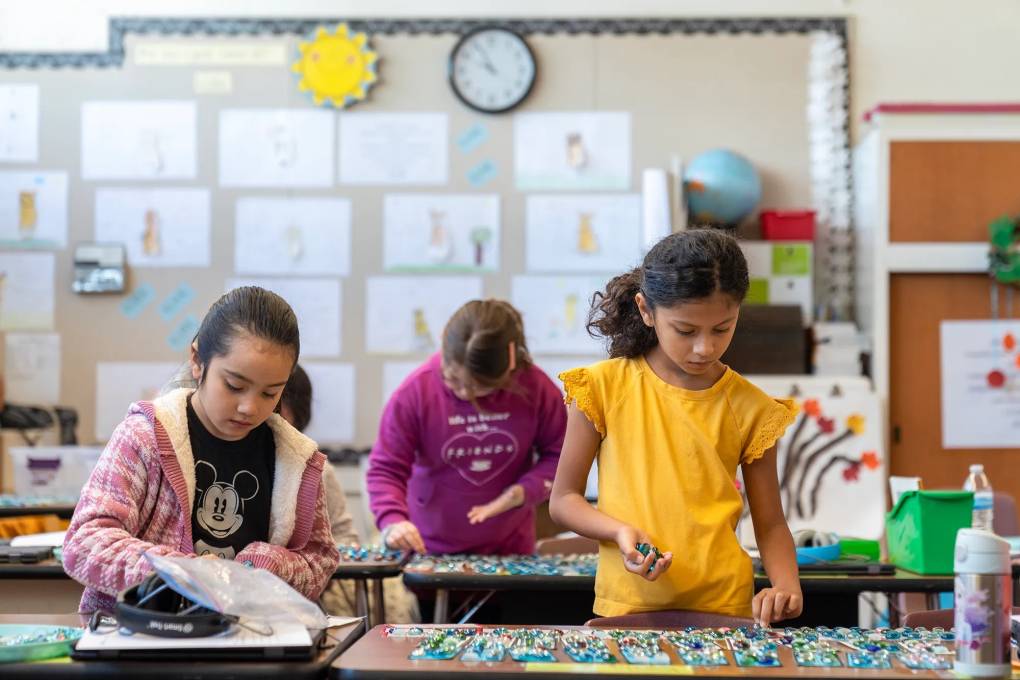
California School Boards Sue, Say Newsom Is Unlawfully Removing School Funding 'Safety Net'
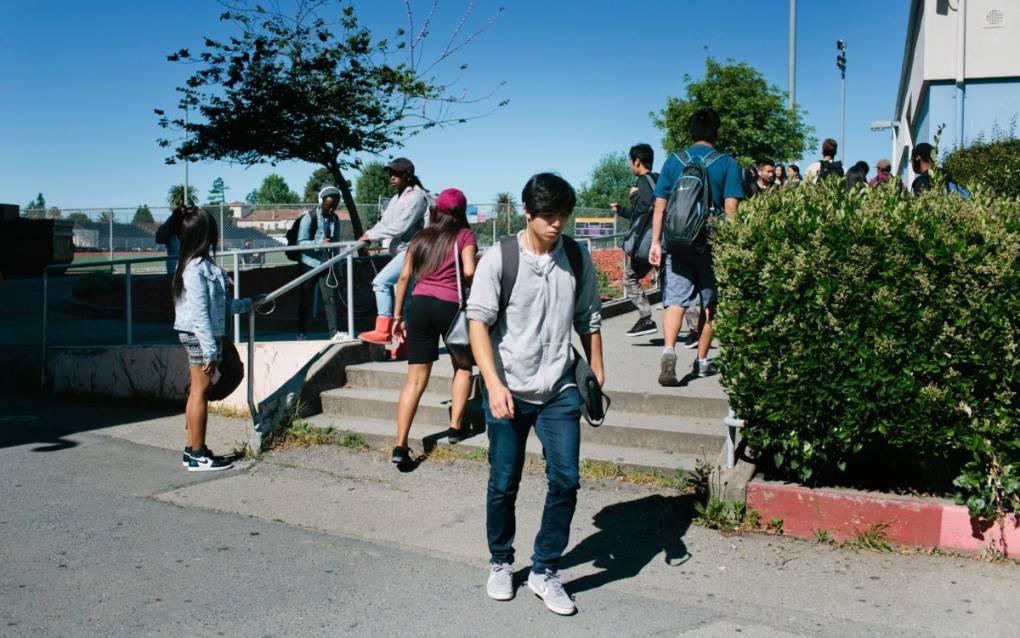
Could a New Funding Model Help Alternative and Juvenile Court School Students?
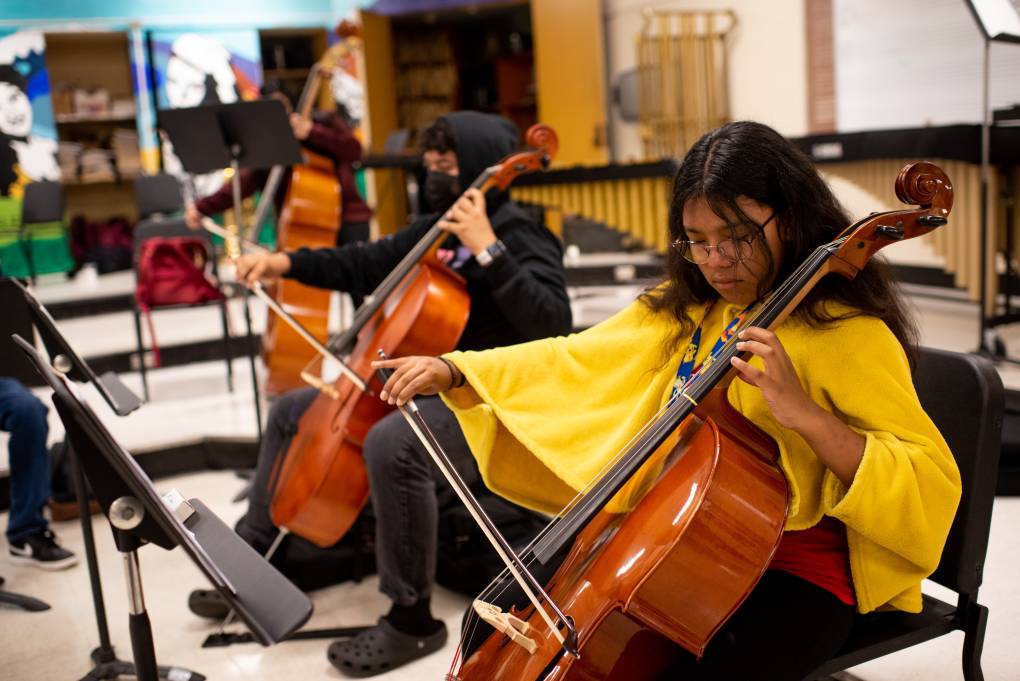
Voters Passed Prop. 28 to Fund Arts Education, but Schools Face Challenges in Rollout
Education Advocates Say Newsom's School Funding Plan Will Not Close Achievement Gaps
California Lawmakers Return to State Capitol at a New Building and Focus on Proposed Bills
Things Are Looking Up
Can California Afford Gavin Newsom's Vision for Public Schools? A K-12 Primer for 2019
LAUSD Will Base Some School Spending on Neighborhood Shootings, Asthma Rates
Will New Funding Formula Move Schools Toward Education Equity?
Sponsored
Player sponsored by
window.__IS_SSR__=true
window.__INITIAL_STATE__={
"attachmentsReducer": {
"audio_0": {
"type": "attachments",
"id": "audio_0",
"imgSizes": {
"kqedFullSize": {
"file": "https://ww2.kqed.org/news/wp-content/themes/KQED-unified/img/audio_bgs/background0.jpg"
}
}
},
"audio_1": {
"type": "attachments",
"id": "audio_1",
"imgSizes": {
"kqedFullSize": {
"file": "https://ww2.kqed.org/news/wp-content/themes/KQED-unified/img/audio_bgs/background1.jpg"
}
}
},
"audio_2": {
"type": "attachments",
"id": "audio_2",
"imgSizes": {
"kqedFullSize": {
"file": "https://ww2.kqed.org/news/wp-content/themes/KQED-unified/img/audio_bgs/background2.jpg"
}
}
},
"audio_3": {
"type": "attachments",
"id": "audio_3",
"imgSizes": {
"kqedFullSize": {
"file": "https://ww2.kqed.org/news/wp-content/themes/KQED-unified/img/audio_bgs/background3.jpg"
}
}
},
"audio_4": {
"type": "attachments",
"id": "audio_4",
"imgSizes": {
"kqedFullSize": {
"file": "https://ww2.kqed.org/news/wp-content/themes/KQED-unified/img/audio_bgs/background4.jpg"
}
}
},
"placeholder": {
"type": "attachments",
"id": "placeholder",
"imgSizes": {
"thumbnail": {
"file": "https://cdn.kqed.org/wp-content/uploads/2024/12/KQED-Default-Image-816638274-2000x1333-1-160x107.jpg",
"width": 160,
"height": 107,
"mimeType": "image/jpeg"
},
"medium": {
"file": "https://cdn.kqed.org/wp-content/uploads/2024/12/KQED-Default-Image-816638274-2000x1333-1-800x533.jpg",
"width": 800,
"height": 533,
"mimeType": "image/jpeg"
},
"medium_large": {
"file": "https://cdn.kqed.org/wp-content/uploads/2024/12/KQED-Default-Image-816638274-2000x1333-1-768x512.jpg",
"width": 768,
"height": 512,
"mimeType": "image/jpeg"
},
"large": {
"file": "https://cdn.kqed.org/wp-content/uploads/2024/12/KQED-Default-Image-816638274-2000x1333-1-1020x680.jpg",
"width": 1020,
"height": 680,
"mimeType": "image/jpeg"
},
"1536x1536": {
"file": "https://cdn.kqed.org/wp-content/uploads/2024/12/KQED-Default-Image-816638274-2000x1333-1-1536x1024.jpg",
"width": 1536,
"height": 1024,
"mimeType": "image/jpeg"
},
"fd-lrg": {
"file": "https://cdn.kqed.org/wp-content/uploads/2024/12/KQED-Default-Image-816638274-2000x1333-1-1536x1024.jpg",
"width": 1536,
"height": 1024,
"mimeType": "image/jpeg"
},
"fd-med": {
"file": "https://cdn.kqed.org/wp-content/uploads/2024/12/KQED-Default-Image-816638274-2000x1333-1-1020x680.jpg",
"width": 1020,
"height": 680,
"mimeType": "image/jpeg"
},
"fd-sm": {
"file": "https://cdn.kqed.org/wp-content/uploads/2024/12/KQED-Default-Image-816638274-2000x1333-1-800x533.jpg",
"width": 800,
"height": 533,
"mimeType": "image/jpeg"
},
"post-thumbnail": {
"file": "https://cdn.kqed.org/wp-content/uploads/2024/12/KQED-Default-Image-816638274-2000x1333-1-672x372.jpg",
"width": 672,
"height": 372,
"mimeType": "image/jpeg"
},
"twentyfourteen-full-width": {
"file": "https://cdn.kqed.org/wp-content/uploads/2024/12/KQED-Default-Image-816638274-2000x1333-1-1038x576.jpg",
"width": 1038,
"height": 576,
"mimeType": "image/jpeg"
},
"xxsmall": {
"file": "https://cdn.kqed.org/wp-content/uploads/2024/12/KQED-Default-Image-816638274-2000x1333-1-160x107.jpg",
"width": 160,
"height": 107,
"mimeType": "image/jpeg"
},
"xsmall": {
"file": "https://cdn.kqed.org/wp-content/uploads/2024/12/KQED-Default-Image-816638274-2000x1333-1-672x372.jpg",
"width": 672,
"height": 372,
"mimeType": "image/jpeg"
},
"small": {
"file": "https://cdn.kqed.org/wp-content/uploads/2024/12/KQED-Default-Image-816638274-2000x1333-1-672x372.jpg",
"width": 672,
"height": 372,
"mimeType": "image/jpeg"
},
"xlarge": {
"file": "https://cdn.kqed.org/wp-content/uploads/2024/12/KQED-Default-Image-816638274-2000x1333-1-1020x680.jpg",
"width": 1020,
"height": 680,
"mimeType": "image/jpeg"
},
"full-width": {
"file": "https://cdn.kqed.org/wp-content/uploads/2024/12/KQED-Default-Image-816638274-2000x1333-1-1920x1280.jpg",
"width": 1920,
"height": 1280,
"mimeType": "image/jpeg"
},
"guest-author-32": {
"file": "https://cdn.kqed.org/wp-content/uploads/2025/01/KQED-Default-Image-816638274-1333x1333-1-160x160.jpg",
"width": 32,
"height": 32,
"mimeType": "image/jpeg"
},
"guest-author-50": {
"file": "https://cdn.kqed.org/wp-content/uploads/2025/01/KQED-Default-Image-816638274-1333x1333-1-160x160.jpg",
"width": 50,
"height": 50,
"mimeType": "image/jpeg"
},
"guest-author-64": {
"file": "https://cdn.kqed.org/wp-content/uploads/2025/01/KQED-Default-Image-816638274-1333x1333-1-160x160.jpg",
"width": 64,
"height": 64,
"mimeType": "image/jpeg"
},
"guest-author-96": {
"file": "https://cdn.kqed.org/wp-content/uploads/2025/01/KQED-Default-Image-816638274-1333x1333-1-160x160.jpg",
"width": 96,
"height": 96,
"mimeType": "image/jpeg"
},
"guest-author-128": {
"file": "https://cdn.kqed.org/wp-content/uploads/2025/01/KQED-Default-Image-816638274-1333x1333-1-160x160.jpg",
"width": 128,
"height": 128,
"mimeType": "image/jpeg"
},
"detail": {
"file": "https://cdn.kqed.org/wp-content/uploads/2025/01/KQED-Default-Image-816638274-1333x1333-1-160x160.jpg",
"width": 160,
"height": 160,
"mimeType": "image/jpeg"
},
"kqedFullSize": {
"file": "https://cdn.kqed.org/wp-content/uploads/2024/12/KQED-Default-Image-816638274-2000x1333-1.jpg",
"width": 2000,
"height": 1333
}
}
},
"news_12006592": {
"type": "attachments",
"id": "news_12006592",
"meta": {
"index": "attachments_1716263798",
"site": "news",
"id": "12006592",
"found": true
},
"title": "111722-Students-Whittier-LJ-CM-03",
"publishDate": 1727375644,
"status": "inherit",
"parent": 12006589,
"modified": 1727375704,
"caption": "Students in a classroom at Lake Marie Elementary School in Whittier on Nov. 17, 2022.",
"credit": "Lauren Justice/CalMatters",
"altTag": "Young children work on projects in an elementary school classroom.",
"description": null,
"imgSizes": {
"medium": {
"file": "https://cdn.kqed.org/wp-content/uploads/sites/10/2024/09/111722-Students-Whittier-LJ-CM-03-800x533.jpg",
"width": 800,
"height": 533,
"mimeType": "image/jpeg"
},
"large": {
"file": "https://cdn.kqed.org/wp-content/uploads/sites/10/2024/09/111722-Students-Whittier-LJ-CM-03-1020x680.jpg",
"width": 1020,
"height": 680,
"mimeType": "image/jpeg"
},
"thumbnail": {
"file": "https://cdn.kqed.org/wp-content/uploads/sites/10/2024/09/111722-Students-Whittier-LJ-CM-03-160x107.jpg",
"width": 160,
"height": 107,
"mimeType": "image/jpeg"
},
"1536x1536": {
"file": "https://cdn.kqed.org/wp-content/uploads/sites/10/2024/09/111722-Students-Whittier-LJ-CM-03-1536x1024.jpg",
"width": 1536,
"height": 1024,
"mimeType": "image/jpeg"
},
"post-thumbnail": {
"file": "https://cdn.kqed.org/wp-content/uploads/sites/10/2024/09/111722-Students-Whittier-LJ-CM-03-672x372.jpg",
"width": 672,
"height": 372,
"mimeType": "image/jpeg"
},
"twentyfourteen-full-width": {
"file": "https://cdn.kqed.org/wp-content/uploads/sites/10/2024/09/111722-Students-Whittier-LJ-CM-03-1038x576.jpg",
"width": 1038,
"height": 576,
"mimeType": "image/jpeg"
},
"full-width": {
"file": "https://cdn.kqed.org/wp-content/uploads/sites/10/2024/09/111722-Students-Whittier-LJ-CM-03-1920x1280.jpg",
"width": 1920,
"height": 1280,
"mimeType": "image/jpeg"
},
"kqedFullSize": {
"file": "https://cdn.kqed.org/wp-content/uploads/sites/10/2024/09/111722-Students-Whittier-LJ-CM-03.jpg",
"width": 2000,
"height": 1333
}
},
"fetchFailed": false,
"isLoading": false
},
"news_11954404": {
"type": "attachments",
"id": "news_11954404",
"meta": {
"index": "attachments_1716263798",
"site": "news",
"id": "11954404",
"found": true
},
"parent": 11954194,
"imgSizes": {
"twentyfourteen-full-width": {
"file": "https://ww2.kqed.org/app/uploads/sites/10/2023/06/Oak_Tech_011-1200x750-1-1038x576.jpeg",
"width": 1038,
"mimeType": "image/jpeg",
"height": 576
},
"thumbnail": {
"file": "https://ww2.kqed.org/app/uploads/sites/10/2023/06/Oak_Tech_011-1200x750-1-160x100.jpeg",
"width": 160,
"mimeType": "image/jpeg",
"height": 100
},
"post-thumbnail": {
"file": "https://ww2.kqed.org/app/uploads/sites/10/2023/06/Oak_Tech_011-1200x750-1-672x372.jpeg",
"width": 672,
"mimeType": "image/jpeg",
"height": 372
},
"kqedFullSize": {
"file": "https://ww2.kqed.org/app/uploads/sites/10/2023/06/Oak_Tech_011-1200x750-1.jpeg",
"width": 1200,
"height": 750
},
"large": {
"file": "https://ww2.kqed.org/app/uploads/sites/10/2023/06/Oak_Tech_011-1200x750-1-1020x638.jpeg",
"width": 1020,
"mimeType": "image/jpeg",
"height": 638
},
"medium": {
"file": "https://ww2.kqed.org/app/uploads/sites/10/2023/06/Oak_Tech_011-1200x750-1-800x500.jpeg",
"width": 800,
"mimeType": "image/jpeg",
"height": 500
}
},
"publishDate": 1687985237,
"modified": 1687985341,
"caption": "Students at Oakland Technical High School. About 133,000 students in California attend alternative schools.",
"description": null,
"title": "Oakland Tech",
"credit": "Alison Yin/EdSource",
"status": "inherit",
"altTag": "A handful of teenagers of different ethnicities are walking up a small set of concrete stairs, with a couple of them walking down the stairs",
"fetchFailed": false,
"isLoading": false
},
"news_11954099": {
"type": "attachments",
"id": "news_11954099",
"meta": {
"index": "attachments_1716263798",
"site": "news",
"id": "11954099",
"found": true
},
"parent": 11954066,
"imgSizes": {
"twentyfourteen-full-width": {
"file": "https://ww2.kqed.org/app/uploads/sites/10/2023/06/RS59094_Richmond_Orchestra_007-1038x576.jpg",
"width": 1038,
"mimeType": "image/jpeg",
"height": 576
},
"thumbnail": {
"file": "https://ww2.kqed.org/app/uploads/sites/10/2023/06/RS59094_Richmond_Orchestra_007-160x107.jpg",
"width": 160,
"mimeType": "image/jpeg",
"height": 107
},
"post-thumbnail": {
"file": "https://ww2.kqed.org/app/uploads/sites/10/2023/06/RS59094_Richmond_Orchestra_007-672x372.jpg",
"width": 672,
"mimeType": "image/jpeg",
"height": 372
},
"kqedFullSize": {
"file": "https://ww2.kqed.org/app/uploads/sites/10/2023/06/RS59094_Richmond_Orchestra_007-scaled.jpg",
"width": 2560,
"height": 1709
},
"2048x2048": {
"file": "https://ww2.kqed.org/app/uploads/sites/10/2023/06/RS59094_Richmond_Orchestra_007-2048x1367.jpg",
"width": 2048,
"mimeType": "image/jpeg",
"height": 1367
},
"large": {
"file": "https://ww2.kqed.org/app/uploads/sites/10/2023/06/RS59094_Richmond_Orchestra_007-1020x681.jpg",
"width": 1020,
"mimeType": "image/jpeg",
"height": 681
},
"1536x1536": {
"file": "https://ww2.kqed.org/app/uploads/sites/10/2023/06/RS59094_Richmond_Orchestra_007-1536x1026.jpg",
"width": 1536,
"mimeType": "image/jpeg",
"height": 1026
},
"full-width": {
"file": "https://ww2.kqed.org/app/uploads/sites/10/2023/06/RS59094_Richmond_Orchestra_007-1920x1282.jpg",
"width": 1920,
"mimeType": "image/jpeg",
"height": 1282
},
"medium": {
"file": "https://ww2.kqed.org/app/uploads/sites/10/2023/06/RS59094_Richmond_Orchestra_007-800x534.jpg",
"width": 800,
"mimeType": "image/jpeg",
"height": 534
}
},
"publishDate": 1687807563,
"modified": 1687807741,
"caption": "Bella Mariscal, 9th grade, plays the cello during orchestra class at Richmond High School. The school's arts programming would benefit from Prop 28.",
"description": null,
"title": "KQED_Richmond_Orchestra",
"credit": "Marlena Sloss/KQED",
"status": "inherit",
"altTag": "A young teenage girl, with dark hair and glasses, plays a cello in a music classroom, with other students in the background.",
"fetchFailed": false,
"isLoading": false
},
"news_11938907": {
"type": "attachments",
"id": "news_11938907",
"meta": {
"index": "attachments_1716263798",
"site": "news",
"id": "11938907",
"found": true
},
"parent": 11938865,
"imgSizes": {
"twentyfourteen-full-width": {
"file": "https://ww2.kqed.org/app/uploads/sites/10/2023/01/051122-St-Hope-Charter-School-MG-CM-19-1038x576.jpg",
"width": 1038,
"mimeType": "image/jpeg",
"height": 576
},
"thumbnail": {
"file": "https://ww2.kqed.org/app/uploads/sites/10/2023/01/051122-St-Hope-Charter-School-MG-CM-19-160x107.jpg",
"width": 160,
"mimeType": "image/jpeg",
"height": 107
},
"post-thumbnail": {
"file": "https://ww2.kqed.org/app/uploads/sites/10/2023/01/051122-St-Hope-Charter-School-MG-CM-19-672x372.jpg",
"width": 672,
"mimeType": "image/jpeg",
"height": 372
},
"kqedFullSize": {
"file": "https://ww2.kqed.org/app/uploads/sites/10/2023/01/051122-St-Hope-Charter-School-MG-CM-19.jpg",
"width": 2000,
"height": 1333
},
"large": {
"file": "https://ww2.kqed.org/app/uploads/sites/10/2023/01/051122-St-Hope-Charter-School-MG-CM-19-1020x680.jpg",
"width": 1020,
"mimeType": "image/jpeg",
"height": 680
},
"1536x1536": {
"file": "https://ww2.kqed.org/app/uploads/sites/10/2023/01/051122-St-Hope-Charter-School-MG-CM-19-1536x1024.jpg",
"width": 1536,
"mimeType": "image/jpeg",
"height": 1024
},
"full-width": {
"file": "https://ww2.kqed.org/app/uploads/sites/10/2023/01/051122-St-Hope-Charter-School-MG-CM-19-1920x1280.jpg",
"width": 1920,
"mimeType": "image/jpeg",
"height": 1280
},
"medium": {
"file": "https://ww2.kqed.org/app/uploads/sites/10/2023/01/051122-St-Hope-Charter-School-MG-CM-19-800x533.jpg",
"width": 800,
"mimeType": "image/jpeg",
"height": 533
}
},
"publishDate": 1674507467,
"modified": 1674518686,
"caption": "Students at a classroom at St. Hope's Public School 7 Elementary in Sacramento on May 11, 2022.",
"description": null,
"title": "051122-St-Hope-Charter-School-MG-CM-19",
"credit": "Miguel Gutierrez Jr./CalMatters",
"status": "inherit",
"altTag": "A downward-angled photo shows a school table with several students sitting around it, pencils in hand. The students are working on a worksheet about telling time.",
"fetchFailed": false,
"isLoading": false
},
"news_11900732": {
"type": "attachments",
"id": "news_11900732",
"meta": {
"index": "attachments_1716263798",
"site": "news",
"id": "11900732",
"found": true
},
"parent": 11900724,
"imgSizes": {
"twentyfourteen-full-width": {
"file": "https://ww2.kqed.org/app/uploads/sites/10/2022/01/GettyImages-2576287-1024x576.jpg",
"width": 1024,
"mimeType": "image/jpeg",
"height": 576
},
"thumbnail": {
"file": "https://ww2.kqed.org/app/uploads/sites/10/2022/01/GettyImages-2576287-160x104.jpg",
"width": 160,
"mimeType": "image/jpeg",
"height": 104
},
"post-thumbnail": {
"file": "https://ww2.kqed.org/app/uploads/sites/10/2022/01/GettyImages-2576287-672x372.jpg",
"width": 672,
"mimeType": "image/jpeg",
"height": 372
},
"kqedFullSize": {
"file": "https://ww2.kqed.org/app/uploads/sites/10/2022/01/GettyImages-2576287.jpg",
"width": 1024,
"height": 667
},
"large": {
"file": "https://ww2.kqed.org/app/uploads/sites/10/2022/01/GettyImages-2576287-1020x664.jpg",
"width": 1020,
"mimeType": "image/jpeg",
"height": 664
},
"medium": {
"file": "https://ww2.kqed.org/app/uploads/sites/10/2022/01/GettyImages-2576287-800x521.jpg",
"width": 800,
"mimeType": "image/jpeg",
"height": 521
}
},
"publishDate": 1641332605,
"modified": 1653660793,
"caption": null,
"description": "The California state Capitol building.",
"title": "Davis Addresses Cabinet Members After Recall Defeat",
"credit": "David Paul Morris/Getty Images",
"status": "inherit",
"altTag": "A large white building seen from a distance with trees and people around the outside.",
"fetchFailed": false,
"isLoading": false
},
"news_11873552": {
"type": "attachments",
"id": "news_11873552",
"meta": {
"index": "attachments_1716263798",
"site": "news",
"id": "11873552",
"found": true
},
"parent": 11873546,
"imgSizes": {
"twentyfourteen-full-width": {
"file": "https://ww2.kqed.org/app/uploads/sites/10/2021/05/math_051321_final-1038x576.png",
"width": 1038,
"mimeType": "image/png",
"height": 576
},
"thumbnail": {
"file": "https://ww2.kqed.org/app/uploads/sites/10/2021/05/math_051321_final-160x108.png",
"width": 160,
"mimeType": "image/png",
"height": 108
},
"post-thumbnail": {
"file": "https://ww2.kqed.org/app/uploads/sites/10/2021/05/math_051321_final-672x372.png",
"width": 672,
"mimeType": "image/png",
"height": 372
},
"kqedFullSize": {
"file": "https://ww2.kqed.org/app/uploads/sites/10/2021/05/math_051321_final.png",
"width": 1920,
"height": 1299
},
"large": {
"file": "https://ww2.kqed.org/app/uploads/sites/10/2021/05/math_051321_final-1020x690.png",
"width": 1020,
"mimeType": "image/png",
"height": 690
},
"1536x1536": {
"file": "https://ww2.kqed.org/app/uploads/sites/10/2021/05/math_051321_final-1536x1039.png",
"width": 1536,
"mimeType": "image/png",
"height": 1039
},
"medium": {
"file": "https://ww2.kqed.org/app/uploads/sites/10/2021/05/math_051321_final-800x541.png",
"width": 800,
"mimeType": "image/png",
"height": 541
}
},
"publishDate": 1620934622,
"modified": 1620934668,
"caption": null,
"description": null,
"title": "math_051321_final",
"credit": null,
"status": "inherit",
"altTag": "A Mark Fiore cartoon highlighting the surprise budget surplus. Two kids in school are doing a math problem that outlines the rosy budget outlook.",
"fetchFailed": false,
"isLoading": false
},
"news_11672415": {
"type": "attachments",
"id": "news_11672415",
"meta": {
"index": "attachments_1716263798",
"site": "news",
"id": "11672415",
"found": true
},
"parent": 11672399,
"imgSizes": {
"small": {
"file": "https://ww2.kqed.org/app/uploads/sites/10/2018/06/PreschoolKids-520x349.jpg",
"width": 520,
"mimeType": "image/jpeg",
"height": 349
},
"twentyfourteen-full-width": {
"file": "https://ww2.kqed.org/app/uploads/sites/10/2018/06/PreschoolKids-1038x576.jpg",
"width": 1038,
"mimeType": "image/jpeg",
"height": 576
},
"thumbnail": {
"file": "https://ww2.kqed.org/app/uploads/sites/10/2018/06/PreschoolKids-160x107.jpg",
"width": 160,
"mimeType": "image/jpeg",
"height": 107
},
"fd-sm": {
"file": "https://ww2.kqed.org/app/uploads/sites/10/2018/06/PreschoolKids-960x644.jpg",
"width": 960,
"mimeType": "image/jpeg",
"height": 644
},
"post-thumbnail": {
"file": "https://ww2.kqed.org/app/uploads/sites/10/2018/06/PreschoolKids-672x372.jpg",
"width": 672,
"mimeType": "image/jpeg",
"height": 372
},
"xsmall": {
"file": "https://ww2.kqed.org/app/uploads/sites/10/2018/06/PreschoolKids-375x252.jpg",
"width": 375,
"mimeType": "image/jpeg",
"height": 252
},
"kqedFullSize": {
"file": "https://ww2.kqed.org/app/uploads/sites/10/2018/06/PreschoolKids.jpg",
"width": 1920,
"height": 1288
},
"large": {
"file": "https://ww2.kqed.org/app/uploads/sites/10/2018/06/PreschoolKids-1020x684.jpg",
"width": 1020,
"mimeType": "image/jpeg",
"height": 684
},
"xlarge": {
"file": "https://ww2.kqed.org/app/uploads/sites/10/2018/06/PreschoolKids-1180x792.jpg",
"width": 1180,
"mimeType": "image/jpeg",
"height": 792
},
"complete_open_graph": {
"file": "https://ww2.kqed.org/app/uploads/sites/10/2018/06/PreschoolKids-1200x805.jpg",
"width": 1200,
"mimeType": "image/jpeg",
"height": 805
},
"guest-author-50": {
"file": "https://ww2.kqed.org/app/uploads/sites/10/2018/06/PreschoolKids-50x50.jpg",
"width": 50,
"mimeType": "image/jpeg",
"height": 50
},
"guest-author-96": {
"file": "https://ww2.kqed.org/app/uploads/sites/10/2018/06/PreschoolKids-96x96.jpg",
"width": 96,
"mimeType": "image/jpeg",
"height": 96
},
"medium": {
"file": "https://ww2.kqed.org/app/uploads/sites/10/2018/06/PreschoolKids-800x537.jpg",
"width": 800,
"mimeType": "image/jpeg",
"height": 537
},
"guest-author-64": {
"file": "https://ww2.kqed.org/app/uploads/sites/10/2018/06/PreschoolKids-64x64.jpg",
"width": 64,
"mimeType": "image/jpeg",
"height": 64
},
"guest-author-32": {
"file": "https://ww2.kqed.org/app/uploads/sites/10/2018/06/PreschoolKids-32x32.jpg",
"width": 32,
"mimeType": "image/jpeg",
"height": 32
},
"fd-lrg": {
"file": "https://ww2.kqed.org/app/uploads/sites/10/2018/06/PreschoolKids-1920x1288.jpg",
"width": 1920,
"mimeType": "image/jpeg",
"height": 1288
},
"fd-med": {
"file": "https://ww2.kqed.org/app/uploads/sites/10/2018/06/PreschoolKids-1180x792.jpg",
"width": 1180,
"mimeType": "image/jpeg",
"height": 792
},
"full-width": {
"file": "https://ww2.kqed.org/app/uploads/sites/10/2018/06/PreschoolKids-1920x1288.jpg",
"width": 1920,
"mimeType": "image/jpeg",
"height": 1288
},
"detail": {
"file": "https://ww2.kqed.org/app/uploads/sites/10/2018/06/PreschoolKids-150x150.jpg",
"width": 150,
"mimeType": "image/jpeg",
"height": 150
},
"guest-author-128": {
"file": "https://ww2.kqed.org/app/uploads/sites/10/2018/06/PreschoolKids-128x128.jpg",
"width": 128,
"mimeType": "image/jpeg",
"height": 128
},
"xxsmall": {
"file": "https://ww2.kqed.org/app/uploads/sites/10/2018/06/PreschoolKids-240x161.jpg",
"width": 240,
"mimeType": "image/jpeg",
"height": 161
}
},
"publishDate": 1528141878,
"modified": 1528141924,
"caption": "During the recession, state funding for early childhood programs like preschool was severely cut -- and those funds haven’t been restored.",
"description": "During the recession, state funding for early childhood programs like preschool was severely cut -- and those funds haven’t been restored.",
"title": "PreschoolKids",
"credit": "Getty Images",
"status": "inherit",
"fetchFailed": false,
"isLoading": false
},
"news_11661371": {
"type": "attachments",
"id": "news_11661371",
"meta": {
"index": "attachments_1716263798",
"site": "news",
"id": "11661371",
"found": true
},
"parent": 11661369,
"imgSizes": {
"small": {
"file": "https://ww2.kqed.org/app/uploads/sites/10/2018/04/LAUSDStudentRally-520x339.jpg",
"width": 520,
"mimeType": "image/jpeg",
"height": 339
},
"twentyfourteen-full-width": {
"file": "https://ww2.kqed.org/app/uploads/sites/10/2018/04/LAUSDStudentRally-1024x576.jpg",
"width": 1024,
"mimeType": "image/jpeg",
"height": 576
},
"thumbnail": {
"file": "https://ww2.kqed.org/app/uploads/sites/10/2018/04/LAUSDStudentRally-160x104.jpg",
"width": 160,
"mimeType": "image/jpeg",
"height": 104
},
"fd-sm": {
"file": "https://ww2.kqed.org/app/uploads/sites/10/2018/04/LAUSDStudentRally-960x625.jpg",
"width": 960,
"mimeType": "image/jpeg",
"height": 625
},
"post-thumbnail": {
"file": "https://ww2.kqed.org/app/uploads/sites/10/2018/04/LAUSDStudentRally-672x372.jpg",
"width": 672,
"mimeType": "image/jpeg",
"height": 372
},
"xsmall": {
"file": "https://ww2.kqed.org/app/uploads/sites/10/2018/04/LAUSDStudentRally-375x244.jpg",
"width": 375,
"mimeType": "image/jpeg",
"height": 244
},
"kqedFullSize": {
"file": "https://ww2.kqed.org/app/uploads/sites/10/2018/04/LAUSDStudentRally.jpg",
"width": 1024,
"height": 667
},
"large": {
"file": "https://ww2.kqed.org/app/uploads/sites/10/2018/04/LAUSDStudentRally-1020x664.jpg",
"width": 1020,
"mimeType": "image/jpeg",
"height": 664
},
"guest-author-50": {
"file": "https://ww2.kqed.org/app/uploads/sites/10/2018/04/LAUSDStudentRally-50x50.jpg",
"width": 50,
"mimeType": "image/jpeg",
"height": 50
},
"guest-author-96": {
"file": "https://ww2.kqed.org/app/uploads/sites/10/2018/04/LAUSDStudentRally-96x96.jpg",
"width": 96,
"mimeType": "image/jpeg",
"height": 96
},
"medium": {
"file": "https://ww2.kqed.org/app/uploads/sites/10/2018/04/LAUSDStudentRally-800x521.jpg",
"width": 800,
"mimeType": "image/jpeg",
"height": 521
},
"guest-author-64": {
"file": "https://ww2.kqed.org/app/uploads/sites/10/2018/04/LAUSDStudentRally-64x64.jpg",
"width": 64,
"mimeType": "image/jpeg",
"height": 64
},
"guest-author-32": {
"file": "https://ww2.kqed.org/app/uploads/sites/10/2018/04/LAUSDStudentRally-32x32.jpg",
"width": 32,
"mimeType": "image/jpeg",
"height": 32
},
"detail": {
"file": "https://ww2.kqed.org/app/uploads/sites/10/2018/04/LAUSDStudentRally-150x150.jpg",
"width": 150,
"mimeType": "image/jpeg",
"height": 150
},
"guest-author-128": {
"file": "https://ww2.kqed.org/app/uploads/sites/10/2018/04/LAUSDStudentRally-128x128.jpg",
"width": 128,
"mimeType": "image/jpeg",
"height": 128
},
"xxsmall": {
"file": "https://ww2.kqed.org/app/uploads/sites/10/2018/04/LAUSDStudentRally-240x156.jpg",
"width": 240,
"mimeType": "image/jpeg",
"height": 156
}
},
"publishDate": 1523473318,
"modified": 1523484087,
"caption": "Students rallied outside the Los Angeles Unified School Board meeting on April 10, 2018, aiming to push district leaders to pass changes to the district's equity index.",
"description": "Students rallied outside the Los Angeles Unified School Board meeting on Tues., April 10, 2018, aiming to push district leaders to pass changes to the district's equity index.",
"title": "LAUSDStudentRally",
"credit": "Kyle Stokes/KPCC",
"status": "inherit",
"fetchFailed": false,
"isLoading": false
},
"news_11305910": {
"type": "attachments",
"id": "news_11305910",
"meta": {
"index": "attachments_1716263798",
"site": "news",
"id": "11305910",
"found": true
},
"parent": 11305666,
"imgSizes": {
"small": {
"file": "https://ww2.kqed.org/app/uploads/sites/10/2017/02/ManhoodDevOakland-520x288.jpg",
"width": 520,
"mimeType": "image/jpeg",
"height": 288
},
"twentyfourteen-full-width": {
"file": "https://ww2.kqed.org/app/uploads/sites/10/2017/02/ManhoodDevOakland-1038x576.jpg",
"width": 1038,
"mimeType": "image/jpeg",
"height": 576
},
"thumbnail": {
"file": "https://ww2.kqed.org/app/uploads/sites/10/2017/02/ManhoodDevOakland-160x89.jpg",
"width": 160,
"mimeType": "image/jpeg",
"height": 89
},
"fd-sm": {
"file": "https://ww2.kqed.org/app/uploads/sites/10/2017/02/ManhoodDevOakland-960x533.jpg",
"width": 960,
"mimeType": "image/jpeg",
"height": 533
},
"post-thumbnail": {
"file": "https://ww2.kqed.org/app/uploads/sites/10/2017/02/ManhoodDevOakland-672x372.jpg",
"width": 672,
"mimeType": "image/jpeg",
"height": 372
},
"xsmall": {
"file": "https://ww2.kqed.org/app/uploads/sites/10/2017/02/ManhoodDevOakland-375x208.jpg",
"width": 375,
"mimeType": "image/jpeg",
"height": 208
},
"kqedFullSize": {
"file": "https://ww2.kqed.org/app/uploads/sites/10/2017/02/ManhoodDevOakland.jpg",
"width": 1920,
"height": 1065
},
"large": {
"file": "https://ww2.kqed.org/app/uploads/sites/10/2017/02/ManhoodDevOakland-1020x566.jpg",
"width": 1020,
"mimeType": "image/jpeg",
"height": 566
},
"xlarge": {
"file": "https://ww2.kqed.org/app/uploads/sites/10/2017/02/ManhoodDevOakland-1180x655.jpg",
"width": 1180,
"mimeType": "image/jpeg",
"height": 655
},
"guest-author-50": {
"file": "https://ww2.kqed.org/app/uploads/sites/10/2017/02/ManhoodDevOakland-50x50.jpg",
"width": 50,
"mimeType": "image/jpeg",
"height": 50
},
"guest-author-96": {
"file": "https://ww2.kqed.org/app/uploads/sites/10/2017/02/ManhoodDevOakland-96x96.jpg",
"width": 96,
"mimeType": "image/jpeg",
"height": 96
},
"medium": {
"file": "https://ww2.kqed.org/app/uploads/sites/10/2017/02/ManhoodDevOakland-800x444.jpg",
"width": 800,
"mimeType": "image/jpeg",
"height": 444
},
"guest-author-64": {
"file": "https://ww2.kqed.org/app/uploads/sites/10/2017/02/ManhoodDevOakland-64x64.jpg",
"width": 64,
"mimeType": "image/jpeg",
"height": 64
},
"guest-author-32": {
"file": "https://ww2.kqed.org/app/uploads/sites/10/2017/02/ManhoodDevOakland-32x32.jpg",
"width": 32,
"mimeType": "image/jpeg",
"height": 32
},
"fd-lrg": {
"file": "https://ww2.kqed.org/app/uploads/sites/10/2017/02/ManhoodDevOakland-1920x1065.jpg",
"width": 1920,
"mimeType": "image/jpeg",
"height": 1065
},
"fd-med": {
"file": "https://ww2.kqed.org/app/uploads/sites/10/2017/02/ManhoodDevOakland-1180x655.jpg",
"width": 1180,
"mimeType": "image/jpeg",
"height": 655
},
"full-width": {
"file": "https://ww2.kqed.org/app/uploads/sites/10/2017/02/ManhoodDevOakland-1920x1065.jpg",
"width": 1920,
"mimeType": "image/jpeg",
"height": 1065
},
"detail": {
"file": "https://ww2.kqed.org/app/uploads/sites/10/2017/02/ManhoodDevOakland-150x150.jpg",
"width": 150,
"mimeType": "image/jpeg",
"height": 150
},
"guest-author-128": {
"file": "https://ww2.kqed.org/app/uploads/sites/10/2017/02/ManhoodDevOakland-128x128.jpg",
"width": 128,
"mimeType": "image/jpeg",
"height": 128
},
"xxsmall": {
"file": "https://ww2.kqed.org/app/uploads/sites/10/2017/02/ManhoodDevOakland-240x133.jpg",
"width": 240,
"mimeType": "image/jpeg",
"height": 133
}
},
"publishDate": 1486505948,
"modified": 1486605034,
"caption": "Tenth-grade Manhood Development class students at Oakland High absorb a discussion about college admissions.",
"description": "Tenth grade Manhood Development class students at Oakland High absorb a discussion about college admissions.",
"title": "ManhoodDevOakland",
"credit": "Eleanor Bell Fox/Center for Public Integrity",
"status": "inherit",
"fetchFailed": false,
"isLoading": false
}
},
"audioPlayerReducer": {
"postId": "stream_live",
"isPaused": true,
"isPlaying": false,
"pfsActive": false,
"pledgeModalIsOpen": true,
"playerDrawerIsOpen": false
},
"authorsReducer": {
"byline_news_12006589": {
"type": "authors",
"id": "byline_news_12006589",
"meta": {
"override": true
},
"slug": "byline_news_12006589",
"name": "\u003ca href=\"https://calmatters.org/author/carolyn-jones/\">Carolyn Jones\u003c/a>",
"isLoading": false
},
"byline_news_11954194": {
"type": "authors",
"id": "byline_news_11954194",
"meta": {
"override": true
},
"slug": "byline_news_11954194",
"name": "\u003ca href=\"https://edsource.org/author/bmarquez\">Betty Márquez Rosales\u003c/a>",
"isLoading": false
},
"byline_news_11954066": {
"type": "authors",
"id": "byline_news_11954066",
"meta": {
"override": true
},
"slug": "byline_news_11954066",
"name": "\u003ca href=\"https://edsource.org/author/kdsouza\">Karen D'Souza\u003c/a>",
"isLoading": false
},
"byline_news_11938865": {
"type": "authors",
"id": "byline_news_11938865",
"meta": {
"override": true
},
"slug": "byline_news_11938865",
"name": "\u003ca href=\"https://calmatters.org/author/joe-hong/\">Joe Hong\u003c/a>",
"isLoading": false
},
"byline_news_11900724": {
"type": "authors",
"id": "byline_news_11900724",
"meta": {
"override": true
},
"slug": "byline_news_11900724",
"name": "Don Thompson\u003cbr>The Associated Press",
"isLoading": false
},
"byline_news_11713345": {
"type": "authors",
"id": "byline_news_11713345",
"meta": {
"override": true
},
"slug": "byline_news_11713345",
"name": "\u003cstrong>\u003ca href=\"https://calmatters.org/articles/author/ricardo-cano/\">Ricardo Cano\u003c/a>\u003c/strong>",
"isLoading": false
},
"byline_news_11661369": {
"type": "authors",
"id": "byline_news_11661369",
"meta": {
"override": true
},
"slug": "byline_news_11661369",
"name": "\u003cstrong>\u003ca href=\"http://www.scpr.org/about/people/staff/kyle-stokes\">Kyle Stokes\u003c/a>\u003c/strong>",
"isLoading": false
},
"byline_news_11305666": {
"type": "authors",
"id": "byline_news_11305666",
"meta": {
"override": true
},
"slug": "byline_news_11305666",
"name": "\u003cstrong>\u003ca href=\"https://www.publicintegrity.org/authors/susan-ferriss\">Susan Ferriss\u003c/a>\u003c/strong>",
"isLoading": false
},
"markfiore": {
"type": "authors",
"id": "3236",
"meta": {
"index": "authors_1716337520",
"id": "3236",
"found": true
},
"name": "Mark Fiore",
"firstName": "Mark",
"lastName": "Fiore",
"slug": "markfiore",
"email": "mark@markfiore.com",
"display_author_email": false,
"staff_mastheads": [
"news"
],
"title": "KQED News Cartoonist",
"bio": "\u003ca href=\"http://www.MarkFiore.com\">MarkFiore.com\u003c/a> | \u003ca href=\"https://twitter.com/markfiore\">Follow on Twitter\u003c/a> | \u003ca href=\"https://www.facebook.com/pages/Mark-Fiore-Animated-Political-Cartoons/94451707396?ref=bookmarks\">Facebook\u003c/a> | \u003ca href=\"mailto:mark@markfiore.com\">email\u003c/a>\r\n\r\nPulitzer Prize-winner, Mark Fiore, who the Wall Street Journal has called “the undisputed guru of the form,” creates animated political cartoons in San Francisco, where his work has been featured regularly on the San Francisco Chronicle’s web site, SFGate.com. His work has appeared on Newsweek.com, Slate.com, CBSNews.com, MotherJones.com, DailyKos.com and NPR’s web site. Fiore’s political animation has appeared on CNN, Frontline, Bill Moyers Journal, Salon.com and cable and broadcast outlets across the globe.\r\n\r\nBeginning his professional life by drawing traditional political cartoons for newspapers, Fiore’s work appeared in publications ranging from the Washington Post to the Los Angeles Times. In the late 1990s, he began to experiment with animating political cartoons and, after a short stint at the San Jose Mercury News as their staff cartoonist, Fiore devoted all his energies to animation.\r\nGrowing up in California, Fiore also spent a good portion of his life in the backwoods of Idaho. It was this combination that shaped him politically. Mark majored in political science at Colorado College, where, in a perfect send-off for a cartoonist, he received his diploma in 1991 as commencement speaker Dick Cheney smiled approvingly.\r\nMark Fiore was awarded the Pulitzer Prize for political cartooning in 2010, a Robert F. Kennedy Journalism Award in 2004 and has twice received an Online Journalism Award for commentary from the Online News Association (2002, 2008). Fiore has received two awards for his work in new media from the National Cartoonists Society (2001, 2002), and in 2006 received The James Madison Freedom of Information Award from The Society of Professional Journalists.",
"avatar": "https://secure.gravatar.com/avatar/fc4e2a612b15b67bad0c6f0e1db4ca9b?s=600&d=blank&r=g",
"twitter": "MarkFiore",
"facebook": null,
"instagram": "https://www.instagram.com/markfiore/?hl=en",
"linkedin": null,
"sites": [
{
"site": "arts",
"roles": [
"contributor"
]
},
{
"site": "news",
"roles": [
"editor"
]
},
{
"site": "futureofyou",
"roles": [
"editor"
]
},
{
"site": "science",
"roles": [
"editor"
]
}
],
"headData": {
"title": "Mark Fiore | KQED",
"description": "KQED News Cartoonist",
"ogImgSrc": "https://secure.gravatar.com/avatar/fc4e2a612b15b67bad0c6f0e1db4ca9b?s=600&d=blank&r=g",
"twImgSrc": "https://secure.gravatar.com/avatar/fc4e2a612b15b67bad0c6f0e1db4ca9b?s=600&d=blank&r=g"
},
"isLoading": false,
"link": "/author/markfiore"
}
},
"breakingNewsReducer": {},
"pagesReducer": {},
"postsReducer": {
"stream_live": {
"type": "live",
"id": "stream_live",
"audioUrl": "https://streams.kqed.org/kqedradio",
"title": "Live Stream",
"excerpt": "Live Stream information currently unavailable.",
"link": "/radio",
"featImg": "",
"label": {
"name": "KQED Live",
"link": "/"
}
},
"stream_kqedNewscast": {
"type": "posts",
"id": "stream_kqedNewscast",
"audioUrl": "https://www.kqed.org/.stream/anon/radio/RDnews/newscast.mp3?_=1",
"title": "KQED Newscast",
"featImg": "",
"label": {
"name": "88.5 FM",
"link": "/"
}
},
"news_12006589": {
"type": "posts",
"id": "news_12006589",
"meta": {
"index": "posts_1716263798",
"site": "news",
"id": "12006589",
"score": null,
"sort": [
1727377224000
]
},
"guestAuthors": [],
"slug": "california-school-boards-sue-say-newsom-is-unlawfully-removing-school-funding-safety-net",
"title": "California School Boards Sue, Say Newsom Is Unlawfully Removing School Funding 'Safety Net'",
"publishDate": 1727377224,
"format": "standard",
"headTitle": "California School Boards Sue, Say Newsom Is Unlawfully Removing School Funding ‘Safety Net’ | KQED",
"labelTerm": {
"term": 18481,
"site": "news"
},
"content": "\u003cp>Gov. Gavin Newsom’s funding plan for California schools violates the state’s constitution and could endanger school funding in years to come, according to a lawsuit filed Thursday in Sacramento.\u003c/p>\n\u003cp>The California School Boards Association, which filed the suit, has been \u003ca href=\"http://blog.csba.org/may-revise-announcement/\">outspoken in its opposition\u003c/a> to the plan since Newsom introduced his revised budget in May. The \u003ca href=\"https://calmatters.org/newsletter/california-budget-legislature/\">state already passed its budget,\u003c/a> and the lawsuit won’t affect the money that’s already been allotted to schools, but the association hopes a judge will strike down what they described as Newsom’s “funding maneuver.”\u003c/p>\n\u003cp>The governor, trying to preserve funding for schools amid a tight economic climate, made up an $8.8 billion shortfall in the Proposition 98 school funding guarantee by borrowing from the state’s general fund.\u003c/p>\n\u003cp>“The manipulation … is unacceptable as it removes a funding safety net that has served schools for more than three decades and could be used by future governors and legislatures to avoid complying with the Proposition 98 funding guarantee,” association president Albert Gonzalez said.\u003c/p>\n\u003cp>Newsom’s office said the accounting move was not only legal but \u003ca href=\"https://dof.ca.gov/wp-content/uploads/sites/352/2024/07/Response-to-the-California-School-Boards-Association-Regarding-Prop-98-Certification-CC.pdf\">saved schools from potential budget cuts\u003c/a>.\u003c/p>\n\u003cp>[ad fullwidth]\u003c/p>\n\u003cp>“Because general fund revenues were significantly lower than estimated … the recalculated minimum guarantee for fiscal year 2022–23 is roughly $8.8 billion less than previously calculated,” Joe Stephenshaw, the state’s director of finance, \u003ca href=\"https://dof.ca.gov/wp-content/uploads/sites/352/2024/07/Response-to-the-California-School-Boards-Association-Regarding-Prop-98-Certification-CC.pdf\">wrote to legislative leaders\u003c/a> in July. “To help address this decrease in the minimum guarantee without impacting school district and community college district budgets,” the budget shifts some spending sources.\u003c/p>\n\u003cp>[aside label=\"more education coverage\" tag=\"education\"]Proposition 98, passed nearly 40 years ago, sets a minimum funding guarantee for California’s public schools. Based on a complex set of formulas, the guarantee is roughly 40% of the state’s budget and pays for things such as teacher salaries and day-to-day operating expenses at the state’s 10,000 schools.\u003c/p>\n\u003cp>Newsom has invested heavily in schools during his stint as governor, funneling billions to programs like community schools, improved school meals, student mental health and other initiatives. He’s said that these programs are especially important as students recover from the pandemic, academically as well as emotionally.\u003c/p>\n\u003cp>California’s per-pupil spending, which used to be among the nation’s lowest, is now \u003ca href=\"https://www.ppic.org/publication/financing-californias-public-schools/#:~:text=In%202019%E2%80%9320%20(the%20most,nation%20(%2416%2C023%20per%20pupil).\">above average\u003c/a>, according to the Public Policy Institute of California. In 2022–23, California spent \u003ca href=\"https://www.ed-data.org/State/CA\">$19,475 per student\u003c/a>, counting revenue from all sources.\u003c/p>\n\u003cp>Overall, the education budget this year was $134 billion.\u003c/p>\n\u003cp>However, schools are still facing a precarious budget outlook as federal pandemic relief money expires, absenteeism remains high and enrollment continues to drop in many parts of the state. California funds schools based on attendance, so fewer students in classrooms equals less revenue from the state.\u003c/p>\n\u003cp>\u003c/p>\n\u003cp>Meanwhile, schools are trying to find money to maintain programs that have proven successful, such as academic tutoring, after-school programs and summer school. They’re also grappling with teacher shortages in some subjects, and raising salaries to attract and retain staff.\u003c/p>\n\n",
"blocks": [],
"excerpt": "A lawsuit filed Thursday by the California School Boards Association alleges that Gov. Gavin Newsom's plan to lower the guaranteed amount of funding for California schools violates the state’s constitution and could endanger school funding in years to come. \r\n\r\n",
"status": "publish",
"parent": 0,
"modified": 1728597020,
"stats": {
"hasAudio": false,
"hasVideo": false,
"hasChartOrMap": false,
"iframeSrcs": [],
"hasGoogleForm": false,
"hasGallery": false,
"hasHearkenModule": false,
"hasPolis": false,
"paragraphCount": 14,
"wordCount": 536
},
"headData": {
"title": "California School Boards Sue, Say Newsom Is Unlawfully Removing School Funding 'Safety Net' | KQED",
"description": "A lawsuit filed Thursday by the California School Boards Association alleges that Gov. Gavin Newsom's plan to lower the guaranteed amount of funding for California schools violates the state’s constitution and could endanger school funding in years to come. \r\n\r\n",
"ogTitle": "",
"ogDescription": "",
"ogImgId": "",
"twTitle": "",
"twDescription": "",
"twImgId": "",
"schema": {
"@context": "https://schema.org",
"@type": "NewsArticle",
"headline": "California School Boards Sue, Say Newsom Is Unlawfully Removing School Funding 'Safety Net'",
"datePublished": "2024-09-26T12:00:24-07:00",
"dateModified": "2024-10-10T14:50:20-07:00",
"image": "https://cdn.kqed.org/wp-content/uploads/2020/02/KQED-OG-Image@1x.png",
"isAccessibleForFree": "True",
"publisher": {
"@type": "NewsMediaOrganization",
"@id": "https://www.kqed.org/#organization",
"name": "KQED",
"logo": "https://cdn.kqed.org/wp-content/uploads/2020/02/KQED-OG-Image@1x.png",
"url": "https://www.kqed.org",
"sameAs": [
"https://www.facebook.com/KQED",
"https://twitter.com/KQED",
"https://www.instagram.com/kqed/",
"https://www.tiktok.com/@kqedofficial",
"https://www.linkedin.com/company/kqed",
"https://www.youtube.com/channel/UCeC0IOo7i1P_61zVUWbJ4nw"
]
}
}
},
"sticky": false,
"nprByline": "\u003ca href=\"https://calmatters.org/author/carolyn-jones/\">Carolyn Jones\u003c/a>",
"nprStoryId": "kqed-12006589",
"excludeFromSiteSearch": "Include",
"showOnAuthorArchivePages": "No",
"articleAge": "0",
"path": "/news/12006589/california-school-boards-sue-say-newsom-is-unlawfully-removing-school-funding-safety-net",
"audioTrackLength": null,
"parsedContent": [
{
"type": "contentString",
"content": "\u003cdiv class=\"post-body\">\u003cp>\u003cp>Gov. Gavin Newsom’s funding plan for California schools violates the state’s constitution and could endanger school funding in years to come, according to a lawsuit filed Thursday in Sacramento.\u003c/p>\n\u003cp>The California School Boards Association, which filed the suit, has been \u003ca href=\"http://blog.csba.org/may-revise-announcement/\">outspoken in its opposition\u003c/a> to the plan since Newsom introduced his revised budget in May. The \u003ca href=\"https://calmatters.org/newsletter/california-budget-legislature/\">state already passed its budget,\u003c/a> and the lawsuit won’t affect the money that’s already been allotted to schools, but the association hopes a judge will strike down what they described as Newsom’s “funding maneuver.”\u003c/p>\n\u003cp>The governor, trying to preserve funding for schools amid a tight economic climate, made up an $8.8 billion shortfall in the Proposition 98 school funding guarantee by borrowing from the state’s general fund.\u003c/p>\n\u003cp>“The manipulation … is unacceptable as it removes a funding safety net that has served schools for more than three decades and could be used by future governors and legislatures to avoid complying with the Proposition 98 funding guarantee,” association president Albert Gonzalez said.\u003c/p>\n\u003cp>Newsom’s office said the accounting move was not only legal but \u003ca href=\"https://dof.ca.gov/wp-content/uploads/sites/352/2024/07/Response-to-the-California-School-Boards-Association-Regarding-Prop-98-Certification-CC.pdf\">saved schools from potential budget cuts\u003c/a>.\u003c/p>\n\u003cp>\u003c/p>\u003c/div>",
"attributes": {
"named": {},
"numeric": []
}
},
{
"type": "component",
"content": "",
"name": "ad",
"attributes": {
"named": {
"label": "fullwidth"
},
"numeric": [
"fullwidth"
]
}
},
{
"type": "contentString",
"content": "\u003cdiv class=\"post-body\">\u003cp>\u003c/p>\n\u003cp>“Because general fund revenues were significantly lower than estimated … the recalculated minimum guarantee for fiscal year 2022–23 is roughly $8.8 billion less than previously calculated,” Joe Stephenshaw, the state’s director of finance, \u003ca href=\"https://dof.ca.gov/wp-content/uploads/sites/352/2024/07/Response-to-the-California-School-Boards-Association-Regarding-Prop-98-Certification-CC.pdf\">wrote to legislative leaders\u003c/a> in July. “To help address this decrease in the minimum guarantee without impacting school district and community college district budgets,” the budget shifts some spending sources.\u003c/p>\n\u003cp>\u003c/p>\u003c/div>",
"attributes": {
"named": {},
"numeric": []
}
},
{
"type": "component",
"content": "",
"name": "aside",
"attributes": {
"named": {
"label": "more education coverage ",
"tag": "education"
},
"numeric": []
}
},
{
"type": "contentString",
"content": "\u003cdiv class=\"post-body\">\u003cp>Proposition 98, passed nearly 40 years ago, sets a minimum funding guarantee for California’s public schools. Based on a complex set of formulas, the guarantee is roughly 40% of the state’s budget and pays for things such as teacher salaries and day-to-day operating expenses at the state’s 10,000 schools.\u003c/p>\n\u003cp>Newsom has invested heavily in schools during his stint as governor, funneling billions to programs like community schools, improved school meals, student mental health and other initiatives. He’s said that these programs are especially important as students recover from the pandemic, academically as well as emotionally.\u003c/p>\n\u003cp>California’s per-pupil spending, which used to be among the nation’s lowest, is now \u003ca href=\"https://www.ppic.org/publication/financing-californias-public-schools/#:~:text=In%202019%E2%80%9320%20(the%20most,nation%20(%2416%2C023%20per%20pupil).\">above average\u003c/a>, according to the Public Policy Institute of California. In 2022–23, California spent \u003ca href=\"https://www.ed-data.org/State/CA\">$19,475 per student\u003c/a>, counting revenue from all sources.\u003c/p>\n\u003cp>Overall, the education budget this year was $134 billion.\u003c/p>\n\u003cp>However, schools are still facing a precarious budget outlook as federal pandemic relief money expires, absenteeism remains high and enrollment continues to drop in many parts of the state. California funds schools based on attendance, so fewer students in classrooms equals less revenue from the state.\u003c/p>\n\u003cp>\u003c/p>\n\u003cp>Meanwhile, schools are trying to find money to maintain programs that have proven successful, such as academic tutoring, after-school programs and summer school. They’re also grappling with teacher shortages in some subjects, and raising salaries to attract and retain staff.\u003c/p>\n\n\u003c/div>\u003c/p>",
"attributes": {
"named": {},
"numeric": []
}
}
],
"link": "/news/12006589/california-school-boards-sue-say-newsom-is-unlawfully-removing-school-funding-safety-net",
"authors": [
"byline_news_12006589"
],
"categories": [
"news_18540",
"news_8"
],
"tags": [
"news_30911",
"news_20013",
"news_16",
"news_4961"
],
"affiliates": [
"news_18481"
],
"featImg": "news_12006592",
"label": "news_18481"
},
"news_11954194": {
"type": "posts",
"id": "news_11954194",
"meta": {
"index": "posts_1716263798",
"site": "news",
"id": "11954194",
"score": null,
"sort": [
1687988514000
]
},
"guestAuthors": [],
"slug": "could-a-new-funding-model-help-alternative-and-juvenile-court-school-students",
"title": "Could a New Funding Model Help Alternative and Juvenile Court School Students?",
"publishDate": 1687988514,
"format": "standard",
"headTitle": "Could a New Funding Model Help Alternative and Juvenile Court School Students? | KQED",
"labelTerm": {},
"content": "\u003cp>If California’s \u003ca href=\"https://www.kqed.org/news/11954314/3-big-takeaways-from-californias-311-billion-budget-deal\">proposed budget\u003c/a> is approved as it currently stands, county offices of education will get an increase of $80 million in ongoing funding to be used toward juvenile court schools and alternative schools. It’s an amount that staff in county offices say would help them better support the students they serve and that education researchers hope will include accountability reporting for greater transparency into how county offices allocate such funding.\u003c/p>\n\u003cp>The proposed increase in Proposition 98 funds would go toward both juvenile court schools and alternative education schools run by county offices of education. Alternative schools serve those who have faced challenges in their traditional public school, including expulsion, suspension and chronic absenteeism. Some of these schools enroll students with unique needs, such as teen parents, students experiencing homelessness, and students in the foster care system.\u003c/p>\n\u003cp>A set of formulas outlined in Proposition 98 are used to determine the minimum funding level for education in California, year after year. One of these formulas takes students’ average daily attendance into account, which assumes that students are enrolled in a single academic institution for long periods of time. This is most often the opposite in the juvenile justice system, as the population of students they serve remain in their schools anywhere between several days to a few months.\u003c/p>\n\u003cp>As the state’s juvenile justice system fully shifts to being entirely county-led at the end of June, juvenile court schools will also be serving some students that were previously held in state facilities for years at a time. But for most counties, it’s far more common that the majority of their students will not be enrolled long enough to finish a single semester.\u003c/p>\n\u003cp>[aside postID=news_11924009,news_11942615,perspectives_201601138855 label='More on Juvenile Justice']“There’s something inherently wrong about the idea that this particular population has a funding mechanism that is so variable and inconsistent, when I think everyone in California would say that that is absolutely not what they want,” said Susan Connolly, assistant superintendent of student services in Placer County.\u003c/p>\n\u003cp>“They want these particular students who have had the most traumatic experiences and who have had potentially disproportionate disciplinary experiences and maybe not positive school experiences, to have absolutely the most stable funding and access to all of the supports and services that they require.”\u003c/p>\n\u003cp>As legislative leaders and the governor negotiate on the final budget, the possibility remains that the $80 million increase may not make it through.\u003c/p>\n\u003cp>In Placer County, the daily student attendance has ranged in recent years from four to 30 on any given day, according to Connolly. And this doesn’t account for emergencies, like when a fire broke out a few years ago and they needed to suddenly house six additional students from neighboring El Dorado.\u003c/p>\n\u003cp>While it may not be uncommon to see 30 students in a single classroom, such a sight is rare in juvenile court schools, which serve students involved in the juvenile justice system. Students are rarely placed in a single classroom, or even the same living unit — where they are placed depends on various factors such as the seriousness of their infraction and their age. Given the unpredictability in day-to-day enrollment, administrators must still fully staff their schools with teachers and other education staff like behavioral therapists and social workers, Connolly said.\u003c/p>\n\u003cp>Connolly said they may have a classroom with one to three students or several classrooms with a higher number of students. They may be housing a seventh grader plus 24-year-olds, for example, each requiring a different level of education, she said.\u003c/p>\n\u003cp>“I have to have appropriate staff for that amount of units regardless of the number of students that I have or the number of units that are open on that particular day, because it could change very quickly,” Connolly said.\u003c/p>\n\u003cp>About 120 youths entered Placer County’s single juvenile hall this past school year, and the average length of stay was 21 days, she said. About five of these students were there for more than 90 days.\u003c/p>\n\u003cp>Some say the proposed funding increase should include transparency measures to better understand the quality of instruction being administered by county offices of education.\u003c/p>\n\u003cp>[ad fullwidth]\u003c/p>\n\u003cp>\u003ca href=\"https://youthlaw.org/sites/default/files/attachments/2023-03/2023%20Decoding%20Alternative%20Education%20FINAL.pdf\">A 2023 report (PDF)\u003c/a> from \u003ca href=\"https://www.aclusocal.org/\">the ACLU Southern California\u003c/a>, \u003ca href=\"https://youthlaw.org/\">National Center for Youth Law\u003c/a>, and \u003ca href=\"https://ebclc.org/\">the East Bay Community Law Center\u003c/a> found that the top five largest county offices of education in California lacked the transparency required to evaluate the quality of education being offered due to a lack of “clear public-facing information about curriculum or student support systems,” the report authors wrote.\u003c/p>\n\u003cp>“The main thing that we’ve been hoping for is that the Legislature would build in some additional accountability and transparency mechanisms with this $80 million,” said Atasi Uppal, director of the education justice clinic at East Bay Community Law Center and co-author of the report.\u003c/p>\n\u003cp>The Legislature has not indicated if such accountability measures would be included in this fiscal allotment if it were to be included in the final budget.\u003c/p>\n\u003cp>San Diego County has two court schools and 26 alternative schools, which are often referred to as county community schools. Each of those 26 alternative schools has different funding needs, said Paul Gothold, San Diego County’s superintendent.\u003c/p>\n\u003cp>The school that enrolls student parents, for example, offers child care along with a pregnancy and parenting program.\u003c/p>\n\u003cp>“In a district, you do your enrollment projections, you staff up, you open school, and you have this wiggle room to shuffle folks around and deal with the numbers when kids are actually there,” Gothold said.\u003c/p>\n\u003cp>Echoing county staff from other regions of the state, Gothold said funding court schools and alternative schools similarly to traditional public schools is “a basic and fundamental flaw.”\u003c/p>\n\u003cp>[pullquote size=\"medium\" align=\"right\" citation=\"Susan Connolly, student services in Placer County\"]‘These are our most vulnerable children and they have the most unstable funding and resources.’[/pullquote]“The kids come from incredibly extraordinary circumstances, a lot of that associated with being incarcerated and the trauma that comes with that,” he said. “The level of support, the level of need for our children is really unprecedented.”\u003c/p>\n\u003cp>On Census Day, the first Wednesday of October during the 2021-22 school year, San Bernardino County in Southern California had 93 students enrolled. By the end of the school year, they’d enrolled a cumulative total of 661.\u003c/p>\n\u003cp>The majority of these students, as is the case for other counties, stayed for a short period of time, according to Myrlene Pierre, the county’s assistant superintendent of student services.\u003c/p>\n\u003cp>Because San Bernardino is a large county, Pierre has more people on her staff than Connolly does in Placer County; still, she said additional funding could help them expand their services.\u003c/p>\n\u003cp>“We always have the basics covered regardless of the funding, but when we’re looking for extras to really make it a rich and valuable experience for the students, which is important, that’s where we’re looking for additional funds,” Pierre said.\u003c/p>\n\u003cp>Those extras include activities such as learning to use artificial intelligence programs like ChatGPT and access to language classes, she said. The proposed budget increase would also be used to fund behavioral health counselors, providing additional professional development for teachers, and ensuring students have access to A-G coursework.\u003c/p>\n\u003cp>“These are our most vulnerable children and they have the most unstable funding and resources, so I’m very excited to have this idea of something that makes sense for our students that’s crafted to support their unique needs,” said Placer County’s Connolly.\u003c/p>\n\u003cp>\u003cem>\u003ca href=\"https://edsource.org/2023/californias-most-vulnerable-students-may-be-seeing-increased-funding-soon/692969\">This story originally appeared in EdSource\u003c/a>.\u003c/em>\u003c/p>\n\u003cp>[ad floatright]\u003c/p>\n",
"blocks": [],
"excerpt": "The proposed state budget includes $80 million for these programs, but some say it should come with accountability measures.",
"status": "publish",
"parent": 0,
"modified": 1721110325,
"stats": {
"hasAudio": false,
"hasVideo": false,
"hasChartOrMap": false,
"iframeSrcs": [],
"hasGoogleForm": false,
"hasGallery": false,
"hasHearkenModule": false,
"hasPolis": false,
"paragraphCount": 30,
"wordCount": 1318
},
"headData": {
"title": "Could a New Funding Model Help Alternative and Juvenile Court School Students? | KQED",
"description": "The proposed state budget includes $80 million for these programs, but some say it should come with accountability measures.",
"ogTitle": "",
"ogDescription": "",
"ogImgId": "",
"twTitle": "",
"twDescription": "",
"twImgId": "",
"schema": {
"@context": "https://schema.org",
"@type": "NewsArticle",
"headline": "Could a New Funding Model Help Alternative and Juvenile Court School Students?",
"datePublished": "2023-06-28T14:41:54-07:00",
"dateModified": "2024-07-15T23:12:05-07:00",
"image": "https://cdn.kqed.org/wp-content/uploads/2020/02/KQED-OG-Image@1x.png",
"isAccessibleForFree": "True",
"publisher": {
"@type": "NewsMediaOrganization",
"@id": "https://www.kqed.org/#organization",
"name": "KQED",
"logo": "https://cdn.kqed.org/wp-content/uploads/2020/02/KQED-OG-Image@1x.png",
"url": "https://www.kqed.org",
"sameAs": [
"https://www.facebook.com/KQED",
"https://twitter.com/KQED",
"https://www.instagram.com/kqed/",
"https://www.tiktok.com/@kqedofficial",
"https://www.linkedin.com/company/kqed",
"https://www.youtube.com/channel/UCeC0IOo7i1P_61zVUWbJ4nw"
]
}
}
},
"source": "EdSource",
"sourceUrl": "https://edsource.org/2023/californias-most-vulnerable-students-may-be-seeing-increased-funding-soon/692969",
"sticky": false,
"nprByline": "\u003ca href=\"https://edsource.org/author/bmarquez\">Betty Márquez Rosales\u003c/a>",
"excludeFromSiteSearch": "Include",
"showOnAuthorArchivePages": "No",
"articleAge": "0",
"path": "/news/11954194/could-a-new-funding-model-help-alternative-and-juvenile-court-school-students",
"audioTrackLength": null,
"parsedContent": [
{
"type": "contentString",
"content": "\u003cdiv class=\"post-body\">\u003cp>\u003cp>If California’s \u003ca href=\"https://www.kqed.org/news/11954314/3-big-takeaways-from-californias-311-billion-budget-deal\">proposed budget\u003c/a> is approved as it currently stands, county offices of education will get an increase of $80 million in ongoing funding to be used toward juvenile court schools and alternative schools. It’s an amount that staff in county offices say would help them better support the students they serve and that education researchers hope will include accountability reporting for greater transparency into how county offices allocate such funding.\u003c/p>\n\u003cp>The proposed increase in Proposition 98 funds would go toward both juvenile court schools and alternative education schools run by county offices of education. Alternative schools serve those who have faced challenges in their traditional public school, including expulsion, suspension and chronic absenteeism. Some of these schools enroll students with unique needs, such as teen parents, students experiencing homelessness, and students in the foster care system.\u003c/p>\n\u003cp>A set of formulas outlined in Proposition 98 are used to determine the minimum funding level for education in California, year after year. One of these formulas takes students’ average daily attendance into account, which assumes that students are enrolled in a single academic institution for long periods of time. This is most often the opposite in the juvenile justice system, as the population of students they serve remain in their schools anywhere between several days to a few months.\u003c/p>\n\u003cp>As the state’s juvenile justice system fully shifts to being entirely county-led at the end of June, juvenile court schools will also be serving some students that were previously held in state facilities for years at a time. But for most counties, it’s far more common that the majority of their students will not be enrolled long enough to finish a single semester.\u003c/p>\n\u003cp>\u003c/p>\u003c/div>",
"attributes": {
"named": {},
"numeric": []
}
},
{
"type": "component",
"content": "",
"name": "aside",
"attributes": {
"named": {
"postid": "news_11924009,news_11942615,perspectives_201601138855",
"label": "More on Juvenile Justice "
},
"numeric": []
}
},
{
"type": "contentString",
"content": "\u003cdiv class=\"post-body\">\u003cp>“There’s something inherently wrong about the idea that this particular population has a funding mechanism that is so variable and inconsistent, when I think everyone in California would say that that is absolutely not what they want,” said Susan Connolly, assistant superintendent of student services in Placer County.\u003c/p>\n\u003cp>“They want these particular students who have had the most traumatic experiences and who have had potentially disproportionate disciplinary experiences and maybe not positive school experiences, to have absolutely the most stable funding and access to all of the supports and services that they require.”\u003c/p>\n\u003cp>As legislative leaders and the governor negotiate on the final budget, the possibility remains that the $80 million increase may not make it through.\u003c/p>\n\u003cp>In Placer County, the daily student attendance has ranged in recent years from four to 30 on any given day, according to Connolly. And this doesn’t account for emergencies, like when a fire broke out a few years ago and they needed to suddenly house six additional students from neighboring El Dorado.\u003c/p>\n\u003cp>While it may not be uncommon to see 30 students in a single classroom, such a sight is rare in juvenile court schools, which serve students involved in the juvenile justice system. Students are rarely placed in a single classroom, or even the same living unit — where they are placed depends on various factors such as the seriousness of their infraction and their age. Given the unpredictability in day-to-day enrollment, administrators must still fully staff their schools with teachers and other education staff like behavioral therapists and social workers, Connolly said.\u003c/p>\n\u003cp>Connolly said they may have a classroom with one to three students or several classrooms with a higher number of students. They may be housing a seventh grader plus 24-year-olds, for example, each requiring a different level of education, she said.\u003c/p>\n\u003cp>“I have to have appropriate staff for that amount of units regardless of the number of students that I have or the number of units that are open on that particular day, because it could change very quickly,” Connolly said.\u003c/p>\n\u003cp>About 120 youths entered Placer County’s single juvenile hall this past school year, and the average length of stay was 21 days, she said. About five of these students were there for more than 90 days.\u003c/p>\n\u003cp>Some say the proposed funding increase should include transparency measures to better understand the quality of instruction being administered by county offices of education.\u003c/p>\n\u003cp>\u003c/p>\u003c/div>",
"attributes": {
"named": {},
"numeric": []
}
},
{
"type": "component",
"content": "",
"name": "ad",
"attributes": {
"named": {
"label": "fullwidth"
},
"numeric": [
"fullwidth"
]
}
},
{
"type": "contentString",
"content": "\u003cdiv class=\"post-body\">\u003cp>\u003c/p>\n\u003cp>\u003ca href=\"https://youthlaw.org/sites/default/files/attachments/2023-03/2023%20Decoding%20Alternative%20Education%20FINAL.pdf\">A 2023 report (PDF)\u003c/a> from \u003ca href=\"https://www.aclusocal.org/\">the ACLU Southern California\u003c/a>, \u003ca href=\"https://youthlaw.org/\">National Center for Youth Law\u003c/a>, and \u003ca href=\"https://ebclc.org/\">the East Bay Community Law Center\u003c/a> found that the top five largest county offices of education in California lacked the transparency required to evaluate the quality of education being offered due to a lack of “clear public-facing information about curriculum or student support systems,” the report authors wrote.\u003c/p>\n\u003cp>“The main thing that we’ve been hoping for is that the Legislature would build in some additional accountability and transparency mechanisms with this $80 million,” said Atasi Uppal, director of the education justice clinic at East Bay Community Law Center and co-author of the report.\u003c/p>\n\u003cp>The Legislature has not indicated if such accountability measures would be included in this fiscal allotment if it were to be included in the final budget.\u003c/p>\n\u003cp>San Diego County has two court schools and 26 alternative schools, which are often referred to as county community schools. Each of those 26 alternative schools has different funding needs, said Paul Gothold, San Diego County’s superintendent.\u003c/p>\n\u003cp>The school that enrolls student parents, for example, offers child care along with a pregnancy and parenting program.\u003c/p>\n\u003cp>“In a district, you do your enrollment projections, you staff up, you open school, and you have this wiggle room to shuffle folks around and deal with the numbers when kids are actually there,” Gothold said.\u003c/p>\n\u003cp>Echoing county staff from other regions of the state, Gothold said funding court schools and alternative schools similarly to traditional public schools is “a basic and fundamental flaw.”\u003c/p>\n\u003cp>\u003c/p>\u003c/div>",
"attributes": {
"named": {},
"numeric": []
}
},
{
"type": "component",
"content": "‘These are our most vulnerable children and they have the most unstable funding and resources.’",
"name": "pullquote",
"attributes": {
"named": {
"size": "medium",
"align": "right",
"citation": "Susan Connolly, student services in Placer County",
"label": ""
},
"numeric": []
}
},
{
"type": "contentString",
"content": "\u003cdiv class=\"post-body\">\u003cp>“The kids come from incredibly extraordinary circumstances, a lot of that associated with being incarcerated and the trauma that comes with that,” he said. “The level of support, the level of need for our children is really unprecedented.”\u003c/p>\n\u003cp>On Census Day, the first Wednesday of October during the 2021-22 school year, San Bernardino County in Southern California had 93 students enrolled. By the end of the school year, they’d enrolled a cumulative total of 661.\u003c/p>\n\u003cp>The majority of these students, as is the case for other counties, stayed for a short period of time, according to Myrlene Pierre, the county’s assistant superintendent of student services.\u003c/p>\n\u003cp>Because San Bernardino is a large county, Pierre has more people on her staff than Connolly does in Placer County; still, she said additional funding could help them expand their services.\u003c/p>\n\u003cp>“We always have the basics covered regardless of the funding, but when we’re looking for extras to really make it a rich and valuable experience for the students, which is important, that’s where we’re looking for additional funds,” Pierre said.\u003c/p>\n\u003cp>Those extras include activities such as learning to use artificial intelligence programs like ChatGPT and access to language classes, she said. The proposed budget increase would also be used to fund behavioral health counselors, providing additional professional development for teachers, and ensuring students have access to A-G coursework.\u003c/p>\n\u003cp>“These are our most vulnerable children and they have the most unstable funding and resources, so I’m very excited to have this idea of something that makes sense for our students that’s crafted to support their unique needs,” said Placer County’s Connolly.\u003c/p>\n\u003cp>\u003cem>\u003ca href=\"https://edsource.org/2023/californias-most-vulnerable-students-may-be-seeing-increased-funding-soon/692969\">This story originally appeared in EdSource\u003c/a>.\u003c/em>\u003c/p>\n\u003cp>\u003c/p>\u003c/div>",
"attributes": {
"named": {},
"numeric": []
}
},
{
"type": "component",
"content": "",
"name": "ad",
"attributes": {
"named": {
"label": "floatright"
},
"numeric": [
"floatright"
]
}
},
{
"type": "contentString",
"content": "\u003cdiv class=\"post-body\">\u003cp>\u003c/p>\n\u003c/div>\u003c/p>",
"attributes": {
"named": {},
"numeric": []
}
}
],
"link": "/news/11954194/could-a-new-funding-model-help-alternative-and-juvenile-court-school-students",
"authors": [
"byline_news_11954194"
],
"categories": [
"news_18540",
"news_8"
],
"tags": [
"news_402",
"news_17725",
"news_4961"
],
"featImg": "news_11954404",
"label": "source_news_11954194"
},
"news_11954066": {
"type": "posts",
"id": "news_11954066",
"meta": {
"index": "posts_1716263798",
"site": "news",
"id": "11954066",
"score": null,
"sort": [
1687814736000
]
},
"guestAuthors": [],
"slug": "voters-passed-prop-28-to-fund-arts-education-but-schools-face-challenges-in-rollout",
"title": "Voters Passed Prop. 28 to Fund Arts Education, but Schools Face Challenges in Rollout",
"publishDate": 1687814736,
"format": "standard",
"headTitle": "Voters Passed Prop. 28 to Fund Arts Education, but Schools Face Challenges in Rollout | KQED",
"labelTerm": {},
"content": "\u003cp>Arts education has long been hailed for its transformative power, a way to boost everything from \u003ca href=\"https://journals.sagepub.com/doi/abs/10.1177/1029864915623613?journalCode=msxa\">test scores\u003c/a> to \u003ca href=\"https://consortium.uchicago.edu/publications/arts-education-and-social-emotional-learning-outcomes\">social-emotional learning\u003c/a>. Unfortunately, budget woes have cut arts education so close to the bone that only 11% of California schools offer a comprehensive arts education, \u003ca href=\"https://createca.org/CreativityChallenge/\">research suggests\u003c/a>. That’s a stark inequity that arts education advocates have long labored to rectify.\u003c/p>\n\u003cp>“Creativity is a muscle, not a gene, and if it’s a muscle then you can make it stronger,” said Jessica Mele, a program officer specializing in arts education at the Hewlett Foundation. “The problem is that arts education in this country has historically been ruled by assumptions about who can and should be allowed to participate in the arts and a lot of that has to do with race and class and geography.”\u003c/p>\n\u003cp>While that grim state of affairs is set to change, in the wake of \u003ca href=\"https://www.cde.ca.gov/eo/in/prop28artsandmusicedfunding.asp\">Proposition 28\u003c/a> — the groundbreaking Arts and Music in Schools initiative that will provide arts funding to schools — experts say many challenges lie ahead, from uncertainties about how the program will roll out to the ongoing teacher shortage. Such growing pains are to be expected, some say, as the roughly $1 billion program ramps up this fall.\u003c/p>\n\u003cp>“What we are doing in California with Prop. 28 is truly seismic,” said Austin Beutner, author of \u003ca href=\"https://www.kqed.org/voterguide/proposition-28-arts-education\">Proposition 28\u003c/a>. “It’s the largest investment in arts and music in our nation’s history. It’s never been done before.”[aside postID=news_11928837,news_11934191 label='Funding for Arts Education']The vast scale of the program may also explain why there’s a niggling fear among arts insiders that this huge boost of funding, which is expected to land sometime this fall, must be too good to be true.\u003c/p>\n\u003cp>“A lot of folks in the arts education feel like they’ve been marginalized for so long that it’s hard for them to conceive of something that centers them,” said Mele. “There are a lot of people in the field who still say, ‘I’ll believe it when the money gets to my school.’”\u003c/p>\n\u003cp>One key challenge is the lack of clarity regarding the details of exactly how the game-changing program will work. Many remain unsure about the rules, from waivers to audits.\u003c/p>\n\u003cp>The thrust is clear. All the money must go to arts and music education, but that is broadly defined. The disciplines include (but are not limited to) dance, media arts, music, theater and visual arts including folk art, painting, sculpture, photography, craft arts and creative expression including graphic arts and design, computer coding, animation, music composition, ensembles, script writing, costume design, film and video. Each school community is invited to tailor the program to the needs of its students.\u003c/p>\n\u003cp>“Take inventory, talk to your families,” said Allison Gamlen, visual and performing arts coordinator for the San Mateo County Office of Education. “Is it important to you that your child does dance? Or has access to music or visual art? Do you want your kids to learn media arts skills so that they can get careers in Silicon Valley? Survey your students.”\u003c/p>\n\u003cp>However, some arts education advocates worry a lack of specificity may undermine the program. \u003ca href=\"https://public.tableau.com/app/profile/dave.heckler7741/viz/Prop28ArtsEducationFunding/Sheet1\">Estimates of how much funding each district will receive\u003c/a> are available, but some say \u003ca href=\"https://createca.org/prop-28-what-we-know-so-far/\">the rules on how to spend it\u003c/a> remain unclear.\u003c/p>\n\u003cp>“This lack of guidance is hampering local planning for the funds,” said Abe Flores, deputy director of policy and programs at \u003ca href=\"https://createca.org/\">Create CA\u003c/a>, an arts advocacy group. “Without staff or timely guidance, we fear the prop is being set up for failure.”\u003c/p>\n\u003cp>Some say that the CDE, which is administering the program, has not as yet been responsive enough about how to navigate the complexities of the process.\u003c/p>\n\u003cp>“I want to reiterate the lack of guidance from CDE around calculating the baseline, critical to ensure the ‘supplement, not supplant’ requirement, and outlining the waiver process,” Flores said.\u003c/p>\n\u003cfigure id=\"attachment_11954101\" class=\"wp-caption aligncenter\" style=\"max-width: 1920px\">\u003ca href=\"https://ww2.kqed.org/news/2023/06/26/voters-passed-prop-28-to-fund-arts-education-but-schools-face-challenges-in-rollout/kqed_richmond_orchestra-5/\" rel=\"attachment wp-att-11954101\">\u003cimg loading=\"lazy\" decoding=\"async\" class=\"size-full wp-image-11954101\" src=\"https://ww2.kqed.org/app/uploads/sites/10/2023/06/RS59099_Richmond_Orchestra_013-qut.jpg\" alt=\"A music classroom with a piano in the front and a group of students sitting in chairs, playing instruments with sheet music, as a white man conducts them.\" width=\"1920\" height=\"1282\" srcset=\"https://cdn.kqed.org/wp-content/uploads/sites/10/2023/06/RS59099_Richmond_Orchestra_013-qut.jpg 1920w, https://cdn.kqed.org/wp-content/uploads/sites/10/2023/06/RS59099_Richmond_Orchestra_013-qut-800x534.jpg 800w, https://cdn.kqed.org/wp-content/uploads/sites/10/2023/06/RS59099_Richmond_Orchestra_013-qut-1020x681.jpg 1020w, https://cdn.kqed.org/wp-content/uploads/sites/10/2023/06/RS59099_Richmond_Orchestra_013-qut-160x107.jpg 160w, https://cdn.kqed.org/wp-content/uploads/sites/10/2023/06/RS59099_Richmond_Orchestra_013-qut-1536x1026.jpg 1536w\" sizes=\"(max-width: 1920px) 100vw, 1920px\">\u003c/a>\u003cfigcaption class=\"wp-caption-text\">Music director Andrew Wilke conducts orchestra class at Richmond High School on Oct. 5, 2022. \u003ccite>(Marlena Sloss/KQED)\u003c/cite>\u003c/figcaption>\u003c/figure>\n\u003cp>Schools with more than 500 students must use 80% of the funds on staff. Also, this money must be used to supplement existing funds, not supplant them. If a school spends $100 this year, they are expected to spend $100 plus their new allocation next year.\u003c/p>\n\u003cp>\u003ca href=\"https://drive.google.com/file/d/191WGiI79mbU4s5jumZ_qFzCiLidegSOy/view\">Some school administrators (PDF)\u003c/a> argue that this existing funding, the baseline that Proposition funds can not replace, should not include one-time donations.\u003c/p>\n\u003cp>Deputy Superintendent Malia Vella clarified that the baseline is defined as all existing funding, and that “it doesn’t provide exemptions currently.” However, she is also awaiting cleanup language in upcoming trailer bills to the state budget before issuing technical guidance. She also notes the California Department of Education is updating its website with \u003ca href=\"https://www.cde.ca.gov/eo/in/prop28artsandmusicedfundingfaq.asp\">frequently asked questions\u003c/a> and advises arts administrators to subscribe to the Proposition 28 listserv at join-prop28@mlist.cde.ca.gov.\u003c/p>\n\u003cp>“We do hope to get clarity and provide audit guidelines,” Villa said. “It’s hard to issue guidance and then say the appropriation has changed, that’s the technical side of things. “I don’t think it serves our LEAs to issue guidance that then gets changed immediately.”\u003c/p>\n\u003cp>That’s one reason why, at this point, many arts educators are taking \u003ca href=\"https://www.creativesonoma.org/wp-content/uploads/sites/www.creativesonoma.org/images/2023/04/Proposition-28_-A-Case-for-Slowing-Down-_-SSC.pdf\">a wait-and-see approach (PDF)\u003c/a>. It should be noted that schools have three years to use the funds.\u003c/p>\n\u003cp>“We’ve tossed around some ideas, but honestly, I don’t want principals in schools to start making a lot of plans until we’re pretty sure what they can do with it,” said Phil Rydeen, coordinator of visual and performing arts at Oakland Unified School District. “There’s still some general fuzziness.”\u003c/p>\n\u003cp>Another challenge will be staffing. An estimated 15,000 arts teachers will be needed statewide, but experts say there are only about 5,000 credentialed arts teachers in the field right now.\u003c/p>\n\u003cp>Against the backdrop of the existing teacher shortage, some fear a hiring frenzy may ensue.\u003c/p>\n\u003cp>“There are more jobs than there are people,” said Eric Engdahl, professor emeritus at CSU East Bay and past president of the \u003ca href=\"https://www.ccte.org/\">California Council on Teacher Education\u003c/a>. “We’ve been starving for so long, and suddenly we’re being presented with a banquet, and we don’t know what to do with it.”\u003c/p>\n\u003cp>[ad fullwidth]\u003c/p>\n\u003cp>Part of the problem is that \u003ca href=\"http://www.ctc.ca.gov/commission/reports/data/approved-institutions-and-programs\">the arts credential pipeline\u003c/a> has shrunk after decades of cutbacks. While there are 64 programs in the state that offer a music credential and 57 that offer a visual arts credential, there are only four programs that focus on theater and two that specialize in dance.\u003c/p>\n\u003cp>However, experts suggest the talent pool is wider than it looks because there are numerous \u003ca href=\"https://cacountyarts.org/wp-content/uploads/California-County-Superintendents-Teacher-Brief.pdf\">workarounds (PDF)\u003c/a>. For instance, physical education teachers who were credentialed before 2022 already have dance embedded in their credential, experts say. The same goes for some English teachers automatically having a theater credential.\u003c/p>\n\u003cp>Plus, you don’t technically need a credential to teach the arts. Proposition 28 requires that at least 80% of the funding be used to hire staff, but they may be “certificated or classified” staff. That means working artists can, and some say should, be part of the mix.\u003c/p>\n\u003cp>“We are blessed with a diversity of talent in California. We have a tremendous diversity of practicing artists, some of whom can become great arts educators,” said Beutner, former LAUSD superintendent. “Right now, the talent and the school don’t meet. So we’re trying to make that initial connection as seamless as possible.”\u003c/p>\n\u003cp>Beutner hopes to connect working artists with the schools in their midst. The schools get access to professional artists and the artists get a measure of financial stability that’s rare in the arts. Plus, if they discover a passion for teaching, they may decide to pursue a credential, which ensures higher pay.[pullquote size=\"medium\" align=\"right\" citation=\"Jessica Mele, Hewlett Foundation\"]‘There is this tension that has always existed in the field between the value of teaching artists and the value of credentialed teachers.’[/pullquote]“There’s something really incredible about a professional artist who comes into the classroom,” said Mele. “They represent what it’s like to be an artist. They show kids that this is a possible career path. They are also not part of the school community, so kids can often open up to teaching artists.”\u003c/p>\n\u003cp>Connecting the two worlds is critical, as Beutner sees it. One of the ideas is a twist on JammCard, an app that would work like LinkedIn for the arts, \u003ca href=\"https://schoolgig.us/\">Schoolgig\u003c/a>.\u003c/p>\n\u003cp>However, some believe that arts teachers ought to be credentialed because education requires specific expertise. Artists may not be ready for the rigors of the classroom, some warn, particularly in the post-pandemic era with its rampant learning loss and misbehavior.\u003c/p>\n\u003cp>“Being a great artist or musician doesn’t necessarily mean you are a great teacher,” said Tom DeCaigny, executive director of Create CA, an arts advocacy group. “Model programs typically require significant training on things like classroom management, child development theory, curriculum frameworks, modalities of learning, pedagogy … In other words, good teaching is not a ‘gig.’”\u003c/p>\n\u003cp>The best-case scenario, many suggest, is finding ways to tap into the talents of both kinds of art teachers.\u003c/p>\n\u003cp>“There is this tension that has always existed in the field between the value of teaching artists and the value of credentialed teachers,” Mele said, “but they are both valuable.”\u003c/p>\n\u003cp>Apart from staffing costs, the rest of the funding can be used for other needs including training, supplies and partnerships with arts education organizations. No more than 1% can go to administration.\u003c/p>\n\u003cp>Some arts administrators wish there was more wiggle room in how the funds are spent.\u003c/p>\n\u003cp>“If I had my way, if I could wave a magic wand,” said Rydeen, “I would want that flexibility.”\u003c/p>\n\u003cp>Beutner argues that investing heavily in arts teachers will pay off in the vitality of the school community at large, bolstering its social-emotional culture.\u003c/p>\n\u003cp>“One would hope a school builds a program around a dedicated teacher who becomes a part of the community,” he said. “Continuity of people and programs both matter.”[aside label='Understanding Prop. 28' link1='https://www.kqed.org/voterguide/proposition-28-arts-education,KQED Election Guide: Arts Education Funding']You can apply for a waiver from the 80/20 rule if you need to invest in musical instruments or a kiln, for instance, to launch a new program, but you must show “good cause.”\u003c/p>\n\u003cp>“An example of a good cause would be a school which is starting a music program. First year, they might need to buy instruments and thereafter just replace or repair a small portion of them,” Beutner said. “So they could ask for a waiver to spend 40% of the funds for the first year for instruments and in subsequent years they would be spending 90% on teaching staff.”\u003c/p>\n\u003cp>To clarify the process and share ideas, Beutner is currently cooking up a YouTube channel with how-to videos and best practices from arts educators across the state.\u003c/p>\n\u003cp>“This cross-fertilization of great ideas is not going to happen overnight, but that’s what we’re trying to foster and facilitate,” said Beutner. “We’ve got to build capacity and empower people to make good decisions.”\u003c/p>\n\u003cp>In arts education, as in the arts, collaboration is often the key. A small school in a rural district might join forces with another school to share a dance teacher, for example.\u003c/p>\n\u003cp>“The way that this is going to work best is as a coalition, a collaboration between everybody who has skin in the game. It’s teachers, it’s parents, it’s students, it’s arts organizations, it’s teaching artists, it’s school districts, it’s teacher education programs,” said Engdahl. “It’s a big tent, but we all have a part to play, and we all need to be working together.”\u003c/p>\n\u003cp>\u003cem>\u003ca href=\"https://edsource.org/2023/prop-28-a-windfall-for-arts-education-but-implementation-poses-challenges/692858\">This story originally appeared in EdSource.\u003c/a>\u003c/em>\u003c/p>\n\u003cp>[ad floatright]\u003c/p>\n",
"blocks": [],
"excerpt": "In November, California voters approved Proposition 28 — funding arts in schools. It should be a first-of-its-kind windfall, but implementation has been tough. ",
"status": "publish",
"parent": 0,
"modified": 1721134965,
"stats": {
"hasAudio": false,
"hasVideo": false,
"hasChartOrMap": false,
"iframeSrcs": [],
"hasGoogleForm": false,
"hasGallery": false,
"hasHearkenModule": false,
"hasPolis": false,
"paragraphCount": 44,
"wordCount": 2118
},
"headData": {
"title": "Voters Passed Prop. 28 to Fund Arts Education, but Schools Face Challenges in Rollout | KQED",
"description": "In November, California voters approved Proposition 28 — funding arts in schools. It should be a first-of-its-kind windfall, but implementation has been tough. ",
"ogTitle": "",
"ogDescription": "",
"ogImgId": "",
"twTitle": "",
"twDescription": "",
"twImgId": "",
"schema": {
"@context": "https://schema.org",
"@type": "NewsArticle",
"headline": "Voters Passed Prop. 28 to Fund Arts Education, but Schools Face Challenges in Rollout",
"datePublished": "2023-06-26T14:25:36-07:00",
"dateModified": "2024-07-16T06:02:45-07:00",
"image": "https://cdn.kqed.org/wp-content/uploads/2020/02/KQED-OG-Image@1x.png",
"isAccessibleForFree": "True",
"publisher": {
"@type": "NewsMediaOrganization",
"@id": "https://www.kqed.org/#organization",
"name": "KQED",
"logo": "https://cdn.kqed.org/wp-content/uploads/2020/02/KQED-OG-Image@1x.png",
"url": "https://www.kqed.org",
"sameAs": [
"https://www.facebook.com/KQED",
"https://twitter.com/KQED",
"https://www.instagram.com/kqed/",
"https://www.tiktok.com/@kqedofficial",
"https://www.linkedin.com/company/kqed",
"https://www.youtube.com/channel/UCeC0IOo7i1P_61zVUWbJ4nw"
]
}
}
},
"source": "EdSource",
"sourceUrl": "https://edsource.org/2023/prop-28-a-windfall-for-arts-education-but-implementation-poses-challenges/692858",
"sticky": false,
"nprByline": "\u003ca href=\"https://edsource.org/author/kdsouza\">Karen D'Souza\u003c/a>",
"excludeFromSiteSearch": "Include",
"showOnAuthorArchivePages": "No",
"articleAge": "0",
"path": "/news/11954066/voters-passed-prop-28-to-fund-arts-education-but-schools-face-challenges-in-rollout",
"audioTrackLength": null,
"parsedContent": [
{
"type": "contentString",
"content": "\u003cdiv class=\"post-body\">\u003cp>\u003cp>Arts education has long been hailed for its transformative power, a way to boost everything from \u003ca href=\"https://journals.sagepub.com/doi/abs/10.1177/1029864915623613?journalCode=msxa\">test scores\u003c/a> to \u003ca href=\"https://consortium.uchicago.edu/publications/arts-education-and-social-emotional-learning-outcomes\">social-emotional learning\u003c/a>. Unfortunately, budget woes have cut arts education so close to the bone that only 11% of California schools offer a comprehensive arts education, \u003ca href=\"https://createca.org/CreativityChallenge/\">research suggests\u003c/a>. That’s a stark inequity that arts education advocates have long labored to rectify.\u003c/p>\n\u003cp>“Creativity is a muscle, not a gene, and if it’s a muscle then you can make it stronger,” said Jessica Mele, a program officer specializing in arts education at the Hewlett Foundation. “The problem is that arts education in this country has historically been ruled by assumptions about who can and should be allowed to participate in the arts and a lot of that has to do with race and class and geography.”\u003c/p>\n\u003cp>While that grim state of affairs is set to change, in the wake of \u003ca href=\"https://www.cde.ca.gov/eo/in/prop28artsandmusicedfunding.asp\">Proposition 28\u003c/a> — the groundbreaking Arts and Music in Schools initiative that will provide arts funding to schools — experts say many challenges lie ahead, from uncertainties about how the program will roll out to the ongoing teacher shortage. Such growing pains are to be expected, some say, as the roughly $1 billion program ramps up this fall.\u003c/p>\n\u003cp>“What we are doing in California with Prop. 28 is truly seismic,” said Austin Beutner, author of \u003ca href=\"https://www.kqed.org/voterguide/proposition-28-arts-education\">Proposition 28\u003c/a>. “It’s the largest investment in arts and music in our nation’s history. It’s never been done before.”\u003c/p>\u003c/div>",
"attributes": {
"named": {},
"numeric": []
}
},
{
"type": "component",
"content": "",
"name": "aside",
"attributes": {
"named": {
"postid": "news_11928837,news_11934191",
"label": "Funding for Arts Education "
},
"numeric": []
}
},
{
"type": "contentString",
"content": "\u003cdiv class=\"post-body\">\u003cp>The vast scale of the program may also explain why there’s a niggling fear among arts insiders that this huge boost of funding, which is expected to land sometime this fall, must be too good to be true.\u003c/p>\n\u003cp>“A lot of folks in the arts education feel like they’ve been marginalized for so long that it’s hard for them to conceive of something that centers them,” said Mele. “There are a lot of people in the field who still say, ‘I’ll believe it when the money gets to my school.’”\u003c/p>\n\u003cp>One key challenge is the lack of clarity regarding the details of exactly how the game-changing program will work. Many remain unsure about the rules, from waivers to audits.\u003c/p>\n\u003cp>The thrust is clear. All the money must go to arts and music education, but that is broadly defined. The disciplines include (but are not limited to) dance, media arts, music, theater and visual arts including folk art, painting, sculpture, photography, craft arts and creative expression including graphic arts and design, computer coding, animation, music composition, ensembles, script writing, costume design, film and video. Each school community is invited to tailor the program to the needs of its students.\u003c/p>\n\u003cp>“Take inventory, talk to your families,” said Allison Gamlen, visual and performing arts coordinator for the San Mateo County Office of Education. “Is it important to you that your child does dance? Or has access to music or visual art? Do you want your kids to learn media arts skills so that they can get careers in Silicon Valley? Survey your students.”\u003c/p>\n\u003cp>However, some arts education advocates worry a lack of specificity may undermine the program. \u003ca href=\"https://public.tableau.com/app/profile/dave.heckler7741/viz/Prop28ArtsEducationFunding/Sheet1\">Estimates of how much funding each district will receive\u003c/a> are available, but some say \u003ca href=\"https://createca.org/prop-28-what-we-know-so-far/\">the rules on how to spend it\u003c/a> remain unclear.\u003c/p>\n\u003cp>“This lack of guidance is hampering local planning for the funds,” said Abe Flores, deputy director of policy and programs at \u003ca href=\"https://createca.org/\">Create CA\u003c/a>, an arts advocacy group. “Without staff or timely guidance, we fear the prop is being set up for failure.”\u003c/p>\n\u003cp>Some say that the CDE, which is administering the program, has not as yet been responsive enough about how to navigate the complexities of the process.\u003c/p>\n\u003cp>“I want to reiterate the lack of guidance from CDE around calculating the baseline, critical to ensure the ‘supplement, not supplant’ requirement, and outlining the waiver process,” Flores said.\u003c/p>\n\u003cfigure id=\"attachment_11954101\" class=\"wp-caption aligncenter\" style=\"max-width: 1920px\">\u003ca href=\"https://ww2.kqed.org/news/2023/06/26/voters-passed-prop-28-to-fund-arts-education-but-schools-face-challenges-in-rollout/kqed_richmond_orchestra-5/\" rel=\"attachment wp-att-11954101\">\u003cimg loading=\"lazy\" decoding=\"async\" class=\"size-full wp-image-11954101\" src=\"https://ww2.kqed.org/app/uploads/sites/10/2023/06/RS59099_Richmond_Orchestra_013-qut.jpg\" alt=\"A music classroom with a piano in the front and a group of students sitting in chairs, playing instruments with sheet music, as a white man conducts them.\" width=\"1920\" height=\"1282\" srcset=\"https://cdn.kqed.org/wp-content/uploads/sites/10/2023/06/RS59099_Richmond_Orchestra_013-qut.jpg 1920w, https://cdn.kqed.org/wp-content/uploads/sites/10/2023/06/RS59099_Richmond_Orchestra_013-qut-800x534.jpg 800w, https://cdn.kqed.org/wp-content/uploads/sites/10/2023/06/RS59099_Richmond_Orchestra_013-qut-1020x681.jpg 1020w, https://cdn.kqed.org/wp-content/uploads/sites/10/2023/06/RS59099_Richmond_Orchestra_013-qut-160x107.jpg 160w, https://cdn.kqed.org/wp-content/uploads/sites/10/2023/06/RS59099_Richmond_Orchestra_013-qut-1536x1026.jpg 1536w\" sizes=\"(max-width: 1920px) 100vw, 1920px\">\u003c/a>\u003cfigcaption class=\"wp-caption-text\">Music director Andrew Wilke conducts orchestra class at Richmond High School on Oct. 5, 2022. \u003ccite>(Marlena Sloss/KQED)\u003c/cite>\u003c/figcaption>\u003c/figure>\n\u003cp>Schools with more than 500 students must use 80% of the funds on staff. Also, this money must be used to supplement existing funds, not supplant them. If a school spends $100 this year, they are expected to spend $100 plus their new allocation next year.\u003c/p>\n\u003cp>\u003ca href=\"https://drive.google.com/file/d/191WGiI79mbU4s5jumZ_qFzCiLidegSOy/view\">Some school administrators (PDF)\u003c/a> argue that this existing funding, the baseline that Proposition funds can not replace, should not include one-time donations.\u003c/p>\n\u003cp>Deputy Superintendent Malia Vella clarified that the baseline is defined as all existing funding, and that “it doesn’t provide exemptions currently.” However, she is also awaiting cleanup language in upcoming trailer bills to the state budget before issuing technical guidance. She also notes the California Department of Education is updating its website with \u003ca href=\"https://www.cde.ca.gov/eo/in/prop28artsandmusicedfundingfaq.asp\">frequently asked questions\u003c/a> and advises arts administrators to subscribe to the Proposition 28 listserv at join-prop28@mlist.cde.ca.gov.\u003c/p>\n\u003cp>“We do hope to get clarity and provide audit guidelines,” Villa said. “It’s hard to issue guidance and then say the appropriation has changed, that’s the technical side of things. “I don’t think it serves our LEAs to issue guidance that then gets changed immediately.”\u003c/p>\n\u003cp>That’s one reason why, at this point, many arts educators are taking \u003ca href=\"https://www.creativesonoma.org/wp-content/uploads/sites/www.creativesonoma.org/images/2023/04/Proposition-28_-A-Case-for-Slowing-Down-_-SSC.pdf\">a wait-and-see approach (PDF)\u003c/a>. It should be noted that schools have three years to use the funds.\u003c/p>\n\u003cp>“We’ve tossed around some ideas, but honestly, I don’t want principals in schools to start making a lot of plans until we’re pretty sure what they can do with it,” said Phil Rydeen, coordinator of visual and performing arts at Oakland Unified School District. “There’s still some general fuzziness.”\u003c/p>\n\u003cp>Another challenge will be staffing. An estimated 15,000 arts teachers will be needed statewide, but experts say there are only about 5,000 credentialed arts teachers in the field right now.\u003c/p>\n\u003cp>Against the backdrop of the existing teacher shortage, some fear a hiring frenzy may ensue.\u003c/p>\n\u003cp>“There are more jobs than there are people,” said Eric Engdahl, professor emeritus at CSU East Bay and past president of the \u003ca href=\"https://www.ccte.org/\">California Council on Teacher Education\u003c/a>. “We’ve been starving for so long, and suddenly we’re being presented with a banquet, and we don’t know what to do with it.”\u003c/p>\n\u003cp>\u003c/p>\u003c/div>",
"attributes": {
"named": {},
"numeric": []
}
},
{
"type": "component",
"content": "",
"name": "ad",
"attributes": {
"named": {
"label": "fullwidth"
},
"numeric": [
"fullwidth"
]
}
},
{
"type": "contentString",
"content": "\u003cdiv class=\"post-body\">\u003cp>\u003c/p>\n\u003cp>Part of the problem is that \u003ca href=\"http://www.ctc.ca.gov/commission/reports/data/approved-institutions-and-programs\">the arts credential pipeline\u003c/a> has shrunk after decades of cutbacks. While there are 64 programs in the state that offer a music credential and 57 that offer a visual arts credential, there are only four programs that focus on theater and two that specialize in dance.\u003c/p>\n\u003cp>However, experts suggest the talent pool is wider than it looks because there are numerous \u003ca href=\"https://cacountyarts.org/wp-content/uploads/California-County-Superintendents-Teacher-Brief.pdf\">workarounds (PDF)\u003c/a>. For instance, physical education teachers who were credentialed before 2022 already have dance embedded in their credential, experts say. The same goes for some English teachers automatically having a theater credential.\u003c/p>\n\u003cp>Plus, you don’t technically need a credential to teach the arts. Proposition 28 requires that at least 80% of the funding be used to hire staff, but they may be “certificated or classified” staff. That means working artists can, and some say should, be part of the mix.\u003c/p>\n\u003cp>“We are blessed with a diversity of talent in California. We have a tremendous diversity of practicing artists, some of whom can become great arts educators,” said Beutner, former LAUSD superintendent. “Right now, the talent and the school don’t meet. So we’re trying to make that initial connection as seamless as possible.”\u003c/p>\n\u003cp>Beutner hopes to connect working artists with the schools in their midst. The schools get access to professional artists and the artists get a measure of financial stability that’s rare in the arts. Plus, if they discover a passion for teaching, they may decide to pursue a credential, which ensures higher pay.\u003c/p>\u003c/div>",
"attributes": {
"named": {},
"numeric": []
}
},
{
"type": "component",
"content": "‘There is this tension that has always existed in the field between the value of teaching artists and the value of credentialed teachers.’",
"name": "pullquote",
"attributes": {
"named": {
"size": "medium",
"align": "right",
"citation": "Jessica Mele, Hewlett Foundation",
"label": ""
},
"numeric": []
}
},
{
"type": "contentString",
"content": "\u003cdiv class=\"post-body\">\u003cp>“There’s something really incredible about a professional artist who comes into the classroom,” said Mele. “They represent what it’s like to be an artist. They show kids that this is a possible career path. They are also not part of the school community, so kids can often open up to teaching artists.”\u003c/p>\n\u003cp>Connecting the two worlds is critical, as Beutner sees it. One of the ideas is a twist on JammCard, an app that would work like LinkedIn for the arts, \u003ca href=\"https://schoolgig.us/\">Schoolgig\u003c/a>.\u003c/p>\n\u003cp>However, some believe that arts teachers ought to be credentialed because education requires specific expertise. Artists may not be ready for the rigors of the classroom, some warn, particularly in the post-pandemic era with its rampant learning loss and misbehavior.\u003c/p>\n\u003cp>“Being a great artist or musician doesn’t necessarily mean you are a great teacher,” said Tom DeCaigny, executive director of Create CA, an arts advocacy group. “Model programs typically require significant training on things like classroom management, child development theory, curriculum frameworks, modalities of learning, pedagogy … In other words, good teaching is not a ‘gig.’”\u003c/p>\n\u003cp>The best-case scenario, many suggest, is finding ways to tap into the talents of both kinds of art teachers.\u003c/p>\n\u003cp>“There is this tension that has always existed in the field between the value of teaching artists and the value of credentialed teachers,” Mele said, “but they are both valuable.”\u003c/p>\n\u003cp>Apart from staffing costs, the rest of the funding can be used for other needs including training, supplies and partnerships with arts education organizations. No more than 1% can go to administration.\u003c/p>\n\u003cp>Some arts administrators wish there was more wiggle room in how the funds are spent.\u003c/p>\n\u003cp>“If I had my way, if I could wave a magic wand,” said Rydeen, “I would want that flexibility.”\u003c/p>\n\u003cp>Beutner argues that investing heavily in arts teachers will pay off in the vitality of the school community at large, bolstering its social-emotional culture.\u003c/p>\n\u003cp>“One would hope a school builds a program around a dedicated teacher who becomes a part of the community,” he said. “Continuity of people and programs both matter.”\u003c/p>\u003c/div>",
"attributes": {
"named": {},
"numeric": []
}
},
{
"type": "component",
"content": "",
"name": "aside",
"attributes": {
"named": {
"label": "Understanding Prop. 28 ",
"link1": "https://www.kqed.org/voterguide/proposition-28-arts-education,KQED Election Guide: Arts Education Funding"
},
"numeric": []
}
},
{
"type": "contentString",
"content": "\u003cdiv class=\"post-body\">\u003cp>You can apply for a waiver from the 80/20 rule if you need to invest in musical instruments or a kiln, for instance, to launch a new program, but you must show “good cause.”\u003c/p>\n\u003cp>“An example of a good cause would be a school which is starting a music program. First year, they might need to buy instruments and thereafter just replace or repair a small portion of them,” Beutner said. “So they could ask for a waiver to spend 40% of the funds for the first year for instruments and in subsequent years they would be spending 90% on teaching staff.”\u003c/p>\n\u003cp>To clarify the process and share ideas, Beutner is currently cooking up a YouTube channel with how-to videos and best practices from arts educators across the state.\u003c/p>\n\u003cp>“This cross-fertilization of great ideas is not going to happen overnight, but that’s what we’re trying to foster and facilitate,” said Beutner. “We’ve got to build capacity and empower people to make good decisions.”\u003c/p>\n\u003cp>In arts education, as in the arts, collaboration is often the key. A small school in a rural district might join forces with another school to share a dance teacher, for example.\u003c/p>\n\u003cp>“The way that this is going to work best is as a coalition, a collaboration between everybody who has skin in the game. It’s teachers, it’s parents, it’s students, it’s arts organizations, it’s teaching artists, it’s school districts, it’s teacher education programs,” said Engdahl. “It’s a big tent, but we all have a part to play, and we all need to be working together.”\u003c/p>\n\u003cp>\u003cem>\u003ca href=\"https://edsource.org/2023/prop-28-a-windfall-for-arts-education-but-implementation-poses-challenges/692858\">This story originally appeared in EdSource.\u003c/a>\u003c/em>\u003c/p>\n\u003cp>\u003c/p>\u003c/div>",
"attributes": {
"named": {},
"numeric": []
}
},
{
"type": "component",
"content": "",
"name": "ad",
"attributes": {
"named": {
"label": "floatright"
},
"numeric": [
"floatright"
]
}
},
{
"type": "contentString",
"content": "\u003cdiv class=\"post-body\">\u003cp>\u003c/p>\n\u003c/div>\u003c/p>",
"attributes": {
"named": {},
"numeric": []
}
}
],
"link": "/news/11954066/voters-passed-prop-28-to-fund-arts-education-but-schools-face-challenges-in-rollout",
"authors": [
"byline_news_11954066"
],
"categories": [
"news_29992",
"news_18540",
"news_8"
],
"tags": [
"news_20013",
"news_32100",
"news_4961"
],
"featImg": "news_11954099",
"label": "source_news_11954066"
},
"news_11938865": {
"type": "posts",
"id": "news_11938865",
"meta": {
"index": "posts_1716263798",
"site": "news",
"id": "11938865",
"score": null,
"sort": [
1674521465000
]
},
"guestAuthors": [],
"slug": "education-advocates-say-newsoms-school-funding-plan-will-not-close-achievement-gaps",
"title": "Education Advocates Say Newsom's School Funding Plan Will Not Close Achievement Gaps",
"publishDate": 1674521465,
"format": "standard",
"headTitle": "Education Advocates Say Newsom’s School Funding Plan Will Not Close Achievement Gaps | KQED",
"labelTerm": {
"term": 18481,
"site": "news"
},
"content": "\u003cp>Black students’ standardized test scores and graduation rates have long trailed those of their white and Asian peers. For decades, educators and legislators have tried to close that achievement gap, and a school funding proposal in Gov. Gavin Newsom’s new budget illustrates just how difficult it is to do.\u003c/p>\n\u003cp>The idea for the proposed funding began as a bill that would have provided more money for Black K–12 students. The bill, authored last year by Assemblymember \u003ca href=\"https://calmatters.org/legislator-tracker/akilah-weber-1978/\">Akilah Weber\u003c/a>, a Democrat from La Mesa, made it through both the Assembly and Senate with unanimous support. While Newsom never vetoed the bill, he ultimately refused to sign it. Weber agreed to drop the bill when the governor promised to include the funding in his proposed budget for the next fiscal year.\u003c/p>\n\u003cp>But after Newsom released his budget earlier this month, some advocates who supported Weber’s bill say the governor’s proposal falls short. Driven by concerns the bill would violate state and federal laws banning preferential treatment of specific racial or ethnic groups, the governor’s office directed the funding to high-poverty schools rather than Black students specifically.\u003c/p>\n\u003cp>Some advocates say the proposed school funding in the budget waters down the intent of the bill and will perpetuate the achievement gap for Black students.\u003c/p>\n\u003cp>According to a CalMatters analysis, less than 26% of Black students in California attend a school that would qualify for the $300 million proposed in Newsom’s budget.\u003c/p>\n\u003cp>[ad fullwidth]\u003c/p>\n\u003cp>Margaret Fortune is president and CEO of the charter school organization Fortune School of Education and was one of the lead sponsors of the bill. She said the proposal does not reflect the intentions of Weber’s bill.\u003c/p>\n\u003cp>“It sounds good, but it doesn’t actually get to the students who need the help,” she said. “This is an apple, and what we wanted was an orange.”\u003c/p>\n\u003cp>But the bill wasn’t just about race. Weber’s \u003ca href=\"https://leginfo.legislature.ca.gov/faces/billTextClient.xhtml?bill_id=202120220AB2774\">AB 2774\u003c/a> would have given additional funding to school districts and charter schools for the student group with the lowest standardized test scores statewide. In 2022, that group was Black students: Statewide, 30% of Black students met or exceeded standards in English language arts, and 16% met or exceeded standards in math in the 2021–22 school year. For white students, those percentages were 61% for English language arts and 48% for math.\u003c/p>\n\u003cp>Test scores dropped slightly for all students during the pandemic, and the achievement gap persisted. In the spring of 2019, the last year of standardized testing before the pandemic shutdown, 33% of Black students met or exceeded English language arts standards, and 21% met or exceeded math standards. Among white students, 66% and 54%, respectively, met or exceeded standards.[pullquote align=\"right\" size=\"medium\" citation=\"Tyrone Howard, UCLA education professor\"]‘I don’t think you can take 245 years of slavery and Jim Crow and a legacy of separate and unequal education and expect this gap to not exist.’[/pullquote]Supporters of Weber’s bill said it would have helped Black students — as the lowest-performing group on state standardized test scores — improve academically. At the same time, the legislation would have used test scores to ensure the funding was producing results: Once Black students’ scores were no longer the lowest, the next group with the lowest test scores would qualify for the additional funding.\u003c/p>\n\u003cp>“If after one or two years those students were progressing, it could be any other student group that could be considered,” said Christina Laster, an educational adviser for Al Sharpton’s National Action Network and a co-sponsor of the bill.\u003c/p>\n\u003cp>Some experts say that while elected officials and policymakers are quick to identify the racial achievement gaps, they lack the political will to target Black students with extra resources.\u003c/p>\n\u003cp>“I think we’re really afraid to have hard conversations and subsequent legislation around race and how we achieve racial justice in education,” said Tyrone Howard, education professor at UCLA. “I don’t think you can take 245 years of slavery and Jim Crow and a legacy of separate and unequal education and expect this gap to not exist.”\u003c/p>\n\u003cp>Weber’s bill isn’t a new idea. Her mother, former Assemblymember and current Secretary of State Shirley Weber, authored nearly identical bills in \u003ca href=\"https://leginfo.legislature.ca.gov/faces/billNavClient.xhtml?bill_id=201720180AB2635\">2018\u003c/a>, \u003ca href=\"https://leginfo.legislature.ca.gov/faces/billNavClient.xhtml?bill_id=201920200AB575\">2019\u003c/a> and \u003ca href=\"https://leginfo.legislature.ca.gov/faces/billTextClient.xhtml?bill_id=201920200AB2685\">2020\u003c/a>. None of them made it out of the state Assembly. In 2018, Newsom made a similar deal with Shirley Weber by including \u003ca href=\"https://edsource.org/2018/state-budget-deal-includes-extra-funding-for-students-with-lowest-test-scores/599405\">$300 million in one-time funding\u003c/a> for the state’s lowest-performing students. That funding applied to all students regardless of race to avoid a potential legal conflict.\u003c/p>\n\u003cp>But some experts and advocates say race-blind solutions won’t close the achievement gap for Black students.\u003c/p>\n\u003cp>“When the lowest-performing groups do better, that benefits students across the state,” Howard said. “I think the governor got it wrong here.”\u003c/p>\n\u003ch2>Tweaking the Local Control Funding Formula\u003c/h2>\n\u003cp>California funds its K–12 public schools through the Local Control Funding Formula, a system enacted in 2013. The formula gives more money to districts serving higher percentages of high-needs students — English learners, foster children and students qualifying for free or reduced-price meals.[aside label=\"Related Stories\" tag=\"school-funding\"]The intent is equity over equality: more resources for students who need them most. And while research shows that \u003ca href=\"https://www.ppic.org/publication/targeted-k-12-funding-and-student-outcomes/\">the Local Control Funding Formula has helped close gaps\u003c/a> in graduation rates, college readiness and test scores, some advocates and legislators have said the state needs to increase accountability over how districts spend the money.\u003c/p>\n\u003cp>In 2015, the \u003ca href=\"https://www.aclusocal.org/en/press-releases/lawsuit-claims-la-unified-plans-illegally-divert-2-billion-intended-serve-high-need\">ACLU sued the Los Angeles Unified School District\u003c/a> for failing to spend the money generated by English learners, foster children and students from lower-income families on services for those groups. In 2021, the California Department of Education found that \u003ca href=\"https://edsource.org/2021/state-orders-stricter-county-oversight-of-districts-spending-for-low-income-kids-english-learners/656621\">three school districts in San Bernardino County\u003c/a> misused funds for high-needs students.\u003c/p>\n\u003cp>Weber’s bill would have added the subgroup with the lowest standardized test scores to the three student groups specified in the funding formula. Subgroups of students, like students with disabilities, that already qualify districts for additional state and federal funding would not qualify. That left racial and ethnic groups as the remaining categories.\u003c/p>\n\u003cp>This year, the bill would have allocated $400 million to districts and charter schools for their Black students.\u003c/p>\n\u003ch2>The ‘equity multiplier’\u003c/h2>\n\u003cp>In Newsom’s proposed budget, Weber’s bill became the “equity multiplier.” The proposal allocates $300 million for elementary and middle schools where at least 90% of students qualify for free or reduced-price meals. For high schools, that percentage is 85%.\u003c/p>\n\u003cp>Unlike funding formula money that goes to districts, the dollars from the equity multiplier will go directly to schools and the rules will be stricter about where the money can be spent.\u003c/p>\n\u003cp>Brooks Allen, an education policy adviser for Newsom and the executive director of the State Board of Education, said Weber’s bill was a “launching pad.” He pointed out that Weber’s bill didn’t include any requirements for districts on spending the money. He said Newsom’s proposal will have more accountability measures to make sure schools spend the money on the students with the highest needs. Newsom and his advisers are still working on those details.\u003c/p>\n\u003cp>Weber’s offices provided little comment about Newsom’s proposal. When asked whether Weber was disappointed by it, her chief-of-staff, Tiffany Ryan, wrote in an email only that the “equity multiplier” is a “step in the right direction.”\u003c/p>\n\u003cp>It’s unclear how the state will allocate the $300 million to the qualifying schools. Those details will be released in the education trailer bill that comes out later this year, state officials said. The trailer bill will describe the specific education programs that will receive money through the state budget.\u003c/p>\n\u003ch2>Potential legal problems\u003c/h2>\n\u003cp>Weber’s office and the bill’s sponsors said Newsom raised concerns about violating the state’s Proposition 209 and the 14th Amendment of the U.S. Constitution. The former prohibits preferential treatment of a racial or ethnic group, and the latter guarantees equal protection for all citizens.\u003c/p>\n\u003cp>There’s no mention of these potential conflicts in any of the analyses of the bill. However, \u003ca href=\"https://leginfo.legislature.ca.gov/faces/billAnalysisClient.xhtml?bill_id=201720180AB2635#\">one analysis\u003c/a> for Shirley Weber’s 2018 bill identifies a potential conflict with Prop. 209, stating the bill would “ultimately target an ethnic group for supplemental funding.”\u003c/p>\n\u003cp>Supporters of Akilah Weber’s bill say it doesn’t mention race but rather the group of students with the lowest test scores.\u003c/p>\n\u003cp>“It was never once a racial thing,” Laster said. “It’s about the category rather than who’s in the category.”\u003c/p>\n\u003cp>Thomas A. Saenz, president and general counsel for the Mexican American Legal Defense and Educational Fund, said the issue remains unclear because no law has been adjudicated.\u003c/p>\n\u003cp>“The potential problem here is that among the available subgroups for test scores, many of them are race-defined,” he said.\u003c/p>\n\u003cp>State officials declined to comment on the potential legal conflicts. Weber’s and Newsom’s offices didn’t provide full details about the backroom deal that led to the race-neutral budget proposal.\u003c/p>\n\u003cp>Assemblymember Lori Wilson, a Fairfield Democrat and chair of the California Legislative Black Caucus, said Weber’s bill was a top priority for the caucus last year, and she’s pleased with the outcome.\u003c/p>\n\u003cp>“To get to where you want to be, it has to be an incremental approach,” Wilson said. “We do not look at it as a loss in any way, shape or form.”\u003c/p>\n\u003ch2>A loss for some\u003c/h2>\n\u003cp>Some California districts have seen success with programs that target Black students. At Fresno Unified, Lisa Mitchell oversees the \u003ca href=\"https://a4.fresnounified.org/\">African-American Academic Acceleration program\u003c/a>. In 2017, the local school board started allocating $4 million to the program each year. This year, the program has an additional $2 million thanks to emergency COVID funds from the federal government.[pullquote align=\"right\" size=\"medium\" citation=\"Lisa Mitchell, executive director, Fresno Unified's African-American Acceleration program\"]‘Why do we give to Black students? Because Black students need the most help.’[/pullquote]The district used the money to hire teachers, tutors and counselors dedicated to increasing test scores and grades and decreasing suspension and expulsion rates for the district’s Black students. Between 2017 and 2019, the district’s Black students saw slight improvements in test scores, but those gains were wiped out during the pandemic. In 2022, less than 1 in 5 Black students met or exceeded English language arts standards and 1 in 10 met or exceeded math standards. Mitchell said the program could be doing more to train teachers as well as more to train parents to teach reading at home.\u003c/p>\n\u003cp>“We have a lot of great programs, but they’re not adequately staffed,” Mitchell said. It’s unclear exactly how much money the bill would have directed to the district, but she said it would have helped.\u003c/p>\n\u003cp>The acceleration program offers a 10-week after-school literacy program in the spring and a four-week program in the summer. The curriculum is based on African American authors. The district also offers a three-week coding boot camp for fifth and sixth graders that also teaches students about the contributions of African American scientists. While most of the students in these programs are Black, Mitchell said the district doesn’t turn anyone away. The program also provides on-campus supervision and instruction for suspended students as well as coaching sessions for parents who want to teach reading at home.\u003c/p>\n\u003cp>Mitchell said the district hasn’t encountered threats of lawsuits or criticism based on Prop. 209 or the 14th Amendment. She said district administrators and community members generally support her work.\u003c/p>\n\u003cp>“I try to explain to people that equity and equality don’t mean the same thing,” Mitchell said. “Why do we give to Black students? Because Black students need the most help.”\u003c/p>\n\u003cp>Representatives from the governor’s office and the State Board of Education, however, said the $300 million for high-poverty schools will ultimately lead to greater equity.\u003c/p>\n\u003cp>“I understand sometimes folks are wed to their initial idea,” Allen said. “When folks have a chance to sit with this and study it, our hope is that they’ll see there’s a lot to like here.”\u003c/p>\n\u003cp>\u003cem>CalMatters reporter Erica Yee contributed to this story.\u003c/em>\u003c/p>\n\u003cp>[ad floatright]\u003c/p>\n\u003cp> \u003c/p>\n\n",
"blocks": [],
"excerpt": "Last year, a bill would have directed more funding to the student group with the lowest standardized test scores, which would have been Black students. Instead, the governor is proposing extra money for high-poverty schools, not Black students specifically.",
"status": "publish",
"parent": 0,
"modified": 1740613002,
"stats": {
"hasAudio": false,
"hasVideo": false,
"hasChartOrMap": false,
"iframeSrcs": [],
"hasGoogleForm": false,
"hasGallery": false,
"hasHearkenModule": false,
"hasPolis": false,
"paragraphCount": 43,
"wordCount": 2163
},
"headData": {
"title": "Education Advocates Say Newsom's School Funding Plan Will Not Close Achievement Gaps | KQED",
"description": "Last year, a bill would have directed more funding to the student group with the lowest standardized test scores, which would have been Black students. Instead, the governor is proposing extra money for high-poverty schools, not Black students specifically.",
"ogTitle": "",
"ogDescription": "",
"ogImgId": "",
"twTitle": "",
"twDescription": "",
"twImgId": "",
"schema": {
"@context": "https://schema.org",
"@type": "NewsArticle",
"headline": "Education Advocates Say Newsom's School Funding Plan Will Not Close Achievement Gaps",
"datePublished": "2023-01-23T16:51:05-08:00",
"dateModified": "2025-02-26T15:36:42-08:00",
"image": "https://cdn.kqed.org/wp-content/uploads/2020/02/KQED-OG-Image@1x.png",
"isAccessibleForFree": "True",
"publisher": {
"@type": "NewsMediaOrganization",
"@id": "https://www.kqed.org/#organization",
"name": "KQED",
"logo": "https://cdn.kqed.org/wp-content/uploads/2020/02/KQED-OG-Image@1x.png",
"url": "https://www.kqed.org",
"sameAs": [
"https://www.facebook.com/KQED",
"https://twitter.com/KQED",
"https://www.instagram.com/kqed/",
"https://www.tiktok.com/@kqedofficial",
"https://www.linkedin.com/company/kqed",
"https://www.youtube.com/channel/UCeC0IOo7i1P_61zVUWbJ4nw"
]
}
}
},
"sticky": false,
"nprByline": "\u003ca href=\"https://calmatters.org/author/joe-hong/\">Joe Hong\u003c/a>",
"templateType": "standard",
"featuredImageType": "standard",
"excludeFromSiteSearch": "Include",
"showOnAuthorArchivePages": "No",
"articleAge": "0",
"path": "/news/11938865/education-advocates-say-newsoms-school-funding-plan-will-not-close-achievement-gaps",
"audioTrackLength": null,
"parsedContent": [
{
"type": "contentString",
"content": "\u003cdiv class=\"post-body\">\u003cp>\u003cp>Black students’ standardized test scores and graduation rates have long trailed those of their white and Asian peers. For decades, educators and legislators have tried to close that achievement gap, and a school funding proposal in Gov. Gavin Newsom’s new budget illustrates just how difficult it is to do.\u003c/p>\n\u003cp>The idea for the proposed funding began as a bill that would have provided more money for Black K–12 students. The bill, authored last year by Assemblymember \u003ca href=\"https://calmatters.org/legislator-tracker/akilah-weber-1978/\">Akilah Weber\u003c/a>, a Democrat from La Mesa, made it through both the Assembly and Senate with unanimous support. While Newsom never vetoed the bill, he ultimately refused to sign it. Weber agreed to drop the bill when the governor promised to include the funding in his proposed budget for the next fiscal year.\u003c/p>\n\u003cp>But after Newsom released his budget earlier this month, some advocates who supported Weber’s bill say the governor’s proposal falls short. Driven by concerns the bill would violate state and federal laws banning preferential treatment of specific racial or ethnic groups, the governor’s office directed the funding to high-poverty schools rather than Black students specifically.\u003c/p>\n\u003cp>Some advocates say the proposed school funding in the budget waters down the intent of the bill and will perpetuate the achievement gap for Black students.\u003c/p>\n\u003cp>According to a CalMatters analysis, less than 26% of Black students in California attend a school that would qualify for the $300 million proposed in Newsom’s budget.\u003c/p>\n\u003cp>\u003c/p>\u003c/div>",
"attributes": {
"named": {},
"numeric": []
}
},
{
"type": "component",
"content": "",
"name": "ad",
"attributes": {
"named": {
"label": "fullwidth"
},
"numeric": [
"fullwidth"
]
}
},
{
"type": "contentString",
"content": "\u003cdiv class=\"post-body\">\u003cp>\u003c/p>\n\u003cp>Margaret Fortune is president and CEO of the charter school organization Fortune School of Education and was one of the lead sponsors of the bill. She said the proposal does not reflect the intentions of Weber’s bill.\u003c/p>\n\u003cp>“It sounds good, but it doesn’t actually get to the students who need the help,” she said. “This is an apple, and what we wanted was an orange.”\u003c/p>\n\u003cp>But the bill wasn’t just about race. Weber’s \u003ca href=\"https://leginfo.legislature.ca.gov/faces/billTextClient.xhtml?bill_id=202120220AB2774\">AB 2774\u003c/a> would have given additional funding to school districts and charter schools for the student group with the lowest standardized test scores statewide. In 2022, that group was Black students: Statewide, 30% of Black students met or exceeded standards in English language arts, and 16% met or exceeded standards in math in the 2021–22 school year. For white students, those percentages were 61% for English language arts and 48% for math.\u003c/p>\n\u003cp>Test scores dropped slightly for all students during the pandemic, and the achievement gap persisted. In the spring of 2019, the last year of standardized testing before the pandemic shutdown, 33% of Black students met or exceeded English language arts standards, and 21% met or exceeded math standards. Among white students, 66% and 54%, respectively, met or exceeded standards.\u003c/p>\u003c/div>",
"attributes": {
"named": {},
"numeric": []
}
},
{
"type": "component",
"content": "‘I don’t think you can take 245 years of slavery and Jim Crow and a legacy of separate and unequal education and expect this gap to not exist.’",
"name": "pullquote",
"attributes": {
"named": {
"align": "right",
"size": "medium",
"citation": "Tyrone Howard, UCLA education professor",
"label": ""
},
"numeric": []
}
},
{
"type": "contentString",
"content": "\u003cdiv class=\"post-body\">\u003cp>Supporters of Weber’s bill said it would have helped Black students — as the lowest-performing group on state standardized test scores — improve academically. At the same time, the legislation would have used test scores to ensure the funding was producing results: Once Black students’ scores were no longer the lowest, the next group with the lowest test scores would qualify for the additional funding.\u003c/p>\n\u003cp>“If after one or two years those students were progressing, it could be any other student group that could be considered,” said Christina Laster, an educational adviser for Al Sharpton’s National Action Network and a co-sponsor of the bill.\u003c/p>\n\u003cp>Some experts say that while elected officials and policymakers are quick to identify the racial achievement gaps, they lack the political will to target Black students with extra resources.\u003c/p>\n\u003cp>“I think we’re really afraid to have hard conversations and subsequent legislation around race and how we achieve racial justice in education,” said Tyrone Howard, education professor at UCLA. “I don’t think you can take 245 years of slavery and Jim Crow and a legacy of separate and unequal education and expect this gap to not exist.”\u003c/p>\n\u003cp>Weber’s bill isn’t a new idea. Her mother, former Assemblymember and current Secretary of State Shirley Weber, authored nearly identical bills in \u003ca href=\"https://leginfo.legislature.ca.gov/faces/billNavClient.xhtml?bill_id=201720180AB2635\">2018\u003c/a>, \u003ca href=\"https://leginfo.legislature.ca.gov/faces/billNavClient.xhtml?bill_id=201920200AB575\">2019\u003c/a> and \u003ca href=\"https://leginfo.legislature.ca.gov/faces/billTextClient.xhtml?bill_id=201920200AB2685\">2020\u003c/a>. None of them made it out of the state Assembly. In 2018, Newsom made a similar deal with Shirley Weber by including \u003ca href=\"https://edsource.org/2018/state-budget-deal-includes-extra-funding-for-students-with-lowest-test-scores/599405\">$300 million in one-time funding\u003c/a> for the state’s lowest-performing students. That funding applied to all students regardless of race to avoid a potential legal conflict.\u003c/p>\n\u003cp>But some experts and advocates say race-blind solutions won’t close the achievement gap for Black students.\u003c/p>\n\u003cp>“When the lowest-performing groups do better, that benefits students across the state,” Howard said. “I think the governor got it wrong here.”\u003c/p>\n\u003ch2>Tweaking the Local Control Funding Formula\u003c/h2>\n\u003cp>California funds its K–12 public schools through the Local Control Funding Formula, a system enacted in 2013. The formula gives more money to districts serving higher percentages of high-needs students — English learners, foster children and students qualifying for free or reduced-price meals.\u003c/p>\u003c/div>",
"attributes": {
"named": {},
"numeric": []
}
},
{
"type": "component",
"content": "",
"name": "aside",
"attributes": {
"named": {
"label": "Related Stories ",
"tag": "school-funding"
},
"numeric": []
}
},
{
"type": "contentString",
"content": "\u003cdiv class=\"post-body\">\u003cp>The intent is equity over equality: more resources for students who need them most. And while research shows that \u003ca href=\"https://www.ppic.org/publication/targeted-k-12-funding-and-student-outcomes/\">the Local Control Funding Formula has helped close gaps\u003c/a> in graduation rates, college readiness and test scores, some advocates and legislators have said the state needs to increase accountability over how districts spend the money.\u003c/p>\n\u003cp>In 2015, the \u003ca href=\"https://www.aclusocal.org/en/press-releases/lawsuit-claims-la-unified-plans-illegally-divert-2-billion-intended-serve-high-need\">ACLU sued the Los Angeles Unified School District\u003c/a> for failing to spend the money generated by English learners, foster children and students from lower-income families on services for those groups. In 2021, the California Department of Education found that \u003ca href=\"https://edsource.org/2021/state-orders-stricter-county-oversight-of-districts-spending-for-low-income-kids-english-learners/656621\">three school districts in San Bernardino County\u003c/a> misused funds for high-needs students.\u003c/p>\n\u003cp>Weber’s bill would have added the subgroup with the lowest standardized test scores to the three student groups specified in the funding formula. Subgroups of students, like students with disabilities, that already qualify districts for additional state and federal funding would not qualify. That left racial and ethnic groups as the remaining categories.\u003c/p>\n\u003cp>This year, the bill would have allocated $400 million to districts and charter schools for their Black students.\u003c/p>\n\u003ch2>The ‘equity multiplier’\u003c/h2>\n\u003cp>In Newsom’s proposed budget, Weber’s bill became the “equity multiplier.” The proposal allocates $300 million for elementary and middle schools where at least 90% of students qualify for free or reduced-price meals. For high schools, that percentage is 85%.\u003c/p>\n\u003cp>Unlike funding formula money that goes to districts, the dollars from the equity multiplier will go directly to schools and the rules will be stricter about where the money can be spent.\u003c/p>\n\u003cp>Brooks Allen, an education policy adviser for Newsom and the executive director of the State Board of Education, said Weber’s bill was a “launching pad.” He pointed out that Weber’s bill didn’t include any requirements for districts on spending the money. He said Newsom’s proposal will have more accountability measures to make sure schools spend the money on the students with the highest needs. Newsom and his advisers are still working on those details.\u003c/p>\n\u003cp>Weber’s offices provided little comment about Newsom’s proposal. When asked whether Weber was disappointed by it, her chief-of-staff, Tiffany Ryan, wrote in an email only that the “equity multiplier” is a “step in the right direction.”\u003c/p>\n\u003cp>It’s unclear how the state will allocate the $300 million to the qualifying schools. Those details will be released in the education trailer bill that comes out later this year, state officials said. The trailer bill will describe the specific education programs that will receive money through the state budget.\u003c/p>\n\u003ch2>Potential legal problems\u003c/h2>\n\u003cp>Weber’s office and the bill’s sponsors said Newsom raised concerns about violating the state’s Proposition 209 and the 14th Amendment of the U.S. Constitution. The former prohibits preferential treatment of a racial or ethnic group, and the latter guarantees equal protection for all citizens.\u003c/p>\n\u003cp>There’s no mention of these potential conflicts in any of the analyses of the bill. However, \u003ca href=\"https://leginfo.legislature.ca.gov/faces/billAnalysisClient.xhtml?bill_id=201720180AB2635#\">one analysis\u003c/a> for Shirley Weber’s 2018 bill identifies a potential conflict with Prop. 209, stating the bill would “ultimately target an ethnic group for supplemental funding.”\u003c/p>\n\u003cp>Supporters of Akilah Weber’s bill say it doesn’t mention race but rather the group of students with the lowest test scores.\u003c/p>\n\u003cp>“It was never once a racial thing,” Laster said. “It’s about the category rather than who’s in the category.”\u003c/p>\n\u003cp>Thomas A. Saenz, president and general counsel for the Mexican American Legal Defense and Educational Fund, said the issue remains unclear because no law has been adjudicated.\u003c/p>\n\u003cp>“The potential problem here is that among the available subgroups for test scores, many of them are race-defined,” he said.\u003c/p>\n\u003cp>State officials declined to comment on the potential legal conflicts. Weber’s and Newsom’s offices didn’t provide full details about the backroom deal that led to the race-neutral budget proposal.\u003c/p>\n\u003cp>Assemblymember Lori Wilson, a Fairfield Democrat and chair of the California Legislative Black Caucus, said Weber’s bill was a top priority for the caucus last year, and she’s pleased with the outcome.\u003c/p>\n\u003cp>“To get to where you want to be, it has to be an incremental approach,” Wilson said. “We do not look at it as a loss in any way, shape or form.”\u003c/p>\n\u003ch2>A loss for some\u003c/h2>\n\u003cp>Some California districts have seen success with programs that target Black students. At Fresno Unified, Lisa Mitchell oversees the \u003ca href=\"https://a4.fresnounified.org/\">African-American Academic Acceleration program\u003c/a>. In 2017, the local school board started allocating $4 million to the program each year. This year, the program has an additional $2 million thanks to emergency COVID funds from the federal government.\u003c/p>\u003c/div>",
"attributes": {
"named": {},
"numeric": []
}
},
{
"type": "component",
"content": "‘Why do we give to Black students? Because Black students need the most help.’",
"name": "pullquote",
"attributes": {
"named": {
"align": "right",
"size": "medium",
"citation": "Lisa Mitchell, executive director, Fresno Unified's African-American Acceleration program",
"label": ""
},
"numeric": []
}
},
{
"type": "contentString",
"content": "\u003cdiv class=\"post-body\">\u003cp>The district used the money to hire teachers, tutors and counselors dedicated to increasing test scores and grades and decreasing suspension and expulsion rates for the district’s Black students. Between 2017 and 2019, the district’s Black students saw slight improvements in test scores, but those gains were wiped out during the pandemic. In 2022, less than 1 in 5 Black students met or exceeded English language arts standards and 1 in 10 met or exceeded math standards. Mitchell said the program could be doing more to train teachers as well as more to train parents to teach reading at home.\u003c/p>\n\u003cp>“We have a lot of great programs, but they’re not adequately staffed,” Mitchell said. It’s unclear exactly how much money the bill would have directed to the district, but she said it would have helped.\u003c/p>\n\u003cp>The acceleration program offers a 10-week after-school literacy program in the spring and a four-week program in the summer. The curriculum is based on African American authors. The district also offers a three-week coding boot camp for fifth and sixth graders that also teaches students about the contributions of African American scientists. While most of the students in these programs are Black, Mitchell said the district doesn’t turn anyone away. The program also provides on-campus supervision and instruction for suspended students as well as coaching sessions for parents who want to teach reading at home.\u003c/p>\n\u003cp>Mitchell said the district hasn’t encountered threats of lawsuits or criticism based on Prop. 209 or the 14th Amendment. She said district administrators and community members generally support her work.\u003c/p>\n\u003cp>“I try to explain to people that equity and equality don’t mean the same thing,” Mitchell said. “Why do we give to Black students? Because Black students need the most help.”\u003c/p>\n\u003cp>Representatives from the governor’s office and the State Board of Education, however, said the $300 million for high-poverty schools will ultimately lead to greater equity.\u003c/p>\n\u003cp>“I understand sometimes folks are wed to their initial idea,” Allen said. “When folks have a chance to sit with this and study it, our hope is that they’ll see there’s a lot to like here.”\u003c/p>\n\u003cp>\u003cem>CalMatters reporter Erica Yee contributed to this story.\u003c/em>\u003c/p>\n\u003cp>\u003c/p>\u003c/div>",
"attributes": {
"named": {},
"numeric": []
}
},
{
"type": "component",
"content": "",
"name": "ad",
"attributes": {
"named": {
"label": "floatright"
},
"numeric": [
"floatright"
]
}
},
{
"type": "contentString",
"content": "\u003cdiv class=\"post-body\">\u003cp>\u003c/p>\n\u003cp> \u003c/p>\n\n\u003c/div>\u003c/p>",
"attributes": {
"named": {},
"numeric": []
}
}
],
"link": "/news/11938865/education-advocates-say-newsoms-school-funding-plan-will-not-close-achievement-gaps",
"authors": [
"byline_news_11938865"
],
"categories": [
"news_31795",
"news_18540",
"news_8"
],
"tags": [
"news_31933",
"news_16",
"news_4961",
"news_25419",
"news_3457"
],
"affiliates": [
"news_18481"
],
"featImg": "news_11938907",
"label": "news_18481"
},
"news_11900724": {
"type": "posts",
"id": "news_11900724",
"meta": {
"index": "posts_1716263798",
"site": "news",
"id": "11900724",
"score": null,
"sort": [
1641336348000
]
},
"guestAuthors": [],
"slug": "california-lawmakers-return-to-state-capitol-at-a-new-building-and-focus-on-proposed-bills",
"title": "California Lawmakers Return to State Capitol at a New Building and Focus on Proposed Bills",
"publishDate": 1641336348,
"format": "standard",
"headTitle": "California Lawmakers Return to State Capitol at a New Building and Focus on Proposed Bills | KQED",
"labelTerm": {
"site": "news"
},
"content": "\u003cp>California lawmakers returned to the state Capitol on Monday to begin an eight-month session in an election year, shaded by uncertainty but buoyed by a second consecutive year of massive budget surpluses.\u003c/p>\n\u003cp>They hurried to introduce legislation to be considered in coming months, while dodging protestors upset with pending coronavirus regulations. They face a busy first month, with Gov. Gavin Newsom’s pending budget address and a month’s-end deadline to consider some legislation left over from last year.\u003c/p>\n\u003cp>“It’s like the first day of school” was one of the conversational themes Republican Sen. Brian Jones of El Cajon said he heard, while the other was “we’re going to have some growing pains.”\u003c/p>\n\u003cp>Legislators are now temporarily housed in a new $424 million office building a few blocks from the Capitol while their old offices in the attached annex are razed and replaced. And lawmakers will run in new legislative districts in the June primary and November general elections after boundary lines were redrawn based on the 2020 census.\u003c/p>\n\u003cp>Across the rotunda, the Assembly’s first session was marred by a faulty microphone system that helped delay the start for 35 minutes.\u003c/p>\n\u003cp>“I’m having flashbacks to my DJ days,” quipped Speaker Pro Tempore Kevin Mullin as he repeatedly tested whether the microphone was working.\u003c/p>\n\u003cp>Lawmakers milled about the floor wearing masks, some bearing political messages. They handed out fist bumps and hugged while posing for long-arm selfies. Some huddled to discuss who was running for what seats in the redrawn districts\u003c/p>\n\u003cp>Returning lawmakers immediately began unveiling new legislation they intend to seek in the new year.[aside postID=\"news_11892331,news_11881292,news_11871712\" label=\"Related Posts\"]\u003c/p>\n\u003cp>Sen. Anthony Portantino of Glendale proposed changing the way funding is doled out to K-12 schools with SB 830, adding an estimated $3 billion to K-12 funding based on enrollment numbers rather than attendance numbers. California is one of six states that does not consider enrollment for its education funding, Portantino said, also naming Idaho, Kentucky, Mississippi, Missouri and Texas.\u003c/p>\n\u003cp>Sen. Josh Newman of Fullerton introduced a proposal to change the state’s recall process, months after Gov. Gavin Newsom survived an effort to remove him mid-term. Newman himself was recalled in 2018 before regaining his seat two years later.\u003c/p>\n\u003cp>Newman’s constitutional amendment, SCA 6, would replace a recalled governor with the lieutenant governor. It would allow the governor to appoint replacements for other recalled constitutional officers, with legislative confirmation. A recalled state legislator would be replaced through a special election at a later date.\u003c/p>\n\u003cp>Sen. Scott Wiener of San Francisco will try to change the state’s definition of false testimony to include expert court opinions based on what he termed flawed scientific research or outdated technology, or where a reasonable scientific dispute has emerged over its validity. His SB 467 would allow people to appeal if they previously were convicted based on the discredited testimony.\u003c/p>\n\u003cp>Not to be outdone, Sen. Dave Cortese of Campbell said he anticipates legislation in 13 areas, including the environment, universal basic income, criminal sentencing, employment, tenant protections and public health and safety. Six are holdovers that failed to pass last year.\u003c/p>\n\u003cp>All are Democrats, who dominate the Legislature and thus largely direct what bills make it to Gov. Newsom.\u003c/p>\n\u003cp>Several lawmakers proposed legislation even before the Legislature’s return. They include measures making it easer for district attorneys to prosecute organized retail thefts and responding to Newsom’s call for a Texas-style law that would allow individuals to sue manufactures of illegal ghost guns and assault weapons.\u003c/p>\n\u003cp>Aside from technical issues, opening day was marred by reminders of the surging coronavirus pandemic.\u003c/p>\n\u003cp>Senate Republican Leader Scott Wilk said he tested positive on Sunday before returning to Sacramento, but has no symptoms. Democratic Assemblymember Miguel Santiago said his two children tested positive so his entire family is in quarantine.\u003c/p>\n\u003cp>A couple hundred protesters gathered outside the west entrance of the state Capitol, demonstrating against the state’s upcoming coronavirus vaccine mandate for schoolchildren. Lawmakers were greeted by numerous signs, including a flag draped across some camping chairs that declared “Wake Up \u003ca href=\"https://www.lexico.com/en/definition/sheeple\">Sheeple\u003c/a>.”\u003c/p>\n\u003cp>The vaccine mandate for schoolchildren won’t take effect until later this year. It was put in place by Newsom, not the state Legislature. But lawmakers likely will debate a number of vaccine proposals this year, including ones that could affect businesses and public places.\u003c/p>\n\u003cp>“It should be parents’ choice, not lawmakers, not the governor,” said Melinda Rodriguez, 43, who attended the rally with her 7-year-old daughter, Maliyaa.\u003c/p>\n\u003cp>Newsom, a Democrat, must present his proposed budget within the next week, months after he approved a record spending plan topped by a $75 billion surplus. Legislative analysts predict the state will have another $31 billion surplus for the fiscal year starting July 1.\u003c/p>\n\u003cp>Lawmakers also have a Jan. 31 deadline to advance bills held over from last year that never cleared their house of origin.\u003c/p>\n\u003cp>Democrats start the year with somewhat depleted ranks, though not enough to challenge their overwhelming majority. Democratic Assemblymembers David Chiu, Ed Chau and Jim Frazier all resigned to take other jobs, forcing upcoming special elections. And Assemblymember Lorena Gonzalez, who has led the powerful Appropriations Committee, announced Monday that she is resigning this week to become the next chief executive of the California Labor Federation starting in July.\u003c/p>\n\u003cp>“Returning to the floor today is a bit bittersweet for me. It’s the last day I’ll serve with all of you,” Gonzalez told her colleagues.\u003c/p>\n\u003cp>\u003cem>Associated Press writers Adam Beam and Jocelyn Gecker contributed to this story.\u003c/em>\u003c/p>\n\u003cp>[ad fullwidth]\u003c/p>\n\u003cp>\u003c/p>\n",
"blocks": [],
"excerpt": "California lawmakers returned on Monday to the state Capitol to begin an eight-month session in an election year with a focus on advancing new legislation ahead of Gov. Gavin Newsom's pending budget address.",
"status": "publish",
"parent": 0,
"modified": 1721158314,
"stats": {
"hasAudio": false,
"hasVideo": false,
"hasChartOrMap": false,
"iframeSrcs": [],
"hasGoogleForm": false,
"hasGallery": false,
"hasHearkenModule": false,
"hasPolis": false,
"paragraphCount": 27,
"wordCount": 966
},
"headData": {
"title": "California Lawmakers Return to State Capitol at a New Building and Focus on Proposed Bills | KQED",
"description": "California lawmakers returned on Monday to the state Capitol to begin an eight-month session in an election year with a focus on advancing new legislation ahead of Gov. Gavin Newsom's pending budget address.",
"ogTitle": "",
"ogDescription": "",
"ogImgId": "",
"twTitle": "",
"twDescription": "",
"twImgId": "",
"schema": {
"@context": "https://schema.org",
"@type": "NewsArticle",
"headline": "California Lawmakers Return to State Capitol at a New Building and Focus on Proposed Bills",
"datePublished": "2022-01-04T14:45:48-08:00",
"dateModified": "2024-07-16T12:31:54-07:00",
"image": "https://cdn.kqed.org/wp-content/uploads/2020/02/KQED-OG-Image@1x.png",
"isAccessibleForFree": "True",
"publisher": {
"@type": "NewsMediaOrganization",
"@id": "https://www.kqed.org/#organization",
"name": "KQED",
"logo": "https://cdn.kqed.org/wp-content/uploads/2020/02/KQED-OG-Image@1x.png",
"url": "https://www.kqed.org",
"sameAs": [
"https://www.facebook.com/KQED",
"https://twitter.com/KQED",
"https://www.instagram.com/kqed/",
"https://www.tiktok.com/@kqedofficial",
"https://www.linkedin.com/company/kqed",
"https://www.youtube.com/channel/UCeC0IOo7i1P_61zVUWbJ4nw"
]
}
}
},
"sticky": false,
"nprByline": "Don Thompson\u003cbr>The Associated Press",
"excludeFromSiteSearch": "Include",
"showOnAuthorArchivePages": "No",
"path": "/news/11900724/california-lawmakers-return-to-state-capitol-at-a-new-building-and-focus-on-proposed-bills",
"audioTrackLength": null,
"parsedContent": [
{
"type": "contentString",
"content": "\u003cdiv class=\"post-body\">\u003cp>\u003cp>California lawmakers returned to the state Capitol on Monday to begin an eight-month session in an election year, shaded by uncertainty but buoyed by a second consecutive year of massive budget surpluses.\u003c/p>\n\u003cp>They hurried to introduce legislation to be considered in coming months, while dodging protestors upset with pending coronavirus regulations. They face a busy first month, with Gov. Gavin Newsom’s pending budget address and a month’s-end deadline to consider some legislation left over from last year.\u003c/p>\n\u003cp>“It’s like the first day of school” was one of the conversational themes Republican Sen. Brian Jones of El Cajon said he heard, while the other was “we’re going to have some growing pains.”\u003c/p>\n\u003cp>Legislators are now temporarily housed in a new $424 million office building a few blocks from the Capitol while their old offices in the attached annex are razed and replaced. And lawmakers will run in new legislative districts in the June primary and November general elections after boundary lines were redrawn based on the 2020 census.\u003c/p>\n\u003cp>Across the rotunda, the Assembly’s first session was marred by a faulty microphone system that helped delay the start for 35 minutes.\u003c/p>\n\u003cp>“I’m having flashbacks to my DJ days,” quipped Speaker Pro Tempore Kevin Mullin as he repeatedly tested whether the microphone was working.\u003c/p>\n\u003cp>Lawmakers milled about the floor wearing masks, some bearing political messages. They handed out fist bumps and hugged while posing for long-arm selfies. Some huddled to discuss who was running for what seats in the redrawn districts\u003c/p>\n\u003cp>Returning lawmakers immediately began unveiling new legislation they intend to seek in the new year.\u003c/p>\u003c/div>",
"attributes": {
"named": {},
"numeric": []
}
},
{
"type": "component",
"content": "",
"name": "aside",
"attributes": {
"named": {
"postid": "news_11892331,news_11881292,news_11871712",
"label": "Related Posts "
},
"numeric": []
}
},
{
"type": "contentString",
"content": "\u003cdiv class=\"post-body\">\u003cp>\u003c/p>\n\u003cp>Sen. Anthony Portantino of Glendale proposed changing the way funding is doled out to K-12 schools with SB 830, adding an estimated $3 billion to K-12 funding based on enrollment numbers rather than attendance numbers. California is one of six states that does not consider enrollment for its education funding, Portantino said, also naming Idaho, Kentucky, Mississippi, Missouri and Texas.\u003c/p>\n\u003cp>Sen. Josh Newman of Fullerton introduced a proposal to change the state’s recall process, months after Gov. Gavin Newsom survived an effort to remove him mid-term. Newman himself was recalled in 2018 before regaining his seat two years later.\u003c/p>\n\u003cp>Newman’s constitutional amendment, SCA 6, would replace a recalled governor with the lieutenant governor. It would allow the governor to appoint replacements for other recalled constitutional officers, with legislative confirmation. A recalled state legislator would be replaced through a special election at a later date.\u003c/p>\n\u003cp>Sen. Scott Wiener of San Francisco will try to change the state’s definition of false testimony to include expert court opinions based on what he termed flawed scientific research or outdated technology, or where a reasonable scientific dispute has emerged over its validity. His SB 467 would allow people to appeal if they previously were convicted based on the discredited testimony.\u003c/p>\n\u003cp>Not to be outdone, Sen. Dave Cortese of Campbell said he anticipates legislation in 13 areas, including the environment, universal basic income, criminal sentencing, employment, tenant protections and public health and safety. Six are holdovers that failed to pass last year.\u003c/p>\n\u003cp>All are Democrats, who dominate the Legislature and thus largely direct what bills make it to Gov. Newsom.\u003c/p>\n\u003cp>Several lawmakers proposed legislation even before the Legislature’s return. They include measures making it easer for district attorneys to prosecute organized retail thefts and responding to Newsom’s call for a Texas-style law that would allow individuals to sue manufactures of illegal ghost guns and assault weapons.\u003c/p>\n\u003cp>Aside from technical issues, opening day was marred by reminders of the surging coronavirus pandemic.\u003c/p>\n\u003cp>Senate Republican Leader Scott Wilk said he tested positive on Sunday before returning to Sacramento, but has no symptoms. Democratic Assemblymember Miguel Santiago said his two children tested positive so his entire family is in quarantine.\u003c/p>\n\u003cp>A couple hundred protesters gathered outside the west entrance of the state Capitol, demonstrating against the state’s upcoming coronavirus vaccine mandate for schoolchildren. Lawmakers were greeted by numerous signs, including a flag draped across some camping chairs that declared “Wake Up \u003ca href=\"https://www.lexico.com/en/definition/sheeple\">Sheeple\u003c/a>.”\u003c/p>\n\u003cp>The vaccine mandate for schoolchildren won’t take effect until later this year. It was put in place by Newsom, not the state Legislature. But lawmakers likely will debate a number of vaccine proposals this year, including ones that could affect businesses and public places.\u003c/p>\n\u003cp>“It should be parents’ choice, not lawmakers, not the governor,” said Melinda Rodriguez, 43, who attended the rally with her 7-year-old daughter, Maliyaa.\u003c/p>\n\u003cp>Newsom, a Democrat, must present his proposed budget within the next week, months after he approved a record spending plan topped by a $75 billion surplus. Legislative analysts predict the state will have another $31 billion surplus for the fiscal year starting July 1.\u003c/p>\n\u003cp>Lawmakers also have a Jan. 31 deadline to advance bills held over from last year that never cleared their house of origin.\u003c/p>\n\u003cp>Democrats start the year with somewhat depleted ranks, though not enough to challenge their overwhelming majority. Democratic Assemblymembers David Chiu, Ed Chau and Jim Frazier all resigned to take other jobs, forcing upcoming special elections. And Assemblymember Lorena Gonzalez, who has led the powerful Appropriations Committee, announced Monday that she is resigning this week to become the next chief executive of the California Labor Federation starting in July.\u003c/p>\n\u003cp>“Returning to the floor today is a bit bittersweet for me. It’s the last day I’ll serve with all of you,” Gonzalez told her colleagues.\u003c/p>\n\u003cp>\u003cem>Associated Press writers Adam Beam and Jocelyn Gecker contributed to this story.\u003c/em>\u003c/p>\n\u003cp>\u003c/p>\u003c/div>",
"attributes": {
"named": {},
"numeric": []
}
},
{
"type": "component",
"content": "",
"name": "ad",
"attributes": {
"named": {
"label": "fullwidth"
},
"numeric": [
"fullwidth"
]
}
},
{
"type": "contentString",
"content": "\u003cdiv class=\"post-body\">\u003cp>\u003c/p>\n\u003cp>\u003c/p>\n\u003c/div>\u003c/p>",
"attributes": {
"named": {},
"numeric": []
}
}
],
"link": "/news/11900724/california-lawmakers-return-to-state-capitol-at-a-new-building-and-focus-on-proposed-bills",
"authors": [
"byline_news_11900724"
],
"categories": [
"news_8",
"news_13"
],
"tags": [
"news_22178",
"news_21509",
"news_4961"
],
"featImg": "news_11900732",
"label": "news"
},
"news_11873546": {
"type": "posts",
"id": "news_11873546",
"meta": {
"index": "posts_1716263798",
"site": "news",
"id": "11873546",
"score": null,
"sort": [
1620936893000
]
},
"parent": 0,
"labelTerm": {
"site": "news",
"term": 18515
},
"blocks": [],
"publishDate": 1620936893,
"format": "aside",
"disqusTitle": "Things Are Looking Up",
"title": "Things Are Looking Up",
"headTitle": "Mark Fiore: Drawn to the Bay | KQED News",
"content": "\u003cp>\u003ca href=\"https://ww2.kqed.org/app/uploads/sites/10/2021/05/math_051321_final.png\">\u003cimg src=\"https://ww2.kqed.org/app/uploads/sites/10/2021/05/math_051321_final.png\" alt=\"A Mark Fiore cartoon highlighting the surprise budget surplus. Two kids in school are doing a math problem that outlines the rosy budget outlook.\" width=\"1920\" height=\"1299\" class=\"aligncenter size-full wp-image-11873552\" srcset=\"https://ww2.kqed.org/app/uploads/sites/10/2021/05/math_051321_final.png 1920w, https://ww2.kqed.org/app/uploads/sites/10/2021/05/math_051321_final-800x541.png 800w, https://ww2.kqed.org/app/uploads/sites/10/2021/05/math_051321_final-1020x690.png 1020w, https://ww2.kqed.org/app/uploads/sites/10/2021/05/math_051321_final-160x108.png 160w, https://ww2.kqed.org/app/uploads/sites/10/2021/05/math_051321_final-1536x1039.png 1536w\" sizes=\"(max-width: 1920px) 100vw, 1920px\">\u003c/a>\u003c/p>\n\u003cp>Thanks to a surprise budget surplus, California schools are set to get \u003ca href=\"http://bit.ly/fiorebillionsforschools\">$36 billion more\u003c/a> in funding this year than they had last year.\u003c/p>\n\u003cp>Gov. Gavin Newsom on Wednesday announced a plan that will help bring universal kindergarten to 4-year-olds across the state.\u003c/p>\n\u003cp>If you combine that with more schools reopening and expanded vaccine eligibility for more school-age kids, the education outlook is light years ahead of where we were one year ago.\u003c/p>\n\u003cp>[ad fullwidth]\u003c/p>\n\u003cp>\u003c/p>\n",
"disqusIdentifier": "11873546 https://ww2.kqed.org/news/?p=11873546",
"disqusUrl": "https://ww2.kqed.org/news/2021/05/13/things-are-looking-up/",
"stats": {
"hasVideo": false,
"hasChartOrMap": false,
"hasAudio": false,
"hasPolis": false,
"wordCount": 78,
"hasGoogleForm": false,
"hasGallery": false,
"hasHearkenModule": false,
"iframeSrcs": [],
"paragraphCount": 6
},
"modified": 1620940099,
"excerpt": "Thanks to a surprise budget surplus, California schools are set to get $36 billion more in funding this year than they had last year.",
"headData": {
"twImgId": "",
"twTitle": "",
"ogTitle": "",
"ogImgId": "",
"twDescription": "",
"description": "Thanks to a surprise budget surplus, California schools are set to get $36 billion more in funding this year than they had last year.",
"title": "Things Are Looking Up | KQED",
"ogDescription": "",
"schema": {
"@context": "https://schema.org",
"@type": "NewsArticle",
"headline": "Things Are Looking Up",
"datePublished": "2021-05-13T13:14:53-07:00",
"dateModified": "2021-05-13T14:08:19-07:00",
"image": "https://cdn.kqed.org/wp-content/uploads/2020/02/KQED-OG-Image@1x.png",
"isAccessibleForFree": "True",
"publisher": {
"@type": "NewsMediaOrganization",
"@id": "https://www.kqed.org/#organization",
"name": "KQED",
"logo": "https://cdn.kqed.org/wp-content/uploads/2020/02/KQED-OG-Image@1x.png",
"url": "https://www.kqed.org",
"sameAs": [
"https://www.facebook.com/KQED",
"https://twitter.com/KQED",
"https://www.instagram.com/kqed/",
"https://www.tiktok.com/@kqedofficial",
"https://www.linkedin.com/company/kqed",
"https://www.youtube.com/channel/UCeC0IOo7i1P_61zVUWbJ4nw"
]
}
}
},
"guestAuthors": [],
"slug": "things-are-looking-up",
"status": "publish",
"path": "/news/11873546/things-are-looking-up",
"audioTrackLength": null,
"parsedContent": [
{
"type": "contentString",
"content": "\u003cdiv class=\"post-body\">\u003cp>\u003cp>\u003ca href=\"https://ww2.kqed.org/app/uploads/sites/10/2021/05/math_051321_final.png\">\u003cimg src=\"https://ww2.kqed.org/app/uploads/sites/10/2021/05/math_051321_final.png\" alt=\"A Mark Fiore cartoon highlighting the surprise budget surplus. Two kids in school are doing a math problem that outlines the rosy budget outlook.\" width=\"1920\" height=\"1299\" class=\"aligncenter size-full wp-image-11873552\" srcset=\"https://ww2.kqed.org/app/uploads/sites/10/2021/05/math_051321_final.png 1920w, https://ww2.kqed.org/app/uploads/sites/10/2021/05/math_051321_final-800x541.png 800w, https://ww2.kqed.org/app/uploads/sites/10/2021/05/math_051321_final-1020x690.png 1020w, https://ww2.kqed.org/app/uploads/sites/10/2021/05/math_051321_final-160x108.png 160w, https://ww2.kqed.org/app/uploads/sites/10/2021/05/math_051321_final-1536x1039.png 1536w\" sizes=\"(max-width: 1920px) 100vw, 1920px\">\u003c/a>\u003c/p>\n\u003cp>Thanks to a surprise budget surplus, California schools are set to get \u003ca href=\"http://bit.ly/fiorebillionsforschools\">$36 billion more\u003c/a> in funding this year than they had last year.\u003c/p>\n\u003cp>Gov. Gavin Newsom on Wednesday announced a plan that will help bring universal kindergarten to 4-year-olds across the state.\u003c/p>\n\u003cp>If you combine that with more schools reopening and expanded vaccine eligibility for more school-age kids, the education outlook is light years ahead of where we were one year ago.\u003c/p>\n\u003cp>\u003c/p>\u003c/div>",
"attributes": {
"named": {},
"numeric": []
}
},
{
"type": "component",
"content": "",
"name": "ad",
"attributes": {
"named": {
"label": "fullwidth"
},
"numeric": [
"fullwidth"
]
}
},
{
"type": "contentString",
"content": "\u003cdiv class=\"post-body\">\u003cp>\u003c/p>\n\u003cp>\u003c/p>\n\u003c/div>\u003c/p>",
"attributes": {
"named": {},
"numeric": []
}
}
],
"link": "/news/11873546/things-are-looking-up",
"authors": [
"3236"
],
"series": [
"news_18515"
],
"categories": [
"news_1758",
"news_18540",
"news_457",
"news_13"
],
"tags": [
"news_29447",
"news_402",
"news_27350",
"news_27504",
"news_16",
"news_20949",
"news_27660",
"news_27881",
"news_4961",
"news_28267",
"news_29223",
"news_70"
],
"featImg": "news_11873552",
"label": "news_18515"
},
"news_11713345": {
"type": "posts",
"id": "news_11713345",
"meta": {
"index": "posts_1716263798",
"site": "news",
"id": "11713345",
"score": null,
"sort": [
1545166357000
]
},
"parent": 0,
"labelTerm": {},
"blocks": [],
"publishDate": 1545166357,
"format": "image",
"disqusTitle": "Can California Afford Gavin Newsom's Vision for Public Schools? A K-12 Primer for 2019",
"title": "Can California Afford Gavin Newsom's Vision for Public Schools? A K-12 Primer for 2019",
"headTitle": "The California Report | KQED News",
"content": "\u003cp>Early childhood education. A top-tier national ranking for K-12 per-pupil spending. A data system that would track kids from nursery school through state university.\u003c/p>\n\u003cp>California’s Legislature won’t reconvene until 2019, but the Christmas wish list for public schools is already long and pricey. On the first day of session, Democratic lawmakers introduced two major education bills, calling for nearly $40 billion more in state spending on schools.\u003c/p>\n\u003cp>Gov.-elect Gavin Newsom publicly supports many of the same education initiatives being pushed by legislators. But he’s also \u003ca href=\"https://www.sacbee.com/latest-news/article222632860.html\">said\u003c/a> he plans to “live within our means” and follow Jerry Brown’s frugal example. Whether the economy—and the Democrats’ legislative mega-majority—will comply is an open question.\u003c/p>\n\u003cp>In any case, as California rings in a new administration, here’s a guide to some of the big-ticket education items lawmakers will likely debate next year.\u003c/p>\n\u003cp>\u003cstrong>Universal preschool\u003c/strong>\u003c/p>\n\u003cp>[ad fullwidth]\u003c/p>\n\u003cp>\u003cstrong>Why it matters: \u003c/strong>State leaders view increased spending on preschool and other early childhood programs as key to improving learning outcomes for disadvantaged students and as a powerful\u003ca href=\"http://www.cdss.ca.gov/Portals/9/CalWORKs/AB1520%20-%20Final%20Report.pdf?ver=2018-11-19-145600-677\"> anti-poverty program.\u003c/a>\u003c/p>\n\u003cp>In a \u003ca href=\"http://www.gettingdowntofacts.com/sites/default/files/2018-09/GDTFII_Report_Stipek.pdf\">recent collection of studies\u003c/a> published by Stanford University, professor Deborah Stipek wrote that the state’s “large achievement gap is in part the result of a significant decline in the level of investment in its youngest children.”\u003c/p>\n\u003cp>The studies found that some students enter kindergarten already behind and never catch up to their peers.\u003c/p>\n\u003caside class=\"alignright\">\n\u003cul>\n\u003cli>\u003ca href=\"https://www.kqed.org/news/11701044/how-proposition-13-transformed-neighborhood-public-schools-throughout-california\" target=\"_blank\" rel=\"noopener\">How Prop 13 Transformed Neighborhood Public Schools \u003c/a>\u003c/li>\n\u003cli>\u003ca href=\"https://www.kqed.org/news/10848857/schools-enjoy-rise-in-state-funding-but-pension-costs-and-recession-worries-loom-large\" target=\"_blank\" rel=\"noopener\">Schools Enjoy Funding Boost, But Long-Term Costs and Recession Worries Loom\u003c/a>\u003c/li>\n\u003cli>\u003ca href=\"https://www.kqed.org/news/11305666/will-new-funding-formula-move-schools-towards-education-equity\" target=\"_blank\" rel=\"noopener\">Will New Funding Formula Move Schools Toward Education Equity?\u003cbr>\n\u003c/a>\u003c/li>\n\u003c/ul>\n\u003c/aside>\n\u003cp>\u003cstrong>Backstory: \u003c/strong>California has a subsidized preschool program. But there aren’t enough slots or resources to cover all eligible kids, and legislators and advocates want to better align standards so that more kids are better prepared for kindergarten.\u003c/p>\n\u003cp>Universal preschool and childcare would cost \u003ca href=\"https://www.sacbee.com/news/politics-government/capitol-alert/article216266060.html\">an estimated $8 billion\u003c/a>, and Senate and Assembly leaders say early childhood programs will be high on their agenda. Newsom, a father of four, said he wants to greatly expand access to preschool and childcare services.\u003c/p>\n\u003cp>\u003cstrong>What’s on the table: \u003c/strong>Assemblyman Kevin McCarty of Sacramento this month introduced \u003ca href=\"https://leginfo.legislature.ca.gov/faces/billNavClient.xhtml?bill_id=201920200AB123\">Assembly Bill 123\u003c/a>, part of a package of bills that would more than double funding for the state’s preschool program.\u003c/p>\n\u003cp>McCarty said his plan would fund preschool for all eligible low-income 3- and 4-year-olds in California, as well as “middle-income families who are just outside the income limits.” He said families who don’t qualify for any financial assistance pay “UC Berkeley-type tuition costs” to send their kids to preschool or secure quality childcare services.\u003c/p>\n\u003cp>“We think the window has never been wider,” McCarty told reporters. “We have a governor-elect who’s very into this issue …There are challenges, there is a lot of competition (for funding), but I’ve never been more optimistic about this.”\u003c/p>\n\u003ch3>\u003cstrong>Per-pupil spending\u003c/strong>\u003c/h3>\n\u003cp>\u003cstrong>Why it matters: \u003c/strong>In a state as diverse and large as California, the world’s fifth largest economy, public schools are both a powerful engine of social mobility and key to a skilled workforce. But analysts warn that school districts will be in dire distress if the state doesn’t help them deal with mounting financial pressures.\u003c/p>\n\u003cp>Declining enrollment, larger percentages of special needs students and \u003ca href=\"https://calmatters.org/articles/california-teacher-pension-debt/\">growing pension obligations\u003c/a> have put officials into cost-cutting mode in several districts. An April report by WestEd, a San Francisco-based nonprofit, \u003ca href=\"https://wested.org/wp-content/uploads/2018/05/resource-silent-recession-2.pdf\">described a “silent recession”\u003c/a> brewing within school districts as many begin to whittle down budgets because their fixed costs are outgrowing the money they have to pay for them.\u003c/p>\n\u003cp>Meanwhile, Stanford researchers have found that the state \u003ca href=\"http://gettingdowntofacts.com/sites/default/files/GDTFII_Report_Levin.pdf\">needs to spend $25.6 billion more\u003c/a>—a 38 percent increase—than it currently does for all California students to meet learning expectations.\u003c/p>\n\u003cp>Intense pressure is mounting to boost California’s per-pupil spending toward the top of the nation’s ladder, far beyond the billions of dollars Gov. Brown pumped into the state’s public schools after the recession. Many education advocates and school officials point out that that money merely restored funding that was cut during the downturn, and that California’s per-pupil spending, when adjusted by cost of living, \u003ca href=\"https://www.politifact.com/california/statements/2018/jan/17/delaine-eastin/does-california-rank-41st-student-spending-no-1-pr/\">ranks among the bottom tier of states\u003c/a>.\u003c/p>\n\u003cp>\u003cstrong>Backstory: \u003c/strong>Under Brown’s Local Control Funding Formula, which distributes money partly based on a school’s concentration of disadvantaged students, schools have received gradual funding increases each year since 2013, to the tune of \u003ca href=\"http://www.ebudget.ca.gov/2018-19/pdf/Enacted/BudgetSummary/K-12Education.pdf\">more than $21 billion\u003c/a>.\u003c/p>\n\u003cfigure id=\"attachment_11710882\" class=\"wp-caption alignnone\" style=\"max-width: 800px\">\u003ca href=\"https://ww2.kqed.org/news/wp-content/uploads/sites/10/2018/12/GettyImages-1058496338-e1544218878939.jpg\">\u003cimg class=\"size-medium wp-image-11710882\" src=\"https://ww2.kqed.org/news/wp-content/uploads/sites/10/2018/12/GettyImages-1058496338-800x538.jpg\" alt=\"\" width=\"800\" height=\"538\">\u003c/a>\u003cfigcaption class=\"wp-caption-text\">Gov.-elect Gavin Newsom speaks during election night event on November 6, 2018 in Los Angeles. \u003ccite>(Kevork Djansezian/Getty Images)\u003c/cite>\u003c/figcaption>\u003c/figure>\n\u003cp>This year, the funding formula reached “full implementation,” meaning that the state hit the spending target it originally set for itself. While school officials and education advocates are pleased that Brown’s signature education reform met its goal two years ahead of schedule, schools are uncertain whether they’ll receive similar increases moving forward as their fixed costs keep rising. Reaching the original spending target, they say, was never intended to be the end point.\u003c/p>\n\u003cp>\u003cstrong>What’s on the table: \u003c/strong>Assemblyman Al Muratsuchi, a Democrat from Torrance, introduced AB 39 on the first day of the new session. Muratsuchi’s bill essentially sets a new target to raise school funding by $35 billion more per year, a 60 percent increase, though it doesn’t include a time frame for the goal.\u003c/p>\n\u003cp>“We’re hearing all kinds of new proposals for new programs,” Muratsuchi said. “But I want to make sure that we continue to make our top priority our ongoing (K-12) commitments.”\u003c/p>\n\u003cp>Muratsuchi introduced similar legislation last session that \u003ca href=\"http://leginfo.legislature.ca.gov/faces/billVotesClient.xhtml?bill_id=201720180AB2808\">had near unanimous support\u003c/a> in the Assembly and Senate before it stalled at the end of session. Muratsuchi believes Brown wanted to leave large-scale school spending commitments to the next governor.\u003c/p>\n\u003ch3>\u003cstrong>Data systems\u003c/strong>\u003c/h3>\n\u003cp>\u003cstrong>Why it matters: \u003c/strong>Education leaders and researchers say tracking students through data would give them a more complete picture of whether reforms and efforts to improve student achievement are working as intended. Supporters of a “longitudinal” database, including Newsom, point out that California is among a handful of states that don’t already have such an infrastructure in place.\u003c/p>\n\u003cp>\u003cstrong>Backstory:\u003c/strong> Officials, advocates and researchers have long called for the state to create a system of databases that accurately and reliably tracks students’ outcomes from preschool all the way through college. So far it hasn’t happened. But the concept is aligned with Newsom’s vision of an educational system that tracks Californians “from cradle to career.” While acknowledging that the need to upgrade technology often gets lost in discussions about improving education, he has called it \"profoundly important.\"\u003c/p>\n\u003cp>\u003cstrong>What’s on the table: \u003c/strong>State Senators Steve Glazer and Ben Allen have introduced \u003ca href=\"https://leginfo.legislature.ca.gov/faces/billNavClient.xhtml?bill_id=201920200SB2\">Senate Bill 2\u003c/a>, which would create a statewide longitudinal student database by 2022. Glazer unsuccessfully proposed a similar measure last year; a Senate analysis found the concept needed more work.\u003c/p>\n\u003ch3>\u003cstrong>Funding reality\u003c/strong>\u003c/h3>\n\u003cp>\u003cstrong>Why it matters:\u003c/strong> Despite California’s hefty budget surplus, economists warn that another recession could be around the corner, and the state’s revenue picture is notoriously volatile. That led to traumatic budget cuts and teacher layoffs in the last downturn. But intense, pent-up demand for ambitious projects has also mounted in part due to Brown’s reluctance during his tenure to commit to ongoing spending on new programs.\u003c/p>\n\u003cp>\u003cstrong>Backstory:\u003c/strong> In his second stint as governor, Brown led the state out of a budget crisis and restored school funding to pre-recession levels. He repeatedly reminded legislators in speeches and veto letters to watch spending, warning that the state should be prepared for the next economic downturn.\u003c/p>\n\u003cp>Newsom has vowed to follow Brown’s lead, but also hopes to make his own mark. And with supermajorities in both chambers, Democrats will have unprecedented power in the Legislature this session, and could theoretically pass tax increases for education and other priorities without Republican support.\u003c/p>\n\u003cp>\u003cstrong>What’s on the table:\u003c/strong> Education is already the biggest line item in the state’s budget, absorbing about 40 cents of every taxpayer dollar. Nonetheless, among education leaders and advocates, there is a broad support to raise school funding. Incoming state superintendent of public instruction Tony Thurmond, a former state Assemblyman, said he plans to push an eight-year proposal that would \u003ca href=\"https://calmatters.org/articles/tony-thurmond-wins-state-superintendent-of-schools-race/\">raise California’s per-pupil spending\u003c/a> from the bottom tier to near the top in state education spending rankings.\u003c/p>\n\u003cp>Advocacy groups representing local school boards and administrators launched a campaign this summer calling for “full and fair” funding that would bring California into the Top 10 — a jump of 31 spots, adjusted for cost of living — by 2025.\u003c/p>\n\u003cp>Allen, who chaired the Senate education committee this past session, said he favors preschool expansions that are “pedagogically sound and financially sustainable for the long term.” He expressed optimism about the state’s economy, though added that “it’d be a big mistake to assume that the current (budget) surplus is a long-term reality.”\u003c/p>\n\u003cp>“Unfortunately, the state of California has a history of establishing programs only to have to cut them back significantly in a time of downturn,” Allen said. “It doesn’t help any kids in the long term to (start) a program only to have to scale it back when the revenues start to drop.”\u003c/p>\n\u003cp>Looming over all of this is the prospect of a voter initiative on property taxes that would also have a major impact on school finance. The so-called “split roll” proposal, which recently \u003ca href=\"https://www.sacbee.com/news/politics-government/capitol-alert/article220077410.html\">qualified for the 2020 ballot\u003c/a>, would scale back Proposition 13, a decades-old law that grandfathered property tax rates for some Californians.\u003c/p>\n\u003cp>If successful, the measure would bring in an estimated $6 billion partly earmarked for schools.\u003c/p>\n\u003cp>Lawmakers could also take that issue up themselves, rather than leave the large and complex proposal up to voters to decide.\u003c/p>\n\u003cp>Wesley Smith, executive director for the Association of California School Administrators, said “school districts up and down the state are feeling the impact of a recession that’s not even here yet.”\u003c/p>\n\u003cp>“What we have to avoid with our new governor coming is that we don’t allow people to believe wrongly that public education finance is fixed. It’s not,” Smith said. “When you’re top 5 in the world in revenue generation, but you prioritize your kids in this country 41st out of 50, you haven’t fixed it.”\u003c/p>\n\u003cp>[ad floatright]\u003c/p>\n\u003cp>\u003ca href=\"http://calmatters.org\">\u003cem>CALmatters.org\u003c/em>\u003c/a>\u003cem> is a nonprofit, nonpartisan media venture explaining California policies and politics.\u003c/em>\u003c/p>\n\n",
"disqusIdentifier": "11713345 https://ww2.kqed.org/news/?p=11713345",
"disqusUrl": "https://ww2.kqed.org/news/2018/12/18/can-california-afford-gavin-newsoms-vision-for-public-schools-heres-your-k-12-primer-for-2019/",
"stats": {
"hasVideo": false,
"hasChartOrMap": false,
"hasAudio": false,
"hasPolis": false,
"wordCount": 1853,
"hasGoogleForm": false,
"hasGallery": false,
"hasHearkenModule": false,
"iframeSrcs": [],
"paragraphCount": 40
},
"modified": 1545171122,
"excerpt": "Gov.-elect Gavin Newson and his Democratic allies in the Legislature have ambitious plans for statewide public education improvements.",
"headData": {
"twImgId": "",
"twTitle": "",
"ogTitle": "",
"ogImgId": "",
"twDescription": "",
"description": "Gov.-elect Gavin Newson and his Democratic allies in the Legislature have ambitious plans for statewide public education improvements.",
"title": "Can California Afford Gavin Newsom's Vision for Public Schools? A K-12 Primer for 2019 | KQED",
"ogDescription": "",
"schema": {
"@context": "https://schema.org",
"@type": "NewsArticle",
"headline": "Can California Afford Gavin Newsom's Vision for Public Schools? A K-12 Primer for 2019",
"datePublished": "2018-12-18T12:52:37-08:00",
"dateModified": "2018-12-18T14:12:02-08:00",
"image": "https://cdn.kqed.org/wp-content/uploads/2020/02/KQED-OG-Image@1x.png",
"isAccessibleForFree": "True",
"publisher": {
"@type": "NewsMediaOrganization",
"@id": "https://www.kqed.org/#organization",
"name": "KQED",
"logo": "https://cdn.kqed.org/wp-content/uploads/2020/02/KQED-OG-Image@1x.png",
"url": "https://www.kqed.org",
"sameAs": [
"https://www.facebook.com/KQED",
"https://twitter.com/KQED",
"https://www.instagram.com/kqed/",
"https://www.tiktok.com/@kqedofficial",
"https://www.linkedin.com/company/kqed",
"https://www.youtube.com/channel/UCeC0IOo7i1P_61zVUWbJ4nw"
]
}
}
},
"guestAuthors": [],
"slug": "can-california-afford-gavin-newsoms-vision-for-public-schools-heres-your-k-12-primer-for-2019",
"status": "publish",
"sourceUrl": "https://calmatters.org/",
"nprByline": "\u003cstrong>\u003ca href=\"https://calmatters.org/articles/author/ricardo-cano/\">Ricardo Cano\u003c/a>\u003c/strong>",
"source": "CALmatters",
"path": "/news/11713345/can-california-afford-gavin-newsoms-vision-for-public-schools-heres-your-k-12-primer-for-2019",
"audioTrackLength": null,
"parsedContent": [
{
"type": "contentString",
"content": "\u003cdiv class=\"post-body\">\u003cp>\u003cp>Early childhood education. A top-tier national ranking for K-12 per-pupil spending. A data system that would track kids from nursery school through state university.\u003c/p>\n\u003cp>California’s Legislature won’t reconvene until 2019, but the Christmas wish list for public schools is already long and pricey. On the first day of session, Democratic lawmakers introduced two major education bills, calling for nearly $40 billion more in state spending on schools.\u003c/p>\n\u003cp>Gov.-elect Gavin Newsom publicly supports many of the same education initiatives being pushed by legislators. But he’s also \u003ca href=\"https://www.sacbee.com/latest-news/article222632860.html\">said\u003c/a> he plans to “live within our means” and follow Jerry Brown’s frugal example. Whether the economy—and the Democrats’ legislative mega-majority—will comply is an open question.\u003c/p>\n\u003cp>In any case, as California rings in a new administration, here’s a guide to some of the big-ticket education items lawmakers will likely debate next year.\u003c/p>\n\u003cp>\u003cstrong>Universal preschool\u003c/strong>\u003c/p>\n\u003cp>\u003c/p>\u003c/div>",
"attributes": {
"named": {},
"numeric": []
}
},
{
"type": "component",
"content": "",
"name": "ad",
"attributes": {
"named": {
"label": "fullwidth"
},
"numeric": [
"fullwidth"
]
}
},
{
"type": "contentString",
"content": "\u003cdiv class=\"post-body\">\u003cp>\u003c/p>\n\u003cp>\u003cstrong>Why it matters: \u003c/strong>State leaders view increased spending on preschool and other early childhood programs as key to improving learning outcomes for disadvantaged students and as a powerful\u003ca href=\"http://www.cdss.ca.gov/Portals/9/CalWORKs/AB1520%20-%20Final%20Report.pdf?ver=2018-11-19-145600-677\"> anti-poverty program.\u003c/a>\u003c/p>\n\u003cp>In a \u003ca href=\"http://www.gettingdowntofacts.com/sites/default/files/2018-09/GDTFII_Report_Stipek.pdf\">recent collection of studies\u003c/a> published by Stanford University, professor Deborah Stipek wrote that the state’s “large achievement gap is in part the result of a significant decline in the level of investment in its youngest children.”\u003c/p>\n\u003cp>The studies found that some students enter kindergarten already behind and never catch up to their peers.\u003c/p>\n\u003caside class=\"alignright\">\n\u003cul>\n\u003cli>\u003ca href=\"https://www.kqed.org/news/11701044/how-proposition-13-transformed-neighborhood-public-schools-throughout-california\" target=\"_blank\" rel=\"noopener\">How Prop 13 Transformed Neighborhood Public Schools \u003c/a>\u003c/li>\n\u003cli>\u003ca href=\"https://www.kqed.org/news/10848857/schools-enjoy-rise-in-state-funding-but-pension-costs-and-recession-worries-loom-large\" target=\"_blank\" rel=\"noopener\">Schools Enjoy Funding Boost, But Long-Term Costs and Recession Worries Loom\u003c/a>\u003c/li>\n\u003cli>\u003ca href=\"https://www.kqed.org/news/11305666/will-new-funding-formula-move-schools-towards-education-equity\" target=\"_blank\" rel=\"noopener\">Will New Funding Formula Move Schools Toward Education Equity?\u003cbr>\n\u003c/a>\u003c/li>\n\u003c/ul>\n\u003c/aside>\n\u003cp>\u003cstrong>Backstory: \u003c/strong>California has a subsidized preschool program. But there aren’t enough slots or resources to cover all eligible kids, and legislators and advocates want to better align standards so that more kids are better prepared for kindergarten.\u003c/p>\n\u003cp>Universal preschool and childcare would cost \u003ca href=\"https://www.sacbee.com/news/politics-government/capitol-alert/article216266060.html\">an estimated $8 billion\u003c/a>, and Senate and Assembly leaders say early childhood programs will be high on their agenda. Newsom, a father of four, said he wants to greatly expand access to preschool and childcare services.\u003c/p>\n\u003cp>\u003cstrong>What’s on the table: \u003c/strong>Assemblyman Kevin McCarty of Sacramento this month introduced \u003ca href=\"https://leginfo.legislature.ca.gov/faces/billNavClient.xhtml?bill_id=201920200AB123\">Assembly Bill 123\u003c/a>, part of a package of bills that would more than double funding for the state’s preschool program.\u003c/p>\n\u003cp>McCarty said his plan would fund preschool for all eligible low-income 3- and 4-year-olds in California, as well as “middle-income families who are just outside the income limits.” He said families who don’t qualify for any financial assistance pay “UC Berkeley-type tuition costs” to send their kids to preschool or secure quality childcare services.\u003c/p>\n\u003cp>“We think the window has never been wider,” McCarty told reporters. “We have a governor-elect who’s very into this issue …There are challenges, there is a lot of competition (for funding), but I’ve never been more optimistic about this.”\u003c/p>\n\u003ch3>\u003cstrong>Per-pupil spending\u003c/strong>\u003c/h3>\n\u003cp>\u003cstrong>Why it matters: \u003c/strong>In a state as diverse and large as California, the world’s fifth largest economy, public schools are both a powerful engine of social mobility and key to a skilled workforce. But analysts warn that school districts will be in dire distress if the state doesn’t help them deal with mounting financial pressures.\u003c/p>\n\u003cp>Declining enrollment, larger percentages of special needs students and \u003ca href=\"https://calmatters.org/articles/california-teacher-pension-debt/\">growing pension obligations\u003c/a> have put officials into cost-cutting mode in several districts. An April report by WestEd, a San Francisco-based nonprofit, \u003ca href=\"https://wested.org/wp-content/uploads/2018/05/resource-silent-recession-2.pdf\">described a “silent recession”\u003c/a> brewing within school districts as many begin to whittle down budgets because their fixed costs are outgrowing the money they have to pay for them.\u003c/p>\n\u003cp>Meanwhile, Stanford researchers have found that the state \u003ca href=\"http://gettingdowntofacts.com/sites/default/files/GDTFII_Report_Levin.pdf\">needs to spend $25.6 billion more\u003c/a>—a 38 percent increase—than it currently does for all California students to meet learning expectations.\u003c/p>\n\u003cp>Intense pressure is mounting to boost California’s per-pupil spending toward the top of the nation’s ladder, far beyond the billions of dollars Gov. Brown pumped into the state’s public schools after the recession. Many education advocates and school officials point out that that money merely restored funding that was cut during the downturn, and that California’s per-pupil spending, when adjusted by cost of living, \u003ca href=\"https://www.politifact.com/california/statements/2018/jan/17/delaine-eastin/does-california-rank-41st-student-spending-no-1-pr/\">ranks among the bottom tier of states\u003c/a>.\u003c/p>\n\u003cp>\u003cstrong>Backstory: \u003c/strong>Under Brown’s Local Control Funding Formula, which distributes money partly based on a school’s concentration of disadvantaged students, schools have received gradual funding increases each year since 2013, to the tune of \u003ca href=\"http://www.ebudget.ca.gov/2018-19/pdf/Enacted/BudgetSummary/K-12Education.pdf\">more than $21 billion\u003c/a>.\u003c/p>\n\u003cfigure id=\"attachment_11710882\" class=\"wp-caption alignnone\" style=\"max-width: 800px\">\u003ca href=\"https://ww2.kqed.org/news/wp-content/uploads/sites/10/2018/12/GettyImages-1058496338-e1544218878939.jpg\">\u003cimg class=\"size-medium wp-image-11710882\" src=\"https://ww2.kqed.org/news/wp-content/uploads/sites/10/2018/12/GettyImages-1058496338-800x538.jpg\" alt=\"\" width=\"800\" height=\"538\">\u003c/a>\u003cfigcaption class=\"wp-caption-text\">Gov.-elect Gavin Newsom speaks during election night event on November 6, 2018 in Los Angeles. \u003ccite>(Kevork Djansezian/Getty Images)\u003c/cite>\u003c/figcaption>\u003c/figure>\n\u003cp>This year, the funding formula reached “full implementation,” meaning that the state hit the spending target it originally set for itself. While school officials and education advocates are pleased that Brown’s signature education reform met its goal two years ahead of schedule, schools are uncertain whether they’ll receive similar increases moving forward as their fixed costs keep rising. Reaching the original spending target, they say, was never intended to be the end point.\u003c/p>\n\u003cp>\u003cstrong>What’s on the table: \u003c/strong>Assemblyman Al Muratsuchi, a Democrat from Torrance, introduced AB 39 on the first day of the new session. Muratsuchi’s bill essentially sets a new target to raise school funding by $35 billion more per year, a 60 percent increase, though it doesn’t include a time frame for the goal.\u003c/p>\n\u003cp>“We’re hearing all kinds of new proposals for new programs,” Muratsuchi said. “But I want to make sure that we continue to make our top priority our ongoing (K-12) commitments.”\u003c/p>\n\u003cp>Muratsuchi introduced similar legislation last session that \u003ca href=\"http://leginfo.legislature.ca.gov/faces/billVotesClient.xhtml?bill_id=201720180AB2808\">had near unanimous support\u003c/a> in the Assembly and Senate before it stalled at the end of session. Muratsuchi believes Brown wanted to leave large-scale school spending commitments to the next governor.\u003c/p>\n\u003ch3>\u003cstrong>Data systems\u003c/strong>\u003c/h3>\n\u003cp>\u003cstrong>Why it matters: \u003c/strong>Education leaders and researchers say tracking students through data would give them a more complete picture of whether reforms and efforts to improve student achievement are working as intended. Supporters of a “longitudinal” database, including Newsom, point out that California is among a handful of states that don’t already have such an infrastructure in place.\u003c/p>\n\u003cp>\u003cstrong>Backstory:\u003c/strong> Officials, advocates and researchers have long called for the state to create a system of databases that accurately and reliably tracks students’ outcomes from preschool all the way through college. So far it hasn’t happened. But the concept is aligned with Newsom’s vision of an educational system that tracks Californians “from cradle to career.” While acknowledging that the need to upgrade technology often gets lost in discussions about improving education, he has called it \"profoundly important.\"\u003c/p>\n\u003cp>\u003cstrong>What’s on the table: \u003c/strong>State Senators Steve Glazer and Ben Allen have introduced \u003ca href=\"https://leginfo.legislature.ca.gov/faces/billNavClient.xhtml?bill_id=201920200SB2\">Senate Bill 2\u003c/a>, which would create a statewide longitudinal student database by 2022. Glazer unsuccessfully proposed a similar measure last year; a Senate analysis found the concept needed more work.\u003c/p>\n\u003ch3>\u003cstrong>Funding reality\u003c/strong>\u003c/h3>\n\u003cp>\u003cstrong>Why it matters:\u003c/strong> Despite California’s hefty budget surplus, economists warn that another recession could be around the corner, and the state’s revenue picture is notoriously volatile. That led to traumatic budget cuts and teacher layoffs in the last downturn. But intense, pent-up demand for ambitious projects has also mounted in part due to Brown’s reluctance during his tenure to commit to ongoing spending on new programs.\u003c/p>\n\u003cp>\u003cstrong>Backstory:\u003c/strong> In his second stint as governor, Brown led the state out of a budget crisis and restored school funding to pre-recession levels. He repeatedly reminded legislators in speeches and veto letters to watch spending, warning that the state should be prepared for the next economic downturn.\u003c/p>\n\u003cp>Newsom has vowed to follow Brown’s lead, but also hopes to make his own mark. And with supermajorities in both chambers, Democrats will have unprecedented power in the Legislature this session, and could theoretically pass tax increases for education and other priorities without Republican support.\u003c/p>\n\u003cp>\u003cstrong>What’s on the table:\u003c/strong> Education is already the biggest line item in the state’s budget, absorbing about 40 cents of every taxpayer dollar. Nonetheless, among education leaders and advocates, there is a broad support to raise school funding. Incoming state superintendent of public instruction Tony Thurmond, a former state Assemblyman, said he plans to push an eight-year proposal that would \u003ca href=\"https://calmatters.org/articles/tony-thurmond-wins-state-superintendent-of-schools-race/\">raise California’s per-pupil spending\u003c/a> from the bottom tier to near the top in state education spending rankings.\u003c/p>\n\u003cp>Advocacy groups representing local school boards and administrators launched a campaign this summer calling for “full and fair” funding that would bring California into the Top 10 — a jump of 31 spots, adjusted for cost of living — by 2025.\u003c/p>\n\u003cp>Allen, who chaired the Senate education committee this past session, said he favors preschool expansions that are “pedagogically sound and financially sustainable for the long term.” He expressed optimism about the state’s economy, though added that “it’d be a big mistake to assume that the current (budget) surplus is a long-term reality.”\u003c/p>\n\u003cp>“Unfortunately, the state of California has a history of establishing programs only to have to cut them back significantly in a time of downturn,” Allen said. “It doesn’t help any kids in the long term to (start) a program only to have to scale it back when the revenues start to drop.”\u003c/p>\n\u003cp>Looming over all of this is the prospect of a voter initiative on property taxes that would also have a major impact on school finance. The so-called “split roll” proposal, which recently \u003ca href=\"https://www.sacbee.com/news/politics-government/capitol-alert/article220077410.html\">qualified for the 2020 ballot\u003c/a>, would scale back Proposition 13, a decades-old law that grandfathered property tax rates for some Californians.\u003c/p>\n\u003cp>If successful, the measure would bring in an estimated $6 billion partly earmarked for schools.\u003c/p>\n\u003cp>Lawmakers could also take that issue up themselves, rather than leave the large and complex proposal up to voters to decide.\u003c/p>\n\u003cp>Wesley Smith, executive director for the Association of California School Administrators, said “school districts up and down the state are feeling the impact of a recession that’s not even here yet.”\u003c/p>\n\u003cp>“What we have to avoid with our new governor coming is that we don’t allow people to believe wrongly that public education finance is fixed. It’s not,” Smith said. “When you’re top 5 in the world in revenue generation, but you prioritize your kids in this country 41st out of 50, you haven’t fixed it.”\u003c/p>\n\u003cp>\u003c/p>\u003c/div>",
"attributes": {
"named": {},
"numeric": []
}
},
{
"type": "component",
"content": "",
"name": "ad",
"attributes": {
"named": {
"label": "floatright"
},
"numeric": [
"floatright"
]
}
},
{
"type": "contentString",
"content": "\u003cdiv class=\"post-body\">\u003cp>\u003c/p>\n\u003cp>\u003ca href=\"http://calmatters.org\">\u003cem>CALmatters.org\u003c/em>\u003c/a>\u003cem> is a nonprofit, nonpartisan media venture explaining California policies and politics.\u003c/em>\u003c/p>\n\n\u003c/div>\u003c/p>",
"attributes": {
"named": {},
"numeric": []
}
}
],
"link": "/news/11713345/can-california-afford-gavin-newsoms-vision-for-public-schools-heres-your-k-12-primer-for-2019",
"authors": [
"byline_news_11713345"
],
"programs": [
"news_72"
],
"categories": [
"news_1758",
"news_18540",
"news_8"
],
"tags": [
"news_4961"
],
"affiliates": [
"news_18481"
],
"featImg": "news_11672415",
"label": "source_news_11713345"
},
"news_11661369": {
"type": "posts",
"id": "news_11661369",
"meta": {
"index": "posts_1716263798",
"site": "news",
"id": "11661369",
"score": null,
"sort": [
1523475418000
]
},
"parent": 0,
"labelTerm": {},
"blocks": [],
"publishDate": 1523475418,
"format": "standard",
"disqusTitle": "LAUSD Will Base Some School Spending on Neighborhood Shootings, Asthma Rates",
"title": "LAUSD Will Base Some School Spending on Neighborhood Shootings, Asthma Rates",
"headTitle": "The California Report | KQED News",
"content": "\u003cp>Starting next year, Los Angeles Unified School District officials will consider asthma rates and injuries from gun violence in neighborhoods near its campuses to help decide which district schools are most in need of extra funding.\u003c/p>\n\u003cp>Those are among nearly a dozen new factors L.A. Unified officials will use to rank schools by their level of student need. Among the new metrics: graduation rates, test scores, how many fights a school sees and even how well incoming students fared academically in their old schools.\u003c/p>\n\u003cp>The L.A. Unified School Board voted unanimously Tuesday night to add these factors and others to its Student Equity Needs Index (SENI), a formula it has used to divvy up a relatively small portion of its overall budget to around 780 schools across the district since 2014.\u003c/p>\n\u003cp>The rewritten index — \"SENI 2.0,\" as its backers called it — still takes into account whether a school serves high numbers of low-income students, foster youth and English learners.\u003c/p>\n\u003cp>Those three groups of students all generate extra funding for L.A. Unified under California's school funding law — and that law nominally requires districts to use that extra funding to pay for new services for those students.\u003c/p>\n\u003cp>[ad fullwidth]\u003c/p>\n\u003cp>But the vast majority of L.A. Unified students fit into at least one of these three groups.\u003c/p>\n\u003cp>For years, activist groups — most of them from South and East L.A. — have sought a rewrite to the district's formula, saying L.A. Unified officials need to meaningfully differentiate needy schools from the needi\u003cem>est\u003c/em> schools, and target funding to those schools more carefully. (One group even \u003ca href=\"http://www.scpr.org/news/2016/06/06/61320/state-l-a-unified-shortchanging-funding-for-high-n/\">sued\u003c/a> the district over concerns the neediest students were being shortchanged; \u003ca href=\"https://www.scpr.org/news/2017/09/14/75626/lausd-settles-legal-case-that-cut-to-the-core-of-h/\">the case was recently settled\u003c/a>.)\u003c/p>\n\u003cp>Hence the desire to include new metrics that might illustrate more vividly the level of student need in a school — such as measures of asthma cases and gun injuries in neighborhoods \u003cem>around\u003c/em> the school.\u003c/p>\n\u003cp>\"We’ve consistently found,\" said John Kim, executive director of the Advancement Project of California, \"that asthma severity and non-fatal gunshot injuries are the best proxy predictors for additional trauma and additional health burdens that these students face.\"\u003c/p>\n\u003cp>Nearly 100 student and parent supporters from organizing groups like Inner City Struggle and the Community Coalition of South L.A. packed the meeting, waving signs and pounding drums just outside, urging board members to proceed with the rewrite.\u003c/p>\n\u003caside class=\"pullquote alignright\">'We’ve consistently found that asthma severity and non-fatal gunshot injuries are the best proxy predictors for additional trauma and additional health burdens that these students face.'\u003ccite>John Kim, Advancement Project of California\u003c/cite>\u003c/aside>\n\u003cp>\"It's just really dope,\" said Edna Chavez, a senior at Manual Arts High School, who emerged exuberant from Tuesday's meeting. Chavez is also a student leader in the Community Coalition.\u003c/p>\n\u003cp>\"This was really important,\" Chavez added, \"not only for me, but for my peers and for many students across LAUSD.\"\u003c/p>\n\u003cp>But in the sea of SENI 2.0 supporters, another group of more skeptical parents held firm. They contend that within L.A. Unified — a district in which nearly nine out of every 10 students qualifies as low-income — it's not possible to take funds away from even a relatively well-off school without harming services for needy students.\u003c/p>\n\u003cp>Rachel Greene, a former chair of L.A. Unified's Parent Advisory Committee, said the last time that group studied a similar proposal, \"there were concerns about robbing Peter to pay Paul.\"\u003c/p>\n\u003cp>\"This is the issue, again, of adequacy,\" added Greene, referring to California's near-worst-in-the-nation levels of per-pupil funding. \"If the energy that you’re about to hear would also be redirected toward a [\u003ca href=\"http://www.sacbee.com/news/politics-government/capitol-alert/article198755304.html\">proposed increase in commercial property taxes\u003c/a>], we would be talking about something real. Instead, what we’re talking about is shifting deck chairs while we try to maneuver away from icebergs.\"\u003c/p>\n\u003cfigure id=\"attachment_11661373\" class=\"wp-caption aligncenter\" style=\"max-width: 800px\">\u003cimg class=\"size-medium wp-image-11661373\" src=\"https://ww2.kqed.org/news/wp-content/uploads/sites/10/2018/04/MonicaGarcia-800x552.jpg\" alt=\"Los Angeles Unified School Board President Mónica García addresses a crowd of students and parents from Inner City Struggle and the Community Coalition of South L.A. The group gathered on Tuesday, April 10, 2018, to support García's resolution to re-write the district's "Student Equity Needs Index."\" width=\"800\" height=\"552\" srcset=\"https://ww2.kqed.org/app/uploads/sites/10/2018/04/MonicaGarcia-800x552.jpg 800w, https://ww2.kqed.org/app/uploads/sites/10/2018/04/MonicaGarcia-160x110.jpg 160w, https://ww2.kqed.org/app/uploads/sites/10/2018/04/MonicaGarcia-1020x704.jpg 1020w, https://ww2.kqed.org/app/uploads/sites/10/2018/04/MonicaGarcia-960x663.jpg 960w, https://ww2.kqed.org/app/uploads/sites/10/2018/04/MonicaGarcia-240x166.jpg 240w, https://ww2.kqed.org/app/uploads/sites/10/2018/04/MonicaGarcia-375x259.jpg 375w, https://ww2.kqed.org/app/uploads/sites/10/2018/04/MonicaGarcia-520x359.jpg 520w, https://ww2.kqed.org/app/uploads/sites/10/2018/04/MonicaGarcia.jpg 1024w\" sizes=\"(max-width: 800px) 100vw, 800px\">\u003cfigcaption class=\"wp-caption-text\">Los Angeles Unified School Board President Mónica García addresses a crowd of students and parents from Inner City Struggle and the Community Coalition of South L.A. The group gathered on April 10, 2018, to support García's resolution to rewrite the district's Student Equity Needs Index. \u003ccite>(Kyle Stokes/KPCC)\u003c/cite>\u003c/figcaption>\u003c/figure>\n\u003cp>Parents also objected to the timing of the board's vote. Initially, the board was supposed to vote on the index in May. But at 4:45 p.m. Monday afternoon, the L.A. Unified board posted notice that it would vote on the new equity index 24 hours later. Even supporters deeply involved in the process were surprised. On a press call just after 5:30 p.m. Monday, supporters expressed surprise to learn the item had been scheduled for a vote.\u003c/p>\n\u003cp>\"This is a very surreptitious way of doing business whereby you trying to hide from something perhaps you don’t want us to know,\" said Roberto Fonseca, a member of L.A. Unified's Parent Advisory Committee.\u003c/p>\n\u003cp>The activist groups can't walk away completely satisfied either. As much as they wanted a rewritten Student Needs Equity Index, they also wanted to push the L.A. Unified board to put more money behind that index.\u003c/p>\n\u003cp>Right now, L.A. Unified officials say they distribute more than $240 million based on its old Student Equity Needs Index. (One report from the Partnership for L.A. Schools suggests \u003ca href=\"https://partnershipla.org/wp-content/uploads/2018/02/StudentNeedIndex_18_final.pdf\">the amount linked to that index is actually much less\u003c/a>.)\u003c/p>\n\u003cp>Initially, school board president Mónica García proposed bringing in SENI 2.0 with a big budget splash, committing another $100 million in new funding for its rollout next school year — and yet another $300 million in new funding the year after that.\u003c/p>\n\u003cp>But other board members balked at that high investment.\u003c/p>\n\u003cp>After a flurry of last-minute amendments, the L.A. Unified board decided to scrounge up only $25 million in 2018-19 based on SENI 2.0 metrics like asthma rates, gunshot injuries and test scores. The rest of the money will be distributed to schools based on the old index.\u003c/p>\n\u003cp>And then, in the year after next, SENI 2.0 would be used to divide up a larger pot of money — about $263 million in 2019-20, according to chief financial officer Scott Price — but in total, still not much more than the district says it currently distributes based on the index.\u003c/p>\n\u003cp>\"I'm Mónica García — I always want more,\" the board member said lightheartedly after the meeting. \"And yes, we could've done more, but it was so important to move. ... It's a first step in correcting or addressing the absence of an equity needs index systemwide.\"\u003c/p>\n\u003cp>L.A. Unified officials argue that, in terms of the amount of funds the district has discretion in spending, the equity index is a significant program. It accounts for roughly one-fifth of the $1.1 billion in \"supplemental and concentration\" funds from the state -- funds the district has the greatest flexibility in spending to benefit high-needs students.\u003c/p>\n\u003cp>Still, UC Berkeley professor Bruce Fuller — who has collaborated with some of the activist groups in the past — noted the district's overall budget stands at more than $7 billion.\u003c/p>\n\u003cp>[ad floatright]\u003c/p>\n\u003cp>\"Bottom-line,\" Fuller wrote in an email Tuesday morning, the new index \"could boost the district's progress in raising achievement in the most disadvantaged neighborhoods. But it would still apply to a tiny fraction of the district's overall budget.\"\u003c/p>\n\n",
"disqusIdentifier": "11661369 https://ww2.kqed.org/news/?p=11661369",
"disqusUrl": "https://ww2.kqed.org/news/2018/04/11/lausd-will-base-some-school-spending-on-neighborhood-shootings-asthma-rates/",
"stats": {
"hasVideo": false,
"hasChartOrMap": false,
"hasAudio": false,
"hasPolis": false,
"wordCount": 1266,
"hasGoogleForm": false,
"hasGallery": false,
"hasHearkenModule": false,
"iframeSrcs": [],
"paragraphCount": 29
},
"modified": 1523484346,
"excerpt": "It’s an attempt by L.A. Unified to use metrics that more vividly illustrate the level of student need in a given school, in order to target funding more carefully.",
"headData": {
"twImgId": "",
"twTitle": "",
"ogTitle": "",
"ogImgId": "",
"twDescription": "",
"description": "It’s an attempt by L.A. Unified to use metrics that more vividly illustrate the level of student need in a given school, in order to target funding more carefully.",
"title": "LAUSD Will Base Some School Spending on Neighborhood Shootings, Asthma Rates | KQED",
"ogDescription": "",
"schema": {
"@context": "https://schema.org",
"@type": "NewsArticle",
"headline": "LAUSD Will Base Some School Spending on Neighborhood Shootings, Asthma Rates",
"datePublished": "2018-04-11T12:36:58-07:00",
"dateModified": "2018-04-11T15:05:46-07:00",
"image": "https://cdn.kqed.org/wp-content/uploads/2020/02/KQED-OG-Image@1x.png",
"isAccessibleForFree": "True",
"publisher": {
"@type": "NewsMediaOrganization",
"@id": "https://www.kqed.org/#organization",
"name": "KQED",
"logo": "https://cdn.kqed.org/wp-content/uploads/2020/02/KQED-OG-Image@1x.png",
"url": "https://www.kqed.org",
"sameAs": [
"https://www.facebook.com/KQED",
"https://twitter.com/KQED",
"https://www.instagram.com/kqed/",
"https://www.tiktok.com/@kqedofficial",
"https://www.linkedin.com/company/kqed",
"https://www.youtube.com/channel/UCeC0IOo7i1P_61zVUWbJ4nw"
]
}
}
},
"guestAuthors": [],
"slug": "lausd-will-base-some-school-spending-on-neighborhood-shootings-asthma-rates",
"status": "publish",
"sourceUrl": "http://www.scpr.org/",
"nprByline": "\u003cstrong>\u003ca href=\"http://www.scpr.org/about/people/staff/kyle-stokes\">Kyle Stokes\u003c/a>\u003c/strong>",
"source": "KPCC",
"path": "/news/11661369/lausd-will-base-some-school-spending-on-neighborhood-shootings-asthma-rates",
"audioTrackLength": null,
"parsedContent": [
{
"type": "contentString",
"content": "\u003cdiv class=\"post-body\">\u003cp>\u003cp>Starting next year, Los Angeles Unified School District officials will consider asthma rates and injuries from gun violence in neighborhoods near its campuses to help decide which district schools are most in need of extra funding.\u003c/p>\n\u003cp>Those are among nearly a dozen new factors L.A. Unified officials will use to rank schools by their level of student need. Among the new metrics: graduation rates, test scores, how many fights a school sees and even how well incoming students fared academically in their old schools.\u003c/p>\n\u003cp>The L.A. Unified School Board voted unanimously Tuesday night to add these factors and others to its Student Equity Needs Index (SENI), a formula it has used to divvy up a relatively small portion of its overall budget to around 780 schools across the district since 2014.\u003c/p>\n\u003cp>The rewritten index — \"SENI 2.0,\" as its backers called it — still takes into account whether a school serves high numbers of low-income students, foster youth and English learners.\u003c/p>\n\u003cp>Those three groups of students all generate extra funding for L.A. Unified under California's school funding law — and that law nominally requires districts to use that extra funding to pay for new services for those students.\u003c/p>\n\u003cp>\u003c/p>\u003c/div>",
"attributes": {
"named": {},
"numeric": []
}
},
{
"type": "component",
"content": "",
"name": "ad",
"attributes": {
"named": {
"label": "fullwidth"
},
"numeric": [
"fullwidth"
]
}
},
{
"type": "contentString",
"content": "\u003cdiv class=\"post-body\">\u003cp>\u003c/p>\n\u003cp>But the vast majority of L.A. Unified students fit into at least one of these three groups.\u003c/p>\n\u003cp>For years, activist groups — most of them from South and East L.A. — have sought a rewrite to the district's formula, saying L.A. Unified officials need to meaningfully differentiate needy schools from the needi\u003cem>est\u003c/em> schools, and target funding to those schools more carefully. (One group even \u003ca href=\"http://www.scpr.org/news/2016/06/06/61320/state-l-a-unified-shortchanging-funding-for-high-n/\">sued\u003c/a> the district over concerns the neediest students were being shortchanged; \u003ca href=\"https://www.scpr.org/news/2017/09/14/75626/lausd-settles-legal-case-that-cut-to-the-core-of-h/\">the case was recently settled\u003c/a>.)\u003c/p>\n\u003cp>Hence the desire to include new metrics that might illustrate more vividly the level of student need in a school — such as measures of asthma cases and gun injuries in neighborhoods \u003cem>around\u003c/em> the school.\u003c/p>\n\u003cp>\"We’ve consistently found,\" said John Kim, executive director of the Advancement Project of California, \"that asthma severity and non-fatal gunshot injuries are the best proxy predictors for additional trauma and additional health burdens that these students face.\"\u003c/p>\n\u003cp>Nearly 100 student and parent supporters from organizing groups like Inner City Struggle and the Community Coalition of South L.A. packed the meeting, waving signs and pounding drums just outside, urging board members to proceed with the rewrite.\u003c/p>\n\u003caside class=\"pullquote alignright\">'We’ve consistently found that asthma severity and non-fatal gunshot injuries are the best proxy predictors for additional trauma and additional health burdens that these students face.'\u003ccite>John Kim, Advancement Project of California\u003c/cite>\u003c/aside>\n\u003cp>\"It's just really dope,\" said Edna Chavez, a senior at Manual Arts High School, who emerged exuberant from Tuesday's meeting. Chavez is also a student leader in the Community Coalition.\u003c/p>\n\u003cp>\"This was really important,\" Chavez added, \"not only for me, but for my peers and for many students across LAUSD.\"\u003c/p>\n\u003cp>But in the sea of SENI 2.0 supporters, another group of more skeptical parents held firm. They contend that within L.A. Unified — a district in which nearly nine out of every 10 students qualifies as low-income — it's not possible to take funds away from even a relatively well-off school without harming services for needy students.\u003c/p>\n\u003cp>Rachel Greene, a former chair of L.A. Unified's Parent Advisory Committee, said the last time that group studied a similar proposal, \"there were concerns about robbing Peter to pay Paul.\"\u003c/p>\n\u003cp>\"This is the issue, again, of adequacy,\" added Greene, referring to California's near-worst-in-the-nation levels of per-pupil funding. \"If the energy that you’re about to hear would also be redirected toward a [\u003ca href=\"http://www.sacbee.com/news/politics-government/capitol-alert/article198755304.html\">proposed increase in commercial property taxes\u003c/a>], we would be talking about something real. Instead, what we’re talking about is shifting deck chairs while we try to maneuver away from icebergs.\"\u003c/p>\n\u003cfigure id=\"attachment_11661373\" class=\"wp-caption aligncenter\" style=\"max-width: 800px\">\u003cimg class=\"size-medium wp-image-11661373\" src=\"https://ww2.kqed.org/news/wp-content/uploads/sites/10/2018/04/MonicaGarcia-800x552.jpg\" alt=\"Los Angeles Unified School Board President Mónica García addresses a crowd of students and parents from Inner City Struggle and the Community Coalition of South L.A. The group gathered on Tuesday, April 10, 2018, to support García's resolution to re-write the district's "Student Equity Needs Index."\" width=\"800\" height=\"552\" srcset=\"https://ww2.kqed.org/app/uploads/sites/10/2018/04/MonicaGarcia-800x552.jpg 800w, https://ww2.kqed.org/app/uploads/sites/10/2018/04/MonicaGarcia-160x110.jpg 160w, https://ww2.kqed.org/app/uploads/sites/10/2018/04/MonicaGarcia-1020x704.jpg 1020w, https://ww2.kqed.org/app/uploads/sites/10/2018/04/MonicaGarcia-960x663.jpg 960w, https://ww2.kqed.org/app/uploads/sites/10/2018/04/MonicaGarcia-240x166.jpg 240w, https://ww2.kqed.org/app/uploads/sites/10/2018/04/MonicaGarcia-375x259.jpg 375w, https://ww2.kqed.org/app/uploads/sites/10/2018/04/MonicaGarcia-520x359.jpg 520w, https://ww2.kqed.org/app/uploads/sites/10/2018/04/MonicaGarcia.jpg 1024w\" sizes=\"(max-width: 800px) 100vw, 800px\">\u003cfigcaption class=\"wp-caption-text\">Los Angeles Unified School Board President Mónica García addresses a crowd of students and parents from Inner City Struggle and the Community Coalition of South L.A. The group gathered on April 10, 2018, to support García's resolution to rewrite the district's Student Equity Needs Index. \u003ccite>(Kyle Stokes/KPCC)\u003c/cite>\u003c/figcaption>\u003c/figure>\n\u003cp>Parents also objected to the timing of the board's vote. Initially, the board was supposed to vote on the index in May. But at 4:45 p.m. Monday afternoon, the L.A. Unified board posted notice that it would vote on the new equity index 24 hours later. Even supporters deeply involved in the process were surprised. On a press call just after 5:30 p.m. Monday, supporters expressed surprise to learn the item had been scheduled for a vote.\u003c/p>\n\u003cp>\"This is a very surreptitious way of doing business whereby you trying to hide from something perhaps you don’t want us to know,\" said Roberto Fonseca, a member of L.A. Unified's Parent Advisory Committee.\u003c/p>\n\u003cp>The activist groups can't walk away completely satisfied either. As much as they wanted a rewritten Student Needs Equity Index, they also wanted to push the L.A. Unified board to put more money behind that index.\u003c/p>\n\u003cp>Right now, L.A. Unified officials say they distribute more than $240 million based on its old Student Equity Needs Index. (One report from the Partnership for L.A. Schools suggests \u003ca href=\"https://partnershipla.org/wp-content/uploads/2018/02/StudentNeedIndex_18_final.pdf\">the amount linked to that index is actually much less\u003c/a>.)\u003c/p>\n\u003cp>Initially, school board president Mónica García proposed bringing in SENI 2.0 with a big budget splash, committing another $100 million in new funding for its rollout next school year — and yet another $300 million in new funding the year after that.\u003c/p>\n\u003cp>But other board members balked at that high investment.\u003c/p>\n\u003cp>After a flurry of last-minute amendments, the L.A. Unified board decided to scrounge up only $25 million in 2018-19 based on SENI 2.0 metrics like asthma rates, gunshot injuries and test scores. The rest of the money will be distributed to schools based on the old index.\u003c/p>\n\u003cp>And then, in the year after next, SENI 2.0 would be used to divide up a larger pot of money — about $263 million in 2019-20, according to chief financial officer Scott Price — but in total, still not much more than the district says it currently distributes based on the index.\u003c/p>\n\u003cp>\"I'm Mónica García — I always want more,\" the board member said lightheartedly after the meeting. \"And yes, we could've done more, but it was so important to move. ... It's a first step in correcting or addressing the absence of an equity needs index systemwide.\"\u003c/p>\n\u003cp>L.A. Unified officials argue that, in terms of the amount of funds the district has discretion in spending, the equity index is a significant program. It accounts for roughly one-fifth of the $1.1 billion in \"supplemental and concentration\" funds from the state -- funds the district has the greatest flexibility in spending to benefit high-needs students.\u003c/p>\n\u003cp>Still, UC Berkeley professor Bruce Fuller — who has collaborated with some of the activist groups in the past — noted the district's overall budget stands at more than $7 billion.\u003c/p>\n\u003cp>\u003c/p>\u003c/div>",
"attributes": {
"named": {},
"numeric": []
}
},
{
"type": "component",
"content": "",
"name": "ad",
"attributes": {
"named": {
"label": "floatright"
},
"numeric": [
"floatright"
]
}
},
{
"type": "contentString",
"content": "\u003cdiv class=\"post-body\">\u003cp>\u003c/p>\n\u003cp>\"Bottom-line,\" Fuller wrote in an email Tuesday morning, the new index \"could boost the district's progress in raising achievement in the most disadvantaged neighborhoods. But it would still apply to a tiny fraction of the district's overall budget.\"\u003c/p>\n\n\u003c/div>\u003c/p>",
"attributes": {
"named": {},
"numeric": []
}
}
],
"link": "/news/11661369/lausd-will-base-some-school-spending-on-neighborhood-shootings-asthma-rates",
"authors": [
"byline_news_11661369"
],
"programs": [
"news_72"
],
"categories": [
"news_18540",
"news_457",
"news_8"
],
"tags": [
"news_18145",
"news_18246",
"news_18969",
"news_4",
"news_1585",
"news_4961",
"news_2998"
],
"affiliates": [
"news_7055"
],
"featImg": "news_11661371",
"label": "source_news_11661369"
},
"news_11305666": {
"type": "posts",
"id": "news_11305666",
"meta": {
"index": "posts_1716263798",
"site": "news",
"id": "11305666",
"score": null,
"sort": [
1486542641000
]
},
"parent": 0,
"labelTerm": {},
"blocks": [],
"publishDate": 1486542641,
"format": "video",
"disqusTitle": "Will New Funding Formula Move Schools Toward Education Equity?",
"title": "Will New Funding Formula Move Schools Toward Education Equity?",
"headTitle": "The California Report | KQED News",
"content": "\u003cp>Nobody told the students to remove their hoodies, or stash their snacks.\u003c/p>\n\u003cp>Instead, a brief dose of hip-hop eased 10th-graders into their seats at Oakland High. Teacher Earnest Jenkins III, a towering man in a baseball cap, turned off the music. And he asked his class to reflect on a vocabulary word — mendicant, or beggar — and a quote: “Use missteps as steppingstones to deeper understanding and greater achievement.”\u003c/p>\n\u003cp>“You’ve got to do it yourself,” a student offered, “because it’s got to be genuine.” Jenkins smiled. “Way to sum that up,” he said.\u003c/p>\n\u003cp>Next, Jenkins guided students in writing questions about college admissions — questions for an upcoming guest, a black University of California at Berkeley vice chancellor who had also attended Cal. The campus enrolled about 5,500 freshmen in the fall of 2015, only 157 of them black.\u003c/p>\n\u003cp>“Think about what she may have thought about when she was in there,” said Jenkins, who is 35 and also black. “Maybe she was the only African-American in a classroom. Maybe the only one in the dorm room. Maybe the only one on that floor.\"\u003c/p>\n\u003cp>[ad fullwidth]\u003c/p>\n\u003cp>With that, he hit a key on a computer and treated the all-male, all-black class to a soundtrack of Bob Marley singing: “Get up, stand up. Stand up for your rights.”\u003c/p>\n\u003cfigure id=\"attachment_11305910\" class=\"wp-caption aligncenter\" style=\"max-width: 800px\">\u003cimg class=\"wp-image-11305910 size-medium\" src=\"https://ww2.kqed.org/news/wp-content/uploads/sites/10/2017/02/ManhoodDevOakland-800x444.jpg\" alt=\"Tenth grade Manhood Development class students at Oakland High absorb a discussion about college admissions.\" width=\"800\" height=\"444\" srcset=\"https://ww2.kqed.org/app/uploads/sites/10/2017/02/ManhoodDevOakland-800x444.jpg 800w, https://ww2.kqed.org/app/uploads/sites/10/2017/02/ManhoodDevOakland-160x89.jpg 160w, https://ww2.kqed.org/app/uploads/sites/10/2017/02/ManhoodDevOakland-1020x566.jpg 1020w, https://ww2.kqed.org/app/uploads/sites/10/2017/02/ManhoodDevOakland.jpg 1920w, https://ww2.kqed.org/app/uploads/sites/10/2017/02/ManhoodDevOakland-1180x655.jpg 1180w, https://ww2.kqed.org/app/uploads/sites/10/2017/02/ManhoodDevOakland-960x533.jpg 960w, https://ww2.kqed.org/app/uploads/sites/10/2017/02/ManhoodDevOakland-672x372.jpg 672w, https://ww2.kqed.org/app/uploads/sites/10/2017/02/ManhoodDevOakland-1038x576.jpg 1038w, https://ww2.kqed.org/app/uploads/sites/10/2017/02/ManhoodDevOakland-240x133.jpg 240w, https://ww2.kqed.org/app/uploads/sites/10/2017/02/ManhoodDevOakland-375x208.jpg 375w, https://ww2.kqed.org/app/uploads/sites/10/2017/02/ManhoodDevOakland-520x288.jpg 520w\" sizes=\"(max-width: 800px) 100vw, 800px\">\u003cfigcaption class=\"wp-caption-text\">Tenth-grade Manhood Development class students at Oakland High absorb a discussion about college admissions. \u003ccite>(Eleanor Bell Fox/Center for Public Integrity)\u003c/cite>\u003c/figcaption>\u003c/figure>\n\u003cp>Unorthodox? Perhaps. Jenkins’ reading, writing and reggae style clearly suits Oakland, a city that embraces its multiculturalism with pride. But the popular Manhood Development class that Jenkins teaches is more than a cool elective. It exemplifies the range of experimentation that’s becoming possible as a massive new school-financing formula takes root in California.\u003c/p>\n\u003cp>The new initiative suffers from a numbing moniker — the \u003ca href=\"http://www.cde.ca.gov/fg/aa/lc/lcfffaq.asp\">Local Control Funding Formula\u003c/a> — but it represents nothing short of a revolution in how education is financed for more than 6.2 million students in the country’s biggest state.\u003c/p>\n\u003cp>As in many states, California’s school districts are funded with a mix of local property taxes and state money. This has tended to mean that spending on kids from affluent communities has been higher — a dilemma that’s led to unequal-funding lawsuits nationwide, starting with a landmark 1971 California case, \u003ca href=\"http://corporate.findlaw.com/law-library/separate-and-unequal-serrano-played-an-important-role-in.html\">\u003cem>Serrano v. Priest\u003c/em>\u003c/a>\u003cem>, \u003c/em>and continuing even now in Connecticut, where the latest battle is raging. Despite reforms to create more equity in the wake of that 1971 suit, California’s convoluted distribution system continued to shortchange some of the state’s poorest kids. And strict funding rules foiled educators' attempts to try local approaches tailored to their specific school population.\u003c/p>\n\u003ch2>School Funding: Striving for Equity in an Uneven Landscape\u003c/h2>\n\u003cp>A new funding formula is sending California school districts extra state money to support low-income students and those who are disadvantaged for other reasons. In 2015, more than half the state’s districts reported that a majority of their students were low-income.\u003c/p>\n\u003cp>Below, a comparison reveals that the most affluent districts benefit from local tax revenue generous enough to cover relatively high per-pupil spending levels. These districts can also receive limited state and federal aid. For poorer districts dependent on the state, the new formula won’t close all spending gaps, but per-student spending in some poorer districts has risen dramatically in just the first two years of the new formula.\u003c/p>\n\u003cp>You can compare spending and other data for any of about 1,000 districts in California using our interactive below. High per-pupil spending in isolated and small poor districts often is due to special support from the state needed to function.\u003c/p>\n\u003cp>[SchoolFunding]\u003c/p>\n\u003cp>But over the past four years, circumstances in the Golden State have come together to change the game — \u003cem>radically\u003c/em>. In 2012, voters approved \u003ca href=\"https://ballotpedia.org/California_Proposition_30,_Sales_and_Income_Tax_Increase_(2012)\">Proposition 30\u003c/a>, a temporary state sales tax and income tax hike on the wealthy aimed at filling in deep recession-era cuts to state school funding. The measure has raised about $8 billion a year. A white-hot, tech-driven economic recovery has raised many billions more in revenue for education. And although tax collections have dipped recently, the state’s basic budget for K-12 schools and two-year community colleges has rocketed from $47.3 billion in 2011 to a projected $71.4 billion this year.\u003c/p>\n\u003cp>The bid to fundamentally change how education funds were distributed met skepticism at first because of its aggressive “equity” push. But eventually it found bipartisan support in California's ethnically diverse, mostly Democratic Legislature. Lawmakers approved the new formula in 2013, and an eight-year phase-in plan began that fall.\u003c/p>\n\u003cp>The new system affords far greater local control and guarantees that districts with substantial populations of disadvantaged kids receive \u003cem>more\u003c/em> state money — lots more.\u003c/p>\n\u003cp>This is how it works: All districts get higher per-pupil basic grants that vary by grade level. On top of that, districts also receive 20 percent more in “supplemental” per-pupil dollars based on the number of students identified as disadvantaged. If more than 55 percent of a district’s students are disadvantaged, the district also receives “concentration” funding — tied to the percentage of disadvantaged kids above the 55 percent threshold. Concentration funding is equal to a hefty \u003cem>50 percent\u003c/em> of basic per-student base grants.\u003c/p>\n\u003cp>The bottom-line increases can be stunning. In 2020, for example, when the formula is expected to be fully phased in, districts could receive a projected basic rate of about $9,115 for every high school student. But a supplemental grant would bump that up to $10,978. A concentration grant would bump it up to more than $14,128 for every disadvantaged high school student above the 55 percent threshold.\u003c/p>\n\u003cp>Disadvantaged students are those who qualify for a free or reduced school lunch because their families are low-income (about half the state’s students are low-income, as students nationally are), or who are English-as-a-second-language learners or high-risk foster kids. Kids in more than one target group are only counted once.\u003c/p>\n\u003cp>The statute creating the LCFF requires that supplemental and concentration money be invested in ways that “increase or improve” education for these disadvantaged students.\u003c/p>\n\u003cp>As the LCFF unfolds, complaints are surfacing about dubious expenditures — on school policing or across-the-board staff pay raises that state officials warn should be “targeted” to benefit disadvantaged kids. Not enough time has passed to conduct comprehensive evaluations. Critics are also assailing confusing “local control and accountability plans,” or LCAPs, that districts must create using a state template. The state isn’t collecting data on spending of earmarked money either.\u003c/p>\n\u003cp>Still, if students start showing academic gains, California’s experiment could provide a blueprint as other states struggle to close their own gaps between affluent and disadvantaged students. If achievement remains stagnant, though, that will no doubt threaten the formula’s future — and embolden those who argue that additional spending has little to do with educational quality.\u003c/p>\n\u003cp>In the meantime, some educators are seizing the moment — and the extra money — to institute homegrown experiments aimed at transforming school culture in some of the toughest neighborhoods of Los Angeles and Oakland.\u003c/p>\n\u003cp>[ad floatright]\u003c/p>\n\u003cp>\u003cstrong>\u003cem>\u003ca href=\"https://www.publicintegrity.org/2017/02/06/20613/get-stand-california-s-search-education-equity\">Read the full story via The Center for Public Integrity \u003c/a>\u003c/em>\u003c/strong>\u003c/p>\n\n",
"disqusIdentifier": "11305666 https://ww2.kqed.org/news/?p=11305666",
"disqusUrl": "https://ww2.kqed.org/news/2017/02/08/will-new-funding-formula-move-schools-towards-education-equity/",
"stats": {
"hasVideo": false,
"hasChartOrMap": false,
"hasAudio": false,
"hasPolis": false,
"wordCount": 1274,
"hasGoogleForm": false,
"hasGallery": false,
"hasHearkenModule": false,
"iframeSrcs": [],
"paragraphCount": 26
},
"modified": 1486605182,
"excerpt": "A radical new California school funding formula attempts to 'equalize' opportunities for low-income students.",
"headData": {
"twImgId": "",
"twTitle": "",
"ogTitle": "",
"ogImgId": "",
"twDescription": "",
"description": "A radical new California school funding formula attempts to 'equalize' opportunities for low-income students.",
"title": "Will New Funding Formula Move Schools Toward Education Equity? | KQED",
"ogDescription": "",
"schema": {
"@context": "https://schema.org",
"@type": "NewsArticle",
"headline": "Will New Funding Formula Move Schools Toward Education Equity?",
"datePublished": "2017-02-08T00:30:41-08:00",
"dateModified": "2017-02-08T17:53:02-08:00",
"image": "https://cdn.kqed.org/wp-content/uploads/2020/02/KQED-OG-Image@1x.png",
"isAccessibleForFree": "True",
"publisher": {
"@type": "NewsMediaOrganization",
"@id": "https://www.kqed.org/#organization",
"name": "KQED",
"logo": "https://cdn.kqed.org/wp-content/uploads/2020/02/KQED-OG-Image@1x.png",
"url": "https://www.kqed.org",
"sameAs": [
"https://www.facebook.com/KQED",
"https://twitter.com/KQED",
"https://www.instagram.com/kqed/",
"https://www.tiktok.com/@kqedofficial",
"https://www.linkedin.com/company/kqed",
"https://www.youtube.com/channel/UCeC0IOo7i1P_61zVUWbJ4nw"
]
}
}
},
"guestAuthors": [],
"slug": "will-new-funding-formula-move-schools-towards-education-equity",
"status": "publish",
"sourceUrl": "https://www.publicintegrity.org/",
"videoEmbed": "https://vimeo.com/194743587",
"nprByline": "\u003cstrong>\u003ca href=\"https://www.publicintegrity.org/authors/susan-ferriss\">Susan Ferriss\u003c/a>\u003c/strong>",
"source": "The Center for Public Integrity",
"path": "/news/11305666/will-new-funding-formula-move-schools-towards-education-equity",
"audioTrackLength": null,
"parsedContent": [
{
"type": "contentString",
"content": "\u003cdiv class=\"post-body\">\u003cp>\u003cp>Nobody told the students to remove their hoodies, or stash their snacks.\u003c/p>\n\u003cp>Instead, a brief dose of hip-hop eased 10th-graders into their seats at Oakland High. Teacher Earnest Jenkins III, a towering man in a baseball cap, turned off the music. And he asked his class to reflect on a vocabulary word — mendicant, or beggar — and a quote: “Use missteps as steppingstones to deeper understanding and greater achievement.”\u003c/p>\n\u003cp>“You’ve got to do it yourself,” a student offered, “because it’s got to be genuine.” Jenkins smiled. “Way to sum that up,” he said.\u003c/p>\n\u003cp>Next, Jenkins guided students in writing questions about college admissions — questions for an upcoming guest, a black University of California at Berkeley vice chancellor who had also attended Cal. The campus enrolled about 5,500 freshmen in the fall of 2015, only 157 of them black.\u003c/p>\n\u003cp>“Think about what she may have thought about when she was in there,” said Jenkins, who is 35 and also black. “Maybe she was the only African-American in a classroom. Maybe the only one in the dorm room. Maybe the only one on that floor.\"\u003c/p>\n\u003cp>\u003c/p>\u003c/div>",
"attributes": {
"named": {},
"numeric": []
}
},
{
"type": "component",
"content": "",
"name": "ad",
"attributes": {
"named": {
"label": "fullwidth"
},
"numeric": [
"fullwidth"
]
}
},
{
"type": "contentString",
"content": "\u003cdiv class=\"post-body\">\u003cp>\u003c/p>\n\u003cp>With that, he hit a key on a computer and treated the all-male, all-black class to a soundtrack of Bob Marley singing: “Get up, stand up. Stand up for your rights.”\u003c/p>\n\u003cfigure id=\"attachment_11305910\" class=\"wp-caption aligncenter\" style=\"max-width: 800px\">\u003cimg class=\"wp-image-11305910 size-medium\" src=\"https://ww2.kqed.org/news/wp-content/uploads/sites/10/2017/02/ManhoodDevOakland-800x444.jpg\" alt=\"Tenth grade Manhood Development class students at Oakland High absorb a discussion about college admissions.\" width=\"800\" height=\"444\" srcset=\"https://ww2.kqed.org/app/uploads/sites/10/2017/02/ManhoodDevOakland-800x444.jpg 800w, https://ww2.kqed.org/app/uploads/sites/10/2017/02/ManhoodDevOakland-160x89.jpg 160w, https://ww2.kqed.org/app/uploads/sites/10/2017/02/ManhoodDevOakland-1020x566.jpg 1020w, https://ww2.kqed.org/app/uploads/sites/10/2017/02/ManhoodDevOakland.jpg 1920w, https://ww2.kqed.org/app/uploads/sites/10/2017/02/ManhoodDevOakland-1180x655.jpg 1180w, https://ww2.kqed.org/app/uploads/sites/10/2017/02/ManhoodDevOakland-960x533.jpg 960w, https://ww2.kqed.org/app/uploads/sites/10/2017/02/ManhoodDevOakland-672x372.jpg 672w, https://ww2.kqed.org/app/uploads/sites/10/2017/02/ManhoodDevOakland-1038x576.jpg 1038w, https://ww2.kqed.org/app/uploads/sites/10/2017/02/ManhoodDevOakland-240x133.jpg 240w, https://ww2.kqed.org/app/uploads/sites/10/2017/02/ManhoodDevOakland-375x208.jpg 375w, https://ww2.kqed.org/app/uploads/sites/10/2017/02/ManhoodDevOakland-520x288.jpg 520w\" sizes=\"(max-width: 800px) 100vw, 800px\">\u003cfigcaption class=\"wp-caption-text\">Tenth-grade Manhood Development class students at Oakland High absorb a discussion about college admissions. \u003ccite>(Eleanor Bell Fox/Center for Public Integrity)\u003c/cite>\u003c/figcaption>\u003c/figure>\n\u003cp>Unorthodox? Perhaps. Jenkins’ reading, writing and reggae style clearly suits Oakland, a city that embraces its multiculturalism with pride. But the popular Manhood Development class that Jenkins teaches is more than a cool elective. It exemplifies the range of experimentation that’s becoming possible as a massive new school-financing formula takes root in California.\u003c/p>\n\u003cp>The new initiative suffers from a numbing moniker — the \u003ca href=\"http://www.cde.ca.gov/fg/aa/lc/lcfffaq.asp\">Local Control Funding Formula\u003c/a> — but it represents nothing short of a revolution in how education is financed for more than 6.2 million students in the country’s biggest state.\u003c/p>\n\u003cp>As in many states, California’s school districts are funded with a mix of local property taxes and state money. This has tended to mean that spending on kids from affluent communities has been higher — a dilemma that’s led to unequal-funding lawsuits nationwide, starting with a landmark 1971 California case, \u003ca href=\"http://corporate.findlaw.com/law-library/separate-and-unequal-serrano-played-an-important-role-in.html\">\u003cem>Serrano v. Priest\u003c/em>\u003c/a>\u003cem>, \u003c/em>and continuing even now in Connecticut, where the latest battle is raging. Despite reforms to create more equity in the wake of that 1971 suit, California’s convoluted distribution system continued to shortchange some of the state’s poorest kids. And strict funding rules foiled educators' attempts to try local approaches tailored to their specific school population.\u003c/p>\n\u003ch2>School Funding: Striving for Equity in an Uneven Landscape\u003c/h2>\n\u003cp>A new funding formula is sending California school districts extra state money to support low-income students and those who are disadvantaged for other reasons. In 2015, more than half the state’s districts reported that a majority of their students were low-income.\u003c/p>\n\u003cp>Below, a comparison reveals that the most affluent districts benefit from local tax revenue generous enough to cover relatively high per-pupil spending levels. These districts can also receive limited state and federal aid. For poorer districts dependent on the state, the new formula won’t close all spending gaps, but per-student spending in some poorer districts has risen dramatically in just the first two years of the new formula.\u003c/p>\n\u003cp>You can compare spending and other data for any of about 1,000 districts in California using our interactive below. High per-pupil spending in isolated and small poor districts often is due to special support from the state needed to function.\u003c/p>\n\u003cp>[SchoolFunding]\u003c/p>\n\u003cp>But over the past four years, circumstances in the Golden State have come together to change the game — \u003cem>radically\u003c/em>. In 2012, voters approved \u003ca href=\"https://ballotpedia.org/California_Proposition_30,_Sales_and_Income_Tax_Increase_(2012)\">Proposition 30\u003c/a>, a temporary state sales tax and income tax hike on the wealthy aimed at filling in deep recession-era cuts to state school funding. The measure has raised about $8 billion a year. A white-hot, tech-driven economic recovery has raised many billions more in revenue for education. And although tax collections have dipped recently, the state’s basic budget for K-12 schools and two-year community colleges has rocketed from $47.3 billion in 2011 to a projected $71.4 billion this year.\u003c/p>\n\u003cp>The bid to fundamentally change how education funds were distributed met skepticism at first because of its aggressive “equity” push. But eventually it found bipartisan support in California's ethnically diverse, mostly Democratic Legislature. Lawmakers approved the new formula in 2013, and an eight-year phase-in plan began that fall.\u003c/p>\n\u003cp>The new system affords far greater local control and guarantees that districts with substantial populations of disadvantaged kids receive \u003cem>more\u003c/em> state money — lots more.\u003c/p>\n\u003cp>This is how it works: All districts get higher per-pupil basic grants that vary by grade level. On top of that, districts also receive 20 percent more in “supplemental” per-pupil dollars based on the number of students identified as disadvantaged. If more than 55 percent of a district’s students are disadvantaged, the district also receives “concentration” funding — tied to the percentage of disadvantaged kids above the 55 percent threshold. Concentration funding is equal to a hefty \u003cem>50 percent\u003c/em> of basic per-student base grants.\u003c/p>\n\u003cp>The bottom-line increases can be stunning. In 2020, for example, when the formula is expected to be fully phased in, districts could receive a projected basic rate of about $9,115 for every high school student. But a supplemental grant would bump that up to $10,978. A concentration grant would bump it up to more than $14,128 for every disadvantaged high school student above the 55 percent threshold.\u003c/p>\n\u003cp>Disadvantaged students are those who qualify for a free or reduced school lunch because their families are low-income (about half the state’s students are low-income, as students nationally are), or who are English-as-a-second-language learners or high-risk foster kids. Kids in more than one target group are only counted once.\u003c/p>\n\u003cp>The statute creating the LCFF requires that supplemental and concentration money be invested in ways that “increase or improve” education for these disadvantaged students.\u003c/p>\n\u003cp>As the LCFF unfolds, complaints are surfacing about dubious expenditures — on school policing or across-the-board staff pay raises that state officials warn should be “targeted” to benefit disadvantaged kids. Not enough time has passed to conduct comprehensive evaluations. Critics are also assailing confusing “local control and accountability plans,” or LCAPs, that districts must create using a state template. The state isn’t collecting data on spending of earmarked money either.\u003c/p>\n\u003cp>Still, if students start showing academic gains, California’s experiment could provide a blueprint as other states struggle to close their own gaps between affluent and disadvantaged students. If achievement remains stagnant, though, that will no doubt threaten the formula’s future — and embolden those who argue that additional spending has little to do with educational quality.\u003c/p>\n\u003cp>In the meantime, some educators are seizing the moment — and the extra money — to institute homegrown experiments aimed at transforming school culture in some of the toughest neighborhoods of Los Angeles and Oakland.\u003c/p>\n\u003cp>\u003c/p>\u003c/div>",
"attributes": {
"named": {},
"numeric": []
}
},
{
"type": "component",
"content": "",
"name": "ad",
"attributes": {
"named": {
"label": "floatright"
},
"numeric": [
"floatright"
]
}
},
{
"type": "contentString",
"content": "\u003cdiv class=\"post-body\">\u003cp>\u003c/p>\n\u003cp>\u003cstrong>\u003cem>\u003ca href=\"https://www.publicintegrity.org/2017/02/06/20613/get-stand-california-s-search-education-equity\">Read the full story via The Center for Public Integrity \u003c/a>\u003c/em>\u003c/strong>\u003c/p>\n\n\u003c/div>\u003c/p>",
"attributes": {
"named": {},
"numeric": []
}
}
],
"link": "/news/11305666/will-new-funding-formula-move-schools-towards-education-equity",
"authors": [
"byline_news_11305666"
],
"programs": [
"news_6944",
"news_72"
],
"categories": [
"news_18540",
"news_8"
],
"tags": [
"news_4",
"news_18",
"news_4961",
"news_17286"
],
"affiliates": [
"news_18975"
],
"featImg": "news_11305910",
"label": "source_news_11305666"
}
},
"programsReducer": {
"all-things-considered": {
"id": "all-things-considered",
"title": "All Things Considered",
"info": "Every weekday, \u003cem>All Things Considered\u003c/em> hosts Robert Siegel, Audie Cornish, Ari Shapiro, and Kelly McEvers present the program's trademark mix of news, interviews, commentaries, reviews, and offbeat features. Michel Martin hosts on the weekends.",
"airtime": "MON-FRI 1pm-2pm, 4:30pm-6:30pm\u003cbr />SAT-SUN 5pm-6pm",
"imageSrc": "https://cdn.kqed.org/wp-content/uploads/2024/04/All-Things-Considered-Podcast-Tile-360x360-1.jpg",
"officialWebsiteLink": "https://www.npr.org/programs/all-things-considered/",
"meta": {
"site": "news",
"source": "npr"
},
"link": "/radio/program/all-things-considered"
},
"american-suburb-podcast": {
"id": "american-suburb-podcast",
"title": "American Suburb: The Podcast",
"tagline": "The flip side of gentrification, told through one town",
"info": "Gentrification is changing cities across America, forcing people from neighborhoods they have long called home. Call them the displaced. Now those priced out of the Bay Area are looking for a better life in an unlikely place. American Suburb follows this migration to one California town along the Delta, 45 miles from San Francisco. But is this once sleepy suburb ready for them?",
"imageSrc": "https://cdn.kqed.org/wp-content/uploads/2024/04/American-Suburb-Podcast-Tile-703x703-1.jpg",
"officialWebsiteLink": "/news/series/american-suburb-podcast",
"meta": {
"site": "news",
"source": "kqed",
"order": 19
},
"link": "/news/series/american-suburb-podcast/",
"subscribe": {
"npr": "https://rpb3r.app.goo.gl/RBrW",
"apple": "https://itunes.apple.com/WebObjects/MZStore.woa/wa/viewPodcast?mt=2&id=1287748328",
"tuneIn": "https://tunein.com/radio/American-Suburb-p1086805/",
"rss": "https://ww2.kqed.org/news/series/american-suburb-podcast/feed/podcast",
"google": "https://podcasts.google.com/feed/aHR0cHM6Ly9mZWVkcy5tZWdhcGhvbmUuZm0vS1FJTkMzMDExODgxNjA5"
}
},
"baycurious": {
"id": "baycurious",
"title": "Bay Curious",
"tagline": "Exploring the Bay Area, one question at a time",
"info": "KQED’s new podcast, Bay Curious, gets to the bottom of the mysteries — both profound and peculiar — that give the Bay Area its unique identity. And we’ll do it with your help! You ask the questions. You decide what Bay Curious investigates. And you join us on the journey to find the answers.",
"imageSrc": "https://cdn.kqed.org/wp-content/uploads/2024/04/Bay-Curious-Podcast-Tile-703x703-1.jpg",
"imageAlt": "\"KQED Bay Curious",
"officialWebsiteLink": "/news/series/baycurious",
"meta": {
"site": "news",
"source": "kqed",
"order": 3
},
"link": "/podcasts/baycurious",
"subscribe": {
"apple": "https://podcasts.apple.com/us/podcast/bay-curious/id1172473406",
"npr": "https://www.npr.org/podcasts/500557090/bay-curious",
"rss": "https://ww2.kqed.org/news/category/bay-curious-podcast/feed/podcast",
"google": "https://podcasts.google.com/feed/aHR0cHM6Ly93dzIua3FlZC5vcmcvbmV3cy9jYXRlZ29yeS9iYXktY3VyaW91cy1wb2RjYXN0L2ZlZWQvcG9kY2FzdA",
"stitcher": "https://www.stitcher.com/podcast/kqed/bay-curious",
"spotify": "https://open.spotify.com/show/6O76IdmhixfijmhTZLIJ8k"
}
},
"bbc-world-service": {
"id": "bbc-world-service",
"title": "BBC World Service",
"info": "The day's top stories from BBC News compiled twice daily in the week, once at weekends.",
"airtime": "MON-FRI 9pm-10pm, TUE-FRI 1am-2am",
"imageSrc": "https://cdn.kqed.org/wp-content/uploads/2024/04/BBC-World-Service-Podcast-Tile-360x360-1.jpg",
"officialWebsiteLink": "https://www.bbc.co.uk/sounds/play/live:bbc_world_service",
"meta": {
"site": "news",
"source": "BBC World Service"
},
"link": "/radio/program/bbc-world-service",
"subscribe": {
"apple": "https://itunes.apple.com/us/podcast/global-news-podcast/id135067274?mt=2",
"tuneIn": "https://tunein.com/radio/BBC-World-Service-p455581/",
"rss": "https://podcasts.files.bbci.co.uk/p02nq0gn.rss"
}
},
"californiareport": {
"id": "californiareport",
"title": "The California Report",
"tagline": "California, day by day",
"info": "KQED’s statewide radio news program providing daily coverage of issues, trends and public policy decisions.",
"imageSrc": "https://cdn.kqed.org/wp-content/uploads/2024/04/The-California-Report-Podcast-Tile-703x703-1.jpg",
"imageAlt": "KQED The California Report",
"officialWebsiteLink": "/californiareport",
"meta": {
"site": "news",
"source": "kqed",
"order": 8
},
"link": "/californiareport",
"subscribe": {
"apple": "https://podcasts.apple.com/us/podcast/kqeds-the-california-report/id79681292",
"google": "https://podcasts.google.com/feed/aHR0cHM6Ly9mZWVkcy5tZWdhcGhvbmUuZm0vS1FJTkM1MDAyODE4NTgz",
"npr": "https://www.npr.org/podcasts/432285393/the-california-report",
"stitcher": "https://www.stitcher.com/podcast/kqedfm-kqeds-the-california-report-podcast-8838",
"rss": "https://ww2.kqed.org/news/tag/tcram/feed/podcast"
}
},
"californiareportmagazine": {
"id": "californiareportmagazine",
"title": "The California Report Magazine",
"tagline": "Your state, your stories",
"info": "Every week, The California Report Magazine takes you on a road trip for the ears: to visit the places and meet the people who make California unique. The in-depth storytelling podcast from the California Report.",
"airtime": "FRI 4:30pm-5pm, 6:30pm-7pm, 11pm-11:30pm",
"imageSrc": "https://cdn.kqed.org/wp-content/uploads/2024/04/The-California-Report-Magazine-Podcast-Tile-703x703-1.jpg",
"imageAlt": "KQED The California Report Magazine",
"officialWebsiteLink": "/californiareportmagazine",
"meta": {
"site": "news",
"source": "kqed",
"order": 10
},
"link": "/californiareportmagazine",
"subscribe": {
"apple": "https://podcasts.apple.com/us/podcast/the-california-report-magazine/id1314750545",
"google": "https://podcasts.google.com/feed/aHR0cHM6Ly9mZWVkcy5tZWdhcGhvbmUuZm0vS1FJTkM3NjkwNjk1OTAz",
"npr": "https://www.npr.org/podcasts/564733126/the-california-report-magazine",
"stitcher": "https://www.stitcher.com/podcast/kqed/the-california-report-magazine",
"rss": "https://ww2.kqed.org/news/tag/tcrmag/feed/podcast"
}
},
"city-arts": {
"id": "city-arts",
"title": "City Arts & Lectures",
"info": "A one-hour radio program to hear celebrated writers, artists and thinkers address contemporary ideas and values, often discussing the creative process. Please note: tapes or transcripts are not available",
"imageSrc": "https://ww2.kqed.org/radio/wp-content/uploads/sites/50/2018/05/cityartsandlecture-300x300.jpg",
"officialWebsiteLink": "https://www.cityarts.net/",
"airtime": "SUN 1pm-2pm, TUE 10pm, WED 1am",
"meta": {
"site": "news",
"source": "City Arts & Lectures"
},
"link": "https://www.cityarts.net",
"subscribe": {
"tuneIn": "https://tunein.com/radio/City-Arts-and-Lectures-p692/",
"rss": "https://www.cityarts.net/feed/"
}
},
"closealltabs": {
"id": "closealltabs",
"title": "Close All Tabs",
"tagline": "Your irreverent guide to the trends redefining our world",
"info": "Close All Tabs breaks down how digital culture shapes our world through thoughtful insights and irreverent humor.",
"imageSrc": "https://cdn.kqed.org/wp-content/uploads/2025/02/CAT_2_Tile-scaled.jpg",
"imageAlt": "\"KQED Close All Tabs",
"officialWebsiteLink": "/podcasts/closealltabs",
"meta": {
"site": "news",
"source": "kqed",
"order": 1
},
"link": "/podcasts/closealltabs",
"subscribe": {
"apple": "https://podcasts.apple.com/us/podcast/close-all-tabs/id214663465",
"rss": "https://feeds.megaphone.fm/KQINC6993880386",
"amazon": "https://music.amazon.com/podcasts/92d9d4ac-67a3-4eed-b10a-fb45d45b1ef2/close-all-tabs",
"spotify": "https://open.spotify.com/show/6LAJFHnGK1pYXYzv6SIol6?si=deb0cae19813417c"
}
},
"code-switch-life-kit": {
"id": "code-switch-life-kit",
"title": "Code Switch / Life Kit",
"info": "\u003cem>Code Switch\u003c/em>, which listeners will hear in the first part of the hour, has fearless and much-needed conversations about race. Hosted by journalists of color, the show tackles the subject of race head-on, exploring how it impacts every part of society — from politics and pop culture to history, sports and more.\u003cbr />\u003cbr />\u003cem>Life Kit\u003c/em>, which will be in the second part of the hour, guides you through spaces and feelings no one prepares you for — from finances to mental health, from workplace microaggressions to imposter syndrome, from relationships to parenting. The show features experts with real world experience and shares their knowledge. Because everyone needs a little help being human.\u003cbr />\u003cbr />\u003ca href=\"https://www.npr.org/podcasts/510312/codeswitch\">\u003cem>Code Switch\u003c/em> offical site and podcast\u003c/a>\u003cbr />\u003ca href=\"https://www.npr.org/lifekit\">\u003cem>Life Kit\u003c/em> offical site and podcast\u003c/a>\u003cbr />",
"airtime": "SUN 9pm-10pm",
"imageSrc": "https://cdn.kqed.org/wp-content/uploads/2024/04/Code-Switch-Life-Kit-Podcast-Tile-360x360-1.jpg",
"meta": {
"site": "radio",
"source": "npr"
},
"link": "/radio/program/code-switch-life-kit",
"subscribe": {
"apple": "https://podcasts.apple.com/podcast/1112190608?mt=2&at=11l79Y&ct=nprdirectory",
"google": "https://podcasts.google.com/feed/aHR0cHM6Ly93d3cubnByLm9yZy9yc3MvcG9kY2FzdC5waHA_aWQ9NTEwMzEy",
"spotify": "https://open.spotify.com/show/3bExJ9JQpkwNhoHvaIIuyV",
"rss": "https://feeds.npr.org/510312/podcast.xml"
}
},
"commonwealth-club": {
"id": "commonwealth-club",
"title": "Commonwealth Club of California Podcast",
"info": "The Commonwealth Club of California is the nation's oldest and largest public affairs forum. As a non-partisan forum, The Club brings to the public airwaves diverse viewpoints on important topics. The Club's weekly radio broadcast - the oldest in the U.S., dating back to 1924 - is carried across the nation on public radio stations and is now podcasting. Our website archive features audio of our recent programs, as well as selected speeches from our long and distinguished history. This podcast feed is usually updated twice a week and is always un-edited.",
"airtime": "THU 10pm, FRI 1am",
"imageSrc": "https://cdn.kqed.org/wp-content/uploads/2024/04/Commonwealth-Club-Podcast-Tile-360x360-1.jpg",
"officialWebsiteLink": "https://www.commonwealthclub.org/podcasts",
"meta": {
"site": "news",
"source": "Commonwealth Club of California"
},
"link": "/radio/program/commonwealth-club",
"subscribe": {
"apple": "https://itunes.apple.com/us/podcast/commonwealth-club-of-california-podcast/id976334034?mt=2",
"google": "https://podcasts.google.com/feed/aHR0cDovL3d3dy5jb21tb253ZWFsdGhjbHViLm9yZy9hdWRpby9wb2RjYXN0L3dlZWtseS54bWw",
"tuneIn": "https://tunein.com/radio/Commonwealth-Club-of-California-p1060/"
}
},
"forum": {
"id": "forum",
"title": "Forum",
"tagline": "The conversation starts here",
"info": "KQED’s live call-in program discussing local, state, national and international issues, as well as in-depth interviews.",
"airtime": "MON-FRI 9am-11am, 10pm-11pm",
"imageSrc": "https://cdn.kqed.org/wp-content/uploads/2024/04/Forum-Podcast-Tile-703x703-1.jpg",
"imageAlt": "KQED Forum with Mina Kim and Alexis Madrigal",
"officialWebsiteLink": "/forum",
"meta": {
"site": "news",
"source": "kqed",
"order": 9
},
"link": "/forum",
"subscribe": {
"apple": "https://podcasts.apple.com/us/podcast/kqeds-forum/id73329719",
"google": "https://podcasts.google.com/feed/aHR0cHM6Ly9mZWVkcy5tZWdhcGhvbmUuZm0vS1FJTkM5NTU3MzgxNjMz",
"npr": "https://www.npr.org/podcasts/432307980/forum",
"stitcher": "https://www.stitcher.com/podcast/kqedfm-kqeds-forum-podcast",
"rss": "https://feeds.megaphone.fm/KQINC9557381633"
}
},
"freakonomics-radio": {
"id": "freakonomics-radio",
"title": "Freakonomics Radio",
"info": "Freakonomics Radio is a one-hour award-winning podcast and public-radio project hosted by Stephen Dubner, with co-author Steve Levitt as a regular guest. It is produced in partnership with WNYC.",
"imageSrc": "https://ww2.kqed.org/news/wp-content/uploads/sites/10/2018/05/freakonomicsRadio.png",
"officialWebsiteLink": "http://freakonomics.com/",
"airtime": "SUN 1am-2am, SAT 3pm-4pm",
"meta": {
"site": "radio",
"source": "WNYC"
},
"link": "/radio/program/freakonomics-radio",
"subscribe": {
"npr": "https://rpb3r.app.goo.gl/4s8b",
"apple": "https://itunes.apple.com/us/podcast/freakonomics-radio/id354668519",
"tuneIn": "https://tunein.com/podcasts/WNYC-Podcasts/Freakonomics-Radio-p272293/",
"rss": "https://feeds.feedburner.com/freakonomicsradio"
}
},
"fresh-air": {
"id": "fresh-air",
"title": "Fresh Air",
"info": "Hosted by Terry Gross, \u003cem>Fresh Air from WHYY\u003c/em> is the Peabody Award-winning weekday magazine of contemporary arts and issues. One of public radio's most popular programs, Fresh Air features intimate conversations with today's biggest luminaries.",
"airtime": "MON-FRI 7pm-8pm",
"imageSrc": "https://cdn.kqed.org/wp-content/uploads/2024/04/Fresh-Air-Podcast-Tile-360x360-1.jpg",
"officialWebsiteLink": "https://www.npr.org/programs/fresh-air/",
"meta": {
"site": "radio",
"source": "npr"
},
"link": "/radio/program/fresh-air",
"subscribe": {
"npr": "https://rpb3r.app.goo.gl/4s8b",
"apple": "https://itunes.apple.com/WebObjects/MZStore.woa/wa/viewPodcast?s=143441&mt=2&id=214089682&at=11l79Y&ct=nprdirectory",
"tuneIn": "https://tunein.com/radio/Fresh-Air-p17/",
"rss": "https://feeds.npr.org/381444908/podcast.xml"
}
},
"here-and-now": {
"id": "here-and-now",
"title": "Here & Now",
"info": "A live production of NPR and WBUR Boston, in collaboration with stations across the country, Here & Now reflects the fluid world of news as it's happening in the middle of the day, with timely, in-depth news, interviews and conversation. Hosted by Robin Young, Jeremy Hobson and Tonya Mosley.",
"airtime": "MON-THU 11am-12pm",
"imageSrc": "https://cdn.kqed.org/wp-content/uploads/2024/04/Here-And-Now-Podcast-Tile-360x360-1.jpg",
"officialWebsiteLink": "http://www.wbur.org/hereandnow",
"meta": {
"site": "news",
"source": "npr"
},
"link": "/radio/program/here-and-now",
"subsdcribe": {
"apple": "https://itunes.apple.com/WebObjects/MZStore.woa/wa/viewPodcast?mt=2&id=426698661",
"tuneIn": "https://tunein.com/radio/Here--Now-p211/",
"rss": "https://feeds.npr.org/510051/podcast.xml"
}
},
"hidden-brain": {
"id": "hidden-brain",
"title": "Hidden Brain",
"info": "Shankar Vedantam uses science and storytelling to reveal the unconscious patterns that drive human behavior, shape our choices and direct our relationships.",
"imageSrc": "https://ww2.kqed.org/radio/wp-content/uploads/sites/50/2018/05/hiddenbrain.jpg",
"officialWebsiteLink": "https://www.npr.org/series/423302056/hidden-brain",
"airtime": "SUN 7pm-8pm",
"meta": {
"site": "news",
"source": "NPR"
},
"link": "/radio/program/hidden-brain",
"subscribe": {
"apple": "https://itunes.apple.com/us/podcast/hidden-brain/id1028908750?mt=2",
"tuneIn": "https://tunein.com/podcasts/Science-Podcasts/Hidden-Brain-p787503/",
"rss": "https://feeds.npr.org/510308/podcast.xml"
}
},
"how-i-built-this": {
"id": "how-i-built-this",
"title": "How I Built This with Guy Raz",
"info": "Guy Raz dives into the stories behind some of the world's best known companies. How I Built This weaves a narrative journey about innovators, entrepreneurs and idealists—and the movements they built.",
"imageSrc": "https://ww2.kqed.org/news/wp-content/uploads/sites/10/2018/05/howIBuiltThis.png",
"officialWebsiteLink": "https://www.npr.org/podcasts/510313/how-i-built-this",
"airtime": "SUN 7:30pm-8pm",
"meta": {
"site": "news",
"source": "npr"
},
"link": "/radio/program/how-i-built-this",
"subscribe": {
"npr": "https://rpb3r.app.goo.gl/3zxy",
"apple": "https://itunes.apple.com/us/podcast/how-i-built-this-with-guy-raz/id1150510297?mt=2",
"tuneIn": "https://tunein.com/podcasts/Arts--Culture-Podcasts/How-I-Built-This-p910896/",
"rss": "https://feeds.npr.org/510313/podcast.xml"
}
},
"hyphenacion": {
"id": "hyphenacion",
"title": "Hyphenación",
"tagline": "Where conversation and cultura meet",
"info": "What kind of no sabo word is Hyphenación? For us, it’s about living within a hyphenation. Like being a third-gen Mexican-American from the Texas border now living that Bay Area Chicano life. Like Xorje! Each week we bring together a couple of hyphenated Latinos to talk all about personal life choices: family, careers, relationships, belonging … everything is on the table. ",
"imageSrc": "https://cdn.kqed.org/wp-content/uploads/2025/03/Hyphenacion_FinalAssets_PodcastTile.png",
"imageAlt": "KQED Hyphenación",
"officialWebsiteLink": "/podcasts/hyphenacion",
"meta": {
"site": "news",
"source": "kqed",
"order": 15
},
"link": "/podcasts/hyphenacion",
"subscribe": {
"apple": "https://podcasts.apple.com/us/podcast/hyphenaci%C3%B3n/id1191591838",
"spotify": "https://open.spotify.com/show/2p3Fifq96nw9BPcmFdIq0o?si=39209f7b25774f38",
"youtube": "https://www.youtube.com/c/kqedarts",
"amazon": "https://music.amazon.com/podcasts/6c3dd23c-93fb-4aab-97ba-1725fa6315f1/hyphenaci%C3%B3n",
"rss": "https://feeds.megaphone.fm/KQINC2275451163"
}
},
"jerrybrown": {
"id": "jerrybrown",
"title": "The Political Mind of Jerry Brown",
"tagline": "Lessons from a lifetime in politics",
"info": "The Political Mind of Jerry Brown brings listeners the wisdom of the former Governor, Mayor, and presidential candidate. Scott Shafer interviewed Brown for more than 40 hours, covering the former governor's life and half-century in the political game – and Brown has some lessons he'd like to share. ",
"imageSrc": "https://cdn.kqed.org/wp-content/uploads/2024/04/The-Political-Mind-of-Jerry-Brown-Podcast-Tile-703x703-1.jpg",
"imageAlt": "KQED The Political Mind of Jerry Brown",
"officialWebsiteLink": "/podcasts/jerrybrown",
"meta": {
"site": "news",
"source": "kqed",
"order": 18
},
"link": "/podcasts/jerrybrown",
"subscribe": {
"npr": "https://www.npr.org/podcasts/790253322/the-political-mind-of-jerry-brown",
"apple": "https://itunes.apple.com/us/podcast/id1492194549",
"rss": "https://ww2.kqed.org/news/series/jerrybrown/feed/podcast/",
"tuneIn": "http://tun.in/pjGcK",
"stitcher": "https://www.stitcher.com/podcast/kqed/the-political-mind-of-jerry-brown",
"spotify": "https://open.spotify.com/show/54C1dmuyFyKMFttY6X2j6r?si=K8SgRCoISNK6ZbjpXrX5-w",
"google": "https://podcasts.google.com/feed/aHR0cHM6Ly93dzIua3FlZC5vcmcvbmV3cy9zZXJpZXMvamVycnlicm93bi9mZWVkL3BvZGNhc3Qv"
}
},
"latino-usa": {
"id": "latino-usa",
"title": "Latino USA",
"airtime": "MON 1am-2am, SUN 6pm-7pm",
"info": "Latino USA, the radio journal of news and culture, is the only national, English-language radio program produced from a Latino perspective.",
"imageSrc": "https://ww2.kqed.org/radio/wp-content/uploads/sites/50/2018/04/latinoUsa.jpg",
"officialWebsiteLink": "http://latinousa.org/",
"meta": {
"site": "news",
"source": "npr"
},
"link": "/radio/program/latino-usa",
"subscribe": {
"npr": "https://rpb3r.app.goo.gl/xtTd",
"apple": "https://itunes.apple.com/WebObjects/MZStore.woa/wa/viewPodcast?s=143441&mt=2&id=79681317&at=11l79Y&ct=nprdirectory",
"tuneIn": "https://tunein.com/radio/Latino-USA-p621/",
"rss": "https://feeds.npr.org/510016/podcast.xml"
}
},
"marketplace": {
"id": "marketplace",
"title": "Marketplace",
"info": "Our flagship program, helmed by Kai Ryssdal, examines what the day in money delivered, through stories, conversations, newsworthy numbers and more. Updated Monday through Friday at about 3:30 p.m. PT.",
"airtime": "MON-FRI 4pm-4:30pm, MON-WED 6:30pm-7pm",
"imageSrc": "https://cdn.kqed.org/wp-content/uploads/2024/04/Marketplace-Podcast-Tile-360x360-1.jpg",
"officialWebsiteLink": "https://www.marketplace.org/",
"meta": {
"site": "news",
"source": "American Public Media"
},
"link": "/radio/program/marketplace",
"subscribe": {
"apple": "https://itunes.apple.com/WebObjects/MZStore.woa/wa/viewPodcast?s=143441&mt=2&id=201853034&at=11l79Y&ct=nprdirectory",
"tuneIn": "https://tunein.com/radio/APM-Marketplace-p88/",
"rss": "https://feeds.publicradio.org/public_feeds/marketplace-pm/rss/rss"
}
},
"masters-of-scale": {
"id": "masters-of-scale",
"title": "Masters of Scale",
"info": "Masters of Scale is an original podcast in which LinkedIn co-founder and Greylock Partner Reid Hoffman sets out to describe and prove theories that explain how great entrepreneurs take their companies from zero to a gazillion in ingenious fashion.",
"airtime": "Every other Wednesday June 12 through October 16 at 8pm (repeats Thursdays at 2am)",
"imageSrc": "https://cdn.kqed.org/wp-content/uploads/2024/04/Masters-of-Scale-Podcast-Tile-360x360-1.jpg",
"officialWebsiteLink": "https://mastersofscale.com/",
"meta": {
"site": "radio",
"source": "WaitWhat"
},
"link": "/radio/program/masters-of-scale",
"subscribe": {
"apple": "http://mastersofscale.app.link/",
"rss": "https://rss.art19.com/masters-of-scale"
}
},
"mindshift": {
"id": "mindshift",
"title": "MindShift",
"tagline": "A podcast about the future of learning and how we raise our kids",
"info": "The MindShift podcast explores the innovations in education that are shaping how kids learn. Hosts Ki Sung and Katrina Schwartz introduce listeners to educators, researchers, parents and students who are developing effective ways to improve how kids learn. We cover topics like how fed-up administrators are developing surprising tactics to deal with classroom disruptions; how listening to podcasts are helping kids develop reading skills; the consequences of overparenting; and why interdisciplinary learning can engage students on all ends of the traditional achievement spectrum. This podcast is part of the MindShift education site, a division of KQED News. KQED is an NPR/PBS member station based in San Francisco. You can also visit the MindShift website for episodes and supplemental blog posts or tweet us \u003ca href=\"https://twitter.com/MindShiftKQED\">@MindShiftKQED\u003c/a> or visit us at \u003ca href=\"/mindshift\">MindShift.KQED.org\u003c/a>",
"imageSrc": "https://cdn.kqed.org/wp-content/uploads/2024/04/Mindshift-Podcast-Tile-703x703-1.jpg",
"imageAlt": "KQED MindShift: How We Will Learn",
"officialWebsiteLink": "/mindshift/",
"meta": {
"site": "news",
"source": "kqed",
"order": 12
},
"link": "/podcasts/mindshift",
"subscribe": {
"apple": "https://podcasts.apple.com/us/podcast/mindshift-podcast/id1078765985",
"google": "https://podcasts.google.com/feed/aHR0cHM6Ly9mZWVkcy5tZWdhcGhvbmUuZm0vS1FJTkM1NzY0NjAwNDI5",
"npr": "https://www.npr.org/podcasts/464615685/mind-shift-podcast",
"stitcher": "https://www.stitcher.com/podcast/kqed/stories-teachers-share",
"spotify": "https://open.spotify.com/show/0MxSpNYZKNprFLCl7eEtyx"
}
},
"morning-edition": {
"id": "morning-edition",
"title": "Morning Edition",
"info": "\u003cem>Morning Edition\u003c/em> takes listeners around the country and the world with multi-faceted stories and commentaries every weekday. Hosts Steve Inskeep, David Greene and Rachel Martin bring you the latest breaking news and features to prepare you for the day.",
"airtime": "MON-FRI 3am-9am",
"imageSrc": "https://cdn.kqed.org/wp-content/uploads/2024/04/Morning-Edition-Podcast-Tile-360x360-1.jpg",
"officialWebsiteLink": "https://www.npr.org/programs/morning-edition/",
"meta": {
"site": "news",
"source": "npr"
},
"link": "/radio/program/morning-edition"
},
"onourwatch": {
"id": "onourwatch",
"title": "On Our Watch",
"tagline": "Deeply-reported investigative journalism",
"info": "For decades, the process for how police police themselves has been inconsistent – if not opaque. In some states, like California, these proceedings were completely hidden. After a new police transparency law unsealed scores of internal affairs files, our reporters set out to examine these cases and the shadow world of police discipline. On Our Watch brings listeners into the rooms where officers are questioned and witnesses are interrogated to find out who this system is really protecting. Is it the officers, or the public they've sworn to serve?",
"imageSrc": "https://cdn.kqed.org/wp-content/uploads/2024/04/On-Our-Watch-Podcast-Tile-703x703-1.jpg",
"imageAlt": "On Our Watch from NPR and KQED",
"officialWebsiteLink": "/podcasts/onourwatch",
"meta": {
"site": "news",
"source": "kqed",
"order": 11
},
"link": "/podcasts/onourwatch",
"subscribe": {
"apple": "https://podcasts.apple.com/podcast/id1567098962",
"google": "https://podcasts.google.com/feed/aHR0cHM6Ly9mZWVkcy5ucHIub3JnLzUxMDM2MC9wb2RjYXN0LnhtbD9zYz1nb29nbGVwb2RjYXN0cw",
"npr": "https://rpb3r.app.goo.gl/onourwatch",
"spotify": "https://open.spotify.com/show/0OLWoyizopu6tY1XiuX70x",
"tuneIn": "https://tunein.com/radio/On-Our-Watch-p1436229/",
"stitcher": "https://www.stitcher.com/show/on-our-watch",
"rss": "https://feeds.npr.org/510360/podcast.xml"
}
},
"on-the-media": {
"id": "on-the-media",
"title": "On The Media",
"info": "Our weekly podcast explores how the media 'sausage' is made, casts an incisive eye on fluctuations in the marketplace of ideas, and examines threats to the freedom of information and expression in America and abroad. For one hour a week, the show tries to lift the veil from the process of \"making media,\" especially news media, because it's through that lens that we see the world and the world sees us",
"airtime": "SUN 2pm-3pm, MON 12am-1am",
"imageSrc": "https://ww2.kqed.org/radio/wp-content/uploads/sites/50/2018/04/onTheMedia.png",
"officialWebsiteLink": "https://www.wnycstudios.org/shows/otm",
"meta": {
"site": "news",
"source": "wnyc"
},
"link": "/radio/program/on-the-media",
"subscribe": {
"apple": "https://itunes.apple.com/us/podcast/on-the-media/id73330715?mt=2",
"tuneIn": "https://tunein.com/radio/On-the-Media-p69/",
"rss": "http://feeds.wnyc.org/onthemedia"
}
},
"pbs-newshour": {
"id": "pbs-newshour",
"title": "PBS NewsHour",
"info": "Analysis, background reports and updates from the PBS NewsHour putting today's news in context.",
"airtime": "MON-FRI 3pm-4pm",
"imageSrc": "https://cdn.kqed.org/wp-content/uploads/2024/04/PBS-News-Hour-Podcast-Tile-360x360-1.jpg",
"officialWebsiteLink": "https://www.pbs.org/newshour/",
"meta": {
"site": "news",
"source": "pbs"
},
"link": "/radio/program/pbs-newshour",
"subscribe": {
"apple": "https://itunes.apple.com/us/podcast/pbs-newshour-full-show/id394432287?mt=2",
"tuneIn": "https://tunein.com/radio/PBS-NewsHour---Full-Show-p425698/",
"rss": "https://www.pbs.org/newshour/feeds/rss/podcasts/show"
}
},
"perspectives": {
"id": "perspectives",
"title": "Perspectives",
"tagline": "KQED's series of daily listener commentaries since 1991",
"info": "KQED's series of daily listener commentaries since 1991.",
"imageSrc": "https://cdn.kqed.org/wp-content/uploads/2025/01/Perspectives_Tile_Final.jpg",
"officialWebsiteLink": "/perspectives/",
"meta": {
"site": "radio",
"source": "kqed",
"order": 14
},
"link": "/perspectives",
"subscribe": {
"apple": "https://podcasts.apple.com/us/podcast/id73801135",
"npr": "https://www.npr.org/podcasts/432309616/perspectives",
"rss": "https://ww2.kqed.org/perspectives/category/perspectives/feed/",
"google": "https://podcasts.google.com/feed/aHR0cHM6Ly93dzIua3FlZC5vcmcvcGVyc3BlY3RpdmVzL2NhdGVnb3J5L3BlcnNwZWN0aXZlcy9mZWVkLw"
}
},
"planet-money": {
"id": "planet-money",
"title": "Planet Money",
"info": "The economy explained. Imagine you could call up a friend and say, Meet me at the bar and tell me what's going on with the economy. Now imagine that's actually a fun evening.",
"airtime": "SUN 3pm-4pm",
"imageSrc": "https://ww2.kqed.org/radio/wp-content/uploads/sites/50/2018/04/planetmoney.jpg",
"officialWebsiteLink": "https://www.npr.org/sections/money/",
"meta": {
"site": "news",
"source": "npr"
},
"link": "/radio/program/planet-money",
"subscribe": {
"npr": "https://rpb3r.app.goo.gl/M4f5",
"apple": "https://itunes.apple.com/us/podcast/planet-money/id290783428?mt=2",
"tuneIn": "https://tunein.com/podcasts/Business--Economics-Podcasts/Planet-Money-p164680/",
"rss": "https://feeds.npr.org/510289/podcast.xml"
}
},
"politicalbreakdown": {
"id": "politicalbreakdown",
"title": "Political Breakdown",
"tagline": "Politics from a personal perspective",
"info": "Political Breakdown is a new series that explores the political intersection of California and the nation. Each week hosts Scott Shafer and Marisa Lagos are joined with a new special guest to unpack politics -- with personality — and offer an insider’s glimpse at how politics happens.",
"airtime": "THU 6:30pm-7pm",
"imageSrc": "https://cdn.kqed.org/wp-content/uploads/2024/04/Political-Breakdown-2024-Podcast-Tile-703x703-1.jpg",
"imageAlt": "KQED Political Breakdown",
"officialWebsiteLink": "/podcasts/politicalbreakdown",
"meta": {
"site": "radio",
"source": "kqed",
"order": 5
},
"link": "/podcasts/politicalbreakdown",
"subscribe": {
"apple": "https://podcasts.apple.com/us/podcast/political-breakdown/id1327641087",
"google": "https://podcasts.google.com/feed/aHR0cHM6Ly9mZWVkcy5tZWdhcGhvbmUuZm0vS1FJTkM5Nzk2MzI2MTEx",
"npr": "https://www.npr.org/podcasts/572155894/political-breakdown",
"stitcher": "https://www.stitcher.com/podcast/kqed/political-breakdown",
"spotify": "https://open.spotify.com/show/07RVyIjIdk2WDuVehvBMoN",
"rss": "https://ww2.kqed.org/news/tag/political-breakdown/feed/podcast"
}
},
"possible": {
"id": "possible",
"title": "Possible",
"info": "Possible is hosted by entrepreneur Reid Hoffman and writer Aria Finger. Together in Possible, Hoffman and Finger lead enlightening discussions about building a brighter collective future. The show features interviews with visionary guests like Trevor Noah, Sam Altman and Janette Sadik-Khan. Possible paints an optimistic portrait of the world we can create through science, policy, business, art and our shared humanity. It asks: What if everything goes right for once? How can we get there? Each episode also includes a short fiction story generated by advanced AI GPT-4, serving as a thought-provoking springboard to speculate how humanity could leverage technology for good.",
"airtime": "SUN 2pm",
"imageSrc": "https://cdn.kqed.org/wp-content/uploads/2024/04/Possible-Podcast-Tile-360x360-1.jpg",
"officialWebsiteLink": "https://www.possible.fm/",
"meta": {
"site": "news",
"source": "Possible"
},
"link": "/radio/program/possible",
"subscribe": {
"apple": "https://podcasts.apple.com/us/podcast/possible/id1677184070",
"spotify": "https://open.spotify.com/show/730YpdUSNlMyPQwNnyjp4k"
}
},
"pri-the-world": {
"id": "pri-the-world",
"title": "PRI's The World: Latest Edition",
"info": "Each weekday, host Marco Werman and his team of producers bring you the world's most interesting stories in an hour of radio that reminds us just how small our planet really is.",
"airtime": "MON-FRI 2pm-3pm",
"imageSrc": "https://cdn.kqed.org/wp-content/uploads/2024/04/The-World-Podcast-Tile-360x360-1.jpg",
"officialWebsiteLink": "https://www.pri.org/programs/the-world",
"meta": {
"site": "news",
"source": "PRI"
},
"link": "/radio/program/pri-the-world",
"subscribe": {
"apple": "https://itunes.apple.com/us/podcast/pris-the-world-latest-edition/id278196007?mt=2",
"tuneIn": "https://tunein.com/podcasts/News--Politics-Podcasts/PRIs-The-World-p24/",
"rss": "http://feeds.feedburner.com/pri/theworld"
}
},
"radiolab": {
"id": "radiolab",
"title": "Radiolab",
"info": "A two-time Peabody Award-winner, Radiolab is an investigation told through sounds and stories, and centered around one big idea. In the Radiolab world, information sounds like music and science and culture collide. Hosted by Jad Abumrad and Robert Krulwich, the show is designed for listeners who demand skepticism, but appreciate wonder. WNYC Studios is the producer of other leading podcasts including Freakonomics Radio, Death, Sex & Money, On the Media and many more.",
"airtime": "SUN 12am-1am, SAT 2pm-3pm",
"imageSrc": "https://ww2.kqed.org/radio/wp-content/uploads/sites/50/2018/04/radiolab1400.png",
"officialWebsiteLink": "https://www.wnycstudios.org/shows/radiolab/",
"meta": {
"site": "science",
"source": "WNYC"
},
"link": "/radio/program/radiolab",
"subscribe": {
"apple": "https://itunes.apple.com/us/podcast/radiolab/id152249110?mt=2",
"tuneIn": "https://tunein.com/radio/RadioLab-p68032/",
"rss": "https://feeds.wnyc.org/radiolab"
}
},
"reveal": {
"id": "reveal",
"title": "Reveal",
"info": "Created by The Center for Investigative Reporting and PRX, Reveal is public radios first one-hour weekly radio show and podcast dedicated to investigative reporting. Credible, fact based and without a partisan agenda, Reveal combines the power and artistry of driveway moment storytelling with data-rich reporting on critically important issues. The result is stories that inform and inspire, arming our listeners with information to right injustices, hold the powerful accountable and improve lives.Reveal is hosted by Al Letson and showcases the award-winning work of CIR and newsrooms large and small across the nation. In a radio and podcast market crowded with choices, Reveal focuses on important and often surprising stories that illuminate the world for our listeners.",
"airtime": "SAT 4pm-5pm",
"imageSrc": "https://ww2.kqed.org/radio/wp-content/uploads/sites/50/2018/04/reveal300px.png",
"officialWebsiteLink": "https://www.revealnews.org/episodes/",
"meta": {
"site": "news",
"source": "npr"
},
"link": "/radio/program/reveal",
"subscribe": {
"apple": "https://itunes.apple.com/us/podcast/reveal/id886009669",
"tuneIn": "https://tunein.com/radio/Reveal-p679597/",
"rss": "http://feeds.revealradio.org/revealpodcast"
}
},
"rightnowish": {
"id": "rightnowish",
"title": "Rightnowish",
"tagline": "Art is where you find it",
"info": "Rightnowish digs into life in the Bay Area right now… ish. Journalist Pendarvis Harshaw takes us to galleries painted on the sides of liquor stores in West Oakland. We'll dance in warehouses in the Bayview, make smoothies with kids in South Berkeley, and listen to classical music in a 1984 Cutlass Supreme in Richmond. Every week, Pen talks to movers and shakers about how the Bay Area shapes what they create, and how they shape the place we call home.",
"imageSrc": "https://cdn.kqed.org/wp-content/uploads/2024/04/Rightnowish-Podcast-Tile-500x500-1.jpg",
"imageAlt": "KQED Rightnowish with Pendarvis Harshaw",
"officialWebsiteLink": "/podcasts/rightnowish",
"meta": {
"site": "arts",
"source": "kqed",
"order": 16
},
"link": "/podcasts/rightnowish",
"subscribe": {
"npr": "https://www.npr.org/podcasts/721590300/rightnowish",
"rss": "https://ww2.kqed.org/arts/programs/rightnowish/feed/podcast",
"apple": "https://podcasts.apple.com/us/podcast/rightnowish/id1482187648",
"stitcher": "https://www.stitcher.com/podcast/kqed/rightnowish",
"google": "https://podcasts.google.com/feed/aHR0cHM6Ly9mZWVkcy5tZWdhcGhvbmUuZm0vS1FJTkMxMjU5MTY3NDc4",
"spotify": "https://open.spotify.com/show/7kEJuafTzTVan7B78ttz1I"
}
},
"science-friday": {
"id": "science-friday",
"title": "Science Friday",
"info": "Science Friday is a weekly science talk show, broadcast live over public radio stations nationwide. Each week, the show focuses on science topics that are in the news and tries to bring an educated, balanced discussion to bear on the scientific issues at hand. Panels of expert guests join host Ira Flatow, a veteran science journalist, to discuss science and to take questions from listeners during the call-in portion of the program.",
"airtime": "FRI 11am-1pm",
"imageSrc": "https://cdn.kqed.org/wp-content/uploads/2024/04/Science-Friday-Podcast-Tile-360x360-1.jpg",
"officialWebsiteLink": "https://www.wnycstudios.org/shows/science-friday",
"meta": {
"site": "news",
"source": "npr"
},
"link": "/radio/program/science-friday",
"subscribe": {
"apple": "https://itunes.apple.com/WebObjects/MZStore.woa/wa/viewPodcast?s=143441&mt=2&id=73329284&at=11l79Y&ct=nprdirectory",
"tuneIn": "https://tunein.com/radio/Science-Friday-p394/",
"rss": "http://feeds.wnyc.org/science-friday"
}
},
"snap-judgment": {
"id": "snap-judgment",
"title": "Snap Judgment",
"tagline": "Real stories with killer beats",
"info": "The Snap Judgment radio show and podcast mixes real stories with killer beats to produce cinematic, dramatic radio. Snap's musical brand of storytelling dares listeners to see the world through the eyes of another. This is storytelling... with a BEAT!! Snap first aired on public radio stations nationwide in July 2010. Today, Snap Judgment airs on over 450 public radio stations and is brought to the airwaves by KQED & PRX.",
"airtime": "SAT 1pm-2pm, 9pm-10pm",
"imageSrc": "https://cdn.kqed.org/wp-content/uploads/2024/05/Snap-Judgment-Podcast-Tile-703x703-1.jpg",
"officialWebsiteLink": "https://snapjudgment.org",
"meta": {
"site": "arts",
"source": "kqed",
"order": 4
},
"link": "https://snapjudgment.org",
"subscribe": {
"apple": "https://podcasts.apple.com/us/podcast/snap-judgment/id283657561",
"npr": "https://www.npr.org/podcasts/449018144/snap-judgment",
"stitcher": "https://www.pandora.com/podcast/snap-judgment/PC:241?source=stitcher-sunset",
"spotify": "https://open.spotify.com/show/3Cct7ZWmxHNAtLgBTqjC5v",
"rss": "https://snap.feed.snapjudgment.org/"
}
},
"soldout": {
"id": "soldout",
"title": "SOLD OUT: Rethinking Housing in America",
"tagline": "A new future for housing",
"info": "Sold Out: Rethinking Housing in America",
"imageSrc": "https://cdn.kqed.org/wp-content/uploads/2024/04/Sold-Out-Podcast-Tile-703x703-1.jpg",
"imageAlt": "KQED Sold Out: Rethinking Housing in America",
"officialWebsiteLink": "/podcasts/soldout",
"meta": {
"site": "news",
"source": "kqed",
"order": 13
},
"link": "/podcasts/soldout",
"subscribe": {
"npr": "https://www.npr.org/podcasts/911586047/s-o-l-d-o-u-t-a-new-future-for-housing",
"apple": "https://podcasts.apple.com/us/podcast/introducing-sold-out-rethinking-housing-in-america/id1531354937",
"rss": "https://feeds.megaphone.fm/soldout",
"spotify": "https://open.spotify.com/show/38dTBSk2ISFoPiyYNoKn1X",
"stitcher": "https://www.stitcher.com/podcast/kqed/sold-out-rethinking-housing-in-america",
"tunein": "https://tunein.com/radio/SOLD-OUT-Rethinking-Housing-in-America-p1365871/",
"google": "https://podcasts.google.com/feed/aHR0cHM6Ly9mZWVkcy5tZWdhcGhvbmUuZm0vc29sZG91dA"
}
},
"spooked": {
"id": "spooked",
"title": "Spooked",
"tagline": "True-life supernatural stories",
"info": "",
"imageSrc": "https://cdn.kqed.org/wp-content/uploads/2024/10/Spooked-Podcast-Tile-703x703-1.jpg",
"imageAlt": "",
"officialWebsiteLink": "https://spookedpodcast.org/",
"meta": {
"site": "news",
"source": "kqed",
"order": 7
},
"link": "https://spookedpodcast.org/",
"subscribe": {
"apple": "https://podcasts.apple.com/us/podcast/spooked/id1279361017",
"npr": "https://www.npr.org/podcasts/549547848/snap-judgment-presents-spooked",
"spotify": "https://open.spotify.com/show/76571Rfl3m7PLJQZKQIGCT",
"rss": "https://feeds.simplecast.com/TBotaapn"
}
},
"tech-nation": {
"id": "tech-nation",
"title": "Tech Nation Radio Podcast",
"info": "Tech Nation is a weekly public radio program, hosted by Dr. Moira Gunn. Founded in 1993, it has grown from a simple interview show to a multi-faceted production, featuring conversations with noted technology and science leaders, and a weekly science and technology-related commentary.",
"airtime": "FRI 10pm",
"imageSrc": "https://cdn.kqed.org/wp-content/uploads/2024/04/Tech-Nation-Radio-Podcast-Tile-360x360-1.jpg",
"officialWebsiteLink": "http://technation.podomatic.com/",
"meta": {
"site": "science",
"source": "Tech Nation Media"
},
"link": "/radio/program/tech-nation",
"subscribe": {
"rss": "https://technation.podomatic.com/rss2.xml"
}
},
"ted-radio-hour": {
"id": "ted-radio-hour",
"title": "TED Radio Hour",
"info": "The TED Radio Hour is a journey through fascinating ideas, astonishing inventions, fresh approaches to old problems, and new ways to think and create.",
"airtime": "SUN 3pm-4pm, SAT 10pm-11pm",
"imageSrc": "https://ww2.kqed.org/radio/wp-content/uploads/sites/50/2018/04/tedRadioHour.jpg",
"officialWebsiteLink": "https://www.npr.org/programs/ted-radio-hour/?showDate=2018-06-22",
"meta": {
"site": "news",
"source": "npr"
},
"link": "/radio/program/ted-radio-hour",
"subscribe": {
"npr": "https://rpb3r.app.goo.gl/8vsS",
"apple": "https://itunes.apple.com/WebObjects/MZStore.woa/wa/viewPodcast?s=143441&mt=2&id=523121474&at=11l79Y&ct=nprdirectory",
"tuneIn": "https://tunein.com/radio/TED-Radio-Hour-p418021/",
"rss": "https://feeds.npr.org/510298/podcast.xml"
}
},
"thebay": {
"id": "thebay",
"title": "The Bay",
"tagline": "Local news to keep you rooted",
"info": "Host Devin Katayama walks you through the biggest story of the day with reporters and newsmakers.",
"imageSrc": "https://cdn.kqed.org/wp-content/uploads/2024/04/The-Bay-Podcast-Tile-703x703-1.jpg",
"imageAlt": "KQED The Bay",
"officialWebsiteLink": "/podcasts/thebay",
"meta": {
"site": "radio",
"source": "kqed",
"order": 2
},
"link": "/podcasts/thebay",
"subscribe": {
"apple": "https://podcasts.apple.com/us/podcast/the-bay/id1350043452",
"google": "https://podcasts.google.com/feed/aHR0cHM6Ly9mZWVkcy5tZWdhcGhvbmUuZm0vS1FJTkM4MjU5Nzg2MzI3",
"npr": "https://www.npr.org/podcasts/586725995/the-bay",
"stitcher": "https://www.stitcher.com/podcast/kqed/the-bay",
"spotify": "https://open.spotify.com/show/4BIKBKIujizLHlIlBNaAqQ",
"rss": "https://feeds.megaphone.fm/KQINC8259786327"
}
},
"thelatest": {
"id": "thelatest",
"title": "The Latest",
"tagline": "Trusted local news in real time",
"info": "",
"imageSrc": "https://cdn.kqed.org/wp-content/uploads/2025/05/The-Latest-2025-Podcast-Tile-703x703-1.jpg",
"imageAlt": "KQED The Latest",
"officialWebsiteLink": "/thelatest",
"meta": {
"site": "news",
"source": "kqed",
"order": 6
},
"link": "/thelatest",
"subscribe": {
"apple": "https://podcasts.apple.com/us/podcast/the-latest-from-kqed/id1197721799",
"npr": "https://www.npr.org/podcasts/1257949365/the-latest-from-k-q-e-d",
"spotify": "https://open.spotify.com/show/5KIIXMgM9GTi5AepwOYvIZ?si=bd3053fec7244dba",
"rss": "https://feeds.megaphone.fm/KQINC9137121918"
}
},
"theleap": {
"id": "theleap",
"title": "The Leap",
"tagline": "What if you closed your eyes, and jumped?",
"info": "Stories about people making dramatic, risky changes, told by award-winning public radio reporter Judy Campbell.",
"imageSrc": "https://cdn.kqed.org/wp-content/uploads/2024/04/The-Leap-Podcast-Tile-703x703-1.jpg",
"imageAlt": "KQED The Leap",
"officialWebsiteLink": "/podcasts/theleap",
"meta": {
"site": "news",
"source": "kqed",
"order": 17
},
"link": "/podcasts/theleap",
"subscribe": {
"apple": "https://podcasts.apple.com/us/podcast/the-leap/id1046668171",
"google": "https://podcasts.google.com/feed/aHR0cHM6Ly9mZWVkcy5tZWdhcGhvbmUuZm0vS1FJTkM0NTcwODQ2MjY2",
"npr": "https://www.npr.org/podcasts/447248267/the-leap",
"stitcher": "https://www.stitcher.com/podcast/kqed/the-leap",
"spotify": "https://open.spotify.com/show/3sSlVHHzU0ytLwuGs1SD1U",
"rss": "https://ww2.kqed.org/news/programs/the-leap/feed/podcast"
}
},
"the-moth-radio-hour": {
"id": "the-moth-radio-hour",
"title": "The Moth Radio Hour",
"info": "Since its launch in 1997, The Moth has presented thousands of true stories, told live and without notes, to standing-room-only crowds worldwide. Moth storytellers stand alone, under a spotlight, with only a microphone and a roomful of strangers. The storyteller and the audience embark on a high-wire act of shared experience which is both terrifying and exhilarating. Since 2008, The Moth podcast has featured many of our favorite stories told live on Moth stages around the country. For information on all of our programs and live events, visit themoth.org.",
"airtime": "SAT 8pm-9pm and SUN 11am-12pm",
"imageSrc": "https://ww2.kqed.org/radio/wp-content/uploads/sites/50/2018/04/theMoth.jpg",
"officialWebsiteLink": "https://themoth.org/",
"meta": {
"site": "arts",
"source": "prx"
},
"link": "/radio/program/the-moth-radio-hour",
"subscribe": {
"apple": "https://itunes.apple.com/us/podcast/the-moth-podcast/id275699983?mt=2",
"tuneIn": "https://tunein.com/radio/The-Moth-p273888/",
"rss": "http://feeds.themoth.org/themothpodcast"
}
},
"the-new-yorker-radio-hour": {
"id": "the-new-yorker-radio-hour",
"title": "The New Yorker Radio Hour",
"info": "The New Yorker Radio Hour is a weekly program presented by the magazine's editor, David Remnick, and produced by WNYC Studios and The New Yorker. Each episode features a diverse mix of interviews, profiles, storytelling, and an occasional burst of humor inspired by the magazine, and shaped by its writers, artists, and editors. This isn't a radio version of a magazine, but something all its own, reflecting the rich possibilities of audio storytelling and conversation. Theme music for the show was composed and performed by Merrill Garbus of tUnE-YArDs.",
"airtime": "SAT 10am-11am",
"imageSrc": "https://cdn.kqed.org/wp-content/uploads/2024/04/The-New-Yorker-Podcast-Tile-360x360-1.jpg",
"officialWebsiteLink": "https://www.wnycstudios.org/shows/tnyradiohour",
"meta": {
"site": "arts",
"source": "WNYC"
},
"link": "/radio/program/the-new-yorker-radio-hour",
"subscribe": {
"apple": "https://itunes.apple.com/us/podcast/id1050430296",
"tuneIn": "https://tunein.com/podcasts/WNYC-Podcasts/New-Yorker-Radio-Hour-p803804/",
"rss": "https://feeds.feedburner.com/newyorkerradiohour"
}
},
"the-sam-sanders-show": {
"id": "the-sam-sanders-show",
"title": "The Sam Sanders Show",
"info": "One of public radio's most dynamic voices, Sam Sanders helped launch The NPR Politics Podcast and hosted NPR's hit show It's Been A Minute. Now, the award-winning host returns with something brand new, The Sam Sanders Show. Every week, Sam Sanders and friends dig into the culture that shapes our lives: what's driving the biggest trends, how artists really think, and even the memes you can't stop scrolling past. Sam is beloved for his way of unpacking the world and bringing you up close to fresh currents and engaging conversations. The Sam Sanders Show is smart, funny and always a good time.",
"airtime": "FRI 12-1pm AND SAT 11am-12pm",
"imageSrc": "https://cdn.kqed.org/wp-content/uploads/2025/11/The-Sam-Sanders-Show-Podcast-Tile-400x400-1.jpg",
"officialWebsiteLink": "https://www.kcrw.com/shows/the-sam-sanders-show/latest",
"meta": {
"site": "arts",
"source": "KCRW"
},
"link": "https://www.kcrw.com/shows/the-sam-sanders-show/latest",
"subscribe": {
"rss": "https://feed.cdnstream1.com/zjb/feed/download/ac/28/59/ac28594c-e1d0-4231-8728-61865cdc80e8.xml"
}
},
"the-splendid-table": {
"id": "the-splendid-table",
"title": "The Splendid Table",
"info": "\u003cem>The Splendid Table\u003c/em> hosts our nation's conversations about cooking, sustainability and food culture.",
"imageSrc": "https://cdn.kqed.org/wp-content/uploads/2024/04/The-Splendid-Table-Podcast-Tile-360x360-1.jpg",
"officialWebsiteLink": "https://www.splendidtable.org/",
"airtime": "SUN 10-11 pm",
"meta": {
"site": "radio",
"source": "npr"
},
"link": "/radio/program/the-splendid-table"
},
"this-american-life": {
"id": "this-american-life",
"title": "This American Life",
"info": "This American Life is a weekly public radio show, heard by 2.2 million people on more than 500 stations. Another 2.5 million people download the weekly podcast. It is hosted by Ira Glass, produced in collaboration with Chicago Public Media, delivered to stations by PRX The Public Radio Exchange, and has won all of the major broadcasting awards.",
"airtime": "SAT 12pm-1pm, 7pm-8pm",
"imageSrc": "https://ww2.kqed.org/radio/wp-content/uploads/sites/50/2018/04/thisAmericanLife.png",
"officialWebsiteLink": "https://www.thisamericanlife.org/",
"meta": {
"site": "news",
"source": "wbez"
},
"link": "/radio/program/this-american-life",
"subscribe": {
"apple": "https://itunes.apple.com/WebObjects/MZStore.woa/wa/viewPodcast?s=143441&mt=2&id=201671138&at=11l79Y&ct=nprdirectory",
"rss": "https://www.thisamericanlife.org/podcast/rss.xml"
}
},
"tinydeskradio": {
"id": "tinydeskradio",
"title": "Tiny Desk Radio",
"info": "We're bringing the best of Tiny Desk to the airwaves, only on public radio.",
"airtime": "SUN 8pm and SAT 9pm",
"imageSrc": "https://cdn.kqed.org/wp-content/uploads/2025/04/300x300-For-Member-Station-Logo-Tiny-Desk-Radio-@2x.png",
"officialWebsiteLink": "https://www.npr.org/series/g-s1-52030/tiny-desk-radio",
"meta": {
"site": "news",
"source": "npr"
},
"link": "/radio/program/tinydeskradio",
"subscribe": {
"rss": "https://feeds.npr.org/g-s1-52030/rss.xml"
}
},
"wait-wait-dont-tell-me": {
"id": "wait-wait-dont-tell-me",
"title": "Wait Wait... Don't Tell Me!",
"info": "Peter Sagal and Bill Kurtis host the weekly NPR News quiz show alongside some of the best and brightest news and entertainment personalities.",
"airtime": "SUN 10am-11am, SAT 11am-12pm, SAT 6pm-7pm",
"imageSrc": "https://cdn.kqed.org/wp-content/uploads/2024/04/Wait-Wait-Podcast-Tile-300x300-1.jpg",
"officialWebsiteLink": "https://www.npr.org/programs/wait-wait-dont-tell-me/",
"meta": {
"site": "news",
"source": "npr"
},
"link": "/radio/program/wait-wait-dont-tell-me",
"subscribe": {
"npr": "https://rpb3r.app.goo.gl/Xogv",
"apple": "https://itunes.apple.com/WebObjects/MZStore.woa/wa/viewPodcast?s=143441&mt=2&id=121493804&at=11l79Y&ct=nprdirectory",
"tuneIn": "https://tunein.com/radio/Wait-Wait-Dont-Tell-Me-p46/",
"rss": "https://feeds.npr.org/344098539/podcast.xml"
}
},
"weekend-edition-saturday": {
"id": "weekend-edition-saturday",
"title": "Weekend Edition Saturday",
"info": "Weekend Edition Saturday wraps up the week's news and offers a mix of analysis and features on a wide range of topics, including arts, sports, entertainment, and human interest stories. The two-hour program is hosted by NPR's Peabody Award-winning Scott Simon.",
"airtime": "SAT 5am-10am",
"imageSrc": "https://cdn.kqed.org/wp-content/uploads/2024/04/Weekend-Edition-Podcast-Tile-360x360-1.jpg",
"officialWebsiteLink": "https://www.npr.org/programs/weekend-edition-saturday/",
"meta": {
"site": "news",
"source": "npr"
},
"link": "/radio/program/weekend-edition-saturday"
},
"weekend-edition-sunday": {
"id": "weekend-edition-sunday",
"title": "Weekend Edition Sunday",
"info": "Weekend Edition Sunday features interviews with newsmakers, artists, scientists, politicians, musicians, writers, theologians and historians. The program has covered news events from Nelson Mandela's 1990 release from a South African prison to the capture of Saddam Hussein.",
"airtime": "SUN 5am-10am",
"imageSrc": "https://cdn.kqed.org/wp-content/uploads/2024/04/Weekend-Edition-Podcast-Tile-360x360-1.jpg",
"officialWebsiteLink": "https://www.npr.org/programs/weekend-edition-sunday/",
"meta": {
"site": "news",
"source": "npr"
},
"link": "/radio/program/weekend-edition-sunday"
}
},
"racesReducer": {},
"racesGenElectionReducer": {},
"radioSchedulesReducer": {},
"listsReducer": {
"posts/news?tag=school-funding": {
"isFetching": false,
"latestQuery": {
"from": 0,
"postsToRender": 9
},
"tag": null,
"vitalsOnly": true,
"totalRequested": 9,
"isLoading": false,
"isLoadingMore": true,
"total": {
"value": 13,
"relation": "eq"
},
"items": [
"news_12006589",
"news_11954194",
"news_11954066",
"news_11938865",
"news_11900724",
"news_11873546",
"news_11713345",
"news_11661369",
"news_11305666"
]
}
},
"recallGuideReducer": {
"intros": {},
"policy": {},
"candidates": {}
},
"savedArticleReducer": {
"articles": [],
"status": {}
},
"pfsSessionReducer": {},
"subscriptionsReducer": {},
"termsReducer": {
"about": {
"name": "About",
"type": "terms",
"id": "about",
"slug": "about",
"link": "/about",
"taxonomy": "site"
},
"arts": {
"name": "Arts & Culture",
"grouping": [
"arts",
"pop",
"trulyca"
],
"description": "KQED Arts provides daily in-depth coverage of the Bay Area's music, art, film, performing arts, literature and arts news, as well as cultural commentary and criticism.",
"type": "terms",
"id": "arts",
"slug": "arts",
"link": "/arts",
"taxonomy": "site"
},
"artschool": {
"name": "Art School",
"parent": "arts",
"type": "terms",
"id": "artschool",
"slug": "artschool",
"link": "/artschool",
"taxonomy": "site"
},
"bayareabites": {
"name": "KQED food",
"grouping": [
"food",
"bayareabites",
"checkplease"
],
"parent": "food",
"type": "terms",
"id": "bayareabites",
"slug": "bayareabites",
"link": "/food",
"taxonomy": "site"
},
"bayareahiphop": {
"name": "Bay Area Hiphop",
"type": "terms",
"id": "bayareahiphop",
"slug": "bayareahiphop",
"link": "/bayareahiphop",
"taxonomy": "site"
},
"campaign21": {
"name": "Campaign 21",
"type": "terms",
"id": "campaign21",
"slug": "campaign21",
"link": "/campaign21",
"taxonomy": "site"
},
"checkplease": {
"name": "KQED food",
"grouping": [
"food",
"bayareabites",
"checkplease"
],
"parent": "food",
"type": "terms",
"id": "checkplease",
"slug": "checkplease",
"link": "/food",
"taxonomy": "site"
},
"education": {
"name": "Education",
"grouping": [
"education"
],
"type": "terms",
"id": "education",
"slug": "education",
"link": "/education",
"taxonomy": "site"
},
"elections": {
"name": "Elections",
"type": "terms",
"id": "elections",
"slug": "elections",
"link": "/elections",
"taxonomy": "site"
},
"events": {
"name": "Events",
"type": "terms",
"id": "events",
"slug": "events",
"link": "/events",
"taxonomy": "site"
},
"event": {
"name": "Event",
"alias": "events",
"type": "terms",
"id": "event",
"slug": "event",
"link": "/event",
"taxonomy": "site"
},
"filmschoolshorts": {
"name": "Film School Shorts",
"type": "terms",
"id": "filmschoolshorts",
"slug": "filmschoolshorts",
"link": "/filmschoolshorts",
"taxonomy": "site"
},
"food": {
"name": "KQED food",
"grouping": [
"food",
"bayareabites",
"checkplease"
],
"type": "terms",
"id": "food",
"slug": "food",
"link": "/food",
"taxonomy": "site"
},
"forum": {
"name": "Forum",
"relatedContentQuery": "posts/forum?",
"parent": "news",
"type": "terms",
"id": "forum",
"slug": "forum",
"link": "/forum",
"taxonomy": "site"
},
"futureofyou": {
"name": "Future of You",
"grouping": [
"science",
"futureofyou"
],
"parent": "science",
"type": "terms",
"id": "futureofyou",
"slug": "futureofyou",
"link": "/futureofyou",
"taxonomy": "site"
},
"jpepinheart": {
"name": "KQED food",
"relatedContentQuery": "posts/food,bayareabites,checkplease",
"parent": "food",
"type": "terms",
"id": "jpepinheart",
"slug": "jpepinheart",
"link": "/food",
"taxonomy": "site"
},
"liveblog": {
"name": "Live Blog",
"type": "terms",
"id": "liveblog",
"slug": "liveblog",
"link": "/liveblog",
"taxonomy": "site"
},
"livetv": {
"name": "Live TV",
"parent": "tv",
"type": "terms",
"id": "livetv",
"slug": "livetv",
"link": "/livetv",
"taxonomy": "site"
},
"lowdown": {
"name": "The Lowdown",
"relatedContentQuery": "posts/lowdown?",
"parent": "news",
"type": "terms",
"id": "lowdown",
"slug": "lowdown",
"link": "/lowdown",
"taxonomy": "site"
},
"mindshift": {
"name": "Mindshift",
"parent": "news",
"description": "MindShift explores the future of education by highlighting the innovative – and sometimes counterintuitive – ways educators and parents are helping all children succeed.",
"type": "terms",
"id": "mindshift",
"slug": "mindshift",
"link": "/mindshift",
"taxonomy": "site"
},
"news": {
"name": "News",
"grouping": [
"news",
"forum"
],
"type": "terms",
"id": "news",
"slug": "news",
"link": "/news",
"taxonomy": "site"
},
"perspectives": {
"name": "Perspectives",
"parent": "radio",
"type": "terms",
"id": "perspectives",
"slug": "perspectives",
"link": "/perspectives",
"taxonomy": "site"
},
"podcasts": {
"name": "Podcasts",
"type": "terms",
"id": "podcasts",
"slug": "podcasts",
"link": "/podcasts",
"taxonomy": "site"
},
"pop": {
"name": "Pop",
"parent": "arts",
"type": "terms",
"id": "pop",
"slug": "pop",
"link": "/pop",
"taxonomy": "site"
},
"pressroom": {
"name": "Pressroom",
"type": "terms",
"id": "pressroom",
"slug": "pressroom",
"link": "/pressroom",
"taxonomy": "site"
},
"quest": {
"name": "Quest",
"parent": "science",
"type": "terms",
"id": "quest",
"slug": "quest",
"link": "/quest",
"taxonomy": "site"
},
"radio": {
"name": "Radio",
"grouping": [
"forum",
"perspectives"
],
"description": "Listen to KQED Public Radio – home of Forum and The California Report – on 88.5 FM in San Francisco, 89.3 FM in Sacramento, 88.3 FM in Santa Rosa and 88.1 FM in Martinez.",
"type": "terms",
"id": "radio",
"slug": "radio",
"link": "/radio",
"taxonomy": "site"
},
"root": {
"name": "KQED",
"image": "https://ww2.kqed.org/app/uploads/2020/02/KQED-OG-Image@1x.png",
"imageWidth": 1200,
"imageHeight": 630,
"headData": {
"title": "KQED | News, Radio, Podcasts, TV | Public Media for Northern California",
"description": "KQED provides public radio, television, and independent reporting on issues that matter to the Bay Area. We’re the NPR and PBS member station for Northern California."
},
"type": "terms",
"id": "root",
"slug": "root",
"link": "/root",
"taxonomy": "site"
},
"science": {
"name": "Science",
"grouping": [
"science",
"futureofyou"
],
"description": "KQED Science brings you award-winning science and environment coverage from the Bay Area and beyond.",
"type": "terms",
"id": "science",
"slug": "science",
"link": "/science",
"taxonomy": "site"
},
"stateofhealth": {
"name": "State of Health",
"parent": "science",
"type": "terms",
"id": "stateofhealth",
"slug": "stateofhealth",
"link": "/stateofhealth",
"taxonomy": "site"
},
"support": {
"name": "Support",
"type": "terms",
"id": "support",
"slug": "support",
"link": "/support",
"taxonomy": "site"
},
"thedolist": {
"name": "The Do List",
"parent": "arts",
"type": "terms",
"id": "thedolist",
"slug": "thedolist",
"link": "/thedolist",
"taxonomy": "site"
},
"trulyca": {
"name": "Truly CA",
"grouping": [
"arts",
"pop",
"trulyca"
],
"parent": "arts",
"type": "terms",
"id": "trulyca",
"slug": "trulyca",
"link": "/trulyca",
"taxonomy": "site"
},
"tv": {
"name": "TV",
"type": "terms",
"id": "tv",
"slug": "tv",
"link": "/tv",
"taxonomy": "site"
},
"voterguide": {
"name": "Voter Guide",
"parent": "elections",
"alias": "elections",
"type": "terms",
"id": "voterguide",
"slug": "voterguide",
"link": "/voterguide",
"taxonomy": "site"
},
"guiaelectoral": {
"name": "Guia Electoral",
"parent": "elections",
"alias": "elections",
"type": "terms",
"id": "guiaelectoral",
"slug": "guiaelectoral",
"link": "/guiaelectoral",
"taxonomy": "site"
},
"news_4961": {
"type": "terms",
"id": "news_4961",
"meta": {
"index": "terms_1716263798",
"site": "news",
"id": "4961",
"found": true
},
"relationships": {},
"featImg": null,
"name": "school funding",
"description": null,
"taxonomy": "tag",
"headData": {
"twImgId": null,
"twTitle": null,
"ogTitle": null,
"ogImgId": null,
"twDescription": null,
"description": null,
"title": "school funding Archives | KQED News",
"ogDescription": null,
"imageData": {
"ogImageSize": {
"file": "https://cdn.kqed.org/wp-content/uploads/2020/02/KQED-OG-Image@1x.png",
"width": 1200,
"height": 630
},
"twImageSize": {
"file": "https://cdn.kqed.org/wp-content/uploads/2020/02/KQED-OG-Image@1x.png"
},
"twitterCard": "summary_large_image"
}
},
"ttid": 4980,
"slug": "school-funding",
"isLoading": false,
"link": "/news/tag/school-funding"
},
"source_news_11954194": {
"type": "terms",
"id": "source_news_11954194",
"meta": {
"override": true
},
"name": "EdSource",
"link": "https://edsource.org/2023/californias-most-vulnerable-students-may-be-seeing-increased-funding-soon/692969",
"isLoading": false
},
"source_news_11954066": {
"type": "terms",
"id": "source_news_11954066",
"meta": {
"override": true
},
"name": "EdSource",
"link": "https://edsource.org/2023/prop-28-a-windfall-for-arts-education-but-implementation-poses-challenges/692858",
"isLoading": false
},
"source_news_11713345": {
"type": "terms",
"id": "source_news_11713345",
"meta": {
"override": true
},
"name": "CALmatters",
"link": "https://calmatters.org/",
"isLoading": false
},
"source_news_11661369": {
"type": "terms",
"id": "source_news_11661369",
"meta": {
"override": true
},
"name": "KPCC",
"link": "http://www.scpr.org/",
"isLoading": false
},
"source_news_11305666": {
"type": "terms",
"id": "source_news_11305666",
"meta": {
"override": true
},
"name": "The Center for Public Integrity",
"link": "https://www.publicintegrity.org/",
"isLoading": false
},
"news_18540": {
"type": "terms",
"id": "news_18540",
"meta": {
"index": "terms_1716263798",
"site": "news",
"id": "18540",
"found": true
},
"relationships": {},
"featImg": null,
"name": "Education",
"description": null,
"taxonomy": "category",
"headData": {
"twImgId": null,
"twTitle": null,
"ogTitle": null,
"ogImgId": null,
"twDescription": null,
"description": null,
"title": "Education Archives | KQED News",
"ogDescription": null
},
"ttid": 2595,
"slug": "education",
"isLoading": false,
"link": "/news/category/education"
},
"news_8": {
"type": "terms",
"id": "news_8",
"meta": {
"index": "terms_1716263798",
"site": "news",
"id": "8",
"found": true
},
"relationships": {},
"featImg": null,
"name": "News",
"description": null,
"taxonomy": "category",
"headData": {
"twImgId": null,
"twTitle": null,
"ogTitle": null,
"ogImgId": null,
"twDescription": null,
"description": null,
"title": "News Archives | KQED News",
"ogDescription": null
},
"ttid": 8,
"slug": "news",
"isLoading": false,
"link": "/news/category/news"
},
"news_30911": {
"type": "terms",
"id": "news_30911",
"meta": {
"index": "terms_1716263798",
"site": "news",
"id": "30911",
"found": true
},
"relationships": {},
"featImg": null,
"name": "california schools",
"description": null,
"taxonomy": "tag",
"headData": {
"twImgId": null,
"twTitle": null,
"ogTitle": null,
"ogImgId": null,
"twDescription": null,
"description": null,
"title": "california schools Archives | KQED News",
"ogDescription": null
},
"ttid": 30928,
"slug": "california-schools",
"isLoading": false,
"link": "/news/tag/california-schools"
},
"news_20013": {
"type": "terms",
"id": "news_20013",
"meta": {
"index": "terms_1716263798",
"site": "news",
"id": "20013",
"found": true
},
"relationships": {},
"featImg": null,
"name": "education",
"description": null,
"taxonomy": "tag",
"headData": {
"twImgId": null,
"twTitle": null,
"ogTitle": null,
"ogImgId": null,
"twDescription": null,
"description": null,
"title": "education Archives | KQED News",
"ogDescription": null
},
"ttid": 20030,
"slug": "education",
"isLoading": false,
"link": "/news/tag/education"
},
"news_16": {
"type": "terms",
"id": "news_16",
"meta": {
"index": "terms_1716263798",
"site": "news",
"id": "16",
"found": true
},
"relationships": {},
"featImg": null,
"name": "Gavin Newsom",
"description": null,
"taxonomy": "tag",
"headData": {
"twImgId": null,
"twTitle": null,
"ogTitle": null,
"ogImgId": null,
"twDescription": null,
"description": null,
"title": "Gavin Newsom Archives | KQED News",
"ogDescription": null
},
"ttid": 16,
"slug": "gavin-newsom",
"isLoading": false,
"link": "/news/tag/gavin-newsom"
},
"news_18481": {
"type": "terms",
"id": "news_18481",
"meta": {
"index": "terms_1716263798",
"site": "news",
"id": "18481",
"found": true
},
"relationships": {},
"featImg": null,
"name": "CALmatters",
"description": null,
"taxonomy": "affiliate",
"headData": {
"twImgId": null,
"twTitle": null,
"ogTitle": null,
"ogImgId": null,
"twDescription": null,
"description": null,
"title": "CALmatters Archives | KQED Arts",
"ogDescription": null
},
"ttid": 18515,
"slug": "calmatters",
"isLoading": false,
"link": "/news/affiliate/calmatters"
},
"news_33738": {
"type": "terms",
"id": "news_33738",
"meta": {
"index": "terms_1716263798",
"site": "news",
"id": "33738",
"found": true
},
"relationships": {},
"featImg": null,
"name": "California",
"description": null,
"taxonomy": "interest",
"headData": {
"twImgId": null,
"twTitle": null,
"ogTitle": null,
"ogImgId": null,
"twDescription": null,
"description": null,
"title": "California Archives | KQED News",
"ogDescription": null
},
"ttid": 33755,
"slug": "california",
"isLoading": false,
"link": "/news/interest/california"
},
"news_33746": {
"type": "terms",
"id": "news_33746",
"meta": {
"index": "terms_1716263798",
"site": "news",
"id": "33746",
"found": true
},
"relationships": {},
"featImg": null,
"name": "Education",
"description": null,
"taxonomy": "interest",
"headData": {
"twImgId": null,
"twTitle": null,
"ogTitle": null,
"ogImgId": null,
"twDescription": null,
"description": null,
"title": "Education Archives | KQED News",
"ogDescription": null
},
"ttid": 33763,
"slug": "education",
"isLoading": false,
"link": "/news/interest/education"
},
"news_402": {
"type": "terms",
"id": "news_402",
"meta": {
"index": "terms_1716263798",
"site": "news",
"id": "402",
"found": true
},
"relationships": {},
"featImg": null,
"name": "California budget",
"description": null,
"taxonomy": "tag",
"headData": {
"twImgId": null,
"twTitle": null,
"ogTitle": null,
"ogImgId": null,
"twDescription": null,
"description": null,
"title": "California budget Archives | KQED News",
"ogDescription": null
},
"ttid": 410,
"slug": "california-budget",
"isLoading": false,
"link": "/news/tag/california-budget"
},
"news_17725": {
"type": "terms",
"id": "news_17725",
"meta": {
"index": "terms_1716263798",
"site": "news",
"id": "17725",
"found": true
},
"relationships": {},
"featImg": null,
"name": "criminal justice",
"description": null,
"taxonomy": "tag",
"headData": {
"twImgId": null,
"twTitle": null,
"ogTitle": null,
"ogImgId": null,
"twDescription": null,
"description": null,
"title": "criminal justice Archives | KQED News",
"ogDescription": null
},
"ttid": 17759,
"slug": "criminal-justice",
"isLoading": false,
"link": "/news/tag/criminal-justice"
},
"news_29992": {
"type": "terms",
"id": "news_29992",
"meta": {
"index": "terms_1716263798",
"site": "news",
"id": "29992",
"found": true
},
"relationships": {},
"featImg": null,
"name": "Arts",
"description": null,
"taxonomy": "category",
"headData": {
"twImgId": null,
"twTitle": null,
"ogTitle": null,
"ogImgId": null,
"twDescription": null,
"description": null,
"title": "Arts Archives | KQED News",
"ogDescription": null
},
"ttid": 30009,
"slug": "arts",
"isLoading": false,
"link": "/news/category/arts"
},
"news_32100": {
"type": "terms",
"id": "news_32100",
"meta": {
"index": "terms_1716263798",
"site": "news",
"id": "32100",
"found": true
},
"relationships": {},
"name": "proposition 28",
"slug": "proposition-28",
"taxonomy": "tag",
"description": null,
"featImg": null,
"headData": {
"title": "proposition 28 | KQED News",
"description": null,
"ogTitle": null,
"ogDescription": null,
"ogImgId": null,
"twTitle": null,
"twDescription": null,
"twImgId": null,
"metaRobotsNoIndex": "noindex"
},
"ttid": 32117,
"isLoading": false,
"link": "/news/tag/proposition-28"
},
"news_31795": {
"type": "terms",
"id": "news_31795",
"meta": {
"index": "terms_1716263798",
"site": "news",
"id": "31795",
"found": true
},
"relationships": {},
"featImg": null,
"name": "California",
"description": null,
"taxonomy": "category",
"headData": {
"twImgId": null,
"twTitle": null,
"ogTitle": null,
"ogImgId": null,
"twDescription": null,
"description": null,
"title": "California Archives | KQED News",
"ogDescription": null
},
"ttid": 31812,
"slug": "california",
"isLoading": false,
"link": "/news/category/california"
},
"news_31933": {
"type": "terms",
"id": "news_31933",
"meta": {
"index": "terms_1716263798",
"site": "news",
"id": "31933",
"found": true
},
"relationships": {},
"featImg": null,
"name": "California education",
"description": null,
"taxonomy": "tag",
"headData": {
"twImgId": null,
"twTitle": null,
"ogTitle": null,
"ogImgId": null,
"twDescription": null,
"description": null,
"title": "California education Archives | KQED News",
"ogDescription": null
},
"ttid": 31950,
"slug": "california-education",
"isLoading": false,
"link": "/news/tag/california-education"
},
"news_25419": {
"type": "terms",
"id": "news_25419",
"meta": {
"index": "terms_1716263798",
"site": "news",
"id": "25419",
"found": true
},
"relationships": {},
"featImg": null,
"name": "Shirley Weber",
"description": null,
"taxonomy": "tag",
"headData": {
"twImgId": null,
"twTitle": null,
"ogTitle": null,
"ogImgId": null,
"twDescription": null,
"description": null,
"title": "Shirley Weber Archives | KQED News",
"ogDescription": null
},
"ttid": 25436,
"slug": "shirley-weber",
"isLoading": false,
"link": "/news/tag/shirley-weber"
},
"news_3457": {
"type": "terms",
"id": "news_3457",
"meta": {
"index": "terms_1716263798",
"site": "news",
"id": "3457",
"found": true
},
"relationships": {},
"name": "Students",
"slug": "students",
"taxonomy": "tag",
"description": null,
"featImg": null,
"headData": {
"title": "Students | KQED News",
"description": null,
"ogTitle": null,
"ogDescription": null,
"ogImgId": null,
"twTitle": null,
"twDescription": null,
"twImgId": null
},
"ttid": 3475,
"isLoading": false,
"link": "/news/tag/students"
},
"news_13": {
"type": "terms",
"id": "news_13",
"meta": {
"index": "terms_1716263798",
"site": "news",
"id": "13",
"found": true
},
"relationships": {},
"name": "Politics",
"slug": "politics",
"taxonomy": "category",
"description": null,
"featImg": null,
"headData": {
"title": "Politics | KQED News",
"description": null,
"ogTitle": null,
"ogDescription": null,
"ogImgId": null,
"twTitle": null,
"twDescription": null,
"twImgId": null
},
"ttid": 13,
"isLoading": false,
"link": "/news/category/politics"
},
"news_22178": {
"type": "terms",
"id": "news_22178",
"meta": {
"index": "terms_1716263798",
"site": "news",
"id": "22178",
"found": true
},
"relationships": {},
"featImg": null,
"name": "California State Budget",
"description": null,
"taxonomy": "tag",
"headData": {
"twImgId": null,
"twTitle": null,
"ogTitle": null,
"ogImgId": null,
"twDescription": null,
"description": null,
"title": "California State Budget Archives | KQED News",
"ogDescription": null
},
"ttid": 22195,
"slug": "california-state-budget",
"isLoading": false,
"link": "/news/tag/california-state-budget"
},
"news_21509": {
"type": "terms",
"id": "news_21509",
"meta": {
"index": "terms_1716263798",
"site": "news",
"id": "21509",
"found": true
},
"relationships": {},
"featImg": null,
"name": "recall",
"description": null,
"taxonomy": "tag",
"headData": {
"twImgId": null,
"twTitle": null,
"ogTitle": null,
"ogImgId": null,
"twDescription": null,
"description": null,
"title": "recall Archives | KQED News",
"ogDescription": null
},
"ttid": 21526,
"slug": "recall",
"isLoading": false,
"link": "/news/tag/recall"
},
"news_18515": {
"type": "terms",
"id": "news_18515",
"meta": {
"index": "terms_1716263798",
"site": "news",
"id": "18515",
"found": true
},
"relationships": {},
"featImg": "https://ww2.kqed.org/app/uploads/sites/10/2015/09/DrawnBayHeader.jpg",
"name": "Mark Fiore: Drawn to the Bay",
"description": "\"Mark Fiore: Drawn to the Bay\" is a look at the Bay Area through the eyes of a longtime local cartoonist. Sometimes current, sometimes quirky, always interesting and engaging, you can find Drawn to the Bay here and on KQED’s Facebook, Twitter and Instagram feeds Monday through Friday. Mark Fiore is a Pulitzer Prize-winning political animator and cartoonist who hatched in California before the Intertubes were even invented.\r\n",
"taxonomy": "series",
"headData": {
"twImgId": null,
"twTitle": null,
"ogTitle": null,
"ogImgId": null,
"twDescription": null,
"description": "\"Mark Fiore: Drawn to the Bay\" is a look at the Bay Area through the eyes of a longtime local cartoonist. Sometimes current, sometimes quirky, always interesting and engaging, you can find Drawn to the Bay here and on KQED’s Facebook, Twitter and Instagram feeds Monday through Friday. Mark Fiore is a Pulitzer Prize-winning political animator and cartoonist who hatched in California before the Intertubes were even invented.",
"title": "Mark Fiore: Drawn to the Bay Archives | KQED News",
"ogDescription": null
},
"ttid": 18549,
"slug": "mark-fiore-drawn-to-the-bay",
"isLoading": false,
"link": "/news/series/mark-fiore-drawn-to-the-bay"
},
"news_1758": {
"type": "terms",
"id": "news_1758",
"meta": {
"index": "terms_1716263798",
"site": "news",
"id": "1758",
"found": true
},
"relationships": {},
"featImg": null,
"name": "Economy",
"description": null,
"taxonomy": "category",
"headData": {
"twImgId": null,
"twTitle": null,
"ogTitle": null,
"ogImgId": null,
"twDescription": null,
"description": "Full coverage of the economy",
"title": "Economy Archives | KQED News",
"ogDescription": null
},
"ttid": 2648,
"slug": "economy",
"isLoading": false,
"link": "/news/category/economy"
},
"news_457": {
"type": "terms",
"id": "news_457",
"meta": {
"index": "terms_1716263798",
"site": "news",
"id": "457",
"found": true
},
"relationships": {},
"featImg": null,
"name": "Health",
"description": null,
"taxonomy": "category",
"headData": {
"twImgId": null,
"twTitle": null,
"ogTitle": null,
"ogImgId": null,
"twDescription": null,
"description": null,
"title": "Health Archives | KQED News",
"ogDescription": null
},
"ttid": 16998,
"slug": "health",
"isLoading": false,
"link": "/news/category/health"
},
"news_29447": {
"type": "terms",
"id": "news_29447",
"meta": {
"index": "terms_1716263798",
"site": "news",
"id": "29447",
"found": true
},
"relationships": {},
"featImg": null,
"name": "budget surplus",
"description": null,
"taxonomy": "tag",
"headData": {
"twImgId": null,
"twTitle": null,
"ogTitle": null,
"ogImgId": null,
"twDescription": null,
"description": null,
"title": "budget surplus Archives | KQED News",
"ogDescription": null
},
"ttid": 29464,
"slug": "budget-surplus",
"isLoading": false,
"link": "/news/tag/budget-surplus"
},
"news_27350": {
"type": "terms",
"id": "news_27350",
"meta": {
"index": "terms_1716263798",
"site": "news",
"id": "27350",
"found": true
},
"relationships": {},
"featImg": null,
"name": "coronavirus",
"description": null,
"taxonomy": "tag",
"headData": {
"twImgId": null,
"twTitle": null,
"ogTitle": null,
"ogImgId": null,
"twDescription": null,
"description": null,
"title": "coronavirus Archives | KQED News",
"ogDescription": null
},
"ttid": 27367,
"slug": "coronavirus",
"isLoading": false,
"link": "/news/tag/coronavirus"
},
"news_27504": {
"type": "terms",
"id": "news_27504",
"meta": {
"index": "terms_1716263798",
"site": "news",
"id": "27504",
"found": true
},
"relationships": {},
"featImg": null,
"name": "covid-19",
"description": null,
"taxonomy": "tag",
"headData": {
"twImgId": null,
"twTitle": null,
"ogTitle": null,
"ogImgId": null,
"twDescription": null,
"description": null,
"title": "covid-19 Archives | KQED News",
"ogDescription": null
},
"ttid": 27521,
"slug": "covid-19",
"isLoading": false,
"link": "/news/tag/covid-19"
},
"news_20949": {
"type": "terms",
"id": "news_20949",
"meta": {
"index": "terms_1716263798",
"site": "news",
"id": "20949",
"found": true
},
"relationships": {},
"featImg": null,
"name": "mark-fiore-drawn-to-the-bay-featured",
"description": null,
"taxonomy": "tag",
"headData": {
"twImgId": null,
"twTitle": null,
"ogTitle": null,
"ogImgId": null,
"twDescription": null,
"description": null,
"title": "mark-fiore-drawn-to-the-bay-featured Archives | KQED News",
"ogDescription": null
},
"ttid": 20966,
"slug": "mark-fiore-drawn-to-the-bay-featured",
"isLoading": false,
"link": "/news/tag/mark-fiore-drawn-to-the-bay-featured"
},
"news_27660": {
"type": "terms",
"id": "news_27660",
"meta": {
"index": "terms_1716263798",
"site": "news",
"id": "27660",
"found": true
},
"relationships": {},
"featImg": null,
"name": "pandemic",
"description": null,
"taxonomy": "tag",
"headData": {
"twImgId": null,
"twTitle": null,
"ogTitle": null,
"ogImgId": null,
"twDescription": null,
"description": null,
"title": "pandemic Archives | KQED News",
"ogDescription": null
},
"ttid": 27677,
"slug": "pandemic",
"isLoading": false,
"link": "/news/tag/pandemic"
},
"news_27881": {
"type": "terms",
"id": "news_27881",
"meta": {
"index": "terms_1716263798",
"site": "news",
"id": "27881",
"found": true
},
"relationships": {},
"featImg": null,
"name": "reopening",
"description": null,
"taxonomy": "tag",
"headData": {
"twImgId": null,
"twTitle": null,
"ogTitle": null,
"ogImgId": null,
"twDescription": null,
"description": null,
"title": "reopening Archives | KQED News",
"ogDescription": null
},
"ttid": 27898,
"slug": "reopening",
"isLoading": false,
"link": "/news/tag/reopening"
},
"news_28267": {
"type": "terms",
"id": "news_28267",
"meta": {
"index": "terms_1716263798",
"site": "news",
"id": "28267",
"found": true
},
"relationships": {},
"featImg": null,
"name": "school reopening",
"description": null,
"taxonomy": "tag",
"headData": {
"twImgId": null,
"twTitle": null,
"ogTitle": null,
"ogImgId": null,
"twDescription": null,
"description": null,
"title": "school reopening Archives | KQED News",
"ogDescription": null
},
"ttid": 28284,
"slug": "school-reopening",
"isLoading": false,
"link": "/news/tag/school-reopening"
},
"news_29223": {
"type": "terms",
"id": "news_29223",
"meta": {
"index": "terms_1716263798",
"site": "news",
"id": "29223",
"found": true
},
"relationships": {},
"featImg": null,
"name": "schools reopening",
"description": null,
"taxonomy": "tag",
"headData": {
"twImgId": null,
"twTitle": null,
"ogTitle": null,
"ogImgId": null,
"twDescription": null,
"description": null,
"title": "schools reopening Archives | KQED News",
"ogDescription": null
},
"ttid": 29240,
"slug": "schools-reopening",
"isLoading": false,
"link": "/news/tag/schools-reopening"
},
"news_70": {
"type": "terms",
"id": "news_70",
"meta": {
"index": "terms_1716263798",
"site": "news",
"id": "70",
"found": true
},
"relationships": {},
"featImg": null,
"name": "state budget",
"description": null,
"taxonomy": "tag",
"headData": {
"twImgId": null,
"twTitle": null,
"ogTitle": null,
"ogImgId": null,
"twDescription": null,
"description": null,
"title": "state budget Archives | KQED News",
"ogDescription": null
},
"ttid": 71,
"slug": "state-budget",
"isLoading": false,
"link": "/news/tag/state-budget"
},
"news_72": {
"type": "terms",
"id": "news_72",
"meta": {
"index": "terms_1716263798",
"site": "news",
"id": "72",
"found": true
},
"relationships": {},
"featImg": "https://ww2.kqed.org/app/uploads/sites/10/2014/10/TCR-2-Logo-Web-Banners-03.png",
"name": "The California Report",
"description": null,
"taxonomy": "program",
"headData": {
"twImgId": null,
"twTitle": null,
"ogTitle": null,
"ogImgId": null,
"twDescription": null,
"description": null,
"title": "The California Report Archives | KQED News",
"ogDescription": null
},
"ttid": 6969,
"slug": "the-california-report",
"isLoading": false,
"link": "/news/program/the-california-report"
},
"news_18145": {
"type": "terms",
"id": "news_18145",
"meta": {
"index": "terms_1716263798",
"site": "news",
"id": "18145",
"found": true
},
"relationships": {},
"featImg": null,
"name": "asthma",
"description": null,
"taxonomy": "tag",
"headData": {
"twImgId": null,
"twTitle": null,
"ogTitle": null,
"ogImgId": null,
"twDescription": null,
"description": null,
"title": "asthma Archives | KQED News",
"ogDescription": null
},
"ttid": 18179,
"slug": "asthma",
"isLoading": false,
"link": "/news/tag/asthma"
},
"news_18969": {
"type": "terms",
"id": "news_18969",
"meta": {
"index": "terms_1716263798",
"site": "news",
"id": "18969",
"found": true
},
"relationships": {},
"featImg": null,
"name": "lausd",
"description": null,
"taxonomy": "tag",
"headData": {
"twImgId": null,
"twTitle": null,
"ogTitle": null,
"ogImgId": null,
"twDescription": null,
"description": null,
"title": "lausd Archives | KQED News",
"ogDescription": null
},
"ttid": 18986,
"slug": "lausd",
"isLoading": false,
"link": "/news/tag/lausd"
},
"news_4": {
"type": "terms",
"id": "news_4",
"meta": {
"index": "terms_1716263798",
"site": "news",
"id": "4",
"found": true
},
"relationships": {},
"featImg": null,
"name": "los angeles",
"description": null,
"taxonomy": "tag",
"headData": {
"twImgId": null,
"twTitle": null,
"ogTitle": null,
"ogImgId": null,
"twDescription": null,
"description": null,
"title": "los angeles Archives | KQED News",
"ogDescription": null
},
"ttid": 4,
"slug": "los-angeles",
"isLoading": false,
"link": "/news/tag/los-angeles"
},
"news_1585": {
"type": "terms",
"id": "news_1585",
"meta": {
"index": "terms_1716263798",
"site": "news",
"id": "1585",
"found": true
},
"relationships": {},
"featImg": null,
"name": "poverty",
"description": null,
"taxonomy": "tag",
"headData": {
"twImgId": null,
"twTitle": null,
"ogTitle": null,
"ogImgId": null,
"twDescription": null,
"description": null,
"title": "poverty Archives | KQED News",
"ogDescription": null
},
"ttid": 1597,
"slug": "poverty",
"isLoading": false,
"link": "/news/tag/poverty"
},
"news_2998": {
"type": "terms",
"id": "news_2998",
"meta": {
"index": "terms_1716263798",
"site": "news",
"id": "2998",
"found": true
},
"relationships": {},
"featImg": null,
"name": "schools",
"description": null,
"taxonomy": "tag",
"headData": {
"twImgId": null,
"twTitle": null,
"ogTitle": null,
"ogImgId": null,
"twDescription": null,
"description": null,
"title": "schools Archives | KQED News",
"ogDescription": null
},
"ttid": 3016,
"slug": "schools",
"isLoading": false,
"link": "/news/tag/schools"
},
"news_7055": {
"type": "terms",
"id": "news_7055",
"meta": {
"index": "terms_1716263798",
"site": "news",
"id": "7055",
"found": true
},
"relationships": {},
"featImg": null,
"name": "KPCC",
"description": null,
"taxonomy": "affiliate",
"headData": {
"twImgId": null,
"twTitle": null,
"ogTitle": null,
"ogImgId": null,
"twDescription": null,
"description": null,
"title": "KPCC Archives | KQED Arts",
"ogDescription": null
},
"ttid": 7082,
"slug": "kpcc",
"isLoading": false,
"link": "/news/affiliate/kpcc"
},
"news_6944": {
"type": "terms",
"id": "news_6944",
"meta": {
"index": "terms_1716263798",
"site": "news",
"id": "6944",
"found": true
},
"relationships": {},
"featImg": "https://ww2.kqed.org/app/uploads/sites/10/2014/10/News-Fix-Logo-Web-Banners-04.png",
"name": "News Fix",
"description": null,
"taxonomy": "program",
"headData": {
"twImgId": null,
"twTitle": null,
"ogTitle": null,
"ogImgId": null,
"twDescription": null,
"description": "The News Fix is a daily news podcast from KQED that breaks down the latest headlines and provides in-depth analysis of the stories that matter to the Bay Area.",
"title": "News Fix - Daily Dose of Bay Area News | KQED",
"ogDescription": null
},
"ttid": 6968,
"slug": "news-fix",
"isLoading": false,
"link": "/news/program/news-fix"
},
"news_17286": {
"type": "terms",
"id": "news_17286",
"meta": {
"index": "terms_1716263798",
"site": "news",
"id": "17286",
"found": true
},
"relationships": {},
"featImg": null,
"name": "tcr",
"description": null,
"taxonomy": "tag",
"headData": {
"twImgId": null,
"twTitle": null,
"ogTitle": null,
"ogImgId": null,
"twDescription": null,
"description": null,
"title": "tcr Archives | KQED News",
"ogDescription": null
},
"ttid": 17318,
"slug": "tcr",
"isLoading": false,
"link": "/news/tag/tcr"
},
"news_18975": {
"type": "terms",
"id": "news_18975",
"meta": {
"index": "terms_1716263798",
"site": "news",
"id": "18975",
"found": true
},
"relationships": {},
"featImg": null,
"name": "Center for Public Integrity",
"description": null,
"taxonomy": "affiliate",
"headData": {
"twImgId": null,
"twTitle": null,
"ogTitle": null,
"ogImgId": null,
"twDescription": null,
"description": null,
"title": "Center for Public Integrity Archives | KQED Arts",
"ogDescription": null
},
"ttid": 18992,
"slug": "center-for-public-integrity",
"isLoading": false,
"link": "/news/affiliate/center-for-public-integrity"
}
},
"userAgentReducer": {
"userAgent": "Mozilla/5.0 AppleWebKit/537.36 (KHTML, like Gecko; compatible; ClaudeBot/1.0; +claudebot@anthropic.com)",
"isBot": true
},
"userPermissionsReducer": {
"wpLoggedIn": false
},
"localStorageReducer": {},
"browserHistoryReducer": [],
"eventsReducer": {},
"fssReducer": {},
"tvDailyScheduleReducer": {},
"tvWeeklyScheduleReducer": {},
"tvPrimetimeScheduleReducer": {},
"tvMonthlyScheduleReducer": {},
"userAccountReducer": {
"user": {
"email": null,
"emailStatus": "EMAIL_UNVALIDATED",
"loggedStatus": "LOGGED_OUT",
"loggingChecked": false,
"articles": [],
"firstName": null,
"lastName": null,
"phoneNumber": null,
"fetchingMembership": false,
"membershipError": false,
"memberships": [
{
"id": null,
"startDate": null,
"firstName": null,
"lastName": null,
"familyNumber": null,
"memberNumber": null,
"memberSince": null,
"expirationDate": null,
"pfsEligible": false,
"isSustaining": false,
"membershipLevel": "Prospect",
"membershipStatus": "Non Member",
"lastGiftDate": null,
"renewalDate": null,
"lastDonationAmount": null
}
]
},
"authModal": {
"isOpen": false,
"view": "LANDING_VIEW"
},
"error": null
},
"youthMediaReducer": {},
"checkPleaseReducer": {
"filterData": {},
"restaurantData": []
},
"location": {
"pathname": "/news/tag/school-funding",
"previousPathname": "/"
}
}