After Oakland SAT Debacle, Student Petitions East Bay High School to Host Test
Bay Area High School Students Scramble to Find Seats to Take the SAT and ACT
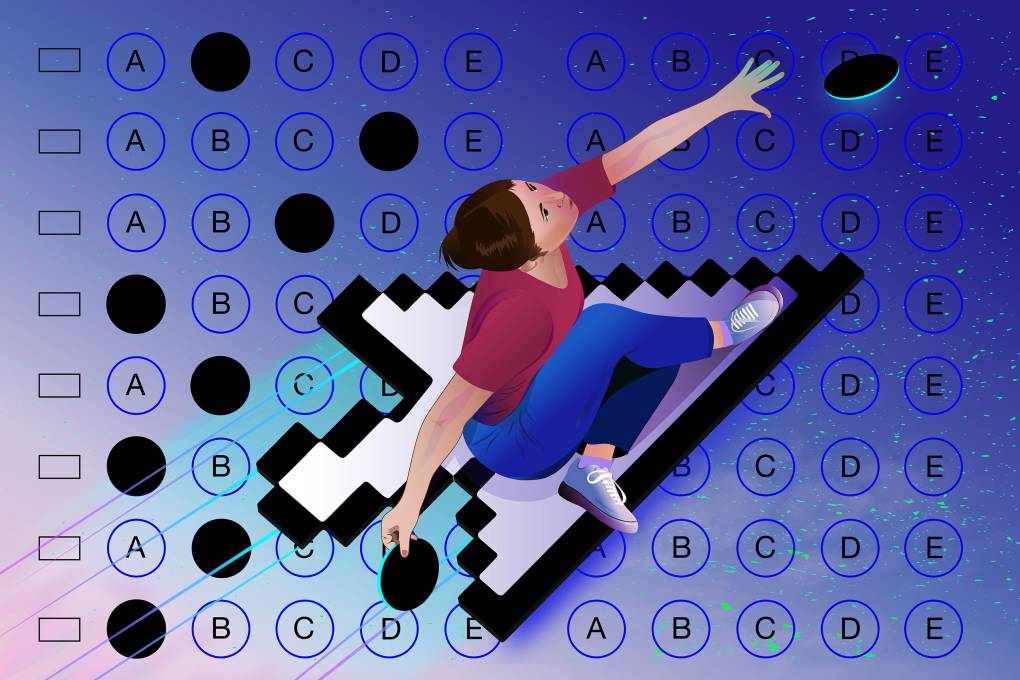
For the First Time, the SAT Goes Paperless for Over a Million Students
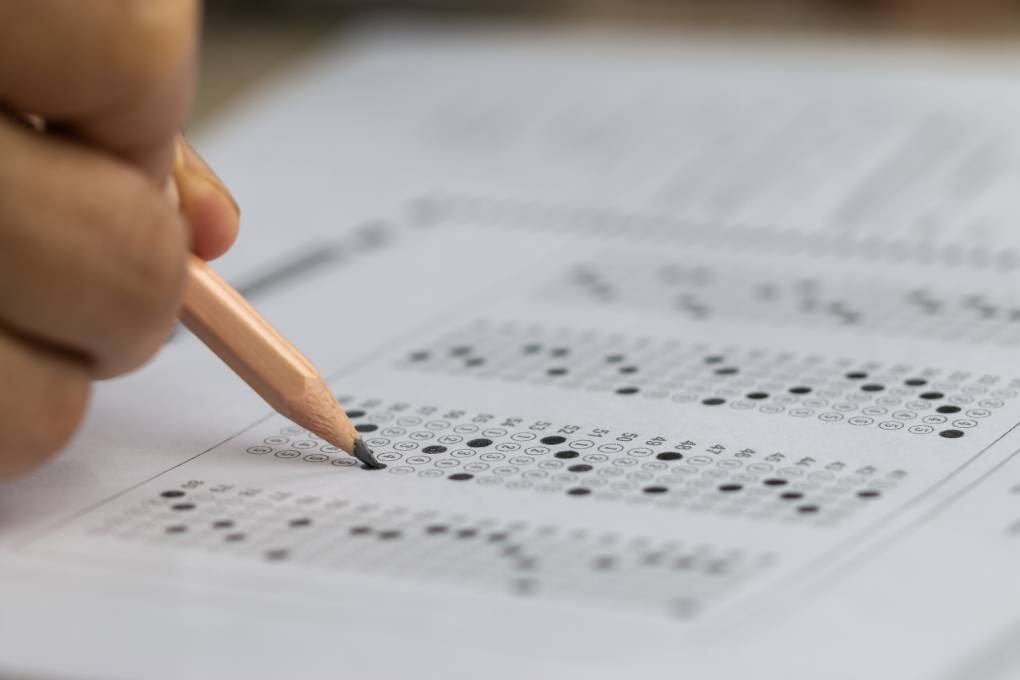
Nationwide ACT Test Scores Drop to 30-Year Low
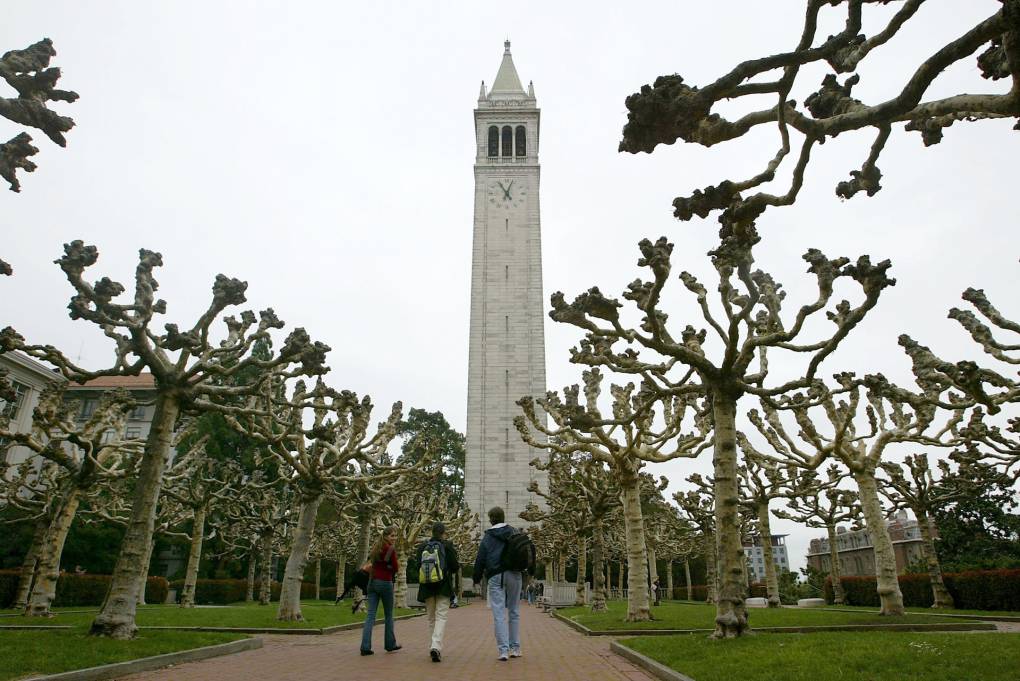
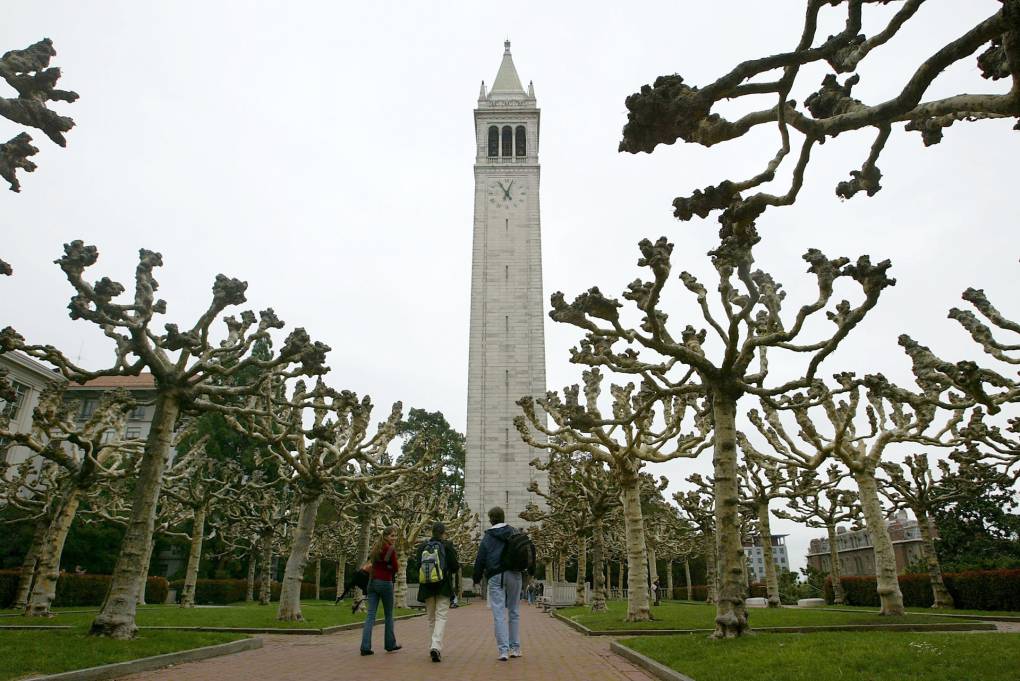
With Standardized Testing Out, UC Explores Next Steps in Making Admissions More Equitable
UC Officially Ditches All Tests for Undergraduate Admissions
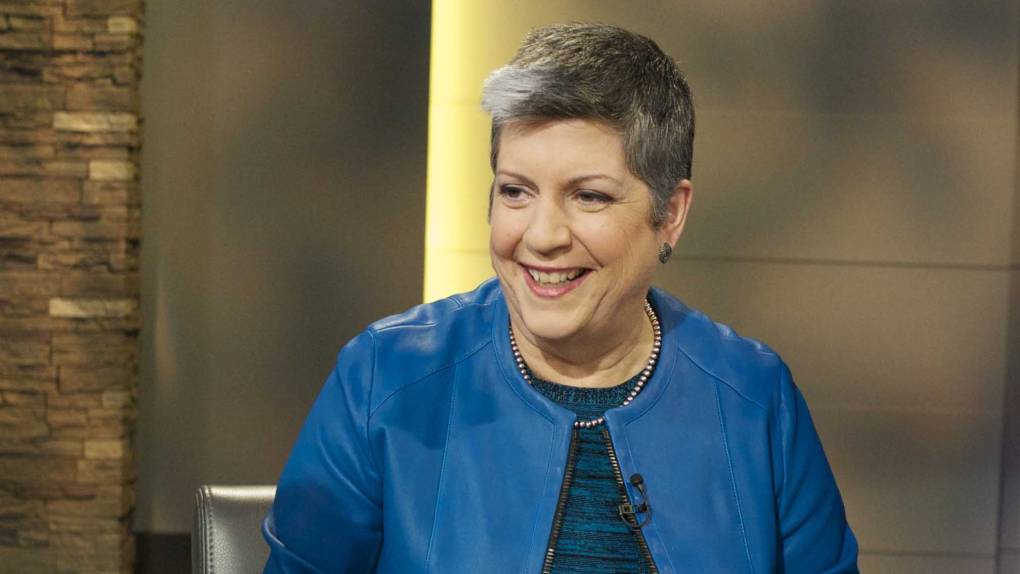
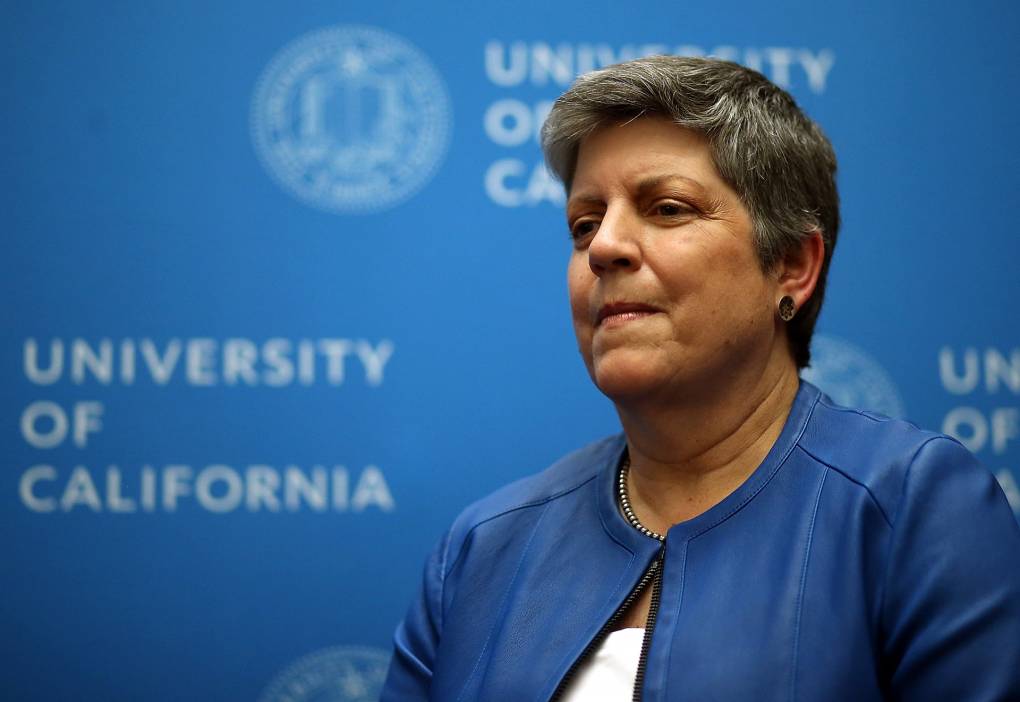
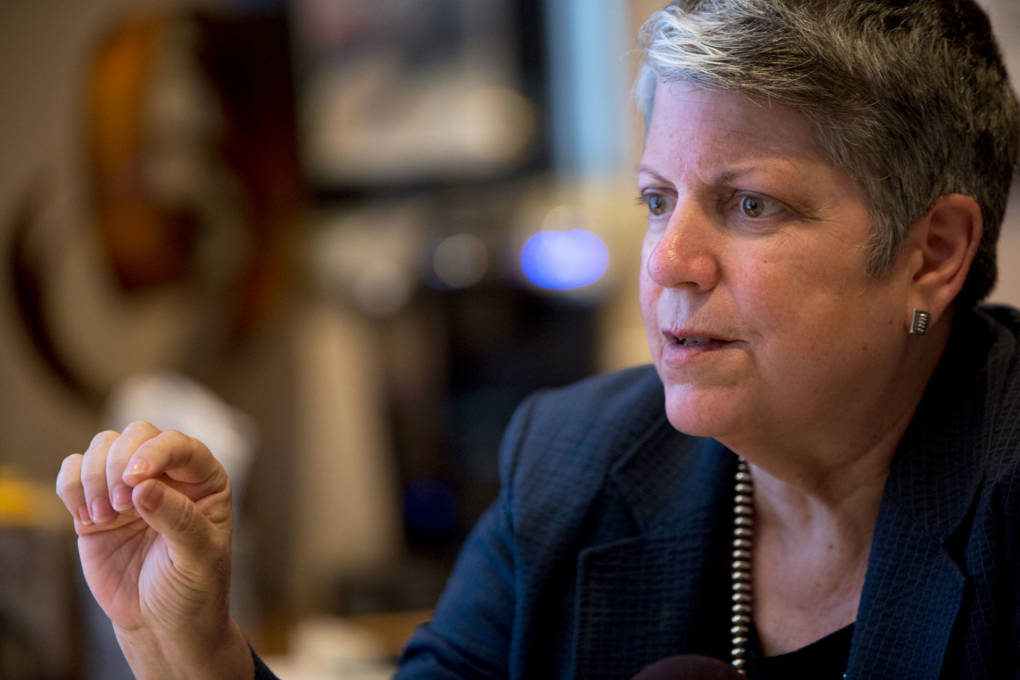
Reflecting on UC President Napolitano's Tenure: 'I Want It to be Remembered as Being Lively'
University of California System to Drop SAT, ACT Test Requirements
University of California President Submits Plan to End Use of SAT in Admissions
Sponsored
Player sponsored by
window.__IS_SSR__=true
window.__INITIAL_STATE__={
"attachmentsReducer": {
"audio_0": {
"type": "attachments",
"id": "audio_0",
"imgSizes": {
"kqedFullSize": {
"file": "https://ww2.kqed.org/news/wp-content/themes/KQED-unified/img/audio_bgs/background0.jpg"
}
}
},
"audio_1": {
"type": "attachments",
"id": "audio_1",
"imgSizes": {
"kqedFullSize": {
"file": "https://ww2.kqed.org/news/wp-content/themes/KQED-unified/img/audio_bgs/background1.jpg"
}
}
},
"audio_2": {
"type": "attachments",
"id": "audio_2",
"imgSizes": {
"kqedFullSize": {
"file": "https://ww2.kqed.org/news/wp-content/themes/KQED-unified/img/audio_bgs/background2.jpg"
}
}
},
"audio_3": {
"type": "attachments",
"id": "audio_3",
"imgSizes": {
"kqedFullSize": {
"file": "https://ww2.kqed.org/news/wp-content/themes/KQED-unified/img/audio_bgs/background3.jpg"
}
}
},
"audio_4": {
"type": "attachments",
"id": "audio_4",
"imgSizes": {
"kqedFullSize": {
"file": "https://ww2.kqed.org/news/wp-content/themes/KQED-unified/img/audio_bgs/background4.jpg"
}
}
},
"placeholder": {
"type": "attachments",
"id": "placeholder",
"imgSizes": {
"thumbnail": {
"file": "https://cdn.kqed.org/wp-content/uploads/2024/12/KQED-Default-Image-816638274-2000x1333-1-160x107.jpg",
"width": 160,
"height": 107,
"mimeType": "image/jpeg"
},
"medium": {
"file": "https://cdn.kqed.org/wp-content/uploads/2024/12/KQED-Default-Image-816638274-2000x1333-1-800x533.jpg",
"width": 800,
"height": 533,
"mimeType": "image/jpeg"
},
"medium_large": {
"file": "https://cdn.kqed.org/wp-content/uploads/2024/12/KQED-Default-Image-816638274-2000x1333-1-768x512.jpg",
"width": 768,
"height": 512,
"mimeType": "image/jpeg"
},
"large": {
"file": "https://cdn.kqed.org/wp-content/uploads/2024/12/KQED-Default-Image-816638274-2000x1333-1-1020x680.jpg",
"width": 1020,
"height": 680,
"mimeType": "image/jpeg"
},
"1536x1536": {
"file": "https://cdn.kqed.org/wp-content/uploads/2024/12/KQED-Default-Image-816638274-2000x1333-1-1536x1024.jpg",
"width": 1536,
"height": 1024,
"mimeType": "image/jpeg"
},
"fd-lrg": {
"file": "https://cdn.kqed.org/wp-content/uploads/2024/12/KQED-Default-Image-816638274-2000x1333-1-1536x1024.jpg",
"width": 1536,
"height": 1024,
"mimeType": "image/jpeg"
},
"fd-med": {
"file": "https://cdn.kqed.org/wp-content/uploads/2024/12/KQED-Default-Image-816638274-2000x1333-1-1020x680.jpg",
"width": 1020,
"height": 680,
"mimeType": "image/jpeg"
},
"fd-sm": {
"file": "https://cdn.kqed.org/wp-content/uploads/2024/12/KQED-Default-Image-816638274-2000x1333-1-800x533.jpg",
"width": 800,
"height": 533,
"mimeType": "image/jpeg"
},
"post-thumbnail": {
"file": "https://cdn.kqed.org/wp-content/uploads/2024/12/KQED-Default-Image-816638274-2000x1333-1-672x372.jpg",
"width": 672,
"height": 372,
"mimeType": "image/jpeg"
},
"twentyfourteen-full-width": {
"file": "https://cdn.kqed.org/wp-content/uploads/2024/12/KQED-Default-Image-816638274-2000x1333-1-1038x576.jpg",
"width": 1038,
"height": 576,
"mimeType": "image/jpeg"
},
"xxsmall": {
"file": "https://cdn.kqed.org/wp-content/uploads/2024/12/KQED-Default-Image-816638274-2000x1333-1-160x107.jpg",
"width": 160,
"height": 107,
"mimeType": "image/jpeg"
},
"xsmall": {
"file": "https://cdn.kqed.org/wp-content/uploads/2024/12/KQED-Default-Image-816638274-2000x1333-1-672x372.jpg",
"width": 672,
"height": 372,
"mimeType": "image/jpeg"
},
"small": {
"file": "https://cdn.kqed.org/wp-content/uploads/2024/12/KQED-Default-Image-816638274-2000x1333-1-672x372.jpg",
"width": 672,
"height": 372,
"mimeType": "image/jpeg"
},
"xlarge": {
"file": "https://cdn.kqed.org/wp-content/uploads/2024/12/KQED-Default-Image-816638274-2000x1333-1-1020x680.jpg",
"width": 1020,
"height": 680,
"mimeType": "image/jpeg"
},
"full-width": {
"file": "https://cdn.kqed.org/wp-content/uploads/2024/12/KQED-Default-Image-816638274-2000x1333-1-1920x1280.jpg",
"width": 1920,
"height": 1280,
"mimeType": "image/jpeg"
},
"guest-author-32": {
"file": "https://cdn.kqed.org/wp-content/uploads/2025/01/KQED-Default-Image-816638274-1333x1333-1-160x160.jpg",
"width": 32,
"height": 32,
"mimeType": "image/jpeg"
},
"guest-author-50": {
"file": "https://cdn.kqed.org/wp-content/uploads/2025/01/KQED-Default-Image-816638274-1333x1333-1-160x160.jpg",
"width": 50,
"height": 50,
"mimeType": "image/jpeg"
},
"guest-author-64": {
"file": "https://cdn.kqed.org/wp-content/uploads/2025/01/KQED-Default-Image-816638274-1333x1333-1-160x160.jpg",
"width": 64,
"height": 64,
"mimeType": "image/jpeg"
},
"guest-author-96": {
"file": "https://cdn.kqed.org/wp-content/uploads/2025/01/KQED-Default-Image-816638274-1333x1333-1-160x160.jpg",
"width": 96,
"height": 96,
"mimeType": "image/jpeg"
},
"guest-author-128": {
"file": "https://cdn.kqed.org/wp-content/uploads/2025/01/KQED-Default-Image-816638274-1333x1333-1-160x160.jpg",
"width": 128,
"height": 128,
"mimeType": "image/jpeg"
},
"detail": {
"file": "https://cdn.kqed.org/wp-content/uploads/2025/01/KQED-Default-Image-816638274-1333x1333-1-160x160.jpg",
"width": 160,
"height": 160,
"mimeType": "image/jpeg"
},
"kqedFullSize": {
"file": "https://cdn.kqed.org/wp-content/uploads/2024/12/KQED-Default-Image-816638274-2000x1333-1.jpg",
"width": 2000,
"height": 1333
}
}
},
"news_11988785": {
"type": "attachments",
"id": "news_11988785",
"meta": {
"index": "attachments_1716263798",
"site": "news",
"id": "11988785",
"found": true
},
"title": null,
"publishDate": 1717447846,
"status": "inherit",
"parent": 11988753,
"modified": 1717448078,
"caption": "Due to a shortage of SAT testing sites, Bay Area high school students have been scrambling to find seats to take the test this year.",
"credit": "Jeff Seltzer/Getty Images",
"altTag": "Colorful chairs in an empty classroom.",
"description": null,
"imgSizes": {
"medium": {
"file": "https://cdn.kqed.org/wp-content/uploads/sites/10/2024/06/GettyImages-125388341_qut-800x535.jpg",
"width": 800,
"height": 535,
"mimeType": "image/jpeg"
},
"large": {
"file": "https://cdn.kqed.org/wp-content/uploads/sites/10/2024/06/GettyImages-125388341_qut-1020x682.jpg",
"width": 1020,
"height": 682,
"mimeType": "image/jpeg"
},
"thumbnail": {
"file": "https://cdn.kqed.org/wp-content/uploads/sites/10/2024/06/GettyImages-125388341_qut-160x107.jpg",
"width": 160,
"height": 107,
"mimeType": "image/jpeg"
},
"1536x1536": {
"file": "https://cdn.kqed.org/wp-content/uploads/sites/10/2024/06/GettyImages-125388341_qut-1536x1026.jpg",
"width": 1536,
"height": 1026,
"mimeType": "image/jpeg"
},
"post-thumbnail": {
"file": "https://cdn.kqed.org/wp-content/uploads/sites/10/2024/06/GettyImages-125388341_qut-672x372.jpg",
"width": 672,
"height": 372,
"mimeType": "image/jpeg"
},
"twentyfourteen-full-width": {
"file": "https://cdn.kqed.org/wp-content/uploads/sites/10/2024/06/GettyImages-125388341_qut-1038x576.jpg",
"width": 1038,
"height": 576,
"mimeType": "image/jpeg"
},
"kqedFullSize": {
"file": "https://cdn.kqed.org/wp-content/uploads/sites/10/2024/06/GettyImages-125388341_qut.jpg",
"width": 1920,
"height": 1283
}
},
"fetchFailed": false,
"isLoading": false
},
"news_11983893": {
"type": "attachments",
"id": "news_11983893",
"meta": {
"index": "attachments_1716263798",
"site": "news",
"id": "11983893",
"found": true
},
"parent": 0,
"imgSizes": {
"twentyfourteen-full-width": {
"file": "https://cdn.kqed.org/wp-content/uploads/sites/10/2024/04/240423-SAT-III-MD-06-KQED-1038x576.jpg",
"width": 1038,
"mimeType": "image/jpeg",
"height": 576
},
"thumbnail": {
"file": "https://cdn.kqed.org/wp-content/uploads/sites/10/2024/04/240423-SAT-III-MD-06-KQED-160x107.jpg",
"width": 160,
"mimeType": "image/jpeg",
"height": 107
},
"post-thumbnail": {
"file": "https://cdn.kqed.org/wp-content/uploads/sites/10/2024/04/240423-SAT-III-MD-06-KQED-672x372.jpg",
"width": 672,
"mimeType": "image/jpeg",
"height": 372
},
"kqedFullSize": {
"file": "https://cdn.kqed.org/wp-content/uploads/sites/10/2024/04/240423-SAT-III-MD-06-KQED.jpg",
"width": 2000,
"height": 1333
},
"large": {
"file": "https://cdn.kqed.org/wp-content/uploads/sites/10/2024/04/240423-SAT-III-MD-06-KQED-1020x680.jpg",
"width": 1020,
"mimeType": "image/jpeg",
"height": 680
},
"1536x1536": {
"file": "https://cdn.kqed.org/wp-content/uploads/sites/10/2024/04/240423-SAT-III-MD-06-KQED-1536x1024.jpg",
"width": 1536,
"mimeType": "image/jpeg",
"height": 1024
},
"full-width": {
"file": "https://cdn.kqed.org/wp-content/uploads/sites/10/2024/04/240423-SAT-III-MD-06-KQED-1920x1280.jpg",
"width": 1920,
"mimeType": "image/jpeg",
"height": 1280
},
"medium": {
"file": "https://cdn.kqed.org/wp-content/uploads/sites/10/2024/04/240423-SAT-III-MD-06-KQED-800x533.jpg",
"width": 800,
"mimeType": "image/jpeg",
"height": 533
}
},
"publishDate": 1713977922,
"modified": 1714519565,
"caption": "Leslie Cruz Urquilla sits outside her high school, KIPP San Francisco College Preparatory. When she took the ACT last December, her dad had to take a day off work to drive her to a testing center three hours away.",
"description": null,
"title": "240423-SAT III-MD-06-KQED",
"credit": "Martin do Nascimento/KQED",
"status": "inherit",
"altTag": null,
"fetchFailed": false,
"isLoading": false
},
"news_11978153": {
"type": "attachments",
"id": "news_11978153",
"meta": {
"index": "attachments_1716263798",
"site": "news",
"id": "11978153",
"found": true
},
"parent": 11978152,
"imgSizes": {
"twentyfourteen-full-width": {
"file": "https://cdn.kqed.org/wp-content/uploads/sites/10/2024/03/echaliko_sat_npr_slide-c86db4b3895ad84e6778b3dbcb20345dff0460b2-1038x576.jpg",
"width": 1038,
"mimeType": "image/jpeg",
"height": 576
},
"thumbnail": {
"file": "https://cdn.kqed.org/wp-content/uploads/sites/10/2024/03/echaliko_sat_npr_slide-c86db4b3895ad84e6778b3dbcb20345dff0460b2-160x107.jpg",
"width": 160,
"mimeType": "image/jpeg",
"height": 107
},
"post-thumbnail": {
"file": "https://cdn.kqed.org/wp-content/uploads/sites/10/2024/03/echaliko_sat_npr_slide-c86db4b3895ad84e6778b3dbcb20345dff0460b2-672x372.jpg",
"width": 672,
"mimeType": "image/jpeg",
"height": 372
},
"kqedFullSize": {
"file": "https://cdn.kqed.org/wp-content/uploads/sites/10/2024/03/echaliko_sat_npr_slide-c86db4b3895ad84e6778b3dbcb20345dff0460b2-scaled.jpg",
"width": 2560,
"height": 1707
},
"2048x2048": {
"file": "https://cdn.kqed.org/wp-content/uploads/sites/10/2024/03/echaliko_sat_npr_slide-c86db4b3895ad84e6778b3dbcb20345dff0460b2-2048x1365.jpg",
"width": 2048,
"mimeType": "image/jpeg",
"height": 1365
},
"large": {
"file": "https://cdn.kqed.org/wp-content/uploads/sites/10/2024/03/echaliko_sat_npr_slide-c86db4b3895ad84e6778b3dbcb20345dff0460b2-1020x680.jpg",
"width": 1020,
"mimeType": "image/jpeg",
"height": 680
},
"1536x1536": {
"file": "https://cdn.kqed.org/wp-content/uploads/sites/10/2024/03/echaliko_sat_npr_slide-c86db4b3895ad84e6778b3dbcb20345dff0460b2-1536x1024.jpg",
"width": 1536,
"mimeType": "image/jpeg",
"height": 1024
},
"full-width": {
"file": "https://cdn.kqed.org/wp-content/uploads/sites/10/2024/03/echaliko_sat_npr_slide-c86db4b3895ad84e6778b3dbcb20345dff0460b2-1920x1280.jpg",
"width": 1920,
"mimeType": "image/jpeg",
"height": 1280
},
"medium": {
"file": "https://cdn.kqed.org/wp-content/uploads/sites/10/2024/03/echaliko_sat_npr_slide-c86db4b3895ad84e6778b3dbcb20345dff0460b2-800x533.jpg",
"width": 800,
"mimeType": "image/jpeg",
"height": 533
}
},
"publishDate": 1709668175,
"modified": 1709673956,
"caption": "The largest college entrance test in the U.S., the SAT, is going digital.",
"description": "The largest college entrance test in the US, the SAT, is going digital.",
"title": "The largest college entrance test in the US, the SAT, is going digital.",
"credit": "Efi Chalikopoulou/NPR",
"status": "inherit",
"altTag": "An illustration of a woman with a red shirt sitting on a mouse icon moving a black circle over circled letters.",
"fetchFailed": false,
"isLoading": false
},
"news_11964116": {
"type": "attachments",
"id": "news_11964116",
"meta": {
"index": "attachments_1716263798",
"site": "news",
"id": "11964116",
"found": true
},
"parent": 11964081,
"imgSizes": {
"twentyfourteen-full-width": {
"file": "https://ww2.kqed.org/app/uploads/sites/10/2023/10/GettyImages-1152410679-1038x576.jpg",
"width": 1038,
"mimeType": "image/jpeg",
"height": 576
},
"thumbnail": {
"file": "https://ww2.kqed.org/app/uploads/sites/10/2023/10/GettyImages-1152410679-160x107.jpg",
"width": 160,
"mimeType": "image/jpeg",
"height": 107
},
"post-thumbnail": {
"file": "https://ww2.kqed.org/app/uploads/sites/10/2023/10/GettyImages-1152410679-672x372.jpg",
"width": 672,
"mimeType": "image/jpeg",
"height": 372
},
"kqedFullSize": {
"file": "https://ww2.kqed.org/app/uploads/sites/10/2023/10/GettyImages-1152410679.jpg",
"width": 2121,
"height": 1414
},
"2048x2048": {
"file": "https://ww2.kqed.org/app/uploads/sites/10/2023/10/GettyImages-1152410679-2048x1365.jpg",
"width": 2048,
"mimeType": "image/jpeg",
"height": 1365
},
"large": {
"file": "https://ww2.kqed.org/app/uploads/sites/10/2023/10/GettyImages-1152410679-1020x680.jpg",
"width": 1020,
"mimeType": "image/jpeg",
"height": 680
},
"1536x1536": {
"file": "https://ww2.kqed.org/app/uploads/sites/10/2023/10/GettyImages-1152410679-1536x1024.jpg",
"width": 1536,
"mimeType": "image/jpeg",
"height": 1024
},
"full-width": {
"file": "https://ww2.kqed.org/app/uploads/sites/10/2023/10/GettyImages-1152410679-1920x1280.jpg",
"width": 1920,
"mimeType": "image/jpeg",
"height": 1280
},
"medium": {
"file": "https://ww2.kqed.org/app/uploads/sites/10/2023/10/GettyImages-1152410679-800x533.jpg",
"width": 800,
"mimeType": "image/jpeg",
"height": 533
}
},
"publishDate": 1697053321,
"modified": 1697053489,
"caption": "The average ACT scores in reading, science and math all were below benchmarks that the testing service says students must reach to have a high probability of success in first-year college courses.",
"description": null,
"title": "Education school test concept : Hands student holding pencil for testing exams writing answer sheet or exercise for taking fill in admission exam multiple carbon paper computer at university classroom",
"credit": "Getty Images",
"status": "inherit",
"altTag": "A hand holding a pencil against a multiple choice testing sheet.",
"fetchFailed": false,
"isLoading": false
},
"news_11898627": {
"type": "attachments",
"id": "news_11898627",
"meta": {
"index": "attachments_1716263798",
"site": "news",
"id": "11898627",
"found": true
},
"parent": 11898618,
"imgSizes": {
"twentyfourteen-full-width": {
"file": "https://ww2.kqed.org/app/uploads/sites/10/2021/12/RS18894_GettyImages-52237594-qut-1038x576.jpg",
"width": 1038,
"mimeType": "image/jpeg",
"height": 576
},
"thumbnail": {
"file": "https://ww2.kqed.org/app/uploads/sites/10/2021/12/RS18894_GettyImages-52237594-qut-160x107.jpg",
"width": 160,
"mimeType": "image/jpeg",
"height": 107
},
"post-thumbnail": {
"file": "https://ww2.kqed.org/app/uploads/sites/10/2021/12/RS18894_GettyImages-52237594-qut-672x372.jpg",
"width": 672,
"mimeType": "image/jpeg",
"height": 372
},
"kqedFullSize": {
"file": "https://ww2.kqed.org/app/uploads/sites/10/2021/12/RS18894_GettyImages-52237594-qut.jpg",
"width": 1920,
"height": 1282
},
"large": {
"file": "https://ww2.kqed.org/app/uploads/sites/10/2021/12/RS18894_GettyImages-52237594-qut-1020x681.jpg",
"width": 1020,
"mimeType": "image/jpeg",
"height": 681
},
"1536x1536": {
"file": "https://ww2.kqed.org/app/uploads/sites/10/2021/12/RS18894_GettyImages-52237594-qut-1536x1026.jpg",
"width": 1536,
"mimeType": "image/jpeg",
"height": 1026
},
"medium": {
"file": "https://ww2.kqed.org/app/uploads/sites/10/2021/12/RS18894_GettyImages-52237594-qut-800x534.jpg",
"width": 800,
"mimeType": "image/jpeg",
"height": 534
}
},
"publishDate": 1639089246,
"modified": 1639099855,
"caption": "Students walk near Sather Tower on the University of California at Berkeley campus Feb. 24, 2005, in Berkeley.",
"description": null,
"title": "RS18894_GettyImages-52237594-qut",
"credit": "Justin Sullivan/Getty Images",
"status": "inherit",
"altTag": "Three people are walking towards a tall building with a clocktower surrounded by trees with no leaves.",
"fetchFailed": false,
"isLoading": false
},
"news_11897040": {
"type": "attachments",
"id": "news_11897040",
"meta": {
"index": "attachments_1716263798",
"site": "news",
"id": "11897040",
"found": true
},
"parent": 11897034,
"imgSizes": {
"twentyfourteen-full-width": {
"file": "https://ww2.kqed.org/app/uploads/sites/10/2021/11/RS18894_GettyImages-52237594-qut-1038x576.jpg",
"width": 1038,
"mimeType": "image/jpeg",
"height": 576
},
"thumbnail": {
"file": "https://ww2.kqed.org/app/uploads/sites/10/2021/11/RS18894_GettyImages-52237594-qut-160x107.jpg",
"width": 160,
"mimeType": "image/jpeg",
"height": 107
},
"post-thumbnail": {
"file": "https://ww2.kqed.org/app/uploads/sites/10/2021/11/RS18894_GettyImages-52237594-qut-672x372.jpg",
"width": 672,
"mimeType": "image/jpeg",
"height": 372
},
"kqedFullSize": {
"file": "https://ww2.kqed.org/app/uploads/sites/10/2021/11/RS18894_GettyImages-52237594-qut.jpg",
"width": 1920,
"height": 1282
},
"large": {
"file": "https://ww2.kqed.org/app/uploads/sites/10/2021/11/RS18894_GettyImages-52237594-qut-1020x681.jpg",
"width": 1020,
"mimeType": "image/jpeg",
"height": 681
},
"1536x1536": {
"file": "https://ww2.kqed.org/app/uploads/sites/10/2021/11/RS18894_GettyImages-52237594-qut-1536x1026.jpg",
"width": 1536,
"mimeType": "image/jpeg",
"height": 1026
},
"medium": {
"file": "https://ww2.kqed.org/app/uploads/sites/10/2021/11/RS18894_GettyImages-52237594-qut-800x534.jpg",
"width": 800,
"mimeType": "image/jpeg",
"height": 534
}
},
"publishDate": 1637435844,
"modified": 1646337641,
"caption": "Students walking on UC Berkeley's campus.",
"description": null,
"title": "RS18894_GettyImages-52237594-qut",
"credit": "Justin Sullivan/Getty Images",
"status": "inherit",
"altTag": "The UC Berkeley campanile against a white-grey sky with a foreground of funky-looking trees.",
"fetchFailed": false,
"isLoading": false
},
"news_11824150": {
"type": "attachments",
"id": "news_11824150",
"meta": {
"index": "attachments_1716263798",
"site": "news",
"id": "11824150",
"found": true
},
"parent": 11823948,
"imgSizes": {
"apple_news_ca_landscape_5_5": {
"file": "https://ww2.kqed.org/app/uploads/sites/10/2020/06/1920_RS7595_DSC_9033-1044x783.jpg",
"width": 1044,
"mimeType": "image/jpeg",
"height": 783
},
"apple_news_ca_square_4_0": {
"file": "https://ww2.kqed.org/app/uploads/sites/10/2020/06/1920_RS7595_DSC_9033-470x470.jpg",
"width": 470,
"mimeType": "image/jpeg",
"height": 470
},
"twentyfourteen-full-width": {
"file": "https://ww2.kqed.org/app/uploads/sites/10/2020/06/1920_RS7595_DSC_9033-1038x576.jpg",
"width": 1038,
"mimeType": "image/jpeg",
"height": 576
},
"thumbnail": {
"file": "https://ww2.kqed.org/app/uploads/sites/10/2020/06/1920_RS7595_DSC_9033-160x90.jpg",
"width": 160,
"mimeType": "image/jpeg",
"height": 90
},
"post-thumbnail": {
"file": "https://ww2.kqed.org/app/uploads/sites/10/2020/06/1920_RS7595_DSC_9033-672x372.jpg",
"width": 672,
"mimeType": "image/jpeg",
"height": 372
},
"kqedFullSize": {
"file": "https://ww2.kqed.org/app/uploads/sites/10/2020/06/1920_RS7595_DSC_9033.jpg",
"width": 2017,
"height": 1135
},
"apple_news_ca_landscape_4_7": {
"file": "https://ww2.kqed.org/app/uploads/sites/10/2020/06/1920_RS7595_DSC_9033-632x474.jpg",
"width": 632,
"mimeType": "image/jpeg",
"height": 474
},
"large": {
"file": "https://ww2.kqed.org/app/uploads/sites/10/2020/06/1920_RS7595_DSC_9033-1020x574.jpg",
"width": 1020,
"mimeType": "image/jpeg",
"height": 574
},
"apple_news_ca_landscape_4_0": {
"file": "https://ww2.kqed.org/app/uploads/sites/10/2020/06/1920_RS7595_DSC_9033-536x402.jpg",
"width": 536,
"mimeType": "image/jpeg",
"height": 402
},
"apple_news_ca_portrait_12_9": {
"file": "https://ww2.kqed.org/app/uploads/sites/10/2020/06/1920_RS7595_DSC_9033-1122x1135.jpg",
"width": 1122,
"mimeType": "image/jpeg",
"height": 1135
},
"medium": {
"file": "https://ww2.kqed.org/app/uploads/sites/10/2020/06/1920_RS7595_DSC_9033-800x450.jpg",
"width": 800,
"mimeType": "image/jpeg",
"height": 450
},
"apple_news_ca_portrait_4_0": {
"file": "https://ww2.kqed.org/app/uploads/sites/10/2020/06/1920_RS7595_DSC_9033-354x472.jpg",
"width": 354,
"mimeType": "image/jpeg",
"height": 472
},
"apple_news_ca_portrait_9_7": {
"file": "https://ww2.kqed.org/app/uploads/sites/10/2020/06/1920_RS7595_DSC_9033-840x1120.jpg",
"width": 840,
"mimeType": "image/jpeg",
"height": 1120
},
"apple_news_ca_landscape_12_9": {
"file": "https://ww2.kqed.org/app/uploads/sites/10/2020/06/1920_RS7595_DSC_9033-1832x1135.jpg",
"width": 1832,
"mimeType": "image/jpeg",
"height": 1135
},
"apple_news_ca_square_9_7": {
"file": "https://ww2.kqed.org/app/uploads/sites/10/2020/06/1920_RS7595_DSC_9033-1104x1104.jpg",
"width": 1104,
"mimeType": "image/jpeg",
"height": 1104
},
"apple_news_ca_portrait_4_7": {
"file": "https://ww2.kqed.org/app/uploads/sites/10/2020/06/1920_RS7595_DSC_9033-414x552.jpg",
"width": 414,
"mimeType": "image/jpeg",
"height": 552
},
"apple_news_ca_square_12_9": {
"file": "https://ww2.kqed.org/app/uploads/sites/10/2020/06/1920_RS7595_DSC_9033-1472x1135.jpg",
"width": 1472,
"mimeType": "image/jpeg",
"height": 1135
},
"apple_news_ca_portrait_5_5": {
"file": "https://ww2.kqed.org/app/uploads/sites/10/2020/06/1920_RS7595_DSC_9033-687x916.jpg",
"width": 687,
"mimeType": "image/jpeg",
"height": 916
},
"full-width": {
"file": "https://ww2.kqed.org/app/uploads/sites/10/2020/06/1920_RS7595_DSC_9033-1920x1080.jpg",
"width": 1920,
"mimeType": "image/jpeg",
"height": 1080
},
"apple_news_ca_square_4_7": {
"file": "https://ww2.kqed.org/app/uploads/sites/10/2020/06/1920_RS7595_DSC_9033-550x550.jpg",
"width": 550,
"mimeType": "image/jpeg",
"height": 550
},
"apple_news_ca_landscape_9_7": {
"file": "https://ww2.kqed.org/app/uploads/sites/10/2020/06/1920_RS7595_DSC_9033-1376x1032.jpg",
"width": 1376,
"mimeType": "image/jpeg",
"height": 1032
},
"apple_news_ca_square_5_5": {
"file": "https://ww2.kqed.org/app/uploads/sites/10/2020/06/1920_RS7595_DSC_9033-912x912.jpg",
"width": 912,
"mimeType": "image/jpeg",
"height": 912
}
},
"publishDate": 1591932707,
"modified": 1592001383,
"caption": "Janet Napolitano speaks with Scott Shafer on KQED Newsroom in 2013.",
"description": "Janet Napolitano speaks with Scott Shafer on KQED Newsroom in 2013.",
"title": "1920_RS7595_DSC_9033",
"credit": "Monica Lam/KQED",
"status": "inherit",
"fetchFailed": false,
"isLoading": false
},
"news_11820136": {
"type": "attachments",
"id": "news_11820136",
"meta": {
"index": "attachments_1716263798",
"site": "news",
"id": "11820136",
"found": true
},
"parent": 11820134,
"imgSizes": {
"apple_news_ca_landscape_5_5": {
"file": "https://ww2.kqed.org/app/uploads/sites/10/2020/05/RS23885_GettyImages-173969606-qut-1044x783.jpg",
"width": 1044,
"mimeType": "image/jpeg",
"height": 783
},
"apple_news_ca_square_4_0": {
"file": "https://ww2.kqed.org/app/uploads/sites/10/2020/05/RS23885_GettyImages-173969606-qut-470x470.jpg",
"width": 470,
"mimeType": "image/jpeg",
"height": 470
},
"twentyfourteen-full-width": {
"file": "https://ww2.kqed.org/app/uploads/sites/10/2020/05/RS23885_GettyImages-173969606-qut-1038x576.jpg",
"width": 1038,
"mimeType": "image/jpeg",
"height": 576
},
"thumbnail": {
"file": "https://ww2.kqed.org/app/uploads/sites/10/2020/05/RS23885_GettyImages-173969606-qut-160x110.jpg",
"width": 160,
"mimeType": "image/jpeg",
"height": 110
},
"post-thumbnail": {
"file": "https://ww2.kqed.org/app/uploads/sites/10/2020/05/RS23885_GettyImages-173969606-qut-672x372.jpg",
"width": 672,
"mimeType": "image/jpeg",
"height": 372
},
"kqedFullSize": {
"file": "https://ww2.kqed.org/app/uploads/sites/10/2020/05/RS23885_GettyImages-173969606-qut.jpg",
"width": 1920,
"height": 1321
},
"apple_news_ca_landscape_4_7": {
"file": "https://ww2.kqed.org/app/uploads/sites/10/2020/05/RS23885_GettyImages-173969606-qut-632x474.jpg",
"width": 632,
"mimeType": "image/jpeg",
"height": 474
},
"large": {
"file": "https://ww2.kqed.org/app/uploads/sites/10/2020/05/RS23885_GettyImages-173969606-qut-1020x702.jpg",
"width": 1020,
"mimeType": "image/jpeg",
"height": 702
},
"apple_news_ca_landscape_4_0": {
"file": "https://ww2.kqed.org/app/uploads/sites/10/2020/05/RS23885_GettyImages-173969606-qut-536x402.jpg",
"width": 536,
"mimeType": "image/jpeg",
"height": 402
},
"apple_news_ca_portrait_12_9": {
"file": "https://ww2.kqed.org/app/uploads/sites/10/2020/05/RS23885_GettyImages-173969606-qut-1122x1321.jpg",
"width": 1122,
"mimeType": "image/jpeg",
"height": 1321
},
"medium": {
"file": "https://ww2.kqed.org/app/uploads/sites/10/2020/05/RS23885_GettyImages-173969606-qut-800x550.jpg",
"width": 800,
"mimeType": "image/jpeg",
"height": 550
},
"apple_news_ca_portrait_4_0": {
"file": "https://ww2.kqed.org/app/uploads/sites/10/2020/05/RS23885_GettyImages-173969606-qut-354x472.jpg",
"width": 354,
"mimeType": "image/jpeg",
"height": 472
},
"apple_news_ca_portrait_9_7": {
"file": "https://ww2.kqed.org/app/uploads/sites/10/2020/05/RS23885_GettyImages-173969606-qut-840x1120.jpg",
"width": 840,
"mimeType": "image/jpeg",
"height": 1120
},
"apple_news_ca_landscape_12_9": {
"file": "https://ww2.kqed.org/app/uploads/sites/10/2020/05/RS23885_GettyImages-173969606-qut-1832x1321.jpg",
"width": 1832,
"mimeType": "image/jpeg",
"height": 1321
},
"apple_news_ca_square_9_7": {
"file": "https://ww2.kqed.org/app/uploads/sites/10/2020/05/RS23885_GettyImages-173969606-qut-1104x1104.jpg",
"width": 1104,
"mimeType": "image/jpeg",
"height": 1104
},
"apple_news_ca_portrait_4_7": {
"file": "https://ww2.kqed.org/app/uploads/sites/10/2020/05/RS23885_GettyImages-173969606-qut-414x552.jpg",
"width": 414,
"mimeType": "image/jpeg",
"height": 552
},
"apple_news_ca_square_12_9": {
"file": "https://ww2.kqed.org/app/uploads/sites/10/2020/05/RS23885_GettyImages-173969606-qut-1472x1321.jpg",
"width": 1472,
"mimeType": "image/jpeg",
"height": 1321
},
"apple_news_ca_portrait_5_5": {
"file": "https://ww2.kqed.org/app/uploads/sites/10/2020/05/RS23885_GettyImages-173969606-qut-687x916.jpg",
"width": 687,
"mimeType": "image/jpeg",
"height": 916
},
"full-width": {
"file": "https://ww2.kqed.org/app/uploads/sites/10/2020/05/RS23885_GettyImages-173969606-qut-1920x1321.jpg",
"width": 1920,
"mimeType": "image/jpeg",
"height": 1321
},
"apple_news_ca_square_4_7": {
"file": "https://ww2.kqed.org/app/uploads/sites/10/2020/05/RS23885_GettyImages-173969606-qut-550x550.jpg",
"width": 550,
"mimeType": "image/jpeg",
"height": 550
},
"apple_news_ca_landscape_9_7": {
"file": "https://ww2.kqed.org/app/uploads/sites/10/2020/05/RS23885_GettyImages-173969606-qut-1376x1032.jpg",
"width": 1376,
"mimeType": "image/jpeg",
"height": 1032
},
"apple_news_ca_square_5_5": {
"file": "https://ww2.kqed.org/app/uploads/sites/10/2020/05/RS23885_GettyImages-173969606-qut-912x912.jpg",
"width": 912,
"mimeType": "image/jpeg",
"height": 912
}
},
"publishDate": 1590115236,
"modified": 1590169849,
"caption": "Janet Napolitano speaks during a news conference following a University of California Board of Regents meeting in 2013. \nThe UC’s governing body, the Board of Regents, voted 23-0 Thursday to approve a proposal by Napolitano that phases the tests out over five years, at which point the UC aims to have developed its own test.",
"description": null,
"title": "RS23885_GettyImages-173969606-qut",
"credit": "Justin Sullivan/Getty Images",
"status": "inherit",
"fetchFailed": false,
"isLoading": false
},
"news_11682269": {
"type": "attachments",
"id": "news_11682269",
"meta": {
"index": "attachments_1716263798",
"site": "news",
"id": "11682269",
"found": true
},
"parent": 11682247,
"imgSizes": {
"small": {
"file": "https://ww2.kqed.org/app/uploads/sites/10/2018/07/NapolitanoMain-520x347.jpg",
"width": 520,
"mimeType": "image/jpeg",
"height": 347
},
"twentyfourteen-full-width": {
"file": "https://ww2.kqed.org/app/uploads/sites/10/2018/07/NapolitanoMain-1038x576.jpg",
"width": 1038,
"mimeType": "image/jpeg",
"height": 576
},
"thumbnail": {
"file": "https://ww2.kqed.org/app/uploads/sites/10/2018/07/NapolitanoMain-160x107.jpg",
"width": 160,
"mimeType": "image/jpeg",
"height": 107
},
"fd-sm": {
"file": "https://ww2.kqed.org/app/uploads/sites/10/2018/07/NapolitanoMain-960x640.jpg",
"width": 960,
"mimeType": "image/jpeg",
"height": 640
},
"post-thumbnail": {
"file": "https://ww2.kqed.org/app/uploads/sites/10/2018/07/NapolitanoMain-672x372.jpg",
"width": 672,
"mimeType": "image/jpeg",
"height": 372
},
"xsmall": {
"file": "https://ww2.kqed.org/app/uploads/sites/10/2018/07/NapolitanoMain-375x250.jpg",
"width": 375,
"mimeType": "image/jpeg",
"height": 250
},
"kqedFullSize": {
"file": "https://ww2.kqed.org/app/uploads/sites/10/2018/07/NapolitanoMain.jpg",
"width": 1920,
"height": 1280
},
"large": {
"file": "https://ww2.kqed.org/app/uploads/sites/10/2018/07/NapolitanoMain-1020x680.jpg",
"width": 1020,
"mimeType": "image/jpeg",
"height": 680
},
"xlarge": {
"file": "https://ww2.kqed.org/app/uploads/sites/10/2018/07/NapolitanoMain-1180x787.jpg",
"width": 1180,
"mimeType": "image/jpeg",
"height": 787
},
"complete_open_graph": {
"file": "https://ww2.kqed.org/app/uploads/sites/10/2018/07/NapolitanoMain-1200x800.jpg",
"width": 1200,
"mimeType": "image/jpeg",
"height": 800
},
"guest-author-50": {
"file": "https://ww2.kqed.org/app/uploads/sites/10/2018/07/NapolitanoMain-50x50.jpg",
"width": 50,
"mimeType": "image/jpeg",
"height": 50
},
"guest-author-96": {
"file": "https://ww2.kqed.org/app/uploads/sites/10/2018/07/NapolitanoMain-96x96.jpg",
"width": 96,
"mimeType": "image/jpeg",
"height": 96
},
"medium": {
"file": "https://ww2.kqed.org/app/uploads/sites/10/2018/07/NapolitanoMain-800x533.jpg",
"width": 800,
"mimeType": "image/jpeg",
"height": 533
},
"guest-author-64": {
"file": "https://ww2.kqed.org/app/uploads/sites/10/2018/07/NapolitanoMain-64x64.jpg",
"width": 64,
"mimeType": "image/jpeg",
"height": 64
},
"guest-author-32": {
"file": "https://ww2.kqed.org/app/uploads/sites/10/2018/07/NapolitanoMain-32x32.jpg",
"width": 32,
"mimeType": "image/jpeg",
"height": 32
},
"fd-lrg": {
"file": "https://ww2.kqed.org/app/uploads/sites/10/2018/07/NapolitanoMain-1920x1280.jpg",
"width": 1920,
"mimeType": "image/jpeg",
"height": 1280
},
"fd-med": {
"file": "https://ww2.kqed.org/app/uploads/sites/10/2018/07/NapolitanoMain-1180x787.jpg",
"width": 1180,
"mimeType": "image/jpeg",
"height": 787
},
"full-width": {
"file": "https://ww2.kqed.org/app/uploads/sites/10/2018/07/NapolitanoMain-1920x1280.jpg",
"width": 1920,
"mimeType": "image/jpeg",
"height": 1280
},
"detail": {
"file": "https://ww2.kqed.org/app/uploads/sites/10/2018/07/NapolitanoMain-150x150.jpg",
"width": 150,
"mimeType": "image/jpeg",
"height": 150
},
"guest-author-128": {
"file": "https://ww2.kqed.org/app/uploads/sites/10/2018/07/NapolitanoMain-128x128.jpg",
"width": 128,
"mimeType": "image/jpeg",
"height": 128
},
"xxsmall": {
"file": "https://ww2.kqed.org/app/uploads/sites/10/2018/07/NapolitanoMain-240x160.jpg",
"width": 240,
"mimeType": "image/jpeg",
"height": 160
}
},
"publishDate": 1532458617,
"modified": 1589261409,
"caption": "UC President Janet Napolitano in her office in Oakland on July 17, 2018.",
"description": "UC President and former Secretary of Homeland Security Janet Napolitano talked with The California Report in her office in Oakland on July 17, 2018.",
"title": "NapolitanoMain",
"credit": "Anne Wernikoff/KQED",
"status": "inherit",
"fetchFailed": false,
"isLoading": false
}
},
"audioPlayerReducer": {
"postId": "stream_live",
"isPaused": true,
"isPlaying": false,
"pfsActive": false,
"pledgeModalIsOpen": true,
"playerDrawerIsOpen": false
},
"authorsReducer": {
"byline_news_11978152": {
"type": "authors",
"id": "byline_news_11978152",
"meta": {
"override": true
},
"slug": "byline_news_11978152",
"name": "Elissa Nadworny ",
"isLoading": false
},
"byline_news_11964081": {
"type": "authors",
"id": "byline_news_11964081",
"meta": {
"override": true
},
"slug": "byline_news_11964081",
"name": "Cheyanne Mumphry\u003cbr>The Associated Press",
"isLoading": false
},
"byline_news_11898618": {
"type": "authors",
"id": "byline_news_11898618",
"meta": {
"override": true
},
"slug": "byline_news_11898618",
"name": "\u003ca href=\"https://edsource.org/author/mburke\">Michael Burke\u003c/a>",
"isLoading": false
},
"byline_news_11897034": {
"type": "authors",
"id": "byline_news_11897034",
"meta": {
"override": true
},
"slug": "byline_news_11897034",
"name": "Mikhail Zinshteyn",
"isLoading": false
},
"byline_news_11820134": {
"type": "authors",
"id": "byline_news_11820134",
"meta": {
"override": true
},
"slug": "byline_news_11820134",
"name": "Associated Press",
"isLoading": false
},
"byline_news_11817711": {
"type": "authors",
"id": "byline_news_11817711",
"meta": {
"override": true
},
"slug": "byline_news_11817711",
"name": "The Associated Press",
"isLoading": false
},
"ljamali": {
"type": "authors",
"id": "11552",
"meta": {
"index": "authors_1716337520",
"id": "11552",
"found": true
},
"name": "Lily Jamali",
"firstName": "Lily",
"lastName": "Jamali",
"slug": "ljamali",
"email": "ljamali@kqed.org",
"display_author_email": false,
"staff_mastheads": [],
"title": "KQED Contributor",
"bio": "Lily was the former co-host of the daily morning show, The California Report.",
"avatar": "https://secure.gravatar.com/avatar/dbf7b30d159e697731046a10d25a9e29?s=600&d=blank&r=g",
"twitter": "lilyjamali",
"facebook": null,
"instagram": null,
"linkedin": null,
"sites": [
{
"site": "news",
"roles": [
"create_posts",
"subscriber"
]
},
{
"site": "forum",
"roles": [
"editor"
]
}
],
"headData": {
"title": "Lily Jamali | KQED",
"description": "KQED Contributor",
"ogImgSrc": "https://secure.gravatar.com/avatar/dbf7b30d159e697731046a10d25a9e29?s=600&d=blank&r=g",
"twImgSrc": "https://secure.gravatar.com/avatar/dbf7b30d159e697731046a10d25a9e29?s=600&d=blank&r=g"
},
"isLoading": false,
"link": "/author/ljamali"
},
"sjohnson": {
"type": "authors",
"id": "11840",
"meta": {
"index": "authors_1716337520",
"id": "11840",
"found": true
},
"name": "Sydney Johnson",
"firstName": "Sydney",
"lastName": "Johnson",
"slug": "sjohnson",
"email": "sjohnson@kqed.org",
"display_author_email": false,
"staff_mastheads": [
"news"
],
"title": "KQED Reporter",
"bio": "Sydney Johnson is a general assignment reporter at KQED. She previously reported on public health and city government at the San Francisco Examiner, and before that, she covered statewide education policy for EdSource. Her reporting has won multiple local, state and national awards. Sydney is a graduate of the University of California, Berkeley and lives in San Francisco.",
"avatar": "https://secure.gravatar.com/avatar/97855f2719b72ad6190b7c535fe642c8?s=600&d=blank&r=g",
"twitter": "sydneyfjohnson",
"facebook": null,
"instagram": null,
"linkedin": null,
"sites": [
{
"site": "news",
"roles": [
"editor"
]
}
],
"headData": {
"title": "Sydney Johnson | KQED",
"description": "KQED Reporter",
"ogImgSrc": "https://secure.gravatar.com/avatar/97855f2719b72ad6190b7c535fe642c8?s=600&d=blank&r=g",
"twImgSrc": "https://secure.gravatar.com/avatar/97855f2719b72ad6190b7c535fe642c8?s=600&d=blank&r=g"
},
"isLoading": false,
"link": "/author/sjohnson"
}
},
"breakingNewsReducer": {},
"pagesReducer": {},
"postsReducer": {
"stream_live": {
"type": "live",
"id": "stream_live",
"audioUrl": "https://streams.kqed.org/kqedradio",
"title": "Live Stream",
"excerpt": "Live Stream information currently unavailable.",
"link": "/radio",
"featImg": "",
"label": {
"name": "KQED Live",
"link": "/"
}
},
"stream_kqedNewscast": {
"type": "posts",
"id": "stream_kqedNewscast",
"audioUrl": "https://www.kqed.org/.stream/anon/radio/RDnews/newscast.mp3?_=1",
"title": "KQED Newscast",
"featImg": "",
"label": {
"name": "88.5 FM",
"link": "/"
}
},
"news_11988753": {
"type": "posts",
"id": "news_11988753",
"meta": {
"index": "posts_1716263798",
"site": "news",
"id": "11988753",
"score": null,
"sort": [
1717449042000
]
},
"guestAuthors": [],
"slug": "after-oakland-sat-debacle-student-petitions-east-bay-high-school-to-host-test",
"title": "After Oakland SAT Debacle, Student Petitions East Bay High School to Host Test",
"publishDate": 1717449042,
"format": "standard",
"headTitle": "After Oakland SAT Debacle, Student Petitions East Bay High School to Host Test | KQED",
"labelTerm": {
"site": "news"
},
"content": "\u003cp>After a last-minute cancellation at an SAT testing site in Oakland sent about 1,400 students scrambling over the weekend, one student is petitioning her high school to host the exam.\u003c/p>\n\u003cp>The test debacle comes as \u003ca href=\"https://www.kqed.org/news/11984551/bay-area-high-school-students-scramble-to-find-seats-to-take-the-sat-and-act\">students across the Bay Area have already been scrambling to find seats to take the SAT\u003c/a> this year, with many students traveling multiple hours to take the test, which is still required for some college admissions.\u003c/p>\n\u003cp>“I was hoping to take (the SAT) for college applications and potential scholarships and internships later,” said Emily Wagner, a junior at Granada High in Livermore, who started the petition. She has since had to reschedule that test for August. “It’s really hard for a lot of people to get slots, which is why I’m hoping that my school will open up their campus for the SAT.”\u003c/p>\n\u003cp>Wagner was one of hundreds of students sent home from Saturday’s SAT at the Oakland Marriott City Center Hotel after a Wi-Fi problem prevented the all-digital test from happening. Students were admitted to the exam around 7:45 a.m. After nearly three hours of Wi-Fi issues, which failed to connect students to the exam, students were sent home around 11:15 a.m., she said.\u003c/p>\n\u003cp>She said she started the petition to host a make-up test at her own school because finding access to a testing site has been incredibly difficult.\u003c/p>\n\u003cp>[ad fullwidth]\u003c/p>\n\u003cp>“The test is seemingly not going to be rescheduled, which I believe is quite unfair, and it will be …extremely difficult for most of those students to find a testing center to take the SAT at the next available date, August 24,” Wagner wrote in an email sharing the petition with school peers over the weekend.\u003c/p>\n\u003cp>The petition is so far limited to students at Livermore and Granada high schools, and as of Monday morning, one day after it went live, it had 30 signatures, according to Jennafer Wagner, Emily’s parent.\u003c/p>\n\u003cp>Students across the Bay Area are scrambling to secure SAT and ACT test seats this year as the number of testing sites in California dropped significantly after the COVID-19 pandemic. That’s due to several factors, including the test being entirely online for the first time this year and some sites have struggled to transition to the digital format.\u003c/p>\n\u003cp>Campuses like the University of California also no longer require the standardized test to apply, making some high schools less incentivized to host it. However, some private schools and Ivy League universities, such as Harvard, have since reversed their stance on standardized testing and are now requiring it again for applications.\u003c/p>\n\u003cp>With around half of the number of testing sites operating this year compared to just before the pandemic, students who do still wish to take the test have had to travel hours to find open seats at testing centers.\u003c/p>\n\u003cp>“The combination of being unable to offer enough seats to students and then failing to successfully administer the exam is directly harmful to Bay Area students,” Nate Slater, whose 11th-grade son was at the Oakland Marriott exam, wrote in an email. “It puts them at a disadvantage when applying to any university that requires the SAT.”\u003c/p>\n\u003cp>The issue has been particularly challenging for students who say they can’t afford to stay in a nearby hotel to get a good night’s sleep before an early morning test or who have to wake up hours before the exam to drive there.\u003c/p>\n\u003cp>[aside label='More Education Coverage' tag='education']The College Board, which administers the SAT, acknowledges that demand for the test is outstripping capacity across the Bay Area this year.\u003c/p>\n\u003cp>“Student demand has exceeded capacity for SAT Weekend administrations in California’s Bay Area because of a shortage of high schools and other institutions willing to serve as SAT Weekend test centers,” a spokesperson for the College Board said in an email.\u003c/p>\n\u003cp>To address the issue, the College Board contracted with an outside vendor this year to set up exams at high-capacity test centers such as hotels and convention centers, adding approximately 6,000 seats in the Bay Area. That included the canceled test at the Oakland Marriott.\u003c/p>\n\u003cp>“We know this was an incredibly difficult situation for students who worked hard to prepare for the test. We deeply apologize to all affected students,” the spokesperson wrote.\u003c/p>\n\u003cp>Students impacted by Saturday’s exam cancellation will receive a full refund for the test, according to the College Board.\u003c/p>\n\u003cp>However, limited spaces to take the test continue to be an issue. In August, Wagner plans to travel to a test site almost eight hours away in Henderson, Nevada, a small city near Las Vegas — the closest site she found available for the upcoming August test date.\u003c/p>\n\u003cp>“A lot of students can’t afford to travel hundreds of miles away to take the test somewhere else,” Wagner said. “There is a very limited window of time for college applications, and a lot of places are really, really full already.”\u003c/p>\n\u003cp>\u003c/p>\n\u003cp>\u003cem>This story includes reporting from KQED’s Sara Hossaini. This story has been updated.\u003c/em>\u003c/p>\n\n",
"blocks": [],
"excerpt": "About 1,400 students who signed up to take the SAT last Saturday at an Oakland hotel were sent home after Wi-Fi issues thwarted the exam.",
"status": "publish",
"parent": 0,
"modified": 1717451849,
"stats": {
"hasAudio": false,
"hasVideo": false,
"hasChartOrMap": false,
"iframeSrcs": [],
"hasGoogleForm": false,
"hasGallery": false,
"hasHearkenModule": false,
"hasPolis": false,
"paragraphCount": 22,
"wordCount": 885
},
"headData": {
"title": "After Oakland SAT Debacle, Student Petitions East Bay High School to Host Test | KQED",
"description": "About 1,400 students who signed up to take the SAT last Saturday at an Oakland hotel were sent home after Wi-Fi issues thwarted the exam.",
"ogTitle": "",
"ogDescription": "",
"ogImgId": "",
"twTitle": "",
"twDescription": "",
"twImgId": "",
"schema": {
"@context": "https://schema.org",
"@type": "NewsArticle",
"headline": "After Oakland SAT Debacle, Student Petitions East Bay High School to Host Test",
"datePublished": "2024-06-03T14:10:42-07:00",
"dateModified": "2024-06-03T14:57:29-07:00",
"image": "https://cdn.kqed.org/wp-content/uploads/2020/02/KQED-OG-Image@1x.png",
"isAccessibleForFree": "True",
"publisher": {
"@type": "NewsMediaOrganization",
"@id": "https://www.kqed.org/#organization",
"name": "KQED",
"logo": "https://cdn.kqed.org/wp-content/uploads/2020/02/KQED-OG-Image@1x.png",
"url": "https://www.kqed.org",
"sameAs": [
"https://www.facebook.com/KQED",
"https://twitter.com/KQED",
"https://www.instagram.com/kqed/",
"https://www.tiktok.com/@kqedofficial",
"https://www.linkedin.com/company/kqed",
"https://www.youtube.com/channel/UCeC0IOo7i1P_61zVUWbJ4nw"
]
}
}
},
"sticky": false,
"nprStoryId": "kqed-11988753",
"excludeFromSiteSearch": "Include",
"articleAge": "0",
"path": "/news/11988753/after-oakland-sat-debacle-student-petitions-east-bay-high-school-to-host-test",
"audioTrackLength": null,
"parsedContent": [
{
"type": "contentString",
"content": "\u003cdiv class=\"post-body\">\u003cp>\u003cp>After a last-minute cancellation at an SAT testing site in Oakland sent about 1,400 students scrambling over the weekend, one student is petitioning her high school to host the exam.\u003c/p>\n\u003cp>The test debacle comes as \u003ca href=\"https://www.kqed.org/news/11984551/bay-area-high-school-students-scramble-to-find-seats-to-take-the-sat-and-act\">students across the Bay Area have already been scrambling to find seats to take the SAT\u003c/a> this year, with many students traveling multiple hours to take the test, which is still required for some college admissions.\u003c/p>\n\u003cp>“I was hoping to take (the SAT) for college applications and potential scholarships and internships later,” said Emily Wagner, a junior at Granada High in Livermore, who started the petition. She has since had to reschedule that test for August. “It’s really hard for a lot of people to get slots, which is why I’m hoping that my school will open up their campus for the SAT.”\u003c/p>\n\u003cp>Wagner was one of hundreds of students sent home from Saturday’s SAT at the Oakland Marriott City Center Hotel after a Wi-Fi problem prevented the all-digital test from happening. Students were admitted to the exam around 7:45 a.m. After nearly three hours of Wi-Fi issues, which failed to connect students to the exam, students were sent home around 11:15 a.m., she said.\u003c/p>\n\u003cp>She said she started the petition to host a make-up test at her own school because finding access to a testing site has been incredibly difficult.\u003c/p>\n\u003cp>\u003c/p>\u003c/div>",
"attributes": {
"named": {},
"numeric": []
}
},
{
"type": "component",
"content": "",
"name": "ad",
"attributes": {
"named": {
"label": "fullwidth"
},
"numeric": [
"fullwidth"
]
}
},
{
"type": "contentString",
"content": "\u003cdiv class=\"post-body\">\u003cp>\u003c/p>\n\u003cp>“The test is seemingly not going to be rescheduled, which I believe is quite unfair, and it will be …extremely difficult for most of those students to find a testing center to take the SAT at the next available date, August 24,” Wagner wrote in an email sharing the petition with school peers over the weekend.\u003c/p>\n\u003cp>The petition is so far limited to students at Livermore and Granada high schools, and as of Monday morning, one day after it went live, it had 30 signatures, according to Jennafer Wagner, Emily’s parent.\u003c/p>\n\u003cp>Students across the Bay Area are scrambling to secure SAT and ACT test seats this year as the number of testing sites in California dropped significantly after the COVID-19 pandemic. That’s due to several factors, including the test being entirely online for the first time this year and some sites have struggled to transition to the digital format.\u003c/p>\n\u003cp>Campuses like the University of California also no longer require the standardized test to apply, making some high schools less incentivized to host it. However, some private schools and Ivy League universities, such as Harvard, have since reversed their stance on standardized testing and are now requiring it again for applications.\u003c/p>\n\u003cp>With around half of the number of testing sites operating this year compared to just before the pandemic, students who do still wish to take the test have had to travel hours to find open seats at testing centers.\u003c/p>\n\u003cp>“The combination of being unable to offer enough seats to students and then failing to successfully administer the exam is directly harmful to Bay Area students,” Nate Slater, whose 11th-grade son was at the Oakland Marriott exam, wrote in an email. “It puts them at a disadvantage when applying to any university that requires the SAT.”\u003c/p>\n\u003cp>The issue has been particularly challenging for students who say they can’t afford to stay in a nearby hotel to get a good night’s sleep before an early morning test or who have to wake up hours before the exam to drive there.\u003c/p>\n\u003cp>\u003c/p>\u003c/div>",
"attributes": {
"named": {},
"numeric": []
}
},
{
"type": "component",
"content": "",
"name": "aside",
"attributes": {
"named": {
"label": "More Education Coverage ",
"tag": "education"
},
"numeric": []
}
},
{
"type": "contentString",
"content": "\u003cdiv class=\"post-body\">\u003cp>The College Board, which administers the SAT, acknowledges that demand for the test is outstripping capacity across the Bay Area this year.\u003c/p>\n\u003cp>“Student demand has exceeded capacity for SAT Weekend administrations in California’s Bay Area because of a shortage of high schools and other institutions willing to serve as SAT Weekend test centers,” a spokesperson for the College Board said in an email.\u003c/p>\n\u003cp>To address the issue, the College Board contracted with an outside vendor this year to set up exams at high-capacity test centers such as hotels and convention centers, adding approximately 6,000 seats in the Bay Area. That included the canceled test at the Oakland Marriott.\u003c/p>\n\u003cp>“We know this was an incredibly difficult situation for students who worked hard to prepare for the test. We deeply apologize to all affected students,” the spokesperson wrote.\u003c/p>\n\u003cp>Students impacted by Saturday’s exam cancellation will receive a full refund for the test, according to the College Board.\u003c/p>\n\u003cp>However, limited spaces to take the test continue to be an issue. In August, Wagner plans to travel to a test site almost eight hours away in Henderson, Nevada, a small city near Las Vegas — the closest site she found available for the upcoming August test date.\u003c/p>\n\u003cp>“A lot of students can’t afford to travel hundreds of miles away to take the test somewhere else,” Wagner said. “There is a very limited window of time for college applications, and a lot of places are really, really full already.”\u003c/p>\n\u003cp>\u003c/p>\n\u003cp>\u003cem>This story includes reporting from KQED’s Sara Hossaini. This story has been updated.\u003c/em>\u003c/p>\n\n\u003c/div>\u003c/p>",
"attributes": {
"named": {},
"numeric": []
}
}
],
"link": "/news/11988753/after-oakland-sat-debacle-student-petitions-east-bay-high-school-to-host-test",
"authors": [
"11840"
],
"categories": [
"news_18540",
"news_8"
],
"tags": [
"news_20013",
"news_804",
"news_34054",
"news_22489"
],
"featImg": "news_11988785",
"label": "news"
},
"news_11984551": {
"type": "posts",
"id": "news_11984551",
"meta": {
"index": "posts_1716263798",
"site": "news",
"id": "11984551",
"score": null,
"sort": [
1714573856000
]
},
"guestAuthors": [],
"slug": "bay-area-high-school-students-scramble-to-find-seats-to-take-the-sat-and-act",
"title": "Bay Area High School Students Scramble to Find Seats to Take the SAT and ACT",
"publishDate": 1714573856,
"format": "standard",
"headTitle": "Bay Area High School Students Scramble to Find Seats to Take the SAT and ACT | KQED",
"labelTerm": {
"site": "news"
},
"content": "\u003cp>Junior Leslie Cruz Urquilla aspires to attend an Ivy League university and has been busy preparing for the SAT this school year. She wants to take the exam in June, but one of her biggest hurdles has nothing to do with test content: She hasn’t found a seat yet.\u003c/p>\n\u003cp>“It was super stressful. I honestly didn’t want to take it at some point,” said Urquilla, who lives in the city of Richmond and attends KIPP San Francisco College Prep, a charter school. “But I had to remind myself that taking the SAT is a step towards my goals.”\u003c/p>\n\u003cp>According to the College Board, which administers the SAT, there are fewer than half the number of SAT centers in California this year than there were just prior to the COVID-19 pandemic. Many testing centers never reopened after the pandemic, and some cited decreased demand from students as many colleges, including the University of California system, no longer require standardized tests on applications.\u003c/p>\n\u003cp>Nationwide, colleges and universities ditched the test requirement for admissions during the pandemic while schools closed their in-person campuses. And many universities were already moving away from the exams over concerns about equity and how students with more resources are more likely to afford private tutoring and take the exam in general.\u003c/p>\n\u003cp>“The demand has not been as high as it has been in the past,” said Vinh Trinh, who oversees testing at Oakland Unified School District.\u003c/p>\n\u003cp>[ad fullwidth]\u003c/p>\n\u003cp>Plus, this year, \u003ca href=\"https://www.kqed.org/news/11978152/for-the-first-time-the-sat-goes-paperless-for-over-a-million-students\">the SAT switched entirely to a digital test\u003c/a>, which students must take in person at an official testing center. That created an all-new testing system for schools that were used to the previous paper format.\u003c/p>\n\u003cp>“It just kind of feels like [getting an SAT seat] is harder than getting Taylor Swift tickets,” said Sophie Linnet, an SAT tutor for students around the Bay Area.\u003c/p>\n\u003cp>Still, thousands of California students are sitting for these exams to try and stand out in the college admissions process. Recently, some elite universities, like Dartmouth, Harvard, Yale and MIT, have once again begun requiring SAT and ACT scores for students seeking admission.\u003c/p>\n\u003cp>“In the event that the school I want to go to requires SAT scores, I think it would be a good thing to have,” said Jacob Neidleman, a junior at Lowell High School in San Francisco.\u003c/p>\n\u003cp>He signed up to take the SAT at Lowell in May and June, but he almost didn’t get those seats, which were only recently added, he said.\u003c/p>\n\u003cfigure id=\"attachment_11983888\" class=\"wp-caption aligncenter\" style=\"max-width: 2000px\">\u003cimg loading=\"lazy\" decoding=\"async\" class=\"size-full wp-image-11983888\" src=\"https://cdn.kqed.org/wp-content/uploads/sites/10/2024/04/240422-SAT-TEST-CENTERS-J-NEIDLEMAN-KSM-4-KQED.jpg\" alt=\"\" width=\"2000\" height=\"1333\" srcset=\"https://cdn.kqed.org/wp-content/uploads/sites/10/2024/04/240422-SAT-TEST-CENTERS-J-NEIDLEMAN-KSM-4-KQED.jpg 2000w, https://cdn.kqed.org/wp-content/uploads/sites/10/2024/04/240422-SAT-TEST-CENTERS-J-NEIDLEMAN-KSM-4-KQED-800x533.jpg 800w, https://cdn.kqed.org/wp-content/uploads/sites/10/2024/04/240422-SAT-TEST-CENTERS-J-NEIDLEMAN-KSM-4-KQED-1020x680.jpg 1020w, https://cdn.kqed.org/wp-content/uploads/sites/10/2024/04/240422-SAT-TEST-CENTERS-J-NEIDLEMAN-KSM-4-KQED-160x107.jpg 160w, https://cdn.kqed.org/wp-content/uploads/sites/10/2024/04/240422-SAT-TEST-CENTERS-J-NEIDLEMAN-KSM-4-KQED-1536x1024.jpg 1536w, https://cdn.kqed.org/wp-content/uploads/sites/10/2024/04/240422-SAT-TEST-CENTERS-J-NEIDLEMAN-KSM-4-KQED-1920x1280.jpg 1920w\" sizes=\"(max-width: 2000px) 100vw, 2000px\">\u003cfigcaption class=\"wp-caption-text\">Jacob Neidleman, 17, a junior at San Francisco’s Lowell High School, decided to take the SAT in case the college requires it of his choice. \u003ccite>(Kathryn Styer Martínez/KQED)\u003c/cite>\u003c/figcaption>\u003c/figure>\n\u003cp>“It was very difficult to get a seat at Lowell. Back in January, I was unable to find a test center within 100 miles of where I lived. We had planned to travel all the way to Roseville, and that was not an ideal situation for us at all,” said Neidleman, who said his family was prepared to incur costs like an overnight hotel stay and gas.\u003c/p>\n\u003cp>When Cruz Urquilla took the ACT for the first time last December, she had to convince her dad to take a day off from work to drive her to a testing center three hours away at a private boarding school in Monterey and back.\u003c/p>\n\u003cp>“That commute really added to the stress of studying. And I really wanted a good score because of all of the sacrifices my dad was taking and all of the time it took,” she said. “You don’t want it to go to waste.”\u003c/p>\n\u003cp>But she didn’t get the score she hoped for, and she said that could have at least partly been due to the challenges of getting up and commuting so early. She retook the test in February and had to commute over an hour then, too.\u003c/p>\n\u003cp>Linnet, the SAT tutor, said the limited seats have been especially challenging for some of her students who can’t afford to travel long distances or who don’t attend schools that host the exam.\u003c/p>\n\u003cp>“I’ve worked with a lot of students who have very different financial circumstances that would present some real barriers here to being able to travel this far,” she said.\u003c/p>\n\u003cp>Those barriers are not lost on students, either.\u003c/p>\n\u003cp>“The test sites that I commuted to were in rich neighborhoods, and like, I had to go to a private boarding school in order to take it,” Cruz Urquilla said. “It honestly shows the inequality in the education system.”\u003c/p>\n\u003cp>[aside label='More Education Coverage' tag='education']Priscilla Rodriguez, senior vice president of College Readiness Assessments at the College Board, said the organization is well aware of the mismatch between supply and demand for testing slots this year.\u003c/p>\n\u003cp>“We know that this is frustrating for students and families,” Rodriguez said in an email. “We contact closed centers regularly and ask them to reopen, as well as ask existing centers if they are able to add more seats.”\u003c/p>\n\u003cp>The College Board plans to add over 6,000 seats in the Bay Area for the May and June test dates.\u003c/p>\n\u003cp>Cruz Urquilla hopes that will give students a better shot if they don’t have the means to travel to take the test.\u003c/p>\n\u003cp>\u003c/p>\n\u003cp>“I hope in the future that students have more access to these tests so that they could also be stronger candidates for competitive schools,” she said.\u003c/p>\n\n",
"blocks": [],
"excerpt": "A significant decline in standardized testing sites has forced some high school students to drive long distances to sit for exams.",
"status": "publish",
"parent": 0,
"modified": 1721131997,
"stats": {
"hasAudio": false,
"hasVideo": false,
"hasChartOrMap": false,
"iframeSrcs": [],
"hasGoogleForm": false,
"hasGallery": false,
"hasHearkenModule": false,
"hasPolis": false,
"paragraphCount": 25,
"wordCount": 949
},
"headData": {
"title": "Bay Area High School Students Scramble to Find Seats to Take the SAT and ACT | KQED",
"description": "A significant decline in standardized testing sites has forced some high school students to drive long distances to sit for exams.",
"ogTitle": "",
"ogDescription": "",
"ogImgId": "",
"twTitle": "",
"twDescription": "",
"twImgId": "",
"schema": {
"@context": "https://schema.org",
"@type": "NewsArticle",
"headline": "Bay Area High School Students Scramble to Find Seats to Take the SAT and ACT",
"datePublished": "2024-05-01T07:30:56-07:00",
"dateModified": "2024-07-16T05:13:17-07:00",
"image": "https://cdn.kqed.org/wp-content/uploads/2020/02/KQED-OG-Image@1x.png",
"isAccessibleForFree": "True",
"publisher": {
"@type": "NewsMediaOrganization",
"@id": "https://www.kqed.org/#organization",
"name": "KQED",
"logo": "https://cdn.kqed.org/wp-content/uploads/2020/02/KQED-OG-Image@1x.png",
"url": "https://www.kqed.org",
"sameAs": [
"https://www.facebook.com/KQED",
"https://twitter.com/KQED",
"https://www.instagram.com/kqed/",
"https://www.tiktok.com/@kqedofficial",
"https://www.linkedin.com/company/kqed",
"https://www.youtube.com/channel/UCeC0IOo7i1P_61zVUWbJ4nw"
]
}
}
},
"audioUrl": "https://traffic.omny.fm/d/clips/0af137ef-751e-4b19-a055-aaef00d2d578/ffca7e9f-6831-41c5-bcaf-aaef00f5a073/4db24349-3d28-4a3e-a76d-b1630107e27c/audio.mp3",
"sticky": false,
"nprStoryId": "kqed-11984551",
"excludeFromSiteSearch": "Include",
"articleAge": "0",
"path": "/news/11984551/bay-area-high-school-students-scramble-to-find-seats-to-take-the-sat-and-act",
"audioTrackLength": null,
"parsedContent": [
{
"type": "contentString",
"content": "\u003cdiv class=\"post-body\">\u003cp>\u003cp>Junior Leslie Cruz Urquilla aspires to attend an Ivy League university and has been busy preparing for the SAT this school year. She wants to take the exam in June, but one of her biggest hurdles has nothing to do with test content: She hasn’t found a seat yet.\u003c/p>\n\u003cp>“It was super stressful. I honestly didn’t want to take it at some point,” said Urquilla, who lives in the city of Richmond and attends KIPP San Francisco College Prep, a charter school. “But I had to remind myself that taking the SAT is a step towards my goals.”\u003c/p>\n\u003cp>According to the College Board, which administers the SAT, there are fewer than half the number of SAT centers in California this year than there were just prior to the COVID-19 pandemic. Many testing centers never reopened after the pandemic, and some cited decreased demand from students as many colleges, including the University of California system, no longer require standardized tests on applications.\u003c/p>\n\u003cp>Nationwide, colleges and universities ditched the test requirement for admissions during the pandemic while schools closed their in-person campuses. And many universities were already moving away from the exams over concerns about equity and how students with more resources are more likely to afford private tutoring and take the exam in general.\u003c/p>\n\u003cp>“The demand has not been as high as it has been in the past,” said Vinh Trinh, who oversees testing at Oakland Unified School District.\u003c/p>\n\u003cp>\u003c/p>\u003c/div>",
"attributes": {
"named": {},
"numeric": []
}
},
{
"type": "component",
"content": "",
"name": "ad",
"attributes": {
"named": {
"label": "fullwidth"
},
"numeric": [
"fullwidth"
]
}
},
{
"type": "contentString",
"content": "\u003cdiv class=\"post-body\">\u003cp>\u003c/p>\n\u003cp>Plus, this year, \u003ca href=\"https://www.kqed.org/news/11978152/for-the-first-time-the-sat-goes-paperless-for-over-a-million-students\">the SAT switched entirely to a digital test\u003c/a>, which students must take in person at an official testing center. That created an all-new testing system for schools that were used to the previous paper format.\u003c/p>\n\u003cp>“It just kind of feels like [getting an SAT seat] is harder than getting Taylor Swift tickets,” said Sophie Linnet, an SAT tutor for students around the Bay Area.\u003c/p>\n\u003cp>Still, thousands of California students are sitting for these exams to try and stand out in the college admissions process. Recently, some elite universities, like Dartmouth, Harvard, Yale and MIT, have once again begun requiring SAT and ACT scores for students seeking admission.\u003c/p>\n\u003cp>“In the event that the school I want to go to requires SAT scores, I think it would be a good thing to have,” said Jacob Neidleman, a junior at Lowell High School in San Francisco.\u003c/p>\n\u003cp>He signed up to take the SAT at Lowell in May and June, but he almost didn’t get those seats, which were only recently added, he said.\u003c/p>\n\u003cfigure id=\"attachment_11983888\" class=\"wp-caption aligncenter\" style=\"max-width: 2000px\">\u003cimg loading=\"lazy\" decoding=\"async\" class=\"size-full wp-image-11983888\" src=\"https://cdn.kqed.org/wp-content/uploads/sites/10/2024/04/240422-SAT-TEST-CENTERS-J-NEIDLEMAN-KSM-4-KQED.jpg\" alt=\"\" width=\"2000\" height=\"1333\" srcset=\"https://cdn.kqed.org/wp-content/uploads/sites/10/2024/04/240422-SAT-TEST-CENTERS-J-NEIDLEMAN-KSM-4-KQED.jpg 2000w, https://cdn.kqed.org/wp-content/uploads/sites/10/2024/04/240422-SAT-TEST-CENTERS-J-NEIDLEMAN-KSM-4-KQED-800x533.jpg 800w, https://cdn.kqed.org/wp-content/uploads/sites/10/2024/04/240422-SAT-TEST-CENTERS-J-NEIDLEMAN-KSM-4-KQED-1020x680.jpg 1020w, https://cdn.kqed.org/wp-content/uploads/sites/10/2024/04/240422-SAT-TEST-CENTERS-J-NEIDLEMAN-KSM-4-KQED-160x107.jpg 160w, https://cdn.kqed.org/wp-content/uploads/sites/10/2024/04/240422-SAT-TEST-CENTERS-J-NEIDLEMAN-KSM-4-KQED-1536x1024.jpg 1536w, https://cdn.kqed.org/wp-content/uploads/sites/10/2024/04/240422-SAT-TEST-CENTERS-J-NEIDLEMAN-KSM-4-KQED-1920x1280.jpg 1920w\" sizes=\"(max-width: 2000px) 100vw, 2000px\">\u003cfigcaption class=\"wp-caption-text\">Jacob Neidleman, 17, a junior at San Francisco’s Lowell High School, decided to take the SAT in case the college requires it of his choice. \u003ccite>(Kathryn Styer Martínez/KQED)\u003c/cite>\u003c/figcaption>\u003c/figure>\n\u003cp>“It was very difficult to get a seat at Lowell. Back in January, I was unable to find a test center within 100 miles of where I lived. We had planned to travel all the way to Roseville, and that was not an ideal situation for us at all,” said Neidleman, who said his family was prepared to incur costs like an overnight hotel stay and gas.\u003c/p>\n\u003cp>When Cruz Urquilla took the ACT for the first time last December, she had to convince her dad to take a day off from work to drive her to a testing center three hours away at a private boarding school in Monterey and back.\u003c/p>\n\u003cp>“That commute really added to the stress of studying. And I really wanted a good score because of all of the sacrifices my dad was taking and all of the time it took,” she said. “You don’t want it to go to waste.”\u003c/p>\n\u003cp>But she didn’t get the score she hoped for, and she said that could have at least partly been due to the challenges of getting up and commuting so early. She retook the test in February and had to commute over an hour then, too.\u003c/p>\n\u003cp>Linnet, the SAT tutor, said the limited seats have been especially challenging for some of her students who can’t afford to travel long distances or who don’t attend schools that host the exam.\u003c/p>\n\u003cp>“I’ve worked with a lot of students who have very different financial circumstances that would present some real barriers here to being able to travel this far,” she said.\u003c/p>\n\u003cp>Those barriers are not lost on students, either.\u003c/p>\n\u003cp>“The test sites that I commuted to were in rich neighborhoods, and like, I had to go to a private boarding school in order to take it,” Cruz Urquilla said. “It honestly shows the inequality in the education system.”\u003c/p>\n\u003cp>\u003c/p>\u003c/div>",
"attributes": {
"named": {},
"numeric": []
}
},
{
"type": "component",
"content": "",
"name": "aside",
"attributes": {
"named": {
"label": "More Education Coverage ",
"tag": "education"
},
"numeric": []
}
},
{
"type": "contentString",
"content": "\u003cdiv class=\"post-body\">\u003cp>Priscilla Rodriguez, senior vice president of College Readiness Assessments at the College Board, said the organization is well aware of the mismatch between supply and demand for testing slots this year.\u003c/p>\n\u003cp>“We know that this is frustrating for students and families,” Rodriguez said in an email. “We contact closed centers regularly and ask them to reopen, as well as ask existing centers if they are able to add more seats.”\u003c/p>\n\u003cp>The College Board plans to add over 6,000 seats in the Bay Area for the May and June test dates.\u003c/p>\n\u003cp>Cruz Urquilla hopes that will give students a better shot if they don’t have the means to travel to take the test.\u003c/p>\n\u003cp>\u003c/p>\n\u003cp>“I hope in the future that students have more access to these tests so that they could also be stronger candidates for competitive schools,” she said.\u003c/p>\n\n\u003c/div>\u003c/p>",
"attributes": {
"named": {},
"numeric": []
}
}
],
"link": "/news/11984551/bay-area-high-school-students-scramble-to-find-seats-to-take-the-sat-and-act",
"authors": [
"11840"
],
"categories": [
"news_18540",
"news_8"
],
"tags": [
"news_18538",
"news_20013",
"news_21405",
"news_27626",
"news_22489"
],
"featImg": "news_11983893",
"label": "news"
},
"news_11978152": {
"type": "posts",
"id": "news_11978152",
"meta": {
"index": "posts_1716263798",
"site": "news",
"id": "11978152",
"score": null,
"sort": [
1709739015000
]
},
"parent": 0,
"labelTerm": {
"site": "news",
"term": 253
},
"blocks": [],
"publishDate": 1709739015,
"format": "standard",
"title": "For the First Time, the SAT Goes Paperless for Over a Million Students",
"headTitle": "For the First Time, the SAT Goes Paperless for Over a Million Students | KQED",
"content": "\u003cp>The SAT, a college admissions exam that for nearly a century was completed using paper and pencil, is now officially all-digital.\u003c/p>\n\u003cp>This week, students in the U.S. will begin taking the new SAT on their own devices — including a tablet or a laptop — or on school devices. The test is also one hour shorter (down from three hours), has shorter reading passages and uses digital tools, like a highlighter, a graphing calculator and a bookmark to go back to skipped questions.\u003c/p>\n\u003cp>The revamped test, which ditches the paper and pencil, aims to make cheating harder and grading easier.\u003c/p>\n\u003cp>Students will still take the exam at a test center or a high school.\u003c/p>\n\u003cp>“Today’s students, they do a lot of their living digitally, they do a lot of their learning digitally, and they do a lot of their test taking digitally,” says Priscilla Rodriguez, who oversees the SAT for the College Board, the organization behind the test.\u003c/p>\n\u003cp>[ad fullwidth]\u003c/p>\n\u003cp>She says in focus groups the College Board conducted, students say they felt more confident and more natural taking tests on a digital device. “They were kind of telling us in so many words, ‘You’re a little behind us at this point, actually. Can you please catch up?’ ”\u003c/p>\n\u003ch2>A digital SAT isn’t a big leap for many students\u003c/h2>\n\u003cp>Throughout March and April, the College Board expects more than 1 million students to take the new digital SAT. Students can take the exam on Saturday test dates or during SAT School Days, where participating high schools offer the test to upperclassmen free of charge during the school day.\u003c/p>\n\u003cp>Stephany Perez, a high school junior from Houston, says the transition to online is “not that significant.”\u003c/p>\n\u003cp>[aside postID=\"mindshift_63109,news_11964081\" label=\"Related Stories\"]“We’re so used to being on our laptops, like it’s something we do on the regular, in every class.”\u003c/p>\n\u003cp>Perez has been prepping for the online version in school, using test prep material from CollegeSpring, \u003ca href=\"https://collegespring.org/about-us/\">a nonprofit that partners\u003c/a> with high school teachers.\u003c/p>\n\u003cp>She says she’s still nervous and anxious about the test because she feels a lot of pressure to do well. “It’s a very important test,” she says. “It dictates what’s going to happen for your college life.”\u003c/p>\n\u003cp>She’s taking the test on Tuesday morning at her high school using school laptops.\u003c/p>\n\u003cp>This isn’t the first time the College Board has administered a digital exam. In 2023, international students took a digital-only SAT, and a digital-only PSAT was given to younger U.S. high school students last fall.\u003c/p>\n\u003cp>Students will take the digital exam on Bluebook, an app built in-house by the College Board. Schools were given time ahead of testing dates to download the app onto their devices. Internet access is key to starting the test, though Rodriquez says it requires very little bandwidth during the test and is designed to autosave locally, so students won’t lose work or time if they lose their internet connection.\u003c/p>\n\u003ch2>The SAT and ACT still hold power in admissions\u003c/h2>\n\u003cp>All this comes as the relevance of the SAT and ACT, another college entrance exam, is being called into question in the college admissions process. \u003ca href=\"https://fairtest.org/overwhelming-majority-of-u-s-colleges-and-universities-remain-act-sat-optional-or-test-blind-score-free-for-fall-2025/\">More than 1,800 U.S. colleges\u003c/a> are not requiring a test score for students applying to enroll in fall 2025, according to the National Center for Fair & Open Testing. But in recent weeks, some elite private colleges, including \u003ca href=\"https://www.bloomberg.com/news/articles/2024-03-05/brown-university-becomes-third-ivy-to-reinstate-sat-requirements?embedded-checkout=true\">Brown University\u003c/a> and \u003ca href=\"https://www.npr.org/2024/02/05/1229223433/sat-act-diversity-dartmouth-college-admissions\">Dartmouth College\u003c/a>, have reinstated the test requirement, saying it provides helpful context for the admissions process.\u003c/p>\n\u003cp>Perez would be the first in her family to go to college in the U.S. She says, “I know a lot of schools say that they’re test optional,” but when she looked up colleges she was interested in, she found they still listed average SAT scores on their websites.\u003c/p>\n\u003cp>“So you do have to care,” she says, “because [colleges] might still be looking at them, even if they say they’re test optional.”\u003c/p>\n\u003cp>Even with many schools trying to de-emphasize the exams, Rodriquez, of the College Board, says the SAT can still be an important piece of a larger admissions puzzle.\u003c/p>\n\u003cp>“[The SAT] can give any student a way to show what they’ve learned in a standardized way, and that’s especially important when other parts of the college application, things like extracurricular activities and essays, are more easily influenced by parental wealth.”\u003c/p>\n\u003cp>The SAT and ACT are also still deeply ingrained in the American high school experience. Many states require one of the exams to graduate, and several states have contracts with the College Board to offer the test during the school day for free to their students.\u003c/p>\n\u003cp>\u003c/p>\n\u003cp>Before this new digital format, the SAT had already gone through several changes. In 2014, the \u003ca href=\"https://www.npr.org/2014/03/06/286646479/college-board-previews-sat-revisions\">College Board revealed\u003c/a> it would drop its penalty for wrong answers, make the essay portion optional and remove the obscure vocabulary section. And in early 2021, the organization announced\u003ca href=\"https://www.npr.org/2021/01/19/958329475/sat-discontinues-subject-tests-and-optional-essay#:~:text=The%20College%20Board%20announced%20on,and%20math%2C%20among%20other%20topics.\"> it would discontinue the optional essay \u003c/a>component of the SAT, as well as the subject tests in U.S. history, languages and math, among other topics.\u003c/p>\n\u003cdiv class=\"fullattribution\">\u003cem>Copyright 2024 NPR. To see more, visit https://www.npr.org.\u003cimg decoding=\"async\" src=\"https://www.google-analytics.com/__utm.gif?utmac=UA-5828686-4&utmdt=In+a+first%2C+U.S.+students+will+take+the+SAT+entirely+online+%28no+pencils+required%29&utme=8(APIKey)9(MDAxOTAwOTE4MDEyMTkxMDAzNjczZDljZA004)\">\u003c/em>\u003c/div>\n\n",
"stats": {
"hasVideo": false,
"hasChartOrMap": false,
"hasAudio": false,
"hasPolis": false,
"wordCount": 911,
"hasGoogleForm": false,
"hasGallery": false,
"hasHearkenModule": false,
"iframeSrcs": [],
"paragraphCount": 23
},
"modified": 1709674101,
"excerpt": "Students taking the exam use their own devices or school devices — they no longer need paper and pencil. More than a million students are expected to take the test. ",
"headData": {
"twImgId": "",
"twTitle": "",
"ogTitle": "",
"ogImgId": "",
"twDescription": "",
"description": "Students taking the exam use their own devices or school devices — they no longer need paper and pencil. More than a million students are expected to take the test. ",
"title": "For the First Time, the SAT Goes Paperless for Over a Million Students | KQED",
"ogDescription": "",
"schema": {
"@context": "https://schema.org",
"@type": "NewsArticle",
"headline": "For the First Time, the SAT Goes Paperless for Over a Million Students",
"datePublished": "2024-03-06T07:30:15-08:00",
"dateModified": "2024-03-05T13:28:21-08:00",
"image": "https://cdn.kqed.org/wp-content/uploads/2020/02/KQED-OG-Image@1x.png",
"isAccessibleForFree": "True",
"publisher": {
"@type": "NewsMediaOrganization",
"@id": "https://www.kqed.org/#organization",
"name": "KQED",
"logo": "https://cdn.kqed.org/wp-content/uploads/2020/02/KQED-OG-Image@1x.png",
"url": "https://www.kqed.org",
"sameAs": [
"https://www.facebook.com/KQED",
"https://twitter.com/KQED",
"https://www.instagram.com/kqed/",
"https://www.tiktok.com/@kqedofficial",
"https://www.linkedin.com/company/kqed",
"https://www.youtube.com/channel/UCeC0IOo7i1P_61zVUWbJ4nw"
]
}
}
},
"guestAuthors": [],
"slug": "for-the-first-time-the-sat-goes-paperless-for-over-a-million-students",
"status": "publish",
"nprApiLink": "http://api.npr.org/query?id=1235891530&apiKey=MDAxOTAwOTE4MDEyMTkxMDAzNjczZDljZA004",
"nprStoryDate": "Tue, 05 Mar 2024 13:07:17 -0500",
"excludeFromSiteSearch": "Include",
"nprLastModifiedDate": "Tue, 05 Mar 2024 13:07:17 -0500",
"nprHtmlLink": "https://www.npr.org/2024/03/05/1235891530/sat-online-digital-test-college?ft=nprml&f=1235891530",
"nprImageAgency": "Efi Chalikopoulou for NPR",
"nprStoryId": "1235891530",
"nprByline": "Elissa Nadworny ",
"sticky": false,
"showOnAuthorArchivePages": "No",
"articleAge": "0",
"nprRetrievedStory": "1",
"nprPubDate": "Tue, 05 Mar 2024 13:07:00 -0500",
"path": "/news/11978152/for-the-first-time-the-sat-goes-paperless-for-over-a-million-students",
"audioTrackLength": null,
"parsedContent": [
{
"type": "contentString",
"content": "\u003cdiv class=\"post-body\">\u003cp>\u003cp>The SAT, a college admissions exam that for nearly a century was completed using paper and pencil, is now officially all-digital.\u003c/p>\n\u003cp>This week, students in the U.S. will begin taking the new SAT on their own devices — including a tablet or a laptop — or on school devices. The test is also one hour shorter (down from three hours), has shorter reading passages and uses digital tools, like a highlighter, a graphing calculator and a bookmark to go back to skipped questions.\u003c/p>\n\u003cp>The revamped test, which ditches the paper and pencil, aims to make cheating harder and grading easier.\u003c/p>\n\u003cp>Students will still take the exam at a test center or a high school.\u003c/p>\n\u003cp>“Today’s students, they do a lot of their living digitally, they do a lot of their learning digitally, and they do a lot of their test taking digitally,” says Priscilla Rodriguez, who oversees the SAT for the College Board, the organization behind the test.\u003c/p>\n\u003cp>\u003c/p>\u003c/div>",
"attributes": {
"named": {},
"numeric": []
}
},
{
"type": "component",
"content": "",
"name": "ad",
"attributes": {
"named": {
"label": "fullwidth"
},
"numeric": [
"fullwidth"
]
}
},
{
"type": "contentString",
"content": "\u003cdiv class=\"post-body\">\u003cp>\u003c/p>\n\u003cp>She says in focus groups the College Board conducted, students say they felt more confident and more natural taking tests on a digital device. “They were kind of telling us in so many words, ‘You’re a little behind us at this point, actually. Can you please catch up?’ ”\u003c/p>\n\u003ch2>A digital SAT isn’t a big leap for many students\u003c/h2>\n\u003cp>Throughout March and April, the College Board expects more than 1 million students to take the new digital SAT. Students can take the exam on Saturday test dates or during SAT School Days, where participating high schools offer the test to upperclassmen free of charge during the school day.\u003c/p>\n\u003cp>Stephany Perez, a high school junior from Houston, says the transition to online is “not that significant.”\u003c/p>\n\u003cp>\u003c/p>\u003c/div>",
"attributes": {
"named": {},
"numeric": []
}
},
{
"type": "component",
"content": "",
"name": "aside",
"attributes": {
"named": {
"postid": "mindshift_63109,news_11964081",
"label": "Related Stories "
},
"numeric": []
}
},
{
"type": "contentString",
"content": "\u003cdiv class=\"post-body\">\u003cp>“We’re so used to being on our laptops, like it’s something we do on the regular, in every class.”\u003c/p>\n\u003cp>Perez has been prepping for the online version in school, using test prep material from CollegeSpring, \u003ca href=\"https://collegespring.org/about-us/\">a nonprofit that partners\u003c/a> with high school teachers.\u003c/p>\n\u003cp>She says she’s still nervous and anxious about the test because she feels a lot of pressure to do well. “It’s a very important test,” she says. “It dictates what’s going to happen for your college life.”\u003c/p>\n\u003cp>She’s taking the test on Tuesday morning at her high school using school laptops.\u003c/p>\n\u003cp>This isn’t the first time the College Board has administered a digital exam. In 2023, international students took a digital-only SAT, and a digital-only PSAT was given to younger U.S. high school students last fall.\u003c/p>\n\u003cp>Students will take the digital exam on Bluebook, an app built in-house by the College Board. Schools were given time ahead of testing dates to download the app onto their devices. Internet access is key to starting the test, though Rodriquez says it requires very little bandwidth during the test and is designed to autosave locally, so students won’t lose work or time if they lose their internet connection.\u003c/p>\n\u003ch2>The SAT and ACT still hold power in admissions\u003c/h2>\n\u003cp>All this comes as the relevance of the SAT and ACT, another college entrance exam, is being called into question in the college admissions process. \u003ca href=\"https://fairtest.org/overwhelming-majority-of-u-s-colleges-and-universities-remain-act-sat-optional-or-test-blind-score-free-for-fall-2025/\">More than 1,800 U.S. colleges\u003c/a> are not requiring a test score for students applying to enroll in fall 2025, according to the National Center for Fair & Open Testing. But in recent weeks, some elite private colleges, including \u003ca href=\"https://www.bloomberg.com/news/articles/2024-03-05/brown-university-becomes-third-ivy-to-reinstate-sat-requirements?embedded-checkout=true\">Brown University\u003c/a> and \u003ca href=\"https://www.npr.org/2024/02/05/1229223433/sat-act-diversity-dartmouth-college-admissions\">Dartmouth College\u003c/a>, have reinstated the test requirement, saying it provides helpful context for the admissions process.\u003c/p>\n\u003cp>Perez would be the first in her family to go to college in the U.S. She says, “I know a lot of schools say that they’re test optional,” but when she looked up colleges she was interested in, she found they still listed average SAT scores on their websites.\u003c/p>\n\u003cp>“So you do have to care,” she says, “because [colleges] might still be looking at them, even if they say they’re test optional.”\u003c/p>\n\u003cp>Even with many schools trying to de-emphasize the exams, Rodriquez, of the College Board, says the SAT can still be an important piece of a larger admissions puzzle.\u003c/p>\n\u003cp>“[The SAT] can give any student a way to show what they’ve learned in a standardized way, and that’s especially important when other parts of the college application, things like extracurricular activities and essays, are more easily influenced by parental wealth.”\u003c/p>\n\u003cp>The SAT and ACT are also still deeply ingrained in the American high school experience. Many states require one of the exams to graduate, and several states have contracts with the College Board to offer the test during the school day for free to their students.\u003c/p>\n\u003cp>\u003c/p>\n\u003cp>Before this new digital format, the SAT had already gone through several changes. In 2014, the \u003ca href=\"https://www.npr.org/2014/03/06/286646479/college-board-previews-sat-revisions\">College Board revealed\u003c/a> it would drop its penalty for wrong answers, make the essay portion optional and remove the obscure vocabulary section. And in early 2021, the organization announced\u003ca href=\"https://www.npr.org/2021/01/19/958329475/sat-discontinues-subject-tests-and-optional-essay#:~:text=The%20College%20Board%20announced%20on,and%20math%2C%20among%20other%20topics.\"> it would discontinue the optional essay \u003c/a>component of the SAT, as well as the subject tests in U.S. history, languages and math, among other topics.\u003c/p>\n\u003cdiv class=\"fullattribution\">\u003cem>Copyright 2024 NPR. To see more, visit https://www.npr.org.\u003cimg decoding=\"async\" src=\"https://www.google-analytics.com/__utm.gif?utmac=UA-5828686-4&utmdt=In+a+first%2C+U.S.+students+will+take+the+SAT+entirely+online+%28no+pencils+required%29&utme=8(APIKey)9(MDAxOTAwOTE4MDEyMTkxMDAzNjczZDljZA004)\">\u003c/em>\u003c/div>\n\n\u003c/div>\u003c/p>",
"attributes": {
"named": {},
"numeric": []
}
}
],
"link": "/news/11978152/for-the-first-time-the-sat-goes-paperless-for-over-a-million-students",
"authors": [
"byline_news_11978152"
],
"categories": [
"news_8"
],
"tags": [
"news_20013",
"news_27626",
"news_22489",
"news_4844"
],
"affiliates": [
"news_253"
],
"featImg": "news_11978153",
"label": "news_253"
},
"news_11964081": {
"type": "posts",
"id": "news_11964081",
"meta": {
"index": "posts_1716263798",
"site": "news",
"id": "11964081",
"score": null,
"sort": [
1697055523000
]
},
"parent": 0,
"labelTerm": {
"site": "news"
},
"blocks": [],
"publishDate": 1697055523,
"format": "standard",
"title": "Nationwide ACT Test Scores Drop to 30-Year Low",
"headTitle": "Nationwide ACT Test Scores Drop to 30-Year Low | KQED",
"content": "\u003cp>High school students’ scores on the ACT college admissions test have dropped to their lowest in more than three decades, showing a lack of student \u003ca href=\"https://apnews.com/article/college-math-test-help-6cca6a5e873d5aeb5e75b4f94125d48c\">preparedness for college-level coursework\u003c/a>, according to the nonprofit organization that administers the test.\u003c/p>\n\u003cp>Scores have been falling for six consecutive years, but the trend accelerated during the COVID-19 pandemic. Students in the graduating class of 2023, whose scores were reported Wednesday, were in their first year of high school when \u003ca href=\"https://apnews.com/article/health-education-covid-46cb725e08110f8ad3c1b303ec9eefad\">the virus reached the U.S.\u003c/a>\u003c/p>\n\u003cp>“The hard truth is that we are not doing enough to ensure that graduates are truly ready for postsecondary success in college and career,” said Janet Godwin, CEO for the nonprofit ACT, which stands for American College Testing.\u003c/p>\n\u003cp>The \u003ca href=\"https://leadershipblog.act.org/2023/10/act-scores-decline.html\">average ACT composite score\u003c/a> for U.S. students was 19.5 out of 36. Last year, the average score was 19.8.\u003c/p>\n\u003cp>Among \u003ca href=\"https://www.act.org/content/dam/act/unsecured/documents/2023-Average-ACT-Scores-by-State.pdf\">California’s 2023 high school graduates (PDF)\u003c/a>, the average composite score — of 25.7 — was significantly higher than the national average. But that’s in large part because only an estimated 4% of high school graduates in the state actually took the exam, among the lowest rates in the nation.\u003c/p>\n\u003cp>[ad fullwidth]\u003c/p>\n\u003cp>The average scores in reading, science and math were all below benchmarks the ACT says students must reach to have a high probability of success in first-year college courses. The average score in English was just above the benchmark but still declined compared to last year.\u003c/p>\n\u003cp>Many universities have made \u003ca href=\"https://apnews.com/article/sat-test-going-digital-4887adbfba984e0943de0a0262e9349e\">standardized admissions tests optional\u003c/a> amid criticism that they favor the wealthy and disadvantage students with lower-income. Some, \u003ca href=\"https://www.nytimes.com/2021/05/15/us/SAT-scores-uc-university-of-california.html\">including the University of California system\u003c/a>, have stopped considering the ACT or SAT scores even if submitted.\u003c/p>\n\u003cp>[aside label=\"related coverage\" tag=\"standardized-testing\"]But Godwin said the scores are still helpful for placing students in the right college courses and preparing academic advisors to better support them.\u003c/p>\n\u003cp>“In terms of college readiness, even in a test-optional environment, these kinds of objective test scores about academic readiness are incredibly important,” she said.\u003c/p>\n\u003cp>At Denise Cabrera’s high school in Oahu, Hawaii, all students are required to take the ACT as juniors. She said she would have taken it anyway to improve her chances of getting into college.\u003c/p>\n\u003cp>“Honestly, I’m unsure why the test was ever required because colleges can look at different qualities of the students who are applying outside of just a one-time test score,” said Cabrera, a 17-year-old senior at Waianae High School.\u003c/p>\n\u003cp>About 1.4 million students in the U.S. took the ACT this year, an increase from last year. However, the numbers have not returned to pre-pandemic levels. Godwin said she doesn’t believe those numbers will ever fully recover, partly because of test-optional admission policies.\u003c/p>\n\u003cp>\u003c/p>\n\u003cp>Of students who were tested, only 21% met benchmarks for success in college-level classes in all subjects. Research from Godwin’s group shows students who meet those benchmarks have a 50% chance of earning a B or better and nearly a 75% chance of earning a C or better in corresponding courses.\u003c/p>\n\n",
"stats": {
"hasVideo": false,
"hasChartOrMap": false,
"hasAudio": false,
"hasPolis": false,
"wordCount": 535,
"hasGoogleForm": false,
"hasGallery": false,
"hasHearkenModule": false,
"iframeSrcs": [],
"paragraphCount": 15
},
"modified": 1697058585,
"excerpt": "Scores have been falling for 6 consecutive years, but the trend accelerated during the COVID-19 pandemic. ",
"headData": {
"twImgId": "",
"twTitle": "",
"ogTitle": "",
"ogImgId": "",
"twDescription": "",
"description": "Scores have been falling for 6 consecutive years, but the trend accelerated during the COVID-19 pandemic. ",
"title": "Nationwide ACT Test Scores Drop to 30-Year Low | KQED",
"ogDescription": "",
"schema": {
"@context": "https://schema.org",
"@type": "NewsArticle",
"headline": "Nationwide ACT Test Scores Drop to 30-Year Low",
"datePublished": "2023-10-11T13:18:43-07:00",
"dateModified": "2023-10-11T14:09:45-07:00",
"image": "https://cdn.kqed.org/wp-content/uploads/2020/02/KQED-OG-Image@1x.png",
"isAccessibleForFree": "True",
"publisher": {
"@type": "NewsMediaOrganization",
"@id": "https://www.kqed.org/#organization",
"name": "KQED",
"logo": "https://cdn.kqed.org/wp-content/uploads/2020/02/KQED-OG-Image@1x.png",
"url": "https://www.kqed.org",
"sameAs": [
"https://www.facebook.com/KQED",
"https://twitter.com/KQED",
"https://www.instagram.com/kqed/",
"https://www.tiktok.com/@kqedofficial",
"https://www.linkedin.com/company/kqed",
"https://www.youtube.com/channel/UCeC0IOo7i1P_61zVUWbJ4nw"
]
}
}
},
"guestAuthors": [],
"slug": "nationwide-act-test-scores-drop-to-30-year-low",
"status": "publish",
"nprByline": "Cheyanne Mumphry\u003cbr>The Associated Press",
"excludeFromSiteSearch": "Include",
"showOnAuthorArchivePages": "No",
"articleAge": "0",
"path": "/news/11964081/nationwide-act-test-scores-drop-to-30-year-low",
"audioTrackLength": null,
"parsedContent": [
{
"type": "contentString",
"content": "\u003cdiv class=\"post-body\">\u003cp>\u003cp>High school students’ scores on the ACT college admissions test have dropped to their lowest in more than three decades, showing a lack of student \u003ca href=\"https://apnews.com/article/college-math-test-help-6cca6a5e873d5aeb5e75b4f94125d48c\">preparedness for college-level coursework\u003c/a>, according to the nonprofit organization that administers the test.\u003c/p>\n\u003cp>Scores have been falling for six consecutive years, but the trend accelerated during the COVID-19 pandemic. Students in the graduating class of 2023, whose scores were reported Wednesday, were in their first year of high school when \u003ca href=\"https://apnews.com/article/health-education-covid-46cb725e08110f8ad3c1b303ec9eefad\">the virus reached the U.S.\u003c/a>\u003c/p>\n\u003cp>“The hard truth is that we are not doing enough to ensure that graduates are truly ready for postsecondary success in college and career,” said Janet Godwin, CEO for the nonprofit ACT, which stands for American College Testing.\u003c/p>\n\u003cp>The \u003ca href=\"https://leadershipblog.act.org/2023/10/act-scores-decline.html\">average ACT composite score\u003c/a> for U.S. students was 19.5 out of 36. Last year, the average score was 19.8.\u003c/p>\n\u003cp>Among \u003ca href=\"https://www.act.org/content/dam/act/unsecured/documents/2023-Average-ACT-Scores-by-State.pdf\">California’s 2023 high school graduates (PDF)\u003c/a>, the average composite score — of 25.7 — was significantly higher than the national average. But that’s in large part because only an estimated 4% of high school graduates in the state actually took the exam, among the lowest rates in the nation.\u003c/p>\n\u003cp>\u003c/p>\u003c/div>",
"attributes": {
"named": {},
"numeric": []
}
},
{
"type": "component",
"content": "",
"name": "ad",
"attributes": {
"named": {
"label": "fullwidth"
},
"numeric": [
"fullwidth"
]
}
},
{
"type": "contentString",
"content": "\u003cdiv class=\"post-body\">\u003cp>\u003c/p>\n\u003cp>The average scores in reading, science and math were all below benchmarks the ACT says students must reach to have a high probability of success in first-year college courses. The average score in English was just above the benchmark but still declined compared to last year.\u003c/p>\n\u003cp>Many universities have made \u003ca href=\"https://apnews.com/article/sat-test-going-digital-4887adbfba984e0943de0a0262e9349e\">standardized admissions tests optional\u003c/a> amid criticism that they favor the wealthy and disadvantage students with lower-income. Some, \u003ca href=\"https://www.nytimes.com/2021/05/15/us/SAT-scores-uc-university-of-california.html\">including the University of California system\u003c/a>, have stopped considering the ACT or SAT scores even if submitted.\u003c/p>\n\u003cp>\u003c/p>\u003c/div>",
"attributes": {
"named": {},
"numeric": []
}
},
{
"type": "component",
"content": "",
"name": "aside",
"attributes": {
"named": {
"label": "related coverage ",
"tag": "standardized-testing"
},
"numeric": []
}
},
{
"type": "contentString",
"content": "\u003cdiv class=\"post-body\">\u003cp>But Godwin said the scores are still helpful for placing students in the right college courses and preparing academic advisors to better support them.\u003c/p>\n\u003cp>“In terms of college readiness, even in a test-optional environment, these kinds of objective test scores about academic readiness are incredibly important,” she said.\u003c/p>\n\u003cp>At Denise Cabrera’s high school in Oahu, Hawaii, all students are required to take the ACT as juniors. She said she would have taken it anyway to improve her chances of getting into college.\u003c/p>\n\u003cp>“Honestly, I’m unsure why the test was ever required because colleges can look at different qualities of the students who are applying outside of just a one-time test score,” said Cabrera, a 17-year-old senior at Waianae High School.\u003c/p>\n\u003cp>About 1.4 million students in the U.S. took the ACT this year, an increase from last year. However, the numbers have not returned to pre-pandemic levels. Godwin said she doesn’t believe those numbers will ever fully recover, partly because of test-optional admission policies.\u003c/p>\n\u003cp>\u003c/p>\n\u003cp>Of students who were tested, only 21% met benchmarks for success in college-level classes in all subjects. Research from Godwin’s group shows students who meet those benchmarks have a 50% chance of earning a B or better and nearly a 75% chance of earning a C or better in corresponding courses.\u003c/p>\n\n\u003c/div>\u003c/p>",
"attributes": {
"named": {},
"numeric": []
}
}
],
"link": "/news/11964081/nationwide-act-test-scores-drop-to-30-year-low",
"authors": [
"byline_news_11964081"
],
"categories": [
"news_18540",
"news_8"
],
"tags": [
"news_1505",
"news_33312",
"news_20013",
"news_27626",
"news_22489",
"news_4844"
],
"featImg": "news_11964116",
"label": "news"
},
"news_11898618": {
"type": "posts",
"id": "news_11898618",
"meta": {
"index": "posts_1716263798",
"site": "news",
"id": "11898618",
"score": null,
"sort": [
1639092356000
]
},
"guestAuthors": [],
"slug": "with-standardized-testing-out-uc-explores-next-steps-in-making-admissions-more-equitable",
"title": "With Standardized Testing Out, UC Explores Next Steps in Making Admissions More Equitable",
"publishDate": 1639092356,
"format": "standard",
"headTitle": "With Standardized Testing Out, UC Explores Next Steps in Making Admissions More Equitable | KQED",
"labelTerm": {},
"content": "\u003cp>The University of California’s historic move to abandon standardized exams may not be the last of changes coming to the admissions process for the public university system.\u003c/p>\n\u003cp>That’s the expectation of college access advocates and admissions experts who say ditching the SAT and ACT should be only the first step in making admissions more equitable across UC, which has nine undergraduate campuses. UC has stopped using those exams at all in admissions and \u003ca href=\"https://edsource.org/2021/university-of-california-sticks-with-test-free-admissions-wont-replace-sat-and-act-with-new-standardized-test/663870\">made clear last month that it has no intention of replacing them with a different standardized test\u003c/a>. UC made those decisions in response to criticism that the tests are biased against students from lower-income families, disabled students and Black and Latino students.\u003c/p>\n\u003cp>“I hope we didn’t give so much weight to the impact of removing the tests, such that everybody’s expecting the demographics of who’s coming will now look dramatically different,” said Michal Kurlaender, a professor of education policy at UC Davis whose research includes college preparation and access. “There are definitely huge equity concerns with the SAT. But I am also worried that in removing it, there’s going to be this assumption that now our system is equitable and outcomes will look better. That isn’t going to happen naturally.”\u003c/p>\n\u003cp>Other ways the UC can make admissions more equitable include working more closely with K-12 schools to better understand their applicants and possibly even guaranteeing admission to more students who meet certain criteria, Kurlaender and other admissions experts say. UC campus officials also say they could use more funding to expand student capacity and hire more staff to help with reviewing the growing number of applications that have been submitted since the tests were dropped.\u003c/p>\n\u003cp>Admissions decisions are made by UC’s campuses, but system leaders also have acknowledged the need to make UC more accessible. Board of Regents Chair Cecilia Estolano said at last month’s regents meeting that when UC reviews student applications, they are dealing with “generations of educational inequity and baked-in discrimination,” adding that the university system must “continuously evaluate the effectiveness” of how admissions decisions are made.[pullquote size=\"medium\" align=\"right\" citation=\"Michal Kurlaender, professor of education policy at UC Davis\"]‘I hope we didn’t give so much weight to the impact of removing the tests, such that everybody’s expecting the demographics of who’s coming will now look dramatically different.’[/pullquote]\u003c/p>\n\u003cp>At the state’s other public university system, California State University, the use of the SAT and ACT in admissions is currently suspended for fall 2022 decisions. That system plans to decide soon whether to use the test scores for decisions in fall 2023 and beyond.\u003c/p>\n\u003ch3>Investing in K-12\u003c/h3>\n\u003cp>Eliminating the SAT and ACT puts even more emphasis on a student’s high school grades. To be eligible for UC admission, students must take \u003ca href=\"https://edsource.org/glossary/a-g-courses\">a set of classes known as A-G courses\u003c/a>, which include math, science, history, English, art, foreign language and electives.\u003c/p>\n\u003cp>Taking advanced versions of those classes, such as honors or Advanced Placement courses, can give students a leg up when applying. But the students who would be at a disadvantage with a testing requirement also often have unequal chances to take those classes. Black and Latino students and students from lower-income families are less likely to have access to and enroll in advanced courses in high school than their white and Asian peers and those from higher-income families.\u003c/p>\n\u003cp>Kurlaender said there needs to be an investment in K-12 schools to ensure that there is equity across the state in the types of courses available to students.\u003c/p>\n\u003cp>“It’s more than just making sure that the A-G courses are available,” Kurlaender said. “It’s the richness of those courses, the weighted courses, the kind of courses it takes to be competitive at UC.”\u003c/p>\n\u003cp>Robert Penman, executive director of undergraduate admissions at UC Davis, started in his role in August and is now entering his first admissions cycle. He said his office has made it a top priority to meet with high school counselors across the state and understand the specific circumstances at different schools.[aside postID=\"news_11897034,news_11898137,news_11897105\" label=\"Related Posts\"]\u003c/p>\n\u003cp>For example, this year, some schools have had substitute teachers for two consecutive semesters in certain classes, Penman said. That’s something he said is worth considering in admissions because it “can make a big difference in a student’s learning experience,” as students \u003ca href=\"https://learningpolicyinstitute.org/product/sharp-divide-california-teacher-shortages-report\">generally have better educational outcomes when they have stable and qualified teachers\u003c/a>.\u003c/p>\n\u003cp>It can be especially difficult for admission officials to fully understand the local context of schools that are located far away from their given campus. At UC Irvine in Orange County, admissions staff often have little information about schools in areas like the Central Valley and the northernmost parts of the state near the Oregon border, said Dale Leaman, executive director of undergraduate admissions at the campus.\u003c/p>\n\u003cp>Leaman said he “would love to have more resources” so his staff can visit those schools.\u003c/p>\n\u003cp>“I think we have a responsibility to the entire state. We have a responsibility to the students in Eureka and the students in Redding and the students in Chico,” Leaman said.\u003c/p>\n\u003ch3>Reading applications\u003c/h3>\n\u003cp>This year, UC \u003ca href=\"https://edsource.org/2021/why-the-university-of-california-is-seeing-a-massive-surge-in-freshman-applications/648309\">saw a major spike in the number of applications it received for freshman admission\u003c/a>. Across the nine campuses, about 32,000 more students applied for freshman admission in fall 2021 compared to fall 2020, an 18% jump.\u003c/p>\n\u003cp>The big increase has overwhelmed some campuses because they haven’t been able to hire more application readers to review and score applications. That can be a detriment to students because it means, on average, their applications are getting less attention than they did when the campuses received fewer applications.\u003c/p>\n\u003cp>“The increase in applications requires a lot more time. Our staff, they are stretched so thin,” said Michelle Whittingham, the associate vice chancellor of enrollment management at UC Santa Cruz. That campus received 61,708 applications for freshman admission in fall 2021, up from 55,003 the previous year.\u003c/p>\n\u003cp>Whittingham said the campus typically employs about 50 readers. Increasing that by anywhere from 25% to 50% would be a big help, she added.\u003c/p>\n\u003cp>Campuses across UC could also be more efficient with how they review applications, said Jesse Rothstein, a professor of public policy at UC Berkeley and an expert in college admissions. For example, Rothstein said he’s suggested that Berkeley admissions staff give more thorough reviews to applicants who have a realistic chance of being admitted and spend less time with applications that aren’t competitive.\u003c/p>\n\u003cp>UC \u003ca href=\"https://admission.universityofcalifornia.edu/how-to-apply/applying-as-a-freshman/how-applications-are-reviewed.html\">considers 13 factors when reviewing applications\u003c/a>, ranging from grade point average to extracurriculars to any special circumstances a student faces — such as a disability, low family income or a student being the first in their family to attend college.\u003c/p>\n\u003cp>“They have to read a lot of applications quickly,” Rothstein said. “They’re somewhat underfunded and under pressure. And that means that they don’t give each application the time it deserves. And I think there’s a lot that the universities can do in the details to make sure that applications do get the care they deserve.”\u003c/p>\n\u003ch3>Guaranteeing admission\u003c/h3>\n\u003cp>In-state students who graduate in the top 9% of their high school class are offered guaranteed admission to UC. But those students aren’t guaranteed that they will be admitted to the campus of their choice, just that they’ll be accepted to at least one of the campuses, even if it’s one they didn’t apply to.[pullquote size=\"medium\" align=\"right\" citation=\"Audrey Dow, senior vice president of The Campaign for College Opportunity\"]‘I think if we guaranteed students admission to their local UC, provided they meet the admission criteria, we would see a very different demographic makeup.’[/pullquote]\u003c/p>\n\u003cp>UC could improve the current guarantee program by creating a local guarantee, where students would be promised admission to the campus closest to their high school if they meet certain criteria, said Audrey Dow, senior vice president of the Campaign for College Opportunity.\u003c/p>\n\u003cp>Black and Latino students attend the state’s CSU campuses and community colleges at higher rates than they do UC campuses, and those who do attend UC have a higher chance of graduating, Dow noted.\u003c/p>\n\u003cp>Dow said a local guarantee could go a long way in making Black and Latino students better represented at UC’s most competitive campuses. Latino students, for example, make up 25% of the undergraduate student population at UCLA but 65% of the K-12 population in Los Angeles County public schools.\u003c/p>\n\u003cp>“I think if we guaranteed students admission to their local UC, provided they meet the admission criteria, we would see a very different demographic makeup. And one that is much more closely aligned with our California communities,” Dow said.\u003c/p>\n\u003cp>The idea, however, has lukewarm support at best from UC admissions officials. Leaman, the UC Irvine undergraduate admissions executive director, noted that the system already has a capacity issue. Most campuses receive more qualified applicants than can be admitted.\u003c/p>\n\u003cp>“There are a finite number of spots. Any time you make a guarantee to one population, you’re reducing the opportunities for another population,” Leaman said.\u003c/p>\n\u003cp>Leaman pointed out that Irvine does \u003ca href=\"https://admission.universityofcalifornia.edu/counselors/files/tag-matrix.pdf\">guarantee admission to community college transfers meeting specific criteria\u003c/a>. Irvine is one of six campuses with a transfer guarantee, along with Davis, Merced, Riverside, Santa Barbara and Santa Cruz.\u003c/p>\n\u003cfigure id=\"attachment_11898632\" class=\"wp-caption aligncenter\" style=\"max-width: 800px\">\u003ca href=\"https://ww2.kqed.org/app/uploads/sites/10/2021/12/RS14608_iStock_000037513244_Large-qut.jpg\">\u003cimg loading=\"lazy\" decoding=\"async\" class=\"size-medium wp-image-11898632\" src=\"https://ww2.kqed.org/app/uploads/sites/10/2021/12/RS14608_iStock_000037513244_Large-qut-800x532.jpg\" alt=\"A broken yellow pencil on top of a standardized test.\" width=\"800\" height=\"532\" srcset=\"https://cdn.kqed.org/wp-content/uploads/sites/10/2021/12/RS14608_iStock_000037513244_Large-qut-800x532.jpg 800w, https://cdn.kqed.org/wp-content/uploads/sites/10/2021/12/RS14608_iStock_000037513244_Large-qut-1020x678.jpg 1020w, https://cdn.kqed.org/wp-content/uploads/sites/10/2021/12/RS14608_iStock_000037513244_Large-qut-160x106.jpg 160w, https://cdn.kqed.org/wp-content/uploads/sites/10/2021/12/RS14608_iStock_000037513244_Large-qut-1536x1021.jpg 1536w, https://cdn.kqed.org/wp-content/uploads/sites/10/2021/12/RS14608_iStock_000037513244_Large-qut.jpg 1920w\" sizes=\"(max-width: 800px) 100vw, 800px\">\u003c/a>\u003cfigcaption class=\"wp-caption-text\">Standardized test with a broken yellow pencil, on March 24, 2015. \u003ccite>(Michael Quirk/Getty Images)\u003c/cite>\u003c/figcaption>\u003c/figure>\n\u003ch3>Increasing capacity\u003c/h3>\n\u003cp>One straightforward way to give more students a real shot at being admitted to UC is to increase the number of spots at each campus. Each year, UC turns away tens of thousands of applicants, including many who are eligible. This year, the system made freshman admission offers to more than 132,000 students but rejected 35% of applicants, or about 71,000 of them.\u003c/p>\n\u003cp>“We don’t have enough seats for all eligible students, and it doesn’t match the demand for a higher education. Families and students want to make more than a living wage. And they know that college is their way to get there,” Dow said.\u003c/p>\n\u003cp>But campuses can’t add more seats without also having additional funding to support those increases. “We need to make sure that we have the infrastructure in place to be able to accept additional students,” said Debi Kammerer, interim director of admissions at UC San Diego. That includes having enough faculty, classroom space and housing to accommodate those students. Housing is already a problem at UC, \u003ca href=\"https://edsource.org/2021/thousands-of-uc-students-struggle-to-find-housing/661082\">with many of the campuses having dealt with housing shortages this fall\u003c/a>.\u003c/p>\n\u003cp>The system could soon be getting help from the state Legislature. Lawmakers have said they plan to allocate an additional $67.8 million to UC campuses in 2022-23 to increase the number of spots for California residents by 6,230 students. Whether they’ll follow through on that promise won’t be clear for months, since the final budget isn’t agreed to until the summer. It’s also not clear where Gov. Gavin Newsom, who negotiates the budget with lawmakers, stands on the issue. Eleni Kounalakis, the state’s lieutenant governor, serves on UC’s Board of Regents as a voting member.\u003c/p>\n\u003cp>\u003cem>\u003ca href=\"https://edsource.org/2021/with-standardized-testing-out-whats-next-for-university-of-california-admissions/664408\">This story originally appeared in EdSource.\u003c/a>\u003c/em>\u003c/p>\n\u003cp>[ad fullwidth]\u003c/p>\n\u003cp>[ad floatright]\u003c/p>\n",
"blocks": [],
"excerpt": "With the University of California's decision to abandon standardized exams, experts are looking for more innovative ways to better understand their applicants and make UC more accessible to a diverse array of students.",
"status": "publish",
"parent": 0,
"modified": 1721120352,
"stats": {
"hasAudio": false,
"hasVideo": false,
"hasChartOrMap": false,
"iframeSrcs": [],
"hasGoogleForm": false,
"hasGallery": false,
"hasHearkenModule": false,
"hasPolis": false,
"paragraphCount": 37,
"wordCount": 1983
},
"headData": {
"title": "With Standardized Testing Out, UC Explores Next Steps in Making Admissions More Equitable | KQED",
"description": "With the University of California's decision to abandon standardized exams, experts are looking for more innovative ways to better understand their applicants and make UC more accessible to a diverse array of students.",
"ogTitle": "",
"ogDescription": "",
"ogImgId": "",
"twTitle": "",
"twDescription": "",
"twImgId": "",
"schema": {
"@context": "https://schema.org",
"@type": "NewsArticle",
"headline": "With Standardized Testing Out, UC Explores Next Steps in Making Admissions More Equitable",
"datePublished": "2021-12-09T15:25:56-08:00",
"dateModified": "2024-07-16T01:59:12-07:00",
"image": "https://cdn.kqed.org/wp-content/uploads/2020/02/KQED-OG-Image@1x.png",
"isAccessibleForFree": "True",
"publisher": {
"@type": "NewsMediaOrganization",
"@id": "https://www.kqed.org/#organization",
"name": "KQED",
"logo": "https://cdn.kqed.org/wp-content/uploads/2020/02/KQED-OG-Image@1x.png",
"url": "https://www.kqed.org",
"sameAs": [
"https://www.facebook.com/KQED",
"https://twitter.com/KQED",
"https://www.instagram.com/kqed/",
"https://www.tiktok.com/@kqedofficial",
"https://www.linkedin.com/company/kqed",
"https://www.youtube.com/channel/UCeC0IOo7i1P_61zVUWbJ4nw"
]
}
}
},
"source": "EdSource",
"sourceUrl": "https://edsource.org",
"sticky": false,
"nprByline": "\u003ca href=\"https://edsource.org/author/mburke\">Michael Burke\u003c/a>",
"excludeFromSiteSearch": "Include",
"showOnAuthorArchivePages": "No",
"path": "/news/11898618/with-standardized-testing-out-uc-explores-next-steps-in-making-admissions-more-equitable",
"audioTrackLength": null,
"parsedContent": [
{
"type": "contentString",
"content": "\u003cdiv class=\"post-body\">\u003cp>\u003cp>The University of California’s historic move to abandon standardized exams may not be the last of changes coming to the admissions process for the public university system.\u003c/p>\n\u003cp>That’s the expectation of college access advocates and admissions experts who say ditching the SAT and ACT should be only the first step in making admissions more equitable across UC, which has nine undergraduate campuses. UC has stopped using those exams at all in admissions and \u003ca href=\"https://edsource.org/2021/university-of-california-sticks-with-test-free-admissions-wont-replace-sat-and-act-with-new-standardized-test/663870\">made clear last month that it has no intention of replacing them with a different standardized test\u003c/a>. UC made those decisions in response to criticism that the tests are biased against students from lower-income families, disabled students and Black and Latino students.\u003c/p>\n\u003cp>“I hope we didn’t give so much weight to the impact of removing the tests, such that everybody’s expecting the demographics of who’s coming will now look dramatically different,” said Michal Kurlaender, a professor of education policy at UC Davis whose research includes college preparation and access. “There are definitely huge equity concerns with the SAT. But I am also worried that in removing it, there’s going to be this assumption that now our system is equitable and outcomes will look better. That isn’t going to happen naturally.”\u003c/p>\n\u003cp>Other ways the UC can make admissions more equitable include working more closely with K-12 schools to better understand their applicants and possibly even guaranteeing admission to more students who meet certain criteria, Kurlaender and other admissions experts say. UC campus officials also say they could use more funding to expand student capacity and hire more staff to help with reviewing the growing number of applications that have been submitted since the tests were dropped.\u003c/p>\n\u003cp>Admissions decisions are made by UC’s campuses, but system leaders also have acknowledged the need to make UC more accessible. Board of Regents Chair Cecilia Estolano said at last month’s regents meeting that when UC reviews student applications, they are dealing with “generations of educational inequity and baked-in discrimination,” adding that the university system must “continuously evaluate the effectiveness” of how admissions decisions are made.\u003c/p>\u003c/div>",
"attributes": {
"named": {},
"numeric": []
}
},
{
"type": "component",
"content": "‘I hope we didn’t give so much weight to the impact of removing the tests, such that everybody’s expecting the demographics of who’s coming will now look dramatically different.’",
"name": "pullquote",
"attributes": {
"named": {
"size": "medium",
"align": "right",
"citation": "Michal Kurlaender, professor of education policy at UC Davis",
"label": ""
},
"numeric": []
}
},
{
"type": "contentString",
"content": "\u003cdiv class=\"post-body\">\u003cp>\u003c/p>\n\u003cp>At the state’s other public university system, California State University, the use of the SAT and ACT in admissions is currently suspended for fall 2022 decisions. That system plans to decide soon whether to use the test scores for decisions in fall 2023 and beyond.\u003c/p>\n\u003ch3>Investing in K-12\u003c/h3>\n\u003cp>Eliminating the SAT and ACT puts even more emphasis on a student’s high school grades. To be eligible for UC admission, students must take \u003ca href=\"https://edsource.org/glossary/a-g-courses\">a set of classes known as A-G courses\u003c/a>, which include math, science, history, English, art, foreign language and electives.\u003c/p>\n\u003cp>Taking advanced versions of those classes, such as honors or Advanced Placement courses, can give students a leg up when applying. But the students who would be at a disadvantage with a testing requirement also often have unequal chances to take those classes. Black and Latino students and students from lower-income families are less likely to have access to and enroll in advanced courses in high school than their white and Asian peers and those from higher-income families.\u003c/p>\n\u003cp>Kurlaender said there needs to be an investment in K-12 schools to ensure that there is equity across the state in the types of courses available to students.\u003c/p>\n\u003cp>“It’s more than just making sure that the A-G courses are available,” Kurlaender said. “It’s the richness of those courses, the weighted courses, the kind of courses it takes to be competitive at UC.”\u003c/p>\n\u003cp>Robert Penman, executive director of undergraduate admissions at UC Davis, started in his role in August and is now entering his first admissions cycle. He said his office has made it a top priority to meet with high school counselors across the state and understand the specific circumstances at different schools.\u003c/p>\u003c/div>",
"attributes": {
"named": {},
"numeric": []
}
},
{
"type": "component",
"content": "",
"name": "aside",
"attributes": {
"named": {
"postid": "news_11897034,news_11898137,news_11897105",
"label": "Related Posts "
},
"numeric": []
}
},
{
"type": "contentString",
"content": "\u003cdiv class=\"post-body\">\u003cp>\u003c/p>\n\u003cp>For example, this year, some schools have had substitute teachers for two consecutive semesters in certain classes, Penman said. That’s something he said is worth considering in admissions because it “can make a big difference in a student’s learning experience,” as students \u003ca href=\"https://learningpolicyinstitute.org/product/sharp-divide-california-teacher-shortages-report\">generally have better educational outcomes when they have stable and qualified teachers\u003c/a>.\u003c/p>\n\u003cp>It can be especially difficult for admission officials to fully understand the local context of schools that are located far away from their given campus. At UC Irvine in Orange County, admissions staff often have little information about schools in areas like the Central Valley and the northernmost parts of the state near the Oregon border, said Dale Leaman, executive director of undergraduate admissions at the campus.\u003c/p>\n\u003cp>Leaman said he “would love to have more resources” so his staff can visit those schools.\u003c/p>\n\u003cp>“I think we have a responsibility to the entire state. We have a responsibility to the students in Eureka and the students in Redding and the students in Chico,” Leaman said.\u003c/p>\n\u003ch3>Reading applications\u003c/h3>\n\u003cp>This year, UC \u003ca href=\"https://edsource.org/2021/why-the-university-of-california-is-seeing-a-massive-surge-in-freshman-applications/648309\">saw a major spike in the number of applications it received for freshman admission\u003c/a>. Across the nine campuses, about 32,000 more students applied for freshman admission in fall 2021 compared to fall 2020, an 18% jump.\u003c/p>\n\u003cp>The big increase has overwhelmed some campuses because they haven’t been able to hire more application readers to review and score applications. That can be a detriment to students because it means, on average, their applications are getting less attention than they did when the campuses received fewer applications.\u003c/p>\n\u003cp>“The increase in applications requires a lot more time. Our staff, they are stretched so thin,” said Michelle Whittingham, the associate vice chancellor of enrollment management at UC Santa Cruz. That campus received 61,708 applications for freshman admission in fall 2021, up from 55,003 the previous year.\u003c/p>\n\u003cp>Whittingham said the campus typically employs about 50 readers. Increasing that by anywhere from 25% to 50% would be a big help, she added.\u003c/p>\n\u003cp>Campuses across UC could also be more efficient with how they review applications, said Jesse Rothstein, a professor of public policy at UC Berkeley and an expert in college admissions. For example, Rothstein said he’s suggested that Berkeley admissions staff give more thorough reviews to applicants who have a realistic chance of being admitted and spend less time with applications that aren’t competitive.\u003c/p>\n\u003cp>UC \u003ca href=\"https://admission.universityofcalifornia.edu/how-to-apply/applying-as-a-freshman/how-applications-are-reviewed.html\">considers 13 factors when reviewing applications\u003c/a>, ranging from grade point average to extracurriculars to any special circumstances a student faces — such as a disability, low family income or a student being the first in their family to attend college.\u003c/p>\n\u003cp>“They have to read a lot of applications quickly,” Rothstein said. “They’re somewhat underfunded and under pressure. And that means that they don’t give each application the time it deserves. And I think there’s a lot that the universities can do in the details to make sure that applications do get the care they deserve.”\u003c/p>\n\u003ch3>Guaranteeing admission\u003c/h3>\n\u003cp>In-state students who graduate in the top 9% of their high school class are offered guaranteed admission to UC. But those students aren’t guaranteed that they will be admitted to the campus of their choice, just that they’ll be accepted to at least one of the campuses, even if it’s one they didn’t apply to.\u003c/p>\u003c/div>",
"attributes": {
"named": {},
"numeric": []
}
},
{
"type": "component",
"content": "‘I think if we guaranteed students admission to their local UC, provided they meet the admission criteria, we would see a very different demographic makeup.’",
"name": "pullquote",
"attributes": {
"named": {
"size": "medium",
"align": "right",
"citation": "Audrey Dow, senior vice president of The Campaign for College Opportunity",
"label": ""
},
"numeric": []
}
},
{
"type": "contentString",
"content": "\u003cdiv class=\"post-body\">\u003cp>\u003c/p>\n\u003cp>UC could improve the current guarantee program by creating a local guarantee, where students would be promised admission to the campus closest to their high school if they meet certain criteria, said Audrey Dow, senior vice president of the Campaign for College Opportunity.\u003c/p>\n\u003cp>Black and Latino students attend the state’s CSU campuses and community colleges at higher rates than they do UC campuses, and those who do attend UC have a higher chance of graduating, Dow noted.\u003c/p>\n\u003cp>Dow said a local guarantee could go a long way in making Black and Latino students better represented at UC’s most competitive campuses. Latino students, for example, make up 25% of the undergraduate student population at UCLA but 65% of the K-12 population in Los Angeles County public schools.\u003c/p>\n\u003cp>“I think if we guaranteed students admission to their local UC, provided they meet the admission criteria, we would see a very different demographic makeup. And one that is much more closely aligned with our California communities,” Dow said.\u003c/p>\n\u003cp>The idea, however, has lukewarm support at best from UC admissions officials. Leaman, the UC Irvine undergraduate admissions executive director, noted that the system already has a capacity issue. Most campuses receive more qualified applicants than can be admitted.\u003c/p>\n\u003cp>“There are a finite number of spots. Any time you make a guarantee to one population, you’re reducing the opportunities for another population,” Leaman said.\u003c/p>\n\u003cp>Leaman pointed out that Irvine does \u003ca href=\"https://admission.universityofcalifornia.edu/counselors/files/tag-matrix.pdf\">guarantee admission to community college transfers meeting specific criteria\u003c/a>. Irvine is one of six campuses with a transfer guarantee, along with Davis, Merced, Riverside, Santa Barbara and Santa Cruz.\u003c/p>\n\u003cfigure id=\"attachment_11898632\" class=\"wp-caption aligncenter\" style=\"max-width: 800px\">\u003ca href=\"https://ww2.kqed.org/app/uploads/sites/10/2021/12/RS14608_iStock_000037513244_Large-qut.jpg\">\u003cimg loading=\"lazy\" decoding=\"async\" class=\"size-medium wp-image-11898632\" src=\"https://ww2.kqed.org/app/uploads/sites/10/2021/12/RS14608_iStock_000037513244_Large-qut-800x532.jpg\" alt=\"A broken yellow pencil on top of a standardized test.\" width=\"800\" height=\"532\" srcset=\"https://cdn.kqed.org/wp-content/uploads/sites/10/2021/12/RS14608_iStock_000037513244_Large-qut-800x532.jpg 800w, https://cdn.kqed.org/wp-content/uploads/sites/10/2021/12/RS14608_iStock_000037513244_Large-qut-1020x678.jpg 1020w, https://cdn.kqed.org/wp-content/uploads/sites/10/2021/12/RS14608_iStock_000037513244_Large-qut-160x106.jpg 160w, https://cdn.kqed.org/wp-content/uploads/sites/10/2021/12/RS14608_iStock_000037513244_Large-qut-1536x1021.jpg 1536w, https://cdn.kqed.org/wp-content/uploads/sites/10/2021/12/RS14608_iStock_000037513244_Large-qut.jpg 1920w\" sizes=\"(max-width: 800px) 100vw, 800px\">\u003c/a>\u003cfigcaption class=\"wp-caption-text\">Standardized test with a broken yellow pencil, on March 24, 2015. \u003ccite>(Michael Quirk/Getty Images)\u003c/cite>\u003c/figcaption>\u003c/figure>\n\u003ch3>Increasing capacity\u003c/h3>\n\u003cp>One straightforward way to give more students a real shot at being admitted to UC is to increase the number of spots at each campus. Each year, UC turns away tens of thousands of applicants, including many who are eligible. This year, the system made freshman admission offers to more than 132,000 students but rejected 35% of applicants, or about 71,000 of them.\u003c/p>\n\u003cp>“We don’t have enough seats for all eligible students, and it doesn’t match the demand for a higher education. Families and students want to make more than a living wage. And they know that college is their way to get there,” Dow said.\u003c/p>\n\u003cp>But campuses can’t add more seats without also having additional funding to support those increases. “We need to make sure that we have the infrastructure in place to be able to accept additional students,” said Debi Kammerer, interim director of admissions at UC San Diego. That includes having enough faculty, classroom space and housing to accommodate those students. Housing is already a problem at UC, \u003ca href=\"https://edsource.org/2021/thousands-of-uc-students-struggle-to-find-housing/661082\">with many of the campuses having dealt with housing shortages this fall\u003c/a>.\u003c/p>\n\u003cp>The system could soon be getting help from the state Legislature. Lawmakers have said they plan to allocate an additional $67.8 million to UC campuses in 2022-23 to increase the number of spots for California residents by 6,230 students. Whether they’ll follow through on that promise won’t be clear for months, since the final budget isn’t agreed to until the summer. It’s also not clear where Gov. Gavin Newsom, who negotiates the budget with lawmakers, stands on the issue. Eleni Kounalakis, the state’s lieutenant governor, serves on UC’s Board of Regents as a voting member.\u003c/p>\n\u003cp>\u003cem>\u003ca href=\"https://edsource.org/2021/with-standardized-testing-out-whats-next-for-university-of-california-admissions/664408\">This story originally appeared in EdSource.\u003c/a>\u003c/em>\u003c/p>\n\u003cp>\u003c/p>\u003c/div>",
"attributes": {
"named": {},
"numeric": []
}
},
{
"type": "component",
"content": "",
"name": "ad",
"attributes": {
"named": {
"label": "fullwidth"
},
"numeric": [
"fullwidth"
]
}
},
{
"type": "contentString",
"content": "\u003cdiv class=\"post-body\">\u003cp>\u003c/p>\n\u003cp>\u003c/p>\u003c/div>",
"attributes": {
"named": {},
"numeric": []
}
},
{
"type": "component",
"content": "",
"name": "ad",
"attributes": {
"named": {
"label": "floatright"
},
"numeric": [
"floatright"
]
}
},
{
"type": "contentString",
"content": "\u003cdiv class=\"post-body\">\u003cp>\u003c/p>\n\u003c/div>\u003c/p>",
"attributes": {
"named": {},
"numeric": []
}
}
],
"link": "/news/11898618/with-standardized-testing-out-uc-explores-next-steps-in-making-admissions-more-equitable",
"authors": [
"byline_news_11898618"
],
"categories": [
"news_18540",
"news_8"
],
"tags": [
"news_1505",
"news_20013",
"news_22489"
],
"featImg": "news_11898627",
"label": "source_news_11898618"
},
"news_11897034": {
"type": "posts",
"id": "news_11897034",
"meta": {
"index": "posts_1716263798",
"site": "news",
"id": "11897034",
"score": null,
"sort": [
1637517760000
]
},
"parent": 0,
"labelTerm": {},
"blocks": [],
"publishDate": 1637517760,
"format": "standard",
"disqusTitle": "UC Officially Ditches All Tests for Undergraduate Admissions",
"title": "UC Officially Ditches All Tests for Undergraduate Admissions",
"headTitle": "KQED News",
"content": "\u003cp>\u003cem>Lea este artículo en \u003ca href=\"https://calmatters.org/calmatters-en-espanol/2021/11/la-uc-abandona-oficialmente-cualquier-prueba-para-las-admisiones-de-pregrado/\" target=\"_blank\" rel=\"noopener noreferrer\">español\u003c/a>.\u003c/em>\u003c/p>\n\u003cp>The University of California will not require any kind of admissions test for students trying to gain entry as undergraduates, system leaders reiterated Thursday.\u003c/p>\n\u003cp>Though the system \u003ca href=\"https://calmatters.org/education/higher-education/2020/05/uc-sat-act-standardized-test-requirements/\" target=\"_blank\" rel=\"noopener noreferrer\">voted last year to do away with requiring the SAT and ACT admissions tests\u003c/a>, still up in the air was whether the UC would decide to use any other test.\u003c/p>\n\u003cp>Signs already strongly suggested that the answer was no. A December 2020 report and more recent September report stated that creating a new test and using an existing assessment 11th graders have to take already aren’t feasible. On Thursday, UC leaders reaffirmed that the system will be test-free for undergraduate admissions going forward.\u003c/p>\n\u003cp>“We don’t have an assessment now that we believe we can use effectively,” said UC President Michael Drake at Thursday’s UC Board of Regents meeting.\u003c/p>\n\u003cp>[ad fullwidth]\u003c/p>\n\u003cp>The Board of Regents agreed with the move, said its chair, Cecilia Estolano. “We reached a conclusive decision that there isn’t right now a test or an assessment that we feel comfortable using in our admissions process.”\u003c/p>\n\u003cp>“This will have national implications,” she added.\u003c/p>\n\u003cp>The SAT and ACT have long been the focus of critics who say they are racially biased and give a leg up to wealthier students whose families can afford pricey test preparation.\u003c/p>\n\u003cp>Having no testing requirement is also seen as one reason why the UC \u003ca href=\"https://apnews.com/article/education-race-and-ethnicity-79f7d0e7eb812ce36538b9e112c38956\" target=\"_blank\" rel=\"noopener noreferrer\">admitted its most diverse class for this fall\u003c/a>, \u003ca href=\"https://www.universityofcalifornia.edu/press-room/uc-admissions-reach-record-highs-california-freshmen-underrepresented-students-and\" target=\"_blank\" rel=\"noopener noreferrer\">according to a July press statement from President Drake’s office\u003c/a>. The number of low-income students who were admitted to a UC campus jumped by 10% since 2020.\u003c/p>\n\u003ch3>How we got here\u003c/h3>\n\u003cp>The creation of a \u003ca href=\"https://regents.universityofcalifornia.edu/regmeet/jan21/b2attach5.pdf\" target=\"_blank\" rel=\"noopener noreferrer\">new test is out of the question because it would take too long to develop\u003c/a>, a December 2020 academic report to the UC Office of the President said. The Board of Regents’ vote last year to get rid of the SAT included the possibility of having a replacement test by 2024. But another academic report indicated creating a new test would take nine years. In effect, the Board of Regents’ tight deadline ruled out a new test, the December 2020 report said. [pullquote size=\"medium\" align=\"right\" citation=\"Cecilia Estolano, Chair, UC Board Of Regents\"]'This will have national implications.’[/pullquote]\u003c/p>\n\u003cp>The UC’s focus then shifted to using an existing test called Smarter Balanced. It’s an assessment federal law requires that California public school students take for free in classrooms in grades 3 through 8 and 11. Unlike the SAT, though, the Smarter Balanced isn’t a “high stakes” test that determines a student’s academic fate. It’s chiefly used by state and district officials to measure whether students are making academic progress. Generally, it’s not a test K-12 students stress over.\u003c/p>\n\u003ch3>\"This will have national implications\"\u003c/h3>\n\u003cp>After months of meetings, a working group of the UC Academic Senate recommended in September that the \u003ca href=\"https://regents.universityofcalifornia.edu/regmeet/nov21/b3attach2.pdf\" target=\"_blank\" rel=\"noopener noreferrer\">UC not adopt the test for admissions\u003c/a>. Its report said overhauling the Smarter Balanced assessment as an admissions test would just recreate the same issues that prompted the UC Board of Regents to get rid of the SAT and ACT.[aside tag=\"education\" label=\"More Related Stories\"]\u003c/p>\n\u003cp>For one, using it for admissions would turn the Smarter Balanced assessment into a major source of anxiety for students given its sudden high-stakes nature. Next, making Smarter Balanced an admissions tool would create a new marketplace for test-prep, which the Academic Senate group said would result in wealthier families hiring tutors and purchasing other materials to give their students a leg up.\u003c/p>\n\u003cp>Overall, Smarter Balanced “captures the inequities in opportunities to learn across California schools that are pronounced by race and socioeconomic status,” \u003ca href=\"https://regents.universityofcalifornia.edu/regmeet/nov21/b3attach2.pdf\" target=\"_blank\" rel=\"noopener noreferrer\">the Academic Senate group’s September report said\u003c/a>.\u003c/p>\n\u003cp>President Drake last month \u003ca href=\"https://calmatters.org/wp-content/uploads/2021/11/Letter-from-President-Drake-Horwitz-1.pdf\" target=\"_blank\" rel=\"noopener noreferrer\">agreed with that recommendation\u003c/a>.\u003c/p>\n\u003ch3>Are admissions tests at the UC gone forever?\u003c/h3>\n\u003cp>Could the UC change its stance and adopt an admissions test again? Maybe, Drake said. If a test comes along and “does what we believe it should do in a way that we believe it’s effective, we certainly could consider adopting such a thing in the future.”\u003c/p>\n\u003cp>At least one Regent thought keeping the door slightly open for another testing requirement is ill-advised, given how much work is required to overhaul admissions requirements.\u003c/p>\n\u003cp>“We would have to rewrite our entire admissions system again,” said Alexis Atsilvsgi Zaragoza, a Berkeley student and Regents member, who noted that admissions offices at the UC scrambled to adjust their criteria for letting students in after the Regents removed the SAT requirement.\u003c/p>\n\u003ch3>More work for admissions offices without a test\u003c/h3>\n\u003cp>Still, without a test, admitting students becomes more challenging because of the workload it represents for admissions officers, Estolano said. That the UC ditched the SAT has already led to record-level applications to the system. For fall 2021, the first season after the UC dropped its testing requirement, the UC received more than 200,000 applications, compared with 172,000 in 2020.\u003c/p>\n\u003cp>Training admissions office staff on the “comprehensive review” process that looks at grades, extra-curriculars, the socio-economic factors in which students grow up and other non-test criteria becomes even more important, Estolano said.\u003c/p>\n\u003cp>Relying more on artificial intelligence may be one way to help with the workload. A report to the Regents this week noted that \u003ca href=\"https://regents.universityofcalifornia.edu/regmeet/nov21/b2attach.pdf\" target=\"_blank\" rel=\"noopener noreferrer\">AI plays a small part in admissions and financial aid decisions at campuses\u003c/a>, but its role could be expanded. “Algorithms could be employed to create a predictive score for each applicant, a process that could help to supplement evaluation by admissions staff,” the report said.\u003c/p>\n\u003cp>But there are pitfalls to that approach, the report cautioned.\u003c/p>\n\u003cp>\u003c/p>\n\u003cp>“However, the potential for adverse outcomes or unintended consequences can be ingrained in AI-enabled tools if they draw on outdated training data or data that is incomplete or unrepresentative of a broad demographic.”\u003c/p>\n\n",
"disqusIdentifier": "11897034 https://ww2.kqed.org/news/?p=11897034",
"disqusUrl": "https://ww2.kqed.org/news/2021/11/21/uc-officially-ditches-all-tests-for-undergraduate-admissions/",
"stats": {
"hasVideo": false,
"hasChartOrMap": false,
"hasAudio": false,
"hasPolis": false,
"wordCount": 1024,
"hasGoogleForm": false,
"hasGallery": false,
"hasHearkenModule": false,
"iframeSrcs": [],
"paragraphCount": 25
},
"modified": 1637799306,
"excerpt": "After doing away with the SAT and ACT in 2020, the University of California said Thursday it would no longer consider using any tests as part of its undergraduate admissions process.",
"headData": {
"twImgId": "",
"twTitle": "",
"ogTitle": "",
"ogImgId": "",
"twDescription": "",
"description": "After doing away with the SAT and ACT in 2020, the University of California said Thursday it would no longer consider using any tests as part of its undergraduate admissions process.",
"title": "UC Officially Ditches All Tests for Undergraduate Admissions | KQED",
"ogDescription": "",
"schema": {
"@context": "https://schema.org",
"@type": "NewsArticle",
"headline": "UC Officially Ditches All Tests for Undergraduate Admissions",
"datePublished": "2021-11-21T10:02:40-08:00",
"dateModified": "2021-11-24T16:15:06-08:00",
"image": "https://cdn.kqed.org/wp-content/uploads/2020/02/KQED-OG-Image@1x.png",
"isAccessibleForFree": "True",
"publisher": {
"@type": "NewsMediaOrganization",
"@id": "https://www.kqed.org/#organization",
"name": "KQED",
"logo": "https://cdn.kqed.org/wp-content/uploads/2020/02/KQED-OG-Image@1x.png",
"url": "https://www.kqed.org",
"sameAs": [
"https://www.facebook.com/KQED",
"https://twitter.com/KQED",
"https://www.instagram.com/kqed/",
"https://www.tiktok.com/@kqedofficial",
"https://www.linkedin.com/company/kqed",
"https://www.youtube.com/channel/UCeC0IOo7i1P_61zVUWbJ4nw"
]
}
}
},
"guestAuthors": [],
"slug": "uc-officially-ditches-all-tests-for-undergraduate-admissions",
"status": "publish",
"sourceUrl": "https://calmatters.org/",
"nprByline": "Mikhail Zinshteyn",
"excludeFromSiteSearch": "Include",
"source": "Calmatters",
"showOnAuthorArchivePages": "No",
"path": "/news/11897034/uc-officially-ditches-all-tests-for-undergraduate-admissions",
"audioTrackLength": null,
"parsedContent": [
{
"type": "contentString",
"content": "\u003cdiv class=\"post-body\">\u003cp>\u003cp>\u003cem>Lea este artículo en \u003ca href=\"https://calmatters.org/calmatters-en-espanol/2021/11/la-uc-abandona-oficialmente-cualquier-prueba-para-las-admisiones-de-pregrado/\" target=\"_blank\" rel=\"noopener noreferrer\">español\u003c/a>.\u003c/em>\u003c/p>\n\u003cp>The University of California will not require any kind of admissions test for students trying to gain entry as undergraduates, system leaders reiterated Thursday.\u003c/p>\n\u003cp>Though the system \u003ca href=\"https://calmatters.org/education/higher-education/2020/05/uc-sat-act-standardized-test-requirements/\" target=\"_blank\" rel=\"noopener noreferrer\">voted last year to do away with requiring the SAT and ACT admissions tests\u003c/a>, still up in the air was whether the UC would decide to use any other test.\u003c/p>\n\u003cp>Signs already strongly suggested that the answer was no. A December 2020 report and more recent September report stated that creating a new test and using an existing assessment 11th graders have to take already aren’t feasible. On Thursday, UC leaders reaffirmed that the system will be test-free for undergraduate admissions going forward.\u003c/p>\n\u003cp>“We don’t have an assessment now that we believe we can use effectively,” said UC President Michael Drake at Thursday’s UC Board of Regents meeting.\u003c/p>\n\u003cp>\u003c/p>\u003c/div>",
"attributes": {
"named": {},
"numeric": []
}
},
{
"type": "component",
"content": "",
"name": "ad",
"attributes": {
"named": {
"label": "fullwidth"
},
"numeric": [
"fullwidth"
]
}
},
{
"type": "contentString",
"content": "\u003cdiv class=\"post-body\">\u003cp>\u003c/p>\n\u003cp>The Board of Regents agreed with the move, said its chair, Cecilia Estolano. “We reached a conclusive decision that there isn’t right now a test or an assessment that we feel comfortable using in our admissions process.”\u003c/p>\n\u003cp>“This will have national implications,” she added.\u003c/p>\n\u003cp>The SAT and ACT have long been the focus of critics who say they are racially biased and give a leg up to wealthier students whose families can afford pricey test preparation.\u003c/p>\n\u003cp>Having no testing requirement is also seen as one reason why the UC \u003ca href=\"https://apnews.com/article/education-race-and-ethnicity-79f7d0e7eb812ce36538b9e112c38956\" target=\"_blank\" rel=\"noopener noreferrer\">admitted its most diverse class for this fall\u003c/a>, \u003ca href=\"https://www.universityofcalifornia.edu/press-room/uc-admissions-reach-record-highs-california-freshmen-underrepresented-students-and\" target=\"_blank\" rel=\"noopener noreferrer\">according to a July press statement from President Drake’s office\u003c/a>. The number of low-income students who were admitted to a UC campus jumped by 10% since 2020.\u003c/p>\n\u003ch3>How we got here\u003c/h3>\n\u003cp>The creation of a \u003ca href=\"https://regents.universityofcalifornia.edu/regmeet/jan21/b2attach5.pdf\" target=\"_blank\" rel=\"noopener noreferrer\">new test is out of the question because it would take too long to develop\u003c/a>, a December 2020 academic report to the UC Office of the President said. The Board of Regents’ vote last year to get rid of the SAT included the possibility of having a replacement test by 2024. But another academic report indicated creating a new test would take nine years. In effect, the Board of Regents’ tight deadline ruled out a new test, the December 2020 report said. \u003c/p>\u003c/div>",
"attributes": {
"named": {},
"numeric": []
}
},
{
"type": "component",
"content": "'This will have national implications.’",
"name": "pullquote",
"attributes": {
"named": {
"size": "medium",
"align": "right",
"citation": "Cecilia Estolano, Chair, UC Board Of Regents",
"label": ""
},
"numeric": []
}
},
{
"type": "contentString",
"content": "\u003cdiv class=\"post-body\">\u003cp>\u003c/p>\n\u003cp>The UC’s focus then shifted to using an existing test called Smarter Balanced. It’s an assessment federal law requires that California public school students take for free in classrooms in grades 3 through 8 and 11. Unlike the SAT, though, the Smarter Balanced isn’t a “high stakes” test that determines a student’s academic fate. It’s chiefly used by state and district officials to measure whether students are making academic progress. Generally, it’s not a test K-12 students stress over.\u003c/p>\n\u003ch3>\"This will have national implications\"\u003c/h3>\n\u003cp>After months of meetings, a working group of the UC Academic Senate recommended in September that the \u003ca href=\"https://regents.universityofcalifornia.edu/regmeet/nov21/b3attach2.pdf\" target=\"_blank\" rel=\"noopener noreferrer\">UC not adopt the test for admissions\u003c/a>. Its report said overhauling the Smarter Balanced assessment as an admissions test would just recreate the same issues that prompted the UC Board of Regents to get rid of the SAT and ACT.\u003c/p>\u003c/div>",
"attributes": {
"named": {},
"numeric": []
}
},
{
"type": "component",
"content": "",
"name": "aside",
"attributes": {
"named": {
"tag": "education",
"label": "More Related Stories "
},
"numeric": []
}
},
{
"type": "contentString",
"content": "\u003cdiv class=\"post-body\">\u003cp>\u003c/p>\n\u003cp>For one, using it for admissions would turn the Smarter Balanced assessment into a major source of anxiety for students given its sudden high-stakes nature. Next, making Smarter Balanced an admissions tool would create a new marketplace for test-prep, which the Academic Senate group said would result in wealthier families hiring tutors and purchasing other materials to give their students a leg up.\u003c/p>\n\u003cp>Overall, Smarter Balanced “captures the inequities in opportunities to learn across California schools that are pronounced by race and socioeconomic status,” \u003ca href=\"https://regents.universityofcalifornia.edu/regmeet/nov21/b3attach2.pdf\" target=\"_blank\" rel=\"noopener noreferrer\">the Academic Senate group’s September report said\u003c/a>.\u003c/p>\n\u003cp>President Drake last month \u003ca href=\"https://calmatters.org/wp-content/uploads/2021/11/Letter-from-President-Drake-Horwitz-1.pdf\" target=\"_blank\" rel=\"noopener noreferrer\">agreed with that recommendation\u003c/a>.\u003c/p>\n\u003ch3>Are admissions tests at the UC gone forever?\u003c/h3>\n\u003cp>Could the UC change its stance and adopt an admissions test again? Maybe, Drake said. If a test comes along and “does what we believe it should do in a way that we believe it’s effective, we certainly could consider adopting such a thing in the future.”\u003c/p>\n\u003cp>At least one Regent thought keeping the door slightly open for another testing requirement is ill-advised, given how much work is required to overhaul admissions requirements.\u003c/p>\n\u003cp>“We would have to rewrite our entire admissions system again,” said Alexis Atsilvsgi Zaragoza, a Berkeley student and Regents member, who noted that admissions offices at the UC scrambled to adjust their criteria for letting students in after the Regents removed the SAT requirement.\u003c/p>\n\u003ch3>More work for admissions offices without a test\u003c/h3>\n\u003cp>Still, without a test, admitting students becomes more challenging because of the workload it represents for admissions officers, Estolano said. That the UC ditched the SAT has already led to record-level applications to the system. For fall 2021, the first season after the UC dropped its testing requirement, the UC received more than 200,000 applications, compared with 172,000 in 2020.\u003c/p>\n\u003cp>Training admissions office staff on the “comprehensive review” process that looks at grades, extra-curriculars, the socio-economic factors in which students grow up and other non-test criteria becomes even more important, Estolano said.\u003c/p>\n\u003cp>Relying more on artificial intelligence may be one way to help with the workload. A report to the Regents this week noted that \u003ca href=\"https://regents.universityofcalifornia.edu/regmeet/nov21/b2attach.pdf\" target=\"_blank\" rel=\"noopener noreferrer\">AI plays a small part in admissions and financial aid decisions at campuses\u003c/a>, but its role could be expanded. “Algorithms could be employed to create a predictive score for each applicant, a process that could help to supplement evaluation by admissions staff,” the report said.\u003c/p>\n\u003cp>But there are pitfalls to that approach, the report cautioned.\u003c/p>\n\u003cp>\u003c/p>\n\u003cp>“However, the potential for adverse outcomes or unintended consequences can be ingrained in AI-enabled tools if they draw on outdated training data or data that is incomplete or unrepresentative of a broad demographic.”\u003c/p>\n\n\u003c/div>\u003c/p>",
"attributes": {
"named": {},
"numeric": []
}
}
],
"link": "/news/11897034/uc-officially-ditches-all-tests-for-undergraduate-admissions",
"authors": [
"byline_news_11897034"
],
"categories": [
"news_18540",
"news_8"
],
"tags": [
"news_1505",
"news_22772",
"news_20013",
"news_22489",
"news_30281",
"news_30280",
"news_4606",
"news_6699"
],
"featImg": "news_11897040",
"label": "source_news_11897034"
},
"news_11823948": {
"type": "posts",
"id": "news_11823948",
"meta": {
"index": "posts_1716263798",
"site": "news",
"id": "11823948",
"score": null,
"sort": [
1591963231000
]
},
"parent": 0,
"labelTerm": {},
"blocks": [],
"publishDate": 1591963231,
"format": "standard",
"disqusTitle": "Reflecting on UC President Napolitano's Tenure: 'I Want It to be Remembered as Being Lively'",
"title": "Reflecting on UC President Napolitano's Tenure: 'I Want It to be Remembered as Being Lively'",
"headTitle": "KQED News",
"content": "\u003cp>In August, University of California President Janet Napolitano will step down after seven years at the helm. In a one-on-one interview with The California Report's Lily Jamali, Napolitano talked about the decision to suspend the standardized test requirement in admissions, the ongoing pay dispute with grad students, the future of the UC's Dreamers and how she views her legacy.\u003c/p>\n\u003cp>\u003cem>This interview has been lightly edited for clarity.\u003c/em>\u003c/p>\n\u003cp>\u003cstrong>KQED's Lily Jamali: On immigration, the Supreme Court could issue a decision at any moment on whether so-called \"Dreamers\" can stay in the U.S. under the Deferred Action for Childhood Arrivals program. For people who don't know, you created DACA during your time as Homeland Security Secretary and your UC has led that legal fight. If Dreamers end up losing their status, what does the UC plan to do with Dreamers within the system?\u003c/strong>\u003c/p>\n\u003cp>Janet Napolitano: We will provide support to our DACA students. We have a legal services clinic for our undocumented students. Some of them may actually be able to change their immigration status if they work with a lawyer who is experienced in immigration law. But there's a big concern here, because along with deferring any deportation, if you're in DACA you get work authorization. Our DACA students primarily come from poor families and they need to work to be able to go to school. We're evaluating what our options are there. They're not terrific options, but philanthropy and private fundraising to help support these students is definitely part of the solution here.\u003c/p>\n\u003cp>\u003cstrong>And potentially some financial help?\u003c/strong>\u003c/p>\n\u003cp>[ad fullwidth]\u003c/p>\n\u003cp>And potentially some financial help. We estimate that at the University of California — I think this is a conservative estimate — that we have some 1,700 DACA students. And you know what's ironic about the case in the Supreme Court? There were hundreds of thousands of DACA recipients across the country. And there was a supplemental brief filed pointing out that 29,000 of them are \u003ca href=\"https://www.kqed.org/news/11823165/weight-back-on-my-shoulders-young-daca-doctor-awaits-supreme-court-ruling\" target=\"_blank\" rel=\"noopener noreferrer\">actually health care workers\u003c/a>. They're nurses, respiratory therapists, and physicians. To put them under the risk of deportation at this particular point in time just makes no sense whatsoever.\u003c/p>\n\u003cp>\u003cstrong>If the Supreme Court ends up siding against Dreamers, is there a game plan to fill the positions that they would leave behind within the UC?\u003c/strong>\u003c/p>\n\u003cp>Not in that way. One of our next steps would obviously be to continue to urge the Trump administration to leave the program in place. Just because the Supreme Court rules that the administration can rescind the program the way it did, doesn't mean it ought to rescind the program. And then Congress will need to get involved should the Supreme Court rule against us.\u003c/p>\n\u003cp>\u003cstrong>When the pandemic first hit California, the UC was dealing with a strike by graduate students at UC Santa Cruz, and it looked like students at some other campuses in the system were ready to join. The union has filed charges of unfair labor practices and hearings on that start this month. I wonder if you can share your position right now on that dispute. Those students say that they're not making a living wage.\u003c/strong>\u003c/p>\n\u003cp>The graduate students who were on strike went on an unlawful wildcat strike. We have a union. We have a collective bargaining agreement. We simply seek to enforce the agreement that students themselves voted on and approved. They have filed some complaints against us in connection with the wildcat strike. We have filed a complaint against the union for not enforcing the no-strike provisions in their collective bargaining agreement. One of the chief values we get from a collective bargaining agreement is the assurance of labor peace and that there will not be strikes while there is a contract in place. And we think PERB [California's Public Employment Relations Board], which is the body that hears these kinds of issues, ought to enforce the contract that the union and its members agree to.\u003c/p>\n\u003cp>\u003cstrong>I've spoken to members of the union who went on strike. One of them was making something like $20,000 a year in Santa Cruz, where the cost of living is pretty expensive. It's expensive in L.A., it's expensive in Berkeley. Do you think that $21,000 or $22,000 is a living wage in a place like Santa Cruz?\u003c/strong>\u003c/p>\n\u003cp>Well, I think you ought to look at the total compensation that graduate students get. They get a waiver of tuition, health insurance, a pretty hefty childcare subsidy. So the overall package is very competitive with other grad student compensation packages around the country. We thought it was a fair deal when it was struck. It will be renegotiated, obviously, when the contract is due to expire. I think it has another two years to go and that would be the appropriate time for these kinds of issues to be raised. It's not appropriate, however, for grad students to hold undergraduate grades hostage, which is what was occurring here. You know, they have a contract. Part of that agreement is that they post grades in a timely manner. They get all of the benefits that I've described, plus some. And a wildcat strike really undercuts the core of why we have collective bargaining to begin with.\u003c/p>\n\u003cp>\u003cstrong>I also want to get your reaction to reports from Vice News that the UC Santa Cruz Police Department coordinated with the state's National Guard to do surveillance on students during those strikes. I just want to have you address concerns that the situation was approached like a military operation in the view of some.\u003c/strong>\u003c/p>\n\u003cp>That question is probably more appropriately addressed to the campus. They will have the real detail on that. But I will tell you that the Santa Cruz campus is very hilly. And I don't think it was so much coordination as UC Santa Cruz Police and National Guard — knowing where each other, where they were — because you couldn't see them just because of the topography of the campus. So I think some of those practicalities came into effect.\u003c/p>\n\u003cp>\u003cstrong>So this notion that there was surveillance happening to repress protesters, what's your response to that? Because that's the charge: that it was not about logistics but about suppressing protest.\u003c/strong>\u003c/p>\n\u003cp>Well, I don't think the protests were suppressed. They happened. They were very active. Anti-protest surveillance is the perception. I think it's an inaccurate one.\u003c/p>\n\u003cp>\u003cstrong>Given the moment that we're in, I have to also ask you about the role of police, not just during those strikes, but in general. Is there any discussion about defunding the police departments within the UC?\u003c/strong>\u003c/p>\n\u003cp>Not defunding, but we want to make sure that our police are well-trained and are using best practices in terms of de-escalation and that complaints — when made — are handled properly. That there's reporting and accountability, and that we have a systemwide use-of-force policy. There's a campaign — 8 Can't Wait. It's eight fundamental actions that reduce the risk of violence by police departments and we're implementing all of those. We had a very extensive policing task force a year ago that came out with a report with a number of recommendations, all of which are being implemented by the campuses as we speak.\u003c/p>\n\u003cp>\u003cstrong>Let's talk about the SAT decision: the UC last month announced it's suspending those testing requirements through 2024. Can you take us inside how that that debate played out within the UC system?\u003c/strong>\u003c/p>\n\u003cp>Sure. So in 2018, I asked the academic Senate to review the use of the SAT and ACT as a requirement for admission. There's been a lot of public controversy about the SAT exam: that it is unfairly biased in favor of students from wealthier families, that there was an unhealthy correlation between the SAT and your zip code, that a whole industry had developed for students to prepare for the SAT and that disadvantaged students from lower-income families just plain couldn't afford it. So the faculty did a very extensive report which came to me. I disagreed with the conclusion of the report that we ought to maintain the SAT in part because in our admissions process, we were turning all kinds of gymnastic leaps to mitigate for the biases in the test. And so it seemed to me it was time for the UC to wean its way from the SAT.\u003c/p>\n\u003cp>So for the next two years, we'll be test-optional, meaning students can elect to submit a test or not. And then, for the following two years, we'll be what's called \"test blind\" — meaning if a student submits a test score, it won't be used in the admissions decision but it can be used for other purposes: some scholarships, for example, or course placement. And then, by 2025, we either will have developed an alternative test or we'll simply have no standardized test requirement.\u003c/p>\n\u003cp>\u003cstrong>Why does UC plan to make yet another admissions test amid criticism that tests are classist, racist and exclusive? What do you think that test will emphasize?\u003c/strong>\u003c/p>\n\u003cp>So first of all, we haven't made a decision whether to have an alternative test. We are looking at the feasibility of that right now. We require, as does CSU, that high school students take what's called A-G courses. These are the sequence of courses to prepare you to enter university. An alternative test could be more closely aligned with what we want students to have learned in the A-G classes so that admissions officers can evaluate whether students are prepared to enter the university. So that may be one aspect of a new test should a new test actually be developed.\u003c/p>\n\u003cp>[aside tag=\"education\" label=\"More Related Stories\"]\u003cbr>\n\u003cstrong>You have been the president of the UC since 2013. How do you want your tenure to be remembered?\u003c/strong>\u003c/p>\n\u003cp>I want to be remembered as being lively. We just did so many things. We had the goal of being carbon-neutral by 2025. In pursuit of that goal, we became fossil-free, and also invested some of our own funds into new, sustainable energy practices. We took on the issue of sexual violence and sexual harassment on college campuses, and totally re-did the framework for how we handle those matters. We grew substantially in enrollment. We added some 46,000 students during my tenure. But not only did we add students, we improved things like graduation rates — so our 4-year graduation rate went from 63% to 70%, and our 6-year graduation rate went to 85%. And for transfer students, the graduation rate is 90%. We added transfer students and formed a transfer guarantee with the community college system so that now, for every two freshmen, we have a transfer student from the community colleges. We worked on issues like free speech on college campuses and started a new National Center on Free Speech and Civic Engagement in our Washington, D.C. facility. We've taken on a lot of big issues, as well as improving the standard metrics like graduation rates.\u003c/p>\n\u003cp>\u003cstrong>Do you think you'll stay in public service after this?\u003c/strong>\u003c/p>\n\u003cp>[ad floatright]\u003c/p>\n\u003cp>Well, my plan is to have a sabbatical year. I'll have been president seven years, so I'll have a sabbatical. And then I'll join the faculty at the Goldman School of Public Policy at UC Berkeley, where I'm actually a tenured professor.\u003c/p>\n\n",
"disqusIdentifier": "11823948 https://ww2.kqed.org/news/?p=11823948",
"disqusUrl": "https://ww2.kqed.org/news/2020/06/12/reflecting-on-uc-president-napolitanos-tenure-i-want-to-be-remembered-as-being-lively/",
"stats": {
"hasVideo": false,
"hasChartOrMap": false,
"hasAudio": false,
"hasPolis": false,
"wordCount": 1952,
"hasGoogleForm": false,
"hasGallery": false,
"hasHearkenModule": false,
"iframeSrcs": [],
"paragraphCount": 29
},
"modified": 1592014533,
"excerpt": "University of California President Janet Napolitano talks about the decision to suspend the standardized test requirement in admissions, the ongoing pay dispute with grad students and how she views her legacy.",
"headData": {
"twImgId": "",
"twTitle": "",
"ogTitle": "",
"ogImgId": "",
"twDescription": "",
"description": "University of California President Janet Napolitano talks about the decision to suspend the standardized test requirement in admissions, the ongoing pay dispute with grad students and how she views her legacy.",
"title": "Reflecting on UC President Napolitano's Tenure: 'I Want It to be Remembered as Being Lively' | KQED",
"ogDescription": "",
"schema": {
"@context": "https://schema.org",
"@type": "NewsArticle",
"headline": "Reflecting on UC President Napolitano's Tenure: 'I Want It to be Remembered as Being Lively'",
"datePublished": "2020-06-12T05:00:31-07:00",
"dateModified": "2020-06-12T19:15:33-07:00",
"image": "https://cdn.kqed.org/wp-content/uploads/2020/02/KQED-OG-Image@1x.png",
"isAccessibleForFree": "True",
"publisher": {
"@type": "NewsMediaOrganization",
"@id": "https://www.kqed.org/#organization",
"name": "KQED",
"logo": "https://cdn.kqed.org/wp-content/uploads/2020/02/KQED-OG-Image@1x.png",
"url": "https://www.kqed.org",
"sameAs": [
"https://www.facebook.com/KQED",
"https://twitter.com/KQED",
"https://www.instagram.com/kqed/",
"https://www.tiktok.com/@kqedofficial",
"https://www.linkedin.com/company/kqed",
"https://www.youtube.com/channel/UCeC0IOo7i1P_61zVUWbJ4nw"
]
}
}
},
"guestAuthors": [],
"slug": "reflecting-on-uc-president-napolitanos-tenure-i-want-to-be-remembered-as-being-lively",
"status": "publish",
"sourceUrl": "http://kqed.org/news",
"source": "News",
"path": "/news/11823948/reflecting-on-uc-president-napolitanos-tenure-i-want-to-be-remembered-as-being-lively",
"audioTrackLength": null,
"parsedContent": [
{
"type": "contentString",
"content": "\u003cdiv class=\"post-body\">\u003cp>\u003cp>In August, University of California President Janet Napolitano will step down after seven years at the helm. In a one-on-one interview with The California Report's Lily Jamali, Napolitano talked about the decision to suspend the standardized test requirement in admissions, the ongoing pay dispute with grad students, the future of the UC's Dreamers and how she views her legacy.\u003c/p>\n\u003cp>\u003cem>This interview has been lightly edited for clarity.\u003c/em>\u003c/p>\n\u003cp>\u003cstrong>KQED's Lily Jamali: On immigration, the Supreme Court could issue a decision at any moment on whether so-called \"Dreamers\" can stay in the U.S. under the Deferred Action for Childhood Arrivals program. For people who don't know, you created DACA during your time as Homeland Security Secretary and your UC has led that legal fight. If Dreamers end up losing their status, what does the UC plan to do with Dreamers within the system?\u003c/strong>\u003c/p>\n\u003cp>Janet Napolitano: We will provide support to our DACA students. We have a legal services clinic for our undocumented students. Some of them may actually be able to change their immigration status if they work with a lawyer who is experienced in immigration law. But there's a big concern here, because along with deferring any deportation, if you're in DACA you get work authorization. Our DACA students primarily come from poor families and they need to work to be able to go to school. We're evaluating what our options are there. They're not terrific options, but philanthropy and private fundraising to help support these students is definitely part of the solution here.\u003c/p>\n\u003cp>\u003cstrong>And potentially some financial help?\u003c/strong>\u003c/p>\n\u003cp>\u003c/p>\u003c/div>",
"attributes": {
"named": {},
"numeric": []
}
},
{
"type": "component",
"content": "",
"name": "ad",
"attributes": {
"named": {
"label": "fullwidth"
},
"numeric": [
"fullwidth"
]
}
},
{
"type": "contentString",
"content": "\u003cdiv class=\"post-body\">\u003cp>\u003c/p>\n\u003cp>And potentially some financial help. We estimate that at the University of California — I think this is a conservative estimate — that we have some 1,700 DACA students. And you know what's ironic about the case in the Supreme Court? There were hundreds of thousands of DACA recipients across the country. And there was a supplemental brief filed pointing out that 29,000 of them are \u003ca href=\"https://www.kqed.org/news/11823165/weight-back-on-my-shoulders-young-daca-doctor-awaits-supreme-court-ruling\" target=\"_blank\" rel=\"noopener noreferrer\">actually health care workers\u003c/a>. They're nurses, respiratory therapists, and physicians. To put them under the risk of deportation at this particular point in time just makes no sense whatsoever.\u003c/p>\n\u003cp>\u003cstrong>If the Supreme Court ends up siding against Dreamers, is there a game plan to fill the positions that they would leave behind within the UC?\u003c/strong>\u003c/p>\n\u003cp>Not in that way. One of our next steps would obviously be to continue to urge the Trump administration to leave the program in place. Just because the Supreme Court rules that the administration can rescind the program the way it did, doesn't mean it ought to rescind the program. And then Congress will need to get involved should the Supreme Court rule against us.\u003c/p>\n\u003cp>\u003cstrong>When the pandemic first hit California, the UC was dealing with a strike by graduate students at UC Santa Cruz, and it looked like students at some other campuses in the system were ready to join. The union has filed charges of unfair labor practices and hearings on that start this month. I wonder if you can share your position right now on that dispute. Those students say that they're not making a living wage.\u003c/strong>\u003c/p>\n\u003cp>The graduate students who were on strike went on an unlawful wildcat strike. We have a union. We have a collective bargaining agreement. We simply seek to enforce the agreement that students themselves voted on and approved. They have filed some complaints against us in connection with the wildcat strike. We have filed a complaint against the union for not enforcing the no-strike provisions in their collective bargaining agreement. One of the chief values we get from a collective bargaining agreement is the assurance of labor peace and that there will not be strikes while there is a contract in place. And we think PERB [California's Public Employment Relations Board], which is the body that hears these kinds of issues, ought to enforce the contract that the union and its members agree to.\u003c/p>\n\u003cp>\u003cstrong>I've spoken to members of the union who went on strike. One of them was making something like $20,000 a year in Santa Cruz, where the cost of living is pretty expensive. It's expensive in L.A., it's expensive in Berkeley. Do you think that $21,000 or $22,000 is a living wage in a place like Santa Cruz?\u003c/strong>\u003c/p>\n\u003cp>Well, I think you ought to look at the total compensation that graduate students get. They get a waiver of tuition, health insurance, a pretty hefty childcare subsidy. So the overall package is very competitive with other grad student compensation packages around the country. We thought it was a fair deal when it was struck. It will be renegotiated, obviously, when the contract is due to expire. I think it has another two years to go and that would be the appropriate time for these kinds of issues to be raised. It's not appropriate, however, for grad students to hold undergraduate grades hostage, which is what was occurring here. You know, they have a contract. Part of that agreement is that they post grades in a timely manner. They get all of the benefits that I've described, plus some. And a wildcat strike really undercuts the core of why we have collective bargaining to begin with.\u003c/p>\n\u003cp>\u003cstrong>I also want to get your reaction to reports from Vice News that the UC Santa Cruz Police Department coordinated with the state's National Guard to do surveillance on students during those strikes. I just want to have you address concerns that the situation was approached like a military operation in the view of some.\u003c/strong>\u003c/p>\n\u003cp>That question is probably more appropriately addressed to the campus. They will have the real detail on that. But I will tell you that the Santa Cruz campus is very hilly. And I don't think it was so much coordination as UC Santa Cruz Police and National Guard — knowing where each other, where they were — because you couldn't see them just because of the topography of the campus. So I think some of those practicalities came into effect.\u003c/p>\n\u003cp>\u003cstrong>So this notion that there was surveillance happening to repress protesters, what's your response to that? Because that's the charge: that it was not about logistics but about suppressing protest.\u003c/strong>\u003c/p>\n\u003cp>Well, I don't think the protests were suppressed. They happened. They were very active. Anti-protest surveillance is the perception. I think it's an inaccurate one.\u003c/p>\n\u003cp>\u003cstrong>Given the moment that we're in, I have to also ask you about the role of police, not just during those strikes, but in general. Is there any discussion about defunding the police departments within the UC?\u003c/strong>\u003c/p>\n\u003cp>Not defunding, but we want to make sure that our police are well-trained and are using best practices in terms of de-escalation and that complaints — when made — are handled properly. That there's reporting and accountability, and that we have a systemwide use-of-force policy. There's a campaign — 8 Can't Wait. It's eight fundamental actions that reduce the risk of violence by police departments and we're implementing all of those. We had a very extensive policing task force a year ago that came out with a report with a number of recommendations, all of which are being implemented by the campuses as we speak.\u003c/p>\n\u003cp>\u003cstrong>Let's talk about the SAT decision: the UC last month announced it's suspending those testing requirements through 2024. Can you take us inside how that that debate played out within the UC system?\u003c/strong>\u003c/p>\n\u003cp>Sure. So in 2018, I asked the academic Senate to review the use of the SAT and ACT as a requirement for admission. There's been a lot of public controversy about the SAT exam: that it is unfairly biased in favor of students from wealthier families, that there was an unhealthy correlation between the SAT and your zip code, that a whole industry had developed for students to prepare for the SAT and that disadvantaged students from lower-income families just plain couldn't afford it. So the faculty did a very extensive report which came to me. I disagreed with the conclusion of the report that we ought to maintain the SAT in part because in our admissions process, we were turning all kinds of gymnastic leaps to mitigate for the biases in the test. And so it seemed to me it was time for the UC to wean its way from the SAT.\u003c/p>\n\u003cp>So for the next two years, we'll be test-optional, meaning students can elect to submit a test or not. And then, for the following two years, we'll be what's called \"test blind\" — meaning if a student submits a test score, it won't be used in the admissions decision but it can be used for other purposes: some scholarships, for example, or course placement. And then, by 2025, we either will have developed an alternative test or we'll simply have no standardized test requirement.\u003c/p>\n\u003cp>\u003cstrong>Why does UC plan to make yet another admissions test amid criticism that tests are classist, racist and exclusive? What do you think that test will emphasize?\u003c/strong>\u003c/p>\n\u003cp>So first of all, we haven't made a decision whether to have an alternative test. We are looking at the feasibility of that right now. We require, as does CSU, that high school students take what's called A-G courses. These are the sequence of courses to prepare you to enter university. An alternative test could be more closely aligned with what we want students to have learned in the A-G classes so that admissions officers can evaluate whether students are prepared to enter the university. So that may be one aspect of a new test should a new test actually be developed.\u003c/p>\n\u003cp>\u003c/p>\u003c/div>",
"attributes": {
"named": {},
"numeric": []
}
},
{
"type": "component",
"content": "",
"name": "aside",
"attributes": {
"named": {
"tag": "education",
"label": "More Related Stories "
},
"numeric": []
}
},
{
"type": "contentString",
"content": "\u003cdiv class=\"post-body\">\u003cp>\u003cbr>\n\u003cstrong>You have been the president of the UC since 2013. How do you want your tenure to be remembered?\u003c/strong>\u003c/p>\n\u003cp>I want to be remembered as being lively. We just did so many things. We had the goal of being carbon-neutral by 2025. In pursuit of that goal, we became fossil-free, and also invested some of our own funds into new, sustainable energy practices. We took on the issue of sexual violence and sexual harassment on college campuses, and totally re-did the framework for how we handle those matters. We grew substantially in enrollment. We added some 46,000 students during my tenure. But not only did we add students, we improved things like graduation rates — so our 4-year graduation rate went from 63% to 70%, and our 6-year graduation rate went to 85%. And for transfer students, the graduation rate is 90%. We added transfer students and formed a transfer guarantee with the community college system so that now, for every two freshmen, we have a transfer student from the community colleges. We worked on issues like free speech on college campuses and started a new National Center on Free Speech and Civic Engagement in our Washington, D.C. facility. We've taken on a lot of big issues, as well as improving the standard metrics like graduation rates.\u003c/p>\n\u003cp>\u003cstrong>Do you think you'll stay in public service after this?\u003c/strong>\u003c/p>\n\u003cp>\u003c/p>\u003c/div>",
"attributes": {
"named": {},
"numeric": []
}
},
{
"type": "component",
"content": "",
"name": "ad",
"attributes": {
"named": {
"label": "floatright"
},
"numeric": [
"floatright"
]
}
},
{
"type": "contentString",
"content": "\u003cdiv class=\"post-body\">\u003cp>\u003c/p>\n\u003cp>Well, my plan is to have a sabbatical year. I'll have been president seven years, so I'll have a sabbatical. And then I'll join the faculty at the Goldman School of Public Policy at UC Berkeley, where I'm actually a tenured professor.\u003c/p>\n\n\u003c/div>\u003c/p>",
"attributes": {
"named": {},
"numeric": []
}
}
],
"link": "/news/11823948/reflecting-on-uc-president-napolitanos-tenure-i-want-to-be-remembered-as-being-lively",
"authors": [
"11552"
],
"categories": [
"news_18540",
"news_1169",
"news_6188",
"news_8"
],
"tags": [
"news_1505",
"news_21021",
"news_1790",
"news_22489",
"news_4844",
"news_206"
],
"featImg": "news_11824150",
"label": "source_news_11823948"
},
"news_11820134": {
"type": "posts",
"id": "news_11820134",
"meta": {
"index": "posts_1716263798",
"site": "news",
"id": "11820134",
"score": null,
"sort": [
1590115763000
]
},
"parent": 0,
"labelTerm": {},
"blocks": [],
"publishDate": 1590115763,
"format": "standard",
"disqusTitle": "University of California System to Drop SAT, ACT Test Requirements",
"title": "University of California System to Drop SAT, ACT Test Requirements",
"headTitle": "KQED News",
"content": "\u003cp>The University of California will drop the SAT and ACT tests as admission requirements through 2024 and eliminate them for California residents after that, a landmark decision by the university system.\u003c/p>\n\u003cp>The UC’s governing body, the Board of Regents, voted 23-0 Thursday to approve a proposal by UC President Janet Napolitano that phases the tests out over five years, at which point the UC aims to have developed its own test.\u003c/p>\n\u003cp>The regents met in a teleconference that lasted several hours Thursday, with expert presentations and lengthy debates that echoed a national conversation about whether the tests discriminate against disadvantaged students or help admissions offices find the most qualified applicants.\u003c/p>\n\u003cp>“I think this is an incredible step in the right direction,” Regents Chairman John Perez said.\u003c/p>\n\u003cp>Critics of the tests have long argued they put minority and low-income students at a disadvantage because the test questions often contain inherent bias that more privileged children are better equipped to answer. Wealthier students also tend to take expensive prep courses that help boost their scores, which many students can’t afford, critics say.\u003c/p>\n\u003cp>[ad fullwidth]\u003c/p>\n\u003cp>With California high school campuses closed because of the coronavirus pandemic, the UC had already made the tests optional for students who want to attend the fall 2021 sessions.\u003c/p>\n\u003cp>Under the plan approved Thursday, SAT and ACT tests will be optional for the 2021-22 and 2022-23 school years for all applicants.\u003c/p>\n\u003cp>https://twitter.com/UofCalifornia/status/1263605511242514435?s=20\u003c/p>\n\u003cp>Starting in 2023 and continuing the following year, the admissions process will be “test blind” for California residents, meaning SAT and ACT scores won’t be used in admissions decisions but could still be considered for purposes such as course placement and scholarships. Napolitano asked the school’s academic senate to work with the administration on a plan for out-of-state and international students applying as of fall 2023.\u003c/p>\n\u003cp>In 2025, the 290,000-student UC system will either replace the SAT and ACT with its own admissions test, or if it’s unable to create its own exam, will eliminate its standardized testing requirement altogether.\u003c/p>\n\u003cp>Napolitano’s office said in a statement that assessing nonresident students “presents challenges in terms of fairness and practicality,” but the options include extending the new tests for California students to out-of-state applicants or using some other standardized tests.\u003c/p>\n\u003cp>\u003c/p>\n\u003cp>The decision by the massive UC system could be influential as other colleges nationwide eye similar decisions. UC officials said they would begin working on the new test this summer.\u003c/p>\n\n",
"disqusIdentifier": "11820134 https://ww2.kqed.org/news/?p=11820134",
"disqusUrl": "https://ww2.kqed.org/news/2020/05/21/university-of-california-system-to-drop-sat-act-test-requirements/",
"stats": {
"hasVideo": false,
"hasChartOrMap": false,
"hasAudio": false,
"hasPolis": false,
"wordCount": 436,
"hasGoogleForm": false,
"hasGallery": false,
"hasHearkenModule": false,
"iframeSrcs": [],
"paragraphCount": 13
},
"modified": 1590169852,
"excerpt": "The UC’s governing body, the Board of Regents, voted 23-0 Thursday to approve a proposal by UC President Janet Napolitano that phases the tests out over five years, at which point the UC aims to have developed its own test.",
"headData": {
"twImgId": "",
"twTitle": "",
"ogTitle": "",
"ogImgId": "",
"twDescription": "",
"description": "The UC’s governing body, the Board of Regents, voted 23-0 Thursday to approve a proposal by UC President Janet Napolitano that phases the tests out over five years, at which point the UC aims to have developed its own test.",
"title": "University of California System to Drop SAT, ACT Test Requirements | KQED",
"ogDescription": "",
"schema": {
"@context": "https://schema.org",
"@type": "NewsArticle",
"headline": "University of California System to Drop SAT, ACT Test Requirements",
"datePublished": "2020-05-21T19:49:23-07:00",
"dateModified": "2020-05-22T10:50:52-07:00",
"image": "https://cdn.kqed.org/wp-content/uploads/2020/02/KQED-OG-Image@1x.png",
"isAccessibleForFree": "True",
"publisher": {
"@type": "NewsMediaOrganization",
"@id": "https://www.kqed.org/#organization",
"name": "KQED",
"logo": "https://cdn.kqed.org/wp-content/uploads/2020/02/KQED-OG-Image@1x.png",
"url": "https://www.kqed.org",
"sameAs": [
"https://www.facebook.com/KQED",
"https://twitter.com/KQED",
"https://www.instagram.com/kqed/",
"https://www.tiktok.com/@kqedofficial",
"https://www.linkedin.com/company/kqed",
"https://www.youtube.com/channel/UCeC0IOo7i1P_61zVUWbJ4nw"
]
}
}
},
"guestAuthors": [],
"slug": "university-of-california-system-to-drop-sat-act-test-requirements",
"status": "publish",
"nprByline": "Associated Press",
"source": "Coronavirus",
"path": "/news/11820134/university-of-california-system-to-drop-sat-act-test-requirements",
"audioTrackLength": null,
"parsedContent": [
{
"type": "contentString",
"content": "\u003cdiv class=\"post-body\">\u003cp>\u003cp>The University of California will drop the SAT and ACT tests as admission requirements through 2024 and eliminate them for California residents after that, a landmark decision by the university system.\u003c/p>\n\u003cp>The UC’s governing body, the Board of Regents, voted 23-0 Thursday to approve a proposal by UC President Janet Napolitano that phases the tests out over five years, at which point the UC aims to have developed its own test.\u003c/p>\n\u003cp>The regents met in a teleconference that lasted several hours Thursday, with expert presentations and lengthy debates that echoed a national conversation about whether the tests discriminate against disadvantaged students or help admissions offices find the most qualified applicants.\u003c/p>\n\u003cp>“I think this is an incredible step in the right direction,” Regents Chairman John Perez said.\u003c/p>\n\u003cp>Critics of the tests have long argued they put minority and low-income students at a disadvantage because the test questions often contain inherent bias that more privileged children are better equipped to answer. Wealthier students also tend to take expensive prep courses that help boost their scores, which many students can’t afford, critics say.\u003c/p>\n\u003cp>\u003c/p>\u003c/div>",
"attributes": {
"named": {},
"numeric": []
}
},
{
"type": "component",
"content": "",
"name": "ad",
"attributes": {
"named": {
"label": "fullwidth"
},
"numeric": [
"fullwidth"
]
}
},
{
"type": "contentString",
"content": "\u003cdiv class=\"post-body\">\u003cp>\u003c/p>\n\u003cp>With California high school campuses closed because of the coronavirus pandemic, the UC had already made the tests optional for students who want to attend the fall 2021 sessions.\u003c/p>\n\u003cp>Under the plan approved Thursday, SAT and ACT tests will be optional for the 2021-22 and 2022-23 school years for all applicants.\u003c/p>\u003c/p>\u003c/div>",
"attributes": {
"named": {},
"numeric": []
}
},
{
"type": "component",
"content": "",
"name": "singleTwitterStatus",
"attributes": {
"named": {
"id": "1263605511242514435"
},
"numeric": []
}
},
{
"type": "contentString",
"content": "\u003cdiv class=\"post-body\">\u003cp>\n\u003cp>Starting in 2023 and continuing the following year, the admissions process will be “test blind” for California residents, meaning SAT and ACT scores won’t be used in admissions decisions but could still be considered for purposes such as course placement and scholarships. Napolitano asked the school’s academic senate to work with the administration on a plan for out-of-state and international students applying as of fall 2023.\u003c/p>\n\u003cp>In 2025, the 290,000-student UC system will either replace the SAT and ACT with its own admissions test, or if it’s unable to create its own exam, will eliminate its standardized testing requirement altogether.\u003c/p>\n\u003cp>Napolitano’s office said in a statement that assessing nonresident students “presents challenges in terms of fairness and practicality,” but the options include extending the new tests for California students to out-of-state applicants or using some other standardized tests.\u003c/p>\n\u003cp>\u003c/p>\n\u003cp>The decision by the massive UC system could be influential as other colleges nationwide eye similar decisions. UC officials said they would begin working on the new test this summer.\u003c/p>\n\n\u003c/div>\u003c/p>",
"attributes": {
"named": {},
"numeric": []
}
}
],
"link": "/news/11820134/university-of-california-system-to-drop-sat-act-test-requirements",
"authors": [
"byline_news_11820134"
],
"categories": [
"news_18540",
"news_8"
],
"tags": [
"news_1505",
"news_18538",
"news_20013",
"news_22489",
"news_4844",
"news_24721",
"news_4606"
],
"featImg": "news_11820136",
"label": "source_news_11820134"
},
"news_11817711": {
"type": "posts",
"id": "news_11817711",
"meta": {
"index": "posts_1716263798",
"site": "news",
"id": "11817711",
"score": null,
"sort": [
1589261484000
]
},
"parent": 0,
"labelTerm": {},
"blocks": [],
"publishDate": 1589261484,
"format": "standard",
"disqusTitle": "University of California President Submits Plan to End Use of SAT in Admissions",
"title": "University of California President Submits Plan to End Use of SAT in Admissions",
"headTitle": "The California Report | KQED News",
"content": "\u003cp>The president of the University of California wants to end the use of the SAT and ACT as admission requirements and replace them with a homegrown test, according to a plan released Monday.\u003c/p>\n\u003cp>Janet Napolitano’s five-year plan was submitted in advance of a May 21 Board of Regents meeting where a final decision may be made.\u003c/p>\n\u003cp>She recommended that the regents suspend the current test requirement until 2024 to allow the university to “create a new test that better aligns with the content UC expects applicants to have learned and with UC’s values.”\u003c/p>\n\u003cp>If UC can’t have a new test available for fall 2025 applicants, Napolitano recommends eliminating its standardized testing requirement for admissions altogether.\u003c/p>\n\u003cp>If there is a new test, it would be made available to students from out-of-state schools. International students could submit either the new test or scores from the SAT and ACT.\u003c/p>\n\u003cp>[ad fullwidth]\u003c/p>\n\u003cp>With more than 280,000 students statewide, a decision by the 10-campus UC system would be seen as influential as other colleges nationwide eye similar choices.\u003c/p>\n\u003cp>Activists have long argued standardized tests put minority and low-income students at a disadvantage. Critics say test questions often contain inherent bias that more privileged children are better equipped to answer and that wealthier students typically take expensive prep courses that help boost their scores, which many students can’t afford.\u003c/p>\n\u003cp>That was the argument in a lawsuit filed against the UC system in December on behalf of some high school students and nonprofit groups.\u003c/p>\n\u003cp>A highly anticipated report from a UC faculty task force recommended in February that the SAT and ACT be retained for admissions until a new test is developed.\u003c/p>\n\u003cp>The report found that standardized tests are better predictors of a student’s success in their first year at UC schools than their high school grade point average. The tests are also a more accurate measure of first-year retention and graduation rates than high school grades, the report said.\u003c/p>\n\u003cp>\u003c/p>\n\u003cp>The test requirement is moot at the moment. With California high school campuses closed because of the coronavirus pandemic, UC has made the tests optional for students who want to attend the fall 2021 sessions. Napolitano recommends that UC remain test-optional through 2022.\u003c/p>\n\n",
"disqusIdentifier": "11817711 https://ww2.kqed.org/news/?p=11817711",
"disqusUrl": "https://ww2.kqed.org/news/2020/05/11/university-of-california-president-submits-plan-to-end-use-of-sat-in-admissions/",
"stats": {
"hasVideo": false,
"hasChartOrMap": false,
"hasAudio": false,
"hasPolis": false,
"wordCount": 386,
"hasGoogleForm": false,
"hasGallery": false,
"hasHearkenModule": false,
"iframeSrcs": [],
"paragraphCount": 13
},
"modified": 1589309335,
"excerpt": "UC President Janet Napolitano recommends that the Board of Regents suspend the current test requirement until 2024 to allow the university to “create a new test that better aligns with the content UC expects applicants to have learned and with UC’s values.”",
"headData": {
"twImgId": "",
"twTitle": "",
"ogTitle": "",
"ogImgId": "",
"twDescription": "",
"description": "UC President Janet Napolitano recommends that the Board of Regents suspend the current test requirement until 2024 to allow the university to “create a new test that better aligns with the content UC expects applicants to have learned and with UC’s values.”",
"title": "University of California President Submits Plan to End Use of SAT in Admissions | KQED",
"ogDescription": "",
"schema": {
"@context": "https://schema.org",
"@type": "NewsArticle",
"headline": "University of California President Submits Plan to End Use of SAT in Admissions",
"datePublished": "2020-05-11T22:31:24-07:00",
"dateModified": "2020-05-12T11:48:55-07:00",
"image": "https://cdn.kqed.org/wp-content/uploads/2020/02/KQED-OG-Image@1x.png",
"isAccessibleForFree": "True",
"publisher": {
"@type": "NewsMediaOrganization",
"@id": "https://www.kqed.org/#organization",
"name": "KQED",
"logo": "https://cdn.kqed.org/wp-content/uploads/2020/02/KQED-OG-Image@1x.png",
"url": "https://www.kqed.org",
"sameAs": [
"https://www.facebook.com/KQED",
"https://twitter.com/KQED",
"https://www.instagram.com/kqed/",
"https://www.tiktok.com/@kqedofficial",
"https://www.linkedin.com/company/kqed",
"https://www.youtube.com/channel/UCeC0IOo7i1P_61zVUWbJ4nw"
]
}
}
},
"guestAuthors": [],
"slug": "university-of-california-president-submits-plan-to-end-use-of-sat-in-admissions",
"status": "publish",
"sourceUrl": "https://apnews.com/7316e2b32fcc4dc3f8379549d4033cfa",
"nprByline": "The Associated Press",
"source": "The Associated Press",
"WpOldSlug": "university-of-california-president-releases-plan-to-end-use-of-sat-in-admissions",
"path": "/news/11817711/university-of-california-president-submits-plan-to-end-use-of-sat-in-admissions",
"audioTrackLength": null,
"parsedContent": [
{
"type": "contentString",
"content": "\u003cdiv class=\"post-body\">\u003cp>\u003cp>The president of the University of California wants to end the use of the SAT and ACT as admission requirements and replace them with a homegrown test, according to a plan released Monday.\u003c/p>\n\u003cp>Janet Napolitano’s five-year plan was submitted in advance of a May 21 Board of Regents meeting where a final decision may be made.\u003c/p>\n\u003cp>She recommended that the regents suspend the current test requirement until 2024 to allow the university to “create a new test that better aligns with the content UC expects applicants to have learned and with UC’s values.”\u003c/p>\n\u003cp>If UC can’t have a new test available for fall 2025 applicants, Napolitano recommends eliminating its standardized testing requirement for admissions altogether.\u003c/p>\n\u003cp>If there is a new test, it would be made available to students from out-of-state schools. International students could submit either the new test or scores from the SAT and ACT.\u003c/p>\n\u003cp>\u003c/p>\u003c/div>",
"attributes": {
"named": {},
"numeric": []
}
},
{
"type": "component",
"content": "",
"name": "ad",
"attributes": {
"named": {
"label": "fullwidth"
},
"numeric": [
"fullwidth"
]
}
},
{
"type": "contentString",
"content": "\u003cdiv class=\"post-body\">\u003cp>\u003c/p>\n\u003cp>With more than 280,000 students statewide, a decision by the 10-campus UC system would be seen as influential as other colleges nationwide eye similar choices.\u003c/p>\n\u003cp>Activists have long argued standardized tests put minority and low-income students at a disadvantage. Critics say test questions often contain inherent bias that more privileged children are better equipped to answer and that wealthier students typically take expensive prep courses that help boost their scores, which many students can’t afford.\u003c/p>\n\u003cp>That was the argument in a lawsuit filed against the UC system in December on behalf of some high school students and nonprofit groups.\u003c/p>\n\u003cp>A highly anticipated report from a UC faculty task force recommended in February that the SAT and ACT be retained for admissions until a new test is developed.\u003c/p>\n\u003cp>The report found that standardized tests are better predictors of a student’s success in their first year at UC schools than their high school grade point average. The tests are also a more accurate measure of first-year retention and graduation rates than high school grades, the report said.\u003c/p>\n\u003cp>\u003c/p>\n\u003cp>The test requirement is moot at the moment. With California high school campuses closed because of the coronavirus pandemic, UC has made the tests optional for students who want to attend the fall 2021 sessions. Napolitano recommends that UC remain test-optional through 2022.\u003c/p>\n\n\u003c/div>\u003c/p>",
"attributes": {
"named": {},
"numeric": []
}
}
],
"link": "/news/11817711/university-of-california-president-submits-plan-to-end-use-of-sat-in-admissions",
"authors": [
"byline_news_11817711"
],
"programs": [
"news_72"
],
"categories": [
"news_18540",
"news_8"
],
"tags": [
"news_1790",
"news_22489",
"news_4844",
"news_206"
],
"featImg": "news_11682269",
"label": "source_news_11817711"
}
},
"programsReducer": {
"all-things-considered": {
"id": "all-things-considered",
"title": "All Things Considered",
"info": "Every weekday, \u003cem>All Things Considered\u003c/em> hosts Robert Siegel, Audie Cornish, Ari Shapiro, and Kelly McEvers present the program's trademark mix of news, interviews, commentaries, reviews, and offbeat features. Michel Martin hosts on the weekends.",
"airtime": "MON-FRI 1pm-2pm, 4:30pm-6:30pm\u003cbr />SAT-SUN 5pm-6pm",
"imageSrc": "https://cdn.kqed.org/wp-content/uploads/2024/04/All-Things-Considered-Podcast-Tile-360x360-1.jpg",
"officialWebsiteLink": "https://www.npr.org/programs/all-things-considered/",
"meta": {
"site": "news",
"source": "npr"
},
"link": "/radio/program/all-things-considered"
},
"american-suburb-podcast": {
"id": "american-suburb-podcast",
"title": "American Suburb: The Podcast",
"tagline": "The flip side of gentrification, told through one town",
"info": "Gentrification is changing cities across America, forcing people from neighborhoods they have long called home. Call them the displaced. Now those priced out of the Bay Area are looking for a better life in an unlikely place. American Suburb follows this migration to one California town along the Delta, 45 miles from San Francisco. But is this once sleepy suburb ready for them?",
"imageSrc": "https://cdn.kqed.org/wp-content/uploads/2024/04/American-Suburb-Podcast-Tile-703x703-1.jpg",
"officialWebsiteLink": "/news/series/american-suburb-podcast",
"meta": {
"site": "news",
"source": "kqed",
"order": 19
},
"link": "/news/series/american-suburb-podcast/",
"subscribe": {
"npr": "https://rpb3r.app.goo.gl/RBrW",
"apple": "https://itunes.apple.com/WebObjects/MZStore.woa/wa/viewPodcast?mt=2&id=1287748328",
"tuneIn": "https://tunein.com/radio/American-Suburb-p1086805/",
"rss": "https://ww2.kqed.org/news/series/american-suburb-podcast/feed/podcast",
"google": "https://podcasts.google.com/feed/aHR0cHM6Ly9mZWVkcy5tZWdhcGhvbmUuZm0vS1FJTkMzMDExODgxNjA5"
}
},
"baycurious": {
"id": "baycurious",
"title": "Bay Curious",
"tagline": "Exploring the Bay Area, one question at a time",
"info": "KQED’s new podcast, Bay Curious, gets to the bottom of the mysteries — both profound and peculiar — that give the Bay Area its unique identity. And we’ll do it with your help! You ask the questions. You decide what Bay Curious investigates. And you join us on the journey to find the answers.",
"imageSrc": "https://cdn.kqed.org/wp-content/uploads/2024/04/Bay-Curious-Podcast-Tile-703x703-1.jpg",
"imageAlt": "\"KQED Bay Curious",
"officialWebsiteLink": "/news/series/baycurious",
"meta": {
"site": "news",
"source": "kqed",
"order": 3
},
"link": "/podcasts/baycurious",
"subscribe": {
"apple": "https://podcasts.apple.com/us/podcast/bay-curious/id1172473406",
"npr": "https://www.npr.org/podcasts/500557090/bay-curious",
"rss": "https://ww2.kqed.org/news/category/bay-curious-podcast/feed/podcast",
"google": "https://podcasts.google.com/feed/aHR0cHM6Ly93dzIua3FlZC5vcmcvbmV3cy9jYXRlZ29yeS9iYXktY3VyaW91cy1wb2RjYXN0L2ZlZWQvcG9kY2FzdA",
"stitcher": "https://www.stitcher.com/podcast/kqed/bay-curious",
"spotify": "https://open.spotify.com/show/6O76IdmhixfijmhTZLIJ8k"
}
},
"bbc-world-service": {
"id": "bbc-world-service",
"title": "BBC World Service",
"info": "The day's top stories from BBC News compiled twice daily in the week, once at weekends.",
"airtime": "MON-FRI 9pm-10pm, TUE-FRI 1am-2am",
"imageSrc": "https://cdn.kqed.org/wp-content/uploads/2024/04/BBC-World-Service-Podcast-Tile-360x360-1.jpg",
"officialWebsiteLink": "https://www.bbc.co.uk/sounds/play/live:bbc_world_service",
"meta": {
"site": "news",
"source": "BBC World Service"
},
"link": "/radio/program/bbc-world-service",
"subscribe": {
"apple": "https://itunes.apple.com/us/podcast/global-news-podcast/id135067274?mt=2",
"tuneIn": "https://tunein.com/radio/BBC-World-Service-p455581/",
"rss": "https://podcasts.files.bbci.co.uk/p02nq0gn.rss"
}
},
"californiareport": {
"id": "californiareport",
"title": "The California Report",
"tagline": "California, day by day",
"info": "KQED’s statewide radio news program providing daily coverage of issues, trends and public policy decisions.",
"imageSrc": "https://cdn.kqed.org/wp-content/uploads/2024/04/The-California-Report-Podcast-Tile-703x703-1.jpg",
"imageAlt": "KQED The California Report",
"officialWebsiteLink": "/californiareport",
"meta": {
"site": "news",
"source": "kqed",
"order": 8
},
"link": "/californiareport",
"subscribe": {
"apple": "https://podcasts.apple.com/us/podcast/kqeds-the-california-report/id79681292",
"google": "https://podcasts.google.com/feed/aHR0cHM6Ly9mZWVkcy5tZWdhcGhvbmUuZm0vS1FJTkM1MDAyODE4NTgz",
"npr": "https://www.npr.org/podcasts/432285393/the-california-report",
"stitcher": "https://www.stitcher.com/podcast/kqedfm-kqeds-the-california-report-podcast-8838",
"rss": "https://ww2.kqed.org/news/tag/tcram/feed/podcast"
}
},
"californiareportmagazine": {
"id": "californiareportmagazine",
"title": "The California Report Magazine",
"tagline": "Your state, your stories",
"info": "Every week, The California Report Magazine takes you on a road trip for the ears: to visit the places and meet the people who make California unique. The in-depth storytelling podcast from the California Report.",
"airtime": "FRI 4:30pm-5pm, 6:30pm-7pm, 11pm-11:30pm",
"imageSrc": "https://cdn.kqed.org/wp-content/uploads/2024/04/The-California-Report-Magazine-Podcast-Tile-703x703-1.jpg",
"imageAlt": "KQED The California Report Magazine",
"officialWebsiteLink": "/californiareportmagazine",
"meta": {
"site": "news",
"source": "kqed",
"order": 10
},
"link": "/californiareportmagazine",
"subscribe": {
"apple": "https://podcasts.apple.com/us/podcast/the-california-report-magazine/id1314750545",
"google": "https://podcasts.google.com/feed/aHR0cHM6Ly9mZWVkcy5tZWdhcGhvbmUuZm0vS1FJTkM3NjkwNjk1OTAz",
"npr": "https://www.npr.org/podcasts/564733126/the-california-report-magazine",
"stitcher": "https://www.stitcher.com/podcast/kqed/the-california-report-magazine",
"rss": "https://ww2.kqed.org/news/tag/tcrmag/feed/podcast"
}
},
"city-arts": {
"id": "city-arts",
"title": "City Arts & Lectures",
"info": "A one-hour radio program to hear celebrated writers, artists and thinkers address contemporary ideas and values, often discussing the creative process. Please note: tapes or transcripts are not available",
"imageSrc": "https://ww2.kqed.org/radio/wp-content/uploads/sites/50/2018/05/cityartsandlecture-300x300.jpg",
"officialWebsiteLink": "https://www.cityarts.net/",
"airtime": "SUN 1pm-2pm, TUE 10pm, WED 1am",
"meta": {
"site": "news",
"source": "City Arts & Lectures"
},
"link": "https://www.cityarts.net",
"subscribe": {
"tuneIn": "https://tunein.com/radio/City-Arts-and-Lectures-p692/",
"rss": "https://www.cityarts.net/feed/"
}
},
"closealltabs": {
"id": "closealltabs",
"title": "Close All Tabs",
"tagline": "Your irreverent guide to the trends redefining our world",
"info": "Close All Tabs breaks down how digital culture shapes our world through thoughtful insights and irreverent humor.",
"imageSrc": "https://cdn.kqed.org/wp-content/uploads/2025/02/CAT_2_Tile-scaled.jpg",
"imageAlt": "\"KQED Close All Tabs",
"officialWebsiteLink": "/podcasts/closealltabs",
"meta": {
"site": "news",
"source": "kqed",
"order": 1
},
"link": "/podcasts/closealltabs",
"subscribe": {
"apple": "https://podcasts.apple.com/us/podcast/close-all-tabs/id214663465",
"rss": "https://feeds.megaphone.fm/KQINC6993880386",
"amazon": "https://music.amazon.com/podcasts/92d9d4ac-67a3-4eed-b10a-fb45d45b1ef2/close-all-tabs",
"spotify": "https://open.spotify.com/show/6LAJFHnGK1pYXYzv6SIol6?si=deb0cae19813417c"
}
},
"code-switch-life-kit": {
"id": "code-switch-life-kit",
"title": "Code Switch / Life Kit",
"info": "\u003cem>Code Switch\u003c/em>, which listeners will hear in the first part of the hour, has fearless and much-needed conversations about race. Hosted by journalists of color, the show tackles the subject of race head-on, exploring how it impacts every part of society — from politics and pop culture to history, sports and more.\u003cbr />\u003cbr />\u003cem>Life Kit\u003c/em>, which will be in the second part of the hour, guides you through spaces and feelings no one prepares you for — from finances to mental health, from workplace microaggressions to imposter syndrome, from relationships to parenting. The show features experts with real world experience and shares their knowledge. Because everyone needs a little help being human.\u003cbr />\u003cbr />\u003ca href=\"https://www.npr.org/podcasts/510312/codeswitch\">\u003cem>Code Switch\u003c/em> offical site and podcast\u003c/a>\u003cbr />\u003ca href=\"https://www.npr.org/lifekit\">\u003cem>Life Kit\u003c/em> offical site and podcast\u003c/a>\u003cbr />",
"airtime": "SUN 9pm-10pm",
"imageSrc": "https://cdn.kqed.org/wp-content/uploads/2024/04/Code-Switch-Life-Kit-Podcast-Tile-360x360-1.jpg",
"meta": {
"site": "radio",
"source": "npr"
},
"link": "/radio/program/code-switch-life-kit",
"subscribe": {
"apple": "https://podcasts.apple.com/podcast/1112190608?mt=2&at=11l79Y&ct=nprdirectory",
"google": "https://podcasts.google.com/feed/aHR0cHM6Ly93d3cubnByLm9yZy9yc3MvcG9kY2FzdC5waHA_aWQ9NTEwMzEy",
"spotify": "https://open.spotify.com/show/3bExJ9JQpkwNhoHvaIIuyV",
"rss": "https://feeds.npr.org/510312/podcast.xml"
}
},
"commonwealth-club": {
"id": "commonwealth-club",
"title": "Commonwealth Club of California Podcast",
"info": "The Commonwealth Club of California is the nation's oldest and largest public affairs forum. As a non-partisan forum, The Club brings to the public airwaves diverse viewpoints on important topics. The Club's weekly radio broadcast - the oldest in the U.S., dating back to 1924 - is carried across the nation on public radio stations and is now podcasting. Our website archive features audio of our recent programs, as well as selected speeches from our long and distinguished history. This podcast feed is usually updated twice a week and is always un-edited.",
"airtime": "THU 10pm, FRI 1am",
"imageSrc": "https://cdn.kqed.org/wp-content/uploads/2024/04/Commonwealth-Club-Podcast-Tile-360x360-1.jpg",
"officialWebsiteLink": "https://www.commonwealthclub.org/podcasts",
"meta": {
"site": "news",
"source": "Commonwealth Club of California"
},
"link": "/radio/program/commonwealth-club",
"subscribe": {
"apple": "https://itunes.apple.com/us/podcast/commonwealth-club-of-california-podcast/id976334034?mt=2",
"google": "https://podcasts.google.com/feed/aHR0cDovL3d3dy5jb21tb253ZWFsdGhjbHViLm9yZy9hdWRpby9wb2RjYXN0L3dlZWtseS54bWw",
"tuneIn": "https://tunein.com/radio/Commonwealth-Club-of-California-p1060/"
}
},
"forum": {
"id": "forum",
"title": "Forum",
"tagline": "The conversation starts here",
"info": "KQED’s live call-in program discussing local, state, national and international issues, as well as in-depth interviews.",
"airtime": "MON-FRI 9am-11am, 10pm-11pm",
"imageSrc": "https://cdn.kqed.org/wp-content/uploads/2024/04/Forum-Podcast-Tile-703x703-1.jpg",
"imageAlt": "KQED Forum with Mina Kim and Alexis Madrigal",
"officialWebsiteLink": "/forum",
"meta": {
"site": "news",
"source": "kqed",
"order": 9
},
"link": "/forum",
"subscribe": {
"apple": "https://podcasts.apple.com/us/podcast/kqeds-forum/id73329719",
"google": "https://podcasts.google.com/feed/aHR0cHM6Ly9mZWVkcy5tZWdhcGhvbmUuZm0vS1FJTkM5NTU3MzgxNjMz",
"npr": "https://www.npr.org/podcasts/432307980/forum",
"stitcher": "https://www.stitcher.com/podcast/kqedfm-kqeds-forum-podcast",
"rss": "https://feeds.megaphone.fm/KQINC9557381633"
}
},
"freakonomics-radio": {
"id": "freakonomics-radio",
"title": "Freakonomics Radio",
"info": "Freakonomics Radio is a one-hour award-winning podcast and public-radio project hosted by Stephen Dubner, with co-author Steve Levitt as a regular guest. It is produced in partnership with WNYC.",
"imageSrc": "https://ww2.kqed.org/news/wp-content/uploads/sites/10/2018/05/freakonomicsRadio.png",
"officialWebsiteLink": "http://freakonomics.com/",
"airtime": "SUN 1am-2am, SAT 3pm-4pm",
"meta": {
"site": "radio",
"source": "WNYC"
},
"link": "/radio/program/freakonomics-radio",
"subscribe": {
"npr": "https://rpb3r.app.goo.gl/4s8b",
"apple": "https://itunes.apple.com/us/podcast/freakonomics-radio/id354668519",
"tuneIn": "https://tunein.com/podcasts/WNYC-Podcasts/Freakonomics-Radio-p272293/",
"rss": "https://feeds.feedburner.com/freakonomicsradio"
}
},
"fresh-air": {
"id": "fresh-air",
"title": "Fresh Air",
"info": "Hosted by Terry Gross, \u003cem>Fresh Air from WHYY\u003c/em> is the Peabody Award-winning weekday magazine of contemporary arts and issues. One of public radio's most popular programs, Fresh Air features intimate conversations with today's biggest luminaries.",
"airtime": "MON-FRI 7pm-8pm",
"imageSrc": "https://cdn.kqed.org/wp-content/uploads/2024/04/Fresh-Air-Podcast-Tile-360x360-1.jpg",
"officialWebsiteLink": "https://www.npr.org/programs/fresh-air/",
"meta": {
"site": "radio",
"source": "npr"
},
"link": "/radio/program/fresh-air",
"subscribe": {
"npr": "https://rpb3r.app.goo.gl/4s8b",
"apple": "https://itunes.apple.com/WebObjects/MZStore.woa/wa/viewPodcast?s=143441&mt=2&id=214089682&at=11l79Y&ct=nprdirectory",
"tuneIn": "https://tunein.com/radio/Fresh-Air-p17/",
"rss": "https://feeds.npr.org/381444908/podcast.xml"
}
},
"here-and-now": {
"id": "here-and-now",
"title": "Here & Now",
"info": "A live production of NPR and WBUR Boston, in collaboration with stations across the country, Here & Now reflects the fluid world of news as it's happening in the middle of the day, with timely, in-depth news, interviews and conversation. Hosted by Robin Young, Jeremy Hobson and Tonya Mosley.",
"airtime": "MON-THU 11am-12pm",
"imageSrc": "https://cdn.kqed.org/wp-content/uploads/2024/04/Here-And-Now-Podcast-Tile-360x360-1.jpg",
"officialWebsiteLink": "http://www.wbur.org/hereandnow",
"meta": {
"site": "news",
"source": "npr"
},
"link": "/radio/program/here-and-now",
"subsdcribe": {
"apple": "https://itunes.apple.com/WebObjects/MZStore.woa/wa/viewPodcast?mt=2&id=426698661",
"tuneIn": "https://tunein.com/radio/Here--Now-p211/",
"rss": "https://feeds.npr.org/510051/podcast.xml"
}
},
"hidden-brain": {
"id": "hidden-brain",
"title": "Hidden Brain",
"info": "Shankar Vedantam uses science and storytelling to reveal the unconscious patterns that drive human behavior, shape our choices and direct our relationships.",
"imageSrc": "https://ww2.kqed.org/radio/wp-content/uploads/sites/50/2018/05/hiddenbrain.jpg",
"officialWebsiteLink": "https://www.npr.org/series/423302056/hidden-brain",
"airtime": "SUN 7pm-8pm",
"meta": {
"site": "news",
"source": "NPR"
},
"link": "/radio/program/hidden-brain",
"subscribe": {
"apple": "https://itunes.apple.com/us/podcast/hidden-brain/id1028908750?mt=2",
"tuneIn": "https://tunein.com/podcasts/Science-Podcasts/Hidden-Brain-p787503/",
"rss": "https://feeds.npr.org/510308/podcast.xml"
}
},
"how-i-built-this": {
"id": "how-i-built-this",
"title": "How I Built This with Guy Raz",
"info": "Guy Raz dives into the stories behind some of the world's best known companies. How I Built This weaves a narrative journey about innovators, entrepreneurs and idealists—and the movements they built.",
"imageSrc": "https://ww2.kqed.org/news/wp-content/uploads/sites/10/2018/05/howIBuiltThis.png",
"officialWebsiteLink": "https://www.npr.org/podcasts/510313/how-i-built-this",
"airtime": "SUN 7:30pm-8pm",
"meta": {
"site": "news",
"source": "npr"
},
"link": "/radio/program/how-i-built-this",
"subscribe": {
"npr": "https://rpb3r.app.goo.gl/3zxy",
"apple": "https://itunes.apple.com/us/podcast/how-i-built-this-with-guy-raz/id1150510297?mt=2",
"tuneIn": "https://tunein.com/podcasts/Arts--Culture-Podcasts/How-I-Built-This-p910896/",
"rss": "https://feeds.npr.org/510313/podcast.xml"
}
},
"hyphenacion": {
"id": "hyphenacion",
"title": "Hyphenación",
"tagline": "Where conversation and cultura meet",
"info": "What kind of no sabo word is Hyphenación? For us, it’s about living within a hyphenation. Like being a third-gen Mexican-American from the Texas border now living that Bay Area Chicano life. Like Xorje! Each week we bring together a couple of hyphenated Latinos to talk all about personal life choices: family, careers, relationships, belonging … everything is on the table. ",
"imageSrc": "https://cdn.kqed.org/wp-content/uploads/2025/03/Hyphenacion_FinalAssets_PodcastTile.png",
"imageAlt": "KQED Hyphenación",
"officialWebsiteLink": "/podcasts/hyphenacion",
"meta": {
"site": "news",
"source": "kqed",
"order": 15
},
"link": "/podcasts/hyphenacion",
"subscribe": {
"apple": "https://podcasts.apple.com/us/podcast/hyphenaci%C3%B3n/id1191591838",
"spotify": "https://open.spotify.com/show/2p3Fifq96nw9BPcmFdIq0o?si=39209f7b25774f38",
"youtube": "https://www.youtube.com/c/kqedarts",
"amazon": "https://music.amazon.com/podcasts/6c3dd23c-93fb-4aab-97ba-1725fa6315f1/hyphenaci%C3%B3n",
"rss": "https://feeds.megaphone.fm/KQINC2275451163"
}
},
"jerrybrown": {
"id": "jerrybrown",
"title": "The Political Mind of Jerry Brown",
"tagline": "Lessons from a lifetime in politics",
"info": "The Political Mind of Jerry Brown brings listeners the wisdom of the former Governor, Mayor, and presidential candidate. Scott Shafer interviewed Brown for more than 40 hours, covering the former governor's life and half-century in the political game – and Brown has some lessons he'd like to share. ",
"imageSrc": "https://cdn.kqed.org/wp-content/uploads/2024/04/The-Political-Mind-of-Jerry-Brown-Podcast-Tile-703x703-1.jpg",
"imageAlt": "KQED The Political Mind of Jerry Brown",
"officialWebsiteLink": "/podcasts/jerrybrown",
"meta": {
"site": "news",
"source": "kqed",
"order": 18
},
"link": "/podcasts/jerrybrown",
"subscribe": {
"npr": "https://www.npr.org/podcasts/790253322/the-political-mind-of-jerry-brown",
"apple": "https://itunes.apple.com/us/podcast/id1492194549",
"rss": "https://ww2.kqed.org/news/series/jerrybrown/feed/podcast/",
"tuneIn": "http://tun.in/pjGcK",
"stitcher": "https://www.stitcher.com/podcast/kqed/the-political-mind-of-jerry-brown",
"spotify": "https://open.spotify.com/show/54C1dmuyFyKMFttY6X2j6r?si=K8SgRCoISNK6ZbjpXrX5-w",
"google": "https://podcasts.google.com/feed/aHR0cHM6Ly93dzIua3FlZC5vcmcvbmV3cy9zZXJpZXMvamVycnlicm93bi9mZWVkL3BvZGNhc3Qv"
}
},
"latino-usa": {
"id": "latino-usa",
"title": "Latino USA",
"airtime": "MON 1am-2am, SUN 6pm-7pm",
"info": "Latino USA, the radio journal of news and culture, is the only national, English-language radio program produced from a Latino perspective.",
"imageSrc": "https://ww2.kqed.org/radio/wp-content/uploads/sites/50/2018/04/latinoUsa.jpg",
"officialWebsiteLink": "http://latinousa.org/",
"meta": {
"site": "news",
"source": "npr"
},
"link": "/radio/program/latino-usa",
"subscribe": {
"npr": "https://rpb3r.app.goo.gl/xtTd",
"apple": "https://itunes.apple.com/WebObjects/MZStore.woa/wa/viewPodcast?s=143441&mt=2&id=79681317&at=11l79Y&ct=nprdirectory",
"tuneIn": "https://tunein.com/radio/Latino-USA-p621/",
"rss": "https://feeds.npr.org/510016/podcast.xml"
}
},
"marketplace": {
"id": "marketplace",
"title": "Marketplace",
"info": "Our flagship program, helmed by Kai Ryssdal, examines what the day in money delivered, through stories, conversations, newsworthy numbers and more. Updated Monday through Friday at about 3:30 p.m. PT.",
"airtime": "MON-FRI 4pm-4:30pm, MON-WED 6:30pm-7pm",
"imageSrc": "https://cdn.kqed.org/wp-content/uploads/2024/04/Marketplace-Podcast-Tile-360x360-1.jpg",
"officialWebsiteLink": "https://www.marketplace.org/",
"meta": {
"site": "news",
"source": "American Public Media"
},
"link": "/radio/program/marketplace",
"subscribe": {
"apple": "https://itunes.apple.com/WebObjects/MZStore.woa/wa/viewPodcast?s=143441&mt=2&id=201853034&at=11l79Y&ct=nprdirectory",
"tuneIn": "https://tunein.com/radio/APM-Marketplace-p88/",
"rss": "https://feeds.publicradio.org/public_feeds/marketplace-pm/rss/rss"
}
},
"masters-of-scale": {
"id": "masters-of-scale",
"title": "Masters of Scale",
"info": "Masters of Scale is an original podcast in which LinkedIn co-founder and Greylock Partner Reid Hoffman sets out to describe and prove theories that explain how great entrepreneurs take their companies from zero to a gazillion in ingenious fashion.",
"airtime": "Every other Wednesday June 12 through October 16 at 8pm (repeats Thursdays at 2am)",
"imageSrc": "https://cdn.kqed.org/wp-content/uploads/2024/04/Masters-of-Scale-Podcast-Tile-360x360-1.jpg",
"officialWebsiteLink": "https://mastersofscale.com/",
"meta": {
"site": "radio",
"source": "WaitWhat"
},
"link": "/radio/program/masters-of-scale",
"subscribe": {
"apple": "http://mastersofscale.app.link/",
"rss": "https://rss.art19.com/masters-of-scale"
}
},
"mindshift": {
"id": "mindshift",
"title": "MindShift",
"tagline": "A podcast about the future of learning and how we raise our kids",
"info": "The MindShift podcast explores the innovations in education that are shaping how kids learn. Hosts Ki Sung and Katrina Schwartz introduce listeners to educators, researchers, parents and students who are developing effective ways to improve how kids learn. We cover topics like how fed-up administrators are developing surprising tactics to deal with classroom disruptions; how listening to podcasts are helping kids develop reading skills; the consequences of overparenting; and why interdisciplinary learning can engage students on all ends of the traditional achievement spectrum. This podcast is part of the MindShift education site, a division of KQED News. KQED is an NPR/PBS member station based in San Francisco. You can also visit the MindShift website for episodes and supplemental blog posts or tweet us \u003ca href=\"https://twitter.com/MindShiftKQED\">@MindShiftKQED\u003c/a> or visit us at \u003ca href=\"/mindshift\">MindShift.KQED.org\u003c/a>",
"imageSrc": "https://cdn.kqed.org/wp-content/uploads/2024/04/Mindshift-Podcast-Tile-703x703-1.jpg",
"imageAlt": "KQED MindShift: How We Will Learn",
"officialWebsiteLink": "/mindshift/",
"meta": {
"site": "news",
"source": "kqed",
"order": 12
},
"link": "/podcasts/mindshift",
"subscribe": {
"apple": "https://podcasts.apple.com/us/podcast/mindshift-podcast/id1078765985",
"google": "https://podcasts.google.com/feed/aHR0cHM6Ly9mZWVkcy5tZWdhcGhvbmUuZm0vS1FJTkM1NzY0NjAwNDI5",
"npr": "https://www.npr.org/podcasts/464615685/mind-shift-podcast",
"stitcher": "https://www.stitcher.com/podcast/kqed/stories-teachers-share",
"spotify": "https://open.spotify.com/show/0MxSpNYZKNprFLCl7eEtyx"
}
},
"morning-edition": {
"id": "morning-edition",
"title": "Morning Edition",
"info": "\u003cem>Morning Edition\u003c/em> takes listeners around the country and the world with multi-faceted stories and commentaries every weekday. Hosts Steve Inskeep, David Greene and Rachel Martin bring you the latest breaking news and features to prepare you for the day.",
"airtime": "MON-FRI 3am-9am",
"imageSrc": "https://cdn.kqed.org/wp-content/uploads/2024/04/Morning-Edition-Podcast-Tile-360x360-1.jpg",
"officialWebsiteLink": "https://www.npr.org/programs/morning-edition/",
"meta": {
"site": "news",
"source": "npr"
},
"link": "/radio/program/morning-edition"
},
"onourwatch": {
"id": "onourwatch",
"title": "On Our Watch",
"tagline": "Deeply-reported investigative journalism",
"info": "For decades, the process for how police police themselves has been inconsistent – if not opaque. In some states, like California, these proceedings were completely hidden. After a new police transparency law unsealed scores of internal affairs files, our reporters set out to examine these cases and the shadow world of police discipline. On Our Watch brings listeners into the rooms where officers are questioned and witnesses are interrogated to find out who this system is really protecting. Is it the officers, or the public they've sworn to serve?",
"imageSrc": "https://cdn.kqed.org/wp-content/uploads/2024/04/On-Our-Watch-Podcast-Tile-703x703-1.jpg",
"imageAlt": "On Our Watch from NPR and KQED",
"officialWebsiteLink": "/podcasts/onourwatch",
"meta": {
"site": "news",
"source": "kqed",
"order": 11
},
"link": "/podcasts/onourwatch",
"subscribe": {
"apple": "https://podcasts.apple.com/podcast/id1567098962",
"google": "https://podcasts.google.com/feed/aHR0cHM6Ly9mZWVkcy5ucHIub3JnLzUxMDM2MC9wb2RjYXN0LnhtbD9zYz1nb29nbGVwb2RjYXN0cw",
"npr": "https://rpb3r.app.goo.gl/onourwatch",
"spotify": "https://open.spotify.com/show/0OLWoyizopu6tY1XiuX70x",
"tuneIn": "https://tunein.com/radio/On-Our-Watch-p1436229/",
"stitcher": "https://www.stitcher.com/show/on-our-watch",
"rss": "https://feeds.npr.org/510360/podcast.xml"
}
},
"on-the-media": {
"id": "on-the-media",
"title": "On The Media",
"info": "Our weekly podcast explores how the media 'sausage' is made, casts an incisive eye on fluctuations in the marketplace of ideas, and examines threats to the freedom of information and expression in America and abroad. For one hour a week, the show tries to lift the veil from the process of \"making media,\" especially news media, because it's through that lens that we see the world and the world sees us",
"airtime": "SUN 2pm-3pm, MON 12am-1am",
"imageSrc": "https://ww2.kqed.org/radio/wp-content/uploads/sites/50/2018/04/onTheMedia.png",
"officialWebsiteLink": "https://www.wnycstudios.org/shows/otm",
"meta": {
"site": "news",
"source": "wnyc"
},
"link": "/radio/program/on-the-media",
"subscribe": {
"apple": "https://itunes.apple.com/us/podcast/on-the-media/id73330715?mt=2",
"tuneIn": "https://tunein.com/radio/On-the-Media-p69/",
"rss": "http://feeds.wnyc.org/onthemedia"
}
},
"pbs-newshour": {
"id": "pbs-newshour",
"title": "PBS NewsHour",
"info": "Analysis, background reports and updates from the PBS NewsHour putting today's news in context.",
"airtime": "MON-FRI 3pm-4pm",
"imageSrc": "https://cdn.kqed.org/wp-content/uploads/2024/04/PBS-News-Hour-Podcast-Tile-360x360-1.jpg",
"officialWebsiteLink": "https://www.pbs.org/newshour/",
"meta": {
"site": "news",
"source": "pbs"
},
"link": "/radio/program/pbs-newshour",
"subscribe": {
"apple": "https://itunes.apple.com/us/podcast/pbs-newshour-full-show/id394432287?mt=2",
"tuneIn": "https://tunein.com/radio/PBS-NewsHour---Full-Show-p425698/",
"rss": "https://www.pbs.org/newshour/feeds/rss/podcasts/show"
}
},
"perspectives": {
"id": "perspectives",
"title": "Perspectives",
"tagline": "KQED's series of daily listener commentaries since 1991",
"info": "KQED's series of daily listener commentaries since 1991.",
"imageSrc": "https://cdn.kqed.org/wp-content/uploads/2025/01/Perspectives_Tile_Final.jpg",
"officialWebsiteLink": "/perspectives/",
"meta": {
"site": "radio",
"source": "kqed",
"order": 14
},
"link": "/perspectives",
"subscribe": {
"apple": "https://podcasts.apple.com/us/podcast/id73801135",
"npr": "https://www.npr.org/podcasts/432309616/perspectives",
"rss": "https://ww2.kqed.org/perspectives/category/perspectives/feed/",
"google": "https://podcasts.google.com/feed/aHR0cHM6Ly93dzIua3FlZC5vcmcvcGVyc3BlY3RpdmVzL2NhdGVnb3J5L3BlcnNwZWN0aXZlcy9mZWVkLw"
}
},
"planet-money": {
"id": "planet-money",
"title": "Planet Money",
"info": "The economy explained. Imagine you could call up a friend and say, Meet me at the bar and tell me what's going on with the economy. Now imagine that's actually a fun evening.",
"airtime": "SUN 3pm-4pm",
"imageSrc": "https://ww2.kqed.org/radio/wp-content/uploads/sites/50/2018/04/planetmoney.jpg",
"officialWebsiteLink": "https://www.npr.org/sections/money/",
"meta": {
"site": "news",
"source": "npr"
},
"link": "/radio/program/planet-money",
"subscribe": {
"npr": "https://rpb3r.app.goo.gl/M4f5",
"apple": "https://itunes.apple.com/us/podcast/planet-money/id290783428?mt=2",
"tuneIn": "https://tunein.com/podcasts/Business--Economics-Podcasts/Planet-Money-p164680/",
"rss": "https://feeds.npr.org/510289/podcast.xml"
}
},
"politicalbreakdown": {
"id": "politicalbreakdown",
"title": "Political Breakdown",
"tagline": "Politics from a personal perspective",
"info": "Political Breakdown is a new series that explores the political intersection of California and the nation. Each week hosts Scott Shafer and Marisa Lagos are joined with a new special guest to unpack politics -- with personality — and offer an insider’s glimpse at how politics happens.",
"airtime": "THU 6:30pm-7pm",
"imageSrc": "https://cdn.kqed.org/wp-content/uploads/2024/04/Political-Breakdown-2024-Podcast-Tile-703x703-1.jpg",
"imageAlt": "KQED Political Breakdown",
"officialWebsiteLink": "/podcasts/politicalbreakdown",
"meta": {
"site": "radio",
"source": "kqed",
"order": 5
},
"link": "/podcasts/politicalbreakdown",
"subscribe": {
"apple": "https://podcasts.apple.com/us/podcast/political-breakdown/id1327641087",
"google": "https://podcasts.google.com/feed/aHR0cHM6Ly9mZWVkcy5tZWdhcGhvbmUuZm0vS1FJTkM5Nzk2MzI2MTEx",
"npr": "https://www.npr.org/podcasts/572155894/political-breakdown",
"stitcher": "https://www.stitcher.com/podcast/kqed/political-breakdown",
"spotify": "https://open.spotify.com/show/07RVyIjIdk2WDuVehvBMoN",
"rss": "https://ww2.kqed.org/news/tag/political-breakdown/feed/podcast"
}
},
"possible": {
"id": "possible",
"title": "Possible",
"info": "Possible is hosted by entrepreneur Reid Hoffman and writer Aria Finger. Together in Possible, Hoffman and Finger lead enlightening discussions about building a brighter collective future. The show features interviews with visionary guests like Trevor Noah, Sam Altman and Janette Sadik-Khan. Possible paints an optimistic portrait of the world we can create through science, policy, business, art and our shared humanity. It asks: What if everything goes right for once? How can we get there? Each episode also includes a short fiction story generated by advanced AI GPT-4, serving as a thought-provoking springboard to speculate how humanity could leverage technology for good.",
"airtime": "SUN 2pm",
"imageSrc": "https://cdn.kqed.org/wp-content/uploads/2024/04/Possible-Podcast-Tile-360x360-1.jpg",
"officialWebsiteLink": "https://www.possible.fm/",
"meta": {
"site": "news",
"source": "Possible"
},
"link": "/radio/program/possible",
"subscribe": {
"apple": "https://podcasts.apple.com/us/podcast/possible/id1677184070",
"spotify": "https://open.spotify.com/show/730YpdUSNlMyPQwNnyjp4k"
}
},
"pri-the-world": {
"id": "pri-the-world",
"title": "PRI's The World: Latest Edition",
"info": "Each weekday, host Marco Werman and his team of producers bring you the world's most interesting stories in an hour of radio that reminds us just how small our planet really is.",
"airtime": "MON-FRI 2pm-3pm",
"imageSrc": "https://cdn.kqed.org/wp-content/uploads/2024/04/The-World-Podcast-Tile-360x360-1.jpg",
"officialWebsiteLink": "https://www.pri.org/programs/the-world",
"meta": {
"site": "news",
"source": "PRI"
},
"link": "/radio/program/pri-the-world",
"subscribe": {
"apple": "https://itunes.apple.com/us/podcast/pris-the-world-latest-edition/id278196007?mt=2",
"tuneIn": "https://tunein.com/podcasts/News--Politics-Podcasts/PRIs-The-World-p24/",
"rss": "http://feeds.feedburner.com/pri/theworld"
}
},
"radiolab": {
"id": "radiolab",
"title": "Radiolab",
"info": "A two-time Peabody Award-winner, Radiolab is an investigation told through sounds and stories, and centered around one big idea. In the Radiolab world, information sounds like music and science and culture collide. Hosted by Jad Abumrad and Robert Krulwich, the show is designed for listeners who demand skepticism, but appreciate wonder. WNYC Studios is the producer of other leading podcasts including Freakonomics Radio, Death, Sex & Money, On the Media and many more.",
"airtime": "SUN 12am-1am, SAT 2pm-3pm",
"imageSrc": "https://ww2.kqed.org/radio/wp-content/uploads/sites/50/2018/04/radiolab1400.png",
"officialWebsiteLink": "https://www.wnycstudios.org/shows/radiolab/",
"meta": {
"site": "science",
"source": "WNYC"
},
"link": "/radio/program/radiolab",
"subscribe": {
"apple": "https://itunes.apple.com/us/podcast/radiolab/id152249110?mt=2",
"tuneIn": "https://tunein.com/radio/RadioLab-p68032/",
"rss": "https://feeds.wnyc.org/radiolab"
}
},
"reveal": {
"id": "reveal",
"title": "Reveal",
"info": "Created by The Center for Investigative Reporting and PRX, Reveal is public radios first one-hour weekly radio show and podcast dedicated to investigative reporting. Credible, fact based and without a partisan agenda, Reveal combines the power and artistry of driveway moment storytelling with data-rich reporting on critically important issues. The result is stories that inform and inspire, arming our listeners with information to right injustices, hold the powerful accountable and improve lives.Reveal is hosted by Al Letson and showcases the award-winning work of CIR and newsrooms large and small across the nation. In a radio and podcast market crowded with choices, Reveal focuses on important and often surprising stories that illuminate the world for our listeners.",
"airtime": "SAT 4pm-5pm",
"imageSrc": "https://ww2.kqed.org/radio/wp-content/uploads/sites/50/2018/04/reveal300px.png",
"officialWebsiteLink": "https://www.revealnews.org/episodes/",
"meta": {
"site": "news",
"source": "npr"
},
"link": "/radio/program/reveal",
"subscribe": {
"apple": "https://itunes.apple.com/us/podcast/reveal/id886009669",
"tuneIn": "https://tunein.com/radio/Reveal-p679597/",
"rss": "http://feeds.revealradio.org/revealpodcast"
}
},
"rightnowish": {
"id": "rightnowish",
"title": "Rightnowish",
"tagline": "Art is where you find it",
"info": "Rightnowish digs into life in the Bay Area right now… ish. Journalist Pendarvis Harshaw takes us to galleries painted on the sides of liquor stores in West Oakland. We'll dance in warehouses in the Bayview, make smoothies with kids in South Berkeley, and listen to classical music in a 1984 Cutlass Supreme in Richmond. Every week, Pen talks to movers and shakers about how the Bay Area shapes what they create, and how they shape the place we call home.",
"imageSrc": "https://cdn.kqed.org/wp-content/uploads/2024/04/Rightnowish-Podcast-Tile-500x500-1.jpg",
"imageAlt": "KQED Rightnowish with Pendarvis Harshaw",
"officialWebsiteLink": "/podcasts/rightnowish",
"meta": {
"site": "arts",
"source": "kqed",
"order": 16
},
"link": "/podcasts/rightnowish",
"subscribe": {
"npr": "https://www.npr.org/podcasts/721590300/rightnowish",
"rss": "https://ww2.kqed.org/arts/programs/rightnowish/feed/podcast",
"apple": "https://podcasts.apple.com/us/podcast/rightnowish/id1482187648",
"stitcher": "https://www.stitcher.com/podcast/kqed/rightnowish",
"google": "https://podcasts.google.com/feed/aHR0cHM6Ly9mZWVkcy5tZWdhcGhvbmUuZm0vS1FJTkMxMjU5MTY3NDc4",
"spotify": "https://open.spotify.com/show/7kEJuafTzTVan7B78ttz1I"
}
},
"science-friday": {
"id": "science-friday",
"title": "Science Friday",
"info": "Science Friday is a weekly science talk show, broadcast live over public radio stations nationwide. Each week, the show focuses on science topics that are in the news and tries to bring an educated, balanced discussion to bear on the scientific issues at hand. Panels of expert guests join host Ira Flatow, a veteran science journalist, to discuss science and to take questions from listeners during the call-in portion of the program.",
"airtime": "FRI 11am-1pm",
"imageSrc": "https://cdn.kqed.org/wp-content/uploads/2024/04/Science-Friday-Podcast-Tile-360x360-1.jpg",
"officialWebsiteLink": "https://www.wnycstudios.org/shows/science-friday",
"meta": {
"site": "news",
"source": "npr"
},
"link": "/radio/program/science-friday",
"subscribe": {
"apple": "https://itunes.apple.com/WebObjects/MZStore.woa/wa/viewPodcast?s=143441&mt=2&id=73329284&at=11l79Y&ct=nprdirectory",
"tuneIn": "https://tunein.com/radio/Science-Friday-p394/",
"rss": "http://feeds.wnyc.org/science-friday"
}
},
"snap-judgment": {
"id": "snap-judgment",
"title": "Snap Judgment",
"tagline": "Real stories with killer beats",
"info": "The Snap Judgment radio show and podcast mixes real stories with killer beats to produce cinematic, dramatic radio. Snap's musical brand of storytelling dares listeners to see the world through the eyes of another. This is storytelling... with a BEAT!! Snap first aired on public radio stations nationwide in July 2010. Today, Snap Judgment airs on over 450 public radio stations and is brought to the airwaves by KQED & PRX.",
"airtime": "SAT 1pm-2pm, 9pm-10pm",
"imageSrc": "https://cdn.kqed.org/wp-content/uploads/2024/05/Snap-Judgment-Podcast-Tile-703x703-1.jpg",
"officialWebsiteLink": "https://snapjudgment.org",
"meta": {
"site": "arts",
"source": "kqed",
"order": 4
},
"link": "https://snapjudgment.org",
"subscribe": {
"apple": "https://podcasts.apple.com/us/podcast/snap-judgment/id283657561",
"npr": "https://www.npr.org/podcasts/449018144/snap-judgment",
"stitcher": "https://www.pandora.com/podcast/snap-judgment/PC:241?source=stitcher-sunset",
"spotify": "https://open.spotify.com/show/3Cct7ZWmxHNAtLgBTqjC5v",
"rss": "https://snap.feed.snapjudgment.org/"
}
},
"soldout": {
"id": "soldout",
"title": "SOLD OUT: Rethinking Housing in America",
"tagline": "A new future for housing",
"info": "Sold Out: Rethinking Housing in America",
"imageSrc": "https://cdn.kqed.org/wp-content/uploads/2024/04/Sold-Out-Podcast-Tile-703x703-1.jpg",
"imageAlt": "KQED Sold Out: Rethinking Housing in America",
"officialWebsiteLink": "/podcasts/soldout",
"meta": {
"site": "news",
"source": "kqed",
"order": 13
},
"link": "/podcasts/soldout",
"subscribe": {
"npr": "https://www.npr.org/podcasts/911586047/s-o-l-d-o-u-t-a-new-future-for-housing",
"apple": "https://podcasts.apple.com/us/podcast/introducing-sold-out-rethinking-housing-in-america/id1531354937",
"rss": "https://feeds.megaphone.fm/soldout",
"spotify": "https://open.spotify.com/show/38dTBSk2ISFoPiyYNoKn1X",
"stitcher": "https://www.stitcher.com/podcast/kqed/sold-out-rethinking-housing-in-america",
"tunein": "https://tunein.com/radio/SOLD-OUT-Rethinking-Housing-in-America-p1365871/",
"google": "https://podcasts.google.com/feed/aHR0cHM6Ly9mZWVkcy5tZWdhcGhvbmUuZm0vc29sZG91dA"
}
},
"spooked": {
"id": "spooked",
"title": "Spooked",
"tagline": "True-life supernatural stories",
"info": "",
"imageSrc": "https://cdn.kqed.org/wp-content/uploads/2024/10/Spooked-Podcast-Tile-703x703-1.jpg",
"imageAlt": "",
"officialWebsiteLink": "https://spookedpodcast.org/",
"meta": {
"site": "news",
"source": "kqed",
"order": 7
},
"link": "https://spookedpodcast.org/",
"subscribe": {
"apple": "https://podcasts.apple.com/us/podcast/spooked/id1279361017",
"npr": "https://www.npr.org/podcasts/549547848/snap-judgment-presents-spooked",
"spotify": "https://open.spotify.com/show/76571Rfl3m7PLJQZKQIGCT",
"rss": "https://feeds.simplecast.com/TBotaapn"
}
},
"tech-nation": {
"id": "tech-nation",
"title": "Tech Nation Radio Podcast",
"info": "Tech Nation is a weekly public radio program, hosted by Dr. Moira Gunn. Founded in 1993, it has grown from a simple interview show to a multi-faceted production, featuring conversations with noted technology and science leaders, and a weekly science and technology-related commentary.",
"airtime": "FRI 10pm",
"imageSrc": "https://cdn.kqed.org/wp-content/uploads/2024/04/Tech-Nation-Radio-Podcast-Tile-360x360-1.jpg",
"officialWebsiteLink": "http://technation.podomatic.com/",
"meta": {
"site": "science",
"source": "Tech Nation Media"
},
"link": "/radio/program/tech-nation",
"subscribe": {
"rss": "https://technation.podomatic.com/rss2.xml"
}
},
"ted-radio-hour": {
"id": "ted-radio-hour",
"title": "TED Radio Hour",
"info": "The TED Radio Hour is a journey through fascinating ideas, astonishing inventions, fresh approaches to old problems, and new ways to think and create.",
"airtime": "SUN 3pm-4pm, SAT 10pm-11pm",
"imageSrc": "https://ww2.kqed.org/radio/wp-content/uploads/sites/50/2018/04/tedRadioHour.jpg",
"officialWebsiteLink": "https://www.npr.org/programs/ted-radio-hour/?showDate=2018-06-22",
"meta": {
"site": "news",
"source": "npr"
},
"link": "/radio/program/ted-radio-hour",
"subscribe": {
"npr": "https://rpb3r.app.goo.gl/8vsS",
"apple": "https://itunes.apple.com/WebObjects/MZStore.woa/wa/viewPodcast?s=143441&mt=2&id=523121474&at=11l79Y&ct=nprdirectory",
"tuneIn": "https://tunein.com/radio/TED-Radio-Hour-p418021/",
"rss": "https://feeds.npr.org/510298/podcast.xml"
}
},
"thebay": {
"id": "thebay",
"title": "The Bay",
"tagline": "Local news to keep you rooted",
"info": "Host Devin Katayama walks you through the biggest story of the day with reporters and newsmakers.",
"imageSrc": "https://cdn.kqed.org/wp-content/uploads/2024/04/The-Bay-Podcast-Tile-703x703-1.jpg",
"imageAlt": "KQED The Bay",
"officialWebsiteLink": "/podcasts/thebay",
"meta": {
"site": "radio",
"source": "kqed",
"order": 2
},
"link": "/podcasts/thebay",
"subscribe": {
"apple": "https://podcasts.apple.com/us/podcast/the-bay/id1350043452",
"google": "https://podcasts.google.com/feed/aHR0cHM6Ly9mZWVkcy5tZWdhcGhvbmUuZm0vS1FJTkM4MjU5Nzg2MzI3",
"npr": "https://www.npr.org/podcasts/586725995/the-bay",
"stitcher": "https://www.stitcher.com/podcast/kqed/the-bay",
"spotify": "https://open.spotify.com/show/4BIKBKIujizLHlIlBNaAqQ",
"rss": "https://feeds.megaphone.fm/KQINC8259786327"
}
},
"thelatest": {
"id": "thelatest",
"title": "The Latest",
"tagline": "Trusted local news in real time",
"info": "",
"imageSrc": "https://cdn.kqed.org/wp-content/uploads/2025/05/The-Latest-2025-Podcast-Tile-703x703-1.jpg",
"imageAlt": "KQED The Latest",
"officialWebsiteLink": "/thelatest",
"meta": {
"site": "news",
"source": "kqed",
"order": 6
},
"link": "/thelatest",
"subscribe": {
"apple": "https://podcasts.apple.com/us/podcast/the-latest-from-kqed/id1197721799",
"npr": "https://www.npr.org/podcasts/1257949365/the-latest-from-k-q-e-d",
"spotify": "https://open.spotify.com/show/5KIIXMgM9GTi5AepwOYvIZ?si=bd3053fec7244dba",
"rss": "https://feeds.megaphone.fm/KQINC9137121918"
}
},
"theleap": {
"id": "theleap",
"title": "The Leap",
"tagline": "What if you closed your eyes, and jumped?",
"info": "Stories about people making dramatic, risky changes, told by award-winning public radio reporter Judy Campbell.",
"imageSrc": "https://cdn.kqed.org/wp-content/uploads/2024/04/The-Leap-Podcast-Tile-703x703-1.jpg",
"imageAlt": "KQED The Leap",
"officialWebsiteLink": "/podcasts/theleap",
"meta": {
"site": "news",
"source": "kqed",
"order": 17
},
"link": "/podcasts/theleap",
"subscribe": {
"apple": "https://podcasts.apple.com/us/podcast/the-leap/id1046668171",
"google": "https://podcasts.google.com/feed/aHR0cHM6Ly9mZWVkcy5tZWdhcGhvbmUuZm0vS1FJTkM0NTcwODQ2MjY2",
"npr": "https://www.npr.org/podcasts/447248267/the-leap",
"stitcher": "https://www.stitcher.com/podcast/kqed/the-leap",
"spotify": "https://open.spotify.com/show/3sSlVHHzU0ytLwuGs1SD1U",
"rss": "https://ww2.kqed.org/news/programs/the-leap/feed/podcast"
}
},
"the-moth-radio-hour": {
"id": "the-moth-radio-hour",
"title": "The Moth Radio Hour",
"info": "Since its launch in 1997, The Moth has presented thousands of true stories, told live and without notes, to standing-room-only crowds worldwide. Moth storytellers stand alone, under a spotlight, with only a microphone and a roomful of strangers. The storyteller and the audience embark on a high-wire act of shared experience which is both terrifying and exhilarating. Since 2008, The Moth podcast has featured many of our favorite stories told live on Moth stages around the country. For information on all of our programs and live events, visit themoth.org.",
"airtime": "SAT 8pm-9pm and SUN 11am-12pm",
"imageSrc": "https://ww2.kqed.org/radio/wp-content/uploads/sites/50/2018/04/theMoth.jpg",
"officialWebsiteLink": "https://themoth.org/",
"meta": {
"site": "arts",
"source": "prx"
},
"link": "/radio/program/the-moth-radio-hour",
"subscribe": {
"apple": "https://itunes.apple.com/us/podcast/the-moth-podcast/id275699983?mt=2",
"tuneIn": "https://tunein.com/radio/The-Moth-p273888/",
"rss": "http://feeds.themoth.org/themothpodcast"
}
},
"the-new-yorker-radio-hour": {
"id": "the-new-yorker-radio-hour",
"title": "The New Yorker Radio Hour",
"info": "The New Yorker Radio Hour is a weekly program presented by the magazine's editor, David Remnick, and produced by WNYC Studios and The New Yorker. Each episode features a diverse mix of interviews, profiles, storytelling, and an occasional burst of humor inspired by the magazine, and shaped by its writers, artists, and editors. This isn't a radio version of a magazine, but something all its own, reflecting the rich possibilities of audio storytelling and conversation. Theme music for the show was composed and performed by Merrill Garbus of tUnE-YArDs.",
"airtime": "SAT 10am-11am",
"imageSrc": "https://cdn.kqed.org/wp-content/uploads/2024/04/The-New-Yorker-Podcast-Tile-360x360-1.jpg",
"officialWebsiteLink": "https://www.wnycstudios.org/shows/tnyradiohour",
"meta": {
"site": "arts",
"source": "WNYC"
},
"link": "/radio/program/the-new-yorker-radio-hour",
"subscribe": {
"apple": "https://itunes.apple.com/us/podcast/id1050430296",
"tuneIn": "https://tunein.com/podcasts/WNYC-Podcasts/New-Yorker-Radio-Hour-p803804/",
"rss": "https://feeds.feedburner.com/newyorkerradiohour"
}
},
"the-sam-sanders-show": {
"id": "the-sam-sanders-show",
"title": "The Sam Sanders Show",
"info": "One of public radio's most dynamic voices, Sam Sanders helped launch The NPR Politics Podcast and hosted NPR's hit show It's Been A Minute. Now, the award-winning host returns with something brand new, The Sam Sanders Show. Every week, Sam Sanders and friends dig into the culture that shapes our lives: what's driving the biggest trends, how artists really think, and even the memes you can't stop scrolling past. Sam is beloved for his way of unpacking the world and bringing you up close to fresh currents and engaging conversations. The Sam Sanders Show is smart, funny and always a good time.",
"airtime": "FRI 12-1pm AND SAT 11am-12pm",
"imageSrc": "https://cdn.kqed.org/wp-content/uploads/2025/11/The-Sam-Sanders-Show-Podcast-Tile-400x400-1.jpg",
"officialWebsiteLink": "https://www.kcrw.com/shows/the-sam-sanders-show/latest",
"meta": {
"site": "arts",
"source": "KCRW"
},
"link": "https://www.kcrw.com/shows/the-sam-sanders-show/latest",
"subscribe": {
"rss": "https://feed.cdnstream1.com/zjb/feed/download/ac/28/59/ac28594c-e1d0-4231-8728-61865cdc80e8.xml"
}
},
"the-splendid-table": {
"id": "the-splendid-table",
"title": "The Splendid Table",
"info": "\u003cem>The Splendid Table\u003c/em> hosts our nation's conversations about cooking, sustainability and food culture.",
"imageSrc": "https://cdn.kqed.org/wp-content/uploads/2024/04/The-Splendid-Table-Podcast-Tile-360x360-1.jpg",
"officialWebsiteLink": "https://www.splendidtable.org/",
"airtime": "SUN 10-11 pm",
"meta": {
"site": "radio",
"source": "npr"
},
"link": "/radio/program/the-splendid-table"
},
"this-american-life": {
"id": "this-american-life",
"title": "This American Life",
"info": "This American Life is a weekly public radio show, heard by 2.2 million people on more than 500 stations. Another 2.5 million people download the weekly podcast. It is hosted by Ira Glass, produced in collaboration with Chicago Public Media, delivered to stations by PRX The Public Radio Exchange, and has won all of the major broadcasting awards.",
"airtime": "SAT 12pm-1pm, 7pm-8pm",
"imageSrc": "https://ww2.kqed.org/radio/wp-content/uploads/sites/50/2018/04/thisAmericanLife.png",
"officialWebsiteLink": "https://www.thisamericanlife.org/",
"meta": {
"site": "news",
"source": "wbez"
},
"link": "/radio/program/this-american-life",
"subscribe": {
"apple": "https://itunes.apple.com/WebObjects/MZStore.woa/wa/viewPodcast?s=143441&mt=2&id=201671138&at=11l79Y&ct=nprdirectory",
"rss": "https://www.thisamericanlife.org/podcast/rss.xml"
}
},
"tinydeskradio": {
"id": "tinydeskradio",
"title": "Tiny Desk Radio",
"info": "We're bringing the best of Tiny Desk to the airwaves, only on public radio.",
"airtime": "SUN 8pm and SAT 9pm",
"imageSrc": "https://cdn.kqed.org/wp-content/uploads/2025/04/300x300-For-Member-Station-Logo-Tiny-Desk-Radio-@2x.png",
"officialWebsiteLink": "https://www.npr.org/series/g-s1-52030/tiny-desk-radio",
"meta": {
"site": "news",
"source": "npr"
},
"link": "/radio/program/tinydeskradio",
"subscribe": {
"rss": "https://feeds.npr.org/g-s1-52030/rss.xml"
}
},
"wait-wait-dont-tell-me": {
"id": "wait-wait-dont-tell-me",
"title": "Wait Wait... Don't Tell Me!",
"info": "Peter Sagal and Bill Kurtis host the weekly NPR News quiz show alongside some of the best and brightest news and entertainment personalities.",
"airtime": "SUN 10am-11am, SAT 11am-12pm, SAT 6pm-7pm",
"imageSrc": "https://cdn.kqed.org/wp-content/uploads/2024/04/Wait-Wait-Podcast-Tile-300x300-1.jpg",
"officialWebsiteLink": "https://www.npr.org/programs/wait-wait-dont-tell-me/",
"meta": {
"site": "news",
"source": "npr"
},
"link": "/radio/program/wait-wait-dont-tell-me",
"subscribe": {
"npr": "https://rpb3r.app.goo.gl/Xogv",
"apple": "https://itunes.apple.com/WebObjects/MZStore.woa/wa/viewPodcast?s=143441&mt=2&id=121493804&at=11l79Y&ct=nprdirectory",
"tuneIn": "https://tunein.com/radio/Wait-Wait-Dont-Tell-Me-p46/",
"rss": "https://feeds.npr.org/344098539/podcast.xml"
}
},
"weekend-edition-saturday": {
"id": "weekend-edition-saturday",
"title": "Weekend Edition Saturday",
"info": "Weekend Edition Saturday wraps up the week's news and offers a mix of analysis and features on a wide range of topics, including arts, sports, entertainment, and human interest stories. The two-hour program is hosted by NPR's Peabody Award-winning Scott Simon.",
"airtime": "SAT 5am-10am",
"imageSrc": "https://cdn.kqed.org/wp-content/uploads/2024/04/Weekend-Edition-Podcast-Tile-360x360-1.jpg",
"officialWebsiteLink": "https://www.npr.org/programs/weekend-edition-saturday/",
"meta": {
"site": "news",
"source": "npr"
},
"link": "/radio/program/weekend-edition-saturday"
},
"weekend-edition-sunday": {
"id": "weekend-edition-sunday",
"title": "Weekend Edition Sunday",
"info": "Weekend Edition Sunday features interviews with newsmakers, artists, scientists, politicians, musicians, writers, theologians and historians. The program has covered news events from Nelson Mandela's 1990 release from a South African prison to the capture of Saddam Hussein.",
"airtime": "SUN 5am-10am",
"imageSrc": "https://cdn.kqed.org/wp-content/uploads/2024/04/Weekend-Edition-Podcast-Tile-360x360-1.jpg",
"officialWebsiteLink": "https://www.npr.org/programs/weekend-edition-sunday/",
"meta": {
"site": "news",
"source": "npr"
},
"link": "/radio/program/weekend-edition-sunday"
}
},
"racesReducer": {},
"racesGenElectionReducer": {},
"radioSchedulesReducer": {},
"listsReducer": {
"posts/news?tag=sat": {
"isFetching": false,
"latestQuery": {
"from": 0,
"postsToRender": 9
},
"tag": null,
"vitalsOnly": true,
"totalRequested": 9,
"isLoading": false,
"isLoadingMore": true,
"total": {
"value": 13,
"relation": "eq"
},
"items": [
"news_11988753",
"news_11984551",
"news_11978152",
"news_11964081",
"news_11898618",
"news_11897034",
"news_11823948",
"news_11820134",
"news_11817711"
]
}
},
"recallGuideReducer": {
"intros": {},
"policy": {},
"candidates": {}
},
"savedArticleReducer": {
"articles": [],
"status": {}
},
"pfsSessionReducer": {},
"subscriptionsReducer": {},
"termsReducer": {
"about": {
"name": "About",
"type": "terms",
"id": "about",
"slug": "about",
"link": "/about",
"taxonomy": "site"
},
"arts": {
"name": "Arts & Culture",
"grouping": [
"arts",
"pop",
"trulyca"
],
"description": "KQED Arts provides daily in-depth coverage of the Bay Area's music, art, film, performing arts, literature and arts news, as well as cultural commentary and criticism.",
"type": "terms",
"id": "arts",
"slug": "arts",
"link": "/arts",
"taxonomy": "site"
},
"artschool": {
"name": "Art School",
"parent": "arts",
"type": "terms",
"id": "artschool",
"slug": "artschool",
"link": "/artschool",
"taxonomy": "site"
},
"bayareabites": {
"name": "KQED food",
"grouping": [
"food",
"bayareabites",
"checkplease"
],
"parent": "food",
"type": "terms",
"id": "bayareabites",
"slug": "bayareabites",
"link": "/food",
"taxonomy": "site"
},
"bayareahiphop": {
"name": "Bay Area Hiphop",
"type": "terms",
"id": "bayareahiphop",
"slug": "bayareahiphop",
"link": "/bayareahiphop",
"taxonomy": "site"
},
"campaign21": {
"name": "Campaign 21",
"type": "terms",
"id": "campaign21",
"slug": "campaign21",
"link": "/campaign21",
"taxonomy": "site"
},
"checkplease": {
"name": "KQED food",
"grouping": [
"food",
"bayareabites",
"checkplease"
],
"parent": "food",
"type": "terms",
"id": "checkplease",
"slug": "checkplease",
"link": "/food",
"taxonomy": "site"
},
"education": {
"name": "Education",
"grouping": [
"education"
],
"type": "terms",
"id": "education",
"slug": "education",
"link": "/education",
"taxonomy": "site"
},
"elections": {
"name": "Elections",
"type": "terms",
"id": "elections",
"slug": "elections",
"link": "/elections",
"taxonomy": "site"
},
"events": {
"name": "Events",
"type": "terms",
"id": "events",
"slug": "events",
"link": "/events",
"taxonomy": "site"
},
"event": {
"name": "Event",
"alias": "events",
"type": "terms",
"id": "event",
"slug": "event",
"link": "/event",
"taxonomy": "site"
},
"filmschoolshorts": {
"name": "Film School Shorts",
"type": "terms",
"id": "filmschoolshorts",
"slug": "filmschoolshorts",
"link": "/filmschoolshorts",
"taxonomy": "site"
},
"food": {
"name": "KQED food",
"grouping": [
"food",
"bayareabites",
"checkplease"
],
"type": "terms",
"id": "food",
"slug": "food",
"link": "/food",
"taxonomy": "site"
},
"forum": {
"name": "Forum",
"relatedContentQuery": "posts/forum?",
"parent": "news",
"type": "terms",
"id": "forum",
"slug": "forum",
"link": "/forum",
"taxonomy": "site"
},
"futureofyou": {
"name": "Future of You",
"grouping": [
"science",
"futureofyou"
],
"parent": "science",
"type": "terms",
"id": "futureofyou",
"slug": "futureofyou",
"link": "/futureofyou",
"taxonomy": "site"
},
"jpepinheart": {
"name": "KQED food",
"relatedContentQuery": "posts/food,bayareabites,checkplease",
"parent": "food",
"type": "terms",
"id": "jpepinheart",
"slug": "jpepinheart",
"link": "/food",
"taxonomy": "site"
},
"liveblog": {
"name": "Live Blog",
"type": "terms",
"id": "liveblog",
"slug": "liveblog",
"link": "/liveblog",
"taxonomy": "site"
},
"livetv": {
"name": "Live TV",
"parent": "tv",
"type": "terms",
"id": "livetv",
"slug": "livetv",
"link": "/livetv",
"taxonomy": "site"
},
"lowdown": {
"name": "The Lowdown",
"relatedContentQuery": "posts/lowdown?",
"parent": "news",
"type": "terms",
"id": "lowdown",
"slug": "lowdown",
"link": "/lowdown",
"taxonomy": "site"
},
"mindshift": {
"name": "Mindshift",
"parent": "news",
"description": "MindShift explores the future of education by highlighting the innovative – and sometimes counterintuitive – ways educators and parents are helping all children succeed.",
"type": "terms",
"id": "mindshift",
"slug": "mindshift",
"link": "/mindshift",
"taxonomy": "site"
},
"news": {
"name": "News",
"grouping": [
"news",
"forum"
],
"type": "terms",
"id": "news",
"slug": "news",
"link": "/news",
"taxonomy": "site"
},
"perspectives": {
"name": "Perspectives",
"parent": "radio",
"type": "terms",
"id": "perspectives",
"slug": "perspectives",
"link": "/perspectives",
"taxonomy": "site"
},
"podcasts": {
"name": "Podcasts",
"type": "terms",
"id": "podcasts",
"slug": "podcasts",
"link": "/podcasts",
"taxonomy": "site"
},
"pop": {
"name": "Pop",
"parent": "arts",
"type": "terms",
"id": "pop",
"slug": "pop",
"link": "/pop",
"taxonomy": "site"
},
"pressroom": {
"name": "Pressroom",
"type": "terms",
"id": "pressroom",
"slug": "pressroom",
"link": "/pressroom",
"taxonomy": "site"
},
"quest": {
"name": "Quest",
"parent": "science",
"type": "terms",
"id": "quest",
"slug": "quest",
"link": "/quest",
"taxonomy": "site"
},
"radio": {
"name": "Radio",
"grouping": [
"forum",
"perspectives"
],
"description": "Listen to KQED Public Radio – home of Forum and The California Report – on 88.5 FM in San Francisco, 89.3 FM in Sacramento, 88.3 FM in Santa Rosa and 88.1 FM in Martinez.",
"type": "terms",
"id": "radio",
"slug": "radio",
"link": "/radio",
"taxonomy": "site"
},
"root": {
"name": "KQED",
"image": "https://ww2.kqed.org/app/uploads/2020/02/KQED-OG-Image@1x.png",
"imageWidth": 1200,
"imageHeight": 630,
"headData": {
"title": "KQED | News, Radio, Podcasts, TV | Public Media for Northern California",
"description": "KQED provides public radio, television, and independent reporting on issues that matter to the Bay Area. We’re the NPR and PBS member station for Northern California."
},
"type": "terms",
"id": "root",
"slug": "root",
"link": "/root",
"taxonomy": "site"
},
"science": {
"name": "Science",
"grouping": [
"science",
"futureofyou"
],
"description": "KQED Science brings you award-winning science and environment coverage from the Bay Area and beyond.",
"type": "terms",
"id": "science",
"slug": "science",
"link": "/science",
"taxonomy": "site"
},
"stateofhealth": {
"name": "State of Health",
"parent": "science",
"type": "terms",
"id": "stateofhealth",
"slug": "stateofhealth",
"link": "/stateofhealth",
"taxonomy": "site"
},
"support": {
"name": "Support",
"type": "terms",
"id": "support",
"slug": "support",
"link": "/support",
"taxonomy": "site"
},
"thedolist": {
"name": "The Do List",
"parent": "arts",
"type": "terms",
"id": "thedolist",
"slug": "thedolist",
"link": "/thedolist",
"taxonomy": "site"
},
"trulyca": {
"name": "Truly CA",
"grouping": [
"arts",
"pop",
"trulyca"
],
"parent": "arts",
"type": "terms",
"id": "trulyca",
"slug": "trulyca",
"link": "/trulyca",
"taxonomy": "site"
},
"tv": {
"name": "TV",
"type": "terms",
"id": "tv",
"slug": "tv",
"link": "/tv",
"taxonomy": "site"
},
"voterguide": {
"name": "Voter Guide",
"parent": "elections",
"alias": "elections",
"type": "terms",
"id": "voterguide",
"slug": "voterguide",
"link": "/voterguide",
"taxonomy": "site"
},
"guiaelectoral": {
"name": "Guia Electoral",
"parent": "elections",
"alias": "elections",
"type": "terms",
"id": "guiaelectoral",
"slug": "guiaelectoral",
"link": "/guiaelectoral",
"taxonomy": "site"
},
"news_22489": {
"type": "terms",
"id": "news_22489",
"meta": {
"index": "terms_1716263798",
"site": "news",
"id": "22489",
"found": true
},
"relationships": {},
"featImg": null,
"name": "SAT",
"description": null,
"taxonomy": "tag",
"headData": {
"twImgId": null,
"twTitle": null,
"ogTitle": null,
"ogImgId": null,
"twDescription": null,
"description": null,
"title": "SAT Archives | KQED News",
"ogDescription": null,
"imageData": {
"ogImageSize": {
"file": "https://cdn.kqed.org/wp-content/uploads/2020/02/KQED-OG-Image@1x.png",
"width": 1200,
"height": 630
},
"twImageSize": {
"file": "https://cdn.kqed.org/wp-content/uploads/2020/02/KQED-OG-Image@1x.png"
},
"twitterCard": "summary_large_image"
}
},
"ttid": 22506,
"slug": "sat",
"isLoading": false,
"link": "/news/tag/sat"
},
"source_news_11898618": {
"type": "terms",
"id": "source_news_11898618",
"meta": {
"override": true
},
"name": "EdSource",
"link": "https://edsource.org",
"isLoading": false
},
"source_news_11897034": {
"type": "terms",
"id": "source_news_11897034",
"meta": {
"override": true
},
"name": "Calmatters",
"link": "https://calmatters.org/",
"isLoading": false
},
"source_news_11823948": {
"type": "terms",
"id": "source_news_11823948",
"meta": {
"override": true
},
"name": "News",
"link": "http://kqed.org/news",
"isLoading": false
},
"source_news_11820134": {
"type": "terms",
"id": "source_news_11820134",
"meta": {
"override": true
},
"name": "Coronavirus",
"isLoading": false
},
"source_news_11817711": {
"type": "terms",
"id": "source_news_11817711",
"meta": {
"override": true
},
"name": "The Associated Press",
"link": "https://apnews.com/7316e2b32fcc4dc3f8379549d4033cfa",
"isLoading": false
},
"news_18540": {
"type": "terms",
"id": "news_18540",
"meta": {
"index": "terms_1716263798",
"site": "news",
"id": "18540",
"found": true
},
"relationships": {},
"featImg": null,
"name": "Education",
"description": null,
"taxonomy": "category",
"headData": {
"twImgId": null,
"twTitle": null,
"ogTitle": null,
"ogImgId": null,
"twDescription": null,
"description": null,
"title": "Education Archives | KQED News",
"ogDescription": null
},
"ttid": 2595,
"slug": "education",
"isLoading": false,
"link": "/news/category/education"
},
"news_8": {
"type": "terms",
"id": "news_8",
"meta": {
"index": "terms_1716263798",
"site": "news",
"id": "8",
"found": true
},
"relationships": {},
"featImg": null,
"name": "News",
"description": null,
"taxonomy": "category",
"headData": {
"twImgId": null,
"twTitle": null,
"ogTitle": null,
"ogImgId": null,
"twDescription": null,
"description": null,
"title": "News Archives | KQED News",
"ogDescription": null
},
"ttid": 8,
"slug": "news",
"isLoading": false,
"link": "/news/category/news"
},
"news_20013": {
"type": "terms",
"id": "news_20013",
"meta": {
"index": "terms_1716263798",
"site": "news",
"id": "20013",
"found": true
},
"relationships": {},
"featImg": null,
"name": "education",
"description": null,
"taxonomy": "tag",
"headData": {
"twImgId": null,
"twTitle": null,
"ogTitle": null,
"ogImgId": null,
"twDescription": null,
"description": null,
"title": "education Archives | KQED News",
"ogDescription": null
},
"ttid": 20030,
"slug": "education",
"isLoading": false,
"link": "/news/tag/education"
},
"news_804": {
"type": "terms",
"id": "news_804",
"meta": {
"index": "terms_1716263798",
"site": "news",
"id": "804",
"found": true
},
"relationships": {},
"featImg": null,
"name": "Livermore",
"description": null,
"taxonomy": "tag",
"headData": {
"twImgId": null,
"twTitle": null,
"ogTitle": null,
"ogImgId": null,
"twDescription": null,
"description": null,
"title": "Livermore Archives | KQED News",
"ogDescription": null
},
"ttid": 814,
"slug": "livermore",
"isLoading": false,
"link": "/news/tag/livermore"
},
"news_34054": {
"type": "terms",
"id": "news_34054",
"meta": {
"index": "terms_1716263798",
"site": "news",
"id": "34054",
"found": true
},
"relationships": {},
"featImg": null,
"name": "oakland",
"description": null,
"taxonomy": "tag",
"headData": {
"twImgId": null,
"twTitle": null,
"ogTitle": null,
"ogImgId": null,
"twDescription": null,
"description": null,
"title": "oakland Archives | KQED News",
"ogDescription": null
},
"ttid": 34071,
"slug": "oakland",
"isLoading": false,
"link": "/news/tag/oakland"
},
"news_33738": {
"type": "terms",
"id": "news_33738",
"meta": {
"index": "terms_1716263798",
"site": "news",
"id": "33738",
"found": true
},
"relationships": {},
"featImg": null,
"name": "California",
"description": null,
"taxonomy": "interest",
"headData": {
"twImgId": null,
"twTitle": null,
"ogTitle": null,
"ogImgId": null,
"twDescription": null,
"description": null,
"title": "California Archives | KQED News",
"ogDescription": null
},
"ttid": 33755,
"slug": "california",
"isLoading": false,
"link": "/news/interest/california"
},
"news_33741": {
"type": "terms",
"id": "news_33741",
"meta": {
"index": "terms_1716263798",
"site": "news",
"id": "33741",
"found": true
},
"relationships": {},
"featImg": null,
"name": "East Bay",
"description": null,
"taxonomy": "interest",
"headData": {
"twImgId": null,
"twTitle": null,
"ogTitle": null,
"ogImgId": null,
"twDescription": null,
"description": null,
"title": "East Bay Archives | KQED News",
"ogDescription": null
},
"ttid": 33758,
"slug": "east-bay",
"isLoading": false,
"link": "/news/interest/east-bay"
},
"news_33746": {
"type": "terms",
"id": "news_33746",
"meta": {
"index": "terms_1716263798",
"site": "news",
"id": "33746",
"found": true
},
"relationships": {},
"featImg": null,
"name": "Education",
"description": null,
"taxonomy": "interest",
"headData": {
"twImgId": null,
"twTitle": null,
"ogTitle": null,
"ogImgId": null,
"twDescription": null,
"description": null,
"title": "Education Archives | KQED News",
"ogDescription": null
},
"ttid": 33763,
"slug": "education",
"isLoading": false,
"link": "/news/interest/education"
},
"news_33733": {
"type": "terms",
"id": "news_33733",
"meta": {
"index": "terms_1716263798",
"site": "news",
"id": "33733",
"found": true
},
"relationships": {},
"featImg": null,
"name": "News",
"description": null,
"taxonomy": "interest",
"headData": {
"twImgId": null,
"twTitle": null,
"ogTitle": null,
"ogImgId": null,
"twDescription": null,
"description": null,
"title": "News Archives | KQED News",
"ogDescription": null
},
"ttid": 33750,
"slug": "news",
"isLoading": false,
"link": "/news/interest/news"
},
"news_18538": {
"type": "terms",
"id": "news_18538",
"meta": {
"index": "terms_1716263798",
"site": "news",
"id": "18538",
"found": true
},
"relationships": {},
"featImg": null,
"name": "California",
"description": null,
"taxonomy": "tag",
"headData": {
"twImgId": null,
"twTitle": null,
"ogTitle": null,
"ogImgId": null,
"twDescription": null,
"description": null,
"title": "California Archives | KQED News",
"ogDescription": null
},
"ttid": 31,
"slug": "california",
"isLoading": false,
"link": "/news/tag/california"
},
"news_21405": {
"type": "terms",
"id": "news_21405",
"meta": {
"index": "terms_1716263798",
"site": "news",
"id": "21405",
"found": true
},
"relationships": {},
"featImg": null,
"name": "equity",
"description": null,
"taxonomy": "tag",
"headData": {
"twImgId": null,
"twTitle": null,
"ogTitle": null,
"ogImgId": null,
"twDescription": null,
"description": null,
"title": "equity Archives | KQED News",
"ogDescription": null
},
"ttid": 21422,
"slug": "equity",
"isLoading": false,
"link": "/news/tag/equity"
},
"news_27626": {
"type": "terms",
"id": "news_27626",
"meta": {
"index": "terms_1716263798",
"site": "news",
"id": "27626",
"found": true
},
"relationships": {},
"featImg": null,
"name": "featured-news",
"description": null,
"taxonomy": "tag",
"headData": {
"twImgId": null,
"twTitle": null,
"ogTitle": null,
"ogImgId": null,
"twDescription": null,
"description": null,
"title": "featured-news Archives | KQED News",
"ogDescription": null
},
"ttid": 27643,
"slug": "featured-news",
"isLoading": false,
"link": "/news/tag/featured-news"
},
"news_4844": {
"type": "terms",
"id": "news_4844",
"meta": {
"index": "terms_1716263798",
"site": "news",
"id": "4844",
"found": true
},
"relationships": {},
"featImg": null,
"name": "standardized testing",
"description": null,
"taxonomy": "tag",
"headData": {
"twImgId": null,
"twTitle": null,
"ogTitle": null,
"ogImgId": null,
"twDescription": null,
"description": null,
"title": "standardized testing Archives | KQED News",
"ogDescription": null
},
"ttid": 4863,
"slug": "standardized-testing",
"isLoading": false,
"link": "/news/tag/standardized-testing"
},
"news_253": {
"type": "terms",
"id": "news_253",
"meta": {
"index": "terms_1716263798",
"site": "news",
"id": "253",
"found": true
},
"relationships": {},
"featImg": null,
"name": "NPR",
"description": null,
"taxonomy": "affiliate",
"headData": {
"twImgId": null,
"twTitle": null,
"ogTitle": null,
"ogImgId": null,
"twDescription": null,
"description": "KQED is the NPR station for the Bay Area, providing award-winning news, programming, and community engagement.",
"title": "NPR Archives - Get the Latest News and Reports from California | KQED",
"ogDescription": null
},
"ttid": 7083,
"slug": "npr",
"isLoading": false,
"link": "/news/affiliate/npr"
},
"news_1505": {
"type": "terms",
"id": "news_1505",
"meta": {
"index": "terms_1716263798",
"site": "news",
"id": "1505",
"found": true
},
"relationships": {},
"featImg": null,
"name": "ACT",
"description": null,
"taxonomy": "tag",
"headData": {
"twImgId": null,
"twTitle": null,
"ogTitle": null,
"ogImgId": null,
"twDescription": null,
"description": null,
"title": "ACT Archives | KQED News",
"ogDescription": null
},
"ttid": 1517,
"slug": "act",
"isLoading": false,
"link": "/news/tag/act"
},
"news_22772": {
"type": "terms",
"id": "news_22772",
"meta": {
"index": "terms_1716263798",
"site": "news",
"id": "22772",
"found": true
},
"relationships": {},
"featImg": null,
"name": "CALmatters",
"description": null,
"taxonomy": "tag",
"headData": {
"twImgId": null,
"twTitle": null,
"ogTitle": null,
"ogImgId": null,
"twDescription": null,
"description": null,
"title": "CALmatters Archives | KQED News",
"ogDescription": null
},
"ttid": 22789,
"slug": "calmatters",
"isLoading": false,
"link": "/news/tag/calmatters"
},
"news_30280": {
"type": "terms",
"id": "news_30280",
"meta": {
"index": "terms_1716263798",
"site": "news",
"id": "30280",
"found": true
},
"relationships": {},
"name": "uc admissions",
"slug": "uc-admissions",
"taxonomy": "tag",
"description": null,
"featImg": null,
"headData": {
"title": "uc admissions | KQED News",
"description": null,
"ogTitle": null,
"ogDescription": null,
"ogImgId": null,
"twTitle": null,
"twDescription": null,
"twImgId": null,
"metaRobotsNoIndex": "noindex"
},
"ttid": 30297,
"isLoading": false,
"link": "/news/tag/uc-admissions"
},
"news_4606": {
"type": "terms",
"id": "news_4606",
"meta": {
"index": "terms_1716263798",
"site": "news",
"id": "4606",
"found": true
},
"relationships": {},
"featImg": null,
"name": "UC system",
"description": null,
"taxonomy": "tag",
"headData": {
"twImgId": null,
"twTitle": null,
"ogTitle": null,
"ogImgId": null,
"twDescription": null,
"description": null,
"title": "UC system Archives | KQED News",
"ogDescription": null
},
"ttid": 4625,
"slug": "uc-system",
"isLoading": false,
"link": "/news/tag/uc-system"
},
"news_6699": {
"type": "terms",
"id": "news_6699",
"meta": {
"index": "terms_1716263798",
"site": "news",
"id": "6699",
"found": true
},
"relationships": {},
"featImg": null,
"name": "University",
"description": null,
"taxonomy": "tag",
"headData": {
"twImgId": null,
"twTitle": null,
"ogTitle": null,
"ogImgId": null,
"twDescription": null,
"description": null,
"title": "University Archives | KQED News",
"ogDescription": null
},
"ttid": 6723,
"slug": "university",
"isLoading": false,
"link": "/news/tag/university"
},
"news_1169": {
"type": "terms",
"id": "news_1169",
"meta": {
"index": "terms_1716263798",
"site": "news",
"id": "1169",
"found": true
},
"relationships": {},
"featImg": null,
"name": "Immigration",
"description": null,
"taxonomy": "category",
"headData": {
"twImgId": null,
"twTitle": null,
"ogTitle": null,
"ogImgId": null,
"twDescription": null,
"description": null,
"title": "Immigration Archives | KQED News",
"ogDescription": null
},
"ttid": 1180,
"slug": "immigration",
"isLoading": false,
"link": "/news/category/immigration"
},
"news_6188": {
"type": "terms",
"id": "news_6188",
"meta": {
"index": "terms_1716263798",
"site": "news",
"id": "6188",
"found": true
},
"relationships": {},
"featImg": null,
"name": "Law and Justice",
"description": null,
"taxonomy": "category",
"headData": {
"twImgId": null,
"twTitle": null,
"ogTitle": null,
"ogImgId": null,
"twDescription": null,
"description": null,
"title": "Law and Justice Archives | KQED News",
"ogDescription": null
},
"ttid": 6212,
"slug": "law-and-justice",
"isLoading": false,
"link": "/news/category/law-and-justice"
},
"news_21021": {
"type": "terms",
"id": "news_21021",
"meta": {
"index": "terms_1716263798",
"site": "news",
"id": "21021",
"found": true
},
"relationships": {},
"featImg": null,
"name": "Deferred Action for Childhood Arrivals",
"description": null,
"taxonomy": "tag",
"headData": {
"twImgId": null,
"twTitle": null,
"ogTitle": null,
"ogImgId": null,
"twDescription": null,
"description": null,
"title": "Deferred Action for Childhood Arrivals Archives | KQED News",
"ogDescription": null
},
"ttid": 21038,
"slug": "deferred-action-for-childhood-arrivals",
"isLoading": false,
"link": "/news/tag/deferred-action-for-childhood-arrivals"
},
"news_1790": {
"type": "terms",
"id": "news_1790",
"meta": {
"index": "terms_1716263798",
"site": "news",
"id": "1790",
"found": true
},
"relationships": {},
"featImg": null,
"name": "Janet Napolitano",
"description": null,
"taxonomy": "tag",
"headData": {
"twImgId": null,
"twTitle": null,
"ogTitle": null,
"ogImgId": null,
"twDescription": null,
"description": null,
"title": "Janet Napolitano Archives | KQED News",
"ogDescription": null
},
"ttid": 1805,
"slug": "janet-napolitano",
"isLoading": false,
"link": "/news/tag/janet-napolitano"
},
"news_206": {
"type": "terms",
"id": "news_206",
"meta": {
"index": "terms_1716263798",
"site": "news",
"id": "206",
"found": true
},
"relationships": {},
"featImg": null,
"name": "University of California",
"description": null,
"taxonomy": "tag",
"headData": {
"twImgId": null,
"twTitle": null,
"ogTitle": null,
"ogImgId": null,
"twDescription": null,
"description": null,
"title": "University of California Archives | KQED News",
"ogDescription": null
},
"ttid": 214,
"slug": "university-of-california",
"isLoading": false,
"link": "/news/tag/university-of-california"
},
"news_24721": {
"type": "terms",
"id": "news_24721",
"meta": {
"index": "terms_1716263798",
"site": "news",
"id": "24721",
"found": true
},
"relationships": {},
"featImg": null,
"name": "testing",
"description": null,
"taxonomy": "tag",
"headData": {
"twImgId": null,
"twTitle": null,
"ogTitle": null,
"ogImgId": null,
"twDescription": null,
"description": null,
"title": "testing Archives | KQED News",
"ogDescription": null
},
"ttid": 24738,
"slug": "testing",
"isLoading": false,
"link": "/news/tag/testing"
},
"news_72": {
"type": "terms",
"id": "news_72",
"meta": {
"index": "terms_1716263798",
"site": "news",
"id": "72",
"found": true
},
"relationships": {},
"featImg": "https://ww2.kqed.org/app/uploads/sites/10/2014/10/TCR-2-Logo-Web-Banners-03.png",
"name": "The California Report",
"description": null,
"taxonomy": "program",
"headData": {
"twImgId": null,
"twTitle": null,
"ogTitle": null,
"ogImgId": null,
"twDescription": null,
"description": null,
"title": "The California Report Archives | KQED News",
"ogDescription": null
},
"ttid": 6969,
"slug": "the-california-report",
"isLoading": false,
"link": "/news/program/the-california-report"
}
},
"userAgentReducer": {
"userAgent": "Mozilla/5.0 AppleWebKit/537.36 (KHTML, like Gecko; compatible; ClaudeBot/1.0; +claudebot@anthropic.com)",
"isBot": true
},
"userPermissionsReducer": {
"wpLoggedIn": false
},
"localStorageReducer": {},
"browserHistoryReducer": [],
"eventsReducer": {},
"fssReducer": {},
"tvDailyScheduleReducer": {},
"tvWeeklyScheduleReducer": {},
"tvPrimetimeScheduleReducer": {},
"tvMonthlyScheduleReducer": {},
"userAccountReducer": {
"user": {
"email": null,
"emailStatus": "EMAIL_UNVALIDATED",
"loggedStatus": "LOGGED_OUT",
"loggingChecked": false,
"articles": [],
"firstName": null,
"lastName": null,
"phoneNumber": null,
"fetchingMembership": false,
"membershipError": false,
"memberships": [
{
"id": null,
"startDate": null,
"firstName": null,
"lastName": null,
"familyNumber": null,
"memberNumber": null,
"memberSince": null,
"expirationDate": null,
"pfsEligible": false,
"isSustaining": false,
"membershipLevel": "Prospect",
"membershipStatus": "Non Member",
"lastGiftDate": null,
"renewalDate": null,
"lastDonationAmount": null
}
]
},
"authModal": {
"isOpen": false,
"view": "LANDING_VIEW"
},
"error": null
},
"youthMediaReducer": {},
"checkPleaseReducer": {
"filterData": {},
"restaurantData": []
},
"location": {
"pathname": "/news/tag/sat",
"previousPathname": "/"
}
}