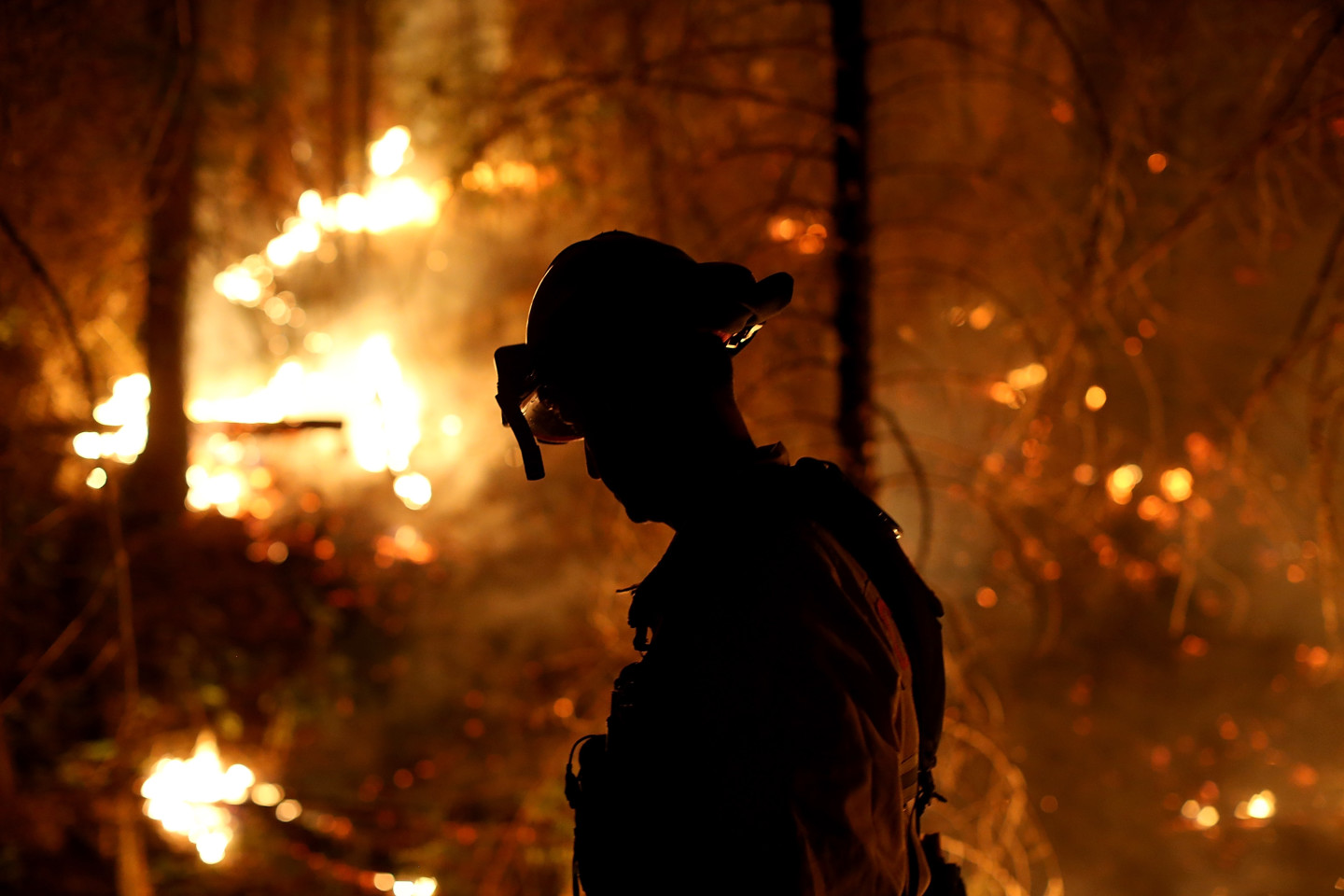
With Witnesses Dead, Charges Dropped Against Rim Fire Suspect
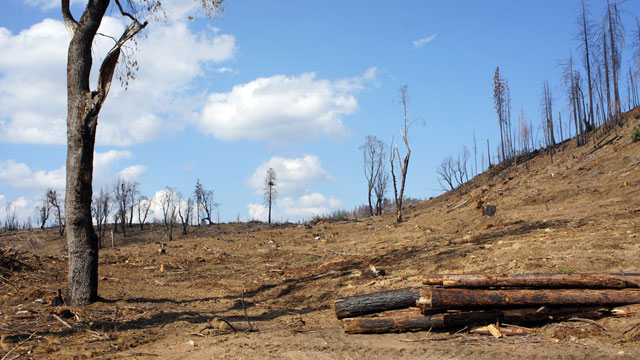
After Record-Breaking Rim Fire, Log Trees or Leave Them?
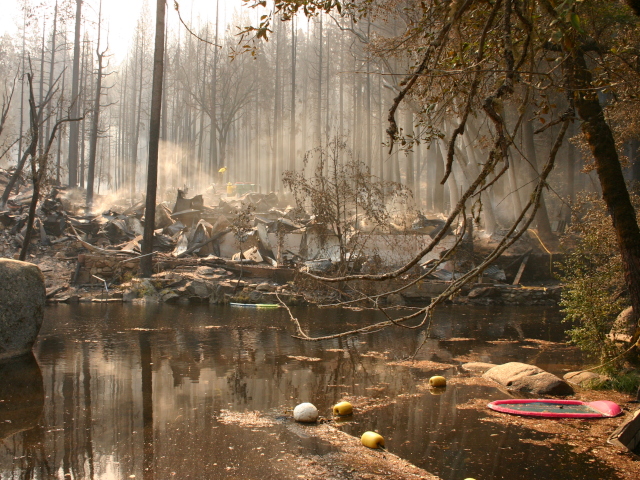
A Year After Fire, Fundraisers Planned for Berkeley's Tuolumne Camp
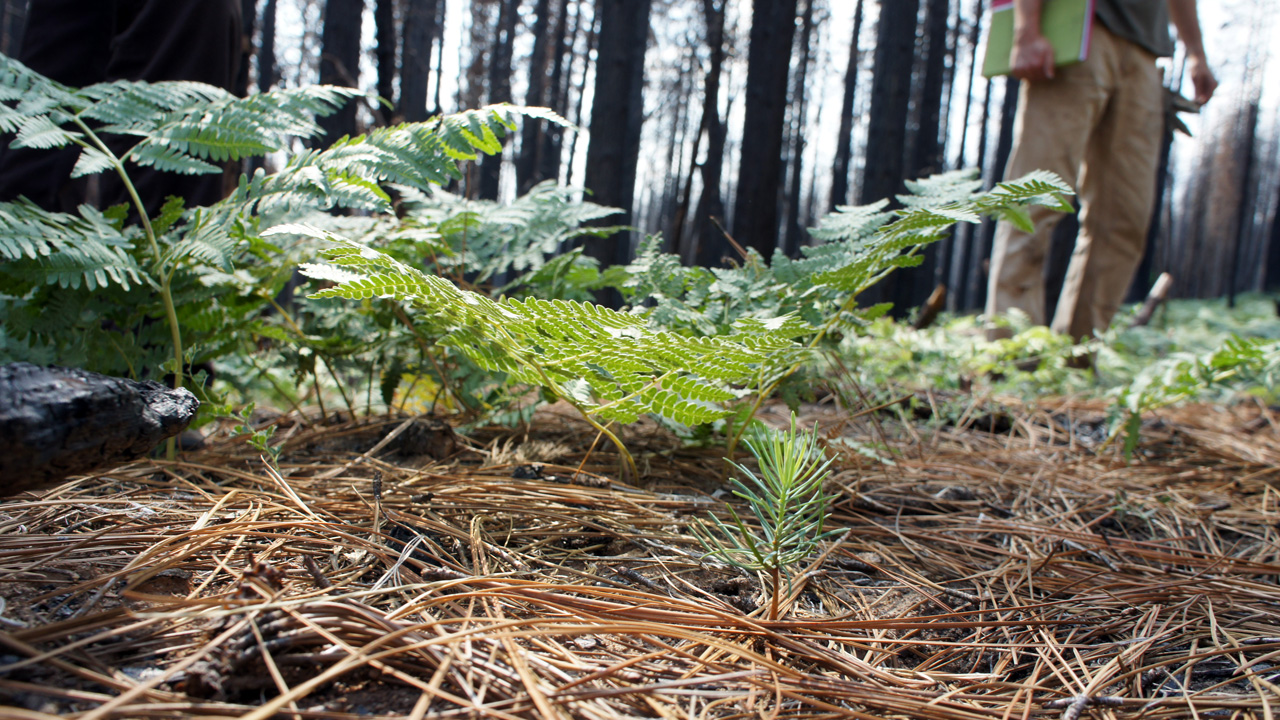
A Year After Rim Fire, Debate Sparks Over Replanting Trees
Tuolumne County Resident Indicted for Starting Rim Fire in Yosemite
News Pix: Lightning Strikes Berkeley, Gay Cowboys, and the Aftermath of the Rim Fire
Yosemite Opens Areas Closed After Last Summer's Huge Rim Fire
Rim Fire Ecosystem Damage Estimated at $800 Million
Rim Fire: Federal Disaster Relief Funds Available
Sponsored
Player sponsored by
window.__IS_SSR__=true
window.__INITIAL_STATE__={
"attachmentsReducer": {
"audio_0": {
"type": "attachments",
"id": "audio_0",
"imgSizes": {
"kqedFullSize": {
"file": "https://ww2.kqed.org/news/wp-content/themes/KQED-unified/img/audio_bgs/background0.jpg"
}
}
},
"audio_1": {
"type": "attachments",
"id": "audio_1",
"imgSizes": {
"kqedFullSize": {
"file": "https://ww2.kqed.org/news/wp-content/themes/KQED-unified/img/audio_bgs/background1.jpg"
}
}
},
"audio_2": {
"type": "attachments",
"id": "audio_2",
"imgSizes": {
"kqedFullSize": {
"file": "https://ww2.kqed.org/news/wp-content/themes/KQED-unified/img/audio_bgs/background2.jpg"
}
}
},
"audio_3": {
"type": "attachments",
"id": "audio_3",
"imgSizes": {
"kqedFullSize": {
"file": "https://ww2.kqed.org/news/wp-content/themes/KQED-unified/img/audio_bgs/background3.jpg"
}
}
},
"audio_4": {
"type": "attachments",
"id": "audio_4",
"imgSizes": {
"kqedFullSize": {
"file": "https://ww2.kqed.org/news/wp-content/themes/KQED-unified/img/audio_bgs/background4.jpg"
}
}
},
"placeholder": {
"type": "attachments",
"id": "placeholder",
"imgSizes": {
"thumbnail": {
"file": "https://cdn.kqed.org/wp-content/uploads/2024/12/KQED-Default-Image-816638274-2000x1333-1-160x107.jpg",
"width": 160,
"height": 107,
"mimeType": "image/jpeg"
},
"medium": {
"file": "https://cdn.kqed.org/wp-content/uploads/2024/12/KQED-Default-Image-816638274-2000x1333-1-800x533.jpg",
"width": 800,
"height": 533,
"mimeType": "image/jpeg"
},
"medium_large": {
"file": "https://cdn.kqed.org/wp-content/uploads/2024/12/KQED-Default-Image-816638274-2000x1333-1-768x512.jpg",
"width": 768,
"height": 512,
"mimeType": "image/jpeg"
},
"large": {
"file": "https://cdn.kqed.org/wp-content/uploads/2024/12/KQED-Default-Image-816638274-2000x1333-1-1020x680.jpg",
"width": 1020,
"height": 680,
"mimeType": "image/jpeg"
},
"1536x1536": {
"file": "https://cdn.kqed.org/wp-content/uploads/2024/12/KQED-Default-Image-816638274-2000x1333-1-1536x1024.jpg",
"width": 1536,
"height": 1024,
"mimeType": "image/jpeg"
},
"fd-lrg": {
"file": "https://cdn.kqed.org/wp-content/uploads/2024/12/KQED-Default-Image-816638274-2000x1333-1-1536x1024.jpg",
"width": 1536,
"height": 1024,
"mimeType": "image/jpeg"
},
"fd-med": {
"file": "https://cdn.kqed.org/wp-content/uploads/2024/12/KQED-Default-Image-816638274-2000x1333-1-1020x680.jpg",
"width": 1020,
"height": 680,
"mimeType": "image/jpeg"
},
"fd-sm": {
"file": "https://cdn.kqed.org/wp-content/uploads/2024/12/KQED-Default-Image-816638274-2000x1333-1-800x533.jpg",
"width": 800,
"height": 533,
"mimeType": "image/jpeg"
},
"post-thumbnail": {
"file": "https://cdn.kqed.org/wp-content/uploads/2024/12/KQED-Default-Image-816638274-2000x1333-1-672x372.jpg",
"width": 672,
"height": 372,
"mimeType": "image/jpeg"
},
"twentyfourteen-full-width": {
"file": "https://cdn.kqed.org/wp-content/uploads/2024/12/KQED-Default-Image-816638274-2000x1333-1-1038x576.jpg",
"width": 1038,
"height": 576,
"mimeType": "image/jpeg"
},
"xxsmall": {
"file": "https://cdn.kqed.org/wp-content/uploads/2024/12/KQED-Default-Image-816638274-2000x1333-1-160x107.jpg",
"width": 160,
"height": 107,
"mimeType": "image/jpeg"
},
"xsmall": {
"file": "https://cdn.kqed.org/wp-content/uploads/2024/12/KQED-Default-Image-816638274-2000x1333-1-672x372.jpg",
"width": 672,
"height": 372,
"mimeType": "image/jpeg"
},
"small": {
"file": "https://cdn.kqed.org/wp-content/uploads/2024/12/KQED-Default-Image-816638274-2000x1333-1-672x372.jpg",
"width": 672,
"height": 372,
"mimeType": "image/jpeg"
},
"xlarge": {
"file": "https://cdn.kqed.org/wp-content/uploads/2024/12/KQED-Default-Image-816638274-2000x1333-1-1020x680.jpg",
"width": 1020,
"height": 680,
"mimeType": "image/jpeg"
},
"full-width": {
"file": "https://cdn.kqed.org/wp-content/uploads/2024/12/KQED-Default-Image-816638274-2000x1333-1-1920x1280.jpg",
"width": 1920,
"height": 1280,
"mimeType": "image/jpeg"
},
"guest-author-32": {
"file": "https://cdn.kqed.org/wp-content/uploads/2025/01/KQED-Default-Image-816638274-1333x1333-1-160x160.jpg",
"width": 32,
"height": 32,
"mimeType": "image/jpeg"
},
"guest-author-50": {
"file": "https://cdn.kqed.org/wp-content/uploads/2025/01/KQED-Default-Image-816638274-1333x1333-1-160x160.jpg",
"width": 50,
"height": 50,
"mimeType": "image/jpeg"
},
"guest-author-64": {
"file": "https://cdn.kqed.org/wp-content/uploads/2025/01/KQED-Default-Image-816638274-1333x1333-1-160x160.jpg",
"width": 64,
"height": 64,
"mimeType": "image/jpeg"
},
"guest-author-96": {
"file": "https://cdn.kqed.org/wp-content/uploads/2025/01/KQED-Default-Image-816638274-1333x1333-1-160x160.jpg",
"width": 96,
"height": 96,
"mimeType": "image/jpeg"
},
"guest-author-128": {
"file": "https://cdn.kqed.org/wp-content/uploads/2025/01/KQED-Default-Image-816638274-1333x1333-1-160x160.jpg",
"width": 128,
"height": 128,
"mimeType": "image/jpeg"
},
"detail": {
"file": "https://cdn.kqed.org/wp-content/uploads/2025/01/KQED-Default-Image-816638274-1333x1333-1-160x160.jpg",
"width": 160,
"height": 160,
"mimeType": "image/jpeg"
},
"kqedFullSize": {
"file": "https://cdn.kqed.org/wp-content/uploads/2024/12/KQED-Default-Image-816638274-2000x1333-1.jpg",
"width": 2000,
"height": 1333
}
}
},
"news_10509471": {
"type": "attachments",
"id": "news_10509471",
"meta": {
"index": "attachments_1716263798",
"site": "news",
"id": "10509471",
"found": true
},
"parent": 10509464,
"imgSizes": {
"twentyfourteen-full-width": {
"file": "https://ww2.kqed.org/app/uploads/sites/10/2015/05/RS6503_177315231-1038x576.jpg",
"width": 1038,
"mimeType": "image/jpeg",
"height": 576
},
"thumbnail": {
"file": "https://ww2.kqed.org/app/uploads/sites/10/2015/05/RS6503_177315231-400x267.jpg",
"width": 400,
"mimeType": "image/jpeg",
"height": 267
},
"fd-sm": {
"file": "https://ww2.kqed.org/app/uploads/sites/10/2015/05/RS6503_177315231-960x640.jpg",
"width": 960,
"mimeType": "image/jpeg",
"height": 640
},
"post-thumbnail": {
"file": "https://ww2.kqed.org/app/uploads/sites/10/2015/05/RS6503_177315231-672x372.jpg",
"width": 672,
"mimeType": "image/jpeg",
"height": 372
},
"kqedFullSize": {
"file": "https://ww2.kqed.org/app/uploads/sites/10/2015/05/RS6503_177315231-e1430518532266.jpg",
"width": 1920,
"height": 1281
},
"large": {
"file": "https://ww2.kqed.org/app/uploads/sites/10/2015/05/RS6503_177315231-1440x960.jpg",
"width": 1440,
"mimeType": "image/jpeg",
"height": 960
},
"guest-author-96": {
"file": "https://ww2.kqed.org/app/uploads/sites/10/2015/05/RS6503_177315231-96x96.jpg",
"width": 96,
"mimeType": "image/jpeg",
"height": 96
},
"medium": {
"file": "https://ww2.kqed.org/app/uploads/sites/10/2015/05/RS6503_177315231-800x534.jpg",
"width": 800,
"mimeType": "image/jpeg",
"height": 534
},
"guest-author-64": {
"file": "https://ww2.kqed.org/app/uploads/sites/10/2015/05/RS6503_177315231-64x64.jpg",
"width": 64,
"mimeType": "image/jpeg",
"height": 64
},
"guest-author-32": {
"file": "https://ww2.kqed.org/app/uploads/sites/10/2015/05/RS6503_177315231-32x32.jpg",
"width": 32,
"mimeType": "image/jpeg",
"height": 32
},
"fd-med": {
"file": "https://ww2.kqed.org/app/uploads/sites/10/2015/05/RS6503_177315231-1180x787.jpg",
"width": 1180,
"mimeType": "image/jpeg",
"height": 787
},
"detail": {
"file": "https://ww2.kqed.org/app/uploads/sites/10/2015/05/RS6503_177315231-75x75.jpg",
"width": 75,
"mimeType": "image/jpeg",
"height": 75
},
"guest-author-128": {
"file": "https://ww2.kqed.org/app/uploads/sites/10/2015/05/RS6503_177315231-128x128.jpg",
"width": 128,
"mimeType": "image/jpeg",
"height": 128
}
},
"publishDate": 1430518297,
"modified": 1430518523,
"caption": "A firefighter on the lines of the Rim Fire near Yosemite National Park in August 2013.",
"description": "GROVELAND, CA - AUGUST 22: A firefighter from Cosumnes Fire Department monitors a back fire while battling the Rim Fire on August 22, 2013 in Groveland, California. The Rim Fire continues to burn out of control and threatens 2,500 homes outside of Yosemite National Park. Over 1,000 firefighters are battling the blaze that was reduced to only 2 percent containment after it nearly tripled in size overnight. (Photo by Justin Sullivan/Getty Images)",
"title": "Rim Fire-Yosemite",
"credit": "Justin Sullivan/Getty Images",
"status": "inherit",
"fetchFailed": false,
"isLoading": false
},
"science_20879": {
"type": "attachments",
"id": "science_20879",
"meta": {
"index": "attachments_1716263798",
"site": "science",
"id": "20879",
"found": true
},
"parent": 20847,
"imgSizes": {
"kqedFullSize": {
"file": "https://ww2.kqed.org/app/uploads/sites/35/2014/08/DSC014881.jpg",
"width": 640,
"height": 360
}
},
"publishDate": 1408759561,
"modified": 1408759561,
"caption": "Sierra Pacific Industries began clearing its private land within weeks after the Rim Fire burned through. (Lauren Sommer/KQED)",
"description": "Sierra Pacific Industries began clearing its private land within weeks after the Rim Fire burned through. (Lauren Sommer/KQED)",
"title": "DSC01488",
"credit": null,
"status": "inherit",
"fetchFailed": false,
"isLoading": false
},
"news_145137": {
"type": "attachments",
"id": "news_145137",
"meta": {
"index": "attachments_1716263798",
"site": "news",
"id": "145137",
"found": true
},
"parent": 0,
"imgSizes": {
"kqedFullSize": {
"file": "https://ww2.kqed.org/app/uploads/sites/10/2014/08/6311_transform.jpg",
"width": 640,
"height": 480
}
},
"publishDate": 1408471375,
"modified": 1408471375,
"caption": "Damage at Berkeley Tuolumne Family Camp. (Grace Rubenstein/KQED)",
"description": "Damage at Berkeley Tuolumne Family Camp. (Grace Rubenstein/KQED)",
"title": "Rim Fire-Tuolumne Family Camp",
"credit": null,
"status": "inherit",
"fetchFailed": false,
"isLoading": false
},
"science_20641": {
"type": "attachments",
"id": "science_20641",
"meta": {
"index": "attachments_1716263798",
"site": "science",
"id": "20641",
"found": true
},
"parent": 20636,
"imgSizes": {
"kqedFullSize": {
"file": "https://ww2.kqed.org/app/uploads/sites/35/2014/08/seedling1.jpg",
"width": 1280,
"height": 720
}
},
"publishDate": 1408137653,
"modified": 1408137653,
"caption": "A pine tree seedling emerges in a burned area of the Stanislaus National Forest. (Lauren Sommer/KQED)",
"description": null,
"title": "seedling",
"credit": null,
"status": "inherit",
"fetchFailed": false,
"isLoading": false
},
"news_144153": {
"type": "attachments",
"id": "news_144153",
"meta": {
"index": "attachments_1716263798",
"site": "news",
"id": "144153",
"found": true
},
"parent": 144148,
"imgSizes": {
"kqedFullSize": {
"file": "https://ww2.kqed.org/app/uploads/sites/10/2014/08/177649093.jpg",
"width": 3000,
"height": 2001
}
},
"publishDate": 1407443440,
"modified": 1407443440,
"caption": "Flames from Rim Fire consume trees on Aug. 25, 2013 near Groveland, California. (Justin Sullivan/Getty Images)\n",
"description": "GROVELAND, CA - AUGUST 25: Firefighters douse a spot fire as they battle the Rim Fire on August 25, 2013 near Groveland, California. The Rim Fire continues to burn out of control and threatens 4,500 homes outside of Yosemite National Park. Over 2,000 firefighters are battling the blaze that has entered a section of Yosemite National Park and is currently 7 percent contained. (Photo by Justin Sullivan/Getty Images)",
"title": "Rim Fire Continues To Burn Near Yosemite National Park",
"credit": null,
"status": "inherit",
"fetchFailed": false,
"isLoading": false
},
"news_131613": {
"type": "attachments",
"id": "news_131613",
"meta": {
"index": "attachments_1716263798",
"site": "news",
"id": "131613",
"found": true
},
"parent": 131590,
"imgSizes": {
"kqedFullSize": {
"file": "https://ww2.kqed.org/app/uploads/sites/10/2014/04/13567278745_520540aaf9_b.jpg",
"width": 1024,
"height": 683
}
},
"publishDate": 1396573998,
"modified": 1396573998,
"caption": null,
"description": null,
"title": "13567278745_520540aaf9_b",
"credit": null,
"status": "inherit",
"fetchFailed": false,
"isLoading": false
},
"science_16073": {
"type": "attachments",
"id": "science_16073",
"meta": {
"index": "attachments_1716263798",
"site": "science",
"id": "16073",
"found": true
},
"parent": 16064,
"imgSizes": {
"kqedFullSize": {
"file": "https://ww2.kqed.org/app/uploads/sites/35/2014/04/7017scr_d01835d281bde2b.jpg",
"width": 640,
"height": 360
}
},
"publishDate": 1396485763,
"modified": 1396485763,
"caption": "The forest after the Rim Fire, just outside of Yosemite National Park. (Lauren Sommer/KQED)",
"description": "The forest after the Rim Fire, just outside of Yosemite National Park. (Lauren Sommer/KQED)",
"title": "7017scr_d01835d281bde2b",
"credit": null,
"status": "inherit",
"fetchFailed": false,
"isLoading": false
},
"news_109112": {
"type": "attachments",
"id": "news_109112",
"meta": {
"index": "attachments_1716263798",
"site": "news",
"id": "109112",
"found": true
},
"parent": 109110,
"imgSizes": {
"kqedFullSize": {
"file": "https://ww2.kqed.org/app/uploads/sites/10/2013/08/Rim-fire-cleanup.jpg",
"width": 640,
"height": 450
}
},
"publishDate": 1377803820,
"modified": 1377803820,
"caption": "The Rim Fire has consumed more than 237,341 acres and is 80 percent contained. (Grace Rubenstein / KQED)",
"description": "The Rim Fire has consumed more than 237,341 acres and is 80 percent contained. (Grace Rubenstein / KQED)",
"title": "Rim fire cleanup",
"credit": null,
"status": "inherit",
"fetchFailed": false,
"isLoading": false
},
"news_113362": {
"type": "attachments",
"id": "news_113362",
"meta": {
"index": "attachments_1716263798",
"site": "news",
"id": "113362",
"found": true
},
"parent": 113361,
"imgSizes": {
"kqedFullSize": {
"file": "https://ww2.kqed.org/app/uploads/sites/10/2013/09/rimfire2-e1380571638819.jpeg",
"width": 641,
"height": 427
}
},
"publishDate": 1380571345,
"modified": 1380571345,
"caption": "Part of the immense swath of Sierra Nevada forest burned in the Rim Fire that broke out near Yosemite National Park in mid-August. (Mike McMillan/U.S. Forest Service) ",
"description": null,
"title": "Rim Fire aftermath ",
"credit": null,
"status": "inherit",
"fetchFailed": false,
"isLoading": false
}
},
"audioPlayerReducer": {
"postId": "stream_live",
"isPaused": true,
"isPlaying": false,
"pfsActive": false,
"pledgeModalIsOpen": true,
"playerDrawerIsOpen": false
},
"authorsReducer": {
"byline_news_10509464": {
"type": "authors",
"id": "byline_news_10509464",
"meta": {
"override": true
},
"slug": "byline_news_10509464",
"name": "\u003cstrong>\u003ca href=\"https://twitter.com/ScottSmithAP\" target=\"_blank\">Scott Smith\u003c/a> and \u003ca href=\"https://twitter.com/SudhinT\" target=\"_blank\">Sudhin Thanawala\u003c/a>\u003cbr /> Associated Press\u003c/strong>",
"isLoading": false
},
"katsnow": {
"type": "authors",
"id": "235",
"meta": {
"index": "authors_1716337520",
"id": "235",
"found": true
},
"name": "Katrin Snow",
"firstName": "Katrin",
"lastName": "Snow",
"slug": "katsnow",
"email": "ksnow@kqed.org",
"display_author_email": true,
"staff_mastheads": [
"science"
],
"title": "Senior Editor",
"bio": "Kat started in radio in 1985 at KMUN in Astoria, Oregon, where the Columbia River meets the sea. She worked several years protecting monarch butterfly habitat in California with the Xerces Society, an invertebrate conservation organization, before a love for radio news drew her back into journalism. Kat came to KQED in 2002, and before that was a reporter and news director at KUER in Salt Lake City, covering the state legislature, the environment and health. Kat coaches reporters and others in embodied narration and public speaking. She is a certified teacher of Soul Motion®, a conscious dance practice, and can sometimes be found in the Mojave desert or the Eastern Sierra.",
"avatar": "https://secure.gravatar.com/avatar/fa6bf8a74a2692973a5484e64ebd2b52?s=600&d=blank&r=g",
"twitter": "cosmologicalkat",
"facebook": null,
"instagram": null,
"linkedin": null,
"sites": [
{
"site": "arts",
"roles": [
"contributor"
]
},
{
"site": "news",
"roles": [
"editor"
]
},
{
"site": "futureofyou",
"roles": [
"editor"
]
},
{
"site": "science",
"roles": [
"editor"
]
}
],
"headData": {
"title": "Katrin Snow | KQED",
"description": "Senior Editor",
"ogImgSrc": "https://secure.gravatar.com/avatar/fa6bf8a74a2692973a5484e64ebd2b52?s=600&d=blank&r=g",
"twImgSrc": "https://secure.gravatar.com/avatar/fa6bf8a74a2692973a5484e64ebd2b52?s=600&d=blank&r=g"
},
"isLoading": false,
"link": "/author/katsnow"
},
"kqed": {
"type": "authors",
"id": "236",
"meta": {
"index": "authors_1716337520",
"id": "236",
"found": true
},
"name": "KQED News Staff",
"firstName": "KQED News Staff",
"lastName": null,
"slug": "kqed",
"email": "faq@kqed.org",
"display_author_email": false,
"staff_mastheads": [],
"title": null,
"bio": null,
"avatar": "https://secure.gravatar.com/avatar/ef0e801a68c4c54afa9180db14084167?s=600&d=blank&r=g",
"twitter": null,
"facebook": null,
"instagram": null,
"linkedin": null,
"sites": [
{
"site": "arts",
"roles": [
"contributor"
]
},
{
"site": "news",
"roles": [
"editor"
]
},
{
"site": "futureofyou",
"roles": [
"author"
]
}
],
"headData": {
"title": "KQED News Staff | KQED",
"description": null,
"ogImgSrc": "https://secure.gravatar.com/avatar/ef0e801a68c4c54afa9180db14084167?s=600&d=blank&r=g",
"twImgSrc": "https://secure.gravatar.com/avatar/ef0e801a68c4c54afa9180db14084167?s=600&d=blank&r=g"
},
"isLoading": false,
"link": "/author/kqed"
},
"kqednewsstaffandwires": {
"type": "authors",
"id": "237",
"meta": {
"index": "authors_1716337520",
"id": "237",
"found": true
},
"name": "KQED News Staff and Wires",
"firstName": "KQED News Staff and Wires",
"lastName": null,
"slug": "kqednewsstaffandwires",
"email": "onlinenewsstaff@kqed.org",
"display_author_email": false,
"staff_mastheads": [],
"title": null,
"bio": null,
"avatar": "https://secure.gravatar.com/avatar/72295af8ebbfbd19a4948f5271285664?s=600&d=blank&r=g",
"twitter": null,
"facebook": null,
"instagram": null,
"linkedin": null,
"sites": [
{
"site": "arts",
"roles": [
"contributor"
]
},
{
"site": "news",
"roles": [
"contributor"
]
},
{
"site": "lowdown",
"roles": [
"author"
]
},
{
"site": "stateofhealth",
"roles": [
"contributor"
]
},
{
"site": "food",
"roles": [
"author"
]
}
],
"headData": {
"title": "KQED News Staff and Wires | KQED",
"description": null,
"ogImgSrc": "https://secure.gravatar.com/avatar/72295af8ebbfbd19a4948f5271285664?s=600&d=blank&r=g",
"twImgSrc": "https://secure.gravatar.com/avatar/72295af8ebbfbd19a4948f5271285664?s=600&d=blank&r=g"
},
"isLoading": false,
"link": "/author/kqednewsstaffandwires"
},
"laurensommer": {
"type": "authors",
"id": "239",
"meta": {
"index": "authors_1716337520",
"id": "239",
"found": true
},
"name": "Lauren Sommer",
"firstName": "Lauren",
"lastName": "Sommer",
"slug": "laurensommer",
"email": "lsommer@kqed.org",
"display_author_email": false,
"staff_mastheads": [],
"title": "KQED Contributor",
"bio": "Lauren is a radio reporter formerly covering environment, water, and energy for KQED Science. As part of her day job, she has scaled Sierra Nevada peaks, run from charging elephant seals, and desperately tried to get her sea legs - all in pursuit of good radio. Her work has appeared on Marketplace, Living on Earth, Science Friday and NPR's Morning Edition and All Things Considered. You can find her on Twitter at \u003ca href=\"https://twitter.com/lesommer\">@lesommer\u003c/a>.",
"avatar": "https://secure.gravatar.com/avatar/33aa3772bb86c6ad45b8aca6a238bbdf?s=600&d=blank&r=g",
"twitter": null,
"facebook": null,
"instagram": null,
"linkedin": null,
"sites": [
{
"site": "news",
"roles": [
"author"
]
},
{
"site": "science",
"roles": [
"editor",
"manage_content_types",
"manage_taxonomies"
]
},
{
"site": "quest",
"roles": [
"editor"
]
}
],
"headData": {
"title": "Lauren Sommer | KQED",
"description": "KQED Contributor",
"ogImgSrc": "https://secure.gravatar.com/avatar/33aa3772bb86c6ad45b8aca6a238bbdf?s=600&d=blank&r=g",
"twImgSrc": "https://secure.gravatar.com/avatar/33aa3772bb86c6ad45b8aca6a238bbdf?s=600&d=blank&r=g"
},
"isLoading": false,
"link": "/author/laurensommer"
},
"patyollin": {
"type": "authors",
"id": "247",
"meta": {
"index": "authors_1716337520",
"id": "247",
"found": true
},
"name": "Patricia Yollin",
"firstName": "Patricia",
"lastName": "Yollin",
"slug": "patyollin",
"email": "pyollin@kqed.org",
"display_author_email": false,
"staff_mastheads": [],
"title": "KQED Contributor",
"bio": "Pat Yollin has written about lots of stuff, including organ transplants, wayward penguins at the San Francisco Zoo, the comeback of the cream puff, New York on the fifth anniversary of 9/11, a Slow Food gathering in Italy, and the microcredit movement in Northern California. Among her favorite stories: an interview with George Lucas at Skywalker Ranch that broke the story about his plan to build a cultural museum, and a pirate Trader Joe's operation in Vancouver that prompted the grocery chain to sue -- and lose. She joined KQED in 2013 and was previously a reporter and editor at the San Francisco Chronicle, the Hearst-owned San Francisco Examiner and the Hayward Daily Review.",
"avatar": "https://secure.gravatar.com/avatar/0a18ac41a263665c04b25b2c7d6b817c?s=600&d=blank&r=g",
"twitter": null,
"facebook": null,
"instagram": null,
"linkedin": null,
"sites": [
{
"site": "arts",
"roles": [
"subscriber"
]
},
{
"site": "news",
"roles": [
"subscriber"
]
},
{
"site": "futureofyou",
"roles": [
"editor"
]
},
{
"site": "lowdown",
"roles": [
"editor"
]
},
{
"site": "stateofhealth",
"roles": [
"editor"
]
}
],
"headData": {
"title": "Patricia Yollin | KQED",
"description": "KQED Contributor",
"ogImgSrc": "https://secure.gravatar.com/avatar/0a18ac41a263665c04b25b2c7d6b817c?s=600&d=blank&r=g",
"twImgSrc": "https://secure.gravatar.com/avatar/0a18ac41a263665c04b25b2c7d6b817c?s=600&d=blank&r=g"
},
"isLoading": false,
"link": "/author/patyollin"
}
},
"breakingNewsReducer": {},
"pagesReducer": {},
"postsReducer": {
"stream_live": {
"type": "live",
"id": "stream_live",
"audioUrl": "https://streams.kqed.org/kqedradio",
"title": "Live Stream",
"excerpt": "Live Stream information currently unavailable.",
"link": "/radio",
"featImg": "",
"label": {
"name": "KQED Live",
"link": "/"
}
},
"stream_kqedNewscast": {
"type": "posts",
"id": "stream_kqedNewscast",
"audioUrl": "https://www.kqed.org/.stream/anon/radio/RDnews/newscast.mp3?_=1",
"title": "KQED Newscast",
"featImg": "",
"label": {
"name": "88.5 FM",
"link": "/"
}
},
"news_10509464": {
"type": "posts",
"id": "news_10509464",
"meta": {
"index": "posts_1716263798",
"site": "news",
"id": "10509464",
"score": null,
"sort": [
1430519369000
]
},
"parent": 0,
"labelTerm": {
"site": "news",
"term": 72
},
"blocks": [],
"publishDate": 1430519369,
"format": "standard",
"disqusTitle": "With Witnesses Dead, Charges Dropped Against Rim Fire Suspect",
"title": "With Witnesses Dead, Charges Dropped Against Rim Fire Suspect",
"headTitle": "The California Report | KQED News",
"content": "\u003cp>FRESNO — Criminal charges were dropped against a bow hunter accused of starting one of California's largest wildfires, a blaze that burned parts of Yosemite National Park, federal prosecutors said Friday.\u003c/p>\n\u003cp>The decision came after two key witnesses unexpectedly died within months of an indictment that was handed down last year against Matthew Emerald, prosecutors said.\u003c/p>\n\u003cp>The 33-year-old California man was accused of starting the Rim Fire in August 2013. The blaze burned for two months, scorching 400 square miles, destroying 11 homes and costing $125 million to fight. It ranks as California's third-largest wildfire and the largest in the recorded history of the Sierra Nevada.\u003c/p>\n\u003cp>Prosecutors said that without testimony from the two witnesses, they did not believe they could prove the allegations to jurors beyond a reasonable doubt. Previous statements made by the two witnesses can't be used in court, prosecutors said.\u003c/p>\n\u003cp>\"I understand that the government's motion to dismiss will be frustrating to some,\" U.S. Attorney Benjamin Wagner said in a statement, thanking U.S. Forest Service investigators for their work. \"It is our obligation to the defendant and to the court to dismiss that case.\"\u003c/p>\n\u003cp>[ad fullwidth]\u003c/p>\n\u003cp>Emerald, a resident of the Mother Lode town of Columbia (Tuolumne County), had been bow hunting for deer when he was rescued near the site of the fire's origin by a California Department of Forestry and Fire Protection helicopter crew. Investigators had said that in several interviews, Emerald gave them inconsistent stories about how the fire started and once acknowledged starting a campfire that got out of control.\u003c/p>\n\u003cp>Other times, they said, Emerald described causing a rockslide that sparked the flames, and he also blamed the fire on illegal marijuana growers.\u003c/p>\n\u003cp>A grand jury handed down a four-count indictment nearly a year after the fire that included charges of lying to investigators and starting a forest fire.\u003c/p>\n\u003cp>Emerald's defense team had sought to suppress his statements, saying they were coerced. A message requesting comment from Emerald's public defender, Janet Bateman, was not immediately returned. Colleagues said she was not in the office on Friday. Emerald and his parents could not be reached for comment.\u003c/p>\n\u003cp>One of the prosecution's key witnesses unexpectedly died in a workplace accident in February. He had talked with Emerald shortly after being rescued.\u003c/p>\n\u003cp>The second witness — the helicopter pilot — died in March of a heart attack, authorities said.\u003c/p>\n\u003cp>If convicted, Emerald could have spent five years in prison. He has been free since posting a $60,000 bond.\u003c/p>\n\u003cp>McGregor Scott, a former U.S. attorney in Sacramento who is now in private practice, said it is rare for federal prosecutors to dismiss any indictment because they are generally supported by lengthy investigations.\u003c/p>\n\u003cp>\"They have lots of time to talk to everybody and get all of the relevant information, so once that decision is brought, they're feeling very strong and comfortable about their case,\" he said.\u003c/p>\n\u003cp>Scott said during his six years as U.S. attorney, he never encountered a case that was dismissed because two witnesses died. But if the two witnesses were key to the fire case, then prosecutors would be left with no choice but to dismiss the indictment, absent a confession or physical evidence, he said.\u003c/p>\n\u003cp>Since defense attorneys will not be able to cross-examine the witnesses in this case, their statements cannot be admitted, Scott said.\u003c/p>\n\u003cp>\u003c/p>\n\u003cp>\u003cem>Thanawala reported from San Francisco. Associated Press writer Kristin J. Bender in San Francisco contributed to this report.\u003c/em>\u003c/p>\n\n",
"disqusIdentifier": "10509464 http://ww2.kqed.org/news/?p=10509464",
"disqusUrl": "https://ww2.kqed.org/news/2015/05/01/with-witnesses-dead-charges-dropped-against-rim-fire-suspect/",
"stats": {
"hasVideo": false,
"hasChartOrMap": false,
"hasAudio": false,
"hasPolis": false,
"wordCount": 590,
"hasGoogleForm": false,
"hasGallery": false,
"hasHearkenModule": false,
"iframeSrcs": [],
"paragraphCount": 19
},
"modified": 1430523652,
"excerpt": "Two men who provided key evidence die in separate incidents, blocking prosecution of the suspect.",
"headData": {
"twImgId": "",
"twTitle": "",
"ogTitle": "",
"ogImgId": "",
"twDescription": "",
"description": "Two men who provided key evidence die in separate incidents, blocking prosecution of the suspect.",
"title": "With Witnesses Dead, Charges Dropped Against Rim Fire Suspect | KQED",
"ogDescription": "",
"schema": {
"@context": "https://schema.org",
"@type": "NewsArticle",
"headline": "With Witnesses Dead, Charges Dropped Against Rim Fire Suspect",
"datePublished": "2015-05-01T15:29:29-07:00",
"dateModified": "2015-05-01T16:40:52-07:00",
"image": "https://cdn.kqed.org/wp-content/uploads/2020/02/KQED-OG-Image@1x.png",
"isAccessibleForFree": "True",
"publisher": {
"@type": "NewsMediaOrganization",
"@id": "https://www.kqed.org/#organization",
"name": "KQED",
"logo": "https://cdn.kqed.org/wp-content/uploads/2020/02/KQED-OG-Image@1x.png",
"url": "https://www.kqed.org",
"sameAs": [
"https://www.facebook.com/KQED",
"https://twitter.com/KQED",
"https://www.instagram.com/kqed/",
"https://www.tiktok.com/@kqedofficial",
"https://www.linkedin.com/company/kqed",
"https://www.youtube.com/channel/UCeC0IOo7i1P_61zVUWbJ4nw"
]
}
}
},
"guestAuthors": [],
"slug": "with-witnesses-dead-charges-dropped-against-rim-fire-suspect",
"status": "publish",
"customPermalink": "2015/05/01/rim-fire-suspect-charges-dropped/",
"nprByline": "\u003cstrong>\u003ca href=\"https://twitter.com/ScottSmithAP\" target=\"_blank\">Scott Smith\u003c/a> and \u003ca href=\"https://twitter.com/SudhinT\" target=\"_blank\">Sudhin Thanawala\u003c/a>\u003cbr /> Associated Press\u003c/strong>",
"path": "/news/10509464/with-witnesses-dead-charges-dropped-against-rim-fire-suspect",
"audioTrackLength": null,
"parsedContent": [
{
"type": "contentString",
"content": "\u003cdiv class=\"post-body\">\u003cp>\u003cp>FRESNO — Criminal charges were dropped against a bow hunter accused of starting one of California's largest wildfires, a blaze that burned parts of Yosemite National Park, federal prosecutors said Friday.\u003c/p>\n\u003cp>The decision came after two key witnesses unexpectedly died within months of an indictment that was handed down last year against Matthew Emerald, prosecutors said.\u003c/p>\n\u003cp>The 33-year-old California man was accused of starting the Rim Fire in August 2013. The blaze burned for two months, scorching 400 square miles, destroying 11 homes and costing $125 million to fight. It ranks as California's third-largest wildfire and the largest in the recorded history of the Sierra Nevada.\u003c/p>\n\u003cp>Prosecutors said that without testimony from the two witnesses, they did not believe they could prove the allegations to jurors beyond a reasonable doubt. Previous statements made by the two witnesses can't be used in court, prosecutors said.\u003c/p>\n\u003cp>\"I understand that the government's motion to dismiss will be frustrating to some,\" U.S. Attorney Benjamin Wagner said in a statement, thanking U.S. Forest Service investigators for their work. \"It is our obligation to the defendant and to the court to dismiss that case.\"\u003c/p>\n\u003cp>\u003c/p>\u003c/div>",
"attributes": {
"named": {},
"numeric": []
}
},
{
"type": "component",
"content": "",
"name": "ad",
"attributes": {
"named": {
"label": "fullwidth"
},
"numeric": [
"fullwidth"
]
}
},
{
"type": "contentString",
"content": "\u003cdiv class=\"post-body\">\u003cp>\u003c/p>\n\u003cp>Emerald, a resident of the Mother Lode town of Columbia (Tuolumne County), had been bow hunting for deer when he was rescued near the site of the fire's origin by a California Department of Forestry and Fire Protection helicopter crew. Investigators had said that in several interviews, Emerald gave them inconsistent stories about how the fire started and once acknowledged starting a campfire that got out of control.\u003c/p>\n\u003cp>Other times, they said, Emerald described causing a rockslide that sparked the flames, and he also blamed the fire on illegal marijuana growers.\u003c/p>\n\u003cp>A grand jury handed down a four-count indictment nearly a year after the fire that included charges of lying to investigators and starting a forest fire.\u003c/p>\n\u003cp>Emerald's defense team had sought to suppress his statements, saying they were coerced. A message requesting comment from Emerald's public defender, Janet Bateman, was not immediately returned. Colleagues said she was not in the office on Friday. Emerald and his parents could not be reached for comment.\u003c/p>\n\u003cp>One of the prosecution's key witnesses unexpectedly died in a workplace accident in February. He had talked with Emerald shortly after being rescued.\u003c/p>\n\u003cp>The second witness — the helicopter pilot — died in March of a heart attack, authorities said.\u003c/p>\n\u003cp>If convicted, Emerald could have spent five years in prison. He has been free since posting a $60,000 bond.\u003c/p>\n\u003cp>McGregor Scott, a former U.S. attorney in Sacramento who is now in private practice, said it is rare for federal prosecutors to dismiss any indictment because they are generally supported by lengthy investigations.\u003c/p>\n\u003cp>\"They have lots of time to talk to everybody and get all of the relevant information, so once that decision is brought, they're feeling very strong and comfortable about their case,\" he said.\u003c/p>\n\u003cp>Scott said during his six years as U.S. attorney, he never encountered a case that was dismissed because two witnesses died. But if the two witnesses were key to the fire case, then prosecutors would be left with no choice but to dismiss the indictment, absent a confession or physical evidence, he said.\u003c/p>\n\u003cp>Since defense attorneys will not be able to cross-examine the witnesses in this case, their statements cannot be admitted, Scott said.\u003c/p>\n\u003cp>\u003c/p>\n\u003cp>\u003cem>Thanawala reported from San Francisco. Associated Press writer Kristin J. Bender in San Francisco contributed to this report.\u003c/em>\u003c/p>\n\n\u003c/div>\u003c/p>",
"attributes": {
"named": {},
"numeric": []
}
}
],
"link": "/news/10509464/with-witnesses-dead-charges-dropped-against-rim-fire-suspect",
"authors": [
"byline_news_10509464"
],
"programs": [
"news_6944",
"news_72"
],
"categories": [
"news_6188",
"news_356"
],
"tags": [
"news_4745",
"news_17286",
"news_17041",
"news_4746"
],
"featImg": "news_10509471",
"label": "news_72"
},
"science_20847": {
"type": "posts",
"id": "science_20847",
"meta": {
"index": "posts_1716263798",
"site": "science",
"id": "20847",
"score": null,
"sort": [
1409059849000
]
},
"parent": 0,
"labelTerm": {
"site": "science"
},
"blocks": [],
"publishDate": 1409059849,
"format": "aside",
"title": "After Record-Breaking Rim Fire, Log Trees or Leave Them?",
"headTitle": "After Record-Breaking Rim Fire, Log Trees or Leave Them? | KQED",
"content": "\u003cfigure id=\"attachment_20853\" class=\"wp-caption alignleft\" style=\"max-width: 640px\">\u003ca href=\"http://ww2.kqed.org/science/wp-content/uploads/sites/35/2014/08/logging5-1024x612.jpg\">\u003cimg loading=\"lazy\" decoding=\"async\" class=\"wp-image-20853\" src=\"http://ww2.kqed.org/science/wp-content/uploads/sites/35/2014/08/logging5-1024x612.jpg\" alt=\"Burned trees from Sierra Pacific Industries' private land wait at the company's saw mill. (Lauren Sommer/KQED)\" width=\"640\" height=\"383\">\u003c/a>\u003cfigcaption class=\"wp-caption-text\">Burned trees from Sierra Pacific Industries’ private land wait at the company’s saw mill. (Lauren Sommer/KQED)\u003c/figcaption>\u003c/figure>\n\u003cp>Last year’s record-breaking Rim Fire left thousands of acres of dead trees around Yosemite National Park. What to do about those trees has sparked a fierce debate.\u003c/p>\n\u003cp>Later this week, the U.S. Forest Service will release plans to allow logging companies to harvest some of the dead trees. Some environmental groups say it would destroy important wildlife habitat.\u003c/p>\n\u003cp>On several thousand acres, the decision has already been made. Sierra Pacific Industries, the second largest lumber company in the country, had crews harvesting trees on the company’s private land within weeks of the Rim Fire.\u003c/p>\n\u003cp>“You can see here from some of these logs, if you look beyond the bark, inside the wood looks pretty good,” says Mark Luster of Sierra Pacific Industries, pointing to stacks of hundreds of burned logs at the company’s saw mill in Sonora, California.\u003c/p>\n\u003cp>About 90 percent of the wood is still usable and will become everything from two-by-fours to number two pencils.\u003c/p>\n\u003cp>[ad fullwidth]\u003c/p>\n\u003cp>Sierra Pacific Industries is hoping to move onto logging Forest Service land next. Opening it up would provide an economic boost to the region, Luster says.\u003c/p>\n\u003cp>“It makes sense to create jobs here in California, get our wood here and create jobs for Californians,” he says.\u003c/p>\n\u003cp>California’s timber industry has shrunk dramatically over the decades, while the market for wood has not.\u003c/p>\n\u003cp>“Currently California imports about 80 percent of wood that consumers use,” Luster says. “It comes from other states and countries.”\u003c/p>\n\u003cfigure id=\"attachment_20857\" class=\"wp-caption alignleft\" style=\"max-width: 640px\">\u003ca href=\"http://ww2.kqed.org/science/wp-content/uploads/sites/35/2014/08/DSC01451-1280-1024x576.jpg\">\u003cimg loading=\"lazy\" decoding=\"async\" class=\"wp-image-20857\" src=\"http://ww2.kqed.org/science/wp-content/uploads/sites/35/2014/08/DSC01451-1280-1024x576.jpg\" alt=\"Trees killed in the Rim Fire will likely stay standing for only a decade or so. (Lauren Sommer/KQED)\" width=\"640\" height=\"360\">\u003c/a>\u003cfigcaption class=\"wp-caption-text\">Trees killed in the Rim Fire will likely stay standing for only a decade or so. (Lauren Sommer/KQED)\u003c/figcaption>\u003c/figure>\n\u003cp>The Forest Service has other motivations for the plan.\u003c/p>\n\u003cp>“If all the standing dead is left, it’s that intensity of that next fire that comes through,” says Maria Benech, who is working on the Forest Service’s plans for salvage logging, as it’s known.\u003c/p>\n\u003cp>Benech is walking through part of the Stanislaus National Forest that saw some of the worst of the Rim Fire. She says most of the dead trees will only stand for a decade or so.\u003c/p>\n\u003cp>“Picture all those logs lying on top of each other, jack-strawed with that vegetation coming back through,” she says.\u003c/p>\n\u003cp>Once they’re on the ground, there’s a risk of making the next fire more intense, damaging the soil and slowing forest recovery.\u003c/p>\n\u003cp>To deal with the fuel load, the Forest Service has made a preliminary proposal to open up about 44,000 acres for logging companies; that’s about a third of agency’s burned land.\u003c/p>\n\u003cp>Not all the trees will be taken. Benech points to several trees with orange paint on their bark. “Those are leave trees, so those are the trees that will stay,” she says.\u003c/p>\n\u003cp>\u003cstrong>Impacts On Wildlife\u003c/strong>\u003c/p>\n\u003cp>Some animals like dead trees. Wildlife like black-backed woodpeckers moves in to eat insects, and California spotted owls hunt in the bare forest. So the Forest Service is requiring that four to six dead trees be left on each acre.\u003c/p>\n\u003cp>\u003c!-- iframe plugin v.4.3 wordpress.org/plugins/iframe/ -->\u003cbr>\n\u003ciframe loading=\"lazy\" src=\"http://projects1.kqed.org/imageslider/loggingslider.html\" width=\"640\" height=\"860\" frameborder=\"no\" scrolling=\"no\" class=\"iframe-class\">\u003c/iframe>\u003c/p>\n\u003cp>That number isn’t enough for some environmental groups.\u003c/p>\n\u003cp>“Humans, when they look at a burned forest, they think it’s devastation,” says Justin Augustine, an attorney with the Center for Biological Diversity, a non-profit group. “But just the opposite happens out there in the forest.” His group doesn’t want to see the forest touched.\u003c/p>\n\u003cp>“The more severe a fire is, the better that area is going to be for black-backed woodpeckers,” he says. “And right now there’s a significant deficit of that kind of habitat.”\u003c/p>\n\u003cp>The Forest Service says it’s trying to balance both sides. Some areas won’t be logged, but others will. Other environmental groups are aiming for some kind of middle-ground resolution.\u003c/p>\n\u003cp>[contextly_sidebar id=”IcBukGmFw50R5V8sb3m8Yd6R9vf3kHXc”]\u003c/p>\n\u003cp>“It’s frustrating to see that the Rim Fire is the battleground between the environmentalists and those who want logging,” says John Buckley, director of the Central Sierra Environmental Resource Center.\u003c/p>\n\u003cp>Buckley says the Rim Fire was so massive that both sides can get what they want.\u003c/p>\n\u003cp>“You can create a mosaic of un-salvaged areas where there’s lots of dead trees and salvaged areas where most of the dead trees have been removed,” he says.\u003c/p>\n\u003cp>It’s possible that many areas won’t be logged no matter what the Forest Service proposes. Logging companies only have about a year to do the work, because beetles are already damaging the dead trees, making them less valuable.\u003c/p>\n\u003cp>“The local timber industry only has so much mill capacity,” Buckley says. “There are only so many logging trucks and pieces of equipment. And the time frame is so short.”\u003c/p>\n\u003cp>\u003cstrong>An Opportunity For Forestry Researchers\u003c/strong>\u003c/p>\n\u003cfigure id=\"attachment_20863\" class=\"wp-caption alignleft\" style=\"max-width: 640px\">\u003ca href=\"http://ww2.kqed.org/science/wp-content/uploads/sites/35/2014/08/DSC01488-1024x576.jpg\">\u003cimg loading=\"lazy\" decoding=\"async\" class=\"wp-image-20863\" src=\"http://ww2.kqed.org/science/wp-content/uploads/sites/35/2014/08/DSC01488-1024x576.jpg\" alt=\"Sierra Pacific Industries began clearing its private land within weeks after the Rim Fire burned through. \" width=\"640\" height=\"360\">\u003c/a>\u003cfigcaption class=\"wp-caption-text\">Sierra Pacific Industries began clearing its private land within weeks after the Rim Fire burned through. (Lauren Sommer/KQED)\u003c/figcaption>\u003c/figure>\n\u003cp>For many scientists, the size of the Rim Fire also provides an opportunity to study the effects of salvage logging.\u003c/p>\n\u003cp>“It’s surprising that, although salvage logging has been controversial, there’s not all that much scientific research in places where we’ve had frequent fire,” says Malcolm North, a scientist with the Forest Service.\u003c/p>\n\u003cp>More studies on the ecological benefits of dead trees have been done in the Pacific Northwest, where fire is less frequent. Less is known about Sierra Nevada forests.\u003c/p>\n\u003cp>North says further study could help answer questions about how many dead trees should be left on a landscape. Four to six per acre may not be enough.\u003c/p>\n\u003cp>“It’s probably a little bit on the low end,” he says. “Whether it’s sufficient to provide habitat for species, particularly like the black-backed woodpeckers, we just don’t have the answer to that yet.”\u003c/p>\n\u003cp>What scientists do know, he says, is that the area will burn again and dead trees will provide more fuel. “It may burn up all the trees that are regrowing.” Downed trees could also make it difficult for larger wildlife like deer to migrate through the area.\u003c/p>\n\u003cp>North and other ecologists are setting up study plots in the Rim Fire burn area and are hoping learn more about wildlife responds to both logged and unlogged areas.\u003c/p>\n\u003cp>[ad floatright]\u003c/p>\n\u003cp>The Forest Service will release final plans about how much logging will be opened up after the Rim Fire by the end of this week.\u003c/p>\n\n",
"stats": {
"hasVideo": false,
"hasChartOrMap": true,
"hasAudio": false,
"hasPolis": false,
"wordCount": 1139,
"hasGoogleForm": false,
"hasGallery": false,
"hasHearkenModule": false,
"iframeSrcs": [
"http://projects1.kqed.org/imageslider/loggingslider.html"
],
"paragraphCount": 40
},
"modified": 1704933074,
"excerpt": "Later this week, the U.S. Forest Service will release plans to allow logging companies to harvest some of the dead trees. Some environmental groups say it would destroy important wildlife habitat.",
"headData": {
"twImgId": "",
"twTitle": "",
"ogTitle": "",
"ogImgId": "",
"twDescription": "",
"description": "Later this week, the U.S. Forest Service will release plans to allow logging companies to harvest some of the dead trees. Some environmental groups say it would destroy important wildlife habitat.",
"title": "After Record-Breaking Rim Fire, Log Trees or Leave Them? | KQED",
"ogDescription": "",
"schema": {
"@context": "https://schema.org",
"@type": "Article",
"headline": "After Record-Breaking Rim Fire, Log Trees or Leave Them?",
"datePublished": "2014-08-26T06:30:49-07:00",
"dateModified": "2024-01-10T16:31:14-08:00",
"image": "https://cdn.kqed.org/wp-content/uploads/2020/02/KQED-OG-Image@1x.png"
}
},
"guestAuthors": [],
"slug": "after-record-breaking-rim-fire-log-trees-or-leave-them",
"status": "publish",
"sticky": false,
"path": "/science/20847/after-record-breaking-rim-fire-log-trees-or-leave-them",
"audioTrackLength": null,
"parsedContent": [
{
"type": "contentString",
"content": "\u003cdiv class=\"post-body\">\u003cp>\u003cfigure id=\"attachment_20853\" class=\"wp-caption alignleft\" style=\"max-width: 640px\">\u003ca href=\"http://ww2.kqed.org/science/wp-content/uploads/sites/35/2014/08/logging5-1024x612.jpg\">\u003cimg loading=\"lazy\" decoding=\"async\" class=\"wp-image-20853\" src=\"http://ww2.kqed.org/science/wp-content/uploads/sites/35/2014/08/logging5-1024x612.jpg\" alt=\"Burned trees from Sierra Pacific Industries' private land wait at the company's saw mill. (Lauren Sommer/KQED)\" width=\"640\" height=\"383\">\u003c/a>\u003cfigcaption class=\"wp-caption-text\">Burned trees from Sierra Pacific Industries’ private land wait at the company’s saw mill. (Lauren Sommer/KQED)\u003c/figcaption>\u003c/figure>\n\u003cp>Last year’s record-breaking Rim Fire left thousands of acres of dead trees around Yosemite National Park. What to do about those trees has sparked a fierce debate.\u003c/p>\n\u003cp>Later this week, the U.S. Forest Service will release plans to allow logging companies to harvest some of the dead trees. Some environmental groups say it would destroy important wildlife habitat.\u003c/p>\n\u003cp>On several thousand acres, the decision has already been made. Sierra Pacific Industries, the second largest lumber company in the country, had crews harvesting trees on the company’s private land within weeks of the Rim Fire.\u003c/p>\n\u003cp>“You can see here from some of these logs, if you look beyond the bark, inside the wood looks pretty good,” says Mark Luster of Sierra Pacific Industries, pointing to stacks of hundreds of burned logs at the company’s saw mill in Sonora, California.\u003c/p>\n\u003cp>About 90 percent of the wood is still usable and will become everything from two-by-fours to number two pencils.\u003c/p>\n\u003cp>\u003c/p>\u003c/div>",
"attributes": {
"named": {},
"numeric": []
}
},
{
"type": "component",
"content": "",
"name": "ad",
"attributes": {
"named": {
"label": "fullwidth"
},
"numeric": [
"fullwidth"
]
}
},
{
"type": "contentString",
"content": "\u003cdiv class=\"post-body\">\u003cp>\u003c/p>\n\u003cp>Sierra Pacific Industries is hoping to move onto logging Forest Service land next. Opening it up would provide an economic boost to the region, Luster says.\u003c/p>\n\u003cp>“It makes sense to create jobs here in California, get our wood here and create jobs for Californians,” he says.\u003c/p>\n\u003cp>California’s timber industry has shrunk dramatically over the decades, while the market for wood has not.\u003c/p>\n\u003cp>“Currently California imports about 80 percent of wood that consumers use,” Luster says. “It comes from other states and countries.”\u003c/p>\n\u003cfigure id=\"attachment_20857\" class=\"wp-caption alignleft\" style=\"max-width: 640px\">\u003ca href=\"http://ww2.kqed.org/science/wp-content/uploads/sites/35/2014/08/DSC01451-1280-1024x576.jpg\">\u003cimg loading=\"lazy\" decoding=\"async\" class=\"wp-image-20857\" src=\"http://ww2.kqed.org/science/wp-content/uploads/sites/35/2014/08/DSC01451-1280-1024x576.jpg\" alt=\"Trees killed in the Rim Fire will likely stay standing for only a decade or so. (Lauren Sommer/KQED)\" width=\"640\" height=\"360\">\u003c/a>\u003cfigcaption class=\"wp-caption-text\">Trees killed in the Rim Fire will likely stay standing for only a decade or so. (Lauren Sommer/KQED)\u003c/figcaption>\u003c/figure>\n\u003cp>The Forest Service has other motivations for the plan.\u003c/p>\n\u003cp>“If all the standing dead is left, it’s that intensity of that next fire that comes through,” says Maria Benech, who is working on the Forest Service’s plans for salvage logging, as it’s known.\u003c/p>\n\u003cp>Benech is walking through part of the Stanislaus National Forest that saw some of the worst of the Rim Fire. She says most of the dead trees will only stand for a decade or so.\u003c/p>\n\u003cp>“Picture all those logs lying on top of each other, jack-strawed with that vegetation coming back through,” she says.\u003c/p>\n\u003cp>Once they’re on the ground, there’s a risk of making the next fire more intense, damaging the soil and slowing forest recovery.\u003c/p>\n\u003cp>To deal with the fuel load, the Forest Service has made a preliminary proposal to open up about 44,000 acres for logging companies; that’s about a third of agency’s burned land.\u003c/p>\n\u003cp>Not all the trees will be taken. Benech points to several trees with orange paint on their bark. “Those are leave trees, so those are the trees that will stay,” she says.\u003c/p>\n\u003cp>\u003cstrong>Impacts On Wildlife\u003c/strong>\u003c/p>\n\u003cp>Some animals like dead trees. Wildlife like black-backed woodpeckers moves in to eat insects, and California spotted owls hunt in the bare forest. So the Forest Service is requiring that four to six dead trees be left on each acre.\u003c/p>\n\u003cp>\u003c!-- iframe plugin v.4.3 wordpress.org/plugins/iframe/ -->\u003cbr>\n\u003ciframe loading=\"lazy\" src=\"http://projects1.kqed.org/imageslider/loggingslider.html\" width=\"640\" height=\"860\" frameborder=\"no\" scrolling=\"no\" class=\"iframe-class\">\u003c/iframe>\u003c/p>\n\u003cp>That number isn’t enough for some environmental groups.\u003c/p>\n\u003cp>“Humans, when they look at a burned forest, they think it’s devastation,” says Justin Augustine, an attorney with the Center for Biological Diversity, a non-profit group. “But just the opposite happens out there in the forest.” His group doesn’t want to see the forest touched.\u003c/p>\n\u003cp>“The more severe a fire is, the better that area is going to be for black-backed woodpeckers,” he says. “And right now there’s a significant deficit of that kind of habitat.”\u003c/p>\n\u003cp>The Forest Service says it’s trying to balance both sides. Some areas won’t be logged, but others will. Other environmental groups are aiming for some kind of middle-ground resolution.\u003c/p>\n\u003cp>\u003c/p>\u003cp>\u003c/p>\u003cp>\u003c/p>\n\u003cp>“It’s frustrating to see that the Rim Fire is the battleground between the environmentalists and those who want logging,” says John Buckley, director of the Central Sierra Environmental Resource Center.\u003c/p>\n\u003cp>Buckley says the Rim Fire was so massive that both sides can get what they want.\u003c/p>\n\u003cp>“You can create a mosaic of un-salvaged areas where there’s lots of dead trees and salvaged areas where most of the dead trees have been removed,” he says.\u003c/p>\n\u003cp>It’s possible that many areas won’t be logged no matter what the Forest Service proposes. Logging companies only have about a year to do the work, because beetles are already damaging the dead trees, making them less valuable.\u003c/p>\n\u003cp>“The local timber industry only has so much mill capacity,” Buckley says. “There are only so many logging trucks and pieces of equipment. And the time frame is so short.”\u003c/p>\n\u003cp>\u003cstrong>An Opportunity For Forestry Researchers\u003c/strong>\u003c/p>\n\u003cfigure id=\"attachment_20863\" class=\"wp-caption alignleft\" style=\"max-width: 640px\">\u003ca href=\"http://ww2.kqed.org/science/wp-content/uploads/sites/35/2014/08/DSC01488-1024x576.jpg\">\u003cimg loading=\"lazy\" decoding=\"async\" class=\"wp-image-20863\" src=\"http://ww2.kqed.org/science/wp-content/uploads/sites/35/2014/08/DSC01488-1024x576.jpg\" alt=\"Sierra Pacific Industries began clearing its private land within weeks after the Rim Fire burned through. \" width=\"640\" height=\"360\">\u003c/a>\u003cfigcaption class=\"wp-caption-text\">Sierra Pacific Industries began clearing its private land within weeks after the Rim Fire burned through. (Lauren Sommer/KQED)\u003c/figcaption>\u003c/figure>\n\u003cp>For many scientists, the size of the Rim Fire also provides an opportunity to study the effects of salvage logging.\u003c/p>\n\u003cp>“It’s surprising that, although salvage logging has been controversial, there’s not all that much scientific research in places where we’ve had frequent fire,” says Malcolm North, a scientist with the Forest Service.\u003c/p>\n\u003cp>More studies on the ecological benefits of dead trees have been done in the Pacific Northwest, where fire is less frequent. Less is known about Sierra Nevada forests.\u003c/p>\n\u003cp>North says further study could help answer questions about how many dead trees should be left on a landscape. Four to six per acre may not be enough.\u003c/p>\n\u003cp>“It’s probably a little bit on the low end,” he says. “Whether it’s sufficient to provide habitat for species, particularly like the black-backed woodpeckers, we just don’t have the answer to that yet.”\u003c/p>\n\u003cp>What scientists do know, he says, is that the area will burn again and dead trees will provide more fuel. “It may burn up all the trees that are regrowing.” Downed trees could also make it difficult for larger wildlife like deer to migrate through the area.\u003c/p>\n\u003cp>North and other ecologists are setting up study plots in the Rim Fire burn area and are hoping learn more about wildlife responds to both logged and unlogged areas.\u003c/p>\n\u003cp>\u003c/p>\u003c/div>",
"attributes": {
"named": {},
"numeric": []
}
},
{
"type": "component",
"content": "",
"name": "ad",
"attributes": {
"named": {
"label": "floatright"
},
"numeric": [
"floatright"
]
}
},
{
"type": "contentString",
"content": "\u003cdiv class=\"post-body\">\u003cp>\u003c/p>\n\u003cp>The Forest Service will release final plans about how much logging will be opened up after the Rim Fire by the end of this week.\u003c/p>\n\n\u003c/div>\u003c/p>",
"attributes": {
"named": {},
"numeric": []
}
}
],
"link": "/science/20847/after-record-breaking-rim-fire-log-trees-or-leave-them",
"authors": [
"239"
],
"categories": [
"science_35",
"science_40",
"science_43"
],
"tags": [
"science_762",
"science_763",
"science_64",
"science_607",
"science_113",
"science_804"
],
"featImg": "science_20879",
"label": "science"
},
"news_145150": {
"type": "posts",
"id": "news_145150",
"meta": {
"index": "posts_1716263798",
"site": "news",
"id": "145150",
"score": null,
"sort": [
1408476175000
]
},
"guestAuthors": [],
"slug": "a-year-after-fire-fundraisers-planned-for-berkeleys-tuolumne-camp",
"title": "A Year After Fire, Fundraisers Planned for Berkeley's Tuolumne Camp",
"publishDate": 1408476175,
"format": "aside",
"headTitle": "A Year After Fire, Fundraisers Planned for Berkeley’s Tuolumne Camp | KQED",
"labelTerm": {
"term": 6944,
"site": "news"
},
"content": "\u003cp>\u003cstrong>By \u003ca href=\"http://www.berkeleyside.com/author/tracey/\">Tracey Taylor\u003c/a>\u003cbr>\n\u003ca href=\"http://www.berkeleyside.com/\">Berkeleyside\u003c/a>\u003c/strong>\u003c/p>\n\u003cfigure id=\"attachment_145137\" class=\"wp-caption aligncenter\" style=\"max-width: 640px\">\u003ca href=\"http://ww2.kqed.org/news/wp-content/uploads/sites/10/2014/08/6311_transform.jpg\">\u003cimg loading=\"lazy\" decoding=\"async\" class=\"size-full wp-image-145137\" src=\"http://ww2.kqed.org/news/wp-content/uploads/sites/10/2014/08/6311_transform.jpg\" alt=\"Damage at Berkeley Tuolumne Family Camp. (Grace Rubenstein/KQED)\" width=\"640\" height=\"480\">\u003c/a>\u003cfigcaption class=\"wp-caption-text\">Damage at Berkeley’s Tuolumne Family Camp, west of Yosemite. (Grace Rubenstein/KQED)\u003c/figcaption>\u003c/figure>\n\u003cp style=\"color: #444444\">The\u003ca href=\"https://www.facebook.com/pages/Friends-of-Berkeley-Tuolumne-Camp/158320396277\"> Friends of Berkeley Tuolumne Family Camp\u003c/a> group is holding three fundraising events, starting this Friday, to mark the first anniversary of the Rim Fire, which effectively destroyed the much loved, city-run family summer camp.\u003c/p>\n\u003cp style=\"color: #444444\">On Aug. 25, 2013, the largest recorded wildfire in the Sierra Nevada \u003ca href=\"http://www.berkeleyside.com/2013/08/25/rim-fire-destroys-berkeley-tuolumne-family-camp/\">burned 92 of the Tuolumne camp’s 111 structures\u003c/a>, including all of its main buildings.\u003c/p>\n\u003cp style=\"color: #444444\">The Friends of Berkeley Tuolumne Camp, the nonprofit organization that supports and serves the campers of Berkeley’s Camp Tuolumne, says the goal of the events is “to bring together the families of Camp Tuolumne and to keep their camp spirit alive and well as we work together to rebuild Camp Tuolumne.”\u003cspan id=\"more-169234\">\u003c/span>\u003c/p>\n\u003cp style=\"color: #444444\">Here are details of the events, as published by the Friends group:\u003c/p>\n\u003ch3 style=\"font-weight: bold;color: #000000\">First event: Campfire Sing-a-Along with S’mores in Berkeley\u003c/h3>\n\u003cp style=\"color: #444444\">When: Friday, August 22, 5:30-8 p.m.\u003cbr>\nWhere: Codornices Park, Berkeley\u003c/p>\n\u003cp>[ad fullwidth]\u003c/p>\n\u003cp style=\"color: #444444\">Memorial Campfire featuring Janet Sowers and Rec Staff Alumni – Adult Social Hour + Children’s Hour. Join Friends of Berkeley Tuolumne Camp, former staff members and other campers for a special evening at beautiful Codornices Park to mark the first anniversary of the Rim Fire.\u003c/p>\n\u003ch3 style=\"font-weight: bold;color: #000000\">Second event: Candlelight Vigil\u003c/h3>\n\u003cp style=\"color: #444444\">When: Monday August 25, 7-8 p.m.\u003cbr>\nWhere: Martin Luther King Jr. Park (Civic Center Park), Berkeley\u003c/p>\n\u003cp style=\"color: #444444\">Join FOBTC, friends and family to remember and mourn the loss of our camp, but to also find solace in our community and in the Tuolumne Spirit, as we continue on the path toward rebuilding Camp. Please bring a candle and a friend.\u003c/p>\n\u003ch3 style=\"font-weight: bold;color: #000000\">Third event: Help Rebuild Camp. Tee Off for Tuolumne! A Golf Tournament and Dinner at Tilden Park, Berkeley\u003c/h3>\n\u003cp style=\"color: #444444\">When: Friday, Sept. 5, 11 a.m.\u003cbr>\nWhere: Tilden Park Golf Course, Berkeley\u003c/p>\n\u003cp style=\"color: #444444\">Golf Tournament — $150 includes golf and dinner. Dinner and Auction – only $25 (5:30 p.m.). All proceeds go toward “Rebuild Camp Tuolumne.”\u003c/p>\n\u003cp>\u003c/p>\n\u003cp style=\"color: #444444\">For more information on all the events, and to keep updated on FOBTC, \u003ca href=\"https://www.facebook.com/pages/Friends-of-Berkeley-Tuolumne-Camp/158320396277\">connect with the group on Facebook. \u003c/a>\u003c/p>\n\n",
"blocks": [],
"excerpt": "Three events will mark the anniversary of the Rim Fire, which destroyed the beloved facility.",
"status": "publish",
"parent": 0,
"modified": 1721148968,
"stats": {
"hasAudio": false,
"hasVideo": false,
"hasChartOrMap": false,
"iframeSrcs": [],
"hasGoogleForm": false,
"hasGallery": false,
"hasHearkenModule": false,
"hasPolis": false,
"paragraphCount": 3,
"wordCount": 399
},
"headData": {
"title": "A Year After Fire, Fundraisers Planned for Berkeley's Tuolumne Camp | KQED",
"description": "Three events will mark the anniversary of the Rim Fire, which destroyed the beloved facility.",
"ogTitle": "",
"ogDescription": "",
"ogImgId": "",
"twTitle": "",
"twDescription": "",
"twImgId": "",
"schema": {
"@context": "https://schema.org",
"@type": "NewsArticle",
"headline": "A Year After Fire, Fundraisers Planned for Berkeley's Tuolumne Camp",
"datePublished": "2014-08-19T12:22:55-07:00",
"dateModified": "2024-07-16T09:56:08-07:00",
"image": "https://cdn.kqed.org/wp-content/uploads/2020/02/KQED-OG-Image@1x.png",
"isAccessibleForFree": "True",
"publisher": {
"@type": "NewsMediaOrganization",
"@id": "https://www.kqed.org/#organization",
"name": "KQED",
"logo": "https://cdn.kqed.org/wp-content/uploads/2020/02/KQED-OG-Image@1x.png",
"url": "https://www.kqed.org",
"sameAs": [
"https://www.facebook.com/KQED",
"https://twitter.com/KQED",
"https://www.instagram.com/kqed/",
"https://www.tiktok.com/@kqedofficial",
"https://www.linkedin.com/company/kqed",
"https://www.youtube.com/channel/UCeC0IOo7i1P_61zVUWbJ4nw"
]
}
}
},
"sticky": false,
"customPermalink": "2014/08/19/berkeley-tuolumne-family-camp-rim-fire-anniversary/",
"path": "/news/145150/a-year-after-fire-fundraisers-planned-for-berkeleys-tuolumne-camp",
"audioTrackLength": null,
"parsedContent": [
{
"type": "contentString",
"content": "\u003cdiv class=\"post-body\">\u003cp>\u003cp>\u003cstrong>By \u003ca href=\"http://www.berkeleyside.com/author/tracey/\">Tracey Taylor\u003c/a>\u003cbr>\n\u003ca href=\"http://www.berkeleyside.com/\">Berkeleyside\u003c/a>\u003c/strong>\u003c/p>\n\u003cfigure id=\"attachment_145137\" class=\"wp-caption aligncenter\" style=\"max-width: 640px\">\u003ca href=\"http://ww2.kqed.org/news/wp-content/uploads/sites/10/2014/08/6311_transform.jpg\">\u003cimg loading=\"lazy\" decoding=\"async\" class=\"size-full wp-image-145137\" src=\"http://ww2.kqed.org/news/wp-content/uploads/sites/10/2014/08/6311_transform.jpg\" alt=\"Damage at Berkeley Tuolumne Family Camp. (Grace Rubenstein/KQED)\" width=\"640\" height=\"480\">\u003c/a>\u003cfigcaption class=\"wp-caption-text\">Damage at Berkeley’s Tuolumne Family Camp, west of Yosemite. (Grace Rubenstein/KQED)\u003c/figcaption>\u003c/figure>\n\u003cp style=\"color: #444444\">The\u003ca href=\"https://www.facebook.com/pages/Friends-of-Berkeley-Tuolumne-Camp/158320396277\"> Friends of Berkeley Tuolumne Family Camp\u003c/a> group is holding three fundraising events, starting this Friday, to mark the first anniversary of the Rim Fire, which effectively destroyed the much loved, city-run family summer camp.\u003c/p>\n\u003cp style=\"color: #444444\">On Aug. 25, 2013, the largest recorded wildfire in the Sierra Nevada \u003ca href=\"http://www.berkeleyside.com/2013/08/25/rim-fire-destroys-berkeley-tuolumne-family-camp/\">burned 92 of the Tuolumne camp’s 111 structures\u003c/a>, including all of its main buildings.\u003c/p>\n\u003cp style=\"color: #444444\">The Friends of Berkeley Tuolumne Camp, the nonprofit organization that supports and serves the campers of Berkeley’s Camp Tuolumne, says the goal of the events is “to bring together the families of Camp Tuolumne and to keep their camp spirit alive and well as we work together to rebuild Camp Tuolumne.”\u003cspan id=\"more-169234\">\u003c/span>\u003c/p>\n\u003cp style=\"color: #444444\">Here are details of the events, as published by the Friends group:\u003c/p>\n\u003ch3 style=\"font-weight: bold;color: #000000\">First event: Campfire Sing-a-Along with S’mores in Berkeley\u003c/h3>\n\u003cp style=\"color: #444444\">When: Friday, August 22, 5:30-8 p.m.\u003cbr>\nWhere: Codornices Park, Berkeley\u003c/p>\n\u003cp>\u003c/p>\u003c/div>",
"attributes": {
"named": {},
"numeric": []
}
},
{
"type": "component",
"content": "",
"name": "ad",
"attributes": {
"named": {
"label": "fullwidth"
},
"numeric": [
"fullwidth"
]
}
},
{
"type": "contentString",
"content": "\u003cdiv class=\"post-body\">\u003cp>\u003c/p>\n\u003cp style=\"color: #444444\">Memorial Campfire featuring Janet Sowers and Rec Staff Alumni – Adult Social Hour + Children’s Hour. Join Friends of Berkeley Tuolumne Camp, former staff members and other campers for a special evening at beautiful Codornices Park to mark the first anniversary of the Rim Fire.\u003c/p>\n\u003ch3 style=\"font-weight: bold;color: #000000\">Second event: Candlelight Vigil\u003c/h3>\n\u003cp style=\"color: #444444\">When: Monday August 25, 7-8 p.m.\u003cbr>\nWhere: Martin Luther King Jr. Park (Civic Center Park), Berkeley\u003c/p>\n\u003cp style=\"color: #444444\">Join FOBTC, friends and family to remember and mourn the loss of our camp, but to also find solace in our community and in the Tuolumne Spirit, as we continue on the path toward rebuilding Camp. Please bring a candle and a friend.\u003c/p>\n\u003ch3 style=\"font-weight: bold;color: #000000\">Third event: Help Rebuild Camp. Tee Off for Tuolumne! A Golf Tournament and Dinner at Tilden Park, Berkeley\u003c/h3>\n\u003cp style=\"color: #444444\">When: Friday, Sept. 5, 11 a.m.\u003cbr>\nWhere: Tilden Park Golf Course, Berkeley\u003c/p>\n\u003cp style=\"color: #444444\">Golf Tournament — $150 includes golf and dinner. Dinner and Auction – only $25 (5:30 p.m.). All proceeds go toward “Rebuild Camp Tuolumne.”\u003c/p>\n\u003cp>\u003c/p>\n\u003cp style=\"color: #444444\">For more information on all the events, and to keep updated on FOBTC, \u003ca href=\"https://www.facebook.com/pages/Friends-of-Berkeley-Tuolumne-Camp/158320396277\">connect with the group on Facebook. \u003c/a>\u003c/p>\n\n\u003c/div>\u003c/p>",
"attributes": {
"named": {},
"numeric": []
}
}
],
"link": "/news/145150/a-year-after-fire-fundraisers-planned-for-berkeleys-tuolumne-camp",
"authors": [
"237"
],
"programs": [
"news_6944"
],
"categories": [
"news_8"
],
"tags": [
"news_129",
"news_4745"
],
"affiliates": [
"news_5078"
],
"featImg": "news_145137",
"label": "news_6944"
},
"science_20636": {
"type": "posts",
"id": "science_20636",
"meta": {
"index": "posts_1716263798",
"site": "science",
"id": "20636",
"score": null,
"sort": [
1408345314000
]
},
"parent": 0,
"labelTerm": {
"site": "science"
},
"blocks": [],
"publishDate": 1408345314,
"format": "aside",
"title": "A Year After Rim Fire, Debate Sparks Over Replanting Trees",
"headTitle": "A Year After Rim Fire, Debate Sparks Over Replanting Trees | KQED",
"content": "\u003cdiv class=\"audio-wrap\">\n\u003ch2>Listen:\u003c/h2>\n\u003cp>http://www.kqed.org/.stream/anon/radio/science/2014/08/20140818science.mp3\u003c/p>\n\u003c/div>\n\u003cfigure id=\"attachment_20640\" class=\"wp-caption aligncenter\" style=\"max-width: 1280px\">\u003ca href=\"http://ww2.kqed.org/science/wp-content/uploads/sites/35/2014/08/seedling.jpg\">\u003cimg loading=\"lazy\" decoding=\"async\" class=\"size-full wp-image-20640\" src=\"http://ww2.kqed.org/science/wp-content/uploads/sites/35/2014/08/seedling.jpg\" alt=\"A pine tree seedling emerges in a burned area of the Stanislaus National Forest. (Lauren Sommer/KQED)\" width=\"1280\" height=\"720\">\u003c/a>\u003cfigcaption class=\"wp-caption-text\">A pine tree seedling emerges in a burned area of the Stanislaus National Forest. (Lauren Sommer/KQED)\u003c/figcaption>\u003c/figure>\n\u003cp>One year after the record-breaking Rim Fire began in the Sierra Nevada, signs of recovery are appearing. Green ferns and small seedlings dot the forest floor.\u003c/p>\n\u003cp>But with a full recovery expected to take a century or more, forest officials are working on plans to speed it along by planting new trees. Reforestation is common after large fires in the West, but some scientists say it’s time to rethink how forests are replanted.\u003c/p>\n\u003cp>The Rim Fire is the largest wildfire ever recorded in the Sierra Nevada. Fed by high winds and bone-dry conditions, it consumed 257,000 acres – an area nine times the size of San Francisco. A hunter recently pleaded not guilty to charges that he started it with an illegal campfire.\u003c/p>\n\u003cp>Thousands of acres were severely burned, with trees and vegetation wiped out in about 40 percent of the burned area.\u003c/p>\n\u003cp>“The trees in this area have definitely torched out,” says Eric Knapp, a research ecologist with the Forest Service, walking around a burned patch of the Stanislaus National Forest. “You can see the bark char going pretty much all the way up the tree.”\u003c/p>\n\u003cp>[ad fullwidth]\u003c/p>\n\u003cp>\u003c!-- iframe plugin v.4.3 wordpress.org/plugins/iframe/ -->\u003cbr>\n\u003ciframe loading=\"lazy\" src=\"http://projects1.kqed.org/imageslider/rimfireslideshow.html\" width=\"640\" height=\"445\" frameborder=\"no\" scrolling=\"no\" class=\"iframe-class\">\u003c/iframe>\u003c/p>\n\u003cp>Shrubs and ferns have been able to come back quickly in many places, thanks in part to California’s historic drought. Without big winter storms to create soil erosion, plants were able to take hold.\u003c/p>\n\u003cp>“It’s remarkable even in one year what can come back,” Knapp says.\u003c/p>\n\u003cp>Pine tree seedlings are harder to find. Knapp finally spots a three-inch pine tree.\u003c/p>\n\u003cp>“The seed source is probably…” he says, looking around for where it came from. “There was green forest over there at least a hundred yards away. But nice thing about these pine seedlings is the seeds have these little wings on them so they get up into the wind.”\u003c/p>\n\u003cp>That’s how this kind of mixed-conifer forest regrows in the Sierra Nevada, he says. Green trees on the edges of a burn send their seeds into dead areas.\u003c/p>\n\u003cp>“All the plants and trees can recolonize from the edge, but if your edge is too far away, that becomes more challenging,” he says.\u003c/p>\n\u003cp>That’s the problem in the Rim Fire, he says. There are huge patches of dead trees and seeds can only travel so far, either by the wind or animals. The largest dead patch is more than 60,000 acres.\u003c/p>\n\u003cfigure id=\"attachment_20667\" class=\"wp-caption aligncenter\" style=\"max-width: 640px\">\u003cimg loading=\"lazy\" decoding=\"async\" class=\"wp-image-20667 size-full\" src=\"http://ww2.kqed.org/science/wp-content/uploads/sites/35/2014/08/Rimfiregraphic-e1408148390108.jpeg\" alt=\"(David Pierce/KQED)\" width=\"640\" height=\"816\">\u003cfigcaption class=\"wp-caption-text\">(David Pierce/KQED)\u003c/figcaption>\u003c/figure>\n\u003cp>“We estimate it could take centuries – a couple centuries – to really get that back in because there’s no seed source,” says the Forest Service’s Maria Benech.\u003c/p>\n\u003cp>The Forest Service is working on a Rim Fire recovery plan that includes reforestation, which could begin in a year and half.\u003c/p>\n\u003cp>“It’s all done by hand, so it’s all hand-planted,” she says. “Just little tiny guys that are four, five inches tall.”\u003c/p>\n\u003cp>The seedlings are usually planted densely, 10 feet apart. Reforestation has been done this way in the West for decades, but planting trees in the Sierra Nevada is no guarantee of success.\u003c/p>\n\u003cp>After fires in 1987, the Forest Service replanted some of the forest, in what’s known as the “Penny Pines” tree plantation. A good part of the plantation was killed by the Rim Fire.\u003c/p>\n\u003cp>“These were fairly young, 20-25 year old stands,” Benech says. “They had branching all the way to the ground – a lot of interlocking branches.”\u003c/p>\n\u003cp>The fire moved easily through the dense foliage.\u003c/p>\n\u003cp>“People have criticized how close we planted trees,” she says. “But the idea all along was to come in, year seven, year ten, and thin those out.”\u003c/p>\n\u003cfigure id=\"attachment_20689\" class=\"wp-caption alignright\" style=\"max-width: 640px\">\u003ca href=\"http://ww2.kqed.org/science/wp-content/uploads/sites/35/2014/08/DSC01475.jpg\">\u003cimg loading=\"lazy\" decoding=\"async\" src=\"http://ww2.kqed.org/science/wp-content/uploads/sites/35/2014/08/DSC01475.jpg\" alt=\"Ferns and brush return to the forest floor in the Stanislaus National Forest. (Lauren Sommer/KQED)\" width=\"640\" height=\"380\" class=\"size-full wp-image-20689\">\u003c/a>\u003cfigcaption class=\"wp-caption-text\">Ferns and brush return to the forest floor in the Stanislaus National Forest. (Lauren Sommer/KQED)\u003c/figcaption>\u003c/figure>\n\u003cp>But it takes funding to selectively cut trees and create spaces in the forest. The Forest Service had made plans to do it, but hadn’t gotten the resources yet. Without that, the replanted trees went from restoration to liability.\u003c/p>\n\u003cp>“Plantations are really prone to burning up,” says Malcolm North, a research scientist with the Forest Service and an affiliate professor at UC Davis.\u003c/p>\n\u003cp>North says there may be a better way to replant trees after wildfires. Researchers have learned a lot about how Sierra Nevada forests once looked, before Smokey Bear and decades of fire suppression.\u003c/p>\n\u003cp>“What we now know is that we eventually want to produce trees that have kind of a clumped and open – a group-y, gap-y type structure,” he says. “That’s the pattern we find time and time again in these forests.”\u003c/p>\n\u003cp>Trees could be planted in a way that mimics that natural pattern – in clumps instead of rows. That could make them more resilient to future fires, North says.\u003c/p>\n\u003cp>\u003c/p>\n\u003cp>A team of scientists and environmental groups has been meeting to work on that idea. There’s still a lot to learn about how do that type of restoration. But that’s the silver lining of the Rim Fire, North says. With such a high profile fire comes the opportunity to learn from it.\u003c/p>\n\n",
"stats": {
"hasVideo": false,
"hasChartOrMap": true,
"hasAudio": true,
"hasPolis": false,
"wordCount": 923,
"hasGoogleForm": false,
"hasGallery": false,
"hasHearkenModule": false,
"iframeSrcs": [
"http://projects1.kqed.org/imageslider/rimfireslideshow.html"
],
"paragraphCount": 29
},
"modified": 1704933129,
"excerpt": "Reforestation is common after large fires in the West, but some scientists say it’s time to rethink how forests are replanted.",
"headData": {
"twImgId": "",
"twTitle": "",
"ogTitle": "",
"ogImgId": "",
"twDescription": "",
"description": "Reforestation is common after large fires in the West, but some scientists say it’s time to rethink how forests are replanted.",
"title": "A Year After Rim Fire, Debate Sparks Over Replanting Trees | KQED",
"ogDescription": "",
"schema": {
"@context": "https://schema.org",
"@type": "Article",
"headline": "A Year After Rim Fire, Debate Sparks Over Replanting Trees",
"datePublished": "2014-08-18T00:01:54-07:00",
"dateModified": "2024-01-10T16:32:09-08:00",
"image": "https://cdn.kqed.org/wp-content/uploads/2020/02/KQED-OG-Image@1x.png"
}
},
"guestAuthors": [],
"slug": "a-year-after-rim-fire-debate-sparks-over-replanting-trees",
"status": "publish",
"audioUrl": "http://www.kqed.org/.stream/anon/radio/science/2014/08/20140818science.mp3",
"sticky": false,
"path": "/science/20636/a-year-after-rim-fire-debate-sparks-over-replanting-trees",
"audioTrackLength": null,
"parsedContent": [
{
"type": "contentString",
"content": "\u003cdiv class=\"post-body\">\u003cp>\u003cdiv class=\"audio-wrap\">\n\u003ch2>Listen:\u003c/h2>\u003c/p>\u003c/div>",
"attributes": {
"named": {},
"numeric": []
}
},
{
"type": "component",
"content": "",
"name": "audioLink",
"attributes": {
"named": {
"src": "http://www.kqed.org/.stream/anon/radio/science/2014/08/20140818science.mp3"
},
"numeric": []
}
},
{
"type": "contentString",
"content": "\u003cdiv class=\"post-body\">\u003cp>\u003c/div>\n\u003cfigure id=\"attachment_20640\" class=\"wp-caption aligncenter\" style=\"max-width: 1280px\">\u003ca href=\"http://ww2.kqed.org/science/wp-content/uploads/sites/35/2014/08/seedling.jpg\">\u003cimg loading=\"lazy\" decoding=\"async\" class=\"size-full wp-image-20640\" src=\"http://ww2.kqed.org/science/wp-content/uploads/sites/35/2014/08/seedling.jpg\" alt=\"A pine tree seedling emerges in a burned area of the Stanislaus National Forest. (Lauren Sommer/KQED)\" width=\"1280\" height=\"720\">\u003c/a>\u003cfigcaption class=\"wp-caption-text\">A pine tree seedling emerges in a burned area of the Stanislaus National Forest. (Lauren Sommer/KQED)\u003c/figcaption>\u003c/figure>\n\u003cp>One year after the record-breaking Rim Fire began in the Sierra Nevada, signs of recovery are appearing. Green ferns and small seedlings dot the forest floor.\u003c/p>\n\u003cp>But with a full recovery expected to take a century or more, forest officials are working on plans to speed it along by planting new trees. Reforestation is common after large fires in the West, but some scientists say it’s time to rethink how forests are replanted.\u003c/p>\n\u003cp>The Rim Fire is the largest wildfire ever recorded in the Sierra Nevada. Fed by high winds and bone-dry conditions, it consumed 257,000 acres – an area nine times the size of San Francisco. A hunter recently pleaded not guilty to charges that he started it with an illegal campfire.\u003c/p>\n\u003cp>Thousands of acres were severely burned, with trees and vegetation wiped out in about 40 percent of the burned area.\u003c/p>\n\u003cp>“The trees in this area have definitely torched out,” says Eric Knapp, a research ecologist with the Forest Service, walking around a burned patch of the Stanislaus National Forest. “You can see the bark char going pretty much all the way up the tree.”\u003c/p>\n\u003cp>\u003c/p>\u003c/div>",
"attributes": {
"named": {},
"numeric": []
}
},
{
"type": "component",
"content": "",
"name": "ad",
"attributes": {
"named": {
"label": "fullwidth"
},
"numeric": [
"fullwidth"
]
}
},
{
"type": "contentString",
"content": "\u003cdiv class=\"post-body\">\u003cp>\u003c/p>\n\u003cp>\u003c!-- iframe plugin v.4.3 wordpress.org/plugins/iframe/ -->\u003cbr>\n\u003ciframe loading=\"lazy\" src=\"http://projects1.kqed.org/imageslider/rimfireslideshow.html\" width=\"640\" height=\"445\" frameborder=\"no\" scrolling=\"no\" class=\"iframe-class\">\u003c/iframe>\u003c/p>\n\u003cp>Shrubs and ferns have been able to come back quickly in many places, thanks in part to California’s historic drought. Without big winter storms to create soil erosion, plants were able to take hold.\u003c/p>\n\u003cp>“It’s remarkable even in one year what can come back,” Knapp says.\u003c/p>\n\u003cp>Pine tree seedlings are harder to find. Knapp finally spots a three-inch pine tree.\u003c/p>\n\u003cp>“The seed source is probably…” he says, looking around for where it came from. “There was green forest over there at least a hundred yards away. But nice thing about these pine seedlings is the seeds have these little wings on them so they get up into the wind.”\u003c/p>\n\u003cp>That’s how this kind of mixed-conifer forest regrows in the Sierra Nevada, he says. Green trees on the edges of a burn send their seeds into dead areas.\u003c/p>\n\u003cp>“All the plants and trees can recolonize from the edge, but if your edge is too far away, that becomes more challenging,” he says.\u003c/p>\n\u003cp>That’s the problem in the Rim Fire, he says. There are huge patches of dead trees and seeds can only travel so far, either by the wind or animals. The largest dead patch is more than 60,000 acres.\u003c/p>\n\u003cfigure id=\"attachment_20667\" class=\"wp-caption aligncenter\" style=\"max-width: 640px\">\u003cimg loading=\"lazy\" decoding=\"async\" class=\"wp-image-20667 size-full\" src=\"http://ww2.kqed.org/science/wp-content/uploads/sites/35/2014/08/Rimfiregraphic-e1408148390108.jpeg\" alt=\"(David Pierce/KQED)\" width=\"640\" height=\"816\">\u003cfigcaption class=\"wp-caption-text\">(David Pierce/KQED)\u003c/figcaption>\u003c/figure>\n\u003cp>“We estimate it could take centuries – a couple centuries – to really get that back in because there’s no seed source,” says the Forest Service’s Maria Benech.\u003c/p>\n\u003cp>The Forest Service is working on a Rim Fire recovery plan that includes reforestation, which could begin in a year and half.\u003c/p>\n\u003cp>“It’s all done by hand, so it’s all hand-planted,” she says. “Just little tiny guys that are four, five inches tall.”\u003c/p>\n\u003cp>The seedlings are usually planted densely, 10 feet apart. Reforestation has been done this way in the West for decades, but planting trees in the Sierra Nevada is no guarantee of success.\u003c/p>\n\u003cp>After fires in 1987, the Forest Service replanted some of the forest, in what’s known as the “Penny Pines” tree plantation. A good part of the plantation was killed by the Rim Fire.\u003c/p>\n\u003cp>“These were fairly young, 20-25 year old stands,” Benech says. “They had branching all the way to the ground – a lot of interlocking branches.”\u003c/p>\n\u003cp>The fire moved easily through the dense foliage.\u003c/p>\n\u003cp>“People have criticized how close we planted trees,” she says. “But the idea all along was to come in, year seven, year ten, and thin those out.”\u003c/p>\n\u003cfigure id=\"attachment_20689\" class=\"wp-caption alignright\" style=\"max-width: 640px\">\u003ca href=\"http://ww2.kqed.org/science/wp-content/uploads/sites/35/2014/08/DSC01475.jpg\">\u003cimg loading=\"lazy\" decoding=\"async\" src=\"http://ww2.kqed.org/science/wp-content/uploads/sites/35/2014/08/DSC01475.jpg\" alt=\"Ferns and brush return to the forest floor in the Stanislaus National Forest. (Lauren Sommer/KQED)\" width=\"640\" height=\"380\" class=\"size-full wp-image-20689\">\u003c/a>\u003cfigcaption class=\"wp-caption-text\">Ferns and brush return to the forest floor in the Stanislaus National Forest. (Lauren Sommer/KQED)\u003c/figcaption>\u003c/figure>\n\u003cp>But it takes funding to selectively cut trees and create spaces in the forest. The Forest Service had made plans to do it, but hadn’t gotten the resources yet. Without that, the replanted trees went from restoration to liability.\u003c/p>\n\u003cp>“Plantations are really prone to burning up,” says Malcolm North, a research scientist with the Forest Service and an affiliate professor at UC Davis.\u003c/p>\n\u003cp>North says there may be a better way to replant trees after wildfires. Researchers have learned a lot about how Sierra Nevada forests once looked, before Smokey Bear and decades of fire suppression.\u003c/p>\n\u003cp>“What we now know is that we eventually want to produce trees that have kind of a clumped and open – a group-y, gap-y type structure,” he says. “That’s the pattern we find time and time again in these forests.”\u003c/p>\n\u003cp>Trees could be planted in a way that mimics that natural pattern – in clumps instead of rows. That could make them more resilient to future fires, North says.\u003c/p>\n\u003cp>\u003c/p>\n\u003cp>A team of scientists and environmental groups has been meeting to work on that idea. There’s still a lot to learn about how do that type of restoration. But that’s the silver lining of the Rim Fire, North says. With such a high profile fire comes the opportunity to learn from it.\u003c/p>\n\n\u003c/div>\u003c/p>",
"attributes": {
"named": {},
"numeric": []
}
}
],
"link": "/science/20636/a-year-after-rim-fire-debate-sparks-over-replanting-trees",
"authors": [
"239"
],
"categories": [
"science_46",
"science_35",
"science_40",
"science_43"
],
"tags": [
"science_762",
"science_763",
"science_64",
"science_670",
"science_607",
"science_787",
"science_113"
],
"featImg": "science_20641",
"label": "science"
},
"news_144148": {
"type": "posts",
"id": "news_144148",
"meta": {
"index": "posts_1716263798",
"site": "news",
"id": "144148",
"score": null,
"sort": [
1407443970000
]
},
"parent": 0,
"labelTerm": {
"site": "news",
"term": 6944
},
"blocks": [],
"publishDate": 1407443970,
"format": "aside",
"disqusTitle": "Tuolumne County Resident Indicted for Starting Rim Fire in Yosemite",
"title": "Tuolumne County Resident Indicted for Starting Rim Fire in Yosemite",
"headTitle": "News Fix | KQED News",
"content": "\u003cfigure id=\"attachment_144153\" class=\"wp-caption aligncenter\" style=\"max-width: 640px\">\u003ca href=\"http://ww2.kqed.org/news/wp-content/uploads/sites/10/2014/08/177649093.jpg\">\u003cimg class=\"size-medium wp-image-144153\" src=\"http://ww2.kqed.org/news/wp-content/uploads/sites/10/2014/08/177649093-640x426.jpg\" alt=\"Flames from Rim Fire consume trees on Aug. 25, 2013 near Groveland, California. (Justin Sullivan/Getty Images)\" width=\"640\" height=\"426\">\u003c/a>\u003cfigcaption class=\"wp-caption-text\">Flames from Rim Fire consume trees on Aug. 25, 2013 near Groveland, California. (Justin Sullivan/Getty Images)\u003c/figcaption>\u003c/figure>\n\u003cp>A 32-year-old man from the Tuolumne County town of Columbia has been charged by a federal grand jury with starting the devastating \u003ca href=\"http://ww2.kqed.org/news/2013/10/22/rim-fire-before-after-pictures\" target=\"_blank\">Rim Fire. \u003c/a>Federal prosecutors say that Keith Matthew Emerald faces a four-count indictment.\u003c/p>\n\u003cp>The August 2013 conflagration -- the third largest in California history -- lasted for nine weeks and burned more than 250,000 acres, including large section of Yosemite National Park and the Stanislaus National Forest. It was the biggest fire ever in the Sierra Nevada Mountains.\u003c/p>\n\u003cp>According to the \u003ca href=\"#indictment\">indictment\u003c/a>, Emerald kindled a fire on Aug. 17, 2013 in the Stanislaus National Forest and let it spread beyond his control, despite temporary fire restrictions that banned fires. He is also charged with lying to a federal agent by saying he did not start the fire.\u003c/p>\n\u003cp>Court documents indicate that Emerald was rescued by helicopter from the Clavey River canyon part of the Stanislaus National Forest -- near the place where the Rim Fire originated -- about an hour after the fire was reported. According to a press release, \"Emerald was carrying bow hunting equipment with him and advised authorities that he had been on a solo hunting trip.\"\u003c/p>\n\u003cp>U.S. Attorney Benjamin B. Wagner, who announced the indictment jointly with U.S. Forest Service Pacific Southwest Regional Forester Randy Moore, stated: “The Rim Fire was one of the largest in California history and caused tremendous economic and environmental harm. While those harms cannot be undone, today we have brought criminal charges relating to the cause of that fire. I want to commend the Forest Service agents for their diligent and extensive investigation.”\u003c/p>\n\u003cp>[ad fullwidth]\u003c/p>\n\u003cp>Moore added: “The impacts of the Rim Fire on our public lands will continue for years to come. This devastating fire caused risk to firefighters, citizens and private property, and over $125 million were spent in fire suppression costs on this beautiful and popular landscape. We’re still dealing with hazardous trees and erosion.”\u003c/p>\n\u003cfigure id=\"attachment_144203\" class=\"wp-caption aligncenter\" style=\"max-width: 501px\">\u003ca href=\"http://ww2.kqed.org/news/wp-content/uploads/sites/10/2014/08/Rim-fire-graphic.jpg\">\u003cimg src=\"http://ww2.kqed.org/news/wp-content/uploads/sites/10/2014/08/Rim-fire-graphic-501x640.jpg\" alt=\"RIm Fire Graphic (David Pierce/KQED)\" width=\"501\" height=\"640\" class=\"size-medium wp-image-144203\">\u003c/a>\u003cfigcaption class=\"wp-caption-text\">RIm Fire Graphic (David Pierce/KQED)\u003c/figcaption>\u003c/figure>\n\u003cp>Emerald, who is expected to appear in federal court in Fresno soon, could face a $250,000 fine and a maximum statutory penalty of five years in prison if he's convicted of setting timber afire or for false statements made to a government agency. The two other counts involve leaving a fire unattended and violating a fire restriction order. Each count has a maximum penalty of six months in prison and a $5,000 fine.\u003c/p>\n\u003cp>A sentence would be at the discretion of the court.\u003c/p>\n\u003cp>Scott Harris, U.S. Forest Service special agent in charge of the Pacific Southwest Region, said: “The cooperative work of the criminal investigators from the U.S. Forest Service, Tuolumne County District Attorney's Office, and prosecutors from the U.S. Attorney's Office that led to the indictment is commendable. Through this investigative partnership and support from the community, we have discovered the origin, cause and identified a suspect for the massive Rim Fire.”\u003c/p>\n\u003cp>\u003c/p>\n\u003cp>\u003ca id=\"indictment\">\u003c/a>Read the indictment\u003cbr>\n\u003ciframe id=\"doc_28814\" class=\"scribd_iframe_embed\" src=\"//www.scribd.com/embeds/236171927/content?start_page=1&view_mode=scroll&access_key=key-EMjd1hwNoZFndMPuiMS1&show_recommendations=false\" width=\"640\" height=\"853\" frameborder=\"0\" scrolling=\"no\">\u003c/iframe>\u003c/p>\n\n",
"disqusIdentifier": "144148 http://ww2.kqed.org/news/?p=144148",
"disqusUrl": "https://ww2.kqed.org/news/2014/08/07/tuolumne-county-resident-indicted-for-starting-rim-fire-in-yosemite/",
"stats": {
"hasVideo": false,
"hasChartOrMap": false,
"hasAudio": false,
"hasPolis": false,
"wordCount": 517,
"hasGoogleForm": false,
"hasGallery": false,
"hasHearkenModule": false,
"iframeSrcs": [],
"paragraphCount": 12
},
"modified": 1407452892,
"excerpt": "Suspect, 32, had been rescued by helicopter near origin of blaze about an hour after it was reported.",
"headData": {
"twImgId": "",
"twTitle": "",
"ogTitle": "",
"ogImgId": "",
"twDescription": "",
"description": "Suspect, 32, had been rescued by helicopter near origin of blaze about an hour after it was reported.",
"title": "Tuolumne County Resident Indicted for Starting Rim Fire in Yosemite | KQED",
"ogDescription": "",
"schema": {
"@context": "https://schema.org",
"@type": "NewsArticle",
"headline": "Tuolumne County Resident Indicted for Starting Rim Fire in Yosemite",
"datePublished": "2014-08-07T13:39:30-07:00",
"dateModified": "2014-08-07T16:08:12-07:00",
"image": "https://cdn.kqed.org/wp-content/uploads/2020/02/KQED-OG-Image@1x.png",
"isAccessibleForFree": "True",
"publisher": {
"@type": "NewsMediaOrganization",
"@id": "https://www.kqed.org/#organization",
"name": "KQED",
"logo": "https://cdn.kqed.org/wp-content/uploads/2020/02/KQED-OG-Image@1x.png",
"url": "https://www.kqed.org",
"sameAs": [
"https://www.facebook.com/KQED",
"https://twitter.com/KQED",
"https://www.instagram.com/kqed/",
"https://www.tiktok.com/@kqedofficial",
"https://www.linkedin.com/company/kqed",
"https://www.youtube.com/channel/UCeC0IOo7i1P_61zVUWbJ4nw"
]
}
}
},
"guestAuthors": [],
"slug": "tuolumne-county-resident-indicted-for-starting-rim-fire-in-yosemite",
"status": "publish",
"path": "/news/144148/tuolumne-county-resident-indicted-for-starting-rim-fire-in-yosemite",
"audioTrackLength": null,
"parsedContent": [
{
"type": "contentString",
"content": "\u003cdiv class=\"post-body\">\u003cp>\u003cfigure id=\"attachment_144153\" class=\"wp-caption aligncenter\" style=\"max-width: 640px\">\u003ca href=\"http://ww2.kqed.org/news/wp-content/uploads/sites/10/2014/08/177649093.jpg\">\u003cimg class=\"size-medium wp-image-144153\" src=\"http://ww2.kqed.org/news/wp-content/uploads/sites/10/2014/08/177649093-640x426.jpg\" alt=\"Flames from Rim Fire consume trees on Aug. 25, 2013 near Groveland, California. (Justin Sullivan/Getty Images)\" width=\"640\" height=\"426\">\u003c/a>\u003cfigcaption class=\"wp-caption-text\">Flames from Rim Fire consume trees on Aug. 25, 2013 near Groveland, California. (Justin Sullivan/Getty Images)\u003c/figcaption>\u003c/figure>\n\u003cp>A 32-year-old man from the Tuolumne County town of Columbia has been charged by a federal grand jury with starting the devastating \u003ca href=\"http://ww2.kqed.org/news/2013/10/22/rim-fire-before-after-pictures\" target=\"_blank\">Rim Fire. \u003c/a>Federal prosecutors say that Keith Matthew Emerald faces a four-count indictment.\u003c/p>\n\u003cp>The August 2013 conflagration -- the third largest in California history -- lasted for nine weeks and burned more than 250,000 acres, including large section of Yosemite National Park and the Stanislaus National Forest. It was the biggest fire ever in the Sierra Nevada Mountains.\u003c/p>\n\u003cp>According to the \u003ca href=\"#indictment\">indictment\u003c/a>, Emerald kindled a fire on Aug. 17, 2013 in the Stanislaus National Forest and let it spread beyond his control, despite temporary fire restrictions that banned fires. He is also charged with lying to a federal agent by saying he did not start the fire.\u003c/p>\n\u003cp>Court documents indicate that Emerald was rescued by helicopter from the Clavey River canyon part of the Stanislaus National Forest -- near the place where the Rim Fire originated -- about an hour after the fire was reported. According to a press release, \"Emerald was carrying bow hunting equipment with him and advised authorities that he had been on a solo hunting trip.\"\u003c/p>\n\u003cp>U.S. Attorney Benjamin B. Wagner, who announced the indictment jointly with U.S. Forest Service Pacific Southwest Regional Forester Randy Moore, stated: “The Rim Fire was one of the largest in California history and caused tremendous economic and environmental harm. While those harms cannot be undone, today we have brought criminal charges relating to the cause of that fire. I want to commend the Forest Service agents for their diligent and extensive investigation.”\u003c/p>\n\u003cp>\u003c/p>\u003c/div>",
"attributes": {
"named": {},
"numeric": []
}
},
{
"type": "component",
"content": "",
"name": "ad",
"attributes": {
"named": {
"label": "fullwidth"
},
"numeric": [
"fullwidth"
]
}
},
{
"type": "contentString",
"content": "\u003cdiv class=\"post-body\">\u003cp>\u003c/p>\n\u003cp>Moore added: “The impacts of the Rim Fire on our public lands will continue for years to come. This devastating fire caused risk to firefighters, citizens and private property, and over $125 million were spent in fire suppression costs on this beautiful and popular landscape. We’re still dealing with hazardous trees and erosion.”\u003c/p>\n\u003cfigure id=\"attachment_144203\" class=\"wp-caption aligncenter\" style=\"max-width: 501px\">\u003ca href=\"http://ww2.kqed.org/news/wp-content/uploads/sites/10/2014/08/Rim-fire-graphic.jpg\">\u003cimg src=\"http://ww2.kqed.org/news/wp-content/uploads/sites/10/2014/08/Rim-fire-graphic-501x640.jpg\" alt=\"RIm Fire Graphic (David Pierce/KQED)\" width=\"501\" height=\"640\" class=\"size-medium wp-image-144203\">\u003c/a>\u003cfigcaption class=\"wp-caption-text\">RIm Fire Graphic (David Pierce/KQED)\u003c/figcaption>\u003c/figure>\n\u003cp>Emerald, who is expected to appear in federal court in Fresno soon, could face a $250,000 fine and a maximum statutory penalty of five years in prison if he's convicted of setting timber afire or for false statements made to a government agency. The two other counts involve leaving a fire unattended and violating a fire restriction order. Each count has a maximum penalty of six months in prison and a $5,000 fine.\u003c/p>\n\u003cp>A sentence would be at the discretion of the court.\u003c/p>\n\u003cp>Scott Harris, U.S. Forest Service special agent in charge of the Pacific Southwest Region, said: “The cooperative work of the criminal investigators from the U.S. Forest Service, Tuolumne County District Attorney's Office, and prosecutors from the U.S. Attorney's Office that led to the indictment is commendable. Through this investigative partnership and support from the community, we have discovered the origin, cause and identified a suspect for the massive Rim Fire.”\u003c/p>\n\u003cp>\u003c/p>\n\u003cp>\u003ca id=\"indictment\">\u003c/a>Read the indictment\u003cbr>\n\u003ciframe id=\"doc_28814\" class=\"scribd_iframe_embed\" src=\"//www.scribd.com/embeds/236171927/content?start_page=1&view_mode=scroll&access_key=key-EMjd1hwNoZFndMPuiMS1&show_recommendations=false\" width=\"640\" height=\"853\" frameborder=\"0\" scrolling=\"no\">\u003c/iframe>\u003c/p>\n\n\u003c/div>\u003c/p>",
"attributes": {
"named": {},
"numeric": []
}
}
],
"link": "/news/144148/tuolumne-county-resident-indicted-for-starting-rim-fire-in-yosemite",
"authors": [
"247"
],
"programs": [
"news_6944"
],
"categories": [
"news_19906",
"news_8",
"news_356"
],
"tags": [
"news_6745",
"news_4745"
],
"featImg": "news_144153",
"label": "news_6944"
},
"news_131590": {
"type": "posts",
"id": "news_131590",
"meta": {
"index": "posts_1716263798",
"site": "news",
"id": "131590",
"score": null,
"sort": [
1396645349000
]
},
"parent": 0,
"labelTerm": {
"site": "news",
"term": 6944
},
"blocks": [],
"publishDate": 1396645349,
"format": "aside",
"disqusTitle": "News Pix: Lightning Strikes Berkeley, Gay Cowboys, and the Aftermath of the Rim Fire",
"title": "News Pix: Lightning Strikes Berkeley, Gay Cowboys, and the Aftermath of the Rim Fire",
"headTitle": "News Fix | KQED News",
"content": "\u003cp>\u003ca href=\"http://ww2.kqed.org/news/wp-content/uploads/sites/10/2014/04/13567278745_520540aaf9_b.jpg\">\u003cimg class=\"aligncenter size-medium wp-image-131613\" src=\"http://ww2.kqed.org/news/wp-content/uploads/sites/10/2014/04/13567278745_520540aaf9_b-640x426.jpg\" alt=\"13567278745_520540aaf9_b\" width=\"640\" height=\"426\">\u003c/a>\u003cbr>\nOn Monday, \u003ca href=\"http://ww2.kqed.org/news/2014/04/01/lightning_bay_area\" target=\"_blank\">lightning struck\u003c/a> a redwood tree in Berkeley. Another bolt hit an Alaska Airlines flight operated by Horizon at Oakland International Airport. And in Sausalito, lightning hit another redwood tree, shattering windows at two homes. (Dan Brekke/KQED)\u003c/p>\n\u003cp>\u003ca href=\"http://ww2.kqed.org/news/wp-content/uploads/sites/10/2014/04/2014-03-29-13.29.07.jpg\">\u003cimg class=\"aligncenter size-medium wp-image-131609\" src=\"http://ww2.kqed.org/news/wp-content/uploads/sites/10/2014/04/2014-03-29-13.29.07-640x480.jpg\" alt=\"2014-03-29 13.29.07\" width=\"640\" height=\"480\">\u003c/a>\u003cbr>\nA fire ravaged the historic lodge at Wilbur Hot Springs on Saturday. No one was injured, but the fire did significant damage to the popular retreat in Colusa County. The fire appeared to have started in the kitchen and spread to the second floor of the wooden 1863 structure. Owners Richard and Jolee Wilbur said in \u003ca href=\"http://www.wilburhotsprings.com/index.htm\" target=\"_blank\">a note online\u003c/a> that they are hoping to reopen for day-use visits and camping soon. (Zan Rubin/KQED)\u003c/p>\n\u003cp>\u003ca href=\"http://ww2.kqed.org/news/wp-content/uploads/sites/10/2014/04/rodeo.jpg\">\u003cimg class=\"aligncenter size-medium wp-image-131591\" src=\"http://ww2.kqed.org/news/wp-content/uploads/sites/10/2014/04/rodeo-640x426.jpg\" alt=\"rodeo\" width=\"640\" height=\"426\">\u003c/a>\u003cbr>\nDeanna Trujillo-James is one of hundreds of competitors in \u003ca href=\"http://peninsulapress.com/2014/03/25/gay-competitors-rodeo/\" target=\"_blank\">gay rodeos \u003c/a>across the country. In the small towns in the Bay Area where they sometimes compete — like the mountain town of La Honda in San Mateo County — cowboys like Trujillo-James get a lot of attention. \"When we show up, people shout, 'Gay cowboys are here!' We bring in a lot of business to these small communities,\" she said. (Photo courtesy of Deanna Trujillo-James/\u003ca href=\"http://peninsulapress.com/\" target=\"_blank\">Peninsula Press\u003c/a>)\u003c/p>\n\u003cp>\u003ca href=\"http://ww2.kqed.org/news/wp-content/uploads/sites/10/2014/04/google2-e1396383999838.jpg\">\u003cimg class=\"aligncenter size-medium wp-image-131220\" src=\"http://ww2.kqed.org/news/wp-content/uploads/sites/10/2014/04/google2-640x480.jpg\" alt=\"google2\" width=\"640\" height=\"480\">\u003c/a>\u003cbr>\nOpponents of San Francisco’s tech shuttles \u003ca href=\"http://ww2.kqed.org/news/2014/04/01/google-bus-San-Francisco-Supervisors/\" target=\"_blank\">lost an environmental appeal\u003c/a> at the Board of Supervisors on Tuesday. Earlier that day, protesters delayed a Google bus in the Mission. (Zach Mack/KQED)\u003c/p>\n\u003cp>\u003ciframe src=\"http://projects1.kqed.org/rimfire/rimfiresliders.html\" frameborder=\"0\" width=\"640\" height=\"720\">\u003c/iframe>\u003cbr>\nThe \u003ca href=\"http://blogs.kqed.org/science/2014/04/02/yosemite-opens-areas-closed-after-last-summers-huge-rim-fire/\" target=\"_blank\">Rim Fire burned\u003c/a> more than a quarter-million acres last summer, including about 77,000 acres inside Yosemite National Park, leaving a stark and denuded landscape of dead trees.\u003c/p>\n\u003cp>[ad fullwidth]\u003c/p>\n\u003cp>\u003c/p>\n\u003cp>Park closures during and after the fire crippled businesses that cater to visitors from around the world. The photo above shows the same location in the Stanislaus National Forest before the fire, and about two weeks after it. Fire scientist Scott Stephens of the University of California, Berkeley, was measuring plots and taking a timber inventory with graduate students when the fire forced them to evacuate. Stephens said when he returned to the area in late September, he had to locate it using GPS, as it had changed so much he couldn’t recognize it.\u003c/p>\n\n",
"disqusIdentifier": "131590 http://ww2.kqed.org/news/?p=131590",
"disqusUrl": "https://ww2.kqed.org/news/2014/04/04/news-pix-lightning-strikes-berkeley-gay-cowboys-and-the-aftermath-of-the-rim-fire/",
"stats": {
"hasVideo": false,
"hasChartOrMap": false,
"hasAudio": false,
"hasPolis": false,
"wordCount": 355,
"hasGoogleForm": false,
"hasGallery": false,
"hasHearkenModule": false,
"iframeSrcs": [],
"paragraphCount": 8
},
"modified": 1398475531,
"excerpt": "Fires and lightning caused havoc statewide, and hundreds of cowboys turned out for a gay rodeo.",
"headData": {
"twImgId": "",
"twTitle": "",
"ogTitle": "",
"ogImgId": "",
"twDescription": "",
"description": "Fires and lightning caused havoc statewide, and hundreds of cowboys turned out for a gay rodeo.",
"title": "News Pix: Lightning Strikes Berkeley, Gay Cowboys, and the Aftermath of the Rim Fire | KQED",
"ogDescription": "",
"schema": {
"@context": "https://schema.org",
"@type": "NewsArticle",
"headline": "News Pix: Lightning Strikes Berkeley, Gay Cowboys, and the Aftermath of the Rim Fire",
"datePublished": "2014-04-04T14:02:29-07:00",
"dateModified": "2014-04-25T18:25:31-07:00",
"image": "https://cdn.kqed.org/wp-content/uploads/2020/02/KQED-OG-Image@1x.png",
"isAccessibleForFree": "True",
"publisher": {
"@type": "NewsMediaOrganization",
"@id": "https://www.kqed.org/#organization",
"name": "KQED",
"logo": "https://cdn.kqed.org/wp-content/uploads/2020/02/KQED-OG-Image@1x.png",
"url": "https://www.kqed.org",
"sameAs": [
"https://www.facebook.com/KQED",
"https://twitter.com/KQED",
"https://www.instagram.com/kqed/",
"https://www.tiktok.com/@kqedofficial",
"https://www.linkedin.com/company/kqed",
"https://www.youtube.com/channel/UCeC0IOo7i1P_61zVUWbJ4nw"
]
}
}
},
"guestAuthors": [],
"slug": "news-pix-lightning-strikes-berkeley-gay-cowboys-and-the-aftermath-of-the-rim-fire",
"status": "publish",
"customPermalink": "2014/04/03/news-pix-lightning-strikes-berkeley/",
"path": "/news/131590/news-pix-lightning-strikes-berkeley-gay-cowboys-and-the-aftermath-of-the-rim-fire",
"audioTrackLength": null,
"parsedContent": [
{
"type": "contentString",
"content": "\u003cdiv class=\"post-body\">\u003cp>\u003cp>\u003ca href=\"http://ww2.kqed.org/news/wp-content/uploads/sites/10/2014/04/13567278745_520540aaf9_b.jpg\">\u003cimg class=\"aligncenter size-medium wp-image-131613\" src=\"http://ww2.kqed.org/news/wp-content/uploads/sites/10/2014/04/13567278745_520540aaf9_b-640x426.jpg\" alt=\"13567278745_520540aaf9_b\" width=\"640\" height=\"426\">\u003c/a>\u003cbr>\nOn Monday, \u003ca href=\"http://ww2.kqed.org/news/2014/04/01/lightning_bay_area\" target=\"_blank\">lightning struck\u003c/a> a redwood tree in Berkeley. Another bolt hit an Alaska Airlines flight operated by Horizon at Oakland International Airport. And in Sausalito, lightning hit another redwood tree, shattering windows at two homes. (Dan Brekke/KQED)\u003c/p>\n\u003cp>\u003ca href=\"http://ww2.kqed.org/news/wp-content/uploads/sites/10/2014/04/2014-03-29-13.29.07.jpg\">\u003cimg class=\"aligncenter size-medium wp-image-131609\" src=\"http://ww2.kqed.org/news/wp-content/uploads/sites/10/2014/04/2014-03-29-13.29.07-640x480.jpg\" alt=\"2014-03-29 13.29.07\" width=\"640\" height=\"480\">\u003c/a>\u003cbr>\nA fire ravaged the historic lodge at Wilbur Hot Springs on Saturday. No one was injured, but the fire did significant damage to the popular retreat in Colusa County. The fire appeared to have started in the kitchen and spread to the second floor of the wooden 1863 structure. Owners Richard and Jolee Wilbur said in \u003ca href=\"http://www.wilburhotsprings.com/index.htm\" target=\"_blank\">a note online\u003c/a> that they are hoping to reopen for day-use visits and camping soon. (Zan Rubin/KQED)\u003c/p>\n\u003cp>\u003ca href=\"http://ww2.kqed.org/news/wp-content/uploads/sites/10/2014/04/rodeo.jpg\">\u003cimg class=\"aligncenter size-medium wp-image-131591\" src=\"http://ww2.kqed.org/news/wp-content/uploads/sites/10/2014/04/rodeo-640x426.jpg\" alt=\"rodeo\" width=\"640\" height=\"426\">\u003c/a>\u003cbr>\nDeanna Trujillo-James is one of hundreds of competitors in \u003ca href=\"http://peninsulapress.com/2014/03/25/gay-competitors-rodeo/\" target=\"_blank\">gay rodeos \u003c/a>across the country. In the small towns in the Bay Area where they sometimes compete — like the mountain town of La Honda in San Mateo County — cowboys like Trujillo-James get a lot of attention. \"When we show up, people shout, 'Gay cowboys are here!' We bring in a lot of business to these small communities,\" she said. (Photo courtesy of Deanna Trujillo-James/\u003ca href=\"http://peninsulapress.com/\" target=\"_blank\">Peninsula Press\u003c/a>)\u003c/p>\n\u003cp>\u003ca href=\"http://ww2.kqed.org/news/wp-content/uploads/sites/10/2014/04/google2-e1396383999838.jpg\">\u003cimg class=\"aligncenter size-medium wp-image-131220\" src=\"http://ww2.kqed.org/news/wp-content/uploads/sites/10/2014/04/google2-640x480.jpg\" alt=\"google2\" width=\"640\" height=\"480\">\u003c/a>\u003cbr>\nOpponents of San Francisco’s tech shuttles \u003ca href=\"http://ww2.kqed.org/news/2014/04/01/google-bus-San-Francisco-Supervisors/\" target=\"_blank\">lost an environmental appeal\u003c/a> at the Board of Supervisors on Tuesday. Earlier that day, protesters delayed a Google bus in the Mission. (Zach Mack/KQED)\u003c/p>\n\u003cp>\u003ciframe src=\"http://projects1.kqed.org/rimfire/rimfiresliders.html\" frameborder=\"0\" width=\"640\" height=\"720\">\u003c/iframe>\u003cbr>\nThe \u003ca href=\"http://blogs.kqed.org/science/2014/04/02/yosemite-opens-areas-closed-after-last-summers-huge-rim-fire/\" target=\"_blank\">Rim Fire burned\u003c/a> more than a quarter-million acres last summer, including about 77,000 acres inside Yosemite National Park, leaving a stark and denuded landscape of dead trees.\u003c/p>\n\u003cp>\u003c/p>\u003c/div>",
"attributes": {
"named": {},
"numeric": []
}
},
{
"type": "component",
"content": "",
"name": "ad",
"attributes": {
"named": {
"label": "fullwidth"
},
"numeric": [
"fullwidth"
]
}
},
{
"type": "contentString",
"content": "\u003cdiv class=\"post-body\">\u003cp>\u003c/p>\n\u003cp>\u003c/p>\n\u003cp>Park closures during and after the fire crippled businesses that cater to visitors from around the world. The photo above shows the same location in the Stanislaus National Forest before the fire, and about two weeks after it. Fire scientist Scott Stephens of the University of California, Berkeley, was measuring plots and taking a timber inventory with graduate students when the fire forced them to evacuate. Stephens said when he returned to the area in late September, he had to locate it using GPS, as it had changed so much he couldn’t recognize it.\u003c/p>\n\n\u003c/div>\u003c/p>",
"attributes": {
"named": {},
"numeric": []
}
}
],
"link": "/news/131590/news-pix-lightning-strikes-berkeley-gay-cowboys-and-the-aftermath-of-the-rim-fire",
"authors": [
"236"
],
"programs": [
"news_6944"
],
"categories": [
"news_19906",
"news_248",
"news_1397"
],
"tags": [
"news_212",
"news_787",
"news_6033",
"news_82",
"news_3729",
"news_881",
"news_3094",
"news_4745",
"news_38"
],
"featImg": "news_131613",
"label": "news_6944"
},
"science_16064": {
"type": "posts",
"id": "science_16064",
"meta": {
"index": "posts_1716263798",
"site": "science",
"id": "16064",
"score": null,
"sort": [
1396485971000
]
},
"parent": 0,
"labelTerm": {
"site": "science"
},
"blocks": [],
"publishDate": 1396485971,
"format": "aside",
"title": "Yosemite Opens Areas Closed After Last Summer's Huge Rim Fire",
"headTitle": "Yosemite Opens Areas Closed After Last Summer’s Huge Rim Fire | KQED",
"content": "\u003cp>National Park Service officials have re-opened parts of Yosemite that have been closed ever since the Rim Fire tore through large swaths of the park last summer.\u003c/p>\n\u003cp>Visitors can now return to the Tuolumne Grove of Giant Sequoias and to hiking trails near Hetch Hetchy, among other areas. Park officials caution visitors to be careful in burned lands, however, as these areas can still be dangerous, with uneven ground, debris on trails, hazardous trees and the potential for falling rocks.\u003c/p>\n\u003cp>The Rim Fire burned more than a quarter of a million acres, including about 77,000 acres inside Yosemite National Park, \u003ca href=\"http://ww2.kqed.org/science/audio/can-renewable-energy-reduce-californias-fire-risk/\">leaving a stark and denuded landscape of dead trees\u003c/a>. Park closures during and after the fire crippled businesses that cater to visitors from around the world.\u003c/p>\n\u003cfigure id=\"attachment_16073\" class=\"wp-caption aligncenter\" style=\"max-width: 640px\">\u003cimg loading=\"lazy\" decoding=\"async\" src=\"http://ww2.kqed.org/science/wp-content/uploads/sites/35/2014/04/7017scr_d01835d281bde2b.jpg\" alt=\"The forest after the Rim Fire, just outside of Yosemite National Park. (Lauren Sommer/KQED)\" width=\"640\" height=\"360\" class=\"size-full wp-image-16073\">\u003cfigcaption class=\"wp-caption-text\">The forest after the Rim Fire, just outside of Yosemite National Park. (Lauren Sommer/KQED)\u003c/figcaption>\u003c/figure>\n\u003cp>“With the opening of these closed areas and looking at a good year,” said park ranger Scott Gediman, “we’re hopeful that a lot of those businesses can rebound and do well.”\u003c/p>\n\u003cp>\u003ca href=\"http://ww2.kqed.org/science/2013/10/03/drought-could-hamper-forest-recovery-after-rim-fire/\">Fire ecologists say it will take decades\u003c/a> for the forests to recover, both because of the extent of the burned area and because of California’s drought.\u003c/p>\n\u003cp>[ad fullwidth]\u003c/p>\n\u003cp>The Rim Fire started in the Stanislaus National Forest on August 17, 2013, when a hunter’s illegal fire got out of control and raged through \u003ca href=\"http://ww2.kqed.org/science/audio/can-california-burn-its-way-out-of-its-wildfire-problem/\">forests thick with dry trees and brush\u003c/a>. \u003c/p>\n\u003cp>The photos below show the same location in the Stanislaus National Forest before the fire, and about two weeks after it. Fire scientist Scott Stephens of the University of California, Berkeley, was measuring plots and taking a timber inventory with graduate students when the fire forced them to evacuate. Stephens said when he returned to the area in late September, he had to locate it using GPS, as it was so changed he couldn’t recognize it.\u003c/p>\n\u003cp>“There was 100 percent mortality,” Stephens said, “so all trees in this site were dead. And this is actually very sad, because one reason I was interested in this particular spot is there are remnant old trees here.”\u003c/p>\n\u003cp>\u003cem>Drag the slider back and forth to compare before and after shots.\u003c/em>\u003c/p>\n\u003cp>\u003c!-- iframe plugin v.4.3 wordpress.org/plugins/iframe/ -->\u003cbr>\n\u003ciframe loading=\"lazy\" src=\"http://projects1.kqed.org/rimfire/rimfiresliders.html\" height=\"2280px\" width=\"640px\" frameborder=\"0\" scrolling=\"yes\" class=\"iframe-class\">\u003c/iframe>\u003cbr>\nIn the first “before” photo, a lone California black oak pokes gnarled branches into the sky amid a stand of conifers. Stephens said the black oak is important for wildlife, both for its acorns and for the cavities it creates where birds and small mammals nest.\u003c/p>\n\u003cp>“This actually in some ways is a little victory for the oak,” Stephens said, “because the oak’s the only species that can re-sprout. So it’ll re-sprout from dormant buds under its bark and that tree’s going to grow like crazy.”\u003c/p>\n\u003cp>The next picture shows a downed sugar pine log, with a small dead tree laying across it. The “after” photo shows the shrunken, scarred remains of that small tree. \u003c/p>\n\u003cp>\u003c/p>\n\u003cp>The final picture shows how the fire cleared out the dead sapling in the foreground. \u003c/p>\n\n",
"stats": {
"hasVideo": false,
"hasChartOrMap": true,
"hasAudio": false,
"hasPolis": false,
"wordCount": 522,
"hasGoogleForm": false,
"hasGallery": false,
"hasHearkenModule": false,
"iframeSrcs": [
"http://projects1.kqed.org/rimfire/rimfiresliders.html"
],
"paragraphCount": 15
},
"modified": 1704933905,
"excerpt": "The fire burned more than a quarter of a million acres in Yosemite and the Stanislaus National Forest. See before-and-after photos from a plot in the national forest.",
"headData": {
"twImgId": "",
"twTitle": "",
"ogTitle": "",
"ogImgId": "",
"twDescription": "",
"description": "The fire burned more than a quarter of a million acres in Yosemite and the Stanislaus National Forest. See before-and-after photos from a plot in the national forest.",
"title": "Yosemite Opens Areas Closed After Last Summer's Huge Rim Fire | KQED",
"ogDescription": "",
"schema": {
"@context": "https://schema.org",
"@type": "Article",
"headline": "Yosemite Opens Areas Closed After Last Summer's Huge Rim Fire",
"datePublished": "2014-04-02T17:46:11-07:00",
"dateModified": "2024-01-10T16:45:05-08:00",
"image": "https://cdn.kqed.org/wp-content/uploads/2020/02/KQED-OG-Image@1x.png"
}
},
"guestAuthors": [],
"slug": "yosemite-opens-areas-closed-after-last-summers-huge-rim-fire",
"status": "publish",
"sticky": false,
"path": "/science/16064/yosemite-opens-areas-closed-after-last-summers-huge-rim-fire",
"audioTrackLength": null,
"parsedContent": [
{
"type": "contentString",
"content": "\u003cdiv class=\"post-body\">\u003cp>\u003cp>National Park Service officials have re-opened parts of Yosemite that have been closed ever since the Rim Fire tore through large swaths of the park last summer.\u003c/p>\n\u003cp>Visitors can now return to the Tuolumne Grove of Giant Sequoias and to hiking trails near Hetch Hetchy, among other areas. Park officials caution visitors to be careful in burned lands, however, as these areas can still be dangerous, with uneven ground, debris on trails, hazardous trees and the potential for falling rocks.\u003c/p>\n\u003cp>The Rim Fire burned more than a quarter of a million acres, including about 77,000 acres inside Yosemite National Park, \u003ca href=\"http://ww2.kqed.org/science/audio/can-renewable-energy-reduce-californias-fire-risk/\">leaving a stark and denuded landscape of dead trees\u003c/a>. Park closures during and after the fire crippled businesses that cater to visitors from around the world.\u003c/p>\n\u003cfigure id=\"attachment_16073\" class=\"wp-caption aligncenter\" style=\"max-width: 640px\">\u003cimg loading=\"lazy\" decoding=\"async\" src=\"http://ww2.kqed.org/science/wp-content/uploads/sites/35/2014/04/7017scr_d01835d281bde2b.jpg\" alt=\"The forest after the Rim Fire, just outside of Yosemite National Park. (Lauren Sommer/KQED)\" width=\"640\" height=\"360\" class=\"size-full wp-image-16073\">\u003cfigcaption class=\"wp-caption-text\">The forest after the Rim Fire, just outside of Yosemite National Park. (Lauren Sommer/KQED)\u003c/figcaption>\u003c/figure>\n\u003cp>“With the opening of these closed areas and looking at a good year,” said park ranger Scott Gediman, “we’re hopeful that a lot of those businesses can rebound and do well.”\u003c/p>\n\u003cp>\u003ca href=\"http://ww2.kqed.org/science/2013/10/03/drought-could-hamper-forest-recovery-after-rim-fire/\">Fire ecologists say it will take decades\u003c/a> for the forests to recover, both because of the extent of the burned area and because of California’s drought.\u003c/p>\n\u003cp>\u003c/p>\u003c/div>",
"attributes": {
"named": {},
"numeric": []
}
},
{
"type": "component",
"content": "",
"name": "ad",
"attributes": {
"named": {
"label": "fullwidth"
},
"numeric": [
"fullwidth"
]
}
},
{
"type": "contentString",
"content": "\u003cdiv class=\"post-body\">\u003cp>\u003c/p>\n\u003cp>The Rim Fire started in the Stanislaus National Forest on August 17, 2013, when a hunter’s illegal fire got out of control and raged through \u003ca href=\"http://ww2.kqed.org/science/audio/can-california-burn-its-way-out-of-its-wildfire-problem/\">forests thick with dry trees and brush\u003c/a>. \u003c/p>\n\u003cp>The photos below show the same location in the Stanislaus National Forest before the fire, and about two weeks after it. Fire scientist Scott Stephens of the University of California, Berkeley, was measuring plots and taking a timber inventory with graduate students when the fire forced them to evacuate. Stephens said when he returned to the area in late September, he had to locate it using GPS, as it was so changed he couldn’t recognize it.\u003c/p>\n\u003cp>“There was 100 percent mortality,” Stephens said, “so all trees in this site were dead. And this is actually very sad, because one reason I was interested in this particular spot is there are remnant old trees here.”\u003c/p>\n\u003cp>\u003cem>Drag the slider back and forth to compare before and after shots.\u003c/em>\u003c/p>\n\u003cp>\u003c!-- iframe plugin v.4.3 wordpress.org/plugins/iframe/ -->\u003cbr>\n\u003ciframe loading=\"lazy\" src=\"http://projects1.kqed.org/rimfire/rimfiresliders.html\" height=\"2280px\" width=\"640px\" frameborder=\"0\" scrolling=\"yes\" class=\"iframe-class\">\u003c/iframe>\u003cbr>\nIn the first “before” photo, a lone California black oak pokes gnarled branches into the sky amid a stand of conifers. Stephens said the black oak is important for wildlife, both for its acorns and for the cavities it creates where birds and small mammals nest.\u003c/p>\n\u003cp>“This actually in some ways is a little victory for the oak,” Stephens said, “because the oak’s the only species that can re-sprout. So it’ll re-sprout from dormant buds under its bark and that tree’s going to grow like crazy.”\u003c/p>\n\u003cp>The next picture shows a downed sugar pine log, with a small dead tree laying across it. The “after” photo shows the shrunken, scarred remains of that small tree. \u003c/p>\n\u003cp>\u003c/p>\n\u003cp>The final picture shows how the fire cleared out the dead sapling in the foreground. \u003c/p>\n\n\u003c/div>\u003c/p>",
"attributes": {
"named": {},
"numeric": []
}
}
],
"link": "/science/16064/yosemite-opens-areas-closed-after-last-summers-huge-rim-fire",
"authors": [
"235"
],
"categories": [
"science_30",
"science_35",
"science_40"
],
"tags": [
"science_64",
"science_607",
"science_113",
"science_159"
],
"featImg": "science_16073",
"label": "science"
},
"news_122075": {
"type": "posts",
"id": "news_122075",
"meta": {
"index": "posts_1716263798",
"site": "news",
"id": "122075",
"score": null,
"sort": [
1388189640000
]
},
"parent": 0,
"labelTerm": {
"site": "news",
"term": 6944
},
"blocks": [],
"publishDate": 1388189640,
"format": "aside",
"disqusTitle": "Rim Fire Ecosystem Damage Estimated at $800 Million",
"title": "Rim Fire Ecosystem Damage Estimated at $800 Million",
"headTitle": "News Fix | KQED News",
"content": "\u003cfigure id=\"attachment_109112\" class=\"wp-caption alignnone\" style=\"max-width: 640px\">\u003ca href=\"http://ww2.kqed.org/news/2013/08/29/news-pix-rim-fire-clean-up-bay-bridge-closure-and-berkeley-mourns-family-camp/rim-fire-cleanup/\" rel=\"attachment wp-att-109112\">\u003cimg class=\"size-full wp-image-109112\" src=\"http://ww2.kqed.org/news/wp-content/uploads/sites/10/2013/08/Rim-fire-cleanup.jpg\" alt=\"The Rim Fire has consumed more than 237,341 acres and is 80 percent contained. (Grace Rubenstein / KQED)\" width=\"640\" height=\"450\">\u003c/a>\u003cfigcaption class=\"wp-caption-text\">Crews clean up the charred landscape after the Rim Fire consumed more than 250,000 acres. (Grace Rubenstein / KQED)\u003c/figcaption>\u003c/figure>\n\u003cp>A new report on this year's Rim Fire in and around Yosemite National Park estimates that damage to the ecosystem may have cost as much as $800 million.\u003c/p>\n\u003cp>\"The Economic Impact of the 2013 Rim Fire on Natural Lands\" (embedded below), prepared by \u003ca href=\"http://www.eartheconomics.org/\">Earth Economics\u003c/a> for the San Francisco Public Utilities Commission, looked at losses not usually noted by traditional economists.\u003c/p>\n\u003cp>The report notes that humans receive environmental benefits, or “ecosystem services,” from nature. It says the oak and pine trees, and other flora, provide a useful function by absorbing carbon dioxide and releasing oxygen, and the Rim Fire blaze has reduced that oxygen output.\u003c/p>\n\u003cdiv>\n\u003cp>The value of carbon storage lost in the fire is between $102 and $797 million, the 45-page report said, using data collected in September, before the Rim Fire was fully contained. The range of estimates is wide because costs are based not on specific sites but on past studies on how wildfire damages ecosystem services.\u003c/p>\n\u003cdiv>The report explained:\u003c/div>\n\u003c/div>\n\u003cblockquote>\u003cp>A supplemental analysis was used to estimate the economic value of stored carbon within the Rim Fire burn area both before and after the fire. US Forest Service data on the carbon content of different forest stand ages for each forest type, combined with pre-fire timber diameter size data and burn data, were used to compare pre-fire carbon storage with post-fire carbon storage. The value of total carbon storage losses is estimated at $102 million to $797 million....\u003c/p>\n\u003cp>Some trees partially fire damaged and green in satellite imagery will suffer mortality within the next year, thus, this analysis represents an initial and conservative underestimate of fire damage. ...\u003c/p>\u003c/blockquote>\n\u003cp>According to the report, vegetation in the Rim Fire burn area had stored carbon that otherwise would rise into the atmosphere and contribute to a general warming of the climate. The fire, said the \u003ca href=\"http://www.modbee.com/2013/12/25/3105637/report-puts-price-tag-on-rim-fires.html\">Modesto Bee\u003c/a>, \"sent a huge blast of carbon into the sky and impaired for decades the forest’s ability to capture it.\u003c/p>\n\u003cp>\"The report cited lost ecosystem services related to recreation, water supply, aesthetics and other categories in the national forest and on burned land in Yosemite National Park and private ownership.\"\u003c/p>\n\u003cp>[ad fullwidth]\u003c/p>\n\u003cp>The fire has reduced the value of nearby private property by between $49.7 and 265 million, the report said.\u003c/p>\n\u003cp>The Rim Fire began on August 17 and was not completely contained until October 24. It was the \u003ca href=\"http://ww2.kqed.org/news/2013/09/30/rim-fire-forest-thinning\">third largest wildfire\u003c/a> in California’s history, \u003ca href=\"http://ww2.kqed.org/news/2013/10/22/rim-fire-before-after-pictures\">burning 400 square miles\u003c/a> from Groveland in the Stanislaus National Forest into the western stretches of Yosemite National Park, and threatening the Hetch Hetchy reservoir.\u003c/p>\n\u003cp>Here is the Earth Economics report:\u003c/p>\n\u003cp style=\"margin: 12px auto 6px auto;font-family: Helvetica,Arial,Sans-serif;font-style: normal;font-variant: normal;font-weight: normal;font-size: 14px;line-height: normal\">\u003ca style=\"text-decoration: underline\" title=\"View Earth Economics Rim Fire Report 11.27.2013 on Scribd\" href=\"http://www.scribd.com/doc/194140828/Earth-Economics-Rim-Fire-Report-11-27-2013\">Earth Economics Rim Fire Report 11.27.2013\u003c/a>\u003c/p>\n\u003cp>\u003c/p>\n\u003cp>\u003ciframe id=\"doc_22116\" src=\"//www.scribd.com/embeds/194140828/content?start_page=1&view_mode=scroll&show_recommendations=true\" frameborder=\"0\" scrolling=\"no\" width=\"100%\" height=\"600\">\u003c/iframe>\u003c/p>\n\n",
"disqusIdentifier": "122075 http://ww2.kqed.org/news/?p=122075",
"disqusUrl": "https://ww2.kqed.org/news/2013/12/27/rim-fire-ecosystem-damage-estimated-at-800-million/",
"stats": {
"hasVideo": false,
"hasChartOrMap": false,
"hasAudio": false,
"hasPolis": false,
"wordCount": 481,
"hasGoogleForm": false,
"hasGallery": false,
"hasHearkenModule": false,
"iframeSrcs": [],
"paragraphCount": 14
},
"modified": 1388189813,
"excerpt": "New report looks at loss of stored carbon from trees burned in massive blaze.",
"headData": {
"twImgId": "",
"twTitle": "",
"ogTitle": "",
"ogImgId": "",
"twDescription": "",
"description": "New report looks at loss of stored carbon from trees burned in massive blaze.",
"title": "Rim Fire Ecosystem Damage Estimated at $800 Million | KQED",
"ogDescription": "",
"schema": {
"@context": "https://schema.org",
"@type": "NewsArticle",
"headline": "Rim Fire Ecosystem Damage Estimated at $800 Million",
"datePublished": "2013-12-27T16:14:00-08:00",
"dateModified": "2013-12-27T16:16:53-08:00",
"image": "https://cdn.kqed.org/wp-content/uploads/2020/02/KQED-OG-Image@1x.png",
"isAccessibleForFree": "True",
"publisher": {
"@type": "NewsMediaOrganization",
"@id": "https://www.kqed.org/#organization",
"name": "KQED",
"logo": "https://cdn.kqed.org/wp-content/uploads/2020/02/KQED-OG-Image@1x.png",
"url": "https://www.kqed.org",
"sameAs": [
"https://www.facebook.com/KQED",
"https://twitter.com/KQED",
"https://www.instagram.com/kqed/",
"https://www.tiktok.com/@kqedofficial",
"https://www.linkedin.com/company/kqed",
"https://www.youtube.com/channel/UCeC0IOo7i1P_61zVUWbJ4nw"
]
}
}
},
"guestAuthors": [],
"slug": "rim-fire-ecosystem-damage-estimated-at-800-million",
"status": "publish",
"customPermalink": "2013/12/27/122075/Rim-Fire-ecosystem-damage/",
"path": "/news/122075/rim-fire-ecosystem-damage-estimated-at-800-million",
"audioTrackLength": null,
"parsedContent": [
{
"type": "contentString",
"content": "\u003cdiv class=\"post-body\">\u003cp>\u003cfigure id=\"attachment_109112\" class=\"wp-caption alignnone\" style=\"max-width: 640px\">\u003ca href=\"http://ww2.kqed.org/news/2013/08/29/news-pix-rim-fire-clean-up-bay-bridge-closure-and-berkeley-mourns-family-camp/rim-fire-cleanup/\" rel=\"attachment wp-att-109112\">\u003cimg class=\"size-full wp-image-109112\" src=\"http://ww2.kqed.org/news/wp-content/uploads/sites/10/2013/08/Rim-fire-cleanup.jpg\" alt=\"The Rim Fire has consumed more than 237,341 acres and is 80 percent contained. (Grace Rubenstein / KQED)\" width=\"640\" height=\"450\">\u003c/a>\u003cfigcaption class=\"wp-caption-text\">Crews clean up the charred landscape after the Rim Fire consumed more than 250,000 acres. (Grace Rubenstein / KQED)\u003c/figcaption>\u003c/figure>\n\u003cp>A new report on this year's Rim Fire in and around Yosemite National Park estimates that damage to the ecosystem may have cost as much as $800 million.\u003c/p>\n\u003cp>\"The Economic Impact of the 2013 Rim Fire on Natural Lands\" (embedded below), prepared by \u003ca href=\"http://www.eartheconomics.org/\">Earth Economics\u003c/a> for the San Francisco Public Utilities Commission, looked at losses not usually noted by traditional economists.\u003c/p>\n\u003cp>The report notes that humans receive environmental benefits, or “ecosystem services,” from nature. It says the oak and pine trees, and other flora, provide a useful function by absorbing carbon dioxide and releasing oxygen, and the Rim Fire blaze has reduced that oxygen output.\u003c/p>\n\u003cdiv>\n\u003cp>The value of carbon storage lost in the fire is between $102 and $797 million, the 45-page report said, using data collected in September, before the Rim Fire was fully contained. The range of estimates is wide because costs are based not on specific sites but on past studies on how wildfire damages ecosystem services.\u003c/p>\n\u003cdiv>The report explained:\u003c/div>\n\u003c/div>\n\u003cblockquote>\u003cp>A supplemental analysis was used to estimate the economic value of stored carbon within the Rim Fire burn area both before and after the fire. US Forest Service data on the carbon content of different forest stand ages for each forest type, combined with pre-fire timber diameter size data and burn data, were used to compare pre-fire carbon storage with post-fire carbon storage. The value of total carbon storage losses is estimated at $102 million to $797 million....\u003c/p>\n\u003cp>Some trees partially fire damaged and green in satellite imagery will suffer mortality within the next year, thus, this analysis represents an initial and conservative underestimate of fire damage. ...\u003c/p>\u003c/blockquote>\n\u003cp>According to the report, vegetation in the Rim Fire burn area had stored carbon that otherwise would rise into the atmosphere and contribute to a general warming of the climate. The fire, said the \u003ca href=\"http://www.modbee.com/2013/12/25/3105637/report-puts-price-tag-on-rim-fires.html\">Modesto Bee\u003c/a>, \"sent a huge blast of carbon into the sky and impaired for decades the forest’s ability to capture it.\u003c/p>\n\u003cp>\"The report cited lost ecosystem services related to recreation, water supply, aesthetics and other categories in the national forest and on burned land in Yosemite National Park and private ownership.\"\u003c/p>\n\u003cp>\u003c/p>\u003c/div>",
"attributes": {
"named": {},
"numeric": []
}
},
{
"type": "component",
"content": "",
"name": "ad",
"attributes": {
"named": {
"label": "fullwidth"
},
"numeric": [
"fullwidth"
]
}
},
{
"type": "contentString",
"content": "\u003cdiv class=\"post-body\">\u003cp>\u003c/p>\n\u003cp>The fire has reduced the value of nearby private property by between $49.7 and 265 million, the report said.\u003c/p>\n\u003cp>The Rim Fire began on August 17 and was not completely contained until October 24. It was the \u003ca href=\"http://ww2.kqed.org/news/2013/09/30/rim-fire-forest-thinning\">third largest wildfire\u003c/a> in California’s history, \u003ca href=\"http://ww2.kqed.org/news/2013/10/22/rim-fire-before-after-pictures\">burning 400 square miles\u003c/a> from Groveland in the Stanislaus National Forest into the western stretches of Yosemite National Park, and threatening the Hetch Hetchy reservoir.\u003c/p>\n\u003cp>Here is the Earth Economics report:\u003c/p>\n\u003cp style=\"margin: 12px auto 6px auto;font-family: Helvetica,Arial,Sans-serif;font-style: normal;font-variant: normal;font-weight: normal;font-size: 14px;line-height: normal\">\u003ca style=\"text-decoration: underline\" title=\"View Earth Economics Rim Fire Report 11.27.2013 on Scribd\" href=\"http://www.scribd.com/doc/194140828/Earth-Economics-Rim-Fire-Report-11-27-2013\">Earth Economics Rim Fire Report 11.27.2013\u003c/a>\u003c/p>\n\u003cp>\u003c/p>\n\u003cp>\u003ciframe id=\"doc_22116\" src=\"//www.scribd.com/embeds/194140828/content?start_page=1&view_mode=scroll&show_recommendations=true\" frameborder=\"0\" scrolling=\"no\" width=\"100%\" height=\"600\">\u003c/iframe>\u003c/p>\n\n\u003c/div>\u003c/p>",
"attributes": {
"named": {},
"numeric": []
}
}
],
"link": "/news/122075/rim-fire-ecosystem-damage-estimated-at-800-million",
"authors": [
"237"
],
"programs": [
"news_6944"
],
"categories": [
"news_19906",
"news_8"
],
"tags": [
"news_4745"
],
"featImg": "news_109112",
"label": "news_6944"
},
"news_120804": {
"type": "posts",
"id": "news_120804",
"meta": {
"index": "posts_1716263798",
"site": "news",
"id": "120804",
"score": null,
"sort": [
1386986343000
]
},
"parent": 0,
"labelTerm": {
"site": "news",
"term": 6944
},
"blocks": [],
"publishDate": 1386986343,
"format": "aside",
"disqusTitle": "Rim Fire: Federal Disaster Relief Funds Available ",
"title": "Rim Fire: Federal Disaster Relief Funds Available ",
"headTitle": "News Fix | KQED News",
"content": "\u003cfigure id=\"attachment_113362\" class=\"wp-caption alignnone\" style=\"max-width: 641px\">\u003ca href=\"http://ww2.kqed.org/news/2013/09/30/rim-fire-forest-thinning/rimfire2/\" rel=\"attachment wp-att-113362\">\u003cimg class=\"size-full wp-image-113362\" src=\"http://ww2.kqed.org/news/wp-content/uploads/sites/10/2013/09/rimfire2-e1380571638819.jpeg\" alt=\"Part of the immense swath of Sierra Nevada forest burned in the Rim Fire that broke out near Yosemite National Park in mid-August. (Mike McMillan/U.S. Forest Service) \" width=\"641\" height=\"427\">\u003c/a>\u003cfigcaption class=\"wp-caption-text\">Part of the immense swath of Sierra Nevada forest burned in the Rim Fire that broke out near Yosemite National Park in mid-August. (Mike McMillan/U.S. Forest Service)\u003c/figcaption>\u003c/figure>\n\u003cp>It always helps to go straight to the top: Gov. Jerry Brown's letter to President Obama resulted in today's announcement that the federal government will provide financial help to California for the Rim Fire recovery.\u003c/p>\n\u003cp>Last month, the Federal Emergency Management Agency (FEMA) had denied a request by Brown for assistance, saying that the severity of the damage caused by the fire did not exceed the capabilities of the state and local governments. \u003c/p>\n\u003caside class=\"pullquote alignleft\">On Dec. 3, Brown appealed the decision with new damage estimates and details not available at the time of the original request.\u003c/aside>\n\u003cp>But Brown appealed the decision in a \u003ca href=\"http://www.gov.ca.gov/news.php?id=18310\">letter\u003c/a> to President Obama; the \u003ca href=\"http://ht.ly/2C6MTQ\">major disaster declaration\u003c/a> triggers the release of federal funds to help communities rebuild and repair.\u003c/p>\n\u003cp>The Rim Fire began on August 17 and was not completely contained until October 24. It was the \u003ca href=\"http://ww2.kqed.org/news/2013/09/30/rim-fire-forest-thinning\">third largest wildfire\u003c/a> in California's history, burning 400 square miles from Groveland in the Stanislaus National Forest into the western stretches of Yosemite National Park, and threatening the Hetch Hetchy reservoir. According to the governor's office, the fire caused more than $54 million in \u003ca href=\"http://ww2.kqed.org/news/2013/10/22/rim-fire-before-after-pictures\">damage\u003c/a>.\u003c/p>\n\u003cp>FEMA provided disaster relief to help with recovery in Mariposa and Tuolomne counties over the summer. On Oct. 8, Brown asked for a major disaster declaration after declaring states of emergency in those counties plus San Francisco county. His request was denied on Nov. 4.\u003c/p>\n\u003cp>[ad fullwidth]\u003c/p>\n\u003cp>On Dec. 3, Brown appealed the decision with new damage estimates and details not available at the time of the original request (such as the duration of the fire, which was not contained until well after his Oct. 8 request). His letter said, in part:\u003c/p>\n\u003cblockquote>\u003cp>The Rim Fire ultimately burned 402 square miles over a period of 69 days, encompassing more than 257,314 acres; causing significant impacts to the State and to the affected local jurisdictions of such severity and magnitude that recovery efforts remain beyond our capabilities. This critical need for federal help prompted my requests for assistance through various programs, including a request for a major disaster declaration.\u003c/p>\n\u003cp>In the aftermath of the fire, the State and its communities face infrastructure damage, significant negative economic impact, as well as complex and multifaceted environmental damages. The burned area created an enormous potential for catastrophic flooding and debris runoff from winter storms.\u003c/p>\u003c/blockquote>\n\u003cp>The disaster money is available to state and local governments and eligible private nonprofits for emergency work, including reparation or replacement of facilities damaged by the fire.\u003c/p>\n\u003cp>The declaration also allows for additional designations to be made at a later date if requested by the state and deemed appropriate based on additional damage estimates.\u003c/p>\n\u003cp>\u003c/p>\n\u003cp> \u003c/p>\n\n",
"disqusIdentifier": "120804 http://ww2.kqed.org/news/?p=120804",
"disqusUrl": "https://ww2.kqed.org/news/2013/12/13/federal-disaster-relief-funds-available-for-rim-fire-damage/",
"stats": {
"hasVideo": false,
"hasChartOrMap": false,
"hasAudio": false,
"hasPolis": false,
"wordCount": 484,
"hasGoogleForm": false,
"hasGallery": false,
"hasHearkenModule": false,
"iframeSrcs": [],
"paragraphCount": 12
},
"modified": 1387002086,
"excerpt": "Gov. Brown appeals to President Obama after initial request for major disaster declaration denied.",
"headData": {
"twImgId": "",
"twTitle": "",
"ogTitle": "",
"ogImgId": "",
"twDescription": "",
"description": "Gov. Brown appeals to President Obama after initial request for major disaster declaration denied.",
"title": "Rim Fire: Federal Disaster Relief Funds Available | KQED",
"ogDescription": "",
"schema": {
"@context": "https://schema.org",
"@type": "NewsArticle",
"headline": "Rim Fire: Federal Disaster Relief Funds Available ",
"datePublished": "2013-12-13T17:59:03-08:00",
"dateModified": "2013-12-13T22:21:26-08:00",
"image": "https://cdn.kqed.org/wp-content/uploads/2020/02/KQED-OG-Image@1x.png",
"isAccessibleForFree": "True",
"publisher": {
"@type": "NewsMediaOrganization",
"@id": "https://www.kqed.org/#organization",
"name": "KQED",
"logo": "https://cdn.kqed.org/wp-content/uploads/2020/02/KQED-OG-Image@1x.png",
"url": "https://www.kqed.org",
"sameAs": [
"https://www.facebook.com/KQED",
"https://twitter.com/KQED",
"https://www.instagram.com/kqed/",
"https://www.tiktok.com/@kqedofficial",
"https://www.linkedin.com/company/kqed",
"https://www.youtube.com/channel/UCeC0IOo7i1P_61zVUWbJ4nw"
]
}
}
},
"guestAuthors": [],
"slug": "federal-disaster-relief-funds-available-for-rim-fire-damage",
"status": "publish",
"customPermalink": "2013/12/13/120804/Rim-Fire-federal-disaster-relief/",
"path": "/news/120804/federal-disaster-relief-funds-available-for-rim-fire-damage",
"audioTrackLength": null,
"parsedContent": [
{
"type": "contentString",
"content": "\u003cdiv class=\"post-body\">\u003cp>\u003cfigure id=\"attachment_113362\" class=\"wp-caption alignnone\" style=\"max-width: 641px\">\u003ca href=\"http://ww2.kqed.org/news/2013/09/30/rim-fire-forest-thinning/rimfire2/\" rel=\"attachment wp-att-113362\">\u003cimg class=\"size-full wp-image-113362\" src=\"http://ww2.kqed.org/news/wp-content/uploads/sites/10/2013/09/rimfire2-e1380571638819.jpeg\" alt=\"Part of the immense swath of Sierra Nevada forest burned in the Rim Fire that broke out near Yosemite National Park in mid-August. (Mike McMillan/U.S. Forest Service) \" width=\"641\" height=\"427\">\u003c/a>\u003cfigcaption class=\"wp-caption-text\">Part of the immense swath of Sierra Nevada forest burned in the Rim Fire that broke out near Yosemite National Park in mid-August. (Mike McMillan/U.S. Forest Service)\u003c/figcaption>\u003c/figure>\n\u003cp>It always helps to go straight to the top: Gov. Jerry Brown's letter to President Obama resulted in today's announcement that the federal government will provide financial help to California for the Rim Fire recovery.\u003c/p>\n\u003cp>Last month, the Federal Emergency Management Agency (FEMA) had denied a request by Brown for assistance, saying that the severity of the damage caused by the fire did not exceed the capabilities of the state and local governments. \u003c/p>\n\u003caside class=\"pullquote alignleft\">On Dec. 3, Brown appealed the decision with new damage estimates and details not available at the time of the original request.\u003c/aside>\n\u003cp>But Brown appealed the decision in a \u003ca href=\"http://www.gov.ca.gov/news.php?id=18310\">letter\u003c/a> to President Obama; the \u003ca href=\"http://ht.ly/2C6MTQ\">major disaster declaration\u003c/a> triggers the release of federal funds to help communities rebuild and repair.\u003c/p>\n\u003cp>The Rim Fire began on August 17 and was not completely contained until October 24. It was the \u003ca href=\"http://ww2.kqed.org/news/2013/09/30/rim-fire-forest-thinning\">third largest wildfire\u003c/a> in California's history, burning 400 square miles from Groveland in the Stanislaus National Forest into the western stretches of Yosemite National Park, and threatening the Hetch Hetchy reservoir. According to the governor's office, the fire caused more than $54 million in \u003ca href=\"http://ww2.kqed.org/news/2013/10/22/rim-fire-before-after-pictures\">damage\u003c/a>.\u003c/p>\n\u003cp>FEMA provided disaster relief to help with recovery in Mariposa and Tuolomne counties over the summer. On Oct. 8, Brown asked for a major disaster declaration after declaring states of emergency in those counties plus San Francisco county. His request was denied on Nov. 4.\u003c/p>\n\u003cp>\u003c/p>\u003c/div>",
"attributes": {
"named": {},
"numeric": []
}
},
{
"type": "component",
"content": "",
"name": "ad",
"attributes": {
"named": {
"label": "fullwidth"
},
"numeric": [
"fullwidth"
]
}
},
{
"type": "contentString",
"content": "\u003cdiv class=\"post-body\">\u003cp>\u003c/p>\n\u003cp>On Dec. 3, Brown appealed the decision with new damage estimates and details not available at the time of the original request (such as the duration of the fire, which was not contained until well after his Oct. 8 request). His letter said, in part:\u003c/p>\n\u003cblockquote>\u003cp>The Rim Fire ultimately burned 402 square miles over a period of 69 days, encompassing more than 257,314 acres; causing significant impacts to the State and to the affected local jurisdictions of such severity and magnitude that recovery efforts remain beyond our capabilities. This critical need for federal help prompted my requests for assistance through various programs, including a request for a major disaster declaration.\u003c/p>\n\u003cp>In the aftermath of the fire, the State and its communities face infrastructure damage, significant negative economic impact, as well as complex and multifaceted environmental damages. The burned area created an enormous potential for catastrophic flooding and debris runoff from winter storms.\u003c/p>\u003c/blockquote>\n\u003cp>The disaster money is available to state and local governments and eligible private nonprofits for emergency work, including reparation or replacement of facilities damaged by the fire.\u003c/p>\n\u003cp>The declaration also allows for additional designations to be made at a later date if requested by the state and deemed appropriate based on additional damage estimates.\u003c/p>\n\u003cp>\u003c/p>\n\u003cp> \u003c/p>\n\n\u003c/div>\u003c/p>",
"attributes": {
"named": {},
"numeric": []
}
}
],
"link": "/news/120804/federal-disaster-relief-funds-available-for-rim-fire-damage",
"authors": [
"237"
],
"programs": [
"news_6944"
],
"categories": [
"news_8"
],
"tags": [
"news_4745"
],
"featImg": "news_113362",
"label": "news_6944"
}
},
"programsReducer": {
"all-things-considered": {
"id": "all-things-considered",
"title": "All Things Considered",
"info": "Every weekday, \u003cem>All Things Considered\u003c/em> hosts Robert Siegel, Audie Cornish, Ari Shapiro, and Kelly McEvers present the program's trademark mix of news, interviews, commentaries, reviews, and offbeat features. Michel Martin hosts on the weekends.",
"airtime": "MON-FRI 1pm-2pm, 4:30pm-6:30pm\u003cbr />SAT-SUN 5pm-6pm",
"imageSrc": "https://cdn.kqed.org/wp-content/uploads/2024/04/All-Things-Considered-Podcast-Tile-360x360-1.jpg",
"officialWebsiteLink": "https://www.npr.org/programs/all-things-considered/",
"meta": {
"site": "news",
"source": "npr"
},
"link": "/radio/program/all-things-considered"
},
"american-suburb-podcast": {
"id": "american-suburb-podcast",
"title": "American Suburb: The Podcast",
"tagline": "The flip side of gentrification, told through one town",
"info": "Gentrification is changing cities across America, forcing people from neighborhoods they have long called home. Call them the displaced. Now those priced out of the Bay Area are looking for a better life in an unlikely place. American Suburb follows this migration to one California town along the Delta, 45 miles from San Francisco. But is this once sleepy suburb ready for them?",
"imageSrc": "https://cdn.kqed.org/wp-content/uploads/2024/04/American-Suburb-Podcast-Tile-703x703-1.jpg",
"officialWebsiteLink": "/news/series/american-suburb-podcast",
"meta": {
"site": "news",
"source": "kqed",
"order": 19
},
"link": "/news/series/american-suburb-podcast/",
"subscribe": {
"npr": "https://rpb3r.app.goo.gl/RBrW",
"apple": "https://itunes.apple.com/WebObjects/MZStore.woa/wa/viewPodcast?mt=2&id=1287748328",
"tuneIn": "https://tunein.com/radio/American-Suburb-p1086805/",
"rss": "https://ww2.kqed.org/news/series/american-suburb-podcast/feed/podcast",
"google": "https://podcasts.google.com/feed/aHR0cHM6Ly9mZWVkcy5tZWdhcGhvbmUuZm0vS1FJTkMzMDExODgxNjA5"
}
},
"baycurious": {
"id": "baycurious",
"title": "Bay Curious",
"tagline": "Exploring the Bay Area, one question at a time",
"info": "KQED’s new podcast, Bay Curious, gets to the bottom of the mysteries — both profound and peculiar — that give the Bay Area its unique identity. And we’ll do it with your help! You ask the questions. You decide what Bay Curious investigates. And you join us on the journey to find the answers.",
"imageSrc": "https://cdn.kqed.org/wp-content/uploads/2024/04/Bay-Curious-Podcast-Tile-703x703-1.jpg",
"imageAlt": "\"KQED Bay Curious",
"officialWebsiteLink": "/news/series/baycurious",
"meta": {
"site": "news",
"source": "kqed",
"order": 3
},
"link": "/podcasts/baycurious",
"subscribe": {
"apple": "https://podcasts.apple.com/us/podcast/bay-curious/id1172473406",
"npr": "https://www.npr.org/podcasts/500557090/bay-curious",
"rss": "https://ww2.kqed.org/news/category/bay-curious-podcast/feed/podcast",
"google": "https://podcasts.google.com/feed/aHR0cHM6Ly93dzIua3FlZC5vcmcvbmV3cy9jYXRlZ29yeS9iYXktY3VyaW91cy1wb2RjYXN0L2ZlZWQvcG9kY2FzdA",
"stitcher": "https://www.stitcher.com/podcast/kqed/bay-curious",
"spotify": "https://open.spotify.com/show/6O76IdmhixfijmhTZLIJ8k"
}
},
"bbc-world-service": {
"id": "bbc-world-service",
"title": "BBC World Service",
"info": "The day's top stories from BBC News compiled twice daily in the week, once at weekends.",
"airtime": "MON-FRI 9pm-10pm, TUE-FRI 1am-2am",
"imageSrc": "https://cdn.kqed.org/wp-content/uploads/2024/04/BBC-World-Service-Podcast-Tile-360x360-1.jpg",
"officialWebsiteLink": "https://www.bbc.co.uk/sounds/play/live:bbc_world_service",
"meta": {
"site": "news",
"source": "BBC World Service"
},
"link": "/radio/program/bbc-world-service",
"subscribe": {
"apple": "https://itunes.apple.com/us/podcast/global-news-podcast/id135067274?mt=2",
"tuneIn": "https://tunein.com/radio/BBC-World-Service-p455581/",
"rss": "https://podcasts.files.bbci.co.uk/p02nq0gn.rss"
}
},
"californiareport": {
"id": "californiareport",
"title": "The California Report",
"tagline": "California, day by day",
"info": "KQED’s statewide radio news program providing daily coverage of issues, trends and public policy decisions.",
"imageSrc": "https://cdn.kqed.org/wp-content/uploads/2024/04/The-California-Report-Podcast-Tile-703x703-1.jpg",
"imageAlt": "KQED The California Report",
"officialWebsiteLink": "/californiareport",
"meta": {
"site": "news",
"source": "kqed",
"order": 8
},
"link": "/californiareport",
"subscribe": {
"apple": "https://podcasts.apple.com/us/podcast/kqeds-the-california-report/id79681292",
"google": "https://podcasts.google.com/feed/aHR0cHM6Ly9mZWVkcy5tZWdhcGhvbmUuZm0vS1FJTkM1MDAyODE4NTgz",
"npr": "https://www.npr.org/podcasts/432285393/the-california-report",
"stitcher": "https://www.stitcher.com/podcast/kqedfm-kqeds-the-california-report-podcast-8838",
"rss": "https://ww2.kqed.org/news/tag/tcram/feed/podcast"
}
},
"californiareportmagazine": {
"id": "californiareportmagazine",
"title": "The California Report Magazine",
"tagline": "Your state, your stories",
"info": "Every week, The California Report Magazine takes you on a road trip for the ears: to visit the places and meet the people who make California unique. The in-depth storytelling podcast from the California Report.",
"airtime": "FRI 4:30pm-5pm, 6:30pm-7pm, 11pm-11:30pm",
"imageSrc": "https://cdn.kqed.org/wp-content/uploads/2024/04/The-California-Report-Magazine-Podcast-Tile-703x703-1.jpg",
"imageAlt": "KQED The California Report Magazine",
"officialWebsiteLink": "/californiareportmagazine",
"meta": {
"site": "news",
"source": "kqed",
"order": 10
},
"link": "/californiareportmagazine",
"subscribe": {
"apple": "https://podcasts.apple.com/us/podcast/the-california-report-magazine/id1314750545",
"google": "https://podcasts.google.com/feed/aHR0cHM6Ly9mZWVkcy5tZWdhcGhvbmUuZm0vS1FJTkM3NjkwNjk1OTAz",
"npr": "https://www.npr.org/podcasts/564733126/the-california-report-magazine",
"stitcher": "https://www.stitcher.com/podcast/kqed/the-california-report-magazine",
"rss": "https://ww2.kqed.org/news/tag/tcrmag/feed/podcast"
}
},
"city-arts": {
"id": "city-arts",
"title": "City Arts & Lectures",
"info": "A one-hour radio program to hear celebrated writers, artists and thinkers address contemporary ideas and values, often discussing the creative process. Please note: tapes or transcripts are not available",
"imageSrc": "https://ww2.kqed.org/radio/wp-content/uploads/sites/50/2018/05/cityartsandlecture-300x300.jpg",
"officialWebsiteLink": "https://www.cityarts.net/",
"airtime": "SUN 1pm-2pm, TUE 10pm, WED 1am",
"meta": {
"site": "news",
"source": "City Arts & Lectures"
},
"link": "https://www.cityarts.net",
"subscribe": {
"tuneIn": "https://tunein.com/radio/City-Arts-and-Lectures-p692/",
"rss": "https://www.cityarts.net/feed/"
}
},
"closealltabs": {
"id": "closealltabs",
"title": "Close All Tabs",
"tagline": "Your irreverent guide to the trends redefining our world",
"info": "Close All Tabs breaks down how digital culture shapes our world through thoughtful insights and irreverent humor.",
"imageSrc": "https://cdn.kqed.org/wp-content/uploads/2025/02/CAT_2_Tile-scaled.jpg",
"imageAlt": "\"KQED Close All Tabs",
"officialWebsiteLink": "/podcasts/closealltabs",
"meta": {
"site": "news",
"source": "kqed",
"order": 1
},
"link": "/podcasts/closealltabs",
"subscribe": {
"apple": "https://podcasts.apple.com/us/podcast/close-all-tabs/id214663465",
"rss": "https://feeds.megaphone.fm/KQINC6993880386",
"amazon": "https://music.amazon.com/podcasts/92d9d4ac-67a3-4eed-b10a-fb45d45b1ef2/close-all-tabs",
"spotify": "https://open.spotify.com/show/6LAJFHnGK1pYXYzv6SIol6?si=deb0cae19813417c"
}
},
"code-switch-life-kit": {
"id": "code-switch-life-kit",
"title": "Code Switch / Life Kit",
"info": "\u003cem>Code Switch\u003c/em>, which listeners will hear in the first part of the hour, has fearless and much-needed conversations about race. Hosted by journalists of color, the show tackles the subject of race head-on, exploring how it impacts every part of society — from politics and pop culture to history, sports and more.\u003cbr />\u003cbr />\u003cem>Life Kit\u003c/em>, which will be in the second part of the hour, guides you through spaces and feelings no one prepares you for — from finances to mental health, from workplace microaggressions to imposter syndrome, from relationships to parenting. The show features experts with real world experience and shares their knowledge. Because everyone needs a little help being human.\u003cbr />\u003cbr />\u003ca href=\"https://www.npr.org/podcasts/510312/codeswitch\">\u003cem>Code Switch\u003c/em> offical site and podcast\u003c/a>\u003cbr />\u003ca href=\"https://www.npr.org/lifekit\">\u003cem>Life Kit\u003c/em> offical site and podcast\u003c/a>\u003cbr />",
"airtime": "SUN 9pm-10pm",
"imageSrc": "https://cdn.kqed.org/wp-content/uploads/2024/04/Code-Switch-Life-Kit-Podcast-Tile-360x360-1.jpg",
"meta": {
"site": "radio",
"source": "npr"
},
"link": "/radio/program/code-switch-life-kit",
"subscribe": {
"apple": "https://podcasts.apple.com/podcast/1112190608?mt=2&at=11l79Y&ct=nprdirectory",
"google": "https://podcasts.google.com/feed/aHR0cHM6Ly93d3cubnByLm9yZy9yc3MvcG9kY2FzdC5waHA_aWQ9NTEwMzEy",
"spotify": "https://open.spotify.com/show/3bExJ9JQpkwNhoHvaIIuyV",
"rss": "https://feeds.npr.org/510312/podcast.xml"
}
},
"commonwealth-club": {
"id": "commonwealth-club",
"title": "Commonwealth Club of California Podcast",
"info": "The Commonwealth Club of California is the nation's oldest and largest public affairs forum. As a non-partisan forum, The Club brings to the public airwaves diverse viewpoints on important topics. The Club's weekly radio broadcast - the oldest in the U.S., dating back to 1924 - is carried across the nation on public radio stations and is now podcasting. Our website archive features audio of our recent programs, as well as selected speeches from our long and distinguished history. This podcast feed is usually updated twice a week and is always un-edited.",
"airtime": "THU 10pm, FRI 1am",
"imageSrc": "https://cdn.kqed.org/wp-content/uploads/2024/04/Commonwealth-Club-Podcast-Tile-360x360-1.jpg",
"officialWebsiteLink": "https://www.commonwealthclub.org/podcasts",
"meta": {
"site": "news",
"source": "Commonwealth Club of California"
},
"link": "/radio/program/commonwealth-club",
"subscribe": {
"apple": "https://itunes.apple.com/us/podcast/commonwealth-club-of-california-podcast/id976334034?mt=2",
"google": "https://podcasts.google.com/feed/aHR0cDovL3d3dy5jb21tb253ZWFsdGhjbHViLm9yZy9hdWRpby9wb2RjYXN0L3dlZWtseS54bWw",
"tuneIn": "https://tunein.com/radio/Commonwealth-Club-of-California-p1060/"
}
},
"forum": {
"id": "forum",
"title": "Forum",
"tagline": "The conversation starts here",
"info": "KQED’s live call-in program discussing local, state, national and international issues, as well as in-depth interviews.",
"airtime": "MON-FRI 9am-11am, 10pm-11pm",
"imageSrc": "https://cdn.kqed.org/wp-content/uploads/2024/04/Forum-Podcast-Tile-703x703-1.jpg",
"imageAlt": "KQED Forum with Mina Kim and Alexis Madrigal",
"officialWebsiteLink": "/forum",
"meta": {
"site": "news",
"source": "kqed",
"order": 9
},
"link": "/forum",
"subscribe": {
"apple": "https://podcasts.apple.com/us/podcast/kqeds-forum/id73329719",
"google": "https://podcasts.google.com/feed/aHR0cHM6Ly9mZWVkcy5tZWdhcGhvbmUuZm0vS1FJTkM5NTU3MzgxNjMz",
"npr": "https://www.npr.org/podcasts/432307980/forum",
"stitcher": "https://www.stitcher.com/podcast/kqedfm-kqeds-forum-podcast",
"rss": "https://feeds.megaphone.fm/KQINC9557381633"
}
},
"freakonomics-radio": {
"id": "freakonomics-radio",
"title": "Freakonomics Radio",
"info": "Freakonomics Radio is a one-hour award-winning podcast and public-radio project hosted by Stephen Dubner, with co-author Steve Levitt as a regular guest. It is produced in partnership with WNYC.",
"imageSrc": "https://ww2.kqed.org/news/wp-content/uploads/sites/10/2018/05/freakonomicsRadio.png",
"officialWebsiteLink": "http://freakonomics.com/",
"airtime": "SUN 1am-2am, SAT 3pm-4pm",
"meta": {
"site": "radio",
"source": "WNYC"
},
"link": "/radio/program/freakonomics-radio",
"subscribe": {
"npr": "https://rpb3r.app.goo.gl/4s8b",
"apple": "https://itunes.apple.com/us/podcast/freakonomics-radio/id354668519",
"tuneIn": "https://tunein.com/podcasts/WNYC-Podcasts/Freakonomics-Radio-p272293/",
"rss": "https://feeds.feedburner.com/freakonomicsradio"
}
},
"fresh-air": {
"id": "fresh-air",
"title": "Fresh Air",
"info": "Hosted by Terry Gross, \u003cem>Fresh Air from WHYY\u003c/em> is the Peabody Award-winning weekday magazine of contemporary arts and issues. One of public radio's most popular programs, Fresh Air features intimate conversations with today's biggest luminaries.",
"airtime": "MON-FRI 7pm-8pm",
"imageSrc": "https://cdn.kqed.org/wp-content/uploads/2024/04/Fresh-Air-Podcast-Tile-360x360-1.jpg",
"officialWebsiteLink": "https://www.npr.org/programs/fresh-air/",
"meta": {
"site": "radio",
"source": "npr"
},
"link": "/radio/program/fresh-air",
"subscribe": {
"npr": "https://rpb3r.app.goo.gl/4s8b",
"apple": "https://itunes.apple.com/WebObjects/MZStore.woa/wa/viewPodcast?s=143441&mt=2&id=214089682&at=11l79Y&ct=nprdirectory",
"tuneIn": "https://tunein.com/radio/Fresh-Air-p17/",
"rss": "https://feeds.npr.org/381444908/podcast.xml"
}
},
"here-and-now": {
"id": "here-and-now",
"title": "Here & Now",
"info": "A live production of NPR and WBUR Boston, in collaboration with stations across the country, Here & Now reflects the fluid world of news as it's happening in the middle of the day, with timely, in-depth news, interviews and conversation. Hosted by Robin Young, Jeremy Hobson and Tonya Mosley.",
"airtime": "MON-THU 11am-12pm",
"imageSrc": "https://cdn.kqed.org/wp-content/uploads/2024/04/Here-And-Now-Podcast-Tile-360x360-1.jpg",
"officialWebsiteLink": "http://www.wbur.org/hereandnow",
"meta": {
"site": "news",
"source": "npr"
},
"link": "/radio/program/here-and-now",
"subsdcribe": {
"apple": "https://itunes.apple.com/WebObjects/MZStore.woa/wa/viewPodcast?mt=2&id=426698661",
"tuneIn": "https://tunein.com/radio/Here--Now-p211/",
"rss": "https://feeds.npr.org/510051/podcast.xml"
}
},
"hidden-brain": {
"id": "hidden-brain",
"title": "Hidden Brain",
"info": "Shankar Vedantam uses science and storytelling to reveal the unconscious patterns that drive human behavior, shape our choices and direct our relationships.",
"imageSrc": "https://ww2.kqed.org/radio/wp-content/uploads/sites/50/2018/05/hiddenbrain.jpg",
"officialWebsiteLink": "https://www.npr.org/series/423302056/hidden-brain",
"airtime": "SUN 7pm-8pm",
"meta": {
"site": "news",
"source": "NPR"
},
"link": "/radio/program/hidden-brain",
"subscribe": {
"apple": "https://itunes.apple.com/us/podcast/hidden-brain/id1028908750?mt=2",
"tuneIn": "https://tunein.com/podcasts/Science-Podcasts/Hidden-Brain-p787503/",
"rss": "https://feeds.npr.org/510308/podcast.xml"
}
},
"how-i-built-this": {
"id": "how-i-built-this",
"title": "How I Built This with Guy Raz",
"info": "Guy Raz dives into the stories behind some of the world's best known companies. How I Built This weaves a narrative journey about innovators, entrepreneurs and idealists—and the movements they built.",
"imageSrc": "https://ww2.kqed.org/news/wp-content/uploads/sites/10/2018/05/howIBuiltThis.png",
"officialWebsiteLink": "https://www.npr.org/podcasts/510313/how-i-built-this",
"airtime": "SUN 7:30pm-8pm",
"meta": {
"site": "news",
"source": "npr"
},
"link": "/radio/program/how-i-built-this",
"subscribe": {
"npr": "https://rpb3r.app.goo.gl/3zxy",
"apple": "https://itunes.apple.com/us/podcast/how-i-built-this-with-guy-raz/id1150510297?mt=2",
"tuneIn": "https://tunein.com/podcasts/Arts--Culture-Podcasts/How-I-Built-This-p910896/",
"rss": "https://feeds.npr.org/510313/podcast.xml"
}
},
"hyphenacion": {
"id": "hyphenacion",
"title": "Hyphenación",
"tagline": "Where conversation and cultura meet",
"info": "What kind of no sabo word is Hyphenación? For us, it’s about living within a hyphenation. Like being a third-gen Mexican-American from the Texas border now living that Bay Area Chicano life. Like Xorje! Each week we bring together a couple of hyphenated Latinos to talk all about personal life choices: family, careers, relationships, belonging … everything is on the table. ",
"imageSrc": "https://cdn.kqed.org/wp-content/uploads/2025/03/Hyphenacion_FinalAssets_PodcastTile.png",
"imageAlt": "KQED Hyphenación",
"officialWebsiteLink": "/podcasts/hyphenacion",
"meta": {
"site": "news",
"source": "kqed",
"order": 15
},
"link": "/podcasts/hyphenacion",
"subscribe": {
"apple": "https://podcasts.apple.com/us/podcast/hyphenaci%C3%B3n/id1191591838",
"spotify": "https://open.spotify.com/show/2p3Fifq96nw9BPcmFdIq0o?si=39209f7b25774f38",
"youtube": "https://www.youtube.com/c/kqedarts",
"amazon": "https://music.amazon.com/podcasts/6c3dd23c-93fb-4aab-97ba-1725fa6315f1/hyphenaci%C3%B3n",
"rss": "https://feeds.megaphone.fm/KQINC2275451163"
}
},
"jerrybrown": {
"id": "jerrybrown",
"title": "The Political Mind of Jerry Brown",
"tagline": "Lessons from a lifetime in politics",
"info": "The Political Mind of Jerry Brown brings listeners the wisdom of the former Governor, Mayor, and presidential candidate. Scott Shafer interviewed Brown for more than 40 hours, covering the former governor's life and half-century in the political game – and Brown has some lessons he'd like to share. ",
"imageSrc": "https://cdn.kqed.org/wp-content/uploads/2024/04/The-Political-Mind-of-Jerry-Brown-Podcast-Tile-703x703-1.jpg",
"imageAlt": "KQED The Political Mind of Jerry Brown",
"officialWebsiteLink": "/podcasts/jerrybrown",
"meta": {
"site": "news",
"source": "kqed",
"order": 18
},
"link": "/podcasts/jerrybrown",
"subscribe": {
"npr": "https://www.npr.org/podcasts/790253322/the-political-mind-of-jerry-brown",
"apple": "https://itunes.apple.com/us/podcast/id1492194549",
"rss": "https://ww2.kqed.org/news/series/jerrybrown/feed/podcast/",
"tuneIn": "http://tun.in/pjGcK",
"stitcher": "https://www.stitcher.com/podcast/kqed/the-political-mind-of-jerry-brown",
"spotify": "https://open.spotify.com/show/54C1dmuyFyKMFttY6X2j6r?si=K8SgRCoISNK6ZbjpXrX5-w",
"google": "https://podcasts.google.com/feed/aHR0cHM6Ly93dzIua3FlZC5vcmcvbmV3cy9zZXJpZXMvamVycnlicm93bi9mZWVkL3BvZGNhc3Qv"
}
},
"latino-usa": {
"id": "latino-usa",
"title": "Latino USA",
"airtime": "MON 1am-2am, SUN 6pm-7pm",
"info": "Latino USA, the radio journal of news and culture, is the only national, English-language radio program produced from a Latino perspective.",
"imageSrc": "https://ww2.kqed.org/radio/wp-content/uploads/sites/50/2018/04/latinoUsa.jpg",
"officialWebsiteLink": "http://latinousa.org/",
"meta": {
"site": "news",
"source": "npr"
},
"link": "/radio/program/latino-usa",
"subscribe": {
"npr": "https://rpb3r.app.goo.gl/xtTd",
"apple": "https://itunes.apple.com/WebObjects/MZStore.woa/wa/viewPodcast?s=143441&mt=2&id=79681317&at=11l79Y&ct=nprdirectory",
"tuneIn": "https://tunein.com/radio/Latino-USA-p621/",
"rss": "https://feeds.npr.org/510016/podcast.xml"
}
},
"marketplace": {
"id": "marketplace",
"title": "Marketplace",
"info": "Our flagship program, helmed by Kai Ryssdal, examines what the day in money delivered, through stories, conversations, newsworthy numbers and more. Updated Monday through Friday at about 3:30 p.m. PT.",
"airtime": "MON-FRI 4pm-4:30pm, MON-WED 6:30pm-7pm",
"imageSrc": "https://cdn.kqed.org/wp-content/uploads/2024/04/Marketplace-Podcast-Tile-360x360-1.jpg",
"officialWebsiteLink": "https://www.marketplace.org/",
"meta": {
"site": "news",
"source": "American Public Media"
},
"link": "/radio/program/marketplace",
"subscribe": {
"apple": "https://itunes.apple.com/WebObjects/MZStore.woa/wa/viewPodcast?s=143441&mt=2&id=201853034&at=11l79Y&ct=nprdirectory",
"tuneIn": "https://tunein.com/radio/APM-Marketplace-p88/",
"rss": "https://feeds.publicradio.org/public_feeds/marketplace-pm/rss/rss"
}
},
"masters-of-scale": {
"id": "masters-of-scale",
"title": "Masters of Scale",
"info": "Masters of Scale is an original podcast in which LinkedIn co-founder and Greylock Partner Reid Hoffman sets out to describe and prove theories that explain how great entrepreneurs take their companies from zero to a gazillion in ingenious fashion.",
"airtime": "Every other Wednesday June 12 through October 16 at 8pm (repeats Thursdays at 2am)",
"imageSrc": "https://cdn.kqed.org/wp-content/uploads/2024/04/Masters-of-Scale-Podcast-Tile-360x360-1.jpg",
"officialWebsiteLink": "https://mastersofscale.com/",
"meta": {
"site": "radio",
"source": "WaitWhat"
},
"link": "/radio/program/masters-of-scale",
"subscribe": {
"apple": "http://mastersofscale.app.link/",
"rss": "https://rss.art19.com/masters-of-scale"
}
},
"mindshift": {
"id": "mindshift",
"title": "MindShift",
"tagline": "A podcast about the future of learning and how we raise our kids",
"info": "The MindShift podcast explores the innovations in education that are shaping how kids learn. Hosts Ki Sung and Katrina Schwartz introduce listeners to educators, researchers, parents and students who are developing effective ways to improve how kids learn. We cover topics like how fed-up administrators are developing surprising tactics to deal with classroom disruptions; how listening to podcasts are helping kids develop reading skills; the consequences of overparenting; and why interdisciplinary learning can engage students on all ends of the traditional achievement spectrum. This podcast is part of the MindShift education site, a division of KQED News. KQED is an NPR/PBS member station based in San Francisco. You can also visit the MindShift website for episodes and supplemental blog posts or tweet us \u003ca href=\"https://twitter.com/MindShiftKQED\">@MindShiftKQED\u003c/a> or visit us at \u003ca href=\"/mindshift\">MindShift.KQED.org\u003c/a>",
"imageSrc": "https://cdn.kqed.org/wp-content/uploads/2024/04/Mindshift-Podcast-Tile-703x703-1.jpg",
"imageAlt": "KQED MindShift: How We Will Learn",
"officialWebsiteLink": "/mindshift/",
"meta": {
"site": "news",
"source": "kqed",
"order": 12
},
"link": "/podcasts/mindshift",
"subscribe": {
"apple": "https://podcasts.apple.com/us/podcast/mindshift-podcast/id1078765985",
"google": "https://podcasts.google.com/feed/aHR0cHM6Ly9mZWVkcy5tZWdhcGhvbmUuZm0vS1FJTkM1NzY0NjAwNDI5",
"npr": "https://www.npr.org/podcasts/464615685/mind-shift-podcast",
"stitcher": "https://www.stitcher.com/podcast/kqed/stories-teachers-share",
"spotify": "https://open.spotify.com/show/0MxSpNYZKNprFLCl7eEtyx"
}
},
"morning-edition": {
"id": "morning-edition",
"title": "Morning Edition",
"info": "\u003cem>Morning Edition\u003c/em> takes listeners around the country and the world with multi-faceted stories and commentaries every weekday. Hosts Steve Inskeep, David Greene and Rachel Martin bring you the latest breaking news and features to prepare you for the day.",
"airtime": "MON-FRI 3am-9am",
"imageSrc": "https://cdn.kqed.org/wp-content/uploads/2024/04/Morning-Edition-Podcast-Tile-360x360-1.jpg",
"officialWebsiteLink": "https://www.npr.org/programs/morning-edition/",
"meta": {
"site": "news",
"source": "npr"
},
"link": "/radio/program/morning-edition"
},
"onourwatch": {
"id": "onourwatch",
"title": "On Our Watch",
"tagline": "Deeply-reported investigative journalism",
"info": "For decades, the process for how police police themselves has been inconsistent – if not opaque. In some states, like California, these proceedings were completely hidden. After a new police transparency law unsealed scores of internal affairs files, our reporters set out to examine these cases and the shadow world of police discipline. On Our Watch brings listeners into the rooms where officers are questioned and witnesses are interrogated to find out who this system is really protecting. Is it the officers, or the public they've sworn to serve?",
"imageSrc": "https://cdn.kqed.org/wp-content/uploads/2024/04/On-Our-Watch-Podcast-Tile-703x703-1.jpg",
"imageAlt": "On Our Watch from NPR and KQED",
"officialWebsiteLink": "/podcasts/onourwatch",
"meta": {
"site": "news",
"source": "kqed",
"order": 11
},
"link": "/podcasts/onourwatch",
"subscribe": {
"apple": "https://podcasts.apple.com/podcast/id1567098962",
"google": "https://podcasts.google.com/feed/aHR0cHM6Ly9mZWVkcy5ucHIub3JnLzUxMDM2MC9wb2RjYXN0LnhtbD9zYz1nb29nbGVwb2RjYXN0cw",
"npr": "https://rpb3r.app.goo.gl/onourwatch",
"spotify": "https://open.spotify.com/show/0OLWoyizopu6tY1XiuX70x",
"tuneIn": "https://tunein.com/radio/On-Our-Watch-p1436229/",
"stitcher": "https://www.stitcher.com/show/on-our-watch",
"rss": "https://feeds.npr.org/510360/podcast.xml"
}
},
"on-the-media": {
"id": "on-the-media",
"title": "On The Media",
"info": "Our weekly podcast explores how the media 'sausage' is made, casts an incisive eye on fluctuations in the marketplace of ideas, and examines threats to the freedom of information and expression in America and abroad. For one hour a week, the show tries to lift the veil from the process of \"making media,\" especially news media, because it's through that lens that we see the world and the world sees us",
"airtime": "SUN 2pm-3pm, MON 12am-1am",
"imageSrc": "https://ww2.kqed.org/radio/wp-content/uploads/sites/50/2018/04/onTheMedia.png",
"officialWebsiteLink": "https://www.wnycstudios.org/shows/otm",
"meta": {
"site": "news",
"source": "wnyc"
},
"link": "/radio/program/on-the-media",
"subscribe": {
"apple": "https://itunes.apple.com/us/podcast/on-the-media/id73330715?mt=2",
"tuneIn": "https://tunein.com/radio/On-the-Media-p69/",
"rss": "http://feeds.wnyc.org/onthemedia"
}
},
"pbs-newshour": {
"id": "pbs-newshour",
"title": "PBS NewsHour",
"info": "Analysis, background reports and updates from the PBS NewsHour putting today's news in context.",
"airtime": "MON-FRI 3pm-4pm",
"imageSrc": "https://cdn.kqed.org/wp-content/uploads/2024/04/PBS-News-Hour-Podcast-Tile-360x360-1.jpg",
"officialWebsiteLink": "https://www.pbs.org/newshour/",
"meta": {
"site": "news",
"source": "pbs"
},
"link": "/radio/program/pbs-newshour",
"subscribe": {
"apple": "https://itunes.apple.com/us/podcast/pbs-newshour-full-show/id394432287?mt=2",
"tuneIn": "https://tunein.com/radio/PBS-NewsHour---Full-Show-p425698/",
"rss": "https://www.pbs.org/newshour/feeds/rss/podcasts/show"
}
},
"perspectives": {
"id": "perspectives",
"title": "Perspectives",
"tagline": "KQED's series of daily listener commentaries since 1991",
"info": "KQED's series of daily listener commentaries since 1991.",
"imageSrc": "https://cdn.kqed.org/wp-content/uploads/2025/01/Perspectives_Tile_Final.jpg",
"officialWebsiteLink": "/perspectives/",
"meta": {
"site": "radio",
"source": "kqed",
"order": 14
},
"link": "/perspectives",
"subscribe": {
"apple": "https://podcasts.apple.com/us/podcast/id73801135",
"npr": "https://www.npr.org/podcasts/432309616/perspectives",
"rss": "https://ww2.kqed.org/perspectives/category/perspectives/feed/",
"google": "https://podcasts.google.com/feed/aHR0cHM6Ly93dzIua3FlZC5vcmcvcGVyc3BlY3RpdmVzL2NhdGVnb3J5L3BlcnNwZWN0aXZlcy9mZWVkLw"
}
},
"planet-money": {
"id": "planet-money",
"title": "Planet Money",
"info": "The economy explained. Imagine you could call up a friend and say, Meet me at the bar and tell me what's going on with the economy. Now imagine that's actually a fun evening.",
"airtime": "SUN 3pm-4pm",
"imageSrc": "https://ww2.kqed.org/radio/wp-content/uploads/sites/50/2018/04/planetmoney.jpg",
"officialWebsiteLink": "https://www.npr.org/sections/money/",
"meta": {
"site": "news",
"source": "npr"
},
"link": "/radio/program/planet-money",
"subscribe": {
"npr": "https://rpb3r.app.goo.gl/M4f5",
"apple": "https://itunes.apple.com/us/podcast/planet-money/id290783428?mt=2",
"tuneIn": "https://tunein.com/podcasts/Business--Economics-Podcasts/Planet-Money-p164680/",
"rss": "https://feeds.npr.org/510289/podcast.xml"
}
},
"politicalbreakdown": {
"id": "politicalbreakdown",
"title": "Political Breakdown",
"tagline": "Politics from a personal perspective",
"info": "Political Breakdown is a new series that explores the political intersection of California and the nation. Each week hosts Scott Shafer and Marisa Lagos are joined with a new special guest to unpack politics -- with personality — and offer an insider’s glimpse at how politics happens.",
"airtime": "THU 6:30pm-7pm",
"imageSrc": "https://cdn.kqed.org/wp-content/uploads/2024/04/Political-Breakdown-2024-Podcast-Tile-703x703-1.jpg",
"imageAlt": "KQED Political Breakdown",
"officialWebsiteLink": "/podcasts/politicalbreakdown",
"meta": {
"site": "radio",
"source": "kqed",
"order": 5
},
"link": "/podcasts/politicalbreakdown",
"subscribe": {
"apple": "https://podcasts.apple.com/us/podcast/political-breakdown/id1327641087",
"google": "https://podcasts.google.com/feed/aHR0cHM6Ly9mZWVkcy5tZWdhcGhvbmUuZm0vS1FJTkM5Nzk2MzI2MTEx",
"npr": "https://www.npr.org/podcasts/572155894/political-breakdown",
"stitcher": "https://www.stitcher.com/podcast/kqed/political-breakdown",
"spotify": "https://open.spotify.com/show/07RVyIjIdk2WDuVehvBMoN",
"rss": "https://ww2.kqed.org/news/tag/political-breakdown/feed/podcast"
}
},
"possible": {
"id": "possible",
"title": "Possible",
"info": "Possible is hosted by entrepreneur Reid Hoffman and writer Aria Finger. Together in Possible, Hoffman and Finger lead enlightening discussions about building a brighter collective future. The show features interviews with visionary guests like Trevor Noah, Sam Altman and Janette Sadik-Khan. Possible paints an optimistic portrait of the world we can create through science, policy, business, art and our shared humanity. It asks: What if everything goes right for once? How can we get there? Each episode also includes a short fiction story generated by advanced AI GPT-4, serving as a thought-provoking springboard to speculate how humanity could leverage technology for good.",
"airtime": "SUN 2pm",
"imageSrc": "https://cdn.kqed.org/wp-content/uploads/2024/04/Possible-Podcast-Tile-360x360-1.jpg",
"officialWebsiteLink": "https://www.possible.fm/",
"meta": {
"site": "news",
"source": "Possible"
},
"link": "/radio/program/possible",
"subscribe": {
"apple": "https://podcasts.apple.com/us/podcast/possible/id1677184070",
"spotify": "https://open.spotify.com/show/730YpdUSNlMyPQwNnyjp4k"
}
},
"pri-the-world": {
"id": "pri-the-world",
"title": "PRI's The World: Latest Edition",
"info": "Each weekday, host Marco Werman and his team of producers bring you the world's most interesting stories in an hour of radio that reminds us just how small our planet really is.",
"airtime": "MON-FRI 2pm-3pm",
"imageSrc": "https://cdn.kqed.org/wp-content/uploads/2024/04/The-World-Podcast-Tile-360x360-1.jpg",
"officialWebsiteLink": "https://www.pri.org/programs/the-world",
"meta": {
"site": "news",
"source": "PRI"
},
"link": "/radio/program/pri-the-world",
"subscribe": {
"apple": "https://itunes.apple.com/us/podcast/pris-the-world-latest-edition/id278196007?mt=2",
"tuneIn": "https://tunein.com/podcasts/News--Politics-Podcasts/PRIs-The-World-p24/",
"rss": "http://feeds.feedburner.com/pri/theworld"
}
},
"radiolab": {
"id": "radiolab",
"title": "Radiolab",
"info": "A two-time Peabody Award-winner, Radiolab is an investigation told through sounds and stories, and centered around one big idea. In the Radiolab world, information sounds like music and science and culture collide. Hosted by Jad Abumrad and Robert Krulwich, the show is designed for listeners who demand skepticism, but appreciate wonder. WNYC Studios is the producer of other leading podcasts including Freakonomics Radio, Death, Sex & Money, On the Media and many more.",
"airtime": "SUN 12am-1am, SAT 2pm-3pm",
"imageSrc": "https://ww2.kqed.org/radio/wp-content/uploads/sites/50/2018/04/radiolab1400.png",
"officialWebsiteLink": "https://www.wnycstudios.org/shows/radiolab/",
"meta": {
"site": "science",
"source": "WNYC"
},
"link": "/radio/program/radiolab",
"subscribe": {
"apple": "https://itunes.apple.com/us/podcast/radiolab/id152249110?mt=2",
"tuneIn": "https://tunein.com/radio/RadioLab-p68032/",
"rss": "https://feeds.wnyc.org/radiolab"
}
},
"reveal": {
"id": "reveal",
"title": "Reveal",
"info": "Created by The Center for Investigative Reporting and PRX, Reveal is public radios first one-hour weekly radio show and podcast dedicated to investigative reporting. Credible, fact based and without a partisan agenda, Reveal combines the power and artistry of driveway moment storytelling with data-rich reporting on critically important issues. The result is stories that inform and inspire, arming our listeners with information to right injustices, hold the powerful accountable and improve lives.Reveal is hosted by Al Letson and showcases the award-winning work of CIR and newsrooms large and small across the nation. In a radio and podcast market crowded with choices, Reveal focuses on important and often surprising stories that illuminate the world for our listeners.",
"airtime": "SAT 4pm-5pm",
"imageSrc": "https://ww2.kqed.org/radio/wp-content/uploads/sites/50/2018/04/reveal300px.png",
"officialWebsiteLink": "https://www.revealnews.org/episodes/",
"meta": {
"site": "news",
"source": "npr"
},
"link": "/radio/program/reveal",
"subscribe": {
"apple": "https://itunes.apple.com/us/podcast/reveal/id886009669",
"tuneIn": "https://tunein.com/radio/Reveal-p679597/",
"rss": "http://feeds.revealradio.org/revealpodcast"
}
},
"rightnowish": {
"id": "rightnowish",
"title": "Rightnowish",
"tagline": "Art is where you find it",
"info": "Rightnowish digs into life in the Bay Area right now… ish. Journalist Pendarvis Harshaw takes us to galleries painted on the sides of liquor stores in West Oakland. We'll dance in warehouses in the Bayview, make smoothies with kids in South Berkeley, and listen to classical music in a 1984 Cutlass Supreme in Richmond. Every week, Pen talks to movers and shakers about how the Bay Area shapes what they create, and how they shape the place we call home.",
"imageSrc": "https://cdn.kqed.org/wp-content/uploads/2024/04/Rightnowish-Podcast-Tile-500x500-1.jpg",
"imageAlt": "KQED Rightnowish with Pendarvis Harshaw",
"officialWebsiteLink": "/podcasts/rightnowish",
"meta": {
"site": "arts",
"source": "kqed",
"order": 16
},
"link": "/podcasts/rightnowish",
"subscribe": {
"npr": "https://www.npr.org/podcasts/721590300/rightnowish",
"rss": "https://ww2.kqed.org/arts/programs/rightnowish/feed/podcast",
"apple": "https://podcasts.apple.com/us/podcast/rightnowish/id1482187648",
"stitcher": "https://www.stitcher.com/podcast/kqed/rightnowish",
"google": "https://podcasts.google.com/feed/aHR0cHM6Ly9mZWVkcy5tZWdhcGhvbmUuZm0vS1FJTkMxMjU5MTY3NDc4",
"spotify": "https://open.spotify.com/show/7kEJuafTzTVan7B78ttz1I"
}
},
"science-friday": {
"id": "science-friday",
"title": "Science Friday",
"info": "Science Friday is a weekly science talk show, broadcast live over public radio stations nationwide. Each week, the show focuses on science topics that are in the news and tries to bring an educated, balanced discussion to bear on the scientific issues at hand. Panels of expert guests join host Ira Flatow, a veteran science journalist, to discuss science and to take questions from listeners during the call-in portion of the program.",
"airtime": "FRI 11am-1pm",
"imageSrc": "https://cdn.kqed.org/wp-content/uploads/2024/04/Science-Friday-Podcast-Tile-360x360-1.jpg",
"officialWebsiteLink": "https://www.wnycstudios.org/shows/science-friday",
"meta": {
"site": "news",
"source": "npr"
},
"link": "/radio/program/science-friday",
"subscribe": {
"apple": "https://itunes.apple.com/WebObjects/MZStore.woa/wa/viewPodcast?s=143441&mt=2&id=73329284&at=11l79Y&ct=nprdirectory",
"tuneIn": "https://tunein.com/radio/Science-Friday-p394/",
"rss": "http://feeds.wnyc.org/science-friday"
}
},
"snap-judgment": {
"id": "snap-judgment",
"title": "Snap Judgment",
"tagline": "Real stories with killer beats",
"info": "The Snap Judgment radio show and podcast mixes real stories with killer beats to produce cinematic, dramatic radio. Snap's musical brand of storytelling dares listeners to see the world through the eyes of another. This is storytelling... with a BEAT!! Snap first aired on public radio stations nationwide in July 2010. Today, Snap Judgment airs on over 450 public radio stations and is brought to the airwaves by KQED & PRX.",
"airtime": "SAT 1pm-2pm, 9pm-10pm",
"imageSrc": "https://cdn.kqed.org/wp-content/uploads/2024/05/Snap-Judgment-Podcast-Tile-703x703-1.jpg",
"officialWebsiteLink": "https://snapjudgment.org",
"meta": {
"site": "arts",
"source": "kqed",
"order": 4
},
"link": "https://snapjudgment.org",
"subscribe": {
"apple": "https://podcasts.apple.com/us/podcast/snap-judgment/id283657561",
"npr": "https://www.npr.org/podcasts/449018144/snap-judgment",
"stitcher": "https://www.pandora.com/podcast/snap-judgment/PC:241?source=stitcher-sunset",
"spotify": "https://open.spotify.com/show/3Cct7ZWmxHNAtLgBTqjC5v",
"rss": "https://snap.feed.snapjudgment.org/"
}
},
"soldout": {
"id": "soldout",
"title": "SOLD OUT: Rethinking Housing in America",
"tagline": "A new future for housing",
"info": "Sold Out: Rethinking Housing in America",
"imageSrc": "https://cdn.kqed.org/wp-content/uploads/2024/04/Sold-Out-Podcast-Tile-703x703-1.jpg",
"imageAlt": "KQED Sold Out: Rethinking Housing in America",
"officialWebsiteLink": "/podcasts/soldout",
"meta": {
"site": "news",
"source": "kqed",
"order": 13
},
"link": "/podcasts/soldout",
"subscribe": {
"npr": "https://www.npr.org/podcasts/911586047/s-o-l-d-o-u-t-a-new-future-for-housing",
"apple": "https://podcasts.apple.com/us/podcast/introducing-sold-out-rethinking-housing-in-america/id1531354937",
"rss": "https://feeds.megaphone.fm/soldout",
"spotify": "https://open.spotify.com/show/38dTBSk2ISFoPiyYNoKn1X",
"stitcher": "https://www.stitcher.com/podcast/kqed/sold-out-rethinking-housing-in-america",
"tunein": "https://tunein.com/radio/SOLD-OUT-Rethinking-Housing-in-America-p1365871/",
"google": "https://podcasts.google.com/feed/aHR0cHM6Ly9mZWVkcy5tZWdhcGhvbmUuZm0vc29sZG91dA"
}
},
"spooked": {
"id": "spooked",
"title": "Spooked",
"tagline": "True-life supernatural stories",
"info": "",
"imageSrc": "https://cdn.kqed.org/wp-content/uploads/2024/10/Spooked-Podcast-Tile-703x703-1.jpg",
"imageAlt": "",
"officialWebsiteLink": "https://spookedpodcast.org/",
"meta": {
"site": "news",
"source": "kqed",
"order": 7
},
"link": "https://spookedpodcast.org/",
"subscribe": {
"apple": "https://podcasts.apple.com/us/podcast/spooked/id1279361017",
"npr": "https://www.npr.org/podcasts/549547848/snap-judgment-presents-spooked",
"spotify": "https://open.spotify.com/show/76571Rfl3m7PLJQZKQIGCT",
"rss": "https://feeds.simplecast.com/TBotaapn"
}
},
"tech-nation": {
"id": "tech-nation",
"title": "Tech Nation Radio Podcast",
"info": "Tech Nation is a weekly public radio program, hosted by Dr. Moira Gunn. Founded in 1993, it has grown from a simple interview show to a multi-faceted production, featuring conversations with noted technology and science leaders, and a weekly science and technology-related commentary.",
"airtime": "FRI 10pm",
"imageSrc": "https://cdn.kqed.org/wp-content/uploads/2024/04/Tech-Nation-Radio-Podcast-Tile-360x360-1.jpg",
"officialWebsiteLink": "http://technation.podomatic.com/",
"meta": {
"site": "science",
"source": "Tech Nation Media"
},
"link": "/radio/program/tech-nation",
"subscribe": {
"rss": "https://technation.podomatic.com/rss2.xml"
}
},
"ted-radio-hour": {
"id": "ted-radio-hour",
"title": "TED Radio Hour",
"info": "The TED Radio Hour is a journey through fascinating ideas, astonishing inventions, fresh approaches to old problems, and new ways to think and create.",
"airtime": "SUN 3pm-4pm, SAT 10pm-11pm",
"imageSrc": "https://ww2.kqed.org/radio/wp-content/uploads/sites/50/2018/04/tedRadioHour.jpg",
"officialWebsiteLink": "https://www.npr.org/programs/ted-radio-hour/?showDate=2018-06-22",
"meta": {
"site": "news",
"source": "npr"
},
"link": "/radio/program/ted-radio-hour",
"subscribe": {
"npr": "https://rpb3r.app.goo.gl/8vsS",
"apple": "https://itunes.apple.com/WebObjects/MZStore.woa/wa/viewPodcast?s=143441&mt=2&id=523121474&at=11l79Y&ct=nprdirectory",
"tuneIn": "https://tunein.com/radio/TED-Radio-Hour-p418021/",
"rss": "https://feeds.npr.org/510298/podcast.xml"
}
},
"thebay": {
"id": "thebay",
"title": "The Bay",
"tagline": "Local news to keep you rooted",
"info": "Host Devin Katayama walks you through the biggest story of the day with reporters and newsmakers.",
"imageSrc": "https://cdn.kqed.org/wp-content/uploads/2024/04/The-Bay-Podcast-Tile-703x703-1.jpg",
"imageAlt": "KQED The Bay",
"officialWebsiteLink": "/podcasts/thebay",
"meta": {
"site": "radio",
"source": "kqed",
"order": 2
},
"link": "/podcasts/thebay",
"subscribe": {
"apple": "https://podcasts.apple.com/us/podcast/the-bay/id1350043452",
"google": "https://podcasts.google.com/feed/aHR0cHM6Ly9mZWVkcy5tZWdhcGhvbmUuZm0vS1FJTkM4MjU5Nzg2MzI3",
"npr": "https://www.npr.org/podcasts/586725995/the-bay",
"stitcher": "https://www.stitcher.com/podcast/kqed/the-bay",
"spotify": "https://open.spotify.com/show/4BIKBKIujizLHlIlBNaAqQ",
"rss": "https://feeds.megaphone.fm/KQINC8259786327"
}
},
"thelatest": {
"id": "thelatest",
"title": "The Latest",
"tagline": "Trusted local news in real time",
"info": "",
"imageSrc": "https://cdn.kqed.org/wp-content/uploads/2025/05/The-Latest-2025-Podcast-Tile-703x703-1.jpg",
"imageAlt": "KQED The Latest",
"officialWebsiteLink": "/thelatest",
"meta": {
"site": "news",
"source": "kqed",
"order": 6
},
"link": "/thelatest",
"subscribe": {
"apple": "https://podcasts.apple.com/us/podcast/the-latest-from-kqed/id1197721799",
"npr": "https://www.npr.org/podcasts/1257949365/the-latest-from-k-q-e-d",
"spotify": "https://open.spotify.com/show/5KIIXMgM9GTi5AepwOYvIZ?si=bd3053fec7244dba",
"rss": "https://feeds.megaphone.fm/KQINC9137121918"
}
},
"theleap": {
"id": "theleap",
"title": "The Leap",
"tagline": "What if you closed your eyes, and jumped?",
"info": "Stories about people making dramatic, risky changes, told by award-winning public radio reporter Judy Campbell.",
"imageSrc": "https://cdn.kqed.org/wp-content/uploads/2024/04/The-Leap-Podcast-Tile-703x703-1.jpg",
"imageAlt": "KQED The Leap",
"officialWebsiteLink": "/podcasts/theleap",
"meta": {
"site": "news",
"source": "kqed",
"order": 17
},
"link": "/podcasts/theleap",
"subscribe": {
"apple": "https://podcasts.apple.com/us/podcast/the-leap/id1046668171",
"google": "https://podcasts.google.com/feed/aHR0cHM6Ly9mZWVkcy5tZWdhcGhvbmUuZm0vS1FJTkM0NTcwODQ2MjY2",
"npr": "https://www.npr.org/podcasts/447248267/the-leap",
"stitcher": "https://www.stitcher.com/podcast/kqed/the-leap",
"spotify": "https://open.spotify.com/show/3sSlVHHzU0ytLwuGs1SD1U",
"rss": "https://ww2.kqed.org/news/programs/the-leap/feed/podcast"
}
},
"the-moth-radio-hour": {
"id": "the-moth-radio-hour",
"title": "The Moth Radio Hour",
"info": "Since its launch in 1997, The Moth has presented thousands of true stories, told live and without notes, to standing-room-only crowds worldwide. Moth storytellers stand alone, under a spotlight, with only a microphone and a roomful of strangers. The storyteller and the audience embark on a high-wire act of shared experience which is both terrifying and exhilarating. Since 2008, The Moth podcast has featured many of our favorite stories told live on Moth stages around the country. For information on all of our programs and live events, visit themoth.org.",
"airtime": "SAT 8pm-9pm and SUN 11am-12pm",
"imageSrc": "https://ww2.kqed.org/radio/wp-content/uploads/sites/50/2018/04/theMoth.jpg",
"officialWebsiteLink": "https://themoth.org/",
"meta": {
"site": "arts",
"source": "prx"
},
"link": "/radio/program/the-moth-radio-hour",
"subscribe": {
"apple": "https://itunes.apple.com/us/podcast/the-moth-podcast/id275699983?mt=2",
"tuneIn": "https://tunein.com/radio/The-Moth-p273888/",
"rss": "http://feeds.themoth.org/themothpodcast"
}
},
"the-new-yorker-radio-hour": {
"id": "the-new-yorker-radio-hour",
"title": "The New Yorker Radio Hour",
"info": "The New Yorker Radio Hour is a weekly program presented by the magazine's editor, David Remnick, and produced by WNYC Studios and The New Yorker. Each episode features a diverse mix of interviews, profiles, storytelling, and an occasional burst of humor inspired by the magazine, and shaped by its writers, artists, and editors. This isn't a radio version of a magazine, but something all its own, reflecting the rich possibilities of audio storytelling and conversation. Theme music for the show was composed and performed by Merrill Garbus of tUnE-YArDs.",
"airtime": "SAT 10am-11am",
"imageSrc": "https://cdn.kqed.org/wp-content/uploads/2024/04/The-New-Yorker-Podcast-Tile-360x360-1.jpg",
"officialWebsiteLink": "https://www.wnycstudios.org/shows/tnyradiohour",
"meta": {
"site": "arts",
"source": "WNYC"
},
"link": "/radio/program/the-new-yorker-radio-hour",
"subscribe": {
"apple": "https://itunes.apple.com/us/podcast/id1050430296",
"tuneIn": "https://tunein.com/podcasts/WNYC-Podcasts/New-Yorker-Radio-Hour-p803804/",
"rss": "https://feeds.feedburner.com/newyorkerradiohour"
}
},
"the-sam-sanders-show": {
"id": "the-sam-sanders-show",
"title": "The Sam Sanders Show",
"info": "One of public radio's most dynamic voices, Sam Sanders helped launch The NPR Politics Podcast and hosted NPR's hit show It's Been A Minute. Now, the award-winning host returns with something brand new, The Sam Sanders Show. Every week, Sam Sanders and friends dig into the culture that shapes our lives: what's driving the biggest trends, how artists really think, and even the memes you can't stop scrolling past. Sam is beloved for his way of unpacking the world and bringing you up close to fresh currents and engaging conversations. The Sam Sanders Show is smart, funny and always a good time.",
"airtime": "FRI 12-1pm AND SAT 11am-12pm",
"imageSrc": "https://cdn.kqed.org/wp-content/uploads/2025/11/The-Sam-Sanders-Show-Podcast-Tile-400x400-1.jpg",
"officialWebsiteLink": "https://www.kcrw.com/shows/the-sam-sanders-show/latest",
"meta": {
"site": "arts",
"source": "KCRW"
},
"link": "https://www.kcrw.com/shows/the-sam-sanders-show/latest",
"subscribe": {
"rss": "https://feed.cdnstream1.com/zjb/feed/download/ac/28/59/ac28594c-e1d0-4231-8728-61865cdc80e8.xml"
}
},
"the-splendid-table": {
"id": "the-splendid-table",
"title": "The Splendid Table",
"info": "\u003cem>The Splendid Table\u003c/em> hosts our nation's conversations about cooking, sustainability and food culture.",
"imageSrc": "https://cdn.kqed.org/wp-content/uploads/2024/04/The-Splendid-Table-Podcast-Tile-360x360-1.jpg",
"officialWebsiteLink": "https://www.splendidtable.org/",
"airtime": "SUN 10-11 pm",
"meta": {
"site": "radio",
"source": "npr"
},
"link": "/radio/program/the-splendid-table"
},
"this-american-life": {
"id": "this-american-life",
"title": "This American Life",
"info": "This American Life is a weekly public radio show, heard by 2.2 million people on more than 500 stations. Another 2.5 million people download the weekly podcast. It is hosted by Ira Glass, produced in collaboration with Chicago Public Media, delivered to stations by PRX The Public Radio Exchange, and has won all of the major broadcasting awards.",
"airtime": "SAT 12pm-1pm, 7pm-8pm",
"imageSrc": "https://ww2.kqed.org/radio/wp-content/uploads/sites/50/2018/04/thisAmericanLife.png",
"officialWebsiteLink": "https://www.thisamericanlife.org/",
"meta": {
"site": "news",
"source": "wbez"
},
"link": "/radio/program/this-american-life",
"subscribe": {
"apple": "https://itunes.apple.com/WebObjects/MZStore.woa/wa/viewPodcast?s=143441&mt=2&id=201671138&at=11l79Y&ct=nprdirectory",
"rss": "https://www.thisamericanlife.org/podcast/rss.xml"
}
},
"tinydeskradio": {
"id": "tinydeskradio",
"title": "Tiny Desk Radio",
"info": "We're bringing the best of Tiny Desk to the airwaves, only on public radio.",
"airtime": "SUN 8pm and SAT 9pm",
"imageSrc": "https://cdn.kqed.org/wp-content/uploads/2025/04/300x300-For-Member-Station-Logo-Tiny-Desk-Radio-@2x.png",
"officialWebsiteLink": "https://www.npr.org/series/g-s1-52030/tiny-desk-radio",
"meta": {
"site": "news",
"source": "npr"
},
"link": "/radio/program/tinydeskradio",
"subscribe": {
"rss": "https://feeds.npr.org/g-s1-52030/rss.xml"
}
},
"wait-wait-dont-tell-me": {
"id": "wait-wait-dont-tell-me",
"title": "Wait Wait... Don't Tell Me!",
"info": "Peter Sagal and Bill Kurtis host the weekly NPR News quiz show alongside some of the best and brightest news and entertainment personalities.",
"airtime": "SUN 10am-11am, SAT 11am-12pm, SAT 6pm-7pm",
"imageSrc": "https://cdn.kqed.org/wp-content/uploads/2024/04/Wait-Wait-Podcast-Tile-300x300-1.jpg",
"officialWebsiteLink": "https://www.npr.org/programs/wait-wait-dont-tell-me/",
"meta": {
"site": "news",
"source": "npr"
},
"link": "/radio/program/wait-wait-dont-tell-me",
"subscribe": {
"npr": "https://rpb3r.app.goo.gl/Xogv",
"apple": "https://itunes.apple.com/WebObjects/MZStore.woa/wa/viewPodcast?s=143441&mt=2&id=121493804&at=11l79Y&ct=nprdirectory",
"tuneIn": "https://tunein.com/radio/Wait-Wait-Dont-Tell-Me-p46/",
"rss": "https://feeds.npr.org/344098539/podcast.xml"
}
},
"weekend-edition-saturday": {
"id": "weekend-edition-saturday",
"title": "Weekend Edition Saturday",
"info": "Weekend Edition Saturday wraps up the week's news and offers a mix of analysis and features on a wide range of topics, including arts, sports, entertainment, and human interest stories. The two-hour program is hosted by NPR's Peabody Award-winning Scott Simon.",
"airtime": "SAT 5am-10am",
"imageSrc": "https://cdn.kqed.org/wp-content/uploads/2024/04/Weekend-Edition-Podcast-Tile-360x360-1.jpg",
"officialWebsiteLink": "https://www.npr.org/programs/weekend-edition-saturday/",
"meta": {
"site": "news",
"source": "npr"
},
"link": "/radio/program/weekend-edition-saturday"
},
"weekend-edition-sunday": {
"id": "weekend-edition-sunday",
"title": "Weekend Edition Sunday",
"info": "Weekend Edition Sunday features interviews with newsmakers, artists, scientists, politicians, musicians, writers, theologians and historians. The program has covered news events from Nelson Mandela's 1990 release from a South African prison to the capture of Saddam Hussein.",
"airtime": "SUN 5am-10am",
"imageSrc": "https://cdn.kqed.org/wp-content/uploads/2024/04/Weekend-Edition-Podcast-Tile-360x360-1.jpg",
"officialWebsiteLink": "https://www.npr.org/programs/weekend-edition-sunday/",
"meta": {
"site": "news",
"source": "npr"
},
"link": "/radio/program/weekend-edition-sunday"
}
},
"racesReducer": {},
"racesGenElectionReducer": {},
"radioSchedulesReducer": {},
"listsReducer": {
"posts/news?tag=rim-fire": {
"isFetching": false,
"latestQuery": {
"from": 0,
"postsToRender": 9
},
"tag": null,
"vitalsOnly": true,
"totalRequested": 9,
"isLoading": false,
"isLoadingMore": true,
"total": {
"value": 27,
"relation": "eq"
},
"items": [
"news_10509464",
"science_20847",
"news_145150",
"science_20636",
"news_144148",
"news_131590",
"science_16064",
"news_122075",
"news_120804"
]
}
},
"recallGuideReducer": {
"intros": {},
"policy": {},
"candidates": {}
},
"savedArticleReducer": {
"articles": [],
"status": {}
},
"pfsSessionReducer": {},
"subscriptionsReducer": {},
"termsReducer": {
"about": {
"name": "About",
"type": "terms",
"id": "about",
"slug": "about",
"link": "/about",
"taxonomy": "site"
},
"arts": {
"name": "Arts & Culture",
"grouping": [
"arts",
"pop",
"trulyca"
],
"description": "KQED Arts provides daily in-depth coverage of the Bay Area's music, art, film, performing arts, literature and arts news, as well as cultural commentary and criticism.",
"type": "terms",
"id": "arts",
"slug": "arts",
"link": "/arts",
"taxonomy": "site"
},
"artschool": {
"name": "Art School",
"parent": "arts",
"type": "terms",
"id": "artschool",
"slug": "artschool",
"link": "/artschool",
"taxonomy": "site"
},
"bayareabites": {
"name": "KQED food",
"grouping": [
"food",
"bayareabites",
"checkplease"
],
"parent": "food",
"type": "terms",
"id": "bayareabites",
"slug": "bayareabites",
"link": "/food",
"taxonomy": "site"
},
"bayareahiphop": {
"name": "Bay Area Hiphop",
"type": "terms",
"id": "bayareahiphop",
"slug": "bayareahiphop",
"link": "/bayareahiphop",
"taxonomy": "site"
},
"campaign21": {
"name": "Campaign 21",
"type": "terms",
"id": "campaign21",
"slug": "campaign21",
"link": "/campaign21",
"taxonomy": "site"
},
"checkplease": {
"name": "KQED food",
"grouping": [
"food",
"bayareabites",
"checkplease"
],
"parent": "food",
"type": "terms",
"id": "checkplease",
"slug": "checkplease",
"link": "/food",
"taxonomy": "site"
},
"education": {
"name": "Education",
"grouping": [
"education"
],
"type": "terms",
"id": "education",
"slug": "education",
"link": "/education",
"taxonomy": "site"
},
"elections": {
"name": "Elections",
"type": "terms",
"id": "elections",
"slug": "elections",
"link": "/elections",
"taxonomy": "site"
},
"events": {
"name": "Events",
"type": "terms",
"id": "events",
"slug": "events",
"link": "/events",
"taxonomy": "site"
},
"event": {
"name": "Event",
"alias": "events",
"type": "terms",
"id": "event",
"slug": "event",
"link": "/event",
"taxonomy": "site"
},
"filmschoolshorts": {
"name": "Film School Shorts",
"type": "terms",
"id": "filmschoolshorts",
"slug": "filmschoolshorts",
"link": "/filmschoolshorts",
"taxonomy": "site"
},
"food": {
"name": "KQED food",
"grouping": [
"food",
"bayareabites",
"checkplease"
],
"type": "terms",
"id": "food",
"slug": "food",
"link": "/food",
"taxonomy": "site"
},
"forum": {
"name": "Forum",
"relatedContentQuery": "posts/forum?",
"parent": "news",
"type": "terms",
"id": "forum",
"slug": "forum",
"link": "/forum",
"taxonomy": "site"
},
"futureofyou": {
"name": "Future of You",
"grouping": [
"science",
"futureofyou"
],
"parent": "science",
"type": "terms",
"id": "futureofyou",
"slug": "futureofyou",
"link": "/futureofyou",
"taxonomy": "site"
},
"jpepinheart": {
"name": "KQED food",
"relatedContentQuery": "posts/food,bayareabites,checkplease",
"parent": "food",
"type": "terms",
"id": "jpepinheart",
"slug": "jpepinheart",
"link": "/food",
"taxonomy": "site"
},
"liveblog": {
"name": "Live Blog",
"type": "terms",
"id": "liveblog",
"slug": "liveblog",
"link": "/liveblog",
"taxonomy": "site"
},
"livetv": {
"name": "Live TV",
"parent": "tv",
"type": "terms",
"id": "livetv",
"slug": "livetv",
"link": "/livetv",
"taxonomy": "site"
},
"lowdown": {
"name": "The Lowdown",
"relatedContentQuery": "posts/lowdown?",
"parent": "news",
"type": "terms",
"id": "lowdown",
"slug": "lowdown",
"link": "/lowdown",
"taxonomy": "site"
},
"mindshift": {
"name": "Mindshift",
"parent": "news",
"description": "MindShift explores the future of education by highlighting the innovative – and sometimes counterintuitive – ways educators and parents are helping all children succeed.",
"type": "terms",
"id": "mindshift",
"slug": "mindshift",
"link": "/mindshift",
"taxonomy": "site"
},
"news": {
"name": "News",
"grouping": [
"news",
"forum"
],
"type": "terms",
"id": "news",
"slug": "news",
"link": "/news",
"taxonomy": "site"
},
"perspectives": {
"name": "Perspectives",
"parent": "radio",
"type": "terms",
"id": "perspectives",
"slug": "perspectives",
"link": "/perspectives",
"taxonomy": "site"
},
"podcasts": {
"name": "Podcasts",
"type": "terms",
"id": "podcasts",
"slug": "podcasts",
"link": "/podcasts",
"taxonomy": "site"
},
"pop": {
"name": "Pop",
"parent": "arts",
"type": "terms",
"id": "pop",
"slug": "pop",
"link": "/pop",
"taxonomy": "site"
},
"pressroom": {
"name": "Pressroom",
"type": "terms",
"id": "pressroom",
"slug": "pressroom",
"link": "/pressroom",
"taxonomy": "site"
},
"quest": {
"name": "Quest",
"parent": "science",
"type": "terms",
"id": "quest",
"slug": "quest",
"link": "/quest",
"taxonomy": "site"
},
"radio": {
"name": "Radio",
"grouping": [
"forum",
"perspectives"
],
"description": "Listen to KQED Public Radio – home of Forum and The California Report – on 88.5 FM in San Francisco, 89.3 FM in Sacramento, 88.3 FM in Santa Rosa and 88.1 FM in Martinez.",
"type": "terms",
"id": "radio",
"slug": "radio",
"link": "/radio",
"taxonomy": "site"
},
"root": {
"name": "KQED",
"image": "https://ww2.kqed.org/app/uploads/2020/02/KQED-OG-Image@1x.png",
"imageWidth": 1200,
"imageHeight": 630,
"headData": {
"title": "KQED | News, Radio, Podcasts, TV | Public Media for Northern California",
"description": "KQED provides public radio, television, and independent reporting on issues that matter to the Bay Area. We’re the NPR and PBS member station for Northern California."
},
"type": "terms",
"id": "root",
"slug": "root",
"link": "/root",
"taxonomy": "site"
},
"science": {
"name": "Science",
"grouping": [
"science",
"futureofyou"
],
"description": "KQED Science brings you award-winning science and environment coverage from the Bay Area and beyond.",
"type": "terms",
"id": "science",
"slug": "science",
"link": "/science",
"taxonomy": "site"
},
"stateofhealth": {
"name": "State of Health",
"parent": "science",
"type": "terms",
"id": "stateofhealth",
"slug": "stateofhealth",
"link": "/stateofhealth",
"taxonomy": "site"
},
"support": {
"name": "Support",
"type": "terms",
"id": "support",
"slug": "support",
"link": "/support",
"taxonomy": "site"
},
"thedolist": {
"name": "The Do List",
"parent": "arts",
"type": "terms",
"id": "thedolist",
"slug": "thedolist",
"link": "/thedolist",
"taxonomy": "site"
},
"trulyca": {
"name": "Truly CA",
"grouping": [
"arts",
"pop",
"trulyca"
],
"parent": "arts",
"type": "terms",
"id": "trulyca",
"slug": "trulyca",
"link": "/trulyca",
"taxonomy": "site"
},
"tv": {
"name": "TV",
"type": "terms",
"id": "tv",
"slug": "tv",
"link": "/tv",
"taxonomy": "site"
},
"voterguide": {
"name": "Voter Guide",
"parent": "elections",
"alias": "elections",
"type": "terms",
"id": "voterguide",
"slug": "voterguide",
"link": "/voterguide",
"taxonomy": "site"
},
"guiaelectoral": {
"name": "Guia Electoral",
"parent": "elections",
"alias": "elections",
"type": "terms",
"id": "guiaelectoral",
"slug": "guiaelectoral",
"link": "/guiaelectoral",
"taxonomy": "site"
},
"news_4745": {
"type": "terms",
"id": "news_4745",
"meta": {
"index": "terms_1716263798",
"site": "news",
"id": "4745",
"found": true
},
"relationships": {},
"featImg": null,
"name": "Rim Fire",
"description": null,
"taxonomy": "tag",
"headData": {
"twImgId": null,
"twTitle": null,
"ogTitle": null,
"ogImgId": null,
"twDescription": null,
"description": null,
"title": "Rim Fire Archives | KQED News",
"ogDescription": null,
"imageData": {
"ogImageSize": {
"file": "https://cdn.kqed.org/wp-content/uploads/2020/02/KQED-OG-Image@1x.png",
"width": 1200,
"height": 630
},
"twImageSize": {
"file": "https://cdn.kqed.org/wp-content/uploads/2020/02/KQED-OG-Image@1x.png"
},
"twitterCard": "summary_large_image"
}
},
"ttid": 4764,
"slug": "rim-fire",
"isLoading": false,
"link": "/news/tag/rim-fire"
},
"news_6944": {
"type": "terms",
"id": "news_6944",
"meta": {
"index": "terms_1716263798",
"site": "news",
"id": "6944",
"found": true
},
"relationships": {},
"featImg": "https://ww2.kqed.org/app/uploads/sites/10/2014/10/News-Fix-Logo-Web-Banners-04.png",
"name": "News Fix",
"description": null,
"taxonomy": "program",
"headData": {
"twImgId": null,
"twTitle": null,
"ogTitle": null,
"ogImgId": null,
"twDescription": null,
"description": "The News Fix is a daily news podcast from KQED that breaks down the latest headlines and provides in-depth analysis of the stories that matter to the Bay Area.",
"title": "News Fix - Daily Dose of Bay Area News | KQED",
"ogDescription": null
},
"ttid": 6968,
"slug": "news-fix",
"isLoading": false,
"link": "/news/program/news-fix"
},
"news_72": {
"type": "terms",
"id": "news_72",
"meta": {
"index": "terms_1716263798",
"site": "news",
"id": "72",
"found": true
},
"relationships": {},
"featImg": "https://ww2.kqed.org/app/uploads/sites/10/2014/10/TCR-2-Logo-Web-Banners-03.png",
"name": "The California Report",
"description": null,
"taxonomy": "program",
"headData": {
"twImgId": null,
"twTitle": null,
"ogTitle": null,
"ogImgId": null,
"twDescription": null,
"description": null,
"title": "The California Report Archives | KQED News",
"ogDescription": null
},
"ttid": 6969,
"slug": "the-california-report",
"isLoading": false,
"link": "/news/program/the-california-report"
},
"news_6188": {
"type": "terms",
"id": "news_6188",
"meta": {
"index": "terms_1716263798",
"site": "news",
"id": "6188",
"found": true
},
"relationships": {},
"featImg": null,
"name": "Law and Justice",
"description": null,
"taxonomy": "category",
"headData": {
"twImgId": null,
"twTitle": null,
"ogTitle": null,
"ogImgId": null,
"twDescription": null,
"description": null,
"title": "Law and Justice Archives | KQED News",
"ogDescription": null
},
"ttid": 6212,
"slug": "law-and-justice",
"isLoading": false,
"link": "/news/category/law-and-justice"
},
"news_356": {
"type": "terms",
"id": "news_356",
"meta": {
"index": "terms_1716263798",
"site": "news",
"id": "356",
"found": true
},
"relationships": {},
"featImg": null,
"name": "Science",
"description": null,
"taxonomy": "category",
"headData": {
"twImgId": null,
"twTitle": null,
"ogTitle": null,
"ogImgId": null,
"twDescription": null,
"description": null,
"title": "Science Archives | KQED News",
"ogDescription": null
},
"ttid": 364,
"slug": "science",
"isLoading": false,
"link": "/news/category/science"
},
"news_17286": {
"type": "terms",
"id": "news_17286",
"meta": {
"index": "terms_1716263798",
"site": "news",
"id": "17286",
"found": true
},
"relationships": {},
"featImg": null,
"name": "tcr",
"description": null,
"taxonomy": "tag",
"headData": {
"twImgId": null,
"twTitle": null,
"ogTitle": null,
"ogImgId": null,
"twDescription": null,
"description": null,
"title": "tcr Archives | KQED News",
"ogDescription": null
},
"ttid": 17318,
"slug": "tcr",
"isLoading": false,
"link": "/news/tag/tcr"
},
"news_17041": {
"type": "terms",
"id": "news_17041",
"meta": {
"index": "terms_1716263798",
"site": "news",
"id": "17041",
"found": true
},
"relationships": {},
"featImg": null,
"name": "the-california-report-featured",
"description": null,
"taxonomy": "tag",
"headData": {
"twImgId": null,
"twTitle": null,
"ogTitle": null,
"ogImgId": null,
"twDescription": null,
"description": null,
"title": "the-california-report-featured Archives | KQED News",
"ogDescription": null
},
"ttid": 17067,
"slug": "the-california-report-featured",
"isLoading": false,
"link": "/news/tag/the-california-report-featured"
},
"news_4746": {
"type": "terms",
"id": "news_4746",
"meta": {
"index": "terms_1716263798",
"site": "news",
"id": "4746",
"found": true
},
"relationships": {},
"featImg": null,
"name": "Yosemite National Park",
"description": null,
"taxonomy": "tag",
"headData": {
"twImgId": null,
"twTitle": null,
"ogTitle": null,
"ogImgId": null,
"twDescription": null,
"description": null,
"title": "Yosemite National Park Archives | KQED News",
"ogDescription": null
},
"ttid": 4765,
"slug": "yosemite-national-park",
"isLoading": false,
"link": "/news/tag/yosemite-national-park"
},
"science_35": {
"type": "terms",
"id": "science_35",
"meta": {
"index": "terms_1716263798",
"site": "science",
"id": "35",
"found": true
},
"relationships": {},
"featImg": null,
"name": "Environment",
"description": null,
"taxonomy": "category",
"headData": {
"twImgId": null,
"twTitle": null,
"ogTitle": null,
"ogImgId": null,
"twDescription": null,
"description": null,
"title": "Environment Archives | KQED Science",
"ogDescription": null
},
"ttid": 37,
"slug": "environment",
"isLoading": false,
"link": "/science/category/environment"
},
"science_40": {
"type": "terms",
"id": "science_40",
"meta": {
"index": "terms_1716263798",
"site": "science",
"id": "40",
"found": true
},
"relationships": {},
"featImg": null,
"name": "News",
"description": null,
"taxonomy": "category",
"headData": {
"twImgId": null,
"twTitle": null,
"ogTitle": null,
"ogImgId": null,
"twDescription": null,
"description": null,
"title": "News Archives | KQED Science",
"ogDescription": null
},
"ttid": 42,
"slug": "news",
"isLoading": false,
"link": "/science/category/news"
},
"science_43": {
"type": "terms",
"id": "science_43",
"meta": {
"index": "terms_1716263798",
"site": "science",
"id": "43",
"found": true
},
"relationships": {},
"featImg": null,
"name": "Radio",
"description": null,
"taxonomy": "category",
"headData": {
"twImgId": null,
"twTitle": null,
"ogTitle": null,
"ogImgId": null,
"twDescription": null,
"description": null,
"title": "Radio Archives | KQED Science",
"ogDescription": null
},
"ttid": 45,
"slug": "radio",
"isLoading": false,
"link": "/science/category/radio"
},
"science_762": {
"type": "terms",
"id": "science_762",
"meta": {
"index": "terms_1716263798",
"site": "science",
"id": "762",
"found": true
},
"relationships": {},
"featImg": null,
"name": "forest",
"description": null,
"taxonomy": "tag",
"headData": {
"twImgId": null,
"twTitle": null,
"ogTitle": null,
"ogImgId": null,
"twDescription": null,
"description": null,
"title": "forest Archives | KQED Science",
"ogDescription": null
},
"ttid": 769,
"slug": "forest",
"isLoading": false,
"link": "/science/tag/forest"
},
"science_763": {
"type": "terms",
"id": "science_763",
"meta": {
"index": "terms_1716263798",
"site": "science",
"id": "763",
"found": true
},
"relationships": {},
"featImg": null,
"name": "forest service",
"description": null,
"taxonomy": "tag",
"headData": {
"twImgId": null,
"twTitle": null,
"ogTitle": null,
"ogImgId": null,
"twDescription": null,
"description": null,
"title": "forest service Archives | KQED Science",
"ogDescription": null
},
"ttid": 770,
"slug": "forest-service",
"isLoading": false,
"link": "/science/tag/forest-service"
},
"science_64": {
"type": "terms",
"id": "science_64",
"meta": {
"index": "terms_1716263798",
"site": "science",
"id": "64",
"found": true
},
"relationships": {},
"featImg": null,
"name": "full-image",
"description": null,
"taxonomy": "tag",
"headData": {
"twImgId": null,
"twTitle": null,
"ogTitle": null,
"ogImgId": null,
"twDescription": null,
"description": null,
"title": "full-image Archives | KQED Science",
"ogDescription": null
},
"ttid": 67,
"slug": "full-image",
"isLoading": false,
"link": "/science/tag/full-image"
},
"science_607": {
"type": "terms",
"id": "science_607",
"meta": {
"index": "terms_1716263798",
"site": "science",
"id": "607",
"found": true
},
"relationships": {},
"featImg": null,
"name": "Rim Fire",
"description": null,
"taxonomy": "tag",
"headData": {
"twImgId": null,
"twTitle": null,
"ogTitle": null,
"ogImgId": null,
"twDescription": null,
"description": null,
"title": "Rim Fire Archives | KQED Science",
"ogDescription": null
},
"ttid": 613,
"slug": "rim-fire",
"isLoading": false,
"link": "/science/tag/rim-fire"
},
"science_113": {
"type": "terms",
"id": "science_113",
"meta": {
"index": "terms_1716263798",
"site": "science",
"id": "113",
"found": true
},
"relationships": {},
"featImg": null,
"name": "wildfire",
"description": null,
"taxonomy": "tag",
"headData": {
"twImgId": null,
"twTitle": null,
"ogTitle": null,
"ogImgId": null,
"twDescription": null,
"description": null,
"title": "wildfire Archives | KQED Science",
"ogDescription": null
},
"ttid": 117,
"slug": "wildfire",
"isLoading": false,
"link": "/science/tag/wildfire"
},
"science_804": {
"type": "terms",
"id": "science_804",
"meta": {
"index": "terms_1716263798",
"site": "science",
"id": "804",
"found": true
},
"relationships": {},
"featImg": null,
"name": "wildlife",
"description": null,
"taxonomy": "tag",
"headData": {
"twImgId": null,
"twTitle": null,
"ogTitle": null,
"ogImgId": null,
"twDescription": null,
"description": null,
"title": "wildlife Archives | KQED Science",
"ogDescription": null
},
"ttid": 811,
"slug": "wildlife",
"isLoading": false,
"link": "/science/tag/wildlife"
},
"news_8": {
"type": "terms",
"id": "news_8",
"meta": {
"index": "terms_1716263798",
"site": "news",
"id": "8",
"found": true
},
"relationships": {},
"featImg": null,
"name": "News",
"description": null,
"taxonomy": "category",
"headData": {
"twImgId": null,
"twTitle": null,
"ogTitle": null,
"ogImgId": null,
"twDescription": null,
"description": null,
"title": "News Archives | KQED News",
"ogDescription": null
},
"ttid": 8,
"slug": "news",
"isLoading": false,
"link": "/news/category/news"
},
"news_129": {
"type": "terms",
"id": "news_129",
"meta": {
"index": "terms_1716263798",
"site": "news",
"id": "129",
"found": true
},
"relationships": {},
"featImg": null,
"name": "Berkeley",
"description": null,
"taxonomy": "tag",
"headData": {
"twImgId": null,
"twTitle": null,
"ogTitle": null,
"ogImgId": null,
"twDescription": null,
"description": null,
"title": "Berkeley Archives | KQED News",
"ogDescription": null
},
"ttid": 133,
"slug": "berkeley",
"isLoading": false,
"link": "/news/tag/berkeley"
},
"news_5078": {
"type": "terms",
"id": "news_5078",
"meta": {
"index": "terms_1716263798",
"site": "news",
"id": "5078",
"found": true
},
"relationships": {},
"featImg": null,
"name": "Berkeleyside",
"description": "Berkeleyside is Berkeley, California’s independently owned local news site. We report on the extraordinary diversity of people, issues, events, food and environment in our city on the Bay.",
"taxonomy": "affiliate",
"headData": {
"twImgId": null,
"twTitle": null,
"ogTitle": null,
"ogImgId": null,
"twDescription": null,
"description": "Berkeleyside is Berkeley, California’s independently owned local news site. We report on the extraordinary diversity of people, issues, events, food and environment in our city on the Bay.",
"title": "Berkeleyside Archives | KQED Arts",
"ogDescription": null
},
"ttid": 5099,
"slug": "berkeleyside-2",
"isLoading": false,
"link": "/news/affiliate/berkeleyside-2"
},
"science_46": {
"type": "terms",
"id": "science_46",
"meta": {
"index": "terms_1716263798",
"site": "science",
"id": "46",
"found": true
},
"relationships": {},
"featImg": null,
"name": "Audio",
"description": null,
"taxonomy": "category",
"headData": {
"twImgId": null,
"twTitle": null,
"ogTitle": null,
"ogImgId": null,
"twDescription": null,
"description": null,
"title": "Audio Archives | KQED Science",
"ogDescription": null
},
"ttid": 48,
"slug": "audio",
"isLoading": false,
"link": "/science/category/audio"
},
"science_670": {
"type": "terms",
"id": "science_670",
"meta": {
"index": "terms_1716263798",
"site": "science",
"id": "670",
"found": true
},
"relationships": {},
"featImg": null,
"name": "restoration",
"description": null,
"taxonomy": "tag",
"headData": {
"twImgId": null,
"twTitle": null,
"ogTitle": null,
"ogImgId": null,
"twDescription": null,
"description": null,
"title": "restoration Archives | KQED Science",
"ogDescription": null
},
"ttid": 676,
"slug": "restoration",
"isLoading": false,
"link": "/science/tag/restoration"
},
"science_787": {
"type": "terms",
"id": "science_787",
"meta": {
"index": "terms_1716263798",
"site": "science",
"id": "787",
"found": true
},
"relationships": {},
"featImg": null,
"name": "trees",
"description": null,
"taxonomy": "tag",
"headData": {
"twImgId": null,
"twTitle": null,
"ogTitle": null,
"ogImgId": null,
"twDescription": null,
"description": null,
"title": "trees Archives | KQED Science",
"ogDescription": null
},
"ttid": 794,
"slug": "trees",
"isLoading": false,
"link": "/science/tag/trees"
},
"news_19906": {
"type": "terms",
"id": "news_19906",
"meta": {
"index": "terms_1716263798",
"site": "news",
"id": "19906",
"found": true
},
"relationships": {},
"featImg": null,
"name": "Environment",
"description": null,
"taxonomy": "category",
"headData": {
"twImgId": null,
"twTitle": null,
"ogTitle": null,
"ogImgId": null,
"twDescription": null,
"description": null,
"title": "Environment Archives | KQED News",
"ogDescription": null
},
"ttid": 19923,
"slug": "environment",
"isLoading": false,
"link": "/news/category/environment"
},
"news_6745": {
"type": "terms",
"id": "news_6745",
"meta": {
"index": "terms_1716263798",
"site": "news",
"id": "6745",
"found": true
},
"relationships": {},
"featImg": null,
"name": "Indictment in Rim Fire",
"description": null,
"taxonomy": "tag",
"headData": {
"twImgId": null,
"twTitle": null,
"ogTitle": null,
"ogImgId": null,
"twDescription": null,
"description": null,
"title": "Indictment in Rim Fire Archives | KQED News",
"ogDescription": null
},
"ttid": 6769,
"slug": "indictment-in-rim-fire",
"isLoading": false,
"link": "/news/tag/indictment-in-rim-fire"
},
"news_248": {
"type": "terms",
"id": "news_248",
"meta": {
"index": "terms_1716263798",
"site": "news",
"id": "248",
"found": true
},
"relationships": {},
"featImg": null,
"name": "Technology",
"description": null,
"taxonomy": "category",
"headData": {
"twImgId": null,
"twTitle": null,
"ogTitle": null,
"ogImgId": null,
"twDescription": null,
"description": null,
"title": "Technology Archives | KQED News",
"ogDescription": null
},
"ttid": 256,
"slug": "technology",
"isLoading": false,
"link": "/news/category/technology"
},
"news_1397": {
"type": "terms",
"id": "news_1397",
"meta": {
"index": "terms_1716263798",
"site": "news",
"id": "1397",
"found": true
},
"relationships": {},
"featImg": null,
"name": "Transportation",
"description": null,
"taxonomy": "category",
"headData": {
"twImgId": null,
"twTitle": null,
"ogTitle": null,
"ogImgId": null,
"twDescription": null,
"description": null,
"title": "Transportation Archives | KQED News",
"ogDescription": null
},
"ttid": 1409,
"slug": "transportation",
"isLoading": false,
"link": "/news/category/transportation"
},
"news_212": {
"type": "terms",
"id": "news_212",
"meta": {
"index": "terms_1716263798",
"site": "news",
"id": "212",
"found": true
},
"relationships": {},
"featImg": null,
"name": "Fire",
"description": null,
"taxonomy": "tag",
"headData": {
"twImgId": null,
"twTitle": null,
"ogTitle": null,
"ogImgId": null,
"twDescription": null,
"description": null,
"title": "Fire Archives | KQED News",
"ogDescription": null
},
"ttid": 220,
"slug": "fire",
"isLoading": false,
"link": "/news/tag/fire"
},
"news_787": {
"type": "terms",
"id": "news_787",
"meta": {
"index": "terms_1716263798",
"site": "news",
"id": "787",
"found": true
},
"relationships": {},
"featImg": null,
"name": "fire",
"description": null,
"taxonomy": "tag",
"headData": {
"twImgId": null,
"twTitle": null,
"ogTitle": null,
"ogImgId": null,
"twDescription": null,
"description": null,
"title": "fire Archives | KQED News",
"ogDescription": null
},
"ttid": 797,
"slug": "fire-2",
"isLoading": false,
"link": "/news/tag/fire-2"
},
"news_6033": {
"type": "terms",
"id": "news_6033",
"meta": {
"index": "terms_1716263798",
"site": "news",
"id": "6033",
"found": true
},
"relationships": {},
"name": "gay rodeo",
"slug": "gay-rodeo",
"taxonomy": "tag",
"description": null,
"featImg": null,
"headData": {
"title": "gay rodeo | KQED News",
"description": null,
"ogTitle": null,
"ogDescription": null,
"ogImgId": null,
"twTitle": null,
"twDescription": null,
"twImgId": null,
"metaRobotsNoIndex": "noindex"
},
"ttid": 6057,
"isLoading": false,
"link": "/news/tag/gay-rodeo"
},
"news_82": {
"type": "terms",
"id": "news_82",
"meta": {
"index": "terms_1716263798",
"site": "news",
"id": "82",
"found": true
},
"relationships": {},
"featImg": null,
"name": "LGBT",
"description": null,
"taxonomy": "tag",
"headData": {
"twImgId": null,
"twTitle": null,
"ogTitle": null,
"ogImgId": null,
"twDescription": null,
"description": null,
"title": "LGBT Archives | KQED News",
"ogDescription": null
},
"ttid": 83,
"slug": "lgbt",
"isLoading": false,
"link": "/news/tag/lgbt"
},
"news_3729": {
"type": "terms",
"id": "news_3729",
"meta": {
"index": "terms_1716263798",
"site": "news",
"id": "3729",
"found": true
},
"relationships": {},
"featImg": null,
"name": "Marin County",
"description": null,
"taxonomy": "tag",
"headData": {
"twImgId": null,
"twTitle": null,
"ogTitle": null,
"ogImgId": null,
"twDescription": null,
"description": null,
"title": "Marin County Archives | KQED News",
"ogDescription": null
},
"ttid": 3747,
"slug": "marin-county",
"isLoading": false,
"link": "/news/tag/marin-county"
},
"news_881": {
"type": "terms",
"id": "news_881",
"meta": {
"index": "terms_1716263798",
"site": "news",
"id": "881",
"found": true
},
"relationships": {},
"featImg": null,
"name": "Natural Disasters",
"description": null,
"taxonomy": "tag",
"headData": {
"twImgId": null,
"twTitle": null,
"ogTitle": null,
"ogImgId": null,
"twDescription": null,
"description": null,
"title": "Natural Disasters Archives | KQED News",
"ogDescription": null
},
"ttid": 891,
"slug": "natural-disasters",
"isLoading": false,
"link": "/news/tag/natural-disasters"
},
"news_3094": {
"type": "terms",
"id": "news_3094",
"meta": {
"index": "terms_1716263798",
"site": "news",
"id": "3094",
"found": true
},
"relationships": {},
"featImg": null,
"name": "News Pix",
"description": null,
"taxonomy": "tag",
"headData": {
"twImgId": null,
"twTitle": null,
"ogTitle": null,
"ogImgId": null,
"twDescription": null,
"description": null,
"title": "News Pix Archives | KQED News",
"ogDescription": null
},
"ttid": 3112,
"slug": "news-pix",
"isLoading": false,
"link": "/news/tag/news-pix"
},
"news_38": {
"type": "terms",
"id": "news_38",
"meta": {
"index": "terms_1716263798",
"site": "news",
"id": "38",
"found": true
},
"relationships": {},
"featImg": null,
"name": "San Francisco",
"description": null,
"taxonomy": "tag",
"headData": {
"twImgId": null,
"twTitle": null,
"ogTitle": null,
"ogImgId": null,
"twDescription": null,
"description": null,
"title": "San Francisco Archives | KQED News",
"ogDescription": null
},
"ttid": 58,
"slug": "san-francisco",
"isLoading": false,
"link": "/news/tag/san-francisco"
},
"science_30": {
"type": "terms",
"id": "science_30",
"meta": {
"index": "terms_1716263798",
"site": "science",
"id": "30",
"found": true
},
"relationships": {},
"featImg": null,
"name": "Biology",
"description": null,
"taxonomy": "category",
"headData": {
"twImgId": null,
"twTitle": null,
"ogTitle": null,
"ogImgId": null,
"twDescription": null,
"description": null,
"title": "Biology Archives | KQED Science",
"ogDescription": null
},
"ttid": 32,
"slug": "biology",
"isLoading": false,
"link": "/science/category/biology"
},
"science_159": {
"type": "terms",
"id": "science_159",
"meta": {
"index": "terms_1716263798",
"site": "science",
"id": "159",
"found": true
},
"relationships": {},
"featImg": null,
"name": "Yosemite",
"description": null,
"taxonomy": "tag",
"headData": {
"twImgId": null,
"twTitle": null,
"ogTitle": null,
"ogImgId": null,
"twDescription": null,
"description": null,
"title": "Yosemite Archives | KQED Science",
"ogDescription": null
},
"ttid": 163,
"slug": "yosemite",
"isLoading": false,
"link": "/science/tag/yosemite"
}
},
"userAgentReducer": {
"userAgent": "Mozilla/5.0 AppleWebKit/537.36 (KHTML, like Gecko; compatible; ClaudeBot/1.0; +claudebot@anthropic.com)",
"isBot": true
},
"userPermissionsReducer": {
"wpLoggedIn": false
},
"localStorageReducer": {},
"browserHistoryReducer": [],
"eventsReducer": {},
"fssReducer": {},
"tvDailyScheduleReducer": {},
"tvWeeklyScheduleReducer": {},
"tvPrimetimeScheduleReducer": {},
"tvMonthlyScheduleReducer": {},
"userAccountReducer": {
"user": {
"email": null,
"emailStatus": "EMAIL_UNVALIDATED",
"loggedStatus": "LOGGED_OUT",
"loggingChecked": false,
"articles": [],
"firstName": null,
"lastName": null,
"phoneNumber": null,
"fetchingMembership": false,
"membershipError": false,
"memberships": [
{
"id": null,
"startDate": null,
"firstName": null,
"lastName": null,
"familyNumber": null,
"memberNumber": null,
"memberSince": null,
"expirationDate": null,
"pfsEligible": false,
"isSustaining": false,
"membershipLevel": "Prospect",
"membershipStatus": "Non Member",
"lastGiftDate": null,
"renewalDate": null,
"lastDonationAmount": null
}
]
},
"authModal": {
"isOpen": false,
"view": "LANDING_VIEW"
},
"error": null
},
"youthMediaReducer": {},
"checkPleaseReducer": {
"filterData": {
"region": {
"key": "Restaurant Region",
"filters": [
"Any Region"
]
},
"cuisine": {
"key": "Restaurant Cuisine",
"filters": [
"Any Cuisine"
]
}
},
"restaurantDataById": {},
"restaurantIdsSorted": [],
"error": null
},
"location": {
"pathname": "/news/tag/rim-fire",
"previousPathname": "/"
}
}