‘A Morale Bomb’: National Park Workers Face Wage Cuts and 'Dubiously Legal' Review System
Trump Orders DEI Out of National Park Bookstores
What We Know About Trump’s $100 National Park Fee for International Tourists
Muir Woods to Remain Open Another 10 Days During Government Shutdown
At Yosemite, You’d Barely Know a Shutdown Was Happening. Why Advocates Say That Matters
Visiting Yosemite During the Government Shutdown
Should I Still Visit Yosemite? And Other Questions About National Parks During the Shutdown
‘It’s Going to Be Painful’: Day 1 of Government Shutdown Hits the Bay Area
A Government Shutdown is Here. How Will the Bay Area Be Affected?
Sponsored
Player sponsored by
window.__IS_SSR__=true
window.__INITIAL_STATE__={
"attachmentsReducer": {
"audio_0": {
"type": "attachments",
"id": "audio_0",
"imgSizes": {
"kqedFullSize": {
"file": "https://ww2.kqed.org/news/wp-content/themes/KQED-unified/img/audio_bgs/background0.jpg"
}
}
},
"audio_1": {
"type": "attachments",
"id": "audio_1",
"imgSizes": {
"kqedFullSize": {
"file": "https://ww2.kqed.org/news/wp-content/themes/KQED-unified/img/audio_bgs/background1.jpg"
}
}
},
"audio_2": {
"type": "attachments",
"id": "audio_2",
"imgSizes": {
"kqedFullSize": {
"file": "https://ww2.kqed.org/news/wp-content/themes/KQED-unified/img/audio_bgs/background2.jpg"
}
}
},
"audio_3": {
"type": "attachments",
"id": "audio_3",
"imgSizes": {
"kqedFullSize": {
"file": "https://ww2.kqed.org/news/wp-content/themes/KQED-unified/img/audio_bgs/background3.jpg"
}
}
},
"audio_4": {
"type": "attachments",
"id": "audio_4",
"imgSizes": {
"kqedFullSize": {
"file": "https://ww2.kqed.org/news/wp-content/themes/KQED-unified/img/audio_bgs/background4.jpg"
}
}
},
"placeholder": {
"type": "attachments",
"id": "placeholder",
"imgSizes": {
"thumbnail": {
"file": "https://cdn.kqed.org/wp-content/uploads/2024/12/KQED-Default-Image-816638274-2000x1333-1-160x107.jpg",
"width": 160,
"height": 107,
"mimeType": "image/jpeg"
},
"medium": {
"file": "https://cdn.kqed.org/wp-content/uploads/2024/12/KQED-Default-Image-816638274-2000x1333-1-800x533.jpg",
"width": 800,
"height": 533,
"mimeType": "image/jpeg"
},
"medium_large": {
"file": "https://cdn.kqed.org/wp-content/uploads/2024/12/KQED-Default-Image-816638274-2000x1333-1-768x512.jpg",
"width": 768,
"height": 512,
"mimeType": "image/jpeg"
},
"large": {
"file": "https://cdn.kqed.org/wp-content/uploads/2024/12/KQED-Default-Image-816638274-2000x1333-1-1020x680.jpg",
"width": 1020,
"height": 680,
"mimeType": "image/jpeg"
},
"1536x1536": {
"file": "https://cdn.kqed.org/wp-content/uploads/2024/12/KQED-Default-Image-816638274-2000x1333-1-1536x1024.jpg",
"width": 1536,
"height": 1024,
"mimeType": "image/jpeg"
},
"fd-lrg": {
"file": "https://cdn.kqed.org/wp-content/uploads/2024/12/KQED-Default-Image-816638274-2000x1333-1-1536x1024.jpg",
"width": 1536,
"height": 1024,
"mimeType": "image/jpeg"
},
"fd-med": {
"file": "https://cdn.kqed.org/wp-content/uploads/2024/12/KQED-Default-Image-816638274-2000x1333-1-1020x680.jpg",
"width": 1020,
"height": 680,
"mimeType": "image/jpeg"
},
"fd-sm": {
"file": "https://cdn.kqed.org/wp-content/uploads/2024/12/KQED-Default-Image-816638274-2000x1333-1-800x533.jpg",
"width": 800,
"height": 533,
"mimeType": "image/jpeg"
},
"post-thumbnail": {
"file": "https://cdn.kqed.org/wp-content/uploads/2024/12/KQED-Default-Image-816638274-2000x1333-1-672x372.jpg",
"width": 672,
"height": 372,
"mimeType": "image/jpeg"
},
"twentyfourteen-full-width": {
"file": "https://cdn.kqed.org/wp-content/uploads/2024/12/KQED-Default-Image-816638274-2000x1333-1-1038x576.jpg",
"width": 1038,
"height": 576,
"mimeType": "image/jpeg"
},
"xxsmall": {
"file": "https://cdn.kqed.org/wp-content/uploads/2024/12/KQED-Default-Image-816638274-2000x1333-1-160x107.jpg",
"width": 160,
"height": 107,
"mimeType": "image/jpeg"
},
"xsmall": {
"file": "https://cdn.kqed.org/wp-content/uploads/2024/12/KQED-Default-Image-816638274-2000x1333-1-672x372.jpg",
"width": 672,
"height": 372,
"mimeType": "image/jpeg"
},
"small": {
"file": "https://cdn.kqed.org/wp-content/uploads/2024/12/KQED-Default-Image-816638274-2000x1333-1-672x372.jpg",
"width": 672,
"height": 372,
"mimeType": "image/jpeg"
},
"xlarge": {
"file": "https://cdn.kqed.org/wp-content/uploads/2024/12/KQED-Default-Image-816638274-2000x1333-1-1020x680.jpg",
"width": 1020,
"height": 680,
"mimeType": "image/jpeg"
},
"full-width": {
"file": "https://cdn.kqed.org/wp-content/uploads/2024/12/KQED-Default-Image-816638274-2000x1333-1-1920x1280.jpg",
"width": 1920,
"height": 1280,
"mimeType": "image/jpeg"
},
"guest-author-32": {
"file": "https://cdn.kqed.org/wp-content/uploads/2025/01/KQED-Default-Image-816638274-1333x1333-1-160x160.jpg",
"width": 32,
"height": 32,
"mimeType": "image/jpeg"
},
"guest-author-50": {
"file": "https://cdn.kqed.org/wp-content/uploads/2025/01/KQED-Default-Image-816638274-1333x1333-1-160x160.jpg",
"width": 50,
"height": 50,
"mimeType": "image/jpeg"
},
"guest-author-64": {
"file": "https://cdn.kqed.org/wp-content/uploads/2025/01/KQED-Default-Image-816638274-1333x1333-1-160x160.jpg",
"width": 64,
"height": 64,
"mimeType": "image/jpeg"
},
"guest-author-96": {
"file": "https://cdn.kqed.org/wp-content/uploads/2025/01/KQED-Default-Image-816638274-1333x1333-1-160x160.jpg",
"width": 96,
"height": 96,
"mimeType": "image/jpeg"
},
"guest-author-128": {
"file": "https://cdn.kqed.org/wp-content/uploads/2025/01/KQED-Default-Image-816638274-1333x1333-1-160x160.jpg",
"width": 128,
"height": 128,
"mimeType": "image/jpeg"
},
"detail": {
"file": "https://cdn.kqed.org/wp-content/uploads/2025/01/KQED-Default-Image-816638274-1333x1333-1-160x160.jpg",
"width": 160,
"height": 160,
"mimeType": "image/jpeg"
},
"kqedFullSize": {
"file": "https://cdn.kqed.org/wp-content/uploads/2024/12/KQED-Default-Image-816638274-2000x1333-1.jpg",
"width": 2000,
"height": 1333
}
}
},
"news_12062218": {
"type": "attachments",
"id": "news_12062218",
"meta": {
"index": "attachments_1716263798",
"site": "news",
"id": "12062218",
"found": true
},
"title": "251027-YOSEMITESHUTDOWN-47-BL_QED-KQED",
"publishDate": 1761842868,
"status": "inherit",
"parent": 12062476,
"modified": 1761929975,
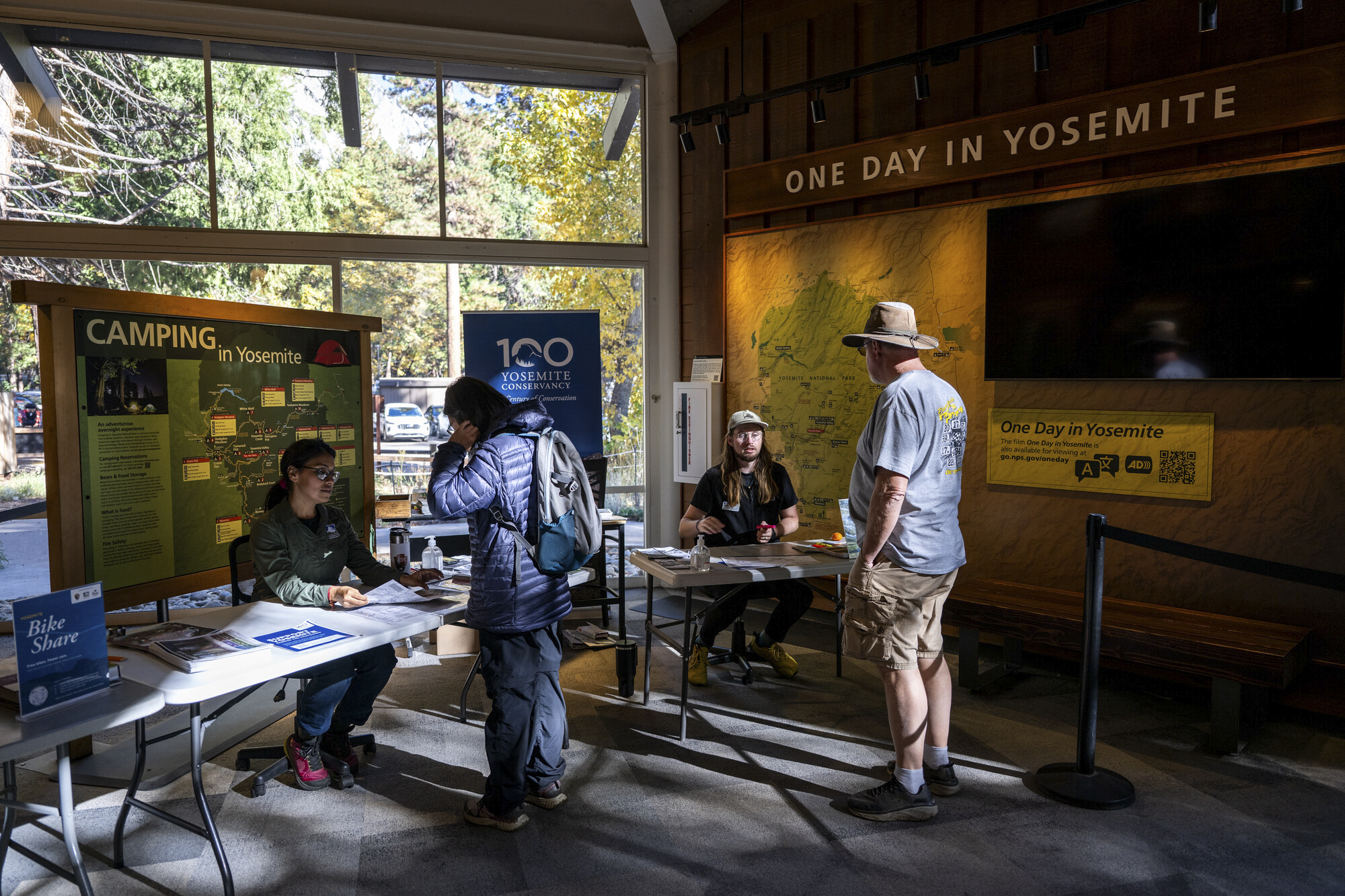
"caption": "Yosemite Conservancy staff answer questions at the Welcome Center at Yosemite National Park in the Sierra Nevada Mountains on Oct. 27, 2025. Wage cuts announced for Yosemite National Park employees come as reported new performance metrics raise ethical alarms for National Park Service leaders and employees.\r\n",
"credit": "Beth LaBerge/KQED",
"altTag": null,
"description": null,
"imgSizes": {
"thumbnail": {
"file": "https://cdn.kqed.org/wp-content/uploads/sites/10/2025/10/251027-YOSEMITESHUTDOWN-47-BL_QED-KQED-160x107.jpg",
"width": 160,
"height": 107,
"mimeType": "image/jpeg"
},
"1536x1536": {
"file": "https://cdn.kqed.org/wp-content/uploads/sites/10/2025/10/251027-YOSEMITESHUTDOWN-47-BL_QED-KQED-1536x1024.jpg",
"width": 1536,
"height": 1024,
"mimeType": "image/jpeg"
},
"post-thumbnail": {
"file": "https://cdn.kqed.org/wp-content/uploads/sites/10/2025/10/251027-YOSEMITESHUTDOWN-47-BL_QED-KQED-672x372.jpg",
"width": 672,
"height": 372,
"mimeType": "image/jpeg"
},
"twentyfourteen-full-width": {
"file": "https://cdn.kqed.org/wp-content/uploads/sites/10/2025/10/251027-YOSEMITESHUTDOWN-47-BL_QED-KQED-1038x576.jpg",
"width": 1038,
"height": 576,
"mimeType": "image/jpeg"
},
"npr-cds-wide": {
"file": "https://cdn.kqed.org/wp-content/uploads/sites/10/2025/10/251027-YOSEMITESHUTDOWN-47-BL_QED-KQED-1600x900.jpg",
"width": 1600,
"height": 900,
"mimeType": "image/jpeg"
},
"kqedFullSize": {
"file": "https://cdn.kqed.org/wp-content/uploads/sites/10/2025/10/251027-YOSEMITESHUTDOWN-47-BL_QED-KQED.jpg",
"width": 2000,
"height": 1333
}
},
"fetchFailed": false,
"isLoading": false
},
"news_12065956": {
"type": "attachments",
"id": "news_12065956",
"meta": {
"index": "attachments_1716263798",
"site": "news",
"id": "12065956",
"found": true
},
"title": "251027-YosemiteShutdown-51-BL_qed",
"publishDate": 1764800032,
"status": "inherit",
"parent": 12065920,
"modified": 1764879444,
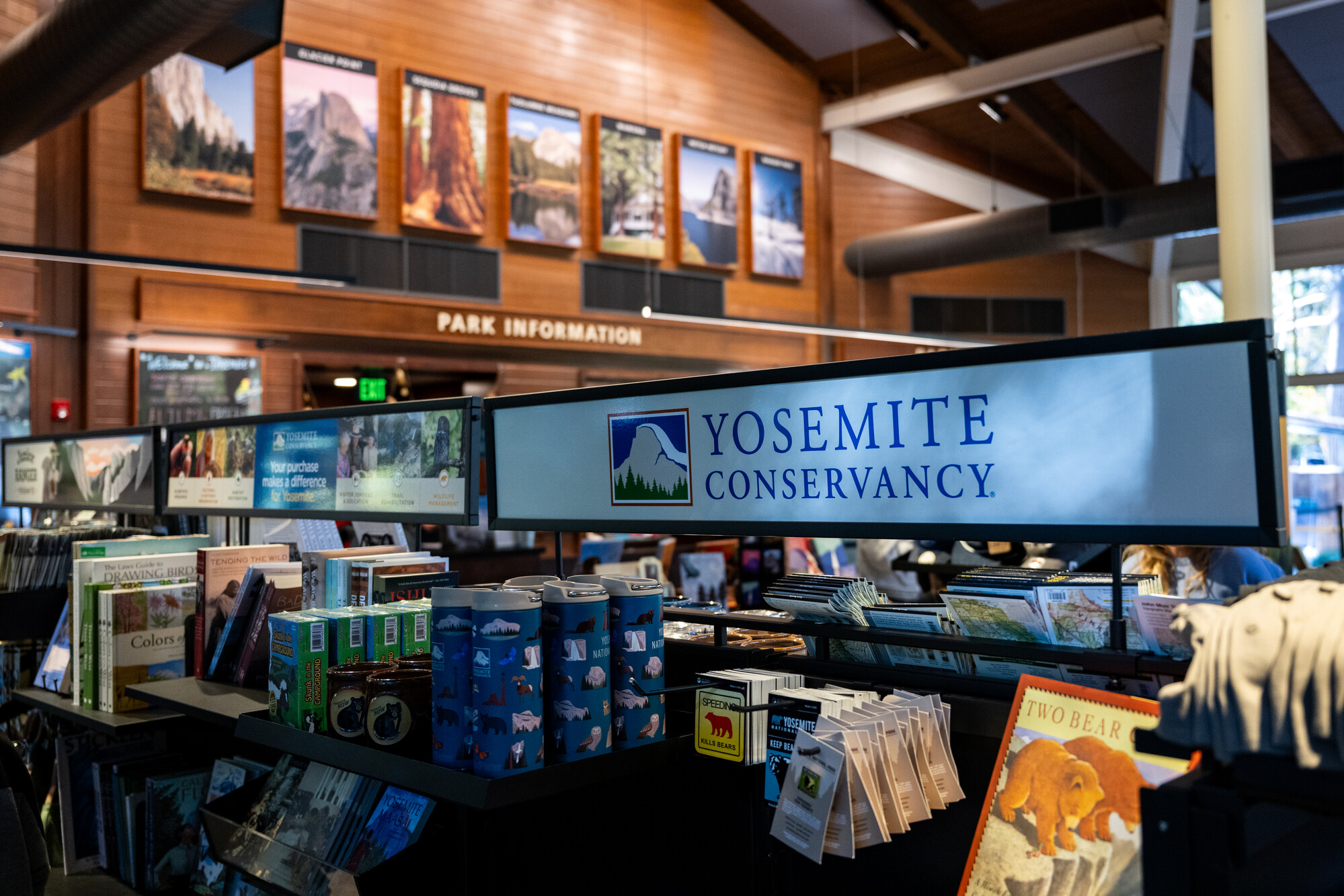
"caption": "Souvenirs, books, hiking gear and other items line the shelves at the Welcome Center in Yosemite National Park on Oct. 27, 2025.",
"credit": "Beth LaBerge/KQED",
"altTag": null,
"description": null,
"imgSizes": {
"thumbnail": {
"file": "https://cdn.kqed.org/wp-content/uploads/sites/10/2025/12/251027-YosemiteShutdown-51-BL_qed-160x107.jpg",
"width": 160,
"height": 107,
"mimeType": "image/jpeg"
},
"1536x1536": {
"file": "https://cdn.kqed.org/wp-content/uploads/sites/10/2025/12/251027-YosemiteShutdown-51-BL_qed-1536x1024.jpg",
"width": 1536,
"height": 1024,
"mimeType": "image/jpeg"
},
"post-thumbnail": {
"file": "https://cdn.kqed.org/wp-content/uploads/sites/10/2025/12/251027-YosemiteShutdown-51-BL_qed-672x372.jpg",
"width": 672,
"height": 372,
"mimeType": "image/jpeg"
},
"twentyfourteen-full-width": {
"file": "https://cdn.kqed.org/wp-content/uploads/sites/10/2025/12/251027-YosemiteShutdown-51-BL_qed-1038x576.jpg",
"width": 1038,
"height": 576,
"mimeType": "image/jpeg"
},
"npr-cds-wide": {
"file": "https://cdn.kqed.org/wp-content/uploads/sites/10/2025/12/251027-YosemiteShutdown-51-BL_qed-1200x675.jpg",
"width": 1200,
"height": 675,
"mimeType": "image/jpeg"
},
"kqedFullSize": {
"file": "https://cdn.kqed.org/wp-content/uploads/sites/10/2025/12/251027-YosemiteShutdown-51-BL_qed.jpg",
"width": 1999,
"height": 1333
}
},
"fetchFailed": false,
"isLoading": false
},
"news_12058519": {
"type": "attachments",
"id": "news_12058519",
"meta": {
"index": "attachments_1716263798",
"site": "news",
"id": "12058519",
"found": true
},
"title": "Yosemite National Park To Begin Reservations",
"publishDate": 1759449230,
"status": "inherit",
"parent": 12058508,
"modified": 1759449259,
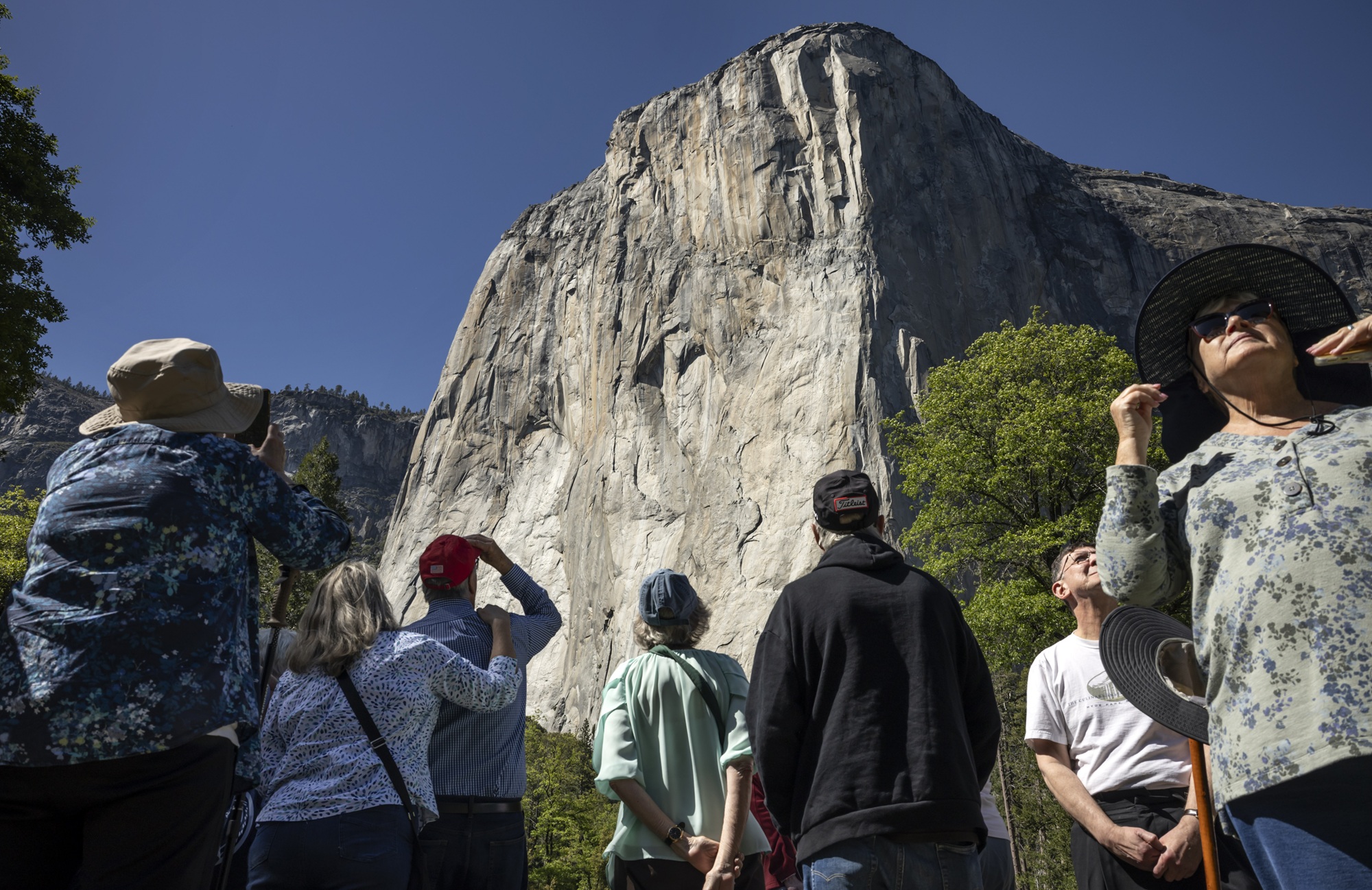
"caption": "Visitors look up at El Capitan from El Capitan Meadow in Yosemite National Park, California, on May 20, 2025. ",
"credit": "Carlos Avila Gonzalez/San Francisco Chronicle via Getty Images",
"altTag": null,
"description": null,
"imgSizes": {
"thumbnail": {
"file": "https://cdn.kqed.org/wp-content/uploads/sites/10/2025/10/YosemiteGetty-160x104.jpg",
"width": 160,
"height": 104,
"mimeType": "image/jpeg"
},
"1536x1536": {
"file": "https://cdn.kqed.org/wp-content/uploads/sites/10/2025/10/YosemiteGetty-1536x997.jpg",
"width": 1536,
"height": 997,
"mimeType": "image/jpeg"
},
"post-thumbnail": {
"file": "https://cdn.kqed.org/wp-content/uploads/sites/10/2025/10/YosemiteGetty-672x372.jpg",
"width": 672,
"height": 372,
"mimeType": "image/jpeg"
},
"twentyfourteen-full-width": {
"file": "https://cdn.kqed.org/wp-content/uploads/sites/10/2025/10/YosemiteGetty-1038x576.jpg",
"width": 1038,
"height": 576,
"mimeType": "image/jpeg"
},
"kqedFullSize": {
"file": "https://cdn.kqed.org/wp-content/uploads/sites/10/2025/10/YosemiteGetty.jpg",
"width": 2000,
"height": 1298
}
},
"fetchFailed": false,
"isLoading": false
},
"news_12055809": {
"type": "attachments",
"id": "news_12055809",
"meta": {
"index": "attachments_1716263798",
"site": "news",
"id": "12055809",
"found": true
},
"title": "250912-TRUMPSSIGNAGEORDER-17-BL-KQED",
"publishDate": 1757714615,
"status": "inherit",
"parent": 0,
"modified": 1757714774,
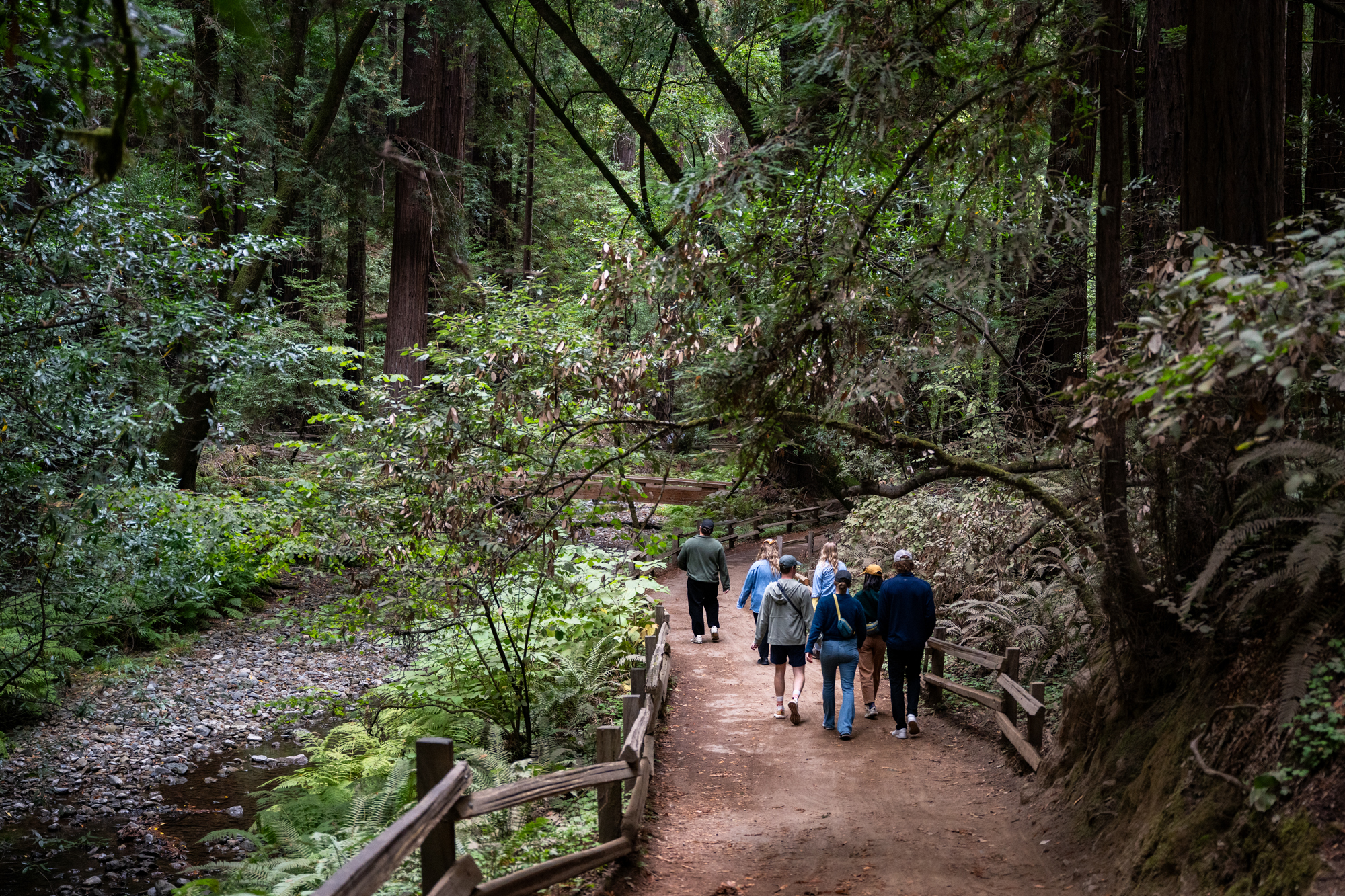
"caption": "Hikers walk through Muir Woods National Monument on Sept. 12, 2025. Part of the Golden Gate National Recreation Area, the monument protects one of the last old-growth coast redwood forests in the Bay Area.",
"credit": "Beth LaBerge/KQED",
"altTag": null,
"description": null,
"imgSizes": {
"thumbnail": {
"file": "https://cdn.kqed.org/wp-content/uploads/sites/10/2025/09/250912-TRUMPSSIGNAGEORDER-17-BL-KQED-160x107.jpg",
"width": 160,
"height": 107,
"mimeType": "image/jpeg"
},
"1536x1536": {
"file": "https://cdn.kqed.org/wp-content/uploads/sites/10/2025/09/250912-TRUMPSSIGNAGEORDER-17-BL-KQED-1536x1024.jpg",
"width": 1536,
"height": 1024,
"mimeType": "image/jpeg"
},
"post-thumbnail": {
"file": "https://cdn.kqed.org/wp-content/uploads/sites/10/2025/09/250912-TRUMPSSIGNAGEORDER-17-BL-KQED-672x372.jpg",
"width": 672,
"height": 372,
"mimeType": "image/jpeg"
},
"twentyfourteen-full-width": {
"file": "https://cdn.kqed.org/wp-content/uploads/sites/10/2025/09/250912-TRUMPSSIGNAGEORDER-17-BL-KQED-1038x576.jpg",
"width": 1038,
"height": 576,
"mimeType": "image/jpeg"
},
"kqedFullSize": {
"file": "https://cdn.kqed.org/wp-content/uploads/sites/10/2025/09/250912-TRUMPSSIGNAGEORDER-17-BL-KQED.jpg",
"width": 2000,
"height": 1333
}
},
"fetchFailed": false,
"isLoading": false
},
"news_12062225": {
"type": "attachments",
"id": "news_12062225",
"meta": {
"index": "attachments_1716263798",
"site": "news",
"id": "12062225",
"found": true
},
"title": "251028-YOSEMITESHUTDOWN-114-BL_QED-KQED",
"publishDate": 1761842896,
"status": "inherit",
"parent": 12065737,
"modified": 1765292883,
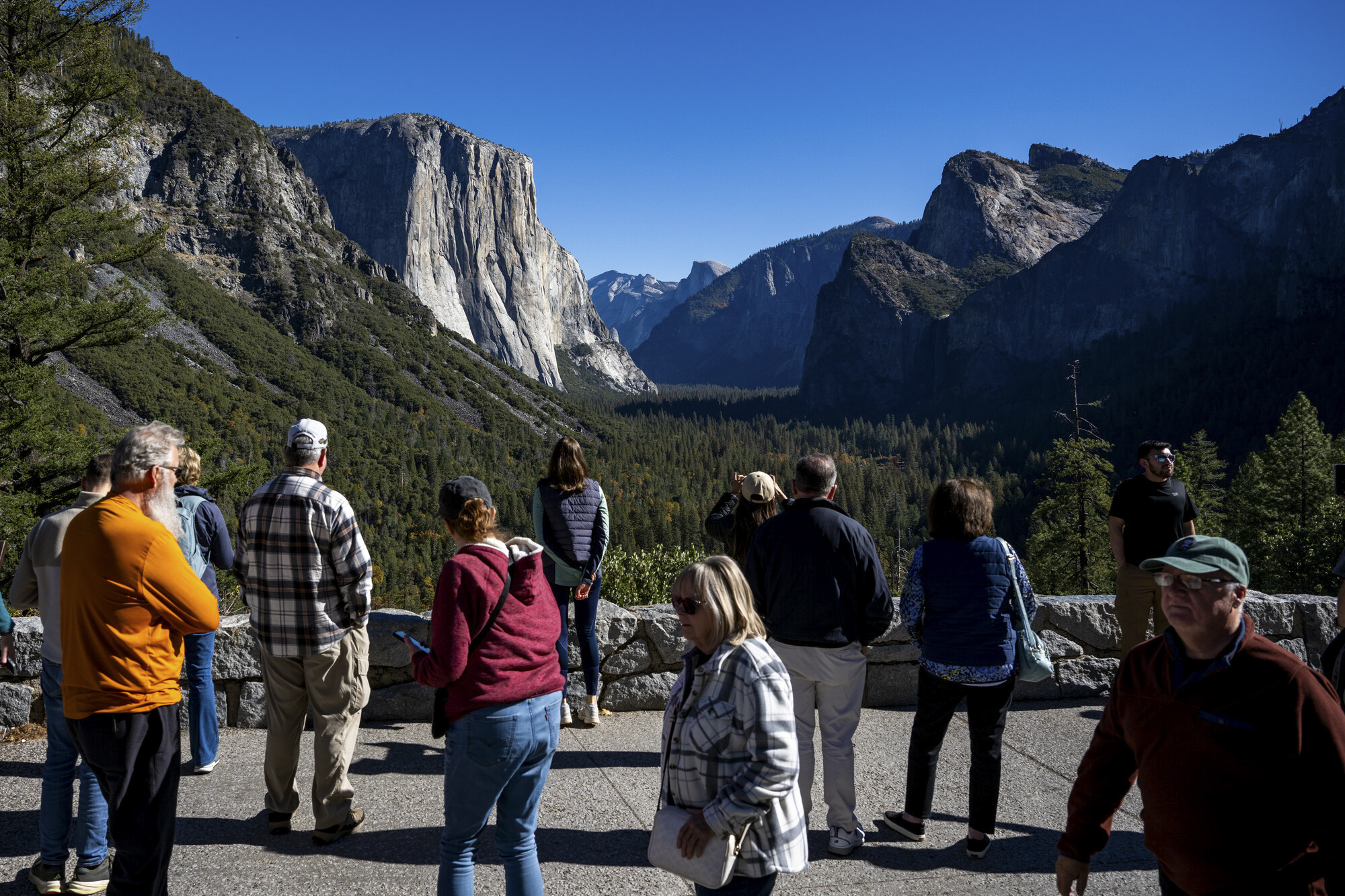
"caption": "Visitors stand at Tunnel View overlook in Yosemite National Park in the Sierra Nevada Mountains on Oct. 28, 2025. ",
"credit": "Beth LaBerge/KQED",
"altTag": null,
"description": null,
"imgSizes": {
"thumbnail": {
"file": "https://cdn.kqed.org/wp-content/uploads/sites/10/2025/10/251028-YOSEMITESHUTDOWN-114-BL_QED-KQED-160x107.jpg",
"width": 160,
"height": 107,
"mimeType": "image/jpeg"
},
"1536x1536": {
"file": "https://cdn.kqed.org/wp-content/uploads/sites/10/2025/10/251028-YOSEMITESHUTDOWN-114-BL_QED-KQED-1536x1024.jpg",
"width": 1536,
"height": 1024,
"mimeType": "image/jpeg"
},
"post-thumbnail": {
"file": "https://cdn.kqed.org/wp-content/uploads/sites/10/2025/10/251028-YOSEMITESHUTDOWN-114-BL_QED-KQED-672x372.jpg",
"width": 672,
"height": 372,
"mimeType": "image/jpeg"
},
"twentyfourteen-full-width": {
"file": "https://cdn.kqed.org/wp-content/uploads/sites/10/2025/10/251028-YOSEMITESHUTDOWN-114-BL_QED-KQED-1038x576.jpg",
"width": 1038,
"height": 576,
"mimeType": "image/jpeg"
},
"npr-cds-wide": {
"file": "https://cdn.kqed.org/wp-content/uploads/sites/10/2025/10/251028-YOSEMITESHUTDOWN-114-BL_QED-KQED-1600x900.jpg",
"width": 1600,
"height": 900,
"mimeType": "image/jpeg"
},
"kqedFullSize": {
"file": "https://cdn.kqed.org/wp-content/uploads/sites/10/2025/10/251028-YOSEMITESHUTDOWN-114-BL_QED-KQED.jpg",
"width": 2000,
"height": 1333
}
},
"fetchFailed": false,
"isLoading": false
},
"news_12059383": {
"type": "attachments",
"id": "news_12059383",
"meta": {
"index": "attachments_1716263798",
"site": "news",
"id": "12059383",
"found": true
},
"title": "Federal Government Shuts Down After Congress Fails To Pass Funding Bill",
"publishDate": 1760051125,
"status": "inherit",
"parent": 12059380,
"modified": 1760054900,
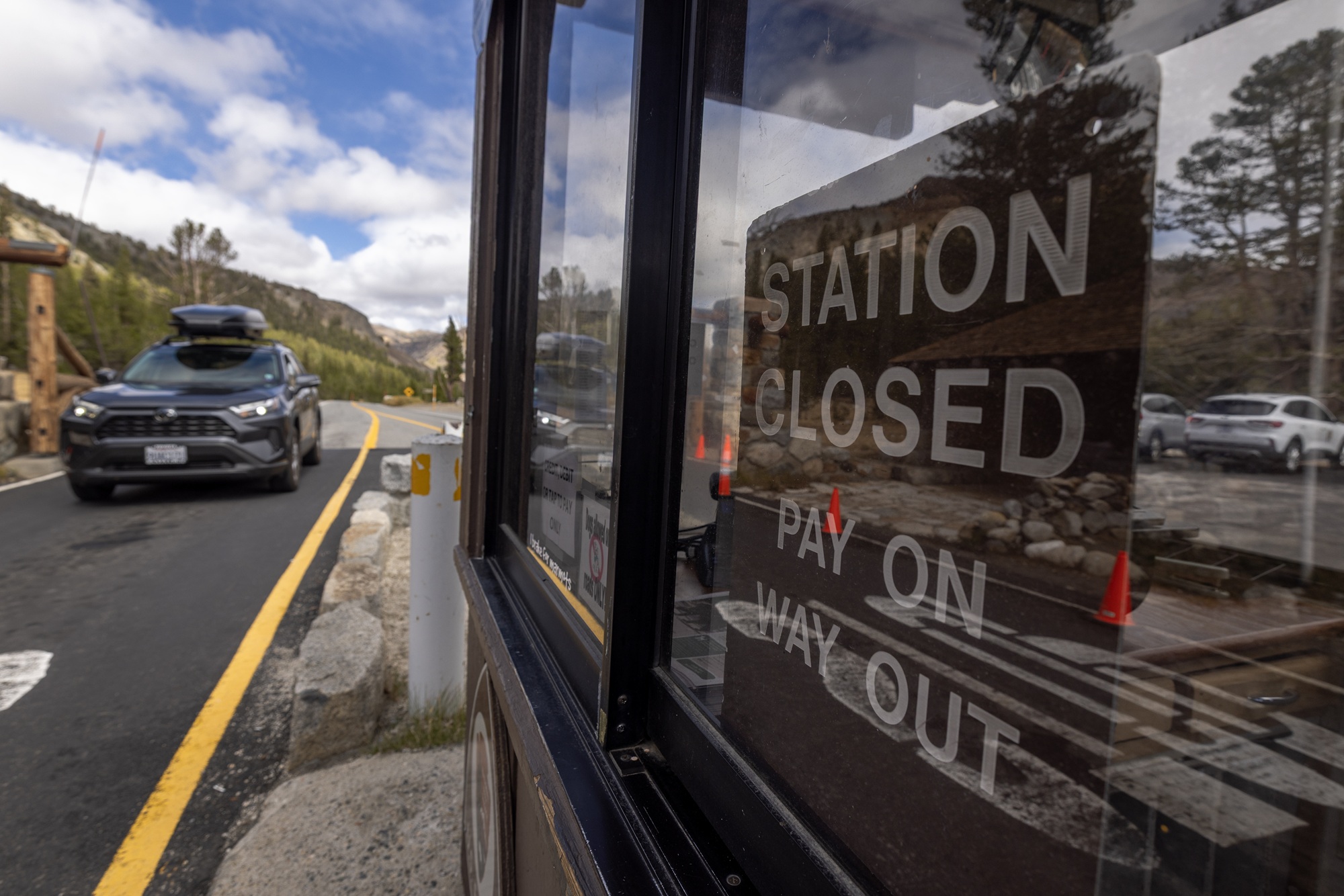
"caption": "A motorist passes through the Tioga Pass fee station at the eastern entrance to Yosemite National Park, which is vacant of available employees to collect fees that help fund the park, on the first day of the government shutdown on Oct. 1, 2025, in Yosemite National Park, California. ",
"credit": "David McNew/Getty Images",
"altTag": null,
"description": null,
"imgSizes": {
"thumbnail": {
"file": "https://cdn.kqed.org/wp-content/uploads/sites/10/2025/10/YosemiteGetty-1-160x107.jpg",
"width": 160,
"height": 107,
"mimeType": "image/jpeg"
},
"1536x1536": {
"file": "https://cdn.kqed.org/wp-content/uploads/sites/10/2025/10/YosemiteGetty-1-1536x1025.jpg",
"width": 1536,
"height": 1025,
"mimeType": "image/jpeg"
},
"post-thumbnail": {
"file": "https://cdn.kqed.org/wp-content/uploads/sites/10/2025/10/YosemiteGetty-1-672x372.jpg",
"width": 672,
"height": 372,
"mimeType": "image/jpeg"
},
"twentyfourteen-full-width": {
"file": "https://cdn.kqed.org/wp-content/uploads/sites/10/2025/10/YosemiteGetty-1-1038x576.jpg",
"width": 1038,
"height": 576,
"mimeType": "image/jpeg"
},
"kqedFullSize": {
"file": "https://cdn.kqed.org/wp-content/uploads/sites/10/2025/10/YosemiteGetty-1.jpg",
"width": 2000,
"height": 1334
}
},
"fetchFailed": false,
"isLoading": false
},
"news_12058324": {
"type": "attachments",
"id": "news_12058324",
"meta": {
"index": "attachments_1716263798",
"site": "news",
"id": "12058324",
"found": true
},
"title": "Government Shutdown Looms As House And Senate Disagree On Funding Bill",
"publishDate": 1759362335,
"status": "inherit",
"parent": 12058294,
"modified": 1759363906,
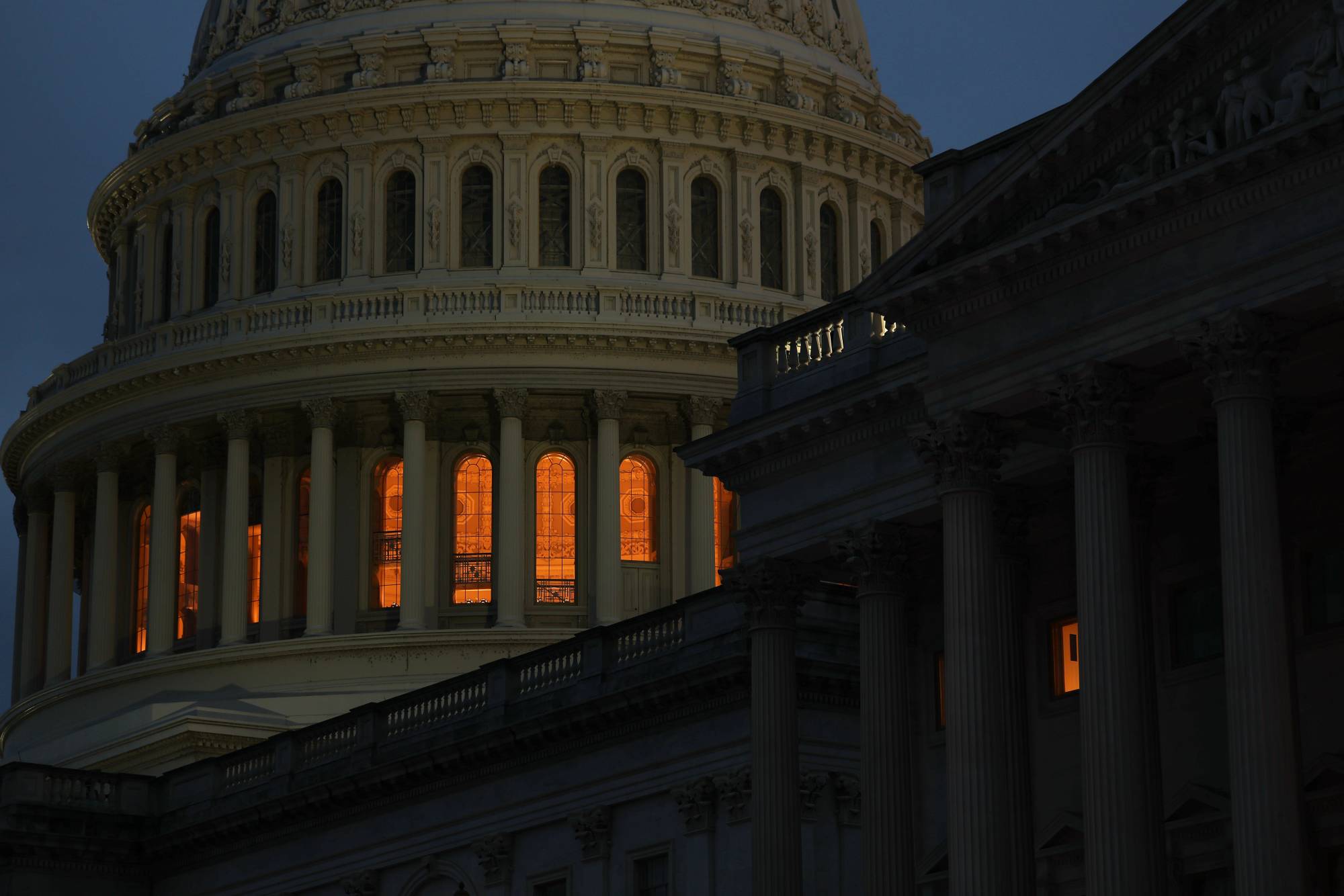
"caption": "A view of the U.S. Capitol as the sun sets on Sept. 29, 2025, in Washington, D.C. House and Senate leadership met with President Donald Trump earlier in the day at the White House to try to avoid a government shutdown at midnight on Sept. 30.",
"credit": "Photo by Anna Moneymaker/Getty Images",
"altTag": null,
"description": null,
"imgSizes": {
"medium": {
"file": "https://cdn.kqed.org/wp-content/uploads/sites/10/2025/10/GettyImages-2238183191-2000x1334.jpg",
"width": 2000,
"height": 1334,
"mimeType": "image/jpeg"
},
"large": {
"file": "https://cdn.kqed.org/wp-content/uploads/sites/10/2025/10/GettyImages-2238183191-2000x1334.jpg",
"width": 2000,
"height": 1334,
"mimeType": "image/jpeg"
},
"thumbnail": {
"file": "https://cdn.kqed.org/wp-content/uploads/sites/10/2025/10/GettyImages-2238183191-160x107.jpg",
"width": 160,
"height": 107,
"mimeType": "image/jpeg"
},
"1536x1536": {
"file": "https://cdn.kqed.org/wp-content/uploads/sites/10/2025/10/GettyImages-2238183191-1536x1024.jpg",
"width": 1536,
"height": 1024,
"mimeType": "image/jpeg"
},
"2048x2048": {
"file": "https://cdn.kqed.org/wp-content/uploads/sites/10/2025/10/GettyImages-2238183191-2048x1366.jpg",
"width": 2048,
"height": 1366,
"mimeType": "image/jpeg"
},
"post-thumbnail": {
"file": "https://cdn.kqed.org/wp-content/uploads/sites/10/2025/10/GettyImages-2238183191-672x372.jpg",
"width": 672,
"height": 372,
"mimeType": "image/jpeg"
},
"twentyfourteen-full-width": {
"file": "https://cdn.kqed.org/wp-content/uploads/sites/10/2025/10/GettyImages-2238183191-1038x576.jpg",
"width": 1038,
"height": 576,
"mimeType": "image/jpeg"
},
"full-width": {
"file": "https://cdn.kqed.org/wp-content/uploads/sites/10/2025/10/GettyImages-2238183191-2000x1334.jpg",
"width": 2000,
"height": 1334,
"mimeType": "image/jpeg"
},
"kqedFullSize": {
"file": "https://cdn.kqed.org/wp-content/uploads/sites/10/2025/10/GettyImages-2238183191-scaled.jpg",
"width": 2560,
"height": 1707
}
},
"fetchFailed": false,
"isLoading": false
},
"news_12057927": {
"type": "attachments",
"id": "news_12057927",
"meta": {
"index": "attachments_1716263798",
"site": "news",
"id": "12057927",
"found": true
},
"title": "The United States Capitol building",
"publishDate": 1759163172,
"status": "inherit",
"parent": 12057777,
"modified": 1759165647,
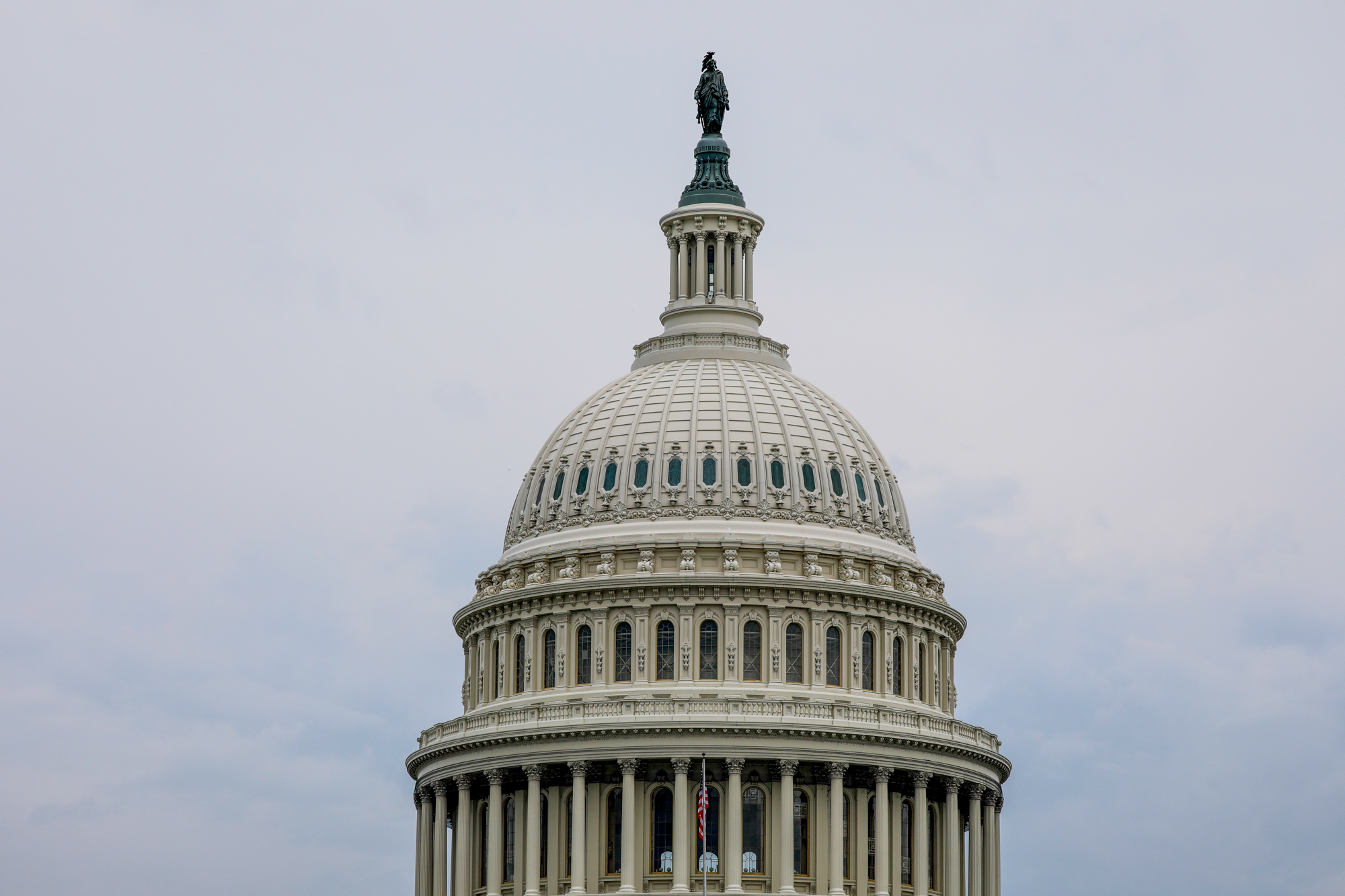
"caption": "The United States Capitol building in Washington, D.C., on Sept. 24, 2025.",
"credit": "Yasin Ozturk/Anadolu via Getty Images",
"altTag": null,
"description": null,
"imgSizes": {
"thumbnail": {
"file": "https://cdn.kqed.org/wp-content/uploads/sites/10/2025/09/GETTYIMAGES-2236770685-KQED_1-160x107.jpg",
"width": 160,
"height": 107,
"mimeType": "image/jpeg"
},
"1536x1536": {
"file": "https://cdn.kqed.org/wp-content/uploads/sites/10/2025/09/GETTYIMAGES-2236770685-KQED_1-1536x1024.jpg",
"width": 1536,
"height": 1024,
"mimeType": "image/jpeg"
},
"post-thumbnail": {
"file": "https://cdn.kqed.org/wp-content/uploads/sites/10/2025/09/GETTYIMAGES-2236770685-KQED_1-672x372.jpg",
"width": 672,
"height": 372,
"mimeType": "image/jpeg"
},
"twentyfourteen-full-width": {
"file": "https://cdn.kqed.org/wp-content/uploads/sites/10/2025/09/GETTYIMAGES-2236770685-KQED_1-1038x576.jpg",
"width": 1038,
"height": 576,
"mimeType": "image/jpeg"
},
"kqedFullSize": {
"file": "https://cdn.kqed.org/wp-content/uploads/sites/10/2025/09/GETTYIMAGES-2236770685-KQED_1.jpg",
"width": 2000,
"height": 1333
}
},
"fetchFailed": false,
"isLoading": false
}
},
"audioPlayerReducer": {
"postId": "stream_live",
"isPaused": true,
"isPlaying": false,
"pfsActive": false,
"pledgeModalIsOpen": true,
"playerDrawerIsOpen": false
},
"authorsReducer": {
"ecruzguevarra": {
"type": "authors",
"id": "8654",
"meta": {
"index": "authors_1716337520",
"id": "8654",
"found": true
},
"name": "Ericka Cruz Guevarra",
"firstName": "Ericka",
"lastName": "Cruz Guevarra",
"slug": "ecruzguevarra",
"email": "ecruzguevarra@kqed.org",
"display_author_email": true,
"staff_mastheads": [
"news"
],
"title": "Producer, The Bay Podcast",
"bio": "Ericka Cruz Guevarra is host of \u003ca href=\"https://www.kqed.org/podcasts/thebay\">\u003cem>The Bay\u003c/em>\u003c/a> podcast at KQED. Before host, she was the show’s producer. Her work in that capacity includes a three-part reported series on policing in Vallejo, which won a 2020 excellence in journalism award from the Society of Professional Journalists. Ericka has worked as a breaking news reporter at Oregon Public Broadcasting, helped produce the Code Switch podcast, and was KQED’s inaugural Raul Ramirez Diversity Fund intern. She’s also an alumna of NPR’s Next Generation Radio program. Send her an email if you have strong feelings about whether Fairfield and Suisun City are the Bay. Ericka is represented by SAG-AFTRA.",
"avatar": "https://secure.gravatar.com/avatar/25e5ab8d3d53fad2dcc7bb2b5c506b1a?s=600&d=blank&r=g",
"twitter": "NotoriousECG",
"facebook": null,
"instagram": null,
"linkedin": null,
"sites": [
{
"site": "arts",
"roles": [
"subscriber"
]
},
{
"site": "news",
"roles": [
"editor",
"manage_categories"
]
},
{
"site": "futureofyou",
"roles": [
"subscriber"
]
},
{
"site": "stateofhealth",
"roles": [
"subscriber"
]
},
{
"site": "science",
"roles": [
"editor"
]
},
{
"site": "forum",
"roles": [
"subscriber"
]
}
],
"headData": {
"title": "Ericka Cruz Guevarra | KQED",
"description": "Producer, The Bay Podcast",
"ogImgSrc": "https://secure.gravatar.com/avatar/25e5ab8d3d53fad2dcc7bb2b5c506b1a?s=600&d=blank&r=g",
"twImgSrc": "https://secure.gravatar.com/avatar/25e5ab8d3d53fad2dcc7bb2b5c506b1a?s=600&d=blank&r=g"
},
"isLoading": false,
"link": "/author/ecruzguevarra"
},
"amontecillo": {
"type": "authors",
"id": "11649",
"meta": {
"index": "authors_1716337520",
"id": "11649",
"found": true
},
"name": "Alan Montecillo",
"firstName": "Alan",
"lastName": "Montecillo",
"slug": "amontecillo",
"email": "amontecillo@kqed.org",
"display_author_email": false,
"staff_mastheads": [
"news"
],
"title": "KQED Contributor",
"bio": "Alan Montecillo is the senior editor of \u003cem>\u003ca href=\"http://kqed.org/thebay\">The Bay\u003c/a>, \u003c/em> KQED's local news podcast. Before moving to the Bay Area, he worked as a senior talk show producer for WILL in Champaign-Urbana, Illinois and at Oregon Public Broadcasting in Portland, Oregon. He has won journalism awards from the Society of Professional Journalists Northern California, the Public Media Journalists Association, The Signal Awards, and has also received a regional Edward R. Murrow award. Alan is a Filipino American from Hong Kong and a graduate of Reed College.",
"avatar": "https://secure.gravatar.com/avatar/d5e4e7a76481969ccba76f4e2b5ccabc?s=600&d=blank&r=g",
"twitter": "alanmontecillo",
"facebook": null,
"instagram": null,
"linkedin": null,
"sites": [
{
"site": "",
"roles": [
"editor"
]
},
{
"site": "news",
"roles": [
"editor",
"manage_categories"
]
}
],
"headData": {
"title": "Alan Montecillo | KQED",
"description": "KQED Contributor",
"ogImgSrc": "https://secure.gravatar.com/avatar/d5e4e7a76481969ccba76f4e2b5ccabc?s=600&d=blank&r=g",
"twImgSrc": "https://secure.gravatar.com/avatar/d5e4e7a76481969ccba76f4e2b5ccabc?s=600&d=blank&r=g"
},
"isLoading": false,
"link": "/author/amontecillo"
},
"abandlamudi": {
"type": "authors",
"id": "11672",
"meta": {
"index": "authors_1716337520",
"id": "11672",
"found": true
},
"name": "Adhiti Bandlamudi",
"firstName": "Adhiti",
"lastName": "Bandlamudi",
"slug": "abandlamudi",
"email": "abandlamudi@kqed.org",
"display_author_email": false,
"staff_mastheads": [
"news"
],
"title": "KQED Housing Reporter",
"bio": "Adhiti Bandlamudi reports for KQED's Housing desk. She focuses on how housing gets built across the Bay Area. Before joining KQED in 2020, she reported for WUNC in Durham, North Carolina, WABE in Atlanta, Georgia and Capital Public Radio in Sacramento. In 2017, she was awarded a Kroc Fellowship at NPR where she reported on everything from sprinkles to the Golden State Killer's arrest. When she's not reporting, she's baking new recipes in her kitchen or watching movies with friends and family. She's originally from Georgia and has strong opinions about Great British Bake Off.",
"avatar": "https://secure.gravatar.com/avatar/868129c8b257bb99a3500e2c86a65400?s=600&d=mm&r=g",
"twitter": "oddity_adhiti",
"facebook": null,
"instagram": null,
"linkedin": null,
"sites": [
{
"site": "arts",
"roles": [
"author"
]
},
{
"site": "news",
"roles": [
"editor"
]
},
{
"site": "liveblog",
"roles": [
"author"
]
}
],
"headData": {
"title": "Adhiti Bandlamudi | KQED",
"description": "KQED Housing Reporter",
"ogImgSrc": "https://secure.gravatar.com/avatar/868129c8b257bb99a3500e2c86a65400?s=600&d=mm&r=g",
"twImgSrc": "https://secure.gravatar.com/avatar/868129c8b257bb99a3500e2c86a65400?s=600&d=mm&r=g"
},
"isLoading": false,
"link": "/author/abandlamudi"
},
"jessicakariisa": {
"type": "authors",
"id": "11831",
"meta": {
"index": "authors_1716337520",
"id": "11831",
"found": true
},
"name": "Jessica Kariisa",
"firstName": "Jessica",
"lastName": "Kariisa",
"slug": "jessicakariisa",
"email": "jkariisa@kqed.org",
"display_author_email": false,
"staff_mastheads": [
"news"
],
"title": "Producer, The Bay",
"bio": "Jessica Kariisa is the producer of The Bay. She first joined KQED as an intern for The California Report Magazine, after which she became an on-call producer. She reported a Bay Curious episode on the use of rap lyrics in criminal trials which won a Society of Professional Journalists award in 2023 for Excellence in Features Journalism and the 2023 Signal Award for Best Conversation Starter. She’s worked on podcasts for Snap Judgment and American Public Media. Before embarking on her audio career, she was a music journalist.\r\n\r\nJessica Kariisa is represented by SAG-AFTRA.",
"avatar": "https://secure.gravatar.com/avatar/4afd355fd24f5515aeab77fd6c72b671?s=600&d=blank&r=g",
"twitter": null,
"facebook": null,
"instagram": null,
"linkedin": null,
"sites": [
{
"site": "arts",
"roles": [
"author"
]
},
{
"site": "news",
"roles": [
"editor",
"manage_categories"
]
}
],
"headData": {
"title": "Jessica Kariisa | KQED",
"description": "Producer, The Bay",
"ogImgSrc": "https://secure.gravatar.com/avatar/4afd355fd24f5515aeab77fd6c72b671?s=600&d=blank&r=g",
"twImgSrc": "https://secure.gravatar.com/avatar/4afd355fd24f5515aeab77fd6c72b671?s=600&d=blank&r=g"
},
"isLoading": false,
"link": "/author/jessicakariisa"
},
"kdebenedetti": {
"type": "authors",
"id": "11913",
"meta": {
"index": "authors_1716337520",
"id": "11913",
"found": true
},
"name": "Katie DeBenedetti",
"firstName": "Katie",
"lastName": "DeBenedetti",
"slug": "kdebenedetti",
"email": "kdebenedetti@kqed.org",
"display_author_email": false,
"staff_mastheads": [
"news",
"science"
],
"title": "KQED Contributor",
"bio": "Katie DeBenedetti is a digital reporter covering daily news for the Express Desk. Prior to joining KQED as a culture reporting intern in January 2024, she covered education and city government for the Napa Valley Register.",
"avatar": "https://secure.gravatar.com/avatar/6e31073cb8f7e4214ab03f42771d0f45?s=600&d=blank&r=g",
"twitter": null,
"facebook": null,
"instagram": null,
"linkedin": null,
"sites": [
{
"site": "news",
"roles": [
"author"
]
},
{
"site": "science",
"roles": [
"author"
]
},
{
"site": "liveblog",
"roles": [
"author"
]
}
],
"headData": {
"title": "Katie DeBenedetti | KQED",
"description": "KQED Contributor",
"ogImgSrc": "https://secure.gravatar.com/avatar/6e31073cb8f7e4214ab03f42771d0f45?s=600&d=blank&r=g",
"twImgSrc": "https://secure.gravatar.com/avatar/6e31073cb8f7e4214ab03f42771d0f45?s=600&d=blank&r=g"
},
"isLoading": false,
"link": "/author/kdebenedetti"
},
"sarahwright": {
"type": "authors",
"id": "11956",
"meta": {
"index": "authors_1716337520",
"id": "11956",
"found": true
},
"name": "Sarah Wright",
"firstName": "Sarah",
"lastName": "Wright",
"slug": "sarahwright",
"email": "swright@kqed.org",
"display_author_email": true,
"staff_mastheads": [],
"title": "Outdoors Engagement Reporter",
"bio": "Sarah Wright is KQED's Outdoors Engagement Reporter. Originally from Lake Tahoe, she completed a thru-hike of the Pacific Crest Trail in 2019 and was a U.S. Fulbright Program grantee to Argentina in 2023. Her journalism has appeared in The Guardian, The San Francisco Standard, The Palo Alto Weekly and the Half Moon Bay Review.",
"avatar": "https://secure.gravatar.com/avatar/585b7a53f459b86d1d3ca1561541ab4b?s=600&d=blank&r=g",
"twitter": null,
"facebook": null,
"instagram": null,
"linkedin": null,
"sites": [
{
"site": "arts",
"roles": [
"editor"
]
},
{
"site": "news",
"roles": [
"editor"
]
},
{
"site": "science",
"roles": [
"contributor",
"author"
]
},
{
"site": "forum",
"roles": [
"editor"
]
}
],
"headData": {
"title": "Sarah Wright | KQED",
"description": "Outdoors Engagement Reporter",
"ogImgSrc": "https://secure.gravatar.com/avatar/585b7a53f459b86d1d3ca1561541ab4b?s=600&d=blank&r=g",
"twImgSrc": "https://secure.gravatar.com/avatar/585b7a53f459b86d1d3ca1561541ab4b?s=600&d=blank&r=g"
},
"isLoading": false,
"link": "/author/sarahwright"
}
},
"breakingNewsReducer": {},
"pagesReducer": {},
"postsReducer": {
"stream_live": {
"type": "live",
"id": "stream_live",
"audioUrl": "https://streams.kqed.org/kqedradio",
"title": "Live Stream",
"excerpt": "Live Stream information currently unavailable.",
"link": "/radio",
"featImg": "",
"label": {
"name": "KQED Live",
"link": "/"
}
},
"stream_kqedNewscast": {
"type": "posts",
"id": "stream_kqedNewscast",
"audioUrl": "https://www.kqed.org/.stream/anon/radio/RDnews/newscast.mp3?_=1",
"title": "KQED Newscast",
"featImg": "",
"label": {
"name": "88.5 FM",
"link": "/"
}
},
"news_12066741": {
"type": "posts",
"id": "news_12066741",
"meta": {
"index": "posts_1716263798",
"site": "news",
"id": "12066741",
"score": null,
"sort": [
1765555252000
]
},
"guestAuthors": [],
"slug": "a-morale-bomb-national-park-workers-face-wage-cuts-and-dubiously-legal-review-system",
"title": "‘A Morale Bomb’: National Park Workers Face Wage Cuts and 'Dubiously Legal' Review System",
"publishDate": 1765555252,
"format": "standard",
"headTitle": "‘A Morale Bomb’: National Park Workers Face Wage Cuts and ‘Dubiously Legal’ Review System | KQED",
"labelTerm": {
"site": "news"
},
"content": "\u003cp>As National Park Service leaders grapple with\u003ca href=\"https://www.kqed.org/news/12054083/yosemite-sequoia-and-kings-canyon-workers-unionize-amid-fears-of-further-firings\"> reduced staffing\u003c/a> and \u003ca href=\"https://www.kqed.org/news/12065920/trump-orders-dei-out-of-national-park-bookstores\">restrictive, ideological policies\u003c/a>, maintenance workers at Yosemite National Park are now also facing a pay cut in 2026 that could reduce hourly wages by as much as $3.50 for some positions.\u003c/p>\n\u003cp>That’s after the National Park Service told its staff that pay for newly hired or promoted employees will now be based on rates for the Fresno area, instead of Stockton, as they have been \u003ca href=\"https://www.federalregister.gov/documents/2009/05/13/E9-11193/prevailing-rate-systems-redefinition-of-the-fresno-and-stockton-ca-appropriated-fund-federal-wage\">for the last 16 years\u003c/a>.\u003c/p>\n\u003cp>The National Federation of Federal Employees’ Local 465, which represents NPS employees at five national parks, including Yosemite, put out a press release this week saying workers were told of the wage change in late November.\u003c/p>\n\u003cp>[ad fullwidth]\u003c/p>\n\u003cp>The move comes as park service leaders nationwide say they’re being told to make changes to employee reviews and performance ratings that they worry could influence future potential layoffs they fear are coming in the near future.\u003c/p>\n\u003cp>Former national park employee Elizabeth Villano, a spokesperson for advocacy group Resistance Rangers, called the changes to the review process a “morale bomb” for workers.\u003c/p>\n\u003cp>“They’re going to continue to push out qualified, passionate civil servants from their job,” she said.\u003c/p>\n\u003cfigure id=\"attachment_12060933\" class=\"wp-caption aligncenter\" style=\"max-width: 2000px\">\u003cimg loading=\"lazy\" decoding=\"async\" class=\"wp-image-12060933 size-full\" src=\"https://cdn.kqed.org/wp-content/uploads/sites/10/2025/10/NationalParkServiceGetty.jpg\" alt=\"\" width=\"2000\" height=\"1335\" srcset=\"https://cdn.kqed.org/wp-content/uploads/sites/10/2025/10/NationalParkServiceGetty.jpg 2000w, https://cdn.kqed.org/wp-content/uploads/sites/10/2025/10/NationalParkServiceGetty-160x107.jpg 160w, https://cdn.kqed.org/wp-content/uploads/sites/10/2025/10/NationalParkServiceGetty-1536x1025.jpg 1536w\" sizes=\"auto, (max-width: 2000px) 100vw, 2000px\">\u003cfigcaption class=\"wp-caption-text\">A National Park Service employee at Yosemite National Park, California, on March 1, 2025. \u003ccite>(Laure Andrillon/AFP via Getty Images)\u003c/cite>\u003c/figcaption>\u003c/figure>\n\u003cp>Any wage-grade employee, like maintenance workers for park facilities and trails, hired, promoted or changing positions as of Jan. 1, 2026, will have their pay changed — “a reduction,” the NFFE release said.\u003c/p>\n\u003cp>One NPS employee who is also a NFFE union representative called the change a “slap in the face” for the hundreds of employees affected, many of whom commute one or even two hours into work and face steep costs of living in and around the Yosemite area. KQED has agreed not to publish the names of employees because they fear retribution.\u003c/p>\n\u003cp>National parks are still suffering from a \u003ca href=\"https://www.npca.org/articles/9551-staffing-crisis-at-national-parks-reaches-breaking-point-new-data-shows-24\">24% reduction\u003c/a> in their workforce. While the Department of the Interior has technically \u003ca href=\"https://www.doi.gov/document-library/human-resources-policy/memo-2025-lifting-may-2-2025-personnel-actions-freeze\">lifted\u003c/a> its hiring freeze, the NFFE is continuing to raise concerns about the Trump administration’s ongoing \u003ca href=\"https://www.whitehouse.gov/presidential-actions/2025/02/implementing-the-presidents-department-of-government-efficiency-cost-efficiency-initiative/\">policies\u003c/a> promoting government efficiency, which have instructed parks to reduce their workforces.\u003c/p>\n\u003cp>“The loss in pay and the pressure to fill gaps will likely result in added stress to the Yosemite [wage-grade] workers, lower retention, fewer opportunities for workers to detail into different positions to gain career experience, and slower overall park operations,” the release states.\u003c/p>\n\u003cp>In an email to KQED, a spokesperson for the Department of the Interior, which oversees the National Park Service, said that the U.S. Office of Personnel Management “created new locality areas for the Federal Wage System effective October 1,” which meant that “most wage system employees will see a pay increase under the new structure.”\u003c/p>\n\u003cp>“A small number of locations, including Yosemite, will see a decrease based on the updated OPM tables,” said the DOI spokesperson. “We are coordinating with the Office of Human Capital to understand the impacts and to identify options that may help affected employees.”\u003c/p>\n\u003cp>Regarding reviews within the parks system, the DOI said that “There is no percentage cap on [Employee Performance Appraisal Plan] ratings,” and that “consistent with OPM’s government-wide performance management guidance, we are working to normalize ratings across the agency. The goal of this effort is to ensure fair, consistent performance evaluations across all of our parks and programs.”\u003c/p>\n\u003ch2>Reviews an ‘insult to injury’\u003c/h2>\n\u003cp>Currently underway at parks nationwide is a wider discussion about employee performance plans, whose drafting and implementation have been delayed all year.\u003c/p>\n\u003cp>According to several national park employees from across the country, NPS leadership has instructed them to abide by a new “quota” or “cap” on high performance ratings — currently issued on a one-to-five scale. Under the revised system, the employees say they’ve been told, only around 30% of employees appear to be allowed to get high ratings. Different parks have been given different numbers over the past week, Villano said, only adding to the confusion.\u003c/p>\n\u003cfigure id=\"attachment_11970738\" class=\"wp-caption aligncenter\" style=\"max-width: 2000px\">\u003cimg loading=\"lazy\" decoding=\"async\" class=\"size-full wp-image-11970738\" src=\"https://cdn.kqed.org/wp-content/uploads/sites/10/2023/12/GettyImages-1846156476-scaled-e1759449061670.jpg\" alt=\"state parks\" width=\"2000\" height=\"1334\">\u003cfigcaption class=\"wp-caption-text\">A welcome sign is seen at the Yosemite National Park on Dec. 13, 2023. \u003ccite>(Tayfun Coskun/Anadolu via Getty Images)\u003c/cite>\u003c/figcaption>\u003c/figure>\n\u003cp>The NPS employees say this mandate has essentially forced park leaders to artificially deflate their employees’ performance reviews — a move Villano said is akin to “asking employees and supervisors to lie.” She also called the action “dubiously legal” and potentially in violation of the \u003ca href=\"https://www.ecfr.gov/current/title-5/chapter-I/subchapter-B/part-430/subpart-B/section-430.208\">federal code\u003c/a> that outlines how performance ratings must occur.\u003c/p>\n\u003cp>“That’s them taking a dagger into the backs of everyone who’s been working overtime, crushing themselves just to keep the parks open, safe, accessible and the resources protected,” Villano said. “It feels like an insult to injury.”\u003c/p>\n\u003cp>Park superintendents, she said, were “told explicitly that the management of their park, no matter how above and beyond they were going, was a three, except for if they were managing more than one park, then they could maybe get a four,” Villano said.\u003c/p>\n\u003cp>One park superintendent, who also asked to remain anonymous for fear of retaliation or firing, said by the time they got the new instructions, they had already sent out their initial performance reviews. Now, they’re being told to rescind and resubmit them because they didn’t conform to the new requirements, they said.[aside postID=news_12065920 hero='https://cdn.kqed.org/wp-content/uploads/sites/10/2025/12/251027-YosemiteShutdown-51-BL_qed.jpg']“Employees across the parks know what they would have gotten and are now going to get something different,” the superintendent said. “All of the park superintendents are having to carry the liability for this.”\u003c/p>\n\u003cp>Also concerning is the potential “self-fulfilling prophecy” of giving mid-tier grades to most employees, said Bill Wade, executive director of the Association of National Park Rangers.\u003c/p>\n\u003cp>“If they know ahead of time that they’re gonna be rated as average … over time, that’s exactly what they’re gonna get,” Wade said. “It defies all good sense of leadership.”\u003c/p>\n\u003cp>Villano said while there is no denying that the park service’s normal system of performance reviews is flawed, these changes have not been thought out or systematic, and she’s worried that low scores could be used to justify future layoffs.\u003c/p>\n\u003cp>In fact, according to a \u003ca href=\"https://www.govexec.com/management/2025/11/agency-layoff-rules-get-overhaul-under-nearly-finalized-trump-administration-proposal/409706/\">report \u003c/a>from \u003cem>Government Executive\u003c/em>, the U.S. Office of Personnel Management is set to propose new formulas for federal layoffs that would base decisions on the weighted sum of their three most recent performance ratings — rather than their time of service at the agency.\u003c/p>\n\u003cp>In addition to the ethical and legal questions, the anonymous NPS employee and NFFE union representative said the Yosemite wage and performance review changes create a major morale issue for current workers, and are likely to deter prospective ones, too.\u003c/p>\n\u003cp>“I can’t tell you how many people are looking for jobs actively outside the park,” they said. “It’s just not a winning deal right now to come work for the National Park Service, and that’s a sad thing to say about one of our most beloved institutions.”\u003c/p>\n\u003cfigure id=\"attachment_12066876\" class=\"wp-caption aligncenter\" style=\"max-width: 2000px\">\u003cimg loading=\"lazy\" decoding=\"async\" class=\"size-full wp-image-12066876\" src=\"https://cdn.kqed.org/wp-content/uploads/sites/10/2025/12/251028-YosemiteShutdown-123-BL_qed.jpg\" alt=\"\" width=\"2000\" height=\"1333\" srcset=\"https://cdn.kqed.org/wp-content/uploads/sites/10/2025/12/251028-YosemiteShutdown-123-BL_qed.jpg 2000w, https://cdn.kqed.org/wp-content/uploads/sites/10/2025/12/251028-YosemiteShutdown-123-BL_qed-160x107.jpg 160w, https://cdn.kqed.org/wp-content/uploads/sites/10/2025/12/251028-YosemiteShutdown-123-BL_qed-1536x1024.jpg 1536w\" sizes=\"auto, (max-width: 2000px) 100vw, 2000px\">\u003cfigcaption class=\"wp-caption-text\">A park ranger holds a map at the entrance to Yosemite National Park in the Sierra Nevada Mountains on Oct. 28, 2025. \u003ccite>(Beth LaBerge/KQED)\u003c/cite>\u003c/figcaption>\u003c/figure>\n\u003cp>Wade agreed, saying that even with the hiring freeze now lifted, the loss of a quarter of permanent positions at the NPS since January 2025 – in addition to reduced numbers of applicants to federal jobs and continued restrictions on hiring – he’s most worried about a coming “experience gap” at parks, and what that would mean for the future of these treasured landmarks..\u003c/p>\n\u003cp>“People are being asked to do more with less,” he said.\u003c/p>\n\u003cp>In response to the changes, Villano said park leaders and employees are organizing — the most coordination she’s seen since the February 2025 mass layoffs dubbed the “\u003ca href=\"https://www.usatoday.com/story/travel/experience/national-parks/2025/02/25/national-park-service-layoffs-what-to-know/80234977007/\">Valentine’s Day massacre\u003c/a>.” She said some have even planned to unilaterally give out the same exact score to everyone so as not to deflate some and not others’ reviews.\u003c/p>\n\u003cp>“They took it a step too far this time by asking by asking us to turn on each other and tell each other that we’re doing bad work when day in and day out we know how deeply untrue that is,” she said.\u003c/p>\n\u003cp>Resistance Rangers, she said, is offering information and resources on how to respond, including instructions to help supervisors and employees create a paper trail of how their ratings may be changing and what options they may have, including refusing to sign new performance reviews.\u003c/p>\n\u003cp>“My message to rangers right now is that even just showing up to work when every single day you’re being told that your work doesn’t matter, and the agency you work for is slowly disintegrating around you — that in and of itself is heroic,” she said.\u003c/p>\n\u003cp>“There is a community of rangers who are fighting together to make sure that your work doesn’t go unappreciated and unrewarded.”\u003c/p>\n\u003cp>[ad floatright]\u003c/p>\n",
"blocks": [],
"excerpt": "Wage cuts announced for Yosemite National Park employees come as reported new performance metrics raise ethical alarms for National Park Service leaders and employees.\r\n",
"status": "publish",
"parent": 0,
"modified": 1765565063,
"stats": {
"hasAudio": false,
"hasVideo": false,
"hasChartOrMap": false,
"iframeSrcs": [],
"hasGoogleForm": false,
"hasGallery": false,
"hasHearkenModule": false,
"hasPolis": false,
"paragraphCount": 34,
"wordCount": 1594
},
"headData": {
"title": "‘A Morale Bomb’: National Park Workers Face Wage Cuts and 'Dubiously Legal' Review System | KQED",
"description": "Wage cuts announced for Yosemite National Park employees come as reported new performance metrics raise ethical alarms for National Park Service leaders and employees.\r\n",
"ogTitle": "",
"ogDescription": "",
"ogImgId": "",
"twTitle": "",
"twDescription": "",
"twImgId": "",
"schema": {
"@context": "https://schema.org",
"@type": "NewsArticle",
"headline": "‘A Morale Bomb’: National Park Workers Face Wage Cuts and 'Dubiously Legal' Review System",
"datePublished": "2025-12-12T08:00:52-08:00",
"dateModified": "2025-12-12T10:44:23-08:00",
"image": "https://cdn.kqed.org/wp-content/uploads/2020/02/KQED-OG-Image@1x.png",
"isAccessibleForFree": "True",
"publisher": {
"@type": "NewsMediaOrganization",
"@id": "https://www.kqed.org/#organization",
"name": "KQED",
"logo": "https://cdn.kqed.org/wp-content/uploads/2020/02/KQED-OG-Image@1x.png",
"url": "https://www.kqed.org",
"sameAs": [
"https://www.facebook.com/KQED",
"https://twitter.com/KQED",
"https://www.instagram.com/kqed/",
"https://www.tiktok.com/@kqedofficial",
"https://www.linkedin.com/company/kqed",
"https://www.youtube.com/channel/UCeC0IOo7i1P_61zVUWbJ4nw"
]
}
}
},
"primaryCategory": {
"termId": 34551,
"slug": "labor",
"name": "Labor"
},
"sticky": false,
"nprStoryId": "kqed-12066741",
"templateType": "standard",
"featuredImageType": "standard",
"excludeFromSiteSearch": "Include",
"articleAge": "0",
"path": "/news/12066741/a-morale-bomb-national-park-workers-face-wage-cuts-and-dubiously-legal-review-system",
"audioTrackLength": null,
"parsedContent": [
{
"type": "contentString",
"content": "\u003cdiv class=\"post-body\">\u003cp>\u003cp>As National Park Service leaders grapple with\u003ca href=\"https://www.kqed.org/news/12054083/yosemite-sequoia-and-kings-canyon-workers-unionize-amid-fears-of-further-firings\"> reduced staffing\u003c/a> and \u003ca href=\"https://www.kqed.org/news/12065920/trump-orders-dei-out-of-national-park-bookstores\">restrictive, ideological policies\u003c/a>, maintenance workers at Yosemite National Park are now also facing a pay cut in 2026 that could reduce hourly wages by as much as $3.50 for some positions.\u003c/p>\n\u003cp>That’s after the National Park Service told its staff that pay for newly hired or promoted employees will now be based on rates for the Fresno area, instead of Stockton, as they have been \u003ca href=\"https://www.federalregister.gov/documents/2009/05/13/E9-11193/prevailing-rate-systems-redefinition-of-the-fresno-and-stockton-ca-appropriated-fund-federal-wage\">for the last 16 years\u003c/a>.\u003c/p>\n\u003cp>The National Federation of Federal Employees’ Local 465, which represents NPS employees at five national parks, including Yosemite, put out a press release this week saying workers were told of the wage change in late November.\u003c/p>\n\u003cp>\u003c/p>\u003c/div>",
"attributes": {
"named": {},
"numeric": []
}
},
{
"type": "component",
"content": "",
"name": "ad",
"attributes": {
"named": {
"label": "fullwidth"
},
"numeric": [
"fullwidth"
]
}
},
{
"type": "contentString",
"content": "\u003cdiv class=\"post-body\">\u003cp>\u003c/p>\n\u003cp>The move comes as park service leaders nationwide say they’re being told to make changes to employee reviews and performance ratings that they worry could influence future potential layoffs they fear are coming in the near future.\u003c/p>\n\u003cp>Former national park employee Elizabeth Villano, a spokesperson for advocacy group Resistance Rangers, called the changes to the review process a “morale bomb” for workers.\u003c/p>\n\u003cp>“They’re going to continue to push out qualified, passionate civil servants from their job,” she said.\u003c/p>\n\u003cfigure id=\"attachment_12060933\" class=\"wp-caption aligncenter\" style=\"max-width: 2000px\">\u003cimg loading=\"lazy\" decoding=\"async\" class=\"wp-image-12060933 size-full\" src=\"https://cdn.kqed.org/wp-content/uploads/sites/10/2025/10/NationalParkServiceGetty.jpg\" alt=\"\" width=\"2000\" height=\"1335\" srcset=\"https://cdn.kqed.org/wp-content/uploads/sites/10/2025/10/NationalParkServiceGetty.jpg 2000w, https://cdn.kqed.org/wp-content/uploads/sites/10/2025/10/NationalParkServiceGetty-160x107.jpg 160w, https://cdn.kqed.org/wp-content/uploads/sites/10/2025/10/NationalParkServiceGetty-1536x1025.jpg 1536w\" sizes=\"auto, (max-width: 2000px) 100vw, 2000px\">\u003cfigcaption class=\"wp-caption-text\">A National Park Service employee at Yosemite National Park, California, on March 1, 2025. \u003ccite>(Laure Andrillon/AFP via Getty Images)\u003c/cite>\u003c/figcaption>\u003c/figure>\n\u003cp>Any wage-grade employee, like maintenance workers for park facilities and trails, hired, promoted or changing positions as of Jan. 1, 2026, will have their pay changed — “a reduction,” the NFFE release said.\u003c/p>\n\u003cp>One NPS employee who is also a NFFE union representative called the change a “slap in the face” for the hundreds of employees affected, many of whom commute one or even two hours into work and face steep costs of living in and around the Yosemite area. KQED has agreed not to publish the names of employees because they fear retribution.\u003c/p>\n\u003cp>National parks are still suffering from a \u003ca href=\"https://www.npca.org/articles/9551-staffing-crisis-at-national-parks-reaches-breaking-point-new-data-shows-24\">24% reduction\u003c/a> in their workforce. While the Department of the Interior has technically \u003ca href=\"https://www.doi.gov/document-library/human-resources-policy/memo-2025-lifting-may-2-2025-personnel-actions-freeze\">lifted\u003c/a> its hiring freeze, the NFFE is continuing to raise concerns about the Trump administration’s ongoing \u003ca href=\"https://www.whitehouse.gov/presidential-actions/2025/02/implementing-the-presidents-department-of-government-efficiency-cost-efficiency-initiative/\">policies\u003c/a> promoting government efficiency, which have instructed parks to reduce their workforces.\u003c/p>\n\u003cp>“The loss in pay and the pressure to fill gaps will likely result in added stress to the Yosemite [wage-grade] workers, lower retention, fewer opportunities for workers to detail into different positions to gain career experience, and slower overall park operations,” the release states.\u003c/p>\n\u003cp>In an email to KQED, a spokesperson for the Department of the Interior, which oversees the National Park Service, said that the U.S. Office of Personnel Management “created new locality areas for the Federal Wage System effective October 1,” which meant that “most wage system employees will see a pay increase under the new structure.”\u003c/p>\n\u003cp>“A small number of locations, including Yosemite, will see a decrease based on the updated OPM tables,” said the DOI spokesperson. “We are coordinating with the Office of Human Capital to understand the impacts and to identify options that may help affected employees.”\u003c/p>\n\u003cp>Regarding reviews within the parks system, the DOI said that “There is no percentage cap on [Employee Performance Appraisal Plan] ratings,” and that “consistent with OPM’s government-wide performance management guidance, we are working to normalize ratings across the agency. The goal of this effort is to ensure fair, consistent performance evaluations across all of our parks and programs.”\u003c/p>\n\u003ch2>Reviews an ‘insult to injury’\u003c/h2>\n\u003cp>Currently underway at parks nationwide is a wider discussion about employee performance plans, whose drafting and implementation have been delayed all year.\u003c/p>\n\u003cp>According to several national park employees from across the country, NPS leadership has instructed them to abide by a new “quota” or “cap” on high performance ratings — currently issued on a one-to-five scale. Under the revised system, the employees say they’ve been told, only around 30% of employees appear to be allowed to get high ratings. Different parks have been given different numbers over the past week, Villano said, only adding to the confusion.\u003c/p>\n\u003cfigure id=\"attachment_11970738\" class=\"wp-caption aligncenter\" style=\"max-width: 2000px\">\u003cimg loading=\"lazy\" decoding=\"async\" class=\"size-full wp-image-11970738\" src=\"https://cdn.kqed.org/wp-content/uploads/sites/10/2023/12/GettyImages-1846156476-scaled-e1759449061670.jpg\" alt=\"state parks\" width=\"2000\" height=\"1334\">\u003cfigcaption class=\"wp-caption-text\">A welcome sign is seen at the Yosemite National Park on Dec. 13, 2023. \u003ccite>(Tayfun Coskun/Anadolu via Getty Images)\u003c/cite>\u003c/figcaption>\u003c/figure>\n\u003cp>The NPS employees say this mandate has essentially forced park leaders to artificially deflate their employees’ performance reviews — a move Villano said is akin to “asking employees and supervisors to lie.” She also called the action “dubiously legal” and potentially in violation of the \u003ca href=\"https://www.ecfr.gov/current/title-5/chapter-I/subchapter-B/part-430/subpart-B/section-430.208\">federal code\u003c/a> that outlines how performance ratings must occur.\u003c/p>\n\u003cp>“That’s them taking a dagger into the backs of everyone who’s been working overtime, crushing themselves just to keep the parks open, safe, accessible and the resources protected,” Villano said. “It feels like an insult to injury.”\u003c/p>\n\u003cp>Park superintendents, she said, were “told explicitly that the management of their park, no matter how above and beyond they were going, was a three, except for if they were managing more than one park, then they could maybe get a four,” Villano said.\u003c/p>\n\u003cp>One park superintendent, who also asked to remain anonymous for fear of retaliation or firing, said by the time they got the new instructions, they had already sent out their initial performance reviews. Now, they’re being told to rescind and resubmit them because they didn’t conform to the new requirements, they said.\u003c/p>\u003c/div>",
"attributes": {
"named": {},
"numeric": []
}
},
{
"type": "component",
"content": "",
"name": "aside",
"attributes": {
"named": {
"postid": "news_12065920",
"hero": "https://cdn.kqed.org/wp-content/uploads/sites/10/2025/12/251027-YosemiteShutdown-51-BL_qed.jpg",
"label": ""
},
"numeric": []
}
},
{
"type": "contentString",
"content": "\u003cdiv class=\"post-body\">\u003cp>“Employees across the parks know what they would have gotten and are now going to get something different,” the superintendent said. “All of the park superintendents are having to carry the liability for this.”\u003c/p>\n\u003cp>Also concerning is the potential “self-fulfilling prophecy” of giving mid-tier grades to most employees, said Bill Wade, executive director of the Association of National Park Rangers.\u003c/p>\n\u003cp>“If they know ahead of time that they’re gonna be rated as average … over time, that’s exactly what they’re gonna get,” Wade said. “It defies all good sense of leadership.”\u003c/p>\n\u003cp>Villano said while there is no denying that the park service’s normal system of performance reviews is flawed, these changes have not been thought out or systematic, and she’s worried that low scores could be used to justify future layoffs.\u003c/p>\n\u003cp>In fact, according to a \u003ca href=\"https://www.govexec.com/management/2025/11/agency-layoff-rules-get-overhaul-under-nearly-finalized-trump-administration-proposal/409706/\">report \u003c/a>from \u003cem>Government Executive\u003c/em>, the U.S. Office of Personnel Management is set to propose new formulas for federal layoffs that would base decisions on the weighted sum of their three most recent performance ratings — rather than their time of service at the agency.\u003c/p>\n\u003cp>In addition to the ethical and legal questions, the anonymous NPS employee and NFFE union representative said the Yosemite wage and performance review changes create a major morale issue for current workers, and are likely to deter prospective ones, too.\u003c/p>\n\u003cp>“I can’t tell you how many people are looking for jobs actively outside the park,” they said. “It’s just not a winning deal right now to come work for the National Park Service, and that’s a sad thing to say about one of our most beloved institutions.”\u003c/p>\n\u003cfigure id=\"attachment_12066876\" class=\"wp-caption aligncenter\" style=\"max-width: 2000px\">\u003cimg loading=\"lazy\" decoding=\"async\" class=\"size-full wp-image-12066876\" src=\"https://cdn.kqed.org/wp-content/uploads/sites/10/2025/12/251028-YosemiteShutdown-123-BL_qed.jpg\" alt=\"\" width=\"2000\" height=\"1333\" srcset=\"https://cdn.kqed.org/wp-content/uploads/sites/10/2025/12/251028-YosemiteShutdown-123-BL_qed.jpg 2000w, https://cdn.kqed.org/wp-content/uploads/sites/10/2025/12/251028-YosemiteShutdown-123-BL_qed-160x107.jpg 160w, https://cdn.kqed.org/wp-content/uploads/sites/10/2025/12/251028-YosemiteShutdown-123-BL_qed-1536x1024.jpg 1536w\" sizes=\"auto, (max-width: 2000px) 100vw, 2000px\">\u003cfigcaption class=\"wp-caption-text\">A park ranger holds a map at the entrance to Yosemite National Park in the Sierra Nevada Mountains on Oct. 28, 2025. \u003ccite>(Beth LaBerge/KQED)\u003c/cite>\u003c/figcaption>\u003c/figure>\n\u003cp>Wade agreed, saying that even with the hiring freeze now lifted, the loss of a quarter of permanent positions at the NPS since January 2025 – in addition to reduced numbers of applicants to federal jobs and continued restrictions on hiring – he’s most worried about a coming “experience gap” at parks, and what that would mean for the future of these treasured landmarks..\u003c/p>\n\u003cp>“People are being asked to do more with less,” he said.\u003c/p>\n\u003cp>In response to the changes, Villano said park leaders and employees are organizing — the most coordination she’s seen since the February 2025 mass layoffs dubbed the “\u003ca href=\"https://www.usatoday.com/story/travel/experience/national-parks/2025/02/25/national-park-service-layoffs-what-to-know/80234977007/\">Valentine’s Day massacre\u003c/a>.” She said some have even planned to unilaterally give out the same exact score to everyone so as not to deflate some and not others’ reviews.\u003c/p>\n\u003cp>“They took it a step too far this time by asking by asking us to turn on each other and tell each other that we’re doing bad work when day in and day out we know how deeply untrue that is,” she said.\u003c/p>\n\u003cp>Resistance Rangers, she said, is offering information and resources on how to respond, including instructions to help supervisors and employees create a paper trail of how their ratings may be changing and what options they may have, including refusing to sign new performance reviews.\u003c/p>\n\u003cp>“My message to rangers right now is that even just showing up to work when every single day you’re being told that your work doesn’t matter, and the agency you work for is slowly disintegrating around you — that in and of itself is heroic,” she said.\u003c/p>\n\u003cp>“There is a community of rangers who are fighting together to make sure that your work doesn’t go unappreciated and unrewarded.”\u003c/p>\n\u003cp>\u003c/p>\u003c/div>",
"attributes": {
"named": {},
"numeric": []
}
},
{
"type": "component",
"content": "",
"name": "ad",
"attributes": {
"named": {
"label": "floatright"
},
"numeric": [
"floatright"
]
}
},
{
"type": "contentString",
"content": "\u003cdiv class=\"post-body\">\u003cp>\u003c/p>\n\u003c/div>\u003c/p>",
"attributes": {
"named": {},
"numeric": []
}
}
],
"link": "/news/12066741/a-morale-bomb-national-park-workers-face-wage-cuts-and-dubiously-legal-review-system",
"authors": [
"11956"
],
"categories": [
"news_31795",
"news_34551",
"news_8",
"news_13"
],
"tags": [
"news_32707",
"news_24345",
"news_1323",
"news_35888",
"news_27626",
"news_35063",
"news_19904",
"news_17898",
"news_35725",
"news_2905"
],
"featImg": "news_12062218",
"label": "news"
},
"news_12065920": {
"type": "posts",
"id": "news_12065920",
"meta": {
"index": "posts_1716263798",
"site": "news",
"id": "12065920",
"score": null,
"sort": [
1764870651000
]
},
"guestAuthors": [],
"slug": "trump-orders-dei-out-of-national-park-bookstores",
"title": "Trump Orders DEI Out of National Park Bookstores",
"publishDate": 1764870651,
"format": "standard",
"headTitle": "Trump Orders DEI Out of National Park Bookstores | KQED",
"labelTerm": {
"site": "news"
},
"content": "\u003cp>The \u003ca href=\"https://www.kqed.org/news/tag/donald-trump\">Trump\u003c/a> administration is instructing \u003ca href=\"https://www.kqed.org/news/tag/national-park-service\">National Park Service\u003c/a> leaders to review their gift shops for “equity-related” content by Dec. 19, according to a memo obtained by KQED.\u003c/p>\n\u003cp>The memo, signed by National Park Service Acting Director Jessica Bowron in late November and sent out to staff this week, directs national park staff to “review all retail items available for purchase.”\u003c/p>\n\u003cp>According to the memo, the merchandise review complies with January 2025 executive orders from President Donald Trump and the Department of the Interior that address what the White House calls “illegal and immoral discrimination programs” related to DEI and what the administration terms “Gender Ideology.”\u003c/p>\n\u003cp>[ad fullwidth]\u003c/p>\n\u003cp>In response, national park advocacy groups expressed frustration at what they see as the Trump administration’s latest attempt to weaponize the country’s treasured public lands — and to \u003ca href=\"https://www.kqed.org/news/12055659/national-park-service-california-yosemite-muir-woods-trump-executive-order\">rewrite history in favor of their political ideology. \u003c/a>\u003c/p>\n\u003cp>“Going after gift shops is just one part of the administration’s deeply troubling pattern of silencing science and hiding history in our parks,” said National Parks Conservation Association Senior Director Alan Spears in an email to KQED.\u003c/p>\n\u003cfigure id=\"attachment_12066068\" class=\"wp-caption aligncenter\" style=\"max-width: 2000px\">\u003cimg loading=\"lazy\" decoding=\"async\" class=\"size-full wp-image-12066068\" src=\"https://cdn.kqed.org/wp-content/uploads/sites/10/2025/12/GlacierGiftShopMontanaGetty.jpg\" alt=\"\" width=\"2000\" height=\"1333\" srcset=\"https://cdn.kqed.org/wp-content/uploads/sites/10/2025/12/GlacierGiftShopMontanaGetty.jpg 2000w, https://cdn.kqed.org/wp-content/uploads/sites/10/2025/12/GlacierGiftShopMontanaGetty-160x107.jpg 160w, https://cdn.kqed.org/wp-content/uploads/sites/10/2025/12/GlacierGiftShopMontanaGetty-1536x1024.jpg 1536w\" sizes=\"auto, (max-width: 2000px) 100vw, 2000px\">\u003cfigcaption class=\"wp-caption-text\">Tourists shopping at the gift shop of the Many Glacier Hotel in Glacier National Park, Montana. \u003ccite>(Ron Buskirk/UCG/Universal Images Group via Getty Images)\u003c/cite>\u003c/figcaption>\u003c/figure>\n\u003cp>“Park Service staff should be managing parks, not censorship campaigns,” he wrote.\u003c/p>\n\u003cp>One park service superintendent, who spoke on condition of anonymity for fear of retaliation and losing their job, said the communication they’ve received from higher-ups clarifies that national park staff will not only have to review, but also carry out the removal of content by the deadline.\u003c/p>\n\u003cp>In response to KQED’s questions about the memo, the Interior Department confirmed in an email that it is “conducting a common-sense review of retail items to ensure our gift shops remain neutral spaces that serve all visitors.”\u003c/p>\n\u003cp>“If any items are found to be inconsistent with the Order, they are being removed from sale,” a department spokesperson wrote.\u003c/p>\n\u003ch2>Merchandise now in spotlight\u003c/h2>\n\u003cp>The memo is the latest issued this year, following a directive over the summer requiring parks to review their signage and bookstores for materials that “\u003ca href=\"https://www.kqed.org/news/12055659/national-park-service-california-yosemite-muir-woods-trump-executive-order\">inappropriately disparage Americans past or living\u003c/a>.”\u003c/p>\n\u003cp>That order focused on content that casts Americans in a negative light, which resulted in the \u003ca href=\"https://www.kqed.org/news/12049405/muir-woods-national-monument-exhibit-removal-trump-executive-order-national-parks-history-under-construction-sticky-notes\">removal of a sign at Muir Woods National Monument\u003c/a> spotlighting the contributions of Indigenous people and women to the park, among others.[aside postID=news_12065737 hero='https://cdn.kqed.org/wp-content/uploads/sites/10/2025/10/YosemiteGetty.jpg']The order also targeted \u003ca href=\"https://www.washingtonpost.com/climate-environment/2025/09/15/national-parks-slavery-information-removal/\">slavery-related exhibits\u003c/a> at multiple East Coast parks, and, according to the author of a book on \u003ca href=\"https://www.facebook.com/obi.kaufmann/posts/pfbid0dhWpb5Nun9cfhhco31CoyXdmuqRVY9ZuVThLpz8KrwEjeWVFh4VQxAag4LcA3Cp2l\">California’s water crisis\u003c/a>, led to Yosemite National Park halting purchases of their work to sell in the gift shop.\u003c/p>\n\u003cp>That widespread effort to review parks’ content is still underway, and the additional merchandise content under review includes anything that highlights diversity, equity, inclusion, accessibility or environmental justice, according to the November memo.\u003c/p>\n\u003cp>The memo instructed national park staff to notify the groups that run gift shops, often concessionaires or nonprofit partners, of the review requirement and coordinate with them in the process.\u003c/p>\n\u003cp>Staff were also instructed not just to review any materials currently on display in park bookstores, but also all merchandise plans, including materials on backorder or currently out of stock, according to the superintendent.\u003c/p>\n\u003cp>Staff do not have to read books for sale in parks in their entirety to perform the review, according to the anonymous superintendent. Instead, they said, staff are directed to scan a book’s title and table of contents for any “equity-related” content.\u003c/p>\n\u003ch2>‘Guidance without guidance’\u003c/h2>\n\u003cp>NPS staff are now tasked with completing their own review of materials, which may include removing some items to review them. Any materials found to be “non-compliant” must be removed from sale immediately, according to the memo.\u003c/p>\n\u003cp>The superintendent said it has been frustrating to continue receiving this “guidance without guidance,” which leaves determining concepts like “equity-related” up to the interpretation of NPS staff. “It’s not easy, depending on the content of your park,” they said.\u003c/p>\n\u003cp>“Without further guidance, it’s putting a lot of pressure on, ultimately, the park superintendents to make these decisions about removing,” the superintendent continued.\u003c/p>\n\u003cfigure id=\"attachment_12029489\" class=\"wp-caption aligncenter\" style=\"max-width: 2000px\">\u003cimg loading=\"lazy\" decoding=\"async\" class=\"size-full wp-image-12029489\" src=\"https://cdn.kqed.org/wp-content/uploads/sites/10/2025/03/CaliforniaPublicLandsGetty1.jpg\" alt=\"\" width=\"2000\" height=\"1335\" srcset=\"https://cdn.kqed.org/wp-content/uploads/sites/10/2025/03/CaliforniaPublicLandsGetty1.jpg 2000w, https://cdn.kqed.org/wp-content/uploads/sites/10/2025/03/CaliforniaPublicLandsGetty1-800x534.jpg 800w, https://cdn.kqed.org/wp-content/uploads/sites/10/2025/03/CaliforniaPublicLandsGetty1-1020x681.jpg 1020w, https://cdn.kqed.org/wp-content/uploads/sites/10/2025/03/CaliforniaPublicLandsGetty1-160x107.jpg 160w, https://cdn.kqed.org/wp-content/uploads/sites/10/2025/03/CaliforniaPublicLandsGetty1-1536x1025.jpg 1536w, https://cdn.kqed.org/wp-content/uploads/sites/10/2025/03/CaliforniaPublicLandsGetty1-1920x1282.jpg 1920w\" sizes=\"auto, (max-width: 2000px) 100vw, 2000px\">\u003cfigcaption class=\"wp-caption-text\">A volunteer for the National Park Service welcomes visitors at the Exploration Center in Yosemite Valley, at Yosemite National Park on March 1, 2025. \u003ccite>(Laure Andrillon/AFP via Getty)\u003c/cite>\u003c/figcaption>\u003c/figure>\n\u003cp>“And book-removing can be, in general, pretty controversial with the public. So, when the public gets mad that something’s removed, the [Department of Interior] can say, ‘Oh, well, the superintendent chose that and they chose the wrong thing. We didn’t tell them they had to do that.’”\u003c/p>\n\u003cp>Additionally, all of the bookstore stock already goes through a review process — one signed annually by the superintendent.\u003c/p>\n\u003cp>“So, obviously, we thought these [books] were good things to have, that made sense in our park,” they said. “My initial reaction is: ‘I don’t have anything to remove because we’ve already vetted everything.’”\u003c/p>\n\u003cp>While the instructions don’t say staff have to report what they flag or remove to higher-ups, at least one regional office has offered assistance with reviewing content.\u003c/p>\n\u003cp>The superintendent, who said they’ll likely take responsibility for implementing the memo at their park, doesn’t expect that any of their questions about what does or does not qualify as “equity-related” will get answered, based on their previous experiences requesting clarity around these orders.\u003cbr>\n[aside postID=news_12060911 hero='https://cdn.kqed.org/wp-content/uploads/sites/10/2025/10/NationalParkServiceGetty.jpg']Not least because some of the content parks flagged earlier under the original signage review are still pending, they said.\u003c/p>\n\u003cp>Instead, they plan to consult with their staff who review merchandise and go from there.\u003c/p>\n\u003cp>\u003ca href=\"https://www.theguardian.com/us-news/2025/aug/07/us-national-parks-trump-cuts\">Chronic understaffing\u003c/a> and a hiring freeze at national parks remain challenges, said Jesse Chakrin, executive director of The Fund for People in Parks, not to mention that staff are still catching up after \u003ca href=\"https://www.kqed.org/news/12062476/at-yosemite-youd-barely-know-a-shutdown-was-happening-why-advocates-say-that-matters\">the monthlong government shutdown\u003c/a> that furloughed them and their work.\u003c/p>\n\u003cp>This latest directive, the superintendent said, is also making the nonprofit and for-profit groups that run the bookstores nervous about money.\u003c/p>\n\u003cp>“They’ve invested money in this inventory, and now they can’t sell it,” they said. “So, there’s a financial hit.”\u003c/p>\n\u003cp>“I’m very curious who decided this was a priority,” they said.\u003c/p>\n\u003cp>Chakrin called the action outlined in the memo “a waste of time, and with goals that seem antithetical to the story of what these parks represent,” built on executive orders that “misrepresent” diversity, accessibility and environmental justice.\u003c/p>\n\u003cp>Chakrin sees both the original signage review order and this new merchandise directive as “two peas in a pod,” aimed at stories like those of the \u003ca href=\"https://www.nps.gov/yose/learn/historyculture/buffalo-soldiers.htm\">Buffalo Soldiers\u003c/a>, which are objective facts of history at many parks, but which now may be flagged for removal because of the administration’s agenda.\u003c/p>\n\u003cp>For the staff now tasked with executing it, Chakrin called it a “damned if you do, damned if you don’t” scenario.\u003c/p>\n\u003cp>“It’s such an unenviable position to have to try and execute these orders in a way that satisfies the administration and also doesn’t undercut your values and your business relationship with a concessioner and your staff’s morale, which is already in the toilet,” he said. “I just don’t envy the superintendents that have to make these decisions.”\u003c/p>\n\u003cp>[ad floatright]\u003c/p>\n",
"blocks": [],
"excerpt": "A new memo gives the National Park Service two weeks to review bookstores for “equity-related” content for removal. ",
"status": "publish",
"parent": 0,
"modified": 1765219254,
"stats": {
"hasAudio": false,
"hasVideo": false,
"hasChartOrMap": false,
"iframeSrcs": [],
"hasGoogleForm": false,
"hasGallery": false,
"hasHearkenModule": false,
"hasPolis": false,
"paragraphCount": 34,
"wordCount": 1333
},
"headData": {
"title": "Trump Orders DEI Out of National Park Bookstores | KQED",
"description": "A new memo gives the National Park Service two weeks to review bookstores for “equity-related” content for removal. ",
"ogTitle": "",
"ogDescription": "",
"ogImgId": "",
"twTitle": "",
"twDescription": "",
"twImgId": "",
"schema": {
"@context": "https://schema.org",
"@type": "NewsArticle",
"headline": "Trump Orders DEI Out of National Park Bookstores",
"datePublished": "2025-12-04T09:50:51-08:00",
"dateModified": "2025-12-08T10:40:54-08:00",
"image": "https://cdn.kqed.org/wp-content/uploads/2020/02/KQED-OG-Image@1x.png",
"isAccessibleForFree": "True",
"publisher": {
"@type": "NewsMediaOrganization",
"@id": "https://www.kqed.org/#organization",
"name": "KQED",
"logo": "https://cdn.kqed.org/wp-content/uploads/2020/02/KQED-OG-Image@1x.png",
"url": "https://www.kqed.org",
"sameAs": [
"https://www.facebook.com/KQED",
"https://twitter.com/KQED",
"https://www.instagram.com/kqed/",
"https://www.tiktok.com/@kqedofficial",
"https://www.linkedin.com/company/kqed",
"https://www.youtube.com/channel/UCeC0IOo7i1P_61zVUWbJ4nw"
]
}
}
},
"primaryCategory": {
"termId": 13,
"slug": "politics",
"name": "Politics"
},
"audioUrl": "https://traffic.omny.fm/d/clips/0af137ef-751e-4b19-a055-aaef00d2d578/ffca7e9f-6831-41c5-bcaf-aaef00f5a073/b0685618-45d6-44c3-9284-b3ad01199fb9/audio.mp3",
"sticky": false,
"nprStoryId": "kqed-12065920",
"templateType": "standard",
"featuredImageType": "standard",
"excludeFromSiteSearch": "Include",
"articleAge": "0",
"path": "/news/12065920/trump-orders-dei-out-of-national-park-bookstores",
"audioTrackLength": null,
"parsedContent": [
{
"type": "contentString",
"content": "\u003cdiv class=\"post-body\">\u003cp>\u003cp>The \u003ca href=\"https://www.kqed.org/news/tag/donald-trump\">Trump\u003c/a> administration is instructing \u003ca href=\"https://www.kqed.org/news/tag/national-park-service\">National Park Service\u003c/a> leaders to review their gift shops for “equity-related” content by Dec. 19, according to a memo obtained by KQED.\u003c/p>\n\u003cp>The memo, signed by National Park Service Acting Director Jessica Bowron in late November and sent out to staff this week, directs national park staff to “review all retail items available for purchase.”\u003c/p>\n\u003cp>According to the memo, the merchandise review complies with January 2025 executive orders from President Donald Trump and the Department of the Interior that address what the White House calls “illegal and immoral discrimination programs” related to DEI and what the administration terms “Gender Ideology.”\u003c/p>\n\u003cp>\u003c/p>\u003c/div>",
"attributes": {
"named": {},
"numeric": []
}
},
{
"type": "component",
"content": "",
"name": "ad",
"attributes": {
"named": {
"label": "fullwidth"
},
"numeric": [
"fullwidth"
]
}
},
{
"type": "contentString",
"content": "\u003cdiv class=\"post-body\">\u003cp>\u003c/p>\n\u003cp>In response, national park advocacy groups expressed frustration at what they see as the Trump administration’s latest attempt to weaponize the country’s treasured public lands — and to \u003ca href=\"https://www.kqed.org/news/12055659/national-park-service-california-yosemite-muir-woods-trump-executive-order\">rewrite history in favor of their political ideology. \u003c/a>\u003c/p>\n\u003cp>“Going after gift shops is just one part of the administration’s deeply troubling pattern of silencing science and hiding history in our parks,” said National Parks Conservation Association Senior Director Alan Spears in an email to KQED.\u003c/p>\n\u003cfigure id=\"attachment_12066068\" class=\"wp-caption aligncenter\" style=\"max-width: 2000px\">\u003cimg loading=\"lazy\" decoding=\"async\" class=\"size-full wp-image-12066068\" src=\"https://cdn.kqed.org/wp-content/uploads/sites/10/2025/12/GlacierGiftShopMontanaGetty.jpg\" alt=\"\" width=\"2000\" height=\"1333\" srcset=\"https://cdn.kqed.org/wp-content/uploads/sites/10/2025/12/GlacierGiftShopMontanaGetty.jpg 2000w, https://cdn.kqed.org/wp-content/uploads/sites/10/2025/12/GlacierGiftShopMontanaGetty-160x107.jpg 160w, https://cdn.kqed.org/wp-content/uploads/sites/10/2025/12/GlacierGiftShopMontanaGetty-1536x1024.jpg 1536w\" sizes=\"auto, (max-width: 2000px) 100vw, 2000px\">\u003cfigcaption class=\"wp-caption-text\">Tourists shopping at the gift shop of the Many Glacier Hotel in Glacier National Park, Montana. \u003ccite>(Ron Buskirk/UCG/Universal Images Group via Getty Images)\u003c/cite>\u003c/figcaption>\u003c/figure>\n\u003cp>“Park Service staff should be managing parks, not censorship campaigns,” he wrote.\u003c/p>\n\u003cp>One park service superintendent, who spoke on condition of anonymity for fear of retaliation and losing their job, said the communication they’ve received from higher-ups clarifies that national park staff will not only have to review, but also carry out the removal of content by the deadline.\u003c/p>\n\u003cp>In response to KQED’s questions about the memo, the Interior Department confirmed in an email that it is “conducting a common-sense review of retail items to ensure our gift shops remain neutral spaces that serve all visitors.”\u003c/p>\n\u003cp>“If any items are found to be inconsistent with the Order, they are being removed from sale,” a department spokesperson wrote.\u003c/p>\n\u003ch2>Merchandise now in spotlight\u003c/h2>\n\u003cp>The memo is the latest issued this year, following a directive over the summer requiring parks to review their signage and bookstores for materials that “\u003ca href=\"https://www.kqed.org/news/12055659/national-park-service-california-yosemite-muir-woods-trump-executive-order\">inappropriately disparage Americans past or living\u003c/a>.”\u003c/p>\n\u003cp>That order focused on content that casts Americans in a negative light, which resulted in the \u003ca href=\"https://www.kqed.org/news/12049405/muir-woods-national-monument-exhibit-removal-trump-executive-order-national-parks-history-under-construction-sticky-notes\">removal of a sign at Muir Woods National Monument\u003c/a> spotlighting the contributions of Indigenous people and women to the park, among others.\u003c/p>\u003c/div>",
"attributes": {
"named": {},
"numeric": []
}
},
{
"type": "component",
"content": "",
"name": "aside",
"attributes": {
"named": {
"postid": "news_12065737",
"hero": "https://cdn.kqed.org/wp-content/uploads/sites/10/2025/10/YosemiteGetty.jpg",
"label": ""
},
"numeric": []
}
},
{
"type": "contentString",
"content": "\u003cdiv class=\"post-body\">\u003cp>The order also targeted \u003ca href=\"https://www.washingtonpost.com/climate-environment/2025/09/15/national-parks-slavery-information-removal/\">slavery-related exhibits\u003c/a> at multiple East Coast parks, and, according to the author of a book on \u003ca href=\"https://www.facebook.com/obi.kaufmann/posts/pfbid0dhWpb5Nun9cfhhco31CoyXdmuqRVY9ZuVThLpz8KrwEjeWVFh4VQxAag4LcA3Cp2l\">California’s water crisis\u003c/a>, led to Yosemite National Park halting purchases of their work to sell in the gift shop.\u003c/p>\n\u003cp>That widespread effort to review parks’ content is still underway, and the additional merchandise content under review includes anything that highlights diversity, equity, inclusion, accessibility or environmental justice, according to the November memo.\u003c/p>\n\u003cp>The memo instructed national park staff to notify the groups that run gift shops, often concessionaires or nonprofit partners, of the review requirement and coordinate with them in the process.\u003c/p>\n\u003cp>Staff were also instructed not just to review any materials currently on display in park bookstores, but also all merchandise plans, including materials on backorder or currently out of stock, according to the superintendent.\u003c/p>\n\u003cp>Staff do not have to read books for sale in parks in their entirety to perform the review, according to the anonymous superintendent. Instead, they said, staff are directed to scan a book’s title and table of contents for any “equity-related” content.\u003c/p>\n\u003ch2>‘Guidance without guidance’\u003c/h2>\n\u003cp>NPS staff are now tasked with completing their own review of materials, which may include removing some items to review them. Any materials found to be “non-compliant” must be removed from sale immediately, according to the memo.\u003c/p>\n\u003cp>The superintendent said it has been frustrating to continue receiving this “guidance without guidance,” which leaves determining concepts like “equity-related” up to the interpretation of NPS staff. “It’s not easy, depending on the content of your park,” they said.\u003c/p>\n\u003cp>“Without further guidance, it’s putting a lot of pressure on, ultimately, the park superintendents to make these decisions about removing,” the superintendent continued.\u003c/p>\n\u003cfigure id=\"attachment_12029489\" class=\"wp-caption aligncenter\" style=\"max-width: 2000px\">\u003cimg loading=\"lazy\" decoding=\"async\" class=\"size-full wp-image-12029489\" src=\"https://cdn.kqed.org/wp-content/uploads/sites/10/2025/03/CaliforniaPublicLandsGetty1.jpg\" alt=\"\" width=\"2000\" height=\"1335\" srcset=\"https://cdn.kqed.org/wp-content/uploads/sites/10/2025/03/CaliforniaPublicLandsGetty1.jpg 2000w, https://cdn.kqed.org/wp-content/uploads/sites/10/2025/03/CaliforniaPublicLandsGetty1-800x534.jpg 800w, https://cdn.kqed.org/wp-content/uploads/sites/10/2025/03/CaliforniaPublicLandsGetty1-1020x681.jpg 1020w, https://cdn.kqed.org/wp-content/uploads/sites/10/2025/03/CaliforniaPublicLandsGetty1-160x107.jpg 160w, https://cdn.kqed.org/wp-content/uploads/sites/10/2025/03/CaliforniaPublicLandsGetty1-1536x1025.jpg 1536w, https://cdn.kqed.org/wp-content/uploads/sites/10/2025/03/CaliforniaPublicLandsGetty1-1920x1282.jpg 1920w\" sizes=\"auto, (max-width: 2000px) 100vw, 2000px\">\u003cfigcaption class=\"wp-caption-text\">A volunteer for the National Park Service welcomes visitors at the Exploration Center in Yosemite Valley, at Yosemite National Park on March 1, 2025. \u003ccite>(Laure Andrillon/AFP via Getty)\u003c/cite>\u003c/figcaption>\u003c/figure>\n\u003cp>“And book-removing can be, in general, pretty controversial with the public. So, when the public gets mad that something’s removed, the [Department of Interior] can say, ‘Oh, well, the superintendent chose that and they chose the wrong thing. We didn’t tell them they had to do that.’”\u003c/p>\n\u003cp>Additionally, all of the bookstore stock already goes through a review process — one signed annually by the superintendent.\u003c/p>\n\u003cp>“So, obviously, we thought these [books] were good things to have, that made sense in our park,” they said. “My initial reaction is: ‘I don’t have anything to remove because we’ve already vetted everything.’”\u003c/p>\n\u003cp>While the instructions don’t say staff have to report what they flag or remove to higher-ups, at least one regional office has offered assistance with reviewing content.\u003c/p>\n\u003cp>The superintendent, who said they’ll likely take responsibility for implementing the memo at their park, doesn’t expect that any of their questions about what does or does not qualify as “equity-related” will get answered, based on their previous experiences requesting clarity around these orders.\u003cbr>\n\u003c/p>\u003c/div>",
"attributes": {
"named": {},
"numeric": []
}
},
{
"type": "component",
"content": "",
"name": "aside",
"attributes": {
"named": {
"postid": "news_12060911",
"hero": "https://cdn.kqed.org/wp-content/uploads/sites/10/2025/10/NationalParkServiceGetty.jpg",
"label": ""
},
"numeric": []
}
},
{
"type": "contentString",
"content": "\u003cdiv class=\"post-body\">\u003cp>Not least because some of the content parks flagged earlier under the original signage review are still pending, they said.\u003c/p>\n\u003cp>Instead, they plan to consult with their staff who review merchandise and go from there.\u003c/p>\n\u003cp>\u003ca href=\"https://www.theguardian.com/us-news/2025/aug/07/us-national-parks-trump-cuts\">Chronic understaffing\u003c/a> and a hiring freeze at national parks remain challenges, said Jesse Chakrin, executive director of The Fund for People in Parks, not to mention that staff are still catching up after \u003ca href=\"https://www.kqed.org/news/12062476/at-yosemite-youd-barely-know-a-shutdown-was-happening-why-advocates-say-that-matters\">the monthlong government shutdown\u003c/a> that furloughed them and their work.\u003c/p>\n\u003cp>This latest directive, the superintendent said, is also making the nonprofit and for-profit groups that run the bookstores nervous about money.\u003c/p>\n\u003cp>“They’ve invested money in this inventory, and now they can’t sell it,” they said. “So, there’s a financial hit.”\u003c/p>\n\u003cp>“I’m very curious who decided this was a priority,” they said.\u003c/p>\n\u003cp>Chakrin called the action outlined in the memo “a waste of time, and with goals that seem antithetical to the story of what these parks represent,” built on executive orders that “misrepresent” diversity, accessibility and environmental justice.\u003c/p>\n\u003cp>Chakrin sees both the original signage review order and this new merchandise directive as “two peas in a pod,” aimed at stories like those of the \u003ca href=\"https://www.nps.gov/yose/learn/historyculture/buffalo-soldiers.htm\">Buffalo Soldiers\u003c/a>, which are objective facts of history at many parks, but which now may be flagged for removal because of the administration’s agenda.\u003c/p>\n\u003cp>For the staff now tasked with executing it, Chakrin called it a “damned if you do, damned if you don’t” scenario.\u003c/p>\n\u003cp>“It’s such an unenviable position to have to try and execute these orders in a way that satisfies the administration and also doesn’t undercut your values and your business relationship with a concessioner and your staff’s morale, which is already in the toilet,” he said. “I just don’t envy the superintendents that have to make these decisions.”\u003c/p>\n\u003cp>\u003c/p>\u003c/div>",
"attributes": {
"named": {},
"numeric": []
}
},
{
"type": "component",
"content": "",
"name": "ad",
"attributes": {
"named": {
"label": "floatright"
},
"numeric": [
"floatright"
]
}
},
{
"type": "contentString",
"content": "\u003cdiv class=\"post-body\">\u003cp>\u003c/p>\n\u003c/div>\u003c/p>",
"attributes": {
"named": {},
"numeric": []
}
}
],
"link": "/news/12065920/trump-orders-dei-out-of-national-park-bookstores",
"authors": [
"11956"
],
"categories": [
"news_31795",
"news_1758",
"news_34168",
"news_28250",
"news_8",
"news_13"
],
"tags": [
"news_32707",
"news_18538",
"news_32395",
"news_34994",
"news_35888",
"news_20138",
"news_2715",
"news_21950",
"news_2905",
"news_17968",
"news_19216",
"news_1855"
],
"featImg": "news_12065956",
"label": "news"
},
"news_12065737": {
"type": "posts",
"id": "news_12065737",
"meta": {
"index": "posts_1716263798",
"site": "news",
"id": "12065737",
"score": null,
"sort": [
1764791540000
]
},
"guestAuthors": [],
"slug": "yosemite-national-park-new-fees-international-tourists-foreigners-annual-pass-2026",
"title": "What We Know About Trump’s $100 National Park Fee for International Tourists",
"publishDate": 1764791540,
"format": "standard",
"headTitle": "What We Know About Trump’s $100 National Park Fee for International Tourists | KQED",
"labelTerm": {
"site": "news"
},
"content": "\u003cp>Starting Jan. 1, visitors to the United States will have to pay $100 each to enter some of the country’s most popular \u003ca href=\"https://www.kqed.org/news/tag/national-parks\">national parks\u003c/a> — on top of existing entry fees.\u003c/p>\n\u003cp>U.S. Department of the Interior Secretary Doug Burgum \u003ca href=\"https://www.doi.gov/pressreleases/department-interior-announces-modernized-more-affordable-national-park-access\">announced\u003c/a> over Thanksgiving week that entry fees for 11 national parks — including Yosemite National Park — are going up for foreign visitors only in 2026.\u003c/p>\n\u003cp>And while park entry fees for U.S. residents will remain the same, typically $35 per vehicle or $80 for an annual pass, as of Jan. 1, anyone who can’t prove their U.S. residency with a government-issued ID will have to pay the additional $100 at major national parks.\u003c/p>\n\u003cp>[ad fullwidth]\u003c/p>\n\u003cp>The announcement means a steep increase in national park fees for tourists to the U.S., who will also see the cost of buying an annual pass for themselves rise.\u003c/p>\n\u003cp>Keep reading for what we know about the new national park fees for 2026.\u003c/p>\n\u003cp>\u003cstrong>Jump straight to:\u003c/strong>\u003c/p>\n\u003cul>\n\u003cli>\u003cstrong>\u003ca href=\"#Howwillfeesforinternationaltravelersbeenforced\">How will fees for international travelers be enforced?\u003c/a>\u003c/strong>\u003c/li>\n\u003cli>\u003cstrong>\u003ca href=\"#WhatshouldUSresidentsknowaboutenteringnationalparksin2026\">What should U.S. residents know about entering national parks in 2026? \u003c/a>\u003c/strong>\u003c/li>\n\u003c/ul>\n\u003ch2>At which national parks do non-U.S. residents have to pay higher fees?\u003c/h2>\n\u003cp>Starting Jan. 1, 2026, a $100 per-person fee — charged on top of the typical fee of $35 per vehicle — will apply to entry for foreigners ages 16 and older at 11 of the country’s most-visited national parks (see below).\u003c/p>\n\u003cp>A spokesperson for the Department of the Interior confirmed in an email to KQED that the new fees will apply for the amount of time the entry ticket is valid. For Yosemite, for example, the $100 per-person fee would be valid for seven days of entry to the park, just like the $35 vehicle fee.\u003c/p>\n\u003cfigure id=\"attachment_12062225\" class=\"wp-caption aligncenter\" style=\"max-width: 2000px\">\u003cimg loading=\"lazy\" decoding=\"async\" class=\"wp-image-12062225 size-full\" src=\"https://cdn.kqed.org/wp-content/uploads/sites/10/2025/10/251028-YOSEMITESHUTDOWN-114-BL_QED-KQED.jpg\" alt=\"\" width=\"2000\" height=\"1333\" srcset=\"https://cdn.kqed.org/wp-content/uploads/sites/10/2025/10/251028-YOSEMITESHUTDOWN-114-BL_QED-KQED.jpg 2000w, https://cdn.kqed.org/wp-content/uploads/sites/10/2025/10/251028-YOSEMITESHUTDOWN-114-BL_QED-KQED-160x107.jpg 160w, https://cdn.kqed.org/wp-content/uploads/sites/10/2025/10/251028-YOSEMITESHUTDOWN-114-BL_QED-KQED-1536x1024.jpg 1536w\" sizes=\"auto, (max-width: 2000px) 100vw, 2000px\">\u003cfigcaption class=\"wp-caption-text\">Visitors stand at Tunnel View overlook in Yosemite National Park in the Sierra Nevada Mountains on Oct. 28, 2025. \u003ccite>(Beth LaBerge/KQED)\u003c/cite>\u003c/figcaption>\u003c/figure>\n\u003cp>In California, Yosemite National Park and Sequoia & Kings Canyon National Parks will be affected.\u003c/p>\n\u003cp>Elsewhere, other national parks where non U.S. residents will have to pay the extra fees are:\u003c/p>\n\u003cul>\n\u003cli>Acadia National Park, Maine\u003c/li>\n\u003cli>Bryce Canyon National Park, Utah\u003c/li>\n\u003cli>Everglades National Park, Florida\u003c/li>\n\u003cli>Glacier National Park, Montana\u003c/li>\n\u003cli>Grand Canyon National Park, Arizona\u003c/li>\n\u003cli>Grand Teton National Park, Wyoming\u003c/li>\n\u003cli>Rocky Mountain National Park, Colorado\u003c/li>\n\u003cli>Yellowstone National Park, Wyoming\u003c/li>\n\u003cli>Zion National Park, Utah\u003c/li>\n\u003c/ul>\n\u003cp>To date this year, these 11 parks have seen around a combined 23 million visitors. The National Park Service doesn’t currently track the proportion of visitors coming to parks from outside the U.S.\u003c/p>\n\u003ch2>How much will an annual pass be for tourists to the U.S.?\u003c/h2>\n\u003cp>Currently,\u003ca href=\"https://www.nps.gov/planyourvisit/passes.htm\"> an $80 annual National Park Service pass\u003c/a> is available to all, with no residency requirements.\u003c/p>\n\u003cp>But as of Jan. 1, an annual national parks pass for non U.S. residents, which will allow free entry at any national park, will be $250 per passholder.\u003c/p>\n\u003cfigure id=\"attachment_12062211\" class=\"wp-caption aligncenter\" style=\"max-width: 1999px\">\u003cimg loading=\"lazy\" decoding=\"async\" class=\"size-full wp-image-12062211\" src=\"https://cdn.kqed.org/wp-content/uploads/sites/10/2025/10/251027-YOSEMITESHUTDOWN-18-BL_QED-KQED.jpg\" alt=\"\" width=\"1999\" height=\"1333\" srcset=\"https://cdn.kqed.org/wp-content/uploads/sites/10/2025/10/251027-YOSEMITESHUTDOWN-18-BL_QED-KQED.jpg 1999w, https://cdn.kqed.org/wp-content/uploads/sites/10/2025/10/251027-YOSEMITESHUTDOWN-18-BL_QED-KQED-160x107.jpg 160w, https://cdn.kqed.org/wp-content/uploads/sites/10/2025/10/251027-YOSEMITESHUTDOWN-18-BL_QED-KQED-1536x1024.jpg 1536w\" sizes=\"auto, (max-width: 1999px) 100vw, 1999px\">\u003cfigcaption class=\"wp-caption-text\">Visitors look at a welcome at the entrance to Yosemite National Park in the Sierra Nevada Mountains on Oct. 27, 2025. \u003ccite>(Beth LaBerge/KQED)\u003c/cite>\u003c/figcaption>\u003c/figure>\n\u003ch2>\u003ca id=\"Howwillfeesforinternationaltravelersbeenforced\">\u003c/a>How will these fees for international travelers be enforced?\u003c/h2>\n\u003cp>According to the Department of the Interior, all visitors age 16 and older with annual passes will be asked to present a U.S. government-issued photo ID at the entrance of every national park, such as a passport or state driver’s license.\u003c/p>\n\u003cp>Those who don’t have a U.S. ID to present “will be asked to upgrade to the nonresident annual pass,” a DOI spokesperson told KQED by email.\u003c/p>\n\u003cp>“Visitors will confirm their residency by providing a ZIP code when purchasing a pass online and must present a U.S. government-issued photo ID when using it,” the DOI spokesperson said.\u003c/p>\n\u003ch2>\u003ca id=\"WhatshouldUSresidentsknowaboutenteringnationalparksin2026\">\u003c/a>What should U.S. residents know about changes to national parks entry next year?\u003c/h2>\n\u003cp>To enforce annual pass compliance for non-U.S. residents, starting Jan. 1, all visitors age 16 and older with annual passes will be asked to present a U.S. government-issued photo ID to prove their U.S. residency. Currently, a national parks annual pass bears a message requiring the pass to be signed by the passholder, who must be present and provide “Valid Photo ID.”\u003c/p>\n\u003cp>This month’s DOI announcement also included the launch of \u003ca href=\"https://www.doi.gov/video/digital-park-passes\">digital annual passes\u003c/a> for national parks, which can be bought and accessed online.\u003c/p>\n\u003cfigure id=\"attachment_12062221\" class=\"wp-caption aligncenter\" style=\"max-width: 2000px\">\u003cimg loading=\"lazy\" decoding=\"async\" class=\"wp-image-12062221 size-full\" src=\"https://cdn.kqed.org/wp-content/uploads/sites/10/2025/10/251028-YOSEMITESHUTDOWN-61-BL_QED-KQED.jpg\" alt=\"\" width=\"2000\" height=\"1333\" srcset=\"https://cdn.kqed.org/wp-content/uploads/sites/10/2025/10/251028-YOSEMITESHUTDOWN-61-BL_QED-KQED.jpg 2000w, https://cdn.kqed.org/wp-content/uploads/sites/10/2025/10/251028-YOSEMITESHUTDOWN-61-BL_QED-KQED-160x107.jpg 160w, https://cdn.kqed.org/wp-content/uploads/sites/10/2025/10/251028-YOSEMITESHUTDOWN-61-BL_QED-KQED-1536x1024.jpg 1536w\" sizes=\"auto, (max-width: 2000px) 100vw, 2000px\">\u003cfigcaption class=\"wp-caption-text\">Visitors stand at Tunnel View overlook in Yosemite National Park in the Sierra Nevada Mountains on Oct. 28, 2025. \u003ccite>(Beth LaBerge/KQED)\u003c/cite>\u003c/figcaption>\u003c/figure>\n\u003cp>The new entry policies will also allow two motorcycles, rather than just one, to enter under a single annual park pass in 2026.\u003c/p>\n\u003cp>The lineup of the national parks’ fee-free days has also been altered. Martin Luther King Jr. Day and Juneteenth have been removed from the list of days on which visitors can enter the park for free. Flag Day on June 16, which is also President Trump’s birthday, has been added, as has Constitution Day on Sept. 17. The fee-free days, \u003ca href=\"https://www.nps.gov/planyourvisit/passes.htm\">listed here\u003c/a>, do not apply to non-U.S. residents.\u003c/p>\n\u003cp>Next year’s annual passes will also feature new graphics on the cards to commemorate the 250th anniversary of U.S. independence, featuring the faces of former President George Washington and President Trump.\u003c/p>\n\u003ch2>Is there any way for international visitors to avoid the higher fees?\u003c/h2>\n\u003cp>The new fees go into effect Jan. 1, 2026. But because annual passes are punched on the date of purchase and are valid for 12 months on a rolling basis, \u003ca href=\"https://www.reddit.com/r/NationalPark/comments/1p7ae7x/tourist_if_i_buy_this_pass_as_a_non_resident_now/\">some online are recommending\u003c/a> that non U.S. residents intending to visit any national parks in 2026 purchase a pass now under the current rate system, to save money next year.\u003c/p>\n\u003cp>A spokesperson for the DOI confirmed to KQED by email that “international visitors with a valid 2025 pass can use that pass until it expires.”\u003c/p>\n\u003cfigure id=\"attachment_12062224\" class=\"wp-caption aligncenter\" style=\"max-width: 1999px\">\u003cimg loading=\"lazy\" decoding=\"async\" class=\"wp-image-12062224 size-full\" src=\"https://cdn.kqed.org/wp-content/uploads/sites/10/2025/10/251028-YOSEMITESHUTDOWN-112-BL_QED-KQED.jpg\" alt=\"\" width=\"1999\" height=\"1333\" srcset=\"https://cdn.kqed.org/wp-content/uploads/sites/10/2025/10/251028-YOSEMITESHUTDOWN-112-BL_QED-KQED.jpg 1999w, https://cdn.kqed.org/wp-content/uploads/sites/10/2025/10/251028-YOSEMITESHUTDOWN-112-BL_QED-KQED-160x107.jpg 160w, https://cdn.kqed.org/wp-content/uploads/sites/10/2025/10/251028-YOSEMITESHUTDOWN-112-BL_QED-KQED-1536x1024.jpg 1536w\" sizes=\"auto, (max-width: 1999px) 100vw, 1999px\">\u003cfigcaption class=\"wp-caption-text\">A person fishes in the Yosemite Valley in Yosemite National Park in the Sierra Nevada Mountains on Oct. 28, 2025. \u003ccite>(Beth LaBerge/KQED)\u003c/cite>\u003c/figcaption>\u003c/figure>\n\u003cp>In response to the announcement, the Mariposa County Tourism Bureau published \u003ca href=\"https://www.yosemite.com/nonresident-and-international-fees/\">a guide to help foreign travelers navigate the new fee structure\u003c/a>. In it, the organization recommends that most groups of international visitors who plan to visit more than one national park in 2026 purchase the $250 annual pass for non U.S. residents — but that solo travelers or couples who are only planning to visit one park, like Yosemite, should probably swallow the $100 per-person fee.\u003c/p>\n\u003cp>Elisabeth Barton, founding member and CEO of tour company Echo Adventure Cooperative, which operates guided tours in and around Yosemite and Stanislaus National Forest, said tour groups like hers are still waiting on specifics for how the fee change might affect groups entering the park. However, she’s expecting to know more details later in December.\u003c/p>\n\u003cp>Barton said she’s considering adding certain tours, like more of those operating just outside the park’s boundaries, to cater especially to international visitors in an attempt to keep costs down for them. She pointed to a number of rafting and Jeep tour operators who already offer these price-reduced tours.\u003c/p>\n\u003cp>In the meantime, she even recommended buying the \u003ca href=\"https://www.nps.gov/yose/planyourvisit/fees.htm#pass__4\">$70 annual Yosemite-only pass\u003c/a> as the best current option, “even though it is expensive,” — if only to avoid what she called the “demeaning” exercise of having to produce paperwork when entering and exiting the park.\u003c/p>\n\u003cp>“We don’t have the full picture yet,” she said.\u003c/p>\n\u003ch2>Why is the U.S. government increasing national park fees for international travelers?\u003c/h2>\n\u003cp>According to a DOI spokesperson, the fee increase is a direct response to President Donald Trump’s \u003ca href=\"https://www.whitehouse.gov/presidential-actions/2025/07/making-america-beautiful-again-by-improving-our-national-parks/\">July 3 executive order\u003c/a> that instructed the Interior Secretary to increase park pass rates for nonresidents.\u003c/p>\n\u003cp>Revenue from the increased fees is slated to go to park facility upgrades, maintenance and services, according to the Department of the Interior’s \u003ca href=\"https://www.doi.gov/pressreleases/department-interior-announces-modernized-more-affordable-national-park-access\">press release\u003c/a>.\u003c/p>\n\u003cp>https://twitter.com/SecretaryBurgum/status/1993381881380061610\u003c/p>\n\u003cp>In their email to KQED, a DOI spokesperson argued that revenue from passes sold will “help keep our parks beautiful and running well, including for … \u003ca href=\"https://www.nps.gov/subjects/infrastructure/deferred-maintenance.htm\">the deferred maintenance backlog\u003c/a>.”\u003c/p>\n\u003cp>“The nonresident surcharge is a small fraction of total trip costs (airfare, lodging, transport) for foreign tourists,” the statement read.\u003c/p>\n\u003ch2>What concerns are already being raised about levying higher fees for parks on international tourists?\u003c/h2>\n\u003cp>In response to the announcement, parks advocacy groups, including the \u003ca href=\"https://www.sierraclub.org/press-releases/2025/11/sierra-club-statement-trump-administration-hike-nps-entrance-fees\">Sierra Club\u003c/a> and the Coalition to Protect National Parks, released statements condemning the coming changes.\u003c/p>\n\u003cp>In particular, these groups raised concerns about the burden of checking IDs on already overworked parks staff — as well as the potential that increased fees for foreigners could deter international travel to parks.\u003c/p>\n\u003cfigure id=\"attachment_11997996\" class=\"wp-caption aligncenter\" style=\"max-width: 2000px\">\u003cimg loading=\"lazy\" decoding=\"async\" class=\"size-full wp-image-11997996\" src=\"https://cdn.kqed.org/wp-content/uploads/sites/10/2024/07/GETTYIMAGES-2021284785-KQED.jpg\" alt=\"\" width=\"2000\" height=\"1333\" srcset=\"https://cdn.kqed.org/wp-content/uploads/sites/10/2024/07/GETTYIMAGES-2021284785-KQED.jpg 2000w, https://cdn.kqed.org/wp-content/uploads/sites/10/2024/07/GETTYIMAGES-2021284785-KQED-800x533.jpg 800w, https://cdn.kqed.org/wp-content/uploads/sites/10/2024/07/GETTYIMAGES-2021284785-KQED-1020x680.jpg 1020w, https://cdn.kqed.org/wp-content/uploads/sites/10/2024/07/GETTYIMAGES-2021284785-KQED-160x107.jpg 160w, https://cdn.kqed.org/wp-content/uploads/sites/10/2024/07/GETTYIMAGES-2021284785-KQED-1536x1024.jpg 1536w, https://cdn.kqed.org/wp-content/uploads/sites/10/2024/07/GETTYIMAGES-2021284785-KQED-1920x1280.jpg 1920w\" sizes=\"auto, (max-width: 2000px) 100vw, 2000px\">\u003cfigcaption class=\"wp-caption-text\">Upper Yosemite Fall is reflected in the Merced River at Swinging Bridge in Yosemite National Park on June 13, 2023. \u003ccite>(Tracy Barbutes/The Washington Post via Getty Images)\u003c/cite>\u003c/figcaption>\u003c/figure>\n\u003cp>“If the administration wants to support the National Park System, we urge them to help ensure our national parks are fully funded and fully staffed,” Coalition to Protect National Parks Executive Director Emily Thompson said in an emailed statement to KQED. “That’s the answer rather than focusing on complicated directives that will only increase the workload for park staff already overstretched to keep everything running.”\u003c/p>\n\u003cp>The Center for Biological Diversity has also pushed back, \u003ca href=\"https://biologicaldiversity.org/w/news/press-releases/lawsuit-challenges-trump-use-of-headshot-on-national-parks-pass-2025-12-10/\">filing a lawsuit on Dec. 10 \u003c/a>that argues that both the America the Beautiful pass’s new graphics bearing President Trump’s face and the creation of a new non-resident pass option violate the Federal Lands Recreation Enhancement Act of 2004.\u003c/p>\n\u003cp>Yosemite-based tour guides have also expressed concern that the new policy could create long wait times at park gates while IDs are being checked.\u003c/p>\n\u003cp>John DeGrazio, owner of Yosemite tour provider YExplore, said the rules may put park rangers — and even guiding businesses like his — in the uncomfortable position of asking for identification to determine U.S. residency, calling it “a stripping away of freedoms.”[aside postID=news_12062476 hero='https://cdn.kqed.org/wp-content/uploads/sites/10/2025/10/251028-YOSEMITESHUTDOWN-93-BL_QED-KQED-1536x1024.jpg']The policy, fears DeGrazio, “could be a gateway: Are they gonna now position ICE agents at the entrance of national parks?”\u003c/p>\n\u003cp>“It kind of goes against the whole idea of going out and visiting our national parks,” he said.\u003c/p>\n\u003cp>The new policies could also put a deeper dent in the \u003ca href=\"https://www.kqed.org/news/12040535/canadians-tourists-say-they-are-avoiding-the-united-states-due-to-fear\">already precipitous drop in international tourism \u003c/a>reported this year — with \u003ca href=\"https://www.forbes.com/sites/suzannerowankelleher/2025/07/03/us-tourism-lose-29-billion-trump-policies/\">estimates as high as $30 billion lost\u003c/a> this year due to fewer international visitors.\u003c/p>\n\u003cp>DeGrazio said he’s worried the parks fee increase will be an even further “inhibitor of visitation” to parks nationwide, shrinking demand for businesses like his.\u003c/p>\n\u003cp>And Echo Adventure Cooperative’s Barton said she’d already fielded a cancellation following the announcement, from an international tourist who’d planned to visit Yosemite in March.\u003c/p>\n\u003cp>Quoting the visitor, she said, “‘The cost is one thing, but just feeling that we get that we’re not wanted in the United States was enough for us to cancel our visit,’” Barton said. “And that broke my heart.”\u003c/p>\n\u003ch2>How many foreigners typically visit these U.S. National Parks?\u003c/h2>\n\u003cp>While the DOI doesn’t collect statistics on international parks visitorship, a spokesperson told KQED by email that the agency plans to begin doing so next year.\u003c/p>\n\u003cp>According to \u003ca href=\"https://www.ustravel.org/sites/default/files/media_root/document/NPS_Overseas_Highlights_V1%20%281%29.pdf\">estimates\u003c/a> from the U.S. Travel Association, around 35% of international travelers visited national parks as part of their trips in 2016 — and more than 14 million foreigners visited national parks in 2018.\u003c/p>\n\u003cfigure id=\"attachment_12059389\" class=\"wp-caption aligncenter\" style=\"max-width: 2000px\">\u003cimg loading=\"lazy\" decoding=\"async\" class=\"size-full wp-image-12059389\" src=\"https://cdn.kqed.org/wp-content/uploads/sites/10/2025/10/YosemiteGetty2.jpg\" alt=\"\" width=\"2000\" height=\"1333\" srcset=\"https://cdn.kqed.org/wp-content/uploads/sites/10/2025/10/YosemiteGetty2.jpg 2000w, https://cdn.kqed.org/wp-content/uploads/sites/10/2025/10/YosemiteGetty2-160x107.jpg 160w, https://cdn.kqed.org/wp-content/uploads/sites/10/2025/10/YosemiteGetty2-1536x1024.jpg 1536w\" sizes=\"auto, (max-width: 2000px) 100vw, 2000px\">\u003cfigcaption class=\"wp-caption-text\">Visitors hike the Mist Trail toward Vernal Falls on Aug. 31, 2025, in the Yosemite National Park, California. \u003ccite>(Apu Gomes/Getty Images)\u003c/cite>\u003c/figcaption>\u003c/figure>\n\u003cp>DeGrazio said the number of international customers his Yosemite tour company sees has been going down steadily, from around 30% “a couple of years ago” to less than 10% this year — and is worried it could decrease even more as a result of the new fees.\u003c/p>\n\u003cp>“This is a terrible, short-sighted idea that will damage local businesses in and around the national parks,” he said. “Everyone believes that there is no positive outcome for a move like this.”\u003c/p>\n\u003cp>Barton said that changes to travel and immigration policies under President Trump had even left one family who had reserved cabins in the Yosemite area through her company with half their group unable to get into the country.\u003c/p>\n\u003cp>“We’re already seeing these policies affect our gateway communities, and this is just going to take it another step forward,” she said.\u003c/p>\n\u003cp>She also fears that \u003ca href=\"https://www.kqed.org/immigration\">Trump’s rhetoric around immigration \u003c/a>has fueled what she calls “us versus them” conversations happening in rural communities where these national parks are located.\u003c/p>\n\u003cp>“What permission does that give folks, and how will that change the visitor experience?” she said. “I think that’s my biggest concern.”\u003c/p>\n\u003cp>[ad floatright]\u003c/p>\n",
"blocks": [],
"excerpt": "Starting next year, international visitors to U.S. parks like Yosemite will face steeper-than-ever fees.",
"status": "publish",
"parent": 0,
"modified": 1765405548,
"stats": {
"hasAudio": false,
"hasVideo": false,
"hasChartOrMap": false,
"iframeSrcs": [],
"hasGoogleForm": false,
"hasGallery": false,
"hasHearkenModule": false,
"hasPolis": false,
"paragraphCount": 53,
"wordCount": 2217
},
"headData": {
"title": "What We Know About Trump’s $100 National Park Fee for International Tourists | KQED",
"description": "Starting next year, international visitors to U.S. parks like Yosemite will face steeper-than-ever fees.",
"ogTitle": "",
"ogDescription": "",
"ogImgId": "",
"twTitle": "",
"twDescription": "",
"twImgId": "",
"schema": {
"@context": "https://schema.org",
"@type": "NewsArticle",
"headline": "What We Know About Trump’s $100 National Park Fee for International Tourists",
"datePublished": "2025-12-03T11:52:20-08:00",
"dateModified": "2025-12-10T14:25:48-08:00",
"image": "https://cdn.kqed.org/wp-content/uploads/2020/02/KQED-OG-Image@1x.png",
"isAccessibleForFree": "True",
"publisher": {
"@type": "NewsMediaOrganization",
"@id": "https://www.kqed.org/#organization",
"name": "KQED",
"logo": "https://cdn.kqed.org/wp-content/uploads/2020/02/KQED-OG-Image@1x.png",
"url": "https://www.kqed.org",
"sameAs": [
"https://www.facebook.com/KQED",
"https://twitter.com/KQED",
"https://www.instagram.com/kqed/",
"https://www.tiktok.com/@kqedofficial",
"https://www.linkedin.com/company/kqed",
"https://www.youtube.com/channel/UCeC0IOo7i1P_61zVUWbJ4nw"
]
}
}
},
"primaryCategory": {
"termId": 34168,
"slug": "guides-and-explainers",
"name": "Guides and Explainers"
},
"sticky": false,
"nprStoryId": "kqed-12065737",
"templateType": "standard",
"featuredImageType": "standard",
"excludeFromSiteSearch": "Include",
"articleAge": "0",
"path": "/news/12065737/yosemite-national-park-new-fees-international-tourists-foreigners-annual-pass-2026",
"audioTrackLength": null,
"parsedContent": [
{
"type": "contentString",
"content": "\u003cdiv class=\"post-body\">\u003cp>\u003cp>Starting Jan. 1, visitors to the United States will have to pay $100 each to enter some of the country’s most popular \u003ca href=\"https://www.kqed.org/news/tag/national-parks\">national parks\u003c/a> — on top of existing entry fees.\u003c/p>\n\u003cp>U.S. Department of the Interior Secretary Doug Burgum \u003ca href=\"https://www.doi.gov/pressreleases/department-interior-announces-modernized-more-affordable-national-park-access\">announced\u003c/a> over Thanksgiving week that entry fees for 11 national parks — including Yosemite National Park — are going up for foreign visitors only in 2026.\u003c/p>\n\u003cp>And while park entry fees for U.S. residents will remain the same, typically $35 per vehicle or $80 for an annual pass, as of Jan. 1, anyone who can’t prove their U.S. residency with a government-issued ID will have to pay the additional $100 at major national parks.\u003c/p>\n\u003cp>\u003c/p>\u003c/div>",
"attributes": {
"named": {},
"numeric": []
}
},
{
"type": "component",
"content": "",
"name": "ad",
"attributes": {
"named": {
"label": "fullwidth"
},
"numeric": [
"fullwidth"
]
}
},
{
"type": "contentString",
"content": "\u003cdiv class=\"post-body\">\u003cp>\u003c/p>\n\u003cp>The announcement means a steep increase in national park fees for tourists to the U.S., who will also see the cost of buying an annual pass for themselves rise.\u003c/p>\n\u003cp>Keep reading for what we know about the new national park fees for 2026.\u003c/p>\n\u003cp>\u003cstrong>Jump straight to:\u003c/strong>\u003c/p>\n\u003cul>\n\u003cli>\u003cstrong>\u003ca href=\"#Howwillfeesforinternationaltravelersbeenforced\">How will fees for international travelers be enforced?\u003c/a>\u003c/strong>\u003c/li>\n\u003cli>\u003cstrong>\u003ca href=\"#WhatshouldUSresidentsknowaboutenteringnationalparksin2026\">What should U.S. residents know about entering national parks in 2026? \u003c/a>\u003c/strong>\u003c/li>\n\u003c/ul>\n\u003ch2>At which national parks do non-U.S. residents have to pay higher fees?\u003c/h2>\n\u003cp>Starting Jan. 1, 2026, a $100 per-person fee — charged on top of the typical fee of $35 per vehicle — will apply to entry for foreigners ages 16 and older at 11 of the country’s most-visited national parks (see below).\u003c/p>\n\u003cp>A spokesperson for the Department of the Interior confirmed in an email to KQED that the new fees will apply for the amount of time the entry ticket is valid. For Yosemite, for example, the $100 per-person fee would be valid for seven days of entry to the park, just like the $35 vehicle fee.\u003c/p>\n\u003cfigure id=\"attachment_12062225\" class=\"wp-caption aligncenter\" style=\"max-width: 2000px\">\u003cimg loading=\"lazy\" decoding=\"async\" class=\"wp-image-12062225 size-full\" src=\"https://cdn.kqed.org/wp-content/uploads/sites/10/2025/10/251028-YOSEMITESHUTDOWN-114-BL_QED-KQED.jpg\" alt=\"\" width=\"2000\" height=\"1333\" srcset=\"https://cdn.kqed.org/wp-content/uploads/sites/10/2025/10/251028-YOSEMITESHUTDOWN-114-BL_QED-KQED.jpg 2000w, https://cdn.kqed.org/wp-content/uploads/sites/10/2025/10/251028-YOSEMITESHUTDOWN-114-BL_QED-KQED-160x107.jpg 160w, https://cdn.kqed.org/wp-content/uploads/sites/10/2025/10/251028-YOSEMITESHUTDOWN-114-BL_QED-KQED-1536x1024.jpg 1536w\" sizes=\"auto, (max-width: 2000px) 100vw, 2000px\">\u003cfigcaption class=\"wp-caption-text\">Visitors stand at Tunnel View overlook in Yosemite National Park in the Sierra Nevada Mountains on Oct. 28, 2025. \u003ccite>(Beth LaBerge/KQED)\u003c/cite>\u003c/figcaption>\u003c/figure>\n\u003cp>In California, Yosemite National Park and Sequoia & Kings Canyon National Parks will be affected.\u003c/p>\n\u003cp>Elsewhere, other national parks where non U.S. residents will have to pay the extra fees are:\u003c/p>\n\u003cul>\n\u003cli>Acadia National Park, Maine\u003c/li>\n\u003cli>Bryce Canyon National Park, Utah\u003c/li>\n\u003cli>Everglades National Park, Florida\u003c/li>\n\u003cli>Glacier National Park, Montana\u003c/li>\n\u003cli>Grand Canyon National Park, Arizona\u003c/li>\n\u003cli>Grand Teton National Park, Wyoming\u003c/li>\n\u003cli>Rocky Mountain National Park, Colorado\u003c/li>\n\u003cli>Yellowstone National Park, Wyoming\u003c/li>\n\u003cli>Zion National Park, Utah\u003c/li>\n\u003c/ul>\n\u003cp>To date this year, these 11 parks have seen around a combined 23 million visitors. The National Park Service doesn’t currently track the proportion of visitors coming to parks from outside the U.S.\u003c/p>\n\u003ch2>How much will an annual pass be for tourists to the U.S.?\u003c/h2>\n\u003cp>Currently,\u003ca href=\"https://www.nps.gov/planyourvisit/passes.htm\"> an $80 annual National Park Service pass\u003c/a> is available to all, with no residency requirements.\u003c/p>\n\u003cp>But as of Jan. 1, an annual national parks pass for non U.S. residents, which will allow free entry at any national park, will be $250 per passholder.\u003c/p>\n\u003cfigure id=\"attachment_12062211\" class=\"wp-caption aligncenter\" style=\"max-width: 1999px\">\u003cimg loading=\"lazy\" decoding=\"async\" class=\"size-full wp-image-12062211\" src=\"https://cdn.kqed.org/wp-content/uploads/sites/10/2025/10/251027-YOSEMITESHUTDOWN-18-BL_QED-KQED.jpg\" alt=\"\" width=\"1999\" height=\"1333\" srcset=\"https://cdn.kqed.org/wp-content/uploads/sites/10/2025/10/251027-YOSEMITESHUTDOWN-18-BL_QED-KQED.jpg 1999w, https://cdn.kqed.org/wp-content/uploads/sites/10/2025/10/251027-YOSEMITESHUTDOWN-18-BL_QED-KQED-160x107.jpg 160w, https://cdn.kqed.org/wp-content/uploads/sites/10/2025/10/251027-YOSEMITESHUTDOWN-18-BL_QED-KQED-1536x1024.jpg 1536w\" sizes=\"auto, (max-width: 1999px) 100vw, 1999px\">\u003cfigcaption class=\"wp-caption-text\">Visitors look at a welcome at the entrance to Yosemite National Park in the Sierra Nevada Mountains on Oct. 27, 2025. \u003ccite>(Beth LaBerge/KQED)\u003c/cite>\u003c/figcaption>\u003c/figure>\n\u003ch2>\u003ca id=\"Howwillfeesforinternationaltravelersbeenforced\">\u003c/a>How will these fees for international travelers be enforced?\u003c/h2>\n\u003cp>According to the Department of the Interior, all visitors age 16 and older with annual passes will be asked to present a U.S. government-issued photo ID at the entrance of every national park, such as a passport or state driver’s license.\u003c/p>\n\u003cp>Those who don’t have a U.S. ID to present “will be asked to upgrade to the nonresident annual pass,” a DOI spokesperson told KQED by email.\u003c/p>\n\u003cp>“Visitors will confirm their residency by providing a ZIP code when purchasing a pass online and must present a U.S. government-issued photo ID when using it,” the DOI spokesperson said.\u003c/p>\n\u003ch2>\u003ca id=\"WhatshouldUSresidentsknowaboutenteringnationalparksin2026\">\u003c/a>What should U.S. residents know about changes to national parks entry next year?\u003c/h2>\n\u003cp>To enforce annual pass compliance for non-U.S. residents, starting Jan. 1, all visitors age 16 and older with annual passes will be asked to present a U.S. government-issued photo ID to prove their U.S. residency. Currently, a national parks annual pass bears a message requiring the pass to be signed by the passholder, who must be present and provide “Valid Photo ID.”\u003c/p>\n\u003cp>This month’s DOI announcement also included the launch of \u003ca href=\"https://www.doi.gov/video/digital-park-passes\">digital annual passes\u003c/a> for national parks, which can be bought and accessed online.\u003c/p>\n\u003cfigure id=\"attachment_12062221\" class=\"wp-caption aligncenter\" style=\"max-width: 2000px\">\u003cimg loading=\"lazy\" decoding=\"async\" class=\"wp-image-12062221 size-full\" src=\"https://cdn.kqed.org/wp-content/uploads/sites/10/2025/10/251028-YOSEMITESHUTDOWN-61-BL_QED-KQED.jpg\" alt=\"\" width=\"2000\" height=\"1333\" srcset=\"https://cdn.kqed.org/wp-content/uploads/sites/10/2025/10/251028-YOSEMITESHUTDOWN-61-BL_QED-KQED.jpg 2000w, https://cdn.kqed.org/wp-content/uploads/sites/10/2025/10/251028-YOSEMITESHUTDOWN-61-BL_QED-KQED-160x107.jpg 160w, https://cdn.kqed.org/wp-content/uploads/sites/10/2025/10/251028-YOSEMITESHUTDOWN-61-BL_QED-KQED-1536x1024.jpg 1536w\" sizes=\"auto, (max-width: 2000px) 100vw, 2000px\">\u003cfigcaption class=\"wp-caption-text\">Visitors stand at Tunnel View overlook in Yosemite National Park in the Sierra Nevada Mountains on Oct. 28, 2025. \u003ccite>(Beth LaBerge/KQED)\u003c/cite>\u003c/figcaption>\u003c/figure>\n\u003cp>The new entry policies will also allow two motorcycles, rather than just one, to enter under a single annual park pass in 2026.\u003c/p>\n\u003cp>The lineup of the national parks’ fee-free days has also been altered. Martin Luther King Jr. Day and Juneteenth have been removed from the list of days on which visitors can enter the park for free. Flag Day on June 16, which is also President Trump’s birthday, has been added, as has Constitution Day on Sept. 17. The fee-free days, \u003ca href=\"https://www.nps.gov/planyourvisit/passes.htm\">listed here\u003c/a>, do not apply to non-U.S. residents.\u003c/p>\n\u003cp>Next year’s annual passes will also feature new graphics on the cards to commemorate the 250th anniversary of U.S. independence, featuring the faces of former President George Washington and President Trump.\u003c/p>\n\u003ch2>Is there any way for international visitors to avoid the higher fees?\u003c/h2>\n\u003cp>The new fees go into effect Jan. 1, 2026. But because annual passes are punched on the date of purchase and are valid for 12 months on a rolling basis, \u003ca href=\"https://www.reddit.com/r/NationalPark/comments/1p7ae7x/tourist_if_i_buy_this_pass_as_a_non_resident_now/\">some online are recommending\u003c/a> that non U.S. residents intending to visit any national parks in 2026 purchase a pass now under the current rate system, to save money next year.\u003c/p>\n\u003cp>A spokesperson for the DOI confirmed to KQED by email that “international visitors with a valid 2025 pass can use that pass until it expires.”\u003c/p>\n\u003cfigure id=\"attachment_12062224\" class=\"wp-caption aligncenter\" style=\"max-width: 1999px\">\u003cimg loading=\"lazy\" decoding=\"async\" class=\"wp-image-12062224 size-full\" src=\"https://cdn.kqed.org/wp-content/uploads/sites/10/2025/10/251028-YOSEMITESHUTDOWN-112-BL_QED-KQED.jpg\" alt=\"\" width=\"1999\" height=\"1333\" srcset=\"https://cdn.kqed.org/wp-content/uploads/sites/10/2025/10/251028-YOSEMITESHUTDOWN-112-BL_QED-KQED.jpg 1999w, https://cdn.kqed.org/wp-content/uploads/sites/10/2025/10/251028-YOSEMITESHUTDOWN-112-BL_QED-KQED-160x107.jpg 160w, https://cdn.kqed.org/wp-content/uploads/sites/10/2025/10/251028-YOSEMITESHUTDOWN-112-BL_QED-KQED-1536x1024.jpg 1536w\" sizes=\"auto, (max-width: 1999px) 100vw, 1999px\">\u003cfigcaption class=\"wp-caption-text\">A person fishes in the Yosemite Valley in Yosemite National Park in the Sierra Nevada Mountains on Oct. 28, 2025. \u003ccite>(Beth LaBerge/KQED)\u003c/cite>\u003c/figcaption>\u003c/figure>\n\u003cp>In response to the announcement, the Mariposa County Tourism Bureau published \u003ca href=\"https://www.yosemite.com/nonresident-and-international-fees/\">a guide to help foreign travelers navigate the new fee structure\u003c/a>. In it, the organization recommends that most groups of international visitors who plan to visit more than one national park in 2026 purchase the $250 annual pass for non U.S. residents — but that solo travelers or couples who are only planning to visit one park, like Yosemite, should probably swallow the $100 per-person fee.\u003c/p>\n\u003cp>Elisabeth Barton, founding member and CEO of tour company Echo Adventure Cooperative, which operates guided tours in and around Yosemite and Stanislaus National Forest, said tour groups like hers are still waiting on specifics for how the fee change might affect groups entering the park. However, she’s expecting to know more details later in December.\u003c/p>\n\u003cp>Barton said she’s considering adding certain tours, like more of those operating just outside the park’s boundaries, to cater especially to international visitors in an attempt to keep costs down for them. She pointed to a number of rafting and Jeep tour operators who already offer these price-reduced tours.\u003c/p>\n\u003cp>In the meantime, she even recommended buying the \u003ca href=\"https://www.nps.gov/yose/planyourvisit/fees.htm#pass__4\">$70 annual Yosemite-only pass\u003c/a> as the best current option, “even though it is expensive,” — if only to avoid what she called the “demeaning” exercise of having to produce paperwork when entering and exiting the park.\u003c/p>\n\u003cp>“We don’t have the full picture yet,” she said.\u003c/p>\n\u003ch2>Why is the U.S. government increasing national park fees for international travelers?\u003c/h2>\n\u003cp>According to a DOI spokesperson, the fee increase is a direct response to President Donald Trump’s \u003ca href=\"https://www.whitehouse.gov/presidential-actions/2025/07/making-america-beautiful-again-by-improving-our-national-parks/\">July 3 executive order\u003c/a> that instructed the Interior Secretary to increase park pass rates for nonresidents.\u003c/p>\n\u003cp>Revenue from the increased fees is slated to go to park facility upgrades, maintenance and services, according to the Department of the Interior’s \u003ca href=\"https://www.doi.gov/pressreleases/department-interior-announces-modernized-more-affordable-national-park-access\">press release\u003c/a>.\u003c/p>\u003c/p>\u003c/div>",
"attributes": {
"named": {},
"numeric": []
}
},
{
"type": "component",
"content": "",
"name": "singleTwitterStatus",
"attributes": {
"named": {
"id": "1993381881380061610"
},
"numeric": []
}
},
{
"type": "contentString",
"content": "\u003cdiv class=\"post-body\">\u003cp>\n\u003cp>In their email to KQED, a DOI spokesperson argued that revenue from passes sold will “help keep our parks beautiful and running well, including for … \u003ca href=\"https://www.nps.gov/subjects/infrastructure/deferred-maintenance.htm\">the deferred maintenance backlog\u003c/a>.”\u003c/p>\n\u003cp>“The nonresident surcharge is a small fraction of total trip costs (airfare, lodging, transport) for foreign tourists,” the statement read.\u003c/p>\n\u003ch2>What concerns are already being raised about levying higher fees for parks on international tourists?\u003c/h2>\n\u003cp>In response to the announcement, parks advocacy groups, including the \u003ca href=\"https://www.sierraclub.org/press-releases/2025/11/sierra-club-statement-trump-administration-hike-nps-entrance-fees\">Sierra Club\u003c/a> and the Coalition to Protect National Parks, released statements condemning the coming changes.\u003c/p>\n\u003cp>In particular, these groups raised concerns about the burden of checking IDs on already overworked parks staff — as well as the potential that increased fees for foreigners could deter international travel to parks.\u003c/p>\n\u003cfigure id=\"attachment_11997996\" class=\"wp-caption aligncenter\" style=\"max-width: 2000px\">\u003cimg loading=\"lazy\" decoding=\"async\" class=\"size-full wp-image-11997996\" src=\"https://cdn.kqed.org/wp-content/uploads/sites/10/2024/07/GETTYIMAGES-2021284785-KQED.jpg\" alt=\"\" width=\"2000\" height=\"1333\" srcset=\"https://cdn.kqed.org/wp-content/uploads/sites/10/2024/07/GETTYIMAGES-2021284785-KQED.jpg 2000w, https://cdn.kqed.org/wp-content/uploads/sites/10/2024/07/GETTYIMAGES-2021284785-KQED-800x533.jpg 800w, https://cdn.kqed.org/wp-content/uploads/sites/10/2024/07/GETTYIMAGES-2021284785-KQED-1020x680.jpg 1020w, https://cdn.kqed.org/wp-content/uploads/sites/10/2024/07/GETTYIMAGES-2021284785-KQED-160x107.jpg 160w, https://cdn.kqed.org/wp-content/uploads/sites/10/2024/07/GETTYIMAGES-2021284785-KQED-1536x1024.jpg 1536w, https://cdn.kqed.org/wp-content/uploads/sites/10/2024/07/GETTYIMAGES-2021284785-KQED-1920x1280.jpg 1920w\" sizes=\"auto, (max-width: 2000px) 100vw, 2000px\">\u003cfigcaption class=\"wp-caption-text\">Upper Yosemite Fall is reflected in the Merced River at Swinging Bridge in Yosemite National Park on June 13, 2023. \u003ccite>(Tracy Barbutes/The Washington Post via Getty Images)\u003c/cite>\u003c/figcaption>\u003c/figure>\n\u003cp>“If the administration wants to support the National Park System, we urge them to help ensure our national parks are fully funded and fully staffed,” Coalition to Protect National Parks Executive Director Emily Thompson said in an emailed statement to KQED. “That’s the answer rather than focusing on complicated directives that will only increase the workload for park staff already overstretched to keep everything running.”\u003c/p>\n\u003cp>The Center for Biological Diversity has also pushed back, \u003ca href=\"https://biologicaldiversity.org/w/news/press-releases/lawsuit-challenges-trump-use-of-headshot-on-national-parks-pass-2025-12-10/\">filing a lawsuit on Dec. 10 \u003c/a>that argues that both the America the Beautiful pass’s new graphics bearing President Trump’s face and the creation of a new non-resident pass option violate the Federal Lands Recreation Enhancement Act of 2004.\u003c/p>\n\u003cp>Yosemite-based tour guides have also expressed concern that the new policy could create long wait times at park gates while IDs are being checked.\u003c/p>\n\u003cp>John DeGrazio, owner of Yosemite tour provider YExplore, said the rules may put park rangers — and even guiding businesses like his — in the uncomfortable position of asking for identification to determine U.S. residency, calling it “a stripping away of freedoms.”\u003c/p>\u003c/div>",
"attributes": {
"named": {},
"numeric": []
}
},
{
"type": "component",
"content": "",
"name": "aside",
"attributes": {
"named": {
"postid": "news_12062476",
"hero": "https://cdn.kqed.org/wp-content/uploads/sites/10/2025/10/251028-YOSEMITESHUTDOWN-93-BL_QED-KQED-1536x1024.jpg",
"label": ""
},
"numeric": []
}
},
{
"type": "contentString",
"content": "\u003cdiv class=\"post-body\">\u003cp>The policy, fears DeGrazio, “could be a gateway: Are they gonna now position ICE agents at the entrance of national parks?”\u003c/p>\n\u003cp>“It kind of goes against the whole idea of going out and visiting our national parks,” he said.\u003c/p>\n\u003cp>The new policies could also put a deeper dent in the \u003ca href=\"https://www.kqed.org/news/12040535/canadians-tourists-say-they-are-avoiding-the-united-states-due-to-fear\">already precipitous drop in international tourism \u003c/a>reported this year — with \u003ca href=\"https://www.forbes.com/sites/suzannerowankelleher/2025/07/03/us-tourism-lose-29-billion-trump-policies/\">estimates as high as $30 billion lost\u003c/a> this year due to fewer international visitors.\u003c/p>\n\u003cp>DeGrazio said he’s worried the parks fee increase will be an even further “inhibitor of visitation” to parks nationwide, shrinking demand for businesses like his.\u003c/p>\n\u003cp>And Echo Adventure Cooperative’s Barton said she’d already fielded a cancellation following the announcement, from an international tourist who’d planned to visit Yosemite in March.\u003c/p>\n\u003cp>Quoting the visitor, she said, “‘The cost is one thing, but just feeling that we get that we’re not wanted in the United States was enough for us to cancel our visit,’” Barton said. “And that broke my heart.”\u003c/p>\n\u003ch2>How many foreigners typically visit these U.S. National Parks?\u003c/h2>\n\u003cp>While the DOI doesn’t collect statistics on international parks visitorship, a spokesperson told KQED by email that the agency plans to begin doing so next year.\u003c/p>\n\u003cp>According to \u003ca href=\"https://www.ustravel.org/sites/default/files/media_root/document/NPS_Overseas_Highlights_V1%20%281%29.pdf\">estimates\u003c/a> from the U.S. Travel Association, around 35% of international travelers visited national parks as part of their trips in 2016 — and more than 14 million foreigners visited national parks in 2018.\u003c/p>\n\u003cfigure id=\"attachment_12059389\" class=\"wp-caption aligncenter\" style=\"max-width: 2000px\">\u003cimg loading=\"lazy\" decoding=\"async\" class=\"size-full wp-image-12059389\" src=\"https://cdn.kqed.org/wp-content/uploads/sites/10/2025/10/YosemiteGetty2.jpg\" alt=\"\" width=\"2000\" height=\"1333\" srcset=\"https://cdn.kqed.org/wp-content/uploads/sites/10/2025/10/YosemiteGetty2.jpg 2000w, https://cdn.kqed.org/wp-content/uploads/sites/10/2025/10/YosemiteGetty2-160x107.jpg 160w, https://cdn.kqed.org/wp-content/uploads/sites/10/2025/10/YosemiteGetty2-1536x1024.jpg 1536w\" sizes=\"auto, (max-width: 2000px) 100vw, 2000px\">\u003cfigcaption class=\"wp-caption-text\">Visitors hike the Mist Trail toward Vernal Falls on Aug. 31, 2025, in the Yosemite National Park, California. \u003ccite>(Apu Gomes/Getty Images)\u003c/cite>\u003c/figcaption>\u003c/figure>\n\u003cp>DeGrazio said the number of international customers his Yosemite tour company sees has been going down steadily, from around 30% “a couple of years ago” to less than 10% this year — and is worried it could decrease even more as a result of the new fees.\u003c/p>\n\u003cp>“This is a terrible, short-sighted idea that will damage local businesses in and around the national parks,” he said. “Everyone believes that there is no positive outcome for a move like this.”\u003c/p>\n\u003cp>Barton said that changes to travel and immigration policies under President Trump had even left one family who had reserved cabins in the Yosemite area through her company with half their group unable to get into the country.\u003c/p>\n\u003cp>“We’re already seeing these policies affect our gateway communities, and this is just going to take it another step forward,” she said.\u003c/p>\n\u003cp>She also fears that \u003ca href=\"https://www.kqed.org/immigration\">Trump’s rhetoric around immigration \u003c/a>has fueled what she calls “us versus them” conversations happening in rural communities where these national parks are located.\u003c/p>\n\u003cp>“What permission does that give folks, and how will that change the visitor experience?” she said. “I think that’s my biggest concern.”\u003c/p>\n\u003cp>\u003c/p>\u003c/div>",
"attributes": {
"named": {},
"numeric": []
}
},
{
"type": "component",
"content": "",
"name": "ad",
"attributes": {
"named": {
"label": "floatright"
},
"numeric": [
"floatright"
]
}
},
{
"type": "contentString",
"content": "\u003cdiv class=\"post-body\">\u003cp>\u003c/p>\n\u003c/div>\u003c/p>",
"attributes": {
"named": {},
"numeric": []
}
}
],
"link": "/news/12065737/yosemite-national-park-new-fees-international-tourists-foreigners-annual-pass-2026",
"authors": [
"11956"
],
"categories": [
"news_31795",
"news_34168",
"news_1169",
"news_8",
"news_13"
],
"tags": [
"news_32707",
"news_18538",
"news_1323",
"news_35888",
"news_20202",
"news_2715",
"news_21950",
"news_2905",
"news_17968",
"news_1855"
],
"featImg": "news_12058519",
"label": "news"
},
"news_12061286": {
"type": "posts",
"id": "news_12061286",
"meta": {
"index": "posts_1716263798",
"site": "news",
"id": "12061286",
"score": null,
"sort": [
1761939654000
]
},
"guestAuthors": [],
"slug": "muir-woods-reopens-amid-government-shutdown-temporarily",
"title": "Muir Woods to Remain Open Another 10 Days During Government Shutdown",
"publishDate": 1761939654,
"format": "standard",
"headTitle": "Muir Woods to Remain Open Another 10 Days During Government Shutdown | KQED",
"labelTerm": {
"site": "news"
},
"content": "\u003cp>After being initially closed for several weeks as a result of \u003ca href=\"https://www.kqed.org/news/tag/government-shutdown\">the ongoing federal government shutdown,\u003c/a> \u003ca href=\"https://www.kqed.org/news/12058298/at-muir-woods-tourists-heartbroken-over-national-park-closure-during-shutdown\">Muir Woods National Monument will remain temporarily open \u003c/a>through Nov. 12.\u003c/p>\n\u003cp>\u003ca href=\"https://www.kqed.org/news/12061286/muir-woods-reopens-amid-government-shutdown-temporarily\">The park was reopened on Oct. 23\u003c/a> after several companies associated with the park made donations to the National Park Service, and has seen its temporary reopening extended.\u003c/p>\n\u003cp>[ad fullwidth]\u003c/p>\n\u003cp>Due to \u003ca href=\"https://www.kqed.org/science/1999035/rain-on-me-bay-area-braces-for-a-wet-and-windy-atmospheric-river-storm\">anticipated rain and winds,\u003c/a> Muir Woods will close for one day on Wednesday, Nov. 5, according to Faycal Bouaddallah, owner of tour company Must See Tours — one of the groups continuing to fund the park’s reopened operations during the shutdown.\u003c/p>\n\u003cp>“Since it’s financed with private money, [NPS is] thinking that it’s better to keep it closed that day — because if they bring staff that day and we cannot open the park, people won’t be able to come.” Bouaddallah said, noting that Muir Woods’ temporary reopening will be extended through Nov. 12 to account for this week’s one-day closure.\u003c/p>\n\u003cp>The NPS confirmed in an email to KQED last week that short-term donations like this one have been keeping some parks open during the shutdown “in several states.”\u003c/p>\n\u003cp>The park’s reopening through private funds is permitted by the NPS’s \u003ca href=\"https://www.doi.gov/sites/default/files/documents/2025-09/doi-nps-lapse-plan2025930508.pdf\">shutdown plan,\u003c/a> and is the same funding model being used to keep \u003ca href=\"https://www.kqed.org/news/12058592/alcatraz-island-is-open-again-after-several-false-starts\">Alcatraz Island open.\u003c/a>\u003c/p>\n\u003ch2>The costs of reopening Muir Woods\u003c/h2>\n\u003cp>According to Bouaddallah, company \u003ca href=\"https://goexplorus.com/\">ExplorUS\u003c/a> — which operates the \u003ca href=\"https://muirwoodstradingcompany.com/\">Muir Woods Trading Company\u003c/a> and park cafe — teamed up with \u003ca href=\"https://www.mustsee.world/\">Must See Tours\u003c/a> to offer the first round of funding which enabled the park to reopen on Oct. 23.\u003c/p>\n\u003cp>Bouaddallah said he reached out to other tour operators in the park, as well as other major Bay Area-based companies, to ask for help funding the costs of keeping Muir Woods open and staffed: now around $3,800 per day.\u003c/p>\n\u003cp>Ultimately, he said, his company and ExplorUS were the only ones willing to fund an extension of the reopening.\u003c/p>\n\u003cp>He also just published a \u003ca href=\"https://www.gofundme.com/f/keep-muir-woods-open-during-government-shutdown\">GoFundMe\u003c/a> page, which as of Tuesday has raised nearly $3,500: almost enough to fund one day of operations, “which is amazing,” he said.\u003c/p>\n\u003cp>During the shutdown, Bouddallah said he plans to redirect as many of the proceeds from his company’s tours as possible into donations to keep Muir Woods open — as well as money from special T-shirt and audio tour sales.\u003c/p>\n\u003cp>Bouddallah said he doesn’t expect to make up the money in the short-term, but after seven years operating in Muir Woods, and with federal workers needing the park to be open to get paid, he felt the need to step up and help out.\u003c/p>\n\u003cp>“For the books, it’s a total disaster,” he said. “We don’t make that money back at all. It was a way to give back.”\u003c/p>\n\u003cp>When Muir Woods was first reopened on Oct, 23, the Golden Gate National Parks Conservancy told KQED that in addition to the Muir Woods Trading Company and Must See Tours, “operational support” during the park would also be provided by ACE Parking.\u003c/p>\n\u003cp>When contacted for confirmation if the company was associated with the extension of Muir Woods’ reopening as well, a spokesperson for ACE told KQED they were “not at liberty to discuss the details,” and referred all comment to NPS, who did not reply.\u003c/p>\n\u003ch2>Reopening the redwoods\u003c/h2>\n\u003cp>The initial reopening was confirmed in a memo that Sally Golub, acting chief of business management at Golden Gate National Recreation Area, sent to companies operating in the park.\u003c/p>\n\u003cp>“We’re grateful to see Muir Woods remain open a little longer,” Christine Lehnertz, Conservancy president & CEO, told KQED by email on Oct. 31. “This moment speaks to the dedication of our partners and the deep care our community has for these places.”\u003c/p>\n\u003cp>“But it also reminds us that these are temporary solutions. Parks need lasting support to stay open and resilient for generations to come,” she said.\u003c/p>\n\u003cp>During this temporary reopening, the usual $15 entrance fee remains waived. \u003ca href=\"https://gomuirwoods.com/\">Parking and shuttle reservations\u003c/a> are once again required.\u003c/p>\n\u003cp>The visitor center will remain open during this extended period, along with the Muir Woods Trading Company, which manages the park’s gift shop and cafe. Rangers are on-site and providing programs, the memo said.[aside postID=news_12060911 hero='https://cdn.kqed.org/wp-content/uploads/sites/10/2025/10/NationalParkServiceGetty.jpg']\u003c/p>\n\u003cp>Lehnertz told KQED that the park is currently being staffed by interpretive rangers, reflecting a focus on the “visitor experience.”\u003c/p>\n\u003cp>Meanwhile, other NPS staff like park biologists and natural resource experts remain furloughed, so it’s still not possible to know the extent of any damage to the park during the shutdown, she said.\u003c/p>\n\u003cp>“It’s a little bit like having a monster under the bed,” said Lehnertz. “The monster’s not there until you look.”\u003c/p>\n\u003cp>Brian Huber, owner of San Francisco Jeep Tours, which operates trips to the park, said the park’s reopening had been in the works for the last several weeks.\u003c/p>\n\u003cp>While his company isn’t currently donating money to the Muir Woods reopening, Huber says he was part of a group of business owners that volunteered to provide funds toward the estimated $4,700 per day required to initially keep Muir Woods open.\u003c/p>\n\u003cp>During Muir Woods’ closure, Huber said his company redirected their Jeeps to Mill Valley and Mt. Tamalpais, while other companies with buses went to \u003ca href=\"https://www.parks.ca.gov/?page_id=450\">Armstrong Redwoods State Natural Reserve\u003c/a> in Sonoma County, but “that’s a two-and-a-half-hour addition.”\u003c/p>\n\u003cp>“People come from all over the world to go to it, so we’re excited they can go again,” he said.\u003c/p>\n\u003cp>\u003c/p>\n",
"blocks": [],
"excerpt": "After three weeks of closure during the shutdown, Muir Woods' temporary reopening is now being extended through Nov. 11.",
"status": "publish",
"parent": 0,
"modified": 1764964577,
"stats": {
"hasAudio": false,
"hasVideo": false,
"hasChartOrMap": false,
"iframeSrcs": [],
"hasGoogleForm": false,
"hasGallery": false,
"hasHearkenModule": false,
"hasPolis": false,
"paragraphCount": 29,
"wordCount": 992
},
"headData": {
"title": "Muir Woods to Remain Open Another 10 Days During Government Shutdown | KQED",
"description": "After three weeks of closure during the shutdown, Muir Woods' temporary reopening is now being extended through Nov. 11.",
"ogTitle": "",
"ogDescription": "",
"ogImgId": "",
"twTitle": "",
"twDescription": "",
"twImgId": "",
"schema": {
"@context": "https://schema.org",
"@type": "NewsArticle",
"headline": "Muir Woods to Remain Open Another 10 Days During Government Shutdown",
"datePublished": "2025-10-31T12:40:54-07:00",
"dateModified": "2025-12-05T11:56:17-08:00",
"image": "https://cdn.kqed.org/wp-content/uploads/2020/02/KQED-OG-Image@1x.png",
"isAccessibleForFree": "True",
"publisher": {
"@type": "NewsMediaOrganization",
"@id": "https://www.kqed.org/#organization",
"name": "KQED",
"logo": "https://cdn.kqed.org/wp-content/uploads/2020/02/KQED-OG-Image@1x.png",
"url": "https://www.kqed.org",
"sameAs": [
"https://www.facebook.com/KQED",
"https://twitter.com/KQED",
"https://www.instagram.com/kqed/",
"https://www.tiktok.com/@kqedofficial",
"https://www.linkedin.com/company/kqed",
"https://www.youtube.com/channel/UCeC0IOo7i1P_61zVUWbJ4nw"
]
}
}
},
"primaryCategory": {
"termId": 34168,
"slug": "guides-and-explainers",
"name": "Guides and Explainers"
},
"sticky": false,
"nprStoryId": "kqed-12061286",
"templateType": "standard",
"featuredImageType": "standard",
"excludeFromSiteSearch": "Include",
"articleAge": "0",
"path": "/news/12061286/muir-woods-reopens-amid-government-shutdown-temporarily",
"audioTrackLength": null,
"parsedContent": [
{
"type": "contentString",
"content": "\u003cdiv class=\"post-body\">\u003cp>\u003cp>After being initially closed for several weeks as a result of \u003ca href=\"https://www.kqed.org/news/tag/government-shutdown\">the ongoing federal government shutdown,\u003c/a> \u003ca href=\"https://www.kqed.org/news/12058298/at-muir-woods-tourists-heartbroken-over-national-park-closure-during-shutdown\">Muir Woods National Monument will remain temporarily open \u003c/a>through Nov. 12.\u003c/p>\n\u003cp>\u003ca href=\"https://www.kqed.org/news/12061286/muir-woods-reopens-amid-government-shutdown-temporarily\">The park was reopened on Oct. 23\u003c/a> after several companies associated with the park made donations to the National Park Service, and has seen its temporary reopening extended.\u003c/p>\n\u003cp>\u003c/p>\u003c/div>",
"attributes": {
"named": {},
"numeric": []
}
},
{
"type": "component",
"content": "",
"name": "ad",
"attributes": {
"named": {
"label": "fullwidth"
},
"numeric": [
"fullwidth"
]
}
},
{
"type": "contentString",
"content": "\u003cdiv class=\"post-body\">\u003cp>\u003c/p>\n\u003cp>Due to \u003ca href=\"https://www.kqed.org/science/1999035/rain-on-me-bay-area-braces-for-a-wet-and-windy-atmospheric-river-storm\">anticipated rain and winds,\u003c/a> Muir Woods will close for one day on Wednesday, Nov. 5, according to Faycal Bouaddallah, owner of tour company Must See Tours — one of the groups continuing to fund the park’s reopened operations during the shutdown.\u003c/p>\n\u003cp>“Since it’s financed with private money, [NPS is] thinking that it’s better to keep it closed that day — because if they bring staff that day and we cannot open the park, people won’t be able to come.” Bouaddallah said, noting that Muir Woods’ temporary reopening will be extended through Nov. 12 to account for this week’s one-day closure.\u003c/p>\n\u003cp>The NPS confirmed in an email to KQED last week that short-term donations like this one have been keeping some parks open during the shutdown “in several states.”\u003c/p>\n\u003cp>The park’s reopening through private funds is permitted by the NPS’s \u003ca href=\"https://www.doi.gov/sites/default/files/documents/2025-09/doi-nps-lapse-plan2025930508.pdf\">shutdown plan,\u003c/a> and is the same funding model being used to keep \u003ca href=\"https://www.kqed.org/news/12058592/alcatraz-island-is-open-again-after-several-false-starts\">Alcatraz Island open.\u003c/a>\u003c/p>\n\u003ch2>The costs of reopening Muir Woods\u003c/h2>\n\u003cp>According to Bouaddallah, company \u003ca href=\"https://goexplorus.com/\">ExplorUS\u003c/a> — which operates the \u003ca href=\"https://muirwoodstradingcompany.com/\">Muir Woods Trading Company\u003c/a> and park cafe — teamed up with \u003ca href=\"https://www.mustsee.world/\">Must See Tours\u003c/a> to offer the first round of funding which enabled the park to reopen on Oct. 23.\u003c/p>\n\u003cp>Bouaddallah said he reached out to other tour operators in the park, as well as other major Bay Area-based companies, to ask for help funding the costs of keeping Muir Woods open and staffed: now around $3,800 per day.\u003c/p>\n\u003cp>Ultimately, he said, his company and ExplorUS were the only ones willing to fund an extension of the reopening.\u003c/p>\n\u003cp>He also just published a \u003ca href=\"https://www.gofundme.com/f/keep-muir-woods-open-during-government-shutdown\">GoFundMe\u003c/a> page, which as of Tuesday has raised nearly $3,500: almost enough to fund one day of operations, “which is amazing,” he said.\u003c/p>\n\u003cp>During the shutdown, Bouddallah said he plans to redirect as many of the proceeds from his company’s tours as possible into donations to keep Muir Woods open — as well as money from special T-shirt and audio tour sales.\u003c/p>\n\u003cp>Bouddallah said he doesn’t expect to make up the money in the short-term, but after seven years operating in Muir Woods, and with federal workers needing the park to be open to get paid, he felt the need to step up and help out.\u003c/p>\n\u003cp>“For the books, it’s a total disaster,” he said. “We don’t make that money back at all. It was a way to give back.”\u003c/p>\n\u003cp>When Muir Woods was first reopened on Oct, 23, the Golden Gate National Parks Conservancy told KQED that in addition to the Muir Woods Trading Company and Must See Tours, “operational support” during the park would also be provided by ACE Parking.\u003c/p>\n\u003cp>When contacted for confirmation if the company was associated with the extension of Muir Woods’ reopening as well, a spokesperson for ACE told KQED they were “not at liberty to discuss the details,” and referred all comment to NPS, who did not reply.\u003c/p>\n\u003ch2>Reopening the redwoods\u003c/h2>\n\u003cp>The initial reopening was confirmed in a memo that Sally Golub, acting chief of business management at Golden Gate National Recreation Area, sent to companies operating in the park.\u003c/p>\n\u003cp>“We’re grateful to see Muir Woods remain open a little longer,” Christine Lehnertz, Conservancy president & CEO, told KQED by email on Oct. 31. “This moment speaks to the dedication of our partners and the deep care our community has for these places.”\u003c/p>\n\u003cp>“But it also reminds us that these are temporary solutions. Parks need lasting support to stay open and resilient for generations to come,” she said.\u003c/p>\n\u003cp>During this temporary reopening, the usual $15 entrance fee remains waived. \u003ca href=\"https://gomuirwoods.com/\">Parking and shuttle reservations\u003c/a> are once again required.\u003c/p>\n\u003cp>The visitor center will remain open during this extended period, along with the Muir Woods Trading Company, which manages the park’s gift shop and cafe. Rangers are on-site and providing programs, the memo said.\u003c/p>\u003c/div>",
"attributes": {
"named": {},
"numeric": []
}
},
{
"type": "component",
"content": "",
"name": "aside",
"attributes": {
"named": {
"postid": "news_12060911",
"hero": "https://cdn.kqed.org/wp-content/uploads/sites/10/2025/10/NationalParkServiceGetty.jpg",
"label": ""
},
"numeric": []
}
},
{
"type": "contentString",
"content": "\u003cdiv class=\"post-body\">\u003cp>\u003c/p>\n\u003cp>Lehnertz told KQED that the park is currently being staffed by interpretive rangers, reflecting a focus on the “visitor experience.”\u003c/p>\n\u003cp>Meanwhile, other NPS staff like park biologists and natural resource experts remain furloughed, so it’s still not possible to know the extent of any damage to the park during the shutdown, she said.\u003c/p>\n\u003cp>“It’s a little bit like having a monster under the bed,” said Lehnertz. “The monster’s not there until you look.”\u003c/p>\n\u003cp>Brian Huber, owner of San Francisco Jeep Tours, which operates trips to the park, said the park’s reopening had been in the works for the last several weeks.\u003c/p>\n\u003cp>While his company isn’t currently donating money to the Muir Woods reopening, Huber says he was part of a group of business owners that volunteered to provide funds toward the estimated $4,700 per day required to initially keep Muir Woods open.\u003c/p>\n\u003cp>During Muir Woods’ closure, Huber said his company redirected their Jeeps to Mill Valley and Mt. Tamalpais, while other companies with buses went to \u003ca href=\"https://www.parks.ca.gov/?page_id=450\">Armstrong Redwoods State Natural Reserve\u003c/a> in Sonoma County, but “that’s a two-and-a-half-hour addition.”\u003c/p>\n\u003cp>“People come from all over the world to go to it, so we’re excited they can go again,” he said.\u003c/p>\n\u003cp>\u003c/p>\n\u003c/div>\u003c/p>",
"attributes": {
"named": {},
"numeric": []
}
}
],
"link": "/news/12061286/muir-woods-reopens-amid-government-shutdown-temporarily",
"authors": [
"11956"
],
"categories": [
"news_31795",
"news_34168",
"news_8",
"news_13"
],
"tags": [
"news_32707",
"news_36020",
"news_24345",
"news_35888",
"news_1204",
"news_3971",
"news_17898",
"news_2715",
"news_2905",
"news_1419",
"news_1855"
],
"featImg": "news_12055809",
"label": "news"
},
"news_12062476": {
"type": "posts",
"id": "news_12062476",
"meta": {
"index": "posts_1716263798",
"site": "news",
"id": "12062476",
"score": null,
"sort": [
1761937225000
]
},
"guestAuthors": [],
"slug": "at-yosemite-youd-barely-know-a-shutdown-was-happening-why-advocates-say-that-matters",
"title": "At Yosemite, You’d Barely Know a Shutdown Was Happening. Why Advocates Say That Matters",
"publishDate": 1761937225,
"format": "standard",
"headTitle": "At Yosemite, You’d Barely Know a Shutdown Was Happening. Why Advocates Say That Matters | KQED",
"labelTerm": {
"site": "news"
},
"content": "\u003cp>Before they visited Yosemite National Park this week, Susan Bennett and Katie Cook had heard all sorts of stories about a kind of chaos permeating the park during the government shutdown. \u003ca href=\"https://www.kqed.org/news/12060120/what-is-the-shutdown-doing-to-yosemite\">People squatting in others’ campgrounds\u003c/a>. Hikers \u003ca href=\"https://www.backpacker.com/news-and-events/government-shutdown-brings-waves-of-illegal-activity-to-yosemite-national-park/\">ascending Half Dome without a permit\u003c/a>. Even \u003ca href=\"https://x.com/YosemiteNPS/status/1984285545648812479\">illegal BASE jumping\u003c/a>.\u003c/p>\n\u003cp>Standing outside the Yosemite Valley Lodge — one of the park’s two hotels, still fully operational during the shutdown — sisters-in-law Bennett and Cook, visiting from Monterey and North Lake Tahoe respectively, told me they’d even considered canceling their much-anticipated trip. “We didn’t want to be part of the problem,” Cook said.\u003c/p>\n\u003cp>But having heard from a friend that at least Yosemite’s bathrooms were open, the pair made the trek. And when they arrived in the park, they were far from disappointed.\u003c/p>\n\u003cp>[ad fullwidth]\u003c/p>\n\u003cp>In addition to the “gorgeous” fall foliage at its peak and flowing waterfalls surging due to recent storms, Bennett said they saw little sign of the chaotic scenes they had imagined.\u003c/p>\n\u003cp>“I knew \u003ca href=\"https://www.kqed.org/news/12058508/yes-yosemite-is-open-during-the-shutdown-but-with-lots-of-changes-for-visitors\">there wouldn’t be anybody at the main gate\u003c/a>, but we had a ranger at the campground, so it’s all good,” she said.\u003c/p>\n\u003cp>During the month-long government shutdown, \u003ca href=\"https://www.kqed.org/news/12058508/yes-yosemite-is-open-during-the-shutdown-but-with-lots-of-changes-for-visitors\">Yosemite has remained open\u003c/a>, but with a drastically reduced federal workforce. Only staff deemed “essential” are working in the park, and for the most part, they’re focused on law enforcement, search-and-rescue and maintenance.\u003c/p>\n\u003cfigure id=\"attachment_12062213\" class=\"wp-caption aligncenter\" style=\"max-width: 2000px\">\u003cimg loading=\"lazy\" decoding=\"async\" class=\"size-full wp-image-12062213\" src=\"https://cdn.kqed.org/wp-content/uploads/sites/10/2025/10/251027-YOSEMITESHUTDOWN-31-BL_QED-KQED.jpg\" alt=\"\" width=\"2000\" height=\"1333\" srcset=\"https://cdn.kqed.org/wp-content/uploads/sites/10/2025/10/251027-YOSEMITESHUTDOWN-31-BL_QED-KQED.jpg 2000w, https://cdn.kqed.org/wp-content/uploads/sites/10/2025/10/251027-YOSEMITESHUTDOWN-31-BL_QED-KQED-160x107.jpg 160w, https://cdn.kqed.org/wp-content/uploads/sites/10/2025/10/251027-YOSEMITESHUTDOWN-31-BL_QED-KQED-1536x1024.jpg 1536w\" sizes=\"auto, (max-width: 2000px) 100vw, 2000px\">\u003cfigcaption class=\"wp-caption-text\">Visitors photograph El Capitan, a granite wall popular with rock climbers, at Yosemite National Park in the Sierra Nevada Mountains on Oct. 27, 2025. The park remains open despite the federal government shutdown, but is operating with reduced staffing after more than half of its workforce was furloughed. It draws millions of visitors each year to its granite cliffs, waterfalls, and ancient sequoia groves. \u003ccite>(Beth LaBerge/KQED)\u003c/cite>\u003c/figcaption>\u003c/figure>\n\u003cp>As Bennett and Cook saw, no rangers are posted at entrances to collect fees, give out maps or help tourists plan their itineraries.\u003c/p>\n\u003cp>National Park Service staffers dedicated to research or conservation are currently furloughed, joining the 64% of national NPS staff who are not working during the shutdown.\u003c/p>\n\u003cp>And in the absence of so many federal workers, the majority of the “park staff” Yosemite tourists will encounter during the shutdown actually work for private businesses or organizations that were already present in the park before the shutdown — and have now assumed almost all visitor-facing duties.\u003c/p>\n\u003cfigure id=\"attachment_12062210\" class=\"wp-caption aligncenter\" style=\"max-width: 2000px\">\u003cimg loading=\"lazy\" decoding=\"async\" class=\"size-full wp-image-12062210\" src=\"https://cdn.kqed.org/wp-content/uploads/sites/10/2025/10/251027-YOSEMITESHUTDOWN-06-BL_QED-KQED.jpg\" alt=\"\" width=\"2000\" height=\"1333\" srcset=\"https://cdn.kqed.org/wp-content/uploads/sites/10/2025/10/251027-YOSEMITESHUTDOWN-06-BL_QED-KQED.jpg 2000w, https://cdn.kqed.org/wp-content/uploads/sites/10/2025/10/251027-YOSEMITESHUTDOWN-06-BL_QED-KQED-160x107.jpg 160w, https://cdn.kqed.org/wp-content/uploads/sites/10/2025/10/251027-YOSEMITESHUTDOWN-06-BL_QED-KQED-1536x1024.jpg 1536w\" sizes=\"auto, (max-width: 2000px) 100vw, 2000px\">\u003cfigcaption class=\"wp-caption-text\">Empty fee booths at the entrance to Yosemite National Park in the Sierra Nevada Mountains on Oct. 27, 2025. The park remains open despite the federal government shutdown, but is operating with reduced staffing after more than half of its workforce was furloughed. It draws millions of visitors each year to its granite cliffs, waterfalls, and ancient sequoia groves. \u003ccite>(Beth LaBerge/KQED)\u003c/cite>\u003c/figcaption>\u003c/figure>\n\u003cp>But underneath the general air of normalcy, a crisis is looming, say a coalition of advocacy groups and former parks leaders who have repeatedly \u003ca href=\"https://www.kqed.org/news/12058137/government-shutdown-2025-national-parks-planning-memo\">called to close the national parks at this time.\u003c/a>\u003c/p>\n\u003cp>Seemingly small transgressions like the ones Yosemite staff and visitors report are going to have a cumulative effect, they warn.\u003c/p>\n\u003cp>“Our parks don’t run themselves,” wrote the coalition in a \u003ca href=\"https://protectnps.org/2025/10/23/protect-our-parks-former-nps-employees-warn-of-escalating-dangers-during-shutdown/\">letter last week\u003c/a> to Interior Secretary Doug Burgum.\u003c/p>\n\u003ch2>Business as usual?\u003c/h2>\n\u003cp>At \u003ca href=\"https://www.kqed.org/news/12058592/alcatraz-island-is-open-again-after-several-false-starts\">Alcatraz Island\u003c/a> and \u003ca href=\"https://www.kqed.org/news/12061286/muir-woods-reopens-amid-government-shutdown-temporarily\">Muir Woods National Monument\u003c/a>, private companies and nonprofits that operate in the parks have outright donated money to keep their doors open during the shutdown, as permitted by \u003ca href=\"https://www.kqed.org/news/12058137/government-shutdown-2025-national-parks-planning-memo\">the NPS shutdown contingency plan. \u003c/a>\u003c/p>\n\u003cp>This is happening at Yosemite, too. In an email to KQED, the National Park Service confirmed that the nonprofit Yosemite Conservancy, which has been keeping the park’s Welcome Center and The Depot at Mariposa Grove open, is “working with the [NPS] to establish short-term agreements with donations to help maintain operations during the lapse in appropriations.”\u003c/p>\n\u003cp>My own experience visiting Yosemite this week reflected what I was hearing from the tourists I met there —- that operations within the park during the shutdown seemed very much like business as usual.\u003c/p>\n\u003cfigure id=\"attachment_12062211\" class=\"wp-caption aligncenter\" style=\"max-width: 1999px\">\u003cimg loading=\"lazy\" decoding=\"async\" class=\"size-full wp-image-12062211\" src=\"https://cdn.kqed.org/wp-content/uploads/sites/10/2025/10/251027-YOSEMITESHUTDOWN-18-BL_QED-KQED.jpg\" alt=\"\" width=\"1999\" height=\"1333\" srcset=\"https://cdn.kqed.org/wp-content/uploads/sites/10/2025/10/251027-YOSEMITESHUTDOWN-18-BL_QED-KQED.jpg 1999w, https://cdn.kqed.org/wp-content/uploads/sites/10/2025/10/251027-YOSEMITESHUTDOWN-18-BL_QED-KQED-160x107.jpg 160w, https://cdn.kqed.org/wp-content/uploads/sites/10/2025/10/251027-YOSEMITESHUTDOWN-18-BL_QED-KQED-1536x1024.jpg 1536w\" sizes=\"auto, (max-width: 1999px) 100vw, 1999px\">\u003cfigcaption class=\"wp-caption-text\">Visitors look at a welcome at the entrance to Yosemite National Park in the Sierra Nevada Mountains on Oct. 27, 2025. The park remains open despite the federal government shutdown, but is operating with reduced staffing after more than half of its workforce was furloughed. It draws millions of visitors each year to its granite cliffs, waterfalls, and ancient sequoia groves. \u003ccite>(Beth LaBerge/KQED)\u003c/cite>\u003c/figcaption>\u003c/figure>\n\u003cp>To a casual observer, the only clue that anything might be different was those unstaffed entry gates, normally humming with activity, which drivers are now blowing right through, as they can no longer pick up park maps and expert ranger advice for their trip.\u003c/p>\n\u003cp>And the Yosemite Valley Welcome Center, which was initially closed at the start of the shutdown, has been reopened to the public. When I visited, the center was abuzz with tourists buying merchandise and lining up to get park information, just like any other day outside of a full federal shutdown — albeit with no rangers at their normal stations, leading to slightly longer lines than usual, according to one Conservancy staffer.[aside postID=news_12061908 hero='https://cdn.kqed.org/wp-content/uploads/sites/10/2025/10/YosemiteGetty-1.jpg']Yosemite’s crowds seemed a little larger than what I’d previously observed for this time of year, and parking at the base of El Capitan — where visitors can watch climbers scaling the iconic rock face —- was more scarce than usual.\u003c/p>\n\u003cp>But elsewhere, I saw several park rangers roaming on foot and in cars, all working without pay during the shutdown.\u003c/p>\n\u003cp>Maintenance staff could be seen at work, and there was even someone collecting campground fees and distributing maps at the Big Oak Flat entrance to the park.\u003c/p>\n\u003cp>And those bathrooms in Yosemite Valley — \u003ca href=\"https://www.theguardian.com/environment/2018/dec/31/national-parks-shutdown-impact-joshua-tree-yosemite-yellowstone\">a notorious casualty of previous NPS shutdowns\u003c/a> — were generally clean, with no sign of piled-up trash.\u003c/p>\n\u003cp>“This shutdown, compared to others, is much more smooth,” said William Fontana Sr., an Aramark employee who has been giving tours in the park for 40 years — and who attributed what he was seeing to the fact that law enforcement rangers and essential facilities staff \u003cem>are \u003c/em>still working in Yosemite.\u003c/p>\n\u003cfigure id=\"attachment_12062223\" class=\"wp-caption aligncenter\" style=\"max-width: 1999px\">\u003cimg loading=\"lazy\" decoding=\"async\" class=\"size-full wp-image-12062223\" src=\"https://cdn.kqed.org/wp-content/uploads/sites/10/2025/10/251028-YOSEMITESHUTDOWN-93-BL_QED-KQED.jpg\" alt=\"\" width=\"1999\" height=\"1333\" srcset=\"https://cdn.kqed.org/wp-content/uploads/sites/10/2025/10/251028-YOSEMITESHUTDOWN-93-BL_QED-KQED.jpg 1999w, https://cdn.kqed.org/wp-content/uploads/sites/10/2025/10/251028-YOSEMITESHUTDOWN-93-BL_QED-KQED-160x107.jpg 160w, https://cdn.kqed.org/wp-content/uploads/sites/10/2025/10/251028-YOSEMITESHUTDOWN-93-BL_QED-KQED-1536x1024.jpg 1536w\" sizes=\"auto, (max-width: 1999px) 100vw, 1999px\">\u003cfigcaption class=\"wp-caption-text\">Tour guide William Fontana points visitors to climbers on El Capitan during a tour of the Yosemite Valley in Yosemite National Park in the Sierra Nevada Mountains on Oct. 28, 2025. The park remains open despite the federal government shutdown, but is operating with reduced staffing after more than half of its workforce was furloughed. \u003ccite>(Beth LaBerge/KQED)\u003c/cite>\u003c/figcaption>\u003c/figure>\n\u003cp>As a non-federal worker, Fontana Sr. usually works alongside NPS rangers in the park, supplementing their numbers and knowledge to show visitors around. But during the shutdown, it’s just him and his Aramark colleagues to guide tourists.\u003c/p>\n\u003cp>“I expected to have overcrowded conditions and an absolute zoo here, but it has not happened,” he said.\u003c/p>\n\u003cp>“The public seem to be very respectful in Yosemite, and understand that if they abuse the park, they could lose the opportunity to come during the shutdown.”\u003c/p>\n\u003ch2>‘Protect the park’\u003c/h2>\n\u003cp>Fontana Sr. said he had nonetheless seen “a little more” aggressive driving and \u003ca href=\"https://www.nytimes.com/2025/10/21/travel/yosemite-shutdown-base-jumping.html\">witnessed BASE jumpers\u003c/a> leap off El Capitan this month.\u003c/p>\n\u003cp>“I immediately called park dispatch, and I believe they were apprehended,” he said. “We all work together to protect the park.”\u003c/p>\n\u003cp>George Hargis, a volunteer for the advocacy group \u003ca href=\"https://www.baseaccess.org/\">BASE Access\u003c/a>, disputes the now-widespread claim that the extreme sport has been taking place more often in Yosemite during the shutdown, telling KQED by email, “I can very confidently state that the BASE jumping in the National Parks has not increased during the shut down,” and that “one or two jumps were posted online and that really began the narrative that BASE jumpers are taking advantage of the shutdown.”\u003c/p>\n\u003cfigure id=\"attachment_12062218\" class=\"wp-caption aligncenter\" style=\"max-width: 2000px\">\u003cimg loading=\"lazy\" decoding=\"async\" class=\"size-full wp-image-12062218\" src=\"https://cdn.kqed.org/wp-content/uploads/sites/10/2025/10/251027-YOSEMITESHUTDOWN-47-BL_QED-KQED.jpg\" alt=\"\" width=\"2000\" height=\"1333\" srcset=\"https://cdn.kqed.org/wp-content/uploads/sites/10/2025/10/251027-YOSEMITESHUTDOWN-47-BL_QED-KQED.jpg 2000w, https://cdn.kqed.org/wp-content/uploads/sites/10/2025/10/251027-YOSEMITESHUTDOWN-47-BL_QED-KQED-160x107.jpg 160w, https://cdn.kqed.org/wp-content/uploads/sites/10/2025/10/251027-YOSEMITESHUTDOWN-47-BL_QED-KQED-1536x1024.jpg 1536w\" sizes=\"auto, (max-width: 2000px) 100vw, 2000px\">\u003cfigcaption class=\"wp-caption-text\">Yosemite Conservancy staff answer questions at the Welcome Center at Yosemite National Park in the Sierra Nevada Mountains on Oct. 27, 2025. The park remains open despite the federal government shutdown, but is operating with reduced staffing after more than half of its workforce was furloughed. It draws millions of visitors each year to its granite cliffs, waterfalls, and ancient sequoia groves. \u003ccite>(Beth LaBerge/KQED)\u003c/cite>\u003c/figcaption>\u003c/figure>\n\u003cp>U.S Secretary of the Interior Doug Burgum has also pushed back against \u003ca href=\"https://www.eenews.net/articles/burgum-pans-reports-of-illegal-cliff-jumping-in-yosemite/\">what he called “false claims” from “grifters”\u003c/a> about conditions in Yosemite during the shutdown. \u003ca href=\"https://x.com/SecretaryBurgum/status/1978266696893735094\">Burgum claimed on social media \u003c/a>that “Contrary to recent reports, the park remains fully staffed to ensure visitor safety and protect natural resources” and that “unauthorized camping, squatting and illegal activities like BASE jumping are being addressed with firm, appropriate law enforcement action.”\u003c/p>\n\u003cp>But Yosemite sprawls across 1,200 square miles, much of it wilderness territory. So even though enforcement rangers are on duty, it’s not possible to keep track of every visitor’s activity — even outside of a shutdown, but especially while research- and education-focused rangers, often found on trails, are missing.\u003c/p>\n\u003cp>John DeGrazio, owner of YExplore, which runs private tours in the park, agreed that he hasn’t seen as much unruly behavior or “abuse” this shutdown as during past ones. But he said he has seen more people than usual sleeping in their cars in the park and bringing their dogs on unpaved trails, both of which are not allowed in Yosemite.\u003c/p>\n\u003cfigure id=\"attachment_12062215\" class=\"wp-caption aligncenter\" style=\"max-width: 2000px\">\u003cimg loading=\"lazy\" decoding=\"async\" class=\"size-full wp-image-12062215\" src=\"https://cdn.kqed.org/wp-content/uploads/sites/10/2025/10/251027-YOSEMITESHUTDOWN-37-BL_QED-KQED.jpg\" alt=\"\" width=\"2000\" height=\"1333\" srcset=\"https://cdn.kqed.org/wp-content/uploads/sites/10/2025/10/251027-YOSEMITESHUTDOWN-37-BL_QED-KQED.jpg 2000w, https://cdn.kqed.org/wp-content/uploads/sites/10/2025/10/251027-YOSEMITESHUTDOWN-37-BL_QED-KQED-160x107.jpg 160w, https://cdn.kqed.org/wp-content/uploads/sites/10/2025/10/251027-YOSEMITESHUTDOWN-37-BL_QED-KQED-1536x1024.jpg 1536w\" sizes=\"auto, (max-width: 2000px) 100vw, 2000px\">\u003cfigcaption class=\"wp-caption-text\">John DeGrazio, owner of YExplore, a hiking tour company, sits outside the Yosemite Valley Lodge at Yosemite National Park in the Sierra Nevada Mountains on Oct. 27, 2025. The park remains open despite the federal government shutdown, but is operating with reduced staffing after more than half of its workforce was furloughed. \u003ccite>(Beth LaBerge/KQED)\u003c/cite>\u003c/figcaption>\u003c/figure>\n\u003cp>He even met a couple last week on their honeymoon who told him they wanted to thank President Donald Trump for the opportunity to camp in Yosemite for free, said DeGrazio\u003c/p>\n\u003cp>“There are people who know how to take advantage of the system,” he said.\u003c/p>\n\u003cp>As big wall climber Cadence Brown sat in El Capitan Meadow watching his friends scale “The Nose,” he said he, too, had noticed the park seemed busier than usual for fall.[aside postID=news_12060120 hero='https://cdn.kqed.org/wp-content/uploads/sites/10/2025/10/YosemiteGetty3.jpg']At night, he said, El Cap’s 3,000 feet of sheer granite has looked far more illuminated with climbers’ headlamps.\u003c/p>\n\u003cp>Beyond experiencing the same difficulties finding parking I did, Brown said the only sign things might be different at Yosemite right now was the visitors he witnessed traipsing off-trail in the park’s meadows, seemingly emboldened by the lack of rangers to stop them. But for him, search-and-rescue crews still being fully active was key. “So as long as they’re here, we’re stoked,” he said.\u003c/p>\n\u003cp>While DeGrazio, too, is grateful the park is still open to keep his tours and his business running, he said he doesn’t know what the future holds.\u003c/p>\n\u003cp>“I think there’s always a question of allowing access versus having that access being abused,” he said. “There’s going to be that concern of: How much abuse is actually happening long-term?”\u003c/p>\n\u003ch2>‘No long-term planning’\u003c/h2>\n\u003cp>Mark Rose, Sierra Nevada program manager for the National Parks Conservation Association, said his visit to the park earlier this month only confirmed his worries.\u003c/p>\n\u003cp>“Really small things like visitors trampling through meadows — that builds up more and more over time,” he said. “Even if 99% of folks visiting the park right now are being responsible and doing what they’re supposed to, all it takes is that 1% of visitors who see this as being this free-for-all.”\u003c/p>\n\u003cp>Like the coalition of former park leaders and advocates, Rose also sounded an alarm about the lack of conservation and biological data being collected within the park while federal scientists working here are furloughed.\u003c/p>\n\u003cp>All kinds of behind-the-scenes work that goes unseen by visitors is completely on pause — work that was already being impacted by an estimated \u003ca href=\"https://www.npca.org/articles/9551-staffing-crisis-at-national-parks-reaches-breaking-point-new-data-shows-24\">24% reduction\u003c/a> in NPS staff since Trump’s inauguration in January.\u003c/p>\n\u003cfigure id=\"attachment_12062216\" class=\"wp-caption aligncenter\" style=\"max-width: 2000px\">\u003cimg loading=\"lazy\" decoding=\"async\" class=\"size-full wp-image-12062216\" src=\"https://cdn.kqed.org/wp-content/uploads/sites/10/2025/10/251027-YOSEMITESHUTDOWN-42-BL_QED-KQED.jpg\" alt=\"\" width=\"2000\" height=\"1333\" srcset=\"https://cdn.kqed.org/wp-content/uploads/sites/10/2025/10/251027-YOSEMITESHUTDOWN-42-BL_QED-KQED.jpg 2000w, https://cdn.kqed.org/wp-content/uploads/sites/10/2025/10/251027-YOSEMITESHUTDOWN-42-BL_QED-KQED-160x107.jpg 160w, https://cdn.kqed.org/wp-content/uploads/sites/10/2025/10/251027-YOSEMITESHUTDOWN-42-BL_QED-KQED-1536x1024.jpg 1536w\" sizes=\"auto, (max-width: 2000px) 100vw, 2000px\">\u003cfigcaption class=\"wp-caption-text\">A park ranger empties the garbage bins near the Welcome Center at Yosemite National Park in the Sierra Nevada Mountains on Oct. 27, 2025. The park remains open despite the federal government shutdown, but is operating with reduced staffing after more than half of its workforce was furloughed. \u003ccite>(Beth LaBerge/KQED)\u003c/cite>\u003c/figcaption>\u003c/figure>\n\u003cp>Right now, Yosemite is operating without a Chief of Resources, Rose said, a crucial role that heads up all of the park’s science and restoration work around its natural resources. And with Trump \u003ca href=\"https://www.kqed.org/news/12060911/new-trump-layoffs-could-put-hundreds-more-national-park-service-employees-on-the-chopping-block\">threatening to fire furloughed workers\u003c/a> after the shutdown ends, the staffing crisis will only deepen, he warned.\u003c/p>\n\u003cp>“They’ve let go so many of their scientists and [natural] resource and cultural resource staff,” he said. “There’s no long-term planning being done; all the science that was happening has mostly just been put on pause and/or completely cut.”\u003c/p>\n\u003cp>“There’s a lot that’s piling up now that the government’s shut down that they’re going to have to take care of,” he said.\u003c/p>\n\u003cp>Rose also expressed concern that the pot of money currently being used to pay for basic operations and materials like fuel and cleaning supplies — which is keeping the visitor experience feeling so comparatively smooth during the shutdown— may even be being used illegally.\u003c/p>\n\u003cfigure id=\"attachment_12062224\" class=\"wp-caption aligncenter\" style=\"max-width: 1999px\">\u003cimg loading=\"lazy\" decoding=\"async\" class=\"size-full wp-image-12062224\" src=\"https://cdn.kqed.org/wp-content/uploads/sites/10/2025/10/251028-YOSEMITESHUTDOWN-112-BL_QED-KQED.jpg\" alt=\"\" width=\"1999\" height=\"1333\" srcset=\"https://cdn.kqed.org/wp-content/uploads/sites/10/2025/10/251028-YOSEMITESHUTDOWN-112-BL_QED-KQED.jpg 1999w, https://cdn.kqed.org/wp-content/uploads/sites/10/2025/10/251028-YOSEMITESHUTDOWN-112-BL_QED-KQED-160x107.jpg 160w, https://cdn.kqed.org/wp-content/uploads/sites/10/2025/10/251028-YOSEMITESHUTDOWN-112-BL_QED-KQED-1536x1024.jpg 1536w\" sizes=\"auto, (max-width: 1999px) 100vw, 1999px\">\u003cfigcaption class=\"wp-caption-text\">A person fishes in the Yosemite Valley in Yosemite National Park in the Sierra Nevada Mountains on Oct. 28, 2025. The park remains open despite the federal government shutdown, but is operating with reduced staffing after more than half of its workforce was furloughed. \u003ccite>(Beth LaBerge/KQED)\u003c/cite>\u003c/figcaption>\u003c/figure>\n\u003cp>After the last shutdown, the \u003ca href=\"https://wildlife.org/interior-fee-use-during-shutdown-was-against-the-law-gao-says/\">Government Accountability Office determined\u003c/a> that these fee dollars are supposed to go toward park projects, while Congress should fund the park’s general operations.\u003c/p>\n\u003cp>And at some point, with no fees being collected at entrance gates, it’s going to run out. “We’re draining those accounts,” he said.\u003c/p>\n\u003cp>When I told Rose that I had seen much of what he did at Yosemite — meaning, not much on the surface — he warned that it’s really too soon to tell.\u003c/p>\n\u003cp>“We don’t know to what degree the backcountry, other areas of the park, might be impacted — because that’s just not being monitored and reported out on by the park service,” he said.\u003c/p>\n\u003ch2>‘Eyes on the horizon’\u003c/h2>\n\u003cp>The ripple effect from the shutdown will be felt for generations to come, warns Jesse Chakrin, executive director of the Fund for People in Parks.\u003c/p>\n\u003cp>The moment Chakrin learned I’d just returned from visiting Yosemite, he didn’t hold back about his thoughts on the current situation during the shutdown, employing phrases like “facade management” and “veneer.”\u003c/p>\n\u003cp>“These impacts, it’s a lagging indicator,” he said. “It’s not the canary in the coal mine. When we notice the impact, it’s probably too late.”\u003c/p>\n\u003cfigure id=\"attachment_12062214\" class=\"wp-caption aligncenter\" style=\"max-width: 2000px\">\u003cimg loading=\"lazy\" decoding=\"async\" class=\"size-full wp-image-12062214\" src=\"https://cdn.kqed.org/wp-content/uploads/sites/10/2025/10/251027-YOSEMITESHUTDOWN-36-BL_QED-KQED.jpg\" alt=\"\" width=\"2000\" height=\"1333\" srcset=\"https://cdn.kqed.org/wp-content/uploads/sites/10/2025/10/251027-YOSEMITESHUTDOWN-36-BL_QED-KQED.jpg 2000w, https://cdn.kqed.org/wp-content/uploads/sites/10/2025/10/251027-YOSEMITESHUTDOWN-36-BL_QED-KQED-160x107.jpg 160w, https://cdn.kqed.org/wp-content/uploads/sites/10/2025/10/251027-YOSEMITESHUTDOWN-36-BL_QED-KQED-1536x1024.jpg 1536w\" sizes=\"auto, (max-width: 2000px) 100vw, 2000px\">\u003cfigcaption class=\"wp-caption-text\">Mary-Michal Rawling, a public affairs manager for YARTS, stands near a bus stop at the Yosemite Valley Lodge at Yosemite National Park in the Sierra Nevada Mountains on Oct. 27, 2025. The park remains open despite the federal government shutdown, but is operating with reduced staffing after more than half of its workforce was furloughed. \u003ccite>(Beth LaBerge/KQED)\u003c/cite>\u003c/figcaption>\u003c/figure>\n\u003cp>Chakrin said he isn’t just worried that \u003ca href=\"https://www.outsideonline.com/adventure-travel/national-parks/trump-national-parks-yosemite/\">the Trump administration’s razor-sharp focus on continuing to allow parks to generate revenue\u003c/a> harms park resources today and tomorrow.\u003c/p>\n\u003cp>He’s also deeply concerned by the fact that critical operations like law enforcement, cleanliness and some visitor-facing services being maintained — in large part thanks to nonprofit dollars from the Yosemite Conservancy — could also be \u003ca href=\"https://subscriber.politicopro.com/article/eenews/2025/10/03/burgum-touts-chance-to-slash-government-amid-shutdown-00593040\">used as an argument to even further cut the staffing and budgets of national parks\u003c/a>, and turn them over to further privatization.\u003c/p>\n\u003cp>“It’s a precedent that I think has some danger in it,” he said. “I think it opens the door for this idea that maybe a passable experience is possible through privately run, privately funded, ‘national’ parks.”\u003c/p>\n\u003cp>“This government seems very willing to privatize the things that are in the commons,” warned Chakrin.\u003c/p>\n\u003cp>Don Neubacher, retired Yosemite superintendent, said while he, too, gives credit to nonprofits for their work to fill gaps in funding, “parks take sustained money over time,” he said.\u003c/p>\n\u003cfigure id=\"attachment_12062221\" class=\"wp-caption aligncenter\" style=\"max-width: 2000px\">\u003cimg loading=\"lazy\" decoding=\"async\" class=\"size-full wp-image-12062221\" src=\"https://cdn.kqed.org/wp-content/uploads/sites/10/2025/10/251028-YOSEMITESHUTDOWN-61-BL_QED-KQED.jpg\" alt=\"\" width=\"2000\" height=\"1333\" srcset=\"https://cdn.kqed.org/wp-content/uploads/sites/10/2025/10/251028-YOSEMITESHUTDOWN-61-BL_QED-KQED.jpg 2000w, https://cdn.kqed.org/wp-content/uploads/sites/10/2025/10/251028-YOSEMITESHUTDOWN-61-BL_QED-KQED-160x107.jpg 160w, https://cdn.kqed.org/wp-content/uploads/sites/10/2025/10/251028-YOSEMITESHUTDOWN-61-BL_QED-KQED-1536x1024.jpg 1536w\" sizes=\"auto, (max-width: 2000px) 100vw, 2000px\">\u003cfigcaption class=\"wp-caption-text\">Visitors stand at Tunnel View overlook in Yosemite National Park in the Sierra Nevada Mountains on Oct. 28, 2025. The park remains open despite the federal government shutdown, but is operating with reduced staffing after more than half of its workforce was furloughed. \u003ccite>(Beth LaBerge/KQED)\u003c/cite>\u003c/figcaption>\u003c/figure>\n\u003cp>“There is very little evidence that nonprofits and these private groups can fund these parks in the long term,” he said, noting \u003ca href=\"https://www.nytimes.com/2025/03/01/us/yosemite-job-cuts-trump.html\">the $30 million\u003c/a> yearly allocated to Yosemite from Congress. “That’s a tall order to have any nonprofit raise that kind of money and continue to manage Yosemite the way it should be.”\u003c/p>\n\u003cp>What visitors enjoying the park in its limited state today need to understand, Chakrin said, is that it’s the oftentimes invisible work of currently furloughed federal workers that makes parks like Yosemite so treasured — and fulfills their mission to leave these natural areas “\u003ca href=\"https://www.nps.gov/grba/learn/management/organic-act-of-1916.htm\">unimpaired for the enjoyment of future generations\u003c/a>.” The kind of things that go beyond a well-run Yosemite Valley tour, or a functioning bookstore.\u003c/p>\n\u003cp>“You’re making decadal policy with a blindfold on,” said Chakrin. “We need people with their eyes on the horizon.”\u003c/p>\n\u003cp>“We need the American public to understand what’s happening to their treasures,” he said.\u003c/p>\n\u003cp>[ad floatright]\u003c/p>\n",
"blocks": [],
"excerpt": "A casual visit to this national park right now feels frictionless. But what could Yosemite lose in the future?",
"status": "publish",
"parent": 0,
"modified": 1765485565,
"stats": {
"hasAudio": false,
"hasVideo": false,
"hasChartOrMap": false,
"iframeSrcs": [],
"hasGoogleForm": false,
"hasGallery": false,
"hasHearkenModule": false,
"hasPolis": false,
"paragraphCount": 62,
"wordCount": 3071
},
"headData": {
"title": "At Yosemite, You’d Barely Know a Shutdown Was Happening. Why Advocates Say That Matters | KQED",
"description": "A casual visit to this national park right now feels frictionless. But what could Yosemite lose in the future?",
"ogTitle": "",
"ogDescription": "",
"ogImgId": "",
"twTitle": "",
"twDescription": "",
"twImgId": "",
"schema": {
"@context": "https://schema.org",
"@type": "NewsArticle",
"headline": "At Yosemite, You’d Barely Know a Shutdown Was Happening. Why Advocates Say That Matters",
"datePublished": "2025-10-31T12:00:25-07:00",
"dateModified": "2025-12-11T12:39:25-08:00",
"image": "https://cdn.kqed.org/wp-content/uploads/2020/02/KQED-OG-Image@1x.png",
"isAccessibleForFree": "True",
"publisher": {
"@type": "NewsMediaOrganization",
"@id": "https://www.kqed.org/#organization",
"name": "KQED",
"logo": "https://cdn.kqed.org/wp-content/uploads/2020/02/KQED-OG-Image@1x.png",
"url": "https://www.kqed.org",
"sameAs": [
"https://www.facebook.com/KQED",
"https://twitter.com/KQED",
"https://www.instagram.com/kqed/",
"https://www.tiktok.com/@kqedofficial",
"https://www.linkedin.com/company/kqed",
"https://www.youtube.com/channel/UCeC0IOo7i1P_61zVUWbJ4nw"
]
}
}
},
"primaryCategory": {
"termId": 19906,
"slug": "environment",
"name": "Environment"
},
"audioUrl": "https://traffic.omny.fm/d/clips/0af137ef-751e-4b19-a055-aaef00d2d578/ffca7e9f-6831-41c5-bcaf-aaef00f5a073/5b512257-7393-498c-9628-b387010a694d/audio.mp3",
"sticky": false,
"nprStoryId": "kqed-12062476",
"templateType": "standard",
"featuredImageType": "standard",
"excludeFromSiteSearch": "Include",
"articleAge": "0",
"path": "/news/12062476/at-yosemite-youd-barely-know-a-shutdown-was-happening-why-advocates-say-that-matters",
"audioTrackLength": null,
"parsedContent": [
{
"type": "contentString",
"content": "\u003cdiv class=\"post-body\">\u003cp>\u003cp>Before they visited Yosemite National Park this week, Susan Bennett and Katie Cook had heard all sorts of stories about a kind of chaos permeating the park during the government shutdown. \u003ca href=\"https://www.kqed.org/news/12060120/what-is-the-shutdown-doing-to-yosemite\">People squatting in others’ campgrounds\u003c/a>. Hikers \u003ca href=\"https://www.backpacker.com/news-and-events/government-shutdown-brings-waves-of-illegal-activity-to-yosemite-national-park/\">ascending Half Dome without a permit\u003c/a>. Even \u003ca href=\"https://x.com/YosemiteNPS/status/1984285545648812479\">illegal BASE jumping\u003c/a>.\u003c/p>\n\u003cp>Standing outside the Yosemite Valley Lodge — one of the park’s two hotels, still fully operational during the shutdown — sisters-in-law Bennett and Cook, visiting from Monterey and North Lake Tahoe respectively, told me they’d even considered canceling their much-anticipated trip. “We didn’t want to be part of the problem,” Cook said.\u003c/p>\n\u003cp>But having heard from a friend that at least Yosemite’s bathrooms were open, the pair made the trek. And when they arrived in the park, they were far from disappointed.\u003c/p>\n\u003cp>\u003c/p>\u003c/div>",
"attributes": {
"named": {},
"numeric": []
}
},
{
"type": "component",
"content": "",
"name": "ad",
"attributes": {
"named": {
"label": "fullwidth"
},
"numeric": [
"fullwidth"
]
}
},
{
"type": "contentString",
"content": "\u003cdiv class=\"post-body\">\u003cp>\u003c/p>\n\u003cp>In addition to the “gorgeous” fall foliage at its peak and flowing waterfalls surging due to recent storms, Bennett said they saw little sign of the chaotic scenes they had imagined.\u003c/p>\n\u003cp>“I knew \u003ca href=\"https://www.kqed.org/news/12058508/yes-yosemite-is-open-during-the-shutdown-but-with-lots-of-changes-for-visitors\">there wouldn’t be anybody at the main gate\u003c/a>, but we had a ranger at the campground, so it’s all good,” she said.\u003c/p>\n\u003cp>During the month-long government shutdown, \u003ca href=\"https://www.kqed.org/news/12058508/yes-yosemite-is-open-during-the-shutdown-but-with-lots-of-changes-for-visitors\">Yosemite has remained open\u003c/a>, but with a drastically reduced federal workforce. Only staff deemed “essential” are working in the park, and for the most part, they’re focused on law enforcement, search-and-rescue and maintenance.\u003c/p>\n\u003cfigure id=\"attachment_12062213\" class=\"wp-caption aligncenter\" style=\"max-width: 2000px\">\u003cimg loading=\"lazy\" decoding=\"async\" class=\"size-full wp-image-12062213\" src=\"https://cdn.kqed.org/wp-content/uploads/sites/10/2025/10/251027-YOSEMITESHUTDOWN-31-BL_QED-KQED.jpg\" alt=\"\" width=\"2000\" height=\"1333\" srcset=\"https://cdn.kqed.org/wp-content/uploads/sites/10/2025/10/251027-YOSEMITESHUTDOWN-31-BL_QED-KQED.jpg 2000w, https://cdn.kqed.org/wp-content/uploads/sites/10/2025/10/251027-YOSEMITESHUTDOWN-31-BL_QED-KQED-160x107.jpg 160w, https://cdn.kqed.org/wp-content/uploads/sites/10/2025/10/251027-YOSEMITESHUTDOWN-31-BL_QED-KQED-1536x1024.jpg 1536w\" sizes=\"auto, (max-width: 2000px) 100vw, 2000px\">\u003cfigcaption class=\"wp-caption-text\">Visitors photograph El Capitan, a granite wall popular with rock climbers, at Yosemite National Park in the Sierra Nevada Mountains on Oct. 27, 2025. The park remains open despite the federal government shutdown, but is operating with reduced staffing after more than half of its workforce was furloughed. It draws millions of visitors each year to its granite cliffs, waterfalls, and ancient sequoia groves. \u003ccite>(Beth LaBerge/KQED)\u003c/cite>\u003c/figcaption>\u003c/figure>\n\u003cp>As Bennett and Cook saw, no rangers are posted at entrances to collect fees, give out maps or help tourists plan their itineraries.\u003c/p>\n\u003cp>National Park Service staffers dedicated to research or conservation are currently furloughed, joining the 64% of national NPS staff who are not working during the shutdown.\u003c/p>\n\u003cp>And in the absence of so many federal workers, the majority of the “park staff” Yosemite tourists will encounter during the shutdown actually work for private businesses or organizations that were already present in the park before the shutdown — and have now assumed almost all visitor-facing duties.\u003c/p>\n\u003cfigure id=\"attachment_12062210\" class=\"wp-caption aligncenter\" style=\"max-width: 2000px\">\u003cimg loading=\"lazy\" decoding=\"async\" class=\"size-full wp-image-12062210\" src=\"https://cdn.kqed.org/wp-content/uploads/sites/10/2025/10/251027-YOSEMITESHUTDOWN-06-BL_QED-KQED.jpg\" alt=\"\" width=\"2000\" height=\"1333\" srcset=\"https://cdn.kqed.org/wp-content/uploads/sites/10/2025/10/251027-YOSEMITESHUTDOWN-06-BL_QED-KQED.jpg 2000w, https://cdn.kqed.org/wp-content/uploads/sites/10/2025/10/251027-YOSEMITESHUTDOWN-06-BL_QED-KQED-160x107.jpg 160w, https://cdn.kqed.org/wp-content/uploads/sites/10/2025/10/251027-YOSEMITESHUTDOWN-06-BL_QED-KQED-1536x1024.jpg 1536w\" sizes=\"auto, (max-width: 2000px) 100vw, 2000px\">\u003cfigcaption class=\"wp-caption-text\">Empty fee booths at the entrance to Yosemite National Park in the Sierra Nevada Mountains on Oct. 27, 2025. The park remains open despite the federal government shutdown, but is operating with reduced staffing after more than half of its workforce was furloughed. It draws millions of visitors each year to its granite cliffs, waterfalls, and ancient sequoia groves. \u003ccite>(Beth LaBerge/KQED)\u003c/cite>\u003c/figcaption>\u003c/figure>\n\u003cp>But underneath the general air of normalcy, a crisis is looming, say a coalition of advocacy groups and former parks leaders who have repeatedly \u003ca href=\"https://www.kqed.org/news/12058137/government-shutdown-2025-national-parks-planning-memo\">called to close the national parks at this time.\u003c/a>\u003c/p>\n\u003cp>Seemingly small transgressions like the ones Yosemite staff and visitors report are going to have a cumulative effect, they warn.\u003c/p>\n\u003cp>“Our parks don’t run themselves,” wrote the coalition in a \u003ca href=\"https://protectnps.org/2025/10/23/protect-our-parks-former-nps-employees-warn-of-escalating-dangers-during-shutdown/\">letter last week\u003c/a> to Interior Secretary Doug Burgum.\u003c/p>\n\u003ch2>Business as usual?\u003c/h2>\n\u003cp>At \u003ca href=\"https://www.kqed.org/news/12058592/alcatraz-island-is-open-again-after-several-false-starts\">Alcatraz Island\u003c/a> and \u003ca href=\"https://www.kqed.org/news/12061286/muir-woods-reopens-amid-government-shutdown-temporarily\">Muir Woods National Monument\u003c/a>, private companies and nonprofits that operate in the parks have outright donated money to keep their doors open during the shutdown, as permitted by \u003ca href=\"https://www.kqed.org/news/12058137/government-shutdown-2025-national-parks-planning-memo\">the NPS shutdown contingency plan. \u003c/a>\u003c/p>\n\u003cp>This is happening at Yosemite, too. In an email to KQED, the National Park Service confirmed that the nonprofit Yosemite Conservancy, which has been keeping the park’s Welcome Center and The Depot at Mariposa Grove open, is “working with the [NPS] to establish short-term agreements with donations to help maintain operations during the lapse in appropriations.”\u003c/p>\n\u003cp>My own experience visiting Yosemite this week reflected what I was hearing from the tourists I met there —- that operations within the park during the shutdown seemed very much like business as usual.\u003c/p>\n\u003cfigure id=\"attachment_12062211\" class=\"wp-caption aligncenter\" style=\"max-width: 1999px\">\u003cimg loading=\"lazy\" decoding=\"async\" class=\"size-full wp-image-12062211\" src=\"https://cdn.kqed.org/wp-content/uploads/sites/10/2025/10/251027-YOSEMITESHUTDOWN-18-BL_QED-KQED.jpg\" alt=\"\" width=\"1999\" height=\"1333\" srcset=\"https://cdn.kqed.org/wp-content/uploads/sites/10/2025/10/251027-YOSEMITESHUTDOWN-18-BL_QED-KQED.jpg 1999w, https://cdn.kqed.org/wp-content/uploads/sites/10/2025/10/251027-YOSEMITESHUTDOWN-18-BL_QED-KQED-160x107.jpg 160w, https://cdn.kqed.org/wp-content/uploads/sites/10/2025/10/251027-YOSEMITESHUTDOWN-18-BL_QED-KQED-1536x1024.jpg 1536w\" sizes=\"auto, (max-width: 1999px) 100vw, 1999px\">\u003cfigcaption class=\"wp-caption-text\">Visitors look at a welcome at the entrance to Yosemite National Park in the Sierra Nevada Mountains on Oct. 27, 2025. The park remains open despite the federal government shutdown, but is operating with reduced staffing after more than half of its workforce was furloughed. It draws millions of visitors each year to its granite cliffs, waterfalls, and ancient sequoia groves. \u003ccite>(Beth LaBerge/KQED)\u003c/cite>\u003c/figcaption>\u003c/figure>\n\u003cp>To a casual observer, the only clue that anything might be different was those unstaffed entry gates, normally humming with activity, which drivers are now blowing right through, as they can no longer pick up park maps and expert ranger advice for their trip.\u003c/p>\n\u003cp>And the Yosemite Valley Welcome Center, which was initially closed at the start of the shutdown, has been reopened to the public. When I visited, the center was abuzz with tourists buying merchandise and lining up to get park information, just like any other day outside of a full federal shutdown — albeit with no rangers at their normal stations, leading to slightly longer lines than usual, according to one Conservancy staffer.\u003c/p>\u003c/div>",
"attributes": {
"named": {},
"numeric": []
}
},
{
"type": "component",
"content": "",
"name": "aside",
"attributes": {
"named": {
"postid": "news_12061908",
"hero": "https://cdn.kqed.org/wp-content/uploads/sites/10/2025/10/YosemiteGetty-1.jpg",
"label": ""
},
"numeric": []
}
},
{
"type": "contentString",
"content": "\u003cdiv class=\"post-body\">\u003cp>Yosemite’s crowds seemed a little larger than what I’d previously observed for this time of year, and parking at the base of El Capitan — where visitors can watch climbers scaling the iconic rock face —- was more scarce than usual.\u003c/p>\n\u003cp>But elsewhere, I saw several park rangers roaming on foot and in cars, all working without pay during the shutdown.\u003c/p>\n\u003cp>Maintenance staff could be seen at work, and there was even someone collecting campground fees and distributing maps at the Big Oak Flat entrance to the park.\u003c/p>\n\u003cp>And those bathrooms in Yosemite Valley — \u003ca href=\"https://www.theguardian.com/environment/2018/dec/31/national-parks-shutdown-impact-joshua-tree-yosemite-yellowstone\">a notorious casualty of previous NPS shutdowns\u003c/a> — were generally clean, with no sign of piled-up trash.\u003c/p>\n\u003cp>“This shutdown, compared to others, is much more smooth,” said William Fontana Sr., an Aramark employee who has been giving tours in the park for 40 years — and who attributed what he was seeing to the fact that law enforcement rangers and essential facilities staff \u003cem>are \u003c/em>still working in Yosemite.\u003c/p>\n\u003cfigure id=\"attachment_12062223\" class=\"wp-caption aligncenter\" style=\"max-width: 1999px\">\u003cimg loading=\"lazy\" decoding=\"async\" class=\"size-full wp-image-12062223\" src=\"https://cdn.kqed.org/wp-content/uploads/sites/10/2025/10/251028-YOSEMITESHUTDOWN-93-BL_QED-KQED.jpg\" alt=\"\" width=\"1999\" height=\"1333\" srcset=\"https://cdn.kqed.org/wp-content/uploads/sites/10/2025/10/251028-YOSEMITESHUTDOWN-93-BL_QED-KQED.jpg 1999w, https://cdn.kqed.org/wp-content/uploads/sites/10/2025/10/251028-YOSEMITESHUTDOWN-93-BL_QED-KQED-160x107.jpg 160w, https://cdn.kqed.org/wp-content/uploads/sites/10/2025/10/251028-YOSEMITESHUTDOWN-93-BL_QED-KQED-1536x1024.jpg 1536w\" sizes=\"auto, (max-width: 1999px) 100vw, 1999px\">\u003cfigcaption class=\"wp-caption-text\">Tour guide William Fontana points visitors to climbers on El Capitan during a tour of the Yosemite Valley in Yosemite National Park in the Sierra Nevada Mountains on Oct. 28, 2025. The park remains open despite the federal government shutdown, but is operating with reduced staffing after more than half of its workforce was furloughed. \u003ccite>(Beth LaBerge/KQED)\u003c/cite>\u003c/figcaption>\u003c/figure>\n\u003cp>As a non-federal worker, Fontana Sr. usually works alongside NPS rangers in the park, supplementing their numbers and knowledge to show visitors around. But during the shutdown, it’s just him and his Aramark colleagues to guide tourists.\u003c/p>\n\u003cp>“I expected to have overcrowded conditions and an absolute zoo here, but it has not happened,” he said.\u003c/p>\n\u003cp>“The public seem to be very respectful in Yosemite, and understand that if they abuse the park, they could lose the opportunity to come during the shutdown.”\u003c/p>\n\u003ch2>‘Protect the park’\u003c/h2>\n\u003cp>Fontana Sr. said he had nonetheless seen “a little more” aggressive driving and \u003ca href=\"https://www.nytimes.com/2025/10/21/travel/yosemite-shutdown-base-jumping.html\">witnessed BASE jumpers\u003c/a> leap off El Capitan this month.\u003c/p>\n\u003cp>“I immediately called park dispatch, and I believe they were apprehended,” he said. “We all work together to protect the park.”\u003c/p>\n\u003cp>George Hargis, a volunteer for the advocacy group \u003ca href=\"https://www.baseaccess.org/\">BASE Access\u003c/a>, disputes the now-widespread claim that the extreme sport has been taking place more often in Yosemite during the shutdown, telling KQED by email, “I can very confidently state that the BASE jumping in the National Parks has not increased during the shut down,” and that “one or two jumps were posted online and that really began the narrative that BASE jumpers are taking advantage of the shutdown.”\u003c/p>\n\u003cfigure id=\"attachment_12062218\" class=\"wp-caption aligncenter\" style=\"max-width: 2000px\">\u003cimg loading=\"lazy\" decoding=\"async\" class=\"size-full wp-image-12062218\" src=\"https://cdn.kqed.org/wp-content/uploads/sites/10/2025/10/251027-YOSEMITESHUTDOWN-47-BL_QED-KQED.jpg\" alt=\"\" width=\"2000\" height=\"1333\" srcset=\"https://cdn.kqed.org/wp-content/uploads/sites/10/2025/10/251027-YOSEMITESHUTDOWN-47-BL_QED-KQED.jpg 2000w, https://cdn.kqed.org/wp-content/uploads/sites/10/2025/10/251027-YOSEMITESHUTDOWN-47-BL_QED-KQED-160x107.jpg 160w, https://cdn.kqed.org/wp-content/uploads/sites/10/2025/10/251027-YOSEMITESHUTDOWN-47-BL_QED-KQED-1536x1024.jpg 1536w\" sizes=\"auto, (max-width: 2000px) 100vw, 2000px\">\u003cfigcaption class=\"wp-caption-text\">Yosemite Conservancy staff answer questions at the Welcome Center at Yosemite National Park in the Sierra Nevada Mountains on Oct. 27, 2025. The park remains open despite the federal government shutdown, but is operating with reduced staffing after more than half of its workforce was furloughed. It draws millions of visitors each year to its granite cliffs, waterfalls, and ancient sequoia groves. \u003ccite>(Beth LaBerge/KQED)\u003c/cite>\u003c/figcaption>\u003c/figure>\n\u003cp>U.S Secretary of the Interior Doug Burgum has also pushed back against \u003ca href=\"https://www.eenews.net/articles/burgum-pans-reports-of-illegal-cliff-jumping-in-yosemite/\">what he called “false claims” from “grifters”\u003c/a> about conditions in Yosemite during the shutdown. \u003ca href=\"https://x.com/SecretaryBurgum/status/1978266696893735094\">Burgum claimed on social media \u003c/a>that “Contrary to recent reports, the park remains fully staffed to ensure visitor safety and protect natural resources” and that “unauthorized camping, squatting and illegal activities like BASE jumping are being addressed with firm, appropriate law enforcement action.”\u003c/p>\n\u003cp>But Yosemite sprawls across 1,200 square miles, much of it wilderness territory. So even though enforcement rangers are on duty, it’s not possible to keep track of every visitor’s activity — even outside of a shutdown, but especially while research- and education-focused rangers, often found on trails, are missing.\u003c/p>\n\u003cp>John DeGrazio, owner of YExplore, which runs private tours in the park, agreed that he hasn’t seen as much unruly behavior or “abuse” this shutdown as during past ones. But he said he has seen more people than usual sleeping in their cars in the park and bringing their dogs on unpaved trails, both of which are not allowed in Yosemite.\u003c/p>\n\u003cfigure id=\"attachment_12062215\" class=\"wp-caption aligncenter\" style=\"max-width: 2000px\">\u003cimg loading=\"lazy\" decoding=\"async\" class=\"size-full wp-image-12062215\" src=\"https://cdn.kqed.org/wp-content/uploads/sites/10/2025/10/251027-YOSEMITESHUTDOWN-37-BL_QED-KQED.jpg\" alt=\"\" width=\"2000\" height=\"1333\" srcset=\"https://cdn.kqed.org/wp-content/uploads/sites/10/2025/10/251027-YOSEMITESHUTDOWN-37-BL_QED-KQED.jpg 2000w, https://cdn.kqed.org/wp-content/uploads/sites/10/2025/10/251027-YOSEMITESHUTDOWN-37-BL_QED-KQED-160x107.jpg 160w, https://cdn.kqed.org/wp-content/uploads/sites/10/2025/10/251027-YOSEMITESHUTDOWN-37-BL_QED-KQED-1536x1024.jpg 1536w\" sizes=\"auto, (max-width: 2000px) 100vw, 2000px\">\u003cfigcaption class=\"wp-caption-text\">John DeGrazio, owner of YExplore, a hiking tour company, sits outside the Yosemite Valley Lodge at Yosemite National Park in the Sierra Nevada Mountains on Oct. 27, 2025. The park remains open despite the federal government shutdown, but is operating with reduced staffing after more than half of its workforce was furloughed. \u003ccite>(Beth LaBerge/KQED)\u003c/cite>\u003c/figcaption>\u003c/figure>\n\u003cp>He even met a couple last week on their honeymoon who told him they wanted to thank President Donald Trump for the opportunity to camp in Yosemite for free, said DeGrazio\u003c/p>\n\u003cp>“There are people who know how to take advantage of the system,” he said.\u003c/p>\n\u003cp>As big wall climber Cadence Brown sat in El Capitan Meadow watching his friends scale “The Nose,” he said he, too, had noticed the park seemed busier than usual for fall.\u003c/p>\u003c/div>",
"attributes": {
"named": {},
"numeric": []
}
},
{
"type": "component",
"content": "",
"name": "aside",
"attributes": {
"named": {
"postid": "news_12060120",
"hero": "https://cdn.kqed.org/wp-content/uploads/sites/10/2025/10/YosemiteGetty3.jpg",
"label": ""
},
"numeric": []
}
},
{
"type": "contentString",
"content": "\u003cdiv class=\"post-body\">\u003cp>At night, he said, El Cap’s 3,000 feet of sheer granite has looked far more illuminated with climbers’ headlamps.\u003c/p>\n\u003cp>Beyond experiencing the same difficulties finding parking I did, Brown said the only sign things might be different at Yosemite right now was the visitors he witnessed traipsing off-trail in the park’s meadows, seemingly emboldened by the lack of rangers to stop them. But for him, search-and-rescue crews still being fully active was key. “So as long as they’re here, we’re stoked,” he said.\u003c/p>\n\u003cp>While DeGrazio, too, is grateful the park is still open to keep his tours and his business running, he said he doesn’t know what the future holds.\u003c/p>\n\u003cp>“I think there’s always a question of allowing access versus having that access being abused,” he said. “There’s going to be that concern of: How much abuse is actually happening long-term?”\u003c/p>\n\u003ch2>‘No long-term planning’\u003c/h2>\n\u003cp>Mark Rose, Sierra Nevada program manager for the National Parks Conservation Association, said his visit to the park earlier this month only confirmed his worries.\u003c/p>\n\u003cp>“Really small things like visitors trampling through meadows — that builds up more and more over time,” he said. “Even if 99% of folks visiting the park right now are being responsible and doing what they’re supposed to, all it takes is that 1% of visitors who see this as being this free-for-all.”\u003c/p>\n\u003cp>Like the coalition of former park leaders and advocates, Rose also sounded an alarm about the lack of conservation and biological data being collected within the park while federal scientists working here are furloughed.\u003c/p>\n\u003cp>All kinds of behind-the-scenes work that goes unseen by visitors is completely on pause — work that was already being impacted by an estimated \u003ca href=\"https://www.npca.org/articles/9551-staffing-crisis-at-national-parks-reaches-breaking-point-new-data-shows-24\">24% reduction\u003c/a> in NPS staff since Trump’s inauguration in January.\u003c/p>\n\u003cfigure id=\"attachment_12062216\" class=\"wp-caption aligncenter\" style=\"max-width: 2000px\">\u003cimg loading=\"lazy\" decoding=\"async\" class=\"size-full wp-image-12062216\" src=\"https://cdn.kqed.org/wp-content/uploads/sites/10/2025/10/251027-YOSEMITESHUTDOWN-42-BL_QED-KQED.jpg\" alt=\"\" width=\"2000\" height=\"1333\" srcset=\"https://cdn.kqed.org/wp-content/uploads/sites/10/2025/10/251027-YOSEMITESHUTDOWN-42-BL_QED-KQED.jpg 2000w, https://cdn.kqed.org/wp-content/uploads/sites/10/2025/10/251027-YOSEMITESHUTDOWN-42-BL_QED-KQED-160x107.jpg 160w, https://cdn.kqed.org/wp-content/uploads/sites/10/2025/10/251027-YOSEMITESHUTDOWN-42-BL_QED-KQED-1536x1024.jpg 1536w\" sizes=\"auto, (max-width: 2000px) 100vw, 2000px\">\u003cfigcaption class=\"wp-caption-text\">A park ranger empties the garbage bins near the Welcome Center at Yosemite National Park in the Sierra Nevada Mountains on Oct. 27, 2025. The park remains open despite the federal government shutdown, but is operating with reduced staffing after more than half of its workforce was furloughed. \u003ccite>(Beth LaBerge/KQED)\u003c/cite>\u003c/figcaption>\u003c/figure>\n\u003cp>Right now, Yosemite is operating without a Chief of Resources, Rose said, a crucial role that heads up all of the park’s science and restoration work around its natural resources. And with Trump \u003ca href=\"https://www.kqed.org/news/12060911/new-trump-layoffs-could-put-hundreds-more-national-park-service-employees-on-the-chopping-block\">threatening to fire furloughed workers\u003c/a> after the shutdown ends, the staffing crisis will only deepen, he warned.\u003c/p>\n\u003cp>“They’ve let go so many of their scientists and [natural] resource and cultural resource staff,” he said. “There’s no long-term planning being done; all the science that was happening has mostly just been put on pause and/or completely cut.”\u003c/p>\n\u003cp>“There’s a lot that’s piling up now that the government’s shut down that they’re going to have to take care of,” he said.\u003c/p>\n\u003cp>Rose also expressed concern that the pot of money currently being used to pay for basic operations and materials like fuel and cleaning supplies — which is keeping the visitor experience feeling so comparatively smooth during the shutdown— may even be being used illegally.\u003c/p>\n\u003cfigure id=\"attachment_12062224\" class=\"wp-caption aligncenter\" style=\"max-width: 1999px\">\u003cimg loading=\"lazy\" decoding=\"async\" class=\"size-full wp-image-12062224\" src=\"https://cdn.kqed.org/wp-content/uploads/sites/10/2025/10/251028-YOSEMITESHUTDOWN-112-BL_QED-KQED.jpg\" alt=\"\" width=\"1999\" height=\"1333\" srcset=\"https://cdn.kqed.org/wp-content/uploads/sites/10/2025/10/251028-YOSEMITESHUTDOWN-112-BL_QED-KQED.jpg 1999w, https://cdn.kqed.org/wp-content/uploads/sites/10/2025/10/251028-YOSEMITESHUTDOWN-112-BL_QED-KQED-160x107.jpg 160w, https://cdn.kqed.org/wp-content/uploads/sites/10/2025/10/251028-YOSEMITESHUTDOWN-112-BL_QED-KQED-1536x1024.jpg 1536w\" sizes=\"auto, (max-width: 1999px) 100vw, 1999px\">\u003cfigcaption class=\"wp-caption-text\">A person fishes in the Yosemite Valley in Yosemite National Park in the Sierra Nevada Mountains on Oct. 28, 2025. The park remains open despite the federal government shutdown, but is operating with reduced staffing after more than half of its workforce was furloughed. \u003ccite>(Beth LaBerge/KQED)\u003c/cite>\u003c/figcaption>\u003c/figure>\n\u003cp>After the last shutdown, the \u003ca href=\"https://wildlife.org/interior-fee-use-during-shutdown-was-against-the-law-gao-says/\">Government Accountability Office determined\u003c/a> that these fee dollars are supposed to go toward park projects, while Congress should fund the park’s general operations.\u003c/p>\n\u003cp>And at some point, with no fees being collected at entrance gates, it’s going to run out. “We’re draining those accounts,” he said.\u003c/p>\n\u003cp>When I told Rose that I had seen much of what he did at Yosemite — meaning, not much on the surface — he warned that it’s really too soon to tell.\u003c/p>\n\u003cp>“We don’t know to what degree the backcountry, other areas of the park, might be impacted — because that’s just not being monitored and reported out on by the park service,” he said.\u003c/p>\n\u003ch2>‘Eyes on the horizon’\u003c/h2>\n\u003cp>The ripple effect from the shutdown will be felt for generations to come, warns Jesse Chakrin, executive director of the Fund for People in Parks.\u003c/p>\n\u003cp>The moment Chakrin learned I’d just returned from visiting Yosemite, he didn’t hold back about his thoughts on the current situation during the shutdown, employing phrases like “facade management” and “veneer.”\u003c/p>\n\u003cp>“These impacts, it’s a lagging indicator,” he said. “It’s not the canary in the coal mine. When we notice the impact, it’s probably too late.”\u003c/p>\n\u003cfigure id=\"attachment_12062214\" class=\"wp-caption aligncenter\" style=\"max-width: 2000px\">\u003cimg loading=\"lazy\" decoding=\"async\" class=\"size-full wp-image-12062214\" src=\"https://cdn.kqed.org/wp-content/uploads/sites/10/2025/10/251027-YOSEMITESHUTDOWN-36-BL_QED-KQED.jpg\" alt=\"\" width=\"2000\" height=\"1333\" srcset=\"https://cdn.kqed.org/wp-content/uploads/sites/10/2025/10/251027-YOSEMITESHUTDOWN-36-BL_QED-KQED.jpg 2000w, https://cdn.kqed.org/wp-content/uploads/sites/10/2025/10/251027-YOSEMITESHUTDOWN-36-BL_QED-KQED-160x107.jpg 160w, https://cdn.kqed.org/wp-content/uploads/sites/10/2025/10/251027-YOSEMITESHUTDOWN-36-BL_QED-KQED-1536x1024.jpg 1536w\" sizes=\"auto, (max-width: 2000px) 100vw, 2000px\">\u003cfigcaption class=\"wp-caption-text\">Mary-Michal Rawling, a public affairs manager for YARTS, stands near a bus stop at the Yosemite Valley Lodge at Yosemite National Park in the Sierra Nevada Mountains on Oct. 27, 2025. The park remains open despite the federal government shutdown, but is operating with reduced staffing after more than half of its workforce was furloughed. \u003ccite>(Beth LaBerge/KQED)\u003c/cite>\u003c/figcaption>\u003c/figure>\n\u003cp>Chakrin said he isn’t just worried that \u003ca href=\"https://www.outsideonline.com/adventure-travel/national-parks/trump-national-parks-yosemite/\">the Trump administration’s razor-sharp focus on continuing to allow parks to generate revenue\u003c/a> harms park resources today and tomorrow.\u003c/p>\n\u003cp>He’s also deeply concerned by the fact that critical operations like law enforcement, cleanliness and some visitor-facing services being maintained — in large part thanks to nonprofit dollars from the Yosemite Conservancy — could also be \u003ca href=\"https://subscriber.politicopro.com/article/eenews/2025/10/03/burgum-touts-chance-to-slash-government-amid-shutdown-00593040\">used as an argument to even further cut the staffing and budgets of national parks\u003c/a>, and turn them over to further privatization.\u003c/p>\n\u003cp>“It’s a precedent that I think has some danger in it,” he said. “I think it opens the door for this idea that maybe a passable experience is possible through privately run, privately funded, ‘national’ parks.”\u003c/p>\n\u003cp>“This government seems very willing to privatize the things that are in the commons,” warned Chakrin.\u003c/p>\n\u003cp>Don Neubacher, retired Yosemite superintendent, said while he, too, gives credit to nonprofits for their work to fill gaps in funding, “parks take sustained money over time,” he said.\u003c/p>\n\u003cfigure id=\"attachment_12062221\" class=\"wp-caption aligncenter\" style=\"max-width: 2000px\">\u003cimg loading=\"lazy\" decoding=\"async\" class=\"size-full wp-image-12062221\" src=\"https://cdn.kqed.org/wp-content/uploads/sites/10/2025/10/251028-YOSEMITESHUTDOWN-61-BL_QED-KQED.jpg\" alt=\"\" width=\"2000\" height=\"1333\" srcset=\"https://cdn.kqed.org/wp-content/uploads/sites/10/2025/10/251028-YOSEMITESHUTDOWN-61-BL_QED-KQED.jpg 2000w, https://cdn.kqed.org/wp-content/uploads/sites/10/2025/10/251028-YOSEMITESHUTDOWN-61-BL_QED-KQED-160x107.jpg 160w, https://cdn.kqed.org/wp-content/uploads/sites/10/2025/10/251028-YOSEMITESHUTDOWN-61-BL_QED-KQED-1536x1024.jpg 1536w\" sizes=\"auto, (max-width: 2000px) 100vw, 2000px\">\u003cfigcaption class=\"wp-caption-text\">Visitors stand at Tunnel View overlook in Yosemite National Park in the Sierra Nevada Mountains on Oct. 28, 2025. The park remains open despite the federal government shutdown, but is operating with reduced staffing after more than half of its workforce was furloughed. \u003ccite>(Beth LaBerge/KQED)\u003c/cite>\u003c/figcaption>\u003c/figure>\n\u003cp>“There is very little evidence that nonprofits and these private groups can fund these parks in the long term,” he said, noting \u003ca href=\"https://www.nytimes.com/2025/03/01/us/yosemite-job-cuts-trump.html\">the $30 million\u003c/a> yearly allocated to Yosemite from Congress. “That’s a tall order to have any nonprofit raise that kind of money and continue to manage Yosemite the way it should be.”\u003c/p>\n\u003cp>What visitors enjoying the park in its limited state today need to understand, Chakrin said, is that it’s the oftentimes invisible work of currently furloughed federal workers that makes parks like Yosemite so treasured — and fulfills their mission to leave these natural areas “\u003ca href=\"https://www.nps.gov/grba/learn/management/organic-act-of-1916.htm\">unimpaired for the enjoyment of future generations\u003c/a>.” The kind of things that go beyond a well-run Yosemite Valley tour, or a functioning bookstore.\u003c/p>\n\u003cp>“You’re making decadal policy with a blindfold on,” said Chakrin. “We need people with their eyes on the horizon.”\u003c/p>\n\u003cp>“We need the American public to understand what’s happening to their treasures,” he said.\u003c/p>\n\u003cp>\u003c/p>\u003c/div>",
"attributes": {
"named": {},
"numeric": []
}
},
{
"type": "component",
"content": "",
"name": "ad",
"attributes": {
"named": {
"label": "floatright"
},
"numeric": [
"floatright"
]
}
},
{
"type": "contentString",
"content": "\u003cdiv class=\"post-body\">\u003cp>\u003c/p>\n\u003c/div>\u003c/p>",
"attributes": {
"named": {},
"numeric": []
}
}
],
"link": "/news/12062476/at-yosemite-youd-barely-know-a-shutdown-was-happening-why-advocates-say-that-matters",
"authors": [
"11956"
],
"categories": [
"news_31795",
"news_34165",
"news_19906",
"news_34551",
"news_8"
],
"tags": [
"news_32707",
"news_1323",
"news_24796",
"news_35725",
"news_17996",
"news_2905",
"news_2672",
"news_1855",
"news_17603"
],
"featImg": "news_12062225",
"label": "news"
},
"news_12061908": {
"type": "posts",
"id": "news_12061908",
"meta": {
"index": "posts_1716263798",
"site": "news",
"id": "12061908",
"score": null,
"sort": [
1761732023000
]
},
"guestAuthors": [],
"slug": "visiting-yosemite-during-the-government-shutdown",
"title": "Visiting Yosemite During the Government Shutdown",
"publishDate": 1761732023,
"format": "audio",
"headTitle": "Visiting Yosemite During the Government Shutdown | KQED",
"labelTerm": {},
"content": "\u003cp>There have been mixed reports of the situation at Yosemite National Park since the federal government shutdown began on Oct. 1. Some say the park is rife with unruly visitors, trash, and illegal behavior, while others say it’s perfectly normal. So KQED reporter Sarah Wright went to go see for herself.\u003c/p>\n\u003cp>\u003c!-- iframe plugin v.4.3 wordpress.org/plugins/iframe/ -->\u003cbr>\n\u003ciframe loading=\"lazy\" frameborder=\"0\" height=\"200\" scrolling=\"no\" src=\"https://playlist.megaphone.fm?e=KQINC4983641517&light=true\" width=\"100%\" class=\"iframe-class\">\u003c/iframe>\u003c/p>\n\u003cp>\u003ci>\u003cspan style=\"font-weight: 400\">Some members of the KQED podcast team are represented by The Screen Actors Guild, American Federation of Television and Radio Artists, San Francisco-Northern California Local.\u003c/span>\u003c/i>\u003c/p>\n\u003cp>\u003cstrong>Ericka Cruz Guevarra \u003c/strong>[00:01:39] What did you see when you arrived?\u003c/p>\n\u003cp>\u003cstrong>Sarah Wright \u003c/strong>[00:01:41] So when we arrived, all of the entrance stations were closed up. There were signs there saying, you know, go ahead and enter. There are also signs encouraging people to donate their entrance fee, which I thought was interesting. And there were no rangers staffed at those normal drive-thru areas. Once you got in the park, there was one person collecting campground fees, but most people make those reservations online. So I don’t think that they were necessarily stopping there. And in fact, I went up to a group of tourists while I was parking and They asked me for recommendations of what to see in the park because no one was there to give them a map.\u003c/p>\n\u003cp>[ad fullwidth]\u003c/p>\n\u003cp>\u003cstrong>Ericka Cruz Guevarra \u003c/strong>[00:02:33] I know you met someone out there from Yosemite Conservancy who is kind of trying to fill that gap. Can you tell me about what Yosamite Conservency is and what they’re really trying to do out there?\u003c/p>\n\u003cp>\u003cstrong>Sarah Wright \u003c/strong>[00:02:47] Yeah so Yosemite Conservancy is a non-profit partner of the park and every national park has these sort of non-profits, friends of groups, and the conservancy for the past couple years actually has been staffing a welcome center in the valley so right now that center is fully staffed with employees.\u003c/p>\n\u003cp>\u003cstrong>Cory Coehring \u003c/strong>[00:03:06] Thank you again.\u003c/p>\n\u003cp>\u003cstrong>Ericka Cruz Guevarra \u003c/strong>[00:03:09] Cory Goehring who’s a senior naturalist with the non-profit told me that they’ve seen a bit of a longer line than usual maybe at the Welcome Center given that the regular visitor center is not open and there aren’t as many rangers roaming around so they’re trying to fill in that gap of kind of educating and answering questions for people.\u003c/p>\n\u003cp>\u003cstrong>Cory Coehring \u003c/strong>[00:03:30] We’re providing just general park information right now. You know, what are the sites for people to see? We’re bringing out maps and helping people navigate around their national park and enjoy their visit. The most frequent question, of course, is the most frequent question at almost everywhere is where’s the bathroom? But yeah, a lot of questions of what is open, what is accessible that we can do right now in the park. So what we’re seeing now is the continuation of our work that we normally do, but just our lines are a little bit longer now that we don’t have our colleagues from the National Park Service by our side.\u003c/p>\n\u003cp>\u003cstrong>Ericka Cruz Guevarra \u003c/strong>[00:04:05] So Sarah, it’s been nearly a month since the government shutdown started. Remind us why Yosemite is still open in the first place.\u003c/p>\n\u003cp>\u003cstrong>Sarah Wright \u003c/strong>[00:04:15] The sort of plan that the Trump administration came up with in case of a shutdown has basically instructions for any park that can stay open, should stay open. And it really is prioritizing sort of the visitor experience. So at a place like Yosemite, the park is open and anybody who is working sort of with or without pay. Is going to be focused on things like taking out the trash, cleaning the bathroom, kind of making sure that visitors are having an okay experience. What isn’t happening is all the work that the furloughed scientists, biologists, naturalists are normally doing in the park that isn’t as visitor-facing. So research or trail maintenance, for example. And so the parks are open, people are able to recreate, but what I’ve heard from from folks who have worked in parks for a long time is that there is a sort of underneath that’s just not happening.\u003c/p>\n\u003cp>\u003cstrong>Ericka Cruz Guevarra \u003c/strong>[00:05:20] And of course we’re hearing about some of these horror stories as well, of people sort of taking advantage of the park still being open without park rangers around, the sort of stories of these free-for-alls, I mean, how do these horror-stories sort of square with what you and also the visitors that you’re speaking with out there are really scene.\u003c/p>\n\u003cp>\u003cstrong>Sarah Wright \u003c/strong>[00:05:44] Yeah, so a lot of people that I’ve spoken to and I have noticed myself have said, things seem normal. And I think that that’s true. The most reported thing that I’ve heard is, it seems a little busy for October. And some people attribute that to the shutdown, not charging fares at the entrance has attracted people. The fall colors are really popping right now. And it’s also peak climbing, Susan. So all of those things might, you know, have some influence on why it’s so busy. I could see definitely with fewer rangers roaming around and just the knowledge that it’s during a government shutdown and there’s less enforcement ability that people would be more inclined to try to bend or even break the rules in terms of camping in their cars or bringing dogs on trails or flying drones. I personally haven’t seen this activity yet, but I have talked to a couple of people who say that they have. If you’ve ever been to Yosemite, there’s sort of the valley and there’s the upper areas and right now the valley seems to be pretty well maintained and pretty in control and it’s possible that these other incidents are kind of happening one-off in the higher elevations of the park.\u003c/p>\n\u003cp>\u003cstrong>Ericka Cruz Guevarra \u003c/strong>[00:07:06] And what about the bathroom situation? I feel like I gotta ask you about that. What are the bathrooms looking like?\u003c/p>\n\u003cp>\u003cstrong>Sarah Wright \u003c/strong>[00:07:12] All the bathrooms that I’ve used have been great. So no complaints there. I also, yeah, I haven’t seen any major trash overflowing, no major sewage issues. And to be clear, the priority of the Trump administration during the shutdown has been to keep on essential staff to deal with these types of maintenance issues so that visitors can have an enjoyable experience. So. That is what they’re prioritizing, say, over having a Ranger stationed at an entrance.\u003c/p>\n\u003cp>\u003cstrong>Ericka Cruz Guevarra \u003c/strong>[00:07:47] And I know you talk with two tourists who had a reservation to Yosemite. Can you tell me about Katie Cook and Susan Bennet?\u003c/p>\n\u003cp>\u003cstrong>Katie Cook \u003c/strong>[00:07:57] I mean, I’ve traveled with other people into Yosemite over the years, but this is our first trip together.\u003c/p>\n\u003cp>\u003cstrong>Susan Bennet \u003c/strong>[00:08:03] We’re sister in-laws.\u003c/p>\n\u003cp>\u003cstrong>Sarah Wright \u003c/strong>[00:08:06] Oh my gosh, how sweet.\u003c/p>\n\u003cp>\u003cstrong>Katie Cook \u003c/strong>[00:08:07] She’s married to my brother. Thank goodness for her.\u003c/p>\n\u003cp>\u003cstrong>Ericka Cruz Guevarra \u003c/strong>[00:08:11] So Katie and Susan are sister-in-laws and I met them at the Yosemite Valley Lodge at the courtyard there.\u003c/p>\n\u003cp>\u003cstrong>Susan Bennet \u003c/strong>[00:08:18] Before I came from Monterey, I read all sorts of stuff online about how all the scary things about people squatting in campgrounds and illegal base jumping, people forcing their way up on the half.\u003c/p>\n\u003cp>\u003cstrong>Ericka Cruz Guevarra \u003c/strong>[00:08:31] They told me that they had heard the horror stories, and they almost didn’t come to the park, but their main motivation for almost canceling their trip was they didn’t want to be part of the problem.\u003c/p>\n\u003cp>\u003cstrong>Susan Bennet \u003c/strong>[00:08:42] So we thought about it. And what if the bathrooms are closed? And we were lucky enough, my husband Dave and I, had a girlfriend that came in the beginning of the week. So we were in contact with her.\u003c/p>\n\u003cp>\u003cstrong>Ericka Cruz Guevarra \u003c/strong>[00:08:54] You know, they said that they actually reached out to folks working in and around the park who said, look, things are okay, it’s a good experience here still. And so they said they’ve had a great visit so far.\u003c/p>\n\u003cp>\u003cstrong>Katie Cook \u003c/strong>[00:09:07] Our experience here has really been quite pleasant. I’m just astounded with all the fall colors. They’re just gorgeous.\u003c/p>\n\u003cp>\u003cstrong>Ericka Cruz Guevarra \u003c/strong>[00:09:15] They felt that sort of the reports of illegal activity were a bit overblown.\u003c/p>\n\u003cp>\u003cstrong>Susan Bennet \u003c/strong>[00:09:21] Things were okay in the campground areas in the happy aisle areas you know all the camp grounds are there and i knew there wouldn’t be anybody at the main gate knew that there would be a bit there but we had a we had arranger at the camp ground so it’s all good\u003c/p>\n\u003cp>\u003cstrong>Sarah Wright \u003c/strong>[00:09:39] You know, one thing I talk to Corey Goehrig at Yosemite Conservancy about is if you are going to come right now, just be a good steward of the park. And I feel like they were really taking that to heart.\u003c/p>\n\u003cp>\u003cstrong>Susan Bennet \u003c/strong>[00:09:52] Part of my research online was I stumbled upon the Yosemite Conservancy website, and they were animate about, you know, please consider donating your entrance fee to the conservancy.\u003c/p>\n\u003cp>\u003cstrong>Ericka Cruz Guevarra \u003c/strong>[00:10:12] Coming up, the long-term effects of the shutdown on Yosemite and park staff. Stay with us.\u003c/p>\n\u003cp>\u003cstrong>Ericka Cruz Guevarra \u003c/strong>[00:10:29] Sarah, it seems like things are mostly normal for visitors at Yosemite, but as you mentioned earlier, there’s a lot of stuff not happening sort of beneath the surface that maybe most visitors are not privy to. How long do you think this can go on, and what happens if this drags on even longer?\u003c/p>\n\u003cp>\u003cstrong>Sarah Wright \u003c/strong>[00:10:51] Well, I think in some ways there is a bit of luck in the timing of this shutdown, you know, here in California, the winter months are when a lot of our national parks go a little bit dormant, although that’s not true for Southern California, of course, but if this were the peak of summer, I would be really worried because the impact I think would really start start to pile up. As far as how long can it go on, I mean, I spoke to some folks, for example, a former superintendent at Channel Islands who told me, you know, that’s a whole month of research that’s just lost. So like when we look back at the records of the fish biology or the algae biology, like there’s just going to be a month of records missing. So it’s kind of a question of how much longer are we willing to just kind of not be investing in the future. Of these parks and instead sort of band-aiding over them for the full purpose of the visitor experience. The worries that we’ve actually seen in the Bay Area, for example, with Muir Woods and Alcatraz, what has happened as a result is private companies have stepped in to reopen those parks. And so it’s really a question of who’s going to foot the bill in the long term. And here in Yosemite, they’re using, you know, fee dollars from things like campground fees to continue funding these sort of visitor-facing… Expenses. And that also will, you know, presumably run out at some point.\u003c/p>\n\u003cp>\u003cstrong>Ericka Cruz Guevarra \u003c/strong>[00:12:31] And I mean, do we know anything also about morale among National Park staff as well? I mean the Trump administration has also been talking about more layoffs for the National Park Service, right?\u003c/p>\n\u003cp>\u003cstrong>Sarah Wright \u003c/strong>[00:12:43] The only national park service employees, including Rangers, that I’ve been able to speak to have only been able speak to me anonymously. Staffing has been decimated over the course of this year. It’s down by 24% estimated amount throughout all national parks. So the Trump administration, as we know, has also been trying to permanently eliminate some positions during the furlough. And that has a lot of people concerned that, you know, places like Yosemite are already working off of a barebone staff, and if you actually lay off the folks that are currently furloughed, that’s just going to cut even deeper to a point that is not at all sustainable.\u003c/p>\n\u003cp>\u003cstrong>Ericka Cruz Guevarra \u003c/strong>[00:13:29] I guess Sarah, I mean, what is your main takeaway for people who are interested in visiting Yosemite, but I mean who are also hearing, I mean what you just said about what this shutdown is gonna mean for the parks in the long run heading into the winter.\u003c/p>\n\u003cp>[ad floatright]\u003c/p>\n\u003cp>\u003cstrong>Sarah Wright \u003c/strong>[00:13:47] Yeah, I think my main takeaway has been things on the surface are functioning, and if you want to visit, you certainly can. I definitely take Corey’s advice to heart, which is just visit mindfully and also just know that if you’re somebody who really cares about the longevity of national parks and building towards a better understanding of the wild places that they protect, a lot of that work is not happening. It is going to take time to recover from the shutdown, from the current staffing cuts. So a lot of people are… fearful, a lot of people are worried about their jobs, are not able to basically carry out their mission as rangers and as educators.\u003c/p>\n\n",
"blocks": [],
"excerpt": "Is Yosemite as chaotic or normal as some say it is?",
"status": "publish",
"parent": 0,
"modified": 1761863758,
"stats": {
"hasAudio": true,
"hasVideo": false,
"hasChartOrMap": false,
"iframeSrcs": [],
"hasGoogleForm": false,
"hasGallery": false,
"hasHearkenModule": false,
"hasPolis": false,
"paragraphCount": 40,
"wordCount": 2388
},
"headData": {
"title": "Visiting Yosemite During the Government Shutdown | KQED",
"description": "Is Yosemite as chaotic or normal as some say it is?",
"ogTitle": "",
"ogDescription": "",
"ogImgId": "",
"twTitle": "",
"twDescription": "",
"twImgId": "",
"schema": {
"@context": "https://schema.org",
"@type": "NewsArticle",
"headline": "Visiting Yosemite During the Government Shutdown",
"datePublished": "2025-10-29T03:00:23-07:00",
"dateModified": "2025-10-30T15:35:58-07:00",
"image": "https://cdn.kqed.org/wp-content/uploads/2020/02/KQED-OG-Image@1x.png",
"isAccessibleForFree": "True",
"publisher": {
"@type": "NewsMediaOrganization",
"@id": "https://www.kqed.org/#organization",
"name": "KQED",
"logo": "https://cdn.kqed.org/wp-content/uploads/2020/02/KQED-OG-Image@1x.png",
"url": "https://www.kqed.org",
"sameAs": [
"https://www.facebook.com/KQED",
"https://twitter.com/KQED",
"https://www.instagram.com/kqed/",
"https://www.tiktok.com/@kqedofficial",
"https://www.linkedin.com/company/kqed",
"https://www.youtube.com/channel/UCeC0IOo7i1P_61zVUWbJ4nw"
]
}
}
},
"primaryCategory": {
"termId": 8,
"slug": "news",
"name": "News"
},
"source": "The Bay",
"sourceUrl": "https://www.kqed.org/podcasts/thebay",
"audioUrl": "https://www.podtrac.com/pts/redirect.mp3/chrt.fm/track/G6C7C3/traffic.megaphone.fm/KQINC4983641517.mp3",
"sticky": false,
"nprStoryId": "kqed-12061908",
"templateType": "standard",
"featuredImageType": "standard",
"excludeFromSiteSearch": "Include",
"articleAge": "0",
"path": "/news/12061908/visiting-yosemite-during-the-government-shutdown",
"audioTrackLength": null,
"parsedContent": [
{
"type": "contentString",
"content": "\u003cdiv class=\"post-body\">\u003cp>\u003cp>There have been mixed reports of the situation at Yosemite National Park since the federal government shutdown began on Oct. 1. Some say the park is rife with unruly visitors, trash, and illegal behavior, while others say it’s perfectly normal. So KQED reporter Sarah Wright went to go see for herself.\u003c/p>\n\u003cp>\u003c!-- iframe plugin v.4.3 wordpress.org/plugins/iframe/ -->\u003cbr>\n\u003ciframe loading=\"lazy\" frameborder=\"0\" height=\"200\" scrolling=\"no\" src=\"https://playlist.megaphone.fm?e=KQINC4983641517&light=true\" width=\"100%\" class=\"iframe-class\">\u003c/iframe>\u003c/p>\n\u003cp>\u003ci>\u003cspan style=\"font-weight: 400\">Some members of the KQED podcast team are represented by The Screen Actors Guild, American Federation of Television and Radio Artists, San Francisco-Northern California Local.\u003c/span>\u003c/i>\u003c/p>\n\u003cp>\u003cstrong>Ericka Cruz Guevarra \u003c/strong>[00:01:39] What did you see when you arrived?\u003c/p>\n\u003cp>\u003cstrong>Sarah Wright \u003c/strong>[00:01:41] So when we arrived, all of the entrance stations were closed up. There were signs there saying, you know, go ahead and enter. There are also signs encouraging people to donate their entrance fee, which I thought was interesting. And there were no rangers staffed at those normal drive-thru areas. Once you got in the park, there was one person collecting campground fees, but most people make those reservations online. So I don’t think that they were necessarily stopping there. And in fact, I went up to a group of tourists while I was parking and They asked me for recommendations of what to see in the park because no one was there to give them a map.\u003c/p>\n\u003cp>\u003c/p>\u003c/div>",
"attributes": {
"named": {},
"numeric": []
}
},
{
"type": "component",
"content": "",
"name": "ad",
"attributes": {
"named": {
"label": "fullwidth"
},
"numeric": [
"fullwidth"
]
}
},
{
"type": "contentString",
"content": "\u003cdiv class=\"post-body\">\u003cp>\u003c/p>\n\u003cp>\u003cstrong>Ericka Cruz Guevarra \u003c/strong>[00:02:33] I know you met someone out there from Yosemite Conservancy who is kind of trying to fill that gap. Can you tell me about what Yosamite Conservency is and what they’re really trying to do out there?\u003c/p>\n\u003cp>\u003cstrong>Sarah Wright \u003c/strong>[00:02:47] Yeah so Yosemite Conservancy is a non-profit partner of the park and every national park has these sort of non-profits, friends of groups, and the conservancy for the past couple years actually has been staffing a welcome center in the valley so right now that center is fully staffed with employees.\u003c/p>\n\u003cp>\u003cstrong>Cory Coehring \u003c/strong>[00:03:06] Thank you again.\u003c/p>\n\u003cp>\u003cstrong>Ericka Cruz Guevarra \u003c/strong>[00:03:09] Cory Goehring who’s a senior naturalist with the non-profit told me that they’ve seen a bit of a longer line than usual maybe at the Welcome Center given that the regular visitor center is not open and there aren’t as many rangers roaming around so they’re trying to fill in that gap of kind of educating and answering questions for people.\u003c/p>\n\u003cp>\u003cstrong>Cory Coehring \u003c/strong>[00:03:30] We’re providing just general park information right now. You know, what are the sites for people to see? We’re bringing out maps and helping people navigate around their national park and enjoy their visit. The most frequent question, of course, is the most frequent question at almost everywhere is where’s the bathroom? But yeah, a lot of questions of what is open, what is accessible that we can do right now in the park. So what we’re seeing now is the continuation of our work that we normally do, but just our lines are a little bit longer now that we don’t have our colleagues from the National Park Service by our side.\u003c/p>\n\u003cp>\u003cstrong>Ericka Cruz Guevarra \u003c/strong>[00:04:05] So Sarah, it’s been nearly a month since the government shutdown started. Remind us why Yosemite is still open in the first place.\u003c/p>\n\u003cp>\u003cstrong>Sarah Wright \u003c/strong>[00:04:15] The sort of plan that the Trump administration came up with in case of a shutdown has basically instructions for any park that can stay open, should stay open. And it really is prioritizing sort of the visitor experience. So at a place like Yosemite, the park is open and anybody who is working sort of with or without pay. Is going to be focused on things like taking out the trash, cleaning the bathroom, kind of making sure that visitors are having an okay experience. What isn’t happening is all the work that the furloughed scientists, biologists, naturalists are normally doing in the park that isn’t as visitor-facing. So research or trail maintenance, for example. And so the parks are open, people are able to recreate, but what I’ve heard from from folks who have worked in parks for a long time is that there is a sort of underneath that’s just not happening.\u003c/p>\n\u003cp>\u003cstrong>Ericka Cruz Guevarra \u003c/strong>[00:05:20] And of course we’re hearing about some of these horror stories as well, of people sort of taking advantage of the park still being open without park rangers around, the sort of stories of these free-for-alls, I mean, how do these horror-stories sort of square with what you and also the visitors that you’re speaking with out there are really scene.\u003c/p>\n\u003cp>\u003cstrong>Sarah Wright \u003c/strong>[00:05:44] Yeah, so a lot of people that I’ve spoken to and I have noticed myself have said, things seem normal. And I think that that’s true. The most reported thing that I’ve heard is, it seems a little busy for October. And some people attribute that to the shutdown, not charging fares at the entrance has attracted people. The fall colors are really popping right now. And it’s also peak climbing, Susan. So all of those things might, you know, have some influence on why it’s so busy. I could see definitely with fewer rangers roaming around and just the knowledge that it’s during a government shutdown and there’s less enforcement ability that people would be more inclined to try to bend or even break the rules in terms of camping in their cars or bringing dogs on trails or flying drones. I personally haven’t seen this activity yet, but I have talked to a couple of people who say that they have. If you’ve ever been to Yosemite, there’s sort of the valley and there’s the upper areas and right now the valley seems to be pretty well maintained and pretty in control and it’s possible that these other incidents are kind of happening one-off in the higher elevations of the park.\u003c/p>\n\u003cp>\u003cstrong>Ericka Cruz Guevarra \u003c/strong>[00:07:06] And what about the bathroom situation? I feel like I gotta ask you about that. What are the bathrooms looking like?\u003c/p>\n\u003cp>\u003cstrong>Sarah Wright \u003c/strong>[00:07:12] All the bathrooms that I’ve used have been great. So no complaints there. I also, yeah, I haven’t seen any major trash overflowing, no major sewage issues. And to be clear, the priority of the Trump administration during the shutdown has been to keep on essential staff to deal with these types of maintenance issues so that visitors can have an enjoyable experience. So. That is what they’re prioritizing, say, over having a Ranger stationed at an entrance.\u003c/p>\n\u003cp>\u003cstrong>Ericka Cruz Guevarra \u003c/strong>[00:07:47] And I know you talk with two tourists who had a reservation to Yosemite. Can you tell me about Katie Cook and Susan Bennet?\u003c/p>\n\u003cp>\u003cstrong>Katie Cook \u003c/strong>[00:07:57] I mean, I’ve traveled with other people into Yosemite over the years, but this is our first trip together.\u003c/p>\n\u003cp>\u003cstrong>Susan Bennet \u003c/strong>[00:08:03] We’re sister in-laws.\u003c/p>\n\u003cp>\u003cstrong>Sarah Wright \u003c/strong>[00:08:06] Oh my gosh, how sweet.\u003c/p>\n\u003cp>\u003cstrong>Katie Cook \u003c/strong>[00:08:07] She’s married to my brother. Thank goodness for her.\u003c/p>\n\u003cp>\u003cstrong>Ericka Cruz Guevarra \u003c/strong>[00:08:11] So Katie and Susan are sister-in-laws and I met them at the Yosemite Valley Lodge at the courtyard there.\u003c/p>\n\u003cp>\u003cstrong>Susan Bennet \u003c/strong>[00:08:18] Before I came from Monterey, I read all sorts of stuff online about how all the scary things about people squatting in campgrounds and illegal base jumping, people forcing their way up on the half.\u003c/p>\n\u003cp>\u003cstrong>Ericka Cruz Guevarra \u003c/strong>[00:08:31] They told me that they had heard the horror stories, and they almost didn’t come to the park, but their main motivation for almost canceling their trip was they didn’t want to be part of the problem.\u003c/p>\n\u003cp>\u003cstrong>Susan Bennet \u003c/strong>[00:08:42] So we thought about it. And what if the bathrooms are closed? And we were lucky enough, my husband Dave and I, had a girlfriend that came in the beginning of the week. So we were in contact with her.\u003c/p>\n\u003cp>\u003cstrong>Ericka Cruz Guevarra \u003c/strong>[00:08:54] You know, they said that they actually reached out to folks working in and around the park who said, look, things are okay, it’s a good experience here still. And so they said they’ve had a great visit so far.\u003c/p>\n\u003cp>\u003cstrong>Katie Cook \u003c/strong>[00:09:07] Our experience here has really been quite pleasant. I’m just astounded with all the fall colors. They’re just gorgeous.\u003c/p>\n\u003cp>\u003cstrong>Ericka Cruz Guevarra \u003c/strong>[00:09:15] They felt that sort of the reports of illegal activity were a bit overblown.\u003c/p>\n\u003cp>\u003cstrong>Susan Bennet \u003c/strong>[00:09:21] Things were okay in the campground areas in the happy aisle areas you know all the camp grounds are there and i knew there wouldn’t be anybody at the main gate knew that there would be a bit there but we had a we had arranger at the camp ground so it’s all good\u003c/p>\n\u003cp>\u003cstrong>Sarah Wright \u003c/strong>[00:09:39] You know, one thing I talk to Corey Goehrig at Yosemite Conservancy about is if you are going to come right now, just be a good steward of the park. And I feel like they were really taking that to heart.\u003c/p>\n\u003cp>\u003cstrong>Susan Bennet \u003c/strong>[00:09:52] Part of my research online was I stumbled upon the Yosemite Conservancy website, and they were animate about, you know, please consider donating your entrance fee to the conservancy.\u003c/p>\n\u003cp>\u003cstrong>Ericka Cruz Guevarra \u003c/strong>[00:10:12] Coming up, the long-term effects of the shutdown on Yosemite and park staff. Stay with us.\u003c/p>\n\u003cp>\u003cstrong>Ericka Cruz Guevarra \u003c/strong>[00:10:29] Sarah, it seems like things are mostly normal for visitors at Yosemite, but as you mentioned earlier, there’s a lot of stuff not happening sort of beneath the surface that maybe most visitors are not privy to. How long do you think this can go on, and what happens if this drags on even longer?\u003c/p>\n\u003cp>\u003cstrong>Sarah Wright \u003c/strong>[00:10:51] Well, I think in some ways there is a bit of luck in the timing of this shutdown, you know, here in California, the winter months are when a lot of our national parks go a little bit dormant, although that’s not true for Southern California, of course, but if this were the peak of summer, I would be really worried because the impact I think would really start start to pile up. As far as how long can it go on, I mean, I spoke to some folks, for example, a former superintendent at Channel Islands who told me, you know, that’s a whole month of research that’s just lost. So like when we look back at the records of the fish biology or the algae biology, like there’s just going to be a month of records missing. So it’s kind of a question of how much longer are we willing to just kind of not be investing in the future. Of these parks and instead sort of band-aiding over them for the full purpose of the visitor experience. The worries that we’ve actually seen in the Bay Area, for example, with Muir Woods and Alcatraz, what has happened as a result is private companies have stepped in to reopen those parks. And so it’s really a question of who’s going to foot the bill in the long term. And here in Yosemite, they’re using, you know, fee dollars from things like campground fees to continue funding these sort of visitor-facing… Expenses. And that also will, you know, presumably run out at some point.\u003c/p>\n\u003cp>\u003cstrong>Ericka Cruz Guevarra \u003c/strong>[00:12:31] And I mean, do we know anything also about morale among National Park staff as well? I mean the Trump administration has also been talking about more layoffs for the National Park Service, right?\u003c/p>\n\u003cp>\u003cstrong>Sarah Wright \u003c/strong>[00:12:43] The only national park service employees, including Rangers, that I’ve been able to speak to have only been able speak to me anonymously. Staffing has been decimated over the course of this year. It’s down by 24% estimated amount throughout all national parks. So the Trump administration, as we know, has also been trying to permanently eliminate some positions during the furlough. And that has a lot of people concerned that, you know, places like Yosemite are already working off of a barebone staff, and if you actually lay off the folks that are currently furloughed, that’s just going to cut even deeper to a point that is not at all sustainable.\u003c/p>\n\u003cp>\u003cstrong>Ericka Cruz Guevarra \u003c/strong>[00:13:29] I guess Sarah, I mean, what is your main takeaway for people who are interested in visiting Yosemite, but I mean who are also hearing, I mean what you just said about what this shutdown is gonna mean for the parks in the long run heading into the winter.\u003c/p>\n\u003cp>\u003c/p>\u003c/div>",
"attributes": {
"named": {},
"numeric": []
}
},
{
"type": "component",
"content": "",
"name": "ad",
"attributes": {
"named": {
"label": "floatright"
},
"numeric": [
"floatright"
]
}
},
{
"type": "contentString",
"content": "\u003cdiv class=\"post-body\">\u003cp>\u003c/p>\n\u003cp>\u003cstrong>Sarah Wright \u003c/strong>[00:13:47] Yeah, I think my main takeaway has been things on the surface are functioning, and if you want to visit, you certainly can. I definitely take Corey’s advice to heart, which is just visit mindfully and also just know that if you’re somebody who really cares about the longevity of national parks and building towards a better understanding of the wild places that they protect, a lot of that work is not happening. It is going to take time to recover from the shutdown, from the current staffing cuts. So a lot of people are… fearful, a lot of people are worried about their jobs, are not able to basically carry out their mission as rangers and as educators.\u003c/p>\n\n\u003c/div>\u003c/p>",
"attributes": {
"named": {},
"numeric": []
}
}
],
"link": "/news/12061908/visiting-yosemite-during-the-government-shutdown",
"authors": [
"8654",
"11956",
"11831",
"11649"
],
"categories": [
"news_8"
],
"tags": [
"news_24796",
"news_33812",
"news_17898",
"news_2905",
"news_22598",
"news_4746"
],
"featImg": "news_12059383",
"label": "source_news_12061908"
},
"news_12059380": {
"type": "posts",
"id": "news_12059380",
"meta": {
"index": "posts_1716263798",
"site": "news",
"id": "12059380",
"score": null,
"sort": [
1760053246000
]
},
"guestAuthors": [],
"slug": "should-i-still-visit-yosemite-and-other-questions-about-national-parks-during-the-shutdown",
"title": "Should I Still Visit Yosemite? And Other Questions About National Parks During the Shutdown",
"publishDate": 1760053246,
"format": "standard",
"headTitle": "Should I Still Visit Yosemite? And Other Questions About National Parks During the Shutdown | KQED",
"labelTerm": {
"site": "news"
},
"content": "\u003cp>More than a week in, the federal \u003ca href=\"https://www.kqed.org/news/tag/government-shutdown\">government shutdown\u003c/a> has affected national parks in an often-confusing variety of ways.\u003c/p>\n\u003cp>While many \u003ca href=\"https://www.kqed.org/news/12058291/san-francisco-national-parks-government-shutdown-bay-area-muir-woods-redwoods-fort-point\">National Park Service sites are fully open,\u003c/a> like \u003ca href=\"https://www.kqed.org/news/12058592/alcatraz-island-is-open-again-after-several-false-starts\">Alcatraz\u003c/a>, other sites are completely closed during the shutdown — including \u003ca href=\"https://www.kqed.org/news/12058298/at-muir-woods-tourists-heartbroken-over-national-park-closure-during-shutdown\">Muir Woods National Monument.\u003c/a>\u003c/p>\n\u003cp>And then, there are the other parks that remain technically open but with \u003ca href=\"https://www.kqed.org/news/12058508/yes-yosemite-is-open-during-the-shutdown-but-with-lots-of-changes-for-visitors\">vastly reduced staffing levels and limited services\u003c/a>. What’s more, with many NPS staff furloughed, these parks’ websites are not being updated during the shutdown, making it even more difficult to find up-to-date information, especially for first-time visitors.\u003c/p>\n\u003cp>[ad fullwidth]\u003c/p>\n\u003cp>If you have plans to visit a national park soon — having secured a coveted camping Yosemite reservation, for example — it might feel hard right now to know what’s happening on the ground at parks, and how you can prepare for your trip.\u003c/p>\n\u003cp>We talked to the experts, who shared what you should know about visiting national parks during the shutdown.\u003c/p>\n\u003cp>Jump straight to:\u003c/p>\n\u003cul>\n\u003cli>\u003ca href=\"#ShouldIstillgotoaNationalParkduringtheshutdown\">Should I still go to a National Park during the shutdown?\u003c/a>\u003c/li>\n\u003cli>\u003ca href=\"#Willmyreservationbehonored\">Will my reservation be honored?\u003c/a>\u003c/li>\n\u003cli>\u003ca href=\"#HowwillIknowifatrailisopenorclosed\">How will I know if a trail is open or closed?\u003c/a>\u003c/li>\n\u003cli>\u003ca href=\"#HowcanIrecreateresponsibly\">How can I recreate responsibly?\u003c/a>\u003c/li>\n\u003cli>\u003ca href=\"#WhereelsecanIgoonmyvacation\">Where else can I go on my vacation?\u003c/a>\u003c/li>\n\u003cli>\u003ca href=\"#HowcanIsupportNationalParksrightnow\">How can I support National Parks right now?\u003c/a>\u003c/li>\n\u003c/ul>\n\u003ch2>\u003ca id=\"ShouldIstillgotoaNationalParkduringtheshutdown\">\u003c/a>Should I still go to a national park that’s open?\u003c/h2>\n\u003cp>First things first — check whether the park you’re planning to visit \u003cem>is \u003c/em>actually open, as \u003ca href=\"https://www.kqed.org/news/12058291/san-francisco-national-parks-government-shutdown-bay-area-muir-woods-redwoods-fort-point\">several parks have experienced something of a back-and-forth\u003c/a> with closing and opening in the last week.\u003c/p>\n\u003cp>If the park of your choice is open, make sure you know of any other closures that may still be in place within it, like bathrooms, parking lots, campsites and other amenities.\u003c/p>\n\u003cfigure id=\"attachment_12059389\" class=\"wp-caption aligncenter\" style=\"max-width: 2000px\">\u003cimg loading=\"lazy\" decoding=\"async\" class=\"size-full wp-image-12059389\" src=\"https://cdn.kqed.org/wp-content/uploads/sites/10/2025/10/YosemiteGetty2.jpg\" alt=\"\" width=\"2000\" height=\"1333\" srcset=\"https://cdn.kqed.org/wp-content/uploads/sites/10/2025/10/YosemiteGetty2.jpg 2000w, https://cdn.kqed.org/wp-content/uploads/sites/10/2025/10/YosemiteGetty2-160x107.jpg 160w, https://cdn.kqed.org/wp-content/uploads/sites/10/2025/10/YosemiteGetty2-1536x1024.jpg 1536w\" sizes=\"auto, (max-width: 2000px) 100vw, 2000px\">\u003cfigcaption class=\"wp-caption-text\">Visitors hike the Mist Trail toward Vernal Falls on Aug. 31, 2025, in the Yosemite National Park, California. \u003ccite>(Apu Gomes/Getty Images)\u003c/cite>\u003c/figcaption>\u003c/figure>\n\u003cp>For example, \u003ca href=\"https://www.yosemite.com/current-conditions/\">Yosemite\u003c/a> has open gates but no rangers on duty at the entry to collect fees, and all visitor centers are locked. \u003ca href=\"https://www.nps.gov/goga/planyourvisit/park-status-during-2025-lapse.htm\">A full list of closures of Golden Gate National Recreation\u003c/a> sites in the Bay Area can be found here.\u003c/p>\n\u003cp>Remember that many national parks websites are not being updated during the shutdown. What’s more, communications staff for parks have been furloughed, with many only checking email for urgent safety issues — so updates to the public, including on social media, will be slow to get out.[aside postID=news_12058291 hero='https://cdn.kqed.org/wp-content/uploads/sites/10/2025/10/GGBridgeGetty.jpg']Mark Rose, the \u003ca href=\"https://www.npca.org/articles/11003-parks-group-warns-shutdown-leaves-national-parks-open-and-unprotected-while\">National Parks Conservation Association’\u003c/a>s Sierra Nevada program manager, said his organization is encouraging visitors who \u003cem>can \u003c/em>change their plans to do so.\u003c/p>\n\u003cp>Canceling your trip isn’t just to protect the park, he said — but also because you may miss out on some attractions like visitor centers, ranger programs and museums that aren’t operating during the shutdown.\u003c/p>\n\u003cp>But, “if you have a reservation, or this is a once-in-a-lifetime trip and you’re flying across the country, we’re not going to say, ‘Don’t go to the park,’” Rose said. “If you are going to go, do everything you can to plan ahead and be prepared.”\u003c/p>\n\u003cp>However, he did warn against taking on a more risky adventure right now — like a multi-day backpacking trip — because staffing is low and response times may be delayed in an emergency.\u003c/p>\n\u003cp>As for more local and urban national park sites like those within the Bay Area, Chris Lehnertz, president and CEO of the Golden Gate National Parks Conservancy, said it’s OK to visit, but be sure to focus on minimizing damage.\u003c/p>\n\u003cp>“I think people should continue to go to parks — \u003cem>and \u003c/em>they should be thoughtful visitors,” she said.\u003c/p>\n\u003ch2>\u003ca id=\"Willmyreservationbehonored\">\u003c/a>Will my national parks reservation be honored?\u003c/h2>\n\u003cp>It \u003cem>should \u003c/em>be. But if it isn’t, you may unfortunately have trouble finding out ahead of time.\u003c/p>\n\u003cp>Since the government shutdown on Oct. 1, reservations for NPS lands — like camping sites and backcountry permits — have been thrown into confusion, \u003ca href=\"https://www.reddit.com/r/JoshuaTree/comments/1nw8pmp/reservation_automatically_cancelled/\">with Reddit threads like this one\u003c/a> full of people struggling to find definitive answers on whether their reservations will be honored.\u003c/p>\n\u003cfigure id=\"attachment_12058253\" class=\"wp-caption aligncenter\" style=\"max-width: 2000px\">\u003cimg loading=\"lazy\" decoding=\"async\" class=\"size-full wp-image-12058253\" src=\"https://cdn.kqed.org/wp-content/uploads/sites/10/2025/10/251001-NATIONAL-PARKS-SHUTDOWN-MD-04-KQED.jpg\" alt=\"\" width=\"2000\" height=\"1333\" srcset=\"https://cdn.kqed.org/wp-content/uploads/sites/10/2025/10/251001-NATIONAL-PARKS-SHUTDOWN-MD-04-KQED.jpg 2000w, https://cdn.kqed.org/wp-content/uploads/sites/10/2025/10/251001-NATIONAL-PARKS-SHUTDOWN-MD-04-KQED-160x107.jpg 160w, https://cdn.kqed.org/wp-content/uploads/sites/10/2025/10/251001-NATIONAL-PARKS-SHUTDOWN-MD-04-KQED-1536x1024.jpg 1536w\" sizes=\"auto, (max-width: 2000px) 100vw, 2000px\">\u003cfigcaption class=\"wp-caption-text\">A visitor peeks past the barriers at the entrance of Muir Woods National Monument in Marin County, California, which is closed as a consequence of the government shutdown on Oct. 1, 2025. \u003ccite>(Martin do Nascimento/KQED)\u003c/cite>\u003c/figcaption>\u003c/figure>\n\u003cp>The simplest answer is that if the park is open, you can still go — and your reservation should still be valid. But Rose warned that due to reduced staff, there may be fewer rangers available to check that everyone is complying with the reservation system.\u003c/p>\n\u003cp>In a worst-case scenario, this could mean there’s nobody to make sure someone isn’t taking your campsite, either inadvertently or deliberately.[aside postID=news_12058508 hero='https://cdn.kqed.org/wp-content/uploads/sites/10/2025/10/YosemiteGetty.jpg']A message on \u003ca href=\"http://recreation.gov\">Recreation.gov\u003c/a>, which manages reservations for national parks, states that \u003ca href=\"https://www.recreation.gov/government-shutdown-info\">the agency isn’t able to keep track of current closures\u003c/a>, and that understaffing may, in fact, cancel your reservation even at a park that’s otherwise open.\u003c/p>\n\u003cp>Cory Goehring, outdoor programs manager and senior naturalist at nonprofit Yosemite Conservancy, said that while services are limited within the park, he’s heard that people are generally respecting reservations — and hasn’t seen reports of overcrowding or damage just yet.\u003c/p>\n\u003cp>Wilderness reservations for backcountry trips are still valid, Goehring said. But most wilderness centers — other than the one in Yosemite Valley — won’t have rangers there to help you register your trip ahead of time.\u003c/p>\n\u003cp>This means it’s important that you self-register your trip and let others know about your plans ahead of time in case of an emergency, Goehring said. You’ll also need to \u003ca href=\"https://www.kqed.org/news/12058508/yes-yosemite-is-open-during-the-shutdown-but-with-lots-of-changes-for-visitors\">bring your own bear canister\u003c/a>, as rentals will not be available outside of Yosemite Valley, and be sure to abide by food storage regulations.\u003c/p>\n\u003ch2>\u003ca id=\"HowwillIknowifatrailisopenorclosed\">\u003c/a>How will I know which trails are open in a park?\u003c/h2>\n\u003cp>During the shutdown, those parts of parks that are already physically accessible are staying open. Think of it as “an open-air closure,” Lehnertz said.\u003c/p>\n\u003cp>So while certain visitor centers and entire welcome areas are closed, including parking lots, many trails remain open and technically accessible.\u003c/p>\n\u003cfigure id=\"attachment_12049693\" class=\"wp-caption aligncenter\" style=\"max-width: 1920px\">\u003cimg loading=\"lazy\" decoding=\"async\" class=\"size-full wp-image-12049693\" src=\"https://cdn.kqed.org/wp-content/uploads/sites/10/2025/07/Fog-2.png\" alt=\"\" width=\"1920\" height=\"1280\" srcset=\"https://cdn.kqed.org/wp-content/uploads/sites/10/2025/07/Fog-2.png 1920w, https://cdn.kqed.org/wp-content/uploads/sites/10/2025/07/Fog-2-160x107.png 160w, https://cdn.kqed.org/wp-content/uploads/sites/10/2025/07/Fog-2-1536x1024.png 1536w\" sizes=\"auto, (max-width: 1920px) 100vw, 1920px\">\u003cfigcaption class=\"wp-caption-text\">Hikers explore Point Reyes shrouded in fog on July 20, 2025. \u003ccite>(Sarah Wright/KQED)\u003c/cite>\u003c/figcaption>\u003c/figure>\n\u003cp>So long as there’s no “closed” sign, these trails can be accessed, but Lehnertz noted that since you may find some areas are unexpectedly closed, be sure to respect any signs you \u003cem>do \u003c/em>see.\u003c/p>\n\u003cp>Basically, whether it’s at a park entrance or within the park itself, “don’t go past any sign that has the word ‘Closed’ on it,” urged Lehnertz.\u003c/p>\n\u003cp>She also warned that you could encounter slower response times if there’s an emergency due to reduced staffing, and amenities like bathrooms and trash cans may not be serviced as frequently.\u003c/p>\n\u003ch2>\u003ca id=\"HowcanIrecreateresponsibly\">\u003c/a>How can I recreate responsibly?\u003c/h2>\n\u003cp>“The most important thing to keep in mind is: these are public lands, and we all have a responsibility to tend to them,” Goehring said.\u003c/p>\n\u003cp>While Yosemite remains open, he urged visitors to follow \u003ca href=\"https://www.nps.gov/yose/planyourvisit/lnt.htm\">Leave No Trace\u003c/a> principles by respecting the park’s natural and cultural sites.\u003c/p>\n\u003cp>“Looking at the seven pillars of Leave No Trace, the very first one is to plan ahead and prepare,” he said. “That’s going to be the most important thing for people to do if they’re going to make their way to Yosemite.”\u003c/p>\n\u003cfigure id=\"attachment_11997996\" class=\"wp-caption aligncenter\" style=\"max-width: 2000px\">\u003cimg loading=\"lazy\" decoding=\"async\" class=\"size-full wp-image-11997996\" src=\"https://cdn.kqed.org/wp-content/uploads/sites/10/2024/07/GETTYIMAGES-2021284785-KQED.jpg\" alt=\"\" width=\"2000\" height=\"1333\" srcset=\"https://cdn.kqed.org/wp-content/uploads/sites/10/2024/07/GETTYIMAGES-2021284785-KQED.jpg 2000w, https://cdn.kqed.org/wp-content/uploads/sites/10/2024/07/GETTYIMAGES-2021284785-KQED-800x533.jpg 800w, https://cdn.kqed.org/wp-content/uploads/sites/10/2024/07/GETTYIMAGES-2021284785-KQED-1020x680.jpg 1020w, https://cdn.kqed.org/wp-content/uploads/sites/10/2024/07/GETTYIMAGES-2021284785-KQED-160x107.jpg 160w, https://cdn.kqed.org/wp-content/uploads/sites/10/2024/07/GETTYIMAGES-2021284785-KQED-1536x1024.jpg 1536w, https://cdn.kqed.org/wp-content/uploads/sites/10/2024/07/GETTYIMAGES-2021284785-KQED-1920x1280.jpg 1920w\" sizes=\"auto, (max-width: 2000px) 100vw, 2000px\">\u003cfigcaption class=\"wp-caption-text\">Upper Yosemite Fall is reflected in the Merced River at Swinging Bridge in Yosemite National Park on June 13, 2023. \u003ccite>(Tracy Barbutes/The Washington Post via Getty Images)\u003c/cite>\u003c/figcaption>\u003c/figure>\n\u003cp>While the park’s website might not be fully up to date, Lehnertz recommended checking out the “\u003ca href=\"https://www.nps.gov/alca/planyourvisit/index.htm\">Plan Your Visit\u003c/a>” section to get advice ahead of your trip. Think about the timing of your visit, and what your bathroom and trash needs will be ahead of time. If you’re traveling with kids or pets, consider what their needs will be, too.\u003c/p>\n\u003cp>Most of all, don’t go off trails or damage the park, she reiterated.\u003c/p>\n\u003cp>A \u003ca href=\"https://yosemite.org/yosemite-during-the-government-shutdown/\">guide published by the Yosemite Conservancy\u003c/a> also urges visitors to stay patient, as “fewer staff means slower or reduced service.” Goehring recommends \u003ca href=\"https://www.nps.gov/yose/planyourvisit/upload/Yosemite-Guide-50-8-508V1.pdf\">downloading the park map and guide\u003c/a> ahead of time, since no one will be there to give directions at the entrance of the park.\u003c/p>\n\u003cp>Many parks have limited cell phone service, so the National Parks Conservation Association advises \u003ca href=\"https://www.npca.org/articles/7670-2025-park-visitation-prepare-for-the-unexpected\">bringing extra water and being especially careful to respect wildlife\u003c/a> during the shutdown.\u003c/p>\n\u003cp>NPCA’s Rose urged visitors to \u003ca href=\"https://www.kqed.org/news/12002429/california-camping-tahoe-yosemite-bears-safety-what-to-do-bear-spray\">store their food away from bears\u003c/a> and to be extra cautious about wildfires amid limited staffing to help guard against those hazards. “All it takes is one bad actor” to “undo decades of progress,” he warned.\u003c/p>\n\u003cp>So far, Lehnertz said, who works with national park sites in the Bay Area, “our community members are being very respectful of park resources.”\u003c/p>\n\u003ch2>I want to stay away from national parks during the shutdown. \u003ca id=\"WhereelsecanIgoonmyvacation\">\u003c/a>Where can I go instead?\u003c/h2>\n\u003cp>While some national parks are closed or operating with limited staff, California’s 280 state parks are all functional and operating as usual. That includes more than 340 miles of coastline, 970 miles of lake and river frontage and more than 15,000 campsites and 4,500 miles of trail, according to California State Parks spokesperson Adeline Yee.\u003c/p>\n\u003cp>When it comes to state-run alternatives to popular national parks in the Sierra, Yee particularly recommended \u003ca href=\"https://www.parks.ca.gov/?page_id=514\">Mono Lake Tufa State Natural Reserve\u003c/a> near the eastern entrance to Yosemite.\u003c/p>\n\u003cfigure id=\"attachment_12046849\" class=\"wp-caption aligncenter\" style=\"max-width: 2000px\">\u003cimg loading=\"lazy\" decoding=\"async\" class=\"size-full wp-image-12046849\" src=\"https://cdn.kqed.org/wp-content/uploads/sites/10/2025/07/MonoLakeGullsGetty1.jpg\" alt=\"\" width=\"2000\" height=\"1458\" srcset=\"https://cdn.kqed.org/wp-content/uploads/sites/10/2025/07/MonoLakeGullsGetty1.jpg 2000w, https://cdn.kqed.org/wp-content/uploads/sites/10/2025/07/MonoLakeGullsGetty1-160x117.jpg 160w, https://cdn.kqed.org/wp-content/uploads/sites/10/2025/07/MonoLakeGullsGetty1-1536x1120.jpg 1536w\" sizes=\"auto, (max-width: 2000px) 100vw, 2000px\">\u003cfigcaption class=\"wp-caption-text\">A California gull soars above Mono Lake in Lee Vining, California, on July 18, 2011. \u003ccite>(Paul Chinn/The San Francisco Chronicle via Getty Images)\u003c/cite>\u003c/figcaption>\u003c/figure>\n\u003cp>For a taste of Gold Rush history and some very big trees, you can stop by \u003ca href=\"https://www.parks.ca.gov/?page_id=552\">Columbia State Historic Park\u003c/a> and \u003ca href=\"https://www.parks.ca.gov/?page_id=551\">Calaveras Big Trees State Park\u003c/a> near Yosemite’s western entrances, Yee said.\u003c/p>\n\u003cp>And amid the changing fall colors, state parks even published its own list of autumn \u003ca href=\"https://www.parks.ca.gov/NewsRelease/1430\">recommendations to catch the best of the vibrant foliage, \u003c/a>which includes Bay Area parks like Angel Island, Henry Coe and Castle Rock state parks.\u003c/p>\n\u003cp>\u003ca href=\"https://www.parks.ca.gov/Find-a-Park\">See the list of all state parks within California\u003c/a> and take a look at \u003ca href=\"https://www.kqed.org/news/12058291/san-francisco-national-parks-government-shutdown-bay-area-muir-woods-redwoods-fort-point\">KQED’s other recommendations for Bay Area landmarks\u003c/a> that aren’t affected by the shutdown, including the Presidio.\u003c/p>\n\u003ch2>\u003ca id=\"HowcanIsupportNationalParksrightnow\">\u003c/a>How can I support National Parks right now?\u003c/h2>\n\u003cp>The NPCA estimates that parks \u003ca href=\"https://www.npca.org/articles/3590-what-a-federal-government-shutdown-means-for-national-parks\">could lose as much as $1 million per day\u003c/a> while not collecting entrance and other fees during the shutdown. That’s not even including the potential impacts to local economies — an estimated $80 million daily — that will lose their own revenue as visitorship pauses, the organization said.\u003c/p>\n\u003cp>In addition to the nationwide nonprofit \u003ca href=\"https://give.nationalparks.org/site/Donation2?df_id=9065&9065.donation=form1&mfc_pref=T&s_subsrc=25D00WGG-X0G2X&utm_source=ck-ad&utm_medium=GG&utm_campaign=evg25&rc=CKNPF-SEARCH-GG-BRAND-US-X0G2X&g_acctid=334-377-6810&g_keyword=national%20parks%20foundation&g_network=g&g_adgroupid=144572029880&g_keywordid=kwd-354898249845&g_adtype=search&g_campaignid=18504611475&g_adid=727503475416&g_campaign=NPF+Paid+Search+-+Brand+-+EXACT&gad_source=1&gad_campaignid=18504611475&gbraid=0AAAAADtLNwL-71r6J9kImJF9VCRDauhx7&gclid=CjwKCAjwup3HBhAAEiwA7euZunIHMAH9ENxAOcGigmLM09UNNMlQPeG-Ys4c40TxOpDgkUlICO2uexoCa98QAvD_BwE\">National Park Foundation\u003c/a>, every national park has its own nonprofit arm that organizes volunteers, runs bookstores and often fills gaps left by the National Park Service. Some of those groups are even using their own funds to keep parks open, like Lehnertz’s group, which is now \u003ca href=\"https://www.kqed.org/news/12059259/san-franciscos-fort-point-will-partially-reopen-amid-national-parks-shutdown\">paying to keep Fort Point available to the public again\u003c/a> on weekends.\u003c/p>\n\u003cfigure id=\"attachment_12029489\" class=\"wp-caption aligncenter\" style=\"max-width: 2000px\">\u003cimg loading=\"lazy\" decoding=\"async\" class=\"size-full wp-image-12029489\" src=\"https://cdn.kqed.org/wp-content/uploads/sites/10/2025/03/CaliforniaPublicLandsGetty1.jpg\" alt=\"\" width=\"2000\" height=\"1335\" srcset=\"https://cdn.kqed.org/wp-content/uploads/sites/10/2025/03/CaliforniaPublicLandsGetty1.jpg 2000w, https://cdn.kqed.org/wp-content/uploads/sites/10/2025/03/CaliforniaPublicLandsGetty1-800x534.jpg 800w, https://cdn.kqed.org/wp-content/uploads/sites/10/2025/03/CaliforniaPublicLandsGetty1-1020x681.jpg 1020w, https://cdn.kqed.org/wp-content/uploads/sites/10/2025/03/CaliforniaPublicLandsGetty1-160x107.jpg 160w, https://cdn.kqed.org/wp-content/uploads/sites/10/2025/03/CaliforniaPublicLandsGetty1-1536x1025.jpg 1536w, https://cdn.kqed.org/wp-content/uploads/sites/10/2025/03/CaliforniaPublicLandsGetty1-1920x1282.jpg 1920w\" sizes=\"auto, (max-width: 2000px) 100vw, 2000px\">\u003cfigcaption class=\"wp-caption-text\">A volunteer for the National Park Service welcomes visitors at the Exploration Center in Yosemite Valley, at Yosemite National Park on March 1, 2025. \u003ccite>(Laure Andrillon/AFP via Getty)\u003c/cite>\u003c/figcaption>\u003c/figure>\n\u003cp>Plus, these organizations are still operating their own programs within national parks during the shutdown. These include the \u003ca href=\"https://yosemite.org/experience/outdoor-adventures/\">Yosemite Conservancy\u003c/a>, which is staffing its own centers in the park to field visitor questions and is continuing to run its art and guided tour programs.\u003c/p>\n\u003cp>So for those inclined to donate money or time, you can find information online on how to help the nonprofit affiliate for your park of choice.\u003c/p>\n\u003cp>NPCA is also urging park supporters to contact their members of Congress to call on them to pass a funding bill to keep the government open — and to support \u003ca href=\"https://www.appropriations.senate.gov/news/majority/senate-committee-approves-fy-2026-interior-and-environment-appropriations-bill\">a Senate bill that averts future funding cuts for parks. \u003c/a>\u003c/p>\n\u003cp>[ad floatright]\u003c/p>\n",
"blocks": [],
"excerpt": "Parks advocates say: Plan ahead, pack out your trash and be prepared to cancel your trip to a national park right now.",
"status": "publish",
"parent": 0,
"modified": 1761760493,
"stats": {
"hasAudio": false,
"hasVideo": false,
"hasChartOrMap": false,
"iframeSrcs": [],
"hasGoogleForm": false,
"hasGallery": false,
"hasHearkenModule": false,
"hasPolis": false,
"paragraphCount": 48,
"wordCount": 2077
},
"headData": {
"title": "Should I Still Visit Yosemite? And Other Questions About National Parks During the Shutdown | KQED",
"description": "Parks advocates say: Plan ahead, pack out your trash and be prepared to cancel your trip to a national park right now.",
"ogTitle": "",
"ogDescription": "",
"ogImgId": "",
"twTitle": "",
"twDescription": "",
"twImgId": "",
"schema": {
"@context": "https://schema.org",
"@type": "NewsArticle",
"headline": "Should I Still Visit Yosemite? And Other Questions About National Parks During the Shutdown",
"datePublished": "2025-10-09T16:40:46-07:00",
"dateModified": "2025-10-29T10:54:53-07:00",
"image": "https://cdn.kqed.org/wp-content/uploads/2020/02/KQED-OG-Image@1x.png",
"isAccessibleForFree": "True",
"publisher": {
"@type": "NewsMediaOrganization",
"@id": "https://www.kqed.org/#organization",
"name": "KQED",
"logo": "https://cdn.kqed.org/wp-content/uploads/2020/02/KQED-OG-Image@1x.png",
"url": "https://www.kqed.org",
"sameAs": [
"https://www.facebook.com/KQED",
"https://twitter.com/KQED",
"https://www.instagram.com/kqed/",
"https://www.tiktok.com/@kqedofficial",
"https://www.linkedin.com/company/kqed",
"https://www.youtube.com/channel/UCeC0IOo7i1P_61zVUWbJ4nw"
]
}
}
},
"primaryCategory": {
"termId": 34168,
"slug": "guides-and-explainers",
"name": "Guides and Explainers"
},
"sticky": false,
"nprStoryId": "kqed-12059380",
"templateType": "standard",
"featuredImageType": "standard",
"excludeFromSiteSearch": "Include",
"articleAge": "0",
"path": "/news/12059380/should-i-still-visit-yosemite-and-other-questions-about-national-parks-during-the-shutdown",
"audioTrackLength": null,
"parsedContent": [
{
"type": "contentString",
"content": "\u003cdiv class=\"post-body\">\u003cp>\u003cp>More than a week in, the federal \u003ca href=\"https://www.kqed.org/news/tag/government-shutdown\">government shutdown\u003c/a> has affected national parks in an often-confusing variety of ways.\u003c/p>\n\u003cp>While many \u003ca href=\"https://www.kqed.org/news/12058291/san-francisco-national-parks-government-shutdown-bay-area-muir-woods-redwoods-fort-point\">National Park Service sites are fully open,\u003c/a> like \u003ca href=\"https://www.kqed.org/news/12058592/alcatraz-island-is-open-again-after-several-false-starts\">Alcatraz\u003c/a>, other sites are completely closed during the shutdown — including \u003ca href=\"https://www.kqed.org/news/12058298/at-muir-woods-tourists-heartbroken-over-national-park-closure-during-shutdown\">Muir Woods National Monument.\u003c/a>\u003c/p>\n\u003cp>And then, there are the other parks that remain technically open but with \u003ca href=\"https://www.kqed.org/news/12058508/yes-yosemite-is-open-during-the-shutdown-but-with-lots-of-changes-for-visitors\">vastly reduced staffing levels and limited services\u003c/a>. What’s more, with many NPS staff furloughed, these parks’ websites are not being updated during the shutdown, making it even more difficult to find up-to-date information, especially for first-time visitors.\u003c/p>\n\u003cp>\u003c/p>\u003c/div>",
"attributes": {
"named": {},
"numeric": []
}
},
{
"type": "component",
"content": "",
"name": "ad",
"attributes": {
"named": {
"label": "fullwidth"
},
"numeric": [
"fullwidth"
]
}
},
{
"type": "contentString",
"content": "\u003cdiv class=\"post-body\">\u003cp>\u003c/p>\n\u003cp>If you have plans to visit a national park soon — having secured a coveted camping Yosemite reservation, for example — it might feel hard right now to know what’s happening on the ground at parks, and how you can prepare for your trip.\u003c/p>\n\u003cp>We talked to the experts, who shared what you should know about visiting national parks during the shutdown.\u003c/p>\n\u003cp>Jump straight to:\u003c/p>\n\u003cul>\n\u003cli>\u003ca href=\"#ShouldIstillgotoaNationalParkduringtheshutdown\">Should I still go to a National Park during the shutdown?\u003c/a>\u003c/li>\n\u003cli>\u003ca href=\"#Willmyreservationbehonored\">Will my reservation be honored?\u003c/a>\u003c/li>\n\u003cli>\u003ca href=\"#HowwillIknowifatrailisopenorclosed\">How will I know if a trail is open or closed?\u003c/a>\u003c/li>\n\u003cli>\u003ca href=\"#HowcanIrecreateresponsibly\">How can I recreate responsibly?\u003c/a>\u003c/li>\n\u003cli>\u003ca href=\"#WhereelsecanIgoonmyvacation\">Where else can I go on my vacation?\u003c/a>\u003c/li>\n\u003cli>\u003ca href=\"#HowcanIsupportNationalParksrightnow\">How can I support National Parks right now?\u003c/a>\u003c/li>\n\u003c/ul>\n\u003ch2>\u003ca id=\"ShouldIstillgotoaNationalParkduringtheshutdown\">\u003c/a>Should I still go to a national park that’s open?\u003c/h2>\n\u003cp>First things first — check whether the park you’re planning to visit \u003cem>is \u003c/em>actually open, as \u003ca href=\"https://www.kqed.org/news/12058291/san-francisco-national-parks-government-shutdown-bay-area-muir-woods-redwoods-fort-point\">several parks have experienced something of a back-and-forth\u003c/a> with closing and opening in the last week.\u003c/p>\n\u003cp>If the park of your choice is open, make sure you know of any other closures that may still be in place within it, like bathrooms, parking lots, campsites and other amenities.\u003c/p>\n\u003cfigure id=\"attachment_12059389\" class=\"wp-caption aligncenter\" style=\"max-width: 2000px\">\u003cimg loading=\"lazy\" decoding=\"async\" class=\"size-full wp-image-12059389\" src=\"https://cdn.kqed.org/wp-content/uploads/sites/10/2025/10/YosemiteGetty2.jpg\" alt=\"\" width=\"2000\" height=\"1333\" srcset=\"https://cdn.kqed.org/wp-content/uploads/sites/10/2025/10/YosemiteGetty2.jpg 2000w, https://cdn.kqed.org/wp-content/uploads/sites/10/2025/10/YosemiteGetty2-160x107.jpg 160w, https://cdn.kqed.org/wp-content/uploads/sites/10/2025/10/YosemiteGetty2-1536x1024.jpg 1536w\" sizes=\"auto, (max-width: 2000px) 100vw, 2000px\">\u003cfigcaption class=\"wp-caption-text\">Visitors hike the Mist Trail toward Vernal Falls on Aug. 31, 2025, in the Yosemite National Park, California. \u003ccite>(Apu Gomes/Getty Images)\u003c/cite>\u003c/figcaption>\u003c/figure>\n\u003cp>For example, \u003ca href=\"https://www.yosemite.com/current-conditions/\">Yosemite\u003c/a> has open gates but no rangers on duty at the entry to collect fees, and all visitor centers are locked. \u003ca href=\"https://www.nps.gov/goga/planyourvisit/park-status-during-2025-lapse.htm\">A full list of closures of Golden Gate National Recreation\u003c/a> sites in the Bay Area can be found here.\u003c/p>\n\u003cp>Remember that many national parks websites are not being updated during the shutdown. What’s more, communications staff for parks have been furloughed, with many only checking email for urgent safety issues — so updates to the public, including on social media, will be slow to get out.\u003c/p>\u003c/div>",
"attributes": {
"named": {},
"numeric": []
}
},
{
"type": "component",
"content": "",
"name": "aside",
"attributes": {
"named": {
"postid": "news_12058291",
"hero": "https://cdn.kqed.org/wp-content/uploads/sites/10/2025/10/GGBridgeGetty.jpg",
"label": ""
},
"numeric": []
}
},
{
"type": "contentString",
"content": "\u003cdiv class=\"post-body\">\u003cp>Mark Rose, the \u003ca href=\"https://www.npca.org/articles/11003-parks-group-warns-shutdown-leaves-national-parks-open-and-unprotected-while\">National Parks Conservation Association’\u003c/a>s Sierra Nevada program manager, said his organization is encouraging visitors who \u003cem>can \u003c/em>change their plans to do so.\u003c/p>\n\u003cp>Canceling your trip isn’t just to protect the park, he said — but also because you may miss out on some attractions like visitor centers, ranger programs and museums that aren’t operating during the shutdown.\u003c/p>\n\u003cp>But, “if you have a reservation, or this is a once-in-a-lifetime trip and you’re flying across the country, we’re not going to say, ‘Don’t go to the park,’” Rose said. “If you are going to go, do everything you can to plan ahead and be prepared.”\u003c/p>\n\u003cp>However, he did warn against taking on a more risky adventure right now — like a multi-day backpacking trip — because staffing is low and response times may be delayed in an emergency.\u003c/p>\n\u003cp>As for more local and urban national park sites like those within the Bay Area, Chris Lehnertz, president and CEO of the Golden Gate National Parks Conservancy, said it’s OK to visit, but be sure to focus on minimizing damage.\u003c/p>\n\u003cp>“I think people should continue to go to parks — \u003cem>and \u003c/em>they should be thoughtful visitors,” she said.\u003c/p>\n\u003ch2>\u003ca id=\"Willmyreservationbehonored\">\u003c/a>Will my national parks reservation be honored?\u003c/h2>\n\u003cp>It \u003cem>should \u003c/em>be. But if it isn’t, you may unfortunately have trouble finding out ahead of time.\u003c/p>\n\u003cp>Since the government shutdown on Oct. 1, reservations for NPS lands — like camping sites and backcountry permits — have been thrown into confusion, \u003ca href=\"https://www.reddit.com/r/JoshuaTree/comments/1nw8pmp/reservation_automatically_cancelled/\">with Reddit threads like this one\u003c/a> full of people struggling to find definitive answers on whether their reservations will be honored.\u003c/p>\n\u003cfigure id=\"attachment_12058253\" class=\"wp-caption aligncenter\" style=\"max-width: 2000px\">\u003cimg loading=\"lazy\" decoding=\"async\" class=\"size-full wp-image-12058253\" src=\"https://cdn.kqed.org/wp-content/uploads/sites/10/2025/10/251001-NATIONAL-PARKS-SHUTDOWN-MD-04-KQED.jpg\" alt=\"\" width=\"2000\" height=\"1333\" srcset=\"https://cdn.kqed.org/wp-content/uploads/sites/10/2025/10/251001-NATIONAL-PARKS-SHUTDOWN-MD-04-KQED.jpg 2000w, https://cdn.kqed.org/wp-content/uploads/sites/10/2025/10/251001-NATIONAL-PARKS-SHUTDOWN-MD-04-KQED-160x107.jpg 160w, https://cdn.kqed.org/wp-content/uploads/sites/10/2025/10/251001-NATIONAL-PARKS-SHUTDOWN-MD-04-KQED-1536x1024.jpg 1536w\" sizes=\"auto, (max-width: 2000px) 100vw, 2000px\">\u003cfigcaption class=\"wp-caption-text\">A visitor peeks past the barriers at the entrance of Muir Woods National Monument in Marin County, California, which is closed as a consequence of the government shutdown on Oct. 1, 2025. \u003ccite>(Martin do Nascimento/KQED)\u003c/cite>\u003c/figcaption>\u003c/figure>\n\u003cp>The simplest answer is that if the park is open, you can still go — and your reservation should still be valid. But Rose warned that due to reduced staff, there may be fewer rangers available to check that everyone is complying with the reservation system.\u003c/p>\n\u003cp>In a worst-case scenario, this could mean there’s nobody to make sure someone isn’t taking your campsite, either inadvertently or deliberately.\u003c/p>\u003c/div>",
"attributes": {
"named": {},
"numeric": []
}
},
{
"type": "component",
"content": "",
"name": "aside",
"attributes": {
"named": {
"postid": "news_12058508",
"hero": "https://cdn.kqed.org/wp-content/uploads/sites/10/2025/10/YosemiteGetty.jpg",
"label": ""
},
"numeric": []
}
},
{
"type": "contentString",
"content": "\u003cdiv class=\"post-body\">\u003cp>A message on \u003ca href=\"http://recreation.gov\">Recreation.gov\u003c/a>, which manages reservations for national parks, states that \u003ca href=\"https://www.recreation.gov/government-shutdown-info\">the agency isn’t able to keep track of current closures\u003c/a>, and that understaffing may, in fact, cancel your reservation even at a park that’s otherwise open.\u003c/p>\n\u003cp>Cory Goehring, outdoor programs manager and senior naturalist at nonprofit Yosemite Conservancy, said that while services are limited within the park, he’s heard that people are generally respecting reservations — and hasn’t seen reports of overcrowding or damage just yet.\u003c/p>\n\u003cp>Wilderness reservations for backcountry trips are still valid, Goehring said. But most wilderness centers — other than the one in Yosemite Valley — won’t have rangers there to help you register your trip ahead of time.\u003c/p>\n\u003cp>This means it’s important that you self-register your trip and let others know about your plans ahead of time in case of an emergency, Goehring said. You’ll also need to \u003ca href=\"https://www.kqed.org/news/12058508/yes-yosemite-is-open-during-the-shutdown-but-with-lots-of-changes-for-visitors\">bring your own bear canister\u003c/a>, as rentals will not be available outside of Yosemite Valley, and be sure to abide by food storage regulations.\u003c/p>\n\u003ch2>\u003ca id=\"HowwillIknowifatrailisopenorclosed\">\u003c/a>How will I know which trails are open in a park?\u003c/h2>\n\u003cp>During the shutdown, those parts of parks that are already physically accessible are staying open. Think of it as “an open-air closure,” Lehnertz said.\u003c/p>\n\u003cp>So while certain visitor centers and entire welcome areas are closed, including parking lots, many trails remain open and technically accessible.\u003c/p>\n\u003cfigure id=\"attachment_12049693\" class=\"wp-caption aligncenter\" style=\"max-width: 1920px\">\u003cimg loading=\"lazy\" decoding=\"async\" class=\"size-full wp-image-12049693\" src=\"https://cdn.kqed.org/wp-content/uploads/sites/10/2025/07/Fog-2.png\" alt=\"\" width=\"1920\" height=\"1280\" srcset=\"https://cdn.kqed.org/wp-content/uploads/sites/10/2025/07/Fog-2.png 1920w, https://cdn.kqed.org/wp-content/uploads/sites/10/2025/07/Fog-2-160x107.png 160w, https://cdn.kqed.org/wp-content/uploads/sites/10/2025/07/Fog-2-1536x1024.png 1536w\" sizes=\"auto, (max-width: 1920px) 100vw, 1920px\">\u003cfigcaption class=\"wp-caption-text\">Hikers explore Point Reyes shrouded in fog on July 20, 2025. \u003ccite>(Sarah Wright/KQED)\u003c/cite>\u003c/figcaption>\u003c/figure>\n\u003cp>So long as there’s no “closed” sign, these trails can be accessed, but Lehnertz noted that since you may find some areas are unexpectedly closed, be sure to respect any signs you \u003cem>do \u003c/em>see.\u003c/p>\n\u003cp>Basically, whether it’s at a park entrance or within the park itself, “don’t go past any sign that has the word ‘Closed’ on it,” urged Lehnertz.\u003c/p>\n\u003cp>She also warned that you could encounter slower response times if there’s an emergency due to reduced staffing, and amenities like bathrooms and trash cans may not be serviced as frequently.\u003c/p>\n\u003ch2>\u003ca id=\"HowcanIrecreateresponsibly\">\u003c/a>How can I recreate responsibly?\u003c/h2>\n\u003cp>“The most important thing to keep in mind is: these are public lands, and we all have a responsibility to tend to them,” Goehring said.\u003c/p>\n\u003cp>While Yosemite remains open, he urged visitors to follow \u003ca href=\"https://www.nps.gov/yose/planyourvisit/lnt.htm\">Leave No Trace\u003c/a> principles by respecting the park’s natural and cultural sites.\u003c/p>\n\u003cp>“Looking at the seven pillars of Leave No Trace, the very first one is to plan ahead and prepare,” he said. “That’s going to be the most important thing for people to do if they’re going to make their way to Yosemite.”\u003c/p>\n\u003cfigure id=\"attachment_11997996\" class=\"wp-caption aligncenter\" style=\"max-width: 2000px\">\u003cimg loading=\"lazy\" decoding=\"async\" class=\"size-full wp-image-11997996\" src=\"https://cdn.kqed.org/wp-content/uploads/sites/10/2024/07/GETTYIMAGES-2021284785-KQED.jpg\" alt=\"\" width=\"2000\" height=\"1333\" srcset=\"https://cdn.kqed.org/wp-content/uploads/sites/10/2024/07/GETTYIMAGES-2021284785-KQED.jpg 2000w, https://cdn.kqed.org/wp-content/uploads/sites/10/2024/07/GETTYIMAGES-2021284785-KQED-800x533.jpg 800w, https://cdn.kqed.org/wp-content/uploads/sites/10/2024/07/GETTYIMAGES-2021284785-KQED-1020x680.jpg 1020w, https://cdn.kqed.org/wp-content/uploads/sites/10/2024/07/GETTYIMAGES-2021284785-KQED-160x107.jpg 160w, https://cdn.kqed.org/wp-content/uploads/sites/10/2024/07/GETTYIMAGES-2021284785-KQED-1536x1024.jpg 1536w, https://cdn.kqed.org/wp-content/uploads/sites/10/2024/07/GETTYIMAGES-2021284785-KQED-1920x1280.jpg 1920w\" sizes=\"auto, (max-width: 2000px) 100vw, 2000px\">\u003cfigcaption class=\"wp-caption-text\">Upper Yosemite Fall is reflected in the Merced River at Swinging Bridge in Yosemite National Park on June 13, 2023. \u003ccite>(Tracy Barbutes/The Washington Post via Getty Images)\u003c/cite>\u003c/figcaption>\u003c/figure>\n\u003cp>While the park’s website might not be fully up to date, Lehnertz recommended checking out the “\u003ca href=\"https://www.nps.gov/alca/planyourvisit/index.htm\">Plan Your Visit\u003c/a>” section to get advice ahead of your trip. Think about the timing of your visit, and what your bathroom and trash needs will be ahead of time. If you’re traveling with kids or pets, consider what their needs will be, too.\u003c/p>\n\u003cp>Most of all, don’t go off trails or damage the park, she reiterated.\u003c/p>\n\u003cp>A \u003ca href=\"https://yosemite.org/yosemite-during-the-government-shutdown/\">guide published by the Yosemite Conservancy\u003c/a> also urges visitors to stay patient, as “fewer staff means slower or reduced service.” Goehring recommends \u003ca href=\"https://www.nps.gov/yose/planyourvisit/upload/Yosemite-Guide-50-8-508V1.pdf\">downloading the park map and guide\u003c/a> ahead of time, since no one will be there to give directions at the entrance of the park.\u003c/p>\n\u003cp>Many parks have limited cell phone service, so the National Parks Conservation Association advises \u003ca href=\"https://www.npca.org/articles/7670-2025-park-visitation-prepare-for-the-unexpected\">bringing extra water and being especially careful to respect wildlife\u003c/a> during the shutdown.\u003c/p>\n\u003cp>NPCA’s Rose urged visitors to \u003ca href=\"https://www.kqed.org/news/12002429/california-camping-tahoe-yosemite-bears-safety-what-to-do-bear-spray\">store their food away from bears\u003c/a> and to be extra cautious about wildfires amid limited staffing to help guard against those hazards. “All it takes is one bad actor” to “undo decades of progress,” he warned.\u003c/p>\n\u003cp>So far, Lehnertz said, who works with national park sites in the Bay Area, “our community members are being very respectful of park resources.”\u003c/p>\n\u003ch2>I want to stay away from national parks during the shutdown. \u003ca id=\"WhereelsecanIgoonmyvacation\">\u003c/a>Where can I go instead?\u003c/h2>\n\u003cp>While some national parks are closed or operating with limited staff, California’s 280 state parks are all functional and operating as usual. That includes more than 340 miles of coastline, 970 miles of lake and river frontage and more than 15,000 campsites and 4,500 miles of trail, according to California State Parks spokesperson Adeline Yee.\u003c/p>\n\u003cp>When it comes to state-run alternatives to popular national parks in the Sierra, Yee particularly recommended \u003ca href=\"https://www.parks.ca.gov/?page_id=514\">Mono Lake Tufa State Natural Reserve\u003c/a> near the eastern entrance to Yosemite.\u003c/p>\n\u003cfigure id=\"attachment_12046849\" class=\"wp-caption aligncenter\" style=\"max-width: 2000px\">\u003cimg loading=\"lazy\" decoding=\"async\" class=\"size-full wp-image-12046849\" src=\"https://cdn.kqed.org/wp-content/uploads/sites/10/2025/07/MonoLakeGullsGetty1.jpg\" alt=\"\" width=\"2000\" height=\"1458\" srcset=\"https://cdn.kqed.org/wp-content/uploads/sites/10/2025/07/MonoLakeGullsGetty1.jpg 2000w, https://cdn.kqed.org/wp-content/uploads/sites/10/2025/07/MonoLakeGullsGetty1-160x117.jpg 160w, https://cdn.kqed.org/wp-content/uploads/sites/10/2025/07/MonoLakeGullsGetty1-1536x1120.jpg 1536w\" sizes=\"auto, (max-width: 2000px) 100vw, 2000px\">\u003cfigcaption class=\"wp-caption-text\">A California gull soars above Mono Lake in Lee Vining, California, on July 18, 2011. \u003ccite>(Paul Chinn/The San Francisco Chronicle via Getty Images)\u003c/cite>\u003c/figcaption>\u003c/figure>\n\u003cp>For a taste of Gold Rush history and some very big trees, you can stop by \u003ca href=\"https://www.parks.ca.gov/?page_id=552\">Columbia State Historic Park\u003c/a> and \u003ca href=\"https://www.parks.ca.gov/?page_id=551\">Calaveras Big Trees State Park\u003c/a> near Yosemite’s western entrances, Yee said.\u003c/p>\n\u003cp>And amid the changing fall colors, state parks even published its own list of autumn \u003ca href=\"https://www.parks.ca.gov/NewsRelease/1430\">recommendations to catch the best of the vibrant foliage, \u003c/a>which includes Bay Area parks like Angel Island, Henry Coe and Castle Rock state parks.\u003c/p>\n\u003cp>\u003ca href=\"https://www.parks.ca.gov/Find-a-Park\">See the list of all state parks within California\u003c/a> and take a look at \u003ca href=\"https://www.kqed.org/news/12058291/san-francisco-national-parks-government-shutdown-bay-area-muir-woods-redwoods-fort-point\">KQED’s other recommendations for Bay Area landmarks\u003c/a> that aren’t affected by the shutdown, including the Presidio.\u003c/p>\n\u003ch2>\u003ca id=\"HowcanIsupportNationalParksrightnow\">\u003c/a>How can I support National Parks right now?\u003c/h2>\n\u003cp>The NPCA estimates that parks \u003ca href=\"https://www.npca.org/articles/3590-what-a-federal-government-shutdown-means-for-national-parks\">could lose as much as $1 million per day\u003c/a> while not collecting entrance and other fees during the shutdown. That’s not even including the potential impacts to local economies — an estimated $80 million daily — that will lose their own revenue as visitorship pauses, the organization said.\u003c/p>\n\u003cp>In addition to the nationwide nonprofit \u003ca href=\"https://give.nationalparks.org/site/Donation2?df_id=9065&9065.donation=form1&mfc_pref=T&s_subsrc=25D00WGG-X0G2X&utm_source=ck-ad&utm_medium=GG&utm_campaign=evg25&rc=CKNPF-SEARCH-GG-BRAND-US-X0G2X&g_acctid=334-377-6810&g_keyword=national%20parks%20foundation&g_network=g&g_adgroupid=144572029880&g_keywordid=kwd-354898249845&g_adtype=search&g_campaignid=18504611475&g_adid=727503475416&g_campaign=NPF+Paid+Search+-+Brand+-+EXACT&gad_source=1&gad_campaignid=18504611475&gbraid=0AAAAADtLNwL-71r6J9kImJF9VCRDauhx7&gclid=CjwKCAjwup3HBhAAEiwA7euZunIHMAH9ENxAOcGigmLM09UNNMlQPeG-Ys4c40TxOpDgkUlICO2uexoCa98QAvD_BwE\">National Park Foundation\u003c/a>, every national park has its own nonprofit arm that organizes volunteers, runs bookstores and often fills gaps left by the National Park Service. Some of those groups are even using their own funds to keep parks open, like Lehnertz’s group, which is now \u003ca href=\"https://www.kqed.org/news/12059259/san-franciscos-fort-point-will-partially-reopen-amid-national-parks-shutdown\">paying to keep Fort Point available to the public again\u003c/a> on weekends.\u003c/p>\n\u003cfigure id=\"attachment_12029489\" class=\"wp-caption aligncenter\" style=\"max-width: 2000px\">\u003cimg loading=\"lazy\" decoding=\"async\" class=\"size-full wp-image-12029489\" src=\"https://cdn.kqed.org/wp-content/uploads/sites/10/2025/03/CaliforniaPublicLandsGetty1.jpg\" alt=\"\" width=\"2000\" height=\"1335\" srcset=\"https://cdn.kqed.org/wp-content/uploads/sites/10/2025/03/CaliforniaPublicLandsGetty1.jpg 2000w, https://cdn.kqed.org/wp-content/uploads/sites/10/2025/03/CaliforniaPublicLandsGetty1-800x534.jpg 800w, https://cdn.kqed.org/wp-content/uploads/sites/10/2025/03/CaliforniaPublicLandsGetty1-1020x681.jpg 1020w, https://cdn.kqed.org/wp-content/uploads/sites/10/2025/03/CaliforniaPublicLandsGetty1-160x107.jpg 160w, https://cdn.kqed.org/wp-content/uploads/sites/10/2025/03/CaliforniaPublicLandsGetty1-1536x1025.jpg 1536w, https://cdn.kqed.org/wp-content/uploads/sites/10/2025/03/CaliforniaPublicLandsGetty1-1920x1282.jpg 1920w\" sizes=\"auto, (max-width: 2000px) 100vw, 2000px\">\u003cfigcaption class=\"wp-caption-text\">A volunteer for the National Park Service welcomes visitors at the Exploration Center in Yosemite Valley, at Yosemite National Park on March 1, 2025. \u003ccite>(Laure Andrillon/AFP via Getty)\u003c/cite>\u003c/figcaption>\u003c/figure>\n\u003cp>Plus, these organizations are still operating their own programs within national parks during the shutdown. These include the \u003ca href=\"https://yosemite.org/experience/outdoor-adventures/\">Yosemite Conservancy\u003c/a>, which is staffing its own centers in the park to field visitor questions and is continuing to run its art and guided tour programs.\u003c/p>\n\u003cp>So for those inclined to donate money or time, you can find information online on how to help the nonprofit affiliate for your park of choice.\u003c/p>\n\u003cp>NPCA is also urging park supporters to contact their members of Congress to call on them to pass a funding bill to keep the government open — and to support \u003ca href=\"https://www.appropriations.senate.gov/news/majority/senate-committee-approves-fy-2026-interior-and-environment-appropriations-bill\">a Senate bill that averts future funding cuts for parks. \u003c/a>\u003c/p>\n\u003cp>\u003c/p>\u003c/div>",
"attributes": {
"named": {},
"numeric": []
}
},
{
"type": "component",
"content": "",
"name": "ad",
"attributes": {
"named": {
"label": "floatright"
},
"numeric": [
"floatright"
]
}
},
{
"type": "contentString",
"content": "\u003cdiv class=\"post-body\">\u003cp>\u003c/p>\n\u003c/div>\u003c/p>",
"attributes": {
"named": {},
"numeric": []
}
}
],
"link": "/news/12059380/should-i-still-visit-yosemite-and-other-questions-about-national-parks-during-the-shutdown",
"authors": [
"11956"
],
"categories": [
"news_31795",
"news_34168",
"news_8",
"news_13"
],
"tags": [
"news_32707",
"news_36020",
"news_18538",
"news_24345",
"news_1323",
"news_1204",
"news_35725",
"news_2905",
"news_17603",
"news_4746"
],
"featImg": "news_12059383",
"label": "news"
},
"news_12058294": {
"type": "posts",
"id": "news_12058294",
"meta": {
"index": "posts_1716263798",
"site": "news",
"id": "12058294",
"score": null,
"sort": [
1759361718000
]
},
"guestAuthors": [],
"slug": "its-going-to-be-painful-day-one-of-government-shutdown-hits-the-bay-area",
"title": "‘It’s Going to Be Painful’: Day 1 of Government Shutdown Hits the Bay Area",
"publishDate": 1759361718,
"format": "standard",
"headTitle": "‘It’s Going to Be Painful’: Day 1 of Government Shutdown Hits the Bay Area | KQED",
"labelTerm": {
"site": "news"
},
"content": "\u003cp>Many in the Bay Area woke up Wednesday bracing for what could be an extended \u003ca href=\"https://www.kqed.org/news/12057777/\">government shutdown\u003c/a> that began overnight, spurred by a deadlock on spending bills in the Senate.\u003c/p>\n\u003cp>Already, the effects are being felt.\u003c/p>\n\u003cp>When the shutdown started at 12:01 a.m., thousands of the region’s federal workers were furloughed and many government services ground to a halt.\u003c/p>\n\u003cp>[ad fullwidth]\u003c/p>\n\u003cp>MT Snyder, a San Francisco-based federal worker and member of the city’s union chapter representing employees at the National Labor Relations Board, woke up suspended from her job, per the board’s shutdown contingency plan. After going into work to set an out-of-office email response and cancel all upcoming appointments on her calendar, she said, she was no longer permitted to work.\u003c/p>\n\u003cp>For the NLRB, which ensures that private sector workers are able to unionize in line with the National Labor Relations Act, the shutdown means all pending votes and negotiations for workers going through the unionization process in San Francisco will be put on hold.\u003c/p>\n\u003cfigure id=\"attachment_12058315\" class=\"wp-caption aligncenter\" style=\"max-width: 2560px\">\u003ca href=\"https://cdn.kqed.org/wp-content/uploads/sites/10/2025/10/GettyImages-2238026667-scaled.jpg\">\u003cimg loading=\"lazy\" decoding=\"async\" class=\"size-full wp-image-12058315\" src=\"https://cdn.kqed.org/wp-content/uploads/sites/10/2025/10/GettyImages-2238026667-scaled.jpg\" alt=\"\" width=\"2560\" height=\"1706\" srcset=\"https://cdn.kqed.org/wp-content/uploads/sites/10/2025/10/GettyImages-2238026667-scaled.jpg 2560w, https://cdn.kqed.org/wp-content/uploads/sites/10/2025/10/GettyImages-2238026667-2000x1333.jpg 2000w, https://cdn.kqed.org/wp-content/uploads/sites/10/2025/10/GettyImages-2238026667-160x107.jpg 160w, https://cdn.kqed.org/wp-content/uploads/sites/10/2025/10/GettyImages-2238026667-1536x1024.jpg 1536w, https://cdn.kqed.org/wp-content/uploads/sites/10/2025/10/GettyImages-2238026667-2048x1365.jpg 2048w\" sizes=\"auto, (max-width: 2560px) 100vw, 2560px\">\u003c/a>\u003cfigcaption class=\"wp-caption-text\">Maintenance workers are seen just after midnight at the U.S. Capitol on Oct. 1, 2025, in Washington, D.C. The government shut down early Wednesday after Congress failed to reach a funding deal. \u003ccite>(Photo by Kent Nishimura/Getty Images)\u003c/cite>\u003c/figcaption>\u003c/figure>\n\u003cp>“All of the workers right now who have come to the National Labor Relations Board and said, ‘Hey, we want to have an election, we want to vote on whether or not to have the union’ — none of those elections can happen,” she told KQED.\u003c/p>\n\u003cp>Additionally, any local workers who believe that their employer has violated the NLRA won’t be able to request an investigation and support from the board.\u003c/p>\n\u003cp>“If a worker says, ‘I was fired for unionizing,’ they come to us … they file a complaint and then the board investigates and can get a remedy for them, can ensure that their rights are upheld,” she said. “There is no other place for them to go if we’re shut down.”\u003c/p>\n\u003cp>Many other agencies halted operations that weren’t deemed “essential,” in line with contingency plans they all have for lapses in federal appropriations.\u003c/p>\n\u003cp>Across the Bay Area, \u003ca href=\"https://www.kqed.org/news/12058137/government-shutdown-2025-national-parks-planning-memo\">national parks\u003c/a> that can be blocked from public access, such as Muir Woods, are closed, and 9,000 parks employees have been furloughed.\u003c/p>\n\u003cp>Alcatraz and Fort Point are open, while some bathrooms are locked. Ocean, Stinson and Muir beaches — all part of the Golden Gate National Recreation Area — are accessible and have open bathrooms, but their public parking lots are shuttered.[aside postID=news_12019327 hero='https://cdn.kqed.org/wp-content/uploads/sites/10/2024/12/Government-ShutdownAP-1020x679.jpg']NASA’s Ames Research Center in Mountain View has also ceased most operations, according to Jonas Dino, president of the Ames Federal Employees Union, though certain employees are exempt and will continue working, including those in safety, cybersecurity and any mission-critical operations.\u003c/p>\n\u003cp>“We are trying to provide our members with as much [information] for resources like shutdown assistance loans with the SRI Federal Credit Union and union activities,” he said.\u003c/p>\n\u003cp>The Air National Guard facility at Moffett Field remains open and “fully operational,” according to Jeffrey Nelan, deputy communications director for the California Military Department. He noted that personnel continue to carry out duties.\u003c/p>\n\u003cp>Although the Moffett Field Museum is privately funded and also remains open, confusion over the government shutdown is likely to hurt business, executive director Jeff Wasel said. In previous shutdowns, people have assumed the museum was closed, he said.\u003c/p>\n\u003cp>“Shutdowns [are] kind of double-edged swords in that sense,” he said. “We do, at the beginning, suffer a little bit of a downturn, but sometimes that downturn [has been] made up by government employees that have spare time to come in and visit the museum.”\u003c/p>\n\u003cp>He is expecting a 20% to 30% decline in revenues while the shutdown is in effect.\u003c/p>\n\u003cfigure id=\"attachment_12029189\" class=\"wp-caption aligncenter\" style=\"max-width: 2000px\">\u003ca href=\"https://cdn.kqed.org/wp-content/uploads/sites/10/2025/02/NOAAGetty.jpg\">\u003cimg loading=\"lazy\" decoding=\"async\" class=\"size-full wp-image-12029189\" src=\"https://cdn.kqed.org/wp-content/uploads/sites/10/2025/02/NOAAGetty.jpg\" alt=\"\" width=\"2000\" height=\"1333\" srcset=\"https://cdn.kqed.org/wp-content/uploads/sites/10/2025/02/NOAAGetty.jpg 2000w, https://cdn.kqed.org/wp-content/uploads/sites/10/2025/02/NOAAGetty-800x533.jpg 800w, https://cdn.kqed.org/wp-content/uploads/sites/10/2025/02/NOAAGetty-1020x680.jpg 1020w, https://cdn.kqed.org/wp-content/uploads/sites/10/2025/02/NOAAGetty-160x107.jpg 160w, https://cdn.kqed.org/wp-content/uploads/sites/10/2025/02/NOAAGetty-1536x1024.jpg 1536w, https://cdn.kqed.org/wp-content/uploads/sites/10/2025/02/NOAAGetty-1920x1280.jpg 1920w\" sizes=\"auto, (max-width: 2000px) 100vw, 2000px\">\u003c/a>\u003cfigcaption class=\"wp-caption-text\">National Oceanic & Atmospheric Administration Earth System Research Laboratory in Boulder, Colorado. \u003ccite>(Byunghwan Lim/Getty Images)\u003c/cite>\u003c/figcaption>\u003c/figure>\n\u003cp>The National Oceanic and Atmospheric Administration and the National Weather Service will continue weather forecasting, emergency responses and some satellite operations, but tours, most research and other services deemed unessential, like fishery monitoring, survey work and stock assessment, will cease.\u003c/p>\n\u003cp>NOAA said it also won’t regularly update its social media pages, which people often check during weather emergencies.\u003c/p>\n\u003cp>“NOAA is unable to respond to emails or voicemails that are not mission-critical,” the communications office said Wednesday.\u003c/p>\n\u003cp>The \u003ca href=\"https://www.epa.gov/system/files/documents/2025-09/epa-contingency-plan-9_29_25.pdf\">Environmental Protection Agency is operating similarly\u003c/a>, pausing most research and issuance of new grants, permits, guidance and regulations.\u003c/p>\n\u003cp>While the effects of paused “non-essential” work might not be felt right away, they could become more obvious if the shutdown drags on, which Rep. Mark DeSaulnier said is likely.[aside postID=news_12058260 hero='https://cdn.kqed.org/wp-content/uploads/sites/10/2025/10/GettyImages-903911876-2000x1333.jpg']Speaking on KQED’s \u003cem>Forum\u003c/em> on Wednesday morning, the East Bay Democrat said he was\u003ca href=\"https://www.kqed.org/forum/2010101911415/federal-government-shutdown-looms-large-ahead-of-midnight-deadline\"> prepared for a shutdown that rivaled\u003c/a> the record 35-day lapse in appropriations during President Trump’s first term.\u003c/p>\n\u003cp>“It’s going to be painful,” he said.\u003c/p>\n\u003cp>Depending on just how long it lasts, more services that are still operating as of Oct. 1 could also face disruptions.\u003c/p>\n\u003cp>CalFresh, California’s iteration of the federal Supplemental Nutrition Assistance Program, has enough funding to continue providing food stamps to residents who qualify for about a month, according to DeSaulnier.\u003c/p>\n\u003cp>Federal courts have enough money to continue paying for operations for \u003ca href=\"https://www.uscourts.gov/data-news/judiciary-news/2025/10/01/judiciary-still-operating-shutdown-starts\">a little over two weeks\u003c/a>, according to the judiciary. After that, they will continue to operate under the Anti-Deficiency Act, but like all federal employees deemed “essential,” court workers won’t be paid until the shutdown ends.\u003c/p>\n\u003cp>If the shutdown drags on, government agencies that remain open under the Anti-Deficiency Act — including the U.S. Postal Service, the Transportation Security Administration and the Federal Aviation Administration — could fall into chaos.\u003c/p>\n\u003cp>In 2019, travel at LaGuardia Airport in New York \u003ca href=\"https://www.cnn.com/2019/02/06/politics/ten-air-traffic-controllers-shutdown\">was temporarily paused\u003c/a> and other major airports experienced significant delays after unpaid air traffic controllers called in sick to work on the 35th day of that federal shutdown. \u003cem>SFGate\u003c/em> reported at the time that Bay Area airports \u003ca href=\"https://www.sfgate.com/travel/article/California-airports-unaffected-by-government-13533315.php\">were largely unaffected\u003c/a>. TSA workers at SFO are not federal employees.\u003c/p>\n\u003cfigure id=\"attachment_12058317\" class=\"wp-caption aligncenter\" style=\"max-width: 2560px\">\u003ca href=\"https://cdn.kqed.org/wp-content/uploads/sites/10/2025/10/GettyImages-2238159587-scaled.jpg\">\u003cimg loading=\"lazy\" decoding=\"async\" class=\"size-full wp-image-12058317\" src=\"https://cdn.kqed.org/wp-content/uploads/sites/10/2025/10/GettyImages-2238159587-scaled.jpg\" alt=\"\" width=\"2560\" height=\"1765\" srcset=\"https://cdn.kqed.org/wp-content/uploads/sites/10/2025/10/GettyImages-2238159587-scaled.jpg 2560w, https://cdn.kqed.org/wp-content/uploads/sites/10/2025/10/GettyImages-2238159587-2000x1379.jpg 2000w, https://cdn.kqed.org/wp-content/uploads/sites/10/2025/10/GettyImages-2238159587-160x110.jpg 160w, https://cdn.kqed.org/wp-content/uploads/sites/10/2025/10/GettyImages-2238159587-1536x1059.jpg 1536w, https://cdn.kqed.org/wp-content/uploads/sites/10/2025/10/GettyImages-2238159587-2048x1412.jpg 2048w\" sizes=\"auto, (max-width: 2560px) 100vw, 2560px\">\u003c/a>\u003cfigcaption class=\"wp-caption-text\">U.S. House Minority Leader Hakeem Jeffries, D-NY, (L) and Senate Minority Leader Charles Schumer, D-NY, deliver remarks following a meeting with U.S. President Donald Trump at the White House on Sept. 29, 2025, in Washington, D.C. The Democratic leaders met with President Trump to negotiate funding legislation to avoid a government shutdown. \u003ccite>(Photo by Win McNamee/Getty Images)\u003c/cite>\u003c/figcaption>\u003c/figure>\n\u003cp>Not long after the air traffic controllers’ sickout, Trump backed a stopgap spending bill to end that shutdown amid mounting pressure. It’s hard to know how long this one could last.\u003c/p>\n\u003cp>Despite Republican control of Congress and the White House, federal agency websites are blaming Democrats for the disruption. On the Department of Housing and Urban Development’s homepage, a banner reads: “The Radical Left in Congress shut down the government. HUD will use available resources to help Americans in need.”\u003c/p>\n\u003cp>Democrats refused to sign a Republican-led spending plan for the new fiscal year beginning Oct. 1 in order to try to force the restoration of health care subsidies through the Affordable Care Act, which are set to expire at the end of the year.\u003c/p>\n\u003cp>On Tuesday, both Democrat and Republican-based stopgap funding plans \u003ca href=\"https://www.npr.org/2025/09/30/g-s1-91217/government-shutdown-midnight\">failed in the Senate\u003c/a>, and DeSaulnier said last-ditch negotiations in the House were unproductive after Republican members didn’t show up to negotiate.\u003c/p>\n\u003cp>It’s unclear if and when that might change.\u003c/p>\n\u003cp>“They’re not talking to us. They’re being told by the president not to talk to us,” DeSaulnier said.\u003c/p>\n\u003cp>In March, Senate Minority Leader Chuck Schumer and a handful of other Democrats broke with the party to pass a Republican spending bill and avoid a government shutdown — inviting\u003ca href=\"https://www.nytimes.com/2025/03/16/us/politics/absolutely-ridiculous-democrats-seethe-at-schumer-for-backing-gop-spending-bill.html\"> pushback from leaders\u003c/a> like Speaker Emerita Nancy Pelosi and House Minority Leader Hakeem Jeffries (D–N.Y.).\u003c/p>\n\u003cp>But it appears that now, the party is more united behind the idea that a shutdown is a rare bargaining chip with the Trump administration.\u003c/p>\n\u003cp>“This is the way [Trump] negotiates,” DeSaulnier said Wednesday. “And we’re not having it because every time we try, he wants more. The cost is to the American public and in this instance to the health of this country.”\u003c/p>\n\u003cp>\u003cem>KQED’s \u003c/em>\u003ca href=\"https://www.kqed.org/author/abandlamudi\">\u003cem>Adhiti Bandlamudi\u003c/em>\u003c/a>\u003cem> and \u003c/em>\u003ca href=\"https://www.kqed.org/author/bwatt\">\u003cem>Brian Watt\u003c/em>\u003c/a>\u003cem> contributed to this report. \u003c/em>\u003c/p>\n\u003cp>[ad floatright]\u003c/p>\n",
"blocks": [],
"excerpt": "When the government shutdown started at 12:01 a.m., thousands of the region’s federal workers were furloughed and many services ground to a halt.",
"status": "publish",
"parent": 0,
"modified": 1759423380,
"stats": {
"hasAudio": false,
"hasVideo": false,
"hasChartOrMap": false,
"iframeSrcs": [],
"hasGoogleForm": false,
"hasGallery": false,
"hasHearkenModule": false,
"hasPolis": false,
"paragraphCount": 39,
"wordCount": 1490
},
"headData": {
"title": "‘It’s Going to Be Painful’: Day 1 of Government Shutdown Hits the Bay Area | KQED",
"description": "When the government shutdown started at 12:01 a.m., thousands of the region’s federal workers were furloughed and many services ground to a halt.",
"ogTitle": "",
"ogDescription": "",
"ogImgId": "",
"twTitle": "",
"twDescription": "",
"twImgId": "",
"schema": {
"@context": "https://schema.org",
"@type": "NewsArticle",
"headline": "‘It’s Going to Be Painful’: Day 1 of Government Shutdown Hits the Bay Area",
"datePublished": "2025-10-01T16:35:18-07:00",
"dateModified": "2025-10-02T09:43:00-07:00",
"image": "https://cdn.kqed.org/wp-content/uploads/2020/02/KQED-OG-Image@1x.png",
"isAccessibleForFree": "True",
"publisher": {
"@type": "NewsMediaOrganization",
"@id": "https://www.kqed.org/#organization",
"name": "KQED",
"logo": "https://cdn.kqed.org/wp-content/uploads/2020/02/KQED-OG-Image@1x.png",
"url": "https://www.kqed.org",
"sameAs": [
"https://www.facebook.com/KQED",
"https://twitter.com/KQED",
"https://www.instagram.com/kqed/",
"https://www.tiktok.com/@kqedofficial",
"https://www.linkedin.com/company/kqed",
"https://www.youtube.com/channel/UCeC0IOo7i1P_61zVUWbJ4nw"
]
}
}
},
"primaryCategory": {
"termId": 13,
"slug": "politics",
"name": "Politics"
},
"audioUrl": "https://traffic.omny.fm/d/clips/0af137ef-751e-4b19-a055-aaef00d2d578/ffca7e9f-6831-41c5-bcaf-aaef00f5a073/2e9ea018-b3cb-4eaa-98b4-b36a010ce8e7/audio.mp3",
"sticky": false,
"WpOldSlug": "with-a-government-shutdown-looming-heres-how-the-bay-area-could-be-affected",
"nprStoryId": "kqed-12058294",
"templateType": "standard",
"featuredImageType": "standard",
"excludeFromSiteSearch": "Include",
"articleAge": "0",
"path": "/news/12058294/its-going-to-be-painful-day-one-of-government-shutdown-hits-the-bay-area",
"audioTrackLength": null,
"parsedContent": [
{
"type": "contentString",
"content": "\u003cdiv class=\"post-body\">\u003cp>\u003cp>Many in the Bay Area woke up Wednesday bracing for what could be an extended \u003ca href=\"https://www.kqed.org/news/12057777/\">government shutdown\u003c/a> that began overnight, spurred by a deadlock on spending bills in the Senate.\u003c/p>\n\u003cp>Already, the effects are being felt.\u003c/p>\n\u003cp>When the shutdown started at 12:01 a.m., thousands of the region’s federal workers were furloughed and many government services ground to a halt.\u003c/p>\n\u003cp>\u003c/p>\u003c/div>",
"attributes": {
"named": {},
"numeric": []
}
},
{
"type": "component",
"content": "",
"name": "ad",
"attributes": {
"named": {
"label": "fullwidth"
},
"numeric": [
"fullwidth"
]
}
},
{
"type": "contentString",
"content": "\u003cdiv class=\"post-body\">\u003cp>\u003c/p>\n\u003cp>MT Snyder, a San Francisco-based federal worker and member of the city’s union chapter representing employees at the National Labor Relations Board, woke up suspended from her job, per the board’s shutdown contingency plan. After going into work to set an out-of-office email response and cancel all upcoming appointments on her calendar, she said, she was no longer permitted to work.\u003c/p>\n\u003cp>For the NLRB, which ensures that private sector workers are able to unionize in line with the National Labor Relations Act, the shutdown means all pending votes and negotiations for workers going through the unionization process in San Francisco will be put on hold.\u003c/p>\n\u003cfigure id=\"attachment_12058315\" class=\"wp-caption aligncenter\" style=\"max-width: 2560px\">\u003ca href=\"https://cdn.kqed.org/wp-content/uploads/sites/10/2025/10/GettyImages-2238026667-scaled.jpg\">\u003cimg loading=\"lazy\" decoding=\"async\" class=\"size-full wp-image-12058315\" src=\"https://cdn.kqed.org/wp-content/uploads/sites/10/2025/10/GettyImages-2238026667-scaled.jpg\" alt=\"\" width=\"2560\" height=\"1706\" srcset=\"https://cdn.kqed.org/wp-content/uploads/sites/10/2025/10/GettyImages-2238026667-scaled.jpg 2560w, https://cdn.kqed.org/wp-content/uploads/sites/10/2025/10/GettyImages-2238026667-2000x1333.jpg 2000w, https://cdn.kqed.org/wp-content/uploads/sites/10/2025/10/GettyImages-2238026667-160x107.jpg 160w, https://cdn.kqed.org/wp-content/uploads/sites/10/2025/10/GettyImages-2238026667-1536x1024.jpg 1536w, https://cdn.kqed.org/wp-content/uploads/sites/10/2025/10/GettyImages-2238026667-2048x1365.jpg 2048w\" sizes=\"auto, (max-width: 2560px) 100vw, 2560px\">\u003c/a>\u003cfigcaption class=\"wp-caption-text\">Maintenance workers are seen just after midnight at the U.S. Capitol on Oct. 1, 2025, in Washington, D.C. The government shut down early Wednesday after Congress failed to reach a funding deal. \u003ccite>(Photo by Kent Nishimura/Getty Images)\u003c/cite>\u003c/figcaption>\u003c/figure>\n\u003cp>“All of the workers right now who have come to the National Labor Relations Board and said, ‘Hey, we want to have an election, we want to vote on whether or not to have the union’ — none of those elections can happen,” she told KQED.\u003c/p>\n\u003cp>Additionally, any local workers who believe that their employer has violated the NLRA won’t be able to request an investigation and support from the board.\u003c/p>\n\u003cp>“If a worker says, ‘I was fired for unionizing,’ they come to us … they file a complaint and then the board investigates and can get a remedy for them, can ensure that their rights are upheld,” she said. “There is no other place for them to go if we’re shut down.”\u003c/p>\n\u003cp>Many other agencies halted operations that weren’t deemed “essential,” in line with contingency plans they all have for lapses in federal appropriations.\u003c/p>\n\u003cp>Across the Bay Area, \u003ca href=\"https://www.kqed.org/news/12058137/government-shutdown-2025-national-parks-planning-memo\">national parks\u003c/a> that can be blocked from public access, such as Muir Woods, are closed, and 9,000 parks employees have been furloughed.\u003c/p>\n\u003cp>Alcatraz and Fort Point are open, while some bathrooms are locked. Ocean, Stinson and Muir beaches — all part of the Golden Gate National Recreation Area — are accessible and have open bathrooms, but their public parking lots are shuttered.\u003c/p>\u003c/div>",
"attributes": {
"named": {},
"numeric": []
}
},
{
"type": "component",
"content": "",
"name": "aside",
"attributes": {
"named": {
"postid": "news_12019327",
"hero": "https://cdn.kqed.org/wp-content/uploads/sites/10/2024/12/Government-ShutdownAP-1020x679.jpg",
"label": ""
},
"numeric": []
}
},
{
"type": "contentString",
"content": "\u003cdiv class=\"post-body\">\u003cp>NASA’s Ames Research Center in Mountain View has also ceased most operations, according to Jonas Dino, president of the Ames Federal Employees Union, though certain employees are exempt and will continue working, including those in safety, cybersecurity and any mission-critical operations.\u003c/p>\n\u003cp>“We are trying to provide our members with as much [information] for resources like shutdown assistance loans with the SRI Federal Credit Union and union activities,” he said.\u003c/p>\n\u003cp>The Air National Guard facility at Moffett Field remains open and “fully operational,” according to Jeffrey Nelan, deputy communications director for the California Military Department. He noted that personnel continue to carry out duties.\u003c/p>\n\u003cp>Although the Moffett Field Museum is privately funded and also remains open, confusion over the government shutdown is likely to hurt business, executive director Jeff Wasel said. In previous shutdowns, people have assumed the museum was closed, he said.\u003c/p>\n\u003cp>“Shutdowns [are] kind of double-edged swords in that sense,” he said. “We do, at the beginning, suffer a little bit of a downturn, but sometimes that downturn [has been] made up by government employees that have spare time to come in and visit the museum.”\u003c/p>\n\u003cp>He is expecting a 20% to 30% decline in revenues while the shutdown is in effect.\u003c/p>\n\u003cfigure id=\"attachment_12029189\" class=\"wp-caption aligncenter\" style=\"max-width: 2000px\">\u003ca href=\"https://cdn.kqed.org/wp-content/uploads/sites/10/2025/02/NOAAGetty.jpg\">\u003cimg loading=\"lazy\" decoding=\"async\" class=\"size-full wp-image-12029189\" src=\"https://cdn.kqed.org/wp-content/uploads/sites/10/2025/02/NOAAGetty.jpg\" alt=\"\" width=\"2000\" height=\"1333\" srcset=\"https://cdn.kqed.org/wp-content/uploads/sites/10/2025/02/NOAAGetty.jpg 2000w, https://cdn.kqed.org/wp-content/uploads/sites/10/2025/02/NOAAGetty-800x533.jpg 800w, https://cdn.kqed.org/wp-content/uploads/sites/10/2025/02/NOAAGetty-1020x680.jpg 1020w, https://cdn.kqed.org/wp-content/uploads/sites/10/2025/02/NOAAGetty-160x107.jpg 160w, https://cdn.kqed.org/wp-content/uploads/sites/10/2025/02/NOAAGetty-1536x1024.jpg 1536w, https://cdn.kqed.org/wp-content/uploads/sites/10/2025/02/NOAAGetty-1920x1280.jpg 1920w\" sizes=\"auto, (max-width: 2000px) 100vw, 2000px\">\u003c/a>\u003cfigcaption class=\"wp-caption-text\">National Oceanic & Atmospheric Administration Earth System Research Laboratory in Boulder, Colorado. \u003ccite>(Byunghwan Lim/Getty Images)\u003c/cite>\u003c/figcaption>\u003c/figure>\n\u003cp>The National Oceanic and Atmospheric Administration and the National Weather Service will continue weather forecasting, emergency responses and some satellite operations, but tours, most research and other services deemed unessential, like fishery monitoring, survey work and stock assessment, will cease.\u003c/p>\n\u003cp>NOAA said it also won’t regularly update its social media pages, which people often check during weather emergencies.\u003c/p>\n\u003cp>“NOAA is unable to respond to emails or voicemails that are not mission-critical,” the communications office said Wednesday.\u003c/p>\n\u003cp>The \u003ca href=\"https://www.epa.gov/system/files/documents/2025-09/epa-contingency-plan-9_29_25.pdf\">Environmental Protection Agency is operating similarly\u003c/a>, pausing most research and issuance of new grants, permits, guidance and regulations.\u003c/p>\n\u003cp>While the effects of paused “non-essential” work might not be felt right away, they could become more obvious if the shutdown drags on, which Rep. Mark DeSaulnier said is likely.\u003c/p>\u003c/div>",
"attributes": {
"named": {},
"numeric": []
}
},
{
"type": "component",
"content": "",
"name": "aside",
"attributes": {
"named": {
"postid": "news_12058260",
"hero": "https://cdn.kqed.org/wp-content/uploads/sites/10/2025/10/GettyImages-903911876-2000x1333.jpg",
"label": ""
},
"numeric": []
}
},
{
"type": "contentString",
"content": "\u003cdiv class=\"post-body\">\u003cp>Speaking on KQED’s \u003cem>Forum\u003c/em> on Wednesday morning, the East Bay Democrat said he was\u003ca href=\"https://www.kqed.org/forum/2010101911415/federal-government-shutdown-looms-large-ahead-of-midnight-deadline\"> prepared for a shutdown that rivaled\u003c/a> the record 35-day lapse in appropriations during President Trump’s first term.\u003c/p>\n\u003cp>“It’s going to be painful,” he said.\u003c/p>\n\u003cp>Depending on just how long it lasts, more services that are still operating as of Oct. 1 could also face disruptions.\u003c/p>\n\u003cp>CalFresh, California’s iteration of the federal Supplemental Nutrition Assistance Program, has enough funding to continue providing food stamps to residents who qualify for about a month, according to DeSaulnier.\u003c/p>\n\u003cp>Federal courts have enough money to continue paying for operations for \u003ca href=\"https://www.uscourts.gov/data-news/judiciary-news/2025/10/01/judiciary-still-operating-shutdown-starts\">a little over two weeks\u003c/a>, according to the judiciary. After that, they will continue to operate under the Anti-Deficiency Act, but like all federal employees deemed “essential,” court workers won’t be paid until the shutdown ends.\u003c/p>\n\u003cp>If the shutdown drags on, government agencies that remain open under the Anti-Deficiency Act — including the U.S. Postal Service, the Transportation Security Administration and the Federal Aviation Administration — could fall into chaos.\u003c/p>\n\u003cp>In 2019, travel at LaGuardia Airport in New York \u003ca href=\"https://www.cnn.com/2019/02/06/politics/ten-air-traffic-controllers-shutdown\">was temporarily paused\u003c/a> and other major airports experienced significant delays after unpaid air traffic controllers called in sick to work on the 35th day of that federal shutdown. \u003cem>SFGate\u003c/em> reported at the time that Bay Area airports \u003ca href=\"https://www.sfgate.com/travel/article/California-airports-unaffected-by-government-13533315.php\">were largely unaffected\u003c/a>. TSA workers at SFO are not federal employees.\u003c/p>\n\u003cfigure id=\"attachment_12058317\" class=\"wp-caption aligncenter\" style=\"max-width: 2560px\">\u003ca href=\"https://cdn.kqed.org/wp-content/uploads/sites/10/2025/10/GettyImages-2238159587-scaled.jpg\">\u003cimg loading=\"lazy\" decoding=\"async\" class=\"size-full wp-image-12058317\" src=\"https://cdn.kqed.org/wp-content/uploads/sites/10/2025/10/GettyImages-2238159587-scaled.jpg\" alt=\"\" width=\"2560\" height=\"1765\" srcset=\"https://cdn.kqed.org/wp-content/uploads/sites/10/2025/10/GettyImages-2238159587-scaled.jpg 2560w, https://cdn.kqed.org/wp-content/uploads/sites/10/2025/10/GettyImages-2238159587-2000x1379.jpg 2000w, https://cdn.kqed.org/wp-content/uploads/sites/10/2025/10/GettyImages-2238159587-160x110.jpg 160w, https://cdn.kqed.org/wp-content/uploads/sites/10/2025/10/GettyImages-2238159587-1536x1059.jpg 1536w, https://cdn.kqed.org/wp-content/uploads/sites/10/2025/10/GettyImages-2238159587-2048x1412.jpg 2048w\" sizes=\"auto, (max-width: 2560px) 100vw, 2560px\">\u003c/a>\u003cfigcaption class=\"wp-caption-text\">U.S. House Minority Leader Hakeem Jeffries, D-NY, (L) and Senate Minority Leader Charles Schumer, D-NY, deliver remarks following a meeting with U.S. President Donald Trump at the White House on Sept. 29, 2025, in Washington, D.C. The Democratic leaders met with President Trump to negotiate funding legislation to avoid a government shutdown. \u003ccite>(Photo by Win McNamee/Getty Images)\u003c/cite>\u003c/figcaption>\u003c/figure>\n\u003cp>Not long after the air traffic controllers’ sickout, Trump backed a stopgap spending bill to end that shutdown amid mounting pressure. It’s hard to know how long this one could last.\u003c/p>\n\u003cp>Despite Republican control of Congress and the White House, federal agency websites are blaming Democrats for the disruption. On the Department of Housing and Urban Development’s homepage, a banner reads: “The Radical Left in Congress shut down the government. HUD will use available resources to help Americans in need.”\u003c/p>\n\u003cp>Democrats refused to sign a Republican-led spending plan for the new fiscal year beginning Oct. 1 in order to try to force the restoration of health care subsidies through the Affordable Care Act, which are set to expire at the end of the year.\u003c/p>\n\u003cp>On Tuesday, both Democrat and Republican-based stopgap funding plans \u003ca href=\"https://www.npr.org/2025/09/30/g-s1-91217/government-shutdown-midnight\">failed in the Senate\u003c/a>, and DeSaulnier said last-ditch negotiations in the House were unproductive after Republican members didn’t show up to negotiate.\u003c/p>\n\u003cp>It’s unclear if and when that might change.\u003c/p>\n\u003cp>“They’re not talking to us. They’re being told by the president not to talk to us,” DeSaulnier said.\u003c/p>\n\u003cp>In March, Senate Minority Leader Chuck Schumer and a handful of other Democrats broke with the party to pass a Republican spending bill and avoid a government shutdown — inviting\u003ca href=\"https://www.nytimes.com/2025/03/16/us/politics/absolutely-ridiculous-democrats-seethe-at-schumer-for-backing-gop-spending-bill.html\"> pushback from leaders\u003c/a> like Speaker Emerita Nancy Pelosi and House Minority Leader Hakeem Jeffries (D–N.Y.).\u003c/p>\n\u003cp>But it appears that now, the party is more united behind the idea that a shutdown is a rare bargaining chip with the Trump administration.\u003c/p>\n\u003cp>“This is the way [Trump] negotiates,” DeSaulnier said Wednesday. “And we’re not having it because every time we try, he wants more. The cost is to the American public and in this instance to the health of this country.”\u003c/p>\n\u003cp>\u003cem>KQED’s \u003c/em>\u003ca href=\"https://www.kqed.org/author/abandlamudi\">\u003cem>Adhiti Bandlamudi\u003c/em>\u003c/a>\u003cem> and \u003c/em>\u003ca href=\"https://www.kqed.org/author/bwatt\">\u003cem>Brian Watt\u003c/em>\u003c/a>\u003cem> contributed to this report. \u003c/em>\u003c/p>\n\u003cp>\u003c/p>\u003c/div>",
"attributes": {
"named": {},
"numeric": []
}
},
{
"type": "component",
"content": "",
"name": "ad",
"attributes": {
"named": {
"label": "floatright"
},
"numeric": [
"floatright"
]
}
},
{
"type": "contentString",
"content": "\u003cdiv class=\"post-body\">\u003cp>\u003c/p>\n\u003c/div>\u003c/p>",
"attributes": {
"named": {},
"numeric": []
}
}
],
"link": "/news/12058294/its-going-to-be-painful-day-one-of-government-shutdown-hits-the-bay-area",
"authors": [
"11913"
],
"categories": [
"news_34165",
"news_34168",
"news_34551",
"news_8",
"news_13"
],
"tags": [
"news_20281",
"news_32707",
"news_1386",
"news_18538",
"news_1323",
"news_34974",
"news_1204",
"news_19904",
"news_355",
"news_17996",
"news_2905",
"news_17968"
],
"featImg": "news_12058324",
"label": "news"
},
"news_12057777": {
"type": "posts",
"id": "news_12057777",
"meta": {
"index": "posts_1716263798",
"site": "news",
"id": "12057777",
"score": null,
"sort": [
1759335651000
]
},
"guestAuthors": [],
"slug": "government-shutdown-who-affected-bay-area-california-social-security-airports-national-parks-courts-fleet-week-sf",
"title": "A Government Shutdown is Here. How Will the Bay Area Be Affected?",
"publishDate": 1759335651,
"format": "standard",
"headTitle": "A Government Shutdown is Here. How Will the Bay Area Be Affected? | KQED",
"labelTerm": {
"site": "news"
},
"content": "\u003cp>It’s official: \u003ca href=\"https://www.kqed.org/forum/2010101911415/federal-government-shutdown-looms-large-ahead-of-midnight-deadline\">The federal government shut down\u003c/a> at 12:01 a.m. Wednesday after Congress failed to pass a \u003ca href=\"https://www.kqed.org/news/tag/government-shutdown\">stopgap funding bill\u003c/a> by Tuesday’s deadline.\u003c/p>\n\u003cp>Keep reading for how we know local agencies were preparing for the shutdown — and how life in the Bay Area could be impacted this week. We’ll keep updating this guide with more information when we have it.\u003c/p>\n\u003cp>\u003cstrong>Jump straight to how a shutdown will affect:\u003c/strong>\u003c/p>\n\u003cul>\n\u003cli>\u003cstrong>\u003ca href=\"#Social\">Social services\u003c/a>\u003c/strong>\u003c/li>\n\u003cli>\u003cstrong>\u003ca href=\"#Air\">Air travel\u003c/a>\u003c/strong>\u003c/li>\n\u003cli>\u003cstrong>\u003ca href=\"#Parks\">National parks\u003c/a>\u003c/strong>\u003c/li>\n\u003cli>\u003cstrong>\u003ca href=\"#government-shutdown-courts\">Court dates\u003c/a>\u003c/strong>\u003c/li>\n\u003cli>\u003cstrong>\u003ca href=\"#government-shutdown-fleet-week-sf\">Fleet Week\u003c/a>\u003c/strong>\u003c/li>\n\u003c/ul>\n\u003cp>[ad fullwidth]\u003c/p>\n\u003ch2>\u003cstrong>The impact on federal workers in California and the Bay Area\u003c/strong>\u003c/h2>\n\u003cp>A report based on 2024 estimates by the \u003ca href=\"https://democrats-budget.house.gov/legislation/MAGAshutdown\">House Budget Committee\u003c/a> found that the federal government employs more than 187,000 Californians, making up about 1% of the state’s total workforce.\u003c/p>\n\u003cp>That ratio is roughly the same in the Bay Area, said Jeff Bellisario, executive director for the Bay Area Council Economic Institute. “The federal government’s reach into the state of California is one that’s already relatively limited,” he said. “I don’t necessarily see this [shutdown] as being a huge impact there.”\u003c/p>\n\u003cp>According to other experts, the scale of a shutdown’s impact will rely heavily on how President Donald Trump’s administration handles the shutdown.\u003c/p>\n\u003cp>[aside postID=news_12019327 hero='https://cdn.kqed.org/wp-content/uploads/sites/10/2024/12/Government-ShutdownAP-1020x679.jpg']\u003c/p>\n\u003cp>The government decides which federal workers are designated essential — “which means they are expected to continue to work at their job despite the fact that they’re not going to get paid,” said Christopher Thornberg, the founding partner of economic research firm Beacon Economics. “Much of it depends on exactly what [jobs] Trump decides to call essential versus non-essential.”\u003c/p>\n\u003cp>Usually, the U.S. Office of Management and Budget determines that distinction. Last week, OMB Director Russell Vought released a \u003ca href=\"https://www.politico.com/f/?id=00000199-7e8f-ddde-a199-fedf6c5d0000\">memo\u003c/a> threatening mass layoffs for federal employees working in programs that are “not consistent with the president’s priorities,” should a shutdown occur.\u003c/p>\n\u003cp>And when it comes to federal workers who \u003cem>aren’t \u003c/em>laid off but who still have their paychecks stopped, many families around the state will be financially affected.\u003c/p>\n\u003ch2>\u003cstrong>\u003ca id=\"Social\">\u003c/a>Social services during a shutdown\u003c/strong>\u003c/h2>\n\u003cp>According to the \u003ca href=\"https://endhomelessness.org/blog/potential-government-shutdown-what-you-need-to-know/\">National Alliance to End Homelessness\u003c/a>, people receiving health care coverage through Medicaid, Medicare and the Affordable Care Act can expect regular service, even during a shutdown. Social Security payments will likely still be issued. And those awarded homeless assistance grants through the Department of Housing and Urban Development can expect to continue receiving assistance.\u003c/p>\n\u003cp>But other programs could be in jeopardy, depending on how long the shutdown lasts. Steve Berg, the nonprofit’s chief policy officer, said any other social service programs that require attention from federal officials might be impacted.\u003c/p>\n\u003cp>If nonprofits are trying to get grants or yearly contracts renewed while the government is shut down, those programs could also be halted, said Berg.\u003c/p>\n\u003cp>“If the people who you go back and forth with about doing that aren’t in the office,” he said, an organization’s funding “could be delayed as a result of the shutdown.”\u003c/p>\n\u003cfigure id=\"attachment_12057897\" class=\"wp-caption aligncenter\" style=\"max-width: 1998px\">\u003cimg loading=\"lazy\" decoding=\"async\" class=\"size-full wp-image-12057897\" src=\"https://cdn.kqed.org/wp-content/uploads/sites/10/2025/09/image3.jpg\" alt=\"\" width=\"1998\" height=\"1332\" srcset=\"https://cdn.kqed.org/wp-content/uploads/sites/10/2025/09/image3.jpg 1998w, https://cdn.kqed.org/wp-content/uploads/sites/10/2025/09/image3-160x107.jpg 160w, https://cdn.kqed.org/wp-content/uploads/sites/10/2025/09/image3-1536x1024.jpg 1536w\" sizes=\"auto, (max-width: 1998px) 100vw, 1998px\">\u003cfigcaption class=\"wp-caption-text\">Lester Johnson (left), a restaurant owner in Richmond, Virginia, stands next to a sign that reads “Affordable Care Act Premiums Will Rise More Than 75%” during a news conference to call on Republicans to pass Affordable Care Act tax breaks on Capitol Hill on Sept. 16, 2025 in Washington, DC. \u003ccite>(Andrew Harnik/Getty Images)\u003c/cite>\u003c/figcaption>\u003c/figure>\n\u003cp>During the first Trump administration, the United States experienced the longest government shutdown in history, clocking in at 35 days. Officials working for Congressman Mark DeSaulnier (D-10) told KQED that in the event of another shutdown of this length, 5 million Californians who are beneficiaries of the Supplemental Nutrition Assistance Program (SNAP) could eventually lose access to their funds. WIC, another nutrition program geared toward women, infants and children — which serves more than 972,400 Californians — could also be impacted in that scenario.\u003c/p>\n\u003cp>Berg said that if you’re receiving assistance from federal programs, you should reach out to your local office for more clarity on what to expect.\u003c/p>\n\u003ch2>\u003ca id=\"government-shutdown-courts\">\u003c/a>Court dates during a possible shutdown\u003c/h2>\n\u003cp>According to a \u003ca href=\"https://fingfx.thomsonreuters.com/gfx/legaldocs/gkvlaeeydpb/09242025shutdown.pdf\">memo\u003c/a> released last week by Judge Robert Conrad, director of the Administrative Office of the U.S. Courts, the Judiciary could sustain operations only through Friday, relying on fee balances and appropriations.\u003c/p>\n\u003cfigure id=\"attachment_11720740\" class=\"wp-caption aligncenter\" style=\"max-width: 1920px\">\u003cimg loading=\"lazy\" decoding=\"async\" class=\"size-full wp-image-11720740\" src=\"https://cdn.kqed.org/wp-content/uploads/sites/10/2019/01/RS13793_Waiting-at-Court-e1548365526566.png\" alt=\"Young immigrants wait to enter a San Francisco courtroom for a hearing in 2014.\" width=\"1920\" height=\"1080\">\u003cfigcaption class=\"wp-caption-text\">Young immigrants wait to enter a San Francisco courtroom for a hearing in 2014. \u003ccite>(Jeremy Raff/KQED)\u003c/cite>\u003c/figcaption>\u003c/figure>\n\u003cp>In previous shutdowns, the \u003ca href=\"https://www.aila.org/library/government-shuts-down\">American Immigration Lawyers Association\u003c/a> has encouraged people to check with local lawyers and legal groups, particularly regarding ICE enforcement, hearings and removal operations.\u003c/p>\n\u003cp>KQED has previously reported that \u003ca href=\"https://www.kqed.org/news/11962810/government-shutdown-from-national-parks-and-air-travel-to-immigration-how-california-could-be-affected\">courts already have a backlog\u003c/a> of immigration cases nationally. When case hearings have to be rescheduled, it only furthers that backlog and could impact an immigrant’s ability to mount a successful defense against deportation.\u003c/p>\n\u003ch2>\u003cstrong>\u003ca id=\"Air\">\u003c/a>Air travel during a possible shutdown\u003c/strong>\u003c/h2>\n\u003cp>A TSA spokesperson told KQED Wednesday that around around 61,000 of the agency’s 64,000 employees “are considered excepted or exempt and TSA will continue operations to keep the travelling public safe” — with the agency’s remaining employees temporarily furloughed.\u003c/p>\n\u003cp>“While TSA is prepared to continue screening about 2.5M passengers a day, an extended shutdown could mean longer wait times at airports,” warned the spokesperson.\u003c/p>\n\u003cp>Officials at the Bay Area’s major airports said they are relying on distinctions made during previous shutdowns. Doug Yakel, a spokesperson for the San Francisco International Airport (SFO), told KQED last week that federal workers within the airport like air traffic controllers and customs agents — as well as health workers with the Centers for Disease Control and Prevention and agents with the Federal Bureau of Investigation — would be considered “essential” and would have to continue working without pay.\u003c/p>\n\u003cp>As KQED has \u003ca href=\"https://www.kqed.org/news/11962810/government-shutdown-from-national-parks-and-air-travel-to-immigration-how-california-could-be-affected\">reported during previous shutdown threats\u003c/a>, this does raise the possibility that these staff may call in sick, potentially causing delays.\u003c/p>\n\u003cfigure id=\"attachment_12057833\" class=\"wp-caption aligncenter\" style=\"max-width: 1999px\">\u003cimg loading=\"lazy\" decoding=\"async\" class=\"size-full wp-image-12057833\" src=\"https://cdn.kqed.org/wp-content/uploads/sites/10/2025/09/240412-OAKAirport-027-BL_qed.jpg\" alt=\"\" width=\"1999\" height=\"1333\" srcset=\"https://cdn.kqed.org/wp-content/uploads/sites/10/2025/09/240412-OAKAirport-027-BL_qed.jpg 1999w, https://cdn.kqed.org/wp-content/uploads/sites/10/2025/09/240412-OAKAirport-027-BL_qed-160x107.jpg 160w, https://cdn.kqed.org/wp-content/uploads/sites/10/2025/09/240412-OAKAirport-027-BL_qed-1536x1024.jpg 1536w\" sizes=\"auto, (max-width: 1999px) 100vw, 1999px\">\u003cfigcaption class=\"wp-caption-text\">Passengers walk in to the Oakland International Airport in Oakland on April 12, 2024. \u003ccite>(Beth LaBerge/KQED)\u003c/cite>\u003c/figcaption>\u003c/figure>\n\u003cp>Because SFO’s bagging and screening is done by \u003ca href=\"https://www.flysfo.com/about/airport-operations/safety-security#:~:text=Security%20Screening,website%20for%20helpful%20travel%20tips.\">a private company under contract with TSA, \u003c/a>those workers will continue to be paid during the shutdown.\u003c/p>\n\u003cp>The Oakland San Francisco Bay Airport (OAK) is following similar guidelines. “We don’t expect any screening or air traffic control services to be interrupted,” OAK spokesperson David DeWitt said.\u003c/p>\n\u003cp>San José Mineta International Airport (SJC) spokesperson Julie Jarrett told KQED that the airport currently had “no information indicating that SJC will be impacted by a potential government shutdown,” but that staff were “staying in close contact with our local partners and monitoring the situation closely as it unfolds.”\u003c/p>\n\u003cp>According to the Federal Aviation Agency, field training of air traffic controllers, random drug testing, financial operations and other activities would halt during a government shutdown.\u003c/p>\n\u003ch2>\u003cstrong>\u003ca id=\"Parks\">\u003c/a>Visiting national parks during a shutdown\u003c/strong>\u003c/h2>\n\u003cp>On Tuesday, hours ahead of a possible shutdown, \u003ca href=\"https://www.kqed.org/news/12058137/government-shutdown-2025-national-parks-planning-memo\">the National Park Service informed staff of its contingency plans\u003c/a>.\u003c/p>\n\u003cp>According to an internal NPS memo by email obtained by KQED, national park sites that \u003cem>can\u003c/em> be made physically inaccessible to the public will be closed, while sites with roads and trails that are accessible to the public will remain open.\u003c/p>\n\u003cp>\u003ca href=\"https://www.doi.gov/sites/default/files/documents/2025-09/doi-nps-lapse-plan2025930508.pdf\">An expanded version of the NPS plan\u003c/a> posted online Tuesday estimated more than 9,000 of the agency’s 14,500 employees are expected to be furloughed in the event of a shutdown.\u003c/p>\n\u003cp>The Golden Gate National Recreation Area, which manages many of the Bay Area’s national park sites, has released a list of \u003ca href=\"https://www.nps.gov/goga/planyourvisit/park-status-during-2025-lapse.htm\">which parks are closed as of Wednesday and which will remain open.\u003c/a> They include:\u003c/p>\n\u003cul>\n\u003cli>Muir Woods National Monument: Closed\u003c/li>\n\u003cli>Alcatraz Island: Temporarily closed Wednesday but “reopening for its regular schedule on October 2 with all facilities OPEN”\u003c/li>\n\u003cli>Fort Point: Interior, parking lot and Long Avenue and Marine Drive closed, with restrooms open\u003c/li>\n\u003cli>China Beach: Closed\u003c/li>\n\u003cli>Ocean Beach: Sloat Blvd parking lot closed, with bathrooms open\u003c/li>\n\u003cli>Stinson Beach: Parking lot closed, with bathrooms open\u003c/li>\n\u003cli>Muir Beach and Muir Beach Overlook: Parking lot closed, with bathrooms open.\u003c/li>\n\u003c/ul>\n\u003cp>Point Reyes National Seashore is open but with \u003ca href=\"https://www.nps.gov/pore/planyourvisit/conditions.htm\">certain bathroom closures\u003c/a>.\u003c/p>\n\u003cp>A spokesperson for the Presidio, which is financially independent from NPS, said that site would remain fully open to the public.\u003c/p>\n\u003cp>Advocates for America’s national parks have expressed alarm at the last-minute nature of this planning for park closures. Superintendents were only informed during a meeting late Tuesday afternoon about which sites would remain open — followed by the email memo shortly after — according to Jesse Chakrin, executive director of the Fund for People in Parks, an advocacy group that works with small or lesser-known parks in the West.\u003c/p>\n\u003cp>Chakrin said this is the tightest turnaround for shutdown planning he’s seen by a large margin. “They’re asking for each park unit to make a plan, including staffing numbers and associated costs for a shutdown, which is happening in hours,” he said.\u003c/p>\n\u003cfigure id=\"attachment_12057891\" class=\"wp-caption aligncenter\" style=\"max-width: 1998px\">\u003cimg loading=\"lazy\" decoding=\"async\" class=\"size-full wp-image-12057891\" src=\"https://cdn.kqed.org/wp-content/uploads/sites/10/2025/09/image1.jpg\" alt=\"\" width=\"1998\" height=\"1329\" srcset=\"https://cdn.kqed.org/wp-content/uploads/sites/10/2025/09/image1.jpg 1998w, https://cdn.kqed.org/wp-content/uploads/sites/10/2025/09/image1-160x106.jpg 160w, https://cdn.kqed.org/wp-content/uploads/sites/10/2025/09/image1-1536x1022.jpg 1536w\" sizes=\"auto, (max-width: 1998px) 100vw, 1998px\">\u003cfigcaption class=\"wp-caption-text\">US Park Rangers stand at the closed gate to Joshua Tree National Park, in Joshua Tree, California, on Oct. 2, 2013, the second day of a US government shutdown. \u003ccite>(Robyn Beck/AFP via Getty Images)\u003c/cite>\u003c/figcaption>\u003c/figure>\n\u003cp>Emily Thompson, executive director of the \u003ca href=\"https://protectnps.org/\">Coalition to Protect America’s National Parks\u003c/a>, said she and other advocates were concerned the Trump administration would try to keep all parks open through any 2025 shutdown. That prompted the group to \u003ca href=\"https://protectnps.org/2025/09/25/former-nps-superintendents-urge-secretary-burgum-to-close-national-parks-if-government-shuts-down/\">author a letter,\u003c/a> signed by 40 former National Park superintendents, calling for parks to be closed.[aside postID=news_12019327 hero='https://cdn.kqed.org/wp-content/uploads/sites/10/2024/12/Government-ShutdownAP-1020x679.jpg']“Leaving national parks open without National Park staff to help protect visitors and resources is not only irresponsible — it’s dangerous,” Thompson wrote in a statement to KQED. “We don’t leave museums open without curators, or airports without air traffic controllers and we should not leave our National Parks open without NPS employees.”\u003c/p>\n\u003cp>“Without adequate staff, if somebody gets in trouble in the backcountry, for instance, it’s going to take a lot longer to get to them and deal with it,” said Bill Wade, executive director of the Association of National Park Rangers.\u003c/p>\n\u003cp>With NPS \u003ca href=\"https://www.nytimes.com/2025/08/27/us/politics/trump-cuts-national-parks.html?unlocked_article_code=1.hU8.ZRdY.Ld_Yk_s1WCA6&smid=url-share\">staffing already down by an estimated 24% at parks\u003c/a>, the likelihood of poaching and vandalism would rise even further in the event of an unstaffed shutdown, said Wade, pointing to \u003ca href=\"https://www.nytimes.com/2019/01/29/us/joshua-tree-shutdown.html\">destruction of trees at Joshua Tree National Park\u003c/a> during the 2019 shutdown. Wade said he’s also worried that parks staff won’t just get furloughed, but are also at risk of being fired outright, after Trump directed agencies to\u003ca href=\"https://www.politico.com/news/2025/09/24/white-house-firings-shutdown-00579909\"> prepare for mass firings\u003c/a> should the shutdown occur.\u003c/p>\n\u003ch2>\u003ca id=\"government-shutdown-fleet-week-sf\">\u003c/a>Attending Fleet Week during a shutdown\u003c/h2>\n\u003cp>\u003ca href=\"https://www.kqed.org/news/12058113/government-shutdown-could-stop-blue-angels-from-flying-in-sf-fleet-week\">San Francisco’s Fleet Week celebration — scheduled to start Sunday — will go on during the shutdown\u003c/a>. But it could lose some of its premier guests: the Blue Angels, as well as visiting Navy and Marine Corps officers.\u003c/p>\n\u003cp>If the shutdown continues into the weekend, military participation in the annual event would be paused according to the U.S. Navy, which was supposed to celebrate its 250th anniversary at Fleet Week.\u003c/p>\n\u003cp>San Francisco Mayor Daniel Lurie said his office is “monitoring” the shutdown and remains in contact with federal leaders on any updates.\u003c/p>\n\u003cp>If the shutdown is quickly resolved, the Navy said its service members might still make the event. But otherwise, officers, aircraft and ships will not be allowed to participate in Fleet Week or make any other public appearances.\u003c/p>\n\u003cp>“Our Sailors and Marines look forward to participating in the unparalleled training and outreach events Fleet Week provides,” the Navy said in a statement, adding that the branch of the armed forces would be disappointed if it has to sit out the event.\u003c/p>\n\u003cp>“Our hope is for a swift decision on a funding bill.”\u003c/p>\n\u003cp>\u003cem>KQED’s \u003ca href=\"https://www.kqed.org/author/carlysevern\">Carly Severn\u003c/a>, \u003ca href=\"https://www.kqed.org/author/scottshafer\">Scott Shafer\u003c/a> and \u003ca href=\"https://www.kqed.org/author/mlagos\">Marisa Lagos\u003c/a> contributed reporting to this story.\u003c/em>\u003c/p>\n\u003cp>[ad floatright]\u003c/p>\n",
"blocks": [],
"excerpt": "Now the federal government shutdown is here, what can the Bay Area expect? From social services and courts to national parks and Fleet Week, here's what we know.",
"status": "publish",
"parent": 0,
"modified": 1761760780,
"stats": {
"hasAudio": false,
"hasVideo": false,
"hasChartOrMap": false,
"iframeSrcs": [],
"hasGoogleForm": false,
"hasGallery": false,
"hasHearkenModule": false,
"hasPolis": false,
"paragraphCount": 47,
"wordCount": 2061
},
"headData": {
"title": "A Government Shutdown is Here. How Will the Bay Area Be Affected? | KQED",
"description": "Now the federal government shutdown is here, what can the Bay Area expect? From social services and courts to national parks and Fleet Week, here's what we know.",
"ogTitle": "",
"ogDescription": "",
"ogImgId": "",
"twTitle": "",
"twDescription": "",
"twImgId": "",
"schema": {
"@context": "https://schema.org",
"@type": "NewsArticle",
"headline": "A Government Shutdown is Here. How Will the Bay Area Be Affected?",
"datePublished": "2025-10-01T09:20:51-07:00",
"dateModified": "2025-10-29T10:59:40-07:00",
"image": "https://cdn.kqed.org/wp-content/uploads/2020/02/KQED-OG-Image@1x.png",
"isAccessibleForFree": "True",
"publisher": {
"@type": "NewsMediaOrganization",
"@id": "https://www.kqed.org/#organization",
"name": "KQED",
"logo": "https://cdn.kqed.org/wp-content/uploads/2020/02/KQED-OG-Image@1x.png",
"url": "https://www.kqed.org",
"sameAs": [
"https://www.facebook.com/KQED",
"https://twitter.com/KQED",
"https://www.instagram.com/kqed/",
"https://www.tiktok.com/@kqedofficial",
"https://www.linkedin.com/company/kqed",
"https://www.youtube.com/channel/UCeC0IOo7i1P_61zVUWbJ4nw"
]
}
}
},
"primaryCategory": {
"termId": 8,
"slug": "news",
"name": "News"
},
"sticky": false,
"WpOldSlug": "with-a-government-shutdown-looming-heres-how-the-bay-area-could-be-affected",
"nprStoryId": "kqed-12057777",
"templateType": "standard",
"featuredImageType": "standard",
"excludeFromSiteSearch": "Include",
"articleAge": "0",
"path": "/news/12057777/government-shutdown-who-affected-bay-area-california-social-security-airports-national-parks-courts-fleet-week-sf",
"audioTrackLength": null,
"parsedContent": [
{
"type": "contentString",
"content": "\u003cdiv class=\"post-body\">\u003cp>\u003cp>It’s official: \u003ca href=\"https://www.kqed.org/forum/2010101911415/federal-government-shutdown-looms-large-ahead-of-midnight-deadline\">The federal government shut down\u003c/a> at 12:01 a.m. Wednesday after Congress failed to pass a \u003ca href=\"https://www.kqed.org/news/tag/government-shutdown\">stopgap funding bill\u003c/a> by Tuesday’s deadline.\u003c/p>\n\u003cp>Keep reading for how we know local agencies were preparing for the shutdown — and how life in the Bay Area could be impacted this week. We’ll keep updating this guide with more information when we have it.\u003c/p>\n\u003cp>\u003cstrong>Jump straight to how a shutdown will affect:\u003c/strong>\u003c/p>\n\u003cul>\n\u003cli>\u003cstrong>\u003ca href=\"#Social\">Social services\u003c/a>\u003c/strong>\u003c/li>\n\u003cli>\u003cstrong>\u003ca href=\"#Air\">Air travel\u003c/a>\u003c/strong>\u003c/li>\n\u003cli>\u003cstrong>\u003ca href=\"#Parks\">National parks\u003c/a>\u003c/strong>\u003c/li>\n\u003cli>\u003cstrong>\u003ca href=\"#government-shutdown-courts\">Court dates\u003c/a>\u003c/strong>\u003c/li>\n\u003cli>\u003cstrong>\u003ca href=\"#government-shutdown-fleet-week-sf\">Fleet Week\u003c/a>\u003c/strong>\u003c/li>\n\u003c/ul>\n\u003cp>\u003c/p>\u003c/div>",
"attributes": {
"named": {},
"numeric": []
}
},
{
"type": "component",
"content": "",
"name": "ad",
"attributes": {
"named": {
"label": "fullwidth"
},
"numeric": [
"fullwidth"
]
}
},
{
"type": "contentString",
"content": "\u003cdiv class=\"post-body\">\u003cp>\u003c/p>\n\u003ch2>\u003cstrong>The impact on federal workers in California and the Bay Area\u003c/strong>\u003c/h2>\n\u003cp>A report based on 2024 estimates by the \u003ca href=\"https://democrats-budget.house.gov/legislation/MAGAshutdown\">House Budget Committee\u003c/a> found that the federal government employs more than 187,000 Californians, making up about 1% of the state’s total workforce.\u003c/p>\n\u003cp>That ratio is roughly the same in the Bay Area, said Jeff Bellisario, executive director for the Bay Area Council Economic Institute. “The federal government’s reach into the state of California is one that’s already relatively limited,” he said. “I don’t necessarily see this [shutdown] as being a huge impact there.”\u003c/p>\n\u003cp>According to other experts, the scale of a shutdown’s impact will rely heavily on how President Donald Trump’s administration handles the shutdown.\u003c/p>\n\u003cp>\u003c/p>\u003c/div>",
"attributes": {
"named": {},
"numeric": []
}
},
{
"type": "component",
"content": "",
"name": "aside",
"attributes": {
"named": {
"postid": "news_12019327",
"hero": "https://cdn.kqed.org/wp-content/uploads/sites/10/2024/12/Government-ShutdownAP-1020x679.jpg",
"label": ""
},
"numeric": []
}
},
{
"type": "contentString",
"content": "\u003cdiv class=\"post-body\">\u003cp>\u003c/p>\n\u003cp>The government decides which federal workers are designated essential — “which means they are expected to continue to work at their job despite the fact that they’re not going to get paid,” said Christopher Thornberg, the founding partner of economic research firm Beacon Economics. “Much of it depends on exactly what [jobs] Trump decides to call essential versus non-essential.”\u003c/p>\n\u003cp>Usually, the U.S. Office of Management and Budget determines that distinction. Last week, OMB Director Russell Vought released a \u003ca href=\"https://www.politico.com/f/?id=00000199-7e8f-ddde-a199-fedf6c5d0000\">memo\u003c/a> threatening mass layoffs for federal employees working in programs that are “not consistent with the president’s priorities,” should a shutdown occur.\u003c/p>\n\u003cp>And when it comes to federal workers who \u003cem>aren’t \u003c/em>laid off but who still have their paychecks stopped, many families around the state will be financially affected.\u003c/p>\n\u003ch2>\u003cstrong>\u003ca id=\"Social\">\u003c/a>Social services during a shutdown\u003c/strong>\u003c/h2>\n\u003cp>According to the \u003ca href=\"https://endhomelessness.org/blog/potential-government-shutdown-what-you-need-to-know/\">National Alliance to End Homelessness\u003c/a>, people receiving health care coverage through Medicaid, Medicare and the Affordable Care Act can expect regular service, even during a shutdown. Social Security payments will likely still be issued. And those awarded homeless assistance grants through the Department of Housing and Urban Development can expect to continue receiving assistance.\u003c/p>\n\u003cp>But other programs could be in jeopardy, depending on how long the shutdown lasts. Steve Berg, the nonprofit’s chief policy officer, said any other social service programs that require attention from federal officials might be impacted.\u003c/p>\n\u003cp>If nonprofits are trying to get grants or yearly contracts renewed while the government is shut down, those programs could also be halted, said Berg.\u003c/p>\n\u003cp>“If the people who you go back and forth with about doing that aren’t in the office,” he said, an organization’s funding “could be delayed as a result of the shutdown.”\u003c/p>\n\u003cfigure id=\"attachment_12057897\" class=\"wp-caption aligncenter\" style=\"max-width: 1998px\">\u003cimg loading=\"lazy\" decoding=\"async\" class=\"size-full wp-image-12057897\" src=\"https://cdn.kqed.org/wp-content/uploads/sites/10/2025/09/image3.jpg\" alt=\"\" width=\"1998\" height=\"1332\" srcset=\"https://cdn.kqed.org/wp-content/uploads/sites/10/2025/09/image3.jpg 1998w, https://cdn.kqed.org/wp-content/uploads/sites/10/2025/09/image3-160x107.jpg 160w, https://cdn.kqed.org/wp-content/uploads/sites/10/2025/09/image3-1536x1024.jpg 1536w\" sizes=\"auto, (max-width: 1998px) 100vw, 1998px\">\u003cfigcaption class=\"wp-caption-text\">Lester Johnson (left), a restaurant owner in Richmond, Virginia, stands next to a sign that reads “Affordable Care Act Premiums Will Rise More Than 75%” during a news conference to call on Republicans to pass Affordable Care Act tax breaks on Capitol Hill on Sept. 16, 2025 in Washington, DC. \u003ccite>(Andrew Harnik/Getty Images)\u003c/cite>\u003c/figcaption>\u003c/figure>\n\u003cp>During the first Trump administration, the United States experienced the longest government shutdown in history, clocking in at 35 days. Officials working for Congressman Mark DeSaulnier (D-10) told KQED that in the event of another shutdown of this length, 5 million Californians who are beneficiaries of the Supplemental Nutrition Assistance Program (SNAP) could eventually lose access to their funds. WIC, another nutrition program geared toward women, infants and children — which serves more than 972,400 Californians — could also be impacted in that scenario.\u003c/p>\n\u003cp>Berg said that if you’re receiving assistance from federal programs, you should reach out to your local office for more clarity on what to expect.\u003c/p>\n\u003ch2>\u003ca id=\"government-shutdown-courts\">\u003c/a>Court dates during a possible shutdown\u003c/h2>\n\u003cp>According to a \u003ca href=\"https://fingfx.thomsonreuters.com/gfx/legaldocs/gkvlaeeydpb/09242025shutdown.pdf\">memo\u003c/a> released last week by Judge Robert Conrad, director of the Administrative Office of the U.S. Courts, the Judiciary could sustain operations only through Friday, relying on fee balances and appropriations.\u003c/p>\n\u003cfigure id=\"attachment_11720740\" class=\"wp-caption aligncenter\" style=\"max-width: 1920px\">\u003cimg loading=\"lazy\" decoding=\"async\" class=\"size-full wp-image-11720740\" src=\"https://cdn.kqed.org/wp-content/uploads/sites/10/2019/01/RS13793_Waiting-at-Court-e1548365526566.png\" alt=\"Young immigrants wait to enter a San Francisco courtroom for a hearing in 2014.\" width=\"1920\" height=\"1080\">\u003cfigcaption class=\"wp-caption-text\">Young immigrants wait to enter a San Francisco courtroom for a hearing in 2014. \u003ccite>(Jeremy Raff/KQED)\u003c/cite>\u003c/figcaption>\u003c/figure>\n\u003cp>In previous shutdowns, the \u003ca href=\"https://www.aila.org/library/government-shuts-down\">American Immigration Lawyers Association\u003c/a> has encouraged people to check with local lawyers and legal groups, particularly regarding ICE enforcement, hearings and removal operations.\u003c/p>\n\u003cp>KQED has previously reported that \u003ca href=\"https://www.kqed.org/news/11962810/government-shutdown-from-national-parks-and-air-travel-to-immigration-how-california-could-be-affected\">courts already have a backlog\u003c/a> of immigration cases nationally. When case hearings have to be rescheduled, it only furthers that backlog and could impact an immigrant’s ability to mount a successful defense against deportation.\u003c/p>\n\u003ch2>\u003cstrong>\u003ca id=\"Air\">\u003c/a>Air travel during a possible shutdown\u003c/strong>\u003c/h2>\n\u003cp>A TSA spokesperson told KQED Wednesday that around around 61,000 of the agency’s 64,000 employees “are considered excepted or exempt and TSA will continue operations to keep the travelling public safe” — with the agency’s remaining employees temporarily furloughed.\u003c/p>\n\u003cp>“While TSA is prepared to continue screening about 2.5M passengers a day, an extended shutdown could mean longer wait times at airports,” warned the spokesperson.\u003c/p>\n\u003cp>Officials at the Bay Area’s major airports said they are relying on distinctions made during previous shutdowns. Doug Yakel, a spokesperson for the San Francisco International Airport (SFO), told KQED last week that federal workers within the airport like air traffic controllers and customs agents — as well as health workers with the Centers for Disease Control and Prevention and agents with the Federal Bureau of Investigation — would be considered “essential” and would have to continue working without pay.\u003c/p>\n\u003cp>As KQED has \u003ca href=\"https://www.kqed.org/news/11962810/government-shutdown-from-national-parks-and-air-travel-to-immigration-how-california-could-be-affected\">reported during previous shutdown threats\u003c/a>, this does raise the possibility that these staff may call in sick, potentially causing delays.\u003c/p>\n\u003cfigure id=\"attachment_12057833\" class=\"wp-caption aligncenter\" style=\"max-width: 1999px\">\u003cimg loading=\"lazy\" decoding=\"async\" class=\"size-full wp-image-12057833\" src=\"https://cdn.kqed.org/wp-content/uploads/sites/10/2025/09/240412-OAKAirport-027-BL_qed.jpg\" alt=\"\" width=\"1999\" height=\"1333\" srcset=\"https://cdn.kqed.org/wp-content/uploads/sites/10/2025/09/240412-OAKAirport-027-BL_qed.jpg 1999w, https://cdn.kqed.org/wp-content/uploads/sites/10/2025/09/240412-OAKAirport-027-BL_qed-160x107.jpg 160w, https://cdn.kqed.org/wp-content/uploads/sites/10/2025/09/240412-OAKAirport-027-BL_qed-1536x1024.jpg 1536w\" sizes=\"auto, (max-width: 1999px) 100vw, 1999px\">\u003cfigcaption class=\"wp-caption-text\">Passengers walk in to the Oakland International Airport in Oakland on April 12, 2024. \u003ccite>(Beth LaBerge/KQED)\u003c/cite>\u003c/figcaption>\u003c/figure>\n\u003cp>Because SFO’s bagging and screening is done by \u003ca href=\"https://www.flysfo.com/about/airport-operations/safety-security#:~:text=Security%20Screening,website%20for%20helpful%20travel%20tips.\">a private company under contract with TSA, \u003c/a>those workers will continue to be paid during the shutdown.\u003c/p>\n\u003cp>The Oakland San Francisco Bay Airport (OAK) is following similar guidelines. “We don’t expect any screening or air traffic control services to be interrupted,” OAK spokesperson David DeWitt said.\u003c/p>\n\u003cp>San José Mineta International Airport (SJC) spokesperson Julie Jarrett told KQED that the airport currently had “no information indicating that SJC will be impacted by a potential government shutdown,” but that staff were “staying in close contact with our local partners and monitoring the situation closely as it unfolds.”\u003c/p>\n\u003cp>According to the Federal Aviation Agency, field training of air traffic controllers, random drug testing, financial operations and other activities would halt during a government shutdown.\u003c/p>\n\u003ch2>\u003cstrong>\u003ca id=\"Parks\">\u003c/a>Visiting national parks during a shutdown\u003c/strong>\u003c/h2>\n\u003cp>On Tuesday, hours ahead of a possible shutdown, \u003ca href=\"https://www.kqed.org/news/12058137/government-shutdown-2025-national-parks-planning-memo\">the National Park Service informed staff of its contingency plans\u003c/a>.\u003c/p>\n\u003cp>According to an internal NPS memo by email obtained by KQED, national park sites that \u003cem>can\u003c/em> be made physically inaccessible to the public will be closed, while sites with roads and trails that are accessible to the public will remain open.\u003c/p>\n\u003cp>\u003ca href=\"https://www.doi.gov/sites/default/files/documents/2025-09/doi-nps-lapse-plan2025930508.pdf\">An expanded version of the NPS plan\u003c/a> posted online Tuesday estimated more than 9,000 of the agency’s 14,500 employees are expected to be furloughed in the event of a shutdown.\u003c/p>\n\u003cp>The Golden Gate National Recreation Area, which manages many of the Bay Area’s national park sites, has released a list of \u003ca href=\"https://www.nps.gov/goga/planyourvisit/park-status-during-2025-lapse.htm\">which parks are closed as of Wednesday and which will remain open.\u003c/a> They include:\u003c/p>\n\u003cul>\n\u003cli>Muir Woods National Monument: Closed\u003c/li>\n\u003cli>Alcatraz Island: Temporarily closed Wednesday but “reopening for its regular schedule on October 2 with all facilities OPEN”\u003c/li>\n\u003cli>Fort Point: Interior, parking lot and Long Avenue and Marine Drive closed, with restrooms open\u003c/li>\n\u003cli>China Beach: Closed\u003c/li>\n\u003cli>Ocean Beach: Sloat Blvd parking lot closed, with bathrooms open\u003c/li>\n\u003cli>Stinson Beach: Parking lot closed, with bathrooms open\u003c/li>\n\u003cli>Muir Beach and Muir Beach Overlook: Parking lot closed, with bathrooms open.\u003c/li>\n\u003c/ul>\n\u003cp>Point Reyes National Seashore is open but with \u003ca href=\"https://www.nps.gov/pore/planyourvisit/conditions.htm\">certain bathroom closures\u003c/a>.\u003c/p>\n\u003cp>A spokesperson for the Presidio, which is financially independent from NPS, said that site would remain fully open to the public.\u003c/p>\n\u003cp>Advocates for America’s national parks have expressed alarm at the last-minute nature of this planning for park closures. Superintendents were only informed during a meeting late Tuesday afternoon about which sites would remain open — followed by the email memo shortly after — according to Jesse Chakrin, executive director of the Fund for People in Parks, an advocacy group that works with small or lesser-known parks in the West.\u003c/p>\n\u003cp>Chakrin said this is the tightest turnaround for shutdown planning he’s seen by a large margin. “They’re asking for each park unit to make a plan, including staffing numbers and associated costs for a shutdown, which is happening in hours,” he said.\u003c/p>\n\u003cfigure id=\"attachment_12057891\" class=\"wp-caption aligncenter\" style=\"max-width: 1998px\">\u003cimg loading=\"lazy\" decoding=\"async\" class=\"size-full wp-image-12057891\" src=\"https://cdn.kqed.org/wp-content/uploads/sites/10/2025/09/image1.jpg\" alt=\"\" width=\"1998\" height=\"1329\" srcset=\"https://cdn.kqed.org/wp-content/uploads/sites/10/2025/09/image1.jpg 1998w, https://cdn.kqed.org/wp-content/uploads/sites/10/2025/09/image1-160x106.jpg 160w, https://cdn.kqed.org/wp-content/uploads/sites/10/2025/09/image1-1536x1022.jpg 1536w\" sizes=\"auto, (max-width: 1998px) 100vw, 1998px\">\u003cfigcaption class=\"wp-caption-text\">US Park Rangers stand at the closed gate to Joshua Tree National Park, in Joshua Tree, California, on Oct. 2, 2013, the second day of a US government shutdown. \u003ccite>(Robyn Beck/AFP via Getty Images)\u003c/cite>\u003c/figcaption>\u003c/figure>\n\u003cp>Emily Thompson, executive director of the \u003ca href=\"https://protectnps.org/\">Coalition to Protect America’s National Parks\u003c/a>, said she and other advocates were concerned the Trump administration would try to keep all parks open through any 2025 shutdown. That prompted the group to \u003ca href=\"https://protectnps.org/2025/09/25/former-nps-superintendents-urge-secretary-burgum-to-close-national-parks-if-government-shuts-down/\">author a letter,\u003c/a> signed by 40 former National Park superintendents, calling for parks to be closed.\u003c/p>\u003c/div>",
"attributes": {
"named": {},
"numeric": []
}
},
{
"type": "component",
"content": "",
"name": "aside",
"attributes": {
"named": {
"postid": "news_12019327",
"hero": "https://cdn.kqed.org/wp-content/uploads/sites/10/2024/12/Government-ShutdownAP-1020x679.jpg",
"label": ""
},
"numeric": []
}
},
{
"type": "contentString",
"content": "\u003cdiv class=\"post-body\">\u003cp>“Leaving national parks open without National Park staff to help protect visitors and resources is not only irresponsible — it’s dangerous,” Thompson wrote in a statement to KQED. “We don’t leave museums open without curators, or airports without air traffic controllers and we should not leave our National Parks open without NPS employees.”\u003c/p>\n\u003cp>“Without adequate staff, if somebody gets in trouble in the backcountry, for instance, it’s going to take a lot longer to get to them and deal with it,” said Bill Wade, executive director of the Association of National Park Rangers.\u003c/p>\n\u003cp>With NPS \u003ca href=\"https://www.nytimes.com/2025/08/27/us/politics/trump-cuts-national-parks.html?unlocked_article_code=1.hU8.ZRdY.Ld_Yk_s1WCA6&smid=url-share\">staffing already down by an estimated 24% at parks\u003c/a>, the likelihood of poaching and vandalism would rise even further in the event of an unstaffed shutdown, said Wade, pointing to \u003ca href=\"https://www.nytimes.com/2019/01/29/us/joshua-tree-shutdown.html\">destruction of trees at Joshua Tree National Park\u003c/a> during the 2019 shutdown. Wade said he’s also worried that parks staff won’t just get furloughed, but are also at risk of being fired outright, after Trump directed agencies to\u003ca href=\"https://www.politico.com/news/2025/09/24/white-house-firings-shutdown-00579909\"> prepare for mass firings\u003c/a> should the shutdown occur.\u003c/p>\n\u003ch2>\u003ca id=\"government-shutdown-fleet-week-sf\">\u003c/a>Attending Fleet Week during a shutdown\u003c/h2>\n\u003cp>\u003ca href=\"https://www.kqed.org/news/12058113/government-shutdown-could-stop-blue-angels-from-flying-in-sf-fleet-week\">San Francisco’s Fleet Week celebration — scheduled to start Sunday — will go on during the shutdown\u003c/a>. But it could lose some of its premier guests: the Blue Angels, as well as visiting Navy and Marine Corps officers.\u003c/p>\n\u003cp>If the shutdown continues into the weekend, military participation in the annual event would be paused according to the U.S. Navy, which was supposed to celebrate its 250th anniversary at Fleet Week.\u003c/p>\n\u003cp>San Francisco Mayor Daniel Lurie said his office is “monitoring” the shutdown and remains in contact with federal leaders on any updates.\u003c/p>\n\u003cp>If the shutdown is quickly resolved, the Navy said its service members might still make the event. But otherwise, officers, aircraft and ships will not be allowed to participate in Fleet Week or make any other public appearances.\u003c/p>\n\u003cp>“Our Sailors and Marines look forward to participating in the unparalleled training and outreach events Fleet Week provides,” the Navy said in a statement, adding that the branch of the armed forces would be disappointed if it has to sit out the event.\u003c/p>\n\u003cp>“Our hope is for a swift decision on a funding bill.”\u003c/p>\n\u003cp>\u003cem>KQED’s \u003ca href=\"https://www.kqed.org/author/carlysevern\">Carly Severn\u003c/a>, \u003ca href=\"https://www.kqed.org/author/scottshafer\">Scott Shafer\u003c/a> and \u003ca href=\"https://www.kqed.org/author/mlagos\">Marisa Lagos\u003c/a> contributed reporting to this story.\u003c/em>\u003c/p>\n\u003cp>\u003c/p>\u003c/div>",
"attributes": {
"named": {},
"numeric": []
}
},
{
"type": "component",
"content": "",
"name": "ad",
"attributes": {
"named": {
"label": "floatright"
},
"numeric": [
"floatright"
]
}
},
{
"type": "contentString",
"content": "\u003cdiv class=\"post-body\">\u003cp>\u003c/p>\n\u003c/div>\u003c/p>",
"attributes": {
"named": {},
"numeric": []
}
}
],
"link": "/news/12057777/government-shutdown-who-affected-bay-area-california-social-security-airports-national-parks-courts-fleet-week-sf",
"authors": [
"11672",
"11956",
"11913"
],
"categories": [
"news_34165",
"news_34168",
"news_34551",
"news_8",
"news_13"
],
"tags": [
"news_20281",
"news_32707",
"news_36020",
"news_1386",
"news_34974",
"news_1204",
"news_17996",
"news_2905"
],
"featImg": "news_12057927",
"label": "news"
}
},
"programsReducer": {
"all-things-considered": {
"id": "all-things-considered",
"title": "All Things Considered",
"info": "Every weekday, \u003cem>All Things Considered\u003c/em> hosts Robert Siegel, Audie Cornish, Ari Shapiro, and Kelly McEvers present the program's trademark mix of news, interviews, commentaries, reviews, and offbeat features. Michel Martin hosts on the weekends.",
"airtime": "MON-FRI 1pm-2pm, 4:30pm-6:30pm\u003cbr />SAT-SUN 5pm-6pm",
"imageSrc": "https://cdn.kqed.org/wp-content/uploads/2024/04/All-Things-Considered-Podcast-Tile-360x360-1.jpg",
"officialWebsiteLink": "https://www.npr.org/programs/all-things-considered/",
"meta": {
"site": "news",
"source": "npr"
},
"link": "/radio/program/all-things-considered"
},
"american-suburb-podcast": {
"id": "american-suburb-podcast",
"title": "American Suburb: The Podcast",
"tagline": "The flip side of gentrification, told through one town",
"info": "Gentrification is changing cities across America, forcing people from neighborhoods they have long called home. Call them the displaced. Now those priced out of the Bay Area are looking for a better life in an unlikely place. American Suburb follows this migration to one California town along the Delta, 45 miles from San Francisco. But is this once sleepy suburb ready for them?",
"imageSrc": "https://cdn.kqed.org/wp-content/uploads/2024/04/American-Suburb-Podcast-Tile-703x703-1.jpg",
"officialWebsiteLink": "/news/series/american-suburb-podcast",
"meta": {
"site": "news",
"source": "kqed",
"order": 19
},
"link": "/news/series/american-suburb-podcast/",
"subscribe": {
"npr": "https://rpb3r.app.goo.gl/RBrW",
"apple": "https://itunes.apple.com/WebObjects/MZStore.woa/wa/viewPodcast?mt=2&id=1287748328",
"tuneIn": "https://tunein.com/radio/American-Suburb-p1086805/",
"rss": "https://ww2.kqed.org/news/series/american-suburb-podcast/feed/podcast",
"google": "https://podcasts.google.com/feed/aHR0cHM6Ly9mZWVkcy5tZWdhcGhvbmUuZm0vS1FJTkMzMDExODgxNjA5"
}
},
"baycurious": {
"id": "baycurious",
"title": "Bay Curious",
"tagline": "Exploring the Bay Area, one question at a time",
"info": "KQED’s new podcast, Bay Curious, gets to the bottom of the mysteries — both profound and peculiar — that give the Bay Area its unique identity. And we’ll do it with your help! You ask the questions. You decide what Bay Curious investigates. And you join us on the journey to find the answers.",
"imageSrc": "https://cdn.kqed.org/wp-content/uploads/2024/04/Bay-Curious-Podcast-Tile-703x703-1.jpg",
"imageAlt": "\"KQED Bay Curious",
"officialWebsiteLink": "/news/series/baycurious",
"meta": {
"site": "news",
"source": "kqed",
"order": 3
},
"link": "/podcasts/baycurious",
"subscribe": {
"apple": "https://podcasts.apple.com/us/podcast/bay-curious/id1172473406",
"npr": "https://www.npr.org/podcasts/500557090/bay-curious",
"rss": "https://ww2.kqed.org/news/category/bay-curious-podcast/feed/podcast",
"google": "https://podcasts.google.com/feed/aHR0cHM6Ly93dzIua3FlZC5vcmcvbmV3cy9jYXRlZ29yeS9iYXktY3VyaW91cy1wb2RjYXN0L2ZlZWQvcG9kY2FzdA",
"stitcher": "https://www.stitcher.com/podcast/kqed/bay-curious",
"spotify": "https://open.spotify.com/show/6O76IdmhixfijmhTZLIJ8k"
}
},
"bbc-world-service": {
"id": "bbc-world-service",
"title": "BBC World Service",
"info": "The day's top stories from BBC News compiled twice daily in the week, once at weekends.",
"airtime": "MON-FRI 9pm-10pm, TUE-FRI 1am-2am",
"imageSrc": "https://cdn.kqed.org/wp-content/uploads/2024/04/BBC-World-Service-Podcast-Tile-360x360-1.jpg",
"officialWebsiteLink": "https://www.bbc.co.uk/sounds/play/live:bbc_world_service",
"meta": {
"site": "news",
"source": "BBC World Service"
},
"link": "/radio/program/bbc-world-service",
"subscribe": {
"apple": "https://itunes.apple.com/us/podcast/global-news-podcast/id135067274?mt=2",
"tuneIn": "https://tunein.com/radio/BBC-World-Service-p455581/",
"rss": "https://podcasts.files.bbci.co.uk/p02nq0gn.rss"
}
},
"californiareport": {
"id": "californiareport",
"title": "The California Report",
"tagline": "California, day by day",
"info": "KQED’s statewide radio news program providing daily coverage of issues, trends and public policy decisions.",
"imageSrc": "https://cdn.kqed.org/wp-content/uploads/2024/04/The-California-Report-Podcast-Tile-703x703-1.jpg",
"imageAlt": "KQED The California Report",
"officialWebsiteLink": "/californiareport",
"meta": {
"site": "news",
"source": "kqed",
"order": 8
},
"link": "/californiareport",
"subscribe": {
"apple": "https://podcasts.apple.com/us/podcast/kqeds-the-california-report/id79681292",
"google": "https://podcasts.google.com/feed/aHR0cHM6Ly9mZWVkcy5tZWdhcGhvbmUuZm0vS1FJTkM1MDAyODE4NTgz",
"npr": "https://www.npr.org/podcasts/432285393/the-california-report",
"stitcher": "https://www.stitcher.com/podcast/kqedfm-kqeds-the-california-report-podcast-8838",
"rss": "https://ww2.kqed.org/news/tag/tcram/feed/podcast"
}
},
"californiareportmagazine": {
"id": "californiareportmagazine",
"title": "The California Report Magazine",
"tagline": "Your state, your stories",
"info": "Every week, The California Report Magazine takes you on a road trip for the ears: to visit the places and meet the people who make California unique. The in-depth storytelling podcast from the California Report.",
"airtime": "FRI 4:30pm-5pm, 6:30pm-7pm, 11pm-11:30pm",
"imageSrc": "https://cdn.kqed.org/wp-content/uploads/2024/04/The-California-Report-Magazine-Podcast-Tile-703x703-1.jpg",
"imageAlt": "KQED The California Report Magazine",
"officialWebsiteLink": "/californiareportmagazine",
"meta": {
"site": "news",
"source": "kqed",
"order": 10
},
"link": "/californiareportmagazine",
"subscribe": {
"apple": "https://podcasts.apple.com/us/podcast/the-california-report-magazine/id1314750545",
"google": "https://podcasts.google.com/feed/aHR0cHM6Ly9mZWVkcy5tZWdhcGhvbmUuZm0vS1FJTkM3NjkwNjk1OTAz",
"npr": "https://www.npr.org/podcasts/564733126/the-california-report-magazine",
"stitcher": "https://www.stitcher.com/podcast/kqed/the-california-report-magazine",
"rss": "https://ww2.kqed.org/news/tag/tcrmag/feed/podcast"
}
},
"city-arts": {
"id": "city-arts",
"title": "City Arts & Lectures",
"info": "A one-hour radio program to hear celebrated writers, artists and thinkers address contemporary ideas and values, often discussing the creative process. Please note: tapes or transcripts are not available",
"imageSrc": "https://ww2.kqed.org/radio/wp-content/uploads/sites/50/2018/05/cityartsandlecture-300x300.jpg",
"officialWebsiteLink": "https://www.cityarts.net/",
"airtime": "SUN 1pm-2pm, TUE 10pm, WED 1am",
"meta": {
"site": "news",
"source": "City Arts & Lectures"
},
"link": "https://www.cityarts.net",
"subscribe": {
"tuneIn": "https://tunein.com/radio/City-Arts-and-Lectures-p692/",
"rss": "https://www.cityarts.net/feed/"
}
},
"closealltabs": {
"id": "closealltabs",
"title": "Close All Tabs",
"tagline": "Your irreverent guide to the trends redefining our world",
"info": "Close All Tabs breaks down how digital culture shapes our world through thoughtful insights and irreverent humor.",
"imageSrc": "https://cdn.kqed.org/wp-content/uploads/2025/02/CAT_2_Tile-scaled.jpg",
"imageAlt": "\"KQED Close All Tabs",
"officialWebsiteLink": "/podcasts/closealltabs",
"meta": {
"site": "news",
"source": "kqed",
"order": 1
},
"link": "/podcasts/closealltabs",
"subscribe": {
"apple": "https://podcasts.apple.com/us/podcast/close-all-tabs/id214663465",
"rss": "https://feeds.megaphone.fm/KQINC6993880386",
"amazon": "https://music.amazon.com/podcasts/92d9d4ac-67a3-4eed-b10a-fb45d45b1ef2/close-all-tabs",
"spotify": "https://open.spotify.com/show/6LAJFHnGK1pYXYzv6SIol6?si=deb0cae19813417c"
}
},
"code-switch-life-kit": {
"id": "code-switch-life-kit",
"title": "Code Switch / Life Kit",
"info": "\u003cem>Code Switch\u003c/em>, which listeners will hear in the first part of the hour, has fearless and much-needed conversations about race. Hosted by journalists of color, the show tackles the subject of race head-on, exploring how it impacts every part of society — from politics and pop culture to history, sports and more.\u003cbr />\u003cbr />\u003cem>Life Kit\u003c/em>, which will be in the second part of the hour, guides you through spaces and feelings no one prepares you for — from finances to mental health, from workplace microaggressions to imposter syndrome, from relationships to parenting. The show features experts with real world experience and shares their knowledge. Because everyone needs a little help being human.\u003cbr />\u003cbr />\u003ca href=\"https://www.npr.org/podcasts/510312/codeswitch\">\u003cem>Code Switch\u003c/em> offical site and podcast\u003c/a>\u003cbr />\u003ca href=\"https://www.npr.org/lifekit\">\u003cem>Life Kit\u003c/em> offical site and podcast\u003c/a>\u003cbr />",
"airtime": "SUN 9pm-10pm",
"imageSrc": "https://cdn.kqed.org/wp-content/uploads/2024/04/Code-Switch-Life-Kit-Podcast-Tile-360x360-1.jpg",
"meta": {
"site": "radio",
"source": "npr"
},
"link": "/radio/program/code-switch-life-kit",
"subscribe": {
"apple": "https://podcasts.apple.com/podcast/1112190608?mt=2&at=11l79Y&ct=nprdirectory",
"google": "https://podcasts.google.com/feed/aHR0cHM6Ly93d3cubnByLm9yZy9yc3MvcG9kY2FzdC5waHA_aWQ9NTEwMzEy",
"spotify": "https://open.spotify.com/show/3bExJ9JQpkwNhoHvaIIuyV",
"rss": "https://feeds.npr.org/510312/podcast.xml"
}
},
"commonwealth-club": {
"id": "commonwealth-club",
"title": "Commonwealth Club of California Podcast",
"info": "The Commonwealth Club of California is the nation's oldest and largest public affairs forum. As a non-partisan forum, The Club brings to the public airwaves diverse viewpoints on important topics. The Club's weekly radio broadcast - the oldest in the U.S., dating back to 1924 - is carried across the nation on public radio stations and is now podcasting. Our website archive features audio of our recent programs, as well as selected speeches from our long and distinguished history. This podcast feed is usually updated twice a week and is always un-edited.",
"airtime": "THU 10pm, FRI 1am",
"imageSrc": "https://cdn.kqed.org/wp-content/uploads/2024/04/Commonwealth-Club-Podcast-Tile-360x360-1.jpg",
"officialWebsiteLink": "https://www.commonwealthclub.org/podcasts",
"meta": {
"site": "news",
"source": "Commonwealth Club of California"
},
"link": "/radio/program/commonwealth-club",
"subscribe": {
"apple": "https://itunes.apple.com/us/podcast/commonwealth-club-of-california-podcast/id976334034?mt=2",
"google": "https://podcasts.google.com/feed/aHR0cDovL3d3dy5jb21tb253ZWFsdGhjbHViLm9yZy9hdWRpby9wb2RjYXN0L3dlZWtseS54bWw",
"tuneIn": "https://tunein.com/radio/Commonwealth-Club-of-California-p1060/"
}
},
"forum": {
"id": "forum",
"title": "Forum",
"tagline": "The conversation starts here",
"info": "KQED’s live call-in program discussing local, state, national and international issues, as well as in-depth interviews.",
"airtime": "MON-FRI 9am-11am, 10pm-11pm",
"imageSrc": "https://cdn.kqed.org/wp-content/uploads/2024/04/Forum-Podcast-Tile-703x703-1.jpg",
"imageAlt": "KQED Forum with Mina Kim and Alexis Madrigal",
"officialWebsiteLink": "/forum",
"meta": {
"site": "news",
"source": "kqed",
"order": 9
},
"link": "/forum",
"subscribe": {
"apple": "https://podcasts.apple.com/us/podcast/kqeds-forum/id73329719",
"google": "https://podcasts.google.com/feed/aHR0cHM6Ly9mZWVkcy5tZWdhcGhvbmUuZm0vS1FJTkM5NTU3MzgxNjMz",
"npr": "https://www.npr.org/podcasts/432307980/forum",
"stitcher": "https://www.stitcher.com/podcast/kqedfm-kqeds-forum-podcast",
"rss": "https://feeds.megaphone.fm/KQINC9557381633"
}
},
"freakonomics-radio": {
"id": "freakonomics-radio",
"title": "Freakonomics Radio",
"info": "Freakonomics Radio is a one-hour award-winning podcast and public-radio project hosted by Stephen Dubner, with co-author Steve Levitt as a regular guest. It is produced in partnership with WNYC.",
"imageSrc": "https://ww2.kqed.org/news/wp-content/uploads/sites/10/2018/05/freakonomicsRadio.png",
"officialWebsiteLink": "http://freakonomics.com/",
"airtime": "SUN 1am-2am, SAT 3pm-4pm",
"meta": {
"site": "radio",
"source": "WNYC"
},
"link": "/radio/program/freakonomics-radio",
"subscribe": {
"npr": "https://rpb3r.app.goo.gl/4s8b",
"apple": "https://itunes.apple.com/us/podcast/freakonomics-radio/id354668519",
"tuneIn": "https://tunein.com/podcasts/WNYC-Podcasts/Freakonomics-Radio-p272293/",
"rss": "https://feeds.feedburner.com/freakonomicsradio"
}
},
"fresh-air": {
"id": "fresh-air",
"title": "Fresh Air",
"info": "Hosted by Terry Gross, \u003cem>Fresh Air from WHYY\u003c/em> is the Peabody Award-winning weekday magazine of contemporary arts and issues. One of public radio's most popular programs, Fresh Air features intimate conversations with today's biggest luminaries.",
"airtime": "MON-FRI 7pm-8pm",
"imageSrc": "https://cdn.kqed.org/wp-content/uploads/2024/04/Fresh-Air-Podcast-Tile-360x360-1.jpg",
"officialWebsiteLink": "https://www.npr.org/programs/fresh-air/",
"meta": {
"site": "radio",
"source": "npr"
},
"link": "/radio/program/fresh-air",
"subscribe": {
"npr": "https://rpb3r.app.goo.gl/4s8b",
"apple": "https://itunes.apple.com/WebObjects/MZStore.woa/wa/viewPodcast?s=143441&mt=2&id=214089682&at=11l79Y&ct=nprdirectory",
"tuneIn": "https://tunein.com/radio/Fresh-Air-p17/",
"rss": "https://feeds.npr.org/381444908/podcast.xml"
}
},
"here-and-now": {
"id": "here-and-now",
"title": "Here & Now",
"info": "A live production of NPR and WBUR Boston, in collaboration with stations across the country, Here & Now reflects the fluid world of news as it's happening in the middle of the day, with timely, in-depth news, interviews and conversation. Hosted by Robin Young, Jeremy Hobson and Tonya Mosley.",
"airtime": "MON-THU 11am-12pm",
"imageSrc": "https://cdn.kqed.org/wp-content/uploads/2024/04/Here-And-Now-Podcast-Tile-360x360-1.jpg",
"officialWebsiteLink": "http://www.wbur.org/hereandnow",
"meta": {
"site": "news",
"source": "npr"
},
"link": "/radio/program/here-and-now",
"subsdcribe": {
"apple": "https://itunes.apple.com/WebObjects/MZStore.woa/wa/viewPodcast?mt=2&id=426698661",
"tuneIn": "https://tunein.com/radio/Here--Now-p211/",
"rss": "https://feeds.npr.org/510051/podcast.xml"
}
},
"hidden-brain": {
"id": "hidden-brain",
"title": "Hidden Brain",
"info": "Shankar Vedantam uses science and storytelling to reveal the unconscious patterns that drive human behavior, shape our choices and direct our relationships.",
"imageSrc": "https://ww2.kqed.org/radio/wp-content/uploads/sites/50/2018/05/hiddenbrain.jpg",
"officialWebsiteLink": "https://www.npr.org/series/423302056/hidden-brain",
"airtime": "SUN 7pm-8pm",
"meta": {
"site": "news",
"source": "NPR"
},
"link": "/radio/program/hidden-brain",
"subscribe": {
"apple": "https://itunes.apple.com/us/podcast/hidden-brain/id1028908750?mt=2",
"tuneIn": "https://tunein.com/podcasts/Science-Podcasts/Hidden-Brain-p787503/",
"rss": "https://feeds.npr.org/510308/podcast.xml"
}
},
"how-i-built-this": {
"id": "how-i-built-this",
"title": "How I Built This with Guy Raz",
"info": "Guy Raz dives into the stories behind some of the world's best known companies. How I Built This weaves a narrative journey about innovators, entrepreneurs and idealists—and the movements they built.",
"imageSrc": "https://ww2.kqed.org/news/wp-content/uploads/sites/10/2018/05/howIBuiltThis.png",
"officialWebsiteLink": "https://www.npr.org/podcasts/510313/how-i-built-this",
"airtime": "SUN 7:30pm-8pm",
"meta": {
"site": "news",
"source": "npr"
},
"link": "/radio/program/how-i-built-this",
"subscribe": {
"npr": "https://rpb3r.app.goo.gl/3zxy",
"apple": "https://itunes.apple.com/us/podcast/how-i-built-this-with-guy-raz/id1150510297?mt=2",
"tuneIn": "https://tunein.com/podcasts/Arts--Culture-Podcasts/How-I-Built-This-p910896/",
"rss": "https://feeds.npr.org/510313/podcast.xml"
}
},
"hyphenacion": {
"id": "hyphenacion",
"title": "Hyphenación",
"tagline": "Where conversation and cultura meet",
"info": "What kind of no sabo word is Hyphenación? For us, it’s about living within a hyphenation. Like being a third-gen Mexican-American from the Texas border now living that Bay Area Chicano life. Like Xorje! Each week we bring together a couple of hyphenated Latinos to talk all about personal life choices: family, careers, relationships, belonging … everything is on the table. ",
"imageSrc": "https://cdn.kqed.org/wp-content/uploads/2025/03/Hyphenacion_FinalAssets_PodcastTile.png",
"imageAlt": "KQED Hyphenación",
"officialWebsiteLink": "/podcasts/hyphenacion",
"meta": {
"site": "news",
"source": "kqed",
"order": 15
},
"link": "/podcasts/hyphenacion",
"subscribe": {
"apple": "https://podcasts.apple.com/us/podcast/hyphenaci%C3%B3n/id1191591838",
"spotify": "https://open.spotify.com/show/2p3Fifq96nw9BPcmFdIq0o?si=39209f7b25774f38",
"youtube": "https://www.youtube.com/c/kqedarts",
"amazon": "https://music.amazon.com/podcasts/6c3dd23c-93fb-4aab-97ba-1725fa6315f1/hyphenaci%C3%B3n",
"rss": "https://feeds.megaphone.fm/KQINC2275451163"
}
},
"jerrybrown": {
"id": "jerrybrown",
"title": "The Political Mind of Jerry Brown",
"tagline": "Lessons from a lifetime in politics",
"info": "The Political Mind of Jerry Brown brings listeners the wisdom of the former Governor, Mayor, and presidential candidate. Scott Shafer interviewed Brown for more than 40 hours, covering the former governor's life and half-century in the political game – and Brown has some lessons he'd like to share. ",
"imageSrc": "https://cdn.kqed.org/wp-content/uploads/2024/04/The-Political-Mind-of-Jerry-Brown-Podcast-Tile-703x703-1.jpg",
"imageAlt": "KQED The Political Mind of Jerry Brown",
"officialWebsiteLink": "/podcasts/jerrybrown",
"meta": {
"site": "news",
"source": "kqed",
"order": 18
},
"link": "/podcasts/jerrybrown",
"subscribe": {
"npr": "https://www.npr.org/podcasts/790253322/the-political-mind-of-jerry-brown",
"apple": "https://itunes.apple.com/us/podcast/id1492194549",
"rss": "https://ww2.kqed.org/news/series/jerrybrown/feed/podcast/",
"tuneIn": "http://tun.in/pjGcK",
"stitcher": "https://www.stitcher.com/podcast/kqed/the-political-mind-of-jerry-brown",
"spotify": "https://open.spotify.com/show/54C1dmuyFyKMFttY6X2j6r?si=K8SgRCoISNK6ZbjpXrX5-w",
"google": "https://podcasts.google.com/feed/aHR0cHM6Ly93dzIua3FlZC5vcmcvbmV3cy9zZXJpZXMvamVycnlicm93bi9mZWVkL3BvZGNhc3Qv"
}
},
"latino-usa": {
"id": "latino-usa",
"title": "Latino USA",
"airtime": "MON 1am-2am, SUN 6pm-7pm",
"info": "Latino USA, the radio journal of news and culture, is the only national, English-language radio program produced from a Latino perspective.",
"imageSrc": "https://ww2.kqed.org/radio/wp-content/uploads/sites/50/2018/04/latinoUsa.jpg",
"officialWebsiteLink": "http://latinousa.org/",
"meta": {
"site": "news",
"source": "npr"
},
"link": "/radio/program/latino-usa",
"subscribe": {
"npr": "https://rpb3r.app.goo.gl/xtTd",
"apple": "https://itunes.apple.com/WebObjects/MZStore.woa/wa/viewPodcast?s=143441&mt=2&id=79681317&at=11l79Y&ct=nprdirectory",
"tuneIn": "https://tunein.com/radio/Latino-USA-p621/",
"rss": "https://feeds.npr.org/510016/podcast.xml"
}
},
"marketplace": {
"id": "marketplace",
"title": "Marketplace",
"info": "Our flagship program, helmed by Kai Ryssdal, examines what the day in money delivered, through stories, conversations, newsworthy numbers and more. Updated Monday through Friday at about 3:30 p.m. PT.",
"airtime": "MON-FRI 4pm-4:30pm, MON-WED 6:30pm-7pm",
"imageSrc": "https://cdn.kqed.org/wp-content/uploads/2024/04/Marketplace-Podcast-Tile-360x360-1.jpg",
"officialWebsiteLink": "https://www.marketplace.org/",
"meta": {
"site": "news",
"source": "American Public Media"
},
"link": "/radio/program/marketplace",
"subscribe": {
"apple": "https://itunes.apple.com/WebObjects/MZStore.woa/wa/viewPodcast?s=143441&mt=2&id=201853034&at=11l79Y&ct=nprdirectory",
"tuneIn": "https://tunein.com/radio/APM-Marketplace-p88/",
"rss": "https://feeds.publicradio.org/public_feeds/marketplace-pm/rss/rss"
}
},
"masters-of-scale": {
"id": "masters-of-scale",
"title": "Masters of Scale",
"info": "Masters of Scale is an original podcast in which LinkedIn co-founder and Greylock Partner Reid Hoffman sets out to describe and prove theories that explain how great entrepreneurs take their companies from zero to a gazillion in ingenious fashion.",
"airtime": "Every other Wednesday June 12 through October 16 at 8pm (repeats Thursdays at 2am)",
"imageSrc": "https://cdn.kqed.org/wp-content/uploads/2024/04/Masters-of-Scale-Podcast-Tile-360x360-1.jpg",
"officialWebsiteLink": "https://mastersofscale.com/",
"meta": {
"site": "radio",
"source": "WaitWhat"
},
"link": "/radio/program/masters-of-scale",
"subscribe": {
"apple": "http://mastersofscale.app.link/",
"rss": "https://rss.art19.com/masters-of-scale"
}
},
"mindshift": {
"id": "mindshift",
"title": "MindShift",
"tagline": "A podcast about the future of learning and how we raise our kids",
"info": "The MindShift podcast explores the innovations in education that are shaping how kids learn. Hosts Ki Sung and Katrina Schwartz introduce listeners to educators, researchers, parents and students who are developing effective ways to improve how kids learn. We cover topics like how fed-up administrators are developing surprising tactics to deal with classroom disruptions; how listening to podcasts are helping kids develop reading skills; the consequences of overparenting; and why interdisciplinary learning can engage students on all ends of the traditional achievement spectrum. This podcast is part of the MindShift education site, a division of KQED News. KQED is an NPR/PBS member station based in San Francisco. You can also visit the MindShift website for episodes and supplemental blog posts or tweet us \u003ca href=\"https://twitter.com/MindShiftKQED\">@MindShiftKQED\u003c/a> or visit us at \u003ca href=\"/mindshift\">MindShift.KQED.org\u003c/a>",
"imageSrc": "https://cdn.kqed.org/wp-content/uploads/2024/04/Mindshift-Podcast-Tile-703x703-1.jpg",
"imageAlt": "KQED MindShift: How We Will Learn",
"officialWebsiteLink": "/mindshift/",
"meta": {
"site": "news",
"source": "kqed",
"order": 12
},
"link": "/podcasts/mindshift",
"subscribe": {
"apple": "https://podcasts.apple.com/us/podcast/mindshift-podcast/id1078765985",
"google": "https://podcasts.google.com/feed/aHR0cHM6Ly9mZWVkcy5tZWdhcGhvbmUuZm0vS1FJTkM1NzY0NjAwNDI5",
"npr": "https://www.npr.org/podcasts/464615685/mind-shift-podcast",
"stitcher": "https://www.stitcher.com/podcast/kqed/stories-teachers-share",
"spotify": "https://open.spotify.com/show/0MxSpNYZKNprFLCl7eEtyx"
}
},
"morning-edition": {
"id": "morning-edition",
"title": "Morning Edition",
"info": "\u003cem>Morning Edition\u003c/em> takes listeners around the country and the world with multi-faceted stories and commentaries every weekday. Hosts Steve Inskeep, David Greene and Rachel Martin bring you the latest breaking news and features to prepare you for the day.",
"airtime": "MON-FRI 3am-9am",
"imageSrc": "https://cdn.kqed.org/wp-content/uploads/2024/04/Morning-Edition-Podcast-Tile-360x360-1.jpg",
"officialWebsiteLink": "https://www.npr.org/programs/morning-edition/",
"meta": {
"site": "news",
"source": "npr"
},
"link": "/radio/program/morning-edition"
},
"onourwatch": {
"id": "onourwatch",
"title": "On Our Watch",
"tagline": "Deeply-reported investigative journalism",
"info": "For decades, the process for how police police themselves has been inconsistent – if not opaque. In some states, like California, these proceedings were completely hidden. After a new police transparency law unsealed scores of internal affairs files, our reporters set out to examine these cases and the shadow world of police discipline. On Our Watch brings listeners into the rooms where officers are questioned and witnesses are interrogated to find out who this system is really protecting. Is it the officers, or the public they've sworn to serve?",
"imageSrc": "https://cdn.kqed.org/wp-content/uploads/2024/04/On-Our-Watch-Podcast-Tile-703x703-1.jpg",
"imageAlt": "On Our Watch from NPR and KQED",
"officialWebsiteLink": "/podcasts/onourwatch",
"meta": {
"site": "news",
"source": "kqed",
"order": 11
},
"link": "/podcasts/onourwatch",
"subscribe": {
"apple": "https://podcasts.apple.com/podcast/id1567098962",
"google": "https://podcasts.google.com/feed/aHR0cHM6Ly9mZWVkcy5ucHIub3JnLzUxMDM2MC9wb2RjYXN0LnhtbD9zYz1nb29nbGVwb2RjYXN0cw",
"npr": "https://rpb3r.app.goo.gl/onourwatch",
"spotify": "https://open.spotify.com/show/0OLWoyizopu6tY1XiuX70x",
"tuneIn": "https://tunein.com/radio/On-Our-Watch-p1436229/",
"stitcher": "https://www.stitcher.com/show/on-our-watch",
"rss": "https://feeds.npr.org/510360/podcast.xml"
}
},
"on-the-media": {
"id": "on-the-media",
"title": "On The Media",
"info": "Our weekly podcast explores how the media 'sausage' is made, casts an incisive eye on fluctuations in the marketplace of ideas, and examines threats to the freedom of information and expression in America and abroad. For one hour a week, the show tries to lift the veil from the process of \"making media,\" especially news media, because it's through that lens that we see the world and the world sees us",
"airtime": "SUN 2pm-3pm, MON 12am-1am",
"imageSrc": "https://ww2.kqed.org/radio/wp-content/uploads/sites/50/2018/04/onTheMedia.png",
"officialWebsiteLink": "https://www.wnycstudios.org/shows/otm",
"meta": {
"site": "news",
"source": "wnyc"
},
"link": "/radio/program/on-the-media",
"subscribe": {
"apple": "https://itunes.apple.com/us/podcast/on-the-media/id73330715?mt=2",
"tuneIn": "https://tunein.com/radio/On-the-Media-p69/",
"rss": "http://feeds.wnyc.org/onthemedia"
}
},
"pbs-newshour": {
"id": "pbs-newshour",
"title": "PBS NewsHour",
"info": "Analysis, background reports and updates from the PBS NewsHour putting today's news in context.",
"airtime": "MON-FRI 3pm-4pm",
"imageSrc": "https://cdn.kqed.org/wp-content/uploads/2024/04/PBS-News-Hour-Podcast-Tile-360x360-1.jpg",
"officialWebsiteLink": "https://www.pbs.org/newshour/",
"meta": {
"site": "news",
"source": "pbs"
},
"link": "/radio/program/pbs-newshour",
"subscribe": {
"apple": "https://itunes.apple.com/us/podcast/pbs-newshour-full-show/id394432287?mt=2",
"tuneIn": "https://tunein.com/radio/PBS-NewsHour---Full-Show-p425698/",
"rss": "https://www.pbs.org/newshour/feeds/rss/podcasts/show"
}
},
"perspectives": {
"id": "perspectives",
"title": "Perspectives",
"tagline": "KQED's series of daily listener commentaries since 1991",
"info": "KQED's series of daily listener commentaries since 1991.",
"imageSrc": "https://cdn.kqed.org/wp-content/uploads/2025/01/Perspectives_Tile_Final.jpg",
"officialWebsiteLink": "/perspectives/",
"meta": {
"site": "radio",
"source": "kqed",
"order": 14
},
"link": "/perspectives",
"subscribe": {
"apple": "https://podcasts.apple.com/us/podcast/id73801135",
"npr": "https://www.npr.org/podcasts/432309616/perspectives",
"rss": "https://ww2.kqed.org/perspectives/category/perspectives/feed/",
"google": "https://podcasts.google.com/feed/aHR0cHM6Ly93dzIua3FlZC5vcmcvcGVyc3BlY3RpdmVzL2NhdGVnb3J5L3BlcnNwZWN0aXZlcy9mZWVkLw"
}
},
"planet-money": {
"id": "planet-money",
"title": "Planet Money",
"info": "The economy explained. Imagine you could call up a friend and say, Meet me at the bar and tell me what's going on with the economy. Now imagine that's actually a fun evening.",
"airtime": "SUN 3pm-4pm",
"imageSrc": "https://ww2.kqed.org/radio/wp-content/uploads/sites/50/2018/04/planetmoney.jpg",
"officialWebsiteLink": "https://www.npr.org/sections/money/",
"meta": {
"site": "news",
"source": "npr"
},
"link": "/radio/program/planet-money",
"subscribe": {
"npr": "https://rpb3r.app.goo.gl/M4f5",
"apple": "https://itunes.apple.com/us/podcast/planet-money/id290783428?mt=2",
"tuneIn": "https://tunein.com/podcasts/Business--Economics-Podcasts/Planet-Money-p164680/",
"rss": "https://feeds.npr.org/510289/podcast.xml"
}
},
"politicalbreakdown": {
"id": "politicalbreakdown",
"title": "Political Breakdown",
"tagline": "Politics from a personal perspective",
"info": "Political Breakdown is a new series that explores the political intersection of California and the nation. Each week hosts Scott Shafer and Marisa Lagos are joined with a new special guest to unpack politics -- with personality — and offer an insider’s glimpse at how politics happens.",
"airtime": "THU 6:30pm-7pm",
"imageSrc": "https://cdn.kqed.org/wp-content/uploads/2024/04/Political-Breakdown-2024-Podcast-Tile-703x703-1.jpg",
"imageAlt": "KQED Political Breakdown",
"officialWebsiteLink": "/podcasts/politicalbreakdown",
"meta": {
"site": "radio",
"source": "kqed",
"order": 5
},
"link": "/podcasts/politicalbreakdown",
"subscribe": {
"apple": "https://podcasts.apple.com/us/podcast/political-breakdown/id1327641087",
"google": "https://podcasts.google.com/feed/aHR0cHM6Ly9mZWVkcy5tZWdhcGhvbmUuZm0vS1FJTkM5Nzk2MzI2MTEx",
"npr": "https://www.npr.org/podcasts/572155894/political-breakdown",
"stitcher": "https://www.stitcher.com/podcast/kqed/political-breakdown",
"spotify": "https://open.spotify.com/show/07RVyIjIdk2WDuVehvBMoN",
"rss": "https://ww2.kqed.org/news/tag/political-breakdown/feed/podcast"
}
},
"possible": {
"id": "possible",
"title": "Possible",
"info": "Possible is hosted by entrepreneur Reid Hoffman and writer Aria Finger. Together in Possible, Hoffman and Finger lead enlightening discussions about building a brighter collective future. The show features interviews with visionary guests like Trevor Noah, Sam Altman and Janette Sadik-Khan. Possible paints an optimistic portrait of the world we can create through science, policy, business, art and our shared humanity. It asks: What if everything goes right for once? How can we get there? Each episode also includes a short fiction story generated by advanced AI GPT-4, serving as a thought-provoking springboard to speculate how humanity could leverage technology for good.",
"airtime": "SUN 2pm",
"imageSrc": "https://cdn.kqed.org/wp-content/uploads/2024/04/Possible-Podcast-Tile-360x360-1.jpg",
"officialWebsiteLink": "https://www.possible.fm/",
"meta": {
"site": "news",
"source": "Possible"
},
"link": "/radio/program/possible",
"subscribe": {
"apple": "https://podcasts.apple.com/us/podcast/possible/id1677184070",
"spotify": "https://open.spotify.com/show/730YpdUSNlMyPQwNnyjp4k"
}
},
"pri-the-world": {
"id": "pri-the-world",
"title": "PRI's The World: Latest Edition",
"info": "Each weekday, host Marco Werman and his team of producers bring you the world's most interesting stories in an hour of radio that reminds us just how small our planet really is.",
"airtime": "MON-FRI 2pm-3pm",
"imageSrc": "https://cdn.kqed.org/wp-content/uploads/2024/04/The-World-Podcast-Tile-360x360-1.jpg",
"officialWebsiteLink": "https://www.pri.org/programs/the-world",
"meta": {
"site": "news",
"source": "PRI"
},
"link": "/radio/program/pri-the-world",
"subscribe": {
"apple": "https://itunes.apple.com/us/podcast/pris-the-world-latest-edition/id278196007?mt=2",
"tuneIn": "https://tunein.com/podcasts/News--Politics-Podcasts/PRIs-The-World-p24/",
"rss": "http://feeds.feedburner.com/pri/theworld"
}
},
"radiolab": {
"id": "radiolab",
"title": "Radiolab",
"info": "A two-time Peabody Award-winner, Radiolab is an investigation told through sounds and stories, and centered around one big idea. In the Radiolab world, information sounds like music and science and culture collide. Hosted by Jad Abumrad and Robert Krulwich, the show is designed for listeners who demand skepticism, but appreciate wonder. WNYC Studios is the producer of other leading podcasts including Freakonomics Radio, Death, Sex & Money, On the Media and many more.",
"airtime": "SUN 12am-1am, SAT 2pm-3pm",
"imageSrc": "https://ww2.kqed.org/radio/wp-content/uploads/sites/50/2018/04/radiolab1400.png",
"officialWebsiteLink": "https://www.wnycstudios.org/shows/radiolab/",
"meta": {
"site": "science",
"source": "WNYC"
},
"link": "/radio/program/radiolab",
"subscribe": {
"apple": "https://itunes.apple.com/us/podcast/radiolab/id152249110?mt=2",
"tuneIn": "https://tunein.com/radio/RadioLab-p68032/",
"rss": "https://feeds.wnyc.org/radiolab"
}
},
"reveal": {
"id": "reveal",
"title": "Reveal",
"info": "Created by The Center for Investigative Reporting and PRX, Reveal is public radios first one-hour weekly radio show and podcast dedicated to investigative reporting. Credible, fact based and without a partisan agenda, Reveal combines the power and artistry of driveway moment storytelling with data-rich reporting on critically important issues. The result is stories that inform and inspire, arming our listeners with information to right injustices, hold the powerful accountable and improve lives.Reveal is hosted by Al Letson and showcases the award-winning work of CIR and newsrooms large and small across the nation. In a radio and podcast market crowded with choices, Reveal focuses on important and often surprising stories that illuminate the world for our listeners.",
"airtime": "SAT 4pm-5pm",
"imageSrc": "https://ww2.kqed.org/radio/wp-content/uploads/sites/50/2018/04/reveal300px.png",
"officialWebsiteLink": "https://www.revealnews.org/episodes/",
"meta": {
"site": "news",
"source": "npr"
},
"link": "/radio/program/reveal",
"subscribe": {
"apple": "https://itunes.apple.com/us/podcast/reveal/id886009669",
"tuneIn": "https://tunein.com/radio/Reveal-p679597/",
"rss": "http://feeds.revealradio.org/revealpodcast"
}
},
"rightnowish": {
"id": "rightnowish",
"title": "Rightnowish",
"tagline": "Art is where you find it",
"info": "Rightnowish digs into life in the Bay Area right now… ish. Journalist Pendarvis Harshaw takes us to galleries painted on the sides of liquor stores in West Oakland. We'll dance in warehouses in the Bayview, make smoothies with kids in South Berkeley, and listen to classical music in a 1984 Cutlass Supreme in Richmond. Every week, Pen talks to movers and shakers about how the Bay Area shapes what they create, and how they shape the place we call home.",
"imageSrc": "https://cdn.kqed.org/wp-content/uploads/2024/04/Rightnowish-Podcast-Tile-500x500-1.jpg",
"imageAlt": "KQED Rightnowish with Pendarvis Harshaw",
"officialWebsiteLink": "/podcasts/rightnowish",
"meta": {
"site": "arts",
"source": "kqed",
"order": 16
},
"link": "/podcasts/rightnowish",
"subscribe": {
"npr": "https://www.npr.org/podcasts/721590300/rightnowish",
"rss": "https://ww2.kqed.org/arts/programs/rightnowish/feed/podcast",
"apple": "https://podcasts.apple.com/us/podcast/rightnowish/id1482187648",
"stitcher": "https://www.stitcher.com/podcast/kqed/rightnowish",
"google": "https://podcasts.google.com/feed/aHR0cHM6Ly9mZWVkcy5tZWdhcGhvbmUuZm0vS1FJTkMxMjU5MTY3NDc4",
"spotify": "https://open.spotify.com/show/7kEJuafTzTVan7B78ttz1I"
}
},
"science-friday": {
"id": "science-friday",
"title": "Science Friday",
"info": "Science Friday is a weekly science talk show, broadcast live over public radio stations nationwide. Each week, the show focuses on science topics that are in the news and tries to bring an educated, balanced discussion to bear on the scientific issues at hand. Panels of expert guests join host Ira Flatow, a veteran science journalist, to discuss science and to take questions from listeners during the call-in portion of the program.",
"airtime": "FRI 11am-1pm",
"imageSrc": "https://cdn.kqed.org/wp-content/uploads/2024/04/Science-Friday-Podcast-Tile-360x360-1.jpg",
"officialWebsiteLink": "https://www.wnycstudios.org/shows/science-friday",
"meta": {
"site": "news",
"source": "npr"
},
"link": "/radio/program/science-friday",
"subscribe": {
"apple": "https://itunes.apple.com/WebObjects/MZStore.woa/wa/viewPodcast?s=143441&mt=2&id=73329284&at=11l79Y&ct=nprdirectory",
"tuneIn": "https://tunein.com/radio/Science-Friday-p394/",
"rss": "http://feeds.wnyc.org/science-friday"
}
},
"snap-judgment": {
"id": "snap-judgment",
"title": "Snap Judgment",
"tagline": "Real stories with killer beats",
"info": "The Snap Judgment radio show and podcast mixes real stories with killer beats to produce cinematic, dramatic radio. Snap's musical brand of storytelling dares listeners to see the world through the eyes of another. This is storytelling... with a BEAT!! Snap first aired on public radio stations nationwide in July 2010. Today, Snap Judgment airs on over 450 public radio stations and is brought to the airwaves by KQED & PRX.",
"airtime": "SAT 1pm-2pm, 9pm-10pm",
"imageSrc": "https://cdn.kqed.org/wp-content/uploads/2024/05/Snap-Judgment-Podcast-Tile-703x703-1.jpg",
"officialWebsiteLink": "https://snapjudgment.org",
"meta": {
"site": "arts",
"source": "kqed",
"order": 4
},
"link": "https://snapjudgment.org",
"subscribe": {
"apple": "https://podcasts.apple.com/us/podcast/snap-judgment/id283657561",
"npr": "https://www.npr.org/podcasts/449018144/snap-judgment",
"stitcher": "https://www.pandora.com/podcast/snap-judgment/PC:241?source=stitcher-sunset",
"spotify": "https://open.spotify.com/show/3Cct7ZWmxHNAtLgBTqjC5v",
"rss": "https://snap.feed.snapjudgment.org/"
}
},
"soldout": {
"id": "soldout",
"title": "SOLD OUT: Rethinking Housing in America",
"tagline": "A new future for housing",
"info": "Sold Out: Rethinking Housing in America",
"imageSrc": "https://cdn.kqed.org/wp-content/uploads/2024/04/Sold-Out-Podcast-Tile-703x703-1.jpg",
"imageAlt": "KQED Sold Out: Rethinking Housing in America",
"officialWebsiteLink": "/podcasts/soldout",
"meta": {
"site": "news",
"source": "kqed",
"order": 13
},
"link": "/podcasts/soldout",
"subscribe": {
"npr": "https://www.npr.org/podcasts/911586047/s-o-l-d-o-u-t-a-new-future-for-housing",
"apple": "https://podcasts.apple.com/us/podcast/introducing-sold-out-rethinking-housing-in-america/id1531354937",
"rss": "https://feeds.megaphone.fm/soldout",
"spotify": "https://open.spotify.com/show/38dTBSk2ISFoPiyYNoKn1X",
"stitcher": "https://www.stitcher.com/podcast/kqed/sold-out-rethinking-housing-in-america",
"tunein": "https://tunein.com/radio/SOLD-OUT-Rethinking-Housing-in-America-p1365871/",
"google": "https://podcasts.google.com/feed/aHR0cHM6Ly9mZWVkcy5tZWdhcGhvbmUuZm0vc29sZG91dA"
}
},
"spooked": {
"id": "spooked",
"title": "Spooked",
"tagline": "True-life supernatural stories",
"info": "",
"imageSrc": "https://cdn.kqed.org/wp-content/uploads/2024/10/Spooked-Podcast-Tile-703x703-1.jpg",
"imageAlt": "",
"officialWebsiteLink": "https://spookedpodcast.org/",
"meta": {
"site": "news",
"source": "kqed",
"order": 7
},
"link": "https://spookedpodcast.org/",
"subscribe": {
"apple": "https://podcasts.apple.com/us/podcast/spooked/id1279361017",
"npr": "https://www.npr.org/podcasts/549547848/snap-judgment-presents-spooked",
"spotify": "https://open.spotify.com/show/76571Rfl3m7PLJQZKQIGCT",
"rss": "https://feeds.simplecast.com/TBotaapn"
}
},
"tech-nation": {
"id": "tech-nation",
"title": "Tech Nation Radio Podcast",
"info": "Tech Nation is a weekly public radio program, hosted by Dr. Moira Gunn. Founded in 1993, it has grown from a simple interview show to a multi-faceted production, featuring conversations with noted technology and science leaders, and a weekly science and technology-related commentary.",
"airtime": "FRI 10pm",
"imageSrc": "https://cdn.kqed.org/wp-content/uploads/2024/04/Tech-Nation-Radio-Podcast-Tile-360x360-1.jpg",
"officialWebsiteLink": "http://technation.podomatic.com/",
"meta": {
"site": "science",
"source": "Tech Nation Media"
},
"link": "/radio/program/tech-nation",
"subscribe": {
"rss": "https://technation.podomatic.com/rss2.xml"
}
},
"ted-radio-hour": {
"id": "ted-radio-hour",
"title": "TED Radio Hour",
"info": "The TED Radio Hour is a journey through fascinating ideas, astonishing inventions, fresh approaches to old problems, and new ways to think and create.",
"airtime": "SUN 3pm-4pm, SAT 10pm-11pm",
"imageSrc": "https://ww2.kqed.org/radio/wp-content/uploads/sites/50/2018/04/tedRadioHour.jpg",
"officialWebsiteLink": "https://www.npr.org/programs/ted-radio-hour/?showDate=2018-06-22",
"meta": {
"site": "news",
"source": "npr"
},
"link": "/radio/program/ted-radio-hour",
"subscribe": {
"npr": "https://rpb3r.app.goo.gl/8vsS",
"apple": "https://itunes.apple.com/WebObjects/MZStore.woa/wa/viewPodcast?s=143441&mt=2&id=523121474&at=11l79Y&ct=nprdirectory",
"tuneIn": "https://tunein.com/radio/TED-Radio-Hour-p418021/",
"rss": "https://feeds.npr.org/510298/podcast.xml"
}
},
"thebay": {
"id": "thebay",
"title": "The Bay",
"tagline": "Local news to keep you rooted",
"info": "Host Devin Katayama walks you through the biggest story of the day with reporters and newsmakers.",
"imageSrc": "https://cdn.kqed.org/wp-content/uploads/2024/04/The-Bay-Podcast-Tile-703x703-1.jpg",
"imageAlt": "KQED The Bay",
"officialWebsiteLink": "/podcasts/thebay",
"meta": {
"site": "radio",
"source": "kqed",
"order": 2
},
"link": "/podcasts/thebay",
"subscribe": {
"apple": "https://podcasts.apple.com/us/podcast/the-bay/id1350043452",
"google": "https://podcasts.google.com/feed/aHR0cHM6Ly9mZWVkcy5tZWdhcGhvbmUuZm0vS1FJTkM4MjU5Nzg2MzI3",
"npr": "https://www.npr.org/podcasts/586725995/the-bay",
"stitcher": "https://www.stitcher.com/podcast/kqed/the-bay",
"spotify": "https://open.spotify.com/show/4BIKBKIujizLHlIlBNaAqQ",
"rss": "https://feeds.megaphone.fm/KQINC8259786327"
}
},
"thelatest": {
"id": "thelatest",
"title": "The Latest",
"tagline": "Trusted local news in real time",
"info": "",
"imageSrc": "https://cdn.kqed.org/wp-content/uploads/2025/05/The-Latest-2025-Podcast-Tile-703x703-1.jpg",
"imageAlt": "KQED The Latest",
"officialWebsiteLink": "/thelatest",
"meta": {
"site": "news",
"source": "kqed",
"order": 6
},
"link": "/thelatest",
"subscribe": {
"apple": "https://podcasts.apple.com/us/podcast/the-latest-from-kqed/id1197721799",
"npr": "https://www.npr.org/podcasts/1257949365/the-latest-from-k-q-e-d",
"spotify": "https://open.spotify.com/show/5KIIXMgM9GTi5AepwOYvIZ?si=bd3053fec7244dba",
"rss": "https://feeds.megaphone.fm/KQINC9137121918"
}
},
"theleap": {
"id": "theleap",
"title": "The Leap",
"tagline": "What if you closed your eyes, and jumped?",
"info": "Stories about people making dramatic, risky changes, told by award-winning public radio reporter Judy Campbell.",
"imageSrc": "https://cdn.kqed.org/wp-content/uploads/2024/04/The-Leap-Podcast-Tile-703x703-1.jpg",
"imageAlt": "KQED The Leap",
"officialWebsiteLink": "/podcasts/theleap",
"meta": {
"site": "news",
"source": "kqed",
"order": 17
},
"link": "/podcasts/theleap",
"subscribe": {
"apple": "https://podcasts.apple.com/us/podcast/the-leap/id1046668171",
"google": "https://podcasts.google.com/feed/aHR0cHM6Ly9mZWVkcy5tZWdhcGhvbmUuZm0vS1FJTkM0NTcwODQ2MjY2",
"npr": "https://www.npr.org/podcasts/447248267/the-leap",
"stitcher": "https://www.stitcher.com/podcast/kqed/the-leap",
"spotify": "https://open.spotify.com/show/3sSlVHHzU0ytLwuGs1SD1U",
"rss": "https://ww2.kqed.org/news/programs/the-leap/feed/podcast"
}
},
"the-moth-radio-hour": {
"id": "the-moth-radio-hour",
"title": "The Moth Radio Hour",
"info": "Since its launch in 1997, The Moth has presented thousands of true stories, told live and without notes, to standing-room-only crowds worldwide. Moth storytellers stand alone, under a spotlight, with only a microphone and a roomful of strangers. The storyteller and the audience embark on a high-wire act of shared experience which is both terrifying and exhilarating. Since 2008, The Moth podcast has featured many of our favorite stories told live on Moth stages around the country. For information on all of our programs and live events, visit themoth.org.",
"airtime": "SAT 8pm-9pm and SUN 11am-12pm",
"imageSrc": "https://ww2.kqed.org/radio/wp-content/uploads/sites/50/2018/04/theMoth.jpg",
"officialWebsiteLink": "https://themoth.org/",
"meta": {
"site": "arts",
"source": "prx"
},
"link": "/radio/program/the-moth-radio-hour",
"subscribe": {
"apple": "https://itunes.apple.com/us/podcast/the-moth-podcast/id275699983?mt=2",
"tuneIn": "https://tunein.com/radio/The-Moth-p273888/",
"rss": "http://feeds.themoth.org/themothpodcast"
}
},
"the-new-yorker-radio-hour": {
"id": "the-new-yorker-radio-hour",
"title": "The New Yorker Radio Hour",
"info": "The New Yorker Radio Hour is a weekly program presented by the magazine's editor, David Remnick, and produced by WNYC Studios and The New Yorker. Each episode features a diverse mix of interviews, profiles, storytelling, and an occasional burst of humor inspired by the magazine, and shaped by its writers, artists, and editors. This isn't a radio version of a magazine, but something all its own, reflecting the rich possibilities of audio storytelling and conversation. Theme music for the show was composed and performed by Merrill Garbus of tUnE-YArDs.",
"airtime": "SAT 10am-11am",
"imageSrc": "https://cdn.kqed.org/wp-content/uploads/2024/04/The-New-Yorker-Podcast-Tile-360x360-1.jpg",
"officialWebsiteLink": "https://www.wnycstudios.org/shows/tnyradiohour",
"meta": {
"site": "arts",
"source": "WNYC"
},
"link": "/radio/program/the-new-yorker-radio-hour",
"subscribe": {
"apple": "https://itunes.apple.com/us/podcast/id1050430296",
"tuneIn": "https://tunein.com/podcasts/WNYC-Podcasts/New-Yorker-Radio-Hour-p803804/",
"rss": "https://feeds.feedburner.com/newyorkerradiohour"
}
},
"the-sam-sanders-show": {
"id": "the-sam-sanders-show",
"title": "The Sam Sanders Show",
"info": "One of public radio's most dynamic voices, Sam Sanders helped launch The NPR Politics Podcast and hosted NPR's hit show It's Been A Minute. Now, the award-winning host returns with something brand new, The Sam Sanders Show. Every week, Sam Sanders and friends dig into the culture that shapes our lives: what's driving the biggest trends, how artists really think, and even the memes you can't stop scrolling past. Sam is beloved for his way of unpacking the world and bringing you up close to fresh currents and engaging conversations. The Sam Sanders Show is smart, funny and always a good time.",
"airtime": "FRI 12-1pm AND SAT 11am-12pm",
"imageSrc": "https://cdn.kqed.org/wp-content/uploads/2025/11/The-Sam-Sanders-Show-Podcast-Tile-400x400-1.jpg",
"officialWebsiteLink": "https://www.kcrw.com/shows/the-sam-sanders-show/latest",
"meta": {
"site": "arts",
"source": "KCRW"
},
"link": "https://www.kcrw.com/shows/the-sam-sanders-show/latest",
"subscribe": {
"rss": "https://feed.cdnstream1.com/zjb/feed/download/ac/28/59/ac28594c-e1d0-4231-8728-61865cdc80e8.xml"
}
},
"the-splendid-table": {
"id": "the-splendid-table",
"title": "The Splendid Table",
"info": "\u003cem>The Splendid Table\u003c/em> hosts our nation's conversations about cooking, sustainability and food culture.",
"imageSrc": "https://cdn.kqed.org/wp-content/uploads/2024/04/The-Splendid-Table-Podcast-Tile-360x360-1.jpg",
"officialWebsiteLink": "https://www.splendidtable.org/",
"airtime": "SUN 10-11 pm",
"meta": {
"site": "radio",
"source": "npr"
},
"link": "/radio/program/the-splendid-table"
},
"this-american-life": {
"id": "this-american-life",
"title": "This American Life",
"info": "This American Life is a weekly public radio show, heard by 2.2 million people on more than 500 stations. Another 2.5 million people download the weekly podcast. It is hosted by Ira Glass, produced in collaboration with Chicago Public Media, delivered to stations by PRX The Public Radio Exchange, and has won all of the major broadcasting awards.",
"airtime": "SAT 12pm-1pm, 7pm-8pm",
"imageSrc": "https://ww2.kqed.org/radio/wp-content/uploads/sites/50/2018/04/thisAmericanLife.png",
"officialWebsiteLink": "https://www.thisamericanlife.org/",
"meta": {
"site": "news",
"source": "wbez"
},
"link": "/radio/program/this-american-life",
"subscribe": {
"apple": "https://itunes.apple.com/WebObjects/MZStore.woa/wa/viewPodcast?s=143441&mt=2&id=201671138&at=11l79Y&ct=nprdirectory",
"rss": "https://www.thisamericanlife.org/podcast/rss.xml"
}
},
"tinydeskradio": {
"id": "tinydeskradio",
"title": "Tiny Desk Radio",
"info": "We're bringing the best of Tiny Desk to the airwaves, only on public radio.",
"airtime": "SUN 8pm and SAT 9pm",
"imageSrc": "https://cdn.kqed.org/wp-content/uploads/2025/04/300x300-For-Member-Station-Logo-Tiny-Desk-Radio-@2x.png",
"officialWebsiteLink": "https://www.npr.org/series/g-s1-52030/tiny-desk-radio",
"meta": {
"site": "news",
"source": "npr"
},
"link": "/radio/program/tinydeskradio",
"subscribe": {
"rss": "https://feeds.npr.org/g-s1-52030/rss.xml"
}
},
"wait-wait-dont-tell-me": {
"id": "wait-wait-dont-tell-me",
"title": "Wait Wait... Don't Tell Me!",
"info": "Peter Sagal and Bill Kurtis host the weekly NPR News quiz show alongside some of the best and brightest news and entertainment personalities.",
"airtime": "SUN 10am-11am, SAT 11am-12pm, SAT 6pm-7pm",
"imageSrc": "https://cdn.kqed.org/wp-content/uploads/2024/04/Wait-Wait-Podcast-Tile-300x300-1.jpg",
"officialWebsiteLink": "https://www.npr.org/programs/wait-wait-dont-tell-me/",
"meta": {
"site": "news",
"source": "npr"
},
"link": "/radio/program/wait-wait-dont-tell-me",
"subscribe": {
"npr": "https://rpb3r.app.goo.gl/Xogv",
"apple": "https://itunes.apple.com/WebObjects/MZStore.woa/wa/viewPodcast?s=143441&mt=2&id=121493804&at=11l79Y&ct=nprdirectory",
"tuneIn": "https://tunein.com/radio/Wait-Wait-Dont-Tell-Me-p46/",
"rss": "https://feeds.npr.org/344098539/podcast.xml"
}
},
"weekend-edition-saturday": {
"id": "weekend-edition-saturday",
"title": "Weekend Edition Saturday",
"info": "Weekend Edition Saturday wraps up the week's news and offers a mix of analysis and features on a wide range of topics, including arts, sports, entertainment, and human interest stories. The two-hour program is hosted by NPR's Peabody Award-winning Scott Simon.",
"airtime": "SAT 5am-10am",
"imageSrc": "https://cdn.kqed.org/wp-content/uploads/2024/04/Weekend-Edition-Podcast-Tile-360x360-1.jpg",
"officialWebsiteLink": "https://www.npr.org/programs/weekend-edition-saturday/",
"meta": {
"site": "news",
"source": "npr"
},
"link": "/radio/program/weekend-edition-saturday"
},
"weekend-edition-sunday": {
"id": "weekend-edition-sunday",
"title": "Weekend Edition Sunday",
"info": "Weekend Edition Sunday features interviews with newsmakers, artists, scientists, politicians, musicians, writers, theologians and historians. The program has covered news events from Nelson Mandela's 1990 release from a South African prison to the capture of Saddam Hussein.",
"airtime": "SUN 5am-10am",
"imageSrc": "https://cdn.kqed.org/wp-content/uploads/2024/04/Weekend-Edition-Podcast-Tile-360x360-1.jpg",
"officialWebsiteLink": "https://www.npr.org/programs/weekend-edition-sunday/",
"meta": {
"site": "news",
"source": "npr"
},
"link": "/radio/program/weekend-edition-sunday"
}
},
"racesReducer": {},
"racesGenElectionReducer": {},
"radioSchedulesReducer": {},
"listsReducer": {
"posts/news?tag=parks": {
"isFetching": false,
"latestQuery": {
"from": 0,
"postsToRender": 9
},
"tag": null,
"vitalsOnly": true,
"totalRequested": 9,
"isLoading": false,
"isLoadingMore": true,
"total": {
"value": 61,
"relation": "eq"
},
"items": [
"news_12066741",
"news_12065920",
"news_12065737",
"news_12061286",
"news_12062476",
"news_12061908",
"news_12059380",
"news_12058294",
"news_12057777"
]
}
},
"recallGuideReducer": {
"intros": {},
"policy": {},
"candidates": {}
},
"savedArticleReducer": {
"articles": [],
"status": {}
},
"pfsSessionReducer": {},
"subscriptionsReducer": {},
"termsReducer": {
"about": {
"name": "About",
"type": "terms",
"id": "about",
"slug": "about",
"link": "/about",
"taxonomy": "site"
},
"arts": {
"name": "Arts & Culture",
"grouping": [
"arts",
"pop",
"trulyca"
],
"description": "KQED Arts provides daily in-depth coverage of the Bay Area's music, art, film, performing arts, literature and arts news, as well as cultural commentary and criticism.",
"type": "terms",
"id": "arts",
"slug": "arts",
"link": "/arts",
"taxonomy": "site"
},
"artschool": {
"name": "Art School",
"parent": "arts",
"type": "terms",
"id": "artschool",
"slug": "artschool",
"link": "/artschool",
"taxonomy": "site"
},
"bayareabites": {
"name": "KQED food",
"grouping": [
"food",
"bayareabites",
"checkplease"
],
"parent": "food",
"type": "terms",
"id": "bayareabites",
"slug": "bayareabites",
"link": "/food",
"taxonomy": "site"
},
"bayareahiphop": {
"name": "Bay Area Hiphop",
"type": "terms",
"id": "bayareahiphop",
"slug": "bayareahiphop",
"link": "/bayareahiphop",
"taxonomy": "site"
},
"campaign21": {
"name": "Campaign 21",
"type": "terms",
"id": "campaign21",
"slug": "campaign21",
"link": "/campaign21",
"taxonomy": "site"
},
"checkplease": {
"name": "KQED food",
"grouping": [
"food",
"bayareabites",
"checkplease"
],
"parent": "food",
"type": "terms",
"id": "checkplease",
"slug": "checkplease",
"link": "/food",
"taxonomy": "site"
},
"education": {
"name": "Education",
"grouping": [
"education"
],
"type": "terms",
"id": "education",
"slug": "education",
"link": "/education",
"taxonomy": "site"
},
"elections": {
"name": "Elections",
"type": "terms",
"id": "elections",
"slug": "elections",
"link": "/elections",
"taxonomy": "site"
},
"events": {
"name": "Events",
"type": "terms",
"id": "events",
"slug": "events",
"link": "/events",
"taxonomy": "site"
},
"event": {
"name": "Event",
"alias": "events",
"type": "terms",
"id": "event",
"slug": "event",
"link": "/event",
"taxonomy": "site"
},
"filmschoolshorts": {
"name": "Film School Shorts",
"type": "terms",
"id": "filmschoolshorts",
"slug": "filmschoolshorts",
"link": "/filmschoolshorts",
"taxonomy": "site"
},
"food": {
"name": "KQED food",
"grouping": [
"food",
"bayareabites",
"checkplease"
],
"type": "terms",
"id": "food",
"slug": "food",
"link": "/food",
"taxonomy": "site"
},
"forum": {
"name": "Forum",
"relatedContentQuery": "posts/forum?",
"parent": "news",
"type": "terms",
"id": "forum",
"slug": "forum",
"link": "/forum",
"taxonomy": "site"
},
"futureofyou": {
"name": "Future of You",
"grouping": [
"science",
"futureofyou"
],
"parent": "science",
"type": "terms",
"id": "futureofyou",
"slug": "futureofyou",
"link": "/futureofyou",
"taxonomy": "site"
},
"jpepinheart": {
"name": "KQED food",
"relatedContentQuery": "posts/food,bayareabites,checkplease",
"parent": "food",
"type": "terms",
"id": "jpepinheart",
"slug": "jpepinheart",
"link": "/food",
"taxonomy": "site"
},
"liveblog": {
"name": "Live Blog",
"type": "terms",
"id": "liveblog",
"slug": "liveblog",
"link": "/liveblog",
"taxonomy": "site"
},
"livetv": {
"name": "Live TV",
"parent": "tv",
"type": "terms",
"id": "livetv",
"slug": "livetv",
"link": "/livetv",
"taxonomy": "site"
},
"lowdown": {
"name": "The Lowdown",
"relatedContentQuery": "posts/lowdown?",
"parent": "news",
"type": "terms",
"id": "lowdown",
"slug": "lowdown",
"link": "/lowdown",
"taxonomy": "site"
},
"mindshift": {
"name": "Mindshift",
"parent": "news",
"description": "MindShift explores the future of education by highlighting the innovative – and sometimes counterintuitive – ways educators and parents are helping all children succeed.",
"type": "terms",
"id": "mindshift",
"slug": "mindshift",
"link": "/mindshift",
"taxonomy": "site"
},
"news": {
"name": "News",
"grouping": [
"news",
"forum"
],
"type": "terms",
"id": "news",
"slug": "news",
"link": "/news",
"taxonomy": "site"
},
"perspectives": {
"name": "Perspectives",
"parent": "radio",
"type": "terms",
"id": "perspectives",
"slug": "perspectives",
"link": "/perspectives",
"taxonomy": "site"
},
"podcasts": {
"name": "Podcasts",
"type": "terms",
"id": "podcasts",
"slug": "podcasts",
"link": "/podcasts",
"taxonomy": "site"
},
"pop": {
"name": "Pop",
"parent": "arts",
"type": "terms",
"id": "pop",
"slug": "pop",
"link": "/pop",
"taxonomy": "site"
},
"pressroom": {
"name": "Pressroom",
"type": "terms",
"id": "pressroom",
"slug": "pressroom",
"link": "/pressroom",
"taxonomy": "site"
},
"quest": {
"name": "Quest",
"parent": "science",
"type": "terms",
"id": "quest",
"slug": "quest",
"link": "/quest",
"taxonomy": "site"
},
"radio": {
"name": "Radio",
"grouping": [
"forum",
"perspectives"
],
"description": "Listen to KQED Public Radio – home of Forum and The California Report – on 88.5 FM in San Francisco, 89.3 FM in Sacramento, 88.3 FM in Santa Rosa and 88.1 FM in Martinez.",
"type": "terms",
"id": "radio",
"slug": "radio",
"link": "/radio",
"taxonomy": "site"
},
"root": {
"name": "KQED",
"image": "https://ww2.kqed.org/app/uploads/2020/02/KQED-OG-Image@1x.png",
"imageWidth": 1200,
"imageHeight": 630,
"headData": {
"title": "KQED | News, Radio, Podcasts, TV | Public Media for Northern California",
"description": "KQED provides public radio, television, and independent reporting on issues that matter to the Bay Area. We’re the NPR and PBS member station for Northern California."
},
"type": "terms",
"id": "root",
"slug": "root",
"link": "/root",
"taxonomy": "site"
},
"science": {
"name": "Science",
"grouping": [
"science",
"futureofyou"
],
"description": "KQED Science brings you award-winning science and environment coverage from the Bay Area and beyond.",
"type": "terms",
"id": "science",
"slug": "science",
"link": "/science",
"taxonomy": "site"
},
"stateofhealth": {
"name": "State of Health",
"parent": "science",
"type": "terms",
"id": "stateofhealth",
"slug": "stateofhealth",
"link": "/stateofhealth",
"taxonomy": "site"
},
"support": {
"name": "Support",
"type": "terms",
"id": "support",
"slug": "support",
"link": "/support",
"taxonomy": "site"
},
"thedolist": {
"name": "The Do List",
"parent": "arts",
"type": "terms",
"id": "thedolist",
"slug": "thedolist",
"link": "/thedolist",
"taxonomy": "site"
},
"trulyca": {
"name": "Truly CA",
"grouping": [
"arts",
"pop",
"trulyca"
],
"parent": "arts",
"type": "terms",
"id": "trulyca",
"slug": "trulyca",
"link": "/trulyca",
"taxonomy": "site"
},
"tv": {
"name": "TV",
"type": "terms",
"id": "tv",
"slug": "tv",
"link": "/tv",
"taxonomy": "site"
},
"voterguide": {
"name": "Voter Guide",
"parent": "elections",
"alias": "elections",
"type": "terms",
"id": "voterguide",
"slug": "voterguide",
"link": "/voterguide",
"taxonomy": "site"
},
"guiaelectoral": {
"name": "Guia Electoral",
"parent": "elections",
"alias": "elections",
"type": "terms",
"id": "guiaelectoral",
"slug": "guiaelectoral",
"link": "/guiaelectoral",
"taxonomy": "site"
},
"news_2905": {
"type": "terms",
"id": "news_2905",
"meta": {
"index": "terms_1716263798",
"site": "news",
"id": "2905",
"found": true
},
"relationships": {},
"featImg": null,
"name": "parks",
"description": null,
"taxonomy": "tag",
"headData": {
"twImgId": null,
"twTitle": null,
"ogTitle": null,
"ogImgId": null,
"twDescription": null,
"description": null,
"title": "parks Archives | KQED News",
"ogDescription": null,
"imageData": {
"ogImageSize": {
"file": "https://cdn.kqed.org/wp-content/uploads/2020/02/KQED-OG-Image@1x.png",
"width": 1200,
"height": 630
},
"twImageSize": {
"file": "https://cdn.kqed.org/wp-content/uploads/2020/02/KQED-OG-Image@1x.png"
},
"twitterCard": "summary_large_image"
}
},
"ttid": 2923,
"slug": "parks",
"isLoading": false,
"link": "/news/tag/parks"
},
"source_news_12061908": {
"type": "terms",
"id": "source_news_12061908",
"meta": {
"override": true
},
"name": "The Bay",
"link": "https://www.kqed.org/podcasts/thebay",
"isLoading": false
},
"news_31795": {
"type": "terms",
"id": "news_31795",
"meta": {
"index": "terms_1716263798",
"site": "news",
"id": "31795",
"found": true
},
"relationships": {},
"featImg": null,
"name": "California",
"description": null,
"taxonomy": "category",
"headData": {
"twImgId": null,
"twTitle": null,
"ogTitle": null,
"ogImgId": null,
"twDescription": null,
"description": null,
"title": "California Archives | KQED News",
"ogDescription": null
},
"ttid": 31812,
"slug": "california",
"isLoading": false,
"link": "/news/category/california"
},
"news_34551": {
"type": "terms",
"id": "news_34551",
"meta": {
"index": "terms_1716263798",
"site": "news",
"id": "34551",
"found": true
},
"relationships": {},
"name": "Labor",
"slug": "labor",
"taxonomy": "category",
"description": "We examine worker safety, workplace regulation, employment trends and union organizing.",
"featImg": null,
"headData": {
"title": "Labor | KQED News",
"description": "We examine worker safety, workplace regulation, employment trends and union organizing.",
"ogTitle": null,
"ogDescription": null,
"ogImgId": null,
"twTitle": null,
"twDescription": null,
"twImgId": null
},
"ttid": 34568,
"isLoading": false,
"link": "/news/category/labor"
},
"news_8": {
"type": "terms",
"id": "news_8",
"meta": {
"index": "terms_1716263798",
"site": "news",
"id": "8",
"found": true
},
"relationships": {},
"featImg": null,
"name": "News",
"description": null,
"taxonomy": "category",
"headData": {
"twImgId": null,
"twTitle": null,
"ogTitle": null,
"ogImgId": null,
"twDescription": null,
"description": null,
"title": "News Archives | KQED News",
"ogDescription": null
},
"ttid": 8,
"slug": "news",
"isLoading": false,
"link": "/news/category/news"
},
"news_13": {
"type": "terms",
"id": "news_13",
"meta": {
"index": "terms_1716263798",
"site": "news",
"id": "13",
"found": true
},
"relationships": {},
"name": "Politics",
"slug": "politics",
"taxonomy": "category",
"description": null,
"featImg": null,
"headData": {
"title": "Politics | KQED News",
"description": null,
"ogTitle": null,
"ogDescription": null,
"ogImgId": null,
"twTitle": null,
"twDescription": null,
"twImgId": null
},
"ttid": 13,
"isLoading": false,
"link": "/news/category/politics"
},
"news_32707": {
"type": "terms",
"id": "news_32707",
"meta": {
"index": "terms_1716263798",
"site": "news",
"id": "32707",
"found": true
},
"relationships": {},
"featImg": null,
"name": "audience-news",
"description": null,
"taxonomy": "tag",
"headData": {
"twImgId": null,
"twTitle": null,
"ogTitle": null,
"ogImgId": null,
"twDescription": null,
"description": null,
"title": "audience-news Archives | KQED News",
"ogDescription": null
},
"ttid": 32724,
"slug": "audience-news",
"isLoading": false,
"link": "/news/tag/audience-news"
},
"news_24345": {
"type": "terms",
"id": "news_24345",
"meta": {
"index": "terms_1716263798",
"site": "news",
"id": "24345",
"found": true
},
"relationships": {},
"featImg": null,
"name": "California State Parks",
"description": null,
"taxonomy": "tag",
"headData": {
"twImgId": null,
"twTitle": null,
"ogTitle": null,
"ogImgId": null,
"twDescription": null,
"description": null,
"title": "California State Parks Archives | KQED News",
"ogDescription": null
},
"ttid": 24362,
"slug": "california-state-parks",
"isLoading": false,
"link": "/news/tag/california-state-parks"
},
"news_1323": {
"type": "terms",
"id": "news_1323",
"meta": {
"index": "terms_1716263798",
"site": "news",
"id": "1323",
"found": true
},
"relationships": {},
"featImg": null,
"name": "Donald Trump",
"description": null,
"taxonomy": "tag",
"headData": {
"twImgId": null,
"twTitle": null,
"ogTitle": null,
"ogImgId": null,
"twDescription": null,
"description": null,
"title": "Donald Trump Archives | KQED News",
"ogDescription": null
},
"ttid": 1335,
"slug": "donald-trump",
"isLoading": false,
"link": "/news/tag/donald-trump"
},
"news_35888": {
"type": "terms",
"id": "news_35888",
"meta": {
"index": "terms_1716263798",
"site": "news",
"id": "35888",
"found": true
},
"relationships": {},
"name": "featured-audience-news",
"slug": "featured-audience-news",
"taxonomy": "tag",
"description": null,
"featImg": null,
"headData": {
"title": "featured-audience-news | KQED News",
"description": null,
"ogTitle": null,
"ogDescription": null,
"ogImgId": null,
"twTitle": null,
"twDescription": null,
"twImgId": null
},
"ttid": 35905,
"isLoading": false,
"link": "/news/tag/featured-audience-news"
},
"news_27626": {
"type": "terms",
"id": "news_27626",
"meta": {
"index": "terms_1716263798",
"site": "news",
"id": "27626",
"found": true
},
"relationships": {},
"featImg": null,
"name": "featured-news",
"description": null,
"taxonomy": "tag",
"headData": {
"twImgId": null,
"twTitle": null,
"ogTitle": null,
"ogImgId": null,
"twDescription": null,
"description": null,
"title": "featured-news Archives | KQED News",
"ogDescription": null
},
"ttid": 27643,
"slug": "featured-news",
"isLoading": false,
"link": "/news/tag/featured-news"
},
"news_35063": {
"type": "terms",
"id": "news_35063",
"meta": {
"index": "terms_1716263798",
"site": "news",
"id": "35063",
"found": true
},
"relationships": {},
"name": "federal funding",
"slug": "federal-funding",
"taxonomy": "tag",
"description": null,
"featImg": null,
"headData": {
"title": "federal funding | KQED News",
"description": null,
"ogTitle": null,
"ogDescription": null,
"ogImgId": null,
"twTitle": null,
"twDescription": null,
"twImgId": null
},
"ttid": 35080,
"isLoading": false,
"link": "/news/tag/federal-funding"
},
"news_19904": {
"type": "terms",
"id": "news_19904",
"meta": {
"index": "terms_1716263798",
"site": "news",
"id": "19904",
"found": true
},
"relationships": {},
"name": "Labor",
"slug": "labor",
"taxonomy": "tag",
"description": null,
"featImg": null,
"headData": {
"title": "Labor | KQED News",
"description": null,
"ogTitle": null,
"ogDescription": null,
"ogImgId": null,
"twTitle": null,
"twDescription": null,
"twImgId": null
},
"ttid": 19921,
"isLoading": false,
"link": "/news/tag/labor"
},
"news_17898": {
"type": "terms",
"id": "news_17898",
"meta": {
"index": "terms_1716263798",
"site": "news",
"id": "17898",
"found": true
},
"relationships": {},
"featImg": null,
"name": "National Park Service",
"description": null,
"taxonomy": "tag",
"headData": {
"twImgId": null,
"twTitle": null,
"ogTitle": null,
"ogImgId": null,
"twDescription": null,
"description": null,
"title": "National Park Service Archives | KQED News",
"ogDescription": null
},
"ttid": 17932,
"slug": "national-park-service",
"isLoading": false,
"link": "/news/tag/national-park-service"
},
"news_35725": {
"type": "terms",
"id": "news_35725",
"meta": {
"index": "terms_1716263798",
"site": "news",
"id": "35725",
"found": true
},
"relationships": {},
"name": "National Parks Service",
"slug": "national-parks-service",
"taxonomy": "tag",
"description": null,
"featImg": null,
"headData": {
"title": "National Parks Service | KQED News",
"description": null,
"ogTitle": null,
"ogDescription": null,
"ogImgId": null,
"twTitle": null,
"twDescription": null,
"twImgId": null
},
"ttid": 35742,
"isLoading": false,
"link": "/news/tag/national-parks-service"
},
"news_33738": {
"type": "terms",
"id": "news_33738",
"meta": {
"index": "terms_1716263798",
"site": "news",
"id": "33738",
"found": true
},
"relationships": {},
"featImg": null,
"name": "California",
"description": null,
"taxonomy": "interest",
"headData": {
"twImgId": null,
"twTitle": null,
"ogTitle": null,
"ogImgId": null,
"twDescription": null,
"description": null,
"title": "California Archives | KQED News",
"ogDescription": null
},
"ttid": 33755,
"slug": "california",
"isLoading": false,
"link": "/news/interest/california"
},
"news_33734": {
"type": "terms",
"id": "news_33734",
"meta": {
"index": "terms_1716263798",
"site": "news",
"id": "33734",
"found": true
},
"relationships": {},
"featImg": null,
"name": "Local Politics",
"description": null,
"taxonomy": "interest",
"headData": {
"twImgId": null,
"twTitle": null,
"ogTitle": null,
"ogImgId": null,
"twDescription": null,
"description": null,
"title": "Local Politics Archives | KQED News",
"ogDescription": null
},
"ttid": 33751,
"slug": "local-politics",
"isLoading": false,
"link": "/news/interest/local-politics"
},
"news_33733": {
"type": "terms",
"id": "news_33733",
"meta": {
"index": "terms_1716263798",
"site": "news",
"id": "33733",
"found": true
},
"relationships": {},
"featImg": null,
"name": "News",
"description": null,
"taxonomy": "interest",
"headData": {
"twImgId": null,
"twTitle": null,
"ogTitle": null,
"ogImgId": null,
"twDescription": null,
"description": null,
"title": "News Archives | KQED News",
"ogDescription": null
},
"ttid": 33750,
"slug": "news",
"isLoading": false,
"link": "/news/interest/news"
},
"news_1758": {
"type": "terms",
"id": "news_1758",
"meta": {
"index": "terms_1716263798",
"site": "news",
"id": "1758",
"found": true
},
"relationships": {},
"featImg": null,
"name": "Economy",
"description": null,
"taxonomy": "category",
"headData": {
"twImgId": null,
"twTitle": null,
"ogTitle": null,
"ogImgId": null,
"twDescription": null,
"description": "Full coverage of the economy",
"title": "Economy Archives | KQED News",
"ogDescription": null
},
"ttid": 2648,
"slug": "economy",
"isLoading": false,
"link": "/news/category/economy"
},
"news_34168": {
"type": "terms",
"id": "news_34168",
"meta": {
"index": "terms_1716263798",
"site": "news",
"id": "34168",
"found": true
},
"relationships": {},
"name": "Guides and Explainers",
"slug": "guides-and-explainers",
"taxonomy": "category",
"description": null,
"featImg": null,
"headData": {
"title": "Guides and Explainers Archives | KQED News",
"description": null,
"ogTitle": null,
"ogDescription": null,
"ogImgId": null,
"twTitle": null,
"twDescription": null,
"twImgId": null
},
"ttid": 34185,
"isLoading": false,
"link": "/news/category/guides-and-explainers"
},
"news_28250": {
"type": "terms",
"id": "news_28250",
"meta": {
"index": "terms_1716263798",
"site": "news",
"id": "28250",
"found": true
},
"relationships": {},
"featImg": null,
"name": "Local",
"description": null,
"taxonomy": "category",
"headData": {
"twImgId": null,
"twTitle": null,
"ogTitle": null,
"ogImgId": null,
"twDescription": null,
"description": null,
"title": "Local Archives | KQED News",
"ogDescription": null
},
"ttid": 28267,
"slug": "local",
"isLoading": false,
"link": "/news/category/local"
},
"news_18538": {
"type": "terms",
"id": "news_18538",
"meta": {
"index": "terms_1716263798",
"site": "news",
"id": "18538",
"found": true
},
"relationships": {},
"featImg": null,
"name": "California",
"description": null,
"taxonomy": "tag",
"headData": {
"twImgId": null,
"twTitle": null,
"ogTitle": null,
"ogImgId": null,
"twDescription": null,
"description": null,
"title": "California Archives | KQED News",
"ogDescription": null
},
"ttid": 31,
"slug": "california",
"isLoading": false,
"link": "/news/tag/california"
},
"news_32395": {
"type": "terms",
"id": "news_32395",
"meta": {
"index": "terms_1716263798",
"site": "news",
"id": "32395",
"found": true
},
"relationships": {},
"featImg": null,
"name": "DEI",
"description": null,
"taxonomy": "tag",
"headData": {
"twImgId": null,
"twTitle": null,
"ogTitle": null,
"ogImgId": null,
"twDescription": null,
"description": null,
"title": "DEI Archives | KQED News",
"ogDescription": null
},
"ttid": 32412,
"slug": "dei",
"isLoading": false,
"link": "/news/tag/dei"
},
"news_34994": {
"type": "terms",
"id": "news_34994",
"meta": {
"index": "terms_1716263798",
"site": "news",
"id": "34994",
"found": true
},
"relationships": {},
"name": "department of the interior",
"slug": "department-of-the-interior",
"taxonomy": "tag",
"description": null,
"featImg": null,
"headData": {
"title": "department of the interior | KQED News",
"description": null,
"ogTitle": null,
"ogDescription": null,
"ogImgId": null,
"twTitle": null,
"twDescription": null,
"twImgId": null
},
"ttid": 35011,
"isLoading": false,
"link": "/news/tag/department-of-the-interior"
},
"news_20138": {
"type": "terms",
"id": "news_20138",
"meta": {
"index": "terms_1716263798",
"site": "news",
"id": "20138",
"found": true
},
"relationships": {},
"featImg": null,
"name": "holidays",
"description": null,
"taxonomy": "tag",
"headData": {
"twImgId": null,
"twTitle": null,
"ogTitle": null,
"ogImgId": null,
"twDescription": null,
"description": null,
"title": "holidays Archives | KQED News",
"ogDescription": null
},
"ttid": 20155,
"slug": "holidays",
"isLoading": false,
"link": "/news/tag/holidays"
},
"news_2715": {
"type": "terms",
"id": "news_2715",
"meta": {
"index": "terms_1716263798",
"site": "news",
"id": "2715",
"found": true
},
"relationships": {},
"featImg": null,
"name": "national parks",
"description": null,
"taxonomy": "tag",
"headData": {
"twImgId": null,
"twTitle": null,
"ogTitle": null,
"ogImgId": null,
"twDescription": null,
"description": null,
"title": "national parks Archives | KQED News",
"ogDescription": null
},
"ttid": 2733,
"slug": "national-parks",
"isLoading": false,
"link": "/news/tag/national-parks"
},
"news_21950": {
"type": "terms",
"id": "news_21950",
"meta": {
"index": "terms_1716263798",
"site": "news",
"id": "21950",
"found": true
},
"relationships": {},
"featImg": null,
"name": "nature",
"description": null,
"taxonomy": "tag",
"headData": {
"twImgId": null,
"twTitle": null,
"ogTitle": null,
"ogImgId": null,
"twDescription": null,
"description": null,
"title": "nature Archives | KQED News",
"ogDescription": null
},
"ttid": 21967,
"slug": "nature",
"isLoading": false,
"link": "/news/tag/nature"
},
"news_17968": {
"type": "terms",
"id": "news_17968",
"meta": {
"index": "terms_1716263798",
"site": "news",
"id": "17968",
"found": true
},
"relationships": {},
"name": "Politics",
"slug": "politics",
"taxonomy": "tag",
"description": null,
"featImg": null,
"headData": {
"title": "Politics | KQED News",
"description": null,
"ogTitle": null,
"ogDescription": null,
"ogImgId": null,
"twTitle": null,
"twDescription": null,
"twImgId": null
},
"ttid": 18002,
"isLoading": false,
"link": "/news/tag/politics"
},
"news_19216": {
"type": "terms",
"id": "news_19216",
"meta": {
"index": "terms_1716263798",
"site": "news",
"id": "19216",
"found": true
},
"relationships": {},
"featImg": null,
"name": "racism",
"description": null,
"taxonomy": "tag",
"headData": {
"twImgId": null,
"twTitle": null,
"ogTitle": null,
"ogImgId": null,
"twDescription": null,
"description": null,
"title": "racism Archives | KQED News",
"ogDescription": null
},
"ttid": 19233,
"slug": "racism",
"isLoading": false,
"link": "/news/tag/racism"
},
"news_1855": {
"type": "terms",
"id": "news_1855",
"meta": {
"index": "terms_1716263798",
"site": "news",
"id": "1855",
"found": true
},
"relationships": {},
"featImg": null,
"name": "travel",
"description": null,
"taxonomy": "tag",
"headData": {
"twImgId": null,
"twTitle": null,
"ogTitle": null,
"ogImgId": null,
"twDescription": null,
"description": null,
"title": "travel Archives | KQED News",
"ogDescription": null
},
"ttid": 1870,
"slug": "travel",
"isLoading": false,
"link": "/news/tag/travel"
},
"news_1169": {
"type": "terms",
"id": "news_1169",
"meta": {
"index": "terms_1716263798",
"site": "news",
"id": "1169",
"found": true
},
"relationships": {},
"featImg": null,
"name": "Immigration",
"description": null,
"taxonomy": "category",
"headData": {
"twImgId": null,
"twTitle": null,
"ogTitle": null,
"ogImgId": null,
"twDescription": null,
"description": null,
"title": "Immigration Archives | KQED News",
"ogDescription": null
},
"ttid": 1180,
"slug": "immigration",
"isLoading": false,
"link": "/news/category/immigration"
},
"news_20202": {
"type": "terms",
"id": "news_20202",
"meta": {
"index": "terms_1716263798",
"site": "news",
"id": "20202",
"found": true
},
"relationships": {},
"featImg": null,
"name": "immigration",
"description": null,
"taxonomy": "tag",
"headData": {
"twImgId": null,
"twTitle": null,
"ogTitle": null,
"ogImgId": null,
"twDescription": null,
"description": null,
"title": "immigration Archives | KQED News",
"ogDescription": null
},
"ttid": 20219,
"slug": "immigration",
"isLoading": false,
"link": "/news/tag/immigration"
},
"news_33748": {
"type": "terms",
"id": "news_33748",
"meta": {
"index": "terms_1716263798",
"site": "news",
"id": "33748",
"found": true
},
"relationships": {},
"featImg": null,
"name": "Immigration",
"description": null,
"taxonomy": "interest",
"headData": {
"twImgId": null,
"twTitle": null,
"ogTitle": null,
"ogImgId": null,
"twDescription": null,
"description": null,
"title": "Immigration Archives | KQED News",
"ogDescription": null
},
"ttid": 33765,
"slug": "immigration",
"isLoading": false,
"link": "/news/interest/immigration"
},
"news_36020": {
"type": "terms",
"id": "news_36020",
"meta": {
"index": "terms_1716263798",
"site": "news",
"id": "36020",
"found": true
},
"relationships": {},
"name": "audience-shutdown",
"slug": "audience-shutdown",
"taxonomy": "tag",
"description": null,
"featImg": null,
"headData": {
"title": "audience-shutdown | KQED News",
"description": null,
"ogTitle": null,
"ogDescription": null,
"ogImgId": null,
"twTitle": null,
"twDescription": null,
"twImgId": null
},
"ttid": 36037,
"isLoading": false,
"link": "/news/tag/audience-shutdown"
},
"news_1204": {
"type": "terms",
"id": "news_1204",
"meta": {
"index": "terms_1716263798",
"site": "news",
"id": "1204",
"found": true
},
"relationships": {},
"featImg": null,
"name": "government shutdown",
"description": null,
"taxonomy": "tag",
"headData": {
"twImgId": null,
"twTitle": null,
"ogTitle": null,
"ogImgId": null,
"twDescription": null,
"description": null,
"title": "government shutdown Archives | KQED News",
"ogDescription": null
},
"ttid": 1216,
"slug": "government-shutdown",
"isLoading": false,
"link": "/news/tag/government-shutdown"
},
"news_3971": {
"type": "terms",
"id": "news_3971",
"meta": {
"index": "terms_1716263798",
"site": "news",
"id": "3971",
"found": true
},
"relationships": {},
"featImg": null,
"name": "muir woods",
"description": null,
"taxonomy": "tag",
"headData": {
"twImgId": null,
"twTitle": null,
"ogTitle": null,
"ogImgId": null,
"twDescription": null,
"description": null,
"title": "muir woods Archives | KQED News",
"ogDescription": null
},
"ttid": 3990,
"slug": "muir-woods",
"isLoading": false,
"link": "/news/tag/muir-woods"
},
"news_1419": {
"type": "terms",
"id": "news_1419",
"meta": {
"index": "terms_1716263798",
"site": "news",
"id": "1419",
"found": true
},
"relationships": {},
"featImg": null,
"name": "state parks",
"description": null,
"taxonomy": "tag",
"headData": {
"twImgId": null,
"twTitle": null,
"ogTitle": null,
"ogImgId": null,
"twDescription": null,
"description": null,
"title": "state parks Archives | KQED News",
"ogDescription": null
},
"ttid": 1431,
"slug": "state-parks",
"isLoading": false,
"link": "/news/tag/state-parks"
},
"news_34165": {
"type": "terms",
"id": "news_34165",
"meta": {
"index": "terms_1716263798",
"site": "news",
"id": "34165",
"found": true
},
"relationships": {},
"name": "Climate",
"slug": "climate",
"taxonomy": "category",
"description": null,
"featImg": null,
"headData": {
"title": "Climate Archives | KQED News",
"description": null,
"ogTitle": null,
"ogDescription": null,
"ogImgId": null,
"twTitle": null,
"twDescription": null,
"twImgId": null
},
"ttid": 34182,
"isLoading": false,
"link": "/news/category/climate"
},
"news_19906": {
"type": "terms",
"id": "news_19906",
"meta": {
"index": "terms_1716263798",
"site": "news",
"id": "19906",
"found": true
},
"relationships": {},
"featImg": null,
"name": "Environment",
"description": null,
"taxonomy": "category",
"headData": {
"twImgId": null,
"twTitle": null,
"ogTitle": null,
"ogImgId": null,
"twDescription": null,
"description": null,
"title": "Environment Archives | KQED News",
"ogDescription": null
},
"ttid": 19923,
"slug": "environment",
"isLoading": false,
"link": "/news/category/environment"
},
"news_24796": {
"type": "terms",
"id": "news_24796",
"meta": {
"index": "terms_1716263798",
"site": "news",
"id": "24796",
"found": true
},
"relationships": {},
"featImg": null,
"name": "Federal government shutdown",
"description": null,
"taxonomy": "tag",
"headData": {
"twImgId": null,
"twTitle": null,
"ogTitle": null,
"ogImgId": null,
"twDescription": null,
"description": null,
"title": "Federal government shutdown Archives | KQED News",
"ogDescription": null
},
"ttid": 24813,
"slug": "federal-government-shutdown",
"isLoading": false,
"link": "/news/tag/federal-government-shutdown"
},
"news_17996": {
"type": "terms",
"id": "news_17996",
"meta": {
"index": "terms_1716263798",
"site": "news",
"id": "17996",
"found": true
},
"relationships": {},
"featImg": null,
"name": "News",
"description": null,
"taxonomy": "tag",
"headData": {
"twImgId": null,
"twTitle": null,
"ogTitle": null,
"ogImgId": null,
"twDescription": null,
"description": null,
"title": "News Archives | KQED News",
"ogDescription": null
},
"ttid": 18030,
"slug": "news",
"isLoading": false,
"link": "/news/tag/news"
},
"news_2672": {
"type": "terms",
"id": "news_2672",
"meta": {
"index": "terms_1716263798",
"site": "news",
"id": "2672",
"found": true
},
"relationships": {},
"featImg": null,
"name": "Photography",
"description": "Witness the Bay Area through captivating images and compelling narratives. Explore the latest visually-driven storytelling by KQED and immerse yourself in the heart of our community.",
"taxonomy": "tag",
"headData": {
"twImgId": null,
"twTitle": null,
"ogTitle": null,
"ogImgId": null,
"twDescription": null,
"description": "Witness the Bay Area through captivating images and compelling narratives. Explore the latest visually-driven storytelling by KQED and immerse yourself in the heart of our community.",
"title": "Photography Archives | KQED News",
"ogDescription": null
},
"ttid": 2689,
"slug": "photography",
"isLoading": false,
"link": "/news/tag/photography"
},
"news_17603": {
"type": "terms",
"id": "news_17603",
"meta": {
"index": "terms_1716263798",
"site": "news",
"id": "17603",
"found": true
},
"relationships": {},
"featImg": null,
"name": "Yosemite",
"description": null,
"taxonomy": "tag",
"headData": {
"twImgId": null,
"twTitle": null,
"ogTitle": null,
"ogImgId": null,
"twDescription": null,
"description": null,
"title": "Yosemite Archives | KQED News",
"ogDescription": null
},
"ttid": 17637,
"slug": "yosemite",
"isLoading": false,
"link": "/news/tag/yosemite"
},
"news_33750": {
"type": "terms",
"id": "news_33750",
"meta": {
"index": "terms_1716263798",
"site": "news",
"id": "33750",
"found": true
},
"relationships": {},
"featImg": null,
"name": "Climate",
"description": null,
"taxonomy": "interest",
"headData": {
"twImgId": null,
"twTitle": null,
"ogTitle": null,
"ogImgId": null,
"twDescription": null,
"description": null,
"title": "Climate Archives | KQED News",
"ogDescription": null
},
"ttid": 33767,
"slug": "climate",
"isLoading": false,
"link": "/news/interest/climate"
},
"news_33812": {
"type": "terms",
"id": "news_33812",
"meta": {
"index": "terms_1716263798",
"site": "news",
"id": "33812",
"found": true
},
"relationships": {},
"featImg": null,
"name": "Interests",
"description": null,
"taxonomy": "tag",
"headData": {
"twImgId": null,
"twTitle": null,
"ogTitle": null,
"ogImgId": null,
"twDescription": null,
"description": null,
"title": "Interests Archives | KQED News",
"ogDescription": null
},
"ttid": 33829,
"slug": "interests",
"isLoading": false,
"link": "/news/tag/interests"
},
"news_22598": {
"type": "terms",
"id": "news_22598",
"meta": {
"index": "terms_1716263798",
"site": "news",
"id": "22598",
"found": true
},
"relationships": {},
"featImg": null,
"name": "The Bay",
"description": "\u003cimg class=\"alignnone size-medium wp-image-11638190\" src=\"https://ww2.kqed.org/news/wp-content/uploads/sites/10/2018/02/TheBay_1200x6301.png\" alt=\"\" />\r\n\u003cbr/>\r\n\r\nEvery good story starts local. So that’s where we start. \u003ci>The Bay\u003c/i> is storytelling for daily news. KQED host Devin Katayama talks with reporters to help us make sense of what’s happening in the Bay Area. One story. One conversation. One idea.\r\n\r\n\u003cstrong>Subscribe to The Bay:\u003c/strong>\r\n\r\n\u003ca href=\"https://itunes.apple.com/us/podcast/the-bay/id1350043452?mt=2\">\u003cimg src=\"https://ww2.kqed.org/news/wp-content/uploads/sites/10/2018/01/Listen_on_Apple_Podcasts_sRGB_US-e1515635079510.png\" />\u003c/a>",
"taxonomy": "tag",
"headData": {
"twImgId": null,
"twTitle": null,
"ogTitle": null,
"ogImgId": null,
"twDescription": null,
"description": "Every good story starts local. So that’s where we start. The Bay is storytelling for daily news. KQED host Devin Katayama talks with reporters to help us make sense of what’s happening in the Bay Area. One story. One conversation. One idea. Subscribe to The Bay:",
"title": "The Bay Archives | KQED News",
"ogDescription": null
},
"ttid": 22615,
"slug": "the-bay",
"isLoading": false,
"link": "/news/tag/the-bay"
},
"news_4746": {
"type": "terms",
"id": "news_4746",
"meta": {
"index": "terms_1716263798",
"site": "news",
"id": "4746",
"found": true
},
"relationships": {},
"featImg": null,
"name": "Yosemite National Park",
"description": null,
"taxonomy": "tag",
"headData": {
"twImgId": null,
"twTitle": null,
"ogTitle": null,
"ogImgId": null,
"twDescription": null,
"description": null,
"title": "Yosemite National Park Archives | KQED News",
"ogDescription": null
},
"ttid": 4765,
"slug": "yosemite-national-park",
"isLoading": false,
"link": "/news/tag/yosemite-national-park"
},
"news_20281": {
"type": "terms",
"id": "news_20281",
"meta": {
"index": "terms_1716263798",
"site": "news",
"id": "20281",
"found": true
},
"relationships": {},
"featImg": null,
"name": "air travel",
"description": null,
"taxonomy": "tag",
"headData": {
"twImgId": null,
"twTitle": null,
"ogTitle": null,
"ogImgId": null,
"twDescription": null,
"description": null,
"title": "air travel Archives | KQED News",
"ogDescription": null
},
"ttid": 20298,
"slug": "air-travel",
"isLoading": false,
"link": "/news/tag/air-travel"
},
"news_1386": {
"type": "terms",
"id": "news_1386",
"meta": {
"index": "terms_1716263798",
"site": "news",
"id": "1386",
"found": true
},
"relationships": {},
"featImg": null,
"name": "Bay Area",
"description": null,
"taxonomy": "tag",
"headData": {
"twImgId": null,
"twTitle": null,
"ogTitle": null,
"ogImgId": null,
"twDescription": null,
"description": null,
"title": "Bay Area Archives | KQED News",
"ogDescription": null
},
"ttid": 1398,
"slug": "bay-area",
"isLoading": false,
"link": "/news/tag/bay-area"
},
"news_34974": {
"type": "terms",
"id": "news_34974",
"meta": {
"index": "terms_1716263798",
"site": "news",
"id": "34974",
"found": true
},
"relationships": {},
"name": "federal workers",
"slug": "federal-workers",
"taxonomy": "tag",
"description": null,
"featImg": null,
"headData": {
"title": "federal workers | KQED News",
"description": null,
"ogTitle": null,
"ogDescription": null,
"ogImgId": null,
"twTitle": null,
"twDescription": null,
"twImgId": null
},
"ttid": 34991,
"isLoading": false,
"link": "/news/tag/federal-workers"
},
"news_355": {
"type": "terms",
"id": "news_355",
"meta": {
"index": "terms_1716263798",
"site": "news",
"id": "355",
"found": true
},
"relationships": {},
"featImg": null,
"name": "NASA",
"description": null,
"taxonomy": "tag",
"headData": {
"twImgId": null,
"twTitle": null,
"ogTitle": null,
"ogImgId": null,
"twDescription": null,
"description": null,
"title": "NASA Archives | KQED News",
"ogDescription": null
},
"ttid": 363,
"slug": "nasa",
"isLoading": false,
"link": "/news/tag/nasa"
}
},
"userAgentReducer": {
"userAgent": "Mozilla/5.0 AppleWebKit/537.36 (KHTML, like Gecko; compatible; ClaudeBot/1.0; +claudebot@anthropic.com)",
"isBot": true
},
"userPermissionsReducer": {
"wpLoggedIn": false
},
"localStorageReducer": {},
"browserHistoryReducer": [],
"eventsReducer": {},
"fssReducer": {},
"tvDailyScheduleReducer": {},
"tvWeeklyScheduleReducer": {},
"tvPrimetimeScheduleReducer": {},
"tvMonthlyScheduleReducer": {},
"userAccountReducer": {
"user": {
"email": null,
"emailStatus": "EMAIL_UNVALIDATED",
"loggedStatus": "LOGGED_OUT",
"loggingChecked": false,
"articles": [],
"firstName": null,
"lastName": null,
"phoneNumber": null,
"fetchingMembership": false,
"membershipError": false,
"memberships": [
{
"id": null,
"startDate": null,
"firstName": null,
"lastName": null,
"familyNumber": null,
"memberNumber": null,
"memberSince": null,
"expirationDate": null,
"pfsEligible": false,
"isSustaining": false,
"membershipLevel": "Prospect",
"membershipStatus": "Non Member",
"lastGiftDate": null,
"renewalDate": null,
"lastDonationAmount": null
}
]
},
"authModal": {
"isOpen": false,
"view": "LANDING_VIEW"
},
"error": null
},
"youthMediaReducer": {},
"checkPleaseReducer": {
"filterData": {},
"restaurantData": []
},
"location": {
"pathname": "/news/tag/parks",
"previousPathname": "/"
}
}