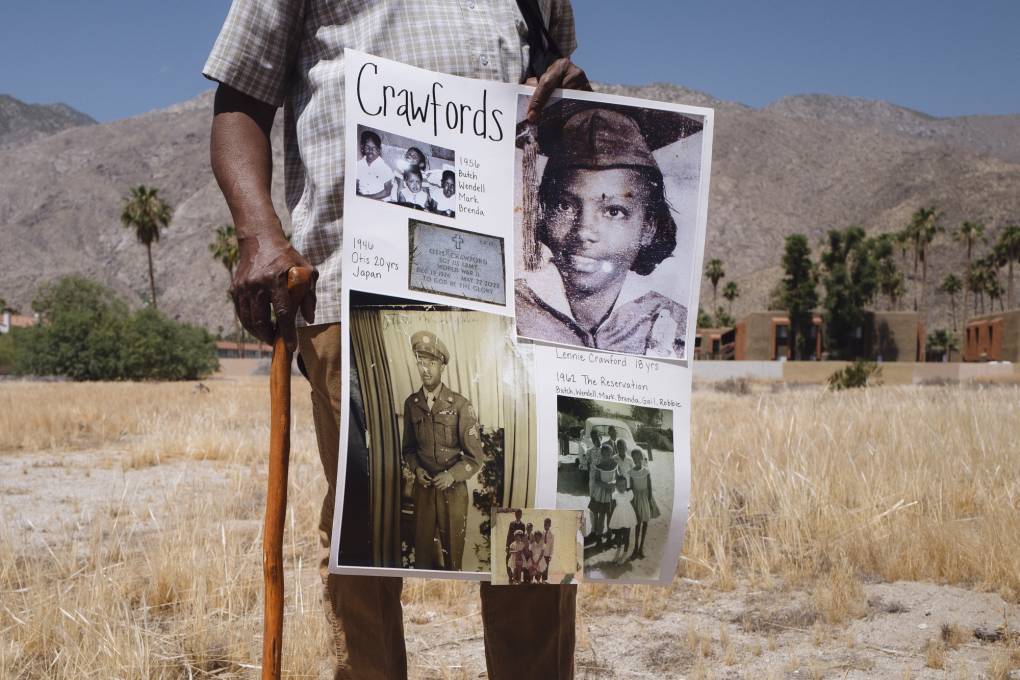
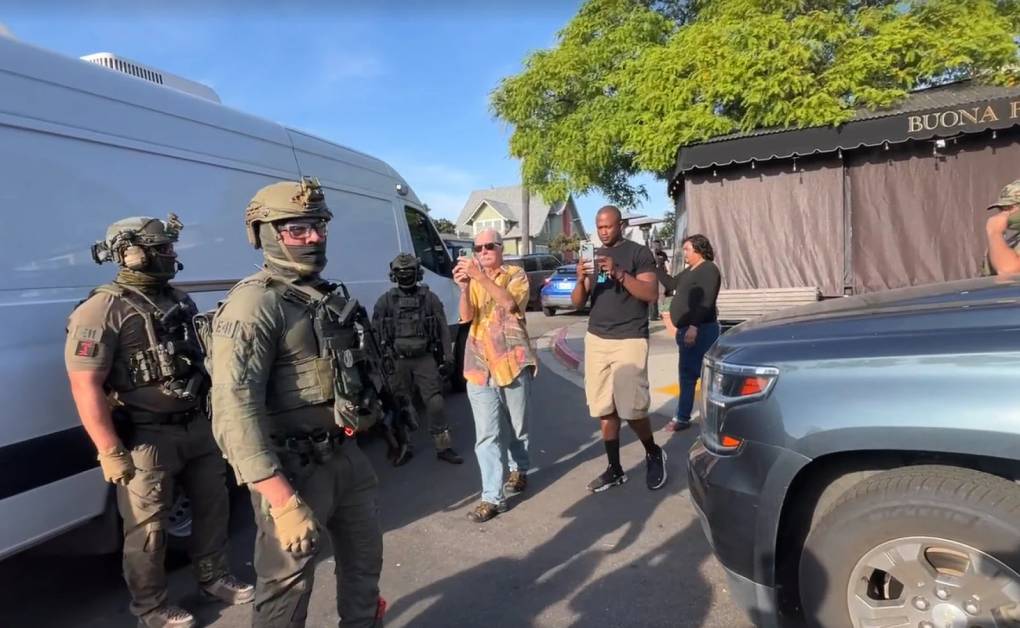
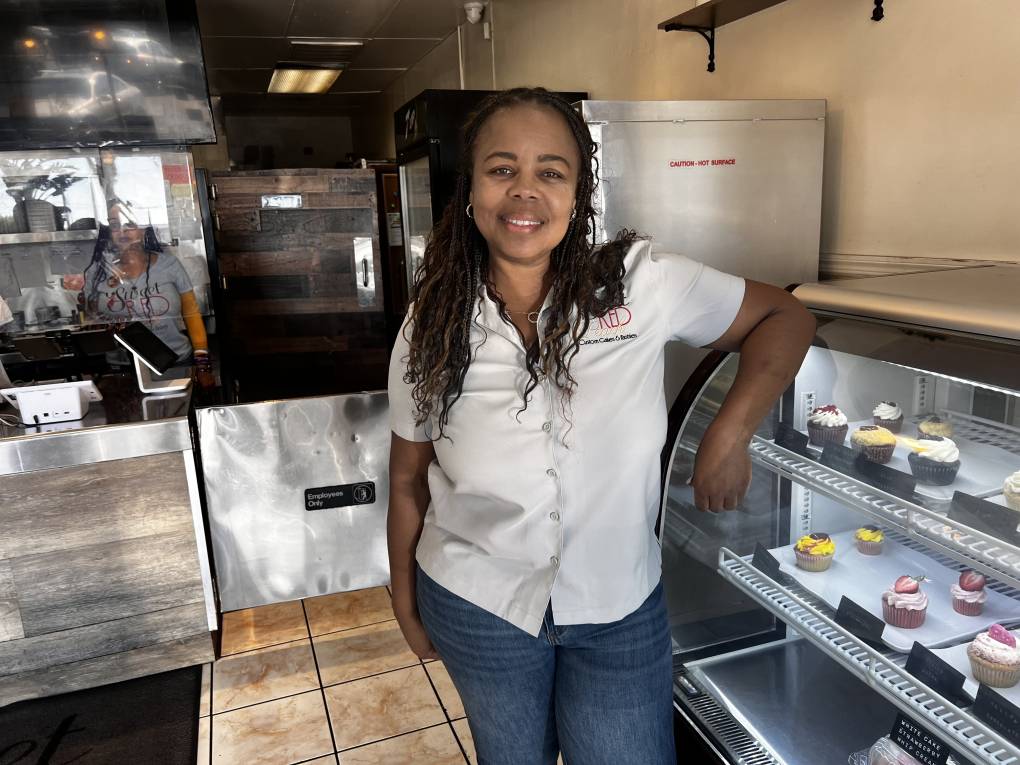
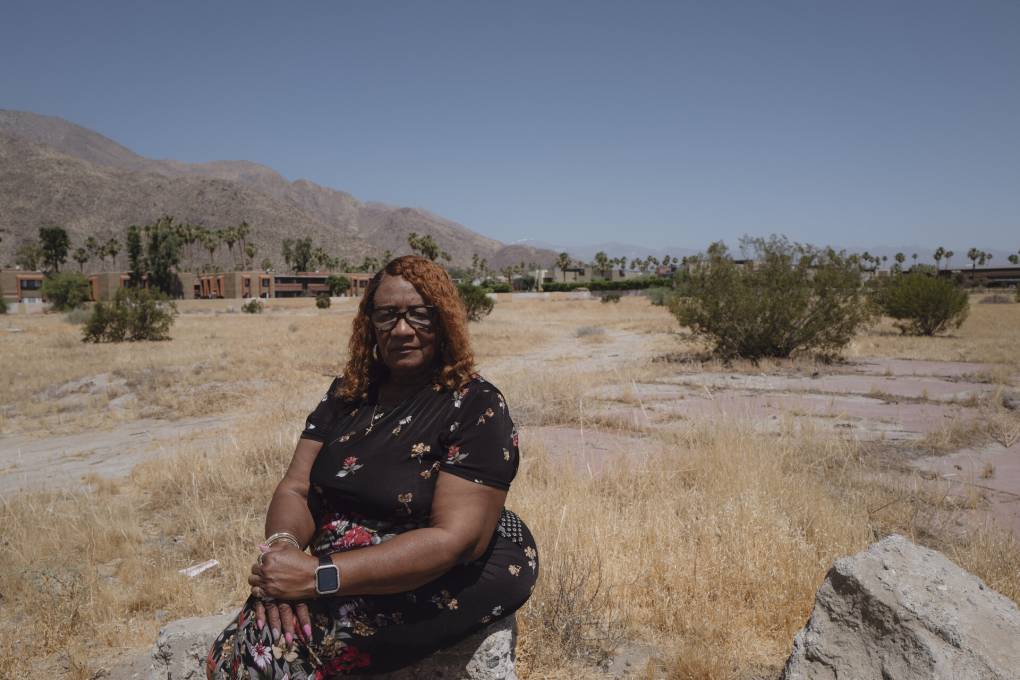
Palm Springs Payment Lag Reveals Hurdles in California’s Racial Justice Efforts
Section 14 Survivors Still Awaiting Payments From Palm Springs
Community Outrage Continues Over ICE Raid At San Diego Restaurant
Some Inglewood Small Business Owners Near Sports Venues Struggling To Stay Afloat
Palm Springs OKs $5.9 Million in Reparations for Black and Latino Families Whose Homes the City Burned
Will Trump Presidency Affect California's Housing Crisis?
The First Hijab-Wearing Athlete to Attempt the Country's Oldest Ultramarathon
Burned, Displaced and Fighting Back: A Battle for Reparations in Palm Springs
Survivors Of Burned Down Palm Springs Neighborhood Seek Reparations
Player sponsored by
window.__IS_SSR__=true
window.__INITIAL_STATE__={
"attachmentsReducer": {
"audio_0": {
"type": "attachments",
"id": "audio_0",
"imgSizes": {
"kqedFullSize": {
"file": "https://ww2.kqed.org/news/wp-content/themes/KQED-unified/img/audio_bgs/background0.jpg"
}
}
},
"audio_1": {
"type": "attachments",
"id": "audio_1",
"imgSizes": {
"kqedFullSize": {
"file": "https://ww2.kqed.org/news/wp-content/themes/KQED-unified/img/audio_bgs/background1.jpg"
}
}
},
"audio_2": {
"type": "attachments",
"id": "audio_2",
"imgSizes": {
"kqedFullSize": {
"file": "https://ww2.kqed.org/news/wp-content/themes/KQED-unified/img/audio_bgs/background2.jpg"
}
}
},
"audio_3": {
"type": "attachments",
"id": "audio_3",
"imgSizes": {
"kqedFullSize": {
"file": "https://ww2.kqed.org/news/wp-content/themes/KQED-unified/img/audio_bgs/background3.jpg"
}
}
},
"audio_4": {
"type": "attachments",
"id": "audio_4",
"imgSizes": {
"kqedFullSize": {
"file": "https://ww2.kqed.org/news/wp-content/themes/KQED-unified/img/audio_bgs/background4.jpg"
}
}
},
"placeholder": {
"type": "attachments",
"id": "placeholder",
"imgSizes": {
"thumbnail": {
"file": "https://cdn.kqed.org/wp-content/uploads/2024/12/KQED-Default-Image-816638274-2000x1333-1-160x107.jpg",
"width": 160,
"height": 107,
"mimeType": "image/jpeg"
},
"medium": {
"file": "https://cdn.kqed.org/wp-content/uploads/2024/12/KQED-Default-Image-816638274-2000x1333-1-800x533.jpg",
"width": 800,
"height": 533,
"mimeType": "image/jpeg"
},
"medium_large": {
"file": "https://cdn.kqed.org/wp-content/uploads/2024/12/KQED-Default-Image-816638274-2000x1333-1-768x512.jpg",
"width": 768,
"height": 512,
"mimeType": "image/jpeg"
},
"large": {
"file": "https://cdn.kqed.org/wp-content/uploads/2024/12/KQED-Default-Image-816638274-2000x1333-1-1020x680.jpg",
"width": 1020,
"height": 680,
"mimeType": "image/jpeg"
},
"1536x1536": {
"file": "https://cdn.kqed.org/wp-content/uploads/2024/12/KQED-Default-Image-816638274-2000x1333-1-1536x1024.jpg",
"width": 1536,
"height": 1024,
"mimeType": "image/jpeg"
},
"fd-lrg": {
"file": "https://cdn.kqed.org/wp-content/uploads/2024/12/KQED-Default-Image-816638274-2000x1333-1-1536x1024.jpg",
"width": 1536,
"height": 1024,
"mimeType": "image/jpeg"
},
"fd-med": {
"file": "https://cdn.kqed.org/wp-content/uploads/2024/12/KQED-Default-Image-816638274-2000x1333-1-1020x680.jpg",
"width": 1020,
"height": 680,
"mimeType": "image/jpeg"
},
"fd-sm": {
"file": "https://cdn.kqed.org/wp-content/uploads/2024/12/KQED-Default-Image-816638274-2000x1333-1-800x533.jpg",
"width": 800,
"height": 533,
"mimeType": "image/jpeg"
},
"post-thumbnail": {
"file": "https://cdn.kqed.org/wp-content/uploads/2024/12/KQED-Default-Image-816638274-2000x1333-1-672x372.jpg",
"width": 672,
"height": 372,
"mimeType": "image/jpeg"
},
"twentyfourteen-full-width": {
"file": "https://cdn.kqed.org/wp-content/uploads/2024/12/KQED-Default-Image-816638274-2000x1333-1-1038x576.jpg",
"width": 1038,
"height": 576,
"mimeType": "image/jpeg"
},
"xxsmall": {
"file": "https://cdn.kqed.org/wp-content/uploads/2024/12/KQED-Default-Image-816638274-2000x1333-1-160x107.jpg",
"width": 160,
"height": 107,
"mimeType": "image/jpeg"
},
"xsmall": {
"file": "https://cdn.kqed.org/wp-content/uploads/2024/12/KQED-Default-Image-816638274-2000x1333-1-672x372.jpg",
"width": 672,
"height": 372,
"mimeType": "image/jpeg"
},
"small": {
"file": "https://cdn.kqed.org/wp-content/uploads/2024/12/KQED-Default-Image-816638274-2000x1333-1-672x372.jpg",
"width": 672,
"height": 372,
"mimeType": "image/jpeg"
},
"xlarge": {
"file": "https://cdn.kqed.org/wp-content/uploads/2024/12/KQED-Default-Image-816638274-2000x1333-1-1020x680.jpg",
"width": 1020,
"height": 680,
"mimeType": "image/jpeg"
},
"full-width": {
"file": "https://cdn.kqed.org/wp-content/uploads/2024/12/KQED-Default-Image-816638274-2000x1333-1-1920x1280.jpg",
"width": 1920,
"height": 1280,
"mimeType": "image/jpeg"
},
"guest-author-32": {
"file": "https://cdn.kqed.org/wp-content/uploads/2025/01/KQED-Default-Image-816638274-1333x1333-1-160x160.jpg",
"width": 32,
"height": 32,
"mimeType": "image/jpeg"
},
"guest-author-50": {
"file": "https://cdn.kqed.org/wp-content/uploads/2025/01/KQED-Default-Image-816638274-1333x1333-1-160x160.jpg",
"width": 50,
"height": 50,
"mimeType": "image/jpeg"
},
"guest-author-64": {
"file": "https://cdn.kqed.org/wp-content/uploads/2025/01/KQED-Default-Image-816638274-1333x1333-1-160x160.jpg",
"width": 64,
"height": 64,
"mimeType": "image/jpeg"
},
"guest-author-96": {
"file": "https://cdn.kqed.org/wp-content/uploads/2025/01/KQED-Default-Image-816638274-1333x1333-1-160x160.jpg",
"width": 96,
"height": 96,
"mimeType": "image/jpeg"
},
"guest-author-128": {
"file": "https://cdn.kqed.org/wp-content/uploads/2025/01/KQED-Default-Image-816638274-1333x1333-1-160x160.jpg",
"width": 128,
"height": 128,
"mimeType": "image/jpeg"
},
"detail": {
"file": "https://cdn.kqed.org/wp-content/uploads/2025/01/KQED-Default-Image-816638274-1333x1333-1-160x160.jpg",
"width": 160,
"height": 160,
"mimeType": "image/jpeg"
},
"kqedFullSize": {
"file": "https://cdn.kqed.org/wp-content/uploads/2024/12/KQED-Default-Image-816638274-2000x1333-1.jpg",
"width": 2000,
"height": 1333
}
}
},
"news_11988781": {
"type": "attachments",
"id": "news_11988781",
"meta": {
"index": "attachments_1716263798",
"site": "news",
"id": "11988781",
"found": true
},
"title": "PALM SPRINGS-35-ZS-KQED",
"publishDate": 1717447776,
"status": "inherit",
"parent": 0,
"modified": 1731698711,
"caption": "Wendell Crawford holds a poster with images of his family who once lived in the Section 14 neighborhood, in Palm Springs on May 30, 2024. 'I used to walk through these grounds,' he said, pointing to where his family once lived.",
"credit": "Zaydee Sanchez/KQED",
"altTag": null,
"description": null,
"imgSizes": {
"medium": {
"file": "https://cdn.kqed.org/wp-content/uploads/sites/10/2024/06/PALM-SPRINGS-35-ZS-KQED-800x533.jpg",
"width": 800,
"height": 533,
"mimeType": "image/jpeg"
},
"large": {
"file": "https://cdn.kqed.org/wp-content/uploads/sites/10/2024/06/PALM-SPRINGS-35-ZS-KQED-1020x680.jpg",
"width": 1020,
"height": 680,
"mimeType": "image/jpeg"
},
"thumbnail": {
"file": "https://cdn.kqed.org/wp-content/uploads/sites/10/2024/06/PALM-SPRINGS-35-ZS-KQED-160x107.jpg",
"width": 160,
"height": 107,
"mimeType": "image/jpeg"
},
"1536x1536": {
"file": "https://cdn.kqed.org/wp-content/uploads/sites/10/2024/06/PALM-SPRINGS-35-ZS-KQED-1536x1024.jpg",
"width": 1536,
"height": 1024,
"mimeType": "image/jpeg"
},
"post-thumbnail": {
"file": "https://cdn.kqed.org/wp-content/uploads/sites/10/2024/06/PALM-SPRINGS-35-ZS-KQED-672x372.jpg",
"width": 672,
"height": 372,
"mimeType": "image/jpeg"
},
"twentyfourteen-full-width": {
"file": "https://cdn.kqed.org/wp-content/uploads/sites/10/2024/06/PALM-SPRINGS-35-ZS-KQED-1038x576.jpg",
"width": 1038,
"height": 576,
"mimeType": "image/jpeg"
},
"full-width": {
"file": "https://cdn.kqed.org/wp-content/uploads/sites/10/2024/06/PALM-SPRINGS-35-ZS-KQED-1920x1280.jpg",
"width": 1920,
"height": 1280,
"mimeType": "image/jpeg"
},
"kqedFullSize": {
"file": "https://cdn.kqed.org/wp-content/uploads/sites/10/2024/06/PALM-SPRINGS-35-ZS-KQED.jpg",
"width": 2000,
"height": 1333
}
},
"isLoading": false,
"fetchFailed": false
},
"news_12042837": {
"type": "attachments",
"id": "news_12042837",
"meta": {
"index": "attachments_1716263798",
"site": "news",
"id": "12042837",
"found": true
},
"title": "sd-raid-68419852befd7",
"publishDate": 1749129353,
"status": "inherit",
"parent": 12042836,
"modified": 1749129443,
"caption": "U.S. Immigration and Customs Enforcement agents execute a criminal search warrant on May 30, 2025, at Buona Forchetta in San Diego, Calif.",
"credit": "Lara McCaffrey/KPBS",
"altTag": null,
"description": null,
"imgSizes": {
"medium": {
"file": "https://cdn.kqed.org/wp-content/uploads/sites/10/2025/06/sd-raid-68419852befd7-800x493.jpg",
"width": 800,
"height": 493,
"mimeType": "image/jpeg"
},
"large": {
"file": "https://cdn.kqed.org/wp-content/uploads/sites/10/2025/06/sd-raid-68419852befd7-1020x628.jpg",
"width": 1020,
"height": 628,
"mimeType": "image/jpeg"
},
"thumbnail": {
"file": "https://cdn.kqed.org/wp-content/uploads/sites/10/2025/06/sd-raid-68419852befd7-160x99.jpg",
"width": 160,
"height": 99,
"mimeType": "image/jpeg"
},
"1536x1536": {
"file": "https://cdn.kqed.org/wp-content/uploads/sites/10/2025/06/sd-raid-68419852befd7-1536x946.jpg",
"width": 1536,
"height": 946,
"mimeType": "image/jpeg"
},
"post-thumbnail": {
"file": "https://cdn.kqed.org/wp-content/uploads/sites/10/2025/06/sd-raid-68419852befd7-672x372.jpg",
"width": 672,
"height": 372,
"mimeType": "image/jpeg"
},
"twentyfourteen-full-width": {
"file": "https://cdn.kqed.org/wp-content/uploads/sites/10/2025/06/sd-raid-68419852befd7-1038x576.jpg",
"width": 1038,
"height": 576,
"mimeType": "image/jpeg"
},
"kqedFullSize": {
"file": "https://cdn.kqed.org/wp-content/uploads/sites/10/2025/06/sd-raid-68419852befd7.jpg",
"width": 1760,
"height": 1084
}
},
"isLoading": false,
"fetchFailed": false
},
"news_12014567": {
"type": "attachments",
"id": "news_12014567",
"meta": {
"index": "attachments_1716263798",
"site": "news",
"id": "12014567",
"found": true
},
"title": "Karolyn Inglewood",
"publishDate": 1731681952,
"status": "inherit",
"parent": 12014566,
"modified": 1731682111,
"caption": "Karolyn Plummer is the owner of Inglewood's Sweet Red Peach bakery. Plummer is one of several small business owners in Inglewood who say they've seen sales plummet and could face financial ruin because of the opening of the city's new sports venues.",
"credit": "Saul Gonzalez/The California Report",
"altTag": "inglewood businesses",
"description": null,
"imgSizes": {
"medium": {
"file": "https://cdn.kqed.org/wp-content/uploads/sites/10/2024/11/Karolyn-Inglewood-800x600.jpeg",
"width": 800,
"height": 600,
"mimeType": "image/jpeg"
},
"large": {
"file": "https://cdn.kqed.org/wp-content/uploads/sites/10/2024/11/Karolyn-Inglewood-1020x765.jpeg",
"width": 1020,
"height": 765,
"mimeType": "image/jpeg"
},
"thumbnail": {
"file": "https://cdn.kqed.org/wp-content/uploads/sites/10/2024/11/Karolyn-Inglewood-160x120.jpeg",
"width": 160,
"height": 120,
"mimeType": "image/jpeg"
},
"1536x1536": {
"file": "https://cdn.kqed.org/wp-content/uploads/sites/10/2024/11/Karolyn-Inglewood-1536x1152.jpeg",
"width": 1536,
"height": 1152,
"mimeType": "image/jpeg"
},
"2048x2048": {
"file": "https://cdn.kqed.org/wp-content/uploads/sites/10/2024/11/Karolyn-Inglewood-2048x1536.jpeg",
"width": 2048,
"height": 1536,
"mimeType": "image/jpeg"
},
"post-thumbnail": {
"file": "https://cdn.kqed.org/wp-content/uploads/sites/10/2024/11/Karolyn-Inglewood-672x372.jpeg",
"width": 672,
"height": 372,
"mimeType": "image/jpeg"
},
"twentyfourteen-full-width": {
"file": "https://cdn.kqed.org/wp-content/uploads/sites/10/2024/11/Karolyn-Inglewood-1038x576.jpeg",
"width": 1038,
"height": 576,
"mimeType": "image/jpeg"
},
"full-width": {
"file": "https://cdn.kqed.org/wp-content/uploads/sites/10/2024/11/Karolyn-Inglewood-1920x1440.jpeg",
"width": 1920,
"height": 1440,
"mimeType": "image/jpeg"
},
"kqedFullSize": {
"file": "https://cdn.kqed.org/wp-content/uploads/sites/10/2024/11/Karolyn-Inglewood-scaled.jpeg",
"width": 2560,
"height": 1920
}
},
"isLoading": false,
"fetchFailed": false
},
"news_11991108": {
"type": "attachments",
"id": "news_11991108",
"meta": {
"index": "attachments_1716263798",
"site": "news",
"id": "11991108",
"found": true
},
"title": "Palm Springs-25_qut",
"publishDate": 1718805995,
"status": "inherit",
"parent": 11991098,
"modified": 1731700024,
"caption": "Pearl Devers, a former Section 14 resident, on the land where her community once stood in Palm Springs on May 30, 2024. Devers led the effort to secure reparations from the city for former residents and their descendants.",
"credit": "Zaydee Sanchez/KQED",
"altTag": "An older Black woman sits in an empty field.",
"description": null,
"imgSizes": {
"medium": {
"file": "https://cdn.kqed.org/wp-content/uploads/sites/10/2024/06/Palm-Springs-25_qut-800x533.jpg",
"width": 800,
"height": 533,
"mimeType": "image/jpeg"
},
"large": {
"file": "https://cdn.kqed.org/wp-content/uploads/sites/10/2024/06/Palm-Springs-25_qut-1020x680.jpg",
"width": 1020,
"height": 680,
"mimeType": "image/jpeg"
},
"thumbnail": {
"file": "https://cdn.kqed.org/wp-content/uploads/sites/10/2024/06/Palm-Springs-25_qut-160x107.jpg",
"width": 160,
"height": 107,
"mimeType": "image/jpeg"
},
"1536x1536": {
"file": "https://cdn.kqed.org/wp-content/uploads/sites/10/2024/06/Palm-Springs-25_qut-1536x1024.jpg",
"width": 1536,
"height": 1024,
"mimeType": "image/jpeg"
},
"post-thumbnail": {
"file": "https://cdn.kqed.org/wp-content/uploads/sites/10/2024/06/Palm-Springs-25_qut-672x372.jpg",
"width": 672,
"height": 372,
"mimeType": "image/jpeg"
},
"twentyfourteen-full-width": {
"file": "https://cdn.kqed.org/wp-content/uploads/sites/10/2024/06/Palm-Springs-25_qut-1038x576.jpg",
"width": 1038,
"height": 576,
"mimeType": "image/jpeg"
},
"kqedFullSize": {
"file": "https://cdn.kqed.org/wp-content/uploads/sites/10/2024/06/Palm-Springs-25_qut.jpg",
"width": 1920,
"height": 1280
}
},
"isLoading": false,
"fetchFailed": false
},
"news_12014008": {
"type": "attachments",
"id": "news_12014008",
"meta": {
"index": "attachments_1716263798",
"site": "news",
"id": "12014008",
"found": true
},
"title": "New home construction Southern California",
"publishDate": 1731358438,
"status": "inherit",
"parent": 12013983,
"modified": 1731358521,
"caption": "Housing construction in Rancho Mission Viejo in unincorporated Orange County on Sept. 25, 2024. ",
"credit": "Paul Bersebach/MediaNews Group/Orange County Register via Getty Images",
"altTag": null,
"description": null,
"imgSizes": {
"medium": {
"file": "https://cdn.kqed.org/wp-content/uploads/sites/10/2024/11/GettyImages-2176495054-800x450.jpg",
"width": 800,
"height": 450,
"mimeType": "image/jpeg"
},
"large": {
"file": "https://cdn.kqed.org/wp-content/uploads/sites/10/2024/11/GettyImages-2176495054-1020x574.jpg",
"width": 1020,
"height": 574,
"mimeType": "image/jpeg"
},
"thumbnail": {
"file": "https://cdn.kqed.org/wp-content/uploads/sites/10/2024/11/GettyImages-2176495054-160x90.jpg",
"width": 160,
"height": 90,
"mimeType": "image/jpeg"
},
"post-thumbnail": {
"file": "https://cdn.kqed.org/wp-content/uploads/sites/10/2024/11/GettyImages-2176495054-672x372.jpg",
"width": 672,
"height": 372,
"mimeType": "image/jpeg"
},
"kqedFullSize": {
"file": "https://cdn.kqed.org/wp-content/uploads/sites/10/2024/11/GettyImages-2176495054.jpg",
"width": 1024,
"height": 576
}
},
"isLoading": false,
"fetchFailed": false
},
"news_11758293": {
"type": "attachments",
"id": "news_11758293",
"meta": {
"index": "attachments_1716263798",
"site": "news",
"id": "11758293",
"found": true
},
"parent": 11758254,
"imgSizes": {
"apple_news_ca_landscape_5_5": {
"file": "https://ww2.kqed.org/app/uploads/sites/10/2019/06/4745222009_81626e4522_o-1044x783.jpg",
"width": 1044,
"mimeType": "image/jpeg",
"height": 783
},
"apple_news_ca_square_4_0": {
"file": "https://ww2.kqed.org/app/uploads/sites/10/2019/06/4745222009_81626e4522_o-470x470.jpg",
"width": 470,
"mimeType": "image/jpeg",
"height": 470
},
"twentyfourteen-full-width": {
"file": "https://ww2.kqed.org/app/uploads/sites/10/2019/06/4745222009_81626e4522_o-1038x576.jpg",
"width": 1038,
"mimeType": "image/jpeg",
"height": 576
},
"thumbnail": {
"file": "https://ww2.kqed.org/app/uploads/sites/10/2019/06/4745222009_81626e4522_o-160x120.jpg",
"width": 160,
"mimeType": "image/jpeg",
"height": 120
},
"post-thumbnail": {
"file": "https://ww2.kqed.org/app/uploads/sites/10/2019/06/4745222009_81626e4522_o-672x372.jpg",
"width": 672,
"mimeType": "image/jpeg",
"height": 372
},
"kqedFullSize": {
"file": "https://ww2.kqed.org/app/uploads/sites/10/2019/06/4745222009_81626e4522_o-e1561841962716.jpg",
"width": 1920,
"height": 1440
},
"apple_news_ca_landscape_4_7": {
"file": "https://ww2.kqed.org/app/uploads/sites/10/2019/06/4745222009_81626e4522_o-632x474.jpg",
"width": 632,
"mimeType": "image/jpeg",
"height": 474
},
"large": {
"file": "https://ww2.kqed.org/app/uploads/sites/10/2019/06/4745222009_81626e4522_o-1020x765.jpg",
"width": 1020,
"mimeType": "image/jpeg",
"height": 765
},
"complete_open_graph": {
"file": "https://ww2.kqed.org/app/uploads/sites/10/2019/06/4745222009_81626e4522_o-1200x900.jpg",
"width": 1200,
"mimeType": "image/jpeg",
"height": 900
},
"apple_news_ca_landscape_4_0": {
"file": "https://ww2.kqed.org/app/uploads/sites/10/2019/06/4745222009_81626e4522_o-536x402.jpg",
"width": 536,
"mimeType": "image/jpeg",
"height": 402
},
"apple_news_ca_portrait_12_9": {
"file": "https://ww2.kqed.org/app/uploads/sites/10/2019/06/4745222009_81626e4522_o-1122x1496.jpg",
"width": 1122,
"mimeType": "image/jpeg",
"height": 1496
},
"medium": {
"file": "https://ww2.kqed.org/app/uploads/sites/10/2019/06/4745222009_81626e4522_o-800x600.jpg",
"width": 800,
"mimeType": "image/jpeg",
"height": 600
},
"apple_news_ca_portrait_4_0": {
"file": "https://ww2.kqed.org/app/uploads/sites/10/2019/06/4745222009_81626e4522_o-354x472.jpg",
"width": 354,
"mimeType": "image/jpeg",
"height": 472
},
"apple_news_ca_portrait_9_7": {
"file": "https://ww2.kqed.org/app/uploads/sites/10/2019/06/4745222009_81626e4522_o-840x1120.jpg",
"width": 840,
"mimeType": "image/jpeg",
"height": 1120
},
"apple_news_ca_landscape_12_9": {
"file": "https://ww2.kqed.org/app/uploads/sites/10/2019/06/4745222009_81626e4522_o-1832x1374.jpg",
"width": 1832,
"mimeType": "image/jpeg",
"height": 1374
},
"apple_news_ca_square_9_7": {
"file": "https://ww2.kqed.org/app/uploads/sites/10/2019/06/4745222009_81626e4522_o-1104x1104.jpg",
"width": 1104,
"mimeType": "image/jpeg",
"height": 1104
},
"apple_news_ca_portrait_4_7": {
"file": "https://ww2.kqed.org/app/uploads/sites/10/2019/06/4745222009_81626e4522_o-414x552.jpg",
"width": 414,
"mimeType": "image/jpeg",
"height": 552
},
"apple_news_ca_square_12_9": {
"file": "https://ww2.kqed.org/app/uploads/sites/10/2019/06/4745222009_81626e4522_o-1472x1472.jpg",
"width": 1472,
"mimeType": "image/jpeg",
"height": 1472
},
"apple_news_ca_portrait_5_5": {
"file": "https://ww2.kqed.org/app/uploads/sites/10/2019/06/4745222009_81626e4522_o-687x916.jpg",
"width": 687,
"mimeType": "image/jpeg",
"height": 916
},
"full-width": {
"file": "https://ww2.kqed.org/app/uploads/sites/10/2019/06/4745222009_81626e4522_o-1920x1440.jpg",
"width": 1920,
"mimeType": "image/jpeg",
"height": 1440
},
"apple_news_ca_square_4_7": {
"file": "https://ww2.kqed.org/app/uploads/sites/10/2019/06/4745222009_81626e4522_o-550x550.jpg",
"width": 550,
"mimeType": "image/jpeg",
"height": 550
},
"apple_news_ca_landscape_9_7": {
"file": "https://ww2.kqed.org/app/uploads/sites/10/2019/06/4745222009_81626e4522_o-1376x1032.jpg",
"width": 1376,
"mimeType": "image/jpeg",
"height": 1032
},
"apple_news_ca_square_5_5": {
"file": "https://ww2.kqed.org/app/uploads/sites/10/2019/06/4745222009_81626e4522_o-912x912.jpg",
"width": 912,
"mimeType": "image/jpeg",
"height": 912
}
},
"publishDate": 1561841931,
"modified": 1561849133,
"caption": "The Western States Endurance Run is traced along the Western States Trail. It starts at Squaw Valley and ends in Auburn, California.",
"description": null,
"title": "4745222009_81626e4522_o",
"credit": "Jon Roig/Flickr",
"status": "inherit",
"isLoading": false,
"fetchFailed": false
},
"news_11991101": {
"type": "attachments",
"id": "news_11991101",
"meta": {
"index": "attachments_1716263798",
"site": "news",
"id": "11991101",
"found": true
},
"title": "PALM-SPRINGS-4-ZS-KQED",
"publishDate": 1718805519,
"status": "inherit",
"parent": 11991098,
"modified": 1731693149,
"caption": "Apartment buildings surround the vacant lot of what was Section 14 in Palm Springs, on May 30, 2024. ",
"credit": "Zaydee Sanchez/KQED",
"altTag": "A vacant lot.",
"description": null,
"imgSizes": {
"medium": {
"file": "https://cdn.kqed.org/wp-content/uploads/sites/10/2024/06/PALM-SPRINGS-4-ZS-KQED-1-800x533.jpg",
"width": 800,
"height": 533,
"mimeType": "image/jpeg"
},
"large": {
"file": "https://cdn.kqed.org/wp-content/uploads/sites/10/2024/06/PALM-SPRINGS-4-ZS-KQED-1-1020x680.jpg",
"width": 1020,
"height": 680,
"mimeType": "image/jpeg"
},
"thumbnail": {
"file": "https://cdn.kqed.org/wp-content/uploads/sites/10/2024/06/PALM-SPRINGS-4-ZS-KQED-1-160x107.jpg",
"width": 160,
"height": 107,
"mimeType": "image/jpeg"
},
"1536x1536": {
"file": "https://cdn.kqed.org/wp-content/uploads/sites/10/2024/06/PALM-SPRINGS-4-ZS-KQED-1-1536x1024.jpg",
"width": 1536,
"height": 1024,
"mimeType": "image/jpeg"
},
"post-thumbnail": {
"file": "https://cdn.kqed.org/wp-content/uploads/sites/10/2024/06/PALM-SPRINGS-4-ZS-KQED-1-672x372.jpg",
"width": 672,
"height": 372,
"mimeType": "image/jpeg"
},
"twentyfourteen-full-width": {
"file": "https://cdn.kqed.org/wp-content/uploads/sites/10/2024/06/PALM-SPRINGS-4-ZS-KQED-1-1038x576.jpg",
"width": 1038,
"height": 576,
"mimeType": "image/jpeg"
},
"full-width": {
"file": "https://cdn.kqed.org/wp-content/uploads/sites/10/2024/06/PALM-SPRINGS-4-ZS-KQED-1-1920x1280.jpg",
"width": 1920,
"height": 1280,
"mimeType": "image/jpeg"
},
"kqedFullSize": {
"file": "https://cdn.kqed.org/wp-content/uploads/sites/10/2024/06/PALM-SPRINGS-4-ZS-KQED-1.jpg",
"width": 2000,
"height": 1333
}
},
"isLoading": false,
"fetchFailed": false
},
"news_11988776": {
"type": "attachments",
"id": "news_11988776",
"meta": {
"index": "attachments_1716263798",
"site": "news",
"id": "11988776",
"found": true
},
"title": "PALM SPRINGS-4-ZS-KQED",
"publishDate": 1717447754,
"status": "inherit",
"parent": 0,
"modified": 1718630800,
"caption": "Apartment buildings surround the vacant lot of what was Section 14 in Palm Springs on May 30, 2024.",
"credit": "Zaydee Sanchez for KQED",
"altTag": "palm springs section 14",
"description": null,
"imgSizes": {
"medium": {
"file": "https://cdn.kqed.org/wp-content/uploads/sites/10/2024/06/PALM-SPRINGS-4-ZS-KQED-800x533.jpg",
"width": 800,
"height": 533,
"mimeType": "image/jpeg"
},
"large": {
"file": "https://cdn.kqed.org/wp-content/uploads/sites/10/2024/06/PALM-SPRINGS-4-ZS-KQED-1020x680.jpg",
"width": 1020,
"height": 680,
"mimeType": "image/jpeg"
},
"thumbnail": {
"file": "https://cdn.kqed.org/wp-content/uploads/sites/10/2024/06/PALM-SPRINGS-4-ZS-KQED-160x107.jpg",
"width": 160,
"height": 107,
"mimeType": "image/jpeg"
},
"1536x1536": {
"file": "https://cdn.kqed.org/wp-content/uploads/sites/10/2024/06/PALM-SPRINGS-4-ZS-KQED-1536x1024.jpg",
"width": 1536,
"height": 1024,
"mimeType": "image/jpeg"
},
"post-thumbnail": {
"file": "https://cdn.kqed.org/wp-content/uploads/sites/10/2024/06/PALM-SPRINGS-4-ZS-KQED-672x372.jpg",
"width": 672,
"height": 372,
"mimeType": "image/jpeg"
},
"twentyfourteen-full-width": {
"file": "https://cdn.kqed.org/wp-content/uploads/sites/10/2024/06/PALM-SPRINGS-4-ZS-KQED-1038x576.jpg",
"width": 1038,
"height": 576,
"mimeType": "image/jpeg"
},
"full-width": {
"file": "https://cdn.kqed.org/wp-content/uploads/sites/10/2024/06/PALM-SPRINGS-4-ZS-KQED-1920x1280.jpg",
"width": 1920,
"height": 1280,
"mimeType": "image/jpeg"
},
"kqedFullSize": {
"file": "https://cdn.kqed.org/wp-content/uploads/sites/10/2024/06/PALM-SPRINGS-4-ZS-KQED.jpg",
"width": 2000,
"height": 1333
}
},
"isLoading": false,
"fetchFailed": false
}
},
"audioPlayerReducer": {
"postId": "stream_live",
"isPaused": true,
"isPlaying": false,
"pfsActive": false,
"pledgeModalIsOpen": true,
"playerDrawerIsOpen": false
},
"authorsReducer": {
"kmizuguchi": {
"type": "authors",
"id": "11739",
"meta": {
"index": "authors_1716337520",
"id": "11739",
"found": true
},
"name": "Keith Mizuguchi",
"firstName": "Keith",
"lastName": "Mizuguchi",
"slug": "kmizuguchi",
"email": "kmizuguchi@kqed.org",
"display_author_email": false,
"staff_mastheads": [],
"title": "KQED Contributor",
"bio": null,
"avatar": "https://secure.gravatar.com/avatar/ce1182f9924192ae5ea66d39a75cd7d1?s=600&d=blank&r=g",
"twitter": null,
"facebook": null,
"instagram": null,
"linkedin": null,
"sites": [
{
"site": "news",
"roles": [
"editor"
]
},
{
"site": "science",
"roles": [
"editor"
]
}
],
"headData": {
"title": "Keith Mizuguchi | KQED",
"description": "KQED Contributor",
"ogImgSrc": "https://secure.gravatar.com/avatar/ce1182f9924192ae5ea66d39a75cd7d1?s=600&d=blank&r=g",
"twImgSrc": "https://secure.gravatar.com/avatar/ce1182f9924192ae5ea66d39a75cd7d1?s=600&d=blank&r=g"
},
"isLoading": false,
"link": "/author/kmizuguchi"
},
"calam": {
"type": "authors",
"id": "11834",
"meta": {
"index": "authors_1716337520",
"id": "11834",
"found": true
},
"name": "Christopher Alam",
"firstName": "Christopher",
"lastName": "Alam",
"slug": "calam",
"email": "calam@kqed.org",
"display_author_email": true,
"staff_mastheads": [
"news"
],
"title": "KQED Contributor",
"bio": "Christopher Alam is a radio newscast intern working on local news and general assignment reporting. Before joining KQED he was active in college radio and journalism at UC Davis, where he received a bachelor's degree in English and professional writing in 2021. He is also a creative writer and does freelance work. Born in Fresno, he is now based in San Francisco and Oakland.",
"avatar": "https://secure.gravatar.com/avatar/0e8cfa42d98fa5307659158c394d0280?s=600&d=blank&r=g",
"twitter": "_chrisalam",
"facebook": null,
"instagram": "christopher_alam",
"linkedin": null,
"sites": [
{
"site": "arts",
"roles": [
"editor"
]
},
{
"site": "news",
"roles": [
"editor"
]
}
],
"headData": {
"title": "Christopher Alam | KQED",
"description": "KQED Contributor",
"ogImgSrc": "https://secure.gravatar.com/avatar/0e8cfa42d98fa5307659158c394d0280?s=600&d=blank&r=g",
"twImgSrc": "https://secure.gravatar.com/avatar/0e8cfa42d98fa5307659158c394d0280?s=600&d=blank&r=g"
},
"isLoading": false,
"link": "/author/calam"
},
"mbolanos": {
"type": "authors",
"id": "11895",
"meta": {
"index": "authors_1716337520",
"id": "11895",
"found": true
},
"name": "Madi Bolaños",
"firstName": "Madi",
"lastName": "Bolaños",
"slug": "mbolanos",
"email": "mbolanos@kqed.org",
"display_author_email": false,
"staff_mastheads": [],
"title": "KQED Contributor",
"bio": null,
"avatar": "https://secure.gravatar.com/avatar/e6df5601c1f2d951e46a3fb42764330f?s=600&d=blank&r=g",
"twitter": null,
"bluesky": null,
"facebook": null,
"instagram": null,
"linkedin": null,
"sites": [
{
"site": "news",
"roles": [
"author"
]
}
],
"headData": {
"title": "Madi Bolaños | KQED",
"description": "KQED Contributor",
"ogImgSrc": "https://secure.gravatar.com/avatar/e6df5601c1f2d951e46a3fb42764330f?s=600&d=blank&r=g",
"twImgSrc": "https://secure.gravatar.com/avatar/e6df5601c1f2d951e46a3fb42764330f?s=600&d=blank&r=g"
},
"isLoading": false,
"link": "/author/mbolanos"
}
},
"breakingNewsReducer": {},
"pagesReducer": {},
"postsReducer": {
"stream_live": {
"type": "live",
"id": "stream_live",
"audioUrl": "https://streams.kqed.org/kqedradio",
"title": "Live Stream",
"excerpt": "Live Stream information currently unavailable.",
"link": "/radio",
"featImg": "",
"label": {
"name": "KQED Live",
"link": "/"
}
},
"stream_kqedNewscast": {
"type": "posts",
"id": "stream_kqedNewscast",
"audioUrl": "https://www.kqed.org/.stream/anon/radio/RDnews/newscast.mp3?_=1",
"title": "KQED Newscast",
"featImg": "",
"label": {
"name": "88.5 FM",
"link": "/"
}
},
"news_12045205": {
"type": "posts",
"id": "news_12045205",
"meta": {
"index": "posts_1716263798",
"site": "news",
"id": "12045205",
"score": null,
"sort": [
1750681820000
]
},
"guestAuthors": [],
"slug": "palm-springs-payment-lag-reveals-hurdles-in-californias-racial-justice-efforts",
"title": "Palm Springs Payment Lag Reveals Hurdles in California’s Racial Justice Efforts",
"publishDate": 1750681820,
"format": "standard",
"headTitle": "Palm Springs Payment Lag Reveals Hurdles in California’s Racial Justice Efforts | KQED",
"labelTerm": {},
"content": "\u003cp>Palm Springs is one step closer to \u003ca href=\"https://www.kqed.org/news/11991098/burned-displaced-and-fighting-back-a-battle-for-reparations-in-palm-springs\">paying reparations to Black and Latino families\u003c/a> who were forcibly removed from their homes more than 60 years ago. But more than six months after the city \u003ca href=\"https://www.kqed.org/news/12014575/palm-springs-oks-5-9-million-in-reparations-for-black-and-latino-families-whose-homes-the-city-burned\">approved a historic $5.9 million settlement\u003c/a>, survivors are still waiting for the money.\u003c/p>\n\u003cp>City officials say they’re ready to release the funds, but they’re still waiting on a final, verified list of eligible recipients from civil rights attorney Areva Martin, who represents the group Section 14 Survivors. Martin says the vetting process has taken time and that’s intentional.\u003c/p>\n\u003cp>“We’re more interested in fairness and making sure everyone that wants to participate is given an opportunity to do so than driven by any deadlines,” she told KQED.\u003c/p>\n\u003cp>[ad fullwidth]\u003c/p>\n\u003cp>From the late 1950s through the early 1960s, the city of Palm Springs bulldozed and burned homes in Section 14, a 1-square-mile neighborhood that was home to mostly Black and Latino families with low income.\u003c/p>\n\u003cp>With city approval, fire crews torched homes, and residents were pushed out to make way for commercial development. In recent years, survivors and descendants have come forward to demand recognition and repair.[aside postID=news_12044638 hero='https://cdn.kqed.org/wp-content/uploads/sites/10/2025/06/12m-Reparations-1.jpg']\u003c/p>\n\u003cp>After years of advocacy, the Palm Springs City Council unanimously approved the cash settlement last November, along with a broader reparations package that includes $21 million for housing and small business investment over the next decade.\u003c/p>\n\u003cp>To qualify for the cash settlement, survivors and their descendants had to submit three documents proving they lived in Section 14 during the years the city cleared the neighborhood.\u003c/p>\n\u003cp>That’s proved challenging for many applicants in their late 70s and 80s who don’t use email or online platforms. Martin’s team received about 350 claims, relying on records like phone books, school documents and marriage certificates to verify eligibility.\u003c/p>\n\u003cp>“We’re using Docusign — something very common for people in the workplace, but not for 75- and 80-year-old people,” Martin said.\u003c/p>\n\u003cfigure id=\"attachment_11988779\" class=\"wp-caption aligncenter\" style=\"max-width: 1333px\">\u003cimg loading=\"lazy\" decoding=\"async\" class=\"size-full wp-image-11988779\" src=\"https://cdn.kqed.org/wp-content/uploads/sites/10/2024/06/PALM-SPRINGS-30-ZS-KQED.jpg\" alt=\"\" width=\"1333\" height=\"2000\" srcset=\"https://cdn.kqed.org/wp-content/uploads/sites/10/2024/06/PALM-SPRINGS-30-ZS-KQED.jpg 1333w, https://cdn.kqed.org/wp-content/uploads/sites/10/2024/06/PALM-SPRINGS-30-ZS-KQED-800x1200.jpg 800w, https://cdn.kqed.org/wp-content/uploads/sites/10/2024/06/PALM-SPRINGS-30-ZS-KQED-1020x1530.jpg 1020w, https://cdn.kqed.org/wp-content/uploads/sites/10/2024/06/PALM-SPRINGS-30-ZS-KQED-160x240.jpg 160w, https://cdn.kqed.org/wp-content/uploads/sites/10/2024/06/PALM-SPRINGS-30-ZS-KQED-1024x1536.jpg 1024w\" sizes=\"auto, (max-width: 1333px) 100vw, 1333px\">\u003cfigcaption class=\"wp-caption-text\">Pearl Devers, a former Section 14 resident, in Palm Springs on May 30, 2024. \u003ccite>(Zaydee Sanchez for KQED)\u003c/cite>\u003c/figcaption>\u003c/figure>\n\u003cp>Each application is now being reviewed by a retired California Supreme Court justice working pro bono. Martin says the process should be completed in 60 to 90 days.\u003c/p>\n\u003cp>This effort is part of a growing push across California to address racial harms. A year after the failure of key reparations bills \u003ca href=\"https://www.kqed.org/news/12002804/centerpiece-reparations-bill-derailed-by-newsoms-late-request-heres-why\">drew backlash from activists\u003c/a>, the California Legislative Black Caucus introduced several new measures this session.\u003c/p>\n\u003cp>One is SB 518, introduced by state Sen. Akilah Weber Pierson (D-San Diego). The bill would establish a state framework to support local reparations programs, like the one in Palm Springs, by helping cities identify eligible recipients, develop cultural restoration projects and distribute funds fairly.\u003c/p>\n\u003cp>“For centuries, systemic discrimination has created barriers for opportunity for economic security, housing, education, health and so much more,” Weber Pierson said. “The effects of these injustices are still felt today and action is long overdue.”\u003c/p>\n\u003cp>Beyond cash payouts, Palm Springs also committed to cultural and community investments, including plans for a healing center, a public monument, and a permanent day of remembrance for Section 14. So far, the programs haven’t been launched. The city says more details will be released later this year.\u003c/p>\n\u003cp>For Pearl Devers, one of the former Section 14 residents, the journey has been emotional.\u003c/p>\n\u003cp>“I suppressed a lot of what happened in my family all these years until the floodgates opened,” she said. “Then I was able to shed my first tear.”[aside postID=news_12027903 hero='https://cdn.kqed.org/wp-content/uploads/sites/10/2024/04/CMReparations01.jpg']In digging into her family’s history, Devers discovered that her father had been a member of the NAACP. She says being part of the reparations process feels like continuing his work.\u003c/p>\n\u003cp>“This is a full life-circle moment for me, to complete something I know my father’s passion and hard work was a part of,” she said.\u003c/p>\n\u003cp>Section 14 survivors and supporters celebrated the progress with a gala last weekend in Palm Springs, but for many, the true milestone will come when the first check is delivered.\u003c/p>\n\u003cp>Martin says the momentum from Palm Springs is already rippling out. Tulsa’s new reparative justice plan, she says, mirrors aspects of the Section 14 settlement, and more cities are reaching out for guidance.\u003c/p>\n\u003cp>“Repair is possible,” Martin said. “Communities across the country are watching this, seeing it can be done.”\u003c/p>\n\u003cp>\u003c/p>\n",
"blocks": [],
"excerpt": "More than six months after Palm Springs approved a $5.9 million settlement for Black and Latino families displaced from Section 14, survivors are still waiting for payments.",
"status": "publish",
"parent": 0,
"modified": 1750454283,
"stats": {
"hasAudio": false,
"hasVideo": false,
"hasChartOrMap": false,
"iframeSrcs": [],
"hasGoogleForm": false,
"hasGallery": false,
"hasHearkenModule": false,
"hasPolis": false,
"paragraphCount": 22,
"wordCount": 791
},
"headData": {
"title": "Palm Springs Payment Lag Reveals Hurdles in California’s Racial Justice Efforts | KQED",
"description": "More than six months after Palm Springs approved a $5.9 million settlement for Black and Latino families displaced from Section 14, survivors are still waiting for payments.",
"ogTitle": "",
"ogDescription": "",
"ogImgId": "",
"twTitle": "",
"twDescription": "",
"twImgId": "",
"schema": {
"@context": "https://schema.org",
"@type": "NewsArticle",
"headline": "Palm Springs Payment Lag Reveals Hurdles in California’s Racial Justice Efforts",
"datePublished": "2025-06-23T05:30:20-07:00",
"dateModified": "2025-06-20T14:18:03-07:00",
"image": "https://cdn.kqed.org/wp-content/uploads/2020/02/KQED-OG-Image@1x.png",
"isAccessibleForFree": "True",
"publisher": {
"@type": "NewsMediaOrganization",
"@id": "https://www.kqed.org/#organization",
"name": "KQED",
"logo": "https://cdn.kqed.org/wp-content/uploads/2020/02/KQED-OG-Image@1x.png",
"url": "https://www.kqed.org",
"sameAs": [
"https://www.facebook.com/KQED",
"https://twitter.com/KQED",
"https://www.instagram.com/kqed/",
"https://www.tiktok.com/@kqedofficial",
"https://www.linkedin.com/company/kqed",
"https://www.youtube.com/channel/UCeC0IOo7i1P_61zVUWbJ4nw"
]
}
}
},
"source": "Reparations",
"audioUrl": "https://traffic.omny.fm/d/clips/0af137ef-751e-4b19-a055-aaef00d2d578/ffca7e9f-6831-4[…]f-aaef00f5a073/a94a81e7-5387-4eeb-b330-b302014b50fd/audio.mp3",
"sticky": false,
"templateType": "standard",
"featuredImageType": "standard",
"excludeFromSiteSearch": "Include",
"articleAge": "0",
"path": "/news/12045205/palm-springs-payment-lag-reveals-hurdles-in-californias-racial-justice-efforts",
"audioTrackLength": null,
"parsedContent": [
{
"type": "contentString",
"content": "\u003cdiv class=\"post-body\">\u003cp>\u003cp>Palm Springs is one step closer to \u003ca href=\"https://www.kqed.org/news/11991098/burned-displaced-and-fighting-back-a-battle-for-reparations-in-palm-springs\">paying reparations to Black and Latino families\u003c/a> who were forcibly removed from their homes more than 60 years ago. But more than six months after the city \u003ca href=\"https://www.kqed.org/news/12014575/palm-springs-oks-5-9-million-in-reparations-for-black-and-latino-families-whose-homes-the-city-burned\">approved a historic $5.9 million settlement\u003c/a>, survivors are still waiting for the money.\u003c/p>\n\u003cp>City officials say they’re ready to release the funds, but they’re still waiting on a final, verified list of eligible recipients from civil rights attorney Areva Martin, who represents the group Section 14 Survivors. Martin says the vetting process has taken time and that’s intentional.\u003c/p>\n\u003cp>“We’re more interested in fairness and making sure everyone that wants to participate is given an opportunity to do so than driven by any deadlines,” she told KQED.\u003c/p>\n\u003cp>\u003c/p>\u003c/div>",
"attributes": {
"named": {},
"numeric": []
}
},
{
"type": "component",
"content": "",
"name": "ad",
"attributes": {
"named": {
"label": "fullwidth"
},
"numeric": [
"fullwidth"
]
}
},
{
"type": "contentString",
"content": "\u003cdiv class=\"post-body\">\u003cp>\u003c/p>\n\u003cp>From the late 1950s through the early 1960s, the city of Palm Springs bulldozed and burned homes in Section 14, a 1-square-mile neighborhood that was home to mostly Black and Latino families with low income.\u003c/p>\n\u003cp>With city approval, fire crews torched homes, and residents were pushed out to make way for commercial development. In recent years, survivors and descendants have come forward to demand recognition and repair.\u003c/p>\u003c/div>",
"attributes": {
"named": {},
"numeric": []
}
},
{
"type": "component",
"content": "",
"name": "aside",
"attributes": {
"named": {
"postid": "news_12044638",
"hero": "https://cdn.kqed.org/wp-content/uploads/sites/10/2025/06/12m-Reparations-1.jpg",
"label": ""
},
"numeric": []
}
},
{
"type": "contentString",
"content": "\u003cdiv class=\"post-body\">\u003cp>\u003c/p>\n\u003cp>After years of advocacy, the Palm Springs City Council unanimously approved the cash settlement last November, along with a broader reparations package that includes $21 million for housing and small business investment over the next decade.\u003c/p>\n\u003cp>To qualify for the cash settlement, survivors and their descendants had to submit three documents proving they lived in Section 14 during the years the city cleared the neighborhood.\u003c/p>\n\u003cp>That’s proved challenging for many applicants in their late 70s and 80s who don’t use email or online platforms. Martin’s team received about 350 claims, relying on records like phone books, school documents and marriage certificates to verify eligibility.\u003c/p>\n\u003cp>“We’re using Docusign — something very common for people in the workplace, but not for 75- and 80-year-old people,” Martin said.\u003c/p>\n\u003cfigure id=\"attachment_11988779\" class=\"wp-caption aligncenter\" style=\"max-width: 1333px\">\u003cimg loading=\"lazy\" decoding=\"async\" class=\"size-full wp-image-11988779\" src=\"https://cdn.kqed.org/wp-content/uploads/sites/10/2024/06/PALM-SPRINGS-30-ZS-KQED.jpg\" alt=\"\" width=\"1333\" height=\"2000\" srcset=\"https://cdn.kqed.org/wp-content/uploads/sites/10/2024/06/PALM-SPRINGS-30-ZS-KQED.jpg 1333w, https://cdn.kqed.org/wp-content/uploads/sites/10/2024/06/PALM-SPRINGS-30-ZS-KQED-800x1200.jpg 800w, https://cdn.kqed.org/wp-content/uploads/sites/10/2024/06/PALM-SPRINGS-30-ZS-KQED-1020x1530.jpg 1020w, https://cdn.kqed.org/wp-content/uploads/sites/10/2024/06/PALM-SPRINGS-30-ZS-KQED-160x240.jpg 160w, https://cdn.kqed.org/wp-content/uploads/sites/10/2024/06/PALM-SPRINGS-30-ZS-KQED-1024x1536.jpg 1024w\" sizes=\"auto, (max-width: 1333px) 100vw, 1333px\">\u003cfigcaption class=\"wp-caption-text\">Pearl Devers, a former Section 14 resident, in Palm Springs on May 30, 2024. \u003ccite>(Zaydee Sanchez for KQED)\u003c/cite>\u003c/figcaption>\u003c/figure>\n\u003cp>Each application is now being reviewed by a retired California Supreme Court justice working pro bono. Martin says the process should be completed in 60 to 90 days.\u003c/p>\n\u003cp>This effort is part of a growing push across California to address racial harms. A year after the failure of key reparations bills \u003ca href=\"https://www.kqed.org/news/12002804/centerpiece-reparations-bill-derailed-by-newsoms-late-request-heres-why\">drew backlash from activists\u003c/a>, the California Legislative Black Caucus introduced several new measures this session.\u003c/p>\n\u003cp>One is SB 518, introduced by state Sen. Akilah Weber Pierson (D-San Diego). The bill would establish a state framework to support local reparations programs, like the one in Palm Springs, by helping cities identify eligible recipients, develop cultural restoration projects and distribute funds fairly.\u003c/p>\n\u003cp>“For centuries, systemic discrimination has created barriers for opportunity for economic security, housing, education, health and so much more,” Weber Pierson said. “The effects of these injustices are still felt today and action is long overdue.”\u003c/p>\n\u003cp>Beyond cash payouts, Palm Springs also committed to cultural and community investments, including plans for a healing center, a public monument, and a permanent day of remembrance for Section 14. So far, the programs haven’t been launched. The city says more details will be released later this year.\u003c/p>\n\u003cp>For Pearl Devers, one of the former Section 14 residents, the journey has been emotional.\u003c/p>\n\u003cp>“I suppressed a lot of what happened in my family all these years until the floodgates opened,” she said. “Then I was able to shed my first tear.”\u003c/p>\u003c/div>",
"attributes": {
"named": {},
"numeric": []
}
},
{
"type": "component",
"content": "",
"name": "aside",
"attributes": {
"named": {
"postid": "news_12027903",
"hero": "https://cdn.kqed.org/wp-content/uploads/sites/10/2024/04/CMReparations01.jpg",
"label": ""
},
"numeric": []
}
},
{
"type": "contentString",
"content": "\u003cdiv class=\"post-body\">\u003cp>In digging into her family’s history, Devers discovered that her father had been a member of the NAACP. She says being part of the reparations process feels like continuing his work.\u003c/p>\n\u003cp>“This is a full life-circle moment for me, to complete something I know my father’s passion and hard work was a part of,” she said.\u003c/p>\n\u003cp>Section 14 survivors and supporters celebrated the progress with a gala last weekend in Palm Springs, but for many, the true milestone will come when the first check is delivered.\u003c/p>\n\u003cp>Martin says the momentum from Palm Springs is already rippling out. Tulsa’s new reparative justice plan, she says, mirrors aspects of the Section 14 settlement, and more cities are reaching out for guidance.\u003c/p>\n\u003cp>“Repair is possible,” Martin said. “Communities across the country are watching this, seeing it can be done.”\u003c/p>\n\u003cp>\u003c/p>\n\u003c/div>\u003c/p>",
"attributes": {
"named": {},
"numeric": []
}
}
],
"link": "/news/12045205/palm-springs-payment-lag-reveals-hurdles-in-californias-racial-justice-efforts",
"authors": [
"11895"
],
"categories": [
"news_31795",
"news_8",
"news_34199"
],
"tags": [
"news_18538",
"news_30652",
"news_20086",
"news_28211",
"news_2923"
],
"featImg": "news_11988781",
"label": "source_news_12045205"
},
"news_12045052": {
"type": "posts",
"id": "news_12045052",
"meta": {
"index": "posts_1716263798",
"site": "news",
"id": "12045052",
"score": null,
"sort": [
1750351418000
]
},
"guestAuthors": [],
"slug": "section-14-survivors-still-awaiting-payments-from-palm-springs",
"title": "Section 14 Survivors Still Awaiting Payments From Palm Springs",
"publishDate": 1750351418,
"format": "audio",
"headTitle": "Section 14 Survivors Still Awaiting Payments From Palm Springs | KQED",
"labelTerm": {},
"content": "\u003cp>\u003cb>Here are the morning’s top stories on Thursday, June 19, 2025…\u003c/b>\u003c/p>\n\u003cul>\n\u003cli style=\"font-weight: 400\">\u003cspan style=\"font-weight: 400\">In Palm Springs, \u003c/span>\u003ca href=\"https://www.kqed.org/news/12014575/palm-springs-oks-5-9-million-in-reparations-for-black-and-latino-families-whose-homes-the-city-burned\">\u003cspan style=\"font-weight: 400\">a historic reparations effort\u003c/span>\u003c/a>\u003cspan style=\"font-weight: 400\"> for Black and Brown families who were forcibly removed from their homes 60 years ago is moving closer to reality. The city made history in November when it agreed to a nearly $6 million settlement with surviving former residents and descendants of the neighborhood known as Section 14. But roughly six months later, they’re still waiting on that money. \u003c/span>\u003c/li>\n\u003cli style=\"font-weight: 400\">\u003cspan style=\"font-weight: 400\">Organizations across Northern California are \u003c/span>\u003ca href=\"https://www.ijpr.org/music-arts-culture/2025-06-18/juneteenth-celebrations-planned-across-the-region-in-coming-days\">\u003cspan style=\"font-weight: 400\">celebrating Juneteenth\u003c/span>\u003c/a>\u003cspan style=\"font-weight: 400\"> Thursday and in the coming days. \u003c/span>\u003c/li>\n\u003cli>Black Surf Santa Cruz \u003ca href=\"https://www.kazu.org/kazu-news/2025-06-16/black-surf-santa-cruz-hosts-juneteenth-paddle-out-thousands-on-central-coast-join-nationwide-protests\">recently hosted\u003c/a> their fifth annual liberation paddle-out to celebrate Juneteenth.\u003c/li>\n\u003c/ul>\n\u003ch2>\u003cstrong>Palm Springs Reparations Effort For Displaced Families Nears Payout, But Survivors Are Still Waiting\u003c/strong>\u003c/h2>\n\u003cp>\u003cspan style=\"font-weight: 400\">Palm Springs is one step closer to paying reparations to Black and Latino families who were forcibly removed from their homes more than 60 years ago. But nearly six months after the city approved \u003ca href=\"https://www.kqed.org/news/12014575/palm-springs-oks-5-9-million-in-reparations-for-black-and-latino-families-whose-homes-the-city-burned\">a historic $5.9 million settlement,\u003c/a> survivors are still waiting for the money.\u003c/span>\u003c/p>\n\u003cp>\u003cspan style=\"font-weight: 400\">The delay isn’t on the city’s end. Officials said they’re ready to release the funds. But they’re still waiting on a final, verified list of eligible recipients from civil rights attorney Areva Martin, who represents the group Section 14 Survivors. Martin said the vetting process has taken time but that’s intentional. “We’re more interested in fairness and making sure everyone that wants to participate is given an opportunity to do so than driven by any deadlines,” she said.\u003c/span>\u003c/p>\n\u003cp>\u003cspan style=\"font-weight: 400\">To qualify for the cash settlement, survivors and their descendants were required to submit three documents proving they lived in Section 14 during the years the city cleared the neighborhood. \u003c/span>\u003cspan style=\"font-weight: 400\">That’s proved difficult for many applicants who are in their late 70s and 80s and don’t use email or online platforms. Martin’s team received about 350 claims, relying on everything from old phone books and school records to marriage certificates to verify eligibility.\u003c/span>\u003c/p>\n\u003cp>\u003cspan style=\"font-weight: 400\">From the late 1950s through the early 1960s, the city of Palm Springs bulldozed and burned homes in Section 14, a one square mile neighborhood that was home to mostly low-income Black and Latino families. Many residents were never compensated. The city claimed it was clearing out substandard housing\u003c/span>\u003c/p>\n\u003ch2 class=\"ArtP-headline\">\u003ca href=\"https://www.ijpr.org/music-arts-culture/2025-06-18/juneteenth-celebrations-planned-across-the-region-in-coming-days\">\u003cstrong>Juneteenth Celebrations Planned Across Northern California \u003c/strong>\u003c/a>\u003c/h2>\n\u003cp class=\"ArtP-subheadline\">Juneteenth commemorates the abolition of slavery in 1865. This year marks the 160th anniversary. Throughout far Northern California, groups will honor the anniversary in a variety of ways.\u003c/p>\n\u003cp>[ad fullwidth]\u003c/p>\n\u003cp>In Eureka, \u003ca class=\"Link\" href=\"https://lostcoastoutpost.com/2025/jun/18/audio-humboldt-juneteenth/\" target=\"_blank\" rel=\"noopener\" data-cms-ai=\"0\">Black Humboldt\u003c/a> will hold a multiday cultural festival from Thursday through Saturday. There will be a barbecue on Thursday from 3-7 p.m., followed by karaoke, as well as an open mic night Friday starting at 5 p.m. Saturday’s festivities will include vendors, food trucks and performers from 2-9 p.m.\u003c/p>\n\u003cp>\u003ca class=\"Link\" href=\"https://www.redding.com/story/news/2025/06/18/juneteenth-in-redding-day-of-remembrance-resilience-and-joy/84174475007/\" target=\"_blank\" rel=\"noopener\" data-cms-ai=\"0\">Redding\u003c/a> will hold a block party Thursday starting at 3:30 p.m., featuring a New Orleans-style brass band, vendors, food and presentations from community speakers.\u003c/p>\n\u003ch2 class=\"ArtP-headline\">\u003ca href=\"https://www.kazu.org/kazu-news/2025-06-16/black-surf-santa-cruz-hosts-juneteenth-paddle-out-thousands-on-central-coast-join-nationwide-protests\">\u003cstrong>Black Surf Santa Cruz Hosts Juneteenth Paddle Out\u003c/strong>\u003c/a>\u003c/h2>\n\u003cp>A paddle-out is a surfer’s memorial in the water. Black Surf Santa Cruz began from a paddle-out for George Floyd in 2020. Now, the liberation paddle-out celebrates Juneteenth and the Black community.\u003c/p>\n\u003cp>The nonprofit’s mission is to remove systemic barriers to surfing. Founder and Executive Director Bella Bonner says she lived in Santa Cruz for 15 years before putting on a wetsuit. “When we talk about access barriers, there’s the tangible ones like access to equipment, access to transportation, living near a beach. But then there’s some of the ones that are more unseen,” she said.\u003c/p>\n\u003cp>\u003c/p>\n\u003cp>Bonner said the paddle-out is helping break down some of those–like feelings of safety and belonging.\u003c/p>\n\n",
"blocks": [],
"excerpt": "The city made history in November when it agreed to a nearly $6 million settlement.",
"status": "publish",
"parent": 0,
"modified": 1750351418,
"stats": {
"hasAudio": false,
"hasVideo": false,
"hasChartOrMap": false,
"iframeSrcs": [],
"hasGoogleForm": false,
"hasGallery": false,
"hasHearkenModule": false,
"hasPolis": false,
"paragraphCount": 12,
"wordCount": 657
},
"headData": {
"title": "Section 14 Survivors Still Awaiting Payments From Palm Springs | KQED",
"description": "The city made history in November when it agreed to a nearly $6 million settlement.",
"ogTitle": "",
"ogDescription": "",
"ogImgId": "",
"twTitle": "",
"twDescription": "",
"twImgId": "",
"schema": {
"@context": "https://schema.org",
"@type": "NewsArticle",
"headline": "Section 14 Survivors Still Awaiting Payments From Palm Springs",
"datePublished": "2025-06-19T09:43:38-07:00",
"dateModified": "2025-06-19T09:43:38-07:00",
"image": "https://cdn.kqed.org/wp-content/uploads/2020/02/KQED-OG-Image@1x.png",
"isAccessibleForFree": "True",
"publisher": {
"@type": "NewsMediaOrganization",
"@id": "https://www.kqed.org/#organization",
"name": "KQED",
"logo": "https://cdn.kqed.org/wp-content/uploads/2020/02/KQED-OG-Image@1x.png",
"url": "https://www.kqed.org",
"sameAs": [
"https://www.facebook.com/KQED",
"https://twitter.com/KQED",
"https://www.instagram.com/kqed/",
"https://www.tiktok.com/@kqedofficial",
"https://www.linkedin.com/company/kqed",
"https://www.youtube.com/channel/UCeC0IOo7i1P_61zVUWbJ4nw"
]
}
}
},
"source": "The California Report",
"sourceUrl": "https://www.kqed.org/news/tag/tcrarchive/",
"audioUrl": "https://www.podtrac.com/pts/redirect.mp3/chrt.fm/track/G6C7C3/traffic.megaphone.fm/KQINC3542763131.mp3?updated=1750341304",
"sticky": false,
"nprStoryId": "kqed-12045052",
"templateType": "standard",
"featuredImageType": "standard",
"excludeFromSiteSearch": "Include",
"articleAge": "0",
"path": "/news/12045052/section-14-survivors-still-awaiting-payments-from-palm-springs",
"audioTrackLength": null,
"parsedContent": [
{
"type": "contentString",
"content": "\u003cdiv class=\"post-body\">\u003cp>\u003cp>\u003cb>Here are the morning’s top stories on Thursday, June 19, 2025…\u003c/b>\u003c/p>\n\u003cul>\n\u003cli style=\"font-weight: 400\">\u003cspan style=\"font-weight: 400\">In Palm Springs, \u003c/span>\u003ca href=\"https://www.kqed.org/news/12014575/palm-springs-oks-5-9-million-in-reparations-for-black-and-latino-families-whose-homes-the-city-burned\">\u003cspan style=\"font-weight: 400\">a historic reparations effort\u003c/span>\u003c/a>\u003cspan style=\"font-weight: 400\"> for Black and Brown families who were forcibly removed from their homes 60 years ago is moving closer to reality. The city made history in November when it agreed to a nearly $6 million settlement with surviving former residents and descendants of the neighborhood known as Section 14. But roughly six months later, they’re still waiting on that money. \u003c/span>\u003c/li>\n\u003cli style=\"font-weight: 400\">\u003cspan style=\"font-weight: 400\">Organizations across Northern California are \u003c/span>\u003ca href=\"https://www.ijpr.org/music-arts-culture/2025-06-18/juneteenth-celebrations-planned-across-the-region-in-coming-days\">\u003cspan style=\"font-weight: 400\">celebrating Juneteenth\u003c/span>\u003c/a>\u003cspan style=\"font-weight: 400\"> Thursday and in the coming days. \u003c/span>\u003c/li>\n\u003cli>Black Surf Santa Cruz \u003ca href=\"https://www.kazu.org/kazu-news/2025-06-16/black-surf-santa-cruz-hosts-juneteenth-paddle-out-thousands-on-central-coast-join-nationwide-protests\">recently hosted\u003c/a> their fifth annual liberation paddle-out to celebrate Juneteenth.\u003c/li>\n\u003c/ul>\n\u003ch2>\u003cstrong>Palm Springs Reparations Effort For Displaced Families Nears Payout, But Survivors Are Still Waiting\u003c/strong>\u003c/h2>\n\u003cp>\u003cspan style=\"font-weight: 400\">Palm Springs is one step closer to paying reparations to Black and Latino families who were forcibly removed from their homes more than 60 years ago. But nearly six months after the city approved \u003ca href=\"https://www.kqed.org/news/12014575/palm-springs-oks-5-9-million-in-reparations-for-black-and-latino-families-whose-homes-the-city-burned\">a historic $5.9 million settlement,\u003c/a> survivors are still waiting for the money.\u003c/span>\u003c/p>\n\u003cp>\u003cspan style=\"font-weight: 400\">The delay isn’t on the city’s end. Officials said they’re ready to release the funds. But they’re still waiting on a final, verified list of eligible recipients from civil rights attorney Areva Martin, who represents the group Section 14 Survivors. Martin said the vetting process has taken time but that’s intentional. “We’re more interested in fairness and making sure everyone that wants to participate is given an opportunity to do so than driven by any deadlines,” she said.\u003c/span>\u003c/p>\n\u003cp>\u003cspan style=\"font-weight: 400\">To qualify for the cash settlement, survivors and their descendants were required to submit three documents proving they lived in Section 14 during the years the city cleared the neighborhood. \u003c/span>\u003cspan style=\"font-weight: 400\">That’s proved difficult for many applicants who are in their late 70s and 80s and don’t use email or online platforms. Martin’s team received about 350 claims, relying on everything from old phone books and school records to marriage certificates to verify eligibility.\u003c/span>\u003c/p>\n\u003cp>\u003cspan style=\"font-weight: 400\">From the late 1950s through the early 1960s, the city of Palm Springs bulldozed and burned homes in Section 14, a one square mile neighborhood that was home to mostly low-income Black and Latino families. Many residents were never compensated. The city claimed it was clearing out substandard housing\u003c/span>\u003c/p>\n\u003ch2 class=\"ArtP-headline\">\u003ca href=\"https://www.ijpr.org/music-arts-culture/2025-06-18/juneteenth-celebrations-planned-across-the-region-in-coming-days\">\u003cstrong>Juneteenth Celebrations Planned Across Northern California \u003c/strong>\u003c/a>\u003c/h2>\n\u003cp class=\"ArtP-subheadline\">Juneteenth commemorates the abolition of slavery in 1865. This year marks the 160th anniversary. Throughout far Northern California, groups will honor the anniversary in a variety of ways.\u003c/p>\n\u003cp>\u003c/p>\u003c/div>",
"attributes": {
"named": {},
"numeric": []
}
},
{
"type": "component",
"content": "",
"name": "ad",
"attributes": {
"named": {
"label": "fullwidth"
},
"numeric": [
"fullwidth"
]
}
},
{
"type": "contentString",
"content": "\u003cdiv class=\"post-body\">\u003cp>\u003c/p>\n\u003cp>In Eureka, \u003ca class=\"Link\" href=\"https://lostcoastoutpost.com/2025/jun/18/audio-humboldt-juneteenth/\" target=\"_blank\" rel=\"noopener\" data-cms-ai=\"0\">Black Humboldt\u003c/a> will hold a multiday cultural festival from Thursday through Saturday. There will be a barbecue on Thursday from 3-7 p.m., followed by karaoke, as well as an open mic night Friday starting at 5 p.m. Saturday’s festivities will include vendors, food trucks and performers from 2-9 p.m.\u003c/p>\n\u003cp>\u003ca class=\"Link\" href=\"https://www.redding.com/story/news/2025/06/18/juneteenth-in-redding-day-of-remembrance-resilience-and-joy/84174475007/\" target=\"_blank\" rel=\"noopener\" data-cms-ai=\"0\">Redding\u003c/a> will hold a block party Thursday starting at 3:30 p.m., featuring a New Orleans-style brass band, vendors, food and presentations from community speakers.\u003c/p>\n\u003ch2 class=\"ArtP-headline\">\u003ca href=\"https://www.kazu.org/kazu-news/2025-06-16/black-surf-santa-cruz-hosts-juneteenth-paddle-out-thousands-on-central-coast-join-nationwide-protests\">\u003cstrong>Black Surf Santa Cruz Hosts Juneteenth Paddle Out\u003c/strong>\u003c/a>\u003c/h2>\n\u003cp>A paddle-out is a surfer’s memorial in the water. Black Surf Santa Cruz began from a paddle-out for George Floyd in 2020. Now, the liberation paddle-out celebrates Juneteenth and the Black community.\u003c/p>\n\u003cp>The nonprofit’s mission is to remove systemic barriers to surfing. Founder and Executive Director Bella Bonner says she lived in Santa Cruz for 15 years before putting on a wetsuit. “When we talk about access barriers, there’s the tangible ones like access to equipment, access to transportation, living near a beach. But then there’s some of the ones that are more unseen,” she said.\u003c/p>\n\u003cp>\u003c/p>\n\u003cp>Bonner said the paddle-out is helping break down some of those–like feelings of safety and belonging.\u003c/p>\n\n\u003c/div>\u003c/p>",
"attributes": {
"named": {},
"numeric": []
}
}
],
"link": "/news/12045052/section-14-survivors-still-awaiting-payments-from-palm-springs",
"authors": [
"11739"
],
"programs": [
"news_72"
],
"categories": [
"news_33520",
"news_34018"
],
"tags": [
"news_23528",
"news_20086",
"news_2923",
"news_34198",
"news_21998",
"news_21268"
],
"featImg": "news_11988781",
"label": "source_news_12045052"
},
"news_12042836": {
"type": "posts",
"id": "news_12042836",
"meta": {
"index": "posts_1716263798",
"site": "news",
"id": "12042836",
"score": null,
"sort": [
1749133580000
]
},
"guestAuthors": [],
"slug": "community-outrage-continues-over-ice-raid-at-san-diego-restaurant",
"title": "Community Outrage Continues Over ICE Raid At San Diego Restaurant",
"publishDate": 1749133580,
"format": "audio",
"headTitle": "Community Outrage Continues Over ICE Raid At San Diego Restaurant | KQED",
"labelTerm": {},
"content": "\u003cp>\u003cb>Here are the morning’s top stories on Thursday, June 5, 2025…\u003c/b>\u003c/p>\n\u003cul>\n\u003cli style=\"font-weight: 400\">\u003cspan style=\"font-weight: 400\">The fallout from the recent ICE raid on a San Diego restaurant continues as \u003c/span>\u003ca href=\"https://www.kpbs.org/news/politics/2025/06/04/san-diego-labor-leaders-rally-after-ice-raid-on-south-park-restaurant\">\u003cspan style=\"font-weight: 400\">union leaders condemn\u003c/span>\u003c/a>\u003cspan style=\"font-weight: 400\"> the raid on Buona Forchetta, calling it cruel and an attack on workers.\u003c/span>\u003c/li>\n\u003cli style=\"font-weight: 400\">\u003cspan style=\"font-weight: 400\">A second man \u003c/span>\u003ca href=\"https://www.kvcrnews.org/local-news/2025-06-04/suspect-arrested-in-connection-to-palm-springs-fertility-clinic-bombing\">\u003cspan style=\"font-weight: 400\">has been identified as a suspect\u003c/span>\u003c/a>\u003cspan style=\"font-weight: 400\"> in the bombing of a fertility clinic last month in Palm Springs. Authorities arrested him late Tuesday and say he supplied large amounts of chemicals that were used by the FBI’s primary suspect to make explosives. \u003c/span>\u003c/li>\n\u003cli>The Trump Administration says California’s high speed rail program \u003ca href=\"https://www.kqed.org/news/12042706/california-high-speed-rail-is-a-track-to-nowhere-us-says-in-move-to-pull-funding\">has “no viable path” \u003c/a>to completion. They want to pull federal funding within 37 days. But supporters of high speed rail want to fight the move.\u003c/li>\n\u003c/ul>\n\u003ch2 class=\"ArticlePage-headline\">\u003ca href=\"https://www.kpbs.org/news/politics/2025/06/04/san-diego-labor-leaders-rally-after-ice-raid-on-south-park-restaurant\">\u003cstrong>San Diego Labor Leaders Rally After ICE Raid On South Park Restaurant\u003c/strong>\u003c/a>\u003c/h2>\n\u003cp>The fallout from the \u003ca class=\"Link\" href=\"https://www.kpbs.org/news/national/2025/05/31/an-immigration-raid-at-a-san-diego-restaurant-leads-to-a-chaotic-scene\" target=\"_blank\" rel=\"noopener\" data-cms-ai=\"0\">U.S. Immigration and Customs Enforcement (ICE) raid\u003c/a> on a South Park restaurant continued Tuesday as local labor leaders held a rally in front of the federal courthouse in downtown San Diego to condemn the raid.\u003c/p>\n\u003cp>“A wave of terror has been unleashed by this administration,” said\u003cb> \u003c/b>Christian Ramirez, policy director with SEIU USWW. He said what happened at Buona Forchetta on Friday is reminiscent of a dictatorship.\u003c/p>\n\u003cp>The \u003ca class=\"Link\" href=\"https://cdn.kpbs.org/92/4a/c5ab233544218a8e71d78c57f019/buona-forchetta-warrant.pdf\" target=\"_blank\" rel=\"noopener\" data-cms-ai=\"0\">warrant\u003c/a>, unsealed on Monday afternoon, alleges that workers at Buona Forchetta are being exploited and working 12-hour shifts without breaks. It also alleged that 19 of the workers there, or around 50%, used fraudulent green cards to obtain work.\u003c/p>\n\u003cp>According to the warrant, Homeland Security received the initial tip about workers using fraudulent green cards on Nov. 1, 2020, and a follow-up tip on Jan. 31, 2025. Buona Forchetta said it is still reviewing the allegations made in the warrant.\u003c/p>\n\u003ch2 class=\"ArtP-headline\">\u003ca href=\"https://www.kvcrnews.org/local-news/2025-06-04/suspect-arrested-in-connection-to-palm-springs-fertility-clinic-bombing\">\u003cstrong>Suspect Arrested In Connection To Palm Springs Fertility Clinic Bombing\u003c/strong>\u003c/a>\u003c/h2>\n\u003cp>A second man has been identified in the \u003ca href=\"https://www.kvcrnews.org/local-news/2025-05-19/fbi-identifies-suspect-in-palm-springs-fertility-clinic-explosion\">bombing of a fertility clinic last month in Palm Springs.\u003c/a> Authorities arrested him late Tuesday and say he supplied large amounts of chemicals that were used by the FBI’s primary suspect to make explosives.\u003c/p>\n\u003cp>[ad fullwidth]\u003c/p>\n\u003cp>Prosecutors allege Daniel Park, of the Seattle area, mailed some 180 pounds of ammonium nitrate to Guy Edward Bartkus that were used to bomb the clinic in what the FBI considers an act of terrorism. Bartkus died during the explosion.\u003c/p>\n\u003cp>Bill Essayli, who’s the U.S. attorney for California’s Central District, said investigators found lab equipment and bomb ingredients at Bartkus’ house in Twentynine Palms. “Park spent approximately two weeks visiting Bartkus’ residence in 29 Palms in late January and early February of this year, spending time together running experiments in Bartkus’ garage,” said Essayli.\u003c/p>\n\u003cp>The FBI declined to say how the two men knew each other. Park is charged with providing material support to a terrorist and could face up to 15 years in prison.\u003c/p>\n\u003ch2 class=\"routes-Site-routes-Post-Title-__Title__title\">\u003ca href=\"https://www.kqed.org/news/12042706/california-high-speed-rail-is-a-track-to-nowhere-us-says-in-move-to-pull-funding\">\u003cstrong>California High-Speed Rail Is A ‘Track To Nowhere,’ US Says In Move To Pull Funding\u003c/strong>\u003c/a>\u003c/h2>\n\u003cp>California’s \u003ca href=\"https://www.kqed.org/news/tag/california-high-speed-rail\">high-speed rail project\u003c/a> is a “story of broken promises,” a “waste of Federal taxpayer dollars” and a “Sisyphean endeavor.” Or so the Trump administration’s Transportation Department said, which on Wednesday announced it was pulling $4 billion in federal funding from the woefully protracted, over-budget project that the state \u003ca href=\"https://www.kqed.org/news/10400360/brown-history-will-affirm-wisdom-of-building-bullet-train\">first broke ground on\u003c/a> more than a decade ago.\u003c/p>\n\u003cp>“What started as a proposed 800-mile system was first reduced to 500 miles, then became a 171-mile segment, and is now very likely ended as a 119-mile track to nowhere,” Drew Feeley, acting administrator of the Federal Railroad Administration, wrote in his scathing \u003ca href=\"https://www.transportation.gov/sites/dot.gov/files/2025-06/FRA%20Letter%20%20Enclosure%20to%20Mr.%20Ian%20Choudri%206.4.25.pdf\">report\u003c/a> to the state’s high-speed rail authority. “In essence, [the project] has conned the taxpayer out of its $4 billion investment, with no viable plan to deliver even that partial segment on time.”\u003c/p>\n\u003cp>\u003c/p>\n\u003cp>The clawback of high-speed rail funding, originally granted by the Biden administration, should come as little surprise to state officials. Republicans have excoriated the massive infrastructure project almost since its inception in 1996, casting it as the epitome of government waste and inefficiency. After unsuccessfully attempting to cut its funding during his first term, President Trump in February vowed to \u003ca href=\"https://www.sfchronicle.com/california/article/high-speed-rail-trump-20148959.php\">personally investigate the project\u003c/a>, directing transportation officials to \u003ca href=\"https://www.kqed.org/news/12028135/the-future-for-california-high-speed-rail-just-got-even-more-uncertain\">conduct a compliance review\u003c/a>.\u003c/p>\n\n",
"blocks": [],
"excerpt": "Labor leaders held a rally Tuesday in downtown San Diego to condemn the raid.",
"status": "publish",
"parent": 0,
"modified": 1749133580,
"stats": {
"hasAudio": false,
"hasVideo": false,
"hasChartOrMap": false,
"iframeSrcs": [],
"hasGoogleForm": false,
"hasGallery": false,
"hasHearkenModule": false,
"hasPolis": false,
"paragraphCount": 14,
"wordCount": 753
},
"headData": {
"title": "Community Outrage Continues Over ICE Raid At San Diego Restaurant | KQED",
"description": "Labor leaders held a rally Tuesday in downtown San Diego to condemn the raid.",
"ogTitle": "",
"ogDescription": "",
"ogImgId": "",
"twTitle": "",
"twDescription": "",
"twImgId": "",
"schema": {
"@context": "https://schema.org",
"@type": "NewsArticle",
"headline": "Community Outrage Continues Over ICE Raid At San Diego Restaurant",
"datePublished": "2025-06-05T07:26:20-07:00",
"dateModified": "2025-06-05T07:26:20-07:00",
"image": "https://cdn.kqed.org/wp-content/uploads/2020/02/KQED-OG-Image@1x.png",
"isAccessibleForFree": "True",
"publisher": {
"@type": "NewsMediaOrganization",
"@id": "https://www.kqed.org/#organization",
"name": "KQED",
"logo": "https://cdn.kqed.org/wp-content/uploads/2020/02/KQED-OG-Image@1x.png",
"url": "https://www.kqed.org",
"sameAs": [
"https://www.facebook.com/KQED",
"https://twitter.com/KQED",
"https://www.instagram.com/kqed/",
"https://www.tiktok.com/@kqedofficial",
"https://www.linkedin.com/company/kqed",
"https://www.youtube.com/channel/UCeC0IOo7i1P_61zVUWbJ4nw"
]
}
}
},
"source": "The California Report",
"sourceUrl": "https://www.kqed.org/news/tag/tcrarchive/",
"audioUrl": "https://www.podtrac.com/pts/redirect.mp3/chrt.fm/track/G6C7C3/traffic.megaphone.fm/KQINC5037899732.mp3?updated=1749131415",
"sticky": false,
"nprStoryId": "kqed-12042836",
"templateType": "standard",
"featuredImageType": "standard",
"excludeFromSiteSearch": "Include",
"articleAge": "0",
"path": "/news/12042836/community-outrage-continues-over-ice-raid-at-san-diego-restaurant",
"audioTrackLength": null,
"parsedContent": [
{
"type": "contentString",
"content": "\u003cdiv class=\"post-body\">\u003cp>\u003cp>\u003cb>Here are the morning’s top stories on Thursday, June 5, 2025…\u003c/b>\u003c/p>\n\u003cul>\n\u003cli style=\"font-weight: 400\">\u003cspan style=\"font-weight: 400\">The fallout from the recent ICE raid on a San Diego restaurant continues as \u003c/span>\u003ca href=\"https://www.kpbs.org/news/politics/2025/06/04/san-diego-labor-leaders-rally-after-ice-raid-on-south-park-restaurant\">\u003cspan style=\"font-weight: 400\">union leaders condemn\u003c/span>\u003c/a>\u003cspan style=\"font-weight: 400\"> the raid on Buona Forchetta, calling it cruel and an attack on workers.\u003c/span>\u003c/li>\n\u003cli style=\"font-weight: 400\">\u003cspan style=\"font-weight: 400\">A second man \u003c/span>\u003ca href=\"https://www.kvcrnews.org/local-news/2025-06-04/suspect-arrested-in-connection-to-palm-springs-fertility-clinic-bombing\">\u003cspan style=\"font-weight: 400\">has been identified as a suspect\u003c/span>\u003c/a>\u003cspan style=\"font-weight: 400\"> in the bombing of a fertility clinic last month in Palm Springs. Authorities arrested him late Tuesday and say he supplied large amounts of chemicals that were used by the FBI’s primary suspect to make explosives. \u003c/span>\u003c/li>\n\u003cli>The Trump Administration says California’s high speed rail program \u003ca href=\"https://www.kqed.org/news/12042706/california-high-speed-rail-is-a-track-to-nowhere-us-says-in-move-to-pull-funding\">has “no viable path” \u003c/a>to completion. They want to pull federal funding within 37 days. But supporters of high speed rail want to fight the move.\u003c/li>\n\u003c/ul>\n\u003ch2 class=\"ArticlePage-headline\">\u003ca href=\"https://www.kpbs.org/news/politics/2025/06/04/san-diego-labor-leaders-rally-after-ice-raid-on-south-park-restaurant\">\u003cstrong>San Diego Labor Leaders Rally After ICE Raid On South Park Restaurant\u003c/strong>\u003c/a>\u003c/h2>\n\u003cp>The fallout from the \u003ca class=\"Link\" href=\"https://www.kpbs.org/news/national/2025/05/31/an-immigration-raid-at-a-san-diego-restaurant-leads-to-a-chaotic-scene\" target=\"_blank\" rel=\"noopener\" data-cms-ai=\"0\">U.S. Immigration and Customs Enforcement (ICE) raid\u003c/a> on a South Park restaurant continued Tuesday as local labor leaders held a rally in front of the federal courthouse in downtown San Diego to condemn the raid.\u003c/p>\n\u003cp>“A wave of terror has been unleashed by this administration,” said\u003cb> \u003c/b>Christian Ramirez, policy director with SEIU USWW. He said what happened at Buona Forchetta on Friday is reminiscent of a dictatorship.\u003c/p>\n\u003cp>The \u003ca class=\"Link\" href=\"https://cdn.kpbs.org/92/4a/c5ab233544218a8e71d78c57f019/buona-forchetta-warrant.pdf\" target=\"_blank\" rel=\"noopener\" data-cms-ai=\"0\">warrant\u003c/a>, unsealed on Monday afternoon, alleges that workers at Buona Forchetta are being exploited and working 12-hour shifts without breaks. It also alleged that 19 of the workers there, or around 50%, used fraudulent green cards to obtain work.\u003c/p>\n\u003cp>According to the warrant, Homeland Security received the initial tip about workers using fraudulent green cards on Nov. 1, 2020, and a follow-up tip on Jan. 31, 2025. Buona Forchetta said it is still reviewing the allegations made in the warrant.\u003c/p>\n\u003ch2 class=\"ArtP-headline\">\u003ca href=\"https://www.kvcrnews.org/local-news/2025-06-04/suspect-arrested-in-connection-to-palm-springs-fertility-clinic-bombing\">\u003cstrong>Suspect Arrested In Connection To Palm Springs Fertility Clinic Bombing\u003c/strong>\u003c/a>\u003c/h2>\n\u003cp>A second man has been identified in the \u003ca href=\"https://www.kvcrnews.org/local-news/2025-05-19/fbi-identifies-suspect-in-palm-springs-fertility-clinic-explosion\">bombing of a fertility clinic last month in Palm Springs.\u003c/a> Authorities arrested him late Tuesday and say he supplied large amounts of chemicals that were used by the FBI’s primary suspect to make explosives.\u003c/p>\n\u003cp>\u003c/p>\u003c/div>",
"attributes": {
"named": {},
"numeric": []
}
},
{
"type": "component",
"content": "",
"name": "ad",
"attributes": {
"named": {
"label": "fullwidth"
},
"numeric": [
"fullwidth"
]
}
},
{
"type": "contentString",
"content": "\u003cdiv class=\"post-body\">\u003cp>\u003c/p>\n\u003cp>Prosecutors allege Daniel Park, of the Seattle area, mailed some 180 pounds of ammonium nitrate to Guy Edward Bartkus that were used to bomb the clinic in what the FBI considers an act of terrorism. Bartkus died during the explosion.\u003c/p>\n\u003cp>Bill Essayli, who’s the U.S. attorney for California’s Central District, said investigators found lab equipment and bomb ingredients at Bartkus’ house in Twentynine Palms. “Park spent approximately two weeks visiting Bartkus’ residence in 29 Palms in late January and early February of this year, spending time together running experiments in Bartkus’ garage,” said Essayli.\u003c/p>\n\u003cp>The FBI declined to say how the two men knew each other. Park is charged with providing material support to a terrorist and could face up to 15 years in prison.\u003c/p>\n\u003ch2 class=\"routes-Site-routes-Post-Title-__Title__title\">\u003ca href=\"https://www.kqed.org/news/12042706/california-high-speed-rail-is-a-track-to-nowhere-us-says-in-move-to-pull-funding\">\u003cstrong>California High-Speed Rail Is A ‘Track To Nowhere,’ US Says In Move To Pull Funding\u003c/strong>\u003c/a>\u003c/h2>\n\u003cp>California’s \u003ca href=\"https://www.kqed.org/news/tag/california-high-speed-rail\">high-speed rail project\u003c/a> is a “story of broken promises,” a “waste of Federal taxpayer dollars” and a “Sisyphean endeavor.” Or so the Trump administration’s Transportation Department said, which on Wednesday announced it was pulling $4 billion in federal funding from the woefully protracted, over-budget project that the state \u003ca href=\"https://www.kqed.org/news/10400360/brown-history-will-affirm-wisdom-of-building-bullet-train\">first broke ground on\u003c/a> more than a decade ago.\u003c/p>\n\u003cp>“What started as a proposed 800-mile system was first reduced to 500 miles, then became a 171-mile segment, and is now very likely ended as a 119-mile track to nowhere,” Drew Feeley, acting administrator of the Federal Railroad Administration, wrote in his scathing \u003ca href=\"https://www.transportation.gov/sites/dot.gov/files/2025-06/FRA%20Letter%20%20Enclosure%20to%20Mr.%20Ian%20Choudri%206.4.25.pdf\">report\u003c/a> to the state’s high-speed rail authority. “In essence, [the project] has conned the taxpayer out of its $4 billion investment, with no viable plan to deliver even that partial segment on time.”\u003c/p>\n\u003cp>\u003c/p>\n\u003cp>The clawback of high-speed rail funding, originally granted by the Biden administration, should come as little surprise to state officials. Republicans have excoriated the massive infrastructure project almost since its inception in 1996, casting it as the epitome of government waste and inefficiency. After unsuccessfully attempting to cut its funding during his first term, President Trump in February vowed to \u003ca href=\"https://www.sfchronicle.com/california/article/high-speed-rail-trump-20148959.php\">personally investigate the project\u003c/a>, directing transportation officials to \u003ca href=\"https://www.kqed.org/news/12028135/the-future-for-california-high-speed-rail-just-got-even-more-uncertain\">conduct a compliance review\u003c/a>.\u003c/p>\n\n\u003c/div>\u003c/p>",
"attributes": {
"named": {},
"numeric": []
}
}
],
"link": "/news/12042836/community-outrage-continues-over-ice-raid-at-san-diego-restaurant",
"authors": [
"11739"
],
"programs": [
"news_72"
],
"categories": [
"news_33520",
"news_34018"
],
"tags": [
"news_35462",
"news_35520",
"news_309",
"news_21027",
"news_20086",
"news_4486",
"news_21998",
"news_21268"
],
"featImg": "news_12042837",
"label": "source_news_12042836"
},
"news_12014566": {
"type": "posts",
"id": "news_12014566",
"meta": {
"index": "posts_1716263798",
"site": "news",
"id": "12014566",
"score": null,
"sort": [
1731702417000
]
},
"guestAuthors": [],
"slug": "some-inglewood-small-business-owners-near-sports-venues-struggling-to-stay-afloat",
"title": "Some Inglewood Small Business Owners Near Sports Venues Struggling To Stay Afloat",
"publishDate": 1731702417,
"format": "audio",
"headTitle": "Some Inglewood Small Business Owners Near Sports Venues Struggling To Stay Afloat | KQED",
"labelTerm": {},
"content": "\u003cp>\u003cb>Here are the morning’s top stories on Friday, November 15, 2024…\u003c/b>\u003c/p>\n\u003cul>\n\u003cli style=\"font-weight: 400\">\u003cspan style=\"font-weight: 400\">The LA County city of Inglewood has been on a roll the last few years. SoFi Stadium, home to two NFL teams, the L.A. Rams and L.A. Chargers opened in 2020 at a cost of over $5 billion. And just this year, the Intuit Dome became the home of the LA Clippers. While the sport venues were supposed to be a boon for the area, \u003c/span>\u003ca href=\"https://www.uscannenbergmedia.com/2024/10/29/intuit-dome-sofi-stadium-and-other-major-sports-venues-cause-traffic-nightmares-for-local-businesses/\">\u003cspan style=\"font-weight: 400\">some Black-owned small business owners \u003c/span>\u003c/a>\u003cspan style=\"font-weight: 400\">say they’re actually doing more damage than good.\u003c/span>\u003c/li>\n\u003cli>The Palm Springs City Council unanimously approved a settlement with Section 14 residents and descendants Thursday night. \u003ca href=\"https://www.kqed.org/news/11991098/burned-displaced-and-fighting-back-a-battle-for-reparations-in-palm-springs\">The neighborhood\u003c/a> was home to mostly Black and Latino families, whose homes were burned down by the city in the 1960’s.\u003c/li>\n\u003c/ul>\n\u003ch2>\u003cstrong>Entertainment Venues Creating Challenges For Small Business Owners In Inglewood\u003c/strong>\u003c/h2>\n\u003cp>Inglewood in Los Angeles County has seen a major renaissance recently. SoFi Stadium, home to the Rams and Chargers in the NFL, opened in 2020. The venue has already hosted the Super Bowl, College Football Playoff National Championship and Wrestlemania. Nearby, The Forum has undergone renovations and is now one of the premier music venues for larger acts in the city. And just this year, the Intuit Dome became the new home of the NBA’s LA Clippers.\u003c/p>\n\u003cp>These Inglewood mega-venues and the new commercial development around them have sparked talk of an unstoppable economic boom in this city of 100,000 residents, long a bastion of Southern California Black life and political clout. But some Black business owners \u003ca href=\"https://www.uscannenbergmedia.com/2024/10/29/intuit-dome-sofi-stadium-and-other-major-sports-venues-cause-traffic-nightmares-for-local-businesses/\">tell a different story.\u003c/a>\u003c/p>\n\u003cp>“My lowest day of sales was the Super Bowl. Super Bowl Sunday was the lowest! You know why? Because they shut off the street and told people do not come down Prairie if you are not attending the game. They said do not!,” said Karolyn Plummer, the owner of Sweet Red Peach, a dessert shop across SoFi Stadium. “I took a table out there, and we were hustling cakes.” Plummer and some of her fellow business owners say traffic around the venues has been a nightmare, and there are often road closures on event days, meaning regular customers have to go out of their way to get to their businesses.\u003c/p>\n\u003cp>But city officials refute these complaints. Inglewood Mayor James Butts says the venues have indeed led to an economic renaissance for the city, saying there are at least 3,000 more new businesses than there were four years ago.\u003c/p>\n\u003ch2>\u003ca href=\"https://www.kqed.org/news/12014575/palm-springs-oks-5-9-million-in-reparations-for-black-and-latino-families-whose-homes-the-city-burned\">\u003cstrong>Palm Springs City Council Approves Section 14 Settlement \u003c/strong>\u003c/a>\u003c/h2>\n\u003cp>In a historic move, the Palm Springs City Council voted unanimously Thursday night to approve a settlement offer for the surviving former residents and descendants of a Black and Latino neighborhood that \u003ca href=\"https://www.kqed.org/news/11991098/burned-displaced-and-fighting-back-a-battle-for-reparations-in-palm-springs\">the city burned to the ground 60 years ago to make way for commercial development.\u003c/a>\u003c/p>\n\u003cp>[ad fullwidth]\u003c/p>\n\u003cp>The settlement includes $5.9 million in direct cash payments to an estimated 1,200 people. It also includes a commitment from the city to explore naming a community park and to establish a cultural healing center and a public monument to honor the legacy of the former residents.\u003c/p>\n\u003cp>The City Council also added a resolution to the settlement creating a day of remembrance to honor the Section 14 survivors and descendants, a call that was made by several public commenters.\u003c/p>\n\u003cp>\u003c/p>\n\u003cp> \u003c/p>\n\n",
"blocks": [],
"excerpt": "They say traffic nightmares and road closures mean regular customers can't get to their businesses.",
"status": "publish",
"parent": 0,
"modified": 1731702417,
"stats": {
"hasAudio": false,
"hasVideo": false,
"hasChartOrMap": false,
"iframeSrcs": [],
"hasGoogleForm": false,
"hasGallery": false,
"hasHearkenModule": false,
"hasPolis": false,
"paragraphCount": 10,
"wordCount": 565
},
"headData": {
"title": "Some Inglewood Small Business Owners Near Sports Venues Struggling To Stay Afloat | KQED",
"description": "They say traffic nightmares and road closures mean regular customers can't get to their businesses.",
"ogTitle": "",
"ogDescription": "",
"ogImgId": "",
"twTitle": "",
"twDescription": "",
"twImgId": "",
"schema": {
"@context": "https://schema.org",
"@type": "NewsArticle",
"headline": "Some Inglewood Small Business Owners Near Sports Venues Struggling To Stay Afloat",
"datePublished": "2024-11-15T12:26:57-08:00",
"dateModified": "2024-11-15T12:26:57-08:00",
"image": "https://cdn.kqed.org/wp-content/uploads/2020/02/KQED-OG-Image@1x.png",
"isAccessibleForFree": "True",
"publisher": {
"@type": "NewsMediaOrganization",
"@id": "https://www.kqed.org/#organization",
"name": "KQED",
"logo": "https://cdn.kqed.org/wp-content/uploads/2020/02/KQED-OG-Image@1x.png",
"url": "https://www.kqed.org",
"sameAs": [
"https://www.facebook.com/KQED",
"https://twitter.com/KQED",
"https://www.instagram.com/kqed/",
"https://www.tiktok.com/@kqedofficial",
"https://www.linkedin.com/company/kqed",
"https://www.youtube.com/channel/UCeC0IOo7i1P_61zVUWbJ4nw"
]
}
}
},
"source": "The California Report",
"sourceUrl": "https://www.kqed.org/news/tag/tcrarchive/",
"audioUrl": "https://www.podtrac.com/pts/redirect.mp3/chrt.fm/track/G6C7C3/traffic.megaphone.fm/KQINC3466991828.mp3?updated=1731683786",
"sticky": false,
"nprStoryId": "kqed-12014566",
"excludeFromSiteSearch": "Include",
"articleAge": "0",
"path": "/news/12014566/some-inglewood-small-business-owners-near-sports-venues-struggling-to-stay-afloat",
"audioTrackLength": null,
"parsedContent": [
{
"type": "contentString",
"content": "\u003cdiv class=\"post-body\">\u003cp>\u003cp>\u003cb>Here are the morning’s top stories on Friday, November 15, 2024…\u003c/b>\u003c/p>\n\u003cul>\n\u003cli style=\"font-weight: 400\">\u003cspan style=\"font-weight: 400\">The LA County city of Inglewood has been on a roll the last few years. SoFi Stadium, home to two NFL teams, the L.A. Rams and L.A. Chargers opened in 2020 at a cost of over $5 billion. And just this year, the Intuit Dome became the home of the LA Clippers. While the sport venues were supposed to be a boon for the area, \u003c/span>\u003ca href=\"https://www.uscannenbergmedia.com/2024/10/29/intuit-dome-sofi-stadium-and-other-major-sports-venues-cause-traffic-nightmares-for-local-businesses/\">\u003cspan style=\"font-weight: 400\">some Black-owned small business owners \u003c/span>\u003c/a>\u003cspan style=\"font-weight: 400\">say they’re actually doing more damage than good.\u003c/span>\u003c/li>\n\u003cli>The Palm Springs City Council unanimously approved a settlement with Section 14 residents and descendants Thursday night. \u003ca href=\"https://www.kqed.org/news/11991098/burned-displaced-and-fighting-back-a-battle-for-reparations-in-palm-springs\">The neighborhood\u003c/a> was home to mostly Black and Latino families, whose homes were burned down by the city in the 1960’s.\u003c/li>\n\u003c/ul>\n\u003ch2>\u003cstrong>Entertainment Venues Creating Challenges For Small Business Owners In Inglewood\u003c/strong>\u003c/h2>\n\u003cp>Inglewood in Los Angeles County has seen a major renaissance recently. SoFi Stadium, home to the Rams and Chargers in the NFL, opened in 2020. The venue has already hosted the Super Bowl, College Football Playoff National Championship and Wrestlemania. Nearby, The Forum has undergone renovations and is now one of the premier music venues for larger acts in the city. And just this year, the Intuit Dome became the new home of the NBA’s LA Clippers.\u003c/p>\n\u003cp>These Inglewood mega-venues and the new commercial development around them have sparked talk of an unstoppable economic boom in this city of 100,000 residents, long a bastion of Southern California Black life and political clout. But some Black business owners \u003ca href=\"https://www.uscannenbergmedia.com/2024/10/29/intuit-dome-sofi-stadium-and-other-major-sports-venues-cause-traffic-nightmares-for-local-businesses/\">tell a different story.\u003c/a>\u003c/p>\n\u003cp>“My lowest day of sales was the Super Bowl. Super Bowl Sunday was the lowest! You know why? Because they shut off the street and told people do not come down Prairie if you are not attending the game. They said do not!,” said Karolyn Plummer, the owner of Sweet Red Peach, a dessert shop across SoFi Stadium. “I took a table out there, and we were hustling cakes.” Plummer and some of her fellow business owners say traffic around the venues has been a nightmare, and there are often road closures on event days, meaning regular customers have to go out of their way to get to their businesses.\u003c/p>\n\u003cp>But city officials refute these complaints. Inglewood Mayor James Butts says the venues have indeed led to an economic renaissance for the city, saying there are at least 3,000 more new businesses than there were four years ago.\u003c/p>\n\u003ch2>\u003ca href=\"https://www.kqed.org/news/12014575/palm-springs-oks-5-9-million-in-reparations-for-black-and-latino-families-whose-homes-the-city-burned\">\u003cstrong>Palm Springs City Council Approves Section 14 Settlement \u003c/strong>\u003c/a>\u003c/h2>\n\u003cp>In a historic move, the Palm Springs City Council voted unanimously Thursday night to approve a settlement offer for the surviving former residents and descendants of a Black and Latino neighborhood that \u003ca href=\"https://www.kqed.org/news/11991098/burned-displaced-and-fighting-back-a-battle-for-reparations-in-palm-springs\">the city burned to the ground 60 years ago to make way for commercial development.\u003c/a>\u003c/p>\n\u003cp>\u003c/p>\u003c/div>",
"attributes": {
"named": {},
"numeric": []
}
},
{
"type": "component",
"content": "",
"name": "ad",
"attributes": {
"named": {
"label": "fullwidth"
},
"numeric": [
"fullwidth"
]
}
},
{
"type": "contentString",
"content": "\u003cdiv class=\"post-body\">\u003cp>\u003c/p>\n\u003cp>The settlement includes $5.9 million in direct cash payments to an estimated 1,200 people. It also includes a commitment from the city to explore naming a community park and to establish a cultural healing center and a public monument to honor the legacy of the former residents.\u003c/p>\n\u003cp>The City Council also added a resolution to the settlement creating a day of remembrance to honor the Section 14 survivors and descendants, a call that was made by several public commenters.\u003c/p>\n\u003cp>\u003c/p>\n\u003cp> \u003c/p>\n\n\u003c/div>\u003c/p>",
"attributes": {
"named": {},
"numeric": []
}
}
],
"link": "/news/12014566/some-inglewood-small-business-owners-near-sports-venues-struggling-to-stay-afloat",
"authors": [
"11739"
],
"programs": [
"news_72"
],
"categories": [
"news_33520",
"news_34018"
],
"tags": [
"news_20086",
"news_34198",
"news_21998",
"news_21268"
],
"featImg": "news_12014567",
"label": "source_news_12014566"
},
"news_12014575": {
"type": "posts",
"id": "news_12014575",
"meta": {
"index": "posts_1716263798",
"site": "news",
"id": "12014575",
"score": null,
"sort": [
1731695284000
]
},
"guestAuthors": [],
"slug": "palm-springs-oks-5-9-million-in-reparations-for-black-and-latino-families-whose-homes-the-city-burned",
"title": "Palm Springs OKs $5.9 Million in Reparations for Black and Latino Families Whose Homes the City Burned",
"publishDate": 1731695284,
"format": "standard",
"headTitle": "Palm Springs OKs $5.9 Million in Reparations for Black and Latino Families Whose Homes the City Burned | KQED",
"labelTerm": {},
"content": "\u003cp>In a historic move, the Palm Springs City Council voted unanimously Thursday night to approve a settlement offer for the surviving former residents and descendants of a Black and Latino neighborhood that the city burned to the ground 60 years ago to make way for commercial development.\u003c/p>\n\u003cp>The settlement includes $5.9 million in direct cash payments to an estimated 1,200 people. It also includes a commitment from the city to explore naming a community park and to establish a cultural healing center and a public monument to honor the legacy of the former residents.\u003c/p>\n\u003cp>The City Council also added a resolution to the settlement, creating a day of remembrance to honor the Section 14 survivors and descendants, a call that was made by several public commenters.\u003c/p>\n\u003cp>“You cannot fix things that happened in the past. But what you do going forward is, as or more important,” Mayor Jeffrey Bernstein said at the meeting on Thursday night.\u003c/p>\n\u003cfigure id=\"attachment_11991101\" class=\"wp-caption alignnone\" style=\"max-width: 2000px\">\u003ca href=\"https://cdn.kqed.org/wp-content/uploads/sites/10/2024/06/PALM-SPRINGS-4-ZS-KQED-1.jpg\">\u003cimg loading=\"lazy\" decoding=\"async\" class=\"size-full wp-image-11991101\" src=\"https://cdn.kqed.org/wp-content/uploads/sites/10/2024/06/PALM-SPRINGS-4-ZS-KQED-1.jpg\" alt=\"A vacant lot.\" width=\"2000\" height=\"1333\" srcset=\"https://cdn.kqed.org/wp-content/uploads/sites/10/2024/06/PALM-SPRINGS-4-ZS-KQED-1.jpg 2000w, https://cdn.kqed.org/wp-content/uploads/sites/10/2024/06/PALM-SPRINGS-4-ZS-KQED-1-800x533.jpg 800w, https://cdn.kqed.org/wp-content/uploads/sites/10/2024/06/PALM-SPRINGS-4-ZS-KQED-1-1020x680.jpg 1020w, https://cdn.kqed.org/wp-content/uploads/sites/10/2024/06/PALM-SPRINGS-4-ZS-KQED-1-160x107.jpg 160w, https://cdn.kqed.org/wp-content/uploads/sites/10/2024/06/PALM-SPRINGS-4-ZS-KQED-1-1536x1024.jpg 1536w, https://cdn.kqed.org/wp-content/uploads/sites/10/2024/06/PALM-SPRINGS-4-ZS-KQED-1-1920x1280.jpg 1920w\" sizes=\"(max-width: 2000px) 100vw, 2000px\">\u003c/a>\u003cfigcaption class=\"wp-caption-text\">Apartment buildings surround the vacant lot of what was Section 14 in Palm Springs on May 30, 2024. \u003ccite>(Zaydee Sanchez/KQED)\u003c/cite>\u003c/figcaption>\u003c/figure>\n\u003cp>The former residents and descendants of the neighborhood, known as Section 14, near the city’s downtown, accepted the settlement agreement.\u003c/p>\n\u003cp>“This agreement demonstrates that it’s never too late to acknowledge past wrongs and take meaningful steps toward justice,” said Areva Martin, lead counsel for the group.\u003c/p>\n\u003cp>The City Council also approved $21 million in housing and economic development programs to address the city’s past discrimination against its Black and Latino residents. That includes $10 million for a first-time homebuyer assistance program and $10 million to establish a community land trust. Both programs will prioritize doing outreach to families that formerly lived in the Section 14 community.\u003c/p>\n\u003cp>[ad fullwidth]\u003c/p>\n\u003cp>The city will also fund a $1 million small business program aimed at “empowering local business initiatives for marginalized communities.”\u003c/p>\n\u003cp>This agreement comes years after the Palm Springs Section 14 Survivors group, created by former resident Pearl Devers, began demanding the city pay for the loss of their homes, personal property and the racial trauma they experienced from the \u003ca href=\"https://www.kqed.org/news/11991098/burned-displaced-and-fighting-back-a-battle-for-reparations-in-palm-springs\">burning\u003c/a> of their neighborhood.\u003c/p>\n\u003cp>“I feel like I can breathe finally, for my community, for my parents, for everybody. It’s been a long journey. It’s been a hard-fought journey. And I’m just happy that we have prevailed,” Devers said after the vote on Thursday.\u003c/p>\n\u003cfigure id=\"attachment_11991103\" class=\"wp-caption alignnone\" style=\"max-width: 1920px\">\u003ca href=\"https://cdn.kqed.org/wp-content/uploads/sites/10/2024/06/Palm-Springs-22_qut.jpg\">\u003cimg loading=\"lazy\" decoding=\"async\" class=\"wp-image-11991103 size-full\" src=\"https://cdn.kqed.org/wp-content/uploads/sites/10/2024/06/Palm-Springs-22_qut.jpg\" alt=\"An older Latina woman stands in an empty field.\" width=\"1920\" height=\"1280\" srcset=\"https://cdn.kqed.org/wp-content/uploads/sites/10/2024/06/Palm-Springs-22_qut.jpg 1920w, https://cdn.kqed.org/wp-content/uploads/sites/10/2024/06/Palm-Springs-22_qut-800x533.jpg 800w, https://cdn.kqed.org/wp-content/uploads/sites/10/2024/06/Palm-Springs-22_qut-1020x680.jpg 1020w, https://cdn.kqed.org/wp-content/uploads/sites/10/2024/06/Palm-Springs-22_qut-160x107.jpg 160w, https://cdn.kqed.org/wp-content/uploads/sites/10/2024/06/Palm-Springs-22_qut-1536x1024.jpg 1536w\" sizes=\"(max-width: 1920px) 100vw, 1920px\">\u003c/a>\u003cfigcaption class=\"wp-caption-text\">Margaret Godinez-Genera, who grew up in Section 14, surveys the vacant Palm Springs lot where her community once stood on May 30, 2024. ‘When I am on these grounds, my mind immediately recalls my mother’s house,’ she said. \u003ccite>(Zaydee Sanchez/KQED)\u003c/cite>\u003c/figcaption>\u003c/figure>\n\u003cfigure id=\"attachment_12014598\" class=\"wp-caption alignnone\" style=\"max-width: 2000px\">\u003ca href=\"https://cdn.kqed.org/wp-content/uploads/sites/10/2024/11/Palm-Springs-36_qed.jpg\">\u003cimg loading=\"lazy\" decoding=\"async\" class=\"wp-image-12014598 size-full\" src=\"https://cdn.kqed.org/wp-content/uploads/sites/10/2024/11/Palm-Springs-36_qed.jpg\" alt=\"An older Black man points his cane up, as he holds a poster with old pictures on it.\" width=\"2000\" height=\"1333\" srcset=\"https://cdn.kqed.org/wp-content/uploads/sites/10/2024/11/Palm-Springs-36_qed.jpg 2000w, https://cdn.kqed.org/wp-content/uploads/sites/10/2024/11/Palm-Springs-36_qed-800x533.jpg 800w, https://cdn.kqed.org/wp-content/uploads/sites/10/2024/11/Palm-Springs-36_qed-1020x680.jpg 1020w, https://cdn.kqed.org/wp-content/uploads/sites/10/2024/11/Palm-Springs-36_qed-160x107.jpg 160w, https://cdn.kqed.org/wp-content/uploads/sites/10/2024/11/Palm-Springs-36_qed-1536x1024.jpg 1536w, https://cdn.kqed.org/wp-content/uploads/sites/10/2024/11/Palm-Springs-36_qed-1920x1280.jpg 1920w\" sizes=\"(max-width: 2000px) 100vw, 2000px\">\u003c/a>\u003cfigcaption class=\"wp-caption-text\">Wendell Crawford holds a poster with images of his family who once lived in the Section 14 neighborhood in Palm Springs on May 30, 2024. ‘I used to walk through these grounds, he said, pointing to where his family’s house once stood. \u003ccite>(Zaydee Sanchez/KQED)\u003c/cite>\u003c/figcaption>\u003c/figure>\n\u003cp>In 2021, the group filed a claim against the city, saying that the evictions amounted to a racially motivated attack. The city formally apologized for its role in the widespread displacement of the city’s working-class Black and Latino residents, most of whom worked in the service industry as construction workers and housekeepers.\u003c/p>\n\u003cp>At the time, the city vowed to make things right, but negotiations quickly stalled, and little progress was made until this year.\u003c/p>\n\u003cp>In April, the city offered $4.2 million to survivors and descendants in restitution to pay for 145 destroyed homes and damaged belongings. But the group declined the offer. Martin, the group’s attorney, said that amount was only a fraction of what the families are owed.\u003c/p>\n\u003cp>The newly agreed-upon settlement is based on a \u003ca href=\"https://engagepalmsprings.com/section-14\">historical context study\u003c/a> released by the city in November. The study found an estimated 197 homes were demolished, up from 145 homes identified in previous city records.\u003c/p>\n\u003cfigure id=\"attachment_11991120\" class=\"wp-caption alignnone\" style=\"max-width: 1186px\">\u003ca href=\"https://cdn.kqed.org/wp-content/uploads/sites/10/2024/06/Image-6-19-24-at-7.48%E2%80%AFAM-scaled-e1718808624464.jpg\">\u003cimg loading=\"lazy\" decoding=\"async\" class=\"size-full wp-image-11991120\" src=\"https://cdn.kqed.org/wp-content/uploads/sites/10/2024/06/Image-6-19-24-at-7.48%E2%80%AFAM-scaled-e1718808624464.jpg\" alt=\"An old black-and-white photograph of a bulldozing destroying a small church.\" width=\"1186\" height=\"942\" srcset=\"https://cdn.kqed.org/wp-content/uploads/sites/10/2024/06/Image-6-19-24-at-7.48 AM-scaled-e1718808624464.jpg 1186w, https://cdn.kqed.org/wp-content/uploads/sites/10/2024/06/Image-6-19-24-at-7.48 AM-scaled-e1718808624464-800x635.jpg 800w, https://cdn.kqed.org/wp-content/uploads/sites/10/2024/06/Image-6-19-24-at-7.48 AM-scaled-e1718808624464-1020x810.jpg 1020w, https://cdn.kqed.org/wp-content/uploads/sites/10/2024/06/Image-6-19-24-at-7.48 AM-scaled-e1718808624464-160x127.jpg 160w\" sizes=\"(max-width: 1186px) 100vw, 1186px\">\u003c/a>\u003cfigcaption class=\"wp-caption-text\">A burned house (top) and a church being bulldozed in the Section 14 neighborhood in Palm Springs that was destroyed during a controlled-burn abatement in the 1960s, displacing as many as 1,000 people. \u003ccite>(Courtesy of the city of Palm Springs)\u003c/cite>\u003c/figcaption>\u003c/figure>\n\u003cp>The reparations agreement in Palm Springs follows similar recent efforts in a handful of California cities. In 2021, the Los Angeles County Board of Supervisors \u003ca href=\"https://www.kqed.org/news/11936889/the-black-family-who-won-the-return-of-bruces-beach-will-sell-it-back-to-la-county\">voted to return Bruce’s Beach \u003c/a>back to the Bruce family 100 years after it was taken from them because they were Black. Residents in Russell City — in Hayward — and the city of Los Angeles have since launched their own efforts, seeking reparations for properties they believe were taken through racially motivated eminent domain.\u003c/p>\n\u003cp>[aside label=\"More on reparations\" postID=\"news_11991098,news_11999415,news_11990928\"]Earlier this year, the California Legislative Black Caucus \u003ca href=\"https://www.kqed.org/news/11974445/california-reparations-backers-applaud-bills-even-without-big-cash-payouts\">introduced a package of reparation bills\u003c/a> aimed at addressing the state’s legacy of racism and discrimination against Black Californians. The bills ranged from issuing a formal apology for the state’s role in enslaving Black residents to prohibiting discrimination against hair color or texture, but they stopped short of direct cash payments.\u003c/p>\n\u003cp>In June, the state \u003ca href=\"https://www.kqed.org/news/11992846/california-sets-aside-up-to-12-million-for-reparations-bills-to-make-amends-for-racist-legacy\">set aside $12 million\u003c/a> for the package of bills.\u003c/p>\n\u003cp>Among them was SB 1050, a bill that would have created a state process for reviewing claims from people who believe their families lost property through the racially motivated use of eminent domain. But in September, \u003ca href=\"https://www.kqed.org/news/11999415/california-reparations-bill-for-racist-land-seizures-advances-to-newsoms-desk\">Gov. Gavin Newsom vetoed the bill\u003c/a> on the grounds that it “tasks a nonexistent state agency to carry out its various provisions and requirements, making it impossible to implement.”\u003c/p>\n\u003cp>Section 14 is a 1-square mile land located next to downtown Palm Springs, owned by the Agua Caliente Band of Cahuilla Indians. In the 1940s, the neighborhood was one of few places where Black and Latino residents could live because of racial covenants in the city.\u003c/p>\n\u003cp>At the time, federal laws allowed tribes to lease their land for up to five years, making the land less desirable for commercial development.\u003c/p>\n\u003cfigure id=\"attachment_11991111\" class=\"wp-caption alignnone\" style=\"max-width: 1920px\">\u003ca href=\"https://cdn.kqed.org/wp-content/uploads/sites/10/2024/06/Palm-Springs-55_qut.jpg\">\u003cimg loading=\"lazy\" decoding=\"async\" class=\"wp-image-11991111 size-full\" src=\"https://cdn.kqed.org/wp-content/uploads/sites/10/2024/06/Palm-Springs-55_qut.jpg\" alt=\"A billboard on the side of a highway about the destruction of the Section 14 neighborhood.\" width=\"1920\" height=\"1280\" srcset=\"https://cdn.kqed.org/wp-content/uploads/sites/10/2024/06/Palm-Springs-55_qut.jpg 1920w, https://cdn.kqed.org/wp-content/uploads/sites/10/2024/06/Palm-Springs-55_qut-800x533.jpg 800w, https://cdn.kqed.org/wp-content/uploads/sites/10/2024/06/Palm-Springs-55_qut-1020x680.jpg 1020w, https://cdn.kqed.org/wp-content/uploads/sites/10/2024/06/Palm-Springs-55_qut-160x107.jpg 160w, https://cdn.kqed.org/wp-content/uploads/sites/10/2024/06/Palm-Springs-55_qut-1536x1024.jpg 1536w\" sizes=\"(max-width: 1920px) 100vw, 1920px\">\u003c/a>\u003cfigcaption class=\"wp-caption-text\">A billboard about the fate of Section 14, off of freeway I-10 near Palm Springs. \u003ccite>(Zaydee Sanchez/KQED)\u003c/cite>\u003c/figcaption>\u003c/figure>\n\u003cp>That lasted until 1959, when the federal government opened up leasing agreements for certain tribes, including the Agua Caliente Band, for up to 99 years, garnering the interest of commercial real estate developers. Soon after, the city gained control of the land from the tribe through a conservatorship and directed the fire department to demolish and burn down the homes in the neighborhood to make way for luxury tourism.\u003c/p>\n\u003cp>A \u003ca href=\"https://thinkpunkgirl.com/wp-content/uploads/2022/09/Section-14_Palm-Springs.pdf\">1968 report\u003c/a> from the state’s attorney general described it as a “city-engineered holocaust.”\u003c/p>\n\u003cp>Margaret Godinez-Genera, 85, grew up in the Section 14 neighborhood and lived there with her husband and two boys before ultimately fleeing after seeing her neighbor’s house burn to the ground. She said she’s happy to see some justice for former residents and their descendants.\u003c/p>\n\u003cp>“I know my mom and dad are happy that I was involved and told their story. I’m happy that we got it resolved,” Godinez-Genera said.\u003c/p>\n\u003cp>[ad floatright]\u003c/p>\n",
"blocks": [],
"excerpt": "The City Council unanimously approved the deal to directly pay an estimated 1,200 surviving former residents and descendants of a Black and Latino neighborhood that the city burned down 60 years ago to make way for commercial development.",
"status": "publish",
"parent": 0,
"modified": 1732118048,
"stats": {
"hasAudio": false,
"hasVideo": false,
"hasChartOrMap": false,
"iframeSrcs": [],
"hasGoogleForm": false,
"hasGallery": false,
"hasHearkenModule": false,
"hasPolis": false,
"paragraphCount": 26,
"wordCount": 1206
},
"headData": {
"title": "Palm Springs OKs $5.9 Million in Reparations for Black and Latino Families Whose Homes the City Burned | KQED",
"description": "The City Council unanimously approved the deal to directly pay an estimated 1,200 surviving former residents and descendants of a Black and Latino neighborhood that the city burned down 60 years ago to make way for commercial development.",
"ogTitle": "",
"ogDescription": "",
"ogImgId": "",
"twTitle": "",
"twDescription": "",
"twImgId": "",
"schema": {
"@context": "https://schema.org",
"@type": "NewsArticle",
"headline": "Palm Springs OKs $5.9 Million in Reparations for Black and Latino Families Whose Homes the City Burned",
"datePublished": "2024-11-15T10:28:04-08:00",
"dateModified": "2024-11-20T07:54:08-08:00",
"image": "https://cdn.kqed.org/wp-content/uploads/2020/02/KQED-OG-Image@1x.png",
"isAccessibleForFree": "True",
"publisher": {
"@type": "NewsMediaOrganization",
"@id": "https://www.kqed.org/#organization",
"name": "KQED",
"logo": "https://cdn.kqed.org/wp-content/uploads/2020/02/KQED-OG-Image@1x.png",
"url": "https://www.kqed.org",
"sameAs": [
"https://www.facebook.com/KQED",
"https://twitter.com/KQED",
"https://www.instagram.com/kqed/",
"https://www.tiktok.com/@kqedofficial",
"https://www.linkedin.com/company/kqed",
"https://www.youtube.com/channel/UCeC0IOo7i1P_61zVUWbJ4nw"
]
}
}
},
"source": "Reparations",
"sourceUrl": "https://www.kqed.org/news/series/reparations",
"audioUrl": "https://traffic.omny.fm/d/clips/0af137ef-751e-4b19-a055-aaef00d2d578/ffca7e9f-6831-41c5-bcaf-aaef00f5a073/1d8e9d5f-52e2-4581-a17c-b2290116846a/audio.mp3?accessToken=eyJhbGciOiJIUzI1NiIsImtpZCI6IjlzYTZ6N20wdUVtT0VhcnZBUGdxVHciLCJ0eXAiOiJKV1QifQ.eyJjbGlwIjoiMWQ4ZTlkNWYtNTJlMi00NTgxLWExN2MtYjIyOTAxMTY4NDZhIiwiYWRzIjowfQ.ktnOl28kALp8PWHy50qtjspz20P_vChqIYxvvVEBLbI",
"sticky": false,
"nprStoryId": "kqed-12014575",
"excludeFromSiteSearch": "Include",
"articleAge": "0",
"path": "/news/12014575/palm-springs-oks-5-9-million-in-reparations-for-black-and-latino-families-whose-homes-the-city-burned",
"audioTrackLength": null,
"parsedContent": [
{
"type": "contentString",
"content": "\u003cdiv class=\"post-body\">\u003cp>\u003cp>In a historic move, the Palm Springs City Council voted unanimously Thursday night to approve a settlement offer for the surviving former residents and descendants of a Black and Latino neighborhood that the city burned to the ground 60 years ago to make way for commercial development.\u003c/p>\n\u003cp>The settlement includes $5.9 million in direct cash payments to an estimated 1,200 people. It also includes a commitment from the city to explore naming a community park and to establish a cultural healing center and a public monument to honor the legacy of the former residents.\u003c/p>\n\u003cp>The City Council also added a resolution to the settlement, creating a day of remembrance to honor the Section 14 survivors and descendants, a call that was made by several public commenters.\u003c/p>\n\u003cp>“You cannot fix things that happened in the past. But what you do going forward is, as or more important,” Mayor Jeffrey Bernstein said at the meeting on Thursday night.\u003c/p>\n\u003cfigure id=\"attachment_11991101\" class=\"wp-caption alignnone\" style=\"max-width: 2000px\">\u003ca href=\"https://cdn.kqed.org/wp-content/uploads/sites/10/2024/06/PALM-SPRINGS-4-ZS-KQED-1.jpg\">\u003cimg loading=\"lazy\" decoding=\"async\" class=\"size-full wp-image-11991101\" src=\"https://cdn.kqed.org/wp-content/uploads/sites/10/2024/06/PALM-SPRINGS-4-ZS-KQED-1.jpg\" alt=\"A vacant lot.\" width=\"2000\" height=\"1333\" srcset=\"https://cdn.kqed.org/wp-content/uploads/sites/10/2024/06/PALM-SPRINGS-4-ZS-KQED-1.jpg 2000w, https://cdn.kqed.org/wp-content/uploads/sites/10/2024/06/PALM-SPRINGS-4-ZS-KQED-1-800x533.jpg 800w, https://cdn.kqed.org/wp-content/uploads/sites/10/2024/06/PALM-SPRINGS-4-ZS-KQED-1-1020x680.jpg 1020w, https://cdn.kqed.org/wp-content/uploads/sites/10/2024/06/PALM-SPRINGS-4-ZS-KQED-1-160x107.jpg 160w, https://cdn.kqed.org/wp-content/uploads/sites/10/2024/06/PALM-SPRINGS-4-ZS-KQED-1-1536x1024.jpg 1536w, https://cdn.kqed.org/wp-content/uploads/sites/10/2024/06/PALM-SPRINGS-4-ZS-KQED-1-1920x1280.jpg 1920w\" sizes=\"(max-width: 2000px) 100vw, 2000px\">\u003c/a>\u003cfigcaption class=\"wp-caption-text\">Apartment buildings surround the vacant lot of what was Section 14 in Palm Springs on May 30, 2024. \u003ccite>(Zaydee Sanchez/KQED)\u003c/cite>\u003c/figcaption>\u003c/figure>\n\u003cp>The former residents and descendants of the neighborhood, known as Section 14, near the city’s downtown, accepted the settlement agreement.\u003c/p>\n\u003cp>“This agreement demonstrates that it’s never too late to acknowledge past wrongs and take meaningful steps toward justice,” said Areva Martin, lead counsel for the group.\u003c/p>\n\u003cp>The City Council also approved $21 million in housing and economic development programs to address the city’s past discrimination against its Black and Latino residents. That includes $10 million for a first-time homebuyer assistance program and $10 million to establish a community land trust. Both programs will prioritize doing outreach to families that formerly lived in the Section 14 community.\u003c/p>\n\u003cp>\u003c/p>\u003c/div>",
"attributes": {
"named": {},
"numeric": []
}
},
{
"type": "component",
"content": "",
"name": "ad",
"attributes": {
"named": {
"label": "fullwidth"
},
"numeric": [
"fullwidth"
]
}
},
{
"type": "contentString",
"content": "\u003cdiv class=\"post-body\">\u003cp>\u003c/p>\n\u003cp>The city will also fund a $1 million small business program aimed at “empowering local business initiatives for marginalized communities.”\u003c/p>\n\u003cp>This agreement comes years after the Palm Springs Section 14 Survivors group, created by former resident Pearl Devers, began demanding the city pay for the loss of their homes, personal property and the racial trauma they experienced from the \u003ca href=\"https://www.kqed.org/news/11991098/burned-displaced-and-fighting-back-a-battle-for-reparations-in-palm-springs\">burning\u003c/a> of their neighborhood.\u003c/p>\n\u003cp>“I feel like I can breathe finally, for my community, for my parents, for everybody. It’s been a long journey. It’s been a hard-fought journey. And I’m just happy that we have prevailed,” Devers said after the vote on Thursday.\u003c/p>\n\u003cfigure id=\"attachment_11991103\" class=\"wp-caption alignnone\" style=\"max-width: 1920px\">\u003ca href=\"https://cdn.kqed.org/wp-content/uploads/sites/10/2024/06/Palm-Springs-22_qut.jpg\">\u003cimg loading=\"lazy\" decoding=\"async\" class=\"wp-image-11991103 size-full\" src=\"https://cdn.kqed.org/wp-content/uploads/sites/10/2024/06/Palm-Springs-22_qut.jpg\" alt=\"An older Latina woman stands in an empty field.\" width=\"1920\" height=\"1280\" srcset=\"https://cdn.kqed.org/wp-content/uploads/sites/10/2024/06/Palm-Springs-22_qut.jpg 1920w, https://cdn.kqed.org/wp-content/uploads/sites/10/2024/06/Palm-Springs-22_qut-800x533.jpg 800w, https://cdn.kqed.org/wp-content/uploads/sites/10/2024/06/Palm-Springs-22_qut-1020x680.jpg 1020w, https://cdn.kqed.org/wp-content/uploads/sites/10/2024/06/Palm-Springs-22_qut-160x107.jpg 160w, https://cdn.kqed.org/wp-content/uploads/sites/10/2024/06/Palm-Springs-22_qut-1536x1024.jpg 1536w\" sizes=\"(max-width: 1920px) 100vw, 1920px\">\u003c/a>\u003cfigcaption class=\"wp-caption-text\">Margaret Godinez-Genera, who grew up in Section 14, surveys the vacant Palm Springs lot where her community once stood on May 30, 2024. ‘When I am on these grounds, my mind immediately recalls my mother’s house,’ she said. \u003ccite>(Zaydee Sanchez/KQED)\u003c/cite>\u003c/figcaption>\u003c/figure>\n\u003cfigure id=\"attachment_12014598\" class=\"wp-caption alignnone\" style=\"max-width: 2000px\">\u003ca href=\"https://cdn.kqed.org/wp-content/uploads/sites/10/2024/11/Palm-Springs-36_qed.jpg\">\u003cimg loading=\"lazy\" decoding=\"async\" class=\"wp-image-12014598 size-full\" src=\"https://cdn.kqed.org/wp-content/uploads/sites/10/2024/11/Palm-Springs-36_qed.jpg\" alt=\"An older Black man points his cane up, as he holds a poster with old pictures on it.\" width=\"2000\" height=\"1333\" srcset=\"https://cdn.kqed.org/wp-content/uploads/sites/10/2024/11/Palm-Springs-36_qed.jpg 2000w, https://cdn.kqed.org/wp-content/uploads/sites/10/2024/11/Palm-Springs-36_qed-800x533.jpg 800w, https://cdn.kqed.org/wp-content/uploads/sites/10/2024/11/Palm-Springs-36_qed-1020x680.jpg 1020w, https://cdn.kqed.org/wp-content/uploads/sites/10/2024/11/Palm-Springs-36_qed-160x107.jpg 160w, https://cdn.kqed.org/wp-content/uploads/sites/10/2024/11/Palm-Springs-36_qed-1536x1024.jpg 1536w, https://cdn.kqed.org/wp-content/uploads/sites/10/2024/11/Palm-Springs-36_qed-1920x1280.jpg 1920w\" sizes=\"(max-width: 2000px) 100vw, 2000px\">\u003c/a>\u003cfigcaption class=\"wp-caption-text\">Wendell Crawford holds a poster with images of his family who once lived in the Section 14 neighborhood in Palm Springs on May 30, 2024. ‘I used to walk through these grounds, he said, pointing to where his family’s house once stood. \u003ccite>(Zaydee Sanchez/KQED)\u003c/cite>\u003c/figcaption>\u003c/figure>\n\u003cp>In 2021, the group filed a claim against the city, saying that the evictions amounted to a racially motivated attack. The city formally apologized for its role in the widespread displacement of the city’s working-class Black and Latino residents, most of whom worked in the service industry as construction workers and housekeepers.\u003c/p>\n\u003cp>At the time, the city vowed to make things right, but negotiations quickly stalled, and little progress was made until this year.\u003c/p>\n\u003cp>In April, the city offered $4.2 million to survivors and descendants in restitution to pay for 145 destroyed homes and damaged belongings. But the group declined the offer. Martin, the group’s attorney, said that amount was only a fraction of what the families are owed.\u003c/p>\n\u003cp>The newly agreed-upon settlement is based on a \u003ca href=\"https://engagepalmsprings.com/section-14\">historical context study\u003c/a> released by the city in November. The study found an estimated 197 homes were demolished, up from 145 homes identified in previous city records.\u003c/p>\n\u003cfigure id=\"attachment_11991120\" class=\"wp-caption alignnone\" style=\"max-width: 1186px\">\u003ca href=\"https://cdn.kqed.org/wp-content/uploads/sites/10/2024/06/Image-6-19-24-at-7.48%E2%80%AFAM-scaled-e1718808624464.jpg\">\u003cimg loading=\"lazy\" decoding=\"async\" class=\"size-full wp-image-11991120\" src=\"https://cdn.kqed.org/wp-content/uploads/sites/10/2024/06/Image-6-19-24-at-7.48%E2%80%AFAM-scaled-e1718808624464.jpg\" alt=\"An old black-and-white photograph of a bulldozing destroying a small church.\" width=\"1186\" height=\"942\" srcset=\"https://cdn.kqed.org/wp-content/uploads/sites/10/2024/06/Image-6-19-24-at-7.48 AM-scaled-e1718808624464.jpg 1186w, https://cdn.kqed.org/wp-content/uploads/sites/10/2024/06/Image-6-19-24-at-7.48 AM-scaled-e1718808624464-800x635.jpg 800w, https://cdn.kqed.org/wp-content/uploads/sites/10/2024/06/Image-6-19-24-at-7.48 AM-scaled-e1718808624464-1020x810.jpg 1020w, https://cdn.kqed.org/wp-content/uploads/sites/10/2024/06/Image-6-19-24-at-7.48 AM-scaled-e1718808624464-160x127.jpg 160w\" sizes=\"(max-width: 1186px) 100vw, 1186px\">\u003c/a>\u003cfigcaption class=\"wp-caption-text\">A burned house (top) and a church being bulldozed in the Section 14 neighborhood in Palm Springs that was destroyed during a controlled-burn abatement in the 1960s, displacing as many as 1,000 people. \u003ccite>(Courtesy of the city of Palm Springs)\u003c/cite>\u003c/figcaption>\u003c/figure>\n\u003cp>The reparations agreement in Palm Springs follows similar recent efforts in a handful of California cities. In 2021, the Los Angeles County Board of Supervisors \u003ca href=\"https://www.kqed.org/news/11936889/the-black-family-who-won-the-return-of-bruces-beach-will-sell-it-back-to-la-county\">voted to return Bruce’s Beach \u003c/a>back to the Bruce family 100 years after it was taken from them because they were Black. Residents in Russell City — in Hayward — and the city of Los Angeles have since launched their own efforts, seeking reparations for properties they believe were taken through racially motivated eminent domain.\u003c/p>\n\u003cp>\u003c/p>\u003c/div>",
"attributes": {
"named": {},
"numeric": []
}
},
{
"type": "component",
"content": "",
"name": "aside",
"attributes": {
"named": {
"label": "More on reparations ",
"postid": "news_11991098,news_11999415,news_11990928"
},
"numeric": []
}
},
{
"type": "contentString",
"content": "\u003cdiv class=\"post-body\">\u003cp>Earlier this year, the California Legislative Black Caucus \u003ca href=\"https://www.kqed.org/news/11974445/california-reparations-backers-applaud-bills-even-without-big-cash-payouts\">introduced a package of reparation bills\u003c/a> aimed at addressing the state’s legacy of racism and discrimination against Black Californians. The bills ranged from issuing a formal apology for the state’s role in enslaving Black residents to prohibiting discrimination against hair color or texture, but they stopped short of direct cash payments.\u003c/p>\n\u003cp>In June, the state \u003ca href=\"https://www.kqed.org/news/11992846/california-sets-aside-up-to-12-million-for-reparations-bills-to-make-amends-for-racist-legacy\">set aside $12 million\u003c/a> for the package of bills.\u003c/p>\n\u003cp>Among them was SB 1050, a bill that would have created a state process for reviewing claims from people who believe their families lost property through the racially motivated use of eminent domain. But in September, \u003ca href=\"https://www.kqed.org/news/11999415/california-reparations-bill-for-racist-land-seizures-advances-to-newsoms-desk\">Gov. Gavin Newsom vetoed the bill\u003c/a> on the grounds that it “tasks a nonexistent state agency to carry out its various provisions and requirements, making it impossible to implement.”\u003c/p>\n\u003cp>Section 14 is a 1-square mile land located next to downtown Palm Springs, owned by the Agua Caliente Band of Cahuilla Indians. In the 1940s, the neighborhood was one of few places where Black and Latino residents could live because of racial covenants in the city.\u003c/p>\n\u003cp>At the time, federal laws allowed tribes to lease their land for up to five years, making the land less desirable for commercial development.\u003c/p>\n\u003cfigure id=\"attachment_11991111\" class=\"wp-caption alignnone\" style=\"max-width: 1920px\">\u003ca href=\"https://cdn.kqed.org/wp-content/uploads/sites/10/2024/06/Palm-Springs-55_qut.jpg\">\u003cimg loading=\"lazy\" decoding=\"async\" class=\"wp-image-11991111 size-full\" src=\"https://cdn.kqed.org/wp-content/uploads/sites/10/2024/06/Palm-Springs-55_qut.jpg\" alt=\"A billboard on the side of a highway about the destruction of the Section 14 neighborhood.\" width=\"1920\" height=\"1280\" srcset=\"https://cdn.kqed.org/wp-content/uploads/sites/10/2024/06/Palm-Springs-55_qut.jpg 1920w, https://cdn.kqed.org/wp-content/uploads/sites/10/2024/06/Palm-Springs-55_qut-800x533.jpg 800w, https://cdn.kqed.org/wp-content/uploads/sites/10/2024/06/Palm-Springs-55_qut-1020x680.jpg 1020w, https://cdn.kqed.org/wp-content/uploads/sites/10/2024/06/Palm-Springs-55_qut-160x107.jpg 160w, https://cdn.kqed.org/wp-content/uploads/sites/10/2024/06/Palm-Springs-55_qut-1536x1024.jpg 1536w\" sizes=\"(max-width: 1920px) 100vw, 1920px\">\u003c/a>\u003cfigcaption class=\"wp-caption-text\">A billboard about the fate of Section 14, off of freeway I-10 near Palm Springs. \u003ccite>(Zaydee Sanchez/KQED)\u003c/cite>\u003c/figcaption>\u003c/figure>\n\u003cp>That lasted until 1959, when the federal government opened up leasing agreements for certain tribes, including the Agua Caliente Band, for up to 99 years, garnering the interest of commercial real estate developers. Soon after, the city gained control of the land from the tribe through a conservatorship and directed the fire department to demolish and burn down the homes in the neighborhood to make way for luxury tourism.\u003c/p>\n\u003cp>A \u003ca href=\"https://thinkpunkgirl.com/wp-content/uploads/2022/09/Section-14_Palm-Springs.pdf\">1968 report\u003c/a> from the state’s attorney general described it as a “city-engineered holocaust.”\u003c/p>\n\u003cp>Margaret Godinez-Genera, 85, grew up in the Section 14 neighborhood and lived there with her husband and two boys before ultimately fleeing after seeing her neighbor’s house burn to the ground. She said she’s happy to see some justice for former residents and their descendants.\u003c/p>\n\u003cp>“I know my mom and dad are happy that I was involved and told their story. I’m happy that we got it resolved,” Godinez-Genera said.\u003c/p>\n\u003cp>\u003c/p>\u003c/div>",
"attributes": {
"named": {},
"numeric": []
}
},
{
"type": "component",
"content": "",
"name": "ad",
"attributes": {
"named": {
"label": "floatright"
},
"numeric": [
"floatright"
]
}
},
{
"type": "contentString",
"content": "\u003cdiv class=\"post-body\">\u003cp>\u003c/p>\n\u003c/div>\u003c/p>",
"attributes": {
"named": {},
"numeric": []
}
}
],
"link": "/news/12014575/palm-springs-oks-5-9-million-in-reparations-for-black-and-latino-families-whose-homes-the-city-burned",
"authors": [
"11895"
],
"categories": [
"news_8"
],
"tags": [
"news_34763",
"news_32487",
"news_30345",
"news_33935",
"news_34512",
"news_20086"
],
"featImg": "news_11991108",
"label": "source_news_12014575"
},
"news_12014393": {
"type": "posts",
"id": "news_12014393",
"meta": {
"index": "posts_1716263798",
"site": "news",
"id": "12014393",
"score": null,
"sort": [
1731610423000
]
},
"guestAuthors": [],
"slug": "will-trump-presidency-affect-californias-housing-crisis",
"title": "Will Trump Presidency Affect California's Housing Crisis?",
"publishDate": 1731610423,
"format": "audio",
"headTitle": "Will Trump Presidency Affect California’s Housing Crisis? | KQED",
"labelTerm": {},
"content": "\u003cp>\u003cb>Here are the morning’s top stories on Thursday, November 14, 2024…\u003c/b>\u003c/p>\n\u003cul>\n\u003cli style=\"font-weight: 400\">\u003cspan style=\"font-weight: 400\">As President-elect Donald Trump prepares to reenter the White House, \u003c/span>\u003ca href=\"https://www.kqed.org/news/12013983/how-another-trump-presidency-could-impact-housing-in-california\">\u003cspan style=\"font-weight: 400\">California housing advocates\u003c/span>\u003c/a>\u003cspan style=\"font-weight: 400\"> are bracing for how a second term could impact the state’s challenges in building housing, notoriously high home prices, rents and rates of homelessness.\u003c/span>\u003c/li>\n\u003cli style=\"font-weight: 400\">\u003cspan style=\"font-weight: 400\">The Palm Springs City Council \u003c/span>\u003ca href=\"https://www.desertsun.com/story/news/local/palm-springs/2024/11/13/palm-springs-city-council-proposed-section-14-settlement/76259139007/\">\u003cspan style=\"font-weight: 400\">will vote Thursday\u003c/span>\u003c/a>\u003cspan style=\"font-weight: 400\"> on whether to approve a settlement for the survivors and descendants of a predominantly Black and Brown neighborhood that was burned down 60 years ago.\u003c/span>\u003c/li>\n\u003cli>Republicans have officially won control of the House, after a race in Arizona, and one in Southern California were called for the GOP candidates there on Wednesday. That California race was for the 41st Congressional District in Riverside County, with \u003ca href=\"https://www.latimes.com/california/story/2024-11-13/la-me-congress-california-congressional-district-41-calvert-wins-rollins-wins\">Republican incumbent Ken Calvert\u003c/a> defeating Democrat Will Rollins.\u003c/li>\n\u003c/ul>\n\u003ch2>\u003ca href=\"https://www.kqed.org/news/12013983/how-another-trump-presidency-could-impact-housing-in-california\">\u003cstrong>Unclear How Trump Presidency Could Impact California Housing Crunch\u003c/strong>\u003c/a>\u003c/h2>\n\u003cp>\u003ca href=\"https://www.kqed.org/news/12013535/california-and-the-bay-area-took-on-trump-before-theyre-ready-to-do-it-again\">Elected officials and legal teams\u003c/a> across California are mobilizing after \u003ca href=\"https://www.kqed.org/news/tag/donald-trump\">former President Donald Trump\u003c/a> won back the White House last week.\u003c/p>\n\u003cp>When it comes to one of the biggest issues in the state — housing — it’s still unclear if the new administration will have a huge impact. “Local governments and state governments are 90% of the impediments to housing. Federal government’s biggest help – interest rates and flow of money through Fannie and Freddie loans. That’s where the federal government can create an economic infrastructure that’s helpful to housing,” said Dan Dunmoyer, President and CEO of the California Building Industry Association.\u003c/p>\n\u003cp>On the campaign trail, Trump promised to fix the country’s growing housing affordability crisis by slashing mortgage rates, reducing regulations and opening federal land for housing construction.\u003c/p>\n\u003cp>Overall, Dunmoyer said the state is still well behind when it comes to building new housing.\u003c/p>\n\u003ch2>\u003cb>Palm Springs To Vote On Reparations Deal \u003c/b>\u003c/h2>\n\u003cp>\u003cspan style=\"font-weight: 400\">The Palm Springs City Council and the Palm Springs Section 14 Survivors group have reached an agreement on a settlement over \u003c/span>\u003ca href=\"https://www.kqed.org/news/11991098/burned-displaced-and-fighting-back-a-battle-for-reparations-in-palm-springs\">\u003cspan style=\"font-weight: 400\">the city’s destruction of homes in the area decades ago.\u003c/span>\u003c/a>\u003cspan style=\"font-weight: 400\"> \u003c/span>\u003c/p>\n\u003cp>[ad fullwidth]\u003c/p>\n\u003cp>\u003cspan style=\"font-weight: 400\">The settlement includes nearly $6 million in direct cash payments and a cultural site to honor the Section 14 survivors and descendants. The Palm Springs City Council plans to vote on the settlement Thursday night, after it was accepted by the group.\u003c/span>\u003c/p>\n\u003cp>\u003cspan style=\"font-weight: 400\">Section 14 was a one-square-mile area of land located next to Downtown Palm Springs, with predominantly Black and Brown residents. The city directed its fire department to demolish homes in the neighborhood to make way for luxury tourism. A 1968 attorney general report called the destruction of the neighborhood a “City engineered holocaust.”\u003c/span>\u003c/p>\n\u003ch2 class=\"routes-Site-routes-Post-Title-__Title__title\">\u003ca href=\"https://www.kqed.org/news/12014251/republicans-win-control-of-the-house-lifted-by-key-california-victories\">\u003cstrong>Republicans Win Control Of The House, Lifted By Key California Victories\u003c/strong>\u003c/a>\u003c/h2>\n\u003cp>Republicans won control of the U.S. House of Representatives Wednesday, after victories in \u003ca href=\"https://www.kqed.org/news/12012387/california-will-help-decide-control-of-congress-but-multiple-seats-too-close-to-call\">closely contested California congressional districts\u003c/a> helped give the party the 218 seats needed for a majority, and with it, full control of government.\u003c/p>\n\u003cp>\u003c/p>\n\u003cp>GOP incumbent Rep. Ken Calvert won reelection in the Inland Empire, a day after Republican Rep. David Valadao won another tight contest in his district around Bakersfield. The Associated Press called the races as California election officials continue to count tens of thousands of ballots across the state’s competitive districts. Late Wednesday, a victory by Arizona Rep. Juan Ciscomani clinched the Republican House majority.\u003c/p>\n\n",
"blocks": [],
"excerpt": "It's unclear if new Trump administration policies could ease regulations for California's housing industry.",
"status": "publish",
"parent": 0,
"modified": 1731610423,
"stats": {
"hasAudio": false,
"hasVideo": false,
"hasChartOrMap": false,
"iframeSrcs": [],
"hasGoogleForm": false,
"hasGallery": false,
"hasHearkenModule": false,
"hasPolis": false,
"paragraphCount": 12,
"wordCount": 561
},
"headData": {
"title": "Will Trump Presidency Affect California's Housing Crisis? | KQED",
"description": "It's unclear if new Trump administration policies could ease regulations for California's housing industry.",
"ogTitle": "",
"ogDescription": "",
"ogImgId": "",
"twTitle": "",
"twDescription": "",
"twImgId": "",
"schema": {
"@context": "https://schema.org",
"@type": "NewsArticle",
"headline": "Will Trump Presidency Affect California's Housing Crisis?",
"datePublished": "2024-11-14T10:53:43-08:00",
"dateModified": "2024-11-14T10:53:43-08:00",
"image": "https://cdn.kqed.org/wp-content/uploads/2020/02/KQED-OG-Image@1x.png",
"isAccessibleForFree": "True",
"publisher": {
"@type": "NewsMediaOrganization",
"@id": "https://www.kqed.org/#organization",
"name": "KQED",
"logo": "https://cdn.kqed.org/wp-content/uploads/2020/02/KQED-OG-Image@1x.png",
"url": "https://www.kqed.org",
"sameAs": [
"https://www.facebook.com/KQED",
"https://twitter.com/KQED",
"https://www.instagram.com/kqed/",
"https://www.tiktok.com/@kqedofficial",
"https://www.linkedin.com/company/kqed",
"https://www.youtube.com/channel/UCeC0IOo7i1P_61zVUWbJ4nw"
]
}
}
},
"source": "The California Report",
"sourceUrl": "https://www.kqed.org/news/tag/tcrarchive/",
"audioUrl": "https://www.podtrac.com/pts/redirect.mp3/chrt.fm/track/G6C7C3/traffic.megaphone.fm/KQINC1695952952.mp3?updated=1731598639",
"sticky": false,
"nprStoryId": "kqed-12014393",
"excludeFromSiteSearch": "Include",
"articleAge": "0",
"path": "/news/12014393/will-trump-presidency-affect-californias-housing-crisis",
"audioTrackLength": null,
"parsedContent": [
{
"type": "contentString",
"content": "\u003cdiv class=\"post-body\">\u003cp>\u003cp>\u003cb>Here are the morning’s top stories on Thursday, November 14, 2024…\u003c/b>\u003c/p>\n\u003cul>\n\u003cli style=\"font-weight: 400\">\u003cspan style=\"font-weight: 400\">As President-elect Donald Trump prepares to reenter the White House, \u003c/span>\u003ca href=\"https://www.kqed.org/news/12013983/how-another-trump-presidency-could-impact-housing-in-california\">\u003cspan style=\"font-weight: 400\">California housing advocates\u003c/span>\u003c/a>\u003cspan style=\"font-weight: 400\"> are bracing for how a second term could impact the state’s challenges in building housing, notoriously high home prices, rents and rates of homelessness.\u003c/span>\u003c/li>\n\u003cli style=\"font-weight: 400\">\u003cspan style=\"font-weight: 400\">The Palm Springs City Council \u003c/span>\u003ca href=\"https://www.desertsun.com/story/news/local/palm-springs/2024/11/13/palm-springs-city-council-proposed-section-14-settlement/76259139007/\">\u003cspan style=\"font-weight: 400\">will vote Thursday\u003c/span>\u003c/a>\u003cspan style=\"font-weight: 400\"> on whether to approve a settlement for the survivors and descendants of a predominantly Black and Brown neighborhood that was burned down 60 years ago.\u003c/span>\u003c/li>\n\u003cli>Republicans have officially won control of the House, after a race in Arizona, and one in Southern California were called for the GOP candidates there on Wednesday. That California race was for the 41st Congressional District in Riverside County, with \u003ca href=\"https://www.latimes.com/california/story/2024-11-13/la-me-congress-california-congressional-district-41-calvert-wins-rollins-wins\">Republican incumbent Ken Calvert\u003c/a> defeating Democrat Will Rollins.\u003c/li>\n\u003c/ul>\n\u003ch2>\u003ca href=\"https://www.kqed.org/news/12013983/how-another-trump-presidency-could-impact-housing-in-california\">\u003cstrong>Unclear How Trump Presidency Could Impact California Housing Crunch\u003c/strong>\u003c/a>\u003c/h2>\n\u003cp>\u003ca href=\"https://www.kqed.org/news/12013535/california-and-the-bay-area-took-on-trump-before-theyre-ready-to-do-it-again\">Elected officials and legal teams\u003c/a> across California are mobilizing after \u003ca href=\"https://www.kqed.org/news/tag/donald-trump\">former President Donald Trump\u003c/a> won back the White House last week.\u003c/p>\n\u003cp>When it comes to one of the biggest issues in the state — housing — it’s still unclear if the new administration will have a huge impact. “Local governments and state governments are 90% of the impediments to housing. Federal government’s biggest help – interest rates and flow of money through Fannie and Freddie loans. That’s where the federal government can create an economic infrastructure that’s helpful to housing,” said Dan Dunmoyer, President and CEO of the California Building Industry Association.\u003c/p>\n\u003cp>On the campaign trail, Trump promised to fix the country’s growing housing affordability crisis by slashing mortgage rates, reducing regulations and opening federal land for housing construction.\u003c/p>\n\u003cp>Overall, Dunmoyer said the state is still well behind when it comes to building new housing.\u003c/p>\n\u003ch2>\u003cb>Palm Springs To Vote On Reparations Deal \u003c/b>\u003c/h2>\n\u003cp>\u003cspan style=\"font-weight: 400\">The Palm Springs City Council and the Palm Springs Section 14 Survivors group have reached an agreement on a settlement over \u003c/span>\u003ca href=\"https://www.kqed.org/news/11991098/burned-displaced-and-fighting-back-a-battle-for-reparations-in-palm-springs\">\u003cspan style=\"font-weight: 400\">the city’s destruction of homes in the area decades ago.\u003c/span>\u003c/a>\u003cspan style=\"font-weight: 400\"> \u003c/span>\u003c/p>\n\u003cp>\u003c/p>\u003c/div>",
"attributes": {
"named": {},
"numeric": []
}
},
{
"type": "component",
"content": "",
"name": "ad",
"attributes": {
"named": {
"label": "fullwidth"
},
"numeric": [
"fullwidth"
]
}
},
{
"type": "contentString",
"content": "\u003cdiv class=\"post-body\">\u003cp>\u003c/p>\n\u003cp>\u003cspan style=\"font-weight: 400\">The settlement includes nearly $6 million in direct cash payments and a cultural site to honor the Section 14 survivors and descendants. The Palm Springs City Council plans to vote on the settlement Thursday night, after it was accepted by the group.\u003c/span>\u003c/p>\n\u003cp>\u003cspan style=\"font-weight: 400\">Section 14 was a one-square-mile area of land located next to Downtown Palm Springs, with predominantly Black and Brown residents. The city directed its fire department to demolish homes in the neighborhood to make way for luxury tourism. A 1968 attorney general report called the destruction of the neighborhood a “City engineered holocaust.”\u003c/span>\u003c/p>\n\u003ch2 class=\"routes-Site-routes-Post-Title-__Title__title\">\u003ca href=\"https://www.kqed.org/news/12014251/republicans-win-control-of-the-house-lifted-by-key-california-victories\">\u003cstrong>Republicans Win Control Of The House, Lifted By Key California Victories\u003c/strong>\u003c/a>\u003c/h2>\n\u003cp>Republicans won control of the U.S. House of Representatives Wednesday, after victories in \u003ca href=\"https://www.kqed.org/news/12012387/california-will-help-decide-control-of-congress-but-multiple-seats-too-close-to-call\">closely contested California congressional districts\u003c/a> helped give the party the 218 seats needed for a majority, and with it, full control of government.\u003c/p>\n\u003cp>\u003c/p>\n\u003cp>GOP incumbent Rep. Ken Calvert won reelection in the Inland Empire, a day after Republican Rep. David Valadao won another tight contest in his district around Bakersfield. The Associated Press called the races as California election officials continue to count tens of thousands of ballots across the state’s competitive districts. Late Wednesday, a victory by Arizona Rep. Juan Ciscomani clinched the Republican House majority.\u003c/p>\n\n\u003c/div>\u003c/p>",
"attributes": {
"named": {},
"numeric": []
}
}
],
"link": "/news/12014393/will-trump-presidency-affect-californias-housing-crisis",
"authors": [
"11739"
],
"programs": [
"news_72"
],
"categories": [
"news_33520",
"news_34018"
],
"tags": [
"news_20149",
"news_1775",
"news_34303",
"news_20086",
"news_2923",
"news_386",
"news_34198",
"news_21998",
"news_21268"
],
"featImg": "news_12014008",
"label": "source_news_12014393"
},
"news_11992354": {
"type": "posts",
"id": "news_11992354",
"meta": {
"index": "posts_1716263798",
"site": "news",
"id": "11992354",
"score": null,
"sort": [
1719583440000
]
},
"guestAuthors": [],
"slug": "the-first-hijab-wearing-athlete-to-attempt-the-countrys-oldest-ultramarathon",
"title": "The First Hijab-Wearing Athlete to Attempt the Country's Oldest Ultramarathon",
"publishDate": 1719583440,
"format": "standard",
"headTitle": "The First Hijab-Wearing Athlete to Attempt the Country’s Oldest Ultramarathon | KQED",
"labelTerm": {},
"content": "\u003cp>\u003cb>Here are the morning’s top stories on Friday, June 28, 2024:\u003c/b>\u003c/p>\n\u003cul>\n\u003cli>\u003cspan style=\"font-weight: 400\">A woman from Michigan will become the first hijab-wearing athlete to attempt the oldest 100-mile ultramarathon in the country, right here in California. \u003c/span>\u003ca href=\"https://www.kqed.org/news/11758254/western-states-endurance-run-opens-arms-to-transgender-runners-with-new-policy\">\u003cspan style=\"font-weight: 400\">While the race is considered one of the most prestigious in the running world, it’s also one of the most exclusive.\u003c/span>\u003c/a>\u003c/li>\n\u003cli>\u003cspan style=\"font-weight: 400\">\u003ca href=\"https://www.palmspringsca.gov/Home/Components/News/News/8059/23#:~:text=The%20purpose%20of%20the%20Historical,Cahuilla%20Indians%20clear%20their%20property.\">The city of Palm Springs has began a “Historical Context Study” with an outside consultant group that will investigate the city-funded demolition of Section 14, a predominantly Latino and Black neighborhood, 60 years ago.\u003c/a> \u003c/span>\u003cspan style=\"font-weight: 400\">It’s the latest move from the city to try to reach a deal with the Section 14 survivors and descendants. \u003c/span>\u003c/li>\n\u003cli>\u003cspan style=\"font-weight: 400\">\u003ca href=\"https://www.kqed.org/news/11910495/how-to-get-free-entry-to-california-state-parks-with-your-library-card\">The program allowing Californians to borrow a state parks pass from their local library has received funding for another year.\u003c/a> \u003c/span>\u003cspan style=\"font-weight: 400\">The program started in 2021 as a way to make access to state parks easier for Californians who might not be willing or able to pay 195 dollars for an annual pass. But when the state’s draft budget was announced in January, its funding was cut. \u003c/span>\u003c/li>\n\u003c/ul>\n\u003ch2>\u003ca href=\"https://www.instagram.com/p/C4gHD0FJFL9/?utm_source=ig_web_copy_link\">\u003cb>Hebah Hefzy is the First Hijab-Wearing Athlete to Attempt the Country’s Oldest Ultramarathon \u003c/b>\u003c/a>\u003c/h2>\n\u003cp>\u003cspan style=\"font-weight: 400\">Hefzy is a practicing Muslim and she races while wearing a hijab… and when she’s not training, \u003ca href=\"https://www.henryford.com/physician-directory/h/hefzy-hebah\">she works as a neurologist\u003c/a> and raises her three children. \u003c/span>\u003cbr>\n\u003cspan style=\"font-weight: 400\">She started running after being inspired by her patients and since then she’s raced in all the major world marathons and completed in multiple ultramarathons, making her eligible for a coveted entry spot at this year’s \u003ca href=\"https://www.kqed.org/news/11758254/western-states-endurance-run-opens-arms-to-transgender-runners-with-new-policy\">Western States Endurance Run\u003c/a>… \u003c/span>\u003cbr>\n\u003cspan style=\"font-weight: 400\">The race starts in the town of Olympic Valley near Lake Tahoe and finishes in Auburn. Over the hundred miles runners climb and descend a cumulative 20000 feet and must finish within 30 hours. \u003c/span>\u003c/p>\n\u003ch2>\u003ca href=\"https://www.kqed.org/news/11910495/how-to-get-free-entry-to-california-state-parks-with-your-library-card\">\u003cstrong>Program Providing State Parks Passes at the Public Library Receives Funding for Another Year.\u003c/strong>\u003c/a>\u003c/h2>\n\u003cp>\u003cspan style=\"font-weight: 400\">\u003ca href=\"https://www.parks.ca.gov/?page_id=30806\">The program started in 2021\u003c/a> as a way to make access to state parks easier for Californians who might not be willing or able to pay 195 dollars for an annual pass. But when the state’s draft budget was announced in January, its funding was cut. \u003c/span>\u003cbr>\n\u003cspan style=\"font-weight: 400\">In the following months, legislators received over 5,000 emails from advocates pleading the program’s case. Their efforts were successful: The program will now be funded thru 2025. \u003c/span>\u003c/p>\n\u003cp>[ad fullwidth]\u003c/p>\u003cp>\u003c/p>\n",
"blocks": [],
"excerpt": null,
"status": "publish",
"parent": 0,
"modified": 1719583440,
"stats": {
"hasAudio": false,
"hasVideo": false,
"hasChartOrMap": false,
"iframeSrcs": [],
"hasGoogleForm": false,
"hasGallery": false,
"hasHearkenModule": false,
"hasPolis": false,
"paragraphCount": 5,
"wordCount": 416
},
"headData": {
"title": "The First Hijab-Wearing Athlete to Attempt the Country's Oldest Ultramarathon | KQED",
"description": "Here are the morning’s top stories on Friday, June 28, 2024: A woman from Michigan will become the first hijab-wearing athlete to attempt the oldest 100-mile ultramarathon in the country, right here in California. While the race is considered one of the most prestigious in the running world, it’s also one of the most exclusive. The city of Palm Springs has began a "Historical Context Study" with an outside consultant group that will investigate the city-funded demolition of Section 14, a predominantly Latino and Black neighborhood, 60 years ago. It's the latest move from the city to try to reach a",
"ogTitle": "",
"ogDescription": "",
"ogImgId": "",
"twTitle": "",
"twDescription": "",
"twImgId": "",
"schema": {
"@context": "https://schema.org",
"@type": "NewsArticle",
"headline": "The First Hijab-Wearing Athlete to Attempt the Country's Oldest Ultramarathon",
"datePublished": "2024-06-28T07:04:00-07:00",
"dateModified": "2024-06-28T07:04:00-07:00",
"image": "https://cdn.kqed.org/wp-content/uploads/2020/02/KQED-OG-Image@1x.png",
"isAccessibleForFree": "True",
"publisher": {
"@type": "NewsMediaOrganization",
"@id": "https://www.kqed.org/#organization",
"name": "KQED",
"logo": "https://cdn.kqed.org/wp-content/uploads/2020/02/KQED-OG-Image@1x.png",
"url": "https://www.kqed.org",
"sameAs": [
"https://www.facebook.com/KQED",
"https://twitter.com/KQED",
"https://www.instagram.com/kqed/",
"https://www.tiktok.com/@kqedofficial",
"https://www.linkedin.com/company/kqed",
"https://www.youtube.com/channel/UCeC0IOo7i1P_61zVUWbJ4nw"
]
}
}
},
"source": "The California Report ",
"sourceUrl": "https://www.kqed.org/californiareport",
"audioUrl": "https://cms.megaphone.fm/organizations/af0060fe-c2bb-11e9-926b-0f3843ab7637/podcasts/0b75ded0-d35b-11ea-a240-735512c66de6/episodes/84f90d88-3552-11ef-abfe-8bdc62d581c0/preview",
"sticky": false,
"nprStoryId": "kqed-11992354",
"excludeFromSiteSearch": "Include",
"articleAge": "0",
"path": "/news/11992354/the-first-hijab-wearing-athlete-to-attempt-the-countrys-oldest-ultramarathon",
"audioTrackLength": null,
"parsedContent": [
{
"type": "contentString",
"content": "\u003cdiv class=\"post-body\">\u003cp>\u003cp>\u003cb>Here are the morning’s top stories on Friday, June 28, 2024:\u003c/b>\u003c/p>\n\u003cul>\n\u003cli>\u003cspan style=\"font-weight: 400\">A woman from Michigan will become the first hijab-wearing athlete to attempt the oldest 100-mile ultramarathon in the country, right here in California. \u003c/span>\u003ca href=\"https://www.kqed.org/news/11758254/western-states-endurance-run-opens-arms-to-transgender-runners-with-new-policy\">\u003cspan style=\"font-weight: 400\">While the race is considered one of the most prestigious in the running world, it’s also one of the most exclusive.\u003c/span>\u003c/a>\u003c/li>\n\u003cli>\u003cspan style=\"font-weight: 400\">\u003ca href=\"https://www.palmspringsca.gov/Home/Components/News/News/8059/23#:~:text=The%20purpose%20of%20the%20Historical,Cahuilla%20Indians%20clear%20their%20property.\">The city of Palm Springs has began a “Historical Context Study” with an outside consultant group that will investigate the city-funded demolition of Section 14, a predominantly Latino and Black neighborhood, 60 years ago.\u003c/a> \u003c/span>\u003cspan style=\"font-weight: 400\">It’s the latest move from the city to try to reach a deal with the Section 14 survivors and descendants. \u003c/span>\u003c/li>\n\u003cli>\u003cspan style=\"font-weight: 400\">\u003ca href=\"https://www.kqed.org/news/11910495/how-to-get-free-entry-to-california-state-parks-with-your-library-card\">The program allowing Californians to borrow a state parks pass from their local library has received funding for another year.\u003c/a> \u003c/span>\u003cspan style=\"font-weight: 400\">The program started in 2021 as a way to make access to state parks easier for Californians who might not be willing or able to pay 195 dollars for an annual pass. But when the state’s draft budget was announced in January, its funding was cut. \u003c/span>\u003c/li>\n\u003c/ul>\n\u003ch2>\u003ca href=\"https://www.instagram.com/p/C4gHD0FJFL9/?utm_source=ig_web_copy_link\">\u003cb>Hebah Hefzy is the First Hijab-Wearing Athlete to Attempt the Country’s Oldest Ultramarathon \u003c/b>\u003c/a>\u003c/h2>\n\u003cp>\u003cspan style=\"font-weight: 400\">Hefzy is a practicing Muslim and she races while wearing a hijab… and when she’s not training, \u003ca href=\"https://www.henryford.com/physician-directory/h/hefzy-hebah\">she works as a neurologist\u003c/a> and raises her three children. \u003c/span>\u003cbr>\n\u003cspan style=\"font-weight: 400\">She started running after being inspired by her patients and since then she’s raced in all the major world marathons and completed in multiple ultramarathons, making her eligible for a coveted entry spot at this year’s \u003ca href=\"https://www.kqed.org/news/11758254/western-states-endurance-run-opens-arms-to-transgender-runners-with-new-policy\">Western States Endurance Run\u003c/a>… \u003c/span>\u003cbr>\n\u003cspan style=\"font-weight: 400\">The race starts in the town of Olympic Valley near Lake Tahoe and finishes in Auburn. Over the hundred miles runners climb and descend a cumulative 20000 feet and must finish within 30 hours. \u003c/span>\u003c/p>\n\u003ch2>\u003ca href=\"https://www.kqed.org/news/11910495/how-to-get-free-entry-to-california-state-parks-with-your-library-card\">\u003cstrong>Program Providing State Parks Passes at the Public Library Receives Funding for Another Year.\u003c/strong>\u003c/a>\u003c/h2>\n\u003cp>\u003cspan style=\"font-weight: 400\">\u003ca href=\"https://www.parks.ca.gov/?page_id=30806\">The program started in 2021\u003c/a> as a way to make access to state parks easier for Californians who might not be willing or able to pay 195 dollars for an annual pass. But when the state’s draft budget was announced in January, its funding was cut. \u003c/span>\u003cbr>\n\u003cspan style=\"font-weight: 400\">In the following months, legislators received over 5,000 emails from advocates pleading the program’s case. Their efforts were successful: The program will now be funded thru 2025. \u003c/span>\u003c/p>\n\u003cp>\u003c/p>\u003c/div>",
"attributes": {
"named": {},
"numeric": []
}
},
{
"type": "component",
"content": "",
"name": "ad",
"attributes": {
"named": {
"label": "fullwidth"
},
"numeric": [
"fullwidth"
]
}
},
{
"type": "contentString",
"content": "\u003cdiv class=\"post-body\">\u003cp>\u003c/p>\u003cp>\u003c/p>\n\u003c/div>\u003c/p>",
"attributes": {
"named": {},
"numeric": []
}
}
],
"link": "/news/11992354/the-first-hijab-wearing-athlete-to-attempt-the-countrys-oldest-ultramarathon",
"authors": [
"11834"
],
"programs": [
"news_72"
],
"categories": [
"news_34018"
],
"tags": [
"news_24345",
"news_20601",
"news_20086",
"news_1426",
"news_21998",
"news_21268",
"news_2746"
],
"featImg": "news_11758293",
"label": "source_news_11992354"
},
"news_11991098": {
"type": "posts",
"id": "news_11991098",
"meta": {
"index": "posts_1716263798",
"site": "news",
"id": "11991098",
"score": null,
"sort": [
1718816453000
]
},
"guestAuthors": [],
"slug": "burned-displaced-and-fighting-back-a-battle-for-reparations-in-palm-springs",
"title": "Burned, Displaced and Fighting Back: A Battle for Reparations in Palm Springs",
"publishDate": 1718816453,
"format": "standard",
"headTitle": "Burned, Displaced and Fighting Back: A Battle for Reparations in Palm Springs | KQED",
"labelTerm": {
"term": 34369,
"site": "news"
},
"content": "\u003cp>The city of Palm Springs is negotiating a settlement deal that would provide reparations for the survivors and descendants of a predominantly Black and brown neighborhood that was burned to the ground by the city to make way for commercial development.\u003c/p>\n\u003cp>In 2021, the group filed a claim against the city alleging the evictions were illegal and amounted to a racially motivated attack. Later that year, the city of Palm Springs formally apologized for its role in the demolition of the working class neighborhood known as Section 14.\u003c/p>\n\u003cp>“All the mental suffering and trauma, I still have it. I still feel the trauma and all that happened to us, it was awful,” Margaret Godinez-Genera, 85, said. She spent the first 28 years of her life in Section 14 before fleeing the neighborhood.\u003c/p>\n\u003cp>[ad fullwidth]\u003c/p>\n\u003cp>Negotiations were stalled soon after the city apologized, but picked up again this year. In April, the city offered $4.2 million to survivors and descendants in restitution to pay for 145 destroyed homes and damaged belongings. The city’s proposal also includes creating a healing center to honor the group and a community land trust to build affordable housing.\u003c/p>\n\u003ch2>A state push for reparations\u003c/h2>\n\u003cp>The offer from Palm Springs comes at a time when cities across the country are acknowledging their role in racist land grabs that displaced families of color and robbed them of generational wealth.\u003c/p>\n\u003cp>California is currently leading a push for reparations for Black Americans who suffered from systemic racism and the legacy of slavery. Earlier this year, state lawmakers introduced a first-in-the nation package of reparations bills, based on two years of work from the California Reparations Task Force. The proposed bills,\u003ca href=\"https://www.kqed.org/news/11981271/track-the-success-of-californias-14-reparations-bills-for-black-residents\"> currently moving through the state legislature\u003c/a>, stop just short of direct cash payments.\u003c/p>\n\u003cfigure id=\"attachment_11991111\" class=\"wp-caption alignnone\" style=\"max-width: 1920px\">\u003cimg loading=\"lazy\" decoding=\"async\" class=\"size-full wp-image-11991111\" src=\"https://cdn.kqed.org/wp-content/uploads/sites/10/2024/06/Palm-Springs-55_qut.jpg\" alt=\"\" width=\"1920\" height=\"1280\" srcset=\"https://cdn.kqed.org/wp-content/uploads/sites/10/2024/06/Palm-Springs-55_qut.jpg 1920w, https://cdn.kqed.org/wp-content/uploads/sites/10/2024/06/Palm-Springs-55_qut-800x533.jpg 800w, https://cdn.kqed.org/wp-content/uploads/sites/10/2024/06/Palm-Springs-55_qut-1020x680.jpg 1020w, https://cdn.kqed.org/wp-content/uploads/sites/10/2024/06/Palm-Springs-55_qut-160x107.jpg 160w, https://cdn.kqed.org/wp-content/uploads/sites/10/2024/06/Palm-Springs-55_qut-1536x1024.jpg 1536w\" sizes=\"(max-width: 1920px) 100vw, 1920px\">\u003cfigcaption class=\"wp-caption-text\">Billboards about Section 14 can be seen off of freeway I-10 East towards Palm Springs, California. May 30, 2024. \u003ccite>(Zaydee Sanchez/KQED)\u003c/cite>\u003c/figcaption>\u003c/figure>\n\u003cp>Cities and counties across the state are taking action at a local level, too. In the Bay Area, the city of Hayward apologized for its role in \u003ca href=\"https://kqed.org/news/11897843/decades-after-cultural-genocide-residents-of-a-bulldozed-community-get-apology-from-hayward\">razing Russell City\u003c/a>. In Los Angeles County, the board of supervisors \u003ca href=\"https://www.latimes.com/california/story/2022-07-20/ceremony-marks-official-return-of-bruces-beach\">voted to return Bruce’s Beach back\u003c/a> to the Bruce family, who created a safe haven in Manhattan Beach for Black beachgoers in 1912. The Bruce family later \u003ca href=\"https://www.npr.org/2023/01/04/1146879302/bruces-beach-la-county-california\">sold it back to the county for $20 million\u003c/a>. And earlier this year, a bill was introduced in the state Legislature that would provide reparations for Los Angeles \u003ca href=\"https://www.nytimes.com/2024/03/26/us/chavez-ravine-reparations-dodger-stadium.html\">families who were displaced by Dodgers Stadium in the 1950s.\u003c/a>\u003c/p>\n\u003cp>The difference in Palms Springs is that the Section 14 neighborhood sits on tribal land owned by the Agua Caliente Band of Cahuilla Indians. The tribe still owns 31,000 acres of reservation land across Riverside County and is the \u003ca href=\"https://aguacaliente.org/documents/Cahuilla_Territory.pdf\">largest landowner (PDF)\u003c/a> in Palm Springs.\u003c/p>\n\u003cp>But in the 1940s, federal laws restricted tribes from leasing their land for more than five years. The short leasing agreement gave developers little reason to invest in that area.\u003c/p>\n\u003cp>Meanwhile, the city’s growing tourism industry was attracting minority and lower-income families to the area. Like many cities across the country, Palm Springs implemented racial housing covenants that prevented non-white residents from living in communities near white residents. Section 14 was one of the only neighborhoods in Palm Springs where people of color could live.\u003c/p>\n\u003cp>As a source of income, the tribe rented the land in Section 14 to the new wave of residents, many of whom were construction workers, gardeners and housekeepers.\u003c/p>\n\u003cp>Black residents fleeing Jim Crow laws and segregation in the south poured into Palm Springs, looking for a fresh start and economic opportunities. Pearl Devers, 73, said her father was one of them.\u003c/p>\n\u003cfigure id=\"attachment_11991112\" class=\"wp-caption alignnone\" style=\"max-width: 1920px\">\u003cimg loading=\"lazy\" decoding=\"async\" class=\"size-full wp-image-11991112\" src=\"https://cdn.kqed.org/wp-content/uploads/sites/10/2024/06/Palm-Springs-52_qut.jpg\" alt=\"\" width=\"1920\" height=\"1280\" srcset=\"https://cdn.kqed.org/wp-content/uploads/sites/10/2024/06/Palm-Springs-52_qut.jpg 1920w, https://cdn.kqed.org/wp-content/uploads/sites/10/2024/06/Palm-Springs-52_qut-800x533.jpg 800w, https://cdn.kqed.org/wp-content/uploads/sites/10/2024/06/Palm-Springs-52_qut-1020x680.jpg 1020w, https://cdn.kqed.org/wp-content/uploads/sites/10/2024/06/Palm-Springs-52_qut-160x107.jpg 160w, https://cdn.kqed.org/wp-content/uploads/sites/10/2024/06/Palm-Springs-52_qut-1536x1024.jpg 1536w\" sizes=\"(max-width: 1920px) 100vw, 1920px\">\u003cfigcaption class=\"wp-caption-text\">The city of Palm Springs California known for its resorts and vocational luxurious attractions. May 30, 2024. \u003ccite>(Zaydee Sanchez/KQED)\u003c/cite>\u003c/figcaption>\u003c/figure>\n\u003cp>“He was a carpenter who built the hospital where my two siblings and I were born in Palm Springs,” she said. “And he also built our home here in Section 14.”\u003c/p>\n\u003cp>The Section 14 neighborhood quickly became home to the city’s Black and Latino residents, who described it as a peaceful multicultural community.\u003c/p>\n\u003ch2>A ‘city-engineered holocaust’\u003c/h2>\n\u003cp>Things began to change around 1959, when a federal law opened up leasing agreements for certain tribes, including the Agua Caliente tribe, from five years to 99 years. The longer lease terms and centrally located land under Section 14 became more attractive to the city of Palm Springs and developers.\u003c/p>\n\u003cp>By then, the city had begun \u003ca href=\"https://www.americanindianmagazine.org/story/section-14\">evicting people from the neighborhood\u003c/a> under a Conservatorship and Guardian program it had with members of the tribe, which forced tribe property owners to pay for court-appointed conservators to control the land, according to an article in the Smithsonian’s \u003cem>American Indian\u003c/em> magazine. The tribe did not respond to several requests for comment.\u003c/p>\n\u003cfigure id=\"attachment_11991120\" class=\"wp-caption alignright\" style=\"max-width: 1186px\">\u003cimg loading=\"lazy\" decoding=\"async\" class=\"size-full wp-image-11991120\" src=\"https://cdn.kqed.org/wp-content/uploads/sites/10/2024/06/Image-6-19-24-at-7.48%E2%80%AFAM-scaled-e1718808624464.jpg\" alt=\"\" width=\"1186\" height=\"942\" srcset=\"https://cdn.kqed.org/wp-content/uploads/sites/10/2024/06/Image-6-19-24-at-7.48 AM-scaled-e1718808624464.jpg 1186w, https://cdn.kqed.org/wp-content/uploads/sites/10/2024/06/Image-6-19-24-at-7.48 AM-scaled-e1718808624464-800x635.jpg 800w, https://cdn.kqed.org/wp-content/uploads/sites/10/2024/06/Image-6-19-24-at-7.48 AM-scaled-e1718808624464-1020x810.jpg 1020w, https://cdn.kqed.org/wp-content/uploads/sites/10/2024/06/Image-6-19-24-at-7.48 AM-scaled-e1718808624464-160x127.jpg 160w\" sizes=\"(max-width: 1186px) 100vw, 1186px\">\u003cfigcaption class=\"wp-caption-text\">A church being bulldozed in the Section 14 neighborhood in Palm Springs that was destroyed during a controlled-burn abatement in the 1960s, displacing as many as 1,000 people. \u003ccite>(City of Palm Springs)\u003c/cite>\u003c/figcaption>\u003c/figure>\n\u003cp>The city then directed its fire department to demolish homes and storefronts in the neighborhood. According to city documents, a total of 235 structures were bulldozed and burned to the ground from 1965 to 1967.\u003c/p>\n\u003cp>A \u003ca href=\"https://thinkpunkgirl.com/wp-content/uploads/2022/09/Section-14_Palm-Springs.pdf\">1968 report (PDF)\u003c/a> from the state’s attorney general described it as a “city-engineered holocaust.” It found that the city did not give eviction notices to all the residents whose homes were burned down by the fire department. And in many cases when residents did receive an eviction notice, the city did not honor the 30-day eviction period. Nearly 1,000 residents were displaced and were never paid for their losses.\u003c/p>\n\u003cp>Margaret Godinez-Genera, 85, grew up in Section 14.\u003c/p>\n\u003cp>Her parents met in a neighboring town before moving to Palm Springs. They were part of the working class community that helped build Palm Springs into a luxurious vacation spot for Hollywood’s elite. Her father worked in construction, and her mother, a housekeeper, cleaned houses for celebrities.\u003c/p>\n\u003cfigure id=\"attachment_11991103\" class=\"wp-caption alignnone\" style=\"max-width: 1920px\">\u003cimg loading=\"lazy\" decoding=\"async\" class=\"size-full wp-image-11991103\" src=\"https://cdn.kqed.org/wp-content/uploads/sites/10/2024/06/Palm-Springs-22_qut.jpg\" alt=\"\" width=\"1920\" height=\"1280\" srcset=\"https://cdn.kqed.org/wp-content/uploads/sites/10/2024/06/Palm-Springs-22_qut.jpg 1920w, https://cdn.kqed.org/wp-content/uploads/sites/10/2024/06/Palm-Springs-22_qut-800x533.jpg 800w, https://cdn.kqed.org/wp-content/uploads/sites/10/2024/06/Palm-Springs-22_qut-1020x680.jpg 1020w, https://cdn.kqed.org/wp-content/uploads/sites/10/2024/06/Palm-Springs-22_qut-160x107.jpg 160w, https://cdn.kqed.org/wp-content/uploads/sites/10/2024/06/Palm-Springs-22_qut-1536x1024.jpg 1536w\" sizes=\"(max-width: 1920px) 100vw, 1920px\">\u003cfigcaption class=\"wp-caption-text\">‘When I am on these grounds my mind immediately recalls my mother’s house,’ says Section 14 survivor, Margaret Godinez-Genera. Palm Springs, California on May 30, 2024. \u003ccite>(Zaydee Sanchez/KQED)\u003c/cite>\u003c/figcaption>\u003c/figure>\n\u003cp>After struggling to find housing anywhere else in the city, they moved into Section 14.\u003c/p>\n\u003cp>“They bought a one bedroom and then my dad added the other bedrooms, and he made the kitchen bigger. He added a bathroom to it.” Godinez-Genera said. She lived there with her parents and two siblings. As a child, Gondinez-Genera said they would spend time in the city’s downtown and their local catholic church.\u003c/p>\n\u003cp>“We used to have Mexican fiestas,” she said. “We would even have movie stars come to our fiestas. They were so big. And they would come to our church, too. Paul Newman, Trini Lopez.”\u003c/p>\n\u003cfigure id=\"attachment_11991114\" class=\"wp-caption alignnone\" style=\"max-width: 1920px\">\u003cimg loading=\"lazy\" decoding=\"async\" class=\"size-full wp-image-11991114\" src=\"https://cdn.kqed.org/wp-content/uploads/sites/10/2024/06/Palm-Springs-14_qut.jpg\" alt=\"\" width=\"1920\" height=\"1280\" srcset=\"https://cdn.kqed.org/wp-content/uploads/sites/10/2024/06/Palm-Springs-14_qut.jpg 1920w, https://cdn.kqed.org/wp-content/uploads/sites/10/2024/06/Palm-Springs-14_qut-800x533.jpg 800w, https://cdn.kqed.org/wp-content/uploads/sites/10/2024/06/Palm-Springs-14_qut-1020x680.jpg 1020w, https://cdn.kqed.org/wp-content/uploads/sites/10/2024/06/Palm-Springs-14_qut-160x107.jpg 160w, https://cdn.kqed.org/wp-content/uploads/sites/10/2024/06/Palm-Springs-14_qut-1536x1024.jpg 1536w\" sizes=\"(max-width: 1920px) 100vw, 1920px\">\u003cfigcaption class=\"wp-caption-text\">A picture of Margaret and her husband, Eliberto, on their wedding day, along with Margaret’s parents. Palm Springs, California on May 30, 2024. \u003ccite>(Zaydee Sanchez/KQED)\u003c/cite>\u003c/figcaption>\u003c/figure>\n\u003cp>That church is also where she met her husband. They married in 1961 before renting a home across the street from her parents.\u003c/p>\n\u003cp>“We were just living our lives and helping the city,” she said. “We were workers, babysitters, veterans, all kinds of essential workers here.”\u003c/p>\n\u003cp>But despite their efforts to become contributing members of the Palm Springs community, Godinez-Genera said they faced a lot of racism. In addition to being confined to one part of the city, she remembers being afraid to walk into certain restaurants, fearing she would get kicked out just for being Mexican.\u003c/p>\n\u003cp>Around 1967, Godinez-Genera had heard rumors that people were being evicted, but said she and her husband never received any type of notice. But then one day, she woke up to the smell of smoke. It was coming from her neighbor’s home.\u003c/p>\n\u003cfigure id=\"attachment_11991119\" class=\"wp-caption alignright\" style=\"max-width: 1173px\">\u003cimg loading=\"lazy\" decoding=\"async\" class=\"size-full wp-image-11991119\" src=\"https://cdn.kqed.org/wp-content/uploads/sites/10/2024/06/Image-6-19-24-at-7.44%E2%80%AFAM-scaled-e1718808462793.jpg\" alt=\"\" width=\"1173\" height=\"908\" srcset=\"https://cdn.kqed.org/wp-content/uploads/sites/10/2024/06/Image-6-19-24-at-7.44 AM-scaled-e1718808462793.jpg 1173w, https://cdn.kqed.org/wp-content/uploads/sites/10/2024/06/Image-6-19-24-at-7.44 AM-scaled-e1718808462793-800x619.jpg 800w, https://cdn.kqed.org/wp-content/uploads/sites/10/2024/06/Image-6-19-24-at-7.44 AM-scaled-e1718808462793-1020x790.jpg 1020w, https://cdn.kqed.org/wp-content/uploads/sites/10/2024/06/Image-6-19-24-at-7.44 AM-scaled-e1718808462793-160x124.jpg 160w\" sizes=\"(max-width: 1173px) 100vw, 1173px\">\u003cfigcaption class=\"wp-caption-text\">A burnt house being bulldozed in the Section 14 neighborhood in Palm Springs. \u003ccite>(Courtesy City of Palm Springs)\u003c/cite>\u003c/figcaption>\u003c/figure>\n\u003cp>“I saw my neighbor’s houses burning and the bulldozers that would come. You could hear that loud noise from them.” she said. “Children were crying, it was horrible. It was like a war movie.”\u003c/p>\n\u003cp>Godinez-Genera and her husband packed their car with their belongings and their two young boys. To this day, she regrets leaving behind her son’s favorite rocking horse.\u003c/p>\n\u003cp>Pearl Devers, 73, also grew up in the neighborhood. Her mother was a domestic worker for celebrities like Lucille Ball and the Amelia Earhart family.\u003c/p>\n\u003cp>Devers said when the evictions started, she was too young to understand what was happening. But she does remember having to leave the neighborhood with her mom and two siblings. Her dad stayed behind in Section 14 to protect their home.\u003c/p>\n\u003cp>“It crushed him. He began to drink and literally succumbed to alcoholism,” Devers said. “He died a brokenhearted man and my mom ended up being a single mom to fend for the rest of us.”\u003c/p>\n\u003cfigure id=\"attachment_11991108\" class=\"wp-caption alignnone\" style=\"max-width: 1920px\">\u003cimg loading=\"lazy\" decoding=\"async\" class=\"size-full wp-image-11991108\" src=\"https://cdn.kqed.org/wp-content/uploads/sites/10/2024/06/Palm-Springs-25_qut.jpg\" alt=\"\" width=\"1920\" height=\"1280\" srcset=\"https://cdn.kqed.org/wp-content/uploads/sites/10/2024/06/Palm-Springs-25_qut.jpg 1920w, https://cdn.kqed.org/wp-content/uploads/sites/10/2024/06/Palm-Springs-25_qut-800x533.jpg 800w, https://cdn.kqed.org/wp-content/uploads/sites/10/2024/06/Palm-Springs-25_qut-1020x680.jpg 1020w, https://cdn.kqed.org/wp-content/uploads/sites/10/2024/06/Palm-Springs-25_qut-160x107.jpg 160w, https://cdn.kqed.org/wp-content/uploads/sites/10/2024/06/Palm-Springs-25_qut-1536x1024.jpg 1536w\" sizes=\"(max-width: 1920px) 100vw, 1920px\">\u003cfigcaption class=\"wp-caption-text\">Pearl Devers, Section 14 survivor. Palm Springs, California on May 30, 2024. \u003ccite>(Zaydee Sanchez/KQED)\u003c/cite>\u003c/figcaption>\u003c/figure>\n\u003cp>Her father tried to get a loan to move their home to another area but was denied because he was Black.\u003c/p>\n\u003cp>Devers said the money from their family home could have helped pay for her and her sister’s college tuition.\u003c/p>\n\u003cp>State Sen. Steven Bradford, a member of California’s Legislative Black Caucus, prioritized a package of bills, including one that would help compensate Black families who had property taken from them by the government.\u003c/p>\n\u003cp>“They have denied these families generational wealth. These families could have all these homes for over 60 years now on this property,” Bradford said. “l imagine the value that they would have, the equity that they’ll have in this property. And, they’ve been denied that.”\u003c/p>\n\u003ch2>‘Right the wrongs of the past’\u003c/h2>\n\u003cp>Now in her 70s, Devers is leading the group of survivors and descendants seeking restitution for the generational wealth they say was stolen from them by the city of Palm Springs.\u003c/p>\n\u003cp>“The reality is we are very much focused on what happened in Palm Springs and how we can right the wrongs of the past, address the inequities of the time, and really move forward in a healing way,” said Palm Springs Mayor Jeffrey Bernstein.\u003c/p>\n\u003cp>[aside label=\"Related Stories\" postID=\"news_11990648,news_11980366,news_11975100\"]Still the city’s offer of $4.2 million is just a fraction of what they’re owed, said civil rights attorney Areva Martin, who represents the group. Her firm’s calculations are upward of $105 million.\u003c/p>\n\u003cp>At issue is the number and value of destroyed homes, and how many people were affected by the evictions.\u003c/p>\n\u003cp>“We know how many homes were abated. We have court records to show the value. We did estimate the value of personal property on the high end and then came up with the present day value. So we are very confident that our number is accurate,” Bernstein said.\u003c/p>\n\u003cp>However, Martin disputes the city’s analysis. Her law firm used oral testimonies from the survivors and descendants.\u003c/p>\n\u003cp>“There is well-established, data and proof that Black, brown, indigenous populations were undercounted. So if anything, my client’s statements are even far more credible than any documents that the city would produce,” Martin said.\u003c/p>\n\u003cfigure id=\"attachment_11991117\" class=\"wp-caption alignnone\" style=\"max-width: 1920px\">\u003cimg loading=\"lazy\" decoding=\"async\" class=\"size-full wp-image-11991117\" src=\"https://cdn.kqed.org/wp-content/uploads/sites/10/2024/06/Palm-Springs-48_qut.jpg\" alt=\"\" width=\"1920\" height=\"1280\" srcset=\"https://cdn.kqed.org/wp-content/uploads/sites/10/2024/06/Palm-Springs-48_qut.jpg 1920w, https://cdn.kqed.org/wp-content/uploads/sites/10/2024/06/Palm-Springs-48_qut-800x533.jpg 800w, https://cdn.kqed.org/wp-content/uploads/sites/10/2024/06/Palm-Springs-48_qut-1020x680.jpg 1020w, https://cdn.kqed.org/wp-content/uploads/sites/10/2024/06/Palm-Springs-48_qut-160x107.jpg 160w, https://cdn.kqed.org/wp-content/uploads/sites/10/2024/06/Palm-Springs-48_qut-1536x1024.jpg 1536w\" sizes=\"(max-width: 1920px) 100vw, 1920px\">\u003cfigcaption class=\"wp-caption-text\">Our Lady of Guadalupe Catholic church in the Section 14 neighborhood in Palm Springs, California on May 30, 2024. \u003ccite>(Zaydee Sanchez/KQED)\u003c/cite>\u003c/figcaption>\u003c/figure>\n\u003cp>The city and the Section 14 Survivors group are still engaged in reaching a deal. But not everybody in Palm Springs supports the move toward compensation. A small group of residents known as Friends of Frank Bogert, have formed to protect Bogert’s reputation, who was mayor at the time of the evictions. They argue Bogert did make a concerted effort to provide resources and housing to the residents in Section 14. In 2022, the city removed a statue of the former mayor from outside city hall.\u003c/p>\n\u003cp>“You’re not going to make everybody 100% happy and get everything they want,” Mayor Bernstein said in response to the group’s concerns. “I think much of what the friends of the mayor at the time are really objecting to is the tarnishing of his name. So I think in my view, the more that we can do to address everybody’s healing and hurting, the better it will be for the city going forward.”\u003c/p>\n\u003cp>For Devers, moving forward means addressing the financial and emotional harm caused by the city. Harm that former residents like her still feel today.\u003c/p>\n\u003cp>“We just want the city to make this right, heal the survivors, heal the descendants, heal the city and the reputation of the beautiful city, so that we can move forward,” she said.\u003c/p>\n\u003cp>[ad floatright]\u003c/p>\n",
"blocks": [],
"excerpt": "Negotiations continue over some type of compensation for Black and Latino residents who were burned out of their neighborhood 60 years ago. How the city of Palm Springs chooses to move forward could set a national precedent for reparations. ",
"status": "publish",
"parent": 0,
"modified": 1725920218,
"stats": {
"hasAudio": false,
"hasVideo": false,
"hasChartOrMap": false,
"iframeSrcs": [],
"hasGoogleForm": false,
"hasGallery": false,
"hasHearkenModule": false,
"hasPolis": false,
"paragraphCount": 49,
"wordCount": 2200
},
"headData": {
"title": "Burned, Displaced and Fighting Back: A Battle for Reparations in Palm Springs | KQED",
"description": "Negotiations continue over some type of compensation for Black and Latino residents who were burned out of their neighborhood 60 years ago. How the city of Palm Springs chooses to move forward could set a national precedent for reparations. ",
"ogTitle": "",
"ogDescription": "",
"ogImgId": "",
"twTitle": "",
"twDescription": "",
"twImgId": "",
"schema": {
"@context": "https://schema.org",
"@type": "NewsArticle",
"headline": "Burned, Displaced and Fighting Back: A Battle for Reparations in Palm Springs",
"datePublished": "2024-06-19T10:00:53-07:00",
"dateModified": "2024-09-09T15:16:58-07:00",
"image": "https://cdn.kqed.org/wp-content/uploads/2020/02/KQED-OG-Image@1x.png",
"isAccessibleForFree": "True",
"publisher": {
"@type": "NewsMediaOrganization",
"@id": "https://www.kqed.org/#organization",
"name": "KQED",
"logo": "https://cdn.kqed.org/wp-content/uploads/2020/02/KQED-OG-Image@1x.png",
"url": "https://www.kqed.org",
"sameAs": [
"https://www.facebook.com/KQED",
"https://twitter.com/KQED",
"https://www.instagram.com/kqed/",
"https://www.tiktok.com/@kqedofficial",
"https://www.linkedin.com/company/kqed",
"https://www.youtube.com/channel/UCeC0IOo7i1P_61zVUWbJ4nw"
]
}
}
},
"audioUrl": "https://traffic.omny.fm/d/clips/0af137ef-751e-4b19-a055-aaef00d2d578/ffca7e9f-6831-4[…]f-aaef00f5a073/72bbbc65-4295-4a84-8571-b19201079f4b/audio.mp3",
"sticky": false,
"nprStoryId": "kqed-11991098",
"excludeFromSiteSearch": "Include",
"articleAge": "0",
"path": "/news/11991098/burned-displaced-and-fighting-back-a-battle-for-reparations-in-palm-springs",
"audioTrackLength": null,
"parsedContent": [
{
"type": "contentString",
"content": "\u003cdiv class=\"post-body\">\u003cp>\u003cp>The city of Palm Springs is negotiating a settlement deal that would provide reparations for the survivors and descendants of a predominantly Black and brown neighborhood that was burned to the ground by the city to make way for commercial development.\u003c/p>\n\u003cp>In 2021, the group filed a claim against the city alleging the evictions were illegal and amounted to a racially motivated attack. Later that year, the city of Palm Springs formally apologized for its role in the demolition of the working class neighborhood known as Section 14.\u003c/p>\n\u003cp>“All the mental suffering and trauma, I still have it. I still feel the trauma and all that happened to us, it was awful,” Margaret Godinez-Genera, 85, said. She spent the first 28 years of her life in Section 14 before fleeing the neighborhood.\u003c/p>\n\u003cp>\u003c/p>\u003c/div>",
"attributes": {
"named": {},
"numeric": []
}
},
{
"type": "component",
"content": "",
"name": "ad",
"attributes": {
"named": {
"label": "fullwidth"
},
"numeric": [
"fullwidth"
]
}
},
{
"type": "contentString",
"content": "\u003cdiv class=\"post-body\">\u003cp>\u003c/p>\n\u003cp>Negotiations were stalled soon after the city apologized, but picked up again this year. In April, the city offered $4.2 million to survivors and descendants in restitution to pay for 145 destroyed homes and damaged belongings. The city’s proposal also includes creating a healing center to honor the group and a community land trust to build affordable housing.\u003c/p>\n\u003ch2>A state push for reparations\u003c/h2>\n\u003cp>The offer from Palm Springs comes at a time when cities across the country are acknowledging their role in racist land grabs that displaced families of color and robbed them of generational wealth.\u003c/p>\n\u003cp>California is currently leading a push for reparations for Black Americans who suffered from systemic racism and the legacy of slavery. Earlier this year, state lawmakers introduced a first-in-the nation package of reparations bills, based on two years of work from the California Reparations Task Force. The proposed bills,\u003ca href=\"https://www.kqed.org/news/11981271/track-the-success-of-californias-14-reparations-bills-for-black-residents\"> currently moving through the state legislature\u003c/a>, stop just short of direct cash payments.\u003c/p>\n\u003cfigure id=\"attachment_11991111\" class=\"wp-caption alignnone\" style=\"max-width: 1920px\">\u003cimg loading=\"lazy\" decoding=\"async\" class=\"size-full wp-image-11991111\" src=\"https://cdn.kqed.org/wp-content/uploads/sites/10/2024/06/Palm-Springs-55_qut.jpg\" alt=\"\" width=\"1920\" height=\"1280\" srcset=\"https://cdn.kqed.org/wp-content/uploads/sites/10/2024/06/Palm-Springs-55_qut.jpg 1920w, https://cdn.kqed.org/wp-content/uploads/sites/10/2024/06/Palm-Springs-55_qut-800x533.jpg 800w, https://cdn.kqed.org/wp-content/uploads/sites/10/2024/06/Palm-Springs-55_qut-1020x680.jpg 1020w, https://cdn.kqed.org/wp-content/uploads/sites/10/2024/06/Palm-Springs-55_qut-160x107.jpg 160w, https://cdn.kqed.org/wp-content/uploads/sites/10/2024/06/Palm-Springs-55_qut-1536x1024.jpg 1536w\" sizes=\"(max-width: 1920px) 100vw, 1920px\">\u003cfigcaption class=\"wp-caption-text\">Billboards about Section 14 can be seen off of freeway I-10 East towards Palm Springs, California. May 30, 2024. \u003ccite>(Zaydee Sanchez/KQED)\u003c/cite>\u003c/figcaption>\u003c/figure>\n\u003cp>Cities and counties across the state are taking action at a local level, too. In the Bay Area, the city of Hayward apologized for its role in \u003ca href=\"https://kqed.org/news/11897843/decades-after-cultural-genocide-residents-of-a-bulldozed-community-get-apology-from-hayward\">razing Russell City\u003c/a>. In Los Angeles County, the board of supervisors \u003ca href=\"https://www.latimes.com/california/story/2022-07-20/ceremony-marks-official-return-of-bruces-beach\">voted to return Bruce’s Beach back\u003c/a> to the Bruce family, who created a safe haven in Manhattan Beach for Black beachgoers in 1912. The Bruce family later \u003ca href=\"https://www.npr.org/2023/01/04/1146879302/bruces-beach-la-county-california\">sold it back to the county for $20 million\u003c/a>. And earlier this year, a bill was introduced in the state Legislature that would provide reparations for Los Angeles \u003ca href=\"https://www.nytimes.com/2024/03/26/us/chavez-ravine-reparations-dodger-stadium.html\">families who were displaced by Dodgers Stadium in the 1950s.\u003c/a>\u003c/p>\n\u003cp>The difference in Palms Springs is that the Section 14 neighborhood sits on tribal land owned by the Agua Caliente Band of Cahuilla Indians. The tribe still owns 31,000 acres of reservation land across Riverside County and is the \u003ca href=\"https://aguacaliente.org/documents/Cahuilla_Territory.pdf\">largest landowner (PDF)\u003c/a> in Palm Springs.\u003c/p>\n\u003cp>But in the 1940s, federal laws restricted tribes from leasing their land for more than five years. The short leasing agreement gave developers little reason to invest in that area.\u003c/p>\n\u003cp>Meanwhile, the city’s growing tourism industry was attracting minority and lower-income families to the area. Like many cities across the country, Palm Springs implemented racial housing covenants that prevented non-white residents from living in communities near white residents. Section 14 was one of the only neighborhoods in Palm Springs where people of color could live.\u003c/p>\n\u003cp>As a source of income, the tribe rented the land in Section 14 to the new wave of residents, many of whom were construction workers, gardeners and housekeepers.\u003c/p>\n\u003cp>Black residents fleeing Jim Crow laws and segregation in the south poured into Palm Springs, looking for a fresh start and economic opportunities. Pearl Devers, 73, said her father was one of them.\u003c/p>\n\u003cfigure id=\"attachment_11991112\" class=\"wp-caption alignnone\" style=\"max-width: 1920px\">\u003cimg loading=\"lazy\" decoding=\"async\" class=\"size-full wp-image-11991112\" src=\"https://cdn.kqed.org/wp-content/uploads/sites/10/2024/06/Palm-Springs-52_qut.jpg\" alt=\"\" width=\"1920\" height=\"1280\" srcset=\"https://cdn.kqed.org/wp-content/uploads/sites/10/2024/06/Palm-Springs-52_qut.jpg 1920w, https://cdn.kqed.org/wp-content/uploads/sites/10/2024/06/Palm-Springs-52_qut-800x533.jpg 800w, https://cdn.kqed.org/wp-content/uploads/sites/10/2024/06/Palm-Springs-52_qut-1020x680.jpg 1020w, https://cdn.kqed.org/wp-content/uploads/sites/10/2024/06/Palm-Springs-52_qut-160x107.jpg 160w, https://cdn.kqed.org/wp-content/uploads/sites/10/2024/06/Palm-Springs-52_qut-1536x1024.jpg 1536w\" sizes=\"(max-width: 1920px) 100vw, 1920px\">\u003cfigcaption class=\"wp-caption-text\">The city of Palm Springs California known for its resorts and vocational luxurious attractions. May 30, 2024. \u003ccite>(Zaydee Sanchez/KQED)\u003c/cite>\u003c/figcaption>\u003c/figure>\n\u003cp>“He was a carpenter who built the hospital where my two siblings and I were born in Palm Springs,” she said. “And he also built our home here in Section 14.”\u003c/p>\n\u003cp>The Section 14 neighborhood quickly became home to the city’s Black and Latino residents, who described it as a peaceful multicultural community.\u003c/p>\n\u003ch2>A ‘city-engineered holocaust’\u003c/h2>\n\u003cp>Things began to change around 1959, when a federal law opened up leasing agreements for certain tribes, including the Agua Caliente tribe, from five years to 99 years. The longer lease terms and centrally located land under Section 14 became more attractive to the city of Palm Springs and developers.\u003c/p>\n\u003cp>By then, the city had begun \u003ca href=\"https://www.americanindianmagazine.org/story/section-14\">evicting people from the neighborhood\u003c/a> under a Conservatorship and Guardian program it had with members of the tribe, which forced tribe property owners to pay for court-appointed conservators to control the land, according to an article in the Smithsonian’s \u003cem>American Indian\u003c/em> magazine. The tribe did not respond to several requests for comment.\u003c/p>\n\u003cfigure id=\"attachment_11991120\" class=\"wp-caption alignright\" style=\"max-width: 1186px\">\u003cimg loading=\"lazy\" decoding=\"async\" class=\"size-full wp-image-11991120\" src=\"https://cdn.kqed.org/wp-content/uploads/sites/10/2024/06/Image-6-19-24-at-7.48%E2%80%AFAM-scaled-e1718808624464.jpg\" alt=\"\" width=\"1186\" height=\"942\" srcset=\"https://cdn.kqed.org/wp-content/uploads/sites/10/2024/06/Image-6-19-24-at-7.48 AM-scaled-e1718808624464.jpg 1186w, https://cdn.kqed.org/wp-content/uploads/sites/10/2024/06/Image-6-19-24-at-7.48 AM-scaled-e1718808624464-800x635.jpg 800w, https://cdn.kqed.org/wp-content/uploads/sites/10/2024/06/Image-6-19-24-at-7.48 AM-scaled-e1718808624464-1020x810.jpg 1020w, https://cdn.kqed.org/wp-content/uploads/sites/10/2024/06/Image-6-19-24-at-7.48 AM-scaled-e1718808624464-160x127.jpg 160w\" sizes=\"(max-width: 1186px) 100vw, 1186px\">\u003cfigcaption class=\"wp-caption-text\">A church being bulldozed in the Section 14 neighborhood in Palm Springs that was destroyed during a controlled-burn abatement in the 1960s, displacing as many as 1,000 people. \u003ccite>(City of Palm Springs)\u003c/cite>\u003c/figcaption>\u003c/figure>\n\u003cp>The city then directed its fire department to demolish homes and storefronts in the neighborhood. According to city documents, a total of 235 structures were bulldozed and burned to the ground from 1965 to 1967.\u003c/p>\n\u003cp>A \u003ca href=\"https://thinkpunkgirl.com/wp-content/uploads/2022/09/Section-14_Palm-Springs.pdf\">1968 report (PDF)\u003c/a> from the state’s attorney general described it as a “city-engineered holocaust.” It found that the city did not give eviction notices to all the residents whose homes were burned down by the fire department. And in many cases when residents did receive an eviction notice, the city did not honor the 30-day eviction period. Nearly 1,000 residents were displaced and were never paid for their losses.\u003c/p>\n\u003cp>Margaret Godinez-Genera, 85, grew up in Section 14.\u003c/p>\n\u003cp>Her parents met in a neighboring town before moving to Palm Springs. They were part of the working class community that helped build Palm Springs into a luxurious vacation spot for Hollywood’s elite. Her father worked in construction, and her mother, a housekeeper, cleaned houses for celebrities.\u003c/p>\n\u003cfigure id=\"attachment_11991103\" class=\"wp-caption alignnone\" style=\"max-width: 1920px\">\u003cimg loading=\"lazy\" decoding=\"async\" class=\"size-full wp-image-11991103\" src=\"https://cdn.kqed.org/wp-content/uploads/sites/10/2024/06/Palm-Springs-22_qut.jpg\" alt=\"\" width=\"1920\" height=\"1280\" srcset=\"https://cdn.kqed.org/wp-content/uploads/sites/10/2024/06/Palm-Springs-22_qut.jpg 1920w, https://cdn.kqed.org/wp-content/uploads/sites/10/2024/06/Palm-Springs-22_qut-800x533.jpg 800w, https://cdn.kqed.org/wp-content/uploads/sites/10/2024/06/Palm-Springs-22_qut-1020x680.jpg 1020w, https://cdn.kqed.org/wp-content/uploads/sites/10/2024/06/Palm-Springs-22_qut-160x107.jpg 160w, https://cdn.kqed.org/wp-content/uploads/sites/10/2024/06/Palm-Springs-22_qut-1536x1024.jpg 1536w\" sizes=\"(max-width: 1920px) 100vw, 1920px\">\u003cfigcaption class=\"wp-caption-text\">‘When I am on these grounds my mind immediately recalls my mother’s house,’ says Section 14 survivor, Margaret Godinez-Genera. Palm Springs, California on May 30, 2024. \u003ccite>(Zaydee Sanchez/KQED)\u003c/cite>\u003c/figcaption>\u003c/figure>\n\u003cp>After struggling to find housing anywhere else in the city, they moved into Section 14.\u003c/p>\n\u003cp>“They bought a one bedroom and then my dad added the other bedrooms, and he made the kitchen bigger. He added a bathroom to it.” Godinez-Genera said. She lived there with her parents and two siblings. As a child, Gondinez-Genera said they would spend time in the city’s downtown and their local catholic church.\u003c/p>\n\u003cp>“We used to have Mexican fiestas,” she said. “We would even have movie stars come to our fiestas. They were so big. And they would come to our church, too. Paul Newman, Trini Lopez.”\u003c/p>\n\u003cfigure id=\"attachment_11991114\" class=\"wp-caption alignnone\" style=\"max-width: 1920px\">\u003cimg loading=\"lazy\" decoding=\"async\" class=\"size-full wp-image-11991114\" src=\"https://cdn.kqed.org/wp-content/uploads/sites/10/2024/06/Palm-Springs-14_qut.jpg\" alt=\"\" width=\"1920\" height=\"1280\" srcset=\"https://cdn.kqed.org/wp-content/uploads/sites/10/2024/06/Palm-Springs-14_qut.jpg 1920w, https://cdn.kqed.org/wp-content/uploads/sites/10/2024/06/Palm-Springs-14_qut-800x533.jpg 800w, https://cdn.kqed.org/wp-content/uploads/sites/10/2024/06/Palm-Springs-14_qut-1020x680.jpg 1020w, https://cdn.kqed.org/wp-content/uploads/sites/10/2024/06/Palm-Springs-14_qut-160x107.jpg 160w, https://cdn.kqed.org/wp-content/uploads/sites/10/2024/06/Palm-Springs-14_qut-1536x1024.jpg 1536w\" sizes=\"(max-width: 1920px) 100vw, 1920px\">\u003cfigcaption class=\"wp-caption-text\">A picture of Margaret and her husband, Eliberto, on their wedding day, along with Margaret’s parents. Palm Springs, California on May 30, 2024. \u003ccite>(Zaydee Sanchez/KQED)\u003c/cite>\u003c/figcaption>\u003c/figure>\n\u003cp>That church is also where she met her husband. They married in 1961 before renting a home across the street from her parents.\u003c/p>\n\u003cp>“We were just living our lives and helping the city,” she said. “We were workers, babysitters, veterans, all kinds of essential workers here.”\u003c/p>\n\u003cp>But despite their efforts to become contributing members of the Palm Springs community, Godinez-Genera said they faced a lot of racism. In addition to being confined to one part of the city, she remembers being afraid to walk into certain restaurants, fearing she would get kicked out just for being Mexican.\u003c/p>\n\u003cp>Around 1967, Godinez-Genera had heard rumors that people were being evicted, but said she and her husband never received any type of notice. But then one day, she woke up to the smell of smoke. It was coming from her neighbor’s home.\u003c/p>\n\u003cfigure id=\"attachment_11991119\" class=\"wp-caption alignright\" style=\"max-width: 1173px\">\u003cimg loading=\"lazy\" decoding=\"async\" class=\"size-full wp-image-11991119\" src=\"https://cdn.kqed.org/wp-content/uploads/sites/10/2024/06/Image-6-19-24-at-7.44%E2%80%AFAM-scaled-e1718808462793.jpg\" alt=\"\" width=\"1173\" height=\"908\" srcset=\"https://cdn.kqed.org/wp-content/uploads/sites/10/2024/06/Image-6-19-24-at-7.44 AM-scaled-e1718808462793.jpg 1173w, https://cdn.kqed.org/wp-content/uploads/sites/10/2024/06/Image-6-19-24-at-7.44 AM-scaled-e1718808462793-800x619.jpg 800w, https://cdn.kqed.org/wp-content/uploads/sites/10/2024/06/Image-6-19-24-at-7.44 AM-scaled-e1718808462793-1020x790.jpg 1020w, https://cdn.kqed.org/wp-content/uploads/sites/10/2024/06/Image-6-19-24-at-7.44 AM-scaled-e1718808462793-160x124.jpg 160w\" sizes=\"(max-width: 1173px) 100vw, 1173px\">\u003cfigcaption class=\"wp-caption-text\">A burnt house being bulldozed in the Section 14 neighborhood in Palm Springs. \u003ccite>(Courtesy City of Palm Springs)\u003c/cite>\u003c/figcaption>\u003c/figure>\n\u003cp>“I saw my neighbor’s houses burning and the bulldozers that would come. You could hear that loud noise from them.” she said. “Children were crying, it was horrible. It was like a war movie.”\u003c/p>\n\u003cp>Godinez-Genera and her husband packed their car with their belongings and their two young boys. To this day, she regrets leaving behind her son’s favorite rocking horse.\u003c/p>\n\u003cp>Pearl Devers, 73, also grew up in the neighborhood. Her mother was a domestic worker for celebrities like Lucille Ball and the Amelia Earhart family.\u003c/p>\n\u003cp>Devers said when the evictions started, she was too young to understand what was happening. But she does remember having to leave the neighborhood with her mom and two siblings. Her dad stayed behind in Section 14 to protect their home.\u003c/p>\n\u003cp>“It crushed him. He began to drink and literally succumbed to alcoholism,” Devers said. “He died a brokenhearted man and my mom ended up being a single mom to fend for the rest of us.”\u003c/p>\n\u003cfigure id=\"attachment_11991108\" class=\"wp-caption alignnone\" style=\"max-width: 1920px\">\u003cimg loading=\"lazy\" decoding=\"async\" class=\"size-full wp-image-11991108\" src=\"https://cdn.kqed.org/wp-content/uploads/sites/10/2024/06/Palm-Springs-25_qut.jpg\" alt=\"\" width=\"1920\" height=\"1280\" srcset=\"https://cdn.kqed.org/wp-content/uploads/sites/10/2024/06/Palm-Springs-25_qut.jpg 1920w, https://cdn.kqed.org/wp-content/uploads/sites/10/2024/06/Palm-Springs-25_qut-800x533.jpg 800w, https://cdn.kqed.org/wp-content/uploads/sites/10/2024/06/Palm-Springs-25_qut-1020x680.jpg 1020w, https://cdn.kqed.org/wp-content/uploads/sites/10/2024/06/Palm-Springs-25_qut-160x107.jpg 160w, https://cdn.kqed.org/wp-content/uploads/sites/10/2024/06/Palm-Springs-25_qut-1536x1024.jpg 1536w\" sizes=\"(max-width: 1920px) 100vw, 1920px\">\u003cfigcaption class=\"wp-caption-text\">Pearl Devers, Section 14 survivor. Palm Springs, California on May 30, 2024. \u003ccite>(Zaydee Sanchez/KQED)\u003c/cite>\u003c/figcaption>\u003c/figure>\n\u003cp>Her father tried to get a loan to move their home to another area but was denied because he was Black.\u003c/p>\n\u003cp>Devers said the money from their family home could have helped pay for her and her sister’s college tuition.\u003c/p>\n\u003cp>State Sen. Steven Bradford, a member of California’s Legislative Black Caucus, prioritized a package of bills, including one that would help compensate Black families who had property taken from them by the government.\u003c/p>\n\u003cp>“They have denied these families generational wealth. These families could have all these homes for over 60 years now on this property,” Bradford said. “l imagine the value that they would have, the equity that they’ll have in this property. And, they’ve been denied that.”\u003c/p>\n\u003ch2>‘Right the wrongs of the past’\u003c/h2>\n\u003cp>Now in her 70s, Devers is leading the group of survivors and descendants seeking restitution for the generational wealth they say was stolen from them by the city of Palm Springs.\u003c/p>\n\u003cp>“The reality is we are very much focused on what happened in Palm Springs and how we can right the wrongs of the past, address the inequities of the time, and really move forward in a healing way,” said Palm Springs Mayor Jeffrey Bernstein.\u003c/p>\n\u003cp>\u003c/p>\u003c/div>",
"attributes": {
"named": {},
"numeric": []
}
},
{
"type": "component",
"content": "",
"name": "aside",
"attributes": {
"named": {
"label": "Related Stories ",
"postid": "news_11990648,news_11980366,news_11975100"
},
"numeric": []
}
},
{
"type": "contentString",
"content": "\u003cdiv class=\"post-body\">\u003cp>Still the city’s offer of $4.2 million is just a fraction of what they’re owed, said civil rights attorney Areva Martin, who represents the group. Her firm’s calculations are upward of $105 million.\u003c/p>\n\u003cp>At issue is the number and value of destroyed homes, and how many people were affected by the evictions.\u003c/p>\n\u003cp>“We know how many homes were abated. We have court records to show the value. We did estimate the value of personal property on the high end and then came up with the present day value. So we are very confident that our number is accurate,” Bernstein said.\u003c/p>\n\u003cp>However, Martin disputes the city’s analysis. Her law firm used oral testimonies from the survivors and descendants.\u003c/p>\n\u003cp>“There is well-established, data and proof that Black, brown, indigenous populations were undercounted. So if anything, my client’s statements are even far more credible than any documents that the city would produce,” Martin said.\u003c/p>\n\u003cfigure id=\"attachment_11991117\" class=\"wp-caption alignnone\" style=\"max-width: 1920px\">\u003cimg loading=\"lazy\" decoding=\"async\" class=\"size-full wp-image-11991117\" src=\"https://cdn.kqed.org/wp-content/uploads/sites/10/2024/06/Palm-Springs-48_qut.jpg\" alt=\"\" width=\"1920\" height=\"1280\" srcset=\"https://cdn.kqed.org/wp-content/uploads/sites/10/2024/06/Palm-Springs-48_qut.jpg 1920w, https://cdn.kqed.org/wp-content/uploads/sites/10/2024/06/Palm-Springs-48_qut-800x533.jpg 800w, https://cdn.kqed.org/wp-content/uploads/sites/10/2024/06/Palm-Springs-48_qut-1020x680.jpg 1020w, https://cdn.kqed.org/wp-content/uploads/sites/10/2024/06/Palm-Springs-48_qut-160x107.jpg 160w, https://cdn.kqed.org/wp-content/uploads/sites/10/2024/06/Palm-Springs-48_qut-1536x1024.jpg 1536w\" sizes=\"(max-width: 1920px) 100vw, 1920px\">\u003cfigcaption class=\"wp-caption-text\">Our Lady of Guadalupe Catholic church in the Section 14 neighborhood in Palm Springs, California on May 30, 2024. \u003ccite>(Zaydee Sanchez/KQED)\u003c/cite>\u003c/figcaption>\u003c/figure>\n\u003cp>The city and the Section 14 Survivors group are still engaged in reaching a deal. But not everybody in Palm Springs supports the move toward compensation. A small group of residents known as Friends of Frank Bogert, have formed to protect Bogert’s reputation, who was mayor at the time of the evictions. They argue Bogert did make a concerted effort to provide resources and housing to the residents in Section 14. In 2022, the city removed a statue of the former mayor from outside city hall.\u003c/p>\n\u003cp>“You’re not going to make everybody 100% happy and get everything they want,” Mayor Bernstein said in response to the group’s concerns. “I think much of what the friends of the mayor at the time are really objecting to is the tarnishing of his name. So I think in my view, the more that we can do to address everybody’s healing and hurting, the better it will be for the city going forward.”\u003c/p>\n\u003cp>For Devers, moving forward means addressing the financial and emotional harm caused by the city. Harm that former residents like her still feel today.\u003c/p>\n\u003cp>“We just want the city to make this right, heal the survivors, heal the descendants, heal the city and the reputation of the beautiful city, so that we can move forward,” she said.\u003c/p>\n\u003cp>\u003c/p>\u003c/div>",
"attributes": {
"named": {},
"numeric": []
}
},
{
"type": "component",
"content": "",
"name": "ad",
"attributes": {
"named": {
"label": "floatright"
},
"numeric": [
"floatright"
]
}
},
{
"type": "contentString",
"content": "\u003cdiv class=\"post-body\">\u003cp>\u003c/p>\n\u003c/div>\u003c/p>",
"attributes": {
"named": {},
"numeric": []
}
}
],
"link": "/news/11991098/burned-displaced-and-fighting-back-a-battle-for-reparations-in-palm-springs",
"authors": [
"11895"
],
"series": [
"news_34369"
],
"categories": [
"news_8"
],
"tags": [
"news_30652",
"news_27626",
"news_20086",
"news_17968",
"news_2923",
"news_21998"
],
"featImg": "news_11991101",
"label": "news_34369"
},
"news_11990648": {
"type": "posts",
"id": "news_11990648",
"meta": {
"index": "posts_1716263798",
"site": "news",
"id": "11990648",
"score": null,
"sort": [
1718650548000
]
},
"guestAuthors": [],
"slug": "survivors-of-burned-down-palm-springs-neighborhood-seek-reparations",
"title": "Survivors Of Burned Down Palm Springs Neighborhood Seek Reparations",
"publishDate": 1718650548,
"format": "audio",
"headTitle": "Survivors Of Burned Down Palm Springs Neighborhood Seek Reparations | KQED",
"labelTerm": {},
"content": "\u003cp>\u003cb>Here are the morning’s top stories on Monday, June 17, 2024…\u003c/b>\u003c/p>\n\u003cul>\n\u003cli style=\"font-weight: 400\">\u003cspan style=\"font-weight: 400\">Palm Springs is known as a wealthy city filled with luxurious hotels and casinos. But lesser known is the history of its violent racism against a predominantly Black and Latino neighborhood known as Section 14. Now, former residents \u003c/span>\u003ca href=\"https://apnews.com/article/palm-springs-reparations-displacement-neighborhood-b64092252bf338675272ab0d2c1714cb\">\u003cspan style=\"font-weight: 400\">are seeking reparations\u003c/span>\u003c/a>\u003cspan style=\"font-weight: 400\">. \u003c/span>\u003c/li>\n\u003cli style=\"font-weight: 400\">Wildfires erupted \u003ca href=\"https://www.kqed.org/news/11834132/see-where-wildfires-are-burning-in-california\">across California\u003c/a> over the weekend. The state’s largest wildfire so far this year is the Post Fire near Gorman in the mountains north of Los Angeles. It’s burned more than 14,000 acres and forced the evacuation of campers, hikers and off-roaders in the Hungry Valley Recreation Area.\u003c/li>\n\u003c/ul>\n\u003ch2>\u003ca href=\"https://apnews.com/article/palm-springs-reparations-displacement-neighborhood-b64092252bf338675272ab0d2c1714cb\">\u003cb>Displaced Families Call For Reparations In Palm Springs\u003c/b>\u003c/a>\u003c/h2>\n\u003cp>\u003cspan style=\"font-weight: 400\">60 years ago, the city of Palm Springs \u003c/span>\u003ca href=\"https://laist.com/news/the-palm-springs-government-burned-down-their-neighborhood-now-they-want-justice\">\u003cspan style=\"font-weight: 400\">forcibly evicted and burned down Section 14\u003c/span>\u003c/a>\u003cspan style=\"font-weight: 400\">, a mostly working class neighborhood near downtown. \u003c/span>\u003c/p>\n\u003cp>\u003cspan style=\"font-weight: 400\">In total, 235 structures were burned down by the city from 1965 to 1967, according to city documents. And about a thousand residents were evicted and were never paid for their losses. Some didn’t even receive any warning. A 1968 report by the state attorney general described the destruction of the neighborhood as a quote “city-engineered holocaust”\u003c/span>\u003c/p>\n\u003cp>\u003cspan style=\"font-weight: 400\">In 2021, the city issued a formal apology to \u003c/span>\u003ca href=\"https://section14survivors.com/\">\u003cspan style=\"font-weight: 400\">former residents \u003c/span>\u003c/a>\u003cspan style=\"font-weight: 400\">for its role in displacing them. But compensation has been much slower to come by. That same year, a \u003c/span>\u003cspan style=\"font-weight: 400\">group of survivors filed a claim against the city alleging the evictions were illegal and amounted to a racially-motivated attack.\u003c/span>\u003c/p>\n\u003ch2>\u003ca href=\"https://www.kqed.org/news/11834132/see-where-wildfires-are-burning-in-california\">\u003cb>Wildfires Scorch Thousands Of Acres In California \u003c/b>\u003c/a>\u003c/h2>\n\u003cp>\u003cspan style=\"font-weight: 400\">Firefighters increased containment of a large wildfire in mountains north of Los Angeles on Monday after a weekend of explosive, wind-driven growth along Interstate 5.\u003c/span>\u003c/p>\n\u003cp>[ad fullwidth]\u003c/p>\n\u003cp>\u003cspan style=\"font-weight: 400\">The \u003c/span>\u003ca href=\"https://laist.com/news/climate-environment/gorman-post-fire-and-hesperia-fire-day-3\">\u003cspan style=\"font-weight: 400\">Post Fire was 8% contained\u003c/span>\u003c/a>\u003cspan style=\"font-weight: 400\"> after scorching more than 14,000 acres and forcing the evacuation of at least 1,200 campers, off-roaders and hikers from the Hungry Valley Recreation Area on Saturday.\u003c/span>\u003c/p>\n\u003cp>\u003cspan style=\"font-weight: 400\">Meanwhile, in Sonoma County, \u003c/span>\u003cspan style=\"font-weight: 400\">firefighters worked overnight with bulldozers and hand tools, constructing control lines around \u003c/span>\u003ca href=\"https://www.kqed.org/news/11990619/evacuation-orders-given-for-fast-spreading-fire-in-sonoma-county\">\u003cspan style=\"font-weight: 400\">the Point Fire\u003c/span>\u003c/a>\u003cspan style=\"font-weight: 400\"> near the southeast end of Lake Sonoma. Three helicopters flew overhead, supporting that effort. That fire has burned more than 1,100 acres and is 20% contained. \u003c/span>\u003c/p>\n\u003cp>\u003c/p>\n\u003cp> \u003c/p>\n\n",
"blocks": [],
"excerpt": null,
"status": "publish",
"parent": 0,
"modified": 1718650548,
"stats": {
"hasAudio": false,
"hasVideo": false,
"hasChartOrMap": false,
"iframeSrcs": [],
"hasGoogleForm": false,
"hasGallery": false,
"hasHearkenModule": false,
"hasPolis": false,
"paragraphCount": 9,
"wordCount": 372
},
"headData": {
"title": "Survivors Of Burned Down Palm Springs Neighborhood Seek Reparations | KQED",
"description": "Here are the morning’s top stories on Monday, June 17, 2024… Palm Springs is known as a wealthy city filled with luxurious hotels and casinos. But lesser known is the history of its violent racism against a predominantly Black and Latino neighborhood known as Section 14. Now, former residents are seeking reparations. Wildfires erupted across California over the weekend. The state’s largest wildfire so far this year is the Post Fire near Gorman in the mountains north of Los Angeles. It’s burned more than 14,000 acres and forced the evacuation of campers, hikers and off-roaders in the Hungry Valley Recreation",
"ogTitle": "",
"ogDescription": "",
"ogImgId": "",
"twTitle": "",
"twDescription": "",
"twImgId": "",
"schema": {
"@context": "https://schema.org",
"@type": "NewsArticle",
"headline": "Survivors Of Burned Down Palm Springs Neighborhood Seek Reparations",
"datePublished": "2024-06-17T11:55:48-07:00",
"dateModified": "2024-06-17T11:55:48-07:00",
"image": "https://cdn.kqed.org/wp-content/uploads/2020/02/KQED-OG-Image@1x.png",
"isAccessibleForFree": "True",
"publisher": {
"@type": "NewsMediaOrganization",
"@id": "https://www.kqed.org/#organization",
"name": "KQED",
"logo": "https://cdn.kqed.org/wp-content/uploads/2020/02/KQED-OG-Image@1x.png",
"url": "https://www.kqed.org",
"sameAs": [
"https://www.facebook.com/KQED",
"https://twitter.com/KQED",
"https://www.instagram.com/kqed/",
"https://www.tiktok.com/@kqedofficial",
"https://www.linkedin.com/company/kqed",
"https://www.youtube.com/channel/UCeC0IOo7i1P_61zVUWbJ4nw"
]
}
}
},
"source": "The California Report",
"sourceUrl": "https://www.kqed.org/news/tag/tcrarchive/",
"audioUrl": "https://www.podtrac.com/pts/redirect.mp3/chrt.fm/track/G6C7C3/traffic.megaphone.fm/KQINC8733012618.mp3?updated=1718633902",
"sticky": false,
"nprStoryId": "kqed-11990648",
"excludeFromSiteSearch": "Include",
"articleAge": "0",
"path": "/news/11990648/survivors-of-burned-down-palm-springs-neighborhood-seek-reparations",
"audioTrackLength": null,
"parsedContent": [
{
"type": "contentString",
"content": "\u003cdiv class=\"post-body\">\u003cp>\u003cp>\u003cb>Here are the morning’s top stories on Monday, June 17, 2024…\u003c/b>\u003c/p>\n\u003cul>\n\u003cli style=\"font-weight: 400\">\u003cspan style=\"font-weight: 400\">Palm Springs is known as a wealthy city filled with luxurious hotels and casinos. But lesser known is the history of its violent racism against a predominantly Black and Latino neighborhood known as Section 14. Now, former residents \u003c/span>\u003ca href=\"https://apnews.com/article/palm-springs-reparations-displacement-neighborhood-b64092252bf338675272ab0d2c1714cb\">\u003cspan style=\"font-weight: 400\">are seeking reparations\u003c/span>\u003c/a>\u003cspan style=\"font-weight: 400\">. \u003c/span>\u003c/li>\n\u003cli style=\"font-weight: 400\">Wildfires erupted \u003ca href=\"https://www.kqed.org/news/11834132/see-where-wildfires-are-burning-in-california\">across California\u003c/a> over the weekend. The state’s largest wildfire so far this year is the Post Fire near Gorman in the mountains north of Los Angeles. It’s burned more than 14,000 acres and forced the evacuation of campers, hikers and off-roaders in the Hungry Valley Recreation Area.\u003c/li>\n\u003c/ul>\n\u003ch2>\u003ca href=\"https://apnews.com/article/palm-springs-reparations-displacement-neighborhood-b64092252bf338675272ab0d2c1714cb\">\u003cb>Displaced Families Call For Reparations In Palm Springs\u003c/b>\u003c/a>\u003c/h2>\n\u003cp>\u003cspan style=\"font-weight: 400\">60 years ago, the city of Palm Springs \u003c/span>\u003ca href=\"https://laist.com/news/the-palm-springs-government-burned-down-their-neighborhood-now-they-want-justice\">\u003cspan style=\"font-weight: 400\">forcibly evicted and burned down Section 14\u003c/span>\u003c/a>\u003cspan style=\"font-weight: 400\">, a mostly working class neighborhood near downtown. \u003c/span>\u003c/p>\n\u003cp>\u003cspan style=\"font-weight: 400\">In total, 235 structures were burned down by the city from 1965 to 1967, according to city documents. And about a thousand residents were evicted and were never paid for their losses. Some didn’t even receive any warning. A 1968 report by the state attorney general described the destruction of the neighborhood as a quote “city-engineered holocaust”\u003c/span>\u003c/p>\n\u003cp>\u003cspan style=\"font-weight: 400\">In 2021, the city issued a formal apology to \u003c/span>\u003ca href=\"https://section14survivors.com/\">\u003cspan style=\"font-weight: 400\">former residents \u003c/span>\u003c/a>\u003cspan style=\"font-weight: 400\">for its role in displacing them. But compensation has been much slower to come by. That same year, a \u003c/span>\u003cspan style=\"font-weight: 400\">group of survivors filed a claim against the city alleging the evictions were illegal and amounted to a racially-motivated attack.\u003c/span>\u003c/p>\n\u003ch2>\u003ca href=\"https://www.kqed.org/news/11834132/see-where-wildfires-are-burning-in-california\">\u003cb>Wildfires Scorch Thousands Of Acres In California \u003c/b>\u003c/a>\u003c/h2>\n\u003cp>\u003cspan style=\"font-weight: 400\">Firefighters increased containment of a large wildfire in mountains north of Los Angeles on Monday after a weekend of explosive, wind-driven growth along Interstate 5.\u003c/span>\u003c/p>\n\u003cp>\u003c/p>\u003c/div>",
"attributes": {
"named": {},
"numeric": []
}
},
{
"type": "component",
"content": "",
"name": "ad",
"attributes": {
"named": {
"label": "fullwidth"
},
"numeric": [
"fullwidth"
]
}
},
{
"type": "contentString",
"content": "\u003cdiv class=\"post-body\">\u003cp>\u003c/p>\n\u003cp>\u003cspan style=\"font-weight: 400\">The \u003c/span>\u003ca href=\"https://laist.com/news/climate-environment/gorman-post-fire-and-hesperia-fire-day-3\">\u003cspan style=\"font-weight: 400\">Post Fire was 8% contained\u003c/span>\u003c/a>\u003cspan style=\"font-weight: 400\"> after scorching more than 14,000 acres and forcing the evacuation of at least 1,200 campers, off-roaders and hikers from the Hungry Valley Recreation Area on Saturday.\u003c/span>\u003c/p>\n\u003cp>\u003cspan style=\"font-weight: 400\">Meanwhile, in Sonoma County, \u003c/span>\u003cspan style=\"font-weight: 400\">firefighters worked overnight with bulldozers and hand tools, constructing control lines around \u003c/span>\u003ca href=\"https://www.kqed.org/news/11990619/evacuation-orders-given-for-fast-spreading-fire-in-sonoma-county\">\u003cspan style=\"font-weight: 400\">the Point Fire\u003c/span>\u003c/a>\u003cspan style=\"font-weight: 400\"> near the southeast end of Lake Sonoma. Three helicopters flew overhead, supporting that effort. That fire has burned more than 1,100 acres and is 20% contained. \u003c/span>\u003c/p>\n\u003cp>\u003c/p>\n\u003cp> \u003c/p>\n\n\u003c/div>\u003c/p>",
"attributes": {
"named": {},
"numeric": []
}
}
],
"link": "/news/11990648/survivors-of-burned-down-palm-springs-neighborhood-seek-reparations",
"authors": [
"11739"
],
"programs": [
"news_72"
],
"categories": [
"news_34018"
],
"tags": [
"news_20086",
"news_2923",
"news_34198",
"news_21998",
"news_21268",
"news_4463"
],
"featImg": "news_11988776",
"label": "source_news_11990648"
}
},
"programsReducer": {
"all-things-considered": {
"id": "all-things-considered",
"title": "All Things Considered",
"info": "Every weekday, \u003cem>All Things Considered\u003c/em> hosts Robert Siegel, Audie Cornish, Ari Shapiro, and Kelly McEvers present the program's trademark mix of news, interviews, commentaries, reviews, and offbeat features. Michel Martin hosts on the weekends.",
"airtime": "MON-FRI 1pm-2pm, 4:30pm-6:30pm\u003cbr />SAT-SUN 5pm-6pm",
"imageSrc": "https://cdn.kqed.org/wp-content/uploads/2024/04/All-Things-Considered-Podcast-Tile-360x360-1.jpg",
"officialWebsiteLink": "https://www.npr.org/programs/all-things-considered/",
"meta": {
"site": "news",
"source": "npr"
},
"link": "/radio/program/all-things-considered"
},
"american-suburb-podcast": {
"id": "american-suburb-podcast",
"title": "American Suburb: The Podcast",
"tagline": "The flip side of gentrification, told through one town",
"info": "Gentrification is changing cities across America, forcing people from neighborhoods they have long called home. Call them the displaced. Now those priced out of the Bay Area are looking for a better life in an unlikely place. American Suburb follows this migration to one California town along the Delta, 45 miles from San Francisco. But is this once sleepy suburb ready for them?",
"imageSrc": "https://cdn.kqed.org/wp-content/uploads/2024/04/American-Suburb-Podcast-Tile-703x703-1.jpg",
"officialWebsiteLink": "/news/series/american-suburb-podcast",
"meta": {
"site": "news",
"source": "kqed",
"order": 19
},
"link": "/news/series/american-suburb-podcast/",
"subscribe": {
"npr": "https://rpb3r.app.goo.gl/RBrW",
"apple": "https://itunes.apple.com/WebObjects/MZStore.woa/wa/viewPodcast?mt=2&id=1287748328",
"tuneIn": "https://tunein.com/radio/American-Suburb-p1086805/",
"rss": "https://ww2.kqed.org/news/series/american-suburb-podcast/feed/podcast",
"google": "https://podcasts.google.com/feed/aHR0cHM6Ly9mZWVkcy5tZWdhcGhvbmUuZm0vS1FJTkMzMDExODgxNjA5"
}
},
"baycurious": {
"id": "baycurious",
"title": "Bay Curious",
"tagline": "Exploring the Bay Area, one question at a time",
"info": "KQED’s new podcast, Bay Curious, gets to the bottom of the mysteries — both profound and peculiar — that give the Bay Area its unique identity. And we’ll do it with your help! You ask the questions. You decide what Bay Curious investigates. And you join us on the journey to find the answers.",
"imageSrc": "https://cdn.kqed.org/wp-content/uploads/2024/04/Bay-Curious-Podcast-Tile-703x703-1.jpg",
"imageAlt": "KQED Bay Curious",
"officialWebsiteLink": "/news/series/baycurious",
"meta": {
"site": "news",
"source": "kqed",
"order": 3
},
"link": "/podcasts/baycurious",
"subscribe": {
"apple": "https://podcasts.apple.com/us/podcast/bay-curious/id1172473406",
"npr": "https://www.npr.org/podcasts/500557090/bay-curious",
"rss": "https://ww2.kqed.org/news/category/bay-curious-podcast/feed/podcast",
"amazon": "https://music.amazon.com/podcasts/9a90d476-aa04-455d-9a4c-0871ed6216d4/bay-curious",
"stitcher": "https://www.stitcher.com/podcast/kqed/bay-curious",
"spotify": "https://open.spotify.com/show/6O76IdmhixfijmhTZLIJ8k"
}
},
"bbc-world-service": {
"id": "bbc-world-service",
"title": "BBC World Service",
"info": "The day's top stories from BBC News compiled twice daily in the week, once at weekends.",
"airtime": "MON-FRI 9pm-10pm, TUE-FRI 1am-2am",
"imageSrc": "https://cdn.kqed.org/wp-content/uploads/2024/04/BBC-World-Service-Podcast-Tile-360x360-1.jpg",
"officialWebsiteLink": "https://www.bbc.co.uk/sounds/play/live:bbc_world_service",
"meta": {
"site": "news",
"source": "BBC World Service"
},
"link": "/radio/program/bbc-world-service",
"subscribe": {
"apple": "https://itunes.apple.com/us/podcast/global-news-podcast/id135067274?mt=2",
"tuneIn": "https://tunein.com/radio/BBC-World-Service-p455581/",
"rss": "https://podcasts.files.bbci.co.uk/p02nq0gn.rss"
}
},
"californiareport": {
"id": "californiareport",
"title": "The California Report",
"tagline": "California, day by day",
"info": "KQED’s statewide radio news program providing daily coverage of issues, trends and public policy decisions.",
"imageSrc": "https://cdn.kqed.org/wp-content/uploads/2024/04/The-California-Report-Podcast-Tile-703x703-1.jpg",
"imageAlt": "KQED The California Report",
"officialWebsiteLink": "/californiareport",
"meta": {
"site": "news",
"source": "kqed",
"order": 8
},
"link": "/californiareport",
"subscribe": {
"apple": "https://podcasts.apple.com/us/podcast/kqeds-the-california-report/id79681292",
"amazon": "https://music.amazon.com/podcasts/26099305-72af-4542-9dde-ac1807fe36d5/kqed-s-the-california-report",
"npr": "https://www.npr.org/podcasts/432285393/the-california-report",
"stitcher": "https://www.stitcher.com/podcast/kqedfm-kqeds-the-california-report-podcast-8838",
"rss": "https://ww2.kqed.org/news/tag/tcram/feed/podcast"
}
},
"californiareportmagazine": {
"id": "californiareportmagazine",
"title": "The California Report Magazine",
"tagline": "Your state, your stories",
"info": "Every week, The California Report Magazine takes you on a road trip for the ears: to visit the places and meet the people who make California unique. The in-depth storytelling podcast from the California Report.",
"airtime": "FRI 4:30pm-5pm, 6:30pm-7pm, 11pm-11:30pm",
"imageSrc": "https://cdn.kqed.org/wp-content/uploads/2024/04/The-California-Report-Magazine-Podcast-Tile-703x703-1.jpg",
"imageAlt": "KQED The California Report Magazine",
"officialWebsiteLink": "/californiareportmagazine",
"meta": {
"site": "news",
"source": "kqed",
"order": 10
},
"link": "/californiareportmagazine",
"subscribe": {
"apple": "https://podcasts.apple.com/us/podcast/the-california-report-magazine/id1314750545",
"google": "https://podcasts.google.com/feed/aHR0cHM6Ly9mZWVkcy5tZWdhcGhvbmUuZm0vS1FJTkM3NjkwNjk1OTAz",
"npr": "https://www.npr.org/podcasts/564733126/the-california-report-magazine",
"stitcher": "https://www.stitcher.com/podcast/kqed/the-california-report-magazine",
"rss": "https://ww2.kqed.org/news/tag/tcrmag/feed/podcast"
}
},
"city-arts": {
"id": "city-arts",
"title": "City Arts & Lectures",
"info": "A one-hour radio program to hear celebrated writers, artists and thinkers address contemporary ideas and values, often discussing the creative process. Please note: tapes or transcripts are not available",
"imageSrc": "https://ww2.kqed.org/radio/wp-content/uploads/sites/50/2018/05/cityartsandlecture-300x300.jpg",
"officialWebsiteLink": "https://www.cityarts.net/",
"airtime": "SUN 1pm-2pm, TUE 10pm, WED 1am",
"meta": {
"site": "news",
"source": "City Arts & Lectures"
},
"link": "https://www.cityarts.net",
"subscribe": {
"tuneIn": "https://tunein.com/radio/City-Arts-and-Lectures-p692/",
"rss": "https://www.cityarts.net/feed/"
}
},
"closealltabs": {
"id": "closealltabs",
"title": "Close All Tabs",
"tagline": "Your irreverent guide to the trends redefining our world",
"info": "Close All Tabs breaks down how digital culture shapes our world through thoughtful insights and irreverent humor.",
"imageSrc": "https://cdn.kqed.org/wp-content/uploads/2025/02/CAT_2_Tile-scaled.jpg",
"imageAlt": "KQED Close All Tabs",
"officialWebsiteLink": "/podcasts/closealltabs",
"meta": {
"site": "news",
"source": "kqed",
"order": 1
},
"link": "/podcasts/closealltabs",
"subscribe": {
"apple": "https://podcasts.apple.com/us/podcast/close-all-tabs/id214663465",
"rss": "https://feeds.megaphone.fm/KQINC6993880386",
"amazon": "https://music.amazon.com/podcasts/92d9d4ac-67a3-4eed-b10a-fb45d45b1ef2/close-all-tabs",
"spotify": "https://open.spotify.com/show/6LAJFHnGK1pYXYzv6SIol6?si=deb0cae19813417c"
}
},
"code-switch-life-kit": {
"id": "code-switch-life-kit",
"title": "Code Switch / Life Kit",
"info": "\u003cem>Code Switch\u003c/em>, which listeners will hear in the first part of the hour, has fearless and much-needed conversations about race. Hosted by journalists of color, the show tackles the subject of race head-on, exploring how it impacts every part of society — from politics and pop culture to history, sports and more.\u003cbr />\u003cbr />\u003cem>Life Kit\u003c/em>, which will be in the second part of the hour, guides you through spaces and feelings no one prepares you for — from finances to mental health, from workplace microaggressions to imposter syndrome, from relationships to parenting. The show features experts with real world experience and shares their knowledge. Because everyone needs a little help being human.\u003cbr />\u003cbr />\u003ca href=\"https://www.npr.org/podcasts/510312/codeswitch\">\u003cem>Code Switch\u003c/em> offical site and podcast\u003c/a>\u003cbr />\u003ca href=\"https://www.npr.org/lifekit\">\u003cem>Life Kit\u003c/em> offical site and podcast\u003c/a>\u003cbr />",
"airtime": "SUN 9pm-10pm",
"imageSrc": "https://cdn.kqed.org/wp-content/uploads/2024/04/Code-Switch-Life-Kit-Podcast-Tile-360x360-1.jpg",
"meta": {
"site": "radio",
"source": "npr"
},
"link": "/radio/program/code-switch-life-kit",
"subscribe": {
"apple": "https://podcasts.apple.com/podcast/1112190608?mt=2&at=11l79Y&ct=nprdirectory",
"google": "https://podcasts.google.com/feed/aHR0cHM6Ly93d3cubnByLm9yZy9yc3MvcG9kY2FzdC5waHA_aWQ9NTEwMzEy",
"spotify": "https://open.spotify.com/show/3bExJ9JQpkwNhoHvaIIuyV",
"rss": "https://feeds.npr.org/510312/podcast.xml"
}
},
"commonwealth-club": {
"id": "commonwealth-club",
"title": "Commonwealth Club of California Podcast",
"info": "The Commonwealth Club of California is the nation's oldest and largest public affairs forum. As a non-partisan forum, The Club brings to the public airwaves diverse viewpoints on important topics. The Club's weekly radio broadcast - the oldest in the U.S., dating back to 1924 - is carried across the nation on public radio stations and is now podcasting. Our website archive features audio of our recent programs, as well as selected speeches from our long and distinguished history. This podcast feed is usually updated twice a week and is always un-edited.",
"airtime": "THU 10pm, FRI 1am",
"imageSrc": "https://cdn.kqed.org/wp-content/uploads/2024/04/Commonwealth-Club-Podcast-Tile-360x360-1.jpg",
"officialWebsiteLink": "https://www.commonwealthclub.org/podcasts",
"meta": {
"site": "news",
"source": "Commonwealth Club of California"
},
"link": "/radio/program/commonwealth-club",
"subscribe": {
"apple": "https://itunes.apple.com/us/podcast/commonwealth-club-of-california-podcast/id976334034?mt=2",
"google": "https://podcasts.google.com/feed/aHR0cDovL3d3dy5jb21tb253ZWFsdGhjbHViLm9yZy9hdWRpby9wb2RjYXN0L3dlZWtseS54bWw",
"tuneIn": "https://tunein.com/radio/Commonwealth-Club-of-California-p1060/"
}
},
"forum": {
"id": "forum",
"title": "Forum",
"tagline": "The conversation starts here",
"info": "KQED’s live call-in program discussing local, state, national and international issues, as well as in-depth interviews.",
"airtime": "MON-FRI 9am-11am, 10pm-11pm",
"imageSrc": "https://cdn.kqed.org/wp-content/uploads/2024/04/Forum-Podcast-Tile-703x703-1.jpg",
"imageAlt": "KQED Forum with Mina Kim and Alexis Madrigal",
"officialWebsiteLink": "/forum",
"meta": {
"site": "news",
"source": "kqed",
"order": 9
},
"link": "/forum",
"subscribe": {
"apple": "https://podcasts.apple.com/us/podcast/kqeds-forum/id73329719",
"google": "https://podcasts.google.com/feed/aHR0cHM6Ly9mZWVkcy5tZWdhcGhvbmUuZm0vS1FJTkM5NTU3MzgxNjMz",
"npr": "https://www.npr.org/podcasts/432307980/forum",
"stitcher": "https://www.stitcher.com/podcast/kqedfm-kqeds-forum-podcast",
"rss": "https://feeds.megaphone.fm/KQINC9557381633"
}
},
"freakonomics-radio": {
"id": "freakonomics-radio",
"title": "Freakonomics Radio",
"info": "Freakonomics Radio is a one-hour award-winning podcast and public-radio project hosted by Stephen Dubner, with co-author Steve Levitt as a regular guest. It is produced in partnership with WNYC.",
"imageSrc": "https://ww2.kqed.org/news/wp-content/uploads/sites/10/2018/05/freakonomicsRadio.png",
"officialWebsiteLink": "http://freakonomics.com/",
"airtime": "SUN 1am-2am, SAT 3pm-4pm",
"meta": {
"site": "radio",
"source": "WNYC"
},
"link": "/radio/program/freakonomics-radio",
"subscribe": {
"npr": "https://rpb3r.app.goo.gl/4s8b",
"apple": "https://itunes.apple.com/us/podcast/freakonomics-radio/id354668519",
"tuneIn": "https://tunein.com/podcasts/WNYC-Podcasts/Freakonomics-Radio-p272293/",
"rss": "https://feeds.feedburner.com/freakonomicsradio"
}
},
"fresh-air": {
"id": "fresh-air",
"title": "Fresh Air",
"info": "Hosted by Terry Gross, \u003cem>Fresh Air from WHYY\u003c/em> is the Peabody Award-winning weekday magazine of contemporary arts and issues. One of public radio's most popular programs, Fresh Air features intimate conversations with today's biggest luminaries.",
"airtime": "MON-FRI 7pm-8pm",
"imageSrc": "https://cdn.kqed.org/wp-content/uploads/2024/04/Fresh-Air-Podcast-Tile-360x360-1.jpg",
"officialWebsiteLink": "https://www.npr.org/programs/fresh-air/",
"meta": {
"site": "radio",
"source": "npr"
},
"link": "/radio/program/fresh-air",
"subscribe": {
"npr": "https://rpb3r.app.goo.gl/4s8b",
"apple": "https://itunes.apple.com/WebObjects/MZStore.woa/wa/viewPodcast?s=143441&mt=2&id=214089682&at=11l79Y&ct=nprdirectory",
"tuneIn": "https://tunein.com/radio/Fresh-Air-p17/",
"rss": "https://feeds.npr.org/381444908/podcast.xml"
}
},
"here-and-now": {
"id": "here-and-now",
"title": "Here & Now",
"info": "A live production of NPR and WBUR Boston, in collaboration with stations across the country, Here & Now reflects the fluid world of news as it's happening in the middle of the day, with timely, in-depth news, interviews and conversation. Hosted by Robin Young, Jeremy Hobson and Tonya Mosley.",
"airtime": "MON-THU 11am-12pm",
"imageSrc": "https://cdn.kqed.org/wp-content/uploads/2024/04/Here-And-Now-Podcast-Tile-360x360-1.jpg",
"officialWebsiteLink": "http://www.wbur.org/hereandnow",
"meta": {
"site": "news",
"source": "npr"
},
"link": "/radio/program/here-and-now",
"subsdcribe": {
"apple": "https://itunes.apple.com/WebObjects/MZStore.woa/wa/viewPodcast?mt=2&id=426698661",
"tuneIn": "https://tunein.com/radio/Here--Now-p211/",
"rss": "https://feeds.npr.org/510051/podcast.xml"
}
},
"hidden-brain": {
"id": "hidden-brain",
"title": "Hidden Brain",
"info": "Shankar Vedantam uses science and storytelling to reveal the unconscious patterns that drive human behavior, shape our choices and direct our relationships.",
"imageSrc": "https://ww2.kqed.org/radio/wp-content/uploads/sites/50/2018/05/hiddenbrain.jpg",
"officialWebsiteLink": "https://www.npr.org/series/423302056/hidden-brain",
"airtime": "SUN 7pm-8pm",
"meta": {
"site": "news",
"source": "NPR"
},
"link": "/radio/program/hidden-brain",
"subscribe": {
"apple": "https://itunes.apple.com/us/podcast/hidden-brain/id1028908750?mt=2",
"tuneIn": "https://tunein.com/podcasts/Science-Podcasts/Hidden-Brain-p787503/",
"rss": "https://feeds.npr.org/510308/podcast.xml"
}
},
"how-i-built-this": {
"id": "how-i-built-this",
"title": "How I Built This with Guy Raz",
"info": "Guy Raz dives into the stories behind some of the world's best known companies. How I Built This weaves a narrative journey about innovators, entrepreneurs and idealists—and the movements they built.",
"imageSrc": "https://ww2.kqed.org/news/wp-content/uploads/sites/10/2018/05/howIBuiltThis.png",
"officialWebsiteLink": "https://www.npr.org/podcasts/510313/how-i-built-this",
"airtime": "SUN 7:30pm-8pm",
"meta": {
"site": "news",
"source": "npr"
},
"link": "/radio/program/how-i-built-this",
"subscribe": {
"npr": "https://rpb3r.app.goo.gl/3zxy",
"apple": "https://itunes.apple.com/us/podcast/how-i-built-this-with-guy-raz/id1150510297?mt=2",
"tuneIn": "https://tunein.com/podcasts/Arts--Culture-Podcasts/How-I-Built-This-p910896/",
"rss": "https://feeds.npr.org/510313/podcast.xml"
}
},
"hyphenacion": {
"id": "hyphenacion",
"title": "Hyphenación",
"tagline": "Where conversation and cultura meet",
"info": "What kind of no sabo word is Hyphenación? For us, it’s about living within a hyphenation. Like being a third-gen Mexican-American from the Texas border now living that Bay Area Chicano life. Like Xorje! Each week we bring together a couple of hyphenated Latinos to talk all about personal life choices: family, careers, relationships, belonging … everything is on the table. ",
"imageSrc": "https://cdn.kqed.org/wp-content/uploads/2025/03/Hyphenacion_FinalAssets_PodcastTile.png",
"imageAlt": "KQED Hyphenación",
"officialWebsiteLink": "/podcasts/hyphenacion",
"meta": {
"site": "news",
"source": "kqed",
"order": 15
},
"link": "/podcasts/hyphenacion",
"subscribe": {
"apple": "https://podcasts.apple.com/us/podcast/hyphenaci%C3%B3n/id1191591838",
"spotify": "https://open.spotify.com/show/2p3Fifq96nw9BPcmFdIq0o?si=39209f7b25774f38",
"youtube": "https://www.youtube.com/c/kqedarts",
"amazon": "https://music.amazon.com/podcasts/6c3dd23c-93fb-4aab-97ba-1725fa6315f1/hyphenaci%C3%B3n",
"rss": "https://feeds.megaphone.fm/KQINC2275451163"
}
},
"jerrybrown": {
"id": "jerrybrown",
"title": "The Political Mind of Jerry Brown",
"tagline": "Lessons from a lifetime in politics",
"info": "The Political Mind of Jerry Brown brings listeners the wisdom of the former Governor, Mayor, and presidential candidate. Scott Shafer interviewed Brown for more than 40 hours, covering the former governor's life and half-century in the political game – and Brown has some lessons he'd like to share. ",
"imageSrc": "https://cdn.kqed.org/wp-content/uploads/2024/04/The-Political-Mind-of-Jerry-Brown-Podcast-Tile-703x703-1.jpg",
"imageAlt": "KQED The Political Mind of Jerry Brown",
"officialWebsiteLink": "/podcasts/jerrybrown",
"meta": {
"site": "news",
"source": "kqed",
"order": 18
},
"link": "/podcasts/jerrybrown",
"subscribe": {
"npr": "https://www.npr.org/podcasts/790253322/the-political-mind-of-jerry-brown",
"apple": "https://itunes.apple.com/us/podcast/id1492194549",
"rss": "https://ww2.kqed.org/news/series/jerrybrown/feed/podcast/",
"tuneIn": "http://tun.in/pjGcK",
"stitcher": "https://www.stitcher.com/podcast/kqed/the-political-mind-of-jerry-brown",
"spotify": "https://open.spotify.com/show/54C1dmuyFyKMFttY6X2j6r?si=K8SgRCoISNK6ZbjpXrX5-w",
"amazon": "https://music.amazon.com/podcasts/44420f75-3b0e-4301-ab3b-16da6b09e543/the-political-mind-of-jerry-brown"
}
},
"latino-usa": {
"id": "latino-usa",
"title": "Latino USA",
"airtime": "MON 1am-2am, SUN 6pm-7pm",
"info": "Latino USA, the radio journal of news and culture, is the only national, English-language radio program produced from a Latino perspective.",
"imageSrc": "https://ww2.kqed.org/radio/wp-content/uploads/sites/50/2018/04/latinoUsa.jpg",
"officialWebsiteLink": "http://latinousa.org/",
"meta": {
"site": "news",
"source": "npr"
},
"link": "/radio/program/latino-usa",
"subscribe": {
"npr": "https://rpb3r.app.goo.gl/xtTd",
"apple": "https://itunes.apple.com/WebObjects/MZStore.woa/wa/viewPodcast?s=143441&mt=2&id=79681317&at=11l79Y&ct=nprdirectory",
"tuneIn": "https://tunein.com/radio/Latino-USA-p621/",
"rss": "https://feeds.npr.org/510016/podcast.xml"
}
},
"marketplace": {
"id": "marketplace",
"title": "Marketplace",
"info": "Our flagship program, helmed by Kai Ryssdal, examines what the day in money delivered, through stories, conversations, newsworthy numbers and more. Updated Monday through Friday at about 3:30 p.m. PT.",
"airtime": "MON-FRI 4pm-4:30pm, MON-WED 6:30pm-7pm",
"imageSrc": "https://cdn.kqed.org/wp-content/uploads/2024/04/Marketplace-Podcast-Tile-360x360-1.jpg",
"officialWebsiteLink": "https://www.marketplace.org/",
"meta": {
"site": "news",
"source": "American Public Media"
},
"link": "/radio/program/marketplace",
"subscribe": {
"apple": "https://itunes.apple.com/WebObjects/MZStore.woa/wa/viewPodcast?s=143441&mt=2&id=201853034&at=11l79Y&ct=nprdirectory",
"tuneIn": "https://tunein.com/radio/APM-Marketplace-p88/",
"rss": "https://feeds.publicradio.org/public_feeds/marketplace-pm/rss/rss"
}
},
"masters-of-scale": {
"id": "masters-of-scale",
"title": "Masters of Scale",
"info": "Masters of Scale is an original podcast in which LinkedIn co-founder and Greylock Partner Reid Hoffman sets out to describe and prove theories that explain how great entrepreneurs take their companies from zero to a gazillion in ingenious fashion.",
"airtime": "Every other Wednesday June 12 through October 16 at 8pm (repeats Thursdays at 2am)",
"imageSrc": "https://cdn.kqed.org/wp-content/uploads/2024/04/Masters-of-Scale-Podcast-Tile-360x360-1.jpg",
"officialWebsiteLink": "https://mastersofscale.com/",
"meta": {
"site": "radio",
"source": "WaitWhat"
},
"link": "/radio/program/masters-of-scale",
"subscribe": {
"apple": "http://mastersofscale.app.link/",
"rss": "https://rss.art19.com/masters-of-scale"
}
},
"mindshift": {
"id": "mindshift",
"title": "MindShift",
"tagline": "A podcast about the future of learning and how we raise our kids",
"info": "The MindShift podcast explores the innovations in education that are shaping how kids learn. Hosts Ki Sung and Katrina Schwartz introduce listeners to educators, researchers, parents and students who are developing effective ways to improve how kids learn. We cover topics like how fed-up administrators are developing surprising tactics to deal with classroom disruptions; how listening to podcasts are helping kids develop reading skills; the consequences of overparenting; and why interdisciplinary learning can engage students on all ends of the traditional achievement spectrum. This podcast is part of the MindShift education site, a division of KQED News. KQED is an NPR/PBS member station based in San Francisco. You can also visit the MindShift website for episodes and supplemental blog posts or tweet us \u003ca href=\"https://twitter.com/MindShiftKQED\">@MindShiftKQED\u003c/a> or visit us at \u003ca href=\"/mindshift\">MindShift.KQED.org\u003c/a>",
"imageSrc": "https://cdn.kqed.org/wp-content/uploads/2024/04/Mindshift-Podcast-Tile-703x703-1.jpg",
"imageAlt": "KQED MindShift: How We Will Learn",
"officialWebsiteLink": "/mindshift/",
"meta": {
"site": "news",
"source": "kqed",
"order": 12
},
"link": "/podcasts/mindshift",
"subscribe": {
"apple": "https://podcasts.apple.com/us/podcast/mindshift-podcast/id1078765985",
"google": "https://podcasts.google.com/feed/aHR0cHM6Ly9mZWVkcy5tZWdhcGhvbmUuZm0vS1FJTkM1NzY0NjAwNDI5",
"npr": "https://www.npr.org/podcasts/464615685/mind-shift-podcast",
"stitcher": "https://www.stitcher.com/podcast/kqed/stories-teachers-share",
"spotify": "https://open.spotify.com/show/0MxSpNYZKNprFLCl7eEtyx"
}
},
"morning-edition": {
"id": "morning-edition",
"title": "Morning Edition",
"info": "\u003cem>Morning Edition\u003c/em> takes listeners around the country and the world with multi-faceted stories and commentaries every weekday. Hosts Steve Inskeep, David Greene and Rachel Martin bring you the latest breaking news and features to prepare you for the day.",
"airtime": "MON-FRI 3am-9am",
"imageSrc": "https://cdn.kqed.org/wp-content/uploads/2024/04/Morning-Edition-Podcast-Tile-360x360-1.jpg",
"officialWebsiteLink": "https://www.npr.org/programs/morning-edition/",
"meta": {
"site": "news",
"source": "npr"
},
"link": "/radio/program/morning-edition"
},
"onourwatch": {
"id": "onourwatch",
"title": "On Our Watch",
"tagline": "Deeply-reported investigative journalism",
"info": "For decades, the process for how police police themselves has been inconsistent – if not opaque. In some states, like California, these proceedings were completely hidden. After a new police transparency law unsealed scores of internal affairs files, our reporters set out to examine these cases and the shadow world of police discipline. On Our Watch brings listeners into the rooms where officers are questioned and witnesses are interrogated to find out who this system is really protecting. Is it the officers, or the public they've sworn to serve?",
"imageSrc": "https://cdn.kqed.org/wp-content/uploads/2024/04/On-Our-Watch-Podcast-Tile-703x703-1.jpg",
"imageAlt": "On Our Watch from NPR and KQED",
"officialWebsiteLink": "/podcasts/onourwatch",
"meta": {
"site": "news",
"source": "kqed",
"order": 11
},
"link": "/podcasts/onourwatch",
"subscribe": {
"apple": "https://podcasts.apple.com/podcast/id1567098962",
"google": "https://podcasts.google.com/feed/aHR0cHM6Ly9mZWVkcy5ucHIub3JnLzUxMDM2MC9wb2RjYXN0LnhtbD9zYz1nb29nbGVwb2RjYXN0cw",
"npr": "https://rpb3r.app.goo.gl/onourwatch",
"spotify": "https://open.spotify.com/show/0OLWoyizopu6tY1XiuX70x",
"tuneIn": "https://tunein.com/radio/On-Our-Watch-p1436229/",
"stitcher": "https://www.stitcher.com/show/on-our-watch",
"rss": "https://feeds.npr.org/510360/podcast.xml"
}
},
"on-the-media": {
"id": "on-the-media",
"title": "On The Media",
"info": "Our weekly podcast explores how the media 'sausage' is made, casts an incisive eye on fluctuations in the marketplace of ideas, and examines threats to the freedom of information and expression in America and abroad. For one hour a week, the show tries to lift the veil from the process of \"making media,\" especially news media, because it's through that lens that we see the world and the world sees us",
"airtime": "SUN 2pm-3pm, MON 12am-1am",
"imageSrc": "https://ww2.kqed.org/radio/wp-content/uploads/sites/50/2018/04/onTheMedia.png",
"officialWebsiteLink": "https://www.wnycstudios.org/shows/otm",
"meta": {
"site": "news",
"source": "wnyc"
},
"link": "/radio/program/on-the-media",
"subscribe": {
"apple": "https://itunes.apple.com/us/podcast/on-the-media/id73330715?mt=2",
"tuneIn": "https://tunein.com/radio/On-the-Media-p69/",
"rss": "http://feeds.wnyc.org/onthemedia"
}
},
"pbs-newshour": {
"id": "pbs-newshour",
"title": "PBS NewsHour",
"info": "Analysis, background reports and updates from the PBS NewsHour putting today's news in context.",
"airtime": "MON-FRI 3pm-4pm",
"imageSrc": "https://cdn.kqed.org/wp-content/uploads/2024/04/PBS-News-Hour-Podcast-Tile-360x360-1.jpg",
"officialWebsiteLink": "https://www.pbs.org/newshour/",
"meta": {
"site": "news",
"source": "pbs"
},
"link": "/radio/program/pbs-newshour",
"subscribe": {
"apple": "https://itunes.apple.com/us/podcast/pbs-newshour-full-show/id394432287?mt=2",
"tuneIn": "https://tunein.com/radio/PBS-NewsHour---Full-Show-p425698/",
"rss": "https://www.pbs.org/newshour/feeds/rss/podcasts/show"
}
},
"perspectives": {
"id": "perspectives",
"title": "Perspectives",
"tagline": "KQED's series of daily listener commentaries since 1991",
"info": "KQED's series of daily listener commentaries since 1991.",
"imageSrc": "https://cdn.kqed.org/wp-content/uploads/2025/01/Perspectives_Tile_Final.jpg",
"imageAlt": "KQED Perspectives",
"officialWebsiteLink": "/perspectives/",
"meta": {
"site": "radio",
"source": "kqed",
"order": 14
},
"link": "/perspectives",
"subscribe": {
"apple": "https://podcasts.apple.com/us/podcast/id73801135",
"npr": "https://www.npr.org/podcasts/432309616/perspectives",
"rss": "https://ww2.kqed.org/perspectives/category/perspectives/feed/",
"google": "https://podcasts.google.com/feed/aHR0cHM6Ly93dzIua3FlZC5vcmcvcGVyc3BlY3RpdmVzL2NhdGVnb3J5L3BlcnNwZWN0aXZlcy9mZWVkLw"
}
},
"planet-money": {
"id": "planet-money",
"title": "Planet Money",
"info": "The economy explained. Imagine you could call up a friend and say, Meet me at the bar and tell me what's going on with the economy. Now imagine that's actually a fun evening.",
"airtime": "SUN 3pm-4pm",
"imageSrc": "https://ww2.kqed.org/radio/wp-content/uploads/sites/50/2018/04/planetmoney.jpg",
"officialWebsiteLink": "https://www.npr.org/sections/money/",
"meta": {
"site": "news",
"source": "npr"
},
"link": "/radio/program/planet-money",
"subscribe": {
"npr": "https://rpb3r.app.goo.gl/M4f5",
"apple": "https://itunes.apple.com/us/podcast/planet-money/id290783428?mt=2",
"tuneIn": "https://tunein.com/podcasts/Business--Economics-Podcasts/Planet-Money-p164680/",
"rss": "https://feeds.npr.org/510289/podcast.xml"
}
},
"politicalbreakdown": {
"id": "politicalbreakdown",
"title": "Political Breakdown",
"tagline": "Politics from a personal perspective",
"info": "Political Breakdown is a new series that explores the political intersection of California and the nation. Each week hosts Scott Shafer and Marisa Lagos are joined with a new special guest to unpack politics -- with personality — and offer an insider’s glimpse at how politics happens.",
"airtime": "THU 6:30pm-7pm",
"imageSrc": "https://cdn.kqed.org/wp-content/uploads/2024/04/Political-Breakdown-2024-Podcast-Tile-703x703-1.jpg",
"imageAlt": "KQED Political Breakdown",
"officialWebsiteLink": "/podcasts/politicalbreakdown",
"meta": {
"site": "radio",
"source": "kqed",
"order": 5
},
"link": "/podcasts/politicalbreakdown",
"subscribe": {
"apple": "https://podcasts.apple.com/us/podcast/political-breakdown/id1327641087",
"amazon": "https://music.amazon.com/podcasts/e0c2d153-ad36-4c8d-901d-f1da6a724824/political-breakdown",
"npr": "https://www.npr.org/podcasts/572155894/political-breakdown",
"stitcher": "https://www.stitcher.com/podcast/kqed/political-breakdown",
"spotify": "https://open.spotify.com/show/07RVyIjIdk2WDuVehvBMoN",
"rss": "https://ww2.kqed.org/news/tag/political-breakdown/feed/podcast"
}
},
"possible": {
"id": "possible",
"title": "Possible",
"info": "Possible is hosted by entrepreneur Reid Hoffman and writer Aria Finger. Together in Possible, Hoffman and Finger lead enlightening discussions about building a brighter collective future. The show features interviews with visionary guests like Trevor Noah, Sam Altman and Janette Sadik-Khan. Possible paints an optimistic portrait of the world we can create through science, policy, business, art and our shared humanity. It asks: What if everything goes right for once? How can we get there? Each episode also includes a short fiction story generated by advanced AI GPT-4, serving as a thought-provoking springboard to speculate how humanity could leverage technology for good.",
"airtime": "SUN 2pm",
"imageSrc": "https://cdn.kqed.org/wp-content/uploads/2024/04/Possible-Podcast-Tile-360x360-1.jpg",
"officialWebsiteLink": "https://www.possible.fm/",
"meta": {
"site": "news",
"source": "Possible"
},
"link": "/radio/program/possible",
"subscribe": {
"apple": "https://podcasts.apple.com/us/podcast/possible/id1677184070",
"spotify": "https://open.spotify.com/show/730YpdUSNlMyPQwNnyjp4k"
}
},
"pri-the-world": {
"id": "pri-the-world",
"title": "PRI's The World: Latest Edition",
"info": "Each weekday, host Marco Werman and his team of producers bring you the world's most interesting stories in an hour of radio that reminds us just how small our planet really is.",
"airtime": "MON-FRI 2pm-3pm",
"imageSrc": "https://cdn.kqed.org/wp-content/uploads/2024/04/The-World-Podcast-Tile-360x360-1.jpg",
"officialWebsiteLink": "https://www.pri.org/programs/the-world",
"meta": {
"site": "news",
"source": "PRI"
},
"link": "/radio/program/pri-the-world",
"subscribe": {
"apple": "https://itunes.apple.com/us/podcast/pris-the-world-latest-edition/id278196007?mt=2",
"tuneIn": "https://tunein.com/podcasts/News--Politics-Podcasts/PRIs-The-World-p24/",
"rss": "http://feeds.feedburner.com/pri/theworld"
}
},
"radiolab": {
"id": "radiolab",
"title": "Radiolab",
"info": "A two-time Peabody Award-winner, Radiolab is an investigation told through sounds and stories, and centered around one big idea. In the Radiolab world, information sounds like music and science and culture collide. Hosted by Jad Abumrad and Robert Krulwich, the show is designed for listeners who demand skepticism, but appreciate wonder. WNYC Studios is the producer of other leading podcasts including Freakonomics Radio, Death, Sex & Money, On the Media and many more.",
"airtime": "SUN 12am-1am, SAT 2pm-3pm",
"imageSrc": "https://ww2.kqed.org/radio/wp-content/uploads/sites/50/2018/04/radiolab1400.png",
"officialWebsiteLink": "https://www.wnycstudios.org/shows/radiolab/",
"meta": {
"site": "science",
"source": "WNYC"
},
"link": "/radio/program/radiolab",
"subscribe": {
"apple": "https://itunes.apple.com/us/podcast/radiolab/id152249110?mt=2",
"tuneIn": "https://tunein.com/radio/RadioLab-p68032/",
"rss": "https://feeds.wnyc.org/radiolab"
}
},
"reveal": {
"id": "reveal",
"title": "Reveal",
"info": "Created by The Center for Investigative Reporting and PRX, Reveal is public radios first one-hour weekly radio show and podcast dedicated to investigative reporting. Credible, fact based and without a partisan agenda, Reveal combines the power and artistry of driveway moment storytelling with data-rich reporting on critically important issues. The result is stories that inform and inspire, arming our listeners with information to right injustices, hold the powerful accountable and improve lives.Reveal is hosted by Al Letson and showcases the award-winning work of CIR and newsrooms large and small across the nation. In a radio and podcast market crowded with choices, Reveal focuses on important and often surprising stories that illuminate the world for our listeners.",
"airtime": "SAT 4pm-5pm",
"imageSrc": "https://ww2.kqed.org/radio/wp-content/uploads/sites/50/2018/04/reveal300px.png",
"officialWebsiteLink": "https://www.revealnews.org/episodes/",
"meta": {
"site": "news",
"source": "npr"
},
"link": "/radio/program/reveal",
"subscribe": {
"apple": "https://itunes.apple.com/us/podcast/reveal/id886009669",
"tuneIn": "https://tunein.com/radio/Reveal-p679597/",
"rss": "http://feeds.revealradio.org/revealpodcast"
}
},
"rightnowish": {
"id": "rightnowish",
"title": "Rightnowish",
"tagline": "Art is where you find it",
"info": "Rightnowish digs into life in the Bay Area right now… ish. Journalist Pendarvis Harshaw takes us to galleries painted on the sides of liquor stores in West Oakland. We'll dance in warehouses in the Bayview, make smoothies with kids in South Berkeley, and listen to classical music in a 1984 Cutlass Supreme in Richmond. Every week, Pen talks to movers and shakers about how the Bay Area shapes what they create, and how they shape the place we call home.",
"imageSrc": "https://cdn.kqed.org/wp-content/uploads/2024/04/Rightnowish-Podcast-Tile-500x500-1.jpg",
"imageAlt": "KQED Rightnowish with Pendarvis Harshaw",
"officialWebsiteLink": "/podcasts/rightnowish",
"meta": {
"site": "arts",
"source": "kqed",
"order": 16
},
"link": "/podcasts/rightnowish",
"subscribe": {
"npr": "https://www.npr.org/podcasts/721590300/rightnowish",
"rss": "https://ww2.kqed.org/arts/programs/rightnowish/feed/podcast",
"apple": "https://podcasts.apple.com/us/podcast/rightnowish/id1482187648",
"stitcher": "https://www.stitcher.com/podcast/kqed/rightnowish",
"google": "https://podcasts.google.com/feed/aHR0cHM6Ly9mZWVkcy5tZWdhcGhvbmUuZm0vS1FJTkMxMjU5MTY3NDc4",
"spotify": "https://open.spotify.com/show/7kEJuafTzTVan7B78ttz1I"
}
},
"science-friday": {
"id": "science-friday",
"title": "Science Friday",
"info": "Science Friday is a weekly science talk show, broadcast live over public radio stations nationwide. Each week, the show focuses on science topics that are in the news and tries to bring an educated, balanced discussion to bear on the scientific issues at hand. Panels of expert guests join host Ira Flatow, a veteran science journalist, to discuss science and to take questions from listeners during the call-in portion of the program.",
"airtime": "FRI 11am-1pm",
"imageSrc": "https://cdn.kqed.org/wp-content/uploads/2024/04/Science-Friday-Podcast-Tile-360x360-1.jpg",
"officialWebsiteLink": "https://www.wnycstudios.org/shows/science-friday",
"meta": {
"site": "news",
"source": "npr"
},
"link": "/radio/program/science-friday",
"subscribe": {
"apple": "https://itunes.apple.com/WebObjects/MZStore.woa/wa/viewPodcast?s=143441&mt=2&id=73329284&at=11l79Y&ct=nprdirectory",
"tuneIn": "https://tunein.com/radio/Science-Friday-p394/",
"rss": "http://feeds.wnyc.org/science-friday"
}
},
"snap-judgment": {
"id": "snap-judgment",
"title": "Snap Judgment",
"tagline": "Real stories with killer beats",
"info": "The Snap Judgment radio show and podcast mixes real stories with killer beats to produce cinematic, dramatic radio. Snap's musical brand of storytelling dares listeners to see the world through the eyes of another. This is storytelling... with a BEAT!! Snap first aired on public radio stations nationwide in July 2010. Today, Snap Judgment airs on over 450 public radio stations and is brought to the airwaves by KQED & PRX.",
"airtime": "SAT 1pm-2pm, 9pm-10pm",
"imageSrc": "https://cdn.kqed.org/wp-content/uploads/2024/05/Snap-Judgment-Podcast-Tile-703x703-1.jpg",
"imageAlt": "KQED Snap Judgment",
"officialWebsiteLink": "https://snapjudgment.org",
"meta": {
"site": "arts",
"source": "kqed",
"order": 4
},
"link": "https://snapjudgment.org",
"subscribe": {
"apple": "https://podcasts.apple.com/us/podcast/snap-judgment/id283657561",
"npr": "https://www.npr.org/podcasts/449018144/snap-judgment",
"stitcher": "https://www.pandora.com/podcast/snap-judgment/PC:241?source=stitcher-sunset",
"spotify": "https://open.spotify.com/show/3Cct7ZWmxHNAtLgBTqjC5v",
"rss": "https://snap.feed.snapjudgment.org/"
}
},
"soldout": {
"id": "soldout",
"title": "SOLD OUT: Rethinking Housing in America",
"tagline": "A new future for housing",
"info": "Sold Out: Rethinking Housing in America",
"imageSrc": "https://cdn.kqed.org/wp-content/uploads/2024/04/Sold-Out-Podcast-Tile-703x703-1.jpg",
"imageAlt": "KQED Sold Out: Rethinking Housing in America",
"officialWebsiteLink": "/podcasts/soldout",
"meta": {
"site": "news",
"source": "kqed",
"order": 13
},
"link": "/podcasts/soldout",
"subscribe": {
"npr": "https://www.npr.org/podcasts/911586047/s-o-l-d-o-u-t-a-new-future-for-housing",
"apple": "https://podcasts.apple.com/us/podcast/introducing-sold-out-rethinking-housing-in-america/id1531354937",
"rss": "https://feeds.megaphone.fm/soldout",
"spotify": "https://open.spotify.com/show/38dTBSk2ISFoPiyYNoKn1X",
"stitcher": "https://www.stitcher.com/podcast/kqed/sold-out-rethinking-housing-in-america",
"tunein": "https://tunein.com/radio/SOLD-OUT-Rethinking-Housing-in-America-p1365871/"
}
},
"spooked": {
"id": "spooked",
"title": "Spooked",
"tagline": "True-life supernatural stories",
"info": "",
"imageSrc": "https://cdn.kqed.org/wp-content/uploads/2024/10/Spooked-Podcast-Tile-703x703-1.jpg",
"imageAlt": "KQED Spooked",
"officialWebsiteLink": "https://spookedpodcast.org/",
"meta": {
"site": "news",
"source": "kqed",
"order": 7
},
"link": "https://spookedpodcast.org/",
"subscribe": {
"apple": "https://podcasts.apple.com/us/podcast/spooked/id1279361017",
"npr": "https://www.npr.org/podcasts/549547848/snap-judgment-presents-spooked",
"spotify": "https://open.spotify.com/show/76571Rfl3m7PLJQZKQIGCT",
"rss": "https://feeds.simplecast.com/TBotaapn"
}
},
"tech-nation": {
"id": "tech-nation",
"title": "Tech Nation Radio Podcast",
"info": "Tech Nation is a weekly public radio program, hosted by Dr. Moira Gunn. Founded in 1993, it has grown from a simple interview show to a multi-faceted production, featuring conversations with noted technology and science leaders, and a weekly science and technology-related commentary.",
"airtime": "FRI 10pm",
"imageSrc": "https://cdn.kqed.org/wp-content/uploads/2024/04/Tech-Nation-Radio-Podcast-Tile-360x360-1.jpg",
"officialWebsiteLink": "http://technation.podomatic.com/",
"meta": {
"site": "science",
"source": "Tech Nation Media"
},
"link": "/radio/program/tech-nation",
"subscribe": {
"rss": "https://technation.podomatic.com/rss2.xml"
}
},
"ted-radio-hour": {
"id": "ted-radio-hour",
"title": "TED Radio Hour",
"info": "The TED Radio Hour is a journey through fascinating ideas, astonishing inventions, fresh approaches to old problems, and new ways to think and create.",
"airtime": "SUN 3pm-4pm, SAT 10pm-11pm",
"imageSrc": "https://ww2.kqed.org/radio/wp-content/uploads/sites/50/2018/04/tedRadioHour.jpg",
"officialWebsiteLink": "https://www.npr.org/programs/ted-radio-hour/?showDate=2018-06-22",
"meta": {
"site": "news",
"source": "npr"
},
"link": "/radio/program/ted-radio-hour",
"subscribe": {
"npr": "https://rpb3r.app.goo.gl/8vsS",
"apple": "https://itunes.apple.com/WebObjects/MZStore.woa/wa/viewPodcast?s=143441&mt=2&id=523121474&at=11l79Y&ct=nprdirectory",
"tuneIn": "https://tunein.com/radio/TED-Radio-Hour-p418021/",
"rss": "https://feeds.npr.org/510298/podcast.xml"
}
},
"thebay": {
"id": "thebay",
"title": "The Bay",
"tagline": "Local news to keep you rooted",
"info": "Host Devin Katayama walks you through the biggest story of the day with reporters and newsmakers.",
"imageSrc": "https://cdn.kqed.org/wp-content/uploads/2024/04/The-Bay-Podcast-Tile-703x703-1.jpg",
"imageAlt": "KQED The Bay",
"officialWebsiteLink": "/podcasts/thebay",
"meta": {
"site": "radio",
"source": "kqed",
"order": 2
},
"link": "/podcasts/thebay",
"subscribe": {
"apple": "https://podcasts.apple.com/us/podcast/the-bay/id1350043452",
"amazon": "https://music.amazon.com/podcasts/d800ea4c-7a2c-42f2-b861-edaf78a5db0b/the-bay",
"npr": "https://www.npr.org/podcasts/586725995/the-bay",
"stitcher": "https://www.stitcher.com/podcast/kqed/the-bay",
"spotify": "https://open.spotify.com/show/4BIKBKIujizLHlIlBNaAqQ",
"rss": "https://feeds.megaphone.fm/KQINC8259786327"
}
},
"thelatest": {
"id": "thelatest",
"title": "The Latest",
"tagline": "Trusted local news in real time",
"info": "",
"imageSrc": "https://cdn.kqed.org/wp-content/uploads/2025/05/The-Latest-2025-Podcast-Tile-703x703-1.jpg",
"imageAlt": "KQED The Latest",
"officialWebsiteLink": "/thelatest",
"meta": {
"site": "news",
"source": "kqed",
"order": 6
},
"link": "/thelatest",
"subscribe": {
"apple": "https://podcasts.apple.com/us/podcast/the-latest-from-kqed/id1197721799",
"npr": "https://www.npr.org/podcasts/1257949365/the-latest-from-k-q-e-d",
"spotify": "https://open.spotify.com/show/5KIIXMgM9GTi5AepwOYvIZ?si=bd3053fec7244dba",
"rss": "https://feeds.megaphone.fm/KQINC9137121918"
}
},
"theleap": {
"id": "theleap",
"title": "The Leap",
"tagline": "What if you closed your eyes, and jumped?",
"info": "Stories about people making dramatic, risky changes, told by award-winning public radio reporter Judy Campbell.",
"imageSrc": "https://cdn.kqed.org/wp-content/uploads/2024/04/The-Leap-Podcast-Tile-703x703-1.jpg",
"imageAlt": "KQED The Leap",
"officialWebsiteLink": "/podcasts/theleap",
"meta": {
"site": "news",
"source": "kqed",
"order": 17
},
"link": "/podcasts/theleap",
"subscribe": {
"apple": "https://podcasts.apple.com/us/podcast/the-leap/id1046668171",
"npr": "https://www.npr.org/podcasts/447248267/the-leap",
"stitcher": "https://www.stitcher.com/podcast/kqed/the-leap",
"spotify": "https://open.spotify.com/show/3sSlVHHzU0ytLwuGs1SD1U",
"rss": "https://ww2.kqed.org/news/programs/the-leap/feed/podcast"
}
},
"the-moth-radio-hour": {
"id": "the-moth-radio-hour",
"title": "The Moth Radio Hour",
"info": "Since its launch in 1997, The Moth has presented thousands of true stories, told live and without notes, to standing-room-only crowds worldwide. Moth storytellers stand alone, under a spotlight, with only a microphone and a roomful of strangers. The storyteller and the audience embark on a high-wire act of shared experience which is both terrifying and exhilarating. Since 2008, The Moth podcast has featured many of our favorite stories told live on Moth stages around the country. For information on all of our programs and live events, visit themoth.org.",
"airtime": "SAT 8pm-9pm and SUN 11am-12pm",
"imageSrc": "https://ww2.kqed.org/radio/wp-content/uploads/sites/50/2018/04/theMoth.jpg",
"officialWebsiteLink": "https://themoth.org/",
"meta": {
"site": "arts",
"source": "prx"
},
"link": "/radio/program/the-moth-radio-hour",
"subscribe": {
"apple": "https://itunes.apple.com/us/podcast/the-moth-podcast/id275699983?mt=2",
"tuneIn": "https://tunein.com/radio/The-Moth-p273888/",
"rss": "http://feeds.themoth.org/themothpodcast"
}
},
"the-new-yorker-radio-hour": {
"id": "the-new-yorker-radio-hour",
"title": "The New Yorker Radio Hour",
"info": "The New Yorker Radio Hour is a weekly program presented by the magazine's editor, David Remnick, and produced by WNYC Studios and The New Yorker. Each episode features a diverse mix of interviews, profiles, storytelling, and an occasional burst of humor inspired by the magazine, and shaped by its writers, artists, and editors. This isn't a radio version of a magazine, but something all its own, reflecting the rich possibilities of audio storytelling and conversation. Theme music for the show was composed and performed by Merrill Garbus of tUnE-YArDs.",
"airtime": "SAT 10am-11am",
"imageSrc": "https://cdn.kqed.org/wp-content/uploads/2024/04/The-New-Yorker-Podcast-Tile-360x360-1.jpg",
"officialWebsiteLink": "https://www.wnycstudios.org/shows/tnyradiohour",
"meta": {
"site": "arts",
"source": "WNYC"
},
"link": "/radio/program/the-new-yorker-radio-hour",
"subscribe": {
"apple": "https://itunes.apple.com/us/podcast/id1050430296",
"tuneIn": "https://tunein.com/podcasts/WNYC-Podcasts/New-Yorker-Radio-Hour-p803804/",
"rss": "https://feeds.feedburner.com/newyorkerradiohour"
}
},
"the-sam-sanders-show": {
"id": "the-sam-sanders-show",
"title": "The Sam Sanders Show",
"info": "One of public radio's most dynamic voices, Sam Sanders helped launch The NPR Politics Podcast and hosted NPR's hit show It's Been A Minute. Now, the award-winning host returns with something brand new, The Sam Sanders Show. Every week, Sam Sanders and friends dig into the culture that shapes our lives: what's driving the biggest trends, how artists really think, and even the memes you can't stop scrolling past. Sam is beloved for his way of unpacking the world and bringing you up close to fresh currents and engaging conversations. The Sam Sanders Show is smart, funny and always a good time.",
"airtime": "FRI 12-1pm AND SAT 11am-12pm",
"imageSrc": "https://cdn.kqed.org/wp-content/uploads/2025/11/The-Sam-Sanders-Show-Podcast-Tile-400x400-1.jpg",
"officialWebsiteLink": "https://www.kcrw.com/shows/the-sam-sanders-show/latest",
"meta": {
"site": "arts",
"source": "KCRW"
},
"link": "https://www.kcrw.com/shows/the-sam-sanders-show/latest",
"subscribe": {
"rss": "https://feed.cdnstream1.com/zjb/feed/download/ac/28/59/ac28594c-e1d0-4231-8728-61865cdc80e8.xml"
}
},
"the-splendid-table": {
"id": "the-splendid-table",
"title": "The Splendid Table",
"info": "\u003cem>The Splendid Table\u003c/em> hosts our nation's conversations about cooking, sustainability and food culture.",
"imageSrc": "https://cdn.kqed.org/wp-content/uploads/2024/04/The-Splendid-Table-Podcast-Tile-360x360-1.jpg",
"officialWebsiteLink": "https://www.splendidtable.org/",
"airtime": "SUN 10-11 pm",
"meta": {
"site": "radio",
"source": "npr"
},
"link": "/radio/program/the-splendid-table"
},
"this-american-life": {
"id": "this-american-life",
"title": "This American Life",
"info": "This American Life is a weekly public radio show, heard by 2.2 million people on more than 500 stations. Another 2.5 million people download the weekly podcast. It is hosted by Ira Glass, produced in collaboration with Chicago Public Media, delivered to stations by PRX The Public Radio Exchange, and has won all of the major broadcasting awards.",
"airtime": "SAT 12pm-1pm, 7pm-8pm",
"imageSrc": "https://ww2.kqed.org/radio/wp-content/uploads/sites/50/2018/04/thisAmericanLife.png",
"officialWebsiteLink": "https://www.thisamericanlife.org/",
"meta": {
"site": "news",
"source": "wbez"
},
"link": "/radio/program/this-american-life",
"subscribe": {
"apple": "https://itunes.apple.com/WebObjects/MZStore.woa/wa/viewPodcast?s=143441&mt=2&id=201671138&at=11l79Y&ct=nprdirectory",
"rss": "https://www.thisamericanlife.org/podcast/rss.xml"
}
},
"tinydeskradio": {
"id": "tinydeskradio",
"title": "Tiny Desk Radio",
"info": "We're bringing the best of Tiny Desk to the airwaves, only on public radio.",
"airtime": "SUN 8pm and SAT 9pm",
"imageSrc": "https://cdn.kqed.org/wp-content/uploads/2025/04/300x300-For-Member-Station-Logo-Tiny-Desk-Radio-@2x.png",
"officialWebsiteLink": "https://www.npr.org/series/g-s1-52030/tiny-desk-radio",
"meta": {
"site": "news",
"source": "npr"
},
"link": "/radio/program/tinydeskradio",
"subscribe": {
"rss": "https://feeds.npr.org/g-s1-52030/rss.xml"
}
},
"wait-wait-dont-tell-me": {
"id": "wait-wait-dont-tell-me",
"title": "Wait Wait... Don't Tell Me!",
"info": "Peter Sagal and Bill Kurtis host the weekly NPR News quiz show alongside some of the best and brightest news and entertainment personalities.",
"airtime": "SUN 10am-11am, SAT 11am-12pm, SAT 6pm-7pm",
"imageSrc": "https://cdn.kqed.org/wp-content/uploads/2024/04/Wait-Wait-Podcast-Tile-300x300-1.jpg",
"officialWebsiteLink": "https://www.npr.org/programs/wait-wait-dont-tell-me/",
"meta": {
"site": "news",
"source": "npr"
},
"link": "/radio/program/wait-wait-dont-tell-me",
"subscribe": {
"npr": "https://rpb3r.app.goo.gl/Xogv",
"apple": "https://itunes.apple.com/WebObjects/MZStore.woa/wa/viewPodcast?s=143441&mt=2&id=121493804&at=11l79Y&ct=nprdirectory",
"tuneIn": "https://tunein.com/radio/Wait-Wait-Dont-Tell-Me-p46/",
"rss": "https://feeds.npr.org/344098539/podcast.xml"
}
},
"weekend-edition-saturday": {
"id": "weekend-edition-saturday",
"title": "Weekend Edition Saturday",
"info": "Weekend Edition Saturday wraps up the week's news and offers a mix of analysis and features on a wide range of topics, including arts, sports, entertainment, and human interest stories. The two-hour program is hosted by NPR's Peabody Award-winning Scott Simon.",
"airtime": "SAT 5am-10am",
"imageSrc": "https://cdn.kqed.org/wp-content/uploads/2024/04/Weekend-Edition-Podcast-Tile-360x360-1.jpg",
"officialWebsiteLink": "https://www.npr.org/programs/weekend-edition-saturday/",
"meta": {
"site": "news",
"source": "npr"
},
"link": "/radio/program/weekend-edition-saturday"
},
"weekend-edition-sunday": {
"id": "weekend-edition-sunday",
"title": "Weekend Edition Sunday",
"info": "Weekend Edition Sunday features interviews with newsmakers, artists, scientists, politicians, musicians, writers, theologians and historians. The program has covered news events from Nelson Mandela's 1990 release from a South African prison to the capture of Saddam Hussein.",
"airtime": "SUN 5am-10am",
"imageSrc": "https://cdn.kqed.org/wp-content/uploads/2024/04/Weekend-Edition-Podcast-Tile-360x360-1.jpg",
"officialWebsiteLink": "https://www.npr.org/programs/weekend-edition-sunday/",
"meta": {
"site": "news",
"source": "npr"
},
"link": "/radio/program/weekend-edition-sunday"
}
},
"racesReducer": {},
"racesGenElectionReducer": {},
"radioSchedulesReducer": {},
"listsReducer": {
"posts/news?tag=palm-springs": {
"isFetching": false,
"latestQuery": {
"from": 0,
"postsToRender": 9
},
"tag": null,
"vitalsOnly": true,
"totalRequested": 9,
"isLoading": false,
"isLoadingMore": true,
"total": {
"value": 16,
"relation": "eq"
},
"items": [
"news_12045205",
"news_12045052",
"news_12042836",
"news_12014566",
"news_12014575",
"news_12014393",
"news_11992354",
"news_11991098",
"news_11990648"
]
}
},
"recallGuideReducer": {
"intros": {},
"policy": {},
"candidates": {}
},
"savedArticleReducer": {
"articles": [],
"status": {}
},
"pfsSessionReducer": {},
"subscriptionsReducer": {},
"termsReducer": {
"about": {
"name": "About",
"type": "terms",
"id": "about",
"slug": "about",
"link": "/about",
"taxonomy": "site"
},
"arts": {
"name": "Arts & Culture",
"grouping": [
"arts",
"pop",
"trulyca"
],
"description": "KQED Arts provides daily in-depth coverage of the Bay Area's music, art, film, performing arts, literature and arts news, as well as cultural commentary and criticism.",
"type": "terms",
"id": "arts",
"slug": "arts",
"link": "/arts",
"taxonomy": "site"
},
"artschool": {
"name": "Art School",
"parent": "arts",
"type": "terms",
"id": "artschool",
"slug": "artschool",
"link": "/artschool",
"taxonomy": "site"
},
"bayareabites": {
"name": "KQED food",
"grouping": [
"food",
"bayareabites",
"checkplease"
],
"parent": "food",
"type": "terms",
"id": "bayareabites",
"slug": "bayareabites",
"link": "/food",
"taxonomy": "site"
},
"bayareahiphop": {
"name": "Bay Area Hiphop",
"type": "terms",
"id": "bayareahiphop",
"slug": "bayareahiphop",
"link": "/bayareahiphop",
"taxonomy": "site"
},
"campaign21": {
"name": "Campaign 21",
"type": "terms",
"id": "campaign21",
"slug": "campaign21",
"link": "/campaign21",
"taxonomy": "site"
},
"checkplease": {
"name": "KQED food",
"grouping": [
"food",
"bayareabites",
"checkplease"
],
"parent": "food",
"type": "terms",
"id": "checkplease",
"slug": "checkplease",
"link": "/food",
"taxonomy": "site"
},
"education": {
"name": "Education",
"grouping": [
"education"
],
"type": "terms",
"id": "education",
"slug": "education",
"link": "/education",
"taxonomy": "site"
},
"elections": {
"name": "Elections",
"type": "terms",
"id": "elections",
"slug": "elections",
"link": "/elections",
"taxonomy": "site"
},
"events": {
"name": "Events",
"type": "terms",
"id": "events",
"slug": "events",
"link": "/events",
"taxonomy": "site"
},
"event": {
"name": "Event",
"alias": "events",
"type": "terms",
"id": "event",
"slug": "event",
"link": "/event",
"taxonomy": "site"
},
"filmschoolshorts": {
"name": "Film School Shorts",
"type": "terms",
"id": "filmschoolshorts",
"slug": "filmschoolshorts",
"link": "/filmschoolshorts",
"taxonomy": "site"
},
"food": {
"name": "KQED food",
"grouping": [
"food",
"bayareabites",
"checkplease"
],
"type": "terms",
"id": "food",
"slug": "food",
"link": "/food",
"taxonomy": "site"
},
"forum": {
"name": "Forum",
"relatedContentQuery": "posts/forum?",
"parent": "news",
"type": "terms",
"id": "forum",
"slug": "forum",
"link": "/forum",
"taxonomy": "site"
},
"futureofyou": {
"name": "Future of You",
"grouping": [
"science",
"futureofyou"
],
"parent": "science",
"type": "terms",
"id": "futureofyou",
"slug": "futureofyou",
"link": "/futureofyou",
"taxonomy": "site"
},
"jpepinheart": {
"name": "KQED food",
"relatedContentQuery": "posts/food,bayareabites,checkplease",
"parent": "food",
"type": "terms",
"id": "jpepinheart",
"slug": "jpepinheart",
"link": "/food",
"taxonomy": "site"
},
"liveblog": {
"name": "Live Blog",
"type": "terms",
"id": "liveblog",
"slug": "liveblog",
"link": "/liveblog",
"taxonomy": "site"
},
"livetv": {
"name": "Live TV",
"parent": "tv",
"type": "terms",
"id": "livetv",
"slug": "livetv",
"link": "/livetv",
"taxonomy": "site"
},
"lowdown": {
"name": "The Lowdown",
"relatedContentQuery": "posts/lowdown?",
"parent": "news",
"type": "terms",
"id": "lowdown",
"slug": "lowdown",
"link": "/lowdown",
"taxonomy": "site"
},
"mindshift": {
"name": "Mindshift",
"parent": "news",
"description": "MindShift explores the future of education by highlighting the innovative – and sometimes counterintuitive – ways educators and parents are helping all children succeed.",
"type": "terms",
"id": "mindshift",
"slug": "mindshift",
"link": "/mindshift",
"taxonomy": "site"
},
"news": {
"name": "News",
"grouping": [
"news",
"forum"
],
"type": "terms",
"id": "news",
"slug": "news",
"link": "/news",
"taxonomy": "site"
},
"perspectives": {
"name": "Perspectives",
"parent": "radio",
"type": "terms",
"id": "perspectives",
"slug": "perspectives",
"link": "/perspectives",
"taxonomy": "site"
},
"podcasts": {
"name": "Podcasts",
"type": "terms",
"id": "podcasts",
"slug": "podcasts",
"link": "/podcasts",
"taxonomy": "site"
},
"pop": {
"name": "Pop",
"parent": "arts",
"type": "terms",
"id": "pop",
"slug": "pop",
"link": "/pop",
"taxonomy": "site"
},
"pressroom": {
"name": "Pressroom",
"type": "terms",
"id": "pressroom",
"slug": "pressroom",
"link": "/pressroom",
"taxonomy": "site"
},
"quest": {
"name": "Quest",
"parent": "science",
"type": "terms",
"id": "quest",
"slug": "quest",
"link": "/quest",
"taxonomy": "site"
},
"radio": {
"name": "Radio",
"grouping": [
"forum",
"perspectives"
],
"description": "Listen to KQED Public Radio – home of Forum and The California Report – on 88.5 FM in San Francisco, 89.3 FM in Sacramento, 88.3 FM in Santa Rosa and 88.1 FM in Martinez.",
"type": "terms",
"id": "radio",
"slug": "radio",
"link": "/radio",
"taxonomy": "site"
},
"root": {
"name": "KQED",
"image": "https://ww2.kqed.org/app/uploads/2020/02/KQED-OG-Image@1x.png",
"imageWidth": 1200,
"imageHeight": 630,
"headData": {
"title": "KQED | News, Radio, Podcasts, TV | Public Media for Northern California",
"description": "KQED provides public radio, television, and independent reporting on issues that matter to the Bay Area. We’re the NPR and PBS member station for Northern California."
},
"type": "terms",
"id": "root",
"slug": "root",
"link": "/root",
"taxonomy": "site"
},
"science": {
"name": "Science",
"grouping": [
"science",
"futureofyou"
],
"description": "KQED Science brings you award-winning science and environment coverage from the Bay Area and beyond.",
"type": "terms",
"id": "science",
"slug": "science",
"link": "/science",
"taxonomy": "site"
},
"stateofhealth": {
"name": "State of Health",
"parent": "science",
"type": "terms",
"id": "stateofhealth",
"slug": "stateofhealth",
"link": "/stateofhealth",
"taxonomy": "site"
},
"support": {
"name": "Support",
"type": "terms",
"id": "support",
"slug": "support",
"link": "/support",
"taxonomy": "site"
},
"thedolist": {
"name": "The Do List",
"parent": "arts",
"type": "terms",
"id": "thedolist",
"slug": "thedolist",
"link": "/thedolist",
"taxonomy": "site"
},
"trulyca": {
"name": "Truly CA",
"grouping": [
"arts",
"pop",
"trulyca"
],
"parent": "arts",
"type": "terms",
"id": "trulyca",
"slug": "trulyca",
"link": "/trulyca",
"taxonomy": "site"
},
"tv": {
"name": "TV",
"type": "terms",
"id": "tv",
"slug": "tv",
"link": "/tv",
"taxonomy": "site"
},
"voterguide": {
"name": "Voter Guide",
"parent": "elections",
"alias": "elections",
"type": "terms",
"id": "voterguide",
"slug": "voterguide",
"link": "/voterguide",
"taxonomy": "site"
},
"guiaelectoral": {
"name": "Guia Electoral",
"parent": "elections",
"alias": "elections",
"type": "terms",
"id": "guiaelectoral",
"slug": "guiaelectoral",
"link": "/guiaelectoral",
"taxonomy": "site"
},
"news_20086": {
"type": "terms",
"id": "news_20086",
"meta": {
"index": "terms_1716263798",
"site": "news",
"id": "20086",
"found": true
},
"relationships": {},
"featImg": null,
"name": "Palm Springs",
"description": null,
"taxonomy": "tag",
"headData": {
"twImgId": null,
"twTitle": null,
"ogTitle": null,
"ogImgId": null,
"twDescription": null,
"description": null,
"title": "Palm Springs Archives | KQED News",
"ogDescription": null,
"imageData": {
"ogImageSize": {
"file": "https://cdn.kqed.org/wp-content/uploads/2020/02/KQED-OG-Image@1x.png",
"width": 1200,
"height": 630
},
"twImageSize": {
"file": "https://cdn.kqed.org/wp-content/uploads/2020/02/KQED-OG-Image@1x.png"
},
"twitterCard": "summary_large_image"
}
},
"ttid": 20103,
"slug": "palm-springs",
"isLoading": false,
"link": "/news/tag/palm-springs"
},
"source_news_12045205": {
"type": "terms",
"id": "source_news_12045205",
"meta": {
"override": true
},
"name": "Reparations",
"isLoading": false
},
"source_news_12045052": {
"type": "terms",
"id": "source_news_12045052",
"meta": {
"override": true
},
"name": "The California Report",
"link": "https://www.kqed.org/news/tag/tcrarchive/",
"isLoading": false
},
"source_news_12042836": {
"type": "terms",
"id": "source_news_12042836",
"meta": {
"override": true
},
"name": "The California Report",
"link": "https://www.kqed.org/news/tag/tcrarchive/",
"isLoading": false
},
"source_news_12014566": {
"type": "terms",
"id": "source_news_12014566",
"meta": {
"override": true
},
"name": "The California Report",
"link": "https://www.kqed.org/news/tag/tcrarchive/",
"isLoading": false
},
"source_news_12014575": {
"type": "terms",
"id": "source_news_12014575",
"meta": {
"override": true
},
"name": "Reparations",
"link": "https://www.kqed.org/news/series/reparations",
"isLoading": false
},
"source_news_12014393": {
"type": "terms",
"id": "source_news_12014393",
"meta": {
"override": true
},
"name": "The California Report",
"link": "https://www.kqed.org/news/tag/tcrarchive/",
"isLoading": false
},
"source_news_11992354": {
"type": "terms",
"id": "source_news_11992354",
"meta": {
"override": true
},
"name": "The California Report ",
"link": "https://www.kqed.org/californiareport",
"isLoading": false
},
"source_news_11990648": {
"type": "terms",
"id": "source_news_11990648",
"meta": {
"override": true
},
"name": "The California Report",
"link": "https://www.kqed.org/news/tag/tcrarchive/",
"isLoading": false
},
"news_31795": {
"type": "terms",
"id": "news_31795",
"meta": {
"index": "terms_1716263798",
"site": "news",
"id": "31795",
"found": true
},
"relationships": {},
"featImg": null,
"name": "California",
"description": null,
"taxonomy": "category",
"headData": {
"twImgId": null,
"twTitle": null,
"ogTitle": null,
"ogImgId": null,
"twDescription": null,
"description": null,
"title": "California Archives | KQED News",
"ogDescription": null
},
"ttid": 31812,
"slug": "california",
"isLoading": false,
"link": "/news/category/california"
},
"news_8": {
"type": "terms",
"id": "news_8",
"meta": {
"index": "terms_1716263798",
"site": "news",
"id": "8",
"found": true
},
"relationships": {},
"featImg": null,
"name": "News",
"description": null,
"taxonomy": "category",
"headData": {
"twImgId": null,
"twTitle": null,
"ogTitle": null,
"ogImgId": null,
"twDescription": null,
"description": null,
"title": "News Archives | KQED News",
"ogDescription": null
},
"ttid": 8,
"slug": "news",
"isLoading": false,
"link": "/news/category/news"
},
"news_34199": {
"type": "terms",
"id": "news_34199",
"meta": {
"index": "terms_1716263798",
"site": "news",
"id": "34199",
"found": true
},
"relationships": {},
"name": "Reparations",
"slug": "reparations",
"taxonomy": "category",
"description": null,
"featImg": null,
"headData": {
"title": "Reparations Archives | KQED News",
"description": null,
"ogTitle": null,
"ogDescription": null,
"ogImgId": null,
"twTitle": null,
"twDescription": null,
"twImgId": null
},
"ttid": 34216,
"isLoading": false,
"link": "/news/category/reparations"
},
"news_18538": {
"type": "terms",
"id": "news_18538",
"meta": {
"index": "terms_1716263798",
"site": "news",
"id": "18538",
"found": true
},
"relationships": {},
"featImg": null,
"name": "California",
"description": null,
"taxonomy": "tag",
"headData": {
"twImgId": null,
"twTitle": null,
"ogTitle": null,
"ogImgId": null,
"twDescription": null,
"description": null,
"title": "California Archives | KQED News",
"ogDescription": null
},
"ttid": 31,
"slug": "california",
"isLoading": false,
"link": "/news/tag/california"
},
"news_30652": {
"type": "terms",
"id": "news_30652",
"meta": {
"index": "terms_1716263798",
"site": "news",
"id": "30652",
"found": true
},
"relationships": {},
"featImg": null,
"name": "california-reparations",
"description": null,
"taxonomy": "tag",
"headData": {
"twImgId": null,
"twTitle": null,
"ogTitle": null,
"ogImgId": null,
"twDescription": null,
"description": null,
"title": "california-reparations Archives | KQED News",
"ogDescription": null
},
"ttid": 30669,
"slug": "california-reparations",
"isLoading": false,
"link": "/news/tag/california-reparations"
},
"news_28211": {
"type": "terms",
"id": "news_28211",
"meta": {
"index": "terms_1716263798",
"site": "news",
"id": "28211",
"found": true
},
"relationships": {},
"featImg": null,
"name": "racial justice",
"description": null,
"taxonomy": "tag",
"headData": {
"twImgId": null,
"twTitle": null,
"ogTitle": null,
"ogImgId": null,
"twDescription": null,
"description": null,
"title": "racial justice Archives | KQED News",
"ogDescription": null
},
"ttid": 28228,
"slug": "racial-justice",
"isLoading": false,
"link": "/news/tag/racial-justice"
},
"news_2923": {
"type": "terms",
"id": "news_2923",
"meta": {
"index": "terms_1716263798",
"site": "news",
"id": "2923",
"found": true
},
"relationships": {},
"featImg": null,
"name": "reparations",
"description": null,
"taxonomy": "tag",
"headData": {
"twImgId": null,
"twTitle": null,
"ogTitle": null,
"ogImgId": null,
"twDescription": null,
"description": null,
"title": "reparations Archives | KQED News",
"ogDescription": null
},
"ttid": 2941,
"slug": "reparations",
"isLoading": false,
"link": "/news/tag/reparations"
},
"news_33738": {
"type": "terms",
"id": "news_33738",
"meta": {
"index": "terms_1716263798",
"site": "news",
"id": "33738",
"found": true
},
"relationships": {},
"featImg": null,
"name": "California",
"description": null,
"taxonomy": "interest",
"headData": {
"twImgId": null,
"twTitle": null,
"ogTitle": null,
"ogImgId": null,
"twDescription": null,
"description": null,
"title": "California Archives | KQED News",
"ogDescription": null
},
"ttid": 33755,
"slug": "california",
"isLoading": false,
"link": "/news/interest/california"
},
"news_33733": {
"type": "terms",
"id": "news_33733",
"meta": {
"index": "terms_1716263798",
"site": "news",
"id": "33733",
"found": true
},
"relationships": {},
"featImg": null,
"name": "News",
"description": null,
"taxonomy": "interest",
"headData": {
"twImgId": null,
"twTitle": null,
"ogTitle": null,
"ogImgId": null,
"twDescription": null,
"description": null,
"title": "News Archives | KQED News",
"ogDescription": null
},
"ttid": 33750,
"slug": "news",
"isLoading": false,
"link": "/news/interest/news"
},
"news_72": {
"type": "terms",
"id": "news_72",
"meta": {
"index": "terms_1716263798",
"site": "news",
"id": "72",
"found": true
},
"relationships": {},
"featImg": "https://ww2.kqed.org/app/uploads/sites/10/2014/10/TCR-2-Logo-Web-Banners-03.png",
"name": "The California Report",
"description": null,
"taxonomy": "program",
"headData": {
"twImgId": null,
"twTitle": null,
"ogTitle": null,
"ogImgId": null,
"twDescription": null,
"description": null,
"title": "The California Report Archives | KQED News",
"ogDescription": null
},
"ttid": 6969,
"slug": "the-california-report",
"isLoading": false,
"link": "/news/program/the-california-report"
},
"news_33520": {
"type": "terms",
"id": "news_33520",
"meta": {
"index": "terms_1716263798",
"site": "news",
"id": "33520",
"found": true
},
"relationships": {},
"featImg": null,
"name": "Podcast",
"description": null,
"taxonomy": "category",
"headData": {
"twImgId": null,
"twTitle": null,
"ogTitle": null,
"ogImgId": null,
"twDescription": null,
"description": null,
"title": "Podcast Archives | KQED News",
"ogDescription": null
},
"ttid": 33537,
"slug": "podcast",
"isLoading": false,
"link": "/news/category/podcast"
},
"news_34018": {
"type": "terms",
"id": "news_34018",
"meta": {
"index": "terms_1716263798",
"site": "news",
"id": "34018",
"found": true
},
"relationships": {},
"featImg": null,
"name": "tcr",
"description": null,
"taxonomy": "category",
"headData": {
"twImgId": null,
"twTitle": null,
"ogTitle": null,
"ogImgId": null,
"twDescription": null,
"description": null,
"title": "tcr Archives | KQED News",
"ogDescription": null
},
"ttid": 34035,
"slug": "tcr",
"isLoading": false,
"link": "/news/category/tcr"
},
"news_23528": {
"type": "terms",
"id": "news_23528",
"meta": {
"index": "terms_1716263798",
"site": "news",
"id": "23528",
"found": true
},
"relationships": {},
"featImg": null,
"name": "Juneteenth",
"description": null,
"taxonomy": "tag",
"headData": {
"twImgId": null,
"twTitle": null,
"ogTitle": null,
"ogImgId": null,
"twDescription": null,
"description": null,
"title": "Juneteenth Archives | KQED News",
"ogDescription": null
},
"ttid": 23545,
"slug": "juneteenth",
"isLoading": false,
"link": "/news/tag/juneteenth"
},
"news_34198": {
"type": "terms",
"id": "news_34198",
"meta": {
"index": "terms_1716263798",
"site": "news",
"id": "34198",
"found": true
},
"relationships": {},
"name": "Section 14",
"slug": "section-14",
"taxonomy": "tag",
"description": null,
"featImg": null,
"headData": {
"title": "Section 14 Archives | KQED News",
"description": null,
"ogTitle": null,
"ogDescription": null,
"ogImgId": null,
"twTitle": null,
"twDescription": null,
"twImgId": null
},
"ttid": 34215,
"isLoading": false,
"link": "/news/tag/section-14"
},
"news_21998": {
"type": "terms",
"id": "news_21998",
"meta": {
"index": "terms_1716263798",
"site": "news",
"id": "21998",
"found": true
},
"relationships": {},
"featImg": null,
"name": "TCRAM",
"description": null,
"taxonomy": "tag",
"headData": {
"twImgId": null,
"twTitle": null,
"ogTitle": null,
"ogImgId": null,
"twDescription": null,
"description": null,
"title": "TCRAM Archives | KQED News",
"ogDescription": null
},
"ttid": 22015,
"slug": "tcram",
"isLoading": false,
"link": "/news/tag/tcram"
},
"news_21268": {
"type": "terms",
"id": "news_21268",
"meta": {
"index": "terms_1716263798",
"site": "news",
"id": "21268",
"found": true
},
"relationships": {},
"featImg": null,
"name": "tcrarchive",
"description": null,
"taxonomy": "tag",
"headData": {
"twImgId": null,
"twTitle": null,
"ogTitle": null,
"ogImgId": null,
"twDescription": null,
"description": null,
"title": "tcrarchive Archives | KQED News",
"ogDescription": null
},
"ttid": 21285,
"slug": "tcrarchive",
"isLoading": false,
"link": "/news/tag/tcrarchive"
},
"news_35462": {
"type": "terms",
"id": "news_35462",
"meta": {
"index": "terms_1716263798",
"site": "news",
"id": "35462",
"found": true
},
"relationships": {},
"name": "bombing",
"slug": "bombing",
"taxonomy": "tag",
"description": null,
"featImg": null,
"headData": {
"title": "bombing | KQED News",
"description": null,
"ogTitle": null,
"ogDescription": null,
"ogImgId": null,
"twTitle": null,
"twDescription": null,
"twImgId": null
},
"ttid": 35479,
"isLoading": false,
"link": "/news/tag/bombing"
},
"news_35520": {
"type": "terms",
"id": "news_35520",
"meta": {
"index": "terms_1716263798",
"site": "news",
"id": "35520",
"found": true
},
"relationships": {},
"name": "fertility clinic",
"slug": "fertility-clinic",
"taxonomy": "tag",
"description": null,
"featImg": null,
"headData": {
"title": "fertility clinic | KQED News",
"description": null,
"ogTitle": null,
"ogDescription": null,
"ogImgId": null,
"twTitle": null,
"twDescription": null,
"twImgId": null
},
"ttid": 35537,
"isLoading": false,
"link": "/news/tag/fertility-clinic"
},
"news_309": {
"type": "terms",
"id": "news_309",
"meta": {
"index": "terms_1716263798",
"site": "news",
"id": "309",
"found": true
},
"relationships": {},
"featImg": null,
"name": "high-speed rail",
"description": null,
"taxonomy": "tag",
"headData": {
"twImgId": null,
"twTitle": null,
"ogTitle": null,
"ogImgId": null,
"twDescription": null,
"description": null,
"title": "high-speed rail Archives | KQED News",
"ogDescription": null
},
"ttid": 317,
"slug": "high-speed-rail",
"isLoading": false,
"link": "/news/tag/high-speed-rail"
},
"news_21027": {
"type": "terms",
"id": "news_21027",
"meta": {
"index": "terms_1716263798",
"site": "news",
"id": "21027",
"found": true
},
"relationships": {},
"featImg": null,
"name": "ICE",
"description": null,
"taxonomy": "tag",
"headData": {
"twImgId": null,
"twTitle": null,
"ogTitle": null,
"ogImgId": null,
"twDescription": null,
"description": null,
"title": "ICE Archives | KQED News",
"ogDescription": null
},
"ttid": 21044,
"slug": "ice",
"isLoading": false,
"link": "/news/tag/ice"
},
"news_4486": {
"type": "terms",
"id": "news_4486",
"meta": {
"index": "terms_1716263798",
"site": "news",
"id": "4486",
"found": true
},
"relationships": {},
"featImg": null,
"name": "San Diego",
"description": null,
"taxonomy": "tag",
"headData": {
"twImgId": null,
"twTitle": null,
"ogTitle": null,
"ogImgId": null,
"twDescription": null,
"description": null,
"title": "San Diego Archives | KQED News",
"ogDescription": null
},
"ttid": 4505,
"slug": "san-diego",
"isLoading": false,
"link": "/news/tag/san-diego"
},
"news_34763": {
"type": "terms",
"id": "news_34763",
"meta": {
"index": "terms_1716263798",
"site": "news",
"id": "34763",
"found": true
},
"relationships": {},
"name": "black rep",
"slug": "black-rep",
"taxonomy": "tag",
"description": null,
"featImg": null,
"headData": {
"title": "black rep | KQED News",
"description": null,
"ogTitle": null,
"ogDescription": null,
"ogImgId": null,
"twTitle": null,
"twDescription": null,
"twImgId": null,
"metaRobotsNoIndex": "noindex"
},
"ttid": 34780,
"isLoading": false,
"link": "/news/tag/black-rep"
},
"news_32487": {
"type": "terms",
"id": "news_32487",
"meta": {
"index": "terms_1716263798",
"site": "news",
"id": "32487",
"found": true
},
"relationships": {},
"featImg": null,
"name": "Black reparations",
"description": null,
"taxonomy": "tag",
"headData": {
"twImgId": null,
"twTitle": null,
"ogTitle": null,
"ogImgId": null,
"twDescription": null,
"description": null,
"title": "Black reparations Archives | KQED News",
"ogDescription": null
},
"ttid": 32504,
"slug": "black-reparations",
"isLoading": false,
"link": "/news/tag/black-reparations"
},
"news_30345": {
"type": "terms",
"id": "news_30345",
"meta": {
"index": "terms_1716263798",
"site": "news",
"id": "30345",
"found": true
},
"relationships": {},
"featImg": null,
"name": "California reparations task force",
"description": null,
"taxonomy": "tag",
"headData": {
"twImgId": null,
"twTitle": null,
"ogTitle": null,
"ogImgId": null,
"twDescription": null,
"description": null,
"title": "California reparations task force Archives | KQED News",
"ogDescription": null
},
"ttid": 30362,
"slug": "california-reparations-task-force",
"isLoading": false,
"link": "/news/tag/california-reparations-task-force"
},
"news_33935": {
"type": "terms",
"id": "news_33935",
"meta": {
"index": "terms_1716263798",
"site": "news",
"id": "33935",
"found": true
},
"relationships": {},
"featImg": null,
"name": "featured-california-reparations",
"description": null,
"taxonomy": "tag",
"headData": {
"twImgId": null,
"twTitle": null,
"ogTitle": null,
"ogImgId": null,
"twDescription": null,
"description": null,
"title": "featured-california-reparations Archives | KQED News",
"ogDescription": null
},
"ttid": 33952,
"slug": "featured-california-reparations",
"isLoading": false,
"link": "/news/tag/featured-california-reparations"
},
"news_34512": {
"type": "terms",
"id": "news_34512",
"meta": {
"index": "terms_1716263798",
"site": "news",
"id": "34512",
"found": true
},
"relationships": {},
"name": "featured-reparations",
"slug": "featured-reparations",
"taxonomy": "tag",
"description": null,
"featImg": null,
"headData": {
"title": "featured-reparations | KQED News",
"description": null,
"ogTitle": null,
"ogDescription": null,
"ogImgId": null,
"twTitle": null,
"twDescription": null,
"twImgId": null
},
"ttid": 34529,
"isLoading": false,
"link": "/news/tag/featured-reparations"
},
"news_20149": {
"type": "terms",
"id": "news_20149",
"meta": {
"index": "terms_1716263798",
"site": "news",
"id": "20149",
"found": true
},
"relationships": {},
"featImg": null,
"name": "Congress",
"description": null,
"taxonomy": "tag",
"headData": {
"twImgId": null,
"twTitle": null,
"ogTitle": null,
"ogImgId": null,
"twDescription": null,
"description": null,
"title": "Congress Archives | KQED News",
"ogDescription": null
},
"ttid": 20166,
"slug": "congress",
"isLoading": false,
"link": "/news/tag/congress"
},
"news_1775": {
"type": "terms",
"id": "news_1775",
"meta": {
"index": "terms_1716263798",
"site": "news",
"id": "1775",
"found": true
},
"relationships": {},
"featImg": null,
"name": "housing",
"description": null,
"taxonomy": "tag",
"headData": {
"twImgId": null,
"twTitle": null,
"ogTitle": null,
"ogImgId": null,
"twDescription": null,
"description": null,
"title": "housing Archives | KQED News",
"ogDescription": null
},
"ttid": 1790,
"slug": "housing",
"isLoading": false,
"link": "/news/tag/housing"
},
"news_34303": {
"type": "terms",
"id": "news_34303",
"meta": {
"index": "terms_1716263798",
"site": "news",
"id": "34303",
"found": true
},
"relationships": {},
"name": "ken calvert",
"slug": "ken-calvert",
"taxonomy": "tag",
"description": null,
"featImg": null,
"headData": {
"title": "ken calvert | KQED News",
"description": null,
"ogTitle": null,
"ogDescription": null,
"ogImgId": null,
"twTitle": null,
"twDescription": null,
"twImgId": null,
"metaRobotsNoIndex": "noindex"
},
"ttid": 34320,
"isLoading": false,
"link": "/news/tag/ken-calvert"
},
"news_386": {
"type": "terms",
"id": "news_386",
"meta": {
"index": "terms_1716263798",
"site": "news",
"id": "386",
"found": true
},
"relationships": {},
"featImg": null,
"name": "Republicans",
"description": null,
"taxonomy": "tag",
"headData": {
"twImgId": null,
"twTitle": null,
"ogTitle": null,
"ogImgId": null,
"twDescription": null,
"description": null,
"title": "Republicans Archives | KQED News",
"ogDescription": null
},
"ttid": 394,
"slug": "republicans",
"isLoading": false,
"link": "/news/tag/republicans"
},
"news_24345": {
"type": "terms",
"id": "news_24345",
"meta": {
"index": "terms_1716263798",
"site": "news",
"id": "24345",
"found": true
},
"relationships": {},
"featImg": null,
"name": "California State Parks",
"description": null,
"taxonomy": "tag",
"headData": {
"twImgId": null,
"twTitle": null,
"ogTitle": null,
"ogImgId": null,
"twDescription": null,
"description": null,
"title": "California State Parks Archives | KQED News",
"ogDescription": null
},
"ttid": 24362,
"slug": "california-state-parks",
"isLoading": false,
"link": "/news/tag/california-state-parks"
},
"news_20601": {
"type": "terms",
"id": "news_20601",
"meta": {
"index": "terms_1716263798",
"site": "news",
"id": "20601",
"found": true
},
"relationships": {},
"featImg": null,
"name": "Muslim",
"description": null,
"taxonomy": "tag",
"headData": {
"twImgId": null,
"twTitle": null,
"ogTitle": null,
"ogImgId": null,
"twDescription": null,
"description": null,
"title": "Muslim Archives | KQED News",
"ogDescription": null
},
"ttid": 20618,
"slug": "muslim",
"isLoading": false,
"link": "/news/tag/muslim"
},
"news_1426": {
"type": "terms",
"id": "news_1426",
"meta": {
"index": "terms_1716263798",
"site": "news",
"id": "1426",
"found": true
},
"relationships": {},
"featImg": null,
"name": "running",
"description": null,
"taxonomy": "tag",
"headData": {
"twImgId": null,
"twTitle": null,
"ogTitle": null,
"ogImgId": null,
"twDescription": null,
"description": null,
"title": "running Archives | KQED News",
"ogDescription": null
},
"ttid": 1438,
"slug": "running",
"isLoading": false,
"link": "/news/tag/running"
},
"news_2746": {
"type": "terms",
"id": "news_2746",
"meta": {
"index": "terms_1716263798",
"site": "news",
"id": "2746",
"found": true
},
"relationships": {},
"featImg": null,
"name": "ultra marathon",
"description": null,
"taxonomy": "tag",
"headData": {
"twImgId": null,
"twTitle": null,
"ogTitle": null,
"ogImgId": null,
"twDescription": null,
"description": null,
"title": "ultra marathon Archives | KQED News",
"ogDescription": null
},
"ttid": 2764,
"slug": "ultra-marathon",
"isLoading": false,
"link": "/news/tag/ultra-marathon"
},
"news_34369": {
"type": "terms",
"id": "news_34369",
"meta": {
"index": "terms_1716263798",
"site": "news",
"id": "34369",
"found": true
},
"relationships": {},
"name": "Reparations",
"slug": "reparations",
"taxonomy": "series",
"description": null,
"featImg": null,
"headData": {
"title": "Reparations Archives | KQED News",
"description": null,
"ogTitle": null,
"ogDescription": null,
"ogImgId": null,
"twTitle": null,
"twDescription": null,
"twImgId": null
},
"ttid": 34386,
"isLoading": false,
"link": "/news/series/reparations"
},
"news_27626": {
"type": "terms",
"id": "news_27626",
"meta": {
"index": "terms_1716263798",
"site": "news",
"id": "27626",
"found": true
},
"relationships": {},
"featImg": null,
"name": "featured-news",
"description": null,
"taxonomy": "tag",
"headData": {
"twImgId": null,
"twTitle": null,
"ogTitle": null,
"ogImgId": null,
"twDescription": null,
"description": null,
"title": "featured-news Archives | KQED News",
"ogDescription": null
},
"ttid": 27643,
"slug": "featured-news",
"isLoading": false,
"link": "/news/tag/featured-news"
},
"news_17968": {
"type": "terms",
"id": "news_17968",
"meta": {
"index": "terms_1716263798",
"site": "news",
"id": "17968",
"found": true
},
"relationships": {},
"name": "Politics",
"slug": "politics",
"taxonomy": "tag",
"description": null,
"featImg": null,
"headData": {
"title": "Politics | KQED News",
"description": null,
"ogTitle": null,
"ogDescription": null,
"ogImgId": null,
"twTitle": null,
"twDescription": null,
"twImgId": null
},
"ttid": 18002,
"isLoading": false,
"link": "/news/tag/politics"
},
"news_4463": {
"type": "terms",
"id": "news_4463",
"meta": {
"index": "terms_1716263798",
"site": "news",
"id": "4463",
"found": true
},
"relationships": {},
"featImg": null,
"name": "wildfires",
"description": null,
"taxonomy": "tag",
"headData": {
"twImgId": null,
"twTitle": null,
"ogTitle": null,
"ogImgId": null,
"twDescription": null,
"description": null,
"title": "wildfires Archives | KQED News",
"ogDescription": null
},
"ttid": 4482,
"slug": "wildfires",
"isLoading": false,
"link": "/news/tag/wildfires"
}
},
"userAgentReducer": {
"userAgent": "Mozilla/5.0 AppleWebKit/537.36 (KHTML, like Gecko; compatible; ClaudeBot/1.0; +claudebot@anthropic.com)",
"isBot": true
},
"userPermissionsReducer": {
"wpLoggedIn": false
},
"localStorageReducer": {},
"browserHistoryReducer": [],
"eventsReducer": {},
"fssReducer": {},
"tvDailyScheduleReducer": {},
"tvWeeklyScheduleReducer": {},
"tvPrimetimeScheduleReducer": {},
"tvMonthlyScheduleReducer": {},
"userAccountReducer": {
"user": {
"email": null,
"emailStatus": "EMAIL_UNVALIDATED",
"loggedStatus": "LOGGED_OUT",
"loggingChecked": false,
"articles": [],
"firstName": null,
"lastName": null,
"phoneNumber": null,
"fetchingMembership": false,
"membershipError": false,
"memberships": [
{
"id": null,
"startDate": null,
"firstName": null,
"lastName": null,
"familyNumber": null,
"memberNumber": null,
"memberSince": null,
"expirationDate": null,
"pfsEligible": false,
"isSustaining": false,
"membershipLevel": "Prospect",
"membershipStatus": "Non Member",
"lastGiftDate": null,
"renewalDate": null,
"lastDonationAmount": null
}
]
},
"authModal": {
"isOpen": false,
"view": "LANDING_VIEW"
},
"error": null
},
"youthMediaReducer": {},
"checkPleaseReducer": {
"filterData": {
"region": {
"key": "Restaurant Region",
"filters": [
"Any Region"
]
},
"cuisine": {
"key": "Restaurant Cuisine",
"filters": [
"Any Cuisine"
]
}
},
"restaurantDataById": {},
"restaurantIdsSorted": [],
"error": null
},
"location": {
"pathname": "/news/tag/palm-springs",
"previousPathname": "/"
}
}