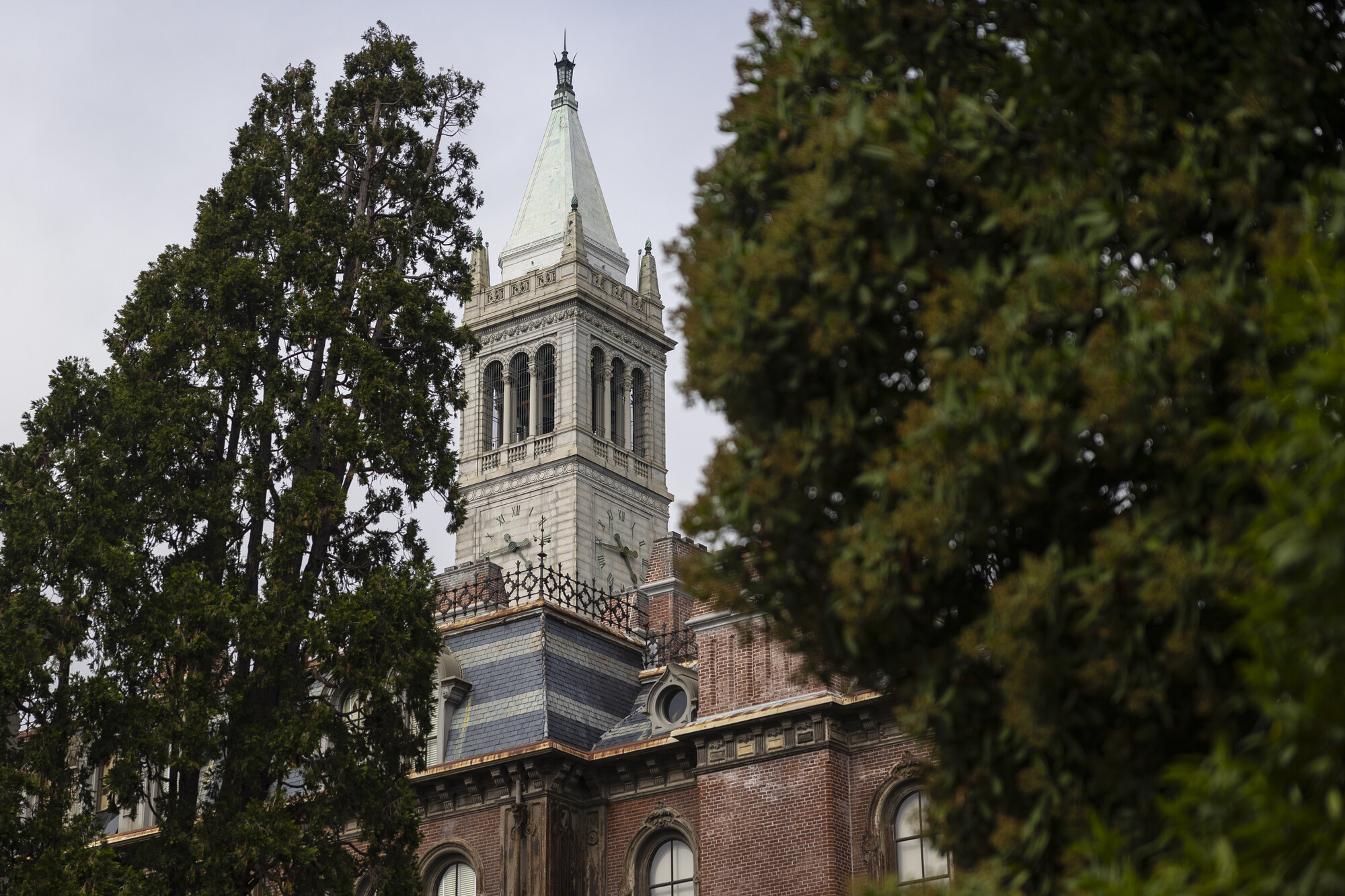
UC Berkeley Gives Names to the Feds, Valero's Benicia Refinery Closing, and Robotaxis at the Airport
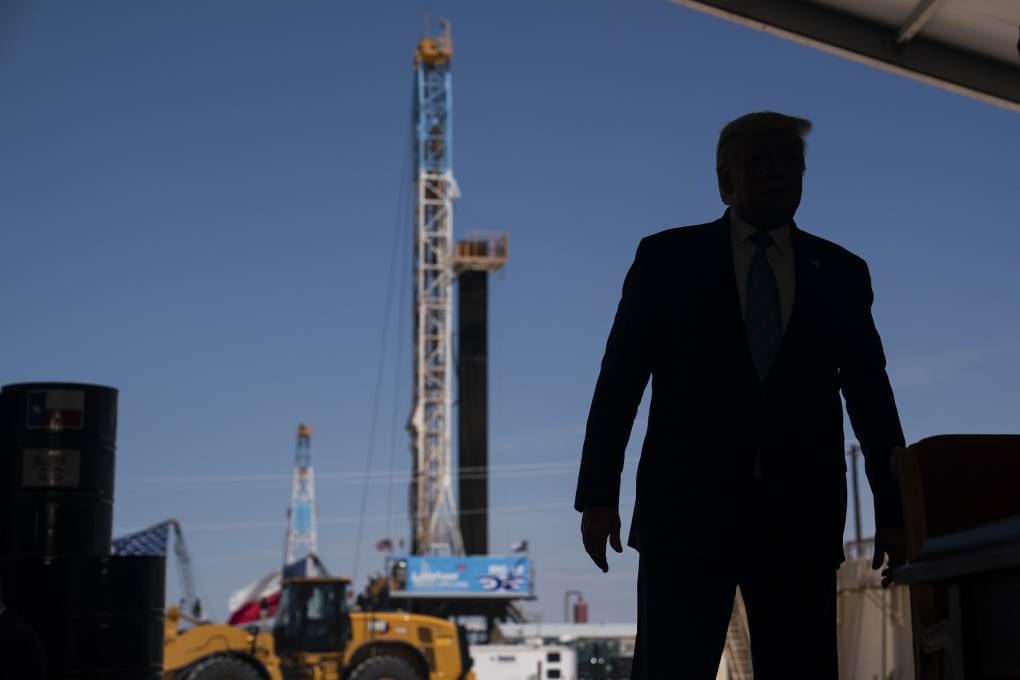
Trump Tried to Cut Agency That Investigates Oil, Gas Accidents. Will He Do It Again?
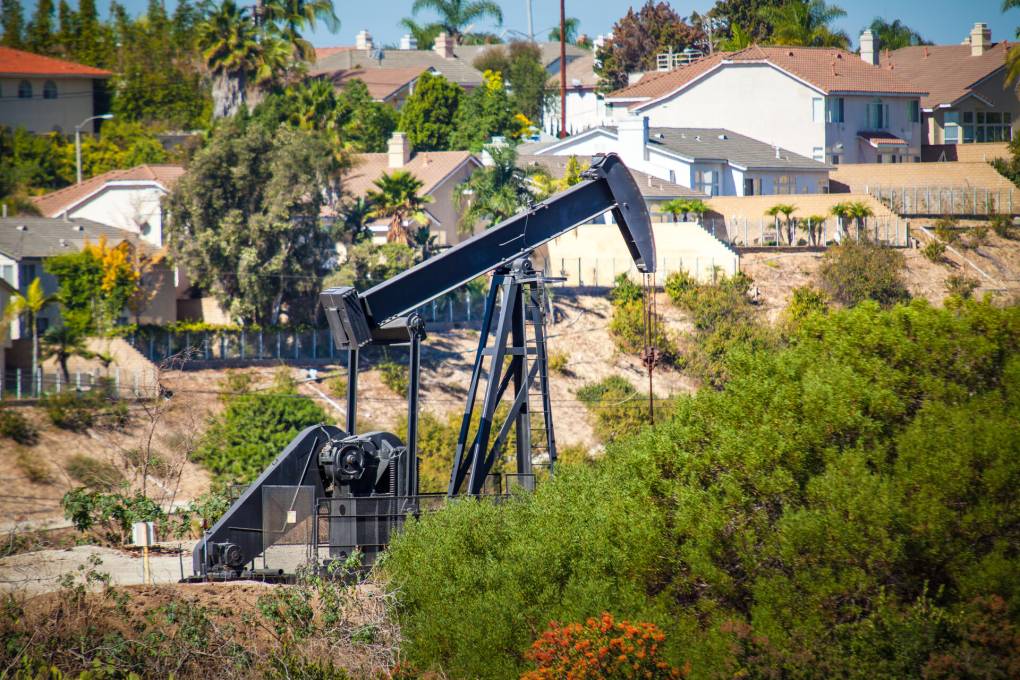
California, Oil Industry Brace for Big-Money Battle Over Rule Limiting Drilling Near Schools and Homes
Fort Ross: Otters, Oligarchs and Intrigue on the Sonoma County Coast
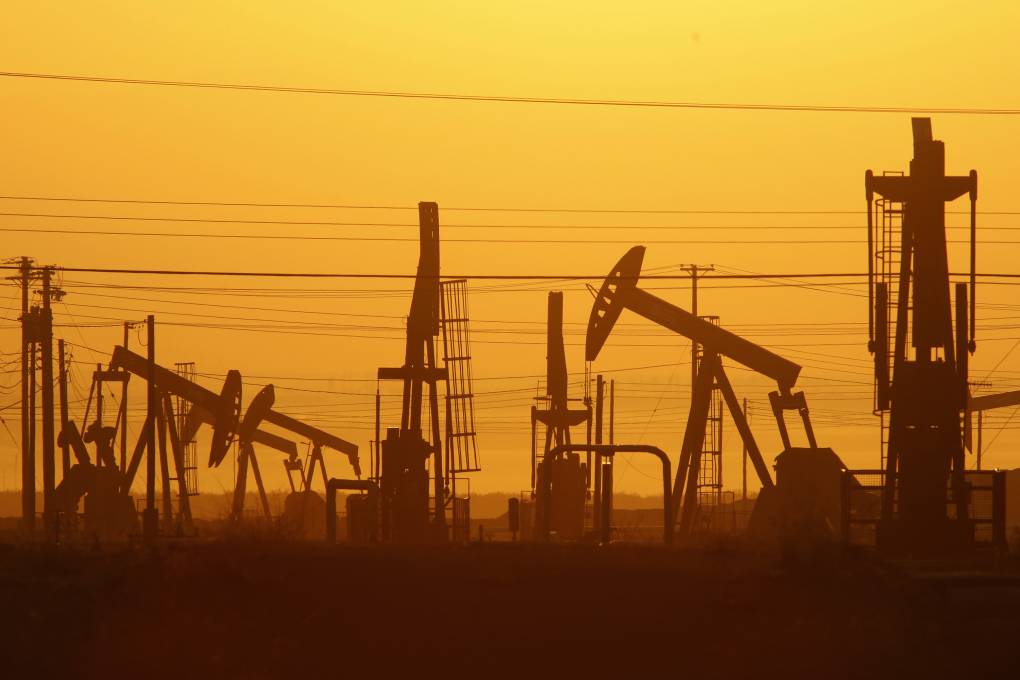
California Plans to Wean Itself Off Oil by 2045. Some Environmentalists Say It'll Be Too Late by Then
California Could Phase Out Fracking, Other Oil Drilling Under Bill Headed for First Test in Legislature
California's Oil and Gas Regulator Approved Hundreds of New Wells Without Required Oversight
The 'Petro-State' of California
Not Just Fracking: Cut All Oil Drilling in California, Says Key Lawmaker
Sponsored
Player sponsored by
window.__IS_SSR__=true
window.__INITIAL_STATE__={
"attachmentsReducer": {
"audio_0": {
"type": "attachments",
"id": "audio_0",
"imgSizes": {
"kqedFullSize": {
"file": "https://ww2.kqed.org/news/wp-content/themes/KQED-unified/img/audio_bgs/background0.jpg"
}
}
},
"audio_1": {
"type": "attachments",
"id": "audio_1",
"imgSizes": {
"kqedFullSize": {
"file": "https://ww2.kqed.org/news/wp-content/themes/KQED-unified/img/audio_bgs/background1.jpg"
}
}
},
"audio_2": {
"type": "attachments",
"id": "audio_2",
"imgSizes": {
"kqedFullSize": {
"file": "https://ww2.kqed.org/news/wp-content/themes/KQED-unified/img/audio_bgs/background2.jpg"
}
}
},
"audio_3": {
"type": "attachments",
"id": "audio_3",
"imgSizes": {
"kqedFullSize": {
"file": "https://ww2.kqed.org/news/wp-content/themes/KQED-unified/img/audio_bgs/background3.jpg"
}
}
},
"audio_4": {
"type": "attachments",
"id": "audio_4",
"imgSizes": {
"kqedFullSize": {
"file": "https://ww2.kqed.org/news/wp-content/themes/KQED-unified/img/audio_bgs/background4.jpg"
}
}
},
"placeholder": {
"type": "attachments",
"id": "placeholder",
"imgSizes": {
"thumbnail": {
"file": "https://cdn.kqed.org/wp-content/uploads/2024/12/KQED-Default-Image-816638274-2000x1333-1-160x107.jpg",
"width": 160,
"height": 107,
"mimeType": "image/jpeg"
},
"medium": {
"file": "https://cdn.kqed.org/wp-content/uploads/2024/12/KQED-Default-Image-816638274-2000x1333-1-800x533.jpg",
"width": 800,
"height": 533,
"mimeType": "image/jpeg"
},
"medium_large": {
"file": "https://cdn.kqed.org/wp-content/uploads/2024/12/KQED-Default-Image-816638274-2000x1333-1-768x512.jpg",
"width": 768,
"height": 512,
"mimeType": "image/jpeg"
},
"large": {
"file": "https://cdn.kqed.org/wp-content/uploads/2024/12/KQED-Default-Image-816638274-2000x1333-1-1020x680.jpg",
"width": 1020,
"height": 680,
"mimeType": "image/jpeg"
},
"1536x1536": {
"file": "https://cdn.kqed.org/wp-content/uploads/2024/12/KQED-Default-Image-816638274-2000x1333-1-1536x1024.jpg",
"width": 1536,
"height": 1024,
"mimeType": "image/jpeg"
},
"fd-lrg": {
"file": "https://cdn.kqed.org/wp-content/uploads/2024/12/KQED-Default-Image-816638274-2000x1333-1-1536x1024.jpg",
"width": 1536,
"height": 1024,
"mimeType": "image/jpeg"
},
"fd-med": {
"file": "https://cdn.kqed.org/wp-content/uploads/2024/12/KQED-Default-Image-816638274-2000x1333-1-1020x680.jpg",
"width": 1020,
"height": 680,
"mimeType": "image/jpeg"
},
"fd-sm": {
"file": "https://cdn.kqed.org/wp-content/uploads/2024/12/KQED-Default-Image-816638274-2000x1333-1-800x533.jpg",
"width": 800,
"height": 533,
"mimeType": "image/jpeg"
},
"post-thumbnail": {
"file": "https://cdn.kqed.org/wp-content/uploads/2024/12/KQED-Default-Image-816638274-2000x1333-1-672x372.jpg",
"width": 672,
"height": 372,
"mimeType": "image/jpeg"
},
"twentyfourteen-full-width": {
"file": "https://cdn.kqed.org/wp-content/uploads/2024/12/KQED-Default-Image-816638274-2000x1333-1-1038x576.jpg",
"width": 1038,
"height": 576,
"mimeType": "image/jpeg"
},
"xxsmall": {
"file": "https://cdn.kqed.org/wp-content/uploads/2024/12/KQED-Default-Image-816638274-2000x1333-1-160x107.jpg",
"width": 160,
"height": 107,
"mimeType": "image/jpeg"
},
"xsmall": {
"file": "https://cdn.kqed.org/wp-content/uploads/2024/12/KQED-Default-Image-816638274-2000x1333-1-672x372.jpg",
"width": 672,
"height": 372,
"mimeType": "image/jpeg"
},
"small": {
"file": "https://cdn.kqed.org/wp-content/uploads/2024/12/KQED-Default-Image-816638274-2000x1333-1-672x372.jpg",
"width": 672,
"height": 372,
"mimeType": "image/jpeg"
},
"xlarge": {
"file": "https://cdn.kqed.org/wp-content/uploads/2024/12/KQED-Default-Image-816638274-2000x1333-1-1020x680.jpg",
"width": 1020,
"height": 680,
"mimeType": "image/jpeg"
},
"full-width": {
"file": "https://cdn.kqed.org/wp-content/uploads/2024/12/KQED-Default-Image-816638274-2000x1333-1-1920x1280.jpg",
"width": 1920,
"height": 1280,
"mimeType": "image/jpeg"
},
"guest-author-32": {
"file": "https://cdn.kqed.org/wp-content/uploads/2025/01/KQED-Default-Image-816638274-1333x1333-1-160x160.jpg",
"width": 32,
"height": 32,
"mimeType": "image/jpeg"
},
"guest-author-50": {
"file": "https://cdn.kqed.org/wp-content/uploads/2025/01/KQED-Default-Image-816638274-1333x1333-1-160x160.jpg",
"width": 50,
"height": 50,
"mimeType": "image/jpeg"
},
"guest-author-64": {
"file": "https://cdn.kqed.org/wp-content/uploads/2025/01/KQED-Default-Image-816638274-1333x1333-1-160x160.jpg",
"width": 64,
"height": 64,
"mimeType": "image/jpeg"
},
"guest-author-96": {
"file": "https://cdn.kqed.org/wp-content/uploads/2025/01/KQED-Default-Image-816638274-1333x1333-1-160x160.jpg",
"width": 96,
"height": 96,
"mimeType": "image/jpeg"
},
"guest-author-128": {
"file": "https://cdn.kqed.org/wp-content/uploads/2025/01/KQED-Default-Image-816638274-1333x1333-1-160x160.jpg",
"width": 128,
"height": 128,
"mimeType": "image/jpeg"
},
"detail": {
"file": "https://cdn.kqed.org/wp-content/uploads/2025/01/KQED-Default-Image-816638274-1333x1333-1-160x160.jpg",
"width": 160,
"height": 160,
"mimeType": "image/jpeg"
},
"kqedFullSize": {
"file": "https://cdn.kqed.org/wp-content/uploads/2024/12/KQED-Default-Image-816638274-2000x1333-1.jpg",
"width": 2000,
"height": 1333
}
}
},
"news_12056098": {
"type": "attachments",
"id": "news_12056098",
"meta": {
"index": "attachments_1716263798",
"site": "news",
"id": "12056098",
"found": true
},
"title": "The UC Berkeley Campus in Berkeley on Aug. 17, 2023.",
"publishDate": 1758043376,
"status": "inherit",
"parent": 12056089,
"modified": 1758043405,
"caption": "The UC Berkeley Campus in Berkeley on Aug. 17, 2023.",
"credit": "Martin do Nascimento/KQED",
"altTag": null,
"description": null,
"imgSizes": {
"thumbnail": {
"file": "https://cdn.kqed.org/wp-content/uploads/sites/10/2025/09/230817-UC-BERKELEY-CAMPUS-MD-02_qed-160x107.jpg",
"width": 160,
"height": 107,
"mimeType": "image/jpeg"
},
"1536x1536": {
"file": "https://cdn.kqed.org/wp-content/uploads/sites/10/2025/09/230817-UC-BERKELEY-CAMPUS-MD-02_qed-1536x1024.jpg",
"width": 1536,
"height": 1024,
"mimeType": "image/jpeg"
},
"post-thumbnail": {
"file": "https://cdn.kqed.org/wp-content/uploads/sites/10/2025/09/230817-UC-BERKELEY-CAMPUS-MD-02_qed-672x372.jpg",
"width": 672,
"height": 372,
"mimeType": "image/jpeg"
},
"twentyfourteen-full-width": {
"file": "https://cdn.kqed.org/wp-content/uploads/sites/10/2025/09/230817-UC-BERKELEY-CAMPUS-MD-02_qed-1038x576.jpg",
"width": 1038,
"height": 576,
"mimeType": "image/jpeg"
},
"kqedFullSize": {
"file": "https://cdn.kqed.org/wp-content/uploads/sites/10/2025/09/230817-UC-BERKELEY-CAMPUS-MD-02_qed.jpg",
"width": 2000,
"height": 1333
}
},
"fetchFailed": false,
"isLoading": false
},
"news_12014668": {
"type": "attachments",
"id": "news_12014668",
"meta": {
"index": "attachments_1716263798",
"site": "news",
"id": "12014668",
"found": true
},
"title": "Donald Trump",
"publishDate": 1731708587,
"status": "inherit",
"parent": 12014622,
"modified": 1731710604,
"caption": "President Donald Trump arrives to deliver remarks about American energy production during a visit to the Double Eagle Energy Oil Rig on July 29, 2020, in Midland, Texas.",
"credit": "Evan Vucci/AP Photo",
"altTag": null,
"description": null,
"imgSizes": {
"medium": {
"file": "https://cdn.kqed.org/wp-content/uploads/sites/10/2024/11/TrumpOilGasRegulationsAP-800x533.jpg",
"width": 800,
"height": 533,
"mimeType": "image/jpeg"
},
"large": {
"file": "https://cdn.kqed.org/wp-content/uploads/sites/10/2024/11/TrumpOilGasRegulationsAP-1020x680.jpg",
"width": 1020,
"height": 680,
"mimeType": "image/jpeg"
},
"thumbnail": {
"file": "https://cdn.kqed.org/wp-content/uploads/sites/10/2024/11/TrumpOilGasRegulationsAP-160x107.jpg",
"width": 160,
"height": 107,
"mimeType": "image/jpeg"
},
"1536x1536": {
"file": "https://cdn.kqed.org/wp-content/uploads/sites/10/2024/11/TrumpOilGasRegulationsAP-1536x1024.jpg",
"width": 1536,
"height": 1024,
"mimeType": "image/jpeg"
},
"post-thumbnail": {
"file": "https://cdn.kqed.org/wp-content/uploads/sites/10/2024/11/TrumpOilGasRegulationsAP-672x372.jpg",
"width": 672,
"height": 372,
"mimeType": "image/jpeg"
},
"twentyfourteen-full-width": {
"file": "https://cdn.kqed.org/wp-content/uploads/sites/10/2024/11/TrumpOilGasRegulationsAP-1038x576.jpg",
"width": 1038,
"height": 576,
"mimeType": "image/jpeg"
},
"full-width": {
"file": "https://cdn.kqed.org/wp-content/uploads/sites/10/2024/11/TrumpOilGasRegulationsAP-1920x1280.jpg",
"width": 1920,
"height": 1280,
"mimeType": "image/jpeg"
},
"kqedFullSize": {
"file": "https://cdn.kqed.org/wp-content/uploads/sites/10/2024/11/TrumpOilGasRegulationsAP.jpg",
"width": 2000,
"height": 1333
}
},
"fetchFailed": false,
"isLoading": false
},
"news_11940713": {
"type": "attachments",
"id": "news_11940713",
"meta": {
"index": "attachments_1716263798",
"site": "news",
"id": "11940713",
"found": true
},
"parent": 11940704,
"imgSizes": {
"twentyfourteen-full-width": {
"file": "https://ww2.kqed.org/app/uploads/sites/10/2023/02/RS62774_GettyImages-941954046-qut-1038x576.jpg",
"width": 1038,
"mimeType": "image/jpeg",
"height": 576
},
"thumbnail": {
"file": "https://ww2.kqed.org/app/uploads/sites/10/2023/02/RS62774_GettyImages-941954046-qut-160x107.jpg",
"width": 160,
"mimeType": "image/jpeg",
"height": 107
},
"post-thumbnail": {
"file": "https://ww2.kqed.org/app/uploads/sites/10/2023/02/RS62774_GettyImages-941954046-qut-672x372.jpg",
"width": 672,
"mimeType": "image/jpeg",
"height": 372
},
"kqedFullSize": {
"file": "https://ww2.kqed.org/app/uploads/sites/10/2023/02/RS62774_GettyImages-941954046-qut.jpg",
"width": 1920,
"height": 1280
},
"large": {
"file": "https://ww2.kqed.org/app/uploads/sites/10/2023/02/RS62774_GettyImages-941954046-qut-1020x680.jpg",
"width": 1020,
"mimeType": "image/jpeg",
"height": 680
},
"1536x1536": {
"file": "https://ww2.kqed.org/app/uploads/sites/10/2023/02/RS62774_GettyImages-941954046-qut-1536x1024.jpg",
"width": 1536,
"mimeType": "image/jpeg",
"height": 1024
},
"medium": {
"file": "https://ww2.kqed.org/app/uploads/sites/10/2023/02/RS62774_GettyImages-941954046-qut-800x533.jpg",
"width": 800,
"mimeType": "image/jpeg",
"height": 533
}
},
"publishDate": 1676069510,
"modified": 1676078196,
"caption": "An oil pump jack near homes in the Inglewood Oil Field, Los Angeles.",
"description": null,
"title": "Oil pumpjack near homes in the Inglewood Oil Field.",
"credit": "Gary Kavanagh/Getty Images",
"status": "inherit",
"altTag": "A blue oil rig is surrounded by homes.",
"fetchFailed": false,
"isLoading": false
},
"news_11909437": {
"type": "attachments",
"id": "news_11909437",
"meta": {
"index": "attachments_1716263798",
"site": "news",
"id": "11909437",
"found": true
},
"parent": 11909257,
"imgSizes": {
"twentyfourteen-full-width": {
"file": "https://ww2.kqed.org/app/uploads/sites/10/2022/03/fortross_featured-1038x576.png",
"width": 1038,
"mimeType": "image/png",
"height": 576
},
"thumbnail": {
"file": "https://ww2.kqed.org/app/uploads/sites/10/2022/03/fortross_featured-160x86.png",
"width": 160,
"mimeType": "image/png",
"height": 86
},
"post-thumbnail": {
"file": "https://ww2.kqed.org/app/uploads/sites/10/2022/03/fortross_featured-672x372.png",
"width": 672,
"mimeType": "image/png",
"height": 372
},
"kqedFullSize": {
"file": "https://ww2.kqed.org/app/uploads/sites/10/2022/03/fortross_featured.png",
"width": 1920,
"height": 1035
},
"large": {
"file": "https://ww2.kqed.org/app/uploads/sites/10/2022/03/fortross_featured-1020x550.png",
"width": 1020,
"mimeType": "image/png",
"height": 550
},
"1536x1536": {
"file": "https://ww2.kqed.org/app/uploads/sites/10/2022/03/fortross_featured-1536x828.png",
"width": 1536,
"mimeType": "image/png",
"height": 828
},
"medium": {
"file": "https://ww2.kqed.org/app/uploads/sites/10/2022/03/fortross_featured-800x431.png",
"width": 800,
"mimeType": "image/png",
"height": 431
}
},
"publishDate": 1648253462,
"modified": 1648253520,
"caption": null,
"description": null,
"title": "fortross_featured",
"credit": null,
"status": "inherit",
"altTag": "Cartoon: a sea otter floats on the ocean with a bag of money on its belly. In the background we see the historic Russian fort, Fort Ross.",
"fetchFailed": false,
"isLoading": false
},
"news_11875032": {
"type": "attachments",
"id": "news_11875032",
"meta": {
"index": "attachments_1716263798",
"site": "news",
"id": "11875032",
"found": true
},
"parent": 11875020,
"imgSizes": {
"twentyfourteen-full-width": {
"file": "https://ww2.kqed.org/app/uploads/sites/10/2021/05/GettyImages-480340717-1038x576.jpg",
"width": 1038,
"mimeType": "image/jpeg",
"height": 576
},
"thumbnail": {
"file": "https://ww2.kqed.org/app/uploads/sites/10/2021/05/GettyImages-480340717-160x107.jpg",
"width": 160,
"mimeType": "image/jpeg",
"height": 107
},
"post-thumbnail": {
"file": "https://ww2.kqed.org/app/uploads/sites/10/2021/05/GettyImages-480340717-672x372.jpg",
"width": 672,
"mimeType": "image/jpeg",
"height": 372
},
"kqedFullSize": {
"file": "https://ww2.kqed.org/app/uploads/sites/10/2021/05/GettyImages-480340717-scaled.jpg",
"width": 2560,
"height": 1707
},
"2048x2048": {
"file": "https://ww2.kqed.org/app/uploads/sites/10/2021/05/GettyImages-480340717-2048x1365.jpg",
"width": 2048,
"mimeType": "image/jpeg",
"height": 1365
},
"large": {
"file": "https://ww2.kqed.org/app/uploads/sites/10/2021/05/GettyImages-480340717-1020x680.jpg",
"width": 1020,
"mimeType": "image/jpeg",
"height": 680
},
"1536x1536": {
"file": "https://ww2.kqed.org/app/uploads/sites/10/2021/05/GettyImages-480340717-1536x1024.jpg",
"width": 1536,
"mimeType": "image/jpeg",
"height": 1024
},
"full-width": {
"file": "https://ww2.kqed.org/app/uploads/sites/10/2021/05/GettyImages-480340717-1920x1280.jpg",
"width": 1920,
"mimeType": "image/jpeg",
"height": 1280
},
"medium": {
"file": "https://ww2.kqed.org/app/uploads/sites/10/2021/05/GettyImages-480340717-800x533.jpg",
"width": 800,
"mimeType": "image/jpeg",
"height": 533
}
},
"publishDate": 1621882586,
"modified": 1621883664,
"caption": "Pump jacks are seen at dawn in an oil field over the Monterey Shale formation in Kern County on March 24, 2014. Gov. Gavin Newsom has set ambitious goals for weaning his state off oil, including calling for an end to oil production by 2045.",
"description": "Pump jacks are seen at dawn in an oil field over the Monterey Shale formation in Kern County on March 24, 2014. Gov. Gavin Newsom has set ambitious goals for weaning his state off oil, including calling for an end to oil production by 2045.",
"title": "Fracking In California Under Spotlight As Some Local Municipalities Issue Bans",
"credit": "David McNew/Getty Images",
"status": "inherit",
"altTag": "Pump jacks draw oil in a field over the Monterey Shale formation ear Lost Hills, California in 2014. It is the late afternoon and the sky is painted a fierce orange.",
"fetchFailed": false,
"isLoading": false
},
"news_11860725": {
"type": "attachments",
"id": "news_11860725",
"meta": {
"index": "attachments_1716263798",
"site": "news",
"id": "11860725",
"found": true
},
"parent": 11860470,
"imgSizes": {
"apple_news_ca_landscape_5_5": {
"file": "https://ww2.kqed.org/app/uploads/sites/10/2021/02/RS40456_GettyImages-480337041-qut-1044x783.jpg",
"width": 1044,
"mimeType": "image/jpeg",
"height": 783
},
"apple_news_ca_square_4_0": {
"file": "https://ww2.kqed.org/app/uploads/sites/10/2021/02/RS40456_GettyImages-480337041-qut-470x470.jpg",
"width": 470,
"mimeType": "image/jpeg",
"height": 470
},
"twentyfourteen-full-width": {
"file": "https://ww2.kqed.org/app/uploads/sites/10/2021/02/RS40456_GettyImages-480337041-qut-1038x576.jpg",
"width": 1038,
"mimeType": "image/jpeg",
"height": 576
},
"thumbnail": {
"file": "https://ww2.kqed.org/app/uploads/sites/10/2021/02/RS40456_GettyImages-480337041-qut-160x107.jpg",
"width": 160,
"mimeType": "image/jpeg",
"height": 107
},
"post-thumbnail": {
"file": "https://ww2.kqed.org/app/uploads/sites/10/2021/02/RS40456_GettyImages-480337041-qut-672x372.jpg",
"width": 672,
"mimeType": "image/jpeg",
"height": 372
},
"kqedFullSize": {
"file": "https://ww2.kqed.org/app/uploads/sites/10/2021/02/RS40456_GettyImages-480337041-qut.jpg",
"width": 1920,
"height": 1281
},
"apple_news_ca_landscape_4_7": {
"file": "https://ww2.kqed.org/app/uploads/sites/10/2021/02/RS40456_GettyImages-480337041-qut-632x474.jpg",
"width": 632,
"mimeType": "image/jpeg",
"height": 474
},
"large": {
"file": "https://ww2.kqed.org/app/uploads/sites/10/2021/02/RS40456_GettyImages-480337041-qut-1020x681.jpg",
"width": 1020,
"mimeType": "image/jpeg",
"height": 681
},
"apple_news_ca_landscape_4_0": {
"file": "https://ww2.kqed.org/app/uploads/sites/10/2021/02/RS40456_GettyImages-480337041-qut-536x402.jpg",
"width": 536,
"mimeType": "image/jpeg",
"height": 402
},
"apple_news_ca_portrait_12_9": {
"file": "https://ww2.kqed.org/app/uploads/sites/10/2021/02/RS40456_GettyImages-480337041-qut-1122x1281.jpg",
"width": 1122,
"mimeType": "image/jpeg",
"height": 1281
},
"medium": {
"file": "https://ww2.kqed.org/app/uploads/sites/10/2021/02/RS40456_GettyImages-480337041-qut-800x534.jpg",
"width": 800,
"mimeType": "image/jpeg",
"height": 534
},
"apple_news_ca_portrait_4_0": {
"file": "https://ww2.kqed.org/app/uploads/sites/10/2021/02/RS40456_GettyImages-480337041-qut-354x472.jpg",
"width": 354,
"mimeType": "image/jpeg",
"height": 472
},
"apple_news_ca_portrait_9_7": {
"file": "https://ww2.kqed.org/app/uploads/sites/10/2021/02/RS40456_GettyImages-480337041-qut-840x1120.jpg",
"width": 840,
"mimeType": "image/jpeg",
"height": 1120
},
"apple_news_ca_landscape_12_9": {
"file": "https://ww2.kqed.org/app/uploads/sites/10/2021/02/RS40456_GettyImages-480337041-qut-1832x1281.jpg",
"width": 1832,
"mimeType": "image/jpeg",
"height": 1281
},
"apple_news_ca_square_9_7": {
"file": "https://ww2.kqed.org/app/uploads/sites/10/2021/02/RS40456_GettyImages-480337041-qut-1104x1104.jpg",
"width": 1104,
"mimeType": "image/jpeg",
"height": 1104
},
"1536x1536": {
"file": "https://ww2.kqed.org/app/uploads/sites/10/2021/02/RS40456_GettyImages-480337041-qut-1536x1025.jpg",
"width": 1536,
"mimeType": "image/jpeg",
"height": 1025
},
"apple_news_ca_portrait_4_7": {
"file": "https://ww2.kqed.org/app/uploads/sites/10/2021/02/RS40456_GettyImages-480337041-qut-414x552.jpg",
"width": 414,
"mimeType": "image/jpeg",
"height": 552
},
"apple_news_ca_square_12_9": {
"file": "https://ww2.kqed.org/app/uploads/sites/10/2021/02/RS40456_GettyImages-480337041-qut-1472x1281.jpg",
"width": 1472,
"mimeType": "image/jpeg",
"height": 1281
},
"apple_news_ca_portrait_5_5": {
"file": "https://ww2.kqed.org/app/uploads/sites/10/2021/02/RS40456_GettyImages-480337041-qut-687x916.jpg",
"width": 687,
"mimeType": "image/jpeg",
"height": 916
},
"apple_news_ca_square_4_7": {
"file": "https://ww2.kqed.org/app/uploads/sites/10/2021/02/RS40456_GettyImages-480337041-qut-550x550.jpg",
"width": 550,
"mimeType": "image/jpeg",
"height": 550
},
"apple_news_ca_landscape_9_7": {
"file": "https://ww2.kqed.org/app/uploads/sites/10/2021/02/RS40456_GettyImages-480337041-qut-1376x1032.jpg",
"width": 1376,
"mimeType": "image/jpeg",
"height": 1032
},
"apple_news_ca_square_5_5": {
"file": "https://ww2.kqed.org/app/uploads/sites/10/2021/02/RS40456_GettyImages-480337041-qut-912x912.jpg",
"width": 912,
"mimeType": "image/jpeg",
"height": 912
}
},
"publishDate": 1613590360,
"modified": 1613590741,
"caption": "The bill, authored by state Sens. Scott Wiener, D-San Francisco, and Monique Limón, D-Santa Barbara, would prohibit new permits for hydraulic fracturing, known as fracking, and block companies from renewing existing permits for the controversial technique.",
"description": "The bill, authored by state Sens. Scott Wiener, D-San Francisco, and Monique Limón, D-Santa Barbara, would prohibit new permits for hydraulic fracturing, known as fracking, and block companies from renewing existing permits for the controversial technique.",
"title": null,
"credit": "David McNew/Getty Images",
"status": "inherit",
"altTag": "Pump jacks in 2014 over the Monterey Shale formation",
"fetchFailed": false,
"isLoading": false
},
"news_11811095": {
"type": "attachments",
"id": "news_11811095",
"meta": {
"index": "attachments_1716263798",
"site": "news",
"id": "11811095",
"found": true
},
"parent": 11810791,
"imgSizes": {
"apple_news_ca_landscape_5_5": {
"file": "https://ww2.kqed.org/app/uploads/sites/10/2020/04/southbelridge200309-1044x783.jpg",
"width": 1044,
"mimeType": "image/jpeg",
"height": 783
},
"apple_news_ca_square_4_0": {
"file": "https://ww2.kqed.org/app/uploads/sites/10/2020/04/southbelridge200309-470x470.jpg",
"width": 470,
"mimeType": "image/jpeg",
"height": 470
},
"twentyfourteen-full-width": {
"file": "https://ww2.kqed.org/app/uploads/sites/10/2020/04/southbelridge200309-1038x576.jpg",
"width": 1038,
"mimeType": "image/jpeg",
"height": 576
},
"thumbnail": {
"file": "https://ww2.kqed.org/app/uploads/sites/10/2020/04/southbelridge200309-160x105.jpg",
"width": 160,
"mimeType": "image/jpeg",
"height": 105
},
"post-thumbnail": {
"file": "https://ww2.kqed.org/app/uploads/sites/10/2020/04/southbelridge200309-672x372.jpg",
"width": 672,
"mimeType": "image/jpeg",
"height": 372
},
"kqedFullSize": {
"file": "https://ww2.kqed.org/app/uploads/sites/10/2020/04/southbelridge200309.jpg",
"width": 1920,
"height": 1254
},
"apple_news_ca_landscape_4_7": {
"file": "https://ww2.kqed.org/app/uploads/sites/10/2020/04/southbelridge200309-632x474.jpg",
"width": 632,
"mimeType": "image/jpeg",
"height": 474
},
"large": {
"file": "https://ww2.kqed.org/app/uploads/sites/10/2020/04/southbelridge200309-1020x666.jpg",
"width": 1020,
"mimeType": "image/jpeg",
"height": 666
},
"apple_news_ca_landscape_4_0": {
"file": "https://ww2.kqed.org/app/uploads/sites/10/2020/04/southbelridge200309-536x402.jpg",
"width": 536,
"mimeType": "image/jpeg",
"height": 402
},
"apple_news_ca_portrait_12_9": {
"file": "https://ww2.kqed.org/app/uploads/sites/10/2020/04/southbelridge200309-1122x1254.jpg",
"width": 1122,
"mimeType": "image/jpeg",
"height": 1254
},
"medium": {
"file": "https://ww2.kqed.org/app/uploads/sites/10/2020/04/southbelridge200309-800x523.jpg",
"width": 800,
"mimeType": "image/jpeg",
"height": 523
},
"apple_news_ca_portrait_4_0": {
"file": "https://ww2.kqed.org/app/uploads/sites/10/2020/04/southbelridge200309-354x472.jpg",
"width": 354,
"mimeType": "image/jpeg",
"height": 472
},
"apple_news_ca_portrait_9_7": {
"file": "https://ww2.kqed.org/app/uploads/sites/10/2020/04/southbelridge200309-840x1120.jpg",
"width": 840,
"mimeType": "image/jpeg",
"height": 1120
},
"apple_news_ca_landscape_12_9": {
"file": "https://ww2.kqed.org/app/uploads/sites/10/2020/04/southbelridge200309-1832x1254.jpg",
"width": 1832,
"mimeType": "image/jpeg",
"height": 1254
},
"apple_news_ca_square_9_7": {
"file": "https://ww2.kqed.org/app/uploads/sites/10/2020/04/southbelridge200309-1104x1104.jpg",
"width": 1104,
"mimeType": "image/jpeg",
"height": 1104
},
"apple_news_ca_portrait_4_7": {
"file": "https://ww2.kqed.org/app/uploads/sites/10/2020/04/southbelridge200309-414x552.jpg",
"width": 414,
"mimeType": "image/jpeg",
"height": 552
},
"apple_news_ca_square_12_9": {
"file": "https://ww2.kqed.org/app/uploads/sites/10/2020/04/southbelridge200309-1472x1254.jpg",
"width": 1472,
"mimeType": "image/jpeg",
"height": 1254
},
"apple_news_ca_portrait_5_5": {
"file": "https://ww2.kqed.org/app/uploads/sites/10/2020/04/southbelridge200309-687x916.jpg",
"width": 687,
"mimeType": "image/jpeg",
"height": 916
},
"full-width": {
"file": "https://ww2.kqed.org/app/uploads/sites/10/2020/04/southbelridge200309-1920x1254.jpg",
"width": 1920,
"mimeType": "image/jpeg",
"height": 1254
},
"apple_news_ca_square_4_7": {
"file": "https://ww2.kqed.org/app/uploads/sites/10/2020/04/southbelridge200309-550x550.jpg",
"width": 550,
"mimeType": "image/jpeg",
"height": 550
},
"apple_news_ca_landscape_9_7": {
"file": "https://ww2.kqed.org/app/uploads/sites/10/2020/04/southbelridge200309-1376x1032.jpg",
"width": 1376,
"mimeType": "image/jpeg",
"height": 1032
},
"apple_news_ca_square_5_5": {
"file": "https://ww2.kqed.org/app/uploads/sites/10/2020/04/southbelridge200309-912x912.jpg",
"width": 912,
"mimeType": "image/jpeg",
"height": 912
}
},
"publishDate": 1586286526,
"modified": 1586286809,
"caption": "A group of Aera Energy oil wells in Kern County's South Belridge oil field as seen on March 9, 2020. ",
"description": null,
"title": "Kern County-South Belridge-Aera Energy",
"credit": "Dan Brekke/KQED",
"status": "inherit",
"fetchFailed": false,
"isLoading": false
},
"news_11843384": {
"type": "attachments",
"id": "news_11843384",
"meta": {
"index": "attachments_1716263798",
"site": "news",
"id": "11843384",
"found": true
},
"parent": 11843376,
"imgSizes": {
"apple_news_ca_landscape_5_5": {
"file": "https://ww2.kqed.org/app/uploads/sites/10/2020/10/drilling_102220_final-1044x783.png",
"width": 1044,
"mimeType": "image/png",
"height": 783
},
"apple_news_ca_square_4_0": {
"file": "https://ww2.kqed.org/app/uploads/sites/10/2020/10/drilling_102220_final-470x470.png",
"width": 470,
"mimeType": "image/png",
"height": 470
},
"twentyfourteen-full-width": {
"file": "https://ww2.kqed.org/app/uploads/sites/10/2020/10/drilling_102220_final-1038x576.png",
"width": 1038,
"mimeType": "image/png",
"height": 576
},
"thumbnail": {
"file": "https://ww2.kqed.org/app/uploads/sites/10/2020/10/drilling_102220_final-160x104.png",
"width": 160,
"mimeType": "image/png",
"height": 104
},
"post-thumbnail": {
"file": "https://ww2.kqed.org/app/uploads/sites/10/2020/10/drilling_102220_final-672x372.png",
"width": 672,
"mimeType": "image/png",
"height": 372
},
"kqedFullSize": {
"file": "https://ww2.kqed.org/app/uploads/sites/10/2020/10/drilling_102220_final.png",
"width": 1920,
"height": 1248
},
"apple_news_ca_landscape_4_7": {
"file": "https://ww2.kqed.org/app/uploads/sites/10/2020/10/drilling_102220_final-632x474.png",
"width": 632,
"mimeType": "image/png",
"height": 474
},
"large": {
"file": "https://ww2.kqed.org/app/uploads/sites/10/2020/10/drilling_102220_final-1020x663.png",
"width": 1020,
"mimeType": "image/png",
"height": 663
},
"apple_news_ca_landscape_4_0": {
"file": "https://ww2.kqed.org/app/uploads/sites/10/2020/10/drilling_102220_final-536x402.png",
"width": 536,
"mimeType": "image/png",
"height": 402
},
"apple_news_ca_portrait_12_9": {
"file": "https://ww2.kqed.org/app/uploads/sites/10/2020/10/drilling_102220_final-1122x1248.png",
"width": 1122,
"mimeType": "image/png",
"height": 1248
},
"medium": {
"file": "https://ww2.kqed.org/app/uploads/sites/10/2020/10/drilling_102220_final-800x520.png",
"width": 800,
"mimeType": "image/png",
"height": 520
},
"apple_news_ca_portrait_4_0": {
"file": "https://ww2.kqed.org/app/uploads/sites/10/2020/10/drilling_102220_final-354x472.png",
"width": 354,
"mimeType": "image/png",
"height": 472
},
"apple_news_ca_portrait_9_7": {
"file": "https://ww2.kqed.org/app/uploads/sites/10/2020/10/drilling_102220_final-840x1120.png",
"width": 840,
"mimeType": "image/png",
"height": 1120
},
"apple_news_ca_landscape_12_9": {
"file": "https://ww2.kqed.org/app/uploads/sites/10/2020/10/drilling_102220_final-1832x1248.png",
"width": 1832,
"mimeType": "image/png",
"height": 1248
},
"apple_news_ca_square_9_7": {
"file": "https://ww2.kqed.org/app/uploads/sites/10/2020/10/drilling_102220_final-1104x1104.png",
"width": 1104,
"mimeType": "image/png",
"height": 1104
},
"1536x1536": {
"file": "https://ww2.kqed.org/app/uploads/sites/10/2020/10/drilling_102220_final-1536x998.png",
"width": 1536,
"mimeType": "image/png",
"height": 998
},
"apple_news_ca_portrait_4_7": {
"file": "https://ww2.kqed.org/app/uploads/sites/10/2020/10/drilling_102220_final-414x552.png",
"width": 414,
"mimeType": "image/png",
"height": 552
},
"apple_news_ca_square_12_9": {
"file": "https://ww2.kqed.org/app/uploads/sites/10/2020/10/drilling_102220_final-1472x1248.png",
"width": 1472,
"mimeType": "image/png",
"height": 1248
},
"apple_news_ca_portrait_5_5": {
"file": "https://ww2.kqed.org/app/uploads/sites/10/2020/10/drilling_102220_final-687x916.png",
"width": 687,
"mimeType": "image/png",
"height": 916
},
"apple_news_ca_square_4_7": {
"file": "https://ww2.kqed.org/app/uploads/sites/10/2020/10/drilling_102220_final-550x550.png",
"width": 550,
"mimeType": "image/png",
"height": 550
},
"apple_news_ca_landscape_9_7": {
"file": "https://ww2.kqed.org/app/uploads/sites/10/2020/10/drilling_102220_final-1376x1032.png",
"width": 1376,
"mimeType": "image/png",
"height": 1032
},
"apple_news_ca_square_5_5": {
"file": "https://ww2.kqed.org/app/uploads/sites/10/2020/10/drilling_102220_final-912x912.png",
"width": 912,
"mimeType": "image/png",
"height": 912
}
},
"publishDate": 1603407720,
"modified": 1603407774,
"caption": null,
"description": null,
"title": "drilling_102220_final",
"credit": null,
"status": "inherit",
"fetchFailed": false,
"isLoading": false
},
"news_11026158": {
"type": "attachments",
"id": "news_11026158",
"meta": {
"index": "attachments_1716263798",
"site": "news",
"id": "11026158",
"found": true
},
"parent": 11026152,
"imgSizes": {
"twentyfourteen-full-width": {
"file": "https://ww2.kqed.org/app/uploads/sites/10/2016/07/RS10499_480270735-1038x576.jpg",
"width": 1038,
"mimeType": "image/jpeg",
"height": 576
},
"thumbnail": {
"file": "https://ww2.kqed.org/app/uploads/sites/10/2016/07/RS10499_480270735-400x267.jpg",
"width": 400,
"mimeType": "image/jpeg",
"height": 267
},
"fd-sm": {
"file": "https://ww2.kqed.org/app/uploads/sites/10/2016/07/RS10499_480270735-960x640.jpg",
"width": 960,
"mimeType": "image/jpeg",
"height": 640
},
"post-thumbnail": {
"file": "https://ww2.kqed.org/app/uploads/sites/10/2016/07/RS10499_480270735-672x372.jpg",
"width": 672,
"mimeType": "image/jpeg",
"height": 372
},
"kqedFullSize": {
"file": "https://ww2.kqed.org/app/uploads/sites/10/2016/07/RS10499_480270735.jpg",
"width": 3000,
"height": 2000
},
"large": {
"file": "https://ww2.kqed.org/app/uploads/sites/10/2016/07/RS10499_480270735-1920x1280.jpg",
"width": 1920,
"mimeType": "image/jpeg",
"height": 1280
},
"guest-author-50": {
"file": "https://ww2.kqed.org/app/uploads/sites/10/2016/07/RS10499_480270735-50x50.jpg",
"width": 50,
"mimeType": "image/jpeg",
"height": 50
},
"guest-author-96": {
"file": "https://ww2.kqed.org/app/uploads/sites/10/2016/07/RS10499_480270735-96x96.jpg",
"width": 96,
"mimeType": "image/jpeg",
"height": 96
},
"medium": {
"file": "https://ww2.kqed.org/app/uploads/sites/10/2016/07/RS10499_480270735-800x533.jpg",
"width": 800,
"mimeType": "image/jpeg",
"height": 533
},
"guest-author-64": {
"file": "https://ww2.kqed.org/app/uploads/sites/10/2016/07/RS10499_480270735-64x64.jpg",
"width": 64,
"mimeType": "image/jpeg",
"height": 64
},
"guest-author-32": {
"file": "https://ww2.kqed.org/app/uploads/sites/10/2016/07/RS10499_480270735-32x32.jpg",
"width": 32,
"mimeType": "image/jpeg",
"height": 32
},
"jmtc-small-thumb": {
"file": "https://ww2.kqed.org/app/uploads/sites/10/2016/07/RS10499_480270735-280x150.jpg",
"width": 280,
"mimeType": "image/jpeg",
"height": 150
},
"fd-lrg": {
"file": "https://ww2.kqed.org/app/uploads/sites/10/2016/07/RS10499_480270735-1920x1280.jpg",
"width": 1920,
"mimeType": "image/jpeg",
"height": 1280
},
"fd-med": {
"file": "https://ww2.kqed.org/app/uploads/sites/10/2016/07/RS10499_480270735-1180x787.jpg",
"width": 1180,
"mimeType": "image/jpeg",
"height": 787
},
"detail": {
"file": "https://ww2.kqed.org/app/uploads/sites/10/2016/07/RS10499_480270735-150x150.jpg",
"width": 150,
"mimeType": "image/jpeg",
"height": 150
},
"guest-author-128": {
"file": "https://ww2.kqed.org/app/uploads/sites/10/2016/07/RS10499_480270735-128x128.jpg",
"width": 128,
"mimeType": "image/jpeg",
"height": 128
}
},
"publishDate": 1469058290,
"modified": 1469060915,
"caption": "Pump jacks and wells rise over an oil field on the Monterey Shale formation near McKittrick, California.",
"description": "Pump jacks and wells rise over an oil field on the Monterey Shale formation near McKittrick, California.",
"title": "Fracking In California Under Spotlight As Some Local Municipalities Issue Bans",
"credit": "David McNew/Getty Images",
"status": "inherit",
"fetchFailed": false,
"isLoading": false
}
},
"audioPlayerReducer": {
"postId": "stream_live",
"isPaused": true,
"isPlaying": false,
"pfsActive": false,
"pledgeModalIsOpen": true,
"playerDrawerIsOpen": false
},
"authorsReducer": {
"byline_news_11875020": {
"type": "authors",
"id": "byline_news_11875020",
"meta": {
"override": true
},
"slug": "byline_news_11875020",
"name": "Kathleen Ronayne\u003cbr />The Associated Press",
"isLoading": false
},
"byline_news_11849204": {
"type": "authors",
"id": "byline_news_11849204",
"meta": {
"override": true
},
"slug": "byline_news_11849204",
"name": "Nina Sparling",
"isLoading": false
},
"gmarzorati": {
"type": "authors",
"id": "227",
"meta": {
"index": "authors_1716337520",
"id": "227",
"found": true
},
"name": "Guy Marzorati",
"firstName": "Guy",
"lastName": "Marzorati",
"slug": "gmarzorati",
"email": "gmarzorati@KQED.org",
"display_author_email": true,
"staff_mastheads": [
"news"
],
"title": "Correspondent",
"bio": "Guy Marzorati is a correspondent on KQED's California Politics and Government Desk, based in San Jose. A graduate of Santa Clara University, Guy joined KQED in 2013. He reports on state and local politics and produces KQED's digital voter guide.",
"avatar": "https://secure.gravatar.com/avatar/e7038b8dbfd55b104369b76b1cd0b9de?s=600&d=blank&r=g",
"twitter": "guymarzorati",
"facebook": null,
"instagram": null,
"linkedin": null,
"sites": [
{
"site": "",
"roles": [
"editor"
]
},
{
"site": "news",
"roles": [
"editor"
]
},
{
"site": "science",
"roles": [
"editor"
]
},
{
"site": "forum",
"roles": [
"editor"
]
},
{
"site": "elections",
"roles": [
"editor"
]
},
{
"site": "liveblog",
"roles": [
"editor"
]
}
],
"headData": {
"title": "Guy Marzorati | KQED",
"description": "Correspondent",
"ogImgSrc": "https://secure.gravatar.com/avatar/e7038b8dbfd55b104369b76b1cd0b9de?s=600&d=blank&r=g",
"twImgSrc": "https://secure.gravatar.com/avatar/e7038b8dbfd55b104369b76b1cd0b9de?s=600&d=blank&r=g"
},
"isLoading": false,
"link": "/author/gmarzorati"
},
"scottshafer": {
"type": "authors",
"id": "255",
"meta": {
"index": "authors_1716337520",
"id": "255",
"found": true
},
"name": "Scott Shafer",
"firstName": "Scott",
"lastName": "Shafer",
"slug": "scottshafer",
"email": "sshafer@kqed.org",
"display_author_email": false,
"staff_mastheads": [
"news"
],
"title": "KQED Contributor",
"bio": "Scott Shafer is a senior editor with the KQED Politics and Government desk. He is co-host of Political Breakdown, the award-winning radio show and podcast with a personal take on the world of politics. Scott came to KQED in 1998 to host the statewide\u003cem> California Report\u003c/em>. Prior to that he had extended stints in politics and government\u003cem>.\u003c/em> He uses that inside experience at KQED in his, reporting, hosting and analysis for the politics desk. Scott collaborated \u003cem>Political Breakdown a\u003c/em>nd on \u003cem>The Political Mind of Jerry Brown, \u003c/em>an eight-part series about the life and extraordinary political career of the former governor. For fun, he plays water polo with the San Francisco Tsunami.",
"avatar": "https://secure.gravatar.com/avatar/a62ebae45b79d7aed1a39a0e3bf68104?s=600&d=blank&r=g",
"twitter": "scottshafer",
"facebook": null,
"instagram": null,
"linkedin": null,
"sites": [
{
"site": "news",
"roles": [
"editor"
]
},
{
"site": "stateofhealth",
"roles": [
"author"
]
},
{
"site": "science",
"roles": [
"author"
]
},
{
"site": "forum",
"roles": [
"subscriber"
]
}
],
"headData": {
"title": "Scott Shafer | KQED",
"description": "KQED Contributor",
"ogImgSrc": "https://secure.gravatar.com/avatar/a62ebae45b79d7aed1a39a0e3bf68104?s=600&d=blank&r=g",
"twImgSrc": "https://secure.gravatar.com/avatar/a62ebae45b79d7aed1a39a0e3bf68104?s=600&d=blank&r=g"
},
"isLoading": false,
"link": "/author/scottshafer"
},
"tgoldberg": {
"type": "authors",
"id": "258",
"meta": {
"index": "authors_1716337520",
"id": "258",
"found": true
},
"name": "Ted Goldberg",
"firstName": "Ted",
"lastName": "Goldberg",
"slug": "tgoldberg",
"email": "tgoldberg@kqed.org",
"display_author_email": true,
"staff_mastheads": [
"news"
],
"title": "KQED Managing Editor, News and Newscasts",
"bio": "Ted Goldberg is Managing Editor of News and Newscasts at KQED. His main reporting beat is the Bay Area's oil refining industry.\r\n\r\nPrior to joining KQED in 2014, Ted worked at CBS News and WCBS AM in New York and Bay City News and KCBS Radio in San Francisco. He graduated from Oberlin College in Ohio in 1998.",
"avatar": "https://secure.gravatar.com/avatar/16d702c9ec5f696d78dbfb76b592cf0a?s=600&d=blank&r=g",
"twitter": "TedrickG",
"facebook": null,
"instagram": null,
"linkedin": null,
"sites": [
{
"site": "news",
"roles": [
"editor"
]
},
{
"site": "science",
"roles": [
"editor"
]
}
],
"headData": {
"title": "Ted Goldberg | KQED",
"description": "KQED Managing Editor, News and Newscasts",
"ogImgSrc": "https://secure.gravatar.com/avatar/16d702c9ec5f696d78dbfb76b592cf0a?s=600&d=blank&r=g",
"twImgSrc": "https://secure.gravatar.com/avatar/16d702c9ec5f696d78dbfb76b592cf0a?s=600&d=blank&r=g"
},
"isLoading": false,
"link": "/author/tgoldberg"
},
"markfiore": {
"type": "authors",
"id": "3236",
"meta": {
"index": "authors_1716337520",
"id": "3236",
"found": true
},
"name": "Mark Fiore",
"firstName": "Mark",
"lastName": "Fiore",
"slug": "markfiore",
"email": "mark@markfiore.com",
"display_author_email": false,
"staff_mastheads": [
"news"
],
"title": "KQED News Cartoonist",
"bio": "\u003ca href=\"http://www.MarkFiore.com\">MarkFiore.com\u003c/a> | \u003ca href=\"https://twitter.com/markfiore\">Follow on Twitter\u003c/a> | \u003ca href=\"https://www.facebook.com/pages/Mark-Fiore-Animated-Political-Cartoons/94451707396?ref=bookmarks\">Facebook\u003c/a> | \u003ca href=\"mailto:mark@markfiore.com\">email\u003c/a>\r\n\r\nPulitzer Prize-winner, Mark Fiore, who the Wall Street Journal has called “the undisputed guru of the form,” creates animated political cartoons in San Francisco, where his work has been featured regularly on the San Francisco Chronicle’s web site, SFGate.com. His work has appeared on Newsweek.com, Slate.com, CBSNews.com, MotherJones.com, DailyKos.com and NPR’s web site. Fiore’s political animation has appeared on CNN, Frontline, Bill Moyers Journal, Salon.com and cable and broadcast outlets across the globe.\r\n\r\nBeginning his professional life by drawing traditional political cartoons for newspapers, Fiore’s work appeared in publications ranging from the Washington Post to the Los Angeles Times. In the late 1990s, he began to experiment with animating political cartoons and, after a short stint at the San Jose Mercury News as their staff cartoonist, Fiore devoted all his energies to animation.\r\nGrowing up in California, Fiore also spent a good portion of his life in the backwoods of Idaho. It was this combination that shaped him politically. Mark majored in political science at Colorado College, where, in a perfect send-off for a cartoonist, he received his diploma in 1991 as commencement speaker Dick Cheney smiled approvingly.\r\nMark Fiore was awarded the Pulitzer Prize for political cartooning in 2010, a Robert F. Kennedy Journalism Award in 2004 and has twice received an Online Journalism Award for commentary from the Online News Association (2002, 2008). Fiore has received two awards for his work in new media from the National Cartoonists Society (2001, 2002), and in 2006 received The James Madison Freedom of Information Award from The Society of Professional Journalists.",
"avatar": "https://secure.gravatar.com/avatar/fc4e2a612b15b67bad0c6f0e1db4ca9b?s=600&d=blank&r=g",
"twitter": "MarkFiore",
"facebook": null,
"instagram": "https://www.instagram.com/markfiore/?hl=en",
"linkedin": null,
"sites": [
{
"site": "arts",
"roles": [
"contributor"
]
},
{
"site": "news",
"roles": [
"editor"
]
},
{
"site": "futureofyou",
"roles": [
"editor"
]
},
{
"site": "science",
"roles": [
"editor"
]
}
],
"headData": {
"title": "Mark Fiore | KQED",
"description": "KQED News Cartoonist",
"ogImgSrc": "https://secure.gravatar.com/avatar/fc4e2a612b15b67bad0c6f0e1db4ca9b?s=600&d=blank&r=g",
"twImgSrc": "https://secure.gravatar.com/avatar/fc4e2a612b15b67bad0c6f0e1db4ca9b?s=600&d=blank&r=g"
},
"isLoading": false,
"link": "/author/markfiore"
},
"lklivans": {
"type": "authors",
"id": "8648",
"meta": {
"index": "authors_1716337520",
"id": "8648",
"found": true
},
"name": "Laura Klivans",
"firstName": "Laura",
"lastName": "Klivans",
"slug": "lklivans",
"email": "lklivans@kqed.org",
"display_author_email": true,
"staff_mastheads": [
"news",
"science"
],
"title": "Reporter",
"bio": "Laura Klivans is an award-winning science reporter for KQED News, where she covers climate change with an eye on both groundbreaking progress and gaps in action. She is the former host of KQED's blockbuster video series about tiny, amazing animals, \u003cem>Deep Look\u003c/em>. Her work reaches national audiences through NPR, \u003cem>Here & Now, \u003c/em>PRI, and other major outlets. \r\n\r\nLaura’s won five Northern California Area Emmy Awards for Deep Look and First Place in the Greater Bay Area Journalism Awards for a podcast exploring how one Oakland neighborhood teamed up to reduce planet-heating pollution.\r\n\r\nBeyond her reporting, she hosts and moderates events. In the past, she taught audio storytelling at the UC Berkeley Graduate School of Journalism, led international education programs, worked with immigrants and refugees along the Thai-Burmese border, taught high schoolers sex ed, and was an actress. \r\n\r\nShe's a former UC Berkeley Human Rights Fellow, USC Center for Health Journalism's California Fellow and Coro Fellow in Public Affairs. Laura has a master’s in journalism from UC Berkeley, a master’s in education from Harvard, and an undergraduate degree from Northwestern University.\r\n\r\nShe loves trying to riddle the meaning out of vanity license plates.",
"avatar": "https://secure.gravatar.com/avatar/af8e757bb8ce7b7fee6160ba66e37327?s=600&d=blank&r=g",
"twitter": "lauraklivans",
"facebook": null,
"instagram": null,
"linkedin": null,
"sites": [
{
"site": "news",
"roles": [
"editor"
]
},
{
"site": "stateofhealth",
"roles": [
"contributor",
"editor"
]
},
{
"site": "science",
"roles": [
"editor"
]
},
{
"site": "forum",
"roles": [
"editor"
]
}
],
"headData": {
"title": "Laura Klivans | KQED",
"description": "Reporter",
"ogImgSrc": "https://secure.gravatar.com/avatar/af8e757bb8ce7b7fee6160ba66e37327?s=600&d=blank&r=g",
"twImgSrc": "https://secure.gravatar.com/avatar/af8e757bb8ce7b7fee6160ba66e37327?s=600&d=blank&r=g"
},
"isLoading": false,
"link": "/author/lklivans"
},
"ecruzguevarra": {
"type": "authors",
"id": "8654",
"meta": {
"index": "authors_1716337520",
"id": "8654",
"found": true
},
"name": "Ericka Cruz Guevarra",
"firstName": "Ericka",
"lastName": "Cruz Guevarra",
"slug": "ecruzguevarra",
"email": "ecruzguevarra@kqed.org",
"display_author_email": true,
"staff_mastheads": [
"news"
],
"title": "Producer, The Bay Podcast",
"bio": "Ericka Cruz Guevarra is host of \u003ca href=\"https://www.kqed.org/podcasts/thebay\">\u003cem>The Bay\u003c/em>\u003c/a> podcast at KQED. Before host, she was the show’s producer. Her work in that capacity includes a three-part reported series on policing in Vallejo, which won a 2020 excellence in journalism award from the Society of Professional Journalists. Ericka has worked as a breaking news reporter at Oregon Public Broadcasting, helped produce the Code Switch podcast, and was KQED’s inaugural Raul Ramirez Diversity Fund intern. She’s also an alumna of NPR’s Next Generation Radio program. Send her an email if you have strong feelings about whether Fairfield and Suisun City are the Bay. Ericka is represented by SAG-AFTRA.",
"avatar": "https://secure.gravatar.com/avatar/25e5ab8d3d53fad2dcc7bb2b5c506b1a?s=600&d=blank&r=g",
"twitter": "NotoriousECG",
"facebook": null,
"instagram": null,
"linkedin": null,
"sites": [
{
"site": "arts",
"roles": [
"subscriber"
]
},
{
"site": "news",
"roles": [
"editor",
"manage_categories"
]
},
{
"site": "futureofyou",
"roles": [
"subscriber"
]
},
{
"site": "stateofhealth",
"roles": [
"subscriber"
]
},
{
"site": "science",
"roles": [
"editor"
]
},
{
"site": "forum",
"roles": [
"subscriber"
]
}
],
"headData": {
"title": "Ericka Cruz Guevarra | KQED",
"description": "Producer, The Bay Podcast",
"ogImgSrc": "https://secure.gravatar.com/avatar/25e5ab8d3d53fad2dcc7bb2b5c506b1a?s=600&d=blank&r=g",
"twImgSrc": "https://secure.gravatar.com/avatar/25e5ab8d3d53fad2dcc7bb2b5c506b1a?s=600&d=blank&r=g"
},
"isLoading": false,
"link": "/author/ecruzguevarra"
},
"amontecillo": {
"type": "authors",
"id": "11649",
"meta": {
"index": "authors_1716337520",
"id": "11649",
"found": true
},
"name": "Alan Montecillo",
"firstName": "Alan",
"lastName": "Montecillo",
"slug": "amontecillo",
"email": "amontecillo@kqed.org",
"display_author_email": false,
"staff_mastheads": [
"news"
],
"title": "KQED Contributor",
"bio": "Alan Montecillo is the senior editor of \u003cem>\u003ca href=\"http://kqed.org/thebay\">The Bay\u003c/a>, \u003c/em> KQED's local news podcast. Before moving to the Bay Area, he worked as a senior talk show producer for WILL in Champaign-Urbana, Illinois and at Oregon Public Broadcasting in Portland, Oregon. He has won journalism awards from the Society of Professional Journalists Northern California, the Public Media Journalists Association, The Signal Awards, and has also received a regional Edward R. Murrow award. Alan is a Filipino American from Hong Kong and a graduate of Reed College.",
"avatar": "https://secure.gravatar.com/avatar/d5e4e7a76481969ccba76f4e2b5ccabc?s=600&d=blank&r=g",
"twitter": "alanmontecillo",
"facebook": null,
"instagram": null,
"linkedin": null,
"sites": [
{
"site": "",
"roles": [
"editor"
]
},
{
"site": "news",
"roles": [
"editor",
"manage_categories"
]
}
],
"headData": {
"title": "Alan Montecillo | KQED",
"description": "KQED Contributor",
"ogImgSrc": "https://secure.gravatar.com/avatar/d5e4e7a76481969ccba76f4e2b5ccabc?s=600&d=blank&r=g",
"twImgSrc": "https://secure.gravatar.com/avatar/d5e4e7a76481969ccba76f4e2b5ccabc?s=600&d=blank&r=g"
},
"isLoading": false,
"link": "/author/amontecillo"
},
"jessicakariisa": {
"type": "authors",
"id": "11831",
"meta": {
"index": "authors_1716337520",
"id": "11831",
"found": true
},
"name": "Jessica Kariisa",
"firstName": "Jessica",
"lastName": "Kariisa",
"slug": "jessicakariisa",
"email": "jkariisa@kqed.org",
"display_author_email": false,
"staff_mastheads": [
"news"
],
"title": "Producer, The Bay",
"bio": "Jessica Kariisa is the producer of The Bay. She first joined KQED as an intern for The California Report Magazine, after which she became an on-call producer. She reported a Bay Curious episode on the use of rap lyrics in criminal trials which won a Society of Professional Journalists award in 2023 for Excellence in Features Journalism and the 2023 Signal Award for Best Conversation Starter. She’s worked on podcasts for Snap Judgment and American Public Media. Before embarking on her audio career, she was a music journalist.\r\n\r\nJessica Kariisa is represented by SAG-AFTRA.",
"avatar": "https://secure.gravatar.com/avatar/4afd355fd24f5515aeab77fd6c72b671?s=600&d=blank&r=g",
"twitter": null,
"facebook": null,
"instagram": null,
"linkedin": null,
"sites": [
{
"site": "arts",
"roles": [
"author"
]
},
{
"site": "news",
"roles": [
"editor",
"manage_categories"
]
}
],
"headData": {
"title": "Jessica Kariisa | KQED",
"description": "Producer, The Bay",
"ogImgSrc": "https://secure.gravatar.com/avatar/4afd355fd24f5515aeab77fd6c72b671?s=600&d=blank&r=g",
"twImgSrc": "https://secure.gravatar.com/avatar/4afd355fd24f5515aeab77fd6c72b671?s=600&d=blank&r=g"
},
"isLoading": false,
"link": "/author/jessicakariisa"
},
"bkrans": {
"type": "authors",
"id": "11923",
"meta": {
"index": "authors_1716337520",
"id": "11923",
"found": true
},
"name": "Brian Krans",
"firstName": "Brian",
"lastName": "Krans",
"slug": "bkrans",
"email": "bkrans@kqed.org",
"display_author_email": false,
"staff_mastheads": [
"news"
],
"title": "KQED Contributing Reporter",
"bio": "Brian Krans is an award-winning local news and investigative reporter who has been proudly working as a general assignment reporter for KQED since August 2023. He lives in Richmond, where he also reports on air pollution for Richmondside. He is also a founding member of the Vallejo Sun.",
"avatar": "https://secure.gravatar.com/avatar/d1014d604089314a94807d2c4f2d3e06?s=600&d=blank&r=g",
"twitter": "citizenkrans",
"facebook": null,
"instagram": null,
"linkedin": null,
"sites": [
{
"site": "news",
"roles": [
"editor"
]
}
],
"headData": {
"title": "Brian Krans | KQED",
"description": "KQED Contributing Reporter",
"ogImgSrc": "https://secure.gravatar.com/avatar/d1014d604089314a94807d2c4f2d3e06?s=600&d=blank&r=g",
"twImgSrc": "https://secure.gravatar.com/avatar/d1014d604089314a94807d2c4f2d3e06?s=600&d=blank&r=g"
},
"isLoading": false,
"link": "/author/bkrans"
}
},
"breakingNewsReducer": {},
"pagesReducer": {},
"postsReducer": {
"stream_live": {
"type": "live",
"id": "stream_live",
"audioUrl": "https://streams.kqed.org/kqedradio",
"title": "Live Stream",
"excerpt": "Live Stream information currently unavailable.",
"link": "/radio",
"featImg": "",
"label": {
"name": "KQED Live",
"link": "/"
}
},
"stream_kqedNewscast": {
"type": "posts",
"id": "stream_kqedNewscast",
"audioUrl": "https://www.kqed.org/.stream/anon/radio/RDnews/newscast.mp3?_=1",
"title": "KQED Newscast",
"featImg": "",
"label": {
"name": "88.5 FM",
"link": "/"
}
},
"news_12057775": {
"type": "posts",
"id": "news_12057775",
"meta": {
"index": "posts_1716263798",
"site": "news",
"id": "12057775",
"score": null,
"sort": [
1759140023000
]
},
"guestAuthors": [],
"slug": "uc-berkeley-gives-names-to-the-feds-valeros-benicia-refinery-closing-and-waymos-at-the-airport",
"title": "UC Berkeley Gives Names to the Feds, Valero's Benicia Refinery Closing, and Robotaxis at the Airport",
"publishDate": 1759140023,
"format": "audio",
"headTitle": "UC Berkeley Gives Names to the Feds, Valero’s Benicia Refinery Closing, and Robotaxis at the Airport | KQED",
"labelTerm": {},
"content": "\u003cp class=\"e-91036-text encore-text-body-medium\" data-encore-id=\"text\" data-slate-node=\"element\">\u003cspan data-slate-node=\"text\">\u003cspan class=\"sc-kAyceB grEoze\" data-slate-leaf=\"true\">In this edition of The Bay’s news roundup, Ericka, Jessica, and KQED political correspondent Guy Marzorati discuss UC Berkeley’s decision to hand over more than 150 names to the Trump administration as part of a federal investigation into antisemitism. Plus, the Valero refinery in Benicia is on track to close, and Waymo driverless cars could be en route to the San Francisco and San José airports soon.\u003c/span>\u003c/span>\u003c/p>\n\u003cp data-encore-id=\"text\" data-slate-node=\"element\">\n\u003c!-- iframe plugin v.4.3 wordpress.org/plugins/iframe/ -->\u003cbr>\n\u003ciframe loading=\"lazy\" frameborder=\"0\" height=\"200\" scrolling=\"no\" src=\"https://playlist.megaphone.fm?e=KQINC3550539483\" width=\"100%\" class=\"iframe-class\">\u003c/iframe>\n\u003c/p>\n\u003cp class=\"e-91036-text encore-text-body-medium\" data-encore-id=\"text\" data-slate-node=\"element\">\u003cspan data-slate-node=\"text\">\u003cspan class=\"sc-kAyceB grEoze\" data-slate-leaf=\"true\">\u003cstrong>Links:\u003c/strong>\u003c/span>\u003c/span>\u003c/p>\n\u003cul class=\"sc-gsFSXq jSVEKt\" data-slate-node=\"element\" data-slate-fragment=\"JTVCJTdCJTIydHlwZSUyMiUzQSUyMnBhcmFncmFwaCUyMiUyQyUyMmNoaWxkcmVuJTIyJTNBJTVCJTdCJTIydGV4dCUyMiUzQSUyMkluJTIwdGhpcyUyMGVkaXRpb24lMjBvZiUyMFRoZSUyMEJheSVFMiU4MCU5OXMlMjBuZXdzJTIwcm91bmR1cCUyQyUyMEVyaWNrYSUyQyUyMEplc3NpY2ElMkMlMjBhbmQlMjBLUUVEJTIwcG9saXRpY2FsJTIwY29ycmVzcG9uZGVudCUyMEd1eSUyME1hcnpvcmF0aSUyMGRpc2N1c3MlMjBVQyUyMEJlcmtlbGV5JUUyJTgwJTk5cyUyMGRlY2lzaW9uJTIwdG8lMjBoYW5kJTIwb3ZlciUyMG1vcmUlMjB0aGFuJTIwMTUwJTIwbmFtZXMlMjB0byUyMHRoZSUyMFRydW1wJTIwYWRtaW5pc3RyYXRpb24lMjBhcyUyMHBhcnQlMjBvZiUyMGElMjBmZWRlcmFsJTIwaW52ZXN0aWdhdGlvbiUyMGludG8lMjBhbnRpc2VtaXRpc20uJTIwUGx1cyUyQyUyMHRoZSUyMFZhbGVybyUyMHJlZmluZXJ5JTIwaW4lMjBCZW5pY2lhJTIwaXMlMjBvbiUyMHRyYWNrJTIwdG8lMjBjbG9zZSUyQyUyMGFuZCUyMFdheW1vcyUyMGNvdWxkJTIwYmUlMjBlbiUyMHJvdXRlJTIwdG8lMjB0aGUlMjBTYW4lMjBGcmFuY2lzY28lMjBhbmQlMjBTYW4lMjBKb3NlJTIwYWlycG9ydHMlMjBzb29uLiUyMiU3RCU1RCU3RCUyQyU3QiUyMnR5cGUlMjIlM0ElMjJwYXJhZ3JhcGglMjIlMkMlMjJjaGlsZHJlbiUyMiUzQSU1QiU3QiUyMnRleHQlMjIlM0ElMjJMaW5rcyUzQSUyMiUyQyUyMmJvbGQlMjIlM0F0cnVlJTdEJTVEJTdEJTJDJTdCJTIydHlwZSUyMiUzQSUyMmJ1bGxldGVkLWxpc3QlMjIlMkMlMjJjaGlsZHJlbiUyMiUzQSU1QiU3QiUyMnR5cGUlMjIlM0ElMjJsaXN0LWl0ZW0lMjIlMkMlMjJjaGlsZHJlbiUyMiUzQSU1QiU3QiUyMnR5cGUlMjIlM0ElMjJsaW5rJTIyJTJDJTIydXJsJTIyJTNBJTIyaHR0cHMlM0ElMkYlMkZ3d3cuZGFpbHljYWwub3JnJTJGbmV3cyUyRmNhbXB1cyUyRnVjLWJlcmtlbGV5LXR1cm5zLW92ZXItcGVyc29uYWwtaW5mb3JtYXRpb24tb2YtbW9yZS10aGFuLTE1MC1zdHVkZW50cy1hbmQtc3RhZmYtdG8tZmVkZXJhbCUyRmFydGljbGVfYTRhYWQzZTEtYmJiYS00MmNjLTkyZDctYTc5NjRkOTY0MWM1Lmh0bWwlMjIlMkMlMjJ0YXJnZXQlMjIlM0FudWxsJTJDJTIycmVsJTIyJTNBbnVsbCUyQyUyMmNoaWxkcmVuJTIyJTNBJTVCJTdCJTIydGV4dCUyMiUzQSUyMlVDJTIwQmVya2VsZXklMjB0dXJucyUyMG92ZXIlMjBwZXJzb25hbCUyMGluZm9ybWF0aW9uJTIwb2YlMjBtb3JlJTIwdGhhbiUyMDE1MCUyMHN0dWRlbnRzJTIwYW5kJTIwc3RhZmYlMjB0byUyMGZlZGVyYWwlMjBnb3Zlcm5tZW50JTIyJTdEJTVEJTdEJTVEJTdEJTJDJTdCJTIydHlwZSUyMiUzQSUyMmxpc3QtaXRlbSUyMiUyQyUyMmNoaWxkcmVuJTIyJTNBJTVCJTdCJTIydHlwZSUyMiUzQSUyMmxpbmslMjIlMkMlMjJ1cmwlMjIlM0ElMjJodHRwcyUzQSUyRiUyRnd3dy5zZmNocm9uaWNsZS5jb20lMkZiYXlhcmVhJTJGYXJ0aWNsZSUyRmJlbmljaWFsLXZhbGVyby1yZWZpbmVyeS0yMTA1MTIyOS5waHAlMjIlMkMlMjJ0YXJnZXQlMjIlM0FudWxsJTJDJTIycmVsJTIyJTNBbnVsbCUyQyUyMmNoaWxkcmVuJTIyJTNBJTVCJTdCJTIydGV4dCUyMiUzQSUyMk1ham9yJTIwQmF5JTIwQXJlYSUyMHJlZmluZXJ5JTIwb24lMjB0cmFjayUyMHRvJTIwY2xvc2UlMkMlMjBjaXR5JTIwb2ZmaWNpYWwlMjBzYXlzJTIyJTdEJTVEJTdEJTVEJTdEJTJDJTdCJTIydHlwZSUyMiUzQSUyMmxpc3QtaXRlbSUyMiUyQyUyMmNoaWxkcmVuJTIyJTNBJTVCJTdCJTIydHlwZSUyMiUzQSUyMmxpbmslMjIlMkMlMjJ1cmwlMjIlM0ElMjJodHRwcyUzQSUyRiUyRnd3dy5zZmNocm9uaWNsZS5jb20lMkZzZiUyRmFydGljbGUlMkZ3YXltby1zZm8tcm9ib3RheGktZmxlZXQtMjEwNTAwMTkucGhwJTIyJTJDJTIydGFyZ2V0JTIyJTNBbnVsbCUyQyUyMnJlbCUyMiUzQW51bGwlMkMlMjJjaGlsZHJlbiUyMiUzQSU1QiU3QiUyMnRleHQlMjIlM0ElMjJXYXltbyUyMHdpbnMlMjBhcHByb3ZhbCUyMHRvJTIwcGljayUyMHVwJTIwcGFzc2VuZ2VycyUyMGF0JTIwU0ZPJTJDJTIwaXRzJTIwcm9ib3RheGlzJTIwd2lsbCUyMHN0YXJ0JTIwd2l0aCUyMGh1bWFuJTIwZHJpdmVycyUyMiU3RCU1RCU3RCU1RCU3RCU1RCU3RCU1RA==\">\n\u003cli data-slate-node=\"element\">\u003ca class=\"e-91036-text-link e-91036-baseline e-91036-overflow-wrap-anywhere encore-internal-color-text-announcement e-91036-text-link--use-focus sc-kpDqfm ejcycC\" href=\"https://www.dailycal.org/news/campus/uc-berkeley-turns-over-personal-information-of-more-than-150-students-and-staff-to-federal/article_a4aad3e1-bbba-42cc-92d7-a7964d9641c5.html\" data-encore-id=\"textLink\" data-slate-node=\"element\" data-slate-inline=\"true\">\u003cspan data-slate-node=\"text\">\u003cspan class=\"sc-kAyceB grEoze\" data-slate-leaf=\"true\">UC Berkeley turns over personal information of more than 150 students and staff to federal government\u003c/span>\u003c/span>\u003c/a>\u003c/li>\n\u003cli data-slate-node=\"element\">\u003ca class=\"e-91036-text-link e-91036-baseline e-91036-overflow-wrap-anywhere encore-internal-color-text-announcement e-91036-text-link--use-focus sc-kpDqfm ejcycC\" href=\"https://www.sfchronicle.com/bayarea/article/benicial-valero-refinery-21051229.php\" data-encore-id=\"textLink\" data-slate-node=\"element\" data-slate-inline=\"true\">\u003cspan data-slate-node=\"text\">\u003cspan class=\"sc-kAyceB grEoze\" data-slate-leaf=\"true\">Major Bay Area refinery on track to close, city official says\u003c/span>\u003c/span>\u003c/a>\u003c/li>\n\u003cli data-slate-node=\"element\">\u003ca class=\"e-91036-text-link e-91036-baseline e-91036-overflow-wrap-anywhere encore-internal-color-text-announcement e-91036-text-link--use-focus sc-kpDqfm ejcycC\" href=\"https://www.sfchronicle.com/sf/article/waymo-sfo-robotaxi-fleet-21050019.php\" data-encore-id=\"textLink\" data-slate-node=\"element\" data-slate-inline=\"true\">\u003cspan data-slate-node=\"text\">\u003cspan class=\"sc-kAyceB grEoze\" data-slate-leaf=\"true\">Waymo wins approval to pick up passengers at SFO, its robotaxis will start with human drivers\u003c/span>\u003c/span>\u003c/a>\u003c/li>\n\u003c/ul>\n\u003cp>\u003cem>\u003ci>Some members of the KQED podcast team are represented by The Screen Actors Guild, American Federation of Television and Radio Artists. San Francisco Northern California Local.\u003c/i>\u003c/em>\u003c/p>\n\u003cp>\u003cem>This is a computer-generated transcript. While our team has reviewed it, there may be errors.\u003c/em>\u003c/p>\n\u003cp>[ad fullwidth]\u003c/p>\n\u003cp>\u003cb>Ericka Cruz Guevarra: \u003c/b>\u003cem>[00:00:38] \u003c/em>I’m Ericka Cruz Guevara, and welcome to the Bay Local News to keep you rooted. And welcome to our September news roundup, where we talk about some of the other stories that we’ve been following this month. I am joined by Jessica Kariisa, our producer. Hey, Jessica.\u003c/p>\n\u003cp>\u003cb>Jessica Kariisa: \u003c/b>\u003cem>[00:00:54] \u003c/em>Hey, Ericka.\u003c/p>\n\u003cp>\u003cb>Ericka Cruz Guevarra: \u003c/b>\u003cem>[00:00:55] \u003c/em>And our very special guest this month, Guy Marzorotti, politics and government correspondent for KQED. What’s up, Guy?\u003c/p>\n\u003cp>\u003cb>Guy Marzorati: \u003c/b>\u003cem>[00:01:02] \u003c/em>Hey, thanks for having me\u003c/p>\n\u003cp>\u003cb>Ericka Cruz Guevarra: \u003c/b>\u003cem>[00:01:03] \u003c/em>Thank you so much for being here. I am sitting here with two San Jose folks, South Bay folks. I take it you guys didn’t feel the earthquake, which had its epicenter in Berkeley. No, I definitely didn’t fell it.\u003c/p>\n\u003cp>\u003cb>Guy Marzorati: \u003c/b>\u003cem>[00:01:21] \u003c/em>No, that was a fantastic night of sleep.\u003c/p>\n\u003cp>\u003cb>Ericka Cruz Guevarra: \u003c/b>\u003cem>[00:01:24] \u003c/em>I am curious. So I felt it, and I feel like a lot of people in my circles are just talking about it and freaking out about it. Are people in your orbits talking about the earthquake?\u003c/p>\n\u003cp>\u003cb>Guy Marzorati: \u003c/b>\u003cem>[00:01:35] \u003c/em>I was in the office the next day and there was a lot of buzz about it. It didn’t stand out to me statistically as like, oh, this is a massive number. But yeah, maybe it was just, you know, when it landed, people were talking about it\u003c/p>\n\u003cp>\u003cb>Ericka Cruz Guevarra: \u003c/b>\u003cem>[00:01:50] \u003c/em>Yeah, Jessica, you and I on Wednesday picked up emergency kits. So is it, it was on your mind, it seems like.\u003c/p>\n\u003cp>\u003cb>Jessica Kariisa: \u003c/b>\u003cem>[00:01:58] \u003c/em>It’s always been on my mind since I moved to California, to be honest with you, I just was aware of earthquakes being a possibility. So even though living in San Jose, I haven’t really felt much. I think there was one that was like really, really tiny. I just wanna be prepared. So I did pick up that go bag and it’s underneath my bed, ready to go.\u003c/p>\n\u003cp>\u003cb>Ericka Cruz Guevarra: \u003c/b>\u003cem>[00:02:18] \u003c/em>Yeah, I have to say that even though I felt the earthquake, I definitely woke up and then immediately went back to sleep.\u003c/p>\n\u003cp>\u003cb>Guy Marzorati: \u003c/b>\u003cem>[00:02:28] \u003c/em>Yeah, no, I feel like that you have that like sense as working in news of like, okay, is this, does this meet the scale if I need to fully get out of bed? Like I remember that about the Napa earthquake. It was like, okay, this is not just a like roll back over type of shake. So yeah, your senses were on.\u003c/p>\n\u003cp>\u003cb>Ericka Cruz Guevarra: \u003c/b>\u003cem>[00:02:44] \u003c/em>But definitely a California girl a little too used to it. I guess we could just dive right into the stories that we’ve been following this month. I’m gonna stick here in Berkeley with my story actually, which is a story about UC Berkeley where earlier this month, the university confirmed that it sent the names of 160 students, staff and faculty members over to the federal government for its investigation into anti-Semitism on campus. Individuals were notified that their personal info was shared with the Department of Education’s Office for Civil Rights earlier this month. And it’s drawn, as you can imagine, lots of criticism from folks who say that this is a violation of academic freedom and puts a lot of people at risk.\u003c/p>\n\u003cp>\u003cb>Jessica Kariisa: \u003c/b>\u003cem>[00:03:45] \u003c/em>So why is this happening? Could you tell us a bit more about this investigation?\u003c/p>\n\u003cp>\u003cb>Ericka Cruz Guevarra: \u003c/b>\u003cem>[00:03:50] \u003c/em>Yeah, so Cal is the subject of several federal investigations right now. It’s one of 60 universities facing a civil rights investigation into how the university handles complaints and allegations of anti-Semitism and or discrimination on campus. And these investigations really came out of the campus protests that we saw last summer over Israel’s war in Gaza. The university spokesperson said that its decision to share these names was really just in compliance with this federal investigation and its legal obligation to do so.\u003c/p>\n\u003cp>\u003cb>Guy Marzorati: \u003c/b>\u003cem>[00:04:29] \u003c/em>So why these specific people? What was the federal government looking for about these specific folks?\u003c/p>\n\u003cp>\u003cb>Ericka Cruz Guevarra: \u003c/b>\u003cem>[00:04:37] \u003c/em>So the San Francisco Chronicle got a hold of this letter that had been shared with each person whose name and information had been with the federal government. And the letter notes that the Federal Office of Civil Rights quote, required production of comprehensive documents, including files and reports related to alleged anti-Semitic incidents, unquote. There isn’t a ton of information about why these specific people had their names given to the federal government, but one grad student who got one of these letters from the university told the Daily Cal that they feel like the move seems to be targeting Arab and Muslim individuals who had expressed support for Palestine. If you recall, there were these protests on campus last summer. And there’s a feeling that many of the folks involved in that were among those targeted by this investigation.\u003c/p>\n\u003cp>\u003cb>Jessica Kariisa: \u003c/b>\u003cem>[00:05:44] \u003c/em>Yeah, I mean, I think a lot of us know the history of UC Berkeley as this center of student protests and just a lot of activism. What’s been the response? I can’t imagine that people are just sort of taking this lying down.\u003c/p>\n\u003cp>\u003cb>Ericka Cruz Guevarra: \u003c/b>\u003cem>[00:06:01] \u003c/em>Yeah, I mean, you’re hearing a lot of folks saying that this effectively represses folks’ First Amendment rights. There’s petitions circulating, including one that’s been signed by 600 university professors from around the world and professors who have worked with faculty at Cal saying that they’re truly concerned about the decision to share these names, these professors. Acknowledge that Berkeley has an obligation to comply with this federal investigation. But they criticized how those names were shared, specifically that the folks whose names were shared didn’t really have a chance to dispute the information that the university had collected on them.\u003c/p>\n\u003cp>\u003cb>Guy Marzorati: \u003c/b>\u003cem>[00:06:49] \u003c/em>OK, so I know UC has a new president. How has he been kind of factoring into all this?\u003c/p>\n\u003cp>\u003cb>Ericka Cruz Guevarra: \u003c/b>\u003cem>[00:06:55] \u003c/em>So I will say that UC Berkeley said that their decision to comply with these federal investigations was made by the University of California’s system-wide office of the general counsel. And so now there is a national coalition that’s calling for the removal of the head of the UC. That’s President James Millikan. And the petition is basically describing the UC’s move as a violation of academic freedom. And so some folks are looking to hold someone accountable for this.\u003c/p>\n\u003cp>\u003cb>Guy Marzorati: \u003c/b>\u003cem>[00:07:30] \u003c/em>Wow, just a few months in already on the hot seat.\u003c/p>\n\u003cp>\u003cb>Ericka Cruz Guevarra: \u003c/b>\u003cem>[00:07:33] \u003c/em>Right, intense time to run colleges, I guess, for anyone in that job. Well, that is it for my story this month. We’re going to take a quick break. But when we come back, we’ll talk about some of the other stories that we’ve been following this month Stay with us.\u003c/p>\n\u003cp>\u003cb>Ericka Cruz Guevarra: \u003c/b>\u003cem>[00:08:46] \u003c/em>And welcome back to the Bay September News Roundup where we talk about some of the other stories that we’ve been following this month. Our special guest, Guy, we’re gonna turn to you. I know you got a story on the biggest economic driver in Benicia closing down for good.\u003c/p>\n\u003cp>\u003cb>Guy Marzorati: \u003c/b>\u003cem>[00:09:03] \u003c/em>Yes. So this is, you know, we’ve been following the saga I know you have on the Bay about the closure announcement from the Valero refinery in Benicia. And there’s a reporting in the San Francisco Chronicle by Julie Johnson that this refinery in Benisia is on track to close. There has been a lot of effort since Valero made this announcement to like keep the refinery open. Because when you combine that refinery closing with another refinery and LA closing, there could be like 20% of the state’s fuel refining capacity just gone overnight. So there’s been a lot of efforts to counteract that. There were some bills signed by the governor earlier this month to increase oil drilling in the state. But then we have this reporting in the San Francisco Chronicle where the city manager of Benicia said, quote, it seems there is now no path that remains for Valero to remain.\u003c/p>\n\u003cp>\u003cb>Ericka Cruz Guevarra: \u003c/b>\u003cem>[00:09:55] \u003c/em>I mean, why is that guy after all that effort, after all this hubbub around trying to keep this thing open, the worries about the impact on Benicia, why couldn’t they make it happen?\u003c/p>\n\u003cp>\u003cb>Guy Marzorati: \u003c/b>\u003cem>[00:10:07] \u003c/em>I think this is something very immediate, right? This is a company that decided dollars and cents is not working for us. We’re gonna close our doors. I’ve heard about there have been some efforts to literally do like a bailout package, like literally have the state just give money to Valero to keep their refinery open because we are talking about jobs, talking about impact to the local city economy. That never came to fruition. And I think in absence of that, Valero made the decision, look, this still just doesn’t work for us and we’re gonna, you know. Close up our doors.\u003c/p>\n\u003cp>\u003cb>Jessica Kariisa: \u003c/b>\u003cem>[00:10:38] \u003c/em>I mean, with two refineries in the state closing, does that mean that our gas is gonna get more expensive?\u003c/p>\n\u003cp>\u003cb>Guy Marzorati: \u003c/b>\u003cem>[00:10:45] \u003c/em>I think that’s the big fear, right? To counteract that, I think there is more and more conversation about bringing in fuel from elsewhere, right. Like, you know, California, it’s often described as like islands for fuel production because we have these really strict standards. We can’t necessarily import from other states. And so as you see the decline in actual like oil being drilled in California, it has to come from somewhere because even as there’s less demand for fuel in the state, people are still driving, right. California is still a state where people drive a lot. So I think the conversation might turn to like, can we import more of this? The thing that I’m really curious about is the impact on like the local city economies.\u003c/p>\n\u003cp>\u003cb>Ericka Cruz Guevarra: \u003c/b>\u003cem>[00:11:26] \u003c/em>Mm.\u003c/p>\n\u003cp>\u003cb>Guy Marzorati: \u003c/b>\u003cem>[00:11:27] \u003c/em>Because I think it’s often like, okay, well, what about the people that are gonna work at the refineries, you know, what’s gonna happen to their jobs? I read this interview with the head of the refinery in LA and he’s like, oh, basically everyone from this refinery can find a job pretty easily. Like they’re getting new employment. But this Chronicle story says that Benicia will lose more than $10 million in taxes out of a $60 million budget when Valero closes.\u003c/p>\n\u003cp>\u003cb>Ericka Cruz Guevarra: \u003c/b>\u003cem>[00:11:53] \u003c/em>Yeah, I was gonna ask about that guy because I know that Valera was a major economic engine in the city of Benicia. I mean, what has the reaction from the local community been?\u003c/p>\n\u003cp>\u003cb>Guy Marzorati: \u003c/b>\u003cem>[00:12:06] \u003c/em>Yeah, I mean, it really seems like a scramble right now. Like there’s work being done to try to figure out, okay, how to, you know, prop up local businesses. But one city council member who’s quoted in this story said, we have a lot of businesses in Venetia where Valero is their only client. They might make a specific piece or part or some complicated refining equipment that’s really only built to serve Valero. So what is that business supposed to do right now? And when you talk about like the budget impact, yeah, you lose that much money overnight. Like how are you gonna pay the police, the fire, the like, you know, clean up people’s streets, fix the roads, all of that I think suddenly becomes like a really urgent question for the city.\u003c/p>\n\u003cp>\u003cb>Jessica Kariisa: \u003c/b>\u003cem>[00:12:49] \u003c/em>I’m curious too though, like at a statewide level, knowing that we’re a state that wants to move away from fossil fuels, how does the closing of this refinery like square with that? Like, does that get us closer to the goal in a weird way?\u003c/p>\n\u003cp>\u003cb>Guy Marzorati: \u003c/b>\u003cem>[00:13:06] \u003c/em>Yeah, I think it’s like, it’s a really delicate dance that the state is doing because they are pushing away from petroleum and they’re pushing towards like clean energy. At the same time, we still have a demand for those products and we still have, you know, people who are driving up to the pump every day and looking at the price and that’s affecting, you who they might vote for. So I think that when people say like, California is in mid-transition, like we are literally. In the middle of this transition and nowhere else is experiencing it like we are. Like people talk about, oh, climate change is coming, like we’re living it with wildfires and everything. We’re also living like what it means to transition away from fossil fuels. And it’s, you know, it’s kind of crazy being like living in the middle an experiment.\u003c/p>\n\u003cp>\u003cb>Ericka Cruz Guevarra: \u003c/b>\u003cem>[00:13:53] \u003c/em>Crazy way to think about it, guy. But it’s true and I guess it means that like whatever happens in Benicia over the next few months and years is gonna be something to like really watch closely.\u003c/p>\n\u003cp>\u003cb>Guy Marzorati: \u003c/b>\u003cem>[00:14:06] \u003c/em>And I feel like there’s gonna be thousands of Benicas across the country in the next like few decades. So yeah, what happens here is important.\u003c/p>\n\u003cp>\u003cb>Ericka Cruz Guevarra: \u003c/b>\u003cem>[00:14:14] \u003c/em>Well, guy, thank you so much for bringing that story.\u003c/p>\n\u003cp>\u003cb>Guy Marzorati: \u003c/b>\u003cem>[00:14:16] \u003c/em>Yeah, absolutely.\u003c/p>\n\u003cp>\u003cb>Ericka Cruz Guevarra: \u003c/b>\u003cem>[00:14:22] \u003c/em>And last but not least, producer Jessica Kariisa, you brought a story about Waymo coming to an airport near you real soon.\u003c/p>\n\u003cp>\u003cb>Jessica Kariisa: \u003c/b>\u003cem>[00:14:31] \u003c/em>Yes, living in San Jose, I don’t see a lot of Waymos, but I’m about to see Waymo. I thought about that on the train and I delivered. Yes. I wasn’t ready. Anyways, yes, Waymos are coming to the airport. They were first approved at San Jose’s airport, my airport of choice earlier this month. And then soon after SFO followed up. And so there isn’t an exact date, but. Waymos will be coming to the airports in the Bay Area.\u003c/p>\n\u003cp>\u003cb>Ericka Cruz Guevarra: \u003c/b>\u003cem>[00:15:04] \u003c/em>Why exactly. Is this happening?\u003c/p>\n\u003cp>\u003cb>\u003c/b>\u003cem>[00:15:08] \u003c/em>Well, I mean, yeah. Like around KQED, we’re in the mission. We see Waymos all the time. We know that it’s a thing here. It’s become like a tourist attraction. And I think with a lot of big events coming to the Bay Area next year, namely the Super Bowl and the World Cup, San Jose and San Francisco want to capitalize on like another tourist experience for people coming into the city. And also Waymo was always gonna roll out across the Bay Area. Its plan is to expand in general. And so I think, you know, this is one step as they get closer to more penetration in other parts of the Bay area.\u003c/p>\n\u003cp>\u003cb>Guy Marzorati: \u003c/b>\u003cem>[00:15:46] \u003c/em>I remember when Uber and Lyft, like when they were first trying to go to SFO and go to airports, it was like a huge deal. And it was a big fight with all the taxi drivers, a lot of the unions. Is there any opposition now this time around to these companies trying to create a foothold at the airports?\u003c/p>\n\u003cp>\u003cb>Jessica Kariisa: \u003c/b>\u003cem>[00:16:03] \u003c/em>According to the reporting that I’ve seen in the Standard and the Chronicle, I haven’t heard of any opposition. There’s already rideshare options at the airport. This will just be an addition to that. And Waymo released a report back in March saying that there were over 13,000 searches for SFO in their app. And also there were 700 people that downloaded the app while at the airports. So, you know, it almost just kind of feels inevitable. I think we had the big sort of push and opposition when rideshare first emerged. But with Waymo, it’s just another option, you now. So just pick which one you prefer.\u003c/p>\n\u003cp>\u003cb>Ericka Cruz Guevarra: \u003c/b>\u003cem>[00:16:44] \u003c/em>Yeah, I remember that guy. Like it doesn’t feel that long ago when we were talking about like taxi medallions and people feeling really upset about, you know, paying a ton of money to have those and be able to drive folks from the airport. And now we’re talking about driverless cars at the airport, what is the timeline here, Jessica? Like how soon, I guess, are people gonna see Waymo’s at the airports?\u003c/p>\n\u003cp>\u003cb>Jessica Kariisa: \u003c/b>\u003cem>[00:17:13] \u003c/em>Yeah, so we just know that it’s gonna be this year. At San Jose, they did testing last summer. At SFO, they’re gonna start off with a testing phase where there’ll be a human in the car, a safety driver is what they call it. And then after that, they are gonna open up the rides to Waymo employees and airport staff. And then, after that it’ll open up to everybody else. We don’t have an exact date yet, but that’s the process.\u003c/p>\n\u003cp>\u003cb>Ericka Cruz Guevarra: \u003c/b>\u003cem>[00:17:42] \u003c/em>Well, Jessica, thank you so much for bringing that story. Thank you so. And that is it for our September news roundup. Thank you so much to producer Jessica Kariisa for joining me.\u003c/p>\n\u003cp>\u003cb>Jessica Kariisa: \u003c/b>\u003cem>[00:17:55] \u003c/em>Thank you, Ericka.\u003c/p>\n\u003cp>\u003cb>Jessica Kariisa: \u003c/b>\u003cem>[00:17:57] \u003c/em>And Guy Marzorati, politics and government correspondent for KQED.\u003c/p>\n\u003cp>[ad floatright]\u003c/p>\n\u003cp>\u003cb>Guy Marzorati: \u003c/b>\u003cem>[00:18:00] \u003c/em>Thanks for having me.\u003c/p>\n\n",
"blocks": [],
"excerpt": "In this edition of The Bay’s news roundup, KQED political correspondent Guy Marzorati joins The Bay host Ericka Cruz Guevarra and producer Jessica Kariisa.",
"status": "publish",
"parent": 0,
"modified": 1759262356,
"stats": {
"hasAudio": true,
"hasVideo": false,
"hasChartOrMap": false,
"iframeSrcs": [],
"hasGoogleForm": false,
"hasGallery": false,
"hasHearkenModule": false,
"hasPolis": false,
"paragraphCount": 55,
"wordCount": 3313
},
"headData": {
"title": "UC Berkeley Gives Names to the Feds, Valero's Benicia Refinery Closing, and Robotaxis at the Airport | KQED",
"description": "In this edition of The Bay’s news roundup, KQED political correspondent Guy Marzorati joins The Bay host Ericka Cruz Guevarra and producer Jessica Kariisa.",
"ogTitle": "",
"ogDescription": "",
"ogImgId": "",
"twTitle": "",
"twDescription": "",
"twImgId": "",
"schema": {
"@context": "https://schema.org",
"@type": "NewsArticle",
"headline": "UC Berkeley Gives Names to the Feds, Valero's Benicia Refinery Closing, and Robotaxis at the Airport",
"datePublished": "2025-09-29T03:00:23-07:00",
"dateModified": "2025-09-30T12:59:16-07:00",
"image": "https://cdn.kqed.org/wp-content/uploads/2020/02/KQED-OG-Image@1x.png",
"isAccessibleForFree": "True",
"publisher": {
"@type": "NewsMediaOrganization",
"@id": "https://www.kqed.org/#organization",
"name": "KQED",
"logo": "https://cdn.kqed.org/wp-content/uploads/2020/02/KQED-OG-Image@1x.png",
"url": "https://www.kqed.org",
"sameAs": [
"https://www.facebook.com/KQED",
"https://twitter.com/KQED",
"https://www.instagram.com/kqed/",
"https://www.tiktok.com/@kqedofficial",
"https://www.linkedin.com/company/kqed",
"https://www.youtube.com/channel/UCeC0IOo7i1P_61zVUWbJ4nw"
]
}
}
},
"primaryCategory": {
"termId": 8,
"slug": "news",
"name": "News"
},
"source": "The Bay",
"sourceUrl": "https://www.kqed.org/podcasts/thebay",
"audioUrl": "https://www.podtrac.com/pts/redirect.mp3/chrt.fm/track/G6C7C3/traffic.megaphone.fm/KQINC3550539483.mp3",
"sticky": false,
"nprStoryId": "kqed-12057775",
"templateType": "standard",
"featuredImageType": "standard",
"excludeFromSiteSearch": "Include",
"articleAge": "0",
"path": "/news/12057775/uc-berkeley-gives-names-to-the-feds-valeros-benicia-refinery-closing-and-waymos-at-the-airport",
"audioTrackLength": null,
"parsedContent": [
{
"type": "contentString",
"content": "\u003cdiv class=\"post-body\">\u003cp>\u003cp class=\"e-91036-text encore-text-body-medium\" data-encore-id=\"text\" data-slate-node=\"element\">\u003cspan data-slate-node=\"text\">\u003cspan class=\"sc-kAyceB grEoze\" data-slate-leaf=\"true\">In this edition of The Bay’s news roundup, Ericka, Jessica, and KQED political correspondent Guy Marzorati discuss UC Berkeley’s decision to hand over more than 150 names to the Trump administration as part of a federal investigation into antisemitism. Plus, the Valero refinery in Benicia is on track to close, and Waymo driverless cars could be en route to the San Francisco and San José airports soon.\u003c/span>\u003c/span>\u003c/p>\n\u003cp data-encore-id=\"text\" data-slate-node=\"element\">\n\u003c!-- iframe plugin v.4.3 wordpress.org/plugins/iframe/ -->\u003cbr>\n\u003ciframe loading=\"lazy\" frameborder=\"0\" height=\"200\" scrolling=\"no\" src=\"https://playlist.megaphone.fm?e=KQINC3550539483\" width=\"100%\" class=\"iframe-class\">\u003c/iframe>\n\u003c/p>\n\u003cp class=\"e-91036-text encore-text-body-medium\" data-encore-id=\"text\" data-slate-node=\"element\">\u003cspan data-slate-node=\"text\">\u003cspan class=\"sc-kAyceB grEoze\" data-slate-leaf=\"true\">\u003cstrong>Links:\u003c/strong>\u003c/span>\u003c/span>\u003c/p>\n\u003cul class=\"sc-gsFSXq jSVEKt\" data-slate-node=\"element\" data-slate-fragment=\"JTVCJTdCJTIydHlwZSUyMiUzQSUyMnBhcmFncmFwaCUyMiUyQyUyMmNoaWxkcmVuJTIyJTNBJTVCJTdCJTIydGV4dCUyMiUzQSUyMkluJTIwdGhpcyUyMGVkaXRpb24lMjBvZiUyMFRoZSUyMEJheSVFMiU4MCU5OXMlMjBuZXdzJTIwcm91bmR1cCUyQyUyMEVyaWNrYSUyQyUyMEplc3NpY2ElMkMlMjBhbmQlMjBLUUVEJTIwcG9saXRpY2FsJTIwY29ycmVzcG9uZGVudCUyMEd1eSUyME1hcnpvcmF0aSUyMGRpc2N1c3MlMjBVQyUyMEJlcmtlbGV5JUUyJTgwJTk5cyUyMGRlY2lzaW9uJTIwdG8lMjBoYW5kJTIwb3ZlciUyMG1vcmUlMjB0aGFuJTIwMTUwJTIwbmFtZXMlMjB0byUyMHRoZSUyMFRydW1wJTIwYWRtaW5pc3RyYXRpb24lMjBhcyUyMHBhcnQlMjBvZiUyMGElMjBmZWRlcmFsJTIwaW52ZXN0aWdhdGlvbiUyMGludG8lMjBhbnRpc2VtaXRpc20uJTIwUGx1cyUyQyUyMHRoZSUyMFZhbGVybyUyMHJlZmluZXJ5JTIwaW4lMjBCZW5pY2lhJTIwaXMlMjBvbiUyMHRyYWNrJTIwdG8lMjBjbG9zZSUyQyUyMGFuZCUyMFdheW1vcyUyMGNvdWxkJTIwYmUlMjBlbiUyMHJvdXRlJTIwdG8lMjB0aGUlMjBTYW4lMjBGcmFuY2lzY28lMjBhbmQlMjBTYW4lMjBKb3NlJTIwYWlycG9ydHMlMjBzb29uLiUyMiU3RCU1RCU3RCUyQyU3QiUyMnR5cGUlMjIlM0ElMjJwYXJhZ3JhcGglMjIlMkMlMjJjaGlsZHJlbiUyMiUzQSU1QiU3QiUyMnRleHQlMjIlM0ElMjJMaW5rcyUzQSUyMiUyQyUyMmJvbGQlMjIlM0F0cnVlJTdEJTVEJTdEJTJDJTdCJTIydHlwZSUyMiUzQSUyMmJ1bGxldGVkLWxpc3QlMjIlMkMlMjJjaGlsZHJlbiUyMiUzQSU1QiU3QiUyMnR5cGUlMjIlM0ElMjJsaXN0LWl0ZW0lMjIlMkMlMjJjaGlsZHJlbiUyMiUzQSU1QiU3QiUyMnR5cGUlMjIlM0ElMjJsaW5rJTIyJTJDJTIydXJsJTIyJTNBJTIyaHR0cHMlM0ElMkYlMkZ3d3cuZGFpbHljYWwub3JnJTJGbmV3cyUyRmNhbXB1cyUyRnVjLWJlcmtlbGV5LXR1cm5zLW92ZXItcGVyc29uYWwtaW5mb3JtYXRpb24tb2YtbW9yZS10aGFuLTE1MC1zdHVkZW50cy1hbmQtc3RhZmYtdG8tZmVkZXJhbCUyRmFydGljbGVfYTRhYWQzZTEtYmJiYS00MmNjLTkyZDctYTc5NjRkOTY0MWM1Lmh0bWwlMjIlMkMlMjJ0YXJnZXQlMjIlM0FudWxsJTJDJTIycmVsJTIyJTNBbnVsbCUyQyUyMmNoaWxkcmVuJTIyJTNBJTVCJTdCJTIydGV4dCUyMiUzQSUyMlVDJTIwQmVya2VsZXklMjB0dXJucyUyMG92ZXIlMjBwZXJzb25hbCUyMGluZm9ybWF0aW9uJTIwb2YlMjBtb3JlJTIwdGhhbiUyMDE1MCUyMHN0dWRlbnRzJTIwYW5kJTIwc3RhZmYlMjB0byUyMGZlZGVyYWwlMjBnb3Zlcm5tZW50JTIyJTdEJTVEJTdEJTVEJTdEJTJDJTdCJTIydHlwZSUyMiUzQSUyMmxpc3QtaXRlbSUyMiUyQyUyMmNoaWxkcmVuJTIyJTNBJTVCJTdCJTIydHlwZSUyMiUzQSUyMmxpbmslMjIlMkMlMjJ1cmwlMjIlM0ElMjJodHRwcyUzQSUyRiUyRnd3dy5zZmNocm9uaWNsZS5jb20lMkZiYXlhcmVhJTJGYXJ0aWNsZSUyRmJlbmljaWFsLXZhbGVyby1yZWZpbmVyeS0yMTA1MTIyOS5waHAlMjIlMkMlMjJ0YXJnZXQlMjIlM0FudWxsJTJDJTIycmVsJTIyJTNBbnVsbCUyQyUyMmNoaWxkcmVuJTIyJTNBJTVCJTdCJTIydGV4dCUyMiUzQSUyMk1ham9yJTIwQmF5JTIwQXJlYSUyMHJlZmluZXJ5JTIwb24lMjB0cmFjayUyMHRvJTIwY2xvc2UlMkMlMjBjaXR5JTIwb2ZmaWNpYWwlMjBzYXlzJTIyJTdEJTVEJTdEJTVEJTdEJTJDJTdCJTIydHlwZSUyMiUzQSUyMmxpc3QtaXRlbSUyMiUyQyUyMmNoaWxkcmVuJTIyJTNBJTVCJTdCJTIydHlwZSUyMiUzQSUyMmxpbmslMjIlMkMlMjJ1cmwlMjIlM0ElMjJodHRwcyUzQSUyRiUyRnd3dy5zZmNocm9uaWNsZS5jb20lMkZzZiUyRmFydGljbGUlMkZ3YXltby1zZm8tcm9ib3RheGktZmxlZXQtMjEwNTAwMTkucGhwJTIyJTJDJTIydGFyZ2V0JTIyJTNBbnVsbCUyQyUyMnJlbCUyMiUzQW51bGwlMkMlMjJjaGlsZHJlbiUyMiUzQSU1QiU3QiUyMnRleHQlMjIlM0ElMjJXYXltbyUyMHdpbnMlMjBhcHByb3ZhbCUyMHRvJTIwcGljayUyMHVwJTIwcGFzc2VuZ2VycyUyMGF0JTIwU0ZPJTJDJTIwaXRzJTIwcm9ib3RheGlzJTIwd2lsbCUyMHN0YXJ0JTIwd2l0aCUyMGh1bWFuJTIwZHJpdmVycyUyMiU3RCU1RCU3RCU1RCU3RCU1RCU3RCU1RA==\">\n\u003cli data-slate-node=\"element\">\u003ca class=\"e-91036-text-link e-91036-baseline e-91036-overflow-wrap-anywhere encore-internal-color-text-announcement e-91036-text-link--use-focus sc-kpDqfm ejcycC\" href=\"https://www.dailycal.org/news/campus/uc-berkeley-turns-over-personal-information-of-more-than-150-students-and-staff-to-federal/article_a4aad3e1-bbba-42cc-92d7-a7964d9641c5.html\" data-encore-id=\"textLink\" data-slate-node=\"element\" data-slate-inline=\"true\">\u003cspan data-slate-node=\"text\">\u003cspan class=\"sc-kAyceB grEoze\" data-slate-leaf=\"true\">UC Berkeley turns over personal information of more than 150 students and staff to federal government\u003c/span>\u003c/span>\u003c/a>\u003c/li>\n\u003cli data-slate-node=\"element\">\u003ca class=\"e-91036-text-link e-91036-baseline e-91036-overflow-wrap-anywhere encore-internal-color-text-announcement e-91036-text-link--use-focus sc-kpDqfm ejcycC\" href=\"https://www.sfchronicle.com/bayarea/article/benicial-valero-refinery-21051229.php\" data-encore-id=\"textLink\" data-slate-node=\"element\" data-slate-inline=\"true\">\u003cspan data-slate-node=\"text\">\u003cspan class=\"sc-kAyceB grEoze\" data-slate-leaf=\"true\">Major Bay Area refinery on track to close, city official says\u003c/span>\u003c/span>\u003c/a>\u003c/li>\n\u003cli data-slate-node=\"element\">\u003ca class=\"e-91036-text-link e-91036-baseline e-91036-overflow-wrap-anywhere encore-internal-color-text-announcement e-91036-text-link--use-focus sc-kpDqfm ejcycC\" href=\"https://www.sfchronicle.com/sf/article/waymo-sfo-robotaxi-fleet-21050019.php\" data-encore-id=\"textLink\" data-slate-node=\"element\" data-slate-inline=\"true\">\u003cspan data-slate-node=\"text\">\u003cspan class=\"sc-kAyceB grEoze\" data-slate-leaf=\"true\">Waymo wins approval to pick up passengers at SFO, its robotaxis will start with human drivers\u003c/span>\u003c/span>\u003c/a>\u003c/li>\n\u003c/ul>\n\u003cp>\u003cem>\u003ci>Some members of the KQED podcast team are represented by The Screen Actors Guild, American Federation of Television and Radio Artists. San Francisco Northern California Local.\u003c/i>\u003c/em>\u003c/p>\n\u003cp>\u003cem>This is a computer-generated transcript. While our team has reviewed it, there may be errors.\u003c/em>\u003c/p>\n\u003cp>\u003c/p>\u003c/div>",
"attributes": {
"named": {},
"numeric": []
}
},
{
"type": "component",
"content": "",
"name": "ad",
"attributes": {
"named": {
"label": "fullwidth"
},
"numeric": [
"fullwidth"
]
}
},
{
"type": "contentString",
"content": "\u003cdiv class=\"post-body\">\u003cp>\u003c/p>\n\u003cp>\u003cb>Ericka Cruz Guevarra: \u003c/b>\u003cem>[00:00:38] \u003c/em>I’m Ericka Cruz Guevara, and welcome to the Bay Local News to keep you rooted. And welcome to our September news roundup, where we talk about some of the other stories that we’ve been following this month. I am joined by Jessica Kariisa, our producer. Hey, Jessica.\u003c/p>\n\u003cp>\u003cb>Jessica Kariisa: \u003c/b>\u003cem>[00:00:54] \u003c/em>Hey, Ericka.\u003c/p>\n\u003cp>\u003cb>Ericka Cruz Guevarra: \u003c/b>\u003cem>[00:00:55] \u003c/em>And our very special guest this month, Guy Marzorotti, politics and government correspondent for KQED. What’s up, Guy?\u003c/p>\n\u003cp>\u003cb>Guy Marzorati: \u003c/b>\u003cem>[00:01:02] \u003c/em>Hey, thanks for having me\u003c/p>\n\u003cp>\u003cb>Ericka Cruz Guevarra: \u003c/b>\u003cem>[00:01:03] \u003c/em>Thank you so much for being here. I am sitting here with two San Jose folks, South Bay folks. I take it you guys didn’t feel the earthquake, which had its epicenter in Berkeley. No, I definitely didn’t fell it.\u003c/p>\n\u003cp>\u003cb>Guy Marzorati: \u003c/b>\u003cem>[00:01:21] \u003c/em>No, that was a fantastic night of sleep.\u003c/p>\n\u003cp>\u003cb>Ericka Cruz Guevarra: \u003c/b>\u003cem>[00:01:24] \u003c/em>I am curious. So I felt it, and I feel like a lot of people in my circles are just talking about it and freaking out about it. Are people in your orbits talking about the earthquake?\u003c/p>\n\u003cp>\u003cb>Guy Marzorati: \u003c/b>\u003cem>[00:01:35] \u003c/em>I was in the office the next day and there was a lot of buzz about it. It didn’t stand out to me statistically as like, oh, this is a massive number. But yeah, maybe it was just, you know, when it landed, people were talking about it\u003c/p>\n\u003cp>\u003cb>Ericka Cruz Guevarra: \u003c/b>\u003cem>[00:01:50] \u003c/em>Yeah, Jessica, you and I on Wednesday picked up emergency kits. So is it, it was on your mind, it seems like.\u003c/p>\n\u003cp>\u003cb>Jessica Kariisa: \u003c/b>\u003cem>[00:01:58] \u003c/em>It’s always been on my mind since I moved to California, to be honest with you, I just was aware of earthquakes being a possibility. So even though living in San Jose, I haven’t really felt much. I think there was one that was like really, really tiny. I just wanna be prepared. So I did pick up that go bag and it’s underneath my bed, ready to go.\u003c/p>\n\u003cp>\u003cb>Ericka Cruz Guevarra: \u003c/b>\u003cem>[00:02:18] \u003c/em>Yeah, I have to say that even though I felt the earthquake, I definitely woke up and then immediately went back to sleep.\u003c/p>\n\u003cp>\u003cb>Guy Marzorati: \u003c/b>\u003cem>[00:02:28] \u003c/em>Yeah, no, I feel like that you have that like sense as working in news of like, okay, is this, does this meet the scale if I need to fully get out of bed? Like I remember that about the Napa earthquake. It was like, okay, this is not just a like roll back over type of shake. So yeah, your senses were on.\u003c/p>\n\u003cp>\u003cb>Ericka Cruz Guevarra: \u003c/b>\u003cem>[00:02:44] \u003c/em>But definitely a California girl a little too used to it. I guess we could just dive right into the stories that we’ve been following this month. I’m gonna stick here in Berkeley with my story actually, which is a story about UC Berkeley where earlier this month, the university confirmed that it sent the names of 160 students, staff and faculty members over to the federal government for its investigation into anti-Semitism on campus. Individuals were notified that their personal info was shared with the Department of Education’s Office for Civil Rights earlier this month. And it’s drawn, as you can imagine, lots of criticism from folks who say that this is a violation of academic freedom and puts a lot of people at risk.\u003c/p>\n\u003cp>\u003cb>Jessica Kariisa: \u003c/b>\u003cem>[00:03:45] \u003c/em>So why is this happening? Could you tell us a bit more about this investigation?\u003c/p>\n\u003cp>\u003cb>Ericka Cruz Guevarra: \u003c/b>\u003cem>[00:03:50] \u003c/em>Yeah, so Cal is the subject of several federal investigations right now. It’s one of 60 universities facing a civil rights investigation into how the university handles complaints and allegations of anti-Semitism and or discrimination on campus. And these investigations really came out of the campus protests that we saw last summer over Israel’s war in Gaza. The university spokesperson said that its decision to share these names was really just in compliance with this federal investigation and its legal obligation to do so.\u003c/p>\n\u003cp>\u003cb>Guy Marzorati: \u003c/b>\u003cem>[00:04:29] \u003c/em>So why these specific people? What was the federal government looking for about these specific folks?\u003c/p>\n\u003cp>\u003cb>Ericka Cruz Guevarra: \u003c/b>\u003cem>[00:04:37] \u003c/em>So the San Francisco Chronicle got a hold of this letter that had been shared with each person whose name and information had been with the federal government. And the letter notes that the Federal Office of Civil Rights quote, required production of comprehensive documents, including files and reports related to alleged anti-Semitic incidents, unquote. There isn’t a ton of information about why these specific people had their names given to the federal government, but one grad student who got one of these letters from the university told the Daily Cal that they feel like the move seems to be targeting Arab and Muslim individuals who had expressed support for Palestine. If you recall, there were these protests on campus last summer. And there’s a feeling that many of the folks involved in that were among those targeted by this investigation.\u003c/p>\n\u003cp>\u003cb>Jessica Kariisa: \u003c/b>\u003cem>[00:05:44] \u003c/em>Yeah, I mean, I think a lot of us know the history of UC Berkeley as this center of student protests and just a lot of activism. What’s been the response? I can’t imagine that people are just sort of taking this lying down.\u003c/p>\n\u003cp>\u003cb>Ericka Cruz Guevarra: \u003c/b>\u003cem>[00:06:01] \u003c/em>Yeah, I mean, you’re hearing a lot of folks saying that this effectively represses folks’ First Amendment rights. There’s petitions circulating, including one that’s been signed by 600 university professors from around the world and professors who have worked with faculty at Cal saying that they’re truly concerned about the decision to share these names, these professors. Acknowledge that Berkeley has an obligation to comply with this federal investigation. But they criticized how those names were shared, specifically that the folks whose names were shared didn’t really have a chance to dispute the information that the university had collected on them.\u003c/p>\n\u003cp>\u003cb>Guy Marzorati: \u003c/b>\u003cem>[00:06:49] \u003c/em>OK, so I know UC has a new president. How has he been kind of factoring into all this?\u003c/p>\n\u003cp>\u003cb>Ericka Cruz Guevarra: \u003c/b>\u003cem>[00:06:55] \u003c/em>So I will say that UC Berkeley said that their decision to comply with these federal investigations was made by the University of California’s system-wide office of the general counsel. And so now there is a national coalition that’s calling for the removal of the head of the UC. That’s President James Millikan. And the petition is basically describing the UC’s move as a violation of academic freedom. And so some folks are looking to hold someone accountable for this.\u003c/p>\n\u003cp>\u003cb>Guy Marzorati: \u003c/b>\u003cem>[00:07:30] \u003c/em>Wow, just a few months in already on the hot seat.\u003c/p>\n\u003cp>\u003cb>Ericka Cruz Guevarra: \u003c/b>\u003cem>[00:07:33] \u003c/em>Right, intense time to run colleges, I guess, for anyone in that job. Well, that is it for my story this month. We’re going to take a quick break. But when we come back, we’ll talk about some of the other stories that we’ve been following this month Stay with us.\u003c/p>\n\u003cp>\u003cb>Ericka Cruz Guevarra: \u003c/b>\u003cem>[00:08:46] \u003c/em>And welcome back to the Bay September News Roundup where we talk about some of the other stories that we’ve been following this month. Our special guest, Guy, we’re gonna turn to you. I know you got a story on the biggest economic driver in Benicia closing down for good.\u003c/p>\n\u003cp>\u003cb>Guy Marzorati: \u003c/b>\u003cem>[00:09:03] \u003c/em>Yes. So this is, you know, we’ve been following the saga I know you have on the Bay about the closure announcement from the Valero refinery in Benicia. And there’s a reporting in the San Francisco Chronicle by Julie Johnson that this refinery in Benisia is on track to close. There has been a lot of effort since Valero made this announcement to like keep the refinery open. Because when you combine that refinery closing with another refinery and LA closing, there could be like 20% of the state’s fuel refining capacity just gone overnight. So there’s been a lot of efforts to counteract that. There were some bills signed by the governor earlier this month to increase oil drilling in the state. But then we have this reporting in the San Francisco Chronicle where the city manager of Benicia said, quote, it seems there is now no path that remains for Valero to remain.\u003c/p>\n\u003cp>\u003cb>Ericka Cruz Guevarra: \u003c/b>\u003cem>[00:09:55] \u003c/em>I mean, why is that guy after all that effort, after all this hubbub around trying to keep this thing open, the worries about the impact on Benicia, why couldn’t they make it happen?\u003c/p>\n\u003cp>\u003cb>Guy Marzorati: \u003c/b>\u003cem>[00:10:07] \u003c/em>I think this is something very immediate, right? This is a company that decided dollars and cents is not working for us. We’re gonna close our doors. I’ve heard about there have been some efforts to literally do like a bailout package, like literally have the state just give money to Valero to keep their refinery open because we are talking about jobs, talking about impact to the local city economy. That never came to fruition. And I think in absence of that, Valero made the decision, look, this still just doesn’t work for us and we’re gonna, you know. Close up our doors.\u003c/p>\n\u003cp>\u003cb>Jessica Kariisa: \u003c/b>\u003cem>[00:10:38] \u003c/em>I mean, with two refineries in the state closing, does that mean that our gas is gonna get more expensive?\u003c/p>\n\u003cp>\u003cb>Guy Marzorati: \u003c/b>\u003cem>[00:10:45] \u003c/em>I think that’s the big fear, right? To counteract that, I think there is more and more conversation about bringing in fuel from elsewhere, right. Like, you know, California, it’s often described as like islands for fuel production because we have these really strict standards. We can’t necessarily import from other states. And so as you see the decline in actual like oil being drilled in California, it has to come from somewhere because even as there’s less demand for fuel in the state, people are still driving, right. California is still a state where people drive a lot. So I think the conversation might turn to like, can we import more of this? The thing that I’m really curious about is the impact on like the local city economies.\u003c/p>\n\u003cp>\u003cb>Ericka Cruz Guevarra: \u003c/b>\u003cem>[00:11:26] \u003c/em>Mm.\u003c/p>\n\u003cp>\u003cb>Guy Marzorati: \u003c/b>\u003cem>[00:11:27] \u003c/em>Because I think it’s often like, okay, well, what about the people that are gonna work at the refineries, you know, what’s gonna happen to their jobs? I read this interview with the head of the refinery in LA and he’s like, oh, basically everyone from this refinery can find a job pretty easily. Like they’re getting new employment. But this Chronicle story says that Benicia will lose more than $10 million in taxes out of a $60 million budget when Valero closes.\u003c/p>\n\u003cp>\u003cb>Ericka Cruz Guevarra: \u003c/b>\u003cem>[00:11:53] \u003c/em>Yeah, I was gonna ask about that guy because I know that Valera was a major economic engine in the city of Benicia. I mean, what has the reaction from the local community been?\u003c/p>\n\u003cp>\u003cb>Guy Marzorati: \u003c/b>\u003cem>[00:12:06] \u003c/em>Yeah, I mean, it really seems like a scramble right now. Like there’s work being done to try to figure out, okay, how to, you know, prop up local businesses. But one city council member who’s quoted in this story said, we have a lot of businesses in Venetia where Valero is their only client. They might make a specific piece or part or some complicated refining equipment that’s really only built to serve Valero. So what is that business supposed to do right now? And when you talk about like the budget impact, yeah, you lose that much money overnight. Like how are you gonna pay the police, the fire, the like, you know, clean up people’s streets, fix the roads, all of that I think suddenly becomes like a really urgent question for the city.\u003c/p>\n\u003cp>\u003cb>Jessica Kariisa: \u003c/b>\u003cem>[00:12:49] \u003c/em>I’m curious too though, like at a statewide level, knowing that we’re a state that wants to move away from fossil fuels, how does the closing of this refinery like square with that? Like, does that get us closer to the goal in a weird way?\u003c/p>\n\u003cp>\u003cb>Guy Marzorati: \u003c/b>\u003cem>[00:13:06] \u003c/em>Yeah, I think it’s like, it’s a really delicate dance that the state is doing because they are pushing away from petroleum and they’re pushing towards like clean energy. At the same time, we still have a demand for those products and we still have, you know, people who are driving up to the pump every day and looking at the price and that’s affecting, you who they might vote for. So I think that when people say like, California is in mid-transition, like we are literally. In the middle of this transition and nowhere else is experiencing it like we are. Like people talk about, oh, climate change is coming, like we’re living it with wildfires and everything. We’re also living like what it means to transition away from fossil fuels. And it’s, you know, it’s kind of crazy being like living in the middle an experiment.\u003c/p>\n\u003cp>\u003cb>Ericka Cruz Guevarra: \u003c/b>\u003cem>[00:13:53] \u003c/em>Crazy way to think about it, guy. But it’s true and I guess it means that like whatever happens in Benicia over the next few months and years is gonna be something to like really watch closely.\u003c/p>\n\u003cp>\u003cb>Guy Marzorati: \u003c/b>\u003cem>[00:14:06] \u003c/em>And I feel like there’s gonna be thousands of Benicas across the country in the next like few decades. So yeah, what happens here is important.\u003c/p>\n\u003cp>\u003cb>Ericka Cruz Guevarra: \u003c/b>\u003cem>[00:14:14] \u003c/em>Well, guy, thank you so much for bringing that story.\u003c/p>\n\u003cp>\u003cb>Guy Marzorati: \u003c/b>\u003cem>[00:14:16] \u003c/em>Yeah, absolutely.\u003c/p>\n\u003cp>\u003cb>Ericka Cruz Guevarra: \u003c/b>\u003cem>[00:14:22] \u003c/em>And last but not least, producer Jessica Kariisa, you brought a story about Waymo coming to an airport near you real soon.\u003c/p>\n\u003cp>\u003cb>Jessica Kariisa: \u003c/b>\u003cem>[00:14:31] \u003c/em>Yes, living in San Jose, I don’t see a lot of Waymos, but I’m about to see Waymo. I thought about that on the train and I delivered. Yes. I wasn’t ready. Anyways, yes, Waymos are coming to the airport. They were first approved at San Jose’s airport, my airport of choice earlier this month. And then soon after SFO followed up. And so there isn’t an exact date, but. Waymos will be coming to the airports in the Bay Area.\u003c/p>\n\u003cp>\u003cb>Ericka Cruz Guevarra: \u003c/b>\u003cem>[00:15:04] \u003c/em>Why exactly. Is this happening?\u003c/p>\n\u003cp>\u003cb>\u003c/b>\u003cem>[00:15:08] \u003c/em>Well, I mean, yeah. Like around KQED, we’re in the mission. We see Waymos all the time. We know that it’s a thing here. It’s become like a tourist attraction. And I think with a lot of big events coming to the Bay Area next year, namely the Super Bowl and the World Cup, San Jose and San Francisco want to capitalize on like another tourist experience for people coming into the city. And also Waymo was always gonna roll out across the Bay Area. Its plan is to expand in general. And so I think, you know, this is one step as they get closer to more penetration in other parts of the Bay area.\u003c/p>\n\u003cp>\u003cb>Guy Marzorati: \u003c/b>\u003cem>[00:15:46] \u003c/em>I remember when Uber and Lyft, like when they were first trying to go to SFO and go to airports, it was like a huge deal. And it was a big fight with all the taxi drivers, a lot of the unions. Is there any opposition now this time around to these companies trying to create a foothold at the airports?\u003c/p>\n\u003cp>\u003cb>Jessica Kariisa: \u003c/b>\u003cem>[00:16:03] \u003c/em>According to the reporting that I’ve seen in the Standard and the Chronicle, I haven’t heard of any opposition. There’s already rideshare options at the airport. This will just be an addition to that. And Waymo released a report back in March saying that there were over 13,000 searches for SFO in their app. And also there were 700 people that downloaded the app while at the airports. So, you know, it almost just kind of feels inevitable. I think we had the big sort of push and opposition when rideshare first emerged. But with Waymo, it’s just another option, you now. So just pick which one you prefer.\u003c/p>\n\u003cp>\u003cb>Ericka Cruz Guevarra: \u003c/b>\u003cem>[00:16:44] \u003c/em>Yeah, I remember that guy. Like it doesn’t feel that long ago when we were talking about like taxi medallions and people feeling really upset about, you know, paying a ton of money to have those and be able to drive folks from the airport. And now we’re talking about driverless cars at the airport, what is the timeline here, Jessica? Like how soon, I guess, are people gonna see Waymo’s at the airports?\u003c/p>\n\u003cp>\u003cb>Jessica Kariisa: \u003c/b>\u003cem>[00:17:13] \u003c/em>Yeah, so we just know that it’s gonna be this year. At San Jose, they did testing last summer. At SFO, they’re gonna start off with a testing phase where there’ll be a human in the car, a safety driver is what they call it. And then after that, they are gonna open up the rides to Waymo employees and airport staff. And then, after that it’ll open up to everybody else. We don’t have an exact date yet, but that’s the process.\u003c/p>\n\u003cp>\u003cb>Ericka Cruz Guevarra: \u003c/b>\u003cem>[00:17:42] \u003c/em>Well, Jessica, thank you so much for bringing that story. Thank you so. And that is it for our September news roundup. Thank you so much to producer Jessica Kariisa for joining me.\u003c/p>\n\u003cp>\u003cb>Jessica Kariisa: \u003c/b>\u003cem>[00:17:55] \u003c/em>Thank you, Ericka.\u003c/p>\n\u003cp>\u003cb>Jessica Kariisa: \u003c/b>\u003cem>[00:17:57] \u003c/em>And Guy Marzorati, politics and government correspondent for KQED.\u003c/p>\n\u003cp>\u003c/p>\u003c/div>",
"attributes": {
"named": {},
"numeric": []
}
},
{
"type": "component",
"content": "",
"name": "ad",
"attributes": {
"named": {
"label": "floatright"
},
"numeric": [
"floatright"
]
}
},
{
"type": "contentString",
"content": "\u003cdiv class=\"post-body\">\u003cp>\u003c/p>\n\u003cp>\u003cb>Guy Marzorati: \u003c/b>\u003cem>[00:18:00] \u003c/em>Thanks for having me.\u003c/p>\n\n\u003c/div>\u003c/p>",
"attributes": {
"named": {},
"numeric": []
}
}
],
"link": "/news/12057775/uc-berkeley-gives-names-to-the-feds-valeros-benicia-refinery-closing-and-waymos-at-the-airport",
"authors": [
"8654",
"227",
"11831",
"11649"
],
"categories": [
"news_8"
],
"tags": [
"news_20902",
"news_21826",
"news_19204",
"news_21973",
"news_20023",
"news_4843",
"news_33812",
"news_3111",
"news_4198",
"news_38",
"news_508",
"news_18541",
"news_20112",
"news_18078",
"news_22598",
"news_20517",
"news_35256",
"news_21567",
"news_17597",
"news_20022",
"news_21030",
"news_20576"
],
"featImg": "news_12056098",
"label": "source_news_12057775"
},
"news_12014622": {
"type": "posts",
"id": "news_12014622",
"meta": {
"index": "posts_1716263798",
"site": "news",
"id": "12014622",
"score": null,
"sort": [
1731709032000
]
},
"guestAuthors": [],
"slug": "trump-tried-cut-agency-investigates-oil-gas-accidents-will-he-do-it-again",
"title": "Trump Tried to Cut Agency That Investigates Oil, Gas Accidents. Will He Do It Again?",
"publishDate": 1731709032,
"format": "standard",
"headTitle": "Trump Tried to Cut Agency That Investigates Oil, Gas Accidents. Will He Do It Again? | KQED",
"labelTerm": {
"site": "news"
},
"content": "\u003cp>The federal agency responsible for investigating chemical accidents at industrial facilities, including \u003ca href=\"https://www.kqed.org/news/tag/oil-refineries\">oil refineries\u003c/a> like those in the Bay Area, is at risk of being shut down under the second Trump administration.\u003c/p>\n\u003cp>In 2019, then-President Donald Trump tried and failed to use the budget process \u003ca href=\"https://publicintegrity.org/politics/system-failure/agency-industrial-chemical-safety-board-disasters-life-support-trump-deregulation/\">to shut down the U.S. Chemical Safety and Hazard Investigation Board\u003c/a>, better known as the CSB. He could try it again, as he’s repeatedly said he plans to increase oil and gas production with a deregulatory agenda.\u003c/p>\n\u003cp>“Starting on Day 1, I will approve new drilling, new pipelines, new refiners, new power plants, new reactors, and we will slash the red tape,” \u003ca href=\"https://www.npr.org/2024/11/13/nx-s1-5181963/trump-promises-more-drilling-in-the-u-s-to-boost-fossil-fuel-production\">Trump said in early September\u003c/a>.\u003c/p>\n\u003cp>The CSB has investigated major disasters like the Deepwater Horizon offshore drilling explosion and leak that lasted for several months in 2010 and the \u003ca href=\"https://www.csb.gov/bio-lab-inc-conyers-fire-and-chemical-release-/\">Bio-Lab explosion and fire\u003c/a> in Georgia earlier this year.\u003c/p>\n\u003cp>[ad fullwidth]\u003c/p>\n\u003cp>In the Bay Area, it investigated the explosion and fire at \u003ca href=\"https://www.kqed.org/news/94930/how-the-chevron-richmond-fire-happened-feds-release-blow-by-blow-animation-of-accident\">Chevron’s Richmond refinery in 2012\u003c/a> that sent 15,000 people to hospitals, \u003ca href=\"https://www.kqed.org/news/11665999/chevron-richmond-move-to-settle-lawsuit-over-2012-refinery-fire-that-sickened-thousands\">most of them with breathing problems\u003c/a>. More recently, it \u003ca href=\"https://www.kqed.org/news/11988025/marathons-martinez-refinery-hit-with-state-fines-over-fire-that-burned-worker\">investigated safety violations\u003c/a> that resulted in a fire that injured a worker last year at \u003ca href=\"https://www.csb.gov/martinez-renewable-fuels-fire-/\">Marathon Petroleum’s Martinez Renewable Fuels refinery\u003c/a>.\u003c/p>\n\u003cp>“They’re the folks who show up and just get to the facts and get to the root cause, hold people accountable,” said Rep. Mark DeSaulnier (D-Concord), who was a Contra Costa County supervisor when his predecessor, George Miller, helped create the CSB in the 1990s.\u003c/p>\n\u003cfigure id=\"attachment_12014671\" class=\"wp-caption aligncenter\" style=\"max-width: 2000px\">\u003cimg loading=\"lazy\" decoding=\"async\" class=\"size-full wp-image-12014671\" src=\"https://cdn.kqed.org/wp-content/uploads/sites/10/2024/11/MarkDeSaulnierGetty.jpg\" alt=\"\" width=\"2000\" height=\"1333\" srcset=\"https://cdn.kqed.org/wp-content/uploads/sites/10/2024/11/MarkDeSaulnierGetty.jpg 2000w, https://cdn.kqed.org/wp-content/uploads/sites/10/2024/11/MarkDeSaulnierGetty-800x533.jpg 800w, https://cdn.kqed.org/wp-content/uploads/sites/10/2024/11/MarkDeSaulnierGetty-1020x680.jpg 1020w, https://cdn.kqed.org/wp-content/uploads/sites/10/2024/11/MarkDeSaulnierGetty-160x107.jpg 160w, https://cdn.kqed.org/wp-content/uploads/sites/10/2024/11/MarkDeSaulnierGetty-1536x1024.jpg 1536w, https://cdn.kqed.org/wp-content/uploads/sites/10/2024/11/MarkDeSaulnierGetty-1920x1280.jpg 1920w\" sizes=\"(max-width: 2000px) 100vw, 2000px\">\u003cfigcaption class=\"wp-caption-text\">Rep. Mark DeSaulnier (D-CA) speaks during a House Rules Committee hearing on the impeachment against President Donald Trump on Dec. 17, 2019 in Washington, D.C. \u003ccite>(Patrick Semansky-Pool/Getty Images)\u003c/cite>\u003c/figcaption>\u003c/figure>\n\u003cp>While local agencies like the Bay Area Air Quality Management District and the California Air Resources Board keep tabs on refineries, the CSB’s reports often offer more detail and are released faster than those from other agencies.\u003c/p>\n\u003cp>DeSaulnier — who also supported many environmental protections when he served on the California Air Resources Board and BAAQMD — said the CSB is vital to the health of the nation, as its findings have helped usher in regulations that have made it safer for workers, the environment and human health.\u003c/p>\n\u003cp>Should Trump attempt to get rid of the CSB a second time, DeSaulnier said he’ll fight back.\u003c/p>\n\u003cp>“He’s basically taking the police officer off the beat at the federal level for polluters. He’s saying, ‘Go ahead and pollute. Go ahead and risk your employees’ and your neighbors’ lives. That’s fine with us. Nobody’s going to be watching,’” DeSaulnier said. “I will. I will fight that tooth and nail.”\u003c/p>\n\u003cp>Should the CSB be terminated, “the likelihood of somebody dying goes up in our case” because there will be a push to lower regulations to compete with places with lower environmental standards, DeSaulnier said, using Louisiana and Thailand as examples.\u003c/p>\n\u003cp>Unlike the Environmental Protection Agency or the Occupational Safety and Health Administration, the CSB’s investigatory functioning is free of typical rulemaking, which allows it to investigate multiple facets of an industrial accident, including workplace safety issues and chemical releases that may have harmed the outside community.\u003c/p>\n\u003cp>[aside postID=news_12013686 hero='https://cdn.kqed.org/wp-content/uploads/sites/10/2024/10/241021-SFUSD-BREED-STATE-PRESSER-MD-05-KQED-1020x680.jpg']\u003c/p>\n\u003cp>Congress also gave it autonomy so that it isn’t beholden to any other agency or the executive branch.\u003c/p>\n\u003cp>Still, the president appoints the CSB’s members. It is a five-member board, but \u003ca href=\"https://www.csb.gov/about-the-csb/board-members/\">two seats are vacant\u003c/a> — and the current three members of the board all have terms that expire before the end of Trump’s second term.\u003c/p>\n\u003cp>While Trump has yet to formally call for the end of the CSB, he has already told one of his Cabinet appointments, Robert F. Kennedy Jr. — a former environmental lawyer tapped to lead the Department of Health and Human Services — “\u003ca href=\"https://www.npr.org/2024/11/06/nx-s1-5181891/trump-win-climate-change-fossil-fuels-clean-energy\">to stay away from the liquid gold\u003c/a>,” alluding to oil and gas.\u003c/p>\n\u003cp>DeSaulnier said that the “real gold” is renewable energy and that more oil refineries are turning greener, evidenced by two of the four refineries in Contra Costa County — the Marathon refinery in Martinez and the Phillips 66 refinery in Rodeo — announcing last year that they were switching to processing plant-based diesel fuels.\u003c/p>\n\u003cp>“I think the economic model is very compelling,” DeSaulnier said, adding that if the U.S. doesn’t continue to transition to renewable energy, it’ll be far behind other countries already doing so.\u003c/p>\n\u003cp>Even \u003ca href=\"https://www.cnbc.com/2024/11/12/exxon-ceo-says-trump-should-keep-us-involved-in-global-effort-to-address-climate-change.html\">Exxon Mobil’s CEO pushed back\u003c/a> against Trump’s reliance on fossil fuels as the company attempts to transition to other forms of energy because “investors know where the future is, and they know where the return on investment is,” DeSaulnier said.\u003c/p>\n\u003cp>For Trump to gut or cut the CSB and continue to push for less regulation on the fossil fuel industry “is just perfect madness,” DeSaulnier said. “But I think he will do it.”\u003c/p>\n\u003cp>\u003cem>Nov. 18: A previous version of this story misstated one of the two Contra Costa County refineries that announced switches to processing plant-based diesel fuels last year. It was the Marathon refinery in Martinez, not PBF.\u003c/em>\u003c/p>\n\u003cp>\u003c/p>\n",
"blocks": [],
"excerpt": "An East Bay congressional representative told KQED he’ll fight 'tooth and nail' if Trump tries again to shut down the Chemical Safety Board, which has investigated fires at Bay Area oil refineries.",
"status": "publish",
"parent": 0,
"modified": 1731961388,
"stats": {
"hasAudio": false,
"hasVideo": false,
"hasChartOrMap": false,
"iframeSrcs": [],
"hasGoogleForm": false,
"hasGallery": false,
"hasHearkenModule": false,
"hasPolis": false,
"paragraphCount": 23,
"wordCount": 919
},
"headData": {
"title": "Trump Tried to Cut Agency That Investigates Oil, Gas Accidents. Will He Do It Again? | KQED",
"description": "An East Bay congressional representative told KQED he’ll fight 'tooth and nail' if Trump tries again to shut down the Chemical Safety Board, which has investigated fires at Bay Area oil refineries.",
"ogTitle": "",
"ogDescription": "",
"ogImgId": "",
"twTitle": "",
"twDescription": "",
"twImgId": "",
"schema": {
"@context": "https://schema.org",
"@type": "NewsArticle",
"headline": "Trump Tried to Cut Agency That Investigates Oil, Gas Accidents. Will He Do It Again?",
"datePublished": "2024-11-15T14:17:12-08:00",
"dateModified": "2024-11-18T12:23:08-08:00",
"image": "https://cdn.kqed.org/wp-content/uploads/2020/02/KQED-OG-Image@1x.png",
"isAccessibleForFree": "True",
"publisher": {
"@type": "NewsMediaOrganization",
"@id": "https://www.kqed.org/#organization",
"name": "KQED",
"logo": "https://cdn.kqed.org/wp-content/uploads/2020/02/KQED-OG-Image@1x.png",
"url": "https://www.kqed.org",
"sameAs": [
"https://www.facebook.com/KQED",
"https://twitter.com/KQED",
"https://www.instagram.com/kqed/",
"https://www.tiktok.com/@kqedofficial",
"https://www.linkedin.com/company/kqed",
"https://www.youtube.com/channel/UCeC0IOo7i1P_61zVUWbJ4nw"
]
}
}
},
"sticky": false,
"nprStoryId": "kqed-12014622",
"excludeFromSiteSearch": "Include",
"articleAge": "0",
"path": "/news/12014622/trump-tried-cut-agency-investigates-oil-gas-accidents-will-he-do-it-again",
"audioTrackLength": null,
"parsedContent": [
{
"type": "contentString",
"content": "\u003cdiv class=\"post-body\">\u003cp>\u003cp>The federal agency responsible for investigating chemical accidents at industrial facilities, including \u003ca href=\"https://www.kqed.org/news/tag/oil-refineries\">oil refineries\u003c/a> like those in the Bay Area, is at risk of being shut down under the second Trump administration.\u003c/p>\n\u003cp>In 2019, then-President Donald Trump tried and failed to use the budget process \u003ca href=\"https://publicintegrity.org/politics/system-failure/agency-industrial-chemical-safety-board-disasters-life-support-trump-deregulation/\">to shut down the U.S. Chemical Safety and Hazard Investigation Board\u003c/a>, better known as the CSB. He could try it again, as he’s repeatedly said he plans to increase oil and gas production with a deregulatory agenda.\u003c/p>\n\u003cp>“Starting on Day 1, I will approve new drilling, new pipelines, new refiners, new power plants, new reactors, and we will slash the red tape,” \u003ca href=\"https://www.npr.org/2024/11/13/nx-s1-5181963/trump-promises-more-drilling-in-the-u-s-to-boost-fossil-fuel-production\">Trump said in early September\u003c/a>.\u003c/p>\n\u003cp>The CSB has investigated major disasters like the Deepwater Horizon offshore drilling explosion and leak that lasted for several months in 2010 and the \u003ca href=\"https://www.csb.gov/bio-lab-inc-conyers-fire-and-chemical-release-/\">Bio-Lab explosion and fire\u003c/a> in Georgia earlier this year.\u003c/p>\n\u003cp>\u003c/p>\u003c/div>",
"attributes": {
"named": {},
"numeric": []
}
},
{
"type": "component",
"content": "",
"name": "ad",
"attributes": {
"named": {
"label": "fullwidth"
},
"numeric": [
"fullwidth"
]
}
},
{
"type": "contentString",
"content": "\u003cdiv class=\"post-body\">\u003cp>\u003c/p>\n\u003cp>In the Bay Area, it investigated the explosion and fire at \u003ca href=\"https://www.kqed.org/news/94930/how-the-chevron-richmond-fire-happened-feds-release-blow-by-blow-animation-of-accident\">Chevron’s Richmond refinery in 2012\u003c/a> that sent 15,000 people to hospitals, \u003ca href=\"https://www.kqed.org/news/11665999/chevron-richmond-move-to-settle-lawsuit-over-2012-refinery-fire-that-sickened-thousands\">most of them with breathing problems\u003c/a>. More recently, it \u003ca href=\"https://www.kqed.org/news/11988025/marathons-martinez-refinery-hit-with-state-fines-over-fire-that-burned-worker\">investigated safety violations\u003c/a> that resulted in a fire that injured a worker last year at \u003ca href=\"https://www.csb.gov/martinez-renewable-fuels-fire-/\">Marathon Petroleum’s Martinez Renewable Fuels refinery\u003c/a>.\u003c/p>\n\u003cp>“They’re the folks who show up and just get to the facts and get to the root cause, hold people accountable,” said Rep. Mark DeSaulnier (D-Concord), who was a Contra Costa County supervisor when his predecessor, George Miller, helped create the CSB in the 1990s.\u003c/p>\n\u003cfigure id=\"attachment_12014671\" class=\"wp-caption aligncenter\" style=\"max-width: 2000px\">\u003cimg loading=\"lazy\" decoding=\"async\" class=\"size-full wp-image-12014671\" src=\"https://cdn.kqed.org/wp-content/uploads/sites/10/2024/11/MarkDeSaulnierGetty.jpg\" alt=\"\" width=\"2000\" height=\"1333\" srcset=\"https://cdn.kqed.org/wp-content/uploads/sites/10/2024/11/MarkDeSaulnierGetty.jpg 2000w, https://cdn.kqed.org/wp-content/uploads/sites/10/2024/11/MarkDeSaulnierGetty-800x533.jpg 800w, https://cdn.kqed.org/wp-content/uploads/sites/10/2024/11/MarkDeSaulnierGetty-1020x680.jpg 1020w, https://cdn.kqed.org/wp-content/uploads/sites/10/2024/11/MarkDeSaulnierGetty-160x107.jpg 160w, https://cdn.kqed.org/wp-content/uploads/sites/10/2024/11/MarkDeSaulnierGetty-1536x1024.jpg 1536w, https://cdn.kqed.org/wp-content/uploads/sites/10/2024/11/MarkDeSaulnierGetty-1920x1280.jpg 1920w\" sizes=\"(max-width: 2000px) 100vw, 2000px\">\u003cfigcaption class=\"wp-caption-text\">Rep. Mark DeSaulnier (D-CA) speaks during a House Rules Committee hearing on the impeachment against President Donald Trump on Dec. 17, 2019 in Washington, D.C. \u003ccite>(Patrick Semansky-Pool/Getty Images)\u003c/cite>\u003c/figcaption>\u003c/figure>\n\u003cp>While local agencies like the Bay Area Air Quality Management District and the California Air Resources Board keep tabs on refineries, the CSB’s reports often offer more detail and are released faster than those from other agencies.\u003c/p>\n\u003cp>DeSaulnier — who also supported many environmental protections when he served on the California Air Resources Board and BAAQMD — said the CSB is vital to the health of the nation, as its findings have helped usher in regulations that have made it safer for workers, the environment and human health.\u003c/p>\n\u003cp>Should Trump attempt to get rid of the CSB a second time, DeSaulnier said he’ll fight back.\u003c/p>\n\u003cp>“He’s basically taking the police officer off the beat at the federal level for polluters. He’s saying, ‘Go ahead and pollute. Go ahead and risk your employees’ and your neighbors’ lives. That’s fine with us. Nobody’s going to be watching,’” DeSaulnier said. “I will. I will fight that tooth and nail.”\u003c/p>\n\u003cp>Should the CSB be terminated, “the likelihood of somebody dying goes up in our case” because there will be a push to lower regulations to compete with places with lower environmental standards, DeSaulnier said, using Louisiana and Thailand as examples.\u003c/p>\n\u003cp>Unlike the Environmental Protection Agency or the Occupational Safety and Health Administration, the CSB’s investigatory functioning is free of typical rulemaking, which allows it to investigate multiple facets of an industrial accident, including workplace safety issues and chemical releases that may have harmed the outside community.\u003c/p>\n\u003cp>\u003c/p>\u003c/div>",
"attributes": {
"named": {},
"numeric": []
}
},
{
"type": "component",
"content": "",
"name": "aside",
"attributes": {
"named": {
"postid": "news_12013686",
"hero": "https://cdn.kqed.org/wp-content/uploads/sites/10/2024/10/241021-SFUSD-BREED-STATE-PRESSER-MD-05-KQED-1020x680.jpg",
"label": ""
},
"numeric": []
}
},
{
"type": "contentString",
"content": "\u003cdiv class=\"post-body\">\u003cp>\u003c/p>\n\u003cp>Congress also gave it autonomy so that it isn’t beholden to any other agency or the executive branch.\u003c/p>\n\u003cp>Still, the president appoints the CSB’s members. It is a five-member board, but \u003ca href=\"https://www.csb.gov/about-the-csb/board-members/\">two seats are vacant\u003c/a> — and the current three members of the board all have terms that expire before the end of Trump’s second term.\u003c/p>\n\u003cp>While Trump has yet to formally call for the end of the CSB, he has already told one of his Cabinet appointments, Robert F. Kennedy Jr. — a former environmental lawyer tapped to lead the Department of Health and Human Services — “\u003ca href=\"https://www.npr.org/2024/11/06/nx-s1-5181891/trump-win-climate-change-fossil-fuels-clean-energy\">to stay away from the liquid gold\u003c/a>,” alluding to oil and gas.\u003c/p>\n\u003cp>DeSaulnier said that the “real gold” is renewable energy and that more oil refineries are turning greener, evidenced by two of the four refineries in Contra Costa County — the Marathon refinery in Martinez and the Phillips 66 refinery in Rodeo — announcing last year that they were switching to processing plant-based diesel fuels.\u003c/p>\n\u003cp>“I think the economic model is very compelling,” DeSaulnier said, adding that if the U.S. doesn’t continue to transition to renewable energy, it’ll be far behind other countries already doing so.\u003c/p>\n\u003cp>Even \u003ca href=\"https://www.cnbc.com/2024/11/12/exxon-ceo-says-trump-should-keep-us-involved-in-global-effort-to-address-climate-change.html\">Exxon Mobil’s CEO pushed back\u003c/a> against Trump’s reliance on fossil fuels as the company attempts to transition to other forms of energy because “investors know where the future is, and they know where the return on investment is,” DeSaulnier said.\u003c/p>\n\u003cp>For Trump to gut or cut the CSB and continue to push for less regulation on the fossil fuel industry “is just perfect madness,” DeSaulnier said. “But I think he will do it.”\u003c/p>\n\u003cp>\u003cem>Nov. 18: A previous version of this story misstated one of the two Contra Costa County refineries that announced switches to processing plant-based diesel fuels last year. It was the Marathon refinery in Martinez, not PBF.\u003c/em>\u003c/p>\n\u003cp>\u003c/p>\n\u003c/div>\u003c/p>",
"attributes": {
"named": {},
"numeric": []
}
}
],
"link": "/news/12014622/trump-tried-cut-agency-investigates-oil-gas-accidents-will-he-do-it-again",
"authors": [
"11923"
],
"categories": [
"news_31795",
"news_19906",
"news_8"
],
"tags": [
"news_1386",
"news_18538",
"news_1323",
"news_18352",
"news_31830",
"news_27626",
"news_34377",
"news_21729",
"news_4198",
"news_21107",
"news_17968",
"news_26179"
],
"featImg": "news_12014668",
"label": "news"
},
"news_11940704": {
"type": "posts",
"id": "news_11940704",
"meta": {
"index": "posts_1716263798",
"site": "news",
"id": "11940704",
"score": null,
"sort": [
1676420884000
]
},
"guestAuthors": [],
"slug": "california-oil-industry-brace-for-big-money-battle-over-rule-limiting-drilling-near-schools-and-homes",
"title": "California, Oil Industry Brace for Big-Money Battle Over Rule Limiting Drilling Near Schools and Homes",
"publishDate": 1676420884,
"format": "standard",
"headTitle": "California, Oil Industry Brace for Big-Money Battle Over Rule Limiting Drilling Near Schools and Homes | KQED",
"labelTerm": {},
"content": "\u003cp>Opponents of a state law limiting oil and gas drilling near schools, homes and other residential areas recently gathered enough signatures to put a referendum on the November 2024 ballot, setting the stage for an epic political battle that could shatter campaign spending records.\u003c/p>\n\u003cp>At issue is \u003ca href=\"https://leginfo.legislature.ca.gov/faces/billNavClient.xhtml?bill_id=202120220SB1137\">SB 1137\u003c/a>, signed by Gov. Gavin Newsom last year, which prohibits oil and gas drilling within about a half mile — 3,200 feet — of “sensitive receptors,” including homes, hospitals, medical clinics, community centers and schools.\u003c/p>\n\u003cp>To environmental and health advocates, the hard-fought restrictions are long overdue. But oil and gas companies — or “Big Oil,” as the governor calls them — argue that the limits are not based in science and will only force California to import oil from other states with weaker health and environmental regulations.\u003c/p>\n\u003cp>“That has a lot of ramifications,” said Rock Zierman, CEO of the California Independent Petroleum Association, which is among a coalition of industry groups that together spent roughly $20 million to put the issue on the ballot. “Employment ramifications, tax ramifications. And it’s worse for the environment.”\u003c/p>\n\u003cp>One thing’s for sure: By qualifying the referendum for the ballot, opponents of the law have placed it on hold for almost two years, until voters have a chance to weigh in. A simple majority vote is required to scrap the law.\u003c/p>\n\u003cp>[ad fullwidth]\u003c/p>\n\u003cp>“It’s one thing for Big Oil to make record profits as they rip off Californians at the pump,” Newsom said last week, after it was announced that the referendum had qualified for the ballot. “It’s quite another to push to continue harmful drilling near day cares and schools and our homes. Greedy oil companies know that drilling results in more kids getting asthma, more children born with birth defects, and more communities exposed to toxic, dangerous chemicals — but they would rather put our health at risk than sacrifice a single cent of their billions in profits.”\u003c/p>\n\u003cp>\u003ca href=\"https://ehp.niehs.nih.gov/doi/epdf/10.1289/EHP1535\">More than 2 million Californians\u003c/a>, many of them people of color, live within a mile of an active oil or gas well.\u003c/p>\n\u003cp>A number of studies have found that \u003ca href=\"https://pubmed.ncbi.nlm.nih.gov/32069745/\">people living near active oil or gas wells are more likely to suffer from serious health issues\u003c/a>, including including \u003ca href=\"https://ehp.niehs.nih.gov/doi/10.1289/EHP11092\">cancer\u003c/a>, \u003ca href=\"https://www.sciencedirect.com/science/article/abs/pii/S0013935118306339\">cardiovascular\u003c/a> and \u003ca href=\"https://www.ncbi.nlm.nih.gov/pmc/articles/PMC7825956/\">respiratory diseases\u003c/a> and chronic cases of \u003ca href=\"https://ehp.niehs.nih.gov/doi/10.1289/EHP281\">fatigue, nosebleeds and headaches\u003c/a>.\u003c/p>\n\u003cp>Additional research also suggests that pregnant people living near active wells are at greater risk of having \u003ca href=\"https://journals.lww.com/environepidem/Fulltext/2020/08000/Oil_and_gas_production_and_spontaneous_preterm.1.aspx?context=LatestArticles\">spontaneous preterm birth\u003c/a>, increasingly the likelihood of their babies having birth defects and lifelong health problems.\u003c/p>\n\u003cp>“Those outcomes for newborns can have repercussions for the health of the child throughout the life, because being born of low birth weight or preterm puts you at increased risk of other health problems down the line,” said Rachel Morello-Frosch, a UC Berkeley environmental health scientist.\u003c/p>\n\u003cp>State Sen. Lena Gonzalez, a Democrat from Long Beach, who helped introduce the setback law, said the oil industry simply wants to maintain the status quo, which is “not shocking, but very disappointing” and “not sufficient anymore.”\u003c/p>\n\u003ch2>Embracing the ballot\u003c/h2>\n\u003cp>Kobi Naseck, coalition coordinator with the environmental justice advocacy group Voices in Solidarity Against Oil in Neighborhoods, fought for the setback law and says the oil and gas industry is using the ballot to upend good policy.\u003c/p>\n\u003cp>“We’re seeing big corporations spend money in an unheard-of way to undo a regulation,” he said.\u003c/p>\n\u003cdiv class=\"c-message_kit__blocks c-message_kit__blocks--rich_text\">\n\u003cdiv class=\"c-message__message_blocks c-message__message_blocks--rich_text\" data-qa=\"message-text\">\n\u003cdiv class=\"p-block_kit_renderer\" data-qa=\"block-kit-renderer\">\n\u003cdiv class=\"p-block_kit_renderer__block_wrapper p-block_kit_renderer__block_wrapper--first\">\n\u003cdiv class=\"p-rich_text_block\" dir=\"auto\">\n\u003cdiv class=\"p-rich_text_section\">\n\u003cp>In November, \u003ca href=\"https://insideclimatenews.org/news/30112022/californa-voters-petition-oil-gas-wells-homes/\" data-stringify-link=\"https://insideclimatenews.org/news/30112022/californa-voters-petition-oil-gas-wells-homes/\" data-sk=\"tooltip_parent\">Inside Climate News\u003c/a> reported that Bay Area canvassers employed by the oil industry used misleading tactics when gathering signatures to qualify the referendum for the ballot. Some voters said they were told the referendum would ban new oil and gas wells near homes, the exact opposite of what it would actually do.\u003c/p>\n\u003c/div>\n\u003c/div>\n\u003c/div>\n\u003c/div>\n\u003c/div>\n\u003c/div>\n\u003cp>[aside label=\"related coverage\" tag=\"oil-drilling\"]The ballot challenge to the drilling law will be the second referendum to go before voters in 2024. Opponents of \u003ca href=\"https://leginfo.legislature.ca.gov/faces/billTextClient.xhtml?bill_id=202120220AB257\">AB 257\u003c/a>, a law signed by Newsom that aims to increase pay and improve working conditions for the state’s fast-food workers, also recently submitted enough signatures to qualify for the ballot.\u003c/p>\n\u003cp>The right to referendum laws was added to the California Constitution in 1912 as a way for citizens to fight the considerable clout that powerful industries like the railroads enjoyed in Sacramento in the early part of the 20th century. But in recent years, that tool has increasingly been used by deep-pocket interests to overturn laws unfavorable to them.\u003c/p>\n\u003cp>Last year voters overwhelmingly rejected Proposition 31, an effort by tobacco companies to undo a new law banning flavored tobacco. But, says veteran campaign consultant Gale Kaufman, sometimes the goal isn’t to totally reject a law, but rather to delay its implementation.\u003c/p>\n\u003cp>“It’s different now. They [corporations] know from Day One that they’re going to try a referendum to stop a law. Tobacco — they didn’t even run a campaign, they just delayed it to give them time,” Kaufman told KQED.\u003c/p>\n\u003cp>“I’m not sure killing the bill is the goal. It’s stopping it for two years until they figure out what they’re going to do next,” she added.\u003c/p>\n\u003cp>In 2020, the \u003ca href=\"https://www.sos.ca.gov/campaign-lobbying/cal-access-resources/measure-contributions/2020-ballot-measure-contribution-totals/proposition-25-referendum-overturn-2018-law-replaced-money-bail-system-system-based-public-safety-risk\">bail bond industry poured millions of dollars into a successful referendum campaign\u003c/a> to overturn SB 10, a law that would have replaced cash bail with risk assessments for those detained and awaiting trial. Ultimately, 56% of voters supported the referendum, and the law was scrapped.\u003c/p>\n\u003cp>Kaufman, who ran the campaign against the cash bail referendum effort, says that preserving the law was an uphill battle for a number of reasons, including the fact that unlike limitations on oil drilling, voters needed more education to understand what bail was and why it was unfair to lower-income defendants.\u003c/p>\n\u003cp>“With this [drilling law referendum], it’s easy to know who the good guys are and who the bad guys are. People are pissed at gas prices and high oil prices. That’s all you have to say,” Kaufman said.\u003c/p>\n\u003ch2>High gas prices: an argument for both sides\u003c/h2>\n\u003cp>“Referendums are a different beast [from other ballot measures] because you have to figure out what ‘yes’ means. People get confused. That’s half the battle,” said political consultant Steve Maviglio.\u003c/p>\n\u003cp>He noted that for this referendum, like others before, the voting rules are somewhat counterintuitive: Voters are asked to vote “no” if they want to invalidate the new drilling law and a “yes” to preserve it.\u003c/p>\n\u003cp>“Both sides make it confusing and it’s so hard to win a campaign when you’re advocating a ‘yes’ vote,” he said.\u003c/p>\n\u003cp>Maviglio predicts the oil industry and its supporters will spend $50 million to $100 million to invalidate the law, largely by reinforcing the argument that restricting drilling will only further increase gas prices and hurt drivers.\u003c/p>\n\u003cp>“I can’t imagine the other side is going to have much money,” he said.\u003c/p>\n\u003cp>Maviglio said that while voters may not like oil companies, they might also question supporters of the new law.\u003c/p>\n\u003cp>“Look how much trouble the governor is having on a bill right now” to impose a penalty on excessive oil company profits, he said. “There’s distrust of oil but also of environmentalists, who want to put everyone in an electric car.”\u003c/p>\n\u003cp>Newsom’s office seems keenly attentive to the issue of gas prices. On Friday, his team blasted out a press release accusing oil companies of “misleading” Californians about the price of gas across the state.\u003c/p>\n\u003cp>https://twitter.com/CAgovernor/status/1624109336745353217?s=20&t=m5I80ews5BEaCWJGb4ITYA\u003c/p>\n\u003cp>Hector Barajas, a consultant for supporters of the referendum, said that Newsom and the Legislature pushed the buffer-zone law without adequate analysis and testimony.\u003c/p>\n\u003cp>“The legislative process, with public hearings, notices and the opportunity for public discourse, exists for an important reason — to allow experts, members of the public, science and health leaders, and the impacted industries to provide testimony, ask essential questions, provide evidence or solutions in the public arena,” Barajas said.\u003c/p>\n\u003cp>It’s an argument that has some resonance with Democrats in the Legislature, like Assemblymember Joaquin Arambula, a Central Valley Democrat, who declined to vote on the original legislation.\u003c/p>\n\u003cp>“We in California listen to science. We should listen to science. But that then also means you have to wait for the scientists to tell us what their decisions are,” said Arambula, a former emergency room physician. Lawmakers, he added, somewhat arbitrarily chose the 3,200-foot standard for drilling.\u003c/p>\n\u003cp>“I always will lean towards the public health side of things, as I believe it’s important for us when you live in the worst air basin in America,” he said, referring to the Central Valley area he represents. But he added that he would “wait for the scientists” before deciding how to vote on the referendum.\u003c/p>\n\u003cp>[ad floatright]\u003c/p>\n\u003cp>“I think at the end of the day,” he said, “we’re going to have to take steps to limit for our communities of color their exposure to many of the harmful air that is in my community.”\u003c/p>\n\n",
"blocks": [],
"excerpt": "A referendum on the ballot next year to overturn an oil and gas drilling buffer-zone law could lead to an epic political battle with record campaign spending.",
"status": "publish",
"parent": 0,
"modified": 1721136093,
"stats": {
"hasAudio": false,
"hasVideo": false,
"hasChartOrMap": false,
"iframeSrcs": [],
"hasGoogleForm": false,
"hasGallery": false,
"hasHearkenModule": false,
"hasPolis": false,
"paragraphCount": 38,
"wordCount": 1592
},
"headData": {
"title": "California, Oil Industry Brace for Big-Money Battle Over Rule Limiting Drilling Near Schools and Homes | KQED",
"description": "A referendum on the ballot next year to overturn an oil and gas drilling buffer-zone law could lead to an epic political battle with record campaign spending.",
"ogTitle": "",
"ogDescription": "",
"ogImgId": "",
"twTitle": "",
"twDescription": "",
"twImgId": "",
"schema": {
"@context": "https://schema.org",
"@type": "NewsArticle",
"headline": "California, Oil Industry Brace for Big-Money Battle Over Rule Limiting Drilling Near Schools and Homes",
"datePublished": "2023-02-14T16:28:04-08:00",
"dateModified": "2024-07-16T06:21:33-07:00",
"image": "https://cdn.kqed.org/wp-content/uploads/2020/02/KQED-OG-Image@1x.png",
"isAccessibleForFree": "True",
"publisher": {
"@type": "NewsMediaOrganization",
"@id": "https://www.kqed.org/#organization",
"name": "KQED",
"logo": "https://cdn.kqed.org/wp-content/uploads/2020/02/KQED-OG-Image@1x.png",
"url": "https://www.kqed.org",
"sameAs": [
"https://www.facebook.com/KQED",
"https://twitter.com/KQED",
"https://www.instagram.com/kqed/",
"https://www.tiktok.com/@kqedofficial",
"https://www.linkedin.com/company/kqed",
"https://www.youtube.com/channel/UCeC0IOo7i1P_61zVUWbJ4nw"
]
}
}
},
"source": "Oil drilling",
"audioUrl": "https://traffic.omny.fm/d/clips/0af137ef-751e-4b19-a055-aaef00d2d578/ffca7e9f-6831-41c5-bcaf-aaef00f5a073/18d3dbad-d9aa-4722-9155-afa500fd3024/audio.mp3",
"sticky": false,
"excludeFromSiteSearch": "Include",
"articleAge": "0",
"path": "/news/11940704/california-oil-industry-brace-for-big-money-battle-over-rule-limiting-drilling-near-schools-and-homes",
"audioTrackLength": null,
"parsedContent": [
{
"type": "contentString",
"content": "\u003cdiv class=\"post-body\">\u003cp>\u003cp>Opponents of a state law limiting oil and gas drilling near schools, homes and other residential areas recently gathered enough signatures to put a referendum on the November 2024 ballot, setting the stage for an epic political battle that could shatter campaign spending records.\u003c/p>\n\u003cp>At issue is \u003ca href=\"https://leginfo.legislature.ca.gov/faces/billNavClient.xhtml?bill_id=202120220SB1137\">SB 1137\u003c/a>, signed by Gov. Gavin Newsom last year, which prohibits oil and gas drilling within about a half mile — 3,200 feet — of “sensitive receptors,” including homes, hospitals, medical clinics, community centers and schools.\u003c/p>\n\u003cp>To environmental and health advocates, the hard-fought restrictions are long overdue. But oil and gas companies — or “Big Oil,” as the governor calls them — argue that the limits are not based in science and will only force California to import oil from other states with weaker health and environmental regulations.\u003c/p>\n\u003cp>“That has a lot of ramifications,” said Rock Zierman, CEO of the California Independent Petroleum Association, which is among a coalition of industry groups that together spent roughly $20 million to put the issue on the ballot. “Employment ramifications, tax ramifications. And it’s worse for the environment.”\u003c/p>\n\u003cp>One thing’s for sure: By qualifying the referendum for the ballot, opponents of the law have placed it on hold for almost two years, until voters have a chance to weigh in. A simple majority vote is required to scrap the law.\u003c/p>\n\u003cp>\u003c/p>\u003c/div>",
"attributes": {
"named": {},
"numeric": []
}
},
{
"type": "component",
"content": "",
"name": "ad",
"attributes": {
"named": {
"label": "fullwidth"
},
"numeric": [
"fullwidth"
]
}
},
{
"type": "contentString",
"content": "\u003cdiv class=\"post-body\">\u003cp>\u003c/p>\n\u003cp>“It’s one thing for Big Oil to make record profits as they rip off Californians at the pump,” Newsom said last week, after it was announced that the referendum had qualified for the ballot. “It’s quite another to push to continue harmful drilling near day cares and schools and our homes. Greedy oil companies know that drilling results in more kids getting asthma, more children born with birth defects, and more communities exposed to toxic, dangerous chemicals — but they would rather put our health at risk than sacrifice a single cent of their billions in profits.”\u003c/p>\n\u003cp>\u003ca href=\"https://ehp.niehs.nih.gov/doi/epdf/10.1289/EHP1535\">More than 2 million Californians\u003c/a>, many of them people of color, live within a mile of an active oil or gas well.\u003c/p>\n\u003cp>A number of studies have found that \u003ca href=\"https://pubmed.ncbi.nlm.nih.gov/32069745/\">people living near active oil or gas wells are more likely to suffer from serious health issues\u003c/a>, including including \u003ca href=\"https://ehp.niehs.nih.gov/doi/10.1289/EHP11092\">cancer\u003c/a>, \u003ca href=\"https://www.sciencedirect.com/science/article/abs/pii/S0013935118306339\">cardiovascular\u003c/a> and \u003ca href=\"https://www.ncbi.nlm.nih.gov/pmc/articles/PMC7825956/\">respiratory diseases\u003c/a> and chronic cases of \u003ca href=\"https://ehp.niehs.nih.gov/doi/10.1289/EHP281\">fatigue, nosebleeds and headaches\u003c/a>.\u003c/p>\n\u003cp>Additional research also suggests that pregnant people living near active wells are at greater risk of having \u003ca href=\"https://journals.lww.com/environepidem/Fulltext/2020/08000/Oil_and_gas_production_and_spontaneous_preterm.1.aspx?context=LatestArticles\">spontaneous preterm birth\u003c/a>, increasingly the likelihood of their babies having birth defects and lifelong health problems.\u003c/p>\n\u003cp>“Those outcomes for newborns can have repercussions for the health of the child throughout the life, because being born of low birth weight or preterm puts you at increased risk of other health problems down the line,” said Rachel Morello-Frosch, a UC Berkeley environmental health scientist.\u003c/p>\n\u003cp>State Sen. Lena Gonzalez, a Democrat from Long Beach, who helped introduce the setback law, said the oil industry simply wants to maintain the status quo, which is “not shocking, but very disappointing” and “not sufficient anymore.”\u003c/p>\n\u003ch2>Embracing the ballot\u003c/h2>\n\u003cp>Kobi Naseck, coalition coordinator with the environmental justice advocacy group Voices in Solidarity Against Oil in Neighborhoods, fought for the setback law and says the oil and gas industry is using the ballot to upend good policy.\u003c/p>\n\u003cp>“We’re seeing big corporations spend money in an unheard-of way to undo a regulation,” he said.\u003c/p>\n\u003cdiv class=\"c-message_kit__blocks c-message_kit__blocks--rich_text\">\n\u003cdiv class=\"c-message__message_blocks c-message__message_blocks--rich_text\" data-qa=\"message-text\">\n\u003cdiv class=\"p-block_kit_renderer\" data-qa=\"block-kit-renderer\">\n\u003cdiv class=\"p-block_kit_renderer__block_wrapper p-block_kit_renderer__block_wrapper--first\">\n\u003cdiv class=\"p-rich_text_block\" dir=\"auto\">\n\u003cdiv class=\"p-rich_text_section\">\n\u003cp>In November, \u003ca href=\"https://insideclimatenews.org/news/30112022/californa-voters-petition-oil-gas-wells-homes/\" data-stringify-link=\"https://insideclimatenews.org/news/30112022/californa-voters-petition-oil-gas-wells-homes/\" data-sk=\"tooltip_parent\">Inside Climate News\u003c/a> reported that Bay Area canvassers employed by the oil industry used misleading tactics when gathering signatures to qualify the referendum for the ballot. Some voters said they were told the referendum would ban new oil and gas wells near homes, the exact opposite of what it would actually do.\u003c/p>\n\u003c/div>\n\u003c/div>\n\u003c/div>\n\u003c/div>\n\u003c/div>\n\u003c/div>\n\u003cp>\u003c/p>\u003c/div>",
"attributes": {
"named": {},
"numeric": []
}
},
{
"type": "component",
"content": "",
"name": "aside",
"attributes": {
"named": {
"label": "related coverage ",
"tag": "oil-drilling"
},
"numeric": []
}
},
{
"type": "contentString",
"content": "\u003cdiv class=\"post-body\">\u003cp>The ballot challenge to the drilling law will be the second referendum to go before voters in 2024. Opponents of \u003ca href=\"https://leginfo.legislature.ca.gov/faces/billTextClient.xhtml?bill_id=202120220AB257\">AB 257\u003c/a>, a law signed by Newsom that aims to increase pay and improve working conditions for the state’s fast-food workers, also recently submitted enough signatures to qualify for the ballot.\u003c/p>\n\u003cp>The right to referendum laws was added to the California Constitution in 1912 as a way for citizens to fight the considerable clout that powerful industries like the railroads enjoyed in Sacramento in the early part of the 20th century. But in recent years, that tool has increasingly been used by deep-pocket interests to overturn laws unfavorable to them.\u003c/p>\n\u003cp>Last year voters overwhelmingly rejected Proposition 31, an effort by tobacco companies to undo a new law banning flavored tobacco. But, says veteran campaign consultant Gale Kaufman, sometimes the goal isn’t to totally reject a law, but rather to delay its implementation.\u003c/p>\n\u003cp>“It’s different now. They [corporations] know from Day One that they’re going to try a referendum to stop a law. Tobacco — they didn’t even run a campaign, they just delayed it to give them time,” Kaufman told KQED.\u003c/p>\n\u003cp>“I’m not sure killing the bill is the goal. It’s stopping it for two years until they figure out what they’re going to do next,” she added.\u003c/p>\n\u003cp>In 2020, the \u003ca href=\"https://www.sos.ca.gov/campaign-lobbying/cal-access-resources/measure-contributions/2020-ballot-measure-contribution-totals/proposition-25-referendum-overturn-2018-law-replaced-money-bail-system-system-based-public-safety-risk\">bail bond industry poured millions of dollars into a successful referendum campaign\u003c/a> to overturn SB 10, a law that would have replaced cash bail with risk assessments for those detained and awaiting trial. Ultimately, 56% of voters supported the referendum, and the law was scrapped.\u003c/p>\n\u003cp>Kaufman, who ran the campaign against the cash bail referendum effort, says that preserving the law was an uphill battle for a number of reasons, including the fact that unlike limitations on oil drilling, voters needed more education to understand what bail was and why it was unfair to lower-income defendants.\u003c/p>\n\u003cp>“With this [drilling law referendum], it’s easy to know who the good guys are and who the bad guys are. People are pissed at gas prices and high oil prices. That’s all you have to say,” Kaufman said.\u003c/p>\n\u003ch2>High gas prices: an argument for both sides\u003c/h2>\n\u003cp>“Referendums are a different beast [from other ballot measures] because you have to figure out what ‘yes’ means. People get confused. That’s half the battle,” said political consultant Steve Maviglio.\u003c/p>\n\u003cp>He noted that for this referendum, like others before, the voting rules are somewhat counterintuitive: Voters are asked to vote “no” if they want to invalidate the new drilling law and a “yes” to preserve it.\u003c/p>\n\u003cp>“Both sides make it confusing and it’s so hard to win a campaign when you’re advocating a ‘yes’ vote,” he said.\u003c/p>\n\u003cp>Maviglio predicts the oil industry and its supporters will spend $50 million to $100 million to invalidate the law, largely by reinforcing the argument that restricting drilling will only further increase gas prices and hurt drivers.\u003c/p>\n\u003cp>“I can’t imagine the other side is going to have much money,” he said.\u003c/p>\n\u003cp>Maviglio said that while voters may not like oil companies, they might also question supporters of the new law.\u003c/p>\n\u003cp>“Look how much trouble the governor is having on a bill right now” to impose a penalty on excessive oil company profits, he said. “There’s distrust of oil but also of environmentalists, who want to put everyone in an electric car.”\u003c/p>\n\u003cp>Newsom’s office seems keenly attentive to the issue of gas prices. On Friday, his team blasted out a press release accusing oil companies of “misleading” Californians about the price of gas across the state.\u003c/p>\u003c/p>\u003c/div>",
"attributes": {
"named": {},
"numeric": []
}
},
{
"type": "component",
"content": "",
"name": "singleTwitterStatus",
"attributes": {
"named": {
"id": "1624109336745353217"
},
"numeric": []
}
},
{
"type": "contentString",
"content": "\u003cdiv class=\"post-body\">\u003cp>\n\u003cp>Hector Barajas, a consultant for supporters of the referendum, said that Newsom and the Legislature pushed the buffer-zone law without adequate analysis and testimony.\u003c/p>\n\u003cp>“The legislative process, with public hearings, notices and the opportunity for public discourse, exists for an important reason — to allow experts, members of the public, science and health leaders, and the impacted industries to provide testimony, ask essential questions, provide evidence or solutions in the public arena,” Barajas said.\u003c/p>\n\u003cp>It’s an argument that has some resonance with Democrats in the Legislature, like Assemblymember Joaquin Arambula, a Central Valley Democrat, who declined to vote on the original legislation.\u003c/p>\n\u003cp>“We in California listen to science. We should listen to science. But that then also means you have to wait for the scientists to tell us what their decisions are,” said Arambula, a former emergency room physician. Lawmakers, he added, somewhat arbitrarily chose the 3,200-foot standard for drilling.\u003c/p>\n\u003cp>“I always will lean towards the public health side of things, as I believe it’s important for us when you live in the worst air basin in America,” he said, referring to the Central Valley area he represents. But he added that he would “wait for the scientists” before deciding how to vote on the referendum.\u003c/p>\n\u003cp>\u003c/p>\u003c/div>",
"attributes": {
"named": {},
"numeric": []
}
},
{
"type": "component",
"content": "",
"name": "ad",
"attributes": {
"named": {
"label": "floatright"
},
"numeric": [
"floatright"
]
}
},
{
"type": "contentString",
"content": "\u003cdiv class=\"post-body\">\u003cp>\u003c/p>\n\u003cp>“I think at the end of the day,” he said, “we’re going to have to take steps to limit for our communities of color their exposure to many of the harmful air that is in my community.”\u003c/p>\n\n\u003c/div>\u003c/p>",
"attributes": {
"named": {},
"numeric": []
}
}
],
"link": "/news/11940704/california-oil-industry-brace-for-big-money-battle-over-rule-limiting-drilling-near-schools-and-homes",
"authors": [
"255",
"8648"
],
"categories": [
"news_19906",
"news_457",
"news_8",
"news_13",
"news_356"
],
"tags": [
"news_18538",
"news_28708",
"news_4198",
"news_17781",
"news_17968"
],
"featImg": "news_11940713",
"label": "source_news_11940704"
},
"news_11909257": {
"type": "posts",
"id": "news_11909257",
"meta": {
"index": "posts_1716263798",
"site": "news",
"id": "11909257",
"score": null,
"sort": [
1648479607000
]
},
"guestAuthors": [],
"slug": "fort-ross-otters-oligarchs-and-intrigue-on-the-sonoma-county-coast",
"title": "Fort Ross: Otters, Oligarchs and Intrigue on the Sonoma County Coast",
"publishDate": 1648479607,
"format": "aside",
"headTitle": "Fort Ross: Otters, Oligarchs and Intrigue on the Sonoma County Coast | KQED",
"labelTerm": {
"term": 18515,
"site": "news"
},
"content": "\u003cp>What did we get when \u003ca href=\"https://www.mercurynews.com/2009/05/29/schwarzenegger-proposes-closing-80-percent-of-california-state-parks/\">budget cuts threatened to close hundreds of California state parks\u003c/a>?\u003c/p>\n\u003cp>In the case of \u003ca href=\"https://www.parks.ca.gov/?page_id=449\">Fort Ross State Historic Park\u003c/a>, we got a Russian ambassador, an oligarch and funding from foreign oil, gas and mining interests.\u003c/p>\n\u003cp>After Russia launched a full-scale invasion of Ukraine on February 24, \u003ca href=\"https://www.npr.org/2022/03/01/1083664519/u-s-and-european-sanctions-against-russia-are-unprecedented-zarate-says\">nations around the world responded by enacting tough sanctions\u003c/a> on people and businesses in President Vladimir Putin’s orbit.\u003c/p>\n\u003cp>As the sanctions’ grip tightened, one influential member of the Russian parliament even raged on state television that \u003ca href=\"https://www.pressdemocrat.com/article/news/russian-lawmakers-demand-for-return-of-fort-ross-raises-old-questions-abou/\">Russia should take back Fort Ross\u003c/a>.\u003c/p>\n\u003cp>Which is where our story begins …\u003c/p>\n\u003cp>\u003ca href=\"https://ww2.kqed.org/app/uploads/sites/10/2022/03/fortross_final-1.png\">\u003cimg loading=\"lazy\" decoding=\"async\" class=\"aligncenter wp-image-11909377\" src=\"https://ww2.kqed.org/app/uploads/sites/10/2022/03/fortross_final-1.png\" alt='Cartoon: a sea otter floats in the water with a bag of cash on its belly. Old wooden Russian fort is in the background. Title is, \"otters, oligarchs and intrigue on the Sonoma County coast.\"' width=\"500\" height=\"500\" srcset=\"https://cdn.kqed.org/wp-content/uploads/sites/10/2022/03/fortross_final-1.png 1920w, https://cdn.kqed.org/wp-content/uploads/sites/10/2022/03/fortross_final-1-800x800.png 800w, https://cdn.kqed.org/wp-content/uploads/sites/10/2022/03/fortross_final-1-1020x1020.png 1020w, https://cdn.kqed.org/wp-content/uploads/sites/10/2022/03/fortross_final-1-160x160.png 160w, https://cdn.kqed.org/wp-content/uploads/sites/10/2022/03/fortross_final-1-1536x1536.png 1536w\" sizes=\"(max-width: 500px) 100vw, 500px\">\u003c/a>\u003c/p>\n\u003cp>\u003ca href=\"https://ww2.kqed.org/app/uploads/sites/10/2022/03/fortross_final-2.png\">\u003cimg loading=\"lazy\" decoding=\"async\" class=\"aligncenter wp-image-11909379\" src=\"https://ww2.kqed.org/app/uploads/sites/10/2022/03/fortross_final-2.png\" alt=\"\" width=\"500\" height=\"500\" srcset=\"https://cdn.kqed.org/wp-content/uploads/sites/10/2022/03/fortross_final-2.png 1920w, https://cdn.kqed.org/wp-content/uploads/sites/10/2022/03/fortross_final-2-800x800.png 800w, https://cdn.kqed.org/wp-content/uploads/sites/10/2022/03/fortross_final-2-1020x1020.png 1020w, https://cdn.kqed.org/wp-content/uploads/sites/10/2022/03/fortross_final-2-160x160.png 160w, https://cdn.kqed.org/wp-content/uploads/sites/10/2022/03/fortross_final-2-1536x1536.png 1536w\" sizes=\"(max-width: 500px) 100vw, 500px\">\u003c/a>\u003c/p>\n\u003cp>\u003ca href=\"https://ww2.kqed.org/app/uploads/sites/10/2022/03/fortross_final-3.png\">\u003cimg loading=\"lazy\" decoding=\"async\" class=\"aligncenter wp-image-11909382\" src=\"https://ww2.kqed.org/app/uploads/sites/10/2022/03/fortross_final-3.png\" alt=\"\" width=\"500\" height=\"500\" data-wp-editing=\"1\" srcset=\"https://cdn.kqed.org/wp-content/uploads/sites/10/2022/03/fortross_final-3.png 1920w, https://cdn.kqed.org/wp-content/uploads/sites/10/2022/03/fortross_final-3-800x800.png 800w, https://cdn.kqed.org/wp-content/uploads/sites/10/2022/03/fortross_final-3-1020x1020.png 1020w, https://cdn.kqed.org/wp-content/uploads/sites/10/2022/03/fortross_final-3-160x160.png 160w, https://cdn.kqed.org/wp-content/uploads/sites/10/2022/03/fortross_final-3-1536x1536.png 1536w\" sizes=\"(max-width: 500px) 100vw, 500px\">\u003c/a>\u003c/p>\n\u003cp>\u003ca href=\"https://ww2.kqed.org/app/uploads/sites/10/2022/03/fortross_final-4.png\">\u003cimg loading=\"lazy\" decoding=\"async\" class=\"aligncenter wp-image-11909384\" src=\"https://ww2.kqed.org/app/uploads/sites/10/2022/03/fortross_final-4.png\" alt=\"\" width=\"500\" height=\"500\" srcset=\"https://cdn.kqed.org/wp-content/uploads/sites/10/2022/03/fortross_final-4.png 1920w, https://cdn.kqed.org/wp-content/uploads/sites/10/2022/03/fortross_final-4-800x800.png 800w, https://cdn.kqed.org/wp-content/uploads/sites/10/2022/03/fortross_final-4-1020x1020.png 1020w, https://cdn.kqed.org/wp-content/uploads/sites/10/2022/03/fortross_final-4-160x160.png 160w, https://cdn.kqed.org/wp-content/uploads/sites/10/2022/03/fortross_final-4-1536x1536.png 1536w\" sizes=\"(max-width: 500px) 100vw, 500px\">\u003c/a>\u003c/p>\n\u003cp>\u003ca href=\"https://ww2.kqed.org/app/uploads/sites/10/2022/03/fortross_final-5.png\">\u003cimg loading=\"lazy\" decoding=\"async\" class=\"aligncenter wp-image-11909386\" src=\"https://ww2.kqed.org/app/uploads/sites/10/2022/03/fortross_final-5.png\" alt=\"\" width=\"500\" height=\"500\" srcset=\"https://cdn.kqed.org/wp-content/uploads/sites/10/2022/03/fortross_final-5.png 1920w, https://cdn.kqed.org/wp-content/uploads/sites/10/2022/03/fortross_final-5-800x800.png 800w, https://cdn.kqed.org/wp-content/uploads/sites/10/2022/03/fortross_final-5-1020x1020.png 1020w, https://cdn.kqed.org/wp-content/uploads/sites/10/2022/03/fortross_final-5-160x160.png 160w, https://cdn.kqed.org/wp-content/uploads/sites/10/2022/03/fortross_final-5-1536x1536.png 1536w\" sizes=\"(max-width: 500px) 100vw, 500px\">\u003c/a>\u003c/p>\n\u003cp>\u003ca href=\"https://ww2.kqed.org/app/uploads/sites/10/2022/03/fortross_final-6.png\">\u003cimg loading=\"lazy\" decoding=\"async\" class=\"aligncenter wp-image-11909388\" src=\"https://ww2.kqed.org/app/uploads/sites/10/2022/03/fortross_final-6.png\" alt=\"\" width=\"500\" height=\"500\" srcset=\"https://cdn.kqed.org/wp-content/uploads/sites/10/2022/03/fortross_final-6.png 1920w, https://cdn.kqed.org/wp-content/uploads/sites/10/2022/03/fortross_final-6-800x800.png 800w, https://cdn.kqed.org/wp-content/uploads/sites/10/2022/03/fortross_final-6-1020x1020.png 1020w, https://cdn.kqed.org/wp-content/uploads/sites/10/2022/03/fortross_final-6-160x160.png 160w, https://cdn.kqed.org/wp-content/uploads/sites/10/2022/03/fortross_final-6-1536x1536.png 1536w\" sizes=\"(max-width: 500px) 100vw, 500px\">\u003c/a>\u003c/p>\n\u003cp>\u003ca href=\"https://ww2.kqed.org/app/uploads/sites/10/2022/03/fortross_final-7.png\">\u003cimg loading=\"lazy\" decoding=\"async\" class=\"aligncenter wp-image-11909389\" src=\"https://ww2.kqed.org/app/uploads/sites/10/2022/03/fortross_final-7.png\" alt=\"\" width=\"500\" height=\"500\" srcset=\"https://cdn.kqed.org/wp-content/uploads/sites/10/2022/03/fortross_final-7.png 1920w, https://cdn.kqed.org/wp-content/uploads/sites/10/2022/03/fortross_final-7-800x800.png 800w, https://cdn.kqed.org/wp-content/uploads/sites/10/2022/03/fortross_final-7-1020x1020.png 1020w, https://cdn.kqed.org/wp-content/uploads/sites/10/2022/03/fortross_final-7-160x160.png 160w, https://cdn.kqed.org/wp-content/uploads/sites/10/2022/03/fortross_final-7-1536x1536.png 1536w\" sizes=\"(max-width: 500px) 100vw, 500px\">\u003c/a>\u003c/p>\n\u003cp>\u003ca href=\"https://ww2.kqed.org/app/uploads/sites/10/2022/03/fortross_final-8.png\">\u003cimg loading=\"lazy\" decoding=\"async\" class=\"aligncenter wp-image-11909391\" src=\"https://ww2.kqed.org/app/uploads/sites/10/2022/03/fortross_final-8.png\" alt=\"\" width=\"500\" height=\"500\" srcset=\"https://cdn.kqed.org/wp-content/uploads/sites/10/2022/03/fortross_final-8.png 1920w, https://cdn.kqed.org/wp-content/uploads/sites/10/2022/03/fortross_final-8-800x800.png 800w, https://cdn.kqed.org/wp-content/uploads/sites/10/2022/03/fortross_final-8-1020x1020.png 1020w, https://cdn.kqed.org/wp-content/uploads/sites/10/2022/03/fortross_final-8-160x160.png 160w, https://cdn.kqed.org/wp-content/uploads/sites/10/2022/03/fortross_final-8-1536x1536.png 1536w\" sizes=\"(max-width: 500px) 100vw, 500px\">\u003c/a>\u003c/p>\n\u003cp>\u003ca href=\"https://ww2.kqed.org/app/uploads/sites/10/2022/03/fortross_final-9.png\">\u003cimg loading=\"lazy\" decoding=\"async\" class=\"aligncenter wp-image-11909393\" src=\"https://ww2.kqed.org/app/uploads/sites/10/2022/03/fortross_final-9.png\" alt=\"\" width=\"500\" height=\"500\" srcset=\"https://cdn.kqed.org/wp-content/uploads/sites/10/2022/03/fortross_final-9.png 1920w, https://cdn.kqed.org/wp-content/uploads/sites/10/2022/03/fortross_final-9-800x800.png 800w, https://cdn.kqed.org/wp-content/uploads/sites/10/2022/03/fortross_final-9-1020x1020.png 1020w, https://cdn.kqed.org/wp-content/uploads/sites/10/2022/03/fortross_final-9-160x160.png 160w, https://cdn.kqed.org/wp-content/uploads/sites/10/2022/03/fortross_final-9-1536x1536.png 1536w\" sizes=\"(max-width: 500px) 100vw, 500px\">\u003c/a>\u003c/p>\n\u003cp>\u003ca href=\"https://ww2.kqed.org/app/uploads/sites/10/2022/03/fortross_final-10.png\">\u003cimg loading=\"lazy\" decoding=\"async\" class=\"aligncenter wp-image-11909394\" src=\"https://ww2.kqed.org/app/uploads/sites/10/2022/03/fortross_final-10.png\" alt=\"\" width=\"500\" height=\"500\" srcset=\"https://cdn.kqed.org/wp-content/uploads/sites/10/2022/03/fortross_final-10.png 1920w, https://cdn.kqed.org/wp-content/uploads/sites/10/2022/03/fortross_final-10-800x800.png 800w, https://cdn.kqed.org/wp-content/uploads/sites/10/2022/03/fortross_final-10-1020x1020.png 1020w, https://cdn.kqed.org/wp-content/uploads/sites/10/2022/03/fortross_final-10-160x160.png 160w, https://cdn.kqed.org/wp-content/uploads/sites/10/2022/03/fortross_final-10-1536x1536.png 1536w\" sizes=\"(max-width: 500px) 100vw, 500px\">\u003c/a>\u003c/p>\n\u003cp>Of course, public/private partnerships that help keep our parks in good shape aren’t necessarily a bad thing.\u003c/p>\n\u003cp>According to the Fort Ross Conservancy, money from Viktor Vekselberg’s foundation \u003ca class=\"c-link\" href=\"https://www.fortross.org/renova\" target=\"_blank\" rel=\"noopener noreferrer\" data-stringify-link=\"https://www.fortross.org/renova\" data-sk=\"tooltip_parent\" data-remove-tab-index=\"true\">went to projects\u003c/a> like an upgraded visitor center and “Marine Ecology for Little People” exhibit.\u003c/p>\n\u003cp>Conservancy CEO Sarah Sweedler (who, coincidentally, worked for KQED in the 1990s) said the Fort Ross Conservancy received less than 10% of its funding from Russian sources in 2021, and none in 2022, and emphasized that the organization\u003ci data-stringify-type=\"italic\"> c\u003c/i>omplies with all laws, including those governing sanctions.\u003c/p>\n\u003cp>The conservancy also hosts the \u003ca href=\"https://www.fortross.org/frd\">Fort Ross Dialogue\u003c/a>, a conference created to improve relations between Russia and the United States.\u003c/p>\n\u003cp>That seems like a worthwhile (and now even more difficult) goal, but it doesn’t feel quite right when \u003ca href=\"https://www.fortross.org/frd/2021-dialogue\">the speaker and sponsor list\u003c/a> reads like a who’s who of \u003ca href=\"https://www.youtube.com/watch?v=fl1QWOuJqtY&t=158s\">Russian oil and gas exploration\u003c/a>.\u003c/p>\n\u003cp>I don’t think we should trade park funding for any \u003ca href=\"https://www.nytimes.com/2019/10/06/arts/russia-oligarchs-arts.html\">foreign state’s “soft power” operation\u003c/a>.\u003c/p>\n\u003cp>Unfortunately, with recent developments in Ukraine, we may look back fondly on the days of soft power, no matter how oil-soaked they were.\u003c/p>\n\u003cp>\u003ci data-stringify-type=\"italic\">Clarifications\u003c/i>: \u003ci data-stringify-type=\"italic\">California acquired Fort Ross as a park in 1909 and \u003c/i>— \u003ci data-stringify-type=\"italic\">according to \u003c/i>\u003ci data-stringify-type=\"italic\">\u003ca class=\"c-link\" href=\"https://www.nps.gov/parkhistory/online_books/explorers/sitec6.htm\" target=\"_blank\" rel=\"noopener noreferrer\" data-stringify-link=\"https://www.nps.gov/parkhistory/online_books/explorers/sitec6.htm\" data-sk=\"tooltip_parent\" data-remove-tab-index=\"true\">National Park Service\u003c/a>\u003c/i>\u003ci data-stringify-type=\"italic\"> and \u003c/i>\u003ci data-stringify-type=\"italic\">\u003ca class=\"c-link\" href=\"https://www.fortross.org/preservation\" target=\"_blank\" rel=\"noopener noreferrer\" data-stringify-link=\"https://www.fortross.org/preservation\" data-sk=\"tooltip_parent\" data-remove-tab-index=\"true\">Fort Ross Conservancy\u003c/a>\u003c/i>\u003ci data-stringify-type=\"italic\"> sources \u003c/i>— \u003ci data-stringify-type=\"italic\">designated it as a State Historical Monument in 1928.\u003cbr>\n\u003c/i>\u003cbr>\n\u003ci data-stringify-type=\"italic\">This post has been updated to reflect Fort Ross Conservancy funding details provided by CEO Sarah Sweedler.\u003c/i>\u003c/p>\n\u003cp>[ad fullwidth]\u003c/p>\n\u003cp>\u003c/p>\n",
"blocks": [],
"excerpt": "What did we get when budget cuts threatened to close hundreds of California state parks? In the case of Fort Ross State Historic Park, we got a Russian ambassador, an oligarch and funding from foreign oil, gas and mining interests.",
"status": "publish",
"parent": 0,
"modified": 1726004050,
"stats": {
"hasAudio": false,
"hasVideo": false,
"hasChartOrMap": false,
"iframeSrcs": [],
"hasGoogleForm": false,
"hasGallery": false,
"hasHearkenModule": false,
"hasPolis": false,
"paragraphCount": 25,
"wordCount": 363
},
"headData": {
"title": "Fort Ross: Otters, Oligarchs and Intrigue on the Sonoma County Coast | KQED",
"description": "What did we get when budget cuts threatened to close hundreds of California state parks? In the case of Fort Ross State Historic Park, we got a Russian ambassador, an oligarch and funding from foreign oil, gas and mining interests.",
"ogTitle": "",
"ogDescription": "",
"ogImgId": "",
"twTitle": "",
"twDescription": "",
"twImgId": "",
"schema": {
"@context": "https://schema.org",
"@type": "NewsArticle",
"headline": "Fort Ross: Otters, Oligarchs and Intrigue on the Sonoma County Coast",
"datePublished": "2022-03-28T08:00:07-07:00",
"dateModified": "2024-09-10T14:34:10-07:00",
"image": "https://cdn.kqed.org/wp-content/uploads/2020/02/KQED-OG-Image@1x.png",
"isAccessibleForFree": "True",
"publisher": {
"@type": "NewsMediaOrganization",
"@id": "https://www.kqed.org/#organization",
"name": "KQED",
"logo": "https://cdn.kqed.org/wp-content/uploads/2020/02/KQED-OG-Image@1x.png",
"url": "https://www.kqed.org",
"sameAs": [
"https://www.facebook.com/KQED",
"https://twitter.com/KQED",
"https://www.instagram.com/kqed/",
"https://www.tiktok.com/@kqedofficial",
"https://www.linkedin.com/company/kqed",
"https://www.youtube.com/channel/UCeC0IOo7i1P_61zVUWbJ4nw"
]
}
}
},
"sticky": false,
"excludeFromSiteSearch": "Include",
"path": "/news/11909257/fort-ross-otters-oligarchs-and-intrigue-on-the-sonoma-county-coast",
"audioTrackLength": null,
"parsedContent": [
{
"type": "contentString",
"content": "\u003cdiv class=\"post-body\">\u003cp>\u003cp>What did we get when \u003ca href=\"https://www.mercurynews.com/2009/05/29/schwarzenegger-proposes-closing-80-percent-of-california-state-parks/\">budget cuts threatened to close hundreds of California state parks\u003c/a>?\u003c/p>\n\u003cp>In the case of \u003ca href=\"https://www.parks.ca.gov/?page_id=449\">Fort Ross State Historic Park\u003c/a>, we got a Russian ambassador, an oligarch and funding from foreign oil, gas and mining interests.\u003c/p>\n\u003cp>After Russia launched a full-scale invasion of Ukraine on February 24, \u003ca href=\"https://www.npr.org/2022/03/01/1083664519/u-s-and-european-sanctions-against-russia-are-unprecedented-zarate-says\">nations around the world responded by enacting tough sanctions\u003c/a> on people and businesses in President Vladimir Putin’s orbit.\u003c/p>\n\u003cp>As the sanctions’ grip tightened, one influential member of the Russian parliament even raged on state television that \u003ca href=\"https://www.pressdemocrat.com/article/news/russian-lawmakers-demand-for-return-of-fort-ross-raises-old-questions-abou/\">Russia should take back Fort Ross\u003c/a>.\u003c/p>\n\u003cp>Which is where our story begins …\u003c/p>\n\u003cp>\u003ca href=\"https://ww2.kqed.org/app/uploads/sites/10/2022/03/fortross_final-1.png\">\u003cimg loading=\"lazy\" decoding=\"async\" class=\"aligncenter wp-image-11909377\" src=\"https://ww2.kqed.org/app/uploads/sites/10/2022/03/fortross_final-1.png\" alt='Cartoon: a sea otter floats in the water with a bag of cash on its belly. Old wooden Russian fort is in the background. Title is, \"otters, oligarchs and intrigue on the Sonoma County coast.\"' width=\"500\" height=\"500\" srcset=\"https://cdn.kqed.org/wp-content/uploads/sites/10/2022/03/fortross_final-1.png 1920w, https://cdn.kqed.org/wp-content/uploads/sites/10/2022/03/fortross_final-1-800x800.png 800w, https://cdn.kqed.org/wp-content/uploads/sites/10/2022/03/fortross_final-1-1020x1020.png 1020w, https://cdn.kqed.org/wp-content/uploads/sites/10/2022/03/fortross_final-1-160x160.png 160w, https://cdn.kqed.org/wp-content/uploads/sites/10/2022/03/fortross_final-1-1536x1536.png 1536w\" sizes=\"(max-width: 500px) 100vw, 500px\">\u003c/a>\u003c/p>\n\u003cp>\u003ca href=\"https://ww2.kqed.org/app/uploads/sites/10/2022/03/fortross_final-2.png\">\u003cimg loading=\"lazy\" decoding=\"async\" class=\"aligncenter wp-image-11909379\" src=\"https://ww2.kqed.org/app/uploads/sites/10/2022/03/fortross_final-2.png\" alt=\"\" width=\"500\" height=\"500\" srcset=\"https://cdn.kqed.org/wp-content/uploads/sites/10/2022/03/fortross_final-2.png 1920w, https://cdn.kqed.org/wp-content/uploads/sites/10/2022/03/fortross_final-2-800x800.png 800w, https://cdn.kqed.org/wp-content/uploads/sites/10/2022/03/fortross_final-2-1020x1020.png 1020w, https://cdn.kqed.org/wp-content/uploads/sites/10/2022/03/fortross_final-2-160x160.png 160w, https://cdn.kqed.org/wp-content/uploads/sites/10/2022/03/fortross_final-2-1536x1536.png 1536w\" sizes=\"(max-width: 500px) 100vw, 500px\">\u003c/a>\u003c/p>\n\u003cp>\u003ca href=\"https://ww2.kqed.org/app/uploads/sites/10/2022/03/fortross_final-3.png\">\u003cimg loading=\"lazy\" decoding=\"async\" class=\"aligncenter wp-image-11909382\" src=\"https://ww2.kqed.org/app/uploads/sites/10/2022/03/fortross_final-3.png\" alt=\"\" width=\"500\" height=\"500\" data-wp-editing=\"1\" srcset=\"https://cdn.kqed.org/wp-content/uploads/sites/10/2022/03/fortross_final-3.png 1920w, https://cdn.kqed.org/wp-content/uploads/sites/10/2022/03/fortross_final-3-800x800.png 800w, https://cdn.kqed.org/wp-content/uploads/sites/10/2022/03/fortross_final-3-1020x1020.png 1020w, https://cdn.kqed.org/wp-content/uploads/sites/10/2022/03/fortross_final-3-160x160.png 160w, https://cdn.kqed.org/wp-content/uploads/sites/10/2022/03/fortross_final-3-1536x1536.png 1536w\" sizes=\"(max-width: 500px) 100vw, 500px\">\u003c/a>\u003c/p>\n\u003cp>\u003ca href=\"https://ww2.kqed.org/app/uploads/sites/10/2022/03/fortross_final-4.png\">\u003cimg loading=\"lazy\" decoding=\"async\" class=\"aligncenter wp-image-11909384\" src=\"https://ww2.kqed.org/app/uploads/sites/10/2022/03/fortross_final-4.png\" alt=\"\" width=\"500\" height=\"500\" srcset=\"https://cdn.kqed.org/wp-content/uploads/sites/10/2022/03/fortross_final-4.png 1920w, https://cdn.kqed.org/wp-content/uploads/sites/10/2022/03/fortross_final-4-800x800.png 800w, https://cdn.kqed.org/wp-content/uploads/sites/10/2022/03/fortross_final-4-1020x1020.png 1020w, https://cdn.kqed.org/wp-content/uploads/sites/10/2022/03/fortross_final-4-160x160.png 160w, https://cdn.kqed.org/wp-content/uploads/sites/10/2022/03/fortross_final-4-1536x1536.png 1536w\" sizes=\"(max-width: 500px) 100vw, 500px\">\u003c/a>\u003c/p>\n\u003cp>\u003ca href=\"https://ww2.kqed.org/app/uploads/sites/10/2022/03/fortross_final-5.png\">\u003cimg loading=\"lazy\" decoding=\"async\" class=\"aligncenter wp-image-11909386\" src=\"https://ww2.kqed.org/app/uploads/sites/10/2022/03/fortross_final-5.png\" alt=\"\" width=\"500\" height=\"500\" srcset=\"https://cdn.kqed.org/wp-content/uploads/sites/10/2022/03/fortross_final-5.png 1920w, https://cdn.kqed.org/wp-content/uploads/sites/10/2022/03/fortross_final-5-800x800.png 800w, https://cdn.kqed.org/wp-content/uploads/sites/10/2022/03/fortross_final-5-1020x1020.png 1020w, https://cdn.kqed.org/wp-content/uploads/sites/10/2022/03/fortross_final-5-160x160.png 160w, https://cdn.kqed.org/wp-content/uploads/sites/10/2022/03/fortross_final-5-1536x1536.png 1536w\" sizes=\"(max-width: 500px) 100vw, 500px\">\u003c/a>\u003c/p>\n\u003cp>\u003ca href=\"https://ww2.kqed.org/app/uploads/sites/10/2022/03/fortross_final-6.png\">\u003cimg loading=\"lazy\" decoding=\"async\" class=\"aligncenter wp-image-11909388\" src=\"https://ww2.kqed.org/app/uploads/sites/10/2022/03/fortross_final-6.png\" alt=\"\" width=\"500\" height=\"500\" srcset=\"https://cdn.kqed.org/wp-content/uploads/sites/10/2022/03/fortross_final-6.png 1920w, https://cdn.kqed.org/wp-content/uploads/sites/10/2022/03/fortross_final-6-800x800.png 800w, https://cdn.kqed.org/wp-content/uploads/sites/10/2022/03/fortross_final-6-1020x1020.png 1020w, https://cdn.kqed.org/wp-content/uploads/sites/10/2022/03/fortross_final-6-160x160.png 160w, https://cdn.kqed.org/wp-content/uploads/sites/10/2022/03/fortross_final-6-1536x1536.png 1536w\" sizes=\"(max-width: 500px) 100vw, 500px\">\u003c/a>\u003c/p>\n\u003cp>\u003ca href=\"https://ww2.kqed.org/app/uploads/sites/10/2022/03/fortross_final-7.png\">\u003cimg loading=\"lazy\" decoding=\"async\" class=\"aligncenter wp-image-11909389\" src=\"https://ww2.kqed.org/app/uploads/sites/10/2022/03/fortross_final-7.png\" alt=\"\" width=\"500\" height=\"500\" srcset=\"https://cdn.kqed.org/wp-content/uploads/sites/10/2022/03/fortross_final-7.png 1920w, https://cdn.kqed.org/wp-content/uploads/sites/10/2022/03/fortross_final-7-800x800.png 800w, https://cdn.kqed.org/wp-content/uploads/sites/10/2022/03/fortross_final-7-1020x1020.png 1020w, https://cdn.kqed.org/wp-content/uploads/sites/10/2022/03/fortross_final-7-160x160.png 160w, https://cdn.kqed.org/wp-content/uploads/sites/10/2022/03/fortross_final-7-1536x1536.png 1536w\" sizes=\"(max-width: 500px) 100vw, 500px\">\u003c/a>\u003c/p>\n\u003cp>\u003ca href=\"https://ww2.kqed.org/app/uploads/sites/10/2022/03/fortross_final-8.png\">\u003cimg loading=\"lazy\" decoding=\"async\" class=\"aligncenter wp-image-11909391\" src=\"https://ww2.kqed.org/app/uploads/sites/10/2022/03/fortross_final-8.png\" alt=\"\" width=\"500\" height=\"500\" srcset=\"https://cdn.kqed.org/wp-content/uploads/sites/10/2022/03/fortross_final-8.png 1920w, https://cdn.kqed.org/wp-content/uploads/sites/10/2022/03/fortross_final-8-800x800.png 800w, https://cdn.kqed.org/wp-content/uploads/sites/10/2022/03/fortross_final-8-1020x1020.png 1020w, https://cdn.kqed.org/wp-content/uploads/sites/10/2022/03/fortross_final-8-160x160.png 160w, https://cdn.kqed.org/wp-content/uploads/sites/10/2022/03/fortross_final-8-1536x1536.png 1536w\" sizes=\"(max-width: 500px) 100vw, 500px\">\u003c/a>\u003c/p>\n\u003cp>\u003ca href=\"https://ww2.kqed.org/app/uploads/sites/10/2022/03/fortross_final-9.png\">\u003cimg loading=\"lazy\" decoding=\"async\" class=\"aligncenter wp-image-11909393\" src=\"https://ww2.kqed.org/app/uploads/sites/10/2022/03/fortross_final-9.png\" alt=\"\" width=\"500\" height=\"500\" srcset=\"https://cdn.kqed.org/wp-content/uploads/sites/10/2022/03/fortross_final-9.png 1920w, https://cdn.kqed.org/wp-content/uploads/sites/10/2022/03/fortross_final-9-800x800.png 800w, https://cdn.kqed.org/wp-content/uploads/sites/10/2022/03/fortross_final-9-1020x1020.png 1020w, https://cdn.kqed.org/wp-content/uploads/sites/10/2022/03/fortross_final-9-160x160.png 160w, https://cdn.kqed.org/wp-content/uploads/sites/10/2022/03/fortross_final-9-1536x1536.png 1536w\" sizes=\"(max-width: 500px) 100vw, 500px\">\u003c/a>\u003c/p>\n\u003cp>\u003ca href=\"https://ww2.kqed.org/app/uploads/sites/10/2022/03/fortross_final-10.png\">\u003cimg loading=\"lazy\" decoding=\"async\" class=\"aligncenter wp-image-11909394\" src=\"https://ww2.kqed.org/app/uploads/sites/10/2022/03/fortross_final-10.png\" alt=\"\" width=\"500\" height=\"500\" srcset=\"https://cdn.kqed.org/wp-content/uploads/sites/10/2022/03/fortross_final-10.png 1920w, https://cdn.kqed.org/wp-content/uploads/sites/10/2022/03/fortross_final-10-800x800.png 800w, https://cdn.kqed.org/wp-content/uploads/sites/10/2022/03/fortross_final-10-1020x1020.png 1020w, https://cdn.kqed.org/wp-content/uploads/sites/10/2022/03/fortross_final-10-160x160.png 160w, https://cdn.kqed.org/wp-content/uploads/sites/10/2022/03/fortross_final-10-1536x1536.png 1536w\" sizes=\"(max-width: 500px) 100vw, 500px\">\u003c/a>\u003c/p>\n\u003cp>Of course, public/private partnerships that help keep our parks in good shape aren’t necessarily a bad thing.\u003c/p>\n\u003cp>According to the Fort Ross Conservancy, money from Viktor Vekselberg’s foundation \u003ca class=\"c-link\" href=\"https://www.fortross.org/renova\" target=\"_blank\" rel=\"noopener noreferrer\" data-stringify-link=\"https://www.fortross.org/renova\" data-sk=\"tooltip_parent\" data-remove-tab-index=\"true\">went to projects\u003c/a> like an upgraded visitor center and “Marine Ecology for Little People” exhibit.\u003c/p>\n\u003cp>Conservancy CEO Sarah Sweedler (who, coincidentally, worked for KQED in the 1990s) said the Fort Ross Conservancy received less than 10% of its funding from Russian sources in 2021, and none in 2022, and emphasized that the organization\u003ci data-stringify-type=\"italic\"> c\u003c/i>omplies with all laws, including those governing sanctions.\u003c/p>\n\u003cp>The conservancy also hosts the \u003ca href=\"https://www.fortross.org/frd\">Fort Ross Dialogue\u003c/a>, a conference created to improve relations between Russia and the United States.\u003c/p>\n\u003cp>That seems like a worthwhile (and now even more difficult) goal, but it doesn’t feel quite right when \u003ca href=\"https://www.fortross.org/frd/2021-dialogue\">the speaker and sponsor list\u003c/a> reads like a who’s who of \u003ca href=\"https://www.youtube.com/watch?v=fl1QWOuJqtY&t=158s\">Russian oil and gas exploration\u003c/a>.\u003c/p>\n\u003cp>I don’t think we should trade park funding for any \u003ca href=\"https://www.nytimes.com/2019/10/06/arts/russia-oligarchs-arts.html\">foreign state’s “soft power” operation\u003c/a>.\u003c/p>\n\u003cp>Unfortunately, with recent developments in Ukraine, we may look back fondly on the days of soft power, no matter how oil-soaked they were.\u003c/p>\n\u003cp>\u003ci data-stringify-type=\"italic\">Clarifications\u003c/i>: \u003ci data-stringify-type=\"italic\">California acquired Fort Ross as a park in 1909 and \u003c/i>— \u003ci data-stringify-type=\"italic\">according to \u003c/i>\u003ci data-stringify-type=\"italic\">\u003ca class=\"c-link\" href=\"https://www.nps.gov/parkhistory/online_books/explorers/sitec6.htm\" target=\"_blank\" rel=\"noopener noreferrer\" data-stringify-link=\"https://www.nps.gov/parkhistory/online_books/explorers/sitec6.htm\" data-sk=\"tooltip_parent\" data-remove-tab-index=\"true\">National Park Service\u003c/a>\u003c/i>\u003ci data-stringify-type=\"italic\"> and \u003c/i>\u003ci data-stringify-type=\"italic\">\u003ca class=\"c-link\" href=\"https://www.fortross.org/preservation\" target=\"_blank\" rel=\"noopener noreferrer\" data-stringify-link=\"https://www.fortross.org/preservation\" data-sk=\"tooltip_parent\" data-remove-tab-index=\"true\">Fort Ross Conservancy\u003c/a>\u003c/i>\u003ci data-stringify-type=\"italic\"> sources \u003c/i>— \u003ci data-stringify-type=\"italic\">designated it as a State Historical Monument in 1928.\u003cbr>\n\u003c/i>\u003cbr>\n\u003ci data-stringify-type=\"italic\">This post has been updated to reflect Fort Ross Conservancy funding details provided by CEO Sarah Sweedler.\u003c/i>\u003c/p>\n\u003cp>\u003c/p>\u003c/div>",
"attributes": {
"named": {},
"numeric": []
}
},
{
"type": "component",
"content": "",
"name": "ad",
"attributes": {
"named": {
"label": "fullwidth"
},
"numeric": [
"fullwidth"
]
}
},
{
"type": "contentString",
"content": "\u003cdiv class=\"post-body\">\u003cp>\u003c/p>\n\u003cp>\u003c/p>\n\u003c/div>\u003c/p>",
"attributes": {
"named": {},
"numeric": []
}
}
],
"link": "/news/11909257/fort-ross-otters-oligarchs-and-intrigue-on-the-sonoma-county-coast",
"authors": [
"3236"
],
"series": [
"news_18515"
],
"categories": [
"news_34165",
"news_1758",
"news_19906",
"news_8",
"news_13"
],
"tags": [
"news_24345",
"news_255",
"news_27626",
"news_328",
"news_20949",
"news_4198",
"news_21390",
"news_20279",
"news_20964"
],
"featImg": "news_11909437",
"label": "news_18515"
},
"news_11875020": {
"type": "posts",
"id": "news_11875020",
"meta": {
"index": "posts_1716263798",
"site": "news",
"id": "11875020",
"score": null,
"sort": [
1621887356000
]
},
"guestAuthors": [],
"slug": "california-plans-to-wean-off-oil-by-2045-some-environmentalists-say-itll-be-too-late-by-then",
"title": "California Plans to Wean Itself Off Oil by 2045. Some Environmentalists Say It'll Be Too Late by Then",
"publishDate": 1621887356,
"format": "standard",
"headTitle": "California Plans to Wean Itself Off Oil by 2045. Some Environmentalists Say It’ll Be Too Late by Then | KQED",
"labelTerm": {
"site": "news"
},
"content": "\u003cp>California has some of the most ambitious environmental goals in the country. One of them is transitioning away from oil, including a ban on the sale of new gas-powered cars by 2035 and the end of oil production a decade later.\u003c/p>\n\u003cp>But in the short term, environmentalists are anxiously awaiting a rulemaking process in one of Gov. Gavin Newsom’s agencies. They say it will show how committed the Democrat is to meaningful action during his governorship.\u003c/p>\n\u003cblockquote class=\"twitter-tweet\">\n\u003cp dir=\"ltr\" lang=\"en\">NEW: California is now the first state to declare an end to oil extraction in the country.\u003c/p>\n\u003cp>Today, we’re announcing that we will phase out all oil extraction — as part of a world-leading effort to achieve carbon neutrality — and ban fracking by 2024.\u003c/p>\n\u003cp>— Gavin Newsom (@GavinNewsom) \u003ca href=\"https://twitter.com/GavinNewsom/status/1385671067147005953?ref_src=twsrc%5Etfw\">April 23, 2021\u003c/a>\u003c/p>\u003c/blockquote>\n\u003cp>At issue is whether California should impose a buffer zone between oil drilling sites and homes, schools or hospitals. Despite its reputation as a climate leader, California has no statewide limit, unlike other oil-producing states including Pennsylvania and Colorado. Even Texas bans wells within 467 feet of a property line.\u003c/p>\n\u003cp>California environmentalists want a 2,500-foot space, which would be the largest of any state.\u003c/p>\n\u003cp>These groups point to studies that show living near active drilling sites can elevate the risk of birth defects, cancer, respiratory problems and other health issues. That’s in addition to loud sounds and foul smells. It’s not clear how far the agency will go and whether any rules would apply to new drilling, existing wells or both.\u003c/p>\n\u003cp>[aside postID=\"science_1973279\" hero=\"https://ww2.kqed.org/app/uploads/sites/35/2021/03/RS47842_GettyImages-81078516-qut-1020x680.jpg\"]The agency’s direction holds political implications for Newsom as he faces an \u003ca href=\"https://www.kqed.org/news/11874233/shirley-weber-appointed-by-gov-newsom-now-oversees-his-recall-election\">expected recall election\u003c/a> in the fall. Unions typically friendly with Newsom that represent workers are aligned with the powerful oil industry, which says a statewide rule on so-called setbacks would cost jobs and raise fuel prices.\u003c/p>\n\u003cp>That leaves Newsom stuck between two important Democratic voting blocs — labor and environmentalists — whose support he needs this year and, if he survives, in his 2022 reelection bid.\u003c/p>\n\u003cp>“How he moves is going to motivate and encourage voters or discourage them,” said Gladys Limon, executive director of the \u003ca href=\"https://caleja.org/\">California Environmental Justice Alliance\u003c/a>. “It will set the direction in which communities will move in for the next election.”\u003cbr>\n[ad fullwidth]\u003c/p>\n\u003ch3>Oil in a Blue State\u003c/h3>\n\u003cp>In 2019, Newsom’s first year as governor, he changed the name and focus of California’s oil and gas agency. The Division of Oil, Gas and Geothermal Resources is now the\u003ca href=\"https://www.conservation.ca.gov/calgem\"> Geologic Energy Management Division\u003c/a>, or CalGEM, and Newsom made health and safety a part of its mission.\u003c/p>\n\u003cp>Newsom specifically told the agency to consider prohibiting oil and gas activities near homes, schools, hospitals and parks.\u003c/p>\n\u003cp>[pullquote align=\"right\" size=\"medium\" citation=\"Kevin Slagle, WSPA\"]‘A one-size-fits-all approach like that we think would be bad public policy and almost by definition it doesn’t take into account the science, data and what is really happening on the ground in a particular location.’[/pullquote]\u003cbr>\nEighteen months later, regulators are still deliberating, and last year they approved nearly 300 new oil and gas permits within 2,500 feet of homes, schools and health care facilities, according to Earthjustice, an environmental law group.\u003c/p>\n\u003cp>Regulators delayed a planned release of the draft rules in December and now say they’ll come this spring, though no date has been set. Even then, the rules won’t be final, though they will signal the direction Newsom’s administration wants to move.\u003c/p>\n\u003cp>Oil has long posed a political conundrum for ruling Democrats in California, the seventh-largest oil-producing state. Former Gov. Jerry Brown, hailed internationally as a climate champion, faced pushback at home for not taking on the industry more aggressively. In the Legislature, efforts to establish setbacks have repeatedly failed.\u003c/p>\n\u003cp>The \u003ca href=\"https://www.wspa.org/\">Western States Petroleum Association\u003c/a> opposes a statewide mandate, saying such rules should be decided at the local level and based on health and environmental concerns specific to the area. It has an ally in the State Building and Construction Trades Council, a major union.\u003c/p>\n\u003cp>“A one-size-fits-all approach like that we think would be bad public policy and almost by definition it doesn’t take into account the science, data and what is really happening on the ground in a particular location,” said Kevin Slagle, WSPA’s vice president of strategic communications.\u003c/p>\n\u003cp>He pointed to the group’s support for a Kern County process that requires every drilling project be evaluated for setback needs.\u003c/p>\n\u003ch3>For Newsom, A Delicate Balancing act\u003c/h3>\n\u003cp>[pullquote align=\"right\" size=\"medium\" citation=\" Ann Alexander, Litigator for the Natural Resources Defense Council\"]‘They can’t wait decades to get the oil wells out of their backyard.’[/pullquote]An estimated 2 million Californians live within 2,500 feet of an active oil well, according to\u003ca href=\"https://www.vision-ca.org/\"> Voices in Solidarity Against Oil in Neighborhoods\u003c/a>. Most active wells are in Los Angeles and Kern counties.\u003c/p>\n\u003cp>“They can’t wait decades to get the oil wells out of their backyard,” said Ann Alexander, a senior attorney with the \u003ca href=\"https://www.nrdc.org/\">Natural Resources Defense Council\u003c/a>.\u003c/p>\n\u003cp>If Newsom doesn’t go far enough, some environmentalists could rethink their political support.\u003c/p>\n\u003cp>Earlier this spring, some discussed supporting an alterative recall candidate, said RL Miller, the former head of the California Democratic Party’s environmental caucus. That was before Newsom announced a 2024 ban on fracking — the process of extracting oil and gas embedded in rock deep underground — and called on state regulators to explore an end to oil production by 2045.\u003c/p>\n\u003cp>Miller supports Newsom, and many climate groups have endorsed him, if only because they see no viable alternative.\u003c/p>\n\u003cp>Meanwhile, the unions representing workers who rely on jobs related to the oil industry say a mandated buffer zone would risk good-paying jobs and raise the price of fuel.\u003c/p>\n\u003cp>The State Building & Construction Trades Council of California, a powerful force in Sacramento, represents about 100,000 people with industry-related jobs including laying pipes and electrical and ironwork, said President Robbie Hunter.\u003c/p>\n\u003cp>[aside label ='Related Coverage' tag='climate-change']WSPA spent more than $1.3 million lobbying at the state Capitol in the first three months of the year. The state Building and Construction Trades Council spent $87,000. Meanwhile, the Natural Resources Defense Council spent $59,000, and the California Environmental Justice Alliance spent $13,500, according to state campaign finance filings.\u003c/p>\n\u003cp>The building trades union opposes the recall, Hunter said. But that won’t stop his members from pushing Newsom and his administration to see their point of view. He charged environmentalists with holding “extreme opinions.”\u003c/p>\n\u003cp>For now, no prominent Democrats are challenging Newsom, but that could change if he appears more at risk as the election nears.\u003c/p>\n\u003cp>He is not directly involved in writing the regulations. The oil regulator is working with 15 public health experts and has taken more than 40,000 comments to inform its decision. But Newsom is ultimately in control of the agency’s direction, noted Danny Cullenward, an energy economist and lawyer who studies carbon emissions.\u003c/p>\n\u003cp>“The ball really is in the governor’s court right now,” he said.\u003c/p>\n\u003cp>\u003cem>Associated Press reporter Adam Beam contributed to this story.\u003c/em>\u003cbr>\n[ad fullwidth]\u003c/p>\n\u003cp>[ad floatright]\u003c/p>\n",
"blocks": [],
"excerpt": "Gov. Gavin Newsom has set ambitious goals to wean California off oil, including calling for an end to oil production by 2045. But environmentalists want more action faster.",
"status": "publish",
"parent": 0,
"modified": 1726001068,
"stats": {
"hasAudio": false,
"hasVideo": false,
"hasChartOrMap": false,
"iframeSrcs": [],
"hasGoogleForm": false,
"hasGallery": false,
"hasHearkenModule": false,
"hasPolis": false,
"paragraphCount": 32,
"wordCount": 1259
},
"headData": {
"title": "California Plans to Wean Itself Off Oil by 2045. Some Environmentalists Say It'll Be Too Late by Then | KQED",
"description": "Gov. Gavin Newsom has set ambitious goals to wean California off oil, including calling for an end to oil production by 2045. But environmentalists want more action faster.",
"ogTitle": "California Plans to Wean Itself Off Oil by 2045. Some Environmentalists Say It'll Be Too Late by Then",
"ogDescription": "",
"ogImgId": "",
"twTitle": "California Plans to Wean Itself Off Oil by 2045. Some Environmentalists Say It'll Be Too Late by Then",
"twDescription": "",
"twImgId": "",
"schema": {
"@context": "https://schema.org",
"@type": "NewsArticle",
"headline": "California Plans to Wean Itself Off Oil by 2045. Some Environmentalists Say It'll Be Too Late by Then",
"datePublished": "2021-05-24T13:15:56-07:00",
"dateModified": "2024-09-10T13:44:28-07:00",
"image": "https://cdn.kqed.org/wp-content/uploads/2020/02/KQED-OG-Image@1x.png",
"isAccessibleForFree": "True",
"publisher": {
"@type": "NewsMediaOrganization",
"@id": "https://www.kqed.org/#organization",
"name": "KQED",
"logo": "https://cdn.kqed.org/wp-content/uploads/2020/02/KQED-OG-Image@1x.png",
"url": "https://www.kqed.org",
"sameAs": [
"https://www.facebook.com/KQED",
"https://twitter.com/KQED",
"https://www.instagram.com/kqed/",
"https://www.tiktok.com/@kqedofficial",
"https://www.linkedin.com/company/kqed",
"https://www.youtube.com/channel/UCeC0IOo7i1P_61zVUWbJ4nw"
]
}
}
},
"sticky": false,
"nprByline": "Kathleen Ronayne\u003cbr />The Associated Press",
"path": "/news/11875020/california-plans-to-wean-off-oil-by-2045-some-environmentalists-say-itll-be-too-late-by-then",
"audioTrackLength": null,
"parsedContent": [
{
"type": "contentString",
"content": "\u003cdiv class=\"post-body\">\u003cp>\u003cp>California has some of the most ambitious environmental goals in the country. One of them is transitioning away from oil, including a ban on the sale of new gas-powered cars by 2035 and the end of oil production a decade later.\u003c/p>\n\u003cp>But in the short term, environmentalists are anxiously awaiting a rulemaking process in one of Gov. Gavin Newsom’s agencies. They say it will show how committed the Democrat is to meaningful action during his governorship.\u003c/p>\n\u003cblockquote class=\"twitter-tweet\">\n\u003cp dir=\"ltr\" lang=\"en\">NEW: California is now the first state to declare an end to oil extraction in the country.\u003c/p>\n\u003cp>Today, we’re announcing that we will phase out all oil extraction — as part of a world-leading effort to achieve carbon neutrality — and ban fracking by 2024.\u003c/p>\n\u003cp>— Gavin Newsom (@GavinNewsom) \u003ca href=\"https://twitter.com/GavinNewsom/status/1385671067147005953?ref_src=twsrc%5Etfw\">April 23, 2021\u003c/a>\u003c/p>\u003c/blockquote>\n\u003cp>At issue is whether California should impose a buffer zone between oil drilling sites and homes, schools or hospitals. Despite its reputation as a climate leader, California has no statewide limit, unlike other oil-producing states including Pennsylvania and Colorado. Even Texas bans wells within 467 feet of a property line.\u003c/p>\n\u003cp>California environmentalists want a 2,500-foot space, which would be the largest of any state.\u003c/p>\n\u003cp>These groups point to studies that show living near active drilling sites can elevate the risk of birth defects, cancer, respiratory problems and other health issues. That’s in addition to loud sounds and foul smells. It’s not clear how far the agency will go and whether any rules would apply to new drilling, existing wells or both.\u003c/p>\n\u003cp>\u003c/p>\u003c/div>",
"attributes": {
"named": {},
"numeric": []
}
},
{
"type": "component",
"content": "",
"name": "aside",
"attributes": {
"named": {
"postid": "science_1973279",
"hero": "https://ww2.kqed.org/app/uploads/sites/35/2021/03/RS47842_GettyImages-81078516-qut-1020x680.jpg",
"label": ""
},
"numeric": []
}
},
{
"type": "contentString",
"content": "\u003cdiv class=\"post-body\">\u003cp>The agency’s direction holds political implications for Newsom as he faces an \u003ca href=\"https://www.kqed.org/news/11874233/shirley-weber-appointed-by-gov-newsom-now-oversees-his-recall-election\">expected recall election\u003c/a> in the fall. Unions typically friendly with Newsom that represent workers are aligned with the powerful oil industry, which says a statewide rule on so-called setbacks would cost jobs and raise fuel prices.\u003c/p>\n\u003cp>That leaves Newsom stuck between two important Democratic voting blocs — labor and environmentalists — whose support he needs this year and, if he survives, in his 2022 reelection bid.\u003c/p>\n\u003cp>“How he moves is going to motivate and encourage voters or discourage them,” said Gladys Limon, executive director of the \u003ca href=\"https://caleja.org/\">California Environmental Justice Alliance\u003c/a>. “It will set the direction in which communities will move in for the next election.”\u003cbr>\n\u003c/p>\u003c/div>",
"attributes": {
"named": {},
"numeric": []
}
},
{
"type": "component",
"content": "",
"name": "ad",
"attributes": {
"named": {
"label": "fullwidth"
},
"numeric": [
"fullwidth"
]
}
},
{
"type": "contentString",
"content": "\u003cdiv class=\"post-body\">\u003cp>\u003c/p>\n\u003ch3>Oil in a Blue State\u003c/h3>\n\u003cp>In 2019, Newsom’s first year as governor, he changed the name and focus of California’s oil and gas agency. The Division of Oil, Gas and Geothermal Resources is now the\u003ca href=\"https://www.conservation.ca.gov/calgem\"> Geologic Energy Management Division\u003c/a>, or CalGEM, and Newsom made health and safety a part of its mission.\u003c/p>\n\u003cp>Newsom specifically told the agency to consider prohibiting oil and gas activities near homes, schools, hospitals and parks.\u003c/p>\n\u003cp>\u003c/p>\u003c/div>",
"attributes": {
"named": {},
"numeric": []
}
},
{
"type": "component",
"content": "‘A one-size-fits-all approach like that we think would be bad public policy and almost by definition it doesn’t take into account the science, data and what is really happening on the ground in a particular location.’",
"name": "pullquote",
"attributes": {
"named": {
"align": "right",
"size": "medium",
"citation": "Kevin Slagle, WSPA",
"label": ""
},
"numeric": []
}
},
{
"type": "contentString",
"content": "\u003cdiv class=\"post-body\">\u003cp>\u003cbr>\nEighteen months later, regulators are still deliberating, and last year they approved nearly 300 new oil and gas permits within 2,500 feet of homes, schools and health care facilities, according to Earthjustice, an environmental law group.\u003c/p>\n\u003cp>Regulators delayed a planned release of the draft rules in December and now say they’ll come this spring, though no date has been set. Even then, the rules won’t be final, though they will signal the direction Newsom’s administration wants to move.\u003c/p>\n\u003cp>Oil has long posed a political conundrum for ruling Democrats in California, the seventh-largest oil-producing state. Former Gov. Jerry Brown, hailed internationally as a climate champion, faced pushback at home for not taking on the industry more aggressively. In the Legislature, efforts to establish setbacks have repeatedly failed.\u003c/p>\n\u003cp>The \u003ca href=\"https://www.wspa.org/\">Western States Petroleum Association\u003c/a> opposes a statewide mandate, saying such rules should be decided at the local level and based on health and environmental concerns specific to the area. It has an ally in the State Building and Construction Trades Council, a major union.\u003c/p>\n\u003cp>“A one-size-fits-all approach like that we think would be bad public policy and almost by definition it doesn’t take into account the science, data and what is really happening on the ground in a particular location,” said Kevin Slagle, WSPA’s vice president of strategic communications.\u003c/p>\n\u003cp>He pointed to the group’s support for a Kern County process that requires every drilling project be evaluated for setback needs.\u003c/p>\n\u003ch3>For Newsom, A Delicate Balancing act\u003c/h3>\n\u003cp>\u003c/p>\u003c/div>",
"attributes": {
"named": {},
"numeric": []
}
},
{
"type": "component",
"content": "‘They can’t wait decades to get the oil wells out of their backyard.’",
"name": "pullquote",
"attributes": {
"named": {
"align": "right",
"size": "medium",
"citation": " Ann Alexander, Litigator for the Natural Resources Defense Council",
"label": ""
},
"numeric": []
}
},
{
"type": "contentString",
"content": "\u003cdiv class=\"post-body\">\u003cp>An estimated 2 million Californians live within 2,500 feet of an active oil well, according to\u003ca href=\"https://www.vision-ca.org/\"> Voices in Solidarity Against Oil in Neighborhoods\u003c/a>. Most active wells are in Los Angeles and Kern counties.\u003c/p>\n\u003cp>“They can’t wait decades to get the oil wells out of their backyard,” said Ann Alexander, a senior attorney with the \u003ca href=\"https://www.nrdc.org/\">Natural Resources Defense Council\u003c/a>.\u003c/p>\n\u003cp>If Newsom doesn’t go far enough, some environmentalists could rethink their political support.\u003c/p>\n\u003cp>Earlier this spring, some discussed supporting an alterative recall candidate, said RL Miller, the former head of the California Democratic Party’s environmental caucus. That was before Newsom announced a 2024 ban on fracking — the process of extracting oil and gas embedded in rock deep underground — and called on state regulators to explore an end to oil production by 2045.\u003c/p>\n\u003cp>Miller supports Newsom, and many climate groups have endorsed him, if only because they see no viable alternative.\u003c/p>\n\u003cp>Meanwhile, the unions representing workers who rely on jobs related to the oil industry say a mandated buffer zone would risk good-paying jobs and raise the price of fuel.\u003c/p>\n\u003cp>The State Building & Construction Trades Council of California, a powerful force in Sacramento, represents about 100,000 people with industry-related jobs including laying pipes and electrical and ironwork, said President Robbie Hunter.\u003c/p>\n\u003cp>\u003c/p>\u003c/div>",
"attributes": {
"named": {},
"numeric": []
}
},
{
"type": "component",
"content": "",
"name": "aside",
"attributes": {
"named": {
"label": "Related Coverage ",
"tag": "climate-change"
},
"numeric": []
}
},
{
"type": "contentString",
"content": "\u003cdiv class=\"post-body\">\u003cp>WSPA spent more than $1.3 million lobbying at the state Capitol in the first three months of the year. The state Building and Construction Trades Council spent $87,000. Meanwhile, the Natural Resources Defense Council spent $59,000, and the California Environmental Justice Alliance spent $13,500, according to state campaign finance filings.\u003c/p>\n\u003cp>The building trades union opposes the recall, Hunter said. But that won’t stop his members from pushing Newsom and his administration to see their point of view. He charged environmentalists with holding “extreme opinions.”\u003c/p>\n\u003cp>For now, no prominent Democrats are challenging Newsom, but that could change if he appears more at risk as the election nears.\u003c/p>\n\u003cp>He is not directly involved in writing the regulations. The oil regulator is working with 15 public health experts and has taken more than 40,000 comments to inform its decision. But Newsom is ultimately in control of the agency’s direction, noted Danny Cullenward, an energy economist and lawyer who studies carbon emissions.\u003c/p>\n\u003cp>“The ball really is in the governor’s court right now,” he said.\u003c/p>\n\u003cp>\u003cem>Associated Press reporter Adam Beam contributed to this story.\u003c/em>\u003cbr>\n\u003c/p>\u003c/div>",
"attributes": {
"named": {},
"numeric": []
}
},
{
"type": "component",
"content": "",
"name": "ad",
"attributes": {
"named": {
"label": "fullwidth"
},
"numeric": [
"fullwidth"
]
}
},
{
"type": "contentString",
"content": "\u003cdiv class=\"post-body\">\u003cp>\u003c/p>\n\u003cp>\u003c/p>\u003c/div>",
"attributes": {
"named": {},
"numeric": []
}
},
{
"type": "component",
"content": "",
"name": "ad",
"attributes": {
"named": {
"label": "floatright"
},
"numeric": [
"floatright"
]
}
},
{
"type": "contentString",
"content": "\u003cdiv class=\"post-body\">\u003cp>\u003c/p>\n\u003c/div>\u003c/p>",
"attributes": {
"named": {},
"numeric": []
}
}
],
"link": "/news/11875020/california-plans-to-wean-off-oil-by-2045-some-environmentalists-say-itll-be-too-late-by-then",
"authors": [
"byline_news_11875020"
],
"categories": [
"news_34165",
"news_8",
"news_356"
],
"tags": [
"news_28708",
"news_19204",
"news_255",
"news_16",
"news_3111",
"news_4198"
],
"featImg": "news_11875032",
"label": "news"
},
"news_11868815": {
"type": "posts",
"id": "news_11868815",
"meta": {
"index": "posts_1716263798",
"site": "news",
"id": "11868815",
"score": null,
"sort": [
1618260610000
]
},
"parent": 0,
"labelTerm": {
"site": "news"
},
"blocks": [],
"publishDate": 1618260610,
"format": "standard",
"disqusTitle": "California Could Phase Out Fracking, Other Oil Drilling Under Bill Headed for First Test in Legislature",
"title": "California Could Phase Out Fracking, Other Oil Drilling Under Bill Headed for First Test in Legislature",
"headTitle": "KQED News",
"content": "\u003cp>Legislation that would gradually phase out fracking and other extraction methods that account for most of California's petroleum production faces its first big test in Sacramento on Tuesday.\u003c/p>\n\u003cp>The nine-member Senate Natural Resources and Water Committee is set to vote on a proposal, \u003ca href=\"https://leginfo.legislature.ca.gov/faces/billNavClient.xhtml?bill_id=202120220SB467\" target=\"_blank\" rel=\"noopener noreferrer\">Senate Bill 467\u003c/a>, that would bar new permits for hydraulic fracturing, cyclic steaming, steam flooding and water flooding.\u003c/p>\n\u003cp>The legislation would begin taking effect in 2023 and also prohibit renewing existing permits for fracking and the other targeted methods, which \u003ca href=\"https://leginfo.legislature.ca.gov/faces/billAnalysisClient.xhtml?bill_id=202120220SB467#\" target=\"_blank\" rel=\"noopener noreferrer\">a committee bill analysis\u003c/a> says accounts for an estimated 80% to 95% of the state's oil production.\u003c/p>\n\u003cp>In its current form, the measure would ban all the targeted methods by 2035.\u003c/p>\n\u003cp>[pullquote size=\"medium\" align=\"right\" citation=\"State Sen. Scott Wiener, co-author of SB 467\"]'It will be a huge political lift to get it across the finish line'[/pullquote]The bill would also ban issuance of new permits for drilling or other oil production activities within 2,500 feet of homes, schools and health care facilities.\u003c/p>\n\u003cp>The proposal would fundamentally shift energy policy in California, which \u003ca href=\"https://www.eia.gov/dnav/pet/hist/LeafHandler.ashx?n=PET&s=MCRFPCA1&f=A\" target=\"_blank\" rel=\"noopener noreferrer\">produced 144 million barrels of oil last year\u003c/a> — seventh highest in the United States.\u003c/p>\n\u003cp>Getting the bill to the governor's desk will not be easy.\u003c/p>\n\u003cp>\"It will be a huge political lift to get it across the finish line,\" said state Sen. Scott Wiener, D-San Francisco, one of the bill's co-authors.\u003c/p>\n\u003cp>Whether the bill gets past its first committee hearing will depend on the votes of several Democrats on the panel.\u003c/p>\n\u003cp>[ad fullwidth]\u003c/p>\n\u003cp>Three panel members are expected to vote yes on the bill. State Sens. Monique Limón, D-Santa Barbara, and Ben Allen, D-Santa Monica, are among the proposal's co-authors. State Sen. Henry Stern, D-Los Angeles, the panel's chairman, has been an \u003ca href=\"https://www.kqed.org/news/11839879/not-just-fracking-cut-all-oil-drilling-in-california-says-key-lawmaker\" target=\"_blank\" rel=\"noopener noreferrer\">outspoken advocate for cutting California oil production\u003c/a> as long as workers in the industry are not abandoned.\u003c/p>\n\u003cp>The two Republicans on the committee, state Sens. Shannon Grove, R-Bakersfield, and Brian Jones, R-El Cajon, are expected to vote no.\u003c/p>\n\u003cp>That leaves state Sens. Susan Talamantes Eggman, D-Stockton, Ben Hueso, D-Chula Vista, Bob Hertzberg, D-Van Nuys, and John Laird, D-Santa Cruz.\u003c/p>\n\u003cp>Eggman, Hueso and Hertzberg are considered more moderate and business friendly than some of their Democratic colleagues on the panel. In fact, Hueso and Hertzberg were among members of the same committee who last August \u003ca href=\"https://jacobinmag.com/2020/09/california-democrats-oil-gas-fracking-ab345\" target=\"_blank\" rel=\"noopener noreferrer\">voted against a proposal to create new setback requirements\u003c/a> for drilling near communities.\u003c/p>\n\u003cp>Laird served as secretary of the state's Natural Resources Agency under former Gov. Jerry Brown from 2011 to 2019. The agency oversees the California Geologic Energy Management Division, which regulates oil and gas drilling.\u003c/p>\n\u003cp>Efforts to ban fracking in California have failed in the past, but this one may get support from the state's top elected official. Last September, Gov. Gavin Newsom called on lawmakers to develop legislation to end the issuance of new fracking licenses by 2024.\u003c/p>\n\u003cfigure id=\"attachment_11869103\" class=\"wp-caption aligncenter\" style=\"max-width: 1920px\">\u003cimg class=\"size-full wp-image-11869103\" src=\"https://ww2.kqed.org/app/uploads/sites/10/2021/04/RS38189_460368_ME_0724_Oil_Spill_Newsom_004.IK-qut.jpg\" alt=\"\" width=\"1920\" height=\"1280\" srcset=\"https://ww2.kqed.org/app/uploads/sites/10/2021/04/RS38189_460368_ME_0724_Oil_Spill_Newsom_004.IK-qut.jpg 1920w, https://ww2.kqed.org/app/uploads/sites/10/2021/04/RS38189_460368_ME_0724_Oil_Spill_Newsom_004.IK-qut-800x533.jpg 800w, https://ww2.kqed.org/app/uploads/sites/10/2021/04/RS38189_460368_ME_0724_Oil_Spill_Newsom_004.IK-qut-1020x680.jpg 1020w, https://ww2.kqed.org/app/uploads/sites/10/2021/04/RS38189_460368_ME_0724_Oil_Spill_Newsom_004.IK-qut-160x107.jpg 160w, https://ww2.kqed.org/app/uploads/sites/10/2021/04/RS38189_460368_ME_0724_Oil_Spill_Newsom_004.IK-qut-1536x1024.jpg 1536w\" sizes=\"(max-width: 1920px) 100vw, 1920px\">\u003cfigcaption class=\"wp-caption-text\">Gov. Gavin Newsom tours Chevron's Cymric oil field west of Bakersfield in July 2019, where a spill of more than 800,000 gallons flowed into a dry creek bed. \u003ccite>(Irfan Khan/Los Angeles Times)\u003c/cite>\u003c/figcaption>\u003c/figure>\n\u003cp>In February, Wiener and Limón \u003ca href=\"https://www.kqed.org/news/11860470/california-lawmakers-propose-ban-on-fracking-other-oil-drilling-methods\" target=\"_blank\" rel=\"noopener noreferrer\">unveiled their proposal\u003c/a>. The measure has drawn strong support from environmental justice and climate change activists.\u003c/p>\n\u003cp>\"SB 467 presents a vision for California's energy future,\" said Kobi Naseck with the Center on Race, Poverty and the Environment, which is based in Emeryville and the Kern County town of Delano. The group is one of the bill's sponsors.\u003c/p>\n\u003cp>\"At the hearing on Tuesday, we'll be watching to see which senators are ready to protect the millions of Californians living on the front lines of oil and gas extraction and which are still willing to believe fossil fuel executives' lies, in denial about the climate emergency, and vote against their constituents,\" Naseck said.\u003c/p>\n\u003cp>Environmental activists have long argued that the oil industry contributes to climate change and hurts the environment and the health of people living near wells and other production facilities. They say fracking and other methods can increase earthquake activity, pollute the air and water, and carries the risk of \u003ca href=\"https://www.kqed.org/news/11769850/state-launches-probe-into-oil-field-spills-including-one-that-started-in-2003\" target=\"_blank\" rel=\"noopener noreferrer\">significant uncontrolled crude petroleum releases\u003c/a> like one that has continued for nearly two decades in Kern County's Cymric oil field.\u003c/p>\n\u003cp>[aside label='Related Coverage' tag='oil-drilling']The industry's perspective could not be more different.\u003c/p>\n\u003cp>The bill \"would result in a near complete shutdown of California's oil and gas production industry, will cost the state billions in lost revenue and legal liability and will lead to massive job loss,\" the Western States Petroleum Association wrote in comments to the committee.\u003c/p>\n\u003cp>That group and another that represents the industry, the California Independent Petroleum Association, say that curtailing oil production will drive up the cost of gasoline, increase the state's reliance on foreign oil sources and kill jobs in Kern County and other oil-producing areas.\u003c/p>\n\u003cp>Opposition also comes from a long list of labor unions and San Joaquin Valley business and community groups.\u003c/p>\n\u003cp>\"We ask you to stand with California's blue-collar families and stop enabling extremist politics at the expense of the livelihood of working families,\" the State Building and Construction Trades Council of California said in its comments on the bill.\u003c/p>\n\u003cp>Fracking uses water and chemicals injected at high pressure into underground rock formations to shatter them and make it easier to recover crude petroleum trapped there. Cyclic steaming is a method by which crews inject high-pressure steam deep underground, again to break up rock formations and ease extraction of oil.\u003c/p>\n\u003cp>Steam flooding is a related technique that raises the temperature of deposits of thick crude oil. Water flooding involves injecting water into oil wells to maintain pressure in an underground reservoir. It is also used to push oil toward wells. State officials say there are more than 4,000 active water flooding wells in California.\u003c/p>\n\u003cp>\u003c/p>\n",
"disqusIdentifier": "11868815 https://ww2.kqed.org/news/?p=11868815",
"disqusUrl": "https://ww2.kqed.org/news/2021/04/12/california-could-phase-out-fracking-other-oil-drilling-under-bill-headed-to-legislature/",
"stats": {
"hasVideo": false,
"hasChartOrMap": false,
"hasAudio": false,
"hasPolis": false,
"wordCount": 1002,
"hasGoogleForm": false,
"hasGallery": false,
"hasHearkenModule": false,
"iframeSrcs": [],
"paragraphCount": 28
},
"modified": 1618270234,
"excerpt": "The fate of the bill, which faces its first big test in the Legislature on Tuesday, rests in the hands of several moderate, business-friendly Democrats.",
"headData": {
"twImgId": "",
"twTitle": "",
"ogTitle": "",
"ogImgId": "",
"twDescription": "",
"description": "The fate of the bill, which faces its first big test in the Legislature on Tuesday, rests in the hands of several moderate, business-friendly Democrats.",
"title": "California Could Phase Out Fracking, Other Oil Drilling Under Bill Headed for First Test in Legislature | KQED",
"ogDescription": "",
"schema": {
"@context": "https://schema.org",
"@type": "NewsArticle",
"headline": "California Could Phase Out Fracking, Other Oil Drilling Under Bill Headed for First Test in Legislature",
"datePublished": "2021-04-12T13:50:10-07:00",
"dateModified": "2021-04-12T16:30:34-07:00",
"image": "https://cdn.kqed.org/wp-content/uploads/2020/02/KQED-OG-Image@1x.png",
"isAccessibleForFree": "True",
"publisher": {
"@type": "NewsMediaOrganization",
"@id": "https://www.kqed.org/#organization",
"name": "KQED",
"logo": "https://cdn.kqed.org/wp-content/uploads/2020/02/KQED-OG-Image@1x.png",
"url": "https://www.kqed.org",
"sameAs": [
"https://www.facebook.com/KQED",
"https://twitter.com/KQED",
"https://www.instagram.com/kqed/",
"https://www.tiktok.com/@kqedofficial",
"https://www.linkedin.com/company/kqed",
"https://www.youtube.com/channel/UCeC0IOo7i1P_61zVUWbJ4nw"
]
}
}
},
"guestAuthors": [],
"slug": "california-could-phase-out-fracking-other-oil-drilling-under-bill-headed-to-legislature",
"status": "publish",
"path": "/news/11868815/california-could-phase-out-fracking-other-oil-drilling-under-bill-headed-to-legislature",
"audioTrackLength": null,
"parsedContent": [
{
"type": "contentString",
"content": "\u003cdiv class=\"post-body\">\u003cp>\u003cp>Legislation that would gradually phase out fracking and other extraction methods that account for most of California's petroleum production faces its first big test in Sacramento on Tuesday.\u003c/p>\n\u003cp>The nine-member Senate Natural Resources and Water Committee is set to vote on a proposal, \u003ca href=\"https://leginfo.legislature.ca.gov/faces/billNavClient.xhtml?bill_id=202120220SB467\" target=\"_blank\" rel=\"noopener noreferrer\">Senate Bill 467\u003c/a>, that would bar new permits for hydraulic fracturing, cyclic steaming, steam flooding and water flooding.\u003c/p>\n\u003cp>The legislation would begin taking effect in 2023 and also prohibit renewing existing permits for fracking and the other targeted methods, which \u003ca href=\"https://leginfo.legislature.ca.gov/faces/billAnalysisClient.xhtml?bill_id=202120220SB467#\" target=\"_blank\" rel=\"noopener noreferrer\">a committee bill analysis\u003c/a> says accounts for an estimated 80% to 95% of the state's oil production.\u003c/p>\n\u003cp>In its current form, the measure would ban all the targeted methods by 2035.\u003c/p>\n\u003cp>\u003c/p>\u003c/div>",
"attributes": {
"named": {},
"numeric": []
}
},
{
"type": "component",
"content": "'It will be a huge political lift to get it across the finish line'",
"name": "pullquote",
"attributes": {
"named": {
"size": "medium",
"align": "right",
"citation": "State Sen. Scott Wiener, co-author of SB 467",
"label": ""
},
"numeric": []
}
},
{
"type": "contentString",
"content": "\u003cdiv class=\"post-body\">\u003cp>The bill would also ban issuance of new permits for drilling or other oil production activities within 2,500 feet of homes, schools and health care facilities.\u003c/p>\n\u003cp>The proposal would fundamentally shift energy policy in California, which \u003ca href=\"https://www.eia.gov/dnav/pet/hist/LeafHandler.ashx?n=PET&s=MCRFPCA1&f=A\" target=\"_blank\" rel=\"noopener noreferrer\">produced 144 million barrels of oil last year\u003c/a> — seventh highest in the United States.\u003c/p>\n\u003cp>Getting the bill to the governor's desk will not be easy.\u003c/p>\n\u003cp>\"It will be a huge political lift to get it across the finish line,\" said state Sen. Scott Wiener, D-San Francisco, one of the bill's co-authors.\u003c/p>\n\u003cp>Whether the bill gets past its first committee hearing will depend on the votes of several Democrats on the panel.\u003c/p>\n\u003cp>\u003c/p>\u003c/div>",
"attributes": {
"named": {},
"numeric": []
}
},
{
"type": "component",
"content": "",
"name": "ad",
"attributes": {
"named": {
"label": "fullwidth"
},
"numeric": [
"fullwidth"
]
}
},
{
"type": "contentString",
"content": "\u003cdiv class=\"post-body\">\u003cp>\u003c/p>\n\u003cp>Three panel members are expected to vote yes on the bill. State Sens. Monique Limón, D-Santa Barbara, and Ben Allen, D-Santa Monica, are among the proposal's co-authors. State Sen. Henry Stern, D-Los Angeles, the panel's chairman, has been an \u003ca href=\"https://www.kqed.org/news/11839879/not-just-fracking-cut-all-oil-drilling-in-california-says-key-lawmaker\" target=\"_blank\" rel=\"noopener noreferrer\">outspoken advocate for cutting California oil production\u003c/a> as long as workers in the industry are not abandoned.\u003c/p>\n\u003cp>The two Republicans on the committee, state Sens. Shannon Grove, R-Bakersfield, and Brian Jones, R-El Cajon, are expected to vote no.\u003c/p>\n\u003cp>That leaves state Sens. Susan Talamantes Eggman, D-Stockton, Ben Hueso, D-Chula Vista, Bob Hertzberg, D-Van Nuys, and John Laird, D-Santa Cruz.\u003c/p>\n\u003cp>Eggman, Hueso and Hertzberg are considered more moderate and business friendly than some of their Democratic colleagues on the panel. In fact, Hueso and Hertzberg were among members of the same committee who last August \u003ca href=\"https://jacobinmag.com/2020/09/california-democrats-oil-gas-fracking-ab345\" target=\"_blank\" rel=\"noopener noreferrer\">voted against a proposal to create new setback requirements\u003c/a> for drilling near communities.\u003c/p>\n\u003cp>Laird served as secretary of the state's Natural Resources Agency under former Gov. Jerry Brown from 2011 to 2019. The agency oversees the California Geologic Energy Management Division, which regulates oil and gas drilling.\u003c/p>\n\u003cp>Efforts to ban fracking in California have failed in the past, but this one may get support from the state's top elected official. Last September, Gov. Gavin Newsom called on lawmakers to develop legislation to end the issuance of new fracking licenses by 2024.\u003c/p>\n\u003cfigure id=\"attachment_11869103\" class=\"wp-caption aligncenter\" style=\"max-width: 1920px\">\u003cimg class=\"size-full wp-image-11869103\" src=\"https://ww2.kqed.org/app/uploads/sites/10/2021/04/RS38189_460368_ME_0724_Oil_Spill_Newsom_004.IK-qut.jpg\" alt=\"\" width=\"1920\" height=\"1280\" srcset=\"https://ww2.kqed.org/app/uploads/sites/10/2021/04/RS38189_460368_ME_0724_Oil_Spill_Newsom_004.IK-qut.jpg 1920w, https://ww2.kqed.org/app/uploads/sites/10/2021/04/RS38189_460368_ME_0724_Oil_Spill_Newsom_004.IK-qut-800x533.jpg 800w, https://ww2.kqed.org/app/uploads/sites/10/2021/04/RS38189_460368_ME_0724_Oil_Spill_Newsom_004.IK-qut-1020x680.jpg 1020w, https://ww2.kqed.org/app/uploads/sites/10/2021/04/RS38189_460368_ME_0724_Oil_Spill_Newsom_004.IK-qut-160x107.jpg 160w, https://ww2.kqed.org/app/uploads/sites/10/2021/04/RS38189_460368_ME_0724_Oil_Spill_Newsom_004.IK-qut-1536x1024.jpg 1536w\" sizes=\"(max-width: 1920px) 100vw, 1920px\">\u003cfigcaption class=\"wp-caption-text\">Gov. Gavin Newsom tours Chevron's Cymric oil field west of Bakersfield in July 2019, where a spill of more than 800,000 gallons flowed into a dry creek bed. \u003ccite>(Irfan Khan/Los Angeles Times)\u003c/cite>\u003c/figcaption>\u003c/figure>\n\u003cp>In February, Wiener and Limón \u003ca href=\"https://www.kqed.org/news/11860470/california-lawmakers-propose-ban-on-fracking-other-oil-drilling-methods\" target=\"_blank\" rel=\"noopener noreferrer\">unveiled their proposal\u003c/a>. The measure has drawn strong support from environmental justice and climate change activists.\u003c/p>\n\u003cp>\"SB 467 presents a vision for California's energy future,\" said Kobi Naseck with the Center on Race, Poverty and the Environment, which is based in Emeryville and the Kern County town of Delano. The group is one of the bill's sponsors.\u003c/p>\n\u003cp>\"At the hearing on Tuesday, we'll be watching to see which senators are ready to protect the millions of Californians living on the front lines of oil and gas extraction and which are still willing to believe fossil fuel executives' lies, in denial about the climate emergency, and vote against their constituents,\" Naseck said.\u003c/p>\n\u003cp>Environmental activists have long argued that the oil industry contributes to climate change and hurts the environment and the health of people living near wells and other production facilities. They say fracking and other methods can increase earthquake activity, pollute the air and water, and carries the risk of \u003ca href=\"https://www.kqed.org/news/11769850/state-launches-probe-into-oil-field-spills-including-one-that-started-in-2003\" target=\"_blank\" rel=\"noopener noreferrer\">significant uncontrolled crude petroleum releases\u003c/a> like one that has continued for nearly two decades in Kern County's Cymric oil field.\u003c/p>\n\u003cp>\u003c/p>\u003c/div>",
"attributes": {
"named": {},
"numeric": []
}
},
{
"type": "component",
"content": "",
"name": "aside",
"attributes": {
"named": {
"label": "Related Coverage ",
"tag": "oil-drilling"
},
"numeric": []
}
},
{
"type": "contentString",
"content": "\u003cdiv class=\"post-body\">\u003cp>The industry's perspective could not be more different.\u003c/p>\n\u003cp>The bill \"would result in a near complete shutdown of California's oil and gas production industry, will cost the state billions in lost revenue and legal liability and will lead to massive job loss,\" the Western States Petroleum Association wrote in comments to the committee.\u003c/p>\n\u003cp>That group and another that represents the industry, the California Independent Petroleum Association, say that curtailing oil production will drive up the cost of gasoline, increase the state's reliance on foreign oil sources and kill jobs in Kern County and other oil-producing areas.\u003c/p>\n\u003cp>Opposition also comes from a long list of labor unions and San Joaquin Valley business and community groups.\u003c/p>\n\u003cp>\"We ask you to stand with California's blue-collar families and stop enabling extremist politics at the expense of the livelihood of working families,\" the State Building and Construction Trades Council of California said in its comments on the bill.\u003c/p>\n\u003cp>Fracking uses water and chemicals injected at high pressure into underground rock formations to shatter them and make it easier to recover crude petroleum trapped there. Cyclic steaming is a method by which crews inject high-pressure steam deep underground, again to break up rock formations and ease extraction of oil.\u003c/p>\n\u003cp>Steam flooding is a related technique that raises the temperature of deposits of thick crude oil. Water flooding involves injecting water into oil wells to maintain pressure in an underground reservoir. It is also used to push oil toward wells. State officials say there are more than 4,000 active water flooding wells in California.\u003c/p>\n\u003cp>\u003c/p>\n\u003c/div>\u003c/p>",
"attributes": {
"named": {},
"numeric": []
}
}
],
"link": "/news/11868815/california-could-phase-out-fracking-other-oil-drilling-under-bill-headed-to-legislature",
"authors": [
"258"
],
"categories": [
"news_1758",
"news_19906",
"news_457",
"news_6188",
"news_8",
"news_13",
"news_356"
],
"tags": [
"news_18538",
"news_20023",
"news_28199",
"news_3605",
"news_3111",
"news_4198",
"news_17781",
"news_17968",
"news_2920",
"news_3187"
],
"featImg": "news_11860725",
"label": "news"
},
"news_11849204": {
"type": "posts",
"id": "news_11849204",
"meta": {
"index": "posts_1716263798",
"site": "news",
"id": "11849204",
"score": null,
"sort": [
1606866762000
]
},
"guestAuthors": [],
"slug": "californias-oil-and-gas-regulator-approved-hundreds-of-new-wells-without-required-oversight",
"title": "California's Oil and Gas Regulator Approved Hundreds of New Wells Without Required Oversight",
"publishDate": 1606866762,
"format": "standard",
"headTitle": "California’s Oil and Gas Regulator Approved Hundreds of New Wells Without Required Oversight | KQED",
"labelTerm": {
"site": "news"
},
"content": "\u003cp>The agency responsible for regulating California’s oil and natural gas industry violated state rules by approving hundreds of new wells in 2019 without proper review, according to a recent audit.\u003c/p>\n\u003cp>The state Department of Finance’s \u003ca href=\"https://esd.dof.ca.gov/reports/reportPdf/5631D3F7-882E-EB11-9121-00505685B5D1/California%20Department%20of%20Conservation%20Underground%20Injection%20Control%20and%20Well%20Stimulation%20Treatment%20Programs%20Performance%20Audit%20November%202020\">review of California’s Geologic Energy Management Division\u003c/a> (CalGEM) found numerous violations, including inadequate environmental and safety reviews and a failure to follow current guidelines.\u003c/p>\n\u003cp>That news has environmental groups outraged, but hardly surprised.\u003c/p>\n\u003cp>“For far too long, we have seen the fox guarding the hen house with CalGEM,” said Monica Embrey, associate director of the Sierra Club’s Beyond Dirty Fuels Campaign.\u003c/p>\n\u003cp>The audit focused specifically on injection wells, used by oil and gas companies to expedite the drilling process and pump wastewater underground, where it risks contaminating the water supply.\u003c/p>\n\u003cp>[ad fullwidth]\u003c/p>\n\u003cp>“They’ve been injecting this toxic wastewater into what are supposed to be protected aquifers,” said Hollin Kretzmann, an attorney with the Center for Biological Diversity. “Groundwater that could be used for agriculture or municipal use now has oil industry waste in it.”\u003c/p>\n\u003cp>The audit found CalGEM \u003ca href=\"https://biologicaldiversity.org/w/news/press-releases/audit-finds-california-oil-regulators-rampant-legal-violations-2020-11-25/\">approved hundreds\u003c/a> of these kinds of wells — which have been at the center of \u003ca href=\"https://www.propublica.org/article/oil-companies-are-profiting-from-illegal-spills-and-california-lets-them\">several large oil spills\u003c/a> across California — without proper review and approval.\u003c/p>\n\u003cp>“Our state oil and gas regulator has consistently looked the other way before rubber stamping approvals for hundreds of oil and gas wells and dangerous projects around the state,” Kretzmann said.\u003c/p>\n\u003cp>CalGEM regulators are supposed to first review the environmental and safety impacts of each overall project before issuing permits for individual wells. That initial assessment fell by the wayside in several instances, according to the audit.\u003c/p>\n\u003cp>[aside label=\"related coverage\" tag=\"calgem\"]“Our oil and gas regulator pretended that that first step happened,” Kretzmann said. “The underlying review never happened.”\u003c/p>\n\u003cp>The audit also found that several drilling projects were approved by CalGEM officials who lacked the proper authorization to do so.\u003c/p>\n\u003cp>Moreover, it found the agency authorized the expansion of existing projects without completing additional review. In one instance, the agency allowed a 640-acre project expansion — one that included the drilling of 400 new wells — without revisiting its initial review of the potential environmental or safety outcomes.\u003c/p>\n\u003cp>In an emailed statement, CalGEM said it “appreciates the audit” and has already made some of the changes, and welcomes the additional suggested improvements.\u003c/p>\n\u003cp>The Department of Finance has asked the agency to submit a plan within 60 days detailing how it intends to address the problems.\u003c/p>\n\u003cp>This is not the first state audit to find significant issues with the regulatory agency. A \u003ca href=\"https://www.epa.gov/uic/epa-oversight-californias-underground-injection-control-uic-program\">2011 audit\u003c/a> from the U.S. Environmental Protection Agency discovered that the agency had failed to implement necessary measures to protect drinking water, and in a follow-up review three years later, found it had still not addressed those problems.\u003c/p>\n\u003cp>Embrey of the Sierra Club said the findings of the audit are evidence of a much larger problem at the agency.\u003c/p>\n\u003cp>\u003c/p>\n\u003cp>“They are understaffed and under-resourced,” she said. “And, I will say, there’s a long, long revolving door between the regulators and the oil industry themselves.”\u003c/p>\n\n",
"blocks": [],
"excerpt": "According to a new state audit, California’s Geologic Energy Management Division approved hundreds of new wells last year without proper environmental and safety review. Environmental groups are outraged, but hardly surprised.",
"status": "publish",
"parent": 0,
"modified": 1721124754,
"stats": {
"hasAudio": false,
"hasVideo": false,
"hasChartOrMap": false,
"iframeSrcs": [],
"hasGoogleForm": false,
"hasGallery": false,
"hasHearkenModule": false,
"hasPolis": false,
"paragraphCount": 19,
"wordCount": 542
},
"headData": {
"title": "California's Oil and Gas Regulator Approved Hundreds of New Wells Without Required Oversight | KQED",
"description": "According to a new state audit, California’s Geologic Energy Management Division approved hundreds of new wells last year without proper environmental and safety review. Environmental groups are outraged, but hardly surprised.",
"ogTitle": "",
"ogDescription": "",
"ogImgId": "",
"twTitle": "",
"twDescription": "",
"twImgId": "",
"schema": {
"@context": "https://schema.org",
"@type": "NewsArticle",
"headline": "California's Oil and Gas Regulator Approved Hundreds of New Wells Without Required Oversight",
"datePublished": "2020-12-01T15:52:42-08:00",
"dateModified": "2024-07-16T03:12:34-07:00",
"image": "https://cdn.kqed.org/wp-content/uploads/2020/02/KQED-OG-Image@1x.png",
"isAccessibleForFree": "True",
"publisher": {
"@type": "NewsMediaOrganization",
"@id": "https://www.kqed.org/#organization",
"name": "KQED",
"logo": "https://cdn.kqed.org/wp-content/uploads/2020/02/KQED-OG-Image@1x.png",
"url": "https://www.kqed.org",
"sameAs": [
"https://www.facebook.com/KQED",
"https://twitter.com/KQED",
"https://www.instagram.com/kqed/",
"https://www.tiktok.com/@kqedofficial",
"https://www.linkedin.com/company/kqed",
"https://www.youtube.com/channel/UCeC0IOo7i1P_61zVUWbJ4nw"
]
}
}
},
"sticky": false,
"nprByline": "Nina Sparling",
"path": "/news/11849204/californias-oil-and-gas-regulator-approved-hundreds-of-new-wells-without-required-oversight",
"audioTrackLength": null,
"parsedContent": [
{
"type": "contentString",
"content": "\u003cdiv class=\"post-body\">\u003cp>\u003cp>The agency responsible for regulating California’s oil and natural gas industry violated state rules by approving hundreds of new wells in 2019 without proper review, according to a recent audit.\u003c/p>\n\u003cp>The state Department of Finance’s \u003ca href=\"https://esd.dof.ca.gov/reports/reportPdf/5631D3F7-882E-EB11-9121-00505685B5D1/California%20Department%20of%20Conservation%20Underground%20Injection%20Control%20and%20Well%20Stimulation%20Treatment%20Programs%20Performance%20Audit%20November%202020\">review of California’s Geologic Energy Management Division\u003c/a> (CalGEM) found numerous violations, including inadequate environmental and safety reviews and a failure to follow current guidelines.\u003c/p>\n\u003cp>That news has environmental groups outraged, but hardly surprised.\u003c/p>\n\u003cp>“For far too long, we have seen the fox guarding the hen house with CalGEM,” said Monica Embrey, associate director of the Sierra Club’s Beyond Dirty Fuels Campaign.\u003c/p>\n\u003cp>The audit focused specifically on injection wells, used by oil and gas companies to expedite the drilling process and pump wastewater underground, where it risks contaminating the water supply.\u003c/p>\n\u003cp>\u003c/p>\u003c/div>",
"attributes": {
"named": {},
"numeric": []
}
},
{
"type": "component",
"content": "",
"name": "ad",
"attributes": {
"named": {
"label": "fullwidth"
},
"numeric": [
"fullwidth"
]
}
},
{
"type": "contentString",
"content": "\u003cdiv class=\"post-body\">\u003cp>\u003c/p>\n\u003cp>“They’ve been injecting this toxic wastewater into what are supposed to be protected aquifers,” said Hollin Kretzmann, an attorney with the Center for Biological Diversity. “Groundwater that could be used for agriculture or municipal use now has oil industry waste in it.”\u003c/p>\n\u003cp>The audit found CalGEM \u003ca href=\"https://biologicaldiversity.org/w/news/press-releases/audit-finds-california-oil-regulators-rampant-legal-violations-2020-11-25/\">approved hundreds\u003c/a> of these kinds of wells — which have been at the center of \u003ca href=\"https://www.propublica.org/article/oil-companies-are-profiting-from-illegal-spills-and-california-lets-them\">several large oil spills\u003c/a> across California — without proper review and approval.\u003c/p>\n\u003cp>“Our state oil and gas regulator has consistently looked the other way before rubber stamping approvals for hundreds of oil and gas wells and dangerous projects around the state,” Kretzmann said.\u003c/p>\n\u003cp>CalGEM regulators are supposed to first review the environmental and safety impacts of each overall project before issuing permits for individual wells. That initial assessment fell by the wayside in several instances, according to the audit.\u003c/p>\n\u003cp>\u003c/p>\u003c/div>",
"attributes": {
"named": {},
"numeric": []
}
},
{
"type": "component",
"content": "",
"name": "aside",
"attributes": {
"named": {
"label": "related coverage ",
"tag": "calgem"
},
"numeric": []
}
},
{
"type": "contentString",
"content": "\u003cdiv class=\"post-body\">\u003cp>“Our oil and gas regulator pretended that that first step happened,” Kretzmann said. “The underlying review never happened.”\u003c/p>\n\u003cp>The audit also found that several drilling projects were approved by CalGEM officials who lacked the proper authorization to do so.\u003c/p>\n\u003cp>Moreover, it found the agency authorized the expansion of existing projects without completing additional review. In one instance, the agency allowed a 640-acre project expansion — one that included the drilling of 400 new wells — without revisiting its initial review of the potential environmental or safety outcomes.\u003c/p>\n\u003cp>In an emailed statement, CalGEM said it “appreciates the audit” and has already made some of the changes, and welcomes the additional suggested improvements.\u003c/p>\n\u003cp>The Department of Finance has asked the agency to submit a plan within 60 days detailing how it intends to address the problems.\u003c/p>\n\u003cp>This is not the first state audit to find significant issues with the regulatory agency. A \u003ca href=\"https://www.epa.gov/uic/epa-oversight-californias-underground-injection-control-uic-program\">2011 audit\u003c/a> from the U.S. Environmental Protection Agency discovered that the agency had failed to implement necessary measures to protect drinking water, and in a follow-up review three years later, found it had still not addressed those problems.\u003c/p>\n\u003cp>Embrey of the Sierra Club said the findings of the audit are evidence of a much larger problem at the agency.\u003c/p>\n\u003cp>\u003c/p>\n\u003cp>“They are understaffed and under-resourced,” she said. “And, I will say, there’s a long, long revolving door between the regulators and the oil industry themselves.”\u003c/p>\n\n\u003c/div>\u003c/p>",
"attributes": {
"named": {},
"numeric": []
}
}
],
"link": "/news/11849204/californias-oil-and-gas-regulator-approved-hundreds-of-new-wells-without-required-oversight",
"authors": [
"byline_news_11849204"
],
"categories": [
"news_8"
],
"tags": [
"news_3111",
"news_4198",
"news_17781"
],
"featImg": "news_11811095",
"label": "news"
},
"news_11843376": {
"type": "posts",
"id": "news_11843376",
"meta": {
"index": "posts_1716263798",
"site": "news",
"id": "11843376",
"score": null,
"sort": [
1603408323000
]
},
"parent": 0,
"labelTerm": {
"site": "news",
"term": 18515
},
"blocks": [],
"publishDate": 1603408323,
"format": "standard",
"disqusTitle": "The 'Petro-State' of California",
"title": "The 'Petro-State' of California",
"headTitle": "Mark Fiore: Drawn to the Bay | KQED News",
"content": "\u003cp>Fracking made up \u003ca href=\"http://bit.ly/fiorefrackingpetrostate\">only 1.5% of California's oil production in 2019\u003c/a> while traditional drilling made up 77% of the production in our \"petro-state.\"\u003c/p>\n\u003cp>The chair of the Natural Resources and Water Committee, state Sen. Henry Stern (D-Los Angeles), points out that there is much more to California's oil and gas-producing picture than fracking.\u003c/p>\n\u003cp>Even in a state Legislature dominated by Democrats in a state known for environmentalism, keeping oil in the ground is a lot trickier than you'd think.\u003c/p>\n\u003cp>In large part, we can thank \u003ca href=\"https://www.jacobinmag.com/2020/09/california-democrats-oil-gas-fracking-ab345\">campaign cash\u003c/a> and aggressive lobbying for that.\u003c/p>\n\u003cp>[ad fullwidth]\u003c/p>\n\u003cp>\u003c/p>\n",
"disqusIdentifier": "11843376 https://ww2.kqed.org/news/?p=11843376",
"disqusUrl": "https://ww2.kqed.org/news/2020/10/22/the-petro-state-of-california/",
"stats": {
"hasVideo": false,
"hasChartOrMap": false,
"hasAudio": false,
"hasPolis": false,
"wordCount": 101,
"hasGoogleForm": false,
"hasGallery": false,
"hasHearkenModule": false,
"iframeSrcs": [],
"paragraphCount": 6
},
"modified": 1603408847,
"excerpt": "Fracking made up only 1.5% of California's oil production in 2019 while traditional drilling made up 77% of the production in our 'petro-state.'",
"headData": {
"twImgId": "",
"twTitle": "",
"ogTitle": "",
"ogImgId": "",
"twDescription": "",
"description": "Fracking made up only 1.5% of California's oil production in 2019 while traditional drilling made up 77% of the production in our 'petro-state.'",
"title": "The 'Petro-State' of California | KQED",
"ogDescription": "",
"schema": {
"@context": "https://schema.org",
"@type": "NewsArticle",
"headline": "The 'Petro-State' of California",
"datePublished": "2020-10-22T16:12:03-07:00",
"dateModified": "2020-10-22T16:20:47-07:00",
"image": "https://cdn.kqed.org/wp-content/uploads/2020/02/KQED-OG-Image@1x.png",
"isAccessibleForFree": "True",
"publisher": {
"@type": "NewsMediaOrganization",
"@id": "https://www.kqed.org/#organization",
"name": "KQED",
"logo": "https://cdn.kqed.org/wp-content/uploads/2020/02/KQED-OG-Image@1x.png",
"url": "https://www.kqed.org",
"sameAs": [
"https://www.facebook.com/KQED",
"https://twitter.com/KQED",
"https://www.instagram.com/kqed/",
"https://www.tiktok.com/@kqedofficial",
"https://www.linkedin.com/company/kqed",
"https://www.youtube.com/channel/UCeC0IOo7i1P_61zVUWbJ4nw"
]
}
}
},
"guestAuthors": [],
"slug": "the-petro-state-of-california",
"status": "publish",
"path": "/news/11843376/the-petro-state-of-california",
"audioTrackLength": null,
"parsedContent": [
{
"type": "contentString",
"content": "\u003cdiv class=\"post-body\">\u003cp>\u003cp>Fracking made up \u003ca href=\"http://bit.ly/fiorefrackingpetrostate\">only 1.5% of California's oil production in 2019\u003c/a> while traditional drilling made up 77% of the production in our \"petro-state.\"\u003c/p>\n\u003cp>The chair of the Natural Resources and Water Committee, state Sen. Henry Stern (D-Los Angeles), points out that there is much more to California's oil and gas-producing picture than fracking.\u003c/p>\n\u003cp>Even in a state Legislature dominated by Democrats in a state known for environmentalism, keeping oil in the ground is a lot trickier than you'd think.\u003c/p>\n\u003cp>In large part, we can thank \u003ca href=\"https://www.jacobinmag.com/2020/09/california-democrats-oil-gas-fracking-ab345\">campaign cash\u003c/a> and aggressive lobbying for that.\u003c/p>\n\u003cp>\u003c/p>\u003c/div>",
"attributes": {
"named": {},
"numeric": []
}
},
{
"type": "component",
"content": "",
"name": "ad",
"attributes": {
"named": {
"label": "fullwidth"
},
"numeric": [
"fullwidth"
]
}
},
{
"type": "contentString",
"content": "\u003cdiv class=\"post-body\">\u003cp>\u003c/p>\n\u003cp>\u003c/p>\n\u003c/div>\u003c/p>",
"attributes": {
"named": {},
"numeric": []
}
}
],
"link": "/news/11843376/the-petro-state-of-california",
"authors": [
"3236"
],
"series": [
"news_18515"
],
"categories": [
"news_19906",
"news_13"
],
"tags": [
"news_26650",
"news_3605",
"news_1852",
"news_3172",
"news_20949",
"news_4198",
"news_17781",
"news_21390",
"news_23596"
],
"featImg": "news_11843384",
"label": "news_18515"
},
"news_11839879": {
"type": "posts",
"id": "news_11839879",
"meta": {
"index": "posts_1716263798",
"site": "news",
"id": "11839879",
"score": null,
"sort": [
1603368073000
]
},
"guestAuthors": [],
"slug": "not-just-fracking-cut-all-oil-drilling-in-california-says-key-lawmaker",
"title": "Not Just Fracking: Cut All Oil Drilling in California, Says Key Lawmaker",
"publishDate": 1603368073,
"format": "audio",
"headTitle": "Not Just Fracking: Cut All Oil Drilling in California, Says Key Lawmaker | KQED",
"labelTerm": {
"site": "news"
},
"content": "\u003cp>\u003cem>This story includes a clarification. \u003c/em>\u003c/p>\n\u003cp>California lawmakers need to create a package of legislation that limits multiple kinds of oil drilling, not just hydraulic fracturing, if they want to respond effectively to the world’s climate crisis, says the chairman of a key committee that regulates the industry.\u003c/p>\n\u003cp>“Fracking is a good place to start, and obviously it’s going to make headlines,” said state Sen. Henry Stern, D-Los Angeles, who chairs the Natural Resources and Water Committee.\u003c/p>\n\u003cp>But, he added, “It won’t solve the entire problem of oil drilling in people’s backyards. We’ve actually got to leave more of this stuff in the ground.”\u003c/p>\n\u003cp>[pullquote align=\"right\" size=\"medium\" citation=\"State Sen. Henry Stern\"]‘[Fracking] won’t solve the entire problem of oil drilling in people’s backyards. We’ve actually got to leave more of this stuff in the ground.’[/pullquote]Last month, as climate change-driven wildfires were on their way to burning more than 4 million acres around the state, Gov. Gavin Newsom signed an \u003ca href=\"https://www.kqed.org/science/1969807/california-to-halt-sales-of-new-gas-cars-by-2035\" target=\"_blank\" rel=\"noopener noreferrer\">executive order\u003c/a> to end sales of gasoline-powered passenger cars and trucks in California by 2035. Newsom then also called on state lawmakers to develop legislation that would eliminate new fracking licenses by 2024.\u003c/p>\n\u003cp>The moves could forever change California, home to one of the nation’s largest oil producing, refining and consuming markets.\u003c/p>\n\u003cp>The day after Newsom’s executive order, several lawmakers announced \u003ca href=\"https://www.sierraclub.org/sites/www.sierraclub.org/files/sce/sierra-club-california/PDFs/9.24.20%20Fracking%20Ban%20Announcement.pdf\" target=\"_blank\" rel=\"noopener noreferrer\">plans to introduce a ban on fracking\u003c/a> when the next legislative session starts in December. The announcement, which garnered support from several environmental groups, included no specific details. Any such bill would need to go through Stern’s committee.\u003c/p>\n\u003cp>“It’s a great gesture,” said Stern, who’s running for re-election and supports a ban on fracking, but was not one of the lawmakers behind the announcement. “It’s going to have a tough row to hoe in the Legislature.”\u003c/p>\n\u003ch3>\u003cstrong>Legislative Challenges\u003c/strong>\u003c/h3>\n\u003cp>The challenges of approving new oil drilling regulations in California, which Stern calls a “petro-state,” were recently underscored in the committee he chairs. The natural resources panel rejected legislation that would have called for setbacks — or buffer zones — between future oil drilling sites and homes, playgrounds and schools. The opposition came not just from the oil industry and Republicans on the committee, but from members of Stern’s own party.\u003c/p>\n\u003cp>“We have a lot of Democrats with concerns about any restrictions on oil production,” said Stern, who voted for the bill.\u003c/p>\n\u003cp>Several of the committee members who opposed the legislation have received significant contributions from the oil industry, a finding first reported by the left-leaning \u003ca href=\"https://www.jacobinmag.com/2020/09/california-democrats-oil-gas-fracking-ab345\" target=\"_blank\" rel=\"noopener noreferrer\">Jacobin\u003c/a> magazine. The bill’s death prompted outrage among environmentalists and community groups.\u003c/p>\n\u003ch3>\u003cstrong>Fracking in California\u003c/strong>\u003c/h3>\n\u003cp>Fracking is an oil well stimulation method that works to get fuel out of the ground by using water and chemicals to crack open geological formations. The injections allow petroleum and water under the ground to flow more freely.\u003c/p>\n\u003cp>The fossil fuel industry says the practice helps provide the country with a consistent source of domestic energy. Environmentalists say the chemicals used in the method lead to water and air pollution, as well as the potential contamination of drinking water. Several years ago, it came to light that state regulators in California mistakenly \u003ca href=\"https://www.kqed.org/science/1914130/how-much-drinking-water-has-california-lost-to-oil-industry-waste-no-one-knows\" target=\"_blank\" rel=\"noopener noreferrer\">allowed oil companies\u003c/a> to dispose of the fracking wastewater in aquifers tapped for drinking water that were supposed to be safeguarded.\u003c/p>\n\u003cp>[aside label=\"related coverage\" tag=\"oil-drilling\"]Fracking has become a hot-button issue in the presidential election, especially in Pennsylvania, a key swing state where it creates a lot of jobs. Democratic nominee Joe Biden says he does not oppose fracking, an assertion that President Trump ardently disputes.\u003c/p>\n\u003cp>The technique, along with other oil and gas drilling, mostly takes place on private land, but is regulated by state officials.\u003c/p>\n\u003cp>In California, fracking makes up a small portion of production in oil fields, many of which are in Kern County. Hydraulic fracturing led to the production of 2.3 million barrels of oil in the state in 2019, or 1.5% of California’s oil production, according to the California Geologic Energy Management Division (CalGEM).\u003c/p>\n\u003cp>Traditional oil and gas drilling made up 77% of the state’s oil production in 2019, with cyclic steam work accounting for 21%.\u003c/p>\n\u003cp>Last July, California put in place a nine-month moratorium on new permits for fracking. During that time, the Department of Conservation asked Lawrence Livermore National Laboratory to conduct an independent review of its pending well-stimulation permits.\u003c/p>\n\u003cp>https://twitter.com/TedrickG/status/1317472223297294337?s=20\u003c/p>\n\u003cp>Since the moratorium ended in April, \u003ca href=\"https://www.kqed.org/news/11810791/after-9-month-pause-california-issuing-fracking-permits-again\" rel=\"noopener noreferrer\">CalGEM\u003c/a> has handed out a series of new fracking permits. In fact, the agency approved a set of applications for the technique last Friday.\u003c/p>\n\u003ch3>Pushing for a Compromise\u003c/h3>\n\u003cp>Figuring out how to cut down on oil drilling is a discussion that state legislators, oil industry executives and labor leaders all need to be involved in, according to Stern, who helped create California’s current regulations on fracking.\u003c/p>\n\u003cp>“We need people pushing the envelope,” Stern said. “I think what the governor’s laid out is prompting a much bigger conversation that’s going to require some kind of grand bargain. If we’re actually going to figure out what a managed decline looks like or what a real just transition is, we’ve got to bring labor in and have a big conversation about how to move past petroleum production.”\u003c/p>\n\u003cp>[ad fullwidth]\u003c/p>\n\u003cp>Stern expects several different oil regulating bills to emerge in the state Legislature when it is scheduled to reconvene in December, and says the state needs to have a serious discussion about what the future of the oil industry should look like.\u003c/p>\n\u003cp>“Maybe it doesn’t look like the oil industry of the past and maybe folks like Chevron start to rethink their business model entirely,” he said. “To me, that’s the big victory: If we can actually change the business model of our oil majors here, not just notch a political win, but fundamentally change the dynamics globally.”\u003c/p>\n\u003cp>To create a Green New Deal in California, the state needs to bring different interest groups together and stop pitting oil worker unions against the people who live near drilling sites, Stern added.\u003c/p>\n\u003cp>“It starts with workers and frontline communities,” he said. “It’s going to take coalition building and muscle. Now the real work begins.”\u003c/p>\n\u003cp>\u003cem>Oct. 22: This story was adjusted to include a refined definition of hydraulic fracturing. \u003c/em>\u003c/p>\n\u003cp>[ad floatright]\u003c/p>\n",
"blocks": [],
"excerpt": "State Sen. Henry Stern says California needs to take major steps to limit all oil drilling in the state. ",
"status": "publish",
"parent": 0,
"modified": 1721156320,
"stats": {
"hasAudio": false,
"hasVideo": false,
"hasChartOrMap": false,
"iframeSrcs": [],
"hasGoogleForm": false,
"hasGallery": false,
"hasHearkenModule": false,
"hasPolis": false,
"paragraphCount": 28,
"wordCount": 1137
},
"headData": {
"title": "Not Just Fracking: Cut All Oil Drilling in California, Says Key Lawmaker | KQED",
"description": "State Sen. Henry Stern says California needs to take major steps to limit all oil drilling in the state. ",
"ogTitle": "",
"ogDescription": "",
"ogImgId": "",
"twTitle": "",
"twDescription": "",
"twImgId": "",
"schema": {
"@context": "https://schema.org",
"@type": "NewsArticle",
"headline": "Not Just Fracking: Cut All Oil Drilling in California, Says Key Lawmaker",
"datePublished": "2020-10-22T05:01:13-07:00",
"dateModified": "2024-07-16T11:58:40-07:00",
"image": "https://cdn.kqed.org/wp-content/uploads/2020/02/KQED-OG-Image@1x.png",
"isAccessibleForFree": "True",
"publisher": {
"@type": "NewsMediaOrganization",
"@id": "https://www.kqed.org/#organization",
"name": "KQED",
"logo": "https://cdn.kqed.org/wp-content/uploads/2020/02/KQED-OG-Image@1x.png",
"url": "https://www.kqed.org",
"sameAs": [
"https://www.facebook.com/KQED",
"https://twitter.com/KQED",
"https://www.instagram.com/kqed/",
"https://www.tiktok.com/@kqedofficial",
"https://www.linkedin.com/company/kqed",
"https://www.youtube.com/channel/UCeC0IOo7i1P_61zVUWbJ4nw"
]
}
}
},
"audioUrl": "https://www.kqed.org/.stream/anon/radio/RDnews/2020/10/GoldbergFracking.mp3",
"sticky": false,
"subhead": "The governor says legislators should ban fracking, but that makes up a small amount of California's oil production. ",
"path": "/news/11839879/not-just-fracking-cut-all-oil-drilling-in-california-says-key-lawmaker",
"audioDuration": 101000,
"audioTrackLength": null,
"parsedContent": [
{
"type": "contentString",
"content": "\u003cdiv class=\"post-body\">\u003cp>\u003cp>\u003cem>This story includes a clarification. \u003c/em>\u003c/p>\n\u003cp>California lawmakers need to create a package of legislation that limits multiple kinds of oil drilling, not just hydraulic fracturing, if they want to respond effectively to the world’s climate crisis, says the chairman of a key committee that regulates the industry.\u003c/p>\n\u003cp>“Fracking is a good place to start, and obviously it’s going to make headlines,” said state Sen. Henry Stern, D-Los Angeles, who chairs the Natural Resources and Water Committee.\u003c/p>\n\u003cp>But, he added, “It won’t solve the entire problem of oil drilling in people’s backyards. We’ve actually got to leave more of this stuff in the ground.”\u003c/p>\n\u003cp>\u003c/p>\u003c/div>",
"attributes": {
"named": {},
"numeric": []
}
},
{
"type": "component",
"content": "‘[Fracking] won’t solve the entire problem of oil drilling in people’s backyards. We’ve actually got to leave more of this stuff in the ground.’",
"name": "pullquote",
"attributes": {
"named": {
"align": "right",
"size": "medium",
"citation": "State Sen. Henry Stern",
"label": ""
},
"numeric": []
}
},
{
"type": "contentString",
"content": "\u003cdiv class=\"post-body\">\u003cp>Last month, as climate change-driven wildfires were on their way to burning more than 4 million acres around the state, Gov. Gavin Newsom signed an \u003ca href=\"https://www.kqed.org/science/1969807/california-to-halt-sales-of-new-gas-cars-by-2035\" target=\"_blank\" rel=\"noopener noreferrer\">executive order\u003c/a> to end sales of gasoline-powered passenger cars and trucks in California by 2035. Newsom then also called on state lawmakers to develop legislation that would eliminate new fracking licenses by 2024.\u003c/p>\n\u003cp>The moves could forever change California, home to one of the nation’s largest oil producing, refining and consuming markets.\u003c/p>\n\u003cp>The day after Newsom’s executive order, several lawmakers announced \u003ca href=\"https://www.sierraclub.org/sites/www.sierraclub.org/files/sce/sierra-club-california/PDFs/9.24.20%20Fracking%20Ban%20Announcement.pdf\" target=\"_blank\" rel=\"noopener noreferrer\">plans to introduce a ban on fracking\u003c/a> when the next legislative session starts in December. The announcement, which garnered support from several environmental groups, included no specific details. Any such bill would need to go through Stern’s committee.\u003c/p>\n\u003cp>“It’s a great gesture,” said Stern, who’s running for re-election and supports a ban on fracking, but was not one of the lawmakers behind the announcement. “It’s going to have a tough row to hoe in the Legislature.”\u003c/p>\n\u003ch3>\u003cstrong>Legislative Challenges\u003c/strong>\u003c/h3>\n\u003cp>The challenges of approving new oil drilling regulations in California, which Stern calls a “petro-state,” were recently underscored in the committee he chairs. The natural resources panel rejected legislation that would have called for setbacks — or buffer zones — between future oil drilling sites and homes, playgrounds and schools. The opposition came not just from the oil industry and Republicans on the committee, but from members of Stern’s own party.\u003c/p>\n\u003cp>“We have a lot of Democrats with concerns about any restrictions on oil production,” said Stern, who voted for the bill.\u003c/p>\n\u003cp>Several of the committee members who opposed the legislation have received significant contributions from the oil industry, a finding first reported by the left-leaning \u003ca href=\"https://www.jacobinmag.com/2020/09/california-democrats-oil-gas-fracking-ab345\" target=\"_blank\" rel=\"noopener noreferrer\">Jacobin\u003c/a> magazine. The bill’s death prompted outrage among environmentalists and community groups.\u003c/p>\n\u003ch3>\u003cstrong>Fracking in California\u003c/strong>\u003c/h3>\n\u003cp>Fracking is an oil well stimulation method that works to get fuel out of the ground by using water and chemicals to crack open geological formations. The injections allow petroleum and water under the ground to flow more freely.\u003c/p>\n\u003cp>The fossil fuel industry says the practice helps provide the country with a consistent source of domestic energy. Environmentalists say the chemicals used in the method lead to water and air pollution, as well as the potential contamination of drinking water. Several years ago, it came to light that state regulators in California mistakenly \u003ca href=\"https://www.kqed.org/science/1914130/how-much-drinking-water-has-california-lost-to-oil-industry-waste-no-one-knows\" target=\"_blank\" rel=\"noopener noreferrer\">allowed oil companies\u003c/a> to dispose of the fracking wastewater in aquifers tapped for drinking water that were supposed to be safeguarded.\u003c/p>\n\u003cp>\u003c/p>\u003c/div>",
"attributes": {
"named": {},
"numeric": []
}
},
{
"type": "component",
"content": "",
"name": "aside",
"attributes": {
"named": {
"label": "related coverage ",
"tag": "oil-drilling"
},
"numeric": []
}
},
{
"type": "contentString",
"content": "\u003cdiv class=\"post-body\">\u003cp>Fracking has become a hot-button issue in the presidential election, especially in Pennsylvania, a key swing state where it creates a lot of jobs. Democratic nominee Joe Biden says he does not oppose fracking, an assertion that President Trump ardently disputes.\u003c/p>\n\u003cp>The technique, along with other oil and gas drilling, mostly takes place on private land, but is regulated by state officials.\u003c/p>\n\u003cp>In California, fracking makes up a small portion of production in oil fields, many of which are in Kern County. Hydraulic fracturing led to the production of 2.3 million barrels of oil in the state in 2019, or 1.5% of California’s oil production, according to the California Geologic Energy Management Division (CalGEM).\u003c/p>\n\u003cp>Traditional oil and gas drilling made up 77% of the state’s oil production in 2019, with cyclic steam work accounting for 21%.\u003c/p>\n\u003cp>Last July, California put in place a nine-month moratorium on new permits for fracking. During that time, the Department of Conservation asked Lawrence Livermore National Laboratory to conduct an independent review of its pending well-stimulation permits.\u003c/p>\u003c/p>\u003c/div>",
"attributes": {
"named": {},
"numeric": []
}
},
{
"type": "component",
"content": "",
"name": "singleTwitterStatus",
"attributes": {
"named": {
"id": "1317472223297294337"
},
"numeric": []
}
},
{
"type": "contentString",
"content": "\u003cdiv class=\"post-body\">\u003cp>\n\u003cp>Since the moratorium ended in April, \u003ca href=\"https://www.kqed.org/news/11810791/after-9-month-pause-california-issuing-fracking-permits-again\" rel=\"noopener noreferrer\">CalGEM\u003c/a> has handed out a series of new fracking permits. In fact, the agency approved a set of applications for the technique last Friday.\u003c/p>\n\u003ch3>Pushing for a Compromise\u003c/h3>\n\u003cp>Figuring out how to cut down on oil drilling is a discussion that state legislators, oil industry executives and labor leaders all need to be involved in, according to Stern, who helped create California’s current regulations on fracking.\u003c/p>\n\u003cp>“We need people pushing the envelope,” Stern said. “I think what the governor’s laid out is prompting a much bigger conversation that’s going to require some kind of grand bargain. If we’re actually going to figure out what a managed decline looks like or what a real just transition is, we’ve got to bring labor in and have a big conversation about how to move past petroleum production.”\u003c/p>\n\u003cp>\u003c/p>\u003c/div>",
"attributes": {
"named": {},
"numeric": []
}
},
{
"type": "component",
"content": "",
"name": "ad",
"attributes": {
"named": {
"label": "fullwidth"
},
"numeric": [
"fullwidth"
]
}
},
{
"type": "contentString",
"content": "\u003cdiv class=\"post-body\">\u003cp>\u003c/p>\n\u003cp>Stern expects several different oil regulating bills to emerge in the state Legislature when it is scheduled to reconvene in December, and says the state needs to have a serious discussion about what the future of the oil industry should look like.\u003c/p>\n\u003cp>“Maybe it doesn’t look like the oil industry of the past and maybe folks like Chevron start to rethink their business model entirely,” he said. “To me, that’s the big victory: If we can actually change the business model of our oil majors here, not just notch a political win, but fundamentally change the dynamics globally.”\u003c/p>\n\u003cp>To create a Green New Deal in California, the state needs to bring different interest groups together and stop pitting oil worker unions against the people who live near drilling sites, Stern added.\u003c/p>\n\u003cp>“It starts with workers and frontline communities,” he said. “It’s going to take coalition building and muscle. Now the real work begins.”\u003c/p>\n\u003cp>\u003cem>Oct. 22: This story was adjusted to include a refined definition of hydraulic fracturing. \u003c/em>\u003c/p>\n\u003cp>\u003c/p>\u003c/div>",
"attributes": {
"named": {},
"numeric": []
}
},
{
"type": "component",
"content": "",
"name": "ad",
"attributes": {
"named": {
"label": "floatright"
},
"numeric": [
"floatright"
]
}
},
{
"type": "contentString",
"content": "\u003cdiv class=\"post-body\">\u003cp>\u003c/p>\n\u003c/div>\u003c/p>",
"attributes": {
"named": {},
"numeric": []
}
}
],
"link": "/news/11839879/not-just-fracking-cut-all-oil-drilling-in-california-says-key-lawmaker",
"authors": [
"258"
],
"categories": [
"news_1758",
"news_19906",
"news_457",
"news_8",
"news_13",
"news_356",
"news_1397"
],
"tags": [
"news_18538",
"news_27626",
"news_3605",
"news_4198",
"news_17781",
"news_21390"
],
"featImg": "news_11026158",
"label": "news"
}
},
"programsReducer": {
"all-things-considered": {
"id": "all-things-considered",
"title": "All Things Considered",
"info": "Every weekday, \u003cem>All Things Considered\u003c/em> hosts Robert Siegel, Audie Cornish, Ari Shapiro, and Kelly McEvers present the program's trademark mix of news, interviews, commentaries, reviews, and offbeat features. Michel Martin hosts on the weekends.",
"airtime": "MON-FRI 1pm-2pm, 4:30pm-6:30pm\u003cbr />SAT-SUN 5pm-6pm",
"imageSrc": "https://cdn.kqed.org/wp-content/uploads/2024/04/All-Things-Considered-Podcast-Tile-360x360-1.jpg",
"officialWebsiteLink": "https://www.npr.org/programs/all-things-considered/",
"meta": {
"site": "news",
"source": "npr"
},
"link": "/radio/program/all-things-considered"
},
"american-suburb-podcast": {
"id": "american-suburb-podcast",
"title": "American Suburb: The Podcast",
"tagline": "The flip side of gentrification, told through one town",
"info": "Gentrification is changing cities across America, forcing people from neighborhoods they have long called home. Call them the displaced. Now those priced out of the Bay Area are looking for a better life in an unlikely place. American Suburb follows this migration to one California town along the Delta, 45 miles from San Francisco. But is this once sleepy suburb ready for them?",
"imageSrc": "https://cdn.kqed.org/wp-content/uploads/2024/04/American-Suburb-Podcast-Tile-703x703-1.jpg",
"officialWebsiteLink": "/news/series/american-suburb-podcast",
"meta": {
"site": "news",
"source": "kqed",
"order": 19
},
"link": "/news/series/american-suburb-podcast/",
"subscribe": {
"npr": "https://rpb3r.app.goo.gl/RBrW",
"apple": "https://itunes.apple.com/WebObjects/MZStore.woa/wa/viewPodcast?mt=2&id=1287748328",
"tuneIn": "https://tunein.com/radio/American-Suburb-p1086805/",
"rss": "https://ww2.kqed.org/news/series/american-suburb-podcast/feed/podcast",
"google": "https://podcasts.google.com/feed/aHR0cHM6Ly9mZWVkcy5tZWdhcGhvbmUuZm0vS1FJTkMzMDExODgxNjA5"
}
},
"baycurious": {
"id": "baycurious",
"title": "Bay Curious",
"tagline": "Exploring the Bay Area, one question at a time",
"info": "KQED’s new podcast, Bay Curious, gets to the bottom of the mysteries — both profound and peculiar — that give the Bay Area its unique identity. And we’ll do it with your help! You ask the questions. You decide what Bay Curious investigates. And you join us on the journey to find the answers.",
"imageSrc": "https://cdn.kqed.org/wp-content/uploads/2024/04/Bay-Curious-Podcast-Tile-703x703-1.jpg",
"imageAlt": "\"KQED Bay Curious",
"officialWebsiteLink": "/news/series/baycurious",
"meta": {
"site": "news",
"source": "kqed",
"order": 3
},
"link": "/podcasts/baycurious",
"subscribe": {
"apple": "https://podcasts.apple.com/us/podcast/bay-curious/id1172473406",
"npr": "https://www.npr.org/podcasts/500557090/bay-curious",
"rss": "https://ww2.kqed.org/news/category/bay-curious-podcast/feed/podcast",
"google": "https://podcasts.google.com/feed/aHR0cHM6Ly93dzIua3FlZC5vcmcvbmV3cy9jYXRlZ29yeS9iYXktY3VyaW91cy1wb2RjYXN0L2ZlZWQvcG9kY2FzdA",
"stitcher": "https://www.stitcher.com/podcast/kqed/bay-curious",
"spotify": "https://open.spotify.com/show/6O76IdmhixfijmhTZLIJ8k"
}
},
"bbc-world-service": {
"id": "bbc-world-service",
"title": "BBC World Service",
"info": "The day's top stories from BBC News compiled twice daily in the week, once at weekends.",
"airtime": "MON-FRI 9pm-10pm, TUE-FRI 1am-2am",
"imageSrc": "https://cdn.kqed.org/wp-content/uploads/2024/04/BBC-World-Service-Podcast-Tile-360x360-1.jpg",
"officialWebsiteLink": "https://www.bbc.co.uk/sounds/play/live:bbc_world_service",
"meta": {
"site": "news",
"source": "BBC World Service"
},
"link": "/radio/program/bbc-world-service",
"subscribe": {
"apple": "https://itunes.apple.com/us/podcast/global-news-podcast/id135067274?mt=2",
"tuneIn": "https://tunein.com/radio/BBC-World-Service-p455581/",
"rss": "https://podcasts.files.bbci.co.uk/p02nq0gn.rss"
}
},
"californiareport": {
"id": "californiareport",
"title": "The California Report",
"tagline": "California, day by day",
"info": "KQED’s statewide radio news program providing daily coverage of issues, trends and public policy decisions.",
"imageSrc": "https://cdn.kqed.org/wp-content/uploads/2024/04/The-California-Report-Podcast-Tile-703x703-1.jpg",
"imageAlt": "KQED The California Report",
"officialWebsiteLink": "/californiareport",
"meta": {
"site": "news",
"source": "kqed",
"order": 8
},
"link": "/californiareport",
"subscribe": {
"apple": "https://podcasts.apple.com/us/podcast/kqeds-the-california-report/id79681292",
"google": "https://podcasts.google.com/feed/aHR0cHM6Ly9mZWVkcy5tZWdhcGhvbmUuZm0vS1FJTkM1MDAyODE4NTgz",
"npr": "https://www.npr.org/podcasts/432285393/the-california-report",
"stitcher": "https://www.stitcher.com/podcast/kqedfm-kqeds-the-california-report-podcast-8838",
"rss": "https://ww2.kqed.org/news/tag/tcram/feed/podcast"
}
},
"californiareportmagazine": {
"id": "californiareportmagazine",
"title": "The California Report Magazine",
"tagline": "Your state, your stories",
"info": "Every week, The California Report Magazine takes you on a road trip for the ears: to visit the places and meet the people who make California unique. The in-depth storytelling podcast from the California Report.",
"airtime": "FRI 4:30pm-5pm, 6:30pm-7pm, 11pm-11:30pm",
"imageSrc": "https://cdn.kqed.org/wp-content/uploads/2024/04/The-California-Report-Magazine-Podcast-Tile-703x703-1.jpg",
"imageAlt": "KQED The California Report Magazine",
"officialWebsiteLink": "/californiareportmagazine",
"meta": {
"site": "news",
"source": "kqed",
"order": 10
},
"link": "/californiareportmagazine",
"subscribe": {
"apple": "https://podcasts.apple.com/us/podcast/the-california-report-magazine/id1314750545",
"google": "https://podcasts.google.com/feed/aHR0cHM6Ly9mZWVkcy5tZWdhcGhvbmUuZm0vS1FJTkM3NjkwNjk1OTAz",
"npr": "https://www.npr.org/podcasts/564733126/the-california-report-magazine",
"stitcher": "https://www.stitcher.com/podcast/kqed/the-california-report-magazine",
"rss": "https://ww2.kqed.org/news/tag/tcrmag/feed/podcast"
}
},
"city-arts": {
"id": "city-arts",
"title": "City Arts & Lectures",
"info": "A one-hour radio program to hear celebrated writers, artists and thinkers address contemporary ideas and values, often discussing the creative process. Please note: tapes or transcripts are not available",
"imageSrc": "https://ww2.kqed.org/radio/wp-content/uploads/sites/50/2018/05/cityartsandlecture-300x300.jpg",
"officialWebsiteLink": "https://www.cityarts.net/",
"airtime": "SUN 1pm-2pm, TUE 10pm, WED 1am",
"meta": {
"site": "news",
"source": "City Arts & Lectures"
},
"link": "https://www.cityarts.net",
"subscribe": {
"tuneIn": "https://tunein.com/radio/City-Arts-and-Lectures-p692/",
"rss": "https://www.cityarts.net/feed/"
}
},
"closealltabs": {
"id": "closealltabs",
"title": "Close All Tabs",
"tagline": "Your irreverent guide to the trends redefining our world",
"info": "Close All Tabs breaks down how digital culture shapes our world through thoughtful insights and irreverent humor.",
"imageSrc": "https://cdn.kqed.org/wp-content/uploads/2025/02/CAT_2_Tile-scaled.jpg",
"imageAlt": "\"KQED Close All Tabs",
"officialWebsiteLink": "/podcasts/closealltabs",
"meta": {
"site": "news",
"source": "kqed",
"order": 1
},
"link": "/podcasts/closealltabs",
"subscribe": {
"apple": "https://podcasts.apple.com/us/podcast/close-all-tabs/id214663465",
"rss": "https://feeds.megaphone.fm/KQINC6993880386",
"amazon": "https://music.amazon.com/podcasts/92d9d4ac-67a3-4eed-b10a-fb45d45b1ef2/close-all-tabs",
"spotify": "https://open.spotify.com/show/6LAJFHnGK1pYXYzv6SIol6?si=deb0cae19813417c"
}
},
"code-switch-life-kit": {
"id": "code-switch-life-kit",
"title": "Code Switch / Life Kit",
"info": "\u003cem>Code Switch\u003c/em>, which listeners will hear in the first part of the hour, has fearless and much-needed conversations about race. Hosted by journalists of color, the show tackles the subject of race head-on, exploring how it impacts every part of society — from politics and pop culture to history, sports and more.\u003cbr />\u003cbr />\u003cem>Life Kit\u003c/em>, which will be in the second part of the hour, guides you through spaces and feelings no one prepares you for — from finances to mental health, from workplace microaggressions to imposter syndrome, from relationships to parenting. The show features experts with real world experience and shares their knowledge. Because everyone needs a little help being human.\u003cbr />\u003cbr />\u003ca href=\"https://www.npr.org/podcasts/510312/codeswitch\">\u003cem>Code Switch\u003c/em> offical site and podcast\u003c/a>\u003cbr />\u003ca href=\"https://www.npr.org/lifekit\">\u003cem>Life Kit\u003c/em> offical site and podcast\u003c/a>\u003cbr />",
"airtime": "SUN 9pm-10pm",
"imageSrc": "https://cdn.kqed.org/wp-content/uploads/2024/04/Code-Switch-Life-Kit-Podcast-Tile-360x360-1.jpg",
"meta": {
"site": "radio",
"source": "npr"
},
"link": "/radio/program/code-switch-life-kit",
"subscribe": {
"apple": "https://podcasts.apple.com/podcast/1112190608?mt=2&at=11l79Y&ct=nprdirectory",
"google": "https://podcasts.google.com/feed/aHR0cHM6Ly93d3cubnByLm9yZy9yc3MvcG9kY2FzdC5waHA_aWQ9NTEwMzEy",
"spotify": "https://open.spotify.com/show/3bExJ9JQpkwNhoHvaIIuyV",
"rss": "https://feeds.npr.org/510312/podcast.xml"
}
},
"commonwealth-club": {
"id": "commonwealth-club",
"title": "Commonwealth Club of California Podcast",
"info": "The Commonwealth Club of California is the nation's oldest and largest public affairs forum. As a non-partisan forum, The Club brings to the public airwaves diverse viewpoints on important topics. The Club's weekly radio broadcast - the oldest in the U.S., dating back to 1924 - is carried across the nation on public radio stations and is now podcasting. Our website archive features audio of our recent programs, as well as selected speeches from our long and distinguished history. This podcast feed is usually updated twice a week and is always un-edited.",
"airtime": "THU 10pm, FRI 1am",
"imageSrc": "https://cdn.kqed.org/wp-content/uploads/2024/04/Commonwealth-Club-Podcast-Tile-360x360-1.jpg",
"officialWebsiteLink": "https://www.commonwealthclub.org/podcasts",
"meta": {
"site": "news",
"source": "Commonwealth Club of California"
},
"link": "/radio/program/commonwealth-club",
"subscribe": {
"apple": "https://itunes.apple.com/us/podcast/commonwealth-club-of-california-podcast/id976334034?mt=2",
"google": "https://podcasts.google.com/feed/aHR0cDovL3d3dy5jb21tb253ZWFsdGhjbHViLm9yZy9hdWRpby9wb2RjYXN0L3dlZWtseS54bWw",
"tuneIn": "https://tunein.com/radio/Commonwealth-Club-of-California-p1060/"
}
},
"forum": {
"id": "forum",
"title": "Forum",
"tagline": "The conversation starts here",
"info": "KQED’s live call-in program discussing local, state, national and international issues, as well as in-depth interviews.",
"airtime": "MON-FRI 9am-11am, 10pm-11pm",
"imageSrc": "https://cdn.kqed.org/wp-content/uploads/2024/04/Forum-Podcast-Tile-703x703-1.jpg",
"imageAlt": "KQED Forum with Mina Kim and Alexis Madrigal",
"officialWebsiteLink": "/forum",
"meta": {
"site": "news",
"source": "kqed",
"order": 9
},
"link": "/forum",
"subscribe": {
"apple": "https://podcasts.apple.com/us/podcast/kqeds-forum/id73329719",
"google": "https://podcasts.google.com/feed/aHR0cHM6Ly9mZWVkcy5tZWdhcGhvbmUuZm0vS1FJTkM5NTU3MzgxNjMz",
"npr": "https://www.npr.org/podcasts/432307980/forum",
"stitcher": "https://www.stitcher.com/podcast/kqedfm-kqeds-forum-podcast",
"rss": "https://feeds.megaphone.fm/KQINC9557381633"
}
},
"freakonomics-radio": {
"id": "freakonomics-radio",
"title": "Freakonomics Radio",
"info": "Freakonomics Radio is a one-hour award-winning podcast and public-radio project hosted by Stephen Dubner, with co-author Steve Levitt as a regular guest. It is produced in partnership with WNYC.",
"imageSrc": "https://ww2.kqed.org/news/wp-content/uploads/sites/10/2018/05/freakonomicsRadio.png",
"officialWebsiteLink": "http://freakonomics.com/",
"airtime": "SUN 1am-2am, SAT 3pm-4pm",
"meta": {
"site": "radio",
"source": "WNYC"
},
"link": "/radio/program/freakonomics-radio",
"subscribe": {
"npr": "https://rpb3r.app.goo.gl/4s8b",
"apple": "https://itunes.apple.com/us/podcast/freakonomics-radio/id354668519",
"tuneIn": "https://tunein.com/podcasts/WNYC-Podcasts/Freakonomics-Radio-p272293/",
"rss": "https://feeds.feedburner.com/freakonomicsradio"
}
},
"fresh-air": {
"id": "fresh-air",
"title": "Fresh Air",
"info": "Hosted by Terry Gross, \u003cem>Fresh Air from WHYY\u003c/em> is the Peabody Award-winning weekday magazine of contemporary arts and issues. One of public radio's most popular programs, Fresh Air features intimate conversations with today's biggest luminaries.",
"airtime": "MON-FRI 7pm-8pm",
"imageSrc": "https://cdn.kqed.org/wp-content/uploads/2024/04/Fresh-Air-Podcast-Tile-360x360-1.jpg",
"officialWebsiteLink": "https://www.npr.org/programs/fresh-air/",
"meta": {
"site": "radio",
"source": "npr"
},
"link": "/radio/program/fresh-air",
"subscribe": {
"npr": "https://rpb3r.app.goo.gl/4s8b",
"apple": "https://itunes.apple.com/WebObjects/MZStore.woa/wa/viewPodcast?s=143441&mt=2&id=214089682&at=11l79Y&ct=nprdirectory",
"tuneIn": "https://tunein.com/radio/Fresh-Air-p17/",
"rss": "https://feeds.npr.org/381444908/podcast.xml"
}
},
"here-and-now": {
"id": "here-and-now",
"title": "Here & Now",
"info": "A live production of NPR and WBUR Boston, in collaboration with stations across the country, Here & Now reflects the fluid world of news as it's happening in the middle of the day, with timely, in-depth news, interviews and conversation. Hosted by Robin Young, Jeremy Hobson and Tonya Mosley.",
"airtime": "MON-THU 11am-12pm",
"imageSrc": "https://cdn.kqed.org/wp-content/uploads/2024/04/Here-And-Now-Podcast-Tile-360x360-1.jpg",
"officialWebsiteLink": "http://www.wbur.org/hereandnow",
"meta": {
"site": "news",
"source": "npr"
},
"link": "/radio/program/here-and-now",
"subsdcribe": {
"apple": "https://itunes.apple.com/WebObjects/MZStore.woa/wa/viewPodcast?mt=2&id=426698661",
"tuneIn": "https://tunein.com/radio/Here--Now-p211/",
"rss": "https://feeds.npr.org/510051/podcast.xml"
}
},
"hidden-brain": {
"id": "hidden-brain",
"title": "Hidden Brain",
"info": "Shankar Vedantam uses science and storytelling to reveal the unconscious patterns that drive human behavior, shape our choices and direct our relationships.",
"imageSrc": "https://ww2.kqed.org/radio/wp-content/uploads/sites/50/2018/05/hiddenbrain.jpg",
"officialWebsiteLink": "https://www.npr.org/series/423302056/hidden-brain",
"airtime": "SUN 7pm-8pm",
"meta": {
"site": "news",
"source": "NPR"
},
"link": "/radio/program/hidden-brain",
"subscribe": {
"apple": "https://itunes.apple.com/us/podcast/hidden-brain/id1028908750?mt=2",
"tuneIn": "https://tunein.com/podcasts/Science-Podcasts/Hidden-Brain-p787503/",
"rss": "https://feeds.npr.org/510308/podcast.xml"
}
},
"how-i-built-this": {
"id": "how-i-built-this",
"title": "How I Built This with Guy Raz",
"info": "Guy Raz dives into the stories behind some of the world's best known companies. How I Built This weaves a narrative journey about innovators, entrepreneurs and idealists—and the movements they built.",
"imageSrc": "https://ww2.kqed.org/news/wp-content/uploads/sites/10/2018/05/howIBuiltThis.png",
"officialWebsiteLink": "https://www.npr.org/podcasts/510313/how-i-built-this",
"airtime": "SUN 7:30pm-8pm",
"meta": {
"site": "news",
"source": "npr"
},
"link": "/radio/program/how-i-built-this",
"subscribe": {
"npr": "https://rpb3r.app.goo.gl/3zxy",
"apple": "https://itunes.apple.com/us/podcast/how-i-built-this-with-guy-raz/id1150510297?mt=2",
"tuneIn": "https://tunein.com/podcasts/Arts--Culture-Podcasts/How-I-Built-This-p910896/",
"rss": "https://feeds.npr.org/510313/podcast.xml"
}
},
"hyphenacion": {
"id": "hyphenacion",
"title": "Hyphenación",
"tagline": "Where conversation and cultura meet",
"info": "What kind of no sabo word is Hyphenación? For us, it’s about living within a hyphenation. Like being a third-gen Mexican-American from the Texas border now living that Bay Area Chicano life. Like Xorje! Each week we bring together a couple of hyphenated Latinos to talk all about personal life choices: family, careers, relationships, belonging … everything is on the table. ",
"imageSrc": "https://cdn.kqed.org/wp-content/uploads/2025/03/Hyphenacion_FinalAssets_PodcastTile.png",
"imageAlt": "KQED Hyphenación",
"officialWebsiteLink": "/podcasts/hyphenacion",
"meta": {
"site": "news",
"source": "kqed",
"order": 15
},
"link": "/podcasts/hyphenacion",
"subscribe": {
"apple": "https://podcasts.apple.com/us/podcast/hyphenaci%C3%B3n/id1191591838",
"spotify": "https://open.spotify.com/show/2p3Fifq96nw9BPcmFdIq0o?si=39209f7b25774f38",
"youtube": "https://www.youtube.com/c/kqedarts",
"amazon": "https://music.amazon.com/podcasts/6c3dd23c-93fb-4aab-97ba-1725fa6315f1/hyphenaci%C3%B3n",
"rss": "https://feeds.megaphone.fm/KQINC2275451163"
}
},
"jerrybrown": {
"id": "jerrybrown",
"title": "The Political Mind of Jerry Brown",
"tagline": "Lessons from a lifetime in politics",
"info": "The Political Mind of Jerry Brown brings listeners the wisdom of the former Governor, Mayor, and presidential candidate. Scott Shafer interviewed Brown for more than 40 hours, covering the former governor's life and half-century in the political game – and Brown has some lessons he'd like to share. ",
"imageSrc": "https://cdn.kqed.org/wp-content/uploads/2024/04/The-Political-Mind-of-Jerry-Brown-Podcast-Tile-703x703-1.jpg",
"imageAlt": "KQED The Political Mind of Jerry Brown",
"officialWebsiteLink": "/podcasts/jerrybrown",
"meta": {
"site": "news",
"source": "kqed",
"order": 18
},
"link": "/podcasts/jerrybrown",
"subscribe": {
"npr": "https://www.npr.org/podcasts/790253322/the-political-mind-of-jerry-brown",
"apple": "https://itunes.apple.com/us/podcast/id1492194549",
"rss": "https://ww2.kqed.org/news/series/jerrybrown/feed/podcast/",
"tuneIn": "http://tun.in/pjGcK",
"stitcher": "https://www.stitcher.com/podcast/kqed/the-political-mind-of-jerry-brown",
"spotify": "https://open.spotify.com/show/54C1dmuyFyKMFttY6X2j6r?si=K8SgRCoISNK6ZbjpXrX5-w",
"google": "https://podcasts.google.com/feed/aHR0cHM6Ly93dzIua3FlZC5vcmcvbmV3cy9zZXJpZXMvamVycnlicm93bi9mZWVkL3BvZGNhc3Qv"
}
},
"latino-usa": {
"id": "latino-usa",
"title": "Latino USA",
"airtime": "MON 1am-2am, SUN 6pm-7pm",
"info": "Latino USA, the radio journal of news and culture, is the only national, English-language radio program produced from a Latino perspective.",
"imageSrc": "https://ww2.kqed.org/radio/wp-content/uploads/sites/50/2018/04/latinoUsa.jpg",
"officialWebsiteLink": "http://latinousa.org/",
"meta": {
"site": "news",
"source": "npr"
},
"link": "/radio/program/latino-usa",
"subscribe": {
"npr": "https://rpb3r.app.goo.gl/xtTd",
"apple": "https://itunes.apple.com/WebObjects/MZStore.woa/wa/viewPodcast?s=143441&mt=2&id=79681317&at=11l79Y&ct=nprdirectory",
"tuneIn": "https://tunein.com/radio/Latino-USA-p621/",
"rss": "https://feeds.npr.org/510016/podcast.xml"
}
},
"marketplace": {
"id": "marketplace",
"title": "Marketplace",
"info": "Our flagship program, helmed by Kai Ryssdal, examines what the day in money delivered, through stories, conversations, newsworthy numbers and more. Updated Monday through Friday at about 3:30 p.m. PT.",
"airtime": "MON-FRI 4pm-4:30pm, MON-WED 6:30pm-7pm",
"imageSrc": "https://cdn.kqed.org/wp-content/uploads/2024/04/Marketplace-Podcast-Tile-360x360-1.jpg",
"officialWebsiteLink": "https://www.marketplace.org/",
"meta": {
"site": "news",
"source": "American Public Media"
},
"link": "/radio/program/marketplace",
"subscribe": {
"apple": "https://itunes.apple.com/WebObjects/MZStore.woa/wa/viewPodcast?s=143441&mt=2&id=201853034&at=11l79Y&ct=nprdirectory",
"tuneIn": "https://tunein.com/radio/APM-Marketplace-p88/",
"rss": "https://feeds.publicradio.org/public_feeds/marketplace-pm/rss/rss"
}
},
"masters-of-scale": {
"id": "masters-of-scale",
"title": "Masters of Scale",
"info": "Masters of Scale is an original podcast in which LinkedIn co-founder and Greylock Partner Reid Hoffman sets out to describe and prove theories that explain how great entrepreneurs take their companies from zero to a gazillion in ingenious fashion.",
"airtime": "Every other Wednesday June 12 through October 16 at 8pm (repeats Thursdays at 2am)",
"imageSrc": "https://cdn.kqed.org/wp-content/uploads/2024/04/Masters-of-Scale-Podcast-Tile-360x360-1.jpg",
"officialWebsiteLink": "https://mastersofscale.com/",
"meta": {
"site": "radio",
"source": "WaitWhat"
},
"link": "/radio/program/masters-of-scale",
"subscribe": {
"apple": "http://mastersofscale.app.link/",
"rss": "https://rss.art19.com/masters-of-scale"
}
},
"mindshift": {
"id": "mindshift",
"title": "MindShift",
"tagline": "A podcast about the future of learning and how we raise our kids",
"info": "The MindShift podcast explores the innovations in education that are shaping how kids learn. Hosts Ki Sung and Katrina Schwartz introduce listeners to educators, researchers, parents and students who are developing effective ways to improve how kids learn. We cover topics like how fed-up administrators are developing surprising tactics to deal with classroom disruptions; how listening to podcasts are helping kids develop reading skills; the consequences of overparenting; and why interdisciplinary learning can engage students on all ends of the traditional achievement spectrum. This podcast is part of the MindShift education site, a division of KQED News. KQED is an NPR/PBS member station based in San Francisco. You can also visit the MindShift website for episodes and supplemental blog posts or tweet us \u003ca href=\"https://twitter.com/MindShiftKQED\">@MindShiftKQED\u003c/a> or visit us at \u003ca href=\"/mindshift\">MindShift.KQED.org\u003c/a>",
"imageSrc": "https://cdn.kqed.org/wp-content/uploads/2024/04/Mindshift-Podcast-Tile-703x703-1.jpg",
"imageAlt": "KQED MindShift: How We Will Learn",
"officialWebsiteLink": "/mindshift/",
"meta": {
"site": "news",
"source": "kqed",
"order": 12
},
"link": "/podcasts/mindshift",
"subscribe": {
"apple": "https://podcasts.apple.com/us/podcast/mindshift-podcast/id1078765985",
"google": "https://podcasts.google.com/feed/aHR0cHM6Ly9mZWVkcy5tZWdhcGhvbmUuZm0vS1FJTkM1NzY0NjAwNDI5",
"npr": "https://www.npr.org/podcasts/464615685/mind-shift-podcast",
"stitcher": "https://www.stitcher.com/podcast/kqed/stories-teachers-share",
"spotify": "https://open.spotify.com/show/0MxSpNYZKNprFLCl7eEtyx"
}
},
"morning-edition": {
"id": "morning-edition",
"title": "Morning Edition",
"info": "\u003cem>Morning Edition\u003c/em> takes listeners around the country and the world with multi-faceted stories and commentaries every weekday. Hosts Steve Inskeep, David Greene and Rachel Martin bring you the latest breaking news and features to prepare you for the day.",
"airtime": "MON-FRI 3am-9am",
"imageSrc": "https://cdn.kqed.org/wp-content/uploads/2024/04/Morning-Edition-Podcast-Tile-360x360-1.jpg",
"officialWebsiteLink": "https://www.npr.org/programs/morning-edition/",
"meta": {
"site": "news",
"source": "npr"
},
"link": "/radio/program/morning-edition"
},
"onourwatch": {
"id": "onourwatch",
"title": "On Our Watch",
"tagline": "Deeply-reported investigative journalism",
"info": "For decades, the process for how police police themselves has been inconsistent – if not opaque. In some states, like California, these proceedings were completely hidden. After a new police transparency law unsealed scores of internal affairs files, our reporters set out to examine these cases and the shadow world of police discipline. On Our Watch brings listeners into the rooms where officers are questioned and witnesses are interrogated to find out who this system is really protecting. Is it the officers, or the public they've sworn to serve?",
"imageSrc": "https://cdn.kqed.org/wp-content/uploads/2024/04/On-Our-Watch-Podcast-Tile-703x703-1.jpg",
"imageAlt": "On Our Watch from NPR and KQED",
"officialWebsiteLink": "/podcasts/onourwatch",
"meta": {
"site": "news",
"source": "kqed",
"order": 11
},
"link": "/podcasts/onourwatch",
"subscribe": {
"apple": "https://podcasts.apple.com/podcast/id1567098962",
"google": "https://podcasts.google.com/feed/aHR0cHM6Ly9mZWVkcy5ucHIub3JnLzUxMDM2MC9wb2RjYXN0LnhtbD9zYz1nb29nbGVwb2RjYXN0cw",
"npr": "https://rpb3r.app.goo.gl/onourwatch",
"spotify": "https://open.spotify.com/show/0OLWoyizopu6tY1XiuX70x",
"tuneIn": "https://tunein.com/radio/On-Our-Watch-p1436229/",
"stitcher": "https://www.stitcher.com/show/on-our-watch",
"rss": "https://feeds.npr.org/510360/podcast.xml"
}
},
"on-the-media": {
"id": "on-the-media",
"title": "On The Media",
"info": "Our weekly podcast explores how the media 'sausage' is made, casts an incisive eye on fluctuations in the marketplace of ideas, and examines threats to the freedom of information and expression in America and abroad. For one hour a week, the show tries to lift the veil from the process of \"making media,\" especially news media, because it's through that lens that we see the world and the world sees us",
"airtime": "SUN 2pm-3pm, MON 12am-1am",
"imageSrc": "https://ww2.kqed.org/radio/wp-content/uploads/sites/50/2018/04/onTheMedia.png",
"officialWebsiteLink": "https://www.wnycstudios.org/shows/otm",
"meta": {
"site": "news",
"source": "wnyc"
},
"link": "/radio/program/on-the-media",
"subscribe": {
"apple": "https://itunes.apple.com/us/podcast/on-the-media/id73330715?mt=2",
"tuneIn": "https://tunein.com/radio/On-the-Media-p69/",
"rss": "http://feeds.wnyc.org/onthemedia"
}
},
"pbs-newshour": {
"id": "pbs-newshour",
"title": "PBS NewsHour",
"info": "Analysis, background reports and updates from the PBS NewsHour putting today's news in context.",
"airtime": "MON-FRI 3pm-4pm",
"imageSrc": "https://cdn.kqed.org/wp-content/uploads/2024/04/PBS-News-Hour-Podcast-Tile-360x360-1.jpg",
"officialWebsiteLink": "https://www.pbs.org/newshour/",
"meta": {
"site": "news",
"source": "pbs"
},
"link": "/radio/program/pbs-newshour",
"subscribe": {
"apple": "https://itunes.apple.com/us/podcast/pbs-newshour-full-show/id394432287?mt=2",
"tuneIn": "https://tunein.com/radio/PBS-NewsHour---Full-Show-p425698/",
"rss": "https://www.pbs.org/newshour/feeds/rss/podcasts/show"
}
},
"perspectives": {
"id": "perspectives",
"title": "Perspectives",
"tagline": "KQED's series of daily listener commentaries since 1991",
"info": "KQED's series of daily listener commentaries since 1991.",
"imageSrc": "https://cdn.kqed.org/wp-content/uploads/2025/01/Perspectives_Tile_Final.jpg",
"officialWebsiteLink": "/perspectives/",
"meta": {
"site": "radio",
"source": "kqed",
"order": 14
},
"link": "/perspectives",
"subscribe": {
"apple": "https://podcasts.apple.com/us/podcast/id73801135",
"npr": "https://www.npr.org/podcasts/432309616/perspectives",
"rss": "https://ww2.kqed.org/perspectives/category/perspectives/feed/",
"google": "https://podcasts.google.com/feed/aHR0cHM6Ly93dzIua3FlZC5vcmcvcGVyc3BlY3RpdmVzL2NhdGVnb3J5L3BlcnNwZWN0aXZlcy9mZWVkLw"
}
},
"planet-money": {
"id": "planet-money",
"title": "Planet Money",
"info": "The economy explained. Imagine you could call up a friend and say, Meet me at the bar and tell me what's going on with the economy. Now imagine that's actually a fun evening.",
"airtime": "SUN 3pm-4pm",
"imageSrc": "https://ww2.kqed.org/radio/wp-content/uploads/sites/50/2018/04/planetmoney.jpg",
"officialWebsiteLink": "https://www.npr.org/sections/money/",
"meta": {
"site": "news",
"source": "npr"
},
"link": "/radio/program/planet-money",
"subscribe": {
"npr": "https://rpb3r.app.goo.gl/M4f5",
"apple": "https://itunes.apple.com/us/podcast/planet-money/id290783428?mt=2",
"tuneIn": "https://tunein.com/podcasts/Business--Economics-Podcasts/Planet-Money-p164680/",
"rss": "https://feeds.npr.org/510289/podcast.xml"
}
},
"politicalbreakdown": {
"id": "politicalbreakdown",
"title": "Political Breakdown",
"tagline": "Politics from a personal perspective",
"info": "Political Breakdown is a new series that explores the political intersection of California and the nation. Each week hosts Scott Shafer and Marisa Lagos are joined with a new special guest to unpack politics -- with personality — and offer an insider’s glimpse at how politics happens.",
"airtime": "THU 6:30pm-7pm",
"imageSrc": "https://cdn.kqed.org/wp-content/uploads/2024/04/Political-Breakdown-2024-Podcast-Tile-703x703-1.jpg",
"imageAlt": "KQED Political Breakdown",
"officialWebsiteLink": "/podcasts/politicalbreakdown",
"meta": {
"site": "radio",
"source": "kqed",
"order": 5
},
"link": "/podcasts/politicalbreakdown",
"subscribe": {
"apple": "https://podcasts.apple.com/us/podcast/political-breakdown/id1327641087",
"google": "https://podcasts.google.com/feed/aHR0cHM6Ly9mZWVkcy5tZWdhcGhvbmUuZm0vS1FJTkM5Nzk2MzI2MTEx",
"npr": "https://www.npr.org/podcasts/572155894/political-breakdown",
"stitcher": "https://www.stitcher.com/podcast/kqed/political-breakdown",
"spotify": "https://open.spotify.com/show/07RVyIjIdk2WDuVehvBMoN",
"rss": "https://ww2.kqed.org/news/tag/political-breakdown/feed/podcast"
}
},
"possible": {
"id": "possible",
"title": "Possible",
"info": "Possible is hosted by entrepreneur Reid Hoffman and writer Aria Finger. Together in Possible, Hoffman and Finger lead enlightening discussions about building a brighter collective future. The show features interviews with visionary guests like Trevor Noah, Sam Altman and Janette Sadik-Khan. Possible paints an optimistic portrait of the world we can create through science, policy, business, art and our shared humanity. It asks: What if everything goes right for once? How can we get there? Each episode also includes a short fiction story generated by advanced AI GPT-4, serving as a thought-provoking springboard to speculate how humanity could leverage technology for good.",
"airtime": "SUN 2pm",
"imageSrc": "https://cdn.kqed.org/wp-content/uploads/2024/04/Possible-Podcast-Tile-360x360-1.jpg",
"officialWebsiteLink": "https://www.possible.fm/",
"meta": {
"site": "news",
"source": "Possible"
},
"link": "/radio/program/possible",
"subscribe": {
"apple": "https://podcasts.apple.com/us/podcast/possible/id1677184070",
"spotify": "https://open.spotify.com/show/730YpdUSNlMyPQwNnyjp4k"
}
},
"pri-the-world": {
"id": "pri-the-world",
"title": "PRI's The World: Latest Edition",
"info": "Each weekday, host Marco Werman and his team of producers bring you the world's most interesting stories in an hour of radio that reminds us just how small our planet really is.",
"airtime": "MON-FRI 2pm-3pm",
"imageSrc": "https://cdn.kqed.org/wp-content/uploads/2024/04/The-World-Podcast-Tile-360x360-1.jpg",
"officialWebsiteLink": "https://www.pri.org/programs/the-world",
"meta": {
"site": "news",
"source": "PRI"
},
"link": "/radio/program/pri-the-world",
"subscribe": {
"apple": "https://itunes.apple.com/us/podcast/pris-the-world-latest-edition/id278196007?mt=2",
"tuneIn": "https://tunein.com/podcasts/News--Politics-Podcasts/PRIs-The-World-p24/",
"rss": "http://feeds.feedburner.com/pri/theworld"
}
},
"radiolab": {
"id": "radiolab",
"title": "Radiolab",
"info": "A two-time Peabody Award-winner, Radiolab is an investigation told through sounds and stories, and centered around one big idea. In the Radiolab world, information sounds like music and science and culture collide. Hosted by Jad Abumrad and Robert Krulwich, the show is designed for listeners who demand skepticism, but appreciate wonder. WNYC Studios is the producer of other leading podcasts including Freakonomics Radio, Death, Sex & Money, On the Media and many more.",
"airtime": "SUN 12am-1am, SAT 2pm-3pm",
"imageSrc": "https://ww2.kqed.org/radio/wp-content/uploads/sites/50/2018/04/radiolab1400.png",
"officialWebsiteLink": "https://www.wnycstudios.org/shows/radiolab/",
"meta": {
"site": "science",
"source": "WNYC"
},
"link": "/radio/program/radiolab",
"subscribe": {
"apple": "https://itunes.apple.com/us/podcast/radiolab/id152249110?mt=2",
"tuneIn": "https://tunein.com/radio/RadioLab-p68032/",
"rss": "https://feeds.wnyc.org/radiolab"
}
},
"reveal": {
"id": "reveal",
"title": "Reveal",
"info": "Created by The Center for Investigative Reporting and PRX, Reveal is public radios first one-hour weekly radio show and podcast dedicated to investigative reporting. Credible, fact based and without a partisan agenda, Reveal combines the power and artistry of driveway moment storytelling with data-rich reporting on critically important issues. The result is stories that inform and inspire, arming our listeners with information to right injustices, hold the powerful accountable and improve lives.Reveal is hosted by Al Letson and showcases the award-winning work of CIR and newsrooms large and small across the nation. In a radio and podcast market crowded with choices, Reveal focuses on important and often surprising stories that illuminate the world for our listeners.",
"airtime": "SAT 4pm-5pm",
"imageSrc": "https://ww2.kqed.org/radio/wp-content/uploads/sites/50/2018/04/reveal300px.png",
"officialWebsiteLink": "https://www.revealnews.org/episodes/",
"meta": {
"site": "news",
"source": "npr"
},
"link": "/radio/program/reveal",
"subscribe": {
"apple": "https://itunes.apple.com/us/podcast/reveal/id886009669",
"tuneIn": "https://tunein.com/radio/Reveal-p679597/",
"rss": "http://feeds.revealradio.org/revealpodcast"
}
},
"rightnowish": {
"id": "rightnowish",
"title": "Rightnowish",
"tagline": "Art is where you find it",
"info": "Rightnowish digs into life in the Bay Area right now… ish. Journalist Pendarvis Harshaw takes us to galleries painted on the sides of liquor stores in West Oakland. We'll dance in warehouses in the Bayview, make smoothies with kids in South Berkeley, and listen to classical music in a 1984 Cutlass Supreme in Richmond. Every week, Pen talks to movers and shakers about how the Bay Area shapes what they create, and how they shape the place we call home.",
"imageSrc": "https://cdn.kqed.org/wp-content/uploads/2024/04/Rightnowish-Podcast-Tile-500x500-1.jpg",
"imageAlt": "KQED Rightnowish with Pendarvis Harshaw",
"officialWebsiteLink": "/podcasts/rightnowish",
"meta": {
"site": "arts",
"source": "kqed",
"order": 16
},
"link": "/podcasts/rightnowish",
"subscribe": {
"npr": "https://www.npr.org/podcasts/721590300/rightnowish",
"rss": "https://ww2.kqed.org/arts/programs/rightnowish/feed/podcast",
"apple": "https://podcasts.apple.com/us/podcast/rightnowish/id1482187648",
"stitcher": "https://www.stitcher.com/podcast/kqed/rightnowish",
"google": "https://podcasts.google.com/feed/aHR0cHM6Ly9mZWVkcy5tZWdhcGhvbmUuZm0vS1FJTkMxMjU5MTY3NDc4",
"spotify": "https://open.spotify.com/show/7kEJuafTzTVan7B78ttz1I"
}
},
"science-friday": {
"id": "science-friday",
"title": "Science Friday",
"info": "Science Friday is a weekly science talk show, broadcast live over public radio stations nationwide. Each week, the show focuses on science topics that are in the news and tries to bring an educated, balanced discussion to bear on the scientific issues at hand. Panels of expert guests join host Ira Flatow, a veteran science journalist, to discuss science and to take questions from listeners during the call-in portion of the program.",
"airtime": "FRI 11am-1pm",
"imageSrc": "https://cdn.kqed.org/wp-content/uploads/2024/04/Science-Friday-Podcast-Tile-360x360-1.jpg",
"officialWebsiteLink": "https://www.wnycstudios.org/shows/science-friday",
"meta": {
"site": "news",
"source": "npr"
},
"link": "/radio/program/science-friday",
"subscribe": {
"apple": "https://itunes.apple.com/WebObjects/MZStore.woa/wa/viewPodcast?s=143441&mt=2&id=73329284&at=11l79Y&ct=nprdirectory",
"tuneIn": "https://tunein.com/radio/Science-Friday-p394/",
"rss": "http://feeds.wnyc.org/science-friday"
}
},
"snap-judgment": {
"id": "snap-judgment",
"title": "Snap Judgment",
"tagline": "Real stories with killer beats",
"info": "The Snap Judgment radio show and podcast mixes real stories with killer beats to produce cinematic, dramatic radio. Snap's musical brand of storytelling dares listeners to see the world through the eyes of another. This is storytelling... with a BEAT!! Snap first aired on public radio stations nationwide in July 2010. Today, Snap Judgment airs on over 450 public radio stations and is brought to the airwaves by KQED & PRX.",
"airtime": "SAT 1pm-2pm, 9pm-10pm",
"imageSrc": "https://cdn.kqed.org/wp-content/uploads/2024/05/Snap-Judgment-Podcast-Tile-703x703-1.jpg",
"officialWebsiteLink": "https://snapjudgment.org",
"meta": {
"site": "arts",
"source": "kqed",
"order": 4
},
"link": "https://snapjudgment.org",
"subscribe": {
"apple": "https://podcasts.apple.com/us/podcast/snap-judgment/id283657561",
"npr": "https://www.npr.org/podcasts/449018144/snap-judgment",
"stitcher": "https://www.pandora.com/podcast/snap-judgment/PC:241?source=stitcher-sunset",
"spotify": "https://open.spotify.com/show/3Cct7ZWmxHNAtLgBTqjC5v",
"rss": "https://snap.feed.snapjudgment.org/"
}
},
"soldout": {
"id": "soldout",
"title": "SOLD OUT: Rethinking Housing in America",
"tagline": "A new future for housing",
"info": "Sold Out: Rethinking Housing in America",
"imageSrc": "https://cdn.kqed.org/wp-content/uploads/2024/04/Sold-Out-Podcast-Tile-703x703-1.jpg",
"imageAlt": "KQED Sold Out: Rethinking Housing in America",
"officialWebsiteLink": "/podcasts/soldout",
"meta": {
"site": "news",
"source": "kqed",
"order": 13
},
"link": "/podcasts/soldout",
"subscribe": {
"npr": "https://www.npr.org/podcasts/911586047/s-o-l-d-o-u-t-a-new-future-for-housing",
"apple": "https://podcasts.apple.com/us/podcast/introducing-sold-out-rethinking-housing-in-america/id1531354937",
"rss": "https://feeds.megaphone.fm/soldout",
"spotify": "https://open.spotify.com/show/38dTBSk2ISFoPiyYNoKn1X",
"stitcher": "https://www.stitcher.com/podcast/kqed/sold-out-rethinking-housing-in-america",
"tunein": "https://tunein.com/radio/SOLD-OUT-Rethinking-Housing-in-America-p1365871/",
"google": "https://podcasts.google.com/feed/aHR0cHM6Ly9mZWVkcy5tZWdhcGhvbmUuZm0vc29sZG91dA"
}
},
"spooked": {
"id": "spooked",
"title": "Spooked",
"tagline": "True-life supernatural stories",
"info": "",
"imageSrc": "https://cdn.kqed.org/wp-content/uploads/2024/10/Spooked-Podcast-Tile-703x703-1.jpg",
"imageAlt": "",
"officialWebsiteLink": "https://spookedpodcast.org/",
"meta": {
"site": "news",
"source": "kqed",
"order": 7
},
"link": "https://spookedpodcast.org/",
"subscribe": {
"apple": "https://podcasts.apple.com/us/podcast/spooked/id1279361017",
"npr": "https://www.npr.org/podcasts/549547848/snap-judgment-presents-spooked",
"spotify": "https://open.spotify.com/show/76571Rfl3m7PLJQZKQIGCT",
"rss": "https://feeds.simplecast.com/TBotaapn"
}
},
"tech-nation": {
"id": "tech-nation",
"title": "Tech Nation Radio Podcast",
"info": "Tech Nation is a weekly public radio program, hosted by Dr. Moira Gunn. Founded in 1993, it has grown from a simple interview show to a multi-faceted production, featuring conversations with noted technology and science leaders, and a weekly science and technology-related commentary.",
"airtime": "FRI 10pm",
"imageSrc": "https://cdn.kqed.org/wp-content/uploads/2024/04/Tech-Nation-Radio-Podcast-Tile-360x360-1.jpg",
"officialWebsiteLink": "http://technation.podomatic.com/",
"meta": {
"site": "science",
"source": "Tech Nation Media"
},
"link": "/radio/program/tech-nation",
"subscribe": {
"rss": "https://technation.podomatic.com/rss2.xml"
}
},
"ted-radio-hour": {
"id": "ted-radio-hour",
"title": "TED Radio Hour",
"info": "The TED Radio Hour is a journey through fascinating ideas, astonishing inventions, fresh approaches to old problems, and new ways to think and create.",
"airtime": "SUN 3pm-4pm, SAT 10pm-11pm",
"imageSrc": "https://ww2.kqed.org/radio/wp-content/uploads/sites/50/2018/04/tedRadioHour.jpg",
"officialWebsiteLink": "https://www.npr.org/programs/ted-radio-hour/?showDate=2018-06-22",
"meta": {
"site": "news",
"source": "npr"
},
"link": "/radio/program/ted-radio-hour",
"subscribe": {
"npr": "https://rpb3r.app.goo.gl/8vsS",
"apple": "https://itunes.apple.com/WebObjects/MZStore.woa/wa/viewPodcast?s=143441&mt=2&id=523121474&at=11l79Y&ct=nprdirectory",
"tuneIn": "https://tunein.com/radio/TED-Radio-Hour-p418021/",
"rss": "https://feeds.npr.org/510298/podcast.xml"
}
},
"thebay": {
"id": "thebay",
"title": "The Bay",
"tagline": "Local news to keep you rooted",
"info": "Host Devin Katayama walks you through the biggest story of the day with reporters and newsmakers.",
"imageSrc": "https://cdn.kqed.org/wp-content/uploads/2024/04/The-Bay-Podcast-Tile-703x703-1.jpg",
"imageAlt": "KQED The Bay",
"officialWebsiteLink": "/podcasts/thebay",
"meta": {
"site": "radio",
"source": "kqed",
"order": 2
},
"link": "/podcasts/thebay",
"subscribe": {
"apple": "https://podcasts.apple.com/us/podcast/the-bay/id1350043452",
"google": "https://podcasts.google.com/feed/aHR0cHM6Ly9mZWVkcy5tZWdhcGhvbmUuZm0vS1FJTkM4MjU5Nzg2MzI3",
"npr": "https://www.npr.org/podcasts/586725995/the-bay",
"stitcher": "https://www.stitcher.com/podcast/kqed/the-bay",
"spotify": "https://open.spotify.com/show/4BIKBKIujizLHlIlBNaAqQ",
"rss": "https://feeds.megaphone.fm/KQINC8259786327"
}
},
"thelatest": {
"id": "thelatest",
"title": "The Latest",
"tagline": "Trusted local news in real time",
"info": "",
"imageSrc": "https://cdn.kqed.org/wp-content/uploads/2025/05/The-Latest-2025-Podcast-Tile-703x703-1.jpg",
"imageAlt": "KQED The Latest",
"officialWebsiteLink": "/thelatest",
"meta": {
"site": "news",
"source": "kqed",
"order": 6
},
"link": "/thelatest",
"subscribe": {
"apple": "https://podcasts.apple.com/us/podcast/the-latest-from-kqed/id1197721799",
"npr": "https://www.npr.org/podcasts/1257949365/the-latest-from-k-q-e-d",
"spotify": "https://open.spotify.com/show/5KIIXMgM9GTi5AepwOYvIZ?si=bd3053fec7244dba",
"rss": "https://feeds.megaphone.fm/KQINC9137121918"
}
},
"theleap": {
"id": "theleap",
"title": "The Leap",
"tagline": "What if you closed your eyes, and jumped?",
"info": "Stories about people making dramatic, risky changes, told by award-winning public radio reporter Judy Campbell.",
"imageSrc": "https://cdn.kqed.org/wp-content/uploads/2024/04/The-Leap-Podcast-Tile-703x703-1.jpg",
"imageAlt": "KQED The Leap",
"officialWebsiteLink": "/podcasts/theleap",
"meta": {
"site": "news",
"source": "kqed",
"order": 17
},
"link": "/podcasts/theleap",
"subscribe": {
"apple": "https://podcasts.apple.com/us/podcast/the-leap/id1046668171",
"google": "https://podcasts.google.com/feed/aHR0cHM6Ly9mZWVkcy5tZWdhcGhvbmUuZm0vS1FJTkM0NTcwODQ2MjY2",
"npr": "https://www.npr.org/podcasts/447248267/the-leap",
"stitcher": "https://www.stitcher.com/podcast/kqed/the-leap",
"spotify": "https://open.spotify.com/show/3sSlVHHzU0ytLwuGs1SD1U",
"rss": "https://ww2.kqed.org/news/programs/the-leap/feed/podcast"
}
},
"the-moth-radio-hour": {
"id": "the-moth-radio-hour",
"title": "The Moth Radio Hour",
"info": "Since its launch in 1997, The Moth has presented thousands of true stories, told live and without notes, to standing-room-only crowds worldwide. Moth storytellers stand alone, under a spotlight, with only a microphone and a roomful of strangers. The storyteller and the audience embark on a high-wire act of shared experience which is both terrifying and exhilarating. Since 2008, The Moth podcast has featured many of our favorite stories told live on Moth stages around the country. For information on all of our programs and live events, visit themoth.org.",
"airtime": "SAT 8pm-9pm and SUN 11am-12pm",
"imageSrc": "https://ww2.kqed.org/radio/wp-content/uploads/sites/50/2018/04/theMoth.jpg",
"officialWebsiteLink": "https://themoth.org/",
"meta": {
"site": "arts",
"source": "prx"
},
"link": "/radio/program/the-moth-radio-hour",
"subscribe": {
"apple": "https://itunes.apple.com/us/podcast/the-moth-podcast/id275699983?mt=2",
"tuneIn": "https://tunein.com/radio/The-Moth-p273888/",
"rss": "http://feeds.themoth.org/themothpodcast"
}
},
"the-new-yorker-radio-hour": {
"id": "the-new-yorker-radio-hour",
"title": "The New Yorker Radio Hour",
"info": "The New Yorker Radio Hour is a weekly program presented by the magazine's editor, David Remnick, and produced by WNYC Studios and The New Yorker. Each episode features a diverse mix of interviews, profiles, storytelling, and an occasional burst of humor inspired by the magazine, and shaped by its writers, artists, and editors. This isn't a radio version of a magazine, but something all its own, reflecting the rich possibilities of audio storytelling and conversation. Theme music for the show was composed and performed by Merrill Garbus of tUnE-YArDs.",
"airtime": "SAT 10am-11am",
"imageSrc": "https://cdn.kqed.org/wp-content/uploads/2024/04/The-New-Yorker-Podcast-Tile-360x360-1.jpg",
"officialWebsiteLink": "https://www.wnycstudios.org/shows/tnyradiohour",
"meta": {
"site": "arts",
"source": "WNYC"
},
"link": "/radio/program/the-new-yorker-radio-hour",
"subscribe": {
"apple": "https://itunes.apple.com/us/podcast/id1050430296",
"tuneIn": "https://tunein.com/podcasts/WNYC-Podcasts/New-Yorker-Radio-Hour-p803804/",
"rss": "https://feeds.feedburner.com/newyorkerradiohour"
}
},
"the-sam-sanders-show": {
"id": "the-sam-sanders-show",
"title": "The Sam Sanders Show",
"info": "One of public radio's most dynamic voices, Sam Sanders helped launch The NPR Politics Podcast and hosted NPR's hit show It's Been A Minute. Now, the award-winning host returns with something brand new, The Sam Sanders Show. Every week, Sam Sanders and friends dig into the culture that shapes our lives: what's driving the biggest trends, how artists really think, and even the memes you can't stop scrolling past. Sam is beloved for his way of unpacking the world and bringing you up close to fresh currents and engaging conversations. The Sam Sanders Show is smart, funny and always a good time.",
"airtime": "FRI 12-1pm AND SAT 11am-12pm",
"imageSrc": "https://cdn.kqed.org/wp-content/uploads/2025/11/The-Sam-Sanders-Show-Podcast-Tile-400x400-1.jpg",
"officialWebsiteLink": "https://www.kcrw.com/shows/the-sam-sanders-show/latest",
"meta": {
"site": "arts",
"source": "KCRW"
},
"link": "https://www.kcrw.com/shows/the-sam-sanders-show/latest",
"subscribe": {
"rss": "https://feed.cdnstream1.com/zjb/feed/download/ac/28/59/ac28594c-e1d0-4231-8728-61865cdc80e8.xml"
}
},
"the-splendid-table": {
"id": "the-splendid-table",
"title": "The Splendid Table",
"info": "\u003cem>The Splendid Table\u003c/em> hosts our nation's conversations about cooking, sustainability and food culture.",
"imageSrc": "https://cdn.kqed.org/wp-content/uploads/2024/04/The-Splendid-Table-Podcast-Tile-360x360-1.jpg",
"officialWebsiteLink": "https://www.splendidtable.org/",
"airtime": "SUN 10-11 pm",
"meta": {
"site": "radio",
"source": "npr"
},
"link": "/radio/program/the-splendid-table"
},
"this-american-life": {
"id": "this-american-life",
"title": "This American Life",
"info": "This American Life is a weekly public radio show, heard by 2.2 million people on more than 500 stations. Another 2.5 million people download the weekly podcast. It is hosted by Ira Glass, produced in collaboration with Chicago Public Media, delivered to stations by PRX The Public Radio Exchange, and has won all of the major broadcasting awards.",
"airtime": "SAT 12pm-1pm, 7pm-8pm",
"imageSrc": "https://ww2.kqed.org/radio/wp-content/uploads/sites/50/2018/04/thisAmericanLife.png",
"officialWebsiteLink": "https://www.thisamericanlife.org/",
"meta": {
"site": "news",
"source": "wbez"
},
"link": "/radio/program/this-american-life",
"subscribe": {
"apple": "https://itunes.apple.com/WebObjects/MZStore.woa/wa/viewPodcast?s=143441&mt=2&id=201671138&at=11l79Y&ct=nprdirectory",
"rss": "https://www.thisamericanlife.org/podcast/rss.xml"
}
},
"tinydeskradio": {
"id": "tinydeskradio",
"title": "Tiny Desk Radio",
"info": "We're bringing the best of Tiny Desk to the airwaves, only on public radio.",
"airtime": "SUN 8pm and SAT 9pm",
"imageSrc": "https://cdn.kqed.org/wp-content/uploads/2025/04/300x300-For-Member-Station-Logo-Tiny-Desk-Radio-@2x.png",
"officialWebsiteLink": "https://www.npr.org/series/g-s1-52030/tiny-desk-radio",
"meta": {
"site": "news",
"source": "npr"
},
"link": "/radio/program/tinydeskradio",
"subscribe": {
"rss": "https://feeds.npr.org/g-s1-52030/rss.xml"
}
},
"wait-wait-dont-tell-me": {
"id": "wait-wait-dont-tell-me",
"title": "Wait Wait... Don't Tell Me!",
"info": "Peter Sagal and Bill Kurtis host the weekly NPR News quiz show alongside some of the best and brightest news and entertainment personalities.",
"airtime": "SUN 10am-11am, SAT 11am-12pm, SAT 6pm-7pm",
"imageSrc": "https://cdn.kqed.org/wp-content/uploads/2024/04/Wait-Wait-Podcast-Tile-300x300-1.jpg",
"officialWebsiteLink": "https://www.npr.org/programs/wait-wait-dont-tell-me/",
"meta": {
"site": "news",
"source": "npr"
},
"link": "/radio/program/wait-wait-dont-tell-me",
"subscribe": {
"npr": "https://rpb3r.app.goo.gl/Xogv",
"apple": "https://itunes.apple.com/WebObjects/MZStore.woa/wa/viewPodcast?s=143441&mt=2&id=121493804&at=11l79Y&ct=nprdirectory",
"tuneIn": "https://tunein.com/radio/Wait-Wait-Dont-Tell-Me-p46/",
"rss": "https://feeds.npr.org/344098539/podcast.xml"
}
},
"weekend-edition-saturday": {
"id": "weekend-edition-saturday",
"title": "Weekend Edition Saturday",
"info": "Weekend Edition Saturday wraps up the week's news and offers a mix of analysis and features on a wide range of topics, including arts, sports, entertainment, and human interest stories. The two-hour program is hosted by NPR's Peabody Award-winning Scott Simon.",
"airtime": "SAT 5am-10am",
"imageSrc": "https://cdn.kqed.org/wp-content/uploads/2024/04/Weekend-Edition-Podcast-Tile-360x360-1.jpg",
"officialWebsiteLink": "https://www.npr.org/programs/weekend-edition-saturday/",
"meta": {
"site": "news",
"source": "npr"
},
"link": "/radio/program/weekend-edition-saturday"
},
"weekend-edition-sunday": {
"id": "weekend-edition-sunday",
"title": "Weekend Edition Sunday",
"info": "Weekend Edition Sunday features interviews with newsmakers, artists, scientists, politicians, musicians, writers, theologians and historians. The program has covered news events from Nelson Mandela's 1990 release from a South African prison to the capture of Saddam Hussein.",
"airtime": "SUN 5am-10am",
"imageSrc": "https://cdn.kqed.org/wp-content/uploads/2024/04/Weekend-Edition-Podcast-Tile-360x360-1.jpg",
"officialWebsiteLink": "https://www.npr.org/programs/weekend-edition-sunday/",
"meta": {
"site": "news",
"source": "npr"
},
"link": "/radio/program/weekend-edition-sunday"
}
},
"racesReducer": {},
"racesGenElectionReducer": {},
"radioSchedulesReducer": {},
"listsReducer": {
"posts/news?tag=oil-and-gas": {
"isFetching": false,
"latestQuery": {
"from": 0,
"postsToRender": 9
},
"tag": null,
"vitalsOnly": true,
"totalRequested": 9,
"isLoading": false,
"isLoadingMore": true,
"total": {
"value": 17,
"relation": "eq"
},
"items": [
"news_12057775",
"news_12014622",
"news_11940704",
"news_11909257",
"news_11875020",
"news_11868815",
"news_11849204",
"news_11843376",
"news_11839879"
]
}
},
"recallGuideReducer": {
"intros": {},
"policy": {},
"candidates": {}
},
"savedArticleReducer": {
"articles": [],
"status": {}
},
"pfsSessionReducer": {},
"subscriptionsReducer": {},
"termsReducer": {
"about": {
"name": "About",
"type": "terms",
"id": "about",
"slug": "about",
"link": "/about",
"taxonomy": "site"
},
"arts": {
"name": "Arts & Culture",
"grouping": [
"arts",
"pop",
"trulyca"
],
"description": "KQED Arts provides daily in-depth coverage of the Bay Area's music, art, film, performing arts, literature and arts news, as well as cultural commentary and criticism.",
"type": "terms",
"id": "arts",
"slug": "arts",
"link": "/arts",
"taxonomy": "site"
},
"artschool": {
"name": "Art School",
"parent": "arts",
"type": "terms",
"id": "artschool",
"slug": "artschool",
"link": "/artschool",
"taxonomy": "site"
},
"bayareabites": {
"name": "KQED food",
"grouping": [
"food",
"bayareabites",
"checkplease"
],
"parent": "food",
"type": "terms",
"id": "bayareabites",
"slug": "bayareabites",
"link": "/food",
"taxonomy": "site"
},
"bayareahiphop": {
"name": "Bay Area Hiphop",
"type": "terms",
"id": "bayareahiphop",
"slug": "bayareahiphop",
"link": "/bayareahiphop",
"taxonomy": "site"
},
"campaign21": {
"name": "Campaign 21",
"type": "terms",
"id": "campaign21",
"slug": "campaign21",
"link": "/campaign21",
"taxonomy": "site"
},
"checkplease": {
"name": "KQED food",
"grouping": [
"food",
"bayareabites",
"checkplease"
],
"parent": "food",
"type": "terms",
"id": "checkplease",
"slug": "checkplease",
"link": "/food",
"taxonomy": "site"
},
"education": {
"name": "Education",
"grouping": [
"education"
],
"type": "terms",
"id": "education",
"slug": "education",
"link": "/education",
"taxonomy": "site"
},
"elections": {
"name": "Elections",
"type": "terms",
"id": "elections",
"slug": "elections",
"link": "/elections",
"taxonomy": "site"
},
"events": {
"name": "Events",
"type": "terms",
"id": "events",
"slug": "events",
"link": "/events",
"taxonomy": "site"
},
"event": {
"name": "Event",
"alias": "events",
"type": "terms",
"id": "event",
"slug": "event",
"link": "/event",
"taxonomy": "site"
},
"filmschoolshorts": {
"name": "Film School Shorts",
"type": "terms",
"id": "filmschoolshorts",
"slug": "filmschoolshorts",
"link": "/filmschoolshorts",
"taxonomy": "site"
},
"food": {
"name": "KQED food",
"grouping": [
"food",
"bayareabites",
"checkplease"
],
"type": "terms",
"id": "food",
"slug": "food",
"link": "/food",
"taxonomy": "site"
},
"forum": {
"name": "Forum",
"relatedContentQuery": "posts/forum?",
"parent": "news",
"type": "terms",
"id": "forum",
"slug": "forum",
"link": "/forum",
"taxonomy": "site"
},
"futureofyou": {
"name": "Future of You",
"grouping": [
"science",
"futureofyou"
],
"parent": "science",
"type": "terms",
"id": "futureofyou",
"slug": "futureofyou",
"link": "/futureofyou",
"taxonomy": "site"
},
"jpepinheart": {
"name": "KQED food",
"relatedContentQuery": "posts/food,bayareabites,checkplease",
"parent": "food",
"type": "terms",
"id": "jpepinheart",
"slug": "jpepinheart",
"link": "/food",
"taxonomy": "site"
},
"liveblog": {
"name": "Live Blog",
"type": "terms",
"id": "liveblog",
"slug": "liveblog",
"link": "/liveblog",
"taxonomy": "site"
},
"livetv": {
"name": "Live TV",
"parent": "tv",
"type": "terms",
"id": "livetv",
"slug": "livetv",
"link": "/livetv",
"taxonomy": "site"
},
"lowdown": {
"name": "The Lowdown",
"relatedContentQuery": "posts/lowdown?",
"parent": "news",
"type": "terms",
"id": "lowdown",
"slug": "lowdown",
"link": "/lowdown",
"taxonomy": "site"
},
"mindshift": {
"name": "Mindshift",
"parent": "news",
"description": "MindShift explores the future of education by highlighting the innovative – and sometimes counterintuitive – ways educators and parents are helping all children succeed.",
"type": "terms",
"id": "mindshift",
"slug": "mindshift",
"link": "/mindshift",
"taxonomy": "site"
},
"news": {
"name": "News",
"grouping": [
"news",
"forum"
],
"type": "terms",
"id": "news",
"slug": "news",
"link": "/news",
"taxonomy": "site"
},
"perspectives": {
"name": "Perspectives",
"parent": "radio",
"type": "terms",
"id": "perspectives",
"slug": "perspectives",
"link": "/perspectives",
"taxonomy": "site"
},
"podcasts": {
"name": "Podcasts",
"type": "terms",
"id": "podcasts",
"slug": "podcasts",
"link": "/podcasts",
"taxonomy": "site"
},
"pop": {
"name": "Pop",
"parent": "arts",
"type": "terms",
"id": "pop",
"slug": "pop",
"link": "/pop",
"taxonomy": "site"
},
"pressroom": {
"name": "Pressroom",
"type": "terms",
"id": "pressroom",
"slug": "pressroom",
"link": "/pressroom",
"taxonomy": "site"
},
"quest": {
"name": "Quest",
"parent": "science",
"type": "terms",
"id": "quest",
"slug": "quest",
"link": "/quest",
"taxonomy": "site"
},
"radio": {
"name": "Radio",
"grouping": [
"forum",
"perspectives"
],
"description": "Listen to KQED Public Radio – home of Forum and The California Report – on 88.5 FM in San Francisco, 89.3 FM in Sacramento, 88.3 FM in Santa Rosa and 88.1 FM in Martinez.",
"type": "terms",
"id": "radio",
"slug": "radio",
"link": "/radio",
"taxonomy": "site"
},
"root": {
"name": "KQED",
"image": "https://ww2.kqed.org/app/uploads/2020/02/KQED-OG-Image@1x.png",
"imageWidth": 1200,
"imageHeight": 630,
"headData": {
"title": "KQED | News, Radio, Podcasts, TV | Public Media for Northern California",
"description": "KQED provides public radio, television, and independent reporting on issues that matter to the Bay Area. We’re the NPR and PBS member station for Northern California."
},
"type": "terms",
"id": "root",
"slug": "root",
"link": "/root",
"taxonomy": "site"
},
"science": {
"name": "Science",
"grouping": [
"science",
"futureofyou"
],
"description": "KQED Science brings you award-winning science and environment coverage from the Bay Area and beyond.",
"type": "terms",
"id": "science",
"slug": "science",
"link": "/science",
"taxonomy": "site"
},
"stateofhealth": {
"name": "State of Health",
"parent": "science",
"type": "terms",
"id": "stateofhealth",
"slug": "stateofhealth",
"link": "/stateofhealth",
"taxonomy": "site"
},
"support": {
"name": "Support",
"type": "terms",
"id": "support",
"slug": "support",
"link": "/support",
"taxonomy": "site"
},
"thedolist": {
"name": "The Do List",
"parent": "arts",
"type": "terms",
"id": "thedolist",
"slug": "thedolist",
"link": "/thedolist",
"taxonomy": "site"
},
"trulyca": {
"name": "Truly CA",
"grouping": [
"arts",
"pop",
"trulyca"
],
"parent": "arts",
"type": "terms",
"id": "trulyca",
"slug": "trulyca",
"link": "/trulyca",
"taxonomy": "site"
},
"tv": {
"name": "TV",
"type": "terms",
"id": "tv",
"slug": "tv",
"link": "/tv",
"taxonomy": "site"
},
"voterguide": {
"name": "Voter Guide",
"parent": "elections",
"alias": "elections",
"type": "terms",
"id": "voterguide",
"slug": "voterguide",
"link": "/voterguide",
"taxonomy": "site"
},
"guiaelectoral": {
"name": "Guia Electoral",
"parent": "elections",
"alias": "elections",
"type": "terms",
"id": "guiaelectoral",
"slug": "guiaelectoral",
"link": "/guiaelectoral",
"taxonomy": "site"
},
"news_4198": {
"type": "terms",
"id": "news_4198",
"meta": {
"index": "terms_1716263798",
"site": "news",
"id": "4198",
"found": true
},
"relationships": {},
"featImg": null,
"name": "oil and gas",
"description": null,
"taxonomy": "tag",
"headData": {
"twImgId": null,
"twTitle": null,
"ogTitle": null,
"ogImgId": null,
"twDescription": null,
"description": null,
"title": "oil and gas Archives | KQED News",
"ogDescription": null,
"imageData": {
"ogImageSize": {
"file": "https://cdn.kqed.org/wp-content/uploads/2020/02/KQED-OG-Image@1x.png",
"width": 1200,
"height": 630
},
"twImageSize": {
"file": "https://cdn.kqed.org/wp-content/uploads/2020/02/KQED-OG-Image@1x.png"
},
"twitterCard": "summary_large_image"
}
},
"ttid": 4217,
"slug": "oil-and-gas",
"isLoading": false,
"link": "/news/tag/oil-and-gas"
},
"source_news_12057775": {
"type": "terms",
"id": "source_news_12057775",
"meta": {
"override": true
},
"name": "The Bay",
"link": "https://www.kqed.org/podcasts/thebay",
"isLoading": false
},
"source_news_11940704": {
"type": "terms",
"id": "source_news_11940704",
"meta": {
"override": true
},
"name": "Oil drilling",
"isLoading": false
},
"news_8": {
"type": "terms",
"id": "news_8",
"meta": {
"index": "terms_1716263798",
"site": "news",
"id": "8",
"found": true
},
"relationships": {},
"featImg": null,
"name": "News",
"description": null,
"taxonomy": "category",
"headData": {
"twImgId": null,
"twTitle": null,
"ogTitle": null,
"ogImgId": null,
"twDescription": null,
"description": null,
"title": "News Archives | KQED News",
"ogDescription": null
},
"ttid": 8,
"slug": "news",
"isLoading": false,
"link": "/news/category/news"
},
"news_20902": {
"type": "terms",
"id": "news_20902",
"meta": {
"index": "terms_1716263798",
"site": "news",
"id": "20902",
"found": true
},
"relationships": {},
"featImg": null,
"name": "Benicia",
"description": null,
"taxonomy": "tag",
"headData": {
"twImgId": null,
"twTitle": null,
"ogTitle": null,
"ogImgId": null,
"twDescription": null,
"description": null,
"title": "Benicia Archives | KQED News",
"ogDescription": null
},
"ttid": 20919,
"slug": "benicia",
"isLoading": false,
"link": "/news/tag/benicia"
},
"news_21826": {
"type": "terms",
"id": "news_21826",
"meta": {
"index": "terms_1716263798",
"site": "news",
"id": "21826",
"found": true
},
"relationships": {},
"featImg": null,
"name": "Benicia Refinery",
"description": null,
"taxonomy": "tag",
"headData": {
"twImgId": null,
"twTitle": null,
"ogTitle": null,
"ogImgId": null,
"twDescription": null,
"description": null,
"title": "Benicia Refinery Archives | KQED News",
"ogDescription": null
},
"ttid": 21843,
"slug": "benicia-refinery",
"isLoading": false,
"link": "/news/tag/benicia-refinery"
},
"news_19204": {
"type": "terms",
"id": "news_19204",
"meta": {
"index": "terms_1716263798",
"site": "news",
"id": "19204",
"found": true
},
"relationships": {},
"featImg": null,
"name": "climate",
"description": null,
"taxonomy": "tag",
"headData": {
"twImgId": null,
"twTitle": null,
"ogTitle": null,
"ogImgId": null,
"twDescription": null,
"description": null,
"title": "climate Archives | KQED News",
"ogDescription": null
},
"ttid": 19221,
"slug": "climate",
"isLoading": false,
"link": "/news/tag/climate"
},
"news_21973": {
"type": "terms",
"id": "news_21973",
"meta": {
"index": "terms_1716263798",
"site": "news",
"id": "21973",
"found": true
},
"relationships": {},
"featImg": null,
"name": "energy",
"description": null,
"taxonomy": "tag",
"headData": {
"twImgId": null,
"twTitle": null,
"ogTitle": null,
"ogImgId": null,
"twDescription": null,
"description": null,
"title": "energy Archives | KQED News",
"ogDescription": null
},
"ttid": 21990,
"slug": "energy",
"isLoading": false,
"link": "/news/tag/energy"
},
"news_20023": {
"type": "terms",
"id": "news_20023",
"meta": {
"index": "terms_1716263798",
"site": "news",
"id": "20023",
"found": true
},
"relationships": {},
"featImg": null,
"name": "environment",
"description": null,
"taxonomy": "tag",
"headData": {
"twImgId": null,
"twTitle": null,
"ogTitle": null,
"ogImgId": null,
"twDescription": null,
"description": null,
"title": "environment Archives | KQED News",
"ogDescription": null
},
"ttid": 20040,
"slug": "environment",
"isLoading": false,
"link": "/news/tag/environment"
},
"news_4843": {
"type": "terms",
"id": "news_4843",
"meta": {
"index": "terms_1716263798",
"site": "news",
"id": "4843",
"found": true
},
"relationships": {},
"featImg": null,
"name": "higher education",
"description": null,
"taxonomy": "tag",
"headData": {
"twImgId": null,
"twTitle": null,
"ogTitle": null,
"ogImgId": null,
"twDescription": null,
"description": null,
"title": "higher education Archives | KQED News",
"ogDescription": null
},
"ttid": 4862,
"slug": "higher-education",
"isLoading": false,
"link": "/news/tag/higher-education"
},
"news_33812": {
"type": "terms",
"id": "news_33812",
"meta": {
"index": "terms_1716263798",
"site": "news",
"id": "33812",
"found": true
},
"relationships": {},
"featImg": null,
"name": "Interests",
"description": null,
"taxonomy": "tag",
"headData": {
"twImgId": null,
"twTitle": null,
"ogTitle": null,
"ogImgId": null,
"twDescription": null,
"description": null,
"title": "Interests Archives | KQED News",
"ogDescription": null
},
"ttid": 33829,
"slug": "interests",
"isLoading": false,
"link": "/news/tag/interests"
},
"news_3111": {
"type": "terms",
"id": "news_3111",
"meta": {
"index": "terms_1716263798",
"site": "news",
"id": "3111",
"found": true
},
"relationships": {},
"featImg": null,
"name": "oil",
"description": null,
"taxonomy": "tag",
"headData": {
"twImgId": null,
"twTitle": null,
"ogTitle": null,
"ogImgId": null,
"twDescription": null,
"description": null,
"title": "oil Archives | KQED News",
"ogDescription": null
},
"ttid": 3129,
"slug": "oil",
"isLoading": false,
"link": "/news/tag/oil"
},
"news_38": {
"type": "terms",
"id": "news_38",
"meta": {
"index": "terms_1716263798",
"site": "news",
"id": "38",
"found": true
},
"relationships": {},
"featImg": null,
"name": "San Francisco",
"description": null,
"taxonomy": "tag",
"headData": {
"twImgId": null,
"twTitle": null,
"ogTitle": null,
"ogImgId": null,
"twDescription": null,
"description": null,
"title": "San Francisco Archives | KQED News",
"ogDescription": null
},
"ttid": 58,
"slug": "san-francisco",
"isLoading": false,
"link": "/news/tag/san-francisco"
},
"news_508": {
"type": "terms",
"id": "news_508",
"meta": {
"index": "terms_1716263798",
"site": "news",
"id": "508",
"found": true
},
"relationships": {},
"featImg": null,
"name": "San Francisco Airport",
"description": null,
"taxonomy": "tag",
"headData": {
"twImgId": null,
"twTitle": null,
"ogTitle": null,
"ogImgId": null,
"twDescription": null,
"description": null,
"title": "San Francisco Airport Archives | KQED News",
"ogDescription": null
},
"ttid": 517,
"slug": "san-francisco-airport",
"isLoading": false,
"link": "/news/tag/san-francisco-airport"
},
"news_18541": {
"type": "terms",
"id": "news_18541",
"meta": {
"index": "terms_1716263798",
"site": "news",
"id": "18541",
"found": true
},
"relationships": {},
"featImg": null,
"name": "San Jose",
"description": null,
"taxonomy": "tag",
"headData": {
"twImgId": null,
"twTitle": null,
"ogTitle": null,
"ogImgId": null,
"twDescription": null,
"description": null,
"title": "San Jose Archives | KQED News",
"ogDescription": null
},
"ttid": 91,
"slug": "san-jose",
"isLoading": false,
"link": "/news/tag/san-jose"
},
"news_20112": {
"type": "terms",
"id": "news_20112",
"meta": {
"index": "terms_1716263798",
"site": "news",
"id": "20112",
"found": true
},
"relationships": {},
"name": "San Jose International Airport",
"slug": "san-jose-international-airport",
"taxonomy": "tag",
"description": null,
"featImg": null,
"headData": {
"title": "San Jose International Airport | KQED News",
"description": null,
"ogTitle": null,
"ogDescription": null,
"ogImgId": null,
"twTitle": null,
"twDescription": null,
"twImgId": null,
"metaRobotsNoIndex": "noindex"
},
"ttid": 20129,
"isLoading": false,
"link": "/news/tag/san-jose-international-airport"
},
"news_18078": {
"type": "terms",
"id": "news_18078",
"meta": {
"index": "terms_1716263798",
"site": "news",
"id": "18078",
"found": true
},
"relationships": {},
"featImg": null,
"name": "self-driving cars",
"description": null,
"taxonomy": "tag",
"headData": {
"twImgId": null,
"twTitle": null,
"ogTitle": null,
"ogImgId": null,
"twDescription": null,
"description": null,
"title": "self-driving cars Archives | KQED News",
"ogDescription": null
},
"ttid": 18112,
"slug": "self-driving-cars",
"isLoading": false,
"link": "/news/tag/self-driving-cars"
},
"news_22598": {
"type": "terms",
"id": "news_22598",
"meta": {
"index": "terms_1716263798",
"site": "news",
"id": "22598",
"found": true
},
"relationships": {},
"featImg": null,
"name": "The Bay",
"description": "\u003cimg class=\"alignnone size-medium wp-image-11638190\" src=\"https://ww2.kqed.org/news/wp-content/uploads/sites/10/2018/02/TheBay_1200x6301.png\" alt=\"\" />\r\n\u003cbr/>\r\n\r\nEvery good story starts local. So that’s where we start. \u003ci>The Bay\u003c/i> is storytelling for daily news. KQED host Devin Katayama talks with reporters to help us make sense of what’s happening in the Bay Area. One story. One conversation. One idea.\r\n\r\n\u003cstrong>Subscribe to The Bay:\u003c/strong>\r\n\r\n\u003ca href=\"https://itunes.apple.com/us/podcast/the-bay/id1350043452?mt=2\">\u003cimg src=\"https://ww2.kqed.org/news/wp-content/uploads/sites/10/2018/01/Listen_on_Apple_Podcasts_sRGB_US-e1515635079510.png\" />\u003c/a>",
"taxonomy": "tag",
"headData": {
"twImgId": null,
"twTitle": null,
"ogTitle": null,
"ogImgId": null,
"twDescription": null,
"description": "Every good story starts local. So that’s where we start. The Bay is storytelling for daily news. KQED host Devin Katayama talks with reporters to help us make sense of what’s happening in the Bay Area. One story. One conversation. One idea. Subscribe to The Bay:",
"title": "The Bay Archives | KQED News",
"ogDescription": null
},
"ttid": 22615,
"slug": "the-bay",
"isLoading": false,
"link": "/news/tag/the-bay"
},
"news_20517": {
"type": "terms",
"id": "news_20517",
"meta": {
"index": "terms_1716263798",
"site": "news",
"id": "20517",
"found": true
},
"relationships": {},
"featImg": null,
"name": "transportation",
"description": null,
"taxonomy": "tag",
"headData": {
"twImgId": null,
"twTitle": null,
"ogTitle": null,
"ogImgId": null,
"twDescription": null,
"description": null,
"title": "transportation Archives | KQED News",
"ogDescription": null
},
"ttid": 20534,
"slug": "transportation",
"isLoading": false,
"link": "/news/tag/transportation"
},
"news_35256": {
"type": "terms",
"id": "news_35256",
"meta": {
"index": "terms_1716263798",
"site": "news",
"id": "35256",
"found": true
},
"relationships": {},
"name": "Trump Administration",
"slug": "trump-administration",
"taxonomy": "tag",
"description": null,
"featImg": null,
"headData": {
"title": "Trump Administration | KQED News",
"description": null,
"ogTitle": null,
"ogDescription": null,
"ogImgId": null,
"twTitle": null,
"twDescription": null,
"twImgId": null
},
"ttid": 35273,
"isLoading": false,
"link": "/news/tag/trump-administration"
},
"news_21567": {
"type": "terms",
"id": "news_21567",
"meta": {
"index": "terms_1716263798",
"site": "news",
"id": "21567",
"found": true
},
"relationships": {},
"featImg": null,
"name": "U.S. Department of Education",
"description": null,
"taxonomy": "tag",
"headData": {
"twImgId": null,
"twTitle": null,
"ogTitle": null,
"ogImgId": null,
"twDescription": null,
"description": null,
"title": "U.S. Department of Education Archives | KQED News",
"ogDescription": null
},
"ttid": 21584,
"slug": "u-s-department-of-education",
"isLoading": false,
"link": "/news/tag/u-s-department-of-education"
},
"news_17597": {
"type": "terms",
"id": "news_17597",
"meta": {
"index": "terms_1716263798",
"site": "news",
"id": "17597",
"found": true
},
"relationships": {},
"featImg": null,
"name": "UC Berkeley",
"description": null,
"taxonomy": "tag",
"headData": {
"twImgId": null,
"twTitle": null,
"ogTitle": null,
"ogImgId": null,
"twDescription": null,
"description": null,
"title": "UC Berkeley Archives | KQED News",
"ogDescription": null
},
"ttid": 17631,
"slug": "uc-berkeley",
"isLoading": false,
"link": "/news/tag/uc-berkeley"
},
"news_20022": {
"type": "terms",
"id": "news_20022",
"meta": {
"index": "terms_1716263798",
"site": "news",
"id": "20022",
"found": true
},
"relationships": {},
"featImg": null,
"name": "Valero",
"description": null,
"taxonomy": "tag",
"headData": {
"twImgId": null,
"twTitle": null,
"ogTitle": null,
"ogImgId": null,
"twDescription": null,
"description": null,
"title": "Valero Archives | KQED News",
"ogDescription": null
},
"ttid": 20039,
"slug": "valero",
"isLoading": false,
"link": "/news/tag/valero"
},
"news_21030": {
"type": "terms",
"id": "news_21030",
"meta": {
"index": "terms_1716263798",
"site": "news",
"id": "21030",
"found": true
},
"relationships": {},
"featImg": null,
"name": "Valero Refinery",
"description": null,
"taxonomy": "tag",
"headData": {
"twImgId": null,
"twTitle": null,
"ogTitle": null,
"ogImgId": null,
"twDescription": null,
"description": null,
"title": "Valero Refinery Archives | KQED News",
"ogDescription": null
},
"ttid": 21047,
"slug": "valero-refinery",
"isLoading": false,
"link": "/news/tag/valero-refinery"
},
"news_20576": {
"type": "terms",
"id": "news_20576",
"meta": {
"index": "terms_1716263798",
"site": "news",
"id": "20576",
"found": true
},
"relationships": {},
"featImg": null,
"name": "Waymo",
"description": null,
"taxonomy": "tag",
"headData": {
"twImgId": null,
"twTitle": null,
"ogTitle": null,
"ogImgId": null,
"twDescription": null,
"description": null,
"title": "Waymo Archives | KQED News",
"ogDescription": null
},
"ttid": 20593,
"slug": "waymo",
"isLoading": false,
"link": "/news/tag/waymo"
},
"news_31795": {
"type": "terms",
"id": "news_31795",
"meta": {
"index": "terms_1716263798",
"site": "news",
"id": "31795",
"found": true
},
"relationships": {},
"featImg": null,
"name": "California",
"description": null,
"taxonomy": "category",
"headData": {
"twImgId": null,
"twTitle": null,
"ogTitle": null,
"ogImgId": null,
"twDescription": null,
"description": null,
"title": "California Archives | KQED News",
"ogDescription": null
},
"ttid": 31812,
"slug": "california",
"isLoading": false,
"link": "/news/category/california"
},
"news_19906": {
"type": "terms",
"id": "news_19906",
"meta": {
"index": "terms_1716263798",
"site": "news",
"id": "19906",
"found": true
},
"relationships": {},
"featImg": null,
"name": "Environment",
"description": null,
"taxonomy": "category",
"headData": {
"twImgId": null,
"twTitle": null,
"ogTitle": null,
"ogImgId": null,
"twDescription": null,
"description": null,
"title": "Environment Archives | KQED News",
"ogDescription": null
},
"ttid": 19923,
"slug": "environment",
"isLoading": false,
"link": "/news/category/environment"
},
"news_1386": {
"type": "terms",
"id": "news_1386",
"meta": {
"index": "terms_1716263798",
"site": "news",
"id": "1386",
"found": true
},
"relationships": {},
"featImg": null,
"name": "Bay Area",
"description": null,
"taxonomy": "tag",
"headData": {
"twImgId": null,
"twTitle": null,
"ogTitle": null,
"ogImgId": null,
"twDescription": null,
"description": null,
"title": "Bay Area Archives | KQED News",
"ogDescription": null
},
"ttid": 1398,
"slug": "bay-area",
"isLoading": false,
"link": "/news/tag/bay-area"
},
"news_18538": {
"type": "terms",
"id": "news_18538",
"meta": {
"index": "terms_1716263798",
"site": "news",
"id": "18538",
"found": true
},
"relationships": {},
"featImg": null,
"name": "California",
"description": null,
"taxonomy": "tag",
"headData": {
"twImgId": null,
"twTitle": null,
"ogTitle": null,
"ogImgId": null,
"twDescription": null,
"description": null,
"title": "California Archives | KQED News",
"ogDescription": null
},
"ttid": 31,
"slug": "california",
"isLoading": false,
"link": "/news/tag/california"
},
"news_1323": {
"type": "terms",
"id": "news_1323",
"meta": {
"index": "terms_1716263798",
"site": "news",
"id": "1323",
"found": true
},
"relationships": {},
"featImg": null,
"name": "Donald Trump",
"description": null,
"taxonomy": "tag",
"headData": {
"twImgId": null,
"twTitle": null,
"ogTitle": null,
"ogImgId": null,
"twDescription": null,
"description": null,
"title": "Donald Trump Archives | KQED News",
"ogDescription": null
},
"ttid": 1335,
"slug": "donald-trump",
"isLoading": false,
"link": "/news/tag/donald-trump"
},
"news_18352": {
"type": "terms",
"id": "news_18352",
"meta": {
"index": "terms_1716263798",
"site": "news",
"id": "18352",
"found": true
},
"relationships": {},
"featImg": null,
"name": "East Bay",
"description": null,
"taxonomy": "tag",
"headData": {
"twImgId": null,
"twTitle": null,
"ogTitle": null,
"ogImgId": null,
"twDescription": null,
"description": null,
"title": "East Bay Archives | KQED News",
"ogDescription": null
},
"ttid": 18386,
"slug": "east-bay",
"isLoading": false,
"link": "/news/tag/east-bay"
},
"news_31830": {
"type": "terms",
"id": "news_31830",
"meta": {
"index": "terms_1716263798",
"site": "news",
"id": "31830",
"found": true
},
"relationships": {},
"featImg": null,
"name": "environmental pollution",
"description": null,
"taxonomy": "tag",
"headData": {
"twImgId": null,
"twTitle": null,
"ogTitle": null,
"ogImgId": null,
"twDescription": null,
"description": null,
"title": "environmental pollution Archives | KQED News",
"ogDescription": null
},
"ttid": 31847,
"slug": "environmental-pollution",
"isLoading": false,
"link": "/news/tag/environmental-pollution"
},
"news_27626": {
"type": "terms",
"id": "news_27626",
"meta": {
"index": "terms_1716263798",
"site": "news",
"id": "27626",
"found": true
},
"relationships": {},
"featImg": null,
"name": "featured-news",
"description": null,
"taxonomy": "tag",
"headData": {
"twImgId": null,
"twTitle": null,
"ogTitle": null,
"ogImgId": null,
"twDescription": null,
"description": null,
"title": "featured-news Archives | KQED News",
"ogDescription": null
},
"ttid": 27643,
"slug": "featured-news",
"isLoading": false,
"link": "/news/tag/featured-news"
},
"news_34377": {
"type": "terms",
"id": "news_34377",
"meta": {
"index": "terms_1716263798",
"site": "news",
"id": "34377",
"found": true
},
"relationships": {},
"name": "featured-politics",
"slug": "featured-politics",
"taxonomy": "tag",
"description": null,
"featImg": null,
"headData": {
"title": "featured-politics Archives | KQED News",
"description": null,
"ogTitle": null,
"ogDescription": null,
"ogImgId": null,
"twTitle": null,
"twDescription": null,
"twImgId": null
},
"ttid": 34394,
"isLoading": false,
"link": "/news/tag/featured-politics"
},
"news_21729": {
"type": "terms",
"id": "news_21729",
"meta": {
"index": "terms_1716263798",
"site": "news",
"id": "21729",
"found": true
},
"relationships": {},
"featImg": null,
"name": "Mark DeSaulnier",
"description": null,
"taxonomy": "tag",
"headData": {
"twImgId": null,
"twTitle": null,
"ogTitle": null,
"ogImgId": null,
"twDescription": null,
"description": null,
"title": "Mark DeSaulnier Archives | KQED News",
"ogDescription": null
},
"ttid": 21746,
"slug": "mark-desaulnier",
"isLoading": false,
"link": "/news/tag/mark-desaulnier"
},
"news_21107": {
"type": "terms",
"id": "news_21107",
"meta": {
"index": "terms_1716263798",
"site": "news",
"id": "21107",
"found": true
},
"relationships": {},
"featImg": null,
"name": "oil refineries",
"description": null,
"taxonomy": "tag",
"headData": {
"twImgId": null,
"twTitle": null,
"ogTitle": null,
"ogImgId": null,
"twDescription": null,
"description": null,
"title": "oil refineries Archives | KQED News",
"ogDescription": null
},
"ttid": 21124,
"slug": "oil-refineries",
"isLoading": false,
"link": "/news/tag/oil-refineries"
},
"news_17968": {
"type": "terms",
"id": "news_17968",
"meta": {
"index": "terms_1716263798",
"site": "news",
"id": "17968",
"found": true
},
"relationships": {},
"name": "Politics",
"slug": "politics",
"taxonomy": "tag",
"description": null,
"featImg": null,
"headData": {
"title": "Politics | KQED News",
"description": null,
"ogTitle": null,
"ogDescription": null,
"ogImgId": null,
"twTitle": null,
"twDescription": null,
"twImgId": null
},
"ttid": 18002,
"isLoading": false,
"link": "/news/tag/politics"
},
"news_26179": {
"type": "terms",
"id": "news_26179",
"meta": {
"index": "terms_1716263798",
"site": "news",
"id": "26179",
"found": true
},
"relationships": {},
"featImg": null,
"name": "refineries",
"description": null,
"taxonomy": "tag",
"headData": {
"twImgId": null,
"twTitle": null,
"ogTitle": null,
"ogImgId": null,
"twDescription": null,
"description": null,
"title": "refineries Archives | KQED News",
"ogDescription": null
},
"ttid": 26196,
"slug": "refineries",
"isLoading": false,
"link": "/news/tag/refineries"
},
"news_33738": {
"type": "terms",
"id": "news_33738",
"meta": {
"index": "terms_1716263798",
"site": "news",
"id": "33738",
"found": true
},
"relationships": {},
"featImg": null,
"name": "California",
"description": null,
"taxonomy": "interest",
"headData": {
"twImgId": null,
"twTitle": null,
"ogTitle": null,
"ogImgId": null,
"twDescription": null,
"description": null,
"title": "California Archives | KQED News",
"ogDescription": null
},
"ttid": 33755,
"slug": "california",
"isLoading": false,
"link": "/news/interest/california"
},
"news_33750": {
"type": "terms",
"id": "news_33750",
"meta": {
"index": "terms_1716263798",
"site": "news",
"id": "33750",
"found": true
},
"relationships": {},
"featImg": null,
"name": "Climate",
"description": null,
"taxonomy": "interest",
"headData": {
"twImgId": null,
"twTitle": null,
"ogTitle": null,
"ogImgId": null,
"twDescription": null,
"description": null,
"title": "Climate Archives | KQED News",
"ogDescription": null
},
"ttid": 33767,
"slug": "climate",
"isLoading": false,
"link": "/news/interest/climate"
},
"news_33733": {
"type": "terms",
"id": "news_33733",
"meta": {
"index": "terms_1716263798",
"site": "news",
"id": "33733",
"found": true
},
"relationships": {},
"featImg": null,
"name": "News",
"description": null,
"taxonomy": "interest",
"headData": {
"twImgId": null,
"twTitle": null,
"ogTitle": null,
"ogImgId": null,
"twDescription": null,
"description": null,
"title": "News Archives | KQED News",
"ogDescription": null
},
"ttid": 33750,
"slug": "news",
"isLoading": false,
"link": "/news/interest/news"
},
"news_457": {
"type": "terms",
"id": "news_457",
"meta": {
"index": "terms_1716263798",
"site": "news",
"id": "457",
"found": true
},
"relationships": {},
"featImg": null,
"name": "Health",
"description": null,
"taxonomy": "category",
"headData": {
"twImgId": null,
"twTitle": null,
"ogTitle": null,
"ogImgId": null,
"twDescription": null,
"description": null,
"title": "Health Archives | KQED News",
"ogDescription": null
},
"ttid": 16998,
"slug": "health",
"isLoading": false,
"link": "/news/category/health"
},
"news_13": {
"type": "terms",
"id": "news_13",
"meta": {
"index": "terms_1716263798",
"site": "news",
"id": "13",
"found": true
},
"relationships": {},
"name": "Politics",
"slug": "politics",
"taxonomy": "category",
"description": null,
"featImg": null,
"headData": {
"title": "Politics | KQED News",
"description": null,
"ogTitle": null,
"ogDescription": null,
"ogImgId": null,
"twTitle": null,
"twDescription": null,
"twImgId": null
},
"ttid": 13,
"isLoading": false,
"link": "/news/category/politics"
},
"news_356": {
"type": "terms",
"id": "news_356",
"meta": {
"index": "terms_1716263798",
"site": "news",
"id": "356",
"found": true
},
"relationships": {},
"featImg": null,
"name": "Science",
"description": null,
"taxonomy": "category",
"headData": {
"twImgId": null,
"twTitle": null,
"ogTitle": null,
"ogImgId": null,
"twDescription": null,
"description": null,
"title": "Science Archives | KQED News",
"ogDescription": null
},
"ttid": 364,
"slug": "science",
"isLoading": false,
"link": "/news/category/science"
},
"news_28708": {
"type": "terms",
"id": "news_28708",
"meta": {
"index": "terms_1716263798",
"site": "news",
"id": "28708",
"found": true
},
"relationships": {},
"featImg": null,
"name": "california oil",
"description": null,
"taxonomy": "tag",
"headData": {
"twImgId": null,
"twTitle": null,
"ogTitle": null,
"ogImgId": null,
"twDescription": null,
"description": null,
"title": "california oil Archives | KQED News",
"ogDescription": null
},
"ttid": 28725,
"slug": "california-oil",
"isLoading": false,
"link": "/news/tag/california-oil"
},
"news_17781": {
"type": "terms",
"id": "news_17781",
"meta": {
"index": "terms_1716263798",
"site": "news",
"id": "17781",
"found": true
},
"relationships": {},
"featImg": null,
"name": "oil drilling",
"description": null,
"taxonomy": "tag",
"headData": {
"twImgId": null,
"twTitle": null,
"ogTitle": null,
"ogImgId": null,
"twDescription": null,
"description": null,
"title": "oil drilling Archives | KQED News",
"ogDescription": null
},
"ttid": 17815,
"slug": "oil-drilling",
"isLoading": false,
"link": "/news/tag/oil-drilling"
},
"news_18515": {
"type": "terms",
"id": "news_18515",
"meta": {
"index": "terms_1716263798",
"site": "news",
"id": "18515",
"found": true
},
"relationships": {},
"featImg": "https://ww2.kqed.org/app/uploads/sites/10/2015/09/DrawnBayHeader.jpg",
"name": "Mark Fiore: Drawn to the Bay",
"description": "\"Mark Fiore: Drawn to the Bay\" is a look at the Bay Area through the eyes of a longtime local cartoonist. Sometimes current, sometimes quirky, always interesting and engaging, you can find Drawn to the Bay here and on KQED’s Facebook, Twitter and Instagram feeds Monday through Friday. Mark Fiore is a Pulitzer Prize-winning political animator and cartoonist who hatched in California before the Intertubes were even invented.\r\n",
"taxonomy": "series",
"headData": {
"twImgId": null,
"twTitle": null,
"ogTitle": null,
"ogImgId": null,
"twDescription": null,
"description": "\"Mark Fiore: Drawn to the Bay\" is a look at the Bay Area through the eyes of a longtime local cartoonist. Sometimes current, sometimes quirky, always interesting and engaging, you can find Drawn to the Bay here and on KQED’s Facebook, Twitter and Instagram feeds Monday through Friday. Mark Fiore is a Pulitzer Prize-winning political animator and cartoonist who hatched in California before the Intertubes were even invented.",
"title": "Mark Fiore: Drawn to the Bay Archives | KQED News",
"ogDescription": null
},
"ttid": 18549,
"slug": "mark-fiore-drawn-to-the-bay",
"isLoading": false,
"link": "/news/series/mark-fiore-drawn-to-the-bay"
},
"news_34165": {
"type": "terms",
"id": "news_34165",
"meta": {
"index": "terms_1716263798",
"site": "news",
"id": "34165",
"found": true
},
"relationships": {},
"name": "Climate",
"slug": "climate",
"taxonomy": "category",
"description": null,
"featImg": null,
"headData": {
"title": "Climate Archives | KQED News",
"description": null,
"ogTitle": null,
"ogDescription": null,
"ogImgId": null,
"twTitle": null,
"twDescription": null,
"twImgId": null
},
"ttid": 34182,
"isLoading": false,
"link": "/news/category/climate"
},
"news_1758": {
"type": "terms",
"id": "news_1758",
"meta": {
"index": "terms_1716263798",
"site": "news",
"id": "1758",
"found": true
},
"relationships": {},
"featImg": null,
"name": "Economy",
"description": null,
"taxonomy": "category",
"headData": {
"twImgId": null,
"twTitle": null,
"ogTitle": null,
"ogImgId": null,
"twDescription": null,
"description": "Full coverage of the economy",
"title": "Economy Archives | KQED News",
"ogDescription": null
},
"ttid": 2648,
"slug": "economy",
"isLoading": false,
"link": "/news/category/economy"
},
"news_24345": {
"type": "terms",
"id": "news_24345",
"meta": {
"index": "terms_1716263798",
"site": "news",
"id": "24345",
"found": true
},
"relationships": {},
"featImg": null,
"name": "California State Parks",
"description": null,
"taxonomy": "tag",
"headData": {
"twImgId": null,
"twTitle": null,
"ogTitle": null,
"ogImgId": null,
"twDescription": null,
"description": null,
"title": "California State Parks Archives | KQED News",
"ogDescription": null
},
"ttid": 24362,
"slug": "california-state-parks",
"isLoading": false,
"link": "/news/tag/california-state-parks"
},
"news_255": {
"type": "terms",
"id": "news_255",
"meta": {
"index": "terms_1716263798",
"site": "news",
"id": "255",
"found": true
},
"relationships": {},
"featImg": null,
"name": "climate change",
"description": null,
"taxonomy": "tag",
"headData": {
"twImgId": null,
"twTitle": null,
"ogTitle": null,
"ogImgId": null,
"twDescription": null,
"description": null,
"title": "climate change Archives | KQED News",
"ogDescription": null
},
"ttid": 263,
"slug": "climate-change",
"isLoading": false,
"link": "/news/tag/climate-change"
},
"news_328": {
"type": "terms",
"id": "news_328",
"meta": {
"index": "terms_1716263798",
"site": "news",
"id": "328",
"found": true
},
"relationships": {},
"featImg": null,
"name": "global warming",
"description": null,
"taxonomy": "tag",
"headData": {
"twImgId": null,
"twTitle": null,
"ogTitle": null,
"ogImgId": null,
"twDescription": null,
"description": null,
"title": "global warming Archives | KQED News",
"ogDescription": null
},
"ttid": 336,
"slug": "global-warming",
"isLoading": false,
"link": "/news/tag/global-warming"
},
"news_20949": {
"type": "terms",
"id": "news_20949",
"meta": {
"index": "terms_1716263798",
"site": "news",
"id": "20949",
"found": true
},
"relationships": {},
"featImg": null,
"name": "mark-fiore-drawn-to-the-bay-featured",
"description": null,
"taxonomy": "tag",
"headData": {
"twImgId": null,
"twTitle": null,
"ogTitle": null,
"ogImgId": null,
"twDescription": null,
"description": null,
"title": "mark-fiore-drawn-to-the-bay-featured Archives | KQED News",
"ogDescription": null
},
"ttid": 20966,
"slug": "mark-fiore-drawn-to-the-bay-featured",
"isLoading": false,
"link": "/news/tag/mark-fiore-drawn-to-the-bay-featured"
},
"news_21390": {
"type": "terms",
"id": "news_21390",
"meta": {
"index": "terms_1716263798",
"site": "news",
"id": "21390",
"found": true
},
"relationships": {},
"featImg": null,
"name": "oil industry",
"description": null,
"taxonomy": "tag",
"headData": {
"twImgId": null,
"twTitle": null,
"ogTitle": null,
"ogImgId": null,
"twDescription": null,
"description": null,
"title": "oil industry Archives | KQED News",
"ogDescription": null
},
"ttid": 21407,
"slug": "oil-industry",
"isLoading": false,
"link": "/news/tag/oil-industry"
},
"news_20279": {
"type": "terms",
"id": "news_20279",
"meta": {
"index": "terms_1716263798",
"site": "news",
"id": "20279",
"found": true
},
"relationships": {},
"featImg": null,
"name": "Russia",
"description": null,
"taxonomy": "tag",
"headData": {
"twImgId": null,
"twTitle": null,
"ogTitle": null,
"ogImgId": null,
"twDescription": null,
"description": null,
"title": "Russia Archives | KQED News",
"ogDescription": null
},
"ttid": 20296,
"slug": "russia",
"isLoading": false,
"link": "/news/tag/russia"
},
"news_20964": {
"type": "terms",
"id": "news_20964",
"meta": {
"index": "terms_1716263798",
"site": "news",
"id": "20964",
"found": true
},
"relationships": {},
"featImg": null,
"name": "Vladimir Putin",
"description": null,
"taxonomy": "tag",
"headData": {
"twImgId": null,
"twTitle": null,
"ogTitle": null,
"ogImgId": null,
"twDescription": null,
"description": null,
"title": "Vladimir Putin Archives | KQED News",
"ogDescription": null
},
"ttid": 20981,
"slug": "vladimir-putin",
"isLoading": false,
"link": "/news/tag/vladimir-putin"
},
"news_16": {
"type": "terms",
"id": "news_16",
"meta": {
"index": "terms_1716263798",
"site": "news",
"id": "16",
"found": true
},
"relationships": {},
"featImg": null,
"name": "Gavin Newsom",
"description": null,
"taxonomy": "tag",
"headData": {
"twImgId": null,
"twTitle": null,
"ogTitle": null,
"ogImgId": null,
"twDescription": null,
"description": null,
"title": "Gavin Newsom Archives | KQED News",
"ogDescription": null
},
"ttid": 16,
"slug": "gavin-newsom",
"isLoading": false,
"link": "/news/tag/gavin-newsom"
},
"news_6188": {
"type": "terms",
"id": "news_6188",
"meta": {
"index": "terms_1716263798",
"site": "news",
"id": "6188",
"found": true
},
"relationships": {},
"featImg": null,
"name": "Law and Justice",
"description": null,
"taxonomy": "category",
"headData": {
"twImgId": null,
"twTitle": null,
"ogTitle": null,
"ogImgId": null,
"twDescription": null,
"description": null,
"title": "Law and Justice Archives | KQED News",
"ogDescription": null
},
"ttid": 6212,
"slug": "law-and-justice",
"isLoading": false,
"link": "/news/category/law-and-justice"
},
"news_28199": {
"type": "terms",
"id": "news_28199",
"meta": {
"index": "terms_1716263798",
"site": "news",
"id": "28199",
"found": true
},
"relationships": {},
"featImg": null,
"name": "featured-science",
"description": null,
"taxonomy": "tag",
"headData": {
"twImgId": null,
"twTitle": null,
"ogTitle": null,
"ogImgId": null,
"twDescription": null,
"description": null,
"title": "featured-science Archives | KQED News",
"ogDescription": null
},
"ttid": 28216,
"slug": "featured-science",
"isLoading": false,
"link": "/news/tag/featured-science"
},
"news_3605": {
"type": "terms",
"id": "news_3605",
"meta": {
"index": "terms_1716263798",
"site": "news",
"id": "3605",
"found": true
},
"relationships": {},
"featImg": null,
"name": "fracking",
"description": null,
"taxonomy": "tag",
"headData": {
"twImgId": null,
"twTitle": null,
"ogTitle": null,
"ogImgId": null,
"twDescription": null,
"description": null,
"title": "fracking Archives | KQED News",
"ogDescription": null
},
"ttid": 3623,
"slug": "fracking",
"isLoading": false,
"link": "/news/tag/fracking"
},
"news_2920": {
"type": "terms",
"id": "news_2920",
"meta": {
"index": "terms_1716263798",
"site": "news",
"id": "2920",
"found": true
},
"relationships": {},
"featImg": null,
"name": "pollution",
"description": null,
"taxonomy": "tag",
"headData": {
"twImgId": null,
"twTitle": null,
"ogTitle": null,
"ogImgId": null,
"twDescription": null,
"description": null,
"title": "pollution Archives | KQED News",
"ogDescription": null
},
"ttid": 2938,
"slug": "pollution",
"isLoading": false,
"link": "/news/tag/pollution"
},
"news_3187": {
"type": "terms",
"id": "news_3187",
"meta": {
"index": "terms_1716263798",
"site": "news",
"id": "3187",
"found": true
},
"relationships": {},
"featImg": null,
"name": "science",
"description": null,
"taxonomy": "tag",
"headData": {
"twImgId": null,
"twTitle": null,
"ogTitle": null,
"ogImgId": null,
"twDescription": null,
"description": null,
"title": "science Archives | KQED News",
"ogDescription": null
},
"ttid": 3205,
"slug": "science-2",
"isLoading": false,
"link": "/news/tag/science-2"
},
"news_26650": {
"type": "terms",
"id": "news_26650",
"meta": {
"index": "terms_1716263798",
"site": "news",
"id": "26650",
"found": true
},
"relationships": {},
"featImg": null,
"name": "California State Legislature",
"description": null,
"taxonomy": "tag",
"headData": {
"twImgId": null,
"twTitle": null,
"ogTitle": null,
"ogImgId": null,
"twDescription": null,
"description": null,
"title": "California State Legislature Archives | KQED News",
"ogDescription": null
},
"ttid": 26667,
"slug": "california-state-legislature",
"isLoading": false,
"link": "/news/tag/california-state-legislature"
},
"news_1852": {
"type": "terms",
"id": "news_1852",
"meta": {
"index": "terms_1716263798",
"site": "news",
"id": "1852",
"found": true
},
"relationships": {},
"featImg": null,
"name": "legislature",
"description": null,
"taxonomy": "tag",
"headData": {
"twImgId": null,
"twTitle": null,
"ogTitle": null,
"ogImgId": null,
"twDescription": null,
"description": null,
"title": "legislature Archives | KQED News",
"ogDescription": null
},
"ttid": 1867,
"slug": "legislature",
"isLoading": false,
"link": "/news/tag/legislature"
},
"news_3172": {
"type": "terms",
"id": "news_3172",
"meta": {
"index": "terms_1716263798",
"site": "news",
"id": "3172",
"found": true
},
"relationships": {},
"featImg": null,
"name": "lobbying",
"description": null,
"taxonomy": "tag",
"headData": {
"twImgId": null,
"twTitle": null,
"ogTitle": null,
"ogImgId": null,
"twDescription": null,
"description": null,
"title": "lobbying Archives | KQED News",
"ogDescription": null
},
"ttid": 3190,
"slug": "lobbying",
"isLoading": false,
"link": "/news/tag/lobbying"
},
"news_23596": {
"type": "terms",
"id": "news_23596",
"meta": {
"index": "terms_1716263798",
"site": "news",
"id": "23596",
"found": true
},
"relationships": {},
"featImg": null,
"name": "State Legislature",
"description": null,
"taxonomy": "tag",
"headData": {
"twImgId": null,
"twTitle": null,
"ogTitle": null,
"ogImgId": null,
"twDescription": null,
"description": null,
"title": "State Legislature Archives | KQED News",
"ogDescription": null
},
"ttid": 23613,
"slug": "state-legislature",
"isLoading": false,
"link": "/news/tag/state-legislature"
},
"news_1397": {
"type": "terms",
"id": "news_1397",
"meta": {
"index": "terms_1716263798",
"site": "news",
"id": "1397",
"found": true
},
"relationships": {},
"featImg": null,
"name": "Transportation",
"description": null,
"taxonomy": "category",
"headData": {
"twImgId": null,
"twTitle": null,
"ogTitle": null,
"ogImgId": null,
"twDescription": null,
"description": null,
"title": "Transportation Archives | KQED News",
"ogDescription": null
},
"ttid": 1409,
"slug": "transportation",
"isLoading": false,
"link": "/news/category/transportation"
}
},
"userAgentReducer": {
"userAgent": "Mozilla/5.0 AppleWebKit/537.36 (KHTML, like Gecko; compatible; ClaudeBot/1.0; +claudebot@anthropic.com)",
"isBot": true
},
"userPermissionsReducer": {
"wpLoggedIn": false
},
"localStorageReducer": {},
"browserHistoryReducer": [],
"eventsReducer": {},
"fssReducer": {},
"tvDailyScheduleReducer": {},
"tvWeeklyScheduleReducer": {},
"tvPrimetimeScheduleReducer": {},
"tvMonthlyScheduleReducer": {},
"userAccountReducer": {
"user": {
"email": null,
"emailStatus": "EMAIL_UNVALIDATED",
"loggedStatus": "LOGGED_OUT",
"loggingChecked": false,
"articles": [],
"firstName": null,
"lastName": null,
"phoneNumber": null,
"fetchingMembership": false,
"membershipError": false,
"memberships": [
{
"id": null,
"startDate": null,
"firstName": null,
"lastName": null,
"familyNumber": null,
"memberNumber": null,
"memberSince": null,
"expirationDate": null,
"pfsEligible": false,
"isSustaining": false,
"membershipLevel": "Prospect",
"membershipStatus": "Non Member",
"lastGiftDate": null,
"renewalDate": null,
"lastDonationAmount": null
}
]
},
"authModal": {
"isOpen": false,
"view": "LANDING_VIEW"
},
"error": null
},
"youthMediaReducer": {},
"checkPleaseReducer": {
"filterData": {},
"restaurantData": []
},
"location": {
"pathname": "/news/tag/oil-and-gas",
"previousPathname": "/"
}
}