window.__IS_SSR__=true
window.__INITIAL_STATE__={
"attachmentsReducer": {
"audio_0": {
"type": "attachments",
"id": "audio_0",
"imgSizes": {
"kqedFullSize": {
"file": "https://ww2.kqed.org/news/wp-content/themes/KQED-unified/img/audio_bgs/background0.jpg"
}
}
},
"audio_1": {
"type": "attachments",
"id": "audio_1",
"imgSizes": {
"kqedFullSize": {
"file": "https://ww2.kqed.org/news/wp-content/themes/KQED-unified/img/audio_bgs/background1.jpg"
}
}
},
"audio_2": {
"type": "attachments",
"id": "audio_2",
"imgSizes": {
"kqedFullSize": {
"file": "https://ww2.kqed.org/news/wp-content/themes/KQED-unified/img/audio_bgs/background2.jpg"
}
}
},
"audio_3": {
"type": "attachments",
"id": "audio_3",
"imgSizes": {
"kqedFullSize": {
"file": "https://ww2.kqed.org/news/wp-content/themes/KQED-unified/img/audio_bgs/background3.jpg"
}
}
},
"audio_4": {
"type": "attachments",
"id": "audio_4",
"imgSizes": {
"kqedFullSize": {
"file": "https://ww2.kqed.org/news/wp-content/themes/KQED-unified/img/audio_bgs/background4.jpg"
}
}
},
"placeholder": {
"type": "attachments",
"id": "placeholder",
"imgSizes": {
"thumbnail": {
"file": "https://cdn.kqed.org/wp-content/uploads/2024/12/KQED-Default-Image-816638274-2000x1333-1-160x107.jpg",
"width": 160,
"height": 107,
"mimeType": "image/jpeg"
},
"medium": {
"file": "https://cdn.kqed.org/wp-content/uploads/2024/12/KQED-Default-Image-816638274-2000x1333-1-800x533.jpg",
"width": 800,
"height": 533,
"mimeType": "image/jpeg"
},
"medium_large": {
"file": "https://cdn.kqed.org/wp-content/uploads/2024/12/KQED-Default-Image-816638274-2000x1333-1-768x512.jpg",
"width": 768,
"height": 512,
"mimeType": "image/jpeg"
},
"large": {
"file": "https://cdn.kqed.org/wp-content/uploads/2024/12/KQED-Default-Image-816638274-2000x1333-1-1020x680.jpg",
"width": 1020,
"height": 680,
"mimeType": "image/jpeg"
},
"1536x1536": {
"file": "https://cdn.kqed.org/wp-content/uploads/2024/12/KQED-Default-Image-816638274-2000x1333-1-1536x1024.jpg",
"width": 1536,
"height": 1024,
"mimeType": "image/jpeg"
},
"fd-lrg": {
"file": "https://cdn.kqed.org/wp-content/uploads/2024/12/KQED-Default-Image-816638274-2000x1333-1-1536x1024.jpg",
"width": 1536,
"height": 1024,
"mimeType": "image/jpeg"
},
"fd-med": {
"file": "https://cdn.kqed.org/wp-content/uploads/2024/12/KQED-Default-Image-816638274-2000x1333-1-1020x680.jpg",
"width": 1020,
"height": 680,
"mimeType": "image/jpeg"
},
"fd-sm": {
"file": "https://cdn.kqed.org/wp-content/uploads/2024/12/KQED-Default-Image-816638274-2000x1333-1-800x533.jpg",
"width": 800,
"height": 533,
"mimeType": "image/jpeg"
},
"post-thumbnail": {
"file": "https://cdn.kqed.org/wp-content/uploads/2024/12/KQED-Default-Image-816638274-2000x1333-1-672x372.jpg",
"width": 672,
"height": 372,
"mimeType": "image/jpeg"
},
"twentyfourteen-full-width": {
"file": "https://cdn.kqed.org/wp-content/uploads/2024/12/KQED-Default-Image-816638274-2000x1333-1-1038x576.jpg",
"width": 1038,
"height": 576,
"mimeType": "image/jpeg"
},
"xxsmall": {
"file": "https://cdn.kqed.org/wp-content/uploads/2024/12/KQED-Default-Image-816638274-2000x1333-1-160x107.jpg",
"width": 160,
"height": 107,
"mimeType": "image/jpeg"
},
"xsmall": {
"file": "https://cdn.kqed.org/wp-content/uploads/2024/12/KQED-Default-Image-816638274-2000x1333-1-672x372.jpg",
"width": 672,
"height": 372,
"mimeType": "image/jpeg"
},
"small": {
"file": "https://cdn.kqed.org/wp-content/uploads/2024/12/KQED-Default-Image-816638274-2000x1333-1-672x372.jpg",
"width": 672,
"height": 372,
"mimeType": "image/jpeg"
},
"xlarge": {
"file": "https://cdn.kqed.org/wp-content/uploads/2024/12/KQED-Default-Image-816638274-2000x1333-1-1020x680.jpg",
"width": 1020,
"height": 680,
"mimeType": "image/jpeg"
},
"full-width": {
"file": "https://cdn.kqed.org/wp-content/uploads/2024/12/KQED-Default-Image-816638274-2000x1333-1-1920x1280.jpg",
"width": 1920,
"height": 1280,
"mimeType": "image/jpeg"
},
"guest-author-32": {
"file": "https://cdn.kqed.org/wp-content/uploads/2025/01/KQED-Default-Image-816638274-1333x1333-1-160x160.jpg",
"width": 32,
"height": 32,
"mimeType": "image/jpeg"
},
"guest-author-50": {
"file": "https://cdn.kqed.org/wp-content/uploads/2025/01/KQED-Default-Image-816638274-1333x1333-1-160x160.jpg",
"width": 50,
"height": 50,
"mimeType": "image/jpeg"
},
"guest-author-64": {
"file": "https://cdn.kqed.org/wp-content/uploads/2025/01/KQED-Default-Image-816638274-1333x1333-1-160x160.jpg",
"width": 64,
"height": 64,
"mimeType": "image/jpeg"
},
"guest-author-96": {
"file": "https://cdn.kqed.org/wp-content/uploads/2025/01/KQED-Default-Image-816638274-1333x1333-1-160x160.jpg",
"width": 96,
"height": 96,
"mimeType": "image/jpeg"
},
"guest-author-128": {
"file": "https://cdn.kqed.org/wp-content/uploads/2025/01/KQED-Default-Image-816638274-1333x1333-1-160x160.jpg",
"width": 128,
"height": 128,
"mimeType": "image/jpeg"
},
"detail": {
"file": "https://cdn.kqed.org/wp-content/uploads/2025/01/KQED-Default-Image-816638274-1333x1333-1-160x160.jpg",
"width": 160,
"height": 160,
"mimeType": "image/jpeg"
},
"kqedFullSize": {
"file": "https://cdn.kqed.org/wp-content/uploads/2024/12/KQED-Default-Image-816638274-2000x1333-1.jpg",
"width": 2000,
"height": 1333
}
}
},
"news_12101965": {
"type": "attachments",
"id": "news_12101965",
"meta": {
"index": "attachments_1716263798",
"site": "news",
"id": "12101965",
"found": true
},
"title": "260929-phillipburtonfederalbuilding-00127_TV-KQED",
"publishDate": 1790718936,
"status": "inherit",
"parent": 0,
"modified": 1790718975,
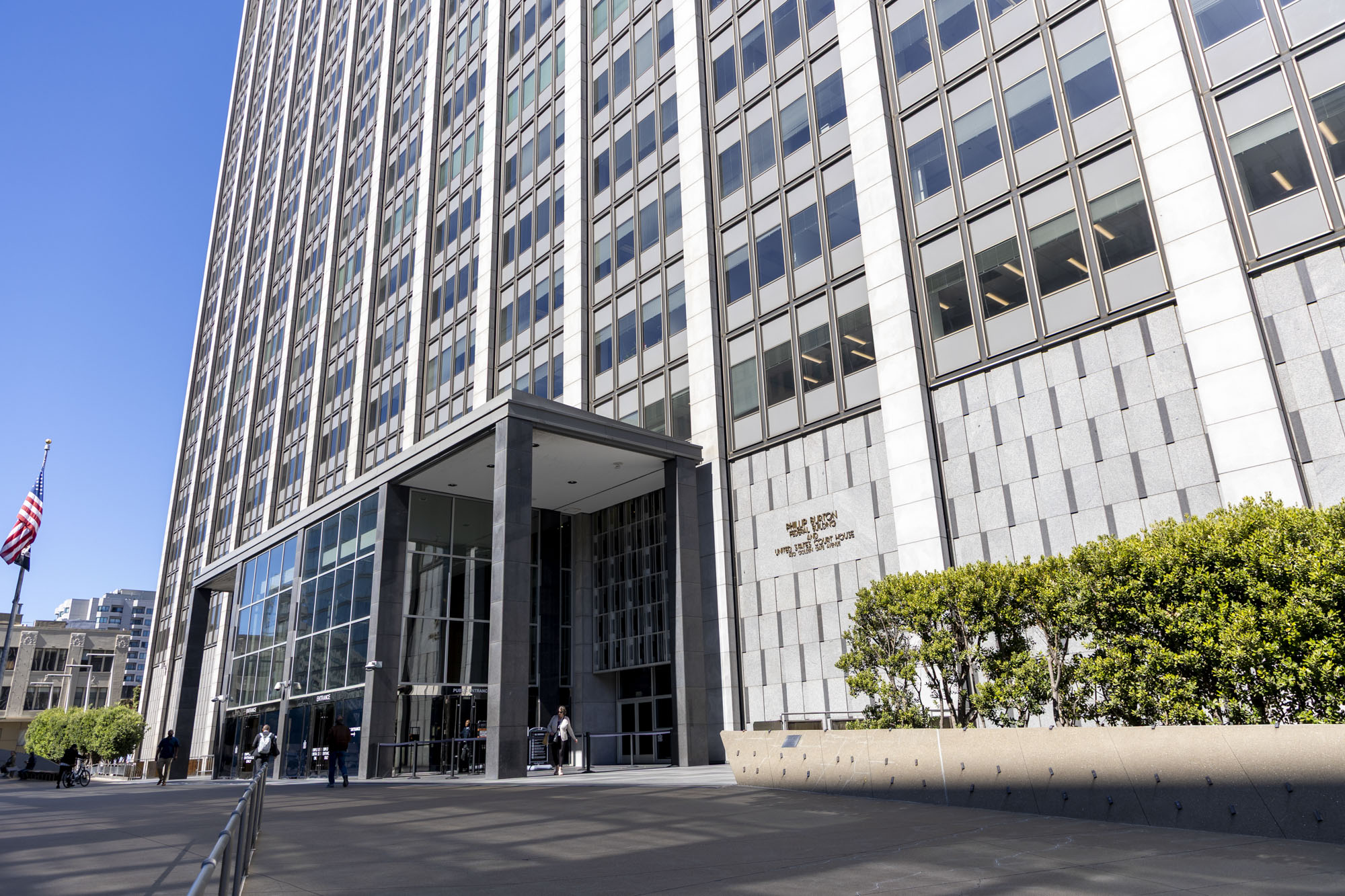
"caption": "The Phillip Burton Federal Building and United States Court House in San Francisco on Sept. 29, 2026. A judge released the law enforcement agency on Tuesday from more than two decades of court-ordered federal oversight. ",
"credit": "Tâm Vũ/KQED",
"altTag": null,
"description": null,
"imgSizes": {
"thumbnail": {
"file": "https://cdn.kqed.org/wp-content/uploads/sites/10/2026/09/260929-phillipburtonfederalbuilding-00127_TV-KQED-160x107.jpg",
"width": 160,
"height": 107,
"mimeType": "image/jpeg"
},
"1536x1536": {
"file": "https://cdn.kqed.org/wp-content/uploads/sites/10/2026/09/260929-phillipburtonfederalbuilding-00127_TV-KQED-1536x1024.jpg",
"width": 1536,
"height": 1024,
"mimeType": "image/jpeg"
},
"post-thumbnail": {
"file": "https://cdn.kqed.org/wp-content/uploads/sites/10/2026/09/260929-phillipburtonfederalbuilding-00127_TV-KQED-672x372.jpg",
"width": 672,
"height": 372,
"mimeType": "image/jpeg"
},
"twentyfourteen-full-width": {
"file": "https://cdn.kqed.org/wp-content/uploads/sites/10/2026/09/260929-phillipburtonfederalbuilding-00127_TV-KQED-1038x576.jpg",
"width": 1038,
"height": 576,
"mimeType": "image/jpeg"
},
"npr-cds-wide": {
"file": "https://cdn.kqed.org/wp-content/uploads/sites/10/2026/09/260929-phillipburtonfederalbuilding-00127_TV-KQED-1200x675.jpg",
"width": 1200,
"height": 675,
"mimeType": "image/jpeg"
},
"npr-cds-square": {
"file": "https://cdn.kqed.org/wp-content/uploads/sites/10/2026/09/260929-phillipburtonfederalbuilding-00127_TV-KQED-600x600.jpg",
"width": 600,
"height": 600,
"mimeType": "image/jpeg"
},
"kqedFullSize": {
"file": "https://cdn.kqed.org/wp-content/uploads/sites/10/2026/09/260929-phillipburtonfederalbuilding-00127_TV-KQED.jpg",
"width": 2000,
"height": 1333
}
},
"isLoading": false,
"fetchFailed": false
},
"news_11685635": {
"type": "attachments",
"id": "news_11685635",
"meta": {
"index": "attachments_1716263798",
"site": "news",
"id": "11685635",
"found": true
},
"parent": 11685634,
"imgSizes": {
"small": {
"file": "https://ww2.kqed.org/app/uploads/sites/10/2018/08/gettyimages-157777285_wide-2007e471295adfece993732251df78f897108c65-520x292.jpg",
"width": 520,
"mimeType": "image/jpeg",
"height": 292
},
"twentyfourteen-full-width": {
"file": "https://ww2.kqed.org/app/uploads/sites/10/2018/08/gettyimages-157777285_wide-2007e471295adfece993732251df78f897108c65-1038x576.jpg",
"width": 1038,
"mimeType": "image/jpeg",
"height": 576
},
"thumbnail": {
"file": "https://ww2.kqed.org/app/uploads/sites/10/2018/08/gettyimages-157777285_wide-2007e471295adfece993732251df78f897108c65-160x90.jpg",
"width": 160,
"mimeType": "image/jpeg",
"height": 90
},
"fd-sm": {
"file": "https://ww2.kqed.org/app/uploads/sites/10/2018/08/gettyimages-157777285_wide-2007e471295adfece993732251df78f897108c65-960x540.jpg",
"width": 960,
"mimeType": "image/jpeg",
"height": 540
},
"post-thumbnail": {
"file": "https://ww2.kqed.org/app/uploads/sites/10/2018/08/gettyimages-157777285_wide-2007e471295adfece993732251df78f897108c65-672x372.jpg",
"width": 672,
"mimeType": "image/jpeg",
"height": 372
},
"xsmall": {
"file": "https://ww2.kqed.org/app/uploads/sites/10/2018/08/gettyimages-157777285_wide-2007e471295adfece993732251df78f897108c65-375x211.jpg",
"width": 375,
"mimeType": "image/jpeg",
"height": 211
},
"kqedFullSize": {
"file": "https://ww2.kqed.org/app/uploads/sites/10/2018/08/gettyimages-157777285_wide-2007e471295adfece993732251df78f897108c65.jpg",
"width": 3000,
"height": 1687
},
"large": {
"file": "https://ww2.kqed.org/app/uploads/sites/10/2018/08/gettyimages-157777285_wide-2007e471295adfece993732251df78f897108c65-1020x574.jpg",
"width": 1020,
"mimeType": "image/jpeg",
"height": 574
},
"xlarge": {
"file": "https://ww2.kqed.org/app/uploads/sites/10/2018/08/gettyimages-157777285_wide-2007e471295adfece993732251df78f897108c65-1180x664.jpg",
"width": 1180,
"mimeType": "image/jpeg",
"height": 664
},
"complete_open_graph": {
"file": "https://ww2.kqed.org/app/uploads/sites/10/2018/08/gettyimages-157777285_wide-2007e471295adfece993732251df78f897108c65-1200x675.jpg",
"width": 1200,
"mimeType": "image/jpeg",
"height": 675
},
"guest-author-50": {
"file": "https://ww2.kqed.org/app/uploads/sites/10/2018/08/gettyimages-157777285_wide-2007e471295adfece993732251df78f897108c65-50x50.jpg",
"width": 50,
"mimeType": "image/jpeg",
"height": 50
},
"guest-author-96": {
"file": "https://ww2.kqed.org/app/uploads/sites/10/2018/08/gettyimages-157777285_wide-2007e471295adfece993732251df78f897108c65-96x96.jpg",
"width": 96,
"mimeType": "image/jpeg",
"height": 96
},
"medium": {
"file": "https://ww2.kqed.org/app/uploads/sites/10/2018/08/gettyimages-157777285_wide-2007e471295adfece993732251df78f897108c65-800x450.jpg",
"width": 800,
"mimeType": "image/jpeg",
"height": 450
},
"guest-author-64": {
"file": "https://ww2.kqed.org/app/uploads/sites/10/2018/08/gettyimages-157777285_wide-2007e471295adfece993732251df78f897108c65-64x64.jpg",
"width": 64,
"mimeType": "image/jpeg",
"height": 64
},
"guest-author-32": {
"file": "https://ww2.kqed.org/app/uploads/sites/10/2018/08/gettyimages-157777285_wide-2007e471295adfece993732251df78f897108c65-32x32.jpg",
"width": 32,
"mimeType": "image/jpeg",
"height": 32
},
"fd-lrg": {
"file": "https://ww2.kqed.org/app/uploads/sites/10/2018/08/gettyimages-157777285_wide-2007e471295adfece993732251df78f897108c65-1920x1080.jpg",
"width": 1920,
"mimeType": "image/jpeg",
"height": 1080
},
"fd-med": {
"file": "https://ww2.kqed.org/app/uploads/sites/10/2018/08/gettyimages-157777285_wide-2007e471295adfece993732251df78f897108c65-1180x664.jpg",
"width": 1180,
"mimeType": "image/jpeg",
"height": 664
},
"full-width": {
"file": "https://ww2.kqed.org/app/uploads/sites/10/2018/08/gettyimages-157777285_wide-2007e471295adfece993732251df78f897108c65-1920x1080.jpg",
"width": 1920,
"mimeType": "image/jpeg",
"height": 1080
},
"detail": {
"file": "https://ww2.kqed.org/app/uploads/sites/10/2018/08/gettyimages-157777285_wide-2007e471295adfece993732251df78f897108c65-150x150.jpg",
"width": 150,
"mimeType": "image/jpeg",
"height": 150
},
"guest-author-128": {
"file": "https://ww2.kqed.org/app/uploads/sites/10/2018/08/gettyimages-157777285_wide-2007e471295adfece993732251df78f897108c65-128x128.jpg",
"width": 128,
"mimeType": "image/jpeg",
"height": 128
},
"xxsmall": {
"file": "https://ww2.kqed.org/app/uploads/sites/10/2018/08/gettyimages-157777285_wide-2007e471295adfece993732251df78f897108c65-240x135.jpg",
"width": 240,
"mimeType": "image/jpeg",
"height": 135
}
},
"publishDate": 1533744807,
"modified": 1533747457,
"caption": "The Oakland Police Department remains under federal oversight 15 years after settling a civil rights case against it.",
"description": "The Oakland Police Department remains under federal oversight 15 years after settling a civil rights case against it",
"title": "The Oakland Police Department remains under federal oversight 15 years after settling a civil rights case against it.",
"credit": "Justin Sullivan/Getty Images",
"status": "inherit",
"isLoading": false,
"fetchFailed": false
},
"news_12034725": {
"type": "attachments",
"id": "news_12034725",
"meta": {
"index": "attachments_1716263798",
"site": "news",
"id": "12034725",
"found": true
},
"title": "20250311_Oakland-Budget_DMB_00008_qed",
"publishDate": 1744046339,
"status": "inherit",
"parent": 12034722,
"modified": 1744046403,
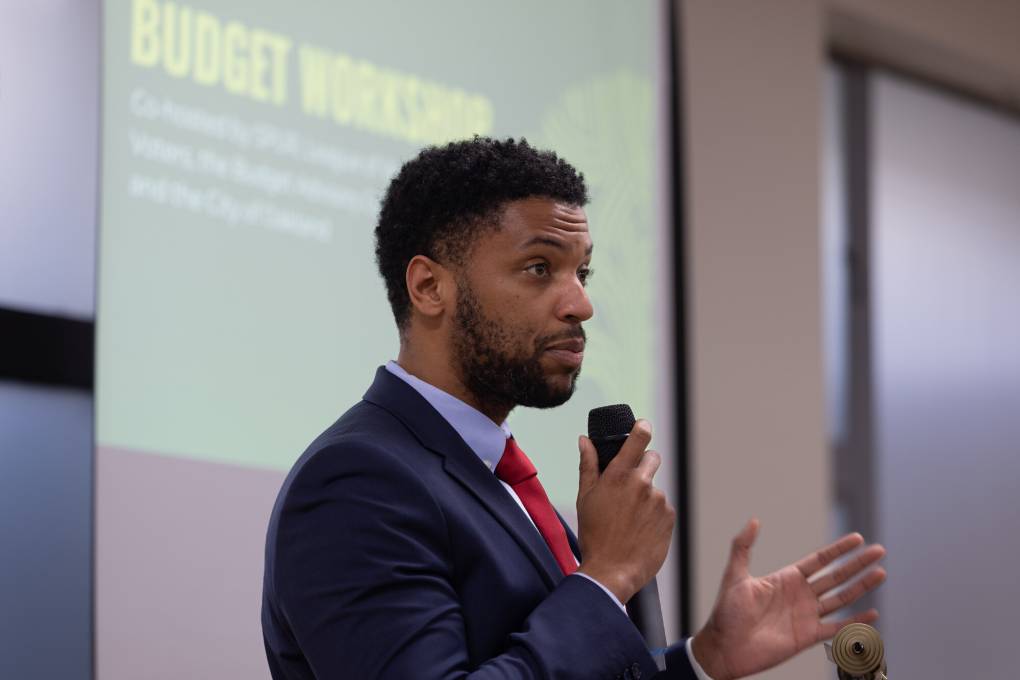
"caption": "Interim Mayor Kevin Jenkins addresses Oakland residents at an educational workshop about Oakland’s biennial budget process at the Main Library on March 11, 2025. ",
"credit": "David M. Barreda/KQED",
"altTag": null,
"description": null,
"imgSizes": {
"medium": {
"file": "https://cdn.kqed.org/wp-content/uploads/sites/10/2025/04/20250311_Oakland-Budget_DMB_00008_qed-800x533.jpg",
"width": 800,
"height": 533,
"mimeType": "image/jpeg"
},
"large": {
"file": "https://cdn.kqed.org/wp-content/uploads/sites/10/2025/04/20250311_Oakland-Budget_DMB_00008_qed-1020x680.jpg",
"width": 1020,
"height": 680,
"mimeType": "image/jpeg"
},
"thumbnail": {
"file": "https://cdn.kqed.org/wp-content/uploads/sites/10/2025/04/20250311_Oakland-Budget_DMB_00008_qed-160x107.jpg",
"width": 160,
"height": 107,
"mimeType": "image/jpeg"
},
"1536x1536": {
"file": "https://cdn.kqed.org/wp-content/uploads/sites/10/2025/04/20250311_Oakland-Budget_DMB_00008_qed-1536x1024.jpg",
"width": 1536,
"height": 1024,
"mimeType": "image/jpeg"
},
"post-thumbnail": {
"file": "https://cdn.kqed.org/wp-content/uploads/sites/10/2025/04/20250311_Oakland-Budget_DMB_00008_qed-672x372.jpg",
"width": 672,
"height": 372,
"mimeType": "image/jpeg"
},
"twentyfourteen-full-width": {
"file": "https://cdn.kqed.org/wp-content/uploads/sites/10/2025/04/20250311_Oakland-Budget_DMB_00008_qed-1038x576.jpg",
"width": 1038,
"height": 576,
"mimeType": "image/jpeg"
},
"full-width": {
"file": "https://cdn.kqed.org/wp-content/uploads/sites/10/2025/04/20250311_Oakland-Budget_DMB_00008_qed-1920x1280.jpg",
"width": 1920,
"height": 1280,
"mimeType": "image/jpeg"
},
"kqedFullSize": {
"file": "https://cdn.kqed.org/wp-content/uploads/sites/10/2025/04/20250311_Oakland-Budget_DMB_00008_qed.jpg",
"width": 1999,
"height": 1333
}
},
"isLoading": false,
"fetchFailed": false
},
"news_12070839": {
"type": "attachments",
"id": "news_12070839",
"meta": {
"index": "attachments_1716263798",
"site": "news",
"id": "12070839",
"found": true
},
"title": "A speed camera at Broadway Ave. and 7th Street in Oakland on Jan. 22, 2026.",
"publishDate": 1769122384,
"status": "inherit",
"parent": 0,
"modified": 1787182264,
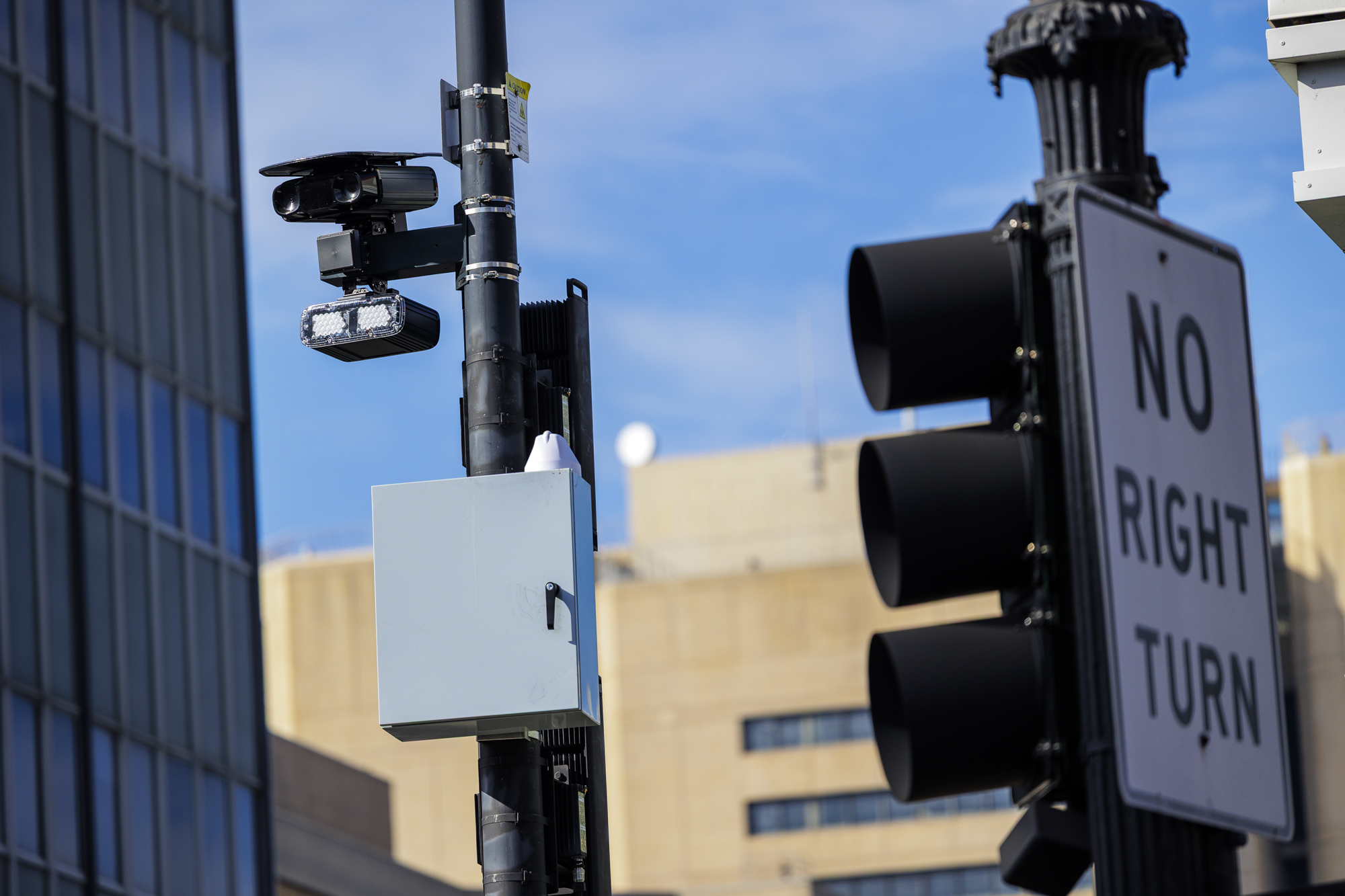
"caption": "A speed camera at Broadway Avenue and Seventh Street in Oakland on Jan. 22, 2026.",
"credit": "Martin do Nascimento/KQED",
"altTag": null,
"description": null,
"imgSizes": {
"thumbnail": {
"file": "https://cdn.kqed.org/wp-content/uploads/sites/10/2026/01/260122-OAKLAND-SPEED-CAMERAS-MD-02-KQED-160x107.jpg",
"width": 160,
"height": 107,
"mimeType": "image/jpeg"
},
"1536x1536": {
"file": "https://cdn.kqed.org/wp-content/uploads/sites/10/2026/01/260122-OAKLAND-SPEED-CAMERAS-MD-02-KQED-1536x1024.jpg",
"width": 1536,
"height": 1024,
"mimeType": "image/jpeg"
},
"post-thumbnail": {
"file": "https://cdn.kqed.org/wp-content/uploads/sites/10/2026/01/260122-OAKLAND-SPEED-CAMERAS-MD-02-KQED-672x372.jpg",
"width": 672,
"height": 372,
"mimeType": "image/jpeg"
},
"twentyfourteen-full-width": {
"file": "https://cdn.kqed.org/wp-content/uploads/sites/10/2026/01/260122-OAKLAND-SPEED-CAMERAS-MD-02-KQED-1038x576.jpg",
"width": 1038,
"height": 576,
"mimeType": "image/jpeg"
},
"npr-cds-wide": {
"file": "https://cdn.kqed.org/wp-content/uploads/sites/10/2026/01/260122-OAKLAND-SPEED-CAMERAS-MD-02-KQED-1200x675.jpg",
"width": 1200,
"height": 675,
"mimeType": "image/jpeg"
},
"kqedFullSize": {
"file": "https://cdn.kqed.org/wp-content/uploads/sites/10/2026/01/260122-OAKLAND-SPEED-CAMERAS-MD-02-KQED.jpg",
"width": 2000,
"height": 1333
}
},
"isLoading": false,
"fetchFailed": false
},
"news_12061256": {
"type": "attachments",
"id": "news_12061256",
"meta": {
"index": "attachments_1716263798",
"site": "news",
"id": "12061256",
"found": true
},
"title": "251023-MAYOR LEE PRESSER-MD-09-KQED",
"publishDate": 1761245641,
"status": "inherit",
"parent": 12061224,
"modified": 1783638320,
"caption": "James Beere, assistant chief of police with the Oakland Police Department, speaks at a press conference at Oakland City Hall on Oct. 23, 2025.",
"credit": "Martin do Nascimento/KQED",
"altTag": null,
"description": null,
"imgSizes": {
"thumbnail": {
"file": "https://cdn.kqed.org/wp-content/uploads/sites/10/2025/10/251023-MAYOR-LEE-PRESSER-MD-09-KQED-160x107.jpg",
"width": 160,
"height": 107,
"mimeType": "image/jpeg"
},
"1536x1536": {
"file": "https://cdn.kqed.org/wp-content/uploads/sites/10/2025/10/251023-MAYOR-LEE-PRESSER-MD-09-KQED-1536x1024.jpg",
"width": 1536,
"height": 1024,
"mimeType": "image/jpeg"
},
"post-thumbnail": {
"file": "https://cdn.kqed.org/wp-content/uploads/sites/10/2025/10/251023-MAYOR-LEE-PRESSER-MD-09-KQED-672x372.jpg",
"width": 672,
"height": 372,
"mimeType": "image/jpeg"
},
"twentyfourteen-full-width": {
"file": "https://cdn.kqed.org/wp-content/uploads/sites/10/2025/10/251023-MAYOR-LEE-PRESSER-MD-09-KQED-1038x576.jpg",
"width": 1038,
"height": 576,
"mimeType": "image/jpeg"
},
"npr-cds-wide": {
"file": "https://cdn.kqed.org/wp-content/uploads/sites/10/2025/10/251023-MAYOR-LEE-PRESSER-MD-09-KQED-1600x900.jpg",
"width": 1600,
"height": 900,
"mimeType": "image/jpeg"
},
"kqedFullSize": {
"file": "https://cdn.kqed.org/wp-content/uploads/sites/10/2025/10/251023-MAYOR-LEE-PRESSER-MD-09-KQED.jpg",
"width": 2000,
"height": 1333
}
},
"isLoading": false,
"fetchFailed": false
},
"news_12084253": {
"type": "attachments",
"id": "news_12084253",
"meta": {
"index": "attachments_1716263798",
"site": "news",
"id": "12084253",
"found": true
},
"title": "Oakland Police",
"publishDate": 1779210267,
"status": "inherit",
"parent": 12084243,
"modified": 1779210325,
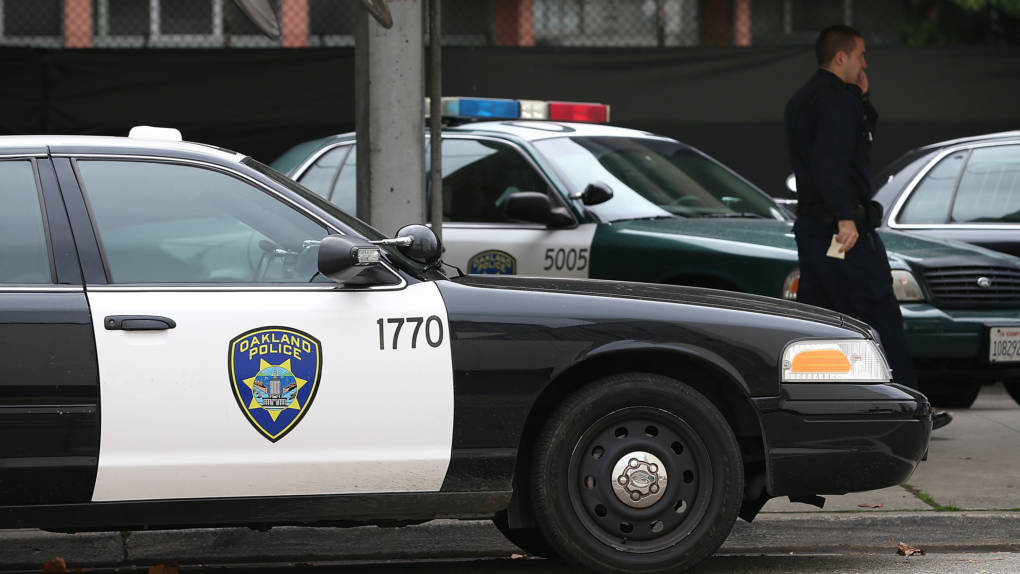
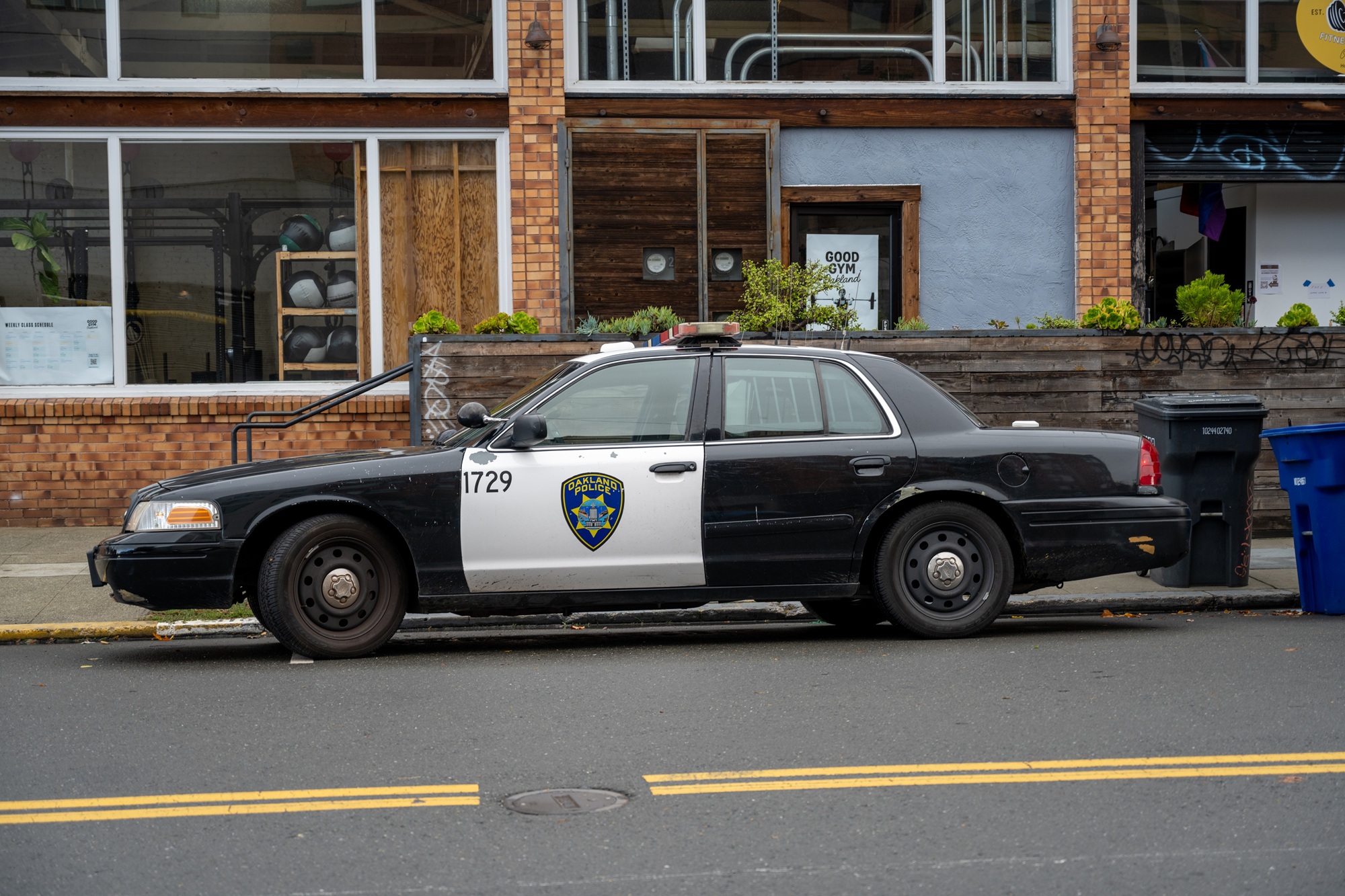
"caption": "An Oakland Police vehicle in Oakland, California, on Nov. 5, 2025. ",
"credit": "Smith Collection/Gado via Getty Images",
"altTag": null,
"description": null,
"imgSizes": {
"thumbnail": {
"file": "https://cdn.kqed.org/wp-content/uploads/sites/10/2026/05/OaklandPoliceCarKQED-160x107.jpg",
"width": 160,
"height": 107,
"mimeType": "image/jpeg"
},
"1536x1536": {
"file": "https://cdn.kqed.org/wp-content/uploads/sites/10/2026/05/OaklandPoliceCarKQED-1536x1024.jpg",
"width": 1536,
"height": 1024,
"mimeType": "image/jpeg"
},
"post-thumbnail": {
"file": "https://cdn.kqed.org/wp-content/uploads/sites/10/2026/05/OaklandPoliceCarKQED-672x372.jpg",
"width": 672,
"height": 372,
"mimeType": "image/jpeg"
},
"twentyfourteen-full-width": {
"file": "https://cdn.kqed.org/wp-content/uploads/sites/10/2026/05/OaklandPoliceCarKQED-1038x576.jpg",
"width": 1038,
"height": 576,
"mimeType": "image/jpeg"
},
"npr-cds-wide": {
"file": "https://cdn.kqed.org/wp-content/uploads/sites/10/2026/05/OaklandPoliceCarKQED-1200x675.jpg",
"width": 1200,
"height": 675,
"mimeType": "image/jpeg"
},
"npr-cds-square": {
"file": "https://cdn.kqed.org/wp-content/uploads/sites/10/2026/05/OaklandPoliceCarKQED-600x600.jpg",
"width": 600,
"height": 600,
"mimeType": "image/jpeg"
},
"kqedFullSize": {
"file": "https://cdn.kqed.org/wp-content/uploads/sites/10/2026/05/OaklandPoliceCarKQED.jpg",
"width": 2000,
"height": 1333
}
},
"isLoading": false,
"fetchFailed": false
},
"news_12038002": {
"type": "attachments",
"id": "news_12038002",
"meta": {
"index": "attachments_1716263798",
"site": "news",
"id": "12038002",
"found": true
},
"title": "An Oakland Police Department squad car in downtown Oakland on April 28, 2025.",
"publishDate": 1745884766,
"status": "inherit",
"parent": 12042539,
"modified": 1748986081,
"caption": "An Oakland Police Department squad car in downtown Oakland on April 28, 2025.",
"credit": "Martin do Nascimento/KQED",
"altTag": null,
"description": null,
"imgSizes": {
"medium": {
"file": "https://cdn.kqed.org/wp-content/uploads/sites/10/2025/04/250428-OPD-FILE-MD-01-KQED-1-800x533.jpg",
"width": 800,
"height": 533,
"mimeType": "image/jpeg"
},
"large": {
"file": "https://cdn.kqed.org/wp-content/uploads/sites/10/2025/04/250428-OPD-FILE-MD-01-KQED-1-1020x680.jpg",
"width": 1020,
"height": 680,
"mimeType": "image/jpeg"
},
"thumbnail": {
"file": "https://cdn.kqed.org/wp-content/uploads/sites/10/2025/04/250428-OPD-FILE-MD-01-KQED-1-160x107.jpg",
"width": 160,
"height": 107,
"mimeType": "image/jpeg"
},
"1536x1536": {
"file": "https://cdn.kqed.org/wp-content/uploads/sites/10/2025/04/250428-OPD-FILE-MD-01-KQED-1-1536x1024.jpg",
"width": 1536,
"height": 1024,
"mimeType": "image/jpeg"
},
"post-thumbnail": {
"file": "https://cdn.kqed.org/wp-content/uploads/sites/10/2025/04/250428-OPD-FILE-MD-01-KQED-1-672x372.jpg",
"width": 672,
"height": 372,
"mimeType": "image/jpeg"
},
"twentyfourteen-full-width": {
"file": "https://cdn.kqed.org/wp-content/uploads/sites/10/2025/04/250428-OPD-FILE-MD-01-KQED-1-1038x576.jpg",
"width": 1038,
"height": 576,
"mimeType": "image/jpeg"
},
"full-width": {
"file": "https://cdn.kqed.org/wp-content/uploads/sites/10/2025/04/250428-OPD-FILE-MD-01-KQED-1-1920x1280.jpg",
"width": 1920,
"height": 1280,
"mimeType": "image/jpeg"
},
"kqedFullSize": {
"file": "https://cdn.kqed.org/wp-content/uploads/sites/10/2025/04/250428-OPD-FILE-MD-01-KQED-1.jpg",
"width": 2000,
"height": 1333
}
},
"isLoading": false,
"fetchFailed": false
},
"news_12082702": {
"type": "attachments",
"id": "news_12082702",
"meta": {
"index": "attachments_1716263798",
"site": "news",
"id": "12082702",
"found": true
},
"title": "ISRAEL-US-TECHNOLOGY-CELLEBRITE",
"publishDate": 1778176219,
"status": "inherit",
"parent": 12082693,
"modified": 1778176317,
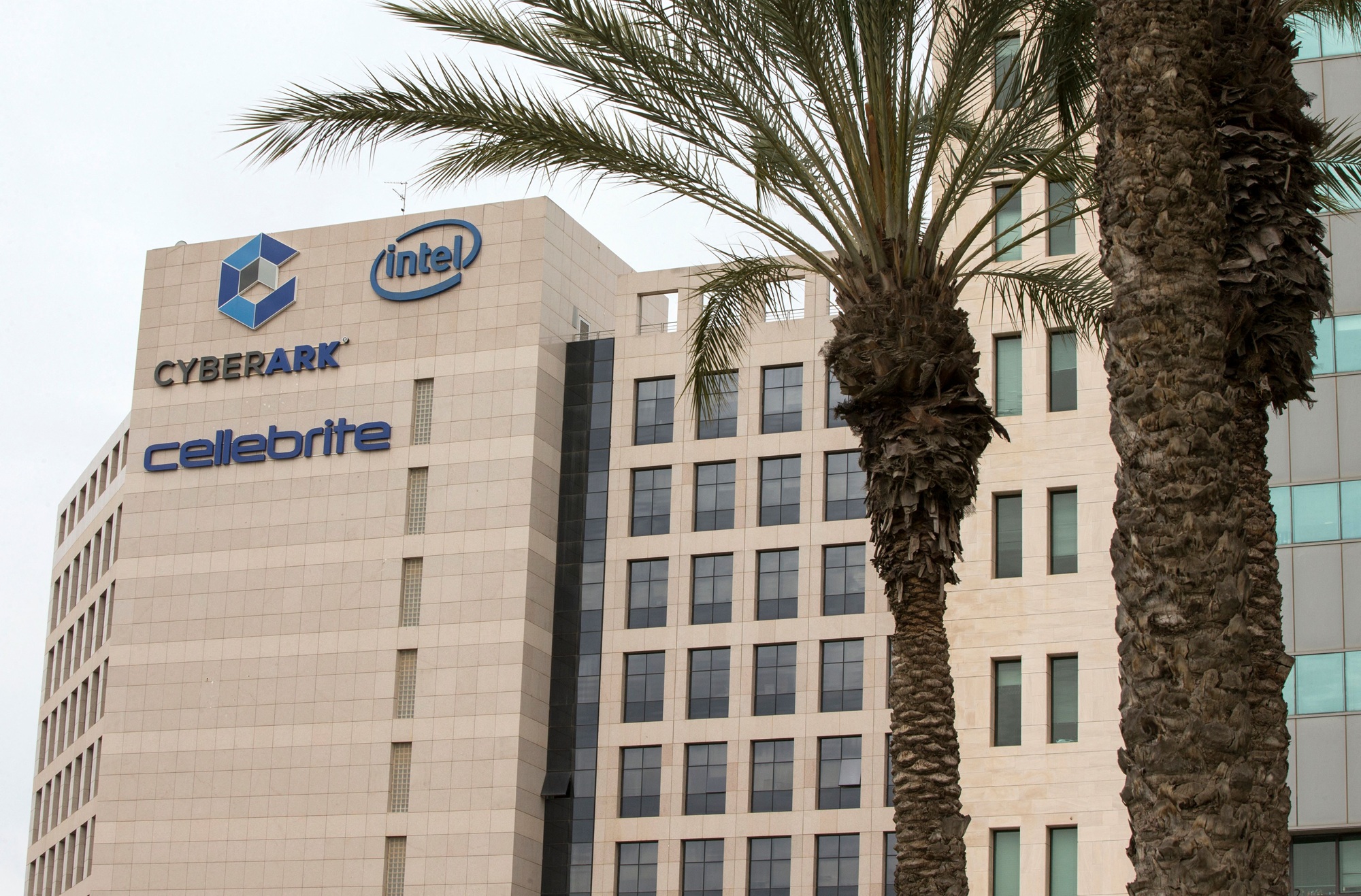
"caption": "The offices of Israeli company Cellebrite on March 24, 2016. Cellebrite is a provider of mobile forensic software that can extract and decode data from the Apple iPhone locked handsets. ",
"credit": "Jack Guez/AFP via Getty Images",
"altTag": null,
"description": null,
"imgSizes": {
"thumbnail": {
"file": "https://cdn.kqed.org/wp-content/uploads/sites/10/2026/05/CellebriteGetty-160x105.jpg",
"width": 160,
"height": 105,
"mimeType": "image/jpeg"
},
"1536x1536": {
"file": "https://cdn.kqed.org/wp-content/uploads/sites/10/2026/05/CellebriteGetty-1536x1011.jpg",
"width": 1536,
"height": 1011,
"mimeType": "image/jpeg"
},
"post-thumbnail": {
"file": "https://cdn.kqed.org/wp-content/uploads/sites/10/2026/05/CellebriteGetty-672x372.jpg",
"width": 672,
"height": 372,
"mimeType": "image/jpeg"
},
"twentyfourteen-full-width": {
"file": "https://cdn.kqed.org/wp-content/uploads/sites/10/2026/05/CellebriteGetty-1038x576.jpg",
"width": 1038,
"height": 576,
"mimeType": "image/jpeg"
},
"npr-cds-wide": {
"file": "https://cdn.kqed.org/wp-content/uploads/sites/10/2026/05/CellebriteGetty-1200x675.jpg",
"width": 1200,
"height": 675,
"mimeType": "image/jpeg"
},
"npr-cds-square": {
"file": "https://cdn.kqed.org/wp-content/uploads/sites/10/2026/05/CellebriteGetty-600x600.jpg",
"width": 600,
"height": 600,
"mimeType": "image/jpeg"
},
"kqedFullSize": {
"file": "https://cdn.kqed.org/wp-content/uploads/sites/10/2026/05/CellebriteGetty.jpg",
"width": 2000,
"height": 1317
}
},
"isLoading": false,
"fetchFailed": false
},
"news_12048727": {
"type": "attachments",
"id": "news_12048727",
"meta": {
"index": "attachments_1716263798",
"site": "news",
"id": "12048727",
"found": true
},
"title": "250702-OAKLAND POLICE DEPARTMENT-MD-01_qed",
"publishDate": 1752858990,
"status": "inherit",
"parent": 12048706,
"modified": 1752859091,
"caption": "An Oakland Police Department vehicle parked on July 1, 2025.",
"credit": "Martin do Nascimento/KQED",
"altTag": null,
"description": null,
"imgSizes": {
"thumbnail": {
"file": "https://cdn.kqed.org/wp-content/uploads/sites/10/2025/07/250702-OAKLAND-POLICE-DEPARTMENT-MD-01_qed-160x107.jpg",
"width": 160,
"height": 107,
"mimeType": "image/jpeg"
},
"1536x1536": {
"file": "https://cdn.kqed.org/wp-content/uploads/sites/10/2025/07/250702-OAKLAND-POLICE-DEPARTMENT-MD-01_qed-1536x1024.jpg",
"width": 1536,
"height": 1024,
"mimeType": "image/jpeg"
},
"post-thumbnail": {
"file": "https://cdn.kqed.org/wp-content/uploads/sites/10/2025/07/250702-OAKLAND-POLICE-DEPARTMENT-MD-01_qed-672x372.jpg",
"width": 672,
"height": 372,
"mimeType": "image/jpeg"
},
"twentyfourteen-full-width": {
"file": "https://cdn.kqed.org/wp-content/uploads/sites/10/2025/07/250702-OAKLAND-POLICE-DEPARTMENT-MD-01_qed-1038x576.jpg",
"width": 1038,
"height": 576,
"mimeType": "image/jpeg"
},
"kqedFullSize": {
"file": "https://cdn.kqed.org/wp-content/uploads/sites/10/2025/07/250702-OAKLAND-POLICE-DEPARTMENT-MD-01_qed.jpg",
"width": 1999,
"height": 1333
}
},
"isLoading": false,
"fetchFailed": false
},
"news_12065779": {
"type": "attachments",
"id": "news_12065779",
"meta": {
"index": "attachments_1716263798",
"site": "news",
"id": "12065779",
"found": true
},
"title": "251202-OAKSPEEDCAMERAS-19-BL-KQED",
"publishDate": 1764714288,
"status": "inherit",
"parent": 12065712,
"modified": 1773358090,
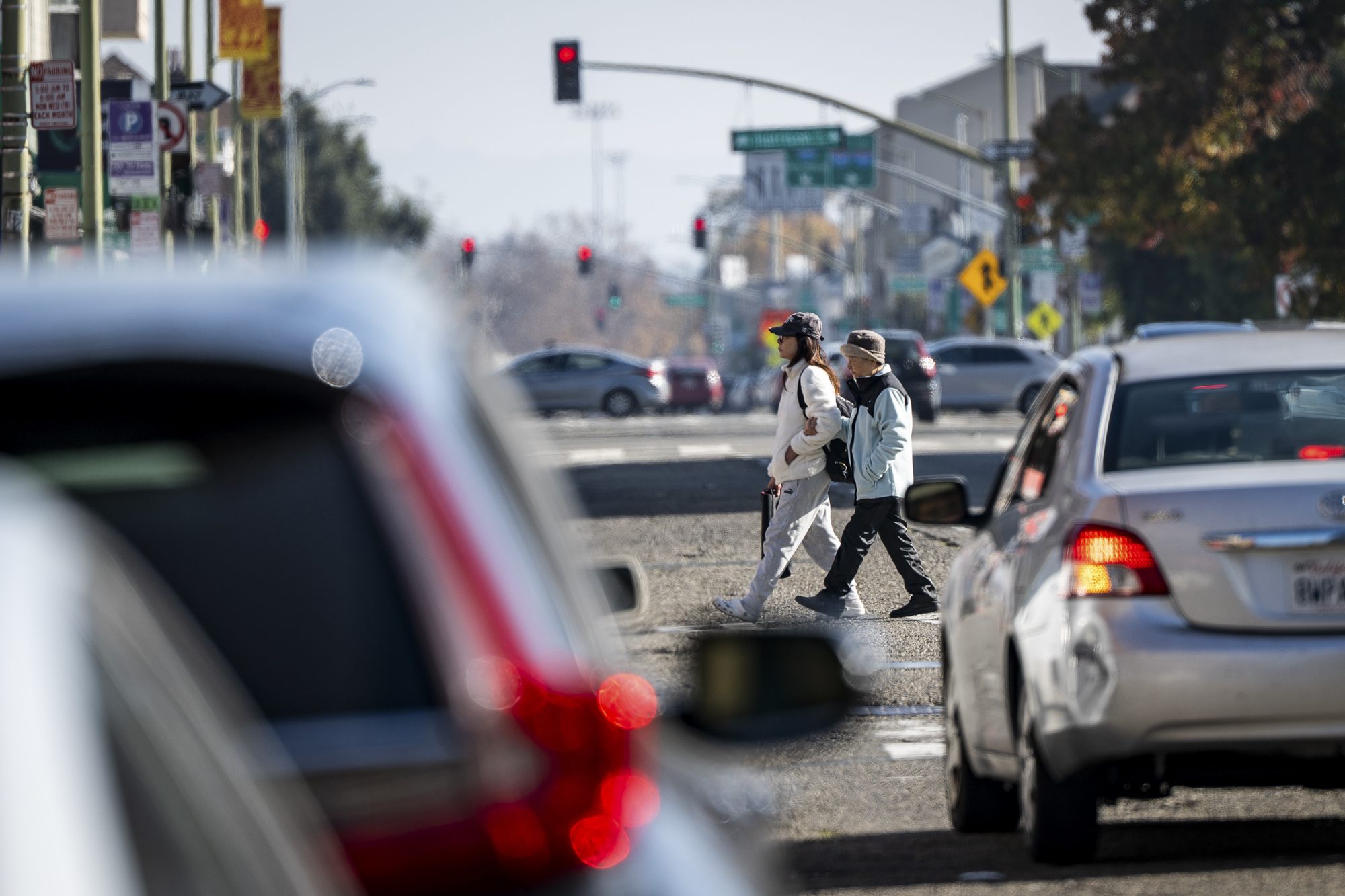
"caption": "Pedestrians cross at the intersection of Franklin and Seventh Streets in Oakland on Dec. 2, 2025, near where a speed-camera pilot program will install a camera on Seventh Street between Broadway and Franklin.",
"credit": "Beth LaBerge/KQED",
"altTag": null,
"description": null,
"imgSizes": {
"thumbnail": {
"file": "https://cdn.kqed.org/wp-content/uploads/sites/10/2025/12/251202-OAKSPEEDCAMERAS-19-BL-KQED-160x107.jpg",
"width": 160,
"height": 107,
"mimeType": "image/jpeg"
},
"1536x1536": {
"file": "https://cdn.kqed.org/wp-content/uploads/sites/10/2025/12/251202-OAKSPEEDCAMERAS-19-BL-KQED-1536x1024.jpg",
"width": 1536,
"height": 1024,
"mimeType": "image/jpeg"
},
"post-thumbnail": {
"file": "https://cdn.kqed.org/wp-content/uploads/sites/10/2025/12/251202-OAKSPEEDCAMERAS-19-BL-KQED-672x372.jpg",
"width": 672,
"height": 372,
"mimeType": "image/jpeg"
},
"twentyfourteen-full-width": {
"file": "https://cdn.kqed.org/wp-content/uploads/sites/10/2025/12/251202-OAKSPEEDCAMERAS-19-BL-KQED-1038x576.jpg",
"width": 1038,
"height": 576,
"mimeType": "image/jpeg"
},
"npr-cds-wide": {
"file": "https://cdn.kqed.org/wp-content/uploads/sites/10/2025/12/251202-OAKSPEEDCAMERAS-19-BL-KQED-1200x675.jpg",
"width": 1200,
"height": 675,
"mimeType": "image/jpeg"
},
"kqedFullSize": {
"file": "https://cdn.kqed.org/wp-content/uploads/sites/10/2025/12/251202-OAKSPEEDCAMERAS-19-BL-KQED.jpg",
"width": 2000,
"height": 1333
}
},
"isLoading": false,
"fetchFailed": false
},
"news_12075904": {
"type": "attachments",
"id": "news_12075904",
"meta": {
"index": "attachments_1716263798",
"site": "news",
"id": "12075904",
"found": true
},
"title": "260309-OAKLANDVICTIMS00259_TV-KQED",
"publishDate": 1773160301,
"status": "inherit",
"parent": 0,
"modified": 1773166916,
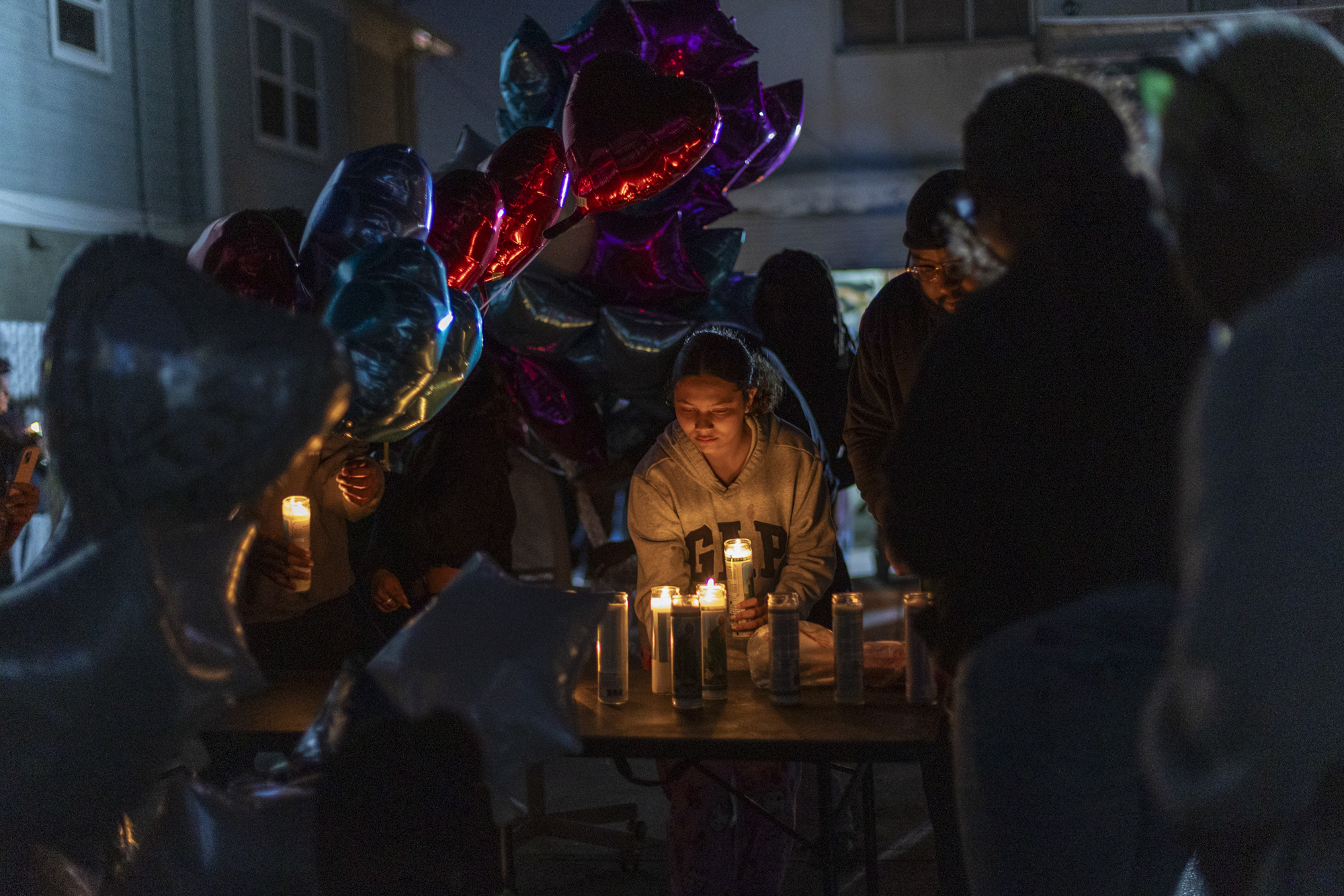
"caption": "Yasmin Chapadense, a student of Latetia Bobo’s, places a lit candle on a table honoring her memory at her vigil in Oakland on March 9, 2026. Latetia Bobo was one of two victims who died in a mass shooting in Oakland on Saturday, March 7.",
"credit": "Tâm Vũ/KQED",
"altTag": null,
"description": null,
"imgSizes": {
"thumbnail": {
"file": "https://cdn.kqed.org/wp-content/uploads/sites/10/2026/03/260309-OAKLANDVICTIMS00259_TV-KQED-160x107.jpg",
"width": 160,
"height": 107,
"mimeType": "image/jpeg"
},
"1536x1536": {
"file": "https://cdn.kqed.org/wp-content/uploads/sites/10/2026/03/260309-OAKLANDVICTIMS00259_TV-KQED-1536x1025.jpg",
"width": 1536,
"height": 1025,
"mimeType": "image/jpeg"
},
"post-thumbnail": {
"file": "https://cdn.kqed.org/wp-content/uploads/sites/10/2026/03/260309-OAKLANDVICTIMS00259_TV-KQED-672x372.jpg",
"width": 672,
"height": 372,
"mimeType": "image/jpeg"
},
"twentyfourteen-full-width": {
"file": "https://cdn.kqed.org/wp-content/uploads/sites/10/2026/03/260309-OAKLANDVICTIMS00259_TV-KQED-1038x576.jpg",
"width": 1038,
"height": 576,
"mimeType": "image/jpeg"
},
"npr-cds-wide": {
"file": "https://cdn.kqed.org/wp-content/uploads/sites/10/2026/03/260309-OAKLANDVICTIMS00259_TV-KQED-1200x675.jpg",
"width": 1200,
"height": 675,
"mimeType": "image/jpeg"
},
"kqedFullSize": {
"file": "https://cdn.kqed.org/wp-content/uploads/sites/10/2026/03/260309-OAKLANDVICTIMS00259_TV-KQED.jpg",
"width": 2000,
"height": 1334
}
},
"isLoading": false,
"fetchFailed": false
}
},
"audioPlayerReducer": {
"postId": "stream_live",
"isPaused": true,
"isPlaying": false,
"pfsActive": false,
"pledgeModalIsOpen": true,
"playerDrawerIsOpen": false,
"liveAudioPlayStartedAt": 0,
"liveAudioPlayContext": ""
},
"authorsReducer": {
"fjhabvala": {
"type": "authors",
"id": "8659",
"meta": {
"index": "authors_1716337520",
"id": "8659",
"found": true
},
"name": "Farida Jhabvala Romero",
"firstName": "Farida",
"lastName": "Jhabvala Romero",
"slug": "fjhabvala",
"email": "fjhabvala@kqed.org",
"display_author_email": true,
"staff_mastheads": [
"news"
],
"title": "KQED Contributor",
"bio": "Farida Jhabvala Romero is a Labor Correspondent for KQED. She previously covered immigration. Farida was \u003ca href=\"https://www.ccnma.org/2022-most-influential-latina-journalists\">named\u003c/a> one of the 10 Most Influential Latina Journalists in California in 2022 by the California Chicano News Media Association. Her work has won awards from the Society of Professional Journalists (Northern California), as well as a national and regional Edward M. Murrow Award for the collaborative reporting projects “Dangerous Air” and “Graying California.” Before joining KQED, Farida worked as a producer at Radio Bilingüe, a national public radio network. Farida earned her master’s degree in journalism from Stanford University.",
"avatar": "https://secure.gravatar.com/avatar/f9f022d4e2609741874222a1e9d41f48fea74011aa7c615eef91d9a50c944ebe?s=600&d=blank&r=g",
"twitter": "FaridaJhabvala",
"bluesky": null,
"facebook": null,
"instagram": null,
"linkedin": "https://www.linkedin.com/in/faridajhabvala/",
"sites": [
{
"site": "news",
"roles": [
"editor"
]
},
{
"site": "stateofhealth",
"roles": [
"author"
]
},
{
"site": "liveblog",
"roles": [
"author"
]
}
],
"headData": {
"title": "Farida Jhabvala Romero | KQED",
"description": "KQED Contributor",
"ogImgSrc": "https://secure.gravatar.com/avatar/f9f022d4e2609741874222a1e9d41f48fea74011aa7c615eef91d9a50c944ebe?s=600&d=blank&r=g",
"twImgSrc": "https://secure.gravatar.com/avatar/f9f022d4e2609741874222a1e9d41f48fea74011aa7c615eef91d9a50c944ebe?s=600&d=blank&r=g"
},
"isLoading": false,
"link": "/author/fjhabvala"
},
"adahlstromeckman": {
"type": "authors",
"id": "11785",
"meta": {
"index": "authors_1716337520",
"id": "11785",
"found": true
},
"name": "Azul Dahlstrom-Eckman",
"firstName": "Azul",
"lastName": "Dahlstrom-Eckman",
"slug": "adahlstromeckman",
"email": "adahlstrom-eckman@kqed.org",
"display_author_email": true,
"staff_mastheads": [],
"title": "Reporter",
"bio": "Azul is a reporter for KQED focusing on transportation and features. He joined KQED in 2021 as an alumna of KALW's Audio Academy radio journalism training program.",
"avatar": "https://secure.gravatar.com/avatar/9cb750298435add7815a777f55bf1f46845c1386bb8452555c60a7b820b5aba3?s=600&d=blank&r=g",
"twitter": "@zuliemann",
"bluesky": "@azul415.bsky.social",
"facebook": null,
"instagram": null,
"linkedin": null,
"sites": [
{
"site": "arts",
"roles": [
"editor"
]
},
{
"site": "news",
"roles": [
"editor"
]
},
{
"site": "science",
"roles": [
"editor"
]
},
{
"site": "liveblog",
"roles": [
"author"
]
}
],
"headData": {
"title": "Azul Dahlstrom-Eckman | KQED",
"description": "Reporter",
"ogImgSrc": "https://secure.gravatar.com/avatar/9cb750298435add7815a777f55bf1f46845c1386bb8452555c60a7b820b5aba3?s=600&d=blank&r=g",
"twImgSrc": "https://secure.gravatar.com/avatar/9cb750298435add7815a777f55bf1f46845c1386bb8452555c60a7b820b5aba3?s=600&d=blank&r=g"
},
"isLoading": false,
"link": "/author/adahlstromeckman"
},
"kdebenedetti": {
"type": "authors",
"id": "11913",
"meta": {
"index": "authors_1716337520",
"id": "11913",
"found": true
},
"name": "Katie DeBenedetti",
"firstName": "Katie",
"lastName": "DeBenedetti",
"slug": "kdebenedetti",
"email": "kdebenedetti@kqed.org",
"display_author_email": false,
"staff_mastheads": [
"news",
"science"
],
"title": "KQED Contributor",
"bio": "Katie DeBenedetti is a digital reporter covering daily news for the Express Desk. Prior to joining KQED as a culture reporting intern in January 2024, she covered education and city government for the Napa Valley Register.",
"avatar": "https://secure.gravatar.com/avatar/6e31073cb8f7e4214ab03f42771d0f45?s=600&d=blank&r=g",
"twitter": null,
"facebook": null,
"instagram": null,
"linkedin": null,
"sites": [
{
"site": "news",
"roles": [
"author"
]
},
{
"site": "science",
"roles": [
"author"
]
},
{
"site": "liveblog",
"roles": [
"author"
]
}
],
"headData": {
"title": "Katie DeBenedetti | KQED",
"description": "KQED Contributor",
"ogImgSrc": "https://secure.gravatar.com/avatar/6e31073cb8f7e4214ab03f42771d0f45?s=600&d=blank&r=g",
"twImgSrc": "https://secure.gravatar.com/avatar/6e31073cb8f7e4214ab03f42771d0f45?s=600&d=blank&r=g"
},
"isLoading": false,
"link": "/author/kdebenedetti"
},
"psibulo": {
"type": "authors",
"id": "11995",
"meta": {
"index": "authors_1716337520",
"id": "11995",
"found": true
},
"name": "Paula Sibulo",
"firstName": "Paula",
"lastName": "Sibulo",
"slug": "psibulo",
"email": "psibulo@kqed.org",
"display_author_email": false,
"staff_mastheads": [
"news"
],
"title": "KQED Contributor",
"bio": "Paula Sibulo is a reporter at KQED. She graduated from San Francisco State University, where she studied broadcast journalism and served as the editor-in-chief of its student-run newspaper, \u003cem>Golden Gate Xpress\u003c/em>. Her work has been recognized with awards from Society of Professional Journalists NorCal, College Media Association, Associated Collegiate Press, and Best of SNO.",
"avatar": "https://secure.gravatar.com/avatar/0548c07ed39b61edb3e76faad378e49a997fd03a43541c27edf5392b1e0738f6?s=600&d=blank&r=g",
"twitter": null,
"bluesky": null,
"facebook": null,
"instagram": null,
"linkedin": null,
"sites": [
{
"site": "news",
"roles": [
"contributor"
]
}
],
"headData": {
"title": "Paula Sibulo | KQED",
"description": "KQED Contributor",
"ogImgSrc": "https://secure.gravatar.com/avatar/0548c07ed39b61edb3e76faad378e49a997fd03a43541c27edf5392b1e0738f6?s=600&d=blank&r=g",
"twImgSrc": "https://secure.gravatar.com/avatar/0548c07ed39b61edb3e76faad378e49a997fd03a43541c27edf5392b1e0738f6?s=600&d=blank&r=g"
},
"isLoading": false,
"link": "/author/psibulo"
}
},
"pagesReducer": {
"news_tag_oakland-police": {
"type": "terms",
"id": "news_412",
"meta": {
"index": "terms_1716263798",
"site": "news",
"id": "412",
"score": 10.404648
},
"featImg": null,
"name": "Oakland police",
"description": null,
"taxonomy": "tag",
"headData": {
"twImgId": null,
"twTitle": null,
"ogTitle": null,
"ogImgId": null,
"twDescription": null,
"description": null,
"title": "Oakland police Archives | KQED News",
"ogDescription": null
},
"ttid": 421,
"slug": "oakland-police",
"isLoading": false,
"title": "Oakland police",
"pageMeta": {
"site": "news",
"WpPageTemplate": "page-topic-editorial",
"currentPage": 1
},
"blocks": [
{
"blockName": "kqed/post-list",
"attrs": {
"layout": "cardArticle2",
"query": "posts/news?tag=oakland-police",
"seeMore": false,
"paginated": true,
"page": 1
}
},
{
"blockName": "kqed/ad"
}
]
}
},
"pfsSessionReducer": {},
"postsReducer": {
"stream_live": {
"type": "live",
"id": "stream_live",
"audioUrl": "https://streams.kqed.org/kqedradio",
"title": "Live Stream",
"excerpt": "Live Stream information currently unavailable.",
"link": "/radio",
"featImg": "",
"label": {
"name": "KQED Live",
"link": "/"
}
},
"stream_kqedNewscast": {
"type": "posts",
"id": "stream_kqedNewscast",
"audioUrl": "https://www.kqed.org/.stream/anon/radio/RDnews/newscast.mp3?_=1",
"title": "KQED Newscast",
"featImg": "",
"label": {
"name": "88.5 FM",
"link": "/"
}
},
"news_12101833": {
"type": "posts",
"id": "news_12101833",
"meta": {
"index": "posts_1716263798",
"site": "news",
"id": "12101833",
"score": null,
"sort": [
1790728976000
]
},
"guestAuthors": [],
"slug": "a-new-beginning-oakland-police-to-exit-federal-oversight-after-23-years",
"title": "‘A New Beginning’ : Oakland Police to Exit Federal Oversight After 23 Years",
"publishDate": 1790728976,
"format": "standard",
"headTitle": "‘A New Beginning’ : Oakland Police to Exit Federal Oversight After 23 Years | KQED",
"labelTerm": {
"site": "news"
},
"content": "\n\u003cp>A judge released Oakland’s police force on Tuesday from \u003ca href=\"https://www.kqed.org/news/12101593/oakland-police-could-finally-emerge-from-oversight-23-years-after-riders\">more than 20 years of federal oversight\u003c/a>, thought to be the longest for any American law enforcement agency.\u003c/p>\n\n\n\n\u003cp>The department will regain full independence after U.S. District Court Judge William Orrick said that the “season for judicial oversight is over.”\u003c/p>\n\n\n\n\u003cp>“While it was important for this court to play the role it has, now it’s important for the court to get out of the way, and let the people of Oakland and their leaders fill their future,” Orrick told the San Francisco courtroom, filled with Oakland city officials.\u003c/p>\n\n\n\n\u003cp>OPD has been subject to court oversight since 2003, when it settled an $11 million class action lawsuit in the wake of a \u003ca href=\"https://www.kqed.org/forum/2010101891855/oakland-police-departments-brutality-corruption-and-cover-up-and-long-road-toward-reform\">notorious police brutality\u003c/a> and corruption scandal. Four officers, known as the “Riders,” were accused of beating, planting evidence and falsely arresting West Oakland residents, and engaging in intimidation, beatings, kidnapping and racial discrimination.\u003c/p>\n\n\n\u003cdiv class=\"wp-block-image\">\n\u003cfigure class=\"aligncenter size-full\">\u003cimg loading=\"lazy\" decoding=\"async\" width=\"2000\" height=\"1333\" src=\"https://cdn.kqed.org/wp-content/uploads/sites/10/2026/09/260929-phillipburtonfederalbuilding-00133_TV-KQED.jpg\" alt=\"\" class=\"wp-image-12101966\" srcset=\"https://cdn.kqed.org/wp-content/uploads/sites/10/2026/09/260929-phillipburtonfederalbuilding-00133_TV-KQED.jpg 2000w, https://cdn.kqed.org/wp-content/uploads/sites/10/2026/09/260929-phillipburtonfederalbuilding-00133_TV-KQED-160x107.jpg 160w, https://cdn.kqed.org/wp-content/uploads/sites/10/2026/09/260929-phillipburtonfederalbuilding-00133_TV-KQED-1536x1024.jpg 1536w\" sizes=\"auto, (max-width: 2000px) 100vw, 2000px\" />\u003cfigcaption class=\"wp-element-caption\">The Phillip Burton Federal Building and United States Courthouse in San Francisco on Sept. 29, 2026. (Tâm Vũ/KQED)\u003c/figcaption>\u003c/figure>\n\u003c/div>\n\n\n\u003cp>The department agreed to a federally mandated consent decree that required it to implement 51 organizational reforms related to the use of force, discipline, supervision, training and internal affairs investigations.\u003c/p>\n\n\n\n\u003cp>James Chanin, who has represented the plaintiffs in the case, called the department’s change since then “astronomic.”\u003c/p>\n\n\n\n\u003cp>“They’re a much different department than they were. It’s like night and day,” he told the court on Tuesday.\u003c/p>\n\n\n\n\u003cp>Initially, court oversight was expected to last between five and seven years. Instead, it’s been delayed by repeated \u003ca href=\"https://www.eastbaytimes.com/2024/04/10/high-ranking-oakland-cops-including-deputy-chief-face-serious-discipline-for-allegedly-botching-investigation/\">missteps\u003c/a>, backsliding, a revolving door of police chiefs and multiple city administrations.\u003c/p>\n\n\n\n\u003cp>OPD met most of the requirements years ago, and has been responsible for sustaining them since 2022. But they’ve continued to fall short of a few of the tasks, keeping them in limbo. \u003c/p>\n\n\n\n\n\n\u003cp>Earlier this month, court-appointed monitor Robert S. Warshaw reported that the department had fallen out of compliance with its requirement to investigate serious misconduct allegations in a timely manner, leaving open the possibility that Orrick would keep OPD under the court’s watch longer.\u003c/p>\n\n\n\n\u003cp>The settlement requires OPD to complete at least 85% of internal affairs investigations related to “the most serious allegations of misconduct” within 180 days of reporting. \u003c/p>\n\n\n\n\u003cp>Between January and March of this year, though, Warshaw found that just 77 of 93, or 83%, of these investigations were completed in time.\u003c/p>\n\n\n\n\u003cp>Both Chanin and plaintiffs’ other attorney, John Burris, said that while they were disappointed by the slip, they both supported ending the negotiated settlement agreement, or NSA.\u003c/p>\n\n\n\n\u003cp>“We have been involved in pushing this rock up the hill for 23 years, and every time we got close, it’s fallen back down,” Burris told the court. \u003c/p>\n\n\n\n\u003cp>“Today, I am hoping to say we’ve pushed this rock as far as we can … and it’s up to the city to push it [the rest of the way].”\u003c/p>\n\n\n\n\u003cp>“It’s not about today, it’s about tomorrow,” he said.\u003c/p>\n\n\n\n\u003cp>Brigid Martin, Oakland’s special counsel, said in response that the city “has absolute certainty about what will happen tomorrow, and then next day and the day after that.”\u003c/p>\n\n\n\n\u003cp>“NSA compliance is not a temporary obligation; it is the core of Oakland’s police operation,” she said.\u003c/p>\n\n\n\u003cdiv class=\"wp-block-image\">\n\u003cfigure class=\"aligncenter size-full\">\u003cimg loading=\"lazy\" decoding=\"async\" width=\"2000\" height=\"1333\" src=\"https://cdn.kqed.org/wp-content/uploads/sites/10/2025/10/251023-MAYOR-LEE-PRESSER-MD-09-KQED.jpg\" alt=\"\" class=\"wp-image-12061256\" srcset=\"https://cdn.kqed.org/wp-content/uploads/sites/10/2025/10/251023-MAYOR-LEE-PRESSER-MD-09-KQED.jpg 2000w, https://cdn.kqed.org/wp-content/uploads/sites/10/2025/10/251023-MAYOR-LEE-PRESSER-MD-09-KQED-160x107.jpg 160w, https://cdn.kqed.org/wp-content/uploads/sites/10/2025/10/251023-MAYOR-LEE-PRESSER-MD-09-KQED-1536x1024.jpg 1536w\" sizes=\"auto, (max-width: 2000px) 100vw, 2000px\" />\u003cfigcaption class=\"wp-element-caption\">James Beere, who was selected as Oakland Police Chief this year, speaks at a press conference at Oakland City Hall on Oct. 23, 2025 (Martin do Nascimento/KQED)\u003c/figcaption>\u003c/figure>\n\u003c/div>\n\n\n\u003cp>Oakland Police Chief James Beere said that the department had to make “hard decisions” between completing investigations within a 180-day timeline and achieving the thoroughness required in complex cases.\u003c/p>\n\n\n\n\u003cp>“The expectation for our investigation is not an excuse, but the expectations are not the same as they were twenty years ago,” Beere said.\u003c/p>\n\n\n\n\u003cp>Orrick said that while missing the investigation timeline matters, he believes Beere and Oakland Mayor Barbara Lee’s leadership will hold the department accountable.\u003c/p>\n\n\n\n\u003cp>“Today is not a ceiling, it’s a floor,” Warshaw said in court. “The city should see this not as the end of something, but as a new beginning.”\u003c/p>\n",
"blocks": [
{
"blockName": "core/paragraph",
"attrs": {
"dropCap": false
},
"innerHTML": "\n\u003cp>A judge released Oakland’s police force on Tuesday from \u003ca href=\"https://www.kqed.org/news/12101593/oakland-police-could-finally-emerge-from-oversight-23-years-after-riders\">more than 20 years of federal oversight\u003c/a>, thought to be the longest for any American law enforcement agency.\u003c/p>\n",
"innerContent": [
"\n\u003cp>A judge released Oakland’s police force on Tuesday from \u003ca href=\"https://www.kqed.org/news/12101593/oakland-police-could-finally-emerge-from-oversight-23-years-after-riders\">more than 20 years of federal oversight\u003c/a>, thought to be the longest for any American law enforcement agency.\u003c/p>\n"
],
"innerBlocks": []
},
{
"blockName": "core/paragraph",
"attrs": {
"dropCap": false
},
"innerHTML": "\n\u003cp>The department will regain full independence after U.S. District Court Judge William Orrick said that the “season for judicial oversight is over.”\u003c/p>\n",
"innerContent": [
"\n\u003cp>The department will regain full independence after U.S. District Court Judge William Orrick said that the “season for judicial oversight is over.”\u003c/p>\n"
],
"innerBlocks": []
},
{
"blockName": "core/paragraph",
"attrs": {
"dropCap": false
},
"innerHTML": "\n\u003cp>“While it was important for this court to play the role it has, now it’s important for the court to get out of the way, and let the people of Oakland and their leaders fill their future,” Orrick told the San Francisco courtroom, filled with Oakland city officials.\u003c/p>\n",
"innerContent": [
"\n\u003cp>“While it was important for this court to play the role it has, now it’s important for the court to get out of the way, and let the people of Oakland and their leaders fill their future,” Orrick told the San Francisco courtroom, filled with Oakland city officials.\u003c/p>\n"
],
"innerBlocks": []
},
{
"blockName": "core/paragraph",
"attrs": {
"dropCap": false
},
"innerHTML": "\n\u003cp>OPD has been subject to court oversight since 2003, when it settled an $11 million class action lawsuit in the wake of a \u003ca href=\"https://www.kqed.org/forum/2010101891855/oakland-police-departments-brutality-corruption-and-cover-up-and-long-road-toward-reform\">notorious police brutality\u003c/a> and corruption scandal. Four officers, known as the “Riders,” were accused of beating, planting evidence and falsely arresting West Oakland residents, and engaging in intimidation, beatings, kidnapping and racial discrimination.\u003c/p>\n",
"innerContent": [
"\n\u003cp>OPD has been subject to court oversight since 2003, when it settled an $11 million class action lawsuit in the wake of a \u003ca href=\"https://www.kqed.org/forum/2010101891855/oakland-police-departments-brutality-corruption-and-cover-up-and-long-road-toward-reform\">notorious police brutality\u003c/a> and corruption scandal. Four officers, known as the “Riders,” were accused of beating, planting evidence and falsely arresting West Oakland residents, and engaging in intimidation, beatings, kidnapping and racial discrimination.\u003c/p>\n"
],
"innerBlocks": []
},
{
"blockName": "core/image",
"attrs": {
"id": 12101966,
"sizeSlug": "full",
"linkDestination": "none",
"align": "center",
"alt": "",
"srcset": "https://cdn.kqed.org/wp-content/uploads/sites/10/2026/09/260929-phillipburtonfederalbuilding-00133_TV-KQED.jpg 2000w, https://cdn.kqed.org/wp-content/uploads/sites/10/2026/09/260929-phillipburtonfederalbuilding-00133_TV-KQED-160x107.jpg 160w, https://cdn.kqed.org/wp-content/uploads/sites/10/2026/09/260929-phillipburtonfederalbuilding-00133_TV-KQED-1536x1024.jpg 1536w",
"sizes": "(min-width: 992px) min(100vw, 1536px), (min-width: 768px) min(100vw, 1280px), min(100vw, 1020px)"
},
"innerHTML": "\n\u003cfigure class=\"wp-block-image aligncenter size-full\">\u003cimg src=\"https://cdn.kqed.org/wp-content/uploads/sites/10/2026/09/260929-phillipburtonfederalbuilding-00133_TV-KQED.jpg\" alt=\"\" class=\"wp-image-12101966\" srcset=\"https://cdn.kqed.org/wp-content/uploads/sites/10/2026/09/260929-phillipburtonfederalbuilding-00133_TV-KQED.jpg 2000w, https://cdn.kqed.org/wp-content/uploads/sites/10/2026/09/260929-phillipburtonfederalbuilding-00133_TV-KQED-160x107.jpg 160w, https://cdn.kqed.org/wp-content/uploads/sites/10/2026/09/260929-phillipburtonfederalbuilding-00133_TV-KQED-1536x1024.jpg 1536w\" sizes=\"(min-width: 992px) min(100vw, 1536px), (min-width: 768px) min(100vw, 1280px), min(100vw, 1020px)\"/>\u003cfigcaption class=\"wp-element-caption\">The Phillip Burton Federal Building and United States Courthouse in San Francisco on Sept. 29, 2026.\u003ccite class=\"wp-inline-image-credit\"> (Tâm Vũ/KQED)\u003c/cite>\u003c/figcaption>\u003c/figure>\n",
"innerContent": [
"\n\u003cfigure class=\"wp-block-image aligncenter size-full\">\u003cimg src=\"https://cdn.kqed.org/wp-content/uploads/sites/10/2026/09/260929-phillipburtonfederalbuilding-00133_TV-KQED.jpg\" alt=\"\" class=\"wp-image-12101966\"/>\u003cfigcaption class=\"wp-element-caption\">The Phillip Burton Federal Building and United States Courthouse in San Francisco on Sept. 29, 2026.\u003ccite class=\"wp-inline-image-credit\"> (Tâm Vũ/KQED)\u003c/cite>\u003c/figcaption>\u003c/figure>\n"
],
"innerBlocks": []
},
{
"blockName": "core/paragraph",
"attrs": {
"dropCap": false
},
"innerHTML": "\n\u003cp>The department agreed to a federally mandated consent decree that required it to implement 51 organizational reforms related to the use of force, discipline, supervision, training and internal affairs investigations.\u003c/p>\n",
"innerContent": [
"\n\u003cp>The department agreed to a federally mandated consent decree that required it to implement 51 organizational reforms related to the use of force, discipline, supervision, training and internal affairs investigations.\u003c/p>\n"
],
"innerBlocks": []
},
{
"blockName": "core/paragraph",
"attrs": {
"dropCap": false
},
"innerHTML": "\n\u003cp>James Chanin, who has represented the plaintiffs in the case, called the department’s change since then “astronomic.”\u003c/p>\n",
"innerContent": [
"\n\u003cp>James Chanin, who has represented the plaintiffs in the case, called the department’s change since then “astronomic.”\u003c/p>\n"
],
"innerBlocks": []
},
{
"blockName": "core/paragraph",
"attrs": {
"dropCap": false
},
"innerHTML": "\n\u003cp>“They’re a much different department than they were. It’s like night and day,” he told the court on Tuesday.\u003c/p>\n",
"innerContent": [
"\n\u003cp>“They’re a much different department than they were. It’s like night and day,” he told the court on Tuesday.\u003c/p>\n"
],
"innerBlocks": []
},
{
"blockName": "core/paragraph",
"attrs": {
"dropCap": false
},
"innerHTML": "\n\u003cp>Initially, court oversight was expected to last between five and seven years. Instead, it’s been delayed by repeated \u003ca href=\"https://www.eastbaytimes.com/2024/04/10/high-ranking-oakland-cops-including-deputy-chief-face-serious-discipline-for-allegedly-botching-investigation/\">missteps\u003c/a>, backsliding, a revolving door of police chiefs and multiple city administrations.\u003c/p>\n",
"innerContent": [
"\n\u003cp>Initially, court oversight was expected to last between five and seven years. Instead, it’s been delayed by repeated \u003ca href=\"https://www.eastbaytimes.com/2024/04/10/high-ranking-oakland-cops-including-deputy-chief-face-serious-discipline-for-allegedly-botching-investigation/\">missteps\u003c/a>, backsliding, a revolving door of police chiefs and multiple city administrations.\u003c/p>\n"
],
"innerBlocks": []
},
{
"blockName": "core/paragraph",
"attrs": {
"dropCap": false
},
"innerHTML": "\n\u003cp>OPD met most of the requirements years ago, and has been responsible for sustaining them since 2022. But they’ve continued to fall short of a few of the tasks, keeping them in limbo. \u003c/p>\n",
"innerContent": [
"\n\u003cp>OPD met most of the requirements years ago, and has been responsible for sustaining them since 2022. But they’ve continued to fall short of a few of the tasks, keeping them in limbo. \u003c/p>\n"
],
"innerBlocks": []
},
{
"blockName": "kqed-v2/related-articles",
"attrs": {
"postIds": [
"news_12101593"
],
"label": "Related Articles",
"maxPosts": 1,
"showImages": false,
"heroImage": "https://ww2.kqed.org/app/uploads/sites/10/2018/08/gettyimages-157777285_wide-2007e471295adfece993732251df78f897108c65-1920x1080.jpg",
"query": "",
"labelWasCleared": false,
"heroImageAlt": "",
"heroImageLink": "",
"labelLink": "",
"alignment": "right",
"target": "_self",
"manualLinks": [],
"posts": []
},
"innerHTML": "",
"innerContent": [],
"innerBlocks": []
},
{
"blockName": "core/paragraph",
"attrs": {
"dropCap": false
},
"innerHTML": "\n\u003cp>Earlier this month, court-appointed monitor Robert S. Warshaw reported that the department had fallen out of compliance with its requirement to investigate serious misconduct allegations in a timely manner, leaving open the possibility that Orrick would keep OPD under the court’s watch longer.\u003c/p>\n",
"innerContent": [
"\n\u003cp>Earlier this month, court-appointed monitor Robert S. Warshaw reported that the department had fallen out of compliance with its requirement to investigate serious misconduct allegations in a timely manner, leaving open the possibility that Orrick would keep OPD under the court’s watch longer.\u003c/p>\n"
],
"innerBlocks": []
},
{
"blockName": "core/paragraph",
"attrs": {
"dropCap": false
},
"innerHTML": "\n\u003cp>The settlement requires OPD to complete at least 85% of internal affairs investigations related to “the most serious allegations of misconduct” within 180 days of reporting. \u003c/p>\n",
"innerContent": [
"\n\u003cp>The settlement requires OPD to complete at least 85% of internal affairs investigations related to “the most serious allegations of misconduct” within 180 days of reporting. \u003c/p>\n"
],
"innerBlocks": []
},
{
"blockName": "core/paragraph",
"attrs": {
"dropCap": false
},
"innerHTML": "\n\u003cp>Between January and March of this year, though, Warshaw found that just 77 of 93, or 83%, of these investigations were completed in time.\u003c/p>\n",
"innerContent": [
"\n\u003cp>Between January and March of this year, though, Warshaw found that just 77 of 93, or 83%, of these investigations were completed in time.\u003c/p>\n"
],
"innerBlocks": []
},
{
"blockName": "core/paragraph",
"attrs": {
"dropCap": false
},
"innerHTML": "\n\u003cp>Both Chanin and plaintiffs’ other attorney, John Burris, said that while they were disappointed by the slip, they both supported ending the negotiated settlement agreement, or NSA.\u003c/p>\n",
"innerContent": [
"\n\u003cp>Both Chanin and plaintiffs’ other attorney, John Burris, said that while they were disappointed by the slip, they both supported ending the negotiated settlement agreement, or NSA.\u003c/p>\n"
],
"innerBlocks": []
},
{
"blockName": "core/paragraph",
"attrs": {
"dropCap": false
},
"innerHTML": "\n\u003cp>“We have been involved in pushing this rock up the hill for 23 years, and every time we got close, it’s fallen back down,” Burris told the court. \u003c/p>\n",
"innerContent": [
"\n\u003cp>“We have been involved in pushing this rock up the hill for 23 years, and every time we got close, it’s fallen back down,” Burris told the court. \u003c/p>\n"
],
"innerBlocks": []
},
{
"blockName": "core/paragraph",
"attrs": {
"dropCap": false
},
"innerHTML": "\n\u003cp>“Today, I am hoping to say we’ve pushed this rock as far as we can … and it’s up to the city to push it [the rest of the way].”\u003c/p>\n",
"innerContent": [
"\n\u003cp>“Today, I am hoping to say we’ve pushed this rock as far as we can … and it’s up to the city to push it [the rest of the way].”\u003c/p>\n"
],
"innerBlocks": []
},
{
"blockName": "core/paragraph",
"attrs": {
"dropCap": false
},
"innerHTML": "\n\u003cp>“It’s not about today, it’s about tomorrow,” he said.\u003c/p>\n",
"innerContent": [
"\n\u003cp>“It’s not about today, it’s about tomorrow,” he said.\u003c/p>\n"
],
"innerBlocks": []
},
{
"blockName": "core/paragraph",
"attrs": {
"dropCap": false
},
"innerHTML": "\n\u003cp>Brigid Martin, Oakland’s special counsel, said in response that the city “has absolute certainty about what will happen tomorrow, and then next day and the day after that.”\u003c/p>\n",
"innerContent": [
"\n\u003cp>Brigid Martin, Oakland’s special counsel, said in response that the city “has absolute certainty about what will happen tomorrow, and then next day and the day after that.”\u003c/p>\n"
],
"innerBlocks": []
},
{
"blockName": "core/paragraph",
"attrs": {
"dropCap": false
},
"innerHTML": "\n\u003cp>“NSA compliance is not a temporary obligation; it is the core of Oakland’s police operation,” she said.\u003c/p>\n",
"innerContent": [
"\n\u003cp>“NSA compliance is not a temporary obligation; it is the core of Oakland’s police operation,” she said.\u003c/p>\n"
],
"innerBlocks": []
},
{
"blockName": "core/image",
"attrs": {
"id": 12061256,
"sizeSlug": "full",
"linkDestination": "none",
"align": "center",
"alt": "",
"srcset": "https://cdn.kqed.org/wp-content/uploads/sites/10/2025/10/251023-MAYOR-LEE-PRESSER-MD-09-KQED.jpg 2000w, https://cdn.kqed.org/wp-content/uploads/sites/10/2025/10/251023-MAYOR-LEE-PRESSER-MD-09-KQED-160x107.jpg 160w, https://cdn.kqed.org/wp-content/uploads/sites/10/2025/10/251023-MAYOR-LEE-PRESSER-MD-09-KQED-1536x1024.jpg 1536w",
"sizes": "(min-width: 992px) min(100vw, 1536px), (min-width: 768px) min(100vw, 1280px), min(100vw, 1020px)"
},
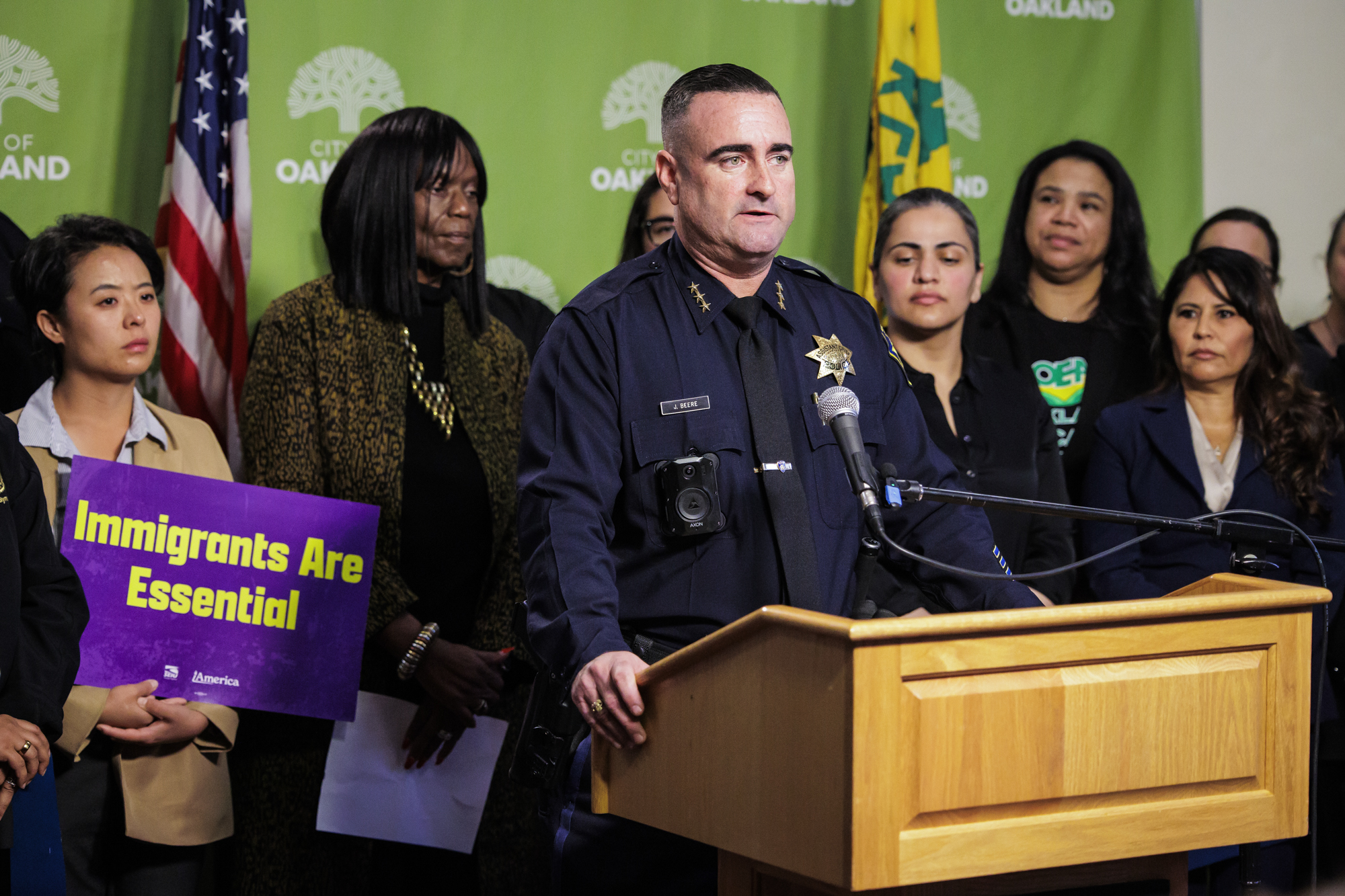
"innerHTML": "\n\u003cfigure class=\"wp-block-image aligncenter size-full\">\u003cimg src=\"https://cdn.kqed.org/wp-content/uploads/sites/10/2025/10/251023-MAYOR-LEE-PRESSER-MD-09-KQED.jpg\" alt=\"\" class=\"wp-image-12061256\" srcset=\"https://cdn.kqed.org/wp-content/uploads/sites/10/2025/10/251023-MAYOR-LEE-PRESSER-MD-09-KQED.jpg 2000w, https://cdn.kqed.org/wp-content/uploads/sites/10/2025/10/251023-MAYOR-LEE-PRESSER-MD-09-KQED-160x107.jpg 160w, https://cdn.kqed.org/wp-content/uploads/sites/10/2025/10/251023-MAYOR-LEE-PRESSER-MD-09-KQED-1536x1024.jpg 1536w\" sizes=\"(min-width: 992px) min(100vw, 1536px), (min-width: 768px) min(100vw, 1280px), min(100vw, 1020px)\"/>\u003cfigcaption class=\"wp-element-caption\">James Beere, who was selected as Oakland Police Chief this year, speaks at a press conference at Oakland City Hall on Oct. 23, 2025\u003ccite class=\"wp-inline-image-credit\"> (Martin do Nascimento/KQED)\u003c/cite>\u003c/figcaption>\u003c/figure>\n",
"innerContent": [
"\n\u003cfigure class=\"wp-block-image aligncenter size-full\">\u003cimg src=\"https://cdn.kqed.org/wp-content/uploads/sites/10/2025/10/251023-MAYOR-LEE-PRESSER-MD-09-KQED.jpg\" alt=\"\" class=\"wp-image-12061256\"/>\u003cfigcaption class=\"wp-element-caption\">James Beere, who was selected as Oakland Police Chief this year, speaks at a press conference at Oakland City Hall on Oct. 23, 2025\u003ccite class=\"wp-inline-image-credit\"> (Martin do Nascimento/KQED)\u003c/cite>\u003c/figcaption>\u003c/figure>\n"
],
"innerBlocks": []
},
{
"blockName": "core/paragraph",
"attrs": {
"dropCap": false
},
"innerHTML": "\n\u003cp>Oakland Police Chief James Beere said that the department had to make “hard decisions” between completing investigations within a 180-day timeline and achieving the thoroughness required in complex cases.\u003c/p>\n",
"innerContent": [
"\n\u003cp>Oakland Police Chief James Beere said that the department had to make “hard decisions” between completing investigations within a 180-day timeline and achieving the thoroughness required in complex cases.\u003c/p>\n"
],
"innerBlocks": []
},
{
"blockName": "core/paragraph",
"attrs": {
"dropCap": false
},
"innerHTML": "\n\u003cp>“The expectation for our investigation is not an excuse, but the expectations are not the same as they were twenty years ago,” Beere said.\u003c/p>\n",
"innerContent": [
"\n\u003cp>“The expectation for our investigation is not an excuse, but the expectations are not the same as they were twenty years ago,” Beere said.\u003c/p>\n"
],
"innerBlocks": []
},
{
"blockName": "core/paragraph",
"attrs": {
"dropCap": false
},
"innerHTML": "\n\u003cp>Orrick said that while missing the investigation timeline matters, he believes Beere and Oakland Mayor Barbara Lee’s leadership will hold the department accountable.\u003c/p>\n",
"innerContent": [
"\n\u003cp>Orrick said that while missing the investigation timeline matters, he believes Beere and Oakland Mayor Barbara Lee’s leadership will hold the department accountable.\u003c/p>\n"
],
"innerBlocks": []
},
{
"blockName": "core/paragraph",
"attrs": {
"dropCap": false
},
"innerHTML": "\n\u003cp>“Today is not a ceiling, it’s a floor,” Warshaw said in court. “The city should see this not as the end of something, but as a new beginning.”\u003c/p>\n",
"innerContent": [
"\n\u003cp>“Today is not a ceiling, it’s a floor,” Warshaw said in court. “The city should see this not as the end of something, but as a new beginning.”\u003c/p>\n"
],
"innerBlocks": []
}
],
"excerpt": "Oakland’s police department came under a consent decree in 2003, after a massive police brutality scandal rocked the city’s law enforcement agency.",
"status": "publish",
"parent": 0,
"modified": 1790731462,
"stats": {
"hasAudio": false,
"hasVideo": false,
"hasChartOrMap": false,
"iframeSrcs": [],
"hasGoogleForm": false,
"hasGallery": false,
"hasHearkenModule": false,
"hasPolis": false,
"paragraphCount": 22,
"wordCount": 691
},
"headData": {
"title": "‘A New Beginning’ : Oakland Police to Exit Federal Oversight After 23 Years | KQED",
"description": "Oakland’s police department came under a consent decree in 2003, after a massive police brutality scandal rocked the city’s law enforcement agency.",
"ogTitle": "",
"ogDescription": "",
"ogImgId": "",
"twTitle": "",
"twDescription": "",
"twImgId": "",
"schema": {
"@context": "https://schema.org",
"@type": "NewsArticle",
"headline": "‘A New Beginning’ : Oakland Police to Exit Federal Oversight After 23 Years",
"datePublished": "2026-09-29T17:42:56-07:00",
"dateModified": "2026-09-29T18:24:22-07:00",
"image": "https://cdn.kqed.org/wp-content/uploads/2020/02/KQED-OG-Image@1x.png",
"isAccessibleForFree": "True",
"publisher": {
"@type": "NewsMediaOrganization",
"@id": "https://www.kqed.org/#organization",
"name": "KQED",
"logo": "https://cdn.kqed.org/wp-content/uploads/2020/02/KQED-OG-Image@1x.png",
"url": "https://www.kqed.org",
"sameAs": [
"https://www.facebook.com/KQED",
"https://twitter.com/KQED",
"https://www.instagram.com/kqed/",
"https://www.tiktok.com/@kqedofficial",
"https://www.linkedin.com/company/kqed",
"https://www.youtube.com/channel/UCeC0IOo7i1P_61zVUWbJ4nw"
]
}
}
},
"primaryCategory": {
"termId": 6188,
"slug": "law-and-justice",
"name": "Law and Justice"
},
"sticky": false,
"nprStoryId": "kqed-12101833",
"templateType": "standard",
"featuredImageType": "standard",
"excludeFromSiteSearch": "Include",
"articleAge": "0",
"path": "/news/12101833/a-new-beginning-oakland-police-to-exit-federal-oversight-after-23-years",
"audioTrackLength": null,
"parsedContent": [
{
"type": "contentString",
"content": "\u003cdiv class=\"post-body\">\u003cp>\n\u003cp>A judge released Oakland’s police force on Tuesday from \u003ca href=\"https://www.kqed.org/news/12101593/oakland-police-could-finally-emerge-from-oversight-23-years-after-riders\">more than 20 years of federal oversight\u003c/a>, thought to be the longest for any American law enforcement agency.\u003c/p>\n\n\n\n\u003cp>The department will regain full independence after U.S. District Court Judge William Orrick said that the “season for judicial oversight is over.”\u003c/p>\n\n\n\n\u003cp>“While it was important for this court to play the role it has, now it’s important for the court to get out of the way, and let the people of Oakland and their leaders fill their future,” Orrick told the San Francisco courtroom, filled with Oakland city officials.\u003c/p>\n\n\n\n\u003cp>OPD has been subject to court oversight since 2003, when it settled an $11 million class action lawsuit in the wake of a \u003ca href=\"https://www.kqed.org/forum/2010101891855/oakland-police-departments-brutality-corruption-and-cover-up-and-long-road-toward-reform\">notorious police brutality\u003c/a> and corruption scandal. Four officers, known as the “Riders,” were accused of beating, planting evidence and falsely arresting West Oakland residents, and engaging in intimidation, beatings, kidnapping and racial discrimination.\u003c/p>\n\n\n\u003cdiv class=\"wp-block-image\">\n\u003cfigure class=\"aligncenter size-full\">\u003cimg loading=\"lazy\" decoding=\"async\" width=\"2000\" height=\"1333\" src=\"https://cdn.kqed.org/wp-content/uploads/sites/10/2026/09/260929-phillipburtonfederalbuilding-00133_TV-KQED.jpg\" alt=\"\" class=\"wp-image-12101966\" srcset=\"https://cdn.kqed.org/wp-content/uploads/sites/10/2026/09/260929-phillipburtonfederalbuilding-00133_TV-KQED.jpg 2000w, https://cdn.kqed.org/wp-content/uploads/sites/10/2026/09/260929-phillipburtonfederalbuilding-00133_TV-KQED-160x107.jpg 160w, https://cdn.kqed.org/wp-content/uploads/sites/10/2026/09/260929-phillipburtonfederalbuilding-00133_TV-KQED-1536x1024.jpg 1536w\" sizes=\"auto, (max-width: 2000px) 100vw, 2000px\" />\u003cfigcaption class=\"wp-element-caption\">The Phillip Burton Federal Building and United States Courthouse in San Francisco on Sept. 29, 2026. (Tâm Vũ/KQED)\u003c/figcaption>\u003c/figure>\n\u003c/div>\n\n\n\u003cp>The department agreed to a federally mandated consent decree that required it to implement 51 organizational reforms related to the use of force, discipline, supervision, training and internal affairs investigations.\u003c/p>\n\n\n\n\u003cp>James Chanin, who has represented the plaintiffs in the case, called the department’s change since then “astronomic.”\u003c/p>\n\n\n\n\u003cp>“They’re a much different department than they were. It’s like night and day,” he told the court on Tuesday.\u003c/p>\n\n\n\n\u003cp>Initially, court oversight was expected to last between five and seven years. Instead, it’s been delayed by repeated \u003ca href=\"https://www.eastbaytimes.com/2024/04/10/high-ranking-oakland-cops-including-deputy-chief-face-serious-discipline-for-allegedly-botching-investigation/\">missteps\u003c/a>, backsliding, a revolving door of police chiefs and multiple city administrations.\u003c/p>\n\n\n\n\u003cp>OPD met most of the requirements years ago, and has been responsible for sustaining them since 2022. But they’ve continued to fall short of a few of the tasks, keeping them in limbo. \u003c/p>\n\n\n\n\n\n\u003cp>Earlier this month, court-appointed monitor Robert S. Warshaw reported that the department had fallen out of compliance with its requirement to investigate serious misconduct allegations in a timely manner, leaving open the possibility that Orrick would keep OPD under the court’s watch longer.\u003c/p>\n\n\n\n\u003cp>The settlement requires OPD to complete at least 85% of internal affairs investigations related to “the most serious allegations of misconduct” within 180 days of reporting. \u003c/p>\n\n\n\n\u003cp>Between January and March of this year, though, Warshaw found that just 77 of 93, or 83%, of these investigations were completed in time.\u003c/p>\n\n\n\n\u003cp>Both Chanin and plaintiffs’ other attorney, John Burris, said that while they were disappointed by the slip, they both supported ending the negotiated settlement agreement, or NSA.\u003c/p>\n\n\n\n\u003cp>“We have been involved in pushing this rock up the hill for 23 years, and every time we got close, it’s fallen back down,” Burris told the court. \u003c/p>\n\n\n\n\u003cp>“Today, I am hoping to say we’ve pushed this rock as far as we can … and it’s up to the city to push it [the rest of the way].”\u003c/p>\n\n\n\n\u003cp>“It’s not about today, it’s about tomorrow,” he said.\u003c/p>\n\n\n\n\u003cp>Brigid Martin, Oakland’s special counsel, said in response that the city “has absolute certainty about what will happen tomorrow, and then next day and the day after that.”\u003c/p>\n\n\n\n\u003cp>“NSA compliance is not a temporary obligation; it is the core of Oakland’s police operation,” she said.\u003c/p>\n\n\n\u003cdiv class=\"wp-block-image\">\n\u003cfigure class=\"aligncenter size-full\">\u003cimg loading=\"lazy\" decoding=\"async\" width=\"2000\" height=\"1333\" src=\"https://cdn.kqed.org/wp-content/uploads/sites/10/2025/10/251023-MAYOR-LEE-PRESSER-MD-09-KQED.jpg\" alt=\"\" class=\"wp-image-12061256\" srcset=\"https://cdn.kqed.org/wp-content/uploads/sites/10/2025/10/251023-MAYOR-LEE-PRESSER-MD-09-KQED.jpg 2000w, https://cdn.kqed.org/wp-content/uploads/sites/10/2025/10/251023-MAYOR-LEE-PRESSER-MD-09-KQED-160x107.jpg 160w, https://cdn.kqed.org/wp-content/uploads/sites/10/2025/10/251023-MAYOR-LEE-PRESSER-MD-09-KQED-1536x1024.jpg 1536w\" sizes=\"auto, (max-width: 2000px) 100vw, 2000px\" />\u003cfigcaption class=\"wp-element-caption\">James Beere, who was selected as Oakland Police Chief this year, speaks at a press conference at Oakland City Hall on Oct. 23, 2025 (Martin do Nascimento/KQED)\u003c/figcaption>\u003c/figure>\n\u003c/div>\n\n\n\u003cp>Oakland Police Chief James Beere said that the department had to make “hard decisions” between completing investigations within a 180-day timeline and achieving the thoroughness required in complex cases.\u003c/p>\n\n\n\n\u003cp>“The expectation for our investigation is not an excuse, but the expectations are not the same as they were twenty years ago,” Beere said.\u003c/p>\n\n\n\n\u003cp>Orrick said that while missing the investigation timeline matters, he believes Beere and Oakland Mayor Barbara Lee’s leadership will hold the department accountable.\u003c/p>\n\n\n\n\u003cp>“Today is not a ceiling, it’s a floor,” Warshaw said in court. “The city should see this not as the end of something, but as a new beginning.”\u003c/p>\n\u003c/div>\u003c/p>",
"attributes": {
"named": {},
"numeric": []
}
}
],
"link": "/news/12101833/a-new-beginning-oakland-police-to-exit-federal-oversight-after-23-years",
"authors": [
"11913"
],
"categories": [
"news_6188",
"news_28250",
"news_8"
],
"tags": [
"news_260",
"news_17725",
"news_27626",
"news_19954",
"news_412",
"news_416",
"news_1526",
"news_24958"
],
"featImg": "news_12101965",
"label": "news"
},
"news_12101593": {
"type": "posts",
"id": "news_12101593",
"meta": {
"index": "posts_1716263798",
"site": "news",
"id": "12101593",
"score": null,
"sort": [
1790686800000
]
},
"guestAuthors": [],
"slug": "oakland-police-could-finally-emerge-from-oversight-23-years-after-riders",
"title": "Oakland Police Could Finally Emerge From Oversight, 23 Years After ‘Riders’",
"publishDate": 1790686800,
"format": "standard",
"headTitle": "Oakland Police Could Finally Emerge From Oversight, 23 Years After ‘Riders’ | KQED",
"labelTerm": {
"site": "news"
},
"content": "\n\u003cp>\u003ca href=\"https://www.kqed.org/news/tag/oakland-police-department\">Oakland’s police force\u003c/a> could emerge Tuesday from more than two decades of federal court oversight following a major brutality and corruption scandal in 2000.\u003c/p>\n\n\n\n\u003cp>At a long-awaited hearing, the city plans to argue that the Oakland Police Department is reformed and ask federal Judge William Orrick for full independence. But a monitoring report this month showing the department is failing to perform internal investigations quickly enough could leave it in limbo for longer.\u003c/p>\n\n\n\n\u003cp>OPD has spent the last 23 years under a federally mandated consent decree following a class-action civil rights lawsuit brought by 119 residents. They alleged that a group of officers known as \u003ca href=\"https://www.kqed.org/forum/2010101891855/oakland-police-departments-brutality-corruption-and-cover-up-and-long-road-toward-reform\">the Riders\u003c/a> planted evidence and falsely arrested them, and engaged in intimidation, beatings, kidnapping and racial discrimination. \u003c/p>\n\n\n\n\u003cp>In 2003, the parties reached a settlement that required OPD to pay $11 million in restitution and implement 51 operational reforms related to the use of force, discipline, supervision, training and internal affairs investigations. \u003c/p>\n\n\n\u003cdiv class=\"wp-block-image\">\n\u003cfigure class=\"aligncenter size-full\">\u003cimg loading=\"lazy\" decoding=\"async\" width=\"2000\" height=\"1500\" src=\"https://cdn.kqed.org/wp-content/uploads/sites/10/2024/12/OaklandPoliceDepartment2.jpg\" alt=\"\" class=\"wp-image-12017328\" srcset=\"https://cdn.kqed.org/wp-content/uploads/sites/10/2024/12/OaklandPoliceDepartment2.jpg 2000w, https://cdn.kqed.org/wp-content/uploads/sites/10/2024/12/OaklandPoliceDepartment2-800x600.jpg 800w, https://cdn.kqed.org/wp-content/uploads/sites/10/2024/12/OaklandPoliceDepartment2-1020x765.jpg 1020w, https://cdn.kqed.org/wp-content/uploads/sites/10/2024/12/OaklandPoliceDepartment2-160x120.jpg 160w, https://cdn.kqed.org/wp-content/uploads/sites/10/2024/12/OaklandPoliceDepartment2-1536x1152.jpg 1536w, https://cdn.kqed.org/wp-content/uploads/sites/10/2024/12/OaklandPoliceDepartment2-1920x1440.jpg 1920w\" sizes=\"auto, (max-width: 2000px) 100vw, 2000px\" />\u003cfigcaption class=\"wp-element-caption\">The Oakland Police Department on Nov. 12, 2016. (Alex Emslie/KQED)\u003c/figcaption>\u003c/figure>\n\u003c/div>\n\n\n\u003cp>The Riders scandal sowed deep mistrust toward Oakland law enforcement, as OPD worked to reform its culture amid repeated \u003ca href=\"https://www.eastbaytimes.com/2024/04/10/high-ranking-oakland-cops-including-deputy-chief-face-serious-discipline-for-allegedly-botching-investigation/\">missteps\u003c/a>, backsliding, a revolving door of police chiefs and multiple city administrations. \u003c/p>\n\n\n\n\u003cp>After finally \u003ca href=\"https://www.kqed.org/news/12085228/oakland-police-judge-clears-path-for-possible-end-to-federal-oversight\">coming into compliance\u003c/a> with all 51 tasks in May, it appeared that OPD was on track to be released from oversight this week. \u003c/p>\n\n\n\n\u003cp>“This is the first time in 23 years that OPD has achieved each of the 51 tasks in the [settlement agreement],” Orrick said during the spring hearing. “No one can say, ‘mission accomplished.’ But I do congratulate the city and OPD for getting this far.”\u003c/p>\n\n\n\n\u003cp>But court-appointed monitor Robert S. Warshaw’s progress report earlier this month found that OPD had again fallen below the threshold for timely investigations into severe misconduct violations, threatening that decision. \u003c/p>\n\n\n\n\u003cp>The settlement requires that at least 85% of internal affairs investigations related to “the most serious allegations of misconduct” should be completed within 180 days of reporting. Between January and March of this year, 77 of 93, or 83%, of these investigations were completed in time. \u003c/p>\n\n\n\n\u003cp>“The timeliness of [Internal Affairs Bureau] investigations is an important issue in the [negotiated settlement agreement],” Warshaw wrote. “Members of the public, as well as sworn and non-sworn employees of the Department, are entitled to learn of the results of investigations that are overseen by the Internal Affairs Bureau.”\u003c/p>\n\n\n\n\n\n\u003cp>In response to the report, Oakland’s Coalition for Police Accountability, a civilian-led advocacy group, submitted a \u003ca href=\"https://www.courtlistener.com/docket/4496116/1767/allen-v-city-of-oakland/\">letter\u003c/a> to Orrick, urging him not to release the department from oversight or add additional conditions to its decision. \u003c/p>\n\n\n\n\u003cp>“Other cities have exited federal oversight only to back-slide,” the letter reads. “OPD did not bother to prioritize compliance at such a critical juncture; it seems naively optimistic to expect more energetic efforts if they are left to answer to no one.”\u003c/p>\n\n\n\n\u003cp>In the letter, the coalition accused the city of underfunding its police commission, an independent oversight body, which will assume responsibility for auditing OPD’s accountability to reforms if court oversight ends. \u003c/p>\n\n\n\n\u003cp>If OPD is released this week, the coalition argued, it should require that the city provide funding to fully staff the Office of the Inspector General, the police commission’s monitoring arm. \u003c/p>\n\n\n\n\u003cp>“The [negotiated settlement agreement] has been a 23-year project that represents an enormous amount of time and money for the City, and decades-long commitment by plaintiffs, and the Court,” the letter reads. “To terminate now, without necessary funding for independent civilian oversight, would jeopardize all that work.”\u003c/p>\n\n\n\n\u003cp>The commission wrote in its \u003ca href=\"https://storage.courtlistener.com/recap/gov.uscourts.cand.41858/gov.uscourts.cand.41858.1768.0.pdf\">own statement\u003c/a> to the court that they too believe their funding levels “do not provide the institutional resources the work demands.” \u003c/p>\n\n\n\n\u003cp>Still, other activist groups have urged the court to end its oversight. \u003c/p>\n\n\n\u003cdiv class=\"wp-block-image\">\n\u003cfigure class=\"aligncenter size-full\">\u003cimg loading=\"lazy\" decoding=\"async\" width=\"2000\" height=\"1334\" src=\"https://cdn.kqed.org/wp-content/uploads/sites/10/2025/07/250702-OAKLAND-POLICE-DEPARTMENT-MD-01-KQED.jpg\" alt=\"\" class=\"wp-image-12046794\" srcset=\"https://cdn.kqed.org/wp-content/uploads/sites/10/2025/07/250702-OAKLAND-POLICE-DEPARTMENT-MD-01-KQED.jpg 2000w, https://cdn.kqed.org/wp-content/uploads/sites/10/2025/07/250702-OAKLAND-POLICE-DEPARTMENT-MD-01-KQED-160x107.jpg 160w, https://cdn.kqed.org/wp-content/uploads/sites/10/2025/07/250702-OAKLAND-POLICE-DEPARTMENT-MD-01-KQED-1536x1025.jpg 1536w\" sizes=\"auto, (max-width: 2000px) 100vw, 2000px\" />\u003cfigcaption class=\"wp-element-caption\">An Oakland Police Department Vehicle in Oakland on July 1, 2025. (Martin do Nascimento/KQED)\u003c/figcaption>\u003c/figure>\n\u003c/div>\n\n\n\u003cp>Safe Oakland, a coalition of Oakland civil rights, faith, business and neighborhood leaders, wrote its own letter expressing “strong support” for concluding the settlement agreement. \u003c/p>\n\n\n\n\u003cp>“For twenty-three years, a federal court has held Oakland to the standard of constitutional policing,” Safe Oakland wrote. “The time has come for Oakland to hold itself to that standard, and for the community to share in that responsibility. We stand ready to do our part.”\u003c/p>\n\n\n\n\u003cp>Warshaw also expressed confidence in the city, despite the recent backslide: “Mayor [Barbara] Lee and her administration, as well as Chief [James] Beere, who is now the permanent Chief of Police, and OPD’s executive team, have worked diligently to foster a culture of accountability,” he wrote in his September report. “City leadership remains an imperative part of the sustainability process, and we are encouraged by the commitment of the Mayor and her team.”\u003c/p>\n\n\n\n\u003cp>In their statement to the court, attorneys for the plaintiffs John Burris and James Chanin harshly criticized the department for falling behind in compliance, calling it “incomprehensible and bitterly disappointing that OPD is once again in this position.” However, they acknowledged a transformation of the department and strides made, and urged the court to end the settlement agreement in its current form. \u003c/p>\n\n\n\n\u003cp>They have asked the court to end their role in the case, and for Orrick and Warshaw to continue their oversight for one more year, without them. \u003c/p>\n\n\n\n\u003cp>Burris told KQED that while personally, he hasn’t come to a conclusion about whether he thinks OPD should be released Tuesday, he’s hopeful that the city now has the right people in place to hold the department accountable without outside interference. \u003c/p>\n\n\n\n\u003cp>“I will say this: At some point, the department has to run itself, and the city has to be responsible,” he said.\u003c/p>\n",
"blocks": [
{
"blockName": "core/paragraph",
"attrs": {
"dropCap": false
},
"innerHTML": "\n\u003cp>\u003ca href=\"https://www.kqed.org/news/tag/oakland-police-department\">Oakland’s police force\u003c/a> could emerge Tuesday from more than two decades of federal court oversight following a major brutality and corruption scandal in 2000.\u003c/p>\n",
"innerContent": [
"\n\u003cp>\u003ca href=\"https://www.kqed.org/news/tag/oakland-police-department\">Oakland’s police force\u003c/a> could emerge Tuesday from more than two decades of federal court oversight following a major brutality and corruption scandal in 2000.\u003c/p>\n"
],
"innerBlocks": []
},
{
"blockName": "core/paragraph",
"attrs": {
"dropCap": false
},
"innerHTML": "\n\u003cp>At a long-awaited hearing, the city plans to argue that the Oakland Police Department is reformed and ask federal Judge William Orrick for full independence. But a monitoring report this month showing the department is failing to perform internal investigations quickly enough could leave it in limbo for longer.\u003c/p>\n",
"innerContent": [
"\n\u003cp>At a long-awaited hearing, the city plans to argue that the Oakland Police Department is reformed and ask federal Judge William Orrick for full independence. But a monitoring report this month showing the department is failing to perform internal investigations quickly enough could leave it in limbo for longer.\u003c/p>\n"
],
"innerBlocks": []
},
{
"blockName": "core/paragraph",
"attrs": {
"dropCap": false
},
"innerHTML": "\n\u003cp>OPD has spent the last 23 years under a federally mandated consent decree following a class-action civil rights lawsuit brought by 119 residents. They alleged that a group of officers known as \u003ca href=\"https://www.kqed.org/forum/2010101891855/oakland-police-departments-brutality-corruption-and-cover-up-and-long-road-toward-reform\">the Riders\u003c/a> planted evidence and falsely arrested them, and engaged in intimidation, beatings, kidnapping and racial discrimination. \u003c/p>\n",
"innerContent": [
"\n\u003cp>OPD has spent the last 23 years under a federally mandated consent decree following a class-action civil rights lawsuit brought by 119 residents. They alleged that a group of officers known as \u003ca href=\"https://www.kqed.org/forum/2010101891855/oakland-police-departments-brutality-corruption-and-cover-up-and-long-road-toward-reform\">the Riders\u003c/a> planted evidence and falsely arrested them, and engaged in intimidation, beatings, kidnapping and racial discrimination. \u003c/p>\n"
],
"innerBlocks": []
},
{
"blockName": "core/paragraph",
"attrs": {
"dropCap": false
},
"innerHTML": "\n\u003cp>In 2003, the parties reached a settlement that required OPD to pay $11 million in restitution and implement 51 operational reforms related to the use of force, discipline, supervision, training and internal affairs investigations. \u003c/p>\n",
"innerContent": [
"\n\u003cp>In 2003, the parties reached a settlement that required OPD to pay $11 million in restitution and implement 51 operational reforms related to the use of force, discipline, supervision, training and internal affairs investigations. \u003c/p>\n"
],
"innerBlocks": []
},
{
"blockName": "core/image",
"attrs": {
"id": 12017328,
"sizeSlug": "full",
"linkDestination": "none",
"align": "center",
"alt": "",
"srcset": "https://cdn.kqed.org/wp-content/uploads/sites/10/2024/12/OaklandPoliceDepartment2.jpg 2000w, https://cdn.kqed.org/wp-content/uploads/sites/10/2024/12/OaklandPoliceDepartment2-800x600.jpg 800w, https://cdn.kqed.org/wp-content/uploads/sites/10/2024/12/OaklandPoliceDepartment2-1020x765.jpg 1020w, https://cdn.kqed.org/wp-content/uploads/sites/10/2024/12/OaklandPoliceDepartment2-160x120.jpg 160w, https://cdn.kqed.org/wp-content/uploads/sites/10/2024/12/OaklandPoliceDepartment2-1536x1152.jpg 1536w, https://cdn.kqed.org/wp-content/uploads/sites/10/2024/12/OaklandPoliceDepartment2-1920x1440.jpg 1920w",
"sizes": "(min-width: 992px) min(100vw, 1536px), (min-width: 768px) min(100vw, 1280px), min(100vw, 1020px)"
},
"innerHTML": "\n\u003cfigure class=\"wp-block-image aligncenter size-full\">\u003cimg src=\"https://cdn.kqed.org/wp-content/uploads/sites/10/2024/12/OaklandPoliceDepartment2.jpg\" alt=\"\" class=\"wp-image-12017328\" srcset=\"https://cdn.kqed.org/wp-content/uploads/sites/10/2024/12/OaklandPoliceDepartment2.jpg 2000w, https://cdn.kqed.org/wp-content/uploads/sites/10/2024/12/OaklandPoliceDepartment2-800x600.jpg 800w, https://cdn.kqed.org/wp-content/uploads/sites/10/2024/12/OaklandPoliceDepartment2-1020x765.jpg 1020w, https://cdn.kqed.org/wp-content/uploads/sites/10/2024/12/OaklandPoliceDepartment2-160x120.jpg 160w, https://cdn.kqed.org/wp-content/uploads/sites/10/2024/12/OaklandPoliceDepartment2-1536x1152.jpg 1536w, https://cdn.kqed.org/wp-content/uploads/sites/10/2024/12/OaklandPoliceDepartment2-1920x1440.jpg 1920w\" sizes=\"(min-width: 992px) min(100vw, 1536px), (min-width: 768px) min(100vw, 1280px), min(100vw, 1020px)\"/>\u003cfigcaption class=\"wp-element-caption\">The Oakland Police Department on Nov. 12, 2016.\u003ccite class=\"wp-inline-image-credit\"> (Alex Emslie/KQED)\u003c/cite>\u003c/figcaption>\u003c/figure>\n",
"innerContent": [
"\n\u003cfigure class=\"wp-block-image aligncenter size-full\">\u003cimg src=\"https://cdn.kqed.org/wp-content/uploads/sites/10/2024/12/OaklandPoliceDepartment2.jpg\" alt=\"\" class=\"wp-image-12017328\"/>\u003cfigcaption class=\"wp-element-caption\">The Oakland Police Department on Nov. 12, 2016.\u003ccite class=\"wp-inline-image-credit\"> (Alex Emslie/KQED)\u003c/cite>\u003c/figcaption>\u003c/figure>\n"
],
"innerBlocks": []
},
{
"blockName": "core/paragraph",
"attrs": {
"dropCap": false
},
"innerHTML": "\n\u003cp>The Riders scandal sowed deep mistrust toward Oakland law enforcement, as OPD worked to reform its culture amid repeated \u003ca href=\"https://www.eastbaytimes.com/2024/04/10/high-ranking-oakland-cops-including-deputy-chief-face-serious-discipline-for-allegedly-botching-investigation/\">missteps\u003c/a>, backsliding, a revolving door of police chiefs and multiple city administrations. \u003c/p>\n",
"innerContent": [
"\n\u003cp>The Riders scandal sowed deep mistrust toward Oakland law enforcement, as OPD worked to reform its culture amid repeated \u003ca href=\"https://www.eastbaytimes.com/2024/04/10/high-ranking-oakland-cops-including-deputy-chief-face-serious-discipline-for-allegedly-botching-investigation/\">missteps\u003c/a>, backsliding, a revolving door of police chiefs and multiple city administrations. \u003c/p>\n"
],
"innerBlocks": []
},
{
"blockName": "core/paragraph",
"attrs": {
"dropCap": false
},
"innerHTML": "\n\u003cp>After finally \u003ca href=\"https://www.kqed.org/news/12085228/oakland-police-judge-clears-path-for-possible-end-to-federal-oversight\">coming into compliance\u003c/a> with all 51 tasks in May, it appeared that OPD was on track to be released from oversight this week. \u003c/p>\n",
"innerContent": [
"\n\u003cp>After finally \u003ca href=\"https://www.kqed.org/news/12085228/oakland-police-judge-clears-path-for-possible-end-to-federal-oversight\">coming into compliance\u003c/a> with all 51 tasks in May, it appeared that OPD was on track to be released from oversight this week. \u003c/p>\n"
],
"innerBlocks": []
},
{
"blockName": "core/paragraph",
"attrs": {
"dropCap": false
},
"innerHTML": "\n\u003cp>“This is the first time in 23 years that OPD has achieved each of the 51 tasks in the [settlement agreement],” Orrick said during the spring hearing. “No one can say, ‘mission accomplished.’ But I do congratulate the city and OPD for getting this far.”\u003c/p>\n",
"innerContent": [
"\n\u003cp>“This is the first time in 23 years that OPD has achieved each of the 51 tasks in the [settlement agreement],” Orrick said during the spring hearing. “No one can say, ‘mission accomplished.’ But I do congratulate the city and OPD for getting this far.”\u003c/p>\n"
],
"innerBlocks": []
},
{
"blockName": "core/paragraph",
"attrs": {
"dropCap": false
},
"innerHTML": "\n\u003cp>But court-appointed monitor Robert S. Warshaw’s progress report earlier this month found that OPD had again fallen below the threshold for timely investigations into severe misconduct violations, threatening that decision. \u003c/p>\n",
"innerContent": [
"\n\u003cp>But court-appointed monitor Robert S. Warshaw’s progress report earlier this month found that OPD had again fallen below the threshold for timely investigations into severe misconduct violations, threatening that decision. \u003c/p>\n"
],
"innerBlocks": []
},
{
"blockName": "core/paragraph",
"attrs": {
"dropCap": false
},
"innerHTML": "\n\u003cp>The settlement requires that at least 85% of internal affairs investigations related to “the most serious allegations of misconduct” should be completed within 180 days of reporting. Between January and March of this year, 77 of 93, or 83%, of these investigations were completed in time. \u003c/p>\n",
"innerContent": [
"\n\u003cp>The settlement requires that at least 85% of internal affairs investigations related to “the most serious allegations of misconduct” should be completed within 180 days of reporting. Between January and March of this year, 77 of 93, or 83%, of these investigations were completed in time. \u003c/p>\n"
],
"innerBlocks": []
},
{
"blockName": "core/paragraph",
"attrs": {
"dropCap": false
},
"innerHTML": "\n\u003cp>“The timeliness of [Internal Affairs Bureau] investigations is an important issue in the [negotiated settlement agreement],” Warshaw wrote. “Members of the public, as well as sworn and non-sworn employees of the Department, are entitled to learn of the results of investigations that are overseen by the Internal Affairs Bureau.”\u003c/p>\n",
"innerContent": [
"\n\u003cp>“The timeliness of [Internal Affairs Bureau] investigations is an important issue in the [negotiated settlement agreement],” Warshaw wrote. “Members of the public, as well as sworn and non-sworn employees of the Department, are entitled to learn of the results of investigations that are overseen by the Internal Affairs Bureau.”\u003c/p>\n"
],
"innerBlocks": []
},
{
"blockName": "kqed-v2/related-articles",
"attrs": {
"postIds": [
"news_12099730"
],
"label": "Related Articles",
"maxPosts": 1,
"showImages": false,
"heroImage": "https://cdn.kqed.org/wp-content/uploads/sites/10/2025/04/20250311_Oakland-Budget_DMB_00008_qed-1536x1024.jpg",
"query": "",
"labelWasCleared": false,
"heroImageAlt": "",
"heroImageLink": "",
"labelLink": "",
"alignment": "right",
"target": "_self",
"manualLinks": [],
"posts": []
},
"innerHTML": "",
"innerContent": [],
"innerBlocks": []
},
{
"blockName": "core/paragraph",
"attrs": {
"dropCap": false
},
"innerHTML": "\n\u003cp>In response to the report, Oakland’s Coalition for Police Accountability, a civilian-led advocacy group, submitted a \u003ca href=\"https://www.courtlistener.com/docket/4496116/1767/allen-v-city-of-oakland/\">letter\u003c/a> to Orrick, urging him not to release the department from oversight or add additional conditions to its decision. \u003c/p>\n",
"innerContent": [
"\n\u003cp>In response to the report, Oakland’s Coalition for Police Accountability, a civilian-led advocacy group, submitted a \u003ca href=\"https://www.courtlistener.com/docket/4496116/1767/allen-v-city-of-oakland/\">letter\u003c/a> to Orrick, urging him not to release the department from oversight or add additional conditions to its decision. \u003c/p>\n"
],
"innerBlocks": []
},
{
"blockName": "core/paragraph",
"attrs": {
"dropCap": false
},
"innerHTML": "\n\u003cp>“Other cities have exited federal oversight only to back-slide,” the letter reads. “OPD did not bother to prioritize compliance at such a critical juncture; it seems naively optimistic to expect more energetic efforts if they are left to answer to no one.”\u003c/p>\n",
"innerContent": [
"\n\u003cp>“Other cities have exited federal oversight only to back-slide,” the letter reads. “OPD did not bother to prioritize compliance at such a critical juncture; it seems naively optimistic to expect more energetic efforts if they are left to answer to no one.”\u003c/p>\n"
],
"innerBlocks": []
},
{
"blockName": "core/paragraph",
"attrs": {
"dropCap": false
},
"innerHTML": "\n\u003cp>In the letter, the coalition accused the city of underfunding its police commission, an independent oversight body, which will assume responsibility for auditing OPD’s accountability to reforms if court oversight ends. \u003c/p>\n",
"innerContent": [
"\n\u003cp>In the letter, the coalition accused the city of underfunding its police commission, an independent oversight body, which will assume responsibility for auditing OPD’s accountability to reforms if court oversight ends. \u003c/p>\n"
],
"innerBlocks": []
},
{
"blockName": "core/paragraph",
"attrs": {
"dropCap": false
},
"innerHTML": "\n\u003cp>If OPD is released this week, the coalition argued, it should require that the city provide funding to fully staff the Office of the Inspector General, the police commission’s monitoring arm. \u003c/p>\n",
"innerContent": [
"\n\u003cp>If OPD is released this week, the coalition argued, it should require that the city provide funding to fully staff the Office of the Inspector General, the police commission’s monitoring arm. \u003c/p>\n"
],
"innerBlocks": []
},
{
"blockName": "core/paragraph",
"attrs": {
"dropCap": false
},
"innerHTML": "\n\u003cp>“The [negotiated settlement agreement] has been a 23-year project that represents an enormous amount of time and money for the City, and decades-long commitment by plaintiffs, and the Court,” the letter reads. “To terminate now, without necessary funding for independent civilian oversight, would jeopardize all that work.”\u003c/p>\n",
"innerContent": [
"\n\u003cp>“The [negotiated settlement agreement] has been a 23-year project that represents an enormous amount of time and money for the City, and decades-long commitment by plaintiffs, and the Court,” the letter reads. “To terminate now, without necessary funding for independent civilian oversight, would jeopardize all that work.”\u003c/p>\n"
],
"innerBlocks": []
},
{
"blockName": "core/paragraph",
"attrs": {
"dropCap": false
},
"innerHTML": "\n\u003cp>The commission wrote in its \u003ca href=\"https://storage.courtlistener.com/recap/gov.uscourts.cand.41858/gov.uscourts.cand.41858.1768.0.pdf\">own statement\u003c/a> to the court that they too believe their funding levels “do not provide the institutional resources the work demands.” \u003c/p>\n",
"innerContent": [
"\n\u003cp>The commission wrote in its \u003ca href=\"https://storage.courtlistener.com/recap/gov.uscourts.cand.41858/gov.uscourts.cand.41858.1768.0.pdf\">own statement\u003c/a> to the court that they too believe their funding levels “do not provide the institutional resources the work demands.” \u003c/p>\n"
],
"innerBlocks": []
},
{
"blockName": "core/paragraph",
"attrs": {
"dropCap": false
},
"innerHTML": "\n\u003cp>Still, other activist groups have urged the court to end its oversight. \u003c/p>\n",
"innerContent": [
"\n\u003cp>Still, other activist groups have urged the court to end its oversight. \u003c/p>\n"
],
"innerBlocks": []
},
{
"blockName": "core/image",
"attrs": {
"id": 12046794,
"sizeSlug": "full",
"linkDestination": "none",
"align": "center",
"alt": "",
"srcset": "https://cdn.kqed.org/wp-content/uploads/sites/10/2025/07/250702-OAKLAND-POLICE-DEPARTMENT-MD-01-KQED.jpg 2000w, https://cdn.kqed.org/wp-content/uploads/sites/10/2025/07/250702-OAKLAND-POLICE-DEPARTMENT-MD-01-KQED-160x107.jpg 160w, https://cdn.kqed.org/wp-content/uploads/sites/10/2025/07/250702-OAKLAND-POLICE-DEPARTMENT-MD-01-KQED-1536x1025.jpg 1536w",
"sizes": "(min-width: 992px) min(100vw, 1536px), (min-width: 768px) min(100vw, 1280px), min(100vw, 1020px)"
},
"innerHTML": "\n\u003cfigure class=\"wp-block-image aligncenter size-full\">\u003cimg src=\"https://cdn.kqed.org/wp-content/uploads/sites/10/2025/07/250702-OAKLAND-POLICE-DEPARTMENT-MD-01-KQED.jpg\" alt=\"\" class=\"wp-image-12046794\" srcset=\"https://cdn.kqed.org/wp-content/uploads/sites/10/2025/07/250702-OAKLAND-POLICE-DEPARTMENT-MD-01-KQED.jpg 2000w, https://cdn.kqed.org/wp-content/uploads/sites/10/2025/07/250702-OAKLAND-POLICE-DEPARTMENT-MD-01-KQED-160x107.jpg 160w, https://cdn.kqed.org/wp-content/uploads/sites/10/2025/07/250702-OAKLAND-POLICE-DEPARTMENT-MD-01-KQED-1536x1025.jpg 1536w\" sizes=\"(min-width: 992px) min(100vw, 1536px), (min-width: 768px) min(100vw, 1280px), min(100vw, 1020px)\"/>\u003cfigcaption class=\"wp-element-caption\">An Oakland Police Department Vehicle in Oakland on July 1, 2025.\u003ccite class=\"wp-inline-image-credit\"> (Martin do Nascimento/KQED)\u003c/cite>\u003c/figcaption>\u003c/figure>\n",
"innerContent": [
"\n\u003cfigure class=\"wp-block-image aligncenter size-full\">\u003cimg src=\"https://cdn.kqed.org/wp-content/uploads/sites/10/2025/07/250702-OAKLAND-POLICE-DEPARTMENT-MD-01-KQED.jpg\" alt=\"\" class=\"wp-image-12046794\"/>\u003cfigcaption class=\"wp-element-caption\">An Oakland Police Department Vehicle in Oakland on July 1, 2025.\u003ccite class=\"wp-inline-image-credit\"> (Martin do Nascimento/KQED)\u003c/cite>\u003c/figcaption>\u003c/figure>\n"
],
"innerBlocks": []
},
{
"blockName": "core/paragraph",
"attrs": {
"dropCap": false
},
"innerHTML": "\n\u003cp>Safe Oakland, a coalition of Oakland civil rights, faith, business and neighborhood leaders, wrote its own letter expressing “strong support” for concluding the settlement agreement. \u003c/p>\n",
"innerContent": [
"\n\u003cp>Safe Oakland, a coalition of Oakland civil rights, faith, business and neighborhood leaders, wrote its own letter expressing “strong support” for concluding the settlement agreement. \u003c/p>\n"
],
"innerBlocks": []
},
{
"blockName": "core/paragraph",
"attrs": {
"dropCap": false
},
"innerHTML": "\n\u003cp>“For twenty-three years, a federal court has held Oakland to the standard of constitutional policing,” Safe Oakland wrote. “The time has come for Oakland to hold itself to that standard, and for the community to share in that responsibility. We stand ready to do our part.”\u003c/p>\n",
"innerContent": [
"\n\u003cp>“For twenty-three years, a federal court has held Oakland to the standard of constitutional policing,” Safe Oakland wrote. “The time has come for Oakland to hold itself to that standard, and for the community to share in that responsibility. We stand ready to do our part.”\u003c/p>\n"
],
"innerBlocks": []
},
{
"blockName": "core/paragraph",
"attrs": {
"dropCap": false
},
"innerHTML": "\n\u003cp>Warshaw also expressed confidence in the city, despite the recent backslide: “Mayor [Barbara] Lee and her administration, as well as Chief [James] Beere, who is now the permanent Chief of Police, and OPD’s executive team, have worked diligently to foster a culture of accountability,” he wrote in his September report. “City leadership remains an imperative part of the sustainability process, and we are encouraged by the commitment of the Mayor and her team.”\u003c/p>\n",
"innerContent": [
"\n\u003cp>Warshaw also expressed confidence in the city, despite the recent backslide: “Mayor [Barbara] Lee and her administration, as well as Chief [James] Beere, who is now the permanent Chief of Police, and OPD’s executive team, have worked diligently to foster a culture of accountability,” he wrote in his September report. “City leadership remains an imperative part of the sustainability process, and we are encouraged by the commitment of the Mayor and her team.”\u003c/p>\n"
],
"innerBlocks": []
},
{
"blockName": "core/paragraph",
"attrs": {
"dropCap": false
},
"innerHTML": "\n\u003cp>In their statement to the court, attorneys for the plaintiffs John Burris and James Chanin harshly criticized the department for falling behind in compliance, calling it “incomprehensible and bitterly disappointing that OPD is once again in this position.” However, they acknowledged a transformation of the department and strides made, and urged the court to end the settlement agreement in its current form. \u003c/p>\n",
"innerContent": [
"\n\u003cp>In their statement to the court, attorneys for the plaintiffs John Burris and James Chanin harshly criticized the department for falling behind in compliance, calling it “incomprehensible and bitterly disappointing that OPD is once again in this position.” However, they acknowledged a transformation of the department and strides made, and urged the court to end the settlement agreement in its current form. \u003c/p>\n"
],
"innerBlocks": []
},
{
"blockName": "core/paragraph",
"attrs": {
"dropCap": false
},
"innerHTML": "\n\u003cp>They have asked the court to end their role in the case, and for Orrick and Warshaw to continue their oversight for one more year, without them. \u003c/p>\n",
"innerContent": [
"\n\u003cp>They have asked the court to end their role in the case, and for Orrick and Warshaw to continue their oversight for one more year, without them. \u003c/p>\n"
],
"innerBlocks": []
},
{
"blockName": "core/paragraph",
"attrs": {
"dropCap": false
},
"innerHTML": "\n\u003cp>Burris told KQED that while personally, he hasn’t come to a conclusion about whether he thinks OPD should be released Tuesday, he’s hopeful that the city now has the right people in place to hold the department accountable without outside interference. \u003c/p>\n",
"innerContent": [
"\n\u003cp>Burris told KQED that while personally, he hasn’t come to a conclusion about whether he thinks OPD should be released Tuesday, he’s hopeful that the city now has the right people in place to hold the department accountable without outside interference. \u003c/p>\n"
],
"innerBlocks": []
},
{
"blockName": "core/paragraph",
"attrs": {
"dropCap": false
},
"innerHTML": "\n\u003cp>“I will say this: At some point, the department has to run itself, and the city has to be responsible,” he said.\u003c/p>\n",
"innerContent": [
"\n\u003cp>“I will say this: At some point, the department has to run itself, and the city has to be responsible,” he said.\u003c/p>\n"
],
"innerBlocks": []
}
],
"excerpt": "A federal judge will decide whether the Oakland law enforcement agency can come under local control again, after a recent setback on court-ordered reforms.",
"status": "publish",
"parent": 0,
"modified": 1790640862,
"stats": {
"hasAudio": false,
"hasVideo": false,
"hasChartOrMap": false,
"iframeSrcs": [],
"hasGoogleForm": false,
"hasGallery": false,
"hasHearkenModule": false,
"hasPolis": false,
"paragraphCount": 24,
"wordCount": 955
},
"headData": {
"title": "Oakland Police Could Finally Emerge From Oversight, 23 Years After ‘Riders’ | KQED",
"description": "A federal judge will decide whether the Oakland law enforcement agency can come under local control again, after a recent setback on court-ordered reforms.",
"ogTitle": "",
"ogDescription": "",
"ogImgId": "",
"twTitle": "",
"twDescription": "",
"twImgId": "",
"schema": {
"@context": "https://schema.org",
"@type": "NewsArticle",
"headline": "Oakland Police Could Finally Emerge From Oversight, 23 Years After ‘Riders’",
"datePublished": "2026-09-29T06:00:00-07:00",
"dateModified": "2026-09-28T17:14:22-07:00",
"image": "https://cdn.kqed.org/wp-content/uploads/2020/02/KQED-OG-Image@1x.png",
"isAccessibleForFree": "True",
"publisher": {
"@type": "NewsMediaOrganization",
"@id": "https://www.kqed.org/#organization",
"name": "KQED",
"logo": "https://cdn.kqed.org/wp-content/uploads/2020/02/KQED-OG-Image@1x.png",
"url": "https://www.kqed.org",
"sameAs": [
"https://www.facebook.com/KQED",
"https://twitter.com/KQED",
"https://www.instagram.com/kqed/",
"https://www.tiktok.com/@kqedofficial",
"https://www.linkedin.com/company/kqed",
"https://www.youtube.com/channel/UCeC0IOo7i1P_61zVUWbJ4nw"
]
}
}
},
"primaryCategory": {
"termId": 28250,
"slug": "local",
"name": "Local"
},
"sticky": false,
"nprStoryId": "kqed-12101593",
"templateType": "standard",
"featuredImageType": "standard",
"excludeFromSiteSearch": "Include",
"articleAge": "0",
"path": "/news/12101593/oakland-police-could-finally-emerge-from-oversight-23-years-after-riders",
"audioTrackLength": null,
"parsedContent": [
{
"type": "contentString",
"content": "\u003cdiv class=\"post-body\">\u003cp>\n\u003cp>\u003ca href=\"https://www.kqed.org/news/tag/oakland-police-department\">Oakland’s police force\u003c/a> could emerge Tuesday from more than two decades of federal court oversight following a major brutality and corruption scandal in 2000.\u003c/p>\n\n\n\n\u003cp>At a long-awaited hearing, the city plans to argue that the Oakland Police Department is reformed and ask federal Judge William Orrick for full independence. But a monitoring report this month showing the department is failing to perform internal investigations quickly enough could leave it in limbo for longer.\u003c/p>\n\n\n\n\u003cp>OPD has spent the last 23 years under a federally mandated consent decree following a class-action civil rights lawsuit brought by 119 residents. They alleged that a group of officers known as \u003ca href=\"https://www.kqed.org/forum/2010101891855/oakland-police-departments-brutality-corruption-and-cover-up-and-long-road-toward-reform\">the Riders\u003c/a> planted evidence and falsely arrested them, and engaged in intimidation, beatings, kidnapping and racial discrimination. \u003c/p>\n\n\n\n\u003cp>In 2003, the parties reached a settlement that required OPD to pay $11 million in restitution and implement 51 operational reforms related to the use of force, discipline, supervision, training and internal affairs investigations. \u003c/p>\n\n\n\u003cdiv class=\"wp-block-image\">\n\u003cfigure class=\"aligncenter size-full\">\u003cimg loading=\"lazy\" decoding=\"async\" width=\"2000\" height=\"1500\" src=\"https://cdn.kqed.org/wp-content/uploads/sites/10/2024/12/OaklandPoliceDepartment2.jpg\" alt=\"\" class=\"wp-image-12017328\" srcset=\"https://cdn.kqed.org/wp-content/uploads/sites/10/2024/12/OaklandPoliceDepartment2.jpg 2000w, https://cdn.kqed.org/wp-content/uploads/sites/10/2024/12/OaklandPoliceDepartment2-800x600.jpg 800w, https://cdn.kqed.org/wp-content/uploads/sites/10/2024/12/OaklandPoliceDepartment2-1020x765.jpg 1020w, https://cdn.kqed.org/wp-content/uploads/sites/10/2024/12/OaklandPoliceDepartment2-160x120.jpg 160w, https://cdn.kqed.org/wp-content/uploads/sites/10/2024/12/OaklandPoliceDepartment2-1536x1152.jpg 1536w, https://cdn.kqed.org/wp-content/uploads/sites/10/2024/12/OaklandPoliceDepartment2-1920x1440.jpg 1920w\" sizes=\"auto, (max-width: 2000px) 100vw, 2000px\" />\u003cfigcaption class=\"wp-element-caption\">The Oakland Police Department on Nov. 12, 2016. (Alex Emslie/KQED)\u003c/figcaption>\u003c/figure>\n\u003c/div>\n\n\n\u003cp>The Riders scandal sowed deep mistrust toward Oakland law enforcement, as OPD worked to reform its culture amid repeated \u003ca href=\"https://www.eastbaytimes.com/2024/04/10/high-ranking-oakland-cops-including-deputy-chief-face-serious-discipline-for-allegedly-botching-investigation/\">missteps\u003c/a>, backsliding, a revolving door of police chiefs and multiple city administrations. \u003c/p>\n\n\n\n\u003cp>After finally \u003ca href=\"https://www.kqed.org/news/12085228/oakland-police-judge-clears-path-for-possible-end-to-federal-oversight\">coming into compliance\u003c/a> with all 51 tasks in May, it appeared that OPD was on track to be released from oversight this week. \u003c/p>\n\n\n\n\u003cp>“This is the first time in 23 years that OPD has achieved each of the 51 tasks in the [settlement agreement],” Orrick said during the spring hearing. “No one can say, ‘mission accomplished.’ But I do congratulate the city and OPD for getting this far.”\u003c/p>\n\n\n\n\u003cp>But court-appointed monitor Robert S. Warshaw’s progress report earlier this month found that OPD had again fallen below the threshold for timely investigations into severe misconduct violations, threatening that decision. \u003c/p>\n\n\n\n\u003cp>The settlement requires that at least 85% of internal affairs investigations related to “the most serious allegations of misconduct” should be completed within 180 days of reporting. Between January and March of this year, 77 of 93, or 83%, of these investigations were completed in time. \u003c/p>\n\n\n\n\u003cp>“The timeliness of [Internal Affairs Bureau] investigations is an important issue in the [negotiated settlement agreement],” Warshaw wrote. “Members of the public, as well as sworn and non-sworn employees of the Department, are entitled to learn of the results of investigations that are overseen by the Internal Affairs Bureau.”\u003c/p>\n\n\n\n\n\n\u003cp>In response to the report, Oakland’s Coalition for Police Accountability, a civilian-led advocacy group, submitted a \u003ca href=\"https://www.courtlistener.com/docket/4496116/1767/allen-v-city-of-oakland/\">letter\u003c/a> to Orrick, urging him not to release the department from oversight or add additional conditions to its decision. \u003c/p>\n\n\n\n\u003cp>“Other cities have exited federal oversight only to back-slide,” the letter reads. “OPD did not bother to prioritize compliance at such a critical juncture; it seems naively optimistic to expect more energetic efforts if they are left to answer to no one.”\u003c/p>\n\n\n\n\u003cp>In the letter, the coalition accused the city of underfunding its police commission, an independent oversight body, which will assume responsibility for auditing OPD’s accountability to reforms if court oversight ends. \u003c/p>\n\n\n\n\u003cp>If OPD is released this week, the coalition argued, it should require that the city provide funding to fully staff the Office of the Inspector General, the police commission’s monitoring arm. \u003c/p>\n\n\n\n\u003cp>“The [negotiated settlement agreement] has been a 23-year project that represents an enormous amount of time and money for the City, and decades-long commitment by plaintiffs, and the Court,” the letter reads. “To terminate now, without necessary funding for independent civilian oversight, would jeopardize all that work.”\u003c/p>\n\n\n\n\u003cp>The commission wrote in its \u003ca href=\"https://storage.courtlistener.com/recap/gov.uscourts.cand.41858/gov.uscourts.cand.41858.1768.0.pdf\">own statement\u003c/a> to the court that they too believe their funding levels “do not provide the institutional resources the work demands.” \u003c/p>\n\n\n\n\u003cp>Still, other activist groups have urged the court to end its oversight. \u003c/p>\n\n\n\u003cdiv class=\"wp-block-image\">\n\u003cfigure class=\"aligncenter size-full\">\u003cimg loading=\"lazy\" decoding=\"async\" width=\"2000\" height=\"1334\" src=\"https://cdn.kqed.org/wp-content/uploads/sites/10/2025/07/250702-OAKLAND-POLICE-DEPARTMENT-MD-01-KQED.jpg\" alt=\"\" class=\"wp-image-12046794\" srcset=\"https://cdn.kqed.org/wp-content/uploads/sites/10/2025/07/250702-OAKLAND-POLICE-DEPARTMENT-MD-01-KQED.jpg 2000w, https://cdn.kqed.org/wp-content/uploads/sites/10/2025/07/250702-OAKLAND-POLICE-DEPARTMENT-MD-01-KQED-160x107.jpg 160w, https://cdn.kqed.org/wp-content/uploads/sites/10/2025/07/250702-OAKLAND-POLICE-DEPARTMENT-MD-01-KQED-1536x1025.jpg 1536w\" sizes=\"auto, (max-width: 2000px) 100vw, 2000px\" />\u003cfigcaption class=\"wp-element-caption\">An Oakland Police Department Vehicle in Oakland on July 1, 2025. (Martin do Nascimento/KQED)\u003c/figcaption>\u003c/figure>\n\u003c/div>\n\n\n\u003cp>Safe Oakland, a coalition of Oakland civil rights, faith, business and neighborhood leaders, wrote its own letter expressing “strong support” for concluding the settlement agreement. \u003c/p>\n\n\n\n\u003cp>“For twenty-three years, a federal court has held Oakland to the standard of constitutional policing,” Safe Oakland wrote. “The time has come for Oakland to hold itself to that standard, and for the community to share in that responsibility. We stand ready to do our part.”\u003c/p>\n\n\n\n\u003cp>Warshaw also expressed confidence in the city, despite the recent backslide: “Mayor [Barbara] Lee and her administration, as well as Chief [James] Beere, who is now the permanent Chief of Police, and OPD’s executive team, have worked diligently to foster a culture of accountability,” he wrote in his September report. “City leadership remains an imperative part of the sustainability process, and we are encouraged by the commitment of the Mayor and her team.”\u003c/p>\n\n\n\n\u003cp>In their statement to the court, attorneys for the plaintiffs John Burris and James Chanin harshly criticized the department for falling behind in compliance, calling it “incomprehensible and bitterly disappointing that OPD is once again in this position.” However, they acknowledged a transformation of the department and strides made, and urged the court to end the settlement agreement in its current form. \u003c/p>\n\n\n\n\u003cp>They have asked the court to end their role in the case, and for Orrick and Warshaw to continue their oversight for one more year, without them. \u003c/p>\n\n\n\n\u003cp>Burris told KQED that while personally, he hasn’t come to a conclusion about whether he thinks OPD should be released Tuesday, he’s hopeful that the city now has the right people in place to hold the department accountable without outside interference. \u003c/p>\n\n\n\n\u003cp>“I will say this: At some point, the department has to run itself, and the city has to be responsible,” he said.\u003c/p>\n\u003c/div>\u003c/p>",
"attributes": {
"named": {},
"numeric": []
}
}
],
"link": "/news/12101593/oakland-police-could-finally-emerge-from-oversight-23-years-after-riders",
"authors": [
"11913"
],
"categories": [
"news_6188",
"news_28250",
"news_8"
],
"tags": [
"news_260",
"news_4750",
"news_18352",
"news_19954",
"news_34054",
"news_412",
"news_416",
"news_1526"
],
"featImg": "news_11685635",
"label": "news"
},
"news_12099730": {
"type": "posts",
"id": "news_12099730",
"meta": {
"index": "posts_1716263798",
"site": "news",
"id": "12099730",
"score": null,
"sort": [
1789583093000
]
},
"guestAuthors": [],
"slug": "oakland-city-council-to-consider-pay-raises-for-police",
"title": "Oakland City Council Advances Pay Raises for Police",
"publishDate": 1789583093,
"format": "standard",
"headTitle": "Oakland City Council Advances Pay Raises for Police | KQED",
"labelTerm": {
"site": "news"
},
"content": "\n\u003cp>\u003ca href=\"https://www.kqed.org/news/tag/oakland\">Oakland\u003c/a> City Council members voted Tuesday to advance a proposal that would give hefty raises and bonuses to police officers, despite some residents’ concerns about skyrocketing expenses amid a budget deficit.\u003c/p>\n\n\n\n\u003cp>The tentative deal negotiated by the police union and city staff, \u003ca href=\"https://www.oaklandca.gov/News-Releases/Oakland-Reaches-Tentative-5-Year-Agreement-with-Oakland-Police-Officers-Association\">announced last month,\u003c/a> would increase base wages by 14% over five years and offer longevity premium pay aimed at retaining and attracting qualified personnel to the understaffed department. The City Council plans to give the proposed salary changes a second reading on Oct. 6, a required step before the ordinance can take effect. \u003c/p>\n\n\n\n\u003cp>City staffers praised the development as a compromise, with officers agreeing to pay more for their pension and healthcare costs. The city currently covers 100% of healthcare premiums for police rank-and-file as well as managers. Under the agreement, Oakland Police Officers’ Association members would contribute 10% to their employee healthcare by 2030 and an additional 3% to their pension later that year. \u003c/p>\n\n\n\n\u003cp>“These agreements strike an important balance between supporting officer retention, improving public safety and protecting the city’s long-term financial stability,” City Council President Kevin Jenkins said in a statement before the vote. “These contracts help the city remain competitive while recognizing the service of the officers who serve our community every day.” \u003c/p>\n\n\n\n\u003cfigure class=\"wp-block-image size-full\">\u003cimg loading=\"lazy\" decoding=\"async\" width=\"2000\" height=\"1333\" src=\"https://cdn.kqed.org/wp-content/uploads/sites/10/2025/04/250428-OPD-FILE-MD-01-KQED-1.jpg\" alt=\"\" class=\"wp-image-12038002\" srcset=\"https://cdn.kqed.org/wp-content/uploads/sites/10/2025/04/250428-OPD-FILE-MD-01-KQED-1.jpg 2000w, https://cdn.kqed.org/wp-content/uploads/sites/10/2025/04/250428-OPD-FILE-MD-01-KQED-1-800x533.jpg 800w, https://cdn.kqed.org/wp-content/uploads/sites/10/2025/04/250428-OPD-FILE-MD-01-KQED-1-1020x680.jpg 1020w, https://cdn.kqed.org/wp-content/uploads/sites/10/2025/04/250428-OPD-FILE-MD-01-KQED-1-160x107.jpg 160w, https://cdn.kqed.org/wp-content/uploads/sites/10/2025/04/250428-OPD-FILE-MD-01-KQED-1-1536x1024.jpg 1536w, https://cdn.kqed.org/wp-content/uploads/sites/10/2025/04/250428-OPD-FILE-MD-01-KQED-1-1920x1280.jpg 1920w\" sizes=\"auto, (max-width: 2000px) 100vw, 2000px\" />\u003cfigcaption class=\"wp-element-caption\">An Oakland Police Department squad car in downtown Oakland on April 28, 2025. (Martin do Nascimento/KQED)\u003c/figcaption>\u003c/figure>\n\n\n\n\u003cp>But residents who packed the council’s chambers on Tuesday voiced concerns that the deal’s total cost would overprioritize police over other needed services like trash pickup and fixing potholes, and leave fewer funds for lower-paid city employees who are still negotiating labor contracts. \u003c/p>\n\n\n\n\u003cp>In a nod to concerns that police-overtime spending has often gone over budget by millions of dollars in recent years, employees would need written agreement from the police chief or his designee to earn compensatory time off when working overtime. But many Oaklanders said greater controls are needed.\u003c/p>\n\n\n\n\u003cp>“We got to make sure we are doing what’s best for the city,” said John Jones III, a longtime community activist, after noting that dozens of officers \u003ca href=\"https://oaklandside.org/2026/01/29/oakland-police-overtime/\">made more than $200,000\u003c/a> in overtime alone in 2024. “I know what’s best for my soon-to-be-12-year-old son, and it is not just throwing tons of money at OPD because there are other needs that our children need as well in this city. Please hold them accountable on this.” \u003c/p>\n\n\n\n\u003cp>Some councilmembers questioned city staff on the long-term costs of longevity premium pay and whether the overtime pay process had been corrected. The directors for human resources, Mary Hao, and the finance department, Bradley Johnson, responded that the police department has recently decreased overtime costs, while the incentives to retain officers would be largely covered by employees contributing more to healthcare and pensions benefits.\u003c/p>\n\n\n\n\n\n\u003cp>“The additional savings the city has regarding those benefit costs more than offset the additional increases, leading to a total package that, over the course of the five years, is affordable within a reasonable estimation of the city’s budget,” Johnson said. \u003c/p>\n\n\n\n\u003cp>Councilmember Carroll Fife asked why the tentative agreement also includes a clause that would allow police officers to benefit from even-higher-percentage raises in the future if other employee unions negotiate them for their members. \u003c/p>\n\n\n\n\u003cp>“I just disagree,” said Fife, whose district includes West Oakland and downtown. “This feels like apples and oranges, because some of our highest-paid staff are in the Oakland Police Department. So how do we compare that with someone in SEIU who is working at a library that’s a temporary part-time worker?”\u003c/p>\n\n\n\n\u003cp>In the end, councilmembers voted 7 to 1 to move the proposal forward, with Fife casting the lone dissenting vote. The move comes after San Francisco and its police union earlier this year \u003ca href=\"https://missionlocal.org/2026/04/police-fire-union-contract-poa-sf-city-budget-deficit/\">agreed\u003c/a> to give officers a 14% pay increase over four years. \u003c/p>\n\n\n\n\u003cp>A city study by the Office of the Inspector General shows the department is \u003ca href=\"https://www.oaklandca.gov/files/assets/city/v/1/inspector-general/documents/published-reports/pfm-llc-opd-staffing-study.pdf\">370 officers short\u003c/a> of what it needs to be fully staffed. Out of 603 sworn officers, only 507 are available to work on any given day, according to the Oakland Police Officers’ Association.\u003c/p>\n\n\n\n\u003cp>“We want police officers to stay in the city, to serve,” said Sgt. Huy Nguyen, the union president. “This is a significant time for our officers to see that there is a structure of support from our city government that appreciates the men and women of this agency who go out there and provide service to our community at a very challenging time.” \u003c/p>\n\n\n\n\u003cfigure class=\"wp-block-image size-full\">\u003cimg loading=\"lazy\" decoding=\"async\" width=\"1900\" height=\"1333\" src=\"https://cdn.kqed.org/wp-content/uploads/sites/10/2025/07/OaklandPoliceCar_qed-1.jpg\" alt=\"\" class=\"wp-image-12049035\" srcset=\"https://cdn.kqed.org/wp-content/uploads/sites/10/2025/07/OaklandPoliceCar_qed-1.jpg 1900w, https://cdn.kqed.org/wp-content/uploads/sites/10/2025/07/OaklandPoliceCar_qed-1-160x112.jpg 160w, https://cdn.kqed.org/wp-content/uploads/sites/10/2025/07/OaklandPoliceCar_qed-1-1536x1078.jpg 1536w\" sizes=\"auto, (max-width: 1900px) 100vw, 1900px\" />\u003cfigcaption class=\"wp-element-caption\">An Oakland police officer walks by patrol cars at police headquarters on Dec. 6, 2012. (Justin Sullivan/Getty Images)\u003c/figcaption>\u003c/figure>\n\n\n\n\u003cp>Nguyen said that officers recognize the city is in a financial crisis and made concessions on benefits to which other city employee unions have not agreed. He acknowledged that the proposed longevity premium pay — which was previously paid as a lump sum — would be added to salary, with compounding impacts for raises and pensions. Those premiums would reach up to 15% of base wages for those with 20 or more years of service.\u003c/p>\n\n\n\n\u003cp>At a time when police departments nationwide are struggling to recruit officers, Nguyen said the pay incentives are crucial to ensure the department can respond in a timely way to 911 calls.\u003c/p>\n\n\n\n\u003cp>“Our community members deserve better. They deserve a responsive police department, meaning an adequately staffed police department where, when they call, that police officer will show up, versus waiting for hours or even days until a police officer shows up,” he said. \u003c/p>\n\n\n\n\u003cp>City staffers estimated the recent labor agreement would cost \u003ca href=\"https://oakland.legistar.com/View.ashx?M=F&ID=15830813&GUID=72FEF3E1-F781-456B-A057-F8D4C71E9343\">an additional $88.9 million \u003c/a>in wages and premiums over five years, after savings in benefit costs. \u003c/p>\n\n\n\n\n\n\u003cp>Anne Janks, an advocate with the Coalition for Police Accountability, said she is disappointed that the public has not had a real chance to weigh in on the tentative deal or get more information about it. She doubted the city’s cost estimate factored in pay for nonunion officers and pension costs, which if true means the total could be higher. \u003c/p>\n\n\n\n\u003cp>“This contract as proposed, it’s going to be a major, major hit on our budget,” said Janks, an Oakland resident for more than 25 years. “The question is, is it going to accomplish what they are proposing? That it’s gonna do retention? Let’s have a really open discussion about how much it’s actually gonna cost.” \u003c/p>\n\n\n\n\u003cp>Policing is Oakland’s most expensive city service, with a \u003ca href=\"https://stories.opengov.com/oaklandca/3ce39ec8-ff7a-4ac4-9b21-3d6501715f3c/published/ua7_mOgX9?currentPageId=686ea3412dc9751cf6e6ee47\">$410.6 million budget\u003c/a> this fiscal year. The tentative labor agreement comes as the city faces annual \u003ca href=\"https://oakland.legistar.com/View.ashx?M=F&ID=14218302&GUID=DF96B4E0-3176-48D2-8DC3-55C9B4608017\">budget shortfalls\u003c/a> of about $120 million until 2030, and increased scrutiny over its police-overtime spending. \u003c/p>\n\n\n\n\u003cp>Oaklandside \u003ca href=\"https://oaklandside.org/2026/01/29/oakland-police-overtime/\">reported\u003c/a> earlier this year that a single lieutenant was paid more than $490,000 in overtime in 2024. \u003c/p>\n\n\n\n\u003cp>“The cops are already well paid — the overtime is ridiculous — there wasn’t a transparent process. And the other piece of this is they have 45 officers sitting at home pulling a paycheck for months because they are waiting for disciplinary hearings,” said Jose Dorado, a former Oakland police commissioner from 2017 through 2021. “We need better management, better deployment.”\u003c/p>\n\n\n\n\u003cp>Oakland police officers receive base pay ranging between about $106,000 to $148,000 per year, plus additional pay incentives, according to a department recruiting \u003ca href=\"https://www.joinoaklandpd.com/\">website\u003c/a>. That’s above what some officers in the state make but in line with what police in other Bay Area cities earn. The mean annual wage for police and sheriff’s patrol officers in California is about $112,000, according to the \u003ca href=\"https://www.bls.gov/oes/2023/may/oes333051.htm\">U.S. Bureau of Labor Statistics\u003c/a>.\u003c/p>\n",
"blocks": [
{
"blockName": "core/paragraph",
"attrs": {
"dropCap": false
},
"innerHTML": "\n\u003cp>\u003ca href=\"https://www.kqed.org/news/tag/oakland\">Oakland\u003c/a> City Council members voted Tuesday to advance a proposal that would give hefty raises and bonuses to police officers, despite some residents’ concerns about skyrocketing expenses amid a budget deficit.\u003c/p>\n",
"innerContent": [
"\n\u003cp>\u003ca href=\"https://www.kqed.org/news/tag/oakland\">Oakland\u003c/a> City Council members voted Tuesday to advance a proposal that would give hefty raises and bonuses to police officers, despite some residents’ concerns about skyrocketing expenses amid a budget deficit.\u003c/p>\n"
],
"innerBlocks": []
},
{
"blockName": "core/paragraph",
"attrs": {
"dropCap": false
},
"innerHTML": "\n\u003cp>The tentative deal negotiated by the police union and city staff, \u003ca href=\"https://www.oaklandca.gov/News-Releases/Oakland-Reaches-Tentative-5-Year-Agreement-with-Oakland-Police-Officers-Association\">announced last month,\u003c/a> would increase base wages by 14% over five years and offer longevity premium pay aimed at retaining and attracting qualified personnel to the understaffed department. The City Council plans to give the proposed salary changes a second reading on Oct. 6, a required step before the ordinance can take effect. \u003c/p>\n",
"innerContent": [
"\n\u003cp>The tentative deal negotiated by the police union and city staff, \u003ca href=\"https://www.oaklandca.gov/News-Releases/Oakland-Reaches-Tentative-5-Year-Agreement-with-Oakland-Police-Officers-Association\">announced last month,\u003c/a> would increase base wages by 14% over five years and offer longevity premium pay aimed at retaining and attracting qualified personnel to the understaffed department. The City Council plans to give the proposed salary changes a second reading on Oct. 6, a required step before the ordinance can take effect. \u003c/p>\n"
],
"innerBlocks": []
},
{
"blockName": "core/paragraph",
"attrs": {
"dropCap": false
},
"innerHTML": "\n\u003cp>City staffers praised the development as a compromise, with officers agreeing to pay more for their pension and healthcare costs. The city currently covers 100% of healthcare premiums for police rank-and-file as well as managers. Under the agreement, Oakland Police Officers’ Association members would contribute 10% to their employee healthcare by 2030 and an additional 3% to their pension later that year. \u003c/p>\n",
"innerContent": [
"\n\u003cp>City staffers praised the development as a compromise, with officers agreeing to pay more for their pension and healthcare costs. The city currently covers 100% of healthcare premiums for police rank-and-file as well as managers. Under the agreement, Oakland Police Officers’ Association members would contribute 10% to their employee healthcare by 2030 and an additional 3% to their pension later that year. \u003c/p>\n"
],
"innerBlocks": []
},
{
"blockName": "core/paragraph",
"attrs": {
"dropCap": false
},
"innerHTML": "\n\u003cp>“These agreements strike an important balance between supporting officer retention, improving public safety and protecting the city’s long-term financial stability,” City Council President Kevin Jenkins said in a statement before the vote. “These contracts help the city remain competitive while recognizing the service of the officers who serve our community every day.” \u003c/p>\n",
"innerContent": [
"\n\u003cp>“These agreements strike an important balance between supporting officer retention, improving public safety and protecting the city’s long-term financial stability,” City Council President Kevin Jenkins said in a statement before the vote. “These contracts help the city remain competitive while recognizing the service of the officers who serve our community every day.” \u003c/p>\n"
],
"innerBlocks": []
},
{
"blockName": "core/image",
"attrs": {
"id": 12038002,
"sizeSlug": "full",
"linkDestination": "none",
"alt": "",
"srcset": "https://cdn.kqed.org/wp-content/uploads/sites/10/2025/04/250428-OPD-FILE-MD-01-KQED-1.jpg 2000w, https://cdn.kqed.org/wp-content/uploads/sites/10/2025/04/250428-OPD-FILE-MD-01-KQED-1-800x533.jpg 800w, https://cdn.kqed.org/wp-content/uploads/sites/10/2025/04/250428-OPD-FILE-MD-01-KQED-1-1020x680.jpg 1020w, https://cdn.kqed.org/wp-content/uploads/sites/10/2025/04/250428-OPD-FILE-MD-01-KQED-1-160x107.jpg 160w, https://cdn.kqed.org/wp-content/uploads/sites/10/2025/04/250428-OPD-FILE-MD-01-KQED-1-1536x1024.jpg 1536w, https://cdn.kqed.org/wp-content/uploads/sites/10/2025/04/250428-OPD-FILE-MD-01-KQED-1-1920x1280.jpg 1920w",
"sizes": "(min-width: 992px) min(100vw, 1536px), (min-width: 768px) min(100vw, 1280px), min(100vw, 1020px)"
},
"innerHTML": "\n\u003cfigure class=\"wp-block-image size-full\">\u003cimg src=\"https://cdn.kqed.org/wp-content/uploads/sites/10/2025/04/250428-OPD-FILE-MD-01-KQED-1.jpg\" alt=\"\" class=\"wp-image-12038002\" srcset=\"https://cdn.kqed.org/wp-content/uploads/sites/10/2025/04/250428-OPD-FILE-MD-01-KQED-1.jpg 2000w, https://cdn.kqed.org/wp-content/uploads/sites/10/2025/04/250428-OPD-FILE-MD-01-KQED-1-800x533.jpg 800w, https://cdn.kqed.org/wp-content/uploads/sites/10/2025/04/250428-OPD-FILE-MD-01-KQED-1-1020x680.jpg 1020w, https://cdn.kqed.org/wp-content/uploads/sites/10/2025/04/250428-OPD-FILE-MD-01-KQED-1-160x107.jpg 160w, https://cdn.kqed.org/wp-content/uploads/sites/10/2025/04/250428-OPD-FILE-MD-01-KQED-1-1536x1024.jpg 1536w, https://cdn.kqed.org/wp-content/uploads/sites/10/2025/04/250428-OPD-FILE-MD-01-KQED-1-1920x1280.jpg 1920w\" sizes=\"(min-width: 992px) min(100vw, 1536px), (min-width: 768px) min(100vw, 1280px), min(100vw, 1020px)\"/>\u003cfigcaption class=\"wp-element-caption\">An Oakland Police Department squad car in downtown Oakland on April 28, 2025.\u003ccite class=\"wp-inline-image-credit\"> (Martin do Nascimento/KQED)\u003c/cite>\u003c/figcaption>\u003c/figure>\n",
"innerContent": [
"\n\u003cfigure class=\"wp-block-image size-full\">\u003cimg src=\"https://cdn.kqed.org/wp-content/uploads/sites/10/2025/04/250428-OPD-FILE-MD-01-KQED-1.jpg\" alt=\"\" class=\"wp-image-12038002\"/>\u003cfigcaption class=\"wp-element-caption\">An Oakland Police Department squad car in downtown Oakland on April 28, 2025.\u003ccite class=\"wp-inline-image-credit\"> (Martin do Nascimento/KQED)\u003c/cite>\u003c/figcaption>\u003c/figure>\n"
],
"innerBlocks": []
},
{
"blockName": "core/paragraph",
"attrs": {
"dropCap": false
},
"innerHTML": "\n\u003cp>But residents who packed the council’s chambers on Tuesday voiced concerns that the deal’s total cost would overprioritize police over other needed services like trash pickup and fixing potholes, and leave fewer funds for lower-paid city employees who are still negotiating labor contracts. \u003c/p>\n",
"innerContent": [
"\n\u003cp>But residents who packed the council’s chambers on Tuesday voiced concerns that the deal’s total cost would overprioritize police over other needed services like trash pickup and fixing potholes, and leave fewer funds for lower-paid city employees who are still negotiating labor contracts. \u003c/p>\n"
],
"innerBlocks": []
},
{
"blockName": "core/paragraph",
"attrs": {
"dropCap": false
},
"innerHTML": "\n\u003cp>In a nod to concerns that police-overtime spending has often gone over budget by millions of dollars in recent years, employees would need written agreement from the police chief or his designee to earn compensatory time off when working overtime. But many Oaklanders said greater controls are needed.\u003c/p>\n",
"innerContent": [
"\n\u003cp>In a nod to concerns that police-overtime spending has often gone over budget by millions of dollars in recent years, employees would need written agreement from the police chief or his designee to earn compensatory time off when working overtime. But many Oaklanders said greater controls are needed.\u003c/p>\n"
],
"innerBlocks": []
},
{
"blockName": "core/paragraph",
"attrs": {
"dropCap": false
},
"innerHTML": "\n\u003cp>“We got to make sure we are doing what’s best for the city,” said John Jones III, a longtime community activist, after noting that dozens of officers \u003ca href=\"https://oaklandside.org/2026/01/29/oakland-police-overtime/\">made more than $200,000\u003c/a> in overtime alone in 2024. “I know what’s best for my soon-to-be-12-year-old son, and it is not just throwing tons of money at OPD because there are other needs that our children need as well in this city. Please hold them accountable on this.” \u003c/p>\n",
"innerContent": [
"\n\u003cp>“We got to make sure we are doing what’s best for the city,” said John Jones III, a longtime community activist, after noting that dozens of officers \u003ca href=\"https://oaklandside.org/2026/01/29/oakland-police-overtime/\">made more than $200,000\u003c/a> in overtime alone in 2024. “I know what’s best for my soon-to-be-12-year-old son, and it is not just throwing tons of money at OPD because there are other needs that our children need as well in this city. Please hold them accountable on this.” \u003c/p>\n"
],
"innerBlocks": []
},
{
"blockName": "core/paragraph",
"attrs": {
"dropCap": false
},
"innerHTML": "\n\u003cp>Some councilmembers questioned city staff on the long-term costs of longevity premium pay and whether the overtime pay process had been corrected. The directors for human resources, Mary Hao, and the finance department, Bradley Johnson, responded that the police department has recently decreased overtime costs, while the incentives to retain officers would be largely covered by employees contributing more to healthcare and pensions benefits.\u003c/p>\n",
"innerContent": [
"\n\u003cp>Some councilmembers questioned city staff on the long-term costs of longevity premium pay and whether the overtime pay process had been corrected. The directors for human resources, Mary Hao, and the finance department, Bradley Johnson, responded that the police department has recently decreased overtime costs, while the incentives to retain officers would be largely covered by employees contributing more to healthcare and pensions benefits.\u003c/p>\n"
],
"innerBlocks": []
},
{
"blockName": "kqed-v2/related-articles",
"attrs": {
"postIds": [
"news_12098255"
],
"label": "Related Articles",
"maxPosts": 1,
"showImages": false,
"heroImage": "https://cdn.kqed.org/wp-content/uploads/sites/10/2026/09/260905-insufficientevidence-TV01621-KQED.jpg",
"query": "",
"labelWasCleared": false,
"heroImageAlt": "",
"heroImageLink": "",
"labelLink": "",
"alignment": "right",
"target": "_self",
"manualLinks": [],
"posts": []
},
"innerHTML": "",
"innerContent": [],
"innerBlocks": []
},
{
"blockName": "core/paragraph",
"attrs": {
"dropCap": false
},
"innerHTML": "\n\u003cp>“The additional savings the city has regarding those benefit costs more than offset the additional increases, leading to a total package that, over the course of the five years, is affordable within a reasonable estimation of the city’s budget,” Johnson said. \u003c/p>\n",
"innerContent": [
"\n\u003cp>“The additional savings the city has regarding those benefit costs more than offset the additional increases, leading to a total package that, over the course of the five years, is affordable within a reasonable estimation of the city’s budget,” Johnson said. \u003c/p>\n"
],
"innerBlocks": []
},
{
"blockName": "core/paragraph",
"attrs": {
"dropCap": false
},
"innerHTML": "\n\u003cp>Councilmember Carroll Fife asked why the tentative agreement also includes a clause that would allow police officers to benefit from even-higher-percentage raises in the future if other employee unions negotiate them for their members. \u003c/p>\n",
"innerContent": [
"\n\u003cp>Councilmember Carroll Fife asked why the tentative agreement also includes a clause that would allow police officers to benefit from even-higher-percentage raises in the future if other employee unions negotiate them for their members. \u003c/p>\n"
],
"innerBlocks": []
},
{
"blockName": "core/paragraph",
"attrs": {
"dropCap": false
},
"innerHTML": "\n\u003cp>“I just disagree,” said Fife, whose district includes West Oakland and downtown. “This feels like apples and oranges, because some of our highest-paid staff are in the Oakland Police Department. So how do we compare that with someone in SEIU who is working at a library that’s a temporary part-time worker?”\u003c/p>\n",
"innerContent": [
"\n\u003cp>“I just disagree,” said Fife, whose district includes West Oakland and downtown. “This feels like apples and oranges, because some of our highest-paid staff are in the Oakland Police Department. So how do we compare that with someone in SEIU who is working at a library that’s a temporary part-time worker?”\u003c/p>\n"
],
"innerBlocks": []
},
{
"blockName": "core/paragraph",
"attrs": {
"dropCap": false
},
"innerHTML": "\n\u003cp>In the end, councilmembers voted 7 to 1 to move the proposal forward, with Fife casting the lone dissenting vote. The move comes after San Francisco and its police union earlier this year \u003ca href=\"https://missionlocal.org/2026/04/police-fire-union-contract-poa-sf-city-budget-deficit/\">agreed\u003c/a> to give officers a 14% pay increase over four years. \u003c/p>\n",
"innerContent": [
"\n\u003cp>In the end, councilmembers voted 7 to 1 to move the proposal forward, with Fife casting the lone dissenting vote. The move comes after San Francisco and its police union earlier this year \u003ca href=\"https://missionlocal.org/2026/04/police-fire-union-contract-poa-sf-city-budget-deficit/\">agreed\u003c/a> to give officers a 14% pay increase over four years. \u003c/p>\n"
],
"innerBlocks": []
},
{
"blockName": "core/paragraph",
"attrs": {
"dropCap": false
},
"innerHTML": "\n\u003cp>A city study by the Office of the Inspector General shows the department is \u003ca href=\"https://www.oaklandca.gov/files/assets/city/v/1/inspector-general/documents/published-reports/pfm-llc-opd-staffing-study.pdf\">370 officers short\u003c/a> of what it needs to be fully staffed. Out of 603 sworn officers, only 507 are available to work on any given day, according to the Oakland Police Officers’ Association.\u003c/p>\n",
"innerContent": [
"\n\u003cp>A city study by the Office of the Inspector General shows the department is \u003ca href=\"https://www.oaklandca.gov/files/assets/city/v/1/inspector-general/documents/published-reports/pfm-llc-opd-staffing-study.pdf\">370 officers short\u003c/a> of what it needs to be fully staffed. Out of 603 sworn officers, only 507 are available to work on any given day, according to the Oakland Police Officers’ Association.\u003c/p>\n"
],
"innerBlocks": []
},
{
"blockName": "core/paragraph",
"attrs": {
"dropCap": false
},
"innerHTML": "\n\u003cp>“We want police officers to stay in the city, to serve,” said Sgt. Huy Nguyen, the union president. “This is a significant time for our officers to see that there is a structure of support from our city government that appreciates the men and women of this agency who go out there and provide service to our community at a very challenging time.” \u003c/p>\n",
"innerContent": [
"\n\u003cp>“We want police officers to stay in the city, to serve,” said Sgt. Huy Nguyen, the union president. “This is a significant time for our officers to see that there is a structure of support from our city government that appreciates the men and women of this agency who go out there and provide service to our community at a very challenging time.” \u003c/p>\n"
],
"innerBlocks": []
},
{
"blockName": "core/image",
"attrs": {
"id": 12049035,
"sizeSlug": "full",
"linkDestination": "none",
"alt": "",
"srcset": "https://cdn.kqed.org/wp-content/uploads/sites/10/2025/07/OaklandPoliceCar_qed-1.jpg 1900w, https://cdn.kqed.org/wp-content/uploads/sites/10/2025/07/OaklandPoliceCar_qed-1-160x112.jpg 160w, https://cdn.kqed.org/wp-content/uploads/sites/10/2025/07/OaklandPoliceCar_qed-1-1536x1078.jpg 1536w",
"sizes": "(min-width: 992px) min(100vw, 1536px), (min-width: 768px) min(100vw, 1280px), min(100vw, 1020px)"
},
"innerHTML": "\n\u003cfigure class=\"wp-block-image size-full\">\u003cimg src=\"https://cdn.kqed.org/wp-content/uploads/sites/10/2025/07/OaklandPoliceCar_qed-1.jpg\" alt=\"\" class=\"wp-image-12049035\" srcset=\"https://cdn.kqed.org/wp-content/uploads/sites/10/2025/07/OaklandPoliceCar_qed-1.jpg 1900w, https://cdn.kqed.org/wp-content/uploads/sites/10/2025/07/OaklandPoliceCar_qed-1-160x112.jpg 160w, https://cdn.kqed.org/wp-content/uploads/sites/10/2025/07/OaklandPoliceCar_qed-1-1536x1078.jpg 1536w\" sizes=\"(min-width: 992px) min(100vw, 1536px), (min-width: 768px) min(100vw, 1280px), min(100vw, 1020px)\"/>\u003cfigcaption class=\"wp-element-caption\">An Oakland police officer walks by patrol cars at police headquarters on Dec. 6, 2012.\u003ccite class=\"wp-inline-image-credit\"> (Justin Sullivan/Getty Images)\u003c/cite>\u003c/figcaption>\u003c/figure>\n",
"innerContent": [
"\n\u003cfigure class=\"wp-block-image size-full\">\u003cimg src=\"https://cdn.kqed.org/wp-content/uploads/sites/10/2025/07/OaklandPoliceCar_qed-1.jpg\" alt=\"\" class=\"wp-image-12049035\"/>\u003cfigcaption class=\"wp-element-caption\">An Oakland police officer walks by patrol cars at police headquarters on Dec. 6, 2012.\u003ccite class=\"wp-inline-image-credit\"> (Justin Sullivan/Getty Images)\u003c/cite>\u003c/figcaption>\u003c/figure>\n"
],
"innerBlocks": []
},
{
"blockName": "core/paragraph",
"attrs": {
"dropCap": false
},
"innerHTML": "\n\u003cp>Nguyen said that officers recognize the city is in a financial crisis and made concessions on benefits to which other city employee unions have not agreed. He acknowledged that the proposed longevity premium pay — which was previously paid as a lump sum — would be added to salary, with compounding impacts for raises and pensions. Those premiums would reach up to 15% of base wages for those with 20 or more years of service.\u003c/p>\n",
"innerContent": [
"\n\u003cp>Nguyen said that officers recognize the city is in a financial crisis and made concessions on benefits to which other city employee unions have not agreed. He acknowledged that the proposed longevity premium pay — which was previously paid as a lump sum — would be added to salary, with compounding impacts for raises and pensions. Those premiums would reach up to 15% of base wages for those with 20 or more years of service.\u003c/p>\n"
],
"innerBlocks": []
},
{
"blockName": "core/paragraph",
"attrs": {
"dropCap": false
},
"innerHTML": "\n\u003cp>At a time when police departments nationwide are struggling to recruit officers, Nguyen said the pay incentives are crucial to ensure the department can respond in a timely way to 911 calls.\u003c/p>\n",
"innerContent": [
"\n\u003cp>At a time when police departments nationwide are struggling to recruit officers, Nguyen said the pay incentives are crucial to ensure the department can respond in a timely way to 911 calls.\u003c/p>\n"
],
"innerBlocks": []
},
{
"blockName": "core/paragraph",
"attrs": {
"dropCap": false
},
"innerHTML": "\n\u003cp>“Our community members deserve better. They deserve a responsive police department, meaning an adequately staffed police department where, when they call, that police officer will show up, versus waiting for hours or even days until a police officer shows up,” he said. \u003c/p>\n",
"innerContent": [
"\n\u003cp>“Our community members deserve better. They deserve a responsive police department, meaning an adequately staffed police department where, when they call, that police officer will show up, versus waiting for hours or even days until a police officer shows up,” he said. \u003c/p>\n"
],
"innerBlocks": []
},
{
"blockName": "core/paragraph",
"attrs": {
"dropCap": false
},
"innerHTML": "\n\u003cp>City staffers estimated the recent labor agreement would cost \u003ca href=\"https://oakland.legistar.com/View.ashx?M=F&ID=15830813&GUID=72FEF3E1-F781-456B-A057-F8D4C71E9343\">an additional $88.9 million \u003c/a>in wages and premiums over five years, after savings in benefit costs. \u003c/p>\n",
"innerContent": [
"\n\u003cp>City staffers estimated the recent labor agreement would cost \u003ca href=\"https://oakland.legistar.com/View.ashx?M=F&ID=15830813&GUID=72FEF3E1-F781-456B-A057-F8D4C71E9343\">an additional $88.9 million \u003c/a>in wages and premiums over five years, after savings in benefit costs. \u003c/p>\n"
],
"innerBlocks": []
},
{
"blockName": "kqed-v2/related-articles",
"attrs": {
"postIds": [
"news_12099765"
],
"label": "Related Articles",
"maxPosts": 1,
"showImages": false,
"heroImage": "https://cdn.kqed.org/wp-content/uploads/sites/10/2026/09/260902-SecurityStrike-NG-6_qed.jpg",
"query": "",
"labelWasCleared": false,
"heroImageAlt": "",
"heroImageLink": "",
"labelLink": "",
"alignment": "right",
"target": "_self",
"manualLinks": [],
"posts": []
},
"innerHTML": "",
"innerContent": [],
"innerBlocks": []
},
{
"blockName": "core/paragraph",
"attrs": {
"dropCap": false
},
"innerHTML": "\n\u003cp>Anne Janks, an advocate with the Coalition for Police Accountability, said she is disappointed that the public has not had a real chance to weigh in on the tentative deal or get more information about it. She doubted the city’s cost estimate factored in pay for nonunion officers and pension costs, which if true means the total could be higher. \u003c/p>\n",
"innerContent": [
"\n\u003cp>Anne Janks, an advocate with the Coalition for Police Accountability, said she is disappointed that the public has not had a real chance to weigh in on the tentative deal or get more information about it. She doubted the city’s cost estimate factored in pay for nonunion officers and pension costs, which if true means the total could be higher. \u003c/p>\n"
],
"innerBlocks": []
},
{
"blockName": "core/paragraph",
"attrs": {
"dropCap": false
},
"innerHTML": "\n\u003cp>“This contract as proposed, it’s going to be a major, major hit on our budget,” said Janks, an Oakland resident for more than 25 years. “The question is, is it going to accomplish what they are proposing? That it’s gonna do retention? Let’s have a really open discussion about how much it’s actually gonna cost.” \u003c/p>\n",
"innerContent": [
"\n\u003cp>“This contract as proposed, it’s going to be a major, major hit on our budget,” said Janks, an Oakland resident for more than 25 years. “The question is, is it going to accomplish what they are proposing? That it’s gonna do retention? Let’s have a really open discussion about how much it’s actually gonna cost.” \u003c/p>\n"
],
"innerBlocks": []
},
{
"blockName": "core/paragraph",
"attrs": {
"dropCap": false
},
"innerHTML": "\n\u003cp>Policing is Oakland’s most expensive city service, with a \u003ca href=\"https://stories.opengov.com/oaklandca/3ce39ec8-ff7a-4ac4-9b21-3d6501715f3c/published/ua7_mOgX9?currentPageId=686ea3412dc9751cf6e6ee47\">$410.6 million budget\u003c/a> this fiscal year. The tentative labor agreement comes as the city faces annual \u003ca href=\"https://oakland.legistar.com/View.ashx?M=F&ID=14218302&GUID=DF96B4E0-3176-48D2-8DC3-55C9B4608017\">budget shortfalls\u003c/a> of about $120 million until 2030, and increased scrutiny over its police-overtime spending. \u003c/p>\n",
"innerContent": [
"\n\u003cp>Policing is Oakland’s most expensive city service, with a \u003ca href=\"https://stories.opengov.com/oaklandca/3ce39ec8-ff7a-4ac4-9b21-3d6501715f3c/published/ua7_mOgX9?currentPageId=686ea3412dc9751cf6e6ee47\">$410.6 million budget\u003c/a> this fiscal year. The tentative labor agreement comes as the city faces annual \u003ca href=\"https://oakland.legistar.com/View.ashx?M=F&ID=14218302&GUID=DF96B4E0-3176-48D2-8DC3-55C9B4608017\">budget shortfalls\u003c/a> of about $120 million until 2030, and increased scrutiny over its police-overtime spending. \u003c/p>\n"
],
"innerBlocks": []
},
{
"blockName": "core/paragraph",
"attrs": {
"dropCap": false
},
"innerHTML": "\n\u003cp>Oaklandside \u003ca href=\"https://oaklandside.org/2026/01/29/oakland-police-overtime/\">reported\u003c/a> earlier this year that a single lieutenant was paid more than $490,000 in overtime in 2024. \u003c/p>\n",
"innerContent": [
"\n\u003cp>Oaklandside \u003ca href=\"https://oaklandside.org/2026/01/29/oakland-police-overtime/\">reported\u003c/a> earlier this year that a single lieutenant was paid more than $490,000 in overtime in 2024. \u003c/p>\n"
],
"innerBlocks": []
},
{
"blockName": "core/paragraph",
"attrs": {
"dropCap": false
},
"innerHTML": "\n\u003cp>“The cops are already well paid — the overtime is ridiculous — there wasn’t a transparent process. And the other piece of this is they have 45 officers sitting at home pulling a paycheck for months because they are waiting for disciplinary hearings,” said Jose Dorado, a former Oakland police commissioner from 2017 through 2021. “We need better management, better deployment.”\u003c/p>\n",
"innerContent": [
"\n\u003cp>“The cops are already well paid — the overtime is ridiculous — there wasn’t a transparent process. And the other piece of this is they have 45 officers sitting at home pulling a paycheck for months because they are waiting for disciplinary hearings,” said Jose Dorado, a former Oakland police commissioner from 2017 through 2021. “We need better management, better deployment.”\u003c/p>\n"
],
"innerBlocks": []
},
{
"blockName": "core/paragraph",
"attrs": {
"dropCap": false
},
"innerHTML": "\n\u003cp>Oakland police officers receive base pay ranging between about $106,000 to $148,000 per year, plus additional pay incentives, according to a department recruiting \u003ca href=\"https://www.joinoaklandpd.com/\">website\u003c/a>. That’s above what some officers in the state make but in line with what police in other Bay Area cities earn. The mean annual wage for police and sheriff’s patrol officers in California is about $112,000, according to the \u003ca href=\"https://www.bls.gov/oes/2023/may/oes333051.htm\">U.S. Bureau of Labor Statistics\u003c/a>.\u003c/p>\n",
"innerContent": [
"\n\u003cp>Oakland police officers receive base pay ranging between about $106,000 to $148,000 per year, plus additional pay incentives, according to a department recruiting \u003ca href=\"https://www.joinoaklandpd.com/\">website\u003c/a>. That’s above what some officers in the state make but in line with what police in other Bay Area cities earn. The mean annual wage for police and sheriff’s patrol officers in California is about $112,000, according to the \u003ca href=\"https://www.bls.gov/oes/2023/may/oes333051.htm\">U.S. Bureau of Labor Statistics\u003c/a>.\u003c/p>\n"
],
"innerBlocks": []
}
],
"excerpt": "City staffers praised the deal as a compromise that will help retain and recruit qualified officers, but some residents have unanswered questions. \n",
"status": "publish",
"parent": 0,
"modified": 1791251037,
"stats": {
"hasAudio": false,
"hasVideo": false,
"hasChartOrMap": false,
"iframeSrcs": [],
"hasGoogleForm": false,
"hasGallery": false,
"hasHearkenModule": false,
"hasPolis": false,
"paragraphCount": 24,
"wordCount": 1287
},
"headData": {
"title": "Oakland City Council Advances Pay Raises for Police | KQED",
"description": "City staffers praised the deal as a compromise that will help retain and recruit qualified officers, but some residents have unanswered questions. \n",
"ogTitle": "",
"ogDescription": "",
"ogImgId": "",
"twTitle": "",
"twDescription": "",
"twImgId": "",
"schema": {
"@context": "https://schema.org",
"@type": "NewsArticle",
"headline": "Oakland City Council Advances Pay Raises for Police",
"datePublished": "2026-09-16T11:24:53-07:00",
"dateModified": "2026-10-05T18:43:57-07:00",
"image": "https://cdn.kqed.org/wp-content/uploads/2020/02/KQED-OG-Image@1x.png",
"isAccessibleForFree": "True",
"publisher": {
"@type": "NewsMediaOrganization",
"@id": "https://www.kqed.org/#organization",
"name": "KQED",
"logo": "https://cdn.kqed.org/wp-content/uploads/2020/02/KQED-OG-Image@1x.png",
"url": "https://www.kqed.org",
"sameAs": [
"https://www.facebook.com/KQED",
"https://twitter.com/KQED",
"https://www.instagram.com/kqed/",
"https://www.tiktok.com/@kqedofficial",
"https://www.linkedin.com/company/kqed",
"https://www.youtube.com/channel/UCeC0IOo7i1P_61zVUWbJ4nw"
]
}
}
},
"primaryCategory": {
"termId": 34551,
"slug": "labor",
"name": "Labor"
},
"audioUrl": "https://traffic.omny.fm/d/clips/0af137ef-751e-4b19-a055-aaef00d2d578/87fdd794-f90e-4280-920f-ab89016e8062/54358fac-f89a-45b4-902f-b4c9018289e0/audio.mp3",
"sticky": false,
"nprStoryId": "kqed-12099730",
"templateType": "standard",
"featuredImageType": "standard",
"excludeFromSiteSearch": "Include",
"articleAge": "0",
"path": "/news/12099730/oakland-city-council-to-consider-pay-raises-for-police",
"audioTrackLength": null,
"parsedContent": [
{
"type": "contentString",
"content": "\u003cdiv class=\"post-body\">\u003cp>\n\u003cp>\u003ca href=\"https://www.kqed.org/news/tag/oakland\">Oakland\u003c/a> City Council members voted Tuesday to advance a proposal that would give hefty raises and bonuses to police officers, despite some residents’ concerns about skyrocketing expenses amid a budget deficit.\u003c/p>\n\n\n\n\u003cp>The tentative deal negotiated by the police union and city staff, \u003ca href=\"https://www.oaklandca.gov/News-Releases/Oakland-Reaches-Tentative-5-Year-Agreement-with-Oakland-Police-Officers-Association\">announced last month,\u003c/a> would increase base wages by 14% over five years and offer longevity premium pay aimed at retaining and attracting qualified personnel to the understaffed department. The City Council plans to give the proposed salary changes a second reading on Oct. 6, a required step before the ordinance can take effect. \u003c/p>\n\n\n\n\u003cp>City staffers praised the development as a compromise, with officers agreeing to pay more for their pension and healthcare costs. The city currently covers 100% of healthcare premiums for police rank-and-file as well as managers. Under the agreement, Oakland Police Officers’ Association members would contribute 10% to their employee healthcare by 2030 and an additional 3% to their pension later that year. \u003c/p>\n\n\n\n\u003cp>“These agreements strike an important balance between supporting officer retention, improving public safety and protecting the city’s long-term financial stability,” City Council President Kevin Jenkins said in a statement before the vote. “These contracts help the city remain competitive while recognizing the service of the officers who serve our community every day.” \u003c/p>\n\n\n\n\u003cfigure class=\"wp-block-image size-full\">\u003cimg loading=\"lazy\" decoding=\"async\" width=\"2000\" height=\"1333\" src=\"https://cdn.kqed.org/wp-content/uploads/sites/10/2025/04/250428-OPD-FILE-MD-01-KQED-1.jpg\" alt=\"\" class=\"wp-image-12038002\" srcset=\"https://cdn.kqed.org/wp-content/uploads/sites/10/2025/04/250428-OPD-FILE-MD-01-KQED-1.jpg 2000w, https://cdn.kqed.org/wp-content/uploads/sites/10/2025/04/250428-OPD-FILE-MD-01-KQED-1-800x533.jpg 800w, https://cdn.kqed.org/wp-content/uploads/sites/10/2025/04/250428-OPD-FILE-MD-01-KQED-1-1020x680.jpg 1020w, https://cdn.kqed.org/wp-content/uploads/sites/10/2025/04/250428-OPD-FILE-MD-01-KQED-1-160x107.jpg 160w, https://cdn.kqed.org/wp-content/uploads/sites/10/2025/04/250428-OPD-FILE-MD-01-KQED-1-1536x1024.jpg 1536w, https://cdn.kqed.org/wp-content/uploads/sites/10/2025/04/250428-OPD-FILE-MD-01-KQED-1-1920x1280.jpg 1920w\" sizes=\"auto, (max-width: 2000px) 100vw, 2000px\" />\u003cfigcaption class=\"wp-element-caption\">An Oakland Police Department squad car in downtown Oakland on April 28, 2025. (Martin do Nascimento/KQED)\u003c/figcaption>\u003c/figure>\n\n\n\n\u003cp>But residents who packed the council’s chambers on Tuesday voiced concerns that the deal’s total cost would overprioritize police over other needed services like trash pickup and fixing potholes, and leave fewer funds for lower-paid city employees who are still negotiating labor contracts. \u003c/p>\n\n\n\n\u003cp>In a nod to concerns that police-overtime spending has often gone over budget by millions of dollars in recent years, employees would need written agreement from the police chief or his designee to earn compensatory time off when working overtime. But many Oaklanders said greater controls are needed.\u003c/p>\n\n\n\n\u003cp>“We got to make sure we are doing what’s best for the city,” said John Jones III, a longtime community activist, after noting that dozens of officers \u003ca href=\"https://oaklandside.org/2026/01/29/oakland-police-overtime/\">made more than $200,000\u003c/a> in overtime alone in 2024. “I know what’s best for my soon-to-be-12-year-old son, and it is not just throwing tons of money at OPD because there are other needs that our children need as well in this city. Please hold them accountable on this.” \u003c/p>\n\n\n\n\u003cp>Some councilmembers questioned city staff on the long-term costs of longevity premium pay and whether the overtime pay process had been corrected. The directors for human resources, Mary Hao, and the finance department, Bradley Johnson, responded that the police department has recently decreased overtime costs, while the incentives to retain officers would be largely covered by employees contributing more to healthcare and pensions benefits.\u003c/p>\n\n\n\n\n\n\u003cp>“The additional savings the city has regarding those benefit costs more than offset the additional increases, leading to a total package that, over the course of the five years, is affordable within a reasonable estimation of the city’s budget,” Johnson said. \u003c/p>\n\n\n\n\u003cp>Councilmember Carroll Fife asked why the tentative agreement also includes a clause that would allow police officers to benefit from even-higher-percentage raises in the future if other employee unions negotiate them for their members. \u003c/p>\n\n\n\n\u003cp>“I just disagree,” said Fife, whose district includes West Oakland and downtown. “This feels like apples and oranges, because some of our highest-paid staff are in the Oakland Police Department. So how do we compare that with someone in SEIU who is working at a library that’s a temporary part-time worker?”\u003c/p>\n\n\n\n\u003cp>In the end, councilmembers voted 7 to 1 to move the proposal forward, with Fife casting the lone dissenting vote. The move comes after San Francisco and its police union earlier this year \u003ca href=\"https://missionlocal.org/2026/04/police-fire-union-contract-poa-sf-city-budget-deficit/\">agreed\u003c/a> to give officers a 14% pay increase over four years. \u003c/p>\n\n\n\n\u003cp>A city study by the Office of the Inspector General shows the department is \u003ca href=\"https://www.oaklandca.gov/files/assets/city/v/1/inspector-general/documents/published-reports/pfm-llc-opd-staffing-study.pdf\">370 officers short\u003c/a> of what it needs to be fully staffed. Out of 603 sworn officers, only 507 are available to work on any given day, according to the Oakland Police Officers’ Association.\u003c/p>\n\n\n\n\u003cp>“We want police officers to stay in the city, to serve,” said Sgt. Huy Nguyen, the union president. “This is a significant time for our officers to see that there is a structure of support from our city government that appreciates the men and women of this agency who go out there and provide service to our community at a very challenging time.” \u003c/p>\n\n\n\n\u003cfigure class=\"wp-block-image size-full\">\u003cimg loading=\"lazy\" decoding=\"async\" width=\"1900\" height=\"1333\" src=\"https://cdn.kqed.org/wp-content/uploads/sites/10/2025/07/OaklandPoliceCar_qed-1.jpg\" alt=\"\" class=\"wp-image-12049035\" srcset=\"https://cdn.kqed.org/wp-content/uploads/sites/10/2025/07/OaklandPoliceCar_qed-1.jpg 1900w, https://cdn.kqed.org/wp-content/uploads/sites/10/2025/07/OaklandPoliceCar_qed-1-160x112.jpg 160w, https://cdn.kqed.org/wp-content/uploads/sites/10/2025/07/OaklandPoliceCar_qed-1-1536x1078.jpg 1536w\" sizes=\"auto, (max-width: 1900px) 100vw, 1900px\" />\u003cfigcaption class=\"wp-element-caption\">An Oakland police officer walks by patrol cars at police headquarters on Dec. 6, 2012. (Justin Sullivan/Getty Images)\u003c/figcaption>\u003c/figure>\n\n\n\n\u003cp>Nguyen said that officers recognize the city is in a financial crisis and made concessions on benefits to which other city employee unions have not agreed. He acknowledged that the proposed longevity premium pay — which was previously paid as a lump sum — would be added to salary, with compounding impacts for raises and pensions. Those premiums would reach up to 15% of base wages for those with 20 or more years of service.\u003c/p>\n\n\n\n\u003cp>At a time when police departments nationwide are struggling to recruit officers, Nguyen said the pay incentives are crucial to ensure the department can respond in a timely way to 911 calls.\u003c/p>\n\n\n\n\u003cp>“Our community members deserve better. They deserve a responsive police department, meaning an adequately staffed police department where, when they call, that police officer will show up, versus waiting for hours or even days until a police officer shows up,” he said. \u003c/p>\n\n\n\n\u003cp>City staffers estimated the recent labor agreement would cost \u003ca href=\"https://oakland.legistar.com/View.ashx?M=F&ID=15830813&GUID=72FEF3E1-F781-456B-A057-F8D4C71E9343\">an additional $88.9 million \u003c/a>in wages and premiums over five years, after savings in benefit costs. \u003c/p>\n\n\n\n\n\n\u003cp>Anne Janks, an advocate with the Coalition for Police Accountability, said she is disappointed that the public has not had a real chance to weigh in on the tentative deal or get more information about it. She doubted the city’s cost estimate factored in pay for nonunion officers and pension costs, which if true means the total could be higher. \u003c/p>\n\n\n\n\u003cp>“This contract as proposed, it’s going to be a major, major hit on our budget,” said Janks, an Oakland resident for more than 25 years. “The question is, is it going to accomplish what they are proposing? That it’s gonna do retention? Let’s have a really open discussion about how much it’s actually gonna cost.” \u003c/p>\n\n\n\n\u003cp>Policing is Oakland’s most expensive city service, with a \u003ca href=\"https://stories.opengov.com/oaklandca/3ce39ec8-ff7a-4ac4-9b21-3d6501715f3c/published/ua7_mOgX9?currentPageId=686ea3412dc9751cf6e6ee47\">$410.6 million budget\u003c/a> this fiscal year. The tentative labor agreement comes as the city faces annual \u003ca href=\"https://oakland.legistar.com/View.ashx?M=F&ID=14218302&GUID=DF96B4E0-3176-48D2-8DC3-55C9B4608017\">budget shortfalls\u003c/a> of about $120 million until 2030, and increased scrutiny over its police-overtime spending. \u003c/p>\n\n\n\n\u003cp>Oaklandside \u003ca href=\"https://oaklandside.org/2026/01/29/oakland-police-overtime/\">reported\u003c/a> earlier this year that a single lieutenant was paid more than $490,000 in overtime in 2024. \u003c/p>\n\n\n\n\u003cp>“The cops are already well paid — the overtime is ridiculous — there wasn’t a transparent process. And the other piece of this is they have 45 officers sitting at home pulling a paycheck for months because they are waiting for disciplinary hearings,” said Jose Dorado, a former Oakland police commissioner from 2017 through 2021. “We need better management, better deployment.”\u003c/p>\n\n\n\n\u003cp>Oakland police officers receive base pay ranging between about $106,000 to $148,000 per year, plus additional pay incentives, according to a department recruiting \u003ca href=\"https://www.joinoaklandpd.com/\">website\u003c/a>. That’s above what some officers in the state make but in line with what police in other Bay Area cities earn. The mean annual wage for police and sheriff’s patrol officers in California is about $112,000, according to the \u003ca href=\"https://www.bls.gov/oes/2023/may/oes333051.htm\">U.S. Bureau of Labor Statistics\u003c/a>.\u003c/p>\n\u003c/div>\u003c/p>",
"attributes": {
"named": {},
"numeric": []
}
}
],
"link": "/news/12099730/oakland-city-council-to-consider-pay-raises-for-police",
"authors": [
"8659"
],
"categories": [
"news_34551",
"news_28250",
"news_8"
],
"tags": [
"news_1386",
"news_18352",
"news_19904",
"news_34054",
"news_412",
"news_416",
"news_3733"
],
"featImg": "news_12034725",
"label": "news"
},
"news_12095997": {
"type": "posts",
"id": "news_12095997",
"meta": {
"index": "posts_1716263798",
"site": "news",
"id": "12095997",
"score": null,
"sort": [
1787242044000
]
},
"guestAuthors": [],
"slug": "oakland-speed-cameras-show-promise-more-than-half-of-tickets-go-to-non-residents",
"title": "Oakland Speed Cameras Show Promise, More Than Half of Tickets Go to Nonresidents",
"publishDate": 1787242044,
"format": "standard",
"headTitle": "Oakland Speed Cameras Show Promise, More Than Half of Tickets Go to Nonresidents | KQED",
"labelTerm": {
"site": "news"
},
"content": "\u003cp>Automated speed cameras in \u003ca href=\"https://www.kqed.org/news/tag/oakland\">Oakland\u003c/a> are causing a dramatic drop in speeding, according to new data released Thursday by the city’s Department of Transportation. \u003c/p>\n\n\n\n\u003cp>Cameras issued nearly 200,000 citations — and more than half were mailed to an address outside of Oakland — the six-month progress report on the program revealed.\u003c/p>\n\n\n\n\u003cp>The report finds that the number of vehicles traveling 11 miles per hour or more over the speed limit dropped by an average of 70% across all 18 camera locations — which fall in the city’s high injury network — compared to speed data collected before the cameras were installed. \u003c/p>\n\n\n\n\u003cp>The greatest drop in speeding drivers was at Seventh Street between Adeline and Linden streets, which saw a reduction of 91%, according to the report.\u003c/p>\n\n\n\n\u003cfigure class=\"wp-block-image size-full\">\u003cimg loading=\"lazy\" decoding=\"async\" width=\"2295\" height=\"1631\" src=\"https://cdn.kqed.org/wp-content/uploads/sites/10/2026/08/260819-Oak-Speed-Cameras-01-KQED.jpg\" alt=\"\" class=\"wp-image-12096025\" srcset=\"https://cdn.kqed.org/wp-content/uploads/sites/10/2026/08/260819-Oak-Speed-Cameras-01-KQED.jpg 2295w, https://cdn.kqed.org/wp-content/uploads/sites/10/2026/08/260819-Oak-Speed-Cameras-01-KQED-2000x1421.jpg 2000w, https://cdn.kqed.org/wp-content/uploads/sites/10/2026/08/260819-Oak-Speed-Cameras-01-KQED-160x114.jpg 160w, https://cdn.kqed.org/wp-content/uploads/sites/10/2026/08/260819-Oak-Speed-Cameras-01-KQED-1536x1092.jpg 1536w, https://cdn.kqed.org/wp-content/uploads/sites/10/2026/08/260819-Oak-Speed-Cameras-01-KQED-2048x1455.jpg 2048w\" sizes=\"auto, (max-width: 2295px) 100vw, 2295px\">\u003cfigcaption class=\"wp-element-caption\">Screenshot of data from Oakland’s Department of Transportation for the 18 speed camera locations in the city. (Oakland Department of Transportation)\u003c/figcaption>\u003c/figure>\n\n\n\n\u003cp> ”In a pretty short amount of time, those were very positive results,” said Josh Rowan, director of Oakland’s Department of Transportation.\u003c/p>\n\n\n\n\u003cp>[ad fullwidth]\u003c/p>\n\u003cp>Oakland’s speed cameras began a two-month $0 warning period on Jan. 14, and began issuing citations on March 15. The cameras are the result of a \u003ca href=\"https://calmatters.digitaldemocracy.org/bills/ca_202320240ab645\">2023 state law\u003c/a> that authorized Oakland and five other cities — including San Francisco, San Jose, Long Beach, Los Angeles and Glendale — to pilot the speed enforcement technology for a five-year period. \u003c/p>\n\n\n\n\u003cp>For more than two decades, speeding has been involved in approximately \u003ca href=\"https://www.nhtsa.gov/risky-driving/speeding\">one-third\u003c/a> of all motor vehicle fatalities nationwide, according to the National Highway Traffic Safety Administration. In March, San Francisco \u003ca href=\"https://www.sfmta.com/blog/one-year-speeding-down-79-speed-safety-camera-locations\">reported \u003c/a>an 80% drop in speeding at camera locations after one year of enforcement. \u003c/p>\n\n\n\n\u003cp>During the first four months of issuing citations, Oakland’s cameras have generated well more than double the amount that San Francisco did in its first four months, according to data on San Francisco’s citations \u003ca href=\"https://www.sfchronicle.com/sf/article/speeding-trend-cameras-22229083.php?utm_campaign=trueanthem%2B3988&utm_medium=social&utm_source=facebook&fbclid=IwY2xjawTy7YFwZG9mBWV4dG4DYWVtAjExAGJyaWQRMVViZzREOE5qekg1U3JEMVJzcnRjBmFwcF9pZBAyMjIwMzkxNzg4MjAwODkyAAEeiRQLCkbO4VFuua0b2pxwx7R0xuuebuuhuQmjPUaUSEfjkyK8RuqpwMSd_p4_aem_zozoz2yB246vvz8dcFBuuA\">analyzed\u003c/a> by the San Francisco Chronicle.\u003c/p>\n\n\n\n\n\n\u003cp>Rowan said part of the reason for that is that many of Oakland’s streets are built in a way that encourages speeding.\u003c/p>\n\n\n\n\u003cp>“ In Oakland we have a lot of local streets that are built to highway standards. They’re wide, straight and fast,” he added.\u003c/p>\n\n\n\n\u003cp>Rowan’s theory is that Oakland is a “through” city: “that people use to get from point a to point b.” So his discovery that a majority of speeders have a registered address outside Oakland was an “aha” moment for him.\u003c/p>\n\n\n\n\u003cp>“My intuitive feeling has been that not all of our problems are us doing this to ourselves,” Rowan said. “Those not from Oakland, please don’t speed when you’re here.” \u003c/p>\n\n\n\n\u003cp>Speeders are the vast minority of all drivers in the city, according to Oakland’s progress report. Across all camera locations combined, violations were issued to approximately 1.5% of all vehicles that passed by each camera, meaning most drivers were traveling close to the speed limit, the report noted.\u003c/p>\n\n\n\n\u003cp>Rowan said speed cameras are proving to be a valuable tool in the short term, but the technology is also pushing the city to have conversations about redesigning Oakland’s streets to be safer in the long term. He mulled over the prospect of a long-term roundabout installation program to “really get into the type of safety projects that start making a real change over time.” \u003c/p>\n\n\n\n\u003cp>Under California law, automated speeding cameras issue $50 citations to anyone traveling 11 miles per hour or more over the speed limit, and the fine increases based on speed, with a maximum fine of $500 for a driver traveling more than 100 miles per hour over the speed limit. Under the law, the citations issued by the cameras are considered civil penalties and can’t be used against a driver to revoke or suspend their license. \u003c/p>\n\n\n\n\u003cp>\u003c/p>\n\u003cp>“Ideally, if this is successful, we make no money off of it because now everyone’s complying with speed limit laws,” Rowan said.\u003c/p>\n\n",
"blocks": [
{
"blockName": "core/paragraph",
"attrs": {
"dropCap": false
},
"innerHTML": "\n\u003cp>Automated speed cameras in \u003ca href=\"https://www.kqed.org/news/tag/oakland\">Oakland\u003c/a> are causing a dramatic drop in speeding, according to new data released Thursday by the city’s Department of Transportation. \u003c/p>\n",
"innerContent": [
"\n\u003cp>Automated speed cameras in \u003ca href=\"https://www.kqed.org/news/tag/oakland\">Oakland\u003c/a> are causing a dramatic drop in speeding, according to new data released Thursday by the city’s Department of Transportation. \u003c/p>\n"
],
"innerBlocks": []
},
{
"blockName": "core/paragraph",
"attrs": {
"dropCap": false
},
"innerHTML": "\n\u003cp>Cameras issued nearly 200,000 citations — and more than half were mailed to an address outside of Oakland — the six-month progress report on the program revealed.\u003c/p>\n",
"innerContent": [
"\n\u003cp>Cameras issued nearly 200,000 citations — and more than half were mailed to an address outside of Oakland — the six-month progress report on the program revealed.\u003c/p>\n"
],
"innerBlocks": []
},
{
"blockName": "core/paragraph",
"attrs": {
"dropCap": false
},
"innerHTML": "\n\u003cp>The report finds that the number of vehicles traveling 11 miles per hour or more over the speed limit dropped by an average of 70% across all 18 camera locations — which fall in the city’s high injury network — compared to speed data collected before the cameras were installed. \u003c/p>\n",
"innerContent": [
"\n\u003cp>The report finds that the number of vehicles traveling 11 miles per hour or more over the speed limit dropped by an average of 70% across all 18 camera locations — which fall in the city’s high injury network — compared to speed data collected before the cameras were installed. \u003c/p>\n"
],
"innerBlocks": []
},
{
"blockName": "core/paragraph",
"attrs": {
"dropCap": false
},
"innerHTML": "\n\u003cp>The greatest drop in speeding drivers was at Seventh Street between Adeline and Linden streets, which saw a reduction of 91%, according to the report.\u003c/p>\n",
"innerContent": [
"\n\u003cp>The greatest drop in speeding drivers was at Seventh Street between Adeline and Linden streets, which saw a reduction of 91%, according to the report.\u003c/p>\n"
],
"innerBlocks": []
},
{
"blockName": "core/image",
"attrs": {
"id": 12096025,
"sizeSlug": "full",
"linkDestination": "none",
"imageCredit": "Oakland Department of Transportation",
"srcset": "https://cdn.kqed.org/wp-content/uploads/sites/10/2026/08/260819-Oak-Speed-Cameras-01-KQED.jpg 2295w, https://cdn.kqed.org/wp-content/uploads/sites/10/2026/08/260819-Oak-Speed-Cameras-01-KQED-2000x1421.jpg 2000w, https://cdn.kqed.org/wp-content/uploads/sites/10/2026/08/260819-Oak-Speed-Cameras-01-KQED-160x114.jpg 160w, https://cdn.kqed.org/wp-content/uploads/sites/10/2026/08/260819-Oak-Speed-Cameras-01-KQED-1536x1092.jpg 1536w, https://cdn.kqed.org/wp-content/uploads/sites/10/2026/08/260819-Oak-Speed-Cameras-01-KQED-2048x1455.jpg 2048w",
"sizes": "(min-width: 992px) min(100vw, 1536px), (min-width: 768px) min(100vw, 1280px), min(100vw, 1020px)",
"alt": ""
},
"innerHTML": "\n\u003cfigure class=\"wp-block-image size-full\">\u003cimg src=\"https://cdn.kqed.org/wp-content/uploads/sites/10/2026/08/260819-Oak-Speed-Cameras-01-KQED.jpg\" alt=\"\" class=\"wp-image-12096025\" srcset=\"https://cdn.kqed.org/wp-content/uploads/sites/10/2026/08/260819-Oak-Speed-Cameras-01-KQED.jpg 2295w, https://cdn.kqed.org/wp-content/uploads/sites/10/2026/08/260819-Oak-Speed-Cameras-01-KQED-2000x1421.jpg 2000w, https://cdn.kqed.org/wp-content/uploads/sites/10/2026/08/260819-Oak-Speed-Cameras-01-KQED-160x114.jpg 160w, https://cdn.kqed.org/wp-content/uploads/sites/10/2026/08/260819-Oak-Speed-Cameras-01-KQED-1536x1092.jpg 1536w, https://cdn.kqed.org/wp-content/uploads/sites/10/2026/08/260819-Oak-Speed-Cameras-01-KQED-2048x1455.jpg 2048w\" sizes=\"(min-width: 992px) min(100vw, 1536px), (min-width: 768px) min(100vw, 1280px), min(100vw, 1020px)\"/>\u003cfigcaption class=\"wp-element-caption\">Screenshot of data from Oakland’s Department of Transportation for the 18 speed camera locations in the city.\u003c/figcaption>\u003c/figure>\n",
"innerContent": [
"\n\u003cfigure class=\"wp-block-image size-full\">\u003cimg src=\"https://cdn.kqed.org/wp-content/uploads/sites/10/2026/08/260819-Oak-Speed-Cameras-01-KQED.jpg\" alt=\"\" class=\"wp-image-12096025\"/>\u003cfigcaption class=\"wp-element-caption\">Screenshot of data from Oakland’s Department of Transportation for the 18 speed camera locations in the city.\u003c/figcaption>\u003c/figure>\n"
],
"innerBlocks": []
},
{
"blockName": "core/paragraph",
"attrs": {
"dropCap": false
},
"innerHTML": "\n\u003cp> ”In a pretty short amount of time, those were very positive results,” said Josh Rowan, director of Oakland’s Department of Transportation.\u003c/p>\n",
"innerContent": [
"\n\u003cp> ”In a pretty short amount of time, those were very positive results,” said Josh Rowan, director of Oakland’s Department of Transportation.\u003c/p>\n"
],
"innerBlocks": []
},
{
"blockName": "kqed/ad",
"attrs": {
"format": "fullwidth"
},
"innerBlocks": [],
"innerHTML": "",
"innerContent": []
},
{
"blockName": "core/paragraph",
"attrs": {
"dropCap": false
},
"innerHTML": "\n\u003cp>Oakland’s speed cameras began a two-month $0 warning period on Jan. 14, and began issuing citations on March 15. The cameras are the result of a \u003ca href=\"https://calmatters.digitaldemocracy.org/bills/ca_202320240ab645\">2023 state law\u003c/a> that authorized Oakland and five other cities — including San Francisco, San Jose, Long Beach, Los Angeles and Glendale — to pilot the speed enforcement technology for a five-year period. \u003c/p>\n",
"innerContent": [
"\n\u003cp>Oakland’s speed cameras began a two-month $0 warning period on Jan. 14, and began issuing citations on March 15. The cameras are the result of a \u003ca href=\"https://calmatters.digitaldemocracy.org/bills/ca_202320240ab645\">2023 state law\u003c/a> that authorized Oakland and five other cities — including San Francisco, San Jose, Long Beach, Los Angeles and Glendale — to pilot the speed enforcement technology for a five-year period. \u003c/p>\n"
],
"innerBlocks": []
},
{
"blockName": "core/paragraph",
"attrs": {
"dropCap": false
},
"innerHTML": "\n\u003cp>For more than two decades, speeding has been involved in approximately \u003ca href=\"https://www.nhtsa.gov/risky-driving/speeding\">one-third\u003c/a> of all motor vehicle fatalities nationwide, according to the National Highway Traffic Safety Administration. In March, San Francisco \u003ca href=\"https://www.sfmta.com/blog/one-year-speeding-down-79-speed-safety-camera-locations\">reported \u003c/a>an 80% drop in speeding at camera locations after one year of enforcement. \u003c/p>\n",
"innerContent": [
"\n\u003cp>For more than two decades, speeding has been involved in approximately \u003ca href=\"https://www.nhtsa.gov/risky-driving/speeding\">one-third\u003c/a> of all motor vehicle fatalities nationwide, according to the National Highway Traffic Safety Administration. In March, San Francisco \u003ca href=\"https://www.sfmta.com/blog/one-year-speeding-down-79-speed-safety-camera-locations\">reported \u003c/a>an 80% drop in speeding at camera locations after one year of enforcement. \u003c/p>\n"
],
"innerBlocks": []
},
{
"blockName": "core/paragraph",
"attrs": {
"dropCap": false
},
"innerHTML": "\n\u003cp>During the first four months of issuing citations, Oakland’s cameras have generated well more than double the amount that San Francisco did in its first four months, according to data on San Francisco’s citations \u003ca href=\"https://www.sfchronicle.com/sf/article/speeding-trend-cameras-22229083.php?utm_campaign=trueanthem%2B3988&utm_medium=social&utm_source=facebook&fbclid=IwY2xjawTy7YFwZG9mBWV4dG4DYWVtAjExAGJyaWQRMVViZzREOE5qekg1U3JEMVJzcnRjBmFwcF9pZBAyMjIwMzkxNzg4MjAwODkyAAEeiRQLCkbO4VFuua0b2pxwx7R0xuuebuuhuQmjPUaUSEfjkyK8RuqpwMSd_p4_aem_zozoz2yB246vvz8dcFBuuA\">analyzed\u003c/a> by the San Francisco Chronicle.\u003c/p>\n",
"innerContent": [
"\n\u003cp>During the first four months of issuing citations, Oakland’s cameras have generated well more than double the amount that San Francisco did in its first four months, according to data on San Francisco’s citations \u003ca href=\"https://www.sfchronicle.com/sf/article/speeding-trend-cameras-22229083.php?utm_campaign=trueanthem%2B3988&utm_medium=social&utm_source=facebook&fbclid=IwY2xjawTy7YFwZG9mBWV4dG4DYWVtAjExAGJyaWQRMVViZzREOE5qekg1U3JEMVJzcnRjBmFwcF9pZBAyMjIwMzkxNzg4MjAwODkyAAEeiRQLCkbO4VFuua0b2pxwx7R0xuuebuuhuQmjPUaUSEfjkyK8RuqpwMSd_p4_aem_zozoz2yB246vvz8dcFBuuA\">analyzed\u003c/a> by the San Francisco Chronicle.\u003c/p>\n"
],
"innerBlocks": []
},
{
"blockName": "kqed-v2/related-articles",
"attrs": {
"postIds": [
"news_12082693"
],
"label": "Related Articles",
"maxPosts": 1,
"showImages": false,
"heroImage": "https://cdn.kqed.org/wp-content/uploads/sites/10/2026/05/CellebriteGetty.jpg",
"query": "",
"labelWasCleared": false,
"heroImageAlt": "",
"heroImageLink": "",
"labelLink": "",
"alignment": "right",
"target": "_self",
"manualLinks": [],
"posts": []
},
"innerHTML": "",
"innerContent": [],
"innerBlocks": []
},
{
"blockName": "core/paragraph",
"attrs": {
"dropCap": false
},
"innerHTML": "\n\u003cp>Rowan said part of the reason for that is that many of Oakland’s streets are built in a way that encourages speeding.\u003c/p>\n",
"innerContent": [
"\n\u003cp>Rowan said part of the reason for that is that many of Oakland’s streets are built in a way that encourages speeding.\u003c/p>\n"
],
"innerBlocks": []
},
{
"blockName": "core/paragraph",
"attrs": {
"dropCap": false
},
"innerHTML": "\n\u003cp>“ In Oakland we have a lot of local streets that are built to highway standards. They’re wide, straight and fast,” he added.\u003c/p>\n",
"innerContent": [
"\n\u003cp>“ In Oakland we have a lot of local streets that are built to highway standards. They’re wide, straight and fast,” he added.\u003c/p>\n"
],
"innerBlocks": []
},
{
"blockName": "core/paragraph",
"attrs": {
"dropCap": false
},
"innerHTML": "\n\u003cp>Rowan’s theory is that Oakland is a “through” city: “that people use to get from point a to point b.” So his discovery that a majority of speeders have a registered address outside Oakland was an “aha” moment for him.\u003c/p>\n",
"innerContent": [
"\n\u003cp>Rowan’s theory is that Oakland is a “through” city: “that people use to get from point a to point b.” So his discovery that a majority of speeders have a registered address outside Oakland was an “aha” moment for him.\u003c/p>\n"
],
"innerBlocks": []
},
{
"blockName": "core/paragraph",
"attrs": {
"dropCap": false
},
"innerHTML": "\n\u003cp>“My intuitive feeling has been that not all of our problems are us doing this to ourselves,” Rowan said. “Those not from Oakland, please don’t speed when you’re here.” \u003c/p>\n",
"innerContent": [
"\n\u003cp>“My intuitive feeling has been that not all of our problems are us doing this to ourselves,” Rowan said. “Those not from Oakland, please don’t speed when you’re here.” \u003c/p>\n"
],
"innerBlocks": []
},
{
"blockName": "core/paragraph",
"attrs": {
"dropCap": false
},
"innerHTML": "\n\u003cp>Speeders are the vast minority of all drivers in the city, according to Oakland’s progress report. Across all camera locations combined, violations were issued to approximately 1.5% of all vehicles that passed by each camera, meaning most drivers were traveling close to the speed limit, the report noted.\u003c/p>\n",
"innerContent": [
"\n\u003cp>Speeders are the vast minority of all drivers in the city, according to Oakland’s progress report. Across all camera locations combined, violations were issued to approximately 1.5% of all vehicles that passed by each camera, meaning most drivers were traveling close to the speed limit, the report noted.\u003c/p>\n"
],
"innerBlocks": []
},
{
"blockName": "core/paragraph",
"attrs": {
"dropCap": false
},
"innerHTML": "\n\u003cp>Rowan said speed cameras are proving to be a valuable tool in the short term, but the technology is also pushing the city to have conversations about redesigning Oakland’s streets to be safer in the long term. He mulled over the prospect of a long-term roundabout installation program to “really get into the type of safety projects that start making a real change over time.” \u003c/p>\n",
"innerContent": [
"\n\u003cp>Rowan said speed cameras are proving to be a valuable tool in the short term, but the technology is also pushing the city to have conversations about redesigning Oakland’s streets to be safer in the long term. He mulled over the prospect of a long-term roundabout installation program to “really get into the type of safety projects that start making a real change over time.” \u003c/p>\n"
],
"innerBlocks": []
},
{
"blockName": "core/paragraph",
"attrs": {
"dropCap": false
},
"innerHTML": "\n\u003cp>Under California law, automated speeding cameras issue $50 citations to anyone traveling 11 miles per hour or more over the speed limit, and the fine increases based on speed, with a maximum fine of $500 for a driver traveling more than 100 miles per hour over the speed limit. Under the law, the citations issued by the cameras are considered civil penalties and can’t be used against a driver to revoke or suspend their license. \u003c/p>\n",
"innerContent": [
"\n\u003cp>Under California law, automated speeding cameras issue $50 citations to anyone traveling 11 miles per hour or more over the speed limit, and the fine increases based on speed, with a maximum fine of $500 for a driver traveling more than 100 miles per hour over the speed limit. Under the law, the citations issued by the cameras are considered civil penalties and can’t be used against a driver to revoke or suspend their license. \u003c/p>\n"
],
"innerBlocks": []
},
{
"blockName": "kqed/ad",
"attrs": {
"format": "floatright"
},
"innerBlocks": [],
"innerHTML": "",
"innerContent": []
},
{
"blockName": "core/paragraph",
"attrs": {
"dropCap": false
},
"innerHTML": "\n\u003cp>“Ideally, if this is successful, we make no money off of it because now everyone’s complying with speed limit laws,” Rowan said.\u003c/p>\n",
"innerContent": [
"\n\u003cp>“Ideally, if this is successful, we make no money off of it because now everyone’s complying with speed limit laws,” Rowan said.\u003c/p>\n"
],
"innerBlocks": []
}
],
"excerpt": "Oakland reports significant drops in speeding, as automated cameras issued nearly 200,000 citations over a four-month period.",
"status": "publish",
"parent": 0,
"modified": 1787242167,
"stats": {
"hasAudio": false,
"hasVideo": false,
"hasChartOrMap": false,
"iframeSrcs": [],
"hasGoogleForm": false,
"hasGallery": false,
"hasHearkenModule": false,
"hasPolis": false,
"paragraphCount": 18,
"wordCount": 701
},
"headData": {
"title": "Oakland Speed Cameras Show Promise, More Than Half of Tickets Go to Nonresidents | KQED",
"description": "Oakland reports significant drops in speeding, as automated cameras issued nearly 200,000 citations over a four-month period.",
"ogTitle": "",
"ogDescription": "",
"ogImgId": "",
"twTitle": "",
"twDescription": "",
"twImgId": "",
"schema": {
"@context": "https://schema.org",
"@type": "NewsArticle",
"headline": "Oakland Speed Cameras Show Promise, More Than Half of Tickets Go to Nonresidents",
"datePublished": "2026-08-20T09:07:24-07:00",
"dateModified": "2026-08-20T09:09:27-07:00",
"image": "https://cdn.kqed.org/wp-content/uploads/2020/02/KQED-OG-Image@1x.png",
"isAccessibleForFree": "True",
"publisher": {
"@type": "NewsMediaOrganization",
"@id": "https://www.kqed.org/#organization",
"name": "KQED",
"logo": "https://cdn.kqed.org/wp-content/uploads/2020/02/KQED-OG-Image@1x.png",
"url": "https://www.kqed.org",
"sameAs": [
"https://www.facebook.com/KQED",
"https://twitter.com/KQED",
"https://www.instagram.com/kqed/",
"https://www.tiktok.com/@kqedofficial",
"https://www.linkedin.com/company/kqed",
"https://www.youtube.com/channel/UCeC0IOo7i1P_61zVUWbJ4nw"
]
}
}
},
"primaryCategory": {
"termId": 1397,
"slug": "transportation",
"name": "Transportation"
},
"sticky": false,
"nprStoryId": "kqed-12095997",
"templateType": "standard",
"featuredImageType": "standard",
"excludeFromSiteSearch": "Include",
"articleAge": "0",
"path": "/news/12095997/oakland-speed-cameras-show-promise-more-than-half-of-tickets-go-to-non-residents",
"audioTrackLength": null,
"parsedContent": [
{
"type": "contentString",
"content": "\u003cdiv class=\"post-body\">\u003cp>\u003cp>Automated speed cameras in \u003ca href=\"https://www.kqed.org/news/tag/oakland\">Oakland\u003c/a> are causing a dramatic drop in speeding, according to new data released Thursday by the city’s Department of Transportation. \u003c/p>\n\n\n\n\u003cp>Cameras issued nearly 200,000 citations — and more than half were mailed to an address outside of Oakland — the six-month progress report on the program revealed.\u003c/p>\n\n\n\n\u003cp>The report finds that the number of vehicles traveling 11 miles per hour or more over the speed limit dropped by an average of 70% across all 18 camera locations — which fall in the city’s high injury network — compared to speed data collected before the cameras were installed. \u003c/p>\n\n\n\n\u003cp>The greatest drop in speeding drivers was at Seventh Street between Adeline and Linden streets, which saw a reduction of 91%, according to the report.\u003c/p>\n\n\n\n\u003cfigure class=\"wp-block-image size-full\">\u003cimg loading=\"lazy\" decoding=\"async\" width=\"2295\" height=\"1631\" src=\"https://cdn.kqed.org/wp-content/uploads/sites/10/2026/08/260819-Oak-Speed-Cameras-01-KQED.jpg\" alt=\"\" class=\"wp-image-12096025\" srcset=\"https://cdn.kqed.org/wp-content/uploads/sites/10/2026/08/260819-Oak-Speed-Cameras-01-KQED.jpg 2295w, https://cdn.kqed.org/wp-content/uploads/sites/10/2026/08/260819-Oak-Speed-Cameras-01-KQED-2000x1421.jpg 2000w, https://cdn.kqed.org/wp-content/uploads/sites/10/2026/08/260819-Oak-Speed-Cameras-01-KQED-160x114.jpg 160w, https://cdn.kqed.org/wp-content/uploads/sites/10/2026/08/260819-Oak-Speed-Cameras-01-KQED-1536x1092.jpg 1536w, https://cdn.kqed.org/wp-content/uploads/sites/10/2026/08/260819-Oak-Speed-Cameras-01-KQED-2048x1455.jpg 2048w\" sizes=\"auto, (max-width: 2295px) 100vw, 2295px\">\u003cfigcaption class=\"wp-element-caption\">Screenshot of data from Oakland’s Department of Transportation for the 18 speed camera locations in the city. (Oakland Department of Transportation)\u003c/figcaption>\u003c/figure>\n\n\n\n\u003cp> ”In a pretty short amount of time, those were very positive results,” said Josh Rowan, director of Oakland’s Department of Transportation.\u003c/p>\n\n\n\n\u003cp>\u003c/p>\u003c/div>",
"attributes": {
"named": {},
"numeric": []
}
},
{
"type": "component",
"content": "",
"name": "ad",
"attributes": {
"named": {
"label": "fullwidth"
},
"numeric": [
"fullwidth"
]
}
},
{
"type": "contentString",
"content": "\u003cdiv class=\"post-body\">\u003cp>\u003c/p>\n\u003cp>Oakland’s speed cameras began a two-month $0 warning period on Jan. 14, and began issuing citations on March 15. The cameras are the result of a \u003ca href=\"https://calmatters.digitaldemocracy.org/bills/ca_202320240ab645\">2023 state law\u003c/a> that authorized Oakland and five other cities — including San Francisco, San Jose, Long Beach, Los Angeles and Glendale — to pilot the speed enforcement technology for a five-year period. \u003c/p>\n\n\n\n\u003cp>For more than two decades, speeding has been involved in approximately \u003ca href=\"https://www.nhtsa.gov/risky-driving/speeding\">one-third\u003c/a> of all motor vehicle fatalities nationwide, according to the National Highway Traffic Safety Administration. In March, San Francisco \u003ca href=\"https://www.sfmta.com/blog/one-year-speeding-down-79-speed-safety-camera-locations\">reported \u003c/a>an 80% drop in speeding at camera locations after one year of enforcement. \u003c/p>\n\n\n\n\u003cp>During the first four months of issuing citations, Oakland’s cameras have generated well more than double the amount that San Francisco did in its first four months, according to data on San Francisco’s citations \u003ca href=\"https://www.sfchronicle.com/sf/article/speeding-trend-cameras-22229083.php?utm_campaign=trueanthem%2B3988&utm_medium=social&utm_source=facebook&fbclid=IwY2xjawTy7YFwZG9mBWV4dG4DYWVtAjExAGJyaWQRMVViZzREOE5qekg1U3JEMVJzcnRjBmFwcF9pZBAyMjIwMzkxNzg4MjAwODkyAAEeiRQLCkbO4VFuua0b2pxwx7R0xuuebuuhuQmjPUaUSEfjkyK8RuqpwMSd_p4_aem_zozoz2yB246vvz8dcFBuuA\">analyzed\u003c/a> by the San Francisco Chronicle.\u003c/p>\n\n\n\n\n\n\u003cp>Rowan said part of the reason for that is that many of Oakland’s streets are built in a way that encourages speeding.\u003c/p>\n\n\n\n\u003cp>“ In Oakland we have a lot of local streets that are built to highway standards. They’re wide, straight and fast,” he added.\u003c/p>\n\n\n\n\u003cp>Rowan’s theory is that Oakland is a “through” city: “that people use to get from point a to point b.” So his discovery that a majority of speeders have a registered address outside Oakland was an “aha” moment for him.\u003c/p>\n\n\n\n\u003cp>“My intuitive feeling has been that not all of our problems are us doing this to ourselves,” Rowan said. “Those not from Oakland, please don’t speed when you’re here.” \u003c/p>\n\n\n\n\u003cp>Speeders are the vast minority of all drivers in the city, according to Oakland’s progress report. Across all camera locations combined, violations were issued to approximately 1.5% of all vehicles that passed by each camera, meaning most drivers were traveling close to the speed limit, the report noted.\u003c/p>\n\n\n\n\u003cp>Rowan said speed cameras are proving to be a valuable tool in the short term, but the technology is also pushing the city to have conversations about redesigning Oakland’s streets to be safer in the long term. He mulled over the prospect of a long-term roundabout installation program to “really get into the type of safety projects that start making a real change over time.” \u003c/p>\n\n\n\n\u003cp>Under California law, automated speeding cameras issue $50 citations to anyone traveling 11 miles per hour or more over the speed limit, and the fine increases based on speed, with a maximum fine of $500 for a driver traveling more than 100 miles per hour over the speed limit. Under the law, the citations issued by the cameras are considered civil penalties and can’t be used against a driver to revoke or suspend their license. \u003c/p>\n\n\n\n\u003cp>\u003c/p>\n\u003cp>“Ideally, if this is successful, we make no money off of it because now everyone’s complying with speed limit laws,” Rowan said.\u003c/p>\n\n\u003c/div>\u003c/p>",
"attributes": {
"named": {},
"numeric": []
}
}
],
"link": "/news/12095997/oakland-speed-cameras-show-promise-more-than-half-of-tickets-go-to-non-residents",
"authors": [
"11785"
],
"categories": [
"news_28250",
"news_8",
"news_1397"
],
"tags": [
"news_260",
"news_36200",
"news_32939",
"news_18352",
"news_34054",
"news_412",
"news_416",
"news_1526",
"news_20517"
],
"featImg": "news_12070839",
"label": "news"
},
"news_12093536": {
"type": "posts",
"id": "news_12093536",
"meta": {
"index": "posts_1716263798",
"site": "news",
"id": "12093536",
"score": null,
"sort": [
1785540014000
]
},
"guestAuthors": [],
"slug": "east-oakland-school-shooting-leaves-1-student-dead-another-injured",
"title": "East Oakland School Shooting Leaves 1 Student Dead, Another Injured",
"publishDate": 1785540014,
"format": "standard",
"headTitle": "East Oakland School Shooting Leaves 1 Student Dead, Another Injured | KQED",
"labelTerm": {
"site": "news"
},
"content": "\u003cp>One person is dead and another injured after a shooting on an \u003ca href=\"https://www.kqed.org/news/tag/east-oakland\">East Oakland\u003c/a> school campus on Friday morning. \u003c/p>\n\n\n\n\u003cp>Oakland Police said that just before 9 a.m., they responded to shots fired at the Parker Community Resource Center on Ney Avenue, where Oakland Unified School District operates an adult education program. \u003c/p>\n\n\n\n\u003cp>On the scene, officers located two victims in their 20s with gunshot wounds. \u003c/p>\n\n\n\n\u003cp>According to Police Chief James Beere, officers attempted to administer lifesaving support before one of the victims was pronounced dead. The other victim was transferred to a local hospital and is in stable condition. \u003c/p>\n\n\n\n\u003cp>“This is a very tragic incident; it’s heartbreaking,” Beere said at a news conference on Friday afternoon. \u003c/p>\n\n\n\n\n\n\u003cp>[ad fullwidth]\u003c/p>\n\u003cp>He said police are investigating the incident and have multiple leads on suspects. According to Beere, the shooting was not a random act. \u003c/p>\n\n\n\n\u003cp>“This was a very intentional crime,” he said, adding that because it is an active investigation, he could not discuss the motive. \u003c/p>\n\n\n\n\u003cp>OUSD spokesperson John Sasaki said that immediately after the shooting, the district locked down the campus, securing people in classrooms and the site’s office.\u003c/p>\n\n\n\n\u003cp>He said he believes about 20 people, including students, were at the resource center during the incident. OUSD operates its Adult and Career Education program on the campus, which offers high school graduation and equivalency courses, career technical education and other programs for adults.\u003c/p>\n\n\n\n\u003cp>The shooting comes after multiple violent events on Oakland school campuses in recent years, including a \u003ca href=\"https://www.kqed.org/news/12063886/at-least-1-person-shot-at-oaklands-skyline-high-school\">shooting at Skyline High School \u003c/a>last fall, which led to a large \u003ca href=\"https://www.kqed.org/news/12064511/after-back-to-back-school-shootings-in-oakland-skyline-high-students-walk-out-of-class\">student walkout\u003c/a> over safety concerns. \u003c/p>\n\n\n\n\u003cp>\u003c/p>\n\u003cp>“Every day we are focused on improving the safety of our campuses – whether it’s an elementary school, middle school, high school, adult school,” Sasaki said Friday. “We’re gonna look at everything we can here to make sure that we’re doing what we can to keep guns, weapons of any kind, off our campuses.”\u003c/p>\n\n",
"blocks": [
{
"blockName": "core/paragraph",
"attrs": [],
"innerHTML": "\n\u003cp>One person is dead and another injured after a shooting on an \u003ca href=\"https://www.kqed.org/news/tag/east-oakland\">East Oakland\u003c/a> school campus on Friday morning. \u003c/p>\n",
"innerContent": [
"\n\u003cp>One person is dead and another injured after a shooting on an \u003ca href=\"https://www.kqed.org/news/tag/east-oakland\">East Oakland\u003c/a> school campus on Friday morning. \u003c/p>\n"
],
"innerBlocks": []
},
{
"blockName": "core/paragraph",
"attrs": [],
"innerHTML": "\n\u003cp>Oakland Police said that just before 9 a.m., they responded to shots fired at the Parker Community Resource Center on Ney Avenue, where Oakland Unified School District operates an adult education program. \u003c/p>\n",
"innerContent": [
"\n\u003cp>Oakland Police said that just before 9 a.m., they responded to shots fired at the Parker Community Resource Center on Ney Avenue, where Oakland Unified School District operates an adult education program. \u003c/p>\n"
],
"innerBlocks": []
},
{
"blockName": "core/paragraph",
"attrs": [],
"innerHTML": "\n\u003cp>On the scene, officers located two victims in their 20s with gunshot wounds. \u003c/p>\n",
"innerContent": [
"\n\u003cp>On the scene, officers located two victims in their 20s with gunshot wounds. \u003c/p>\n"
],
"innerBlocks": []
},
{
"blockName": "core/paragraph",
"attrs": [],
"innerHTML": "\n\u003cp>According to Police Chief James Beere, officers attempted to administer lifesaving support before one of the victims was pronounced dead. The other victim was transferred to a local hospital and is in stable condition. \u003c/p>\n",
"innerContent": [
"\n\u003cp>According to Police Chief James Beere, officers attempted to administer lifesaving support before one of the victims was pronounced dead. The other victim was transferred to a local hospital and is in stable condition. \u003c/p>\n"
],
"innerBlocks": []
},
{
"blockName": "core/paragraph",
"attrs": [],
"innerHTML": "\n\u003cp>“This is a very tragic incident; it’s heartbreaking,” Beere said at a news conference on Friday afternoon. \u003c/p>\n",
"innerContent": [
"\n\u003cp>“This is a very tragic incident; it’s heartbreaking,” Beere said at a news conference on Friday afternoon. \u003c/p>\n"
],
"innerBlocks": []
},
{
"blockName": "kqed-v2/related-articles",
"attrs": {
"postIds": [
"news_12093422"
],
"label": "Related Articles",
"maxPosts": 1,
"showImages": false,
"heroImage": "https://cdn.kqed.org/wp-content/uploads/sites/10/2026/05/260512-Lyle-Prijoles-04-KQED.jpg"
},
"innerHTML": "",
"innerContent": [],
"innerBlocks": []
},
{
"blockName": "core/paragraph",
"attrs": [],
"innerHTML": "\n\u003cp>He said police are investigating the incident and have multiple leads on suspects. According to Beere, the shooting was not a random act. \u003c/p>\n",
"innerContent": [
"\n\u003cp>He said police are investigating the incident and have multiple leads on suspects. According to Beere, the shooting was not a random act. \u003c/p>\n"
],
"innerBlocks": []
},
{
"blockName": "kqed/ad",
"attrs": {
"format": "fullwidth"
},
"innerBlocks": [],
"innerHTML": "",
"innerContent": []
},
{
"blockName": "core/paragraph",
"attrs": [],
"innerHTML": "\n\u003cp>“This was a very intentional crime,” he said, adding that because it is an active investigation, he could not discuss the motive. \u003c/p>\n",
"innerContent": [
"\n\u003cp>“This was a very intentional crime,” he said, adding that because it is an active investigation, he could not discuss the motive. \u003c/p>\n"
],
"innerBlocks": []
},
{
"blockName": "core/paragraph",
"attrs": [],
"innerHTML": "\n\u003cp>OUSD spokesperson John Sasaki said that immediately after the shooting, the district locked down the campus, securing people in classrooms and the site’s office.\u003c/p>\n",
"innerContent": [
"\n\u003cp>OUSD spokesperson John Sasaki said that immediately after the shooting, the district locked down the campus, securing people in classrooms and the site’s office.\u003c/p>\n"
],
"innerBlocks": []
},
{
"blockName": "core/paragraph",
"attrs": [],
"innerHTML": "\n\u003cp>He said he believes about 20 people, including students, were at the resource center during the incident. OUSD operates its Adult and Career Education program on the campus, which offers high school graduation and equivalency courses, career technical education and other programs for adults.\u003c/p>\n",
"innerContent": [
"\n\u003cp>He said he believes about 20 people, including students, were at the resource center during the incident. OUSD operates its Adult and Career Education program on the campus, which offers high school graduation and equivalency courses, career technical education and other programs for adults.\u003c/p>\n"
],
"innerBlocks": []
},
{
"blockName": "core/paragraph",
"attrs": [],
"innerHTML": "\n\u003cp>The shooting comes after multiple violent events on Oakland school campuses in recent years, including a \u003ca href=\"https://www.kqed.org/news/12063886/at-least-1-person-shot-at-oaklands-skyline-high-school\">shooting at Skyline High School \u003c/a>last fall, which led to a large \u003ca href=\"https://www.kqed.org/news/12064511/after-back-to-back-school-shootings-in-oakland-skyline-high-students-walk-out-of-class\">student walkout\u003c/a> over safety concerns. \u003c/p>\n",
"innerContent": [
"\n\u003cp>The shooting comes after multiple violent events on Oakland school campuses in recent years, including a \u003ca href=\"https://www.kqed.org/news/12063886/at-least-1-person-shot-at-oaklands-skyline-high-school\">shooting at Skyline High School \u003c/a>last fall, which led to a large \u003ca href=\"https://www.kqed.org/news/12064511/after-back-to-back-school-shootings-in-oakland-skyline-high-students-walk-out-of-class\">student walkout\u003c/a> over safety concerns. \u003c/p>\n"
],
"innerBlocks": []
},
{
"blockName": "core/paragraph",
"attrs": [],
"innerHTML": "\n\u003cp>“Every day we are focused on improving the safety of our campuses – whether it’s an elementary school, middle school, high school, adult school,” Sasaki said Friday. “We’re gonna look at everything we can here to make sure that we’re doing what we can to keep guns, weapons of any kind, off our campuses.”\u003c/p>\n",
"innerContent": [
"\n\u003cp>“Every day we are focused on improving the safety of our campuses – whether it’s an elementary school, middle school, high school, adult school,” Sasaki said Friday. “We’re gonna look at everything we can here to make sure that we’re doing what we can to keep guns, weapons of any kind, off our campuses.”\u003c/p>\n"
],
"innerBlocks": []
}
],
"excerpt": "The campus is operated by Oakland Unified School District as an adult school. Twenty people were at the resource center during the incident.\n",
"status": "publish",
"parent": 0,
"modified": 1785544996,
"stats": {
"hasAudio": false,
"hasVideo": false,
"hasChartOrMap": false,
"iframeSrcs": [],
"hasGoogleForm": false,
"hasGallery": false,
"hasHearkenModule": false,
"hasPolis": false,
"paragraphCount": 13,
"wordCount": 344
},
"headData": {
"title": "East Oakland School Shooting Leaves 1 Student Dead, Another Injured | KQED",
"description": "The campus is operated by Oakland Unified School District as an adult school. Twenty people were at the resource center during the incident.\n",
"ogTitle": "",
"ogDescription": "",
"ogImgId": "",
"twTitle": "",
"twDescription": "",
"twImgId": "",
"schema": {
"@context": "https://schema.org",
"@type": "NewsArticle",
"headline": "East Oakland School Shooting Leaves 1 Student Dead, Another Injured",
"datePublished": "2026-07-31T16:20:14-07:00",
"dateModified": "2026-07-31T17:43:16-07:00",
"image": "https://cdn.kqed.org/wp-content/uploads/2020/02/KQED-OG-Image@1x.png",
"isAccessibleForFree": "True",
"publisher": {
"@type": "NewsMediaOrganization",
"@id": "https://www.kqed.org/#organization",
"name": "KQED",
"logo": "https://cdn.kqed.org/wp-content/uploads/2020/02/KQED-OG-Image@1x.png",
"url": "https://www.kqed.org",
"sameAs": [
"https://www.facebook.com/KQED",
"https://twitter.com/KQED",
"https://www.instagram.com/kqed/",
"https://www.tiktok.com/@kqedofficial",
"https://www.linkedin.com/company/kqed",
"https://www.youtube.com/channel/UCeC0IOo7i1P_61zVUWbJ4nw"
]
}
}
},
"primaryCategory": {
"termId": 28250,
"slug": "local",
"name": "Local"
},
"sticky": false,
"nprStoryId": "kqed-12093536",
"templateType": "standard",
"featuredImageType": "standard",
"excludeFromSiteSearch": "Include",
"articleAge": "0",
"path": "/news/12093536/east-oakland-school-shooting-leaves-1-student-dead-another-injured",
"audioTrackLength": null,
"parsedContent": [
{
"type": "contentString",
"content": "\u003cdiv class=\"post-body\">\u003cp>\u003cp>One person is dead and another injured after a shooting on an \u003ca href=\"https://www.kqed.org/news/tag/east-oakland\">East Oakland\u003c/a> school campus on Friday morning. \u003c/p>\n\n\n\n\u003cp>Oakland Police said that just before 9 a.m., they responded to shots fired at the Parker Community Resource Center on Ney Avenue, where Oakland Unified School District operates an adult education program. \u003c/p>\n\n\n\n\u003cp>On the scene, officers located two victims in their 20s with gunshot wounds. \u003c/p>\n\n\n\n\u003cp>According to Police Chief James Beere, officers attempted to administer lifesaving support before one of the victims was pronounced dead. The other victim was transferred to a local hospital and is in stable condition. \u003c/p>\n\n\n\n\u003cp>“This is a very tragic incident; it’s heartbreaking,” Beere said at a news conference on Friday afternoon. \u003c/p>\n\n\n\n\n\n\u003cp>\u003c/p>\u003c/div>",
"attributes": {
"named": {},
"numeric": []
}
},
{
"type": "component",
"content": "",
"name": "ad",
"attributes": {
"named": {
"label": "fullwidth"
},
"numeric": [
"fullwidth"
]
}
},
{
"type": "contentString",
"content": "\u003cdiv class=\"post-body\">\u003cp>\u003c/p>\n\u003cp>He said police are investigating the incident and have multiple leads on suspects. According to Beere, the shooting was not a random act. \u003c/p>\n\n\n\n\u003cp>“This was a very intentional crime,” he said, adding that because it is an active investigation, he could not discuss the motive. \u003c/p>\n\n\n\n\u003cp>OUSD spokesperson John Sasaki said that immediately after the shooting, the district locked down the campus, securing people in classrooms and the site’s office.\u003c/p>\n\n\n\n\u003cp>He said he believes about 20 people, including students, were at the resource center during the incident. OUSD operates its Adult and Career Education program on the campus, which offers high school graduation and equivalency courses, career technical education and other programs for adults.\u003c/p>\n\n\n\n\u003cp>The shooting comes after multiple violent events on Oakland school campuses in recent years, including a \u003ca href=\"https://www.kqed.org/news/12063886/at-least-1-person-shot-at-oaklands-skyline-high-school\">shooting at Skyline High School \u003c/a>last fall, which led to a large \u003ca href=\"https://www.kqed.org/news/12064511/after-back-to-back-school-shootings-in-oakland-skyline-high-students-walk-out-of-class\">student walkout\u003c/a> over safety concerns. \u003c/p>\n\n\n\n\u003cp>\u003c/p>\n\u003cp>“Every day we are focused on improving the safety of our campuses – whether it’s an elementary school, middle school, high school, adult school,” Sasaki said Friday. “We’re gonna look at everything we can here to make sure that we’re doing what we can to keep guns, weapons of any kind, off our campuses.”\u003c/p>\n\n\u003c/div>\u003c/p>",
"attributes": {
"named": {},
"numeric": []
}
}
],
"link": "/news/12093536/east-oakland-school-shooting-leaves-1-student-dead-another-injured",
"authors": [
"11913"
],
"categories": [
"news_34167",
"news_28250",
"news_8"
],
"tags": [
"news_17626",
"news_17725",
"news_22434",
"news_18352",
"news_18066",
"news_35784",
"news_34054",
"news_412",
"news_416"
],
"featImg": "news_12061256",
"label": "news"
},
"news_12090333": {
"type": "posts",
"id": "news_12090333",
"meta": {
"index": "posts_1716263798",
"site": "news",
"id": "12090333",
"score": null,
"sort": [
1783637562000
]
},
"guestAuthors": [],
"slug": "oakland-chooses-james-beere-to-serve-as-permanent-police-chief",
"title": "Oakland Chooses James Beere to Serve as Permanent Police Chief",
"publishDate": 1783637562,
"format": "standard",
"headTitle": "Oakland Chooses James Beere to Serve as Permanent Police Chief | KQED",
"labelTerm": {
"site": "news"
},
"content": "\u003cp>Longtime \u003ca href=\"https://www.kqed.org/news/tag/oakland-police-department\">Oakland Police\u003c/a> officer James Beere was selected to serve as the department’s permanent chief on Thursday.\u003c/p>\n\u003cp>Mayor Barbara Lee selected Beere, a department veteran of nearly three decades, to bring long-desired stability to the department after years of leadership turnover.\u003c/p>\n\u003cp>Beere has served as interim chief since December, following \u003ca href=\"https://www.kqed.org/news/12059098/oaklands-police-chief-is-resigning-after-just-a-year-and-a-half\">Floyd Mitchell’s departure\u003c/a> after less than a year on the job. Mitchell’s resignation was at least the 10th leadership change in a decade at the department, which has struggled to recruit and retain officers and exit court oversight through instability.\u003c/p>\n\u003cp>[ad fullwidth]\u003c/p>\n\u003cp>“Today’s appointment is about more than selecting a police chief — it is about renewing our commitment to the people of Oakland,” Lee said in a statement. “James Beere embraces meaningful civilian oversight and constitutional policing, values collaboration with our neighborhoods, businesses, and faith leaders, and is fully prepared to lead on day one.”\u003c/p>\n\u003cp>Previous public safety leaders have come under sharp scrutiny for \u003ca href=\"https://www.kqed.org/news/12085228/oakland-police-judge-clears-path-for-possible-end-to-federal-oversight\">major corruption scandals\u003c/a> and \u003ca href=\"https://www.kqed.org/news/12078769/oakland-crime-plunges-in-2026-but-many-residents-havent-felt-the-shift\">concerns over crime\u003c/a>, but the new chief is stepping into the official role with widespread support.\u003c/p>\n\u003cp>“ Not a lot of people agree on many things in Oakland, but we all agree on Beere,” City Council President Kevin Jenkins said.\u003c/p>\n\u003cfigure id=\"attachment_12038002\" class=\"wp-caption aligncenter\" style=\"max-width: 2000px\">\u003cimg loading=\"lazy\" decoding=\"async\" class=\"size-full wp-image-12038002\" src=\"https://cdn.kqed.org/wp-content/uploads/sites/10/2025/04/250428-OPD-FILE-MD-01-KQED-1.jpg\" alt=\"\" width=\"2000\" height=\"1333\" srcset=\"https://cdn.kqed.org/wp-content/uploads/sites/10/2025/04/250428-OPD-FILE-MD-01-KQED-1.jpg 2000w, https://cdn.kqed.org/wp-content/uploads/sites/10/2025/04/250428-OPD-FILE-MD-01-KQED-1-800x533.jpg 800w, https://cdn.kqed.org/wp-content/uploads/sites/10/2025/04/250428-OPD-FILE-MD-01-KQED-1-1020x680.jpg 1020w, https://cdn.kqed.org/wp-content/uploads/sites/10/2025/04/250428-OPD-FILE-MD-01-KQED-1-160x107.jpg 160w, https://cdn.kqed.org/wp-content/uploads/sites/10/2025/04/250428-OPD-FILE-MD-01-KQED-1-1536x1024.jpg 1536w, https://cdn.kqed.org/wp-content/uploads/sites/10/2025/04/250428-OPD-FILE-MD-01-KQED-1-1920x1280.jpg 1920w\" sizes=\"auto, (max-width: 2000px) 100vw, 2000px\">\u003cfigcaption class=\"wp-caption-text\">An Oakland Police Department squad car in downtown Oakland on April 28, 2025. \u003ccite>(Martin do Nascimento/KQED)\u003c/cite>\u003c/figcaption>\u003c/figure>\n\u003cp>Beere joined the Oakland Police Department in 1997 and has worked key roles in vice and narcotics before rising to sergeant in crime reduction and intelligence units. He commanded the force’s criminal investigations division before serving as former assistant chief of police.\u003c/p>\n\u003cp>Councilmember Zac Unger praised Beere for being “instrumental” to Oakland’s declining crime rates and supporting the city’s \u003ca href=\"https://www.kqed.org/news/11974485/how-oaklands-marquee-gun-violence-prevention-program-broke-down\">Operation Ceasefire\u003c/a> gun violence prevention initiative.\u003c/p>\n\u003cp>“He is a stable pick. He has the trust of the community. He has the trust of our police officers. And I think he is the right person to lead us into the next phase of OPD,” Unger said.\u003c/p>\n\u003cp>Lee selected Beere from four candidates after a recruitment process led by the city’s police commission and retired Sacramento Police Chief Daniel Hahn.\u003c/p>\n\u003cp>Beere said that he doesn’t expect much to change now that his position is permanent and will continue to focus on reducing crime, recruiting new officers and constitutional policing.[aside postID=news_12090103 hero='https://cdn.kqed.org/wp-content/uploads/sites/10/2026/07/CAT_Flock-Out_img.png']He also promised to maintain the many reforms instituted since a \u003ca href=\"https://www.kqed.org/forum/2010101891855/oakland-police-departments-brutality-corruption-and-cover-up-and-long-road-toward-reform\">police misconduct scandal\u003c/a> shook community trust in 2000. More than 100 people sued OPD, accusing a group of officers known as the “Riders” of beating, kidnapping and planting drugs on them.\u003c/p>\n\u003cp>The department agreed to a negotiated settlement agreement in 2003, which included coming into compliance with 51 tasks to reshape the department’s culture and policy under federal oversight.\u003c/p>\n\u003cp>In May, a court monitor found that the department had reached full compliance, and OPD is set for a hearing where it could regain independence in the fall.\u003c/p>\n\u003cp>“ I’ve seen the worst, but I’ve also seen the best,” Beere said. “I’m a product of the negotiated settlement agreement. And if we are taken out of court oversight in September, the negotiated settlement agreement’s not going away.”\u003c/p>\n\u003cp>He said the reforms are “ stitched into the fabric” of the department.\u003c/p>\n\u003cp>John Burris, an attorney who brought that case and spent decades overseeing OPD’s progress toward achieving the reforms, said that as a veteran of the department, Beere understands the reforms.\u003c/p>\n\u003cp>“I think that we have confidence that when crises do happen and do occur, which they will, he will handle them in a manner that’s consistent with the general orders that are applicable,” Burris said. “Not show a kind of favoritism and make decisions based upon his relationship with various officers, as opposed to following the rules that have been laid out by the NSA.”\u003c/p>\n\u003cp>Beere’s appointment still needs to be approved by the city council, which is expected July 17.\u003c/p>\n\u003cp>\u003cem>KQED’s \u003c/em>\u003ca href=\"https://www.kqed.org/author/dmeagley\">\u003cem>Desmond Meagley\u003c/em>\u003c/a>\u003cem> contributed to this report.\u003c/em>\u003c/p>\n\u003cp>\u003c/p>\n",
"blocks": [],
"excerpt": "A 30-year veteran officer, Beere promised to maintain the many reforms instituted after past misconduct and corruption scandals.",
"status": "publish",
"parent": 0,
"modified": 1783638683,
"stats": {
"hasAudio": false,
"hasVideo": false,
"hasChartOrMap": false,
"iframeSrcs": [],
"hasGoogleForm": false,
"hasGallery": false,
"hasHearkenModule": false,
"hasPolis": false,
"paragraphCount": 21,
"wordCount": 718
},
"headData": {
"title": "Oakland Chooses James Beere to Serve as Permanent Police Chief | KQED",
"description": "A 30-year veteran officer, Beere promised to maintain the many reforms instituted after past misconduct and corruption scandals.",
"ogTitle": "",
"ogDescription": "",
"ogImgId": "",
"twTitle": "",
"twDescription": "",
"twImgId": "",
"schema": {
"@context": "https://schema.org",
"@type": "NewsArticle",
"headline": "Oakland Chooses James Beere to Serve as Permanent Police Chief",
"datePublished": "2026-07-09T15:52:42-07:00",
"dateModified": "2026-07-09T16:11:23-07:00",
"image": "https://cdn.kqed.org/wp-content/uploads/2020/02/KQED-OG-Image@1x.png",
"isAccessibleForFree": "True",
"publisher": {
"@type": "NewsMediaOrganization",
"@id": "https://www.kqed.org/#organization",
"name": "KQED",
"logo": "https://cdn.kqed.org/wp-content/uploads/2020/02/KQED-OG-Image@1x.png",
"url": "https://www.kqed.org",
"sameAs": [
"https://www.facebook.com/KQED",
"https://twitter.com/KQED",
"https://www.instagram.com/kqed/",
"https://www.tiktok.com/@kqedofficial",
"https://www.linkedin.com/company/kqed",
"https://www.youtube.com/channel/UCeC0IOo7i1P_61zVUWbJ4nw"
]
}
}
},
"primaryCategory": {
"termId": 28250,
"slug": "local",
"name": "Local"
},
"sticky": false,
"nprStoryId": "kqed-12090333",
"templateType": "standard",
"featuredImageType": "standard",
"excludeFromSiteSearch": "Include",
"articleAge": "0",
"path": "/news/12090333/oakland-chooses-james-beere-to-serve-as-permanent-police-chief",
"audioTrackLength": null,
"parsedContent": [
{
"type": "contentString",
"content": "\u003cdiv class=\"post-body\">\u003cp>\u003cp>Longtime \u003ca href=\"https://www.kqed.org/news/tag/oakland-police-department\">Oakland Police\u003c/a> officer James Beere was selected to serve as the department’s permanent chief on Thursday.\u003c/p>\n\u003cp>Mayor Barbara Lee selected Beere, a department veteran of nearly three decades, to bring long-desired stability to the department after years of leadership turnover.\u003c/p>\n\u003cp>Beere has served as interim chief since December, following \u003ca href=\"https://www.kqed.org/news/12059098/oaklands-police-chief-is-resigning-after-just-a-year-and-a-half\">Floyd Mitchell’s departure\u003c/a> after less than a year on the job. Mitchell’s resignation was at least the 10th leadership change in a decade at the department, which has struggled to recruit and retain officers and exit court oversight through instability.\u003c/p>\n\u003cp>\u003c/p>\u003c/div>",
"attributes": {
"named": {},
"numeric": []
}
},
{
"type": "component",
"content": "",
"name": "ad",
"attributes": {
"named": {
"label": "fullwidth"
},
"numeric": [
"fullwidth"
]
}
},
{
"type": "contentString",
"content": "\u003cdiv class=\"post-body\">\u003cp>\u003c/p>\n\u003cp>“Today’s appointment is about more than selecting a police chief — it is about renewing our commitment to the people of Oakland,” Lee said in a statement. “James Beere embraces meaningful civilian oversight and constitutional policing, values collaboration with our neighborhoods, businesses, and faith leaders, and is fully prepared to lead on day one.”\u003c/p>\n\u003cp>Previous public safety leaders have come under sharp scrutiny for \u003ca href=\"https://www.kqed.org/news/12085228/oakland-police-judge-clears-path-for-possible-end-to-federal-oversight\">major corruption scandals\u003c/a> and \u003ca href=\"https://www.kqed.org/news/12078769/oakland-crime-plunges-in-2026-but-many-residents-havent-felt-the-shift\">concerns over crime\u003c/a>, but the new chief is stepping into the official role with widespread support.\u003c/p>\n\u003cp>“ Not a lot of people agree on many things in Oakland, but we all agree on Beere,” City Council President Kevin Jenkins said.\u003c/p>\n\u003cfigure id=\"attachment_12038002\" class=\"wp-caption aligncenter\" style=\"max-width: 2000px\">\u003cimg loading=\"lazy\" decoding=\"async\" class=\"size-full wp-image-12038002\" src=\"https://cdn.kqed.org/wp-content/uploads/sites/10/2025/04/250428-OPD-FILE-MD-01-KQED-1.jpg\" alt=\"\" width=\"2000\" height=\"1333\" srcset=\"https://cdn.kqed.org/wp-content/uploads/sites/10/2025/04/250428-OPD-FILE-MD-01-KQED-1.jpg 2000w, https://cdn.kqed.org/wp-content/uploads/sites/10/2025/04/250428-OPD-FILE-MD-01-KQED-1-800x533.jpg 800w, https://cdn.kqed.org/wp-content/uploads/sites/10/2025/04/250428-OPD-FILE-MD-01-KQED-1-1020x680.jpg 1020w, https://cdn.kqed.org/wp-content/uploads/sites/10/2025/04/250428-OPD-FILE-MD-01-KQED-1-160x107.jpg 160w, https://cdn.kqed.org/wp-content/uploads/sites/10/2025/04/250428-OPD-FILE-MD-01-KQED-1-1536x1024.jpg 1536w, https://cdn.kqed.org/wp-content/uploads/sites/10/2025/04/250428-OPD-FILE-MD-01-KQED-1-1920x1280.jpg 1920w\" sizes=\"auto, (max-width: 2000px) 100vw, 2000px\">\u003cfigcaption class=\"wp-caption-text\">An Oakland Police Department squad car in downtown Oakland on April 28, 2025. \u003ccite>(Martin do Nascimento/KQED)\u003c/cite>\u003c/figcaption>\u003c/figure>\n\u003cp>Beere joined the Oakland Police Department in 1997 and has worked key roles in vice and narcotics before rising to sergeant in crime reduction and intelligence units. He commanded the force’s criminal investigations division before serving as former assistant chief of police.\u003c/p>\n\u003cp>Councilmember Zac Unger praised Beere for being “instrumental” to Oakland’s declining crime rates and supporting the city’s \u003ca href=\"https://www.kqed.org/news/11974485/how-oaklands-marquee-gun-violence-prevention-program-broke-down\">Operation Ceasefire\u003c/a> gun violence prevention initiative.\u003c/p>\n\u003cp>“He is a stable pick. He has the trust of the community. He has the trust of our police officers. And I think he is the right person to lead us into the next phase of OPD,” Unger said.\u003c/p>\n\u003cp>Lee selected Beere from four candidates after a recruitment process led by the city’s police commission and retired Sacramento Police Chief Daniel Hahn.\u003c/p>\n\u003cp>Beere said that he doesn’t expect much to change now that his position is permanent and will continue to focus on reducing crime, recruiting new officers and constitutional policing.\u003c/p>\u003c/div>",
"attributes": {
"named": {},
"numeric": []
}
},
{
"type": "component",
"content": "",
"name": "aside",
"attributes": {
"named": {
"postid": "news_12090103",
"hero": "https://cdn.kqed.org/wp-content/uploads/sites/10/2026/07/CAT_Flock-Out_img.png",
"label": ""
},
"numeric": []
}
},
{
"type": "contentString",
"content": "\u003cdiv class=\"post-body\">\u003cp>He also promised to maintain the many reforms instituted since a \u003ca href=\"https://www.kqed.org/forum/2010101891855/oakland-police-departments-brutality-corruption-and-cover-up-and-long-road-toward-reform\">police misconduct scandal\u003c/a> shook community trust in 2000. More than 100 people sued OPD, accusing a group of officers known as the “Riders” of beating, kidnapping and planting drugs on them.\u003c/p>\n\u003cp>The department agreed to a negotiated settlement agreement in 2003, which included coming into compliance with 51 tasks to reshape the department’s culture and policy under federal oversight.\u003c/p>\n\u003cp>In May, a court monitor found that the department had reached full compliance, and OPD is set for a hearing where it could regain independence in the fall.\u003c/p>\n\u003cp>“ I’ve seen the worst, but I’ve also seen the best,” Beere said. “I’m a product of the negotiated settlement agreement. And if we are taken out of court oversight in September, the negotiated settlement agreement’s not going away.”\u003c/p>\n\u003cp>He said the reforms are “ stitched into the fabric” of the department.\u003c/p>\n\u003cp>John Burris, an attorney who brought that case and spent decades overseeing OPD’s progress toward achieving the reforms, said that as a veteran of the department, Beere understands the reforms.\u003c/p>\n\u003cp>“I think that we have confidence that when crises do happen and do occur, which they will, he will handle them in a manner that’s consistent with the general orders that are applicable,” Burris said. “Not show a kind of favoritism and make decisions based upon his relationship with various officers, as opposed to following the rules that have been laid out by the NSA.”\u003c/p>\n\u003cp>Beere’s appointment still needs to be approved by the city council, which is expected July 17.\u003c/p>\n\u003cp>\u003cem>KQED’s \u003c/em>\u003ca href=\"https://www.kqed.org/author/dmeagley\">\u003cem>Desmond Meagley\u003c/em>\u003c/a>\u003cem> contributed to this report.\u003c/em>\u003c/p>\n\u003cp>\u003c/p>\n\u003c/div>\u003c/p>",
"attributes": {
"named": {},
"numeric": []
}
}
],
"link": "/news/12090333/oakland-chooses-james-beere-to-serve-as-permanent-police-chief",
"authors": [
"11913"
],
"categories": [
"news_6188",
"news_28250",
"news_8"
],
"tags": [
"news_260",
"news_18352",
"news_17996",
"news_34054",
"news_412",
"news_416",
"news_1526",
"news_116"
],
"featImg": "news_12061256",
"label": "news"
},
"news_12084243": {
"type": "posts",
"id": "news_12084243",
"meta": {
"index": "posts_1716263798",
"site": "news",
"id": "12084243",
"score": null,
"sort": [
1779218615000
]
},
"guestAuthors": [],
"slug": "east-oakland-community-remembers-victims-of-saturdays-deadly-car-crash",
"title": "East Oakland Community Remembers Victims of Saturday’s Deadly Car Crash",
"publishDate": 1779218615,
"format": "standard",
"headTitle": "East Oakland Community Remembers Victims of Saturday’s Deadly Car Crash | KQED",
"labelTerm": {
"site": "news"
},
"content": "\u003cp>Friends mourned a man described as a mentor, family man and prominent community member after he was killed in a deadly car crash in \u003ca href=\"https://www.kqed.org/news/tag/east-oakland\">East Oakland\u003c/a> on Saturday.\u003c/p>\n\u003cp>Though the Alameda County Coroner has not officially released identities of the victims, James Robert Dixon Jr., who was also known as ‘Frog,’ was identified by loved ones as one of three people killed on 85th Avenue and International Boulevard by a 17-year-old driver.\u003c/p>\n\u003cp>“He was a good dude,” James Johnson, with whom Dixon had recently started a podcast, \u003ca href=\"https://www.youtube.com/@Flatland510TV\">\u003cem>Frog and Frog\u003c/em>\u003c/a>\u003cem>,\u003c/em> said. Both men go by the nickname “Frog.”\u003c/p>\n\u003cp>[ad fullwidth]\u003c/p>\n\u003cp>“He’ll help you out with anything,” said Johnson, who added that Dixon was outgoing and loved to sing karaoke.\u003c/p>\n\u003cp>Dixon was also remembered by Oakland rapper Mistah F.A.B., who said the man had been a member of the “Cadillac Club,” which held weekly car meetups, with his mother.\u003c/p>\n\u003cp>“May your name live forever,” the rapper said in a tribute to Dixon on \u003ca href=\"https://www.instagram.com/p/DYcrJdsKRtm/?hl=en\">Instagram\u003c/a>.\u003c/p>\n\u003cfigure id=\"attachment_12084344\" class=\"wp-caption aligncenter\" style=\"max-width: 1980px\">\u003cimg loading=\"lazy\" decoding=\"async\" class=\"size-full wp-image-12084344\" src=\"https://cdn.kqed.org/wp-content/uploads/sites/10/2026/05/GettyImages-1190533331.jpg\" alt=\"\" width=\"1980\" height=\"1205\" srcset=\"https://cdn.kqed.org/wp-content/uploads/sites/10/2026/05/GettyImages-1190533331.jpg 1980w, https://cdn.kqed.org/wp-content/uploads/sites/10/2026/05/GettyImages-1190533331-160x97.jpg 160w, https://cdn.kqed.org/wp-content/uploads/sites/10/2026/05/GettyImages-1190533331-1536x935.jpg 1536w\" sizes=\"auto, (max-width: 1980px) 100vw, 1980px\">\u003cfigcaption class=\"wp-caption-text\">A view of downtown and Lake Merritt is seen from this drone view in Oakland, California, on Thursday, Nov. 21, 2019. \u003ccite>(Jane Tyska/Digital First Media/The East Bay Times via Getty Images)\u003c/cite>\u003c/figcaption>\u003c/figure>\n\u003cp>Police officials announced Monday that an Oakland teenager, who has not been identified, had been arrested in connection with the crash.\u003c/p>\n\u003cp>“It’s a ripple effect on our community, deeply impacting family, loved ones, residents and friends who live and work in the neighborhood,” interim Police Chief James Beere said during a press conference on Monday. “Truly, throughout the whole entire city of Oakland, we are mourning.”\u003c/p>\n\u003cp>Authorities said the teen was driving recklessly northbound on 85th Avenue near International Boulevard, where he hit multiple vehicles, causing significant damage to at least one.[aside postID=news_12082693 hero='https://cdn.kqed.org/wp-content/uploads/sites/10/2026/05/CellebriteGetty.jpg']He then tried to make a delayed turn at the intersection and drove up onto the sidewalk, where he struck a group of pedestrians.\u003c/p>\n\u003cp>In addition to the three pedestrians who died on the scene, another three were taken to hospitals in critical condition. Of those victims, one remains in critical condition, while another is reportedly stable and the third has been released, according to Beere. He said additional pedestrians also sustained injuries.\u003c/p>\n\u003cp>The driver was also taken to the hospital, where he received treatment before being taken into custody.\u003c/p>\n\u003cp>According to Beere, the suspect tried to flee on foot on International Boulevard, but was restrained by community members on scene.\u003c/p>\n\u003cp>“The courage displayed by those on scene shows a growing trust between our neighborhoods, City Hall, and the Oakland police department,” Mayor Barbara Lee said during a press conference on Monday. “We’re not working in isolation but together as members of the community.”\u003c/p>\n\u003cp>Beere said that the police department had not ruled out that the driver’s actions were intentional, but that they believe the crash was accidental. He said the department was seeking a search warrant to obtain blood from the suspect to rule out alcohol or drug involvement.\u003c/p>\n\u003cfigure id=\"attachment_12060022\" class=\"wp-caption aligncenter\" style=\"max-width: 2000px\">\u003cimg loading=\"lazy\" decoding=\"async\" class=\"size-full wp-image-12060022\" src=\"https://cdn.kqed.org/wp-content/uploads/sites/10/2025/10/20250218_Oak-Mayoral_DMB_00557-2_qed.jpg\" alt=\"\" width=\"2000\" height=\"1333\" srcset=\"https://cdn.kqed.org/wp-content/uploads/sites/10/2025/10/20250218_Oak-Mayoral_DMB_00557-2_qed.jpg 2000w, https://cdn.kqed.org/wp-content/uploads/sites/10/2025/10/20250218_Oak-Mayoral_DMB_00557-2_qed-160x107.jpg 160w, https://cdn.kqed.org/wp-content/uploads/sites/10/2025/10/20250218_Oak-Mayoral_DMB_00557-2_qed-1536x1024.jpg 1536w\" sizes=\"auto, (max-width: 2000px) 100vw, 2000px\">\u003cfigcaption class=\"wp-caption-text\">Representative Barbara Lee is interviewed by the media at a public forum hosted by Greenbelt Alliance, Housing Action Coalition, and East Bay for Everyone, in downtown Oakland, California, on Feb. 18, 2025. \u003ccite>(David M. Barreda/KQED)\u003c/cite>\u003c/figcaption>\u003c/figure>\n\u003cp>He said the investigation is still in its early stages.\u003c/p>\n\u003cp>Saturday’s incident was the second vehicle crash in Oakland this month. In the early morning on May 2, a driver hit seven people, including a child, after driving onto a sidewalk on 18th Street in the Uptown neighborhood.\u003c/p>\n\u003cp>The driver in that incident fled the scene, but Beere said Monday that authorities had narrowed down their whereabouts and an arrest was imminent.\u003c/p>\n\u003cp>\u003cem>KQED’s \u003c/em>\u003ca href=\"https://www.kqed.org/author/ogpenn\">\u003cem>Pendarvis Harshaw\u003c/em>\u003c/a>\u003cem> contributed to this report.\u003c/em>\u003c/p>\n\u003cp>\u003c/p>\n",
"blocks": [],
"excerpt": "On Instagram, Bay Area rapper Mistah F.A.B. posted a tribute to one of the three killed in the fatal hit-and-run. ",
"status": "publish",
"parent": 0,
"modified": 1779220103,
"stats": {
"hasAudio": false,
"hasVideo": false,
"hasChartOrMap": false,
"iframeSrcs": [],
"hasGoogleForm": false,
"hasGallery": false,
"hasHearkenModule": false,
"hasPolis": false,
"paragraphCount": 20,
"wordCount": 656
},
"headData": {
"title": "East Oakland Community Remembers Victims of Saturday’s Deadly Car Crash | KQED",
"description": "On Instagram, Bay Area rapper Mistah F.A.B. posted a tribute to one of the three killed in the fatal hit-and-run. ",
"ogTitle": "",
"ogDescription": "",
"ogImgId": "",
"twTitle": "",
"twDescription": "",
"twImgId": "",
"schema": {
"@context": "https://schema.org",
"@type": "NewsArticle",
"headline": "East Oakland Community Remembers Victims of Saturday’s Deadly Car Crash",
"datePublished": "2026-05-19T12:23:35-07:00",
"dateModified": "2026-05-19T12:48:23-07:00",
"image": "https://cdn.kqed.org/wp-content/uploads/2020/02/KQED-OG-Image@1x.png",
"isAccessibleForFree": "True",
"publisher": {
"@type": "NewsMediaOrganization",
"@id": "https://www.kqed.org/#organization",
"name": "KQED",
"logo": "https://cdn.kqed.org/wp-content/uploads/2020/02/KQED-OG-Image@1x.png",
"url": "https://www.kqed.org",
"sameAs": [
"https://www.facebook.com/KQED",
"https://twitter.com/KQED",
"https://www.instagram.com/kqed/",
"https://www.tiktok.com/@kqedofficial",
"https://www.linkedin.com/company/kqed",
"https://www.youtube.com/channel/UCeC0IOo7i1P_61zVUWbJ4nw"
]
}
}
},
"primaryCategory": {
"termId": 28250,
"slug": "local",
"name": "Local"
},
"sticky": false,
"nprStoryId": "kqed-12084243",
"templateType": "standard",
"featuredImageType": "standard",
"excludeFromSiteSearch": "Include",
"articleAge": "0",
"path": "/news/12084243/east-oakland-community-remembers-victims-of-saturdays-deadly-car-crash",
"audioTrackLength": null,
"parsedContent": [
{
"type": "contentString",
"content": "\u003cdiv class=\"post-body\">\u003cp>\u003cp>Friends mourned a man described as a mentor, family man and prominent community member after he was killed in a deadly car crash in \u003ca href=\"https://www.kqed.org/news/tag/east-oakland\">East Oakland\u003c/a> on Saturday.\u003c/p>\n\u003cp>Though the Alameda County Coroner has not officially released identities of the victims, James Robert Dixon Jr., who was also known as ‘Frog,’ was identified by loved ones as one of three people killed on 85th Avenue and International Boulevard by a 17-year-old driver.\u003c/p>\n\u003cp>“He was a good dude,” James Johnson, with whom Dixon had recently started a podcast, \u003ca href=\"https://www.youtube.com/@Flatland510TV\">\u003cem>Frog and Frog\u003c/em>\u003c/a>\u003cem>,\u003c/em> said. Both men go by the nickname “Frog.”\u003c/p>\n\u003cp>\u003c/p>\u003c/div>",
"attributes": {
"named": {},
"numeric": []
}
},
{
"type": "component",
"content": "",
"name": "ad",
"attributes": {
"named": {
"label": "fullwidth"
},
"numeric": [
"fullwidth"
]
}
},
{
"type": "contentString",
"content": "\u003cdiv class=\"post-body\">\u003cp>\u003c/p>\n\u003cp>“He’ll help you out with anything,” said Johnson, who added that Dixon was outgoing and loved to sing karaoke.\u003c/p>\n\u003cp>Dixon was also remembered by Oakland rapper Mistah F.A.B., who said the man had been a member of the “Cadillac Club,” which held weekly car meetups, with his mother.\u003c/p>\n\u003cp>“May your name live forever,” the rapper said in a tribute to Dixon on \u003ca href=\"https://www.instagram.com/p/DYcrJdsKRtm/?hl=en\">Instagram\u003c/a>.\u003c/p>\n\u003cfigure id=\"attachment_12084344\" class=\"wp-caption aligncenter\" style=\"max-width: 1980px\">\u003cimg loading=\"lazy\" decoding=\"async\" class=\"size-full wp-image-12084344\" src=\"https://cdn.kqed.org/wp-content/uploads/sites/10/2026/05/GettyImages-1190533331.jpg\" alt=\"\" width=\"1980\" height=\"1205\" srcset=\"https://cdn.kqed.org/wp-content/uploads/sites/10/2026/05/GettyImages-1190533331.jpg 1980w, https://cdn.kqed.org/wp-content/uploads/sites/10/2026/05/GettyImages-1190533331-160x97.jpg 160w, https://cdn.kqed.org/wp-content/uploads/sites/10/2026/05/GettyImages-1190533331-1536x935.jpg 1536w\" sizes=\"auto, (max-width: 1980px) 100vw, 1980px\">\u003cfigcaption class=\"wp-caption-text\">A view of downtown and Lake Merritt is seen from this drone view in Oakland, California, on Thursday, Nov. 21, 2019. \u003ccite>(Jane Tyska/Digital First Media/The East Bay Times via Getty Images)\u003c/cite>\u003c/figcaption>\u003c/figure>\n\u003cp>Police officials announced Monday that an Oakland teenager, who has not been identified, had been arrested in connection with the crash.\u003c/p>\n\u003cp>“It’s a ripple effect on our community, deeply impacting family, loved ones, residents and friends who live and work in the neighborhood,” interim Police Chief James Beere said during a press conference on Monday. “Truly, throughout the whole entire city of Oakland, we are mourning.”\u003c/p>\n\u003cp>Authorities said the teen was driving recklessly northbound on 85th Avenue near International Boulevard, where he hit multiple vehicles, causing significant damage to at least one.\u003c/p>\u003c/div>",
"attributes": {
"named": {},
"numeric": []
}
},
{
"type": "component",
"content": "",
"name": "aside",
"attributes": {
"named": {
"postid": "news_12082693",
"hero": "https://cdn.kqed.org/wp-content/uploads/sites/10/2026/05/CellebriteGetty.jpg",
"label": ""
},
"numeric": []
}
},
{
"type": "contentString",
"content": "\u003cdiv class=\"post-body\">\u003cp>He then tried to make a delayed turn at the intersection and drove up onto the sidewalk, where he struck a group of pedestrians.\u003c/p>\n\u003cp>In addition to the three pedestrians who died on the scene, another three were taken to hospitals in critical condition. Of those victims, one remains in critical condition, while another is reportedly stable and the third has been released, according to Beere. He said additional pedestrians also sustained injuries.\u003c/p>\n\u003cp>The driver was also taken to the hospital, where he received treatment before being taken into custody.\u003c/p>\n\u003cp>According to Beere, the suspect tried to flee on foot on International Boulevard, but was restrained by community members on scene.\u003c/p>\n\u003cp>“The courage displayed by those on scene shows a growing trust between our neighborhoods, City Hall, and the Oakland police department,” Mayor Barbara Lee said during a press conference on Monday. “We’re not working in isolation but together as members of the community.”\u003c/p>\n\u003cp>Beere said that the police department had not ruled out that the driver’s actions were intentional, but that they believe the crash was accidental. He said the department was seeking a search warrant to obtain blood from the suspect to rule out alcohol or drug involvement.\u003c/p>\n\u003cfigure id=\"attachment_12060022\" class=\"wp-caption aligncenter\" style=\"max-width: 2000px\">\u003cimg loading=\"lazy\" decoding=\"async\" class=\"size-full wp-image-12060022\" src=\"https://cdn.kqed.org/wp-content/uploads/sites/10/2025/10/20250218_Oak-Mayoral_DMB_00557-2_qed.jpg\" alt=\"\" width=\"2000\" height=\"1333\" srcset=\"https://cdn.kqed.org/wp-content/uploads/sites/10/2025/10/20250218_Oak-Mayoral_DMB_00557-2_qed.jpg 2000w, https://cdn.kqed.org/wp-content/uploads/sites/10/2025/10/20250218_Oak-Mayoral_DMB_00557-2_qed-160x107.jpg 160w, https://cdn.kqed.org/wp-content/uploads/sites/10/2025/10/20250218_Oak-Mayoral_DMB_00557-2_qed-1536x1024.jpg 1536w\" sizes=\"auto, (max-width: 2000px) 100vw, 2000px\">\u003cfigcaption class=\"wp-caption-text\">Representative Barbara Lee is interviewed by the media at a public forum hosted by Greenbelt Alliance, Housing Action Coalition, and East Bay for Everyone, in downtown Oakland, California, on Feb. 18, 2025. \u003ccite>(David M. Barreda/KQED)\u003c/cite>\u003c/figcaption>\u003c/figure>\n\u003cp>He said the investigation is still in its early stages.\u003c/p>\n\u003cp>Saturday’s incident was the second vehicle crash in Oakland this month. In the early morning on May 2, a driver hit seven people, including a child, after driving onto a sidewalk on 18th Street in the Uptown neighborhood.\u003c/p>\n\u003cp>The driver in that incident fled the scene, but Beere said Monday that authorities had narrowed down their whereabouts and an arrest was imminent.\u003c/p>\n\u003cp>\u003cem>KQED’s \u003c/em>\u003ca href=\"https://www.kqed.org/author/ogpenn\">\u003cem>Pendarvis Harshaw\u003c/em>\u003c/a>\u003cem> contributed to this report.\u003c/em>\u003c/p>\n\u003cp>\u003c/p>\n\u003c/div>\u003c/p>",
"attributes": {
"named": {},
"numeric": []
}
}
],
"link": "/news/12084243/east-oakland-community-remembers-victims-of-saturdays-deadly-car-crash",
"authors": [
"11913"
],
"categories": [
"news_28250",
"news_8"
],
"tags": [
"news_260",
"news_22434",
"news_18066",
"news_34054",
"news_412",
"news_416",
"news_22456",
"news_35357"
],
"featImg": "news_12084253",
"label": "news"
},
"news_12082878": {
"type": "posts",
"id": "news_12082878",
"meta": {
"index": "posts_1716263798",
"site": "news",
"id": "12082878",
"score": null,
"sort": [
1778261287000
]
},
"guestAuthors": [],
"slug": "oakland-police-shoot-driver-who-tried-to-flee-stop-striking-officers-opd-says",
"title": "Oakland Police Shoot Driver Who Tried to Flee Stop, Striking Officers, OPD Says",
"publishDate": 1778261287,
"format": "standard",
"headTitle": "Oakland Police Shoot Driver Who Tried to Flee Stop, Striking Officers, OPD Says | KQED",
"labelTerm": {
"site": "news"
},
"content": "\u003cp>\u003ca href=\"https://www.kqed.org/news/tag/oakland-police-department\">Oakland police\u003c/a> shot a driver who tried to flee during a traffic stop early Friday, dragging one officer and pinning another against a parked car, authorities said.\u003c/p>\n\u003cp>Both officers and the suspect were taken to the hospital and are in stable condition, according to Oakland Police Department officials.\u003c/p>\n\u003cp>Around 3:15 a.m., the department said, officers conducted a traffic stop on the 1200 block of 9th Avenue, near International Boulevard. According to OPD, a firearm was in plain view in the suspect’s vehicle.\u003c/p>\n\u003cp>[ad fullwidth]\u003c/p>\n\u003cp>After the driver tried to flee, injuring the officers, police officials say an officer then shot the suspect.\u003c/p>\n\u003cp>The officers have been placed on paid administrative leave, and OPD said the incident was under both criminal and administrative investigations by the department. The Alameda County district attorney’s office and the Community Police Review Agency are also conducting independent investigations.\u003c/p>\n\u003cp>The shooting is the second by Oakland police this year, following a \u003ca href=\"https://www.kqed.org/news/12081584/oakland-police-kill-man-who-was-reportedly-pointing-gun-at-people-in-the-street\">fatal shooting last month.\u003c/a>\u003c/p>\n\u003cp>\u003c/p>\n",
"blocks": [],
"excerpt": "An officer opened fire after the fleeing driver dragged one officer and pinned another against a parked car, the Oakland Police Department said. All three were in stable condition.",
"status": "publish",
"parent": 0,
"modified": 1778261287,
"stats": {
"hasAudio": false,
"hasVideo": false,
"hasChartOrMap": false,
"iframeSrcs": [],
"hasGoogleForm": false,
"hasGallery": false,
"hasHearkenModule": false,
"hasPolis": false,
"paragraphCount": 8,
"wordCount": 165
},
"headData": {
"title": "Oakland Police Shoot Driver Who Tried to Flee Stop, Striking Officers, OPD Says | KQED",
"description": "An officer opened fire after the fleeing driver dragged one officer and pinned another against a parked car, the Oakland Police Department said. All three were in stable condition.",
"ogTitle": "",
"ogDescription": "",
"ogImgId": "",
"twTitle": "",
"twDescription": "",
"twImgId": "",
"schema": {
"@context": "https://schema.org",
"@type": "NewsArticle",
"headline": "Oakland Police Shoot Driver Who Tried to Flee Stop, Striking Officers, OPD Says",
"datePublished": "2026-05-08T10:28:07-07:00",
"dateModified": "2026-05-08T10:28:07-07:00",
"image": "https://cdn.kqed.org/wp-content/uploads/2020/02/KQED-OG-Image@1x.png",
"isAccessibleForFree": "True",
"publisher": {
"@type": "NewsMediaOrganization",
"@id": "https://www.kqed.org/#organization",
"name": "KQED",
"logo": "https://cdn.kqed.org/wp-content/uploads/2020/02/KQED-OG-Image@1x.png",
"url": "https://www.kqed.org",
"sameAs": [
"https://www.facebook.com/KQED",
"https://twitter.com/KQED",
"https://www.instagram.com/kqed/",
"https://www.tiktok.com/@kqedofficial",
"https://www.linkedin.com/company/kqed",
"https://www.youtube.com/channel/UCeC0IOo7i1P_61zVUWbJ4nw"
]
}
}
},
"primaryCategory": {
"termId": 34167,
"slug": "criminal-justice",
"name": "Criminal Justice"
},
"sticky": false,
"nprStoryId": "kqed-12082878",
"templateType": "standard",
"featuredImageType": "standard",
"excludeFromSiteSearch": "Include",
"articleAge": "0",
"path": "/news/12082878/oakland-police-shoot-driver-who-tried-to-flee-stop-striking-officers-opd-says",
"audioTrackLength": null,
"parsedContent": [
{
"type": "contentString",
"content": "\u003cdiv class=\"post-body\">\u003cp>\u003cp>\u003ca href=\"https://www.kqed.org/news/tag/oakland-police-department\">Oakland police\u003c/a> shot a driver who tried to flee during a traffic stop early Friday, dragging one officer and pinning another against a parked car, authorities said.\u003c/p>\n\u003cp>Both officers and the suspect were taken to the hospital and are in stable condition, according to Oakland Police Department officials.\u003c/p>\n\u003cp>Around 3:15 a.m., the department said, officers conducted a traffic stop on the 1200 block of 9th Avenue, near International Boulevard. According to OPD, a firearm was in plain view in the suspect’s vehicle.\u003c/p>\n\u003cp>\u003c/p>\u003c/div>",
"attributes": {
"named": {},
"numeric": []
}
},
{
"type": "component",
"content": "",
"name": "ad",
"attributes": {
"named": {
"label": "fullwidth"
},
"numeric": [
"fullwidth"
]
}
},
{
"type": "contentString",
"content": "\u003cdiv class=\"post-body\">\u003cp>\u003c/p>\n\u003cp>After the driver tried to flee, injuring the officers, police officials say an officer then shot the suspect.\u003c/p>\n\u003cp>The officers have been placed on paid administrative leave, and OPD said the incident was under both criminal and administrative investigations by the department. The Alameda County district attorney’s office and the Community Police Review Agency are also conducting independent investigations.\u003c/p>\n\u003cp>The shooting is the second by Oakland police this year, following a \u003ca href=\"https://www.kqed.org/news/12081584/oakland-police-kill-man-who-was-reportedly-pointing-gun-at-people-in-the-street\">fatal shooting last month.\u003c/a>\u003c/p>\n\u003cp>\u003c/p>\n\u003c/div>\u003c/p>",
"attributes": {
"named": {},
"numeric": []
}
}
],
"link": "/news/12082878/oakland-police-shoot-driver-who-tried-to-flee-stop-striking-officers-opd-says",
"authors": [
"11913"
],
"categories": [
"news_34167",
"news_28250",
"news_8"
],
"tags": [
"news_260",
"news_17626",
"news_17725",
"news_18352",
"news_35784",
"news_4245",
"news_34054",
"news_412",
"news_416",
"news_6104",
"news_20038",
"news_28780"
],
"featImg": "news_12038002",
"label": "news"
},
"news_12082693": {
"type": "posts",
"id": "news_12082693",
"meta": {
"index": "posts_1716263798",
"site": "news",
"id": "12082693",
"score": null,
"sort": [
1778189784000
]
},
"guestAuthors": [],
"slug": "oakland-approves-police-contract-with-cellebrite-to-search-phones",
"title": "Oakland Approves Police Contract With Israeli Intelligence Firm for Phone Searches",
"publishDate": 1778189784,
"format": "standard",
"headTitle": "Oakland Approves Police Contract With Israeli Intelligence Firm for Phone Searches | KQED",
"labelTerm": {
"site": "news"
},
"content": "\u003cp>Activists opposed \u003ca href=\"https://www.kqed.org/news/tag/oakland\">Oakland\u003c/a>’s contract this week with an Israeli cellphone data extraction company, which they say has been used in Israeli military operations in Gaza and to surveil journalists and activists across the world.\u003c/p>\n\u003cp>While the Oakland Police Department has contracted with digital intelligence company Cellebrite since 2014, the City Council voted Wednesday to extend the contract through June 2027.\u003c/p>\n\u003cp>“By approving this contract, Oakland has chosen to bring in technology tied directly to Israeli occupation forces, the surveillance of Palestinians, and immigration enforcement here in the U.S.,” said Zahra Billoo, the executive director of the Bay Area’s office of the Council of American-Islamic Relations. “That decision should never have been made without meaningful engagement with the communities most likely to be impacted by expanded surveillance and discriminatory policing.”\u003c/p>\n\u003cp>[ad fullwidth]\u003c/p>\n\u003cp>OPD has used some version of Cellebrite’s technology to download cellphone data, but the most updated version, which the department has used since about 2024, allows it to access data from cellphones without a passcode, according to Sgt. Yun Zhou. According to city records, the technology is used in both internal audits of OPD members’ work phones and to aid in criminal investigations.\u003c/p>\n\u003cp>Last year, Zhou said, the department used Cellebrite to search more than 200 devices obtained through search warrants and thought to be involved in robberies, homicides and other crimes.\u003c/p>\n\u003cfigure id=\"attachment_11524304\" class=\"wp-caption aligncenter\" style=\"max-width: 1920px\">\u003cimg loading=\"lazy\" decoding=\"async\" class=\"size-full wp-image-11524304\" src=\"https://cdn.kqed.org/wp-content/uploads/sites/10/2017/06/OPDbldg.jpg\" alt=\"Oakland police headquarters on Nov. 12, 2016.\" width=\"1920\" height=\"1305\" srcset=\"https://cdn.kqed.org/wp-content/uploads/sites/10/2017/06/OPDbldg.jpg 1920w, https://cdn.kqed.org/wp-content/uploads/sites/10/2017/06/OPDbldg-160x109.jpg 160w, https://cdn.kqed.org/wp-content/uploads/sites/10/2017/06/OPDbldg-800x544.jpg 800w, https://cdn.kqed.org/wp-content/uploads/sites/10/2017/06/OPDbldg-1020x693.jpg 1020w, https://cdn.kqed.org/wp-content/uploads/sites/10/2017/06/OPDbldg-1180x802.jpg 1180w, https://cdn.kqed.org/wp-content/uploads/sites/10/2017/06/OPDbldg-960x653.jpg 960w, https://cdn.kqed.org/wp-content/uploads/sites/10/2017/06/OPDbldg-240x163.jpg 240w, https://cdn.kqed.org/wp-content/uploads/sites/10/2017/06/OPDbldg-375x255.jpg 375w, https://cdn.kqed.org/wp-content/uploads/sites/10/2017/06/OPDbldg-520x353.jpg 520w\" sizes=\"auto, (max-width: 1920px) 100vw, 1920px\">\u003cfigcaption class=\"wp-caption-text\">Oakland police headquarters on Nov. 12, 2016. \u003ccite>(Alex Emslie/KQED)\u003c/cite>\u003c/figcaption>\u003c/figure>\n\u003cp>The City Council’s vote to extend the contract, for a price of $140,000, was 6 to 2, with Councilmembers Janani Ramachandran and Carroll Fife opposed.\u003c/p>\n\u003cp>According to Fife, Cellebrite’s technology has been used against journalists in Myanmar and Botswana, and activists in Serbia, whose phones were “secretly” unlocked. CAIR also said the technology has been used to collect data from Palestinians who have been detained in Gaza.[aside postID=news_12081173 hero='https://cdn.kqed.org/wp-content/uploads/sites/10/2025/10/GettyImages-2216992312-2000x1334.jpg']And last year, U.S. Immigration and Customs Enforcement signed a contract to obtain Cellebrite’s tools.\u003c/p>\n\u003cp>“I just don’t want Oakland to be part of that list of bad actors who continuously violate human rights,” Fife said.\u003c/p>\n\u003cp>Zhou said that Oakland’s data is stored locally through \u003ca href=\"http://evidence.com\">evidence.com\u003c/a> and that Cellebrite does not touch it. According to the Police Department’s 2024 annual report, “OPD has not shared any Cellebrite extraction data with U.S. Immigration and Customs Enforcement, the Department of Homeland Security or U.S. Customs and Border Protection.”\u003c/p>\n\u003cp>During Wednesday’s meeting, more than 20 people spoke in opposition to the contract, many echoing Fife’s and CAIR’s concerns about human rights violations.\u003c/p>\n\u003cp>“The tools provide access to phones, messages, location data, photos, deleted files and obviously that’s immensely intrusive,” said Musa Tariq, CAIR Bay Area’s policy coordinator. “This company is kind of part of a broader ecosystem of surveillance where these tools that are developed in militarized or occupation contexts are being exported globally. That’s raising concerns about the normalization of these practices, both abroad and then over here at home.”\u003c/p>\n\u003cfigure id=\"attachment_12052245\" class=\"wp-caption aligncenter\" style=\"max-width: 2000px\">\u003cimg loading=\"lazy\" decoding=\"async\" class=\"size-full wp-image-12052245\" src=\"https://cdn.kqed.org/wp-content/uploads/sites/10/2025/08/250814-OAKLANDPUSHBACK-17-KQED.jpg\" alt=\"\" width=\"2000\" height=\"1333\" srcset=\"https://cdn.kqed.org/wp-content/uploads/sites/10/2025/08/250814-OAKLANDPUSHBACK-17-KQED.jpg 2000w, https://cdn.kqed.org/wp-content/uploads/sites/10/2025/08/250814-OAKLANDPUSHBACK-17-KQED-160x107.jpg 160w, https://cdn.kqed.org/wp-content/uploads/sites/10/2025/08/250814-OAKLANDPUSHBACK-17-KQED-1536x1024.jpg 1536w\" sizes=\"auto, (max-width: 2000px) 100vw, 2000px\">\u003cfigcaption class=\"wp-caption-text\">Councilmember Carroll Fife speaks during a press conference at Oakland City Hall in Oakland on Aug. 14, 2025, condemning President Trump’s recent remarks about Oakland. \u003ccite>(Beth LaBerge/KQED)\u003c/cite>\u003c/figcaption>\u003c/figure>\n\u003cp>Zhou said the department “does understand the optics of this company,” but hasn’t been able to identify a comparable alternative for extracting data from Android devices.\u003c/p>\n\u003cp>“We are tied to it because of necessity,” he told the councilmembers. “If there is a viable replacement, just because of cost alone, I think most of us would switch over.” He said the department has tested alternative technologies, including one in the midst of a 30-day trial.\u003c/p>\n\u003cp>So far, Zhou told the council, the alternative tool has been used to try to unlock eight phones and failed each test. By contrast, he said, Cellebrite has worked to access seven of the eight.\u003c/p>\n\u003cp>Councilmember Charlene Wang, who chairs the Public Safety Committee, said it was “undeniable” that Cellebrite had been used by authoritarian governments to surveil people without consent, but added that it’s also used in democratic nations to investigate violent organized crime and human trafficking.\u003c/p>\n\u003cp>She said not approving the contract would hurt OPD’s ability to solve violent crimes.\u003c/p>\n\u003cp>“We do have trade-offs to make,” she said. “We have an obligation to protect our citizens, and to use this technology wisely here in the city of Oakland.”\u003c/p>\n\u003cfigure id=\"attachment_12082805\" class=\"wp-caption aligncenter\" style=\"max-width: 1980px\">\u003cimg loading=\"lazy\" decoding=\"async\" class=\"wp-image-12082805 size-full\" src=\"https://cdn.kqed.org/wp-content/uploads/sites/10/2026/05/GettyImages-2215577954.jpg\" alt=\"\" width=\"1980\" height=\"1320\" srcset=\"https://cdn.kqed.org/wp-content/uploads/sites/10/2026/05/GettyImages-2215577954.jpg 1980w, https://cdn.kqed.org/wp-content/uploads/sites/10/2026/05/GettyImages-2215577954-160x107.jpg 160w, https://cdn.kqed.org/wp-content/uploads/sites/10/2026/05/GettyImages-2215577954-1536x1024.jpg 1536w\" sizes=\"auto, (max-width: 1980px) 100vw, 1980px\">\u003cfigcaption class=\"wp-caption-text\">Charlene Wang speaks after being sworn in as a city council member for District 2 at City Hall in Oakland, California, on May 20, 2025. \u003ccite>(Brontë Wittpenn/San Francisco Chronicle via Getty Images)\u003c/cite>\u003c/figcaption>\u003c/figure>\n\u003cp>Wang said next year, she would like to see a competitive bidding process for the phone-extraction contract — a usual process for city contracts that was waived in this case.\u003c/p>\n\u003cp>Fife asked the department to conduct a review of other vendors that might be available to offer similar technology, as well as an independent legal analysis assessing Cellebrite’s access to the city’s data.\u003c/p>\n\u003cp>She also asked that the department publicly report concrete statistics of how the data extraction technology is leading to a decrease in crimes.\u003c/p>\n\u003cp>“We keep having to approve contracts that have been shown around the world to have proven violations of people’s human rights,” Fife said. “I don’t support the use of this vendor. Israel is a genocide state. They are utilizing their power and their control and their monopolies in the public safety sector to monopolize law enforcement agencies around the world.”\u003c/p>\n\u003cp>\u003c/p>\n",
"blocks": [],
"excerpt": "Bay Area civil rights groups criticized the move, citing privacy concerns and use of the technology in military operations in Gaza and in immigration enforcement in the U.S.\r\n",
"status": "publish",
"parent": 0,
"modified": 1778200168,
"stats": {
"hasAudio": false,
"hasVideo": false,
"hasChartOrMap": false,
"iframeSrcs": [],
"hasGoogleForm": false,
"hasGallery": false,
"hasHearkenModule": false,
"hasPolis": false,
"paragraphCount": 23,
"wordCount": 987
},
"headData": {
"title": "Oakland Approves Police Contract With Israeli Intelligence Firm for Phone Searches | KQED",
"description": "Bay Area civil rights groups criticized the move, citing privacy concerns and use of the technology in military operations in Gaza and in immigration enforcement in the U.S.\r\n",
"ogTitle": "",
"ogDescription": "",
"ogImgId": "",
"twTitle": "",
"twDescription": "",
"twImgId": "",
"schema": {
"@context": "https://schema.org",
"@type": "NewsArticle",
"headline": "Oakland Approves Police Contract With Israeli Intelligence Firm for Phone Searches",
"datePublished": "2026-05-07T14:36:24-07:00",
"dateModified": "2026-05-07T17:29:28-07:00",
"image": "https://cdn.kqed.org/wp-content/uploads/2020/02/KQED-OG-Image@1x.png",
"isAccessibleForFree": "True",
"publisher": {
"@type": "NewsMediaOrganization",
"@id": "https://www.kqed.org/#organization",
"name": "KQED",
"logo": "https://cdn.kqed.org/wp-content/uploads/2020/02/KQED-OG-Image@1x.png",
"url": "https://www.kqed.org",
"sameAs": [
"https://www.facebook.com/KQED",
"https://twitter.com/KQED",
"https://www.instagram.com/kqed/",
"https://www.tiktok.com/@kqedofficial",
"https://www.linkedin.com/company/kqed",
"https://www.youtube.com/channel/UCeC0IOo7i1P_61zVUWbJ4nw"
]
}
}
},
"primaryCategory": {
"termId": 28250,
"slug": "local",
"name": "Local"
},
"sticky": false,
"nprStoryId": "kqed-12082693",
"templateType": "standard",
"featuredImageType": "standard",
"excludeFromSiteSearch": "Include",
"articleAge": "0",
"path": "/news/12082693/oakland-approves-police-contract-with-cellebrite-to-search-phones",
"audioTrackLength": null,
"parsedContent": [
{
"type": "contentString",
"content": "\u003cdiv class=\"post-body\">\u003cp>\u003cp>Activists opposed \u003ca href=\"https://www.kqed.org/news/tag/oakland\">Oakland\u003c/a>’s contract this week with an Israeli cellphone data extraction company, which they say has been used in Israeli military operations in Gaza and to surveil journalists and activists across the world.\u003c/p>\n\u003cp>While the Oakland Police Department has contracted with digital intelligence company Cellebrite since 2014, the City Council voted Wednesday to extend the contract through June 2027.\u003c/p>\n\u003cp>“By approving this contract, Oakland has chosen to bring in technology tied directly to Israeli occupation forces, the surveillance of Palestinians, and immigration enforcement here in the U.S.,” said Zahra Billoo, the executive director of the Bay Area’s office of the Council of American-Islamic Relations. “That decision should never have been made without meaningful engagement with the communities most likely to be impacted by expanded surveillance and discriminatory policing.”\u003c/p>\n\u003cp>\u003c/p>\u003c/div>",
"attributes": {
"named": {},
"numeric": []
}
},
{
"type": "component",
"content": "",
"name": "ad",
"attributes": {
"named": {
"label": "fullwidth"
},
"numeric": [
"fullwidth"
]
}
},
{
"type": "contentString",
"content": "\u003cdiv class=\"post-body\">\u003cp>\u003c/p>\n\u003cp>OPD has used some version of Cellebrite’s technology to download cellphone data, but the most updated version, which the department has used since about 2024, allows it to access data from cellphones without a passcode, according to Sgt. Yun Zhou. According to city records, the technology is used in both internal audits of OPD members’ work phones and to aid in criminal investigations.\u003c/p>\n\u003cp>Last year, Zhou said, the department used Cellebrite to search more than 200 devices obtained through search warrants and thought to be involved in robberies, homicides and other crimes.\u003c/p>\n\u003cfigure id=\"attachment_11524304\" class=\"wp-caption aligncenter\" style=\"max-width: 1920px\">\u003cimg loading=\"lazy\" decoding=\"async\" class=\"size-full wp-image-11524304\" src=\"https://cdn.kqed.org/wp-content/uploads/sites/10/2017/06/OPDbldg.jpg\" alt=\"Oakland police headquarters on Nov. 12, 2016.\" width=\"1920\" height=\"1305\" srcset=\"https://cdn.kqed.org/wp-content/uploads/sites/10/2017/06/OPDbldg.jpg 1920w, https://cdn.kqed.org/wp-content/uploads/sites/10/2017/06/OPDbldg-160x109.jpg 160w, https://cdn.kqed.org/wp-content/uploads/sites/10/2017/06/OPDbldg-800x544.jpg 800w, https://cdn.kqed.org/wp-content/uploads/sites/10/2017/06/OPDbldg-1020x693.jpg 1020w, https://cdn.kqed.org/wp-content/uploads/sites/10/2017/06/OPDbldg-1180x802.jpg 1180w, https://cdn.kqed.org/wp-content/uploads/sites/10/2017/06/OPDbldg-960x653.jpg 960w, https://cdn.kqed.org/wp-content/uploads/sites/10/2017/06/OPDbldg-240x163.jpg 240w, https://cdn.kqed.org/wp-content/uploads/sites/10/2017/06/OPDbldg-375x255.jpg 375w, https://cdn.kqed.org/wp-content/uploads/sites/10/2017/06/OPDbldg-520x353.jpg 520w\" sizes=\"auto, (max-width: 1920px) 100vw, 1920px\">\u003cfigcaption class=\"wp-caption-text\">Oakland police headquarters on Nov. 12, 2016. \u003ccite>(Alex Emslie/KQED)\u003c/cite>\u003c/figcaption>\u003c/figure>\n\u003cp>The City Council’s vote to extend the contract, for a price of $140,000, was 6 to 2, with Councilmembers Janani Ramachandran and Carroll Fife opposed.\u003c/p>\n\u003cp>According to Fife, Cellebrite’s technology has been used against journalists in Myanmar and Botswana, and activists in Serbia, whose phones were “secretly” unlocked. CAIR also said the technology has been used to collect data from Palestinians who have been detained in Gaza.\u003c/p>\u003c/div>",
"attributes": {
"named": {},
"numeric": []
}
},
{
"type": "component",
"content": "",
"name": "aside",
"attributes": {
"named": {
"postid": "news_12081173",
"hero": "https://cdn.kqed.org/wp-content/uploads/sites/10/2025/10/GettyImages-2216992312-2000x1334.jpg",
"label": ""
},
"numeric": []
}
},
{
"type": "contentString",
"content": "\u003cdiv class=\"post-body\">\u003cp>And last year, U.S. Immigration and Customs Enforcement signed a contract to obtain Cellebrite’s tools.\u003c/p>\n\u003cp>“I just don’t want Oakland to be part of that list of bad actors who continuously violate human rights,” Fife said.\u003c/p>\n\u003cp>Zhou said that Oakland’s data is stored locally through \u003ca href=\"http://evidence.com\">evidence.com\u003c/a> and that Cellebrite does not touch it. According to the Police Department’s 2024 annual report, “OPD has not shared any Cellebrite extraction data with U.S. Immigration and Customs Enforcement, the Department of Homeland Security or U.S. Customs and Border Protection.”\u003c/p>\n\u003cp>During Wednesday’s meeting, more than 20 people spoke in opposition to the contract, many echoing Fife’s and CAIR’s concerns about human rights violations.\u003c/p>\n\u003cp>“The tools provide access to phones, messages, location data, photos, deleted files and obviously that’s immensely intrusive,” said Musa Tariq, CAIR Bay Area’s policy coordinator. “This company is kind of part of a broader ecosystem of surveillance where these tools that are developed in militarized or occupation contexts are being exported globally. That’s raising concerns about the normalization of these practices, both abroad and then over here at home.”\u003c/p>\n\u003cfigure id=\"attachment_12052245\" class=\"wp-caption aligncenter\" style=\"max-width: 2000px\">\u003cimg loading=\"lazy\" decoding=\"async\" class=\"size-full wp-image-12052245\" src=\"https://cdn.kqed.org/wp-content/uploads/sites/10/2025/08/250814-OAKLANDPUSHBACK-17-KQED.jpg\" alt=\"\" width=\"2000\" height=\"1333\" srcset=\"https://cdn.kqed.org/wp-content/uploads/sites/10/2025/08/250814-OAKLANDPUSHBACK-17-KQED.jpg 2000w, https://cdn.kqed.org/wp-content/uploads/sites/10/2025/08/250814-OAKLANDPUSHBACK-17-KQED-160x107.jpg 160w, https://cdn.kqed.org/wp-content/uploads/sites/10/2025/08/250814-OAKLANDPUSHBACK-17-KQED-1536x1024.jpg 1536w\" sizes=\"auto, (max-width: 2000px) 100vw, 2000px\">\u003cfigcaption class=\"wp-caption-text\">Councilmember Carroll Fife speaks during a press conference at Oakland City Hall in Oakland on Aug. 14, 2025, condemning President Trump’s recent remarks about Oakland. \u003ccite>(Beth LaBerge/KQED)\u003c/cite>\u003c/figcaption>\u003c/figure>\n\u003cp>Zhou said the department “does understand the optics of this company,” but hasn’t been able to identify a comparable alternative for extracting data from Android devices.\u003c/p>\n\u003cp>“We are tied to it because of necessity,” he told the councilmembers. “If there is a viable replacement, just because of cost alone, I think most of us would switch over.” He said the department has tested alternative technologies, including one in the midst of a 30-day trial.\u003c/p>\n\u003cp>So far, Zhou told the council, the alternative tool has been used to try to unlock eight phones and failed each test. By contrast, he said, Cellebrite has worked to access seven of the eight.\u003c/p>\n\u003cp>Councilmember Charlene Wang, who chairs the Public Safety Committee, said it was “undeniable” that Cellebrite had been used by authoritarian governments to surveil people without consent, but added that it’s also used in democratic nations to investigate violent organized crime and human trafficking.\u003c/p>\n\u003cp>She said not approving the contract would hurt OPD’s ability to solve violent crimes.\u003c/p>\n\u003cp>“We do have trade-offs to make,” she said. “We have an obligation to protect our citizens, and to use this technology wisely here in the city of Oakland.”\u003c/p>\n\u003cfigure id=\"attachment_12082805\" class=\"wp-caption aligncenter\" style=\"max-width: 1980px\">\u003cimg loading=\"lazy\" decoding=\"async\" class=\"wp-image-12082805 size-full\" src=\"https://cdn.kqed.org/wp-content/uploads/sites/10/2026/05/GettyImages-2215577954.jpg\" alt=\"\" width=\"1980\" height=\"1320\" srcset=\"https://cdn.kqed.org/wp-content/uploads/sites/10/2026/05/GettyImages-2215577954.jpg 1980w, https://cdn.kqed.org/wp-content/uploads/sites/10/2026/05/GettyImages-2215577954-160x107.jpg 160w, https://cdn.kqed.org/wp-content/uploads/sites/10/2026/05/GettyImages-2215577954-1536x1024.jpg 1536w\" sizes=\"auto, (max-width: 1980px) 100vw, 1980px\">\u003cfigcaption class=\"wp-caption-text\">Charlene Wang speaks after being sworn in as a city council member for District 2 at City Hall in Oakland, California, on May 20, 2025. \u003ccite>(Brontë Wittpenn/San Francisco Chronicle via Getty Images)\u003c/cite>\u003c/figcaption>\u003c/figure>\n\u003cp>Wang said next year, she would like to see a competitive bidding process for the phone-extraction contract — a usual process for city contracts that was waived in this case.\u003c/p>\n\u003cp>Fife asked the department to conduct a review of other vendors that might be available to offer similar technology, as well as an independent legal analysis assessing Cellebrite’s access to the city’s data.\u003c/p>\n\u003cp>She also asked that the department publicly report concrete statistics of how the data extraction technology is leading to a decrease in crimes.\u003c/p>\n\u003cp>“We keep having to approve contracts that have been shown around the world to have proven violations of people’s human rights,” Fife said. “I don’t support the use of this vendor. Israel is a genocide state. They are utilizing their power and their control and their monopolies in the public safety sector to monopolize law enforcement agencies around the world.”\u003c/p>\n\u003cp>\u003c/p>\n\u003c/div>\u003c/p>",
"attributes": {
"named": {},
"numeric": []
}
}
],
"link": "/news/12082693/oakland-approves-police-contract-with-cellebrite-to-search-phones",
"authors": [
"11913"
],
"categories": [
"news_28250",
"news_8",
"news_13",
"news_248"
],
"tags": [
"news_1386",
"news_22844",
"news_36742",
"news_27626",
"news_6631",
"news_1741",
"news_33333",
"news_1373",
"news_34054",
"news_643",
"news_412",
"news_416",
"news_1526",
"news_17968",
"news_6501",
"news_1631"
],
"featImg": "news_12082702",
"label": "news"
},
"news_12081584": {
"type": "posts",
"id": "news_12081584",
"meta": {
"index": "posts_1716263798",
"site": "news",
"id": "12081584",
"score": null,
"sort": [
1777395664000
]
},
"guestAuthors": [],
"slug": "oakland-police-kill-man-who-was-reportedly-pointing-gun-at-people-in-the-street",
"title": "Oakland Police Kill Man Who Was Reportedly Pointing Gun at People in the Street",
"publishDate": 1777395664,
"format": "standard",
"headTitle": "Oakland Police Kill Man Who Was Reportedly Pointing Gun at People in the Street | KQED",
"labelTerm": {
"site": "news"
},
"content": "\u003cp>\u003ca href=\"https://www.kqed.org/news/tag/oakland-police-department\">Oakland police\u003c/a> fatally shot a man in the Webster neighborhood on Monday afternoon, according to a spokesperson for the department.\u003c/p>\n\u003cp>Just before 4 p.m., the Oakland Police Department said it responded to multiple reports from residents in the area of Auseon Avenue and Olive Street, who said the man was standing in the street, pointing a handgun at pedestrians and motorists.\u003c/p>\n\u003cp>Officers found the man a block west and said he pointed a firearm at them as they approached. He continued moving west, to a yard on the next street, and again pointed his firearm at officers, according to OPD.\u003c/p>\n\u003cp>[ad fullwidth]\u003c/p>\n\u003cp>Multiple officers then shot him, according to interim Police Chief James Beere. He was taken to a hospital, where he died.\u003c/p>\n\u003cp>Officers “were able to initially make contact with the suspect, but as said, he ended up pointing the firearm at the police officers as well, at which point they discharged their firearms and struck the suspect,” Beere told reporters on Monday.\u003c/p>\n\u003cp>It’s not clear how many officers fired at the man, or whether he discharged his weapon. OPD said those involved will be placed on paid administrative leave.\u003c/p>\n\u003cp>The department has launched a criminal and administrative investigation, and the Alameda County district attorney’s office and Community Police Review Agency are conducting their own.\u003c/p>\n\u003cp>Monday’s shooting was the first by Oakland police so far this year.\u003c/p>\n\u003cp>\u003c/p>\n",
"blocks": [],
"excerpt": "Officers said the man pointed his gun at them before they opened fire in Oakland’s Webster neighborhood.",
"status": "publish",
"parent": 0,
"modified": 1777480730,
"stats": {
"hasAudio": false,
"hasVideo": false,
"hasChartOrMap": false,
"iframeSrcs": [],
"hasGoogleForm": false,
"hasGallery": false,
"hasHearkenModule": false,
"hasPolis": false,
"paragraphCount": 10,
"wordCount": 237
},
"headData": {
"title": "Oakland Police Kill Man Who Was Reportedly Pointing Gun at People in the Street | KQED",
"description": "Officers said the man pointed his gun at them before they opened fire in Oakland’s Webster neighborhood.",
"ogTitle": "",
"ogDescription": "",
"ogImgId": "",
"twTitle": "",
"twDescription": "",
"twImgId": "",
"schema": {
"@context": "https://schema.org",
"@type": "NewsArticle",
"headline": "Oakland Police Kill Man Who Was Reportedly Pointing Gun at People in the Street",
"datePublished": "2026-04-28T10:01:04-07:00",
"dateModified": "2026-04-29T09:38:50-07:00",
"image": "https://cdn.kqed.org/wp-content/uploads/2020/02/KQED-OG-Image@1x.png",
"isAccessibleForFree": "True",
"publisher": {
"@type": "NewsMediaOrganization",
"@id": "https://www.kqed.org/#organization",
"name": "KQED",
"logo": "https://cdn.kqed.org/wp-content/uploads/2020/02/KQED-OG-Image@1x.png",
"url": "https://www.kqed.org",
"sameAs": [
"https://www.facebook.com/KQED",
"https://twitter.com/KQED",
"https://www.instagram.com/kqed/",
"https://www.tiktok.com/@kqedofficial",
"https://www.linkedin.com/company/kqed",
"https://www.youtube.com/channel/UCeC0IOo7i1P_61zVUWbJ4nw"
]
}
}
},
"primaryCategory": {
"termId": 28250,
"slug": "local",
"name": "Local"
},
"sticky": false,
"nprStoryId": "kqed-12081584",
"templateType": "standard",
"featuredImageType": "standard",
"excludeFromSiteSearch": "Include",
"articleAge": "0",
"path": "/news/12081584/oakland-police-kill-man-who-was-reportedly-pointing-gun-at-people-in-the-street",
"audioTrackLength": null,
"parsedContent": [
{
"type": "contentString",
"content": "\u003cdiv class=\"post-body\">\u003cp>\u003cp>\u003ca href=\"https://www.kqed.org/news/tag/oakland-police-department\">Oakland police\u003c/a> fatally shot a man in the Webster neighborhood on Monday afternoon, according to a spokesperson for the department.\u003c/p>\n\u003cp>Just before 4 p.m., the Oakland Police Department said it responded to multiple reports from residents in the area of Auseon Avenue and Olive Street, who said the man was standing in the street, pointing a handgun at pedestrians and motorists.\u003c/p>\n\u003cp>Officers found the man a block west and said he pointed a firearm at them as they approached. He continued moving west, to a yard on the next street, and again pointed his firearm at officers, according to OPD.\u003c/p>\n\u003cp>\u003c/p>\u003c/div>",
"attributes": {
"named": {},
"numeric": []
}
},
{
"type": "component",
"content": "",
"name": "ad",
"attributes": {
"named": {
"label": "fullwidth"
},
"numeric": [
"fullwidth"
]
}
},
{
"type": "contentString",
"content": "\u003cdiv class=\"post-body\">\u003cp>\u003c/p>\n\u003cp>Multiple officers then shot him, according to interim Police Chief James Beere. He was taken to a hospital, where he died.\u003c/p>\n\u003cp>Officers “were able to initially make contact with the suspect, but as said, he ended up pointing the firearm at the police officers as well, at which point they discharged their firearms and struck the suspect,” Beere told reporters on Monday.\u003c/p>\n\u003cp>It’s not clear how many officers fired at the man, or whether he discharged his weapon. OPD said those involved will be placed on paid administrative leave.\u003c/p>\n\u003cp>The department has launched a criminal and administrative investigation, and the Alameda County district attorney’s office and Community Police Review Agency are conducting their own.\u003c/p>\n\u003cp>Monday’s shooting was the first by Oakland police so far this year.\u003c/p>\n\u003cp>\u003c/p>\n\u003c/div>\u003c/p>",
"attributes": {
"named": {},
"numeric": []
}
}
],
"link": "/news/12081584/oakland-police-kill-man-who-was-reportedly-pointing-gun-at-people-in-the-street",
"authors": [
"11913"
],
"categories": [
"news_34167",
"news_28250",
"news_8"
],
"tags": [
"news_260",
"news_17725",
"news_18352",
"news_35784",
"news_4245",
"news_34054",
"news_412",
"news_416",
"news_6104",
"news_1526",
"news_28089"
],
"featImg": "news_12048727",
"label": "news"
},
"news_12075751": {
"type": "posts",
"id": "news_12075751",
"meta": {
"index": "posts_1716263798",
"site": "news",
"id": "12075751",
"score": null,
"sort": [
1773406898000
]
},
"guestAuthors": [],
"slug": "oaklands-speed-cameras-start-ticketing-sunday-here-are-the-hot-spots",
"title": "Oakland’s Speed Cameras Start Ticketing Sunday. Here Are the Hot Spots",
"publishDate": 1773406898,
"format": "standard",
"headTitle": "Oakland’s Speed Cameras Start Ticketing Sunday. Here Are the Hot Spots | KQED",
"labelTerm": {
"site": "news"
},
"content": "\u003cp>Since switching on five weeks ago, \u003ca href=\"https://www.kqed.org/news/tag/oakland\">Oakland\u003c/a>’s 35 automated speed cameras have caught drivers speeding 140,445 times, according to a report released Friday by the Oakland Department of Transportation. That’s an average of 3,601 speeders per day.\u003c/p>\n\u003cp>If those numbers are any indicator, Oaklanders are about to receive a flood of citations when the cameras begin issuing fines this Sunday.\u003c/p>\n\u003cp>Oakland’s speed cameras, placed at 18 spots across town, have been issuing $0 warnings throughout the city since Jan. 14. But when the 60-day warning period ends this weekend, drivers traveling 11 mph or more over the speed limit at those locations will be mailed tickets starting at $50.\u003c/p>\n\u003cp>[ad fullwidth]\u003c/p>\n\u003cp>The citations will make Oakland the second Bay Area city, after San Francisco, to use automated speed cameras to fine speeding drivers, as part of a statewide effort to discourage dangerous driving and improve street safety.\u003c/p>\n\u003cp>The cameras will be in place for up to five years, per \u003ca href=\"https://leginfo.legislature.ca.gov/faces/billNavClient.xhtml?bill_id=202320240AB645\">AB 645\u003c/a>, a 2023 law which authorized six California cities — including San José, Los Angeles, Glendale and Long Beach — to pilot the camera systems.\u003c/p>\n\u003cp>\u003c!-- iframe plugin v.4.3 wordpress.org/plugins/iframe/ -->\u003cbr>\n\u003ciframe loading=\"lazy\" width=\"700\" height=\"700\" allow=\"local-network-access; geolocation\" title=\"Oakland Speed Cameras\" src=\"https://www.arcgis.com/apps/mapviewer/index.html?configurableview=true&webmap=a981ea6d40354679961649eb75ce78ad&theme=light&heading=true&legend=true&scroll=false¢er=-122.22883709299894,37.787819162784366&scale=72223.819286\" scrolling=\"yes\" class=\"iframe-class\" frameborder=\"0\">\u003c/iframe>\u003c/p>\n\u003cp>“We’re on a quest for safer streets,” said Josh Rowan, the director of Oakland’s Department of Transportation. “ This is just one more tool for trying to get speeds down.”\u003c/p>\n\u003cp>The city has said speeding is one of the most common causes of severe and fatal crashes in Oakland. Oakland recorded 23 traffic fatalities last year, down from recent highs of 36 deaths in 2022 and 2020. Out of all transportation modes, pedestrians are consistently among the highest number of Oakland’s traffic victims.\u003c/p>\n\u003cp>At all but one location, drivers issued warnings by the cameras were traveling about 11 to 15 mph over the speed limit, the report showed. The exception was Foothill Boulevard, between 19th and 20th Avenue, where the speeding drivers traveled an average of 19 miles per hour over the speed limit.\u003c/p>\n\u003cp>\u003c!-- iframe plugin v.4.3 wordpress.org/plugins/iframe/ -->\u003cbr>\n\u003ciframe loading=\"lazy\" title=\"Speed Camera Locations with Most Warnings Issued\" aria-label=\"Grouped Bars\" id=\"datawrapper-chart-yB2Lj\" src=\"https://datawrapper.dwcdn.net/yB2Lj/4/\" scrolling=\"no\" frameborder=\"0\" style=\"border: none;\" width=\"600\" height=\"568\" data-external=\"1\" class=\"iframe-class\">\u003c/iframe>\u003c/p>\n\u003cp>The southbound-facing camera at 73rd Avenue between Krause Avenue and Fresno Street recorded the most speeders out of all the cameras, an average of 320 per day.\u003c/p>\n\u003cp>There are some bright spots in the data. Across all camera locations, just 1.5% of all drivers were issued warnings for speeding, according to the report.\u003c/p>\n\u003cp>“ We’re spending a lot of money dealing with crashes, infrastructure damage and safety issues that’s being caused by a very small subset of drivers,” Rowan said.\u003c/p>\n\u003cp>\u003c!-- iframe plugin v.4.3 wordpress.org/plugins/iframe/ -->\u003cbr>\n\u003ciframe loading=\"lazy\" title=\"Speed Camera Locations with Highest MPH Over Limit\" aria-label=\"Table\" id=\"datawrapper-chart-cwcNs\" src=\"https://datawrapper.dwcdn.net/cwcNs/4/\" scrolling=\"no\" frameborder=\"0\" style=\"border: none;\" width=\"600\" height=\"725\" data-external=\"1\" class=\"iframe-class\">\u003c/iframe>\u003c/p>\n\u003cp>He said he expects the city to use the data from the speed camera program to inform where to make capital investments to city streets.\u003c/p>\n\u003cp>“ I think this will enable us to say, ‘this is an area that really needs attention,’ and if we can address it here, we can keep bending the crash curve downward,” Rowan said.\u003c/p>\n\u003cp>Across the water, San Francisco has reported that the cameras have been effective at reducing speeding at camera locations. In a sample study of 15 camera locations, the San Francisco Municipal Transportation Agency reported a\u003ca href=\"https://www.sfmta.com/blog/our-speed-cameras-are-working-initial-evaluation-shows-drivers-are-slowing-down\"> 72% reduction\u003c/a> in speeding since the first cameras were activated last March.[aside postID=news_12065712 hero='https://cdn.kqed.org/wp-content/uploads/sites/10/2025/12/251202-OAKSPEEDCAMERAS-02-BL-KQED.jpg']San Francisco reported 140,956 warnings to speeding drivers in the first 38 days all their cameras were operational, just over 500 more than Oakland, according to a KQED analysis of city data.\u003c/p>\n\u003cp>The SFMTA said the number of warnings was likely an \u003ca href=\"https://www.sfmta.com/blog/our-speed-cameras-are-working-initial-evaluation-shows-drivers-are-slowing-down#:~:text=Note%20about%20the%20warning%20and,the%20launch%20of%20this%20program.\">undercount \u003c/a>due to issues with data gathering. San Francisco has two fewer cameras than Oakland.\u003c/p>\n\u003cp>As in San Francisco, Oakland contracted the Arizona-based technology company Verra Mobility to administer the program. When one of the cameras detects a speeding driver, the camera captures the license plate and a citation is mailed to the owner, according to the city. Citation amounts are on a sliding scale, from $50 to as much as $500 for drivers traveling more than 100 mph.\u003c/p>\n\u003cp>Rowan said the city will monitor if overall citations are decreasing over time, and what percentage of speeders get more than one citation, to assess if the program is effective in changing driver behavior.\u003c/p>\n\u003cp>“ I really would like to see reduced speeds over time and reduced citations over time. We really want to drive this as close to zero as we can,” Rowan said.\u003c/p>\n\u003cp>The city plans to release additional data on the program this summer.\u003c/p>\n\u003cp>\u003c/p>\n",
"blocks": [],
"excerpt": "The cameras issued warnings to around 3,600 speeding drivers per day over a five-week period. The city expects to use the data to make streets safer.",
"status": "publish",
"parent": 0,
"modified": 1773425221,
"stats": {
"hasAudio": false,
"hasVideo": false,
"hasChartOrMap": true,
"iframeSrcs": [
"https://www.arcgis.com/apps/mapviewer/index.html",
"https://datawrapper.dwcdn.net/yB2Lj/4/",
"https://datawrapper.dwcdn.net/cwcNs/4/"
],
"hasGoogleForm": false,
"hasGallery": false,
"hasHearkenModule": false,
"hasPolis": false,
"paragraphCount": 24,
"wordCount": 759
},
"headData": {
"title": "Oakland’s Speed Cameras Start Ticketing Sunday. Here Are the Hot Spots | KQED",
"description": "The cameras issued warnings to around 3,600 speeding drivers per day over a five-week period. The city expects to use the data to make streets safer.",
"ogTitle": "",
"ogDescription": "",
"ogImgId": "",
"twTitle": "",
"twDescription": "",
"twImgId": "",
"schema": {
"@context": "https://schema.org",
"@type": "NewsArticle",
"headline": "Oakland’s Speed Cameras Start Ticketing Sunday. Here Are the Hot Spots",
"datePublished": "2026-03-13T06:01:38-07:00",
"dateModified": "2026-03-13T11:07:01-07:00",
"image": "https://cdn.kqed.org/wp-content/uploads/2020/02/KQED-OG-Image@1x.png",
"isAccessibleForFree": "True",
"publisher": {
"@type": "NewsMediaOrganization",
"@id": "https://www.kqed.org/#organization",
"name": "KQED",
"logo": "https://cdn.kqed.org/wp-content/uploads/2020/02/KQED-OG-Image@1x.png",
"url": "https://www.kqed.org",
"sameAs": [
"https://www.facebook.com/KQED",
"https://twitter.com/KQED",
"https://www.instagram.com/kqed/",
"https://www.tiktok.com/@kqedofficial",
"https://www.linkedin.com/company/kqed",
"https://www.youtube.com/channel/UCeC0IOo7i1P_61zVUWbJ4nw"
]
}
}
},
"primaryCategory": {
"termId": 1397,
"slug": "transportation",
"name": "Transportation"
},
"sticky": false,
"nprStoryId": "kqed-12075751",
"templateType": "standard",
"featuredImageType": "standard",
"excludeFromSiteSearch": "Include",
"articleAge": "0",
"path": "/news/12075751/oaklands-speed-cameras-start-ticketing-sunday-here-are-the-hot-spots",
"audioTrackLength": null,
"parsedContent": [
{
"type": "contentString",
"content": "\u003cdiv class=\"post-body\">\u003cp>\u003cp>Since switching on five weeks ago, \u003ca href=\"https://www.kqed.org/news/tag/oakland\">Oakland\u003c/a>’s 35 automated speed cameras have caught drivers speeding 140,445 times, according to a report released Friday by the Oakland Department of Transportation. That’s an average of 3,601 speeders per day.\u003c/p>\n\u003cp>If those numbers are any indicator, Oaklanders are about to receive a flood of citations when the cameras begin issuing fines this Sunday.\u003c/p>\n\u003cp>Oakland’s speed cameras, placed at 18 spots across town, have been issuing $0 warnings throughout the city since Jan. 14. But when the 60-day warning period ends this weekend, drivers traveling 11 mph or more over the speed limit at those locations will be mailed tickets starting at $50.\u003c/p>\n\u003cp>\u003c/p>\u003c/div>",
"attributes": {
"named": {},
"numeric": []
}
},
{
"type": "component",
"content": "",
"name": "ad",
"attributes": {
"named": {
"label": "fullwidth"
},
"numeric": [
"fullwidth"
]
}
},
{
"type": "contentString",
"content": "\u003cdiv class=\"post-body\">\u003cp>\u003c/p>\n\u003cp>The citations will make Oakland the second Bay Area city, after San Francisco, to use automated speed cameras to fine speeding drivers, as part of a statewide effort to discourage dangerous driving and improve street safety.\u003c/p>\n\u003cp>The cameras will be in place for up to five years, per \u003ca href=\"https://leginfo.legislature.ca.gov/faces/billNavClient.xhtml?bill_id=202320240AB645\">AB 645\u003c/a>, a 2023 law which authorized six California cities — including San José, Los Angeles, Glendale and Long Beach — to pilot the camera systems.\u003c/p>\n\u003cp>\u003c!-- iframe plugin v.4.3 wordpress.org/plugins/iframe/ -->\u003cbr>\n\u003ciframe loading=\"lazy\" width=\"700\" height=\"700\" allow=\"local-network-access; geolocation\" title=\"Oakland Speed Cameras\" src=\"https://www.arcgis.com/apps/mapviewer/index.html?configurableview=true&webmap=a981ea6d40354679961649eb75ce78ad&theme=light&heading=true&legend=true&scroll=false¢er=-122.22883709299894,37.787819162784366&scale=72223.819286\" scrolling=\"yes\" class=\"iframe-class\" frameborder=\"0\">\u003c/iframe>\u003c/p>\n\u003cp>“We’re on a quest for safer streets,” said Josh Rowan, the director of Oakland’s Department of Transportation. “ This is just one more tool for trying to get speeds down.”\u003c/p>\n\u003cp>The city has said speeding is one of the most common causes of severe and fatal crashes in Oakland. Oakland recorded 23 traffic fatalities last year, down from recent highs of 36 deaths in 2022 and 2020. Out of all transportation modes, pedestrians are consistently among the highest number of Oakland’s traffic victims.\u003c/p>\n\u003cp>At all but one location, drivers issued warnings by the cameras were traveling about 11 to 15 mph over the speed limit, the report showed. The exception was Foothill Boulevard, between 19th and 20th Avenue, where the speeding drivers traveled an average of 19 miles per hour over the speed limit.\u003c/p>\n\u003cp>\u003c!-- iframe plugin v.4.3 wordpress.org/plugins/iframe/ -->\u003cbr>\n\u003ciframe loading=\"lazy\" title=\"Speed Camera Locations with Most Warnings Issued\" aria-label=\"Grouped Bars\" id=\"datawrapper-chart-yB2Lj\" src=\"https://datawrapper.dwcdn.net/yB2Lj/4/\" scrolling=\"no\" frameborder=\"0\" style=\"border: none;\" width=\"600\" height=\"568\" data-external=\"1\" class=\"iframe-class\">\u003c/iframe>\u003c/p>\n\u003cp>The southbound-facing camera at 73rd Avenue between Krause Avenue and Fresno Street recorded the most speeders out of all the cameras, an average of 320 per day.\u003c/p>\n\u003cp>There are some bright spots in the data. Across all camera locations, just 1.5% of all drivers were issued warnings for speeding, according to the report.\u003c/p>\n\u003cp>“ We’re spending a lot of money dealing with crashes, infrastructure damage and safety issues that’s being caused by a very small subset of drivers,” Rowan said.\u003c/p>\n\u003cp>\u003c!-- iframe plugin v.4.3 wordpress.org/plugins/iframe/ -->\u003cbr>\n\u003ciframe loading=\"lazy\" title=\"Speed Camera Locations with Highest MPH Over Limit\" aria-label=\"Table\" id=\"datawrapper-chart-cwcNs\" src=\"https://datawrapper.dwcdn.net/cwcNs/4/\" scrolling=\"no\" frameborder=\"0\" style=\"border: none;\" width=\"600\" height=\"725\" data-external=\"1\" class=\"iframe-class\">\u003c/iframe>\u003c/p>\n\u003cp>He said he expects the city to use the data from the speed camera program to inform where to make capital investments to city streets.\u003c/p>\n\u003cp>“ I think this will enable us to say, ‘this is an area that really needs attention,’ and if we can address it here, we can keep bending the crash curve downward,” Rowan said.\u003c/p>\n\u003cp>Across the water, San Francisco has reported that the cameras have been effective at reducing speeding at camera locations. In a sample study of 15 camera locations, the San Francisco Municipal Transportation Agency reported a\u003ca href=\"https://www.sfmta.com/blog/our-speed-cameras-are-working-initial-evaluation-shows-drivers-are-slowing-down\"> 72% reduction\u003c/a> in speeding since the first cameras were activated last March.\u003c/p>\u003c/div>",
"attributes": {
"named": {},
"numeric": []
}
},
{
"type": "component",
"content": "",
"name": "aside",
"attributes": {
"named": {
"postid": "news_12065712",
"hero": "https://cdn.kqed.org/wp-content/uploads/sites/10/2025/12/251202-OAKSPEEDCAMERAS-02-BL-KQED.jpg",
"label": ""
},
"numeric": []
}
},
{
"type": "contentString",
"content": "\u003cdiv class=\"post-body\">\u003cp>San Francisco reported 140,956 warnings to speeding drivers in the first 38 days all their cameras were operational, just over 500 more than Oakland, according to a KQED analysis of city data.\u003c/p>\n\u003cp>The SFMTA said the number of warnings was likely an \u003ca href=\"https://www.sfmta.com/blog/our-speed-cameras-are-working-initial-evaluation-shows-drivers-are-slowing-down#:~:text=Note%20about%20the%20warning%20and,the%20launch%20of%20this%20program.\">undercount \u003c/a>due to issues with data gathering. San Francisco has two fewer cameras than Oakland.\u003c/p>\n\u003cp>As in San Francisco, Oakland contracted the Arizona-based technology company Verra Mobility to administer the program. When one of the cameras detects a speeding driver, the camera captures the license plate and a citation is mailed to the owner, according to the city. Citation amounts are on a sliding scale, from $50 to as much as $500 for drivers traveling more than 100 mph.\u003c/p>\n\u003cp>Rowan said the city will monitor if overall citations are decreasing over time, and what percentage of speeders get more than one citation, to assess if the program is effective in changing driver behavior.\u003c/p>\n\u003cp>“ I really would like to see reduced speeds over time and reduced citations over time. We really want to drive this as close to zero as we can,” Rowan said.\u003c/p>\n\u003cp>The city plans to release additional data on the program this summer.\u003c/p>\n\u003cp>\u003c/p>\n\u003c/div>\u003c/p>",
"attributes": {
"named": {},
"numeric": []
}
}
],
"link": "/news/12075751/oaklands-speed-cameras-start-ticketing-sunday-here-are-the-hot-spots",
"authors": [
"11785"
],
"categories": [
"news_28250",
"news_8",
"news_1397"
],
"tags": [
"news_260",
"news_32939",
"news_18352",
"news_36201",
"news_34054",
"news_412",
"news_416",
"news_22456",
"news_20517"
],
"featImg": "news_12065779",
"label": "news"
},
"news_12075833": {
"type": "posts",
"id": "news_12075833",
"meta": {
"index": "posts_1716263798",
"site": "news",
"id": "12075833",
"score": null,
"sort": [
1773160929000
]
},
"guestAuthors": [],
"slug": "mass-shooting-in-oakland-leaves-2-dead-several-others-injured",
"title": "Oakland Mass Shooting Leaves Community in Shock",
"publishDate": 1773160929,
"format": "standard",
"headTitle": "Oakland Mass Shooting Leaves Community in Shock | KQED",
"labelTerm": {
"site": "news"
},
"content": "\u003cp>East Bay residents mourned the two victims of a mass shooting at a downtown \u003ca href=\"https://www.kqed.org/news/tag/oakland\">Oakland\u003c/a> bar early Saturday morning — an eighth-grade teacher and a young father — according to friends and family of the victims.\u003c/p>\n\u003cp>\u003cspan style=\"font-weight: 400\">The shooting occurred at EZ’s Lounge on 14th Street around 3:30 a.m., according to the Oakland Police Department, leaving five others injured. Several firearms were recovered from the scene, police said.\u003c/span>\u003c/p>\n\u003cp>One of the victims, Latetia Bobo, 33, was an eighth-grade English Language Arts teacher at San Pablo’s Caliber Beta Academy, a K-8 charter school, which \u003ca href=\"https://www.facebook.com/officialCBA/posts/pfbid0qYHyES2ApNtKgNZff87mFKTmrCY7Ae3hx5BxW9zfugSUKfh5YcEr7A7P9Vdp65hGl\">announced\u003c/a> a schoolwide closure on Monday in honor of Bobo’s memory.\u003c/p>\n\u003cp>[ad fullwidth]\u003c/p>\n\u003cp>The other victim, Markise Martin, 25, was a father to a 1-year-old girl, according to a \u003ca href=\"https://www.gofundme.com/f/honoring-markise-tyler-martin\">GoFundMe campaign\u003c/a> posted by his brother, Lawrence Mcgee. Martin’s brother did not immediately respond to requests for comment.\u003c/p>\n\u003cp>The GoFundMe post described Martin as “always there for his family when needed, offering support and love without hesitation.”\u003c/p>\n\u003cfigure id=\"attachment_12075906\" class=\"wp-caption aligncenter\" style=\"max-width: 2000px\">\u003cimg loading=\"lazy\" decoding=\"async\" class=\"size-full wp-image-12075906\" src=\"https://cdn.kqed.org/wp-content/uploads/sites/10/2026/03/260309-OAKLANDVICTIMS00534_TV-KQED.jpg\" alt=\"\" width=\"2000\" height=\"1334\" srcset=\"https://cdn.kqed.org/wp-content/uploads/sites/10/2026/03/260309-OAKLANDVICTIMS00534_TV-KQED.jpg 2000w, https://cdn.kqed.org/wp-content/uploads/sites/10/2026/03/260309-OAKLANDVICTIMS00534_TV-KQED-160x107.jpg 160w, https://cdn.kqed.org/wp-content/uploads/sites/10/2026/03/260309-OAKLANDVICTIMS00534_TV-KQED-1536x1025.jpg 1536w\" sizes=\"auto, (max-width: 2000px) 100vw, 2000px\">\u003cfigcaption class=\"wp-caption-text\">Friends of the late Latetia Bobo hold hands at her vigil in Oakland on March 9, 2026. Latetia Bobo was one of two victims who died in a mass shooting in Oakland on Saturday, March 7. \u003ccite>(Tâm Vũ/KQED)\u003c/cite>\u003c/figcaption>\u003c/figure>\n\u003cp>“His presence brought comfort and strength to those around him, and he was truly such a caring soul underneath his tough exterior,” it continued.\u003c/p>\n\u003cp>\u003cspan style=\"font-weight: 400\">Police said Bobo died on the scene — and Martin died after being transported to the hospital Saturday morning.\u003c/span>\u003c/p>\n\u003cp>Caliber Beta parent Robin DeGarcia, whose two children were both in Bobo’s classes, said she took the lead in organizing student trips, events like prom, and prepared eighth-graders to apply to high school.[aside postID=news_12068975 hero='https://cdn.kqed.org/wp-content/uploads/sites/10/2025/07/250702-OAKLAND-POLICE-DEPARTMENT-MD-01_qed.jpg']DeGarcia said that there’s “not one person who’s going to be able to step in and help what she had built.”\u003c/p>\n\u003cp>“She built a relationship with all of these children,” DeGarcia said, one “severed so quickly at what’s supposed to be starting the fun time of their eighth-grade year.”\u003c/p>\n\u003cp>Caliber Beta Academy assistant and substitute teacher Paulie “Coach K” Kennedy said he often assisted Bobo when she was busy. Kennedy said Bobo was a teacher whom he aspires to be like, having frequently asked her for advice.\u003c/p>\n\u003cp>“She was strict as she expected a lot out of you,” Kennedy said. “She would ask questions that made you think inside and introspectively and think, ‘How can I better myself?’”\u003c/p>\n\u003cp>If Caliber asked him to fill her position, Kennedy said, he would honor her legacy by pushing the students to be the best they can be.\u003c/p>\n\u003cp>“Sometimes they say when people are called above, it means it’s their time,” Kennedy added. “They’ve done enough good on this earth, and she’s one of those few people.”\u003c/p>\n\u003cfigure id=\"attachment_12075908\" class=\"wp-caption aligncenter\" style=\"max-width: 2000px\">\u003cimg loading=\"lazy\" decoding=\"async\" class=\"size-full wp-image-12075908\" src=\"https://cdn.kqed.org/wp-content/uploads/sites/10/2026/03/260309-OAKLANDVICTIMS00623_TV-KQED.jpg\" alt=\"\" width=\"2000\" height=\"1334\" srcset=\"https://cdn.kqed.org/wp-content/uploads/sites/10/2026/03/260309-OAKLANDVICTIMS00623_TV-KQED.jpg 2000w, https://cdn.kqed.org/wp-content/uploads/sites/10/2026/03/260309-OAKLANDVICTIMS00623_TV-KQED-160x107.jpg 160w, https://cdn.kqed.org/wp-content/uploads/sites/10/2026/03/260309-OAKLANDVICTIMS00623_TV-KQED-1536x1025.jpg 1536w\" sizes=\"auto, (max-width: 2000px) 100vw, 2000px\">\u003cfigcaption class=\"wp-caption-text\">Friends and family of the late Latetia Bobo release balloons at her vigil in Oakland on March 9, 2026. Latetia Bobo was one of two victims who died in a mass shooting in Oakland on Saturday, March 7. \u003ccite>(Tâm Vũ/KQED)\u003c/cite>\u003c/figcaption>\u003c/figure>\n\u003cp>Sofala Mayfield, a music producer, called Bobo by her stage name: “\u003ca href=\"https://open.spotify.com/track/7EgNppU4cpHcUlA6kknI3T\">Teesh\u003c/a>.” He was with her at a First Friday event, the night before she was killed, Mayfield said, but they parted ways around 8 p.m. when his daughter got tired.\u003c/p>\n\u003cp>Mayfield questioned how the bar, EZ’s Lounge, was still open — he cited the \u003ca href=\"https://www.abc.ca.gov/education/merchant-education/on-sale-licensee-informational-guide/hours-of-sale/#:~:text=In%20California%2C%20it%20is%20illegal%20to%20sell%2C,of%20the%20day%20before%20the%20time%20change.\">California code\u003c/a> prohibiting the sale of alcohol past 2 a.m. and called for the city of Oakland to take accountability.\u003c/p>\n\u003cp>“Law-abiding citizens don’t want to be held hostage by the violence and dysfunction that’s taking place in this city right now,” Mayfield said. He said online comments suggesting that victims of gun violence ‘shouldn’t have been outside’ make it seem as if “it’s a crime to enjoy your life in the city of Oakland.”\u003c/p>\n\u003cp>\u003cspan style=\"font-weight: 400\">OPD said that due to an ongoing investigation, no additional details are being released at this time. \u003c/span>\u003c/p>\n\u003cp>\u003c/p>\n",
"blocks": [],
"excerpt": "The East Bay community mourned schoolteacher Latetia Bobo and father Markise Martin, who were fatally shot in downtown Oakland early Saturday morning.",
"status": "publish",
"parent": 0,
"modified": 1774369057,
"stats": {
"hasAudio": false,
"hasVideo": false,
"hasChartOrMap": false,
"iframeSrcs": [],
"hasGoogleForm": false,
"hasGallery": false,
"hasHearkenModule": false,
"hasPolis": false,
"paragraphCount": 19,
"wordCount": 735
},
"headData": {
"title": "Oakland Mass Shooting Leaves Community in Shock | KQED",
"description": "The East Bay community mourned schoolteacher Latetia Bobo and father Markise Martin, who were fatally shot in downtown Oakland early Saturday morning.",
"ogTitle": "",
"ogDescription": "",
"ogImgId": "",
"twTitle": "",
"twDescription": "",
"twImgId": "",
"schema": {
"@context": "https://schema.org",
"@type": "NewsArticle",
"headline": "Oakland Mass Shooting Leaves Community in Shock",
"datePublished": "2026-03-10T09:42:09-07:00",
"dateModified": "2026-03-24T09:17:37-07:00",
"image": "https://cdn.kqed.org/wp-content/uploads/2020/02/KQED-OG-Image@1x.png",
"isAccessibleForFree": "True",
"publisher": {
"@type": "NewsMediaOrganization",
"@id": "https://www.kqed.org/#organization",
"name": "KQED",
"logo": "https://cdn.kqed.org/wp-content/uploads/2020/02/KQED-OG-Image@1x.png",
"url": "https://www.kqed.org",
"sameAs": [
"https://www.facebook.com/KQED",
"https://twitter.com/KQED",
"https://www.instagram.com/kqed/",
"https://www.tiktok.com/@kqedofficial",
"https://www.linkedin.com/company/kqed",
"https://www.youtube.com/channel/UCeC0IOo7i1P_61zVUWbJ4nw"
]
}
}
},
"primaryCategory": {
"termId": 34167,
"slug": "criminal-justice",
"name": "Criminal Justice"
},
"sticky": false,
"nprStoryId": "kqed-12075833",
"templateType": "standard",
"featuredImageType": "standard",
"excludeFromSiteSearch": "Include",
"showOnAuthorArchivePages": "No",
"articleAge": "0",
"path": "/news/12075833/mass-shooting-in-oakland-leaves-2-dead-several-others-injured",
"audioTrackLength": null,
"parsedContent": [
{
"type": "contentString",
"content": "\u003cdiv class=\"post-body\">\u003cp>\u003cp>East Bay residents mourned the two victims of a mass shooting at a downtown \u003ca href=\"https://www.kqed.org/news/tag/oakland\">Oakland\u003c/a> bar early Saturday morning — an eighth-grade teacher and a young father — according to friends and family of the victims.\u003c/p>\n\u003cp>\u003cspan style=\"font-weight: 400\">The shooting occurred at EZ’s Lounge on 14th Street around 3:30 a.m., according to the Oakland Police Department, leaving five others injured. Several firearms were recovered from the scene, police said.\u003c/span>\u003c/p>\n\u003cp>One of the victims, Latetia Bobo, 33, was an eighth-grade English Language Arts teacher at San Pablo’s Caliber Beta Academy, a K-8 charter school, which \u003ca href=\"https://www.facebook.com/officialCBA/posts/pfbid0qYHyES2ApNtKgNZff87mFKTmrCY7Ae3hx5BxW9zfugSUKfh5YcEr7A7P9Vdp65hGl\">announced\u003c/a> a schoolwide closure on Monday in honor of Bobo’s memory.\u003c/p>\n\u003cp>\u003c/p>\u003c/div>",
"attributes": {
"named": {},
"numeric": []
}
},
{
"type": "component",
"content": "",
"name": "ad",
"attributes": {
"named": {
"label": "fullwidth"
},
"numeric": [
"fullwidth"
]
}
},
{
"type": "contentString",
"content": "\u003cdiv class=\"post-body\">\u003cp>\u003c/p>\n\u003cp>The other victim, Markise Martin, 25, was a father to a 1-year-old girl, according to a \u003ca href=\"https://www.gofundme.com/f/honoring-markise-tyler-martin\">GoFundMe campaign\u003c/a> posted by his brother, Lawrence Mcgee. Martin’s brother did not immediately respond to requests for comment.\u003c/p>\n\u003cp>The GoFundMe post described Martin as “always there for his family when needed, offering support and love without hesitation.”\u003c/p>\n\u003cfigure id=\"attachment_12075906\" class=\"wp-caption aligncenter\" style=\"max-width: 2000px\">\u003cimg loading=\"lazy\" decoding=\"async\" class=\"size-full wp-image-12075906\" src=\"https://cdn.kqed.org/wp-content/uploads/sites/10/2026/03/260309-OAKLANDVICTIMS00534_TV-KQED.jpg\" alt=\"\" width=\"2000\" height=\"1334\" srcset=\"https://cdn.kqed.org/wp-content/uploads/sites/10/2026/03/260309-OAKLANDVICTIMS00534_TV-KQED.jpg 2000w, https://cdn.kqed.org/wp-content/uploads/sites/10/2026/03/260309-OAKLANDVICTIMS00534_TV-KQED-160x107.jpg 160w, https://cdn.kqed.org/wp-content/uploads/sites/10/2026/03/260309-OAKLANDVICTIMS00534_TV-KQED-1536x1025.jpg 1536w\" sizes=\"auto, (max-width: 2000px) 100vw, 2000px\">\u003cfigcaption class=\"wp-caption-text\">Friends of the late Latetia Bobo hold hands at her vigil in Oakland on March 9, 2026. Latetia Bobo was one of two victims who died in a mass shooting in Oakland on Saturday, March 7. \u003ccite>(Tâm Vũ/KQED)\u003c/cite>\u003c/figcaption>\u003c/figure>\n\u003cp>“His presence brought comfort and strength to those around him, and he was truly such a caring soul underneath his tough exterior,” it continued.\u003c/p>\n\u003cp>\u003cspan style=\"font-weight: 400\">Police said Bobo died on the scene — and Martin died after being transported to the hospital Saturday morning.\u003c/span>\u003c/p>\n\u003cp>Caliber Beta parent Robin DeGarcia, whose two children were both in Bobo’s classes, said she took the lead in organizing student trips, events like prom, and prepared eighth-graders to apply to high school.\u003c/p>\u003c/div>",
"attributes": {
"named": {},
"numeric": []
}
},
{
"type": "component",
"content": "",
"name": "aside",
"attributes": {
"named": {
"postid": "news_12068975",
"hero": "https://cdn.kqed.org/wp-content/uploads/sites/10/2025/07/250702-OAKLAND-POLICE-DEPARTMENT-MD-01_qed.jpg",
"label": ""
},
"numeric": []
}
},
{
"type": "contentString",
"content": "\u003cdiv class=\"post-body\">\u003cp>DeGarcia said that there’s “not one person who’s going to be able to step in and help what she had built.”\u003c/p>\n\u003cp>“She built a relationship with all of these children,” DeGarcia said, one “severed so quickly at what’s supposed to be starting the fun time of their eighth-grade year.”\u003c/p>\n\u003cp>Caliber Beta Academy assistant and substitute teacher Paulie “Coach K” Kennedy said he often assisted Bobo when she was busy. Kennedy said Bobo was a teacher whom he aspires to be like, having frequently asked her for advice.\u003c/p>\n\u003cp>“She was strict as she expected a lot out of you,” Kennedy said. “She would ask questions that made you think inside and introspectively and think, ‘How can I better myself?’”\u003c/p>\n\u003cp>If Caliber asked him to fill her position, Kennedy said, he would honor her legacy by pushing the students to be the best they can be.\u003c/p>\n\u003cp>“Sometimes they say when people are called above, it means it’s their time,” Kennedy added. “They’ve done enough good on this earth, and she’s one of those few people.”\u003c/p>\n\u003cfigure id=\"attachment_12075908\" class=\"wp-caption aligncenter\" style=\"max-width: 2000px\">\u003cimg loading=\"lazy\" decoding=\"async\" class=\"size-full wp-image-12075908\" src=\"https://cdn.kqed.org/wp-content/uploads/sites/10/2026/03/260309-OAKLANDVICTIMS00623_TV-KQED.jpg\" alt=\"\" width=\"2000\" height=\"1334\" srcset=\"https://cdn.kqed.org/wp-content/uploads/sites/10/2026/03/260309-OAKLANDVICTIMS00623_TV-KQED.jpg 2000w, https://cdn.kqed.org/wp-content/uploads/sites/10/2026/03/260309-OAKLANDVICTIMS00623_TV-KQED-160x107.jpg 160w, https://cdn.kqed.org/wp-content/uploads/sites/10/2026/03/260309-OAKLANDVICTIMS00623_TV-KQED-1536x1025.jpg 1536w\" sizes=\"auto, (max-width: 2000px) 100vw, 2000px\">\u003cfigcaption class=\"wp-caption-text\">Friends and family of the late Latetia Bobo release balloons at her vigil in Oakland on March 9, 2026. Latetia Bobo was one of two victims who died in a mass shooting in Oakland on Saturday, March 7. \u003ccite>(Tâm Vũ/KQED)\u003c/cite>\u003c/figcaption>\u003c/figure>\n\u003cp>Sofala Mayfield, a music producer, called Bobo by her stage name: “\u003ca href=\"https://open.spotify.com/track/7EgNppU4cpHcUlA6kknI3T\">Teesh\u003c/a>.” He was with her at a First Friday event, the night before she was killed, Mayfield said, but they parted ways around 8 p.m. when his daughter got tired.\u003c/p>\n\u003cp>Mayfield questioned how the bar, EZ’s Lounge, was still open — he cited the \u003ca href=\"https://www.abc.ca.gov/education/merchant-education/on-sale-licensee-informational-guide/hours-of-sale/#:~:text=In%20California%2C%20it%20is%20illegal%20to%20sell%2C,of%20the%20day%20before%20the%20time%20change.\">California code\u003c/a> prohibiting the sale of alcohol past 2 a.m. and called for the city of Oakland to take accountability.\u003c/p>\n\u003cp>“Law-abiding citizens don’t want to be held hostage by the violence and dysfunction that’s taking place in this city right now,” Mayfield said. He said online comments suggesting that victims of gun violence ‘shouldn’t have been outside’ make it seem as if “it’s a crime to enjoy your life in the city of Oakland.”\u003c/p>\n\u003cp>\u003cspan style=\"font-weight: 400\">OPD said that due to an ongoing investigation, no additional details are being released at this time. \u003c/span>\u003c/p>\n\u003cp>\u003c/p>\n\u003c/div>\u003c/p>",
"attributes": {
"named": {},
"numeric": []
}
}
],
"link": "/news/12075833/mass-shooting-in-oakland-leaves-2-dead-several-others-injured",
"authors": [
"11995"
],
"categories": [
"news_34167",
"news_28250",
"news_8"
],
"tags": [
"news_17626",
"news_17725",
"news_22434",
"news_18352",
"news_35784",
"news_21721",
"news_34054",
"news_412",
"news_416",
"news_22456"
],
"featImg": "news_12075904",
"label": "news"
}
},
"podcastsReducer": {
"isFetching": false,
"fetchFailed": false,
"hasFetched": false,
"podcasts": {}
},
"radioProgramsReducer": {
"isFetching": false,
"fetchFailed": false,
"hasFetched": false,
"radioPrograms": {}
},
"radioSearchSegmentsReducer": {},
"programsReducer": {
"all-things-considered": {
"id": "all-things-considered",
"title": "All Things Considered",
"info": "Every weekday, \u003cem>All Things Considered\u003c/em> hosts Robert Siegel, Audie Cornish, Ari Shapiro, and Kelly McEvers present the program's trademark mix of news, interviews, commentaries, reviews, and offbeat features. Michel Martin hosts on the weekends.",
"airtime": "MON-FRI 1pm-2pm, 4:30pm-6:30pm\u003cbr />SAT-SUN 5pm-6pm",
"imageSrc": "https://cdn.kqed.org/wp-content/uploads/2024/04/All-Things-Considered-Podcast-Tile-360x360-1.jpg",
"officialWebsiteLink": "https://www.npr.org/programs/all-things-considered/",
"meta": {
"site": "news",
"source": "npr"
},
"link": "/radio/program/all-things-considered"
},
"american-suburb-podcast": {
"id": "american-suburb-podcast",
"title": "American Suburb: The Podcast",
"tagline": "The flip side of gentrification, told through one town",
"info": "Gentrification is changing cities across America, forcing people from neighborhoods they have long called home. Call them the displaced. Now those priced out of the Bay Area are looking for a better life in an unlikely place. American Suburb follows this migration to one California town along the Delta, 45 miles from San Francisco. But is this once sleepy suburb ready for them?",
"imageSrc": "https://cdn.kqed.org/wp-content/uploads/2024/04/American-Suburb-Podcast-Tile-703x703-1.jpg",
"officialWebsiteLink": "/news/series/american-suburb-podcast",
"meta": {
"site": "news",
"source": "kqed",
"order": 19
},
"link": "/news/series/american-suburb-podcast/",
"subscribe": {
"npr": "https://rpb3r.app.goo.gl/RBrW",
"apple": "https://itunes.apple.com/WebObjects/MZStore.woa/wa/viewPodcast?mt=2&id=1287748328",
"tuneIn": "https://tunein.com/radio/American-Suburb-p1086805/",
"rss": "https://ww2.kqed.org/news/series/american-suburb-podcast/feed/podcast",
"google": "https://podcasts.google.com/feed/aHR0cHM6Ly9mZWVkcy5tZWdhcGhvbmUuZm0vS1FJTkMzMDExODgxNjA5"
}
},
"baycurious": {
"id": "baycurious",
"title": "Bay Curious",
"tagline": "Exploring the Bay Area, one question at a time",
"info": "KQED’s new podcast, Bay Curious, gets to the bottom of the mysteries — both profound and peculiar — that give the Bay Area its unique identity. And we’ll do it with your help! You ask the questions. You decide what Bay Curious investigates. And you join us on the journey to find the answers.",
"imageSrc": "https://cdn.kqed.org/wp-content/uploads/2024/04/Bay-Curious-Podcast-Tile-703x703-1.jpg",
"imageAlt": "KQED Bay Curious",
"officialWebsiteLink": "/news/series/baycurious",
"meta": {
"site": "news",
"source": "kqed",
"order": 3
},
"link": "/podcasts/baycurious",
"subscribe": {
"apple": "https://podcasts.apple.com/us/podcast/bay-curious/id1172473406",
"npr": "https://www.npr.org/podcasts/500557090/bay-curious",
"rss": "https://ww2.kqed.org/news/category/bay-curious-podcast/feed/podcast",
"amazon": "https://music.amazon.com/podcasts/9a90d476-aa04-455d-9a4c-0871ed6216d4/bay-curious",
"stitcher": "https://www.stitcher.com/podcast/kqed/bay-curious",
"spotify": "https://open.spotify.com/show/6O76IdmhixfijmhTZLIJ8k"
}
},
"bbc-world-service": {
"id": "bbc-world-service",
"title": "BBC World Service",
"info": "The day's top stories from BBC News compiled twice daily in the week, once at weekends.",
"airtime": "MON-FRI 9pm-10pm, TUE-FRI 1am-2am",
"imageSrc": "https://cdn.kqed.org/wp-content/uploads/2024/04/BBC-World-Service-Podcast-Tile-360x360-1.jpg",
"officialWebsiteLink": "https://www.bbc.co.uk/sounds/play/live:bbc_world_service",
"meta": {
"site": "news",
"source": "BBC World Service"
},
"link": "/radio/program/bbc-world-service",
"subscribe": {
"apple": "https://itunes.apple.com/us/podcast/global-news-podcast/id135067274?mt=2",
"tuneIn": "https://tunein.com/radio/BBC-World-Service-p455581/",
"rss": "https://podcasts.files.bbci.co.uk/p02nq0gn.rss"
}
},
"californiareport": {
"id": "californiareport",
"title": "The California Report",
"tagline": "California, day by day",
"info": "KQED’s statewide radio news program providing daily coverage of issues, trends and public policy decisions.",
"imageSrc": "https://cdn.kqed.org/wp-content/uploads/2024/04/The-California-Report-Podcast-Tile-703x703-1.jpg",
"imageAlt": "KQED The California Report",
"officialWebsiteLink": "/californiareport",
"meta": {
"site": "news",
"source": "kqed",
"order": 8
},
"link": "/californiareport",
"subscribe": {
"apple": "https://podcasts.apple.com/us/podcast/kqeds-the-california-report/id79681292",
"amazon": "https://music.amazon.com/podcasts/26099305-72af-4542-9dde-ac1807fe36d5/kqed-s-the-california-report",
"npr": "https://www.npr.org/podcasts/432285393/the-california-report",
"stitcher": "https://www.stitcher.com/podcast/kqedfm-kqeds-the-california-report-podcast-8838",
"rss": "https://ww2.kqed.org/news/tag/tcram/feed/podcast"
}
},
"californiareportmagazine": {
"id": "californiareportmagazine",
"title": "The California Report Magazine",
"tagline": "Your state, your stories",
"info": "Every week, The California Report Magazine takes you on a road trip for the ears: to visit the places and meet the people who make California unique. The in-depth storytelling podcast from the California Report.",
"airtime": "FRI 4:30pm-5pm, 6:30pm-7pm, 11pm-11:30pm",
"imageSrc": "https://cdn.kqed.org/wp-content/uploads/2024/04/The-California-Report-Magazine-Podcast-Tile-703x703-1.jpg",
"imageAlt": "KQED The California Report Magazine",
"officialWebsiteLink": "/californiareportmagazine",
"meta": {
"site": "news",
"source": "kqed",
"order": 10
},
"link": "/californiareportmagazine",
"subscribe": {
"apple": "https://podcasts.apple.com/us/podcast/the-california-report-magazine/id1314750545",
"google": "https://podcasts.google.com/feed/aHR0cHM6Ly9mZWVkcy5tZWdhcGhvbmUuZm0vS1FJTkM3NjkwNjk1OTAz",
"npr": "https://www.npr.org/podcasts/564733126/the-california-report-magazine",
"stitcher": "https://www.stitcher.com/podcast/kqed/the-california-report-magazine",
"rss": "https://ww2.kqed.org/news/tag/tcrmag/feed/podcast"
}
},
"city-arts": {
"id": "city-arts",
"title": "City Arts & Lectures",
"info": "A one-hour radio program to hear celebrated writers, artists and thinkers address contemporary ideas and values, often discussing the creative process. Please note: tapes or transcripts are not available",
"imageSrc": "https://ww2.kqed.org/radio/wp-content/uploads/sites/50/2018/05/cityartsandlecture-300x300.jpg",
"officialWebsiteLink": "https://www.cityarts.net/",
"airtime": "SUN 1pm-2pm, TUE 10pm, WED 1am",
"meta": {
"site": "news",
"source": "City Arts & Lectures"
},
"link": "https://www.cityarts.net",
"subscribe": {
"tuneIn": "https://tunein.com/radio/City-Arts-and-Lectures-p692/",
"rss": "https://www.cityarts.net/feed/"
}
},
"closealltabs": {
"id": "closealltabs",
"title": "Close All Tabs",
"tagline": "Your irreverent guide to the trends redefining our world",
"info": "Close All Tabs breaks down how digital culture shapes our world through thoughtful insights and irreverent humor.",
"imageSrc": "https://cdn.kqed.org/wp-content/uploads/2025/02/CAT_2_Tile-scaled.jpg",
"imageAlt": "KQED Close All Tabs",
"officialWebsiteLink": "/podcasts/closealltabs",
"meta": {
"site": "news",
"source": "kqed",
"order": 1
},
"link": "/podcasts/closealltabs",
"subscribe": {
"apple": "https://podcasts.apple.com/us/podcast/close-all-tabs/id214663465",
"rss": "https://feeds.megaphone.fm/KQINC6993880386",
"amazon": "https://music.amazon.com/podcasts/92d9d4ac-67a3-4eed-b10a-fb45d45b1ef2/close-all-tabs",
"spotify": "https://open.spotify.com/show/6LAJFHnGK1pYXYzv6SIol6?si=deb0cae19813417c"
}
},
"code-switch-life-kit": {
"id": "code-switch-life-kit",
"title": "Code Switch / Life Kit",
"info": "\u003cem>Code Switch\u003c/em>, which listeners will hear in the first part of the hour, has fearless and much-needed conversations about race. Hosted by journalists of color, the show tackles the subject of race head-on, exploring how it impacts every part of society — from politics and pop culture to history, sports and more.\u003cbr />\u003cbr />\u003cem>Life Kit\u003c/em>, which will be in the second part of the hour, guides you through spaces and feelings no one prepares you for — from finances to mental health, from workplace microaggressions to imposter syndrome, from relationships to parenting. The show features experts with real world experience and shares their knowledge. Because everyone needs a little help being human.\u003cbr />\u003cbr />\u003ca href=\"https://www.npr.org/podcasts/510312/codeswitch\">\u003cem>Code Switch\u003c/em> offical site and podcast\u003c/a>\u003cbr />\u003ca href=\"https://www.npr.org/lifekit\">\u003cem>Life Kit\u003c/em> offical site and podcast\u003c/a>\u003cbr />",
"airtime": "SUN 9pm-10pm",
"imageSrc": "https://cdn.kqed.org/wp-content/uploads/2024/04/Code-Switch-Life-Kit-Podcast-Tile-360x360-1.jpg",
"meta": {
"site": "radio",
"source": "npr"
},
"link": "/radio/program/code-switch-life-kit",
"subscribe": {
"apple": "https://podcasts.apple.com/podcast/1112190608?mt=2&at=11l79Y&ct=nprdirectory",
"google": "https://podcasts.google.com/feed/aHR0cHM6Ly93d3cubnByLm9yZy9yc3MvcG9kY2FzdC5waHA_aWQ9NTEwMzEy",
"spotify": "https://open.spotify.com/show/3bExJ9JQpkwNhoHvaIIuyV",
"rss": "https://feeds.npr.org/510312/podcast.xml"
}
},
"commonwealth-club": {
"id": "commonwealth-club",
"title": "Commonwealth Club of California Podcast",
"info": "The Commonwealth Club of California is the nation's oldest and largest public affairs forum. As a non-partisan forum, The Club brings to the public airwaves diverse viewpoints on important topics. The Club's weekly radio broadcast - the oldest in the U.S., dating back to 1924 - is carried across the nation on public radio stations and is now podcasting. Our website archive features audio of our recent programs, as well as selected speeches from our long and distinguished history. This podcast feed is usually updated twice a week and is always un-edited.",
"airtime": "THU 10pm, FRI 1am",
"imageSrc": "https://cdn.kqed.org/wp-content/uploads/2024/04/Commonwealth-Club-Podcast-Tile-360x360-1.jpg",
"officialWebsiteLink": "https://www.commonwealthclub.org/podcasts",
"meta": {
"site": "news",
"source": "Commonwealth Club of California"
},
"link": "/radio/program/commonwealth-club",
"subscribe": {
"apple": "https://itunes.apple.com/us/podcast/commonwealth-club-of-california-podcast/id976334034?mt=2",
"google": "https://podcasts.google.com/feed/aHR0cDovL3d3dy5jb21tb253ZWFsdGhjbHViLm9yZy9hdWRpby9wb2RjYXN0L3dlZWtseS54bWw",
"tuneIn": "https://tunein.com/radio/Commonwealth-Club-of-California-p1060/"
}
},
"forum": {
"id": "forum",
"title": "Forum",
"tagline": "The conversation starts here",
"info": "KQED’s live call-in program discussing local, state, national and international issues, as well as in-depth interviews.",
"airtime": "MON-FRI 9am-11am, 10pm-11pm",
"imageSrc": "https://cdn.kqed.org/wp-content/uploads/2024/04/Forum-Podcast-Tile-703x703-1.jpg",
"imageAlt": "KQED Forum with Mina Kim and Alexis Madrigal",
"officialWebsiteLink": "/forum",
"meta": {
"site": "news",
"source": "kqed",
"order": 9
},
"link": "/forum",
"subscribe": {
"apple": "https://podcasts.apple.com/us/podcast/kqeds-forum/id73329719",
"google": "https://podcasts.google.com/feed/aHR0cHM6Ly9mZWVkcy5tZWdhcGhvbmUuZm0vS1FJTkM5NTU3MzgxNjMz",
"npr": "https://www.npr.org/podcasts/432307980/forum",
"stitcher": "https://www.stitcher.com/podcast/kqedfm-kqeds-forum-podcast",
"rss": "https://feeds.megaphone.fm/KQINC9557381633"
}
},
"freakonomics-radio": {
"id": "freakonomics-radio",
"title": "Freakonomics Radio",
"info": "Freakonomics Radio is a one-hour award-winning podcast and public-radio project hosted by Stephen Dubner, with co-author Steve Levitt as a regular guest. It is produced in partnership with WNYC.",
"imageSrc": "https://ww2.kqed.org/news/wp-content/uploads/sites/10/2018/05/freakonomicsRadio.png",
"officialWebsiteLink": "http://freakonomics.com/",
"airtime": "SUN 1am-2am, SAT 3pm-4pm",
"meta": {
"site": "radio",
"source": "WNYC"
},
"link": "/radio/program/freakonomics-radio",
"subscribe": {
"npr": "https://rpb3r.app.goo.gl/4s8b",
"apple": "https://itunes.apple.com/us/podcast/freakonomics-radio/id354668519",
"tuneIn": "https://tunein.com/podcasts/WNYC-Podcasts/Freakonomics-Radio-p272293/",
"rss": "https://feeds.feedburner.com/freakonomicsradio"
}
},
"fresh-air": {
"id": "fresh-air",
"title": "Fresh Air",
"info": "Hosted by Terry Gross, \u003cem>Fresh Air from WHYY\u003c/em> is the Peabody Award-winning weekday magazine of contemporary arts and issues. One of public radio's most popular programs, Fresh Air features intimate conversations with today's biggest luminaries.",
"airtime": "MON-FRI 7pm-8pm",
"imageSrc": "https://cdn.kqed.org/wp-content/uploads/2024/04/Fresh-Air-Podcast-Tile-360x360-1.jpg",
"officialWebsiteLink": "https://www.npr.org/programs/fresh-air/",
"meta": {
"site": "radio",
"source": "npr"
},
"link": "/radio/program/fresh-air",
"subscribe": {
"npr": "https://rpb3r.app.goo.gl/4s8b",
"apple": "https://itunes.apple.com/WebObjects/MZStore.woa/wa/viewPodcast?s=143441&mt=2&id=214089682&at=11l79Y&ct=nprdirectory",
"tuneIn": "https://tunein.com/radio/Fresh-Air-p17/",
"rss": "https://feeds.npr.org/381444908/podcast.xml"
}
},
"here-and-now": {
"id": "here-and-now",
"title": "Here & Now",
"info": "A live production of NPR and WBUR Boston, in collaboration with stations across the country, Here & Now reflects the fluid world of news as it's happening in the middle of the day, with timely, in-depth news, interviews and conversation. Hosted by Robin Young, Jeremy Hobson and Tonya Mosley.",
"airtime": "MON-THU 11am-12pm",
"imageSrc": "https://cdn.kqed.org/wp-content/uploads/2024/04/Here-And-Now-Podcast-Tile-360x360-1.jpg",
"officialWebsiteLink": "http://www.wbur.org/hereandnow",
"meta": {
"site": "news",
"source": "npr"
},
"link": "/radio/program/here-and-now",
"subsdcribe": {
"apple": "https://itunes.apple.com/WebObjects/MZStore.woa/wa/viewPodcast?mt=2&id=426698661",
"tuneIn": "https://tunein.com/radio/Here--Now-p211/",
"rss": "https://feeds.npr.org/510051/podcast.xml"
}
},
"hidden-brain": {
"id": "hidden-brain",
"title": "Hidden Brain",
"info": "Shankar Vedantam uses science and storytelling to reveal the unconscious patterns that drive human behavior, shape our choices and direct our relationships.",
"imageSrc": "https://ww2.kqed.org/radio/wp-content/uploads/sites/50/2018/05/hiddenbrain.jpg",
"officialWebsiteLink": "https://www.npr.org/series/423302056/hidden-brain",
"airtime": "SUN 7pm-8pm",
"meta": {
"site": "news",
"source": "NPR"
},
"link": "/radio/program/hidden-brain",
"subscribe": {
"apple": "https://itunes.apple.com/us/podcast/hidden-brain/id1028908750?mt=2",
"tuneIn": "https://tunein.com/podcasts/Science-Podcasts/Hidden-Brain-p787503/",
"rss": "https://feeds.npr.org/510308/podcast.xml"
}
},
"how-i-built-this": {
"id": "how-i-built-this",
"title": "How I Built This with Guy Raz",
"info": "Guy Raz dives into the stories behind some of the world's best known companies. How I Built This weaves a narrative journey about innovators, entrepreneurs and idealists—and the movements they built.",
"imageSrc": "https://ww2.kqed.org/news/wp-content/uploads/sites/10/2018/05/howIBuiltThis.png",
"officialWebsiteLink": "https://www.npr.org/podcasts/510313/how-i-built-this",
"airtime": "SUN 7:30pm-8pm",
"meta": {
"site": "news",
"source": "npr"
},
"link": "/radio/program/how-i-built-this",
"subscribe": {
"npr": "https://rpb3r.app.goo.gl/3zxy",
"apple": "https://itunes.apple.com/us/podcast/how-i-built-this-with-guy-raz/id1150510297?mt=2",
"tuneIn": "https://tunein.com/podcasts/Arts--Culture-Podcasts/How-I-Built-This-p910896/",
"rss": "https://feeds.npr.org/510313/podcast.xml"
}
},
"hyphenacion": {
"id": "hyphenacion",
"title": "Hyphenación",
"tagline": "Where conversation and cultura meet",
"info": "What kind of no sabo word is Hyphenación? For us, it’s about living within a hyphenation. Like being a third-gen Mexican-American from the Texas border now living that Bay Area Chicano life. Like Xorje! Each week we bring together a couple of hyphenated Latinos to talk all about personal life choices: family, careers, relationships, belonging … everything is on the table. ",
"imageSrc": "https://cdn.kqed.org/wp-content/uploads/2025/03/Hyphenacion_FinalAssets_PodcastTile.png",
"imageAlt": "KQED Hyphenación",
"officialWebsiteLink": "/podcasts/hyphenacion",
"meta": {
"site": "news",
"source": "kqed",
"order": 15
},
"link": "/podcasts/hyphenacion",
"subscribe": {
"apple": "https://podcasts.apple.com/us/podcast/hyphenaci%C3%B3n/id1191591838",
"spotify": "https://open.spotify.com/show/2p3Fifq96nw9BPcmFdIq0o?si=39209f7b25774f38",
"youtube": "https://www.youtube.com/c/kqedarts",
"amazon": "https://music.amazon.com/podcasts/6c3dd23c-93fb-4aab-97ba-1725fa6315f1/hyphenaci%C3%B3n",
"rss": "https://feeds.megaphone.fm/KQINC2275451163"
}
},
"jerrybrown": {
"id": "jerrybrown",
"title": "The Political Mind of Jerry Brown",
"tagline": "Lessons from a lifetime in politics",
"info": "The Political Mind of Jerry Brown brings listeners the wisdom of the former Governor, Mayor, and presidential candidate. Scott Shafer interviewed Brown for more than 40 hours, covering the former governor's life and half-century in the political game – and Brown has some lessons he'd like to share. ",
"imageSrc": "https://cdn.kqed.org/wp-content/uploads/2024/04/The-Political-Mind-of-Jerry-Brown-Podcast-Tile-703x703-1.jpg",
"imageAlt": "KQED The Political Mind of Jerry Brown",
"officialWebsiteLink": "/podcasts/jerrybrown",
"meta": {
"site": "news",
"source": "kqed",
"order": 18
},
"link": "/podcasts/jerrybrown",
"subscribe": {
"npr": "https://www.npr.org/podcasts/790253322/the-political-mind-of-jerry-brown",
"apple": "https://itunes.apple.com/us/podcast/id1492194549",
"rss": "https://ww2.kqed.org/news/series/jerrybrown/feed/podcast/",
"tuneIn": "http://tun.in/pjGcK",
"stitcher": "https://www.stitcher.com/podcast/kqed/the-political-mind-of-jerry-brown",
"spotify": "https://open.spotify.com/show/54C1dmuyFyKMFttY6X2j6r?si=K8SgRCoISNK6ZbjpXrX5-w",
"amazon": "https://music.amazon.com/podcasts/44420f75-3b0e-4301-ab3b-16da6b09e543/the-political-mind-of-jerry-brown"
}
},
"latino-usa": {
"id": "latino-usa",
"title": "Latino USA",
"airtime": "MON 1am-2am, SUN 6pm-7pm",
"info": "Latino USA, the radio journal of news and culture, is the only national, English-language radio program produced from a Latino perspective.",
"imageSrc": "https://ww2.kqed.org/radio/wp-content/uploads/sites/50/2018/04/latinoUsa.jpg",
"officialWebsiteLink": "http://latinousa.org/",
"meta": {
"site": "news",
"source": "npr"
},
"link": "/radio/program/latino-usa",
"subscribe": {
"npr": "https://rpb3r.app.goo.gl/xtTd",
"apple": "https://itunes.apple.com/WebObjects/MZStore.woa/wa/viewPodcast?s=143441&mt=2&id=79681317&at=11l79Y&ct=nprdirectory",
"tuneIn": "https://tunein.com/radio/Latino-USA-p621/",
"rss": "https://feeds.npr.org/510016/podcast.xml"
}
},
"marketplace": {
"id": "marketplace",
"title": "Marketplace",
"info": "Our flagship program, helmed by Kai Ryssdal, examines what the day in money delivered, through stories, conversations, newsworthy numbers and more. Updated Monday through Friday at about 3:30 p.m. PT.",
"airtime": "MON-FRI 4pm-4:30pm, MON-WED 6:30pm-7pm",
"imageSrc": "https://cdn.kqed.org/wp-content/uploads/2024/04/Marketplace-Podcast-Tile-360x360-1.jpg",
"officialWebsiteLink": "https://www.marketplace.org/",
"meta": {
"site": "news",
"source": "American Public Media"
},
"link": "/radio/program/marketplace",
"subscribe": {
"apple": "https://itunes.apple.com/WebObjects/MZStore.woa/wa/viewPodcast?s=143441&mt=2&id=201853034&at=11l79Y&ct=nprdirectory",
"tuneIn": "https://tunein.com/radio/APM-Marketplace-p88/",
"rss": "https://feeds.publicradio.org/public_feeds/marketplace-pm/rss/rss"
}
},
"masters-of-scale": {
"id": "masters-of-scale",
"title": "Masters of Scale",
"info": "Masters of Scale is an original podcast in which LinkedIn co-founder and Greylock Partner Reid Hoffman sets out to describe and prove theories that explain how great entrepreneurs take their companies from zero to a gazillion in ingenious fashion.",
"airtime": "Every other Wednesday June 12 through October 16 at 8pm (repeats Thursdays at 2am)",
"imageSrc": "https://cdn.kqed.org/wp-content/uploads/2024/04/Masters-of-Scale-Podcast-Tile-360x360-1.jpg",
"officialWebsiteLink": "https://mastersofscale.com/",
"meta": {
"site": "radio",
"source": "WaitWhat"
},
"link": "/radio/program/masters-of-scale",
"subscribe": {
"apple": "http://mastersofscale.app.link/",
"rss": "https://rss.art19.com/masters-of-scale"
}
},
"mindshift": {
"id": "mindshift",
"title": "MindShift",
"tagline": "A podcast about the future of learning and how we raise our kids",
"info": "The MindShift podcast explores the innovations in education that are shaping how kids learn. Hosts Ki Sung and Katrina Schwartz introduce listeners to educators, researchers, parents and students who are developing effective ways to improve how kids learn. We cover topics like how fed-up administrators are developing surprising tactics to deal with classroom disruptions; how listening to podcasts are helping kids develop reading skills; the consequences of overparenting; and why interdisciplinary learning can engage students on all ends of the traditional achievement spectrum. This podcast is part of the MindShift education site, a division of KQED News. KQED is an NPR/PBS member station based in San Francisco. You can also visit the MindShift website for episodes and supplemental blog posts or tweet us \u003ca href=\"https://twitter.com/MindShiftKQED\">@MindShiftKQED\u003c/a> or visit us at \u003ca href=\"/mindshift\">MindShift.KQED.org\u003c/a>",
"imageSrc": "https://cdn.kqed.org/wp-content/uploads/2024/04/Mindshift-Podcast-Tile-703x703-1.jpg",
"imageAlt": "KQED MindShift: How We Will Learn",
"officialWebsiteLink": "/mindshift/",
"meta": {
"site": "news",
"source": "kqed",
"order": 12
},
"link": "/podcasts/mindshift",
"subscribe": {
"apple": "https://podcasts.apple.com/us/podcast/mindshift-podcast/id1078765985",
"google": "https://podcasts.google.com/feed/aHR0cHM6Ly9mZWVkcy5tZWdhcGhvbmUuZm0vS1FJTkM1NzY0NjAwNDI5",
"npr": "https://www.npr.org/podcasts/464615685/mind-shift-podcast",
"stitcher": "https://www.stitcher.com/podcast/kqed/stories-teachers-share",
"spotify": "https://open.spotify.com/show/0MxSpNYZKNprFLCl7eEtyx"
}
},
"morning-edition": {
"id": "morning-edition",
"title": "Morning Edition",
"info": "\u003cem>Morning Edition\u003c/em> takes listeners around the country and the world with multi-faceted stories and commentaries every weekday. Hosts Steve Inskeep, David Greene and Rachel Martin bring you the latest breaking news and features to prepare you for the day.",
"airtime": "MON-FRI 3am-9am",
"imageSrc": "https://cdn.kqed.org/wp-content/uploads/2024/04/Morning-Edition-Podcast-Tile-360x360-1.jpg",
"officialWebsiteLink": "https://www.npr.org/programs/morning-edition/",
"meta": {
"site": "news",
"source": "npr"
},
"link": "/radio/program/morning-edition"
},
"onourwatch": {
"id": "onourwatch",
"title": "On Our Watch",
"tagline": "Deeply-reported investigative journalism",
"info": "For decades, the process for how police police themselves has been inconsistent – if not opaque. In some states, like California, these proceedings were completely hidden. After a new police transparency law unsealed scores of internal affairs files, our reporters set out to examine these cases and the shadow world of police discipline. On Our Watch brings listeners into the rooms where officers are questioned and witnesses are interrogated to find out who this system is really protecting. Is it the officers, or the public they've sworn to serve?",
"imageSrc": "https://cdn.kqed.org/wp-content/uploads/2024/04/On-Our-Watch-Podcast-Tile-703x703-1.jpg",
"imageAlt": "On Our Watch from NPR and KQED",
"officialWebsiteLink": "/podcasts/onourwatch",
"meta": {
"site": "news",
"source": "kqed",
"order": 11
},
"link": "/podcasts/onourwatch",
"subscribe": {
"apple": "https://podcasts.apple.com/podcast/id1567098962",
"google": "https://podcasts.google.com/feed/aHR0cHM6Ly9mZWVkcy5ucHIub3JnLzUxMDM2MC9wb2RjYXN0LnhtbD9zYz1nb29nbGVwb2RjYXN0cw",
"npr": "https://rpb3r.app.goo.gl/onourwatch",
"spotify": "https://open.spotify.com/show/0OLWoyizopu6tY1XiuX70x",
"tuneIn": "https://tunein.com/radio/On-Our-Watch-p1436229/",
"stitcher": "https://www.stitcher.com/show/on-our-watch",
"rss": "https://feeds.npr.org/510360/podcast.xml"
}
},
"on-the-media": {
"id": "on-the-media",
"title": "On The Media",
"info": "Our weekly podcast explores how the media 'sausage' is made, casts an incisive eye on fluctuations in the marketplace of ideas, and examines threats to the freedom of information and expression in America and abroad. For one hour a week, the show tries to lift the veil from the process of \"making media,\" especially news media, because it's through that lens that we see the world and the world sees us",
"airtime": "SUN 2pm-3pm, MON 12am-1am",
"imageSrc": "https://ww2.kqed.org/radio/wp-content/uploads/sites/50/2018/04/onTheMedia.png",
"officialWebsiteLink": "https://www.wnycstudios.org/shows/otm",
"meta": {
"site": "news",
"source": "wnyc"
},
"link": "/radio/program/on-the-media",
"subscribe": {
"apple": "https://itunes.apple.com/us/podcast/on-the-media/id73330715?mt=2",
"tuneIn": "https://tunein.com/radio/On-the-Media-p69/",
"rss": "http://feeds.wnyc.org/onthemedia"
}
},
"pbs-newshour": {
"id": "pbs-newshour",
"title": "PBS NewsHour",
"info": "Analysis, background reports and updates from the PBS NewsHour putting today's news in context.",
"airtime": "MON-FRI 3pm-4pm",
"imageSrc": "https://cdn.kqed.org/wp-content/uploads/2024/04/PBS-News-Hour-Podcast-Tile-360x360-1.jpg",
"officialWebsiteLink": "https://www.pbs.org/newshour/",
"meta": {
"site": "news",
"source": "pbs"
},
"link": "/radio/program/pbs-newshour",
"subscribe": {
"apple": "https://itunes.apple.com/us/podcast/pbs-newshour-full-show/id394432287?mt=2",
"tuneIn": "https://tunein.com/radio/PBS-NewsHour---Full-Show-p425698/",
"rss": "https://www.pbs.org/newshour/feeds/rss/podcasts/show"
}
},
"perspectives": {
"id": "perspectives",
"title": "Perspectives",
"tagline": "KQED's series of daily listener commentaries since 1991",
"info": "KQED's series of daily listener commentaries since 1991.",
"imageSrc": "https://cdn.kqed.org/wp-content/uploads/2025/01/Perspectives_Tile_Final.jpg",
"imageAlt": "KQED Perspectives",
"officialWebsiteLink": "/perspectives/",
"meta": {
"site": "radio",
"source": "kqed",
"order": 14
},
"link": "/perspectives",
"subscribe": {
"apple": "https://podcasts.apple.com/us/podcast/id73801135",
"npr": "https://www.npr.org/podcasts/432309616/perspectives",
"rss": "https://ww2.kqed.org/perspectives/category/perspectives/feed/",
"google": "https://podcasts.google.com/feed/aHR0cHM6Ly93dzIua3FlZC5vcmcvcGVyc3BlY3RpdmVzL2NhdGVnb3J5L3BlcnNwZWN0aXZlcy9mZWVkLw"
}
},
"planet-money": {
"id": "planet-money",
"title": "Planet Money",
"info": "The economy explained. Imagine you could call up a friend and say, Meet me at the bar and tell me what's going on with the economy. Now imagine that's actually a fun evening.",
"airtime": "SUN 3pm-4pm",
"imageSrc": "https://ww2.kqed.org/radio/wp-content/uploads/sites/50/2018/04/planetmoney.jpg",
"officialWebsiteLink": "https://www.npr.org/sections/money/",
"meta": {
"site": "news",
"source": "npr"
},
"link": "/radio/program/planet-money",
"subscribe": {
"npr": "https://rpb3r.app.goo.gl/M4f5",
"apple": "https://itunes.apple.com/us/podcast/planet-money/id290783428?mt=2",
"tuneIn": "https://tunein.com/podcasts/Business--Economics-Podcasts/Planet-Money-p164680/",
"rss": "https://feeds.npr.org/510289/podcast.xml"
}
},
"politicalbreakdown": {
"id": "politicalbreakdown",
"title": "Political Breakdown",
"tagline": "Politics from a personal perspective",
"info": "Political Breakdown is a new series that explores the political intersection of California and the nation. Each week hosts Scott Shafer and Marisa Lagos are joined with a new special guest to unpack politics -- with personality — and offer an insider’s glimpse at how politics happens.",
"airtime": "THU 6:30pm-7pm",
"imageSrc": "https://cdn.kqed.org/wp-content/uploads/2024/04/Political-Breakdown-2024-Podcast-Tile-703x703-1.jpg",
"imageAlt": "KQED Political Breakdown",
"officialWebsiteLink": "/podcasts/politicalbreakdown",
"meta": {
"site": "radio",
"source": "kqed",
"order": 5
},
"link": "/podcasts/politicalbreakdown",
"subscribe": {
"apple": "https://podcasts.apple.com/us/podcast/political-breakdown/id1327641087",
"amazon": "https://music.amazon.com/podcasts/e0c2d153-ad36-4c8d-901d-f1da6a724824/political-breakdown",
"npr": "https://www.npr.org/podcasts/572155894/political-breakdown",
"stitcher": "https://www.stitcher.com/podcast/kqed/political-breakdown",
"spotify": "https://open.spotify.com/show/07RVyIjIdk2WDuVehvBMoN",
"rss": "https://ww2.kqed.org/news/tag/political-breakdown/feed/podcast"
}
},
"possible": {
"id": "possible",
"title": "Possible",
"info": "Possible is hosted by entrepreneur Reid Hoffman and writer Aria Finger. Together in Possible, Hoffman and Finger lead enlightening discussions about building a brighter collective future. The show features interviews with visionary guests like Trevor Noah, Sam Altman and Janette Sadik-Khan. Possible paints an optimistic portrait of the world we can create through science, policy, business, art and our shared humanity. It asks: What if everything goes right for once? How can we get there? Each episode also includes a short fiction story generated by advanced AI GPT-4, serving as a thought-provoking springboard to speculate how humanity could leverage technology for good.",
"airtime": "SUN 2pm",
"imageSrc": "https://cdn.kqed.org/wp-content/uploads/2024/04/Possible-Podcast-Tile-360x360-1.jpg",
"officialWebsiteLink": "https://www.possible.fm/",
"meta": {
"site": "news",
"source": "Possible"
},
"link": "/radio/program/possible",
"subscribe": {
"apple": "https://podcasts.apple.com/us/podcast/possible/id1677184070",
"spotify": "https://open.spotify.com/show/730YpdUSNlMyPQwNnyjp4k"
}
},
"pri-the-world": {
"id": "pri-the-world",
"title": "PRI's The World: Latest Edition",
"info": "Each weekday, host Marco Werman and his team of producers bring you the world's most interesting stories in an hour of radio that reminds us just how small our planet really is.",
"airtime": "MON-FRI 2pm-3pm",
"imageSrc": "https://cdn.kqed.org/wp-content/uploads/2024/04/The-World-Podcast-Tile-360x360-1.jpg",
"officialWebsiteLink": "https://www.pri.org/programs/the-world",
"meta": {
"site": "news",
"source": "PRI"
},
"link": "/radio/program/pri-the-world",
"subscribe": {
"apple": "https://itunes.apple.com/us/podcast/pris-the-world-latest-edition/id278196007?mt=2",
"tuneIn": "https://tunein.com/podcasts/News--Politics-Podcasts/PRIs-The-World-p24/",
"rss": "http://feeds.feedburner.com/pri/theworld"
}
},
"radiolab": {
"id": "radiolab",
"title": "Radiolab",
"info": "A two-time Peabody Award-winner, Radiolab is an investigation told through sounds and stories, and centered around one big idea. In the Radiolab world, information sounds like music and science and culture collide. Hosted by Jad Abumrad and Robert Krulwich, the show is designed for listeners who demand skepticism, but appreciate wonder. WNYC Studios is the producer of other leading podcasts including Freakonomics Radio, Death, Sex & Money, On the Media and many more.",
"airtime": "SUN 12am-1am, SAT 2pm-3pm",
"imageSrc": "https://ww2.kqed.org/radio/wp-content/uploads/sites/50/2018/04/radiolab1400.png",
"officialWebsiteLink": "https://www.wnycstudios.org/shows/radiolab/",
"meta": {
"site": "science",
"source": "WNYC"
},
"link": "/radio/program/radiolab",
"subscribe": {
"apple": "https://itunes.apple.com/us/podcast/radiolab/id152249110?mt=2",
"tuneIn": "https://tunein.com/radio/RadioLab-p68032/",
"rss": "https://feeds.wnyc.org/radiolab"
}
},
"reveal": {
"id": "reveal",
"title": "Reveal",
"info": "Created by The Center for Investigative Reporting and PRX, Reveal is public radios first one-hour weekly radio show and podcast dedicated to investigative reporting. Credible, fact based and without a partisan agenda, Reveal combines the power and artistry of driveway moment storytelling with data-rich reporting on critically important issues. The result is stories that inform and inspire, arming our listeners with information to right injustices, hold the powerful accountable and improve lives.Reveal is hosted by Al Letson and showcases the award-winning work of CIR and newsrooms large and small across the nation. In a radio and podcast market crowded with choices, Reveal focuses on important and often surprising stories that illuminate the world for our listeners.",
"airtime": "SAT 4pm-5pm",
"imageSrc": "https://ww2.kqed.org/radio/wp-content/uploads/sites/50/2018/04/reveal300px.png",
"officialWebsiteLink": "https://www.revealnews.org/episodes/",
"meta": {
"site": "news",
"source": "npr"
},
"link": "/radio/program/reveal",
"subscribe": {
"apple": "https://itunes.apple.com/us/podcast/reveal/id886009669",
"tuneIn": "https://tunein.com/radio/Reveal-p679597/",
"rss": "http://feeds.revealradio.org/revealpodcast"
}
},
"rightnowish": {
"id": "rightnowish",
"title": "Rightnowish",
"tagline": "Art is where you find it",
"info": "Rightnowish digs into life in the Bay Area right now… ish. Journalist Pendarvis Harshaw takes us to galleries painted on the sides of liquor stores in West Oakland. We'll dance in warehouses in the Bayview, make smoothies with kids in South Berkeley, and listen to classical music in a 1984 Cutlass Supreme in Richmond. Every week, Pen talks to movers and shakers about how the Bay Area shapes what they create, and how they shape the place we call home.",
"imageSrc": "https://cdn.kqed.org/wp-content/uploads/2024/04/Rightnowish-Podcast-Tile-500x500-1.jpg",
"imageAlt": "KQED Rightnowish with Pendarvis Harshaw",
"officialWebsiteLink": "/podcasts/rightnowish",
"meta": {
"site": "arts",
"source": "kqed",
"order": 16
},
"link": "/podcasts/rightnowish",
"subscribe": {
"npr": "https://www.npr.org/podcasts/721590300/rightnowish",
"rss": "https://ww2.kqed.org/arts/programs/rightnowish/feed/podcast",
"apple": "https://podcasts.apple.com/us/podcast/rightnowish/id1482187648",
"stitcher": "https://www.stitcher.com/podcast/kqed/rightnowish",
"google": "https://podcasts.google.com/feed/aHR0cHM6Ly9mZWVkcy5tZWdhcGhvbmUuZm0vS1FJTkMxMjU5MTY3NDc4",
"spotify": "https://open.spotify.com/show/7kEJuafTzTVan7B78ttz1I"
}
},
"science-friday": {
"id": "science-friday",
"title": "Science Friday",
"info": "Science Friday is a weekly science talk show, broadcast live over public radio stations nationwide. Each week, the show focuses on science topics that are in the news and tries to bring an educated, balanced discussion to bear on the scientific issues at hand. Panels of expert guests join host Ira Flatow, a veteran science journalist, to discuss science and to take questions from listeners during the call-in portion of the program.",
"airtime": "FRI 11am-1pm",
"imageSrc": "https://cdn.kqed.org/wp-content/uploads/2024/04/Science-Friday-Podcast-Tile-360x360-1.jpg",
"officialWebsiteLink": "https://www.wnycstudios.org/shows/science-friday",
"meta": {
"site": "news",
"source": "npr"
},
"link": "/radio/program/science-friday",
"subscribe": {
"apple": "https://itunes.apple.com/WebObjects/MZStore.woa/wa/viewPodcast?s=143441&mt=2&id=73329284&at=11l79Y&ct=nprdirectory",
"tuneIn": "https://tunein.com/radio/Science-Friday-p394/",
"rss": "http://feeds.wnyc.org/science-friday"
}
},
"snap-judgment": {
"id": "snap-judgment",
"title": "Snap Judgment",
"tagline": "Real stories with killer beats",
"info": "The Snap Judgment radio show and podcast mixes real stories with killer beats to produce cinematic, dramatic radio. Snap's musical brand of storytelling dares listeners to see the world through the eyes of another. This is storytelling... with a BEAT!! Snap first aired on public radio stations nationwide in July 2010. Today, Snap Judgment airs on over 450 public radio stations and is brought to the airwaves by KQED & PRX.",
"airtime": "SAT 1pm-2pm, 9pm-10pm",
"imageSrc": "https://cdn.kqed.org/wp-content/uploads/2024/05/Snap-Judgment-Podcast-Tile-703x703-1.jpg",
"imageAlt": "KQED Snap Judgment",
"officialWebsiteLink": "https://snapjudgment.org",
"meta": {
"site": "arts",
"source": "kqed",
"order": 4
},
"link": "https://snapjudgment.org",
"subscribe": {
"apple": "https://podcasts.apple.com/us/podcast/snap-judgment/id283657561",
"npr": "https://www.npr.org/podcasts/449018144/snap-judgment",
"stitcher": "https://www.pandora.com/podcast/snap-judgment/PC:241?source=stitcher-sunset",
"spotify": "https://open.spotify.com/show/3Cct7ZWmxHNAtLgBTqjC5v",
"rss": "https://snap.feed.snapjudgment.org/"
}
},
"soldout": {
"id": "soldout",
"title": "SOLD OUT: Rethinking Housing in America",
"tagline": "A new future for housing",
"info": "Sold Out: Rethinking Housing in America",
"imageSrc": "https://cdn.kqed.org/wp-content/uploads/2024/04/Sold-Out-Podcast-Tile-703x703-1.jpg",
"imageAlt": "KQED Sold Out: Rethinking Housing in America",
"officialWebsiteLink": "/podcasts/soldout",
"meta": {
"site": "news",
"source": "kqed",
"order": 13
},
"link": "/podcasts/soldout",
"subscribe": {
"npr": "https://www.npr.org/podcasts/911586047/s-o-l-d-o-u-t-a-new-future-for-housing",
"apple": "https://podcasts.apple.com/us/podcast/introducing-sold-out-rethinking-housing-in-america/id1531354937",
"rss": "https://feeds.megaphone.fm/soldout",
"spotify": "https://open.spotify.com/show/38dTBSk2ISFoPiyYNoKn1X",
"stitcher": "https://www.stitcher.com/podcast/kqed/sold-out-rethinking-housing-in-america",
"tunein": "https://tunein.com/radio/SOLD-OUT-Rethinking-Housing-in-America-p1365871/"
}
},
"spooked": {
"id": "spooked",
"title": "Spooked",
"tagline": "True-life supernatural stories",
"info": "",
"imageSrc": "https://cdn.kqed.org/wp-content/uploads/2024/10/Spooked-Podcast-Tile-703x703-1.jpg",
"imageAlt": "KQED Spooked",
"officialWebsiteLink": "https://spookedpodcast.org/",
"meta": {
"site": "news",
"source": "kqed",
"order": 7
},
"link": "https://spookedpodcast.org/",
"subscribe": {
"apple": "https://podcasts.apple.com/us/podcast/spooked/id1279361017",
"npr": "https://www.npr.org/podcasts/549547848/snap-judgment-presents-spooked",
"spotify": "https://open.spotify.com/show/76571Rfl3m7PLJQZKQIGCT",
"rss": "https://feeds.simplecast.com/TBotaapn"
}
},
"tech-nation": {
"id": "tech-nation",
"title": "Tech Nation Radio Podcast",
"info": "Tech Nation is a weekly public radio program, hosted by Dr. Moira Gunn. Founded in 1993, it has grown from a simple interview show to a multi-faceted production, featuring conversations with noted technology and science leaders, and a weekly science and technology-related commentary.",
"airtime": "FRI 10pm",
"imageSrc": "https://cdn.kqed.org/wp-content/uploads/2024/04/Tech-Nation-Radio-Podcast-Tile-360x360-1.jpg",
"officialWebsiteLink": "http://technation.podomatic.com/",
"meta": {
"site": "science",
"source": "Tech Nation Media"
},
"link": "/radio/program/tech-nation",
"subscribe": {
"rss": "https://technation.podomatic.com/rss2.xml"
}
},
"ted-radio-hour": {
"id": "ted-radio-hour",
"title": "TED Radio Hour",
"info": "The TED Radio Hour is a journey through fascinating ideas, astonishing inventions, fresh approaches to old problems, and new ways to think and create.",
"airtime": "SUN 3pm-4pm, SAT 10pm-11pm",
"imageSrc": "https://ww2.kqed.org/radio/wp-content/uploads/sites/50/2018/04/tedRadioHour.jpg",
"officialWebsiteLink": "https://www.npr.org/programs/ted-radio-hour/?showDate=2018-06-22",
"meta": {
"site": "news",
"source": "npr"
},
"link": "/radio/program/ted-radio-hour",
"subscribe": {
"npr": "https://rpb3r.app.goo.gl/8vsS",
"apple": "https://itunes.apple.com/WebObjects/MZStore.woa/wa/viewPodcast?s=143441&mt=2&id=523121474&at=11l79Y&ct=nprdirectory",
"tuneIn": "https://tunein.com/radio/TED-Radio-Hour-p418021/",
"rss": "https://feeds.npr.org/510298/podcast.xml"
}
},
"thebay": {
"id": "thebay",
"title": "The Bay",
"tagline": "Local news to keep you rooted",
"info": "Host Devin Katayama walks you through the biggest story of the day with reporters and newsmakers.",
"imageSrc": "https://cdn.kqed.org/wp-content/uploads/2024/04/The-Bay-Podcast-Tile-703x703-1.jpg",
"imageAlt": "KQED The Bay",
"officialWebsiteLink": "/podcasts/thebay",
"meta": {
"site": "radio",
"source": "kqed",
"order": 2
},
"link": "/podcasts/thebay",
"subscribe": {
"apple": "https://podcasts.apple.com/us/podcast/the-bay/id1350043452",
"amazon": "https://music.amazon.com/podcasts/d800ea4c-7a2c-42f2-b861-edaf78a5db0b/the-bay",
"npr": "https://www.npr.org/podcasts/586725995/the-bay",
"stitcher": "https://www.stitcher.com/podcast/kqed/the-bay",
"spotify": "https://open.spotify.com/show/4BIKBKIujizLHlIlBNaAqQ",
"rss": "https://feeds.megaphone.fm/KQINC8259786327"
}
},
"thelatest": {
"id": "thelatest",
"title": "The Latest",
"tagline": "Trusted local news in real time",
"info": "",
"imageSrc": "https://cdn.kqed.org/wp-content/uploads/2025/05/The-Latest-2025-Podcast-Tile-703x703-1.jpg",
"imageAlt": "KQED The Latest",
"officialWebsiteLink": "/thelatest",
"meta": {
"site": "news",
"source": "kqed",
"order": 6
},
"link": "/thelatest",
"subscribe": {
"apple": "https://podcasts.apple.com/us/podcast/the-latest-from-kqed/id1197721799",
"npr": "https://www.npr.org/podcasts/1257949365/the-latest-from-k-q-e-d",
"spotify": "https://open.spotify.com/show/5KIIXMgM9GTi5AepwOYvIZ?si=bd3053fec7244dba",
"rss": "https://feeds.megaphone.fm/KQINC9137121918"
}
},
"theleap": {
"id": "theleap",
"title": "The Leap",
"tagline": "What if you closed your eyes, and jumped?",
"info": "Stories about people making dramatic, risky changes, told by award-winning public radio reporter Judy Campbell.",
"imageSrc": "https://cdn.kqed.org/wp-content/uploads/2024/04/The-Leap-Podcast-Tile-703x703-1.jpg",
"imageAlt": "KQED The Leap",
"officialWebsiteLink": "/podcasts/theleap",
"meta": {
"site": "news",
"source": "kqed",
"order": 17
},
"link": "/podcasts/theleap",
"subscribe": {
"apple": "https://podcasts.apple.com/us/podcast/the-leap/id1046668171",
"npr": "https://www.npr.org/podcasts/447248267/the-leap",
"stitcher": "https://www.stitcher.com/podcast/kqed/the-leap",
"spotify": "https://open.spotify.com/show/3sSlVHHzU0ytLwuGs1SD1U",
"rss": "https://ww2.kqed.org/news/programs/the-leap/feed/podcast"
}
},
"the-moth-radio-hour": {
"id": "the-moth-radio-hour",
"title": "The Moth Radio Hour",
"info": "Since its launch in 1997, The Moth has presented thousands of true stories, told live and without notes, to standing-room-only crowds worldwide. Moth storytellers stand alone, under a spotlight, with only a microphone and a roomful of strangers. The storyteller and the audience embark on a high-wire act of shared experience which is both terrifying and exhilarating. Since 2008, The Moth podcast has featured many of our favorite stories told live on Moth stages around the country. For information on all of our programs and live events, visit themoth.org.",
"airtime": "SAT 8pm-9pm and SUN 11am-12pm",
"imageSrc": "https://ww2.kqed.org/radio/wp-content/uploads/sites/50/2018/04/theMoth.jpg",
"officialWebsiteLink": "https://themoth.org/",
"meta": {
"site": "arts",
"source": "prx"
},
"link": "/radio/program/the-moth-radio-hour",
"subscribe": {
"apple": "https://itunes.apple.com/us/podcast/the-moth-podcast/id275699983?mt=2",
"tuneIn": "https://tunein.com/radio/The-Moth-p273888/",
"rss": "http://feeds.themoth.org/themothpodcast"
}
},
"the-new-yorker-radio-hour": {
"id": "the-new-yorker-radio-hour",
"title": "The New Yorker Radio Hour",
"info": "The New Yorker Radio Hour is a weekly program presented by the magazine's editor, David Remnick, and produced by WNYC Studios and The New Yorker. Each episode features a diverse mix of interviews, profiles, storytelling, and an occasional burst of humor inspired by the magazine, and shaped by its writers, artists, and editors. This isn't a radio version of a magazine, but something all its own, reflecting the rich possibilities of audio storytelling and conversation. Theme music for the show was composed and performed by Merrill Garbus of tUnE-YArDs.",
"airtime": "SAT 10am-11am",
"imageSrc": "https://cdn.kqed.org/wp-content/uploads/2024/04/The-New-Yorker-Podcast-Tile-360x360-1.jpg",
"officialWebsiteLink": "https://www.wnycstudios.org/shows/tnyradiohour",
"meta": {
"site": "arts",
"source": "WNYC"
},
"link": "/radio/program/the-new-yorker-radio-hour",
"subscribe": {
"apple": "https://itunes.apple.com/us/podcast/id1050430296",
"tuneIn": "https://tunein.com/podcasts/WNYC-Podcasts/New-Yorker-Radio-Hour-p803804/",
"rss": "https://feeds.feedburner.com/newyorkerradiohour"
}
},
"the-sam-sanders-show": {
"id": "the-sam-sanders-show",
"title": "The Sam Sanders Show",
"info": "One of public radio's most dynamic voices, Sam Sanders helped launch The NPR Politics Podcast and hosted NPR's hit show It's Been A Minute. Now, the award-winning host returns with something brand new, The Sam Sanders Show. Every week, Sam Sanders and friends dig into the culture that shapes our lives: what's driving the biggest trends, how artists really think, and even the memes you can't stop scrolling past. Sam is beloved for his way of unpacking the world and bringing you up close to fresh currents and engaging conversations. The Sam Sanders Show is smart, funny and always a good time.",
"airtime": "FRI 12-1pm AND SAT 11am-12pm",
"imageSrc": "https://cdn.kqed.org/wp-content/uploads/2025/11/The-Sam-Sanders-Show-Podcast-Tile-400x400-1.jpg",
"officialWebsiteLink": "https://www.kcrw.com/shows/the-sam-sanders-show/latest",
"meta": {
"site": "arts",
"source": "KCRW"
},
"link": "https://www.kcrw.com/shows/the-sam-sanders-show/latest",
"subscribe": {
"rss": "https://feed.cdnstream1.com/zjb/feed/download/ac/28/59/ac28594c-e1d0-4231-8728-61865cdc80e8.xml"
}
},
"the-splendid-table": {
"id": "the-splendid-table",
"title": "The Splendid Table",
"info": "\u003cem>The Splendid Table\u003c/em> hosts our nation's conversations about cooking, sustainability and food culture.",
"imageSrc": "https://cdn.kqed.org/wp-content/uploads/2024/04/The-Splendid-Table-Podcast-Tile-360x360-1.jpg",
"officialWebsiteLink": "https://www.splendidtable.org/",
"airtime": "SUN 10-11 pm",
"meta": {
"site": "radio",
"source": "npr"
},
"link": "/radio/program/the-splendid-table"
},
"this-american-life": {
"id": "this-american-life",
"title": "This American Life",
"info": "This American Life is a weekly public radio show, heard by 2.2 million people on more than 500 stations. Another 2.5 million people download the weekly podcast. It is hosted by Ira Glass, produced in collaboration with Chicago Public Media, delivered to stations by PRX The Public Radio Exchange, and has won all of the major broadcasting awards.",
"airtime": "SAT 12pm-1pm, 7pm-8pm",
"imageSrc": "https://ww2.kqed.org/radio/wp-content/uploads/sites/50/2018/04/thisAmericanLife.png",
"officialWebsiteLink": "https://www.thisamericanlife.org/",
"meta": {
"site": "news",
"source": "wbez"
},
"link": "/radio/program/this-american-life",
"subscribe": {
"apple": "https://itunes.apple.com/WebObjects/MZStore.woa/wa/viewPodcast?s=143441&mt=2&id=201671138&at=11l79Y&ct=nprdirectory",
"rss": "https://www.thisamericanlife.org/podcast/rss.xml"
}
},
"tinydeskradio": {
"id": "tinydeskradio",
"title": "Tiny Desk Radio",
"info": "We're bringing the best of Tiny Desk to the airwaves, only on public radio.",
"airtime": "SUN 8pm and SAT 9pm",
"imageSrc": "https://cdn.kqed.org/wp-content/uploads/2025/04/300x300-For-Member-Station-Logo-Tiny-Desk-Radio-@2x.png",
"officialWebsiteLink": "https://www.npr.org/series/g-s1-52030/tiny-desk-radio",
"meta": {
"site": "news",
"source": "npr"
},
"link": "/radio/program/tinydeskradio",
"subscribe": {
"rss": "https://feeds.npr.org/g-s1-52030/rss.xml"
}
},
"wait-wait-dont-tell-me": {
"id": "wait-wait-dont-tell-me",
"title": "Wait Wait... Don't Tell Me!",
"info": "Peter Sagal and Bill Kurtis host the weekly NPR News quiz show alongside some of the best and brightest news and entertainment personalities.",
"airtime": "SUN 10am-11am, SAT 11am-12pm, SAT 6pm-7pm",
"imageSrc": "https://cdn.kqed.org/wp-content/uploads/2024/04/Wait-Wait-Podcast-Tile-300x300-1.jpg",
"officialWebsiteLink": "https://www.npr.org/programs/wait-wait-dont-tell-me/",
"meta": {
"site": "news",
"source": "npr"
},
"link": "/radio/program/wait-wait-dont-tell-me",
"subscribe": {
"npr": "https://rpb3r.app.goo.gl/Xogv",
"apple": "https://itunes.apple.com/WebObjects/MZStore.woa/wa/viewPodcast?s=143441&mt=2&id=121493804&at=11l79Y&ct=nprdirectory",
"tuneIn": "https://tunein.com/radio/Wait-Wait-Dont-Tell-Me-p46/",
"rss": "https://feeds.npr.org/344098539/podcast.xml"
}
},
"weekend-edition-saturday": {
"id": "weekend-edition-saturday",
"title": "Weekend Edition Saturday",
"info": "Weekend Edition Saturday wraps up the week's news and offers a mix of analysis and features on a wide range of topics, including arts, sports, entertainment, and human interest stories. The two-hour program is hosted by NPR's Peabody Award-winning Scott Simon.",
"airtime": "SAT 5am-10am",
"imageSrc": "https://cdn.kqed.org/wp-content/uploads/2024/04/Weekend-Edition-Podcast-Tile-360x360-1.jpg",
"officialWebsiteLink": "https://www.npr.org/programs/weekend-edition-saturday/",
"meta": {
"site": "news",
"source": "npr"
},
"link": "/radio/program/weekend-edition-saturday"
},
"weekend-edition-sunday": {
"id": "weekend-edition-sunday",
"title": "Weekend Edition Sunday",
"info": "Weekend Edition Sunday features interviews with newsmakers, artists, scientists, politicians, musicians, writers, theologians and historians. The program has covered news events from Nelson Mandela's 1990 release from a South African prison to the capture of Saddam Hussein.",
"airtime": "SUN 5am-10am",
"imageSrc": "https://cdn.kqed.org/wp-content/uploads/2024/04/Weekend-Edition-Podcast-Tile-360x360-1.jpg",
"officialWebsiteLink": "https://www.npr.org/programs/weekend-edition-sunday/",
"meta": {
"site": "news",
"source": "npr"
},
"link": "/radio/program/weekend-edition-sunday"
}
},
"racesReducer": {},
"racesGenElectionReducer": {},
"racesGenElection2026Reducer": {},
"racesGenElection2026PresidentialReducer": {},
"radioSchedulesReducer": {},
"listsReducer": {
"posts/news?tag=oakland-police": {
"isFetching": false,
"latestQuery": {
"from": 0,
"size": 12
},
"vitalsOnly": false,
"totalRequested": 12,
"isLoading": false,
"isLoadingMore": true,
"total": {
"value": 75,
"relation": "eq"
},
"items": [
"news_12101833",
"news_12101593",
"news_12099730",
"news_12095997",
"news_12093536",
"news_12090333",
"news_12084243",
"news_12082878",
"news_12082693",
"news_12081584",
"news_12075751",
"news_12075833"
],
"complete": true
}
},
"recallGuideReducer": {
"intros": {},
"policy": {},
"candidates": {}
},
"savedArticleReducer": {
"articles": [],
"status": {}
},
"newslettersReducer": {
"isFetching": false,
"fetchFailed": false,
"hasFetched": false,
"newsletters": {},
"isSubscribing": false,
"isUnsubscribing": false,
"subscribedNewsletters": {}
},
"termsReducer": {
"about": {
"name": "About",
"type": "terms",
"id": "about",
"slug": "about",
"link": "/about",
"taxonomy": "site"
},
"arts": {
"name": "Arts & Culture",
"grouping": [
"arts",
"pop",
"trulyca"
],
"description": "KQED Arts provides daily in-depth coverage of the Bay Area's music, art, film, performing arts, literature and arts news, as well as cultural commentary and criticism.",
"type": "terms",
"id": "arts",
"slug": "arts",
"link": "/arts",
"taxonomy": "site"
},
"artschool": {
"name": "Art School",
"parent": "arts",
"type": "terms",
"id": "artschool",
"slug": "artschool",
"link": "/artschool",
"taxonomy": "site"
},
"bayareabites": {
"name": "KQED food",
"grouping": [
"food",
"bayareabites",
"checkplease"
],
"parent": "food",
"type": "terms",
"id": "bayareabites",
"slug": "bayareabites",
"link": "/food",
"taxonomy": "site"
},
"bayareahiphop": {
"name": "Bay Area Hiphop",
"type": "terms",
"id": "bayareahiphop",
"slug": "bayareahiphop",
"link": "/bayareahiphop",
"taxonomy": "site"
},
"campaign21": {
"name": "Campaign 21",
"type": "terms",
"id": "campaign21",
"slug": "campaign21",
"link": "/campaign21",
"taxonomy": "site"
},
"careers": {
"name": "Careers",
"type": "terms",
"id": "careers",
"slug": "careers",
"link": "/careers",
"taxonomy": "site"
},
"checkplease": {
"name": "KQED food",
"grouping": [
"food",
"bayareabites",
"checkplease"
],
"parent": "food",
"type": "terms",
"id": "checkplease",
"slug": "checkplease",
"link": "/food",
"taxonomy": "site"
},
"education": {
"name": "Education",
"grouping": [
"education"
],
"type": "terms",
"id": "education",
"slug": "education",
"link": "/education",
"taxonomy": "site"
},
"elections": {
"name": "Elections",
"type": "terms",
"id": "elections",
"slug": "elections",
"link": "/elections",
"taxonomy": "site"
},
"events": {
"name": "Events",
"type": "terms",
"id": "events",
"slug": "events",
"link": "/events",
"taxonomy": "site"
},
"event": {
"name": "Event",
"alias": "events",
"type": "terms",
"id": "event",
"slug": "event",
"link": "/event",
"taxonomy": "site"
},
"filmschoolshorts": {
"name": "Film School Shorts",
"type": "terms",
"id": "filmschoolshorts",
"slug": "filmschoolshorts",
"link": "/filmschoolshorts",
"taxonomy": "site"
},
"food": {
"name": "KQED food",
"grouping": [
"food",
"bayareabites",
"checkplease"
],
"type": "terms",
"id": "food",
"slug": "food",
"link": "/food",
"taxonomy": "site"
},
"forum": {
"name": "Forum",
"relatedContentQuery": "posts/forum?",
"parent": "news",
"type": "terms",
"id": "forum",
"slug": "forum",
"link": "/forum",
"taxonomy": "site"
},
"futureofyou": {
"name": "Future of You",
"grouping": [
"science",
"futureofyou"
],
"parent": "science",
"type": "terms",
"id": "futureofyou",
"slug": "futureofyou",
"link": "/futureofyou",
"taxonomy": "site"
},
"jpepinheart": {
"name": "KQED food",
"relatedContentQuery": "posts/food,bayareabites,checkplease",
"parent": "food",
"type": "terms",
"id": "jpepinheart",
"slug": "jpepinheart",
"link": "/food",
"taxonomy": "site"
},
"liveblog": {
"name": "Live Blog",
"type": "terms",
"id": "liveblog",
"slug": "liveblog",
"link": "/liveblog",
"taxonomy": "site"
},
"livetv": {
"name": "Live TV",
"parent": "tv",
"type": "terms",
"id": "livetv",
"slug": "livetv",
"link": "/livetv",
"taxonomy": "site"
},
"lowdown": {
"name": "The Lowdown",
"relatedContentQuery": "posts/lowdown?",
"parent": "news",
"type": "terms",
"id": "lowdown",
"slug": "lowdown",
"link": "/lowdown",
"taxonomy": "site"
},
"mindshift": {
"name": "Mindshift",
"parent": "news",
"description": "MindShift explores the future of education by highlighting the innovative – and sometimes counterintuitive – ways educators and parents are helping all children succeed.",
"type": "terms",
"id": "mindshift",
"slug": "mindshift",
"link": "/mindshift",
"taxonomy": "site"
},
"news": {
"name": "News",
"grouping": [
"news",
"forum"
],
"type": "terms",
"id": "news",
"slug": "news",
"link": "/news",
"taxonomy": "site"
},
"newsletters": {
"name": "newsletters",
"type": "terms",
"id": "newsletters",
"slug": "newsletters",
"link": "/newsletters",
"taxonomy": "site"
},
"perspectives": {
"name": "Perspectives",
"parent": "radio",
"type": "terms",
"id": "perspectives",
"slug": "perspectives",
"link": "/perspectives",
"taxonomy": "site"
},
"podcasts": {
"name": "Podcasts",
"type": "terms",
"id": "podcasts",
"slug": "podcasts",
"link": "/podcasts",
"taxonomy": "site"
},
"pop": {
"name": "Pop",
"parent": "arts",
"type": "terms",
"id": "pop",
"slug": "pop",
"link": "/pop",
"taxonomy": "site"
},
"pressroom": {
"name": "Pressroom",
"type": "terms",
"id": "pressroom",
"slug": "pressroom",
"link": "/pressroom",
"taxonomy": "site"
},
"quest": {
"name": "Quest",
"parent": "science",
"type": "terms",
"id": "quest",
"slug": "quest",
"link": "/quest",
"taxonomy": "site"
},
"radio": {
"name": "Radio",
"grouping": [
"forum",
"perspectives"
],
"description": "Listen to KQED Public Radio – home of Forum and The California Report – on 88.5 FM in San Francisco, 89.3 FM in Sacramento, 88.3 FM in Santa Rosa and 88.1 FM in Martinez.",
"type": "terms",
"id": "radio",
"slug": "radio",
"link": "/radio",
"taxonomy": "site"
},
"root": {
"name": "KQED",
"image": "https://ww2.kqed.org/app/uploads/2020/02/KQED-OG-Image@1x.png",
"imageWidth": 1200,
"imageHeight": 630,
"headData": {
"title": "KQED | News, Radio, Podcasts, TV | Public Media for Northern California",
"description": "KQED provides public radio, television, and independent reporting on issues that matter to the Bay Area. We’re the NPR and PBS member station for Northern California."
},
"type": "terms",
"id": "root",
"slug": "root",
"link": "/root",
"taxonomy": "site"
},
"science": {
"name": "Science",
"grouping": [
"science",
"futureofyou"
],
"description": "KQED Science brings you award-winning science and environment coverage from the Bay Area and beyond.",
"type": "terms",
"id": "science",
"slug": "science",
"link": "/science",
"taxonomy": "site"
},
"stateofhealth": {
"name": "State of Health",
"parent": "science",
"type": "terms",
"id": "stateofhealth",
"slug": "stateofhealth",
"link": "/stateofhealth",
"taxonomy": "site"
},
"support": {
"name": "Support",
"type": "terms",
"id": "support",
"slug": "support",
"link": "/support",
"taxonomy": "site"
},
"thedolist": {
"name": "The Do List",
"parent": "arts",
"type": "terms",
"id": "thedolist",
"slug": "thedolist",
"link": "/thedolist",
"taxonomy": "site"
},
"trulyca": {
"name": "Truly CA",
"grouping": [
"arts",
"pop",
"trulyca"
],
"parent": "arts",
"type": "terms",
"id": "trulyca",
"slug": "trulyca",
"link": "/trulyca",
"taxonomy": "site"
},
"tv": {
"name": "TV",
"type": "terms",
"id": "tv",
"slug": "tv",
"link": "/tv",
"taxonomy": "site"
},
"voterguide": {
"name": "Voter Guide",
"parent": "elections",
"alias": "elections",
"type": "terms",
"id": "voterguide",
"slug": "voterguide",
"link": "/voterguide",
"taxonomy": "site"
},
"guiaelectoral": {
"name": "Guia Electoral",
"parent": "elections",
"alias": "elections",
"type": "terms",
"id": "guiaelectoral",
"slug": "guiaelectoral",
"link": "/guiaelectoral",
"taxonomy": "site"
},
"news_tag_oakland-police": {
"isLoading": true
},
"news_412": {
"type": "terms",
"id": "news_412",
"meta": {
"index": "terms_1716263798",
"site": "news",
"id": "412",
"found": true
},
"relationships": {},
"featImg": null,
"name": "Oakland police",
"description": null,
"taxonomy": "tag",
"headData": {
"twImgId": null,
"twTitle": null,
"ogTitle": null,
"ogImgId": null,
"twDescription": null,
"description": null,
"title": "Oakland police Archives | KQED News",
"ogDescription": null
},
"ttid": 421,
"slug": "oakland-police",
"isLoading": false,
"link": "/news/tag/oakland-police"
},
"news_6188": {
"type": "terms",
"id": "news_6188",
"meta": {
"index": "terms_1716263798",
"site": "news",
"id": "6188",
"found": true
},
"relationships": {},
"featImg": null,
"name": "Law and Justice",
"description": null,
"taxonomy": "category",
"headData": {
"twImgId": null,
"twTitle": null,
"ogTitle": null,
"ogImgId": null,
"twDescription": null,
"description": null,
"title": "Law and Justice Archives | KQED News",
"ogDescription": null
},
"ttid": 6212,
"slug": "law-and-justice",
"isLoading": false,
"link": "/news/category/law-and-justice"
},
"news_28250": {
"type": "terms",
"id": "news_28250",
"meta": {
"index": "terms_1716263798",
"site": "news",
"id": "28250",
"found": true
},
"relationships": {},
"featImg": null,
"name": "Local",
"description": null,
"taxonomy": "category",
"headData": {
"twImgId": null,
"twTitle": null,
"ogTitle": null,
"ogImgId": null,
"twDescription": null,
"description": null,
"title": "Local Archives | KQED News",
"ogDescription": null
},
"ttid": 28267,
"slug": "local",
"isLoading": false,
"link": "/news/category/local"
},
"news_8": {
"type": "terms",
"id": "news_8",
"meta": {
"index": "terms_1716263798",
"site": "news",
"id": "8",
"found": true
},
"relationships": {},
"featImg": null,
"name": "News",
"description": null,
"taxonomy": "category",
"headData": {
"twImgId": null,
"twTitle": null,
"ogTitle": null,
"ogImgId": null,
"twDescription": null,
"description": null,
"title": "News Archives | KQED News",
"ogDescription": null
},
"ttid": 8,
"slug": "news",
"isLoading": false,
"link": "/news/category/news"
},
"news_260": {
"type": "terms",
"id": "news_260",
"meta": {
"index": "terms_1716263798",
"site": "news",
"id": "260",
"found": true
},
"relationships": {},
"featImg": null,
"name": "Alameda County",
"description": null,
"taxonomy": "tag",
"headData": {
"twImgId": null,
"twTitle": null,
"ogTitle": null,
"ogImgId": null,
"twDescription": null,
"description": null,
"title": "Alameda County Archives | KQED News",
"ogDescription": null
},
"ttid": 268,
"slug": "alameda-county",
"isLoading": false,
"link": "/news/tag/alameda-county"
},
"news_17725": {
"type": "terms",
"id": "news_17725",
"meta": {
"index": "terms_1716263798",
"site": "news",
"id": "17725",
"found": true
},
"relationships": {},
"featImg": null,
"name": "criminal justice",
"description": null,
"taxonomy": "tag",
"headData": {
"twImgId": null,
"twTitle": null,
"ogTitle": null,
"ogImgId": null,
"twDescription": null,
"description": null,
"title": "criminal justice Archives | KQED News",
"ogDescription": null
},
"ttid": 17759,
"slug": "criminal-justice",
"isLoading": false,
"link": "/news/tag/criminal-justice"
},
"news_27626": {
"type": "terms",
"id": "news_27626",
"meta": {
"index": "terms_1716263798",
"site": "news",
"id": "27626",
"found": true
},
"relationships": {},
"featImg": null,
"name": "featured-news",
"description": null,
"taxonomy": "tag",
"headData": {
"twImgId": null,
"twTitle": null,
"ogTitle": null,
"ogImgId": null,
"twDescription": null,
"description": null,
"title": "featured-news Archives | KQED News",
"ogDescription": null
},
"ttid": 27643,
"slug": "featured-news",
"isLoading": false,
"link": "/news/tag/featured-news"
},
"news_19954": {
"type": "terms",
"id": "news_19954",
"meta": {
"index": "terms_1716263798",
"site": "news",
"id": "19954",
"found": true
},
"relationships": {},
"featImg": null,
"name": "Law and Justice",
"description": null,
"taxonomy": "tag",
"headData": {
"twImgId": null,
"twTitle": null,
"ogTitle": null,
"ogImgId": null,
"twDescription": null,
"description": null,
"title": "Law and Justice Archives | KQED News",
"ogDescription": null
},
"ttid": 19971,
"slug": "law-and-justice",
"isLoading": false,
"link": "/news/tag/law-and-justice"
},
"news_416": {
"type": "terms",
"id": "news_416",
"meta": {
"index": "terms_1716263798",
"site": "news",
"id": "416",
"found": true
},
"relationships": {},
"featImg": null,
"name": "Oakland Police Department",
"description": null,
"taxonomy": "tag",
"headData": {
"twImgId": null,
"twTitle": null,
"ogTitle": null,
"ogImgId": null,
"twDescription": null,
"description": null,
"title": "Oakland Police Department Archives | KQED News",
"ogDescription": null
},
"ttid": 425,
"slug": "oakland-police-department",
"isLoading": false,
"link": "/news/tag/oakland-police-department"
},
"news_1526": {
"type": "terms",
"id": "news_1526",
"meta": {
"index": "terms_1716263798",
"site": "news",
"id": "1526",
"found": true
},
"relationships": {},
"featImg": null,
"name": "OPD",
"description": null,
"taxonomy": "tag",
"headData": {
"twImgId": null,
"twTitle": null,
"ogTitle": null,
"ogImgId": null,
"twDescription": null,
"description": null,
"title": "OPD Archives | KQED News",
"ogDescription": null
},
"ttid": 1538,
"slug": "opd",
"isLoading": false,
"link": "/news/tag/opd"
},
"news_24958": {
"type": "terms",
"id": "news_24958",
"meta": {
"index": "terms_1716263798",
"site": "news",
"id": "24958",
"found": true
},
"relationships": {},
"featImg": null,
"name": "police misconduct",
"description": null,
"taxonomy": "tag",
"headData": {
"twImgId": null,
"twTitle": null,
"ogTitle": null,
"ogImgId": null,
"twDescription": null,
"description": null,
"title": "police misconduct Archives | KQED News",
"ogDescription": null
},
"ttid": 24975,
"slug": "police-misconduct",
"isLoading": false,
"link": "/news/tag/police-misconduct"
},
"news_33745": {
"type": "terms",
"id": "news_33745",
"meta": {
"index": "terms_1716263798",
"site": "news",
"id": "33745",
"found": true
},
"relationships": {},
"featImg": null,
"name": "Criminal Justice",
"description": null,
"taxonomy": "interest",
"headData": {
"twImgId": null,
"twTitle": null,
"ogTitle": null,
"ogImgId": null,
"twDescription": null,
"description": null,
"title": "Criminal Justice Archives | KQED News",
"ogDescription": null
},
"ttid": 33762,
"slug": "criminal-justice",
"isLoading": false,
"link": "/news/interest/criminal-justice"
},
"news_33733": {
"type": "terms",
"id": "news_33733",
"meta": {
"index": "terms_1716263798",
"site": "news",
"id": "33733",
"found": true
},
"relationships": {},
"featImg": null,
"name": "News",
"description": null,
"taxonomy": "interest",
"headData": {
"twImgId": null,
"twTitle": null,
"ogTitle": null,
"ogImgId": null,
"twDescription": null,
"description": null,
"title": "News Archives | KQED News",
"ogDescription": null
},
"ttid": 33750,
"slug": "news",
"isLoading": false,
"link": "/news/interest/news"
},
"news_33730": {
"type": "terms",
"id": "news_33730",
"meta": {
"index": "terms_1716263798",
"site": "news",
"id": "33730",
"found": true
},
"relationships": {},
"featImg": null,
"name": "Oakland",
"description": null,
"taxonomy": "interest",
"headData": {
"twImgId": null,
"twTitle": null,
"ogTitle": null,
"ogImgId": null,
"twDescription": null,
"description": null,
"title": "Oakland Archives | KQED News",
"ogDescription": null
},
"ttid": 33747,
"slug": "oakland",
"isLoading": false,
"link": "/news/interest/oakland"
},
"news_4750": {
"type": "terms",
"id": "news_4750",
"meta": {
"index": "terms_1716263798",
"site": "news",
"id": "4750",
"found": true
},
"relationships": {},
"featImg": null,
"name": "civil rights",
"description": null,
"taxonomy": "tag",
"headData": {
"twImgId": null,
"twTitle": null,
"ogTitle": null,
"ogImgId": null,
"twDescription": null,
"description": null,
"title": "civil rights Archives | KQED News",
"ogDescription": null
},
"ttid": 4769,
"slug": "civil-rights",
"isLoading": false,
"link": "/news/tag/civil-rights"
},
"news_18352": {
"type": "terms",
"id": "news_18352",
"meta": {
"index": "terms_1716263798",
"site": "news",
"id": "18352",
"found": true
},
"relationships": {},
"featImg": null,
"name": "East Bay",
"description": null,
"taxonomy": "tag",
"headData": {
"twImgId": null,
"twTitle": null,
"ogTitle": null,
"ogImgId": null,
"twDescription": null,
"description": null,
"title": "East Bay Archives | KQED News",
"ogDescription": null
},
"ttid": 18386,
"slug": "east-bay",
"isLoading": false,
"link": "/news/tag/east-bay"
},
"news_34054": {
"type": "terms",
"id": "news_34054",
"meta": {
"index": "terms_1716263798",
"site": "news",
"id": "34054",
"found": true
},
"relationships": {},
"featImg": null,
"name": "oakland",
"description": null,
"taxonomy": "tag",
"headData": {
"twImgId": null,
"twTitle": null,
"ogTitle": null,
"ogImgId": null,
"twDescription": null,
"description": null,
"title": "oakland Archives | KQED News",
"ogDescription": null
},
"ttid": 34071,
"slug": "oakland",
"isLoading": false,
"link": "/news/tag/oakland"
},
"news_34551": {
"type": "terms",
"id": "news_34551",
"meta": {
"index": "terms_1716263798",
"site": "news",
"id": "34551",
"found": true
},
"relationships": {},
"name": "Labor",
"slug": "labor",
"taxonomy": "category",
"description": "We examine worker safety, workplace regulation, employment trends and union organizing.",
"featImg": null,
"headData": {
"title": "Labor | KQED News",
"description": "We examine worker safety, workplace regulation, employment trends and union organizing.",
"ogTitle": null,
"ogDescription": null,
"ogImgId": null,
"twTitle": null,
"twDescription": null,
"twImgId": null
},
"ttid": 34568,
"isLoading": false,
"link": "/news/category/labor"
},
"news_1386": {
"type": "terms",
"id": "news_1386",
"meta": {
"index": "terms_1716263798",
"site": "news",
"id": "1386",
"found": true
},
"relationships": {},
"featImg": null,
"name": "Bay Area",
"description": null,
"taxonomy": "tag",
"headData": {
"twImgId": null,
"twTitle": null,
"ogTitle": null,
"ogImgId": null,
"twDescription": null,
"description": null,
"title": "Bay Area Archives | KQED News",
"ogDescription": null
},
"ttid": 1398,
"slug": "bay-area",
"isLoading": false,
"link": "/news/tag/bay-area"
},
"news_19904": {
"type": "terms",
"id": "news_19904",
"meta": {
"index": "terms_1716263798",
"site": "news",
"id": "19904",
"found": true
},
"relationships": {},
"name": "Labor",
"slug": "labor",
"taxonomy": "tag",
"description": null,
"featImg": null,
"headData": {
"title": "Labor | KQED News",
"description": null,
"ogTitle": null,
"ogDescription": null,
"ogImgId": null,
"twTitle": null,
"twDescription": null,
"twImgId": null
},
"ttid": 19921,
"isLoading": false,
"link": "/news/tag/labor"
},
"news_3733": {
"type": "terms",
"id": "news_3733",
"meta": {
"index": "terms_1716263798",
"site": "news",
"id": "3733",
"found": true
},
"relationships": {},
"featImg": null,
"name": "wages",
"description": null,
"taxonomy": "tag",
"headData": {
"twImgId": null,
"twTitle": null,
"ogTitle": null,
"ogImgId": null,
"twDescription": null,
"description": null,
"title": "wages Archives | KQED News",
"ogDescription": null
},
"ttid": 3751,
"slug": "wages",
"isLoading": false,
"link": "/news/tag/wages"
},
"news_1397": {
"type": "terms",
"id": "news_1397",
"meta": {
"index": "terms_1716263798",
"site": "news",
"id": "1397",
"found": true
},
"relationships": {},
"featImg": null,
"name": "Transportation",
"description": null,
"taxonomy": "category",
"headData": {
"twImgId": null,
"twTitle": null,
"ogTitle": null,
"ogImgId": null,
"twDescription": null,
"description": null,
"title": "Transportation Archives | KQED News",
"ogDescription": null
},
"ttid": 1409,
"slug": "transportation",
"isLoading": false,
"link": "/news/category/transportation"
},
"news_36200": {
"type": "terms",
"id": "news_36200",
"meta": {
"index": "terms_1716263798",
"site": "news",
"id": "36200",
"found": true
},
"relationships": {},
"name": "automated license plate readers",
"slug": "automated-license-plate-readers",
"taxonomy": "tag",
"description": null,
"featImg": null,
"headData": {
"title": "automated license plate readers | KQED News",
"description": null,
"ogTitle": null,
"ogDescription": null,
"ogImgId": null,
"twTitle": null,
"twDescription": null,
"twImgId": null
},
"ttid": 36217,
"isLoading": false,
"link": "/news/tag/automated-license-plate-readers"
},
"news_32939": {
"type": "terms",
"id": "news_32939",
"meta": {
"index": "terms_1716263798",
"site": "news",
"id": "32939",
"found": true
},
"relationships": {},
"featImg": null,
"name": "automated speeding tickets",
"description": null,
"taxonomy": "tag",
"headData": {
"twImgId": null,
"twTitle": null,
"ogTitle": null,
"ogImgId": null,
"twDescription": null,
"description": null,
"title": "automated speeding tickets Archives | KQED News",
"ogDescription": null
},
"ttid": 32956,
"slug": "automated-speeding-tickets",
"isLoading": false,
"link": "/news/tag/automated-speeding-tickets"
},
"news_20517": {
"type": "terms",
"id": "news_20517",
"meta": {
"index": "terms_1716263798",
"site": "news",
"id": "20517",
"found": true
},
"relationships": {},
"featImg": null,
"name": "transportation",
"description": null,
"taxonomy": "tag",
"headData": {
"twImgId": null,
"twTitle": null,
"ogTitle": null,
"ogImgId": null,
"twDescription": null,
"description": null,
"title": "transportation Archives | KQED News",
"ogDescription": null
},
"ttid": 20534,
"slug": "transportation",
"isLoading": false,
"link": "/news/tag/transportation"
},
"news_34167": {
"type": "terms",
"id": "news_34167",
"meta": {
"index": "terms_1716263798",
"site": "news",
"id": "34167",
"found": true
},
"relationships": {},
"name": "Criminal Justice",
"slug": "criminal-justice",
"taxonomy": "category",
"description": null,
"featImg": null,
"headData": {
"title": "Criminal Justice Archives | KQED News",
"description": null,
"ogTitle": null,
"ogDescription": null,
"ogImgId": null,
"twTitle": null,
"twDescription": null,
"twImgId": null
},
"ttid": 34184,
"isLoading": false,
"link": "/news/category/criminal-justice"
},
"news_17626": {
"type": "terms",
"id": "news_17626",
"meta": {
"index": "terms_1716263798",
"site": "news",
"id": "17626",
"found": true
},
"relationships": {},
"featImg": null,
"name": "crime",
"description": null,
"taxonomy": "tag",
"headData": {
"twImgId": null,
"twTitle": null,
"ogTitle": null,
"ogImgId": null,
"twDescription": null,
"description": null,
"title": "crime Archives | KQED News",
"ogDescription": null
},
"ttid": 17660,
"slug": "crime",
"isLoading": false,
"link": "/news/tag/crime"
},
"news_22434": {
"type": "terms",
"id": "news_22434",
"meta": {
"index": "terms_1716263798",
"site": "news",
"id": "22434",
"found": true
},
"relationships": {},
"featImg": null,
"name": "death",
"description": null,
"taxonomy": "tag",
"headData": {
"twImgId": null,
"twTitle": null,
"ogTitle": null,
"ogImgId": null,
"twDescription": null,
"description": null,
"title": "death Archives | KQED News",
"ogDescription": null
},
"ttid": 22451,
"slug": "death",
"isLoading": false,
"link": "/news/tag/death"
},
"news_18066": {
"type": "terms",
"id": "news_18066",
"meta": {
"index": "terms_1716263798",
"site": "news",
"id": "18066",
"found": true
},
"relationships": {},
"featImg": null,
"name": "east oakland",
"description": null,
"taxonomy": "tag",
"headData": {
"twImgId": null,
"twTitle": null,
"ogTitle": null,
"ogImgId": null,
"twDescription": null,
"description": null,
"title": "east oakland Archives | KQED News",
"ogDescription": null
},
"ttid": 18100,
"slug": "east-oakland",
"isLoading": false,
"link": "/news/tag/east-oakland"
},
"news_35784": {
"type": "terms",
"id": "news_35784",
"meta": {
"index": "terms_1716263798",
"site": "news",
"id": "35784",
"found": true
},
"relationships": {},
"name": "gun violence",
"slug": "gun-violence",
"taxonomy": "tag",
"description": null,
"featImg": null,
"headData": {
"title": "gun violence | KQED News",
"description": null,
"ogTitle": null,
"ogDescription": null,
"ogImgId": null,
"twTitle": null,
"twDescription": null,
"twImgId": null
},
"ttid": 35801,
"isLoading": false,
"link": "/news/tag/gun-violence"
},
"news_17996": {
"type": "terms",
"id": "news_17996",
"meta": {
"index": "terms_1716263798",
"site": "news",
"id": "17996",
"found": true
},
"relationships": {},
"featImg": null,
"name": "News",
"description": null,
"taxonomy": "tag",
"headData": {
"twImgId": null,
"twTitle": null,
"ogTitle": null,
"ogImgId": null,
"twDescription": null,
"description": null,
"title": "News Archives | KQED News",
"ogDescription": null
},
"ttid": 18030,
"slug": "news",
"isLoading": false,
"link": "/news/tag/news"
},
"news_116": {
"type": "terms",
"id": "news_116",
"meta": {
"index": "terms_1716263798",
"site": "news",
"id": "116",
"found": true
},
"relationships": {},
"featImg": null,
"name": "police",
"description": null,
"taxonomy": "tag",
"headData": {
"twImgId": null,
"twTitle": null,
"ogTitle": null,
"ogImgId": null,
"twDescription": null,
"description": null,
"title": "police Archives | KQED News",
"ogDescription": null
},
"ttid": 120,
"slug": "police",
"isLoading": false,
"link": "/news/tag/police"
},
"news_22456": {
"type": "terms",
"id": "news_22456",
"meta": {
"index": "terms_1716263798",
"site": "news",
"id": "22456",
"found": true
},
"relationships": {},
"featImg": null,
"name": "public safety",
"description": null,
"taxonomy": "tag",
"headData": {
"twImgId": null,
"twTitle": null,
"ogTitle": null,
"ogImgId": null,
"twDescription": null,
"description": null,
"title": "public safety Archives | KQED News",
"ogDescription": null
},
"ttid": 22473,
"slug": "public-safety",
"isLoading": false,
"link": "/news/tag/public-safety"
},
"news_35357": {
"type": "terms",
"id": "news_35357",
"meta": {
"index": "terms_1716263798",
"site": "news",
"id": "35357",
"found": true
},
"relationships": {},
"name": "vehicular manslaughter",
"slug": "vehicular-manslaughter",
"taxonomy": "tag",
"description": null,
"featImg": null,
"headData": {
"title": "vehicular manslaughter | KQED News",
"description": null,
"ogTitle": null,
"ogDescription": null,
"ogImgId": null,
"twTitle": null,
"twDescription": null,
"twImgId": null
},
"ttid": 35374,
"isLoading": false,
"link": "/news/tag/vehicular-manslaughter"
},
"news_4245": {
"type": "terms",
"id": "news_4245",
"meta": {
"index": "terms_1716263798",
"site": "news",
"id": "4245",
"found": true
},
"relationships": {},
"featImg": null,
"name": "gunshots",
"description": null,
"taxonomy": "tag",
"headData": {
"twImgId": null,
"twTitle": null,
"ogTitle": null,
"ogImgId": null,
"twDescription": null,
"description": null,
"title": "gunshots Archives | KQED News",
"ogDescription": null
},
"ttid": 4264,
"slug": "gunshots",
"isLoading": false,
"link": "/news/tag/gunshots"
},
"news_6104": {
"type": "terms",
"id": "news_6104",
"meta": {
"index": "terms_1716263798",
"site": "news",
"id": "6104",
"found": true
},
"relationships": {},
"featImg": null,
"name": "officer involved shootings",
"description": null,
"taxonomy": "tag",
"headData": {
"twImgId": null,
"twTitle": null,
"ogTitle": null,
"ogImgId": null,
"twDescription": null,
"description": null,
"title": "officer involved shootings Archives | KQED News",
"ogDescription": null
},
"ttid": 6128,
"slug": "officer-involved-shootings",
"isLoading": false,
"link": "/news/tag/officer-involved-shootings"
},
"news_20038": {
"type": "terms",
"id": "news_20038",
"meta": {
"index": "terms_1716263798",
"site": "news",
"id": "20038",
"found": true
},
"relationships": {},
"featImg": null,
"name": "officer-involed shooting",
"description": null,
"taxonomy": "tag",
"headData": {
"twImgId": null,
"twTitle": null,
"ogTitle": null,
"ogImgId": null,
"twDescription": null,
"description": null,
"title": "officer-involed shooting Archives | KQED News",
"ogDescription": null
},
"ttid": 20055,
"slug": "officer-involed-shooting",
"isLoading": false,
"link": "/news/tag/officer-involed-shooting"
},
"news_28780": {
"type": "terms",
"id": "news_28780",
"meta": {
"index": "terms_1716263798",
"site": "news",
"id": "28780",
"found": true
},
"relationships": {},
"featImg": null,
"name": "police accountability",
"description": null,
"taxonomy": "tag",
"headData": {
"twImgId": null,
"twTitle": null,
"ogTitle": null,
"ogImgId": null,
"twDescription": null,
"description": null,
"title": "police accountability Archives | KQED News",
"ogDescription": null
},
"ttid": 28797,
"slug": "police-accountability",
"isLoading": false,
"link": "/news/tag/police-accountability"
},
"news_13": {
"type": "terms",
"id": "news_13",
"meta": {
"index": "terms_1716263798",
"site": "news",
"id": "13",
"found": true
},
"relationships": {},
"name": "Politics",
"slug": "politics",
"taxonomy": "category",
"description": null,
"featImg": null,
"headData": {
"title": "Politics | KQED News",
"description": null,
"ogTitle": null,
"ogDescription": null,
"ogImgId": null,
"twTitle": null,
"twDescription": null,
"twImgId": null
},
"ttid": 13,
"isLoading": false,
"link": "/news/category/politics"
},
"news_248": {
"type": "terms",
"id": "news_248",
"meta": {
"index": "terms_1716263798",
"site": "news",
"id": "248",
"found": true
},
"relationships": {},
"featImg": null,
"name": "Technology",
"description": null,
"taxonomy": "category",
"headData": {
"twImgId": null,
"twTitle": null,
"ogTitle": null,
"ogImgId": null,
"twDescription": null,
"description": null,
"title": "Technology Archives | KQED News",
"ogDescription": null
},
"ttid": 256,
"slug": "technology",
"isLoading": false,
"link": "/news/category/technology"
},
"news_22844": {
"type": "terms",
"id": "news_22844",
"meta": {
"index": "terms_1716263798",
"site": "news",
"id": "22844",
"found": true
},
"relationships": {},
"featImg": null,
"name": "Data Privacy",
"description": null,
"taxonomy": "tag",
"headData": {
"twImgId": null,
"twTitle": null,
"ogTitle": null,
"ogImgId": null,
"twDescription": null,
"description": null,
"title": "Data Privacy Archives | KQED News",
"ogDescription": null
},
"ttid": 22861,
"slug": "data-privacy",
"isLoading": false,
"link": "/news/tag/data-privacy"
},
"news_36742": {
"type": "terms",
"id": "news_36742",
"meta": {
"index": "terms_1716263798",
"site": "news",
"id": "36742",
"found": true
},
"relationships": {},
"name": "data sharing",
"slug": "data-sharing",
"taxonomy": "tag",
"description": null,
"featImg": null,
"headData": {
"title": "data sharing | KQED News",
"description": null,
"ogTitle": null,
"ogDescription": null,
"ogImgId": null,
"twTitle": null,
"twDescription": null,
"twImgId": null
},
"ttid": 36759,
"isLoading": false,
"link": "/news/tag/data-sharing"
},
"news_6631": {
"type": "terms",
"id": "news_6631",
"meta": {
"index": "terms_1716263798",
"site": "news",
"id": "6631",
"found": true
},
"relationships": {},
"featImg": null,
"name": "Gaza",
"description": null,
"taxonomy": "tag",
"headData": {
"twImgId": null,
"twTitle": null,
"ogTitle": null,
"ogImgId": null,
"twDescription": null,
"description": null,
"title": "Gaza Archives | KQED News",
"ogDescription": null
},
"ttid": 6655,
"slug": "gaza",
"isLoading": false,
"link": "/news/tag/gaza"
},
"news_1741": {
"type": "terms",
"id": "news_1741",
"meta": {
"index": "terms_1716263798",
"site": "news",
"id": "1741",
"found": true
},
"relationships": {},
"featImg": null,
"name": "Israel",
"description": null,
"taxonomy": "tag",
"headData": {
"twImgId": null,
"twTitle": null,
"ogTitle": null,
"ogImgId": null,
"twDescription": null,
"description": null,
"title": "Israel Archives | KQED News",
"ogDescription": null
},
"ttid": 1753,
"slug": "israel",
"isLoading": false,
"link": "/news/tag/israel"
},
"news_33333": {
"type": "terms",
"id": "news_33333",
"meta": {
"index": "terms_1716263798",
"site": "news",
"id": "33333",
"found": true
},
"relationships": {},
"featImg": null,
"name": "Israel-Hamas War",
"description": null,
"taxonomy": "tag",
"headData": {
"twImgId": null,
"twTitle": null,
"ogTitle": null,
"ogImgId": null,
"twDescription": null,
"description": null,
"title": "Israel-Hamas War Archives | KQED News",
"ogDescription": null
},
"ttid": 33350,
"slug": "israel-hamas-war",
"isLoading": false,
"link": "/news/tag/israel-hamas-war"
},
"news_1373": {
"type": "terms",
"id": "news_1373",
"meta": {
"index": "terms_1716263798",
"site": "news",
"id": "1373",
"found": true
},
"relationships": {},
"name": "Location Tracking",
"slug": "location-tracking",
"taxonomy": "tag",
"description": null,
"featImg": null,
"headData": {
"title": "Location Tracking | KQED News",
"description": null,
"ogTitle": null,
"ogDescription": null,
"ogImgId": null,
"twTitle": null,
"twDescription": null,
"twImgId": null,
"metaRobotsNoIndex": "noindex"
},
"ttid": 1385,
"isLoading": false,
"link": "/news/tag/location-tracking"
},
"news_643": {
"type": "terms",
"id": "news_643",
"meta": {
"index": "terms_1716263798",
"site": "news",
"id": "643",
"found": true
},
"relationships": {},
"featImg": null,
"name": "Oakland City Council",
"description": null,
"taxonomy": "tag",
"headData": {
"twImgId": null,
"twTitle": null,
"ogTitle": null,
"ogImgId": null,
"twDescription": null,
"description": null,
"title": "Oakland City Council Archives | KQED News",
"ogDescription": null
},
"ttid": 652,
"slug": "oakland-city-council",
"isLoading": false,
"link": "/news/tag/oakland-city-council"
},
"news_17968": {
"type": "terms",
"id": "news_17968",
"meta": {
"index": "terms_1716263798",
"site": "news",
"id": "17968",
"found": true
},
"relationships": {},
"name": "Politics",
"slug": "politics",
"taxonomy": "tag",
"description": null,
"featImg": null,
"headData": {
"title": "Politics | KQED News",
"description": null,
"ogTitle": null,
"ogDescription": null,
"ogImgId": null,
"twTitle": null,
"twDescription": null,
"twImgId": null
},
"ttid": 18002,
"isLoading": false,
"link": "/news/tag/politics"
},
"news_6501": {
"type": "terms",
"id": "news_6501",
"meta": {
"index": "terms_1716263798",
"site": "news",
"id": "6501",
"found": true
},
"relationships": {},
"featImg": null,
"name": "racial profiling",
"description": null,
"taxonomy": "tag",
"headData": {
"twImgId": null,
"twTitle": null,
"ogTitle": null,
"ogImgId": null,
"twDescription": null,
"description": null,
"title": "racial profiling Archives | KQED News",
"ogDescription": null
},
"ttid": 6525,
"slug": "racial-profiling",
"isLoading": false,
"link": "/news/tag/racial-profiling"
},
"news_1631": {
"type": "terms",
"id": "news_1631",
"meta": {
"index": "terms_1716263798",
"site": "news",
"id": "1631",
"found": true
},
"relationships": {},
"name": "Technology",
"slug": "technology",
"taxonomy": "tag",
"description": null,
"featImg": null,
"headData": {
"title": "Technology | KQED News",
"description": null,
"ogTitle": null,
"ogDescription": null,
"ogImgId": null,
"twTitle": null,
"twDescription": null,
"twImgId": null
},
"ttid": 1643,
"isLoading": false,
"link": "/news/tag/technology"
},
"news_33734": {
"type": "terms",
"id": "news_33734",
"meta": {
"index": "terms_1716263798",
"site": "news",
"id": "33734",
"found": true
},
"relationships": {},
"featImg": null,
"name": "Local Politics",
"description": null,
"taxonomy": "interest",
"headData": {
"twImgId": null,
"twTitle": null,
"ogTitle": null,
"ogImgId": null,
"twDescription": null,
"description": null,
"title": "Local Politics Archives | KQED News",
"ogDescription": null
},
"ttid": 33751,
"slug": "local-politics",
"isLoading": false,
"link": "/news/interest/local-politics"
},
"news_28089": {
"type": "terms",
"id": "news_28089",
"meta": {
"index": "terms_1716263798",
"site": "news",
"id": "28089",
"found": true
},
"relationships": {},
"featImg": null,
"name": "police killings",
"description": null,
"taxonomy": "tag",
"headData": {
"twImgId": null,
"twTitle": null,
"ogTitle": null,
"ogImgId": null,
"twDescription": null,
"description": null,
"title": "police killings Archives | KQED News",
"ogDescription": null
},
"ttid": 28106,
"slug": "police-killings",
"isLoading": false,
"link": "/news/tag/police-killings"
},
"news_36201": {
"type": "terms",
"id": "news_36201",
"meta": {
"index": "terms_1716263798",
"site": "news",
"id": "36201",
"found": true
},
"relationships": {},
"name": "Flock Safety",
"slug": "flock-safety",
"taxonomy": "tag",
"description": null,
"featImg": null,
"headData": {
"title": "Flock Safety | KQED News",
"description": null,
"ogTitle": null,
"ogDescription": null,
"ogImgId": null,
"twTitle": null,
"twDescription": null,
"twImgId": null
},
"ttid": 36218,
"isLoading": false,
"link": "/news/tag/flock-safety"
},
"news_33741": {
"type": "terms",
"id": "news_33741",
"meta": {
"index": "terms_1716263798",
"site": "news",
"id": "33741",
"found": true
},
"relationships": {},
"featImg": null,
"name": "East Bay",
"description": null,
"taxonomy": "interest",
"headData": {
"twImgId": null,
"twTitle": null,
"ogTitle": null,
"ogImgId": null,
"twDescription": null,
"description": null,
"title": "East Bay Archives | KQED News",
"ogDescription": null
},
"ttid": 33758,
"slug": "east-bay",
"isLoading": false,
"link": "/news/interest/east-bay"
},
"news_21721": {
"type": "terms",
"id": "news_21721",
"meta": {
"index": "terms_1716263798",
"site": "news",
"id": "21721",
"found": true
},
"relationships": {},
"featImg": null,
"name": "mass shooting",
"description": null,
"taxonomy": "tag",
"headData": {
"twImgId": null,
"twTitle": null,
"ogTitle": null,
"ogImgId": null,
"twDescription": null,
"description": null,
"title": "mass shooting Archives | KQED News",
"ogDescription": null
},
"ttid": 21738,
"slug": "mass-shooting",
"isLoading": false,
"link": "/news/tag/mass-shooting"
}
},
"userPermissionsReducer": {
"wpLoggedIn": false
},
"eventsReducer": {},
"fssReducer": {},
"tvDailyScheduleReducer": {},
"tvWeeklyScheduleReducer": {},
"tvPrimetimeScheduleReducer": {},
"tvMonthlyScheduleReducer": {},
"userAccountReducer": {
"user": {
"email": null,
"emailStatus": "EMAIL_UNVALIDATED",
"loggedStatus": "LOGGED_OUT",
"loggingChecked": false,
"articles": [],
"firstName": null,
"lastName": null,
"phoneNumber": null,
"fetchingMembership": false,
"membershipError": false,
"memberships": [
{
"id": null,
"startDate": null,
"firstName": null,
"lastName": null,
"familyNumber": null,
"memberNumber": null,
"memberSince": null,
"expirationDate": null,
"pfsEligible": false,
"isSustaining": false,
"membershipLevel": "Prospect",
"membershipStatus": "Non Member",
"lastGiftDate": null,
"renewalDate": null,
"lastDonationAmount": null
}
]
},
"authModal": {
"isOpen": false,
"view": "LANDING_VIEW"
},
"error": null
},
"youthMediaReducer": {},
"checkPleaseReducer": {
"filterData": {
"region": {
"key": "Restaurant Region",
"filters": [
"Any Region"
]
},
"cuisine": {
"key": "Restaurant Cuisine",
"filters": [
"Any Cuisine"
]
}
},
"restaurantDataById": {},
"restaurantIdsSorted": [],
"error": null
},
"userAgentReducer": {
"userAgent": "Mozilla/5.0 AppleWebKit/537.36 (KHTML, like Gecko; compatible; ClaudeBot/1.0; +claudebot@anthropic.com)",
"isBot": true
},
"requestOutcomesReducer": {
"notFound": []
}
}