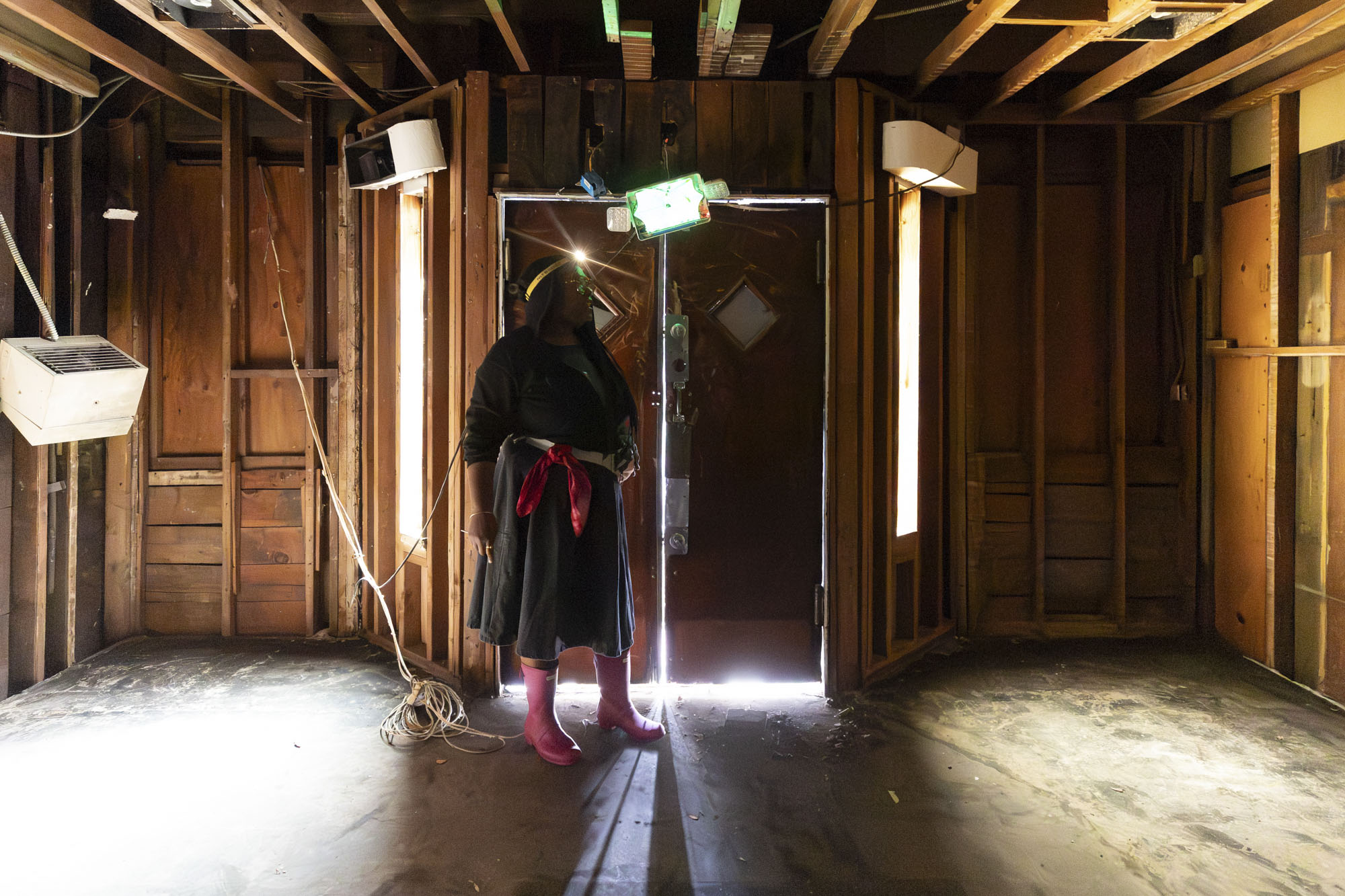
Historic West Oakland Blues Club’s Restoration Reveals Layers of Hidden History
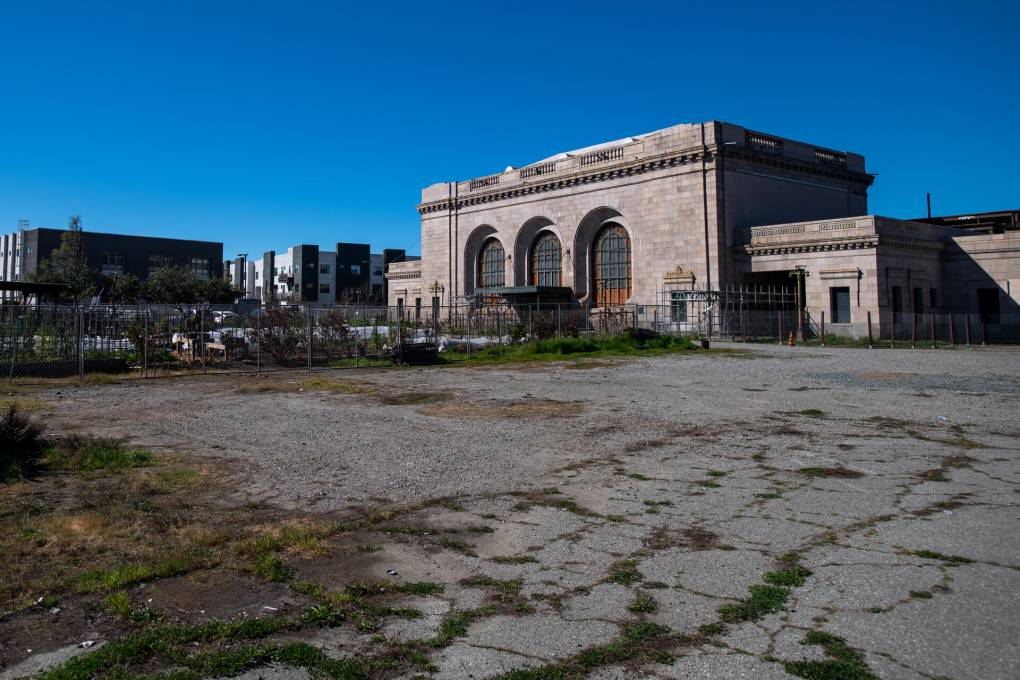
How Oakland's 16th Street Train Station Helped Build West Oakland and the Modern Civil Rights Movement
Historic Landmark Status Boosts Push to Restore Iconic West Oakland Train Station
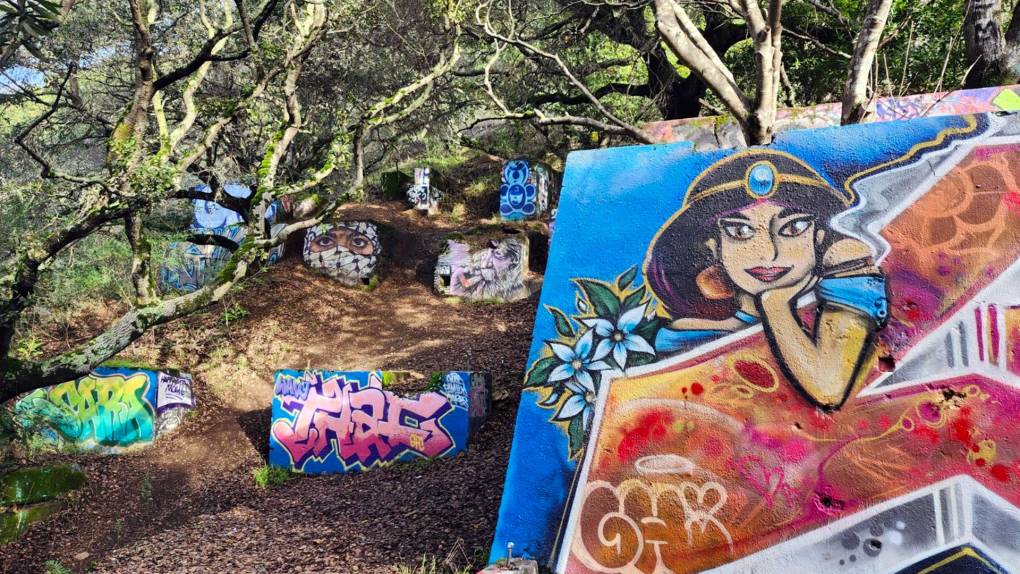
Hidden in the Oakland Hills Is An Outdoor Gallery of Murals
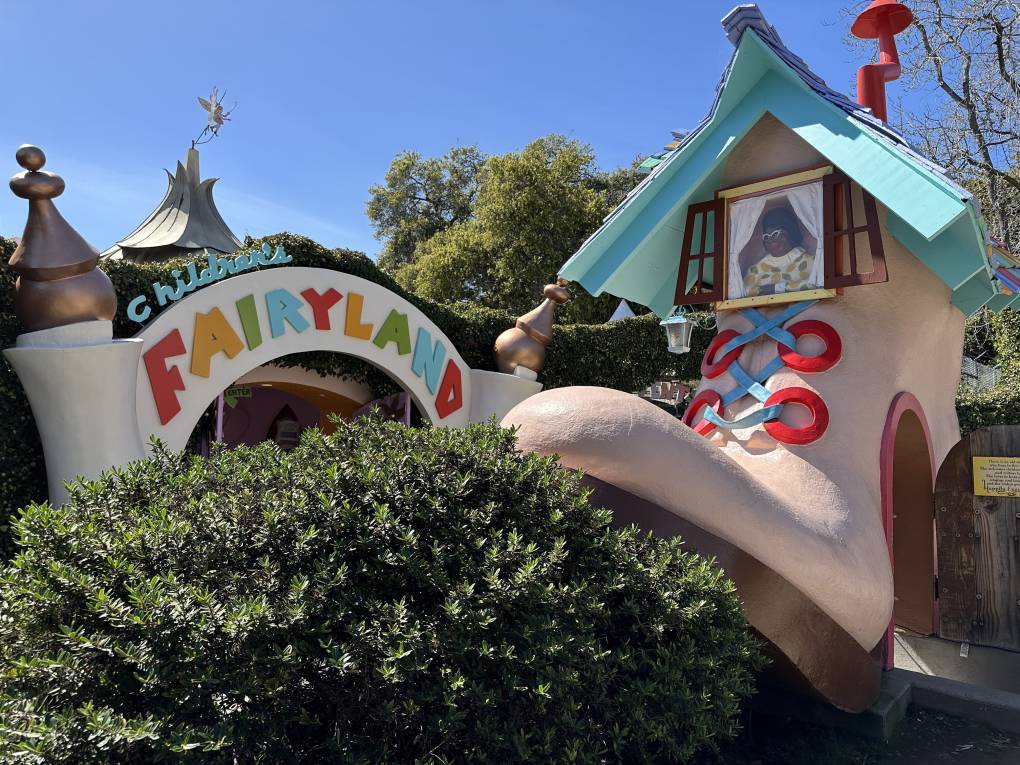
The Future Looks Bright for Children's Fairyland, as It Seeks to Better Reflect Oakland's Cultural Rainbow
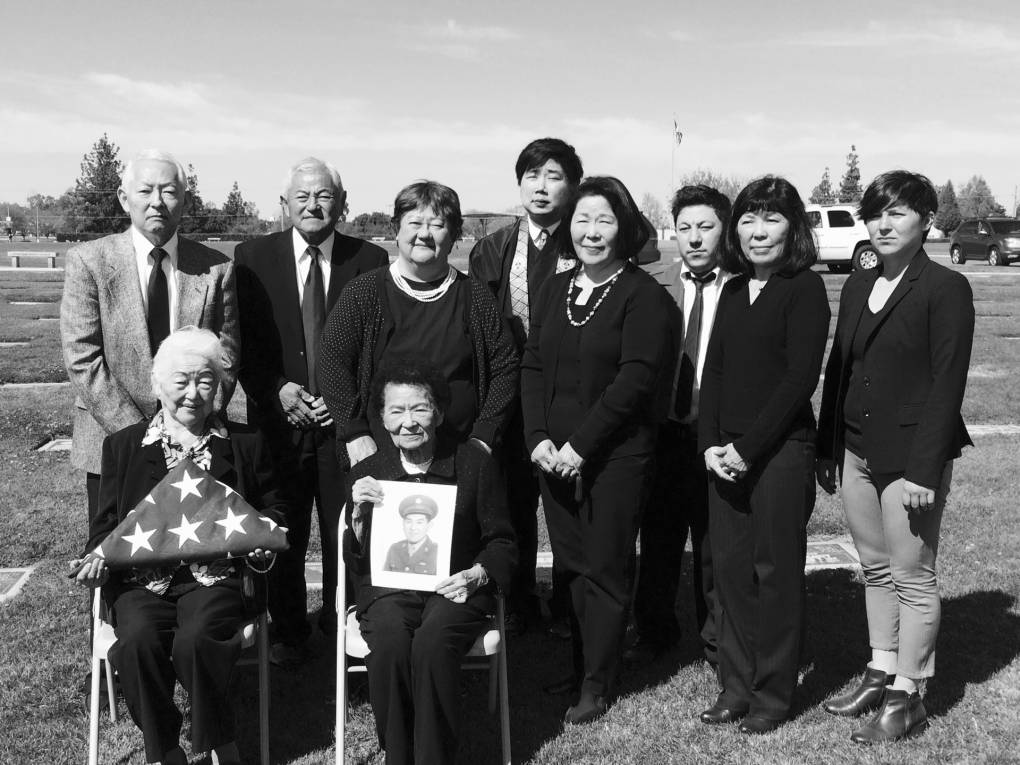
Memories of Japanese American Incarceration, Across Generations
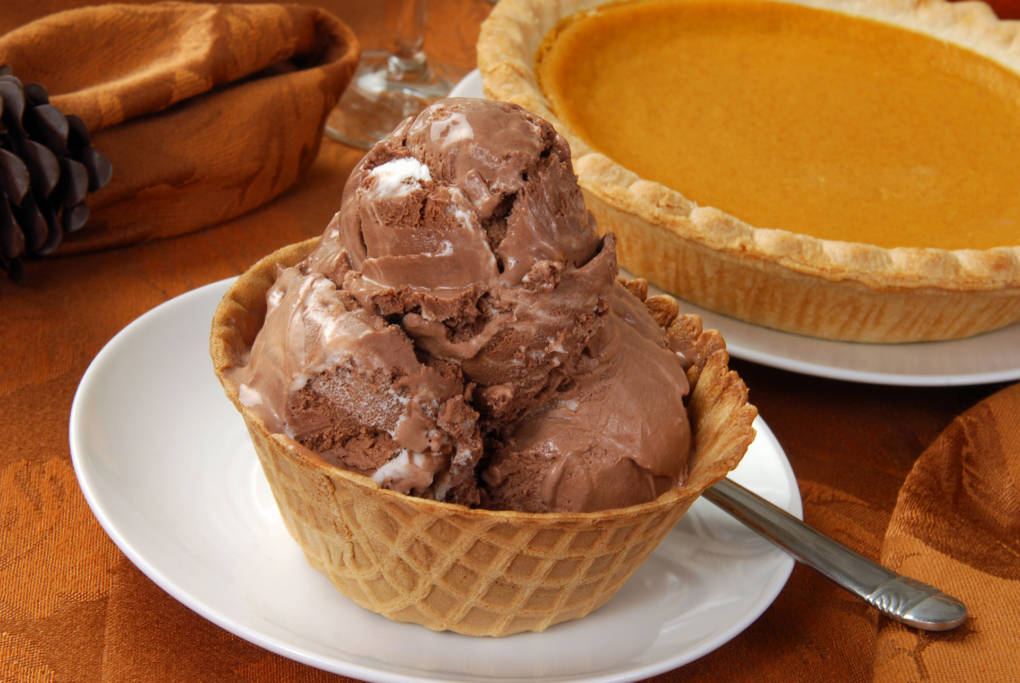
How Rocky Road Ice Cream Got Its Start in Oakland
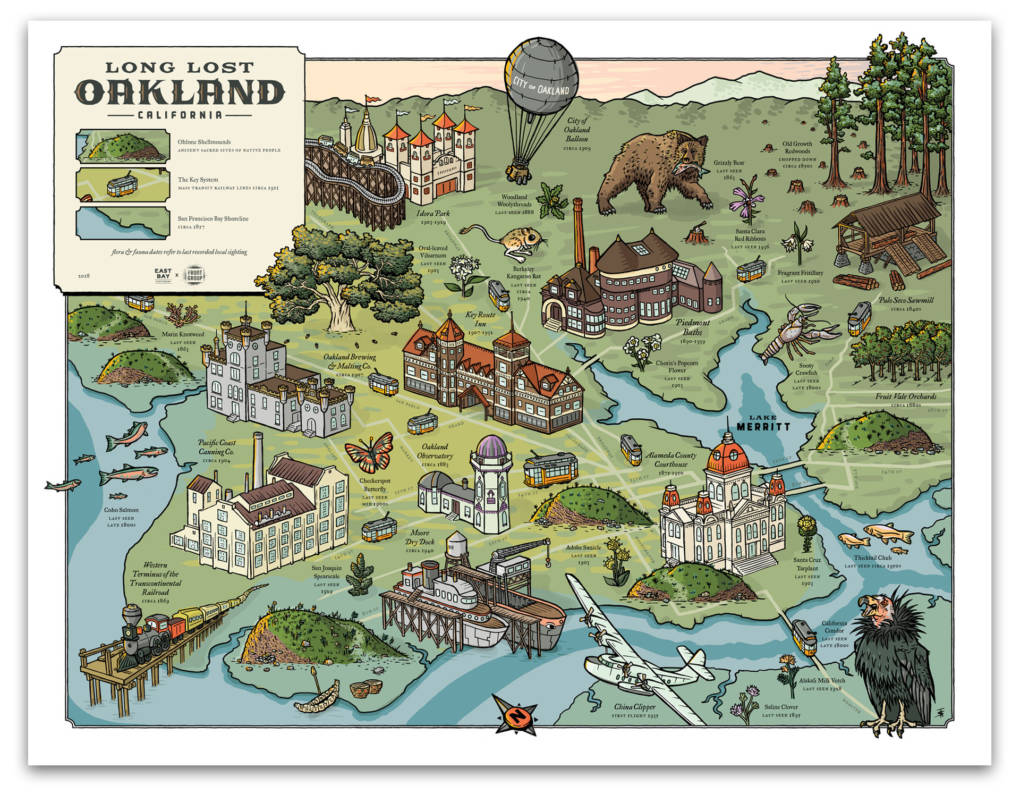
A Time-Traveling Map for Rapidly Changing Oakland
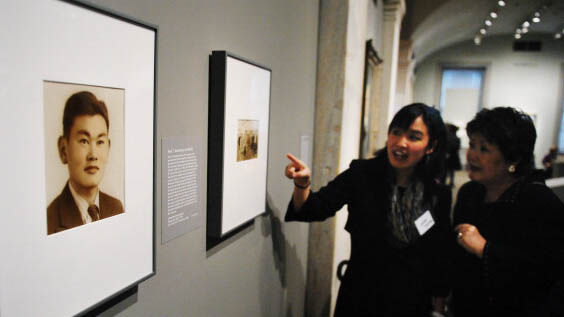
Fred Korematsu's Journey From East Oakland to the National Portrait Gallery
Sponsored
Player sponsored by
window.__IS_SSR__=true
window.__INITIAL_STATE__={
"attachmentsReducer": {
"audio_0": {
"type": "attachments",
"id": "audio_0",
"imgSizes": {
"kqedFullSize": {
"file": "https://ww2.kqed.org/news/wp-content/themes/KQED-unified/img/audio_bgs/background0.jpg"
}
}
},
"audio_1": {
"type": "attachments",
"id": "audio_1",
"imgSizes": {
"kqedFullSize": {
"file": "https://ww2.kqed.org/news/wp-content/themes/KQED-unified/img/audio_bgs/background1.jpg"
}
}
},
"audio_2": {
"type": "attachments",
"id": "audio_2",
"imgSizes": {
"kqedFullSize": {
"file": "https://ww2.kqed.org/news/wp-content/themes/KQED-unified/img/audio_bgs/background2.jpg"
}
}
},
"audio_3": {
"type": "attachments",
"id": "audio_3",
"imgSizes": {
"kqedFullSize": {
"file": "https://ww2.kqed.org/news/wp-content/themes/KQED-unified/img/audio_bgs/background3.jpg"
}
}
},
"audio_4": {
"type": "attachments",
"id": "audio_4",
"imgSizes": {
"kqedFullSize": {
"file": "https://ww2.kqed.org/news/wp-content/themes/KQED-unified/img/audio_bgs/background4.jpg"
}
}
},
"placeholder": {
"type": "attachments",
"id": "placeholder",
"imgSizes": {
"thumbnail": {
"file": "https://cdn.kqed.org/wp-content/uploads/2024/12/KQED-Default-Image-816638274-2000x1333-1-160x107.jpg",
"width": 160,
"height": 107,
"mimeType": "image/jpeg"
},
"medium": {
"file": "https://cdn.kqed.org/wp-content/uploads/2024/12/KQED-Default-Image-816638274-2000x1333-1-800x533.jpg",
"width": 800,
"height": 533,
"mimeType": "image/jpeg"
},
"medium_large": {
"file": "https://cdn.kqed.org/wp-content/uploads/2024/12/KQED-Default-Image-816638274-2000x1333-1-768x512.jpg",
"width": 768,
"height": 512,
"mimeType": "image/jpeg"
},
"large": {
"file": "https://cdn.kqed.org/wp-content/uploads/2024/12/KQED-Default-Image-816638274-2000x1333-1-1020x680.jpg",
"width": 1020,
"height": 680,
"mimeType": "image/jpeg"
},
"1536x1536": {
"file": "https://cdn.kqed.org/wp-content/uploads/2024/12/KQED-Default-Image-816638274-2000x1333-1-1536x1024.jpg",
"width": 1536,
"height": 1024,
"mimeType": "image/jpeg"
},
"fd-lrg": {
"file": "https://cdn.kqed.org/wp-content/uploads/2024/12/KQED-Default-Image-816638274-2000x1333-1-1536x1024.jpg",
"width": 1536,
"height": 1024,
"mimeType": "image/jpeg"
},
"fd-med": {
"file": "https://cdn.kqed.org/wp-content/uploads/2024/12/KQED-Default-Image-816638274-2000x1333-1-1020x680.jpg",
"width": 1020,
"height": 680,
"mimeType": "image/jpeg"
},
"fd-sm": {
"file": "https://cdn.kqed.org/wp-content/uploads/2024/12/KQED-Default-Image-816638274-2000x1333-1-800x533.jpg",
"width": 800,
"height": 533,
"mimeType": "image/jpeg"
},
"post-thumbnail": {
"file": "https://cdn.kqed.org/wp-content/uploads/2024/12/KQED-Default-Image-816638274-2000x1333-1-672x372.jpg",
"width": 672,
"height": 372,
"mimeType": "image/jpeg"
},
"twentyfourteen-full-width": {
"file": "https://cdn.kqed.org/wp-content/uploads/2024/12/KQED-Default-Image-816638274-2000x1333-1-1038x576.jpg",
"width": 1038,
"height": 576,
"mimeType": "image/jpeg"
},
"xxsmall": {
"file": "https://cdn.kqed.org/wp-content/uploads/2024/12/KQED-Default-Image-816638274-2000x1333-1-160x107.jpg",
"width": 160,
"height": 107,
"mimeType": "image/jpeg"
},
"xsmall": {
"file": "https://cdn.kqed.org/wp-content/uploads/2024/12/KQED-Default-Image-816638274-2000x1333-1-672x372.jpg",
"width": 672,
"height": 372,
"mimeType": "image/jpeg"
},
"small": {
"file": "https://cdn.kqed.org/wp-content/uploads/2024/12/KQED-Default-Image-816638274-2000x1333-1-672x372.jpg",
"width": 672,
"height": 372,
"mimeType": "image/jpeg"
},
"xlarge": {
"file": "https://cdn.kqed.org/wp-content/uploads/2024/12/KQED-Default-Image-816638274-2000x1333-1-1020x680.jpg",
"width": 1020,
"height": 680,
"mimeType": "image/jpeg"
},
"full-width": {
"file": "https://cdn.kqed.org/wp-content/uploads/2024/12/KQED-Default-Image-816638274-2000x1333-1-1920x1280.jpg",
"width": 1920,
"height": 1280,
"mimeType": "image/jpeg"
},
"guest-author-32": {
"file": "https://cdn.kqed.org/wp-content/uploads/2025/01/KQED-Default-Image-816638274-1333x1333-1-160x160.jpg",
"width": 32,
"height": 32,
"mimeType": "image/jpeg"
},
"guest-author-50": {
"file": "https://cdn.kqed.org/wp-content/uploads/2025/01/KQED-Default-Image-816638274-1333x1333-1-160x160.jpg",
"width": 50,
"height": 50,
"mimeType": "image/jpeg"
},
"guest-author-64": {
"file": "https://cdn.kqed.org/wp-content/uploads/2025/01/KQED-Default-Image-816638274-1333x1333-1-160x160.jpg",
"width": 64,
"height": 64,
"mimeType": "image/jpeg"
},
"guest-author-96": {
"file": "https://cdn.kqed.org/wp-content/uploads/2025/01/KQED-Default-Image-816638274-1333x1333-1-160x160.jpg",
"width": 96,
"height": 96,
"mimeType": "image/jpeg"
},
"guest-author-128": {
"file": "https://cdn.kqed.org/wp-content/uploads/2025/01/KQED-Default-Image-816638274-1333x1333-1-160x160.jpg",
"width": 128,
"height": 128,
"mimeType": "image/jpeg"
},
"detail": {
"file": "https://cdn.kqed.org/wp-content/uploads/2025/01/KQED-Default-Image-816638274-1333x1333-1-160x160.jpg",
"width": 160,
"height": 160,
"mimeType": "image/jpeg"
},
"kqedFullSize": {
"file": "https://cdn.kqed.org/wp-content/uploads/2024/12/KQED-Default-Image-816638274-2000x1333-1.jpg",
"width": 2000,
"height": 1333
}
}
},
"news_12058754": {
"type": "attachments",
"id": "news_12058754",
"meta": {
"index": "attachments_1716263798",
"site": "news",
"id": "12058754",
"found": true
},
"title": "251003_ORBIT_ROOM-_-19-KQED",
"publishDate": 1759765403,
"status": "inherit",
"parent": 0,
"modified": 1759765584,
"caption": "Noni Session stands near the front doors of Esther’s Orbit Room as daylight streams into the building under renovation in Oakland on Oct. 2, 2025. The restoration of the historic blues club will include a performance venue and bar, artist spaces, food and more.",
"credit": "Gustavo Hernandez/KQED",
"altTag": null,
"description": null,
"imgSizes": {
"thumbnail": {
"file": "https://cdn.kqed.org/wp-content/uploads/sites/10/2025/10/251003_ORBIT_ROOM-_-19-KQED-160x107.jpg",
"width": 160,
"height": 107,
"mimeType": "image/jpeg"
},
"1536x1536": {
"file": "https://cdn.kqed.org/wp-content/uploads/sites/10/2025/10/251003_ORBIT_ROOM-_-19-KQED-1536x1024.jpg",
"width": 1536,
"height": 1024,
"mimeType": "image/jpeg"
},
"post-thumbnail": {
"file": "https://cdn.kqed.org/wp-content/uploads/sites/10/2025/10/251003_ORBIT_ROOM-_-19-KQED-672x372.jpg",
"width": 672,
"height": 372,
"mimeType": "image/jpeg"
},
"twentyfourteen-full-width": {
"file": "https://cdn.kqed.org/wp-content/uploads/sites/10/2025/10/251003_ORBIT_ROOM-_-19-KQED-1038x576.jpg",
"width": 1038,
"height": 576,
"mimeType": "image/jpeg"
},
"kqedFullSize": {
"file": "https://cdn.kqed.org/wp-content/uploads/sites/10/2025/10/251003_ORBIT_ROOM-_-19-KQED.jpg",
"width": 2000,
"height": 1333
}
},
"fetchFailed": false,
"isLoading": false
},
"news_11910896": {
"type": "attachments",
"id": "news_11910896",
"meta": {
"index": "attachments_1716263798",
"site": "news",
"id": "11910896",
"found": true
},
"parent": 11910890,
"imgSizes": {
"twentyfourteen-full-width": {
"file": "https://ww2.kqed.org/app/uploads/sites/10/2022/04/16thStreetStationOakland_02162022-qut-1038x576.jpg",
"width": 1038,
"mimeType": "image/jpeg",
"height": 576
},
"thumbnail": {
"file": "https://ww2.kqed.org/app/uploads/sites/10/2022/04/16thStreetStationOakland_02162022-qut-160x107.jpg",
"width": 160,
"mimeType": "image/jpeg",
"height": 107
},
"post-thumbnail": {
"file": "https://ww2.kqed.org/app/uploads/sites/10/2022/04/16thStreetStationOakland_02162022-qut-672x372.jpg",
"width": 672,
"mimeType": "image/jpeg",
"height": 372
},
"kqedFullSize": {
"file": "https://ww2.kqed.org/app/uploads/sites/10/2022/04/16thStreetStationOakland_02162022-qut.jpg",
"width": 1920,
"height": 1280
},
"large": {
"file": "https://ww2.kqed.org/app/uploads/sites/10/2022/04/16thStreetStationOakland_02162022-qut-1020x680.jpg",
"width": 1020,
"mimeType": "image/jpeg",
"height": 680
},
"1536x1536": {
"file": "https://ww2.kqed.org/app/uploads/sites/10/2022/04/16thStreetStationOakland_02162022-qut-1536x1024.jpg",
"width": 1536,
"mimeType": "image/jpeg",
"height": 1024
},
"medium": {
"file": "https://ww2.kqed.org/app/uploads/sites/10/2022/04/16thStreetStationOakland_02162022-qut-800x533.jpg",
"width": 800,
"mimeType": "image/jpeg",
"height": 533
}
},
"publishDate": 1649789007,
"modified": 1649789048,
"caption": "16th Street Station in West Oakland on Feb. 16, 2022.",
"description": null,
"title": "16th Street Station in West Oakland on Feb. 16, 2022.",
"credit": "Beth LaBerge/KQED",
"status": "inherit",
"altTag": "A huge, imposing stone building sits in a vacant lot. It has three massive arched windows and a terracotta roof.",
"fetchFailed": false,
"isLoading": false
},
"news_12024826": {
"type": "attachments",
"id": "news_12024826",
"meta": {
"index": "attachments_1716263798",
"site": "news",
"id": "12024826",
"found": true
},
"title": "015_KQED_16thStreetStationOakland_02162022_qed (1)",
"publishDate": 1738261806,
"status": "inherit",
"parent": 12024819,
"modified": 1738261818,
"caption": "Light shines through windows in the Main Hall of the now abandoned 16th Street Station in West Oakland on Feb. 16, 2022.",
"credit": "Beth LaBerge/KQED",
"altTag": null,
"description": null,
"imgSizes": {
"medium": {
"file": "https://cdn.kqed.org/wp-content/uploads/sites/10/2025/01/015_KQED_16thStreetStationOakland_02162022_qed-1-800x533.jpg",
"width": 800,
"height": 533,
"mimeType": "image/jpeg"
},
"large": {
"file": "https://cdn.kqed.org/wp-content/uploads/sites/10/2025/01/015_KQED_16thStreetStationOakland_02162022_qed-1-1020x680.jpg",
"width": 1020,
"height": 680,
"mimeType": "image/jpeg"
},
"thumbnail": {
"file": "https://cdn.kqed.org/wp-content/uploads/sites/10/2025/01/015_KQED_16thStreetStationOakland_02162022_qed-1-160x107.jpg",
"width": 160,
"height": 107,
"mimeType": "image/jpeg"
},
"1536x1536": {
"file": "https://cdn.kqed.org/wp-content/uploads/sites/10/2025/01/015_KQED_16thStreetStationOakland_02162022_qed-1-1536x1024.jpg",
"width": 1536,
"height": 1024,
"mimeType": "image/jpeg"
},
"post-thumbnail": {
"file": "https://cdn.kqed.org/wp-content/uploads/sites/10/2025/01/015_KQED_16thStreetStationOakland_02162022_qed-1-672x372.jpg",
"width": 672,
"height": 372,
"mimeType": "image/jpeg"
},
"twentyfourteen-full-width": {
"file": "https://cdn.kqed.org/wp-content/uploads/sites/10/2025/01/015_KQED_16thStreetStationOakland_02162022_qed-1-1038x576.jpg",
"width": 1038,
"height": 576,
"mimeType": "image/jpeg"
},
"full-width": {
"file": "https://cdn.kqed.org/wp-content/uploads/sites/10/2025/01/015_KQED_16thStreetStationOakland_02162022_qed-1-1920x1280.jpg",
"width": 1920,
"height": 1280,
"mimeType": "image/jpeg"
},
"kqedFullSize": {
"file": "https://cdn.kqed.org/wp-content/uploads/sites/10/2025/01/015_KQED_16thStreetStationOakland_02162022_qed-1.jpg",
"width": 2000,
"height": 1333
}
},
"fetchFailed": false,
"isLoading": false
},
"news_11977328": {
"type": "attachments",
"id": "news_11977328",
"meta": {
"index": "attachments_1716263798",
"site": "news",
"id": "11977328",
"found": true
},
"parent": 11977305,
"imgSizes": {
"twentyfourteen-full-width": {
"file": "https://cdn.kqed.org/wp-content/uploads/sites/10/2024/02/Leonia-Heights-murals-1038x576.jpg",
"width": 1038,
"mimeType": "image/jpeg",
"height": 576
},
"thumbnail": {
"file": "https://cdn.kqed.org/wp-content/uploads/sites/10/2024/02/Leonia-Heights-murals-160x90.jpg",
"width": 160,
"mimeType": "image/jpeg",
"height": 90
},
"post-thumbnail": {
"file": "https://cdn.kqed.org/wp-content/uploads/sites/10/2024/02/Leonia-Heights-murals-672x372.jpg",
"width": 672,
"mimeType": "image/jpeg",
"height": 372
},
"kqedFullSize": {
"file": "https://cdn.kqed.org/wp-content/uploads/sites/10/2024/02/Leonia-Heights-murals.jpg",
"width": 1920,
"height": 1080
},
"large": {
"file": "https://cdn.kqed.org/wp-content/uploads/sites/10/2024/02/Leonia-Heights-murals-1020x574.jpg",
"width": 1020,
"mimeType": "image/jpeg",
"height": 574
},
"1536x1536": {
"file": "https://cdn.kqed.org/wp-content/uploads/sites/10/2024/02/Leonia-Heights-murals-1536x864.jpg",
"width": 1536,
"mimeType": "image/jpeg",
"height": 864
},
"medium": {
"file": "https://cdn.kqed.org/wp-content/uploads/sites/10/2024/02/Leonia-Heights-murals-800x450.jpg",
"width": 800,
"mimeType": "image/jpeg",
"height": 450
}
},
"publishDate": 1709074336,
"modified": 1709074817,
"caption": "Murals hidden among the oak trees off a hiking trail near Leona Heights.",
"description": null,
"title": "Leonia-Heights-murals",
"credit": null,
"status": "inherit",
"altTag": "In the right side foreground a mural of Jasmine from the Disney movie Aladdin gives way to almost 10 mural painted on chunks of concrete.",
"fetchFailed": false,
"isLoading": false
},
"news_11948447": {
"type": "attachments",
"id": "news_11948447",
"meta": {
"index": "attachments_1716263798",
"site": "news",
"id": "11948447",
"found": true
},
"parent": 11948422,
"imgSizes": {
"twentyfourteen-full-width": {
"file": "https://ww2.kqed.org/app/uploads/sites/10/2023/05/IMG_6044-1038x576.jpg",
"width": 1038,
"mimeType": "image/jpeg",
"height": 576
},
"thumbnail": {
"file": "https://ww2.kqed.org/app/uploads/sites/10/2023/05/IMG_6044-160x120.jpg",
"width": 160,
"mimeType": "image/jpeg",
"height": 120
},
"post-thumbnail": {
"file": "https://ww2.kqed.org/app/uploads/sites/10/2023/05/IMG_6044-672x372.jpg",
"width": 672,
"mimeType": "image/jpeg",
"height": 372
},
"kqedFullSize": {
"file": "https://ww2.kqed.org/app/uploads/sites/10/2023/05/IMG_6044-scaled.jpg",
"width": 2560,
"height": 1920
},
"2048x2048": {
"file": "https://ww2.kqed.org/app/uploads/sites/10/2023/05/IMG_6044-2048x1536.jpg",
"width": 2048,
"mimeType": "image/jpeg",
"height": 1536
},
"large": {
"file": "https://ww2.kqed.org/app/uploads/sites/10/2023/05/IMG_6044-1020x765.jpg",
"width": 1020,
"mimeType": "image/jpeg",
"height": 765
},
"1536x1536": {
"file": "https://ww2.kqed.org/app/uploads/sites/10/2023/05/IMG_6044-1536x1152.jpg",
"width": 1536,
"mimeType": "image/jpeg",
"height": 1152
},
"full-width": {
"file": "https://ww2.kqed.org/app/uploads/sites/10/2023/05/IMG_6044-1920x1440.jpg",
"width": 1920,
"mimeType": "image/jpeg",
"height": 1440
},
"medium": {
"file": "https://ww2.kqed.org/app/uploads/sites/10/2023/05/IMG_6044-800x600.jpg",
"width": 800,
"mimeType": "image/jpeg",
"height": 600
}
},
"publishDate": 1683167334,
"modified": 1685653706,
"caption": "At the entrance of Children’s Fairyland in Oakland, children can pass through a giant shoe, a reference to a popular nursery rhyme about an old woman who lived in a shoe.",
"description": null,
"title": "IMG_6044",
"credit": "Pauline Bartolone/KQED",
"status": "inherit",
"altTag": "Beyond bushes in the foreground, we see a giant, light-pink shoe with a turquoise roof and a tunnel people can walk through toward an arch with multicolored letters that spell \"FAIRYLAND.\"",
"fetchFailed": false,
"isLoading": false
},
"news_11861198": {
"type": "attachments",
"id": "news_11861198",
"meta": {
"index": "attachments_1716263798",
"site": "news",
"id": "11861198",
"found": true
},
"parent": 11861010,
"imgSizes": {
"apple_news_ca_landscape_5_5": {
"file": "https://ww2.kqed.org/app/uploads/sites/10/2021/02/RS47225_IMG_5086-qut-1044x783.jpg",
"width": 1044,
"mimeType": "image/jpeg",
"height": 783
},
"apple_news_ca_square_4_0": {
"file": "https://ww2.kqed.org/app/uploads/sites/10/2021/02/RS47225_IMG_5086-qut-470x470.jpg",
"width": 470,
"mimeType": "image/jpeg",
"height": 470
},
"twentyfourteen-full-width": {
"file": "https://ww2.kqed.org/app/uploads/sites/10/2021/02/RS47225_IMG_5086-qut-1038x576.jpg",
"width": 1038,
"mimeType": "image/jpeg",
"height": 576
},
"thumbnail": {
"file": "https://ww2.kqed.org/app/uploads/sites/10/2021/02/RS47225_IMG_5086-qut-160x120.jpg",
"width": 160,
"mimeType": "image/jpeg",
"height": 120
},
"post-thumbnail": {
"file": "https://ww2.kqed.org/app/uploads/sites/10/2021/02/RS47225_IMG_5086-qut-672x372.jpg",
"width": 672,
"mimeType": "image/jpeg",
"height": 372
},
"kqedFullSize": {
"file": "https://ww2.kqed.org/app/uploads/sites/10/2021/02/RS47225_IMG_5086-qut.jpg",
"width": 1920,
"height": 1440
},
"apple_news_ca_landscape_4_7": {
"file": "https://ww2.kqed.org/app/uploads/sites/10/2021/02/RS47225_IMG_5086-qut-632x474.jpg",
"width": 632,
"mimeType": "image/jpeg",
"height": 474
},
"large": {
"file": "https://ww2.kqed.org/app/uploads/sites/10/2021/02/RS47225_IMG_5086-qut-1020x765.jpg",
"width": 1020,
"mimeType": "image/jpeg",
"height": 765
},
"apple_news_ca_landscape_4_0": {
"file": "https://ww2.kqed.org/app/uploads/sites/10/2021/02/RS47225_IMG_5086-qut-536x402.jpg",
"width": 536,
"mimeType": "image/jpeg",
"height": 402
},
"apple_news_ca_portrait_12_9": {
"file": "https://ww2.kqed.org/app/uploads/sites/10/2021/02/RS47225_IMG_5086-qut-1122x1440.jpg",
"width": 1122,
"mimeType": "image/jpeg",
"height": 1440
},
"medium": {
"file": "https://ww2.kqed.org/app/uploads/sites/10/2021/02/RS47225_IMG_5086-qut-800x600.jpg",
"width": 800,
"mimeType": "image/jpeg",
"height": 600
},
"apple_news_ca_portrait_4_0": {
"file": "https://ww2.kqed.org/app/uploads/sites/10/2021/02/RS47225_IMG_5086-qut-354x472.jpg",
"width": 354,
"mimeType": "image/jpeg",
"height": 472
},
"apple_news_ca_portrait_9_7": {
"file": "https://ww2.kqed.org/app/uploads/sites/10/2021/02/RS47225_IMG_5086-qut-840x1120.jpg",
"width": 840,
"mimeType": "image/jpeg",
"height": 1120
},
"apple_news_ca_landscape_12_9": {
"file": "https://ww2.kqed.org/app/uploads/sites/10/2021/02/RS47225_IMG_5086-qut-1832x1374.jpg",
"width": 1832,
"mimeType": "image/jpeg",
"height": 1374
},
"apple_news_ca_square_9_7": {
"file": "https://ww2.kqed.org/app/uploads/sites/10/2021/02/RS47225_IMG_5086-qut-1104x1104.jpg",
"width": 1104,
"mimeType": "image/jpeg",
"height": 1104
},
"1536x1536": {
"file": "https://ww2.kqed.org/app/uploads/sites/10/2021/02/RS47225_IMG_5086-qut-1536x1152.jpg",
"width": 1536,
"mimeType": "image/jpeg",
"height": 1152
},
"apple_news_ca_portrait_4_7": {
"file": "https://ww2.kqed.org/app/uploads/sites/10/2021/02/RS47225_IMG_5086-qut-414x552.jpg",
"width": 414,
"mimeType": "image/jpeg",
"height": 552
},
"apple_news_ca_square_12_9": {
"file": "https://ww2.kqed.org/app/uploads/sites/10/2021/02/RS47225_IMG_5086-qut-1472x1440.jpg",
"width": 1472,
"mimeType": "image/jpeg",
"height": 1440
},
"apple_news_ca_portrait_5_5": {
"file": "https://ww2.kqed.org/app/uploads/sites/10/2021/02/RS47225_IMG_5086-qut-687x916.jpg",
"width": 687,
"mimeType": "image/jpeg",
"height": 916
},
"apple_news_ca_square_4_7": {
"file": "https://ww2.kqed.org/app/uploads/sites/10/2021/02/RS47225_IMG_5086-qut-550x550.jpg",
"width": 550,
"mimeType": "image/jpeg",
"height": 550
},
"apple_news_ca_landscape_9_7": {
"file": "https://ww2.kqed.org/app/uploads/sites/10/2021/02/RS47225_IMG_5086-qut-1376x1032.jpg",
"width": 1376,
"mimeType": "image/jpeg",
"height": 1032
},
"apple_news_ca_square_5_5": {
"file": "https://ww2.kqed.org/app/uploads/sites/10/2021/02/RS47225_IMG_5086-qut-912x912.jpg",
"width": 912,
"mimeType": "image/jpeg",
"height": 912
}
},
"publishDate": 1613764623,
"modified": 1613778292,
"caption": "Generations of the Masumoto family gathered in Selma, CA in 2017 for a memorial service. Yoshi Masumoto Yamagiwa (center) is holding a photo of her brother, George Masumoto, who was killed fighting for the U.S. in World War 2, while his family was incarcerated in a prison camp for Japanese Americans in Gila River, Arizona. ",
"description": "Generations of the Masumoto family gathered in Selma, California, in 2017 for a memorial service. Yoshi Masumoto Yamagiwa (center) is holding a photo of her brother, George Masumoto, who was killed fighting for the U.S. in World War II, while his family was incarcerated in a prison camp for Japanese Americans in Gila River, Arizona. ",
"title": "RS47225_IMG_5086-qut",
"credit": "Courtesy Masumoto Family",
"status": "inherit",
"altTag": null,
"fetchFailed": false,
"isLoading": false
},
"news_11780479": {
"type": "attachments",
"id": "news_11780479",
"meta": {
"index": "attachments_1716263798",
"site": "news",
"id": "11780479",
"found": true
},
"parent": 11780468,
"imgSizes": {
"apple_news_ca_landscape_5_5": {
"file": "https://ww2.kqed.org/app/uploads/sites/10/2019/10/iStock-119689230-1044x783.jpg",
"width": 1044,
"mimeType": "image/jpeg",
"height": 783
},
"apple_news_ca_square_4_0": {
"file": "https://ww2.kqed.org/app/uploads/sites/10/2019/10/iStock-119689230-470x470.jpg",
"width": 470,
"mimeType": "image/jpeg",
"height": 470
},
"twentyfourteen-full-width": {
"file": "https://ww2.kqed.org/app/uploads/sites/10/2019/10/iStock-119689230-1038x576.jpg",
"width": 1038,
"mimeType": "image/jpeg",
"height": 576
},
"thumbnail": {
"file": "https://ww2.kqed.org/app/uploads/sites/10/2019/10/iStock-119689230-160x107.jpg",
"width": 160,
"mimeType": "image/jpeg",
"height": 107
},
"post-thumbnail": {
"file": "https://ww2.kqed.org/app/uploads/sites/10/2019/10/iStock-119689230-672x372.jpg",
"width": 672,
"mimeType": "image/jpeg",
"height": 372
},
"kqedFullSize": {
"file": "https://ww2.kqed.org/app/uploads/sites/10/2019/10/iStock-119689230.jpg",
"width": 1920,
"height": 1285
},
"apple_news_ca_landscape_4_7": {
"file": "https://ww2.kqed.org/app/uploads/sites/10/2019/10/iStock-119689230-632x474.jpg",
"width": 632,
"mimeType": "image/jpeg",
"height": 474
},
"large": {
"file": "https://ww2.kqed.org/app/uploads/sites/10/2019/10/iStock-119689230-1020x683.jpg",
"width": 1020,
"mimeType": "image/jpeg",
"height": 683
},
"complete_open_graph": {
"file": "https://ww2.kqed.org/app/uploads/sites/10/2019/10/iStock-119689230-1200x803.jpg",
"width": 1200,
"mimeType": "image/jpeg",
"height": 803
},
"apple_news_ca_landscape_4_0": {
"file": "https://ww2.kqed.org/app/uploads/sites/10/2019/10/iStock-119689230-536x402.jpg",
"width": 536,
"mimeType": "image/jpeg",
"height": 402
},
"apple_news_ca_portrait_12_9": {
"file": "https://ww2.kqed.org/app/uploads/sites/10/2019/10/iStock-119689230-1122x1285.jpg",
"width": 1122,
"mimeType": "image/jpeg",
"height": 1285
},
"medium": {
"file": "https://ww2.kqed.org/app/uploads/sites/10/2019/10/iStock-119689230-800x535.jpg",
"width": 800,
"mimeType": "image/jpeg",
"height": 535
},
"apple_news_ca_portrait_4_0": {
"file": "https://ww2.kqed.org/app/uploads/sites/10/2019/10/iStock-119689230-354x472.jpg",
"width": 354,
"mimeType": "image/jpeg",
"height": 472
},
"apple_news_ca_portrait_9_7": {
"file": "https://ww2.kqed.org/app/uploads/sites/10/2019/10/iStock-119689230-840x1120.jpg",
"width": 840,
"mimeType": "image/jpeg",
"height": 1120
},
"apple_news_ca_landscape_12_9": {
"file": "https://ww2.kqed.org/app/uploads/sites/10/2019/10/iStock-119689230-1832x1285.jpg",
"width": 1832,
"mimeType": "image/jpeg",
"height": 1285
},
"apple_news_ca_square_9_7": {
"file": "https://ww2.kqed.org/app/uploads/sites/10/2019/10/iStock-119689230-1104x1104.jpg",
"width": 1104,
"mimeType": "image/jpeg",
"height": 1104
},
"apple_news_ca_portrait_4_7": {
"file": "https://ww2.kqed.org/app/uploads/sites/10/2019/10/iStock-119689230-414x552.jpg",
"width": 414,
"mimeType": "image/jpeg",
"height": 552
},
"apple_news_ca_square_12_9": {
"file": "https://ww2.kqed.org/app/uploads/sites/10/2019/10/iStock-119689230-1472x1285.jpg",
"width": 1472,
"mimeType": "image/jpeg",
"height": 1285
},
"apple_news_ca_portrait_5_5": {
"file": "https://ww2.kqed.org/app/uploads/sites/10/2019/10/iStock-119689230-687x916.jpg",
"width": 687,
"mimeType": "image/jpeg",
"height": 916
},
"full-width": {
"file": "https://ww2.kqed.org/app/uploads/sites/10/2019/10/iStock-119689230-1920x1285.jpg",
"width": 1920,
"mimeType": "image/jpeg",
"height": 1285
},
"apple_news_ca_square_4_7": {
"file": "https://ww2.kqed.org/app/uploads/sites/10/2019/10/iStock-119689230-550x550.jpg",
"width": 550,
"mimeType": "image/jpeg",
"height": 550
},
"apple_news_ca_landscape_9_7": {
"file": "https://ww2.kqed.org/app/uploads/sites/10/2019/10/iStock-119689230-1376x1032.jpg",
"width": 1376,
"mimeType": "image/jpeg",
"height": 1032
},
"apple_news_ca_square_5_5": {
"file": "https://ww2.kqed.org/app/uploads/sites/10/2019/10/iStock-119689230-912x912.jpg",
"width": 912,
"mimeType": "image/jpeg",
"height": 912
}
},
"publishDate": 1571251968,
"modified": 1571252049,
"caption": "Rocky Road was among the first flavors to incorporate \"mix ins.\" ",
"description": "Rocky Road was among the first flavors to incorporate \"mix ins.\" ",
"title": "Ice cream in a waffle bowl",
"credit": "MSPhotographic/iStock",
"status": "inherit",
"fetchFailed": false,
"isLoading": false
},
"news_11662137": {
"type": "attachments",
"id": "news_11662137",
"meta": {
"index": "attachments_1716263798",
"site": "news",
"id": "11662137",
"found": true
},
"parent": 11661407,
"imgSizes": {
"small": {
"file": "https://ww2.kqed.org/app/uploads/sites/10/2018/04/RS30385_LLO_fullmap-qut-1-520x405.jpg",
"width": 520,
"mimeType": "image/jpeg",
"height": 405
},
"twentyfourteen-full-width": {
"file": "https://ww2.kqed.org/app/uploads/sites/10/2018/04/RS30385_LLO_fullmap-qut-1-1038x576.jpg",
"width": 1038,
"mimeType": "image/jpeg",
"height": 576
},
"thumbnail": {
"file": "https://ww2.kqed.org/app/uploads/sites/10/2018/04/RS30385_LLO_fullmap-qut-1-160x125.jpg",
"width": 160,
"mimeType": "image/jpeg",
"height": 125
},
"fd-sm": {
"file": "https://ww2.kqed.org/app/uploads/sites/10/2018/04/RS30385_LLO_fullmap-qut-1-960x747.jpg",
"width": 960,
"mimeType": "image/jpeg",
"height": 747
},
"post-thumbnail": {
"file": "https://ww2.kqed.org/app/uploads/sites/10/2018/04/RS30385_LLO_fullmap-qut-1-672x372.jpg",
"width": 672,
"mimeType": "image/jpeg",
"height": 372
},
"xsmall": {
"file": "https://ww2.kqed.org/app/uploads/sites/10/2018/04/RS30385_LLO_fullmap-qut-1-375x292.jpg",
"width": 375,
"mimeType": "image/jpeg",
"height": 292
},
"kqedFullSize": {
"file": "https://ww2.kqed.org/app/uploads/sites/10/2018/04/RS30385_LLO_fullmap-qut-1.jpg",
"width": 1920,
"height": 1494
},
"large": {
"file": "https://ww2.kqed.org/app/uploads/sites/10/2018/04/RS30385_LLO_fullmap-qut-1-1020x794.jpg",
"width": 1020,
"mimeType": "image/jpeg",
"height": 794
},
"xlarge": {
"file": "https://ww2.kqed.org/app/uploads/sites/10/2018/04/RS30385_LLO_fullmap-qut-1-1180x918.jpg",
"width": 1180,
"mimeType": "image/jpeg",
"height": 918
},
"complete_open_graph": {
"file": "https://ww2.kqed.org/app/uploads/sites/10/2018/04/RS30385_LLO_fullmap-qut-1-1200x934.jpg",
"width": 1200,
"mimeType": "image/jpeg",
"height": 934
},
"guest-author-50": {
"file": "https://ww2.kqed.org/app/uploads/sites/10/2018/04/RS30385_LLO_fullmap-qut-1-50x50.jpg",
"width": 50,
"mimeType": "image/jpeg",
"height": 50
},
"guest-author-96": {
"file": "https://ww2.kqed.org/app/uploads/sites/10/2018/04/RS30385_LLO_fullmap-qut-1-96x96.jpg",
"width": 96,
"mimeType": "image/jpeg",
"height": 96
},
"medium": {
"file": "https://ww2.kqed.org/app/uploads/sites/10/2018/04/RS30385_LLO_fullmap-qut-1-800x623.jpg",
"width": 800,
"mimeType": "image/jpeg",
"height": 623
},
"guest-author-64": {
"file": "https://ww2.kqed.org/app/uploads/sites/10/2018/04/RS30385_LLO_fullmap-qut-1-64x64.jpg",
"width": 64,
"mimeType": "image/jpeg",
"height": 64
},
"guest-author-32": {
"file": "https://ww2.kqed.org/app/uploads/sites/10/2018/04/RS30385_LLO_fullmap-qut-1-32x32.jpg",
"width": 32,
"mimeType": "image/jpeg",
"height": 32
},
"fd-lrg": {
"file": "https://ww2.kqed.org/app/uploads/sites/10/2018/04/RS30385_LLO_fullmap-qut-1-1920x1494.jpg",
"width": 1920,
"mimeType": "image/jpeg",
"height": 1494
},
"fd-med": {
"file": "https://ww2.kqed.org/app/uploads/sites/10/2018/04/RS30385_LLO_fullmap-qut-1-1180x918.jpg",
"width": 1180,
"mimeType": "image/jpeg",
"height": 918
},
"full-width": {
"file": "https://ww2.kqed.org/app/uploads/sites/10/2018/04/RS30385_LLO_fullmap-qut-1-1920x1494.jpg",
"width": 1920,
"mimeType": "image/jpeg",
"height": 1494
},
"detail": {
"file": "https://ww2.kqed.org/app/uploads/sites/10/2018/04/RS30385_LLO_fullmap-qut-1-150x150.jpg",
"width": 150,
"mimeType": "image/jpeg",
"height": 150
},
"guest-author-128": {
"file": "https://ww2.kqed.org/app/uploads/sites/10/2018/04/RS30385_LLO_fullmap-qut-1-128x128.jpg",
"width": 128,
"mimeType": "image/jpeg",
"height": 128
},
"xxsmall": {
"file": "https://ww2.kqed.org/app/uploads/sites/10/2018/04/RS30385_LLO_fullmap-qut-1-240x187.jpg",
"width": 240,
"mimeType": "image/jpeg",
"height": 187
}
},
"publishDate": 1523653646,
"modified": 1523747007,
"caption": "Liam O'Donoghue's Long Lost Oakland map highlights pieces of the city's history that no longer exist.",
"description": "Liam O'Donoghue's Long Lost Oakland map highlights pieces of the city's history that no longer exist.",
"title": "RS30385_LLO_fullmap-qut",
"credit": "Courtesy of Liam O'Donoghue",
"status": "inherit",
"fetchFailed": false,
"isLoading": false
},
"news_11857888": {
"type": "attachments",
"id": "news_11857888",
"meta": {
"index": "attachments_1716263798",
"site": "news",
"id": "11857888",
"found": true
},
"parent": 55300,
"imgSizes": {
"apple_news_ca_square_4_0": {
"file": "https://ww2.kqed.org/app/uploads/sites/10/2012/02/gettyimages-138094978-594x594-copy-470x317.jpg",
"width": 470,
"mimeType": "image/jpeg",
"height": 317
},
"thumbnail": {
"file": "https://ww2.kqed.org/app/uploads/sites/10/2012/02/gettyimages-138094978-594x594-copy-160x90.jpg",
"width": 160,
"mimeType": "image/jpeg",
"height": 90
},
"kqedFullSize": {
"file": "https://ww2.kqed.org/app/uploads/sites/10/2012/02/gettyimages-138094978-594x594-copy.jpg",
"width": 564,
"height": 317
},
"apple_news_ca_portrait_4_7": {
"file": "https://ww2.kqed.org/app/uploads/sites/10/2012/02/gettyimages-138094978-594x594-copy-414x317.jpg",
"width": 414,
"mimeType": "image/jpeg",
"height": 317
},
"apple_news_ca_square_4_7": {
"file": "https://ww2.kqed.org/app/uploads/sites/10/2012/02/gettyimages-138094978-594x594-copy-550x317.jpg",
"width": 550,
"mimeType": "image/jpeg",
"height": 317
},
"apple_news_ca_landscape_4_0": {
"file": "https://ww2.kqed.org/app/uploads/sites/10/2012/02/gettyimages-138094978-594x594-copy-536x317.jpg",
"width": 536,
"mimeType": "image/jpeg",
"height": 317
},
"apple_news_ca_portrait_4_0": {
"file": "https://ww2.kqed.org/app/uploads/sites/10/2012/02/gettyimages-138094978-594x594-copy-354x317.jpg",
"width": 354,
"mimeType": "image/jpeg",
"height": 317
}
},
"publishDate": 1612036665,
"modified": 1612036736,
"caption": "Family members of Fred Korematsu during look a his photographs during a presentation to the National Portrait Gallery on February 2, 2012 in Washington, DC. Fred Korematsu was a US citizen of Japanese ancestry who was imprisoned for defying a relocation order. Seventy years after the United States detained citizens of Japanese ancestry, the gallery that honors noteworthy Americans on Thursday dedicated a portrait of the man who defied the order. ",
"description": null,
"title": "gettyimages-138094978-594x594 copy",
"credit": "Mandel Ngan/AFP via Getty Images",
"status": "inherit",
"altTag": null,
"fetchFailed": false,
"isLoading": false
}
},
"audioPlayerReducer": {
"postId": "stream_live",
"isPaused": true,
"isPlaying": false,
"pfsActive": false,
"pledgeModalIsOpen": true,
"playerDrawerIsOpen": false
},
"authorsReducer": {
"ninathorsen": {
"type": "authors",
"id": "246",
"meta": {
"index": "authors_1716337520",
"id": "246",
"found": true
},
"name": "Nina Thorsen",
"firstName": "Nina",
"lastName": "Thorsen",
"slug": "ninathorsen",
"email": "nthorsen@kqed.org",
"display_author_email": false,
"staff_mastheads": [
"news"
],
"title": "Producer, Radio",
"bio": "\u003cspan style=\"color: #000000;\">Nina Thorsen is a KQED radio producer, and frequently reports on sports and culture. \u003c/span>\u003cspan style=\"color: #000000;\">She co-created and produced KQED's \u003cem>Pacific Time, \u003c/em> a weekly radio program on Asian and Asian American issues that aired from 2000 to 2007. Before coming to KQED, Thorsen was the deputy foreign editor for \u003cem>Marketplace, \u003c/em>and in her home state of Minnesota, worked for \u003cem>A Prairie Home Companion\u003c/em> and for Public Radio International. \u003c/span>",
"avatar": "https://secure.gravatar.com/avatar/e13dc7282cec33c15d973ebb56d57ead?s=600&d=blank&r=g",
"twitter": "NinaKQED",
"facebook": null,
"instagram": null,
"linkedin": null,
"sites": [
{
"site": "news",
"roles": [
"editor"
]
},
{
"site": "podcasts",
"roles": [
"editor"
]
}
],
"headData": {
"title": "Nina Thorsen | KQED",
"description": "Producer, Radio",
"ogImgSrc": "https://secure.gravatar.com/avatar/e13dc7282cec33c15d973ebb56d57ead?s=600&d=blank&r=g",
"twImgSrc": "https://secure.gravatar.com/avatar/e13dc7282cec33c15d973ebb56d57ead?s=600&d=blank&r=g"
},
"isLoading": false,
"link": "/author/ninathorsen"
},
"sasha-khokha": {
"type": "authors",
"id": "254",
"meta": {
"index": "authors_1716337520",
"id": "254",
"found": true
},
"name": "Sasha Khokha",
"firstName": "Sasha",
"lastName": "Khokha",
"slug": "sasha-khokha",
"email": "skhokha@kqed.org",
"display_author_email": true,
"staff_mastheads": [
"news"
],
"title": "Host, The California Report Magazine",
"bio": "Sasha Khokha is the host of \u003cem>The California Report's \u003c/em> weekly magazine program, which takes listeners on sound-rich excursions to meet the people that make the Golden State unique -- through audio documentaries and long-form stories. As \u003cem>The California Report's\u003c/em> Central Valley Bureau Chief based in Fresno for nearly a dozen years, Sasha brought the lives and concerns of rural Californians to listeners around the state. Her reporting helped expose the hidden price immigrant women janitors and farmworkers may pay to keep their jobs: sexual assault at work. It inspired two new California laws to protect them from sexual harassment. She was a key member of the reporting team for the Frontline film \u003cem>Rape on the Night Shift, \u003c/em>which was nominated for two national Emmys. Sasha has also won a national Edward R. Murrow and a national PRNDI award for investigative reporting, as well as multiple prizes from the Society for Professional Journalists. Sasha is a proud alum of the UC Berkeley Graduate School of Journalism and Brown University and a member of the South Asian Journalists Association.",
"avatar": "https://secure.gravatar.com/avatar/e4b5e1541aaeea2aa356aa1fb2a68950?s=600&d=blank&r=g",
"twitter": "KQEDSashaKhokha",
"facebook": null,
"instagram": null,
"linkedin": null,
"sites": [
{
"site": "news",
"roles": [
"editor"
]
},
{
"site": "stateofhealth",
"roles": [
"author"
]
},
{
"site": "science",
"roles": [
"author"
]
},
{
"site": "quest",
"roles": [
"subscriber"
]
}
],
"headData": {
"title": "Sasha Khokha | KQED",
"description": "Host, The California Report Magazine",
"ogImgSrc": "https://secure.gravatar.com/avatar/e4b5e1541aaeea2aa356aa1fb2a68950?s=600&d=blank&r=g",
"twImgSrc": "https://secure.gravatar.com/avatar/e4b5e1541aaeea2aa356aa1fb2a68950?s=600&d=blank&r=g"
},
"isLoading": false,
"link": "/author/sasha-khokha"
},
"afont": {
"type": "authors",
"id": "8637",
"meta": {
"index": "authors_1716337520",
"id": "8637",
"found": true
},
"name": "Amanda Font",
"firstName": "Amanda",
"lastName": "Font",
"slug": "afont",
"email": "afont@kqed.org",
"display_author_email": false,
"staff_mastheads": [],
"title": "KQED Contributor",
"bio": "Amanda Font is a producer on \u003cem>The Latest\u003c/em> podcast, and the host and co-producer of the series \u003cem>Audible Cosmos\u003c/em>. She has previously worked as a producer and reporter on the \u003cem>Bay Curious\u003c/em> podcast, and director of \u003cem>The California Report Magazine\u003c/em>. She grew up in the deserts of Southern California and moved north for the trees. Amanda earned a B.A. from the BECA program at San Francisco State, where she worked in the university's radio station. Amanda Font is represented by SAG-AFTRA.",
"avatar": "https://secure.gravatar.com/avatar/d9e81cf0117d5849b9cfb7ab4b1422f1?s=600&d=blank&r=g",
"twitter": null,
"facebook": null,
"instagram": null,
"linkedin": null,
"sites": [
{
"site": "news",
"roles": [
"add_users",
"create_users"
]
},
{
"site": "science",
"roles": []
},
{
"site": "forum",
"roles": [
"administrator"
]
},
{
"site": "perspectives",
"roles": [
"administrator"
]
},
{
"site": "radio",
"roles": [
"administrator"
]
}
],
"headData": {
"title": "Amanda Font | KQED",
"description": "KQED Contributor",
"ogImgSrc": "https://secure.gravatar.com/avatar/d9e81cf0117d5849b9cfb7ab4b1422f1?s=600&d=blank&r=g",
"twImgSrc": "https://secure.gravatar.com/avatar/d9e81cf0117d5849b9cfb7ab4b1422f1?s=600&d=blank&r=g"
},
"isLoading": false,
"link": "/author/afont"
},
"btaylor": {
"type": "authors",
"id": "11365",
"meta": {
"index": "authors_1716337520",
"id": "11365",
"found": true
},
"name": "Bianca Taylor",
"firstName": "Bianca",
"lastName": "Taylor",
"slug": "btaylor",
"email": "btaylor@KQED.org",
"display_author_email": false,
"staff_mastheads": [
"news"
],
"title": "Host and Producer ",
"bio": "Bianca Taylor is a news producer and host of KQED's The Latest podcast.\r\n\r\nHer work with KQED has been honored by the Society of Professional Journalists NorCal, the Webby's, the Regional Murrow Awards, and ONA. She has also worked with NPR, the BBC World Service, and the Washington Post Creative Group.\r\n\r\nBianca is represented by SAG-AFTRA.",
"avatar": "https://secure.gravatar.com/avatar/6b9d3f6552dd10470c5d1c2e58cfe717?s=600&d=blank&r=g",
"twitter": "SoundsLkeBianca",
"facebook": null,
"instagram": null,
"linkedin": null,
"sites": [
{
"site": "arts",
"roles": [
"editor"
]
},
{
"site": "news",
"roles": [
"edit_others_posts",
"editor"
]
},
{
"site": "pop",
"roles": [
"editor"
]
},
{
"site": "bayareabites",
"roles": [
"author"
]
},
{
"site": "science",
"roles": [
"editor"
]
},
{
"site": "forum",
"roles": [
"editor"
]
},
{
"site": "radio",
"roles": [
"editor"
]
},
{
"site": "podcasts",
"roles": [
"editor"
]
}
],
"headData": {
"title": "Bianca Taylor | KQED",
"description": "Host and Producer ",
"ogImgSrc": "https://secure.gravatar.com/avatar/6b9d3f6552dd10470c5d1c2e58cfe717?s=600&d=blank&r=g",
"twImgSrc": "https://secure.gravatar.com/avatar/6b9d3f6552dd10470c5d1c2e58cfe717?s=600&d=blank&r=g"
},
"isLoading": false,
"link": "/author/btaylor"
},
"ebaldassari": {
"type": "authors",
"id": "11652",
"meta": {
"index": "authors_1716337520",
"id": "11652",
"found": true
},
"name": "Erin Baldassari",
"firstName": "Erin",
"lastName": "Baldassari",
"slug": "ebaldassari",
"email": "ebaldassari@KQED.org",
"display_author_email": true,
"staff_mastheads": [
"news"
],
"title": "Staff Writer",
"bio": "Erin Baldassari covers housing for KQED. She's a former print journalist and most recently worked as the transportation reporter for the \u003cem>Mercury News\u003c/em> and \u003cem>East Bay Times. \u003c/em>There, she focused on how the Bay Area’s housing shortage has changed the way people move around the region. She also served on the \u003cem>East Bay Times\u003c/em>’ 2017 Pulitzer Prize-winning team for coverage of the Ghost Ship Fire in Oakland. Prior to that, Erin worked as a breaking news and general assignment reporter for a variety of outlets in the Bay Area and the greater Boston area. A Tufts University alumna, Erin grew up in the foothills of the Sierra Nevada mountains and in Sonoma County. She is a life-long KQED listener.",
"avatar": "https://secure.gravatar.com/avatar/660ce35d088ca54ad606d7e941abc652?s=600&d=mm&r=g",
"twitter": "e_baldi",
"facebook": null,
"instagram": null,
"linkedin": null,
"sites": [
{
"site": "news",
"roles": [
"edit_others_posts",
"editor"
]
},
{
"site": "science",
"roles": [
"editor"
]
},
{
"site": "liveblog",
"roles": [
"editor"
]
}
],
"headData": {
"title": "Erin Baldassari | KQED",
"description": "Staff Writer",
"ogImgSrc": "https://secure.gravatar.com/avatar/660ce35d088ca54ad606d7e941abc652?s=600&d=mm&r=g",
"twImgSrc": "https://secure.gravatar.com/avatar/660ce35d088ca54ad606d7e941abc652?s=600&d=mm&r=g"
},
"isLoading": false,
"link": "/author/ebaldassari"
},
"adahlstromeckman": {
"type": "authors",
"id": "11785",
"meta": {
"index": "authors_1716337520",
"id": "11785",
"found": true
},
"name": "Azul Dahlstrom-Eckman",
"firstName": "Azul",
"lastName": "Dahlstrom-Eckman",
"slug": "adahlstromeckman",
"email": "adahlstrom-eckman@kqed.org",
"display_author_email": true,
"staff_mastheads": [],
"title": "Reporter",
"bio": "Azul is a reporter for KQED who focuses on producing sound-rich audio features for KQED's Morning Edition segment and digital features for KQED's online audiences. He previously worked as the Weekend News Editor at KQED, responsible for overseeing radio and digital news on the weekends. He joined KQED in 2021 as an alumna of KALW's Audio Academy radio journalism training program. He was born and raised on Potrero Hill in San Francisco and holds a B.A. in Environmental Studies from the University of Oregon.",
"avatar": "https://secure.gravatar.com/avatar/99c0cfc680078897572931b34e941e1e?s=600&d=blank&r=g",
"twitter": "@zuliemann",
"facebook": null,
"instagram": null,
"linkedin": null,
"sites": [
{
"site": "arts",
"roles": [
"editor"
]
},
{
"site": "news",
"roles": [
"editor"
]
},
{
"site": "science",
"roles": [
"editor"
]
}
],
"headData": {
"title": "Azul Dahlstrom-Eckman | KQED",
"description": "Reporter",
"ogImgSrc": "https://secure.gravatar.com/avatar/99c0cfc680078897572931b34e941e1e?s=600&d=blank&r=g",
"twImgSrc": "https://secure.gravatar.com/avatar/99c0cfc680078897572931b34e941e1e?s=600&d=blank&r=g"
},
"isLoading": false,
"link": "/author/adahlstromeckman"
},
"kmonahan": {
"type": "authors",
"id": "11842",
"meta": {
"index": "authors_1716337520",
"id": "11842",
"found": true
},
"name": "Katherine Monahan",
"firstName": "Katherine",
"lastName": "Monahan",
"slug": "kmonahan",
"email": "kmonahan@kqed.org",
"display_author_email": true,
"staff_mastheads": [],
"title": "Reporter / Sound Engineer",
"bio": "I cover state and local news. I’m also a sound engineer at the station, mixing stories and running live broadcasts. I link to source materials so that readers can draw their own conclusions, and seek comment from a range of perspectives, including from people directly affected by events. Awards received include from the Society of Professional Journalists, Northern California chapter and the Alaska Press Club. I speak multiple languages and have reported and engineered in the Bay Area, Alaska, West Africa and Latin America.",
"avatar": "https://secure.gravatar.com/avatar/ed63e1170ee4abe7e85e75cfcbdfc787?s=600&d=blank&r=g",
"twitter": null,
"facebook": null,
"instagram": null,
"linkedin": null,
"sites": [
{
"site": "news",
"roles": [
"contributor"
]
},
{
"site": "science",
"roles": [
"contributor"
]
}
],
"headData": {
"title": "Katherine Monahan | KQED",
"description": "Reporter / Sound Engineer",
"ogImgSrc": "https://secure.gravatar.com/avatar/ed63e1170ee4abe7e85e75cfcbdfc787?s=600&d=blank&r=g",
"twImgSrc": "https://secure.gravatar.com/avatar/ed63e1170ee4abe7e85e75cfcbdfc787?s=600&d=blank&r=g"
},
"isLoading": false,
"link": "/author/kmonahan"
},
"pbartolone": {
"type": "authors",
"id": "11879",
"meta": {
"index": "authors_1716337520",
"id": "11879",
"found": true
},
"name": "Pauline Bartolone",
"firstName": "Pauline",
"lastName": "Bartolone",
"slug": "pbartolone",
"email": "pbartolone@kqed.org",
"display_author_email": false,
"staff_mastheads": [],
"title": "KQED Contributor",
"bio": "Pauline Bartolone has been a journalist for two decades, specializing in longform audio storytelling. Before editing and producing for podcasts like Bay Curious, she was a health care journalist for public radio and print outlets such as CalMatters and Kaiser Health News. Her reporting has won several regional Edward R. Murrow awards, national recognition from the Society of Professional Journalists and a first-place prize from the Association of Health Care Journalists.\r\n\r\nPauline’s work has aired frequently on National Public Radio, and bylines have appeared in The Los Angeles Times, CNN.com, Washingtonpost.com, USA Today and Scientific American.\r\n\r\nPauline has lived in Northern California for 20 years. Her other passions are crafts (now done in collaboration with her daughter) and the Brazilian martial art of capoeira.",
"avatar": "https://secure.gravatar.com/avatar/95001c30374b0d3878007af9cf1e120a?s=600&d=blank&r=g",
"twitter": "pbartolone",
"facebook": null,
"instagram": null,
"linkedin": null,
"sites": [
{
"site": "news",
"roles": [
"editor"
]
},
{
"site": "podcasts",
"roles": [
"subscriber"
]
}
],
"headData": {
"title": "Pauline Bartolone | KQED",
"description": "KQED Contributor",
"ogImgSrc": "https://secure.gravatar.com/avatar/95001c30374b0d3878007af9cf1e120a?s=600&d=blank&r=g",
"twImgSrc": "https://secure.gravatar.com/avatar/95001c30374b0d3878007af9cf1e120a?s=600&d=blank&r=g"
},
"isLoading": false,
"link": "/author/pbartolone"
}
},
"breakingNewsReducer": {},
"pagesReducer": {},
"postsReducer": {
"stream_live": {
"type": "live",
"id": "stream_live",
"audioUrl": "https://streams.kqed.org/kqedradio",
"title": "Live Stream",
"excerpt": "Live Stream information currently unavailable.",
"link": "/radio",
"featImg": "",
"label": {
"name": "KQED Live",
"link": "/"
}
},
"stream_kqedNewscast": {
"type": "posts",
"id": "stream_kqedNewscast",
"audioUrl": "https://www.kqed.org/.stream/anon/radio/RDnews/newscast.mp3?_=1",
"title": "KQED Newscast",
"featImg": "",
"label": {
"name": "88.5 FM",
"link": "/"
}
},
"news_12062057": {
"type": "posts",
"id": "news_12062057",
"meta": {
"index": "posts_1716263798",
"site": "news",
"id": "12062057",
"score": null,
"sort": [
1761832838000
]
},
"guestAuthors": [],
"slug": "historic-west-oakland-blues-clubs-restoration-reveals-layers-of-hidden-history",
"title": "Historic West Oakland Blues Club’s Restoration Reveals Layers of Hidden History",
"publishDate": 1761832838,
"format": "standard",
"headTitle": "Historic West Oakland Blues Club’s Restoration Reveals Layers of Hidden History | KQED",
"labelTerm": {
"site": "news"
},
"content": "\u003cp>When Noni Session first imagined reopening Esther’s Orbit Room, she saw a gleaming new building that would serve as an anchor for a reinvigorated cultural and commercial corridor.\u003c/p>\n\u003cp>For Session, who was born and raised in \u003ca href=\"https://www.kqed.org/news/tag/west-oakland\">West Oakland\u003c/a> and is the executive director of the \u003ca href=\"https://ebprec.org/\">East Bay Permanent Real Estate Cooperative\u003c/a>, or EBPREC, renovating Esther’s was a chance at a fresh start.\u003c/p>\n\u003cp>The former blues club had been a staple of the historic Seventh Street district, called the “Harlem of the West,” serving as the center of Black life in West Oakland for roughly half a century. While a series of policy decisions decimated the strip, with dozens of businesses and thousands of homes razed, Esther’s had remained the lone holdout, keeping its \u003ca href=\"https://www.kqed.org/arts/13809453/evolutionary-blues-resurrects-west-oaklands-musical-legacy\">doors open until 2011\u003c/a>.\u003c/p>\n\u003cp>[ad fullwidth]\u003c/p>\n\u003cp>The building had sat vacant for around a decade by the time it came to EBPREC’s attention. But the decision to reopen it as a performance venue, bar and eatery seemed self-evident, Session said. She and her team at the developer co-op purchased the building and planned contemporary additions, including a wellness studio, working and living spaces for artists and an outdoor patio.\u003c/p>\n\u003cp>They released renderings of the proposed upgrades: new balconies, murals, and a bold new sign replacing the rough faux-stone facade in favor of a fresh, modern aesthetic.\u003c/p>\n\u003cp>“We thought we were doing West Oakland a favor by getting rid of the sniff of the trauma and the lack of resources, right? You know, new facade, new bar, new vibe, new day,” Session said.\u003c/p>\n\u003cfigure id=\"attachment_12062061\" class=\"wp-caption aligncenter\" style=\"max-width: 2000px\">\u003cimg loading=\"lazy\" decoding=\"async\" class=\"wp-image-12062061 size-full\" src=\"https://cdn.kqed.org/wp-content/uploads/sites/10/2025/10/Esthers-Orbit-Room-1.jpg\" alt=\"\" width=\"2000\" height=\"1514\" srcset=\"https://cdn.kqed.org/wp-content/uploads/sites/10/2025/10/Esthers-Orbit-Room-1.jpg 2000w, https://cdn.kqed.org/wp-content/uploads/sites/10/2025/10/Esthers-Orbit-Room-1-160x121.jpg 160w, https://cdn.kqed.org/wp-content/uploads/sites/10/2025/10/Esthers-Orbit-Room-1-1536x1163.jpg 1536w\" sizes=\"auto, (max-width: 2000px) 100vw, 2000px\">\u003cfigcaption class=\"wp-caption-text\">Esther’s Orbit Room photographed in 1987. \u003ccite>(Courtesy of the African American Museum & Library at Oakland)\u003c/cite>\u003c/figcaption>\u003c/figure>\n\u003cp>And then came the outcry.\u003c/p>\n\u003cp>“Some of the old men in the neighborhood — on public record — were like, ‘That’s cultural genocide,’” Session recalled.\u003c/p>\n\u003cp>She and her colleagues at EBPREC were already having some misgivings about the proposed design and had resolved to change it. But the criticism still threw Session for a loop.\u003c/p>\n\u003cp>“And then after some time sitting with it, looking at it, we realized you couldn’t really see West Oakland in that rendering,” she said. “It was only really then that I understood what they meant by cultural genocide, that they could not see their story on the surfaces of these buildings that we were calling assets, but not treating like assets.”[aside postID=forum_2010101895065 hero='https://ww2.kqed.org/app/uploads/sites/43/2023/11/010_KQED_AlamedaAffordableHousing_01122023-qut-1020x680.jpg']Now, instead of a ground-breaking ceremony, planned for later this year, there will be a rock-breaking ceremony. With help from professional masons, volunteers will painstakingly remove the building’s original fabricated stones from the exterior so \u003ca href=\"https://www.instagram.com/p/DLa2PyfBllH/?utm_source=ig_web_copy_link&igsh=MzRlODBiNWFlZA==\">they can be reconstructed\u003c/a> when the restoration is complete.\u003c/p>\n\u003cp>For some of West Oakland’s older generation, who experienced Seventh Street in its heyday, the decision to restore — rather than remodel — is one step toward repairing what was lost.\u003c/p>\n\u003cp>“It is sort of a love letter to a legacy,” said Cheryl Fabio, whose documentary film, \u003cem>Evolutionary Blues: West Oakland’s Music Legacy\u003c/em>, recounts the area’s musical history. “It is some repair — not enough repair — but some repair for what was stolen in places like Seventh Street.”\u003c/p>\n\u003cp>Inside, Session said EBPREC plans to repurpose the building’s original wooden walls, painted yellow and orange and long hidden beneath a layer of sheetrock, to use as a decorative backing for the bar and stage. The bar’s antique safe, rolltop desks and other furniture will feature prominently. “So that everywhere you turn, you see the authentic textures of this historical space.”\u003c/p>\n\u003cp>In a true act of serendipity, Session said, they uncovered Esther’s original stage lights, hidden behind an artificial wall and perfectly positioned where a new stage had already been planned. Standing inside the blackened room with only a headlamp to see by, Session pointed to the conical spotlight covers, their bulbs removed, nestled into the ceiling.\u003c/p>\n\u003cp>“We were just dumbfounded,” she said. “What we’ve realized we need to do is, in some ways — this is a made-up word — but that we need to museumize the whole space.”\u003c/p>\n\u003ch2>‘The place to be’\u003c/h2>\n\u003cp>At its height in the middle of the 20th Century, Seventh Street was not only a prime entertainment district drawing national acts — such as B.B. King, Al Green, Aretha Franklin, Big Mama Thornton and other blues greats — but the locus of civic and community life. There were banks and lawyers’ offices, barber shops and grocery stores, a record store and recording studio, pharmacies, clothing stores, a bowling alley, theaters, and plenty of eateries.\u003c/p>\n\u003cp>Esther Mabry, the Orbit Room’s namesake, founder and operator for more than a half-century, first came to Seventh Street during WWII, drawn from her hometown of Palestine, Texas, by the promise of good pay, she said in a \u003ca href=\"https://californiarevealed.org/do/97295ae0-188e-425d-96ca-264375d3b633\">2002 interview\u003c/a> with the African American Museum and Library at Oakland, or AAMLO.\u003c/p>\n\u003cfigure id=\"attachment_12062065\" class=\"wp-caption aligncenter\" style=\"max-width: 2000px\">\u003cimg loading=\"lazy\" decoding=\"async\" class=\"size-full wp-image-12062065\" src=\"https://cdn.kqed.org/wp-content/uploads/sites/10/2025/10/Esthers-Orbit-Room-3.jpg\" alt=\"\" width=\"2000\" height=\"2471\" srcset=\"https://cdn.kqed.org/wp-content/uploads/sites/10/2025/10/Esthers-Orbit-Room-3.jpg 2000w, https://cdn.kqed.org/wp-content/uploads/sites/10/2025/10/Esthers-Orbit-Room-3-160x198.jpg 160w, https://cdn.kqed.org/wp-content/uploads/sites/10/2025/10/Esthers-Orbit-Room-3-1243x1536.jpg 1243w, https://cdn.kqed.org/wp-content/uploads/sites/10/2025/10/Esthers-Orbit-Room-3-1658x2048.jpg 1658w\" sizes=\"auto, (max-width: 2000px) 100vw, 2000px\">\u003cfigcaption class=\"wp-caption-text\">Two men stand shaking hands on the sidewalk underneath Elsie’s neon sign on Seventh Street, circa the 1950s. \u003ccite>(Courtesy of the African American Museum & Library at Oakland)\u003c/cite>\u003c/figcaption>\u003c/figure>\n\u003cp>“Everybody was making good money, and they were talking about how much money they were making,” she said.\u003c/p>\n\u003cp>By that time, West Oakland, the terminus of the transcontinental railroad, had already become a magnet for working-class people of all ethnicities, said Mitchell Schwarzer, an architectural historian and author of the book, \u003ca href=\"https://www.ucpress.edu/books/hella-town/paper\">\u003cem>Hella Town: Oakland’s History of Development and Disruption\u003c/em>\u003c/a>. But, he said, it had a particular pull for Black transplants as the West Coast headquarters of the \u003ca href=\"https://oaklandlibrary.org/content/oaklands-pullman-porters/\">Brotherhood of Sleeping Car Porters\u003c/a>, a large and influential union representing Black workers.\u003c/p>\n\u003cp>“The Porters became the genesis of a larger black community. They were kind of the foundation because they had decent-paying jobs at the time,” Schwarzer said. “And for Black people, this was probably one of the best jobs you could get until the war industries.”\u003c/p>\n\u003cp>Mabry herself worked for the Southern Pacific Railroad when she first arrived in West Oakland, she told AAMLO.\u003c/p>\n\u003cp>“I sold tickets and made sandwiches — they had boxed lunches — and just did it all,” she said. “It was the place to be.”\u003c/p>\n\u003cfigure id=\"attachment_12058750\" class=\"wp-caption aligncenter\" style=\"max-width: 2000px\">\u003cimg loading=\"lazy\" decoding=\"async\" class=\"size-full wp-image-12058750\" src=\"https://cdn.kqed.org/wp-content/uploads/sites/10/2025/10/251003_ORBIT_ROOM-_-3-KQED.jpg\" alt=\"\" width=\"2000\" height=\"1333\" srcset=\"https://cdn.kqed.org/wp-content/uploads/sites/10/2025/10/251003_ORBIT_ROOM-_-3-KQED.jpg 2000w, https://cdn.kqed.org/wp-content/uploads/sites/10/2025/10/251003_ORBIT_ROOM-_-3-KQED-160x107.jpg 160w, https://cdn.kqed.org/wp-content/uploads/sites/10/2025/10/251003_ORBIT_ROOM-_-3-KQED-1536x1024.jpg 1536w\" sizes=\"auto, (max-width: 2000px) 100vw, 2000px\">\u003cfigcaption class=\"wp-caption-text\">The exterior of Esther’s Orbit Room, a historic former jazz club on Seventh Street in Oakland, on Oct. 2, 2025. Once a hub for music legends such as BB King and Etta James, the building is being renovated by the East Bay Permanent Real Estate Cooperative. \u003ccite>(Gustavo Hernandez/KQED)\u003c/cite>\u003c/figcaption>\u003c/figure>\n\u003cp>And Mabry was at the center of it. She told AAMLO she first opened Esther’s Breakfast Club, located across the street from the Orbit Room’s current location, in 1950.\u003c/p>\n\u003cp>By then, Schwarzer said West Oakland was well on its way to becoming a majority Black neighborhood, in part because racial covenants prevented Black residents from owning property in other parts of the city, and the \u003ca href=\"https://dsl.richmond.edu/panorama/redlining/map/CA/Oakland/context#loc=11/37.8099/-122.2263\">federal government’s policy\u003c/a> of redlining made buying and improving properties in most Black neighborhoods very difficult. So, working-class residents mingled with their wealthier neighbors in West Oakland, providing a diverse economic base that allowed businesses to thrive.\u003c/p>\n\u003cp>And they all frequented Esther’s. “The pimps and prostitutes, they’d be up all night, and they would be ready to come in and eat and drink,” Mabry told AAMLO, adding that Sunday dinners were a different crowd, “All the attorneys and the judges and doctors, they all came.”\u003c/p>\n\u003cp>“All walks of life,” she said.\u003c/p>\n\u003cp>She and her husband, William Mabry, bought the building in 1959 and expanded it to include cocktails and live music in 1961, according to the \u003ca href=\"https://www.eastbaytimes.com/2010/06/01/esther-mabry-owner-of-esthers-orbit-room-in-west-oakland-dies-at-90/\">East Bay Times.\u003c/a> In 1963, the couple opened Esther’s Orbit Room, at 1753 Seventh St., with a dance hall that could \u003ca href=\"https://cdnc.ucr.edu/?a=d&d=OT19850729.1.7&srpos=8&e=-------en--20--1-byDA-txt-txIN-%22Esther+Mabry%22-------\">host some 300 guests\u003c/a> and Harry “Daddy O” Gibson and Jay Payton headlining, according to a \u003ca href=\"https://cdnc.ucr.edu/?a=d&d=OT19631105.1.40&srpos=6&e=-------en--20--1--txt-txIN-%22Esther%27s+Orbit+Room%22-------\">notice\u003c/a> in the Oakland Tribune.\u003c/p>\n\u003cfigure id=\"attachment_12058753\" class=\"wp-caption aligncenter\" style=\"max-width: 2000px\">\u003cimg loading=\"lazy\" decoding=\"async\" class=\"wp-image-12058753 size-full\" src=\"https://cdn.kqed.org/wp-content/uploads/sites/10/2025/10/251003_ORBIT_ROOM-_-17-KQED.jpg\" alt=\"\" width=\"2000\" height=\"1333\" srcset=\"https://cdn.kqed.org/wp-content/uploads/sites/10/2025/10/251003_ORBIT_ROOM-_-17-KQED.jpg 2000w, https://cdn.kqed.org/wp-content/uploads/sites/10/2025/10/251003_ORBIT_ROOM-_-17-KQED-160x107.jpg 160w, https://cdn.kqed.org/wp-content/uploads/sites/10/2025/10/251003_ORBIT_ROOM-_-17-KQED-1536x1024.jpg 1536w\" sizes=\"auto, (max-width: 2000px) 100vw, 2000px\">\u003cfigcaption class=\"wp-caption-text\">An old safe was discovered inside Esther’s Orbit Room with plans to be made into a liquor cabinet during renovations in Oakland on Oct. 2, 2025. \u003ccite>(Gustavo Hernandez/KQED)\u003c/cite>\u003c/figcaption>\u003c/figure>\n\u003cp>Patrons came as much for the performers as for her down-home Southern food.\u003c/p>\n\u003cp>“Chitlins,” Mabry told AAMLO. “That was my thing that kept me in business was chitlins. Nobody had chitlins but me; I started everybody having chitlins.”\u003c/p>\n\u003cp>But Mabry did more than serve food. She often connected her patrons in need of work with available jobs or served as the conduit between employers and their employees.\u003c/p>\n\u003cp>She told AAMLO, “They’d come there to look for somebody, and I’d find them for them. I knew just about where to get in contact with somebody, where they’d be playing cards or something, and go and tell them that they’ve got a job for them this evening. That would work out real good.”\u003c/p>\n\u003cp>And Esther’s served a civic function, hosting meetings for the East Bay Democratic Club, \u003ca href=\"https://cdnc.ucr.edu/?a=d&d=OT19660603.1.5&srpos=4&e=-------en--20--1--txt-txIN-%22Esther%27s+Orbit+Room%22-------\">political forums\u003c/a> and city council \u003ca href=\"https://cdnc.ucr.edu/?a=d&d=OT19670405.1.31&srpos=5&e=-------en--20--1--txt-txIN-%22Esther%27s+Orbit+Room%22-------\">candidates’ fundraisers\u003c/a>; it was even visited \u003ca href=\"https://cdnc.ucr.edu/?a=d&d=OT19701208.1.19&srpos=1&e=-------en--20--1--txt-txIN-%22Esther%27s+Breakfast+Club%22-------\">by Ethel Kennedy\u003c/a>, the widow of Robert F. Kennedy, on a tour of West Oakland in 1970.\u003c/p>\n\u003ch2>‘We always come back’\u003c/h2>\n\u003cp>By then, massive developments were well underway, Schwarzer said. And a series of governmental policy decisions had, over several decades, hastened the hollowing out of Seventh Street.\u003c/p>\n\u003cp>The first was the construction, during the mid-1950s, of the Cypress Street Viaduct, a freeway that tore through the middle of West Oakland, along with the city’s Chinatown, Japantown and Mexican communities, \u003ca href=\"https://archive.ph/20250111235351/https:/www.fhwa.dot.gov/environment/environmental_justice/case_studies/case5.cfm\">uprooting some 600 families\u003c/a> and dozens of businesses.\u003c/p>\n\u003cp>“So you have a freeway that takes its route through the primary minority communities in Oakland, and disrupts them dramatically,” he said. “That’s the first big change. This was called the Cypress Viaduct, and it went right through the middle of West Oakland — a two-level concrete structure.”\u003c/p>\n\u003cfigure id=\"attachment_12062064\" class=\"wp-caption aligncenter\" style=\"max-width: 2000px\">\u003cimg loading=\"lazy\" decoding=\"async\" class=\"size-full wp-image-12062064\" src=\"https://cdn.kqed.org/wp-content/uploads/sites/10/2025/10/Esthers-Orbit-Room-2.jpg\" alt=\"\" width=\"2000\" height=\"1416\" srcset=\"https://cdn.kqed.org/wp-content/uploads/sites/10/2025/10/Esthers-Orbit-Room-2.jpg 2000w, https://cdn.kqed.org/wp-content/uploads/sites/10/2025/10/Esthers-Orbit-Room-2-160x113.jpg 160w, https://cdn.kqed.org/wp-content/uploads/sites/10/2025/10/Esthers-Orbit-Room-2-1536x1087.jpg 1536w\" sizes=\"auto, (max-width: 2000px) 100vw, 2000px\">\u003cfigcaption class=\"wp-caption-text\">In an Oakland Post story from Sept. 25, 1963, the newspaper reports on the status of the new Oakland Main Post Office development: “Weeds are over nine feet high. This is an insult to the Negro community. In the background are businesses on Seventh St. This area was sold to the federal government for an alleged Post Office. Over 500 homes were destroyed, to create this blight.” \u003ccite>(Courtesy of the African American Museum & Library at Oakland)\u003c/cite>\u003c/figcaption>\u003c/figure>\n\u003cp>Then came what politicians called “slum clearing” for the \u003ca href=\"https://www.oaklandca.gov/files/assets/city/v/1/city-administrator/documents/archive-oakland-redevelopment-agency/redevelopment-plan.pdf\">Acorn Urban Renewal Plan\u003c/a>, Schwarzer said, and a new Oakland Main Post Office and distribution center. Demolition for that began in 1960, when a contractor used a \u003ca href=\"https://cdnc.ucr.edu/?a=d&d=OT19600816.1.13&srpos=4&e=------196-en--20-OT-1--txt-txIN-%22sherman+tank%22-------\">surplus WWII Sherman Tank\u003c/a> to plow through hundreds of homes. “The elapsed time from the first resounding snap to the last dusty roar was 10 minutes,” an Oakland Tribune article from the time stated. But despite the expediency of demolition, construction was slow, and the new post office didn’t open \u003ca href=\"https://cdnc.ucr.edu/?a=d&d=OT19691017.1.17&srpos=1&e=01-01-1969-01-12-1970--en--20-OT-1--txt-txIN-Oakland+post+office-------\">until 1969\u003c/a>.\u003c/p>\n\u003cp>Esther’s Orbit Room, which was located next to the new post office, eventually had to move to make way for its parking lot, and Mabry relocated across the street to its current location.[aside postID=news_11823182 hero='https://cdn.kqed.org/wp-content/uploads/sites/10/2020/06/002_KQED_Oakland_GeorgeFloydProtest_06032020-672x372.jpg']But the real death knell for Seventh Street, said Ronnie Stewart, executive director of the Bay Area Blues Society, was the construction of the West Oakland BART Station, with its elevated tracks running down the middle of the street. To accommodate them, businesses along one side of the street were leveled. For those that remained, there were years of construction to contend with, Stewart said.\u003c/p>\n\u003cp>“During the process … they parked bulldozers and tractors and earth-moving equipment. They put that in front of all the different clubs. Cars couldn’t park. You couldn’t even hardly go down Seventh Street,” Stewart said. “And so consequently, that destroyed it.”\u003c/p>\n\u003cp>Esther’s and a neighboring restaurant, The Barn, which also served Southern cuisine, continued operating in large part because they received patrons from the post office, Stewart said. But many of the other businesses “just died on the vine.” And while Esther’s still had live music, the rumble of passing BART trains would interrupt it, shaking the walls, rattling glassware and setting lights to flicker, he said.\u003c/p>\n\u003cp>Residents displaced by the redevelopment or who left voluntarily moved to North Oakland and West Berkeley, to the Oakland hills if they could afford it, and to East Oakland, Schwarzer said.\u003c/p>\n\u003cfigure id=\"attachment_12058749\" class=\"wp-caption aligncenter\" style=\"max-width: 2000px\">\u003cimg loading=\"lazy\" decoding=\"async\" class=\"size-full wp-image-12058749\" src=\"https://cdn.kqed.org/wp-content/uploads/sites/10/2025/10/251003_ORBIT_ROOM-_-2-KQED.jpg\" alt=\"\" width=\"2000\" height=\"1333\" srcset=\"https://cdn.kqed.org/wp-content/uploads/sites/10/2025/10/251003_ORBIT_ROOM-_-2-KQED.jpg 2000w, https://cdn.kqed.org/wp-content/uploads/sites/10/2025/10/251003_ORBIT_ROOM-_-2-KQED-160x107.jpg 160w, https://cdn.kqed.org/wp-content/uploads/sites/10/2025/10/251003_ORBIT_ROOM-_-2-KQED-1536x1024.jpg 1536w\" sizes=\"auto, (max-width: 2000px) 100vw, 2000px\">\u003cfigcaption class=\"wp-caption-text\">Noni Session, executive director of the East Bay Permanent Real Estate Cooperative, stands in front of the Barn next to Esther’s Orbit Room on Seventh Street in Oakland, part of plans to revive the corridor with a community café, meeting, and maker space, on Oct. 2, 2025. \u003ccite>(Gustavo Hernandez/KQED)\u003c/cite>\u003c/figcaption>\u003c/figure>\n\u003cp>“So there’s a segmentation which hadn’t been present as much before 1960 because the community was so jammed into West Oakland,” he said. “Dispersal of the Black community into segmental class groups starts to weaken the older commercial districts.”\u003c/p>\n\u003cp>But Fabio said that mass displacement had a deeper, psychological impact on the people who lived it.\u003c/p>\n\u003cp>“So all of those homes they took out also removed all of those voices, right?” she said. “The impact is devastating.”\u003c/p>\n\u003cp>By 1985, when the Oakland Tribune \u003ca href=\"https://cdnc.ucr.edu/?a=d&d=OT19850729.1.7&srpos=8&e=-------en--20--1-byDA-txt-txIN-%22Esther+Mabry%22-------\">profiled Esther and her Orbit Room\u003c/a>, West Oakland featured “mostly boarded-up shops, liquor stores, vacant lots and a fried chicken outlet.” Still, Mabry remained, serving as “a sort of neighborhood update service, a place where people who used to live around Seventh Street go to look up old pals who are still there.”\u003c/p>\n\u003cp>Customer Betty Johnson commented to the Tribune, “It seems like, regardless of where we go, we always come back to Esther’s.”\u003c/p>\n\u003ch2>‘Back like it was before’\u003c/h2>\n\u003cp>Mabry’s business persisted past the turn of the century as the “Grand Lady of Seventh Street” and the last remaining testament to the storied strip. When Mabry’s health began to fail, her nephew took over operations. Mabry \u003ca href=\"https://www.eastbaytimes.com/2010/06/01/esther-mabry-owner-of-esthers-orbit-room-in-west-oakland-dies-at-90/\">died in 2010\u003c/a>, and the bar closed the following year.\u003c/p>\n\u003cp>To Stewart, it’s vital the building — and Mabry’s legacy — is preserved, and he’s grateful EBPREC listened to his and other community members’ feedback, urging them to keep that history alive.\u003c/p>\n\u003cfigure id=\"attachment_12058748\" class=\"wp-caption aligncenter\" style=\"max-width: 2000px\">\u003cimg loading=\"lazy\" decoding=\"async\" class=\"wp-image-12058748 size-full\" src=\"https://cdn.kqed.org/wp-content/uploads/sites/10/2025/10/251003_ORBIT_ROOM-_-1-KQED.jpg\" alt=\"\" width=\"2000\" height=\"1333\" srcset=\"https://cdn.kqed.org/wp-content/uploads/sites/10/2025/10/251003_ORBIT_ROOM-_-1-KQED.jpg 2000w, https://cdn.kqed.org/wp-content/uploads/sites/10/2025/10/251003_ORBIT_ROOM-_-1-KQED-160x107.jpg 160w, https://cdn.kqed.org/wp-content/uploads/sites/10/2025/10/251003_ORBIT_ROOM-_-1-KQED-1536x1024.jpg 1536w\" sizes=\"auto, (max-width: 2000px) 100vw, 2000px\">\u003cfigcaption class=\"wp-caption-text\">The Barn, next to Esther’s Orbit Room on Seventh Street in West Oakland, is part of efforts to revive the corridor as a community café, meeting and maker space in Oakland on Oct. 2, 2025. \u003ccite>(Gustavo Hernandez/KQED)\u003c/cite>\u003c/figcaption>\u003c/figure>\n\u003cp>“[Seventh Street] was the center of Black life. And we think it’s very important to have that remembrance,” Stewart said, “And we feel that the community should have some sort of an iconic symbol of where it used to be.”\u003c/p>\n\u003cp>The building next to Esther’s, which held The Barn and where EBPREC now has its headquarters, will house a new museum to recount the story of Seventh Street, complete with oral histories, archival photos and other memorabilia, Session said. Some of Esther’s original furniture, gambling gear, signage, a clock — even one of Mabry’s hats — will be housed inside the Orbit Room.\u003c/p>\n\u003cp>EBPREC hopes the roughly $9 million restoration will become the cornerstone of a plan to revitalize the entire 13 blocks of the historic stretch in an initiative called \u003ca href=\"https://www.7thstreetoakland.com/\">7th Street Thrives\u003c/a>, which includes a coalition of other area residents, business and property owners and city officials.\u003c/p>\n\u003cp>The vision is to have “every commercial space leased up, the lights turned back on, the trash picked up regularly, and foot traffic and business at increasing levels,” Session said.\u003c/p>\n\u003cfigure id=\"attachment_12058751\" class=\"wp-caption aligncenter\" style=\"max-width: 2000px\">\u003cimg loading=\"lazy\" decoding=\"async\" class=\"size-full wp-image-12058751\" src=\"https://cdn.kqed.org/wp-content/uploads/sites/10/2025/10/251003_ORBIT_ROOM-_-5-KQED.jpg\" alt=\"\" width=\"2000\" height=\"1333\" srcset=\"https://cdn.kqed.org/wp-content/uploads/sites/10/2025/10/251003_ORBIT_ROOM-_-5-KQED.jpg 2000w, https://cdn.kqed.org/wp-content/uploads/sites/10/2025/10/251003_ORBIT_ROOM-_-5-KQED-160x107.jpg 160w, https://cdn.kqed.org/wp-content/uploads/sites/10/2025/10/251003_ORBIT_ROOM-_-5-KQED-1536x1024.jpg 1536w\" sizes=\"auto, (max-width: 2000px) 100vw, 2000px\">\u003cfigcaption class=\"wp-caption-text\">Noni Session points to the spot where the first brick was removed from Esther’s Orbit Room during renovations on Seventh Street in Oakland on Oct. 2, 2025. The cooperative is seeking skilled masons to help preserve its original stone facade. \u003ccite>(Gustavo Hernandez/KQED)\u003c/cite>\u003c/figcaption>\u003c/figure>\n\u003cp>But more than that, she said it’s also about retaining community control of the corridor’s future and ensuring existing and returning residents can benefit from it.\u003c/p>\n\u003cp>“People don’t want something new,” Session said. “They want to recover what was lost.”\u003c/p>\n\u003cp>To her dying day, that’s what Mabry wanted, too, Stewart said. In her 2002 conversation with AAMLO, Mabry told her interviewers it was her “greatest ambition” to see Seventh Street, and all of West Oakland, revitalized.\u003c/p>\n\u003cp>After all, she told the Tribune in 1985, “This is where people’s roots are. We just try to take care of ‘em.”\u003c/p>\n\u003cp>[ad floatright]\u003c/p>\n",
"blocks": [],
"excerpt": "The restoration of Esther’s Orbit Room, a historic blues club in West Oakland, will include a performance venue and bar, artist spaces, food and more.",
"status": "publish",
"parent": 0,
"modified": 1763754059,
"stats": {
"hasAudio": false,
"hasVideo": false,
"hasChartOrMap": false,
"iframeSrcs": [],
"hasGoogleForm": false,
"hasGallery": false,
"hasHearkenModule": false,
"hasPolis": false,
"paragraphCount": 57,
"wordCount": 2905
},
"headData": {
"title": "Historic West Oakland Blues Club’s Restoration Reveals Layers of Hidden History | KQED",
"description": "The restoration of Esther’s Orbit Room, a historic blues club in West Oakland, will include a performance venue and bar, artist spaces, food and more.",
"ogTitle": "",
"ogDescription": "",
"ogImgId": "",
"twTitle": "",
"twDescription": "",
"twImgId": "",
"schema": {
"@context": "https://schema.org",
"@type": "NewsArticle",
"headline": "Historic West Oakland Blues Club’s Restoration Reveals Layers of Hidden History",
"datePublished": "2025-10-30T07:00:38-07:00",
"dateModified": "2025-11-21T11:40:59-08:00",
"image": "https://cdn.kqed.org/wp-content/uploads/2020/02/KQED-OG-Image@1x.png",
"isAccessibleForFree": "True",
"publisher": {
"@type": "NewsMediaOrganization",
"@id": "https://www.kqed.org/#organization",
"name": "KQED",
"logo": "https://cdn.kqed.org/wp-content/uploads/2020/02/KQED-OG-Image@1x.png",
"url": "https://www.kqed.org",
"sameAs": [
"https://www.facebook.com/KQED",
"https://twitter.com/KQED",
"https://www.instagram.com/kqed/",
"https://www.tiktok.com/@kqedofficial",
"https://www.linkedin.com/company/kqed",
"https://www.youtube.com/channel/UCeC0IOo7i1P_61zVUWbJ4nw"
]
}
}
},
"primaryCategory": {
"termId": 28250,
"slug": "local",
"name": "Local"
},
"audioUrl": "https://traffic.omny.fm/d/clips/0af137ef-751e-4b19-a055-aaef00d2d578/ffca7e9f-6831-41c5-bcaf-aaef00f5a073/45f49640-59fd-4083-ba66-b39c01260b74/audio.mp3",
"sticky": false,
"nprStoryId": "kqed-12062057",
"templateType": "standard",
"featuredImageType": "standard",
"excludeFromSiteSearch": "Include",
"articleAge": "0",
"path": "/news/12062057/historic-west-oakland-blues-clubs-restoration-reveals-layers-of-hidden-history",
"audioTrackLength": null,
"parsedContent": [
{
"type": "contentString",
"content": "\u003cdiv class=\"post-body\">\u003cp>\u003cp>When Noni Session first imagined reopening Esther’s Orbit Room, she saw a gleaming new building that would serve as an anchor for a reinvigorated cultural and commercial corridor.\u003c/p>\n\u003cp>For Session, who was born and raised in \u003ca href=\"https://www.kqed.org/news/tag/west-oakland\">West Oakland\u003c/a> and is the executive director of the \u003ca href=\"https://ebprec.org/\">East Bay Permanent Real Estate Cooperative\u003c/a>, or EBPREC, renovating Esther’s was a chance at a fresh start.\u003c/p>\n\u003cp>The former blues club had been a staple of the historic Seventh Street district, called the “Harlem of the West,” serving as the center of Black life in West Oakland for roughly half a century. While a series of policy decisions decimated the strip, with dozens of businesses and thousands of homes razed, Esther’s had remained the lone holdout, keeping its \u003ca href=\"https://www.kqed.org/arts/13809453/evolutionary-blues-resurrects-west-oaklands-musical-legacy\">doors open until 2011\u003c/a>.\u003c/p>\n\u003cp>\u003c/p>\u003c/div>",
"attributes": {
"named": {},
"numeric": []
}
},
{
"type": "component",
"content": "",
"name": "ad",
"attributes": {
"named": {
"label": "fullwidth"
},
"numeric": [
"fullwidth"
]
}
},
{
"type": "contentString",
"content": "\u003cdiv class=\"post-body\">\u003cp>\u003c/p>\n\u003cp>The building had sat vacant for around a decade by the time it came to EBPREC’s attention. But the decision to reopen it as a performance venue, bar and eatery seemed self-evident, Session said. She and her team at the developer co-op purchased the building and planned contemporary additions, including a wellness studio, working and living spaces for artists and an outdoor patio.\u003c/p>\n\u003cp>They released renderings of the proposed upgrades: new balconies, murals, and a bold new sign replacing the rough faux-stone facade in favor of a fresh, modern aesthetic.\u003c/p>\n\u003cp>“We thought we were doing West Oakland a favor by getting rid of the sniff of the trauma and the lack of resources, right? You know, new facade, new bar, new vibe, new day,” Session said.\u003c/p>\n\u003cfigure id=\"attachment_12062061\" class=\"wp-caption aligncenter\" style=\"max-width: 2000px\">\u003cimg loading=\"lazy\" decoding=\"async\" class=\"wp-image-12062061 size-full\" src=\"https://cdn.kqed.org/wp-content/uploads/sites/10/2025/10/Esthers-Orbit-Room-1.jpg\" alt=\"\" width=\"2000\" height=\"1514\" srcset=\"https://cdn.kqed.org/wp-content/uploads/sites/10/2025/10/Esthers-Orbit-Room-1.jpg 2000w, https://cdn.kqed.org/wp-content/uploads/sites/10/2025/10/Esthers-Orbit-Room-1-160x121.jpg 160w, https://cdn.kqed.org/wp-content/uploads/sites/10/2025/10/Esthers-Orbit-Room-1-1536x1163.jpg 1536w\" sizes=\"auto, (max-width: 2000px) 100vw, 2000px\">\u003cfigcaption class=\"wp-caption-text\">Esther’s Orbit Room photographed in 1987. \u003ccite>(Courtesy of the African American Museum & Library at Oakland)\u003c/cite>\u003c/figcaption>\u003c/figure>\n\u003cp>And then came the outcry.\u003c/p>\n\u003cp>“Some of the old men in the neighborhood — on public record — were like, ‘That’s cultural genocide,’” Session recalled.\u003c/p>\n\u003cp>She and her colleagues at EBPREC were already having some misgivings about the proposed design and had resolved to change it. But the criticism still threw Session for a loop.\u003c/p>\n\u003cp>“And then after some time sitting with it, looking at it, we realized you couldn’t really see West Oakland in that rendering,” she said. “It was only really then that I understood what they meant by cultural genocide, that they could not see their story on the surfaces of these buildings that we were calling assets, but not treating like assets.”\u003c/p>\u003c/div>",
"attributes": {
"named": {},
"numeric": []
}
},
{
"type": "component",
"content": "",
"name": "aside",
"attributes": {
"named": {
"postid": "forum_2010101895065",
"hero": "https://ww2.kqed.org/app/uploads/sites/43/2023/11/010_KQED_AlamedaAffordableHousing_01122023-qut-1020x680.jpg",
"label": ""
},
"numeric": []
}
},
{
"type": "contentString",
"content": "\u003cdiv class=\"post-body\">\u003cp>Now, instead of a ground-breaking ceremony, planned for later this year, there will be a rock-breaking ceremony. With help from professional masons, volunteers will painstakingly remove the building’s original fabricated stones from the exterior so \u003ca href=\"https://www.instagram.com/p/DLa2PyfBllH/?utm_source=ig_web_copy_link&igsh=MzRlODBiNWFlZA==\">they can be reconstructed\u003c/a> when the restoration is complete.\u003c/p>\n\u003cp>For some of West Oakland’s older generation, who experienced Seventh Street in its heyday, the decision to restore — rather than remodel — is one step toward repairing what was lost.\u003c/p>\n\u003cp>“It is sort of a love letter to a legacy,” said Cheryl Fabio, whose documentary film, \u003cem>Evolutionary Blues: West Oakland’s Music Legacy\u003c/em>, recounts the area’s musical history. “It is some repair — not enough repair — but some repair for what was stolen in places like Seventh Street.”\u003c/p>\n\u003cp>Inside, Session said EBPREC plans to repurpose the building’s original wooden walls, painted yellow and orange and long hidden beneath a layer of sheetrock, to use as a decorative backing for the bar and stage. The bar’s antique safe, rolltop desks and other furniture will feature prominently. “So that everywhere you turn, you see the authentic textures of this historical space.”\u003c/p>\n\u003cp>In a true act of serendipity, Session said, they uncovered Esther’s original stage lights, hidden behind an artificial wall and perfectly positioned where a new stage had already been planned. Standing inside the blackened room with only a headlamp to see by, Session pointed to the conical spotlight covers, their bulbs removed, nestled into the ceiling.\u003c/p>\n\u003cp>“We were just dumbfounded,” she said. “What we’ve realized we need to do is, in some ways — this is a made-up word — but that we need to museumize the whole space.”\u003c/p>\n\u003ch2>‘The place to be’\u003c/h2>\n\u003cp>At its height in the middle of the 20th Century, Seventh Street was not only a prime entertainment district drawing national acts — such as B.B. King, Al Green, Aretha Franklin, Big Mama Thornton and other blues greats — but the locus of civic and community life. There were banks and lawyers’ offices, barber shops and grocery stores, a record store and recording studio, pharmacies, clothing stores, a bowling alley, theaters, and plenty of eateries.\u003c/p>\n\u003cp>Esther Mabry, the Orbit Room’s namesake, founder and operator for more than a half-century, first came to Seventh Street during WWII, drawn from her hometown of Palestine, Texas, by the promise of good pay, she said in a \u003ca href=\"https://californiarevealed.org/do/97295ae0-188e-425d-96ca-264375d3b633\">2002 interview\u003c/a> with the African American Museum and Library at Oakland, or AAMLO.\u003c/p>\n\u003cfigure id=\"attachment_12062065\" class=\"wp-caption aligncenter\" style=\"max-width: 2000px\">\u003cimg loading=\"lazy\" decoding=\"async\" class=\"size-full wp-image-12062065\" src=\"https://cdn.kqed.org/wp-content/uploads/sites/10/2025/10/Esthers-Orbit-Room-3.jpg\" alt=\"\" width=\"2000\" height=\"2471\" srcset=\"https://cdn.kqed.org/wp-content/uploads/sites/10/2025/10/Esthers-Orbit-Room-3.jpg 2000w, https://cdn.kqed.org/wp-content/uploads/sites/10/2025/10/Esthers-Orbit-Room-3-160x198.jpg 160w, https://cdn.kqed.org/wp-content/uploads/sites/10/2025/10/Esthers-Orbit-Room-3-1243x1536.jpg 1243w, https://cdn.kqed.org/wp-content/uploads/sites/10/2025/10/Esthers-Orbit-Room-3-1658x2048.jpg 1658w\" sizes=\"auto, (max-width: 2000px) 100vw, 2000px\">\u003cfigcaption class=\"wp-caption-text\">Two men stand shaking hands on the sidewalk underneath Elsie’s neon sign on Seventh Street, circa the 1950s. \u003ccite>(Courtesy of the African American Museum & Library at Oakland)\u003c/cite>\u003c/figcaption>\u003c/figure>\n\u003cp>“Everybody was making good money, and they were talking about how much money they were making,” she said.\u003c/p>\n\u003cp>By that time, West Oakland, the terminus of the transcontinental railroad, had already become a magnet for working-class people of all ethnicities, said Mitchell Schwarzer, an architectural historian and author of the book, \u003ca href=\"https://www.ucpress.edu/books/hella-town/paper\">\u003cem>Hella Town: Oakland’s History of Development and Disruption\u003c/em>\u003c/a>. But, he said, it had a particular pull for Black transplants as the West Coast headquarters of the \u003ca href=\"https://oaklandlibrary.org/content/oaklands-pullman-porters/\">Brotherhood of Sleeping Car Porters\u003c/a>, a large and influential union representing Black workers.\u003c/p>\n\u003cp>“The Porters became the genesis of a larger black community. They were kind of the foundation because they had decent-paying jobs at the time,” Schwarzer said. “And for Black people, this was probably one of the best jobs you could get until the war industries.”\u003c/p>\n\u003cp>Mabry herself worked for the Southern Pacific Railroad when she first arrived in West Oakland, she told AAMLO.\u003c/p>\n\u003cp>“I sold tickets and made sandwiches — they had boxed lunches — and just did it all,” she said. “It was the place to be.”\u003c/p>\n\u003cfigure id=\"attachment_12058750\" class=\"wp-caption aligncenter\" style=\"max-width: 2000px\">\u003cimg loading=\"lazy\" decoding=\"async\" class=\"size-full wp-image-12058750\" src=\"https://cdn.kqed.org/wp-content/uploads/sites/10/2025/10/251003_ORBIT_ROOM-_-3-KQED.jpg\" alt=\"\" width=\"2000\" height=\"1333\" srcset=\"https://cdn.kqed.org/wp-content/uploads/sites/10/2025/10/251003_ORBIT_ROOM-_-3-KQED.jpg 2000w, https://cdn.kqed.org/wp-content/uploads/sites/10/2025/10/251003_ORBIT_ROOM-_-3-KQED-160x107.jpg 160w, https://cdn.kqed.org/wp-content/uploads/sites/10/2025/10/251003_ORBIT_ROOM-_-3-KQED-1536x1024.jpg 1536w\" sizes=\"auto, (max-width: 2000px) 100vw, 2000px\">\u003cfigcaption class=\"wp-caption-text\">The exterior of Esther’s Orbit Room, a historic former jazz club on Seventh Street in Oakland, on Oct. 2, 2025. Once a hub for music legends such as BB King and Etta James, the building is being renovated by the East Bay Permanent Real Estate Cooperative. \u003ccite>(Gustavo Hernandez/KQED)\u003c/cite>\u003c/figcaption>\u003c/figure>\n\u003cp>And Mabry was at the center of it. She told AAMLO she first opened Esther’s Breakfast Club, located across the street from the Orbit Room’s current location, in 1950.\u003c/p>\n\u003cp>By then, Schwarzer said West Oakland was well on its way to becoming a majority Black neighborhood, in part because racial covenants prevented Black residents from owning property in other parts of the city, and the \u003ca href=\"https://dsl.richmond.edu/panorama/redlining/map/CA/Oakland/context#loc=11/37.8099/-122.2263\">federal government’s policy\u003c/a> of redlining made buying and improving properties in most Black neighborhoods very difficult. So, working-class residents mingled with their wealthier neighbors in West Oakland, providing a diverse economic base that allowed businesses to thrive.\u003c/p>\n\u003cp>And they all frequented Esther’s. “The pimps and prostitutes, they’d be up all night, and they would be ready to come in and eat and drink,” Mabry told AAMLO, adding that Sunday dinners were a different crowd, “All the attorneys and the judges and doctors, they all came.”\u003c/p>\n\u003cp>“All walks of life,” she said.\u003c/p>\n\u003cp>She and her husband, William Mabry, bought the building in 1959 and expanded it to include cocktails and live music in 1961, according to the \u003ca href=\"https://www.eastbaytimes.com/2010/06/01/esther-mabry-owner-of-esthers-orbit-room-in-west-oakland-dies-at-90/\">East Bay Times.\u003c/a> In 1963, the couple opened Esther’s Orbit Room, at 1753 Seventh St., with a dance hall that could \u003ca href=\"https://cdnc.ucr.edu/?a=d&d=OT19850729.1.7&srpos=8&e=-------en--20--1-byDA-txt-txIN-%22Esther+Mabry%22-------\">host some 300 guests\u003c/a> and Harry “Daddy O” Gibson and Jay Payton headlining, according to a \u003ca href=\"https://cdnc.ucr.edu/?a=d&d=OT19631105.1.40&srpos=6&e=-------en--20--1--txt-txIN-%22Esther%27s+Orbit+Room%22-------\">notice\u003c/a> in the Oakland Tribune.\u003c/p>\n\u003cfigure id=\"attachment_12058753\" class=\"wp-caption aligncenter\" style=\"max-width: 2000px\">\u003cimg loading=\"lazy\" decoding=\"async\" class=\"wp-image-12058753 size-full\" src=\"https://cdn.kqed.org/wp-content/uploads/sites/10/2025/10/251003_ORBIT_ROOM-_-17-KQED.jpg\" alt=\"\" width=\"2000\" height=\"1333\" srcset=\"https://cdn.kqed.org/wp-content/uploads/sites/10/2025/10/251003_ORBIT_ROOM-_-17-KQED.jpg 2000w, https://cdn.kqed.org/wp-content/uploads/sites/10/2025/10/251003_ORBIT_ROOM-_-17-KQED-160x107.jpg 160w, https://cdn.kqed.org/wp-content/uploads/sites/10/2025/10/251003_ORBIT_ROOM-_-17-KQED-1536x1024.jpg 1536w\" sizes=\"auto, (max-width: 2000px) 100vw, 2000px\">\u003cfigcaption class=\"wp-caption-text\">An old safe was discovered inside Esther’s Orbit Room with plans to be made into a liquor cabinet during renovations in Oakland on Oct. 2, 2025. \u003ccite>(Gustavo Hernandez/KQED)\u003c/cite>\u003c/figcaption>\u003c/figure>\n\u003cp>Patrons came as much for the performers as for her down-home Southern food.\u003c/p>\n\u003cp>“Chitlins,” Mabry told AAMLO. “That was my thing that kept me in business was chitlins. Nobody had chitlins but me; I started everybody having chitlins.”\u003c/p>\n\u003cp>But Mabry did more than serve food. She often connected her patrons in need of work with available jobs or served as the conduit between employers and their employees.\u003c/p>\n\u003cp>She told AAMLO, “They’d come there to look for somebody, and I’d find them for them. I knew just about where to get in contact with somebody, where they’d be playing cards or something, and go and tell them that they’ve got a job for them this evening. That would work out real good.”\u003c/p>\n\u003cp>And Esther’s served a civic function, hosting meetings for the East Bay Democratic Club, \u003ca href=\"https://cdnc.ucr.edu/?a=d&d=OT19660603.1.5&srpos=4&e=-------en--20--1--txt-txIN-%22Esther%27s+Orbit+Room%22-------\">political forums\u003c/a> and city council \u003ca href=\"https://cdnc.ucr.edu/?a=d&d=OT19670405.1.31&srpos=5&e=-------en--20--1--txt-txIN-%22Esther%27s+Orbit+Room%22-------\">candidates’ fundraisers\u003c/a>; it was even visited \u003ca href=\"https://cdnc.ucr.edu/?a=d&d=OT19701208.1.19&srpos=1&e=-------en--20--1--txt-txIN-%22Esther%27s+Breakfast+Club%22-------\">by Ethel Kennedy\u003c/a>, the widow of Robert F. Kennedy, on a tour of West Oakland in 1970.\u003c/p>\n\u003ch2>‘We always come back’\u003c/h2>\n\u003cp>By then, massive developments were well underway, Schwarzer said. And a series of governmental policy decisions had, over several decades, hastened the hollowing out of Seventh Street.\u003c/p>\n\u003cp>The first was the construction, during the mid-1950s, of the Cypress Street Viaduct, a freeway that tore through the middle of West Oakland, along with the city’s Chinatown, Japantown and Mexican communities, \u003ca href=\"https://archive.ph/20250111235351/https:/www.fhwa.dot.gov/environment/environmental_justice/case_studies/case5.cfm\">uprooting some 600 families\u003c/a> and dozens of businesses.\u003c/p>\n\u003cp>“So you have a freeway that takes its route through the primary minority communities in Oakland, and disrupts them dramatically,” he said. “That’s the first big change. This was called the Cypress Viaduct, and it went right through the middle of West Oakland — a two-level concrete structure.”\u003c/p>\n\u003cfigure id=\"attachment_12062064\" class=\"wp-caption aligncenter\" style=\"max-width: 2000px\">\u003cimg loading=\"lazy\" decoding=\"async\" class=\"size-full wp-image-12062064\" src=\"https://cdn.kqed.org/wp-content/uploads/sites/10/2025/10/Esthers-Orbit-Room-2.jpg\" alt=\"\" width=\"2000\" height=\"1416\" srcset=\"https://cdn.kqed.org/wp-content/uploads/sites/10/2025/10/Esthers-Orbit-Room-2.jpg 2000w, https://cdn.kqed.org/wp-content/uploads/sites/10/2025/10/Esthers-Orbit-Room-2-160x113.jpg 160w, https://cdn.kqed.org/wp-content/uploads/sites/10/2025/10/Esthers-Orbit-Room-2-1536x1087.jpg 1536w\" sizes=\"auto, (max-width: 2000px) 100vw, 2000px\">\u003cfigcaption class=\"wp-caption-text\">In an Oakland Post story from Sept. 25, 1963, the newspaper reports on the status of the new Oakland Main Post Office development: “Weeds are over nine feet high. This is an insult to the Negro community. In the background are businesses on Seventh St. This area was sold to the federal government for an alleged Post Office. Over 500 homes were destroyed, to create this blight.” \u003ccite>(Courtesy of the African American Museum & Library at Oakland)\u003c/cite>\u003c/figcaption>\u003c/figure>\n\u003cp>Then came what politicians called “slum clearing” for the \u003ca href=\"https://www.oaklandca.gov/files/assets/city/v/1/city-administrator/documents/archive-oakland-redevelopment-agency/redevelopment-plan.pdf\">Acorn Urban Renewal Plan\u003c/a>, Schwarzer said, and a new Oakland Main Post Office and distribution center. Demolition for that began in 1960, when a contractor used a \u003ca href=\"https://cdnc.ucr.edu/?a=d&d=OT19600816.1.13&srpos=4&e=------196-en--20-OT-1--txt-txIN-%22sherman+tank%22-------\">surplus WWII Sherman Tank\u003c/a> to plow through hundreds of homes. “The elapsed time from the first resounding snap to the last dusty roar was 10 minutes,” an Oakland Tribune article from the time stated. But despite the expediency of demolition, construction was slow, and the new post office didn’t open \u003ca href=\"https://cdnc.ucr.edu/?a=d&d=OT19691017.1.17&srpos=1&e=01-01-1969-01-12-1970--en--20-OT-1--txt-txIN-Oakland+post+office-------\">until 1969\u003c/a>.\u003c/p>\n\u003cp>Esther’s Orbit Room, which was located next to the new post office, eventually had to move to make way for its parking lot, and Mabry relocated across the street to its current location.\u003c/p>\u003c/div>",
"attributes": {
"named": {},
"numeric": []
}
},
{
"type": "component",
"content": "",
"name": "aside",
"attributes": {
"named": {
"postid": "news_11823182",
"hero": "https://cdn.kqed.org/wp-content/uploads/sites/10/2020/06/002_KQED_Oakland_GeorgeFloydProtest_06032020-672x372.jpg",
"label": ""
},
"numeric": []
}
},
{
"type": "contentString",
"content": "\u003cdiv class=\"post-body\">\u003cp>But the real death knell for Seventh Street, said Ronnie Stewart, executive director of the Bay Area Blues Society, was the construction of the West Oakland BART Station, with its elevated tracks running down the middle of the street. To accommodate them, businesses along one side of the street were leveled. For those that remained, there were years of construction to contend with, Stewart said.\u003c/p>\n\u003cp>“During the process … they parked bulldozers and tractors and earth-moving equipment. They put that in front of all the different clubs. Cars couldn’t park. You couldn’t even hardly go down Seventh Street,” Stewart said. “And so consequently, that destroyed it.”\u003c/p>\n\u003cp>Esther’s and a neighboring restaurant, The Barn, which also served Southern cuisine, continued operating in large part because they received patrons from the post office, Stewart said. But many of the other businesses “just died on the vine.” And while Esther’s still had live music, the rumble of passing BART trains would interrupt it, shaking the walls, rattling glassware and setting lights to flicker, he said.\u003c/p>\n\u003cp>Residents displaced by the redevelopment or who left voluntarily moved to North Oakland and West Berkeley, to the Oakland hills if they could afford it, and to East Oakland, Schwarzer said.\u003c/p>\n\u003cfigure id=\"attachment_12058749\" class=\"wp-caption aligncenter\" style=\"max-width: 2000px\">\u003cimg loading=\"lazy\" decoding=\"async\" class=\"size-full wp-image-12058749\" src=\"https://cdn.kqed.org/wp-content/uploads/sites/10/2025/10/251003_ORBIT_ROOM-_-2-KQED.jpg\" alt=\"\" width=\"2000\" height=\"1333\" srcset=\"https://cdn.kqed.org/wp-content/uploads/sites/10/2025/10/251003_ORBIT_ROOM-_-2-KQED.jpg 2000w, https://cdn.kqed.org/wp-content/uploads/sites/10/2025/10/251003_ORBIT_ROOM-_-2-KQED-160x107.jpg 160w, https://cdn.kqed.org/wp-content/uploads/sites/10/2025/10/251003_ORBIT_ROOM-_-2-KQED-1536x1024.jpg 1536w\" sizes=\"auto, (max-width: 2000px) 100vw, 2000px\">\u003cfigcaption class=\"wp-caption-text\">Noni Session, executive director of the East Bay Permanent Real Estate Cooperative, stands in front of the Barn next to Esther’s Orbit Room on Seventh Street in Oakland, part of plans to revive the corridor with a community café, meeting, and maker space, on Oct. 2, 2025. \u003ccite>(Gustavo Hernandez/KQED)\u003c/cite>\u003c/figcaption>\u003c/figure>\n\u003cp>“So there’s a segmentation which hadn’t been present as much before 1960 because the community was so jammed into West Oakland,” he said. “Dispersal of the Black community into segmental class groups starts to weaken the older commercial districts.”\u003c/p>\n\u003cp>But Fabio said that mass displacement had a deeper, psychological impact on the people who lived it.\u003c/p>\n\u003cp>“So all of those homes they took out also removed all of those voices, right?” she said. “The impact is devastating.”\u003c/p>\n\u003cp>By 1985, when the Oakland Tribune \u003ca href=\"https://cdnc.ucr.edu/?a=d&d=OT19850729.1.7&srpos=8&e=-------en--20--1-byDA-txt-txIN-%22Esther+Mabry%22-------\">profiled Esther and her Orbit Room\u003c/a>, West Oakland featured “mostly boarded-up shops, liquor stores, vacant lots and a fried chicken outlet.” Still, Mabry remained, serving as “a sort of neighborhood update service, a place where people who used to live around Seventh Street go to look up old pals who are still there.”\u003c/p>\n\u003cp>Customer Betty Johnson commented to the Tribune, “It seems like, regardless of where we go, we always come back to Esther’s.”\u003c/p>\n\u003ch2>‘Back like it was before’\u003c/h2>\n\u003cp>Mabry’s business persisted past the turn of the century as the “Grand Lady of Seventh Street” and the last remaining testament to the storied strip. When Mabry’s health began to fail, her nephew took over operations. Mabry \u003ca href=\"https://www.eastbaytimes.com/2010/06/01/esther-mabry-owner-of-esthers-orbit-room-in-west-oakland-dies-at-90/\">died in 2010\u003c/a>, and the bar closed the following year.\u003c/p>\n\u003cp>To Stewart, it’s vital the building — and Mabry’s legacy — is preserved, and he’s grateful EBPREC listened to his and other community members’ feedback, urging them to keep that history alive.\u003c/p>\n\u003cfigure id=\"attachment_12058748\" class=\"wp-caption aligncenter\" style=\"max-width: 2000px\">\u003cimg loading=\"lazy\" decoding=\"async\" class=\"wp-image-12058748 size-full\" src=\"https://cdn.kqed.org/wp-content/uploads/sites/10/2025/10/251003_ORBIT_ROOM-_-1-KQED.jpg\" alt=\"\" width=\"2000\" height=\"1333\" srcset=\"https://cdn.kqed.org/wp-content/uploads/sites/10/2025/10/251003_ORBIT_ROOM-_-1-KQED.jpg 2000w, https://cdn.kqed.org/wp-content/uploads/sites/10/2025/10/251003_ORBIT_ROOM-_-1-KQED-160x107.jpg 160w, https://cdn.kqed.org/wp-content/uploads/sites/10/2025/10/251003_ORBIT_ROOM-_-1-KQED-1536x1024.jpg 1536w\" sizes=\"auto, (max-width: 2000px) 100vw, 2000px\">\u003cfigcaption class=\"wp-caption-text\">The Barn, next to Esther’s Orbit Room on Seventh Street in West Oakland, is part of efforts to revive the corridor as a community café, meeting and maker space in Oakland on Oct. 2, 2025. \u003ccite>(Gustavo Hernandez/KQED)\u003c/cite>\u003c/figcaption>\u003c/figure>\n\u003cp>“[Seventh Street] was the center of Black life. And we think it’s very important to have that remembrance,” Stewart said, “And we feel that the community should have some sort of an iconic symbol of where it used to be.”\u003c/p>\n\u003cp>The building next to Esther’s, which held The Barn and where EBPREC now has its headquarters, will house a new museum to recount the story of Seventh Street, complete with oral histories, archival photos and other memorabilia, Session said. Some of Esther’s original furniture, gambling gear, signage, a clock — even one of Mabry’s hats — will be housed inside the Orbit Room.\u003c/p>\n\u003cp>EBPREC hopes the roughly $9 million restoration will become the cornerstone of a plan to revitalize the entire 13 blocks of the historic stretch in an initiative called \u003ca href=\"https://www.7thstreetoakland.com/\">7th Street Thrives\u003c/a>, which includes a coalition of other area residents, business and property owners and city officials.\u003c/p>\n\u003cp>The vision is to have “every commercial space leased up, the lights turned back on, the trash picked up regularly, and foot traffic and business at increasing levels,” Session said.\u003c/p>\n\u003cfigure id=\"attachment_12058751\" class=\"wp-caption aligncenter\" style=\"max-width: 2000px\">\u003cimg loading=\"lazy\" decoding=\"async\" class=\"size-full wp-image-12058751\" src=\"https://cdn.kqed.org/wp-content/uploads/sites/10/2025/10/251003_ORBIT_ROOM-_-5-KQED.jpg\" alt=\"\" width=\"2000\" height=\"1333\" srcset=\"https://cdn.kqed.org/wp-content/uploads/sites/10/2025/10/251003_ORBIT_ROOM-_-5-KQED.jpg 2000w, https://cdn.kqed.org/wp-content/uploads/sites/10/2025/10/251003_ORBIT_ROOM-_-5-KQED-160x107.jpg 160w, https://cdn.kqed.org/wp-content/uploads/sites/10/2025/10/251003_ORBIT_ROOM-_-5-KQED-1536x1024.jpg 1536w\" sizes=\"auto, (max-width: 2000px) 100vw, 2000px\">\u003cfigcaption class=\"wp-caption-text\">Noni Session points to the spot where the first brick was removed from Esther’s Orbit Room during renovations on Seventh Street in Oakland on Oct. 2, 2025. The cooperative is seeking skilled masons to help preserve its original stone facade. \u003ccite>(Gustavo Hernandez/KQED)\u003c/cite>\u003c/figcaption>\u003c/figure>\n\u003cp>But more than that, she said it’s also about retaining community control of the corridor’s future and ensuring existing and returning residents can benefit from it.\u003c/p>\n\u003cp>“People don’t want something new,” Session said. “They want to recover what was lost.”\u003c/p>\n\u003cp>To her dying day, that’s what Mabry wanted, too, Stewart said. In her 2002 conversation with AAMLO, Mabry told her interviewers it was her “greatest ambition” to see Seventh Street, and all of West Oakland, revitalized.\u003c/p>\n\u003cp>After all, she told the Tribune in 1985, “This is where people’s roots are. We just try to take care of ‘em.”\u003c/p>\n\u003cp>\u003c/p>\u003c/div>",
"attributes": {
"named": {},
"numeric": []
}
},
{
"type": "component",
"content": "",
"name": "ad",
"attributes": {
"named": {
"label": "floatright"
},
"numeric": [
"floatright"
]
}
},
{
"type": "contentString",
"content": "\u003cdiv class=\"post-body\">\u003cp>\u003c/p>\n\u003c/div>\u003c/p>",
"attributes": {
"named": {},
"numeric": []
}
}
],
"link": "/news/12062057/historic-west-oakland-blues-clubs-restoration-reveals-layers-of-hidden-history",
"authors": [
"11652"
],
"categories": [
"news_29992",
"news_223",
"news_6266",
"news_28250",
"news_8"
],
"tags": [
"news_3921",
"news_5241",
"news_19133",
"news_29600",
"news_22960",
"news_22973",
"news_18352",
"news_27626",
"news_1775",
"news_1425",
"news_34054",
"news_2266",
"news_2318"
],
"featImg": "news_12058754",
"label": "news"
},
"news_11910890": {
"type": "posts",
"id": "news_11910890",
"meta": {
"index": "posts_1716263798",
"site": "news",
"id": "11910890",
"score": null,
"sort": [
1739444485000
]
},
"guestAuthors": [],
"slug": "how-oaklands-16th-street-train-station-helped-build-west-oakland-and-the-modern-civil-rights-movement",
"title": "How Oakland's 16th Street Train Station Helped Build West Oakland and the Modern Civil Rights Movement",
"publishDate": 1739444485,
"format": "image",
"headTitle": "How Oakland’s 16th Street Train Station Helped Build West Oakland and the Modern Civil Rights Movement | KQED",
"labelTerm": {},
"content": "\u003cp>\u003ca href=\"#episode-transcript\">\u003ci>View the full episode transcript. \u003c/i>\u003c/a>\u003cem>This story was first published on April 14, 2022, and updated on Feb. 13, 2025.\u003c/em>\u003c/p>\n\u003cp>If you’re in Oakland, take 16th Street west from downtown like you’re heading to the freeway. As you travel, single-family homes will give way to vacant lots, industrial warehouses and shiny new condominiums. Pretty soon you’ll see the 880 freeway roaring above you. You’ve hit a dead end, and you’ll be staring up at Oakland’s 16th Street Station.\u003c/p>\n\u003cp>It’s a massive, 40-foot-high stone structure covered in terra-cotta tiles. Designed in the Beaux Arts style, it’s elegant, with three large arched windows over the main door. There’s a wide parking lot, an old control tower and what looks like the skeleton of an elevated train line.\u003c/p>\n\u003cp>[baycuriouspodcastinfo]\u003c/p>\n\u003cp>For all its grandeur, it clearly has been left to the slow decay of time. Local graffiti artists have covered its once bright walls, the perimeter is encircled by cyclone fencing and weeds grow everywhere.\u003c/p>\n\u003cp>“It definitely could have been cared for better,” says Tadd Williams, our question asker. He drives by the station on 880 every day and often wonders about the lives it has lived. “What’s the deal with the 16th Street station?” he wanted to know.\u003c/p>\n\u003cp>[ad fullwidth]\u003c/p>\n\u003cp>As it happens, the 16th Street station played a crucial role in the Bay Area’s transportation infrastructure during the golden age of rail travel, helped establish a working-class Black community in West Oakland and was a major organizing force behind America’s first Black union.\u003c/p>\n\u003ch2>The golden age of rail travel\u003c/h2>\n\u003cp>The 16th Street station opened in 1912. Trains were the way to get around, and Oakland soon became a major hub for the Southern Pacific Railroad, which operated a rail yard there. In the decades following its opening, the station boomed.\u003c/p>\n\u003cfigure id=\"attachment_11910937\" class=\"wp-caption alignnone\" style=\"max-width: 800px\">\u003cimg loading=\"lazy\" decoding=\"async\" class=\"size-medium wp-image-11910937\" src=\"https://ww2.kqed.org/app/uploads/sites/10/2022/04/Busy_scene_on_the_Southern_Pacific_RR_Oakland_Pier_San_Francisco_CJ_Allen_Steel_Highway_1928-800x479.jpeg\" alt=\"Black and white photo of multiple rail lines and trains exiting a busy train station.\" width=\"800\" height=\"479\" srcset=\"https://cdn.kqed.org/wp-content/uploads/sites/10/2022/04/Busy_scene_on_the_Southern_Pacific_RR_Oakland_Pier_San_Francisco_CJ_Allen_Steel_Highway_1928-800x479.jpeg 800w, https://cdn.kqed.org/wp-content/uploads/sites/10/2022/04/Busy_scene_on_the_Southern_Pacific_RR_Oakland_Pier_San_Francisco_CJ_Allen_Steel_Highway_1928-160x96.jpeg 160w, https://cdn.kqed.org/wp-content/uploads/sites/10/2022/04/Busy_scene_on_the_Southern_Pacific_RR_Oakland_Pier_San_Francisco_CJ_Allen_Steel_Highway_1928.jpeg 803w\" sizes=\"auto, (max-width: 800px) 100vw, 800px\">\u003cfigcaption class=\"wp-caption-text\">Southern Pacific lines approaching Oakland Pier Terminal in 1928. \u003ccite>(\u003ca href=\"https://upload.wikimedia.org/wikipedia/commons/c/c6/Busy_scene_on_the_Southern_Pacific_RR%2C_Oakland_Pier%2C_San_Francisco_%28CJ_Allen%2C_Steel_Highway%2C_1928%29.jpg\">Wikimedia Commons\u003c/a>)\u003c/cite>\u003c/figcaption>\u003c/figure>\n\u003cp>“It was like an airport is today,” said Mitchell Schwarzer, a professor at California College of the Arts and author of the book “\u003ca href=\"https://www.ucpress.edu/book/9780520391536/hella-town\">Hella Town: Oakland’s History of Development and Disruption\u003c/a>.” “Back in the day, there would have been 50 or more trains coming into the station from long distances every day.”\u003c/p>\n\u003cp>Hundreds of interurban trains would pass through from all over the East Bay, as would hundreds more street cars. Some trains ran on the first elevated train tracks to be constructed west of the Mississippi.\u003c/p>\n\u003cp>The Bay Bridge wasn’t constructed until 1936, so for many years the 16th Street station was a passthrough for travelers headed to San Francisco. Trains took passengers out onto “\u003ca href=\"https://www.youtube.com/watch?v=zXbicSxD0_g\">moles\u003c/a>” — essentially, wooden piers built far out into the bay. Riders then would transfer to a ferry for the final leg of their journey.\u003c/p>\n\u003cfigure id=\"attachment_11910936\" class=\"wp-caption aligncenter\" style=\"max-width: 1600px\">\u003ca href=\"https://commons.wikimedia.org/wiki/File:Key_Route_Pier_postcard_(3).jpg\">\u003cimg loading=\"lazy\" decoding=\"async\" class=\"size-full wp-image-11910936\" src=\"https://ww2.kqed.org/app/uploads/sites/10/2022/04/Key_Route_Pier_postcard_3.jpeg\" alt=\"A color drawing shows ferries and other boats out in the Bay with a long stretch of rail tracks connecting back to the mainland.\" width=\"1600\" height=\"1002\" srcset=\"https://cdn.kqed.org/wp-content/uploads/sites/10/2022/04/Key_Route_Pier_postcard_3.jpeg 1600w, https://cdn.kqed.org/wp-content/uploads/sites/10/2022/04/Key_Route_Pier_postcard_3-800x501.jpeg 800w, https://cdn.kqed.org/wp-content/uploads/sites/10/2022/04/Key_Route_Pier_postcard_3-1020x639.jpeg 1020w, https://cdn.kqed.org/wp-content/uploads/sites/10/2022/04/Key_Route_Pier_postcard_3-160x100.jpeg 160w, https://cdn.kqed.org/wp-content/uploads/sites/10/2022/04/Key_Route_Pier_postcard_3-1536x962.jpeg 1536w\" sizes=\"auto, (max-width: 1600px) 100vw, 1600px\">\u003c/a>\u003cfigcaption class=\"wp-caption-text\">Postcard circa 1915-1930: “The Key Route Pier: San Francisco-Oakland-Berkeley, Cal.” \u003ccite>(\u003ca href=\"https://commons.wikimedia.org/wiki/File:Key_Route_Pier_postcard_(3).jpg\">Wikimedia Commons\u003c/a>)\u003c/cite>\u003c/figcaption>\u003c/figure>\n\u003cp>Perhaps even more surprising, two lanes of traffic on the lower deck of the Bay Bridge were once devoted to rail travel. From 1936, the year the Bay Bridge opened, until 1941, riders could board a train at 16th Street station and take it across the bridge into San Francisco.\u003c/p>\n\u003cp>The Southern Pacific Railroad was a major employer in Oakland, and workers migrated from all over the country to live and work in West Oakland near the station.\u003c/p>\n\u003cp>Levy Laird arrived in Oakland in the 1920s, and found a job working as a cook on trains. Like many Black people at the time, he was looking for a better life away from the Jim Crow South. The first steps of this new life were into Oakland’s 16th Street Station.\u003c/p>\n\u003cp>“Oakland was a golden doorway to a new life,” said Alan Laird, Levy’s son. “When the doors opened up, and the passengers were departing the train, the engine would let off this last blast of steam. It was like a sigh of relief, like hope is here, we made it, and now we are in a new home.”\u003c/p>\n\u003ch2>Pullman car porters make their mark on West Oakland\u003c/h2>\n\u003cp>Cross-country rail travel could be long, harsh and uncomfortable. So, it was only a matter of time until companies started catering to the wealthy who wanted to travel in style. The Pullman Palace Car Company was known for its luxury sleeping cars, like hotels on wheels.\u003c/p>\n\u003cfigure id=\"attachment_11910920\" class=\"wp-caption aligncenter\" style=\"max-width: 2288px\">\u003ca href=\"https://lccn.loc.gov/2012649450\">\u003cimg loading=\"lazy\" decoding=\"async\" class=\"size-full wp-image-11910920\" src=\"https://ww2.kqed.org/app/uploads/sites/10/2022/04/SleepingCar.png\" alt=\"Black and white photo of a woman in early 20th century clothing reading while lying down in a sleeping birth on a train. A small hammock for belongings hands abvoe her.\" width=\"2288\" height=\"858\" srcset=\"https://cdn.kqed.org/wp-content/uploads/sites/10/2022/04/SleepingCar.png 2288w, https://cdn.kqed.org/wp-content/uploads/sites/10/2022/04/SleepingCar-800x300.png 800w, https://cdn.kqed.org/wp-content/uploads/sites/10/2022/04/SleepingCar-1020x383.png 1020w, https://cdn.kqed.org/wp-content/uploads/sites/10/2022/04/SleepingCar-160x60.png 160w, https://cdn.kqed.org/wp-content/uploads/sites/10/2022/04/SleepingCar-1536x576.png 1536w, https://cdn.kqed.org/wp-content/uploads/sites/10/2022/04/SleepingCar-2048x768.png 2048w, https://cdn.kqed.org/wp-content/uploads/sites/10/2022/04/SleepingCar-1920x720.png 1920w\" sizes=\"auto, (max-width: 2288px) 100vw, 2288px\">\u003c/a>\u003cfigcaption class=\"wp-caption-text\">A woman reading in bed in a Pullman car berth with curtains up, circa 1905. \u003ccite>(\u003ca href=\"https://lccn.loc.gov/2012649450\">Geo. R. Lawrence Co./Library of Congress\u003c/a>)\u003c/cite>\u003c/figcaption>\u003c/figure>\n\u003cp>Imagine travelers sitting on plush seats, chandeliers hanging from ceilings, windows with silk curtains and dark walnut woodwork. Travelers could get almost anything on a Pullman car, and it took an army of employees to deliver that experience.\u003c/p>\n\u003cp>Pullman employed maids, waiters and cooks to provide top-quality service. But the porters were the most renowned part of the operation. They would carry luggage, shine shoes and wait on passengers’ every need. The Pullman Palace Car Company hired almost exclusively Black men for these jobs.\u003c/p>\n\u003cp>“There was this racist idea of Blacks serving whites in a subsidiary role,” Schwarzer said.\u003c/p>\n\u003cp>\u003ca href=\"https://interactive.wttw.com/a/chicago-stories-pullman-porters\">Pullman managers expected porters to work 20-hour shifts.\u003c/a> They were at the beck and call of passengers at any time, day or night. Many customers wouldn’t even call the porters by their given names, instead referring to them all as “George,” after the company’s founder, George Pullman.\u003c/p>\n\u003cp>Conditions didn’t improve over time. One report from 1935 found that the porters made just $0.278 per hour, whereas workers in manufacturing or federally funded New Deal projects made twice that. Yet despite the terrible working conditions, being a porter was considered a good job. It was one of the few opportunities Black people had to travel and earn a steady income.\u003c/p>\n\u003cfigure id=\"attachment_11911065\" class=\"wp-caption alignnone\" style=\"max-width: 800px\">\u003cimg loading=\"lazy\" decoding=\"async\" class=\"wp-image-11911065 size-medium\" src=\"https://ww2.kqed.org/app/uploads/sites/10/2022/04/MS189_1319-800x1073.jpg\" alt=\"A very old and poor quality image shows a man wearing a pullman porters uniform holding 2 pieces of luggage at a train station.\" width=\"800\" height=\"1073\" srcset=\"https://cdn.kqed.org/wp-content/uploads/sites/10/2022/04/MS189_1319-800x1073.jpg 800w, https://cdn.kqed.org/wp-content/uploads/sites/10/2022/04/MS189_1319-1020x1368.jpg 1020w, https://cdn.kqed.org/wp-content/uploads/sites/10/2022/04/MS189_1319-160x215.jpg 160w, https://cdn.kqed.org/wp-content/uploads/sites/10/2022/04/MS189_1319-1145x1536.jpg 1145w, https://cdn.kqed.org/wp-content/uploads/sites/10/2022/04/MS189_1319.jpg 1267w\" sizes=\"auto, (max-width: 800px) 100vw, 800px\">\u003cfigcaption class=\"wp-caption-text\">Clinton Jones stands at a railroad station wearing a porter’s uniform and holding two pieces of luggage, circa 1920. \u003ccite>(Cottrell Laurence Dellums papers/African American Museum and Library at Oakland)\u003c/cite>\u003c/figcaption>\u003c/figure>\n\u003cp>“It was a huge source of employment for Blacks around the country,” Schwarzer said. “The porters had a kind of role as ambassadors of information throughout the United States to Black communities.”\u003c/p>\n\u003cp>\u003ca href=\"https://www.pbs.org/blackpress/news_bios/defender.html\">Porters often distributed the Chicago Defender\u003c/a> — the largest Black newspaper at the time — across the country, including to the American South, where the paper was banned in some places. The Defender helped fuel the Great Migration out of the South by informing people of opportunities elsewhere.\u003c/p>\n\u003cp>The porters also were talking to each other on their long trips, and organizing to take on the systemic racism in the railroad business. In 1925, the porters announced they wanted to form a union. It would come to be known as the Brotherhood of Sleeping Car Porters — the first Black union in the country. It was based in Chicago.\u003c/p>\n\u003cp>“But the vice president, C.L. Dellums, was based in Oakland,” Schwarzer said. “So Oakland takes on a very large role within the brotherhood. It’s kind of the secondary headquarters of the brotherhood.”\u003c/p>\n\u003cp>\u003ca href=\"https://www.britannica.com/topic/Brotherhood-of-Sleeping-Car-Porters\">The struggle to unionize was a long one, taking 12 years.\u003c/a> The Pullman company fired workers who tried to organize, and did everything they could to discourage the union. But in the end, the porters were successful, and Oakland played no small part.\u003c/p>\n\u003cfigure id=\"attachment_11911063\" class=\"wp-caption alignnone\" style=\"max-width: 800px\">\u003cimg loading=\"lazy\" decoding=\"async\" class=\"size-medium wp-image-11911063\" src=\"https://ww2.kqed.org/app/uploads/sites/10/2022/04/MS014_B12_F11_048-800x654.jpg\" alt=\"A photo shows three black men in suits and ties standing in front of a banner for the Brotherhood of Sleeping Car Porters\" width=\"800\" height=\"654\" srcset=\"https://cdn.kqed.org/wp-content/uploads/sites/10/2022/04/MS014_B12_F11_048-800x654.jpg 800w, https://cdn.kqed.org/wp-content/uploads/sites/10/2022/04/MS014_B12_F11_048-1020x834.jpg 1020w, https://cdn.kqed.org/wp-content/uploads/sites/10/2022/04/MS014_B12_F11_048-160x131.jpg 160w, https://cdn.kqed.org/wp-content/uploads/sites/10/2022/04/MS014_B12_F11_048.jpg 1252w\" sizes=\"auto, (max-width: 800px) 100vw, 800px\">\u003cfigcaption class=\"wp-caption-text\">From left, C.L. Dellums, vice president of the Brotherhood of Sleeping Car Porters; A. Philip Randolph, president; and unidentified man, at the 28th anniversary of the union, in 1953. \u003ccite>(Cottrell Laurence Dellums papers/African American Museum and Library at Oakland)\u003c/cite>\u003c/figcaption>\u003c/figure>\n\u003cp>“It’s widely reported that the branch that was the most steadfast, that had the largest membership, who supported ongoing union efforts, was the Oakland branch under C.L. Dellums,” Schwarzer said.\u003c/p>\n\u003cp>The Brotherhood of Sleeping Car Porters is credited with helping to establish the Black middle class in America, as well as the modern civil rights movement. \u003ca href=\"https://www.zinnedproject.org/news/tdih/a-philip-randolph-first-call-mow/\">In 1941, the porters threatened to march on Washington to protest employment discrimination.\u003c/a> This was more than 20 years before the March on Washington where Martin Luther King Jr. made his “I Have a Dream” speech.\u003c/p>\n\u003cp>The \u003ca href=\"https://www.npr.org/templates/story/story.php?storyId=103880184#:~:text=Pullman%20Porters%20Helped%20Build%20Black%20Middle%20Class%20Porters%20combined%20their,for%20the%20civil%20rights%20movement.\">porter’s offspring\u003c/a> also made their mark on history. Former San Francisco Mayor Willie Brown and former Supreme Court Justice Thurgood Marshall both are descendants of Pullman porters. C.L. Dellums’s nephew, Ron Dellums, served both as the mayor of Oakland and a U.S. Representative of California in Congress.\u003c/p>\n\u003cp>“If you look at Oakland’s history of civil rights activism, this is really the start,” Schwarzer said. “If you think about the Occupy movement in the 2010s, the Black Panthers in the ’60s and ’70s, or \u003ca href=\"https://moms4housing.org/\">Moms 4 Housing\u003c/a> now, it all goes back to the Brotherhood of Sleeping Car Porters.”\u003c/p>\n\u003cp>The good railroad jobs offered at Oakland’s 16th Street Station, along with the nearby Army base, helped the community to thrive. West Oakland had a vibrant business district, swinging nightclubs and plenty of people who owned homes. Alan Laird remembers going to the porters’ union hall with his father. He looked up to the men there.\u003c/p>\n\u003cp>“It was a vibration there,” Laird said. “It felt like I was getting vitamins from them. It was like I was a sponge receiving it all.”\u003c/p>\n\u003ch2>Redevelopment guts West Oakland\u003c/h2>\n\u003cfigure id=\"attachment_11910898\" class=\"wp-caption aligncenter\" style=\"max-width: 1920px\">\u003cimg loading=\"lazy\" decoding=\"async\" class=\"size-full wp-image-11910898\" src=\"https://ww2.kqed.org/app/uploads/sites/10/2022/04/LamarMcDaniel_16thStreetStationOakland_02162022-qut.jpg\" alt=\"An older Black man wearing an athletic jacket, necklace and white hat stands in the hall of an old building. Sunlight pores through a window behind him, spotlighting the floor.\" width=\"1920\" height=\"1280\" srcset=\"https://cdn.kqed.org/wp-content/uploads/sites/10/2022/04/LamarMcDaniel_16thStreetStationOakland_02162022-qut.jpg 1920w, https://cdn.kqed.org/wp-content/uploads/sites/10/2022/04/LamarMcDaniel_16thStreetStationOakland_02162022-qut-800x533.jpg 800w, https://cdn.kqed.org/wp-content/uploads/sites/10/2022/04/LamarMcDaniel_16thStreetStationOakland_02162022-qut-1020x680.jpg 1020w, https://cdn.kqed.org/wp-content/uploads/sites/10/2022/04/LamarMcDaniel_16thStreetStationOakland_02162022-qut-160x107.jpg 160w, https://cdn.kqed.org/wp-content/uploads/sites/10/2022/04/LamarMcDaniel_16thStreetStationOakland_02162022-qut-1536x1024.jpg 1536w\" sizes=\"auto, (max-width: 1920px) 100vw, 1920px\">\u003cfigcaption class=\"wp-caption-text\">Former Amtrak employee Lamar McDaniel poses for a portrait in the Main Hall of the 16th Street station in West Oakland on Feb. 16, 2022. McDaniel toured the station with KQED’s Azul Dahlstrom-Eckman and shared his memories on the podcast. \u003ccite>(Beth LaBerge/KQED)\u003c/cite>\u003c/figcaption>\u003c/figure>\n\u003cp>In the 1950s, Oakland leaders approved two major infrastructure projects that leveled hundreds of homes and businesses, displacing thousands of mostly Black West Oakland residents. In little more than a decade, the neighborhood suffered the construction of the Cypress viaduct (part of the 880 freeway), a huge regional post office, a BART line and several other “\u003ca href=\"https://www.oaklandca.gov/topics/oaklands-history-of-resistance-to-racism\">urban renewal\u003c/a>” projects.\u003c/p>\n\u003cp>“There’s no place in the Bay Area that received more abuse than West Oakland,” Schwarzer said.\u003c/p>\n\u003cp>Without a business district, the economy of West Oakland began to decline. At the same time, the rising popularity of the automobile made the 16th Street station less relevant. By the late 1980s, just a few trains a day stopped there. In 1989, the Loma Prieta earthquake badly damaged the structure, forcing it to close. The last train rolled past it in 1994.\u003c/p>\n\u003cp>Without regular visitors, people squatted inside the building and stripped its once immaculate interior of anything useful. The tracks themselves disappeared, dug up and sold for scrap, leaving the station disconnected from the world.\u003c/p>\n\u003cp>Instead of fixing the station’s aging structure, Amtrak opened two new stations serving the Oakland area: the Jack London Square station in 1994, and the Emeryville station in 1993. The 16th Street station and West Oakland’s prosperous past became a distant memory.\u003c/p>\n\u003ch2>What’s next for the station?\u003c/h2>\n\u003cfigure id=\"attachment_11910935\" class=\"wp-caption aligncenter\" style=\"max-width: 1920px\">\u003cimg loading=\"lazy\" decoding=\"async\" class=\"size-full wp-image-11910935\" src=\"https://ww2.kqed.org/app/uploads/sites/10/2022/04/Hall_16thStreetStationOakland_02162022-qut.jpg\" alt=\"A once grand hall stands dilapidated and empty. A stairway leads up to the left and light streams in through huge windows.\" width=\"1920\" height=\"1280\" srcset=\"https://cdn.kqed.org/wp-content/uploads/sites/10/2022/04/Hall_16thStreetStationOakland_02162022-qut.jpg 1920w, https://cdn.kqed.org/wp-content/uploads/sites/10/2022/04/Hall_16thStreetStationOakland_02162022-qut-800x533.jpg 800w, https://cdn.kqed.org/wp-content/uploads/sites/10/2022/04/Hall_16thStreetStationOakland_02162022-qut-1020x680.jpg 1020w, https://cdn.kqed.org/wp-content/uploads/sites/10/2022/04/Hall_16thStreetStationOakland_02162022-qut-160x107.jpg 160w, https://cdn.kqed.org/wp-content/uploads/sites/10/2022/04/Hall_16thStreetStationOakland_02162022-qut-1536x1024.jpg 1536w\" sizes=\"auto, (max-width: 1920px) 100vw, 1920px\">\u003cfigcaption class=\"wp-caption-text\">Light shines through windows in the main hall of the now abandoned 16th Street station in West Oakland on Feb. 16, 2022. \u003ccite>(Beth LaBerge/KQED)\u003c/cite>\u003c/figcaption>\u003c/figure>\n\u003cp>Nowadays, the station stands in a strange limbo. BRIDGE Housing, a large affordable housing nonprofit, bought the station in 2005. But after nearly two decades in their care, the station still stands vacant and in disrepair.\u003c/p>\n\u003cp>“We’re not just a housing developer, we try to develop community,” said Jim Mather, chief investment officer for BRIDGE. “I think this was seen as something that could benefit the community and something that could help bring West Oakland back.”\u003c/p>\n\u003cp>But it hasn’t gone according to plan. The building needs over $50 million dollars worth of seismic retrofitting and historic restoration. BRIDGE hoped to get help footing that massive bill from local redevelopment agencies, but the 2008 recession dashed those dreams.\u003c/p>\n\u003cfigure id=\"attachment_11910897\" class=\"wp-caption aligncenter\" style=\"max-width: 1920px\">\u003cimg loading=\"lazy\" decoding=\"async\" class=\"size-full wp-image-11910897\" src=\"https://ww2.kqed.org/app/uploads/sites/10/2022/04/Disrepair_16thStreetStationOakland_02162022-qut.jpg\" alt=\"A close up of one wall shows the plaster is crumbling away and bricks can be seen underneath.\" width=\"1920\" height=\"1280\" srcset=\"https://cdn.kqed.org/wp-content/uploads/sites/10/2022/04/Disrepair_16thStreetStationOakland_02162022-qut.jpg 1920w, https://cdn.kqed.org/wp-content/uploads/sites/10/2022/04/Disrepair_16thStreetStationOakland_02162022-qut-800x533.jpg 800w, https://cdn.kqed.org/wp-content/uploads/sites/10/2022/04/Disrepair_16thStreetStationOakland_02162022-qut-1020x680.jpg 1020w, https://cdn.kqed.org/wp-content/uploads/sites/10/2022/04/Disrepair_16thStreetStationOakland_02162022-qut-160x107.jpg 160w, https://cdn.kqed.org/wp-content/uploads/sites/10/2022/04/Disrepair_16thStreetStationOakland_02162022-qut-1536x1024.jpg 1536w\" sizes=\"auto, (max-width: 1920px) 100vw, 1920px\">\u003cfigcaption class=\"wp-caption-text\">Plaster has crumbled to reveal brick in the Main Hall of 16th Street Station in West Oakland, Feb. 16, 2022. \u003ccite>(Beth LaBerge/KQED)\u003c/cite>\u003c/figcaption>\u003c/figure>\n\u003cp>“We’re on hold, trying to find the financing,” Mather said. “So if there are any billionaires listening who want a project, here it is.”\u003c/p>\n\u003cp>BRIDGE used to rent the station out for events. A few \u003ca href=\"https://www.youtube.com/watch?v=2GZbaXdK8Js\">music videos\u003c/a> were shot there. But even those uses are a thing of the past. Pieces of the ceiling can fall without warning, Mather said, and the city of Oakland won’t grant BRIDGE permits anymore.\u003c/p>\n\u003cp>“The liability is too high,” Mather said.\u003c/p>\n\u003cp>Some people want the station turned into a museum for the railroad and the porters; others want it to be an event space. Community advocates, historians and West Oaklanders who remember the building’s former glory don’t want any part of it torn down.\u003c/p>\n\u003cp>“Whatever happens here, BRIDGE is going to recognize and honor the history behind the station and its significance to the African American community of Oakland,” Mather said.\u003c/p>\n\u003cp>You may never hear a train pull into 16th Street Station again, but it’s possible the site could have a new beginning, just like the people who passed through it all those years ago.\u003c/p>\n\u003cp>\u003cstrong>Updates:\u003c/strong> The 16th Street Station was \u003ca href=\"https://www.kqed.org/news/12024819/historic-landmark-status-boosts-push-restore-iconic-west-oakland-train-station\">added to the National Register of Historic Places on Jan. 21.\u003c/a> BRIDGE Housing sold the property to City Ventures, a housing developer based in San Francisco and Irvine, in 2022.\u003c/p>\n\u003cp>[baycuriousquestion]\u003c/p>\n\u003ch2 id=\"episode-transcript\">Episode Transcript\u003c/h2>\n\u003cp>\u003cb>Olivia Allen-Price: \u003c/b>\u003cspan style=\"font-weight: 400\">Bay Curious listener Tadd Williams often finds himself driving on the 880 freeway in West Oakland. There’s this one building that’s visible from the road that he’s always wondered about…\u003c/span>\u003c/p>\n\u003cp>\u003cb>Tadd Williams:\u003c/b>\u003cspan style=\"font-weight: 400\"> It seemed like such a beautiful structure. I guess that was the first thing that kinda caught my eye. \u003c/span>\u003c/p>\n\u003cp>\u003cb>Olivia Allen-Price: \u003c/b>\u003cspan style=\"font-weight: 400\">It’s an impressive building, in a beaux arts style that looks stately and European. The front is dominated by three grand arched windows, positioned over the entrance. Everything is very symmetrical.\u003c/span>\u003c/p>\n\u003cp>\u003cspan style=\"font-weight: 400\">But the outside is routinely covered with graffiti, and this place is surrounded by a perimeter of chain link fencing … Because it’s been abandoned for more than 3 decades.\u003c/span>\u003c/p>\n\u003cp>\u003cb>Tadd Williams:\u003c/b>\u003cspan style=\"font-weight: 400\"> It’s something I’ve always seen from the freeway and I just wanted to understand more about its background, you know, its history, its purpose.\u003c/span>\u003c/p>\n\u003cp>\u003cb>Olivia Allen-Price: \u003c/b>\u003cspan style=\"font-weight: 400\">Turns out the building Tadd has been eyeing is the 16th street train station in West Oakland. It’s got a storied legacy that can hardly be overstated. It helped give rise to West Oakland’s Black community … and laid a foundation for activism in the town. But with all these accolades, why does it sit empty today? \u003c/span>\u003c/p>\n\u003cp>\u003cspan style=\"font-weight: 400\">On today’s show, we go inside the once grand, now derelict 16th Street Station.This episode first ran on Bay Curious in 2022, but there’s been an exciting update. So we’re bringing it back to refresh your memory. Hang out at the end for what’s new. That’s all just ahead on Bay Curious. I’m Olivia Allen-Price. \u003c/span>\u003c/p>\n\u003cp>\u003cb>SPONSOR MESSAGE\u003c/b>\u003c/p>\n\u003cp>\u003cb>Olivia Allen-Price: \u003c/b>\u003cspan style=\"font-weight: 400\">Question asker, Tadd Williams, sent us on a journey to learn about the impressive, and neglected, 16th Street Train Station in West Oakland. Reporter Azul Dahlstrom-Eckman found that for many coming to California, it was the end of the line. The opening scene in your next chapter …\u003c/span>\u003c/p>\n\u003cp>\u003cb>Alan Laird:\u003c/b>\u003cspan style=\"font-weight: 400\"> Oakland was a golden doorway to a new life \u003c/span>\u003c/p>\n\u003cp>\u003cb>Azul Dahlstrom-Eckman: \u003c/b>\u003cspan style=\"font-weight: 400\">This is Alan Laird, he was born in Oakland, but before he was born, his father made the journey from Mississippi to California.\u003c/span>\u003c/p>\n\u003cp>\u003cb>Alan Laird:\u003c/b>\u003cspan style=\"font-weight: 400\"> And leaving the south. Um, Uh, brown paper bags and baskets worth of fried chicken and things just to make the journey. And chairs, chair cars that would not give sometimes and your back would ache and your rock and you think, and all the time about making it to that place.\u003c/span>\u003c/p>\n\u003cp>\u003cb>Azul Dahlstrom-Eckman: \u003c/b>\u003cspan style=\"font-weight: 400\">It was an opportunity to start a\u003c/span> \u003cspan style=\"font-weight: 400\">life away from the Jim Crow South. \u003c/span>\u003c/p>\n\u003cp>\u003cb>Alan Laird:\u003c/b>\u003cspan style=\"font-weight: 400\"> When the doors opened up the engine led off this last blast of steam. Ahh. You almost hear a sigh of relief, like hope is here. We made it on time. We made it all the way through that. And now we are at home, a new home. \u003c/span>\u003c/p>\n\u003cp>\u003cb>Azul Dahlstrom-Eckman: \u003c/b>\u003cspan style=\"font-weight: 400\">For many people, the first steps of this new life would be into the 16th street station. \u003c/span>\u003c/p>\n\u003cp>\u003cb>Alan Laird:\u003c/b>\u003cspan style=\"font-weight: 400\"> And they stop and pause for a minute, getting off the train, gazing around, not knowing what to expect beyond those, uh, highly polished brass plated doors.\u003c/span>\u003c/p>\n\u003cp>\u003cb>Azul Dahlstrom-Eckman:\u003c/b>\u003cspan style=\"font-weight: 400\"> Laird’s father worked as a cook on the Southern Pacific Railroad. So Laird was there a lot in the 50’s when he was a boy.\u003c/span>\u003c/p>\n\u003cp>\u003cb>Alan Laird:\u003c/b>\u003cspan style=\"font-weight: 400\"> I remember the smell of the hot dogs and the hot peanuts and things from it, from the little snack shop there that had all the books that you could buy to read and…\u003c/span>\u003c/p>\n\u003cp>\u003cb>Azul Dahlstrom-Eckman: \u003c/b>\u003cspan style=\"font-weight: 400\">He says the marble floors were so polished, you could see the reflection of the chandeliers when you looked down. \u003c/span>\u003c/p>\n\u003cp>\u003cb>Alan Laird:\u003c/b>\u003cspan style=\"font-weight: 400\"> So I had a love affair with that station. \u003c/span>\u003c/p>\n\u003cp>\u003cspan style=\"font-weight: 400\">(music bridge)\u003c/span>\u003c/p>\n\u003cp>\u003cb>Azul Dahlstrom-Eckman:\u003c/b>\u003cspan style=\"font-weight: 400\"> It was built in 1912, during the golden age of rail travel. For decades, the station was as busy as an airport is today. There would be \u003c/span>\u003cspan style=\"font-weight: 400\">dozens of long distance trains\u003c/span>\u003cspan style=\"font-weight: 400\"> arriving every day.\u003c/span>\u003c/p>\n\u003cp>\u003cb>Alan Laird:\u003c/b>\u003cspan style=\"font-weight: 400\"> “Now on train number track 22. That Shasta Daylight coming in, now arriving.” And depending on what train my father was on, it was extra exciting.\u003c/span>\u003c/p>\n\u003cp>\u003cspan style=\"font-weight: 400\">(Music ends)\u003c/span>\u003c/p>\n\u003cp>\u003cb>Mitchell Schwarzer: \u003c/b>\u003cspan style=\"font-weight: 400\">It was the grandest railroad station ever designed in the San Francisco Bay Area. That includes San Francisco, Oakland, and all the cities around. This was the big station. \u003c/span>\u003c/p>\n\u003cp>\u003cb>Azul Dahlstrom-Eckman: \u003c/b>\u003cspan style=\"font-weight: 400\">That’s Mitchell Schwarzer, professor and author of the book \u003c/span>\u003ci>\u003cspan style=\"font-weight: 400\">“Hella Town: Oakland’s History of Development and Disruption.” \u003c/span>\u003c/i>\u003cspan style=\"font-weight: 400\">He says that the station was also home to a huge network of local trains and streetcars.\u003c/span>\u003c/p>\n\u003cp>\u003cb>Mitchell Schwarzer: T\u003c/b>\u003cspan style=\"font-weight: 400\">here would have been hundreds – 500 or more – electric interurban trains arriving from various parts of the East Bay. There would have been about 200 street cars arriving and departing every day as well.\u003c/span>\u003c/p>\n\u003cp>\u003cb>Azul Dahlstrom-Eckman: \u003c/b>\u003cspan style=\"font-weight: 400\">Before the Bay Bridge was built you could take a train from 16th street station to something called the Mole. Essentially a pier that took trains out into the bay, to a terminal where people transferred to a ferry to get to San Francisco. Later, for about five years, you could even take a train across the lower deck of the Bay Bridge into San Francisco. \u003c/span>\u003c/p>\n\u003cp>\u003cspan style=\"font-weight: 400\">(Music bridge)\u003c/span>\u003c/p>\n\u003cp>\u003cb>Azul Dahlstrom-Eckman: \u003c/b>\u003cspan style=\"font-weight: 400\">In the decades after the station was built, throughout the early 1900’s, you’d see all sorts of trains, but the most luxurious were Pullman Palace Cars. \u003c/span>\u003c/p>\n\u003cp>\u003cb>Archival tape: \u003c/b>\u003cspan style=\"font-weight: 400\">By day or by night, Pullman offers complete rest and relaxation cleanliness, safety, and comfortable transportation for the American public.\u003c/span>\u003c/p>\n\u003cp>\u003cb>Azul Dahlstrom-Eckman: \u003c/b>\u003cspan style=\"font-weight: 400\">These trains were \u003c/span>\u003ca href=\"https://www.smithsonianmag.com/arts-culture/traveling-style-and-comfort-pullman-sleeping-car-180949300/\">\u003cspan style=\"font-weight: 400\">luxury sleeping cars\u003c/span>\u003c/a>\u003cspan style=\"font-weight: 400\">, like hotels on wheels, designed for wealthy people to make the long transcontinental railroad trip in comfort. Imagine well-to-do travelers sitting on plush seats, chandeliers hanging from ceilings, windows with silk curtains and dark walnut woodwork. \u003c/span>\u003c/p>\n\u003cp>\u003cb>Archival tape: \u003c/b>\u003cspan style=\"font-weight: 400\">It takes a great army of men and women to maintain Pullman standards. The yards and shops storerooms and offices work smoothly day and night.\u003c/span>\u003c/p>\n\u003cp>\u003cb>Azul Dahlstrom-Eckman: \u003c/b>\u003cspan style=\"font-weight: 400\">It was an operation. Pullman employed maids, waiters, and cooks to provide top quality service. But the porters were the most renowned part of the operation. \u003c/span>\u003c/p>\n\u003cp>\u003cb>Archival tape: \u003c/b>\u003cspan style=\"font-weight: 400\">And electric bell with which to summon the porter at any hour. \u003c/span>\u003c/p>\n\u003cp>\u003cb>Azul Dahlstrom-Eckman: \u003c/b>\u003cspan style=\"font-weight: 400\">They would carry luggage, shine shoes, and basically wait on passengers every need. \u003c/span>\u003c/p>\n\u003cp>\u003cb>Archival tape: \u003c/b>\u003cspan style=\"font-weight: 400\">PORTER! PORTER!\u003c/span>\u003c/p>\n\u003cp>\u003cb>Azul Dahlstrom-Eckman: \u003c/b>\u003cspan style=\"font-weight: 400\">And the Pullman Palace Car company almost exclusively hired Black men for these jobs. \u003c/span>\u003c/p>\n\u003cp>\u003cb>Mitchell Schwarzer: \u003c/b>\u003cspan style=\"font-weight: 400\">So there was that kind of racist idea of Blacks serving whites in a subsidiary role. \u003c/span>\u003c/p>\n\u003cp>\u003cb>Azul Dahlstrom-Eckman: \u003c/b>\u003cspan style=\"font-weight: 400\">They were expected to work hard, 20 hour shifts. Many customers wouldn’t even call the porters by their name, they just referred to them as George, after the founder, George Pullman. Calling someone the name of their enslaver was a tradition carried over from slavery. \u003c/span>\u003c/p>\n\u003cp>\u003cb>Mitchell Schwarzer: \u003c/b>\u003cspan style=\"font-weight: 400\">But at the same time, it gave a great source of employment for Blacks around the country. \u003c/span>\u003c/p>\n\u003cp>\u003cb>Azul Dahlstrom-Eckman: \u003c/b>\u003cspan style=\"font-weight: 400\">The combination of a steady income and the ability to travel around the country was almost unheard of for Black people at the time.\u003c/span>\u003c/p>\n\u003cp>\u003cspan style=\"font-weight: 400\">(Music)\u003c/span>\u003c/p>\n\u003cp>\u003cb>Mitchell Schwarzer:\u003c/b>\u003cspan style=\"font-weight: 400\"> So the porters have a kind of role as ambassadors of information, right throughout the United States to Black communities.\u003c/span>\u003c/p>\n\u003cp>\u003cb>Azul Dahlstrom-Eckman: \u003c/b>\u003cspan style=\"font-weight: 400\">Porters were known for distributing the Chicago Defender, the largest Black newspaper at the time, across the country, including to the south, where the paper was banned in some places. The paper helped fuel The Great Migration out of the south by informing people of opportunities elsewhere.\u003c/span>\u003c/p>\n\u003cp>\u003cb>Mitchell Schwarzer: \u003c/b>\u003cspan style=\"font-weight: 400\">So they’re both, they have relatively well-paying jobs, stable jobs. They’re moving around the United States. And basically communicating to other Black communities cause they’re getting off and sleeping and then getting back on.\u003c/span>\u003c/p>\n\u003cp>\u003cb>Azul Dahlstrom-Eckman: \u003c/b>\u003cspan style=\"font-weight: 400\">Because of the hard working conditions and the systemic racism, in 1925, the Porters announced they wanted to form a union. The first Black union in the country, called the Brotherhood of Sleepingcar Porters. They were based in Chicago\u003c/span>\u003c/p>\n\u003cp>\u003cb>Mitchell Schwarzer: \u003c/b>\u003cspan style=\"font-weight: 400\">But the vice-president C.L. Dellums was based in Oakland. \u003c/span>\u003cspan style=\"font-weight: 400\">\u003cbr>\n\u003c/span>\u003cspan style=\"font-weight: 400\">\u003cbr>\n\u003c/span>\u003cspan style=\"font-weight: 400\">(Music)\u003c/span>\u003cspan style=\"font-weight: 400\">\u003cbr>\n\u003c/span>\u003cspan style=\"font-weight: 400\">\u003cbr>\n\u003c/span>\u003cb>Mitchell Schwarzer: \u003c/b>\u003cspan style=\"font-weight: 400\">So Oakland takes on a very large role within the brotherhood. You know, it’s kind of, it’s kind of what the secondary headquarters of the brotherhood.\u003c/span>\u003c/p>\n\u003cp>\u003cb>Azul Dahlstrom-Eckman: \u003c/b>\u003cspan style=\"font-weight: 400\">But the struggle to unionize was a long one. It took 12 years. The Pullman company fired workers who tried to organize, and did everything they could to discourage the union. But in the end, the porters were successful, and Oakland played no small part. \u003c/span>\u003c/p>\n\u003cp>\u003cb>Mitchell Schwarzer: \u003c/b>\u003cspan style=\"font-weight: 400\">The branch that was the most steadfast, that had the largest membership who supported ongoing union efforts was the Oakland branch under C.L. Dellums.\u003c/span>\u003c/p>\n\u003cp>\u003cb>Azul Dahlstrom-Eckman: \u003c/b>\u003cspan style=\"font-weight: 400\">The porters are credited with helping to found the Black middle class in America, as well as the modern civil rights movement. In 1941, they threaten a march on Washington to protest employment discrimination. This is more than 20 years before the March on Washington where Martin Luther King makes his “I have a dream” speech.\u003c/span>\u003c/p>\n\u003cp>\u003cb>Azul Dahlstrom-Eckman: \u003c/b>\u003cspan style=\"font-weight: 400\">Schwarzer says the community organizing that continues in West Oakland today, groups like Moms 4 Housing, are part of a legacy started by the Brotherhood. \u003c/span>\u003c/p>\n\u003cp>\u003cb>Mitchell Schwarzer: \u003c/b>\u003cspan style=\"font-weight: 400\">If you look at Oakland’s history of civil rights activism, this is really the kind of start, you know. You think about the occupy movement in the 2010s, and the Black panthers in the 60s and 70s. It all goes back to the brotherhood of sleeping car porters. \u003c/span>\u003c/p>\n\u003cp>\u003cb>Azul Dahlstrom-Eckman: \u003c/b>\u003cspan style=\"font-weight: 400\">These railroad jobs were the foundation for a neighborhood of black owned businesses, nightclubs, and homes in West Oakland. Alan Laird remembers going to the porters union hall with his father and seeing a flourishing community. \u003c/span>\u003c/p>\n\u003cp>\u003cb>Alan Laird: \u003c/b>\u003cspan style=\"font-weight: 400\">So in that community, we had all our own businesses and finances. I remember my barber shop, Stovall Barber Shop, was right there on Seventh Street. It was vibrant. It was people walking on both sides of the street going and coming with shopping bags and different things.\u003c/span>\u003c/p>\n\u003cp>\u003cb>Azul Dahlstrom-Eckman: \u003c/b>\u003cspan style=\"font-weight: 400\">West Oakland, and the 16th Street Station, were thriving. But all that starts to change in the late 1950s. The construction of the 880 freeway and later, the BART line, demolished a lot of those West Oakland businesses. And as the economy of West Oakland begins to decline, so does the 16th street station. The golden age of railroads comes to an end. Cars and airplanes become more popular and all those streetcars and suburban trains ceased to exist. By the late 80’s, just a few trains a day stopped at 16th Street Station. \u003c/span>\u003c/p>\n\u003cp>\u003cspan style=\"font-weight: 400\">Alan Laird remembers seeing the station in disrepair.\u003c/span>\u003c/p>\n\u003cp>\u003cb>Alan Laird: \u003c/b>\u003cspan style=\"font-weight: 400\">When I pass by and it’s just a hulk, with a million memories, you know, the windowpanes looked as though they’d been in steady tears. And say, “Won’t, they notice me can’t they see me don’t they know who I was,” you know?\u003c/span>\u003c/p>\n\u003cp>\u003cb>Azul Dahlstrom-Eckman: \u003c/b>\u003cspan style=\"font-weight: 400\">In 1989 the Loma Prieta Earthquake badly damaged the structure of the station, and it was closed. The last train rolled past it in 1994.\u003c/span>\u003c/p>\n\u003cp>\u003cspan style=\"font-weight: 400\">The station sat vacant and abandoned for 11 years. People squatted in it, covered it in graffiti, and stripped the interior. In 2005 it was bought by BRIDGE housing, an non-profit affordable housing developer. They wanted to turn the station into something the community could use, but like other redevelopment plans in West Oakland… \u003c/span>\u003c/p>\n\u003cp>\u003cb>Jim Mather: \u003c/b>\u003cspan style=\"font-weight: 400\">A lot of those plans have been derailed by at least two major recessions during that time. I mean, the dot com bust was one, then the big recession.\u003c/span>\u003c/p>\n\u003cp>\u003cb>Azul Dahlstrom-Eckman: \u003c/b>\u003cspan style=\"font-weight: 400\">That’s Jim Mather, the Chief Investment Officer for BRIDGE. I met him outside the station. He says those recessions dried up a lot of the funding that the station needed. And the price tag for the restoration and seismic retrofitting the station needs is at least $50 million dollars. So the station is in limbo.\u003c/span>\u003c/p>\n\u003cp>\u003cb>Jim Mather: \u003c/b>\u003cspan style=\"font-weight: 400\">We’re on hold. I mean, it’s really trying to find the financing. Any billionaires listening who want to want a project here, here it is. \u003c/span>\u003c/p>\n\u003cp>\u003cb>Frankie Whitman: \u003c/b>\u003cspan style=\"font-weight: 400\">I like to say we’re looking for, uh, somebody with deep pockets who says, this is my legacy to Oakland.\u003c/span>\u003c/p>\n\u003cp>\u003cb>Azul Dahlstrom-Eckman: \u003c/b>\u003cspan style=\"font-weight: 400\">Also here is, Frankie Whitman a consultant for BRIDGE.\u003c/span> \u003cspan style=\"font-weight: 400\">We’re going to go inside the station, for a chance to peek at some history most Oaklander’s never get to see. So I brought someone along who knows the station firsthand.\u003c/span>\u003c/p>\n\u003cp>\u003cem>\u003cspan style=\"font-weight: 400\">Recordings outside the station: \u003c/span>\u003c/em>\u003c/p>\n\u003cp>\u003cem>\u003cb>Azul Dahlstrom-Eckman: \u003c/b>\u003cspan style=\"font-weight: 400\">Hey, nice to meet you, man.\u003c/span>\u003c/em>\u003c/p>\n\u003cp>\u003cem>\u003cb>Lamar MacDaniel: \u003c/b>\u003cspan style=\"font-weight: 400\">Hey, Am I late?\u003c/span>\u003c/em>\u003c/p>\n\u003cp>\u003cem>\u003cb>Azul Dahlstrom-Eckman: \u003c/b>\u003cspan style=\"font-weight: 400\">No, you’re right on time. Perfect timing. So welcome back.\u003c/span>\u003c/em>\u003c/p>\n\u003cp>\u003cem>\u003cb>Lamar MacDaniel: \u003c/b>\u003cspan style=\"font-weight: 400\">Alright alright\u003c/span>\u003c/em>\u003c/p>\n\u003cp>\u003cem>\u003cb>Azul Dahlstrom-Eckman: \u003c/b>\u003cspan style=\"font-weight: 400\">How’s it feel to be back? \u003c/span>\u003c/em>\u003c/p>\n\u003cp>\u003cem>\u003cb>Lamar MacDaniel: \u003c/b>\u003cspan style=\"font-weight: 400\">Oh man, I just got a little chill.\u003c/span>\u003c/em>\u003c/p>\n\u003cp>\u003cb>Azul Dahlstrom-Eckman: \u003c/b>\u003cspan style=\"font-weight: 400\">This is Lamar MacDaniel. He started working out of the station in 1973. He’s 71 now. He walks a bit slowly, which he credits to working on the railroad.\u003c/span>\u003c/p>\n\u003cp>\u003cb>Lamar MacDaniel: \u003c/b>\u003cspan style=\"font-weight: 400\">By the time you leave the railroad, walking on the train, serving, waiting tables and taking all that rocking and rolling, You’d be wowed, you’ll feel like you’ve been in football game for the last 27 years. \u003c/span>\u003c/p>\n\u003cp>\u003cb>Azul Dahlstrom-Eckman: \u003c/b>\u003cspan style=\"font-weight: 400\">When he started, MacDaniel was trained by some of the last of the Pullman Porters to work on the railroads. He started as a waiter and worked his way up. \u003c/span>\u003c/p>\n\u003cp>\u003cb>Lamar MacDaniel: \u003c/b>\u003cspan style=\"font-weight: 400\">And I was the one that got, you know, I got taught a lot. That’s how I ended up being a maitre’d, which was the job that a Black guy didn’t have during the Pullman days. \u003c/span>\u003c/p>\n\u003cp>\u003cb>Azul Dahlstrom-Eckman: \u003c/b>\u003cspan style=\"font-weight: 400\">He hasn’t been inside since the station was closed.\u003c/span>\u003c/p>\n\u003cp>\u003ci>\u003cspan style=\"font-weight: 400\">Sound of door being unlocked\u003c/span>\u003c/i>\u003c/p>\n\u003cp>\u003cb>Azul Dahlstrom-Eckman: \u003c/b>\u003cspan style=\"font-weight: 400\">But today we get to go in.\u003c/span>\u003c/p>\n\u003cp>\u003ci>\u003cspan style=\"font-weight: 400\">Sound of everyone “wow” as they enter the station\u003c/span>\u003c/i>\u003c/p>\n\u003cp>\u003cb>Azul Dahlstrom-Eckman: \u003c/b>\u003cspan style=\"font-weight: 400\">The inside is jaw dropping. The ceilings are 40 feet high, adorned with intricate plaster work. Golden light filters in through arched windows. MacDaniel remembers some of the same things that made Alan Laird’s eyes big as a kid …\u003c/span>\u003c/p>\n\u003cp>\u003cb>Lamar MacDaniel: \u003c/b>\u003cspan style=\"font-weight: 400\">They used to have a guy over there that was shine shoes … and over in that corner was a snack stand. \u003c/span>\u003c/p>\n\u003cp>\u003cb>Azul Dahlstrom-Eckman: \u003c/b>\u003cspan style=\"font-weight: 400\">But the grand clocks and chandeliers that Alan Laird told me about are gone. Somethings off.\u003c/span>\u003c/p>\n\u003cp>\u003cb>Frankie Whitman: \u003c/b>\u003cspan style=\"font-weight: 400\">But you could even see here, even though it looks very distressed, it’s very evenly distressed.\u003c/span>\u003c/p>\n\u003cp>\u003cb>Azul Dahlstrom-Eckman: \u003c/b>\u003cspan style=\"font-weight: 400\">Since BRIDGE has owned the station, they’ve rented it out to companies like HBO and Netflix for TV and movies, and those companies have left a lot of their sets behind. \u003c/span>\u003c/p>\n\u003cp>\u003cb>Frankie Whitman: \u003c/b>\u003cspan style=\"font-weight: 400\">All the wainscoting, the door treatment, the window treatment, the valances … those are not elevators cause there’s no second floor. All movie set. \u003c/span>\u003c/p>\n\u003cp>\u003cb>Azul Dahlstrom-Eckman: \u003c/b>\u003cspan style=\"font-weight: 400\">More than one music video has been filmed here as well. So in the same spot where porters once carried luggage, E-40 told us how to go dumb in the Tell Me When To Go Music video.\u003c/span>\u003c/p>\n\u003cp>\u003ci>\u003cspan style=\"font-weight: 400\">Clip from “Tell Me When To Go”\u003c/span>\u003c/i>\u003c/p>\n\u003cp>\u003cb>Azul Dahlstrom-Eckman: \u003c/b>\u003cspan style=\"font-weight: 400\">Mumford and Son’s did a video here too, and it has hosted Burning Man inspired parties. But BRIDGE can’t even do that anymore. \u003c/span>\u003c/p>\n\u003cp>\u003cb>Frankie Whitman: \u003c/b>\u003cspan style=\"font-weight: 400\">This, this, this is new\u003c/span>\u003c/p>\n\u003cp>\u003cb>Azul Dahlstrom-Eckman: \u003c/b>\u003cspan style=\"font-weight: 400\">Back in the main hall, Whitman points to a pile of debris on the floor. \u003c/span>\u003c/p>\n\u003cp>\u003cem>In the train station:\u003c/em>\u003c/p>\n\u003cp>Azul Dahlstrom-Eckman: \u003cspan style=\"font-weight: 400\">Where do you think that fell from? \u003c/span>\u003c/p>\n\u003cp>\u003cem>Jim Mather: \u003cspan style=\"font-weight: 400\">Right up there. \u003c/span>\u003c/em>\u003c/p>\n\u003cp>\u003cem>Azul Dahlstrom-Eckman: \u003cspan style=\"font-weight: 400\">Wow. So the, the ceilings like actively crumbling, huh?\u003c/span>\u003c/em>\u003c/p>\n\u003cp>\u003cem>Jim Mather: \u003cspan style=\"font-weight: 400\">Yes. Another reason we don’t have, I mean, it’s part of the liability thing. Why we not having events in here anymore.\u003c/span>\u003c/em>\u003c/p>\n\u003cp>\u003cb>Azul Dahlstrom-Eckman: \u003c/b>\u003cspan style=\"font-weight: 400\">We walk out of the main hall, through a dark corridor, to the old baggage wing. \u003c/span>\u003c/p>\n\u003cp>\u003cb>Lamar MacDaniel:\u003c/b>\u003cspan style=\"font-weight: 400\"> I’m going to need my flashlight\u003c/span>\u003c/p>\n\u003cp>\u003cb>Azul Dahlstrom-Eckman: \u003c/b>\u003cspan style=\"font-weight: 400\">Yeah, it’s pretty dark here.\u003c/span>\u003c/p>\n\u003cp>\u003cb>Azul Dahlstrom-Eckman: \u003c/b>\u003cspan style=\"font-weight: 400\">The baggage wing is thick with history. There’s an old scale for weighing luggage, and a large rolling door where passengers used to wait for their things. The first elevated tracks west of the Mississippi are directly over our heads. I walk with Lamar over to another small room. It’s the utility room, where the porters would hang out between shifts.\u003c/span>\u003c/p>\n\u003cp>\u003cb>Lamar MacDaniel:\u003c/b>\u003cspan style=\"font-weight: 400\"> There would be luggage all over the place. Guys would be here, when there wasn’t a train to be ready to be serving. The red caps would just hang out, back here and shoot the breeze, tell jokes and all kinds of stuff. \u003c/span>\u003c/p>\n\u003cp>\u003cb>Azul Dahlstrom-Eckman: \u003c/b>\u003cspan style=\"font-weight: 400\">Some people want the station turned into a museum for the railroad and the porters, others want it to be an event space. Jim Mather from Bridge. \u003c/span>\u003c/p>\n\u003cp>\u003cb>Jim Mather: \u003c/b>\u003cspan style=\"font-weight: 400\">Whatever happens here, BRIDGE is going to recognize and honor the history behind the station and its significance to the African-American community of Oakland. \u003c/span>\u003c/p>\n\u003cp>\u003cb>Azul Dahlstrom-Eckman: \u003c/b>\u003cspan style=\"font-weight: 400\">Just When the doors of the 16th Street Station will reopen again is unclear. \u003c/span>\u003c/p>\n\u003cp>\u003ci>\u003cspan style=\"font-weight: 400\">Sound of freeway\u003c/span>\u003c/i>\u003c/p>\n\u003cp>\u003cb>Azul Dahlstrom-Eckman: \u003c/b>\u003cspan style=\"font-weight: 400\">To complete the tour we walk out to the back of the station. \u003c/span>\u003c/p>\n\u003cp>\u003cspan style=\"font-weight: 400\">Where once there was the shore of the bay, there’s the 880 freeway. Instead of trains, semi’s run in and out of the Port of Oakland. There are no tracks connected to 16th Street Station anymore. They’ve been dug up and taken away. It’s reminiscent of how this station has been disconnected from Oakland, the building neglected, the history obscured. Alan Laird again.\u003c/span>\u003c/p>\n\u003cp>\u003cb>Lamar MacDaniel:\u003c/b>\u003cspan style=\"font-weight: 400\"> It was like losing a friend, you know, but, you see the shadow of it right there and you want to run and tell people: “I remember when that was a palace! And that was filled with thriving hearts and minds and souls and energy and hope was waiting for you as you got off the train.”\u003c/span>\u003c/p>\n\u003cp>\u003cb>Azul Dahlstrom-Eckman: \u003c/b>\u003cspan style=\"font-weight: 400\">You’ll never hear a train pull into 16th Street Station again, but it’s still possible the station could have a new beginning, just like the people that passed through it all those years ago. \u003c/span>\u003cspan style=\"font-weight: 400\">\u003cbr>\n\u003c/span>\u003cspan style=\"font-weight: 400\">\u003cbr>\n\u003c/span>\u003cspan style=\"font-weight: 400\">(music bridge)\u003c/span>\u003c/p>\n\u003cp>\u003cb>Olivia Allen-Price:\u003c/b>\u003cspan style=\"font-weight: 400\"> So, Azul, as we mentioned earlier this story first aired in 2022, and there have been some recent developments. What’s happening now?\u003c/span>\u003c/p>\n\u003cp>\u003cb>Azul Dahlstrom-Eckman: \u003c/b>\u003cspan style=\"font-weight: 400\">So the big news is that the 16th Street Station has been added to the National Register of Historic Places. A non-profit group called the Oakland Heritage Alliance submitted the application for the station, which basically outlined the stations significance for three things; its importance to local transportation, its architectural significance, and its relation to C.L. Dellums, and that’s the labor organizer you heard about in this story. The station was one of the first places to be recognized for this newly created category within the register, that recognizes the history of African Americans in California. I spoke to Feleciai Favroth, whose the treasurer with the Oakland Heritage Alliance, about this, she said she was ecstatic.\u003c/span>\u003c/p>\n\u003cp>\u003cb>Feleciai Favroth:\u003c/b>\u003cspan style=\"font-weight: 400\"> This could be the key to make the station a viable rehab project. \u003c/span>\u003c/p>\n\u003cp>\u003cb>Azul Dahlstrom-Eckman: \u003c/b>\u003cspan style=\"font-weight: 400\">The Alliance is really hoping this will turn the tide in the battle to get the station repaired. \u003c/span>\u003c/p>\n\u003cp>\u003cb>Olivia Allen-Price: \u003c/b>\u003cspan style=\"font-weight: 400\">Historic sites make me think the building is like going to get a fancy plaque that has a little bit of history written on it. But what does historic designation mean practically?\u003c/span>\u003c/p>\n\u003cp>\u003cb>Azul Dahlstrom-Eckman: \u003c/b>\u003cspan style=\"font-weight: 400\">So yes there is a lot of notoriety and national recognition that comes with being added to the register, but a really big thing that’s tangible is that it also opens the station up to a 20% federal income tax credit. And a developer could use that towards restoration of the station. This has actually worked in the Bay Area before. Like say, have you ever been to the Fox Theater in Oakland?\u003c/span>\u003c/p>\n\u003cp>\u003cb>Olivia Allen-Price: \u003c/b>\u003cspan style=\"font-weight: 400\">Oh yeah, I’ve seen some great shows there and I always marvel at the ceiling in that place …\u003c/span>\u003c/p>\n\u003cp>\u003cb>Azul Dahlstrom-Eckman: \u003c/b>\u003cspan style=\"font-weight: 400\">Yeah, well the Fox is on the National Register, and received a federal tax credit toward its rehabilitation, including that really nice ceiling. So advocates are hoping this will happen to the 16th Street Station as well. But again this is all still just theoretical. There’s no money that has been committed yet. \u003c/span>\u003c/p>\n\u003cp>\u003cb>Olivia Allen-Price: \u003c/b>\u003cspan style=\"font-weight: 400\">So it’s not like the station is suddenly saved necessarily…\u003c/span>\u003c/p>\n\u003cp>\u003cb>Azul Dahlstrom-Eckman: \u003c/b>\u003cspan style=\"font-weight: 400\">No. There still aren’t any plans to restore the station itself. And another change is that BRIDGE Housing no longer owns the station, they sold it to City Ventures, a housing developer based in San Francisco and Irvine in 2022. \u003c/span>\u003c/p>\n\u003cp>\u003cspan style=\"font-weight: 400\">City Ventures has submitted plans to the city of Oakland to build a 77-unit townhome-style development — called “Signal House” — on the area around the station, but there’s no plan to rehabilitate the station itself.\u003c/span>\u003c/p>\n\u003cp>\u003cspan style=\"font-weight: 400\">To that end, City Ventures has hired a consulting group called OE Consulting to explore finding someone or some group to fund the rehabilitation of the station, separate from this housing project. They’re still trying to find someone to fund that. And even what the space could become is still open ended. Members of the Oakland Heritage Alliance have suggested a business incubator, or an events space, and something that highlights the history of the station, but as of now, those are all just ideas.\u003c/span>\u003c/p>\n\u003cp>\u003cb>Olivia Allen-Price: \u003c/b>\u003cspan style=\"font-weight: 400\">Alright. Azul Dahlstrom-Eckman, KQED Features Reporter – thank you.\u003c/span>\u003c/p>\n\u003cp>\u003cb>Azul Dahlstrom-Eckman: \u003c/b>\u003cspan style=\"font-weight: 400\">You’re welcome.\u003c/span>\u003c/p>\n\u003cp>\u003cspan style=\"font-weight: 400\">(Music bridge)\u003c/span>\u003c/p>\n\u003cp>\u003cb>Olivia Allen-Price:\u003c/b>\u003cspan style=\"font-weight: 400\"> If you want to see some pictures of 16th Street Station, including some from our tour inside, head to BayCurious.org. We’ll drop a link in the show notes too.\u003c/span>\u003c/p>\n\u003cp>\u003cspan style=\"font-weight: 400\">Special thanks to Dan Brekke and Paul Lancour for their help on this episode.\u003c/span>\u003c/p>\n\u003cp>\u003cspan style=\"font-weight: 400\">This episode was made by Katrina Schwartz, Sebastian Miño-Bucheli, Brendan Willard and me, Olivia Allen-Price. Additional engineering from Christopher Beale.\u003c/span>\u003c/p>\n\u003cp>\u003cspan style=\"font-weight: 400\">Bay Curious is produced at member-supported KQED in San Francisco.\u003c/span>\u003c/p>\n\u003cp>\u003cspan style=\"font-weight: 400\">I’m Olivia Allen-Price. Have a good one!\u003c/span>\u003c/p>\n\u003cp>[ad floatright]\u003c/p>\n",
"blocks": [],
"excerpt": "Oakland's 16th Street Station used to be a hub of transcontinental rail travel. Its presence in West Oakland helped build a thriving Black community and business district, before 1950s redevelopment, along with a new reliance on the automobile, disrupted everything.",
"status": "publish",
"parent": 0,
"modified": 1741118069,
"stats": {
"hasAudio": false,
"hasVideo": false,
"hasChartOrMap": false,
"iframeSrcs": [],
"hasGoogleForm": false,
"hasGallery": false,
"hasHearkenModule": true,
"hasPolis": false,
"paragraphCount": 179,
"wordCount": 6241
},
"headData": {
"title": "How Oakland's 16th Street Train Station Helped Build West Oakland and the Modern Civil Rights Movement | KQED",
"description": "Oakland's 16th Street Station used to be a hub of transcontinental rail travel. Its presence in West Oakland helped build a thriving Black community and business district, before 1950s redevelopment, along with a new reliance on the automobile, disrupted everything.",
"ogTitle": "",
"ogDescription": "",
"ogImgId": "",
"twTitle": "",
"twDescription": "",
"twImgId": "",
"schema": {
"@context": "https://schema.org",
"@type": "NewsArticle",
"headline": "How Oakland's 16th Street Train Station Helped Build West Oakland and the Modern Civil Rights Movement",
"datePublished": "2025-02-13T03:01:25-08:00",
"dateModified": "2025-03-04T11:54:29-08:00",
"image": "https://cdn.kqed.org/wp-content/uploads/2020/02/KQED-OG-Image@1x.png",
"isAccessibleForFree": "True",
"publisher": {
"@type": "NewsMediaOrganization",
"@id": "https://www.kqed.org/#organization",
"name": "KQED",
"logo": "https://cdn.kqed.org/wp-content/uploads/2020/02/KQED-OG-Image@1x.png",
"url": "https://www.kqed.org",
"sameAs": [
"https://www.facebook.com/KQED",
"https://twitter.com/KQED",
"https://www.instagram.com/kqed/",
"https://www.tiktok.com/@kqedofficial",
"https://www.linkedin.com/company/kqed",
"https://www.youtube.com/channel/UCeC0IOo7i1P_61zVUWbJ4nw"
]
}
}
},
"source": "Bay Curious",
"sourceUrl": "https://www.kqed.org/podcasts/baycurious",
"audioUrl": "https://www.podtrac.com/pts/redirect.mp3/pdst.fm/e/chrt.fm/track/G6C7C3/traffic.megaphone.fm/KQINC1944625343.mp3?updated=1739391716",
"sticky": false,
"templateType": "standard",
"featuredImageType": "standard",
"excludeFromSiteSearch": "Include",
"articleAge": "0",
"path": "/news/11910890/how-oaklands-16th-street-train-station-helped-build-west-oakland-and-the-modern-civil-rights-movement",
"audioTrackLength": null,
"parsedContent": [
{
"type": "contentString",
"content": "\u003cdiv class=\"post-body\">\u003cp>\u003cp>\u003ca href=\"#episode-transcript\">\u003ci>View the full episode transcript. \u003c/i>\u003c/a>\u003cem>This story was first published on April 14, 2022, and updated on Feb. 13, 2025.\u003c/em>\u003c/p>\n\u003cp>If you’re in Oakland, take 16th Street west from downtown like you’re heading to the freeway. As you travel, single-family homes will give way to vacant lots, industrial warehouses and shiny new condominiums. Pretty soon you’ll see the 880 freeway roaring above you. You’ve hit a dead end, and you’ll be staring up at Oakland’s 16th Street Station.\u003c/p>\n\u003cp>It’s a massive, 40-foot-high stone structure covered in terra-cotta tiles. Designed in the Beaux Arts style, it’s elegant, with three large arched windows over the main door. There’s a wide parking lot, an old control tower and what looks like the skeleton of an elevated train line.\u003c/p>\n\u003cp>\u003c/p>\u003cp>\u003caside class=\"alignleft utils-parseShortcode-shortcodes-__bayCuriousPodcastShortcode__bayCurious\">\u003cimg src=https://cdn.kqed.org/wp-content/uploads/2023/02/bayCuriousLogo.png alt=\"Bay Curious Podcast\" loading=\"lazy\" />\n \u003ca href=\"/news/series/baycurious\">Bay Curious\u003c/a> is a podcast that answers your questions about the Bay Area.\n Subscribe on \u003ca href=\"https://itunes.apple.com/us/podcast/bay-curious/id1172473406\" target=\"_blank\" rel=\"noopener noreferrer\">Apple Podcasts\u003c/a>,\n \u003ca href=\"http://www.npr.org/podcasts/500557090/bay-curious\" target=\"_blank\" rel=\"noopener noreferrer\">NPR One\u003c/a> or your favorite podcast platform.\u003c/aside>\u003c/p>\u003cp>\u003c/p>\n\u003cp>For all its grandeur, it clearly has been left to the slow decay of time. Local graffiti artists have covered its once bright walls, the perimeter is encircled by cyclone fencing and weeds grow everywhere.\u003c/p>\n\u003cp>“It definitely could have been cared for better,” says Tadd Williams, our question asker. He drives by the station on 880 every day and often wonders about the lives it has lived. “What’s the deal with the 16th Street station?” he wanted to know.\u003c/p>\n\u003cp>\u003c/p>\u003c/div>",
"attributes": {
"named": {},
"numeric": []
}
},
{
"type": "component",
"content": "",
"name": "ad",
"attributes": {
"named": {
"label": "fullwidth"
},
"numeric": [
"fullwidth"
]
}
},
{
"type": "contentString",
"content": "\u003cdiv class=\"post-body\">\u003cp>\u003c/p>\n\u003cp>As it happens, the 16th Street station played a crucial role in the Bay Area’s transportation infrastructure during the golden age of rail travel, helped establish a working-class Black community in West Oakland and was a major organizing force behind America’s first Black union.\u003c/p>\n\u003ch2>The golden age of rail travel\u003c/h2>\n\u003cp>The 16th Street station opened in 1912. Trains were the way to get around, and Oakland soon became a major hub for the Southern Pacific Railroad, which operated a rail yard there. In the decades following its opening, the station boomed.\u003c/p>\n\u003cfigure id=\"attachment_11910937\" class=\"wp-caption alignnone\" style=\"max-width: 800px\">\u003cimg loading=\"lazy\" decoding=\"async\" class=\"size-medium wp-image-11910937\" src=\"https://ww2.kqed.org/app/uploads/sites/10/2022/04/Busy_scene_on_the_Southern_Pacific_RR_Oakland_Pier_San_Francisco_CJ_Allen_Steel_Highway_1928-800x479.jpeg\" alt=\"Black and white photo of multiple rail lines and trains exiting a busy train station.\" width=\"800\" height=\"479\" srcset=\"https://cdn.kqed.org/wp-content/uploads/sites/10/2022/04/Busy_scene_on_the_Southern_Pacific_RR_Oakland_Pier_San_Francisco_CJ_Allen_Steel_Highway_1928-800x479.jpeg 800w, https://cdn.kqed.org/wp-content/uploads/sites/10/2022/04/Busy_scene_on_the_Southern_Pacific_RR_Oakland_Pier_San_Francisco_CJ_Allen_Steel_Highway_1928-160x96.jpeg 160w, https://cdn.kqed.org/wp-content/uploads/sites/10/2022/04/Busy_scene_on_the_Southern_Pacific_RR_Oakland_Pier_San_Francisco_CJ_Allen_Steel_Highway_1928.jpeg 803w\" sizes=\"auto, (max-width: 800px) 100vw, 800px\">\u003cfigcaption class=\"wp-caption-text\">Southern Pacific lines approaching Oakland Pier Terminal in 1928. \u003ccite>(\u003ca href=\"https://upload.wikimedia.org/wikipedia/commons/c/c6/Busy_scene_on_the_Southern_Pacific_RR%2C_Oakland_Pier%2C_San_Francisco_%28CJ_Allen%2C_Steel_Highway%2C_1928%29.jpg\">Wikimedia Commons\u003c/a>)\u003c/cite>\u003c/figcaption>\u003c/figure>\n\u003cp>“It was like an airport is today,” said Mitchell Schwarzer, a professor at California College of the Arts and author of the book “\u003ca href=\"https://www.ucpress.edu/book/9780520391536/hella-town\">Hella Town: Oakland’s History of Development and Disruption\u003c/a>.” “Back in the day, there would have been 50 or more trains coming into the station from long distances every day.”\u003c/p>\n\u003cp>Hundreds of interurban trains would pass through from all over the East Bay, as would hundreds more street cars. Some trains ran on the first elevated train tracks to be constructed west of the Mississippi.\u003c/p>\n\u003cp>The Bay Bridge wasn’t constructed until 1936, so for many years the 16th Street station was a passthrough for travelers headed to San Francisco. Trains took passengers out onto “\u003ca href=\"https://www.youtube.com/watch?v=zXbicSxD0_g\">moles\u003c/a>” — essentially, wooden piers built far out into the bay. Riders then would transfer to a ferry for the final leg of their journey.\u003c/p>\n\u003cfigure id=\"attachment_11910936\" class=\"wp-caption aligncenter\" style=\"max-width: 1600px\">\u003ca href=\"https://commons.wikimedia.org/wiki/File:Key_Route_Pier_postcard_(3).jpg\">\u003cimg loading=\"lazy\" decoding=\"async\" class=\"size-full wp-image-11910936\" src=\"https://ww2.kqed.org/app/uploads/sites/10/2022/04/Key_Route_Pier_postcard_3.jpeg\" alt=\"A color drawing shows ferries and other boats out in the Bay with a long stretch of rail tracks connecting back to the mainland.\" width=\"1600\" height=\"1002\" srcset=\"https://cdn.kqed.org/wp-content/uploads/sites/10/2022/04/Key_Route_Pier_postcard_3.jpeg 1600w, https://cdn.kqed.org/wp-content/uploads/sites/10/2022/04/Key_Route_Pier_postcard_3-800x501.jpeg 800w, https://cdn.kqed.org/wp-content/uploads/sites/10/2022/04/Key_Route_Pier_postcard_3-1020x639.jpeg 1020w, https://cdn.kqed.org/wp-content/uploads/sites/10/2022/04/Key_Route_Pier_postcard_3-160x100.jpeg 160w, https://cdn.kqed.org/wp-content/uploads/sites/10/2022/04/Key_Route_Pier_postcard_3-1536x962.jpeg 1536w\" sizes=\"auto, (max-width: 1600px) 100vw, 1600px\">\u003c/a>\u003cfigcaption class=\"wp-caption-text\">Postcard circa 1915-1930: “The Key Route Pier: San Francisco-Oakland-Berkeley, Cal.” \u003ccite>(\u003ca href=\"https://commons.wikimedia.org/wiki/File:Key_Route_Pier_postcard_(3).jpg\">Wikimedia Commons\u003c/a>)\u003c/cite>\u003c/figcaption>\u003c/figure>\n\u003cp>Perhaps even more surprising, two lanes of traffic on the lower deck of the Bay Bridge were once devoted to rail travel. From 1936, the year the Bay Bridge opened, until 1941, riders could board a train at 16th Street station and take it across the bridge into San Francisco.\u003c/p>\n\u003cp>The Southern Pacific Railroad was a major employer in Oakland, and workers migrated from all over the country to live and work in West Oakland near the station.\u003c/p>\n\u003cp>Levy Laird arrived in Oakland in the 1920s, and found a job working as a cook on trains. Like many Black people at the time, he was looking for a better life away from the Jim Crow South. The first steps of this new life were into Oakland’s 16th Street Station.\u003c/p>\n\u003cp>“Oakland was a golden doorway to a new life,” said Alan Laird, Levy’s son. “When the doors opened up, and the passengers were departing the train, the engine would let off this last blast of steam. It was like a sigh of relief, like hope is here, we made it, and now we are in a new home.”\u003c/p>\n\u003ch2>Pullman car porters make their mark on West Oakland\u003c/h2>\n\u003cp>Cross-country rail travel could be long, harsh and uncomfortable. So, it was only a matter of time until companies started catering to the wealthy who wanted to travel in style. The Pullman Palace Car Company was known for its luxury sleeping cars, like hotels on wheels.\u003c/p>\n\u003cfigure id=\"attachment_11910920\" class=\"wp-caption aligncenter\" style=\"max-width: 2288px\">\u003ca href=\"https://lccn.loc.gov/2012649450\">\u003cimg loading=\"lazy\" decoding=\"async\" class=\"size-full wp-image-11910920\" src=\"https://ww2.kqed.org/app/uploads/sites/10/2022/04/SleepingCar.png\" alt=\"Black and white photo of a woman in early 20th century clothing reading while lying down in a sleeping birth on a train. A small hammock for belongings hands abvoe her.\" width=\"2288\" height=\"858\" srcset=\"https://cdn.kqed.org/wp-content/uploads/sites/10/2022/04/SleepingCar.png 2288w, https://cdn.kqed.org/wp-content/uploads/sites/10/2022/04/SleepingCar-800x300.png 800w, https://cdn.kqed.org/wp-content/uploads/sites/10/2022/04/SleepingCar-1020x383.png 1020w, https://cdn.kqed.org/wp-content/uploads/sites/10/2022/04/SleepingCar-160x60.png 160w, https://cdn.kqed.org/wp-content/uploads/sites/10/2022/04/SleepingCar-1536x576.png 1536w, https://cdn.kqed.org/wp-content/uploads/sites/10/2022/04/SleepingCar-2048x768.png 2048w, https://cdn.kqed.org/wp-content/uploads/sites/10/2022/04/SleepingCar-1920x720.png 1920w\" sizes=\"auto, (max-width: 2288px) 100vw, 2288px\">\u003c/a>\u003cfigcaption class=\"wp-caption-text\">A woman reading in bed in a Pullman car berth with curtains up, circa 1905. \u003ccite>(\u003ca href=\"https://lccn.loc.gov/2012649450\">Geo. R. Lawrence Co./Library of Congress\u003c/a>)\u003c/cite>\u003c/figcaption>\u003c/figure>\n\u003cp>Imagine travelers sitting on plush seats, chandeliers hanging from ceilings, windows with silk curtains and dark walnut woodwork. Travelers could get almost anything on a Pullman car, and it took an army of employees to deliver that experience.\u003c/p>\n\u003cp>Pullman employed maids, waiters and cooks to provide top-quality service. But the porters were the most renowned part of the operation. They would carry luggage, shine shoes and wait on passengers’ every need. The Pullman Palace Car Company hired almost exclusively Black men for these jobs.\u003c/p>\n\u003cp>“There was this racist idea of Blacks serving whites in a subsidiary role,” Schwarzer said.\u003c/p>\n\u003cp>\u003ca href=\"https://interactive.wttw.com/a/chicago-stories-pullman-porters\">Pullman managers expected porters to work 20-hour shifts.\u003c/a> They were at the beck and call of passengers at any time, day or night. Many customers wouldn’t even call the porters by their given names, instead referring to them all as “George,” after the company’s founder, George Pullman.\u003c/p>\n\u003cp>Conditions didn’t improve over time. One report from 1935 found that the porters made just $0.278 per hour, whereas workers in manufacturing or federally funded New Deal projects made twice that. Yet despite the terrible working conditions, being a porter was considered a good job. It was one of the few opportunities Black people had to travel and earn a steady income.\u003c/p>\n\u003cfigure id=\"attachment_11911065\" class=\"wp-caption alignnone\" style=\"max-width: 800px\">\u003cimg loading=\"lazy\" decoding=\"async\" class=\"wp-image-11911065 size-medium\" src=\"https://ww2.kqed.org/app/uploads/sites/10/2022/04/MS189_1319-800x1073.jpg\" alt=\"A very old and poor quality image shows a man wearing a pullman porters uniform holding 2 pieces of luggage at a train station.\" width=\"800\" height=\"1073\" srcset=\"https://cdn.kqed.org/wp-content/uploads/sites/10/2022/04/MS189_1319-800x1073.jpg 800w, https://cdn.kqed.org/wp-content/uploads/sites/10/2022/04/MS189_1319-1020x1368.jpg 1020w, https://cdn.kqed.org/wp-content/uploads/sites/10/2022/04/MS189_1319-160x215.jpg 160w, https://cdn.kqed.org/wp-content/uploads/sites/10/2022/04/MS189_1319-1145x1536.jpg 1145w, https://cdn.kqed.org/wp-content/uploads/sites/10/2022/04/MS189_1319.jpg 1267w\" sizes=\"auto, (max-width: 800px) 100vw, 800px\">\u003cfigcaption class=\"wp-caption-text\">Clinton Jones stands at a railroad station wearing a porter’s uniform and holding two pieces of luggage, circa 1920. \u003ccite>(Cottrell Laurence Dellums papers/African American Museum and Library at Oakland)\u003c/cite>\u003c/figcaption>\u003c/figure>\n\u003cp>“It was a huge source of employment for Blacks around the country,” Schwarzer said. “The porters had a kind of role as ambassadors of information throughout the United States to Black communities.”\u003c/p>\n\u003cp>\u003ca href=\"https://www.pbs.org/blackpress/news_bios/defender.html\">Porters often distributed the Chicago Defender\u003c/a> — the largest Black newspaper at the time — across the country, including to the American South, where the paper was banned in some places. The Defender helped fuel the Great Migration out of the South by informing people of opportunities elsewhere.\u003c/p>\n\u003cp>The porters also were talking to each other on their long trips, and organizing to take on the systemic racism in the railroad business. In 1925, the porters announced they wanted to form a union. It would come to be known as the Brotherhood of Sleeping Car Porters — the first Black union in the country. It was based in Chicago.\u003c/p>\n\u003cp>“But the vice president, C.L. Dellums, was based in Oakland,” Schwarzer said. “So Oakland takes on a very large role within the brotherhood. It’s kind of the secondary headquarters of the brotherhood.”\u003c/p>\n\u003cp>\u003ca href=\"https://www.britannica.com/topic/Brotherhood-of-Sleeping-Car-Porters\">The struggle to unionize was a long one, taking 12 years.\u003c/a> The Pullman company fired workers who tried to organize, and did everything they could to discourage the union. But in the end, the porters were successful, and Oakland played no small part.\u003c/p>\n\u003cfigure id=\"attachment_11911063\" class=\"wp-caption alignnone\" style=\"max-width: 800px\">\u003cimg loading=\"lazy\" decoding=\"async\" class=\"size-medium wp-image-11911063\" src=\"https://ww2.kqed.org/app/uploads/sites/10/2022/04/MS014_B12_F11_048-800x654.jpg\" alt=\"A photo shows three black men in suits and ties standing in front of a banner for the Brotherhood of Sleeping Car Porters\" width=\"800\" height=\"654\" srcset=\"https://cdn.kqed.org/wp-content/uploads/sites/10/2022/04/MS014_B12_F11_048-800x654.jpg 800w, https://cdn.kqed.org/wp-content/uploads/sites/10/2022/04/MS014_B12_F11_048-1020x834.jpg 1020w, https://cdn.kqed.org/wp-content/uploads/sites/10/2022/04/MS014_B12_F11_048-160x131.jpg 160w, https://cdn.kqed.org/wp-content/uploads/sites/10/2022/04/MS014_B12_F11_048.jpg 1252w\" sizes=\"auto, (max-width: 800px) 100vw, 800px\">\u003cfigcaption class=\"wp-caption-text\">From left, C.L. Dellums, vice president of the Brotherhood of Sleeping Car Porters; A. Philip Randolph, president; and unidentified man, at the 28th anniversary of the union, in 1953. \u003ccite>(Cottrell Laurence Dellums papers/African American Museum and Library at Oakland)\u003c/cite>\u003c/figcaption>\u003c/figure>\n\u003cp>“It’s widely reported that the branch that was the most steadfast, that had the largest membership, who supported ongoing union efforts, was the Oakland branch under C.L. Dellums,” Schwarzer said.\u003c/p>\n\u003cp>The Brotherhood of Sleeping Car Porters is credited with helping to establish the Black middle class in America, as well as the modern civil rights movement. \u003ca href=\"https://www.zinnedproject.org/news/tdih/a-philip-randolph-first-call-mow/\">In 1941, the porters threatened to march on Washington to protest employment discrimination.\u003c/a> This was more than 20 years before the March on Washington where Martin Luther King Jr. made his “I Have a Dream” speech.\u003c/p>\n\u003cp>The \u003ca href=\"https://www.npr.org/templates/story/story.php?storyId=103880184#:~:text=Pullman%20Porters%20Helped%20Build%20Black%20Middle%20Class%20Porters%20combined%20their,for%20the%20civil%20rights%20movement.\">porter’s offspring\u003c/a> also made their mark on history. Former San Francisco Mayor Willie Brown and former Supreme Court Justice Thurgood Marshall both are descendants of Pullman porters. C.L. Dellums’s nephew, Ron Dellums, served both as the mayor of Oakland and a U.S. Representative of California in Congress.\u003c/p>\n\u003cp>“If you look at Oakland’s history of civil rights activism, this is really the start,” Schwarzer said. “If you think about the Occupy movement in the 2010s, the Black Panthers in the ’60s and ’70s, or \u003ca href=\"https://moms4housing.org/\">Moms 4 Housing\u003c/a> now, it all goes back to the Brotherhood of Sleeping Car Porters.”\u003c/p>\n\u003cp>The good railroad jobs offered at Oakland’s 16th Street Station, along with the nearby Army base, helped the community to thrive. West Oakland had a vibrant business district, swinging nightclubs and plenty of people who owned homes. Alan Laird remembers going to the porters’ union hall with his father. He looked up to the men there.\u003c/p>\n\u003cp>“It was a vibration there,” Laird said. “It felt like I was getting vitamins from them. It was like I was a sponge receiving it all.”\u003c/p>\n\u003ch2>Redevelopment guts West Oakland\u003c/h2>\n\u003cfigure id=\"attachment_11910898\" class=\"wp-caption aligncenter\" style=\"max-width: 1920px\">\u003cimg loading=\"lazy\" decoding=\"async\" class=\"size-full wp-image-11910898\" src=\"https://ww2.kqed.org/app/uploads/sites/10/2022/04/LamarMcDaniel_16thStreetStationOakland_02162022-qut.jpg\" alt=\"An older Black man wearing an athletic jacket, necklace and white hat stands in the hall of an old building. Sunlight pores through a window behind him, spotlighting the floor.\" width=\"1920\" height=\"1280\" srcset=\"https://cdn.kqed.org/wp-content/uploads/sites/10/2022/04/LamarMcDaniel_16thStreetStationOakland_02162022-qut.jpg 1920w, https://cdn.kqed.org/wp-content/uploads/sites/10/2022/04/LamarMcDaniel_16thStreetStationOakland_02162022-qut-800x533.jpg 800w, https://cdn.kqed.org/wp-content/uploads/sites/10/2022/04/LamarMcDaniel_16thStreetStationOakland_02162022-qut-1020x680.jpg 1020w, https://cdn.kqed.org/wp-content/uploads/sites/10/2022/04/LamarMcDaniel_16thStreetStationOakland_02162022-qut-160x107.jpg 160w, https://cdn.kqed.org/wp-content/uploads/sites/10/2022/04/LamarMcDaniel_16thStreetStationOakland_02162022-qut-1536x1024.jpg 1536w\" sizes=\"auto, (max-width: 1920px) 100vw, 1920px\">\u003cfigcaption class=\"wp-caption-text\">Former Amtrak employee Lamar McDaniel poses for a portrait in the Main Hall of the 16th Street station in West Oakland on Feb. 16, 2022. McDaniel toured the station with KQED’s Azul Dahlstrom-Eckman and shared his memories on the podcast. \u003ccite>(Beth LaBerge/KQED)\u003c/cite>\u003c/figcaption>\u003c/figure>\n\u003cp>In the 1950s, Oakland leaders approved two major infrastructure projects that leveled hundreds of homes and businesses, displacing thousands of mostly Black West Oakland residents. In little more than a decade, the neighborhood suffered the construction of the Cypress viaduct (part of the 880 freeway), a huge regional post office, a BART line and several other “\u003ca href=\"https://www.oaklandca.gov/topics/oaklands-history-of-resistance-to-racism\">urban renewal\u003c/a>” projects.\u003c/p>\n\u003cp>“There’s no place in the Bay Area that received more abuse than West Oakland,” Schwarzer said.\u003c/p>\n\u003cp>Without a business district, the economy of West Oakland began to decline. At the same time, the rising popularity of the automobile made the 16th Street station less relevant. By the late 1980s, just a few trains a day stopped there. In 1989, the Loma Prieta earthquake badly damaged the structure, forcing it to close. The last train rolled past it in 1994.\u003c/p>\n\u003cp>Without regular visitors, people squatted inside the building and stripped its once immaculate interior of anything useful. The tracks themselves disappeared, dug up and sold for scrap, leaving the station disconnected from the world.\u003c/p>\n\u003cp>Instead of fixing the station’s aging structure, Amtrak opened two new stations serving the Oakland area: the Jack London Square station in 1994, and the Emeryville station in 1993. The 16th Street station and West Oakland’s prosperous past became a distant memory.\u003c/p>\n\u003ch2>What’s next for the station?\u003c/h2>\n\u003cfigure id=\"attachment_11910935\" class=\"wp-caption aligncenter\" style=\"max-width: 1920px\">\u003cimg loading=\"lazy\" decoding=\"async\" class=\"size-full wp-image-11910935\" src=\"https://ww2.kqed.org/app/uploads/sites/10/2022/04/Hall_16thStreetStationOakland_02162022-qut.jpg\" alt=\"A once grand hall stands dilapidated and empty. A stairway leads up to the left and light streams in through huge windows.\" width=\"1920\" height=\"1280\" srcset=\"https://cdn.kqed.org/wp-content/uploads/sites/10/2022/04/Hall_16thStreetStationOakland_02162022-qut.jpg 1920w, https://cdn.kqed.org/wp-content/uploads/sites/10/2022/04/Hall_16thStreetStationOakland_02162022-qut-800x533.jpg 800w, https://cdn.kqed.org/wp-content/uploads/sites/10/2022/04/Hall_16thStreetStationOakland_02162022-qut-1020x680.jpg 1020w, https://cdn.kqed.org/wp-content/uploads/sites/10/2022/04/Hall_16thStreetStationOakland_02162022-qut-160x107.jpg 160w, https://cdn.kqed.org/wp-content/uploads/sites/10/2022/04/Hall_16thStreetStationOakland_02162022-qut-1536x1024.jpg 1536w\" sizes=\"auto, (max-width: 1920px) 100vw, 1920px\">\u003cfigcaption class=\"wp-caption-text\">Light shines through windows in the main hall of the now abandoned 16th Street station in West Oakland on Feb. 16, 2022. \u003ccite>(Beth LaBerge/KQED)\u003c/cite>\u003c/figcaption>\u003c/figure>\n\u003cp>Nowadays, the station stands in a strange limbo. BRIDGE Housing, a large affordable housing nonprofit, bought the station in 2005. But after nearly two decades in their care, the station still stands vacant and in disrepair.\u003c/p>\n\u003cp>“We’re not just a housing developer, we try to develop community,” said Jim Mather, chief investment officer for BRIDGE. “I think this was seen as something that could benefit the community and something that could help bring West Oakland back.”\u003c/p>\n\u003cp>But it hasn’t gone according to plan. The building needs over $50 million dollars worth of seismic retrofitting and historic restoration. BRIDGE hoped to get help footing that massive bill from local redevelopment agencies, but the 2008 recession dashed those dreams.\u003c/p>\n\u003cfigure id=\"attachment_11910897\" class=\"wp-caption aligncenter\" style=\"max-width: 1920px\">\u003cimg loading=\"lazy\" decoding=\"async\" class=\"size-full wp-image-11910897\" src=\"https://ww2.kqed.org/app/uploads/sites/10/2022/04/Disrepair_16thStreetStationOakland_02162022-qut.jpg\" alt=\"A close up of one wall shows the plaster is crumbling away and bricks can be seen underneath.\" width=\"1920\" height=\"1280\" srcset=\"https://cdn.kqed.org/wp-content/uploads/sites/10/2022/04/Disrepair_16thStreetStationOakland_02162022-qut.jpg 1920w, https://cdn.kqed.org/wp-content/uploads/sites/10/2022/04/Disrepair_16thStreetStationOakland_02162022-qut-800x533.jpg 800w, https://cdn.kqed.org/wp-content/uploads/sites/10/2022/04/Disrepair_16thStreetStationOakland_02162022-qut-1020x680.jpg 1020w, https://cdn.kqed.org/wp-content/uploads/sites/10/2022/04/Disrepair_16thStreetStationOakland_02162022-qut-160x107.jpg 160w, https://cdn.kqed.org/wp-content/uploads/sites/10/2022/04/Disrepair_16thStreetStationOakland_02162022-qut-1536x1024.jpg 1536w\" sizes=\"auto, (max-width: 1920px) 100vw, 1920px\">\u003cfigcaption class=\"wp-caption-text\">Plaster has crumbled to reveal brick in the Main Hall of 16th Street Station in West Oakland, Feb. 16, 2022. \u003ccite>(Beth LaBerge/KQED)\u003c/cite>\u003c/figcaption>\u003c/figure>\n\u003cp>“We’re on hold, trying to find the financing,” Mather said. “So if there are any billionaires listening who want a project, here it is.”\u003c/p>\n\u003cp>BRIDGE used to rent the station out for events. A few \u003ca href=\"https://www.youtube.com/watch?v=2GZbaXdK8Js\">music videos\u003c/a> were shot there. But even those uses are a thing of the past. Pieces of the ceiling can fall without warning, Mather said, and the city of Oakland won’t grant BRIDGE permits anymore.\u003c/p>\n\u003cp>“The liability is too high,” Mather said.\u003c/p>\n\u003cp>Some people want the station turned into a museum for the railroad and the porters; others want it to be an event space. Community advocates, historians and West Oaklanders who remember the building’s former glory don’t want any part of it torn down.\u003c/p>\n\u003cp>“Whatever happens here, BRIDGE is going to recognize and honor the history behind the station and its significance to the African American community of Oakland,” Mather said.\u003c/p>\n\u003cp>You may never hear a train pull into 16th Street Station again, but it’s possible the site could have a new beginning, just like the people who passed through it all those years ago.\u003c/p>\n\u003cp>\u003cstrong>Updates:\u003c/strong> The 16th Street Station was \u003ca href=\"https://www.kqed.org/news/12024819/historic-landmark-status-boosts-push-restore-iconic-west-oakland-train-station\">added to the National Register of Historic Places on Jan. 21.\u003c/a> BRIDGE Housing sold the property to City Ventures, a housing developer based in San Francisco and Irvine, in 2022.\u003c/p>\n\u003cp>\u003c/p>\u003c/div>",
"attributes": {
"named": {},
"numeric": []
}
},
{
"type": "component",
"content": "",
"name": "baycuriousquestion",
"attributes": {
"named": {
"label": ""
},
"numeric": []
}
},
{
"type": "contentString",
"content": "\u003cdiv class=\"post-body\">\u003cp>\u003c/p>\n\u003ch2 id=\"episode-transcript\">Episode Transcript\u003c/h2>\n\u003cp>\u003cb>Olivia Allen-Price: \u003c/b>\u003cspan style=\"font-weight: 400\">Bay Curious listener Tadd Williams often finds himself driving on the 880 freeway in West Oakland. There’s this one building that’s visible from the road that he’s always wondered about…\u003c/span>\u003c/p>\n\u003cp>\u003cb>Tadd Williams:\u003c/b>\u003cspan style=\"font-weight: 400\"> It seemed like such a beautiful structure. I guess that was the first thing that kinda caught my eye. \u003c/span>\u003c/p>\n\u003cp>\u003cb>Olivia Allen-Price: \u003c/b>\u003cspan style=\"font-weight: 400\">It’s an impressive building, in a beaux arts style that looks stately and European. The front is dominated by three grand arched windows, positioned over the entrance. Everything is very symmetrical.\u003c/span>\u003c/p>\n\u003cp>\u003cspan style=\"font-weight: 400\">But the outside is routinely covered with graffiti, and this place is surrounded by a perimeter of chain link fencing … Because it’s been abandoned for more than 3 decades.\u003c/span>\u003c/p>\n\u003cp>\u003cb>Tadd Williams:\u003c/b>\u003cspan style=\"font-weight: 400\"> It’s something I’ve always seen from the freeway and I just wanted to understand more about its background, you know, its history, its purpose.\u003c/span>\u003c/p>\n\u003cp>\u003cb>Olivia Allen-Price: \u003c/b>\u003cspan style=\"font-weight: 400\">Turns out the building Tadd has been eyeing is the 16th street train station in West Oakland. It’s got a storied legacy that can hardly be overstated. It helped give rise to West Oakland’s Black community … and laid a foundation for activism in the town. But with all these accolades, why does it sit empty today? \u003c/span>\u003c/p>\n\u003cp>\u003cspan style=\"font-weight: 400\">On today’s show, we go inside the once grand, now derelict 16th Street Station.This episode first ran on Bay Curious in 2022, but there’s been an exciting update. So we’re bringing it back to refresh your memory. Hang out at the end for what’s new. That’s all just ahead on Bay Curious. I’m Olivia Allen-Price. \u003c/span>\u003c/p>\n\u003cp>\u003cb>SPONSOR MESSAGE\u003c/b>\u003c/p>\n\u003cp>\u003cb>Olivia Allen-Price: \u003c/b>\u003cspan style=\"font-weight: 400\">Question asker, Tadd Williams, sent us on a journey to learn about the impressive, and neglected, 16th Street Train Station in West Oakland. Reporter Azul Dahlstrom-Eckman found that for many coming to California, it was the end of the line. The opening scene in your next chapter …\u003c/span>\u003c/p>\n\u003cp>\u003cb>Alan Laird:\u003c/b>\u003cspan style=\"font-weight: 400\"> Oakland was a golden doorway to a new life \u003c/span>\u003c/p>\n\u003cp>\u003cb>Azul Dahlstrom-Eckman: \u003c/b>\u003cspan style=\"font-weight: 400\">This is Alan Laird, he was born in Oakland, but before he was born, his father made the journey from Mississippi to California.\u003c/span>\u003c/p>\n\u003cp>\u003cb>Alan Laird:\u003c/b>\u003cspan style=\"font-weight: 400\"> And leaving the south. Um, Uh, brown paper bags and baskets worth of fried chicken and things just to make the journey. And chairs, chair cars that would not give sometimes and your back would ache and your rock and you think, and all the time about making it to that place.\u003c/span>\u003c/p>\n\u003cp>\u003cb>Azul Dahlstrom-Eckman: \u003c/b>\u003cspan style=\"font-weight: 400\">It was an opportunity to start a\u003c/span> \u003cspan style=\"font-weight: 400\">life away from the Jim Crow South. \u003c/span>\u003c/p>\n\u003cp>\u003cb>Alan Laird:\u003c/b>\u003cspan style=\"font-weight: 400\"> When the doors opened up the engine led off this last blast of steam. Ahh. You almost hear a sigh of relief, like hope is here. We made it on time. We made it all the way through that. And now we are at home, a new home. \u003c/span>\u003c/p>\n\u003cp>\u003cb>Azul Dahlstrom-Eckman: \u003c/b>\u003cspan style=\"font-weight: 400\">For many people, the first steps of this new life would be into the 16th street station. \u003c/span>\u003c/p>\n\u003cp>\u003cb>Alan Laird:\u003c/b>\u003cspan style=\"font-weight: 400\"> And they stop and pause for a minute, getting off the train, gazing around, not knowing what to expect beyond those, uh, highly polished brass plated doors.\u003c/span>\u003c/p>\n\u003cp>\u003cb>Azul Dahlstrom-Eckman:\u003c/b>\u003cspan style=\"font-weight: 400\"> Laird’s father worked as a cook on the Southern Pacific Railroad. So Laird was there a lot in the 50’s when he was a boy.\u003c/span>\u003c/p>\n\u003cp>\u003cb>Alan Laird:\u003c/b>\u003cspan style=\"font-weight: 400\"> I remember the smell of the hot dogs and the hot peanuts and things from it, from the little snack shop there that had all the books that you could buy to read and…\u003c/span>\u003c/p>\n\u003cp>\u003cb>Azul Dahlstrom-Eckman: \u003c/b>\u003cspan style=\"font-weight: 400\">He says the marble floors were so polished, you could see the reflection of the chandeliers when you looked down. \u003c/span>\u003c/p>\n\u003cp>\u003cb>Alan Laird:\u003c/b>\u003cspan style=\"font-weight: 400\"> So I had a love affair with that station. \u003c/span>\u003c/p>\n\u003cp>\u003cspan style=\"font-weight: 400\">(music bridge)\u003c/span>\u003c/p>\n\u003cp>\u003cb>Azul Dahlstrom-Eckman:\u003c/b>\u003cspan style=\"font-weight: 400\"> It was built in 1912, during the golden age of rail travel. For decades, the station was as busy as an airport is today. There would be \u003c/span>\u003cspan style=\"font-weight: 400\">dozens of long distance trains\u003c/span>\u003cspan style=\"font-weight: 400\"> arriving every day.\u003c/span>\u003c/p>\n\u003cp>\u003cb>Alan Laird:\u003c/b>\u003cspan style=\"font-weight: 400\"> “Now on train number track 22. That Shasta Daylight coming in, now arriving.” And depending on what train my father was on, it was extra exciting.\u003c/span>\u003c/p>\n\u003cp>\u003cspan style=\"font-weight: 400\">(Music ends)\u003c/span>\u003c/p>\n\u003cp>\u003cb>Mitchell Schwarzer: \u003c/b>\u003cspan style=\"font-weight: 400\">It was the grandest railroad station ever designed in the San Francisco Bay Area. That includes San Francisco, Oakland, and all the cities around. This was the big station. \u003c/span>\u003c/p>\n\u003cp>\u003cb>Azul Dahlstrom-Eckman: \u003c/b>\u003cspan style=\"font-weight: 400\">That’s Mitchell Schwarzer, professor and author of the book \u003c/span>\u003ci>\u003cspan style=\"font-weight: 400\">“Hella Town: Oakland’s History of Development and Disruption.” \u003c/span>\u003c/i>\u003cspan style=\"font-weight: 400\">He says that the station was also home to a huge network of local trains and streetcars.\u003c/span>\u003c/p>\n\u003cp>\u003cb>Mitchell Schwarzer: T\u003c/b>\u003cspan style=\"font-weight: 400\">here would have been hundreds – 500 or more – electric interurban trains arriving from various parts of the East Bay. There would have been about 200 street cars arriving and departing every day as well.\u003c/span>\u003c/p>\n\u003cp>\u003cb>Azul Dahlstrom-Eckman: \u003c/b>\u003cspan style=\"font-weight: 400\">Before the Bay Bridge was built you could take a train from 16th street station to something called the Mole. Essentially a pier that took trains out into the bay, to a terminal where people transferred to a ferry to get to San Francisco. Later, for about five years, you could even take a train across the lower deck of the Bay Bridge into San Francisco. \u003c/span>\u003c/p>\n\u003cp>\u003cspan style=\"font-weight: 400\">(Music bridge)\u003c/span>\u003c/p>\n\u003cp>\u003cb>Azul Dahlstrom-Eckman: \u003c/b>\u003cspan style=\"font-weight: 400\">In the decades after the station was built, throughout the early 1900’s, you’d see all sorts of trains, but the most luxurious were Pullman Palace Cars. \u003c/span>\u003c/p>\n\u003cp>\u003cb>Archival tape: \u003c/b>\u003cspan style=\"font-weight: 400\">By day or by night, Pullman offers complete rest and relaxation cleanliness, safety, and comfortable transportation for the American public.\u003c/span>\u003c/p>\n\u003cp>\u003cb>Azul Dahlstrom-Eckman: \u003c/b>\u003cspan style=\"font-weight: 400\">These trains were \u003c/span>\u003ca href=\"https://www.smithsonianmag.com/arts-culture/traveling-style-and-comfort-pullman-sleeping-car-180949300/\">\u003cspan style=\"font-weight: 400\">luxury sleeping cars\u003c/span>\u003c/a>\u003cspan style=\"font-weight: 400\">, like hotels on wheels, designed for wealthy people to make the long transcontinental railroad trip in comfort. Imagine well-to-do travelers sitting on plush seats, chandeliers hanging from ceilings, windows with silk curtains and dark walnut woodwork. \u003c/span>\u003c/p>\n\u003cp>\u003cb>Archival tape: \u003c/b>\u003cspan style=\"font-weight: 400\">It takes a great army of men and women to maintain Pullman standards. The yards and shops storerooms and offices work smoothly day and night.\u003c/span>\u003c/p>\n\u003cp>\u003cb>Azul Dahlstrom-Eckman: \u003c/b>\u003cspan style=\"font-weight: 400\">It was an operation. Pullman employed maids, waiters, and cooks to provide top quality service. But the porters were the most renowned part of the operation. \u003c/span>\u003c/p>\n\u003cp>\u003cb>Archival tape: \u003c/b>\u003cspan style=\"font-weight: 400\">And electric bell with which to summon the porter at any hour. \u003c/span>\u003c/p>\n\u003cp>\u003cb>Azul Dahlstrom-Eckman: \u003c/b>\u003cspan style=\"font-weight: 400\">They would carry luggage, shine shoes, and basically wait on passengers every need. \u003c/span>\u003c/p>\n\u003cp>\u003cb>Archival tape: \u003c/b>\u003cspan style=\"font-weight: 400\">PORTER! PORTER!\u003c/span>\u003c/p>\n\u003cp>\u003cb>Azul Dahlstrom-Eckman: \u003c/b>\u003cspan style=\"font-weight: 400\">And the Pullman Palace Car company almost exclusively hired Black men for these jobs. \u003c/span>\u003c/p>\n\u003cp>\u003cb>Mitchell Schwarzer: \u003c/b>\u003cspan style=\"font-weight: 400\">So there was that kind of racist idea of Blacks serving whites in a subsidiary role. \u003c/span>\u003c/p>\n\u003cp>\u003cb>Azul Dahlstrom-Eckman: \u003c/b>\u003cspan style=\"font-weight: 400\">They were expected to work hard, 20 hour shifts. Many customers wouldn’t even call the porters by their name, they just referred to them as George, after the founder, George Pullman. Calling someone the name of their enslaver was a tradition carried over from slavery. \u003c/span>\u003c/p>\n\u003cp>\u003cb>Mitchell Schwarzer: \u003c/b>\u003cspan style=\"font-weight: 400\">But at the same time, it gave a great source of employment for Blacks around the country. \u003c/span>\u003c/p>\n\u003cp>\u003cb>Azul Dahlstrom-Eckman: \u003c/b>\u003cspan style=\"font-weight: 400\">The combination of a steady income and the ability to travel around the country was almost unheard of for Black people at the time.\u003c/span>\u003c/p>\n\u003cp>\u003cspan style=\"font-weight: 400\">(Music)\u003c/span>\u003c/p>\n\u003cp>\u003cb>Mitchell Schwarzer:\u003c/b>\u003cspan style=\"font-weight: 400\"> So the porters have a kind of role as ambassadors of information, right throughout the United States to Black communities.\u003c/span>\u003c/p>\n\u003cp>\u003cb>Azul Dahlstrom-Eckman: \u003c/b>\u003cspan style=\"font-weight: 400\">Porters were known for distributing the Chicago Defender, the largest Black newspaper at the time, across the country, including to the south, where the paper was banned in some places. The paper helped fuel The Great Migration out of the south by informing people of opportunities elsewhere.\u003c/span>\u003c/p>\n\u003cp>\u003cb>Mitchell Schwarzer: \u003c/b>\u003cspan style=\"font-weight: 400\">So they’re both, they have relatively well-paying jobs, stable jobs. They’re moving around the United States. And basically communicating to other Black communities cause they’re getting off and sleeping and then getting back on.\u003c/span>\u003c/p>\n\u003cp>\u003cb>Azul Dahlstrom-Eckman: \u003c/b>\u003cspan style=\"font-weight: 400\">Because of the hard working conditions and the systemic racism, in 1925, the Porters announced they wanted to form a union. The first Black union in the country, called the Brotherhood of Sleepingcar Porters. They were based in Chicago\u003c/span>\u003c/p>\n\u003cp>\u003cb>Mitchell Schwarzer: \u003c/b>\u003cspan style=\"font-weight: 400\">But the vice-president C.L. Dellums was based in Oakland. \u003c/span>\u003cspan style=\"font-weight: 400\">\u003cbr>\n\u003c/span>\u003cspan style=\"font-weight: 400\">\u003cbr>\n\u003c/span>\u003cspan style=\"font-weight: 400\">(Music)\u003c/span>\u003cspan style=\"font-weight: 400\">\u003cbr>\n\u003c/span>\u003cspan style=\"font-weight: 400\">\u003cbr>\n\u003c/span>\u003cb>Mitchell Schwarzer: \u003c/b>\u003cspan style=\"font-weight: 400\">So Oakland takes on a very large role within the brotherhood. You know, it’s kind of, it’s kind of what the secondary headquarters of the brotherhood.\u003c/span>\u003c/p>\n\u003cp>\u003cb>Azul Dahlstrom-Eckman: \u003c/b>\u003cspan style=\"font-weight: 400\">But the struggle to unionize was a long one. It took 12 years. The Pullman company fired workers who tried to organize, and did everything they could to discourage the union. But in the end, the porters were successful, and Oakland played no small part. \u003c/span>\u003c/p>\n\u003cp>\u003cb>Mitchell Schwarzer: \u003c/b>\u003cspan style=\"font-weight: 400\">The branch that was the most steadfast, that had the largest membership who supported ongoing union efforts was the Oakland branch under C.L. Dellums.\u003c/span>\u003c/p>\n\u003cp>\u003cb>Azul Dahlstrom-Eckman: \u003c/b>\u003cspan style=\"font-weight: 400\">The porters are credited with helping to found the Black middle class in America, as well as the modern civil rights movement. In 1941, they threaten a march on Washington to protest employment discrimination. This is more than 20 years before the March on Washington where Martin Luther King makes his “I have a dream” speech.\u003c/span>\u003c/p>\n\u003cp>\u003cb>Azul Dahlstrom-Eckman: \u003c/b>\u003cspan style=\"font-weight: 400\">Schwarzer says the community organizing that continues in West Oakland today, groups like Moms 4 Housing, are part of a legacy started by the Brotherhood. \u003c/span>\u003c/p>\n\u003cp>\u003cb>Mitchell Schwarzer: \u003c/b>\u003cspan style=\"font-weight: 400\">If you look at Oakland’s history of civil rights activism, this is really the kind of start, you know. You think about the occupy movement in the 2010s, and the Black panthers in the 60s and 70s. It all goes back to the brotherhood of sleeping car porters. \u003c/span>\u003c/p>\n\u003cp>\u003cb>Azul Dahlstrom-Eckman: \u003c/b>\u003cspan style=\"font-weight: 400\">These railroad jobs were the foundation for a neighborhood of black owned businesses, nightclubs, and homes in West Oakland. Alan Laird remembers going to the porters union hall with his father and seeing a flourishing community. \u003c/span>\u003c/p>\n\u003cp>\u003cb>Alan Laird: \u003c/b>\u003cspan style=\"font-weight: 400\">So in that community, we had all our own businesses and finances. I remember my barber shop, Stovall Barber Shop, was right there on Seventh Street. It was vibrant. It was people walking on both sides of the street going and coming with shopping bags and different things.\u003c/span>\u003c/p>\n\u003cp>\u003cb>Azul Dahlstrom-Eckman: \u003c/b>\u003cspan style=\"font-weight: 400\">West Oakland, and the 16th Street Station, were thriving. But all that starts to change in the late 1950s. The construction of the 880 freeway and later, the BART line, demolished a lot of those West Oakland businesses. And as the economy of West Oakland begins to decline, so does the 16th street station. The golden age of railroads comes to an end. Cars and airplanes become more popular and all those streetcars and suburban trains ceased to exist. By the late 80’s, just a few trains a day stopped at 16th Street Station. \u003c/span>\u003c/p>\n\u003cp>\u003cspan style=\"font-weight: 400\">Alan Laird remembers seeing the station in disrepair.\u003c/span>\u003c/p>\n\u003cp>\u003cb>Alan Laird: \u003c/b>\u003cspan style=\"font-weight: 400\">When I pass by and it’s just a hulk, with a million memories, you know, the windowpanes looked as though they’d been in steady tears. And say, “Won’t, they notice me can’t they see me don’t they know who I was,” you know?\u003c/span>\u003c/p>\n\u003cp>\u003cb>Azul Dahlstrom-Eckman: \u003c/b>\u003cspan style=\"font-weight: 400\">In 1989 the Loma Prieta Earthquake badly damaged the structure of the station, and it was closed. The last train rolled past it in 1994.\u003c/span>\u003c/p>\n\u003cp>\u003cspan style=\"font-weight: 400\">The station sat vacant and abandoned for 11 years. People squatted in it, covered it in graffiti, and stripped the interior. In 2005 it was bought by BRIDGE housing, an non-profit affordable housing developer. They wanted to turn the station into something the community could use, but like other redevelopment plans in West Oakland… \u003c/span>\u003c/p>\n\u003cp>\u003cb>Jim Mather: \u003c/b>\u003cspan style=\"font-weight: 400\">A lot of those plans have been derailed by at least two major recessions during that time. I mean, the dot com bust was one, then the big recession.\u003c/span>\u003c/p>\n\u003cp>\u003cb>Azul Dahlstrom-Eckman: \u003c/b>\u003cspan style=\"font-weight: 400\">That’s Jim Mather, the Chief Investment Officer for BRIDGE. I met him outside the station. He says those recessions dried up a lot of the funding that the station needed. And the price tag for the restoration and seismic retrofitting the station needs is at least $50 million dollars. So the station is in limbo.\u003c/span>\u003c/p>\n\u003cp>\u003cb>Jim Mather: \u003c/b>\u003cspan style=\"font-weight: 400\">We’re on hold. I mean, it’s really trying to find the financing. Any billionaires listening who want to want a project here, here it is. \u003c/span>\u003c/p>\n\u003cp>\u003cb>Frankie Whitman: \u003c/b>\u003cspan style=\"font-weight: 400\">I like to say we’re looking for, uh, somebody with deep pockets who says, this is my legacy to Oakland.\u003c/span>\u003c/p>\n\u003cp>\u003cb>Azul Dahlstrom-Eckman: \u003c/b>\u003cspan style=\"font-weight: 400\">Also here is, Frankie Whitman a consultant for BRIDGE.\u003c/span> \u003cspan style=\"font-weight: 400\">We’re going to go inside the station, for a chance to peek at some history most Oaklander’s never get to see. So I brought someone along who knows the station firsthand.\u003c/span>\u003c/p>\n\u003cp>\u003cem>\u003cspan style=\"font-weight: 400\">Recordings outside the station: \u003c/span>\u003c/em>\u003c/p>\n\u003cp>\u003cem>\u003cb>Azul Dahlstrom-Eckman: \u003c/b>\u003cspan style=\"font-weight: 400\">Hey, nice to meet you, man.\u003c/span>\u003c/em>\u003c/p>\n\u003cp>\u003cem>\u003cb>Lamar MacDaniel: \u003c/b>\u003cspan style=\"font-weight: 400\">Hey, Am I late?\u003c/span>\u003c/em>\u003c/p>\n\u003cp>\u003cem>\u003cb>Azul Dahlstrom-Eckman: \u003c/b>\u003cspan style=\"font-weight: 400\">No, you’re right on time. Perfect timing. So welcome back.\u003c/span>\u003c/em>\u003c/p>\n\u003cp>\u003cem>\u003cb>Lamar MacDaniel: \u003c/b>\u003cspan style=\"font-weight: 400\">Alright alright\u003c/span>\u003c/em>\u003c/p>\n\u003cp>\u003cem>\u003cb>Azul Dahlstrom-Eckman: \u003c/b>\u003cspan style=\"font-weight: 400\">How’s it feel to be back? \u003c/span>\u003c/em>\u003c/p>\n\u003cp>\u003cem>\u003cb>Lamar MacDaniel: \u003c/b>\u003cspan style=\"font-weight: 400\">Oh man, I just got a little chill.\u003c/span>\u003c/em>\u003c/p>\n\u003cp>\u003cb>Azul Dahlstrom-Eckman: \u003c/b>\u003cspan style=\"font-weight: 400\">This is Lamar MacDaniel. He started working out of the station in 1973. He’s 71 now. He walks a bit slowly, which he credits to working on the railroad.\u003c/span>\u003c/p>\n\u003cp>\u003cb>Lamar MacDaniel: \u003c/b>\u003cspan style=\"font-weight: 400\">By the time you leave the railroad, walking on the train, serving, waiting tables and taking all that rocking and rolling, You’d be wowed, you’ll feel like you’ve been in football game for the last 27 years. \u003c/span>\u003c/p>\n\u003cp>\u003cb>Azul Dahlstrom-Eckman: \u003c/b>\u003cspan style=\"font-weight: 400\">When he started, MacDaniel was trained by some of the last of the Pullman Porters to work on the railroads. He started as a waiter and worked his way up. \u003c/span>\u003c/p>\n\u003cp>\u003cb>Lamar MacDaniel: \u003c/b>\u003cspan style=\"font-weight: 400\">And I was the one that got, you know, I got taught a lot. That’s how I ended up being a maitre’d, which was the job that a Black guy didn’t have during the Pullman days. \u003c/span>\u003c/p>\n\u003cp>\u003cb>Azul Dahlstrom-Eckman: \u003c/b>\u003cspan style=\"font-weight: 400\">He hasn’t been inside since the station was closed.\u003c/span>\u003c/p>\n\u003cp>\u003ci>\u003cspan style=\"font-weight: 400\">Sound of door being unlocked\u003c/span>\u003c/i>\u003c/p>\n\u003cp>\u003cb>Azul Dahlstrom-Eckman: \u003c/b>\u003cspan style=\"font-weight: 400\">But today we get to go in.\u003c/span>\u003c/p>\n\u003cp>\u003ci>\u003cspan style=\"font-weight: 400\">Sound of everyone “wow” as they enter the station\u003c/span>\u003c/i>\u003c/p>\n\u003cp>\u003cb>Azul Dahlstrom-Eckman: \u003c/b>\u003cspan style=\"font-weight: 400\">The inside is jaw dropping. The ceilings are 40 feet high, adorned with intricate plaster work. Golden light filters in through arched windows. MacDaniel remembers some of the same things that made Alan Laird’s eyes big as a kid …\u003c/span>\u003c/p>\n\u003cp>\u003cb>Lamar MacDaniel: \u003c/b>\u003cspan style=\"font-weight: 400\">They used to have a guy over there that was shine shoes … and over in that corner was a snack stand. \u003c/span>\u003c/p>\n\u003cp>\u003cb>Azul Dahlstrom-Eckman: \u003c/b>\u003cspan style=\"font-weight: 400\">But the grand clocks and chandeliers that Alan Laird told me about are gone. Somethings off.\u003c/span>\u003c/p>\n\u003cp>\u003cb>Frankie Whitman: \u003c/b>\u003cspan style=\"font-weight: 400\">But you could even see here, even though it looks very distressed, it’s very evenly distressed.\u003c/span>\u003c/p>\n\u003cp>\u003cb>Azul Dahlstrom-Eckman: \u003c/b>\u003cspan style=\"font-weight: 400\">Since BRIDGE has owned the station, they’ve rented it out to companies like HBO and Netflix for TV and movies, and those companies have left a lot of their sets behind. \u003c/span>\u003c/p>\n\u003cp>\u003cb>Frankie Whitman: \u003c/b>\u003cspan style=\"font-weight: 400\">All the wainscoting, the door treatment, the window treatment, the valances … those are not elevators cause there’s no second floor. All movie set. \u003c/span>\u003c/p>\n\u003cp>\u003cb>Azul Dahlstrom-Eckman: \u003c/b>\u003cspan style=\"font-weight: 400\">More than one music video has been filmed here as well. So in the same spot where porters once carried luggage, E-40 told us how to go dumb in the Tell Me When To Go Music video.\u003c/span>\u003c/p>\n\u003cp>\u003ci>\u003cspan style=\"font-weight: 400\">Clip from “Tell Me When To Go”\u003c/span>\u003c/i>\u003c/p>\n\u003cp>\u003cb>Azul Dahlstrom-Eckman: \u003c/b>\u003cspan style=\"font-weight: 400\">Mumford and Son’s did a video here too, and it has hosted Burning Man inspired parties. But BRIDGE can’t even do that anymore. \u003c/span>\u003c/p>\n\u003cp>\u003cb>Frankie Whitman: \u003c/b>\u003cspan style=\"font-weight: 400\">This, this, this is new\u003c/span>\u003c/p>\n\u003cp>\u003cb>Azul Dahlstrom-Eckman: \u003c/b>\u003cspan style=\"font-weight: 400\">Back in the main hall, Whitman points to a pile of debris on the floor. \u003c/span>\u003c/p>\n\u003cp>\u003cem>In the train station:\u003c/em>\u003c/p>\n\u003cp>Azul Dahlstrom-Eckman: \u003cspan style=\"font-weight: 400\">Where do you think that fell from? \u003c/span>\u003c/p>\n\u003cp>\u003cem>Jim Mather: \u003cspan style=\"font-weight: 400\">Right up there. \u003c/span>\u003c/em>\u003c/p>\n\u003cp>\u003cem>Azul Dahlstrom-Eckman: \u003cspan style=\"font-weight: 400\">Wow. So the, the ceilings like actively crumbling, huh?\u003c/span>\u003c/em>\u003c/p>\n\u003cp>\u003cem>Jim Mather: \u003cspan style=\"font-weight: 400\">Yes. Another reason we don’t have, I mean, it’s part of the liability thing. Why we not having events in here anymore.\u003c/span>\u003c/em>\u003c/p>\n\u003cp>\u003cb>Azul Dahlstrom-Eckman: \u003c/b>\u003cspan style=\"font-weight: 400\">We walk out of the main hall, through a dark corridor, to the old baggage wing. \u003c/span>\u003c/p>\n\u003cp>\u003cb>Lamar MacDaniel:\u003c/b>\u003cspan style=\"font-weight: 400\"> I’m going to need my flashlight\u003c/span>\u003c/p>\n\u003cp>\u003cb>Azul Dahlstrom-Eckman: \u003c/b>\u003cspan style=\"font-weight: 400\">Yeah, it’s pretty dark here.\u003c/span>\u003c/p>\n\u003cp>\u003cb>Azul Dahlstrom-Eckman: \u003c/b>\u003cspan style=\"font-weight: 400\">The baggage wing is thick with history. There’s an old scale for weighing luggage, and a large rolling door where passengers used to wait for their things. The first elevated tracks west of the Mississippi are directly over our heads. I walk with Lamar over to another small room. It’s the utility room, where the porters would hang out between shifts.\u003c/span>\u003c/p>\n\u003cp>\u003cb>Lamar MacDaniel:\u003c/b>\u003cspan style=\"font-weight: 400\"> There would be luggage all over the place. Guys would be here, when there wasn’t a train to be ready to be serving. The red caps would just hang out, back here and shoot the breeze, tell jokes and all kinds of stuff. \u003c/span>\u003c/p>\n\u003cp>\u003cb>Azul Dahlstrom-Eckman: \u003c/b>\u003cspan style=\"font-weight: 400\">Some people want the station turned into a museum for the railroad and the porters, others want it to be an event space. Jim Mather from Bridge. \u003c/span>\u003c/p>\n\u003cp>\u003cb>Jim Mather: \u003c/b>\u003cspan style=\"font-weight: 400\">Whatever happens here, BRIDGE is going to recognize and honor the history behind the station and its significance to the African-American community of Oakland. \u003c/span>\u003c/p>\n\u003cp>\u003cb>Azul Dahlstrom-Eckman: \u003c/b>\u003cspan style=\"font-weight: 400\">Just When the doors of the 16th Street Station will reopen again is unclear. \u003c/span>\u003c/p>\n\u003cp>\u003ci>\u003cspan style=\"font-weight: 400\">Sound of freeway\u003c/span>\u003c/i>\u003c/p>\n\u003cp>\u003cb>Azul Dahlstrom-Eckman: \u003c/b>\u003cspan style=\"font-weight: 400\">To complete the tour we walk out to the back of the station. \u003c/span>\u003c/p>\n\u003cp>\u003cspan style=\"font-weight: 400\">Where once there was the shore of the bay, there’s the 880 freeway. Instead of trains, semi’s run in and out of the Port of Oakland. There are no tracks connected to 16th Street Station anymore. They’ve been dug up and taken away. It’s reminiscent of how this station has been disconnected from Oakland, the building neglected, the history obscured. Alan Laird again.\u003c/span>\u003c/p>\n\u003cp>\u003cb>Lamar MacDaniel:\u003c/b>\u003cspan style=\"font-weight: 400\"> It was like losing a friend, you know, but, you see the shadow of it right there and you want to run and tell people: “I remember when that was a palace! And that was filled with thriving hearts and minds and souls and energy and hope was waiting for you as you got off the train.”\u003c/span>\u003c/p>\n\u003cp>\u003cb>Azul Dahlstrom-Eckman: \u003c/b>\u003cspan style=\"font-weight: 400\">You’ll never hear a train pull into 16th Street Station again, but it’s still possible the station could have a new beginning, just like the people that passed through it all those years ago. \u003c/span>\u003cspan style=\"font-weight: 400\">\u003cbr>\n\u003c/span>\u003cspan style=\"font-weight: 400\">\u003cbr>\n\u003c/span>\u003cspan style=\"font-weight: 400\">(music bridge)\u003c/span>\u003c/p>\n\u003cp>\u003cb>Olivia Allen-Price:\u003c/b>\u003cspan style=\"font-weight: 400\"> So, Azul, as we mentioned earlier this story first aired in 2022, and there have been some recent developments. What’s happening now?\u003c/span>\u003c/p>\n\u003cp>\u003cb>Azul Dahlstrom-Eckman: \u003c/b>\u003cspan style=\"font-weight: 400\">So the big news is that the 16th Street Station has been added to the National Register of Historic Places. A non-profit group called the Oakland Heritage Alliance submitted the application for the station, which basically outlined the stations significance for three things; its importance to local transportation, its architectural significance, and its relation to C.L. Dellums, and that’s the labor organizer you heard about in this story. The station was one of the first places to be recognized for this newly created category within the register, that recognizes the history of African Americans in California. I spoke to Feleciai Favroth, whose the treasurer with the Oakland Heritage Alliance, about this, she said she was ecstatic.\u003c/span>\u003c/p>\n\u003cp>\u003cb>Feleciai Favroth:\u003c/b>\u003cspan style=\"font-weight: 400\"> This could be the key to make the station a viable rehab project. \u003c/span>\u003c/p>\n\u003cp>\u003cb>Azul Dahlstrom-Eckman: \u003c/b>\u003cspan style=\"font-weight: 400\">The Alliance is really hoping this will turn the tide in the battle to get the station repaired. \u003c/span>\u003c/p>\n\u003cp>\u003cb>Olivia Allen-Price: \u003c/b>\u003cspan style=\"font-weight: 400\">Historic sites make me think the building is like going to get a fancy plaque that has a little bit of history written on it. But what does historic designation mean practically?\u003c/span>\u003c/p>\n\u003cp>\u003cb>Azul Dahlstrom-Eckman: \u003c/b>\u003cspan style=\"font-weight: 400\">So yes there is a lot of notoriety and national recognition that comes with being added to the register, but a really big thing that’s tangible is that it also opens the station up to a 20% federal income tax credit. And a developer could use that towards restoration of the station. This has actually worked in the Bay Area before. Like say, have you ever been to the Fox Theater in Oakland?\u003c/span>\u003c/p>\n\u003cp>\u003cb>Olivia Allen-Price: \u003c/b>\u003cspan style=\"font-weight: 400\">Oh yeah, I’ve seen some great shows there and I always marvel at the ceiling in that place …\u003c/span>\u003c/p>\n\u003cp>\u003cb>Azul Dahlstrom-Eckman: \u003c/b>\u003cspan style=\"font-weight: 400\">Yeah, well the Fox is on the National Register, and received a federal tax credit toward its rehabilitation, including that really nice ceiling. So advocates are hoping this will happen to the 16th Street Station as well. But again this is all still just theoretical. There’s no money that has been committed yet. \u003c/span>\u003c/p>\n\u003cp>\u003cb>Olivia Allen-Price: \u003c/b>\u003cspan style=\"font-weight: 400\">So it’s not like the station is suddenly saved necessarily…\u003c/span>\u003c/p>\n\u003cp>\u003cb>Azul Dahlstrom-Eckman: \u003c/b>\u003cspan style=\"font-weight: 400\">No. There still aren’t any plans to restore the station itself. And another change is that BRIDGE Housing no longer owns the station, they sold it to City Ventures, a housing developer based in San Francisco and Irvine in 2022. \u003c/span>\u003c/p>\n\u003cp>\u003cspan style=\"font-weight: 400\">City Ventures has submitted plans to the city of Oakland to build a 77-unit townhome-style development — called “Signal House” — on the area around the station, but there’s no plan to rehabilitate the station itself.\u003c/span>\u003c/p>\n\u003cp>\u003cspan style=\"font-weight: 400\">To that end, City Ventures has hired a consulting group called OE Consulting to explore finding someone or some group to fund the rehabilitation of the station, separate from this housing project. They’re still trying to find someone to fund that. And even what the space could become is still open ended. Members of the Oakland Heritage Alliance have suggested a business incubator, or an events space, and something that highlights the history of the station, but as of now, those are all just ideas.\u003c/span>\u003c/p>\n\u003cp>\u003cb>Olivia Allen-Price: \u003c/b>\u003cspan style=\"font-weight: 400\">Alright. Azul Dahlstrom-Eckman, KQED Features Reporter – thank you.\u003c/span>\u003c/p>\n\u003cp>\u003cb>Azul Dahlstrom-Eckman: \u003c/b>\u003cspan style=\"font-weight: 400\">You’re welcome.\u003c/span>\u003c/p>\n\u003cp>\u003cspan style=\"font-weight: 400\">(Music bridge)\u003c/span>\u003c/p>\n\u003cp>\u003cb>Olivia Allen-Price:\u003c/b>\u003cspan style=\"font-weight: 400\"> If you want to see some pictures of 16th Street Station, including some from our tour inside, head to BayCurious.org. We’ll drop a link in the show notes too.\u003c/span>\u003c/p>\n\u003cp>\u003cspan style=\"font-weight: 400\">Special thanks to Dan Brekke and Paul Lancour for their help on this episode.\u003c/span>\u003c/p>\n\u003cp>\u003cspan style=\"font-weight: 400\">This episode was made by Katrina Schwartz, Sebastian Miño-Bucheli, Brendan Willard and me, Olivia Allen-Price. Additional engineering from Christopher Beale.\u003c/span>\u003c/p>\n\u003cp>\u003cspan style=\"font-weight: 400\">Bay Curious is produced at member-supported KQED in San Francisco.\u003c/span>\u003c/p>\n\u003cp>\u003cspan style=\"font-weight: 400\">I’m Olivia Allen-Price. Have a good one!\u003c/span>\u003c/p>\n\u003cp>\u003c/p>\u003c/div>",
"attributes": {
"named": {},
"numeric": []
}
},
{
"type": "component",
"content": "",
"name": "ad",
"attributes": {
"named": {
"label": "floatright"
},
"numeric": [
"floatright"
]
}
},
{
"type": "contentString",
"content": "\u003cdiv class=\"post-body\">\u003cp>\u003c/p>\n\u003c/div>\u003c/p>",
"attributes": {
"named": {},
"numeric": []
}
}
],
"link": "/news/11910890/how-oaklands-16th-street-train-station-helped-build-west-oakland-and-the-modern-civil-rights-movement",
"authors": [
"11785"
],
"programs": [
"news_33523",
"news_34552",
"news_28779"
],
"series": [
"news_17986"
],
"categories": [
"news_28250",
"news_8",
"news_33520"
],
"tags": [
"news_17657",
"news_27626",
"news_2266",
"news_20517",
"news_2318"
],
"featImg": "news_11910896",
"label": "source_news_11910890"
},
"news_12024819": {
"type": "posts",
"id": "news_12024819",
"meta": {
"index": "posts_1716263798",
"site": "news",
"id": "12024819",
"score": null,
"sort": [
1738324819000
]
},
"guestAuthors": [],
"slug": "historic-landmark-status-boosts-push-restore-iconic-west-oakland-train-station",
"title": "Historic Landmark Status Boosts Push to Restore Iconic West Oakland Train Station",
"publishDate": 1738324819,
"format": "standard",
"headTitle": "Historic Landmark Status Boosts Push to Restore Iconic West Oakland Train Station | KQED",
"labelTerm": {
"site": "news"
},
"content": "\u003cp>Advocates say West Oakland’s once-bustling, now decrepit \u003ca href=\"https://www.kqed.org/news/12014677/advocates-historic-oakland-train-station-fallen-disrepair-eye-lifeline\">Southern Pacific 16th Street Train Station\u003c/a> is finally getting the recognition it deserves.\u003c/p>\n\u003cp>Added to the National Register of Historic Places on Jan. 21, the station is recognized for its role in transportation, architecture and its connection to C.L. Dellums, an influential figure in the Brotherhood of Sleeping Car Porters, the nation’s first Black union.\u003c/p>\n\u003cp>Once hailed as the “\u003ca href=\"https://www.kqed.org/news/11910890/how-oaklands-16th-street-train-station-helped-build-west-oakland-and-the-modern-civil-rights-movement\">Grand Central Station of the West\u003c/a>,” the station has languished in disrepair since the 1989 Loma Prieta earthquake forced its closure. Advocates, long seeking funding, hope its new historic designation will spur action before it’s too late.\u003c/p>\n\u003cp>[ad fullwidth]\u003c/p>\n\u003cp>“ I am ecstatic,” said Feleciai Favroth, treasurer of the Oakland Heritage Alliance, which submitted the station’s nomination.“ This could be the key to make the station a viable rehab project.”\u003c/p>\n\u003cp>Beyond recognition, the listing makes the station eligible for a 20% federal income tax credit for restoration costs. Similar incentives have helped revive \u003ca href=\"https://ohp.parks.ca.gov/?page_id=29847\">Bay Area landmarks\u003c/a> such as Oakland’s Fox Theater and Richmond’s Ford Assembly Plant.\u003c/p>\n\u003cfigure id=\"attachment_12024827\" class=\"wp-caption aligncenter\" style=\"max-width: 1999px\">\u003cimg loading=\"lazy\" decoding=\"async\" class=\"wp-image-12024827 size-full\" src=\"https://cdn.kqed.org/wp-content/uploads/sites/10/2025/01/004_KQED_16thStreetStationOakland_02162022_qed.jpg\" alt=\"\" width=\"1999\" height=\"1333\" srcset=\"https://cdn.kqed.org/wp-content/uploads/sites/10/2025/01/004_KQED_16thStreetStationOakland_02162022_qed.jpg 1999w, https://cdn.kqed.org/wp-content/uploads/sites/10/2025/01/004_KQED_16thStreetStationOakland_02162022_qed-800x533.jpg 800w, https://cdn.kqed.org/wp-content/uploads/sites/10/2025/01/004_KQED_16thStreetStationOakland_02162022_qed-1020x680.jpg 1020w, https://cdn.kqed.org/wp-content/uploads/sites/10/2025/01/004_KQED_16thStreetStationOakland_02162022_qed-160x107.jpg 160w, https://cdn.kqed.org/wp-content/uploads/sites/10/2025/01/004_KQED_16thStreetStationOakland_02162022_qed-1536x1024.jpg 1536w, https://cdn.kqed.org/wp-content/uploads/sites/10/2025/01/004_KQED_16thStreetStationOakland_02162022_qed-1920x1280.jpg 1920w\" sizes=\"auto, (max-width: 1999px) 100vw, 1999px\">\u003cfigcaption class=\"wp-caption-text\">Weeds grow through cracks in the pavement near the 16th Street Station Signal Tower in West Oakland on Feb.16, 2022. From its website: The Signal Tower, which is still on site, served as the train traffic controller. It was built in 1913 and was twice the size of most signal towers of its age. The base is made of concrete rather than wood, another unusual feature. \u003ccite>(Beth LaBerge/KQED)\u003c/cite>\u003c/figcaption>\u003c/figure>\n\u003cp>“ The bottom line of the tax credit is it just makes things much more financially feasible and attractive for developers,” said Kara Brunzell, an architectural historian who worked on the nomination for the station.\u003c/p>\n\u003cp>Although this is a moment to celebrate, Favroth acknowledges the challenge remains: securing funding for the station’s $50 million seismic retrofit and restoration costs.\u003c/p>\n\u003cp>“ Just because we’re on the registry doesn’t mean the station is saved,” Favroth said.\u003c/p>\n\u003cp>[aside postID=news_11910890 hero='https://cdn.kqed.org/wp-content/uploads/sites/10/2022/04/16thStreetStationOakland_02162022-qut-672x372.jpg']\u003c/p>\n\u003cp>Despite multiple owners over the decades, none have secured the funds necessary to restore the station. The current owner, City Ventures, has a pending application with the city of Oakland to build a 77-unit townhome-style development, “Signal House,” around the site.\u003c/p>\n\u003cp>Under review since May 2023, the proposal excludes station rehabilitation. City Ventures has hired OE Consulting firm to explore fundraising for repairs.\u003c/p>\n\u003cp>In previous interviews, OE Consulting told KQED it was searching for an “anchor funder,” someone to underwrite a starter amount of money to jumpstart the station’s rehabilitation, who would also agree on letting the community decide what the use case for a reimagined 16th Street Station would be.\u003c/p>\n\u003cp>Favroth said the Oakland Heritage Alliance is now focused on securing funding for a feasibility study on the station’s potential.\u003c/p>\n\u003cp>“ So you have to do something that’s financially viable because that’s the big thing nowadays with historical preservation. ‘Can the asset financially sustain itself?’” Favroth said.\u003c/p>\n\u003cfigure id=\"attachment_11911066\" class=\"wp-caption aligncenter\" style=\"max-width: 2000px\">\u003cimg loading=\"lazy\" decoding=\"async\" class=\"size-full wp-image-11911066\" src=\"https://cdn.kqed.org/wp-content/uploads/sites/10/2022/04/58195sp-2-scaled-e1738284345467.jpg\" alt=\"\" width=\"2000\" height=\"1470\">\u003cfigcaption class=\"wp-caption-text\">A 1915 photo shows the elevated tracks at the rear of the 16th Street Station. \u003ccite>(Western Railway Museum Archives)\u003c/cite>\u003c/figcaption>\u003c/figure>\n\u003cp>Proposed ideas include an event venue, offices, a technology hub and a business incubator.\u003c/p>\n\u003cp>Brunzell said the station is of “the highest level of architectural and historical significance,” adding that it’s rare to have one structure that encompasses so many different kinds of history.\u003c/p>\n\u003cp>“ It’s akin to Grand Central Station in its grandeur and its solidity,” Brunzell said of the structure, which opened in 1912 and was designed in the Beaux Arts style by renowned architect Jarvis Hunt. “ I don’t think you have to be an architectural historian to just observe the beauty of that building.”\u003c/p>\n\u003cp>[aside postID=news_12024586 hero='https://cdn.kqed.org/wp-content/uploads/sites/10/2024/08/240823-VALENCIATELEGRAPHBIKELANES-36-BL-KQED-1020x680.jpg']\u003c/p>\n\u003cp>Brunzell noted the station’s significance as a key hub for both local and long-distance trains at a time when rail travel was the primary means of transportation.\u003c/p>\n\u003cp>“ You could come into the station from distant parts on the Southern Pacific, get off on the ground floor, walk upstairs and get on a local streetcar to take you to your hotel. That was really important and unusual for the time,” Brunzell said.\u003c/p>\n\u003cp>The station is also one of the first to be designated under a new category that recognizes the history of African Americans in California. Favroth said she was inspired to work on the campaign to save the 16th Street Station because of its importance to her family and the local Black community.\u003c/p>\n\u003cp>Favroth added like many African Americans, her aunts passed through the station when they migrated to Oakland from Louisiana in the 1940s.\u003c/p>\n\u003cp>“ I wanted to be able to honor their history and their memory,” Favroth said. “And this station has a strong tie to our history.”\u003c/p>\n\u003cp>\u003c/p>\n",
"blocks": [],
"excerpt": "West Oakland’s Southern Pacific 16th Street train station is now on the National Register of Historic Places, fueling hopes for its long-overdue restoration.",
"status": "publish",
"parent": 0,
"modified": 1738609493,
"stats": {
"hasAudio": false,
"hasVideo": false,
"hasChartOrMap": false,
"iframeSrcs": [],
"hasGoogleForm": false,
"hasGallery": false,
"hasHearkenModule": false,
"hasPolis": false,
"paragraphCount": 25,
"wordCount": 873
},
"headData": {
"title": "Historic Landmark Status Boosts Push to Restore Iconic West Oakland Train Station | KQED",
"description": "West Oakland’s Southern Pacific 16th Street train station is now on the National Register of Historic Places, fueling hopes for its long-overdue restoration.",
"ogTitle": "",
"ogDescription": "",
"ogImgId": "",
"twTitle": "",
"twDescription": "",
"twImgId": "",
"schema": {
"@context": "https://schema.org",
"@type": "NewsArticle",
"headline": "Historic Landmark Status Boosts Push to Restore Iconic West Oakland Train Station",
"datePublished": "2025-01-31T04:00:19-08:00",
"dateModified": "2025-02-03T11:04:53-08:00",
"image": "https://cdn.kqed.org/wp-content/uploads/2020/02/KQED-OG-Image@1x.png",
"isAccessibleForFree": "True",
"publisher": {
"@type": "NewsMediaOrganization",
"@id": "https://www.kqed.org/#organization",
"name": "KQED",
"logo": "https://cdn.kqed.org/wp-content/uploads/2020/02/KQED-OG-Image@1x.png",
"url": "https://www.kqed.org",
"sameAs": [
"https://www.facebook.com/KQED",
"https://twitter.com/KQED",
"https://www.instagram.com/kqed/",
"https://www.tiktok.com/@kqedofficial",
"https://www.linkedin.com/company/kqed",
"https://www.youtube.com/channel/UCeC0IOo7i1P_61zVUWbJ4nw"
]
}
}
},
"audioUrl": "https://traffic.omny.fm/d/clips/0af137ef-751e-4b19-a055-aaef00d2d578/ffca7e9f-6831-41c5-bcaf-aaef00f5a073/f88132ef-4e5f-40f9-ae7b-b2790119d6b7/audio.mp3",
"sticky": false,
"nprStoryId": "kqed-12024819",
"excludeFromSiteSearch": "Include",
"articleAge": "0",
"path": "/news/12024819/historic-landmark-status-boosts-push-restore-iconic-west-oakland-train-station",
"audioTrackLength": null,
"parsedContent": [
{
"type": "contentString",
"content": "\u003cdiv class=\"post-body\">\u003cp>\u003cp>Advocates say West Oakland’s once-bustling, now decrepit \u003ca href=\"https://www.kqed.org/news/12014677/advocates-historic-oakland-train-station-fallen-disrepair-eye-lifeline\">Southern Pacific 16th Street Train Station\u003c/a> is finally getting the recognition it deserves.\u003c/p>\n\u003cp>Added to the National Register of Historic Places on Jan. 21, the station is recognized for its role in transportation, architecture and its connection to C.L. Dellums, an influential figure in the Brotherhood of Sleeping Car Porters, the nation’s first Black union.\u003c/p>\n\u003cp>Once hailed as the “\u003ca href=\"https://www.kqed.org/news/11910890/how-oaklands-16th-street-train-station-helped-build-west-oakland-and-the-modern-civil-rights-movement\">Grand Central Station of the West\u003c/a>,” the station has languished in disrepair since the 1989 Loma Prieta earthquake forced its closure. Advocates, long seeking funding, hope its new historic designation will spur action before it’s too late.\u003c/p>\n\u003cp>\u003c/p>\u003c/div>",
"attributes": {
"named": {},
"numeric": []
}
},
{
"type": "component",
"content": "",
"name": "ad",
"attributes": {
"named": {
"label": "fullwidth"
},
"numeric": [
"fullwidth"
]
}
},
{
"type": "contentString",
"content": "\u003cdiv class=\"post-body\">\u003cp>\u003c/p>\n\u003cp>“ I am ecstatic,” said Feleciai Favroth, treasurer of the Oakland Heritage Alliance, which submitted the station’s nomination.“ This could be the key to make the station a viable rehab project.”\u003c/p>\n\u003cp>Beyond recognition, the listing makes the station eligible for a 20% federal income tax credit for restoration costs. Similar incentives have helped revive \u003ca href=\"https://ohp.parks.ca.gov/?page_id=29847\">Bay Area landmarks\u003c/a> such as Oakland’s Fox Theater and Richmond’s Ford Assembly Plant.\u003c/p>\n\u003cfigure id=\"attachment_12024827\" class=\"wp-caption aligncenter\" style=\"max-width: 1999px\">\u003cimg loading=\"lazy\" decoding=\"async\" class=\"wp-image-12024827 size-full\" src=\"https://cdn.kqed.org/wp-content/uploads/sites/10/2025/01/004_KQED_16thStreetStationOakland_02162022_qed.jpg\" alt=\"\" width=\"1999\" height=\"1333\" srcset=\"https://cdn.kqed.org/wp-content/uploads/sites/10/2025/01/004_KQED_16thStreetStationOakland_02162022_qed.jpg 1999w, https://cdn.kqed.org/wp-content/uploads/sites/10/2025/01/004_KQED_16thStreetStationOakland_02162022_qed-800x533.jpg 800w, https://cdn.kqed.org/wp-content/uploads/sites/10/2025/01/004_KQED_16thStreetStationOakland_02162022_qed-1020x680.jpg 1020w, https://cdn.kqed.org/wp-content/uploads/sites/10/2025/01/004_KQED_16thStreetStationOakland_02162022_qed-160x107.jpg 160w, https://cdn.kqed.org/wp-content/uploads/sites/10/2025/01/004_KQED_16thStreetStationOakland_02162022_qed-1536x1024.jpg 1536w, https://cdn.kqed.org/wp-content/uploads/sites/10/2025/01/004_KQED_16thStreetStationOakland_02162022_qed-1920x1280.jpg 1920w\" sizes=\"auto, (max-width: 1999px) 100vw, 1999px\">\u003cfigcaption class=\"wp-caption-text\">Weeds grow through cracks in the pavement near the 16th Street Station Signal Tower in West Oakland on Feb.16, 2022. From its website: The Signal Tower, which is still on site, served as the train traffic controller. It was built in 1913 and was twice the size of most signal towers of its age. The base is made of concrete rather than wood, another unusual feature. \u003ccite>(Beth LaBerge/KQED)\u003c/cite>\u003c/figcaption>\u003c/figure>\n\u003cp>“ The bottom line of the tax credit is it just makes things much more financially feasible and attractive for developers,” said Kara Brunzell, an architectural historian who worked on the nomination for the station.\u003c/p>\n\u003cp>Although this is a moment to celebrate, Favroth acknowledges the challenge remains: securing funding for the station’s $50 million seismic retrofit and restoration costs.\u003c/p>\n\u003cp>“ Just because we’re on the registry doesn’t mean the station is saved,” Favroth said.\u003c/p>\n\u003cp>\u003c/p>\u003c/div>",
"attributes": {
"named": {},
"numeric": []
}
},
{
"type": "component",
"content": "",
"name": "aside",
"attributes": {
"named": {
"postid": "news_11910890",
"hero": "https://cdn.kqed.org/wp-content/uploads/sites/10/2022/04/16thStreetStationOakland_02162022-qut-672x372.jpg",
"label": ""
},
"numeric": []
}
},
{
"type": "contentString",
"content": "\u003cdiv class=\"post-body\">\u003cp>\u003c/p>\n\u003cp>Despite multiple owners over the decades, none have secured the funds necessary to restore the station. The current owner, City Ventures, has a pending application with the city of Oakland to build a 77-unit townhome-style development, “Signal House,” around the site.\u003c/p>\n\u003cp>Under review since May 2023, the proposal excludes station rehabilitation. City Ventures has hired OE Consulting firm to explore fundraising for repairs.\u003c/p>\n\u003cp>In previous interviews, OE Consulting told KQED it was searching for an “anchor funder,” someone to underwrite a starter amount of money to jumpstart the station’s rehabilitation, who would also agree on letting the community decide what the use case for a reimagined 16th Street Station would be.\u003c/p>\n\u003cp>Favroth said the Oakland Heritage Alliance is now focused on securing funding for a feasibility study on the station’s potential.\u003c/p>\n\u003cp>“ So you have to do something that’s financially viable because that’s the big thing nowadays with historical preservation. ‘Can the asset financially sustain itself?’” Favroth said.\u003c/p>\n\u003cfigure id=\"attachment_11911066\" class=\"wp-caption aligncenter\" style=\"max-width: 2000px\">\u003cimg loading=\"lazy\" decoding=\"async\" class=\"size-full wp-image-11911066\" src=\"https://cdn.kqed.org/wp-content/uploads/sites/10/2022/04/58195sp-2-scaled-e1738284345467.jpg\" alt=\"\" width=\"2000\" height=\"1470\">\u003cfigcaption class=\"wp-caption-text\">A 1915 photo shows the elevated tracks at the rear of the 16th Street Station. \u003ccite>(Western Railway Museum Archives)\u003c/cite>\u003c/figcaption>\u003c/figure>\n\u003cp>Proposed ideas include an event venue, offices, a technology hub and a business incubator.\u003c/p>\n\u003cp>Brunzell said the station is of “the highest level of architectural and historical significance,” adding that it’s rare to have one structure that encompasses so many different kinds of history.\u003c/p>\n\u003cp>“ It’s akin to Grand Central Station in its grandeur and its solidity,” Brunzell said of the structure, which opened in 1912 and was designed in the Beaux Arts style by renowned architect Jarvis Hunt. “ I don’t think you have to be an architectural historian to just observe the beauty of that building.”\u003c/p>\n\u003cp>\u003c/p>\u003c/div>",
"attributes": {
"named": {},
"numeric": []
}
},
{
"type": "component",
"content": "",
"name": "aside",
"attributes": {
"named": {
"postid": "news_12024586",
"hero": "https://cdn.kqed.org/wp-content/uploads/sites/10/2024/08/240823-VALENCIATELEGRAPHBIKELANES-36-BL-KQED-1020x680.jpg",
"label": ""
},
"numeric": []
}
},
{
"type": "contentString",
"content": "\u003cdiv class=\"post-body\">\u003cp>\u003c/p>\n\u003cp>Brunzell noted the station’s significance as a key hub for both local and long-distance trains at a time when rail travel was the primary means of transportation.\u003c/p>\n\u003cp>“ You could come into the station from distant parts on the Southern Pacific, get off on the ground floor, walk upstairs and get on a local streetcar to take you to your hotel. That was really important and unusual for the time,” Brunzell said.\u003c/p>\n\u003cp>The station is also one of the first to be designated under a new category that recognizes the history of African Americans in California. Favroth said she was inspired to work on the campaign to save the 16th Street Station because of its importance to her family and the local Black community.\u003c/p>\n\u003cp>Favroth added like many African Americans, her aunts passed through the station when they migrated to Oakland from Louisiana in the 1940s.\u003c/p>\n\u003cp>“ I wanted to be able to honor their history and their memory,” Favroth said. “And this station has a strong tie to our history.”\u003c/p>\n\u003cp>\u003c/p>\n\u003c/div>\u003c/p>",
"attributes": {
"named": {},
"numeric": []
}
}
],
"link": "/news/12024819/historic-landmark-status-boosts-push-restore-iconic-west-oakland-train-station",
"authors": [
"11785"
],
"categories": [
"news_31795",
"news_8",
"news_1397"
],
"tags": [
"news_18538",
"news_18352",
"news_27626",
"news_5540",
"news_34054",
"news_2266",
"news_1764",
"news_1533",
"news_20517",
"news_2318"
],
"featImg": "news_12024826",
"label": "news"
},
"news_11977305": {
"type": "posts",
"id": "news_11977305",
"meta": {
"index": "posts_1716263798",
"site": "news",
"id": "11977305",
"score": null,
"sort": [
1709204416000
]
},
"guestAuthors": [],
"slug": "hidden-in-the-oakland-hills-is-an-outdoor-gallery-of-murals",
"title": "Hidden in the Oakland Hills Is An Outdoor Gallery of Murals",
"publishDate": 1709204416,
"format": "standard",
"headTitle": "Hidden in the Oakland Hills Is An Outdoor Gallery of Murals | KQED",
"labelTerm": {},
"content": "\u003cp>\u003cem>\u003ca href=\"#episode-transcript\">View the full episode transcript.\u003c/a>\u003c/em>\u003c/p>\n\u003cp>The East Bay hills above Berkeley and Oakland are crisscrossed with beautiful hiking trails, and hidden along them are clues to the Bay Area’s past. In the trees near Leona Heights, there’s a clearing scattered with concrete walls. One of them is as big as a bus; others are small, like traffic barriers. All of them are painted with really good murals.\u003c/p>\n\u003cp>Bay Curious listener Darrell Lavin came across them while hiking with his cousin.\u003c/p>\n\u003cp>[baycuriousbug]\u003c/p>\n\u003cp>“It looks like it was some sort of a very significant structure many, many years ago,” he said. “And I can’t help but wonder, what’s the history of this? What was there, and what was it used for? It made me very curious.”\u003c/p>\n\u003cp>[ad fullwidth]\u003c/p>\n\u003cp>It turns out that the answer to Lavin’s question has a lot to do with… rocks. So, we asked a geologist.\u003c/p>\n\u003cp>Andrew Alden is a sprightly guy with a ponytail and gemstone earrings. He said in the late 1800s, when Bay Area cities were growing, people punctured the East Bay hills with quarries and mines.\u003c/p>\n\u003cp>“Crushed stone is a basic requirement of civilization,” he said. “You just need it for everything. You need it for railroad beds, you need it for building foundations, you need it to build harbors and wharves.”\u003c/p>\n\u003cp>The concrete walls still visible today \u003ca href=\"https://ia801601.us.archive.org/9/items/38calicturalindu00auburich/38calicturalindu00auburich.pdf\">were part of the workings of the Leona Heights Quarry\u003c/a>, he said, which was where Merritt College is today. Workers blasted rock from deep pits in the hills and loaded it onto a conveyor tram, which carried it down the hill to a train, where it was loaded onto freight cars and shipped out.\u003c/p>\n\u003cfigure id=\"attachment_11977321\" class=\"wp-caption aligncenter\" style=\"max-width: 1980px\">\u003cimg loading=\"lazy\" decoding=\"async\" class=\"size-full wp-image-11977321\" src=\"https://cdn.kqed.org/wp-content/uploads/sites/10/2024/02/Conveyor-tram.jpg\" alt=\"Black and white photo of a wooden trestle conveyor tram snaking its way up a wooded hill.\" width=\"1980\" height=\"1807\" srcset=\"https://cdn.kqed.org/wp-content/uploads/sites/10/2024/02/Conveyor-tram.jpg 1980w, https://cdn.kqed.org/wp-content/uploads/sites/10/2024/02/Conveyor-tram-800x730.jpg 800w, https://cdn.kqed.org/wp-content/uploads/sites/10/2024/02/Conveyor-tram-1020x931.jpg 1020w, https://cdn.kqed.org/wp-content/uploads/sites/10/2024/02/Conveyor-tram-160x146.jpg 160w, https://cdn.kqed.org/wp-content/uploads/sites/10/2024/02/Conveyor-tram-1536x1402.jpg 1536w, https://cdn.kqed.org/wp-content/uploads/sites/10/2024/02/Conveyor-tram-1920x1752.jpg 1920w\" sizes=\"(max-width: 1980px) 100vw, 1980px\">\u003cfigcaption class=\"wp-caption-text\">This photograph from 1912 shows a tram that brought stone from the quarry down to the train tracks.\u003c/figcaption>\u003c/figure>\n\u003cp>The tram was a half-mile-long conveyor belt running on a wooden trestle. Historical records suggest its machinery was housed in the concrete ruins Lavin asked about. Slots in the walls probably framed the wheels that turned the belt.\u003c/p>\n\u003ch3>A fateful fire\u003c/h3>\n\u003cp>The tram helped make the whole rock quarry operation possible but would ultimately destroy it. In 1913, a fire broke out near its base and ignited the conveyor belt, which carried the flames up the hill. \u003ca href=\"https://www.newspapers.com/image/999259004/\">An article in the Oakland Enquirer from Aug. 8th\u003c/a>, 1913, said the wooden trestle was “dry as tinder.”\u003c/p>\n\u003cp>“Stores of dynamite and powder in sheds in the path of the fire spread the blaze with great rapidity,” the article said. “Until long after midnight, the fire burned in the ravines of Leona Heights, to which blazing brands had been carried by the high wind. That no fatalities occurred was considered remarkable.”\u003c/p>\n\u003cp>All the buildings and tools used in the quarry operation were incinerated.\u003c/p>\n\u003cp>Today, all that remains of the Leona Heights Quarry are the ruins of the conveyor tram that Darrell stumbled upon.\u003c/p>\n\u003cp>“The artists have adopted it,” Alden said. “And it belongs to the future as well as the past.”\u003c/p>\n\u003cp>\u003c!-- iframe plugin v.4.3 wordpress.org/plugins/iframe/ -->\u003cbr>\n\u003ciframe loading=\"lazy\" frameborder=\"0\" height=\"200\" scrolling=\"no\" src=\"https://playlist.megaphone.fm/?e=KQINC3388391131&light=true\" width=\"100%\" class=\"iframe-class\">\u003c/iframe>\u003c/p>\n\u003ch3>An unexpected art gallery\u003c/h3>\n\u003cp>The concrete walls have been painted over many times by many artists. One of them is Pancho Pescador. He said he found this place by accident back in 1995 — not long after he moved to the United States — and was captivated by the murals.\u003c/p>\n\u003cfigure id=\"attachment_11977322\" class=\"wp-caption aligncenter\" style=\"max-width: 1920px\">\u003cimg loading=\"lazy\" decoding=\"async\" class=\"size-full wp-image-11977322\" src=\"https://cdn.kqed.org/wp-content/uploads/sites/10/2024/02/Oakland-Leona-Heights-ruins-lead.jpg\" alt=\"A man in black hoodie stands center, around him are remnants of concrete walls painted with vibrant art.\" width=\"1920\" height=\"1080\" srcset=\"https://cdn.kqed.org/wp-content/uploads/sites/10/2024/02/Oakland-Leona-Heights-ruins-lead.jpg 1920w, https://cdn.kqed.org/wp-content/uploads/sites/10/2024/02/Oakland-Leona-Heights-ruins-lead-800x450.jpg 800w, https://cdn.kqed.org/wp-content/uploads/sites/10/2024/02/Oakland-Leona-Heights-ruins-lead-1020x574.jpg 1020w, https://cdn.kqed.org/wp-content/uploads/sites/10/2024/02/Oakland-Leona-Heights-ruins-lead-160x90.jpg 160w, https://cdn.kqed.org/wp-content/uploads/sites/10/2024/02/Oakland-Leona-Heights-ruins-lead-1536x864.jpg 1536w\" sizes=\"(max-width: 1920px) 100vw, 1920px\">\u003cfigcaption class=\"wp-caption-text\">Artist Pancho Pescador stands between two of his pieces painted on the concrete ruins of the old Leona Heights Quarry. \u003ccite>(Katherine Monahan/KQED)\u003c/cite>\u003c/figcaption>\u003c/figure>\n\u003cp>Graffiti art was still pretty new to Pescador at the time. He’d seen very little of it growing up in Chile \u003ca href=\"https://www.britannica.com/place/Chile/The-military-dictatorship-from-1973\">under the repressive dictatorship of Augusto Pinochet\u003c/a>.\u003c/p>\n\u003cp>“If you [got] caught painting in the street,” he said, “you may get disappeared or dead.”\u003c/p>\n\u003cp>For many street artists of the day, only urgent political messages were worth that risk, Pescador said. His work reflects the intensity of those early experiences. He pointed out one of his murals: a figure with the head of a bird carrying a paint roller.\u003c/p>\n\u003cp>“That’s the weapon,” Pescador said. “He’s a warrior because he’s carrying his weapon.”\u003c/p>\n\u003cp>The biggest concrete wall in the clearing is about the size of a semitruck. On it, artists have painted a woman, an AC Transit bus and the word “Ghost” in vibrant colors. It’s a memorial to a local artist who passed away at a young age, Pescador explained.\u003c/p>\n\u003cp>“This is not going anywhere,” he said. “I doubt anybody’s going to paint over this. I’m not gonna do it.”\u003c/p>\n\u003cp>For him, these concrete ruins are a special place, different from any other graffiti site. He loves painting up in the trees, with time to do big, intricate pieces with lots of colors.\u003c/p>\n\u003cp>“I like decay,” he said. “And I like seeing my pieces getting old.”\u003c/p>\n\u003cp>[baycuriousquestion]\u003c/p>\n\u003ch2 id=\"episode-transcript\">Episode Transcript\u003c/h2>\n\u003cp>\u003cb>Olivia Allen-Price: \u003c/b>The East Bay hills above Berkeley and Oakland are crisscrossed with beautiful hiking trails. Darrell Lavin, today’s question-asker, loves to explore them.\u003c/p>\n\u003cp>\u003cb>Darrell Lavin:\u003c/b> My cousin lives right over in that area right near Leona Lodge. And so I go over there and hike with her all the time.\u003c/p>\n\u003cp>\u003cb>Olivia Allen-Price: \u003c/b>One day, they tried a trail he’d never been on before. Halfway up they came upon something unexpected.\u003c/p>\n\u003cp>\u003cb>Darrell Lavin:\u003c/b> It looks like it was some sort of a very significant structure many, many years ago. And it looks like there had to be some sort of a cabling system there to haul stuff up and down the hill.\u003c/p>\n\u003cp>\u003cb>Olivia Allen-Price: \u003c/b>Darrell figured his cousin would know what these ruins were, but she had no idea.\u003c/p>\n\u003cp>\u003cb>Darrell Lavin:\u003c/b> And they’re all covered in graffiti. And the artwork is beautiful. And I can’t help but wonder, what’s the history of this, what was there and what was it used for?\u003c/p>\n\u003cp>\u003cb>Olivia Allen-Price: \u003c/b>Darrell’s question won a Bay Curious voting round, so today we’re hiking up to these ruins near Leona Canyon Regional Park… to learn what was there more than a hundred years ago. And we’ll find out a bit more about that beautiful artwork that Darrell described. I’m Olivia Allen-Price. Stay with us.\u003c/p>\n\u003cp>SPONSOR MESSAGE\u003c/p>\n\u003cp>\u003cb>Olivia Allen-Price: \u003c/b>KQED Reporter Katherine Monahan loves hiking and mysteries, so she was the perfect person to send on an expedition to find out the history of these ruins in the Oakland hills and how they’re being used now.\u003c/p>\n\u003cp>\u003ci>Footsteps in the woods\u003c/i>\u003c/p>\n\u003cp>\u003cb>Katherine Monahan:\u003c/b> I’ve been hiking around for half an hour, looking for these ruins, when I see a flash of bright pink peeking through the oak trees that line the trail. I duck under a branch . . . and enter a clearing scattered with concrete walls. One of them is as big as a bus; others are small, like traffic barriers. All of them are painted with \u003ci>really good\u003c/i> murals.\u003c/p>\n\u003cp>\u003cb>Andrew Alden: \u003c/b>And they built it well because the concrete is still in great shape.\u003c/p>\n\u003cp>\u003cb>Katherine Monahan:\u003c/b> Andrew Alden, a geologist and local historian, meets me here. He’s a sprightly guy with a ponytail and gemstone earrings. He points out a clue to why these ruins are here. It’s a reddish rock, about the size of a mailbox.\u003c/p>\n\u003cp>\u003cb>Andrew Alden: \u003c/b>I think it’s just beautiful by itself.\u003c/p>\n\u003cp>\u003cb>Katherine Monahan:\u003c/b> What is it?\u003c/p>\n\u003cp>\u003cb>Andrew Alden: \u003c/b>It started out as volcanic ash on the seafloor. It got involved in a lot of tectonic action, and it changed the rock into this very hard light-colored, very strong material that gets this honey-colored orange and red coating on it.\u003c/p>\n\u003cp>\u003cb>Andrew Alden: \u003c/b>Geologists used to call it the Leona laterite. Now we just call it Leona Volcanic.\u003c/p>\n\u003cp>\u003cb>Katherine Monahan:\u003c/b> Alden says that in the late 1800s, when Bay Area cities were growing, rock like this was very much in demand.\u003c/p>\n\u003cp>\u003cb>Andrew Alden: \u003c/b>Crushed stone is a basic requirement of civilization. You just need it for everything. You need it for railroad beds, you need it for building foundations, you need it to build harbors and wharves.\u003c/p>\n\u003cp>\u003cb>Katherine Monahan:\u003c/b> People punctured the East Bay hills with mines and quarries, looking for pyrite, sulfur, gold, though they didn’t really find any, and just rock.\u003c/p>\n\u003cp>\u003cb>Andrew Alden: \u003c/b>They started quarries wherever the rock was good just to make money from these hills.\u003c/p>\n\u003cp>\u003cb>Katherine Monahan:\u003c/b> The ruins we’re looking at were part of the workings of the Leona Heights Quarry, says Alden, which was where Merritt College is today. Workers dynamited rock from pits and loaded it onto a conveyor tram leading down the hill.\u003c/p>\n\u003cp>\u003cb>Andrew Alden: \u003c/b>It would send stone down to the electric train tracks.\u003c/p>\n\u003cp>\u003cb>Katherine Monahan:\u003c/b> It was a half-mile-long conveyor belt running on a wooden trestle. It looked kind of like an old-fashioned roller coaster. Historical records suggest its machinery was housed right here in this concrete. Slots in the walls probably framed the wheels that turned the belt.\u003c/p>\n\u003cp>\u003cb>Katherine Monahan:\u003c/b> This tram helped make the whole operation possible but would ultimately destroy it.\u003c/p>\n\u003cp>\u003cb>Voice Reading Newspaper Report: \u003c/b>Oakland Enquirer, Aug. 8th, 1913 — Leona Fire Causes Big Loss, Town Is Menaced.\u003c/p>\n\u003cp>\u003cb>Katherine Monahan:\u003c/b> A fire broke out near the base of the tram and ignited the conveyor belt, which carried the flames up the hill. The newspaper said the wooden trestle was “dry as tinder.”\u003c/p>\n\u003cp>\u003cb>Voice Reading Newspaper Report: \u003c/b>Stores of dynamite and powder in sheds in the path of the fire spread the blaze with great rapidity. Until long after midnight the fires burned in the ravines of Leona Heights, to which blazing brands had been carried by the high wind. That no fatalities occurred was considered remarkable.\u003c/p>\n\u003cp>\u003cb>Katherine Monahan:\u003c/b> All the buildings and tools were incinerated, a quarter million dollar loss and a huge blow to the quarry. By the 1930s, it showed up in the papers mainly as a place where convicts hid out or kids got lost. Here’s Andrew Alden again.\u003c/p>\n\u003cp>\u003cb>Andrew Alden: \u003c/b>Cheaper stone arose out of town, you know, quarries and cities can’t really coexist. Oakland has spread out.\u003c/p>\n\u003cp>\u003cb>Katherine Monahan:\u003c/b> Eventually, the quarry was filled in and is now a Merritt College parking lot.\u003c/p>\n\u003cp>\u003cb>Andrew Alden: \u003c/b>There used to be a great big pit there they called Devil’s Punchbowl and all the local kids would get in trouble there. They’d push old cars into it and throw dynamite sticks and that kind of thing.\u003c/p>\n\u003cp>\u003cb>Katherine Monahan:\u003c/b> And what’s left of the conveyor tram …\u003c/p>\n\u003cp>\u003cb>Andrew Alden: \u003c/b>As you see, the artists have adopted it. And it belongs to the future as well as the past.\u003c/p>\n\u003cp>\u003ci>Modern music transition\u003c/i>\u003c/p>\n\u003cp>\u003cb>Katherine Monahan:\u003c/b> The concrete walls here have been painted over many times by many artists. One of them has been coming here for almost thirty years.\u003c/p>\n\u003cp>\u003cb>Pancho Pescador: \u003c/b>My name is Pancho Pescador. I’m originally from Chile. I always painted since I was a kid.\u003c/p>\n\u003cp>\u003cb>Katherine Monahan:\u003c/b> He says he found this place by accident back in 1995, not long after he moved to the United States. He was out hiking by himself.\u003c/p>\n\u003cp>\u003cb>Pancho Pescador: \u003c/b>And I remember coming here and seeing the wall. Unexpected, because you’re in the middle of the forest and then you find all these ruins.\u003c/p>\n\u003cp>\u003cb>Katherine Monahan:\u003c/b> They had murals on them even then.\u003c/p>\n\u003cp>\u003cb>Pancho Pescador: \u003c/b>I was like, “What? Who paint this? This is so cool. Oh, he did it with spray paint?”\u003c/p>\n\u003cp>\u003cb>Katherine Monahan:\u003c/b> Graffiti art was still pretty new to Pescador at the time. He’d seen very little of it growing up in Chile.\u003c/p>\n\u003cp>\u003cb>Pancho Pescador: \u003c/b>Because we have a dictatorship, so it was more repression. You know, if you get caught painting in the street, you may get disappeared or, or dead.\u003c/p>\n\u003cp>\u003cb>Katherine Monahan:\u003c/b> That was during the regime of Augusto Pinochet, who came to power in 1973 following a U.S.-backed coup. Through the 70s and 80s, thousands of Chileans disappeared or were killed under his rule, and almost 40,000 were held as political prisoners. Pescador says street artists of the day restricted themselves to political messages.\u003c/p>\n\u003cp>\u003cb>Pancho Pescador: \u003c/b>They didn’t write their name, you know, like, “Oh, Pancho was here” or, you know, like, they’re risking their life.\u003c/p>\n\u003cp>\u003cb>Katherine Monahan:\u003c/b> He shows me one of his pieces, a larger-than-life self-portrait, on a decaying chunk of concrete wall. It’s a figure with the head of a bird carrying a paint roller.\u003c/p>\n\u003cp>\u003cb>Pancho Pescador: \u003c/b>That’s the weapon. You know, like, the weapon doesn’t have to be an M16. It could be a paint roller, so he’s a warrior because he’s carrying his weapon.\u003c/p>\n\u003cp>\u003cb>Katherine Monahan:\u003c/b> The painting has been here for about two years, which Pescador says is a long life for a piece up here.\u003c/p>\n\u003cp>\u003cb>Pancho Pescador: \u003c/b>You paint here, you know that you’re gonna get covered. That’s part of the game. It’s no crying, like, “Oh, you paint over me?” No, this is not the place, you know, you paint here, you know what’s going to happen.\u003c/p>\n\u003cp>\u003cb>Katherine Monahan:\u003c/b> But there are exceptions. On the biggest wall — which is about the size of a semitruck — is a long, vibrant painting of a woman, and an AC Transit bus, and the word “Ghost.” Pescador explains it’s a memorial.\u003c/p>\n\u003cp>\u003cb>Pancho Pescador: \u003c/b>A tribute to Ghost which was a writer from Oakland that unfortunately passed at a very young age, and some of her friends and homies did this piece to honor her.\u003c/p>\n\u003cp>\u003cb>Katherine Monahan:\u003c/b> He says this piece will last because artists won’t normally cover up a memorial.\u003c/p>\n\u003cp>\u003cb>Pancho Pescador: \u003c/b>This is not going anywhere. I doubt anybody’s going to paint over this. I’m not gonna do it.\u003c/p>\n\u003cp>\u003cb>Katherine Monahan:\u003c/b> He says this is a special place, different from your average graffiti site. Up here in the trees, you have time to do big, intricate pieces with lots of colors. It’s not like painting downtown, where you might get caught. And the hike screens out a lot of artists.\u003c/p>\n\u003cp>\u003cb>Pancho Pescador: \u003c/b>You gotta be in shape. Because you’re gonna carry your backpack full of paint, probably a couple gallons of paint, roller, all the tools, water, it gets heavy. So you know, like, you need a certain special energy to do it.\u003c/p>\n\u003cp>\u003cb>Katherine Monahan:\u003c/b> Pescador says he loves painting up in these abandoned ruins.\u003c/p>\n\u003cp>\u003cb>Pancho Pescador: \u003c/b>I like decay. And I like seeing my pieces getting old. I find beauty on that, a place that could be dark. And you know when you paint it, you change the energy. You do all the work for that, you know, like you see the place change, and it’s like, “Oh, yeah!” and then people appreciate it, you know?\u003c/p>\n\u003cp>\u003cb>Katherine Monahan:\u003c/b> Through over a century of massive change around it, this place has adapted from rock quarry to outdoor art gallery. Who knows what it may become next or what it will see in the next century?\u003c/p>\n\u003cp>\u003cb>Olivia Allen-Price: \u003c/b>That was KQED’s Katherine Monahan. Thanks to Darrell Lavin for asking the question we answered today.\u003c/p>\n\u003cp>\u003cb>Olivia Allen-Price: \u003c/b>This Saturday, March 2 is one of my favorite events of the year. It’s the \u003ca href=\"https://www.kqed.org/event/3954\">Night of Ideas at San Francisco Public Library’s Main Branch\u003c/a>. If you haven’t been … know this: it’s a mashup of artists, leading thinkers and cultural organizations all thinking about the future — and how city life can be more just, culturally vibrant, and sustainable. Bay Curious will be there this year, hanging out in the bookmobile. Stop by to share your personal transit tales with us and the podcast Muni Diaries. We’re teaming up to collect your stories and I can’t wait to hear what you might have for us. Find details and register for free at \u003ca href=\"https://www.kqed.org/events\">KQED.org/Live\u003c/a>. I’ll see you there.\u003c/p>\n\u003cp>\u003cb>Olivia Allen-Price: \u003c/b>If you enjoy Bay Curious, tell another podcast-loving friend all about us, please! Word of mouth is one of the best ways for us to grow the show. Thank you!\u003c/p>\n\u003cp>[ad floatright]\u003c/p>\n\u003cp>\u003cb>Olivia Allen-Price: \u003c/b>Bay Curious is made by Katrina Schwartz, Christopher Beale, and me, Olivia-Allen Price. Additional support from Alex Gonzalez, Dan Brekke, Jen Chien, Katie Sprenger, Cesar Saldana, Maha Sanad, Holly Kernan and the whole KQED Family. Have a great week!\u003c/p>\n\n",
"blocks": [],
"excerpt": "Hike near Leona Heights in Oakland, and you might come across vibrant graffiti art painted on the concrete remnants of an old conveyor tram that transported rock down the hill.",
"status": "publish",
"parent": 0,
"modified": 1718733631,
"stats": {
"hasAudio": true,
"hasVideo": false,
"hasChartOrMap": false,
"iframeSrcs": [],
"hasGoogleForm": false,
"hasGallery": false,
"hasHearkenModule": true,
"hasPolis": false,
"paragraphCount": 90,
"wordCount": 2844
},
"headData": {
"title": "Hidden in the Oakland Hills Is An Outdoor Gallery of Murals | KQED",
"description": "Hike near Leona Heights in Oakland, and you might come across vibrant graffiti art painted on the concrete remnants of an old conveyor tram that transported rock down the hill.",
"ogTitle": "",
"ogDescription": "",
"ogImgId": "",
"twTitle": "",
"twDescription": "",
"twImgId": "",
"schema": {
"@context": "https://schema.org",
"@type": "NewsArticle",
"headline": "Hidden in the Oakland Hills Is An Outdoor Gallery of Murals",
"datePublished": "2024-02-29T03:00:16-08:00",
"dateModified": "2024-06-18T11:00:31-07:00",
"image": "https://cdn.kqed.org/wp-content/uploads/2020/02/KQED-OG-Image@1x.png",
"isAccessibleForFree": "True",
"publisher": {
"@type": "NewsMediaOrganization",
"@id": "https://www.kqed.org/#organization",
"name": "KQED",
"logo": "https://cdn.kqed.org/wp-content/uploads/2020/02/KQED-OG-Image@1x.png",
"url": "https://www.kqed.org",
"sameAs": [
"https://www.facebook.com/KQED",
"https://twitter.com/KQED",
"https://www.instagram.com/kqed/",
"https://www.tiktok.com/@kqedofficial",
"https://www.linkedin.com/company/kqed",
"https://www.youtube.com/channel/UCeC0IOo7i1P_61zVUWbJ4nw"
]
}
}
},
"source": "Bay Curious",
"sourceUrl": "https://www.kqed.org/podcasts/baycurious/",
"audioUrl": "https://www.podtrac.com/pts/redirect.mp3/pdst.fm/e/chrt.fm/track/G6C7C3/traffic.megaphone.fm/KQINC3388391131.mp3?updated=1709154362",
"sticky": false,
"excludeFromSiteSearch": "Include",
"showOnAuthorArchivePages": "No",
"articleAge": "0",
"path": "/news/11977305/hidden-in-the-oakland-hills-is-an-outdoor-gallery-of-murals",
"audioTrackLength": null,
"parsedContent": [
{
"type": "contentString",
"content": "\u003cdiv class=\"post-body\">\u003cp>\u003cp>\u003cem>\u003ca href=\"#episode-transcript\">View the full episode transcript.\u003c/a>\u003c/em>\u003c/p>\n\u003cp>The East Bay hills above Berkeley and Oakland are crisscrossed with beautiful hiking trails, and hidden along them are clues to the Bay Area’s past. In the trees near Leona Heights, there’s a clearing scattered with concrete walls. One of them is as big as a bus; others are small, like traffic barriers. All of them are painted with really good murals.\u003c/p>\n\u003cp>Bay Curious listener Darrell Lavin came across them while hiking with his cousin.\u003c/p>\n\u003cp>\u003c/p>\u003cp>\u003caside class=\"alignleft utils-parseShortcode-shortcodes-__bayCuriousPodcastShortcode__bayCurious\">\u003cimg src=https://cdn.kqed.org/wp-content/uploads/2023/02/bayCuriousLogo.png alt=\"Bay Curious Podcast\" loading=\"lazy\" />\n What do you wonder about the Bay Area, its culture or people that you want KQED to investigate?\n \u003ca href=\"/news/series/baycurious\">Ask Bay Curious.\u003c/a>\u003c/aside>\u003c/p>\u003cp>\u003c/p>\n\u003cp>“It looks like it was some sort of a very significant structure many, many years ago,” he said. “And I can’t help but wonder, what’s the history of this? What was there, and what was it used for? It made me very curious.”\u003c/p>\n\u003cp>\u003c/p>\u003c/div>",
"attributes": {
"named": {},
"numeric": []
}
},
{
"type": "component",
"content": "",
"name": "ad",
"attributes": {
"named": {
"label": "fullwidth"
},
"numeric": [
"fullwidth"
]
}
},
{
"type": "contentString",
"content": "\u003cdiv class=\"post-body\">\u003cp>\u003c/p>\n\u003cp>It turns out that the answer to Lavin’s question has a lot to do with… rocks. So, we asked a geologist.\u003c/p>\n\u003cp>Andrew Alden is a sprightly guy with a ponytail and gemstone earrings. He said in the late 1800s, when Bay Area cities were growing, people punctured the East Bay hills with quarries and mines.\u003c/p>\n\u003cp>“Crushed stone is a basic requirement of civilization,” he said. “You just need it for everything. You need it for railroad beds, you need it for building foundations, you need it to build harbors and wharves.”\u003c/p>\n\u003cp>The concrete walls still visible today \u003ca href=\"https://ia801601.us.archive.org/9/items/38calicturalindu00auburich/38calicturalindu00auburich.pdf\">were part of the workings of the Leona Heights Quarry\u003c/a>, he said, which was where Merritt College is today. Workers blasted rock from deep pits in the hills and loaded it onto a conveyor tram, which carried it down the hill to a train, where it was loaded onto freight cars and shipped out.\u003c/p>\n\u003cfigure id=\"attachment_11977321\" class=\"wp-caption aligncenter\" style=\"max-width: 1980px\">\u003cimg loading=\"lazy\" decoding=\"async\" class=\"size-full wp-image-11977321\" src=\"https://cdn.kqed.org/wp-content/uploads/sites/10/2024/02/Conveyor-tram.jpg\" alt=\"Black and white photo of a wooden trestle conveyor tram snaking its way up a wooded hill.\" width=\"1980\" height=\"1807\" srcset=\"https://cdn.kqed.org/wp-content/uploads/sites/10/2024/02/Conveyor-tram.jpg 1980w, https://cdn.kqed.org/wp-content/uploads/sites/10/2024/02/Conveyor-tram-800x730.jpg 800w, https://cdn.kqed.org/wp-content/uploads/sites/10/2024/02/Conveyor-tram-1020x931.jpg 1020w, https://cdn.kqed.org/wp-content/uploads/sites/10/2024/02/Conveyor-tram-160x146.jpg 160w, https://cdn.kqed.org/wp-content/uploads/sites/10/2024/02/Conveyor-tram-1536x1402.jpg 1536w, https://cdn.kqed.org/wp-content/uploads/sites/10/2024/02/Conveyor-tram-1920x1752.jpg 1920w\" sizes=\"(max-width: 1980px) 100vw, 1980px\">\u003cfigcaption class=\"wp-caption-text\">This photograph from 1912 shows a tram that brought stone from the quarry down to the train tracks.\u003c/figcaption>\u003c/figure>\n\u003cp>The tram was a half-mile-long conveyor belt running on a wooden trestle. Historical records suggest its machinery was housed in the concrete ruins Lavin asked about. Slots in the walls probably framed the wheels that turned the belt.\u003c/p>\n\u003ch3>A fateful fire\u003c/h3>\n\u003cp>The tram helped make the whole rock quarry operation possible but would ultimately destroy it. In 1913, a fire broke out near its base and ignited the conveyor belt, which carried the flames up the hill. \u003ca href=\"https://www.newspapers.com/image/999259004/\">An article in the Oakland Enquirer from Aug. 8th\u003c/a>, 1913, said the wooden trestle was “dry as tinder.”\u003c/p>\n\u003cp>“Stores of dynamite and powder in sheds in the path of the fire spread the blaze with great rapidity,” the article said. “Until long after midnight, the fire burned in the ravines of Leona Heights, to which blazing brands had been carried by the high wind. That no fatalities occurred was considered remarkable.”\u003c/p>\n\u003cp>All the buildings and tools used in the quarry operation were incinerated.\u003c/p>\n\u003cp>Today, all that remains of the Leona Heights Quarry are the ruins of the conveyor tram that Darrell stumbled upon.\u003c/p>\n\u003cp>“The artists have adopted it,” Alden said. “And it belongs to the future as well as the past.”\u003c/p>\n\u003cp>\u003c!-- iframe plugin v.4.3 wordpress.org/plugins/iframe/ -->\u003cbr>\n\u003ciframe loading=\"lazy\" frameborder=\"0\" height=\"200\" scrolling=\"no\" src=\"https://playlist.megaphone.fm/?e=KQINC3388391131&light=true\" width=\"100%\" class=\"iframe-class\">\u003c/iframe>\u003c/p>\n\u003ch3>An unexpected art gallery\u003c/h3>\n\u003cp>The concrete walls have been painted over many times by many artists. One of them is Pancho Pescador. He said he found this place by accident back in 1995 — not long after he moved to the United States — and was captivated by the murals.\u003c/p>\n\u003cfigure id=\"attachment_11977322\" class=\"wp-caption aligncenter\" style=\"max-width: 1920px\">\u003cimg loading=\"lazy\" decoding=\"async\" class=\"size-full wp-image-11977322\" src=\"https://cdn.kqed.org/wp-content/uploads/sites/10/2024/02/Oakland-Leona-Heights-ruins-lead.jpg\" alt=\"A man in black hoodie stands center, around him are remnants of concrete walls painted with vibrant art.\" width=\"1920\" height=\"1080\" srcset=\"https://cdn.kqed.org/wp-content/uploads/sites/10/2024/02/Oakland-Leona-Heights-ruins-lead.jpg 1920w, https://cdn.kqed.org/wp-content/uploads/sites/10/2024/02/Oakland-Leona-Heights-ruins-lead-800x450.jpg 800w, https://cdn.kqed.org/wp-content/uploads/sites/10/2024/02/Oakland-Leona-Heights-ruins-lead-1020x574.jpg 1020w, https://cdn.kqed.org/wp-content/uploads/sites/10/2024/02/Oakland-Leona-Heights-ruins-lead-160x90.jpg 160w, https://cdn.kqed.org/wp-content/uploads/sites/10/2024/02/Oakland-Leona-Heights-ruins-lead-1536x864.jpg 1536w\" sizes=\"(max-width: 1920px) 100vw, 1920px\">\u003cfigcaption class=\"wp-caption-text\">Artist Pancho Pescador stands between two of his pieces painted on the concrete ruins of the old Leona Heights Quarry. \u003ccite>(Katherine Monahan/KQED)\u003c/cite>\u003c/figcaption>\u003c/figure>\n\u003cp>Graffiti art was still pretty new to Pescador at the time. He’d seen very little of it growing up in Chile \u003ca href=\"https://www.britannica.com/place/Chile/The-military-dictatorship-from-1973\">under the repressive dictatorship of Augusto Pinochet\u003c/a>.\u003c/p>\n\u003cp>“If you [got] caught painting in the street,” he said, “you may get disappeared or dead.”\u003c/p>\n\u003cp>For many street artists of the day, only urgent political messages were worth that risk, Pescador said. His work reflects the intensity of those early experiences. He pointed out one of his murals: a figure with the head of a bird carrying a paint roller.\u003c/p>\n\u003cp>“That’s the weapon,” Pescador said. “He’s a warrior because he’s carrying his weapon.”\u003c/p>\n\u003cp>The biggest concrete wall in the clearing is about the size of a semitruck. On it, artists have painted a woman, an AC Transit bus and the word “Ghost” in vibrant colors. It’s a memorial to a local artist who passed away at a young age, Pescador explained.\u003c/p>\n\u003cp>“This is not going anywhere,” he said. “I doubt anybody’s going to paint over this. I’m not gonna do it.”\u003c/p>\n\u003cp>For him, these concrete ruins are a special place, different from any other graffiti site. He loves painting up in the trees, with time to do big, intricate pieces with lots of colors.\u003c/p>\n\u003cp>“I like decay,” he said. “And I like seeing my pieces getting old.”\u003c/p>\n\u003cp>\u003c/p>\u003c/div>",
"attributes": {
"named": {},
"numeric": []
}
},
{
"type": "component",
"content": "",
"name": "baycuriousquestion",
"attributes": {
"named": {
"label": ""
},
"numeric": []
}
},
{
"type": "contentString",
"content": "\u003cdiv class=\"post-body\">\u003cp>\u003c/p>\n\u003ch2 id=\"episode-transcript\">Episode Transcript\u003c/h2>\n\u003cp>\u003cb>Olivia Allen-Price: \u003c/b>The East Bay hills above Berkeley and Oakland are crisscrossed with beautiful hiking trails. Darrell Lavin, today’s question-asker, loves to explore them.\u003c/p>\n\u003cp>\u003cb>Darrell Lavin:\u003c/b> My cousin lives right over in that area right near Leona Lodge. And so I go over there and hike with her all the time.\u003c/p>\n\u003cp>\u003cb>Olivia Allen-Price: \u003c/b>One day, they tried a trail he’d never been on before. Halfway up they came upon something unexpected.\u003c/p>\n\u003cp>\u003cb>Darrell Lavin:\u003c/b> It looks like it was some sort of a very significant structure many, many years ago. And it looks like there had to be some sort of a cabling system there to haul stuff up and down the hill.\u003c/p>\n\u003cp>\u003cb>Olivia Allen-Price: \u003c/b>Darrell figured his cousin would know what these ruins were, but she had no idea.\u003c/p>\n\u003cp>\u003cb>Darrell Lavin:\u003c/b> And they’re all covered in graffiti. And the artwork is beautiful. And I can’t help but wonder, what’s the history of this, what was there and what was it used for?\u003c/p>\n\u003cp>\u003cb>Olivia Allen-Price: \u003c/b>Darrell’s question won a Bay Curious voting round, so today we’re hiking up to these ruins near Leona Canyon Regional Park… to learn what was there more than a hundred years ago. And we’ll find out a bit more about that beautiful artwork that Darrell described. I’m Olivia Allen-Price. Stay with us.\u003c/p>\n\u003cp>SPONSOR MESSAGE\u003c/p>\n\u003cp>\u003cb>Olivia Allen-Price: \u003c/b>KQED Reporter Katherine Monahan loves hiking and mysteries, so she was the perfect person to send on an expedition to find out the history of these ruins in the Oakland hills and how they’re being used now.\u003c/p>\n\u003cp>\u003ci>Footsteps in the woods\u003c/i>\u003c/p>\n\u003cp>\u003cb>Katherine Monahan:\u003c/b> I’ve been hiking around for half an hour, looking for these ruins, when I see a flash of bright pink peeking through the oak trees that line the trail. I duck under a branch . . . and enter a clearing scattered with concrete walls. One of them is as big as a bus; others are small, like traffic barriers. All of them are painted with \u003ci>really good\u003c/i> murals.\u003c/p>\n\u003cp>\u003cb>Andrew Alden: \u003c/b>And they built it well because the concrete is still in great shape.\u003c/p>\n\u003cp>\u003cb>Katherine Monahan:\u003c/b> Andrew Alden, a geologist and local historian, meets me here. He’s a sprightly guy with a ponytail and gemstone earrings. He points out a clue to why these ruins are here. It’s a reddish rock, about the size of a mailbox.\u003c/p>\n\u003cp>\u003cb>Andrew Alden: \u003c/b>I think it’s just beautiful by itself.\u003c/p>\n\u003cp>\u003cb>Katherine Monahan:\u003c/b> What is it?\u003c/p>\n\u003cp>\u003cb>Andrew Alden: \u003c/b>It started out as volcanic ash on the seafloor. It got involved in a lot of tectonic action, and it changed the rock into this very hard light-colored, very strong material that gets this honey-colored orange and red coating on it.\u003c/p>\n\u003cp>\u003cb>Andrew Alden: \u003c/b>Geologists used to call it the Leona laterite. Now we just call it Leona Volcanic.\u003c/p>\n\u003cp>\u003cb>Katherine Monahan:\u003c/b> Alden says that in the late 1800s, when Bay Area cities were growing, rock like this was very much in demand.\u003c/p>\n\u003cp>\u003cb>Andrew Alden: \u003c/b>Crushed stone is a basic requirement of civilization. You just need it for everything. You need it for railroad beds, you need it for building foundations, you need it to build harbors and wharves.\u003c/p>\n\u003cp>\u003cb>Katherine Monahan:\u003c/b> People punctured the East Bay hills with mines and quarries, looking for pyrite, sulfur, gold, though they didn’t really find any, and just rock.\u003c/p>\n\u003cp>\u003cb>Andrew Alden: \u003c/b>They started quarries wherever the rock was good just to make money from these hills.\u003c/p>\n\u003cp>\u003cb>Katherine Monahan:\u003c/b> The ruins we’re looking at were part of the workings of the Leona Heights Quarry, says Alden, which was where Merritt College is today. Workers dynamited rock from pits and loaded it onto a conveyor tram leading down the hill.\u003c/p>\n\u003cp>\u003cb>Andrew Alden: \u003c/b>It would send stone down to the electric train tracks.\u003c/p>\n\u003cp>\u003cb>Katherine Monahan:\u003c/b> It was a half-mile-long conveyor belt running on a wooden trestle. It looked kind of like an old-fashioned roller coaster. Historical records suggest its machinery was housed right here in this concrete. Slots in the walls probably framed the wheels that turned the belt.\u003c/p>\n\u003cp>\u003cb>Katherine Monahan:\u003c/b> This tram helped make the whole operation possible but would ultimately destroy it.\u003c/p>\n\u003cp>\u003cb>Voice Reading Newspaper Report: \u003c/b>Oakland Enquirer, Aug. 8th, 1913 — Leona Fire Causes Big Loss, Town Is Menaced.\u003c/p>\n\u003cp>\u003cb>Katherine Monahan:\u003c/b> A fire broke out near the base of the tram and ignited the conveyor belt, which carried the flames up the hill. The newspaper said the wooden trestle was “dry as tinder.”\u003c/p>\n\u003cp>\u003cb>Voice Reading Newspaper Report: \u003c/b>Stores of dynamite and powder in sheds in the path of the fire spread the blaze with great rapidity. Until long after midnight the fires burned in the ravines of Leona Heights, to which blazing brands had been carried by the high wind. That no fatalities occurred was considered remarkable.\u003c/p>\n\u003cp>\u003cb>Katherine Monahan:\u003c/b> All the buildings and tools were incinerated, a quarter million dollar loss and a huge blow to the quarry. By the 1930s, it showed up in the papers mainly as a place where convicts hid out or kids got lost. Here’s Andrew Alden again.\u003c/p>\n\u003cp>\u003cb>Andrew Alden: \u003c/b>Cheaper stone arose out of town, you know, quarries and cities can’t really coexist. Oakland has spread out.\u003c/p>\n\u003cp>\u003cb>Katherine Monahan:\u003c/b> Eventually, the quarry was filled in and is now a Merritt College parking lot.\u003c/p>\n\u003cp>\u003cb>Andrew Alden: \u003c/b>There used to be a great big pit there they called Devil’s Punchbowl and all the local kids would get in trouble there. They’d push old cars into it and throw dynamite sticks and that kind of thing.\u003c/p>\n\u003cp>\u003cb>Katherine Monahan:\u003c/b> And what’s left of the conveyor tram …\u003c/p>\n\u003cp>\u003cb>Andrew Alden: \u003c/b>As you see, the artists have adopted it. And it belongs to the future as well as the past.\u003c/p>\n\u003cp>\u003ci>Modern music transition\u003c/i>\u003c/p>\n\u003cp>\u003cb>Katherine Monahan:\u003c/b> The concrete walls here have been painted over many times by many artists. One of them has been coming here for almost thirty years.\u003c/p>\n\u003cp>\u003cb>Pancho Pescador: \u003c/b>My name is Pancho Pescador. I’m originally from Chile. I always painted since I was a kid.\u003c/p>\n\u003cp>\u003cb>Katherine Monahan:\u003c/b> He says he found this place by accident back in 1995, not long after he moved to the United States. He was out hiking by himself.\u003c/p>\n\u003cp>\u003cb>Pancho Pescador: \u003c/b>And I remember coming here and seeing the wall. Unexpected, because you’re in the middle of the forest and then you find all these ruins.\u003c/p>\n\u003cp>\u003cb>Katherine Monahan:\u003c/b> They had murals on them even then.\u003c/p>\n\u003cp>\u003cb>Pancho Pescador: \u003c/b>I was like, “What? Who paint this? This is so cool. Oh, he did it with spray paint?”\u003c/p>\n\u003cp>\u003cb>Katherine Monahan:\u003c/b> Graffiti art was still pretty new to Pescador at the time. He’d seen very little of it growing up in Chile.\u003c/p>\n\u003cp>\u003cb>Pancho Pescador: \u003c/b>Because we have a dictatorship, so it was more repression. You know, if you get caught painting in the street, you may get disappeared or, or dead.\u003c/p>\n\u003cp>\u003cb>Katherine Monahan:\u003c/b> That was during the regime of Augusto Pinochet, who came to power in 1973 following a U.S.-backed coup. Through the 70s and 80s, thousands of Chileans disappeared or were killed under his rule, and almost 40,000 were held as political prisoners. Pescador says street artists of the day restricted themselves to political messages.\u003c/p>\n\u003cp>\u003cb>Pancho Pescador: \u003c/b>They didn’t write their name, you know, like, “Oh, Pancho was here” or, you know, like, they’re risking their life.\u003c/p>\n\u003cp>\u003cb>Katherine Monahan:\u003c/b> He shows me one of his pieces, a larger-than-life self-portrait, on a decaying chunk of concrete wall. It’s a figure with the head of a bird carrying a paint roller.\u003c/p>\n\u003cp>\u003cb>Pancho Pescador: \u003c/b>That’s the weapon. You know, like, the weapon doesn’t have to be an M16. It could be a paint roller, so he’s a warrior because he’s carrying his weapon.\u003c/p>\n\u003cp>\u003cb>Katherine Monahan:\u003c/b> The painting has been here for about two years, which Pescador says is a long life for a piece up here.\u003c/p>\n\u003cp>\u003cb>Pancho Pescador: \u003c/b>You paint here, you know that you’re gonna get covered. That’s part of the game. It’s no crying, like, “Oh, you paint over me?” No, this is not the place, you know, you paint here, you know what’s going to happen.\u003c/p>\n\u003cp>\u003cb>Katherine Monahan:\u003c/b> But there are exceptions. On the biggest wall — which is about the size of a semitruck — is a long, vibrant painting of a woman, and an AC Transit bus, and the word “Ghost.” Pescador explains it’s a memorial.\u003c/p>\n\u003cp>\u003cb>Pancho Pescador: \u003c/b>A tribute to Ghost which was a writer from Oakland that unfortunately passed at a very young age, and some of her friends and homies did this piece to honor her.\u003c/p>\n\u003cp>\u003cb>Katherine Monahan:\u003c/b> He says this piece will last because artists won’t normally cover up a memorial.\u003c/p>\n\u003cp>\u003cb>Pancho Pescador: \u003c/b>This is not going anywhere. I doubt anybody’s going to paint over this. I’m not gonna do it.\u003c/p>\n\u003cp>\u003cb>Katherine Monahan:\u003c/b> He says this is a special place, different from your average graffiti site. Up here in the trees, you have time to do big, intricate pieces with lots of colors. It’s not like painting downtown, where you might get caught. And the hike screens out a lot of artists.\u003c/p>\n\u003cp>\u003cb>Pancho Pescador: \u003c/b>You gotta be in shape. Because you’re gonna carry your backpack full of paint, probably a couple gallons of paint, roller, all the tools, water, it gets heavy. So you know, like, you need a certain special energy to do it.\u003c/p>\n\u003cp>\u003cb>Katherine Monahan:\u003c/b> Pescador says he loves painting up in these abandoned ruins.\u003c/p>\n\u003cp>\u003cb>Pancho Pescador: \u003c/b>I like decay. And I like seeing my pieces getting old. I find beauty on that, a place that could be dark. And you know when you paint it, you change the energy. You do all the work for that, you know, like you see the place change, and it’s like, “Oh, yeah!” and then people appreciate it, you know?\u003c/p>\n\u003cp>\u003cb>Katherine Monahan:\u003c/b> Through over a century of massive change around it, this place has adapted from rock quarry to outdoor art gallery. Who knows what it may become next or what it will see in the next century?\u003c/p>\n\u003cp>\u003cb>Olivia Allen-Price: \u003c/b>That was KQED’s Katherine Monahan. Thanks to Darrell Lavin for asking the question we answered today.\u003c/p>\n\u003cp>\u003cb>Olivia Allen-Price: \u003c/b>This Saturday, March 2 is one of my favorite events of the year. It’s the \u003ca href=\"https://www.kqed.org/event/3954\">Night of Ideas at San Francisco Public Library’s Main Branch\u003c/a>. If you haven’t been … know this: it’s a mashup of artists, leading thinkers and cultural organizations all thinking about the future — and how city life can be more just, culturally vibrant, and sustainable. Bay Curious will be there this year, hanging out in the bookmobile. Stop by to share your personal transit tales with us and the podcast Muni Diaries. We’re teaming up to collect your stories and I can’t wait to hear what you might have for us. Find details and register for free at \u003ca href=\"https://www.kqed.org/events\">KQED.org/Live\u003c/a>. I’ll see you there.\u003c/p>\n\u003cp>\u003cb>Olivia Allen-Price: \u003c/b>If you enjoy Bay Curious, tell another podcast-loving friend all about us, please! Word of mouth is one of the best ways for us to grow the show. Thank you!\u003c/p>\n\u003cp>\u003c/p>\u003c/div>",
"attributes": {
"named": {},
"numeric": []
}
},
{
"type": "component",
"content": "",
"name": "ad",
"attributes": {
"named": {
"label": "floatright"
},
"numeric": [
"floatright"
]
}
},
{
"type": "contentString",
"content": "\u003cdiv class=\"post-body\">\u003cp>\u003c/p>\n\u003cp>\u003cb>Olivia Allen-Price: \u003c/b>Bay Curious is made by Katrina Schwartz, Christopher Beale, and me, Olivia-Allen Price. Additional support from Alex Gonzalez, Dan Brekke, Jen Chien, Katie Sprenger, Cesar Saldana, Maha Sanad, Holly Kernan and the whole KQED Family. Have a great week!\u003c/p>\n\n\u003c/div>\u003c/p>",
"attributes": {
"named": {},
"numeric": []
}
}
],
"link": "/news/11977305/hidden-in-the-oakland-hills-is-an-outdoor-gallery-of-murals",
"authors": [
"11842"
],
"programs": [
"news_33523"
],
"series": [
"news_17986"
],
"categories": [
"news_223",
"news_8"
],
"tags": [
"news_20013",
"news_34054",
"news_2266"
],
"featImg": "news_11977328",
"label": "source_news_11977305"
},
"news_11948422": {
"type": "posts",
"id": "news_11948422",
"meta": {
"index": "posts_1716263798",
"site": "news",
"id": "11948422",
"score": null,
"sort": [
1683194435000
]
},
"parent": 0,
"labelTerm": {
"site": "news",
"term": 33523
},
"blocks": [],
"publishDate": 1683194435,
"format": "standard",
"title": "The Future Looks Bright for Children's Fairyland, as It Seeks to Better Reflect Oakland's Cultural Rainbow",
"headTitle": "The Future Looks Bright for Children’s Fairyland, as It Seeks to Better Reflect Oakland’s Cultural Rainbow | KQED",
"content": "\u003cp>\u003ca href=\"https://bit.ly/3Lw8Y51\">\u003cem>Read a transcript of this episode here. \u003c/em>\u003c/a>\u003c/p>\n\u003cp>To Rose Gelfand, Children’s Fairyland exists “outside of the bounds of time.”\u003c/p>\n\u003cp>Gelfand grew up in Richmond and as a kid went regularly to the 10-acre storybook-themed amusement park on the north side of Oakland’s Lake Merritt. But even as a teenager, when Gelfand attended high school at Oakland School for the Arts, Fairyland’s rainbow-colored sign remained a destination.\u003c/p>\n\u003cp>“Oftentimes I would meet friends at the Fairyland sign facing the water and sit in the sun and, you know, have long chats and make art together,” said Gelfand, who now lives in Portland, Oregon.[baycuriouspodcastinfo]\u003c/p>\n\u003cp>“[It] sort of always had this presence in our lives, even past the point where I was going as a kid.”\u003c/p>\n\u003cp>Gelfand is certainly not the only person who grew up in the Bay Area, or currently lives here, who considers Fairyland an iconic East Bay institution.\u003c/p>\n\u003cp>The park’s timeless charm may come from its elaborate play sets based on classic fairy tales — most of which were made in the 1950s and ’60s and have changed little since then.\u003c/p>\n\u003cp>But as the park approaches its 75th anniversary, in 2025, its leadership is pondering how to update it to better reflect Oakland’s ever-growing diversity.\u003c/p>\n\u003cfigure id=\"attachment_11948448\" class=\"wp-caption alignnone\" style=\"max-width: 2560px\">\u003cimg loading=\"lazy\" decoding=\"async\" class=\"wp-image-11948448 size-full\" src=\"https://ww2.kqed.org/app/uploads/sites/10/2023/05/IMG_6084-scaled.jpg\" alt=\"A three little piggies-themed play set, with a small brick house with a low doorway, and a cut-out cartoon pig next to it. A couple high-rise buildings in downtown Oakland are visible in the background.\" width=\"2560\" height=\"1920\" srcset=\"https://cdn.kqed.org/wp-content/uploads/sites/10/2023/05/IMG_6084-scaled.jpg 2560w, https://cdn.kqed.org/wp-content/uploads/sites/10/2023/05/IMG_6084-800x600.jpg 800w, https://cdn.kqed.org/wp-content/uploads/sites/10/2023/05/IMG_6084-1020x765.jpg 1020w, https://cdn.kqed.org/wp-content/uploads/sites/10/2023/05/IMG_6084-160x120.jpg 160w, https://cdn.kqed.org/wp-content/uploads/sites/10/2023/05/IMG_6084-1536x1152.jpg 1536w, https://cdn.kqed.org/wp-content/uploads/sites/10/2023/05/IMG_6084-2048x1536.jpg 2048w, https://cdn.kqed.org/wp-content/uploads/sites/10/2023/05/IMG_6084-1920x1440.jpg 1920w\" sizes=\"(max-width: 2560px) 100vw, 2560px\">\u003cfigcaption class=\"wp-caption-text\">Children’s Fairyland has dozens of interactive play installations based on popular stories for kids. \u003ccite>(Pauline Bartolone/KQED)\u003c/cite>\u003c/figcaption>\u003c/figure>\n\u003cp>Gelfand has been wondering something similar.\u003c/p>\n\u003cp>“I’m kind of curious what their plan is moving into the future and if it will continue to exist as it is,” she told KQED.\u003c/p>\n\u003ch2>‘Kiddy tech’\u003c/h2>\n\u003cp>If you’ve already been to Children’s Fairyland, you’ll know it’s nothing like a Disney theme park. There are no extravagant light shows, no giant castles and no Donald Duck mascots.\u003c/p>\n\u003cp>The park is a unique landscape of dozens of interactive play installations — ideal for kids 8 years old and under — to climb on or into or run through. The play sets are all based on popular kids’ stories: nursery rhymes like “Mary Had a Little Lamb,” classic children’s books like\u003cem> Peter Rabbit\u003c/em>, and folktales like those about Johnny Appleseed and Anansi the Spider.\u003c/p>\n\u003cp>A “magic” key — bought for a few bucks — unlocks the story of each scene through a colorful speaker box next to each story station.\u003c/p>\n\u003cfigure id=\"attachment_11948449\" class=\"wp-caption alignnone\" style=\"max-width: 2560px\">\u003cimg loading=\"lazy\" decoding=\"async\" class=\"wp-image-11948449 size-full\" src=\"https://ww2.kqed.org/app/uploads/sites/10/2023/05/IMG_6061-scaled.jpg\" alt=\"A little kid, around age 6, with poofy, coily hair and a blue puffer jacket turns a key in a light-blue wooden box. Beyond the box, which sits atop a turquoise-painted fence, is a little, light-pink house and flowers blooming amid paving stones.\" width=\"2560\" height=\"1920\" srcset=\"https://cdn.kqed.org/wp-content/uploads/sites/10/2023/05/IMG_6061-scaled.jpg 2560w, https://cdn.kqed.org/wp-content/uploads/sites/10/2023/05/IMG_6061-800x600.jpg 800w, https://cdn.kqed.org/wp-content/uploads/sites/10/2023/05/IMG_6061-1020x765.jpg 1020w, https://cdn.kqed.org/wp-content/uploads/sites/10/2023/05/IMG_6061-160x120.jpg 160w, https://cdn.kqed.org/wp-content/uploads/sites/10/2023/05/IMG_6061-1536x1152.jpg 1536w, https://cdn.kqed.org/wp-content/uploads/sites/10/2023/05/IMG_6061-2048x1536.jpg 2048w, https://cdn.kqed.org/wp-content/uploads/sites/10/2023/05/IMG_6061-1920x1440.jpg 1920w\" sizes=\"(max-width: 2560px) 100vw, 2560px\">\u003cfigcaption class=\"wp-caption-text\">Story boxes with speakers are next to each play set at Children’s Fairyland. Kids can unlock the story with a ‘magic key.’ \u003ccite>(Pauline Bartolone/KQED)\u003c/cite>\u003c/figcaption>\u003c/figure>\n\u003cp>The park’s structures are kid-size and slightly crooked, as if they were sprinkled with a bit of surrealist fairy dust.\u003c/p>\n\u003cp>Everything looks vintage, which makes sense because of when most sets were built. Many of the play areas could use a coat of paint or even an extra nail. But the veneer of the play areas is not the point, says Randal Metz, who has worked at the park for more than 50 years. It’s about the imagination the spaces provoke, he says.\u003c/p>\n\u003cp>“Fairyland is a place for kids to lose themselves and to create their own fairytale fantasies,” said Metz, who was once the park’s artistic director, and is now a puppeteer and park historian.\u003c/p>\n\u003cfigure id=\"attachment_11948450\" class=\"wp-caption alignnone\" style=\"max-width: 2560px\">\u003cimg loading=\"lazy\" decoding=\"async\" class=\"wp-image-11948450 size-full\" src=\"https://ww2.kqed.org/app/uploads/sites/10/2023/05/IMG_6073-scaled.jpg\" alt=\"A tall, light blue clock tower has a set of stairs to the left, with a dark green banister, and an opening at the bottom where the end of a slide empties. The ground around the clock tower is paved.\" width=\"2560\" height=\"1920\" srcset=\"https://cdn.kqed.org/wp-content/uploads/sites/10/2023/05/IMG_6073-scaled.jpg 2560w, https://cdn.kqed.org/wp-content/uploads/sites/10/2023/05/IMG_6073-800x600.jpg 800w, https://cdn.kqed.org/wp-content/uploads/sites/10/2023/05/IMG_6073-1020x765.jpg 1020w, https://cdn.kqed.org/wp-content/uploads/sites/10/2023/05/IMG_6073-160x120.jpg 160w, https://cdn.kqed.org/wp-content/uploads/sites/10/2023/05/IMG_6073-1536x1152.jpg 1536w, https://cdn.kqed.org/wp-content/uploads/sites/10/2023/05/IMG_6073-2048x1536.jpg 2048w, https://cdn.kqed.org/wp-content/uploads/sites/10/2023/05/IMG_6073-1920x1440.jpg 1920w\" sizes=\"(max-width: 2560px) 100vw, 2560px\">\u003cfigcaption class=\"wp-caption-text\">Children’s Fairyland has dozens of interactive play installations based on popular stories for kids. \u003ccite>(Pauline Bartolone/KQED)\u003c/cite>\u003c/figcaption>\u003c/figure>\n\u003cp>Metz says the park’s style is intentionally “quiet” so that kids use their own creativity to add depth and detail to the stories through play.\u003c/p>\n\u003cp>“We’re low tech. We call it kiddy tech. We like to keep it simple, and so that things turn and they move for the children. But also they can understand how it happens.”\u003c/p>\n\u003ch2>Parks within parks\u003c/h2>\n\u003cp>Children’s Fairyland was born out of Oakland’s post-World War II period. Young soldiers returning from war were starting families and wanted a place to escape, Metz writes in his book \u003cem>Creating a Fairyland\u003c/em>, which he co-authored with Tony Jonick. At the same time, a landscape architect named William Penn Mott Jr. became the Oakland parks superintendent, with grand visions for expanding the city’s public green spaces.\u003c/p>\n\u003cp>“There were approximately 950 acres of Oakland city parks in 1946, which was really low for a city of Oakland’s population and size,” said Mitchell Schwarzer, professor emeritus at California College of the Arts, and author of \u003cem>Hella Town: Oakland’s History of Development and Disruption\u003c/em>.\u003c/p>\n\u003cfigure id=\"attachment_11948454\" class=\"wp-caption alignnone\" style=\"max-width: 2560px\">\u003cimg loading=\"lazy\" decoding=\"async\" class=\"wp-image-11948454 size-full\" src=\"https://ww2.kqed.org/app/uploads/sites/10/2023/05/IMG_6037-scaled.jpg\" alt=\"Three seemingly life-size statues of smiling little girls in white-and-blue pinafores. The girl on the far left appears Asian and has long black hair. The two girls to the right embrace happily; the girl on the left appears Black, with Black hair, and the third girl appears white, with red hair. They all stand in dappled sunlight beneath trees.\" width=\"2560\" height=\"1920\" srcset=\"https://cdn.kqed.org/wp-content/uploads/sites/10/2023/05/IMG_6037-scaled.jpg 2560w, https://cdn.kqed.org/wp-content/uploads/sites/10/2023/05/IMG_6037-800x600.jpg 800w, https://cdn.kqed.org/wp-content/uploads/sites/10/2023/05/IMG_6037-1020x765.jpg 1020w, https://cdn.kqed.org/wp-content/uploads/sites/10/2023/05/IMG_6037-160x120.jpg 160w, https://cdn.kqed.org/wp-content/uploads/sites/10/2023/05/IMG_6037-1536x1152.jpg 1536w, https://cdn.kqed.org/wp-content/uploads/sites/10/2023/05/IMG_6037-2048x1536.jpg 2048w, https://cdn.kqed.org/wp-content/uploads/sites/10/2023/05/IMG_6037-1920x1440.jpg 1920w\" sizes=\"(max-width: 2560px) 100vw, 2560px\">\u003cfigcaption class=\"wp-caption-text\">Children’s Fairyland has dozens of interactive play installations based on popular stories for kids. \u003ccite>(Pauline Bartolone/KQED)\u003c/cite>\u003c/figcaption>\u003c/figure>\n\u003cp>“Mott wanted to build more, and he came up with all these ideas to increase the acreage of the park system,” Schwarzer said.\u003c/p>\n\u003cp>But Mott hit some roadblocks. He couldn’t create new parks because Oakland taxpayers didn’t have an appetite to pay more for them, according to Schwarzer, and Mott’s other idea, to create a fantasy-themed park for teenagers — with a mini train, boat and auto course — failed.\u003c/p>\n\u003cp>“He had a kind of crisis of spirit in the late ’40s and thought, ‘Well, I’ve got to go a different direction,’” said Schwarzer.\u003c/p>\n\u003cp>His new approach? Create parks \u003cem>within\u003c/em> parks.\u003c/p>\n\u003cp>\u003cstrong>“\u003c/strong>If you can’t have lots of space, you can create space in people’s minds,” said Schwarzer.\u003c/p>\n\u003cp>But Mott didn’t launch Fairyland on his own. In fact, the idea to create the park was fueled by Arthur Navlet, a local business investor who had run a large plant nursery in Oakland.\u003c/p>\n\u003cp>Navlet and his wife had no children, but still had a deep love for children, according to Metz. While in retirement, the couple visited a children’s zoo in Detroit and were inspired by the bright colors and “festive” environment for the animals, who were not confined to the industrial cages that were customary at the time. Navlet came back to the East Bay determined to create something similar in Oakland.\u003c/p>\n\u003cfigure id=\"attachment_11948455\" class=\"wp-caption alignnone\" style=\"max-width: 2560px\">\u003cimg loading=\"lazy\" decoding=\"async\" class=\"wp-image-11948455 size-full\" src=\"https://ww2.kqed.org/app/uploads/sites/10/2023/05/IMG_6040-scaled.jpg\" alt=\"A view of the anthropomorphic playing cards from Alice in Wonderland, arranged side-by-side to form a maze. Each red or black playing card has a flat head at the top, with various skin tones and facial expressions (although most look surprised).\" width=\"2560\" height=\"1920\" srcset=\"https://cdn.kqed.org/wp-content/uploads/sites/10/2023/05/IMG_6040-scaled.jpg 2560w, https://cdn.kqed.org/wp-content/uploads/sites/10/2023/05/IMG_6040-800x600.jpg 800w, https://cdn.kqed.org/wp-content/uploads/sites/10/2023/05/IMG_6040-1020x765.jpg 1020w, https://cdn.kqed.org/wp-content/uploads/sites/10/2023/05/IMG_6040-160x120.jpg 160w, https://cdn.kqed.org/wp-content/uploads/sites/10/2023/05/IMG_6040-1536x1152.jpg 1536w, https://cdn.kqed.org/wp-content/uploads/sites/10/2023/05/IMG_6040-2048x1536.jpg 2048w, https://cdn.kqed.org/wp-content/uploads/sites/10/2023/05/IMG_6040-1920x1440.jpg 1920w\" sizes=\"(max-width: 2560px) 100vw, 2560px\">\u003cfigcaption class=\"wp-caption-text\">Over the years, Children’s Fairyland has tried to be more racially representative by diversifying the skin tones of characters in the storybook playsets. Now, leadership wants to diversify the actual stories featured at the park. \u003ccite>(Pauline Bartolone/KQED)\u003c/cite>\u003c/figcaption>\u003c/figure>\n\u003cp>Navlet was a member of the Lake Merritt Breakfast Club, a civic-minded group of businessmen who were interested in development. He drummed up their support and, along with Mott, raised seed money to develop a plan for the new park.\u003c/p>\n\u003cp>They hired local artist and industrial designer William Russell Everett, who sketched out the first 17 sets of the park.\u003c/p>\n\u003cp>Children’s Fairyland officially opened in September 1950, presenting stories such as\u003cem> The Little Red Hen\u003c/em> and \u003cem>Three Billy Goats Gruff\u003c/em>, and the story of Noah’s ark, to nearly half a million people in the first year of operation.\u003c/p>\n\u003cp>Fairyland soon inspired other cities, like Sacramento, to open their own children’s storybook parks. Metz says Walt Disney himself visited the park and was deeply inspired by it when he opened Disneyland in 1955.\u003c/p>\n\u003cp>The Walt Disney Company says there’s no concrete evidence of Disney’s visit to the park, but records show that he did fly to San Francisco in 1954.\u003c/p>\n\u003cp>The company also went on to hire Fairyland’s first executive director, Dorothy Manes, to head up youth activities for Disneyland in the 1950s, according to \u003ca href=\"https://d23.com/ask-dave/chris-alameda-california/\">former Disney archivist Dave Smith\u003c/a>.\u003c/p>\n\u003cp>Children’s Fairyland started as a public park, and is now an independent nonprofit, operating with the financial help of memberships, donations and $16 entrance fees. It has endured over the decades, much like the timeless stories it recounts, says Schwarzer.\u003c/p>\n\u003cfigure id=\"attachment_11948456\" class=\"wp-caption alignnone\" style=\"max-width: 603px\">\u003cimg loading=\"lazy\" decoding=\"async\" class=\"wp-image-11948456 size-full\" src=\"https://ww2.kqed.org/app/uploads/sites/10/2023/05/Oaklandpubliclibrary1955-e1683168812227.jpg\" alt=\"A black-and-white photo of dozens of children sitting on the ground, looking past the camera toward an unseen stage, and laughing really hard. The four boys in the foreground are dressed in cowboy gear, with Western shirts and one wearing a cowboy hat. Most of the children appear Latino and white.\" width=\"603\" height=\"454\" srcset=\"https://cdn.kqed.org/wp-content/uploads/sites/10/2023/05/Oaklandpubliclibrary1955-e1683168812227.jpg 603w, https://cdn.kqed.org/wp-content/uploads/sites/10/2023/05/Oaklandpubliclibrary1955-e1683168812227-160x120.jpg 160w\" sizes=\"(max-width: 603px) 100vw, 603px\">\u003cfigcaption class=\"wp-caption-text\">Children being entertained at Fairyland in Oakland, California circa 1955. \u003ccite>(Courtesy Oakland Public Library, Oakland History Center)\u003c/cite>\u003c/figcaption>\u003c/figure>\n\u003cp>“This is one of Oakland’s most innovative and lasting contributions to the whole country,” he said, about Fairyland’s ability to inspire other fantasy-themed storybook parks.\u003c/p>\n\u003cp>Scott Lukas, a cultural anthropologist and author of the book \u003cem>Theme Park\u003c/em>, says Fairyland incorporates stories, fostering play and creativity, in a way that is pretty distinct from most other kids’ entertainment nowadays.\u003c/p>\n\u003cp>In contrast to Fairyland, “they’re not maybe being used for imagination and development of important skills in children, but they’re being used as properties, as brands, as commodities,” Lukas said.\u003c/p>\n\u003cp>And, he says, Fairyland is not trying to sell you anything or tell you what to think.[emailsignup newslettername=\"baycurious\" align=\"right\"]“Children get to complete the stories. It’s not about something preset,” said Lukas.\u003c/p>\n\u003ch2>Controversy\u003c/h2>\n\u003cp>While Children’s Fairyland may be a point of pride for Bay Area residents, its history isn’t without controversy.\u003c/p>\n\u003cp>When the park first opened, its creators wanted to hammer home the idea that it was for all small people, including adult little people. So they hired Victor and Edna Wetter as host guides. The married couple, who starred as little people (or “munchkins”) in \u003cem>The Wizard of Oz\u003c/em>, were not much taller than the children who visited the park.\u003c/p>\n\u003cp>“The couple would show groups of kids throughout the park and tell them the stories that they were seeing,” Metz said. “Unfortunately, the park decided that the job for getting a host guide in Fairyland had to be at a certain height.”\u003c/p>\n\u003cp>City rules dictated that Fairyland hosts had to be of “small stature,” according to Metz. When another employee of average height contested the rule, the controversy got the attention of the mayor and parks director.\u003c/p>\n\u003cp>“The Wetters just said, you know, we’re not going to be involved with that. So they moved on to something better. And Fairyland took that out of the job description,” Metz said.\u003c/p>\n\u003ch2>The future of Children’s Fairyland\u003c/h2>\n\u003cp>Despite Fairyland’s very multiethnic, multiracial clientele, about 90% of the play sets at the park highlight European folktales, according to the park’s leadership. Over the decades, the park has taken small steps to diversify: There is a Chinese dragon slide, a Japanese “party area,” and a mini Ferris wheel based on Anansi the Spider, the protagonist in folktales from Ghana in West Africa.\u003c/p>\n\u003cp>The puppet theater, which presents daily shows, has featured more international stories over the years, including a Vietnamese Cinderella story, a Mexican folktale called “Perez and Mondinga,” and Baba Yaga from Slavic folklore.\u003c/p>\n\u003cfigure id=\"attachment_11948451\" class=\"wp-caption alignnone\" style=\"max-width: 2560px\">\u003cimg loading=\"lazy\" decoding=\"async\" class=\"wp-image-11948451 size-full\" src=\"https://ww2.kqed.org/app/uploads/sites/10/2023/05/IMG_6030-scaled.jpg\" alt=\"The narrow backstage of a puppet theater, with two people standing behind a curtain operating marionettes below them. The right side of the frame shows a strip of bright sunlight, where we assume the audience is sitting; behind the curtain are ordinary objects, such as books, a lamp and a painting.\" width=\"2560\" height=\"1920\" srcset=\"https://cdn.kqed.org/wp-content/uploads/sites/10/2023/05/IMG_6030-scaled.jpg 2560w, https://cdn.kqed.org/wp-content/uploads/sites/10/2023/05/IMG_6030-800x600.jpg 800w, https://cdn.kqed.org/wp-content/uploads/sites/10/2023/05/IMG_6030-1020x765.jpg 1020w, https://cdn.kqed.org/wp-content/uploads/sites/10/2023/05/IMG_6030-160x120.jpg 160w, https://cdn.kqed.org/wp-content/uploads/sites/10/2023/05/IMG_6030-1536x1152.jpg 1536w, https://cdn.kqed.org/wp-content/uploads/sites/10/2023/05/IMG_6030-2048x1536.jpg 2048w, https://cdn.kqed.org/wp-content/uploads/sites/10/2023/05/IMG_6030-1920x1440.jpg 1920w\" sizes=\"(max-width: 2560px) 100vw, 2560px\">\u003cfigcaption class=\"wp-caption-text\">The puppet theater at Children’s Fairyland has daily shows when the park is open. \u003ccite>(Pauline Bartolone/KQED)\u003c/cite>\u003c/figcaption>\u003c/figure>\n\u003cp>The skin tones of characters in story sets have also been painted various shades of brown in recent years. Little Miss Muffet and the Old Woman Who Lived in a Shoe, for example, are now portrayed as Latina and Black, respectively.\u003c/p>\n\u003cp>But as Fairyland prepares for its 75th anniversary, the park wants to tell more stories that better reflect and celebrate the diverse community it serves, says Executive Director Kymberly Miller.\u003c/p>\n\u003cp>“The park has always tried to be intentional to represent where it sits in Oakland,” Miller said. “I think what we’re looking for is a much deeper, wider intention now around that, because what it is right now is a little bit narrow.”\u003c/p>\n\u003cfigure id=\"attachment_11948452\" class=\"wp-caption alignnone\" style=\"max-width: 2560px\">\u003cimg loading=\"lazy\" decoding=\"async\" class=\"wp-image-11948452 size-full\" src=\"https://ww2.kqed.org/app/uploads/sites/10/2023/05/IMG_6078-scaled.jpg\" alt='We see the backs of parents and children sitting on green, pink and yellow benches under yellow shade umbrellas, facing the front of the puppet theater, which has a blue awning and an ochre-colored arch lettered with \"Storybook Puppet Theater.\"' width=\"2560\" height=\"1920\" srcset=\"https://cdn.kqed.org/wp-content/uploads/sites/10/2023/05/IMG_6078-scaled.jpg 2560w, https://cdn.kqed.org/wp-content/uploads/sites/10/2023/05/IMG_6078-800x600.jpg 800w, https://cdn.kqed.org/wp-content/uploads/sites/10/2023/05/IMG_6078-1020x765.jpg 1020w, https://cdn.kqed.org/wp-content/uploads/sites/10/2023/05/IMG_6078-160x120.jpg 160w, https://cdn.kqed.org/wp-content/uploads/sites/10/2023/05/IMG_6078-1536x1152.jpg 1536w, https://cdn.kqed.org/wp-content/uploads/sites/10/2023/05/IMG_6078-2048x1536.jpg 2048w, https://cdn.kqed.org/wp-content/uploads/sites/10/2023/05/IMG_6078-1920x1440.jpg 1920w\" sizes=\"(max-width: 2560px) 100vw, 2560px\">\u003cfigcaption class=\"wp-caption-text\">The puppet theater at Children’s Fairyland has daily shows when the park is open. \u003ccite>(Pauline Bartolone/KQED)\u003c/cite>\u003c/figcaption>\u003c/figure>\n\u003cp>Miller says the stories should reflect what kids of different cultural backgrounds hear as they grow up, both in Oakland and throughout the world. The park wants to install several more international sets and make stories accessible in more languages, she says. It’s even considering rotating out some installations, much like conventional museums do with their exhibits.\u003c/p>\n\u003cp>But the fundamental character of the park that families love — the low-tech, vintage experience that offers a departure from everyday life — won’t change, says Miller. Fairyland goers can look forward to some updated storytelling, though.\u003c/p>\n\u003cfigure id=\"attachment_11948453\" class=\"wp-caption alignnone\" style=\"max-width: 2560px\">\u003cimg loading=\"lazy\" decoding=\"async\" class=\"wp-image-11948453 size-full\" src=\"https://ww2.kqed.org/app/uploads/sites/10/2023/05/IMG_6028-scaled.jpg\" alt=\"A view of six marionettes arranged on a high shelf, with varying styles, including a multicolored jester and a white-faced mime.\" width=\"2560\" height=\"1920\" srcset=\"https://cdn.kqed.org/wp-content/uploads/sites/10/2023/05/IMG_6028-scaled.jpg 2560w, https://cdn.kqed.org/wp-content/uploads/sites/10/2023/05/IMG_6028-800x600.jpg 800w, https://cdn.kqed.org/wp-content/uploads/sites/10/2023/05/IMG_6028-1020x765.jpg 1020w, https://cdn.kqed.org/wp-content/uploads/sites/10/2023/05/IMG_6028-160x120.jpg 160w, https://cdn.kqed.org/wp-content/uploads/sites/10/2023/05/IMG_6028-1536x1152.jpg 1536w, https://cdn.kqed.org/wp-content/uploads/sites/10/2023/05/IMG_6028-2048x1536.jpg 2048w, https://cdn.kqed.org/wp-content/uploads/sites/10/2023/05/IMG_6028-1920x1440.jpg 1920w\" sizes=\"(max-width: 2560px) 100vw, 2560px\">\u003cfigcaption class=\"wp-caption-text\">Puppets from the folktales and mythologies of different cultures at Children’s Fairyland. \u003ccite>(Pauline Bartolone/KQED)\u003c/cite>\u003c/figcaption>\u003c/figure>\n\u003cp>“It’s about being able to be representative enough as the world changes,” said Miller. Paola Lopez, who recently took her two youngest children to Fairyland, says it would be great to see the park present stories from more places and cultures around the world, like from Peru, where she grew up.\u003c/p>\n\u003cp>“Well, yeah, it’s Oakland … I mean, look around,” said Lopez one recent Saturday afternoon at the park. In addition to European tales, visitors could see “South American stories about the jungle,” she said, or just one other play set that makes more people say, “‘Hey, I grew up listening or reading this story.”’\u003c/p>\n\u003cp>[baycuriousquestion]\u003c/p>\n\u003cp>[ad fullwidth]\u003c/p>\n\u003cp>[ad floatright]\u003c/p>\n",
"stats": {
"hasVideo": false,
"hasChartOrMap": false,
"hasAudio": false,
"hasPolis": false,
"wordCount": 2214,
"hasGoogleForm": false,
"hasGallery": false,
"hasHearkenModule": true,
"iframeSrcs": [],
"paragraphCount": 55
},
"modified": 1708468044,
"excerpt": "Listener Rose Gelfand asked: 'What's the history of Children's Fairyland? It's such an iconic East Bay institution and I have no clue how it came to be.'",
"headData": {
"twImgId": "",
"twTitle": "",
"ogTitle": "",
"ogImgId": "",
"twDescription": "",
"description": "Listener Rose Gelfand asked: 'What's the history of Children's Fairyland? It's such an iconic East Bay institution and I have no clue how it came to be.'",
"title": "The Future Looks Bright for Children's Fairyland, as It Seeks to Better Reflect Oakland's Cultural Rainbow | KQED",
"ogDescription": "",
"schema": {
"@context": "https://schema.org",
"@type": "NewsArticle",
"headline": "The Future Looks Bright for Children's Fairyland, as It Seeks to Better Reflect Oakland's Cultural Rainbow",
"datePublished": "2023-05-04T03:00:35-07:00",
"dateModified": "2024-02-20T14:27:24-08:00",
"image": "https://cdn.kqed.org/wp-content/uploads/2020/02/KQED-OG-Image@1x.png",
"isAccessibleForFree": "True",
"publisher": {
"@type": "NewsMediaOrganization",
"@id": "https://www.kqed.org/#organization",
"name": "KQED",
"logo": "https://cdn.kqed.org/wp-content/uploads/2020/02/KQED-OG-Image@1x.png",
"url": "https://www.kqed.org",
"sameAs": [
"https://www.facebook.com/KQED",
"https://twitter.com/KQED",
"https://www.instagram.com/kqed/",
"https://www.tiktok.com/@kqedofficial",
"https://www.linkedin.com/company/kqed",
"https://www.youtube.com/channel/UCeC0IOo7i1P_61zVUWbJ4nw"
]
}
}
},
"guestAuthors": [],
"slug": "the-future-looks-bright-for-childrens-fairyland-as-it-seeks-to-better-reflect-oaklands-cultural-rainbow",
"status": "publish",
"audioUrl": "https://www.podtrac.com/pts/redirect.mp3/chrt.fm/track/EBCBFA/traffic.megaphone.fm/KQINC3620311165.mp3?updated=1683153450",
"excludeFromSiteSearch": "Include",
"sticky": false,
"showOnAuthorArchivePages": "No",
"articleAge": "0",
"path": "/news/11948422/the-future-looks-bright-for-childrens-fairyland-as-it-seeks-to-better-reflect-oaklands-cultural-rainbow",
"audioTrackLength": null,
"parsedContent": [
{
"type": "contentString",
"content": "\u003cdiv class=\"post-body\">\u003cp>\u003cp>\u003ca href=\"https://bit.ly/3Lw8Y51\">\u003cem>Read a transcript of this episode here. \u003c/em>\u003c/a>\u003c/p>\n\u003cp>To Rose Gelfand, Children’s Fairyland exists “outside of the bounds of time.”\u003c/p>\n\u003cp>Gelfand grew up in Richmond and as a kid went regularly to the 10-acre storybook-themed amusement park on the north side of Oakland’s Lake Merritt. But even as a teenager, when Gelfand attended high school at Oakland School for the Arts, Fairyland’s rainbow-colored sign remained a destination.\u003c/p>\n\u003cp>“Oftentimes I would meet friends at the Fairyland sign facing the water and sit in the sun and, you know, have long chats and make art together,” said Gelfand, who now lives in Portland, Oregon.\u003c/p>\u003cp>\u003caside class=\"alignleft utils-parseShortcode-shortcodes-__bayCuriousPodcastShortcode__bayCurious\">\u003cimg src=https://cdn.kqed.org/wp-content/uploads/2023/02/bayCuriousLogo.png alt=\"Bay Curious Podcast\" loading=\"lazy\" />\n \u003ca href=\"/news/series/baycurious\">Bay Curious\u003c/a> is a podcast that answers your questions about the Bay Area.\n Subscribe on \u003ca href=\"https://itunes.apple.com/us/podcast/bay-curious/id1172473406\" target=\"_blank\" rel=\"noopener noreferrer\">Apple Podcasts\u003c/a>,\n \u003ca href=\"http://www.npr.org/podcasts/500557090/bay-curious\" target=\"_blank\" rel=\"noopener noreferrer\">NPR One\u003c/a> or your favorite podcast platform.\u003c/aside>\u003c/p>\u003cp>\u003c/p>\n\u003cp>“[It] sort of always had this presence in our lives, even past the point where I was going as a kid.”\u003c/p>\n\u003cp>Gelfand is certainly not the only person who grew up in the Bay Area, or currently lives here, who considers Fairyland an iconic East Bay institution.\u003c/p>\n\u003cp>The park’s timeless charm may come from its elaborate play sets based on classic fairy tales — most of which were made in the 1950s and ’60s and have changed little since then.\u003c/p>\n\u003cp>But as the park approaches its 75th anniversary, in 2025, its leadership is pondering how to update it to better reflect Oakland’s ever-growing diversity.\u003c/p>\n\u003cfigure id=\"attachment_11948448\" class=\"wp-caption alignnone\" style=\"max-width: 2560px\">\u003cimg loading=\"lazy\" decoding=\"async\" class=\"wp-image-11948448 size-full\" src=\"https://ww2.kqed.org/app/uploads/sites/10/2023/05/IMG_6084-scaled.jpg\" alt=\"A three little piggies-themed play set, with a small brick house with a low doorway, and a cut-out cartoon pig next to it. A couple high-rise buildings in downtown Oakland are visible in the background.\" width=\"2560\" height=\"1920\" srcset=\"https://cdn.kqed.org/wp-content/uploads/sites/10/2023/05/IMG_6084-scaled.jpg 2560w, https://cdn.kqed.org/wp-content/uploads/sites/10/2023/05/IMG_6084-800x600.jpg 800w, https://cdn.kqed.org/wp-content/uploads/sites/10/2023/05/IMG_6084-1020x765.jpg 1020w, https://cdn.kqed.org/wp-content/uploads/sites/10/2023/05/IMG_6084-160x120.jpg 160w, https://cdn.kqed.org/wp-content/uploads/sites/10/2023/05/IMG_6084-1536x1152.jpg 1536w, https://cdn.kqed.org/wp-content/uploads/sites/10/2023/05/IMG_6084-2048x1536.jpg 2048w, https://cdn.kqed.org/wp-content/uploads/sites/10/2023/05/IMG_6084-1920x1440.jpg 1920w\" sizes=\"(max-width: 2560px) 100vw, 2560px\">\u003cfigcaption class=\"wp-caption-text\">Children’s Fairyland has dozens of interactive play installations based on popular stories for kids. \u003ccite>(Pauline Bartolone/KQED)\u003c/cite>\u003c/figcaption>\u003c/figure>\n\u003cp>Gelfand has been wondering something similar.\u003c/p>\n\u003cp>“I’m kind of curious what their plan is moving into the future and if it will continue to exist as it is,” she told KQED.\u003c/p>\n\u003ch2>‘Kiddy tech’\u003c/h2>\n\u003cp>If you’ve already been to Children’s Fairyland, you’ll know it’s nothing like a Disney theme park. There are no extravagant light shows, no giant castles and no Donald Duck mascots.\u003c/p>\n\u003cp>The park is a unique landscape of dozens of interactive play installations — ideal for kids 8 years old and under — to climb on or into or run through. The play sets are all based on popular kids’ stories: nursery rhymes like “Mary Had a Little Lamb,” classic children’s books like\u003cem> Peter Rabbit\u003c/em>, and folktales like those about Johnny Appleseed and Anansi the Spider.\u003c/p>\n\u003cp>A “magic” key — bought for a few bucks — unlocks the story of each scene through a colorful speaker box next to each story station.\u003c/p>\n\u003cfigure id=\"attachment_11948449\" class=\"wp-caption alignnone\" style=\"max-width: 2560px\">\u003cimg loading=\"lazy\" decoding=\"async\" class=\"wp-image-11948449 size-full\" src=\"https://ww2.kqed.org/app/uploads/sites/10/2023/05/IMG_6061-scaled.jpg\" alt=\"A little kid, around age 6, with poofy, coily hair and a blue puffer jacket turns a key in a light-blue wooden box. Beyond the box, which sits atop a turquoise-painted fence, is a little, light-pink house and flowers blooming amid paving stones.\" width=\"2560\" height=\"1920\" srcset=\"https://cdn.kqed.org/wp-content/uploads/sites/10/2023/05/IMG_6061-scaled.jpg 2560w, https://cdn.kqed.org/wp-content/uploads/sites/10/2023/05/IMG_6061-800x600.jpg 800w, https://cdn.kqed.org/wp-content/uploads/sites/10/2023/05/IMG_6061-1020x765.jpg 1020w, https://cdn.kqed.org/wp-content/uploads/sites/10/2023/05/IMG_6061-160x120.jpg 160w, https://cdn.kqed.org/wp-content/uploads/sites/10/2023/05/IMG_6061-1536x1152.jpg 1536w, https://cdn.kqed.org/wp-content/uploads/sites/10/2023/05/IMG_6061-2048x1536.jpg 2048w, https://cdn.kqed.org/wp-content/uploads/sites/10/2023/05/IMG_6061-1920x1440.jpg 1920w\" sizes=\"(max-width: 2560px) 100vw, 2560px\">\u003cfigcaption class=\"wp-caption-text\">Story boxes with speakers are next to each play set at Children’s Fairyland. Kids can unlock the story with a ‘magic key.’ \u003ccite>(Pauline Bartolone/KQED)\u003c/cite>\u003c/figcaption>\u003c/figure>\n\u003cp>The park’s structures are kid-size and slightly crooked, as if they were sprinkled with a bit of surrealist fairy dust.\u003c/p>\n\u003cp>Everything looks vintage, which makes sense because of when most sets were built. Many of the play areas could use a coat of paint or even an extra nail. But the veneer of the play areas is not the point, says Randal Metz, who has worked at the park for more than 50 years. It’s about the imagination the spaces provoke, he says.\u003c/p>\n\u003cp>“Fairyland is a place for kids to lose themselves and to create their own fairytale fantasies,” said Metz, who was once the park’s artistic director, and is now a puppeteer and park historian.\u003c/p>\n\u003cfigure id=\"attachment_11948450\" class=\"wp-caption alignnone\" style=\"max-width: 2560px\">\u003cimg loading=\"lazy\" decoding=\"async\" class=\"wp-image-11948450 size-full\" src=\"https://ww2.kqed.org/app/uploads/sites/10/2023/05/IMG_6073-scaled.jpg\" alt=\"A tall, light blue clock tower has a set of stairs to the left, with a dark green banister, and an opening at the bottom where the end of a slide empties. The ground around the clock tower is paved.\" width=\"2560\" height=\"1920\" srcset=\"https://cdn.kqed.org/wp-content/uploads/sites/10/2023/05/IMG_6073-scaled.jpg 2560w, https://cdn.kqed.org/wp-content/uploads/sites/10/2023/05/IMG_6073-800x600.jpg 800w, https://cdn.kqed.org/wp-content/uploads/sites/10/2023/05/IMG_6073-1020x765.jpg 1020w, https://cdn.kqed.org/wp-content/uploads/sites/10/2023/05/IMG_6073-160x120.jpg 160w, https://cdn.kqed.org/wp-content/uploads/sites/10/2023/05/IMG_6073-1536x1152.jpg 1536w, https://cdn.kqed.org/wp-content/uploads/sites/10/2023/05/IMG_6073-2048x1536.jpg 2048w, https://cdn.kqed.org/wp-content/uploads/sites/10/2023/05/IMG_6073-1920x1440.jpg 1920w\" sizes=\"(max-width: 2560px) 100vw, 2560px\">\u003cfigcaption class=\"wp-caption-text\">Children’s Fairyland has dozens of interactive play installations based on popular stories for kids. \u003ccite>(Pauline Bartolone/KQED)\u003c/cite>\u003c/figcaption>\u003c/figure>\n\u003cp>Metz says the park’s style is intentionally “quiet” so that kids use their own creativity to add depth and detail to the stories through play.\u003c/p>\n\u003cp>“We’re low tech. We call it kiddy tech. We like to keep it simple, and so that things turn and they move for the children. But also they can understand how it happens.”\u003c/p>\n\u003ch2>Parks within parks\u003c/h2>\n\u003cp>Children’s Fairyland was born out of Oakland’s post-World War II period. Young soldiers returning from war were starting families and wanted a place to escape, Metz writes in his book \u003cem>Creating a Fairyland\u003c/em>, which he co-authored with Tony Jonick. At the same time, a landscape architect named William Penn Mott Jr. became the Oakland parks superintendent, with grand visions for expanding the city’s public green spaces.\u003c/p>\n\u003cp>“There were approximately 950 acres of Oakland city parks in 1946, which was really low for a city of Oakland’s population and size,” said Mitchell Schwarzer, professor emeritus at California College of the Arts, and author of \u003cem>Hella Town: Oakland’s History of Development and Disruption\u003c/em>.\u003c/p>\n\u003cfigure id=\"attachment_11948454\" class=\"wp-caption alignnone\" style=\"max-width: 2560px\">\u003cimg loading=\"lazy\" decoding=\"async\" class=\"wp-image-11948454 size-full\" src=\"https://ww2.kqed.org/app/uploads/sites/10/2023/05/IMG_6037-scaled.jpg\" alt=\"Three seemingly life-size statues of smiling little girls in white-and-blue pinafores. The girl on the far left appears Asian and has long black hair. The two girls to the right embrace happily; the girl on the left appears Black, with Black hair, and the third girl appears white, with red hair. They all stand in dappled sunlight beneath trees.\" width=\"2560\" height=\"1920\" srcset=\"https://cdn.kqed.org/wp-content/uploads/sites/10/2023/05/IMG_6037-scaled.jpg 2560w, https://cdn.kqed.org/wp-content/uploads/sites/10/2023/05/IMG_6037-800x600.jpg 800w, https://cdn.kqed.org/wp-content/uploads/sites/10/2023/05/IMG_6037-1020x765.jpg 1020w, https://cdn.kqed.org/wp-content/uploads/sites/10/2023/05/IMG_6037-160x120.jpg 160w, https://cdn.kqed.org/wp-content/uploads/sites/10/2023/05/IMG_6037-1536x1152.jpg 1536w, https://cdn.kqed.org/wp-content/uploads/sites/10/2023/05/IMG_6037-2048x1536.jpg 2048w, https://cdn.kqed.org/wp-content/uploads/sites/10/2023/05/IMG_6037-1920x1440.jpg 1920w\" sizes=\"(max-width: 2560px) 100vw, 2560px\">\u003cfigcaption class=\"wp-caption-text\">Children’s Fairyland has dozens of interactive play installations based on popular stories for kids. \u003ccite>(Pauline Bartolone/KQED)\u003c/cite>\u003c/figcaption>\u003c/figure>\n\u003cp>“Mott wanted to build more, and he came up with all these ideas to increase the acreage of the park system,” Schwarzer said.\u003c/p>\n\u003cp>But Mott hit some roadblocks. He couldn’t create new parks because Oakland taxpayers didn’t have an appetite to pay more for them, according to Schwarzer, and Mott’s other idea, to create a fantasy-themed park for teenagers — with a mini train, boat and auto course — failed.\u003c/p>\n\u003cp>“He had a kind of crisis of spirit in the late ’40s and thought, ‘Well, I’ve got to go a different direction,’” said Schwarzer.\u003c/p>\n\u003cp>His new approach? Create parks \u003cem>within\u003c/em> parks.\u003c/p>\n\u003cp>\u003cstrong>“\u003c/strong>If you can’t have lots of space, you can create space in people’s minds,” said Schwarzer.\u003c/p>\n\u003cp>But Mott didn’t launch Fairyland on his own. In fact, the idea to create the park was fueled by Arthur Navlet, a local business investor who had run a large plant nursery in Oakland.\u003c/p>\n\u003cp>Navlet and his wife had no children, but still had a deep love for children, according to Metz. While in retirement, the couple visited a children’s zoo in Detroit and were inspired by the bright colors and “festive” environment for the animals, who were not confined to the industrial cages that were customary at the time. Navlet came back to the East Bay determined to create something similar in Oakland.\u003c/p>\n\u003cfigure id=\"attachment_11948455\" class=\"wp-caption alignnone\" style=\"max-width: 2560px\">\u003cimg loading=\"lazy\" decoding=\"async\" class=\"wp-image-11948455 size-full\" src=\"https://ww2.kqed.org/app/uploads/sites/10/2023/05/IMG_6040-scaled.jpg\" alt=\"A view of the anthropomorphic playing cards from Alice in Wonderland, arranged side-by-side to form a maze. Each red or black playing card has a flat head at the top, with various skin tones and facial expressions (although most look surprised).\" width=\"2560\" height=\"1920\" srcset=\"https://cdn.kqed.org/wp-content/uploads/sites/10/2023/05/IMG_6040-scaled.jpg 2560w, https://cdn.kqed.org/wp-content/uploads/sites/10/2023/05/IMG_6040-800x600.jpg 800w, https://cdn.kqed.org/wp-content/uploads/sites/10/2023/05/IMG_6040-1020x765.jpg 1020w, https://cdn.kqed.org/wp-content/uploads/sites/10/2023/05/IMG_6040-160x120.jpg 160w, https://cdn.kqed.org/wp-content/uploads/sites/10/2023/05/IMG_6040-1536x1152.jpg 1536w, https://cdn.kqed.org/wp-content/uploads/sites/10/2023/05/IMG_6040-2048x1536.jpg 2048w, https://cdn.kqed.org/wp-content/uploads/sites/10/2023/05/IMG_6040-1920x1440.jpg 1920w\" sizes=\"(max-width: 2560px) 100vw, 2560px\">\u003cfigcaption class=\"wp-caption-text\">Over the years, Children’s Fairyland has tried to be more racially representative by diversifying the skin tones of characters in the storybook playsets. Now, leadership wants to diversify the actual stories featured at the park. \u003ccite>(Pauline Bartolone/KQED)\u003c/cite>\u003c/figcaption>\u003c/figure>\n\u003cp>Navlet was a member of the Lake Merritt Breakfast Club, a civic-minded group of businessmen who were interested in development. He drummed up their support and, along with Mott, raised seed money to develop a plan for the new park.\u003c/p>\n\u003cp>They hired local artist and industrial designer William Russell Everett, who sketched out the first 17 sets of the park.\u003c/p>\n\u003cp>Children’s Fairyland officially opened in September 1950, presenting stories such as\u003cem> The Little Red Hen\u003c/em> and \u003cem>Three Billy Goats Gruff\u003c/em>, and the story of Noah’s ark, to nearly half a million people in the first year of operation.\u003c/p>\n\u003cp>Fairyland soon inspired other cities, like Sacramento, to open their own children’s storybook parks. Metz says Walt Disney himself visited the park and was deeply inspired by it when he opened Disneyland in 1955.\u003c/p>\n\u003cp>The Walt Disney Company says there’s no concrete evidence of Disney’s visit to the park, but records show that he did fly to San Francisco in 1954.\u003c/p>\n\u003cp>The company also went on to hire Fairyland’s first executive director, Dorothy Manes, to head up youth activities for Disneyland in the 1950s, according to \u003ca href=\"https://d23.com/ask-dave/chris-alameda-california/\">former Disney archivist Dave Smith\u003c/a>.\u003c/p>\n\u003cp>Children’s Fairyland started as a public park, and is now an independent nonprofit, operating with the financial help of memberships, donations and $16 entrance fees. It has endured over the decades, much like the timeless stories it recounts, says Schwarzer.\u003c/p>\n\u003cfigure id=\"attachment_11948456\" class=\"wp-caption alignnone\" style=\"max-width: 603px\">\u003cimg loading=\"lazy\" decoding=\"async\" class=\"wp-image-11948456 size-full\" src=\"https://ww2.kqed.org/app/uploads/sites/10/2023/05/Oaklandpubliclibrary1955-e1683168812227.jpg\" alt=\"A black-and-white photo of dozens of children sitting on the ground, looking past the camera toward an unseen stage, and laughing really hard. The four boys in the foreground are dressed in cowboy gear, with Western shirts and one wearing a cowboy hat. Most of the children appear Latino and white.\" width=\"603\" height=\"454\" srcset=\"https://cdn.kqed.org/wp-content/uploads/sites/10/2023/05/Oaklandpubliclibrary1955-e1683168812227.jpg 603w, https://cdn.kqed.org/wp-content/uploads/sites/10/2023/05/Oaklandpubliclibrary1955-e1683168812227-160x120.jpg 160w\" sizes=\"(max-width: 603px) 100vw, 603px\">\u003cfigcaption class=\"wp-caption-text\">Children being entertained at Fairyland in Oakland, California circa 1955. \u003ccite>(Courtesy Oakland Public Library, Oakland History Center)\u003c/cite>\u003c/figcaption>\u003c/figure>\n\u003cp>“This is one of Oakland’s most innovative and lasting contributions to the whole country,” he said, about Fairyland’s ability to inspire other fantasy-themed storybook parks.\u003c/p>\n\u003cp>Scott Lukas, a cultural anthropologist and author of the book \u003cem>Theme Park\u003c/em>, says Fairyland incorporates stories, fostering play and creativity, in a way that is pretty distinct from most other kids’ entertainment nowadays.\u003c/p>\n\u003cp>In contrast to Fairyland, “they’re not maybe being used for imagination and development of important skills in children, but they’re being used as properties, as brands, as commodities,” Lukas said.\u003c/p>\n\u003cp>And, he says, Fairyland is not trying to sell you anything or tell you what to think.\u003c/p>\u003c/div>",
"attributes": {
"named": {},
"numeric": []
}
},
{
"type": "component",
"content": "",
"name": "emailsignup",
"attributes": {
"named": {
"newslettername": "baycurious",
"align": "right",
"label": ""
},
"numeric": []
}
},
{
"type": "contentString",
"content": "\u003cdiv class=\"post-body\">\u003cp>“Children get to complete the stories. It’s not about something preset,” said Lukas.\u003c/p>\n\u003ch2>Controversy\u003c/h2>\n\u003cp>While Children’s Fairyland may be a point of pride for Bay Area residents, its history isn’t without controversy.\u003c/p>\n\u003cp>When the park first opened, its creators wanted to hammer home the idea that it was for all small people, including adult little people. So they hired Victor and Edna Wetter as host guides. The married couple, who starred as little people (or “munchkins”) in \u003cem>The Wizard of Oz\u003c/em>, were not much taller than the children who visited the park.\u003c/p>\n\u003cp>“The couple would show groups of kids throughout the park and tell them the stories that they were seeing,” Metz said. “Unfortunately, the park decided that the job for getting a host guide in Fairyland had to be at a certain height.”\u003c/p>\n\u003cp>City rules dictated that Fairyland hosts had to be of “small stature,” according to Metz. When another employee of average height contested the rule, the controversy got the attention of the mayor and parks director.\u003c/p>\n\u003cp>“The Wetters just said, you know, we’re not going to be involved with that. So they moved on to something better. And Fairyland took that out of the job description,” Metz said.\u003c/p>\n\u003ch2>The future of Children’s Fairyland\u003c/h2>\n\u003cp>Despite Fairyland’s very multiethnic, multiracial clientele, about 90% of the play sets at the park highlight European folktales, according to the park’s leadership. Over the decades, the park has taken small steps to diversify: There is a Chinese dragon slide, a Japanese “party area,” and a mini Ferris wheel based on Anansi the Spider, the protagonist in folktales from Ghana in West Africa.\u003c/p>\n\u003cp>The puppet theater, which presents daily shows, has featured more international stories over the years, including a Vietnamese Cinderella story, a Mexican folktale called “Perez and Mondinga,” and Baba Yaga from Slavic folklore.\u003c/p>\n\u003cfigure id=\"attachment_11948451\" class=\"wp-caption alignnone\" style=\"max-width: 2560px\">\u003cimg loading=\"lazy\" decoding=\"async\" class=\"wp-image-11948451 size-full\" src=\"https://ww2.kqed.org/app/uploads/sites/10/2023/05/IMG_6030-scaled.jpg\" alt=\"The narrow backstage of a puppet theater, with two people standing behind a curtain operating marionettes below them. The right side of the frame shows a strip of bright sunlight, where we assume the audience is sitting; behind the curtain are ordinary objects, such as books, a lamp and a painting.\" width=\"2560\" height=\"1920\" srcset=\"https://cdn.kqed.org/wp-content/uploads/sites/10/2023/05/IMG_6030-scaled.jpg 2560w, https://cdn.kqed.org/wp-content/uploads/sites/10/2023/05/IMG_6030-800x600.jpg 800w, https://cdn.kqed.org/wp-content/uploads/sites/10/2023/05/IMG_6030-1020x765.jpg 1020w, https://cdn.kqed.org/wp-content/uploads/sites/10/2023/05/IMG_6030-160x120.jpg 160w, https://cdn.kqed.org/wp-content/uploads/sites/10/2023/05/IMG_6030-1536x1152.jpg 1536w, https://cdn.kqed.org/wp-content/uploads/sites/10/2023/05/IMG_6030-2048x1536.jpg 2048w, https://cdn.kqed.org/wp-content/uploads/sites/10/2023/05/IMG_6030-1920x1440.jpg 1920w\" sizes=\"(max-width: 2560px) 100vw, 2560px\">\u003cfigcaption class=\"wp-caption-text\">The puppet theater at Children’s Fairyland has daily shows when the park is open. \u003ccite>(Pauline Bartolone/KQED)\u003c/cite>\u003c/figcaption>\u003c/figure>\n\u003cp>The skin tones of characters in story sets have also been painted various shades of brown in recent years. Little Miss Muffet and the Old Woman Who Lived in a Shoe, for example, are now portrayed as Latina and Black, respectively.\u003c/p>\n\u003cp>But as Fairyland prepares for its 75th anniversary, the park wants to tell more stories that better reflect and celebrate the diverse community it serves, says Executive Director Kymberly Miller.\u003c/p>\n\u003cp>“The park has always tried to be intentional to represent where it sits in Oakland,” Miller said. “I think what we’re looking for is a much deeper, wider intention now around that, because what it is right now is a little bit narrow.”\u003c/p>\n\u003cfigure id=\"attachment_11948452\" class=\"wp-caption alignnone\" style=\"max-width: 2560px\">\u003cimg loading=\"lazy\" decoding=\"async\" class=\"wp-image-11948452 size-full\" src=\"https://ww2.kqed.org/app/uploads/sites/10/2023/05/IMG_6078-scaled.jpg\" alt='We see the backs of parents and children sitting on green, pink and yellow benches under yellow shade umbrellas, facing the front of the puppet theater, which has a blue awning and an ochre-colored arch lettered with \"Storybook Puppet Theater.\"' width=\"2560\" height=\"1920\" srcset=\"https://cdn.kqed.org/wp-content/uploads/sites/10/2023/05/IMG_6078-scaled.jpg 2560w, https://cdn.kqed.org/wp-content/uploads/sites/10/2023/05/IMG_6078-800x600.jpg 800w, https://cdn.kqed.org/wp-content/uploads/sites/10/2023/05/IMG_6078-1020x765.jpg 1020w, https://cdn.kqed.org/wp-content/uploads/sites/10/2023/05/IMG_6078-160x120.jpg 160w, https://cdn.kqed.org/wp-content/uploads/sites/10/2023/05/IMG_6078-1536x1152.jpg 1536w, https://cdn.kqed.org/wp-content/uploads/sites/10/2023/05/IMG_6078-2048x1536.jpg 2048w, https://cdn.kqed.org/wp-content/uploads/sites/10/2023/05/IMG_6078-1920x1440.jpg 1920w\" sizes=\"(max-width: 2560px) 100vw, 2560px\">\u003cfigcaption class=\"wp-caption-text\">The puppet theater at Children’s Fairyland has daily shows when the park is open. \u003ccite>(Pauline Bartolone/KQED)\u003c/cite>\u003c/figcaption>\u003c/figure>\n\u003cp>Miller says the stories should reflect what kids of different cultural backgrounds hear as they grow up, both in Oakland and throughout the world. The park wants to install several more international sets and make stories accessible in more languages, she says. It’s even considering rotating out some installations, much like conventional museums do with their exhibits.\u003c/p>\n\u003cp>But the fundamental character of the park that families love — the low-tech, vintage experience that offers a departure from everyday life — won’t change, says Miller. Fairyland goers can look forward to some updated storytelling, though.\u003c/p>\n\u003cfigure id=\"attachment_11948453\" class=\"wp-caption alignnone\" style=\"max-width: 2560px\">\u003cimg loading=\"lazy\" decoding=\"async\" class=\"wp-image-11948453 size-full\" src=\"https://ww2.kqed.org/app/uploads/sites/10/2023/05/IMG_6028-scaled.jpg\" alt=\"A view of six marionettes arranged on a high shelf, with varying styles, including a multicolored jester and a white-faced mime.\" width=\"2560\" height=\"1920\" srcset=\"https://cdn.kqed.org/wp-content/uploads/sites/10/2023/05/IMG_6028-scaled.jpg 2560w, https://cdn.kqed.org/wp-content/uploads/sites/10/2023/05/IMG_6028-800x600.jpg 800w, https://cdn.kqed.org/wp-content/uploads/sites/10/2023/05/IMG_6028-1020x765.jpg 1020w, https://cdn.kqed.org/wp-content/uploads/sites/10/2023/05/IMG_6028-160x120.jpg 160w, https://cdn.kqed.org/wp-content/uploads/sites/10/2023/05/IMG_6028-1536x1152.jpg 1536w, https://cdn.kqed.org/wp-content/uploads/sites/10/2023/05/IMG_6028-2048x1536.jpg 2048w, https://cdn.kqed.org/wp-content/uploads/sites/10/2023/05/IMG_6028-1920x1440.jpg 1920w\" sizes=\"(max-width: 2560px) 100vw, 2560px\">\u003cfigcaption class=\"wp-caption-text\">Puppets from the folktales and mythologies of different cultures at Children’s Fairyland. \u003ccite>(Pauline Bartolone/KQED)\u003c/cite>\u003c/figcaption>\u003c/figure>\n\u003cp>“It’s about being able to be representative enough as the world changes,” said Miller. Paola Lopez, who recently took her two youngest children to Fairyland, says it would be great to see the park present stories from more places and cultures around the world, like from Peru, where she grew up.\u003c/p>\n\u003cp>“Well, yeah, it’s Oakland … I mean, look around,” said Lopez one recent Saturday afternoon at the park. In addition to European tales, visitors could see “South American stories about the jungle,” she said, or just one other play set that makes more people say, “‘Hey, I grew up listening or reading this story.”’\u003c/p>\n\u003cp>\u003c/p>\u003c/div>",
"attributes": {
"named": {},
"numeric": []
}
},
{
"type": "component",
"content": "",
"name": "baycuriousquestion",
"attributes": {
"named": {
"label": ""
},
"numeric": []
}
},
{
"type": "contentString",
"content": "\u003cdiv class=\"post-body\">\u003cp>\u003c/p>\n\u003cp>\u003c/p>\u003c/div>",
"attributes": {
"named": {},
"numeric": []
}
},
{
"type": "component",
"content": "",
"name": "ad",
"attributes": {
"named": {
"label": "fullwidth"
},
"numeric": [
"fullwidth"
]
}
},
{
"type": "contentString",
"content": "\u003cdiv class=\"post-body\">\u003cp>\u003c/p>\n\u003cp>\u003c/p>\u003c/div>",
"attributes": {
"named": {},
"numeric": []
}
},
{
"type": "component",
"content": "",
"name": "ad",
"attributes": {
"named": {
"label": "floatright"
},
"numeric": [
"floatright"
]
}
},
{
"type": "contentString",
"content": "\u003cdiv class=\"post-body\">\u003cp>\u003c/p>\n\u003c/div>\u003c/p>",
"attributes": {
"named": {},
"numeric": []
}
}
],
"link": "/news/11948422/the-future-looks-bright-for-childrens-fairyland-as-it-seeks-to-better-reflect-oaklands-cultural-rainbow",
"authors": [
"11879"
],
"programs": [
"news_33523"
],
"series": [
"news_17986"
],
"categories": [
"news_8",
"news_33520"
],
"tags": [
"news_18426",
"news_32702",
"news_32703",
"news_2266"
],
"featImg": "news_11948447",
"label": "news_33523"
},
"news_11861010": {
"type": "posts",
"id": "news_11861010",
"meta": {
"index": "posts_1716263798",
"site": "news",
"id": "11861010",
"score": null,
"sort": [
1613776252000
]
},
"guestAuthors": [],
"slug": "memories-of-japanese-american-incarceration-across-generations",
"title": "Memories of Japanese American Incarceration, Across Generations",
"publishDate": 1613776252,
"format": "audio",
"headTitle": "Memories of Japanese American Incarceration, Across Generations | KQED",
"labelTerm": {
"term": 26731,
"site": "news"
},
"content": "\u003cp>For Japanese Americans across California, Feb. 19 marks the Day of Remembrance, the solemn anniversary of the day in 1942 when President Franklin Roosevelt signed \u003ca href=\"https://www.kqed.org/news/11802883/california-apologizes-but-scars-remain\">Executive Order 9066\u003c/a>, which led to the forced relocation and incarceration of more than 120,000 Japanese Americans in prison camps across the U.S.\u003c/p>\n\u003cp>As the Japanese Americans who experienced imprisonment get older, a California project wants to preserve their memories of what happened, while it’s still possible.\u003c/p>\n\u003cp>\u003ca href=\"https://www.yonseimemoryproject.com/\">The Yonsei Memory Project\u003c/a>, based in Fresno, is an intergenerational effort to capture family stories of World War II and beyond — and the diversity of the Japanese American experience in the Central Valley.\u003c/p>\n\u003cp>Today, Gov. Gavin Newsom \u003ca href=\"https://www.gov.ca.gov/2021/02/19/governor-newsom-issues-proclamation-declaring-a-day-of-remembrance-japanese-american-evacuation-2/\">signed a proclamation\u003c/a> to make Feb. 19 an official Day of Remembrance, calling the executive order “a decision motivated by discrimination and xenophobia” and “a betrayal of our most sacred values as a nation that we must never repeat.”\u003c/p>\n\u003cp>On this day in 2020, shortly before COVID-19 lockdowns began, Yonsei Memory Project organizers collaborated with \u003ca href=\"https://storycorps.org/\">StoryCorps\u003c/a> to record conversations between family members and friends across generations.\u003c/p>\n\u003cp>\u003ci>These interviews have been edited for brevity and clarity.\u003c/i>\u003c/p>\n\u003ch3>Gary Tsudama and Yutaka Yamamoto\u003c/h3>\n\u003cfigure id=\"attachment_11861094\" class=\"wp-caption aligncenter\" style=\"max-width: 800px\">\u003ca href=\"https://ww2.kqed.org/app/uploads/sites/10/2021/02/Gary-and-Yutaka.jpg\">\u003cimg loading=\"lazy\" decoding=\"async\" class=\"wp-image-11861094 size-medium\" src=\"https://ww2.kqed.org/app/uploads/sites/10/2021/02/Gary-and-Yutaka-800x503.jpg\" alt=\"\" width=\"800\" height=\"503\" srcset=\"https://cdn.kqed.org/wp-content/uploads/sites/10/2021/02/Gary-and-Yutaka-800x503.jpg 800w, https://cdn.kqed.org/wp-content/uploads/sites/10/2021/02/Gary-and-Yutaka-1020x641.jpg 1020w, https://cdn.kqed.org/wp-content/uploads/sites/10/2021/02/Gary-and-Yutaka-160x101.jpg 160w, https://cdn.kqed.org/wp-content/uploads/sites/10/2021/02/Gary-and-Yutaka-1536x966.jpg 1536w, https://cdn.kqed.org/wp-content/uploads/sites/10/2021/02/Gary-and-Yutaka.jpg 1920w\" sizes=\"(max-width: 800px) 100vw, 800px\">\u003c/a>\u003cfigcaption class=\"wp-caption-text\">Yutaka Yamamoto (left) and Gary Tsudama (right) have been friends since 1951. Both men were sent to incarceration camps as children during World War II. (Courtesy of StoryCorps)\u003c/figcaption>\u003c/figure>\n\u003cp>\u003cem>Lifelong friends Gary Tsudama, 95, and Yutaka Yamamoto, 88, on memories of the days after Japanese Americans were ordered to leave their homes:\u003c/em>\u003c/p>\n\u003cp>\u003cstrong>Gary\u003c/strong>: My dad came over from Hiroshima when he was 16 years old. He came into the city of Stockton and opened up a grocery store. When the war broke out, we were given the notice of one week to clean up our business, so my dad went around Stockton to find us some grocer who’d buy the stock that was in the store. He found a man to buy it for 60 cents on the dollar. My dad had to agree to it, and then he waited and waited for them to come pick it up. [The] day before we had to leave, he came and gave my dad 15 cents on the dollar. And my dad had no way to get out of it, so he took it.\u003c/p>\n\u003cp>\u003cstrong>Yutaka\u003c/strong>: At that time, nobody said we were Japanese. They used the nickname ‘Jap.’ That was one of the things that, to this day, I have never forgotten. It’s very painful to hear people call you a ‘Jap.’ I remember that was a big shock. I remember going to school. I was in the fourth grade then, and I told my teacher, who was a Caucasian, I wouldn’t be coming to school from tomorrow. And her only reply was, “Oh.” No, not goodbye or nothing.\u003c/p>\n\u003ch3>Harumi Sasaki\u003c/h3>\n\u003cfigure id=\"attachment_11861187\" class=\"wp-caption aligncenter\" style=\"max-width: 800px\">\u003ca href=\"https://ww2.kqed.org/app/uploads/sites/10/2021/02/Harumi-and-Nadine.jpg\">\u003cimg loading=\"lazy\" decoding=\"async\" class=\"wp-image-11861187 size-medium\" src=\"https://ww2.kqed.org/app/uploads/sites/10/2021/02/Harumi-and-Nadine-800x533.jpg\" alt=\"\" width=\"800\" height=\"533\" srcset=\"https://cdn.kqed.org/wp-content/uploads/sites/10/2021/02/Harumi-and-Nadine-800x533.jpg 800w, https://cdn.kqed.org/wp-content/uploads/sites/10/2021/02/Harumi-and-Nadine-1020x680.jpg 1020w, https://cdn.kqed.org/wp-content/uploads/sites/10/2021/02/Harumi-and-Nadine-160x107.jpg 160w, https://cdn.kqed.org/wp-content/uploads/sites/10/2021/02/Harumi-and-Nadine-1536x1024.jpg 1536w, https://cdn.kqed.org/wp-content/uploads/sites/10/2021/02/Harumi-and-Nadine.jpg 1920w\" sizes=\"(max-width: 800px) 100vw, 800px\">\u003c/a>\u003cfigcaption class=\"wp-caption-text\">Nadine Takeuchi with her mother Harumi Sasaki. Harumi was born in California, but her family returned to Japan during World War II, and witnessed the bombing of Hiroshima from the nearby countryside where they lived. (Courtesy of StoryCorps)\u003c/figcaption>\u003c/figure>\n\u003cp>\u003cem>Harumi Sasaki, 88, telling her daughter, Nadine Takeuchi, about watching the bombing of Hiroshima, from a cave in the mountains:\u003c/em>\u003c/p>\n\u003cp>\u003cstrong>Nadine\u003c/strong>: I know you were born in El Centro, California, but you never said what it was like. What did your parents do in El Centro?\u003c/p>\n\u003cp>\u003cstrong>Harumi\u003c/strong>: Picked strawberries. It was real hot. We played outside, and no shoes. [aside tag=\"internment,japanese-americans\" label=\"more coverage\"]\u003c/p>\n\u003cp>\u003cstrong>Nadine\u003c/strong>: How old were you when you moved to Japan?\u003c/p>\n\u003cp>\u003cstrong>Harumi\u003c/strong>: 4 or 5 years old.\u003c/p>\n\u003cp>\u003cstrong>Nadine\u003c/strong>: So as you were growing up, World War II was going on. [You were living in the countryside.] So what happened right before they dropped the bomb? Do you remember? Did you hear airplanes?\u003c/p>\n\u003cp>\u003cstrong>Harumi\u003c/strong>: Everybody was scared and hiding [in the cave]. A little later, we couldn’t hear the noise. So we thought, oh, OK. And then, the bomb came out, boom!\u003c/p>\n\u003cp>\u003cstrong>Nadine\u003c/strong>: You heard a big boom! Did you see it? What did it look like?\u003c/p>\n\u003cp>\u003cstrong>Harumi\u003c/strong>: Smoke, like a mushroom cloud. People are running into our village, little ones, adults, skin hanging, burned.\u003c/p>\n\u003cp>\u003cstrong>Nadine\u003c/strong>: [After the war] I remember you had a hard time getting back to California. Even though you were a United States citizen, and so was Dad. Why?\u003c/p>\n\u003cp>\u003cstrong>Harumi\u003c/strong>: Because they think we were a spy.\u003c/p>\n\u003cp>\u003cstrong>Nadine\u003c/strong>: Part of the reason was because Dad was in the camps and answered the questionnaire. He said he would not serve in the army and he would not be loyal to the United States because he was mad [about the treatment of Japanese Americans]. [ad fullwidth]\u003c/p>\n\u003ch3>\u003cstrong>The Masumoto Family\u003c/strong>\u003c/h3>\n\u003cfigure id=\"attachment_11861049\" class=\"wp-caption aligncenter\" style=\"max-width: 800px\">\u003ca href=\"https://ww2.kqed.org/app/uploads/sites/10/2021/02/RS47226_IMG_4620-qut.jpg\">\u003cimg loading=\"lazy\" decoding=\"async\" class=\"size-medium wp-image-11861049\" src=\"https://ww2.kqed.org/app/uploads/sites/10/2021/02/RS47226_IMG_4620-qut-800x600.jpg\" alt=\"\" width=\"800\" height=\"600\" srcset=\"https://cdn.kqed.org/wp-content/uploads/sites/10/2021/02/RS47226_IMG_4620-qut-800x600.jpg 800w, https://cdn.kqed.org/wp-content/uploads/sites/10/2021/02/RS47226_IMG_4620-qut-1020x765.jpg 1020w, https://cdn.kqed.org/wp-content/uploads/sites/10/2021/02/RS47226_IMG_4620-qut-160x120.jpg 160w, https://cdn.kqed.org/wp-content/uploads/sites/10/2021/02/RS47226_IMG_4620-qut-1536x1152.jpg 1536w, https://cdn.kqed.org/wp-content/uploads/sites/10/2021/02/RS47226_IMG_4620-qut-1832x1374.jpg 1832w, https://cdn.kqed.org/wp-content/uploads/sites/10/2021/02/RS47226_IMG_4620-qut-1376x1032.jpg 1376w, https://cdn.kqed.org/wp-content/uploads/sites/10/2021/02/RS47226_IMG_4620-qut-1044x783.jpg 1044w, https://cdn.kqed.org/wp-content/uploads/sites/10/2021/02/RS47226_IMG_4620-qut-632x474.jpg 632w, https://cdn.kqed.org/wp-content/uploads/sites/10/2021/02/RS47226_IMG_4620-qut-536x402.jpg 536w, https://cdn.kqed.org/wp-content/uploads/sites/10/2021/02/RS47226_IMG_4620-qut.jpg 1920w\" sizes=\"(max-width: 800px) 100vw, 800px\">\u003c/a>\u003cfigcaption class=\"wp-caption-text\">Nikiko Masumoto (pictured right), with her grandmother Carol and younger brother Korio in 2020. Carol met their grandfather as a teenager in an incarceration camp in Gila River, Arizona. \u003ccite>(Courtey of the Masumoto Family)\u003c/cite>\u003c/figcaption>\u003c/figure>\n\u003cp>\u003cem>Nikiko Masumoto, peach farmer, author, queer activist and co-founder of the Yonsei Memory Project:\u003c/em>\u003c/p>\n\u003cp>\u003cstrong>Nikiko\u003c/strong>: I’m Yonsei, which means fourth-generation Japanese American. My great grandparents immigrated from Japan. [We’re] this tipping point generation, because in most of our families, we’re the last generation to know personally the survivors of World War II and incarceration camps. Storytelling implores us to listen deeply. I think when we’re able to develop our skills of listening deeply, we can bear witness to each other’s pain and then, in turn, we can no longer become vectors of violence. We keep on trying to invite people in to listen. Because I think once someone’s story touches your heart, it transforms you in a way that you can no longer hate them. My wish is that we can continue to do those brave acts of deep listening.\u003c/p>\n\u003cp>\u003cem>Carol Masumoto, Nikiko’s grandmother, on lessons for the next generation\u003c/em>\u003c/p>\n\u003cp>\u003cstrong>Nikiko\u003c/strong>: What do you want me and my generation to remember about camp, and after camp?\u003c/p>\n\u003cp>\u003cstrong>Carol\u003c/strong>: It was a bad thing. My brother got wounded and died [in the war]. I mean, here we were in camp and then they died for our country.\u003c/p>\n\u003cp>\u003cstrong>Nikiko\u003c/strong>: Hopefully we’ll learn as a human population to be better to one another.\u003c/p>\n\u003cp>\u003cstrong>Carol\u003c/strong>: The younger generation is a lot more understanding, I noticed. Of course, there are more mixed-race people. You get a lot of good understanding, so we all get close to each other.\u003c/p>\n\u003cfigure id=\"attachment_11861090\" class=\"wp-caption aligncenter\" style=\"max-width: 800px\">\u003ca href=\"https://ww2.kqed.org/app/uploads/sites/10/2021/02/Mas-and-Marcy-Then-and-Now.jpg\">\u003cimg loading=\"lazy\" decoding=\"async\" class=\"wp-image-11861090 size-medium\" src=\"https://ww2.kqed.org/app/uploads/sites/10/2021/02/Mas-and-Marcy-Then-and-Now-800x450.jpg\" alt=\"\" width=\"800\" height=\"450\" srcset=\"https://cdn.kqed.org/wp-content/uploads/sites/10/2021/02/Mas-and-Marcy-Then-and-Now-800x450.jpg 800w, https://cdn.kqed.org/wp-content/uploads/sites/10/2021/02/Mas-and-Marcy-Then-and-Now-1020x574.jpg 1020w, https://cdn.kqed.org/wp-content/uploads/sites/10/2021/02/Mas-and-Marcy-Then-and-Now-160x90.jpg 160w, https://cdn.kqed.org/wp-content/uploads/sites/10/2021/02/Mas-and-Marcy-Then-and-Now-1536x864.jpg 1536w, https://cdn.kqed.org/wp-content/uploads/sites/10/2021/02/Mas-and-Marcy-Then-and-Now.jpg 1920w\" sizes=\"(max-width: 800px) 100vw, 800px\">\u003c/a>\u003cfigcaption class=\"wp-caption-text\">Marcy and David Mas Masumoto standing in a vineyard shortly after they became engaged in the early 80s (left) and in 2020 (right). \u003ccite>(Courtesy of the Masumoto Family)\u003c/cite>\u003c/figcaption>\u003c/figure>\n\u003cp>\u003cem>Marcy and Mas Masumoto (Nikiko’s parents) on the challenges of navigating racism against Japanese Americans in Marcy’s German American family\u003c/em>\u003c/p>\n\u003cp>\u003cstrong>Marcy\u003c/strong>: [My father’s] formative years were during World War II. He carried some very, very strong biases against Japanese, in particular, stemming from the war. The fact that you were Japanese American, he could not separate that. After about 30 years [of our marriage], on the outside, he seemed to be much more accepting. I’m not sure if actually he ever really was on the inside.\u003c/p>\n\u003cp>\u003cstrong>Mas\u003c/strong>: I think he represented a lot of America, especially during the war, when ‘these people were aliens and foreigners.’ Suddenly we were the enemy, based on how you looked. That led up to internment and Japanese American relocation during World War II. Your understanding of that story, that legacy part of our family history, and that part of me — when you could grasp that, understand it, it was love.\u003c/p>\n\u003ch3>\u003cstrong>Yuriko Uno Kaku\u003c/strong>\u003c/h3>\n\u003cfigure id=\"attachment_11861186\" class=\"wp-caption aligncenter\" style=\"max-width: 800px\">\u003ca href=\"https://ww2.kqed.org/app/uploads/sites/10/2021/02/Kaku.jpg\">\u003cimg loading=\"lazy\" decoding=\"async\" class=\"wp-image-11861186 size-medium\" src=\"https://ww2.kqed.org/app/uploads/sites/10/2021/02/Kaku-800x533.jpg\" alt=\"\" width=\"800\" height=\"533\" srcset=\"https://cdn.kqed.org/wp-content/uploads/sites/10/2021/02/Kaku-800x533.jpg 800w, https://cdn.kqed.org/wp-content/uploads/sites/10/2021/02/Kaku-1020x680.jpg 1020w, https://cdn.kqed.org/wp-content/uploads/sites/10/2021/02/Kaku-160x107.jpg 160w, https://cdn.kqed.org/wp-content/uploads/sites/10/2021/02/Kaku-1536x1024.jpg 1536w, https://cdn.kqed.org/wp-content/uploads/sites/10/2021/02/Kaku.jpg 1920w\" sizes=\"(max-width: 800px) 100vw, 800px\">\u003c/a>\u003cfigcaption class=\"wp-caption-text\">Yuriko Uno Kaku with her grandson, Karl Kaku, and granddaughter-in-law, Sasha Khokha. (Courtesy of StoryCorps)\u003c/figcaption>\u003c/figure>\n\u003cp>\u003cem>The California Report’s Sasha Khokha also participated in an interview with her own grandmother-in-law. \u003c/em>\u003cem>Yuriko Uno Kaku, 97, spoke with Khokha and Karl Kaku about living through the war in Japan as a Japanese American\u003c/em>\u003c/p>\n\u003cp>\u003cstrong>Yuriko\u003c/strong>: I was born in Oakland, grew up in Alameda until I was 9 years old. My dad was a good painter, did lots of watercolor. He painted this picture of Lake Merritt in 1914. Back then, there were no homes on the hills, it was wide open space.\u003c/p>\n\u003cfigure id=\"attachment_11861192\" class=\"wp-caption aligncenter\" style=\"max-width: 800px\">\u003ca href=\"https://ww2.kqed.org/app/uploads/sites/10/2021/02/Lake-Merritt-Painting.jpg\">\u003cimg loading=\"lazy\" decoding=\"async\" class=\"wp-image-11861192 size-medium\" src=\"https://ww2.kqed.org/app/uploads/sites/10/2021/02/Lake-Merritt-Painting-800x590.jpg\" alt=\"\" width=\"800\" height=\"590\" srcset=\"https://cdn.kqed.org/wp-content/uploads/sites/10/2021/02/Lake-Merritt-Painting-800x590.jpg 800w, https://cdn.kqed.org/wp-content/uploads/sites/10/2021/02/Lake-Merritt-Painting-1020x752.jpg 1020w, https://cdn.kqed.org/wp-content/uploads/sites/10/2021/02/Lake-Merritt-Painting-160x118.jpg 160w, https://cdn.kqed.org/wp-content/uploads/sites/10/2021/02/Lake-Merritt-Painting-1536x1132.jpg 1536w, https://cdn.kqed.org/wp-content/uploads/sites/10/2021/02/Lake-Merritt-Painting.jpg 1920w\" sizes=\"(max-width: 800px) 100vw, 800px\">\u003c/a>\u003cfigcaption class=\"wp-caption-text\">A watercolor painting of Oakland’s Lake Merritt, circa 1914, by Yuriko Uno Kaku’s father, Masamichi Uno. (Sasha Khoka/KQED)\u003c/figcaption>\u003c/figure>\n\u003cp>\u003cstrong>Sasha\u003c/strong>: Your family went back to live in Japan when you were 9, and when you were a young woman, the war broke out.\u003c/p>\n\u003cp>\u003cstrong>Yuriko\u003c/strong>: Born in the United States, [the Japanese government] thought we were the enemy. They came to check on us, the [Japanese equivalent of the] FBI. We just hid that we had anything to do with America.\u003c/p>\n\u003cp>\u003cstrong>Sasha\u003c/strong>: Did you stop speaking English during that time?\u003c/p>\n\u003cp>\u003cstrong>Yuriko\u003c/strong>: Yes, we did.\u003c/p>\n\u003cp>\u003cstrong>Sasha\u003c/strong>: At the same time that your family was trying to hide your Americanness in Tokyo, your family back here in California, incarcerated in the camps all around the country, were trying to prove their Americanness.\u003c/p>\n\u003cp>\u003cstrong>Yuriko\u003c/strong>: Yeah, my cousin \u003ca href=\"https://encyclopedia.densho.org/Edison_Uno/\">Edison Uno\u003c/a> did a big job with the Japanese American Citizens League [to help launch efforts to get reparations] for Japanese Americans.\u003c/p>\n\u003cp>[ad floatright]\u003c/p>\n",
"blocks": [],
"excerpt": "Shortly before COVID-19 lockdowns began, Yonsei Memory Project organizers collaborated with StoryCorps to record conversations between family members and friends to capture the complexity of Japanese American identity across generations. ",
"status": "publish",
"parent": 0,
"modified": 1721152416,
"stats": {
"hasAudio": false,
"hasVideo": false,
"hasChartOrMap": false,
"iframeSrcs": [],
"hasGoogleForm": false,
"hasGallery": false,
"hasHearkenModule": false,
"hasPolis": false,
"paragraphCount": 40,
"wordCount": 1546
},
"headData": {
"title": "Memories of Japanese American Incarceration, Across Generations | KQED",
"description": "Shortly before COVID-19 lockdowns began, Yonsei Memory Project organizers collaborated with StoryCorps to record conversations between family members and friends to capture the complexity of Japanese American identity across generations. ",
"ogTitle": "",
"ogDescription": "",
"ogImgId": "",
"twTitle": "",
"twDescription": "",
"twImgId": "",
"schema": {
"@context": "https://schema.org",
"@type": "NewsArticle",
"headline": "Memories of Japanese American Incarceration, Across Generations",
"datePublished": "2021-02-19T15:10:52-08:00",
"dateModified": "2024-07-16T10:53:36-07:00",
"image": "https://cdn.kqed.org/wp-content/uploads/2020/02/KQED-OG-Image@1x.png",
"isAccessibleForFree": "True",
"publisher": {
"@type": "NewsMediaOrganization",
"@id": "https://www.kqed.org/#organization",
"name": "KQED",
"logo": "https://cdn.kqed.org/wp-content/uploads/2020/02/KQED-OG-Image@1x.png",
"url": "https://www.kqed.org",
"sameAs": [
"https://www.facebook.com/KQED",
"https://twitter.com/KQED",
"https://www.instagram.com/kqed/",
"https://www.tiktok.com/@kqedofficial",
"https://www.linkedin.com/company/kqed",
"https://www.youtube.com/channel/UCeC0IOo7i1P_61zVUWbJ4nw"
]
}
}
},
"audioUrl": "https://www.podtrac.com/pts/redirect.mp3/traffic.megaphone.fm/KQINC3030064749.mp3",
"sticky": false,
"path": "/news/11861010/memories-of-japanese-american-incarceration-across-generations",
"audioTrackLength": null,
"parsedContent": [
{
"type": "contentString",
"content": "\u003cdiv class=\"post-body\">\u003cp>\u003cp>For Japanese Americans across California, Feb. 19 marks the Day of Remembrance, the solemn anniversary of the day in 1942 when President Franklin Roosevelt signed \u003ca href=\"https://www.kqed.org/news/11802883/california-apologizes-but-scars-remain\">Executive Order 9066\u003c/a>, which led to the forced relocation and incarceration of more than 120,000 Japanese Americans in prison camps across the U.S.\u003c/p>\n\u003cp>As the Japanese Americans who experienced imprisonment get older, a California project wants to preserve their memories of what happened, while it’s still possible.\u003c/p>\n\u003cp>\u003ca href=\"https://www.yonseimemoryproject.com/\">The Yonsei Memory Project\u003c/a>, based in Fresno, is an intergenerational effort to capture family stories of World War II and beyond — and the diversity of the Japanese American experience in the Central Valley.\u003c/p>\n\u003cp>Today, Gov. Gavin Newsom \u003ca href=\"https://www.gov.ca.gov/2021/02/19/governor-newsom-issues-proclamation-declaring-a-day-of-remembrance-japanese-american-evacuation-2/\">signed a proclamation\u003c/a> to make Feb. 19 an official Day of Remembrance, calling the executive order “a decision motivated by discrimination and xenophobia” and “a betrayal of our most sacred values as a nation that we must never repeat.”\u003c/p>\n\u003cp>On this day in 2020, shortly before COVID-19 lockdowns began, Yonsei Memory Project organizers collaborated with \u003ca href=\"https://storycorps.org/\">StoryCorps\u003c/a> to record conversations between family members and friends across generations.\u003c/p>\n\u003cp>\u003ci>These interviews have been edited for brevity and clarity.\u003c/i>\u003c/p>\n\u003ch3>Gary Tsudama and Yutaka Yamamoto\u003c/h3>\n\u003cfigure id=\"attachment_11861094\" class=\"wp-caption aligncenter\" style=\"max-width: 800px\">\u003ca href=\"https://ww2.kqed.org/app/uploads/sites/10/2021/02/Gary-and-Yutaka.jpg\">\u003cimg loading=\"lazy\" decoding=\"async\" class=\"wp-image-11861094 size-medium\" src=\"https://ww2.kqed.org/app/uploads/sites/10/2021/02/Gary-and-Yutaka-800x503.jpg\" alt=\"\" width=\"800\" height=\"503\" srcset=\"https://cdn.kqed.org/wp-content/uploads/sites/10/2021/02/Gary-and-Yutaka-800x503.jpg 800w, https://cdn.kqed.org/wp-content/uploads/sites/10/2021/02/Gary-and-Yutaka-1020x641.jpg 1020w, https://cdn.kqed.org/wp-content/uploads/sites/10/2021/02/Gary-and-Yutaka-160x101.jpg 160w, https://cdn.kqed.org/wp-content/uploads/sites/10/2021/02/Gary-and-Yutaka-1536x966.jpg 1536w, https://cdn.kqed.org/wp-content/uploads/sites/10/2021/02/Gary-and-Yutaka.jpg 1920w\" sizes=\"(max-width: 800px) 100vw, 800px\">\u003c/a>\u003cfigcaption class=\"wp-caption-text\">Yutaka Yamamoto (left) and Gary Tsudama (right) have been friends since 1951. Both men were sent to incarceration camps as children during World War II. (Courtesy of StoryCorps)\u003c/figcaption>\u003c/figure>\n\u003cp>\u003cem>Lifelong friends Gary Tsudama, 95, and Yutaka Yamamoto, 88, on memories of the days after Japanese Americans were ordered to leave their homes:\u003c/em>\u003c/p>\n\u003cp>\u003cstrong>Gary\u003c/strong>: My dad came over from Hiroshima when he was 16 years old. He came into the city of Stockton and opened up a grocery store. When the war broke out, we were given the notice of one week to clean up our business, so my dad went around Stockton to find us some grocer who’d buy the stock that was in the store. He found a man to buy it for 60 cents on the dollar. My dad had to agree to it, and then he waited and waited for them to come pick it up. [The] day before we had to leave, he came and gave my dad 15 cents on the dollar. And my dad had no way to get out of it, so he took it.\u003c/p>\n\u003cp>\u003cstrong>Yutaka\u003c/strong>: At that time, nobody said we were Japanese. They used the nickname ‘Jap.’ That was one of the things that, to this day, I have never forgotten. It’s very painful to hear people call you a ‘Jap.’ I remember that was a big shock. I remember going to school. I was in the fourth grade then, and I told my teacher, who was a Caucasian, I wouldn’t be coming to school from tomorrow. And her only reply was, “Oh.” No, not goodbye or nothing.\u003c/p>\n\u003ch3>Harumi Sasaki\u003c/h3>\n\u003cfigure id=\"attachment_11861187\" class=\"wp-caption aligncenter\" style=\"max-width: 800px\">\u003ca href=\"https://ww2.kqed.org/app/uploads/sites/10/2021/02/Harumi-and-Nadine.jpg\">\u003cimg loading=\"lazy\" decoding=\"async\" class=\"wp-image-11861187 size-medium\" src=\"https://ww2.kqed.org/app/uploads/sites/10/2021/02/Harumi-and-Nadine-800x533.jpg\" alt=\"\" width=\"800\" height=\"533\" srcset=\"https://cdn.kqed.org/wp-content/uploads/sites/10/2021/02/Harumi-and-Nadine-800x533.jpg 800w, https://cdn.kqed.org/wp-content/uploads/sites/10/2021/02/Harumi-and-Nadine-1020x680.jpg 1020w, https://cdn.kqed.org/wp-content/uploads/sites/10/2021/02/Harumi-and-Nadine-160x107.jpg 160w, https://cdn.kqed.org/wp-content/uploads/sites/10/2021/02/Harumi-and-Nadine-1536x1024.jpg 1536w, https://cdn.kqed.org/wp-content/uploads/sites/10/2021/02/Harumi-and-Nadine.jpg 1920w\" sizes=\"(max-width: 800px) 100vw, 800px\">\u003c/a>\u003cfigcaption class=\"wp-caption-text\">Nadine Takeuchi with her mother Harumi Sasaki. Harumi was born in California, but her family returned to Japan during World War II, and witnessed the bombing of Hiroshima from the nearby countryside where they lived. (Courtesy of StoryCorps)\u003c/figcaption>\u003c/figure>\n\u003cp>\u003cem>Harumi Sasaki, 88, telling her daughter, Nadine Takeuchi, about watching the bombing of Hiroshima, from a cave in the mountains:\u003c/em>\u003c/p>\n\u003cp>\u003cstrong>Nadine\u003c/strong>: I know you were born in El Centro, California, but you never said what it was like. What did your parents do in El Centro?\u003c/p>\n\u003cp>\u003cstrong>Harumi\u003c/strong>: Picked strawberries. It was real hot. We played outside, and no shoes. \u003c/p>\u003c/div>",
"attributes": {
"named": {},
"numeric": []
}
},
{
"type": "component",
"content": "",
"name": "aside",
"attributes": {
"named": {
"tag": "internment,japanese-americans",
"label": "more coverage "
},
"numeric": []
}
},
{
"type": "contentString",
"content": "\u003cdiv class=\"post-body\">\u003cp>\u003c/p>\n\u003cp>\u003cstrong>Nadine\u003c/strong>: How old were you when you moved to Japan?\u003c/p>\n\u003cp>\u003cstrong>Harumi\u003c/strong>: 4 or 5 years old.\u003c/p>\n\u003cp>\u003cstrong>Nadine\u003c/strong>: So as you were growing up, World War II was going on. [You were living in the countryside.] So what happened right before they dropped the bomb? Do you remember? Did you hear airplanes?\u003c/p>\n\u003cp>\u003cstrong>Harumi\u003c/strong>: Everybody was scared and hiding [in the cave]. A little later, we couldn’t hear the noise. So we thought, oh, OK. And then, the bomb came out, boom!\u003c/p>\n\u003cp>\u003cstrong>Nadine\u003c/strong>: You heard a big boom! Did you see it? What did it look like?\u003c/p>\n\u003cp>\u003cstrong>Harumi\u003c/strong>: Smoke, like a mushroom cloud. People are running into our village, little ones, adults, skin hanging, burned.\u003c/p>\n\u003cp>\u003cstrong>Nadine\u003c/strong>: [After the war] I remember you had a hard time getting back to California. Even though you were a United States citizen, and so was Dad. Why?\u003c/p>\n\u003cp>\u003cstrong>Harumi\u003c/strong>: Because they think we were a spy.\u003c/p>\n\u003cp>\u003cstrong>Nadine\u003c/strong>: Part of the reason was because Dad was in the camps and answered the questionnaire. He said he would not serve in the army and he would not be loyal to the United States because he was mad [about the treatment of Japanese Americans]. \u003c/p>\u003c/div>",
"attributes": {
"named": {},
"numeric": []
}
},
{
"type": "component",
"content": "",
"name": "ad",
"attributes": {
"named": {
"label": "fullwidth"
},
"numeric": [
"fullwidth"
]
}
},
{
"type": "contentString",
"content": "\u003cdiv class=\"post-body\">\u003cp>\u003c/p>\n\u003ch3>\u003cstrong>The Masumoto Family\u003c/strong>\u003c/h3>\n\u003cfigure id=\"attachment_11861049\" class=\"wp-caption aligncenter\" style=\"max-width: 800px\">\u003ca href=\"https://ww2.kqed.org/app/uploads/sites/10/2021/02/RS47226_IMG_4620-qut.jpg\">\u003cimg loading=\"lazy\" decoding=\"async\" class=\"size-medium wp-image-11861049\" src=\"https://ww2.kqed.org/app/uploads/sites/10/2021/02/RS47226_IMG_4620-qut-800x600.jpg\" alt=\"\" width=\"800\" height=\"600\" srcset=\"https://cdn.kqed.org/wp-content/uploads/sites/10/2021/02/RS47226_IMG_4620-qut-800x600.jpg 800w, https://cdn.kqed.org/wp-content/uploads/sites/10/2021/02/RS47226_IMG_4620-qut-1020x765.jpg 1020w, https://cdn.kqed.org/wp-content/uploads/sites/10/2021/02/RS47226_IMG_4620-qut-160x120.jpg 160w, https://cdn.kqed.org/wp-content/uploads/sites/10/2021/02/RS47226_IMG_4620-qut-1536x1152.jpg 1536w, https://cdn.kqed.org/wp-content/uploads/sites/10/2021/02/RS47226_IMG_4620-qut-1832x1374.jpg 1832w, https://cdn.kqed.org/wp-content/uploads/sites/10/2021/02/RS47226_IMG_4620-qut-1376x1032.jpg 1376w, https://cdn.kqed.org/wp-content/uploads/sites/10/2021/02/RS47226_IMG_4620-qut-1044x783.jpg 1044w, https://cdn.kqed.org/wp-content/uploads/sites/10/2021/02/RS47226_IMG_4620-qut-632x474.jpg 632w, https://cdn.kqed.org/wp-content/uploads/sites/10/2021/02/RS47226_IMG_4620-qut-536x402.jpg 536w, https://cdn.kqed.org/wp-content/uploads/sites/10/2021/02/RS47226_IMG_4620-qut.jpg 1920w\" sizes=\"(max-width: 800px) 100vw, 800px\">\u003c/a>\u003cfigcaption class=\"wp-caption-text\">Nikiko Masumoto (pictured right), with her grandmother Carol and younger brother Korio in 2020. Carol met their grandfather as a teenager in an incarceration camp in Gila River, Arizona. \u003ccite>(Courtey of the Masumoto Family)\u003c/cite>\u003c/figcaption>\u003c/figure>\n\u003cp>\u003cem>Nikiko Masumoto, peach farmer, author, queer activist and co-founder of the Yonsei Memory Project:\u003c/em>\u003c/p>\n\u003cp>\u003cstrong>Nikiko\u003c/strong>: I’m Yonsei, which means fourth-generation Japanese American. My great grandparents immigrated from Japan. [We’re] this tipping point generation, because in most of our families, we’re the last generation to know personally the survivors of World War II and incarceration camps. Storytelling implores us to listen deeply. I think when we’re able to develop our skills of listening deeply, we can bear witness to each other’s pain and then, in turn, we can no longer become vectors of violence. We keep on trying to invite people in to listen. Because I think once someone’s story touches your heart, it transforms you in a way that you can no longer hate them. My wish is that we can continue to do those brave acts of deep listening.\u003c/p>\n\u003cp>\u003cem>Carol Masumoto, Nikiko’s grandmother, on lessons for the next generation\u003c/em>\u003c/p>\n\u003cp>\u003cstrong>Nikiko\u003c/strong>: What do you want me and my generation to remember about camp, and after camp?\u003c/p>\n\u003cp>\u003cstrong>Carol\u003c/strong>: It was a bad thing. My brother got wounded and died [in the war]. I mean, here we were in camp and then they died for our country.\u003c/p>\n\u003cp>\u003cstrong>Nikiko\u003c/strong>: Hopefully we’ll learn as a human population to be better to one another.\u003c/p>\n\u003cp>\u003cstrong>Carol\u003c/strong>: The younger generation is a lot more understanding, I noticed. Of course, there are more mixed-race people. You get a lot of good understanding, so we all get close to each other.\u003c/p>\n\u003cfigure id=\"attachment_11861090\" class=\"wp-caption aligncenter\" style=\"max-width: 800px\">\u003ca href=\"https://ww2.kqed.org/app/uploads/sites/10/2021/02/Mas-and-Marcy-Then-and-Now.jpg\">\u003cimg loading=\"lazy\" decoding=\"async\" class=\"wp-image-11861090 size-medium\" src=\"https://ww2.kqed.org/app/uploads/sites/10/2021/02/Mas-and-Marcy-Then-and-Now-800x450.jpg\" alt=\"\" width=\"800\" height=\"450\" srcset=\"https://cdn.kqed.org/wp-content/uploads/sites/10/2021/02/Mas-and-Marcy-Then-and-Now-800x450.jpg 800w, https://cdn.kqed.org/wp-content/uploads/sites/10/2021/02/Mas-and-Marcy-Then-and-Now-1020x574.jpg 1020w, https://cdn.kqed.org/wp-content/uploads/sites/10/2021/02/Mas-and-Marcy-Then-and-Now-160x90.jpg 160w, https://cdn.kqed.org/wp-content/uploads/sites/10/2021/02/Mas-and-Marcy-Then-and-Now-1536x864.jpg 1536w, https://cdn.kqed.org/wp-content/uploads/sites/10/2021/02/Mas-and-Marcy-Then-and-Now.jpg 1920w\" sizes=\"(max-width: 800px) 100vw, 800px\">\u003c/a>\u003cfigcaption class=\"wp-caption-text\">Marcy and David Mas Masumoto standing in a vineyard shortly after they became engaged in the early 80s (left) and in 2020 (right). \u003ccite>(Courtesy of the Masumoto Family)\u003c/cite>\u003c/figcaption>\u003c/figure>\n\u003cp>\u003cem>Marcy and Mas Masumoto (Nikiko’s parents) on the challenges of navigating racism against Japanese Americans in Marcy’s German American family\u003c/em>\u003c/p>\n\u003cp>\u003cstrong>Marcy\u003c/strong>: [My father’s] formative years were during World War II. He carried some very, very strong biases against Japanese, in particular, stemming from the war. The fact that you were Japanese American, he could not separate that. After about 30 years [of our marriage], on the outside, he seemed to be much more accepting. I’m not sure if actually he ever really was on the inside.\u003c/p>\n\u003cp>\u003cstrong>Mas\u003c/strong>: I think he represented a lot of America, especially during the war, when ‘these people were aliens and foreigners.’ Suddenly we were the enemy, based on how you looked. That led up to internment and Japanese American relocation during World War II. Your understanding of that story, that legacy part of our family history, and that part of me — when you could grasp that, understand it, it was love.\u003c/p>\n\u003ch3>\u003cstrong>Yuriko Uno Kaku\u003c/strong>\u003c/h3>\n\u003cfigure id=\"attachment_11861186\" class=\"wp-caption aligncenter\" style=\"max-width: 800px\">\u003ca href=\"https://ww2.kqed.org/app/uploads/sites/10/2021/02/Kaku.jpg\">\u003cimg loading=\"lazy\" decoding=\"async\" class=\"wp-image-11861186 size-medium\" src=\"https://ww2.kqed.org/app/uploads/sites/10/2021/02/Kaku-800x533.jpg\" alt=\"\" width=\"800\" height=\"533\" srcset=\"https://cdn.kqed.org/wp-content/uploads/sites/10/2021/02/Kaku-800x533.jpg 800w, https://cdn.kqed.org/wp-content/uploads/sites/10/2021/02/Kaku-1020x680.jpg 1020w, https://cdn.kqed.org/wp-content/uploads/sites/10/2021/02/Kaku-160x107.jpg 160w, https://cdn.kqed.org/wp-content/uploads/sites/10/2021/02/Kaku-1536x1024.jpg 1536w, https://cdn.kqed.org/wp-content/uploads/sites/10/2021/02/Kaku.jpg 1920w\" sizes=\"(max-width: 800px) 100vw, 800px\">\u003c/a>\u003cfigcaption class=\"wp-caption-text\">Yuriko Uno Kaku with her grandson, Karl Kaku, and granddaughter-in-law, Sasha Khokha. (Courtesy of StoryCorps)\u003c/figcaption>\u003c/figure>\n\u003cp>\u003cem>The California Report’s Sasha Khokha also participated in an interview with her own grandmother-in-law. \u003c/em>\u003cem>Yuriko Uno Kaku, 97, spoke with Khokha and Karl Kaku about living through the war in Japan as a Japanese American\u003c/em>\u003c/p>\n\u003cp>\u003cstrong>Yuriko\u003c/strong>: I was born in Oakland, grew up in Alameda until I was 9 years old. My dad was a good painter, did lots of watercolor. He painted this picture of Lake Merritt in 1914. Back then, there were no homes on the hills, it was wide open space.\u003c/p>\n\u003cfigure id=\"attachment_11861192\" class=\"wp-caption aligncenter\" style=\"max-width: 800px\">\u003ca href=\"https://ww2.kqed.org/app/uploads/sites/10/2021/02/Lake-Merritt-Painting.jpg\">\u003cimg loading=\"lazy\" decoding=\"async\" class=\"wp-image-11861192 size-medium\" src=\"https://ww2.kqed.org/app/uploads/sites/10/2021/02/Lake-Merritt-Painting-800x590.jpg\" alt=\"\" width=\"800\" height=\"590\" srcset=\"https://cdn.kqed.org/wp-content/uploads/sites/10/2021/02/Lake-Merritt-Painting-800x590.jpg 800w, https://cdn.kqed.org/wp-content/uploads/sites/10/2021/02/Lake-Merritt-Painting-1020x752.jpg 1020w, https://cdn.kqed.org/wp-content/uploads/sites/10/2021/02/Lake-Merritt-Painting-160x118.jpg 160w, https://cdn.kqed.org/wp-content/uploads/sites/10/2021/02/Lake-Merritt-Painting-1536x1132.jpg 1536w, https://cdn.kqed.org/wp-content/uploads/sites/10/2021/02/Lake-Merritt-Painting.jpg 1920w\" sizes=\"(max-width: 800px) 100vw, 800px\">\u003c/a>\u003cfigcaption class=\"wp-caption-text\">A watercolor painting of Oakland’s Lake Merritt, circa 1914, by Yuriko Uno Kaku’s father, Masamichi Uno. (Sasha Khoka/KQED)\u003c/figcaption>\u003c/figure>\n\u003cp>\u003cstrong>Sasha\u003c/strong>: Your family went back to live in Japan when you were 9, and when you were a young woman, the war broke out.\u003c/p>\n\u003cp>\u003cstrong>Yuriko\u003c/strong>: Born in the United States, [the Japanese government] thought we were the enemy. They came to check on us, the [Japanese equivalent of the] FBI. We just hid that we had anything to do with America.\u003c/p>\n\u003cp>\u003cstrong>Sasha\u003c/strong>: Did you stop speaking English during that time?\u003c/p>\n\u003cp>\u003cstrong>Yuriko\u003c/strong>: Yes, we did.\u003c/p>\n\u003cp>\u003cstrong>Sasha\u003c/strong>: At the same time that your family was trying to hide your Americanness in Tokyo, your family back here in California, incarcerated in the camps all around the country, were trying to prove their Americanness.\u003c/p>\n\u003cp>\u003cstrong>Yuriko\u003c/strong>: Yeah, my cousin \u003ca href=\"https://encyclopedia.densho.org/Edison_Uno/\">Edison Uno\u003c/a> did a big job with the Japanese American Citizens League [to help launch efforts to get reparations] for Japanese Americans.\u003c/p>\n\u003cp>\u003c/p>\u003c/div>",
"attributes": {
"named": {},
"numeric": []
}
},
{
"type": "component",
"content": "",
"name": "ad",
"attributes": {
"named": {
"label": "floatright"
},
"numeric": [
"floatright"
]
}
},
{
"type": "contentString",
"content": "\u003cdiv class=\"post-body\">\u003cp>\u003c/p>\n\u003c/div>\u003c/p>",
"attributes": {
"named": {},
"numeric": []
}
}
],
"link": "/news/11861010/memories-of-japanese-american-incarceration-across-generations",
"authors": [
"254",
"8637"
],
"programs": [
"news_72",
"news_26731"
],
"categories": [
"news_223",
"news_8"
],
"tags": [
"news_29182",
"news_24788",
"news_20397",
"news_37",
"news_2842",
"news_17856",
"news_2266",
"news_6501",
"news_28704"
],
"affiliates": [
"news_29183"
],
"featImg": "news_11861198",
"label": "news_26731"
},
"news_11780468": {
"type": "posts",
"id": "news_11780468",
"meta": {
"index": "posts_1716263798",
"site": "news",
"id": "11780468",
"score": null,
"sort": [
1571306424000
]
},
"guestAuthors": [],
"slug": "how-rocky-road-ice-cream-got-its-start-in-oakland",
"title": "How Rocky Road Ice Cream Got Its Start in Oakland",
"publishDate": 1571306424,
"format": "standard",
"headTitle": "How Rocky Road Ice Cream Got Its Start in Oakland | KQED",
"labelTerm": {},
"content": "\u003cp>\u003cem>\u003ca href=\"https://www.kqed.org/news/series/baycurious\">Bay Curious\u003c/a> is a podcast that answers your questions about the Bay Area. This story is part of a series on locally-invented foods inspired by a question from listener Brent Silver. It first aired on \u003ca href=\"https://www.kqed.org/news/tag/tcrmag\">The California Report Magazine\u003c/a>.\u003c/em>\u003c/p>\n\u003cp>It’s hard to imagine in this era of salted caramel and matcha tea, but there was a time when the American ice cream palate was limited to chocolate, vanilla and strawberry. The invention of Rocky Road in the 1920s changed the ice cream game with “mix-ins” — adding the bumpy texture of nuts, and the soft, pillowy chew of marshmallows.\u003c/p>\n\u003cp>Nearly a century has passed since Rocky Road was invented, but there’s still a dispute over just who thought up the recipe for Rocky Road ice cream: \u003ca href=\"https://www.fentonscreamery.com/\" target=\"_blank\" rel=\"noopener\">Fenton’s Creamery \u003c/a>or \u003ca href=\"https://www.dreyers.com/\" target=\"_blank\" rel=\"noopener\">Dreyer’s Grand Ice Cream\u003c/a>. The one certain thing is that the flavor was invented in Oakland, California.\u003c/p>\n\u003ch3>\u003cstrong>An Antidote to the Great Depression\u003c/strong>\u003c/h3>\n\u003cfigure id=\"attachment_11775012\" class=\"wp-caption alignright\" style=\"max-width: 800px\">\u003cimg loading=\"lazy\" decoding=\"async\" class=\"size-medium wp-image-11775012\" src=\"https://ww2.kqed.org/news/wp-content/uploads/sites/10/2019/09/RS39102_LocalFoodAdventures_TL2018-30-qut-e1569096415336-800x1067.jpg\" alt=\"Tour guide Lauren Herpich, of Local Food Adventures, holds up historical photos as she gives an ice cream tour of Oakland's Rockridge neighborhood. \" width=\"800\" height=\"1067\" srcset=\"https://cdn.kqed.org/wp-content/uploads/sites/10/2019/09/RS39102_LocalFoodAdventures_TL2018-30-qut-e1569096415336-800x1067.jpg 800w, https://cdn.kqed.org/wp-content/uploads/sites/10/2019/09/RS39102_LocalFoodAdventures_TL2018-30-qut-e1569096415336-160x213.jpg 160w, https://cdn.kqed.org/wp-content/uploads/sites/10/2019/09/RS39102_LocalFoodAdventures_TL2018-30-qut-e1569096415336-1020x1360.jpg 1020w, https://cdn.kqed.org/wp-content/uploads/sites/10/2019/09/RS39102_LocalFoodAdventures_TL2018-30-qut-e1569096415336-900x1200.jpg 900w, https://cdn.kqed.org/wp-content/uploads/sites/10/2019/09/RS39102_LocalFoodAdventures_TL2018-30-qut-e1569096415336-1122x1496.jpg 1122w, https://cdn.kqed.org/wp-content/uploads/sites/10/2019/09/RS39102_LocalFoodAdventures_TL2018-30-qut-e1569096415336-840x1120.jpg 840w, https://cdn.kqed.org/wp-content/uploads/sites/10/2019/09/RS39102_LocalFoodAdventures_TL2018-30-qut-e1569096415336-687x916.jpg 687w, https://cdn.kqed.org/wp-content/uploads/sites/10/2019/09/RS39102_LocalFoodAdventures_TL2018-30-qut-e1569096415336-414x552.jpg 414w, https://cdn.kqed.org/wp-content/uploads/sites/10/2019/09/RS39102_LocalFoodAdventures_TL2018-30-qut-e1569096415336-354x472.jpg 354w, https://cdn.kqed.org/wp-content/uploads/sites/10/2019/09/RS39102_LocalFoodAdventures_TL2018-30-qut-e1569096415336.jpg 1260w\" sizes=\"(max-width: 800px) 100vw, 800px\">\u003cfigcaption class=\"wp-caption-text\">Tour guide Lauren Herpich, of Local Food Adventures, holds up historical photos as she gives an ice cream tour of Oakland’s Rockridge neighborhood. \u003ccite>(Courtesy Local Food Adventures)\u003c/cite>\u003c/figcaption>\u003c/figure>\n\u003cp>“There was a man named William Dreyer. He was a German immigrant. He loved making ice cream and so he made it out of a candy shop,” said \u003ca href=\"https://www.localfoodadventures.com/\" target=\"_blank\" rel=\"noopener\">Local Tour Adventures\u003c/a> guide Lauren Herpich, whom I joined for an \u003ca href=\"https://www.localfoodadventures.com/\" target=\"_blank\" rel=\"noopener\">ice cream tour\u003c/a> of College Avenue — a tiny shopping district running through North Oakland.\u003c/p>\n\u003cp>The street is home to the original headquarters of Dreyer’s Grand Ice Cream, which was founded in 1928.\u003c/p>\n\u003cp>A year after its opening, the American stock market crashed. Shantytowns consequently developed along Oakland’s waterfront.\u003c/p>\n\u003cp>“So William Dreyer decides ‘what I want to do is make a new ice cream flavor that puts a smile on people’s faces during this rocky road of life,” Herpich said. “Rocky Road becomes America’s first blockbuster ice cream flavor after chocolate, vanilla and strawberry. So really, we can say thanks to Mr. Dreyer for starting the whole idea of new ice cream flavors.”\u003c/p>\n\u003cp>That is the official \u003ca href=\"https://www.nestle.com/aboutus/history/nestle-company-history/dreyers\" target=\"_blank\" rel=\"noopener\">story\u003c/a> from Dreyer’s, too.\u003c/p>\n\u003cp>“[It was] the first time marshmallow was ever used in ice cream,” said John Harrison, the guy who invented Cookies ‘N Cream ice cream and some 75 other new flavors for Dreyer’s starting in the 1980s. He was also part of an\u003ca href=\"http://bancroft.berkeley.edu/ROHO/projects/dreyers/index.html\"> oral history project\u003c/a> with UC Berkeley’s Bancroft Library, documenting the long history of Dreyer’s Grand Ice Cream in Oakland.\u003c/p>\n\u003cp>https://www.youtube.com/watch?v=_RWcqJ4LHM8\u003c/p>\n\u003cp>“The only marshmallow that was available in 1929 was the large fireside marshmallow that their wives used to cut up, bite-size. You can’t put a whole. Wouldn’t work,” Harrison explained, making gummy chewing sounds.\u003c/p>\n\u003cp>Harrison said William Dreyer adapted a popular candy of the period, made with marshmallows and walnuts — but he used almonds instead.\u003c/p>\n\u003cfigure id=\"attachment_11775368\" class=\"wp-caption aligncenter\" style=\"max-width: 572px\">\u003cimg loading=\"lazy\" decoding=\"async\" class=\"wp-image-11775368 size-full\" src=\"https://ww2.kqed.org/news/wp-content/uploads/sites/10/2019/09/RS39242_dreyers-truck-vintage-qut.jpg\" alt=\"\" width=\"572\" height=\"276\" srcset=\"https://cdn.kqed.org/wp-content/uploads/sites/10/2019/09/RS39242_dreyers-truck-vintage-qut.jpg 572w, https://cdn.kqed.org/wp-content/uploads/sites/10/2019/09/RS39242_dreyers-truck-vintage-qut-160x77.jpg 160w\" sizes=\"(max-width: 572px) 100vw, 572px\">\u003cfigcaption class=\"wp-caption-text\">Early Dreyer’s ice cream trucks operated with huge blocks of ice to keep the Rocky Road cool. \u003ccite>(Courtesy of Nestle. (NESTLÉ® and Dreyer's are registered trademarks of Société des Produits Nestlé S.A., Vevey, Switzerland.))\u003c/cite>\u003c/figcaption>\u003c/figure>\n\u003cp>“The candy and ice cream industry has been interwoven since day one,” Harrison said. “Originally, it was walnuts, but it didn’t have that bite, that crispness, that freshness, lasting. It’s too porous. It absorbs and gets soggy.”\u003c/p>\n\u003cp>Dreyer’s has expanded well beyond Oakland since. It was bought by Nestle in 2002 and its ice cream is stocked in nearly every supermarket freezer (It’s branded as Edy’s on the East Coast.) Nestlé continues to market the brand and the \u003ca href=\"https://www.nestle.com/aboutus/history/nestle-company-history/dreyers\" target=\"_blank\" rel=\"noopener\">claim\u003c/a> that Dreyer invented Rocky Road.\u003c/p>\n\u003ch3>\u003cstrong>Walnuts vs. Almonds\u003c/strong>\u003c/h3>\n\u003cfigure id=\"attachment_11775091\" class=\"wp-caption aligncenter\" style=\"max-width: 800px\">\u003cimg loading=\"lazy\" decoding=\"async\" class=\"wp-image-11775091 size-medium\" src=\"https://ww2.kqed.org/news/wp-content/uploads/sites/10/2019/09/rocky-road-w-menu-2-800x600.jpg\" alt=\"\" width=\"800\" height=\"600\" srcset=\"https://cdn.kqed.org/wp-content/uploads/sites/10/2019/09/rocky-road-w-menu-2-800x600.jpg 800w, https://cdn.kqed.org/wp-content/uploads/sites/10/2019/09/rocky-road-w-menu-2-160x120.jpg 160w, https://cdn.kqed.org/wp-content/uploads/sites/10/2019/09/rocky-road-w-menu-2-1020x765.jpg 1020w, https://cdn.kqed.org/wp-content/uploads/sites/10/2019/09/rocky-road-w-menu-2-1200x900.jpg 1200w, https://cdn.kqed.org/wp-content/uploads/sites/10/2019/09/rocky-road-w-menu-2-1920x1440.jpg 1920w, https://cdn.kqed.org/wp-content/uploads/sites/10/2019/09/rocky-road-w-menu-2-1832x1374.jpg 1832w, https://cdn.kqed.org/wp-content/uploads/sites/10/2019/09/rocky-road-w-menu-2-1376x1032.jpg 1376w, https://cdn.kqed.org/wp-content/uploads/sites/10/2019/09/rocky-road-w-menu-2-1044x783.jpg 1044w, https://cdn.kqed.org/wp-content/uploads/sites/10/2019/09/rocky-road-w-menu-2-632x474.jpg 632w, https://cdn.kqed.org/wp-content/uploads/sites/10/2019/09/rocky-road-w-menu-2-536x402.jpg 536w, https://cdn.kqed.org/wp-content/uploads/sites/10/2019/09/rocky-road-w-menu-2.jpg 2048w\" sizes=\"(max-width: 800px) 100vw, 800px\">\u003cfigcaption class=\"wp-caption-text\">A Fenton’s Rocky Road sundae. Fenton’s Creamery has not done much to advertise its claim to Rocky Road, although it does mention it on the menu. \u003ccite>(Suzie Racho/KQED)\u003c/cite>\u003c/figcaption>\u003c/figure>\n\u003cp>Just down the road from where Dreyer’s got its start in Oakland, there’s another much smaller ice cream company that also claims to have invented Rocky Road.\u003c/p>\n\u003cfigure id=\"attachment_11775053\" class=\"wp-caption alignright\" style=\"max-width: 300px\">\u003cimg loading=\"lazy\" decoding=\"async\" class=\" wp-image-11775053\" src=\"https://ww2.kqed.org/news/wp-content/uploads/sites/10/2019/09/RS39118_best-of-whidden-and-RR-qut-1-e1569096311914-800x1060.jpg\" alt=\"\" width=\"300\" height=\"397\" srcset=\"https://cdn.kqed.org/wp-content/uploads/sites/10/2019/09/RS39118_best-of-whidden-and-RR-qut-1-e1569096311914-800x1060.jpg 800w, https://cdn.kqed.org/wp-content/uploads/sites/10/2019/09/RS39118_best-of-whidden-and-RR-qut-1-e1569096311914-160x212.jpg 160w, https://cdn.kqed.org/wp-content/uploads/sites/10/2019/09/RS39118_best-of-whidden-and-RR-qut-1-e1569096311914-1020x1351.jpg 1020w, https://cdn.kqed.org/wp-content/uploads/sites/10/2019/09/RS39118_best-of-whidden-and-RR-qut-1-e1569096311914-906x1200.jpg 906w, https://cdn.kqed.org/wp-content/uploads/sites/10/2019/09/RS39118_best-of-whidden-and-RR-qut-1-e1569096311914.jpg 1214w\" sizes=\"(max-width: 300px) 100vw, 300px\">\u003cfigcaption class=\"wp-caption-text\">Fenton’s owner and Master Blender Scott Whidden showing off a new batch of Rocky Road with longtime Fenton’s ice cream maker Alfredo Macias. \u003ccite>(Sasha Khokha/KQED)\u003c/cite>\u003c/figcaption>\u003c/figure>\n\u003cp>At Fenton’s Creamery, owner and master blender Scott Whidden holds a tub under a spigot churning out fresh chocolate ice cream. He puts in fistfuls of nuts and marshmallows that he scoops from plastic tubs. He adds walnuts, instead of almonds — just like the original candy bar.\u003c/p>\n\u003cp>“I’m looking for equal parts [in each bite],” explained Whidden over the whirring ice cream machine. “If you have a marshmallow, I want you to have maybe one or two of the walnuts,” he said.\u003c/p>\n\u003cp>Whidden said small-batch and handmade is the way Fenton’s has made its ice cream since the 1920s.\u003c/p>\n\u003cp>That, he said, is when Melvin Fenton — grandson of the original owner — came up with the idea for Rocky Road. There’s a picture of him in the parlor, where dozens of families are sitting in red vinyl booths enjoying giant sundaes in old-fashioned glass dishes. In the photo, Melvin Fenton is loading fresh cream off of a tiny airplane that he flew as an amateur pilot.\u003c/p>\n\u003cp>“Melvin was like the black sheep of the family,” said Whidden. More like a wildcat and an inventor who could see beyond the trifecta of vanilla, chocolate and strawberry.\u003c/p>\n\u003cp>“He’s a visionary,” said Whidden. “Forward-thinking guy. And he goes, ‘Whoa. Mix-ins!’ So the thought process on it was, we’re into the depression, it’s bad times. Smooth ice cream, and then there’s these bumps, it gets rocky.”\u003c/p>\n\u003cp>That sounds familiar: Rocky Road, the bumpy road of life during the Depression. Chocolate, marshmallows, nuts.\u003c/p>\n\u003cfigure id=\"attachment_11775078\" class=\"wp-caption alignnone\" style=\"max-width: 800px\">\u003cimg loading=\"lazy\" decoding=\"async\" class=\"size-medium wp-image-11775078\" src=\"https://ww2.kqed.org/news/wp-content/uploads/sites/10/2019/09/RS39105_MELVIN_AIRPLANE_DIVCO-qut-800x529.jpg\" alt=\"\" width=\"800\" height=\"529\" srcset=\"https://cdn.kqed.org/wp-content/uploads/sites/10/2019/09/RS39105_MELVIN_AIRPLANE_DIVCO-qut-800x529.jpg 800w, https://cdn.kqed.org/wp-content/uploads/sites/10/2019/09/RS39105_MELVIN_AIRPLANE_DIVCO-qut-160x106.jpg 160w, https://cdn.kqed.org/wp-content/uploads/sites/10/2019/09/RS39105_MELVIN_AIRPLANE_DIVCO-qut-1020x674.jpg 1020w, https://cdn.kqed.org/wp-content/uploads/sites/10/2019/09/RS39105_MELVIN_AIRPLANE_DIVCO-qut-1200x793.jpg 1200w, https://cdn.kqed.org/wp-content/uploads/sites/10/2019/09/RS39105_MELVIN_AIRPLANE_DIVCO-qut.jpg 1298w\" sizes=\"(max-width: 800px) 100vw, 800px\">\u003cfigcaption class=\"wp-caption-text\">Melvin Fenton loading fresh cream off an airplane into a delivery truck. Fenton’s claims that Melvin invented Rocky Road. Photo Courtesy Fenton’s Creamery. \u003ccite>(Courtesy Fenton's Ice Cream)\u003c/cite>\u003c/figcaption>\u003c/figure>\n\u003ch3>\u003cstrong>An Ice Cream Expert Weighs In \u003c/strong>\u003c/h3>\n\u003cp>These days, Rocky Road is still one of Fenton’s top-selling flavors. They serve it up in giant scoops and decadent sundaes. When I visited Fenton’s, \u003ca href=\"http://amyettinger.com\" target=\"_blank\" rel=\"noopener\">Amy Ettinger \u003c/a>and I ordered sundaes with whipped cream and cherries, gleefully fishing for the walnuts and marshmallows. Ettinger is an ice cream historian, the author of “\u003ca href=\"https://www.kqed.org/news/11593783/vanilla-chocolate-strawberry-and-oyster-a-year-of-ice-cream\" target=\"_blank\" rel=\"noopener\">Sweet Spot, An Ice Cream Binge Across America\u003c/a>.”\u003c/p>\n\u003cfigure id=\"attachment_11775079\" class=\"wp-caption alignright\" style=\"max-width: 303px\">\u003cimg loading=\"lazy\" decoding=\"async\" class=\"wp-image-11775079 \" src=\"https://ww2.kqed.org/news/wp-content/uploads/sites/10/2019/09/RS39095_Amy-Ettinger-qut-e1568841953603-800x1067.jpg\" alt=\"\" width=\"303\" height=\"404\" srcset=\"https://cdn.kqed.org/wp-content/uploads/sites/10/2019/09/RS39095_Amy-Ettinger-qut-e1568841953603-800x1067.jpg 800w, https://cdn.kqed.org/wp-content/uploads/sites/10/2019/09/RS39095_Amy-Ettinger-qut-e1568841953603-160x213.jpg 160w, https://cdn.kqed.org/wp-content/uploads/sites/10/2019/09/RS39095_Amy-Ettinger-qut-e1568841953603-1020x1360.jpg 1020w, https://cdn.kqed.org/wp-content/uploads/sites/10/2019/09/RS39095_Amy-Ettinger-qut-e1568841953603-900x1200.jpg 900w, https://cdn.kqed.org/wp-content/uploads/sites/10/2019/09/RS39095_Amy-Ettinger-qut-e1568841953603-1122x1496.jpg 1122w, https://cdn.kqed.org/wp-content/uploads/sites/10/2019/09/RS39095_Amy-Ettinger-qut-e1568841953603-840x1120.jpg 840w, https://cdn.kqed.org/wp-content/uploads/sites/10/2019/09/RS39095_Amy-Ettinger-qut-e1568841953603-687x916.jpg 687w, https://cdn.kqed.org/wp-content/uploads/sites/10/2019/09/RS39095_Amy-Ettinger-qut-e1568841953603-414x552.jpg 414w, https://cdn.kqed.org/wp-content/uploads/sites/10/2019/09/RS39095_Amy-Ettinger-qut-e1568841953603-354x472.jpg 354w, https://cdn.kqed.org/wp-content/uploads/sites/10/2019/09/RS39095_Amy-Ettinger-qut-e1568841953603.jpg 1440w\" sizes=\"(max-width: 303px) 100vw, 303px\">\u003cfigcaption class=\"wp-caption-text\">Amy Ettinger says Rocky Road was the flavor of her childhood. Here she is at Fenton’s Creamery enjoying a sundae. \u003ccite>(Suzie Racho/KQED)\u003c/cite>\u003c/figcaption>\u003c/figure>\n\u003cp>“It’s very common in ice cream history to have these kinds of disputes,” said Ettinger. “The 1904 World’s Fair was when the ice cream cone was invented and six different vendors claimed that they were the ones who invented it. Unless you have a time machine, or you know you were actually the inventor, there’s no way really to tell.”\u003c/p>\n\u003cp>Ettinger said Rocky Road is the flavor of her childhood. Not the Fenton’s Rocky Road she’s eating, but the Dreyer’s with the almonds you can buy at the grocery store. She said she feels a little sheepish saying that, because it’s kind of a David and Goliath story: the mom and pop parlor versus what is today a multinational giant.\u003c/p>\n\u003cp>“What’s very interesting is Fenton’s is a very beloved Bay Area institution,” said Ettinger. “But it is not well known outside of the Bay Area. So regardless of who actually invented it, Dreyer’s is hands down the \u003cem>marketer\u003c/em> of Rocky Road. They built their brand on the invention and the marketing of Rocky Road. Just because the other company is the one that got the word out about it, doesn’t mean that Fenton’s didn’t invent it. There’s no way for us to know.”\u003c/p>\n\u003cfigure id=\"attachment_11775082\" class=\"wp-caption alignnone\" style=\"max-width: 800px\">\u003cimg loading=\"lazy\" decoding=\"async\" class=\"size-medium wp-image-11775082\" src=\"https://ww2.kqed.org/news/wp-content/uploads/sites/10/2019/09/RS39090_sundae-beauty-pageant-qut-800x600.jpg\" alt=\"\" width=\"800\" height=\"600\" srcset=\"https://cdn.kqed.org/wp-content/uploads/sites/10/2019/09/RS39090_sundae-beauty-pageant-qut-800x600.jpg 800w, https://cdn.kqed.org/wp-content/uploads/sites/10/2019/09/RS39090_sundae-beauty-pageant-qut-160x120.jpg 160w, https://cdn.kqed.org/wp-content/uploads/sites/10/2019/09/RS39090_sundae-beauty-pageant-qut-1020x765.jpg 1020w, https://cdn.kqed.org/wp-content/uploads/sites/10/2019/09/RS39090_sundae-beauty-pageant-qut-1200x900.jpg 1200w, https://cdn.kqed.org/wp-content/uploads/sites/10/2019/09/RS39090_sundae-beauty-pageant-qut.jpg 1920w, https://cdn.kqed.org/wp-content/uploads/sites/10/2019/09/RS39090_sundae-beauty-pageant-qut-1832x1374.jpg 1832w, https://cdn.kqed.org/wp-content/uploads/sites/10/2019/09/RS39090_sundae-beauty-pageant-qut-1376x1032.jpg 1376w, https://cdn.kqed.org/wp-content/uploads/sites/10/2019/09/RS39090_sundae-beauty-pageant-qut-1044x783.jpg 1044w, https://cdn.kqed.org/wp-content/uploads/sites/10/2019/09/RS39090_sundae-beauty-pageant-qut-632x474.jpg 632w, https://cdn.kqed.org/wp-content/uploads/sites/10/2019/09/RS39090_sundae-beauty-pageant-qut-536x402.jpg 536w\" sizes=\"(max-width: 800px) 100vw, 800px\">\u003cfigcaption class=\"wp-caption-text\">Fenton’s is known for its decadent sundaes, including those made with Rocky Road. \u003ccite>(Suzie Racho/KQED)\u003c/cite>\u003c/figcaption>\u003c/figure>\n\u003cp>There are other theories too:\u003c/p>\n\u003cul>\n\u003cli>Fenton’s original candy maker, George Farren, was friends with Dreyer and so perhaps he shared his idea for a Rocky Road ice cream based on the candy with both ice cream companies. It’s unclear whether the original candy bar, popular in the 1920s, was called Rocky Road. There’s still a Rocky Road candy bar today, invented in San Francisco in the 1950s, that uses cashews. It’s all a bit nutty!\u003c/li>\n\u003cli>Fenton’s owner Scott Whidden claimed Dreyer’s just stole the credit, even though they knew Fenton’s had invented it. Whidden said Dreyer’s former president Ken Cook, who ran Dreyer’s from 1963-1977, was his mentor. The one who encouraged him to buy Fenton’s and admitted to him that Fenton’s actually invented Rocky Road. Cook passed away in 1991, so there’s no way to verify that claim, although the online publication Quartzy tried to \u003ca href=\"https://qz.com/quartzy/1376713/who-invented-rocky-road-ice-cream-its-complicated/\" target=\"_blank\" rel=\"noopener\">track it down\u003c/a>.\u003c/li>\n\u003cli>Then there’s the even more radical theory that, in fact, Rocky Road was born in Topeka, Kansas. There is a recipe in a candy cookbook printed there that predates either Fenton’s or Dreyer’s. It calls for honey whip instead of marshmallows.\u003c/li>\n\u003c/ul>\n\u003cfigure id=\"attachment_11775080\" class=\"wp-caption alignnone\" style=\"max-width: 800px\">\u003cimg loading=\"lazy\" decoding=\"async\" class=\"size-medium wp-image-11775080\" src=\"https://ww2.kqed.org/news/wp-content/uploads/sites/10/2019/09/Screen-Shot-2019-09-17-at-1.21.14-PM-800x624.png\" alt=\"\" width=\"800\" height=\"624\" srcset=\"https://cdn.kqed.org/wp-content/uploads/sites/10/2019/09/Screen-Shot-2019-09-17-at-1.21.14-PM-800x624.png 800w, https://cdn.kqed.org/wp-content/uploads/sites/10/2019/09/Screen-Shot-2019-09-17-at-1.21.14-PM-160x125.png 160w, https://cdn.kqed.org/wp-content/uploads/sites/10/2019/09/Screen-Shot-2019-09-17-at-1.21.14-PM.png 982w\" sizes=\"(max-width: 800px) 100vw, 800px\">\u003cfigcaption class=\"wp-caption-text\">Rigby’s Reliable Candy Teacher (this edition published 1920 in Topeka, Kansas) includes a recipe for Rocky Road that predates either Fenton’s or Dreyer’s.\u003c/figcaption>\u003c/figure>\n\u003cp>Ice cream expert Amy Ettinger said the Kansas theory doesn’t count because honey whip isn’t marshmallows. Rocky Road definitely came from Oakland. And who cares who invented it?\u003c/p>\n\u003cp>“At the end of the day I don’t know that it matters,” said Ettinger. I mean, if both places are creating really good scoops of Rocky Road ice cream now, and they both have their little twist on it. How important is it who the original inventor was?”\u003c/p>\n\u003cp>[ad fullwidth]\u003c/p>\n\u003cp>[ad floatright]\u003c/p>\n",
"blocks": [],
"excerpt": "Rocky Road was America’s first blockbuster ice cream flavor after chocolate, vanilla and strawberry. ",
"status": "publish",
"parent": 0,
"modified": 1721123224,
"stats": {
"hasAudio": false,
"hasVideo": true,
"hasChartOrMap": false,
"iframeSrcs": [],
"hasGoogleForm": false,
"hasGallery": false,
"hasHearkenModule": false,
"hasPolis": false,
"paragraphCount": 30,
"wordCount": 1765
},
"headData": {
"title": "How Rocky Road Ice Cream Got Its Start in Oakland | KQED",
"description": "Rocky Road was America’s first blockbuster ice cream flavor after chocolate, vanilla and strawberry. ",
"ogTitle": "",
"ogDescription": "",
"ogImgId": "",
"twTitle": "",
"twDescription": "",
"twImgId": "",
"schema": {
"@context": "https://schema.org",
"@type": "NewsArticle",
"headline": "How Rocky Road Ice Cream Got Its Start in Oakland",
"datePublished": "2019-10-17T03:00:24-07:00",
"dateModified": "2024-07-16T02:47:04-07:00",
"image": "https://cdn.kqed.org/wp-content/uploads/2020/02/KQED-OG-Image@1x.png",
"isAccessibleForFree": "True",
"publisher": {
"@type": "NewsMediaOrganization",
"@id": "https://www.kqed.org/#organization",
"name": "KQED",
"logo": "https://cdn.kqed.org/wp-content/uploads/2020/02/KQED-OG-Image@1x.png",
"url": "https://www.kqed.org",
"sameAs": [
"https://www.facebook.com/KQED",
"https://twitter.com/KQED",
"https://www.instagram.com/kqed/",
"https://www.tiktok.com/@kqedofficial",
"https://www.linkedin.com/company/kqed",
"https://www.youtube.com/channel/UCeC0IOo7i1P_61zVUWbJ4nw"
]
}
}
},
"source": "Bay Curious",
"sourceUrl": "https://www.kqed.org/news/series/baycurious",
"audioUrl": "http://traffic.megaphone.fm/KQINC7989877054.mp3",
"sticky": false,
"audioTrackLength": 606,
"path": "/news/11780468/how-rocky-road-ice-cream-got-its-start-in-oakland",
"parsedContent": [
{
"type": "contentString",
"content": "\u003cdiv class=\"post-body\">\u003cp>\u003cp>\u003cem>\u003ca href=\"https://www.kqed.org/news/series/baycurious\">Bay Curious\u003c/a> is a podcast that answers your questions about the Bay Area. This story is part of a series on locally-invented foods inspired by a question from listener Brent Silver. It first aired on \u003ca href=\"https://www.kqed.org/news/tag/tcrmag\">The California Report Magazine\u003c/a>.\u003c/em>\u003c/p>\n\u003cp>It’s hard to imagine in this era of salted caramel and matcha tea, but there was a time when the American ice cream palate was limited to chocolate, vanilla and strawberry. The invention of Rocky Road in the 1920s changed the ice cream game with “mix-ins” — adding the bumpy texture of nuts, and the soft, pillowy chew of marshmallows.\u003c/p>\n\u003cp>Nearly a century has passed since Rocky Road was invented, but there’s still a dispute over just who thought up the recipe for Rocky Road ice cream: \u003ca href=\"https://www.fentonscreamery.com/\" target=\"_blank\" rel=\"noopener\">Fenton’s Creamery \u003c/a>or \u003ca href=\"https://www.dreyers.com/\" target=\"_blank\" rel=\"noopener\">Dreyer’s Grand Ice Cream\u003c/a>. The one certain thing is that the flavor was invented in Oakland, California.\u003c/p>\n\u003ch3>\u003cstrong>An Antidote to the Great Depression\u003c/strong>\u003c/h3>\n\u003cfigure id=\"attachment_11775012\" class=\"wp-caption alignright\" style=\"max-width: 800px\">\u003cimg loading=\"lazy\" decoding=\"async\" class=\"size-medium wp-image-11775012\" src=\"https://ww2.kqed.org/news/wp-content/uploads/sites/10/2019/09/RS39102_LocalFoodAdventures_TL2018-30-qut-e1569096415336-800x1067.jpg\" alt=\"Tour guide Lauren Herpich, of Local Food Adventures, holds up historical photos as she gives an ice cream tour of Oakland's Rockridge neighborhood. \" width=\"800\" height=\"1067\" srcset=\"https://cdn.kqed.org/wp-content/uploads/sites/10/2019/09/RS39102_LocalFoodAdventures_TL2018-30-qut-e1569096415336-800x1067.jpg 800w, https://cdn.kqed.org/wp-content/uploads/sites/10/2019/09/RS39102_LocalFoodAdventures_TL2018-30-qut-e1569096415336-160x213.jpg 160w, https://cdn.kqed.org/wp-content/uploads/sites/10/2019/09/RS39102_LocalFoodAdventures_TL2018-30-qut-e1569096415336-1020x1360.jpg 1020w, https://cdn.kqed.org/wp-content/uploads/sites/10/2019/09/RS39102_LocalFoodAdventures_TL2018-30-qut-e1569096415336-900x1200.jpg 900w, https://cdn.kqed.org/wp-content/uploads/sites/10/2019/09/RS39102_LocalFoodAdventures_TL2018-30-qut-e1569096415336-1122x1496.jpg 1122w, https://cdn.kqed.org/wp-content/uploads/sites/10/2019/09/RS39102_LocalFoodAdventures_TL2018-30-qut-e1569096415336-840x1120.jpg 840w, https://cdn.kqed.org/wp-content/uploads/sites/10/2019/09/RS39102_LocalFoodAdventures_TL2018-30-qut-e1569096415336-687x916.jpg 687w, https://cdn.kqed.org/wp-content/uploads/sites/10/2019/09/RS39102_LocalFoodAdventures_TL2018-30-qut-e1569096415336-414x552.jpg 414w, https://cdn.kqed.org/wp-content/uploads/sites/10/2019/09/RS39102_LocalFoodAdventures_TL2018-30-qut-e1569096415336-354x472.jpg 354w, https://cdn.kqed.org/wp-content/uploads/sites/10/2019/09/RS39102_LocalFoodAdventures_TL2018-30-qut-e1569096415336.jpg 1260w\" sizes=\"(max-width: 800px) 100vw, 800px\">\u003cfigcaption class=\"wp-caption-text\">Tour guide Lauren Herpich, of Local Food Adventures, holds up historical photos as she gives an ice cream tour of Oakland’s Rockridge neighborhood. \u003ccite>(Courtesy Local Food Adventures)\u003c/cite>\u003c/figcaption>\u003c/figure>\n\u003cp>“There was a man named William Dreyer. He was a German immigrant. He loved making ice cream and so he made it out of a candy shop,” said \u003ca href=\"https://www.localfoodadventures.com/\" target=\"_blank\" rel=\"noopener\">Local Tour Adventures\u003c/a> guide Lauren Herpich, whom I joined for an \u003ca href=\"https://www.localfoodadventures.com/\" target=\"_blank\" rel=\"noopener\">ice cream tour\u003c/a> of College Avenue — a tiny shopping district running through North Oakland.\u003c/p>\n\u003cp>The street is home to the original headquarters of Dreyer’s Grand Ice Cream, which was founded in 1928.\u003c/p>\n\u003cp>A year after its opening, the American stock market crashed. Shantytowns consequently developed along Oakland’s waterfront.\u003c/p>\n\u003cp>“So William Dreyer decides ‘what I want to do is make a new ice cream flavor that puts a smile on people’s faces during this rocky road of life,” Herpich said. “Rocky Road becomes America’s first blockbuster ice cream flavor after chocolate, vanilla and strawberry. So really, we can say thanks to Mr. Dreyer for starting the whole idea of new ice cream flavors.”\u003c/p>\n\u003cp>That is the official \u003ca href=\"https://www.nestle.com/aboutus/history/nestle-company-history/dreyers\" target=\"_blank\" rel=\"noopener\">story\u003c/a> from Dreyer’s, too.\u003c/p>\n\u003cp>“[It was] the first time marshmallow was ever used in ice cream,” said John Harrison, the guy who invented Cookies ‘N Cream ice cream and some 75 other new flavors for Dreyer’s starting in the 1980s. He was also part of an\u003ca href=\"http://bancroft.berkeley.edu/ROHO/projects/dreyers/index.html\"> oral history project\u003c/a> with UC Berkeley’s Bancroft Library, documenting the long history of Dreyer’s Grand Ice Cream in Oakland.\u003c/p>\u003c/p>\u003cp>\u003cspan class='utils-parseShortcode-shortcodes-__youtubeShortcode__embedYoutube'>\n \u003cspan class='utils-parseShortcode-shortcodes-__youtubeShortcode__embedYoutubeInside'>\n \u003ciframe\n loading='lazy'\n class='utils-parseShortcode-shortcodes-__youtubeShortcode__youtubePlayer'\n type='text/html'\n src='//www.youtube.com/embed/_RWcqJ4LHM8'\n title='//www.youtube.com/embed/_RWcqJ4LHM8'\n allowfullscreen='true'\n style='border:0;'>\u003c/iframe>\n \u003c/span>\n \u003c/span>\u003c/p>\u003cp>\u003cp>“The only marshmallow that was available in 1929 was the large fireside marshmallow that their wives used to cut up, bite-size. You can’t put a whole. Wouldn’t work,” Harrison explained, making gummy chewing sounds.\u003c/p>\n\u003cp>Harrison said William Dreyer adapted a popular candy of the period, made with marshmallows and walnuts — but he used almonds instead.\u003c/p>\n\u003cfigure id=\"attachment_11775368\" class=\"wp-caption aligncenter\" style=\"max-width: 572px\">\u003cimg loading=\"lazy\" decoding=\"async\" class=\"wp-image-11775368 size-full\" src=\"https://ww2.kqed.org/news/wp-content/uploads/sites/10/2019/09/RS39242_dreyers-truck-vintage-qut.jpg\" alt=\"\" width=\"572\" height=\"276\" srcset=\"https://cdn.kqed.org/wp-content/uploads/sites/10/2019/09/RS39242_dreyers-truck-vintage-qut.jpg 572w, https://cdn.kqed.org/wp-content/uploads/sites/10/2019/09/RS39242_dreyers-truck-vintage-qut-160x77.jpg 160w\" sizes=\"(max-width: 572px) 100vw, 572px\">\u003cfigcaption class=\"wp-caption-text\">Early Dreyer’s ice cream trucks operated with huge blocks of ice to keep the Rocky Road cool. \u003ccite>(Courtesy of Nestle. (NESTLÉ® and Dreyer's are registered trademarks of Société des Produits Nestlé S.A., Vevey, Switzerland.))\u003c/cite>\u003c/figcaption>\u003c/figure>\n\u003cp>“The candy and ice cream industry has been interwoven since day one,” Harrison said. “Originally, it was walnuts, but it didn’t have that bite, that crispness, that freshness, lasting. It’s too porous. It absorbs and gets soggy.”\u003c/p>\n\u003cp>Dreyer’s has expanded well beyond Oakland since. It was bought by Nestle in 2002 and its ice cream is stocked in nearly every supermarket freezer (It’s branded as Edy’s on the East Coast.) Nestlé continues to market the brand and the \u003ca href=\"https://www.nestle.com/aboutus/history/nestle-company-history/dreyers\" target=\"_blank\" rel=\"noopener\">claim\u003c/a> that Dreyer invented Rocky Road.\u003c/p>\n\u003ch3>\u003cstrong>Walnuts vs. Almonds\u003c/strong>\u003c/h3>\n\u003cfigure id=\"attachment_11775091\" class=\"wp-caption aligncenter\" style=\"max-width: 800px\">\u003cimg loading=\"lazy\" decoding=\"async\" class=\"wp-image-11775091 size-medium\" src=\"https://ww2.kqed.org/news/wp-content/uploads/sites/10/2019/09/rocky-road-w-menu-2-800x600.jpg\" alt=\"\" width=\"800\" height=\"600\" srcset=\"https://cdn.kqed.org/wp-content/uploads/sites/10/2019/09/rocky-road-w-menu-2-800x600.jpg 800w, https://cdn.kqed.org/wp-content/uploads/sites/10/2019/09/rocky-road-w-menu-2-160x120.jpg 160w, https://cdn.kqed.org/wp-content/uploads/sites/10/2019/09/rocky-road-w-menu-2-1020x765.jpg 1020w, https://cdn.kqed.org/wp-content/uploads/sites/10/2019/09/rocky-road-w-menu-2-1200x900.jpg 1200w, https://cdn.kqed.org/wp-content/uploads/sites/10/2019/09/rocky-road-w-menu-2-1920x1440.jpg 1920w, https://cdn.kqed.org/wp-content/uploads/sites/10/2019/09/rocky-road-w-menu-2-1832x1374.jpg 1832w, https://cdn.kqed.org/wp-content/uploads/sites/10/2019/09/rocky-road-w-menu-2-1376x1032.jpg 1376w, https://cdn.kqed.org/wp-content/uploads/sites/10/2019/09/rocky-road-w-menu-2-1044x783.jpg 1044w, https://cdn.kqed.org/wp-content/uploads/sites/10/2019/09/rocky-road-w-menu-2-632x474.jpg 632w, https://cdn.kqed.org/wp-content/uploads/sites/10/2019/09/rocky-road-w-menu-2-536x402.jpg 536w, https://cdn.kqed.org/wp-content/uploads/sites/10/2019/09/rocky-road-w-menu-2.jpg 2048w\" sizes=\"(max-width: 800px) 100vw, 800px\">\u003cfigcaption class=\"wp-caption-text\">A Fenton’s Rocky Road sundae. Fenton’s Creamery has not done much to advertise its claim to Rocky Road, although it does mention it on the menu. \u003ccite>(Suzie Racho/KQED)\u003c/cite>\u003c/figcaption>\u003c/figure>\n\u003cp>Just down the road from where Dreyer’s got its start in Oakland, there’s another much smaller ice cream company that also claims to have invented Rocky Road.\u003c/p>\n\u003cfigure id=\"attachment_11775053\" class=\"wp-caption alignright\" style=\"max-width: 300px\">\u003cimg loading=\"lazy\" decoding=\"async\" class=\" wp-image-11775053\" src=\"https://ww2.kqed.org/news/wp-content/uploads/sites/10/2019/09/RS39118_best-of-whidden-and-RR-qut-1-e1569096311914-800x1060.jpg\" alt=\"\" width=\"300\" height=\"397\" srcset=\"https://cdn.kqed.org/wp-content/uploads/sites/10/2019/09/RS39118_best-of-whidden-and-RR-qut-1-e1569096311914-800x1060.jpg 800w, https://cdn.kqed.org/wp-content/uploads/sites/10/2019/09/RS39118_best-of-whidden-and-RR-qut-1-e1569096311914-160x212.jpg 160w, https://cdn.kqed.org/wp-content/uploads/sites/10/2019/09/RS39118_best-of-whidden-and-RR-qut-1-e1569096311914-1020x1351.jpg 1020w, https://cdn.kqed.org/wp-content/uploads/sites/10/2019/09/RS39118_best-of-whidden-and-RR-qut-1-e1569096311914-906x1200.jpg 906w, https://cdn.kqed.org/wp-content/uploads/sites/10/2019/09/RS39118_best-of-whidden-and-RR-qut-1-e1569096311914.jpg 1214w\" sizes=\"(max-width: 300px) 100vw, 300px\">\u003cfigcaption class=\"wp-caption-text\">Fenton’s owner and Master Blender Scott Whidden showing off a new batch of Rocky Road with longtime Fenton’s ice cream maker Alfredo Macias. \u003ccite>(Sasha Khokha/KQED)\u003c/cite>\u003c/figcaption>\u003c/figure>\n\u003cp>At Fenton’s Creamery, owner and master blender Scott Whidden holds a tub under a spigot churning out fresh chocolate ice cream. He puts in fistfuls of nuts and marshmallows that he scoops from plastic tubs. He adds walnuts, instead of almonds — just like the original candy bar.\u003c/p>\n\u003cp>“I’m looking for equal parts [in each bite],” explained Whidden over the whirring ice cream machine. “If you have a marshmallow, I want you to have maybe one or two of the walnuts,” he said.\u003c/p>\n\u003cp>Whidden said small-batch and handmade is the way Fenton’s has made its ice cream since the 1920s.\u003c/p>\n\u003cp>That, he said, is when Melvin Fenton — grandson of the original owner — came up with the idea for Rocky Road. There’s a picture of him in the parlor, where dozens of families are sitting in red vinyl booths enjoying giant sundaes in old-fashioned glass dishes. In the photo, Melvin Fenton is loading fresh cream off of a tiny airplane that he flew as an amateur pilot.\u003c/p>\n\u003cp>“Melvin was like the black sheep of the family,” said Whidden. More like a wildcat and an inventor who could see beyond the trifecta of vanilla, chocolate and strawberry.\u003c/p>\n\u003cp>“He’s a visionary,” said Whidden. “Forward-thinking guy. And he goes, ‘Whoa. Mix-ins!’ So the thought process on it was, we’re into the depression, it’s bad times. Smooth ice cream, and then there’s these bumps, it gets rocky.”\u003c/p>\n\u003cp>That sounds familiar: Rocky Road, the bumpy road of life during the Depression. Chocolate, marshmallows, nuts.\u003c/p>\n\u003cfigure id=\"attachment_11775078\" class=\"wp-caption alignnone\" style=\"max-width: 800px\">\u003cimg loading=\"lazy\" decoding=\"async\" class=\"size-medium wp-image-11775078\" src=\"https://ww2.kqed.org/news/wp-content/uploads/sites/10/2019/09/RS39105_MELVIN_AIRPLANE_DIVCO-qut-800x529.jpg\" alt=\"\" width=\"800\" height=\"529\" srcset=\"https://cdn.kqed.org/wp-content/uploads/sites/10/2019/09/RS39105_MELVIN_AIRPLANE_DIVCO-qut-800x529.jpg 800w, https://cdn.kqed.org/wp-content/uploads/sites/10/2019/09/RS39105_MELVIN_AIRPLANE_DIVCO-qut-160x106.jpg 160w, https://cdn.kqed.org/wp-content/uploads/sites/10/2019/09/RS39105_MELVIN_AIRPLANE_DIVCO-qut-1020x674.jpg 1020w, https://cdn.kqed.org/wp-content/uploads/sites/10/2019/09/RS39105_MELVIN_AIRPLANE_DIVCO-qut-1200x793.jpg 1200w, https://cdn.kqed.org/wp-content/uploads/sites/10/2019/09/RS39105_MELVIN_AIRPLANE_DIVCO-qut.jpg 1298w\" sizes=\"(max-width: 800px) 100vw, 800px\">\u003cfigcaption class=\"wp-caption-text\">Melvin Fenton loading fresh cream off an airplane into a delivery truck. Fenton’s claims that Melvin invented Rocky Road. Photo Courtesy Fenton’s Creamery. \u003ccite>(Courtesy Fenton's Ice Cream)\u003c/cite>\u003c/figcaption>\u003c/figure>\n\u003ch3>\u003cstrong>An Ice Cream Expert Weighs In \u003c/strong>\u003c/h3>\n\u003cp>These days, Rocky Road is still one of Fenton’s top-selling flavors. They serve it up in giant scoops and decadent sundaes. When I visited Fenton’s, \u003ca href=\"http://amyettinger.com\" target=\"_blank\" rel=\"noopener\">Amy Ettinger \u003c/a>and I ordered sundaes with whipped cream and cherries, gleefully fishing for the walnuts and marshmallows. Ettinger is an ice cream historian, the author of “\u003ca href=\"https://www.kqed.org/news/11593783/vanilla-chocolate-strawberry-and-oyster-a-year-of-ice-cream\" target=\"_blank\" rel=\"noopener\">Sweet Spot, An Ice Cream Binge Across America\u003c/a>.”\u003c/p>\n\u003cfigure id=\"attachment_11775079\" class=\"wp-caption alignright\" style=\"max-width: 303px\">\u003cimg loading=\"lazy\" decoding=\"async\" class=\"wp-image-11775079 \" src=\"https://ww2.kqed.org/news/wp-content/uploads/sites/10/2019/09/RS39095_Amy-Ettinger-qut-e1568841953603-800x1067.jpg\" alt=\"\" width=\"303\" height=\"404\" srcset=\"https://cdn.kqed.org/wp-content/uploads/sites/10/2019/09/RS39095_Amy-Ettinger-qut-e1568841953603-800x1067.jpg 800w, https://cdn.kqed.org/wp-content/uploads/sites/10/2019/09/RS39095_Amy-Ettinger-qut-e1568841953603-160x213.jpg 160w, https://cdn.kqed.org/wp-content/uploads/sites/10/2019/09/RS39095_Amy-Ettinger-qut-e1568841953603-1020x1360.jpg 1020w, https://cdn.kqed.org/wp-content/uploads/sites/10/2019/09/RS39095_Amy-Ettinger-qut-e1568841953603-900x1200.jpg 900w, https://cdn.kqed.org/wp-content/uploads/sites/10/2019/09/RS39095_Amy-Ettinger-qut-e1568841953603-1122x1496.jpg 1122w, https://cdn.kqed.org/wp-content/uploads/sites/10/2019/09/RS39095_Amy-Ettinger-qut-e1568841953603-840x1120.jpg 840w, https://cdn.kqed.org/wp-content/uploads/sites/10/2019/09/RS39095_Amy-Ettinger-qut-e1568841953603-687x916.jpg 687w, https://cdn.kqed.org/wp-content/uploads/sites/10/2019/09/RS39095_Amy-Ettinger-qut-e1568841953603-414x552.jpg 414w, https://cdn.kqed.org/wp-content/uploads/sites/10/2019/09/RS39095_Amy-Ettinger-qut-e1568841953603-354x472.jpg 354w, https://cdn.kqed.org/wp-content/uploads/sites/10/2019/09/RS39095_Amy-Ettinger-qut-e1568841953603.jpg 1440w\" sizes=\"(max-width: 303px) 100vw, 303px\">\u003cfigcaption class=\"wp-caption-text\">Amy Ettinger says Rocky Road was the flavor of her childhood. Here she is at Fenton’s Creamery enjoying a sundae. \u003ccite>(Suzie Racho/KQED)\u003c/cite>\u003c/figcaption>\u003c/figure>\n\u003cp>“It’s very common in ice cream history to have these kinds of disputes,” said Ettinger. “The 1904 World’s Fair was when the ice cream cone was invented and six different vendors claimed that they were the ones who invented it. Unless you have a time machine, or you know you were actually the inventor, there’s no way really to tell.”\u003c/p>\n\u003cp>Ettinger said Rocky Road is the flavor of her childhood. Not the Fenton’s Rocky Road she’s eating, but the Dreyer’s with the almonds you can buy at the grocery store. She said she feels a little sheepish saying that, because it’s kind of a David and Goliath story: the mom and pop parlor versus what is today a multinational giant.\u003c/p>\n\u003cp>“What’s very interesting is Fenton’s is a very beloved Bay Area institution,” said Ettinger. “But it is not well known outside of the Bay Area. So regardless of who actually invented it, Dreyer’s is hands down the \u003cem>marketer\u003c/em> of Rocky Road. They built their brand on the invention and the marketing of Rocky Road. Just because the other company is the one that got the word out about it, doesn’t mean that Fenton’s didn’t invent it. There’s no way for us to know.”\u003c/p>\n\u003cfigure id=\"attachment_11775082\" class=\"wp-caption alignnone\" style=\"max-width: 800px\">\u003cimg loading=\"lazy\" decoding=\"async\" class=\"size-medium wp-image-11775082\" src=\"https://ww2.kqed.org/news/wp-content/uploads/sites/10/2019/09/RS39090_sundae-beauty-pageant-qut-800x600.jpg\" alt=\"\" width=\"800\" height=\"600\" srcset=\"https://cdn.kqed.org/wp-content/uploads/sites/10/2019/09/RS39090_sundae-beauty-pageant-qut-800x600.jpg 800w, https://cdn.kqed.org/wp-content/uploads/sites/10/2019/09/RS39090_sundae-beauty-pageant-qut-160x120.jpg 160w, https://cdn.kqed.org/wp-content/uploads/sites/10/2019/09/RS39090_sundae-beauty-pageant-qut-1020x765.jpg 1020w, https://cdn.kqed.org/wp-content/uploads/sites/10/2019/09/RS39090_sundae-beauty-pageant-qut-1200x900.jpg 1200w, https://cdn.kqed.org/wp-content/uploads/sites/10/2019/09/RS39090_sundae-beauty-pageant-qut.jpg 1920w, https://cdn.kqed.org/wp-content/uploads/sites/10/2019/09/RS39090_sundae-beauty-pageant-qut-1832x1374.jpg 1832w, https://cdn.kqed.org/wp-content/uploads/sites/10/2019/09/RS39090_sundae-beauty-pageant-qut-1376x1032.jpg 1376w, https://cdn.kqed.org/wp-content/uploads/sites/10/2019/09/RS39090_sundae-beauty-pageant-qut-1044x783.jpg 1044w, https://cdn.kqed.org/wp-content/uploads/sites/10/2019/09/RS39090_sundae-beauty-pageant-qut-632x474.jpg 632w, https://cdn.kqed.org/wp-content/uploads/sites/10/2019/09/RS39090_sundae-beauty-pageant-qut-536x402.jpg 536w\" sizes=\"(max-width: 800px) 100vw, 800px\">\u003cfigcaption class=\"wp-caption-text\">Fenton’s is known for its decadent sundaes, including those made with Rocky Road. \u003ccite>(Suzie Racho/KQED)\u003c/cite>\u003c/figcaption>\u003c/figure>\n\u003cp>There are other theories too:\u003c/p>\n\u003cul>\n\u003cli>Fenton’s original candy maker, George Farren, was friends with Dreyer and so perhaps he shared his idea for a Rocky Road ice cream based on the candy with both ice cream companies. It’s unclear whether the original candy bar, popular in the 1920s, was called Rocky Road. There’s still a Rocky Road candy bar today, invented in San Francisco in the 1950s, that uses cashews. It’s all a bit nutty!\u003c/li>\n\u003cli>Fenton’s owner Scott Whidden claimed Dreyer’s just stole the credit, even though they knew Fenton’s had invented it. Whidden said Dreyer’s former president Ken Cook, who ran Dreyer’s from 1963-1977, was his mentor. The one who encouraged him to buy Fenton’s and admitted to him that Fenton’s actually invented Rocky Road. Cook passed away in 1991, so there’s no way to verify that claim, although the online publication Quartzy tried to \u003ca href=\"https://qz.com/quartzy/1376713/who-invented-rocky-road-ice-cream-its-complicated/\" target=\"_blank\" rel=\"noopener\">track it down\u003c/a>.\u003c/li>\n\u003cli>Then there’s the even more radical theory that, in fact, Rocky Road was born in Topeka, Kansas. There is a recipe in a candy cookbook printed there that predates either Fenton’s or Dreyer’s. It calls for honey whip instead of marshmallows.\u003c/li>\n\u003c/ul>\n\u003cfigure id=\"attachment_11775080\" class=\"wp-caption alignnone\" style=\"max-width: 800px\">\u003cimg loading=\"lazy\" decoding=\"async\" class=\"size-medium wp-image-11775080\" src=\"https://ww2.kqed.org/news/wp-content/uploads/sites/10/2019/09/Screen-Shot-2019-09-17-at-1.21.14-PM-800x624.png\" alt=\"\" width=\"800\" height=\"624\" srcset=\"https://cdn.kqed.org/wp-content/uploads/sites/10/2019/09/Screen-Shot-2019-09-17-at-1.21.14-PM-800x624.png 800w, https://cdn.kqed.org/wp-content/uploads/sites/10/2019/09/Screen-Shot-2019-09-17-at-1.21.14-PM-160x125.png 160w, https://cdn.kqed.org/wp-content/uploads/sites/10/2019/09/Screen-Shot-2019-09-17-at-1.21.14-PM.png 982w\" sizes=\"(max-width: 800px) 100vw, 800px\">\u003cfigcaption class=\"wp-caption-text\">Rigby’s Reliable Candy Teacher (this edition published 1920 in Topeka, Kansas) includes a recipe for Rocky Road that predates either Fenton’s or Dreyer’s.\u003c/figcaption>\u003c/figure>\n\u003cp>Ice cream expert Amy Ettinger said the Kansas theory doesn’t count because honey whip isn’t marshmallows. Rocky Road definitely came from Oakland. And who cares who invented it?\u003c/p>\n\u003cp>“At the end of the day I don’t know that it matters,” said Ettinger. I mean, if both places are creating really good scoops of Rocky Road ice cream now, and they both have their little twist on it. How important is it who the original inventor was?”\u003c/p>\n\u003cp>\u003c/p>\u003c/div>",
"attributes": {
"named": {},
"numeric": []
}
},
{
"type": "component",
"content": "",
"name": "ad",
"attributes": {
"named": {
"label": "fullwidth"
},
"numeric": [
"fullwidth"
]
}
},
{
"type": "contentString",
"content": "\u003cdiv class=\"post-body\">\u003cp>\u003c/p>\n\u003cp>\u003c/p>\u003c/div>",
"attributes": {
"named": {},
"numeric": []
}
},
{
"type": "component",
"content": "",
"name": "ad",
"attributes": {
"named": {
"label": "floatright"
},
"numeric": [
"floatright"
]
}
},
{
"type": "contentString",
"content": "\u003cdiv class=\"post-body\">\u003cp>\u003c/p>\n\u003c/div>\u003c/p>",
"attributes": {
"named": {},
"numeric": []
}
}
],
"link": "/news/11780468/how-rocky-road-ice-cream-got-its-start-in-oakland",
"authors": [
"254"
],
"programs": [
"news_33523"
],
"series": [
"news_17986"
],
"categories": [
"news_223",
"news_24114",
"news_33520"
],
"tags": [
"news_18426",
"news_24374",
"news_26693",
"news_26689",
"news_333",
"news_2266"
],
"featImg": "news_11780479",
"label": "source_news_11780468"
},
"news_11661407": {
"type": "posts",
"id": "news_11661407",
"meta": {
"index": "posts_1716263798",
"site": "news",
"id": "11661407",
"score": null,
"sort": [
1523662253000
]
},
"parent": 0,
"labelTerm": {
"site": "news",
"term": 72
},
"blocks": [],
"publishDate": 1523662253,
"format": "audio",
"disqusTitle": "A Time-Traveling Map for Rapidly Changing Oakland",
"title": "A Time-Traveling Map for Rapidly Changing Oakland",
"headTitle": "The California Report | KQED News",
"content": "\u003cp>\u003cem>\u003ca href=\"http://itunes.apple.com/us/podcast/the-california-report-magazine/id1314750545?mt=2\" target=\"_blank\" rel=\"noopener\">Listen to more in-depth storytelling by subscribing to The California Report Magazine podcast.\u003c/a>\u003c/em>\u003c/p>\n\u003cp>Imagine standing along the shores of Oakland’s Lake Merritt, but instead of seeing the downtown skyline you see Native American shellmounds, a roller coaster and grizzly bears.\u003c/p>\n\u003cp>That’s the idea behind a new project called \u003ca href=\"https://www.kickstarter.com/projects/eastbayyesterday/long-lost-oakland\" target=\"_blank\" rel=\"noopener\">Long Lost Oakland\u003c/a>. It’s a map of the buildings, plants and animals that \u003cem>used\u003c/em> to be there.\u003c/p>\n\u003cfigure id=\"attachment_11661517\" class=\"wp-caption aligncenter\" style=\"max-width: 800px\">\u003cimg class=\"size-medium wp-image-11661517\" src=\"https://ww2.kqed.org/news/wp-content/uploads/sites/10/2018/04/RS30362_IMG_3003-qut-800x600.jpg\" alt=\"\" width=\"800\" height=\"600\" srcset=\"https://ww2.kqed.org/app/uploads/sites/10/2018/04/RS30362_IMG_3003-qut-800x600.jpg 800w, https://ww2.kqed.org/app/uploads/sites/10/2018/04/RS30362_IMG_3003-qut-160x120.jpg 160w, https://ww2.kqed.org/app/uploads/sites/10/2018/04/RS30362_IMG_3003-qut-1020x765.jpg 1020w, https://ww2.kqed.org/app/uploads/sites/10/2018/04/RS30362_IMG_3003-qut.jpg 1920w, https://ww2.kqed.org/app/uploads/sites/10/2018/04/RS30362_IMG_3003-qut-1180x885.jpg 1180w, https://ww2.kqed.org/app/uploads/sites/10/2018/04/RS30362_IMG_3003-qut-960x720.jpg 960w, https://ww2.kqed.org/app/uploads/sites/10/2018/04/RS30362_IMG_3003-qut-240x180.jpg 240w, https://ww2.kqed.org/app/uploads/sites/10/2018/04/RS30362_IMG_3003-qut-375x281.jpg 375w, https://ww2.kqed.org/app/uploads/sites/10/2018/04/RS30362_IMG_3003-qut-520x390.jpg 520w\" sizes=\"(max-width: 800px) 100vw, 800px\">\u003cfigcaption class=\"wp-caption-text\">A close-up of the map shows an old amusement park, called Idora Park. \u003ccite>(Bianca Taylor/KQED)\u003c/cite>\u003c/figcaption>\u003c/figure>\n\u003cfigure id=\"attachment_11661519\" class=\"wp-caption aligncenter\" style=\"max-width: 750px\">\u003cimg class=\"size-full wp-image-11661519\" src=\"https://ww2.kqed.org/news/wp-content/uploads/sites/10/2018/04/RS30384_IdoraPark-qut-1.jpg\" alt=\"\" width=\"750\" height=\"308\" srcset=\"https://ww2.kqed.org/app/uploads/sites/10/2018/04/RS30384_IdoraPark-qut-1.jpg 750w, https://ww2.kqed.org/app/uploads/sites/10/2018/04/RS30384_IdoraPark-qut-1-160x66.jpg 160w, https://ww2.kqed.org/app/uploads/sites/10/2018/04/RS30384_IdoraPark-qut-1-240x99.jpg 240w, https://ww2.kqed.org/app/uploads/sites/10/2018/04/RS30384_IdoraPark-qut-1-375x154.jpg 375w, https://ww2.kqed.org/app/uploads/sites/10/2018/04/RS30384_IdoraPark-qut-1-520x214.jpg 520w\" sizes=\"(max-width: 750px) 100vw, 750px\">\u003cfigcaption class=\"wp-caption-text\">A historic photo of Idora Park. \u003ccite>(Courtesy of Liam O'Donoghue)\u003c/cite>\u003c/figcaption>\u003c/figure>\n\u003cp>Even though he has lived here for only eight years, Liam O'Donoghue knows a lot about Oakland. He's the host of the podcast \u003ca href=\"https://eastbayyesterday.com/\" target=\"_blank\" rel=\"noopener\">East Bay Yesterday\u003c/a>, and spent the last year buried in historical archives, researching centuries of Oakland’s past to recreate what the city once was, in a beautiful hand-illustrated map.\u003c/p>\n\u003cp>The poster-size map is colorful, and the drawings are bold like you’d see in a comic book. But don’t expect this map to give you any directions.\u003c/p>\n\u003cp>[ad fullwidth]\u003c/p>\n\u003cp>\"I think that this map actually is useful for navigating,\" he says. \"But it's more about navigating through time, as opposed to navigating through the geography of a city.\"\u003c/p>\n\u003cp>And that time spans from the 1800s to the mid-1900s, when San Francisco Bay was filled with coho salmon and orchards lined the streets of the Fruitvale District.\u003c/p>\n\u003cp>When streetcars -- part of what was called the \u003ca href=\"http://www.bayarearailfan.org/photogal/thumbnails.php?album=3\" target=\"_blank\" rel=\"noopener\">Key System\u003c/a> -- rumbled through downtown and across the Bay Bridge.\u003c/p>\n\u003cfigure id=\"attachment_11661507\" class=\"wp-caption aligncenter\" style=\"max-width: 601px\">\u003cimg class=\"size-full wp-image-11661507\" src=\"https://ww2.kqed.org/news/wp-content/uploads/sites/10/2018/04/RS30381_FruitValeManor1878-qut.jpg\" alt=\"\" width=\"601\" height=\"600\" srcset=\"https://ww2.kqed.org/app/uploads/sites/10/2018/04/RS30381_FruitValeManor1878-qut.jpg 601w, https://ww2.kqed.org/app/uploads/sites/10/2018/04/RS30381_FruitValeManor1878-qut-160x160.jpg 160w, https://ww2.kqed.org/app/uploads/sites/10/2018/04/RS30381_FruitValeManor1878-qut-240x240.jpg 240w, https://ww2.kqed.org/app/uploads/sites/10/2018/04/RS30381_FruitValeManor1878-qut-375x374.jpg 375w, https://ww2.kqed.org/app/uploads/sites/10/2018/04/RS30381_FruitValeManor1878-qut-520x519.jpg 520w, https://ww2.kqed.org/app/uploads/sites/10/2018/04/RS30381_FruitValeManor1878-qut-32x32.jpg 32w, https://ww2.kqed.org/app/uploads/sites/10/2018/04/RS30381_FruitValeManor1878-qut-50x50.jpg 50w, https://ww2.kqed.org/app/uploads/sites/10/2018/04/RS30381_FruitValeManor1878-qut-64x64.jpg 64w, https://ww2.kqed.org/app/uploads/sites/10/2018/04/RS30381_FruitValeManor1878-qut-96x96.jpg 96w, https://ww2.kqed.org/app/uploads/sites/10/2018/04/RS30381_FruitValeManor1878-qut-128x128.jpg 128w, https://ww2.kqed.org/app/uploads/sites/10/2018/04/RS30381_FruitValeManor1878-qut-150x150.jpg 150w\" sizes=\"(max-width: 601px) 100vw, 601px\">\u003cfigcaption class=\"wp-caption-text\">A historical drawing of a house in today's Fruitvale District, circa 1878. \u003ccite>(Courtesy of Liam O'Donoghue)\u003c/cite>\u003c/figcaption>\u003c/figure>\n\u003cp>O'Donoghue says his inspiration for making this map came from the city itself.\u003c/p>\n\u003cp>\"I live on Telegraph Avenue. My desk window looks right out at the city,\" he explains. \"Over the many years I've lived there, I've watched buildings get torn down, I've watched new buildings go up. Part of this project is about sort of understanding the disorientation of living in a city where so much is changing so fast.\"\u003c/p>\n\u003cp>But this time of rapid change is not unusual for Oakland. O'Donoghue says the Transcontinental Railroad, the 1906 San Francisco earthquake and the Great Depression are all examples of changes that Oakland faced in a matter of decades.\u003c/p>\n\u003cp>\"Understanding how Oakland dealt with these times of rapid change is helpful for navigating the changes that we're going through now. And it's not about saying that, you know, all the changes happening now are good or OK, but it's like, how did they deal with it and what can we learn from the mistakes?\"\u003c/p>\n\u003cp>And there are some big mistakes to learn from. Like the treatment of the native \u003ca href=\"http://www.muwekma.org/\" target=\"_blank\" rel=\"noopener\">Ohlone\u003c/a> people.\u003c/p>\n\u003cp>\"I don't think genocide is too strong of a word to use to describe what happened to the Ohlone civilization,\" O'Donoghue says somberly.\u003c/p>\n\u003cp>\"[Colonization] destroyed a lot of the habitat. There were invasive species. This is the flip side, like all the wonderful things you see in Oakland right now. It all came at a price.\"\u003c/p>\n\u003cfigure id=\"attachment_11661509\" class=\"wp-caption aligncenter\" style=\"max-width: 800px\">\u003cimg class=\"size-medium wp-image-11661509\" src=\"https://ww2.kqed.org/news/wp-content/uploads/sites/10/2018/04/RS30390_LLO-Details-Shellmound-qut-800x640.jpg\" alt=\"\" width=\"800\" height=\"640\" srcset=\"https://ww2.kqed.org/app/uploads/sites/10/2018/04/RS30390_LLO-Details-Shellmound-qut-800x640.jpg 800w, https://ww2.kqed.org/app/uploads/sites/10/2018/04/RS30390_LLO-Details-Shellmound-qut-160x128.jpg 160w, https://ww2.kqed.org/app/uploads/sites/10/2018/04/RS30390_LLO-Details-Shellmound-qut-1020x816.jpg 1020w, https://ww2.kqed.org/app/uploads/sites/10/2018/04/RS30390_LLO-Details-Shellmound-qut.jpg 1920w, https://ww2.kqed.org/app/uploads/sites/10/2018/04/RS30390_LLO-Details-Shellmound-qut-1180x944.jpg 1180w, https://ww2.kqed.org/app/uploads/sites/10/2018/04/RS30390_LLO-Details-Shellmound-qut-960x768.jpg 960w, https://ww2.kqed.org/app/uploads/sites/10/2018/04/RS30390_LLO-Details-Shellmound-qut-240x192.jpg 240w, https://ww2.kqed.org/app/uploads/sites/10/2018/04/RS30390_LLO-Details-Shellmound-qut-375x300.jpg 375w, https://ww2.kqed.org/app/uploads/sites/10/2018/04/RS30390_LLO-Details-Shellmound-qut-520x416.jpg 520w\" sizes=\"(max-width: 800px) 100vw, 800px\">\u003cfigcaption class=\"wp-caption-text\">The map shows an Ohlone shellmound where it would have existed before colonization. \u003ccite>(Courtesy of Liam O'Donoghue)\u003c/cite>\u003c/figcaption>\u003c/figure>\n\u003cp>O'Donoghue has set up a \u003ca href=\"https://www.kickstarter.com/projects/eastbayyesterday/long-lost-oakland\" target=\"_blank\" rel=\"noopener\">kickstarter\u003c/a> to support the Long Lost Oakland project, but he’s giving the map away to teachers for free, in the hope that it will inspire students of all ages do their own research.\u003c/p>\n\u003cp>So far, it’s working.\u003c/p>\n\u003cp>O'Donoghue notes the email he received from a fourth-grade teacher in Fruitvale: \"[She] said that she's inspired by Long Lost Oakland to do a project with her class where she's going to have her students interview their older relatives about Fruitvale history. And she's going to do a long-lost Fruitvale map based on kind of the stories that her students collect from their friends and relatives.\"\u003c/p>\n\u003cfigure id=\"attachment_11662138\" class=\"wp-caption aligncenter\" style=\"max-width: 1920px\">\u003cimg class=\"size-full wp-image-11662138\" src=\"https://ww2.kqed.org/news/wp-content/uploads/sites/10/2018/04/RS30361_IMG_3004-qut.jpg\" alt=\"\" width=\"1920\" height=\"1440\" srcset=\"https://ww2.kqed.org/app/uploads/sites/10/2018/04/RS30361_IMG_3004-qut.jpg 1920w, https://ww2.kqed.org/app/uploads/sites/10/2018/04/RS30361_IMG_3004-qut-160x120.jpg 160w, https://ww2.kqed.org/app/uploads/sites/10/2018/04/RS30361_IMG_3004-qut-800x600.jpg 800w, https://ww2.kqed.org/app/uploads/sites/10/2018/04/RS30361_IMG_3004-qut-1020x765.jpg 1020w, https://ww2.kqed.org/app/uploads/sites/10/2018/04/RS30361_IMG_3004-qut-1200x900.jpg 1200w, https://ww2.kqed.org/app/uploads/sites/10/2018/04/RS30361_IMG_3004-qut-1180x885.jpg 1180w, https://ww2.kqed.org/app/uploads/sites/10/2018/04/RS30361_IMG_3004-qut-960x720.jpg 960w, https://ww2.kqed.org/app/uploads/sites/10/2018/04/RS30361_IMG_3004-qut-240x180.jpg 240w, https://ww2.kqed.org/app/uploads/sites/10/2018/04/RS30361_IMG_3004-qut-375x281.jpg 375w, https://ww2.kqed.org/app/uploads/sites/10/2018/04/RS30361_IMG_3004-qut-520x390.jpg 520w\" sizes=\"(max-width: 1920px) 100vw, 1920px\">\u003cfigcaption class=\"wp-caption-text\">Liam O'Donoghue created Long Lost Oakland, and hosts the podcast East Bay Yesterday. \u003ccite>(Bianca Taylor/KQED)\u003c/cite>\u003c/figcaption>\u003c/figure>\n\u003cp>This is exactly what O'Donoghue set out to do with Long Lost Oakland: create something beautiful that gets people to look twice at the streets they walk down every day.\u003c/p>\n\u003cp>\u003c/p>\n\u003cp>In a time when change seems like the only constant, a map that shows us where we’ve been might be just the thing we need to tell us where to go.\u003c/p>\n\n",
"disqusIdentifier": "11661407 https://ww2.kqed.org/news/?p=11661407",
"disqusUrl": "https://ww2.kqed.org/news/2018/04/13/a-time-traveling-map-for-rapidly-changing-oakland/",
"stats": {
"hasVideo": false,
"hasChartOrMap": false,
"hasAudio": false,
"hasPolis": false,
"wordCount": 755,
"hasGoogleForm": false,
"hasGallery": false,
"hasHearkenModule": false,
"iframeSrcs": [],
"paragraphCount": 22
},
"modified": 1523917419,
"excerpt": "Liam O'Donoghue's Long Lost Oakland map shows the buildings, plants and animals that used to be there.",
"headData": {
"twImgId": "",
"twTitle": "",
"ogTitle": "",
"ogImgId": "",
"twDescription": "",
"description": "Liam O'Donoghue's Long Lost Oakland map shows the buildings, plants and animals that used to be there.",
"title": "A Time-Traveling Map for Rapidly Changing Oakland | KQED",
"ogDescription": "",
"schema": {
"@context": "https://schema.org",
"@type": "NewsArticle",
"headline": "A Time-Traveling Map for Rapidly Changing Oakland",
"datePublished": "2018-04-13T16:30:53-07:00",
"dateModified": "2018-04-16T15:23:39-07:00",
"image": "https://cdn.kqed.org/wp-content/uploads/2020/02/KQED-OG-Image@1x.png",
"isAccessibleForFree": "True",
"publisher": {
"@type": "NewsMediaOrganization",
"@id": "https://www.kqed.org/#organization",
"name": "KQED",
"logo": "https://cdn.kqed.org/wp-content/uploads/2020/02/KQED-OG-Image@1x.png",
"url": "https://www.kqed.org",
"sameAs": [
"https://www.facebook.com/KQED",
"https://twitter.com/KQED",
"https://www.instagram.com/kqed/",
"https://www.tiktok.com/@kqedofficial",
"https://www.linkedin.com/company/kqed",
"https://www.youtube.com/channel/UCeC0IOo7i1P_61zVUWbJ4nw"
]
}
}
},
"guestAuthors": [],
"slug": "a-time-traveling-map-for-rapidly-changing-oakland",
"status": "publish",
"audioUrl": "https://www.kqed.org/.stream/anon/radio/tcrmag/2018/04/TaylorOaklandMaps.mp3",
"path": "/news/11661407/a-time-traveling-map-for-rapidly-changing-oakland",
"audioDuration": 260000,
"audioTrackLength": null,
"parsedContent": [
{
"type": "contentString",
"content": "\u003cdiv class=\"post-body\">\u003cp>\u003cp>\u003cem>\u003ca href=\"http://itunes.apple.com/us/podcast/the-california-report-magazine/id1314750545?mt=2\" target=\"_blank\" rel=\"noopener\">Listen to more in-depth storytelling by subscribing to The California Report Magazine podcast.\u003c/a>\u003c/em>\u003c/p>\n\u003cp>Imagine standing along the shores of Oakland’s Lake Merritt, but instead of seeing the downtown skyline you see Native American shellmounds, a roller coaster and grizzly bears.\u003c/p>\n\u003cp>That’s the idea behind a new project called \u003ca href=\"https://www.kickstarter.com/projects/eastbayyesterday/long-lost-oakland\" target=\"_blank\" rel=\"noopener\">Long Lost Oakland\u003c/a>. It’s a map of the buildings, plants and animals that \u003cem>used\u003c/em> to be there.\u003c/p>\n\u003cfigure id=\"attachment_11661517\" class=\"wp-caption aligncenter\" style=\"max-width: 800px\">\u003cimg class=\"size-medium wp-image-11661517\" src=\"https://ww2.kqed.org/news/wp-content/uploads/sites/10/2018/04/RS30362_IMG_3003-qut-800x600.jpg\" alt=\"\" width=\"800\" height=\"600\" srcset=\"https://ww2.kqed.org/app/uploads/sites/10/2018/04/RS30362_IMG_3003-qut-800x600.jpg 800w, https://ww2.kqed.org/app/uploads/sites/10/2018/04/RS30362_IMG_3003-qut-160x120.jpg 160w, https://ww2.kqed.org/app/uploads/sites/10/2018/04/RS30362_IMG_3003-qut-1020x765.jpg 1020w, https://ww2.kqed.org/app/uploads/sites/10/2018/04/RS30362_IMG_3003-qut.jpg 1920w, https://ww2.kqed.org/app/uploads/sites/10/2018/04/RS30362_IMG_3003-qut-1180x885.jpg 1180w, https://ww2.kqed.org/app/uploads/sites/10/2018/04/RS30362_IMG_3003-qut-960x720.jpg 960w, https://ww2.kqed.org/app/uploads/sites/10/2018/04/RS30362_IMG_3003-qut-240x180.jpg 240w, https://ww2.kqed.org/app/uploads/sites/10/2018/04/RS30362_IMG_3003-qut-375x281.jpg 375w, https://ww2.kqed.org/app/uploads/sites/10/2018/04/RS30362_IMG_3003-qut-520x390.jpg 520w\" sizes=\"(max-width: 800px) 100vw, 800px\">\u003cfigcaption class=\"wp-caption-text\">A close-up of the map shows an old amusement park, called Idora Park. \u003ccite>(Bianca Taylor/KQED)\u003c/cite>\u003c/figcaption>\u003c/figure>\n\u003cfigure id=\"attachment_11661519\" class=\"wp-caption aligncenter\" style=\"max-width: 750px\">\u003cimg class=\"size-full wp-image-11661519\" src=\"https://ww2.kqed.org/news/wp-content/uploads/sites/10/2018/04/RS30384_IdoraPark-qut-1.jpg\" alt=\"\" width=\"750\" height=\"308\" srcset=\"https://ww2.kqed.org/app/uploads/sites/10/2018/04/RS30384_IdoraPark-qut-1.jpg 750w, https://ww2.kqed.org/app/uploads/sites/10/2018/04/RS30384_IdoraPark-qut-1-160x66.jpg 160w, https://ww2.kqed.org/app/uploads/sites/10/2018/04/RS30384_IdoraPark-qut-1-240x99.jpg 240w, https://ww2.kqed.org/app/uploads/sites/10/2018/04/RS30384_IdoraPark-qut-1-375x154.jpg 375w, https://ww2.kqed.org/app/uploads/sites/10/2018/04/RS30384_IdoraPark-qut-1-520x214.jpg 520w\" sizes=\"(max-width: 750px) 100vw, 750px\">\u003cfigcaption class=\"wp-caption-text\">A historic photo of Idora Park. \u003ccite>(Courtesy of Liam O'Donoghue)\u003c/cite>\u003c/figcaption>\u003c/figure>\n\u003cp>Even though he has lived here for only eight years, Liam O'Donoghue knows a lot about Oakland. He's the host of the podcast \u003ca href=\"https://eastbayyesterday.com/\" target=\"_blank\" rel=\"noopener\">East Bay Yesterday\u003c/a>, and spent the last year buried in historical archives, researching centuries of Oakland’s past to recreate what the city once was, in a beautiful hand-illustrated map.\u003c/p>\n\u003cp>The poster-size map is colorful, and the drawings are bold like you’d see in a comic book. But don’t expect this map to give you any directions.\u003c/p>\n\u003cp>\u003c/p>\u003c/div>",
"attributes": {
"named": {},
"numeric": []
}
},
{
"type": "component",
"content": "",
"name": "ad",
"attributes": {
"named": {
"label": "fullwidth"
},
"numeric": [
"fullwidth"
]
}
},
{
"type": "contentString",
"content": "\u003cdiv class=\"post-body\">\u003cp>\u003c/p>\n\u003cp>\"I think that this map actually is useful for navigating,\" he says. \"But it's more about navigating through time, as opposed to navigating through the geography of a city.\"\u003c/p>\n\u003cp>And that time spans from the 1800s to the mid-1900s, when San Francisco Bay was filled with coho salmon and orchards lined the streets of the Fruitvale District.\u003c/p>\n\u003cp>When streetcars -- part of what was called the \u003ca href=\"http://www.bayarearailfan.org/photogal/thumbnails.php?album=3\" target=\"_blank\" rel=\"noopener\">Key System\u003c/a> -- rumbled through downtown and across the Bay Bridge.\u003c/p>\n\u003cfigure id=\"attachment_11661507\" class=\"wp-caption aligncenter\" style=\"max-width: 601px\">\u003cimg class=\"size-full wp-image-11661507\" src=\"https://ww2.kqed.org/news/wp-content/uploads/sites/10/2018/04/RS30381_FruitValeManor1878-qut.jpg\" alt=\"\" width=\"601\" height=\"600\" srcset=\"https://ww2.kqed.org/app/uploads/sites/10/2018/04/RS30381_FruitValeManor1878-qut.jpg 601w, https://ww2.kqed.org/app/uploads/sites/10/2018/04/RS30381_FruitValeManor1878-qut-160x160.jpg 160w, https://ww2.kqed.org/app/uploads/sites/10/2018/04/RS30381_FruitValeManor1878-qut-240x240.jpg 240w, https://ww2.kqed.org/app/uploads/sites/10/2018/04/RS30381_FruitValeManor1878-qut-375x374.jpg 375w, https://ww2.kqed.org/app/uploads/sites/10/2018/04/RS30381_FruitValeManor1878-qut-520x519.jpg 520w, https://ww2.kqed.org/app/uploads/sites/10/2018/04/RS30381_FruitValeManor1878-qut-32x32.jpg 32w, https://ww2.kqed.org/app/uploads/sites/10/2018/04/RS30381_FruitValeManor1878-qut-50x50.jpg 50w, https://ww2.kqed.org/app/uploads/sites/10/2018/04/RS30381_FruitValeManor1878-qut-64x64.jpg 64w, https://ww2.kqed.org/app/uploads/sites/10/2018/04/RS30381_FruitValeManor1878-qut-96x96.jpg 96w, https://ww2.kqed.org/app/uploads/sites/10/2018/04/RS30381_FruitValeManor1878-qut-128x128.jpg 128w, https://ww2.kqed.org/app/uploads/sites/10/2018/04/RS30381_FruitValeManor1878-qut-150x150.jpg 150w\" sizes=\"(max-width: 601px) 100vw, 601px\">\u003cfigcaption class=\"wp-caption-text\">A historical drawing of a house in today's Fruitvale District, circa 1878. \u003ccite>(Courtesy of Liam O'Donoghue)\u003c/cite>\u003c/figcaption>\u003c/figure>\n\u003cp>O'Donoghue says his inspiration for making this map came from the city itself.\u003c/p>\n\u003cp>\"I live on Telegraph Avenue. My desk window looks right out at the city,\" he explains. \"Over the many years I've lived there, I've watched buildings get torn down, I've watched new buildings go up. Part of this project is about sort of understanding the disorientation of living in a city where so much is changing so fast.\"\u003c/p>\n\u003cp>But this time of rapid change is not unusual for Oakland. O'Donoghue says the Transcontinental Railroad, the 1906 San Francisco earthquake and the Great Depression are all examples of changes that Oakland faced in a matter of decades.\u003c/p>\n\u003cp>\"Understanding how Oakland dealt with these times of rapid change is helpful for navigating the changes that we're going through now. And it's not about saying that, you know, all the changes happening now are good or OK, but it's like, how did they deal with it and what can we learn from the mistakes?\"\u003c/p>\n\u003cp>And there are some big mistakes to learn from. Like the treatment of the native \u003ca href=\"http://www.muwekma.org/\" target=\"_blank\" rel=\"noopener\">Ohlone\u003c/a> people.\u003c/p>\n\u003cp>\"I don't think genocide is too strong of a word to use to describe what happened to the Ohlone civilization,\" O'Donoghue says somberly.\u003c/p>\n\u003cp>\"[Colonization] destroyed a lot of the habitat. There were invasive species. This is the flip side, like all the wonderful things you see in Oakland right now. It all came at a price.\"\u003c/p>\n\u003cfigure id=\"attachment_11661509\" class=\"wp-caption aligncenter\" style=\"max-width: 800px\">\u003cimg class=\"size-medium wp-image-11661509\" src=\"https://ww2.kqed.org/news/wp-content/uploads/sites/10/2018/04/RS30390_LLO-Details-Shellmound-qut-800x640.jpg\" alt=\"\" width=\"800\" height=\"640\" srcset=\"https://ww2.kqed.org/app/uploads/sites/10/2018/04/RS30390_LLO-Details-Shellmound-qut-800x640.jpg 800w, https://ww2.kqed.org/app/uploads/sites/10/2018/04/RS30390_LLO-Details-Shellmound-qut-160x128.jpg 160w, https://ww2.kqed.org/app/uploads/sites/10/2018/04/RS30390_LLO-Details-Shellmound-qut-1020x816.jpg 1020w, https://ww2.kqed.org/app/uploads/sites/10/2018/04/RS30390_LLO-Details-Shellmound-qut.jpg 1920w, https://ww2.kqed.org/app/uploads/sites/10/2018/04/RS30390_LLO-Details-Shellmound-qut-1180x944.jpg 1180w, https://ww2.kqed.org/app/uploads/sites/10/2018/04/RS30390_LLO-Details-Shellmound-qut-960x768.jpg 960w, https://ww2.kqed.org/app/uploads/sites/10/2018/04/RS30390_LLO-Details-Shellmound-qut-240x192.jpg 240w, https://ww2.kqed.org/app/uploads/sites/10/2018/04/RS30390_LLO-Details-Shellmound-qut-375x300.jpg 375w, https://ww2.kqed.org/app/uploads/sites/10/2018/04/RS30390_LLO-Details-Shellmound-qut-520x416.jpg 520w\" sizes=\"(max-width: 800px) 100vw, 800px\">\u003cfigcaption class=\"wp-caption-text\">The map shows an Ohlone shellmound where it would have existed before colonization. \u003ccite>(Courtesy of Liam O'Donoghue)\u003c/cite>\u003c/figcaption>\u003c/figure>\n\u003cp>O'Donoghue has set up a \u003ca href=\"https://www.kickstarter.com/projects/eastbayyesterday/long-lost-oakland\" target=\"_blank\" rel=\"noopener\">kickstarter\u003c/a> to support the Long Lost Oakland project, but he’s giving the map away to teachers for free, in the hope that it will inspire students of all ages do their own research.\u003c/p>\n\u003cp>So far, it’s working.\u003c/p>\n\u003cp>O'Donoghue notes the email he received from a fourth-grade teacher in Fruitvale: \"[She] said that she's inspired by Long Lost Oakland to do a project with her class where she's going to have her students interview their older relatives about Fruitvale history. And she's going to do a long-lost Fruitvale map based on kind of the stories that her students collect from their friends and relatives.\"\u003c/p>\n\u003cfigure id=\"attachment_11662138\" class=\"wp-caption aligncenter\" style=\"max-width: 1920px\">\u003cimg class=\"size-full wp-image-11662138\" src=\"https://ww2.kqed.org/news/wp-content/uploads/sites/10/2018/04/RS30361_IMG_3004-qut.jpg\" alt=\"\" width=\"1920\" height=\"1440\" srcset=\"https://ww2.kqed.org/app/uploads/sites/10/2018/04/RS30361_IMG_3004-qut.jpg 1920w, https://ww2.kqed.org/app/uploads/sites/10/2018/04/RS30361_IMG_3004-qut-160x120.jpg 160w, https://ww2.kqed.org/app/uploads/sites/10/2018/04/RS30361_IMG_3004-qut-800x600.jpg 800w, https://ww2.kqed.org/app/uploads/sites/10/2018/04/RS30361_IMG_3004-qut-1020x765.jpg 1020w, https://ww2.kqed.org/app/uploads/sites/10/2018/04/RS30361_IMG_3004-qut-1200x900.jpg 1200w, https://ww2.kqed.org/app/uploads/sites/10/2018/04/RS30361_IMG_3004-qut-1180x885.jpg 1180w, https://ww2.kqed.org/app/uploads/sites/10/2018/04/RS30361_IMG_3004-qut-960x720.jpg 960w, https://ww2.kqed.org/app/uploads/sites/10/2018/04/RS30361_IMG_3004-qut-240x180.jpg 240w, https://ww2.kqed.org/app/uploads/sites/10/2018/04/RS30361_IMG_3004-qut-375x281.jpg 375w, https://ww2.kqed.org/app/uploads/sites/10/2018/04/RS30361_IMG_3004-qut-520x390.jpg 520w\" sizes=\"(max-width: 1920px) 100vw, 1920px\">\u003cfigcaption class=\"wp-caption-text\">Liam O'Donoghue created Long Lost Oakland, and hosts the podcast East Bay Yesterday. \u003ccite>(Bianca Taylor/KQED)\u003c/cite>\u003c/figcaption>\u003c/figure>\n\u003cp>This is exactly what O'Donoghue set out to do with Long Lost Oakland: create something beautiful that gets people to look twice at the streets they walk down every day.\u003c/p>\n\u003cp>\u003c/p>\n\u003cp>In a time when change seems like the only constant, a map that shows us where we’ve been might be just the thing we need to tell us where to go.\u003c/p>\n\n\u003c/div>\u003c/p>",
"attributes": {
"named": {},
"numeric": []
}
}
],
"link": "/news/11661407/a-time-traveling-map-for-rapidly-changing-oakland",
"authors": [
"11365"
],
"programs": [
"news_72"
],
"categories": [
"news_223",
"news_19906",
"news_8",
"news_1397"
],
"tags": [
"news_85",
"news_1604",
"news_18",
"news_2266",
"news_21733",
"news_1861",
"news_17041"
],
"featImg": "news_11662137",
"label": "news_72"
},
"news_55300": {
"type": "posts",
"id": "news_55300",
"meta": {
"index": "posts_1716263798",
"site": "news",
"id": "55300",
"score": null,
"sort": [
1328216624000
]
},
"parent": 0,
"labelTerm": {
"site": "news",
"term": 6944
},
"blocks": [],
"publishDate": 1328216624,
"format": "aside",
"disqusTitle": "Fred Korematsu's Journey From East Oakland to the National Portrait Gallery",
"title": "Fred Korematsu's Journey From East Oakland to the National Portrait Gallery",
"headTitle": "News Fix | KQED News",
"content": "\u003cfigure id=\"attachment_55304\" class=\"wp-caption alignleft\" style=\"max-width: 300px\">\u003ca href=\"http://ww2.kqed.org/news/wp-content/uploads/sites/10/2012/02/KarematsufamilyNationalGallery.jpg\">\u003cimg class=\"size-medium wp-image-55304 \" title=\"KarematsufamilyNationalGallery\" src=\"http://ww2.kqed.org/news/wp-content/uploads/sites/10/2012/02/KarematsufamilyNationalGallery-300x300.jpg\" alt=\"The Korematsu family in their nursery.\" width=\"300\" height=\"300\">\u003c/a>\u003cfigcaption class=\"wp-caption-text\">Fred T. Korematsu (center, left) with his parents and brothers at the Stonehurst Flower Nursery that the family owned and operated in East Oakland. Photo: The National Portrait Gallery, Smithsonian Institute\u003c/figcaption>\u003c/figure>\n\u003cp>Two photographs of a young Oakland welder who became a civil rights hero were unveiled in the \u003ca href=\"http://www.npg.si.edu/exhibit/exhstruggles.html\" target=\"_blank\" rel=\"noopener noreferrer\">Smithsonian's National Portrait Gallery \u003c/a>this morning. Fred Korematsu was 23 years old in 1942 when he, like all other Japanese Americans on the West Coast, was ordered \u003ca href=\"http://ourdocuments.gov/doc.php?flash=true&doc=74\" target=\"_blank\" rel=\"noopener noreferrer\">to report for internment\u003c/a>. Korematsu refused, and was eventually arrested, \u003ca href=\"http://usinfo.org/docs/democracy/65.htm\" target=\"_blank\" rel=\"noopener noreferrer\">convicted\u003c/a>, and forced into the camps. A federal court reversed his conviction more than 40 years later, giving new energy to a movement that culminated in a government apology and reparations for the internees. Korematsu himself received the Presidential Medal of Freedom in 1998 and remained a civil liberties activist, particularly advocating for Muslim Americans in the wake of the 9/11 attacks, until his death in 2005. The state of California now celebrates January 30 as \u003ca href=\"http://www.cde.ca.gov/nr/ne/yr12/yr12rel6.asp\" target=\"_blank\" rel=\"noopener noreferrer\">Fred Korematsu Day\u003c/a>.\u003c/p>\n\u003cp>San Francisco’s Asian Law Caucus, which was part of the legal team that challenged his conviction, opened the \u003ca href=\"http://korematsuinstitute.org/institute/\" target=\"_blank\" rel=\"noopener noreferrer\">Korematsu Institute \u003c/a>in 2009. Its executive director Ling Woo Liu was at the Smithsonian this morning and described the photos:\u003c/p>\n\u003cblockquote>\n\u003cfigure id=\"attachment_55305\" class=\"wp-caption alignright\" style=\"max-width: 300px\">\u003ca href=\"http://ww2.kqed.org/news/wp-content/uploads/sites/10/2012/02/FredT.KorematsuNationalGallery.jpg\">\u003cimg class=\"size-medium wp-image-55305 \" title=\"FredT.KorematsuNationalGallery\" src=\"http://ww2.kqed.org/news/wp-content/uploads/sites/10/2012/02/FredT.KorematsuNationalGallery-300x300.jpg\" alt=\"\" width=\"300\" height=\"300\">\u003c/a>\u003cfigcaption class=\"wp-caption-text\">Korematsu was a welder on the Oakland docks before the relocation of Japanese Americans into internment camps. Photo: The National Portrait Gallery, Smithsonian Institute\u003c/figcaption>\u003c/figure>\n\u003cp>These are original photos from the 1940’s that were hand-tinted, as many photos were in that day. One is a head shot of Mr. Korematsu at about the age of 20, and the other is a photo of Fred at about the same age with his family, and they’re standing in their flower nursery in East Oakland. And this shows some of the context of the story; the family had to abandon this nursery that they had worked so hard to build when Executive Order 9066 came down and all Japanese Americans had to report to the camps. Fred, of course, initially refused to go, but the rest of the family went immediately, and they suffered tremendously, in terms of personal dignity and in terms of economics. My understanding is that when they got back from the camps years later, the nursery was completely trashed.\u003c/p>\u003c/blockquote>\n\u003cp>The Korematsu story is well-known within the Asian-American community, and there are exhibits commemorating his contributions at the\u003ca href=\"http://www.janm.org/\"> Japanese American National Museum \u003c/a>in Los Angeles, the \u003ca href=\"http://www.njahs.org/\">National Japanese American Historical Society\u003c/a>, and the educational displays at the sites of the \u003ca href=\"http://www.nps.gov/manz/planyourvisit/interpretive-center.htm\">Manzanar\u003c/a> and \u003ca href=\"http://www.heartmountain.org/\">Heart Mountain \u003c/a>camps. But Liu hopes the exhibit at the Smithsonian will bring it to a whole new audience.\u003cbr>\n\u003c!--more-->\u003c/p>\n\u003cblockquote>\u003cp>Having Fred Korematsu’s portrait in this very prestigious exhibition helps show a more complete picture of American history. There are many heroes, even other Asian-American heroes, from the civil rights movement whose stories merit us telling and teaching to students. But Fred is an ambassador from this moment in history. And his story humanizes this moment in history in a way even a five-year-old can understand. A five-year-old can understand this: there was a man named Fred Korematsu who didn't want to go to this camp, because it just wasn't fair.\u003c/p>\u003c/blockquote>\n\u003cp>Korematsu’s daughter Karen was interviewed recently by \u003ca href=\"http://www.npr.org/2012/01/31/146149345/the-legacy-of-civil-rights-leader-fred-korematsu\" target=\"_blank\" rel=\"noopener noreferrer\">NPR’s Talk of the Nation\u003c/a> and by the \u003ca href=\"http://www.sfgate.com/cgi-bin/article.cgi?f=/c/a/2012/02/01/DDDL1MVMIS.DTL\" target=\"_blank\" rel=\"noopener noreferrer\">San Francisco Chronicle\u003c/a>.\u003c/p>\n\u003cp>[ad fullwidth]\u003c/p>\u003cp>\u003c/p>\n",
"disqusIdentifier": "55300 http://ww2.kqed.org/news/?p=55300",
"disqusUrl": "https://ww2.kqed.org/news/2012/02/02/fred-korematsus-journey-from-east-oakland-to-the-national-portrait-gallery/",
"stats": {
"hasVideo": false,
"hasChartOrMap": false,
"hasAudio": false,
"hasPolis": false,
"wordCount": 580,
"hasGoogleForm": false,
"hasGallery": false,
"hasHearkenModule": false,
"iframeSrcs": [],
"paragraphCount": 8
},
"modified": 1612036746,
"excerpt": null,
"headData": {
"twImgId": "",
"twTitle": "",
"ogTitle": "",
"ogImgId": "",
"twDescription": "",
"description": "Two photographs of a young Oakland welder who became a civil rights hero were unveiled in the Smithsonian's National Portrait Gallery this morning. Fred Korematsu was 23 years old in 1942 when he, like all other Japanese Americans on the West Coast, was ordered to report for internment. Korematsu refused, and was eventually arrested, convicted,",
"title": "Fred Korematsu's Journey From East Oakland to the National Portrait Gallery | KQED",
"ogDescription": "",
"schema": {
"@context": "https://schema.org",
"@type": "NewsArticle",
"headline": "Fred Korematsu's Journey From East Oakland to the National Portrait Gallery",
"datePublished": "2012-02-02T13:03:44-08:00",
"dateModified": "2021-01-30T11:59:06-08:00",
"image": "https://cdn.kqed.org/wp-content/uploads/2020/02/KQED-OG-Image@1x.png",
"isAccessibleForFree": "True",
"publisher": {
"@type": "NewsMediaOrganization",
"@id": "https://www.kqed.org/#organization",
"name": "KQED",
"logo": "https://cdn.kqed.org/wp-content/uploads/2020/02/KQED-OG-Image@1x.png",
"url": "https://www.kqed.org",
"sameAs": [
"https://www.facebook.com/KQED",
"https://twitter.com/KQED",
"https://www.instagram.com/kqed/",
"https://www.tiktok.com/@kqedofficial",
"https://www.linkedin.com/company/kqed",
"https://www.youtube.com/channel/UCeC0IOo7i1P_61zVUWbJ4nw"
]
}
}
},
"guestAuthors": [],
"slug": "fred-korematsus-journey-from-east-oakland-to-the-national-portrait-gallery",
"status": "publish",
"path": "/news/55300/fred-korematsus-journey-from-east-oakland-to-the-national-portrait-gallery",
"audioTrackLength": null,
"parsedContent": [
{
"type": "contentString",
"content": "\u003cdiv class=\"post-body\">\u003cp>\u003cfigure id=\"attachment_55304\" class=\"wp-caption alignleft\" style=\"max-width: 300px\">\u003ca href=\"http://ww2.kqed.org/news/wp-content/uploads/sites/10/2012/02/KarematsufamilyNationalGallery.jpg\">\u003cimg class=\"size-medium wp-image-55304 \" title=\"KarematsufamilyNationalGallery\" src=\"http://ww2.kqed.org/news/wp-content/uploads/sites/10/2012/02/KarematsufamilyNationalGallery-300x300.jpg\" alt=\"The Korematsu family in their nursery.\" width=\"300\" height=\"300\">\u003c/a>\u003cfigcaption class=\"wp-caption-text\">Fred T. Korematsu (center, left) with his parents and brothers at the Stonehurst Flower Nursery that the family owned and operated in East Oakland. Photo: The National Portrait Gallery, Smithsonian Institute\u003c/figcaption>\u003c/figure>\n\u003cp>Two photographs of a young Oakland welder who became a civil rights hero were unveiled in the \u003ca href=\"http://www.npg.si.edu/exhibit/exhstruggles.html\" target=\"_blank\" rel=\"noopener noreferrer\">Smithsonian's National Portrait Gallery \u003c/a>this morning. Fred Korematsu was 23 years old in 1942 when he, like all other Japanese Americans on the West Coast, was ordered \u003ca href=\"http://ourdocuments.gov/doc.php?flash=true&doc=74\" target=\"_blank\" rel=\"noopener noreferrer\">to report for internment\u003c/a>. Korematsu refused, and was eventually arrested, \u003ca href=\"http://usinfo.org/docs/democracy/65.htm\" target=\"_blank\" rel=\"noopener noreferrer\">convicted\u003c/a>, and forced into the camps. A federal court reversed his conviction more than 40 years later, giving new energy to a movement that culminated in a government apology and reparations for the internees. Korematsu himself received the Presidential Medal of Freedom in 1998 and remained a civil liberties activist, particularly advocating for Muslim Americans in the wake of the 9/11 attacks, until his death in 2005. The state of California now celebrates January 30 as \u003ca href=\"http://www.cde.ca.gov/nr/ne/yr12/yr12rel6.asp\" target=\"_blank\" rel=\"noopener noreferrer\">Fred Korematsu Day\u003c/a>.\u003c/p>\n\u003cp>San Francisco’s Asian Law Caucus, which was part of the legal team that challenged his conviction, opened the \u003ca href=\"http://korematsuinstitute.org/institute/\" target=\"_blank\" rel=\"noopener noreferrer\">Korematsu Institute \u003c/a>in 2009. Its executive director Ling Woo Liu was at the Smithsonian this morning and described the photos:\u003c/p>\n\u003cblockquote>\n\u003cfigure id=\"attachment_55305\" class=\"wp-caption alignright\" style=\"max-width: 300px\">\u003ca href=\"http://ww2.kqed.org/news/wp-content/uploads/sites/10/2012/02/FredT.KorematsuNationalGallery.jpg\">\u003cimg class=\"size-medium wp-image-55305 \" title=\"FredT.KorematsuNationalGallery\" src=\"http://ww2.kqed.org/news/wp-content/uploads/sites/10/2012/02/FredT.KorematsuNationalGallery-300x300.jpg\" alt=\"\" width=\"300\" height=\"300\">\u003c/a>\u003cfigcaption class=\"wp-caption-text\">Korematsu was a welder on the Oakland docks before the relocation of Japanese Americans into internment camps. Photo: The National Portrait Gallery, Smithsonian Institute\u003c/figcaption>\u003c/figure>\n\u003cp>These are original photos from the 1940’s that were hand-tinted, as many photos were in that day. One is a head shot of Mr. Korematsu at about the age of 20, and the other is a photo of Fred at about the same age with his family, and they’re standing in their flower nursery in East Oakland. And this shows some of the context of the story; the family had to abandon this nursery that they had worked so hard to build when Executive Order 9066 came down and all Japanese Americans had to report to the camps. Fred, of course, initially refused to go, but the rest of the family went immediately, and they suffered tremendously, in terms of personal dignity and in terms of economics. My understanding is that when they got back from the camps years later, the nursery was completely trashed.\u003c/p>\u003c/blockquote>\n\u003cp>The Korematsu story is well-known within the Asian-American community, and there are exhibits commemorating his contributions at the\u003ca href=\"http://www.janm.org/\"> Japanese American National Museum \u003c/a>in Los Angeles, the \u003ca href=\"http://www.njahs.org/\">National Japanese American Historical Society\u003c/a>, and the educational displays at the sites of the \u003ca href=\"http://www.nps.gov/manz/planyourvisit/interpretive-center.htm\">Manzanar\u003c/a> and \u003ca href=\"http://www.heartmountain.org/\">Heart Mountain \u003c/a>camps. But Liu hopes the exhibit at the Smithsonian will bring it to a whole new audience.\u003cbr>\n\u003c!--more-->\u003c/p>\n\u003cblockquote>\u003cp>Having Fred Korematsu’s portrait in this very prestigious exhibition helps show a more complete picture of American history. There are many heroes, even other Asian-American heroes, from the civil rights movement whose stories merit us telling and teaching to students. But Fred is an ambassador from this moment in history. And his story humanizes this moment in history in a way even a five-year-old can understand. A five-year-old can understand this: there was a man named Fred Korematsu who didn't want to go to this camp, because it just wasn't fair.\u003c/p>\u003c/blockquote>\n\u003cp>Korematsu’s daughter Karen was interviewed recently by \u003ca href=\"http://www.npr.org/2012/01/31/146149345/the-legacy-of-civil-rights-leader-fred-korematsu\" target=\"_blank\" rel=\"noopener noreferrer\">NPR’s Talk of the Nation\u003c/a> and by the \u003ca href=\"http://www.sfgate.com/cgi-bin/article.cgi?f=/c/a/2012/02/01/DDDL1MVMIS.DTL\" target=\"_blank\" rel=\"noopener noreferrer\">San Francisco Chronicle\u003c/a>.\u003c/p>\n\u003cp>\u003c/p>\u003c/div>",
"attributes": {
"named": {},
"numeric": []
}
},
{
"type": "component",
"content": "",
"name": "ad",
"attributes": {
"named": {
"label": "fullwidth"
},
"numeric": [
"fullwidth"
]
}
},
{
"type": "contentString",
"content": "\u003cdiv class=\"post-body\">\u003cp>\u003c/p>\u003cp>\u003c/p>\n\u003c/div>\u003c/p>",
"attributes": {
"named": {},
"numeric": []
}
}
],
"link": "/news/55300/fred-korematsus-journey-from-east-oakland-to-the-national-portrait-gallery",
"authors": [
"246"
],
"programs": [
"news_6944"
],
"categories": [
"news_8"
],
"tags": [
"news_2264",
"news_4691",
"news_2267",
"news_2265",
"news_2268",
"news_18",
"news_2266"
],
"featImg": "news_11857888",
"label": "news_6944"
}
},
"programsReducer": {
"all-things-considered": {
"id": "all-things-considered",
"title": "All Things Considered",
"info": "Every weekday, \u003cem>All Things Considered\u003c/em> hosts Robert Siegel, Audie Cornish, Ari Shapiro, and Kelly McEvers present the program's trademark mix of news, interviews, commentaries, reviews, and offbeat features. Michel Martin hosts on the weekends.",
"airtime": "MON-FRI 1pm-2pm, 4:30pm-6:30pm\u003cbr />SAT-SUN 5pm-6pm",
"imageSrc": "https://cdn.kqed.org/wp-content/uploads/2024/04/All-Things-Considered-Podcast-Tile-360x360-1.jpg",
"officialWebsiteLink": "https://www.npr.org/programs/all-things-considered/",
"meta": {
"site": "news",
"source": "npr"
},
"link": "/radio/program/all-things-considered"
},
"american-suburb-podcast": {
"id": "american-suburb-podcast",
"title": "American Suburb: The Podcast",
"tagline": "The flip side of gentrification, told through one town",
"info": "Gentrification is changing cities across America, forcing people from neighborhoods they have long called home. Call them the displaced. Now those priced out of the Bay Area are looking for a better life in an unlikely place. American Suburb follows this migration to one California town along the Delta, 45 miles from San Francisco. But is this once sleepy suburb ready for them?",
"imageSrc": "https://cdn.kqed.org/wp-content/uploads/2024/04/American-Suburb-Podcast-Tile-703x703-1.jpg",
"officialWebsiteLink": "/news/series/american-suburb-podcast",
"meta": {
"site": "news",
"source": "kqed",
"order": 19
},
"link": "/news/series/american-suburb-podcast/",
"subscribe": {
"npr": "https://rpb3r.app.goo.gl/RBrW",
"apple": "https://itunes.apple.com/WebObjects/MZStore.woa/wa/viewPodcast?mt=2&id=1287748328",
"tuneIn": "https://tunein.com/radio/American-Suburb-p1086805/",
"rss": "https://ww2.kqed.org/news/series/american-suburb-podcast/feed/podcast",
"google": "https://podcasts.google.com/feed/aHR0cHM6Ly9mZWVkcy5tZWdhcGhvbmUuZm0vS1FJTkMzMDExODgxNjA5"
}
},
"baycurious": {
"id": "baycurious",
"title": "Bay Curious",
"tagline": "Exploring the Bay Area, one question at a time",
"info": "KQED’s new podcast, Bay Curious, gets to the bottom of the mysteries — both profound and peculiar — that give the Bay Area its unique identity. And we’ll do it with your help! You ask the questions. You decide what Bay Curious investigates. And you join us on the journey to find the answers.",
"imageSrc": "https://cdn.kqed.org/wp-content/uploads/2024/04/Bay-Curious-Podcast-Tile-703x703-1.jpg",
"imageAlt": "\"KQED Bay Curious",
"officialWebsiteLink": "/news/series/baycurious",
"meta": {
"site": "news",
"source": "kqed",
"order": 3
},
"link": "/podcasts/baycurious",
"subscribe": {
"apple": "https://podcasts.apple.com/us/podcast/bay-curious/id1172473406",
"npr": "https://www.npr.org/podcasts/500557090/bay-curious",
"rss": "https://ww2.kqed.org/news/category/bay-curious-podcast/feed/podcast",
"google": "https://podcasts.google.com/feed/aHR0cHM6Ly93dzIua3FlZC5vcmcvbmV3cy9jYXRlZ29yeS9iYXktY3VyaW91cy1wb2RjYXN0L2ZlZWQvcG9kY2FzdA",
"stitcher": "https://www.stitcher.com/podcast/kqed/bay-curious",
"spotify": "https://open.spotify.com/show/6O76IdmhixfijmhTZLIJ8k"
}
},
"bbc-world-service": {
"id": "bbc-world-service",
"title": "BBC World Service",
"info": "The day's top stories from BBC News compiled twice daily in the week, once at weekends.",
"airtime": "MON-FRI 9pm-10pm, TUE-FRI 1am-2am",
"imageSrc": "https://cdn.kqed.org/wp-content/uploads/2024/04/BBC-World-Service-Podcast-Tile-360x360-1.jpg",
"officialWebsiteLink": "https://www.bbc.co.uk/sounds/play/live:bbc_world_service",
"meta": {
"site": "news",
"source": "BBC World Service"
},
"link": "/radio/program/bbc-world-service",
"subscribe": {
"apple": "https://itunes.apple.com/us/podcast/global-news-podcast/id135067274?mt=2",
"tuneIn": "https://tunein.com/radio/BBC-World-Service-p455581/",
"rss": "https://podcasts.files.bbci.co.uk/p02nq0gn.rss"
}
},
"californiareport": {
"id": "californiareport",
"title": "The California Report",
"tagline": "California, day by day",
"info": "KQED’s statewide radio news program providing daily coverage of issues, trends and public policy decisions.",
"imageSrc": "https://cdn.kqed.org/wp-content/uploads/2024/04/The-California-Report-Podcast-Tile-703x703-1.jpg",
"imageAlt": "KQED The California Report",
"officialWebsiteLink": "/californiareport",
"meta": {
"site": "news",
"source": "kqed",
"order": 8
},
"link": "/californiareport",
"subscribe": {
"apple": "https://podcasts.apple.com/us/podcast/kqeds-the-california-report/id79681292",
"google": "https://podcasts.google.com/feed/aHR0cHM6Ly9mZWVkcy5tZWdhcGhvbmUuZm0vS1FJTkM1MDAyODE4NTgz",
"npr": "https://www.npr.org/podcasts/432285393/the-california-report",
"stitcher": "https://www.stitcher.com/podcast/kqedfm-kqeds-the-california-report-podcast-8838",
"rss": "https://ww2.kqed.org/news/tag/tcram/feed/podcast"
}
},
"californiareportmagazine": {
"id": "californiareportmagazine",
"title": "The California Report Magazine",
"tagline": "Your state, your stories",
"info": "Every week, The California Report Magazine takes you on a road trip for the ears: to visit the places and meet the people who make California unique. The in-depth storytelling podcast from the California Report.",
"airtime": "FRI 4:30pm-5pm, 6:30pm-7pm, 11pm-11:30pm",
"imageSrc": "https://cdn.kqed.org/wp-content/uploads/2024/04/The-California-Report-Magazine-Podcast-Tile-703x703-1.jpg",
"imageAlt": "KQED The California Report Magazine",
"officialWebsiteLink": "/californiareportmagazine",
"meta": {
"site": "news",
"source": "kqed",
"order": 10
},
"link": "/californiareportmagazine",
"subscribe": {
"apple": "https://podcasts.apple.com/us/podcast/the-california-report-magazine/id1314750545",
"google": "https://podcasts.google.com/feed/aHR0cHM6Ly9mZWVkcy5tZWdhcGhvbmUuZm0vS1FJTkM3NjkwNjk1OTAz",
"npr": "https://www.npr.org/podcasts/564733126/the-california-report-magazine",
"stitcher": "https://www.stitcher.com/podcast/kqed/the-california-report-magazine",
"rss": "https://ww2.kqed.org/news/tag/tcrmag/feed/podcast"
}
},
"city-arts": {
"id": "city-arts",
"title": "City Arts & Lectures",
"info": "A one-hour radio program to hear celebrated writers, artists and thinkers address contemporary ideas and values, often discussing the creative process. Please note: tapes or transcripts are not available",
"imageSrc": "https://ww2.kqed.org/radio/wp-content/uploads/sites/50/2018/05/cityartsandlecture-300x300.jpg",
"officialWebsiteLink": "https://www.cityarts.net/",
"airtime": "SUN 1pm-2pm, TUE 10pm, WED 1am",
"meta": {
"site": "news",
"source": "City Arts & Lectures"
},
"link": "https://www.cityarts.net",
"subscribe": {
"tuneIn": "https://tunein.com/radio/City-Arts-and-Lectures-p692/",
"rss": "https://www.cityarts.net/feed/"
}
},
"closealltabs": {
"id": "closealltabs",
"title": "Close All Tabs",
"tagline": "Your irreverent guide to the trends redefining our world",
"info": "Close All Tabs breaks down how digital culture shapes our world through thoughtful insights and irreverent humor.",
"imageSrc": "https://cdn.kqed.org/wp-content/uploads/2025/02/CAT_2_Tile-scaled.jpg",
"imageAlt": "\"KQED Close All Tabs",
"officialWebsiteLink": "/podcasts/closealltabs",
"meta": {
"site": "news",
"source": "kqed",
"order": 1
},
"link": "/podcasts/closealltabs",
"subscribe": {
"apple": "https://podcasts.apple.com/us/podcast/close-all-tabs/id214663465",
"rss": "https://feeds.megaphone.fm/KQINC6993880386",
"amazon": "https://music.amazon.com/podcasts/92d9d4ac-67a3-4eed-b10a-fb45d45b1ef2/close-all-tabs",
"spotify": "https://open.spotify.com/show/6LAJFHnGK1pYXYzv6SIol6?si=deb0cae19813417c"
}
},
"code-switch-life-kit": {
"id": "code-switch-life-kit",
"title": "Code Switch / Life Kit",
"info": "\u003cem>Code Switch\u003c/em>, which listeners will hear in the first part of the hour, has fearless and much-needed conversations about race. Hosted by journalists of color, the show tackles the subject of race head-on, exploring how it impacts every part of society — from politics and pop culture to history, sports and more.\u003cbr />\u003cbr />\u003cem>Life Kit\u003c/em>, which will be in the second part of the hour, guides you through spaces and feelings no one prepares you for — from finances to mental health, from workplace microaggressions to imposter syndrome, from relationships to parenting. The show features experts with real world experience and shares their knowledge. Because everyone needs a little help being human.\u003cbr />\u003cbr />\u003ca href=\"https://www.npr.org/podcasts/510312/codeswitch\">\u003cem>Code Switch\u003c/em> offical site and podcast\u003c/a>\u003cbr />\u003ca href=\"https://www.npr.org/lifekit\">\u003cem>Life Kit\u003c/em> offical site and podcast\u003c/a>\u003cbr />",
"airtime": "SUN 9pm-10pm",
"imageSrc": "https://cdn.kqed.org/wp-content/uploads/2024/04/Code-Switch-Life-Kit-Podcast-Tile-360x360-1.jpg",
"meta": {
"site": "radio",
"source": "npr"
},
"link": "/radio/program/code-switch-life-kit",
"subscribe": {
"apple": "https://podcasts.apple.com/podcast/1112190608?mt=2&at=11l79Y&ct=nprdirectory",
"google": "https://podcasts.google.com/feed/aHR0cHM6Ly93d3cubnByLm9yZy9yc3MvcG9kY2FzdC5waHA_aWQ9NTEwMzEy",
"spotify": "https://open.spotify.com/show/3bExJ9JQpkwNhoHvaIIuyV",
"rss": "https://feeds.npr.org/510312/podcast.xml"
}
},
"commonwealth-club": {
"id": "commonwealth-club",
"title": "Commonwealth Club of California Podcast",
"info": "The Commonwealth Club of California is the nation's oldest and largest public affairs forum. As a non-partisan forum, The Club brings to the public airwaves diverse viewpoints on important topics. The Club's weekly radio broadcast - the oldest in the U.S., dating back to 1924 - is carried across the nation on public radio stations and is now podcasting. Our website archive features audio of our recent programs, as well as selected speeches from our long and distinguished history. This podcast feed is usually updated twice a week and is always un-edited.",
"airtime": "THU 10pm, FRI 1am",
"imageSrc": "https://cdn.kqed.org/wp-content/uploads/2024/04/Commonwealth-Club-Podcast-Tile-360x360-1.jpg",
"officialWebsiteLink": "https://www.commonwealthclub.org/podcasts",
"meta": {
"site": "news",
"source": "Commonwealth Club of California"
},
"link": "/radio/program/commonwealth-club",
"subscribe": {
"apple": "https://itunes.apple.com/us/podcast/commonwealth-club-of-california-podcast/id976334034?mt=2",
"google": "https://podcasts.google.com/feed/aHR0cDovL3d3dy5jb21tb253ZWFsdGhjbHViLm9yZy9hdWRpby9wb2RjYXN0L3dlZWtseS54bWw",
"tuneIn": "https://tunein.com/radio/Commonwealth-Club-of-California-p1060/"
}
},
"forum": {
"id": "forum",
"title": "Forum",
"tagline": "The conversation starts here",
"info": "KQED’s live call-in program discussing local, state, national and international issues, as well as in-depth interviews.",
"airtime": "MON-FRI 9am-11am, 10pm-11pm",
"imageSrc": "https://cdn.kqed.org/wp-content/uploads/2024/04/Forum-Podcast-Tile-703x703-1.jpg",
"imageAlt": "KQED Forum with Mina Kim and Alexis Madrigal",
"officialWebsiteLink": "/forum",
"meta": {
"site": "news",
"source": "kqed",
"order": 9
},
"link": "/forum",
"subscribe": {
"apple": "https://podcasts.apple.com/us/podcast/kqeds-forum/id73329719",
"google": "https://podcasts.google.com/feed/aHR0cHM6Ly9mZWVkcy5tZWdhcGhvbmUuZm0vS1FJTkM5NTU3MzgxNjMz",
"npr": "https://www.npr.org/podcasts/432307980/forum",
"stitcher": "https://www.stitcher.com/podcast/kqedfm-kqeds-forum-podcast",
"rss": "https://feeds.megaphone.fm/KQINC9557381633"
}
},
"freakonomics-radio": {
"id": "freakonomics-radio",
"title": "Freakonomics Radio",
"info": "Freakonomics Radio is a one-hour award-winning podcast and public-radio project hosted by Stephen Dubner, with co-author Steve Levitt as a regular guest. It is produced in partnership with WNYC.",
"imageSrc": "https://ww2.kqed.org/news/wp-content/uploads/sites/10/2018/05/freakonomicsRadio.png",
"officialWebsiteLink": "http://freakonomics.com/",
"airtime": "SUN 1am-2am, SAT 3pm-4pm",
"meta": {
"site": "radio",
"source": "WNYC"
},
"link": "/radio/program/freakonomics-radio",
"subscribe": {
"npr": "https://rpb3r.app.goo.gl/4s8b",
"apple": "https://itunes.apple.com/us/podcast/freakonomics-radio/id354668519",
"tuneIn": "https://tunein.com/podcasts/WNYC-Podcasts/Freakonomics-Radio-p272293/",
"rss": "https://feeds.feedburner.com/freakonomicsradio"
}
},
"fresh-air": {
"id": "fresh-air",
"title": "Fresh Air",
"info": "Hosted by Terry Gross, \u003cem>Fresh Air from WHYY\u003c/em> is the Peabody Award-winning weekday magazine of contemporary arts and issues. One of public radio's most popular programs, Fresh Air features intimate conversations with today's biggest luminaries.",
"airtime": "MON-FRI 7pm-8pm",
"imageSrc": "https://cdn.kqed.org/wp-content/uploads/2024/04/Fresh-Air-Podcast-Tile-360x360-1.jpg",
"officialWebsiteLink": "https://www.npr.org/programs/fresh-air/",
"meta": {
"site": "radio",
"source": "npr"
},
"link": "/radio/program/fresh-air",
"subscribe": {
"npr": "https://rpb3r.app.goo.gl/4s8b",
"apple": "https://itunes.apple.com/WebObjects/MZStore.woa/wa/viewPodcast?s=143441&mt=2&id=214089682&at=11l79Y&ct=nprdirectory",
"tuneIn": "https://tunein.com/radio/Fresh-Air-p17/",
"rss": "https://feeds.npr.org/381444908/podcast.xml"
}
},
"here-and-now": {
"id": "here-and-now",
"title": "Here & Now",
"info": "A live production of NPR and WBUR Boston, in collaboration with stations across the country, Here & Now reflects the fluid world of news as it's happening in the middle of the day, with timely, in-depth news, interviews and conversation. Hosted by Robin Young, Jeremy Hobson and Tonya Mosley.",
"airtime": "MON-THU 11am-12pm",
"imageSrc": "https://cdn.kqed.org/wp-content/uploads/2024/04/Here-And-Now-Podcast-Tile-360x360-1.jpg",
"officialWebsiteLink": "http://www.wbur.org/hereandnow",
"meta": {
"site": "news",
"source": "npr"
},
"link": "/radio/program/here-and-now",
"subsdcribe": {
"apple": "https://itunes.apple.com/WebObjects/MZStore.woa/wa/viewPodcast?mt=2&id=426698661",
"tuneIn": "https://tunein.com/radio/Here--Now-p211/",
"rss": "https://feeds.npr.org/510051/podcast.xml"
}
},
"hidden-brain": {
"id": "hidden-brain",
"title": "Hidden Brain",
"info": "Shankar Vedantam uses science and storytelling to reveal the unconscious patterns that drive human behavior, shape our choices and direct our relationships.",
"imageSrc": "https://ww2.kqed.org/radio/wp-content/uploads/sites/50/2018/05/hiddenbrain.jpg",
"officialWebsiteLink": "https://www.npr.org/series/423302056/hidden-brain",
"airtime": "SUN 7pm-8pm",
"meta": {
"site": "news",
"source": "NPR"
},
"link": "/radio/program/hidden-brain",
"subscribe": {
"apple": "https://itunes.apple.com/us/podcast/hidden-brain/id1028908750?mt=2",
"tuneIn": "https://tunein.com/podcasts/Science-Podcasts/Hidden-Brain-p787503/",
"rss": "https://feeds.npr.org/510308/podcast.xml"
}
},
"how-i-built-this": {
"id": "how-i-built-this",
"title": "How I Built This with Guy Raz",
"info": "Guy Raz dives into the stories behind some of the world's best known companies. How I Built This weaves a narrative journey about innovators, entrepreneurs and idealists—and the movements they built.",
"imageSrc": "https://ww2.kqed.org/news/wp-content/uploads/sites/10/2018/05/howIBuiltThis.png",
"officialWebsiteLink": "https://www.npr.org/podcasts/510313/how-i-built-this",
"airtime": "SUN 7:30pm-8pm",
"meta": {
"site": "news",
"source": "npr"
},
"link": "/radio/program/how-i-built-this",
"subscribe": {
"npr": "https://rpb3r.app.goo.gl/3zxy",
"apple": "https://itunes.apple.com/us/podcast/how-i-built-this-with-guy-raz/id1150510297?mt=2",
"tuneIn": "https://tunein.com/podcasts/Arts--Culture-Podcasts/How-I-Built-This-p910896/",
"rss": "https://feeds.npr.org/510313/podcast.xml"
}
},
"hyphenacion": {
"id": "hyphenacion",
"title": "Hyphenación",
"tagline": "Where conversation and cultura meet",
"info": "What kind of no sabo word is Hyphenación? For us, it’s about living within a hyphenation. Like being a third-gen Mexican-American from the Texas border now living that Bay Area Chicano life. Like Xorje! Each week we bring together a couple of hyphenated Latinos to talk all about personal life choices: family, careers, relationships, belonging … everything is on the table. ",
"imageSrc": "https://cdn.kqed.org/wp-content/uploads/2025/03/Hyphenacion_FinalAssets_PodcastTile.png",
"imageAlt": "KQED Hyphenación",
"officialWebsiteLink": "/podcasts/hyphenacion",
"meta": {
"site": "news",
"source": "kqed",
"order": 15
},
"link": "/podcasts/hyphenacion",
"subscribe": {
"apple": "https://podcasts.apple.com/us/podcast/hyphenaci%C3%B3n/id1191591838",
"spotify": "https://open.spotify.com/show/2p3Fifq96nw9BPcmFdIq0o?si=39209f7b25774f38",
"youtube": "https://www.youtube.com/c/kqedarts",
"amazon": "https://music.amazon.com/podcasts/6c3dd23c-93fb-4aab-97ba-1725fa6315f1/hyphenaci%C3%B3n",
"rss": "https://feeds.megaphone.fm/KQINC2275451163"
}
},
"jerrybrown": {
"id": "jerrybrown",
"title": "The Political Mind of Jerry Brown",
"tagline": "Lessons from a lifetime in politics",
"info": "The Political Mind of Jerry Brown brings listeners the wisdom of the former Governor, Mayor, and presidential candidate. Scott Shafer interviewed Brown for more than 40 hours, covering the former governor's life and half-century in the political game – and Brown has some lessons he'd like to share. ",
"imageSrc": "https://cdn.kqed.org/wp-content/uploads/2024/04/The-Political-Mind-of-Jerry-Brown-Podcast-Tile-703x703-1.jpg",
"imageAlt": "KQED The Political Mind of Jerry Brown",
"officialWebsiteLink": "/podcasts/jerrybrown",
"meta": {
"site": "news",
"source": "kqed",
"order": 18
},
"link": "/podcasts/jerrybrown",
"subscribe": {
"npr": "https://www.npr.org/podcasts/790253322/the-political-mind-of-jerry-brown",
"apple": "https://itunes.apple.com/us/podcast/id1492194549",
"rss": "https://ww2.kqed.org/news/series/jerrybrown/feed/podcast/",
"tuneIn": "http://tun.in/pjGcK",
"stitcher": "https://www.stitcher.com/podcast/kqed/the-political-mind-of-jerry-brown",
"spotify": "https://open.spotify.com/show/54C1dmuyFyKMFttY6X2j6r?si=K8SgRCoISNK6ZbjpXrX5-w",
"google": "https://podcasts.google.com/feed/aHR0cHM6Ly93dzIua3FlZC5vcmcvbmV3cy9zZXJpZXMvamVycnlicm93bi9mZWVkL3BvZGNhc3Qv"
}
},
"latino-usa": {
"id": "latino-usa",
"title": "Latino USA",
"airtime": "MON 1am-2am, SUN 6pm-7pm",
"info": "Latino USA, the radio journal of news and culture, is the only national, English-language radio program produced from a Latino perspective.",
"imageSrc": "https://ww2.kqed.org/radio/wp-content/uploads/sites/50/2018/04/latinoUsa.jpg",
"officialWebsiteLink": "http://latinousa.org/",
"meta": {
"site": "news",
"source": "npr"
},
"link": "/radio/program/latino-usa",
"subscribe": {
"npr": "https://rpb3r.app.goo.gl/xtTd",
"apple": "https://itunes.apple.com/WebObjects/MZStore.woa/wa/viewPodcast?s=143441&mt=2&id=79681317&at=11l79Y&ct=nprdirectory",
"tuneIn": "https://tunein.com/radio/Latino-USA-p621/",
"rss": "https://feeds.npr.org/510016/podcast.xml"
}
},
"marketplace": {
"id": "marketplace",
"title": "Marketplace",
"info": "Our flagship program, helmed by Kai Ryssdal, examines what the day in money delivered, through stories, conversations, newsworthy numbers and more. Updated Monday through Friday at about 3:30 p.m. PT.",
"airtime": "MON-FRI 4pm-4:30pm, MON-WED 6:30pm-7pm",
"imageSrc": "https://cdn.kqed.org/wp-content/uploads/2024/04/Marketplace-Podcast-Tile-360x360-1.jpg",
"officialWebsiteLink": "https://www.marketplace.org/",
"meta": {
"site": "news",
"source": "American Public Media"
},
"link": "/radio/program/marketplace",
"subscribe": {
"apple": "https://itunes.apple.com/WebObjects/MZStore.woa/wa/viewPodcast?s=143441&mt=2&id=201853034&at=11l79Y&ct=nprdirectory",
"tuneIn": "https://tunein.com/radio/APM-Marketplace-p88/",
"rss": "https://feeds.publicradio.org/public_feeds/marketplace-pm/rss/rss"
}
},
"masters-of-scale": {
"id": "masters-of-scale",
"title": "Masters of Scale",
"info": "Masters of Scale is an original podcast in which LinkedIn co-founder and Greylock Partner Reid Hoffman sets out to describe and prove theories that explain how great entrepreneurs take their companies from zero to a gazillion in ingenious fashion.",
"airtime": "Every other Wednesday June 12 through October 16 at 8pm (repeats Thursdays at 2am)",
"imageSrc": "https://cdn.kqed.org/wp-content/uploads/2024/04/Masters-of-Scale-Podcast-Tile-360x360-1.jpg",
"officialWebsiteLink": "https://mastersofscale.com/",
"meta": {
"site": "radio",
"source": "WaitWhat"
},
"link": "/radio/program/masters-of-scale",
"subscribe": {
"apple": "http://mastersofscale.app.link/",
"rss": "https://rss.art19.com/masters-of-scale"
}
},
"mindshift": {
"id": "mindshift",
"title": "MindShift",
"tagline": "A podcast about the future of learning and how we raise our kids",
"info": "The MindShift podcast explores the innovations in education that are shaping how kids learn. Hosts Ki Sung and Katrina Schwartz introduce listeners to educators, researchers, parents and students who are developing effective ways to improve how kids learn. We cover topics like how fed-up administrators are developing surprising tactics to deal with classroom disruptions; how listening to podcasts are helping kids develop reading skills; the consequences of overparenting; and why interdisciplinary learning can engage students on all ends of the traditional achievement spectrum. This podcast is part of the MindShift education site, a division of KQED News. KQED is an NPR/PBS member station based in San Francisco. You can also visit the MindShift website for episodes and supplemental blog posts or tweet us \u003ca href=\"https://twitter.com/MindShiftKQED\">@MindShiftKQED\u003c/a> or visit us at \u003ca href=\"/mindshift\">MindShift.KQED.org\u003c/a>",
"imageSrc": "https://cdn.kqed.org/wp-content/uploads/2024/04/Mindshift-Podcast-Tile-703x703-1.jpg",
"imageAlt": "KQED MindShift: How We Will Learn",
"officialWebsiteLink": "/mindshift/",
"meta": {
"site": "news",
"source": "kqed",
"order": 12
},
"link": "/podcasts/mindshift",
"subscribe": {
"apple": "https://podcasts.apple.com/us/podcast/mindshift-podcast/id1078765985",
"google": "https://podcasts.google.com/feed/aHR0cHM6Ly9mZWVkcy5tZWdhcGhvbmUuZm0vS1FJTkM1NzY0NjAwNDI5",
"npr": "https://www.npr.org/podcasts/464615685/mind-shift-podcast",
"stitcher": "https://www.stitcher.com/podcast/kqed/stories-teachers-share",
"spotify": "https://open.spotify.com/show/0MxSpNYZKNprFLCl7eEtyx"
}
},
"morning-edition": {
"id": "morning-edition",
"title": "Morning Edition",
"info": "\u003cem>Morning Edition\u003c/em> takes listeners around the country and the world with multi-faceted stories and commentaries every weekday. Hosts Steve Inskeep, David Greene and Rachel Martin bring you the latest breaking news and features to prepare you for the day.",
"airtime": "MON-FRI 3am-9am",
"imageSrc": "https://cdn.kqed.org/wp-content/uploads/2024/04/Morning-Edition-Podcast-Tile-360x360-1.jpg",
"officialWebsiteLink": "https://www.npr.org/programs/morning-edition/",
"meta": {
"site": "news",
"source": "npr"
},
"link": "/radio/program/morning-edition"
},
"onourwatch": {
"id": "onourwatch",
"title": "On Our Watch",
"tagline": "Deeply-reported investigative journalism",
"info": "For decades, the process for how police police themselves has been inconsistent – if not opaque. In some states, like California, these proceedings were completely hidden. After a new police transparency law unsealed scores of internal affairs files, our reporters set out to examine these cases and the shadow world of police discipline. On Our Watch brings listeners into the rooms where officers are questioned and witnesses are interrogated to find out who this system is really protecting. Is it the officers, or the public they've sworn to serve?",
"imageSrc": "https://cdn.kqed.org/wp-content/uploads/2024/04/On-Our-Watch-Podcast-Tile-703x703-1.jpg",
"imageAlt": "On Our Watch from NPR and KQED",
"officialWebsiteLink": "/podcasts/onourwatch",
"meta": {
"site": "news",
"source": "kqed",
"order": 11
},
"link": "/podcasts/onourwatch",
"subscribe": {
"apple": "https://podcasts.apple.com/podcast/id1567098962",
"google": "https://podcasts.google.com/feed/aHR0cHM6Ly9mZWVkcy5ucHIub3JnLzUxMDM2MC9wb2RjYXN0LnhtbD9zYz1nb29nbGVwb2RjYXN0cw",
"npr": "https://rpb3r.app.goo.gl/onourwatch",
"spotify": "https://open.spotify.com/show/0OLWoyizopu6tY1XiuX70x",
"tuneIn": "https://tunein.com/radio/On-Our-Watch-p1436229/",
"stitcher": "https://www.stitcher.com/show/on-our-watch",
"rss": "https://feeds.npr.org/510360/podcast.xml"
}
},
"on-the-media": {
"id": "on-the-media",
"title": "On The Media",
"info": "Our weekly podcast explores how the media 'sausage' is made, casts an incisive eye on fluctuations in the marketplace of ideas, and examines threats to the freedom of information and expression in America and abroad. For one hour a week, the show tries to lift the veil from the process of \"making media,\" especially news media, because it's through that lens that we see the world and the world sees us",
"airtime": "SUN 2pm-3pm, MON 12am-1am",
"imageSrc": "https://ww2.kqed.org/radio/wp-content/uploads/sites/50/2018/04/onTheMedia.png",
"officialWebsiteLink": "https://www.wnycstudios.org/shows/otm",
"meta": {
"site": "news",
"source": "wnyc"
},
"link": "/radio/program/on-the-media",
"subscribe": {
"apple": "https://itunes.apple.com/us/podcast/on-the-media/id73330715?mt=2",
"tuneIn": "https://tunein.com/radio/On-the-Media-p69/",
"rss": "http://feeds.wnyc.org/onthemedia"
}
},
"pbs-newshour": {
"id": "pbs-newshour",
"title": "PBS NewsHour",
"info": "Analysis, background reports and updates from the PBS NewsHour putting today's news in context.",
"airtime": "MON-FRI 3pm-4pm",
"imageSrc": "https://cdn.kqed.org/wp-content/uploads/2024/04/PBS-News-Hour-Podcast-Tile-360x360-1.jpg",
"officialWebsiteLink": "https://www.pbs.org/newshour/",
"meta": {
"site": "news",
"source": "pbs"
},
"link": "/radio/program/pbs-newshour",
"subscribe": {
"apple": "https://itunes.apple.com/us/podcast/pbs-newshour-full-show/id394432287?mt=2",
"tuneIn": "https://tunein.com/radio/PBS-NewsHour---Full-Show-p425698/",
"rss": "https://www.pbs.org/newshour/feeds/rss/podcasts/show"
}
},
"perspectives": {
"id": "perspectives",
"title": "Perspectives",
"tagline": "KQED's series of daily listener commentaries since 1991",
"info": "KQED's series of daily listener commentaries since 1991.",
"imageSrc": "https://cdn.kqed.org/wp-content/uploads/2025/01/Perspectives_Tile_Final.jpg",
"officialWebsiteLink": "/perspectives/",
"meta": {
"site": "radio",
"source": "kqed",
"order": 14
},
"link": "/perspectives",
"subscribe": {
"apple": "https://podcasts.apple.com/us/podcast/id73801135",
"npr": "https://www.npr.org/podcasts/432309616/perspectives",
"rss": "https://ww2.kqed.org/perspectives/category/perspectives/feed/",
"google": "https://podcasts.google.com/feed/aHR0cHM6Ly93dzIua3FlZC5vcmcvcGVyc3BlY3RpdmVzL2NhdGVnb3J5L3BlcnNwZWN0aXZlcy9mZWVkLw"
}
},
"planet-money": {
"id": "planet-money",
"title": "Planet Money",
"info": "The economy explained. Imagine you could call up a friend and say, Meet me at the bar and tell me what's going on with the economy. Now imagine that's actually a fun evening.",
"airtime": "SUN 3pm-4pm",
"imageSrc": "https://ww2.kqed.org/radio/wp-content/uploads/sites/50/2018/04/planetmoney.jpg",
"officialWebsiteLink": "https://www.npr.org/sections/money/",
"meta": {
"site": "news",
"source": "npr"
},
"link": "/radio/program/planet-money",
"subscribe": {
"npr": "https://rpb3r.app.goo.gl/M4f5",
"apple": "https://itunes.apple.com/us/podcast/planet-money/id290783428?mt=2",
"tuneIn": "https://tunein.com/podcasts/Business--Economics-Podcasts/Planet-Money-p164680/",
"rss": "https://feeds.npr.org/510289/podcast.xml"
}
},
"politicalbreakdown": {
"id": "politicalbreakdown",
"title": "Political Breakdown",
"tagline": "Politics from a personal perspective",
"info": "Political Breakdown is a new series that explores the political intersection of California and the nation. Each week hosts Scott Shafer and Marisa Lagos are joined with a new special guest to unpack politics -- with personality — and offer an insider’s glimpse at how politics happens.",
"airtime": "THU 6:30pm-7pm",
"imageSrc": "https://cdn.kqed.org/wp-content/uploads/2024/04/Political-Breakdown-2024-Podcast-Tile-703x703-1.jpg",
"imageAlt": "KQED Political Breakdown",
"officialWebsiteLink": "/podcasts/politicalbreakdown",
"meta": {
"site": "radio",
"source": "kqed",
"order": 5
},
"link": "/podcasts/politicalbreakdown",
"subscribe": {
"apple": "https://podcasts.apple.com/us/podcast/political-breakdown/id1327641087",
"google": "https://podcasts.google.com/feed/aHR0cHM6Ly9mZWVkcy5tZWdhcGhvbmUuZm0vS1FJTkM5Nzk2MzI2MTEx",
"npr": "https://www.npr.org/podcasts/572155894/political-breakdown",
"stitcher": "https://www.stitcher.com/podcast/kqed/political-breakdown",
"spotify": "https://open.spotify.com/show/07RVyIjIdk2WDuVehvBMoN",
"rss": "https://ww2.kqed.org/news/tag/political-breakdown/feed/podcast"
}
},
"possible": {
"id": "possible",
"title": "Possible",
"info": "Possible is hosted by entrepreneur Reid Hoffman and writer Aria Finger. Together in Possible, Hoffman and Finger lead enlightening discussions about building a brighter collective future. The show features interviews with visionary guests like Trevor Noah, Sam Altman and Janette Sadik-Khan. Possible paints an optimistic portrait of the world we can create through science, policy, business, art and our shared humanity. It asks: What if everything goes right for once? How can we get there? Each episode also includes a short fiction story generated by advanced AI GPT-4, serving as a thought-provoking springboard to speculate how humanity could leverage technology for good.",
"airtime": "SUN 2pm",
"imageSrc": "https://cdn.kqed.org/wp-content/uploads/2024/04/Possible-Podcast-Tile-360x360-1.jpg",
"officialWebsiteLink": "https://www.possible.fm/",
"meta": {
"site": "news",
"source": "Possible"
},
"link": "/radio/program/possible",
"subscribe": {
"apple": "https://podcasts.apple.com/us/podcast/possible/id1677184070",
"spotify": "https://open.spotify.com/show/730YpdUSNlMyPQwNnyjp4k"
}
},
"pri-the-world": {
"id": "pri-the-world",
"title": "PRI's The World: Latest Edition",
"info": "Each weekday, host Marco Werman and his team of producers bring you the world's most interesting stories in an hour of radio that reminds us just how small our planet really is.",
"airtime": "MON-FRI 2pm-3pm",
"imageSrc": "https://cdn.kqed.org/wp-content/uploads/2024/04/The-World-Podcast-Tile-360x360-1.jpg",
"officialWebsiteLink": "https://www.pri.org/programs/the-world",
"meta": {
"site": "news",
"source": "PRI"
},
"link": "/radio/program/pri-the-world",
"subscribe": {
"apple": "https://itunes.apple.com/us/podcast/pris-the-world-latest-edition/id278196007?mt=2",
"tuneIn": "https://tunein.com/podcasts/News--Politics-Podcasts/PRIs-The-World-p24/",
"rss": "http://feeds.feedburner.com/pri/theworld"
}
},
"radiolab": {
"id": "radiolab",
"title": "Radiolab",
"info": "A two-time Peabody Award-winner, Radiolab is an investigation told through sounds and stories, and centered around one big idea. In the Radiolab world, information sounds like music and science and culture collide. Hosted by Jad Abumrad and Robert Krulwich, the show is designed for listeners who demand skepticism, but appreciate wonder. WNYC Studios is the producer of other leading podcasts including Freakonomics Radio, Death, Sex & Money, On the Media and many more.",
"airtime": "SUN 12am-1am, SAT 2pm-3pm",
"imageSrc": "https://ww2.kqed.org/radio/wp-content/uploads/sites/50/2018/04/radiolab1400.png",
"officialWebsiteLink": "https://www.wnycstudios.org/shows/radiolab/",
"meta": {
"site": "science",
"source": "WNYC"
},
"link": "/radio/program/radiolab",
"subscribe": {
"apple": "https://itunes.apple.com/us/podcast/radiolab/id152249110?mt=2",
"tuneIn": "https://tunein.com/radio/RadioLab-p68032/",
"rss": "https://feeds.wnyc.org/radiolab"
}
},
"reveal": {
"id": "reveal",
"title": "Reveal",
"info": "Created by The Center for Investigative Reporting and PRX, Reveal is public radios first one-hour weekly radio show and podcast dedicated to investigative reporting. Credible, fact based and without a partisan agenda, Reveal combines the power and artistry of driveway moment storytelling with data-rich reporting on critically important issues. The result is stories that inform and inspire, arming our listeners with information to right injustices, hold the powerful accountable and improve lives.Reveal is hosted by Al Letson and showcases the award-winning work of CIR and newsrooms large and small across the nation. In a radio and podcast market crowded with choices, Reveal focuses on important and often surprising stories that illuminate the world for our listeners.",
"airtime": "SAT 4pm-5pm",
"imageSrc": "https://ww2.kqed.org/radio/wp-content/uploads/sites/50/2018/04/reveal300px.png",
"officialWebsiteLink": "https://www.revealnews.org/episodes/",
"meta": {
"site": "news",
"source": "npr"
},
"link": "/radio/program/reveal",
"subscribe": {
"apple": "https://itunes.apple.com/us/podcast/reveal/id886009669",
"tuneIn": "https://tunein.com/radio/Reveal-p679597/",
"rss": "http://feeds.revealradio.org/revealpodcast"
}
},
"rightnowish": {
"id": "rightnowish",
"title": "Rightnowish",
"tagline": "Art is where you find it",
"info": "Rightnowish digs into life in the Bay Area right now… ish. Journalist Pendarvis Harshaw takes us to galleries painted on the sides of liquor stores in West Oakland. We'll dance in warehouses in the Bayview, make smoothies with kids in South Berkeley, and listen to classical music in a 1984 Cutlass Supreme in Richmond. Every week, Pen talks to movers and shakers about how the Bay Area shapes what they create, and how they shape the place we call home.",
"imageSrc": "https://cdn.kqed.org/wp-content/uploads/2024/04/Rightnowish-Podcast-Tile-500x500-1.jpg",
"imageAlt": "KQED Rightnowish with Pendarvis Harshaw",
"officialWebsiteLink": "/podcasts/rightnowish",
"meta": {
"site": "arts",
"source": "kqed",
"order": 16
},
"link": "/podcasts/rightnowish",
"subscribe": {
"npr": "https://www.npr.org/podcasts/721590300/rightnowish",
"rss": "https://ww2.kqed.org/arts/programs/rightnowish/feed/podcast",
"apple": "https://podcasts.apple.com/us/podcast/rightnowish/id1482187648",
"stitcher": "https://www.stitcher.com/podcast/kqed/rightnowish",
"google": "https://podcasts.google.com/feed/aHR0cHM6Ly9mZWVkcy5tZWdhcGhvbmUuZm0vS1FJTkMxMjU5MTY3NDc4",
"spotify": "https://open.spotify.com/show/7kEJuafTzTVan7B78ttz1I"
}
},
"science-friday": {
"id": "science-friday",
"title": "Science Friday",
"info": "Science Friday is a weekly science talk show, broadcast live over public radio stations nationwide. Each week, the show focuses on science topics that are in the news and tries to bring an educated, balanced discussion to bear on the scientific issues at hand. Panels of expert guests join host Ira Flatow, a veteran science journalist, to discuss science and to take questions from listeners during the call-in portion of the program.",
"airtime": "FRI 11am-1pm",
"imageSrc": "https://cdn.kqed.org/wp-content/uploads/2024/04/Science-Friday-Podcast-Tile-360x360-1.jpg",
"officialWebsiteLink": "https://www.wnycstudios.org/shows/science-friday",
"meta": {
"site": "news",
"source": "npr"
},
"link": "/radio/program/science-friday",
"subscribe": {
"apple": "https://itunes.apple.com/WebObjects/MZStore.woa/wa/viewPodcast?s=143441&mt=2&id=73329284&at=11l79Y&ct=nprdirectory",
"tuneIn": "https://tunein.com/radio/Science-Friday-p394/",
"rss": "http://feeds.wnyc.org/science-friday"
}
},
"snap-judgment": {
"id": "snap-judgment",
"title": "Snap Judgment",
"tagline": "Real stories with killer beats",
"info": "The Snap Judgment radio show and podcast mixes real stories with killer beats to produce cinematic, dramatic radio. Snap's musical brand of storytelling dares listeners to see the world through the eyes of another. This is storytelling... with a BEAT!! Snap first aired on public radio stations nationwide in July 2010. Today, Snap Judgment airs on over 450 public radio stations and is brought to the airwaves by KQED & PRX.",
"airtime": "SAT 1pm-2pm, 9pm-10pm",
"imageSrc": "https://cdn.kqed.org/wp-content/uploads/2024/05/Snap-Judgment-Podcast-Tile-703x703-1.jpg",
"officialWebsiteLink": "https://snapjudgment.org",
"meta": {
"site": "arts",
"source": "kqed",
"order": 4
},
"link": "https://snapjudgment.org",
"subscribe": {
"apple": "https://podcasts.apple.com/us/podcast/snap-judgment/id283657561",
"npr": "https://www.npr.org/podcasts/449018144/snap-judgment",
"stitcher": "https://www.pandora.com/podcast/snap-judgment/PC:241?source=stitcher-sunset",
"spotify": "https://open.spotify.com/show/3Cct7ZWmxHNAtLgBTqjC5v",
"rss": "https://snap.feed.snapjudgment.org/"
}
},
"soldout": {
"id": "soldout",
"title": "SOLD OUT: Rethinking Housing in America",
"tagline": "A new future for housing",
"info": "Sold Out: Rethinking Housing in America",
"imageSrc": "https://cdn.kqed.org/wp-content/uploads/2024/04/Sold-Out-Podcast-Tile-703x703-1.jpg",
"imageAlt": "KQED Sold Out: Rethinking Housing in America",
"officialWebsiteLink": "/podcasts/soldout",
"meta": {
"site": "news",
"source": "kqed",
"order": 13
},
"link": "/podcasts/soldout",
"subscribe": {
"npr": "https://www.npr.org/podcasts/911586047/s-o-l-d-o-u-t-a-new-future-for-housing",
"apple": "https://podcasts.apple.com/us/podcast/introducing-sold-out-rethinking-housing-in-america/id1531354937",
"rss": "https://feeds.megaphone.fm/soldout",
"spotify": "https://open.spotify.com/show/38dTBSk2ISFoPiyYNoKn1X",
"stitcher": "https://www.stitcher.com/podcast/kqed/sold-out-rethinking-housing-in-america",
"tunein": "https://tunein.com/radio/SOLD-OUT-Rethinking-Housing-in-America-p1365871/",
"google": "https://podcasts.google.com/feed/aHR0cHM6Ly9mZWVkcy5tZWdhcGhvbmUuZm0vc29sZG91dA"
}
},
"spooked": {
"id": "spooked",
"title": "Spooked",
"tagline": "True-life supernatural stories",
"info": "",
"imageSrc": "https://cdn.kqed.org/wp-content/uploads/2024/10/Spooked-Podcast-Tile-703x703-1.jpg",
"imageAlt": "",
"officialWebsiteLink": "https://spookedpodcast.org/",
"meta": {
"site": "news",
"source": "kqed",
"order": 7
},
"link": "https://spookedpodcast.org/",
"subscribe": {
"apple": "https://podcasts.apple.com/us/podcast/spooked/id1279361017",
"npr": "https://www.npr.org/podcasts/549547848/snap-judgment-presents-spooked",
"spotify": "https://open.spotify.com/show/76571Rfl3m7PLJQZKQIGCT",
"rss": "https://feeds.simplecast.com/TBotaapn"
}
},
"tech-nation": {
"id": "tech-nation",
"title": "Tech Nation Radio Podcast",
"info": "Tech Nation is a weekly public radio program, hosted by Dr. Moira Gunn. Founded in 1993, it has grown from a simple interview show to a multi-faceted production, featuring conversations with noted technology and science leaders, and a weekly science and technology-related commentary.",
"airtime": "FRI 10pm",
"imageSrc": "https://cdn.kqed.org/wp-content/uploads/2024/04/Tech-Nation-Radio-Podcast-Tile-360x360-1.jpg",
"officialWebsiteLink": "http://technation.podomatic.com/",
"meta": {
"site": "science",
"source": "Tech Nation Media"
},
"link": "/radio/program/tech-nation",
"subscribe": {
"rss": "https://technation.podomatic.com/rss2.xml"
}
},
"ted-radio-hour": {
"id": "ted-radio-hour",
"title": "TED Radio Hour",
"info": "The TED Radio Hour is a journey through fascinating ideas, astonishing inventions, fresh approaches to old problems, and new ways to think and create.",
"airtime": "SUN 3pm-4pm, SAT 10pm-11pm",
"imageSrc": "https://ww2.kqed.org/radio/wp-content/uploads/sites/50/2018/04/tedRadioHour.jpg",
"officialWebsiteLink": "https://www.npr.org/programs/ted-radio-hour/?showDate=2018-06-22",
"meta": {
"site": "news",
"source": "npr"
},
"link": "/radio/program/ted-radio-hour",
"subscribe": {
"npr": "https://rpb3r.app.goo.gl/8vsS",
"apple": "https://itunes.apple.com/WebObjects/MZStore.woa/wa/viewPodcast?s=143441&mt=2&id=523121474&at=11l79Y&ct=nprdirectory",
"tuneIn": "https://tunein.com/radio/TED-Radio-Hour-p418021/",
"rss": "https://feeds.npr.org/510298/podcast.xml"
}
},
"thebay": {
"id": "thebay",
"title": "The Bay",
"tagline": "Local news to keep you rooted",
"info": "Host Devin Katayama walks you through the biggest story of the day with reporters and newsmakers.",
"imageSrc": "https://cdn.kqed.org/wp-content/uploads/2024/04/The-Bay-Podcast-Tile-703x703-1.jpg",
"imageAlt": "KQED The Bay",
"officialWebsiteLink": "/podcasts/thebay",
"meta": {
"site": "radio",
"source": "kqed",
"order": 2
},
"link": "/podcasts/thebay",
"subscribe": {
"apple": "https://podcasts.apple.com/us/podcast/the-bay/id1350043452",
"google": "https://podcasts.google.com/feed/aHR0cHM6Ly9mZWVkcy5tZWdhcGhvbmUuZm0vS1FJTkM4MjU5Nzg2MzI3",
"npr": "https://www.npr.org/podcasts/586725995/the-bay",
"stitcher": "https://www.stitcher.com/podcast/kqed/the-bay",
"spotify": "https://open.spotify.com/show/4BIKBKIujizLHlIlBNaAqQ",
"rss": "https://feeds.megaphone.fm/KQINC8259786327"
}
},
"thelatest": {
"id": "thelatest",
"title": "The Latest",
"tagline": "Trusted local news in real time",
"info": "",
"imageSrc": "https://cdn.kqed.org/wp-content/uploads/2025/05/The-Latest-2025-Podcast-Tile-703x703-1.jpg",
"imageAlt": "KQED The Latest",
"officialWebsiteLink": "/thelatest",
"meta": {
"site": "news",
"source": "kqed",
"order": 6
},
"link": "/thelatest",
"subscribe": {
"apple": "https://podcasts.apple.com/us/podcast/the-latest-from-kqed/id1197721799",
"npr": "https://www.npr.org/podcasts/1257949365/the-latest-from-k-q-e-d",
"spotify": "https://open.spotify.com/show/5KIIXMgM9GTi5AepwOYvIZ?si=bd3053fec7244dba",
"rss": "https://feeds.megaphone.fm/KQINC9137121918"
}
},
"theleap": {
"id": "theleap",
"title": "The Leap",
"tagline": "What if you closed your eyes, and jumped?",
"info": "Stories about people making dramatic, risky changes, told by award-winning public radio reporter Judy Campbell.",
"imageSrc": "https://cdn.kqed.org/wp-content/uploads/2024/04/The-Leap-Podcast-Tile-703x703-1.jpg",
"imageAlt": "KQED The Leap",
"officialWebsiteLink": "/podcasts/theleap",
"meta": {
"site": "news",
"source": "kqed",
"order": 17
},
"link": "/podcasts/theleap",
"subscribe": {
"apple": "https://podcasts.apple.com/us/podcast/the-leap/id1046668171",
"google": "https://podcasts.google.com/feed/aHR0cHM6Ly9mZWVkcy5tZWdhcGhvbmUuZm0vS1FJTkM0NTcwODQ2MjY2",
"npr": "https://www.npr.org/podcasts/447248267/the-leap",
"stitcher": "https://www.stitcher.com/podcast/kqed/the-leap",
"spotify": "https://open.spotify.com/show/3sSlVHHzU0ytLwuGs1SD1U",
"rss": "https://ww2.kqed.org/news/programs/the-leap/feed/podcast"
}
},
"the-moth-radio-hour": {
"id": "the-moth-radio-hour",
"title": "The Moth Radio Hour",
"info": "Since its launch in 1997, The Moth has presented thousands of true stories, told live and without notes, to standing-room-only crowds worldwide. Moth storytellers stand alone, under a spotlight, with only a microphone and a roomful of strangers. The storyteller and the audience embark on a high-wire act of shared experience which is both terrifying and exhilarating. Since 2008, The Moth podcast has featured many of our favorite stories told live on Moth stages around the country. For information on all of our programs and live events, visit themoth.org.",
"airtime": "SAT 8pm-9pm and SUN 11am-12pm",
"imageSrc": "https://ww2.kqed.org/radio/wp-content/uploads/sites/50/2018/04/theMoth.jpg",
"officialWebsiteLink": "https://themoth.org/",
"meta": {
"site": "arts",
"source": "prx"
},
"link": "/radio/program/the-moth-radio-hour",
"subscribe": {
"apple": "https://itunes.apple.com/us/podcast/the-moth-podcast/id275699983?mt=2",
"tuneIn": "https://tunein.com/radio/The-Moth-p273888/",
"rss": "http://feeds.themoth.org/themothpodcast"
}
},
"the-new-yorker-radio-hour": {
"id": "the-new-yorker-radio-hour",
"title": "The New Yorker Radio Hour",
"info": "The New Yorker Radio Hour is a weekly program presented by the magazine's editor, David Remnick, and produced by WNYC Studios and The New Yorker. Each episode features a diverse mix of interviews, profiles, storytelling, and an occasional burst of humor inspired by the magazine, and shaped by its writers, artists, and editors. This isn't a radio version of a magazine, but something all its own, reflecting the rich possibilities of audio storytelling and conversation. Theme music for the show was composed and performed by Merrill Garbus of tUnE-YArDs.",
"airtime": "SAT 10am-11am",
"imageSrc": "https://cdn.kqed.org/wp-content/uploads/2024/04/The-New-Yorker-Podcast-Tile-360x360-1.jpg",
"officialWebsiteLink": "https://www.wnycstudios.org/shows/tnyradiohour",
"meta": {
"site": "arts",
"source": "WNYC"
},
"link": "/radio/program/the-new-yorker-radio-hour",
"subscribe": {
"apple": "https://itunes.apple.com/us/podcast/id1050430296",
"tuneIn": "https://tunein.com/podcasts/WNYC-Podcasts/New-Yorker-Radio-Hour-p803804/",
"rss": "https://feeds.feedburner.com/newyorkerradiohour"
}
},
"the-sam-sanders-show": {
"id": "the-sam-sanders-show",
"title": "The Sam Sanders Show",
"info": "One of public radio's most dynamic voices, Sam Sanders helped launch The NPR Politics Podcast and hosted NPR's hit show It's Been A Minute. Now, the award-winning host returns with something brand new, The Sam Sanders Show. Every week, Sam Sanders and friends dig into the culture that shapes our lives: what's driving the biggest trends, how artists really think, and even the memes you can't stop scrolling past. Sam is beloved for his way of unpacking the world and bringing you up close to fresh currents and engaging conversations. The Sam Sanders Show is smart, funny and always a good time.",
"airtime": "FRI 12-1pm AND SAT 11am-12pm",
"imageSrc": "https://cdn.kqed.org/wp-content/uploads/2025/11/The-Sam-Sanders-Show-Podcast-Tile-400x400-1.jpg",
"officialWebsiteLink": "https://www.kcrw.com/shows/the-sam-sanders-show/latest",
"meta": {
"site": "arts",
"source": "KCRW"
},
"link": "https://www.kcrw.com/shows/the-sam-sanders-show/latest",
"subscribe": {
"rss": "https://feed.cdnstream1.com/zjb/feed/download/ac/28/59/ac28594c-e1d0-4231-8728-61865cdc80e8.xml"
}
},
"the-splendid-table": {
"id": "the-splendid-table",
"title": "The Splendid Table",
"info": "\u003cem>The Splendid Table\u003c/em> hosts our nation's conversations about cooking, sustainability and food culture.",
"imageSrc": "https://cdn.kqed.org/wp-content/uploads/2024/04/The-Splendid-Table-Podcast-Tile-360x360-1.jpg",
"officialWebsiteLink": "https://www.splendidtable.org/",
"airtime": "SUN 10-11 pm",
"meta": {
"site": "radio",
"source": "npr"
},
"link": "/radio/program/the-splendid-table"
},
"this-american-life": {
"id": "this-american-life",
"title": "This American Life",
"info": "This American Life is a weekly public radio show, heard by 2.2 million people on more than 500 stations. Another 2.5 million people download the weekly podcast. It is hosted by Ira Glass, produced in collaboration with Chicago Public Media, delivered to stations by PRX The Public Radio Exchange, and has won all of the major broadcasting awards.",
"airtime": "SAT 12pm-1pm, 7pm-8pm",
"imageSrc": "https://ww2.kqed.org/radio/wp-content/uploads/sites/50/2018/04/thisAmericanLife.png",
"officialWebsiteLink": "https://www.thisamericanlife.org/",
"meta": {
"site": "news",
"source": "wbez"
},
"link": "/radio/program/this-american-life",
"subscribe": {
"apple": "https://itunes.apple.com/WebObjects/MZStore.woa/wa/viewPodcast?s=143441&mt=2&id=201671138&at=11l79Y&ct=nprdirectory",
"rss": "https://www.thisamericanlife.org/podcast/rss.xml"
}
},
"tinydeskradio": {
"id": "tinydeskradio",
"title": "Tiny Desk Radio",
"info": "We're bringing the best of Tiny Desk to the airwaves, only on public radio.",
"airtime": "SUN 8pm and SAT 9pm",
"imageSrc": "https://cdn.kqed.org/wp-content/uploads/2025/04/300x300-For-Member-Station-Logo-Tiny-Desk-Radio-@2x.png",
"officialWebsiteLink": "https://www.npr.org/series/g-s1-52030/tiny-desk-radio",
"meta": {
"site": "news",
"source": "npr"
},
"link": "/radio/program/tinydeskradio",
"subscribe": {
"rss": "https://feeds.npr.org/g-s1-52030/rss.xml"
}
},
"wait-wait-dont-tell-me": {
"id": "wait-wait-dont-tell-me",
"title": "Wait Wait... Don't Tell Me!",
"info": "Peter Sagal and Bill Kurtis host the weekly NPR News quiz show alongside some of the best and brightest news and entertainment personalities.",
"airtime": "SUN 10am-11am, SAT 11am-12pm, SAT 6pm-7pm",
"imageSrc": "https://cdn.kqed.org/wp-content/uploads/2024/04/Wait-Wait-Podcast-Tile-300x300-1.jpg",
"officialWebsiteLink": "https://www.npr.org/programs/wait-wait-dont-tell-me/",
"meta": {
"site": "news",
"source": "npr"
},
"link": "/radio/program/wait-wait-dont-tell-me",
"subscribe": {
"npr": "https://rpb3r.app.goo.gl/Xogv",
"apple": "https://itunes.apple.com/WebObjects/MZStore.woa/wa/viewPodcast?s=143441&mt=2&id=121493804&at=11l79Y&ct=nprdirectory",
"tuneIn": "https://tunein.com/radio/Wait-Wait-Dont-Tell-Me-p46/",
"rss": "https://feeds.npr.org/344098539/podcast.xml"
}
},
"weekend-edition-saturday": {
"id": "weekend-edition-saturday",
"title": "Weekend Edition Saturday",
"info": "Weekend Edition Saturday wraps up the week's news and offers a mix of analysis and features on a wide range of topics, including arts, sports, entertainment, and human interest stories. The two-hour program is hosted by NPR's Peabody Award-winning Scott Simon.",
"airtime": "SAT 5am-10am",
"imageSrc": "https://cdn.kqed.org/wp-content/uploads/2024/04/Weekend-Edition-Podcast-Tile-360x360-1.jpg",
"officialWebsiteLink": "https://www.npr.org/programs/weekend-edition-saturday/",
"meta": {
"site": "news",
"source": "npr"
},
"link": "/radio/program/weekend-edition-saturday"
},
"weekend-edition-sunday": {
"id": "weekend-edition-sunday",
"title": "Weekend Edition Sunday",
"info": "Weekend Edition Sunday features interviews with newsmakers, artists, scientists, politicians, musicians, writers, theologians and historians. The program has covered news events from Nelson Mandela's 1990 release from a South African prison to the capture of Saddam Hussein.",
"airtime": "SUN 5am-10am",
"imageSrc": "https://cdn.kqed.org/wp-content/uploads/2024/04/Weekend-Edition-Podcast-Tile-360x360-1.jpg",
"officialWebsiteLink": "https://www.npr.org/programs/weekend-edition-sunday/",
"meta": {
"site": "news",
"source": "npr"
},
"link": "/radio/program/weekend-edition-sunday"
}
},
"racesReducer": {},
"racesGenElectionReducer": {},
"radioSchedulesReducer": {},
"listsReducer": {
"posts/news?tag=oakland-history": {
"isFetching": false,
"latestQuery": {
"from": 0,
"postsToRender": 9
},
"tag": null,
"vitalsOnly": true,
"totalRequested": 9,
"isLoading": false,
"isLoadingMore": true,
"total": {
"value": 9,
"relation": "eq"
},
"items": [
"news_12062057",
"news_11910890",
"news_12024819",
"news_11977305",
"news_11948422",
"news_11861010",
"news_11780468",
"news_11661407",
"news_55300"
]
}
},
"recallGuideReducer": {
"intros": {},
"policy": {},
"candidates": {}
},
"savedArticleReducer": {
"articles": [],
"status": {}
},
"pfsSessionReducer": {},
"subscriptionsReducer": {},
"termsReducer": {
"about": {
"name": "About",
"type": "terms",
"id": "about",
"slug": "about",
"link": "/about",
"taxonomy": "site"
},
"arts": {
"name": "Arts & Culture",
"grouping": [
"arts",
"pop",
"trulyca"
],
"description": "KQED Arts provides daily in-depth coverage of the Bay Area's music, art, film, performing arts, literature and arts news, as well as cultural commentary and criticism.",
"type": "terms",
"id": "arts",
"slug": "arts",
"link": "/arts",
"taxonomy": "site"
},
"artschool": {
"name": "Art School",
"parent": "arts",
"type": "terms",
"id": "artschool",
"slug": "artschool",
"link": "/artschool",
"taxonomy": "site"
},
"bayareabites": {
"name": "KQED food",
"grouping": [
"food",
"bayareabites",
"checkplease"
],
"parent": "food",
"type": "terms",
"id": "bayareabites",
"slug": "bayareabites",
"link": "/food",
"taxonomy": "site"
},
"bayareahiphop": {
"name": "Bay Area Hiphop",
"type": "terms",
"id": "bayareahiphop",
"slug": "bayareahiphop",
"link": "/bayareahiphop",
"taxonomy": "site"
},
"campaign21": {
"name": "Campaign 21",
"type": "terms",
"id": "campaign21",
"slug": "campaign21",
"link": "/campaign21",
"taxonomy": "site"
},
"checkplease": {
"name": "KQED food",
"grouping": [
"food",
"bayareabites",
"checkplease"
],
"parent": "food",
"type": "terms",
"id": "checkplease",
"slug": "checkplease",
"link": "/food",
"taxonomy": "site"
},
"education": {
"name": "Education",
"grouping": [
"education"
],
"type": "terms",
"id": "education",
"slug": "education",
"link": "/education",
"taxonomy": "site"
},
"elections": {
"name": "Elections",
"type": "terms",
"id": "elections",
"slug": "elections",
"link": "/elections",
"taxonomy": "site"
},
"events": {
"name": "Events",
"type": "terms",
"id": "events",
"slug": "events",
"link": "/events",
"taxonomy": "site"
},
"event": {
"name": "Event",
"alias": "events",
"type": "terms",
"id": "event",
"slug": "event",
"link": "/event",
"taxonomy": "site"
},
"filmschoolshorts": {
"name": "Film School Shorts",
"type": "terms",
"id": "filmschoolshorts",
"slug": "filmschoolshorts",
"link": "/filmschoolshorts",
"taxonomy": "site"
},
"food": {
"name": "KQED food",
"grouping": [
"food",
"bayareabites",
"checkplease"
],
"type": "terms",
"id": "food",
"slug": "food",
"link": "/food",
"taxonomy": "site"
},
"forum": {
"name": "Forum",
"relatedContentQuery": "posts/forum?",
"parent": "news",
"type": "terms",
"id": "forum",
"slug": "forum",
"link": "/forum",
"taxonomy": "site"
},
"futureofyou": {
"name": "Future of You",
"grouping": [
"science",
"futureofyou"
],
"parent": "science",
"type": "terms",
"id": "futureofyou",
"slug": "futureofyou",
"link": "/futureofyou",
"taxonomy": "site"
},
"jpepinheart": {
"name": "KQED food",
"relatedContentQuery": "posts/food,bayareabites,checkplease",
"parent": "food",
"type": "terms",
"id": "jpepinheart",
"slug": "jpepinheart",
"link": "/food",
"taxonomy": "site"
},
"liveblog": {
"name": "Live Blog",
"type": "terms",
"id": "liveblog",
"slug": "liveblog",
"link": "/liveblog",
"taxonomy": "site"
},
"livetv": {
"name": "Live TV",
"parent": "tv",
"type": "terms",
"id": "livetv",
"slug": "livetv",
"link": "/livetv",
"taxonomy": "site"
},
"lowdown": {
"name": "The Lowdown",
"relatedContentQuery": "posts/lowdown?",
"parent": "news",
"type": "terms",
"id": "lowdown",
"slug": "lowdown",
"link": "/lowdown",
"taxonomy": "site"
},
"mindshift": {
"name": "Mindshift",
"parent": "news",
"description": "MindShift explores the future of education by highlighting the innovative – and sometimes counterintuitive – ways educators and parents are helping all children succeed.",
"type": "terms",
"id": "mindshift",
"slug": "mindshift",
"link": "/mindshift",
"taxonomy": "site"
},
"news": {
"name": "News",
"grouping": [
"news",
"forum"
],
"type": "terms",
"id": "news",
"slug": "news",
"link": "/news",
"taxonomy": "site"
},
"perspectives": {
"name": "Perspectives",
"parent": "radio",
"type": "terms",
"id": "perspectives",
"slug": "perspectives",
"link": "/perspectives",
"taxonomy": "site"
},
"podcasts": {
"name": "Podcasts",
"type": "terms",
"id": "podcasts",
"slug": "podcasts",
"link": "/podcasts",
"taxonomy": "site"
},
"pop": {
"name": "Pop",
"parent": "arts",
"type": "terms",
"id": "pop",
"slug": "pop",
"link": "/pop",
"taxonomy": "site"
},
"pressroom": {
"name": "Pressroom",
"type": "terms",
"id": "pressroom",
"slug": "pressroom",
"link": "/pressroom",
"taxonomy": "site"
},
"quest": {
"name": "Quest",
"parent": "science",
"type": "terms",
"id": "quest",
"slug": "quest",
"link": "/quest",
"taxonomy": "site"
},
"radio": {
"name": "Radio",
"grouping": [
"forum",
"perspectives"
],
"description": "Listen to KQED Public Radio – home of Forum and The California Report – on 88.5 FM in San Francisco, 89.3 FM in Sacramento, 88.3 FM in Santa Rosa and 88.1 FM in Martinez.",
"type": "terms",
"id": "radio",
"slug": "radio",
"link": "/radio",
"taxonomy": "site"
},
"root": {
"name": "KQED",
"image": "https://ww2.kqed.org/app/uploads/2020/02/KQED-OG-Image@1x.png",
"imageWidth": 1200,
"imageHeight": 630,
"headData": {
"title": "KQED | News, Radio, Podcasts, TV | Public Media for Northern California",
"description": "KQED provides public radio, television, and independent reporting on issues that matter to the Bay Area. We’re the NPR and PBS member station for Northern California."
},
"type": "terms",
"id": "root",
"slug": "root",
"link": "/root",
"taxonomy": "site"
},
"science": {
"name": "Science",
"grouping": [
"science",
"futureofyou"
],
"description": "KQED Science brings you award-winning science and environment coverage from the Bay Area and beyond.",
"type": "terms",
"id": "science",
"slug": "science",
"link": "/science",
"taxonomy": "site"
},
"stateofhealth": {
"name": "State of Health",
"parent": "science",
"type": "terms",
"id": "stateofhealth",
"slug": "stateofhealth",
"link": "/stateofhealth",
"taxonomy": "site"
},
"support": {
"name": "Support",
"type": "terms",
"id": "support",
"slug": "support",
"link": "/support",
"taxonomy": "site"
},
"thedolist": {
"name": "The Do List",
"parent": "arts",
"type": "terms",
"id": "thedolist",
"slug": "thedolist",
"link": "/thedolist",
"taxonomy": "site"
},
"trulyca": {
"name": "Truly CA",
"grouping": [
"arts",
"pop",
"trulyca"
],
"parent": "arts",
"type": "terms",
"id": "trulyca",
"slug": "trulyca",
"link": "/trulyca",
"taxonomy": "site"
},
"tv": {
"name": "TV",
"type": "terms",
"id": "tv",
"slug": "tv",
"link": "/tv",
"taxonomy": "site"
},
"voterguide": {
"name": "Voter Guide",
"parent": "elections",
"alias": "elections",
"type": "terms",
"id": "voterguide",
"slug": "voterguide",
"link": "/voterguide",
"taxonomy": "site"
},
"guiaelectoral": {
"name": "Guia Electoral",
"parent": "elections",
"alias": "elections",
"type": "terms",
"id": "guiaelectoral",
"slug": "guiaelectoral",
"link": "/guiaelectoral",
"taxonomy": "site"
},
"news_2266": {
"type": "terms",
"id": "news_2266",
"meta": {
"index": "terms_1716263798",
"site": "news",
"id": "2266",
"found": true
},
"relationships": {},
"featImg": null,
"name": "Oakland history",
"description": null,
"taxonomy": "tag",
"headData": {
"twImgId": null,
"twTitle": null,
"ogTitle": null,
"ogImgId": null,
"twDescription": null,
"description": null,
"title": "Oakland history Archives | KQED News",
"ogDescription": null,
"imageData": {
"ogImageSize": {
"file": "https://cdn.kqed.org/wp-content/uploads/2020/02/KQED-OG-Image@1x.png",
"width": 1200,
"height": 630
},
"twImageSize": {
"file": "https://cdn.kqed.org/wp-content/uploads/2020/02/KQED-OG-Image@1x.png"
},
"twitterCard": "summary_large_image"
}
},
"ttid": 2281,
"slug": "oakland-history",
"isLoading": false,
"link": "/news/tag/oakland-history"
},
"source_news_11910890": {
"type": "terms",
"id": "source_news_11910890",
"meta": {
"override": true
},
"name": "Bay Curious",
"link": "https://www.kqed.org/podcasts/baycurious",
"isLoading": false
},
"source_news_11977305": {
"type": "terms",
"id": "source_news_11977305",
"meta": {
"override": true
},
"name": "Bay Curious",
"link": "https://www.kqed.org/podcasts/baycurious/",
"isLoading": false
},
"source_news_11780468": {
"type": "terms",
"id": "source_news_11780468",
"meta": {
"override": true
},
"name": "Bay Curious",
"link": "https://www.kqed.org/news/series/baycurious",
"isLoading": false
},
"news_29992": {
"type": "terms",
"id": "news_29992",
"meta": {
"index": "terms_1716263798",
"site": "news",
"id": "29992",
"found": true
},
"relationships": {},
"featImg": null,
"name": "Arts",
"description": null,
"taxonomy": "category",
"headData": {
"twImgId": null,
"twTitle": null,
"ogTitle": null,
"ogImgId": null,
"twDescription": null,
"description": null,
"title": "Arts Archives | KQED News",
"ogDescription": null
},
"ttid": 30009,
"slug": "arts",
"isLoading": false,
"link": "/news/category/arts"
},
"news_223": {
"type": "terms",
"id": "news_223",
"meta": {
"index": "terms_1716263798",
"site": "news",
"id": "223",
"found": true
},
"relationships": {},
"featImg": null,
"name": "Arts and Culture",
"description": null,
"taxonomy": "category",
"headData": {
"twImgId": null,
"twTitle": null,
"ogTitle": null,
"ogImgId": null,
"twDescription": null,
"description": null,
"title": "Arts and Culture Archives | KQED News",
"ogDescription": null
},
"ttid": 231,
"slug": "arts-and-culture",
"isLoading": false,
"link": "/news/category/arts-and-culture"
},
"news_6266": {
"type": "terms",
"id": "news_6266",
"meta": {
"index": "terms_1716263798",
"site": "news",
"id": "6266",
"found": true
},
"relationships": {},
"featImg": null,
"name": "Housing",
"description": null,
"taxonomy": "category",
"headData": {
"twImgId": null,
"twTitle": null,
"ogTitle": null,
"ogImgId": null,
"twDescription": null,
"description": null,
"title": "Housing Archives | KQED News",
"ogDescription": null
},
"ttid": 6290,
"slug": "housing",
"isLoading": false,
"link": "/news/category/housing"
},
"news_28250": {
"type": "terms",
"id": "news_28250",
"meta": {
"index": "terms_1716263798",
"site": "news",
"id": "28250",
"found": true
},
"relationships": {},
"featImg": null,
"name": "Local",
"description": null,
"taxonomy": "category",
"headData": {
"twImgId": null,
"twTitle": null,
"ogTitle": null,
"ogImgId": null,
"twDescription": null,
"description": null,
"title": "Local Archives | KQED News",
"ogDescription": null
},
"ttid": 28267,
"slug": "local",
"isLoading": false,
"link": "/news/category/local"
},
"news_8": {
"type": "terms",
"id": "news_8",
"meta": {
"index": "terms_1716263798",
"site": "news",
"id": "8",
"found": true
},
"relationships": {},
"featImg": null,
"name": "News",
"description": null,
"taxonomy": "category",
"headData": {
"twImgId": null,
"twTitle": null,
"ogTitle": null,
"ogImgId": null,
"twDescription": null,
"description": null,
"title": "News Archives | KQED News",
"ogDescription": null
},
"ttid": 8,
"slug": "news",
"isLoading": false,
"link": "/news/category/news"
},
"news_3921": {
"type": "terms",
"id": "news_3921",
"meta": {
"index": "terms_1716263798",
"site": "news",
"id": "3921",
"found": true
},
"relationships": {},
"featImg": null,
"name": "affordable housing",
"description": null,
"taxonomy": "tag",
"headData": {
"twImgId": null,
"twTitle": null,
"ogTitle": null,
"ogImgId": null,
"twDescription": null,
"description": null,
"title": "affordable housing Archives | KQED News",
"ogDescription": null
},
"ttid": 3940,
"slug": "affordable-housing",
"isLoading": false,
"link": "/news/tag/affordable-housing"
},
"news_5241": {
"type": "terms",
"id": "news_5241",
"meta": {
"index": "terms_1716263798",
"site": "news",
"id": "5241",
"found": true
},
"relationships": {},
"featImg": null,
"name": "African-American history",
"description": null,
"taxonomy": "tag",
"headData": {
"twImgId": null,
"twTitle": null,
"ogTitle": null,
"ogImgId": null,
"twDescription": null,
"description": null,
"title": "African-American history Archives | KQED News",
"ogDescription": null
},
"ttid": 5263,
"slug": "african-american-history",
"isLoading": false,
"link": "/news/tag/african-american-history"
},
"news_19133": {
"type": "terms",
"id": "news_19133",
"meta": {
"index": "terms_1716263798",
"site": "news",
"id": "19133",
"found": true
},
"relationships": {},
"featImg": null,
"name": "Arts",
"description": null,
"taxonomy": "tag",
"headData": {
"twImgId": null,
"twTitle": null,
"ogTitle": null,
"ogImgId": null,
"twDescription": null,
"description": null,
"title": "Arts Archives | KQED News",
"ogDescription": null
},
"ttid": 19150,
"slug": "arts",
"isLoading": false,
"link": "/news/tag/arts"
},
"news_29600": {
"type": "terms",
"id": "news_29600",
"meta": {
"index": "terms_1716263798",
"site": "news",
"id": "29600",
"found": true
},
"relationships": {},
"featImg": null,
"name": "black history",
"description": null,
"taxonomy": "tag",
"headData": {
"twImgId": null,
"twTitle": null,
"ogTitle": null,
"ogImgId": null,
"twDescription": null,
"description": null,
"title": "black history Archives | KQED News",
"ogDescription": null
},
"ttid": 29617,
"slug": "black-history",
"isLoading": false,
"link": "/news/tag/black-history"
},
"news_22960": {
"type": "terms",
"id": "news_22960",
"meta": {
"index": "terms_1716263798",
"site": "news",
"id": "22960",
"found": true
},
"relationships": {},
"featImg": null,
"name": "community",
"description": null,
"taxonomy": "tag",
"headData": {
"twImgId": null,
"twTitle": null,
"ogTitle": null,
"ogImgId": null,
"twDescription": null,
"description": null,
"title": "community Archives | KQED News",
"ogDescription": null
},
"ttid": 22977,
"slug": "community",
"isLoading": false,
"link": "/news/tag/community"
},
"news_22973": {
"type": "terms",
"id": "news_22973",
"meta": {
"index": "terms_1716263798",
"site": "news",
"id": "22973",
"found": true
},
"relationships": {},
"featImg": null,
"name": "culture",
"description": null,
"taxonomy": "tag",
"headData": {
"twImgId": null,
"twTitle": null,
"ogTitle": null,
"ogImgId": null,
"twDescription": null,
"description": null,
"title": "culture Archives | KQED News",
"ogDescription": null
},
"ttid": 22990,
"slug": "culture",
"isLoading": false,
"link": "/news/tag/culture"
},
"news_18352": {
"type": "terms",
"id": "news_18352",
"meta": {
"index": "terms_1716263798",
"site": "news",
"id": "18352",
"found": true
},
"relationships": {},
"featImg": null,
"name": "East Bay",
"description": null,
"taxonomy": "tag",
"headData": {
"twImgId": null,
"twTitle": null,
"ogTitle": null,
"ogImgId": null,
"twDescription": null,
"description": null,
"title": "East Bay Archives | KQED News",
"ogDescription": null
},
"ttid": 18386,
"slug": "east-bay",
"isLoading": false,
"link": "/news/tag/east-bay"
},
"news_27626": {
"type": "terms",
"id": "news_27626",
"meta": {
"index": "terms_1716263798",
"site": "news",
"id": "27626",
"found": true
},
"relationships": {},
"featImg": null,
"name": "featured-news",
"description": null,
"taxonomy": "tag",
"headData": {
"twImgId": null,
"twTitle": null,
"ogTitle": null,
"ogImgId": null,
"twDescription": null,
"description": null,
"title": "featured-news Archives | KQED News",
"ogDescription": null
},
"ttid": 27643,
"slug": "featured-news",
"isLoading": false,
"link": "/news/tag/featured-news"
},
"news_1775": {
"type": "terms",
"id": "news_1775",
"meta": {
"index": "terms_1716263798",
"site": "news",
"id": "1775",
"found": true
},
"relationships": {},
"featImg": null,
"name": "housing",
"description": null,
"taxonomy": "tag",
"headData": {
"twImgId": null,
"twTitle": null,
"ogTitle": null,
"ogImgId": null,
"twDescription": null,
"description": null,
"title": "housing Archives | KQED News",
"ogDescription": null
},
"ttid": 1790,
"slug": "housing",
"isLoading": false,
"link": "/news/tag/housing"
},
"news_1425": {
"type": "terms",
"id": "news_1425",
"meta": {
"index": "terms_1716263798",
"site": "news",
"id": "1425",
"found": true
},
"relationships": {},
"featImg": null,
"name": "music",
"description": null,
"taxonomy": "tag",
"headData": {
"twImgId": null,
"twTitle": null,
"ogTitle": null,
"ogImgId": null,
"twDescription": null,
"description": null,
"title": "music Archives | KQED News",
"ogDescription": null
},
"ttid": 1437,
"slug": "music",
"isLoading": false,
"link": "/news/tag/music"
},
"news_34054": {
"type": "terms",
"id": "news_34054",
"meta": {
"index": "terms_1716263798",
"site": "news",
"id": "34054",
"found": true
},
"relationships": {},
"featImg": null,
"name": "oakland",
"description": null,
"taxonomy": "tag",
"headData": {
"twImgId": null,
"twTitle": null,
"ogTitle": null,
"ogImgId": null,
"twDescription": null,
"description": null,
"title": "oakland Archives | KQED News",
"ogDescription": null
},
"ttid": 34071,
"slug": "oakland",
"isLoading": false,
"link": "/news/tag/oakland"
},
"news_2318": {
"type": "terms",
"id": "news_2318",
"meta": {
"index": "terms_1716263798",
"site": "news",
"id": "2318",
"found": true
},
"relationships": {},
"featImg": null,
"name": "West Oakland",
"description": null,
"taxonomy": "tag",
"headData": {
"twImgId": null,
"twTitle": null,
"ogTitle": null,
"ogImgId": null,
"twDescription": null,
"description": null,
"title": "West Oakland Archives | KQED News",
"ogDescription": null
},
"ttid": 2333,
"slug": "west-oakland",
"isLoading": false,
"link": "/news/tag/west-oakland"
},
"news_33749": {
"type": "terms",
"id": "news_33749",
"meta": {
"index": "terms_1716263798",
"site": "news",
"id": "33749",
"found": true
},
"relationships": {},
"featImg": null,
"name": "Entertainment",
"description": null,
"taxonomy": "interest",
"headData": {
"twImgId": null,
"twTitle": null,
"ogTitle": null,
"ogImgId": null,
"twDescription": null,
"description": null,
"title": "Entertainment Archives | KQED News",
"ogDescription": null
},
"ttid": 33766,
"slug": "entertainment",
"isLoading": false,
"link": "/news/interest/entertainment"
},
"news_33733": {
"type": "terms",
"id": "news_33733",
"meta": {
"index": "terms_1716263798",
"site": "news",
"id": "33733",
"found": true
},
"relationships": {},
"featImg": null,
"name": "News",
"description": null,
"taxonomy": "interest",
"headData": {
"twImgId": null,
"twTitle": null,
"ogTitle": null,
"ogImgId": null,
"twDescription": null,
"description": null,
"title": "News Archives | KQED News",
"ogDescription": null
},
"ttid": 33750,
"slug": "news",
"isLoading": false,
"link": "/news/interest/news"
},
"news_33730": {
"type": "terms",
"id": "news_33730",
"meta": {
"index": "terms_1716263798",
"site": "news",
"id": "33730",
"found": true
},
"relationships": {},
"featImg": null,
"name": "Oakland",
"description": null,
"taxonomy": "interest",
"headData": {
"twImgId": null,
"twTitle": null,
"ogTitle": null,
"ogImgId": null,
"twDescription": null,
"description": null,
"title": "Oakland Archives | KQED News",
"ogDescription": null
},
"ttid": 33747,
"slug": "oakland",
"isLoading": false,
"link": "/news/interest/oakland"
},
"news_33523": {
"type": "terms",
"id": "news_33523",
"meta": {
"index": "terms_1716263798",
"site": "news",
"id": "33523",
"found": true
},
"relationships": {},
"featImg": null,
"name": "Bay Curious",
"description": null,
"taxonomy": "program",
"headData": {
"twImgId": null,
"twTitle": null,
"ogTitle": null,
"ogImgId": null,
"twDescription": null,
"description": null,
"title": "Bay Curious Archives | KQED News",
"ogDescription": null
},
"ttid": 33540,
"slug": "bay-curious",
"isLoading": false,
"link": "/news/program/bay-curious"
},
"news_34552": {
"type": "terms",
"id": "news_34552",
"meta": {
"index": "terms_1716263798",
"site": "news",
"id": "34552",
"found": true
},
"relationships": {},
"name": "baycurious",
"slug": "baycurious",
"taxonomy": "program",
"description": null,
"featImg": null,
"headData": {
"title": "baycurious | KQED News",
"description": null,
"ogTitle": null,
"ogDescription": null,
"ogImgId": null,
"twTitle": null,
"twDescription": null,
"twImgId": null
},
"ttid": 34569,
"isLoading": false,
"link": "/news/program/baycurious"
},
"news_28779": {
"type": "terms",
"id": "news_28779",
"meta": {
"index": "terms_1716263798",
"site": "news",
"id": "28779",
"found": true
},
"relationships": {},
"featImg": null,
"name": "The Bay",
"description": null,
"taxonomy": "program",
"headData": {
"twImgId": null,
"twTitle": null,
"ogTitle": null,
"ogImgId": null,
"twDescription": null,
"description": "The Bay is a daily news and culture program from KQED that covers the latest headlines, trends, and stories that matter to the Bay Area.",
"title": "The Bay Area Archives | KQED",
"ogDescription": null
},
"ttid": 28796,
"slug": "the-bay",
"isLoading": false,
"link": "/news/program/the-bay"
},
"news_17986": {
"type": "terms",
"id": "news_17986",
"meta": {
"index": "terms_1716263798",
"site": "news",
"id": "17986",
"found": true
},
"relationships": {},
"featImg": "https://ww2.kqed.org/app/uploads/sites/10/2016/11/BayCuriousLogoFinal01-e1493662037229.png",
"name": "Bay Curious",
"description": "\u003ch2>A podcast exploring the Bay Area one question at a time\u003c/h2>\r\n\r\n\u003caside>\r\n\u003cdiv style=\"width: 100%; padding-right: 20px;\">\r\n\r\nKQED’s \u003cstrong>Bay Curious\u003c/strong> gets to the bottom of the mysteries — both profound and peculiar — that give the Bay Area its unique identity. And we’ll do it with your help! You ask the questions. You decide what Bay Curious investigates. And you join us on the journey to find the answers.\r\n\u003cbr />\r\n\u003cspan class=\"alignleft\">\u003ca href=\"https://itunes.apple.com/us/podcast/id1172473406\">\u003cimg width=\"75px\" src=\"https://ww2.kqed.org/news/wp-content/uploads/sites/10/2016/11/DownloadOniTunes_100x100.png\">\u003c/a> \u003ca href=\"https://goo.gl/app/playmusic?ibi=com.google.PlayMusic&isi=691797987&ius=googleplaymusic&link=https://play.google.com/music/m/Ipi2mc5aqfen4nr2daayiziiyuy?t%3DBay_Curious\">\u003cimg width=\"75px\" src=\"https://ww2.kqed.org/news/wp-content/uploads/sites/10/2016/11/Google_Play_100x100.png\">\u003c/a>\u003c/span>\u003c/div>\r\n\u003c/aside> \r\n\u003ch2>What's your question?\u003c/h2>\r\n\u003cdiv id=\"huxq6\" class=\"curiosity-module\" data-pym-src=\"//modules.wearehearken.com/kqed/curiosity_modules/133\">\u003c/div>\r\n\u003cscript src=\"//assets.wearehearken.com/production/thirdparty/p.m.js\">\u003c/script>\r\n\u003ch2>Bay Curious monthly newsletter\u003c/h2>\r\nWe're launching it soon! \u003ca href=\"https://docs.google.com/forms/d/e/1FAIpQLSdEtzbyNbSQkRHCCAkKhoGiAl3Bd0zWxhk0ZseJ1KH_o_ZDjQ/viewform\" target=\"_blank\">Sign up\u003c/a> so you don't miss it when it drops.\r\n",
"taxonomy": "series",
"headData": {
"twImgId": null,
"twTitle": null,
"ogTitle": null,
"ogImgId": null,
"twDescription": null,
"description": "A podcast exploring the Bay Area one question at a time KQED’s Bay Curious gets to the bottom of the mysteries — both profound and peculiar — that give the Bay Area its unique identity. And we’ll do it with your help! You ask the questions. You decide what Bay Curious investigates. And you join us on the journey to find the answers. What's your question? Bay Curious monthly newsletter We're launching it soon! Sign up so you don't miss it when it drops.",
"title": "Bay Curious Archives | KQED News",
"ogDescription": null
},
"ttid": 18020,
"slug": "baycurious",
"isLoading": false,
"link": "/news/series/baycurious"
},
"news_33520": {
"type": "terms",
"id": "news_33520",
"meta": {
"index": "terms_1716263798",
"site": "news",
"id": "33520",
"found": true
},
"relationships": {},
"featImg": null,
"name": "Podcast",
"description": null,
"taxonomy": "category",
"headData": {
"twImgId": null,
"twTitle": null,
"ogTitle": null,
"ogImgId": null,
"twDescription": null,
"description": null,
"title": "Podcast Archives | KQED News",
"ogDescription": null
},
"ttid": 33537,
"slug": "podcast",
"isLoading": false,
"link": "/news/category/podcast"
},
"news_17657": {
"type": "terms",
"id": "news_17657",
"meta": {
"index": "terms_1716263798",
"site": "news",
"id": "17657",
"found": true
},
"relationships": {},
"featImg": null,
"name": "architecture",
"description": null,
"taxonomy": "tag",
"headData": {
"twImgId": null,
"twTitle": null,
"ogTitle": null,
"ogImgId": null,
"twDescription": null,
"description": null,
"title": "architecture Archives | KQED News",
"ogDescription": null
},
"ttid": 17691,
"slug": "architecture",
"isLoading": false,
"link": "/news/tag/architecture"
},
"news_20517": {
"type": "terms",
"id": "news_20517",
"meta": {
"index": "terms_1716263798",
"site": "news",
"id": "20517",
"found": true
},
"relationships": {},
"featImg": null,
"name": "transportation",
"description": null,
"taxonomy": "tag",
"headData": {
"twImgId": null,
"twTitle": null,
"ogTitle": null,
"ogImgId": null,
"twDescription": null,
"description": null,
"title": "transportation Archives | KQED News",
"ogDescription": null
},
"ttid": 20534,
"slug": "transportation",
"isLoading": false,
"link": "/news/tag/transportation"
},
"news_31795": {
"type": "terms",
"id": "news_31795",
"meta": {
"index": "terms_1716263798",
"site": "news",
"id": "31795",
"found": true
},
"relationships": {},
"featImg": null,
"name": "California",
"description": null,
"taxonomy": "category",
"headData": {
"twImgId": null,
"twTitle": null,
"ogTitle": null,
"ogImgId": null,
"twDescription": null,
"description": null,
"title": "California Archives | KQED News",
"ogDescription": null
},
"ttid": 31812,
"slug": "california",
"isLoading": false,
"link": "/news/category/california"
},
"news_1397": {
"type": "terms",
"id": "news_1397",
"meta": {
"index": "terms_1716263798",
"site": "news",
"id": "1397",
"found": true
},
"relationships": {},
"featImg": null,
"name": "Transportation",
"description": null,
"taxonomy": "category",
"headData": {
"twImgId": null,
"twTitle": null,
"ogTitle": null,
"ogImgId": null,
"twDescription": null,
"description": null,
"title": "Transportation Archives | KQED News",
"ogDescription": null
},
"ttid": 1409,
"slug": "transportation",
"isLoading": false,
"link": "/news/category/transportation"
},
"news_18538": {
"type": "terms",
"id": "news_18538",
"meta": {
"index": "terms_1716263798",
"site": "news",
"id": "18538",
"found": true
},
"relationships": {},
"featImg": null,
"name": "California",
"description": null,
"taxonomy": "tag",
"headData": {
"twImgId": null,
"twTitle": null,
"ogTitle": null,
"ogImgId": null,
"twDescription": null,
"description": null,
"title": "California Archives | KQED News",
"ogDescription": null
},
"ttid": 31,
"slug": "california",
"isLoading": false,
"link": "/news/tag/california"
},
"news_5540": {
"type": "terms",
"id": "news_5540",
"meta": {
"index": "terms_1716263798",
"site": "news",
"id": "5540",
"found": true
},
"relationships": {},
"featImg": null,
"name": "landmarks",
"description": null,
"taxonomy": "tag",
"headData": {
"twImgId": null,
"twTitle": null,
"ogTitle": null,
"ogImgId": null,
"twDescription": null,
"description": null,
"title": "landmarks Archives | KQED News",
"ogDescription": null
},
"ttid": 5563,
"slug": "landmarks",
"isLoading": false,
"link": "/news/tag/landmarks"
},
"news_1764": {
"type": "terms",
"id": "news_1764",
"meta": {
"index": "terms_1716263798",
"site": "news",
"id": "1764",
"found": true
},
"relationships": {},
"featImg": null,
"name": "public transit",
"description": null,
"taxonomy": "tag",
"headData": {
"twImgId": null,
"twTitle": null,
"ogTitle": null,
"ogImgId": null,
"twDescription": null,
"description": null,
"title": "public transit Archives | KQED News",
"ogDescription": null
},
"ttid": 1777,
"slug": "public-transit",
"isLoading": false,
"link": "/news/tag/public-transit"
},
"news_1533": {
"type": "terms",
"id": "news_1533",
"meta": {
"index": "terms_1716263798",
"site": "news",
"id": "1533",
"found": true
},
"relationships": {},
"featImg": null,
"name": "public transportation",
"description": null,
"taxonomy": "tag",
"headData": {
"twImgId": null,
"twTitle": null,
"ogTitle": null,
"ogImgId": null,
"twDescription": null,
"description": null,
"title": "public transportation Archives | KQED News",
"ogDescription": null
},
"ttid": 1545,
"slug": "public-transportation",
"isLoading": false,
"link": "/news/tag/public-transportation"
},
"news_33741": {
"type": "terms",
"id": "news_33741",
"meta": {
"index": "terms_1716263798",
"site": "news",
"id": "33741",
"found": true
},
"relationships": {},
"featImg": null,
"name": "East Bay",
"description": null,
"taxonomy": "interest",
"headData": {
"twImgId": null,
"twTitle": null,
"ogTitle": null,
"ogImgId": null,
"twDescription": null,
"description": null,
"title": "East Bay Archives | KQED News",
"ogDescription": null
},
"ttid": 33758,
"slug": "east-bay",
"isLoading": false,
"link": "/news/interest/east-bay"
},
"news_20013": {
"type": "terms",
"id": "news_20013",
"meta": {
"index": "terms_1716263798",
"site": "news",
"id": "20013",
"found": true
},
"relationships": {},
"featImg": null,
"name": "education",
"description": null,
"taxonomy": "tag",
"headData": {
"twImgId": null,
"twTitle": null,
"ogTitle": null,
"ogImgId": null,
"twDescription": null,
"description": null,
"title": "education Archives | KQED News",
"ogDescription": null
},
"ttid": 20030,
"slug": "education",
"isLoading": false,
"link": "/news/tag/education"
},
"news_33736": {
"type": "terms",
"id": "news_33736",
"meta": {
"index": "terms_1716263798",
"site": "news",
"id": "33736",
"found": true
},
"relationships": {},
"featImg": null,
"name": "Arts and Culture",
"description": null,
"taxonomy": "interest",
"headData": {
"twImgId": null,
"twTitle": null,
"ogTitle": null,
"ogImgId": null,
"twDescription": null,
"description": null,
"title": "Arts and Culture Archives | KQED News",
"ogDescription": null
},
"ttid": 33753,
"slug": "arts-and-culture",
"isLoading": false,
"link": "/news/interest/arts-and-culture"
},
"news_18426": {
"type": "terms",
"id": "news_18426",
"meta": {
"index": "terms_1716263798",
"site": "news",
"id": "18426",
"found": true
},
"relationships": {},
"featImg": null,
"name": "Bay Curious",
"description": null,
"taxonomy": "tag",
"headData": {
"twImgId": null,
"twTitle": null,
"ogTitle": null,
"ogImgId": null,
"twDescription": null,
"description": null,
"title": "Bay Curious Archives | KQED News",
"ogDescription": null
},
"ttid": 18460,
"slug": "bay-curious",
"isLoading": false,
"link": "/news/tag/bay-curious"
},
"news_72": {
"type": "terms",
"id": "news_72",
"meta": {
"index": "terms_1716263798",
"site": "news",
"id": "72",
"found": true
},
"relationships": {},
"featImg": "https://ww2.kqed.org/app/uploads/sites/10/2014/10/TCR-2-Logo-Web-Banners-03.png",
"name": "The California Report",
"description": null,
"taxonomy": "program",
"headData": {
"twImgId": null,
"twTitle": null,
"ogTitle": null,
"ogImgId": null,
"twDescription": null,
"description": null,
"title": "The California Report Archives | KQED News",
"ogDescription": null
},
"ttid": 6969,
"slug": "the-california-report",
"isLoading": false,
"link": "/news/program/the-california-report"
},
"news_26731": {
"type": "terms",
"id": "news_26731",
"meta": {
"index": "terms_1716263798",
"site": "news",
"id": "26731",
"found": true
},
"relationships": {},
"featImg": null,
"name": "The California Report Magazine",
"description": null,
"taxonomy": "program",
"headData": {
"twImgId": null,
"twTitle": null,
"ogTitle": null,
"ogImgId": null,
"twDescription": null,
"description": null,
"title": "The California Report Magazine Archives | KQED News",
"ogDescription": null
},
"ttid": 26748,
"slug": "the-california-report-magazine",
"isLoading": false,
"link": "/news/program/the-california-report-magazine"
},
"news_29182": {
"type": "terms",
"id": "news_29182",
"meta": {
"index": "terms_1716263798",
"site": "news",
"id": "29182",
"found": true
},
"relationships": {},
"featImg": null,
"name": "AAPI",
"description": null,
"taxonomy": "tag",
"headData": {
"twImgId": null,
"twTitle": null,
"ogTitle": null,
"ogImgId": null,
"twDescription": null,
"description": null,
"title": "AAPI Archives | KQED News",
"ogDescription": null
},
"ttid": 29199,
"slug": "aapi",
"isLoading": false,
"link": "/news/tag/aapi"
},
"news_24788": {
"type": "terms",
"id": "news_24788",
"meta": {
"index": "terms_1716263798",
"site": "news",
"id": "24788",
"found": true
},
"relationships": {},
"featImg": null,
"name": "Asian American",
"description": null,
"taxonomy": "tag",
"headData": {
"twImgId": null,
"twTitle": null,
"ogTitle": null,
"ogImgId": null,
"twDescription": null,
"description": null,
"title": "Asian American Archives | KQED News",
"ogDescription": null
},
"ttid": 24805,
"slug": "asian-american",
"isLoading": false,
"link": "/news/tag/asian-american"
},
"news_20397": {
"type": "terms",
"id": "news_20397",
"meta": {
"index": "terms_1716263798",
"site": "news",
"id": "20397",
"found": true
},
"relationships": {},
"featImg": null,
"name": "California history",
"description": null,
"taxonomy": "tag",
"headData": {
"twImgId": null,
"twTitle": null,
"ogTitle": null,
"ogImgId": null,
"twDescription": null,
"description": null,
"title": "California history Archives | KQED News",
"ogDescription": null
},
"ttid": 20414,
"slug": "california-history",
"isLoading": false,
"link": "/news/tag/california-history"
},
"news_37": {
"type": "terms",
"id": "news_37",
"meta": {
"index": "terms_1716263798",
"site": "news",
"id": "37",
"found": true
},
"relationships": {},
"featImg": null,
"name": "Fresno",
"description": null,
"taxonomy": "tag",
"headData": {
"twImgId": null,
"twTitle": null,
"ogTitle": null,
"ogImgId": null,
"twDescription": null,
"description": null,
"title": "Fresno Archives | KQED News",
"ogDescription": null
},
"ttid": 37,
"slug": "fresno",
"isLoading": false,
"link": "/news/tag/fresno"
},
"news_2842": {
"type": "terms",
"id": "news_2842",
"meta": {
"index": "terms_1716263798",
"site": "news",
"id": "2842",
"found": true
},
"relationships": {},
"featImg": null,
"name": "incarceration",
"description": null,
"taxonomy": "tag",
"headData": {
"twImgId": null,
"twTitle": null,
"ogTitle": null,
"ogImgId": null,
"twDescription": null,
"description": null,
"title": "incarceration Archives | KQED News",
"ogDescription": null
},
"ttid": 2860,
"slug": "incarceration",
"isLoading": false,
"link": "/news/tag/incarceration"
},
"news_17856": {
"type": "terms",
"id": "news_17856",
"meta": {
"index": "terms_1716263798",
"site": "news",
"id": "17856",
"found": true
},
"relationships": {},
"featImg": null,
"name": "Japanese Americans",
"description": null,
"taxonomy": "tag",
"headData": {
"twImgId": null,
"twTitle": null,
"ogTitle": null,
"ogImgId": null,
"twDescription": null,
"description": null,
"title": "Japanese Americans Archives | KQED News",
"ogDescription": null
},
"ttid": 17890,
"slug": "japanese-americans",
"isLoading": false,
"link": "/news/tag/japanese-americans"
},
"news_6501": {
"type": "terms",
"id": "news_6501",
"meta": {
"index": "terms_1716263798",
"site": "news",
"id": "6501",
"found": true
},
"relationships": {},
"featImg": null,
"name": "racial profiling",
"description": null,
"taxonomy": "tag",
"headData": {
"twImgId": null,
"twTitle": null,
"ogTitle": null,
"ogImgId": null,
"twDescription": null,
"description": null,
"title": "racial profiling Archives | KQED News",
"ogDescription": null
},
"ttid": 6525,
"slug": "racial-profiling",
"isLoading": false,
"link": "/news/tag/racial-profiling"
},
"news_28704": {
"type": "terms",
"id": "news_28704",
"meta": {
"index": "terms_1716263798",
"site": "news",
"id": "28704",
"found": true
},
"relationships": {},
"name": "storycorps",
"slug": "storycorps",
"taxonomy": "tag",
"description": null,
"featImg": null,
"headData": {
"title": "storycorps | KQED News",
"description": null,
"ogTitle": null,
"ogDescription": null,
"ogImgId": null,
"twTitle": null,
"twDescription": null,
"twImgId": null,
"metaRobotsNoIndex": "noindex"
},
"ttid": 28721,
"isLoading": false,
"link": "/news/tag/storycorps"
},
"news_29183": {
"type": "terms",
"id": "news_29183",
"meta": {
"index": "terms_1716263798",
"site": "news",
"id": "29183",
"found": true
},
"relationships": {},
"featImg": null,
"name": "Storycorps",
"description": null,
"taxonomy": "affiliate",
"headData": {
"twImgId": null,
"twTitle": null,
"ogTitle": null,
"ogImgId": null,
"twDescription": null,
"description": null,
"title": "Storycorps Archives | KQED Arts",
"ogDescription": null
},
"ttid": 29200,
"slug": "storycorps",
"isLoading": false,
"link": "/news/affiliate/storycorps"
},
"news_24114": {
"type": "terms",
"id": "news_24114",
"meta": {
"index": "terms_1716263798",
"site": "news",
"id": "24114",
"found": true
},
"relationships": {},
"featImg": null,
"name": "Food",
"description": null,
"taxonomy": "category",
"headData": {
"twImgId": null,
"twTitle": null,
"ogTitle": null,
"ogImgId": null,
"twDescription": null,
"description": null,
"title": "Food Archives | KQED News",
"ogDescription": null
},
"ttid": 24131,
"slug": "food",
"isLoading": false,
"link": "/news/category/food"
},
"news_24374": {
"type": "terms",
"id": "news_24374",
"meta": {
"index": "terms_1716263798",
"site": "news",
"id": "24374",
"found": true
},
"relationships": {},
"featImg": null,
"name": "Bay Curious featured",
"description": null,
"taxonomy": "tag",
"headData": {
"twImgId": null,
"twTitle": null,
"ogTitle": null,
"ogImgId": null,
"twDescription": null,
"description": null,
"title": "Bay Curious featured Archives | KQED News",
"ogDescription": null
},
"ttid": 24391,
"slug": "bay-curious-featured",
"isLoading": false,
"link": "/news/tag/bay-curious-featured"
},
"news_26693": {
"type": "terms",
"id": "news_26693",
"meta": {
"index": "terms_1716263798",
"site": "news",
"id": "26693",
"found": true
},
"relationships": {},
"name": "Dreyer's",
"slug": "dreyers",
"taxonomy": "tag",
"description": null,
"featImg": null,
"headData": {
"title": "Dreyer's | KQED News",
"description": null,
"ogTitle": null,
"ogDescription": null,
"ogImgId": null,
"twTitle": null,
"twDescription": null,
"twImgId": null,
"metaRobotsNoIndex": "noindex"
},
"ttid": 26710,
"isLoading": false,
"link": "/news/tag/dreyers"
},
"news_26689": {
"type": "terms",
"id": "news_26689",
"meta": {
"index": "terms_1716263798",
"site": "news",
"id": "26689",
"found": true
},
"relationships": {},
"name": "Fenton's Creamery",
"slug": "fentons-creamery",
"taxonomy": "tag",
"description": null,
"featImg": null,
"headData": {
"title": "Fenton's Creamery | KQED News",
"description": null,
"ogTitle": null,
"ogDescription": null,
"ogImgId": null,
"twTitle": null,
"twDescription": null,
"twImgId": null,
"metaRobotsNoIndex": "noindex"
},
"ttid": 26706,
"isLoading": false,
"link": "/news/tag/fentons-creamery"
},
"news_333": {
"type": "terms",
"id": "news_333",
"meta": {
"index": "terms_1716263798",
"site": "news",
"id": "333",
"found": true
},
"relationships": {},
"featImg": null,
"name": "Food",
"description": null,
"taxonomy": "tag",
"headData": {
"twImgId": null,
"twTitle": null,
"ogTitle": null,
"ogImgId": null,
"twDescription": null,
"description": null,
"title": "Food Archives | KQED News",
"ogDescription": null
},
"ttid": 341,
"slug": "food",
"isLoading": false,
"link": "/news/tag/food"
},
"news_19906": {
"type": "terms",
"id": "news_19906",
"meta": {
"index": "terms_1716263798",
"site": "news",
"id": "19906",
"found": true
},
"relationships": {},
"featImg": null,
"name": "Environment",
"description": null,
"taxonomy": "category",
"headData": {
"twImgId": null,
"twTitle": null,
"ogTitle": null,
"ogImgId": null,
"twDescription": null,
"description": null,
"title": "Environment Archives | KQED News",
"ogDescription": null
},
"ttid": 19923,
"slug": "environment",
"isLoading": false,
"link": "/news/category/environment"
},
"news_85": {
"type": "terms",
"id": "news_85",
"meta": {
"index": "terms_1716263798",
"site": "news",
"id": "85",
"found": true
},
"relationships": {},
"featImg": null,
"name": "Fruitvale",
"description": null,
"taxonomy": "tag",
"headData": {
"twImgId": null,
"twTitle": null,
"ogTitle": null,
"ogImgId": null,
"twDescription": null,
"description": null,
"title": "Fruitvale Archives | KQED News",
"ogDescription": null
},
"ttid": 87,
"slug": "fruitvale",
"isLoading": false,
"link": "/news/tag/fruitvale"
},
"news_1604": {
"type": "terms",
"id": "news_1604",
"meta": {
"index": "terms_1716263798",
"site": "news",
"id": "1604",
"found": true
},
"relationships": {},
"featImg": null,
"name": "Lake Merritt",
"description": null,
"taxonomy": "tag",
"headData": {
"twImgId": null,
"twTitle": null,
"ogTitle": null,
"ogImgId": null,
"twDescription": null,
"description": null,
"title": "Lake Merritt Archives | KQED News",
"ogDescription": null
},
"ttid": 1616,
"slug": "lake-merritt",
"isLoading": false,
"link": "/news/tag/lake-merritt"
},
"news_21733": {
"type": "terms",
"id": "news_21733",
"meta": {
"index": "terms_1716263798",
"site": "news",
"id": "21733",
"found": true
},
"relationships": {},
"featImg": null,
"name": "Ohlone",
"description": null,
"taxonomy": "tag",
"headData": {
"twImgId": null,
"twTitle": null,
"ogTitle": null,
"ogImgId": null,
"twDescription": null,
"description": null,
"title": "Ohlone Archives | KQED News",
"ogDescription": null
},
"ttid": 21750,
"slug": "ohlone",
"isLoading": false,
"link": "/news/tag/ohlone"
},
"news_1861": {
"type": "terms",
"id": "news_1861",
"meta": {
"index": "terms_1716263798",
"site": "news",
"id": "1861",
"found": true
},
"relationships": {},
"featImg": null,
"name": "San Francisco Bay",
"description": null,
"taxonomy": "tag",
"headData": {
"twImgId": null,
"twTitle": null,
"ogTitle": null,
"ogImgId": null,
"twDescription": null,
"description": null,
"title": "San Francisco Bay Archives | KQED News",
"ogDescription": null
},
"ttid": 1876,
"slug": "san-francisco-bay",
"isLoading": false,
"link": "/news/tag/san-francisco-bay"
},
"news_17041": {
"type": "terms",
"id": "news_17041",
"meta": {
"index": "terms_1716263798",
"site": "news",
"id": "17041",
"found": true
},
"relationships": {},
"featImg": null,
"name": "the-california-report-featured",
"description": null,
"taxonomy": "tag",
"headData": {
"twImgId": null,
"twTitle": null,
"ogTitle": null,
"ogImgId": null,
"twDescription": null,
"description": null,
"title": "the-california-report-featured Archives | KQED News",
"ogDescription": null
},
"ttid": 17067,
"slug": "the-california-report-featured",
"isLoading": false,
"link": "/news/tag/the-california-report-featured"
},
"news_6944": {
"type": "terms",
"id": "news_6944",
"meta": {
"index": "terms_1716263798",
"site": "news",
"id": "6944",
"found": true
},
"relationships": {},
"featImg": "https://ww2.kqed.org/app/uploads/sites/10/2014/10/News-Fix-Logo-Web-Banners-04.png",
"name": "News Fix",
"description": null,
"taxonomy": "program",
"headData": {
"twImgId": null,
"twTitle": null,
"ogTitle": null,
"ogImgId": null,
"twDescription": null,
"description": "The News Fix is a daily news podcast from KQED that breaks down the latest headlines and provides in-depth analysis of the stories that matter to the Bay Area.",
"title": "News Fix - Daily Dose of Bay Area News | KQED",
"ogDescription": null
},
"ttid": 6968,
"slug": "news-fix",
"isLoading": false,
"link": "/news/program/news-fix"
},
"news_2264": {
"type": "terms",
"id": "news_2264",
"meta": {
"index": "terms_1716263798",
"site": "news",
"id": "2264",
"found": true
},
"relationships": {},
"name": "Fred Korematsu",
"slug": "fred-korematsu",
"taxonomy": "tag",
"description": null,
"featImg": null,
"headData": {
"title": "Fred Korematsu | KQED News",
"description": null,
"ogTitle": null,
"ogDescription": null,
"ogImgId": null,
"twTitle": null,
"twDescription": null,
"twImgId": null,
"metaRobotsNoIndex": "noindex"
},
"ttid": 2279,
"isLoading": false,
"link": "/news/tag/fred-korematsu"
},
"news_4691": {
"type": "terms",
"id": "news_4691",
"meta": {
"index": "terms_1716263798",
"site": "news",
"id": "4691",
"found": true
},
"relationships": {},
"featImg": null,
"name": "human rights",
"description": null,
"taxonomy": "tag",
"headData": {
"twImgId": null,
"twTitle": null,
"ogTitle": null,
"ogImgId": null,
"twDescription": null,
"description": null,
"title": "human rights Archives | KQED News",
"ogDescription": null
},
"ttid": 4710,
"slug": "human-rights-2",
"isLoading": false,
"link": "/news/tag/human-rights-2"
},
"news_2267": {
"type": "terms",
"id": "news_2267",
"meta": {
"index": "terms_1716263798",
"site": "news",
"id": "2267",
"found": true
},
"relationships": {},
"featImg": null,
"name": "Japanese internment",
"description": null,
"taxonomy": "tag",
"headData": {
"twImgId": null,
"twTitle": null,
"ogTitle": null,
"ogImgId": null,
"twDescription": null,
"description": null,
"title": "Japanese internment Archives | KQED News",
"ogDescription": null
},
"ttid": 2282,
"slug": "japanese-internment",
"isLoading": false,
"link": "/news/tag/japanese-internment"
}
},
"userAgentReducer": {
"userAgent": "Mozilla/5.0 AppleWebKit/537.36 (KHTML, like Gecko; compatible; ClaudeBot/1.0; +claudebot@anthropic.com)",
"isBot": true
},
"userPermissionsReducer": {
"wpLoggedIn": false
},
"localStorageReducer": {},
"browserHistoryReducer": [],
"eventsReducer": {},
"fssReducer": {},
"tvDailyScheduleReducer": {},
"tvWeeklyScheduleReducer": {},
"tvPrimetimeScheduleReducer": {},
"tvMonthlyScheduleReducer": {},
"userAccountReducer": {
"user": {
"email": null,
"emailStatus": "EMAIL_UNVALIDATED",
"loggedStatus": "LOGGED_OUT",
"loggingChecked": false,
"articles": [],
"firstName": null,
"lastName": null,
"phoneNumber": null,
"fetchingMembership": false,
"membershipError": false,
"memberships": [
{
"id": null,
"startDate": null,
"firstName": null,
"lastName": null,
"familyNumber": null,
"memberNumber": null,
"memberSince": null,
"expirationDate": null,
"pfsEligible": false,
"isSustaining": false,
"membershipLevel": "Prospect",
"membershipStatus": "Non Member",
"lastGiftDate": null,
"renewalDate": null,
"lastDonationAmount": null
}
]
},
"authModal": {
"isOpen": false,
"view": "LANDING_VIEW"
},
"error": null
},
"youthMediaReducer": {},
"checkPleaseReducer": {
"filterData": {},
"restaurantData": []
},
"location": {
"pathname": "/news/tag/oakland-history",
"previousPathname": "/"
}
}