window.__IS_SSR__=true
window.__INITIAL_STATE__={
"attachmentsReducer": {
"audio_0": {
"type": "attachments",
"id": "audio_0",
"imgSizes": {
"kqedFullSize": {
"file": "https://ww2.kqed.org/news/wp-content/themes/KQED-unified/img/audio_bgs/background0.jpg"
}
}
},
"audio_1": {
"type": "attachments",
"id": "audio_1",
"imgSizes": {
"kqedFullSize": {
"file": "https://ww2.kqed.org/news/wp-content/themes/KQED-unified/img/audio_bgs/background1.jpg"
}
}
},
"audio_2": {
"type": "attachments",
"id": "audio_2",
"imgSizes": {
"kqedFullSize": {
"file": "https://ww2.kqed.org/news/wp-content/themes/KQED-unified/img/audio_bgs/background2.jpg"
}
}
},
"audio_3": {
"type": "attachments",
"id": "audio_3",
"imgSizes": {
"kqedFullSize": {
"file": "https://ww2.kqed.org/news/wp-content/themes/KQED-unified/img/audio_bgs/background3.jpg"
}
}
},
"audio_4": {
"type": "attachments",
"id": "audio_4",
"imgSizes": {
"kqedFullSize": {
"file": "https://ww2.kqed.org/news/wp-content/themes/KQED-unified/img/audio_bgs/background4.jpg"
}
}
},
"placeholder": {
"type": "attachments",
"id": "placeholder",
"imgSizes": {
"thumbnail": {
"file": "https://cdn.kqed.org/wp-content/uploads/2024/12/KQED-Default-Image-816638274-2000x1333-1-160x107.jpg",
"width": 160,
"height": 107,
"mimeType": "image/jpeg"
},
"medium": {
"file": "https://cdn.kqed.org/wp-content/uploads/2024/12/KQED-Default-Image-816638274-2000x1333-1-800x533.jpg",
"width": 800,
"height": 533,
"mimeType": "image/jpeg"
},
"medium_large": {
"file": "https://cdn.kqed.org/wp-content/uploads/2024/12/KQED-Default-Image-816638274-2000x1333-1-768x512.jpg",
"width": 768,
"height": 512,
"mimeType": "image/jpeg"
},
"large": {
"file": "https://cdn.kqed.org/wp-content/uploads/2024/12/KQED-Default-Image-816638274-2000x1333-1-1020x680.jpg",
"width": 1020,
"height": 680,
"mimeType": "image/jpeg"
},
"1536x1536": {
"file": "https://cdn.kqed.org/wp-content/uploads/2024/12/KQED-Default-Image-816638274-2000x1333-1-1536x1024.jpg",
"width": 1536,
"height": 1024,
"mimeType": "image/jpeg"
},
"fd-lrg": {
"file": "https://cdn.kqed.org/wp-content/uploads/2024/12/KQED-Default-Image-816638274-2000x1333-1-1536x1024.jpg",
"width": 1536,
"height": 1024,
"mimeType": "image/jpeg"
},
"fd-med": {
"file": "https://cdn.kqed.org/wp-content/uploads/2024/12/KQED-Default-Image-816638274-2000x1333-1-1020x680.jpg",
"width": 1020,
"height": 680,
"mimeType": "image/jpeg"
},
"fd-sm": {
"file": "https://cdn.kqed.org/wp-content/uploads/2024/12/KQED-Default-Image-816638274-2000x1333-1-800x533.jpg",
"width": 800,
"height": 533,
"mimeType": "image/jpeg"
},
"post-thumbnail": {
"file": "https://cdn.kqed.org/wp-content/uploads/2024/12/KQED-Default-Image-816638274-2000x1333-1-672x372.jpg",
"width": 672,
"height": 372,
"mimeType": "image/jpeg"
},
"twentyfourteen-full-width": {
"file": "https://cdn.kqed.org/wp-content/uploads/2024/12/KQED-Default-Image-816638274-2000x1333-1-1038x576.jpg",
"width": 1038,
"height": 576,
"mimeType": "image/jpeg"
},
"xxsmall": {
"file": "https://cdn.kqed.org/wp-content/uploads/2024/12/KQED-Default-Image-816638274-2000x1333-1-160x107.jpg",
"width": 160,
"height": 107,
"mimeType": "image/jpeg"
},
"xsmall": {
"file": "https://cdn.kqed.org/wp-content/uploads/2024/12/KQED-Default-Image-816638274-2000x1333-1-672x372.jpg",
"width": 672,
"height": 372,
"mimeType": "image/jpeg"
},
"small": {
"file": "https://cdn.kqed.org/wp-content/uploads/2024/12/KQED-Default-Image-816638274-2000x1333-1-672x372.jpg",
"width": 672,
"height": 372,
"mimeType": "image/jpeg"
},
"xlarge": {
"file": "https://cdn.kqed.org/wp-content/uploads/2024/12/KQED-Default-Image-816638274-2000x1333-1-1020x680.jpg",
"width": 1020,
"height": 680,
"mimeType": "image/jpeg"
},
"full-width": {
"file": "https://cdn.kqed.org/wp-content/uploads/2024/12/KQED-Default-Image-816638274-2000x1333-1-1920x1280.jpg",
"width": 1920,
"height": 1280,
"mimeType": "image/jpeg"
},
"guest-author-32": {
"file": "https://cdn.kqed.org/wp-content/uploads/2025/01/KQED-Default-Image-816638274-1333x1333-1-160x160.jpg",
"width": 32,
"height": 32,
"mimeType": "image/jpeg"
},
"guest-author-50": {
"file": "https://cdn.kqed.org/wp-content/uploads/2025/01/KQED-Default-Image-816638274-1333x1333-1-160x160.jpg",
"width": 50,
"height": 50,
"mimeType": "image/jpeg"
},
"guest-author-64": {
"file": "https://cdn.kqed.org/wp-content/uploads/2025/01/KQED-Default-Image-816638274-1333x1333-1-160x160.jpg",
"width": 64,
"height": 64,
"mimeType": "image/jpeg"
},
"guest-author-96": {
"file": "https://cdn.kqed.org/wp-content/uploads/2025/01/KQED-Default-Image-816638274-1333x1333-1-160x160.jpg",
"width": 96,
"height": 96,
"mimeType": "image/jpeg"
},
"guest-author-128": {
"file": "https://cdn.kqed.org/wp-content/uploads/2025/01/KQED-Default-Image-816638274-1333x1333-1-160x160.jpg",
"width": 128,
"height": 128,
"mimeType": "image/jpeg"
},
"detail": {
"file": "https://cdn.kqed.org/wp-content/uploads/2025/01/KQED-Default-Image-816638274-1333x1333-1-160x160.jpg",
"width": 160,
"height": 160,
"mimeType": "image/jpeg"
},
"kqedFullSize": {
"file": "https://cdn.kqed.org/wp-content/uploads/2024/12/KQED-Default-Image-816638274-2000x1333-1.jpg",
"width": 2000,
"height": 1333
}
}
},
"news_12022110": {
"type": "attachments",
"id": "news_12022110",
"meta": {
"index": "attachments_1716263798",
"site": "news",
"id": "12022110",
"found": true
},
"title": "Texas Rangers v Oakland Athletics",
"publishDate": 1736888356,
"status": "inherit",
"parent": 12022106,
"modified": 1736888438,
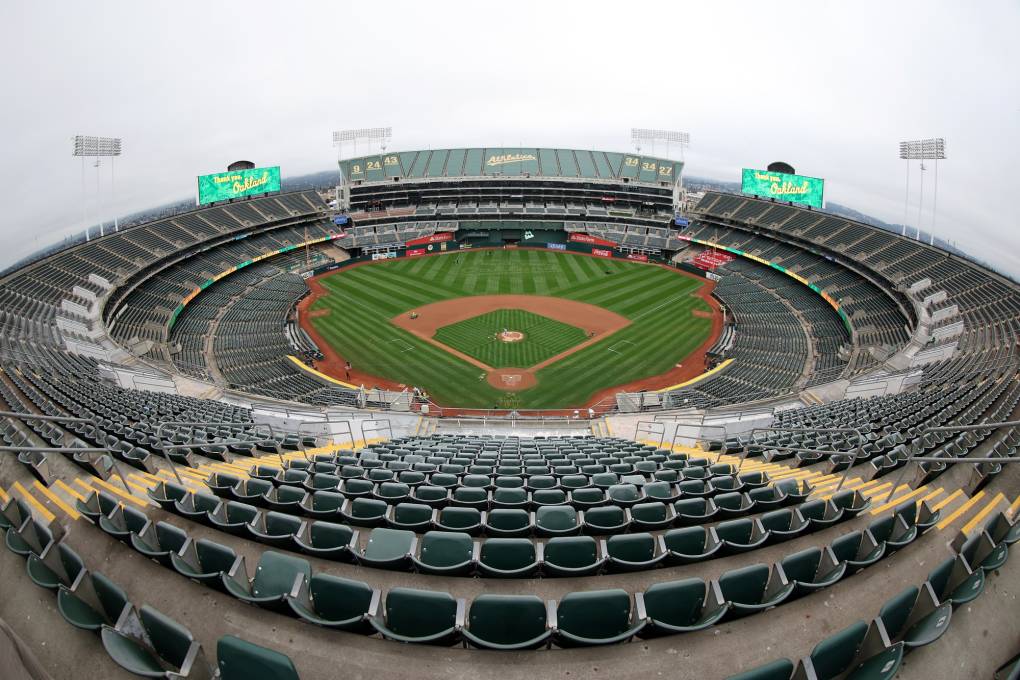
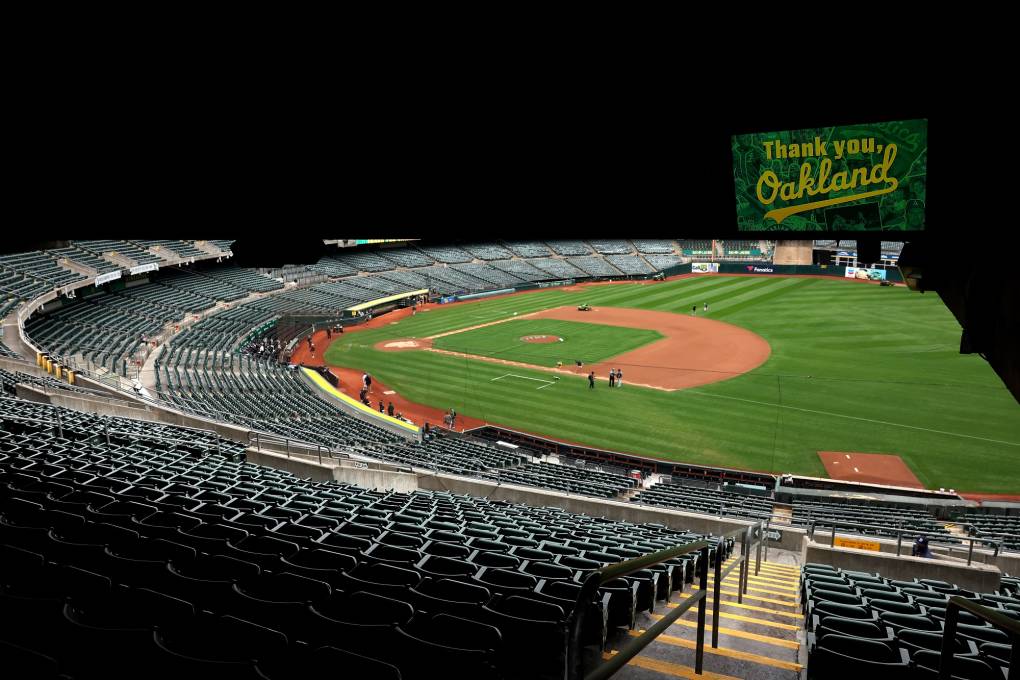
"caption": "The Oakland Coliseum sits empty before the Oakland Athletics game against the Texas Rangers on Sept. 26, 2024, in Oakland, California. ",
"credit": "Ezra Shaw/Getty Images",
"altTag": null,
"description": null,
"imgSizes": {
"medium": {
"file": "https://cdn.kqed.org/wp-content/uploads/sites/10/2025/01/OaklandColiseumEmptyGetty1-800x533.jpg",
"width": 800,
"height": 533,
"mimeType": "image/jpeg"
},
"large": {
"file": "https://cdn.kqed.org/wp-content/uploads/sites/10/2025/01/OaklandColiseumEmptyGetty1-1020x680.jpg",
"width": 1020,
"height": 680,
"mimeType": "image/jpeg"
},
"thumbnail": {
"file": "https://cdn.kqed.org/wp-content/uploads/sites/10/2025/01/OaklandColiseumEmptyGetty1-160x107.jpg",
"width": 160,
"height": 107,
"mimeType": "image/jpeg"
},
"1536x1536": {
"file": "https://cdn.kqed.org/wp-content/uploads/sites/10/2025/01/OaklandColiseumEmptyGetty1-1536x1024.jpg",
"width": 1536,
"height": 1024,
"mimeType": "image/jpeg"
},
"post-thumbnail": {
"file": "https://cdn.kqed.org/wp-content/uploads/sites/10/2025/01/OaklandColiseumEmptyGetty1-672x372.jpg",
"width": 672,
"height": 372,
"mimeType": "image/jpeg"
},
"twentyfourteen-full-width": {
"file": "https://cdn.kqed.org/wp-content/uploads/sites/10/2025/01/OaklandColiseumEmptyGetty1-1038x576.jpg",
"width": 1038,
"height": 576,
"mimeType": "image/jpeg"
},
"full-width": {
"file": "https://cdn.kqed.org/wp-content/uploads/sites/10/2025/01/OaklandColiseumEmptyGetty1-1920x1280.jpg",
"width": 1920,
"height": 1280,
"mimeType": "image/jpeg"
},
"kqedFullSize": {
"file": "https://cdn.kqed.org/wp-content/uploads/sites/10/2025/01/OaklandColiseumEmptyGetty1.jpg",
"width": 2000,
"height": 1333
}
},
"isLoading": false,
"fetchFailed": false
},
"news_12020357": {
"type": "attachments",
"id": "news_12020357",
"meta": {
"index": "attachments_1716263798",
"site": "news",
"id": "12020357",
"found": true
},
"title": "Bliss Hill",
"publishDate": 1736109008,
"status": "inherit",
"parent": 0,
"modified": 1736200141,
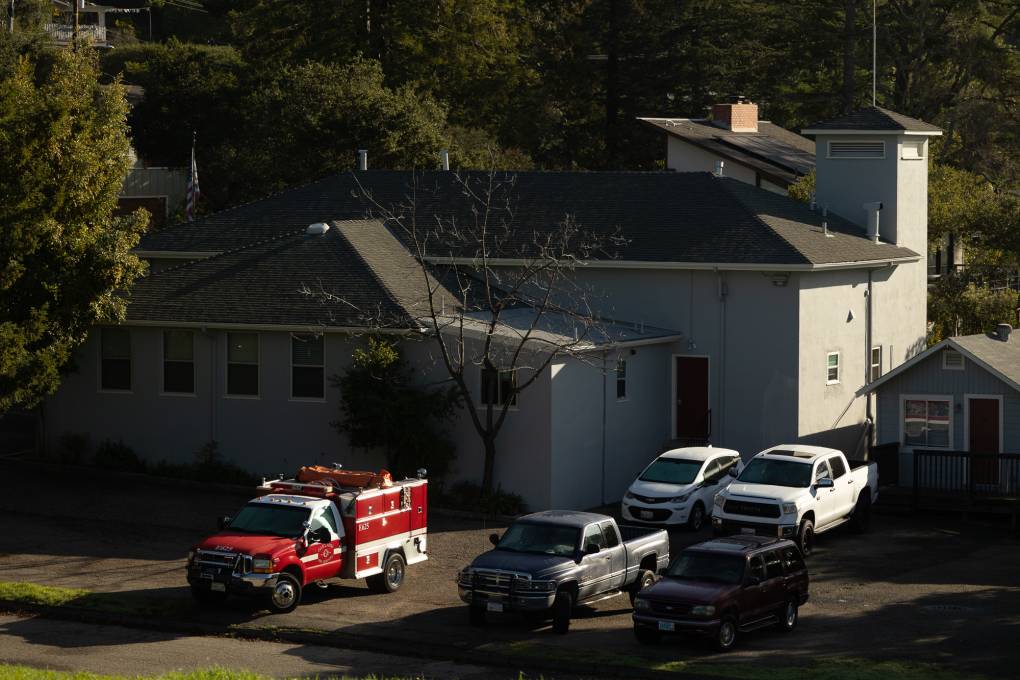
"caption": "Oakland Fire Department Station No. 25 on Jan. 5, 2025, located on Butters Drive in the East Oakland Hills. It's one of two stations scheduled to close until June. The closure is part of the city’s effort to confront its $129 million budget deficit. In 2023, Fire Station 25 responded to 834 calls.",
"credit": "David M. Barreda/KQED",
"altTag": null,
"description": null,
"imgSizes": {
"medium": {
"file": "https://cdn.kqed.org/wp-content/uploads/sites/10/2025/01/20250105_OakFireClose_DMB_00044-800x533.jpg",
"width": 800,
"height": 533,
"mimeType": "image/jpeg"
},
"large": {
"file": "https://cdn.kqed.org/wp-content/uploads/sites/10/2025/01/20250105_OakFireClose_DMB_00044-1020x680.jpg",
"width": 1020,
"height": 680,
"mimeType": "image/jpeg"
},
"thumbnail": {
"file": "https://cdn.kqed.org/wp-content/uploads/sites/10/2025/01/20250105_OakFireClose_DMB_00044-160x107.jpg",
"width": 160,
"height": 107,
"mimeType": "image/jpeg"
},
"1536x1536": {
"file": "https://cdn.kqed.org/wp-content/uploads/sites/10/2025/01/20250105_OakFireClose_DMB_00044-1536x1024.jpg",
"width": 1536,
"height": 1024,
"mimeType": "image/jpeg"
},
"post-thumbnail": {
"file": "https://cdn.kqed.org/wp-content/uploads/sites/10/2025/01/20250105_OakFireClose_DMB_00044-672x372.jpg",
"width": 672,
"height": 372,
"mimeType": "image/jpeg"
},
"twentyfourteen-full-width": {
"file": "https://cdn.kqed.org/wp-content/uploads/sites/10/2025/01/20250105_OakFireClose_DMB_00044-1038x576.jpg",
"width": 1038,
"height": 576,
"mimeType": "image/jpeg"
},
"full-width": {
"file": "https://cdn.kqed.org/wp-content/uploads/sites/10/2025/01/20250105_OakFireClose_DMB_00044-1920x1280.jpg",
"width": 1920,
"height": 1280,
"mimeType": "image/jpeg"
},
"kqedFullSize": {
"file": "https://cdn.kqed.org/wp-content/uploads/sites/10/2025/01/20250105_OakFireClose_DMB_00044.jpg",
"width": 2000,
"height": 1333
}
},
"isLoading": false,
"fetchFailed": false
},
"news_12010526": {
"type": "attachments",
"id": "news_12010526",
"meta": {
"index": "attachments_1716263798",
"site": "news",
"id": "12010526",
"found": true
},
"title": "Rangers Athletics Baseball",
"publishDate": 1729618348,
"status": "inherit",
"parent": 12010521,
"modified": 1729639505,
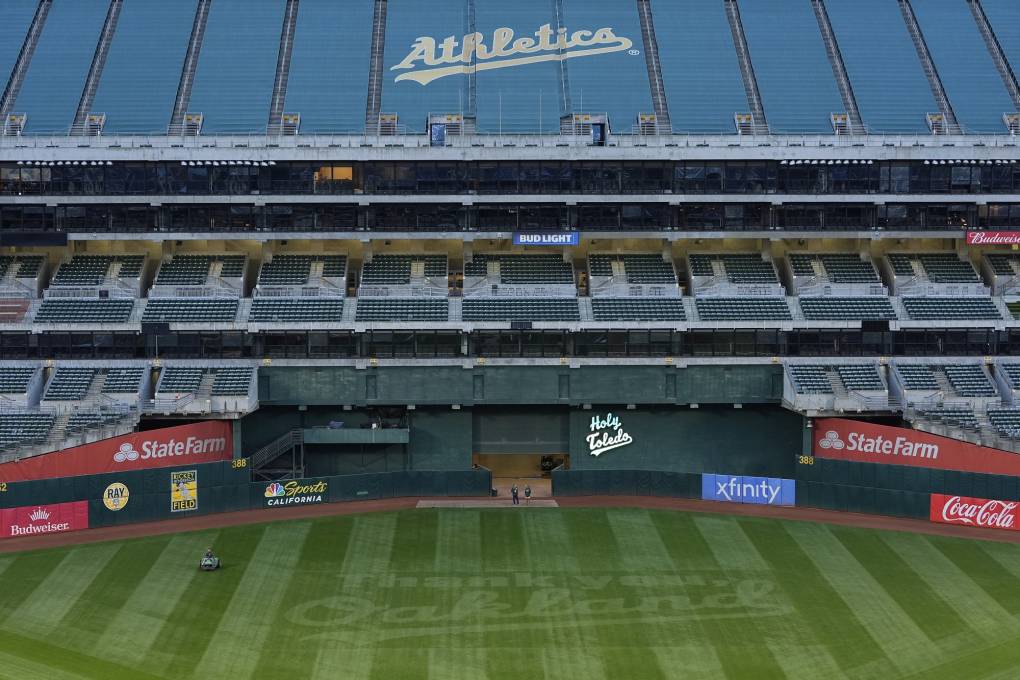
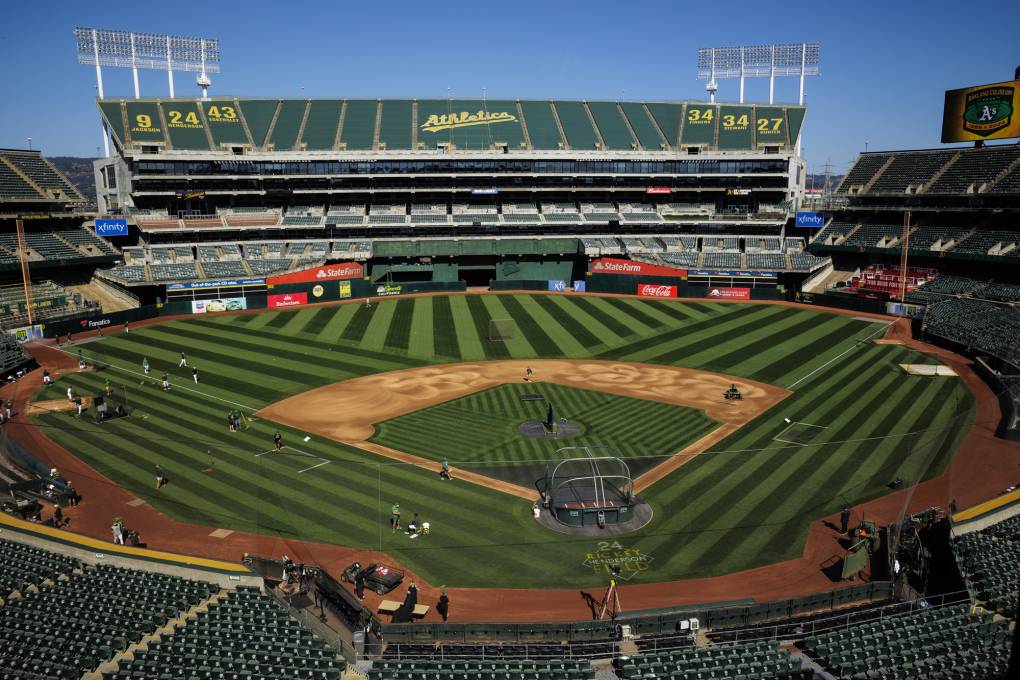
"caption": "A member of the Oakland Athletics grounds crew works on the outfield before the team's last home baseball game against the Texas Rangers at the Coliseum on Sept. 26, 2024.",
"credit": "Godofredo A. Vásquez/AP Photo",
"altTag": null,
"description": null,
"imgSizes": {
"medium": {
"file": "https://cdn.kqed.org/wp-content/uploads/sites/10/2024/10/OaklandColiseumAP2-800x533.jpg",
"width": 800,
"height": 533,
"mimeType": "image/jpeg"
},
"large": {
"file": "https://cdn.kqed.org/wp-content/uploads/sites/10/2024/10/OaklandColiseumAP2-1020x680.jpg",
"width": 1020,
"height": 680,
"mimeType": "image/jpeg"
},
"thumbnail": {
"file": "https://cdn.kqed.org/wp-content/uploads/sites/10/2024/10/OaklandColiseumAP2-160x107.jpg",
"width": 160,
"height": 107,
"mimeType": "image/jpeg"
},
"1536x1536": {
"file": "https://cdn.kqed.org/wp-content/uploads/sites/10/2024/10/OaklandColiseumAP2-1536x1024.jpg",
"width": 1536,
"height": 1024,
"mimeType": "image/jpeg"
},
"post-thumbnail": {
"file": "https://cdn.kqed.org/wp-content/uploads/sites/10/2024/10/OaklandColiseumAP2-672x372.jpg",
"width": 672,
"height": 372,
"mimeType": "image/jpeg"
},
"twentyfourteen-full-width": {
"file": "https://cdn.kqed.org/wp-content/uploads/sites/10/2024/10/OaklandColiseumAP2-1038x576.jpg",
"width": 1038,
"height": 576,
"mimeType": "image/jpeg"
},
"full-width": {
"file": "https://cdn.kqed.org/wp-content/uploads/sites/10/2024/10/OaklandColiseumAP2-1920x1280.jpg",
"width": 1920,
"height": 1280,
"mimeType": "image/jpeg"
},
"kqedFullSize": {
"file": "https://cdn.kqed.org/wp-content/uploads/sites/10/2024/10/OaklandColiseumAP2.jpg",
"width": 2000,
"height": 1333
}
},
"isLoading": false,
"fetchFailed": false
},
"news_12009610": {
"type": "attachments",
"id": "news_12009610",
"meta": {
"index": "attachments_1716263798",
"site": "news",
"id": "12009610",
"found": true
},
"title": "241016-MayorShengThao-01-BL",
"publishDate": 1729100880,
"status": "inherit",
"parent": 0,
"modified": 1729100925,
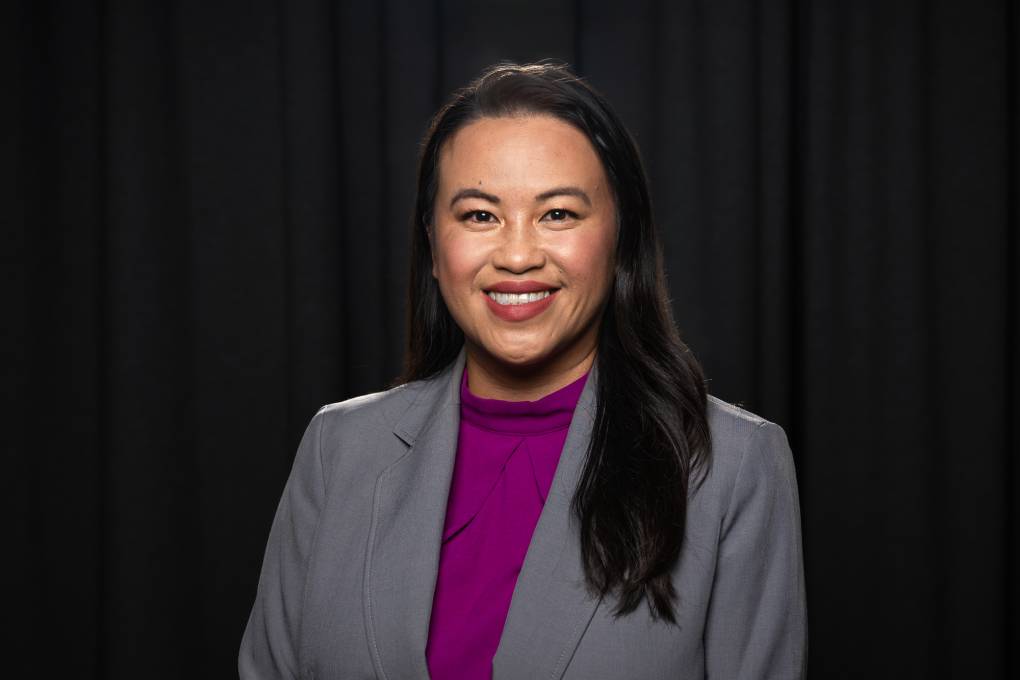
"caption": "Oakland Mayor Sheng Thao poses for a portrait at the KQED offices in San Francisco on Oct. 16, 2024.",
"credit": "Beth LaBerge/KQED",
"altTag": null,
"description": null,
"imgSizes": {
"medium": {
"file": "https://cdn.kqed.org/wp-content/uploads/sites/10/2024/10/241016-MayorShengThao-01-BL-800x533.jpg",
"width": 800,
"height": 533,
"mimeType": "image/jpeg"
},
"large": {
"file": "https://cdn.kqed.org/wp-content/uploads/sites/10/2024/10/241016-MayorShengThao-01-BL-1020x680.jpg",
"width": 1020,
"height": 680,
"mimeType": "image/jpeg"
},
"thumbnail": {
"file": "https://cdn.kqed.org/wp-content/uploads/sites/10/2024/10/241016-MayorShengThao-01-BL-160x107.jpg",
"width": 160,
"height": 107,
"mimeType": "image/jpeg"
},
"1536x1536": {
"file": "https://cdn.kqed.org/wp-content/uploads/sites/10/2024/10/241016-MayorShengThao-01-BL-1536x1024.jpg",
"width": 1536,
"height": 1024,
"mimeType": "image/jpeg"
},
"post-thumbnail": {
"file": "https://cdn.kqed.org/wp-content/uploads/sites/10/2024/10/241016-MayorShengThao-01-BL-672x372.jpg",
"width": 672,
"height": 372,
"mimeType": "image/jpeg"
},
"twentyfourteen-full-width": {
"file": "https://cdn.kqed.org/wp-content/uploads/sites/10/2024/10/241016-MayorShengThao-01-BL-1038x576.jpg",
"width": 1038,
"height": 576,
"mimeType": "image/jpeg"
},
"full-width": {
"file": "https://cdn.kqed.org/wp-content/uploads/sites/10/2024/10/241016-MayorShengThao-01-BL-1920x1280.jpg",
"width": 1920,
"height": 1280,
"mimeType": "image/jpeg"
},
"kqedFullSize": {
"file": "https://cdn.kqed.org/wp-content/uploads/sites/10/2024/10/241016-MayorShengThao-01-BL.jpg",
"width": 2000,
"height": 1333
}
},
"isLoading": false,
"fetchFailed": false
},
"news_12009534": {
"type": "attachments",
"id": "news_12009534",
"meta": {
"index": "attachments_1716263798",
"site": "news",
"id": "12009534",
"found": true
},
"title": "Texas Rangers v Oakland Athletics",
"publishDate": 1729030912,
"status": "inherit",
"parent": 12009486,
"modified": 1729031051,
"caption": "The Oakland Coliseum sits empty before the final Athletics game hosted at the ballpark against the Texas Rangers on Sept. 26, 2024. ",
"credit": "Ezra Shaw/Getty Images",
"altTag": null,
"description": null,
"imgSizes": {
"medium": {
"file": "https://cdn.kqed.org/wp-content/uploads/sites/10/2024/10/OaklandColiseumEmptyGetty-800x533.jpg",
"width": 800,
"height": 533,
"mimeType": "image/jpeg"
},
"large": {
"file": "https://cdn.kqed.org/wp-content/uploads/sites/10/2024/10/OaklandColiseumEmptyGetty-1020x680.jpg",
"width": 1020,
"height": 680,
"mimeType": "image/jpeg"
},
"thumbnail": {
"file": "https://cdn.kqed.org/wp-content/uploads/sites/10/2024/10/OaklandColiseumEmptyGetty-160x107.jpg",
"width": 160,
"height": 107,
"mimeType": "image/jpeg"
},
"1536x1536": {
"file": "https://cdn.kqed.org/wp-content/uploads/sites/10/2024/10/OaklandColiseumEmptyGetty-1536x1024.jpg",
"width": 1536,
"height": 1024,
"mimeType": "image/jpeg"
},
"post-thumbnail": {
"file": "https://cdn.kqed.org/wp-content/uploads/sites/10/2024/10/OaklandColiseumEmptyGetty-672x372.jpg",
"width": 672,
"height": 372,
"mimeType": "image/jpeg"
},
"twentyfourteen-full-width": {
"file": "https://cdn.kqed.org/wp-content/uploads/sites/10/2024/10/OaklandColiseumEmptyGetty-1038x576.jpg",
"width": 1038,
"height": 576,
"mimeType": "image/jpeg"
},
"full-width": {
"file": "https://cdn.kqed.org/wp-content/uploads/sites/10/2024/10/OaklandColiseumEmptyGetty-1920x1280.jpg",
"width": 1920,
"height": 1280,
"mimeType": "image/jpeg"
},
"kqedFullSize": {
"file": "https://cdn.kqed.org/wp-content/uploads/sites/10/2024/10/OaklandColiseumEmptyGetty.jpg",
"width": 2000,
"height": 1333
}
},
"isLoading": false,
"fetchFailed": false
},
"news_12005840": {
"type": "attachments",
"id": "news_12005840",
"meta": {
"index": "attachments_1716263798",
"site": "news",
"id": "12005840",
"found": true
},
"title": "Teams prepare the field at the Oakland Coliseum in Oakland on Sept. 20., 2024.",
"publishDate": 1727027076,
"status": "inherit",
"parent": 0,
"modified": 1728344083,
"caption": "Teams prepare the field at the Oakland Coliseum in Oakland on Sept. 20, 2024.",
"credit": "Martin do Nascimento/KQED",
"altTag": null,
"description": null,
"imgSizes": {
"medium": {
"file": "https://cdn.kqed.org/wp-content/uploads/sites/10/2024/09/240920-COLISEUM-WORKERS-MD-06-KQED-800x533.jpg",
"width": 800,
"height": 533,
"mimeType": "image/jpeg"
},
"large": {
"file": "https://cdn.kqed.org/wp-content/uploads/sites/10/2024/09/240920-COLISEUM-WORKERS-MD-06-KQED-1020x680.jpg",
"width": 1020,
"height": 680,
"mimeType": "image/jpeg"
},
"thumbnail": {
"file": "https://cdn.kqed.org/wp-content/uploads/sites/10/2024/09/240920-COLISEUM-WORKERS-MD-06-KQED-160x107.jpg",
"width": 160,
"height": 107,
"mimeType": "image/jpeg"
},
"1536x1536": {
"file": "https://cdn.kqed.org/wp-content/uploads/sites/10/2024/09/240920-COLISEUM-WORKERS-MD-06-KQED-1536x1024.jpg",
"width": 1536,
"height": 1024,
"mimeType": "image/jpeg"
},
"post-thumbnail": {
"file": "https://cdn.kqed.org/wp-content/uploads/sites/10/2024/09/240920-COLISEUM-WORKERS-MD-06-KQED-672x372.jpg",
"width": 672,
"height": 372,
"mimeType": "image/jpeg"
},
"twentyfourteen-full-width": {
"file": "https://cdn.kqed.org/wp-content/uploads/sites/10/2024/09/240920-COLISEUM-WORKERS-MD-06-KQED-1038x576.jpg",
"width": 1038,
"height": 576,
"mimeType": "image/jpeg"
},
"full-width": {
"file": "https://cdn.kqed.org/wp-content/uploads/sites/10/2024/09/240920-COLISEUM-WORKERS-MD-06-KQED-1920x1280.jpg",
"width": 1920,
"height": 1280,
"mimeType": "image/jpeg"
},
"kqedFullSize": {
"file": "https://cdn.kqed.org/wp-content/uploads/sites/10/2024/09/240920-COLISEUM-WORKERS-MD-06-KQED.jpg",
"width": 2000,
"height": 1333
}
},
"isLoading": false,
"fetchFailed": false
},
"news_12007775": {
"type": "attachments",
"id": "news_12007775",
"meta": {
"index": "attachments_1716263798",
"site": "news",
"id": "12007775",
"found": true
},
"title": "20240818_LastBoB_GC-53_qed",
"publishDate": 1727986237,
"status": "inherit",
"parent": 12007771,
"modified": 1727995507,
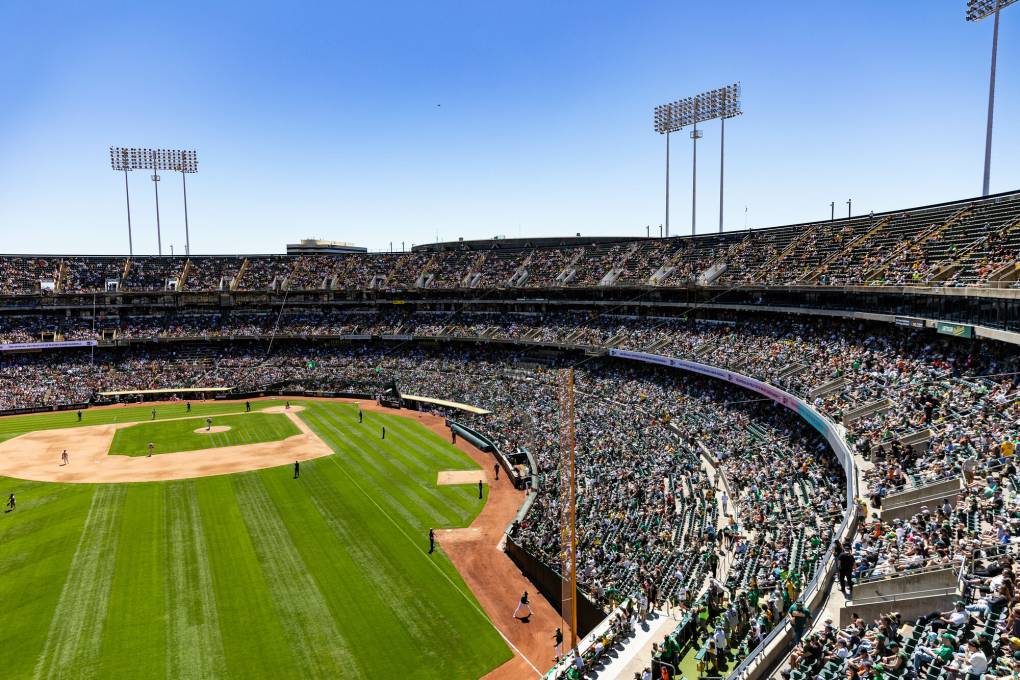
"caption": "The Oakland Coliseum stadium hosts the final Battle of the Bay game between the A’s and the Giants at the Oakland Coliseum on Aug. 18, 2024.",
"credit": "Gina Castro/KQED",
"altTag": null,
"description": null,
"imgSizes": {
"medium": {
"file": "https://cdn.kqed.org/wp-content/uploads/sites/10/2024/10/20240818_LastBoB_GC-53_qed-800x533.jpg",
"width": 800,
"height": 533,
"mimeType": "image/jpeg"
},
"large": {
"file": "https://cdn.kqed.org/wp-content/uploads/sites/10/2024/10/20240818_LastBoB_GC-53_qed-1020x680.jpg",
"width": 1020,
"height": 680,
"mimeType": "image/jpeg"
},
"thumbnail": {
"file": "https://cdn.kqed.org/wp-content/uploads/sites/10/2024/10/20240818_LastBoB_GC-53_qed-160x107.jpg",
"width": 160,
"height": 107,
"mimeType": "image/jpeg"
},
"1536x1536": {
"file": "https://cdn.kqed.org/wp-content/uploads/sites/10/2024/10/20240818_LastBoB_GC-53_qed-1536x1024.jpg",
"width": 1536,
"height": 1024,
"mimeType": "image/jpeg"
},
"post-thumbnail": {
"file": "https://cdn.kqed.org/wp-content/uploads/sites/10/2024/10/20240818_LastBoB_GC-53_qed-672x372.jpg",
"width": 672,
"height": 372,
"mimeType": "image/jpeg"
},
"twentyfourteen-full-width": {
"file": "https://cdn.kqed.org/wp-content/uploads/sites/10/2024/10/20240818_LastBoB_GC-53_qed-1038x576.jpg",
"width": 1038,
"height": 576,
"mimeType": "image/jpeg"
},
"full-width": {
"file": "https://cdn.kqed.org/wp-content/uploads/sites/10/2024/10/20240818_LastBoB_GC-53_qed-1920x1280.jpg",
"width": 1920,
"height": 1280,
"mimeType": "image/jpeg"
},
"kqedFullSize": {
"file": "https://cdn.kqed.org/wp-content/uploads/sites/10/2024/10/20240818_LastBoB_GC-53_qed.jpg",
"width": 2000,
"height": 1333
}
},
"isLoading": false,
"fetchFailed": false
},
"news_12006249": {
"type": "attachments",
"id": "news_12006249",
"meta": {
"index": "attachments_1716263798",
"site": "news",
"id": "12006249",
"found": true
},
"title": "GettyImages-2149604838",
"publishDate": 1727219241,
"status": "inherit",
"parent": 12006231,
"modified": 1727284106,
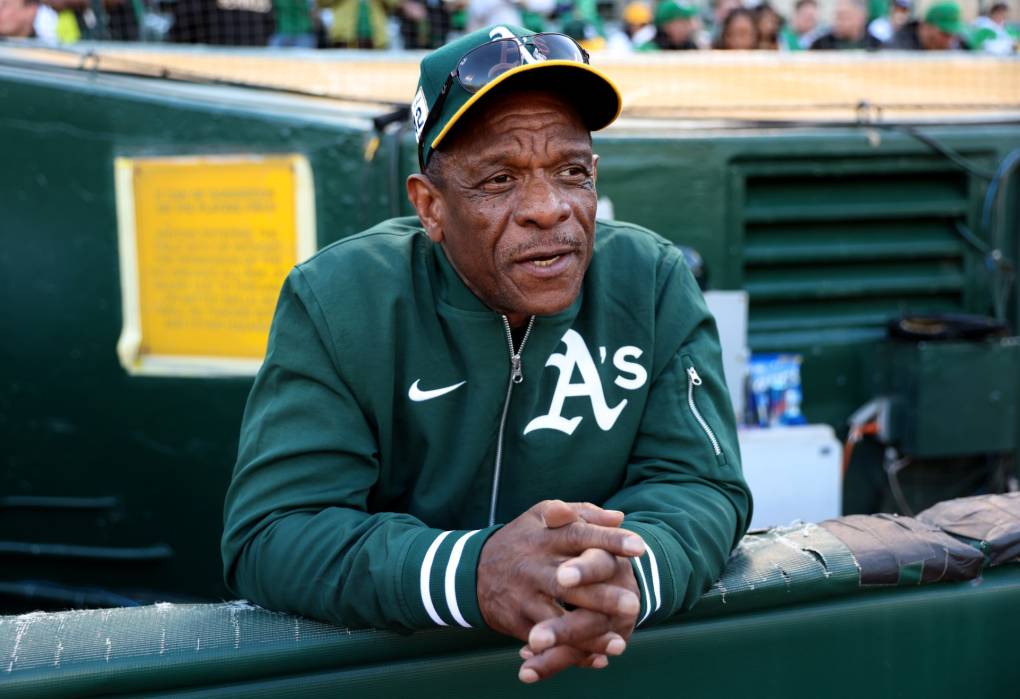
"caption": "Oakland A's legend Rickey Henderson looks out at the field before an A's game against the St. Louis Cardinals at the Coliseum on April 15, 2024.",
"credit": "Jane Tyska/Digital First Media/East Bay Times via Getty Images",
"altTag": null,
"description": null,
"imgSizes": {
"medium": {
"file": "https://cdn.kqed.org/wp-content/uploads/sites/10/2024/09/GettyImages-2149604838-800x548.jpg",
"width": 800,
"height": 548,
"mimeType": "image/jpeg"
},
"large": {
"file": "https://cdn.kqed.org/wp-content/uploads/sites/10/2024/09/GettyImages-2149604838-1020x699.jpg",
"width": 1020,
"height": 699,
"mimeType": "image/jpeg"
},
"thumbnail": {
"file": "https://cdn.kqed.org/wp-content/uploads/sites/10/2024/09/GettyImages-2149604838-160x110.jpg",
"width": 160,
"height": 110,
"mimeType": "image/jpeg"
},
"1536x1536": {
"file": "https://cdn.kqed.org/wp-content/uploads/sites/10/2024/09/GettyImages-2149604838-1536x1052.jpg",
"width": 1536,
"height": 1052,
"mimeType": "image/jpeg"
},
"post-thumbnail": {
"file": "https://cdn.kqed.org/wp-content/uploads/sites/10/2024/09/GettyImages-2149604838-672x372.jpg",
"width": 672,
"height": 372,
"mimeType": "image/jpeg"
},
"twentyfourteen-full-width": {
"file": "https://cdn.kqed.org/wp-content/uploads/sites/10/2024/09/GettyImages-2149604838-1038x576.jpg",
"width": 1038,
"height": 576,
"mimeType": "image/jpeg"
},
"kqedFullSize": {
"file": "https://cdn.kqed.org/wp-content/uploads/sites/10/2024/09/GettyImages-2149604838.jpg",
"width": 1920,
"height": 1315
}
},
"isLoading": false,
"fetchFailed": false
},
"news_12006226": {
"type": "attachments",
"id": "news_12006226",
"meta": {
"index": "attachments_1716263798",
"site": "news",
"id": "12006226",
"found": true
},
"title": "Los Angeles Angels v. Oakland Athletics",
"publishDate": 1727214494,
"status": "inherit",
"parent": 12006211,
"modified": 1727218010,
"caption": "Oakland Athletics fans hold up a banner during the game between the Los Angeles Angels and the Oakland Athletics at RingCentral Coliseum on Thursday, March 30, 2023, in Oakland. ",
"credit": "Suzanna Mitchell/MLB Photos via Getty Images",
"altTag": null,
"description": null,
"imgSizes": {
"medium": {
"file": "https://cdn.kqed.org/wp-content/uploads/sites/10/2024/09/GettyImages-1250054983-1-800x534.jpg",
"width": 800,
"height": 534,
"mimeType": "image/jpeg"
},
"large": {
"file": "https://cdn.kqed.org/wp-content/uploads/sites/10/2024/09/GettyImages-1250054983-1-1020x680.jpg",
"width": 1020,
"height": 680,
"mimeType": "image/jpeg"
},
"thumbnail": {
"file": "https://cdn.kqed.org/wp-content/uploads/sites/10/2024/09/GettyImages-1250054983-1-160x107.jpg",
"width": 160,
"height": 107,
"mimeType": "image/jpeg"
},
"post-thumbnail": {
"file": "https://cdn.kqed.org/wp-content/uploads/sites/10/2024/09/GettyImages-1250054983-1-672x372.jpg",
"width": 672,
"height": 372,
"mimeType": "image/jpeg"
},
"twentyfourteen-full-width": {
"file": "https://cdn.kqed.org/wp-content/uploads/sites/10/2024/09/GettyImages-1250054983-1-1024x576.jpg",
"width": 1024,
"height": 576,
"mimeType": "image/jpeg"
},
"kqedFullSize": {
"file": "https://cdn.kqed.org/wp-content/uploads/sites/10/2024/09/GettyImages-1250054983-1.jpg",
"width": 1024,
"height": 683
}
},
"isLoading": false,
"fetchFailed": false
},
"news_12006258": {
"type": "attachments",
"id": "news_12006258",
"meta": {
"index": "attachments_1716263798",
"site": "news",
"id": "12006258",
"found": true
},
"title": "'The Sporting News 100 Years of Sports Images'",
"publishDate": 1727219786,
"status": "inherit",
"parent": 12006230,
"modified": 1727307286,
"caption": "Philadelphia Athletics, 1954.",
"credit": "Sporting News via Getty Images",
"altTag": null,
"description": null,
"imgSizes": {
"medium": {
"file": "https://cdn.kqed.org/wp-content/uploads/sites/10/2024/09/GettyImages-110334426-800x640.jpg",
"width": 800,
"height": 640,
"mimeType": "image/jpeg"
},
"large": {
"file": "https://cdn.kqed.org/wp-content/uploads/sites/10/2024/09/GettyImages-110334426-1020x816.jpg",
"width": 1020,
"height": 816,
"mimeType": "image/jpeg"
},
"thumbnail": {
"file": "https://cdn.kqed.org/wp-content/uploads/sites/10/2024/09/GettyImages-110334426-160x128.jpg",
"width": 160,
"height": 128,
"mimeType": "image/jpeg"
},
"post-thumbnail": {
"file": "https://cdn.kqed.org/wp-content/uploads/sites/10/2024/09/GettyImages-110334426-672x372.jpg",
"width": 672,
"height": 372,
"mimeType": "image/jpeg"
},
"twentyfourteen-full-width": {
"file": "https://cdn.kqed.org/wp-content/uploads/sites/10/2024/09/GettyImages-110334426-1024x576.jpg",
"width": 1024,
"height": 576,
"mimeType": "image/jpeg"
},
"kqedFullSize": {
"file": "https://cdn.kqed.org/wp-content/uploads/sites/10/2024/09/GettyImages-110334426.jpg",
"width": 1024,
"height": 819
}
},
"isLoading": false,
"fetchFailed": false
},
"news_11992891": {
"type": "attachments",
"id": "news_11992891",
"meta": {
"index": "attachments_1716263798",
"site": "news",
"id": "11992891",
"found": true
},
"title": "Seattle Mariners v Oakland Athletics",
"publishDate": 1719963193,
"status": "inherit",
"parent": 11992883,
"modified": 1719965246,
"caption": "During Tuesday’s meeting, the Oakland City Council voted 5–3 to approve a version of the city budget originally introduced by Mayor Sheng Thao’s office on May 24, with a contingency plan should the Coliseum sale not go through by September.",
"credit": "Thearon W. Henderson/Getty Images",
"altTag": null,
"description": null,
"imgSizes": {
"medium": {
"file": "https://cdn.kqed.org/wp-content/uploads/sites/10/2024/07/Oakland-Coliseum_-Getty-Images-800x540.jpg",
"width": 800,
"height": 540,
"mimeType": "image/jpeg"
},
"large": {
"file": "https://cdn.kqed.org/wp-content/uploads/sites/10/2024/07/Oakland-Coliseum_-Getty-Images-1020x689.jpg",
"width": 1020,
"height": 689,
"mimeType": "image/jpeg"
},
"thumbnail": {
"file": "https://cdn.kqed.org/wp-content/uploads/sites/10/2024/07/Oakland-Coliseum_-Getty-Images-160x108.jpg",
"width": 160,
"height": 108,
"mimeType": "image/jpeg"
},
"1536x1536": {
"file": "https://cdn.kqed.org/wp-content/uploads/sites/10/2024/07/Oakland-Coliseum_-Getty-Images-1536x1037.jpg",
"width": 1536,
"height": 1037,
"mimeType": "image/jpeg"
},
"post-thumbnail": {
"file": "https://cdn.kqed.org/wp-content/uploads/sites/10/2024/07/Oakland-Coliseum_-Getty-Images-672x372.jpg",
"width": 672,
"height": 372,
"mimeType": "image/jpeg"
},
"twentyfourteen-full-width": {
"file": "https://cdn.kqed.org/wp-content/uploads/sites/10/2024/07/Oakland-Coliseum_-Getty-Images-1038x576.jpg",
"width": 1038,
"height": 576,
"mimeType": "image/jpeg"
},
"full-width": {
"file": "https://cdn.kqed.org/wp-content/uploads/sites/10/2024/07/Oakland-Coliseum_-Getty-Images-1920x1296.jpg",
"width": 1920,
"height": 1296,
"mimeType": "image/jpeg"
},
"kqedFullSize": {
"file": "https://cdn.kqed.org/wp-content/uploads/sites/10/2024/07/Oakland-Coliseum_-Getty-Images.jpg",
"width": 2000,
"height": 1350
}
},
"isLoading": false,
"fetchFailed": false
},
"news_12004531": {
"type": "attachments",
"id": "news_12004531",
"meta": {
"index": "attachments_1716263798",
"site": "news",
"id": "12004531",
"found": true
},
"title": "oakland-athletics-last-games-moving",
"publishDate": 1726168282,
"status": "inherit",
"parent": 12004485,
"modified": 1726174138,
"caption": "An Oakland Athletics fan sits in the upper deck during a regular season game between the Chicago White Sox and Oakland Athletics on July 2, 2023, at RingCentral Coliseum in Oakland. ",
"credit": "Brandon Sloter/Icon Sportswire via Getty Images",
"altTag": "A man wearing a green and yellow cap sits alone in the upper deck seats of a stadium.",
"description": null,
"imgSizes": {
"medium": {
"file": "https://cdn.kqed.org/wp-content/uploads/sites/10/2024/09/GettyImages-1425516638-800x534.jpg",
"width": 800,
"height": 534,
"mimeType": "image/jpeg"
},
"large": {
"file": "https://cdn.kqed.org/wp-content/uploads/sites/10/2024/09/GettyImages-1425516638-1020x680.jpg",
"width": 1020,
"height": 680,
"mimeType": "image/jpeg"
},
"thumbnail": {
"file": "https://cdn.kqed.org/wp-content/uploads/sites/10/2024/09/GettyImages-1425516638-160x107.jpg",
"width": 160,
"height": 107,
"mimeType": "image/jpeg"
},
"post-thumbnail": {
"file": "https://cdn.kqed.org/wp-content/uploads/sites/10/2024/09/GettyImages-1425516638-672x372.jpg",
"width": 672,
"height": 372,
"mimeType": "image/jpeg"
},
"twentyfourteen-full-width": {
"file": "https://cdn.kqed.org/wp-content/uploads/sites/10/2024/09/GettyImages-1425516638-1024x576.jpg",
"width": 1024,
"height": 576,
"mimeType": "image/jpeg"
},
"kqedFullSize": {
"file": "https://cdn.kqed.org/wp-content/uploads/sites/10/2024/09/GettyImages-1425516638.jpg",
"width": 1024,
"height": 683
}
},
"isLoading": false,
"fetchFailed": false
}
},
"audioPlayerReducer": {
"postId": "stream_live",
"isPaused": true,
"isPlaying": false,
"pfsActive": false,
"pledgeModalIsOpen": true,
"playerDrawerIsOpen": false,
"liveAudioPlayStartedAt": 0,
"liveAudioPlayContext": ""
},
"authorsReducer": {
"danbrekke": {
"type": "authors",
"id": "222",
"meta": {
"index": "authors_1716337520",
"id": "222",
"found": true
},
"name": "Dan Brekke",
"firstName": "Dan",
"lastName": "Brekke",
"slug": "danbrekke",
"email": "dbrekke@kqed.org",
"display_author_email": true,
"staff_mastheads": [
"news",
"science"
],
"title": "KQED Editor and Reporter",
"bio": "Dan Brekke is a reporter and editor for KQED News, responsible for coverage of topics ranging from California water issues to the Bay Area's transportation challenges. In a newsroom career that began in Chicago in 1972, Dan has worked for \u003cem>The San Francisco Examiner,\u003c/em> Wired and TechTV and has been published in The New York Times, The New York Times Magazine, Business 2.0, Salon and elsewhere.\r\n\r\nSince joining KQED in 2007, Dan has reported, edited and produced both radio and online features and breaking news pieces. He has shared as both editor and reporter in four Society of Professional Journalists Norcal Excellence in Journalism awards and one Edward R. Murrow regional award. He was chosen for a spring 2017 residency at the Mesa Refuge to advance his research on California salmon.\r\n\r\nEmail Dan at: \u003ca href=\"mailto:dbrekke@kqed.org\">dbrekke@kqed.org\u003c/a>\r\n\r\n\u003cstrong>Twitter:\u003c/strong> \u003ca href=\"https://twitter.com/danbrekke\" rel=\"noopener noreferrer\">twitter.com/danbrekke\u003c/a>\r\n\u003cstrong>Facebook:\u003c/strong> \u003ca href=\"https://www.facebook.com/danbrekke\" rel=\"noopener noreferrer\">www.facebook.com/danbrekke\u003c/a>\r\n\u003cstrong>LinkedIn:\u003c/strong> \u003ca href=\"https://www.linkedin.com/in/danbrekke\" rel=\"noopener noreferrer\">www.linkedin.com/in/danbrekke\u003c/a>",
"avatar": "https://secure.gravatar.com/avatar/c8126230345efca3f7aa89b1a402be45?s=600&d=mm&r=g",
"twitter": "danbrekke",
"facebook": null,
"instagram": "https://www.instagram.com/dan.brekke/",
"linkedin": "https://www.linkedin.com/in/danbrekke/",
"sites": [
{
"site": "news",
"roles": [
"administrator",
"create_posts"
]
},
{
"site": "stateofhealth",
"roles": [
"editor"
]
},
{
"site": "science",
"roles": [
"editor"
]
},
{
"site": "quest",
"roles": [
"contributor"
]
},
{
"site": "food",
"roles": [
"contributor"
]
},
{
"site": "forum",
"roles": [
"contributor"
]
},
{
"site": "liveblog",
"roles": [
"editor"
]
}
],
"headData": {
"title": "Dan Brekke | KQED",
"description": "KQED Editor and Reporter",
"ogImgSrc": "https://secure.gravatar.com/avatar/c8126230345efca3f7aa89b1a402be45?s=600&d=mm&r=g",
"twImgSrc": "https://secure.gravatar.com/avatar/c8126230345efca3f7aa89b1a402be45?s=600&d=mm&r=g"
},
"isLoading": false,
"link": "/author/danbrekke"
},
"scottshafer": {
"type": "authors",
"id": "255",
"meta": {
"index": "authors_1716337520",
"id": "255",
"found": true
},
"name": "Scott Shafer",
"firstName": "Scott",
"lastName": "Shafer",
"slug": "scottshafer",
"email": "sshafer@kqed.org",
"display_author_email": false,
"staff_mastheads": [
"news"
],
"title": "KQED Contributor",
"bio": "Scott Shafer is a senior editor with the KQED Politics and Government desk. He is co-host of Political Breakdown, the award-winning radio show and podcast with a personal take on the world of politics. Scott came to KQED in 1998 to host the statewide\u003cem> California Report\u003c/em>. Prior to that he had extended stints in politics and government\u003cem>.\u003c/em> He uses that inside experience at KQED in his, reporting, hosting and analysis for the politics desk. Scott collaborated \u003cem>Political Breakdown a\u003c/em>nd on \u003cem>The Political Mind of Jerry Brown, \u003c/em>an eight-part series about the life and extraordinary political career of the former governor. For fun, he plays water polo with the San Francisco Tsunami.",
"avatar": "https://secure.gravatar.com/avatar/a62ebae45b79d7aed1a39a0e3bf68104?s=600&d=blank&r=g",
"twitter": "scottshafer",
"bluesky": null,
"facebook": null,
"instagram": null,
"linkedin": null,
"sites": [
{
"site": "news",
"roles": [
"editor"
]
},
{
"site": "stateofhealth",
"roles": [
"author"
]
},
{
"site": "science",
"roles": [
"author"
]
},
{
"site": "forum",
"roles": [
"subscriber"
]
},
{
"site": "liveblog",
"roles": [
"author"
]
}
],
"headData": {
"title": "Scott Shafer | KQED",
"description": "KQED Contributor",
"ogImgSrc": "https://secure.gravatar.com/avatar/a62ebae45b79d7aed1a39a0e3bf68104?s=600&d=blank&r=g",
"twImgSrc": "https://secure.gravatar.com/avatar/a62ebae45b79d7aed1a39a0e3bf68104?s=600&d=blank&r=g"
},
"isLoading": false,
"link": "/author/scottshafer"
},
"shossaini": {
"type": "authors",
"id": "3214",
"meta": {
"index": "authors_1716337520",
"id": "3214",
"found": true
},
"name": "Sara Hossaini",
"firstName": "Sara",
"lastName": "Hossaini",
"slug": "shossaini",
"email": "shossaini@kqed.org",
"display_author_email": true,
"staff_mastheads": [
"news"
],
"title": "KQED Reporter",
"bio": "Sara Hossaini came to general assignment reporting at KQED in 2013 after two winters reporting at Wyoming Public Radio. She holds a bachelor's degree in broadcast journalism from the University of Nebraska-Lincoln. Her radio romance began after a bitter breakup with documentary film (Ok, maybe it's still complicated). Her first simultaneous jobs in San Francisco were as Associate Producer on a PBS film series through the Center for Asian American Media and as a butler. She likes to trot, plot and make things with her hands.",
"avatar": "https://secure.gravatar.com/avatar/060e9f56b9554e17942e89f413242774?s=600&d=blank&r=g",
"twitter": "mshossaini",
"facebook": null,
"instagram": null,
"linkedin": null,
"sites": [
{
"site": "news",
"roles": [
"author"
]
},
{
"site": "stateofhealth",
"roles": [
"author"
]
}
],
"headData": {
"title": "Sara Hossaini | KQED",
"description": "KQED Reporter",
"ogImgSrc": "https://secure.gravatar.com/avatar/060e9f56b9554e17942e89f413242774?s=600&d=blank&r=g",
"twImgSrc": "https://secure.gravatar.com/avatar/060e9f56b9554e17942e89f413242774?s=600&d=blank&r=g"
},
"isLoading": false,
"link": "/author/shossaini"
},
"ecruzguevarra": {
"type": "authors",
"id": "8654",
"meta": {
"index": "authors_1716337520",
"id": "8654",
"found": true
},
"name": "Ericka Cruz Guevarra",
"firstName": "Ericka",
"lastName": "Cruz Guevarra",
"slug": "ecruzguevarra",
"email": "ecruzguevarra@kqed.org",
"display_author_email": true,
"staff_mastheads": [
"news"
],
"title": "Producer, The Bay Podcast",
"bio": "Ericka Cruz Guevarra is host of \u003ca href=\"https://www.kqed.org/podcasts/thebay\">\u003cem>The Bay\u003c/em>\u003c/a> podcast at KQED. Before host, she was the show’s producer. Her work in that capacity includes a three-part reported series on policing in Vallejo, which won a 2020 excellence in journalism award from the Society of Professional Journalists. Ericka has worked as a breaking news reporter at Oregon Public Broadcasting, helped produce the Code Switch podcast, and was KQED’s inaugural Raul Ramirez Diversity Fund intern. She’s also an alumna of NPR’s Next Generation Radio program. Send her an email if you have strong feelings about whether Fairfield and Suisun City are the Bay. Ericka is represented by SAG-AFTRA.",
"avatar": "https://secure.gravatar.com/avatar/accefc1de4bafc7e234b69bcb9b6f6536c130fd84709bc3069ef11a78787e1bb?s=600&d=blank&r=g",
"twitter": "NotoriousECG",
"bluesky": null,
"facebook": null,
"instagram": null,
"linkedin": null,
"sites": [
{
"site": "arts",
"roles": [
"subscriber"
]
},
{
"site": "news",
"roles": [
"editor",
"manage_categories"
]
},
{
"site": "futureofyou",
"roles": [
"subscriber"
]
},
{
"site": "stateofhealth",
"roles": [
"subscriber"
]
},
{
"site": "science",
"roles": [
"editor"
]
},
{
"site": "forum",
"roles": [
"subscriber"
]
}
],
"headData": {
"title": "Ericka Cruz Guevarra | KQED",
"description": "Producer, The Bay Podcast",
"ogImgSrc": "https://secure.gravatar.com/avatar/accefc1de4bafc7e234b69bcb9b6f6536c130fd84709bc3069ef11a78787e1bb?s=600&d=blank&r=g",
"twImgSrc": "https://secure.gravatar.com/avatar/accefc1de4bafc7e234b69bcb9b6f6536c130fd84709bc3069ef11a78787e1bb?s=600&d=blank&r=g"
},
"isLoading": false,
"link": "/author/ecruzguevarra"
},
"bwatt": {
"type": "authors",
"id": "11238",
"meta": {
"index": "authors_1716337520",
"id": "11238",
"found": true
},
"name": "Brian Watt",
"firstName": "Brian",
"lastName": "Watt",
"slug": "bwatt",
"email": "bwatt@KQED.org",
"display_author_email": false,
"staff_mastheads": [
"news"
],
"title": "Morning News Anchor",
"bio": "Brian Watt is KQED's morning radio news anchor. He joined the KQED News team in April of 2016. Prior to that, he worked as a Reporter for KPCC in Los Angeles and a producer at \u003cem>Marketplace.\u003c/em>\r\n\r\nDuring eight years at KPCC, Brian covered business and economics, and his work won several awards. In 2008, he won the Los Angeles Press Club’s first-place award for Business and Financial Reporting, Broadcast. He’s also received honorable mention and been first runner up for the Press Club’s Radio Journalist of the Year. He won two Golden Mike awards from the Radio and TV News Association of Southern California.\r\n\r\nBrian holds degrees in theater from Yale University and the Sorbonne, and has worked as an actor in France, Italy, Brazil, Hungary and . . . Hollywood. He appeared in a few television shows, including \u003cem>The West Wing, Judging Amy\u003c/em> and \u003cem>The District.\u003c/em>\r\n\r\nEmail: bwatt@KQED.org Twitter: @RadioBWatt",
"avatar": "https://secure.gravatar.com/avatar/55393ff57ed34e2be773ba4789dd6a19?s=600&d=blank&r=g",
"twitter": "@RadioBWatt",
"facebook": null,
"instagram": null,
"linkedin": null,
"sites": [
{
"site": "arts",
"roles": [
"contributor"
]
},
{
"site": "news",
"roles": [
"editor"
]
}
],
"headData": {
"title": "Brian Watt | KQED",
"description": "Morning News Anchor",
"ogImgSrc": "https://secure.gravatar.com/avatar/55393ff57ed34e2be773ba4789dd6a19?s=600&d=blank&r=g",
"twImgSrc": "https://secure.gravatar.com/avatar/55393ff57ed34e2be773ba4789dd6a19?s=600&d=blank&r=g"
},
"isLoading": false,
"link": "/author/bwatt"
},
"mfederis": {
"type": "authors",
"id": "11509",
"meta": {
"index": "authors_1716337520",
"id": "11509",
"found": true
},
"name": "Marnette Federis",
"firstName": "Marnette",
"lastName": "Federis",
"slug": "mfederis",
"email": "mfederis@kqed.org",
"display_author_email": false,
"staff_mastheads": [],
"title": "KQED Contributor",
"bio": null,
"avatar": "https://secure.gravatar.com/avatar/6553b16260501cef36787444651fa5ed?s=600&d=blank&r=g",
"twitter": null,
"facebook": null,
"instagram": null,
"linkedin": null,
"sites": [
{
"site": "news",
"roles": [
"editor"
]
},
{
"site": "mindshift",
"roles": [
"editor"
]
},
{
"site": "science",
"roles": [
"editor"
]
},
{
"site": "podcasts",
"roles": [
"editor"
]
}
],
"headData": {
"title": "Marnette Federis | KQED",
"description": "KQED Contributor",
"ogImgSrc": "https://secure.gravatar.com/avatar/6553b16260501cef36787444651fa5ed?s=600&d=blank&r=g",
"twImgSrc": "https://secure.gravatar.com/avatar/6553b16260501cef36787444651fa5ed?s=600&d=blank&r=g"
},
"isLoading": false,
"link": "/author/mfederis"
},
"amontecillo": {
"type": "authors",
"id": "11649",
"meta": {
"index": "authors_1716337520",
"id": "11649",
"found": true
},
"name": "Alan Montecillo",
"firstName": "Alan",
"lastName": "Montecillo",
"slug": "amontecillo",
"email": "amontecillo@kqed.org",
"display_author_email": false,
"staff_mastheads": [
"news"
],
"title": "KQED Contributor",
"bio": "Alan Montecillo is the senior editor of \u003cem>\u003ca href=\"http://kqed.org/thebay\">The Bay\u003c/a>, \u003c/em> KQED's local news podcast. Before moving to the Bay Area, he worked as a senior talk show producer for WILL in Champaign-Urbana, Illinois and at Oregon Public Broadcasting in Portland, Oregon. He has won journalism awards from the Society of Professional Journalists Northern California, the Public Media Journalists Association, The Signal Awards, and has also received a regional Edward R. Murrow award. Alan is a Filipino American from Hong Kong and a graduate of Reed College.",
"avatar": "https://secure.gravatar.com/avatar/268f53a2066899ea9efdd8a5900218b17c822d9862cbc9326cccec53ef41d349?s=600&d=blank&r=g",
"twitter": "alanmontecillo",
"bluesky": null,
"facebook": null,
"instagram": null,
"linkedin": null,
"sites": [
{
"site": "",
"roles": [
"editor"
]
},
{
"site": "news",
"roles": [
"editor",
"manage_categories"
]
}
],
"headData": {
"title": "Alan Montecillo | KQED",
"description": "KQED Contributor",
"ogImgSrc": "https://secure.gravatar.com/avatar/268f53a2066899ea9efdd8a5900218b17c822d9862cbc9326cccec53ef41d349?s=600&d=blank&r=g",
"twImgSrc": "https://secure.gravatar.com/avatar/268f53a2066899ea9efdd8a5900218b17c822d9862cbc9326cccec53ef41d349?s=600&d=blank&r=g"
},
"isLoading": false,
"link": "/author/amontecillo"
},
"btorres": {
"type": "authors",
"id": "11666",
"meta": {
"index": "authors_1716337520",
"id": "11666",
"found": true
},
"name": "Blanca Torres",
"firstName": "Blanca",
"lastName": "Torres",
"slug": "btorres",
"email": "btorres@kqed.org",
"display_author_email": true,
"staff_mastheads": [
"news"
],
"title": "Producer, Forum",
"bio": "Blanca Torres brings sharp news judgement and keen sense of lively conversation to her work as producer for Forum. She loves producing shows that leave listeners feeling like they heard distinctive voices, learned something new and gained a fresh perspective.\r\n\r\nShe joined KQED in January of 2020 after 16 years of working as a newspaper reporter most recently at the \u003cem>San Francisco Business Times,\u003c/em> where she wrote about real estate and economic development. Before that, she covered a variety of beats including crime, education, retail, workplace, the economy, consumer issues, and small business for the \u003cem>Contra Costa Times, Baltimore Sun\u003c/em> and\u003cem> The Seattle Times\u003c/em>. In addition to reporting, she worked as an editorial writer and columnist for the \u003cem>Seattle Times\u003c/em>. From 2017 to 2020, Blanca won a total of ten awards from the National Association of Real Estate Editors and won first place for land use reporting from the California News Publishers Association two years in a row. She is also a member and former board member for the National Association of Hispanic Journalists.\r\n\r\nA native of the Pacific Northwest, Blanca earned her bachelor's degree from Vanderbilt University in Nashville and a master's in fine arts in creative writing at Mills College. She lives in the East Bay with her family.",
"avatar": "https://secure.gravatar.com/avatar/50b49d19b14a1eed34f26ebf4681152cdd81574ed21851100871ccd29e578cdc?s=600&d=blank&r=g",
"twitter": "@blancawrites",
"bluesky": null,
"facebook": null,
"instagram": null,
"linkedin": null,
"sites": [
{
"site": "arts",
"roles": [
"editor"
]
},
{
"site": "news",
"roles": [
"editor"
]
},
{
"site": "forum",
"roles": [
"editor"
]
}
],
"headData": {
"title": "Blanca Torres | KQED",
"description": "Producer, Forum",
"ogImgSrc": "https://secure.gravatar.com/avatar/50b49d19b14a1eed34f26ebf4681152cdd81574ed21851100871ccd29e578cdc?s=600&d=blank&r=g",
"twImgSrc": "https://secure.gravatar.com/avatar/50b49d19b14a1eed34f26ebf4681152cdd81574ed21851100871ccd29e578cdc?s=600&d=blank&r=g"
},
"isLoading": false,
"link": "/author/btorres"
},
"jessicakariisa": {
"type": "authors",
"id": "11831",
"meta": {
"index": "authors_1716337520",
"id": "11831",
"found": true
},
"name": "Jessica Kariisa",
"firstName": "Jessica",
"lastName": "Kariisa",
"slug": "jessicakariisa",
"email": "jkariisa@kqed.org",
"display_author_email": false,
"staff_mastheads": [],
"title": "Producer, The Bay",
"bio": "Jessica Kariisa is the producer of The Bay. She first joined KQED as an intern for The California Report Magazine, after which she became an on-call producer. She reported a Bay Curious episode on the use of rap lyrics in criminal trials which won a Society of Professional Journalists award in 2023 for Excellence in Features Journalism and the 2023 Signal Award for Best Conversation Starter. She’s worked on podcasts for Snap Judgment and American Public Media. Before embarking on her audio career, she was a music journalist.\r\n\r\nJessica Kariisa is represented by SAG-AFTRA.",
"avatar": "https://secure.gravatar.com/avatar/522e97b28ac0b3d411621c0fde8f3419c7b71ea2c5c262c57c4bb600963f328c?s=600&d=blank&r=g",
"twitter": null,
"bluesky": null,
"facebook": null,
"instagram": null,
"linkedin": null,
"sites": [
{
"site": "arts",
"roles": [
"author"
]
},
{
"site": "news",
"roles": [
"editor",
"manage_categories"
]
}
],
"headData": {
"title": "Jessica Kariisa | KQED",
"description": "Producer, The Bay",
"ogImgSrc": "https://secure.gravatar.com/avatar/522e97b28ac0b3d411621c0fde8f3419c7b71ea2c5c262c57c4bb600963f328c?s=600&d=blank&r=g",
"twImgSrc": "https://secure.gravatar.com/avatar/522e97b28ac0b3d411621c0fde8f3419c7b71ea2c5c262c57c4bb600963f328c?s=600&d=blank&r=g"
},
"isLoading": false,
"link": "/author/jessicakariisa"
},
"jgeha": {
"type": "authors",
"id": "11906",
"meta": {
"index": "authors_1716337520",
"id": "11906",
"found": true
},
"name": "Joseph Geha",
"firstName": "Joseph",
"lastName": "Geha",
"slug": "jgeha",
"email": "jgeha@kqed.org",
"display_author_email": false,
"staff_mastheads": [
"news",
"science"
],
"title": "KQED Contributor",
"bio": null,
"avatar": "https://secure.gravatar.com/avatar/ea84d2b6dd93d6369d453edf19dd583f117cd1759d2d9c9c92f9de77017354fe?s=600&d=blank&r=g",
"twitter": null,
"bluesky": null,
"facebook": null,
"instagram": null,
"linkedin": null,
"sites": [
{
"site": "news",
"roles": [
"editor"
]
},
{
"site": "liveblog",
"roles": [
"author"
]
}
],
"headData": {
"title": "Joseph Geha | KQED",
"description": "KQED Contributor",
"ogImgSrc": "https://secure.gravatar.com/avatar/ea84d2b6dd93d6369d453edf19dd583f117cd1759d2d9c9c92f9de77017354fe?s=600&d=blank&r=g",
"twImgSrc": "https://secure.gravatar.com/avatar/ea84d2b6dd93d6369d453edf19dd583f117cd1759d2d9c9c92f9de77017354fe?s=600&d=blank&r=g"
},
"isLoading": false,
"link": "/author/jgeha"
},
"kdebenedetti": {
"type": "authors",
"id": "11913",
"meta": {
"index": "authors_1716337520",
"id": "11913",
"found": true
},
"name": "Katie DeBenedetti",
"firstName": "Katie",
"lastName": "DeBenedetti",
"slug": "kdebenedetti",
"email": "kdebenedetti@kqed.org",
"display_author_email": false,
"staff_mastheads": [
"news",
"science"
],
"title": "KQED Contributor",
"bio": "Katie DeBenedetti is a digital reporter covering daily news for the Express Desk. Prior to joining KQED as a culture reporting intern in January 2024, she covered education and city government for the Napa Valley Register.",
"avatar": "https://secure.gravatar.com/avatar/6e31073cb8f7e4214ab03f42771d0f45?s=600&d=blank&r=g",
"twitter": null,
"facebook": null,
"instagram": null,
"linkedin": null,
"sites": [
{
"site": "news",
"roles": [
"author"
]
},
{
"site": "science",
"roles": [
"author"
]
},
{
"site": "liveblog",
"roles": [
"author"
]
}
],
"headData": {
"title": "Katie DeBenedetti | KQED",
"description": "KQED Contributor",
"ogImgSrc": "https://secure.gravatar.com/avatar/6e31073cb8f7e4214ab03f42771d0f45?s=600&d=blank&r=g",
"twImgSrc": "https://secure.gravatar.com/avatar/6e31073cb8f7e4214ab03f42771d0f45?s=600&d=blank&r=g"
},
"isLoading": false,
"link": "/author/kdebenedetti"
}
},
"pagesReducer": {
"news_tag_oakland-coliseum": {
"type": "terms",
"id": "news_17596",
"meta": {
"index": "terms_1716263798",
"site": "news",
"id": "17596",
"score": 9.892588
},
"featImg": null,
"name": "Oakland Coliseum",
"description": null,
"taxonomy": "tag",
"headData": {
"twImgId": null,
"twTitle": null,
"ogTitle": null,
"ogImgId": null,
"twDescription": null,
"description": null,
"title": "Oakland Coliseum Archives | KQED News",
"ogDescription": null
},
"ttid": 17630,
"slug": "oakland-coliseum",
"isLoading": false,
"title": "Oakland Coliseum",
"pageMeta": {
"site": "news",
"WpPageTemplate": "page-topic-editorial",
"currentPage": 2
},
"blocks": [
{
"blockName": "kqed/post-list",
"attrs": {
"layout": "cardArticle2",
"query": "posts/news?tag=oakland-coliseum",
"seeMore": false,
"paginated": true,
"page": 2
}
},
{
"blockName": "kqed/ad"
}
]
}
},
"pfsSessionReducer": {},
"postsReducer": {
"stream_live": {
"type": "live",
"id": "stream_live",
"audioUrl": "https://streams.kqed.org/kqedradio",
"title": "Live Stream",
"excerpt": "Live Stream information currently unavailable.",
"link": "/radio",
"featImg": "",
"label": {
"name": "KQED Live",
"link": "/"
}
},
"stream_kqedNewscast": {
"type": "posts",
"id": "stream_kqedNewscast",
"audioUrl": "https://www.kqed.org/.stream/anon/radio/RDnews/newscast.mp3?_=1",
"title": "KQED Newscast",
"featImg": "",
"label": {
"name": "88.5 FM",
"link": "/"
}
},
"news_12022106": {
"type": "posts",
"id": "news_12022106",
"meta": {
"index": "posts_1716263798",
"site": "news",
"id": "12022106",
"score": null,
"sort": [
1736896412000
]
},
"guestAuthors": [],
"slug": "alameda-county-moves-closer-to-oakland-coliseum-sale-final-vote-expected-in-30-days",
"title": "Alameda County Moves Closer to Oakland Coliseum Sale; Final Vote Expected in 30 Days",
"publishDate": 1736896412,
"format": "standard",
"headTitle": "Alameda County Moves Closer to Oakland Coliseum Sale; Final Vote Expected in 30 Days | KQED",
"labelTerm": {
"site": "news"
},
"content": "\u003cp>\u003cem>Updated at 6 p.m.\u003c/em>\u003c/p>\n\u003cp>The long-awaited deal to sell the \u003ca href=\"https://www.kqed.org/news/tag/oakland-coliseum\">Oakland Coliseum\u003c/a> could be finalized as soon as next month, after a vote by the Alameda County Board of Supervisors on Tuesday.\u003c/p>\n\u003cp>The county, which jointly owned the property with the city of Oakland until it sold its stake to the A’s in 2019, voted unanimously to formally cut ties with the site after reaching an agreement with the \u003ca href=\"https://www.kqed.org/news/12007771/new-oakland-coliseum-sale-deal-raises-questions-about-delayed-payment-and-citys-budget\">African American Sports and Entertainment Group\u003c/a>, local developers aiming to redevelop the site. The lengthy negotiations have garnered attention partly because they’ve delayed AASEG’s purchase of Oakland’s 50% share, which would bring badly needed revenue to \u003ca href=\"https://www.kqed.org/news/12020393/2-oakland-fire-stations-close-amid-budget-crisis-more-could-follow\">restore fire services\u003c/a> and soften the city’s nearly \u003ca href=\"https://www.kqed.org/news/12018688/oakland-broad-cuts-public-safety-city-agencies-amid-massive-deficit\">$130 million budget deficit\u003c/a>.\u003c/p>\n\u003cp>AASEG founder and managing member Ray Bobbitt said before the vote that the resolution and term sheet will finally put a deadline on the deal.\u003c/p>\n\u003cp>“It gives us a timeline to complete it, which is 30 days,” he told KQED. “We’ve reached outline terms, and so this would be a great opportunity for us to just sort of come out of today with some certainty.”\u003c/p>\n\u003cp>[ad fullwidth]\u003c/p>\n\u003cp>The resolution directs the county’s counsel to approve the assignment of the A’s still-pending purchase of the land to AASEG. The Board of Supervisors also instructed the county counsel and negotiators to finalize deal terms within 30 days.\u003c/p>\n\u003cp>Board President David Haubert wrote in the resolution that he expects the supervisors to be ready to vote publicly on the deal in an upcoming meeting.\u003c/p>\n\u003cp>“I firmly believe that OAC’s acquisition of the County’s property interest will achieve two long-standing goals of the County … the Oakland-Alameda County Coliseum complex will finally be under the control of a sole owner with capacity to make unilateral decisions regarding the property; and (2) the County will be out of the sports and entertainment business,” it reads.\u003c/p>\n\u003cp>Bobbitt said the deal has taken a long time to finalize because AASEG had to negotiate with four different entities. First, they made an acquisition agreement with the A’s, and then, had to settle pending litigation that the nonprofit Communities for a Better Environment had against the county \u003ca href=\"https://www.sfchronicle.com/eastbay/article/State-investigates-Alameda-County-s-partial-16409648.php\">over an alleged violation of the Surplus Land Act\u003c/a> when it sold to the team.\u003c/p>\n\u003cp>AASEG also worked with the Oakland-Alameda County Coliseum Authority to guarantee that the stadium and arena’s outstanding lease revenue bond debt is defeased before reaching the current negotiating phase with the county.[aside postID=news_11997946 hero='https://cdn.kqed.org/wp-content/uploads/sites/10/2024/09/240926-LAST-AS-HOME-GAME-MD-09KQED-5.jpg']\u003c/p>\n\u003cp>“We thought this was going to be more of just an administrative process, but it turns out that there were all these elements that had to be addressed,” Bobbitt told KQED. “It was a really complex process, so that’s what took so long.”\u003c/p>\n\u003cp>Delays finalizing the county agreement have stalled AASEG’s scheduled payments to Oakland for the city’s 50% stake in the site since November. That \u003ca href=\"https://www.kqed.org/news/11992883/oakland-city-council-passes-budget-amid-concerns-over-pending-coliseum-sale\">controversial deal\u003c/a> was already \u003ca href=\"https://www.kqed.org/news/12007771/new-oakland-coliseum-sale-deal-raises-questions-about-delayed-payment-and-citys-budget\">amended\u003c/a> in the weeks after it was finalized, changing the payment schedule to complete the purchase sooner but halt the immediate transfer of revenue that former Mayor Sheng Thao had \u003ca href=\"https://www.kqed.org/news/11997946/oakland-reaches-deal-on-105-million-coliseum-sale-to-stave-off-budget-cuts\">slotted into this year’s budget to save public safety funding\u003c/a> and ward off layoffs.\u003c/p>\n\u003cp>The schedule change forced the city to implement a contingency plan that initiated drastic budget cuts across departments, including more than 90 layoffs and rotating closures of up to six fire stations.\u003c/p>\n\u003cp>While Oakland officials have been watching the Alameda County deal closely, it won’t immediately get the city out of hot water.\u003c/p>\n\u003cp>According to Bobbitt, AASEG will resume payments to Oakland when a deal with the county is final, but the funds won’t be available until the deal closes. He believes the deal is still on track to close by the end of the fiscal year.\u003c/p>\n\u003cp>“Once we get the vote and then the deal papered and executed, I think at that time, we can certainly, we’ll be in alignment with the city,” Bobbitt told KQED. “We will be trying to work together with the city to make sure everything aligns correctly.”\u003c/p>\n\u003cp>\u003c/p>\n",
"blocks": [],
"excerpt": "The Alameda County Board of Supervisors voted to advance the Coliseum sale, setting a 30-day deadline to finalize terms with the African American Sports and Entertainment Group and secure critical funds for Oakland.",
"status": "publish",
"parent": 0,
"modified": 1736906266,
"stats": {
"hasAudio": false,
"hasVideo": false,
"hasChartOrMap": false,
"iframeSrcs": [],
"hasGoogleForm": false,
"hasGallery": false,
"hasHearkenModule": false,
"hasPolis": false,
"paragraphCount": 18,
"wordCount": 741
},
"headData": {
"title": "Alameda County Moves Closer to Oakland Coliseum Sale; Final Vote Expected in 30 Days | KQED",
"description": "The Alameda County Board of Supervisors voted to advance the Coliseum sale, setting a 30-day deadline to finalize terms with the African American Sports and Entertainment Group and secure critical funds for Oakland.",
"ogTitle": "",
"ogDescription": "",
"ogImgId": "",
"twTitle": "",
"twDescription": "",
"twImgId": "",
"schema": {
"@context": "https://schema.org",
"@type": "NewsArticle",
"headline": "Alameda County Moves Closer to Oakland Coliseum Sale; Final Vote Expected in 30 Days",
"datePublished": "2025-01-14T15:13:32-08:00",
"dateModified": "2025-01-14T17:57:46-08:00",
"image": "https://cdn.kqed.org/wp-content/uploads/2020/02/KQED-OG-Image@1x.png",
"isAccessibleForFree": "True",
"publisher": {
"@type": "NewsMediaOrganization",
"@id": "https://www.kqed.org/#organization",
"name": "KQED",
"logo": "https://cdn.kqed.org/wp-content/uploads/2020/02/KQED-OG-Image@1x.png",
"url": "https://www.kqed.org",
"sameAs": [
"https://www.facebook.com/KQED",
"https://twitter.com/KQED",
"https://www.instagram.com/kqed/",
"https://www.tiktok.com/@kqedofficial",
"https://www.linkedin.com/company/kqed",
"https://www.youtube.com/channel/UCeC0IOo7i1P_61zVUWbJ4nw"
]
}
}
},
"sticky": false,
"nprStoryId": "kqed-12022106",
"excludeFromSiteSearch": "Include",
"articleAge": "0",
"path": "/news/12022106/alameda-county-moves-closer-to-oakland-coliseum-sale-final-vote-expected-in-30-days",
"audioTrackLength": null,
"parsedContent": [
{
"type": "contentString",
"content": "\u003cdiv class=\"post-body\">\u003cp>\u003cp>\u003cem>Updated at 6 p.m.\u003c/em>\u003c/p>\n\u003cp>The long-awaited deal to sell the \u003ca href=\"https://www.kqed.org/news/tag/oakland-coliseum\">Oakland Coliseum\u003c/a> could be finalized as soon as next month, after a vote by the Alameda County Board of Supervisors on Tuesday.\u003c/p>\n\u003cp>The county, which jointly owned the property with the city of Oakland until it sold its stake to the A’s in 2019, voted unanimously to formally cut ties with the site after reaching an agreement with the \u003ca href=\"https://www.kqed.org/news/12007771/new-oakland-coliseum-sale-deal-raises-questions-about-delayed-payment-and-citys-budget\">African American Sports and Entertainment Group\u003c/a>, local developers aiming to redevelop the site. The lengthy negotiations have garnered attention partly because they’ve delayed AASEG’s purchase of Oakland’s 50% share, which would bring badly needed revenue to \u003ca href=\"https://www.kqed.org/news/12020393/2-oakland-fire-stations-close-amid-budget-crisis-more-could-follow\">restore fire services\u003c/a> and soften the city’s nearly \u003ca href=\"https://www.kqed.org/news/12018688/oakland-broad-cuts-public-safety-city-agencies-amid-massive-deficit\">$130 million budget deficit\u003c/a>.\u003c/p>\n\u003cp>AASEG founder and managing member Ray Bobbitt said before the vote that the resolution and term sheet will finally put a deadline on the deal.\u003c/p>\n\u003cp>“It gives us a timeline to complete it, which is 30 days,” he told KQED. “We’ve reached outline terms, and so this would be a great opportunity for us to just sort of come out of today with some certainty.”\u003c/p>\n\u003cp>\u003c/p>\u003c/div>",
"attributes": {
"named": {},
"numeric": []
}
},
{
"type": "component",
"content": "",
"name": "ad",
"attributes": {
"named": {
"label": "fullwidth"
},
"numeric": [
"fullwidth"
]
}
},
{
"type": "contentString",
"content": "\u003cdiv class=\"post-body\">\u003cp>\u003c/p>\n\u003cp>The resolution directs the county’s counsel to approve the assignment of the A’s still-pending purchase of the land to AASEG. The Board of Supervisors also instructed the county counsel and negotiators to finalize deal terms within 30 days.\u003c/p>\n\u003cp>Board President David Haubert wrote in the resolution that he expects the supervisors to be ready to vote publicly on the deal in an upcoming meeting.\u003c/p>\n\u003cp>“I firmly believe that OAC’s acquisition of the County’s property interest will achieve two long-standing goals of the County … the Oakland-Alameda County Coliseum complex will finally be under the control of a sole owner with capacity to make unilateral decisions regarding the property; and (2) the County will be out of the sports and entertainment business,” it reads.\u003c/p>\n\u003cp>Bobbitt said the deal has taken a long time to finalize because AASEG had to negotiate with four different entities. First, they made an acquisition agreement with the A’s, and then, had to settle pending litigation that the nonprofit Communities for a Better Environment had against the county \u003ca href=\"https://www.sfchronicle.com/eastbay/article/State-investigates-Alameda-County-s-partial-16409648.php\">over an alleged violation of the Surplus Land Act\u003c/a> when it sold to the team.\u003c/p>\n\u003cp>AASEG also worked with the Oakland-Alameda County Coliseum Authority to guarantee that the stadium and arena’s outstanding lease revenue bond debt is defeased before reaching the current negotiating phase with the county.\u003c/p>\u003c/div>",
"attributes": {
"named": {},
"numeric": []
}
},
{
"type": "component",
"content": "",
"name": "aside",
"attributes": {
"named": {
"postid": "news_11997946",
"hero": "https://cdn.kqed.org/wp-content/uploads/sites/10/2024/09/240926-LAST-AS-HOME-GAME-MD-09KQED-5.jpg",
"label": ""
},
"numeric": []
}
},
{
"type": "contentString",
"content": "\u003cdiv class=\"post-body\">\u003cp>\u003c/p>\n\u003cp>“We thought this was going to be more of just an administrative process, but it turns out that there were all these elements that had to be addressed,” Bobbitt told KQED. “It was a really complex process, so that’s what took so long.”\u003c/p>\n\u003cp>Delays finalizing the county agreement have stalled AASEG’s scheduled payments to Oakland for the city’s 50% stake in the site since November. That \u003ca href=\"https://www.kqed.org/news/11992883/oakland-city-council-passes-budget-amid-concerns-over-pending-coliseum-sale\">controversial deal\u003c/a> was already \u003ca href=\"https://www.kqed.org/news/12007771/new-oakland-coliseum-sale-deal-raises-questions-about-delayed-payment-and-citys-budget\">amended\u003c/a> in the weeks after it was finalized, changing the payment schedule to complete the purchase sooner but halt the immediate transfer of revenue that former Mayor Sheng Thao had \u003ca href=\"https://www.kqed.org/news/11997946/oakland-reaches-deal-on-105-million-coliseum-sale-to-stave-off-budget-cuts\">slotted into this year’s budget to save public safety funding\u003c/a> and ward off layoffs.\u003c/p>\n\u003cp>The schedule change forced the city to implement a contingency plan that initiated drastic budget cuts across departments, including more than 90 layoffs and rotating closures of up to six fire stations.\u003c/p>\n\u003cp>While Oakland officials have been watching the Alameda County deal closely, it won’t immediately get the city out of hot water.\u003c/p>\n\u003cp>According to Bobbitt, AASEG will resume payments to Oakland when a deal with the county is final, but the funds won’t be available until the deal closes. He believes the deal is still on track to close by the end of the fiscal year.\u003c/p>\n\u003cp>“Once we get the vote and then the deal papered and executed, I think at that time, we can certainly, we’ll be in alignment with the city,” Bobbitt told KQED. “We will be trying to work together with the city to make sure everything aligns correctly.”\u003c/p>\n\u003cp>\u003c/p>\n\u003c/div>\u003c/p>",
"attributes": {
"named": {},
"numeric": []
}
}
],
"link": "/news/12022106/alameda-county-moves-closer-to-oakland-coliseum-sale-final-vote-expected-in-30-days",
"authors": [
"11913"
],
"categories": [
"news_28250",
"news_8",
"news_13"
],
"tags": [
"news_34186",
"news_32983",
"news_34377",
"news_34054",
"news_643",
"news_17596",
"news_34661",
"news_17968",
"news_31962"
],
"featImg": "news_12022110",
"label": "news"
},
"news_12020393": {
"type": "posts",
"id": "news_12020393",
"meta": {
"index": "posts_1716263798",
"site": "news",
"id": "12020393",
"score": null,
"sort": [
1736198365000
]
},
"guestAuthors": [],
"slug": "2-oakland-fire-stations-close-amid-budget-crisis-more-could-follow",
"title": "2 Oakland Fire Stations Close Amid Budget Crisis, and More Could Soon Follow",
"publishDate": 1736198365,
"format": "standard",
"headTitle": "2 Oakland Fire Stations Close Amid Budget Crisis, and More Could Soon Follow | KQED",
"labelTerm": {
"site": "news"
},
"content": "\u003cp>As two \u003ca href=\"https://www.kqed.org/news/tag/oakland\">Oakland\u003c/a> fire stations shutter temporarily Monday, with potentially more to follow next month, firefighters are calling on the city to roll back the cost-saving closures, saying they could put Oaklanders’ lives at risk.\u003c/p>\n\u003cp>Stations in Grass Valley and Woodminster will close for more than six months beginning this week as the city \u003ca href=\"https://www.kqed.org/news/12018688/oakland-broad-cuts-public-safety-city-agencies-amid-massive-deficit\">slashes spending across departments\u003c/a> to cure a nearly $130 million budget deficit. The fire station closures are the first of two phases that would shut down almost 30% of the Fire Department’s services, firefighter Chris Robinson said at a Monday press conference before the City Council’s first meeting of the year.\u003c/p>\n\u003cp>“The closure of three fire stations is problematic, but the city administrator’s proposal to close four more stations next month would be catastrophic,” he said, surrounded by dozens of current and former first responders. “These cuts are a tragedy waiting to happen. The city administrator needs to reopen the closed stations and not move forward with additional closures. The amount of money it will save is not worth the potential cost in lives.”\u003c/p>\n\u003cp>[ad fullwidth]\u003c/p>\n\u003cp>Public safety cuts began to take effect in December, as Oakland faced a massive deficit created by years of overspending and the indefinite delay of the \u003ca href=\"https://www.kqed.org/news/12010521/oaklands-fiscal-crisis-budget-cuts-coming-even-with-coliseum-sale\">sale of its 50% stake in the Oakland Coliseum\u003c/a>.\u003c/p>\n\u003cp>The controversial cuts got the go-ahead when the City Council approved a contingency plan in then-Mayor Sheng Thao’s July budget proposal, which relied on one-time funds from the sale of the Coliseum to prevent overspending. The contingency was triggered in September after the Coliseum’s buyers, the African American Sports and Entertainment Group, missed payments \u003ca href=\"https://www.kqed.org/news/12015103/oakland-is-at-risk-of-financial-insolvency-is-bankruptcy-on-the-table\">originally scheduled\u003c/a> for September and November.\u003c/p>\n\u003cfigure id=\"attachment_12020359\" class=\"wp-caption aligncenter\" style=\"max-width: 2000px\">\u003cimg loading=\"lazy\" decoding=\"async\" class=\"size-full wp-image-12020359\" src=\"https://cdn.kqed.org/wp-content/uploads/sites/10/2025/01/20250105_OakFireClose_DMB_00091.jpg\" alt=\"\" width=\"2000\" height=\"1333\" srcset=\"https://cdn.kqed.org/wp-content/uploads/sites/10/2025/01/20250105_OakFireClose_DMB_00091.jpg 2000w, https://cdn.kqed.org/wp-content/uploads/sites/10/2025/01/20250105_OakFireClose_DMB_00091-800x533.jpg 800w, https://cdn.kqed.org/wp-content/uploads/sites/10/2025/01/20250105_OakFireClose_DMB_00091-1020x680.jpg 1020w, https://cdn.kqed.org/wp-content/uploads/sites/10/2025/01/20250105_OakFireClose_DMB_00091-160x107.jpg 160w, https://cdn.kqed.org/wp-content/uploads/sites/10/2025/01/20250105_OakFireClose_DMB_00091-1536x1024.jpg 1536w, https://cdn.kqed.org/wp-content/uploads/sites/10/2025/01/20250105_OakFireClose_DMB_00091-1920x1280.jpg 1920w\" sizes=\"auto, (max-width: 2000px) 100vw, 2000px\">\u003cfigcaption class=\"wp-caption-text\">Oakland Fire Department Station 28 on Jan. 5, 2025, located on Grass Valley Road in the East Oakland Hills. In 2023, fire station 28 responded to 405 calls. \u003ccite>(David M. Barreda/KQED)\u003c/cite>\u003c/figcaption>\u003c/figure>\n\u003cp>More recently, the deal has been in limbo as AASEG awaits the Alameda County Board of Supervisors’ approval on its purchase of the other 50% of the site from the A’s.\u003c/p>\n\u003cp>Seth Olyer, the president of the firefighters union, said he believes the Board of Supervisors will sign that deal by the end of the month, but until the fire stations are restored, he said Oaklanders will be put at risk.\u003c/p>\n\u003cp>“A fire on top of your stove [can] become your entire kitchen on fire, which then becomes the entire half of the house on fire,” he said. Fires double every 30 to 60 seconds, he said, and with the shuttered stations, Olyer expects response times to increase from four minutes, to closer to eight or 10 in some places.\u003c/p>\n\u003cp>[aside postID=news_12018120 hero='https://cdn.kqed.org/wp-content/uploads/sites/10/2024/06/GETTYIMAGES-2158502017-KQED-1020x680.jpg']\u003c/p>\n\u003cp>“Now the entire house is on fire. Now, your neighbor’s house is on fire. That’s, unfortunately, how things work when we’re not there quickly to make a difference,” he continued.\u003c/p>\n\u003cp>In addition to the closures of fire stations 25 and 28 and the continued closure of Station 10, which was already undergoing repairs, the city is \u003ca href=\"https://www.kqed.org/news/12017244/oaklands-budget-crisis-forcing-police-fire-cuts-more-will-be-needed\">limiting police overtime and spending\u003c/a>. Four more fire stations could close as soon as early February.\u003c/p>\n\u003cp>While the public safety cuts are not subject to council approval, it’s possible that the new council will look to work with the budget office to prevent further cuts and restore services.\u003c/p>\n\u003cp>Three new council members were sworn into office Monday, including Zac Unger, who had served as the leader of the fire union until he was inaugurated. Unger said public safety would be his top priority in office.\u003c/p>\n\u003cp>“There is no safe way to close seven firehouses as has been proposed … for our firefighters or for the citizens of Oakland,” he said outside City Hall ahead of his swearing-in. “I will be looking under every couch cushion and figuring out ways that we can keep firehouses open because there is nothing more important than making sure our citizens and our firefighters are safe.”\u003c/p>\n\u003cp>Rebecca Kaplan, who served as the council’s at-large member until this year, was also selected Monday to fill the District 2 seat vacated by Council President Nikki Fortunato Bas, who was elected to the Alameda County Board of Supervisors. Voters in the district, which includes Chinatown and the neighborhoods around Lake Merritt, will select a council member in April when they also \u003ca href=\"https://www.kqed.org/news/12016605/oakland-special-election-mess-after-mayoral-recall-heres-why\">vote for a new mayor\u003c/a> after Thao’s recall.\u003c/p>\n\u003cp>Until then, Kevin Jenkins, who was chosen by the council as the new president, will assume the role of interim mayor, and Noel Gallo, who was reelected as the council president pro tempore, will act as council president.\u003c/p>\n\u003cp>\u003c/p>\n",
"blocks": [],
"excerpt": "Oakland firefighters are calling on the city to halt the temporary closures, which were put in place to slash spending, saying they could put Oaklanders’ lives at risk.",
"status": "publish",
"parent": 0,
"modified": 1736201807,
"stats": {
"hasAudio": false,
"hasVideo": false,
"hasChartOrMap": false,
"iframeSrcs": [],
"hasGoogleForm": false,
"hasGallery": false,
"hasHearkenModule": false,
"hasPolis": false,
"paragraphCount": 18,
"wordCount": 816
},
"headData": {
"title": "2 Oakland Fire Stations Close Amid Budget Crisis, and More Could Soon Follow | KQED",
"description": "Oakland firefighters are calling on the city to halt the temporary closures, which were put in place to slash spending, saying they could put Oaklanders’ lives at risk.",
"ogTitle": "",
"ogDescription": "",
"ogImgId": "",
"twTitle": "",
"twDescription": "",
"twImgId": "",
"schema": {
"@context": "https://schema.org",
"@type": "NewsArticle",
"headline": "2 Oakland Fire Stations Close Amid Budget Crisis, and More Could Soon Follow",
"datePublished": "2025-01-06T13:19:25-08:00",
"dateModified": "2025-01-06T14:16:47-08:00",
"image": "https://cdn.kqed.org/wp-content/uploads/2020/02/KQED-OG-Image@1x.png",
"isAccessibleForFree": "True",
"publisher": {
"@type": "NewsMediaOrganization",
"@id": "https://www.kqed.org/#organization",
"name": "KQED",
"logo": "https://cdn.kqed.org/wp-content/uploads/2020/02/KQED-OG-Image@1x.png",
"url": "https://www.kqed.org",
"sameAs": [
"https://www.facebook.com/KQED",
"https://twitter.com/KQED",
"https://www.instagram.com/kqed/",
"https://www.tiktok.com/@kqedofficial",
"https://www.linkedin.com/company/kqed",
"https://www.youtube.com/channel/UCeC0IOo7i1P_61zVUWbJ4nw"
]
}
}
},
"sticky": false,
"nprStoryId": "kqed-12020393",
"excludeFromSiteSearch": "Include",
"articleAge": "0",
"path": "/news/12020393/2-oakland-fire-stations-close-amid-budget-crisis-more-could-follow",
"audioTrackLength": null,
"parsedContent": [
{
"type": "contentString",
"content": "\u003cdiv class=\"post-body\">\u003cp>\u003cp>As two \u003ca href=\"https://www.kqed.org/news/tag/oakland\">Oakland\u003c/a> fire stations shutter temporarily Monday, with potentially more to follow next month, firefighters are calling on the city to roll back the cost-saving closures, saying they could put Oaklanders’ lives at risk.\u003c/p>\n\u003cp>Stations in Grass Valley and Woodminster will close for more than six months beginning this week as the city \u003ca href=\"https://www.kqed.org/news/12018688/oakland-broad-cuts-public-safety-city-agencies-amid-massive-deficit\">slashes spending across departments\u003c/a> to cure a nearly $130 million budget deficit. The fire station closures are the first of two phases that would shut down almost 30% of the Fire Department’s services, firefighter Chris Robinson said at a Monday press conference before the City Council’s first meeting of the year.\u003c/p>\n\u003cp>“The closure of three fire stations is problematic, but the city administrator’s proposal to close four more stations next month would be catastrophic,” he said, surrounded by dozens of current and former first responders. “These cuts are a tragedy waiting to happen. The city administrator needs to reopen the closed stations and not move forward with additional closures. The amount of money it will save is not worth the potential cost in lives.”\u003c/p>\n\u003cp>\u003c/p>\u003c/div>",
"attributes": {
"named": {},
"numeric": []
}
},
{
"type": "component",
"content": "",
"name": "ad",
"attributes": {
"named": {
"label": "fullwidth"
},
"numeric": [
"fullwidth"
]
}
},
{
"type": "contentString",
"content": "\u003cdiv class=\"post-body\">\u003cp>\u003c/p>\n\u003cp>Public safety cuts began to take effect in December, as Oakland faced a massive deficit created by years of overspending and the indefinite delay of the \u003ca href=\"https://www.kqed.org/news/12010521/oaklands-fiscal-crisis-budget-cuts-coming-even-with-coliseum-sale\">sale of its 50% stake in the Oakland Coliseum\u003c/a>.\u003c/p>\n\u003cp>The controversial cuts got the go-ahead when the City Council approved a contingency plan in then-Mayor Sheng Thao’s July budget proposal, which relied on one-time funds from the sale of the Coliseum to prevent overspending. The contingency was triggered in September after the Coliseum’s buyers, the African American Sports and Entertainment Group, missed payments \u003ca href=\"https://www.kqed.org/news/12015103/oakland-is-at-risk-of-financial-insolvency-is-bankruptcy-on-the-table\">originally scheduled\u003c/a> for September and November.\u003c/p>\n\u003cfigure id=\"attachment_12020359\" class=\"wp-caption aligncenter\" style=\"max-width: 2000px\">\u003cimg loading=\"lazy\" decoding=\"async\" class=\"size-full wp-image-12020359\" src=\"https://cdn.kqed.org/wp-content/uploads/sites/10/2025/01/20250105_OakFireClose_DMB_00091.jpg\" alt=\"\" width=\"2000\" height=\"1333\" srcset=\"https://cdn.kqed.org/wp-content/uploads/sites/10/2025/01/20250105_OakFireClose_DMB_00091.jpg 2000w, https://cdn.kqed.org/wp-content/uploads/sites/10/2025/01/20250105_OakFireClose_DMB_00091-800x533.jpg 800w, https://cdn.kqed.org/wp-content/uploads/sites/10/2025/01/20250105_OakFireClose_DMB_00091-1020x680.jpg 1020w, https://cdn.kqed.org/wp-content/uploads/sites/10/2025/01/20250105_OakFireClose_DMB_00091-160x107.jpg 160w, https://cdn.kqed.org/wp-content/uploads/sites/10/2025/01/20250105_OakFireClose_DMB_00091-1536x1024.jpg 1536w, https://cdn.kqed.org/wp-content/uploads/sites/10/2025/01/20250105_OakFireClose_DMB_00091-1920x1280.jpg 1920w\" sizes=\"auto, (max-width: 2000px) 100vw, 2000px\">\u003cfigcaption class=\"wp-caption-text\">Oakland Fire Department Station 28 on Jan. 5, 2025, located on Grass Valley Road in the East Oakland Hills. In 2023, fire station 28 responded to 405 calls. \u003ccite>(David M. Barreda/KQED)\u003c/cite>\u003c/figcaption>\u003c/figure>\n\u003cp>More recently, the deal has been in limbo as AASEG awaits the Alameda County Board of Supervisors’ approval on its purchase of the other 50% of the site from the A’s.\u003c/p>\n\u003cp>Seth Olyer, the president of the firefighters union, said he believes the Board of Supervisors will sign that deal by the end of the month, but until the fire stations are restored, he said Oaklanders will be put at risk.\u003c/p>\n\u003cp>“A fire on top of your stove [can] become your entire kitchen on fire, which then becomes the entire half of the house on fire,” he said. Fires double every 30 to 60 seconds, he said, and with the shuttered stations, Olyer expects response times to increase from four minutes, to closer to eight or 10 in some places.\u003c/p>\n\u003cp>\u003c/p>\u003c/div>",
"attributes": {
"named": {},
"numeric": []
}
},
{
"type": "component",
"content": "",
"name": "aside",
"attributes": {
"named": {
"postid": "news_12018120",
"hero": "https://cdn.kqed.org/wp-content/uploads/sites/10/2024/06/GETTYIMAGES-2158502017-KQED-1020x680.jpg",
"label": ""
},
"numeric": []
}
},
{
"type": "contentString",
"content": "\u003cdiv class=\"post-body\">\u003cp>\u003c/p>\n\u003cp>“Now the entire house is on fire. Now, your neighbor’s house is on fire. That’s, unfortunately, how things work when we’re not there quickly to make a difference,” he continued.\u003c/p>\n\u003cp>In addition to the closures of fire stations 25 and 28 and the continued closure of Station 10, which was already undergoing repairs, the city is \u003ca href=\"https://www.kqed.org/news/12017244/oaklands-budget-crisis-forcing-police-fire-cuts-more-will-be-needed\">limiting police overtime and spending\u003c/a>. Four more fire stations could close as soon as early February.\u003c/p>\n\u003cp>While the public safety cuts are not subject to council approval, it’s possible that the new council will look to work with the budget office to prevent further cuts and restore services.\u003c/p>\n\u003cp>Three new council members were sworn into office Monday, including Zac Unger, who had served as the leader of the fire union until he was inaugurated. Unger said public safety would be his top priority in office.\u003c/p>\n\u003cp>“There is no safe way to close seven firehouses as has been proposed … for our firefighters or for the citizens of Oakland,” he said outside City Hall ahead of his swearing-in. “I will be looking under every couch cushion and figuring out ways that we can keep firehouses open because there is nothing more important than making sure our citizens and our firefighters are safe.”\u003c/p>\n\u003cp>Rebecca Kaplan, who served as the council’s at-large member until this year, was also selected Monday to fill the District 2 seat vacated by Council President Nikki Fortunato Bas, who was elected to the Alameda County Board of Supervisors. Voters in the district, which includes Chinatown and the neighborhoods around Lake Merritt, will select a council member in April when they also \u003ca href=\"https://www.kqed.org/news/12016605/oakland-special-election-mess-after-mayoral-recall-heres-why\">vote for a new mayor\u003c/a> after Thao’s recall.\u003c/p>\n\u003cp>Until then, Kevin Jenkins, who was chosen by the council as the new president, will assume the role of interim mayor, and Noel Gallo, who was reelected as the council president pro tempore, will act as council president.\u003c/p>\n\u003cp>\u003c/p>\n\u003c/div>\u003c/p>",
"attributes": {
"named": {},
"numeric": []
}
}
],
"link": "/news/12020393/2-oakland-fire-stations-close-amid-budget-crisis-more-could-follow",
"authors": [
"11913"
],
"categories": [
"news_31795",
"news_8",
"news_13"
],
"tags": [
"news_34186",
"news_32983",
"news_27626",
"news_34377",
"news_34054",
"news_643",
"news_17596",
"news_1994",
"news_17968"
],
"featImg": "news_12020357",
"label": "news"
},
"news_12010521": {
"type": "posts",
"id": "news_12010521",
"meta": {
"index": "posts_1716263798",
"site": "news",
"id": "12010521",
"score": null,
"sort": [
1729637845000
]
},
"guestAuthors": [],
"slug": "oaklands-fiscal-crisis-budget-cuts-coming-even-with-coliseum-sale",
"title": "Oakland’s Fiscal Crisis Means Budget Cuts Are Coming, Even With the Coliseum Sale",
"publishDate": 1729637845,
"format": "standard",
"headTitle": "Oakland’s Fiscal Crisis Means Budget Cuts Are Coming, Even With the Coliseum Sale | KQED",
"labelTerm": {
"site": "news"
},
"content": "\u003cp>\u003ca href=\"https://www.kqed.org/news/12009486/oaklands-finances-significant-risk-report-warns-coliseum-sale-raises-questions\">Oakland’s fiscal crisis\u003c/a> appears to be reaching a tipping point after its contingency budget was triggered this month, and the city is on track to continue overspending, according to a City Council committee meeting on Tuesday.\u003c/p>\n\u003cp>The city’s precarious position is partly due to a revised agreement on selling its share of the \u003ca href=\"https://www.kqed.org/news/tag/oakland-coliseum\">Oakland Coliseum\u003c/a>, which \u003ca href=\"https://www.kqed.org/news/12007771/new-oakland-coliseum-sale-deal-raises-questions-about-delayed-payment-and-citys-budget\">delayed payments\u003c/a> it relied on to patch over $60 million of a massive budget shortfall.\u003c/p>\n\u003cp>When the council \u003ca href=\"https://www.kqed.org/news/11992883/oakland-city-council-passes-budget-amid-concerns-over-pending-coliseum-sale\">passed that budget\u003c/a> in July, it included a contingency plan with cuts to public safety and a hiring freeze should the sale funds not begin to come through by September. During a finance and management committee meeting on Tuesday, the city attorney’s office said that since those parameters have been met, the contingency budget is going into effect, but it’s still uncertain when those cuts would go into place or whether some could be avoided.\u003c/p>\n\u003cp>[ad fullwidth]\u003c/p>\n\u003cp>“The contingency budget that was referenced in the council’s midcycle budget resolution is in place, and there has not been any other legislation that has superseded that,” a representative for the city attorney’s office said.\u003c/p>\n\u003cp>One of the contingency measures is a travel and hiring freeze for non-public safety positions, which the city began to put in place in March ahead of the budget deadline, according to Mayor Sheng Thao’s office. Jobs are still being posted, though — five were put up by the city this week, and there are currently 31 listings on the city’s site.\u003c/p>\n\u003cp>The contingency plan also calls for brownouts, or rotating shutdowns, of five fire stations and cutting the number of sworn police officers from over 700 to 610 through attrition, but Thao told KQED that the council would decide whether to make those cuts after receiving the city’s first-quarter fiscal report in mid-November.\u003c/p>\n\u003cfigure id=\"attachment_11957278\" class=\"wp-caption aligncenter\" style=\"max-width: 2000px\">\u003cimg loading=\"lazy\" decoding=\"async\" class=\"size-full wp-image-11957278\" src=\"https://cdn.kqed.org/wp-content/uploads/sites/10/2023/08/230802-OAKLAND-CITY-HALL-MHN-05-KQED.jpg\" alt=\"Oakland's City Hall is seen in between other tall buildings.\" width=\"2000\" height=\"1333\" srcset=\"https://cdn.kqed.org/wp-content/uploads/sites/10/2023/08/230802-OAKLAND-CITY-HALL-MHN-05-KQED.jpg 2000w, https://cdn.kqed.org/wp-content/uploads/sites/10/2023/08/230802-OAKLAND-CITY-HALL-MHN-05-KQED-800x533.jpg 800w, https://cdn.kqed.org/wp-content/uploads/sites/10/2023/08/230802-OAKLAND-CITY-HALL-MHN-05-KQED-1020x680.jpg 1020w, https://cdn.kqed.org/wp-content/uploads/sites/10/2023/08/230802-OAKLAND-CITY-HALL-MHN-05-KQED-160x107.jpg 160w, https://cdn.kqed.org/wp-content/uploads/sites/10/2023/08/230802-OAKLAND-CITY-HALL-MHN-05-KQED-1536x1024.jpg 1536w, https://cdn.kqed.org/wp-content/uploads/sites/10/2023/08/230802-OAKLAND-CITY-HALL-MHN-05-KQED-1920x1280.jpg 1920w\" sizes=\"(max-width: 2000px) 100vw, 2000px\">\u003cfigcaption class=\"wp-caption-text\">Oakland City Hall in downtown Oakland on Aug. 2, 2023. \u003ccite>(Martin do Nascimento/KQED)\u003c/cite>\u003c/figcaption>\u003c/figure>\n\u003cp>“That’s an opportunity for the City Council to actually make changes and make those decisions that they want to, which is browning out fire stations and lowering the number of officers,” she said on \u003cem>Forum.\u003c/em>\u003c/p>\n\u003cp>Thao spokesperson Casey Pratt said that once the council gets the first-quarter fiscal report, it “can choose to responsibly recalibrate based on the full financial picture” with “a lot more clarity on the Coliseum deal funds.”\u003c/p>\n\u003cp>Under the original $105 million Coliseum sale agreement with the African American Sports and Entertainment Group — the developers buying the property — Oakland received a $5 million payment upon signing and was scheduled for payments in September, November and January, totaling $58 million. The remaining $42 million was due by closing in June 2026.\u003c/p>\n\u003cp>[aside postID=news_12009486 hero='https://cdn.kqed.org/wp-content/uploads/sites/10/2024/10/OaklandColiseumEmptyGetty-1020x680.jpg']\u003c/p>\n\u003cp>The city’s new agreement maintains that initial $5 million but shifts other payments later — and bumps up the total price to $110 million. A $10 million payment due in November is in escrow, and a remaining lump sum of $95 million is due in May 2025. The money will stay in escrow until the deal closes, but after Nov. 9, the city will keep it even if AASEG pulls out.\u003c/p>\n\u003cp>That agreement accelerates the closing date so that all of the funds would be received by the end of the current fiscal year, but it doesn’t change the budget resolution that the council passed in July, which said that if any of the original payment dates are missed, the contingency budget is triggered.\u003c/p>\n\u003cp>During Tuesday’s meeting, budget administrator Brad Johnson said discussions about cuts under the contingency budget will take place in November.\u003c/p>\n\u003cp>Some major cuts will likely have to be made. Johnson said the city overspent in the final quarter of last fiscal year and is on track to overspend again this quarter. Council members will need to consider what Oakland can and cannot “live without” before that November discussion, he said.\u003c/p>\n\u003cp>“We ran a real operating deficit last year. We really did go into our reserves by $80 million, and that in the long run is unsustainable,” Johnson said. “We’re already overspending in the current year. We’ve met the criteria for triggering what needed to be another $63 million in reductions.”\u003c/p>\n\u003cp>Council members at Tuesday’s hearing questioned how they could prevent potential deep cuts to public safety services — especially after \u003ca href=\"https://www.kqed.org/news/12010151/oakland-fire-spreads-to-nearby-homes-amid-dry-windy-conditions\">the Keller Fire in the Oakland Hills\u003c/a> over the weekend.\u003c/p>\n\u003cp>Fire Chief Damon Covington warned that with brownouts, the department’s quick response to protect homes wouldn’t have been possible.\u003c/p>\n\u003cp>“We came within 200 yards of Campus Drive,” Covington said. “Very little math will tell you that we would have probably lost those homes on Campus Drive at a minimum.”\u003c/p>\n\u003cp>\u003c/p>\n",
"blocks": [],
"excerpt": "Oakland’s contingency budget with cuts has been triggered. Its precarious position is partly due to a revised Coliseum sale agreement and continued overspending.",
"status": "publish",
"parent": 0,
"modified": 1729640375,
"stats": {
"hasAudio": false,
"hasVideo": false,
"hasChartOrMap": false,
"iframeSrcs": [],
"hasGoogleForm": false,
"hasGallery": false,
"hasHearkenModule": false,
"hasPolis": false,
"paragraphCount": 20,
"wordCount": 839
},
"headData": {
"title": "Oakland’s Fiscal Crisis Means Budget Cuts Are Coming, Even With the Coliseum Sale | KQED",
"description": "Oakland’s contingency budget with cuts has been triggered. Its precarious position is partly due to a revised Coliseum sale agreement and continued overspending.",
"ogTitle": "",
"ogDescription": "",
"ogImgId": "",
"twTitle": "",
"twDescription": "",
"twImgId": "",
"schema": {
"@context": "https://schema.org",
"@type": "NewsArticle",
"headline": "Oakland’s Fiscal Crisis Means Budget Cuts Are Coming, Even With the Coliseum Sale",
"datePublished": "2024-10-22T15:57:25-07:00",
"dateModified": "2024-10-22T16:39:35-07:00",
"image": "https://cdn.kqed.org/wp-content/uploads/2020/02/KQED-OG-Image@1x.png",
"isAccessibleForFree": "True",
"publisher": {
"@type": "NewsMediaOrganization",
"@id": "https://www.kqed.org/#organization",
"name": "KQED",
"logo": "https://cdn.kqed.org/wp-content/uploads/2020/02/KQED-OG-Image@1x.png",
"url": "https://www.kqed.org",
"sameAs": [
"https://www.facebook.com/KQED",
"https://twitter.com/KQED",
"https://www.instagram.com/kqed/",
"https://www.tiktok.com/@kqedofficial",
"https://www.linkedin.com/company/kqed",
"https://www.youtube.com/channel/UCeC0IOo7i1P_61zVUWbJ4nw"
]
}
}
},
"sticky": false,
"nprStoryId": "kqed-12010521",
"excludeFromSiteSearch": "Include",
"articleAge": "0",
"path": "/news/12010521/oaklands-fiscal-crisis-budget-cuts-coming-even-with-coliseum-sale",
"audioTrackLength": null,
"parsedContent": [
{
"type": "contentString",
"content": "\u003cdiv class=\"post-body\">\u003cp>\u003cp>\u003ca href=\"https://www.kqed.org/news/12009486/oaklands-finances-significant-risk-report-warns-coliseum-sale-raises-questions\">Oakland’s fiscal crisis\u003c/a> appears to be reaching a tipping point after its contingency budget was triggered this month, and the city is on track to continue overspending, according to a City Council committee meeting on Tuesday.\u003c/p>\n\u003cp>The city’s precarious position is partly due to a revised agreement on selling its share of the \u003ca href=\"https://www.kqed.org/news/tag/oakland-coliseum\">Oakland Coliseum\u003c/a>, which \u003ca href=\"https://www.kqed.org/news/12007771/new-oakland-coliseum-sale-deal-raises-questions-about-delayed-payment-and-citys-budget\">delayed payments\u003c/a> it relied on to patch over $60 million of a massive budget shortfall.\u003c/p>\n\u003cp>When the council \u003ca href=\"https://www.kqed.org/news/11992883/oakland-city-council-passes-budget-amid-concerns-over-pending-coliseum-sale\">passed that budget\u003c/a> in July, it included a contingency plan with cuts to public safety and a hiring freeze should the sale funds not begin to come through by September. During a finance and management committee meeting on Tuesday, the city attorney’s office said that since those parameters have been met, the contingency budget is going into effect, but it’s still uncertain when those cuts would go into place or whether some could be avoided.\u003c/p>\n\u003cp>\u003c/p>\u003c/div>",
"attributes": {
"named": {},
"numeric": []
}
},
{
"type": "component",
"content": "",
"name": "ad",
"attributes": {
"named": {
"label": "fullwidth"
},
"numeric": [
"fullwidth"
]
}
},
{
"type": "contentString",
"content": "\u003cdiv class=\"post-body\">\u003cp>\u003c/p>\n\u003cp>“The contingency budget that was referenced in the council’s midcycle budget resolution is in place, and there has not been any other legislation that has superseded that,” a representative for the city attorney’s office said.\u003c/p>\n\u003cp>One of the contingency measures is a travel and hiring freeze for non-public safety positions, which the city began to put in place in March ahead of the budget deadline, according to Mayor Sheng Thao’s office. Jobs are still being posted, though — five were put up by the city this week, and there are currently 31 listings on the city’s site.\u003c/p>\n\u003cp>The contingency plan also calls for brownouts, or rotating shutdowns, of five fire stations and cutting the number of sworn police officers from over 700 to 610 through attrition, but Thao told KQED that the council would decide whether to make those cuts after receiving the city’s first-quarter fiscal report in mid-November.\u003c/p>\n\u003cfigure id=\"attachment_11957278\" class=\"wp-caption aligncenter\" style=\"max-width: 2000px\">\u003cimg loading=\"lazy\" decoding=\"async\" class=\"size-full wp-image-11957278\" src=\"https://cdn.kqed.org/wp-content/uploads/sites/10/2023/08/230802-OAKLAND-CITY-HALL-MHN-05-KQED.jpg\" alt=\"Oakland's City Hall is seen in between other tall buildings.\" width=\"2000\" height=\"1333\" srcset=\"https://cdn.kqed.org/wp-content/uploads/sites/10/2023/08/230802-OAKLAND-CITY-HALL-MHN-05-KQED.jpg 2000w, https://cdn.kqed.org/wp-content/uploads/sites/10/2023/08/230802-OAKLAND-CITY-HALL-MHN-05-KQED-800x533.jpg 800w, https://cdn.kqed.org/wp-content/uploads/sites/10/2023/08/230802-OAKLAND-CITY-HALL-MHN-05-KQED-1020x680.jpg 1020w, https://cdn.kqed.org/wp-content/uploads/sites/10/2023/08/230802-OAKLAND-CITY-HALL-MHN-05-KQED-160x107.jpg 160w, https://cdn.kqed.org/wp-content/uploads/sites/10/2023/08/230802-OAKLAND-CITY-HALL-MHN-05-KQED-1536x1024.jpg 1536w, https://cdn.kqed.org/wp-content/uploads/sites/10/2023/08/230802-OAKLAND-CITY-HALL-MHN-05-KQED-1920x1280.jpg 1920w\" sizes=\"(max-width: 2000px) 100vw, 2000px\">\u003cfigcaption class=\"wp-caption-text\">Oakland City Hall in downtown Oakland on Aug. 2, 2023. \u003ccite>(Martin do Nascimento/KQED)\u003c/cite>\u003c/figcaption>\u003c/figure>\n\u003cp>“That’s an opportunity for the City Council to actually make changes and make those decisions that they want to, which is browning out fire stations and lowering the number of officers,” she said on \u003cem>Forum.\u003c/em>\u003c/p>\n\u003cp>Thao spokesperson Casey Pratt said that once the council gets the first-quarter fiscal report, it “can choose to responsibly recalibrate based on the full financial picture” with “a lot more clarity on the Coliseum deal funds.”\u003c/p>\n\u003cp>Under the original $105 million Coliseum sale agreement with the African American Sports and Entertainment Group — the developers buying the property — Oakland received a $5 million payment upon signing and was scheduled for payments in September, November and January, totaling $58 million. The remaining $42 million was due by closing in June 2026.\u003c/p>\n\u003cp>\u003c/p>\u003c/div>",
"attributes": {
"named": {},
"numeric": []
}
},
{
"type": "component",
"content": "",
"name": "aside",
"attributes": {
"named": {
"postid": "news_12009486",
"hero": "https://cdn.kqed.org/wp-content/uploads/sites/10/2024/10/OaklandColiseumEmptyGetty-1020x680.jpg",
"label": ""
},
"numeric": []
}
},
{
"type": "contentString",
"content": "\u003cdiv class=\"post-body\">\u003cp>\u003c/p>\n\u003cp>The city’s new agreement maintains that initial $5 million but shifts other payments later — and bumps up the total price to $110 million. A $10 million payment due in November is in escrow, and a remaining lump sum of $95 million is due in May 2025. The money will stay in escrow until the deal closes, but after Nov. 9, the city will keep it even if AASEG pulls out.\u003c/p>\n\u003cp>That agreement accelerates the closing date so that all of the funds would be received by the end of the current fiscal year, but it doesn’t change the budget resolution that the council passed in July, which said that if any of the original payment dates are missed, the contingency budget is triggered.\u003c/p>\n\u003cp>During Tuesday’s meeting, budget administrator Brad Johnson said discussions about cuts under the contingency budget will take place in November.\u003c/p>\n\u003cp>Some major cuts will likely have to be made. Johnson said the city overspent in the final quarter of last fiscal year and is on track to overspend again this quarter. Council members will need to consider what Oakland can and cannot “live without” before that November discussion, he said.\u003c/p>\n\u003cp>“We ran a real operating deficit last year. We really did go into our reserves by $80 million, and that in the long run is unsustainable,” Johnson said. “We’re already overspending in the current year. We’ve met the criteria for triggering what needed to be another $63 million in reductions.”\u003c/p>\n\u003cp>Council members at Tuesday’s hearing questioned how they could prevent potential deep cuts to public safety services — especially after \u003ca href=\"https://www.kqed.org/news/12010151/oakland-fire-spreads-to-nearby-homes-amid-dry-windy-conditions\">the Keller Fire in the Oakland Hills\u003c/a> over the weekend.\u003c/p>\n\u003cp>Fire Chief Damon Covington warned that with brownouts, the department’s quick response to protect homes wouldn’t have been possible.\u003c/p>\n\u003cp>“We came within 200 yards of Campus Drive,” Covington said. “Very little math will tell you that we would have probably lost those homes on Campus Drive at a minimum.”\u003c/p>\n\u003cp>\u003c/p>\n\u003c/div>\u003c/p>",
"attributes": {
"named": {},
"numeric": []
}
}
],
"link": "/news/12010521/oaklands-fiscal-crisis-budget-cuts-coming-even-with-coliseum-sale",
"authors": [
"11913"
],
"categories": [
"news_31795",
"news_8",
"news_13"
],
"tags": [
"news_32983",
"news_34377",
"news_34054",
"news_643",
"news_17596",
"news_17968",
"news_31962"
],
"featImg": "news_12010526",
"label": "news"
},
"news_12009615": {
"type": "posts",
"id": "news_12009615",
"meta": {
"index": "posts_1716263798",
"site": "news",
"id": "12009615",
"score": null,
"sort": [
1729123539000
]
},
"guestAuthors": [],
"slug": "oakland-mayor-sheng-thao-makes-her-case-against-a-recall",
"title": "Oakland Mayor Sheng Thao Makes Her Case Against A Recall",
"publishDate": 1729123539,
"format": "audio",
"headTitle": "Oakland Mayor Sheng Thao Makes Her Case Against A Recall | KQED",
"labelTerm": {},
"content": "\u003cp>Oakland Mayor Sheng Thao is facing a recall less than two years after taking office. Her critics say the city is out of control with crime, homelessness and a general lack of leadership. Adding to her problems, the FBI raided her home a several months ago as part of a federal investigation into a recycling company. Thao joins Scott to answer her critics and make her case for defeating the recall.\u003c/p>\n\u003cp>[ad fullwidth]\u003c/p>\u003cp>\u003c/p>\n",
"blocks": [],
"excerpt": null,
"status": "publish",
"parent": 0,
"modified": 1729132714,
"stats": {
"hasAudio": false,
"hasVideo": false,
"hasChartOrMap": false,
"iframeSrcs": [],
"hasGoogleForm": false,
"hasGallery": false,
"hasHearkenModule": false,
"hasPolis": false,
"paragraphCount": 3,
"wordCount": 74
},
"headData": {
"title": "Oakland Mayor Sheng Thao Makes Her Case Against A Recall | KQED",
"description": "Oakland Mayor Sheng Thao is facing a recall less than two years after taking office. Her critics say the city is out of control with crime, homelessness and a general lack of leadership. Adding to her problems, the FBI raided her home a several months ago as part of a federal investigation into a recycling company. Thao joins Scott to answer her critics and make her case for defeating the recall.",
"ogTitle": "",
"ogDescription": "",
"ogImgId": "",
"twTitle": "",
"twDescription": "",
"twImgId": "",
"schema": {
"@context": "https://schema.org",
"@type": "NewsArticle",
"headline": "Oakland Mayor Sheng Thao Makes Her Case Against A Recall",
"datePublished": "2024-10-16T17:05:39-07:00",
"dateModified": "2024-10-16T19:38:34-07:00",
"image": "https://cdn.kqed.org/wp-content/uploads/2020/02/KQED-OG-Image@1x.png",
"isAccessibleForFree": "True",
"publisher": {
"@type": "NewsMediaOrganization",
"@id": "https://www.kqed.org/#organization",
"name": "KQED",
"logo": "https://cdn.kqed.org/wp-content/uploads/2020/02/KQED-OG-Image@1x.png",
"url": "https://www.kqed.org",
"sameAs": [
"https://www.facebook.com/KQED",
"https://twitter.com/KQED",
"https://www.instagram.com/kqed/",
"https://www.tiktok.com/@kqedofficial",
"https://www.linkedin.com/company/kqed",
"https://www.youtube.com/channel/UCeC0IOo7i1P_61zVUWbJ4nw"
]
}
}
},
"source": "Political Breakdown",
"audioUrl": "https://www.podtrac.com/pts/redirect.mp3/chrt.fm/track/G6C7C3/traffic.megaphone.fm/KQINC4126550451.mp3?updated=1729120600",
"sticky": false,
"excludeFromSiteSearch": "Include",
"articleAge": "0",
"path": "/news/12009615/oakland-mayor-sheng-thao-makes-her-case-against-a-recall",
"audioTrackLength": null,
"parsedContent": [
{
"type": "contentString",
"content": "\u003cdiv class=\"post-body\">\u003cp>\u003cp>Oakland Mayor Sheng Thao is facing a recall less than two years after taking office. Her critics say the city is out of control with crime, homelessness and a general lack of leadership. Adding to her problems, the FBI raided her home a several months ago as part of a federal investigation into a recycling company. Thao joins Scott to answer her critics and make her case for defeating the recall.\u003c/p>\n\u003cp>\u003c/p>\u003c/div>",
"attributes": {
"named": {},
"numeric": []
}
},
{
"type": "component",
"content": "",
"name": "ad",
"attributes": {
"named": {
"label": "fullwidth"
},
"numeric": [
"fullwidth"
]
}
},
{
"type": "contentString",
"content": "\u003cdiv class=\"post-body\">\u003cp>\u003c/p>\u003cp>\u003c/p>\n\u003c/div>\u003c/p>",
"attributes": {
"named": {},
"numeric": []
}
}
],
"link": "/news/12009615/oakland-mayor-sheng-thao-makes-her-case-against-a-recall",
"authors": [
"255"
],
"programs": [
"news_33544"
],
"categories": [
"news_8",
"news_33520"
],
"tags": [
"news_32839",
"news_34054",
"news_17596",
"news_22235",
"news_17968",
"news_34624",
"news_21509",
"news_31962"
],
"featImg": "news_12009610",
"label": "source_news_12009615"
},
"news_12009486": {
"type": "posts",
"id": "news_12009486",
"meta": {
"index": "posts_1716263798",
"site": "news",
"id": "12009486",
"score": null,
"sort": [
1729031563000
]
},
"guestAuthors": [],
"slug": "oaklands-finances-significant-risk-report-warns-coliseum-sale-raises-questions",
"title": "Oakland’s Finances at ‘Significant Risk,’ Report Warns, as Coliseum Sale Raises Questions",
"publishDate": 1729031563,
"format": "standard",
"headTitle": "Oakland’s Finances at ‘Significant Risk,’ Report Warns, as Coliseum Sale Raises Questions | KQED",
"labelTerm": {
"site": "news"
},
"content": "\u003cp>As uncertainty continues to surround Oakland’s budget and how it will be affected by the \u003ca href=\"https://www.kqed.org/news/tag/oakland-coliseum\">Coliseum\u003c/a> sale, the city’s finance department is warning that its fiscal situation is at “significant risk.”\u003c/p>\n\u003cp>According to the latest financial report to the city administrator, Oakland is in a “precarious fiscal situation” as it moves to implement a contingency budget amid a new funding schedule for the Oakland Coliseum sale, adding to concerns about the city’s almost $80 million operating shortfall at the end of the 2023-2024 fiscal year.\u003c/p>\n\u003cp>Earlier this month, council members and critics of Mayor Sheng Thao raised alarm when it appeared that a payment expected in the city’s highly anticipated deal to sell its share of the Coliseum didn’t arrive on time. As it turns out, the \u003ca href=\"https://www.kqed.org/news/12007771/new-oakland-coliseum-sale-deal-raises-questions-about-delayed-payment-and-citys-budget\">terms of the land deal had been amended\u003c/a>, extending to November, the deadline for the developers, the African American Sports and Entertainment Group, to fulfill a second payment of $10 million, which the city says has been deposited to an escrow account.\u003c/p>\n\u003cp>[ad fullwidth]\u003c/p>\n\u003cp>Thao, AASEG and council members, including President Nikki Fortunato Bas, have called the revised deal a win because it raises the total revenue, reduces the city’s outstanding bond debt on the Coliseum by $12.8 million and closes the deal sooner. But council members Treva Reid, Janani Ramachandran and Noel Gallo have \u003ca href=\"https://www.kqed.org/news/12008329/oakland-coliseum-sales-new-deal-draws-council-members-ire-over-lack-of-transparency\">called for increased transparency\u003c/a> about how they say the revised payment schedule will affect the city’s budget.\u003c/p>\n\u003cp>Roughly $63 million from the sale’s revenue was to be used to \u003ca href=\"https://www.kqed.org/news/11997946/oakland-reaches-deal-on-105-million-coliseum-sale-to-stave-off-budget-cuts\">patch holes in a massive deficit\u003c/a> in Oakland’s 2024-2025 budget. Because the funds were outstanding in July when the council adopted the budget, it also included a contingency: If those payments were not received on time, it would trigger a much tighter budget that made cuts akin to stepping on the funding emergency brake.\u003c/p>\n\u003cp>“There’s a lot of uncertainty now that this [contingency] budget has been triggered,” Ramachandran said. “My focus is on trying to understand what’s going to be cut first because there is absolutely no doubt and no lack of clarity on the fact that things have to be cut.”\u003c/p>\n\u003cfigure id=\"attachment_11992371\" class=\"wp-caption aligncenter\" style=\"max-width: 1920px\">\u003cimg loading=\"lazy\" decoding=\"async\" class=\"size-full wp-image-11992371\" src=\"https://cdn.kqed.org/wp-content/uploads/sites/10/2024/06/230802-OAKLAND-CITY-HALL-MHN-01.jpg\" alt=\"\" width=\"1920\" height=\"1280\" srcset=\"https://cdn.kqed.org/wp-content/uploads/sites/10/2024/06/230802-OAKLAND-CITY-HALL-MHN-01.jpg 1920w, https://cdn.kqed.org/wp-content/uploads/sites/10/2024/06/230802-OAKLAND-CITY-HALL-MHN-01-800x533.jpg 800w, https://cdn.kqed.org/wp-content/uploads/sites/10/2024/06/230802-OAKLAND-CITY-HALL-MHN-01-1020x680.jpg 1020w, https://cdn.kqed.org/wp-content/uploads/sites/10/2024/06/230802-OAKLAND-CITY-HALL-MHN-01-160x107.jpg 160w, https://cdn.kqed.org/wp-content/uploads/sites/10/2024/06/230802-OAKLAND-CITY-HALL-MHN-01-1536x1024.jpg 1536w\" sizes=\"(max-width: 1920px) 100vw, 1920px\">\u003cfigcaption class=\"wp-caption-text\">Oakland City Hall in downtown Oakland on Aug. 2, 2023. \u003ccite>(Martin do Nascimento/KQED)\u003c/cite>\u003c/figcaption>\u003c/figure>\n\u003cp>Oakland’s finance and management committee was slated to meet Tuesday for the report on the status of the contingency budget activation, but the meeting was canceled at the last minute at the administration’s request for more time, according to Ramachandran.\u003c/p>\n\u003cp>The original Coliseum deal — which was tied to the budget that the City Council passed in July — called for an initial $5 million payment upon signing, followed by $10 million in September, $15 million in November, $33 million in January, and the final $42 million by June 20, 2026.\u003c/p>\n\u003cp>The amended sale agreement between AASEG and the city changes the payment schedule, pushing the $10 million expected in September to November and the remaining $95 million to the end of next May.\u003c/p>\n\u003cp>While the $10 million payment is already in an escrow account and will become available in November, according to Casey Pratt, the mayor’s spokesperson, Ramachandran and Reid said in a statement last week that these changes mean that the contingency budget has been triggered, and “Oakland must cut $48 million from its budget.”\u003c/p>\n\u003cp>The mayor’s office did not provide comment for this story, but Thao posted on social media that city officials briefed Ramachandran and Reid on the amended deal.\u003c/p>\n\u003cp>“They are welcome to be a part of the solution, not deepen distrust with false information and further divide us,” she wrote in a post on X.\u003c/p>\n\u003cp>https://twitter.com/MayorShengThao/status/1844088925989765486\u003c/p>\n\u003cp>Thao’s chief of staff, Leigh Hanson, told the \u003ca href=\"https://www.sfchronicle.com/eastbay/article/oakland-coliseum-revised-deal-19819758.php\">\u003cem>San Francisco Chronicle\u003c/em>\u003c/a> last week that she doesn’t believe the changing payment schedule — specifically the removal of a $15 million installment that was expected in November under the initial deal — will change Oakland’s management decisions around fire stations or police academies significantly.\u003c/p>\n\u003cp>“We don’t have a cash flow issue,” she told the \u003cem>Chronicle\u003c/em>.\u003c/p>\n\u003cp>However, the city’s \u003ca href=\"https://www.oaklandca.gov/resources/frequently-asked-questions-faqs-city-budget-updates-as-of-october-2024\">frequently asked questions\u003c/a> page regarding the budget says that “cost-saving measures were articulated in the contingency budget and per the budget resolution are in the process of being implemented.”\u003c/p>\n\u003cp>[aside postID=news_12008329 hero='https://cdn.kqed.org/wp-content/uploads/sites/10/2024/09/240920-COLISEUM-WORKERS-MD-06-KQED-1020x680.jpg']\u003c/p>\n\u003cp>The \u003ca href=\"https://oakland.legistar.com/LegislationDetail.aspx?ID=6888252&GUID=E8266870-CEBF-490D-A41A-E66ECDF39FDB&Options=&Search=\">finance department’s report\u003c/a>, which is set to be presented at an Oct. 22 committee meeting, also says that the conditions of the contingency budget have been met and it is being implemented, adding that a substantial portion of the city’s general purpose fund is in non-cash assets that “do not provide immediate cash flow to address the city’s operational needs.”\u003c/p>\n\u003cp>The \u003ca href=\"https://www.kqed.org/news/11992883/oakland-city-council-passes-budget-amid-concerns-over-pending-coliseum-sale\">contingency budget\u003c/a> includes brownouts, or rotating shutdowns, of five fire engine companies, reducing the number of sworn police officers from 709 to about 600 through attrition, and freezing or eliminating violence prevention positions.\u003c/p>\n\u003cp>It would also trigger a citywide halt of hiring, contracting and travel and could cause a multi-year delay or cancellation of $200 million in planned bond-funded infrastructure, affordable housing and other projects slated for the coming fiscal year.\u003c/p>\n\u003cp>There’s been no clarity from either Thao’s or the city administrator’s office regarding which contingency budget policies are being implemented. The fiscal report says that “steps are being taken to minimize impacts to public safety of implementation.”\u003c/p>\n\u003cp>The city administrator’s office did not respond to a request for comment at the time of publication.\u003c/p>\n\u003cp>Ramachandran said that regardless of whether or not the amended Coliseum sale agreement is executed on time, the city will still not receive more than $40 million between now and January that is accounted for in the budget plan.\u003c/p>\n\u003cp>“I think that it’s great that if this deal goes through on time, we’ll get a purchase price of $5 million more — and down the road with development markers potentially up to $15 million more than that. But all of that future money and promise of future money is irrelevant to this budget,” she told KQED. “Nothing that council has passed has superseded this contingency budget.”\u003c/p>\n\u003cp>[ad floatright]\u003c/p>\n",
"blocks": [],
"excerpt": "Oakland is implementing a contingency budget with cuts amid a new funding schedule for the Coliseum sale, but there is little clarity about where those cuts will be made.",
"status": "publish",
"parent": 0,
"modified": 1729037854,
"stats": {
"hasAudio": false,
"hasVideo": false,
"hasChartOrMap": false,
"iframeSrcs": [],
"hasGoogleForm": false,
"hasGallery": false,
"hasHearkenModule": false,
"hasPolis": false,
"paragraphCount": 25,
"wordCount": 1106
},
"headData": {
"title": "Oakland’s Finances at ‘Significant Risk,’ Report Warns, as Coliseum Sale Raises Questions | KQED",
"description": "Oakland is implementing a contingency budget with cuts amid a new funding schedule for the Coliseum sale, but there is little clarity about where those cuts will be made.",
"ogTitle": "",
"ogDescription": "",
"ogImgId": "",
"twTitle": "",
"twDescription": "",
"twImgId": "",
"schema": {
"@context": "https://schema.org",
"@type": "NewsArticle",
"headline": "Oakland’s Finances at ‘Significant Risk,’ Report Warns, as Coliseum Sale Raises Questions",
"datePublished": "2024-10-15T15:32:43-07:00",
"dateModified": "2024-10-15T17:17:34-07:00",
"image": "https://cdn.kqed.org/wp-content/uploads/2020/02/KQED-OG-Image@1x.png",
"isAccessibleForFree": "True",
"publisher": {
"@type": "NewsMediaOrganization",
"@id": "https://www.kqed.org/#organization",
"name": "KQED",
"logo": "https://cdn.kqed.org/wp-content/uploads/2020/02/KQED-OG-Image@1x.png",
"url": "https://www.kqed.org",
"sameAs": [
"https://www.facebook.com/KQED",
"https://twitter.com/KQED",
"https://www.instagram.com/kqed/",
"https://www.tiktok.com/@kqedofficial",
"https://www.linkedin.com/company/kqed",
"https://www.youtube.com/channel/UCeC0IOo7i1P_61zVUWbJ4nw"
]
}
}
},
"sticky": false,
"nprStoryId": "kqed-12009486",
"excludeFromSiteSearch": "Include",
"articleAge": "0",
"path": "/news/12009486/oaklands-finances-significant-risk-report-warns-coliseum-sale-raises-questions",
"audioTrackLength": null,
"parsedContent": [
{
"type": "contentString",
"content": "\u003cdiv class=\"post-body\">\u003cp>\u003cp>As uncertainty continues to surround Oakland’s budget and how it will be affected by the \u003ca href=\"https://www.kqed.org/news/tag/oakland-coliseum\">Coliseum\u003c/a> sale, the city’s finance department is warning that its fiscal situation is at “significant risk.”\u003c/p>\n\u003cp>According to the latest financial report to the city administrator, Oakland is in a “precarious fiscal situation” as it moves to implement a contingency budget amid a new funding schedule for the Oakland Coliseum sale, adding to concerns about the city’s almost $80 million operating shortfall at the end of the 2023-2024 fiscal year.\u003c/p>\n\u003cp>Earlier this month, council members and critics of Mayor Sheng Thao raised alarm when it appeared that a payment expected in the city’s highly anticipated deal to sell its share of the Coliseum didn’t arrive on time. As it turns out, the \u003ca href=\"https://www.kqed.org/news/12007771/new-oakland-coliseum-sale-deal-raises-questions-about-delayed-payment-and-citys-budget\">terms of the land deal had been amended\u003c/a>, extending to November, the deadline for the developers, the African American Sports and Entertainment Group, to fulfill a second payment of $10 million, which the city says has been deposited to an escrow account.\u003c/p>\n\u003cp>\u003c/p>\u003c/div>",
"attributes": {
"named": {},
"numeric": []
}
},
{
"type": "component",
"content": "",
"name": "ad",
"attributes": {
"named": {
"label": "fullwidth"
},
"numeric": [
"fullwidth"
]
}
},
{
"type": "contentString",
"content": "\u003cdiv class=\"post-body\">\u003cp>\u003c/p>\n\u003cp>Thao, AASEG and council members, including President Nikki Fortunato Bas, have called the revised deal a win because it raises the total revenue, reduces the city’s outstanding bond debt on the Coliseum by $12.8 million and closes the deal sooner. But council members Treva Reid, Janani Ramachandran and Noel Gallo have \u003ca href=\"https://www.kqed.org/news/12008329/oakland-coliseum-sales-new-deal-draws-council-members-ire-over-lack-of-transparency\">called for increased transparency\u003c/a> about how they say the revised payment schedule will affect the city’s budget.\u003c/p>\n\u003cp>Roughly $63 million from the sale’s revenue was to be used to \u003ca href=\"https://www.kqed.org/news/11997946/oakland-reaches-deal-on-105-million-coliseum-sale-to-stave-off-budget-cuts\">patch holes in a massive deficit\u003c/a> in Oakland’s 2024-2025 budget. Because the funds were outstanding in July when the council adopted the budget, it also included a contingency: If those payments were not received on time, it would trigger a much tighter budget that made cuts akin to stepping on the funding emergency brake.\u003c/p>\n\u003cp>“There’s a lot of uncertainty now that this [contingency] budget has been triggered,” Ramachandran said. “My focus is on trying to understand what’s going to be cut first because there is absolutely no doubt and no lack of clarity on the fact that things have to be cut.”\u003c/p>\n\u003cfigure id=\"attachment_11992371\" class=\"wp-caption aligncenter\" style=\"max-width: 1920px\">\u003cimg loading=\"lazy\" decoding=\"async\" class=\"size-full wp-image-11992371\" src=\"https://cdn.kqed.org/wp-content/uploads/sites/10/2024/06/230802-OAKLAND-CITY-HALL-MHN-01.jpg\" alt=\"\" width=\"1920\" height=\"1280\" srcset=\"https://cdn.kqed.org/wp-content/uploads/sites/10/2024/06/230802-OAKLAND-CITY-HALL-MHN-01.jpg 1920w, https://cdn.kqed.org/wp-content/uploads/sites/10/2024/06/230802-OAKLAND-CITY-HALL-MHN-01-800x533.jpg 800w, https://cdn.kqed.org/wp-content/uploads/sites/10/2024/06/230802-OAKLAND-CITY-HALL-MHN-01-1020x680.jpg 1020w, https://cdn.kqed.org/wp-content/uploads/sites/10/2024/06/230802-OAKLAND-CITY-HALL-MHN-01-160x107.jpg 160w, https://cdn.kqed.org/wp-content/uploads/sites/10/2024/06/230802-OAKLAND-CITY-HALL-MHN-01-1536x1024.jpg 1536w\" sizes=\"(max-width: 1920px) 100vw, 1920px\">\u003cfigcaption class=\"wp-caption-text\">Oakland City Hall in downtown Oakland on Aug. 2, 2023. \u003ccite>(Martin do Nascimento/KQED)\u003c/cite>\u003c/figcaption>\u003c/figure>\n\u003cp>Oakland’s finance and management committee was slated to meet Tuesday for the report on the status of the contingency budget activation, but the meeting was canceled at the last minute at the administration’s request for more time, according to Ramachandran.\u003c/p>\n\u003cp>The original Coliseum deal — which was tied to the budget that the City Council passed in July — called for an initial $5 million payment upon signing, followed by $10 million in September, $15 million in November, $33 million in January, and the final $42 million by June 20, 2026.\u003c/p>\n\u003cp>The amended sale agreement between AASEG and the city changes the payment schedule, pushing the $10 million expected in September to November and the remaining $95 million to the end of next May.\u003c/p>\n\u003cp>While the $10 million payment is already in an escrow account and will become available in November, according to Casey Pratt, the mayor’s spokesperson, Ramachandran and Reid said in a statement last week that these changes mean that the contingency budget has been triggered, and “Oakland must cut $48 million from its budget.”\u003c/p>\n\u003cp>The mayor’s office did not provide comment for this story, but Thao posted on social media that city officials briefed Ramachandran and Reid on the amended deal.\u003c/p>\n\u003cp>“They are welcome to be a part of the solution, not deepen distrust with false information and further divide us,” she wrote in a post on X.\u003c/p>\u003c/p>\u003c/div>",
"attributes": {
"named": {},
"numeric": []
}
},
{
"type": "component",
"content": "",
"name": "singleTwitterStatus",
"attributes": {
"named": {
"id": "1844088925989765486"
},
"numeric": []
}
},
{
"type": "contentString",
"content": "\u003cdiv class=\"post-body\">\u003cp>\n\u003cp>Thao’s chief of staff, Leigh Hanson, told the \u003ca href=\"https://www.sfchronicle.com/eastbay/article/oakland-coliseum-revised-deal-19819758.php\">\u003cem>San Francisco Chronicle\u003c/em>\u003c/a> last week that she doesn’t believe the changing payment schedule — specifically the removal of a $15 million installment that was expected in November under the initial deal — will change Oakland’s management decisions around fire stations or police academies significantly.\u003c/p>\n\u003cp>“We don’t have a cash flow issue,” she told the \u003cem>Chronicle\u003c/em>.\u003c/p>\n\u003cp>However, the city’s \u003ca href=\"https://www.oaklandca.gov/resources/frequently-asked-questions-faqs-city-budget-updates-as-of-october-2024\">frequently asked questions\u003c/a> page regarding the budget says that “cost-saving measures were articulated in the contingency budget and per the budget resolution are in the process of being implemented.”\u003c/p>\n\u003cp>\u003c/p>\u003c/div>",
"attributes": {
"named": {},
"numeric": []
}
},
{
"type": "component",
"content": "",
"name": "aside",
"attributes": {
"named": {
"postid": "news_12008329",
"hero": "https://cdn.kqed.org/wp-content/uploads/sites/10/2024/09/240920-COLISEUM-WORKERS-MD-06-KQED-1020x680.jpg",
"label": ""
},
"numeric": []
}
},
{
"type": "contentString",
"content": "\u003cdiv class=\"post-body\">\u003cp>\u003c/p>\n\u003cp>The \u003ca href=\"https://oakland.legistar.com/LegislationDetail.aspx?ID=6888252&GUID=E8266870-CEBF-490D-A41A-E66ECDF39FDB&Options=&Search=\">finance department’s report\u003c/a>, which is set to be presented at an Oct. 22 committee meeting, also says that the conditions of the contingency budget have been met and it is being implemented, adding that a substantial portion of the city’s general purpose fund is in non-cash assets that “do not provide immediate cash flow to address the city’s operational needs.”\u003c/p>\n\u003cp>The \u003ca href=\"https://www.kqed.org/news/11992883/oakland-city-council-passes-budget-amid-concerns-over-pending-coliseum-sale\">contingency budget\u003c/a> includes brownouts, or rotating shutdowns, of five fire engine companies, reducing the number of sworn police officers from 709 to about 600 through attrition, and freezing or eliminating violence prevention positions.\u003c/p>\n\u003cp>It would also trigger a citywide halt of hiring, contracting and travel and could cause a multi-year delay or cancellation of $200 million in planned bond-funded infrastructure, affordable housing and other projects slated for the coming fiscal year.\u003c/p>\n\u003cp>There’s been no clarity from either Thao’s or the city administrator’s office regarding which contingency budget policies are being implemented. The fiscal report says that “steps are being taken to minimize impacts to public safety of implementation.”\u003c/p>\n\u003cp>The city administrator’s office did not respond to a request for comment at the time of publication.\u003c/p>\n\u003cp>Ramachandran said that regardless of whether or not the amended Coliseum sale agreement is executed on time, the city will still not receive more than $40 million between now and January that is accounted for in the budget plan.\u003c/p>\n\u003cp>“I think that it’s great that if this deal goes through on time, we’ll get a purchase price of $5 million more — and down the road with development markers potentially up to $15 million more than that. But all of that future money and promise of future money is irrelevant to this budget,” she told KQED. “Nothing that council has passed has superseded this contingency budget.”\u003c/p>\n\u003cp>\u003c/p>\u003c/div>",
"attributes": {
"named": {},
"numeric": []
}
},
{
"type": "component",
"content": "",
"name": "ad",
"attributes": {
"named": {
"label": "floatright"
},
"numeric": [
"floatright"
]
}
},
{
"type": "contentString",
"content": "\u003cdiv class=\"post-body\">\u003cp>\u003c/p>\n\u003c/div>\u003c/p>",
"attributes": {
"named": {},
"numeric": []
}
}
],
"link": "/news/12009486/oaklands-finances-significant-risk-report-warns-coliseum-sale-raises-questions",
"authors": [
"11913"
],
"categories": [
"news_31795",
"news_8",
"news_13"
],
"tags": [
"news_32983",
"news_18352",
"news_27626",
"news_34054",
"news_643",
"news_17596",
"news_17968",
"news_31962"
],
"featImg": "news_12009534",
"label": "news"
},
"news_12008329": {
"type": "posts",
"id": "news_12008329",
"meta": {
"index": "posts_1716263798",
"site": "news",
"id": "12008329",
"score": null,
"sort": [
1728341886000
]
},
"guestAuthors": [],
"slug": "oakland-coliseum-sales-new-deal-draws-council-members-ire-over-lack-of-transparency",
"title": "Oakland Coliseum Sale’s New Deal Draws Council Members’ Ire Over Lack of Transparency",
"publishDate": 1728341886,
"format": "standard",
"headTitle": "Oakland Coliseum Sale’s New Deal Draws Council Members’ Ire Over Lack of Transparency | KQED",
"labelTerm": {
"site": "news"
},
"content": "\u003cp>Some \u003ca href=\"https://www.kqed.org/news/tag/oakland\">Oakland\u003c/a> City Council members are accusing Mayor Sheng Thao of a lack of transparency around the sale of the \u003ca href=\"https://www.kqed.org/news/tag/oakland-coliseum\">Coliseum\u003c/a> site, which the city is using to help close a budget deficit after her office revealed a higher purchase price and condensed payment schedule on Monday.\u003c/p>\n\u003cp>The African American Sports & Entertainment Group will now pay $125 million rather than the initially agreed price of $105 million to buy the city’s stake in the site, which \u003ca href=\"https://www.kqed.org/news/12003025/east-oakland-students-share-bold-vision-for-coliseum-revamp-with-new-owners\">the group plans to revitalize\u003c/a> with housing, restaurants, a convention center and more.\u003c/p>\n\u003cp>Thao’s administration also confirmed the city received a \u003ca href=\"https://www.kqed.org/news/12007771/new-oakland-coliseum-sale-deal-raises-questions-about-delayed-payment-and-citys-budget\">$10 million payment from developers\u003c/a> that several council members had accused them of missing last month, putting the city’s budget at risk.\u003c/p>\n\u003cp>[ad fullwidth]\u003c/p>\n\u003cp>Under \u003ca href=\"https://www.kqed.org/news/11997946/oakland-reaches-deal-on-105-million-coliseum-sale-to-stave-off-budget-cuts\">the original deal\u003c/a> signed at the end of July, an initial $5 million payment was meant to have been followed by $10 million in September, and \u003ca href=\"https://www.kqed.org/news/11992883/oakland-city-council-passes-budget-amid-concerns-over-pending-coliseum-sale\">the city’s budget\u003c/a> included a contingency plan with drastic cuts triggered on Oct. 1 if that first $15 million had not come in.\u003c/p>\n\u003cp>The City Council convened Monday morning for what was meant to be a planned emergency meeting to discuss the status of the missed payment and the city’s contingency plans.\u003c/p>\n\u003cfigure id=\"attachment_12001427\" class=\"wp-caption aligncenter\" style=\"max-width: 2000px\">\u003cimg loading=\"lazy\" decoding=\"async\" class=\"size-full wp-image-12001427\" src=\"https://cdn.kqed.org/wp-content/uploads/sites/10/2024/08/230802-OAKLAND-CITY-HALL-MHN-02_qed.jpg\" alt=\"\" width=\"2000\" height=\"1333\" srcset=\"https://cdn.kqed.org/wp-content/uploads/sites/10/2024/08/230802-OAKLAND-CITY-HALL-MHN-02_qed.jpg 2000w, https://cdn.kqed.org/wp-content/uploads/sites/10/2024/08/230802-OAKLAND-CITY-HALL-MHN-02_qed-800x533.jpg 800w, https://cdn.kqed.org/wp-content/uploads/sites/10/2024/08/230802-OAKLAND-CITY-HALL-MHN-02_qed-1020x680.jpg 1020w, https://cdn.kqed.org/wp-content/uploads/sites/10/2024/08/230802-OAKLAND-CITY-HALL-MHN-02_qed-160x107.jpg 160w, https://cdn.kqed.org/wp-content/uploads/sites/10/2024/08/230802-OAKLAND-CITY-HALL-MHN-02_qed-1536x1024.jpg 1536w, https://cdn.kqed.org/wp-content/uploads/sites/10/2024/08/230802-OAKLAND-CITY-HALL-MHN-02_qed-1920x1280.jpg 1920w\" sizes=\"(max-width: 2000px) 100vw, 2000px\">\u003cfigcaption class=\"wp-caption-text\">Oakland City Hall in downtown Oakland on Aug. 2, 2023. \u003ccite>(Martin do Nascimento/KQED)\u003c/cite>\u003c/figcaption>\u003c/figure>\n\u003cp>Though the meeting was canceled due to a lack of quorum, councilmembers Treva Reid, Janani Ramachandran and Noel Gallo stayed on to voice anger and frustration that the amended deal did not come before the council for approval.\u003c/p>\n\u003cp>“This process has been layered with deception, delay, silence, manipulation, withholding and inequitable disclosing of details to all council members,” Reid said, “and unfortunately, bully tactics.”\u003c/p>\n\u003cp>[aside label=\"From the 2024 Voter Guide\" link1='https://www.kqed.org/voterguide/alameda,Alameda County: Your Voter Guide to Navigate the Candidates and Issues on Your Ballot' hero=https://cdn.kqed.org/wp-content/uploads/sites/80/2024/02/Aside-Voter-Guide-Local-Elections-Alameda-County-1200x1200-1.png]\u003c/p>\n\u003cp>“Council doesn’t have a lot of powers when it comes to deals like this, but we do have the power to approve contracts with this much money at stake, with this much political capital and the money of taxpayers and our residents here at stake,” Ramachandran said.\u003c/p>\n\u003cp>She called the city’s approach to the dealings a “potentially ridiculous risk” to its finances that could have meant drastic cuts to police academies and fire, brownouts, and a halting of contracts, among other things.\u003c/p>\n\u003cp>“That’s the role and responsibility of the City Council to balance, to make sure that we do not go bankrupt like other governments have,” added Gallo.\u003c/p>\n\u003cp>Under the revised sale agreement announced Monday, the rest of the money — $110 million — must arrive within the current fiscal year. The full balance is now due in May instead of in 2026.\u003c/p>\n\u003cp>Thao called the deal a “win-win.”\u003c/p>\n\u003cp>“We are very grateful for the hard work of the City team in helping reach our amended agreement,” AASEG founder and managing member Ray Bobbitt said in a statement. “The creation of jobs, housing, art, clean green space and a new generation of Sports and Entertainment at the Coliseum Site cannot wait; and will provide a certain pathway to the revitalization of East Oakland through massive investment.”\u003c/p>\n\u003cp>The mayor’s office said it’s still waiting for Alameda County to approve the sale of its half of the Coliseum ownership stake, which has taken longer than expected. County officials did not immediately respond to a request for comment.\u003c/p>\n\u003cp>\u003c/p>\n",
"blocks": [],
"excerpt": "After Oakland Mayor Sheng Thao announced a revised Coliseum sale agreement with a new price and payment schedule, some council members were upset that they did not get a say in the deal.",
"status": "publish",
"parent": 0,
"modified": 1728344464,
"stats": {
"hasAudio": false,
"hasVideo": false,
"hasChartOrMap": false,
"iframeSrcs": [],
"hasGoogleForm": false,
"hasGallery": false,
"hasHearkenModule": false,
"hasPolis": false,
"paragraphCount": 17,
"wordCount": 621
},
"headData": {
"title": "Oakland Coliseum Sale’s New Deal Draws Council Members’ Ire Over Lack of Transparency | KQED",
"description": "After Oakland Mayor Sheng Thao announced a revised Coliseum sale agreement with a new price and payment schedule, some council members were upset that they did not get a say in the deal.",
"ogTitle": "",
"ogDescription": "",
"ogImgId": "",
"twTitle": "",
"twDescription": "",
"twImgId": "",
"schema": {
"@context": "https://schema.org",
"@type": "NewsArticle",
"headline": "Oakland Coliseum Sale’s New Deal Draws Council Members’ Ire Over Lack of Transparency",
"datePublished": "2024-10-07T15:58:06-07:00",
"dateModified": "2024-10-07T16:41:04-07:00",
"image": "https://cdn.kqed.org/wp-content/uploads/2020/02/KQED-OG-Image@1x.png",
"isAccessibleForFree": "True",
"publisher": {
"@type": "NewsMediaOrganization",
"@id": "https://www.kqed.org/#organization",
"name": "KQED",
"logo": "https://cdn.kqed.org/wp-content/uploads/2020/02/KQED-OG-Image@1x.png",
"url": "https://www.kqed.org",
"sameAs": [
"https://www.facebook.com/KQED",
"https://twitter.com/KQED",
"https://www.instagram.com/kqed/",
"https://www.tiktok.com/@kqedofficial",
"https://www.linkedin.com/company/kqed",
"https://www.youtube.com/channel/UCeC0IOo7i1P_61zVUWbJ4nw"
]
}
}
},
"sticky": false,
"nprStoryId": "kqed-12008329",
"excludeFromSiteSearch": "Include",
"articleAge": "0",
"path": "/news/12008329/oakland-coliseum-sales-new-deal-draws-council-members-ire-over-lack-of-transparency",
"audioTrackLength": null,
"parsedContent": [
{
"type": "contentString",
"content": "\u003cdiv class=\"post-body\">\u003cp>\u003cp>Some \u003ca href=\"https://www.kqed.org/news/tag/oakland\">Oakland\u003c/a> City Council members are accusing Mayor Sheng Thao of a lack of transparency around the sale of the \u003ca href=\"https://www.kqed.org/news/tag/oakland-coliseum\">Coliseum\u003c/a> site, which the city is using to help close a budget deficit after her office revealed a higher purchase price and condensed payment schedule on Monday.\u003c/p>\n\u003cp>The African American Sports & Entertainment Group will now pay $125 million rather than the initially agreed price of $105 million to buy the city’s stake in the site, which \u003ca href=\"https://www.kqed.org/news/12003025/east-oakland-students-share-bold-vision-for-coliseum-revamp-with-new-owners\">the group plans to revitalize\u003c/a> with housing, restaurants, a convention center and more.\u003c/p>\n\u003cp>Thao’s administration also confirmed the city received a \u003ca href=\"https://www.kqed.org/news/12007771/new-oakland-coliseum-sale-deal-raises-questions-about-delayed-payment-and-citys-budget\">$10 million payment from developers\u003c/a> that several council members had accused them of missing last month, putting the city’s budget at risk.\u003c/p>\n\u003cp>\u003c/p>\u003c/div>",
"attributes": {
"named": {},
"numeric": []
}
},
{
"type": "component",
"content": "",
"name": "ad",
"attributes": {
"named": {
"label": "fullwidth"
},
"numeric": [
"fullwidth"
]
}
},
{
"type": "contentString",
"content": "\u003cdiv class=\"post-body\">\u003cp>\u003c/p>\n\u003cp>Under \u003ca href=\"https://www.kqed.org/news/11997946/oakland-reaches-deal-on-105-million-coliseum-sale-to-stave-off-budget-cuts\">the original deal\u003c/a> signed at the end of July, an initial $5 million payment was meant to have been followed by $10 million in September, and \u003ca href=\"https://www.kqed.org/news/11992883/oakland-city-council-passes-budget-amid-concerns-over-pending-coliseum-sale\">the city’s budget\u003c/a> included a contingency plan with drastic cuts triggered on Oct. 1 if that first $15 million had not come in.\u003c/p>\n\u003cp>The City Council convened Monday morning for what was meant to be a planned emergency meeting to discuss the status of the missed payment and the city’s contingency plans.\u003c/p>\n\u003cfigure id=\"attachment_12001427\" class=\"wp-caption aligncenter\" style=\"max-width: 2000px\">\u003cimg loading=\"lazy\" decoding=\"async\" class=\"size-full wp-image-12001427\" src=\"https://cdn.kqed.org/wp-content/uploads/sites/10/2024/08/230802-OAKLAND-CITY-HALL-MHN-02_qed.jpg\" alt=\"\" width=\"2000\" height=\"1333\" srcset=\"https://cdn.kqed.org/wp-content/uploads/sites/10/2024/08/230802-OAKLAND-CITY-HALL-MHN-02_qed.jpg 2000w, https://cdn.kqed.org/wp-content/uploads/sites/10/2024/08/230802-OAKLAND-CITY-HALL-MHN-02_qed-800x533.jpg 800w, https://cdn.kqed.org/wp-content/uploads/sites/10/2024/08/230802-OAKLAND-CITY-HALL-MHN-02_qed-1020x680.jpg 1020w, https://cdn.kqed.org/wp-content/uploads/sites/10/2024/08/230802-OAKLAND-CITY-HALL-MHN-02_qed-160x107.jpg 160w, https://cdn.kqed.org/wp-content/uploads/sites/10/2024/08/230802-OAKLAND-CITY-HALL-MHN-02_qed-1536x1024.jpg 1536w, https://cdn.kqed.org/wp-content/uploads/sites/10/2024/08/230802-OAKLAND-CITY-HALL-MHN-02_qed-1920x1280.jpg 1920w\" sizes=\"(max-width: 2000px) 100vw, 2000px\">\u003cfigcaption class=\"wp-caption-text\">Oakland City Hall in downtown Oakland on Aug. 2, 2023. \u003ccite>(Martin do Nascimento/KQED)\u003c/cite>\u003c/figcaption>\u003c/figure>\n\u003cp>Though the meeting was canceled due to a lack of quorum, councilmembers Treva Reid, Janani Ramachandran and Noel Gallo stayed on to voice anger and frustration that the amended deal did not come before the council for approval.\u003c/p>\n\u003cp>“This process has been layered with deception, delay, silence, manipulation, withholding and inequitable disclosing of details to all council members,” Reid said, “and unfortunately, bully tactics.”\u003c/p>\n\u003cp>\u003c/p>\u003c/div>",
"attributes": {
"named": {},
"numeric": []
}
},
{
"type": "component",
"content": "",
"name": "aside",
"attributes": {
"named": {
"label": "From the 2024 Voter Guide ",
"link1": "https://www.kqed.org/voterguide/alameda,Alameda County: Your Voter Guide to Navigate the Candidates and Issues on Your Ballot",
"hero": "https://cdn.kqed.org/wp-content/uploads/sites/80/2024/02/Aside-Voter-Guide-Local-Elections-Alameda-County-1200x1200-1.png"
},
"numeric": []
}
},
{
"type": "contentString",
"content": "\u003cdiv class=\"post-body\">\u003cp>\u003c/p>\n\u003cp>“Council doesn’t have a lot of powers when it comes to deals like this, but we do have the power to approve contracts with this much money at stake, with this much political capital and the money of taxpayers and our residents here at stake,” Ramachandran said.\u003c/p>\n\u003cp>She called the city’s approach to the dealings a “potentially ridiculous risk” to its finances that could have meant drastic cuts to police academies and fire, brownouts, and a halting of contracts, among other things.\u003c/p>\n\u003cp>“That’s the role and responsibility of the City Council to balance, to make sure that we do not go bankrupt like other governments have,” added Gallo.\u003c/p>\n\u003cp>Under the revised sale agreement announced Monday, the rest of the money — $110 million — must arrive within the current fiscal year. The full balance is now due in May instead of in 2026.\u003c/p>\n\u003cp>Thao called the deal a “win-win.”\u003c/p>\n\u003cp>“We are very grateful for the hard work of the City team in helping reach our amended agreement,” AASEG founder and managing member Ray Bobbitt said in a statement. “The creation of jobs, housing, art, clean green space and a new generation of Sports and Entertainment at the Coliseum Site cannot wait; and will provide a certain pathway to the revitalization of East Oakland through massive investment.”\u003c/p>\n\u003cp>The mayor’s office said it’s still waiting for Alameda County to approve the sale of its half of the Coliseum ownership stake, which has taken longer than expected. County officials did not immediately respond to a request for comment.\u003c/p>\n\u003cp>\u003c/p>\n\u003c/div>\u003c/p>",
"attributes": {
"named": {},
"numeric": []
}
}
],
"link": "/news/12008329/oakland-coliseum-sales-new-deal-draws-council-members-ire-over-lack-of-transparency",
"authors": [
"3214"
],
"categories": [
"news_28250",
"news_8",
"news_13",
"news_10"
],
"tags": [
"news_32983",
"news_18352",
"news_27626",
"news_34054",
"news_643",
"news_17596",
"news_17968",
"news_31962",
"news_34078"
],
"featImg": "news_12005840",
"label": "news"
},
"news_12007771": {
"type": "posts",
"id": "news_12007771",
"meta": {
"index": "posts_1716263798",
"site": "news",
"id": "12007771",
"score": null,
"sort": [
1727994943000
]
},
"guestAuthors": [],
"slug": "new-oakland-coliseum-sale-deal-raises-questions-about-delayed-payment-and-citys-budget",
"title": "New Oakland Coliseum Sale Deal Raises Questions About Delayed Payment and City’s Budget",
"publishDate": 1727994943,
"format": "standard",
"headTitle": "New Oakland Coliseum Sale Deal Raises Questions About Delayed Payment and City’s Budget | KQED",
"labelTerm": {
"site": "news"
},
"content": "\u003cp>The city of Oakland and the developers’ group that is buying the \u003ca href=\"https://www.kqed.org/news/tag/oakland-coliseum\">Coliseum\u003c/a> both said the deal is still on track after council members raised questions about the sale this week, but the timing of payments to the city — used to \u003ca href=\"https://www.kqed.org/news/11992883/oakland-city-council-passes-budget-amid-concerns-over-pending-coliseum-sale\">balance this year’s budget\u003c/a> — could be changing.\u003c/p>\n\u003cp>Under the original deal signed at the end of July, an initial $5 million payment from the African American Sports and Entertainment Group to Oakland was meant to have been followed by $10 million last month. The city’s budget plan, also passed in July, relies on one-time funds from the Coliseum sale and includes a contingency plan with drastic cuts triggered on Oct. 1 if the city hadn’t received the first $15 million from AASEG.\u003c/p>\n\u003cp>That second $10 million payment did not come in before the budget’s contingency cutoff date. The new sale agreement would push it back, but the effect on Oakland’s budget is still not clear, frustrating some City Council members.\u003c/p>\n\u003cp>[ad fullwidth]\u003c/p>\n\u003cp>Ray Bobbitt, AASEG’s founder and managing member, said Thursday that AASEG and the city had talked about amending \u003ca href=\"https://www.kqed.org/news/11997946/oakland-reaches-deal-on-105-million-coliseum-sale-to-stave-off-budget-cuts\">the initial deal \u003c/a>before it was signed and entered into talks quickly after to add security against the property to their payments.\u003c/p>\n\u003cp>On Sept. 30, AASEG received an amended deal that increases the total price from $105 million to $110 million and requires all of the funds to be transferred before the fiscal year ends in July, Bobbitt said. Under the initial deal, the last installment would have been made by June 2026.\u003c/p>\n\u003cp>The $10 million payment that was initially slated for Sept. 1 was pushed back to Oct. 7, which Bobbitt said AASEG expects to meet.\u003c/p>\n\u003cp>“Nothing’s really changed other than the fact that we may pay all of the money off within the fiscal year, which would be a mechanism to give us the security we need,” Bobbitt told KQED.\u003c/p>\n\u003cp>[aside postID=news_12004710 hero='https://cdn.kqed.org/wp-content/uploads/sites/10/2024/07/Oakland-Coliseum_-Getty-Images-1020x689.jpg']\u003c/p>\n\u003cp>Some council members aren’t pleased that they were left out of the conversation.\u003c/p>\n\u003cp>Councilmember Janani Ramachandran said she and Councilmember Treva Reid had inquired repeatedly since August for updates on the sale. They were both skeptical of the city’s budget plan this summer.\u003c/p>\n\u003cp>“We said, ‘Look, we want to protect our city’s money. If it seems as though this money isn’t going to come in on time, we want to help problem solve and see what we can do to soften the blow of the contingency budget,’” Ramachandran told KQED. “We were denied an opportunity to engage with that.”\u003c/p>\n\u003cp>At Tuesday’s council meeting, she asked about the status of the $10 million payment that was expected Sept. 1, with an apparent grace period of about three weeks. City administrator Jestin Johnson said the city had enacted “several cost-reduction measures,” seemingly necessary only without those funds, but officials said they could not provide information about the status of the payments since no discussion of the sale was on the meeting’s agenda.\u003c/p>\n\u003cp>Ramachandran said that even if the payment plan being negotiated by AASEG and the city is enacted, it could affect the budget.\u003c/p>\n\u003cp>“That means the two other installment payments that were supposed to happen in November — another $15 million, and then $33 million by Jan. 15 — what’s going to happen to aspects of our budget that relied on that money coming in on time?” she said. “Even if this proposed deal does come to council, I have deep concerns about this impacting our budget.”\u003c/p>\n\u003cp>Mayor Sheng Thao did not respond to a request for comment, but her office said in a statement on Tuesday, the Oct. 1 budget cutoff date, that “no contingencies have been triggered that weren’t already in place.” It did not specify what, if any, contingencies were in place at the time.\u003c/p>\n\u003cp>“All relevant information will be presented to the City Council in closed session and at the Finance and Management Committee meetings, in accordance with appropriate and legal noticing requirements,” the statement continued.\u003c/p>\n\u003cp>If the deal is amended, the City Council will have to approve it before it can take effect.\u003c/p>\n\u003cp>Ramachandran said the Coliseum deal is not currently scheduled for closed-session discussion. — aside from an emergency informational item that she, Reid, and Councilmember Noel Gallo requested be added to next Monday’s agenda, which was awaiting approval.\u003c/p>\n\u003cp>\u003c/p>\n",
"blocks": [],
"excerpt": "Oakland and the group buying the Coliseum both said the deal is still on track after council members raised questions about a payment that appeared to have missed its deadline.",
"status": "publish",
"parent": 0,
"modified": 1727997296,
"stats": {
"hasAudio": false,
"hasVideo": false,
"hasChartOrMap": false,
"iframeSrcs": [],
"hasGoogleForm": false,
"hasGallery": false,
"hasHearkenModule": false,
"hasPolis": false,
"paragraphCount": 20,
"wordCount": 784
},
"headData": {
"title": "New Oakland Coliseum Sale Deal Raises Questions About Delayed Payment and City’s Budget | KQED",
"description": "Oakland and the group buying the Coliseum both said the deal is still on track after council members raised questions about a payment that appeared to have missed its deadline.",
"ogTitle": "",
"ogDescription": "",
"ogImgId": "",
"twTitle": "",
"twDescription": "",
"twImgId": "",
"schema": {
"@context": "https://schema.org",
"@type": "NewsArticle",
"headline": "New Oakland Coliseum Sale Deal Raises Questions About Delayed Payment and City’s Budget",
"datePublished": "2024-10-03T15:35:43-07:00",
"dateModified": "2024-10-03T16:14:56-07:00",
"image": "https://cdn.kqed.org/wp-content/uploads/2020/02/KQED-OG-Image@1x.png",
"isAccessibleForFree": "True",
"publisher": {
"@type": "NewsMediaOrganization",
"@id": "https://www.kqed.org/#organization",
"name": "KQED",
"logo": "https://cdn.kqed.org/wp-content/uploads/2020/02/KQED-OG-Image@1x.png",
"url": "https://www.kqed.org",
"sameAs": [
"https://www.facebook.com/KQED",
"https://twitter.com/KQED",
"https://www.instagram.com/kqed/",
"https://www.tiktok.com/@kqedofficial",
"https://www.linkedin.com/company/kqed",
"https://www.youtube.com/channel/UCeC0IOo7i1P_61zVUWbJ4nw"
]
}
}
},
"sticky": false,
"nprStoryId": "kqed-12007771",
"excludeFromSiteSearch": "Include",
"articleAge": "0",
"path": "/news/12007771/new-oakland-coliseum-sale-deal-raises-questions-about-delayed-payment-and-citys-budget",
"audioTrackLength": null,
"parsedContent": [
{
"type": "contentString",
"content": "\u003cdiv class=\"post-body\">\u003cp>\u003cp>The city of Oakland and the developers’ group that is buying the \u003ca href=\"https://www.kqed.org/news/tag/oakland-coliseum\">Coliseum\u003c/a> both said the deal is still on track after council members raised questions about the sale this week, but the timing of payments to the city — used to \u003ca href=\"https://www.kqed.org/news/11992883/oakland-city-council-passes-budget-amid-concerns-over-pending-coliseum-sale\">balance this year’s budget\u003c/a> — could be changing.\u003c/p>\n\u003cp>Under the original deal signed at the end of July, an initial $5 million payment from the African American Sports and Entertainment Group to Oakland was meant to have been followed by $10 million last month. The city’s budget plan, also passed in July, relies on one-time funds from the Coliseum sale and includes a contingency plan with drastic cuts triggered on Oct. 1 if the city hadn’t received the first $15 million from AASEG.\u003c/p>\n\u003cp>That second $10 million payment did not come in before the budget’s contingency cutoff date. The new sale agreement would push it back, but the effect on Oakland’s budget is still not clear, frustrating some City Council members.\u003c/p>\n\u003cp>\u003c/p>\u003c/div>",
"attributes": {
"named": {},
"numeric": []
}
},
{
"type": "component",
"content": "",
"name": "ad",
"attributes": {
"named": {
"label": "fullwidth"
},
"numeric": [
"fullwidth"
]
}
},
{
"type": "contentString",
"content": "\u003cdiv class=\"post-body\">\u003cp>\u003c/p>\n\u003cp>Ray Bobbitt, AASEG’s founder and managing member, said Thursday that AASEG and the city had talked about amending \u003ca href=\"https://www.kqed.org/news/11997946/oakland-reaches-deal-on-105-million-coliseum-sale-to-stave-off-budget-cuts\">the initial deal \u003c/a>before it was signed and entered into talks quickly after to add security against the property to their payments.\u003c/p>\n\u003cp>On Sept. 30, AASEG received an amended deal that increases the total price from $105 million to $110 million and requires all of the funds to be transferred before the fiscal year ends in July, Bobbitt said. Under the initial deal, the last installment would have been made by June 2026.\u003c/p>\n\u003cp>The $10 million payment that was initially slated for Sept. 1 was pushed back to Oct. 7, which Bobbitt said AASEG expects to meet.\u003c/p>\n\u003cp>“Nothing’s really changed other than the fact that we may pay all of the money off within the fiscal year, which would be a mechanism to give us the security we need,” Bobbitt told KQED.\u003c/p>\n\u003cp>\u003c/p>\u003c/div>",
"attributes": {
"named": {},
"numeric": []
}
},
{
"type": "component",
"content": "",
"name": "aside",
"attributes": {
"named": {
"postid": "news_12004710",
"hero": "https://cdn.kqed.org/wp-content/uploads/sites/10/2024/07/Oakland-Coliseum_-Getty-Images-1020x689.jpg",
"label": ""
},
"numeric": []
}
},
{
"type": "contentString",
"content": "\u003cdiv class=\"post-body\">\u003cp>\u003c/p>\n\u003cp>Some council members aren’t pleased that they were left out of the conversation.\u003c/p>\n\u003cp>Councilmember Janani Ramachandran said she and Councilmember Treva Reid had inquired repeatedly since August for updates on the sale. They were both skeptical of the city’s budget plan this summer.\u003c/p>\n\u003cp>“We said, ‘Look, we want to protect our city’s money. If it seems as though this money isn’t going to come in on time, we want to help problem solve and see what we can do to soften the blow of the contingency budget,’” Ramachandran told KQED. “We were denied an opportunity to engage with that.”\u003c/p>\n\u003cp>At Tuesday’s council meeting, she asked about the status of the $10 million payment that was expected Sept. 1, with an apparent grace period of about three weeks. City administrator Jestin Johnson said the city had enacted “several cost-reduction measures,” seemingly necessary only without those funds, but officials said they could not provide information about the status of the payments since no discussion of the sale was on the meeting’s agenda.\u003c/p>\n\u003cp>Ramachandran said that even if the payment plan being negotiated by AASEG and the city is enacted, it could affect the budget.\u003c/p>\n\u003cp>“That means the two other installment payments that were supposed to happen in November — another $15 million, and then $33 million by Jan. 15 — what’s going to happen to aspects of our budget that relied on that money coming in on time?” she said. “Even if this proposed deal does come to council, I have deep concerns about this impacting our budget.”\u003c/p>\n\u003cp>Mayor Sheng Thao did not respond to a request for comment, but her office said in a statement on Tuesday, the Oct. 1 budget cutoff date, that “no contingencies have been triggered that weren’t already in place.” It did not specify what, if any, contingencies were in place at the time.\u003c/p>\n\u003cp>“All relevant information will be presented to the City Council in closed session and at the Finance and Management Committee meetings, in accordance with appropriate and legal noticing requirements,” the statement continued.\u003c/p>\n\u003cp>If the deal is amended, the City Council will have to approve it before it can take effect.\u003c/p>\n\u003cp>Ramachandran said the Coliseum deal is not currently scheduled for closed-session discussion. — aside from an emergency informational item that she, Reid, and Councilmember Noel Gallo requested be added to next Monday’s agenda, which was awaiting approval.\u003c/p>\n\u003cp>\u003c/p>\n\u003c/div>\u003c/p>",
"attributes": {
"named": {},
"numeric": []
}
}
],
"link": "/news/12007771/new-oakland-coliseum-sale-deal-raises-questions-about-delayed-payment-and-citys-budget",
"authors": [
"11913"
],
"categories": [
"news_31795",
"news_8",
"news_13"
],
"tags": [
"news_32983",
"news_34054",
"news_643",
"news_17596",
"news_17968"
],
"featImg": "news_12007775",
"label": "news"
},
"news_12006231": {
"type": "posts",
"id": "news_12006231",
"meta": {
"index": "posts_1716263798",
"site": "news",
"id": "12006231",
"score": null,
"sort": [
1727290818000
]
},
"guestAuthors": [],
"slug": "how-oakland-style-empowered-as-great-rickey-henderson-and-other-athletes",
"title": "How Oakland Style Empowered A's Great Rickey Henderson and Other Athletes",
"publishDate": 1727290818,
"format": "standard",
"headTitle": "How Oakland Style Empowered A’s Great Rickey Henderson and Other Athletes | KQED",
"labelTerm": {
"site": "news"
},
"content": "\u003cp>The A’s began their final series of games at the Oakland Coliseum on Tuesday.\u003c/p>\n\u003cp>While the A’s haven’t had much success in recent years, the team has a long history of producing some of baseball’s greatest players. Among them is legendary batter and base-stealer Rickey Henderson. In 2017, the team named its diamond Rickey Henderson Field.\u003c/p>\n\u003cp>Henderson played for the A’s in the 1980s through the 1990s and was a product of the Oakland sports hotbed going back generations.\u003c/p>\n\u003cp>“I think the thing that made Rickey the greatest leadoff man of all time … was just that combination of speed, power, and obviously, the thing that people pay most attention to in baseball now, his eye,” said Howard Bryant, a sports historian and author of “Rickey: The Life and Legend of an American Original.”\u003c/p>\n\u003cp>Henderson’s family was from Arkansas but followed the path of many African American families who moved West during the Second Great Migration between 1940 and 1970 — ending up in West Oakland.\u003c/p>\n\u003cp>[ad fullwidth]\u003c/p>\n\u003cp>In telling the story of Henderson, Bryant points to Huey Newton, who founded the Black Panthers and lived on the same Oakland Street as \u003ca href=\"https://www.kqed.org/arts/13916840/the-day-bill-russell-roasted-me-at-mcclymonds\">iconic basketball player Bill Russell\u003c/a>. Russell and Newton’s families lived in the same neighborhood in Monroe, Louisiana, before settling in West Oakland. The migration stories of Henderson, as well as of other famous athletes — Paul Silas, Dave Stewart, Gary Pettis, Lloyd Moseby and more — all mirror that movement.\u003c/p>\n\u003cp>Bryant spoke with KQED’s Brian Watt about what made Henderson a special player and how growing up in Oakland helped shape him as an athlete.\u003c/p>\n\u003cp>\u003cem>This interview has been edited for length and clarity\u003c/em>\u003c/p>\n\u003ch2>On how Rickey Henderson’s feats on the field made him a legend\u003c/h2>\n\u003cp>What it is with him is the style, the confidence, the fearlessness in which he played baseball. When I look at the type of player that Rickey would be today and other eras, he wouldn’t be a leadoff hitter. He would be in the middle of the order with all the other power hitters.\u003c/p>\n\u003cp>But he was just such a unique player who could do anything he wanted on a baseball field. You couldn’t keep your eyes off him.\u003c/p>\n\u003cfigure id=\"attachment_12006247\" class=\"wp-caption aligncenter\" style=\"max-width: 1920px\">\u003cimg loading=\"lazy\" decoding=\"async\" class=\"size-full wp-image-12006247\" src=\"https://cdn.kqed.org/wp-content/uploads/sites/10/2024/09/GettyImages-88770054.jpg\" alt=\"\" width=\"1920\" height=\"1296\" srcset=\"https://cdn.kqed.org/wp-content/uploads/sites/10/2024/09/GettyImages-88770054.jpg 1920w, https://cdn.kqed.org/wp-content/uploads/sites/10/2024/09/GettyImages-88770054-800x540.jpg 800w, https://cdn.kqed.org/wp-content/uploads/sites/10/2024/09/GettyImages-88770054-1020x689.jpg 1020w, https://cdn.kqed.org/wp-content/uploads/sites/10/2024/09/GettyImages-88770054-160x108.jpg 160w, https://cdn.kqed.org/wp-content/uploads/sites/10/2024/09/GettyImages-88770054-1536x1037.jpg 1536w\" sizes=\"(max-width: 1920px) 100vw, 1920px\">\u003cfigcaption class=\"wp-caption-text\">Rickey Henderson takes off to steal second base against the California Angles, tying former St. Louis Cardinals Lou Brocks’ record of 938 career stolen bases during a game on April 28, 1991, at the Coliseum.\u003c/figcaption>\u003c/figure>\n\u003ch2>On how Rickey Henderson and the way he got to Oakland became part of the city’s history\u003c/h2>\n\u003cp>We always talk about Oakland as one of the great sports cities in terms of the development of the players. Where are they from? And that’s what I wanted to do with the first couple of chapters of this book.\u003c/p>\n\u003cp>The players all come from Texas, Louisiana and Arkansas. That pipeline coming out of World War II all the way to West Oakland. And it wasn’t a migration to Oakland; it was a migration specifically to West Oakland. When you think about the concentration of African Americans in that one neighborhood, what also came with that was a massive concentration of athletic talent. It’s an unbelievable story in terms of talent for a town that is not very big.\u003c/p>\n\u003ch2>On the concentration of athletes in Oakland\u003c/h2>\n\u003cp>And all of these players are coming from a great distance. They are playing on the same Little League teams as kids. And then they end up playing in the major leagues together, and they’re on All-Star teams together.\u003c/p>\n\u003cp>So it was amazing to me talking to these players and asking, Rickey, When did you realize you had world class talent? And he was like, I don’t know, fifth or sixth grade? It’s incredible. But part of the reason that he had that much confidence was the legacy of Oakland sports — there were so many great players there.\u003c/p>\n\u003cfigure id=\"attachment_12006250\" class=\"wp-caption aligncenter\" style=\"max-width: 640px\">\u003cimg loading=\"lazy\" decoding=\"async\" class=\"size-large wp-image-12006250\" src=\"https://cdn.kqed.org/wp-content/uploads/sites/10/2024/09/GettyImages-88769995-1020x1511.jpg\" alt=\"\" width=\"640\" height=\"948\" srcset=\"https://cdn.kqed.org/wp-content/uploads/sites/10/2024/09/GettyImages-88769995-1020x1511.jpg 1020w, https://cdn.kqed.org/wp-content/uploads/sites/10/2024/09/GettyImages-88769995-800x1185.jpg 800w, https://cdn.kqed.org/wp-content/uploads/sites/10/2024/09/GettyImages-88769995-160x237.jpg 160w, https://cdn.kqed.org/wp-content/uploads/sites/10/2024/09/GettyImages-88769995-1037x1536.jpg 1037w, https://cdn.kqed.org/wp-content/uploads/sites/10/2024/09/GettyImages-88769995.jpg 1296w\" sizes=\"(max-width: 640px) 100vw, 640px\">\u003cfigcaption class=\"wp-caption-text\">Rickey Henderson hits during an early 1990s game at the Coliseum. \u003ccite>(Focus on Sport/Getty Images)\u003c/cite>\u003c/figcaption>\u003c/figure>\n\u003cp>It wasn’t rare for those guys to see players be that good and to feel like, well, if Joe Morgan could make the big leagues, I could make the big leagues. If Bill Russell’s in the big leagues or if Curt Flood is in the big leagues, I can do it because they actually had those examples in their own neighborhoods.\u003c/p>\n\u003cp>In Oakland, there’s a history there. There’s a legacy there that all of those kids feel like they’re next.\u003c/p>\n\u003ch2>On the ‘spirit of Oakland’ and how it empowered athletes like Rickey Henderson\u003c/h2>\n\u003cp>There’s an Oakland style, and you can feel it when you watch Rickey, and you talk to Rickey. You can see it with a Marshawn Lynch and with Gary Payton and Damian Lillard. All of them have that same Oakland-style confidence — they don’t back down from anything or anybody.\u003c/p>\n\u003cp>[aside postID=\"news_12004485,news_12004710,forum_2010101907199\" label=”Related Stories”]\u003c/p>\n\u003cp>When you grew up down the street from the Black Panthers headquarters, and you’ve seen your neighbors challenge institutions at the highest level, challenging police, challenging government, asserting your independence — that spirit permeates everything. And I thought it was fascinating that you could connect those dots all the way back to the ‘40s.\u003c/p>\n\u003cp>It is something that you see in the style of play. Rickey’s rookie year was 1979. His first 10 years in the league were unbelievable labor struggles in baseball — strikes and lockouts. Baseball players and the owners hated each other during those years. You had a 1980 lockout. You had a 1981 strike; you had another in 1985. Then, you had collusion going on during that same time, where the owners were purposely not signing players to keep salaries down.\u003c/p>\n\u003cp>And yet Rickey was one of those guys who was completely unafraid to tell you exactly what he’s worth. Most of those players during that time period were very shy and sheepish and almost embarrassed about making that much money and saying so publicly. Rickey was one of the first guys who was like, “Hey, pay me what I’m worth.”\u003c/p>\n\u003ch2>On the Oakland A’s leaving the city and its long sports history\u003c/h2>\n\u003cp>Well, it’s devastating. And it’s even more devastating when you think about it from a different standpoint. Over the past five years, they’re all gone. The A’s are gone. The Warriors are back in San Francisco. The Raiders are in Las Vegas. And so this is the first city in modern North American sports that lost all of their teams.\u003c/p>\n\u003cp>There’s not a city in this country that produced as many homegrown players at that level as Oakland — Jason Kidd, Gary Payton, Damian Lillard, Rickey Henderson, Bill Russell — the list goes on and on. And also had the same amount of great team success. The A’s win three straight World Series in the ’70s, the Warriors win in 75, the Raiders win three Super Bowls, the A’s win again in the ’80s, the Warriors then have their dynasty in the 2010s. And now it’s all gone. It’s incredibly painful for that fan base.\u003c/p>\n\u003cp>At the end of the day, the biggest loser is the fans. The fans lose, and they always lose. And they lose because we have created a society in our sports and our sports political culture that, as much as we call these institutions “local treasures,” they still belong to private industry, even though public money is what houses them. And so I still feel, at some point, something has to change.\u003c/p>\n\u003cp>[ad floatright]\u003c/p>\n",
"blocks": [],
"excerpt": "Sports historian Howard Bryant talked with KQED about what made Rickey Henderson such a special player and how growing up in Oakland shaped him and other iconic athletes.\r\n",
"status": "publish",
"parent": 0,
"modified": 1727383446,
"stats": {
"hasAudio": false,
"hasVideo": false,
"hasChartOrMap": false,
"iframeSrcs": [],
"hasGoogleForm": false,
"hasGallery": false,
"hasHearkenModule": false,
"hasPolis": false,
"paragraphCount": 26,
"wordCount": 1344
},
"headData": {
"title": "How Oakland Style Empowered A's Great Rickey Henderson and Other Athletes | KQED",
"description": "Sports historian Howard Bryant talked with KQED about what made Rickey Henderson such a special player and how growing up in Oakland shaped him and other iconic athletes.\r\n",
"ogTitle": "",
"ogDescription": "",
"ogImgId": "",
"twTitle": "",
"twDescription": "",
"twImgId": "",
"schema": {
"@context": "https://schema.org",
"@type": "NewsArticle",
"headline": "How Oakland Style Empowered A's Great Rickey Henderson and Other Athletes",
"datePublished": "2024-09-25T12:00:18-07:00",
"dateModified": "2024-09-26T13:44:06-07:00",
"image": "https://cdn.kqed.org/wp-content/uploads/2020/02/KQED-OG-Image@1x.png",
"isAccessibleForFree": "True",
"publisher": {
"@type": "NewsMediaOrganization",
"@id": "https://www.kqed.org/#organization",
"name": "KQED",
"logo": "https://cdn.kqed.org/wp-content/uploads/2020/02/KQED-OG-Image@1x.png",
"url": "https://www.kqed.org",
"sameAs": [
"https://www.facebook.com/KQED",
"https://twitter.com/KQED",
"https://www.instagram.com/kqed/",
"https://www.tiktok.com/@kqedofficial",
"https://www.linkedin.com/company/kqed",
"https://www.youtube.com/channel/UCeC0IOo7i1P_61zVUWbJ4nw"
]
}
}
},
"audioUrl": "https://traffic.omny.fm/d/clips/0af137ef-751e-4b19-a055-aaef00d2d578/ffca7e9f-6831-4[…]f-aaef00f5a073/eb56a1b0-1153-4a18-9024-b1f50100d4d2/audio.mp3",
"sticky": false,
"excludeFromSiteSearch": "Include",
"articleAge": "0",
"path": "/news/12006231/how-oakland-style-empowered-as-great-rickey-henderson-and-other-athletes",
"audioTrackLength": null,
"parsedContent": [
{
"type": "contentString",
"content": "\u003cdiv class=\"post-body\">\u003cp>\u003cp>The A’s began their final series of games at the Oakland Coliseum on Tuesday.\u003c/p>\n\u003cp>While the A’s haven’t had much success in recent years, the team has a long history of producing some of baseball’s greatest players. Among them is legendary batter and base-stealer Rickey Henderson. In 2017, the team named its diamond Rickey Henderson Field.\u003c/p>\n\u003cp>Henderson played for the A’s in the 1980s through the 1990s and was a product of the Oakland sports hotbed going back generations.\u003c/p>\n\u003cp>“I think the thing that made Rickey the greatest leadoff man of all time … was just that combination of speed, power, and obviously, the thing that people pay most attention to in baseball now, his eye,” said Howard Bryant, a sports historian and author of “Rickey: The Life and Legend of an American Original.”\u003c/p>\n\u003cp>Henderson’s family was from Arkansas but followed the path of many African American families who moved West during the Second Great Migration between 1940 and 1970 — ending up in West Oakland.\u003c/p>\n\u003cp>\u003c/p>\u003c/div>",
"attributes": {
"named": {},
"numeric": []
}
},
{
"type": "component",
"content": "",
"name": "ad",
"attributes": {
"named": {
"label": "fullwidth"
},
"numeric": [
"fullwidth"
]
}
},
{
"type": "contentString",
"content": "\u003cdiv class=\"post-body\">\u003cp>\u003c/p>\n\u003cp>In telling the story of Henderson, Bryant points to Huey Newton, who founded the Black Panthers and lived on the same Oakland Street as \u003ca href=\"https://www.kqed.org/arts/13916840/the-day-bill-russell-roasted-me-at-mcclymonds\">iconic basketball player Bill Russell\u003c/a>. Russell and Newton’s families lived in the same neighborhood in Monroe, Louisiana, before settling in West Oakland. The migration stories of Henderson, as well as of other famous athletes — Paul Silas, Dave Stewart, Gary Pettis, Lloyd Moseby and more — all mirror that movement.\u003c/p>\n\u003cp>Bryant spoke with KQED’s Brian Watt about what made Henderson a special player and how growing up in Oakland helped shape him as an athlete.\u003c/p>\n\u003cp>\u003cem>This interview has been edited for length and clarity\u003c/em>\u003c/p>\n\u003ch2>On how Rickey Henderson’s feats on the field made him a legend\u003c/h2>\n\u003cp>What it is with him is the style, the confidence, the fearlessness in which he played baseball. When I look at the type of player that Rickey would be today and other eras, he wouldn’t be a leadoff hitter. He would be in the middle of the order with all the other power hitters.\u003c/p>\n\u003cp>But he was just such a unique player who could do anything he wanted on a baseball field. You couldn’t keep your eyes off him.\u003c/p>\n\u003cfigure id=\"attachment_12006247\" class=\"wp-caption aligncenter\" style=\"max-width: 1920px\">\u003cimg loading=\"lazy\" decoding=\"async\" class=\"size-full wp-image-12006247\" src=\"https://cdn.kqed.org/wp-content/uploads/sites/10/2024/09/GettyImages-88770054.jpg\" alt=\"\" width=\"1920\" height=\"1296\" srcset=\"https://cdn.kqed.org/wp-content/uploads/sites/10/2024/09/GettyImages-88770054.jpg 1920w, https://cdn.kqed.org/wp-content/uploads/sites/10/2024/09/GettyImages-88770054-800x540.jpg 800w, https://cdn.kqed.org/wp-content/uploads/sites/10/2024/09/GettyImages-88770054-1020x689.jpg 1020w, https://cdn.kqed.org/wp-content/uploads/sites/10/2024/09/GettyImages-88770054-160x108.jpg 160w, https://cdn.kqed.org/wp-content/uploads/sites/10/2024/09/GettyImages-88770054-1536x1037.jpg 1536w\" sizes=\"(max-width: 1920px) 100vw, 1920px\">\u003cfigcaption class=\"wp-caption-text\">Rickey Henderson takes off to steal second base against the California Angles, tying former St. Louis Cardinals Lou Brocks’ record of 938 career stolen bases during a game on April 28, 1991, at the Coliseum.\u003c/figcaption>\u003c/figure>\n\u003ch2>On how Rickey Henderson and the way he got to Oakland became part of the city’s history\u003c/h2>\n\u003cp>We always talk about Oakland as one of the great sports cities in terms of the development of the players. Where are they from? And that’s what I wanted to do with the first couple of chapters of this book.\u003c/p>\n\u003cp>The players all come from Texas, Louisiana and Arkansas. That pipeline coming out of World War II all the way to West Oakland. And it wasn’t a migration to Oakland; it was a migration specifically to West Oakland. When you think about the concentration of African Americans in that one neighborhood, what also came with that was a massive concentration of athletic talent. It’s an unbelievable story in terms of talent for a town that is not very big.\u003c/p>\n\u003ch2>On the concentration of athletes in Oakland\u003c/h2>\n\u003cp>And all of these players are coming from a great distance. They are playing on the same Little League teams as kids. And then they end up playing in the major leagues together, and they’re on All-Star teams together.\u003c/p>\n\u003cp>So it was amazing to me talking to these players and asking, Rickey, When did you realize you had world class talent? And he was like, I don’t know, fifth or sixth grade? It’s incredible. But part of the reason that he had that much confidence was the legacy of Oakland sports — there were so many great players there.\u003c/p>\n\u003cfigure id=\"attachment_12006250\" class=\"wp-caption aligncenter\" style=\"max-width: 640px\">\u003cimg loading=\"lazy\" decoding=\"async\" class=\"size-large wp-image-12006250\" src=\"https://cdn.kqed.org/wp-content/uploads/sites/10/2024/09/GettyImages-88769995-1020x1511.jpg\" alt=\"\" width=\"640\" height=\"948\" srcset=\"https://cdn.kqed.org/wp-content/uploads/sites/10/2024/09/GettyImages-88769995-1020x1511.jpg 1020w, https://cdn.kqed.org/wp-content/uploads/sites/10/2024/09/GettyImages-88769995-800x1185.jpg 800w, https://cdn.kqed.org/wp-content/uploads/sites/10/2024/09/GettyImages-88769995-160x237.jpg 160w, https://cdn.kqed.org/wp-content/uploads/sites/10/2024/09/GettyImages-88769995-1037x1536.jpg 1037w, https://cdn.kqed.org/wp-content/uploads/sites/10/2024/09/GettyImages-88769995.jpg 1296w\" sizes=\"(max-width: 640px) 100vw, 640px\">\u003cfigcaption class=\"wp-caption-text\">Rickey Henderson hits during an early 1990s game at the Coliseum. \u003ccite>(Focus on Sport/Getty Images)\u003c/cite>\u003c/figcaption>\u003c/figure>\n\u003cp>It wasn’t rare for those guys to see players be that good and to feel like, well, if Joe Morgan could make the big leagues, I could make the big leagues. If Bill Russell’s in the big leagues or if Curt Flood is in the big leagues, I can do it because they actually had those examples in their own neighborhoods.\u003c/p>\n\u003cp>In Oakland, there’s a history there. There’s a legacy there that all of those kids feel like they’re next.\u003c/p>\n\u003ch2>On the ‘spirit of Oakland’ and how it empowered athletes like Rickey Henderson\u003c/h2>\n\u003cp>There’s an Oakland style, and you can feel it when you watch Rickey, and you talk to Rickey. You can see it with a Marshawn Lynch and with Gary Payton and Damian Lillard. All of them have that same Oakland-style confidence — they don’t back down from anything or anybody.\u003c/p>\n\u003cp>\u003c/p>\u003c/div>",
"attributes": {
"named": {},
"numeric": []
}
},
{
"type": "component",
"content": "",
"name": "aside",
"attributes": {
"named": {
"postid": "news_12004485,news_12004710,forum_2010101907199",
"label": "Related Stories"
},
"numeric": [
"Stories”"
]
}
},
{
"type": "contentString",
"content": "\u003cdiv class=\"post-body\">\u003cp>\u003c/p>\n\u003cp>When you grew up down the street from the Black Panthers headquarters, and you’ve seen your neighbors challenge institutions at the highest level, challenging police, challenging government, asserting your independence — that spirit permeates everything. And I thought it was fascinating that you could connect those dots all the way back to the ‘40s.\u003c/p>\n\u003cp>It is something that you see in the style of play. Rickey’s rookie year was 1979. His first 10 years in the league were unbelievable labor struggles in baseball — strikes and lockouts. Baseball players and the owners hated each other during those years. You had a 1980 lockout. You had a 1981 strike; you had another in 1985. Then, you had collusion going on during that same time, where the owners were purposely not signing players to keep salaries down.\u003c/p>\n\u003cp>And yet Rickey was one of those guys who was completely unafraid to tell you exactly what he’s worth. Most of those players during that time period were very shy and sheepish and almost embarrassed about making that much money and saying so publicly. Rickey was one of the first guys who was like, “Hey, pay me what I’m worth.”\u003c/p>\n\u003ch2>On the Oakland A’s leaving the city and its long sports history\u003c/h2>\n\u003cp>Well, it’s devastating. And it’s even more devastating when you think about it from a different standpoint. Over the past five years, they’re all gone. The A’s are gone. The Warriors are back in San Francisco. The Raiders are in Las Vegas. And so this is the first city in modern North American sports that lost all of their teams.\u003c/p>\n\u003cp>There’s not a city in this country that produced as many homegrown players at that level as Oakland — Jason Kidd, Gary Payton, Damian Lillard, Rickey Henderson, Bill Russell — the list goes on and on. And also had the same amount of great team success. The A’s win three straight World Series in the ’70s, the Warriors win in 75, the Raiders win three Super Bowls, the A’s win again in the ’80s, the Warriors then have their dynasty in the 2010s. And now it’s all gone. It’s incredibly painful for that fan base.\u003c/p>\n\u003cp>At the end of the day, the biggest loser is the fans. The fans lose, and they always lose. And they lose because we have created a society in our sports and our sports political culture that, as much as we call these institutions “local treasures,” they still belong to private industry, even though public money is what houses them. And so I still feel, at some point, something has to change.\u003c/p>\n\u003cp>\u003c/p>\u003c/div>",
"attributes": {
"named": {},
"numeric": []
}
},
{
"type": "component",
"content": "",
"name": "ad",
"attributes": {
"named": {
"label": "floatright"
},
"numeric": [
"floatright"
]
}
},
{
"type": "contentString",
"content": "\u003cdiv class=\"post-body\">\u003cp>\u003c/p>\n\u003c/div>\u003c/p>",
"attributes": {
"named": {},
"numeric": []
}
}
],
"link": "/news/12006231/how-oakland-style-empowered-as-great-rickey-henderson-and-other-athletes",
"authors": [
"11238",
"11509"
],
"categories": [
"news_28250",
"news_8",
"news_10"
],
"tags": [
"news_27626",
"news_161",
"news_17596"
],
"featImg": "news_12006249",
"label": "news"
},
"news_12006211": {
"type": "posts",
"id": "news_12006211",
"meta": {
"index": "posts_1716263798",
"site": "news",
"id": "12006211",
"score": null,
"sort": [
1727274612000
]
},
"guestAuthors": [],
"slug": "sad-devastated-bittersweet-oakland-as-fans-process-feelings-during-teams-final-week-of-home-games",
"title": "'Grateful for the Memories': Oakland A's Fans Process Feelings During Final Home Games",
"publishDate": 1727274612,
"format": "standard",
"headTitle": "‘Grateful for the Memories’: Oakland A’s Fans Process Feelings During Final Home Games | KQED",
"labelTerm": {
"term": 18537,
"site": "news"
},
"content": "\u003cp>For Tanya Vargas, going to A’s games encompassed so much more than baseball. Many of her first dates with her husband were at A’s games. He proposed to her on the jumbotron. Their two sons, ages 6 and 8, attended every opening day of the season other than one during the pandemic.\u003c/p>\n\u003cp>“Bittersweet,” she said when asked how she felt on Saturday during one of the final A’s home games against the New York Yankees. “We’re making the best memories for the last few games that we can be here and just enjoying it with the family.”\u003c/p>\n\u003cp>Vargas’s family were among the thousands of fans who packed the Coliseum for the baseball club’s last home games before they depart for Sacramento next year after 57 seasons in Oakland.\u003c/p>\n\u003cp>[ad fullwidth]\u003c/p>\n\u003cp>KQED spoke with fans at the game on Saturday and on \u003ca href=\"https://www.kqed.org/forum/2010101907199/oakland-fans-say-goodbye-to-as-baseball-during-final-home-games-in-the-coliseum\">Tuesday’s 9 a.m. \u003cem>Forum\u003c/em> show.\u003c/a> Many said they were feeling a mix of sadness and anger but also joy associated with decades of memories. \u003ca href=\"https://www.kqed.org/news/12004485/oakland-as-athletics-leaving-last-games\">Check KQED’s guide to processing the loss of the team. \u003c/a>\u003c/p>\n\u003cp>Team owners have talked about relocating for nearly two decades, but to see them go has been “devastating,” said Carol Giesler of Castro Valley.\u003c/p>\n\u003cp>“Anyone that you talk to who is a true Oakland fan, we’re all devastated,” she said. “Baseball, of all sports, is the heart and soul of America. And, to have the heart and soul of America ripped out of Oakland is wrong.”\u003c/p>\n\u003cp>[aside postID=news_12004485 hero='https://cdn.kqed.org/wp-content/uploads/sites/10/2024/09/GettyImages-1425516638-1020x680.jpg']\u003c/p>\n\u003cp>Giesler has been bringing her 15-year-old son to games for most of his life. During a recent game, they stocked up on merchandise and jerseys that read “Oakland.”\u003c/p>\n\u003cp>“We refuse to buy anything that says ‘Athletics,’” she said.\u003c/p>\n\u003cp>Brian Hernandez of Novato also attended Saturday’s game and brought a yellow poster board that read, “I’ll Miss You All.” The A in “all” was written in the A’s font. He said he was done being angry about the team’s upcoming departure.\u003c/p>\n\u003cp>“This is what I’m going to miss,” he said, gesturing to a crowded corridor in the Coliseum near the concession stands. “I’m going to miss the team and the winning and all of that, but more than anything, I’ll miss coming here and seeing all these people.”\u003c/p>\n\u003cfigure id=\"attachment_12006327\" class=\"wp-caption aligncenter\" style=\"max-width: 2000px\">\u003cimg loading=\"lazy\" decoding=\"async\" class=\"size-full wp-image-12006327\" src=\"https://cdn.kqed.org/wp-content/uploads/sites/10/2024/09/20240818_LastBoB_GC-42_qed-1.jpg\" alt=\"\" width=\"2000\" height=\"1333\" srcset=\"https://cdn.kqed.org/wp-content/uploads/sites/10/2024/09/20240818_LastBoB_GC-42_qed-1.jpg 2000w, https://cdn.kqed.org/wp-content/uploads/sites/10/2024/09/20240818_LastBoB_GC-42_qed-1-800x533.jpg 800w, https://cdn.kqed.org/wp-content/uploads/sites/10/2024/09/20240818_LastBoB_GC-42_qed-1-1020x680.jpg 1020w, https://cdn.kqed.org/wp-content/uploads/sites/10/2024/09/20240818_LastBoB_GC-42_qed-1-160x107.jpg 160w, https://cdn.kqed.org/wp-content/uploads/sites/10/2024/09/20240818_LastBoB_GC-42_qed-1-1536x1024.jpg 1536w, https://cdn.kqed.org/wp-content/uploads/sites/10/2024/09/20240818_LastBoB_GC-42_qed-1-1920x1280.jpg 1920w\" sizes=\"(max-width: 2000px) 100vw, 2000px\">\u003cfigcaption class=\"wp-caption-text\">Fans cheer during the final Battle of the Bay game between the A’s and the Giants at the Oakland Coliseum on August 18. \u003ccite>(Gina Castro/KQED)\u003c/cite>\u003c/figcaption>\u003c/figure>\n\u003cp>On \u003cem>Forum\u003c/em>, listeners shared fond memories at the Coliseum: going to games as kids, arriving early for an elephant Beanie Babies giveaway, and enjoying the party atmosphere during pregame tailgates in the parking lot.\u003c/p>\n\u003cp>John from Oakland, a lifelong A’s fan, called in to talk about the time he lived in New York five years ago and went to an A’s game at Yankee Stadium. A Yankees fan poured beer on his head and threw the empty cup at him — \u003ca href=\"https://www.youtube.com/watch?v=YYvXP4rEu_8\">a moment that turned into a viral video.\u003c/a>\u003c/p>\n\u003cp>“Honestly, I was just so proud to rep Oakland and rep the A’s at that moment,” he said. “And then I moved back here a couple years ago and was so excited to go to games. Now I’m devastated at the situation we’re in. What can you do?”\u003c/p>\n\u003cp>One caller, Robin, said she remembered attending the first game the A’s played in the Coliseum in 1968 when then California Gov. Ronald Reagan threw the first pitch. After she retired 10 years ago, she took a part-time job at the stadium and will be one of several hundred people who will lose work after the team leaves.\u003c/p>\n\u003cp>When the A’s came to Oakland, she said, “I fell in love. And the saddest thing is the kids. (Team owners) are taking (the team) away from the young kids. They’re not going to have them.”\u003c/p>\n\u003cfigure id=\"attachment_12006331\" class=\"wp-caption aligncenter\" style=\"max-width: 2000px\">\u003cimg loading=\"lazy\" decoding=\"async\" class=\"size-full wp-image-12006331\" src=\"https://cdn.kqed.org/wp-content/uploads/sites/10/2024/09/20240818_LastBoB_GC-48_qed.jpg\" alt=\"\" width=\"2000\" height=\"1333\" srcset=\"https://cdn.kqed.org/wp-content/uploads/sites/10/2024/09/20240818_LastBoB_GC-48_qed.jpg 2000w, https://cdn.kqed.org/wp-content/uploads/sites/10/2024/09/20240818_LastBoB_GC-48_qed-800x533.jpg 800w, https://cdn.kqed.org/wp-content/uploads/sites/10/2024/09/20240818_LastBoB_GC-48_qed-1020x680.jpg 1020w, https://cdn.kqed.org/wp-content/uploads/sites/10/2024/09/20240818_LastBoB_GC-48_qed-160x107.jpg 160w, https://cdn.kqed.org/wp-content/uploads/sites/10/2024/09/20240818_LastBoB_GC-48_qed-1536x1024.jpg 1536w, https://cdn.kqed.org/wp-content/uploads/sites/10/2024/09/20240818_LastBoB_GC-48_qed-1920x1280.jpg 1920w\" sizes=\"(max-width: 2000px) 100vw, 2000px\">\u003cfigcaption class=\"wp-caption-text\">Two young sisters attend the final Battle of the Bay game, between the A’s and the Giants at the Oakland Coliseum, on August 18. \u003ccite>(Gina Castro/KQED)\u003c/cite>\u003c/figcaption>\u003c/figure>\n\u003cp>Sports teams become an idea and a brand for a city, said Pendarvis Harshaw, KQED columnist and lifelong A’s fan who spoke on \u003cem>Forum\u003c/em>.\u003c/p>\n\u003cp>[aside label=\"Related Stories\" postID=\"news_11947286,news_11981876,news_11981232\"]\u003c/p>\n\u003cp>“Culture is a tool, and civic engagement comes from a common shared identity,” he said. “I understand that fully … but it makes me scratch my head. Like, maybe the foul is on us where we are supporting this franchise?”\u003c/p>\n\u003cp>The Coliseum also functioned as a town square where different groups of people could come together to root for the same banner, whether it was the Raiders, the A’s or the Warriors. Within a decade, all three teams have left.\u003c/p>\n\u003cp>Margaret from Redwood City wrote in to say, “What is lost goes far beyond just high-fiving a stranger or neighbor. It is actually more cynical than that. The wealthy white owner following the wealth and taking away a financial, community-building resource from a historically Black community is just an example of the continuing inequity that still, in this day and age, leaves underserved communities struggling just like they always have.”\u003c/p>\n\u003cp>Another fan wrote in, “My two older kids basically grew up at the Oakland Coliseum, watching the A’s. My husband and I married young and money was tight. But, we always managed to save a few bucks to go to at least a couple of games a season. Our holiday email always included a family photo at an A’s game at the Coliseum … It’s sad. The whole situation is tragic and wrong and selfish. Yet, I’m so grateful for the memories that this team has gifted my family.”\u003c/p>\n\u003cp>The A’s final home game in Oakland is scheduled at 12:37 p.m. on Thursday against the Texas Rangers.\u003c/p>\n\u003cp>\u003c/p>\n",
"blocks": [],
"excerpt": "KQED spoke with fans at a game Saturday and on Forum Tuesday morning. Many said they were feeling a mix of sadness and anger, but also joy associated with decades of memories.",
"status": "publish",
"parent": 0,
"modified": 1727283389,
"stats": {
"hasAudio": false,
"hasVideo": false,
"hasChartOrMap": false,
"iframeSrcs": [],
"hasGoogleForm": false,
"hasGallery": false,
"hasHearkenModule": false,
"hasPolis": false,
"paragraphCount": 25,
"wordCount": 1073
},
"headData": {
"title": "'Grateful for the Memories': Oakland A's Fans Process Feelings During Final Home Games | KQED",
"description": "KQED spoke with fans at a game Saturday and on Forum Tuesday morning. Many said they were feeling a mix of sadness and anger, but also joy associated with decades of memories.",
"ogTitle": "",
"ogDescription": "",
"ogImgId": "",
"twTitle": "",
"twDescription": "",
"twImgId": "",
"schema": {
"@context": "https://schema.org",
"@type": "NewsArticle",
"headline": "'Grateful for the Memories': Oakland A's Fans Process Feelings During Final Home Games",
"datePublished": "2024-09-25T07:30:12-07:00",
"dateModified": "2024-09-25T09:56:29-07:00",
"image": "https://cdn.kqed.org/wp-content/uploads/2020/02/KQED-OG-Image@1x.png",
"isAccessibleForFree": "True",
"publisher": {
"@type": "NewsMediaOrganization",
"@id": "https://www.kqed.org/#organization",
"name": "KQED",
"logo": "https://cdn.kqed.org/wp-content/uploads/2020/02/KQED-OG-Image@1x.png",
"url": "https://www.kqed.org",
"sameAs": [
"https://www.facebook.com/KQED",
"https://twitter.com/KQED",
"https://www.instagram.com/kqed/",
"https://www.tiktok.com/@kqedofficial",
"https://www.linkedin.com/company/kqed",
"https://www.youtube.com/channel/UCeC0IOo7i1P_61zVUWbJ4nw"
]
}
}
},
"audioUrl": "https://www.podtrac.com/pts/redirect.mp3/pdst.fm/e/chrt.fm/track/G6C7C3/traffic.megaphone.fm/KQINC3545240053.mp3?updated=1727205310",
"sticky": false,
"nprStoryId": "kqed-12006211",
"excludeFromSiteSearch": "Include",
"articleAge": "0",
"path": "/news/12006211/sad-devastated-bittersweet-oakland-as-fans-process-feelings-during-teams-final-week-of-home-games",
"audioTrackLength": null,
"parsedContent": [
{
"type": "contentString",
"content": "\u003cdiv class=\"post-body\">\u003cp>\u003cp>For Tanya Vargas, going to A’s games encompassed so much more than baseball. Many of her first dates with her husband were at A’s games. He proposed to her on the jumbotron. Their two sons, ages 6 and 8, attended every opening day of the season other than one during the pandemic.\u003c/p>\n\u003cp>“Bittersweet,” she said when asked how she felt on Saturday during one of the final A’s home games against the New York Yankees. “We’re making the best memories for the last few games that we can be here and just enjoying it with the family.”\u003c/p>\n\u003cp>Vargas’s family were among the thousands of fans who packed the Coliseum for the baseball club’s last home games before they depart for Sacramento next year after 57 seasons in Oakland.\u003c/p>\n\u003cp>\u003c/p>\u003c/div>",
"attributes": {
"named": {},
"numeric": []
}
},
{
"type": "component",
"content": "",
"name": "ad",
"attributes": {
"named": {
"label": "fullwidth"
},
"numeric": [
"fullwidth"
]
}
},
{
"type": "contentString",
"content": "\u003cdiv class=\"post-body\">\u003cp>\u003c/p>\n\u003cp>KQED spoke with fans at the game on Saturday and on \u003ca href=\"https://www.kqed.org/forum/2010101907199/oakland-fans-say-goodbye-to-as-baseball-during-final-home-games-in-the-coliseum\">Tuesday’s 9 a.m. \u003cem>Forum\u003c/em> show.\u003c/a> Many said they were feeling a mix of sadness and anger but also joy associated with decades of memories. \u003ca href=\"https://www.kqed.org/news/12004485/oakland-as-athletics-leaving-last-games\">Check KQED’s guide to processing the loss of the team. \u003c/a>\u003c/p>\n\u003cp>Team owners have talked about relocating for nearly two decades, but to see them go has been “devastating,” said Carol Giesler of Castro Valley.\u003c/p>\n\u003cp>“Anyone that you talk to who is a true Oakland fan, we’re all devastated,” she said. “Baseball, of all sports, is the heart and soul of America. And, to have the heart and soul of America ripped out of Oakland is wrong.”\u003c/p>\n\u003cp>\u003c/p>\u003c/div>",
"attributes": {
"named": {},
"numeric": []
}
},
{
"type": "component",
"content": "",
"name": "aside",
"attributes": {
"named": {
"postid": "news_12004485",
"hero": "https://cdn.kqed.org/wp-content/uploads/sites/10/2024/09/GettyImages-1425516638-1020x680.jpg",
"label": ""
},
"numeric": []
}
},
{
"type": "contentString",
"content": "\u003cdiv class=\"post-body\">\u003cp>\u003c/p>\n\u003cp>Giesler has been bringing her 15-year-old son to games for most of his life. During a recent game, they stocked up on merchandise and jerseys that read “Oakland.”\u003c/p>\n\u003cp>“We refuse to buy anything that says ‘Athletics,’” she said.\u003c/p>\n\u003cp>Brian Hernandez of Novato also attended Saturday’s game and brought a yellow poster board that read, “I’ll Miss You All.” The A in “all” was written in the A’s font. He said he was done being angry about the team’s upcoming departure.\u003c/p>\n\u003cp>“This is what I’m going to miss,” he said, gesturing to a crowded corridor in the Coliseum near the concession stands. “I’m going to miss the team and the winning and all of that, but more than anything, I’ll miss coming here and seeing all these people.”\u003c/p>\n\u003cfigure id=\"attachment_12006327\" class=\"wp-caption aligncenter\" style=\"max-width: 2000px\">\u003cimg loading=\"lazy\" decoding=\"async\" class=\"size-full wp-image-12006327\" src=\"https://cdn.kqed.org/wp-content/uploads/sites/10/2024/09/20240818_LastBoB_GC-42_qed-1.jpg\" alt=\"\" width=\"2000\" height=\"1333\" srcset=\"https://cdn.kqed.org/wp-content/uploads/sites/10/2024/09/20240818_LastBoB_GC-42_qed-1.jpg 2000w, https://cdn.kqed.org/wp-content/uploads/sites/10/2024/09/20240818_LastBoB_GC-42_qed-1-800x533.jpg 800w, https://cdn.kqed.org/wp-content/uploads/sites/10/2024/09/20240818_LastBoB_GC-42_qed-1-1020x680.jpg 1020w, https://cdn.kqed.org/wp-content/uploads/sites/10/2024/09/20240818_LastBoB_GC-42_qed-1-160x107.jpg 160w, https://cdn.kqed.org/wp-content/uploads/sites/10/2024/09/20240818_LastBoB_GC-42_qed-1-1536x1024.jpg 1536w, https://cdn.kqed.org/wp-content/uploads/sites/10/2024/09/20240818_LastBoB_GC-42_qed-1-1920x1280.jpg 1920w\" sizes=\"(max-width: 2000px) 100vw, 2000px\">\u003cfigcaption class=\"wp-caption-text\">Fans cheer during the final Battle of the Bay game between the A’s and the Giants at the Oakland Coliseum on August 18. \u003ccite>(Gina Castro/KQED)\u003c/cite>\u003c/figcaption>\u003c/figure>\n\u003cp>On \u003cem>Forum\u003c/em>, listeners shared fond memories at the Coliseum: going to games as kids, arriving early for an elephant Beanie Babies giveaway, and enjoying the party atmosphere during pregame tailgates in the parking lot.\u003c/p>\n\u003cp>John from Oakland, a lifelong A’s fan, called in to talk about the time he lived in New York five years ago and went to an A’s game at Yankee Stadium. A Yankees fan poured beer on his head and threw the empty cup at him — \u003ca href=\"https://www.youtube.com/watch?v=YYvXP4rEu_8\">a moment that turned into a viral video.\u003c/a>\u003c/p>\n\u003cp>“Honestly, I was just so proud to rep Oakland and rep the A’s at that moment,” he said. “And then I moved back here a couple years ago and was so excited to go to games. Now I’m devastated at the situation we’re in. What can you do?”\u003c/p>\n\u003cp>One caller, Robin, said she remembered attending the first game the A’s played in the Coliseum in 1968 when then California Gov. Ronald Reagan threw the first pitch. After she retired 10 years ago, she took a part-time job at the stadium and will be one of several hundred people who will lose work after the team leaves.\u003c/p>\n\u003cp>When the A’s came to Oakland, she said, “I fell in love. And the saddest thing is the kids. (Team owners) are taking (the team) away from the young kids. They’re not going to have them.”\u003c/p>\n\u003cfigure id=\"attachment_12006331\" class=\"wp-caption aligncenter\" style=\"max-width: 2000px\">\u003cimg loading=\"lazy\" decoding=\"async\" class=\"size-full wp-image-12006331\" src=\"https://cdn.kqed.org/wp-content/uploads/sites/10/2024/09/20240818_LastBoB_GC-48_qed.jpg\" alt=\"\" width=\"2000\" height=\"1333\" srcset=\"https://cdn.kqed.org/wp-content/uploads/sites/10/2024/09/20240818_LastBoB_GC-48_qed.jpg 2000w, https://cdn.kqed.org/wp-content/uploads/sites/10/2024/09/20240818_LastBoB_GC-48_qed-800x533.jpg 800w, https://cdn.kqed.org/wp-content/uploads/sites/10/2024/09/20240818_LastBoB_GC-48_qed-1020x680.jpg 1020w, https://cdn.kqed.org/wp-content/uploads/sites/10/2024/09/20240818_LastBoB_GC-48_qed-160x107.jpg 160w, https://cdn.kqed.org/wp-content/uploads/sites/10/2024/09/20240818_LastBoB_GC-48_qed-1536x1024.jpg 1536w, https://cdn.kqed.org/wp-content/uploads/sites/10/2024/09/20240818_LastBoB_GC-48_qed-1920x1280.jpg 1920w\" sizes=\"(max-width: 2000px) 100vw, 2000px\">\u003cfigcaption class=\"wp-caption-text\">Two young sisters attend the final Battle of the Bay game, between the A’s and the Giants at the Oakland Coliseum, on August 18. \u003ccite>(Gina Castro/KQED)\u003c/cite>\u003c/figcaption>\u003c/figure>\n\u003cp>Sports teams become an idea and a brand for a city, said Pendarvis Harshaw, KQED columnist and lifelong A’s fan who spoke on \u003cem>Forum\u003c/em>.\u003c/p>\n\u003cp>\u003c/p>\u003c/div>",
"attributes": {
"named": {},
"numeric": []
}
},
{
"type": "component",
"content": "",
"name": "aside",
"attributes": {
"named": {
"label": "Related Stories ",
"postid": "news_11947286,news_11981876,news_11981232"
},
"numeric": []
}
},
{
"type": "contentString",
"content": "\u003cdiv class=\"post-body\">\u003cp>\u003c/p>\n\u003cp>“Culture is a tool, and civic engagement comes from a common shared identity,” he said. “I understand that fully … but it makes me scratch my head. Like, maybe the foul is on us where we are supporting this franchise?”\u003c/p>\n\u003cp>The Coliseum also functioned as a town square where different groups of people could come together to root for the same banner, whether it was the Raiders, the A’s or the Warriors. Within a decade, all three teams have left.\u003c/p>\n\u003cp>Margaret from Redwood City wrote in to say, “What is lost goes far beyond just high-fiving a stranger or neighbor. It is actually more cynical than that. The wealthy white owner following the wealth and taking away a financial, community-building resource from a historically Black community is just an example of the continuing inequity that still, in this day and age, leaves underserved communities struggling just like they always have.”\u003c/p>\n\u003cp>Another fan wrote in, “My two older kids basically grew up at the Oakland Coliseum, watching the A’s. My husband and I married young and money was tight. But, we always managed to save a few bucks to go to at least a couple of games a season. Our holiday email always included a family photo at an A’s game at the Coliseum … It’s sad. The whole situation is tragic and wrong and selfish. Yet, I’m so grateful for the memories that this team has gifted my family.”\u003c/p>\n\u003cp>The A’s final home game in Oakland is scheduled at 12:37 p.m. on Thursday against the Texas Rangers.\u003c/p>\n\u003cp>\u003c/p>\n\u003c/div>\u003c/p>",
"attributes": {
"named": {},
"numeric": []
}
}
],
"link": "/news/12006211/sad-devastated-bittersweet-oakland-as-fans-process-feelings-during-teams-final-week-of-home-games",
"authors": [
"11666"
],
"programs": [
"news_18537"
],
"categories": [
"news_8",
"news_10"
],
"tags": [
"news_34054",
"news_161",
"news_17596"
],
"featImg": "news_12006226",
"label": "news_18537"
},
"news_12006230": {
"type": "posts",
"id": "news_12006230",
"meta": {
"index": "posts_1716263798",
"site": "news",
"id": "12006230",
"score": null,
"sort": [
1727262045000
]
},
"guestAuthors": [],
"slug": "when-the-as-left-philadelphia-hardly-anyone-came-to-say-goodbye",
"title": "When the A's Left Philadelphia, Hardly Anyone Came to Say Goodbye",
"publishDate": 1727262045,
"format": "standard",
"headTitle": "When the A’s Left Philadelphia, Hardly Anyone Came to Say Goodbye | KQED",
"labelTerm": {
"site": "news"
},
"content": "\u003cp>[dropcap]T[/dropcap]he Oakland A’s will play their final home game this week — a long-anticipated, sold-out event that will be an adventure in mass catharsis: \u003ca href=\"https://www.kqed.org/news/12004485/oakland-as-athletics-leaving-last-games\">surges of grief\u003c/a> and anger and loss mixed with waves of gratitude from the team’s tight-knit community of fans for everything A’s players and Coliseum workers have given them over the past 57 seasons.\u003c/p>\n\u003cp>It couldn’t be more different from the A’s departure from Philadelphia, their original hometown: Hardly anyone came to say goodbye.\u003c/p>\n\u003cp>On a gloomy September Sunday 70 years ago, near the end of a season \u003cem>The\u003c/em> \u003cem>Philadelphia Inquirer\u003c/em> summed up with one word — “dismal” — the Athletics lost to the Yankees in a virtually empty ballpark. On the team’s next opening day, they were playing halfway across the continent.\u003c/p>\n\u003cp>Why wasn’t the scene at Philadelphia’s Connie Mack Stadium even a little dramatic as the Athletics’ time in the city ended?\u003c/p>\n\u003cp>Long before the end of the 1954 season, Philadelphians knew the A’s were in trouble.\u003c/p>\n\u003cfigure id=\"attachment_12006261\" class=\"wp-caption aligncenter\" style=\"max-width: 989px\">\u003cimg loading=\"lazy\" decoding=\"async\" class=\"size-full wp-image-12006261\" src=\"https://cdn.kqed.org/wp-content/uploads/sites/10/2024/09/GettyImages-515249186-e1727219834744.jpg\" alt=\"\" width=\"989\" height=\"665\" srcset=\"https://cdn.kqed.org/wp-content/uploads/sites/10/2024/09/GettyImages-515249186-e1727219834744.jpg 989w, https://cdn.kqed.org/wp-content/uploads/sites/10/2024/09/GettyImages-515249186-e1727219834744-800x538.jpg 800w, https://cdn.kqed.org/wp-content/uploads/sites/10/2024/09/GettyImages-515249186-e1727219834744-160x108.jpg 160w\" sizes=\"auto, (max-width: 989px) 100vw, 989px\">\u003cfigcaption class=\"wp-caption-text\">Connie Mack, the Philadelphia Athletics’ 86-year-old owner and manager, emerges from the dugout at New York’s Yankee Stadium during an event held in his honor, Aug. 21, 1949. \u003ccite>(Bettmann/Getty Images)\u003c/cite>\u003c/figcaption>\u003c/figure>\n\u003cp>The team, owned by legendary manager Connie Mack and two of his sons, Roy and Earle, was broke. City officials and community leaders joined in a “Save the A’s” campaign to stoke enthusiasm for a team with a storied past: nine American League pennants, five World Series championships.\u003c/p>\n\u003cp>The A’s let it be known in mid-season that if they could draw 550,000 paying customers, they’d have a shot at avoiding bankruptcy and a sale that could well result in the team moving.\u003c/p>\n\u003cp>But the A’s were a very bad team that had been, with few exceptions, very bad for a very long time. In the previous 20 seasons, the team had won more games than it lost only four times and never finished better than fourth in the eight-team league. The team’s customary finish was last place, and in 1954, it was headed there again.\u003c/p>\n\u003cp>“The A’s kept announcing, ‘We need so many people per game to come so we can reach our 550,000 fans,’ and the fans just kept ignoring it,” says Bob Warrington, a Philadelphia baseball historian who’s \u003ca href=\"https://sabr.org/journal/article/departure-without-dignity-the-athletics-leave-philadelphia/\">written about the A’s departure\u003c/a>.\u003c/p>\n\u003cp>“I think what the A’s failed to realize, certainly Roy and Earle, was that baseball fans are not customers,” Warrington says. “They’re fans, they’re supporters. And you can’t threaten them into coming to the ballpark by saying, ‘If you don’t come, you know, we may not be here next year.’ You’ve got to encourage them to come.”\u003c/p>\n\u003cfigure id=\"attachment_12006259\" class=\"wp-caption aligncenter\" style=\"max-width: 1024px\">\u003cimg loading=\"lazy\" decoding=\"async\" class=\"size-full wp-image-12006259\" src=\"https://cdn.kqed.org/wp-content/uploads/sites/10/2024/09/GettyImages-493927566.jpg\" alt=\"\" width=\"1024\" height=\"794\" srcset=\"https://cdn.kqed.org/wp-content/uploads/sites/10/2024/09/GettyImages-493927566.jpg 1024w, https://cdn.kqed.org/wp-content/uploads/sites/10/2024/09/GettyImages-493927566-800x620.jpg 800w, https://cdn.kqed.org/wp-content/uploads/sites/10/2024/09/GettyImages-493927566-1020x791.jpg 1020w, https://cdn.kqed.org/wp-content/uploads/sites/10/2024/09/GettyImages-493927566-160x124.jpg 160w\" sizes=\"auto, (max-width: 1024px) 100vw, 1024px\">\u003cfigcaption class=\"wp-caption-text\">The Philadelphia Athletics’ Jimmy Foxx is congratulated after hitting a home run during Game 4 of the 1931 World Series against the St. Louis Cardinals at Shibe Park, Oct. 6, 1931. \u003ccite>(The Stanley Weston Archive/Getty Images)\u003c/cite>\u003c/figcaption>\u003c/figure>\n\u003cp>So the “Save the A’s” campaign fizzled, even as an out-of-town bidder made a highly publicized offer to buy the team and relocate to Kansas City. As autumn neared and the New York Yankees arrived for the season’s last home series, attendance stood at just under 300,000 — a little more than half what the A’s said they’d need to avoid financial disaster.\u003c/p>\n\u003cp>The Yankees won the first two games in front of tiny crowds on Friday and Saturday. The attendance on Sunday, Sept. 19 was even lower — just 1,715 fans pushed through the turnstiles — as the Yankees swept the series. It was just another loss in a season that everyone wanted to forget.\u003c/p>\n\u003cp>Within days, the American League would open talks on the future of the franchise. In early November, Connie Mack and his sons sold the team to — and the league approved the franchise’s transfer to — Kansas City.\u003c/p>\n\u003cp>Why did it come to this? Did the A’s have to leave? Here are some of the major factors:\u003c/p>\n\u003cp>[ad fullwidth]\u003c/p>\n\u003ch2>\u003cstrong>Dismantling the champions\u003c/strong>\u003c/h2>\n\u003cp>Connie Mack had built two dynasties during his half-century running the A’s — one that reigned from 1910–14, the other from 1929–1931. Driven by concerns over the team’s financial prospects, he dismantled both. After 1931, Bob Warrington says, “Mack decided that he could do what he had done before with the first dynasty — sell off his best players and then build a new one. The problem is it didn’t work this time. The selloff of the second dynasty signaled the end of the Athletics as a team that could compete for the American League pennant.”\u003c/p>\n\u003cfigure id=\"attachment_12006270\" class=\"wp-caption aligncenter\" style=\"max-width: 1024px\">\u003cimg loading=\"lazy\" decoding=\"async\" class=\"size-full wp-image-12006270\" src=\"https://cdn.kqed.org/wp-content/uploads/sites/10/2024/09/GettyImages-515287368.jpg\" alt=\"\" width=\"1024\" height=\"799\" srcset=\"https://cdn.kqed.org/wp-content/uploads/sites/10/2024/09/GettyImages-515287368.jpg 1024w, https://cdn.kqed.org/wp-content/uploads/sites/10/2024/09/GettyImages-515287368-800x624.jpg 800w, https://cdn.kqed.org/wp-content/uploads/sites/10/2024/09/GettyImages-515287368-1020x796.jpg 1020w, https://cdn.kqed.org/wp-content/uploads/sites/10/2024/09/GettyImages-515287368-160x125.jpg 160w\" sizes=\"auto, (max-width: 1024px) 100vw, 1024px\">\u003cfigcaption class=\"wp-caption-text\">Original caption: Cornelius MacGillicuddy, better known as Connie Mack, the famous manager of the Philadephia Athletics. \u003ccite>(Bettmann/Getty Images)\u003c/cite>\u003c/figcaption>\u003c/figure>\n\u003ch2>\u003cstrong>Lack of civic interest\u003c/strong>\u003c/h2>\n\u003cp>Retired University of Pennsylvania historian Bruce Kuklick says that one reason the Save the A’s campaign failed was the lack of interest on the part of Joe Clark, the mayor of Philadelphia, in 1954. Although Clark had signed on to the effort, Kuklick says his interest was half-hearted at best. “He was very much a Protestant aristocrat who … just didn’t give a shit about baseball.” Kuklick argues that the failure to do more to keep the team in Philadelphia was shortsighted and notes that many cities in the 1950s — including Kansas City — had realized the value of investing in professional sports as “an amenity” for residents. “One of my many gripes about what happened then is that he basically refused to have the city support the team in any way at all,” Kuklick says.\u003c/p>\n\u003ch2>\u003cstrong>Dynastic struggles\u003c/strong>\u003c/h2>\n\u003cp>Mack’s longtime plan was to have his first male heirs, Earle and Roy, run the team when he was ready to step down. However, a disagreement over the direction of the A’s in 1950 led to a battle for control of the team. Roy and Earle succeeded in buying out other team shareholders and gaining, with their father, complete ownership of the team. But to raise the money, they were forced to mortgage the team’s stadium, Shibe Park, taking on a debt that would eventually sink them.\u003c/p>\n\u003cfigure id=\"attachment_12006260\" class=\"wp-caption aligncenter\" style=\"max-width: 1024px\">\u003cimg loading=\"lazy\" decoding=\"async\" class=\"size-full wp-image-12006260\" src=\"https://cdn.kqed.org/wp-content/uploads/sites/10/2024/09/GettyImages-515142522.jpg\" alt=\"\" width=\"1024\" height=\"779\" srcset=\"https://cdn.kqed.org/wp-content/uploads/sites/10/2024/09/GettyImages-515142522.jpg 1024w, https://cdn.kqed.org/wp-content/uploads/sites/10/2024/09/GettyImages-515142522-800x609.jpg 800w, https://cdn.kqed.org/wp-content/uploads/sites/10/2024/09/GettyImages-515142522-1020x776.jpg 1020w, https://cdn.kqed.org/wp-content/uploads/sites/10/2024/09/GettyImages-515142522-160x122.jpg 160w\" sizes=\"auto, (max-width: 1024px) 100vw, 1024px\">\u003cfigcaption class=\"wp-caption-text\">An aerial view of Shibe Park, the Philadelphia Athletics home from 1909-1954. The A’s played in seven World Series at the stadium: in 1910, 1911, 1913, 1914, 1929, 1930 and 1931. \u003ccite>(Bettmann/Getty Images)\u003c/cite>\u003c/figcaption>\u003c/figure>\n\u003ch2>\u003cstrong>Baseball’s changing landscape \u003c/strong>\u003c/h2>\n\u003cp>The National and American leagues and their 16 teams had been frozen in place for half a century through the early 1950s. That changed in the early 1950s as growing cities in the Midwest and West began seeking major league teams for themselves. Franchises in multi-team markets — New York, Chicago, Philadelphia, Boston and St. Louis — were relocation candidates because, typically, one of the teams was struggling financially. Thus, the Boston Braves moved to Milwaukee in 1953, and the St. Louis Browns shifted to Baltimore and became the Orioles in 1954.\u003c/p>\n\u003ch2>\u003cstrong>Mack in decline \u003c/strong>\u003c/h2>\n\u003cp>Connie Mack turned 80 at the end of 1942. As the decade progressed, historian Bruce Kuklick says, the “deterioration of Mack’s mind” became obvious in poor trade decisions, mistaken instructions to players during games, and eventually, failure of his memory. “By the late ’40s, he would call out the names of stars of bygone days to pinch-hit.” He was finally replaced as manager late in 1950.\u003c/p>\n\u003cp>Despite all of the factors weighing against the Athletics, though, the team’s sale and move out of Philadelphia was far from inevitable.\u003c/p>\n\u003cp>At the end of the 1954 season, American League owners, led by the New York Yankees, appeared ready to approve the sale of the team to a Chicago business executive and real estate speculator named Arnold Johnson, who was prepared to move the team to Kansas City.\u003c/p>\n\u003cp>[aside label=\"Related Stories\" postID=\"news_12003029,news_12004485,news_11947286\"]\u003c/p>\n\u003cp>The Macks were divided on whether to accept the offer and were twice granted more time to decide. With a league deadline approaching, Roy Mack agreed to join a group of local business owners who were ready to buy the A’s and keep the team in Philadelphia.\u003c/p>\n\u003cp>But before the sale could be completed, Johnson intervened and promised Roy a bigger ownership stake in the team than he would have gotten from the Philadelphia group, along with a role running the team when it moved to Kansas City.\u003c/p>\n\u003cp>As detailed in Warrington’s history of the deal, \u003cem>Departure Without Dignity: The Athletics Leave Philadelphia\u003c/em>, Roy essentially double-crossed his father, brother and the Philadelphia investors by voting against their proposal in a secret ballot of American League owners.\u003c/p>\n\u003cp>The A’s were Kansas City-bound.\u003c/p>\n\u003ch2>\u003cstrong>Epilogue\u003c/strong>\u003c/h2>\n\u003cp>Kansas City scrambled to double the size of Municipal Stadium in time for the Athletics’ April home opener. The franchise beat its previous attendance record by nearly 50% in its first year in its new home.\u003c/p>\n\u003cp>But the Kansas City version of the A’s was just as bad as its Philadelphia predecessor. Arnold Johnson didn’t field a competitive team after he moved the team in 1955, in large part because he developed a habit of trading away the team’s best young prospects to the New York Yankees.\u003c/p>\n\u003cp>Johnson died suddenly during spring training in 1960, and within a year, the Kansas City A’s had a new owner, Charles Oscar Finley, a Chicago-area insurance magnate who had been repeatedly frustrated in his bid to buy a team.\u003c/p>\n\u003cp>From the moment he gained ownership, he began trying to take the A’s elsewhere. The new homes he considered included Dallas-Fort Worth, Louisville, Milwaukee, Seattle and New Orleans.\u003c/p>\n\u003cp>During seven seasons as the owner of the Kansas City A’s, he introduced colorful uniforms, adopted a mule as the team mascot, put sheep out to pasture beyond his stadium’s centerfield fence and watched as his team posted one lousy record after another.\u003c/p>\n\u003cp>In 1967, the American League finally granted Finley permission to move to Oakland, leaving behind an angry Kansas City and beginning the 57-season era that ends in a mix of sorrow and outrage Thursday at the Coliseum. The team Finley brought with him, the product of his investment in young talent, was about to emerge as the one of the best in baseball history.\u003c/p>\n\u003cfigure id=\"attachment_12006257\" class=\"wp-caption aligncenter\" style=\"max-width: 1024px\">\u003cimg loading=\"lazy\" decoding=\"async\" class=\"size-full wp-image-12006257\" src=\"https://cdn.kqed.org/wp-content/uploads/sites/10/2024/09/GettyImages-72377453.jpg\" alt=\"\" width=\"1024\" height=\"780\" srcset=\"https://cdn.kqed.org/wp-content/uploads/sites/10/2024/09/GettyImages-72377453.jpg 1024w, https://cdn.kqed.org/wp-content/uploads/sites/10/2024/09/GettyImages-72377453-800x609.jpg 800w, https://cdn.kqed.org/wp-content/uploads/sites/10/2024/09/GettyImages-72377453-1020x777.jpg 1020w, https://cdn.kqed.org/wp-content/uploads/sites/10/2024/09/GettyImages-72377453-160x122.jpg 160w\" sizes=\"auto, (max-width: 1024px) 100vw, 1024px\">\u003cfigcaption class=\"wp-caption-text\">Former President Harry Truman (center) is flanked by Lou Boudreau (left), manager of the Kansas City Athletics, and Bucky Harris, Senators manager, as he throws out the first ball for the A’s inaugural game in Municipal Stadium in April 1955. \u003ccite>(Mark Rucker/Transcendental Graphics via Getty Images)\u003c/cite>\u003c/figcaption>\u003c/figure>\n\u003ch2>Recommended reading\u003c/h2>\n\u003cul>\n\u003cli>\u003ca href=\"https://sabr.org/journal/article/departure-without-dignity-the-athletics-leave-philadelphia/\">\u003cem>Departure Without Dignity: The Athletics Leave Philadelphia\u003c/em>\u003c/a>, Bob Warrington’s 14,000-word article for the Society for American Baseball Research (SABR).\u003c/li>\n\u003cli>\u003ca href=\"https://press.princeton.edu/books/paperback/9780691021041/to-every-thing-a-season\">\u003cem>To Everything a Season: Shibe Park and Urban Philadelphia\u003c/em>\u003c/a>, by University of Pennsylvania historian Bruce Kuklick.\u003c/li>\n\u003cli>\u003ca href=\"https://www.nebraskapress.unl.edu/nebraska/9780803237650/the-grand-old-man-of-baseball/\">\u003cem>The Grand Old Man of Baseball: Connie Mack in His Final Years, 1932–1956\u003c/em>\u003c/a>\u003cem>,\u003c/em> the final installment of a three-volume Mack biography by Norman L. Macht.\u003c/li>\n\u003c/ul>\n\u003cp>[ad floatright]\u003c/p>\n",
"blocks": [],
"excerpt": "Losing teams cost the team its fans. A financial crisis and a last-minute double-cross led to the Athletics move 70 years ago.",
"status": "publish",
"parent": 0,
"modified": 1757724149,
"stats": {
"hasAudio": false,
"hasVideo": false,
"hasChartOrMap": false,
"iframeSrcs": [],
"hasGoogleForm": false,
"hasGallery": false,
"hasHearkenModule": false,
"hasPolis": false,
"paragraphCount": 34,
"wordCount": 1951
},
"headData": {
"title": "When the A's Left Philadelphia, Hardly Anyone Came to Say Goodbye | KQED",
"description": "Losing teams cost the team its fans. A financial crisis and a last-minute double-cross led to the Athletics move 70 years ago.",
"ogTitle": "",
"ogDescription": "",
"ogImgId": "",
"twTitle": "",
"twDescription": "",
"twImgId": "",
"schema": {
"@context": "https://schema.org",
"@type": "NewsArticle",
"headline": "When the A's Left Philadelphia, Hardly Anyone Came to Say Goodbye",
"datePublished": "2024-09-25T04:00:45-07:00",
"dateModified": "2025-09-12T17:42:29-07:00",
"image": "https://cdn.kqed.org/wp-content/uploads/2020/02/KQED-OG-Image@1x.png",
"isAccessibleForFree": "True",
"publisher": {
"@type": "NewsMediaOrganization",
"@id": "https://www.kqed.org/#organization",
"name": "KQED",
"logo": "https://cdn.kqed.org/wp-content/uploads/2020/02/KQED-OG-Image@1x.png",
"url": "https://www.kqed.org",
"sameAs": [
"https://www.facebook.com/KQED",
"https://twitter.com/KQED",
"https://www.instagram.com/kqed/",
"https://www.tiktok.com/@kqedofficial",
"https://www.linkedin.com/company/kqed",
"https://www.youtube.com/channel/UCeC0IOo7i1P_61zVUWbJ4nw"
]
}
}
},
"primaryCategory": {
"termId": 8,
"slug": "news",
"name": "News"
},
"audioUrl": "https://traffic.omny.fm/d/clips/0af137ef-751e-4b19-a055-aaef00d2d578/ffca7e9f-6831-41c5-bcaf-aaef00f5a073/534bd031-9f1f-4cda-b76d-b1f601008df0/audio.mp3",
"sticky": false,
"nprStoryId": "kqed-12006230",
"templateType": "standard",
"featuredImageType": "standard",
"excludeFromSiteSearch": "Include",
"articleAge": "0",
"path": "/news/12006230/when-the-as-left-philadelphia-hardly-anyone-came-to-say-goodbye",
"audioTrackLength": null,
"parsedContent": [
{
"type": "contentString",
"content": "\u003cdiv class=\"post-body\">\u003cp>\u003cp>\u003c/p>\u003cp>\u003cspan class=\"utils-parseShortcode-shortcodes-__dropcapShortcode__dropcap\">T\u003c/span>\u003c/p>\u003cp>he Oakland A’s will play their final home game this week — a long-anticipated, sold-out event that will be an adventure in mass catharsis: \u003ca href=\"https://www.kqed.org/news/12004485/oakland-as-athletics-leaving-last-games\">surges of grief\u003c/a> and anger and loss mixed with waves of gratitude from the team’s tight-knit community of fans for everything A’s players and Coliseum workers have given them over the past 57 seasons.\u003c/p>\n\u003cp>It couldn’t be more different from the A’s departure from Philadelphia, their original hometown: Hardly anyone came to say goodbye.\u003c/p>\n\u003cp>On a gloomy September Sunday 70 years ago, near the end of a season \u003cem>The\u003c/em> \u003cem>Philadelphia Inquirer\u003c/em> summed up with one word — “dismal” — the Athletics lost to the Yankees in a virtually empty ballpark. On the team’s next opening day, they were playing halfway across the continent.\u003c/p>\n\u003cp>Why wasn’t the scene at Philadelphia’s Connie Mack Stadium even a little dramatic as the Athletics’ time in the city ended?\u003c/p>\n\u003cp>Long before the end of the 1954 season, Philadelphians knew the A’s were in trouble.\u003c/p>\n\u003cfigure id=\"attachment_12006261\" class=\"wp-caption aligncenter\" style=\"max-width: 989px\">\u003cimg loading=\"lazy\" decoding=\"async\" class=\"size-full wp-image-12006261\" src=\"https://cdn.kqed.org/wp-content/uploads/sites/10/2024/09/GettyImages-515249186-e1727219834744.jpg\" alt=\"\" width=\"989\" height=\"665\" srcset=\"https://cdn.kqed.org/wp-content/uploads/sites/10/2024/09/GettyImages-515249186-e1727219834744.jpg 989w, https://cdn.kqed.org/wp-content/uploads/sites/10/2024/09/GettyImages-515249186-e1727219834744-800x538.jpg 800w, https://cdn.kqed.org/wp-content/uploads/sites/10/2024/09/GettyImages-515249186-e1727219834744-160x108.jpg 160w\" sizes=\"auto, (max-width: 989px) 100vw, 989px\">\u003cfigcaption class=\"wp-caption-text\">Connie Mack, the Philadelphia Athletics’ 86-year-old owner and manager, emerges from the dugout at New York’s Yankee Stadium during an event held in his honor, Aug. 21, 1949. \u003ccite>(Bettmann/Getty Images)\u003c/cite>\u003c/figcaption>\u003c/figure>\n\u003cp>The team, owned by legendary manager Connie Mack and two of his sons, Roy and Earle, was broke. City officials and community leaders joined in a “Save the A’s” campaign to stoke enthusiasm for a team with a storied past: nine American League pennants, five World Series championships.\u003c/p>\n\u003cp>The A’s let it be known in mid-season that if they could draw 550,000 paying customers, they’d have a shot at avoiding bankruptcy and a sale that could well result in the team moving.\u003c/p>\n\u003cp>But the A’s were a very bad team that had been, with few exceptions, very bad for a very long time. In the previous 20 seasons, the team had won more games than it lost only four times and never finished better than fourth in the eight-team league. The team’s customary finish was last place, and in 1954, it was headed there again.\u003c/p>\n\u003cp>“The A’s kept announcing, ‘We need so many people per game to come so we can reach our 550,000 fans,’ and the fans just kept ignoring it,” says Bob Warrington, a Philadelphia baseball historian who’s \u003ca href=\"https://sabr.org/journal/article/departure-without-dignity-the-athletics-leave-philadelphia/\">written about the A’s departure\u003c/a>.\u003c/p>\n\u003cp>“I think what the A’s failed to realize, certainly Roy and Earle, was that baseball fans are not customers,” Warrington says. “They’re fans, they’re supporters. And you can’t threaten them into coming to the ballpark by saying, ‘If you don’t come, you know, we may not be here next year.’ You’ve got to encourage them to come.”\u003c/p>\n\u003cfigure id=\"attachment_12006259\" class=\"wp-caption aligncenter\" style=\"max-width: 1024px\">\u003cimg loading=\"lazy\" decoding=\"async\" class=\"size-full wp-image-12006259\" src=\"https://cdn.kqed.org/wp-content/uploads/sites/10/2024/09/GettyImages-493927566.jpg\" alt=\"\" width=\"1024\" height=\"794\" srcset=\"https://cdn.kqed.org/wp-content/uploads/sites/10/2024/09/GettyImages-493927566.jpg 1024w, https://cdn.kqed.org/wp-content/uploads/sites/10/2024/09/GettyImages-493927566-800x620.jpg 800w, https://cdn.kqed.org/wp-content/uploads/sites/10/2024/09/GettyImages-493927566-1020x791.jpg 1020w, https://cdn.kqed.org/wp-content/uploads/sites/10/2024/09/GettyImages-493927566-160x124.jpg 160w\" sizes=\"auto, (max-width: 1024px) 100vw, 1024px\">\u003cfigcaption class=\"wp-caption-text\">The Philadelphia Athletics’ Jimmy Foxx is congratulated after hitting a home run during Game 4 of the 1931 World Series against the St. Louis Cardinals at Shibe Park, Oct. 6, 1931. \u003ccite>(The Stanley Weston Archive/Getty Images)\u003c/cite>\u003c/figcaption>\u003c/figure>\n\u003cp>So the “Save the A’s” campaign fizzled, even as an out-of-town bidder made a highly publicized offer to buy the team and relocate to Kansas City. As autumn neared and the New York Yankees arrived for the season’s last home series, attendance stood at just under 300,000 — a little more than half what the A’s said they’d need to avoid financial disaster.\u003c/p>\n\u003cp>The Yankees won the first two games in front of tiny crowds on Friday and Saturday. The attendance on Sunday, Sept. 19 was even lower — just 1,715 fans pushed through the turnstiles — as the Yankees swept the series. It was just another loss in a season that everyone wanted to forget.\u003c/p>\n\u003cp>Within days, the American League would open talks on the future of the franchise. In early November, Connie Mack and his sons sold the team to — and the league approved the franchise’s transfer to — Kansas City.\u003c/p>\n\u003cp>Why did it come to this? Did the A’s have to leave? Here are some of the major factors:\u003c/p>\n\u003cp>\u003c/p>\u003c/div>",
"attributes": {
"named": {},
"numeric": []
}
},
{
"type": "component",
"content": "",
"name": "ad",
"attributes": {
"named": {
"label": "fullwidth"
},
"numeric": [
"fullwidth"
]
}
},
{
"type": "contentString",
"content": "\u003cdiv class=\"post-body\">\u003cp>\u003c/p>\n\u003ch2>\u003cstrong>Dismantling the champions\u003c/strong>\u003c/h2>\n\u003cp>Connie Mack had built two dynasties during his half-century running the A’s — one that reigned from 1910–14, the other from 1929–1931. Driven by concerns over the team’s financial prospects, he dismantled both. After 1931, Bob Warrington says, “Mack decided that he could do what he had done before with the first dynasty — sell off his best players and then build a new one. The problem is it didn’t work this time. The selloff of the second dynasty signaled the end of the Athletics as a team that could compete for the American League pennant.”\u003c/p>\n\u003cfigure id=\"attachment_12006270\" class=\"wp-caption aligncenter\" style=\"max-width: 1024px\">\u003cimg loading=\"lazy\" decoding=\"async\" class=\"size-full wp-image-12006270\" src=\"https://cdn.kqed.org/wp-content/uploads/sites/10/2024/09/GettyImages-515287368.jpg\" alt=\"\" width=\"1024\" height=\"799\" srcset=\"https://cdn.kqed.org/wp-content/uploads/sites/10/2024/09/GettyImages-515287368.jpg 1024w, https://cdn.kqed.org/wp-content/uploads/sites/10/2024/09/GettyImages-515287368-800x624.jpg 800w, https://cdn.kqed.org/wp-content/uploads/sites/10/2024/09/GettyImages-515287368-1020x796.jpg 1020w, https://cdn.kqed.org/wp-content/uploads/sites/10/2024/09/GettyImages-515287368-160x125.jpg 160w\" sizes=\"auto, (max-width: 1024px) 100vw, 1024px\">\u003cfigcaption class=\"wp-caption-text\">Original caption: Cornelius MacGillicuddy, better known as Connie Mack, the famous manager of the Philadephia Athletics. \u003ccite>(Bettmann/Getty Images)\u003c/cite>\u003c/figcaption>\u003c/figure>\n\u003ch2>\u003cstrong>Lack of civic interest\u003c/strong>\u003c/h2>\n\u003cp>Retired University of Pennsylvania historian Bruce Kuklick says that one reason the Save the A’s campaign failed was the lack of interest on the part of Joe Clark, the mayor of Philadelphia, in 1954. Although Clark had signed on to the effort, Kuklick says his interest was half-hearted at best. “He was very much a Protestant aristocrat who … just didn’t give a shit about baseball.” Kuklick argues that the failure to do more to keep the team in Philadelphia was shortsighted and notes that many cities in the 1950s — including Kansas City — had realized the value of investing in professional sports as “an amenity” for residents. “One of my many gripes about what happened then is that he basically refused to have the city support the team in any way at all,” Kuklick says.\u003c/p>\n\u003ch2>\u003cstrong>Dynastic struggles\u003c/strong>\u003c/h2>\n\u003cp>Mack’s longtime plan was to have his first male heirs, Earle and Roy, run the team when he was ready to step down. However, a disagreement over the direction of the A’s in 1950 led to a battle for control of the team. Roy and Earle succeeded in buying out other team shareholders and gaining, with their father, complete ownership of the team. But to raise the money, they were forced to mortgage the team’s stadium, Shibe Park, taking on a debt that would eventually sink them.\u003c/p>\n\u003cfigure id=\"attachment_12006260\" class=\"wp-caption aligncenter\" style=\"max-width: 1024px\">\u003cimg loading=\"lazy\" decoding=\"async\" class=\"size-full wp-image-12006260\" src=\"https://cdn.kqed.org/wp-content/uploads/sites/10/2024/09/GettyImages-515142522.jpg\" alt=\"\" width=\"1024\" height=\"779\" srcset=\"https://cdn.kqed.org/wp-content/uploads/sites/10/2024/09/GettyImages-515142522.jpg 1024w, https://cdn.kqed.org/wp-content/uploads/sites/10/2024/09/GettyImages-515142522-800x609.jpg 800w, https://cdn.kqed.org/wp-content/uploads/sites/10/2024/09/GettyImages-515142522-1020x776.jpg 1020w, https://cdn.kqed.org/wp-content/uploads/sites/10/2024/09/GettyImages-515142522-160x122.jpg 160w\" sizes=\"auto, (max-width: 1024px) 100vw, 1024px\">\u003cfigcaption class=\"wp-caption-text\">An aerial view of Shibe Park, the Philadelphia Athletics home from 1909-1954. The A’s played in seven World Series at the stadium: in 1910, 1911, 1913, 1914, 1929, 1930 and 1931. \u003ccite>(Bettmann/Getty Images)\u003c/cite>\u003c/figcaption>\u003c/figure>\n\u003ch2>\u003cstrong>Baseball’s changing landscape \u003c/strong>\u003c/h2>\n\u003cp>The National and American leagues and their 16 teams had been frozen in place for half a century through the early 1950s. That changed in the early 1950s as growing cities in the Midwest and West began seeking major league teams for themselves. Franchises in multi-team markets — New York, Chicago, Philadelphia, Boston and St. Louis — were relocation candidates because, typically, one of the teams was struggling financially. Thus, the Boston Braves moved to Milwaukee in 1953, and the St. Louis Browns shifted to Baltimore and became the Orioles in 1954.\u003c/p>\n\u003ch2>\u003cstrong>Mack in decline \u003c/strong>\u003c/h2>\n\u003cp>Connie Mack turned 80 at the end of 1942. As the decade progressed, historian Bruce Kuklick says, the “deterioration of Mack’s mind” became obvious in poor trade decisions, mistaken instructions to players during games, and eventually, failure of his memory. “By the late ’40s, he would call out the names of stars of bygone days to pinch-hit.” He was finally replaced as manager late in 1950.\u003c/p>\n\u003cp>Despite all of the factors weighing against the Athletics, though, the team’s sale and move out of Philadelphia was far from inevitable.\u003c/p>\n\u003cp>At the end of the 1954 season, American League owners, led by the New York Yankees, appeared ready to approve the sale of the team to a Chicago business executive and real estate speculator named Arnold Johnson, who was prepared to move the team to Kansas City.\u003c/p>\n\u003cp>\u003c/p>\u003c/div>",
"attributes": {
"named": {},
"numeric": []
}
},
{
"type": "component",
"content": "",
"name": "aside",
"attributes": {
"named": {
"label": "Related Stories ",
"postid": "news_12003029,news_12004485,news_11947286"
},
"numeric": []
}
},
{
"type": "contentString",
"content": "\u003cdiv class=\"post-body\">\u003cp>\u003c/p>\n\u003cp>The Macks were divided on whether to accept the offer and were twice granted more time to decide. With a league deadline approaching, Roy Mack agreed to join a group of local business owners who were ready to buy the A’s and keep the team in Philadelphia.\u003c/p>\n\u003cp>But before the sale could be completed, Johnson intervened and promised Roy a bigger ownership stake in the team than he would have gotten from the Philadelphia group, along with a role running the team when it moved to Kansas City.\u003c/p>\n\u003cp>As detailed in Warrington’s history of the deal, \u003cem>Departure Without Dignity: The Athletics Leave Philadelphia\u003c/em>, Roy essentially double-crossed his father, brother and the Philadelphia investors by voting against their proposal in a secret ballot of American League owners.\u003c/p>\n\u003cp>The A’s were Kansas City-bound.\u003c/p>\n\u003ch2>\u003cstrong>Epilogue\u003c/strong>\u003c/h2>\n\u003cp>Kansas City scrambled to double the size of Municipal Stadium in time for the Athletics’ April home opener. The franchise beat its previous attendance record by nearly 50% in its first year in its new home.\u003c/p>\n\u003cp>But the Kansas City version of the A’s was just as bad as its Philadelphia predecessor. Arnold Johnson didn’t field a competitive team after he moved the team in 1955, in large part because he developed a habit of trading away the team’s best young prospects to the New York Yankees.\u003c/p>\n\u003cp>Johnson died suddenly during spring training in 1960, and within a year, the Kansas City A’s had a new owner, Charles Oscar Finley, a Chicago-area insurance magnate who had been repeatedly frustrated in his bid to buy a team.\u003c/p>\n\u003cp>From the moment he gained ownership, he began trying to take the A’s elsewhere. The new homes he considered included Dallas-Fort Worth, Louisville, Milwaukee, Seattle and New Orleans.\u003c/p>\n\u003cp>During seven seasons as the owner of the Kansas City A’s, he introduced colorful uniforms, adopted a mule as the team mascot, put sheep out to pasture beyond his stadium’s centerfield fence and watched as his team posted one lousy record after another.\u003c/p>\n\u003cp>In 1967, the American League finally granted Finley permission to move to Oakland, leaving behind an angry Kansas City and beginning the 57-season era that ends in a mix of sorrow and outrage Thursday at the Coliseum. The team Finley brought with him, the product of his investment in young talent, was about to emerge as the one of the best in baseball history.\u003c/p>\n\u003cfigure id=\"attachment_12006257\" class=\"wp-caption aligncenter\" style=\"max-width: 1024px\">\u003cimg loading=\"lazy\" decoding=\"async\" class=\"size-full wp-image-12006257\" src=\"https://cdn.kqed.org/wp-content/uploads/sites/10/2024/09/GettyImages-72377453.jpg\" alt=\"\" width=\"1024\" height=\"780\" srcset=\"https://cdn.kqed.org/wp-content/uploads/sites/10/2024/09/GettyImages-72377453.jpg 1024w, https://cdn.kqed.org/wp-content/uploads/sites/10/2024/09/GettyImages-72377453-800x609.jpg 800w, https://cdn.kqed.org/wp-content/uploads/sites/10/2024/09/GettyImages-72377453-1020x777.jpg 1020w, https://cdn.kqed.org/wp-content/uploads/sites/10/2024/09/GettyImages-72377453-160x122.jpg 160w\" sizes=\"auto, (max-width: 1024px) 100vw, 1024px\">\u003cfigcaption class=\"wp-caption-text\">Former President Harry Truman (center) is flanked by Lou Boudreau (left), manager of the Kansas City Athletics, and Bucky Harris, Senators manager, as he throws out the first ball for the A’s inaugural game in Municipal Stadium in April 1955. \u003ccite>(Mark Rucker/Transcendental Graphics via Getty Images)\u003c/cite>\u003c/figcaption>\u003c/figure>\n\u003ch2>Recommended reading\u003c/h2>\n\u003cul>\n\u003cli>\u003ca href=\"https://sabr.org/journal/article/departure-without-dignity-the-athletics-leave-philadelphia/\">\u003cem>Departure Without Dignity: The Athletics Leave Philadelphia\u003c/em>\u003c/a>, Bob Warrington’s 14,000-word article for the Society for American Baseball Research (SABR).\u003c/li>\n\u003cli>\u003ca href=\"https://press.princeton.edu/books/paperback/9780691021041/to-every-thing-a-season\">\u003cem>To Everything a Season: Shibe Park and Urban Philadelphia\u003c/em>\u003c/a>, by University of Pennsylvania historian Bruce Kuklick.\u003c/li>\n\u003cli>\u003ca href=\"https://www.nebraskapress.unl.edu/nebraska/9780803237650/the-grand-old-man-of-baseball/\">\u003cem>The Grand Old Man of Baseball: Connie Mack in His Final Years, 1932–1956\u003c/em>\u003c/a>\u003cem>,\u003c/em> the final installment of a three-volume Mack biography by Norman L. Macht.\u003c/li>\n\u003c/ul>\n\u003cp>\u003c/p>\u003c/div>",
"attributes": {
"named": {},
"numeric": []
}
},
{
"type": "component",
"content": "",
"name": "ad",
"attributes": {
"named": {
"label": "floatright"
},
"numeric": [
"floatright"
]
}
},
{
"type": "contentString",
"content": "\u003cdiv class=\"post-body\">\u003cp>\u003c/p>\n\u003c/div>\u003c/p>",
"attributes": {
"named": {},
"numeric": []
}
}
],
"link": "/news/12006230/when-the-as-left-philadelphia-hardly-anyone-came-to-say-goodbye",
"authors": [
"222"
],
"categories": [
"news_8",
"news_10"
],
"tags": [
"news_160",
"news_34054",
"news_161",
"news_17596"
],
"featImg": "news_12006258",
"label": "news"
},
"news_12004710": {
"type": "posts",
"id": "news_12004710",
"meta": {
"index": "posts_1716263798",
"site": "news",
"id": "12004710",
"score": null,
"sort": [
1726480807000
]
},
"guestAuthors": [],
"slug": "the-oakland-coliseum-has-been-sold-what-now",
"title": "The Oakland Coliseum Has Been Sold. What Now?",
"publishDate": 1726480807,
"format": "audio",
"headTitle": "The Oakland Coliseum Has Been Sold. What Now? | KQED",
"labelTerm": {},
"content": "\u003cp>\u003cspan style=\"font-weight: 400\">Big changes are coming to the Oakland Coliseum. \u003c/span>\u003c/p>\n\u003cp>\u003cspan style=\"font-weight: 400\">Next Thursday, the A’s will play their last home game there. And earlier this month, the stadium was sold to the African American Sports and Entertainment Group, whose vision for the land includes a $5 billion housing and business development. \u003c/span>\u003c/p>\n\u003cp>\u003cspan style=\"font-weight: 400\">The Oaklandside’s Eli Wolfe explains what this sale means for the future of the Coliseum — and for the city of Oakland.\u003c/span>\u003c/p>\n\u003cdiv class=\"card card--enclosed grey\">\n\u003cp id=\"embed-code\" class=\"inconsolata\">\n\u003c!-- iframe plugin v.4.3 wordpress.org/plugins/iframe/ -->\u003cbr>\n\u003ciframe loading=\"lazy\" frameborder=\"0\" height=\"200\" scrolling=\"no\" src=\"https://playlist.megaphone.fm/?e=KQINC3370689122&light=true\" width=\"100%\" class=\"iframe-class\">\u003c/iframe>\n\u003c/p>\n\u003cp>\u003cem>This is a computer-generated transcript. While our team has reviewed it, there may be errors.\u003c/em>\u003c/p>\n\u003cp style=\"font-weight: 400\">\u003cstrong>Ericka Cruz Guevarra \u003c/strong>[00:00:55] I’m Ericka Cruz Guevara and welcome to the bay. Local news to keep you rooted here. There’s really nothing like getting off the Oakland Coliseum. Bart, stop with a bunch of strangers.\u003c/p>\n\u003cp style=\"font-weight: 400\">\u003cstrong>Ericka Cruz Guevarra \u003c/strong>[00:01:15] And walking out the station with a crowd of people all heading in the same direction, whether that be for a concert. Or an A’s game. But what goes down at this 120 acre coliseum complex is going to change. Next week, the A’s will play their last game in Oakland. And even bigger changes are on the way after the city of Oakland finalized a deal to sell its share of the Coliseum.\u003c/p>\n\u003cp style=\"font-weight: 400\">\u003cstrong>Sheng Thao \u003c/strong>[00:02:00] Together with community, with leadership, when local government, with private sector, we’re coming together to say we demand we demand to see a better, stronger and more prosperous Oakland. And these are the seeds that we’re planting today.\u003c/p>\n\u003cp style=\"font-weight: 400\">\u003cstrong>Ericka Cruz Guevarra \u003c/strong>[00:02:16] The sale to the African-American Sports and Entertainment group marks the end of an era for the Oakland Coliseum. Today, the future of the Coliseum.\u003c/p>\n\u003cp style=\"font-weight: 400\">\u003cstrong>Eli Wolfe \u003c/strong>[00:03:16] The Colosseum was first built in the 60s, and I don’t think it’s an exaggeration to say that it served literally tens of millions, if not hundreds of millions of fans.\u003c/p>\n\u003cp style=\"font-weight: 400\">\u003cstrong>Ericka Cruz Guevarra \u003c/strong>[00:03:31] Eli Wolfe is a city hall reporter for the Oakland side.\u003c/p>\n\u003cp style=\"font-weight: 400\">\u003cstrong>Eli Wolfe \u003c/strong>[00:03:35] It’s been a home for obviously the Oakland A’s.\u003c/p>\n\u003cp style=\"font-weight: 400\">\u003cstrong>TV announcer: \u003c/strong>[00:03:39] Oakland A’s have set a new American League record with their 20th consecutive win and this is a game nobody here will ever forget.\u003c/p>\n\u003cp style=\"font-weight: 400\">\u003cstrong>Eli Wolfe \u003c/strong>[00:03:49] But also for many, many years, it was where the Raiders NFL team played.\u003c/p>\n\u003cp style=\"font-weight: 400\">\u003cstrong>TV announcer \u003c/strong>[00:03:55] It’s at the 15 – he throws! Touchdown Raiders! Touchdown Raiders!\u003c/p>\n\u003cp style=\"font-weight: 400\">\u003cstrong>Eli Wolfe \u003c/strong>[00:04:01] And also the Warriors play better.\u003c/p>\n\u003cp style=\"font-weight: 400\">\u003cstrong>TV announcer: \u003c/strong>[00:04:05] The Golden State Warriors have pulled off the greatest upset in the history of the NBA playoffs.\u003c/p>\n\u003cp style=\"font-weight: 400\">\u003cstrong>Eli Wolfe \u003c/strong>[00:04:19] But the city lost three teams over about five years. And each time you lost one of these teams, I think you could sort of feel how irrelevant the Coliseum was becoming. It was this massive, I mean, truly massive piece of sports infrastructure in the middle of East Oakland. Once you have a stadium that has no sports teams playing in it, I mean, it really sticks out like this. A giant concrete thumb in the middle of the city.\u003c/p>\n\u003cp style=\"font-weight: 400\">\u003cstrong>Ericka Cruz Guevarra \u003c/strong>[00:04:46] And who exactly owned the Coliseum over the years?\u003c/p>\n\u003cp style=\"font-weight: 400\">\u003cstrong>Eli Wolfe \u003c/strong>[00:04:50] In recent years, the Coliseum has been jointly owned by the city of Oakland and Alameda County. So it was a publicly owned site that started to change a few years ago when Alameda County ended up selling its half of the Coliseum site to the A’s. It was a public private partnership for the Coliseum site. And I think one that made city officials a little bit uneasy. I think it’s easier to sort of negotiate with another public agency than a private developer. And we kind of saw what the drawbacks of that were when last year the A’s announced that they were leaving for Las Vegas.\u003c/p>\n\u003cp style=\"font-weight: 400\">\u003cstrong>TV newscaster: \u003c/strong>[00:05:35] After 56 years at the Oakland Coliseum. It is game over for the athletics in Oakland. The A’s announced this morning they will leave the East Bay in 2025.\u003c/p>\n\u003cp style=\"font-weight: 400\">\u003cstrong>Eli Wolfe \u003c/strong>[00:05:44] And that created this awkward situation where the city owned a stake in a stadium site that was not going to have a sports team to play there. And their co-owner was the sports team that was leaving.\u003c/p>\n\u003cp style=\"font-weight: 400\">\u003cstrong>Ericka Cruz Guevarra \u003c/strong>[00:06:02] Now the Coliseum is being sold off. I mean, why is this happening now?\u003c/p>\n\u003cp style=\"font-weight: 400\">\u003cstrong>Eli Wolfe \u003c/strong>[00:06:09] Even though this deal has been in the works for a while I think city officials would agree that this was a little bit expedited. And the reason it was is because Oakland was facing a severe budget shortfall this year. The budget that the city council approved back in July was relying on about $105 million from the sale, but about half of it would apply to this year’s budget. So the deadline that everybody was like nervously watching was whether the deal would get complete by September 1st. If it didn’t get complete by then, they were going to make a bunch of service cuts and layoffs to make sure that the budget is balanced.\u003c/p>\n\u003cp style=\"font-weight: 400\">\u003cstrong>Ericka Cruz Guevarra \u003c/strong>[00:06:57] Yeah. Now, let’s let’s talk about the sale. I know in the city of Oakland and the A’s have now sold the Coliseum to the African-American sports and entertainment group, as you mentioned. Who is this group? Can you tell me a little bit more about them?\u003c/p>\n\u003cp style=\"font-weight: 400\">\u003cstrong>Eli Wolfe \u003c/strong>[00:07:12] Yeah. So the African-American sports and entertainment group, if they were founded in 2020, they’re a black owned development firm. And their core mission really is to invest in sports and entertainment sites. They are co-founded by a guy named Ray Bobbitt. He’s an East Oak Wonder and he’s a big champion of the city. They got a lot of talent. They’ve got Robert Bobb, who’s a former city manager for Oakland. They have a developer named Allen Dones, who’s done the work all over the world. Bill Duffy, the former NBA player, and Travis Scott, who the former chair of the African-American Chamber of Commerce here. You know, their money comes from this company called Loop Capital, which is a black owned Chicago based investment firm. Last year when the city was announcing their exclusive negotiation agreement with the AASEG. One of the things that got noted at that time was this was going to be the biggest land transfer in Oakland history for a black owned firm.\u003c/p>\n\u003cp style=\"font-weight: 400\">\u003cstrong>Press conference intro \u003c/strong>[00:08:21] All right. Hello, everybody. Thank you for coming on Saturday night the city and has signed the purchase and sale agreement for their house.\u003c/p>\n\u003cp style=\"font-weight: 400\">\u003cstrong>Eli Wolfe \u003c/strong>[00:08:30] Over the weekend, the city and the ACG announced that they had finalized the deal. They were bumping music. It was beautiful outside. You know, everyone there was just like in an extremely good mood.\u003c/p>\n\u003cp style=\"font-weight: 400\">\u003cstrong>Press conference intro \u003c/strong>[00:08:43] Right now I’m going to start by bringing up Ray Bobbitt of African-American Sports and Entertainment Group. The guys up here grew up\u003c/p>\n\u003cp style=\"font-weight: 400\">\u003cstrong>Eli Wolfe \u003c/strong>[00:08:57] Ray Bobbitt got up and thing pretty much everybody under the sun who had been working on the deal.\u003c/p>\n\u003cp style=\"font-weight: 400\">\u003cstrong>Ray Bobbitt \u003c/strong>[00:09:02] Just wanted to start by thanking God for the opportunity. So that’s that’s very important. I waned to thank our entire community this has been a journey has been.\u003c/p>\n\u003cp style=\"font-weight: 400\">\u003cstrong>Eli Wolfe \u003c/strong>[00:09:13] It was sort of a victory lap for everybody who’d been involved in this.\u003c/p>\n\u003cp style=\"font-weight: 400\">\u003cstrong>Ray Bobbitt \u003c/strong>[00:09:17] The historic nature of a team that is from this community taking the stewardship of this incredibly iconic site. It’s a place that has represented so many important memories and so many important events for all of us.\u003c/p>\n\u003cp style=\"font-weight: 400\">\u003cstrong>Ericka Cruz Guevarra \u003c/strong>[00:09:34] It sounds like I imagine both sides are pretty happy about this deal.\u003c/p>\n\u003cp style=\"font-weight: 400\">\u003cstrong>Eli Wolfe \u003c/strong>[00:09:39] Yes, very much so for the mayor. For city officials, this isn’t just, you know, a giant economic engine that they’re sort of like jumpstarting in East Oakland. It’s also obviously, you know, a way to avoid really severe budget cuts this year.\u003c/p>\n\u003cp style=\"font-weight: 400\">\u003cstrong>Sheng Thao \u003c/strong>[00:09:54] What a momentous occasion, everyone. I’m excited. Are you all excited?\u003c/p>\n\u003cp style=\"font-weight: 400\">\u003cstrong>Eli Wolfe \u003c/strong>[00:10:01] You know, Mayor Sheng Thao, you know, spoke before all the stakeholders and she talked about the fact that this was a momentous and truly historic occasion.\u003c/p>\n\u003cp style=\"font-weight: 400\">\u003cstrong>Sheng Thao \u003c/strong>[00:10:12] You know, many people thought institutional capital was fleeing Oakland. It’s not the case when you are able to be innovative and think outside the box. You know what the Coliseum is. You know that this is the place to be in the Bay Area.\u003c/p>\n\u003cp style=\"font-weight: 400\">\u003cstrong>Ericka Cruz Guevarra \u003c/strong>[00:10:31] I mean, what do we know, Eli, about what the African-American sports and entertainment group plans to do with the Coliseum?\u003c/p>\n\u003cp style=\"font-weight: 400\">\u003cstrong>Eli Wolfe \u003c/strong>[00:10:39] That is the big question. And we still don’t have a ton of details on it, unfortunately. They had a vision of bringing in major league sports teams like a WNBA team. On the development side, you know, they’ve they’ve previously outlined these plans to build like, hotels, restaurants, you know, an outdoor amphitheater. I also believe they don’t have any plans to remove or renovate the stadium. It’s possible that will change over time, but I think they want to keep those venues in part because, you know, at least like with the smaller arena, they they can still hold concerts there. And the city and the county were hosting concerts for a long time there. And that was a big source of money to spend. And in the meantime, ACG has also agreed to this term sheet where it says, you know, as part of whatever development we do here, we’re going to create a community benefits plan. That’s going to include labor agreements for any construction that they do workforce training for residents that they hire. They’ve also promised that they’re going to make sure that any housing that they build is 25% affordable. So there’s a lot that they’ve sort of promised on top of the payments that they’re they’re making.\u003c/p>\n\u003cp style=\"font-weight: 400\">\u003cstrong>Ericka Cruz Guevarra \u003c/strong>[00:11:57] Yeah. I mean, it’s a huge, huge space . Mean whatever happens with it, I think it’s fair to say that it’s going to take years at least, right?\u003c/p>\n\u003cp style=\"font-weight: 400\">\u003cstrong>Eli Wolfe \u003c/strong>[00:12:07] Yeah. I mean, I think that, you know, as exciting as this is for a lot of folks, they shouldn’t get their hopes up that like overnight, they’re going to see, you know, buildings go up like it’s going to be a long timeline.\u003c/p>\n\u003cp style=\"font-weight: 400\">\u003cstrong>Ericka Cruz Guevarra \u003c/strong>[00:12:18] What else in the immediate future can we expect for the Coliseum?\u003c/p>\n\u003cp style=\"font-weight: 400\">\u003cstrong>Eli Wolfe \u003c/strong>[00:12:23] The root and soul soccer teams are going to be playing at the Coliseum in 2025. So that’s that’s going to be exciting for sports fans here. And then also earlier this year, the city decided to purchase a lot near the Coliseum. Were there plans to build a modular soccer stadium? And Oakland Pro Soccer, which owns The Roots, has a vision of holding games at that stadium probably in like 2026. So there’s still going to be sports at the Coliseum site for at least the next couple of years until whatever else happens.\u003c/p>\n\u003cp style=\"font-weight: 400\">\u003cstrong>Ericka Cruz Guevarra \u003c/strong>[00:12:55] Yes. I mean, it sounds like there’s still going to be some activity there, Lots of use for that space. But I do wonder if we know anything about what all of this change is going to mean for all the employees of the Coliseum who for decades have have been able to rely on steady work at the Coliseum. But it seems like now sort of a little more up in the air.\u003c/p>\n\u003cp style=\"font-weight: 400\">\u003cstrong>Eli Wolfe \u003c/strong>[00:13:19] I think that is still, like you said, up in the air. I don’t think it’s going to be good for many of them. Back in April, it was reported that the A’s president said that there would be layoffs when the team moves to Sacramento. It’s been reported, I think that that could impact thousands of workers, including hundreds of concession employees at the at the Coliseum right now. Yeah, I think that a big question and one that I think people should probably try to address is what happens to those workers.\u003c/p>\n\u003cp style=\"font-weight: 400\">\u003cstrong>Ericka Cruz Guevarra \u003c/strong>[00:13:51] I mean, just stepping back a little, Eli. Why do you think all of this is such a big deal?\u003c/p>\n\u003cp style=\"font-weight: 400\">\u003cstrong>Eli Wolfe \u003c/strong>[00:13:59] It’s sort of hard to explain unless you’re on the ground in Oakland like we talked about before. The city has lost three major sports teams over a very short period of time. For sports fans, that’s devastating. But it’s also really, I think, humiliating for residents. Oakland had a really rough go of the early years in the pandemic, and now the city is bracing for, you know, budget cuts and dealing with this really intense political atmosphere. I think there’s a feeling that in Oakland, like people have just been getting beat up by just life for the last few years. This is a part of the city that has a long history of disinvestment, and that’s really only recently started to change. So it’s really empowering to see this developer that wants to invest in the city and wants to invest in a big way. So it’s taking the L and turning it into a W.\u003c/p>\n\u003cp style=\"font-weight: 400\">\u003cstrong>Ericka Cruz Guevarra \u003c/strong>[00:15:00] Eli, thank you so much for sharing your reporting with us. I really appreciate it.\u003c/p>\n\u003cp style=\"font-weight: 400\">\u003cstrong>Eli Wolfe \u003c/strong>[00:15:04] Yeah, Thank you.\u003c/p>\n\u003c/div>\n\u003cp>[ad fullwidth]\u003c/p>\u003cp>[ad floatright]\u003c/p>\n",
"blocks": [],
"excerpt": "Earlier this month, the stadium was sold to the African American Sports and Entertainment Group, whose vision for the land includes a $5 billion housing and business development. ",
"status": "publish",
"parent": 0,
"modified": 1729131132,
"stats": {
"hasAudio": true,
"hasVideo": false,
"hasChartOrMap": false,
"iframeSrcs": [],
"hasGoogleForm": false,
"hasGallery": false,
"hasHearkenModule": false,
"hasPolis": false,
"paragraphCount": 6,
"wordCount": 2496
},
"headData": {
"title": "The Oakland Coliseum Has Been Sold. What Now? | KQED",
"description": "Earlier this month, the stadium was sold to the African American Sports and Entertainment Group, whose vision for the land includes a $5 billion housing and business development. ",
"ogTitle": "",
"ogDescription": "",
"ogImgId": "",
"twTitle": "",
"twDescription": "",
"twImgId": "",
"schema": {
"@context": "https://schema.org",
"@type": "NewsArticle",
"headline": "The Oakland Coliseum Has Been Sold. What Now?",
"datePublished": "2024-09-16T03:00:07-07:00",
"dateModified": "2024-10-16T19:12:12-07:00",
"image": "https://cdn.kqed.org/wp-content/uploads/2020/02/KQED-OG-Image@1x.png",
"isAccessibleForFree": "True",
"publisher": {
"@type": "NewsMediaOrganization",
"@id": "https://www.kqed.org/#organization",
"name": "KQED",
"logo": "https://cdn.kqed.org/wp-content/uploads/2020/02/KQED-OG-Image@1x.png",
"url": "https://www.kqed.org",
"sameAs": [
"https://www.facebook.com/KQED",
"https://twitter.com/KQED",
"https://www.instagram.com/kqed/",
"https://www.tiktok.com/@kqedofficial",
"https://www.linkedin.com/company/kqed",
"https://www.youtube.com/channel/UCeC0IOo7i1P_61zVUWbJ4nw"
]
}
}
},
"source": "The Bay",
"sourceUrl": "https://www.kqed.org/podcasts/thebay",
"audioUrl": "https://www.podtrac.com/pts/redirect.mp3/chrt.fm/track/G6C7C3/traffic.megaphone.fm/KQINC3370689122.mp3?updated=1726261188",
"sticky": false,
"nprStoryId": "kqed-12004710",
"excludeFromSiteSearch": "Include",
"articleAge": "0",
"path": "/news/12004710/the-oakland-coliseum-has-been-sold-what-now",
"audioTrackLength": null,
"parsedContent": [
{
"type": "contentString",
"content": "\u003cdiv class=\"post-body\">\u003cp>\u003cp>\u003cspan style=\"font-weight: 400\">Big changes are coming to the Oakland Coliseum. \u003c/span>\u003c/p>\n\u003cp>\u003cspan style=\"font-weight: 400\">Next Thursday, the A’s will play their last home game there. And earlier this month, the stadium was sold to the African American Sports and Entertainment Group, whose vision for the land includes a $5 billion housing and business development. \u003c/span>\u003c/p>\n\u003cp>\u003cspan style=\"font-weight: 400\">The Oaklandside’s Eli Wolfe explains what this sale means for the future of the Coliseum — and for the city of Oakland.\u003c/span>\u003c/p>\n\u003cdiv class=\"card card--enclosed grey\">\n\u003cp id=\"embed-code\" class=\"inconsolata\">\n\u003c!-- iframe plugin v.4.3 wordpress.org/plugins/iframe/ -->\u003cbr>\n\u003ciframe loading=\"lazy\" frameborder=\"0\" height=\"200\" scrolling=\"no\" src=\"https://playlist.megaphone.fm/?e=KQINC3370689122&light=true\" width=\"100%\" class=\"iframe-class\">\u003c/iframe>\n\u003c/p>\n\u003cp>\u003cem>This is a computer-generated transcript. While our team has reviewed it, there may be errors.\u003c/em>\u003c/p>\n\u003cp style=\"font-weight: 400\">\u003cstrong>Ericka Cruz Guevarra \u003c/strong>[00:00:55] I’m Ericka Cruz Guevara and welcome to the bay. Local news to keep you rooted here. There’s really nothing like getting off the Oakland Coliseum. Bart, stop with a bunch of strangers.\u003c/p>\n\u003cp style=\"font-weight: 400\">\u003cstrong>Ericka Cruz Guevarra \u003c/strong>[00:01:15] And walking out the station with a crowd of people all heading in the same direction, whether that be for a concert. Or an A’s game. But what goes down at this 120 acre coliseum complex is going to change. Next week, the A’s will play their last game in Oakland. And even bigger changes are on the way after the city of Oakland finalized a deal to sell its share of the Coliseum.\u003c/p>\n\u003cp style=\"font-weight: 400\">\u003cstrong>Sheng Thao \u003c/strong>[00:02:00] Together with community, with leadership, when local government, with private sector, we’re coming together to say we demand we demand to see a better, stronger and more prosperous Oakland. And these are the seeds that we’re planting today.\u003c/p>\n\u003cp style=\"font-weight: 400\">\u003cstrong>Ericka Cruz Guevarra \u003c/strong>[00:02:16] The sale to the African-American Sports and Entertainment group marks the end of an era for the Oakland Coliseum. Today, the future of the Coliseum.\u003c/p>\n\u003cp style=\"font-weight: 400\">\u003cstrong>Eli Wolfe \u003c/strong>[00:03:16] The Colosseum was first built in the 60s, and I don’t think it’s an exaggeration to say that it served literally tens of millions, if not hundreds of millions of fans.\u003c/p>\n\u003cp style=\"font-weight: 400\">\u003cstrong>Ericka Cruz Guevarra \u003c/strong>[00:03:31] Eli Wolfe is a city hall reporter for the Oakland side.\u003c/p>\n\u003cp style=\"font-weight: 400\">\u003cstrong>Eli Wolfe \u003c/strong>[00:03:35] It’s been a home for obviously the Oakland A’s.\u003c/p>\n\u003cp style=\"font-weight: 400\">\u003cstrong>TV announcer: \u003c/strong>[00:03:39] Oakland A’s have set a new American League record with their 20th consecutive win and this is a game nobody here will ever forget.\u003c/p>\n\u003cp style=\"font-weight: 400\">\u003cstrong>Eli Wolfe \u003c/strong>[00:03:49] But also for many, many years, it was where the Raiders NFL team played.\u003c/p>\n\u003cp style=\"font-weight: 400\">\u003cstrong>TV announcer \u003c/strong>[00:03:55] It’s at the 15 – he throws! Touchdown Raiders! Touchdown Raiders!\u003c/p>\n\u003cp style=\"font-weight: 400\">\u003cstrong>Eli Wolfe \u003c/strong>[00:04:01] And also the Warriors play better.\u003c/p>\n\u003cp style=\"font-weight: 400\">\u003cstrong>TV announcer: \u003c/strong>[00:04:05] The Golden State Warriors have pulled off the greatest upset in the history of the NBA playoffs.\u003c/p>\n\u003cp style=\"font-weight: 400\">\u003cstrong>Eli Wolfe \u003c/strong>[00:04:19] But the city lost three teams over about five years. And each time you lost one of these teams, I think you could sort of feel how irrelevant the Coliseum was becoming. It was this massive, I mean, truly massive piece of sports infrastructure in the middle of East Oakland. Once you have a stadium that has no sports teams playing in it, I mean, it really sticks out like this. A giant concrete thumb in the middle of the city.\u003c/p>\n\u003cp style=\"font-weight: 400\">\u003cstrong>Ericka Cruz Guevarra \u003c/strong>[00:04:46] And who exactly owned the Coliseum over the years?\u003c/p>\n\u003cp style=\"font-weight: 400\">\u003cstrong>Eli Wolfe \u003c/strong>[00:04:50] In recent years, the Coliseum has been jointly owned by the city of Oakland and Alameda County. So it was a publicly owned site that started to change a few years ago when Alameda County ended up selling its half of the Coliseum site to the A’s. It was a public private partnership for the Coliseum site. And I think one that made city officials a little bit uneasy. I think it’s easier to sort of negotiate with another public agency than a private developer. And we kind of saw what the drawbacks of that were when last year the A’s announced that they were leaving for Las Vegas.\u003c/p>\n\u003cp style=\"font-weight: 400\">\u003cstrong>TV newscaster: \u003c/strong>[00:05:35] After 56 years at the Oakland Coliseum. It is game over for the athletics in Oakland. The A’s announced this morning they will leave the East Bay in 2025.\u003c/p>\n\u003cp style=\"font-weight: 400\">\u003cstrong>Eli Wolfe \u003c/strong>[00:05:44] And that created this awkward situation where the city owned a stake in a stadium site that was not going to have a sports team to play there. And their co-owner was the sports team that was leaving.\u003c/p>\n\u003cp style=\"font-weight: 400\">\u003cstrong>Ericka Cruz Guevarra \u003c/strong>[00:06:02] Now the Coliseum is being sold off. I mean, why is this happening now?\u003c/p>\n\u003cp style=\"font-weight: 400\">\u003cstrong>Eli Wolfe \u003c/strong>[00:06:09] Even though this deal has been in the works for a while I think city officials would agree that this was a little bit expedited. And the reason it was is because Oakland was facing a severe budget shortfall this year. The budget that the city council approved back in July was relying on about $105 million from the sale, but about half of it would apply to this year’s budget. So the deadline that everybody was like nervously watching was whether the deal would get complete by September 1st. If it didn’t get complete by then, they were going to make a bunch of service cuts and layoffs to make sure that the budget is balanced.\u003c/p>\n\u003cp style=\"font-weight: 400\">\u003cstrong>Ericka Cruz Guevarra \u003c/strong>[00:06:57] Yeah. Now, let’s let’s talk about the sale. I know in the city of Oakland and the A’s have now sold the Coliseum to the African-American sports and entertainment group, as you mentioned. Who is this group? Can you tell me a little bit more about them?\u003c/p>\n\u003cp style=\"font-weight: 400\">\u003cstrong>Eli Wolfe \u003c/strong>[00:07:12] Yeah. So the African-American sports and entertainment group, if they were founded in 2020, they’re a black owned development firm. And their core mission really is to invest in sports and entertainment sites. They are co-founded by a guy named Ray Bobbitt. He’s an East Oak Wonder and he’s a big champion of the city. They got a lot of talent. They’ve got Robert Bobb, who’s a former city manager for Oakland. They have a developer named Allen Dones, who’s done the work all over the world. Bill Duffy, the former NBA player, and Travis Scott, who the former chair of the African-American Chamber of Commerce here. You know, their money comes from this company called Loop Capital, which is a black owned Chicago based investment firm. Last year when the city was announcing their exclusive negotiation agreement with the AASEG. One of the things that got noted at that time was this was going to be the biggest land transfer in Oakland history for a black owned firm.\u003c/p>\n\u003cp style=\"font-weight: 400\">\u003cstrong>Press conference intro \u003c/strong>[00:08:21] All right. Hello, everybody. Thank you for coming on Saturday night the city and has signed the purchase and sale agreement for their house.\u003c/p>\n\u003cp style=\"font-weight: 400\">\u003cstrong>Eli Wolfe \u003c/strong>[00:08:30] Over the weekend, the city and the ACG announced that they had finalized the deal. They were bumping music. It was beautiful outside. You know, everyone there was just like in an extremely good mood.\u003c/p>\n\u003cp style=\"font-weight: 400\">\u003cstrong>Press conference intro \u003c/strong>[00:08:43] Right now I’m going to start by bringing up Ray Bobbitt of African-American Sports and Entertainment Group. The guys up here grew up\u003c/p>\n\u003cp style=\"font-weight: 400\">\u003cstrong>Eli Wolfe \u003c/strong>[00:08:57] Ray Bobbitt got up and thing pretty much everybody under the sun who had been working on the deal.\u003c/p>\n\u003cp style=\"font-weight: 400\">\u003cstrong>Ray Bobbitt \u003c/strong>[00:09:02] Just wanted to start by thanking God for the opportunity. So that’s that’s very important. I waned to thank our entire community this has been a journey has been.\u003c/p>\n\u003cp style=\"font-weight: 400\">\u003cstrong>Eli Wolfe \u003c/strong>[00:09:13] It was sort of a victory lap for everybody who’d been involved in this.\u003c/p>\n\u003cp style=\"font-weight: 400\">\u003cstrong>Ray Bobbitt \u003c/strong>[00:09:17] The historic nature of a team that is from this community taking the stewardship of this incredibly iconic site. It’s a place that has represented so many important memories and so many important events for all of us.\u003c/p>\n\u003cp style=\"font-weight: 400\">\u003cstrong>Ericka Cruz Guevarra \u003c/strong>[00:09:34] It sounds like I imagine both sides are pretty happy about this deal.\u003c/p>\n\u003cp style=\"font-weight: 400\">\u003cstrong>Eli Wolfe \u003c/strong>[00:09:39] Yes, very much so for the mayor. For city officials, this isn’t just, you know, a giant economic engine that they’re sort of like jumpstarting in East Oakland. It’s also obviously, you know, a way to avoid really severe budget cuts this year.\u003c/p>\n\u003cp style=\"font-weight: 400\">\u003cstrong>Sheng Thao \u003c/strong>[00:09:54] What a momentous occasion, everyone. I’m excited. Are you all excited?\u003c/p>\n\u003cp style=\"font-weight: 400\">\u003cstrong>Eli Wolfe \u003c/strong>[00:10:01] You know, Mayor Sheng Thao, you know, spoke before all the stakeholders and she talked about the fact that this was a momentous and truly historic occasion.\u003c/p>\n\u003cp style=\"font-weight: 400\">\u003cstrong>Sheng Thao \u003c/strong>[00:10:12] You know, many people thought institutional capital was fleeing Oakland. It’s not the case when you are able to be innovative and think outside the box. You know what the Coliseum is. You know that this is the place to be in the Bay Area.\u003c/p>\n\u003cp style=\"font-weight: 400\">\u003cstrong>Ericka Cruz Guevarra \u003c/strong>[00:10:31] I mean, what do we know, Eli, about what the African-American sports and entertainment group plans to do with the Coliseum?\u003c/p>\n\u003cp style=\"font-weight: 400\">\u003cstrong>Eli Wolfe \u003c/strong>[00:10:39] That is the big question. And we still don’t have a ton of details on it, unfortunately. They had a vision of bringing in major league sports teams like a WNBA team. On the development side, you know, they’ve they’ve previously outlined these plans to build like, hotels, restaurants, you know, an outdoor amphitheater. I also believe they don’t have any plans to remove or renovate the stadium. It’s possible that will change over time, but I think they want to keep those venues in part because, you know, at least like with the smaller arena, they they can still hold concerts there. And the city and the county were hosting concerts for a long time there. And that was a big source of money to spend. And in the meantime, ACG has also agreed to this term sheet where it says, you know, as part of whatever development we do here, we’re going to create a community benefits plan. That’s going to include labor agreements for any construction that they do workforce training for residents that they hire. They’ve also promised that they’re going to make sure that any housing that they build is 25% affordable. So there’s a lot that they’ve sort of promised on top of the payments that they’re they’re making.\u003c/p>\n\u003cp style=\"font-weight: 400\">\u003cstrong>Ericka Cruz Guevarra \u003c/strong>[00:11:57] Yeah. I mean, it’s a huge, huge space . Mean whatever happens with it, I think it’s fair to say that it’s going to take years at least, right?\u003c/p>\n\u003cp style=\"font-weight: 400\">\u003cstrong>Eli Wolfe \u003c/strong>[00:12:07] Yeah. I mean, I think that, you know, as exciting as this is for a lot of folks, they shouldn’t get their hopes up that like overnight, they’re going to see, you know, buildings go up like it’s going to be a long timeline.\u003c/p>\n\u003cp style=\"font-weight: 400\">\u003cstrong>Ericka Cruz Guevarra \u003c/strong>[00:12:18] What else in the immediate future can we expect for the Coliseum?\u003c/p>\n\u003cp style=\"font-weight: 400\">\u003cstrong>Eli Wolfe \u003c/strong>[00:12:23] The root and soul soccer teams are going to be playing at the Coliseum in 2025. So that’s that’s going to be exciting for sports fans here. And then also earlier this year, the city decided to purchase a lot near the Coliseum. Were there plans to build a modular soccer stadium? And Oakland Pro Soccer, which owns The Roots, has a vision of holding games at that stadium probably in like 2026. So there’s still going to be sports at the Coliseum site for at least the next couple of years until whatever else happens.\u003c/p>\n\u003cp style=\"font-weight: 400\">\u003cstrong>Ericka Cruz Guevarra \u003c/strong>[00:12:55] Yes. I mean, it sounds like there’s still going to be some activity there, Lots of use for that space. But I do wonder if we know anything about what all of this change is going to mean for all the employees of the Coliseum who for decades have have been able to rely on steady work at the Coliseum. But it seems like now sort of a little more up in the air.\u003c/p>\n\u003cp style=\"font-weight: 400\">\u003cstrong>Eli Wolfe \u003c/strong>[00:13:19] I think that is still, like you said, up in the air. I don’t think it’s going to be good for many of them. Back in April, it was reported that the A’s president said that there would be layoffs when the team moves to Sacramento. It’s been reported, I think that that could impact thousands of workers, including hundreds of concession employees at the at the Coliseum right now. Yeah, I think that a big question and one that I think people should probably try to address is what happens to those workers.\u003c/p>\n\u003cp style=\"font-weight: 400\">\u003cstrong>Ericka Cruz Guevarra \u003c/strong>[00:13:51] I mean, just stepping back a little, Eli. Why do you think all of this is such a big deal?\u003c/p>\n\u003cp style=\"font-weight: 400\">\u003cstrong>Eli Wolfe \u003c/strong>[00:13:59] It’s sort of hard to explain unless you’re on the ground in Oakland like we talked about before. The city has lost three major sports teams over a very short period of time. For sports fans, that’s devastating. But it’s also really, I think, humiliating for residents. Oakland had a really rough go of the early years in the pandemic, and now the city is bracing for, you know, budget cuts and dealing with this really intense political atmosphere. I think there’s a feeling that in Oakland, like people have just been getting beat up by just life for the last few years. This is a part of the city that has a long history of disinvestment, and that’s really only recently started to change. So it’s really empowering to see this developer that wants to invest in the city and wants to invest in a big way. So it’s taking the L and turning it into a W.\u003c/p>\n\u003cp style=\"font-weight: 400\">\u003cstrong>Ericka Cruz Guevarra \u003c/strong>[00:15:00] Eli, thank you so much for sharing your reporting with us. I really appreciate it.\u003c/p>\n\u003cp style=\"font-weight: 400\">\u003cstrong>Eli Wolfe \u003c/strong>[00:15:04] Yeah, Thank you.\u003c/p>\n\u003c/div>\n\u003cp>\u003c/p>\u003c/div>",
"attributes": {
"named": {},
"numeric": []
}
},
{
"type": "component",
"content": "",
"name": "ad",
"attributes": {
"named": {
"label": "fullwidth"
},
"numeric": [
"fullwidth"
]
}
},
{
"type": "contentString",
"content": "\u003cdiv class=\"post-body\">\u003cp>\u003c/p>\u003cp>\u003c/p>\u003c/div>",
"attributes": {
"named": {},
"numeric": []
}
},
{
"type": "component",
"content": "",
"name": "ad",
"attributes": {
"named": {
"label": "floatright"
},
"numeric": [
"floatright"
]
}
},
{
"type": "contentString",
"content": "\u003cdiv class=\"post-body\">\u003cp>\u003c/p>\n\u003c/div>\u003c/p>",
"attributes": {
"named": {},
"numeric": []
}
}
],
"link": "/news/12004710/the-oakland-coliseum-has-been-sold-what-now",
"authors": [
"8654",
"11649",
"11831"
],
"categories": [
"news_8",
"news_33520"
],
"tags": [
"news_18066",
"news_33812",
"news_34054",
"news_161",
"news_17596",
"news_22598"
],
"featImg": "news_11992891",
"label": "source_news_12004710"
},
"news_12004485": {
"type": "posts",
"id": "news_12004485",
"meta": {
"index": "posts_1716263798",
"site": "news",
"id": "12004485",
"score": null,
"sort": [
1726225266000
]
},
"guestAuthors": [],
"slug": "oakland-as-athletics-leaving-last-games",
"title": "There Is Crying in Baseball: Why It's OK to Grieve the Oakland A’s",
"publishDate": 1726225266,
"format": "standard",
"headTitle": "There Is Crying in Baseball: Why It’s OK to Grieve the Oakland A’s | KQED",
"labelTerm": {
"site": "news"
},
"content": "\u003cp>With the \u003ca href=\"https://www.kqed.org/news/tag/oakland-as\">Oakland A’s just weeks away from permanently leaving the Bay Area\u003c/a>, fans of the ballclub — including myself — have been feeling a range of emotions, to say the least.\u003c/p>\n\u003cp>The A’s ownership announced in April 2023 that the team planned to develop a stadium in Las Vegas in time for the 2028 season and move out of Oakland. Since then, fans of many different depths of devotion have experienced \u003ca href=\"https://www.kqed.org/news/11967603/oakland-as-relocation-to-las-vegas-sparks-outrage-among-fans\">anger\u003c/a>, grief, disbelief and \u003ca href=\"https://www.kqed.org/news/11947286/devastated-oakland-as-fans-react-to-teams-vegas-move\">sadness\u003c/a>.\u003c/p>\n\u003cp>And while many fans thought they had a few years to process the news and prepare mentally for the move, the team’s last season in Oakland is now upon us. As various proposals to \u003ca href=\"https://www.kqed.org/news/11981876/oakland-as-relocate-to-sacramento-river-cats-home-stadium-for-3-seasons\">keep the team\u003c/a> in Oakland for longer failed, the team’s current plan is to play temporarily in \u003ca href=\"https://www.kqed.org/news/11981876/oakland-as-relocate-to-sacramento-river-cats-home-stadium-for-3-seasons\">West Sacramento\u003c/a> before heading to \u003ca href=\"https://www.kqed.org/news/11949532/oakland-as-signal-move-to-las-vegas-strip-after-reaching-an-agreement-for-potential-stadium-site\">Vegas\u003c/a> after 57 years in the Town. The A’s last game in Oakland is Sept. 26.\u003c/p>\n\u003cfigure id=\"attachment_12004530\" class=\"wp-caption aligncenter\" style=\"max-width: 1024px\">\u003ca href=\"https://cdn.kqed.org/wp-content/uploads/sites/10/2024/09/GettyImages-1250054983.jpg\">\u003cimg loading=\"lazy\" decoding=\"async\" class=\"size-full wp-image-12004530\" src=\"https://cdn.kqed.org/wp-content/uploads/sites/10/2024/09/GettyImages-1250054983.jpg\" alt=\"Men and women wearing green and yellow clothing in a stadium stand while holding a sign that reads "We Love You Oakland A's."\" width=\"1024\" height=\"683\" srcset=\"https://cdn.kqed.org/wp-content/uploads/sites/10/2024/09/GettyImages-1250054983.jpg 1024w, https://cdn.kqed.org/wp-content/uploads/sites/10/2024/09/GettyImages-1250054983-800x534.jpg 800w, https://cdn.kqed.org/wp-content/uploads/sites/10/2024/09/GettyImages-1250054983-1020x680.jpg 1020w, https://cdn.kqed.org/wp-content/uploads/sites/10/2024/09/GettyImages-1250054983-160x107.jpg 160w\" sizes=\"(max-width: 1024px) 100vw, 1024px\">\u003c/a>\u003cfigcaption class=\"wp-caption-text\">Oakland Athletics fans hold up a banner during the game between the Los Angeles Angels and the Oakland Athletics at RingCentral Coliseum on Thursday, March 30, 2023, in Oakland. \u003ccite>(Suzanna Mitchell/MLB Photos via Getty Images)\u003c/cite>\u003c/figcaption>\u003c/figure>\n\u003cp>So, with just six more A’s games left to be played at Oakland Coliseum, what’s a fan to do? Or if you’re a friend or family member of a fan going through it, how can you be supportive in this moment?\u003c/p>\n\u003cp>We spoke with experts in grief, psychology and sports fandom to explore how and why fans might be hurting. Keep reading for tips about how you might consider processing the waves of feelings resulting from the reality of the team pulling up stakes.\u003c/p>\n\u003ch3>Acknowledge — don’t discount — your feelings\u003c/h3>\n\u003cp>First thing first: A’s fans should acknowledge their feelings as honestly as possible, without judging themselves for feeling the way they do.\u003c/p>\n\u003cp>[ad fullwidth]\u003c/p>\n\u003cp>That’s because a team and a sport can become embedded in your identity — and serve as a major part of your mental well-being.\u003c/p>\n\u003cp>“Sport matters to people as fans in deep, important and profound ways,” said \u003ca href=\"https://www.murraystate.edu/academics/CollegesDepartments/CollegeOfHumanitiesAndFineArts/Psychology/Faculty/DWannFacInfo.aspx\" target=\"_blank\" rel=\"noopener\">Daniel Wann\u003c/a>, a psychology professor at Murray State University in Kentucky, who studies the psychology of sports fandom. “It helps meet basic psychological needs.”\u003c/p>\n\u003cp>For A’s fans, Wann said, the team can help them meet “the need to belong, the need for distinctness, the search for meaning in life.”\u003c/p>\n\u003cp>The feelings are only intensified when fans put years, decades or even generations into supporting their team, which becomes woven into the fabric of their lives where it’s often associated with family members and friend circles. Teams and players also cultivate relationships with fans and the local community in person and on social media, helping to establish deeper connections.\u003c/p>\n\u003cp>“And when the team goes, it’s like you’ve lost a loved one,” Wann said. “A part of their identity — an important, central, critical part of their identity — is ripped away.”\u003c/p>\n\u003cp>“That is a loss, plain and simple. It is a psychological loss.”\u003c/p>\n\u003cp>\u003ca href=\"https://www.transforminggriefpsychotherapy.com/\" target=\"_blank\" rel=\"noopener\">Wendy Rolón\u003c/a>, a licensed marriage and family therapist specializing in grief counseling based in Oakland, says fans should know that feeling sad about the team leaving is normal.\u003c/p>\n\u003cp>“I think grief is definitely the right word,” Rolón said. “It’s not bereavement — that’s more explicit. But I consider grief to be about loss.”\u003c/p>\n\u003cp>“It doesn’t have to be about a death,” she said. “It’s not something to be pushed away. It’s not something to be avoided.”\u003c/p>\n\u003ch3>Watch out for other feelings of loss welling up, and understand the importance of the A’s to you\u003c/h3>\n\u003cp>“Be prepared for it to matter to you — maybe even more than you thought,” Wann said.\u003c/p>\n\u003cp>Some fans underestimate the depth of their feelings — and therefore the depth of their loss — and that can catch people by surprise. The grief you feel is the result of important things being taken away from you.\u003c/p>\n\u003cp>“And it’s OK because you’re not alone,” Wann said. “There are a lot of other fans who probably feel that way as well.”\u003c/p>\n\u003cp>Rolón says that other grief from past losses can surface whenever a new loss occurs, even if it seems unrelated. For A’s fans, especially those whose fandom is wrapped up in family history or lore, the loss of the team might spur older feelings of loss of another person or past relationship.\u003c/p>\n\u003cp>“And you feel like, ‘Am I losing my mind? I thought I was getting over that. And now, all of a sudden, I’m back thinking about my grandpa,’ she said. “So it’s all connected.”\u003c/p>\n\u003ch3>Don’t let others tell you how to feel about the A’s\u003c/h3>\n\u003cp>Everyone is at a different place regarding continuing their relationship with the A’s, and those feelings are rarely neat and tidy.\u003c/p>\n\u003cfigure id=\"attachment_12000673\" class=\"wp-caption aligncenter\" style=\"max-width: 2000px\">\u003ca href=\"https://cdn.kqed.org/wp-content/uploads/sites/10/2024/08/20240818_LastBoB_GC-53_qed.jpg\">\u003cimg loading=\"lazy\" decoding=\"async\" class=\"size-full wp-image-12000673\" src=\"https://cdn.kqed.org/wp-content/uploads/sites/10/2024/08/20240818_LastBoB_GC-53_qed.jpg\" alt=\"Wide shot of green grass on a baseball field with blue sky overhead.\" width=\"2000\" height=\"1333\" srcset=\"https://cdn.kqed.org/wp-content/uploads/sites/10/2024/08/20240818_LastBoB_GC-53_qed.jpg 2000w, https://cdn.kqed.org/wp-content/uploads/sites/10/2024/08/20240818_LastBoB_GC-53_qed-800x533.jpg 800w, https://cdn.kqed.org/wp-content/uploads/sites/10/2024/08/20240818_LastBoB_GC-53_qed-1020x680.jpg 1020w, https://cdn.kqed.org/wp-content/uploads/sites/10/2024/08/20240818_LastBoB_GC-53_qed-160x107.jpg 160w, https://cdn.kqed.org/wp-content/uploads/sites/10/2024/08/20240818_LastBoB_GC-53_qed-1536x1024.jpg 1536w, https://cdn.kqed.org/wp-content/uploads/sites/10/2024/08/20240818_LastBoB_GC-53_qed-1920x1280.jpg 1920w\" sizes=\"(max-width: 2000px) 100vw, 2000px\">\u003c/a>\u003cfigcaption class=\"wp-caption-text\">The Oakland Coliseum stadium hosts the final Battle of the Bay game between the A’s and the Giants at the Oakland Coliseum on Aug. 18, 2024. \u003ccite>(Gina Castro/KQED)\u003c/cite>\u003c/figcaption>\u003c/figure>\n\u003cp>Some fans have long ago sworn off attending more A’s games at the Coliseum and plan to sever their fandom after the team moves out of town. Others will continue to follow the team loyally, like some \u003ca href=\"https://www.kqed.org/arts/13871579/the-raiders-leave-oakland-and-to-hell-with-your-feelings\">Raiders fans\u003c/a>, while many others may remain undecided for a time on whether to continue supporting or take a more nuanced approach.\u003c/p>\n\u003cp>It’s important to remember your personal coping strategy may be different than someone else’s, so don’t judge others and don’t let others tell you how you should feel in the wake of the loss — according to \u003ca href=\"https://www.athmindset.io/\" target=\"_blank\" rel=\"noopener\">Lisa Bonta Sumii\u003c/a>, a licensed clinical social worker and mental performance coach for the Oakland Roots SC.\u003c/p>\n\u003cp>“Grief goes up and down. There are so many levels of what grief can be: Denial, anger, depression, acceptance,” she said.\u003c/p>\n\u003cp>“We go around and back and through, and it’s a circular process not to be judged as right or wrong, but it’s your own. It’s your own process.”\u003c/p>\n\u003ch3>Consider marking the end with a ritual\u003c/h3>\n\u003cp>Bonta Sumii says it’s easier for people to process a loss if we mark it with a ritual of some kind, akin to a funeral or celebration of life services for a person who has died.\u003c/p>\n\u003cp>“It could be a watch party, a block party or tailgating,” Bonta Sumii said. Creating a commemorative event, such as putting together a remembrance slideshow of the best A’s moments for you, your friends, family and neighbors can be cathartic and helpful. For example, an A’s fan group, Last Dive Bar, is \u003ca href=\"https://twitter.com/LastDiveBar/status/1832094620257599534\">hosting a “wake”\u003c/a> for the team at Line 51 Brewing Company in Oakland after the last home game of the year on Sept. 26.\u003c/p>\n\u003cp>Instead of solely focusing on the loss at hand, reminisce about the good memories the team has brought you and your circles — as well as what it’s brought the city of Oakland and the Bay Area.\u003c/p>\n\u003ch3>Use the moment as an opportunity to talk about loss in your family or friends group\u003c/h3>\n\u003cp>Rolón says fans might be feeling like the A’s have a “terminal diagnosis” because of the amount of time they’ve had to see the end coming. And while it \u003ci>is \u003c/i>sad, this situation offers a chance to reduce the taboo around feeling sad or dealing with loss openly in families and friend groups.\u003c/p>\n\u003cp>“Life is change, and it’s filled with saying goodbye to things all the time — all these little griefs that are the real throughline of our existence,” she said.\u003c/p>\n\u003cp>Instead of trying to forget or shut out an important part of your life, you can turn the loss into a teachable moment. “Things aren’t permanent. We are not permanent. This is all kind of passing by,” Rolón said.\u003c/p>\n\u003cp>“So how do we honor the stuff that we love after we’ve lost it?” she asked. “How do we stick together and have it be OK to talk about stuff?”’\u003c/p>\n\u003cp>Similar to how some cultures honor their dead loved ones with rituals annually, A’s fans could choose to have regular celebrations of their former home team, Rolón said.\u003c/p>\n\u003cp>Bonta Sumii says while these kinds of celebrations or rituals can be group gatherings, like barbecues and get-togethers with other fans and family, they can also be private — like scrapbooking or journaling about your thoughts related to the team.\u003c/p>\n\u003ch3>Consider new avenues for your fandom\u003c/h3>\n\u003cp>The experts we spoke with say while you cannot replace the A’s, you can find new ways to channel the energy, love and passion you had for the team into other activities and reestablish feelings of belonging, emotional well-being and connection to others.\u003c/p>\n\u003cp>Because people’s reasons for becoming and staying a fan of a team are unique, there will be a variety of different ways for fans to try and capture similar feelings in other ways — and in different locations:\u003c/p>\n\u003cul>\n\u003cli style=\"font-weight: 400;\">If you want to continue following baseball or other sports locally, you could find a new team to support, like the Oakland Ballers or the Oakland Roots or collegiate baseball teams around the Bay Area.\u003c/li>\n\u003cli style=\"font-weight: 400;\">Fans who are able could join a recreational baseball or softball team in their area or start a new team with their friends and family.\u003c/li>\n\u003cli style=\"font-weight: 400;\">Bonta Sumii says other good options include coaching a sport, like a youth baseball team or volunteering to support young athletes coming up in the Bay Area.\u003c/li>\n\u003c/ul>\n\u003cp>“When someone’s spouse leaves them, the most frequent thought is, ‘No one will ever love me again, and I will never love again.’ And it is amazing how many people get loved again and love again,” Wann said.\u003c/p>\n\u003cp>“So I would just tell A’s fans: you’re probably going to have to have a mourning period,” Wann said. “You don’t want to jump on the rebound team, but something will replace that. Something will fill that void. Maybe not completely and maybe not in the same way.”\u003c/p>\n\u003ch3>Know that professional help is available — if you need it\u003c/h3>\n\u003cp>If some of these coping strategies and ideas for other activities aren’t enough to help you feel more at peace, you can seek out professional help if you think you need it.[aside postID=\"news_11947286,news_12003029,news_11981232\" label=\"Related Stories\"]\u003c/p>\n\u003cp>Rolón says if you are having “ruminating thoughts,” or if you feel like you’re flooded with anger all the time, are getting insomnia, lose your appetite or arguing with a spouse or family member often, those could be cues that you should talk to a therapist or counselor who can help you manage these reactions.\u003c/p>\n\u003cp>Bonta Sumii said while feeling a range of emotions is normal, if you are talking negatively frequently or using drugs or alcohol to numb your feelings, you should consider seeking professional advice. \u003ca href=\"https://www.kqed.org/arts/13881725/where-to-find-affordable-culturally-competent-therapy-in-bay-area-and-beyond\">See KQED’s 2020 list of affordable, culturally competent therapy options in the Bay Area.\u003c/a>\u003c/p>\n\u003cp>[ad floatright]\u003c/p>\n\u003cp>You can also \u003ca href=\"https://988lifeline.org/\">call or text 988\u003c/a>, the free 24/7 Suicide and Crisis Lifeline, if you are experiencing a mental health crisis or emotional distress.\u003c/p>\n\n",
"blocks": [],
"excerpt": "With the Oakland A’s just weeks away from permanently leaving the Bay Area, fans have been feeling a range of emotions. Here are some tips from experts on how to process those feelings.\r\n",
"status": "publish",
"parent": 0,
"modified": 1728600118,
"stats": {
"hasAudio": false,
"hasVideo": false,
"hasChartOrMap": false,
"iframeSrcs": [],
"hasGoogleForm": false,
"hasGallery": false,
"hasHearkenModule": false,
"hasPolis": false,
"paragraphCount": 44,
"wordCount": 1994
},
"headData": {
"title": "There Is Crying in Baseball: Why It's OK to Grieve the Oakland A’s | KQED",
"description": "With the Oakland A’s just weeks away from permanently leaving the Bay Area, fans have been feeling a range of emotions. Here are some tips from experts on how to process those feelings.\r\n",
"ogTitle": "",
"ogDescription": "",
"ogImgId": "",
"twTitle": "",
"twDescription": "",
"twImgId": "",
"schema": {
"@context": "https://schema.org",
"@type": "NewsArticle",
"headline": "There Is Crying in Baseball: Why It's OK to Grieve the Oakland A’s",
"datePublished": "2024-09-13T04:01:06-07:00",
"dateModified": "2024-10-10T15:41:58-07:00",
"image": "https://cdn.kqed.org/wp-content/uploads/2020/02/KQED-OG-Image@1x.png",
"isAccessibleForFree": "True",
"publisher": {
"@type": "NewsMediaOrganization",
"@id": "https://www.kqed.org/#organization",
"name": "KQED",
"logo": "https://cdn.kqed.org/wp-content/uploads/2020/02/KQED-OG-Image@1x.png",
"url": "https://www.kqed.org",
"sameAs": [
"https://www.facebook.com/KQED",
"https://twitter.com/KQED",
"https://www.instagram.com/kqed/",
"https://www.tiktok.com/@kqedofficial",
"https://www.linkedin.com/company/kqed",
"https://www.youtube.com/channel/UCeC0IOo7i1P_61zVUWbJ4nw"
]
}
}
},
"audioUrl": "https://traffic.omny.fm/d/clips/0af137ef-751e-4b19-a055-aaef00d2d578/ffca7e9f-6831-41c5-bcaf-aaef00f5a073/61f8b857-245a-4d8e-a574-b1f4010bddc8/audio.mp3",
"sticky": false,
"nprStoryId": "kqed-12004485",
"excludeFromSiteSearch": "Include",
"articleAge": "0",
"path": "/news/12004485/oakland-as-athletics-leaving-last-games",
"audioTrackLength": null,
"parsedContent": [
{
"type": "contentString",
"content": "\u003cdiv class=\"post-body\">\u003cp>\u003cp>With the \u003ca href=\"https://www.kqed.org/news/tag/oakland-as\">Oakland A’s just weeks away from permanently leaving the Bay Area\u003c/a>, fans of the ballclub — including myself — have been feeling a range of emotions, to say the least.\u003c/p>\n\u003cp>The A’s ownership announced in April 2023 that the team planned to develop a stadium in Las Vegas in time for the 2028 season and move out of Oakland. Since then, fans of many different depths of devotion have experienced \u003ca href=\"https://www.kqed.org/news/11967603/oakland-as-relocation-to-las-vegas-sparks-outrage-among-fans\">anger\u003c/a>, grief, disbelief and \u003ca href=\"https://www.kqed.org/news/11947286/devastated-oakland-as-fans-react-to-teams-vegas-move\">sadness\u003c/a>.\u003c/p>\n\u003cp>And while many fans thought they had a few years to process the news and prepare mentally for the move, the team’s last season in Oakland is now upon us. As various proposals to \u003ca href=\"https://www.kqed.org/news/11981876/oakland-as-relocate-to-sacramento-river-cats-home-stadium-for-3-seasons\">keep the team\u003c/a> in Oakland for longer failed, the team’s current plan is to play temporarily in \u003ca href=\"https://www.kqed.org/news/11981876/oakland-as-relocate-to-sacramento-river-cats-home-stadium-for-3-seasons\">West Sacramento\u003c/a> before heading to \u003ca href=\"https://www.kqed.org/news/11949532/oakland-as-signal-move-to-las-vegas-strip-after-reaching-an-agreement-for-potential-stadium-site\">Vegas\u003c/a> after 57 years in the Town. The A’s last game in Oakland is Sept. 26.\u003c/p>\n\u003cfigure id=\"attachment_12004530\" class=\"wp-caption aligncenter\" style=\"max-width: 1024px\">\u003ca href=\"https://cdn.kqed.org/wp-content/uploads/sites/10/2024/09/GettyImages-1250054983.jpg\">\u003cimg loading=\"lazy\" decoding=\"async\" class=\"size-full wp-image-12004530\" src=\"https://cdn.kqed.org/wp-content/uploads/sites/10/2024/09/GettyImages-1250054983.jpg\" alt=\"Men and women wearing green and yellow clothing in a stadium stand while holding a sign that reads "We Love You Oakland A's."\" width=\"1024\" height=\"683\" srcset=\"https://cdn.kqed.org/wp-content/uploads/sites/10/2024/09/GettyImages-1250054983.jpg 1024w, https://cdn.kqed.org/wp-content/uploads/sites/10/2024/09/GettyImages-1250054983-800x534.jpg 800w, https://cdn.kqed.org/wp-content/uploads/sites/10/2024/09/GettyImages-1250054983-1020x680.jpg 1020w, https://cdn.kqed.org/wp-content/uploads/sites/10/2024/09/GettyImages-1250054983-160x107.jpg 160w\" sizes=\"(max-width: 1024px) 100vw, 1024px\">\u003c/a>\u003cfigcaption class=\"wp-caption-text\">Oakland Athletics fans hold up a banner during the game between the Los Angeles Angels and the Oakland Athletics at RingCentral Coliseum on Thursday, March 30, 2023, in Oakland. \u003ccite>(Suzanna Mitchell/MLB Photos via Getty Images)\u003c/cite>\u003c/figcaption>\u003c/figure>\n\u003cp>So, with just six more A’s games left to be played at Oakland Coliseum, what’s a fan to do? Or if you’re a friend or family member of a fan going through it, how can you be supportive in this moment?\u003c/p>\n\u003cp>We spoke with experts in grief, psychology and sports fandom to explore how and why fans might be hurting. Keep reading for tips about how you might consider processing the waves of feelings resulting from the reality of the team pulling up stakes.\u003c/p>\n\u003ch3>Acknowledge — don’t discount — your feelings\u003c/h3>\n\u003cp>First thing first: A’s fans should acknowledge their feelings as honestly as possible, without judging themselves for feeling the way they do.\u003c/p>\n\u003cp>\u003c/p>\u003c/div>",
"attributes": {
"named": {},
"numeric": []
}
},
{
"type": "component",
"content": "",
"name": "ad",
"attributes": {
"named": {
"label": "fullwidth"
},
"numeric": [
"fullwidth"
]
}
},
{
"type": "contentString",
"content": "\u003cdiv class=\"post-body\">\u003cp>\u003c/p>\n\u003cp>That’s because a team and a sport can become embedded in your identity — and serve as a major part of your mental well-being.\u003c/p>\n\u003cp>“Sport matters to people as fans in deep, important and profound ways,” said \u003ca href=\"https://www.murraystate.edu/academics/CollegesDepartments/CollegeOfHumanitiesAndFineArts/Psychology/Faculty/DWannFacInfo.aspx\" target=\"_blank\" rel=\"noopener\">Daniel Wann\u003c/a>, a psychology professor at Murray State University in Kentucky, who studies the psychology of sports fandom. “It helps meet basic psychological needs.”\u003c/p>\n\u003cp>For A’s fans, Wann said, the team can help them meet “the need to belong, the need for distinctness, the search for meaning in life.”\u003c/p>\n\u003cp>The feelings are only intensified when fans put years, decades or even generations into supporting their team, which becomes woven into the fabric of their lives where it’s often associated with family members and friend circles. Teams and players also cultivate relationships with fans and the local community in person and on social media, helping to establish deeper connections.\u003c/p>\n\u003cp>“And when the team goes, it’s like you’ve lost a loved one,” Wann said. “A part of their identity — an important, central, critical part of their identity — is ripped away.”\u003c/p>\n\u003cp>“That is a loss, plain and simple. It is a psychological loss.”\u003c/p>\n\u003cp>\u003ca href=\"https://www.transforminggriefpsychotherapy.com/\" target=\"_blank\" rel=\"noopener\">Wendy Rolón\u003c/a>, a licensed marriage and family therapist specializing in grief counseling based in Oakland, says fans should know that feeling sad about the team leaving is normal.\u003c/p>\n\u003cp>“I think grief is definitely the right word,” Rolón said. “It’s not bereavement — that’s more explicit. But I consider grief to be about loss.”\u003c/p>\n\u003cp>“It doesn’t have to be about a death,” she said. “It’s not something to be pushed away. It’s not something to be avoided.”\u003c/p>\n\u003ch3>Watch out for other feelings of loss welling up, and understand the importance of the A’s to you\u003c/h3>\n\u003cp>“Be prepared for it to matter to you — maybe even more than you thought,” Wann said.\u003c/p>\n\u003cp>Some fans underestimate the depth of their feelings — and therefore the depth of their loss — and that can catch people by surprise. The grief you feel is the result of important things being taken away from you.\u003c/p>\n\u003cp>“And it’s OK because you’re not alone,” Wann said. “There are a lot of other fans who probably feel that way as well.”\u003c/p>\n\u003cp>Rolón says that other grief from past losses can surface whenever a new loss occurs, even if it seems unrelated. For A’s fans, especially those whose fandom is wrapped up in family history or lore, the loss of the team might spur older feelings of loss of another person or past relationship.\u003c/p>\n\u003cp>“And you feel like, ‘Am I losing my mind? I thought I was getting over that. And now, all of a sudden, I’m back thinking about my grandpa,’ she said. “So it’s all connected.”\u003c/p>\n\u003ch3>Don’t let others tell you how to feel about the A’s\u003c/h3>\n\u003cp>Everyone is at a different place regarding continuing their relationship with the A’s, and those feelings are rarely neat and tidy.\u003c/p>\n\u003cfigure id=\"attachment_12000673\" class=\"wp-caption aligncenter\" style=\"max-width: 2000px\">\u003ca href=\"https://cdn.kqed.org/wp-content/uploads/sites/10/2024/08/20240818_LastBoB_GC-53_qed.jpg\">\u003cimg loading=\"lazy\" decoding=\"async\" class=\"size-full wp-image-12000673\" src=\"https://cdn.kqed.org/wp-content/uploads/sites/10/2024/08/20240818_LastBoB_GC-53_qed.jpg\" alt=\"Wide shot of green grass on a baseball field with blue sky overhead.\" width=\"2000\" height=\"1333\" srcset=\"https://cdn.kqed.org/wp-content/uploads/sites/10/2024/08/20240818_LastBoB_GC-53_qed.jpg 2000w, https://cdn.kqed.org/wp-content/uploads/sites/10/2024/08/20240818_LastBoB_GC-53_qed-800x533.jpg 800w, https://cdn.kqed.org/wp-content/uploads/sites/10/2024/08/20240818_LastBoB_GC-53_qed-1020x680.jpg 1020w, https://cdn.kqed.org/wp-content/uploads/sites/10/2024/08/20240818_LastBoB_GC-53_qed-160x107.jpg 160w, https://cdn.kqed.org/wp-content/uploads/sites/10/2024/08/20240818_LastBoB_GC-53_qed-1536x1024.jpg 1536w, https://cdn.kqed.org/wp-content/uploads/sites/10/2024/08/20240818_LastBoB_GC-53_qed-1920x1280.jpg 1920w\" sizes=\"(max-width: 2000px) 100vw, 2000px\">\u003c/a>\u003cfigcaption class=\"wp-caption-text\">The Oakland Coliseum stadium hosts the final Battle of the Bay game between the A’s and the Giants at the Oakland Coliseum on Aug. 18, 2024. \u003ccite>(Gina Castro/KQED)\u003c/cite>\u003c/figcaption>\u003c/figure>\n\u003cp>Some fans have long ago sworn off attending more A’s games at the Coliseum and plan to sever their fandom after the team moves out of town. Others will continue to follow the team loyally, like some \u003ca href=\"https://www.kqed.org/arts/13871579/the-raiders-leave-oakland-and-to-hell-with-your-feelings\">Raiders fans\u003c/a>, while many others may remain undecided for a time on whether to continue supporting or take a more nuanced approach.\u003c/p>\n\u003cp>It’s important to remember your personal coping strategy may be different than someone else’s, so don’t judge others and don’t let others tell you how you should feel in the wake of the loss — according to \u003ca href=\"https://www.athmindset.io/\" target=\"_blank\" rel=\"noopener\">Lisa Bonta Sumii\u003c/a>, a licensed clinical social worker and mental performance coach for the Oakland Roots SC.\u003c/p>\n\u003cp>“Grief goes up and down. There are so many levels of what grief can be: Denial, anger, depression, acceptance,” she said.\u003c/p>\n\u003cp>“We go around and back and through, and it’s a circular process not to be judged as right or wrong, but it’s your own. It’s your own process.”\u003c/p>\n\u003ch3>Consider marking the end with a ritual\u003c/h3>\n\u003cp>Bonta Sumii says it’s easier for people to process a loss if we mark it with a ritual of some kind, akin to a funeral or celebration of life services for a person who has died.\u003c/p>\n\u003cp>“It could be a watch party, a block party or tailgating,” Bonta Sumii said. Creating a commemorative event, such as putting together a remembrance slideshow of the best A’s moments for you, your friends, family and neighbors can be cathartic and helpful. For example, an A’s fan group, Last Dive Bar, is \u003ca href=\"https://twitter.com/LastDiveBar/status/1832094620257599534\">hosting a “wake”\u003c/a> for the team at Line 51 Brewing Company in Oakland after the last home game of the year on Sept. 26.\u003c/p>\n\u003cp>Instead of solely focusing on the loss at hand, reminisce about the good memories the team has brought you and your circles — as well as what it’s brought the city of Oakland and the Bay Area.\u003c/p>\n\u003ch3>Use the moment as an opportunity to talk about loss in your family or friends group\u003c/h3>\n\u003cp>Rolón says fans might be feeling like the A’s have a “terminal diagnosis” because of the amount of time they’ve had to see the end coming. And while it \u003ci>is \u003c/i>sad, this situation offers a chance to reduce the taboo around feeling sad or dealing with loss openly in families and friend groups.\u003c/p>\n\u003cp>“Life is change, and it’s filled with saying goodbye to things all the time — all these little griefs that are the real throughline of our existence,” she said.\u003c/p>\n\u003cp>Instead of trying to forget or shut out an important part of your life, you can turn the loss into a teachable moment. “Things aren’t permanent. We are not permanent. This is all kind of passing by,” Rolón said.\u003c/p>\n\u003cp>“So how do we honor the stuff that we love after we’ve lost it?” she asked. “How do we stick together and have it be OK to talk about stuff?”’\u003c/p>\n\u003cp>Similar to how some cultures honor their dead loved ones with rituals annually, A’s fans could choose to have regular celebrations of their former home team, Rolón said.\u003c/p>\n\u003cp>Bonta Sumii says while these kinds of celebrations or rituals can be group gatherings, like barbecues and get-togethers with other fans and family, they can also be private — like scrapbooking or journaling about your thoughts related to the team.\u003c/p>\n\u003ch3>Consider new avenues for your fandom\u003c/h3>\n\u003cp>The experts we spoke with say while you cannot replace the A’s, you can find new ways to channel the energy, love and passion you had for the team into other activities and reestablish feelings of belonging, emotional well-being and connection to others.\u003c/p>\n\u003cp>Because people’s reasons for becoming and staying a fan of a team are unique, there will be a variety of different ways for fans to try and capture similar feelings in other ways — and in different locations:\u003c/p>\n\u003cul>\n\u003cli style=\"font-weight: 400;\">If you want to continue following baseball or other sports locally, you could find a new team to support, like the Oakland Ballers or the Oakland Roots or collegiate baseball teams around the Bay Area.\u003c/li>\n\u003cli style=\"font-weight: 400;\">Fans who are able could join a recreational baseball or softball team in their area or start a new team with their friends and family.\u003c/li>\n\u003cli style=\"font-weight: 400;\">Bonta Sumii says other good options include coaching a sport, like a youth baseball team or volunteering to support young athletes coming up in the Bay Area.\u003c/li>\n\u003c/ul>\n\u003cp>“When someone’s spouse leaves them, the most frequent thought is, ‘No one will ever love me again, and I will never love again.’ And it is amazing how many people get loved again and love again,” Wann said.\u003c/p>\n\u003cp>“So I would just tell A’s fans: you’re probably going to have to have a mourning period,” Wann said. “You don’t want to jump on the rebound team, but something will replace that. Something will fill that void. Maybe not completely and maybe not in the same way.”\u003c/p>\n\u003ch3>Know that professional help is available — if you need it\u003c/h3>\n\u003cp>If some of these coping strategies and ideas for other activities aren’t enough to help you feel more at peace, you can seek out professional help if you think you need it.\u003c/p>\u003c/div>",
"attributes": {
"named": {},
"numeric": []
}
},
{
"type": "component",
"content": "",
"name": "aside",
"attributes": {
"named": {
"postid": "news_11947286,news_12003029,news_11981232",
"label": "Related Stories "
},
"numeric": []
}
},
{
"type": "contentString",
"content": "\u003cdiv class=\"post-body\">\u003cp>\u003c/p>\n\u003cp>Rolón says if you are having “ruminating thoughts,” or if you feel like you’re flooded with anger all the time, are getting insomnia, lose your appetite or arguing with a spouse or family member often, those could be cues that you should talk to a therapist or counselor who can help you manage these reactions.\u003c/p>\n\u003cp>Bonta Sumii said while feeling a range of emotions is normal, if you are talking negatively frequently or using drugs or alcohol to numb your feelings, you should consider seeking professional advice. \u003ca href=\"https://www.kqed.org/arts/13881725/where-to-find-affordable-culturally-competent-therapy-in-bay-area-and-beyond\">See KQED’s 2020 list of affordable, culturally competent therapy options in the Bay Area.\u003c/a>\u003c/p>\n\u003cp>\u003c/p>\u003c/div>",
"attributes": {
"named": {},
"numeric": []
}
},
{
"type": "component",
"content": "",
"name": "ad",
"attributes": {
"named": {
"label": "floatright"
},
"numeric": [
"floatright"
]
}
},
{
"type": "contentString",
"content": "\u003cdiv class=\"post-body\">\u003cp>\u003c/p>\n\u003cp>You can also \u003ca href=\"https://988lifeline.org/\">call or text 988\u003c/a>, the free 24/7 Suicide and Crisis Lifeline, if you are experiencing a mental health crisis or emotional distress.\u003c/p>\n\n\u003c/div>\u003c/p>",
"attributes": {
"named": {},
"numeric": []
}
}
],
"link": "/news/12004485/oakland-as-athletics-leaving-last-games",
"authors": [
"11906"
],
"categories": [
"news_34168",
"news_8",
"news_10"
],
"tags": [
"news_32707",
"news_34495",
"news_27626",
"news_161",
"news_17596"
],
"featImg": "news_12004531",
"label": "news"
}
},
"podcastsReducer": {
"isFetching": false,
"fetchFailed": false,
"hasFetched": false,
"podcasts": {}
},
"radioProgramsReducer": {
"isFetching": false,
"fetchFailed": false,
"hasFetched": false,
"radioPrograms": {}
},
"radioSearchSegmentsReducer": {},
"programsReducer": {
"all-things-considered": {
"id": "all-things-considered",
"title": "All Things Considered",
"info": "Every weekday, \u003cem>All Things Considered\u003c/em> hosts Robert Siegel, Audie Cornish, Ari Shapiro, and Kelly McEvers present the program's trademark mix of news, interviews, commentaries, reviews, and offbeat features. Michel Martin hosts on the weekends.",
"airtime": "MON-FRI 1pm-2pm, 4:30pm-6:30pm\u003cbr />SAT-SUN 5pm-6pm",
"imageSrc": "https://cdn.kqed.org/wp-content/uploads/2024/04/All-Things-Considered-Podcast-Tile-360x360-1.jpg",
"officialWebsiteLink": "https://www.npr.org/programs/all-things-considered/",
"meta": {
"site": "news",
"source": "npr"
},
"link": "/radio/program/all-things-considered"
},
"american-suburb-podcast": {
"id": "american-suburb-podcast",
"title": "American Suburb: The Podcast",
"tagline": "The flip side of gentrification, told through one town",
"info": "Gentrification is changing cities across America, forcing people from neighborhoods they have long called home. Call them the displaced. Now those priced out of the Bay Area are looking for a better life in an unlikely place. American Suburb follows this migration to one California town along the Delta, 45 miles from San Francisco. But is this once sleepy suburb ready for them?",
"imageSrc": "https://cdn.kqed.org/wp-content/uploads/2024/04/American-Suburb-Podcast-Tile-703x703-1.jpg",
"officialWebsiteLink": "/news/series/american-suburb-podcast",
"meta": {
"site": "news",
"source": "kqed",
"order": 19
},
"link": "/news/series/american-suburb-podcast/",
"subscribe": {
"npr": "https://rpb3r.app.goo.gl/RBrW",
"apple": "https://itunes.apple.com/WebObjects/MZStore.woa/wa/viewPodcast?mt=2&id=1287748328",
"tuneIn": "https://tunein.com/radio/American-Suburb-p1086805/",
"rss": "https://ww2.kqed.org/news/series/american-suburb-podcast/feed/podcast",
"google": "https://podcasts.google.com/feed/aHR0cHM6Ly9mZWVkcy5tZWdhcGhvbmUuZm0vS1FJTkMzMDExODgxNjA5"
}
},
"baycurious": {
"id": "baycurious",
"title": "Bay Curious",
"tagline": "Exploring the Bay Area, one question at a time",
"info": "KQED’s new podcast, Bay Curious, gets to the bottom of the mysteries — both profound and peculiar — that give the Bay Area its unique identity. And we’ll do it with your help! You ask the questions. You decide what Bay Curious investigates. And you join us on the journey to find the answers.",
"imageSrc": "https://cdn.kqed.org/wp-content/uploads/2024/04/Bay-Curious-Podcast-Tile-703x703-1.jpg",
"imageAlt": "KQED Bay Curious",
"officialWebsiteLink": "/news/series/baycurious",
"meta": {
"site": "news",
"source": "kqed",
"order": 3
},
"link": "/podcasts/baycurious",
"subscribe": {
"apple": "https://podcasts.apple.com/us/podcast/bay-curious/id1172473406",
"npr": "https://www.npr.org/podcasts/500557090/bay-curious",
"rss": "https://ww2.kqed.org/news/category/bay-curious-podcast/feed/podcast",
"amazon": "https://music.amazon.com/podcasts/9a90d476-aa04-455d-9a4c-0871ed6216d4/bay-curious",
"stitcher": "https://www.stitcher.com/podcast/kqed/bay-curious",
"spotify": "https://open.spotify.com/show/6O76IdmhixfijmhTZLIJ8k"
}
},
"bbc-world-service": {
"id": "bbc-world-service",
"title": "BBC World Service",
"info": "The day's top stories from BBC News compiled twice daily in the week, once at weekends.",
"airtime": "MON-FRI 9pm-10pm, TUE-FRI 1am-2am",
"imageSrc": "https://cdn.kqed.org/wp-content/uploads/2024/04/BBC-World-Service-Podcast-Tile-360x360-1.jpg",
"officialWebsiteLink": "https://www.bbc.co.uk/sounds/play/live:bbc_world_service",
"meta": {
"site": "news",
"source": "BBC World Service"
},
"link": "/radio/program/bbc-world-service",
"subscribe": {
"apple": "https://itunes.apple.com/us/podcast/global-news-podcast/id135067274?mt=2",
"tuneIn": "https://tunein.com/radio/BBC-World-Service-p455581/",
"rss": "https://podcasts.files.bbci.co.uk/p02nq0gn.rss"
}
},
"californiareport": {
"id": "californiareport",
"title": "The California Report",
"tagline": "California, day by day",
"info": "KQED’s statewide radio news program providing daily coverage of issues, trends and public policy decisions.",
"imageSrc": "https://cdn.kqed.org/wp-content/uploads/2024/04/The-California-Report-Podcast-Tile-703x703-1.jpg",
"imageAlt": "KQED The California Report",
"officialWebsiteLink": "/californiareport",
"meta": {
"site": "news",
"source": "kqed",
"order": 8
},
"link": "/californiareport",
"subscribe": {
"apple": "https://podcasts.apple.com/us/podcast/kqeds-the-california-report/id79681292",
"amazon": "https://music.amazon.com/podcasts/26099305-72af-4542-9dde-ac1807fe36d5/kqed-s-the-california-report",
"npr": "https://www.npr.org/podcasts/432285393/the-california-report",
"stitcher": "https://www.stitcher.com/podcast/kqedfm-kqeds-the-california-report-podcast-8838",
"rss": "https://ww2.kqed.org/news/tag/tcram/feed/podcast"
}
},
"californiareportmagazine": {
"id": "californiareportmagazine",
"title": "The California Report Magazine",
"tagline": "Your state, your stories",
"info": "Every week, The California Report Magazine takes you on a road trip for the ears: to visit the places and meet the people who make California unique. The in-depth storytelling podcast from the California Report.",
"airtime": "FRI 4:30pm-5pm, 6:30pm-7pm, 11pm-11:30pm",
"imageSrc": "https://cdn.kqed.org/wp-content/uploads/2024/04/The-California-Report-Magazine-Podcast-Tile-703x703-1.jpg",
"imageAlt": "KQED The California Report Magazine",
"officialWebsiteLink": "/californiareportmagazine",
"meta": {
"site": "news",
"source": "kqed",
"order": 10
},
"link": "/californiareportmagazine",
"subscribe": {
"apple": "https://podcasts.apple.com/us/podcast/the-california-report-magazine/id1314750545",
"google": "https://podcasts.google.com/feed/aHR0cHM6Ly9mZWVkcy5tZWdhcGhvbmUuZm0vS1FJTkM3NjkwNjk1OTAz",
"npr": "https://www.npr.org/podcasts/564733126/the-california-report-magazine",
"stitcher": "https://www.stitcher.com/podcast/kqed/the-california-report-magazine",
"rss": "https://ww2.kqed.org/news/tag/tcrmag/feed/podcast"
}
},
"city-arts": {
"id": "city-arts",
"title": "City Arts & Lectures",
"info": "A one-hour radio program to hear celebrated writers, artists and thinkers address contemporary ideas and values, often discussing the creative process. Please note: tapes or transcripts are not available",
"imageSrc": "https://ww2.kqed.org/radio/wp-content/uploads/sites/50/2018/05/cityartsandlecture-300x300.jpg",
"officialWebsiteLink": "https://www.cityarts.net/",
"airtime": "SUN 1pm-2pm, TUE 10pm, WED 1am",
"meta": {
"site": "news",
"source": "City Arts & Lectures"
},
"link": "https://www.cityarts.net",
"subscribe": {
"tuneIn": "https://tunein.com/radio/City-Arts-and-Lectures-p692/",
"rss": "https://www.cityarts.net/feed/"
}
},
"closealltabs": {
"id": "closealltabs",
"title": "Close All Tabs",
"tagline": "Your irreverent guide to the trends redefining our world",
"info": "Close All Tabs breaks down how digital culture shapes our world through thoughtful insights and irreverent humor.",
"imageSrc": "https://cdn.kqed.org/wp-content/uploads/2025/02/CAT_2_Tile-scaled.jpg",
"imageAlt": "KQED Close All Tabs",
"officialWebsiteLink": "/podcasts/closealltabs",
"meta": {
"site": "news",
"source": "kqed",
"order": 1
},
"link": "/podcasts/closealltabs",
"subscribe": {
"apple": "https://podcasts.apple.com/us/podcast/close-all-tabs/id214663465",
"rss": "https://feeds.megaphone.fm/KQINC6993880386",
"amazon": "https://music.amazon.com/podcasts/92d9d4ac-67a3-4eed-b10a-fb45d45b1ef2/close-all-tabs",
"spotify": "https://open.spotify.com/show/6LAJFHnGK1pYXYzv6SIol6?si=deb0cae19813417c"
}
},
"code-switch-life-kit": {
"id": "code-switch-life-kit",
"title": "Code Switch / Life Kit",
"info": "\u003cem>Code Switch\u003c/em>, which listeners will hear in the first part of the hour, has fearless and much-needed conversations about race. Hosted by journalists of color, the show tackles the subject of race head-on, exploring how it impacts every part of society — from politics and pop culture to history, sports and more.\u003cbr />\u003cbr />\u003cem>Life Kit\u003c/em>, which will be in the second part of the hour, guides you through spaces and feelings no one prepares you for — from finances to mental health, from workplace microaggressions to imposter syndrome, from relationships to parenting. The show features experts with real world experience and shares their knowledge. Because everyone needs a little help being human.\u003cbr />\u003cbr />\u003ca href=\"https://www.npr.org/podcasts/510312/codeswitch\">\u003cem>Code Switch\u003c/em> offical site and podcast\u003c/a>\u003cbr />\u003ca href=\"https://www.npr.org/lifekit\">\u003cem>Life Kit\u003c/em> offical site and podcast\u003c/a>\u003cbr />",
"airtime": "SUN 9pm-10pm",
"imageSrc": "https://cdn.kqed.org/wp-content/uploads/2024/04/Code-Switch-Life-Kit-Podcast-Tile-360x360-1.jpg",
"meta": {
"site": "radio",
"source": "npr"
},
"link": "/radio/program/code-switch-life-kit",
"subscribe": {
"apple": "https://podcasts.apple.com/podcast/1112190608?mt=2&at=11l79Y&ct=nprdirectory",
"google": "https://podcasts.google.com/feed/aHR0cHM6Ly93d3cubnByLm9yZy9yc3MvcG9kY2FzdC5waHA_aWQ9NTEwMzEy",
"spotify": "https://open.spotify.com/show/3bExJ9JQpkwNhoHvaIIuyV",
"rss": "https://feeds.npr.org/510312/podcast.xml"
}
},
"commonwealth-club": {
"id": "commonwealth-club",
"title": "Commonwealth Club of California Podcast",
"info": "The Commonwealth Club of California is the nation's oldest and largest public affairs forum. As a non-partisan forum, The Club brings to the public airwaves diverse viewpoints on important topics. The Club's weekly radio broadcast - the oldest in the U.S., dating back to 1924 - is carried across the nation on public radio stations and is now podcasting. Our website archive features audio of our recent programs, as well as selected speeches from our long and distinguished history. This podcast feed is usually updated twice a week and is always un-edited.",
"airtime": "THU 10pm, FRI 1am",
"imageSrc": "https://cdn.kqed.org/wp-content/uploads/2024/04/Commonwealth-Club-Podcast-Tile-360x360-1.jpg",
"officialWebsiteLink": "https://www.commonwealthclub.org/podcasts",
"meta": {
"site": "news",
"source": "Commonwealth Club of California"
},
"link": "/radio/program/commonwealth-club",
"subscribe": {
"apple": "https://itunes.apple.com/us/podcast/commonwealth-club-of-california-podcast/id976334034?mt=2",
"google": "https://podcasts.google.com/feed/aHR0cDovL3d3dy5jb21tb253ZWFsdGhjbHViLm9yZy9hdWRpby9wb2RjYXN0L3dlZWtseS54bWw",
"tuneIn": "https://tunein.com/radio/Commonwealth-Club-of-California-p1060/"
}
},
"forum": {
"id": "forum",
"title": "Forum",
"tagline": "The conversation starts here",
"info": "KQED’s live call-in program discussing local, state, national and international issues, as well as in-depth interviews.",
"airtime": "MON-FRI 9am-11am, 10pm-11pm",
"imageSrc": "https://cdn.kqed.org/wp-content/uploads/2024/04/Forum-Podcast-Tile-703x703-1.jpg",
"imageAlt": "KQED Forum with Mina Kim and Alexis Madrigal",
"officialWebsiteLink": "/forum",
"meta": {
"site": "news",
"source": "kqed",
"order": 9
},
"link": "/forum",
"subscribe": {
"apple": "https://podcasts.apple.com/us/podcast/kqeds-forum/id73329719",
"google": "https://podcasts.google.com/feed/aHR0cHM6Ly9mZWVkcy5tZWdhcGhvbmUuZm0vS1FJTkM5NTU3MzgxNjMz",
"npr": "https://www.npr.org/podcasts/432307980/forum",
"stitcher": "https://www.stitcher.com/podcast/kqedfm-kqeds-forum-podcast",
"rss": "https://feeds.megaphone.fm/KQINC9557381633"
}
},
"freakonomics-radio": {
"id": "freakonomics-radio",
"title": "Freakonomics Radio",
"info": "Freakonomics Radio is a one-hour award-winning podcast and public-radio project hosted by Stephen Dubner, with co-author Steve Levitt as a regular guest. It is produced in partnership with WNYC.",
"imageSrc": "https://ww2.kqed.org/news/wp-content/uploads/sites/10/2018/05/freakonomicsRadio.png",
"officialWebsiteLink": "http://freakonomics.com/",
"airtime": "SUN 1am-2am, SAT 3pm-4pm",
"meta": {
"site": "radio",
"source": "WNYC"
},
"link": "/radio/program/freakonomics-radio",
"subscribe": {
"npr": "https://rpb3r.app.goo.gl/4s8b",
"apple": "https://itunes.apple.com/us/podcast/freakonomics-radio/id354668519",
"tuneIn": "https://tunein.com/podcasts/WNYC-Podcasts/Freakonomics-Radio-p272293/",
"rss": "https://feeds.feedburner.com/freakonomicsradio"
}
},
"fresh-air": {
"id": "fresh-air",
"title": "Fresh Air",
"info": "Hosted by Terry Gross, \u003cem>Fresh Air from WHYY\u003c/em> is the Peabody Award-winning weekday magazine of contemporary arts and issues. One of public radio's most popular programs, Fresh Air features intimate conversations with today's biggest luminaries.",
"airtime": "MON-FRI 7pm-8pm",
"imageSrc": "https://cdn.kqed.org/wp-content/uploads/2024/04/Fresh-Air-Podcast-Tile-360x360-1.jpg",
"officialWebsiteLink": "https://www.npr.org/programs/fresh-air/",
"meta": {
"site": "radio",
"source": "npr"
},
"link": "/radio/program/fresh-air",
"subscribe": {
"npr": "https://rpb3r.app.goo.gl/4s8b",
"apple": "https://itunes.apple.com/WebObjects/MZStore.woa/wa/viewPodcast?s=143441&mt=2&id=214089682&at=11l79Y&ct=nprdirectory",
"tuneIn": "https://tunein.com/radio/Fresh-Air-p17/",
"rss": "https://feeds.npr.org/381444908/podcast.xml"
}
},
"here-and-now": {
"id": "here-and-now",
"title": "Here & Now",
"info": "A live production of NPR and WBUR Boston, in collaboration with stations across the country, Here & Now reflects the fluid world of news as it's happening in the middle of the day, with timely, in-depth news, interviews and conversation. Hosted by Robin Young, Jeremy Hobson and Tonya Mosley.",
"airtime": "MON-THU 11am-12pm",
"imageSrc": "https://cdn.kqed.org/wp-content/uploads/2024/04/Here-And-Now-Podcast-Tile-360x360-1.jpg",
"officialWebsiteLink": "http://www.wbur.org/hereandnow",
"meta": {
"site": "news",
"source": "npr"
},
"link": "/radio/program/here-and-now",
"subsdcribe": {
"apple": "https://itunes.apple.com/WebObjects/MZStore.woa/wa/viewPodcast?mt=2&id=426698661",
"tuneIn": "https://tunein.com/radio/Here--Now-p211/",
"rss": "https://feeds.npr.org/510051/podcast.xml"
}
},
"hidden-brain": {
"id": "hidden-brain",
"title": "Hidden Brain",
"info": "Shankar Vedantam uses science and storytelling to reveal the unconscious patterns that drive human behavior, shape our choices and direct our relationships.",
"imageSrc": "https://ww2.kqed.org/radio/wp-content/uploads/sites/50/2018/05/hiddenbrain.jpg",
"officialWebsiteLink": "https://www.npr.org/series/423302056/hidden-brain",
"airtime": "SUN 7pm-8pm",
"meta": {
"site": "news",
"source": "NPR"
},
"link": "/radio/program/hidden-brain",
"subscribe": {
"apple": "https://itunes.apple.com/us/podcast/hidden-brain/id1028908750?mt=2",
"tuneIn": "https://tunein.com/podcasts/Science-Podcasts/Hidden-Brain-p787503/",
"rss": "https://feeds.npr.org/510308/podcast.xml"
}
},
"how-i-built-this": {
"id": "how-i-built-this",
"title": "How I Built This with Guy Raz",
"info": "Guy Raz dives into the stories behind some of the world's best known companies. How I Built This weaves a narrative journey about innovators, entrepreneurs and idealists—and the movements they built.",
"imageSrc": "https://ww2.kqed.org/news/wp-content/uploads/sites/10/2018/05/howIBuiltThis.png",
"officialWebsiteLink": "https://www.npr.org/podcasts/510313/how-i-built-this",
"airtime": "SUN 7:30pm-8pm",
"meta": {
"site": "news",
"source": "npr"
},
"link": "/radio/program/how-i-built-this",
"subscribe": {
"npr": "https://rpb3r.app.goo.gl/3zxy",
"apple": "https://itunes.apple.com/us/podcast/how-i-built-this-with-guy-raz/id1150510297?mt=2",
"tuneIn": "https://tunein.com/podcasts/Arts--Culture-Podcasts/How-I-Built-This-p910896/",
"rss": "https://feeds.npr.org/510313/podcast.xml"
}
},
"hyphenacion": {
"id": "hyphenacion",
"title": "Hyphenación",
"tagline": "Where conversation and cultura meet",
"info": "What kind of no sabo word is Hyphenación? For us, it’s about living within a hyphenation. Like being a third-gen Mexican-American from the Texas border now living that Bay Area Chicano life. Like Xorje! Each week we bring together a couple of hyphenated Latinos to talk all about personal life choices: family, careers, relationships, belonging … everything is on the table. ",
"imageSrc": "https://cdn.kqed.org/wp-content/uploads/2025/03/Hyphenacion_FinalAssets_PodcastTile.png",
"imageAlt": "KQED Hyphenación",
"officialWebsiteLink": "/podcasts/hyphenacion",
"meta": {
"site": "news",
"source": "kqed",
"order": 15
},
"link": "/podcasts/hyphenacion",
"subscribe": {
"apple": "https://podcasts.apple.com/us/podcast/hyphenaci%C3%B3n/id1191591838",
"spotify": "https://open.spotify.com/show/2p3Fifq96nw9BPcmFdIq0o?si=39209f7b25774f38",
"youtube": "https://www.youtube.com/c/kqedarts",
"amazon": "https://music.amazon.com/podcasts/6c3dd23c-93fb-4aab-97ba-1725fa6315f1/hyphenaci%C3%B3n",
"rss": "https://feeds.megaphone.fm/KQINC2275451163"
}
},
"jerrybrown": {
"id": "jerrybrown",
"title": "The Political Mind of Jerry Brown",
"tagline": "Lessons from a lifetime in politics",
"info": "The Political Mind of Jerry Brown brings listeners the wisdom of the former Governor, Mayor, and presidential candidate. Scott Shafer interviewed Brown for more than 40 hours, covering the former governor's life and half-century in the political game – and Brown has some lessons he'd like to share. ",
"imageSrc": "https://cdn.kqed.org/wp-content/uploads/2024/04/The-Political-Mind-of-Jerry-Brown-Podcast-Tile-703x703-1.jpg",
"imageAlt": "KQED The Political Mind of Jerry Brown",
"officialWebsiteLink": "/podcasts/jerrybrown",
"meta": {
"site": "news",
"source": "kqed",
"order": 18
},
"link": "/podcasts/jerrybrown",
"subscribe": {
"npr": "https://www.npr.org/podcasts/790253322/the-political-mind-of-jerry-brown",
"apple": "https://itunes.apple.com/us/podcast/id1492194549",
"rss": "https://ww2.kqed.org/news/series/jerrybrown/feed/podcast/",
"tuneIn": "http://tun.in/pjGcK",
"stitcher": "https://www.stitcher.com/podcast/kqed/the-political-mind-of-jerry-brown",
"spotify": "https://open.spotify.com/show/54C1dmuyFyKMFttY6X2j6r?si=K8SgRCoISNK6ZbjpXrX5-w",
"amazon": "https://music.amazon.com/podcasts/44420f75-3b0e-4301-ab3b-16da6b09e543/the-political-mind-of-jerry-brown"
}
},
"latino-usa": {
"id": "latino-usa",
"title": "Latino USA",
"airtime": "MON 1am-2am, SUN 6pm-7pm",
"info": "Latino USA, the radio journal of news and culture, is the only national, English-language radio program produced from a Latino perspective.",
"imageSrc": "https://ww2.kqed.org/radio/wp-content/uploads/sites/50/2018/04/latinoUsa.jpg",
"officialWebsiteLink": "http://latinousa.org/",
"meta": {
"site": "news",
"source": "npr"
},
"link": "/radio/program/latino-usa",
"subscribe": {
"npr": "https://rpb3r.app.goo.gl/xtTd",
"apple": "https://itunes.apple.com/WebObjects/MZStore.woa/wa/viewPodcast?s=143441&mt=2&id=79681317&at=11l79Y&ct=nprdirectory",
"tuneIn": "https://tunein.com/radio/Latino-USA-p621/",
"rss": "https://feeds.npr.org/510016/podcast.xml"
}
},
"marketplace": {
"id": "marketplace",
"title": "Marketplace",
"info": "Our flagship program, helmed by Kai Ryssdal, examines what the day in money delivered, through stories, conversations, newsworthy numbers and more. Updated Monday through Friday at about 3:30 p.m. PT.",
"airtime": "MON-FRI 4pm-4:30pm, MON-WED 6:30pm-7pm",
"imageSrc": "https://cdn.kqed.org/wp-content/uploads/2024/04/Marketplace-Podcast-Tile-360x360-1.jpg",
"officialWebsiteLink": "https://www.marketplace.org/",
"meta": {
"site": "news",
"source": "American Public Media"
},
"link": "/radio/program/marketplace",
"subscribe": {
"apple": "https://itunes.apple.com/WebObjects/MZStore.woa/wa/viewPodcast?s=143441&mt=2&id=201853034&at=11l79Y&ct=nprdirectory",
"tuneIn": "https://tunein.com/radio/APM-Marketplace-p88/",
"rss": "https://feeds.publicradio.org/public_feeds/marketplace-pm/rss/rss"
}
},
"masters-of-scale": {
"id": "masters-of-scale",
"title": "Masters of Scale",
"info": "Masters of Scale is an original podcast in which LinkedIn co-founder and Greylock Partner Reid Hoffman sets out to describe and prove theories that explain how great entrepreneurs take their companies from zero to a gazillion in ingenious fashion.",
"airtime": "Every other Wednesday June 12 through October 16 at 8pm (repeats Thursdays at 2am)",
"imageSrc": "https://cdn.kqed.org/wp-content/uploads/2024/04/Masters-of-Scale-Podcast-Tile-360x360-1.jpg",
"officialWebsiteLink": "https://mastersofscale.com/",
"meta": {
"site": "radio",
"source": "WaitWhat"
},
"link": "/radio/program/masters-of-scale",
"subscribe": {
"apple": "http://mastersofscale.app.link/",
"rss": "https://rss.art19.com/masters-of-scale"
}
},
"mindshift": {
"id": "mindshift",
"title": "MindShift",
"tagline": "A podcast about the future of learning and how we raise our kids",
"info": "The MindShift podcast explores the innovations in education that are shaping how kids learn. Hosts Ki Sung and Katrina Schwartz introduce listeners to educators, researchers, parents and students who are developing effective ways to improve how kids learn. We cover topics like how fed-up administrators are developing surprising tactics to deal with classroom disruptions; how listening to podcasts are helping kids develop reading skills; the consequences of overparenting; and why interdisciplinary learning can engage students on all ends of the traditional achievement spectrum. This podcast is part of the MindShift education site, a division of KQED News. KQED is an NPR/PBS member station based in San Francisco. You can also visit the MindShift website for episodes and supplemental blog posts or tweet us \u003ca href=\"https://twitter.com/MindShiftKQED\">@MindShiftKQED\u003c/a> or visit us at \u003ca href=\"/mindshift\">MindShift.KQED.org\u003c/a>",
"imageSrc": "https://cdn.kqed.org/wp-content/uploads/2024/04/Mindshift-Podcast-Tile-703x703-1.jpg",
"imageAlt": "KQED MindShift: How We Will Learn",
"officialWebsiteLink": "/mindshift/",
"meta": {
"site": "news",
"source": "kqed",
"order": 12
},
"link": "/podcasts/mindshift",
"subscribe": {
"apple": "https://podcasts.apple.com/us/podcast/mindshift-podcast/id1078765985",
"google": "https://podcasts.google.com/feed/aHR0cHM6Ly9mZWVkcy5tZWdhcGhvbmUuZm0vS1FJTkM1NzY0NjAwNDI5",
"npr": "https://www.npr.org/podcasts/464615685/mind-shift-podcast",
"stitcher": "https://www.stitcher.com/podcast/kqed/stories-teachers-share",
"spotify": "https://open.spotify.com/show/0MxSpNYZKNprFLCl7eEtyx"
}
},
"morning-edition": {
"id": "morning-edition",
"title": "Morning Edition",
"info": "\u003cem>Morning Edition\u003c/em> takes listeners around the country and the world with multi-faceted stories and commentaries every weekday. Hosts Steve Inskeep, David Greene and Rachel Martin bring you the latest breaking news and features to prepare you for the day.",
"airtime": "MON-FRI 3am-9am",
"imageSrc": "https://cdn.kqed.org/wp-content/uploads/2024/04/Morning-Edition-Podcast-Tile-360x360-1.jpg",
"officialWebsiteLink": "https://www.npr.org/programs/morning-edition/",
"meta": {
"site": "news",
"source": "npr"
},
"link": "/radio/program/morning-edition"
},
"onourwatch": {
"id": "onourwatch",
"title": "On Our Watch",
"tagline": "Deeply-reported investigative journalism",
"info": "For decades, the process for how police police themselves has been inconsistent – if not opaque. In some states, like California, these proceedings were completely hidden. After a new police transparency law unsealed scores of internal affairs files, our reporters set out to examine these cases and the shadow world of police discipline. On Our Watch brings listeners into the rooms where officers are questioned and witnesses are interrogated to find out who this system is really protecting. Is it the officers, or the public they've sworn to serve?",
"imageSrc": "https://cdn.kqed.org/wp-content/uploads/2024/04/On-Our-Watch-Podcast-Tile-703x703-1.jpg",
"imageAlt": "On Our Watch from NPR and KQED",
"officialWebsiteLink": "/podcasts/onourwatch",
"meta": {
"site": "news",
"source": "kqed",
"order": 11
},
"link": "/podcasts/onourwatch",
"subscribe": {
"apple": "https://podcasts.apple.com/podcast/id1567098962",
"google": "https://podcasts.google.com/feed/aHR0cHM6Ly9mZWVkcy5ucHIub3JnLzUxMDM2MC9wb2RjYXN0LnhtbD9zYz1nb29nbGVwb2RjYXN0cw",
"npr": "https://rpb3r.app.goo.gl/onourwatch",
"spotify": "https://open.spotify.com/show/0OLWoyizopu6tY1XiuX70x",
"tuneIn": "https://tunein.com/radio/On-Our-Watch-p1436229/",
"stitcher": "https://www.stitcher.com/show/on-our-watch",
"rss": "https://feeds.npr.org/510360/podcast.xml"
}
},
"on-the-media": {
"id": "on-the-media",
"title": "On The Media",
"info": "Our weekly podcast explores how the media 'sausage' is made, casts an incisive eye on fluctuations in the marketplace of ideas, and examines threats to the freedom of information and expression in America and abroad. For one hour a week, the show tries to lift the veil from the process of \"making media,\" especially news media, because it's through that lens that we see the world and the world sees us",
"airtime": "SUN 2pm-3pm, MON 12am-1am",
"imageSrc": "https://ww2.kqed.org/radio/wp-content/uploads/sites/50/2018/04/onTheMedia.png",
"officialWebsiteLink": "https://www.wnycstudios.org/shows/otm",
"meta": {
"site": "news",
"source": "wnyc"
},
"link": "/radio/program/on-the-media",
"subscribe": {
"apple": "https://itunes.apple.com/us/podcast/on-the-media/id73330715?mt=2",
"tuneIn": "https://tunein.com/radio/On-the-Media-p69/",
"rss": "http://feeds.wnyc.org/onthemedia"
}
},
"pbs-newshour": {
"id": "pbs-newshour",
"title": "PBS NewsHour",
"info": "Analysis, background reports and updates from the PBS NewsHour putting today's news in context.",
"airtime": "MON-FRI 3pm-4pm",
"imageSrc": "https://cdn.kqed.org/wp-content/uploads/2024/04/PBS-News-Hour-Podcast-Tile-360x360-1.jpg",
"officialWebsiteLink": "https://www.pbs.org/newshour/",
"meta": {
"site": "news",
"source": "pbs"
},
"link": "/radio/program/pbs-newshour",
"subscribe": {
"apple": "https://itunes.apple.com/us/podcast/pbs-newshour-full-show/id394432287?mt=2",
"tuneIn": "https://tunein.com/radio/PBS-NewsHour---Full-Show-p425698/",
"rss": "https://www.pbs.org/newshour/feeds/rss/podcasts/show"
}
},
"perspectives": {
"id": "perspectives",
"title": "Perspectives",
"tagline": "KQED's series of daily listener commentaries since 1991",
"info": "KQED's series of daily listener commentaries since 1991.",
"imageSrc": "https://cdn.kqed.org/wp-content/uploads/2025/01/Perspectives_Tile_Final.jpg",
"imageAlt": "KQED Perspectives",
"officialWebsiteLink": "/perspectives/",
"meta": {
"site": "radio",
"source": "kqed",
"order": 14
},
"link": "/perspectives",
"subscribe": {
"apple": "https://podcasts.apple.com/us/podcast/id73801135",
"npr": "https://www.npr.org/podcasts/432309616/perspectives",
"rss": "https://ww2.kqed.org/perspectives/category/perspectives/feed/",
"google": "https://podcasts.google.com/feed/aHR0cHM6Ly93dzIua3FlZC5vcmcvcGVyc3BlY3RpdmVzL2NhdGVnb3J5L3BlcnNwZWN0aXZlcy9mZWVkLw"
}
},
"planet-money": {
"id": "planet-money",
"title": "Planet Money",
"info": "The economy explained. Imagine you could call up a friend and say, Meet me at the bar and tell me what's going on with the economy. Now imagine that's actually a fun evening.",
"airtime": "SUN 3pm-4pm",
"imageSrc": "https://ww2.kqed.org/radio/wp-content/uploads/sites/50/2018/04/planetmoney.jpg",
"officialWebsiteLink": "https://www.npr.org/sections/money/",
"meta": {
"site": "news",
"source": "npr"
},
"link": "/radio/program/planet-money",
"subscribe": {
"npr": "https://rpb3r.app.goo.gl/M4f5",
"apple": "https://itunes.apple.com/us/podcast/planet-money/id290783428?mt=2",
"tuneIn": "https://tunein.com/podcasts/Business--Economics-Podcasts/Planet-Money-p164680/",
"rss": "https://feeds.npr.org/510289/podcast.xml"
}
},
"politicalbreakdown": {
"id": "politicalbreakdown",
"title": "Political Breakdown",
"tagline": "Politics from a personal perspective",
"info": "Political Breakdown is a new series that explores the political intersection of California and the nation. Each week hosts Scott Shafer and Marisa Lagos are joined with a new special guest to unpack politics -- with personality — and offer an insider’s glimpse at how politics happens.",
"airtime": "THU 6:30pm-7pm",
"imageSrc": "https://cdn.kqed.org/wp-content/uploads/2024/04/Political-Breakdown-2024-Podcast-Tile-703x703-1.jpg",
"imageAlt": "KQED Political Breakdown",
"officialWebsiteLink": "/podcasts/politicalbreakdown",
"meta": {
"site": "radio",
"source": "kqed",
"order": 5
},
"link": "/podcasts/politicalbreakdown",
"subscribe": {
"apple": "https://podcasts.apple.com/us/podcast/political-breakdown/id1327641087",
"amazon": "https://music.amazon.com/podcasts/e0c2d153-ad36-4c8d-901d-f1da6a724824/political-breakdown",
"npr": "https://www.npr.org/podcasts/572155894/political-breakdown",
"stitcher": "https://www.stitcher.com/podcast/kqed/political-breakdown",
"spotify": "https://open.spotify.com/show/07RVyIjIdk2WDuVehvBMoN",
"rss": "https://ww2.kqed.org/news/tag/political-breakdown/feed/podcast"
}
},
"possible": {
"id": "possible",
"title": "Possible",
"info": "Possible is hosted by entrepreneur Reid Hoffman and writer Aria Finger. Together in Possible, Hoffman and Finger lead enlightening discussions about building a brighter collective future. The show features interviews with visionary guests like Trevor Noah, Sam Altman and Janette Sadik-Khan. Possible paints an optimistic portrait of the world we can create through science, policy, business, art and our shared humanity. It asks: What if everything goes right for once? How can we get there? Each episode also includes a short fiction story generated by advanced AI GPT-4, serving as a thought-provoking springboard to speculate how humanity could leverage technology for good.",
"airtime": "SUN 2pm",
"imageSrc": "https://cdn.kqed.org/wp-content/uploads/2024/04/Possible-Podcast-Tile-360x360-1.jpg",
"officialWebsiteLink": "https://www.possible.fm/",
"meta": {
"site": "news",
"source": "Possible"
},
"link": "/radio/program/possible",
"subscribe": {
"apple": "https://podcasts.apple.com/us/podcast/possible/id1677184070",
"spotify": "https://open.spotify.com/show/730YpdUSNlMyPQwNnyjp4k"
}
},
"pri-the-world": {
"id": "pri-the-world",
"title": "PRI's The World: Latest Edition",
"info": "Each weekday, host Marco Werman and his team of producers bring you the world's most interesting stories in an hour of radio that reminds us just how small our planet really is.",
"airtime": "MON-FRI 2pm-3pm",
"imageSrc": "https://cdn.kqed.org/wp-content/uploads/2024/04/The-World-Podcast-Tile-360x360-1.jpg",
"officialWebsiteLink": "https://www.pri.org/programs/the-world",
"meta": {
"site": "news",
"source": "PRI"
},
"link": "/radio/program/pri-the-world",
"subscribe": {
"apple": "https://itunes.apple.com/us/podcast/pris-the-world-latest-edition/id278196007?mt=2",
"tuneIn": "https://tunein.com/podcasts/News--Politics-Podcasts/PRIs-The-World-p24/",
"rss": "http://feeds.feedburner.com/pri/theworld"
}
},
"radiolab": {
"id": "radiolab",
"title": "Radiolab",
"info": "A two-time Peabody Award-winner, Radiolab is an investigation told through sounds and stories, and centered around one big idea. In the Radiolab world, information sounds like music and science and culture collide. Hosted by Jad Abumrad and Robert Krulwich, the show is designed for listeners who demand skepticism, but appreciate wonder. WNYC Studios is the producer of other leading podcasts including Freakonomics Radio, Death, Sex & Money, On the Media and many more.",
"airtime": "SUN 12am-1am, SAT 2pm-3pm",
"imageSrc": "https://ww2.kqed.org/radio/wp-content/uploads/sites/50/2018/04/radiolab1400.png",
"officialWebsiteLink": "https://www.wnycstudios.org/shows/radiolab/",
"meta": {
"site": "science",
"source": "WNYC"
},
"link": "/radio/program/radiolab",
"subscribe": {
"apple": "https://itunes.apple.com/us/podcast/radiolab/id152249110?mt=2",
"tuneIn": "https://tunein.com/radio/RadioLab-p68032/",
"rss": "https://feeds.wnyc.org/radiolab"
}
},
"reveal": {
"id": "reveal",
"title": "Reveal",
"info": "Created by The Center for Investigative Reporting and PRX, Reveal is public radios first one-hour weekly radio show and podcast dedicated to investigative reporting. Credible, fact based and without a partisan agenda, Reveal combines the power and artistry of driveway moment storytelling with data-rich reporting on critically important issues. The result is stories that inform and inspire, arming our listeners with information to right injustices, hold the powerful accountable and improve lives.Reveal is hosted by Al Letson and showcases the award-winning work of CIR and newsrooms large and small across the nation. In a radio and podcast market crowded with choices, Reveal focuses on important and often surprising stories that illuminate the world for our listeners.",
"airtime": "SAT 4pm-5pm",
"imageSrc": "https://ww2.kqed.org/radio/wp-content/uploads/sites/50/2018/04/reveal300px.png",
"officialWebsiteLink": "https://www.revealnews.org/episodes/",
"meta": {
"site": "news",
"source": "npr"
},
"link": "/radio/program/reveal",
"subscribe": {
"apple": "https://itunes.apple.com/us/podcast/reveal/id886009669",
"tuneIn": "https://tunein.com/radio/Reveal-p679597/",
"rss": "http://feeds.revealradio.org/revealpodcast"
}
},
"rightnowish": {
"id": "rightnowish",
"title": "Rightnowish",
"tagline": "Art is where you find it",
"info": "Rightnowish digs into life in the Bay Area right now… ish. Journalist Pendarvis Harshaw takes us to galleries painted on the sides of liquor stores in West Oakland. We'll dance in warehouses in the Bayview, make smoothies with kids in South Berkeley, and listen to classical music in a 1984 Cutlass Supreme in Richmond. Every week, Pen talks to movers and shakers about how the Bay Area shapes what they create, and how they shape the place we call home.",
"imageSrc": "https://cdn.kqed.org/wp-content/uploads/2024/04/Rightnowish-Podcast-Tile-500x500-1.jpg",
"imageAlt": "KQED Rightnowish with Pendarvis Harshaw",
"officialWebsiteLink": "/podcasts/rightnowish",
"meta": {
"site": "arts",
"source": "kqed",
"order": 16
},
"link": "/podcasts/rightnowish",
"subscribe": {
"npr": "https://www.npr.org/podcasts/721590300/rightnowish",
"rss": "https://ww2.kqed.org/arts/programs/rightnowish/feed/podcast",
"apple": "https://podcasts.apple.com/us/podcast/rightnowish/id1482187648",
"stitcher": "https://www.stitcher.com/podcast/kqed/rightnowish",
"google": "https://podcasts.google.com/feed/aHR0cHM6Ly9mZWVkcy5tZWdhcGhvbmUuZm0vS1FJTkMxMjU5MTY3NDc4",
"spotify": "https://open.spotify.com/show/7kEJuafTzTVan7B78ttz1I"
}
},
"science-friday": {
"id": "science-friday",
"title": "Science Friday",
"info": "Science Friday is a weekly science talk show, broadcast live over public radio stations nationwide. Each week, the show focuses on science topics that are in the news and tries to bring an educated, balanced discussion to bear on the scientific issues at hand. Panels of expert guests join host Ira Flatow, a veteran science journalist, to discuss science and to take questions from listeners during the call-in portion of the program.",
"airtime": "FRI 11am-1pm",
"imageSrc": "https://cdn.kqed.org/wp-content/uploads/2024/04/Science-Friday-Podcast-Tile-360x360-1.jpg",
"officialWebsiteLink": "https://www.wnycstudios.org/shows/science-friday",
"meta": {
"site": "news",
"source": "npr"
},
"link": "/radio/program/science-friday",
"subscribe": {
"apple": "https://itunes.apple.com/WebObjects/MZStore.woa/wa/viewPodcast?s=143441&mt=2&id=73329284&at=11l79Y&ct=nprdirectory",
"tuneIn": "https://tunein.com/radio/Science-Friday-p394/",
"rss": "http://feeds.wnyc.org/science-friday"
}
},
"snap-judgment": {
"id": "snap-judgment",
"title": "Snap Judgment",
"tagline": "Real stories with killer beats",
"info": "The Snap Judgment radio show and podcast mixes real stories with killer beats to produce cinematic, dramatic radio. Snap's musical brand of storytelling dares listeners to see the world through the eyes of another. This is storytelling... with a BEAT!! Snap first aired on public radio stations nationwide in July 2010. Today, Snap Judgment airs on over 450 public radio stations and is brought to the airwaves by KQED & PRX.",
"airtime": "SAT 1pm-2pm, 9pm-10pm",
"imageSrc": "https://cdn.kqed.org/wp-content/uploads/2024/05/Snap-Judgment-Podcast-Tile-703x703-1.jpg",
"imageAlt": "KQED Snap Judgment",
"officialWebsiteLink": "https://snapjudgment.org",
"meta": {
"site": "arts",
"source": "kqed",
"order": 4
},
"link": "https://snapjudgment.org",
"subscribe": {
"apple": "https://podcasts.apple.com/us/podcast/snap-judgment/id283657561",
"npr": "https://www.npr.org/podcasts/449018144/snap-judgment",
"stitcher": "https://www.pandora.com/podcast/snap-judgment/PC:241?source=stitcher-sunset",
"spotify": "https://open.spotify.com/show/3Cct7ZWmxHNAtLgBTqjC5v",
"rss": "https://snap.feed.snapjudgment.org/"
}
},
"soldout": {
"id": "soldout",
"title": "SOLD OUT: Rethinking Housing in America",
"tagline": "A new future for housing",
"info": "Sold Out: Rethinking Housing in America",
"imageSrc": "https://cdn.kqed.org/wp-content/uploads/2024/04/Sold-Out-Podcast-Tile-703x703-1.jpg",
"imageAlt": "KQED Sold Out: Rethinking Housing in America",
"officialWebsiteLink": "/podcasts/soldout",
"meta": {
"site": "news",
"source": "kqed",
"order": 13
},
"link": "/podcasts/soldout",
"subscribe": {
"npr": "https://www.npr.org/podcasts/911586047/s-o-l-d-o-u-t-a-new-future-for-housing",
"apple": "https://podcasts.apple.com/us/podcast/introducing-sold-out-rethinking-housing-in-america/id1531354937",
"rss": "https://feeds.megaphone.fm/soldout",
"spotify": "https://open.spotify.com/show/38dTBSk2ISFoPiyYNoKn1X",
"stitcher": "https://www.stitcher.com/podcast/kqed/sold-out-rethinking-housing-in-america",
"tunein": "https://tunein.com/radio/SOLD-OUT-Rethinking-Housing-in-America-p1365871/"
}
},
"spooked": {
"id": "spooked",
"title": "Spooked",
"tagline": "True-life supernatural stories",
"info": "",
"imageSrc": "https://cdn.kqed.org/wp-content/uploads/2024/10/Spooked-Podcast-Tile-703x703-1.jpg",
"imageAlt": "KQED Spooked",
"officialWebsiteLink": "https://spookedpodcast.org/",
"meta": {
"site": "news",
"source": "kqed",
"order": 7
},
"link": "https://spookedpodcast.org/",
"subscribe": {
"apple": "https://podcasts.apple.com/us/podcast/spooked/id1279361017",
"npr": "https://www.npr.org/podcasts/549547848/snap-judgment-presents-spooked",
"spotify": "https://open.spotify.com/show/76571Rfl3m7PLJQZKQIGCT",
"rss": "https://feeds.simplecast.com/TBotaapn"
}
},
"tech-nation": {
"id": "tech-nation",
"title": "Tech Nation Radio Podcast",
"info": "Tech Nation is a weekly public radio program, hosted by Dr. Moira Gunn. Founded in 1993, it has grown from a simple interview show to a multi-faceted production, featuring conversations with noted technology and science leaders, and a weekly science and technology-related commentary.",
"airtime": "FRI 10pm",
"imageSrc": "https://cdn.kqed.org/wp-content/uploads/2024/04/Tech-Nation-Radio-Podcast-Tile-360x360-1.jpg",
"officialWebsiteLink": "http://technation.podomatic.com/",
"meta": {
"site": "science",
"source": "Tech Nation Media"
},
"link": "/radio/program/tech-nation",
"subscribe": {
"rss": "https://technation.podomatic.com/rss2.xml"
}
},
"ted-radio-hour": {
"id": "ted-radio-hour",
"title": "TED Radio Hour",
"info": "The TED Radio Hour is a journey through fascinating ideas, astonishing inventions, fresh approaches to old problems, and new ways to think and create.",
"airtime": "SUN 3pm-4pm, SAT 10pm-11pm",
"imageSrc": "https://ww2.kqed.org/radio/wp-content/uploads/sites/50/2018/04/tedRadioHour.jpg",
"officialWebsiteLink": "https://www.npr.org/programs/ted-radio-hour/?showDate=2018-06-22",
"meta": {
"site": "news",
"source": "npr"
},
"link": "/radio/program/ted-radio-hour",
"subscribe": {
"npr": "https://rpb3r.app.goo.gl/8vsS",
"apple": "https://itunes.apple.com/WebObjects/MZStore.woa/wa/viewPodcast?s=143441&mt=2&id=523121474&at=11l79Y&ct=nprdirectory",
"tuneIn": "https://tunein.com/radio/TED-Radio-Hour-p418021/",
"rss": "https://feeds.npr.org/510298/podcast.xml"
}
},
"thebay": {
"id": "thebay",
"title": "The Bay",
"tagline": "Local news to keep you rooted",
"info": "Host Devin Katayama walks you through the biggest story of the day with reporters and newsmakers.",
"imageSrc": "https://cdn.kqed.org/wp-content/uploads/2024/04/The-Bay-Podcast-Tile-703x703-1.jpg",
"imageAlt": "KQED The Bay",
"officialWebsiteLink": "/podcasts/thebay",
"meta": {
"site": "radio",
"source": "kqed",
"order": 2
},
"link": "/podcasts/thebay",
"subscribe": {
"apple": "https://podcasts.apple.com/us/podcast/the-bay/id1350043452",
"amazon": "https://music.amazon.com/podcasts/d800ea4c-7a2c-42f2-b861-edaf78a5db0b/the-bay",
"npr": "https://www.npr.org/podcasts/586725995/the-bay",
"stitcher": "https://www.stitcher.com/podcast/kqed/the-bay",
"spotify": "https://open.spotify.com/show/4BIKBKIujizLHlIlBNaAqQ",
"rss": "https://feeds.megaphone.fm/KQINC8259786327"
}
},
"thelatest": {
"id": "thelatest",
"title": "The Latest",
"tagline": "Trusted local news in real time",
"info": "",
"imageSrc": "https://cdn.kqed.org/wp-content/uploads/2025/05/The-Latest-2025-Podcast-Tile-703x703-1.jpg",
"imageAlt": "KQED The Latest",
"officialWebsiteLink": "/thelatest",
"meta": {
"site": "news",
"source": "kqed",
"order": 6
},
"link": "/thelatest",
"subscribe": {
"apple": "https://podcasts.apple.com/us/podcast/the-latest-from-kqed/id1197721799",
"npr": "https://www.npr.org/podcasts/1257949365/the-latest-from-k-q-e-d",
"spotify": "https://open.spotify.com/show/5KIIXMgM9GTi5AepwOYvIZ?si=bd3053fec7244dba",
"rss": "https://feeds.megaphone.fm/KQINC9137121918"
}
},
"theleap": {
"id": "theleap",
"title": "The Leap",
"tagline": "What if you closed your eyes, and jumped?",
"info": "Stories about people making dramatic, risky changes, told by award-winning public radio reporter Judy Campbell.",
"imageSrc": "https://cdn.kqed.org/wp-content/uploads/2024/04/The-Leap-Podcast-Tile-703x703-1.jpg",
"imageAlt": "KQED The Leap",
"officialWebsiteLink": "/podcasts/theleap",
"meta": {
"site": "news",
"source": "kqed",
"order": 17
},
"link": "/podcasts/theleap",
"subscribe": {
"apple": "https://podcasts.apple.com/us/podcast/the-leap/id1046668171",
"npr": "https://www.npr.org/podcasts/447248267/the-leap",
"stitcher": "https://www.stitcher.com/podcast/kqed/the-leap",
"spotify": "https://open.spotify.com/show/3sSlVHHzU0ytLwuGs1SD1U",
"rss": "https://ww2.kqed.org/news/programs/the-leap/feed/podcast"
}
},
"the-moth-radio-hour": {
"id": "the-moth-radio-hour",
"title": "The Moth Radio Hour",
"info": "Since its launch in 1997, The Moth has presented thousands of true stories, told live and without notes, to standing-room-only crowds worldwide. Moth storytellers stand alone, under a spotlight, with only a microphone and a roomful of strangers. The storyteller and the audience embark on a high-wire act of shared experience which is both terrifying and exhilarating. Since 2008, The Moth podcast has featured many of our favorite stories told live on Moth stages around the country. For information on all of our programs and live events, visit themoth.org.",
"airtime": "SAT 8pm-9pm and SUN 11am-12pm",
"imageSrc": "https://ww2.kqed.org/radio/wp-content/uploads/sites/50/2018/04/theMoth.jpg",
"officialWebsiteLink": "https://themoth.org/",
"meta": {
"site": "arts",
"source": "prx"
},
"link": "/radio/program/the-moth-radio-hour",
"subscribe": {
"apple": "https://itunes.apple.com/us/podcast/the-moth-podcast/id275699983?mt=2",
"tuneIn": "https://tunein.com/radio/The-Moth-p273888/",
"rss": "http://feeds.themoth.org/themothpodcast"
}
},
"the-new-yorker-radio-hour": {
"id": "the-new-yorker-radio-hour",
"title": "The New Yorker Radio Hour",
"info": "The New Yorker Radio Hour is a weekly program presented by the magazine's editor, David Remnick, and produced by WNYC Studios and The New Yorker. Each episode features a diverse mix of interviews, profiles, storytelling, and an occasional burst of humor inspired by the magazine, and shaped by its writers, artists, and editors. This isn't a radio version of a magazine, but something all its own, reflecting the rich possibilities of audio storytelling and conversation. Theme music for the show was composed and performed by Merrill Garbus of tUnE-YArDs.",
"airtime": "SAT 10am-11am",
"imageSrc": "https://cdn.kqed.org/wp-content/uploads/2024/04/The-New-Yorker-Podcast-Tile-360x360-1.jpg",
"officialWebsiteLink": "https://www.wnycstudios.org/shows/tnyradiohour",
"meta": {
"site": "arts",
"source": "WNYC"
},
"link": "/radio/program/the-new-yorker-radio-hour",
"subscribe": {
"apple": "https://itunes.apple.com/us/podcast/id1050430296",
"tuneIn": "https://tunein.com/podcasts/WNYC-Podcasts/New-Yorker-Radio-Hour-p803804/",
"rss": "https://feeds.feedburner.com/newyorkerradiohour"
}
},
"the-sam-sanders-show": {
"id": "the-sam-sanders-show",
"title": "The Sam Sanders Show",
"info": "One of public radio's most dynamic voices, Sam Sanders helped launch The NPR Politics Podcast and hosted NPR's hit show It's Been A Minute. Now, the award-winning host returns with something brand new, The Sam Sanders Show. Every week, Sam Sanders and friends dig into the culture that shapes our lives: what's driving the biggest trends, how artists really think, and even the memes you can't stop scrolling past. Sam is beloved for his way of unpacking the world and bringing you up close to fresh currents and engaging conversations. The Sam Sanders Show is smart, funny and always a good time.",
"airtime": "FRI 12-1pm AND SAT 11am-12pm",
"imageSrc": "https://cdn.kqed.org/wp-content/uploads/2025/11/The-Sam-Sanders-Show-Podcast-Tile-400x400-1.jpg",
"officialWebsiteLink": "https://www.kcrw.com/shows/the-sam-sanders-show/latest",
"meta": {
"site": "arts",
"source": "KCRW"
},
"link": "https://www.kcrw.com/shows/the-sam-sanders-show/latest",
"subscribe": {
"rss": "https://feed.cdnstream1.com/zjb/feed/download/ac/28/59/ac28594c-e1d0-4231-8728-61865cdc80e8.xml"
}
},
"the-splendid-table": {
"id": "the-splendid-table",
"title": "The Splendid Table",
"info": "\u003cem>The Splendid Table\u003c/em> hosts our nation's conversations about cooking, sustainability and food culture.",
"imageSrc": "https://cdn.kqed.org/wp-content/uploads/2024/04/The-Splendid-Table-Podcast-Tile-360x360-1.jpg",
"officialWebsiteLink": "https://www.splendidtable.org/",
"airtime": "SUN 10-11 pm",
"meta": {
"site": "radio",
"source": "npr"
},
"link": "/radio/program/the-splendid-table"
},
"this-american-life": {
"id": "this-american-life",
"title": "This American Life",
"info": "This American Life is a weekly public radio show, heard by 2.2 million people on more than 500 stations. Another 2.5 million people download the weekly podcast. It is hosted by Ira Glass, produced in collaboration with Chicago Public Media, delivered to stations by PRX The Public Radio Exchange, and has won all of the major broadcasting awards.",
"airtime": "SAT 12pm-1pm, 7pm-8pm",
"imageSrc": "https://ww2.kqed.org/radio/wp-content/uploads/sites/50/2018/04/thisAmericanLife.png",
"officialWebsiteLink": "https://www.thisamericanlife.org/",
"meta": {
"site": "news",
"source": "wbez"
},
"link": "/radio/program/this-american-life",
"subscribe": {
"apple": "https://itunes.apple.com/WebObjects/MZStore.woa/wa/viewPodcast?s=143441&mt=2&id=201671138&at=11l79Y&ct=nprdirectory",
"rss": "https://www.thisamericanlife.org/podcast/rss.xml"
}
},
"tinydeskradio": {
"id": "tinydeskradio",
"title": "Tiny Desk Radio",
"info": "We're bringing the best of Tiny Desk to the airwaves, only on public radio.",
"airtime": "SUN 8pm and SAT 9pm",
"imageSrc": "https://cdn.kqed.org/wp-content/uploads/2025/04/300x300-For-Member-Station-Logo-Tiny-Desk-Radio-@2x.png",
"officialWebsiteLink": "https://www.npr.org/series/g-s1-52030/tiny-desk-radio",
"meta": {
"site": "news",
"source": "npr"
},
"link": "/radio/program/tinydeskradio",
"subscribe": {
"rss": "https://feeds.npr.org/g-s1-52030/rss.xml"
}
},
"wait-wait-dont-tell-me": {
"id": "wait-wait-dont-tell-me",
"title": "Wait Wait... Don't Tell Me!",
"info": "Peter Sagal and Bill Kurtis host the weekly NPR News quiz show alongside some of the best and brightest news and entertainment personalities.",
"airtime": "SUN 10am-11am, SAT 11am-12pm, SAT 6pm-7pm",
"imageSrc": "https://cdn.kqed.org/wp-content/uploads/2024/04/Wait-Wait-Podcast-Tile-300x300-1.jpg",
"officialWebsiteLink": "https://www.npr.org/programs/wait-wait-dont-tell-me/",
"meta": {
"site": "news",
"source": "npr"
},
"link": "/radio/program/wait-wait-dont-tell-me",
"subscribe": {
"npr": "https://rpb3r.app.goo.gl/Xogv",
"apple": "https://itunes.apple.com/WebObjects/MZStore.woa/wa/viewPodcast?s=143441&mt=2&id=121493804&at=11l79Y&ct=nprdirectory",
"tuneIn": "https://tunein.com/radio/Wait-Wait-Dont-Tell-Me-p46/",
"rss": "https://feeds.npr.org/344098539/podcast.xml"
}
},
"weekend-edition-saturday": {
"id": "weekend-edition-saturday",
"title": "Weekend Edition Saturday",
"info": "Weekend Edition Saturday wraps up the week's news and offers a mix of analysis and features on a wide range of topics, including arts, sports, entertainment, and human interest stories. The two-hour program is hosted by NPR's Peabody Award-winning Scott Simon.",
"airtime": "SAT 5am-10am",
"imageSrc": "https://cdn.kqed.org/wp-content/uploads/2024/04/Weekend-Edition-Podcast-Tile-360x360-1.jpg",
"officialWebsiteLink": "https://www.npr.org/programs/weekend-edition-saturday/",
"meta": {
"site": "news",
"source": "npr"
},
"link": "/radio/program/weekend-edition-saturday"
},
"weekend-edition-sunday": {
"id": "weekend-edition-sunday",
"title": "Weekend Edition Sunday",
"info": "Weekend Edition Sunday features interviews with newsmakers, artists, scientists, politicians, musicians, writers, theologians and historians. The program has covered news events from Nelson Mandela's 1990 release from a South African prison to the capture of Saddam Hussein.",
"airtime": "SUN 5am-10am",
"imageSrc": "https://cdn.kqed.org/wp-content/uploads/2024/04/Weekend-Edition-Podcast-Tile-360x360-1.jpg",
"officialWebsiteLink": "https://www.npr.org/programs/weekend-edition-sunday/",
"meta": {
"site": "news",
"source": "npr"
},
"link": "/radio/program/weekend-edition-sunday"
}
},
"racesReducer": {},
"racesGenElectionReducer": {},
"racesGenElection2026Reducer": {},
"radioSchedulesReducer": {},
"listsReducer": {
"posts/news?tag=oakland-coliseum": {
"isFetching": false,
"latestQuery": {
"from": 12,
"size": 12
},
"vitalsOnly": false,
"totalRequested": 12,
"isLoading": false,
"isLoadingMore": true,
"total": {
"value": 58,
"relation": "eq"
},
"items": [
"news_12022106",
"news_12020393",
"news_12010521",
"news_12009615",
"news_12009486",
"news_12008329",
"news_12007771",
"news_12006231",
"news_12006211",
"news_12006230",
"news_12004710",
"news_12004485"
],
"complete": true
}
},
"recallGuideReducer": {
"intros": {},
"policy": {},
"candidates": {}
},
"savedArticleReducer": {
"articles": [],
"status": {}
},
"newslettersReducer": {
"isFetching": false,
"fetchFailed": false,
"hasFetched": false,
"newsletters": {},
"isSubscribing": false,
"isUnsubscribing": false,
"subscribedNewsletters": {}
},
"termsReducer": {
"about": {
"name": "About",
"type": "terms",
"id": "about",
"slug": "about",
"link": "/about",
"taxonomy": "site"
},
"arts": {
"name": "Arts & Culture",
"grouping": [
"arts",
"pop",
"trulyca"
],
"description": "KQED Arts provides daily in-depth coverage of the Bay Area's music, art, film, performing arts, literature and arts news, as well as cultural commentary and criticism.",
"type": "terms",
"id": "arts",
"slug": "arts",
"link": "/arts",
"taxonomy": "site"
},
"artschool": {
"name": "Art School",
"parent": "arts",
"type": "terms",
"id": "artschool",
"slug": "artschool",
"link": "/artschool",
"taxonomy": "site"
},
"bayareabites": {
"name": "KQED food",
"grouping": [
"food",
"bayareabites",
"checkplease"
],
"parent": "food",
"type": "terms",
"id": "bayareabites",
"slug": "bayareabites",
"link": "/food",
"taxonomy": "site"
},
"bayareahiphop": {
"name": "Bay Area Hiphop",
"type": "terms",
"id": "bayareahiphop",
"slug": "bayareahiphop",
"link": "/bayareahiphop",
"taxonomy": "site"
},
"campaign21": {
"name": "Campaign 21",
"type": "terms",
"id": "campaign21",
"slug": "campaign21",
"link": "/campaign21",
"taxonomy": "site"
},
"careers": {
"name": "Careers",
"type": "terms",
"id": "careers",
"slug": "careers",
"link": "/careers",
"taxonomy": "site"
},
"checkplease": {
"name": "KQED food",
"grouping": [
"food",
"bayareabites",
"checkplease"
],
"parent": "food",
"type": "terms",
"id": "checkplease",
"slug": "checkplease",
"link": "/food",
"taxonomy": "site"
},
"education": {
"name": "Education",
"grouping": [
"education"
],
"type": "terms",
"id": "education",
"slug": "education",
"link": "/education",
"taxonomy": "site"
},
"elections": {
"name": "Elections",
"type": "terms",
"id": "elections",
"slug": "elections",
"link": "/elections",
"taxonomy": "site"
},
"events": {
"name": "Events",
"type": "terms",
"id": "events",
"slug": "events",
"link": "/events",
"taxonomy": "site"
},
"event": {
"name": "Event",
"alias": "events",
"type": "terms",
"id": "event",
"slug": "event",
"link": "/event",
"taxonomy": "site"
},
"filmschoolshorts": {
"name": "Film School Shorts",
"type": "terms",
"id": "filmschoolshorts",
"slug": "filmschoolshorts",
"link": "/filmschoolshorts",
"taxonomy": "site"
},
"food": {
"name": "KQED food",
"grouping": [
"food",
"bayareabites",
"checkplease"
],
"type": "terms",
"id": "food",
"slug": "food",
"link": "/food",
"taxonomy": "site"
},
"forum": {
"name": "Forum",
"relatedContentQuery": "posts/forum?",
"parent": "news",
"type": "terms",
"id": "forum",
"slug": "forum",
"link": "/forum",
"taxonomy": "site"
},
"futureofyou": {
"name": "Future of You",
"grouping": [
"science",
"futureofyou"
],
"parent": "science",
"type": "terms",
"id": "futureofyou",
"slug": "futureofyou",
"link": "/futureofyou",
"taxonomy": "site"
},
"jpepinheart": {
"name": "KQED food",
"relatedContentQuery": "posts/food,bayareabites,checkplease",
"parent": "food",
"type": "terms",
"id": "jpepinheart",
"slug": "jpepinheart",
"link": "/food",
"taxonomy": "site"
},
"liveblog": {
"name": "Live Blog",
"type": "terms",
"id": "liveblog",
"slug": "liveblog",
"link": "/liveblog",
"taxonomy": "site"
},
"livetv": {
"name": "Live TV",
"parent": "tv",
"type": "terms",
"id": "livetv",
"slug": "livetv",
"link": "/livetv",
"taxonomy": "site"
},
"lowdown": {
"name": "The Lowdown",
"relatedContentQuery": "posts/lowdown?",
"parent": "news",
"type": "terms",
"id": "lowdown",
"slug": "lowdown",
"link": "/lowdown",
"taxonomy": "site"
},
"mindshift": {
"name": "Mindshift",
"parent": "news",
"description": "MindShift explores the future of education by highlighting the innovative – and sometimes counterintuitive – ways educators and parents are helping all children succeed.",
"type": "terms",
"id": "mindshift",
"slug": "mindshift",
"link": "/mindshift",
"taxonomy": "site"
},
"news": {
"name": "News",
"grouping": [
"news",
"forum"
],
"type": "terms",
"id": "news",
"slug": "news",
"link": "/news",
"taxonomy": "site"
},
"newsletters": {
"name": "newsletters",
"type": "terms",
"id": "newsletters",
"slug": "newsletters",
"link": "/newsletters",
"taxonomy": "site"
},
"perspectives": {
"name": "Perspectives",
"parent": "radio",
"type": "terms",
"id": "perspectives",
"slug": "perspectives",
"link": "/perspectives",
"taxonomy": "site"
},
"podcasts": {
"name": "Podcasts",
"type": "terms",
"id": "podcasts",
"slug": "podcasts",
"link": "/podcasts",
"taxonomy": "site"
},
"pop": {
"name": "Pop",
"parent": "arts",
"type": "terms",
"id": "pop",
"slug": "pop",
"link": "/pop",
"taxonomy": "site"
},
"pressroom": {
"name": "Pressroom",
"type": "terms",
"id": "pressroom",
"slug": "pressroom",
"link": "/pressroom",
"taxonomy": "site"
},
"quest": {
"name": "Quest",
"parent": "science",
"type": "terms",
"id": "quest",
"slug": "quest",
"link": "/quest",
"taxonomy": "site"
},
"radio": {
"name": "Radio",
"grouping": [
"forum",
"perspectives"
],
"description": "Listen to KQED Public Radio – home of Forum and The California Report – on 88.5 FM in San Francisco, 89.3 FM in Sacramento, 88.3 FM in Santa Rosa and 88.1 FM in Martinez.",
"type": "terms",
"id": "radio",
"slug": "radio",
"link": "/radio",
"taxonomy": "site"
},
"root": {
"name": "KQED",
"image": "https://ww2.kqed.org/app/uploads/2020/02/KQED-OG-Image@1x.png",
"imageWidth": 1200,
"imageHeight": 630,
"headData": {
"title": "KQED | News, Radio, Podcasts, TV | Public Media for Northern California",
"description": "KQED provides public radio, television, and independent reporting on issues that matter to the Bay Area. We’re the NPR and PBS member station for Northern California."
},
"type": "terms",
"id": "root",
"slug": "root",
"link": "/root",
"taxonomy": "site"
},
"science": {
"name": "Science",
"grouping": [
"science",
"futureofyou"
],
"description": "KQED Science brings you award-winning science and environment coverage from the Bay Area and beyond.",
"type": "terms",
"id": "science",
"slug": "science",
"link": "/science",
"taxonomy": "site"
},
"stateofhealth": {
"name": "State of Health",
"parent": "science",
"type": "terms",
"id": "stateofhealth",
"slug": "stateofhealth",
"link": "/stateofhealth",
"taxonomy": "site"
},
"support": {
"name": "Support",
"type": "terms",
"id": "support",
"slug": "support",
"link": "/support",
"taxonomy": "site"
},
"thedolist": {
"name": "The Do List",
"parent": "arts",
"type": "terms",
"id": "thedolist",
"slug": "thedolist",
"link": "/thedolist",
"taxonomy": "site"
},
"trulyca": {
"name": "Truly CA",
"grouping": [
"arts",
"pop",
"trulyca"
],
"parent": "arts",
"type": "terms",
"id": "trulyca",
"slug": "trulyca",
"link": "/trulyca",
"taxonomy": "site"
},
"tv": {
"name": "TV",
"type": "terms",
"id": "tv",
"slug": "tv",
"link": "/tv",
"taxonomy": "site"
},
"voterguide": {
"name": "Voter Guide",
"parent": "elections",
"alias": "elections",
"type": "terms",
"id": "voterguide",
"slug": "voterguide",
"link": "/voterguide",
"taxonomy": "site"
},
"guiaelectoral": {
"name": "Guia Electoral",
"parent": "elections",
"alias": "elections",
"type": "terms",
"id": "guiaelectoral",
"slug": "guiaelectoral",
"link": "/guiaelectoral",
"taxonomy": "site"
},
"news_tag_oakland-coliseum": {
"isLoading": true
},
"news_17596": {
"type": "terms",
"id": "news_17596",
"meta": {
"index": "terms_1716263798",
"site": "news",
"id": "17596",
"found": true
},
"relationships": {},
"featImg": null,
"name": "Oakland Coliseum",
"description": null,
"taxonomy": "tag",
"headData": {
"twImgId": null,
"twTitle": null,
"ogTitle": null,
"ogImgId": null,
"twDescription": null,
"description": null,
"title": "Oakland Coliseum Archives | KQED News",
"ogDescription": null
},
"ttid": 17630,
"slug": "oakland-coliseum",
"isLoading": false,
"link": "/news/tag/oakland-coliseum"
},
"source_news_12009615": {
"type": "terms",
"id": "source_news_12009615",
"meta": {
"override": true
},
"name": "Political Breakdown",
"isLoading": false
},
"source_news_12004710": {
"type": "terms",
"id": "source_news_12004710",
"meta": {
"override": true
},
"name": "The Bay",
"link": "https://www.kqed.org/podcasts/thebay",
"isLoading": false
},
"news_28250": {
"type": "terms",
"id": "news_28250",
"meta": {
"index": "terms_1716263798",
"site": "news",
"id": "28250",
"found": true
},
"relationships": {},
"featImg": null,
"name": "Local",
"description": null,
"taxonomy": "category",
"headData": {
"twImgId": null,
"twTitle": null,
"ogTitle": null,
"ogImgId": null,
"twDescription": null,
"description": null,
"title": "Local Archives | KQED News",
"ogDescription": null
},
"ttid": 28267,
"slug": "local",
"isLoading": false,
"link": "/news/category/local"
},
"news_8": {
"type": "terms",
"id": "news_8",
"meta": {
"index": "terms_1716263798",
"site": "news",
"id": "8",
"found": true
},
"relationships": {},
"featImg": null,
"name": "News",
"description": null,
"taxonomy": "category",
"headData": {
"twImgId": null,
"twTitle": null,
"ogTitle": null,
"ogImgId": null,
"twDescription": null,
"description": null,
"title": "News Archives | KQED News",
"ogDescription": null
},
"ttid": 8,
"slug": "news",
"isLoading": false,
"link": "/news/category/news"
},
"news_13": {
"type": "terms",
"id": "news_13",
"meta": {
"index": "terms_1716263798",
"site": "news",
"id": "13",
"found": true
},
"relationships": {},
"name": "Politics",
"slug": "politics",
"taxonomy": "category",
"description": null,
"featImg": null,
"headData": {
"title": "Politics | KQED News",
"description": null,
"ogTitle": null,
"ogDescription": null,
"ogImgId": null,
"twTitle": null,
"twDescription": null,
"twImgId": null
},
"ttid": 13,
"isLoading": false,
"link": "/news/category/politics"
},
"news_34186": {
"type": "terms",
"id": "news_34186",
"meta": {
"index": "terms_1716263798",
"site": "news",
"id": "34186",
"found": true
},
"relationships": {},
"name": "budget deficit",
"slug": "budget-deficit",
"taxonomy": "tag",
"description": null,
"featImg": null,
"headData": {
"title": "budget deficit Archives | KQED News",
"description": null,
"ogTitle": null,
"ogDescription": null,
"ogImgId": null,
"twTitle": null,
"twDescription": null,
"twImgId": null
},
"ttid": 34203,
"isLoading": false,
"link": "/news/tag/budget-deficit"
},
"news_32983": {
"type": "terms",
"id": "news_32983",
"meta": {
"index": "terms_1716263798",
"site": "news",
"id": "32983",
"found": true
},
"relationships": {},
"featImg": null,
"name": "city budgets",
"description": null,
"taxonomy": "tag",
"headData": {
"twImgId": null,
"twTitle": null,
"ogTitle": null,
"ogImgId": null,
"twDescription": null,
"description": null,
"title": "city budgets Archives | KQED News",
"ogDescription": null
},
"ttid": 33000,
"slug": "city-budgets",
"isLoading": false,
"link": "/news/tag/city-budgets"
},
"news_34377": {
"type": "terms",
"id": "news_34377",
"meta": {
"index": "terms_1716263798",
"site": "news",
"id": "34377",
"found": true
},
"relationships": {},
"name": "featured-politics",
"slug": "featured-politics",
"taxonomy": "tag",
"description": null,
"featImg": null,
"headData": {
"title": "featured-politics Archives | KQED News",
"description": null,
"ogTitle": null,
"ogDescription": null,
"ogImgId": null,
"twTitle": null,
"twDescription": null,
"twImgId": null
},
"ttid": 34394,
"isLoading": false,
"link": "/news/tag/featured-politics"
},
"news_34054": {
"type": "terms",
"id": "news_34054",
"meta": {
"index": "terms_1716263798",
"site": "news",
"id": "34054",
"found": true
},
"relationships": {},
"featImg": null,
"name": "oakland",
"description": null,
"taxonomy": "tag",
"headData": {
"twImgId": null,
"twTitle": null,
"ogTitle": null,
"ogImgId": null,
"twDescription": null,
"description": null,
"title": "oakland Archives | KQED News",
"ogDescription": null
},
"ttid": 34071,
"slug": "oakland",
"isLoading": false,
"link": "/news/tag/oakland"
},
"news_643": {
"type": "terms",
"id": "news_643",
"meta": {
"index": "terms_1716263798",
"site": "news",
"id": "643",
"found": true
},
"relationships": {},
"featImg": null,
"name": "Oakland City Council",
"description": null,
"taxonomy": "tag",
"headData": {
"twImgId": null,
"twTitle": null,
"ogTitle": null,
"ogImgId": null,
"twDescription": null,
"description": null,
"title": "Oakland City Council Archives | KQED News",
"ogDescription": null
},
"ttid": 652,
"slug": "oakland-city-council",
"isLoading": false,
"link": "/news/tag/oakland-city-council"
},
"news_34661": {
"type": "terms",
"id": "news_34661",
"meta": {
"index": "terms_1716263798",
"site": "news",
"id": "34661",
"found": true
},
"relationships": {},
"name": "Oakland Mayor",
"slug": "oakland-mayor",
"taxonomy": "tag",
"description": null,
"featImg": null,
"headData": {
"title": "Oakland Mayor | KQED News",
"description": null,
"ogTitle": null,
"ogDescription": null,
"ogImgId": null,
"twTitle": null,
"twDescription": null,
"twImgId": null
},
"ttid": 34678,
"isLoading": false,
"link": "/news/tag/oakland-mayor"
},
"news_17968": {
"type": "terms",
"id": "news_17968",
"meta": {
"index": "terms_1716263798",
"site": "news",
"id": "17968",
"found": true
},
"relationships": {},
"name": "Politics",
"slug": "politics",
"taxonomy": "tag",
"description": null,
"featImg": null,
"headData": {
"title": "Politics | KQED News",
"description": null,
"ogTitle": null,
"ogDescription": null,
"ogImgId": null,
"twTitle": null,
"twDescription": null,
"twImgId": null
},
"ttid": 18002,
"isLoading": false,
"link": "/news/tag/politics"
},
"news_31962": {
"type": "terms",
"id": "news_31962",
"meta": {
"index": "terms_1716263798",
"site": "news",
"id": "31962",
"found": true
},
"relationships": {},
"name": "Sheng Thao",
"slug": "sheng-thao",
"taxonomy": "tag",
"description": null,
"featImg": null,
"headData": {
"title": "Sheng Thao Archives | KQED News",
"description": null,
"ogTitle": null,
"ogDescription": null,
"ogImgId": null,
"twTitle": null,
"twDescription": null,
"twImgId": null
},
"ttid": 31979,
"isLoading": false,
"link": "/news/tag/sheng-thao"
},
"news_33734": {
"type": "terms",
"id": "news_33734",
"meta": {
"index": "terms_1716263798",
"site": "news",
"id": "33734",
"found": true
},
"relationships": {},
"featImg": null,
"name": "Local Politics",
"description": null,
"taxonomy": "interest",
"headData": {
"twImgId": null,
"twTitle": null,
"ogTitle": null,
"ogImgId": null,
"twDescription": null,
"description": null,
"title": "Local Politics Archives | KQED News",
"ogDescription": null
},
"ttid": 33751,
"slug": "local-politics",
"isLoading": false,
"link": "/news/interest/local-politics"
},
"news_33733": {
"type": "terms",
"id": "news_33733",
"meta": {
"index": "terms_1716263798",
"site": "news",
"id": "33733",
"found": true
},
"relationships": {},
"featImg": null,
"name": "News",
"description": null,
"taxonomy": "interest",
"headData": {
"twImgId": null,
"twTitle": null,
"ogTitle": null,
"ogImgId": null,
"twDescription": null,
"description": null,
"title": "News Archives | KQED News",
"ogDescription": null
},
"ttid": 33750,
"slug": "news",
"isLoading": false,
"link": "/news/interest/news"
},
"news_33730": {
"type": "terms",
"id": "news_33730",
"meta": {
"index": "terms_1716263798",
"site": "news",
"id": "33730",
"found": true
},
"relationships": {},
"featImg": null,
"name": "Oakland",
"description": null,
"taxonomy": "interest",
"headData": {
"twImgId": null,
"twTitle": null,
"ogTitle": null,
"ogImgId": null,
"twDescription": null,
"description": null,
"title": "Oakland Archives | KQED News",
"ogDescription": null
},
"ttid": 33747,
"slug": "oakland",
"isLoading": false,
"link": "/news/interest/oakland"
},
"news_31795": {
"type": "terms",
"id": "news_31795",
"meta": {
"index": "terms_1716263798",
"site": "news",
"id": "31795",
"found": true
},
"relationships": {},
"featImg": null,
"name": "California",
"description": null,
"taxonomy": "category",
"headData": {
"twImgId": null,
"twTitle": null,
"ogTitle": null,
"ogImgId": null,
"twDescription": null,
"description": null,
"title": "California Archives | KQED News",
"ogDescription": null
},
"ttid": 31812,
"slug": "california",
"isLoading": false,
"link": "/news/category/california"
},
"news_27626": {
"type": "terms",
"id": "news_27626",
"meta": {
"index": "terms_1716263798",
"site": "news",
"id": "27626",
"found": true
},
"relationships": {},
"featImg": null,
"name": "featured-news",
"description": null,
"taxonomy": "tag",
"headData": {
"twImgId": null,
"twTitle": null,
"ogTitle": null,
"ogImgId": null,
"twDescription": null,
"description": null,
"title": "featured-news Archives | KQED News",
"ogDescription": null
},
"ttid": 27643,
"slug": "featured-news",
"isLoading": false,
"link": "/news/tag/featured-news"
},
"news_1994": {
"type": "terms",
"id": "news_1994",
"meta": {
"index": "terms_1716263798",
"site": "news",
"id": "1994",
"found": true
},
"relationships": {},
"featImg": null,
"name": "Oakland Fire Department",
"description": null,
"taxonomy": "tag",
"headData": {
"twImgId": null,
"twTitle": null,
"ogTitle": null,
"ogImgId": null,
"twDescription": null,
"description": null,
"title": "Oakland Fire Department Archives | KQED News",
"ogDescription": null
},
"ttid": 2009,
"slug": "oakland-fire-department",
"isLoading": false,
"link": "/news/tag/oakland-fire-department"
},
"news_33544": {
"type": "terms",
"id": "news_33544",
"meta": {
"index": "terms_1716263798",
"site": "news",
"id": "33544",
"found": true
},
"relationships": {},
"featImg": null,
"name": "Political Breakdown",
"description": null,
"taxonomy": "program",
"headData": {
"twImgId": null,
"twTitle": null,
"ogTitle": null,
"ogImgId": null,
"twDescription": null,
"description": null,
"title": "Political Breakdown Archives | KQED News",
"ogDescription": null
},
"ttid": 33561,
"slug": "political-breakdown",
"isLoading": false,
"link": "/news/program/political-breakdown"
},
"news_33520": {
"type": "terms",
"id": "news_33520",
"meta": {
"index": "terms_1716263798",
"site": "news",
"id": "33520",
"found": true
},
"relationships": {},
"featImg": null,
"name": "Podcast",
"description": null,
"taxonomy": "category",
"headData": {
"twImgId": null,
"twTitle": null,
"ogTitle": null,
"ogImgId": null,
"twDescription": null,
"description": null,
"title": "Podcast Archives | KQED News",
"ogDescription": null
},
"ttid": 33537,
"slug": "podcast",
"isLoading": false,
"link": "/news/category/podcast"
},
"news_32839": {
"type": "terms",
"id": "news_32839",
"meta": {
"index": "terms_1716263798",
"site": "news",
"id": "32839",
"found": true
},
"relationships": {},
"featImg": null,
"name": "Election 2024",
"description": null,
"taxonomy": "tag",
"headData": {
"twImgId": null,
"twTitle": null,
"ogTitle": null,
"ogImgId": null,
"twDescription": null,
"description": null,
"title": "Election 2024 Archives | KQED News",
"ogDescription": null
},
"ttid": 32856,
"slug": "election-2024",
"isLoading": false,
"link": "/news/tag/election-2024"
},
"news_22235": {
"type": "terms",
"id": "news_22235",
"meta": {
"index": "terms_1716263798",
"site": "news",
"id": "22235",
"found": true
},
"relationships": {},
"featImg": null,
"name": "Political Breakdown",
"description": "\u003cimg class=\"alignnone size-medium wp-image-11638190\" src=\"https://ww2.kqed.org/news/wp-content/uploads/sites/10/2018/01/PB-for-FB-links.png\" alt=\"\" />\r\n\r\nJoin hosts\u003cstrong> Scott Shafer\u003c/strong> and \u003cstrong>Marisa Lagos\u003c/strong> as they unpack the week in politics with a California perspective. Featuring interviews with reporters and other insiders involved in the craft of politics—including elected officials, candidates, pollsters, campaign managers, fundraisers, and other political players—\u003ci>Political Breakdown \u003c/i>pulls back the curtain to offer an insider’s glimpse at how politics works today.\r\n\r\n\u003ca href=\"https://itunes.apple.com/us/podcast/political-breakdown/id1327641087?mt=2\">\u003cimg src=\"https://ww2.kqed.org/news/wp-content/uploads/sites/10/2018/01/Listen_on_Apple_Podcasts_sRGB_US-e1515635079510.png\" />\u003c/a>",
"taxonomy": "tag",
"headData": {
"twImgId": null,
"twTitle": null,
"ogTitle": null,
"ogImgId": null,
"twDescription": null,
"description": "Join hosts Scott Shafer and Marisa Lagos as they unpack the week in politics with a California perspective. Featuring interviews with reporters and other insiders involved in the craft of politics—including elected officials, candidates, pollsters, campaign managers, fundraisers, and other political players—Political Breakdown pulls back the curtain to offer an insider’s glimpse at how politics works today.",
"title": "Political Breakdown Archives | KQED News",
"ogDescription": null
},
"ttid": 22252,
"slug": "political-breakdown",
"isLoading": false,
"link": "/news/tag/political-breakdown"
},
"news_34624": {
"type": "terms",
"id": "news_34624",
"meta": {
"index": "terms_1716263798",
"site": "news",
"id": "34624",
"found": true
},
"relationships": {},
"name": "politics featured",
"slug": "politics-featured",
"taxonomy": "tag",
"description": null,
"featImg": null,
"headData": {
"title": "politics featured | KQED News",
"description": null,
"ogTitle": null,
"ogDescription": null,
"ogImgId": null,
"twTitle": null,
"twDescription": null,
"twImgId": null
},
"ttid": 34641,
"isLoading": false,
"link": "/news/tag/politics-featured"
},
"news_21509": {
"type": "terms",
"id": "news_21509",
"meta": {
"index": "terms_1716263798",
"site": "news",
"id": "21509",
"found": true
},
"relationships": {},
"featImg": null,
"name": "recall",
"description": null,
"taxonomy": "tag",
"headData": {
"twImgId": null,
"twTitle": null,
"ogTitle": null,
"ogImgId": null,
"twDescription": null,
"description": null,
"title": "recall Archives | KQED News",
"ogDescription": null
},
"ttid": 21526,
"slug": "recall",
"isLoading": false,
"link": "/news/tag/recall"
},
"news_18352": {
"type": "terms",
"id": "news_18352",
"meta": {
"index": "terms_1716263798",
"site": "news",
"id": "18352",
"found": true
},
"relationships": {},
"featImg": null,
"name": "East Bay",
"description": null,
"taxonomy": "tag",
"headData": {
"twImgId": null,
"twTitle": null,
"ogTitle": null,
"ogImgId": null,
"twDescription": null,
"description": null,
"title": "East Bay Archives | KQED News",
"ogDescription": null
},
"ttid": 18386,
"slug": "east-bay",
"isLoading": false,
"link": "/news/tag/east-bay"
},
"news_10": {
"type": "terms",
"id": "news_10",
"meta": {
"index": "terms_1716263798",
"site": "news",
"id": "10",
"found": true
},
"relationships": {},
"featImg": null,
"name": "Sports",
"description": null,
"taxonomy": "category",
"headData": {
"twImgId": null,
"twTitle": null,
"ogTitle": null,
"ogImgId": null,
"twDescription": null,
"description": null,
"title": "Sports Archives | KQED News",
"ogDescription": null
},
"ttid": 10,
"slug": "sports",
"isLoading": false,
"link": "/news/category/sports"
},
"news_34078": {
"type": "terms",
"id": "news_34078",
"meta": {
"index": "terms_1716263798",
"site": "news",
"id": "34078",
"found": true
},
"relationships": {},
"featImg": null,
"name": "sports",
"description": null,
"taxonomy": "tag",
"headData": {
"twImgId": null,
"twTitle": null,
"ogTitle": null,
"ogImgId": null,
"twDescription": null,
"description": null,
"title": "sports Archives | KQED News",
"ogDescription": null
},
"ttid": 34095,
"slug": "sports",
"isLoading": false,
"link": "/news/tag/sports"
},
"news_161": {
"type": "terms",
"id": "news_161",
"meta": {
"index": "terms_1716263798",
"site": "news",
"id": "161",
"found": true
},
"relationships": {},
"name": "Oakland As",
"slug": "oakland-as",
"taxonomy": "tag",
"description": null,
"featImg": null,
"headData": {
"title": "Oakland As | KQED News",
"description": null,
"ogTitle": null,
"ogDescription": null,
"ogImgId": null,
"twTitle": null,
"twDescription": null,
"twImgId": null
},
"ttid": 168,
"isLoading": false,
"link": "/news/tag/oakland-as"
},
"news_33741": {
"type": "terms",
"id": "news_33741",
"meta": {
"index": "terms_1716263798",
"site": "news",
"id": "33741",
"found": true
},
"relationships": {},
"featImg": null,
"name": "East Bay",
"description": null,
"taxonomy": "interest",
"headData": {
"twImgId": null,
"twTitle": null,
"ogTitle": null,
"ogImgId": null,
"twDescription": null,
"description": null,
"title": "East Bay Archives | KQED News",
"ogDescription": null
},
"ttid": 33758,
"slug": "east-bay",
"isLoading": false,
"link": "/news/interest/east-bay"
},
"news_18537": {
"type": "terms",
"id": "news_18537",
"meta": {
"index": "terms_1716263798",
"site": "news",
"id": "18537",
"found": true
},
"relationships": {},
"featImg": "https://ww2.kqed.org/app/uploads/sites/10/2014/10/Forum-Logo-Web-Banners-06.png",
"name": "Forum",
"description": null,
"taxonomy": "program",
"headData": {
"twImgId": null,
"twTitle": null,
"ogTitle": null,
"ogImgId": null,
"twDescription": null,
"description": null,
"title": "Forum Archives | KQED News",
"ogDescription": null
},
"ttid": 7076,
"slug": "forum",
"isLoading": false,
"link": "/news/program/forum"
},
"news_160": {
"type": "terms",
"id": "news_160",
"meta": {
"index": "terms_1716263798",
"site": "news",
"id": "160",
"found": true
},
"relationships": {},
"featImg": null,
"name": "history",
"description": null,
"taxonomy": "tag",
"headData": {
"twImgId": null,
"twTitle": null,
"ogTitle": null,
"ogImgId": null,
"twDescription": null,
"description": null,
"title": "history Archives | KQED News",
"ogDescription": null
},
"ttid": 167,
"slug": "history",
"isLoading": false,
"link": "/news/tag/history"
},
"news_18066": {
"type": "terms",
"id": "news_18066",
"meta": {
"index": "terms_1716263798",
"site": "news",
"id": "18066",
"found": true
},
"relationships": {},
"featImg": null,
"name": "east oakland",
"description": null,
"taxonomy": "tag",
"headData": {
"twImgId": null,
"twTitle": null,
"ogTitle": null,
"ogImgId": null,
"twDescription": null,
"description": null,
"title": "east oakland Archives | KQED News",
"ogDescription": null
},
"ttid": 18100,
"slug": "east-oakland",
"isLoading": false,
"link": "/news/tag/east-oakland"
},
"news_33812": {
"type": "terms",
"id": "news_33812",
"meta": {
"index": "terms_1716263798",
"site": "news",
"id": "33812",
"found": true
},
"relationships": {},
"featImg": null,
"name": "Interests",
"description": null,
"taxonomy": "tag",
"headData": {
"twImgId": null,
"twTitle": null,
"ogTitle": null,
"ogImgId": null,
"twDescription": null,
"description": null,
"title": "Interests Archives | KQED News",
"ogDescription": null
},
"ttid": 33829,
"slug": "interests",
"isLoading": false,
"link": "/news/tag/interests"
},
"news_22598": {
"type": "terms",
"id": "news_22598",
"meta": {
"index": "terms_1716263798",
"site": "news",
"id": "22598",
"found": true
},
"relationships": {},
"featImg": null,
"name": "The Bay",
"description": "\u003cimg class=\"alignnone size-medium wp-image-11638190\" src=\"https://ww2.kqed.org/news/wp-content/uploads/sites/10/2018/02/TheBay_1200x6301.png\" alt=\"\" />\r\n\u003cbr/>\r\n\r\nEvery good story starts local. So that’s where we start. \u003ci>The Bay\u003c/i> is storytelling for daily news. KQED host Devin Katayama talks with reporters to help us make sense of what’s happening in the Bay Area. One story. One conversation. One idea.\r\n\r\n\u003cstrong>Subscribe to The Bay:\u003c/strong>\r\n\r\n\u003ca href=\"https://itunes.apple.com/us/podcast/the-bay/id1350043452?mt=2\">\u003cimg src=\"https://ww2.kqed.org/news/wp-content/uploads/sites/10/2018/01/Listen_on_Apple_Podcasts_sRGB_US-e1515635079510.png\" />\u003c/a>",
"taxonomy": "tag",
"headData": {
"twImgId": null,
"twTitle": null,
"ogTitle": null,
"ogImgId": null,
"twDescription": null,
"description": "Every good story starts local. So that’s where we start. The Bay is storytelling for daily news. KQED host Devin Katayama talks with reporters to help us make sense of what’s happening in the Bay Area. One story. One conversation. One idea. Subscribe to The Bay:",
"title": "The Bay Archives | KQED News",
"ogDescription": null
},
"ttid": 22615,
"slug": "the-bay",
"isLoading": false,
"link": "/news/tag/the-bay"
},
"news_34168": {
"type": "terms",
"id": "news_34168",
"meta": {
"index": "terms_1716263798",
"site": "news",
"id": "34168",
"found": true
},
"relationships": {},
"name": "Guides and Explainers",
"slug": "guides-and-explainers",
"taxonomy": "category",
"description": null,
"featImg": null,
"headData": {
"title": "Guides and Explainers Archives | KQED News",
"description": null,
"ogTitle": null,
"ogDescription": null,
"ogImgId": null,
"twTitle": null,
"twDescription": null,
"twImgId": null
},
"ttid": 34185,
"isLoading": false,
"link": "/news/category/guides-and-explainers"
},
"news_32707": {
"type": "terms",
"id": "news_32707",
"meta": {
"index": "terms_1716263798",
"site": "news",
"id": "32707",
"found": true
},
"relationships": {},
"featImg": null,
"name": "audience-news",
"description": null,
"taxonomy": "tag",
"headData": {
"twImgId": null,
"twTitle": null,
"ogTitle": null,
"ogImgId": null,
"twDescription": null,
"description": null,
"title": "audience-news Archives | KQED News",
"ogDescription": null
},
"ttid": 32724,
"slug": "audience-news",
"isLoading": false,
"link": "/news/tag/audience-news"
},
"news_34495": {
"type": "terms",
"id": "news_34495",
"meta": {
"index": "terms_1716263798",
"site": "news",
"id": "34495",
"found": true
},
"relationships": {},
"name": "fandom",
"slug": "fandom",
"taxonomy": "tag",
"description": null,
"featImg": null,
"headData": {
"title": "fandom | KQED News",
"description": null,
"ogTitle": null,
"ogDescription": null,
"ogImgId": null,
"twTitle": null,
"twDescription": null,
"twImgId": null,
"metaRobotsNoIndex": "noindex"
},
"ttid": 34512,
"isLoading": false,
"link": "/news/tag/fandom"
},
"news_33749": {
"type": "terms",
"id": "news_33749",
"meta": {
"index": "terms_1716263798",
"site": "news",
"id": "33749",
"found": true
},
"relationships": {},
"featImg": null,
"name": "Entertainment",
"description": null,
"taxonomy": "interest",
"headData": {
"twImgId": null,
"twTitle": null,
"ogTitle": null,
"ogImgId": null,
"twDescription": null,
"description": null,
"title": "Entertainment Archives | KQED News",
"ogDescription": null
},
"ttid": 33766,
"slug": "entertainment",
"isLoading": false,
"link": "/news/interest/entertainment"
}
},
"userPermissionsReducer": {
"wpLoggedIn": false
},
"eventsReducer": {},
"fssReducer": {},
"tvDailyScheduleReducer": {},
"tvWeeklyScheduleReducer": {},
"tvPrimetimeScheduleReducer": {},
"tvMonthlyScheduleReducer": {},
"userAccountReducer": {
"user": {
"email": null,
"emailStatus": "EMAIL_UNVALIDATED",
"loggedStatus": "LOGGED_OUT",
"loggingChecked": false,
"articles": [],
"firstName": null,
"lastName": null,
"phoneNumber": null,
"fetchingMembership": false,
"membershipError": false,
"memberships": [
{
"id": null,
"startDate": null,
"firstName": null,
"lastName": null,
"familyNumber": null,
"memberNumber": null,
"memberSince": null,
"expirationDate": null,
"pfsEligible": false,
"isSustaining": false,
"membershipLevel": "Prospect",
"membershipStatus": "Non Member",
"lastGiftDate": null,
"renewalDate": null,
"lastDonationAmount": null
}
]
},
"authModal": {
"isOpen": false,
"view": "LANDING_VIEW"
},
"error": null
},
"youthMediaReducer": {},
"checkPleaseReducer": {
"filterData": {
"region": {
"key": "Restaurant Region",
"filters": [
"Any Region"
]
},
"cuisine": {
"key": "Restaurant Cuisine",
"filters": [
"Any Cuisine"
]
}
},
"restaurantDataById": {},
"restaurantIdsSorted": [],
"error": null
},
"userAgentReducer": {
"userAgent": "Mozilla/5.0 AppleWebKit/537.36 (KHTML, like Gecko; compatible; ClaudeBot/1.0; +claudebot@anthropic.com)",
"isBot": true
},
"requestOutcomesReducer": {
"notFound": []
}
}