window.__IS_SSR__=true
window.__INITIAL_STATE__={
"attachmentsReducer": {
"audio_0": {
"type": "attachments",
"id": "audio_0",
"imgSizes": {
"kqedFullSize": {
"file": "https://ww2.kqed.org/news/wp-content/themes/KQED-unified/img/audio_bgs/background0.jpg"
}
}
},
"audio_1": {
"type": "attachments",
"id": "audio_1",
"imgSizes": {
"kqedFullSize": {
"file": "https://ww2.kqed.org/news/wp-content/themes/KQED-unified/img/audio_bgs/background1.jpg"
}
}
},
"audio_2": {
"type": "attachments",
"id": "audio_2",
"imgSizes": {
"kqedFullSize": {
"file": "https://ww2.kqed.org/news/wp-content/themes/KQED-unified/img/audio_bgs/background2.jpg"
}
}
},
"audio_3": {
"type": "attachments",
"id": "audio_3",
"imgSizes": {
"kqedFullSize": {
"file": "https://ww2.kqed.org/news/wp-content/themes/KQED-unified/img/audio_bgs/background3.jpg"
}
}
},
"audio_4": {
"type": "attachments",
"id": "audio_4",
"imgSizes": {
"kqedFullSize": {
"file": "https://ww2.kqed.org/news/wp-content/themes/KQED-unified/img/audio_bgs/background4.jpg"
}
}
},
"placeholder": {
"type": "attachments",
"id": "placeholder",
"imgSizes": {
"thumbnail": {
"file": "https://cdn.kqed.org/wp-content/uploads/2024/12/KQED-Default-Image-816638274-2000x1333-1-160x107.jpg",
"width": 160,
"height": 107,
"mimeType": "image/jpeg"
},
"medium": {
"file": "https://cdn.kqed.org/wp-content/uploads/2024/12/KQED-Default-Image-816638274-2000x1333-1-800x533.jpg",
"width": 800,
"height": 533,
"mimeType": "image/jpeg"
},
"medium_large": {
"file": "https://cdn.kqed.org/wp-content/uploads/2024/12/KQED-Default-Image-816638274-2000x1333-1-768x512.jpg",
"width": 768,
"height": 512,
"mimeType": "image/jpeg"
},
"large": {
"file": "https://cdn.kqed.org/wp-content/uploads/2024/12/KQED-Default-Image-816638274-2000x1333-1-1020x680.jpg",
"width": 1020,
"height": 680,
"mimeType": "image/jpeg"
},
"1536x1536": {
"file": "https://cdn.kqed.org/wp-content/uploads/2024/12/KQED-Default-Image-816638274-2000x1333-1-1536x1024.jpg",
"width": 1536,
"height": 1024,
"mimeType": "image/jpeg"
},
"fd-lrg": {
"file": "https://cdn.kqed.org/wp-content/uploads/2024/12/KQED-Default-Image-816638274-2000x1333-1-1536x1024.jpg",
"width": 1536,
"height": 1024,
"mimeType": "image/jpeg"
},
"fd-med": {
"file": "https://cdn.kqed.org/wp-content/uploads/2024/12/KQED-Default-Image-816638274-2000x1333-1-1020x680.jpg",
"width": 1020,
"height": 680,
"mimeType": "image/jpeg"
},
"fd-sm": {
"file": "https://cdn.kqed.org/wp-content/uploads/2024/12/KQED-Default-Image-816638274-2000x1333-1-800x533.jpg",
"width": 800,
"height": 533,
"mimeType": "image/jpeg"
},
"post-thumbnail": {
"file": "https://cdn.kqed.org/wp-content/uploads/2024/12/KQED-Default-Image-816638274-2000x1333-1-672x372.jpg",
"width": 672,
"height": 372,
"mimeType": "image/jpeg"
},
"twentyfourteen-full-width": {
"file": "https://cdn.kqed.org/wp-content/uploads/2024/12/KQED-Default-Image-816638274-2000x1333-1-1038x576.jpg",
"width": 1038,
"height": 576,
"mimeType": "image/jpeg"
},
"xxsmall": {
"file": "https://cdn.kqed.org/wp-content/uploads/2024/12/KQED-Default-Image-816638274-2000x1333-1-160x107.jpg",
"width": 160,
"height": 107,
"mimeType": "image/jpeg"
},
"xsmall": {
"file": "https://cdn.kqed.org/wp-content/uploads/2024/12/KQED-Default-Image-816638274-2000x1333-1-672x372.jpg",
"width": 672,
"height": 372,
"mimeType": "image/jpeg"
},
"small": {
"file": "https://cdn.kqed.org/wp-content/uploads/2024/12/KQED-Default-Image-816638274-2000x1333-1-672x372.jpg",
"width": 672,
"height": 372,
"mimeType": "image/jpeg"
},
"xlarge": {
"file": "https://cdn.kqed.org/wp-content/uploads/2024/12/KQED-Default-Image-816638274-2000x1333-1-1020x680.jpg",
"width": 1020,
"height": 680,
"mimeType": "image/jpeg"
},
"full-width": {
"file": "https://cdn.kqed.org/wp-content/uploads/2024/12/KQED-Default-Image-816638274-2000x1333-1-1920x1280.jpg",
"width": 1920,
"height": 1280,
"mimeType": "image/jpeg"
},
"guest-author-32": {
"file": "https://cdn.kqed.org/wp-content/uploads/2025/01/KQED-Default-Image-816638274-1333x1333-1-160x160.jpg",
"width": 32,
"height": 32,
"mimeType": "image/jpeg"
},
"guest-author-50": {
"file": "https://cdn.kqed.org/wp-content/uploads/2025/01/KQED-Default-Image-816638274-1333x1333-1-160x160.jpg",
"width": 50,
"height": 50,
"mimeType": "image/jpeg"
},
"guest-author-64": {
"file": "https://cdn.kqed.org/wp-content/uploads/2025/01/KQED-Default-Image-816638274-1333x1333-1-160x160.jpg",
"width": 64,
"height": 64,
"mimeType": "image/jpeg"
},
"guest-author-96": {
"file": "https://cdn.kqed.org/wp-content/uploads/2025/01/KQED-Default-Image-816638274-1333x1333-1-160x160.jpg",
"width": 96,
"height": 96,
"mimeType": "image/jpeg"
},
"guest-author-128": {
"file": "https://cdn.kqed.org/wp-content/uploads/2025/01/KQED-Default-Image-816638274-1333x1333-1-160x160.jpg",
"width": 128,
"height": 128,
"mimeType": "image/jpeg"
},
"detail": {
"file": "https://cdn.kqed.org/wp-content/uploads/2025/01/KQED-Default-Image-816638274-1333x1333-1-160x160.jpg",
"width": 160,
"height": 160,
"mimeType": "image/jpeg"
},
"kqedFullSize": {
"file": "https://cdn.kqed.org/wp-content/uploads/2024/12/KQED-Default-Image-816638274-2000x1333-1.jpg",
"width": 2000,
"height": 1333
}
}
},
"news_12091218": {
"type": "attachments",
"id": "news_12091218",
"meta": {
"index": "attachments_1716263798",
"site": "news",
"id": "12091218",
"found": true
},
"title": "Ishi_Combo",
"publishDate": 1784148923,
"status": "inherit",
"parent": 12091153,
"modified": 1784155402,
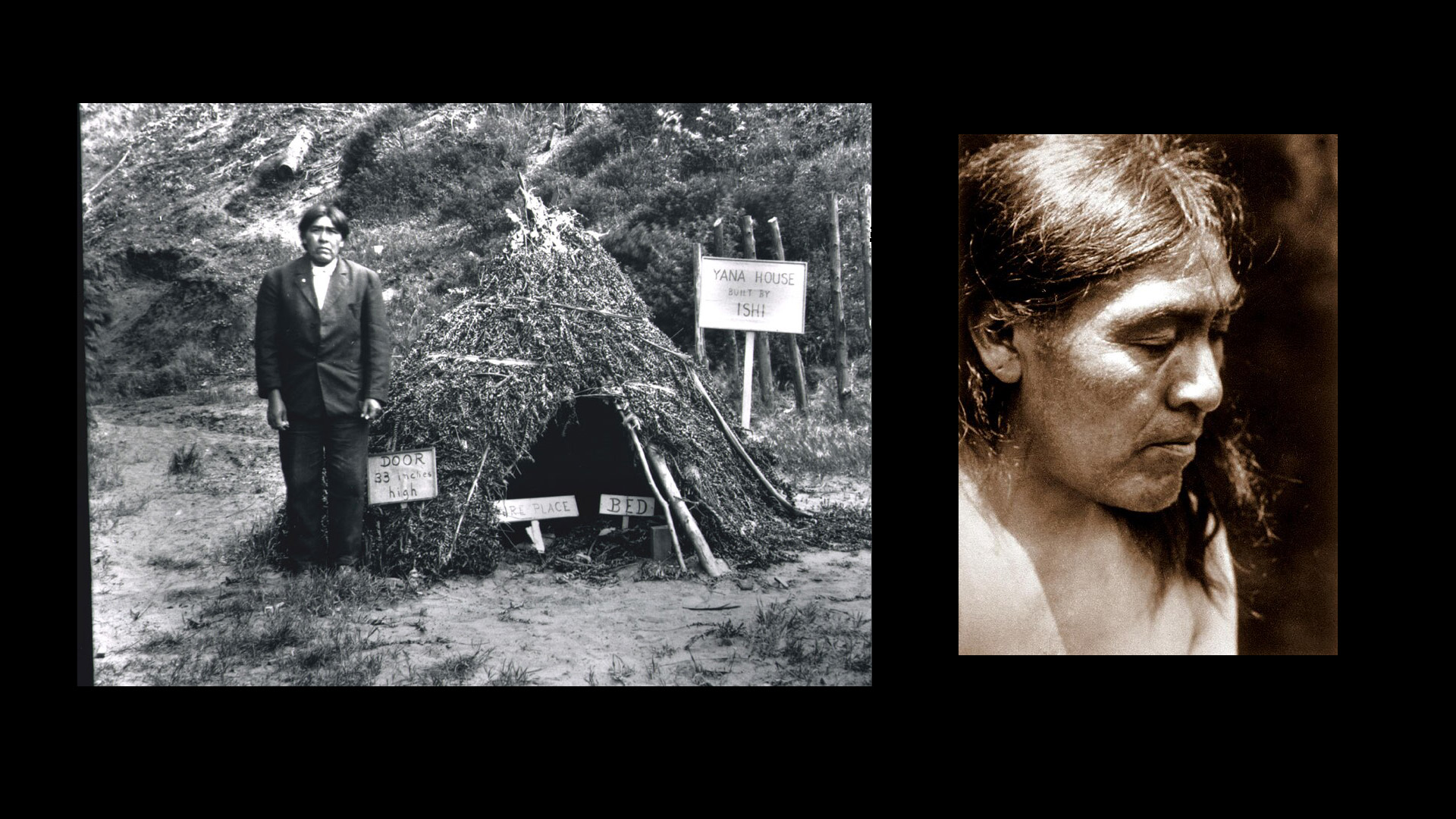
"caption": "Ishi captured nationwide attention after he showed up in Oroville. He was brought to San Francisco, where he gave public demonstrations. ",
"credit": "Public domain",
"altTag": null,
"description": null,
"imgSizes": {
"thumbnail": {
"file": "https://cdn.kqed.org/wp-content/uploads/sites/10/2026/07/Ishi_Combo-160x90.jpg",
"width": 160,
"height": 90,
"mimeType": "image/jpeg"
},
"1536x1536": {
"file": "https://cdn.kqed.org/wp-content/uploads/sites/10/2026/07/Ishi_Combo-1536x864.jpg",
"width": 1536,
"height": 864,
"mimeType": "image/jpeg"
},
"post-thumbnail": {
"file": "https://cdn.kqed.org/wp-content/uploads/sites/10/2026/07/Ishi_Combo-672x372.jpg",
"width": 672,
"height": 372,
"mimeType": "image/jpeg"
},
"twentyfourteen-full-width": {
"file": "https://cdn.kqed.org/wp-content/uploads/sites/10/2026/07/Ishi_Combo-1038x576.jpg",
"width": 1038,
"height": 576,
"mimeType": "image/jpeg"
},
"npr-cds-wide": {
"file": "https://cdn.kqed.org/wp-content/uploads/sites/10/2026/07/Ishi_Combo-1200x675.jpg",
"width": 1200,
"height": 675,
"mimeType": "image/jpeg"
},
"npr-cds-square": {
"file": "https://cdn.kqed.org/wp-content/uploads/sites/10/2026/07/Ishi_Combo-600x600.jpg",
"width": 600,
"height": 600,
"mimeType": "image/jpeg"
},
"kqedFullSize": {
"file": "https://cdn.kqed.org/wp-content/uploads/sites/10/2026/07/Ishi_Combo.jpg",
"width": 1920,
"height": 1080
}
},
"isLoading": false,
"fetchFailed": false
},
"news_12068441": {
"type": "attachments",
"id": "news_12068441",
"meta": {
"index": "attachments_1716263798",
"site": "news",
"id": "12068441",
"found": true
},
"title": "A log that was burned in a past wildfire sits among new growth of mugwort that sprouted after a traditional Karuk prescribed burn on tribal land near Happy Camp, Calif., on Wednesday, September 30, 2020. For millennia, the local Karuk tribe has conducted",
"publishDate": 1767032267,
"status": "inherit",
"parent": 12068419,
"modified": 1767033761,
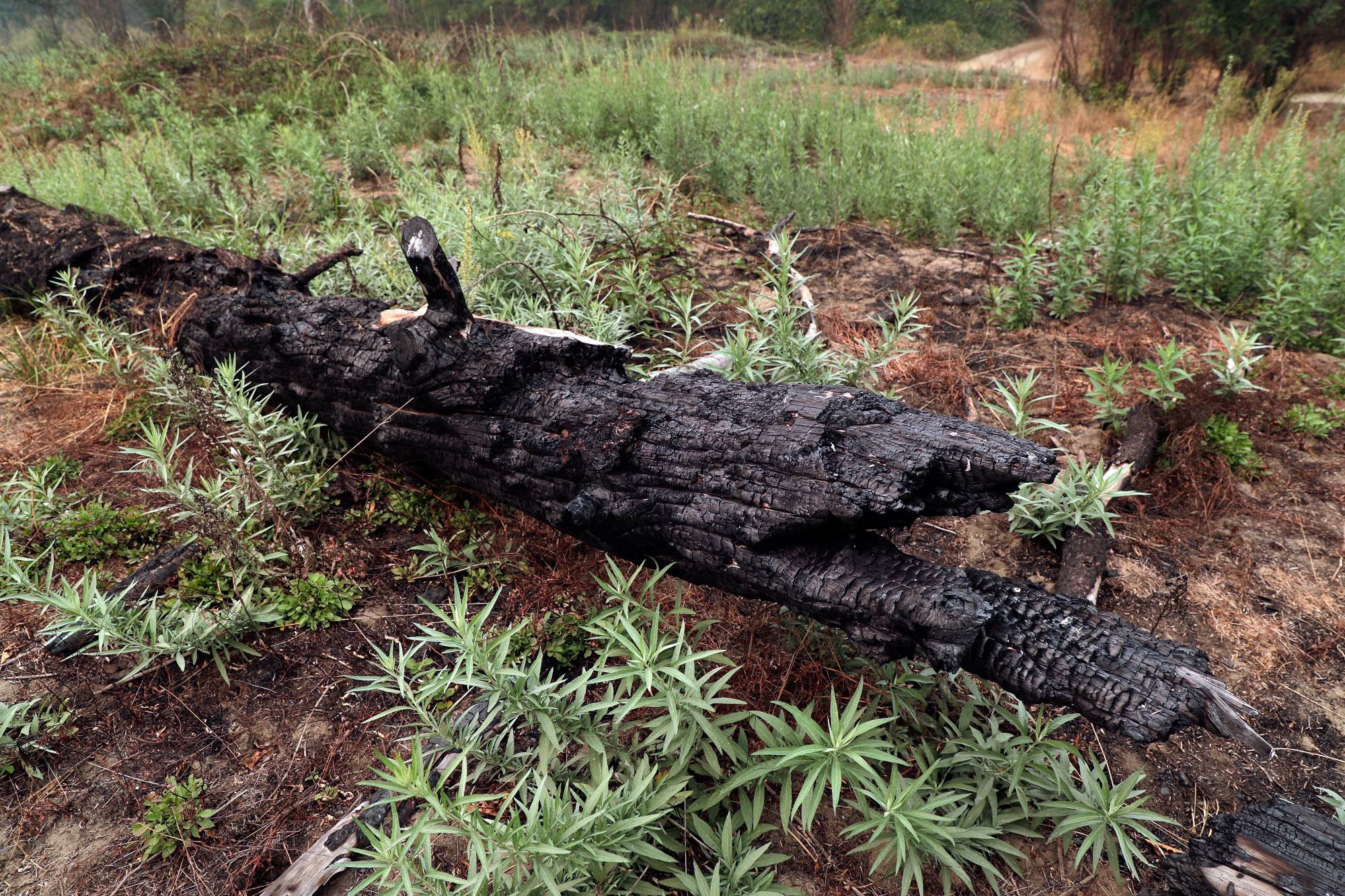
"caption": "A log that was burned in a past wildfire sits among new growth of mugwort that sprouted after a traditional Karuk prescribed burn on tribal land near Happy Camp, Calif., on Wednesday, September 30, 2020. For millennia, the local Karuk tribe has conducted traditional prescribed burns in the area, and put together a climate change adaptation plan, a big piece of which is returning traditional fire to the landscape. (Photo By Carlos Avila Gonzalez/The San Francisco Chronicle via Getty Images)",
"credit": null,
"altTag": null,
"description": null,
"imgSizes": {
"medium": {
"file": "https://cdn.kqed.org/wp-content/uploads/sites/10/2025/12/GettyImages-1409171990-2000x1333.jpg",
"width": 2000,
"height": 1333,
"mimeType": "image/jpeg"
},
"large": {
"file": "https://cdn.kqed.org/wp-content/uploads/sites/10/2025/12/GettyImages-1409171990-2000x1333.jpg",
"width": 2000,
"height": 1333,
"mimeType": "image/jpeg"
},
"thumbnail": {
"file": "https://cdn.kqed.org/wp-content/uploads/sites/10/2025/12/GettyImages-1409171990-160x107.jpg",
"width": 160,
"height": 107,
"mimeType": "image/jpeg"
},
"1536x1536": {
"file": "https://cdn.kqed.org/wp-content/uploads/sites/10/2025/12/GettyImages-1409171990-1536x1024.jpg",
"width": 1536,
"height": 1024,
"mimeType": "image/jpeg"
},
"2048x2048": {
"file": "https://cdn.kqed.org/wp-content/uploads/sites/10/2025/12/GettyImages-1409171990-2048x1365.jpg",
"width": 2048,
"height": 1365,
"mimeType": "image/jpeg"
},
"post-thumbnail": {
"file": "https://cdn.kqed.org/wp-content/uploads/sites/10/2025/12/GettyImages-1409171990-672x372.jpg",
"width": 672,
"height": 372,
"mimeType": "image/jpeg"
},
"twentyfourteen-full-width": {
"file": "https://cdn.kqed.org/wp-content/uploads/sites/10/2025/12/GettyImages-1409171990-1038x576.jpg",
"width": 1038,
"height": 576,
"mimeType": "image/jpeg"
},
"full-width": {
"file": "https://cdn.kqed.org/wp-content/uploads/sites/10/2025/12/GettyImages-1409171990-2000x1333.jpg",
"width": 2000,
"height": 1333,
"mimeType": "image/jpeg"
},
"npr-cds-wide": {
"file": "https://cdn.kqed.org/wp-content/uploads/sites/10/2025/12/GettyImages-1409171990-1200x675.jpg",
"width": 1200,
"height": 675,
"mimeType": "image/jpeg"
},
"kqedFullSize": {
"file": "https://cdn.kqed.org/wp-content/uploads/sites/10/2025/12/GettyImages-1409171990-scaled.jpg",
"width": 2560,
"height": 1707
}
},
"isLoading": false,
"fetchFailed": false
},
"news_12048239": {
"type": "attachments",
"id": "news_12048239",
"meta": {
"index": "attachments_1716263798",
"site": "news",
"id": "12048239",
"found": true
},
"title": "Climate Dam Removal Kayaking Journey",
"publishDate": 1752621147,
"status": "inherit",
"parent": 12048228,
"modified": 1752624065,
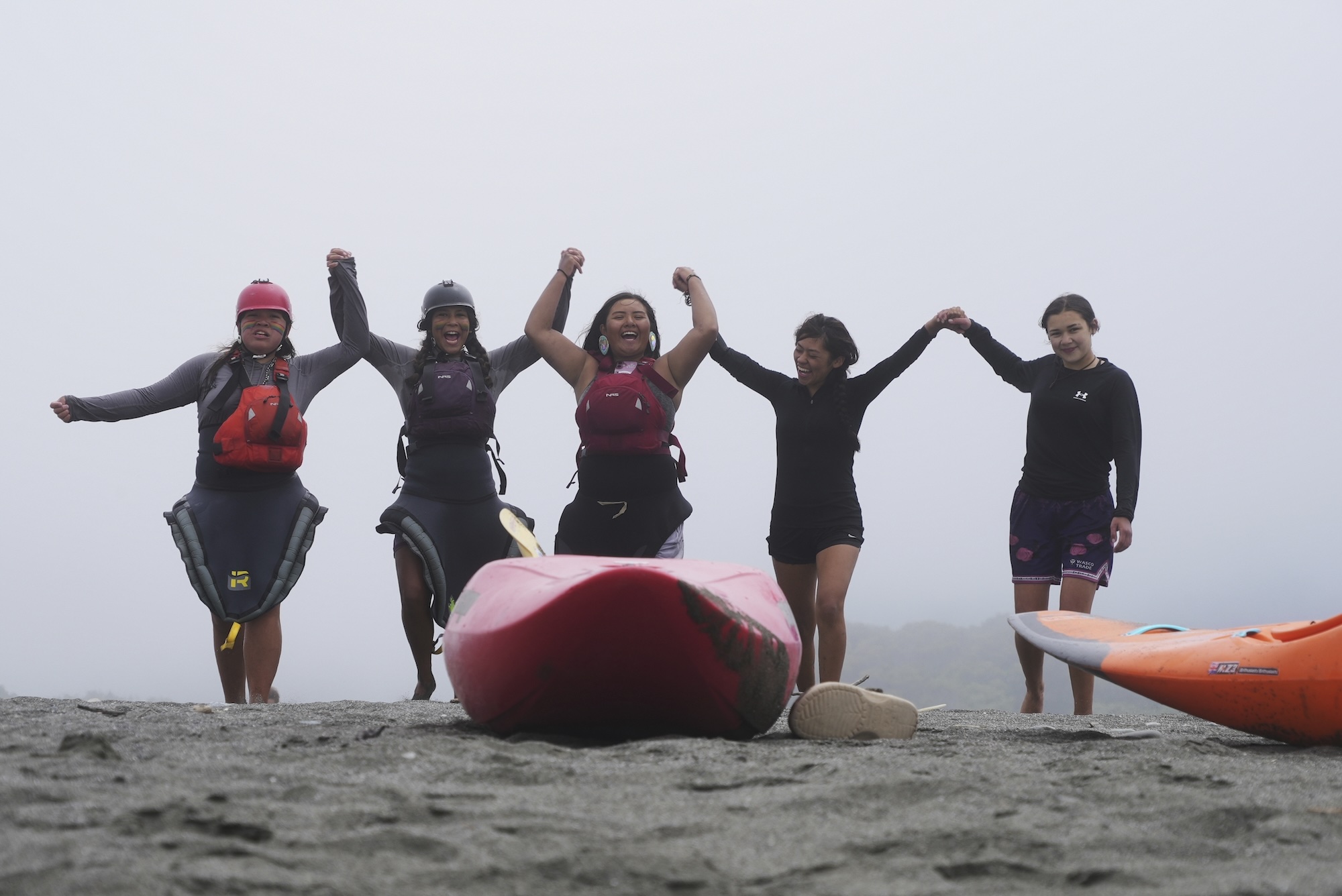
"caption": "Young native paddlers hold hands and cheer as they walk across a sandy stretch that separates the Klamath River from the Pacific Ocean on Friday July 11, 2025, in Klamath, California.",
"credit": "Brittany Peterson/AP Photo",
"altTag": null,
"description": null,
"imgSizes": {
"thumbnail": {
"file": "https://cdn.kqed.org/wp-content/uploads/sites/10/2025/07/AP25196086091137-160x107.jpeg",
"width": 160,
"height": 107,
"mimeType": "image/jpeg"
},
"1536x1536": {
"file": "https://cdn.kqed.org/wp-content/uploads/sites/10/2025/07/AP25196086091137-1536x1026.jpeg",
"width": 1536,
"height": 1026,
"mimeType": "image/jpeg"
},
"post-thumbnail": {
"file": "https://cdn.kqed.org/wp-content/uploads/sites/10/2025/07/AP25196086091137-672x372.jpeg",
"width": 672,
"height": 372,
"mimeType": "image/jpeg"
},
"twentyfourteen-full-width": {
"file": "https://cdn.kqed.org/wp-content/uploads/sites/10/2025/07/AP25196086091137-1038x576.jpeg",
"width": 1038,
"height": 576,
"mimeType": "image/jpeg"
},
"kqedFullSize": {
"file": "https://cdn.kqed.org/wp-content/uploads/sites/10/2025/07/AP25196086091137.jpeg",
"width": 2000,
"height": 1336
}
},
"isLoading": false,
"fetchFailed": false
},
"news_12046548": {
"type": "attachments",
"id": "news_12046548",
"meta": {
"index": "attachments_1716263798",
"site": "news",
"id": "12046548",
"found": true
},
"title": "25_06_25_TRIBE_FOOD_CUTS_MM_26.DSC_7866-KQED",
"publishDate": 1751302202,
"status": "inherit",
"parent": 0,
"modified": 1752611221,
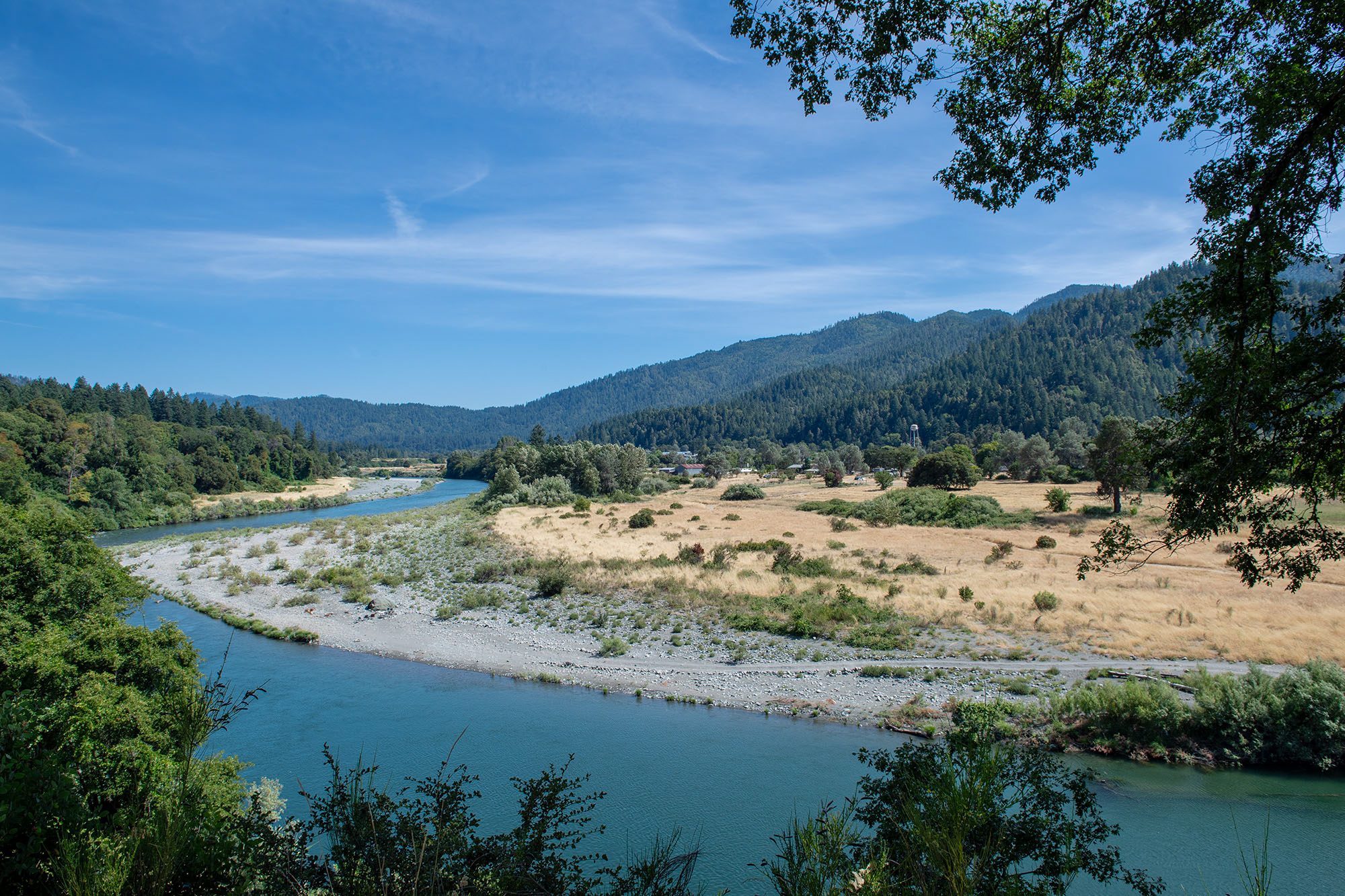
"caption": "The Trinity River flows through the Hoopa Valley in Northern California.",
"credit": "Mark McKenna for KQED",
"altTag": null,
"description": null,
"imgSizes": {
"thumbnail": {
"file": "https://cdn.kqed.org/wp-content/uploads/sites/10/2025/06/25_06_25_TRIBE_FOOD_CUTS_MM_26.DSC_7866-KQED-160x107.jpg",
"width": 160,
"height": 107,
"mimeType": "image/jpeg"
},
"1536x1536": {
"file": "https://cdn.kqed.org/wp-content/uploads/sites/10/2025/06/25_06_25_TRIBE_FOOD_CUTS_MM_26.DSC_7866-KQED-1536x1024.jpg",
"width": 1536,
"height": 1024,
"mimeType": "image/jpeg"
},
"post-thumbnail": {
"file": "https://cdn.kqed.org/wp-content/uploads/sites/10/2025/06/25_06_25_TRIBE_FOOD_CUTS_MM_26.DSC_7866-KQED-672x372.jpg",
"width": 672,
"height": 372,
"mimeType": "image/jpeg"
},
"twentyfourteen-full-width": {
"file": "https://cdn.kqed.org/wp-content/uploads/sites/10/2025/06/25_06_25_TRIBE_FOOD_CUTS_MM_26.DSC_7866-KQED-1038x576.jpg",
"width": 1038,
"height": 576,
"mimeType": "image/jpeg"
},
"kqedFullSize": {
"file": "https://cdn.kqed.org/wp-content/uploads/sites/10/2025/06/25_06_25_TRIBE_FOOD_CUTS_MM_26.DSC_7866-KQED.jpg",
"width": 2000,
"height": 1333
}
},
"isLoading": false,
"fetchFailed": false
},
"news_12037706": {
"type": "attachments",
"id": "news_12037706",
"meta": {
"index": "attachments_1716263798",
"site": "news",
"id": "12037706",
"found": true
},
"title": "020_KQED_EARTHseedFarmSonoma_07082022_qed",
"publishDate": 1745611704,
"status": "inherit",
"parent": 12037633,
"modified": 1745611742,
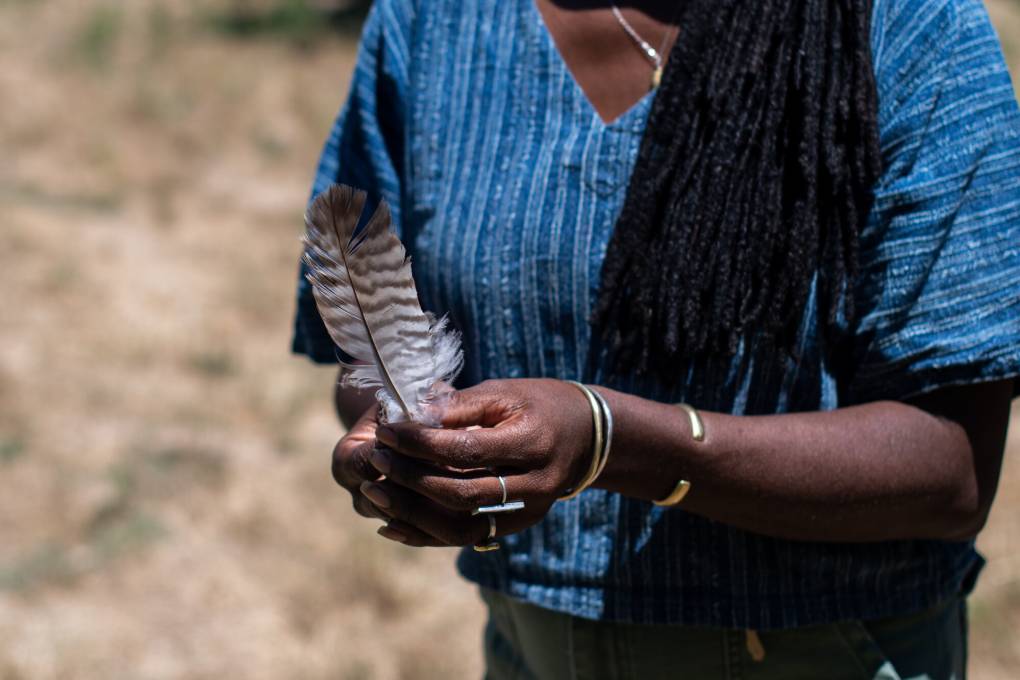
"caption": "EARTHseed Farm founder Pandora Thomas finds a feather at the farm and orchard in Sonoma County on July 8, 2022. The farm operates on Afro-Indigenous permaculture principles.",
"credit": "Beth LaBerge/KQED",
"altTag": null,
"description": null,
"imgSizes": {
"medium": {
"file": "https://cdn.kqed.org/wp-content/uploads/sites/10/2025/04/020_KQED_EARTHseedFarmSonoma_07082022_qed-800x533.jpg",
"width": 800,
"height": 533,
"mimeType": "image/jpeg"
},
"large": {
"file": "https://cdn.kqed.org/wp-content/uploads/sites/10/2025/04/020_KQED_EARTHseedFarmSonoma_07082022_qed-1020x680.jpg",
"width": 1020,
"height": 680,
"mimeType": "image/jpeg"
},
"thumbnail": {
"file": "https://cdn.kqed.org/wp-content/uploads/sites/10/2025/04/020_KQED_EARTHseedFarmSonoma_07082022_qed-160x107.jpg",
"width": 160,
"height": 107,
"mimeType": "image/jpeg"
},
"1536x1536": {
"file": "https://cdn.kqed.org/wp-content/uploads/sites/10/2025/04/020_KQED_EARTHseedFarmSonoma_07082022_qed-1536x1024.jpg",
"width": 1536,
"height": 1024,
"mimeType": "image/jpeg"
},
"post-thumbnail": {
"file": "https://cdn.kqed.org/wp-content/uploads/sites/10/2025/04/020_KQED_EARTHseedFarmSonoma_07082022_qed-672x372.jpg",
"width": 672,
"height": 372,
"mimeType": "image/jpeg"
},
"twentyfourteen-full-width": {
"file": "https://cdn.kqed.org/wp-content/uploads/sites/10/2025/04/020_KQED_EARTHseedFarmSonoma_07082022_qed-1038x576.jpg",
"width": 1038,
"height": 576,
"mimeType": "image/jpeg"
},
"full-width": {
"file": "https://cdn.kqed.org/wp-content/uploads/sites/10/2025/04/020_KQED_EARTHseedFarmSonoma_07082022_qed-1920x1280.jpg",
"width": 1920,
"height": 1280,
"mimeType": "image/jpeg"
},
"kqedFullSize": {
"file": "https://cdn.kqed.org/wp-content/uploads/sites/10/2025/04/020_KQED_EARTHseedFarmSonoma_07082022_qed.jpg",
"width": 1999,
"height": 1333
}
},
"isLoading": false,
"fetchFailed": false
},
"news_12027605": {
"type": "attachments",
"id": "news_12027605",
"meta": {
"index": "attachments_1716263798",
"site": "news",
"id": "12027605",
"found": true
},
"title": "Mike McBrideRay St. ClairTracker Gina Marie Rangel Quinones",
"publishDate": 1739921749,
"status": "inherit",
"parent": 12027602,
"modified": 1739921817,
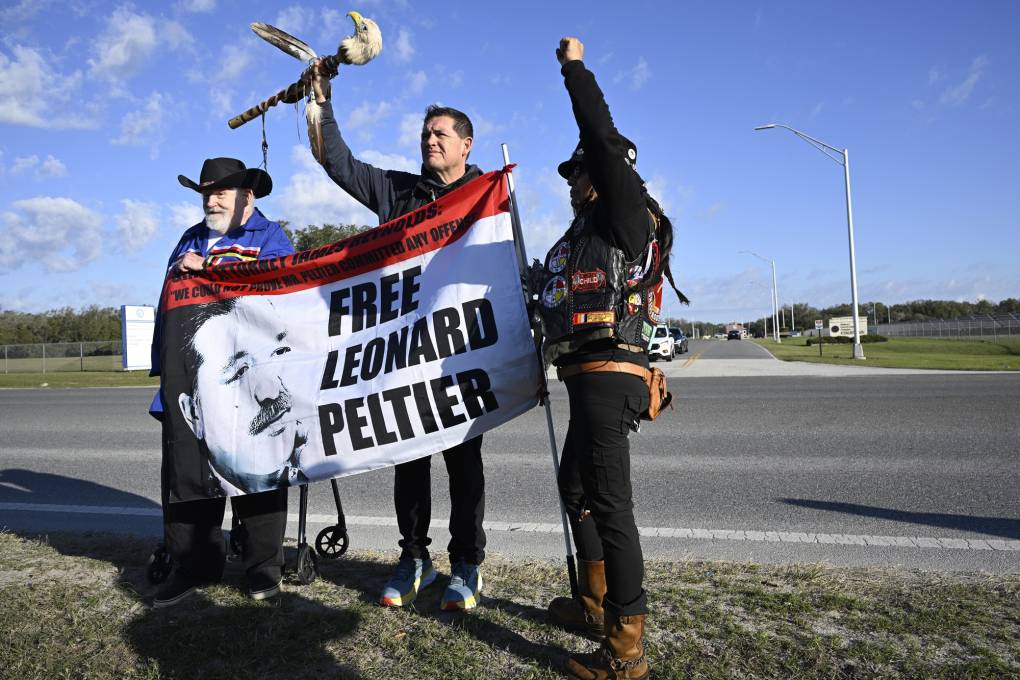
"caption": "Supporters Mike McBride, left, Ray St. Clair, center, and Tracker Gina Marie Rangel Quinones stand in front of Federal Correctional Complex, Coleman, while awaiting the release of Leonard Peltier, on Tuesday, Feb. 18, 2025, in Sumterville, Florida.",
"credit": "Phelan M. Ebenhack/AP Photo",
"altTag": null,
"description": null,
"imgSizes": {
"medium": {
"file": "https://cdn.kqed.org/wp-content/uploads/sites/10/2025/02/LeonardPeltierAP-800x533.jpg",
"width": 800,
"height": 533,
"mimeType": "image/jpeg"
},
"large": {
"file": "https://cdn.kqed.org/wp-content/uploads/sites/10/2025/02/LeonardPeltierAP-1020x680.jpg",
"width": 1020,
"height": 680,
"mimeType": "image/jpeg"
},
"thumbnail": {
"file": "https://cdn.kqed.org/wp-content/uploads/sites/10/2025/02/LeonardPeltierAP-160x107.jpg",
"width": 160,
"height": 107,
"mimeType": "image/jpeg"
},
"1536x1536": {
"file": "https://cdn.kqed.org/wp-content/uploads/sites/10/2025/02/LeonardPeltierAP-1536x1024.jpg",
"width": 1536,
"height": 1024,
"mimeType": "image/jpeg"
},
"post-thumbnail": {
"file": "https://cdn.kqed.org/wp-content/uploads/sites/10/2025/02/LeonardPeltierAP-672x372.jpg",
"width": 672,
"height": 372,
"mimeType": "image/jpeg"
},
"twentyfourteen-full-width": {
"file": "https://cdn.kqed.org/wp-content/uploads/sites/10/2025/02/LeonardPeltierAP-1038x576.jpg",
"width": 1038,
"height": 576,
"mimeType": "image/jpeg"
},
"full-width": {
"file": "https://cdn.kqed.org/wp-content/uploads/sites/10/2025/02/LeonardPeltierAP-1920x1280.jpg",
"width": 1920,
"height": 1280,
"mimeType": "image/jpeg"
},
"kqedFullSize": {
"file": "https://cdn.kqed.org/wp-content/uploads/sites/10/2025/02/LeonardPeltierAP.jpg",
"width": 2000,
"height": 1333
}
},
"isLoading": false,
"fetchFailed": false
},
"news_12015099": {
"type": "attachments",
"id": "news_12015099",
"meta": {
"index": "attachments_1716263798",
"site": "news",
"id": "12015099",
"found": true
},
"title": "monuments-673df1e25aa3c",
"publishDate": 1732112912,
"status": "inherit",
"parent": 12015098,
"modified": 1732112947,
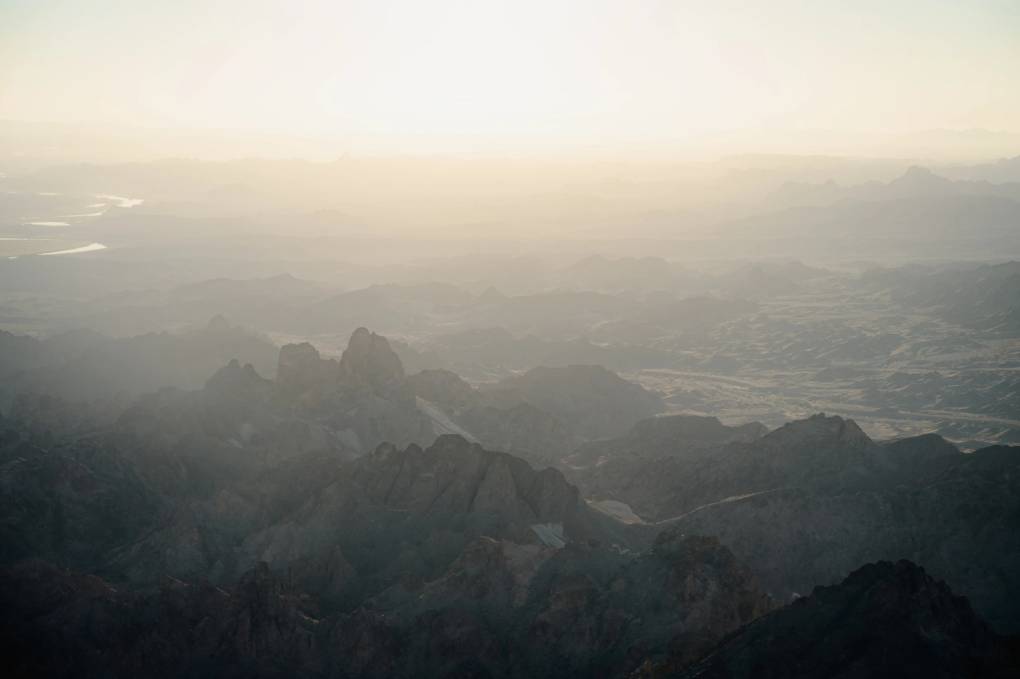
"caption": "Morning sunlight illuminates the proposed Kw'tsán National Monument during a flyover hosted by the Fort Yuma Quechan Tribe and Ecoflight, a conservation organization, on Oct. 16, 2024. The proposal would grant new federal protections to 390,000 acres of the Quechan Tribe's sacred homelands along the California-Arizona border.",
"credit": "Kori Suzuki/KPBS",
"altTag": null,
"description": null,
"imgSizes": {
"medium": {
"file": "https://cdn.kqed.org/wp-content/uploads/sites/10/2024/11/monuments-673df1e25aa3c-800x533.jpg",
"width": 800,
"height": 533,
"mimeType": "image/jpeg"
},
"large": {
"file": "https://cdn.kqed.org/wp-content/uploads/sites/10/2024/11/monuments-673df1e25aa3c-1020x679.jpg",
"width": 1020,
"height": 679,
"mimeType": "image/jpeg"
},
"thumbnail": {
"file": "https://cdn.kqed.org/wp-content/uploads/sites/10/2024/11/monuments-673df1e25aa3c-160x107.jpg",
"width": 160,
"height": 107,
"mimeType": "image/jpeg"
},
"1536x1536": {
"file": "https://cdn.kqed.org/wp-content/uploads/sites/10/2024/11/monuments-673df1e25aa3c-1536x1023.jpg",
"width": 1536,
"height": 1023,
"mimeType": "image/jpeg"
},
"2048x2048": {
"file": "https://cdn.kqed.org/wp-content/uploads/sites/10/2024/11/monuments-673df1e25aa3c-2048x1364.jpg",
"width": 2048,
"height": 1364,
"mimeType": "image/jpeg"
},
"post-thumbnail": {
"file": "https://cdn.kqed.org/wp-content/uploads/sites/10/2024/11/monuments-673df1e25aa3c-672x372.jpg",
"width": 672,
"height": 372,
"mimeType": "image/jpeg"
},
"twentyfourteen-full-width": {
"file": "https://cdn.kqed.org/wp-content/uploads/sites/10/2024/11/monuments-673df1e25aa3c-1038x576.jpg",
"width": 1038,
"height": 576,
"mimeType": "image/jpeg"
},
"full-width": {
"file": "https://cdn.kqed.org/wp-content/uploads/sites/10/2024/11/monuments-673df1e25aa3c-1920x1279.jpg",
"width": 1920,
"height": 1279,
"mimeType": "image/jpeg"
},
"kqedFullSize": {
"file": "https://cdn.kqed.org/wp-content/uploads/sites/10/2024/11/monuments-673df1e25aa3c.jpg",
"width": 2480,
"height": 1652
}
},
"isLoading": false,
"fetchFailed": false
},
"news_12010056": {
"type": "attachments",
"id": "news_12010056",
"meta": {
"index": "attachments_1716263798",
"site": "news",
"id": "12010056",
"found": true
},
"title": "Helen Waukazoo (back right), CEO Friendship House and 2009 Minerva Award winner listens with First Lady Maria Shriver to a drumming circle perform during a visit to the Friendship House in San Francisco, Calif. on Wednesday, March 3, 2010.",
"publishDate": 1729276385,
"status": "inherit",
"parent": 12010054,
"modified": 1729296436,
"caption": "Helen Waukazoo (back right), the former CEO of Friendship House, listens with former First Lady of California Maria Shriver to a drumming circle at the Friendship House in San Francisco on March 3, 2010.\n\n",
"credit": "Lea Suzuki/The San Francisco Chronicle via Getty Images",
"altTag": null,
"description": null,
"imgSizes": {
"medium": {
"file": "https://cdn.kqed.org/wp-content/uploads/sites/10/2024/10/GettyImages-1322038432-800x533.jpg",
"width": 800,
"height": 533,
"mimeType": "image/jpeg"
},
"large": {
"file": "https://cdn.kqed.org/wp-content/uploads/sites/10/2024/10/GettyImages-1322038432-1020x680.jpg",
"width": 1020,
"height": 680,
"mimeType": "image/jpeg"
},
"thumbnail": {
"file": "https://cdn.kqed.org/wp-content/uploads/sites/10/2024/10/GettyImages-1322038432-160x107.jpg",
"width": 160,
"height": 107,
"mimeType": "image/jpeg"
},
"1536x1536": {
"file": "https://cdn.kqed.org/wp-content/uploads/sites/10/2024/10/GettyImages-1322038432-1536x1024.jpg",
"width": 1536,
"height": 1024,
"mimeType": "image/jpeg"
},
"post-thumbnail": {
"file": "https://cdn.kqed.org/wp-content/uploads/sites/10/2024/10/GettyImages-1322038432-672x372.jpg",
"width": 672,
"height": 372,
"mimeType": "image/jpeg"
},
"twentyfourteen-full-width": {
"file": "https://cdn.kqed.org/wp-content/uploads/sites/10/2024/10/GettyImages-1322038432-1038x576.jpg",
"width": 1038,
"height": 576,
"mimeType": "image/jpeg"
},
"full-width": {
"file": "https://cdn.kqed.org/wp-content/uploads/sites/10/2024/10/GettyImages-1322038432-1920x1280.jpg",
"width": 1920,
"height": 1280,
"mimeType": "image/jpeg"
},
"kqedFullSize": {
"file": "https://cdn.kqed.org/wp-content/uploads/sites/10/2024/10/GettyImages-1322038432.jpg",
"width": 2000,
"height": 1333
}
},
"isLoading": false,
"fetchFailed": false
},
"news_12009433": {
"type": "attachments",
"id": "news_12009433",
"meta": {
"index": "attachments_1716263798",
"site": "news",
"id": "12009433",
"found": true
},
"title": "092223-Native-American-Day-MG-CM-11",
"publishDate": 1728943359,
"status": "inherit",
"parent": 12009426,
"modified": 1728945751,
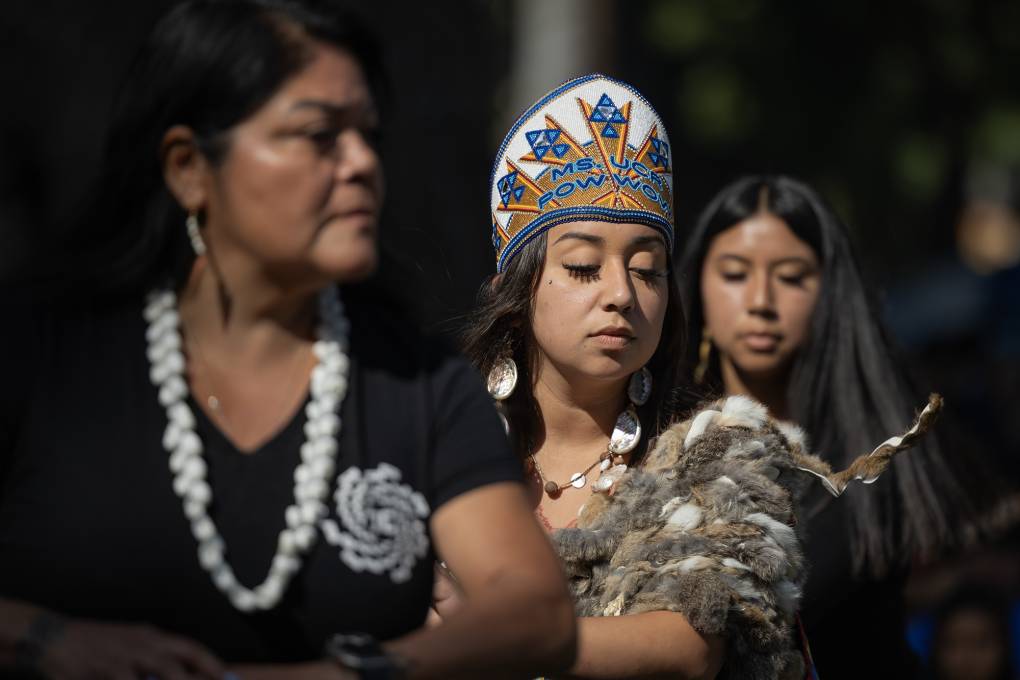
"caption": "Ms. UCR Powwow Princess 2023–24, Tishmal Herrera, dances at a performance during Native American Celebration Day at the state Capitol in Sacramento on Sept. 22, 2023.",
"credit": "Miguel Gutierrez Jr./CalMatters",
"altTag": "A closeup of three indigenous women standing by each other, with the woman in the middle wearing an elaborately decorated crown.",
"description": null,
"imgSizes": {
"medium": {
"file": "https://cdn.kqed.org/wp-content/uploads/sites/10/2024/10/092223-Native-American-Day-MG-CM-11-800x533.jpg",
"width": 800,
"height": 533,
"mimeType": "image/jpeg"
},
"large": {
"file": "https://cdn.kqed.org/wp-content/uploads/sites/10/2024/10/092223-Native-American-Day-MG-CM-11-1020x680.jpg",
"width": 1020,
"height": 680,
"mimeType": "image/jpeg"
},
"thumbnail": {
"file": "https://cdn.kqed.org/wp-content/uploads/sites/10/2024/10/092223-Native-American-Day-MG-CM-11-160x107.jpg",
"width": 160,
"height": 107,
"mimeType": "image/jpeg"
},
"1536x1536": {
"file": "https://cdn.kqed.org/wp-content/uploads/sites/10/2024/10/092223-Native-American-Day-MG-CM-11-1536x1024.jpg",
"width": 1536,
"height": 1024,
"mimeType": "image/jpeg"
},
"post-thumbnail": {
"file": "https://cdn.kqed.org/wp-content/uploads/sites/10/2024/10/092223-Native-American-Day-MG-CM-11-672x372.jpg",
"width": 672,
"height": 372,
"mimeType": "image/jpeg"
},
"twentyfourteen-full-width": {
"file": "https://cdn.kqed.org/wp-content/uploads/sites/10/2024/10/092223-Native-American-Day-MG-CM-11-1038x576.jpg",
"width": 1038,
"height": 576,
"mimeType": "image/jpeg"
},
"full-width": {
"file": "https://cdn.kqed.org/wp-content/uploads/sites/10/2024/10/092223-Native-American-Day-MG-CM-11-1920x1280.jpg",
"width": 1920,
"height": 1280,
"mimeType": "image/jpeg"
},
"kqedFullSize": {
"file": "https://cdn.kqed.org/wp-content/uploads/sites/10/2024/10/092223-Native-American-Day-MG-CM-11.jpg",
"width": 2000,
"height": 1333
}
},
"isLoading": false,
"fetchFailed": false
},
"news_11985621": {
"type": "attachments",
"id": "news_11985621",
"meta": {
"index": "attachments_1716263798",
"site": "news",
"id": "11985621",
"found": true
},
"parent": 11985619,
"imgSizes": {
"twentyfourteen-full-width": {
"file": "https://cdn.kqed.org/wp-content/uploads/sites/10/2024/05/AP24130599594139-1038x576.jpg",
"width": 1038,
"mimeType": "image/jpeg",
"height": 576
},
"thumbnail": {
"file": "https://cdn.kqed.org/wp-content/uploads/sites/10/2024/05/AP24130599594139-160x107.jpg",
"width": 160,
"mimeType": "image/jpeg",
"height": 107
},
"post-thumbnail": {
"file": "https://cdn.kqed.org/wp-content/uploads/sites/10/2024/05/AP24130599594139-672x372.jpg",
"width": 672,
"mimeType": "image/jpeg",
"height": 372
},
"kqedFullSize": {
"file": "https://cdn.kqed.org/wp-content/uploads/sites/10/2024/05/AP24130599594139-scaled.jpg",
"width": 2560,
"height": 1707
},
"2048x2048": {
"file": "https://cdn.kqed.org/wp-content/uploads/sites/10/2024/05/AP24130599594139-2048x1365.jpg",
"width": 2048,
"mimeType": "image/jpeg",
"height": 1365
},
"large": {
"file": "https://cdn.kqed.org/wp-content/uploads/sites/10/2024/05/AP24130599594139-1020x680.jpg",
"width": 1020,
"mimeType": "image/jpeg",
"height": 680
},
"1536x1536": {
"file": "https://cdn.kqed.org/wp-content/uploads/sites/10/2024/05/AP24130599594139-1536x1024.jpg",
"width": 1536,
"mimeType": "image/jpeg",
"height": 1024
},
"full-width": {
"file": "https://cdn.kqed.org/wp-content/uploads/sites/10/2024/05/AP24130599594139-1920x1280.jpg",
"width": 1920,
"mimeType": "image/jpeg",
"height": 1280
},
"medium": {
"file": "https://cdn.kqed.org/wp-content/uploads/sites/10/2024/05/AP24130599594139-800x533.jpg",
"width": 800,
"mimeType": "image/jpeg",
"height": 533
}
},
"publishDate": 1715296159,
"modified": 1715297420,
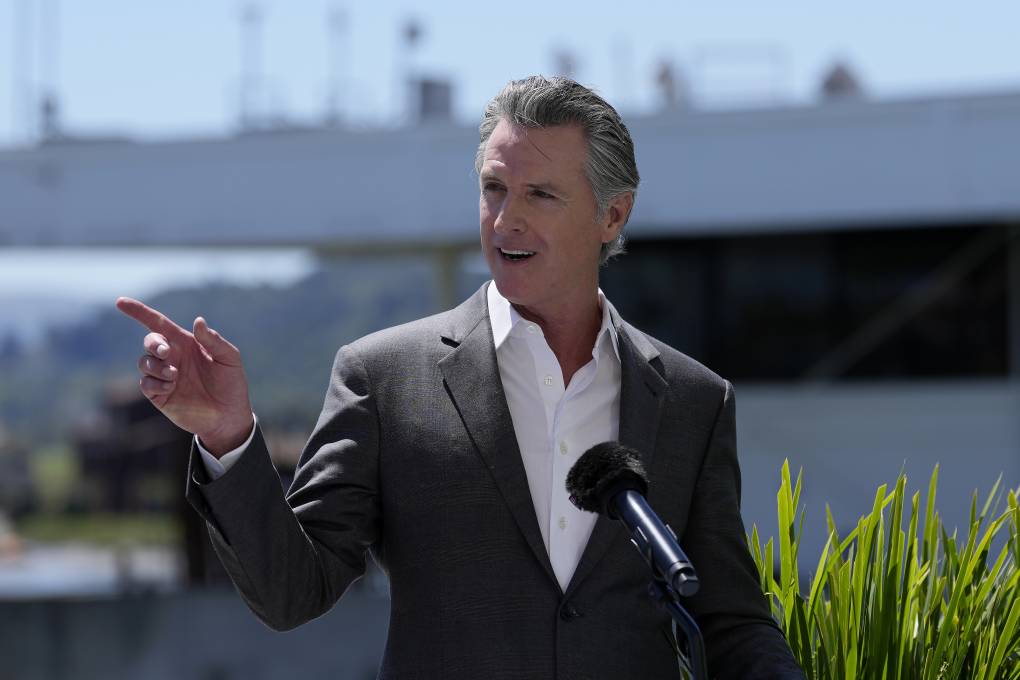
"caption": "California Gov. Gavin Newsom speaks in Larkspur, Marin County, on April 16, 2024. California could soon deploy generative artificial intelligence tools to help reduce traffic jams, make roads safer and provide tax guidance, among other things, under new agreements announced on May 9, 2024, as part of Gov. Gavin Newsom's efforts to harness the power of new technologies for public services. ",
"description": null,
"title": "Gavin Newsom",
"credit": "Jeff Chiu/AP Photo",
"status": "inherit",
"altTag": "A white, middle-aged man in a suit and white shirt with no tie gestures to his right while speaking into a microphone outdoors.",
"isLoading": false,
"fetchFailed": false
},
"news_11982598": {
"type": "attachments",
"id": "news_11982598",
"meta": {
"index": "attachments_1716263798",
"site": "news",
"id": "11982598",
"found": true
},
"parent": 0,
"imgSizes": {
"twentyfourteen-full-width": {
"file": "https://cdn.kqed.org/wp-content/uploads/sites/10/2024/04/Owens-Lake-018-AR-KQED-1038x576.jpg",
"width": 1038,
"mimeType": "image/jpeg",
"height": 576
},
"thumbnail": {
"file": "https://cdn.kqed.org/wp-content/uploads/sites/10/2024/04/Owens-Lake-018-AR-KQED-160x107.jpg",
"width": 160,
"mimeType": "image/jpeg",
"height": 107
},
"post-thumbnail": {
"file": "https://cdn.kqed.org/wp-content/uploads/sites/10/2024/04/Owens-Lake-018-AR-KQED-672x372.jpg",
"width": 672,
"mimeType": "image/jpeg",
"height": 372
},
"kqedFullSize": {
"file": "https://cdn.kqed.org/wp-content/uploads/sites/10/2024/04/Owens-Lake-018-AR-KQED.jpg",
"width": 2000,
"height": 1334
},
"large": {
"file": "https://cdn.kqed.org/wp-content/uploads/sites/10/2024/04/Owens-Lake-018-AR-KQED-1020x680.jpg",
"width": 1020,
"mimeType": "image/jpeg",
"height": 680
},
"1536x1536": {
"file": "https://cdn.kqed.org/wp-content/uploads/sites/10/2024/04/Owens-Lake-018-AR-KQED-1536x1025.jpg",
"width": 1536,
"mimeType": "image/jpeg",
"height": 1025
},
"full-width": {
"file": "https://cdn.kqed.org/wp-content/uploads/sites/10/2024/04/Owens-Lake-018-AR-KQED-1920x1281.jpg",
"width": 1920,
"mimeType": "image/jpeg",
"height": 1281
},
"medium": {
"file": "https://cdn.kqed.org/wp-content/uploads/sites/10/2024/04/Owens-Lake-018-AR-KQED-800x534.jpg",
"width": 800,
"mimeType": "image/jpeg",
"height": 534
}
},
"publishDate": 1712783146,
"modified": 1715808065,
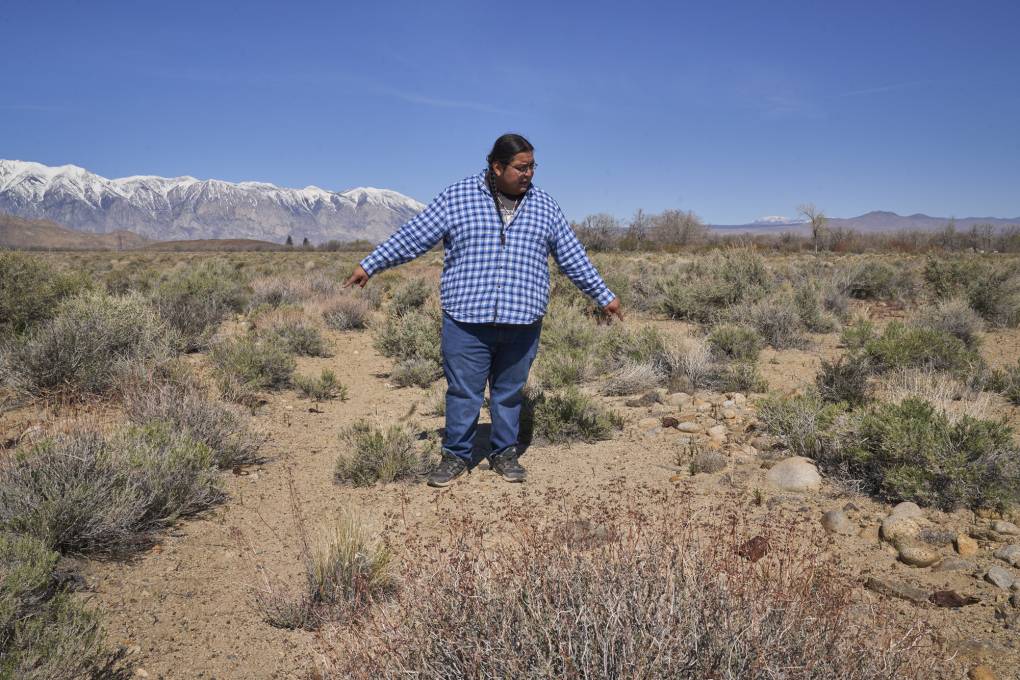
"caption": "Noah Williams, water program coordinator for Big Pine Paiute Tribe, stands in the middle of the Bishop Creek diversion in Bishop on April 3, 2024.",
"description": null,
"title": "Ditch one",
"credit": "Alejandra Rubio for KQED",
"status": "inherit",
"altTag": null,
"isLoading": false,
"fetchFailed": false
},
"news_11985180": {
"type": "attachments",
"id": "news_11985180",
"meta": {
"index": "attachments_1716263798",
"site": "news",
"id": "11985180",
"found": true
},
"parent": 0,
"imgSizes": {
"twentyfourteen-full-width": {
"file": "https://cdn.kqed.org/wp-content/uploads/sites/10/2024/05/Chumash-Sanctuary-01-KQED-1038x576.jpg",
"width": 1038,
"mimeType": "image/jpeg",
"height": 576
},
"thumbnail": {
"file": "https://cdn.kqed.org/wp-content/uploads/sites/10/2024/05/Chumash-Sanctuary-01-KQED-160x107.jpg",
"width": 160,
"mimeType": "image/jpeg",
"height": 107
},
"post-thumbnail": {
"file": "https://cdn.kqed.org/wp-content/uploads/sites/10/2024/05/Chumash-Sanctuary-01-KQED-672x372.jpg",
"width": 672,
"mimeType": "image/jpeg",
"height": 372
},
"kqedFullSize": {
"file": "https://cdn.kqed.org/wp-content/uploads/sites/10/2024/05/Chumash-Sanctuary-01-KQED.jpg",
"width": 2000,
"height": 1333
},
"large": {
"file": "https://cdn.kqed.org/wp-content/uploads/sites/10/2024/05/Chumash-Sanctuary-01-KQED-1020x680.jpg",
"width": 1020,
"mimeType": "image/jpeg",
"height": 680
},
"1536x1536": {
"file": "https://cdn.kqed.org/wp-content/uploads/sites/10/2024/05/Chumash-Sanctuary-01-KQED-1536x1024.jpg",
"width": 1536,
"mimeType": "image/jpeg",
"height": 1024
},
"full-width": {
"file": "https://cdn.kqed.org/wp-content/uploads/sites/10/2024/05/Chumash-Sanctuary-01-KQED-1920x1280.jpg",
"width": 1920,
"mimeType": "image/jpeg",
"height": 1280
},
"medium": {
"file": "https://cdn.kqed.org/wp-content/uploads/sites/10/2024/05/Chumash-Sanctuary-01-KQED-800x533.jpg",
"width": 800,
"mimeType": "image/jpeg",
"height": 533
}
},
"publishDate": 1715102465,
"modified": 1715107939,
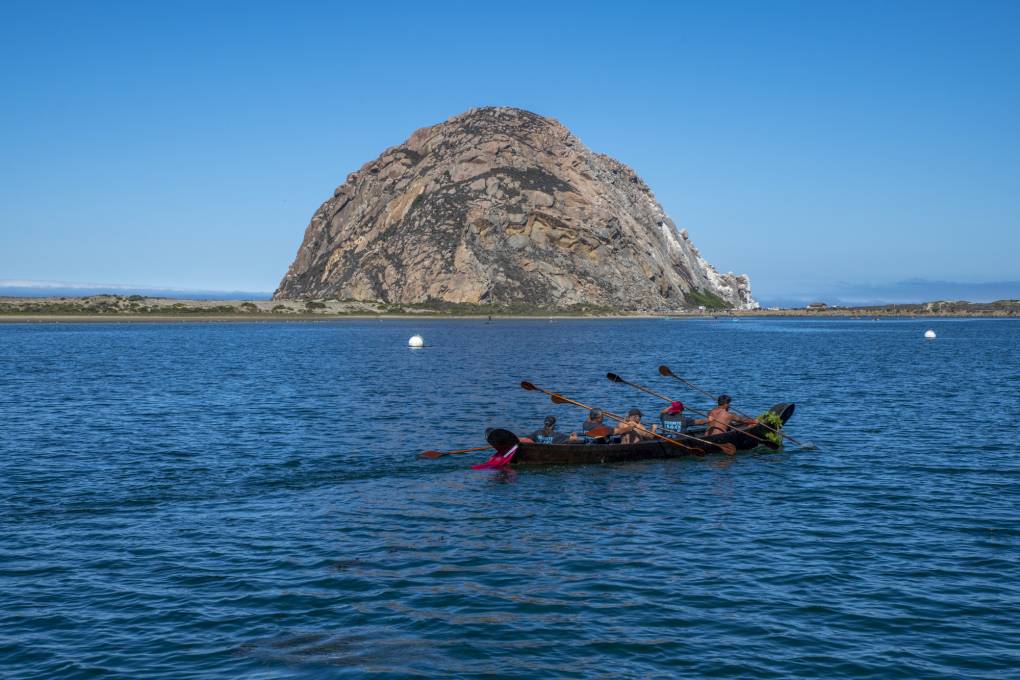
"caption": "The Xax 'Alolk'oy, a traditional Chumash tomol, paddles out to Lisamu' (Morro Rock) at the Northern Chumash Tribal Council's Reunite the Rock event.",
"description": null,
"title": "Chumash Sanctuary-01-KQED",
"credit": "Courtesy of Robert Schwemmer, Northern Chumash Tribal Council",
"status": "inherit",
"altTag": null,
"isLoading": false,
"fetchFailed": false
}
},
"audioPlayerReducer": {
"postId": "stream_live",
"isPaused": true,
"isPlaying": false,
"pfsActive": false,
"pledgeModalIsOpen": true,
"playerDrawerIsOpen": false,
"liveAudioPlayStartedAt": 0,
"liveAudioPlayContext": ""
},
"authorsReducer": {
"byline_news_12048228": {
"type": "authors",
"id": "byline_news_12048228",
"meta": {
"override": true
},
"slug": "byline_news_12048228",
"name": "Brittany Peterson, The Associated Press",
"isLoading": false
},
"byline_news_12037633": {
"type": "authors",
"id": "byline_news_12037633",
"meta": {
"override": true
},
"slug": "byline_news_12037633",
"name": "Camilla Griffiths",
"isLoading": false
},
"byline_news_12009426": {
"type": "authors",
"id": "byline_news_12009426",
"meta": {
"override": true
},
"slug": "byline_news_12009426",
"name": "\u003ca href=\"https://calmatters.org/author/carolyn-jones\">Carolyn Jones, \u003c/a>CalMatters",
"isLoading": false
},
"byline_news_11985946": {
"type": "authors",
"id": "byline_news_11985946",
"meta": {
"override": true
},
"slug": "byline_news_11985946",
"name": "Teresa Cotsirilos",
"isLoading": false
},
"byline_news_11985188": {
"type": "authors",
"id": "byline_news_11985188",
"meta": {
"override": true
},
"slug": "byline_news_11985188",
"name": "Benjamin Purper",
"isLoading": false
},
"lesleymcclurg": {
"type": "authors",
"id": "11229",
"meta": {
"index": "authors_1716337520",
"id": "11229",
"found": true
},
"name": "Lesley McClurg",
"firstName": "Lesley",
"lastName": "McClurg",
"slug": "lesleymcclurg",
"email": "lmcclurg@KQED.org",
"display_author_email": false,
"staff_mastheads": [
"news",
"science"
],
"title": "KQED Health Correspondent",
"bio": "Lesley McClurg is a health correspondent and fill-in host whose work is regularly rebroadcast on NPR and PBS programs. She’s earned multiple regional Emmy awards, a national and a regional Edward R. Murrow award, and was named Best Beat Reporter by the Association of Health Care Journalists. The Society of Professional Journalists has recognized her work several times, and the Society of Environmental Journalists spotlighted her coverage of California’s historic drought.\r\n\r\nBefore joining KQED in 2016, Lesley covered food and sustainability for Capital Public Radio, environmental issues for Colorado Public Radio, and reported for KUOW and KCTS 9 in Seattle. Away from the newsroom, she loves skiing with her daughter, mountain biking with her partner, and playing with Ollie, the family’s goldendoodle. On deadline, she runs almost entirely on chocolate chips.\r\n\r\n ",
"avatar": "https://secure.gravatar.com/avatar/bab49e972ea10c774fe0f5e29dba1722b158f7c0d58a360923d1389d380b2978?s=600&d=blank&r=g",
"twitter": "lesleywmcclurg",
"bluesky": null,
"facebook": null,
"instagram": null,
"linkedin": null,
"sites": [
{
"site": "arts",
"roles": [
"author"
]
},
{
"site": "news",
"roles": [
"editor"
]
},
{
"site": "futureofyou",
"roles": [
"editor"
]
},
{
"site": "stateofhealth",
"roles": [
"author"
]
},
{
"site": "science",
"roles": [
"editor"
]
},
{
"site": "quest",
"roles": [
"subscriber"
]
},
{
"site": "forum",
"roles": [
"administrator"
]
},
{
"site": "liveblog",
"roles": [
"author"
]
}
],
"headData": {
"title": "Lesley McClurg | KQED",
"description": "KQED Health Correspondent",
"ogImgSrc": "https://secure.gravatar.com/avatar/bab49e972ea10c774fe0f5e29dba1722b158f7c0d58a360923d1389d380b2978?s=600&d=blank&r=g",
"twImgSrc": "https://secure.gravatar.com/avatar/bab49e972ea10c774fe0f5e29dba1722b158f7c0d58a360923d1389d380b2978?s=600&d=blank&r=g"
},
"isLoading": false,
"link": "/author/lesleymcclurg"
},
"kmizuguchi": {
"type": "authors",
"id": "11739",
"meta": {
"index": "authors_1716337520",
"id": "11739",
"found": true
},
"name": "Keith Mizuguchi",
"firstName": "Keith",
"lastName": "Mizuguchi",
"slug": "kmizuguchi",
"email": "kmizuguchi@kqed.org",
"display_author_email": false,
"staff_mastheads": [],
"title": "KQED Contributor",
"bio": null,
"avatar": "https://secure.gravatar.com/avatar/64d8a7de0723d4099b9fe4e915136103febcc20809abce228ee4415bcb237023?s=600&d=blank&r=g",
"twitter": null,
"bluesky": null,
"facebook": null,
"instagram": null,
"linkedin": null,
"sites": [
{
"site": "news",
"roles": [
"editor"
]
},
{
"site": "science",
"roles": [
"editor"
]
}
],
"headData": {
"title": "Keith Mizuguchi | KQED",
"description": "KQED Contributor",
"ogImgSrc": "https://secure.gravatar.com/avatar/64d8a7de0723d4099b9fe4e915136103febcc20809abce228ee4415bcb237023?s=600&d=blank&r=g",
"twImgSrc": "https://secure.gravatar.com/avatar/64d8a7de0723d4099b9fe4e915136103febcc20809abce228ee4415bcb237023?s=600&d=blank&r=g"
},
"isLoading": false,
"link": "/author/kmizuguchi"
},
"ibloom": {
"type": "authors",
"id": "11805",
"meta": {
"index": "authors_1716337520",
"id": "11805",
"found": true
},
"name": "Izzy Bloom",
"firstName": "Izzy",
"lastName": "Bloom",
"slug": "ibloom",
"email": "ibloom@kqed.org",
"display_author_email": false,
"staff_mastheads": [],
"title": "KQED Reporter & Producer",
"bio": "Izzy is a reporter and producer on KQED's California Politics & Government Desk. She joined the desk in 2024 to produce Political Breakdown, covering local and national elections and attending the RNC and DNC in Milwaukee and Chicago. \r\n\r\nBefore that, Izzy was a producer on The California Report and reported long-form stories for The California Report Magazine. She was a finalist for the Third Coast/Richard H. Driehaus Foundation Competition and was awarded for her reporting on indigenous land back by the Society of Professional Journalists. Izzy received her master's in journalism from the University of California, Berkeley.",
"avatar": "https://secure.gravatar.com/avatar/cc4d272ca430783ee1a8efac470a6b1e0fdd082c3beb61da019801d0ff751c8c?s=600&d=blank&r=g",
"twitter": null,
"bluesky": null,
"facebook": null,
"instagram": null,
"linkedin": null,
"sites": [
{
"site": "news",
"roles": [
"editor"
]
},
{
"site": "perspectives",
"roles": [
"editor"
]
}
],
"headData": {
"title": "Izzy Bloom | KQED",
"description": "KQED Reporter & Producer",
"ogImgSrc": "https://secure.gravatar.com/avatar/cc4d272ca430783ee1a8efac470a6b1e0fdd082c3beb61da019801d0ff751c8c?s=600&d=blank&r=g",
"twImgSrc": "https://secure.gravatar.com/avatar/cc4d272ca430783ee1a8efac470a6b1e0fdd082c3beb61da019801d0ff751c8c?s=600&d=blank&r=g"
},
"isLoading": false,
"link": "/author/ibloom"
},
"kmonahan": {
"type": "authors",
"id": "11842",
"meta": {
"index": "authors_1716337520",
"id": "11842",
"found": true
},
"name": "Katherine Monahan",
"firstName": "Katherine",
"lastName": "Monahan",
"slug": "kmonahan",
"email": "kmonahan@kqed.org",
"display_author_email": true,
"staff_mastheads": [],
"title": "Reporter / Sound Engineer",
"bio": "I cover state and local news. I’m also a sound engineer at the station, mixing stories and running live broadcasts. I link to source materials so that readers can draw their own conclusions, and seek comment from a range of perspectives, including from people directly affected by events. Awards received include from the Society of Professional Journalists, Northern California chapter and the Alaska Press Club. I speak multiple languages and have reported and engineered in the Bay Area, Alaska, West Africa and Latin America.",
"avatar": "https://secure.gravatar.com/avatar/ff257b3a5da88893781a3d3266904b2d2f91c7f0e1bbf728f61f5fb81b74a669?s=600&d=blank&r=g",
"twitter": null,
"bluesky": null,
"facebook": null,
"instagram": null,
"linkedin": null,
"sites": [
{
"site": "news",
"roles": [
"editor"
]
},
{
"site": "science",
"roles": [
"contributor"
]
}
],
"headData": {
"title": "Katherine Monahan | KQED",
"description": "Reporter / Sound Engineer",
"ogImgSrc": "https://secure.gravatar.com/avatar/ff257b3a5da88893781a3d3266904b2d2f91c7f0e1bbf728f61f5fb81b74a669?s=600&d=blank&r=g",
"twImgSrc": "https://secure.gravatar.com/avatar/ff257b3a5da88893781a3d3266904b2d2f91c7f0e1bbf728f61f5fb81b74a669?s=600&d=blank&r=g"
},
"isLoading": false,
"link": "/author/kmonahan"
},
"bsiavoshy": {
"type": "authors",
"id": "11890",
"meta": {
"index": "authors_1716337520",
"id": "11890",
"found": true
},
"name": "Bejan Siavoshy",
"firstName": "Bejan",
"lastName": "Siavoshy",
"slug": "bsiavoshy",
"email": "bsiavoshy@kqed.org",
"display_author_email": false,
"staff_mastheads": [],
"title": "KQED Contributor",
"bio": null,
"avatar": "https://secure.gravatar.com/avatar/ead3e7c509634b37a73b1f57677e49f9?s=600&d=blank&r=g",
"twitter": null,
"facebook": null,
"instagram": null,
"linkedin": null,
"sites": [
{
"site": "news",
"roles": [
"editor"
]
}
],
"headData": {
"title": "Bejan Siavoshy | KQED",
"description": "KQED Contributor",
"ogImgSrc": "https://secure.gravatar.com/avatar/ead3e7c509634b37a73b1f57677e49f9?s=600&d=blank&r=g",
"twImgSrc": "https://secure.gravatar.com/avatar/ead3e7c509634b37a73b1f57677e49f9?s=600&d=blank&r=g"
},
"isLoading": false,
"link": "/author/bsiavoshy"
},
"emanoukian": {
"type": "authors",
"id": "11925",
"meta": {
"index": "authors_1716337520",
"id": "11925",
"found": true
},
"name": "Elize Manoukian",
"firstName": "Elize",
"lastName": "Manoukian",
"slug": "emanoukian",
"email": "emanoukian@KQED.org",
"display_author_email": false,
"staff_mastheads": [
"news"
],
"title": "Digital News Editor",
"bio": "Elize Manoukian is an award-winning audio producer and Senior Editor on the Express Desk, KQED's digital news platform. Her work has appeared on KPFA, Interlochen Public Radio, Oregon Public Broadcast, the New York Daily News, LA Times and the San Diego Union-Tribune.",
"avatar": "https://secure.gravatar.com/avatar/4525f1a8e46ccb30933b32653d9772064cfefe3fa655eb45b3b3a80341f6bdad?s=600&d=blank&r=g",
"twitter": null,
"bluesky": null,
"facebook": null,
"instagram": null,
"linkedin": null,
"sites": [
{
"site": "arts",
"roles": [
"editor"
]
},
{
"site": "news",
"roles": [
"editor"
]
},
{
"site": "science",
"roles": [
"editor"
]
}
],
"headData": {
"title": "Elize Manoukian | KQED",
"description": "Digital News Editor",
"ogImgSrc": "https://secure.gravatar.com/avatar/4525f1a8e46ccb30933b32653d9772064cfefe3fa655eb45b3b3a80341f6bdad?s=600&d=blank&r=g",
"twImgSrc": "https://secure.gravatar.com/avatar/4525f1a8e46ccb30933b32653d9772064cfefe3fa655eb45b3b3a80341f6bdad?s=600&d=blank&r=g"
},
"isLoading": false,
"link": "/author/emanoukian"
},
"skennedy": {
"type": "authors",
"id": "11935",
"meta": {
"index": "authors_1716337520",
"id": "11935",
"found": true
},
"name": "Samantha Kennedy",
"firstName": "Samantha",
"lastName": "Kennedy",
"slug": "skennedy",
"email": "SKennedy@kqed.org",
"display_author_email": false,
"staff_mastheads": [],
"title": "KQED Contributor",
"bio": null,
"avatar": "https://secure.gravatar.com/avatar/adc7b14bf1e801793202a156ecc864d4ad505b0fd63162a2f3da0e5ba57222d0?s=600&d=blank&r=g",
"twitter": null,
"bluesky": null,
"facebook": null,
"instagram": null,
"linkedin": null,
"sites": [
{
"site": "arts",
"roles": [
"author"
]
},
{
"site": "news",
"roles": [
"editor"
]
},
{
"site": "science",
"roles": [
"editor"
]
}
],
"headData": {
"title": "Samantha Kennedy | KQED",
"description": "KQED Contributor",
"ogImgSrc": "https://secure.gravatar.com/avatar/adc7b14bf1e801793202a156ecc864d4ad505b0fd63162a2f3da0e5ba57222d0?s=600&d=blank&r=g",
"twImgSrc": "https://secure.gravatar.com/avatar/adc7b14bf1e801793202a156ecc864d4ad505b0fd63162a2f3da0e5ba57222d0?s=600&d=blank&r=g"
},
"isLoading": false,
"link": "/author/skennedy"
}
},
"pagesReducer": {
"news_tag_native-americans": {
"type": "terms",
"id": "news_1262",
"meta": {
"index": "terms_1716263798",
"site": "news",
"id": "1262",
"score": 9.306357
},
"featImg": null,
"name": "native americans",
"description": null,
"taxonomy": "tag",
"headData": {
"twImgId": null,
"twTitle": null,
"ogTitle": null,
"ogImgId": null,
"twDescription": null,
"description": null,
"title": "native americans Archives | KQED News",
"ogDescription": null
},
"ttid": 1274,
"slug": "native-americans",
"isLoading": false,
"title": "native americans",
"pageMeta": {
"site": "news",
"WpPageTemplate": "page-topic-editorial",
"currentPage": 1
},
"blocks": [
{
"blockName": "kqed/post-list",
"attrs": {
"layout": "cardArticle2",
"query": "posts/news?tag=native-americans",
"seeMore": false,
"paginated": true,
"page": 1
}
},
{
"blockName": "kqed/ad"
}
]
}
},
"pfsSessionReducer": {},
"postsReducer": {
"stream_live": {
"type": "live",
"id": "stream_live",
"audioUrl": "https://streams.kqed.org/kqedradio",
"title": "Live Stream",
"excerpt": "Live Stream information currently unavailable.",
"link": "/radio",
"featImg": "",
"label": {
"name": "KQED Live",
"link": "/"
}
},
"stream_kqedNewscast": {
"type": "posts",
"id": "stream_kqedNewscast",
"audioUrl": "https://www.kqed.org/.stream/anon/radio/RDnews/newscast.mp3?_=1",
"title": "KQED Newscast",
"featImg": "",
"label": {
"name": "88.5 FM",
"link": "/"
}
},
"news_12091153": {
"type": "posts",
"id": "news_12091153",
"meta": {
"index": "posts_1716263798",
"site": "news",
"id": "12091153",
"score": null,
"sort": [
1784196000000
]
},
"guestAuthors": [],
"slug": "__life-and-legacy-of-ishi-last-of-californias-yahi-tribe",
"title": "The Life and Legacy of Ishi, the Last of California's Yahi Tribe",
"publishDate": 1784196000,
"format": "standard",
"headTitle": "The Life and Legacy of Ishi, the Last of California’s Yahi Tribe | KQED",
"labelTerm": {
"term": 33523,
"site": "news"
},
"content": "\u003cp>\u003cem>\u003ca href=\"#episode-transcript\">View the full episode transcript.\u003c/a>\u003c/em>\u003cbr>\u003cbr>In 1911, the last member of the Yahi, a tribe of indigenous Californians, walked into the town of Oroville in search of food. He’d spend years in hiding, seeking safety from the state-sponsored genocide of indigenous people that had taken place for decades. \u003c/p>\n\n\n\n\u003cp>He was taken into protective custody by police while newspapers across the country trumpeted the news in large headlines that said things like “Last Wild Indian.”\u003c/p>\n\n\n\n\u003cp>We don’t know his real name because, according to his traditions, he never shared it. Instead, we know him as \u003cem>Ishi\u003c/em>, which in his native language means “man.” \u003c/p>\n\n\n\n\u003cp>Scientists brought Ishi to live in San Francisco, where they studied his language and traditional practices, and against all odds, he built a life. \u003c/p>\n\n\n\n\u003cp>Today, his story raises questions about how he was treated, ethics in the field of anthropology, and how he’s portrayed today. But Native people want to be sure we keep talking about the man himself — not just a victim of his circumstances — but for the remarkable human being he was.\u003c/p>\n\n\n\n\u003cp>[ad fullwidth]\u003c/p>\n\u003cp>Bay Curious spoke with KQED’s Katherine Monahan about Ishi’s life and legacy. \u003c/p>\n\n\n\n\u003cfigure class=\"wp-block-embed is-type-wp-embed is-provider-megaphone wp-block-embed-megaphone\">\u003cdiv class=\"wp-block-embed__wrapper\">\nhttps://playlist.megaphone.fm?e=KQINC6827825325\n\u003c/div>\u003c/figure>\n\n\n\n\u003ch2 class=\"wp-block-heading\" id=\"episode-transcript\">Episode transcript\u003c/h2>\n\n\n\n\u003cp>\u003cstrong>Olivia Allen-Price:\u003c/strong> Let’s begin in the late 1800s. When Ishi was still living with his tribe, the Yahi. What was the situation at the time for indigenous Californians?\u003c/p>\n\n\n\n\u003cp>\u003cstrong>Katherine Monahan: \u003c/strong>Dire. In the half century following the Gold Rush, their population dropped by about 95%. Many of them were killed in massacres . . . that were being carried out by the \u003ca href=\"https://amindian.ucla.edu/publication/an-american-genocide/\">state and federal government\u003c/a> in many cases.\u003cbr>\u003cbr>I spoke with Devlin Gandy with the California Grizzly Alliance – he’s a citizen of the Cherokee Nation – about what California was like when Ishi was born around 1860. \u003c/p>\n\n\n\n\u003cp>\u003cstrong>Devlin Gandy: \u003c/strong>The \u003ca href=\"https://governors.library.ca.gov/addresses/s_01-Burnett2.html\">war of extermination\u003c/a> has been proposed and begun by Governor Burnett and is now part of just California state policy. And, you know, Ishi’s people… Their traditional homelands were some of the regions that were most impacted by mining and experienced some of the most violent atrocities that we have recorded.\u003c/p>\n\n\n\n\u003cp>\u003cstrong>Katherine Monahan: \u003c/strong>And then just a severe reduction in food supply. The gold mining industry filled California’s rivers with massive amounts of silt and pollution, which destroyed the salmon habitat. Settlers hunted out most of the game. And farmers built fences which kept the indigenous people from the acorns that were their staple food source.\u003c/p>\n\n\n\n\u003cp>So for all these reasons the life that Native Californians had been living, became very difficult if not impossible.\u003c/p>\n\n\n\n\u003cp>\u003cstrong>Olivia Allen-Price: \u003c/strong>And where was Ishi as all this was happening around the state?\u003c/p>\n\n\n\n\u003cp>\u003cstrong>Katherine Monahan: \u003c/strong>He grew up in the foothills near Mount Lassen, about 20 miles southeast of Redding. This was the territory of his tribe, the Yahi, which was a southern branch of the Yana tribe. It’s a really rugged country, jagged volcanic rock and very steep canyons.\u003c/p>\n\n\n\n\u003cp>I talked to Steve Schoonover, who wrote a book about the Yahi, and he described the terrain as more vertical than horizontal, more sand than soil.\u003c/p>\n\n\n\n\u003cp>\u003cstrong>Steve Schoonover: \u003c/strong>That country tried to kill me more than once. But these people lived there for thousands of years, and it was very, very impressive.\u003c/p>\n\n\n\n\u003cp>\u003cstrong>Katherine Monahan: \u003c/strong>The Yahi followed the migratory deer herd, and fished. But they were almost completely killed in a series of massacres in the 1860s — \u003ca href=\"https://archive.org/details/fightingmillcree00anderich/page/n9/mode/2up\">hunted down\u003c/a> to just a very small group. Ishi would have been a child at the time. \u003c/p>\n\n\n\n\u003cp>And he and the few other survivors went into hiding for about forty years — \u003ca href=\"https://www.thetedkarchive.com/library/ishi-in-two-worlds\">moving silently\u003c/a>, always covering their footprints with leaves. Walking through creeks or scaling canyon walls with ropes to avoid making any trails that might give their presence away.\u003c/p>\n\n\n\n\u003cp>Here’s Devlin Gandy again:\u003c/p>\n\n\n\n\u003cp>\u003cstrong>Devlin Gandy: \u003c/strong>So his childhood was one of hiding and fear, one of really trying to find safety and going more into remote areas that they would not normally live. Trying to find a place to live.\u003c/p>\n\n\n\n\u003cp>\u003cstrong>Katherine Monahan: \u003c/strong>In 1908 a surveying party came across their village – and by then there were just four Yahi left, Ishi and his family. They ran away when the strangers arrived. And then three years later, Ishi came walking into the town of Oroville. Alone.\u003c/p>\n\n\n\n\u003cp>\u003cstrong>Olivia Allen-Price: \u003c/strong>Do we have any idea what happened to the three family members last seen around him?\u003c/p>\n\n\n\n\u003cp>\u003cstrong>Katherine Monahan: \u003c/strong>Well, his hair was singed short, which was a sign of mourning. Ishi later said that after the surveyors scattered his tiny tribe they never reunited, and Ishi was then just with his mother until she died shortly after. \u003c/p>\n\n\n\n\u003cp>But we don’t really know what happened. We just have these pieces of a puzzle – there’s also \u003ca href=\"https://www.researchgate.net/figure/Ishi-and-Companion-at-Lamin-Mool-painting-by-Frank-Day_fig9_259926704\">a painting\u003c/a> by a man from the Maidu tribe, Frank Day, that shows Ishi tending to a companion with a stomach wound. Day said he saw this when he was a small child with his father near Oroville – just a few days before Ishi showed up in town. \u003c/p>\n\n\n\n\u003cp>\u003cstrong>Olivia Allen-Price: \u003c/strong>Let’s talk about Ishi’s arrival in town. After the massacre he lived through, and the other encounters he’d had with settlers. It’s hard to imagine the state he would have to be in to risk leaving the relative safety of his homelands and walking into town. To these people who have not proven to be trustworthy. What do we know about that story? \u003c/p>\n\n\n\n\u003cp>\u003cstrong>Katherine Monahan: \u003c/strong>He walked onto the property of a slaughterhouse in Oroville in August 1911. He was about 50 years old. He was very thin. He was alone. A teenager called Ad Kessler was a worker at the slaughterhouse. He found Ishi by a corral. I have some \u003ca href=\"https://www.youtube.com/watch?v=fmu4bV-mldc\">tape\u003c/a> of Kessler talking about it decades later. \u003c/p>\n\n\n\n\u003cp>\u003cstrong>Ad Kessler Archival: \u003c/strong>So I shimmied over this fence, and I dropped down alongside this Indian, and I pushed him over, raised this club. He showed no resistance, he was scared, he muttered something like cheku cheku. So I see he was an old man, and I see he wasn’t properly clothed, so I reached down and I got him and I pulled him back up into a sitting position. And I talked to him. I got no answer.\u003c/p>\n\n\n\n\u003cp>\u003cstrong>Katherine Monahan: \u003c/strong>Kessler said he then called for the sheriff, and while he waited with Ishi he found that they were able to communicate some using signs. Ishi motioned that he’d like a cigarette, and Kessler gave him one, and they laughed together when the sulphur from the match got in Ishi’s nose. When the sheriff came, Kessler rode along with Ishi to the local jail. The staff there gave Ishi a bowl of beans – which he devoured. And eventually they led him to a cell. \u003c/p>\n\n\n\n\u003cp>\u003cstrong>Ad Kessler Archival: \u003c/strong>And I felt sorry for a man. There he was, all alone, he didn’t have the least idea of what was going to happen to him. Closed the door, turned the key in it. And he stood right behind them bars, and looked.\u003cbr>\u003cstrong>\u003cbr>\u003c/strong>\u003cstrong>Olivia Allen-Price: \u003c/strong>What did they do with him?\u003c/p>\n\n\n\n\u003cp>\u003cstrong>Katherine Monahan: \u003c/strong>He stayed at the jail for about a week. Indigenous people from different tribes were called in to try to communicate with him, but no one spoke his language. All the papers ran stories, “Wild Man Caught in Oroville, Last Aborigine!”, stuff like that. \u003c/p>\n\n\n\n\u003cp>When the anthropology faculty at the University of California heard about it, one of them caught a train up right away, with a list of Yana words – and he was able to talk with Ishi a little bit and figure out that he must be the last, or one of the last, of the Yahi tribe. And so they arranged to bring him back to San Francisco. \u003cbr>\u003cbr>\u003cem>Music\u003c/em>\u003cem>\u003cbr>\u003c/em>\u003cem>\u003cbr>\u003c/em>\u003cstrong>Olivia Allen-Price: \u003c/strong>We’ll pause it here for a quick break. When we return: Ishi’s life in San Francisco. Stay with us.\u003cbr>\u003cem>\u003cbr>\u003c/em>\u003cem>Sponsor message\u003c/em>\u003c/p>\n\n\n\n\u003cp>\u003cstrong>Olivia Allen-Price:\u003c/strong> So Ishi is brought from a jail in Oroville to San Francisco. Where does he live while he’s here?\u003c/p>\n\n\n\n\u003cp>\u003cstrong>Katherine Monahan: \u003c/strong>He was given a room at the University of California’s anthropology museum, which at that time was on the UCSF Parnassus campus — kind of wedged between Mount Sutro and Golden Gate Park. The museum had living quarters with a kitchen and bathrooms, and a bedroom where the caretakers would stay overnight, or indigenous people while they were working with the linguists, and that’s where Ishi lived.\u003c/p>\n\n\n\n\u003cp>The professors in the anthropology department, which was led by Alfred Kroeber, they had him over for dinner, took him to the theater, the beach. Everybody said Ishi was exceptionally polite and dignified and just really nice. \u003c/p>\n\n\n\n\u003cp>The professors would ask him to tell his stories and sing his traditional songs and they would record those onto wax cylinders – which was the technology of the time. Some of those recordings have been restored and so let’s listen to one from 1911 – here’s Ishi singing a song about gambling.\u003c/p>\n\n\n\n\u003cp>\u003ca href=\"https://digicoll.lib.berkeley.edu/record/187940?ln=en&v=%2Caud\">\u003cem>Wax cylinder recording or Ishi singing\u003c/em>\u003c/a>\u003c/p>\n\n\n\n\u003cp>\u003cstrong>Katherine Monahan: \u003c/strong>So Ishi helped the anthropologists learn about Yahi language and practices. And then \u003ca href=\"https://www.newspapers.com/image/82721800/?match=1&terms=museum%20of%20anthropology%20affiliated%20colleges%20ishi\">on Sundays\u003c/a> he would do public demonstrations outside the museum. He would make arrowheads and start fires with a stick, stuff like that. And people would come and watch. \u003c/p>\n\n\n\n\u003cp>\u003cstrong>Olivia Allen-Price: \u003c/strong>Do we have a sense of what Ishi thought about his new life?\u003c/p>\n\n\n\n\u003cp>\u003cstrong>Katherine Monahan: \u003c/strong>Soon after his arrival at the museum, an agent came from the Bureau of Indian Affairs to ask him, do you want to leave? Would you rather go back to where you’re from? Would you rather go to a reservation? And \u003ca href=\"https://www.nebraskapress.unl.edu/nebraska-paperback/9780803222502/ishi-in-three-centuries/\">Ishi said no\u003c/a>. He said he wanted to stay and that he wanted to live there and die there.\u003cbr>\u003cbr>So, I won’t speculate on his happiness or fulfillment – but he was presented with alternatives and he turned them down.\u003c/p>\n\n\n\n\u003cp>He ended up getting a job as an assistant janitor and general helper at the museum, and he stayed.\u003c/p>\n\n\n\n\u003cp>\u003cstrong>Olivia Allen-Price: \u003c/strong>What was his life like outside of the museum? On the streets of San Francisco – in what, 1911?\u003c/p>\n\n\n\n\u003cp>\u003cstrong>Katherine Monahan: \u003c/strong>Yes, 1911-1916. He \u003ca href=\"https://archive.org/details/medicalhistoryof00pope/page/188/mode/2up\">learned basic English\u003c/a>; he got a bank account and two cats. He liked to ride the street car and the ferry. \u003c/p>\n\n\n\n\u003cp>Here’s Devlin Gandy again:\u003c/p>\n\n\n\n\u003cp>\u003cstrong>Devlin Gandy: \u003c/strong>He would go around Golden Gate Park. but he also, you know, visited different merchants, different shops, different cafes, and the folks there knew him personally, and he would go and visit with them. He was a really known, loved figure around town.\u003c/p>\n\n\n\n\u003cp>\u003cstrong>Katherine Monahan: \u003c/strong>He became good friends with some of the kids in the neighborhood and would play with them in the city’s parks. One of them, Fred H. Zumwalt Jr, later said in a letter: “He was a kind, gentle, understanding and patient man, given over to laughter at my clumsy efforts to copy him; nevertheless, I can still walk silently in the woods and come within a few feet of deer.”\u003c/p>\n\n\n\n\u003cp>Ishi also liked to visit the patients in the university hospital, which was next to the museum. And he became friends with one of the doctors there who was really into archery and \u003ca href=\"https://archive.org/details/yahiarcherysaxton00poperich/page/n5/mode/2up\">they would practice\u003c/a> archery together. So, he made a new life.\u003cbr>\u003cbr>\u003cem>Music\u003c/em>\u003c/p>\n\n\n\n\u003cp>\u003cstrong>Olivia Allen-Price: \u003c/strong>How long did he live in the museum? \u003c/p>\n\n\n\n\u003cp>\u003cstrong>Katherine Monahan: \u003c/strong>About four and a half years. He died of tuberculosis in 1916. Ishi didn’t have much immunity to illnesses that had arrived from Europe. And the rate of tuberculosis infection among Native Americans was \u003ca href=\"https://www.nlm.nih.gov/nativevoices/timeline/641.html\">several times higher\u003c/a> than it was for other Americans –- in fact it \u003ca href=\"https://www.cdc.gov/tb-surveillance-report-2024/data/race-ethnicity.html\">still is\u003c/a>.\u003c/p>\n\n\n\n\u003cp>\u003cstrong>Olivia Allen-Price: \u003c/strong>Even in Ishi’s time, there were ethical questions about how he was being treated. What were some of those concerns?\u003c/p>\n\n\n\n\u003cp>\u003cstrong>Katherine Monahan: \u003c/strong>Given Ishi’s lack of immunity, bringing him to a major city, to live in a museum that was regularly visited by thousands of people, was a known risk. As Thomas Waterman – the main anthropologist who worked with him — \u003ca href=\"https://wwnorton.com/books/Ishis-Brain/\">said in a letter\u003c/a>, “A museum is a hell of a place for a fragile Indian.” Waterman also said after Ishi’s death that he was “the best friend I had in the world” but that “we were certainly none too soon in obtaining the material from him” — meaning the language recordings and arrows and stuff.\u003c/p>\n\n\n\n\u003cp>So you see this mix of what seems to be true affection, with a kind of ruthless science. And you see it again in how Ishi’s remains were treated. Ishi had told the university staff that he did not want to be autopsied — which was the practice at the university hospital — and they did it anyway. Alfred Kroeber, the director of the museum, was away in Europe when Ishi died, and he did send back a letter saying not to autopsy him. To quote the letter, “If there is any talk about the interests of science, say for me that science can go to hell. We propose to stand by our friends.” But they \u003ca href=\"https://archive.org/details/medicalhistoryof00pope/page/212/mode/2up\">autopsied him anyway\u003c/a>. And removed his brain and weighed it and put it in a jar and Kroeber later sent it to the Smithsonian. \u003c/p>\n\n\n\n\u003cp>\u003cstrong>Olivia Allen-Price: \u003c/strong>Were his remains ever returned to the tribes?\u003c/p>\n\n\n\n\u003cp>\u003cstrong>Katherine Monahan: \u003c/strong>Yes, in the 1990s. There was some initial confusion and denial from the University of California and the Smithsonian – it seems they had \u003ca href=\"https://wwnorton.com/books/Ishis-Brain/\">lost track of Ishi’s brain\u003c/a>. But they found it and repatriated it along with his ashes to the Pit River Tribe and the Redding Rancheria, which were determined to be Ishi’s closest living relatives. And the tribal members did a ceremony to put him to rest in an undisclosed location near Mt. Lassen. I reached out to those tribes for comment, but didn’t hear back.\u003c/p>\n\n\n\n\u003cp>The anthropology museum, which is now at UC Berkeley, still has \u003ca href=\"https://portal.hearstmuseum.berkeley.edu/catalog/eee9628c-9673-489f-bc28-2262acc06aea\">Ishi’s death mask\u003c/a>. That was a cast that was taken of his face when he died. Bits of his hair were used to make the hair and eyelashes. Devlin Gandy had a chance to see it when he was working in the museum.\u003c/p>\n\n\n\n\u003cp>\u003cstrong>Devlin Gandy: \u003c/strong>It sticks with me. It’s something that should never have been made and it’s something that the university should have been willing to give back a very long time ago.\u003c/p>\n\n\n\n\u003cp>\u003cstrong>Katherine Monahan: \u003c/strong>I reached out to UC Berkeley and they said they are committed to repatriation, but have not received official requests for Ishi’s death mask or the several hundred other objects still in their \u003ca href=\"https://portal.hearstmuseum.berkeley.edu/?f%5Bobjmaker_ss%5D%5B%5D=Ishi&per_page=50&view=gallery\">Ishi collection\u003c/a> — his clothes, the tools he made, etc.\u003c/p>\n\n\n\n\u003cp>They have apologized publicly for their treatment of him and they removed the name of Kroeber Hall in 2021 largely because of it. \u003c/p>\n\n\n\n\u003cp>\u003cstrong>Olivia Allen-Price: \u003c/strong>So when people look back at that time now, over a hundred years later, what do they say about his living in a museum?\u003c/p>\n\n\n\n\u003cp>\u003cstrong>Katherine Monahan: \u003c/strong>A lot of people find it very disturbing that he was studied and effectively put on display. \u003c/p>\n\n\n\n\u003cp>\u003cstrong>Devlin Gandy: \u003c/strong>There’s a lot of ways in which Kroeber treated Ishi as a zoo specimen, and really didn’t let Ishi have a life that I think anybody would find dignity in.\u003c/p>\n\n\n\n\u003cp>\u003cstrong>Katherine Monahan: \u003c/strong>And then other people say, where else could he have gone? \u003ca href=\"https://archive.org/details/medicalhistoryof00pope/page/192/mode/2up\">Ishi said\u003c/a> he didn’t want to return to his homeland, because everybody was dead, it was inhabited by evil spirits, and there wasn’t enough food there. Legally he didn’t have the right to travel freely anyway; Native Americans didn’t get citizenship until 1924. And the reservations in the early 1900s had awful public health conditions, according to the Bureau of Indian Affairs. Here’s Steve Schoonover, who wrote a book about the Yahi.\u003c/p>\n\n\n\n\u003cp>\u003cstrong>Steve Schoonover: \u003c/strong>It might’ve been the best opportunity at that time. I mean, the people who were in California were genocidal towards the Indians. And the fact that this guy had a place to live out the last of his life comfortably, perhaps a little more on display than is appropriate. I don’t know. It’s hard to put myself back in what happened in those days.\u003c/p>\n\n\n\n\u003cp>\u003cstrong>Katherine Monahan: \u003c/strong>Ishi for his part said on a couple of occasions that the museum was home. So it could be that he chose that life as a way to keep going.\u003c/p>\n\n\n\n\u003cp>Devlin Gandy asks us to try to focus on Ishi himself when we consider his story, and the incredible strength he showed.\u003c/p>\n\n\n\n\u003cp>\u003cstrong>Devlin Gandy:\u003c/strong> It’s easier to sometimes to focus at this point about how bad the circumstances were. And at the same time, in those horrible circumstances, he really had such a tenacity and such a love for life. You know, he’s someone who had gone through so many hardships and, you know, through it all was still able to find friendship, able to find joy, able, to find wonder in the world.\u003c/p>\n\n\n\n\u003cp>Music\u003c/p>\n\n\n\n\u003cp>\u003cstrong>Olivia Allen-Price: \u003c/strong>Thanks for sharing this story, Katherine.\u003c/p>\n\n\n\n\u003cp>\u003cstrong>Katherine Monahan: \u003c/strong>My pleasure.\u003c/p>\n\n\n\n\u003cp>\u003cstrong>Olivia Allen-Price: \u003c/strong>Katherine Monahan is a reporter with Bay Curious at KQED.\u003c/p>\n\n\n\n\u003cp>If you value stories like the one you just heard, consider becoming a member of KQED. These programs are only possible with the financial support from our listeners. And membership comes with some awesome perks – like access to PBS Passport, KQED’s pledge-free stream, and discounts to cultural events all over the Bay Area. Learn more at \u003ca href=\"http://kqed.org/donate\">KQED.org/donate\u003c/a>. \u003c/p>\n\n\n\n\u003cp>Bay Curious is made in San Francisco at member-supported KQED. Our show is produced by Katrina Schwartz, Christopher Beale and me, Olivia Allen Price.\u003c/p>\n\n\n\n\u003cp>We get extra support from Maha Sanad, Katie Sprenger, Jen Chien, Ethan Toven-Lindsey and everyone on Team KQED.\u003c/p>\n\n\n\n\u003cp>[ad floatright]\u003c/p>\n\u003cp>Some members of the KQED podcast team are represented by The Screen Actors Guild, American Federation of Television and Radio Artists, San Francisco Northern California Local.\u003c/p>\n\n",
"blocks": [
{
"blockName": "core/paragraph",
"attrs": [],
"innerHTML": "\n\u003cp>\u003cem>\u003ca href=\"#episode-transcript\">View the full episode transcript.\u003c/a>\u003c/em>\u003cbr>\u003cbr>In 1911, the last member of the Yahi, a tribe of indigenous Californians, walked into the town of Oroville in search of food. He’d spend years in hiding, seeking safety from the state-sponsored genocide of indigenous people that had taken place for decades. \u003c/p>\n",
"innerContent": [
"\n\u003cp>\u003cem>\u003ca href=\"#episode-transcript\">View the full episode transcript.\u003c/a>\u003c/em>\u003cbr>\u003cbr>In 1911, the last member of the Yahi, a tribe of indigenous Californians, walked into the town of Oroville in search of food. He’d spend years in hiding, seeking safety from the state-sponsored genocide of indigenous people that had taken place for decades. \u003c/p>\n"
],
"innerBlocks": []
},
{
"blockName": "core/paragraph",
"attrs": [],
"innerHTML": "\n\u003cp>He was taken into protective custody by police while newspapers across the country trumpeted the news in large headlines that said things like “Last Wild Indian.”\u003c/p>\n",
"innerContent": [
"\n\u003cp>He was taken into protective custody by police while newspapers across the country trumpeted the news in large headlines that said things like “Last Wild Indian.”\u003c/p>\n"
],
"innerBlocks": []
},
{
"blockName": "core/paragraph",
"attrs": [],
"innerHTML": "\n\u003cp>We don’t know his real name because, according to his traditions, he never shared it. Instead, we know him as \u003cem>Ishi\u003c/em>, which in his native language means “man.” \u003c/p>\n",
"innerContent": [
"\n\u003cp>We don’t know his real name because, according to his traditions, he never shared it. Instead, we know him as \u003cem>Ishi\u003c/em>, which in his native language means “man.” \u003c/p>\n"
],
"innerBlocks": []
},
{
"blockName": "core/paragraph",
"attrs": [],
"innerHTML": "\n\u003cp>Scientists brought Ishi to live in San Francisco, where they studied his language and traditional practices, and against all odds, he built a life. \u003c/p>\n",
"innerContent": [
"\n\u003cp>Scientists brought Ishi to live in San Francisco, where they studied his language and traditional practices, and against all odds, he built a life. \u003c/p>\n"
],
"innerBlocks": []
},
{
"blockName": "core/paragraph",
"attrs": [],
"innerHTML": "\n\u003cp>Today, his story raises questions about how he was treated, ethics in the field of anthropology, and how he’s portrayed today. But Native people want to be sure we keep talking about the man himself — not just a victim of his circumstances — but for the remarkable human being he was.\u003c/p>\n",
"innerContent": [
"\n\u003cp>Today, his story raises questions about how he was treated, ethics in the field of anthropology, and how he’s portrayed today. But Native people want to be sure we keep talking about the man himself — not just a victim of his circumstances — but for the remarkable human being he was.\u003c/p>\n"
],
"innerBlocks": []
},
{
"blockName": "kqed/ad",
"attrs": {
"format": "fullwidth"
},
"innerBlocks": [],
"innerHTML": "",
"innerContent": []
},
{
"blockName": "core/paragraph",
"attrs": [],
"innerHTML": "\n\u003cp>Bay Curious spoke with KQED’s Katherine Monahan about Ishi’s life and legacy. \u003c/p>\n",
"innerContent": [
"\n\u003cp>Bay Curious spoke with KQED’s Katherine Monahan about Ishi’s life and legacy. \u003c/p>\n"
],
"innerBlocks": []
},
{
"blockName": "core/embed",
"attrs": {
"url": "https://playlist.megaphone.fm?e=KQINC6827825325",
"type": "wp-embed",
"providerNameSlug": "megaphone"
},
"innerHTML": "\n\u003cfigure class=\"wp-block-embed is-type-wp-embed is-provider-megaphone wp-block-embed-megaphone\">\u003cdiv class=\"wp-block-embed__wrapper\">\nhttps://playlist.megaphone.fm?e=KQINC6827825325\n\u003c/div>\u003c/figure>\n",
"innerContent": [
"\n\u003cfigure class=\"wp-block-embed is-type-wp-embed is-provider-megaphone wp-block-embed-megaphone\">\u003cdiv class=\"wp-block-embed__wrapper\">\nhttps://playlist.megaphone.fm?e=KQINC6827825325\n\u003c/div>\u003c/figure>\n"
],
"innerBlocks": []
},
{
"blockName": "core/heading",
"attrs": {
"text": "Episode transcript",
"level": 2
},
"innerHTML": "\n\u003ch2 class=\"wp-block-heading\" id=\"episode-transcript\">Episode transcript\u003c/h2>\n",
"innerContent": [
"\n\u003ch2 class=\"wp-block-heading\" id=\"episode-transcript\">Episode transcript\u003c/h2>\n"
],
"innerBlocks": []
},
{
"blockName": "core/paragraph",
"attrs": [],
"innerHTML": "\n\u003cp>\u003cstrong>Olivia Allen-Price:\u003c/strong> Let’s begin in the late 1800s. When Ishi was still living with his tribe, the Yahi. What was the situation at the time for indigenous Californians?\u003c/p>\n",
"innerContent": [
"\n\u003cp>\u003cstrong>Olivia Allen-Price:\u003c/strong> Let’s begin in the late 1800s. When Ishi was still living with his tribe, the Yahi. What was the situation at the time for indigenous Californians?\u003c/p>\n"
],
"innerBlocks": []
},
{
"blockName": "core/paragraph",
"attrs": [],
"innerHTML": "\n\u003cp>\u003cstrong>Katherine Monahan: \u003c/strong>Dire. In the half century following the Gold Rush, their population dropped by about 95%. Many of them were killed in massacres . . . that were being carried out by the \u003ca href=\"https://amindian.ucla.edu/publication/an-american-genocide/\">state and federal government\u003c/a> in many cases.\u003cbr>\u003cbr>I spoke with Devlin Gandy with the California Grizzly Alliance – he’s a citizen of the Cherokee Nation – about what California was like when Ishi was born around 1860. \u003c/p>\n",
"innerContent": [
"\n\u003cp>\u003cstrong>Katherine Monahan: \u003c/strong>Dire. In the half century following the Gold Rush, their population dropped by about 95%. Many of them were killed in massacres . . . that were being carried out by the \u003ca href=\"https://amindian.ucla.edu/publication/an-american-genocide/\">state and federal government\u003c/a> in many cases.\u003cbr>\u003cbr>I spoke with Devlin Gandy with the California Grizzly Alliance – he’s a citizen of the Cherokee Nation – about what California was like when Ishi was born around 1860. \u003c/p>\n"
],
"innerBlocks": []
},
{
"blockName": "core/paragraph",
"attrs": [],
"innerHTML": "\n\u003cp>\u003cstrong>Devlin Gandy: \u003c/strong>The \u003ca href=\"https://governors.library.ca.gov/addresses/s_01-Burnett2.html\">war of extermination\u003c/a> has been proposed and begun by Governor Burnett and is now part of just California state policy. And, you know, Ishi’s people… Their traditional homelands were some of the regions that were most impacted by mining and experienced some of the most violent atrocities that we have recorded.\u003c/p>\n",
"innerContent": [
"\n\u003cp>\u003cstrong>Devlin Gandy: \u003c/strong>The \u003ca href=\"https://governors.library.ca.gov/addresses/s_01-Burnett2.html\">war of extermination\u003c/a> has been proposed and begun by Governor Burnett and is now part of just California state policy. And, you know, Ishi’s people… Their traditional homelands were some of the regions that were most impacted by mining and experienced some of the most violent atrocities that we have recorded.\u003c/p>\n"
],
"innerBlocks": []
},
{
"blockName": "core/paragraph",
"attrs": [],
"innerHTML": "\n\u003cp>\u003cstrong>Katherine Monahan: \u003c/strong>And then just a severe reduction in food supply. The gold mining industry filled California’s rivers with massive amounts of silt and pollution, which destroyed the salmon habitat. Settlers hunted out most of the game. And farmers built fences which kept the indigenous people from the acorns that were their staple food source.\u003c/p>\n",
"innerContent": [
"\n\u003cp>\u003cstrong>Katherine Monahan: \u003c/strong>And then just a severe reduction in food supply. The gold mining industry filled California’s rivers with massive amounts of silt and pollution, which destroyed the salmon habitat. Settlers hunted out most of the game. And farmers built fences which kept the indigenous people from the acorns that were their staple food source.\u003c/p>\n"
],
"innerBlocks": []
},
{
"blockName": "core/paragraph",
"attrs": [],
"innerHTML": "\n\u003cp>So for all these reasons the life that Native Californians had been living, became very difficult if not impossible.\u003c/p>\n",
"innerContent": [
"\n\u003cp>So for all these reasons the life that Native Californians had been living, became very difficult if not impossible.\u003c/p>\n"
],
"innerBlocks": []
},
{
"blockName": "core/paragraph",
"attrs": [],
"innerHTML": "\n\u003cp>\u003cstrong>Olivia Allen-Price: \u003c/strong>And where was Ishi as all this was happening around the state?\u003c/p>\n",
"innerContent": [
"\n\u003cp>\u003cstrong>Olivia Allen-Price: \u003c/strong>And where was Ishi as all this was happening around the state?\u003c/p>\n"
],
"innerBlocks": []
},
{
"blockName": "core/paragraph",
"attrs": [],
"innerHTML": "\n\u003cp>\u003cstrong>Katherine Monahan: \u003c/strong>He grew up in the foothills near Mount Lassen, about 20 miles southeast of Redding. This was the territory of his tribe, the Yahi, which was a southern branch of the Yana tribe. It’s a really rugged country, jagged volcanic rock and very steep canyons.\u003c/p>\n",
"innerContent": [
"\n\u003cp>\u003cstrong>Katherine Monahan: \u003c/strong>He grew up in the foothills near Mount Lassen, about 20 miles southeast of Redding. This was the territory of his tribe, the Yahi, which was a southern branch of the Yana tribe. It’s a really rugged country, jagged volcanic rock and very steep canyons.\u003c/p>\n"
],
"innerBlocks": []
},
{
"blockName": "core/paragraph",
"attrs": [],
"innerHTML": "\n\u003cp>I talked to Steve Schoonover, who wrote a book about the Yahi, and he described the terrain as more vertical than horizontal, more sand than soil.\u003c/p>\n",
"innerContent": [
"\n\u003cp>I talked to Steve Schoonover, who wrote a book about the Yahi, and he described the terrain as more vertical than horizontal, more sand than soil.\u003c/p>\n"
],
"innerBlocks": []
},
{
"blockName": "core/paragraph",
"attrs": [],
"innerHTML": "\n\u003cp>\u003cstrong>Steve Schoonover: \u003c/strong>That country tried to kill me more than once. But these people lived there for thousands of years, and it was very, very impressive.\u003c/p>\n",
"innerContent": [
"\n\u003cp>\u003cstrong>Steve Schoonover: \u003c/strong>That country tried to kill me more than once. But these people lived there for thousands of years, and it was very, very impressive.\u003c/p>\n"
],
"innerBlocks": []
},
{
"blockName": "core/paragraph",
"attrs": [],
"innerHTML": "\n\u003cp>\u003cstrong>Katherine Monahan: \u003c/strong>The Yahi followed the migratory deer herd, and fished. But they were almost completely killed in a series of massacres in the 1860s — \u003ca href=\"https://archive.org/details/fightingmillcree00anderich/page/n9/mode/2up\">hunted down\u003c/a> to just a very small group. Ishi would have been a child at the time. \u003c/p>\n",
"innerContent": [
"\n\u003cp>\u003cstrong>Katherine Monahan: \u003c/strong>The Yahi followed the migratory deer herd, and fished. But they were almost completely killed in a series of massacres in the 1860s — \u003ca href=\"https://archive.org/details/fightingmillcree00anderich/page/n9/mode/2up\">hunted down\u003c/a> to just a very small group. Ishi would have been a child at the time. \u003c/p>\n"
],
"innerBlocks": []
},
{
"blockName": "core/paragraph",
"attrs": [],
"innerHTML": "\n\u003cp>And he and the few other survivors went into hiding for about forty years — \u003ca href=\"https://www.thetedkarchive.com/library/ishi-in-two-worlds\">moving silently\u003c/a>, always covering their footprints with leaves. Walking through creeks or scaling canyon walls with ropes to avoid making any trails that might give their presence away.\u003c/p>\n",
"innerContent": [
"\n\u003cp>And he and the few other survivors went into hiding for about forty years — \u003ca href=\"https://www.thetedkarchive.com/library/ishi-in-two-worlds\">moving silently\u003c/a>, always covering their footprints with leaves. Walking through creeks or scaling canyon walls with ropes to avoid making any trails that might give their presence away.\u003c/p>\n"
],
"innerBlocks": []
},
{
"blockName": "core/paragraph",
"attrs": [],
"innerHTML": "\n\u003cp>Here’s Devlin Gandy again:\u003c/p>\n",
"innerContent": [
"\n\u003cp>Here’s Devlin Gandy again:\u003c/p>\n"
],
"innerBlocks": []
},
{
"blockName": "core/paragraph",
"attrs": [],
"innerHTML": "\n\u003cp>\u003cstrong>Devlin Gandy: \u003c/strong>So his childhood was one of hiding and fear, one of really trying to find safety and going more into remote areas that they would not normally live. Trying to find a place to live.\u003c/p>\n",
"innerContent": [
"\n\u003cp>\u003cstrong>Devlin Gandy: \u003c/strong>So his childhood was one of hiding and fear, one of really trying to find safety and going more into remote areas that they would not normally live. Trying to find a place to live.\u003c/p>\n"
],
"innerBlocks": []
},
{
"blockName": "core/paragraph",
"attrs": [],
"innerHTML": "\n\u003cp>\u003cstrong>Katherine Monahan: \u003c/strong>In 1908 a surveying party came across their village – and by then there were just four Yahi left, Ishi and his family. They ran away when the strangers arrived. And then three years later, Ishi came walking into the town of Oroville. Alone.\u003c/p>\n",
"innerContent": [
"\n\u003cp>\u003cstrong>Katherine Monahan: \u003c/strong>In 1908 a surveying party came across their village – and by then there were just four Yahi left, Ishi and his family. They ran away when the strangers arrived. And then three years later, Ishi came walking into the town of Oroville. Alone.\u003c/p>\n"
],
"innerBlocks": []
},
{
"blockName": "core/paragraph",
"attrs": [],
"innerHTML": "\n\u003cp>\u003cstrong>Olivia Allen-Price: \u003c/strong>Do we have any idea what happened to the three family members last seen around him?\u003c/p>\n",
"innerContent": [
"\n\u003cp>\u003cstrong>Olivia Allen-Price: \u003c/strong>Do we have any idea what happened to the three family members last seen around him?\u003c/p>\n"
],
"innerBlocks": []
},
{
"blockName": "core/paragraph",
"attrs": [],
"innerHTML": "\n\u003cp>\u003cstrong>Katherine Monahan: \u003c/strong>Well, his hair was singed short, which was a sign of mourning. Ishi later said that after the surveyors scattered his tiny tribe they never reunited, and Ishi was then just with his mother until she died shortly after. \u003c/p>\n",
"innerContent": [
"\n\u003cp>\u003cstrong>Katherine Monahan: \u003c/strong>Well, his hair was singed short, which was a sign of mourning. Ishi later said that after the surveyors scattered his tiny tribe they never reunited, and Ishi was then just with his mother until she died shortly after. \u003c/p>\n"
],
"innerBlocks": []
},
{
"blockName": "core/paragraph",
"attrs": [],
"innerHTML": "\n\u003cp>But we don’t really know what happened. We just have these pieces of a puzzle – there’s also \u003ca href=\"https://www.researchgate.net/figure/Ishi-and-Companion-at-Lamin-Mool-painting-by-Frank-Day_fig9_259926704\">a painting\u003c/a> by a man from the Maidu tribe, Frank Day, that shows Ishi tending to a companion with a stomach wound. Day said he saw this when he was a small child with his father near Oroville – just a few days before Ishi showed up in town. \u003c/p>\n",
"innerContent": [
"\n\u003cp>But we don’t really know what happened. We just have these pieces of a puzzle – there’s also \u003ca href=\"https://www.researchgate.net/figure/Ishi-and-Companion-at-Lamin-Mool-painting-by-Frank-Day_fig9_259926704\">a painting\u003c/a> by a man from the Maidu tribe, Frank Day, that shows Ishi tending to a companion with a stomach wound. Day said he saw this when he was a small child with his father near Oroville – just a few days before Ishi showed up in town. \u003c/p>\n"
],
"innerBlocks": []
},
{
"blockName": "core/paragraph",
"attrs": [],
"innerHTML": "\n\u003cp>\u003cstrong>Olivia Allen-Price: \u003c/strong>Let’s talk about Ishi’s arrival in town. After the massacre he lived through, and the other encounters he’d had with settlers. It’s hard to imagine the state he would have to be in to risk leaving the relative safety of his homelands and walking into town. To these people who have not proven to be trustworthy. What do we know about that story? \u003c/p>\n",
"innerContent": [
"\n\u003cp>\u003cstrong>Olivia Allen-Price: \u003c/strong>Let’s talk about Ishi’s arrival in town. After the massacre he lived through, and the other encounters he’d had with settlers. It’s hard to imagine the state he would have to be in to risk leaving the relative safety of his homelands and walking into town. To these people who have not proven to be trustworthy. What do we know about that story? \u003c/p>\n"
],
"innerBlocks": []
},
{
"blockName": "core/paragraph",
"attrs": [],
"innerHTML": "\n\u003cp>\u003cstrong>Katherine Monahan: \u003c/strong>He walked onto the property of a slaughterhouse in Oroville in August 1911. He was about 50 years old. He was very thin. He was alone. A teenager called Ad Kessler was a worker at the slaughterhouse. He found Ishi by a corral. I have some \u003ca href=\"https://www.youtube.com/watch?v=fmu4bV-mldc\">tape\u003c/a> of Kessler talking about it decades later. \u003c/p>\n",
"innerContent": [
"\n\u003cp>\u003cstrong>Katherine Monahan: \u003c/strong>He walked onto the property of a slaughterhouse in Oroville in August 1911. He was about 50 years old. He was very thin. He was alone. A teenager called Ad Kessler was a worker at the slaughterhouse. He found Ishi by a corral. I have some \u003ca href=\"https://www.youtube.com/watch?v=fmu4bV-mldc\">tape\u003c/a> of Kessler talking about it decades later. \u003c/p>\n"
],
"innerBlocks": []
},
{
"blockName": "core/paragraph",
"attrs": [],
"innerHTML": "\n\u003cp>\u003cstrong>Ad Kessler Archival: \u003c/strong>So I shimmied over this fence, and I dropped down alongside this Indian, and I pushed him over, raised this club. He showed no resistance, he was scared, he muttered something like cheku cheku. So I see he was an old man, and I see he wasn’t properly clothed, so I reached down and I got him and I pulled him back up into a sitting position. And I talked to him. I got no answer.\u003c/p>\n",
"innerContent": [
"\n\u003cp>\u003cstrong>Ad Kessler Archival: \u003c/strong>So I shimmied over this fence, and I dropped down alongside this Indian, and I pushed him over, raised this club. He showed no resistance, he was scared, he muttered something like cheku cheku. So I see he was an old man, and I see he wasn’t properly clothed, so I reached down and I got him and I pulled him back up into a sitting position. And I talked to him. I got no answer.\u003c/p>\n"
],
"innerBlocks": []
},
{
"blockName": "core/paragraph",
"attrs": [],
"innerHTML": "\n\u003cp>\u003cstrong>Katherine Monahan: \u003c/strong>Kessler said he then called for the sheriff, and while he waited with Ishi he found that they were able to communicate some using signs. Ishi motioned that he’d like a cigarette, and Kessler gave him one, and they laughed together when the sulphur from the match got in Ishi’s nose. When the sheriff came, Kessler rode along with Ishi to the local jail. The staff there gave Ishi a bowl of beans – which he devoured. And eventually they led him to a cell. \u003c/p>\n",
"innerContent": [
"\n\u003cp>\u003cstrong>Katherine Monahan: \u003c/strong>Kessler said he then called for the sheriff, and while he waited with Ishi he found that they were able to communicate some using signs. Ishi motioned that he’d like a cigarette, and Kessler gave him one, and they laughed together when the sulphur from the match got in Ishi’s nose. When the sheriff came, Kessler rode along with Ishi to the local jail. The staff there gave Ishi a bowl of beans – which he devoured. And eventually they led him to a cell. \u003c/p>\n"
],
"innerBlocks": []
},
{
"blockName": "core/paragraph",
"attrs": [],
"innerHTML": "\n\u003cp>\u003cstrong>Ad Kessler Archival: \u003c/strong>And I felt sorry for a man. There he was, all alone, he didn’t have the least idea of what was going to happen to him. Closed the door, turned the key in it. And he stood right behind them bars, and looked.\u003cbr>\u003cstrong>\u003cbr>\u003c/strong>\u003cstrong>Olivia Allen-Price: \u003c/strong>What did they do with him?\u003c/p>\n",
"innerContent": [
"\n\u003cp>\u003cstrong>Ad Kessler Archival: \u003c/strong>And I felt sorry for a man. There he was, all alone, he didn’t have the least idea of what was going to happen to him. Closed the door, turned the key in it. And he stood right behind them bars, and looked.\u003cbr>\u003cstrong>\u003cbr>\u003c/strong>\u003cstrong>Olivia Allen-Price: \u003c/strong>What did they do with him?\u003c/p>\n"
],
"innerBlocks": []
},
{
"blockName": "core/paragraph",
"attrs": [],
"innerHTML": "\n\u003cp>\u003cstrong>Katherine Monahan: \u003c/strong>He stayed at the jail for about a week. Indigenous people from different tribes were called in to try to communicate with him, but no one spoke his language. All the papers ran stories, “Wild Man Caught in Oroville, Last Aborigine!”, stuff like that. \u003c/p>\n",
"innerContent": [
"\n\u003cp>\u003cstrong>Katherine Monahan: \u003c/strong>He stayed at the jail for about a week. Indigenous people from different tribes were called in to try to communicate with him, but no one spoke his language. All the papers ran stories, “Wild Man Caught in Oroville, Last Aborigine!”, stuff like that. \u003c/p>\n"
],
"innerBlocks": []
},
{
"blockName": "core/paragraph",
"attrs": [],
"innerHTML": "\n\u003cp>When the anthropology faculty at the University of California heard about it, one of them caught a train up right away, with a list of Yana words – and he was able to talk with Ishi a little bit and figure out that he must be the last, or one of the last, of the Yahi tribe. And so they arranged to bring him back to San Francisco. \u003cbr>\u003cbr>\u003cem>Music\u003c/em>\u003cem>\u003cbr>\u003c/em>\u003cem>\u003cbr>\u003c/em>\u003cstrong>Olivia Allen-Price: \u003c/strong>We’ll pause it here for a quick break. When we return: Ishi’s life in San Francisco. Stay with us.\u003cbr>\u003cem>\u003cbr>\u003c/em>\u003cem>Sponsor message\u003c/em>\u003c/p>\n",
"innerContent": [
"\n\u003cp>When the anthropology faculty at the University of California heard about it, one of them caught a train up right away, with a list of Yana words – and he was able to talk with Ishi a little bit and figure out that he must be the last, or one of the last, of the Yahi tribe. And so they arranged to bring him back to San Francisco. \u003cbr>\u003cbr>\u003cem>Music\u003c/em>\u003cem>\u003cbr>\u003c/em>\u003cem>\u003cbr>\u003c/em>\u003cstrong>Olivia Allen-Price: \u003c/strong>We’ll pause it here for a quick break. When we return: Ishi’s life in San Francisco. Stay with us.\u003cbr>\u003cem>\u003cbr>\u003c/em>\u003cem>Sponsor message\u003c/em>\u003c/p>\n"
],
"innerBlocks": []
},
{
"blockName": "core/paragraph",
"attrs": [],
"innerHTML": "\n\u003cp>\u003cstrong>Olivia Allen-Price:\u003c/strong> So Ishi is brought from a jail in Oroville to San Francisco. Where does he live while he’s here?\u003c/p>\n",
"innerContent": [
"\n\u003cp>\u003cstrong>Olivia Allen-Price:\u003c/strong> So Ishi is brought from a jail in Oroville to San Francisco. Where does he live while he’s here?\u003c/p>\n"
],
"innerBlocks": []
},
{
"blockName": "core/paragraph",
"attrs": [],
"innerHTML": "\n\u003cp>\u003cstrong>Katherine Monahan: \u003c/strong>He was given a room at the University of California’s anthropology museum, which at that time was on the UCSF Parnassus campus — kind of wedged between Mount Sutro and Golden Gate Park. The museum had living quarters with a kitchen and bathrooms, and a bedroom where the caretakers would stay overnight, or indigenous people while they were working with the linguists, and that’s where Ishi lived.\u003c/p>\n",
"innerContent": [
"\n\u003cp>\u003cstrong>Katherine Monahan: \u003c/strong>He was given a room at the University of California’s anthropology museum, which at that time was on the UCSF Parnassus campus — kind of wedged between Mount Sutro and Golden Gate Park. The museum had living quarters with a kitchen and bathrooms, and a bedroom where the caretakers would stay overnight, or indigenous people while they were working with the linguists, and that’s where Ishi lived.\u003c/p>\n"
],
"innerBlocks": []
},
{
"blockName": "core/paragraph",
"attrs": [],
"innerHTML": "\n\u003cp>The professors in the anthropology department, which was led by Alfred Kroeber, they had him over for dinner, took him to the theater, the beach. Everybody said Ishi was exceptionally polite and dignified and just really nice. \u003c/p>\n",
"innerContent": [
"\n\u003cp>The professors in the anthropology department, which was led by Alfred Kroeber, they had him over for dinner, took him to the theater, the beach. Everybody said Ishi was exceptionally polite and dignified and just really nice. \u003c/p>\n"
],
"innerBlocks": []
},
{
"blockName": "core/paragraph",
"attrs": [],
"innerHTML": "\n\u003cp>The professors would ask him to tell his stories and sing his traditional songs and they would record those onto wax cylinders – which was the technology of the time. Some of those recordings have been restored and so let’s listen to one from 1911 – here’s Ishi singing a song about gambling.\u003c/p>\n",
"innerContent": [
"\n\u003cp>The professors would ask him to tell his stories and sing his traditional songs and they would record those onto wax cylinders – which was the technology of the time. Some of those recordings have been restored and so let’s listen to one from 1911 – here’s Ishi singing a song about gambling.\u003c/p>\n"
],
"innerBlocks": []
},
{
"blockName": "core/paragraph",
"attrs": [],
"innerHTML": "\n\u003cp>\u003ca href=\"https://digicoll.lib.berkeley.edu/record/187940?ln=en&v=%2Caud\">\u003cem>Wax cylinder recording or Ishi singing\u003c/em>\u003c/a>\u003c/p>\n",
"innerContent": [
"\n\u003cp>\u003ca href=\"https://digicoll.lib.berkeley.edu/record/187940?ln=en&v=%2Caud\">\u003cem>Wax cylinder recording or Ishi singing\u003c/em>\u003c/a>\u003c/p>\n"
],
"innerBlocks": []
},
{
"blockName": "core/paragraph",
"attrs": [],
"innerHTML": "\n\u003cp>\u003cstrong>Katherine Monahan: \u003c/strong>So Ishi helped the anthropologists learn about Yahi language and practices. And then \u003ca href=\"https://www.newspapers.com/image/82721800/?match=1&terms=museum%20of%20anthropology%20affiliated%20colleges%20ishi\">on Sundays\u003c/a> he would do public demonstrations outside the museum. He would make arrowheads and start fires with a stick, stuff like that. And people would come and watch. \u003c/p>\n",
"innerContent": [
"\n\u003cp>\u003cstrong>Katherine Monahan: \u003c/strong>So Ishi helped the anthropologists learn about Yahi language and practices. And then \u003ca href=\"https://www.newspapers.com/image/82721800/?match=1&terms=museum%20of%20anthropology%20affiliated%20colleges%20ishi\">on Sundays\u003c/a> he would do public demonstrations outside the museum. He would make arrowheads and start fires with a stick, stuff like that. And people would come and watch. \u003c/p>\n"
],
"innerBlocks": []
},
{
"blockName": "core/paragraph",
"attrs": [],
"innerHTML": "\n\u003cp>\u003cstrong>Olivia Allen-Price: \u003c/strong>Do we have a sense of what Ishi thought about his new life?\u003c/p>\n",
"innerContent": [
"\n\u003cp>\u003cstrong>Olivia Allen-Price: \u003c/strong>Do we have a sense of what Ishi thought about his new life?\u003c/p>\n"
],
"innerBlocks": []
},
{
"blockName": "core/paragraph",
"attrs": [],
"innerHTML": "\n\u003cp>\u003cstrong>Katherine Monahan: \u003c/strong>Soon after his arrival at the museum, an agent came from the Bureau of Indian Affairs to ask him, do you want to leave? Would you rather go back to where you’re from? Would you rather go to a reservation? And \u003ca href=\"https://www.nebraskapress.unl.edu/nebraska-paperback/9780803222502/ishi-in-three-centuries/\">Ishi said no\u003c/a>. He said he wanted to stay and that he wanted to live there and die there.\u003cbr>\u003cbr>So, I won’t speculate on his happiness or fulfillment – but he was presented with alternatives and he turned them down.\u003c/p>\n",
"innerContent": [
"\n\u003cp>\u003cstrong>Katherine Monahan: \u003c/strong>Soon after his arrival at the museum, an agent came from the Bureau of Indian Affairs to ask him, do you want to leave? Would you rather go back to where you’re from? Would you rather go to a reservation? And \u003ca href=\"https://www.nebraskapress.unl.edu/nebraska-paperback/9780803222502/ishi-in-three-centuries/\">Ishi said no\u003c/a>. He said he wanted to stay and that he wanted to live there and die there.\u003cbr>\u003cbr>So, I won’t speculate on his happiness or fulfillment – but he was presented with alternatives and he turned them down.\u003c/p>\n"
],
"innerBlocks": []
},
{
"blockName": "core/paragraph",
"attrs": [],
"innerHTML": "\n\u003cp>He ended up getting a job as an assistant janitor and general helper at the museum, and he stayed.\u003c/p>\n",
"innerContent": [
"\n\u003cp>He ended up getting a job as an assistant janitor and general helper at the museum, and he stayed.\u003c/p>\n"
],
"innerBlocks": []
},
{
"blockName": "core/paragraph",
"attrs": [],
"innerHTML": "\n\u003cp>\u003cstrong>Olivia Allen-Price: \u003c/strong>What was his life like outside of the museum? On the streets of San Francisco – in what, 1911?\u003c/p>\n",
"innerContent": [
"\n\u003cp>\u003cstrong>Olivia Allen-Price: \u003c/strong>What was his life like outside of the museum? On the streets of San Francisco – in what, 1911?\u003c/p>\n"
],
"innerBlocks": []
},
{
"blockName": "core/paragraph",
"attrs": [],
"innerHTML": "\n\u003cp>\u003cstrong>Katherine Monahan: \u003c/strong>Yes, 1911-1916. He \u003ca href=\"https://archive.org/details/medicalhistoryof00pope/page/188/mode/2up\">learned basic English\u003c/a>; he got a bank account and two cats. He liked to ride the street car and the ferry. \u003c/p>\n",
"innerContent": [
"\n\u003cp>\u003cstrong>Katherine Monahan: \u003c/strong>Yes, 1911-1916. He \u003ca href=\"https://archive.org/details/medicalhistoryof00pope/page/188/mode/2up\">learned basic English\u003c/a>; he got a bank account and two cats. He liked to ride the street car and the ferry. \u003c/p>\n"
],
"innerBlocks": []
},
{
"blockName": "core/paragraph",
"attrs": [],
"innerHTML": "\n\u003cp>Here’s Devlin Gandy again:\u003c/p>\n",
"innerContent": [
"\n\u003cp>Here’s Devlin Gandy again:\u003c/p>\n"
],
"innerBlocks": []
},
{
"blockName": "core/paragraph",
"attrs": [],
"innerHTML": "\n\u003cp>\u003cstrong>Devlin Gandy: \u003c/strong>He would go around Golden Gate Park. but he also, you know, visited different merchants, different shops, different cafes, and the folks there knew him personally, and he would go and visit with them. He was a really known, loved figure around town.\u003c/p>\n",
"innerContent": [
"\n\u003cp>\u003cstrong>Devlin Gandy: \u003c/strong>He would go around Golden Gate Park. but he also, you know, visited different merchants, different shops, different cafes, and the folks there knew him personally, and he would go and visit with them. He was a really known, loved figure around town.\u003c/p>\n"
],
"innerBlocks": []
},
{
"blockName": "core/paragraph",
"attrs": [],
"innerHTML": "\n\u003cp>\u003cstrong>Katherine Monahan: \u003c/strong>He became good friends with some of the kids in the neighborhood and would play with them in the city’s parks. One of them, Fred H. Zumwalt Jr, later said in a letter: “He was a kind, gentle, understanding and patient man, given over to laughter at my clumsy efforts to copy him; nevertheless, I can still walk silently in the woods and come within a few feet of deer.”\u003c/p>\n",
"innerContent": [
"\n\u003cp>\u003cstrong>Katherine Monahan: \u003c/strong>He became good friends with some of the kids in the neighborhood and would play with them in the city’s parks. One of them, Fred H. Zumwalt Jr, later said in a letter: “He was a kind, gentle, understanding and patient man, given over to laughter at my clumsy efforts to copy him; nevertheless, I can still walk silently in the woods and come within a few feet of deer.”\u003c/p>\n"
],
"innerBlocks": []
},
{
"blockName": "core/paragraph",
"attrs": [],
"innerHTML": "\n\u003cp>Ishi also liked to visit the patients in the university hospital, which was next to the museum. And he became friends with one of the doctors there who was really into archery and \u003ca href=\"https://archive.org/details/yahiarcherysaxton00poperich/page/n5/mode/2up\">they would practice\u003c/a> archery together. So, he made a new life.\u003cbr>\u003cbr>\u003cem>Music\u003c/em>\u003c/p>\n",
"innerContent": [
"\n\u003cp>Ishi also liked to visit the patients in the university hospital, which was next to the museum. And he became friends with one of the doctors there who was really into archery and \u003ca href=\"https://archive.org/details/yahiarcherysaxton00poperich/page/n5/mode/2up\">they would practice\u003c/a> archery together. So, he made a new life.\u003cbr>\u003cbr>\u003cem>Music\u003c/em>\u003c/p>\n"
],
"innerBlocks": []
},
{
"blockName": "core/paragraph",
"attrs": [],
"innerHTML": "\n\u003cp>\u003cstrong>Olivia Allen-Price: \u003c/strong>How long did he live in the museum? \u003c/p>\n",
"innerContent": [
"\n\u003cp>\u003cstrong>Olivia Allen-Price: \u003c/strong>How long did he live in the museum? \u003c/p>\n"
],
"innerBlocks": []
},
{
"blockName": "core/paragraph",
"attrs": [],
"innerHTML": "\n\u003cp>\u003cstrong>Katherine Monahan: \u003c/strong>About four and a half years. He died of tuberculosis in 1916. Ishi didn’t have much immunity to illnesses that had arrived from Europe. And the rate of tuberculosis infection among Native Americans was \u003ca href=\"https://www.nlm.nih.gov/nativevoices/timeline/641.html\">several times higher\u003c/a> than it was for other Americans –- in fact it \u003ca href=\"https://www.cdc.gov/tb-surveillance-report-2024/data/race-ethnicity.html\">still is\u003c/a>.\u003c/p>\n",
"innerContent": [
"\n\u003cp>\u003cstrong>Katherine Monahan: \u003c/strong>About four and a half years. He died of tuberculosis in 1916. Ishi didn’t have much immunity to illnesses that had arrived from Europe. And the rate of tuberculosis infection among Native Americans was \u003ca href=\"https://www.nlm.nih.gov/nativevoices/timeline/641.html\">several times higher\u003c/a> than it was for other Americans –- in fact it \u003ca href=\"https://www.cdc.gov/tb-surveillance-report-2024/data/race-ethnicity.html\">still is\u003c/a>.\u003c/p>\n"
],
"innerBlocks": []
},
{
"blockName": "core/paragraph",
"attrs": [],
"innerHTML": "\n\u003cp>\u003cstrong>Olivia Allen-Price: \u003c/strong>Even in Ishi’s time, there were ethical questions about how he was being treated. What were some of those concerns?\u003c/p>\n",
"innerContent": [
"\n\u003cp>\u003cstrong>Olivia Allen-Price: \u003c/strong>Even in Ishi’s time, there were ethical questions about how he was being treated. What were some of those concerns?\u003c/p>\n"
],
"innerBlocks": []
},
{
"blockName": "core/paragraph",
"attrs": [],
"innerHTML": "\n\u003cp>\u003cstrong>Katherine Monahan: \u003c/strong>Given Ishi’s lack of immunity, bringing him to a major city, to live in a museum that was regularly visited by thousands of people, was a known risk. As Thomas Waterman – the main anthropologist who worked with him — \u003ca href=\"https://wwnorton.com/books/Ishis-Brain/\">said in a letter\u003c/a>, “A museum is a hell of a place for a fragile Indian.” Waterman also said after Ishi’s death that he was “the best friend I had in the world” but that “we were certainly none too soon in obtaining the material from him” — meaning the language recordings and arrows and stuff.\u003c/p>\n",
"innerContent": [
"\n\u003cp>\u003cstrong>Katherine Monahan: \u003c/strong>Given Ishi’s lack of immunity, bringing him to a major city, to live in a museum that was regularly visited by thousands of people, was a known risk. As Thomas Waterman – the main anthropologist who worked with him — \u003ca href=\"https://wwnorton.com/books/Ishis-Brain/\">said in a letter\u003c/a>, “A museum is a hell of a place for a fragile Indian.” Waterman also said after Ishi’s death that he was “the best friend I had in the world” but that “we were certainly none too soon in obtaining the material from him” — meaning the language recordings and arrows and stuff.\u003c/p>\n"
],
"innerBlocks": []
},
{
"blockName": "core/paragraph",
"attrs": [],
"innerHTML": "\n\u003cp>So you see this mix of what seems to be true affection, with a kind of ruthless science. And you see it again in how Ishi’s remains were treated. Ishi had told the university staff that he did not want to be autopsied — which was the practice at the university hospital — and they did it anyway. Alfred Kroeber, the director of the museum, was away in Europe when Ishi died, and he did send back a letter saying not to autopsy him. To quote the letter, “If there is any talk about the interests of science, say for me that science can go to hell. We propose to stand by our friends.” But they \u003ca href=\"https://archive.org/details/medicalhistoryof00pope/page/212/mode/2up\">autopsied him anyway\u003c/a>. And removed his brain and weighed it and put it in a jar and Kroeber later sent it to the Smithsonian. \u003c/p>\n",
"innerContent": [
"\n\u003cp>So you see this mix of what seems to be true affection, with a kind of ruthless science. And you see it again in how Ishi’s remains were treated. Ishi had told the university staff that he did not want to be autopsied — which was the practice at the university hospital — and they did it anyway. Alfred Kroeber, the director of the museum, was away in Europe when Ishi died, and he did send back a letter saying not to autopsy him. To quote the letter, “If there is any talk about the interests of science, say for me that science can go to hell. We propose to stand by our friends.” But they \u003ca href=\"https://archive.org/details/medicalhistoryof00pope/page/212/mode/2up\">autopsied him anyway\u003c/a>. And removed his brain and weighed it and put it in a jar and Kroeber later sent it to the Smithsonian. \u003c/p>\n"
],
"innerBlocks": []
},
{
"blockName": "core/paragraph",
"attrs": [],
"innerHTML": "\n\u003cp>\u003cstrong>Olivia Allen-Price: \u003c/strong>Were his remains ever returned to the tribes?\u003c/p>\n",
"innerContent": [
"\n\u003cp>\u003cstrong>Olivia Allen-Price: \u003c/strong>Were his remains ever returned to the tribes?\u003c/p>\n"
],
"innerBlocks": []
},
{
"blockName": "core/paragraph",
"attrs": [],
"innerHTML": "\n\u003cp>\u003cstrong>Katherine Monahan: \u003c/strong>Yes, in the 1990s. There was some initial confusion and denial from the University of California and the Smithsonian – it seems they had \u003ca href=\"https://wwnorton.com/books/Ishis-Brain/\">lost track of Ishi’s brain\u003c/a>. But they found it and repatriated it along with his ashes to the Pit River Tribe and the Redding Rancheria, which were determined to be Ishi’s closest living relatives. And the tribal members did a ceremony to put him to rest in an undisclosed location near Mt. Lassen. I reached out to those tribes for comment, but didn’t hear back.\u003c/p>\n",
"innerContent": [
"\n\u003cp>\u003cstrong>Katherine Monahan: \u003c/strong>Yes, in the 1990s. There was some initial confusion and denial from the University of California and the Smithsonian – it seems they had \u003ca href=\"https://wwnorton.com/books/Ishis-Brain/\">lost track of Ishi’s brain\u003c/a>. But they found it and repatriated it along with his ashes to the Pit River Tribe and the Redding Rancheria, which were determined to be Ishi’s closest living relatives. And the tribal members did a ceremony to put him to rest in an undisclosed location near Mt. Lassen. I reached out to those tribes for comment, but didn’t hear back.\u003c/p>\n"
],
"innerBlocks": []
},
{
"blockName": "core/paragraph",
"attrs": [],
"innerHTML": "\n\u003cp>The anthropology museum, which is now at UC Berkeley, still has \u003ca href=\"https://portal.hearstmuseum.berkeley.edu/catalog/eee9628c-9673-489f-bc28-2262acc06aea\">Ishi’s death mask\u003c/a>. That was a cast that was taken of his face when he died. Bits of his hair were used to make the hair and eyelashes. Devlin Gandy had a chance to see it when he was working in the museum.\u003c/p>\n",
"innerContent": [
"\n\u003cp>The anthropology museum, which is now at UC Berkeley, still has \u003ca href=\"https://portal.hearstmuseum.berkeley.edu/catalog/eee9628c-9673-489f-bc28-2262acc06aea\">Ishi’s death mask\u003c/a>. That was a cast that was taken of his face when he died. Bits of his hair were used to make the hair and eyelashes. Devlin Gandy had a chance to see it when he was working in the museum.\u003c/p>\n"
],
"innerBlocks": []
},
{
"blockName": "core/paragraph",
"attrs": [],
"innerHTML": "\n\u003cp>\u003cstrong>Devlin Gandy: \u003c/strong>It sticks with me. It’s something that should never have been made and it’s something that the university should have been willing to give back a very long time ago.\u003c/p>\n",
"innerContent": [
"\n\u003cp>\u003cstrong>Devlin Gandy: \u003c/strong>It sticks with me. It’s something that should never have been made and it’s something that the university should have been willing to give back a very long time ago.\u003c/p>\n"
],
"innerBlocks": []
},
{
"blockName": "core/paragraph",
"attrs": [],
"innerHTML": "\n\u003cp>\u003cstrong>Katherine Monahan: \u003c/strong>I reached out to UC Berkeley and they said they are committed to repatriation, but have not received official requests for Ishi’s death mask or the several hundred other objects still in their \u003ca href=\"https://portal.hearstmuseum.berkeley.edu/?f%5Bobjmaker_ss%5D%5B%5D=Ishi&per_page=50&view=gallery\">Ishi collection\u003c/a> — his clothes, the tools he made, etc.\u003c/p>\n",
"innerContent": [
"\n\u003cp>\u003cstrong>Katherine Monahan: \u003c/strong>I reached out to UC Berkeley and they said they are committed to repatriation, but have not received official requests for Ishi’s death mask or the several hundred other objects still in their \u003ca href=\"https://portal.hearstmuseum.berkeley.edu/?f%5Bobjmaker_ss%5D%5B%5D=Ishi&per_page=50&view=gallery\">Ishi collection\u003c/a> — his clothes, the tools he made, etc.\u003c/p>\n"
],
"innerBlocks": []
},
{
"blockName": "core/paragraph",
"attrs": [],
"innerHTML": "\n\u003cp>They have apologized publicly for their treatment of him and they removed the name of Kroeber Hall in 2021 largely because of it. \u003c/p>\n",
"innerContent": [
"\n\u003cp>They have apologized publicly for their treatment of him and they removed the name of Kroeber Hall in 2021 largely because of it. \u003c/p>\n"
],
"innerBlocks": []
},
{
"blockName": "core/paragraph",
"attrs": [],
"innerHTML": "\n\u003cp>\u003cstrong>Olivia Allen-Price: \u003c/strong>So when people look back at that time now, over a hundred years later, what do they say about his living in a museum?\u003c/p>\n",
"innerContent": [
"\n\u003cp>\u003cstrong>Olivia Allen-Price: \u003c/strong>So when people look back at that time now, over a hundred years later, what do they say about his living in a museum?\u003c/p>\n"
],
"innerBlocks": []
},
{
"blockName": "core/paragraph",
"attrs": [],
"innerHTML": "\n\u003cp>\u003cstrong>Katherine Monahan: \u003c/strong>A lot of people find it very disturbing that he was studied and effectively put on display. \u003c/p>\n",
"innerContent": [
"\n\u003cp>\u003cstrong>Katherine Monahan: \u003c/strong>A lot of people find it very disturbing that he was studied and effectively put on display. \u003c/p>\n"
],
"innerBlocks": []
},
{
"blockName": "core/paragraph",
"attrs": [],
"innerHTML": "\n\u003cp>\u003cstrong>Devlin Gandy: \u003c/strong>There’s a lot of ways in which Kroeber treated Ishi as a zoo specimen, and really didn’t let Ishi have a life that I think anybody would find dignity in.\u003c/p>\n",
"innerContent": [
"\n\u003cp>\u003cstrong>Devlin Gandy: \u003c/strong>There’s a lot of ways in which Kroeber treated Ishi as a zoo specimen, and really didn’t let Ishi have a life that I think anybody would find dignity in.\u003c/p>\n"
],
"innerBlocks": []
},
{
"blockName": "core/paragraph",
"attrs": [],
"innerHTML": "\n\u003cp>\u003cstrong>Katherine Monahan: \u003c/strong>And then other people say, where else could he have gone? \u003ca href=\"https://archive.org/details/medicalhistoryof00pope/page/192/mode/2up\">Ishi said\u003c/a> he didn’t want to return to his homeland, because everybody was dead, it was inhabited by evil spirits, and there wasn’t enough food there. Legally he didn’t have the right to travel freely anyway; Native Americans didn’t get citizenship until 1924. And the reservations in the early 1900s had awful public health conditions, according to the Bureau of Indian Affairs. Here’s Steve Schoonover, who wrote a book about the Yahi.\u003c/p>\n",
"innerContent": [
"\n\u003cp>\u003cstrong>Katherine Monahan: \u003c/strong>And then other people say, where else could he have gone? \u003ca href=\"https://archive.org/details/medicalhistoryof00pope/page/192/mode/2up\">Ishi said\u003c/a> he didn’t want to return to his homeland, because everybody was dead, it was inhabited by evil spirits, and there wasn’t enough food there. Legally he didn’t have the right to travel freely anyway; Native Americans didn’t get citizenship until 1924. And the reservations in the early 1900s had awful public health conditions, according to the Bureau of Indian Affairs. Here’s Steve Schoonover, who wrote a book about the Yahi.\u003c/p>\n"
],
"innerBlocks": []
},
{
"blockName": "core/paragraph",
"attrs": [],
"innerHTML": "\n\u003cp>\u003cstrong>Steve Schoonover: \u003c/strong>It might’ve been the best opportunity at that time. I mean, the people who were in California were genocidal towards the Indians. And the fact that this guy had a place to live out the last of his life comfortably, perhaps a little more on display than is appropriate. I don’t know. It’s hard to put myself back in what happened in those days.\u003c/p>\n",
"innerContent": [
"\n\u003cp>\u003cstrong>Steve Schoonover: \u003c/strong>It might’ve been the best opportunity at that time. I mean, the people who were in California were genocidal towards the Indians. And the fact that this guy had a place to live out the last of his life comfortably, perhaps a little more on display than is appropriate. I don’t know. It’s hard to put myself back in what happened in those days.\u003c/p>\n"
],
"innerBlocks": []
},
{
"blockName": "core/paragraph",
"attrs": [],
"innerHTML": "\n\u003cp>\u003cstrong>Katherine Monahan: \u003c/strong>Ishi for his part said on a couple of occasions that the museum was home. So it could be that he chose that life as a way to keep going.\u003c/p>\n",
"innerContent": [
"\n\u003cp>\u003cstrong>Katherine Monahan: \u003c/strong>Ishi for his part said on a couple of occasions that the museum was home. So it could be that he chose that life as a way to keep going.\u003c/p>\n"
],
"innerBlocks": []
},
{
"blockName": "core/paragraph",
"attrs": [],
"innerHTML": "\n\u003cp>Devlin Gandy asks us to try to focus on Ishi himself when we consider his story, and the incredible strength he showed.\u003c/p>\n",
"innerContent": [
"\n\u003cp>Devlin Gandy asks us to try to focus on Ishi himself when we consider his story, and the incredible strength he showed.\u003c/p>\n"
],
"innerBlocks": []
},
{
"blockName": "core/paragraph",
"attrs": [],
"innerHTML": "\n\u003cp>\u003cstrong>Devlin Gandy:\u003c/strong> It’s easier to sometimes to focus at this point about how bad the circumstances were. And at the same time, in those horrible circumstances, he really had such a tenacity and such a love for life. You know, he’s someone who had gone through so many hardships and, you know, through it all was still able to find friendship, able to find joy, able, to find wonder in the world.\u003c/p>\n",
"innerContent": [
"\n\u003cp>\u003cstrong>Devlin Gandy:\u003c/strong> It’s easier to sometimes to focus at this point about how bad the circumstances were. And at the same time, in those horrible circumstances, he really had such a tenacity and such a love for life. You know, he’s someone who had gone through so many hardships and, you know, through it all was still able to find friendship, able to find joy, able, to find wonder in the world.\u003c/p>\n"
],
"innerBlocks": []
},
{
"blockName": "core/paragraph",
"attrs": [],
"innerHTML": "\n\u003cp>Music\u003c/p>\n",
"innerContent": [
"\n\u003cp>Music\u003c/p>\n"
],
"innerBlocks": []
},
{
"blockName": "core/paragraph",
"attrs": [],
"innerHTML": "\n\u003cp>\u003cstrong>Olivia Allen-Price: \u003c/strong>Thanks for sharing this story, Katherine.\u003c/p>\n",
"innerContent": [
"\n\u003cp>\u003cstrong>Olivia Allen-Price: \u003c/strong>Thanks for sharing this story, Katherine.\u003c/p>\n"
],
"innerBlocks": []
},
{
"blockName": "core/paragraph",
"attrs": [],
"innerHTML": "\n\u003cp>\u003cstrong>Katherine Monahan: \u003c/strong>My pleasure.\u003c/p>\n",
"innerContent": [
"\n\u003cp>\u003cstrong>Katherine Monahan: \u003c/strong>My pleasure.\u003c/p>\n"
],
"innerBlocks": []
},
{
"blockName": "core/paragraph",
"attrs": [],
"innerHTML": "\n\u003cp>\u003cstrong>Olivia Allen-Price: \u003c/strong>Katherine Monahan is a reporter with Bay Curious at KQED.\u003c/p>\n",
"innerContent": [
"\n\u003cp>\u003cstrong>Olivia Allen-Price: \u003c/strong>Katherine Monahan is a reporter with Bay Curious at KQED.\u003c/p>\n"
],
"innerBlocks": []
},
{
"blockName": "core/paragraph",
"attrs": [],
"innerHTML": "\n\u003cp>If you value stories like the one you just heard, consider becoming a member of KQED. These programs are only possible with the financial support from our listeners. And membership comes with some awesome perks – like access to PBS Passport, KQED’s pledge-free stream, and discounts to cultural events all over the Bay Area. Learn more at \u003ca href=\"http://kqed.org/donate\">KQED.org/donate\u003c/a>. \u003c/p>\n",
"innerContent": [
"\n\u003cp>If you value stories like the one you just heard, consider becoming a member of KQED. These programs are only possible with the financial support from our listeners. And membership comes with some awesome perks – like access to PBS Passport, KQED’s pledge-free stream, and discounts to cultural events all over the Bay Area. Learn more at \u003ca href=\"http://kqed.org/donate\">KQED.org/donate\u003c/a>. \u003c/p>\n"
],
"innerBlocks": []
},
{
"blockName": "core/paragraph",
"attrs": [],
"innerHTML": "\n\u003cp>Bay Curious is made in San Francisco at member-supported KQED. Our show is produced by Katrina Schwartz, Christopher Beale and me, Olivia Allen Price.\u003c/p>\n",
"innerContent": [
"\n\u003cp>Bay Curious is made in San Francisco at member-supported KQED. Our show is produced by Katrina Schwartz, Christopher Beale and me, Olivia Allen Price.\u003c/p>\n"
],
"innerBlocks": []
},
{
"blockName": "core/paragraph",
"attrs": [],
"innerHTML": "\n\u003cp>We get extra support from Maha Sanad, Katie Sprenger, Jen Chien, Ethan Toven-Lindsey and everyone on Team KQED.\u003c/p>\n",
"innerContent": [
"\n\u003cp>We get extra support from Maha Sanad, Katie Sprenger, Jen Chien, Ethan Toven-Lindsey and everyone on Team KQED.\u003c/p>\n"
],
"innerBlocks": []
},
{
"blockName": "kqed/ad",
"attrs": {
"format": "floatright"
},
"innerBlocks": [],
"innerHTML": "",
"innerContent": []
},
{
"blockName": "core/paragraph",
"attrs": [],
"innerHTML": "\n\u003cp>Some members of the KQED podcast team are represented by The Screen Actors Guild, American Federation of Television and Radio Artists, San Francisco Northern California Local.\u003c/p>\n",
"innerContent": [
"\n\u003cp>Some members of the KQED podcast team are represented by The Screen Actors Guild, American Federation of Television and Radio Artists, San Francisco Northern California Local.\u003c/p>\n"
],
"innerBlocks": []
}
],
"excerpt": "Get to know the man himself — not just as a victim of his circumstances — but for the remarkable human being he was.",
"status": "publish",
"parent": 0,
"modified": 1784227870,
"stats": {
"hasAudio": false,
"hasVideo": false,
"hasChartOrMap": false,
"iframeSrcs": [],
"hasGoogleForm": false,
"hasGallery": false,
"hasHearkenModule": false,
"hasPolis": false,
"paragraphCount": 74,
"wordCount": 3135
},
"headData": {
"title": "The Life and Legacy of Ishi, the Last of California's Yahi Tribe | KQED",
"description": "Get to know the man himself — not just as a victim of his circumstances — but for the remarkable human being he was.",
"ogTitle": "",
"ogDescription": "",
"ogImgId": "",
"twTitle": "",
"twDescription": "",
"twImgId": "",
"schema": {
"@context": "https://schema.org",
"@type": "NewsArticle",
"headline": "The Life and Legacy of Ishi, the Last of California's Yahi Tribe",
"datePublished": "2026-07-16T03:00:00-07:00",
"dateModified": "2026-07-16T11:51:10-07:00",
"image": "https://cdn.kqed.org/wp-content/uploads/2020/02/KQED-OG-Image@1x.png",
"isAccessibleForFree": "True",
"publisher": {
"@type": "NewsMediaOrganization",
"@id": "https://www.kqed.org/#organization",
"name": "KQED",
"logo": "https://cdn.kqed.org/wp-content/uploads/2020/02/KQED-OG-Image@1x.png",
"url": "https://www.kqed.org",
"sameAs": [
"https://www.facebook.com/KQED",
"https://twitter.com/KQED",
"https://www.instagram.com/kqed/",
"https://www.tiktok.com/@kqedofficial",
"https://www.linkedin.com/company/kqed",
"https://www.youtube.com/channel/UCeC0IOo7i1P_61zVUWbJ4nw"
]
}
}
},
"primaryCategory": {
"termId": 31795,
"slug": "california",
"name": "California"
},
"audioUrl": "https://www.podtrac.com/pts/redirect.mp3/pdst.fm/e/traffic.megaphone.fm/KQINC6827825325.mp3",
"sticky": false,
"nprStoryId": "kqed-12091153",
"templateType": "standard",
"featuredImageType": "standard",
"excludeFromSiteSearch": "Include",
"articleAge": "0",
"path": "/news/12091153/__life-and-legacy-of-ishi-last-of-californias-yahi-tribe",
"audioTrackLength": null,
"parsedContent": [
{
"type": "contentString",
"content": "\u003cdiv class=\"post-body\">\u003cp>\u003cp>\u003cem>\u003ca href=\"#episode-transcript\">View the full episode transcript.\u003c/a>\u003c/em>\u003cbr>\u003cbr>In 1911, the last member of the Yahi, a tribe of indigenous Californians, walked into the town of Oroville in search of food. He’d spend years in hiding, seeking safety from the state-sponsored genocide of indigenous people that had taken place for decades. \u003c/p>\n\n\n\n\u003cp>He was taken into protective custody by police while newspapers across the country trumpeted the news in large headlines that said things like “Last Wild Indian.”\u003c/p>\n\n\n\n\u003cp>We don’t know his real name because, according to his traditions, he never shared it. Instead, we know him as \u003cem>Ishi\u003c/em>, which in his native language means “man.” \u003c/p>\n\n\n\n\u003cp>Scientists brought Ishi to live in San Francisco, where they studied his language and traditional practices, and against all odds, he built a life. \u003c/p>\n\n\n\n\u003cp>Today, his story raises questions about how he was treated, ethics in the field of anthropology, and how he’s portrayed today. But Native people want to be sure we keep talking about the man himself — not just a victim of his circumstances — but for the remarkable human being he was.\u003c/p>\n\n\n\n\u003cp>\u003c/p>\u003c/div>",
"attributes": {
"named": {},
"numeric": []
}
},
{
"type": "component",
"content": "",
"name": "ad",
"attributes": {
"named": {
"label": "fullwidth"
},
"numeric": [
"fullwidth"
]
}
},
{
"type": "contentString",
"content": "\u003cdiv class=\"post-body\">\u003cp>\u003c/p>\n\u003cp>Bay Curious spoke with KQED’s Katherine Monahan about Ishi’s life and legacy. \u003c/p>\n\n\n\n\u003cfigure class=\"wp-block-embed is-type-wp-embed is-provider-megaphone wp-block-embed-megaphone\">\u003cdiv class=\"wp-block-embed__wrapper\">\nhttps://playlist.megaphone.fm?e=KQINC6827825325\n\u003c/div>\u003c/figure>\u003c/div>",
"attributes": {
"named": {},
"numeric": []
}
},
{
"type": "contentString",
"content": "\u003cdiv class=\"post-content post-body\">\u003ch2 class=\"wp-block-heading\" id=\"episode-transcript\">Episode transcript\u003c/h2>\n\n\n\n\u003cp>\u003cstrong>Olivia Allen-Price:\u003c/strong> Let’s begin in the late 1800s. When Ishi was still living with his tribe, the Yahi. What was the situation at the time for indigenous Californians?\u003c/p>\n\n\n\n\u003cp>\u003cstrong>Katherine Monahan: \u003c/strong>Dire. In the half century following the Gold Rush, their population dropped by about 95%. Many of them were killed in massacres . . . that were being carried out by the \u003ca href=\"https://amindian.ucla.edu/publication/an-american-genocide/\">state and federal government\u003c/a> in many cases.\u003cbr>\u003cbr>I spoke with Devlin Gandy with the California Grizzly Alliance – he’s a citizen of the Cherokee Nation – about what California was like when Ishi was born around 1860. \u003c/p>\n\n\n\n\u003cp>\u003cstrong>Devlin Gandy: \u003c/strong>The \u003ca href=\"https://governors.library.ca.gov/addresses/s_01-Burnett2.html\">war of extermination\u003c/a> has been proposed and begun by Governor Burnett and is now part of just California state policy. And, you know, Ishi’s people… Their traditional homelands were some of the regions that were most impacted by mining and experienced some of the most violent atrocities that we have recorded.\u003c/p>\n\n\n\n\u003cp>\u003cstrong>Katherine Monahan: \u003c/strong>And then just a severe reduction in food supply. The gold mining industry filled California’s rivers with massive amounts of silt and pollution, which destroyed the salmon habitat. Settlers hunted out most of the game. And farmers built fences which kept the indigenous people from the acorns that were their staple food source.\u003c/p>\n\n\n\n\u003cp>So for all these reasons the life that Native Californians had been living, became very difficult if not impossible.\u003c/p>\n\n\n\n\u003cp>\u003cstrong>Olivia Allen-Price: \u003c/strong>And where was Ishi as all this was happening around the state?\u003c/p>\n\n\n\n\u003cp>\u003cstrong>Katherine Monahan: \u003c/strong>He grew up in the foothills near Mount Lassen, about 20 miles southeast of Redding. This was the territory of his tribe, the Yahi, which was a southern branch of the Yana tribe. It’s a really rugged country, jagged volcanic rock and very steep canyons.\u003c/p>\n\n\n\n\u003cp>I talked to Steve Schoonover, who wrote a book about the Yahi, and he described the terrain as more vertical than horizontal, more sand than soil.\u003c/p>\n\n\n\n\u003cp>\u003cstrong>Steve Schoonover: \u003c/strong>That country tried to kill me more than once. But these people lived there for thousands of years, and it was very, very impressive.\u003c/p>\n\n\n\n\u003cp>\u003cstrong>Katherine Monahan: \u003c/strong>The Yahi followed the migratory deer herd, and fished. But they were almost completely killed in a series of massacres in the 1860s — \u003ca href=\"https://archive.org/details/fightingmillcree00anderich/page/n9/mode/2up\">hunted down\u003c/a> to just a very small group. Ishi would have been a child at the time. \u003c/p>\n\n\n\n\u003cp>And he and the few other survivors went into hiding for about forty years — \u003ca href=\"https://www.thetedkarchive.com/library/ishi-in-two-worlds\">moving silently\u003c/a>, always covering their footprints with leaves. Walking through creeks or scaling canyon walls with ropes to avoid making any trails that might give their presence away.\u003c/p>\n\n\n\n\u003cp>Here’s Devlin Gandy again:\u003c/p>\n\n\n\n\u003cp>\u003cstrong>Devlin Gandy: \u003c/strong>So his childhood was one of hiding and fear, one of really trying to find safety and going more into remote areas that they would not normally live. Trying to find a place to live.\u003c/p>\n\n\n\n\u003cp>\u003cstrong>Katherine Monahan: \u003c/strong>In 1908 a surveying party came across their village – and by then there were just four Yahi left, Ishi and his family. They ran away when the strangers arrived. And then three years later, Ishi came walking into the town of Oroville. Alone.\u003c/p>\n\n\n\n\u003cp>\u003cstrong>Olivia Allen-Price: \u003c/strong>Do we have any idea what happened to the three family members last seen around him?\u003c/p>\n\n\n\n\u003cp>\u003cstrong>Katherine Monahan: \u003c/strong>Well, his hair was singed short, which was a sign of mourning. Ishi later said that after the surveyors scattered his tiny tribe they never reunited, and Ishi was then just with his mother until she died shortly after. \u003c/p>\n\n\n\n\u003cp>But we don’t really know what happened. We just have these pieces of a puzzle – there’s also \u003ca href=\"https://www.researchgate.net/figure/Ishi-and-Companion-at-Lamin-Mool-painting-by-Frank-Day_fig9_259926704\">a painting\u003c/a> by a man from the Maidu tribe, Frank Day, that shows Ishi tending to a companion with a stomach wound. Day said he saw this when he was a small child with his father near Oroville – just a few days before Ishi showed up in town. \u003c/p>\n\n\n\n\u003cp>\u003cstrong>Olivia Allen-Price: \u003c/strong>Let’s talk about Ishi’s arrival in town. After the massacre he lived through, and the other encounters he’d had with settlers. It’s hard to imagine the state he would have to be in to risk leaving the relative safety of his homelands and walking into town. To these people who have not proven to be trustworthy. What do we know about that story? \u003c/p>\n\n\n\n\u003cp>\u003cstrong>Katherine Monahan: \u003c/strong>He walked onto the property of a slaughterhouse in Oroville in August 1911. He was about 50 years old. He was very thin. He was alone. A teenager called Ad Kessler was a worker at the slaughterhouse. He found Ishi by a corral. I have some \u003ca href=\"https://www.youtube.com/watch?v=fmu4bV-mldc\">tape\u003c/a> of Kessler talking about it decades later. \u003c/p>\n\n\n\n\u003cp>\u003cstrong>Ad Kessler Archival: \u003c/strong>So I shimmied over this fence, and I dropped down alongside this Indian, and I pushed him over, raised this club. He showed no resistance, he was scared, he muttered something like cheku cheku. So I see he was an old man, and I see he wasn’t properly clothed, so I reached down and I got him and I pulled him back up into a sitting position. And I talked to him. I got no answer.\u003c/p>\n\n\n\n\u003cp>\u003cstrong>Katherine Monahan: \u003c/strong>Kessler said he then called for the sheriff, and while he waited with Ishi he found that they were able to communicate some using signs. Ishi motioned that he’d like a cigarette, and Kessler gave him one, and they laughed together when the sulphur from the match got in Ishi’s nose. When the sheriff came, Kessler rode along with Ishi to the local jail. The staff there gave Ishi a bowl of beans – which he devoured. And eventually they led him to a cell. \u003c/p>\n\n\n\n\u003cp>\u003cstrong>Ad Kessler Archival: \u003c/strong>And I felt sorry for a man. There he was, all alone, he didn’t have the least idea of what was going to happen to him. Closed the door, turned the key in it. And he stood right behind them bars, and looked.\u003cbr>\u003cstrong>\u003cbr>\u003c/strong>\u003cstrong>Olivia Allen-Price: \u003c/strong>What did they do with him?\u003c/p>\n\n\n\n\u003cp>\u003cstrong>Katherine Monahan: \u003c/strong>He stayed at the jail for about a week. Indigenous people from different tribes were called in to try to communicate with him, but no one spoke his language. All the papers ran stories, “Wild Man Caught in Oroville, Last Aborigine!”, stuff like that. \u003c/p>\n\n\n\n\u003cp>When the anthropology faculty at the University of California heard about it, one of them caught a train up right away, with a list of Yana words – and he was able to talk with Ishi a little bit and figure out that he must be the last, or one of the last, of the Yahi tribe. And so they arranged to bring him back to San Francisco. \u003cbr>\u003cbr>\u003cem>Music\u003c/em>\u003cem>\u003cbr>\u003c/em>\u003cem>\u003cbr>\u003c/em>\u003cstrong>Olivia Allen-Price: \u003c/strong>We’ll pause it here for a quick break. When we return: Ishi’s life in San Francisco. Stay with us.\u003cbr>\u003cem>\u003cbr>\u003c/em>\u003cem>Sponsor message\u003c/em>\u003c/p>\n\n\n\n\u003cp>\u003cstrong>Olivia Allen-Price:\u003c/strong> So Ishi is brought from a jail in Oroville to San Francisco. Where does he live while he’s here?\u003c/p>\n\n\n\n\u003cp>\u003cstrong>Katherine Monahan: \u003c/strong>He was given a room at the University of California’s anthropology museum, which at that time was on the UCSF Parnassus campus — kind of wedged between Mount Sutro and Golden Gate Park. The museum had living quarters with a kitchen and bathrooms, and a bedroom where the caretakers would stay overnight, or indigenous people while they were working with the linguists, and that’s where Ishi lived.\u003c/p>\n\n\n\n\u003cp>The professors in the anthropology department, which was led by Alfred Kroeber, they had him over for dinner, took him to the theater, the beach. Everybody said Ishi was exceptionally polite and dignified and just really nice. \u003c/p>\n\n\n\n\u003cp>The professors would ask him to tell his stories and sing his traditional songs and they would record those onto wax cylinders – which was the technology of the time. Some of those recordings have been restored and so let’s listen to one from 1911 – here’s Ishi singing a song about gambling.\u003c/p>\n\n\n\n\u003cp>\u003ca href=\"https://digicoll.lib.berkeley.edu/record/187940?ln=en&v=%2Caud\">\u003cem>Wax cylinder recording or Ishi singing\u003c/em>\u003c/a>\u003c/p>\n\n\n\n\u003cp>\u003cstrong>Katherine Monahan: \u003c/strong>So Ishi helped the anthropologists learn about Yahi language and practices. And then \u003ca href=\"https://www.newspapers.com/image/82721800/?match=1&terms=museum%20of%20anthropology%20affiliated%20colleges%20ishi\">on Sundays\u003c/a> he would do public demonstrations outside the museum. He would make arrowheads and start fires with a stick, stuff like that. And people would come and watch. \u003c/p>\n\n\n\n\u003cp>\u003cstrong>Olivia Allen-Price: \u003c/strong>Do we have a sense of what Ishi thought about his new life?\u003c/p>\n\n\n\n\u003cp>\u003cstrong>Katherine Monahan: \u003c/strong>Soon after his arrival at the museum, an agent came from the Bureau of Indian Affairs to ask him, do you want to leave? Would you rather go back to where you’re from? Would you rather go to a reservation? And \u003ca href=\"https://www.nebraskapress.unl.edu/nebraska-paperback/9780803222502/ishi-in-three-centuries/\">Ishi said no\u003c/a>. He said he wanted to stay and that he wanted to live there and die there.\u003cbr>\u003cbr>So, I won’t speculate on his happiness or fulfillment – but he was presented with alternatives and he turned them down.\u003c/p>\n\n\n\n\u003cp>He ended up getting a job as an assistant janitor and general helper at the museum, and he stayed.\u003c/p>\n\n\n\n\u003cp>\u003cstrong>Olivia Allen-Price: \u003c/strong>What was his life like outside of the museum? On the streets of San Francisco – in what, 1911?\u003c/p>\n\n\n\n\u003cp>\u003cstrong>Katherine Monahan: \u003c/strong>Yes, 1911-1916. He \u003ca href=\"https://archive.org/details/medicalhistoryof00pope/page/188/mode/2up\">learned basic English\u003c/a>; he got a bank account and two cats. He liked to ride the street car and the ferry. \u003c/p>\n\n\n\n\u003cp>Here’s Devlin Gandy again:\u003c/p>\n\n\n\n\u003cp>\u003cstrong>Devlin Gandy: \u003c/strong>He would go around Golden Gate Park. but he also, you know, visited different merchants, different shops, different cafes, and the folks there knew him personally, and he would go and visit with them. He was a really known, loved figure around town.\u003c/p>\n\n\n\n\u003cp>\u003cstrong>Katherine Monahan: \u003c/strong>He became good friends with some of the kids in the neighborhood and would play with them in the city’s parks. One of them, Fred H. Zumwalt Jr, later said in a letter: “He was a kind, gentle, understanding and patient man, given over to laughter at my clumsy efforts to copy him; nevertheless, I can still walk silently in the woods and come within a few feet of deer.”\u003c/p>\n\n\n\n\u003cp>Ishi also liked to visit the patients in the university hospital, which was next to the museum. And he became friends with one of the doctors there who was really into archery and \u003ca href=\"https://archive.org/details/yahiarcherysaxton00poperich/page/n5/mode/2up\">they would practice\u003c/a> archery together. So, he made a new life.\u003cbr>\u003cbr>\u003cem>Music\u003c/em>\u003c/p>\n\n\n\n\u003cp>\u003cstrong>Olivia Allen-Price: \u003c/strong>How long did he live in the museum? \u003c/p>\n\n\n\n\u003cp>\u003cstrong>Katherine Monahan: \u003c/strong>About four and a half years. He died of tuberculosis in 1916. Ishi didn’t have much immunity to illnesses that had arrived from Europe. And the rate of tuberculosis infection among Native Americans was \u003ca href=\"https://www.nlm.nih.gov/nativevoices/timeline/641.html\">several times higher\u003c/a> than it was for other Americans –- in fact it \u003ca href=\"https://www.cdc.gov/tb-surveillance-report-2024/data/race-ethnicity.html\">still is\u003c/a>.\u003c/p>\n\n\n\n\u003cp>\u003cstrong>Olivia Allen-Price: \u003c/strong>Even in Ishi’s time, there were ethical questions about how he was being treated. What were some of those concerns?\u003c/p>\n\n\n\n\u003cp>\u003cstrong>Katherine Monahan: \u003c/strong>Given Ishi’s lack of immunity, bringing him to a major city, to live in a museum that was regularly visited by thousands of people, was a known risk. As Thomas Waterman – the main anthropologist who worked with him — \u003ca href=\"https://wwnorton.com/books/Ishis-Brain/\">said in a letter\u003c/a>, “A museum is a hell of a place for a fragile Indian.” Waterman also said after Ishi’s death that he was “the best friend I had in the world” but that “we were certainly none too soon in obtaining the material from him” — meaning the language recordings and arrows and stuff.\u003c/p>\n\n\n\n\u003cp>So you see this mix of what seems to be true affection, with a kind of ruthless science. And you see it again in how Ishi’s remains were treated. Ishi had told the university staff that he did not want to be autopsied — which was the practice at the university hospital — and they did it anyway. Alfred Kroeber, the director of the museum, was away in Europe when Ishi died, and he did send back a letter saying not to autopsy him. To quote the letter, “If there is any talk about the interests of science, say for me that science can go to hell. We propose to stand by our friends.” But they \u003ca href=\"https://archive.org/details/medicalhistoryof00pope/page/212/mode/2up\">autopsied him anyway\u003c/a>. And removed his brain and weighed it and put it in a jar and Kroeber later sent it to the Smithsonian. \u003c/p>\n\n\n\n\u003cp>\u003cstrong>Olivia Allen-Price: \u003c/strong>Were his remains ever returned to the tribes?\u003c/p>\n\n\n\n\u003cp>\u003cstrong>Katherine Monahan: \u003c/strong>Yes, in the 1990s. There was some initial confusion and denial from the University of California and the Smithsonian – it seems they had \u003ca href=\"https://wwnorton.com/books/Ishis-Brain/\">lost track of Ishi’s brain\u003c/a>. But they found it and repatriated it along with his ashes to the Pit River Tribe and the Redding Rancheria, which were determined to be Ishi’s closest living relatives. And the tribal members did a ceremony to put him to rest in an undisclosed location near Mt. Lassen. I reached out to those tribes for comment, but didn’t hear back.\u003c/p>\n\n\n\n\u003cp>The anthropology museum, which is now at UC Berkeley, still has \u003ca href=\"https://portal.hearstmuseum.berkeley.edu/catalog/eee9628c-9673-489f-bc28-2262acc06aea\">Ishi’s death mask\u003c/a>. That was a cast that was taken of his face when he died. Bits of his hair were used to make the hair and eyelashes. Devlin Gandy had a chance to see it when he was working in the museum.\u003c/p>\n\n\n\n\u003cp>\u003cstrong>Devlin Gandy: \u003c/strong>It sticks with me. It’s something that should never have been made and it’s something that the university should have been willing to give back a very long time ago.\u003c/p>\n\n\n\n\u003cp>\u003cstrong>Katherine Monahan: \u003c/strong>I reached out to UC Berkeley and they said they are committed to repatriation, but have not received official requests for Ishi’s death mask or the several hundred other objects still in their \u003ca href=\"https://portal.hearstmuseum.berkeley.edu/?f%5Bobjmaker_ss%5D%5B%5D=Ishi&per_page=50&view=gallery\">Ishi collection\u003c/a> — his clothes, the tools he made, etc.\u003c/p>\n\n\n\n\u003cp>They have apologized publicly for their treatment of him and they removed the name of Kroeber Hall in 2021 largely because of it. \u003c/p>\n\n\n\n\u003cp>\u003cstrong>Olivia Allen-Price: \u003c/strong>So when people look back at that time now, over a hundred years later, what do they say about his living in a museum?\u003c/p>\n\n\n\n\u003cp>\u003cstrong>Katherine Monahan: \u003c/strong>A lot of people find it very disturbing that he was studied and effectively put on display. \u003c/p>\n\n\n\n\u003cp>\u003cstrong>Devlin Gandy: \u003c/strong>There’s a lot of ways in which Kroeber treated Ishi as a zoo specimen, and really didn’t let Ishi have a life that I think anybody would find dignity in.\u003c/p>\n\n\n\n\u003cp>\u003cstrong>Katherine Monahan: \u003c/strong>And then other people say, where else could he have gone? \u003ca href=\"https://archive.org/details/medicalhistoryof00pope/page/192/mode/2up\">Ishi said\u003c/a> he didn’t want to return to his homeland, because everybody was dead, it was inhabited by evil spirits, and there wasn’t enough food there. Legally he didn’t have the right to travel freely anyway; Native Americans didn’t get citizenship until 1924. And the reservations in the early 1900s had awful public health conditions, according to the Bureau of Indian Affairs. Here’s Steve Schoonover, who wrote a book about the Yahi.\u003c/p>\n\n\n\n\u003cp>\u003cstrong>Steve Schoonover: \u003c/strong>It might’ve been the best opportunity at that time. I mean, the people who were in California were genocidal towards the Indians. And the fact that this guy had a place to live out the last of his life comfortably, perhaps a little more on display than is appropriate. I don’t know. It’s hard to put myself back in what happened in those days.\u003c/p>\n\n\n\n\u003cp>\u003cstrong>Katherine Monahan: \u003c/strong>Ishi for his part said on a couple of occasions that the museum was home. So it could be that he chose that life as a way to keep going.\u003c/p>\n\n\n\n\u003cp>Devlin Gandy asks us to try to focus on Ishi himself when we consider his story, and the incredible strength he showed.\u003c/p>\n\n\n\n\u003cp>\u003cstrong>Devlin Gandy:\u003c/strong> It’s easier to sometimes to focus at this point about how bad the circumstances were. And at the same time, in those horrible circumstances, he really had such a tenacity and such a love for life. You know, he’s someone who had gone through so many hardships and, you know, through it all was still able to find friendship, able to find joy, able, to find wonder in the world.\u003c/p>\n\n\n\n\u003cp>Music\u003c/p>\n\n\n\n\u003cp>\u003cstrong>Olivia Allen-Price: \u003c/strong>Thanks for sharing this story, Katherine.\u003c/p>\n\n\n\n\u003cp>\u003cstrong>Katherine Monahan: \u003c/strong>My pleasure.\u003c/p>\n\n\n\n\u003cp>\u003cstrong>Olivia Allen-Price: \u003c/strong>Katherine Monahan is a reporter with Bay Curious at KQED.\u003c/p>\n\n\n\n\u003cp>If you value stories like the one you just heard, consider becoming a member of KQED. These programs are only possible with the financial support from our listeners. And membership comes with some awesome perks – like access to PBS Passport, KQED’s pledge-free stream, and discounts to cultural events all over the Bay Area. Learn more at \u003ca href=\"http://kqed.org/donate\">KQED.org/donate\u003c/a>. \u003c/p>\n\n\n\n\u003cp>Bay Curious is made in San Francisco at member-supported KQED. Our show is produced by Katrina Schwartz, Christopher Beale and me, Olivia Allen Price.\u003c/p>\n\n\n\n\u003cp>We get extra support from Maha Sanad, Katie Sprenger, Jen Chien, Ethan Toven-Lindsey and everyone on Team KQED.\u003c/p>\n\n\n\n\u003cp>\u003c/p>\n\u003cp>Some members of the KQED podcast team are represented by The Screen Actors Guild, American Federation of Television and Radio Artists, San Francisco Northern California Local.\u003c/p>\n\n\u003c/div>"
}
],
"link": "/news/12091153/__life-and-legacy-of-ishi-last-of-californias-yahi-tribe",
"authors": [
"11842"
],
"programs": [
"news_33523"
],
"series": [
"news_17986"
],
"categories": [
"news_31795",
"news_28250",
"news_8",
"news_33520"
],
"tags": [
"news_1386",
"news_18426",
"news_18538",
"news_20397",
"news_27626",
"news_1262",
"news_34560",
"news_6627"
],
"featImg": "news_12091218",
"label": "news_33523"
},
"news_12068419": {
"type": "posts",
"id": "news_12068419",
"meta": {
"index": "posts_1716263798",
"site": "news",
"id": "12068419",
"score": null,
"sort": [
1767033990000
]
},
"guestAuthors": [],
"slug": "traditional-knowledge-meets-science-in-northern-california-tribes-environmental-planning",
"title": "Traditional Knowledge Meets Science in Northern California Tribe's Environmental Planning",
"publishDate": 1767033990,
"format": "audio",
"headTitle": "Traditional Knowledge Meets Science in Northern California Tribe’s Environmental Planning | KQED",
"labelTerm": {},
"content": "\u003cp>\u003cstrong>Here are the morning’s top stories for Monday, December 29th, 2025:\u003c/strong>\u003c/p>\n\u003cul>\n\u003cli>The Karuk Tribe in Northern California is crafting an environmental policy that unites traditional knowledge with more contemporary environmental sciences–pushing back against years of bias dismissing tribal knowledge of the Karuk’s ancestral lands.\u003c/li>\n\u003cli>A federal judge in the Bay Area has halted ICE from making arrests at immigration courthouses in the region.\u003c/li>\n\u003cli>California’s Minimum Wage is increasing next year. A new law means that the state’s minimum wage is jumping by $0.40.\u003c/li>\n\u003c/ul>\n\u003cp>\u003cstrong>Ancestral Knowledge Leads to More Robust Environmental Plan for Karuk Tribe\u003c/strong>\u003c/p>\n\u003cp>Western scientists have often dismissed the traditional knowledge that Native Americans have cultivated about stewarding their ancestral lands.\u003c/p>\n\u003cp>For instance, in 1850, California passed the “Act for the Government and Protection of Indians,” which not only forced many Native Americans \u003ca href=\"https://www.pbs.org/wgbh/americanexperience/features/goldrush-act-for-government-and-protection-of-indians/\">into servitude\u003c/a>, but also banned traditional land management practices, like\u003ca href=\"https://www.capradio.org/articles/2020/09/16/the-racist-removal-of-native-americans-in-california-is-often-missing-from-wildfire-discussions-experts-say/\"> tribal-led prescribed burns to mitigate more disastrous wildfires.\u003c/a>\u003c/p>\n\u003cp>The Karuk Tribe in Northern California is challenging that bias viewpoint, with officials building their environmental plan using an approach that weaves\u003ca href=\"https://storymaps.arcgis.com/stories/2eb9830ad7d64d4689ad8d6bd183adf8\"> the understandings of traditional knowledge with contemporary science.\u003c/a>\u003c/p>\n\u003cp>[ad fullwidth]\u003c/p>\n\u003cp>\u003ca href=\"http://chrome-extension://efaidnbmnnnibpcajpcglclefindmkaj/https://lccrsf.org/wp-content/uploads/2025/12/ECF-155-Order-granting-stay-of-agency-action-courthouse-arrests.pdf\">\u003cstrong>Fed. Judge Rules ICE Can’t Make Arrests at Courthouses in San Francisco Jurisdiction\u003c/strong>\u003c/a>\u003c/p>\n\u003cp>A federal judge in San Jose has ordered Immigration and Customs Enforcement agents to \u003ca href=\"https://newsroom.courts.ca.gov/news/federal-judge-orders-homeland-security-stop-arresting-immigrants-courts-northern-california\">stop making arrests at regional courthouses.\u003c/a>\u003c/p>\n\u003cp>Immigrant advocates\u003ca href=\"https://www.kqed.org/news/12056762/bay-area-immigrant-advocates-sue-the-trump-administration-to-end-courthouse-arrests\"> filed a class action lawsuit back in September\u003c/a> against the Trump Administration over ICE arrests at immigration courts in the Bay Area. The complaint\u003c/p>\n\u003cp>U.S. District Court Judge, Casey Pitts issued the ruling last week in a class-action lawsuit filed in September that arguing that ICE agents were creating an atmosphere where immigrants were facing arrest for following the law and appearing for their court hearings.\u003c/p>\n\u003cp>In the ruling, Pitts writes, “Nothing in ICE’s courthouse-arrest policies or the case law identified by the government explains the lack of a logical connection between ICE’s rationales and its expansion of civil arrests at immigration courthouses. This, too, likely makes ICE’s courthouse-arrest policies arbitrary and capricious.”\u003c/p>\n\u003cp>The ruling applies to the \u003ca href=\"https://www.ice.gov/field-office/san-francisco-field-office\">jurisdiction of the ICE San Francisco field office\u003c/a>, which includes courts in Concord, Sacramento, Central California, Hawaii, Guam and Saipan.\u003c/p>\n\u003cp>\u003ca href=\"https://www.dir.ca.gov/dlse/minimum_wage.htm\">\u003cstrong>California’s Minimum Wage Hits New Heights in 2026\u003c/strong>\u003c/a>\u003c/p>\n\u003cp>Starting January 1st, California’s minimum wage is increasing by $0.40 to $16.90 per hour.\u003c/p>\n\u003cp>The change will apply to people employed in positions like cashiers, farm workers and restaurant servers.\u003c/p>\n\u003cp>The change will not apply to \u003ca href=\"https://www.kqed.org/news/12007150/californias-20-fast-food-minimum-wage-sees-no-job-loss-slight-price-hikes\">fast food\u003c/a> and \u003ca href=\"https://www.kqed.org/news/12009797/california-health-care-employers-required-raise-minimum-pay\">healthcare\u003c/a> workers in the state. The minimum wage for those positions was increased past $16.90 because of laws that took effect in 2024.\u003c/p>\n\u003cp>\u003c/p>\n\u003cp> \u003c/p>\n\n",
"blocks": [],
"excerpt": null,
"status": "publish",
"parent": 0,
"modified": 1767033990,
"stats": {
"hasAudio": false,
"hasVideo": false,
"hasChartOrMap": false,
"iframeSrcs": [],
"hasGoogleForm": false,
"hasGallery": false,
"hasHearkenModule": false,
"hasPolis": false,
"paragraphCount": 17,
"wordCount": 463
},
"headData": {
"title": "Traditional Knowledge Meets Science in Northern California Tribe's Environmental Planning | KQED",
"description": "Here are the morning's top stories for Monday, December 29th, 2025: The Karuk Tribe in Northern California is crafting an environmental policy that unites traditional knowledge with more contemporary environmental sciences--pushing back against years of bias dismissing tribal knowledge of the Karuk's ancestral lands. A federal judge in the Bay Area has halted ICE from making arrests at immigration courthouses in the region. California's Minimum Wage is increasing next year. A new law means that the state's minimum wage is jumping by $0.40. Ancestral Knowledge Leads to More Robust Environmental Plan for Karuk Tribe Western scientists have often dismissed the",
"ogTitle": "",
"ogDescription": "",
"ogImgId": "",
"twTitle": "",
"twDescription": "",
"twImgId": "",
"schema": {
"@context": "https://schema.org",
"@type": "NewsArticle",
"headline": "Traditional Knowledge Meets Science in Northern California Tribe's Environmental Planning",
"datePublished": "2025-12-29T10:46:30-08:00",
"dateModified": "2025-12-29T10:46:30-08:00",
"image": "https://cdn.kqed.org/wp-content/uploads/2020/02/KQED-OG-Image@1x.png",
"isAccessibleForFree": "True",
"publisher": {
"@type": "NewsMediaOrganization",
"@id": "https://www.kqed.org/#organization",
"name": "KQED",
"logo": "https://cdn.kqed.org/wp-content/uploads/2020/02/KQED-OG-Image@1x.png",
"url": "https://www.kqed.org",
"sameAs": [
"https://www.facebook.com/KQED",
"https://twitter.com/KQED",
"https://www.instagram.com/kqed/",
"https://www.tiktok.com/@kqedofficial",
"https://www.linkedin.com/company/kqed",
"https://www.youtube.com/channel/UCeC0IOo7i1P_61zVUWbJ4nw"
]
}
}
},
"primaryCategory": {
"termId": 34018,
"slug": "tcr",
"name": "tcr"
},
"source": "The California Report",
"sourceUrl": "https://www.kqed.org/news/tag/tcrarchive/",
"audioUrl": "https://www.podtrac.com/pts/redirect.mp3/traffic.megaphone.fm/KQINC3859060085.mp3?updated=1767033891",
"sticky": false,
"nprStoryId": "kqed-12068419",
"templateType": "standard",
"featuredImageType": "standard",
"excludeFromSiteSearch": "Include",
"articleAge": "0",
"path": "/news/12068419/traditional-knowledge-meets-science-in-northern-california-tribes-environmental-planning",
"audioTrackLength": null,
"parsedContent": [
{
"type": "contentString",
"content": "\u003cdiv class=\"post-body\">\u003cp>\u003cp>\u003cstrong>Here are the morning’s top stories for Monday, December 29th, 2025:\u003c/strong>\u003c/p>\n\u003cul>\n\u003cli>The Karuk Tribe in Northern California is crafting an environmental policy that unites traditional knowledge with more contemporary environmental sciences–pushing back against years of bias dismissing tribal knowledge of the Karuk’s ancestral lands.\u003c/li>\n\u003cli>A federal judge in the Bay Area has halted ICE from making arrests at immigration courthouses in the region.\u003c/li>\n\u003cli>California’s Minimum Wage is increasing next year. A new law means that the state’s minimum wage is jumping by $0.40.\u003c/li>\n\u003c/ul>\n\u003cp>\u003cstrong>Ancestral Knowledge Leads to More Robust Environmental Plan for Karuk Tribe\u003c/strong>\u003c/p>\n\u003cp>Western scientists have often dismissed the traditional knowledge that Native Americans have cultivated about stewarding their ancestral lands.\u003c/p>\n\u003cp>For instance, in 1850, California passed the “Act for the Government and Protection of Indians,” which not only forced many Native Americans \u003ca href=\"https://www.pbs.org/wgbh/americanexperience/features/goldrush-act-for-government-and-protection-of-indians/\">into servitude\u003c/a>, but also banned traditional land management practices, like\u003ca href=\"https://www.capradio.org/articles/2020/09/16/the-racist-removal-of-native-americans-in-california-is-often-missing-from-wildfire-discussions-experts-say/\"> tribal-led prescribed burns to mitigate more disastrous wildfires.\u003c/a>\u003c/p>\n\u003cp>The Karuk Tribe in Northern California is challenging that bias viewpoint, with officials building their environmental plan using an approach that weaves\u003ca href=\"https://storymaps.arcgis.com/stories/2eb9830ad7d64d4689ad8d6bd183adf8\"> the understandings of traditional knowledge with contemporary science.\u003c/a>\u003c/p>\n\u003cp>\u003c/p>\u003c/div>",
"attributes": {
"named": {},
"numeric": []
}
},
{
"type": "component",
"content": "",
"name": "ad",
"attributes": {
"named": {
"label": "fullwidth"
},
"numeric": [
"fullwidth"
]
}
},
{
"type": "contentString",
"content": "\u003cdiv class=\"post-body\">\u003cp>\u003c/p>\n\u003cp>\u003ca href=\"http://chrome-extension://efaidnbmnnnibpcajpcglclefindmkaj/https://lccrsf.org/wp-content/uploads/2025/12/ECF-155-Order-granting-stay-of-agency-action-courthouse-arrests.pdf\">\u003cstrong>Fed. Judge Rules ICE Can’t Make Arrests at Courthouses in San Francisco Jurisdiction\u003c/strong>\u003c/a>\u003c/p>\n\u003cp>A federal judge in San Jose has ordered Immigration and Customs Enforcement agents to \u003ca href=\"https://newsroom.courts.ca.gov/news/federal-judge-orders-homeland-security-stop-arresting-immigrants-courts-northern-california\">stop making arrests at regional courthouses.\u003c/a>\u003c/p>\n\u003cp>Immigrant advocates\u003ca href=\"https://www.kqed.org/news/12056762/bay-area-immigrant-advocates-sue-the-trump-administration-to-end-courthouse-arrests\"> filed a class action lawsuit back in September\u003c/a> against the Trump Administration over ICE arrests at immigration courts in the Bay Area. The complaint\u003c/p>\n\u003cp>U.S. District Court Judge, Casey Pitts issued the ruling last week in a class-action lawsuit filed in September that arguing that ICE agents were creating an atmosphere where immigrants were facing arrest for following the law and appearing for their court hearings.\u003c/p>\n\u003cp>In the ruling, Pitts writes, “Nothing in ICE’s courthouse-arrest policies or the case law identified by the government explains the lack of a logical connection between ICE’s rationales and its expansion of civil arrests at immigration courthouses. This, too, likely makes ICE’s courthouse-arrest policies arbitrary and capricious.”\u003c/p>\n\u003cp>The ruling applies to the \u003ca href=\"https://www.ice.gov/field-office/san-francisco-field-office\">jurisdiction of the ICE San Francisco field office\u003c/a>, which includes courts in Concord, Sacramento, Central California, Hawaii, Guam and Saipan.\u003c/p>\n\u003cp>\u003ca href=\"https://www.dir.ca.gov/dlse/minimum_wage.htm\">\u003cstrong>California’s Minimum Wage Hits New Heights in 2026\u003c/strong>\u003c/a>\u003c/p>\n\u003cp>Starting January 1st, California’s minimum wage is increasing by $0.40 to $16.90 per hour.\u003c/p>\n\u003cp>The change will apply to people employed in positions like cashiers, farm workers and restaurant servers.\u003c/p>\n\u003cp>The change will not apply to \u003ca href=\"https://www.kqed.org/news/12007150/californias-20-fast-food-minimum-wage-sees-no-job-loss-slight-price-hikes\">fast food\u003c/a> and \u003ca href=\"https://www.kqed.org/news/12009797/california-health-care-employers-required-raise-minimum-pay\">healthcare\u003c/a> workers in the state. The minimum wage for those positions was increased past $16.90 because of laws that took effect in 2024.\u003c/p>\n\u003cp>\u003c/p>\n\u003cp> \u003c/p>\n\n\u003c/div>\u003c/p>",
"attributes": {
"named": {},
"numeric": []
}
}
],
"link": "/news/12068419/traditional-knowledge-meets-science-in-northern-california-tribes-environmental-planning",
"authors": [
"11890"
],
"programs": [
"news_72"
],
"categories": [
"news_33520",
"news_34018"
],
"tags": [
"news_36291",
"news_31791",
"news_36299",
"news_36297",
"news_20023",
"news_36288",
"news_21027",
"news_36298",
"news_19978",
"news_36287",
"news_6801",
"news_36292",
"news_36294",
"news_36295",
"news_2141",
"news_1262",
"news_36290",
"news_36296",
"news_36293",
"news_17286",
"news_21998",
"news_20851",
"news_36289",
"news_30174",
"news_4463"
],
"featImg": "news_12068441",
"label": "source_news_12068419"
},
"news_12048228": {
"type": "posts",
"id": "news_12048228",
"meta": {
"index": "posts_1716263798",
"site": "news",
"id": "12048228",
"score": null,
"sort": [
1752688843000
]
},
"guestAuthors": [],
"slug": "native-american-teens-kayak-major-us-river-to-celebrate-removal-of-dams-and-return-of-salmon",
"title": "Native American Teens Kayak Major US River to Celebrate Removal of Dams and Return of Salmon",
"publishDate": 1752688843,
"format": "standard",
"headTitle": "Native American Teens Kayak Major US River to Celebrate Removal of Dams and Return of Salmon | KQED",
"labelTerm": {
"site": "news"
},
"content": "\u003cp id=\"p_summary\">As bright-colored kayaks push through a thick wall of fog, voices and the beats of drums build as kayakers approach a crowd that has formed on the beach. Applause erupts as the boats land on the sandy spit that partially separates the \u003ca href=\"https://www.kqed.org/news/12046844/klamath-river-bounces-back-following-dam-removal\">Klamath River\u003c/a> from the Pacific Ocean in northern California.\u003c/p>\n\u003cdiv id=\"P_body\" class=\"story-block\">\n\u003cp>Native American teenagers from tribes across the river basin push themselves up and out of the kayaks and begin to cross the sand, some breaking into a sprint. They kick playfully at the cold waves of the ocean they’ve been paddling toward over the last month — the ocean that’s seen fewer and fewer salmon return to it over the last century as four hydropower dams blocked their ideal spawning grounds upstream.\u003c/p>\n\u003cp>“I think our ancestors would be proud because this is what they’ve been fighting for,” said Tasia Linwood, a 15-year-old member of the Karuk Tribe, on Thursday night, ahead of the group’s final push to the end on Friday.\u003c/p>\n\u003cp>[ad fullwidth]\u003c/p>\n\u003cp>The Klamath River is newly navigable after a decades-long effort to remove its four hydropower dams to help restore the salmon run — an \u003ca href=\"https://www.kqed.org/news/11622280/fish-blood-in-their-veins-but-few-salmon-in-their-river\">ancient source of life, food and culture\u003c/a> for these paddlers’ tribes who have lived alongside the river for millennia. Youth primarily from the Yurok, Klamath, Hoopa Valley, Karuk, Quartz Valley and Warm Springs tribes paddled 310 miles (499 kilometers) over a month from the headwaters of the Wood River, a tributary to the Klamath that some tribes consider sacred, to the Pacific Ocean.\u003c/p>\n\u003cp>The teens spent several years learning to navigate white water through Paddle Tribal Waters, a program set up by the nonprofit Rios to Rivers, to prepare local Native youth for the day this would be possible.\u003c/p>\n\u003cp>During their last days on the water, the group of several dozen swelled to more than 100, joined by some family members and Indigenous people from Bolivia, Chile and New Zealand who face similar challenges on their home rivers.\u003c/p>\n\u003ch2>Dams built decades ago for electricity\u003c/h2>\n\u003cp>Starting in the early 1900s, power company PacifiCorp built \u003ca href=\"https://apnews.com/article/klamath-dam-california-removal-restoration-473a570024584c2e02837434e05693da\">the dams\u003c/a> over several decades to generate electricity. But the structures, which provided 2% of the utility’s power, halted the natural flow of a waterway that was once known as the third-largest salmon-producing river on the West Coast.\u003c/p>\n\u003cp>With the dams in place, tribes lost access to a reliable source of food. The dams blocked the path to hundreds of miles of cool freshwater streams, ideal for salmon returning from the ocean to lay their eggs. Salmon numbers declined dramatically along with the water quality.\u003c/p>\n\u003cfigure id=\"attachment_12048241\" class=\"wp-caption aligncenter\" style=\"max-width: 2000px\">\u003cimg loading=\"lazy\" decoding=\"async\" class=\"size-full wp-image-12048241\" src=\"https://cdn.kqed.org/wp-content/uploads/sites/10/2025/07/AP25196086091044.jpeg\" alt=\"\" width=\"2000\" height=\"1336\" srcset=\"https://cdn.kqed.org/wp-content/uploads/sites/10/2025/07/AP25196086091044.jpeg 2000w, https://cdn.kqed.org/wp-content/uploads/sites/10/2025/07/AP25196086091044-160x107.jpeg 160w, https://cdn.kqed.org/wp-content/uploads/sites/10/2025/07/AP25196086091044-1536x1026.jpeg 1536w\" sizes=\"auto, (max-width: 2000px) 100vw, 2000px\">\u003cfigcaption class=\"wp-caption-text\">Kayakers pause before paddling the last couple of miles of the Klamath River to reach the Pacific Ocean on Friday, July 11, 2025, in Klamath, California. \u003ccite>(Brittany Peterson/AP Photo)\u003c/cite>\u003c/figcaption>\u003c/figure>\n\u003cp>In 2002, a bacterial outbreak caused by low water and warm temperatures killed more than 34,000 fish, mostly Chinook salmon. That galvanized decades of advocacy by tribes and environmental groups, culminating in 2022 when federal regulators \u003ca href=\"https://apnews.com/article/business-california-native-americans-dams-salmon-311ea96fda0fe1b0052ab8cef9ae36a9\">approved a plan\u003c/a> to remove the dams.\u003c/p>\n\u003cp>Through protests, testimony and lawsuits, the tribes showcased the environmental devastation caused by the dams, especially to salmon. From 2023 to 2024, the four dams were dynamited and removed, freeing hundreds of miles of the Klamath.\u003c/p>\n\u003cp>The renewable electricity lost by removing the hydropower dams was enough to power the equivalent of 70,000 homes, although PacifiCorp has since expanded its renewable sources through wind and solar projects.\u003c/p>\n\u003cp>Two dams used for irrigation and flood control remain on the upper stretch of the river. They have “ladders” that allow some fish to pass through, although their efficacy for adult salmon is questionable. On the journey, the paddlers got out of the river and carried their kayaks around the dams.\u003c/p>\n\u003ch2>For teens, a month of paddling and making memories\u003c/h2>\n\u003cp>The journey began June 12 with ceremonial blessings and kayaks gathered in a circle above a natural pool of springs where fresh water bubbles to the surface at the headwater of the Wood River, just upstream of the Klamath River.\u003c/p>\n\u003cp>The youth camped in tents as they made their way across Upper Klamath Lake and down the Klamath River, jumping in the water or doing flips in their kayaks to cool down in the summer heat. A few kayakers came down with swimmers’ ear, but overall, everybody on the trip remained healthy.\u003c/p>\n\u003cfigure id=\"attachment_12048242\" class=\"wp-caption aligncenter\" style=\"max-width: 2000px\">\u003cimg loading=\"lazy\" decoding=\"async\" class=\"size-full wp-image-12048242\" src=\"https://cdn.kqed.org/wp-content/uploads/sites/10/2025/07/AP25196086147030.jpeg\" alt=\"\" width=\"2000\" height=\"1333\" srcset=\"https://cdn.kqed.org/wp-content/uploads/sites/10/2025/07/AP25196086147030.jpeg 2000w, https://cdn.kqed.org/wp-content/uploads/sites/10/2025/07/AP25196086147030-160x107.jpeg 160w, https://cdn.kqed.org/wp-content/uploads/sites/10/2025/07/AP25196086147030-1536x1024.jpeg 1536w\" sizes=\"auto, (max-width: 2000px) 100vw, 2000px\">\u003cfigcaption class=\"wp-caption-text\">A kayaker begins the final day of paddling the Klamath River to reach the Pacific Ocean on Friday, July 11, 2025, in Klamath, California. \u003ccite>(Brittany Peterson/AP Photo)\u003c/cite>\u003c/figcaption>\u003c/figure>\n\u003cp>Nearly everyone had a story to share of a family’s fishing cabin or a favorite swimming hole while passing through ancestral territory of the Klamath, Modoc, Shasta, Karuk and Yurok.\u003c/p>\n\u003cp>More than 2,200 dams were removed from rivers in the United States from 1912 through 2024, most in the last couple of decades as momentum grows to restore the natural flow of rivers and the wildlife they support, according to the conservation group American Rivers.\u003c/p>\n\u003cp>“I believe that it was kind of symbolic of a bigger issue,” said John Acuna, member of the Hoopa Valley Tribe and a leader on the trip.\u003c/p>\n\u003ch2 class=\"mceTemp\">\u003cspan style=\"font-size: 24px;\">Removal of dams represents end of long fight with federal government\u003c/span>\u003c/h2>\n\u003cp>The federal government signed treaties with these tribes outlining their right to govern themselves, which is violated when they can’t rely on their traditional food from the river.\u003c/p>\n\u003cp>Acuna said these violations are familiar to many tribal communities, and included when his great-grandmother was sent to boarding school as part of a national strategy to strip culture and language from Native Americans.\u003c/p>\n\u003cfigure id=\"attachment_12048245\" class=\"wp-caption aligncenter\" style=\"max-width: 2000px\">\u003cimg loading=\"lazy\" decoding=\"async\" class=\"size-full wp-image-12048245\" src=\"https://cdn.kqed.org/wp-content/uploads/sites/10/2025/07/AP25196086067646.jpeg\" alt=\"\" width=\"2000\" height=\"1334\" srcset=\"https://cdn.kqed.org/wp-content/uploads/sites/10/2025/07/AP25196086067646.jpeg 2000w, https://cdn.kqed.org/wp-content/uploads/sites/10/2025/07/AP25196086067646-160x107.jpeg 160w, https://cdn.kqed.org/wp-content/uploads/sites/10/2025/07/AP25196086067646-1536x1025.jpeg 1536w\" sizes=\"auto, (max-width: 2000px) 100vw, 2000px\">\u003cfigcaption class=\"wp-caption-text\">Native youth with ties to the Klamath River arrive at its mouth where it empties into the Pacific Ocean on Friday, July 11, 2025, in Klamath, California. \u003ccite>(Brittany Peterson/AP Photo)\u003c/cite>\u003c/figcaption>\u003c/figure>\n\u003cp>That history “comes with generational trauma,” he said.\u003c/p>\n\u003cp>Their treaty-enshrined right to fish was also blatantly disregarded by regional authorities in the 1970s but later upheld by \u003ca href=\"https://www.waterboards.ca.gov/waterrights/water_issues/programs/bay_delta/california_waterfix/exhibits/docs/PCFFA&IGFR/part2/pcffa_94.pdf\">various court decisions\u003c/a>, said Yurok council member Phillip Williams.[aside postID=news_12046844 hero='https://cdn.kqed.org/wp-content/uploads/sites/10/2025/07/GettyImages-2168371101-2000x1332.jpg']Standing on a fog-shrouded boat ramp in the town of Requa awaiting the arrival of the youth, Williams recounted the time when it was illegal to fish here using the tribes’ traditional nets. As a child, his elders were arrested and even killed for daring to defy authorities and fish in broad daylight.\u003c/p>\n\u003cp>Fifty years later, with the hydropower dams now gone, large numbers of salmon are beginning to return and youth are paddling the length of the Klamath.\u003c/p>\n\u003cp>“If there’s a heaviness that I feel it’s because there’s a lot of people that lived all in these places, all these little houses here that are no longer here no more,” said Williams. “They don’t get to see what’s happening today. And that’s a heavy, heavy, feeling.”\u003c/p>\n\u003cp>Even as a teen, Linwood says she feels both the pleasure of a month-long river trip with her friends and the weight of the past.\u003c/p>\n\u003cp>“I kind of feel guilty, like I haven’t done enough to be fighting,” she said. “I gotta remember that’s what our ancestors fought for. They fought for that — so that we could feel this joy with the river.”\u003c/p>\n\u003c/div>\n\u003cp>[ad floatright]\u003c/p>\n",
"blocks": [],
"excerpt": "Indigenous youth recently emerged victorious after a month-long journey paddling the Klamath River, which is newly navigable after a decades-long fight to restore the salmon run. ",
"status": "publish",
"parent": 0,
"modified": 1752624421,
"stats": {
"hasAudio": false,
"hasVideo": false,
"hasChartOrMap": false,
"iframeSrcs": [],
"hasGoogleForm": false,
"hasGallery": false,
"hasHearkenModule": false,
"hasPolis": false,
"paragraphCount": 26,
"wordCount": 1267
},
"headData": {
"title": "Native American Teens Kayak Major US River to Celebrate Removal of Dams and Return of Salmon | KQED",
"description": "Indigenous youth recently emerged victorious after a month-long journey paddling the Klamath River, which is newly navigable after a decades-long fight to restore the salmon run. ",
"ogTitle": "",
"ogDescription": "",
"ogImgId": "",
"twTitle": "",
"twDescription": "",
"twImgId": "",
"schema": {
"@context": "https://schema.org",
"@type": "NewsArticle",
"headline": "Native American Teens Kayak Major US River to Celebrate Removal of Dams and Return of Salmon",
"datePublished": "2025-07-16T11:00:43-07:00",
"dateModified": "2025-07-15T17:07:01-07:00",
"image": "https://cdn.kqed.org/wp-content/uploads/2020/02/KQED-OG-Image@1x.png",
"isAccessibleForFree": "True",
"publisher": {
"@type": "NewsMediaOrganization",
"@id": "https://www.kqed.org/#organization",
"name": "KQED",
"logo": "https://cdn.kqed.org/wp-content/uploads/2020/02/KQED-OG-Image@1x.png",
"url": "https://www.kqed.org",
"sameAs": [
"https://www.facebook.com/KQED",
"https://twitter.com/KQED",
"https://www.instagram.com/kqed/",
"https://www.tiktok.com/@kqedofficial",
"https://www.linkedin.com/company/kqed",
"https://www.youtube.com/channel/UCeC0IOo7i1P_61zVUWbJ4nw"
]
}
}
},
"sticky": false,
"nprByline": "Brittany Peterson, The Associated Press",
"templateType": "standard",
"featuredImageType": "standard",
"excludeFromSiteSearch": "Include",
"showOnAuthorArchivePages": "No",
"articleAge": "0",
"path": "/news/12048228/native-american-teens-kayak-major-us-river-to-celebrate-removal-of-dams-and-return-of-salmon",
"audioTrackLength": null,
"parsedContent": [
{
"type": "contentString",
"content": "\u003cdiv class=\"post-body\">\u003cp>\u003cp id=\"p_summary\">As bright-colored kayaks push through a thick wall of fog, voices and the beats of drums build as kayakers approach a crowd that has formed on the beach. Applause erupts as the boats land on the sandy spit that partially separates the \u003ca href=\"https://www.kqed.org/news/12046844/klamath-river-bounces-back-following-dam-removal\">Klamath River\u003c/a> from the Pacific Ocean in northern California.\u003c/p>\n\u003cdiv id=\"P_body\" class=\"story-block\">\n\u003cp>Native American teenagers from tribes across the river basin push themselves up and out of the kayaks and begin to cross the sand, some breaking into a sprint. They kick playfully at the cold waves of the ocean they’ve been paddling toward over the last month — the ocean that’s seen fewer and fewer salmon return to it over the last century as four hydropower dams blocked their ideal spawning grounds upstream.\u003c/p>\n\u003cp>“I think our ancestors would be proud because this is what they’ve been fighting for,” said Tasia Linwood, a 15-year-old member of the Karuk Tribe, on Thursday night, ahead of the group’s final push to the end on Friday.\u003c/p>\n\u003cp>\u003c/p>\u003c/div>",
"attributes": {
"named": {},
"numeric": []
}
},
{
"type": "component",
"content": "",
"name": "ad",
"attributes": {
"named": {
"label": "fullwidth"
},
"numeric": [
"fullwidth"
]
}
},
{
"type": "contentString",
"content": "\u003cdiv class=\"post-body\">\u003cp>\u003c/p>\n\u003cp>The Klamath River is newly navigable after a decades-long effort to remove its four hydropower dams to help restore the salmon run — an \u003ca href=\"https://www.kqed.org/news/11622280/fish-blood-in-their-veins-but-few-salmon-in-their-river\">ancient source of life, food and culture\u003c/a> for these paddlers’ tribes who have lived alongside the river for millennia. Youth primarily from the Yurok, Klamath, Hoopa Valley, Karuk, Quartz Valley and Warm Springs tribes paddled 310 miles (499 kilometers) over a month from the headwaters of the Wood River, a tributary to the Klamath that some tribes consider sacred, to the Pacific Ocean.\u003c/p>\n\u003cp>The teens spent several years learning to navigate white water through Paddle Tribal Waters, a program set up by the nonprofit Rios to Rivers, to prepare local Native youth for the day this would be possible.\u003c/p>\n\u003cp>During their last days on the water, the group of several dozen swelled to more than 100, joined by some family members and Indigenous people from Bolivia, Chile and New Zealand who face similar challenges on their home rivers.\u003c/p>\n\u003ch2>Dams built decades ago for electricity\u003c/h2>\n\u003cp>Starting in the early 1900s, power company PacifiCorp built \u003ca href=\"https://apnews.com/article/klamath-dam-california-removal-restoration-473a570024584c2e02837434e05693da\">the dams\u003c/a> over several decades to generate electricity. But the structures, which provided 2% of the utility’s power, halted the natural flow of a waterway that was once known as the third-largest salmon-producing river on the West Coast.\u003c/p>\n\u003cp>With the dams in place, tribes lost access to a reliable source of food. The dams blocked the path to hundreds of miles of cool freshwater streams, ideal for salmon returning from the ocean to lay their eggs. Salmon numbers declined dramatically along with the water quality.\u003c/p>\n\u003cfigure id=\"attachment_12048241\" class=\"wp-caption aligncenter\" style=\"max-width: 2000px\">\u003cimg loading=\"lazy\" decoding=\"async\" class=\"size-full wp-image-12048241\" src=\"https://cdn.kqed.org/wp-content/uploads/sites/10/2025/07/AP25196086091044.jpeg\" alt=\"\" width=\"2000\" height=\"1336\" srcset=\"https://cdn.kqed.org/wp-content/uploads/sites/10/2025/07/AP25196086091044.jpeg 2000w, https://cdn.kqed.org/wp-content/uploads/sites/10/2025/07/AP25196086091044-160x107.jpeg 160w, https://cdn.kqed.org/wp-content/uploads/sites/10/2025/07/AP25196086091044-1536x1026.jpeg 1536w\" sizes=\"auto, (max-width: 2000px) 100vw, 2000px\">\u003cfigcaption class=\"wp-caption-text\">Kayakers pause before paddling the last couple of miles of the Klamath River to reach the Pacific Ocean on Friday, July 11, 2025, in Klamath, California. \u003ccite>(Brittany Peterson/AP Photo)\u003c/cite>\u003c/figcaption>\u003c/figure>\n\u003cp>In 2002, a bacterial outbreak caused by low water and warm temperatures killed more than 34,000 fish, mostly Chinook salmon. That galvanized decades of advocacy by tribes and environmental groups, culminating in 2022 when federal regulators \u003ca href=\"https://apnews.com/article/business-california-native-americans-dams-salmon-311ea96fda0fe1b0052ab8cef9ae36a9\">approved a plan\u003c/a> to remove the dams.\u003c/p>\n\u003cp>Through protests, testimony and lawsuits, the tribes showcased the environmental devastation caused by the dams, especially to salmon. From 2023 to 2024, the four dams were dynamited and removed, freeing hundreds of miles of the Klamath.\u003c/p>\n\u003cp>The renewable electricity lost by removing the hydropower dams was enough to power the equivalent of 70,000 homes, although PacifiCorp has since expanded its renewable sources through wind and solar projects.\u003c/p>\n\u003cp>Two dams used for irrigation and flood control remain on the upper stretch of the river. They have “ladders” that allow some fish to pass through, although their efficacy for adult salmon is questionable. On the journey, the paddlers got out of the river and carried their kayaks around the dams.\u003c/p>\n\u003ch2>For teens, a month of paddling and making memories\u003c/h2>\n\u003cp>The journey began June 12 with ceremonial blessings and kayaks gathered in a circle above a natural pool of springs where fresh water bubbles to the surface at the headwater of the Wood River, just upstream of the Klamath River.\u003c/p>\n\u003cp>The youth camped in tents as they made their way across Upper Klamath Lake and down the Klamath River, jumping in the water or doing flips in their kayaks to cool down in the summer heat. A few kayakers came down with swimmers’ ear, but overall, everybody on the trip remained healthy.\u003c/p>\n\u003cfigure id=\"attachment_12048242\" class=\"wp-caption aligncenter\" style=\"max-width: 2000px\">\u003cimg loading=\"lazy\" decoding=\"async\" class=\"size-full wp-image-12048242\" src=\"https://cdn.kqed.org/wp-content/uploads/sites/10/2025/07/AP25196086147030.jpeg\" alt=\"\" width=\"2000\" height=\"1333\" srcset=\"https://cdn.kqed.org/wp-content/uploads/sites/10/2025/07/AP25196086147030.jpeg 2000w, https://cdn.kqed.org/wp-content/uploads/sites/10/2025/07/AP25196086147030-160x107.jpeg 160w, https://cdn.kqed.org/wp-content/uploads/sites/10/2025/07/AP25196086147030-1536x1024.jpeg 1536w\" sizes=\"auto, (max-width: 2000px) 100vw, 2000px\">\u003cfigcaption class=\"wp-caption-text\">A kayaker begins the final day of paddling the Klamath River to reach the Pacific Ocean on Friday, July 11, 2025, in Klamath, California. \u003ccite>(Brittany Peterson/AP Photo)\u003c/cite>\u003c/figcaption>\u003c/figure>\n\u003cp>Nearly everyone had a story to share of a family’s fishing cabin or a favorite swimming hole while passing through ancestral territory of the Klamath, Modoc, Shasta, Karuk and Yurok.\u003c/p>\n\u003cp>More than 2,200 dams were removed from rivers in the United States from 1912 through 2024, most in the last couple of decades as momentum grows to restore the natural flow of rivers and the wildlife they support, according to the conservation group American Rivers.\u003c/p>\n\u003cp>“I believe that it was kind of symbolic of a bigger issue,” said John Acuna, member of the Hoopa Valley Tribe and a leader on the trip.\u003c/p>\n\u003ch2 class=\"mceTemp\">\u003cspan style=\"font-size: 24px;\">Removal of dams represents end of long fight with federal government\u003c/span>\u003c/h2>\n\u003cp>The federal government signed treaties with these tribes outlining their right to govern themselves, which is violated when they can’t rely on their traditional food from the river.\u003c/p>\n\u003cp>Acuna said these violations are familiar to many tribal communities, and included when his great-grandmother was sent to boarding school as part of a national strategy to strip culture and language from Native Americans.\u003c/p>\n\u003cfigure id=\"attachment_12048245\" class=\"wp-caption aligncenter\" style=\"max-width: 2000px\">\u003cimg loading=\"lazy\" decoding=\"async\" class=\"size-full wp-image-12048245\" src=\"https://cdn.kqed.org/wp-content/uploads/sites/10/2025/07/AP25196086067646.jpeg\" alt=\"\" width=\"2000\" height=\"1334\" srcset=\"https://cdn.kqed.org/wp-content/uploads/sites/10/2025/07/AP25196086067646.jpeg 2000w, https://cdn.kqed.org/wp-content/uploads/sites/10/2025/07/AP25196086067646-160x107.jpeg 160w, https://cdn.kqed.org/wp-content/uploads/sites/10/2025/07/AP25196086067646-1536x1025.jpeg 1536w\" sizes=\"auto, (max-width: 2000px) 100vw, 2000px\">\u003cfigcaption class=\"wp-caption-text\">Native youth with ties to the Klamath River arrive at its mouth where it empties into the Pacific Ocean on Friday, July 11, 2025, in Klamath, California. \u003ccite>(Brittany Peterson/AP Photo)\u003c/cite>\u003c/figcaption>\u003c/figure>\n\u003cp>That history “comes with generational trauma,” he said.\u003c/p>\n\u003cp>Their treaty-enshrined right to fish was also blatantly disregarded by regional authorities in the 1970s but later upheld by \u003ca href=\"https://www.waterboards.ca.gov/waterrights/water_issues/programs/bay_delta/california_waterfix/exhibits/docs/PCFFA&IGFR/part2/pcffa_94.pdf\">various court decisions\u003c/a>, said Yurok council member Phillip Williams.\u003c/p>\u003c/div>",
"attributes": {
"named": {},
"numeric": []
}
},
{
"type": "component",
"content": "",
"name": "aside",
"attributes": {
"named": {
"postid": "news_12046844",
"hero": "https://cdn.kqed.org/wp-content/uploads/sites/10/2025/07/GettyImages-2168371101-2000x1332.jpg",
"label": ""
},
"numeric": []
}
},
{
"type": "contentString",
"content": "\u003cdiv class=\"post-body\">\u003cp>Standing on a fog-shrouded boat ramp in the town of Requa awaiting the arrival of the youth, Williams recounted the time when it was illegal to fish here using the tribes’ traditional nets. As a child, his elders were arrested and even killed for daring to defy authorities and fish in broad daylight.\u003c/p>\n\u003cp>Fifty years later, with the hydropower dams now gone, large numbers of salmon are beginning to return and youth are paddling the length of the Klamath.\u003c/p>\n\u003cp>“If there’s a heaviness that I feel it’s because there’s a lot of people that lived all in these places, all these little houses here that are no longer here no more,” said Williams. “They don’t get to see what’s happening today. And that’s a heavy, heavy, feeling.”\u003c/p>\n\u003cp>Even as a teen, Linwood says she feels both the pleasure of a month-long river trip with her friends and the weight of the past.\u003c/p>\n\u003cp>“I kind of feel guilty, like I haven’t done enough to be fighting,” she said. “I gotta remember that’s what our ancestors fought for. They fought for that — so that we could feel this joy with the river.”\u003c/p>\n\u003c/div>\n\u003cp>\u003c/p>\u003c/div>",
"attributes": {
"named": {},
"numeric": []
}
},
{
"type": "component",
"content": "",
"name": "ad",
"attributes": {
"named": {
"label": "floatright"
},
"numeric": [
"floatright"
]
}
},
{
"type": "contentString",
"content": "\u003cdiv class=\"post-body\">\u003cp>\u003c/p>\n\u003c/div>\u003c/p>",
"attributes": {
"named": {},
"numeric": []
}
}
],
"link": "/news/12048228/native-american-teens-kayak-major-us-river-to-celebrate-removal-of-dams-and-return-of-salmon",
"authors": [
"byline_news_12048228"
],
"categories": [
"news_8"
],
"tags": [
"news_18538",
"news_19204",
"news_255",
"news_27966",
"news_6801",
"news_21512",
"news_1262",
"news_3531",
"news_98"
],
"featImg": "news_12048239",
"label": "news"
},
"news_12048098": {
"type": "posts",
"id": "news_12048098",
"meta": {
"index": "posts_1716263798",
"site": "news",
"id": "12048098",
"score": null,
"sort": [
1752676221000
]
},
"guestAuthors": [],
"slug": "california-tribes-face-uncertain-future-as-usda-food-assistance-program-ends",
"title": "California Tribes Face Uncertain Future as USDA Food Assistance Program Ends",
"publishDate": 1752676221,
"format": "standard",
"headTitle": "California Tribes Face Uncertain Future as USDA Food Assistance Program Ends | KQED",
"labelTerm": {
"site": "news"
},
"content": "\u003cp>Every Monday, Norma McAdams comes to the K’ima:w Medical Center on the Hoopa Valley Reservation in northeastern \u003ca href=\"https://www.kqed.org/news/tag/humboldt-county\">Humboldt County\u003c/a> and leaves with a box of fresh produce. Lately, she’s been experimenting with new recipes.\u003c/p>\n\u003cp>“I love yellow squash and zucchini with a little onion and make pasta out of the zucchini to cut back on the carbs,” said McAdams, a Hoopa Valley tribal member.\u003c/p>\n\u003cp>McAdams, 74, used to grow her own fruit and vegetables in a small backyard garden, but an osteoporosis diagnosis and a back injury have made gardening difficult in recent years. As she gets older, she said, eating healthy, locally grown food is more important than ever.\u003c/p>\n\u003cp>[ad fullwidth]\u003c/p>\n\u003cp>“Your immune system is susceptible to whatever you’re eating — is what you’re becoming — so it’s really important,” she said.\u003c/p>\n\u003cp>McAdams is one of 180 Hoopa Valley seniors who receives local produce, eggs and beef purchased through the U.S. Department of Agriculture’s Local Food Purchase Assistance program, known as LFPA.\u003c/p>\n\u003cfigure id=\"attachment_12046534\" class=\"wp-caption aligncenter\" style=\"max-width: 2000px\">\u003cimg loading=\"lazy\" decoding=\"async\" class=\"size-full wp-image-12046534\" src=\"https://cdn.kqed.org/wp-content/uploads/sites/10/2025/06/25_06_25_TRIBE_FOOD_CUTS_MM_00.DSC_7504-KQED.jpg\" alt=\"\" width=\"2000\" height=\"1333\" srcset=\"https://cdn.kqed.org/wp-content/uploads/sites/10/2025/06/25_06_25_TRIBE_FOOD_CUTS_MM_00.DSC_7504-KQED.jpg 2000w, https://cdn.kqed.org/wp-content/uploads/sites/10/2025/06/25_06_25_TRIBE_FOOD_CUTS_MM_00.DSC_7504-KQED-160x107.jpg 160w, https://cdn.kqed.org/wp-content/uploads/sites/10/2025/06/25_06_25_TRIBE_FOOD_CUTS_MM_00.DSC_7504-KQED-1536x1024.jpg 1536w\" sizes=\"auto, (max-width: 2000px) 100vw, 2000px\">\u003cfigcaption class=\"wp-caption-text\">Ken and Norma McAdams eat free lunch at the Senior Nutrition Center in Hoopa, California. Norma is on the board of the Klamath Trinity Resource Conservation District and benefits from the LFDA Program. \u003ccite>(Mark McKenna for KQED)\u003c/cite>\u003c/figcaption>\u003c/figure>\n\u003cp>The program launched in late 2021 under former President Joe Biden. It has since provided $88.5 million to California food banks and tribal governments — more than any other state — to purchase food from “local and socially disadvantaged” farmers. The program aims to strengthen local food systems weakened by the pandemic, especially in rural areas like the Hoopa Valley, where \u003ca href=\"https://data.census.gov/profile/Hoopa_Valley_Reservation,_CA?g=2500000US1490#income-and-poverty\">nearly 30% of residents\u003c/a> live in poverty, according to U.S. Census data.\u003c/p>\n\u003cp>In 2015, the Hoopa Valley was classified as a food desert after its only grocery store closed.\u003c/p>\n\u003cp>“It just helps augment our costs for food,” McAdams said. “So it’s very nutritious and helpful.”\u003c/p>\n\u003cp>In March, the Trump administration abruptly terminated the program, leaving tribes and food banks in California scrambling. Even money that had already been promised for reimbursements through 2025 was included in the cuts.[aside postID=news_11956856 hero='https://ww2.kqed.org/app/uploads/sites/10/2023/07/RS67156_230721-CoastMiwokLandMarin-04-BL-KQED-1020x680.jpg']“There were more than 500 farms that we had to notify: ‘Hey, we’re really sorry, we think this program could be frozen or ending,’” said Stacia Levenfeld, the chief executive officer of the California Association of Food Banks. “That’s a hard thing to talk to a farmer about who has food in the ground.”\u003c/p>\n\u003cp>A week later, the USDA backtracked, restoring already allocated funds but still canceling future program funding. Agriculture Secretary Brooke Rollins \u003ca href=\"https://www.foxnews.com/video/6371438880112\">justified the cuts\u003c/a> as “COVID-era funds” that had not been spent yet. The agency did not immediately respond to a request for comment.\u003c/p>\n\u003cp>Allie Hostler, a tribal member and the Klamath Trinity Resource Conservation District coordinator, runs LFPA for the tribe. She said the tribe has so far spent $105,000 of the $727,000 they were approved for reimbursement. Any funds not claimed by the end of the year will expire.\u003c/p>\n\u003cp>Hostler said the tribe sends food purchased through LFPA to the senior center first, reflecting a cultural priority of caring for their elders. The remaining food is then made available to the broader community, both tribal and nontribal.\u003c/p>\n\u003cp>“I think seniors are prone to living thrifty and pinching pennies. Many are on fixed incomes,” Hostler said. “Having access to food through this program sort of guarantees they’ll have locally produced healthy foods in their refrigerators and on their kitchen tables. Without that, I’m not sure how many will continue to buy healthy.”\u003c/p>\n\u003cfigure id=\"attachment_12046535\" class=\"wp-caption aligncenter\" style=\"max-width: 2000px\">\u003cimg loading=\"lazy\" decoding=\"async\" class=\"size-full wp-image-12046535\" src=\"https://cdn.kqed.org/wp-content/uploads/sites/10/2025/06/25_06_25_TRIBE_FOOD_CUTS_MM_03.DSC_7563-KQED.jpg\" alt=\"\" width=\"2000\" height=\"1333\" srcset=\"https://cdn.kqed.org/wp-content/uploads/sites/10/2025/06/25_06_25_TRIBE_FOOD_CUTS_MM_03.DSC_7563-KQED.jpg 2000w, https://cdn.kqed.org/wp-content/uploads/sites/10/2025/06/25_06_25_TRIBE_FOOD_CUTS_MM_03.DSC_7563-KQED-160x107.jpg 160w, https://cdn.kqed.org/wp-content/uploads/sites/10/2025/06/25_06_25_TRIBE_FOOD_CUTS_MM_03.DSC_7563-KQED-1536x1024.jpg 1536w\" sizes=\"auto, (max-width: 2000px) 100vw, 2000px\">\u003cfigcaption class=\"wp-caption-text\">Klamath Trinity Resource Conservation District Coordinator Allie Hostler, left, explains to Patty Clary that the can of salmon Clary is holding is packed in Tacoma, Washington, in partnership with a local Hoopa business. The canned salmon was purchased with money from the LFPA program. \u003ccite>(Mark McKenna for KQED)\u003c/cite>\u003c/figcaption>\u003c/figure>\n\u003cp>The cancellation doesn’t just hurt Hoopa Valley’s seniors. Hostler said the grant also meant reliable markets for local farmers and ranchers, as well as an opportunity to expand their operations.\u003c/p>\n\u003cp>“For our local farmers, it meant market stability,” she said. “It meant being able to sell every tomato that you grow.”\u003c/p>\n\u003cp>Even before the pandemic, the Hoopa Valley tribe was acutely aware of the dangers of being too reliant on outside food sources. The reservation spans nearly 90,000 acres of dense forests and mountains, bisected by the Trinity River in Northern California’s Humboldt County.\u003c/p>\n\u003cp>“We’re geographically isolated from larger highway systems where food comes and goes,” Hostler said, adding that the only place to buy food on the reservation for three years after the grocery store closed was the tribe’s gas station.[aside postID=news_11966087 hero='https://cdn.kqed.org/wp-content/uploads/sites/10/2023/10/231002-TULUWAT-ISLAND-01-KQED-1020x680.jpg']“One of the more healthier items you could get there is like a Lunchable, for example, or an orange juice,” she said. “But as far as food you can use to prepare a scratch-cooked meal was largely unavailable.”\u003c/p>\n\u003cp>Alternatively, McAdams said many people would drive to the Costco in Eureka, an hour and a half away on winding roads.\u003c/p>\n\u003cp>“It’s over a really rough road where you have to stop like five or six times,” McAdams said. “It’s not easy, especially if you’re disabled.”\u003c/p>\n\u003cp>The limited access to high-quality foods contributes to poor health conditions among Native Americans. Data from the Indian Health Service shows that American Indians and Alaska Natives \u003ca href=\"https://www.ihs.gov/newsroom/factsheets/disparities/\">face higher rates of chronic diseases\u003c/a> like diabetes and die much younger than other populations.\u003c/p>\n\u003cp>Today, the reservation has one tribally owned grocery store, but much of the food is still trucked in from Central Valley farms. Hostler said about half of the Trinity River’s water is diverted to those farms, mostly for agricultural purposes.\u003c/p>\n\u003cp>“When our water leaves this water system and fish die and the ecosystem suffers, it ships south to make cheap food, and then the food comes back up here in a truck,” Hostler said. “We’re paying for that food twice. We’re paying with our water, with our salmon and with our resources. And then we turn around and we pay money for it.”\u003c/p>\n\u003cfigure id=\"attachment_12046546\" class=\"wp-caption aligncenter\" style=\"max-width: 2000px\">\u003cimg loading=\"lazy\" decoding=\"async\" class=\"wp-image-12046546 size-full\" src=\"https://cdn.kqed.org/wp-content/uploads/sites/10/2025/06/25_06_25_TRIBE_FOOD_CUTS_MM_22.DSC_7827-KQED.jpg\" alt=\"\" width=\"2000\" height=\"1333\" srcset=\"https://cdn.kqed.org/wp-content/uploads/sites/10/2025/06/25_06_25_TRIBE_FOOD_CUTS_MM_22.DSC_7827-KQED.jpg 2000w, https://cdn.kqed.org/wp-content/uploads/sites/10/2025/06/25_06_25_TRIBE_FOOD_CUTS_MM_22.DSC_7827-KQED-160x107.jpg 160w, https://cdn.kqed.org/wp-content/uploads/sites/10/2025/06/25_06_25_TRIBE_FOOD_CUTS_MM_22.DSC_7827-KQED-1536x1024.jpg 1536w\" sizes=\"auto, (max-width: 2000px) 100vw, 2000px\">\u003cfigcaption class=\"wp-caption-text\">Tomatoes grown on land in Hoopa, California, owned by Marcellene Norton and leased to Danny Gaytan, will be purchased for the LFDA program. \u003ccite>(Mark McKenna for KQED)\u003c/cite>\u003c/figcaption>\u003c/figure>\n\u003cp>The food assistance program encouraged local farmers and ranchers to scale up, knowing they’d have a guaranteed buyer. Hostler said she had hoped the program would bolster the local supply chain enough to eventually supply the grocery store itself.\u003c/p>\n\u003cp>“I loved this program because it strengthens our local food system here, where we can grow our food with our resources, with our own people, on our own land and feed our community,” Hostler said. “To me, that is a functioning food system.”\u003c/p>\n\u003cp>Stephanie McKindley is one of those local farmers. Her four-acre farm is lined with rows of peach trees. For more than a decade, she has sold the peaches with her father and daughter at a stand in front of the town’s burger joint.\u003c/p>\n\u003cp>“People don’t have a lot of money here, so we just kind of work with what people have, and we basically just give them away,” she said.\u003c/p>\n\u003cfigure id=\"attachment_12046539\" class=\"wp-caption aligncenter\" style=\"max-width: 2000px\">\u003cimg loading=\"lazy\" decoding=\"async\" class=\"wp-image-12046539 size-full\" src=\"https://cdn.kqed.org/wp-content/uploads/sites/10/2025/06/25_06_25_TRIBE_FOOD_CUTS_MM_11.DSC_7648-KQED.jpg\" alt=\"\" width=\"2000\" height=\"1334\" srcset=\"https://cdn.kqed.org/wp-content/uploads/sites/10/2025/06/25_06_25_TRIBE_FOOD_CUTS_MM_11.DSC_7648-KQED.jpg 2000w, https://cdn.kqed.org/wp-content/uploads/sites/10/2025/06/25_06_25_TRIBE_FOOD_CUTS_MM_11.DSC_7648-KQED-160x107.jpg 160w, https://cdn.kqed.org/wp-content/uploads/sites/10/2025/06/25_06_25_TRIBE_FOOD_CUTS_MM_11.DSC_7648-KQED-1536x1025.jpg 1536w\" sizes=\"auto, (max-width: 2000px) 100vw, 2000px\">\u003cfigcaption class=\"wp-caption-text\">Stephanie McKindley checks on an Asian pear tree in her small orchard in Hoopa, California. \u003ccite>(Mark McKenna for KQED)\u003c/cite>\u003c/figcaption>\u003c/figure>\n\u003cp>But starting last year, she was able to sell the peaches to the senior center through the LFPA program instead.\u003c/p>\n\u003cp>“This was the first year that we actually got market value,” McKindley said.\u003c/p>\n\u003cp>As a result, McKindley and her sister decided to scale up their garden, growing corn, squash, tomatoes, pumpkins, herbs and cherries. She even hopes to dry seaweed for the senior program. Without the LFPA program next year, McKindley worries about the investments they’ve already put into their farm.\u003c/p>\n\u003cp>“There is a cost. There’s a lot of labor, seeds,” she said.\u003c/p>\n\u003cp>When the program ends in November, Hostler hopes to secure alternative markets, like the local school district, for farmers like McKindley. But seniors like McAdams might lose access to high-quality, healthy foods.\u003c/p>\n\u003cp>In a letter to Rollins in March, a dozen tribal associations \u003ca href=\"https://coalitionfortribalsovereignty.org/wp-content/uploads/2025/04/Tribal-Coalition-Letter-to-USDA_032425-FINAL.pdf\">urged the USDA\u003c/a> to reconsider the cuts, reminding Rollins about the United States’ federal treaty obligations to tribes in exchange for taking their land.\u003c/p>\n\u003cfigure id=\"attachment_12046536\" class=\"wp-caption aligncenter\" style=\"max-width: 2000px\">\u003cimg loading=\"lazy\" decoding=\"async\" class=\"wp-image-12046536 size-full\" src=\"https://cdn.kqed.org/wp-content/uploads/sites/10/2025/06/25_06_25_TRIBE_FOOD_CUTS_MM_04.DSC_7579-KQED.jpg\" alt=\"\" width=\"2000\" height=\"1333\" srcset=\"https://cdn.kqed.org/wp-content/uploads/sites/10/2025/06/25_06_25_TRIBE_FOOD_CUTS_MM_04.DSC_7579-KQED.jpg 2000w, https://cdn.kqed.org/wp-content/uploads/sites/10/2025/06/25_06_25_TRIBE_FOOD_CUTS_MM_04.DSC_7579-KQED-160x107.jpg 160w, https://cdn.kqed.org/wp-content/uploads/sites/10/2025/06/25_06_25_TRIBE_FOOD_CUTS_MM_04.DSC_7579-KQED-1536x1024.jpg 1536w\" sizes=\"auto, (max-width: 2000px) 100vw, 2000px\">\u003cfigcaption class=\"wp-caption-text\">The Senior Nutrition Center in Hoopa, California, serves free lunches and distributes food to seniors in the area. \u003ccite>(Mark McKenna for KQED)\u003c/cite>\u003c/figcaption>\u003c/figure>\n\u003cp>“Tribal programs and funding are provided on the basis of our unique political status and are legally required by trust and treaty obligations and the many statutes that implement those obligations,” the letter said.\u003c/p>\n\u003cp>Hostler doesn’t see the termination of LFPA specifically as a violation of the federal government’s legal obligation. But she worries the U.S. won’t honor its promise to provide certain basic services in return for taking their land. Today, the Hoopa Valley tribe occupies an area that is a third of their aboriginal territory.\u003c/p>\n\u003cp>“We don’t wanna stand at the federal government’s door with our hand out,” Hostler said. “I want to rely on ourselves. I want to rely on our land. I want to see restoration of our lands, of our river, of our fishery. That’s what federal obligations to the Hoopa people looks like to me.”\u003c/p>\n\u003cp>Seniors like McAdams could feel the cuts as early as next year. Without the program, McAdams said she and other elders will have to lean more on the younger generation. She hopes the tribe will be able to encourage their youth to care about food sustainability and teach them to garden, make jams and can fish like their ancestors have done for generations.\u003c/p>\n\u003cp>“It’s a little bit scary, but we’re hopeful,” McAdams said. “We’re really a community that helps take care of each other.”\u003c/p>\n\u003cp>[ad floatright]\u003c/p>\n",
"blocks": [],
"excerpt": "California tribes warn of rising food insecurity after the USDA cut a program supplying fresh, local food. In Humboldt County, the Hoopa Valley Tribe is scrambling to support its seniors and farmers.",
"status": "publish",
"parent": 0,
"modified": 1752767432,
"stats": {
"hasAudio": false,
"hasVideo": false,
"hasChartOrMap": false,
"iframeSrcs": [],
"hasGoogleForm": false,
"hasGallery": false,
"hasHearkenModule": false,
"hasPolis": false,
"paragraphCount": 39,
"wordCount": 1780
},
"headData": {
"title": "California Tribes Face Uncertain Future as USDA Food Assistance Program Ends | KQED",
"description": "California tribes warn of rising food insecurity after the USDA cut a program supplying fresh, local food. In Humboldt County, the Hoopa Valley Tribe is scrambling to support its seniors and farmers.",
"ogTitle": "",
"ogDescription": "",
"ogImgId": "",
"twTitle": "",
"twDescription": "",
"twImgId": "",
"schema": {
"@context": "https://schema.org",
"@type": "NewsArticle",
"headline": "California Tribes Face Uncertain Future as USDA Food Assistance Program Ends",
"datePublished": "2025-07-16T07:30:21-07:00",
"dateModified": "2025-07-17T08:50:32-07:00",
"image": "https://cdn.kqed.org/wp-content/uploads/2020/02/KQED-OG-Image@1x.png",
"isAccessibleForFree": "True",
"publisher": {
"@type": "NewsMediaOrganization",
"@id": "https://www.kqed.org/#organization",
"name": "KQED",
"logo": "https://cdn.kqed.org/wp-content/uploads/2020/02/KQED-OG-Image@1x.png",
"url": "https://www.kqed.org",
"sameAs": [
"https://www.facebook.com/KQED",
"https://twitter.com/KQED",
"https://www.instagram.com/kqed/",
"https://www.tiktok.com/@kqedofficial",
"https://www.linkedin.com/company/kqed",
"https://www.youtube.com/channel/UCeC0IOo7i1P_61zVUWbJ4nw"
]
}
}
},
"primaryCategory": {
"termId": 8,
"slug": "news",
"name": "News"
},
"audioUrl": "https://traffic.omny.fm/d/clips/0af137ef-751e-4b19-a055-aaef00d2d578/ffca7e9f-6831-41c5-bcaf-aaef00f5a073/a4c16ab0-2e58-470a-805f-b31a0114167b/audio.mp3",
"sticky": false,
"nprStoryId": "kqed-12048098",
"templateType": "standard",
"featuredImageType": "standard",
"excludeFromSiteSearch": "Include",
"articleAge": "0",
"path": "/news/12048098/california-tribes-face-uncertain-future-as-usda-food-assistance-program-ends",
"audioTrackLength": null,
"parsedContent": [
{
"type": "contentString",
"content": "\u003cdiv class=\"post-body\">\u003cp>\u003cp>Every Monday, Norma McAdams comes to the K’ima:w Medical Center on the Hoopa Valley Reservation in northeastern \u003ca href=\"https://www.kqed.org/news/tag/humboldt-county\">Humboldt County\u003c/a> and leaves with a box of fresh produce. Lately, she’s been experimenting with new recipes.\u003c/p>\n\u003cp>“I love yellow squash and zucchini with a little onion and make pasta out of the zucchini to cut back on the carbs,” said McAdams, a Hoopa Valley tribal member.\u003c/p>\n\u003cp>McAdams, 74, used to grow her own fruit and vegetables in a small backyard garden, but an osteoporosis diagnosis and a back injury have made gardening difficult in recent years. As she gets older, she said, eating healthy, locally grown food is more important than ever.\u003c/p>\n\u003cp>\u003c/p>\u003c/div>",
"attributes": {
"named": {},
"numeric": []
}
},
{
"type": "component",
"content": "",
"name": "ad",
"attributes": {
"named": {
"label": "fullwidth"
},
"numeric": [
"fullwidth"
]
}
},
{
"type": "contentString",
"content": "\u003cdiv class=\"post-body\">\u003cp>\u003c/p>\n\u003cp>“Your immune system is susceptible to whatever you’re eating — is what you’re becoming — so it’s really important,” she said.\u003c/p>\n\u003cp>McAdams is one of 180 Hoopa Valley seniors who receives local produce, eggs and beef purchased through the U.S. Department of Agriculture’s Local Food Purchase Assistance program, known as LFPA.\u003c/p>\n\u003cfigure id=\"attachment_12046534\" class=\"wp-caption aligncenter\" style=\"max-width: 2000px\">\u003cimg loading=\"lazy\" decoding=\"async\" class=\"size-full wp-image-12046534\" src=\"https://cdn.kqed.org/wp-content/uploads/sites/10/2025/06/25_06_25_TRIBE_FOOD_CUTS_MM_00.DSC_7504-KQED.jpg\" alt=\"\" width=\"2000\" height=\"1333\" srcset=\"https://cdn.kqed.org/wp-content/uploads/sites/10/2025/06/25_06_25_TRIBE_FOOD_CUTS_MM_00.DSC_7504-KQED.jpg 2000w, https://cdn.kqed.org/wp-content/uploads/sites/10/2025/06/25_06_25_TRIBE_FOOD_CUTS_MM_00.DSC_7504-KQED-160x107.jpg 160w, https://cdn.kqed.org/wp-content/uploads/sites/10/2025/06/25_06_25_TRIBE_FOOD_CUTS_MM_00.DSC_7504-KQED-1536x1024.jpg 1536w\" sizes=\"auto, (max-width: 2000px) 100vw, 2000px\">\u003cfigcaption class=\"wp-caption-text\">Ken and Norma McAdams eat free lunch at the Senior Nutrition Center in Hoopa, California. Norma is on the board of the Klamath Trinity Resource Conservation District and benefits from the LFDA Program. \u003ccite>(Mark McKenna for KQED)\u003c/cite>\u003c/figcaption>\u003c/figure>\n\u003cp>The program launched in late 2021 under former President Joe Biden. It has since provided $88.5 million to California food banks and tribal governments — more than any other state — to purchase food from “local and socially disadvantaged” farmers. The program aims to strengthen local food systems weakened by the pandemic, especially in rural areas like the Hoopa Valley, where \u003ca href=\"https://data.census.gov/profile/Hoopa_Valley_Reservation,_CA?g=2500000US1490#income-and-poverty\">nearly 30% of residents\u003c/a> live in poverty, according to U.S. Census data.\u003c/p>\n\u003cp>In 2015, the Hoopa Valley was classified as a food desert after its only grocery store closed.\u003c/p>\n\u003cp>“It just helps augment our costs for food,” McAdams said. “So it’s very nutritious and helpful.”\u003c/p>\n\u003cp>In March, the Trump administration abruptly terminated the program, leaving tribes and food banks in California scrambling. Even money that had already been promised for reimbursements through 2025 was included in the cuts.\u003c/p>\u003c/div>",
"attributes": {
"named": {},
"numeric": []
}
},
{
"type": "component",
"content": "",
"name": "aside",
"attributes": {
"named": {
"postid": "news_11956856",
"hero": "https://ww2.kqed.org/app/uploads/sites/10/2023/07/RS67156_230721-CoastMiwokLandMarin-04-BL-KQED-1020x680.jpg",
"label": ""
},
"numeric": []
}
},
{
"type": "contentString",
"content": "\u003cdiv class=\"post-body\">\u003cp>“There were more than 500 farms that we had to notify: ‘Hey, we’re really sorry, we think this program could be frozen or ending,’” said Stacia Levenfeld, the chief executive officer of the California Association of Food Banks. “That’s a hard thing to talk to a farmer about who has food in the ground.”\u003c/p>\n\u003cp>A week later, the USDA backtracked, restoring already allocated funds but still canceling future program funding. Agriculture Secretary Brooke Rollins \u003ca href=\"https://www.foxnews.com/video/6371438880112\">justified the cuts\u003c/a> as “COVID-era funds” that had not been spent yet. The agency did not immediately respond to a request for comment.\u003c/p>\n\u003cp>Allie Hostler, a tribal member and the Klamath Trinity Resource Conservation District coordinator, runs LFPA for the tribe. She said the tribe has so far spent $105,000 of the $727,000 they were approved for reimbursement. Any funds not claimed by the end of the year will expire.\u003c/p>\n\u003cp>Hostler said the tribe sends food purchased through LFPA to the senior center first, reflecting a cultural priority of caring for their elders. The remaining food is then made available to the broader community, both tribal and nontribal.\u003c/p>\n\u003cp>“I think seniors are prone to living thrifty and pinching pennies. Many are on fixed incomes,” Hostler said. “Having access to food through this program sort of guarantees they’ll have locally produced healthy foods in their refrigerators and on their kitchen tables. Without that, I’m not sure how many will continue to buy healthy.”\u003c/p>\n\u003cfigure id=\"attachment_12046535\" class=\"wp-caption aligncenter\" style=\"max-width: 2000px\">\u003cimg loading=\"lazy\" decoding=\"async\" class=\"size-full wp-image-12046535\" src=\"https://cdn.kqed.org/wp-content/uploads/sites/10/2025/06/25_06_25_TRIBE_FOOD_CUTS_MM_03.DSC_7563-KQED.jpg\" alt=\"\" width=\"2000\" height=\"1333\" srcset=\"https://cdn.kqed.org/wp-content/uploads/sites/10/2025/06/25_06_25_TRIBE_FOOD_CUTS_MM_03.DSC_7563-KQED.jpg 2000w, https://cdn.kqed.org/wp-content/uploads/sites/10/2025/06/25_06_25_TRIBE_FOOD_CUTS_MM_03.DSC_7563-KQED-160x107.jpg 160w, https://cdn.kqed.org/wp-content/uploads/sites/10/2025/06/25_06_25_TRIBE_FOOD_CUTS_MM_03.DSC_7563-KQED-1536x1024.jpg 1536w\" sizes=\"auto, (max-width: 2000px) 100vw, 2000px\">\u003cfigcaption class=\"wp-caption-text\">Klamath Trinity Resource Conservation District Coordinator Allie Hostler, left, explains to Patty Clary that the can of salmon Clary is holding is packed in Tacoma, Washington, in partnership with a local Hoopa business. The canned salmon was purchased with money from the LFPA program. \u003ccite>(Mark McKenna for KQED)\u003c/cite>\u003c/figcaption>\u003c/figure>\n\u003cp>The cancellation doesn’t just hurt Hoopa Valley’s seniors. Hostler said the grant also meant reliable markets for local farmers and ranchers, as well as an opportunity to expand their operations.\u003c/p>\n\u003cp>“For our local farmers, it meant market stability,” she said. “It meant being able to sell every tomato that you grow.”\u003c/p>\n\u003cp>Even before the pandemic, the Hoopa Valley tribe was acutely aware of the dangers of being too reliant on outside food sources. The reservation spans nearly 90,000 acres of dense forests and mountains, bisected by the Trinity River in Northern California’s Humboldt County.\u003c/p>\n\u003cp>“We’re geographically isolated from larger highway systems where food comes and goes,” Hostler said, adding that the only place to buy food on the reservation for three years after the grocery store closed was the tribe’s gas station.\u003c/p>\u003c/div>",
"attributes": {
"named": {},
"numeric": []
}
},
{
"type": "component",
"content": "",
"name": "aside",
"attributes": {
"named": {
"postid": "news_11966087",
"hero": "https://cdn.kqed.org/wp-content/uploads/sites/10/2023/10/231002-TULUWAT-ISLAND-01-KQED-1020x680.jpg",
"label": ""
},
"numeric": []
}
},
{
"type": "contentString",
"content": "\u003cdiv class=\"post-body\">\u003cp>“One of the more healthier items you could get there is like a Lunchable, for example, or an orange juice,” she said. “But as far as food you can use to prepare a scratch-cooked meal was largely unavailable.”\u003c/p>\n\u003cp>Alternatively, McAdams said many people would drive to the Costco in Eureka, an hour and a half away on winding roads.\u003c/p>\n\u003cp>“It’s over a really rough road where you have to stop like five or six times,” McAdams said. “It’s not easy, especially if you’re disabled.”\u003c/p>\n\u003cp>The limited access to high-quality foods contributes to poor health conditions among Native Americans. Data from the Indian Health Service shows that American Indians and Alaska Natives \u003ca href=\"https://www.ihs.gov/newsroom/factsheets/disparities/\">face higher rates of chronic diseases\u003c/a> like diabetes and die much younger than other populations.\u003c/p>\n\u003cp>Today, the reservation has one tribally owned grocery store, but much of the food is still trucked in from Central Valley farms. Hostler said about half of the Trinity River’s water is diverted to those farms, mostly for agricultural purposes.\u003c/p>\n\u003cp>“When our water leaves this water system and fish die and the ecosystem suffers, it ships south to make cheap food, and then the food comes back up here in a truck,” Hostler said. “We’re paying for that food twice. We’re paying with our water, with our salmon and with our resources. And then we turn around and we pay money for it.”\u003c/p>\n\u003cfigure id=\"attachment_12046546\" class=\"wp-caption aligncenter\" style=\"max-width: 2000px\">\u003cimg loading=\"lazy\" decoding=\"async\" class=\"wp-image-12046546 size-full\" src=\"https://cdn.kqed.org/wp-content/uploads/sites/10/2025/06/25_06_25_TRIBE_FOOD_CUTS_MM_22.DSC_7827-KQED.jpg\" alt=\"\" width=\"2000\" height=\"1333\" srcset=\"https://cdn.kqed.org/wp-content/uploads/sites/10/2025/06/25_06_25_TRIBE_FOOD_CUTS_MM_22.DSC_7827-KQED.jpg 2000w, https://cdn.kqed.org/wp-content/uploads/sites/10/2025/06/25_06_25_TRIBE_FOOD_CUTS_MM_22.DSC_7827-KQED-160x107.jpg 160w, https://cdn.kqed.org/wp-content/uploads/sites/10/2025/06/25_06_25_TRIBE_FOOD_CUTS_MM_22.DSC_7827-KQED-1536x1024.jpg 1536w\" sizes=\"auto, (max-width: 2000px) 100vw, 2000px\">\u003cfigcaption class=\"wp-caption-text\">Tomatoes grown on land in Hoopa, California, owned by Marcellene Norton and leased to Danny Gaytan, will be purchased for the LFDA program. \u003ccite>(Mark McKenna for KQED)\u003c/cite>\u003c/figcaption>\u003c/figure>\n\u003cp>The food assistance program encouraged local farmers and ranchers to scale up, knowing they’d have a guaranteed buyer. Hostler said she had hoped the program would bolster the local supply chain enough to eventually supply the grocery store itself.\u003c/p>\n\u003cp>“I loved this program because it strengthens our local food system here, where we can grow our food with our resources, with our own people, on our own land and feed our community,” Hostler said. “To me, that is a functioning food system.”\u003c/p>\n\u003cp>Stephanie McKindley is one of those local farmers. Her four-acre farm is lined with rows of peach trees. For more than a decade, she has sold the peaches with her father and daughter at a stand in front of the town’s burger joint.\u003c/p>\n\u003cp>“People don’t have a lot of money here, so we just kind of work with what people have, and we basically just give them away,” she said.\u003c/p>\n\u003cfigure id=\"attachment_12046539\" class=\"wp-caption aligncenter\" style=\"max-width: 2000px\">\u003cimg loading=\"lazy\" decoding=\"async\" class=\"wp-image-12046539 size-full\" src=\"https://cdn.kqed.org/wp-content/uploads/sites/10/2025/06/25_06_25_TRIBE_FOOD_CUTS_MM_11.DSC_7648-KQED.jpg\" alt=\"\" width=\"2000\" height=\"1334\" srcset=\"https://cdn.kqed.org/wp-content/uploads/sites/10/2025/06/25_06_25_TRIBE_FOOD_CUTS_MM_11.DSC_7648-KQED.jpg 2000w, https://cdn.kqed.org/wp-content/uploads/sites/10/2025/06/25_06_25_TRIBE_FOOD_CUTS_MM_11.DSC_7648-KQED-160x107.jpg 160w, https://cdn.kqed.org/wp-content/uploads/sites/10/2025/06/25_06_25_TRIBE_FOOD_CUTS_MM_11.DSC_7648-KQED-1536x1025.jpg 1536w\" sizes=\"auto, (max-width: 2000px) 100vw, 2000px\">\u003cfigcaption class=\"wp-caption-text\">Stephanie McKindley checks on an Asian pear tree in her small orchard in Hoopa, California. \u003ccite>(Mark McKenna for KQED)\u003c/cite>\u003c/figcaption>\u003c/figure>\n\u003cp>But starting last year, she was able to sell the peaches to the senior center through the LFPA program instead.\u003c/p>\n\u003cp>“This was the first year that we actually got market value,” McKindley said.\u003c/p>\n\u003cp>As a result, McKindley and her sister decided to scale up their garden, growing corn, squash, tomatoes, pumpkins, herbs and cherries. She even hopes to dry seaweed for the senior program. Without the LFPA program next year, McKindley worries about the investments they’ve already put into their farm.\u003c/p>\n\u003cp>“There is a cost. There’s a lot of labor, seeds,” she said.\u003c/p>\n\u003cp>When the program ends in November, Hostler hopes to secure alternative markets, like the local school district, for farmers like McKindley. But seniors like McAdams might lose access to high-quality, healthy foods.\u003c/p>\n\u003cp>In a letter to Rollins in March, a dozen tribal associations \u003ca href=\"https://coalitionfortribalsovereignty.org/wp-content/uploads/2025/04/Tribal-Coalition-Letter-to-USDA_032425-FINAL.pdf\">urged the USDA\u003c/a> to reconsider the cuts, reminding Rollins about the United States’ federal treaty obligations to tribes in exchange for taking their land.\u003c/p>\n\u003cfigure id=\"attachment_12046536\" class=\"wp-caption aligncenter\" style=\"max-width: 2000px\">\u003cimg loading=\"lazy\" decoding=\"async\" class=\"wp-image-12046536 size-full\" src=\"https://cdn.kqed.org/wp-content/uploads/sites/10/2025/06/25_06_25_TRIBE_FOOD_CUTS_MM_04.DSC_7579-KQED.jpg\" alt=\"\" width=\"2000\" height=\"1333\" srcset=\"https://cdn.kqed.org/wp-content/uploads/sites/10/2025/06/25_06_25_TRIBE_FOOD_CUTS_MM_04.DSC_7579-KQED.jpg 2000w, https://cdn.kqed.org/wp-content/uploads/sites/10/2025/06/25_06_25_TRIBE_FOOD_CUTS_MM_04.DSC_7579-KQED-160x107.jpg 160w, https://cdn.kqed.org/wp-content/uploads/sites/10/2025/06/25_06_25_TRIBE_FOOD_CUTS_MM_04.DSC_7579-KQED-1536x1024.jpg 1536w\" sizes=\"auto, (max-width: 2000px) 100vw, 2000px\">\u003cfigcaption class=\"wp-caption-text\">The Senior Nutrition Center in Hoopa, California, serves free lunches and distributes food to seniors in the area. \u003ccite>(Mark McKenna for KQED)\u003c/cite>\u003c/figcaption>\u003c/figure>\n\u003cp>“Tribal programs and funding are provided on the basis of our unique political status and are legally required by trust and treaty obligations and the many statutes that implement those obligations,” the letter said.\u003c/p>\n\u003cp>Hostler doesn’t see the termination of LFPA specifically as a violation of the federal government’s legal obligation. But she worries the U.S. won’t honor its promise to provide certain basic services in return for taking their land. Today, the Hoopa Valley tribe occupies an area that is a third of their aboriginal territory.\u003c/p>\n\u003cp>“We don’t wanna stand at the federal government’s door with our hand out,” Hostler said. “I want to rely on ourselves. I want to rely on our land. I want to see restoration of our lands, of our river, of our fishery. That’s what federal obligations to the Hoopa people looks like to me.”\u003c/p>\n\u003cp>Seniors like McAdams could feel the cuts as early as next year. Without the program, McAdams said she and other elders will have to lean more on the younger generation. She hopes the tribe will be able to encourage their youth to care about food sustainability and teach them to garden, make jams and can fish like their ancestors have done for generations.\u003c/p>\n\u003cp>“It’s a little bit scary, but we’re hopeful,” McAdams said. “We’re really a community that helps take care of each other.”\u003c/p>\n\u003cp>\u003c/p>\u003c/div>",
"attributes": {
"named": {},
"numeric": []
}
},
{
"type": "component",
"content": "",
"name": "ad",
"attributes": {
"named": {
"label": "floatright"
},
"numeric": [
"floatright"
]
}
},
{
"type": "contentString",
"content": "\u003cdiv class=\"post-body\">\u003cp>\u003c/p>\n\u003c/div>\u003c/p>",
"attributes": {
"named": {},
"numeric": []
}
}
],
"link": "/news/12048098/california-tribes-face-uncertain-future-as-usda-food-assistance-program-ends",
"authors": [
"11805"
],
"categories": [
"news_31795",
"news_8",
"news_13"
],
"tags": [
"news_18538",
"news_31791",
"news_1323",
"news_18163",
"news_27626",
"news_34377",
"news_23122",
"news_35634",
"news_5923",
"news_21512",
"news_1261",
"news_1262",
"news_17968",
"news_31753"
],
"featImg": "news_12046548",
"label": "news"
},
"news_12037633": {
"type": "posts",
"id": "news_12037633",
"meta": {
"index": "posts_1716263798",
"site": "news",
"id": "12037633",
"score": null,
"sort": [
1745859646000
]
},
"guestAuthors": [],
"slug": "bridging-hope-gap-californias-opportunity-reparative-justice",
"title": "Bridging the Hope Gap: California’s Opportunity for Reparative Justice",
"publishDate": 1745859646,
"format": "standard",
"headTitle": "Bridging the Hope Gap: California’s Opportunity for Reparative Justice | KQED",
"labelTerm": {},
"content": "\u003cp>Reparative movements have a hope problem.\u003c/p>\n\u003cp>We at the \u003ca href=\"https://www.bliscollective.org/\">BLIS Collective\u003c/a> — a solidarity and action hub that braids narratives and grows movements for reparative and redistributive policy — call the distance between support for a movement and belief in its feasibility the “hope gap.”\u003c/p>\n\u003cp>\u003ca href=\"https://static1.squarespace.com/static/63e94c8ea475597f7bbc51e7/t/68094609b33fd33efecc6407/1745438229721/Fabric+of+Repair_LONG_2025.pdf\">New research published last week\u003c/a> by BLIS Collective shows that it’s one thing to believe reparative movements — such as \u003ca href=\"https://www.kqed.org/reparations\">reparations for Black people\u003c/a> and \u003ca href=\"https://www.kqed.org/education/535779/land-back-the-indigenous-fight-to-reclaim-stolen-lands\">Land Back for Indigenous people\u003c/a> — should happen, and another thing altogether to believe that they can happen.\u003c/p>\n\u003cp>And to be clear, in order for this country to live up to its stated ideals of democracy, both must happen. America was founded on stolen land and labor — on the exploitation of Indigenous and Black bodies. Repair for these dual original sins is the only way for this country to realize its stated values and ensure freedom and liberation for all.\u003c/p>\n\u003cp>[ad fullwidth]\u003c/p>\n\u003cp>While 76% of surveyed Black respondents support reparations and 80% of Indigenous respondents support Land Back, only about 20% believe such policies are actually achievable.\u003c/p>\n\u003cp>In California, the first state to establish both a \u003ca href=\"https://oag.ca.gov/ab3121/members\">reparations task force\u003c/a> and a \u003ca href=\"https://tribalaffairs.ca.gov/cthc/\">truth and healing council for Native Californians\u003c/a>, the ground is fertile for helping close this hope gap. In 2020, Gov. Gavin Newsom signed AB 3121, creating the California Reparations Task Force to study and develop proposals for potential reparations for descendants of enslaved people and those impacted by slavery.\u003c/p>\n\u003cfigure id=\"attachment_12028920\" class=\"wp-caption aligncenter\" style=\"max-width: 2000px\">\u003cimg loading=\"lazy\" decoding=\"async\" class=\"wp-image-12028920 size-full\" src=\"https://cdn.kqed.org/wp-content/uploads/sites/10/2025/02/250219-ReparationsGallery-04.jpg\" alt=\"\" width=\"2000\" height=\"1333\" srcset=\"https://cdn.kqed.org/wp-content/uploads/sites/10/2025/02/250219-ReparationsGallery-04.jpg 2000w, https://cdn.kqed.org/wp-content/uploads/sites/10/2025/02/250219-ReparationsGallery-04-800x533.jpg 800w, https://cdn.kqed.org/wp-content/uploads/sites/10/2025/02/250219-ReparationsGallery-04-1020x680.jpg 1020w, https://cdn.kqed.org/wp-content/uploads/sites/10/2025/02/250219-ReparationsGallery-04-160x107.jpg 160w, https://cdn.kqed.org/wp-content/uploads/sites/10/2025/02/250219-ReparationsGallery-04-1536x1024.jpg 1536w, https://cdn.kqed.org/wp-content/uploads/sites/10/2025/02/250219-ReparationsGallery-04-1920x1280.jpg 1920w\" sizes=\"auto, (max-width: 2000px) 100vw, 2000px\">\u003cfigcaption class=\"wp-caption-text\">The exhibit What Are Reparations, a bilingual zine and art installation by Katie Quan, at the Edge on the Square gallery in San Francisco’s Chinatown neighborhood on Feb. 19, 2025. The installation explores the ongoing debate about reparations for Black communities in San Francisco, particularly within the context of systemic injustices. \u003ccite>(Beth LaBerge/KQED)\u003c/cite>\u003c/figcaption>\u003c/figure>\n\u003cp>This task force released its final recommendations in 2023, including proposals for financial compensation for housing discrimination, \u003ca href=\"https://www.kqed.org/news/12002804/centerpiece-reparations-bill-derailed-by-newsoms-late-request-heres-why\">the creation of a dedicated state agency\u003c/a> to implement reparations, \u003ca href=\"https://www.kqed.org/news/12006819/california-to-issue-apology-for-slavery-as-newsom-signs-reparations-bills\">formal apologies for historical injustices\u003c/a> and educational reforms to accurately teach Black history in schools.\u003c/p>\n\u003cp>In 2019, Newsom established the Truth and Healing Council to clarify the historical record of the state’s relationship with California Native Americans and provide recommendations on reparative policies by 2025. This dual-track approach to addressing historical injustices offers California a rare chance to show the nation that repair is not just theoretical — it’s possible.\u003c/p>\n\u003ch2>Why the hope gap matters\u003c/h2>\n\u003cp>Support for a movement alone won’t activate people to participate, engage or advocate without also having the belief that meaningful change is possible. Active engagement from supporters is the only way to grow a movement and ensure its success.\u003c/p>\n\u003cp>Though the hope gap isn’t just about pessimism, it reflects generations of oppression, historic disenfranchisement, broken promises and eroded trust in government institutions. When only 21.5% of Black respondents and 19.1% of Indigenous respondents believe reparative policies are feasible, we face a fundamental challenge that goes beyond building support.\u003c/p>\n\u003cp>We need to rebuild public belief in what’s possible. In a society that continues to breed apathy and despair, addressing the hope gap for a reparative and liberated future is the project of our generation.\u003c/p>\n\u003ch2>Research insights: The power of braided narratives\u003c/h2>\n\u003cp>The hope gap findings emerged from our national study, which tested the impact of a “braided narrative” \u003ca href=\"https://www.tiktok.com/@garrisonhayes/video/7412648697215061294?is_from_webapp=1&web_id=7429881490349934122\">video\u003c/a>, which illustrated how the histories and solutions for Black and Indigenous communities are inherently intertwined.\u003c/p>\n\u003cp>Strengthening solidarity between communities could be a powerful strategy for narrowing the hope gap.\u003c/p>\n\u003cfigure id=\"attachment_11891757\" class=\"wp-caption aligncenter\" style=\"max-width: 2000px\">\u003cimg loading=\"lazy\" decoding=\"async\" class=\"size-full wp-image-11891757\" src=\"https://cdn.kqed.org/wp-content/uploads/sites/10/2021/10/1920_GettyImages-859129098-scaled-e1745610765619.jpg\" alt='A person wearing a T-shirt saying \"You Are on Indian Land\" and wearing two long braids with white ribbons stands amid a crowd.' width=\"2000\" height=\"1125\">\u003cfigcaption class=\"wp-caption-text\">Dancers from Anahuacalmecac International University Preparatory of North America prepare to dance on Hollywood Boulevard during an event celebrating Indigenous Peoples Day, Oct. 8, 2017, in the Hollywood section of Los Angeles, California. \u003ccite>(David McNew/Getty Images)\u003c/cite>\u003c/figcaption>\u003c/figure>\n\u003cp>The survey results demonstrate that we can successfully increase support and solidarity by highlighting the interconnectedness of the reparations and Land Back movements. Solidarity matters for several important reasons: It broadens the base of support for each movement, helps overcome the historical divisions intentionally sown between these communities by the U.S. government and ensures that victories for one community can spark momentum and hope for the other.\u003c/p>\n\u003cp>Our data show that Black and Indigenous communities are already primed for solidarity, with 68% of Black respondents supporting Land Back and 51% of Indigenous respondents supporting reparations. The braided narrative approach further strengthened cross-movement support, particularly among Democrats in both groups.\u003c/p>\n\u003cp>It’s encouraging that the majority of both groups support one another at baseline, and even more so that a brief exposure to a solidarity narrative can boost cross-movement support. This should serve as evidence for a scaled solidarity narrative rooted in the truth about the nation’s founding.\u003c/p>\n\u003ch2>The spillover effect: How movements strengthen each other\u003c/h2>\n\u003cp>The study also revealed an important narrative spillover effect: When Black viewers watched content about reparations, their support for Land Back increased, even without content related to it. Similarly, Indigenous viewers who watched content about Land Back showed increased support for reparations.\u003c/p>\n\u003cp>This suggests that hearing about progress for one movement can boost support for the other. While these movements have distinct and rich histories, both communities recognize that Land Back and reparations are linked and that justice for both populations is interconnected.\u003c/p>\n\u003cfigure id=\"attachment_11981334\" class=\"wp-caption aligncenter\" style=\"max-width: 1920px\">\u003cimg loading=\"lazy\" decoding=\"async\" class=\"size-full wp-image-11981334\" src=\"https://cdn.kqed.org/wp-content/uploads/sites/10/2024/03/001_Oakland_ReparationsMarch_10162021_qut.jpg\" alt=\"\" width=\"1920\" height=\"1280\" srcset=\"https://cdn.kqed.org/wp-content/uploads/sites/10/2024/03/001_Oakland_ReparationsMarch_10162021_qut.jpg 1920w, https://cdn.kqed.org/wp-content/uploads/sites/10/2024/03/001_Oakland_ReparationsMarch_10162021_qut-160x107.jpg 160w, https://cdn.kqed.org/wp-content/uploads/sites/10/2024/03/001_Oakland_ReparationsMarch_10162021_qut-800x533.jpg 800w, https://cdn.kqed.org/wp-content/uploads/sites/10/2024/03/001_Oakland_ReparationsMarch_10162021_qut-1020x680.jpg 1020w, https://cdn.kqed.org/wp-content/uploads/sites/10/2024/03/001_Oakland_ReparationsMarch_10162021_qut-1536x1024.jpg 1536w\" sizes=\"auto, (max-width: 1920px) 100vw, 1920px\">\u003cfigcaption class=\"wp-caption-text\">Bakari Olatunji, Western Regional Party Representative of the African People’s Socialist Party, speaks during a rally for reparations for African people in Oakland on Oct. 16, 2021. \u003ccite>(Beth LaBerge/KQED)\u003c/cite>\u003c/figcaption>\u003c/figure>\n\u003cp>Another promising approach to addressing the hope gap is to publicly highlight evidence of past and current successes for reparative movements. History shows that local wins, even when they seem small, can create powerful precedents that fuel hope and transform what people believe is possible.\u003c/p>\n\u003cp>Consider how marriage equality spread across the United States. In 2004, Massachusetts became the first state to legalize same-sex marriage, a decision that seemed impossibly radical to many at the time. That single, state-level victory created a tangible example that advocates could point to, gradually shifting public opinion and \u003ca href=\"https://www.kqed.org/news/11911275/supreme-court-ruling-clears-way-for-release-of-footage-from-landmark-trial-that-legalized-same-sex-marriage-in-california\">inspiring other states to follow\u003c/a>, including California.[aside postID=news_12036599 hero='https://cdn.kqed.org/wp-content/uploads/sites/10/2025/04/250409-LIVERMORE-BLACK-LAND-MD-10-KQED-1-1020x680.jpg']What once seemed unattainable became reality nationwide just 11 years later.\u003c/p>\n\u003cp>Similarly, the municipal reparations program in Evanston, Illinois, \u003ca href=\"https://www.kqed.org/arts/13921493/erika-alexander-reparations-the-big-payback\">provides a powerful contemporary example\u003c/a>. When Evanston approved the first government reparations program for Black residents in 2021, it created a concrete precedent that advocates across the country could reference. This local policy breakthrough has inspired similar efforts in dozens of municipalities, \u003ca href=\"https://www.kqed.org/forum/2010101894622/whats-next-for-san-franciscos-slavery-reparations-plan\">from Providence to San Francisco\u003c/a>, showing how quickly “impossible” can become “inevitable” once the first domino falls.\u003c/p>\n\u003cp>Finally, Minnesota offers a model for transferring a state park to tribal communities, with the state Legislature voting in 2023 to transfer Upper Sioux Agency State Park to a Dakota tribe as a form of repair for the violent acts preceding and during the U.S.-Dakota War of 1862.\u003c/p>\n\u003cp>It’s important to note that while this case offers a strong model, \u003ca href=\"https://www.kqed.org/news/11956856/how-a-coast-miwok-group-are-buying-back-a-piece-of-their-ancestral-land-in-marin\">California’s Land Back strategy\u003c/a> will require significant intention and tact, given the state’s more than 100 federally recognized tribes and dozens fighting for federal recognition, creating a unique landscape for this work.\u003c/p>\n\u003cp>These historical patterns highlight why publicizing successes is important: Precedent breeds hope, which fuels movements that transform society.\u003c/p>\n\u003ch2>A blueprint for building hope\u003c/h2>\n\u003cp>California is uniquely positioned to leverage both approaches to make a real impact on the hope gap across the nation. The dual processes of the California Reparations Task Force and Truth and Healing Council offer an opportunity for key communicators and leaders to present them as part of the same reparative project — to braid their narratives.\u003c/p>\n\u003cp>Our study shows this approach can effectively strengthen solidarity between Black and Indigenous communities.\u003c/p>\n\u003cfigure id=\"attachment_12037638\" class=\"wp-caption aligncenter\" style=\"max-width: 2000px\">\u003cimg loading=\"lazy\" decoding=\"async\" class=\"size-full wp-image-12037638\" src=\"https://cdn.kqed.org/wp-content/uploads/sites/10/2025/04/011_Oakland_ReparationsMarch_10162021_qed.jpg\" alt=\"\" width=\"2000\" height=\"1333\" srcset=\"https://cdn.kqed.org/wp-content/uploads/sites/10/2025/04/011_Oakland_ReparationsMarch_10162021_qed.jpg 2000w, https://cdn.kqed.org/wp-content/uploads/sites/10/2025/04/011_Oakland_ReparationsMarch_10162021_qed-800x533.jpg 800w, https://cdn.kqed.org/wp-content/uploads/sites/10/2025/04/011_Oakland_ReparationsMarch_10162021_qed-1020x680.jpg 1020w, https://cdn.kqed.org/wp-content/uploads/sites/10/2025/04/011_Oakland_ReparationsMarch_10162021_qed-160x107.jpg 160w, https://cdn.kqed.org/wp-content/uploads/sites/10/2025/04/011_Oakland_ReparationsMarch_10162021_qed-1536x1024.jpg 1536w, https://cdn.kqed.org/wp-content/uploads/sites/10/2025/04/011_Oakland_ReparationsMarch_10162021_qed-1920x1280.jpg 1920w\" sizes=\"auto, (max-width: 2000px) 100vw, 2000px\">\u003cfigcaption class=\"wp-caption-text\">Demonstrators march in support of reparations for African people in Oakland on Oct. 16, 2021, organized by the Uhuru Movement. \u003ccite>(Beth LaBerge/KQED)\u003c/cite>\u003c/figcaption>\u003c/figure>\n\u003cp>Second, there is a significant opportunity to showcase the work of the reparations task force and the ongoing efforts of the Truth and Healing Council.\u003c/p>\n\u003cp>While the reparations task force is no longer active, former members continue to advocate for the policies outlined in the final report. Greater communication about the successes and processes of each commission can show that repair is not just a theoretical concept, but that active steps have been taken in California.\u003c/p>\n\u003cp>California should actively build support while directly addressing skepticism about feasibility through evidence-based storytelling. This means:\u003c/p>\n\u003col>\n\u003cli>Amplifying every concrete win across both commissions, no matter how small\u003c/li>\n\u003cli>Connecting current achievements to longer-term goals\u003c/li>\n\u003cli>Using a braided narrative approach that highlights how these efforts are fundamentally related and can support each other.\u003c/li>\n\u003c/ol>\n\u003cp>The communication efforts should center trusted voices from California’s Black and Indigenous communities — and must be persistent. Closing a hope gap of more than 80 percentage points will require sustained effort over time.\u003c/p>\n\u003ch2>From hope to action: Creating pathways for participation\u003c/h2>\n\u003cp>While government commissions are essential, closing the hope gap requires a broader ecosystem of actors demonstrating progress and providing infrastructure for sustained solidarity.\u003c/p>\n\u003cp>As California shows that change is possible through commissions, it must simultaneously create meaningful ways for people to participate. When people begin to believe that reparative policies are achievable, they’re more likely to engage — but only if there are clear opportunities to contribute.[aside postID=news_11966087 hero='https://cdn.kqed.org/wp-content/uploads/sites/10/2023/10/231002-TULUWAT-ISLAND-01-KQED-1020x680.jpg']By creating community engagement mechanisms, supporting local initiatives and establishing educational programs that build public understanding, California can transform growing hope into concrete action. There is also an opportunity to uplift community-led initiatives that are already advancing reparations and Land Back in big and small ways across the state, such as \u003ca href=\"https://www.kqed.org/news/11956963/how-black-californians-had-their-land-stolen\">Bruce’s Beach\u003c/a>, \u003ca href=\"https://sogoreate-landtrust.org\">Sogorea Te’ Land Trust\u003c/a>, \u003ca href=\"https://www.santamonica.gov/topic-explainers/landback-reparations\">Santa Monica Landback and Reparations Task Force\u003c/a> and \u003ca href=\"https://www.kqed.org/news/12014575/palm-springs-oks-5-9-million-in-reparations-for-black-and-latino-families-whose-homes-the-city-burned\">the Section 14 settlement in Palm Springs\u003c/a>.\u003c/p>\n\u003cp>California has a historic opportunity to show that reparative justice is achievable. By building visible wins, fostering cross-movement solidarity and creating pathways for participation, the state can establish a national model that shows how we move from acknowledging historical harms to actually repairing them.\u003c/p>\n\u003cp>This work isn’t just about policy — it’s about healing generations of justified skepticism and creating a foundation for true liberation.\u003c/p>\n\u003cp>\u003cem>Camilla Griffiths, Ph.D., is a behavioral scientist and the director of applied narrative research at the \u003ca href=\"https://www.bliscollective.org/\">BLIS Collective\u003c/a>.\u003c/em>\u003c/p>\n\u003cp>[ad floatright]\u003c/p>\n",
"blocks": [],
"excerpt": "New research shows that solidarity could be a powerful strategy for narrowing what BLIS Collective refers to as the “hope gap” in the reparations and Land Back movements. ",
"status": "publish",
"parent": 0,
"modified": 1745865008,
"stats": {
"hasAudio": false,
"hasVideo": false,
"hasChartOrMap": false,
"iframeSrcs": [],
"hasGoogleForm": false,
"hasGallery": false,
"hasHearkenModule": false,
"hasPolis": false,
"paragraphCount": 37,
"wordCount": 1776
},
"headData": {
"title": "Bridging the Hope Gap: California’s Opportunity for Reparative Justice | KQED",
"description": "New research shows that solidarity could be a powerful strategy for narrowing what BLIS Collective refers to as the “hope gap” in the reparations and Land Back movements. ",
"ogTitle": "",
"ogDescription": "",
"ogImgId": "",
"twTitle": "",
"twDescription": "",
"twImgId": "",
"schema": {
"@context": "https://schema.org",
"@type": "NewsArticle",
"headline": "Bridging the Hope Gap: California’s Opportunity for Reparative Justice",
"datePublished": "2025-04-28T10:00:46-07:00",
"dateModified": "2025-04-28T11:30:08-07:00",
"image": "https://cdn.kqed.org/wp-content/uploads/2020/02/KQED-OG-Image@1x.png",
"isAccessibleForFree": "True",
"publisher": {
"@type": "NewsMediaOrganization",
"@id": "https://www.kqed.org/#organization",
"name": "KQED",
"logo": "https://cdn.kqed.org/wp-content/uploads/2020/02/KQED-OG-Image@1x.png",
"url": "https://www.kqed.org",
"sameAs": [
"https://www.facebook.com/KQED",
"https://twitter.com/KQED",
"https://www.instagram.com/kqed/",
"https://www.tiktok.com/@kqedofficial",
"https://www.linkedin.com/company/kqed",
"https://www.youtube.com/channel/UCeC0IOo7i1P_61zVUWbJ4nw"
]
}
}
},
"source": "Reparations",
"audioUrl": "https://traffic.omny.fm/d/clips/0af137ef-751e-4b19-a055-aaef00d2d578/ffca7e9f-6831-41c5-bcaf-aaef00f5a073/cda1077f-ee77-4e29-9f88-b2cd0101d695/audio.mp3",
"sticky": false,
"nprByline": "Camilla Griffiths",
"nprStoryId": "kqed-12037633",
"templateType": "standard",
"featuredImageType": "standard",
"excludeFromSiteSearch": "Include",
"showOnAuthorArchivePages": "No",
"articleAge": "0",
"path": "/news/12037633/bridging-hope-gap-californias-opportunity-reparative-justice",
"audioTrackLength": null,
"parsedContent": [
{
"type": "contentString",
"content": "\u003cdiv class=\"post-body\">\u003cp>\u003cp>Reparative movements have a hope problem.\u003c/p>\n\u003cp>We at the \u003ca href=\"https://www.bliscollective.org/\">BLIS Collective\u003c/a> — a solidarity and action hub that braids narratives and grows movements for reparative and redistributive policy — call the distance between support for a movement and belief in its feasibility the “hope gap.”\u003c/p>\n\u003cp>\u003ca href=\"https://static1.squarespace.com/static/63e94c8ea475597f7bbc51e7/t/68094609b33fd33efecc6407/1745438229721/Fabric+of+Repair_LONG_2025.pdf\">New research published last week\u003c/a> by BLIS Collective shows that it’s one thing to believe reparative movements — such as \u003ca href=\"https://www.kqed.org/reparations\">reparations for Black people\u003c/a> and \u003ca href=\"https://www.kqed.org/education/535779/land-back-the-indigenous-fight-to-reclaim-stolen-lands\">Land Back for Indigenous people\u003c/a> — should happen, and another thing altogether to believe that they can happen.\u003c/p>\n\u003cp>And to be clear, in order for this country to live up to its stated ideals of democracy, both must happen. America was founded on stolen land and labor — on the exploitation of Indigenous and Black bodies. Repair for these dual original sins is the only way for this country to realize its stated values and ensure freedom and liberation for all.\u003c/p>\n\u003cp>\u003c/p>\u003c/div>",
"attributes": {
"named": {},
"numeric": []
}
},
{
"type": "component",
"content": "",
"name": "ad",
"attributes": {
"named": {
"label": "fullwidth"
},
"numeric": [
"fullwidth"
]
}
},
{
"type": "contentString",
"content": "\u003cdiv class=\"post-body\">\u003cp>\u003c/p>\n\u003cp>While 76% of surveyed Black respondents support reparations and 80% of Indigenous respondents support Land Back, only about 20% believe such policies are actually achievable.\u003c/p>\n\u003cp>In California, the first state to establish both a \u003ca href=\"https://oag.ca.gov/ab3121/members\">reparations task force\u003c/a> and a \u003ca href=\"https://tribalaffairs.ca.gov/cthc/\">truth and healing council for Native Californians\u003c/a>, the ground is fertile for helping close this hope gap. In 2020, Gov. Gavin Newsom signed AB 3121, creating the California Reparations Task Force to study and develop proposals for potential reparations for descendants of enslaved people and those impacted by slavery.\u003c/p>\n\u003cfigure id=\"attachment_12028920\" class=\"wp-caption aligncenter\" style=\"max-width: 2000px\">\u003cimg loading=\"lazy\" decoding=\"async\" class=\"wp-image-12028920 size-full\" src=\"https://cdn.kqed.org/wp-content/uploads/sites/10/2025/02/250219-ReparationsGallery-04.jpg\" alt=\"\" width=\"2000\" height=\"1333\" srcset=\"https://cdn.kqed.org/wp-content/uploads/sites/10/2025/02/250219-ReparationsGallery-04.jpg 2000w, https://cdn.kqed.org/wp-content/uploads/sites/10/2025/02/250219-ReparationsGallery-04-800x533.jpg 800w, https://cdn.kqed.org/wp-content/uploads/sites/10/2025/02/250219-ReparationsGallery-04-1020x680.jpg 1020w, https://cdn.kqed.org/wp-content/uploads/sites/10/2025/02/250219-ReparationsGallery-04-160x107.jpg 160w, https://cdn.kqed.org/wp-content/uploads/sites/10/2025/02/250219-ReparationsGallery-04-1536x1024.jpg 1536w, https://cdn.kqed.org/wp-content/uploads/sites/10/2025/02/250219-ReparationsGallery-04-1920x1280.jpg 1920w\" sizes=\"auto, (max-width: 2000px) 100vw, 2000px\">\u003cfigcaption class=\"wp-caption-text\">The exhibit What Are Reparations, a bilingual zine and art installation by Katie Quan, at the Edge on the Square gallery in San Francisco’s Chinatown neighborhood on Feb. 19, 2025. The installation explores the ongoing debate about reparations for Black communities in San Francisco, particularly within the context of systemic injustices. \u003ccite>(Beth LaBerge/KQED)\u003c/cite>\u003c/figcaption>\u003c/figure>\n\u003cp>This task force released its final recommendations in 2023, including proposals for financial compensation for housing discrimination, \u003ca href=\"https://www.kqed.org/news/12002804/centerpiece-reparations-bill-derailed-by-newsoms-late-request-heres-why\">the creation of a dedicated state agency\u003c/a> to implement reparations, \u003ca href=\"https://www.kqed.org/news/12006819/california-to-issue-apology-for-slavery-as-newsom-signs-reparations-bills\">formal apologies for historical injustices\u003c/a> and educational reforms to accurately teach Black history in schools.\u003c/p>\n\u003cp>In 2019, Newsom established the Truth and Healing Council to clarify the historical record of the state’s relationship with California Native Americans and provide recommendations on reparative policies by 2025. This dual-track approach to addressing historical injustices offers California a rare chance to show the nation that repair is not just theoretical — it’s possible.\u003c/p>\n\u003ch2>Why the hope gap matters\u003c/h2>\n\u003cp>Support for a movement alone won’t activate people to participate, engage or advocate without also having the belief that meaningful change is possible. Active engagement from supporters is the only way to grow a movement and ensure its success.\u003c/p>\n\u003cp>Though the hope gap isn’t just about pessimism, it reflects generations of oppression, historic disenfranchisement, broken promises and eroded trust in government institutions. When only 21.5% of Black respondents and 19.1% of Indigenous respondents believe reparative policies are feasible, we face a fundamental challenge that goes beyond building support.\u003c/p>\n\u003cp>We need to rebuild public belief in what’s possible. In a society that continues to breed apathy and despair, addressing the hope gap for a reparative and liberated future is the project of our generation.\u003c/p>\n\u003ch2>Research insights: The power of braided narratives\u003c/h2>\n\u003cp>The hope gap findings emerged from our national study, which tested the impact of a “braided narrative” \u003ca href=\"https://www.tiktok.com/@garrisonhayes/video/7412648697215061294?is_from_webapp=1&web_id=7429881490349934122\">video\u003c/a>, which illustrated how the histories and solutions for Black and Indigenous communities are inherently intertwined.\u003c/p>\n\u003cp>Strengthening solidarity between communities could be a powerful strategy for narrowing the hope gap.\u003c/p>\n\u003cfigure id=\"attachment_11891757\" class=\"wp-caption aligncenter\" style=\"max-width: 2000px\">\u003cimg loading=\"lazy\" decoding=\"async\" class=\"size-full wp-image-11891757\" src=\"https://cdn.kqed.org/wp-content/uploads/sites/10/2021/10/1920_GettyImages-859129098-scaled-e1745610765619.jpg\" alt='A person wearing a T-shirt saying \"You Are on Indian Land\" and wearing two long braids with white ribbons stands amid a crowd.' width=\"2000\" height=\"1125\">\u003cfigcaption class=\"wp-caption-text\">Dancers from Anahuacalmecac International University Preparatory of North America prepare to dance on Hollywood Boulevard during an event celebrating Indigenous Peoples Day, Oct. 8, 2017, in the Hollywood section of Los Angeles, California. \u003ccite>(David McNew/Getty Images)\u003c/cite>\u003c/figcaption>\u003c/figure>\n\u003cp>The survey results demonstrate that we can successfully increase support and solidarity by highlighting the interconnectedness of the reparations and Land Back movements. Solidarity matters for several important reasons: It broadens the base of support for each movement, helps overcome the historical divisions intentionally sown between these communities by the U.S. government and ensures that victories for one community can spark momentum and hope for the other.\u003c/p>\n\u003cp>Our data show that Black and Indigenous communities are already primed for solidarity, with 68% of Black respondents supporting Land Back and 51% of Indigenous respondents supporting reparations. The braided narrative approach further strengthened cross-movement support, particularly among Democrats in both groups.\u003c/p>\n\u003cp>It’s encouraging that the majority of both groups support one another at baseline, and even more so that a brief exposure to a solidarity narrative can boost cross-movement support. This should serve as evidence for a scaled solidarity narrative rooted in the truth about the nation’s founding.\u003c/p>\n\u003ch2>The spillover effect: How movements strengthen each other\u003c/h2>\n\u003cp>The study also revealed an important narrative spillover effect: When Black viewers watched content about reparations, their support for Land Back increased, even without content related to it. Similarly, Indigenous viewers who watched content about Land Back showed increased support for reparations.\u003c/p>\n\u003cp>This suggests that hearing about progress for one movement can boost support for the other. While these movements have distinct and rich histories, both communities recognize that Land Back and reparations are linked and that justice for both populations is interconnected.\u003c/p>\n\u003cfigure id=\"attachment_11981334\" class=\"wp-caption aligncenter\" style=\"max-width: 1920px\">\u003cimg loading=\"lazy\" decoding=\"async\" class=\"size-full wp-image-11981334\" src=\"https://cdn.kqed.org/wp-content/uploads/sites/10/2024/03/001_Oakland_ReparationsMarch_10162021_qut.jpg\" alt=\"\" width=\"1920\" height=\"1280\" srcset=\"https://cdn.kqed.org/wp-content/uploads/sites/10/2024/03/001_Oakland_ReparationsMarch_10162021_qut.jpg 1920w, https://cdn.kqed.org/wp-content/uploads/sites/10/2024/03/001_Oakland_ReparationsMarch_10162021_qut-160x107.jpg 160w, https://cdn.kqed.org/wp-content/uploads/sites/10/2024/03/001_Oakland_ReparationsMarch_10162021_qut-800x533.jpg 800w, https://cdn.kqed.org/wp-content/uploads/sites/10/2024/03/001_Oakland_ReparationsMarch_10162021_qut-1020x680.jpg 1020w, https://cdn.kqed.org/wp-content/uploads/sites/10/2024/03/001_Oakland_ReparationsMarch_10162021_qut-1536x1024.jpg 1536w\" sizes=\"auto, (max-width: 1920px) 100vw, 1920px\">\u003cfigcaption class=\"wp-caption-text\">Bakari Olatunji, Western Regional Party Representative of the African People’s Socialist Party, speaks during a rally for reparations for African people in Oakland on Oct. 16, 2021. \u003ccite>(Beth LaBerge/KQED)\u003c/cite>\u003c/figcaption>\u003c/figure>\n\u003cp>Another promising approach to addressing the hope gap is to publicly highlight evidence of past and current successes for reparative movements. History shows that local wins, even when they seem small, can create powerful precedents that fuel hope and transform what people believe is possible.\u003c/p>\n\u003cp>Consider how marriage equality spread across the United States. In 2004, Massachusetts became the first state to legalize same-sex marriage, a decision that seemed impossibly radical to many at the time. That single, state-level victory created a tangible example that advocates could point to, gradually shifting public opinion and \u003ca href=\"https://www.kqed.org/news/11911275/supreme-court-ruling-clears-way-for-release-of-footage-from-landmark-trial-that-legalized-same-sex-marriage-in-california\">inspiring other states to follow\u003c/a>, including California.\u003c/p>\u003c/div>",
"attributes": {
"named": {},
"numeric": []
}
},
{
"type": "component",
"content": "",
"name": "aside",
"attributes": {
"named": {
"postid": "news_12036599",
"hero": "https://cdn.kqed.org/wp-content/uploads/sites/10/2025/04/250409-LIVERMORE-BLACK-LAND-MD-10-KQED-1-1020x680.jpg",
"label": ""
},
"numeric": []
}
},
{
"type": "contentString",
"content": "\u003cdiv class=\"post-body\">\u003cp>What once seemed unattainable became reality nationwide just 11 years later.\u003c/p>\n\u003cp>Similarly, the municipal reparations program in Evanston, Illinois, \u003ca href=\"https://www.kqed.org/arts/13921493/erika-alexander-reparations-the-big-payback\">provides a powerful contemporary example\u003c/a>. When Evanston approved the first government reparations program for Black residents in 2021, it created a concrete precedent that advocates across the country could reference. This local policy breakthrough has inspired similar efforts in dozens of municipalities, \u003ca href=\"https://www.kqed.org/forum/2010101894622/whats-next-for-san-franciscos-slavery-reparations-plan\">from Providence to San Francisco\u003c/a>, showing how quickly “impossible” can become “inevitable” once the first domino falls.\u003c/p>\n\u003cp>Finally, Minnesota offers a model for transferring a state park to tribal communities, with the state Legislature voting in 2023 to transfer Upper Sioux Agency State Park to a Dakota tribe as a form of repair for the violent acts preceding and during the U.S.-Dakota War of 1862.\u003c/p>\n\u003cp>It’s important to note that while this case offers a strong model, \u003ca href=\"https://www.kqed.org/news/11956856/how-a-coast-miwok-group-are-buying-back-a-piece-of-their-ancestral-land-in-marin\">California’s Land Back strategy\u003c/a> will require significant intention and tact, given the state’s more than 100 federally recognized tribes and dozens fighting for federal recognition, creating a unique landscape for this work.\u003c/p>\n\u003cp>These historical patterns highlight why publicizing successes is important: Precedent breeds hope, which fuels movements that transform society.\u003c/p>\n\u003ch2>A blueprint for building hope\u003c/h2>\n\u003cp>California is uniquely positioned to leverage both approaches to make a real impact on the hope gap across the nation. The dual processes of the California Reparations Task Force and Truth and Healing Council offer an opportunity for key communicators and leaders to present them as part of the same reparative project — to braid their narratives.\u003c/p>\n\u003cp>Our study shows this approach can effectively strengthen solidarity between Black and Indigenous communities.\u003c/p>\n\u003cfigure id=\"attachment_12037638\" class=\"wp-caption aligncenter\" style=\"max-width: 2000px\">\u003cimg loading=\"lazy\" decoding=\"async\" class=\"size-full wp-image-12037638\" src=\"https://cdn.kqed.org/wp-content/uploads/sites/10/2025/04/011_Oakland_ReparationsMarch_10162021_qed.jpg\" alt=\"\" width=\"2000\" height=\"1333\" srcset=\"https://cdn.kqed.org/wp-content/uploads/sites/10/2025/04/011_Oakland_ReparationsMarch_10162021_qed.jpg 2000w, https://cdn.kqed.org/wp-content/uploads/sites/10/2025/04/011_Oakland_ReparationsMarch_10162021_qed-800x533.jpg 800w, https://cdn.kqed.org/wp-content/uploads/sites/10/2025/04/011_Oakland_ReparationsMarch_10162021_qed-1020x680.jpg 1020w, https://cdn.kqed.org/wp-content/uploads/sites/10/2025/04/011_Oakland_ReparationsMarch_10162021_qed-160x107.jpg 160w, https://cdn.kqed.org/wp-content/uploads/sites/10/2025/04/011_Oakland_ReparationsMarch_10162021_qed-1536x1024.jpg 1536w, https://cdn.kqed.org/wp-content/uploads/sites/10/2025/04/011_Oakland_ReparationsMarch_10162021_qed-1920x1280.jpg 1920w\" sizes=\"auto, (max-width: 2000px) 100vw, 2000px\">\u003cfigcaption class=\"wp-caption-text\">Demonstrators march in support of reparations for African people in Oakland on Oct. 16, 2021, organized by the Uhuru Movement. \u003ccite>(Beth LaBerge/KQED)\u003c/cite>\u003c/figcaption>\u003c/figure>\n\u003cp>Second, there is a significant opportunity to showcase the work of the reparations task force and the ongoing efforts of the Truth and Healing Council.\u003c/p>\n\u003cp>While the reparations task force is no longer active, former members continue to advocate for the policies outlined in the final report. Greater communication about the successes and processes of each commission can show that repair is not just a theoretical concept, but that active steps have been taken in California.\u003c/p>\n\u003cp>California should actively build support while directly addressing skepticism about feasibility through evidence-based storytelling. This means:\u003c/p>\n\u003col>\n\u003cli>Amplifying every concrete win across both commissions, no matter how small\u003c/li>\n\u003cli>Connecting current achievements to longer-term goals\u003c/li>\n\u003cli>Using a braided narrative approach that highlights how these efforts are fundamentally related and can support each other.\u003c/li>\n\u003c/ol>\n\u003cp>The communication efforts should center trusted voices from California’s Black and Indigenous communities — and must be persistent. Closing a hope gap of more than 80 percentage points will require sustained effort over time.\u003c/p>\n\u003ch2>From hope to action: Creating pathways for participation\u003c/h2>\n\u003cp>While government commissions are essential, closing the hope gap requires a broader ecosystem of actors demonstrating progress and providing infrastructure for sustained solidarity.\u003c/p>\n\u003cp>As California shows that change is possible through commissions, it must simultaneously create meaningful ways for people to participate. When people begin to believe that reparative policies are achievable, they’re more likely to engage — but only if there are clear opportunities to contribute.\u003c/p>\u003c/div>",
"attributes": {
"named": {},
"numeric": []
}
},
{
"type": "component",
"content": "",
"name": "aside",
"attributes": {
"named": {
"postid": "news_11966087",
"hero": "https://cdn.kqed.org/wp-content/uploads/sites/10/2023/10/231002-TULUWAT-ISLAND-01-KQED-1020x680.jpg",
"label": ""
},
"numeric": []
}
},
{
"type": "contentString",
"content": "\u003cdiv class=\"post-body\">\u003cp>By creating community engagement mechanisms, supporting local initiatives and establishing educational programs that build public understanding, California can transform growing hope into concrete action. There is also an opportunity to uplift community-led initiatives that are already advancing reparations and Land Back in big and small ways across the state, such as \u003ca href=\"https://www.kqed.org/news/11956963/how-black-californians-had-their-land-stolen\">Bruce’s Beach\u003c/a>, \u003ca href=\"https://sogoreate-landtrust.org\">Sogorea Te’ Land Trust\u003c/a>, \u003ca href=\"https://www.santamonica.gov/topic-explainers/landback-reparations\">Santa Monica Landback and Reparations Task Force\u003c/a> and \u003ca href=\"https://www.kqed.org/news/12014575/palm-springs-oks-5-9-million-in-reparations-for-black-and-latino-families-whose-homes-the-city-burned\">the Section 14 settlement in Palm Springs\u003c/a>.\u003c/p>\n\u003cp>California has a historic opportunity to show that reparative justice is achievable. By building visible wins, fostering cross-movement solidarity and creating pathways for participation, the state can establish a national model that shows how we move from acknowledging historical harms to actually repairing them.\u003c/p>\n\u003cp>This work isn’t just about policy — it’s about healing generations of justified skepticism and creating a foundation for true liberation.\u003c/p>\n\u003cp>\u003cem>Camilla Griffiths, Ph.D., is a behavioral scientist and the director of applied narrative research at the \u003ca href=\"https://www.bliscollective.org/\">BLIS Collective\u003c/a>.\u003c/em>\u003c/p>\n\u003cp>\u003c/p>\u003c/div>",
"attributes": {
"named": {},
"numeric": []
}
},
{
"type": "component",
"content": "",
"name": "ad",
"attributes": {
"named": {
"label": "floatright"
},
"numeric": [
"floatright"
]
}
},
{
"type": "contentString",
"content": "\u003cdiv class=\"post-body\">\u003cp>\u003c/p>\n\u003c/div>\u003c/p>",
"attributes": {
"named": {},
"numeric": []
}
}
],
"link": "/news/12037633/bridging-hope-gap-californias-opportunity-reparative-justice",
"authors": [
"byline_news_12037633"
],
"categories": [
"news_31795",
"news_8",
"news_34199"
],
"tags": [
"news_30656",
"news_32487",
"news_18538",
"news_30652",
"news_33935",
"news_34512",
"news_1775",
"news_27966",
"news_21512",
"news_1262",
"news_2923"
],
"featImg": "news_12037706",
"label": "source_news_12037633"
},
"news_12027602": {
"type": "posts",
"id": "news_12027602",
"meta": {
"index": "posts_1716263798",
"site": "news",
"id": "12027602",
"score": null,
"sort": [
1739924220000
]
},
"guestAuthors": [],
"slug": "native-activist-leonard-peltier-going-home-his-imprisonment-was-familiar-story",
"title": "Native Activist Leonard Peltier Is Going Home. His Imprisonment Was a Familiar Story",
"publishDate": 1739924220,
"format": "standard",
"headTitle": "Native Activist Leonard Peltier Is Going Home. His Imprisonment Was a Familiar Story | KQED",
"labelTerm": {
"site": "news"
},
"content": "\u003cp>Adam Villagomez was only a child when his cousin Leonard Peltier was convicted in the killings of two FBI agents during a 1975 shootout, but he said Peltier’s story is like the story of his life — and that of every other Native American.\u003c/p>\n\u003cp>“For him, it started with all of the governmental policies that affected our families — the relocation, the termination, the reservations, the \u003ca href=\"https://www.kqed.org/news/11883520/examining-the-painful-legacy-of-native-american-boarding-schools-in-the-u-s\">boarding schools\u003c/a>,” said Villagomez, who lives in Sonoma County. “Everybody that looks as it as a Native, it’s the story of all of our lives, of our family.”\u003c/p>\n\u003cp>Peltier, a Native American activist and enrolled member of the Turtle Mountain Band of Chippewa Indians in North Dakota, was \u003ca href=\"https://www.npr.org/2025/02/18/nx-s1-5300606/leonard-peltier-commutation-fbi-biden-pine-ridge\">released from prison\u003c/a> on Tuesday morning, ending nearly 50 years of incarceration after then-President Joe Biden commuted his life sentence last month. The 80-year-old, who has maintained his innocence, will be allowed to serve out his sentence on house arrest in North Dakota.\u003c/p>\n\u003cp>[ad fullwidth]\u003c/p>\n\u003cp>Although Peltier was convicted of murder in the killing of FBI agents Jack Coler and Ronald Williams during a shootout on the Pine Ridge Indian Reservation in South Dakota, several groups have questioned the fairness of his trial, and a witness recanted her testimony, saying it was coerced. Native American activists say he was wrongly convicted and targeted because of his involvement in advocacy for tribal rights, including as a member of the American Indian Movement, or AIM.\u003c/p>\n\u003cp>Tribal nations, leaders, members of Congress and organizations, including Amnesty International — which, like many activists and groups, considers Peltier a political prisoner — have all been involved in the push to release him.\u003c/p>\n\u003cp>“Leonard Peltier’s release is the right thing to do given the serious and ongoing human rights concerns about the fairness of his trial, his nearly 50 years behind bars, his health and his age,” Amnesty International Executive Director Paul O’Brien said in a statement. “While we welcome his release from prison, he should not be restricted to home confinement.”\u003c/p>\n\u003cp>[aside postID=news_12026194 hero='https://cdn.kqed.org/wp-content/uploads/sites/10/2025/01/Muwekma-Ohlone-Getty-1020x680.jpg']\u003c/p>\n\u003cp>Charlie Toledo, the executive director of the Suscol Intertribal Council in Napa County and descendant of the Towa people in New Mexico, said Peltier’s release has brought some hope to Native Americans — a point echoed by Villagomez.\u003c/p>\n\u003cp>“At this point,” Toledo said, “it’s just a signal that the United States government’s attitude towards Native Americans is finally shifting.”\u003c/p>\n\u003cp>That attitude, they said, includes other moves by the Biden administration. Villagomez pointed to Biden’s appointment of Native Americans to Cabinet positions, including former Secretary of the Interior Deb Haaland.\u003c/p>\n\u003cp>The two aren’t sure if that’ll continue under President Donald Trump’s administration. Still, they’re holding out hope.\u003c/p>\n\u003cp>“We’re already encouraged and hopeful just because of this one victory,” Villagomez said. “It’s really invigorating to all of the people that were committed to continue to be all we can to make sure that our people are taken care of.”\u003c/p>\n\u003cp>In Trump’s first month in office, his administration delayed a rule that would have given previously denied tribes \u003ca href=\"https://www.kqed.org/news/12026194/native-tribes-pushing-for-us-recognition-will-have-new-option-trump-keeps-it\">a chance to re-petition for federal recognition\u003c/a>, attempted a federal funding freeze that would affect tribal funding, and was expected to lay off thousands of workers within the Department of the Interior, Indian Health Services and Bureau of Indian Affairs. (Health Secretary Robert F. Kennedy Jr. temporarily halted the layoffs of IHS workers on Friday.)\u003c/p>\n\u003cp>“Leonard Peltier, that whole persecution of the Native American population, that’s a human rights violation,” Toledo said. “As a Native American person, it’s been important to me my entire life. We’ve risked our lives — I’ve risked my life my whole life — and I’m just willing to keep on doing that. We’re not going to go anywhere.”\u003c/p>\n\u003cp>Villagomez said it’s too busy to make a call to Peltier right now, but he’ll be visiting soon.\u003c/p>\n\u003cp>\u003c/p>\n",
"blocks": [],
"excerpt": "A Bay Area relative of Peltier, who was convicted of killing two FBI agents in 1975 and had his sentence commuted by President Biden, said his story is “the story of all of our lives.”",
"status": "publish",
"parent": 0,
"modified": 1739925748,
"stats": {
"hasAudio": false,
"hasVideo": false,
"hasChartOrMap": false,
"iframeSrcs": [],
"hasGoogleForm": false,
"hasGallery": false,
"hasHearkenModule": false,
"hasPolis": false,
"paragraphCount": 17,
"wordCount": 716
},
"headData": {
"title": "Native Activist Leonard Peltier Is Going Home. His Imprisonment Was a Familiar Story | KQED",
"description": "A Bay Area relative of Peltier, who was convicted of killing two FBI agents in 1975 and had his sentence commuted by President Biden, said his story is “the story of all of our lives.”",
"ogTitle": "",
"ogDescription": "",
"ogImgId": "",
"twTitle": "",
"twDescription": "",
"twImgId": "",
"schema": {
"@context": "https://schema.org",
"@type": "NewsArticle",
"headline": "Native Activist Leonard Peltier Is Going Home. His Imprisonment Was a Familiar Story",
"datePublished": "2025-02-18T16:17:00-08:00",
"dateModified": "2025-02-18T16:42:28-08:00",
"image": "https://cdn.kqed.org/wp-content/uploads/2020/02/KQED-OG-Image@1x.png",
"isAccessibleForFree": "True",
"publisher": {
"@type": "NewsMediaOrganization",
"@id": "https://www.kqed.org/#organization",
"name": "KQED",
"logo": "https://cdn.kqed.org/wp-content/uploads/2020/02/KQED-OG-Image@1x.png",
"url": "https://www.kqed.org",
"sameAs": [
"https://www.facebook.com/KQED",
"https://twitter.com/KQED",
"https://www.instagram.com/kqed/",
"https://www.tiktok.com/@kqedofficial",
"https://www.linkedin.com/company/kqed",
"https://www.youtube.com/channel/UCeC0IOo7i1P_61zVUWbJ4nw"
]
}
}
},
"sticky": false,
"nprStoryId": "kqed-12027602",
"excludeFromSiteSearch": "Include",
"articleAge": "0",
"path": "/news/12027602/native-activist-leonard-peltier-going-home-his-imprisonment-was-familiar-story",
"audioTrackLength": null,
"parsedContent": [
{
"type": "contentString",
"content": "\u003cdiv class=\"post-body\">\u003cp>\u003cp>Adam Villagomez was only a child when his cousin Leonard Peltier was convicted in the killings of two FBI agents during a 1975 shootout, but he said Peltier’s story is like the story of his life — and that of every other Native American.\u003c/p>\n\u003cp>“For him, it started with all of the governmental policies that affected our families — the relocation, the termination, the reservations, the \u003ca href=\"https://www.kqed.org/news/11883520/examining-the-painful-legacy-of-native-american-boarding-schools-in-the-u-s\">boarding schools\u003c/a>,” said Villagomez, who lives in Sonoma County. “Everybody that looks as it as a Native, it’s the story of all of our lives, of our family.”\u003c/p>\n\u003cp>Peltier, a Native American activist and enrolled member of the Turtle Mountain Band of Chippewa Indians in North Dakota, was \u003ca href=\"https://www.npr.org/2025/02/18/nx-s1-5300606/leonard-peltier-commutation-fbi-biden-pine-ridge\">released from prison\u003c/a> on Tuesday morning, ending nearly 50 years of incarceration after then-President Joe Biden commuted his life sentence last month. The 80-year-old, who has maintained his innocence, will be allowed to serve out his sentence on house arrest in North Dakota.\u003c/p>\n\u003cp>\u003c/p>\u003c/div>",
"attributes": {
"named": {},
"numeric": []
}
},
{
"type": "component",
"content": "",
"name": "ad",
"attributes": {
"named": {
"label": "fullwidth"
},
"numeric": [
"fullwidth"
]
}
},
{
"type": "contentString",
"content": "\u003cdiv class=\"post-body\">\u003cp>\u003c/p>\n\u003cp>Although Peltier was convicted of murder in the killing of FBI agents Jack Coler and Ronald Williams during a shootout on the Pine Ridge Indian Reservation in South Dakota, several groups have questioned the fairness of his trial, and a witness recanted her testimony, saying it was coerced. Native American activists say he was wrongly convicted and targeted because of his involvement in advocacy for tribal rights, including as a member of the American Indian Movement, or AIM.\u003c/p>\n\u003cp>Tribal nations, leaders, members of Congress and organizations, including Amnesty International — which, like many activists and groups, considers Peltier a political prisoner — have all been involved in the push to release him.\u003c/p>\n\u003cp>“Leonard Peltier’s release is the right thing to do given the serious and ongoing human rights concerns about the fairness of his trial, his nearly 50 years behind bars, his health and his age,” Amnesty International Executive Director Paul O’Brien said in a statement. “While we welcome his release from prison, he should not be restricted to home confinement.”\u003c/p>\n\u003cp>\u003c/p>\u003c/div>",
"attributes": {
"named": {},
"numeric": []
}
},
{
"type": "component",
"content": "",
"name": "aside",
"attributes": {
"named": {
"postid": "news_12026194",
"hero": "https://cdn.kqed.org/wp-content/uploads/sites/10/2025/01/Muwekma-Ohlone-Getty-1020x680.jpg",
"label": ""
},
"numeric": []
}
},
{
"type": "contentString",
"content": "\u003cdiv class=\"post-body\">\u003cp>\u003c/p>\n\u003cp>Charlie Toledo, the executive director of the Suscol Intertribal Council in Napa County and descendant of the Towa people in New Mexico, said Peltier’s release has brought some hope to Native Americans — a point echoed by Villagomez.\u003c/p>\n\u003cp>“At this point,” Toledo said, “it’s just a signal that the United States government’s attitude towards Native Americans is finally shifting.”\u003c/p>\n\u003cp>That attitude, they said, includes other moves by the Biden administration. Villagomez pointed to Biden’s appointment of Native Americans to Cabinet positions, including former Secretary of the Interior Deb Haaland.\u003c/p>\n\u003cp>The two aren’t sure if that’ll continue under President Donald Trump’s administration. Still, they’re holding out hope.\u003c/p>\n\u003cp>“We’re already encouraged and hopeful just because of this one victory,” Villagomez said. “It’s really invigorating to all of the people that were committed to continue to be all we can to make sure that our people are taken care of.”\u003c/p>\n\u003cp>In Trump’s first month in office, his administration delayed a rule that would have given previously denied tribes \u003ca href=\"https://www.kqed.org/news/12026194/native-tribes-pushing-for-us-recognition-will-have-new-option-trump-keeps-it\">a chance to re-petition for federal recognition\u003c/a>, attempted a federal funding freeze that would affect tribal funding, and was expected to lay off thousands of workers within the Department of the Interior, Indian Health Services and Bureau of Indian Affairs. (Health Secretary Robert F. Kennedy Jr. temporarily halted the layoffs of IHS workers on Friday.)\u003c/p>\n\u003cp>“Leonard Peltier, that whole persecution of the Native American population, that’s a human rights violation,” Toledo said. “As a Native American person, it’s been important to me my entire life. We’ve risked our lives — I’ve risked my life my whole life — and I’m just willing to keep on doing that. We’re not going to go anywhere.”\u003c/p>\n\u003cp>Villagomez said it’s too busy to make a call to Peltier right now, but he’ll be visiting soon.\u003c/p>\n\u003cp>\u003c/p>\n\u003c/div>\u003c/p>",
"attributes": {
"named": {},
"numeric": []
}
}
],
"link": "/news/12027602/native-activist-leonard-peltier-going-home-his-imprisonment-was-familiar-story",
"authors": [
"11935"
],
"categories": [
"news_34167",
"news_8",
"news_13"
],
"tags": [
"news_21077",
"news_17725",
"news_425",
"news_34377",
"news_717",
"news_1262",
"news_17968"
],
"featImg": "news_12027605",
"label": "news"
},
"news_12015098": {
"type": "posts",
"id": "news_12015098",
"meta": {
"index": "posts_1716263798",
"site": "news",
"id": "12015098",
"score": null,
"sort": [
1732133865000
]
},
"guestAuthors": [],
"slug": "california-tribes-push-for-federal-protections-for-ancestral-land",
"title": "California Tribes Push For Federal Protections For Ancestral Land",
"publishDate": 1732133865,
"format": "audio",
"headTitle": "California Tribes Push For Federal Protections For Ancestral Land | KQED",
"labelTerm": {},
"content": "\u003cp>\u003cb>Here are the morning’s top stories on Wednesday, November 20, 2024…\u003c/b>\u003c/p>\n\u003cul>\n\u003cli style=\"font-weight: 400\">\u003cspan style=\"font-weight: 400\">Several \u003c/span>\u003ca href=\"https://www.kpbs.org/news/racial-justice-social-equity/2024/11/04/tribes-push-for-3-new-national-monuments-across-california\">\u003cspan style=\"font-weight: 400\">California tribes are renewing their push\u003c/span>\u003c/a>\u003cspan style=\"font-weight: 400\"> for the federal government to protect their ancestral lands. They’re urging the Biden administration to create three new national monuments across the state before the end of the year.\u003c/span>\u003c/li>\n\u003cli>On Wednesday, unions representing tens of thousands of healthcare, professional, service and technical employees at the University of California \u003ca href=\"https://www.kqed.org/news/12011878/thousands-of-uc-san-francisco-workers-are-preparing-to-strike\">launched a two-day strike.\u003c/a>\u003c/li>\n\u003c/ul>\n\u003ch2 class=\"LongFormPage-headline\">\u003ca href=\"https://www.kpbs.org/news/racial-justice-social-equity/2024/11/04/tribes-push-for-3-new-national-monuments-across-california\">\u003cstrong>Tribes Push For 3 New National Monuments Across California\u003c/strong>\u003c/a>\u003c/h2>\n\u003cp>There’s desert landscape along the California-Arizona border that is the ancestral land of the Quechan Tribe. It harbors an intricate trail system used to exchange news with other tribes, geoglyphs and petroglyphs carved into rock and earth, and sacred formations like \u003ca class=\"Link\" href=\"https://sacredland.org/indian-pass-united-states/\" target=\"_blank\" rel=\"noopener\" data-cms-ai=\"0\">\u003cu>Indian Pass\u003c/u>\u003c/a>.\u003c/p>\n\u003cp>But the area has been under constant pressure from mining activity. For decades, Quechan leaders \u003ca class=\"Link\" href=\"https://www.azcentral.com/story/news/local/arizona/2024/03/30/third-gold-mine-turned-down-on-sacred-quechan-lands/73096446007/\" target=\"_blank\" rel=\"noopener\" data-cms-ai=\"0\">\u003cu>have fought to stave off\u003c/u>\u003c/a> companies in search of gold and other minerals. Older mines have left deep fissures in the earth that still remain decades later.\u003c/p>\n\u003cp>That’s why this year the Quechan Tribe is asking the Biden administration to make this land a new national monument — an area of protected public land similar to a national park. That would block any future mining and would also open the door for the tribe and the federal government to work together to manage the region.\u003c/p>\n\u003cp>Their proposal is one of three Indigenous-led campaigns for new national monuments reaching from the Imperial Valley to the Shasta-Trinity highlands in Northern California. Together, they could spur the federal government to protect close to 1 million acres and give several tribes more of a say over land that was taken from them generations ago.\u003c/p>\n\u003ch2>\u003cstrong>UC Workers Launch Two Day Strike\u003c/strong>\u003c/h2>\n\u003cp>More than 4,000 health care, research and technical workers at UCSF \u003ca href=\"https://www.kqed.org/news/12011878/thousands-of-uc-san-francisco-workers-are-preparing-to-strike\">authorized their union to call a strike\u003c/a> over what they say is the university’s failure to bargain in good faith about short staffing and other top concerns. The members’ vote passed with 98% support, according to the University Professional and Technical Employees Local 9119, which represents more than 19,000 physician assistants, optometrists, clinical lab scientists and other UC employees statewide.\u003c/p>\n\u003cp>[ad fullwidth]\u003c/p>\n\u003cp>And 37,000 UC service and patient care workers with a separate union, the American Federation of State, County and Municipal Employees Local 3299, have also launched a statewide walkout. That strike authorization vote passed with 99% support, AFSCME said.\u003c/p>\n\u003cp>\u003c/p>\n\u003cp>Both unions have filed unfair labor practice charges with the California Public Employment Relations Board, alleging that the university has refused to provide essential job vacancy and financial data needed to assess the extent of staffing crisis and develop solutions in ongoing contract negotiations. The UC system has refuted the unfair labor practice claims.\u003c/p>\n\u003cdiv class=\"Enhancement\" data-align-center=\"\" data-use-article-max-width=\"\">\u003c/div>\n\n",
"blocks": [],
"excerpt": "Three Indigenous-led campaigns are calling on the Biden administration to designate new national monuments.",
"status": "publish",
"parent": 0,
"modified": 1732133865,
"stats": {
"hasAudio": false,
"hasVideo": false,
"hasChartOrMap": false,
"iframeSrcs": [],
"hasGoogleForm": false,
"hasGallery": false,
"hasHearkenModule": false,
"hasPolis": false,
"paragraphCount": 10,
"wordCount": 470
},
"headData": {
"title": "California Tribes Push For Federal Protections For Ancestral Land | KQED",
"description": "Three Indigenous-led campaigns are calling on the Biden administration to designate new national monuments.",
"ogTitle": "",
"ogDescription": "",
"ogImgId": "",
"twTitle": "",
"twDescription": "",
"twImgId": "",
"schema": {
"@context": "https://schema.org",
"@type": "NewsArticle",
"headline": "California Tribes Push For Federal Protections For Ancestral Land",
"datePublished": "2024-11-20T12:17:45-08:00",
"dateModified": "2024-11-20T12:17:45-08:00",
"image": "https://cdn.kqed.org/wp-content/uploads/2020/02/KQED-OG-Image@1x.png",
"isAccessibleForFree": "True",
"publisher": {
"@type": "NewsMediaOrganization",
"@id": "https://www.kqed.org/#organization",
"name": "KQED",
"logo": "https://cdn.kqed.org/wp-content/uploads/2020/02/KQED-OG-Image@1x.png",
"url": "https://www.kqed.org",
"sameAs": [
"https://www.facebook.com/KQED",
"https://twitter.com/KQED",
"https://www.instagram.com/kqed/",
"https://www.tiktok.com/@kqedofficial",
"https://www.linkedin.com/company/kqed",
"https://www.youtube.com/channel/UCeC0IOo7i1P_61zVUWbJ4nw"
]
}
}
},
"source": "The California Report",
"sourceUrl": "https://www.kqed.org/news/tag/tcrarchive/",
"audioUrl": "https://www.podtrac.com/pts/redirect.mp3/chrt.fm/track/G6C7C3/traffic.megaphone.fm/KQINC6653860179.mp3?updated=1732113766",
"sticky": false,
"nprStoryId": "kqed-12015098",
"excludeFromSiteSearch": "Include",
"articleAge": "0",
"path": "/news/12015098/california-tribes-push-for-federal-protections-for-ancestral-land",
"audioTrackLength": null,
"parsedContent": [
{
"type": "contentString",
"content": "\u003cdiv class=\"post-body\">\u003cp>\u003cp>\u003cb>Here are the morning’s top stories on Wednesday, November 20, 2024…\u003c/b>\u003c/p>\n\u003cul>\n\u003cli style=\"font-weight: 400\">\u003cspan style=\"font-weight: 400\">Several \u003c/span>\u003ca href=\"https://www.kpbs.org/news/racial-justice-social-equity/2024/11/04/tribes-push-for-3-new-national-monuments-across-california\">\u003cspan style=\"font-weight: 400\">California tribes are renewing their push\u003c/span>\u003c/a>\u003cspan style=\"font-weight: 400\"> for the federal government to protect their ancestral lands. They’re urging the Biden administration to create three new national monuments across the state before the end of the year.\u003c/span>\u003c/li>\n\u003cli>On Wednesday, unions representing tens of thousands of healthcare, professional, service and technical employees at the University of California \u003ca href=\"https://www.kqed.org/news/12011878/thousands-of-uc-san-francisco-workers-are-preparing-to-strike\">launched a two-day strike.\u003c/a>\u003c/li>\n\u003c/ul>\n\u003ch2 class=\"LongFormPage-headline\">\u003ca href=\"https://www.kpbs.org/news/racial-justice-social-equity/2024/11/04/tribes-push-for-3-new-national-monuments-across-california\">\u003cstrong>Tribes Push For 3 New National Monuments Across California\u003c/strong>\u003c/a>\u003c/h2>\n\u003cp>There’s desert landscape along the California-Arizona border that is the ancestral land of the Quechan Tribe. It harbors an intricate trail system used to exchange news with other tribes, geoglyphs and petroglyphs carved into rock and earth, and sacred formations like \u003ca class=\"Link\" href=\"https://sacredland.org/indian-pass-united-states/\" target=\"_blank\" rel=\"noopener\" data-cms-ai=\"0\">\u003cu>Indian Pass\u003c/u>\u003c/a>.\u003c/p>\n\u003cp>But the area has been under constant pressure from mining activity. For decades, Quechan leaders \u003ca class=\"Link\" href=\"https://www.azcentral.com/story/news/local/arizona/2024/03/30/third-gold-mine-turned-down-on-sacred-quechan-lands/73096446007/\" target=\"_blank\" rel=\"noopener\" data-cms-ai=\"0\">\u003cu>have fought to stave off\u003c/u>\u003c/a> companies in search of gold and other minerals. Older mines have left deep fissures in the earth that still remain decades later.\u003c/p>\n\u003cp>That’s why this year the Quechan Tribe is asking the Biden administration to make this land a new national monument — an area of protected public land similar to a national park. That would block any future mining and would also open the door for the tribe and the federal government to work together to manage the region.\u003c/p>\n\u003cp>Their proposal is one of three Indigenous-led campaigns for new national monuments reaching from the Imperial Valley to the Shasta-Trinity highlands in Northern California. Together, they could spur the federal government to protect close to 1 million acres and give several tribes more of a say over land that was taken from them generations ago.\u003c/p>\n\u003ch2>\u003cstrong>UC Workers Launch Two Day Strike\u003c/strong>\u003c/h2>\n\u003cp>More than 4,000 health care, research and technical workers at UCSF \u003ca href=\"https://www.kqed.org/news/12011878/thousands-of-uc-san-francisco-workers-are-preparing-to-strike\">authorized their union to call a strike\u003c/a> over what they say is the university’s failure to bargain in good faith about short staffing and other top concerns. The members’ vote passed with 98% support, according to the University Professional and Technical Employees Local 9119, which represents more than 19,000 physician assistants, optometrists, clinical lab scientists and other UC employees statewide.\u003c/p>\n\u003cp>\u003c/p>\u003c/div>",
"attributes": {
"named": {},
"numeric": []
}
},
{
"type": "component",
"content": "",
"name": "ad",
"attributes": {
"named": {
"label": "fullwidth"
},
"numeric": [
"fullwidth"
]
}
},
{
"type": "contentString",
"content": "\u003cdiv class=\"post-body\">\u003cp>\u003c/p>\n\u003cp>And 37,000 UC service and patient care workers with a separate union, the American Federation of State, County and Municipal Employees Local 3299, have also launched a statewide walkout. That strike authorization vote passed with 99% support, AFSCME said.\u003c/p>\n\u003cp>\u003c/p>\n\u003cp>Both unions have filed unfair labor practice charges with the California Public Employment Relations Board, alleging that the university has refused to provide essential job vacancy and financial data needed to assess the extent of staffing crisis and develop solutions in ongoing contract negotiations. The UC system has refuted the unfair labor practice claims.\u003c/p>\n\u003cdiv class=\"Enhancement\" data-align-center=\"\" data-use-article-max-width=\"\">\u003c/div>\n\n\u003c/div>\u003c/p>",
"attributes": {
"named": {},
"numeric": []
}
}
],
"link": "/news/12015098/california-tribes-push-for-federal-protections-for-ancestral-land",
"authors": [
"11739"
],
"programs": [
"news_72"
],
"categories": [
"news_33520",
"news_34018"
],
"tags": [
"news_1262",
"news_21998",
"news_21268",
"news_31753",
"news_23180"
],
"featImg": "news_12015099",
"label": "source_news_12015098"
},
"news_12010054": {
"type": "posts",
"id": "news_12010054",
"meta": {
"index": "posts_1716263798",
"site": "news",
"id": "12010054",
"score": null,
"sort": [
1729277090000
]
},
"guestAuthors": [],
"slug": "californias-native-americans-can-soon-get-traditional-healing-covered-by-medi-cal",
"title": "California’s Native Americans Can Soon Get Traditional Healing Covered by Medi-Cal",
"publishDate": 1729277090,
"format": "standard",
"headTitle": "California’s Native Americans Can Soon Get Traditional Healing Covered by Medi-Cal | KQED",
"labelTerm": {
"site": "news"
},
"content": "\u003cp>Emery Tahy of San Francisco knows firsthand the struggles of \u003ca href=\"https://www.kqed.org/news/tag/addiction-treatment\">addiction and recovery\u003c/a> — a journey that, for him, is intertwined with his experience as a Native American.\u003c/p>\n\u003cp>In his twenties, Tahy landed on the streets of Phoenix, battling severe depression and alcohol-induced seizures. About four years ago, Tahy said, he was on the brink of suicide when his siblings intervened and petitioned for court-ordered treatment.\u003c/p>\n\u003cp>While Tahy was detoxing in a psychiatric ward, he learned about the \u003ca href=\"https://www.friendshiphousesf.org/\">Friendship House\u003c/a>, a Native-led recovery treatment program in San Francisco. As soon as he was released from the Arizona hospital, he headed to California.\u003c/p>\n\u003cp>“I knew immediately that I was in the right place,” said Tahy, 43. “A traditional practitioner did prayers for me. They shared some songs with me. They put me in the sweat lodge, and I could identify with those ceremonies. And from that day moving forward, I was able to reconnect to my spiritual and cultural upbringing.”\u003c/p>\n\u003cp>[ad fullwidth]\u003c/p>\n\u003cp>Now, for the first time, \u003ca href=\"https://www.kqed.org/news/tag/medi-cal\">Medi-Cal\u003c/a> is set to cover traditional health practices such as music therapy, sweat lodges and dancing to help the state’s Native American communities battle addiction to drugs and alcohol.\u003c/p>\n\u003cp>The Medi-Cal expansion will cover two new \u003ca href=\"https://www.medicaid.gov/medicaid/section-1115-demonstrations/downloads/ca-calaim-dmnstrn-appvl-10162024.pdf\" target=\"_blank\" rel=\"noopener\">categories of intervention\u003c/a>. People suffering from a substance use disorder can seek therapy from traditional healers who offer ceremonial rituals, or they can work with trusted figures within tribal communities, such as elected officials or spiritual leaders who offer psychological support, trauma counseling and recovery guidance.\u003c/p>\n\u003cp>California is home to the largest \u003ca href=\"https://www.kqed.org/news/tag/native-americans\">Native American\u003c/a> population in the U.S., and Gov. Gavin Newsom said in a press release announcing the expansion this week that the state is “committed to healing the \u003ca href=\"https://www.kqed.org/news/12009426/the-brutal-story-behind-californias-new-native-american-genocide-education-law\">historical wounds inflicted on tribes\u003c/a>, including the health disparities Native communities face.”\u003c/p>\n\u003cfigure id=\"attachment_12009971\" class=\"wp-caption alignright\" style=\"max-width: 1333px\">\u003cimg loading=\"lazy\" decoding=\"async\" class=\"size-full wp-image-12009971\" src=\"https://cdn.kqed.org/wp-content/uploads/sites/10/2024/10/241017-EMERY-TAHY-PHOTO-KQED.jpg\" alt=\"\" width=\"1333\" height=\"2000\" srcset=\"https://cdn.kqed.org/wp-content/uploads/sites/10/2024/10/241017-EMERY-TAHY-PHOTO-KQED.jpg 1333w, https://cdn.kqed.org/wp-content/uploads/sites/10/2024/10/241017-EMERY-TAHY-PHOTO-KQED-800x1200.jpg 800w, https://cdn.kqed.org/wp-content/uploads/sites/10/2024/10/241017-EMERY-TAHY-PHOTO-KQED-1020x1530.jpg 1020w, https://cdn.kqed.org/wp-content/uploads/sites/10/2024/10/241017-EMERY-TAHY-PHOTO-KQED-160x240.jpg 160w, https://cdn.kqed.org/wp-content/uploads/sites/10/2024/10/241017-EMERY-TAHY-PHOTO-KQED-1024x1536.jpg 1024w\" sizes=\"auto, (max-width: 1333px) 100vw, 1333px\">\u003cfigcaption class=\"wp-caption-text\">Emery Tahy found healing in the Friendship House, a Native-led recovery treatment program in San Francisco. \u003ccite>(Courtesy of Maira Garcia and AJ Aguilar/Native American Health Center)\u003c/cite>\u003c/figcaption>\u003c/figure>\n\u003cp>Tahy’s battle with alcoholism began when he was a small child. He said he took his first sip of beer when he was 4, surrounded by parents, uncles, aunts and grandparents who all drank heavily on the Navajo Nation.\u003c/p>\n\u003cp>“I’m a full-blooded American Indian,” Tahy said, recounting the difficulties he faced in his youth. “Growing up, I was subjected to a lot of prejudice, racism and segregation. I didn’t have any pride in who I was. I feel like drugs and alcohol were a way to cope with that shame. Alcohol helped me socialize and gave me courage.”\u003c/p>\n\u003cp>During his teenage years, Tahy drank and began dabbling in marijuana, cocaine and crystal meth. All the while, he said, his family instilled a meaningful relationship to his culture.\u003c/p>\n\u003cp>“I was always encouraged by my grandparents, on my mom’s side, to learn and be connected to traditional Navajo ways of life,” Tahy said. “There was a deep connection to family, land and ceremonial activities connected to seasonal changes.”\u003c/p>\n\u003cp>Tahy’s story is not unique. Native American communities suffer from some of the \u003ca href=\"https://americanaddictioncenters.org/addiction-statistics/native-americans\">highest rates\u003c/a> of substance abuse and overdose deaths in the country, and health experts have long argued that Western medicine alone cannot adequately treat substance use disorders in Native American populations.\u003c/p>\n\u003cp>The crisis is compounded by centuries of historical trauma, which is why the U.S. Centers for Medicare & Medicaid Services is also \u003ca href=\"https://www.cms.gov/newsroom/press-releases/biden-harris-administration-takes-groundbreaking-action-expand-health-care-access-covering\">offering coverage\u003c/a> for tribal communities in Arizona, New Mexico and Oregon.\u003c/p>\n\u003cp>Roselyn Tso, who directs the federal Indian Health Service, has championed this work and said that “these practices have sustained our people’s health for generations and continue to serve as a vital link between culture, science and wellness in many of our communities.”\u003c/p>\n\u003ch2>Bridging two worlds: Tradition and modern medicine\u003c/h2>\n\u003cp>While clinical approaches like detox, medication-assisted treatment and behavioral therapy are essential to treating substance use disorders, they often fail to address the cultural and spiritual needs of Native patients.\u003c/p>\n\u003cp>“Traditional practices are, by nature, holistic,” said Damian Chase-Begay, a researcher focused on American Indian health at the University of Montana. “They are treating the person physically, mentally, spiritually and emotionally. They benefit the whole being, not just the physical symptoms.”\u003c/p>\n\u003cp>For years, healthcare practitioners dedicated to Indigenous communities struggled with the limitations of what insurance would cover. Medi-Cal, the state’s Medicaid program for low-income residents, reimburses for medical prescriptions or talk therapy, but traditional healing methods were often excluded from coverage, leaving many Native American patients without access to treatments that aligned with their cultural values.\u003c/p>\n\u003cp>“What California is now covering under Medi-Cal is exactly what our Native communities have been asking to be covered for years,” Chase-Begay said. “This kind of support, had it been in place, could have helped stop some intergenerational trauma and substance use years ago. I’m so thrilled that it’s in place now, but it’s long overdue.”\u003c/p>\n\u003cp>[aside postID=news_12009555 hero='https://cdn.kqed.org/wp-content/uploads/sites/10/2024/10/241014-GREAT-REDWOOD-TRAIL-AW-01-1020x764.jpg']\u003c/p>\n\u003cp>\u003ca href=\"https://ncuih.org/wp-content/uploads/03.25.24-FINAL-design-of-2023-TH-Report.pdf\">Studies\u003c/a> have shown that integrating cultural practices into addiction treatment can lead to higher engagement and more positive recovery outcomes, though most of the current research is qualitative, not quantitative.\u003c/p>\n\u003cp>The new Medi-Cal policy is set to take effect next year, with Indian Health Service providers in qualifying counties able to request reimbursement for these services starting in January.\u003c/p>\n\u003cp>“It is vital that we honor our traditional ways of healing,” said Kiana Maillet, a licensed therapist in San Diego and a member of the Lone Pine Paiute-Shoshone Tribe. “Traditional healing is deeply ingrained in our cultures. Without it, we are missing a piece of who we are.”\u003c/p>\n\u003cp>As for Tahy, he hasn’t touched a drop of alcohol since starting therapy at Friendship House.\u003c/p>\n\u003cp>He now holds a full-time job as an evaluator for the Native American Health Center in San Francisco. Soon, he will complete a master’s degree in American Indian studies. And, a few months ago, he completed the San Francisco marathon.\u003c/p>\n\u003cp>\u003c/p>\n",
"blocks": [],
"excerpt": "The expanded Medi-Cal coverage includes culturally rooted health practices to treat addiction, such as music therapy, sweat lodges and drumming.",
"status": "publish",
"parent": 0,
"modified": 1738185633,
"stats": {
"hasAudio": false,
"hasVideo": false,
"hasChartOrMap": false,
"iframeSrcs": [],
"hasGoogleForm": false,
"hasGallery": false,
"hasHearkenModule": false,
"hasPolis": false,
"paragraphCount": 26,
"wordCount": 1056
},
"headData": {
"title": "California’s Native Americans Can Soon Get Traditional Healing Covered by Medi-Cal | KQED",
"description": "The expanded Medi-Cal coverage includes culturally rooted health practices to treat addiction, such as music therapy, sweat lodges and drumming.",
"ogTitle": "",
"ogDescription": "",
"ogImgId": "",
"twTitle": "",
"twDescription": "",
"twImgId": "",
"schema": {
"@context": "https://schema.org",
"@type": "NewsArticle",
"headline": "California’s Native Americans Can Soon Get Traditional Healing Covered by Medi-Cal",
"datePublished": "2024-10-18T11:44:50-07:00",
"dateModified": "2025-01-29T13:20:33-08:00",
"image": "https://cdn.kqed.org/wp-content/uploads/2020/02/KQED-OG-Image@1x.png",
"isAccessibleForFree": "True",
"publisher": {
"@type": "NewsMediaOrganization",
"@id": "https://www.kqed.org/#organization",
"name": "KQED",
"logo": "https://cdn.kqed.org/wp-content/uploads/2020/02/KQED-OG-Image@1x.png",
"url": "https://www.kqed.org",
"sameAs": [
"https://www.facebook.com/KQED",
"https://twitter.com/KQED",
"https://www.instagram.com/kqed/",
"https://www.tiktok.com/@kqedofficial",
"https://www.linkedin.com/company/kqed",
"https://www.youtube.com/channel/UCeC0IOo7i1P_61zVUWbJ4nw"
]
}
}
},
"sticky": false,
"nprStoryId": "kqed-12010054",
"excludeFromSiteSearch": "Include",
"articleAge": "0",
"path": "/news/12010054/californias-native-americans-can-soon-get-traditional-healing-covered-by-medi-cal",
"audioTrackLength": null,
"parsedContent": [
{
"type": "contentString",
"content": "\u003cdiv class=\"post-body\">\u003cp>\u003cp>Emery Tahy of San Francisco knows firsthand the struggles of \u003ca href=\"https://www.kqed.org/news/tag/addiction-treatment\">addiction and recovery\u003c/a> — a journey that, for him, is intertwined with his experience as a Native American.\u003c/p>\n\u003cp>In his twenties, Tahy landed on the streets of Phoenix, battling severe depression and alcohol-induced seizures. About four years ago, Tahy said, he was on the brink of suicide when his siblings intervened and petitioned for court-ordered treatment.\u003c/p>\n\u003cp>While Tahy was detoxing in a psychiatric ward, he learned about the \u003ca href=\"https://www.friendshiphousesf.org/\">Friendship House\u003c/a>, a Native-led recovery treatment program in San Francisco. As soon as he was released from the Arizona hospital, he headed to California.\u003c/p>\n\u003cp>“I knew immediately that I was in the right place,” said Tahy, 43. “A traditional practitioner did prayers for me. They shared some songs with me. They put me in the sweat lodge, and I could identify with those ceremonies. And from that day moving forward, I was able to reconnect to my spiritual and cultural upbringing.”\u003c/p>\n\u003cp>\u003c/p>\u003c/div>",
"attributes": {
"named": {},
"numeric": []
}
},
{
"type": "component",
"content": "",
"name": "ad",
"attributes": {
"named": {
"label": "fullwidth"
},
"numeric": [
"fullwidth"
]
}
},
{
"type": "contentString",
"content": "\u003cdiv class=\"post-body\">\u003cp>\u003c/p>\n\u003cp>Now, for the first time, \u003ca href=\"https://www.kqed.org/news/tag/medi-cal\">Medi-Cal\u003c/a> is set to cover traditional health practices such as music therapy, sweat lodges and dancing to help the state’s Native American communities battle addiction to drugs and alcohol.\u003c/p>\n\u003cp>The Medi-Cal expansion will cover two new \u003ca href=\"https://www.medicaid.gov/medicaid/section-1115-demonstrations/downloads/ca-calaim-dmnstrn-appvl-10162024.pdf\" target=\"_blank\" rel=\"noopener\">categories of intervention\u003c/a>. People suffering from a substance use disorder can seek therapy from traditional healers who offer ceremonial rituals, or they can work with trusted figures within tribal communities, such as elected officials or spiritual leaders who offer psychological support, trauma counseling and recovery guidance.\u003c/p>\n\u003cp>California is home to the largest \u003ca href=\"https://www.kqed.org/news/tag/native-americans\">Native American\u003c/a> population in the U.S., and Gov. Gavin Newsom said in a press release announcing the expansion this week that the state is “committed to healing the \u003ca href=\"https://www.kqed.org/news/12009426/the-brutal-story-behind-californias-new-native-american-genocide-education-law\">historical wounds inflicted on tribes\u003c/a>, including the health disparities Native communities face.”\u003c/p>\n\u003cfigure id=\"attachment_12009971\" class=\"wp-caption alignright\" style=\"max-width: 1333px\">\u003cimg loading=\"lazy\" decoding=\"async\" class=\"size-full wp-image-12009971\" src=\"https://cdn.kqed.org/wp-content/uploads/sites/10/2024/10/241017-EMERY-TAHY-PHOTO-KQED.jpg\" alt=\"\" width=\"1333\" height=\"2000\" srcset=\"https://cdn.kqed.org/wp-content/uploads/sites/10/2024/10/241017-EMERY-TAHY-PHOTO-KQED.jpg 1333w, https://cdn.kqed.org/wp-content/uploads/sites/10/2024/10/241017-EMERY-TAHY-PHOTO-KQED-800x1200.jpg 800w, https://cdn.kqed.org/wp-content/uploads/sites/10/2024/10/241017-EMERY-TAHY-PHOTO-KQED-1020x1530.jpg 1020w, https://cdn.kqed.org/wp-content/uploads/sites/10/2024/10/241017-EMERY-TAHY-PHOTO-KQED-160x240.jpg 160w, https://cdn.kqed.org/wp-content/uploads/sites/10/2024/10/241017-EMERY-TAHY-PHOTO-KQED-1024x1536.jpg 1024w\" sizes=\"auto, (max-width: 1333px) 100vw, 1333px\">\u003cfigcaption class=\"wp-caption-text\">Emery Tahy found healing in the Friendship House, a Native-led recovery treatment program in San Francisco. \u003ccite>(Courtesy of Maira Garcia and AJ Aguilar/Native American Health Center)\u003c/cite>\u003c/figcaption>\u003c/figure>\n\u003cp>Tahy’s battle with alcoholism began when he was a small child. He said he took his first sip of beer when he was 4, surrounded by parents, uncles, aunts and grandparents who all drank heavily on the Navajo Nation.\u003c/p>\n\u003cp>“I’m a full-blooded American Indian,” Tahy said, recounting the difficulties he faced in his youth. “Growing up, I was subjected to a lot of prejudice, racism and segregation. I didn’t have any pride in who I was. I feel like drugs and alcohol were a way to cope with that shame. Alcohol helped me socialize and gave me courage.”\u003c/p>\n\u003cp>During his teenage years, Tahy drank and began dabbling in marijuana, cocaine and crystal meth. All the while, he said, his family instilled a meaningful relationship to his culture.\u003c/p>\n\u003cp>“I was always encouraged by my grandparents, on my mom’s side, to learn and be connected to traditional Navajo ways of life,” Tahy said. “There was a deep connection to family, land and ceremonial activities connected to seasonal changes.”\u003c/p>\n\u003cp>Tahy’s story is not unique. Native American communities suffer from some of the \u003ca href=\"https://americanaddictioncenters.org/addiction-statistics/native-americans\">highest rates\u003c/a> of substance abuse and overdose deaths in the country, and health experts have long argued that Western medicine alone cannot adequately treat substance use disorders in Native American populations.\u003c/p>\n\u003cp>The crisis is compounded by centuries of historical trauma, which is why the U.S. Centers for Medicare & Medicaid Services is also \u003ca href=\"https://www.cms.gov/newsroom/press-releases/biden-harris-administration-takes-groundbreaking-action-expand-health-care-access-covering\">offering coverage\u003c/a> for tribal communities in Arizona, New Mexico and Oregon.\u003c/p>\n\u003cp>Roselyn Tso, who directs the federal Indian Health Service, has championed this work and said that “these practices have sustained our people’s health for generations and continue to serve as a vital link between culture, science and wellness in many of our communities.”\u003c/p>\n\u003ch2>Bridging two worlds: Tradition and modern medicine\u003c/h2>\n\u003cp>While clinical approaches like detox, medication-assisted treatment and behavioral therapy are essential to treating substance use disorders, they often fail to address the cultural and spiritual needs of Native patients.\u003c/p>\n\u003cp>“Traditional practices are, by nature, holistic,” said Damian Chase-Begay, a researcher focused on American Indian health at the University of Montana. “They are treating the person physically, mentally, spiritually and emotionally. They benefit the whole being, not just the physical symptoms.”\u003c/p>\n\u003cp>For years, healthcare practitioners dedicated to Indigenous communities struggled with the limitations of what insurance would cover. Medi-Cal, the state’s Medicaid program for low-income residents, reimburses for medical prescriptions or talk therapy, but traditional healing methods were often excluded from coverage, leaving many Native American patients without access to treatments that aligned with their cultural values.\u003c/p>\n\u003cp>“What California is now covering under Medi-Cal is exactly what our Native communities have been asking to be covered for years,” Chase-Begay said. “This kind of support, had it been in place, could have helped stop some intergenerational trauma and substance use years ago. I’m so thrilled that it’s in place now, but it’s long overdue.”\u003c/p>\n\u003cp>\u003c/p>\u003c/div>",
"attributes": {
"named": {},
"numeric": []
}
},
{
"type": "component",
"content": "",
"name": "aside",
"attributes": {
"named": {
"postid": "news_12009555",
"hero": "https://cdn.kqed.org/wp-content/uploads/sites/10/2024/10/241014-GREAT-REDWOOD-TRAIL-AW-01-1020x764.jpg",
"label": ""
},
"numeric": []
}
},
{
"type": "contentString",
"content": "\u003cdiv class=\"post-body\">\u003cp>\u003c/p>\n\u003cp>\u003ca href=\"https://ncuih.org/wp-content/uploads/03.25.24-FINAL-design-of-2023-TH-Report.pdf\">Studies\u003c/a> have shown that integrating cultural practices into addiction treatment can lead to higher engagement and more positive recovery outcomes, though most of the current research is qualitative, not quantitative.\u003c/p>\n\u003cp>The new Medi-Cal policy is set to take effect next year, with Indian Health Service providers in qualifying counties able to request reimbursement for these services starting in January.\u003c/p>\n\u003cp>“It is vital that we honor our traditional ways of healing,” said Kiana Maillet, a licensed therapist in San Diego and a member of the Lone Pine Paiute-Shoshone Tribe. “Traditional healing is deeply ingrained in our cultures. Without it, we are missing a piece of who we are.”\u003c/p>\n\u003cp>As for Tahy, he hasn’t touched a drop of alcohol since starting therapy at Friendship House.\u003c/p>\n\u003cp>He now holds a full-time job as an evaluator for the Native American Health Center in San Francisco. Soon, he will complete a master’s degree in American Indian studies. And, a few months ago, he completed the San Francisco marathon.\u003c/p>\n\u003cp>\u003c/p>\n\u003c/div>\u003c/p>",
"attributes": {
"named": {},
"numeric": []
}
}
],
"link": "/news/12010054/californias-native-americans-can-soon-get-traditional-healing-covered-by-medi-cal",
"authors": [
"11229"
],
"categories": [
"news_31795",
"news_457",
"news_8"
],
"tags": [
"news_18543",
"news_2605",
"news_21512",
"news_1261",
"news_1262"
],
"featImg": "news_12010056",
"label": "news"
},
"news_12009426": {
"type": "posts",
"id": "news_12009426",
"meta": {
"index": "posts_1716263798",
"site": "news",
"id": "12009426",
"score": null,
"sort": [
1728945057000
]
},
"guestAuthors": [],
"slug": "the-brutal-story-behind-californias-new-native-american-genocide-education-law",
"title": "The Brutal Story Behind California’s New Native American Genocide Education Law",
"publishDate": 1728945057,
"format": "standard",
"headTitle": "The Brutal Story Behind California’s New Native American Genocide Education Law | KQED",
"labelTerm": {
"term": 18481,
"site": "news"
},
"content": "\u003cp>In the 1860s, an armed militia swept into the historic land of the Serrano people in the San Bernardino mountains and went on a killing spree, attempting to slaughter the entire tribe. A tribal leader named Santos Manuel led the surviving 30 members to safety in a nearby valley.\u003c/p>\n\u003cp>Now, Manuel’s great-great-grandson has ensured that every K–12 student in California will learn the story of the Serrano people and other California native tribes who endured atrocities during the Spanish colonial and Gold Rush eras in California history.\u003c/p>\n\u003cp>“The hope is that students learn the true history of California, the horror and the genocide, but also the resiliency of the Indian people,” said \u003ca href=\"https://digitaldemocracy.calmatters.org/legislators/james-ramos-149649\">Assemblymember James Ramos\u003c/a>, a descendent of Manuel who authored \u003ca href=\"https://digitaldemocracy.calmatters.org/bills/ca_202320240ab1821\">a bill requiring schools\u003c/a> to teach about the mistreatment and perspectives of Native Californians in social studies classes.\u003c/p>\n\u003cp>“It’s time that the voices of California’s first people drive the educational process, especially when the subject is our ways, our people, our history,” said Ramos, who lives on the San Manuel Indian reservation in San Bernardino County and is the first Native Californian to serve in the state Legislature.\u003c/p>\n\u003cp>Gov. Gavin Newsom signed the bill in September. It goes into effect Jan. 1.\u003c/p>\n\u003ch2>Expanding fourth-grade history curriculum\u003c/h2>\n\u003cp>The new law will be most relevant to fourth-graders when they study California history, exploring the stories of California missions, the discovery of gold and statehood — all of which profoundly impacted the indigenous people who’d lived in the region for at least 20,000 years.\u003c/p>\n\u003cp>[ad fullwidth]\u003c/p>\n\u003cp>The \u003ca href=\"https://www.cde.ca.gov/ci/hs/cf/documents/hssfwchapter7.pdf\">current fourth-grade history curriculum\u003c/a> covers the plight of Native Californians, but it’s only recommended and not required. As a result, lessons vary across school districts, with some students getting scant information – or lessons focused largely on the missions. Under Ramos’ law, lessons on the mistreatment of Native Californians will be mandatory. Some of the information may also be covered in California’s new ethnic studies requirement for high school students, which goes into effect in fall 2025.\u003c/p>\n\u003cp>Tribal leaders said they were pleased with the bill but hope students learn more about Native California history than just the tragedies. Ideally, they said, students should be learning the full breadth of Native history and culture: learning basket techniques in art class, reading Native authors in literature class, studying Native healing practices in health and science classes, and learning Native approaches to environmentalism, politics and economics throughout the entire curriculum.\u003c/p>\n\u003cp>They’d also like to see schools develop relationships with local tribes, inviting members in to teach the tribe’s history, language and traditions. Students should learn at least some phrases in the local indigenous language, and the school should promote Native culture at every opportunity, they said.\u003c/p>\n\u003cp>“These stories matter for all Californians,” said William Bauer, a history professor at UC Riverside who specializes in Native Californian studies and is a member of the Round Valley tribe. “I’d hope kids leave school with the idea that California Indians have survived and thrived.”\u003c/p>\n\u003cp>Shannon Rivers, manager of the nonprofit Indigenous Education Now, a Los Angeles advocacy group, said the bill is much needed, but schools also need to do a better job specifically serving Native students, \u003ca href=\"https://calmatters.org/education/k-12-education/2024/03/native-american-students-california/\">many of whom are struggling\u003c/a>.\u003c/p>\n\u003cp>Native students lag behind the state average in nearly every measurement, including attendance, graduation rates, math and literacy scores and discipline. One solution, Rivers said, is to create special programs for Native students that focus on their history, language and traditions, which could boost students’ interest in school and help make curriculum more relevant to their lives. His group is currently working with Los Angeles Unified on such a plan.\u003c/p>\n\u003cp>“It’s important we do this, so Native students have a better understanding of who they are,” said Rivers, a member of the Akimel O’otham tribe in Arizona. “Although the challenge with all these initiatives is that Native people are not monolithic. They’re incredibly diverse, especially in California.”\u003c/p>\n\u003ch2>Disease, enslavement, killing\u003c/h2>\n\u003cp>When Spanish missionaries arrived in the late 1700s, at least 300,000 people lived among an estimated 200 tribes scattered in every part of California, making it one of the most densely populated and diverse regions in North America.\u003c/p>\n\u003cp>But Native numbers began to decline with the arrival of Spanish missionaries, who brought diseases for which Natives had no immunity, including smallpox, malaria and diphtheria. The Spanish also introduced crops and livestock that altered the landscape and created food shortages for tribes. Thousands of native people died when they became enslaved or imprisoned at the missions, where they were forced to work in the fields and convert to Catholicism.\u003c/p>\n\u003cp>But the most violent period followed the discovery of gold in the Sierra foothills in the mid-1800s. Settlers, private militias and the U.S. troops carried out massacres across California with the intent of exterminating the Native population. By 1900, only about 16,000 Native Californians remained, many living in small groups away from their original homeland.\u003c/p>\n\u003cfigure id=\"attachment_12009437\" class=\"wp-caption aligncenter\" style=\"max-width: 2000px\">\u003ca href=\"https://cdn.kqed.org/wp-content/uploads/sites/10/2024/10/100924-Ohlone-Traditional-Dancing-CM-01.jpg\">\u003cimg loading=\"lazy\" decoding=\"async\" class=\"size-full wp-image-12009437\" src=\"https://cdn.kqed.org/wp-content/uploads/sites/10/2024/10/100924-Ohlone-Traditional-Dancing-CM-01.jpg\" alt=\"A black and white illustration of six Native Americans standing near each other outside.\" width=\"2000\" height=\"1659\" srcset=\"https://cdn.kqed.org/wp-content/uploads/sites/10/2024/10/100924-Ohlone-Traditional-Dancing-CM-01.jpg 2000w, https://cdn.kqed.org/wp-content/uploads/sites/10/2024/10/100924-Ohlone-Traditional-Dancing-CM-01-800x664.jpg 800w, https://cdn.kqed.org/wp-content/uploads/sites/10/2024/10/100924-Ohlone-Traditional-Dancing-CM-01-1020x846.jpg 1020w, https://cdn.kqed.org/wp-content/uploads/sites/10/2024/10/100924-Ohlone-Traditional-Dancing-CM-01-160x133.jpg 160w, https://cdn.kqed.org/wp-content/uploads/sites/10/2024/10/100924-Ohlone-Traditional-Dancing-CM-01-1536x1274.jpg 1536w, https://cdn.kqed.org/wp-content/uploads/sites/10/2024/10/100924-Ohlone-Traditional-Dancing-CM-01-1920x1593.jpg 1920w\" sizes=\"(max-width: 2000px) 100vw, 2000px\">\u003c/a>\u003cfigcaption class=\"wp-caption-text\">An illustration of Native Americans belonging to the Ohalne, which lived along the coast of California, strecthing from San Francisco Bay to the lower Salinas Valley. This image is a reproduction of a painting by George H. Langsdorff done in 1806. \u003ccite>(Courtesy of the California State Library)\u003c/cite>\u003c/figcaption>\u003c/figure>\n\u003cp>Over the next century, the population gradually rebounded and Native people nurtured their culture and traditions despite being subject to abuse at government-run boarding schools, discrimination, and legal fights over land ownership. By 2020, there were about 1.4 million Californians who identified as at least part Native American, \u003ca href=\"https://www.census.gov/library/stories/state-by-state/california-population-change-between-census-decade.html\">according to the U.S. Census\u003c/a>.\u003c/p>\n\u003cp>The violent history may be difficult to digest, especially for younger children, but schools should find thoughtful, sensitive ways to impart the full story of Native Americans in California, said Joely Proudfit, head of the Native American studies department at Cal State San Marcos.\u003c/p>\n\u003cfigure id=\"attachment_12009436\" class=\"wp-caption aligncenter\" style=\"max-width: 2000px\">\u003ca href=\"https://cdn.kqed.org/wp-content/uploads/sites/10/2024/10/100924-Mono-Women-CM-01.jpg\">\u003cimg loading=\"lazy\" decoding=\"async\" class=\"size-full wp-image-12009436\" src=\"https://cdn.kqed.org/wp-content/uploads/sites/10/2024/10/100924-Mono-Women-CM-01.jpg\" alt=\"A vintage image of Native American people sitting near a bark hut.\" width=\"2000\" height=\"1569\" srcset=\"https://cdn.kqed.org/wp-content/uploads/sites/10/2024/10/100924-Mono-Women-CM-01.jpg 2000w, https://cdn.kqed.org/wp-content/uploads/sites/10/2024/10/100924-Mono-Women-CM-01-800x628.jpg 800w, https://cdn.kqed.org/wp-content/uploads/sites/10/2024/10/100924-Mono-Women-CM-01-1020x800.jpg 1020w, https://cdn.kqed.org/wp-content/uploads/sites/10/2024/10/100924-Mono-Women-CM-01-160x126.jpg 160w, https://cdn.kqed.org/wp-content/uploads/sites/10/2024/10/100924-Mono-Women-CM-01-1536x1205.jpg 1536w, https://cdn.kqed.org/wp-content/uploads/sites/10/2024/10/100924-Mono-Women-CM-01-1920x1506.jpg 1920w\" sizes=\"(max-width: 2000px) 100vw, 2000px\">\u003c/a>\u003cfigcaption class=\"wp-caption-text\">Four Mono native women sit outside of a bark hut. Bark huts were traditionally built for winter habitation and provided protection from rain, snow and wind. \u003ccite>(Courtesy of the California State Library)\u003c/cite>\u003c/figcaption>\u003c/figure>\n\u003cp>“The history of California is tragic. It’s brutal. It’s violent. Genocide occurred here,” said Proudfit, who is both Payómkawichum and Tongva, tribes that are indigenous to Southern California. “We need to be honest about our history, so maybe we’ll have some compassion and empathy with what’s happening in today’s world.” [aside postID=\"mindshift_64338,news_12001659,news_11970846\" label=\"Related Stories\"]\u003c/p>\n\u003cp>She said that high-quality teacher training will be key in making Ramos’ bill a success. Even though the bill does not come with funding, she said the state should set aside money to help teachers learn the material and find effective ways to present it. \u003cspan style=\"margin: 0px;padding: 0px\">Currently, Proudfit helps run a nonprofit called \u003ca href=\"https://www.caindianeducationforall.com/\" target=\"_blank\" rel=\"noopener\">California Indian Education for All\u003c/a> that provides free and low-cost training for teachers on how to teach about the history, culture and contributions of Native Californians.\u003c/span> But the task should not rely solely on volunteers, she said.\u003c/p>\n\u003cp>“A state like ours, with its rich diversity of tribes, is going to need millions upon millions of dollars to create quality curriculum,” Proudfit said. “Asking cultural knowledge-keepers and professionally trained educators to continue to do these things for free is not appropriate. It’s a cultural taxation.”\u003c/p>\n\u003ch2>‘Innocent bystanders’\u003c/h2>\n\u003cp>In San Bernardino County, where Ramos’ family has lived for hundreds, if not thousands of years, the story of the 1860s massacre remains fresh. According to documents provided by the San Bernardino Historical and Pioneer Society, the Serrano tribe did not provoke the attack; “they really were innocent bystanders,” said Lyn Killian, a librarian with the historical society.\u003c/p>\n\u003cp>Four young Paiute Indians from Utah, who had come west with a wagon train, became involved in a tit-for-tat skirmish with some local cowboys that resulted in several deaths and, according to local historians, the Piutes burning a sawmill. For revenge, an armed posse stormed into the Serrano village — even though the Serranos were not involved in the fighting — and chased the inhabitants to Chimney Rock, near Lucerne Valley.\u003c/p>\n\u003cp>“Despite their cover in the rocks, the Indians were wiped out,” according to a 1966 report by a local historian in the San Bernardino Sun-Telegram newspaper. “Posse men went on to destroy the nearby Indian village, even killing women and children. … The peaceful Serrano had taken no part in the mill burning, but they were driven from their ancestral home nonetheless.”\u003c/p>\n\u003cp>After the bloodshed, the remaining members of the tribe moved around the valley, pushed further and further east as more settlers arrived. In 1891, the federal government granted them a reservation and recognized their sovereignty. Last year, the San Manuel tribe had about 200 members, a casino, resort and charity that provides scholarships, after-school programs, housing assistance, environmental restoration, arts and music programs and support for other tribes, among other causes.\u003c/p>\n\u003cp>[ad floatright]\u003c/p>\n\u003cp>“This history is still very much real to all of us, all California Indian people,” Ramos said. “With this bill, we have a chance to share the true accounts of what happened to us. And also that we’re still here, even though we were almost wiped off this earth. I sit now in the state Legislature with Serrano and Cahuilla blood in my veins. … That’s a story people should know.”\u003c/p>\n\n",
"blocks": [],
"excerpt": "A new law requires California students to learn Native American history in a way that includes the mistreatment and perspectives of tribal members.",
"status": "publish",
"parent": 0,
"modified": 1729034421,
"stats": {
"hasAudio": false,
"hasVideo": false,
"hasChartOrMap": false,
"iframeSrcs": [],
"hasGoogleForm": false,
"hasGallery": false,
"hasHearkenModule": false,
"hasPolis": false,
"paragraphCount": 28,
"wordCount": 1625
},
"headData": {
"title": "The Brutal Story Behind California’s New Native American Genocide Education Law | KQED",
"description": "A new law requires California students to learn Native American history in a way that includes the mistreatment and perspectives of tribal members.",
"ogTitle": "",
"ogDescription": "",
"ogImgId": "",
"twTitle": "",
"twDescription": "",
"twImgId": "",
"schema": {
"@context": "https://schema.org",
"@type": "NewsArticle",
"headline": "The Brutal Story Behind California’s New Native American Genocide Education Law",
"datePublished": "2024-10-14T15:30:57-07:00",
"dateModified": "2024-10-15T16:20:21-07:00",
"image": "https://cdn.kqed.org/wp-content/uploads/2020/02/KQED-OG-Image@1x.png",
"isAccessibleForFree": "True",
"publisher": {
"@type": "NewsMediaOrganization",
"@id": "https://www.kqed.org/#organization",
"name": "KQED",
"logo": "https://cdn.kqed.org/wp-content/uploads/2020/02/KQED-OG-Image@1x.png",
"url": "https://www.kqed.org",
"sameAs": [
"https://www.facebook.com/KQED",
"https://twitter.com/KQED",
"https://www.instagram.com/kqed/",
"https://www.tiktok.com/@kqedofficial",
"https://www.linkedin.com/company/kqed",
"https://www.youtube.com/channel/UCeC0IOo7i1P_61zVUWbJ4nw"
]
}
}
},
"sticky": false,
"nprByline": "\u003ca href=\"https://calmatters.org/author/carolyn-jones\">Carolyn Jones, \u003c/a>CalMatters",
"nprStoryId": "kqed-12009426",
"excludeFromSiteSearch": "Include",
"showOnAuthorArchivePages": "No",
"articleAge": "0",
"path": "/news/12009426/the-brutal-story-behind-californias-new-native-american-genocide-education-law",
"audioTrackLength": null,
"parsedContent": [
{
"type": "contentString",
"content": "\u003cdiv class=\"post-body\">\u003cp>\u003cp>In the 1860s, an armed militia swept into the historic land of the Serrano people in the San Bernardino mountains and went on a killing spree, attempting to slaughter the entire tribe. A tribal leader named Santos Manuel led the surviving 30 members to safety in a nearby valley.\u003c/p>\n\u003cp>Now, Manuel’s great-great-grandson has ensured that every K–12 student in California will learn the story of the Serrano people and other California native tribes who endured atrocities during the Spanish colonial and Gold Rush eras in California history.\u003c/p>\n\u003cp>“The hope is that students learn the true history of California, the horror and the genocide, but also the resiliency of the Indian people,” said \u003ca href=\"https://digitaldemocracy.calmatters.org/legislators/james-ramos-149649\">Assemblymember James Ramos\u003c/a>, a descendent of Manuel who authored \u003ca href=\"https://digitaldemocracy.calmatters.org/bills/ca_202320240ab1821\">a bill requiring schools\u003c/a> to teach about the mistreatment and perspectives of Native Californians in social studies classes.\u003c/p>\n\u003cp>“It’s time that the voices of California’s first people drive the educational process, especially when the subject is our ways, our people, our history,” said Ramos, who lives on the San Manuel Indian reservation in San Bernardino County and is the first Native Californian to serve in the state Legislature.\u003c/p>\n\u003cp>Gov. Gavin Newsom signed the bill in September. It goes into effect Jan. 1.\u003c/p>\n\u003ch2>Expanding fourth-grade history curriculum\u003c/h2>\n\u003cp>The new law will be most relevant to fourth-graders when they study California history, exploring the stories of California missions, the discovery of gold and statehood — all of which profoundly impacted the indigenous people who’d lived in the region for at least 20,000 years.\u003c/p>\n\u003cp>\u003c/p>\u003c/div>",
"attributes": {
"named": {},
"numeric": []
}
},
{
"type": "component",
"content": "",
"name": "ad",
"attributes": {
"named": {
"label": "fullwidth"
},
"numeric": [
"fullwidth"
]
}
},
{
"type": "contentString",
"content": "\u003cdiv class=\"post-body\">\u003cp>\u003c/p>\n\u003cp>The \u003ca href=\"https://www.cde.ca.gov/ci/hs/cf/documents/hssfwchapter7.pdf\">current fourth-grade history curriculum\u003c/a> covers the plight of Native Californians, but it’s only recommended and not required. As a result, lessons vary across school districts, with some students getting scant information – or lessons focused largely on the missions. Under Ramos’ law, lessons on the mistreatment of Native Californians will be mandatory. Some of the information may also be covered in California’s new ethnic studies requirement for high school students, which goes into effect in fall 2025.\u003c/p>\n\u003cp>Tribal leaders said they were pleased with the bill but hope students learn more about Native California history than just the tragedies. Ideally, they said, students should be learning the full breadth of Native history and culture: learning basket techniques in art class, reading Native authors in literature class, studying Native healing practices in health and science classes, and learning Native approaches to environmentalism, politics and economics throughout the entire curriculum.\u003c/p>\n\u003cp>They’d also like to see schools develop relationships with local tribes, inviting members in to teach the tribe’s history, language and traditions. Students should learn at least some phrases in the local indigenous language, and the school should promote Native culture at every opportunity, they said.\u003c/p>\n\u003cp>“These stories matter for all Californians,” said William Bauer, a history professor at UC Riverside who specializes in Native Californian studies and is a member of the Round Valley tribe. “I’d hope kids leave school with the idea that California Indians have survived and thrived.”\u003c/p>\n\u003cp>Shannon Rivers, manager of the nonprofit Indigenous Education Now, a Los Angeles advocacy group, said the bill is much needed, but schools also need to do a better job specifically serving Native students, \u003ca href=\"https://calmatters.org/education/k-12-education/2024/03/native-american-students-california/\">many of whom are struggling\u003c/a>.\u003c/p>\n\u003cp>Native students lag behind the state average in nearly every measurement, including attendance, graduation rates, math and literacy scores and discipline. One solution, Rivers said, is to create special programs for Native students that focus on their history, language and traditions, which could boost students’ interest in school and help make curriculum more relevant to their lives. His group is currently working with Los Angeles Unified on such a plan.\u003c/p>\n\u003cp>“It’s important we do this, so Native students have a better understanding of who they are,” said Rivers, a member of the Akimel O’otham tribe in Arizona. “Although the challenge with all these initiatives is that Native people are not monolithic. They’re incredibly diverse, especially in California.”\u003c/p>\n\u003ch2>Disease, enslavement, killing\u003c/h2>\n\u003cp>When Spanish missionaries arrived in the late 1700s, at least 300,000 people lived among an estimated 200 tribes scattered in every part of California, making it one of the most densely populated and diverse regions in North America.\u003c/p>\n\u003cp>But Native numbers began to decline with the arrival of Spanish missionaries, who brought diseases for which Natives had no immunity, including smallpox, malaria and diphtheria. The Spanish also introduced crops and livestock that altered the landscape and created food shortages for tribes. Thousands of native people died when they became enslaved or imprisoned at the missions, where they were forced to work in the fields and convert to Catholicism.\u003c/p>\n\u003cp>But the most violent period followed the discovery of gold in the Sierra foothills in the mid-1800s. Settlers, private militias and the U.S. troops carried out massacres across California with the intent of exterminating the Native population. By 1900, only about 16,000 Native Californians remained, many living in small groups away from their original homeland.\u003c/p>\n\u003cfigure id=\"attachment_12009437\" class=\"wp-caption aligncenter\" style=\"max-width: 2000px\">\u003ca href=\"https://cdn.kqed.org/wp-content/uploads/sites/10/2024/10/100924-Ohlone-Traditional-Dancing-CM-01.jpg\">\u003cimg loading=\"lazy\" decoding=\"async\" class=\"size-full wp-image-12009437\" src=\"https://cdn.kqed.org/wp-content/uploads/sites/10/2024/10/100924-Ohlone-Traditional-Dancing-CM-01.jpg\" alt=\"A black and white illustration of six Native Americans standing near each other outside.\" width=\"2000\" height=\"1659\" srcset=\"https://cdn.kqed.org/wp-content/uploads/sites/10/2024/10/100924-Ohlone-Traditional-Dancing-CM-01.jpg 2000w, https://cdn.kqed.org/wp-content/uploads/sites/10/2024/10/100924-Ohlone-Traditional-Dancing-CM-01-800x664.jpg 800w, https://cdn.kqed.org/wp-content/uploads/sites/10/2024/10/100924-Ohlone-Traditional-Dancing-CM-01-1020x846.jpg 1020w, https://cdn.kqed.org/wp-content/uploads/sites/10/2024/10/100924-Ohlone-Traditional-Dancing-CM-01-160x133.jpg 160w, https://cdn.kqed.org/wp-content/uploads/sites/10/2024/10/100924-Ohlone-Traditional-Dancing-CM-01-1536x1274.jpg 1536w, https://cdn.kqed.org/wp-content/uploads/sites/10/2024/10/100924-Ohlone-Traditional-Dancing-CM-01-1920x1593.jpg 1920w\" sizes=\"(max-width: 2000px) 100vw, 2000px\">\u003c/a>\u003cfigcaption class=\"wp-caption-text\">An illustration of Native Americans belonging to the Ohalne, which lived along the coast of California, strecthing from San Francisco Bay to the lower Salinas Valley. This image is a reproduction of a painting by George H. Langsdorff done in 1806. \u003ccite>(Courtesy of the California State Library)\u003c/cite>\u003c/figcaption>\u003c/figure>\n\u003cp>Over the next century, the population gradually rebounded and Native people nurtured their culture and traditions despite being subject to abuse at government-run boarding schools, discrimination, and legal fights over land ownership. By 2020, there were about 1.4 million Californians who identified as at least part Native American, \u003ca href=\"https://www.census.gov/library/stories/state-by-state/california-population-change-between-census-decade.html\">according to the U.S. Census\u003c/a>.\u003c/p>\n\u003cp>The violent history may be difficult to digest, especially for younger children, but schools should find thoughtful, sensitive ways to impart the full story of Native Americans in California, said Joely Proudfit, head of the Native American studies department at Cal State San Marcos.\u003c/p>\n\u003cfigure id=\"attachment_12009436\" class=\"wp-caption aligncenter\" style=\"max-width: 2000px\">\u003ca href=\"https://cdn.kqed.org/wp-content/uploads/sites/10/2024/10/100924-Mono-Women-CM-01.jpg\">\u003cimg loading=\"lazy\" decoding=\"async\" class=\"size-full wp-image-12009436\" src=\"https://cdn.kqed.org/wp-content/uploads/sites/10/2024/10/100924-Mono-Women-CM-01.jpg\" alt=\"A vintage image of Native American people sitting near a bark hut.\" width=\"2000\" height=\"1569\" srcset=\"https://cdn.kqed.org/wp-content/uploads/sites/10/2024/10/100924-Mono-Women-CM-01.jpg 2000w, https://cdn.kqed.org/wp-content/uploads/sites/10/2024/10/100924-Mono-Women-CM-01-800x628.jpg 800w, https://cdn.kqed.org/wp-content/uploads/sites/10/2024/10/100924-Mono-Women-CM-01-1020x800.jpg 1020w, https://cdn.kqed.org/wp-content/uploads/sites/10/2024/10/100924-Mono-Women-CM-01-160x126.jpg 160w, https://cdn.kqed.org/wp-content/uploads/sites/10/2024/10/100924-Mono-Women-CM-01-1536x1205.jpg 1536w, https://cdn.kqed.org/wp-content/uploads/sites/10/2024/10/100924-Mono-Women-CM-01-1920x1506.jpg 1920w\" sizes=\"(max-width: 2000px) 100vw, 2000px\">\u003c/a>\u003cfigcaption class=\"wp-caption-text\">Four Mono native women sit outside of a bark hut. Bark huts were traditionally built for winter habitation and provided protection from rain, snow and wind. \u003ccite>(Courtesy of the California State Library)\u003c/cite>\u003c/figcaption>\u003c/figure>\n\u003cp>“The history of California is tragic. It’s brutal. It’s violent. Genocide occurred here,” said Proudfit, who is both Payómkawichum and Tongva, tribes that are indigenous to Southern California. “We need to be honest about our history, so maybe we’ll have some compassion and empathy with what’s happening in today’s world.” \u003c/p>\u003c/div>",
"attributes": {
"named": {},
"numeric": []
}
},
{
"type": "component",
"content": "",
"name": "aside",
"attributes": {
"named": {
"postid": "mindshift_64338,news_12001659,news_11970846",
"label": "Related Stories "
},
"numeric": []
}
},
{
"type": "contentString",
"content": "\u003cdiv class=\"post-body\">\u003cp>\u003c/p>\n\u003cp>She said that high-quality teacher training will be key in making Ramos’ bill a success. Even though the bill does not come with funding, she said the state should set aside money to help teachers learn the material and find effective ways to present it. \u003cspan style=\"margin: 0px;padding: 0px\">Currently, Proudfit helps run a nonprofit called \u003ca href=\"https://www.caindianeducationforall.com/\" target=\"_blank\" rel=\"noopener\">California Indian Education for All\u003c/a> that provides free and low-cost training for teachers on how to teach about the history, culture and contributions of Native Californians.\u003c/span> But the task should not rely solely on volunteers, she said.\u003c/p>\n\u003cp>“A state like ours, with its rich diversity of tribes, is going to need millions upon millions of dollars to create quality curriculum,” Proudfit said. “Asking cultural knowledge-keepers and professionally trained educators to continue to do these things for free is not appropriate. It’s a cultural taxation.”\u003c/p>\n\u003ch2>‘Innocent bystanders’\u003c/h2>\n\u003cp>In San Bernardino County, where Ramos’ family has lived for hundreds, if not thousands of years, the story of the 1860s massacre remains fresh. According to documents provided by the San Bernardino Historical and Pioneer Society, the Serrano tribe did not provoke the attack; “they really were innocent bystanders,” said Lyn Killian, a librarian with the historical society.\u003c/p>\n\u003cp>Four young Paiute Indians from Utah, who had come west with a wagon train, became involved in a tit-for-tat skirmish with some local cowboys that resulted in several deaths and, according to local historians, the Piutes burning a sawmill. For revenge, an armed posse stormed into the Serrano village — even though the Serranos were not involved in the fighting — and chased the inhabitants to Chimney Rock, near Lucerne Valley.\u003c/p>\n\u003cp>“Despite their cover in the rocks, the Indians were wiped out,” according to a 1966 report by a local historian in the San Bernardino Sun-Telegram newspaper. “Posse men went on to destroy the nearby Indian village, even killing women and children. … The peaceful Serrano had taken no part in the mill burning, but they were driven from their ancestral home nonetheless.”\u003c/p>\n\u003cp>After the bloodshed, the remaining members of the tribe moved around the valley, pushed further and further east as more settlers arrived. In 1891, the federal government granted them a reservation and recognized their sovereignty. Last year, the San Manuel tribe had about 200 members, a casino, resort and charity that provides scholarships, after-school programs, housing assistance, environmental restoration, arts and music programs and support for other tribes, among other causes.\u003c/p>\n\u003cp>\u003c/p>\u003c/div>",
"attributes": {
"named": {},
"numeric": []
}
},
{
"type": "component",
"content": "",
"name": "ad",
"attributes": {
"named": {
"label": "floatright"
},
"numeric": [
"floatright"
]
}
},
{
"type": "contentString",
"content": "\u003cdiv class=\"post-body\">\u003cp>\u003c/p>\n\u003cp>“This history is still very much real to all of us, all California Indian people,” Ramos said. “With this bill, we have a chance to share the true accounts of what happened to us. And also that we’re still here, even though we were almost wiped off this earth. I sit now in the state Legislature with Serrano and Cahuilla blood in my veins. … That’s a story people should know.”\u003c/p>\n\n\u003c/div>\u003c/p>",
"attributes": {
"named": {},
"numeric": []
}
}
],
"link": "/news/12009426/the-brutal-story-behind-californias-new-native-american-genocide-education-law",
"authors": [
"byline_news_12009426"
],
"categories": [
"news_18540",
"news_8"
],
"tags": [
"news_31933",
"news_28141",
"news_160",
"news_1262",
"news_31753"
],
"affiliates": [
"news_18481"
],
"featImg": "news_12009433",
"label": "news_18481"
},
"news_12003623": {
"type": "posts",
"id": "news_12003623",
"meta": {
"index": "posts_1716263798",
"site": "news",
"id": "12003623",
"score": null,
"sort": [
1725914265000
]
},
"guestAuthors": [],
"slug": "california-nears-historic-conservation-goal-with-over-25-of-state-protected",
"title": "California Nears Historic Conservation Goal With Over 25% of State Protected",
"publishDate": 1725914265,
"format": "standard",
"headTitle": "California Nears Historic Conservation Goal With Over 25% of State Protected | KQED",
"labelTerm": {
"site": "news"
},
"content": "\u003cp>\u003cem>Updated 8 a.m. Tuesday\u003c/em>\u003c/p>\n\u003cp>Four years after state officials announced an ambitious plan to conserve 30% of California’s lands and coastal waters by 2030, the state is already close to reaching that goal, Gov. \u003ca href=\"https://www.kqed.org/news/tag/gavin-newsom\">Gavin Newsom\u003c/a>’s office said Monday.\u003c/p>\n\u003cp>Since the start of the so-called \u003ca href=\"https://www.californianature.ca.gov/\">30×30 initiative\u003c/a>, California has added nearly 1.5 million acres, or about 2,350 square miles, of conserved land, according to a \u003ca href=\"https://experience.arcgis.com/experience/83b5c08cae8b47d3b7c623f2de1f0dcc\">dashboard from the California Natural Resources Agency\u003c/a>.\u003c/p>\n\u003cp>As of June 2024, 25.2% of California’s lands and 16.2% of its coastal waters are already under long-term conservation and care — with six years until the deadline.\u003c/p>\n\u003cp>“In 2020, I signed an executive order to conserve 30% of lands and 30% of coastal waters in California by 2030,” Newsom said in a video announcement. “And four years into this effort, we’re on track to achieve this target, with over a quarter of our lands protected. We won’t stop working to protect California’s unparalleled natural beauty for generations to come.”\u003c/p>\n\u003cp>[ad fullwidth]\u003c/p>\n\u003cp>Beyond conservation, the initiative also aims to protect biodiversity, expand public access to nature and build statewide resilience to climate change.\u003c/p>\n\u003cp>The initiative kicked off in 2022 \u003ca href=\"https://ago-item-storage.s3.amazonaws.com/8da9faef231c4e31b651ae6dff95254e/Final_Pathwaysto30x30_042022_508.pdf?X-Amz-Security-Token=IQoJb3JpZ2luX2VjEPj%2F%2F%2F%2F%2F%2F%2F%2F%2F%2FwEaCXVzLWVhc3QtMSJHMEUCIQCOLOlGhR9v60LQI2gDZvCLelD7ElwDRNcARxqEesHbrAIgaOX5FN7I45%2BgW5LXwpzYUlfZeSatA994i3BF1bGFjUUqtAUIIRAAGgw2MDQ3NTgxMDI2NjUiDFxtI8eoCHUUSPCuySqRBVJFD2SoDMsSumPUt9qotmVpvta73tSJX50lqYF4qVXlvrWp14UgkG2Fi7AuO9%2BKD%2FbvRsU2s%2FN2BgfRyO4%2FuWi4MVHbppS3gnu%2BLGl8RtyCwWHSQkjdRkM5roHQ%2BkhOcJ3RNzSi1UPZSnnfDtVRUbLojfc9Skf%2Bwa9kzixflO3Zwu%2BHsBZmkDhfuPyGDrrJXsb4gEPmHzkfEHQMmmP2agKdLZ5jbRiBWTTOBr4QYspYdJTS2f1ir%2FA%2BWFktn82oXudEsLUIrbSKZmOGYQ8FVNnR%2BUO1hGlKhjWaTkHRxl5mPXsObEnsROJT6l%2Fyl0qLuenyqliIBIdWpD3Uqv9L3B5YxHYd2CxzJ%2FFW9BKfQ3L8Bu%2FB7UOXeNG65UwyHZvxh8%2Bu9mhzIOqa8H60evFUxXiotq%2Bgs9VcV2yPDx6ULg95Edl1jahZDLG4X%2F6pNBGmcqfZYteE43ws5OhmrjZ%2BtHFlcWo7M2ZQOi7m6kZMwPArFI15az68GfJMEV7k6kHqrQn8mAe0Qx0LoabUUxQU1kaSH5myG1BblbPr4q1zg3Hd5mdVVcj%2FGvQN7cUBVbQ1573sjshhQzwlAIjUs6M8d1zzzBu4VG7R29nrjW1Fr1r1hPlEKIc0%2F8pZxca4L8IsEVVM9Hw94CCFT6IYDqF1mu8tV7nz%2BPLba1ttQkSpDXaq%2B1b5M9PiQQo7iFChDp8e5%2FOJ%2BzTClIKnPOzZ1OlCK3c2naWw%2Bud9aY2fima3NuvPfDC%2BvzJ0UCsfiJMhaB2g7jQbXbXjgg3qnUAaGDI0JSSL19qs4yJol9XtkD9RhyhhqcgmSA%2Fev9qY%2BuJWOoNXVeTPep5nSJPHbo1MPqtvOBRNWa%2FcW95TI6L9%2Bka6BsoiXDCKru62BjqxAQgb71%2BGCUuvcV5Xh5MV%2FR6J%2F%2B7WPE3iGRcOp4FaCsKj28KeXUgEA0WK678eKW7ECxULlZMLPzZoX21LDicmsGVkwCIMCtY88G1%2BuGZj3Hf7WeCJMi1OilkkbNViYh3xf%2FSShOo74Y3sUfdRhlObpTgT006kkNwEtuV0JnKUZcjVgi3ik8qIZ6un5dDneGtEAdnNvKCIIRdRSNj6T6ANyXWK3pzcDRnCd5OA5sbTxDUgKw%3D%3D&X-Amz-Algorithm=AWS4-HMAC-SHA256&X-Amz-Date=20240907T014004Z&X-Amz-SignedHeaders=host&X-Amz-Expires=300&X-Amz-Credential=ASIAYZTTEKKE36ILQKXV%2F20240907%2Fus-east-1%2Fs3%2Faws4_request&X-Amz-Signature=41636e7563ba5076febae07f5092c23a7504e8efa43dc6a14a2e3c5c24f7aa4b\">when officials released a detailed road map\u003c/a> for the plan. The state had 631,000 acres conserved between April of that year and May 2023 and has added 861,000 acres since then, according to the report.\u003c/p>\n\u003cfigure id=\"attachment_12003410\" class=\"wp-caption aligncenter\" style=\"max-width: 2560px\">\u003cimg loading=\"lazy\" decoding=\"async\" class=\"size-full wp-image-12003410\" src=\"https://cdn.kqed.org/wp-content/uploads/sites/10/2024/09/Estero-de-San-Antonio-2_David-Dines-Western-Rivers-Conservancy-scaled.jpg\" alt=\"\" width=\"2560\" height=\"1920\" srcset=\"https://cdn.kqed.org/wp-content/uploads/sites/10/2024/09/Estero-de-San-Antonio-2_David-Dines-Western-Rivers-Conservancy-scaled.jpg 2560w, https://cdn.kqed.org/wp-content/uploads/sites/10/2024/09/Estero-de-San-Antonio-2_David-Dines-Western-Rivers-Conservancy-800x600.jpg 800w, https://cdn.kqed.org/wp-content/uploads/sites/10/2024/09/Estero-de-San-Antonio-2_David-Dines-Western-Rivers-Conservancy-1020x765.jpg 1020w, https://cdn.kqed.org/wp-content/uploads/sites/10/2024/09/Estero-de-San-Antonio-2_David-Dines-Western-Rivers-Conservancy-160x120.jpg 160w, https://cdn.kqed.org/wp-content/uploads/sites/10/2024/09/Estero-de-San-Antonio-2_David-Dines-Western-Rivers-Conservancy-1536x1152.jpg 1536w, https://cdn.kqed.org/wp-content/uploads/sites/10/2024/09/Estero-de-San-Antonio-2_David-Dines-Western-Rivers-Conservancy-2048x1536.jpg 2048w, https://cdn.kqed.org/wp-content/uploads/sites/10/2024/09/Estero-de-San-Antonio-2_David-Dines-Western-Rivers-Conservancy-1920x1440.jpg 1920w\" sizes=\"(max-width: 2560px) 100vw, 2560px\">\u003cfigcaption class=\"wp-caption-text\">The Dillon Beach Ranch area, including the 1.5-mile Estero de San Antonio, are within the ancestral homelands of the Coast Miwok, and their descendants are still present there today. \u003ccite>(Courtesy David Dines/Western Rivers Conservancy)\u003c/cite>\u003c/figcaption>\u003c/figure>\n\u003cp>While the increase includes acres that are newly conserved, it also includes land where the state previously lacked data about levels of protection and management for biodiversity. Through “painstaking and ongoing work,” officials tracked down conserved and protected land across 52 counties to show that these areas meet California’s 30×30 definition, according to the progress report.\u003c/p>\n\u003cp>Among the biggest recent gains were the expansion of two national monuments — the \u003ca href=\"https://www.kqed.org/news/11984763/biden-expands-2-national-monuments-in-california-significant-to-tribal-nations\">San Gabriel Mountains National Monument\u003c/a> in Southern California and the \u003ca href=\"https://www.kqed.org/science/107169/berryessa-snow-mountain-becomes-californias-newest-national-monument\">Bay Area’s Berryessa-Snow Mountain National Monument\u003c/a> — which enhanced protections for about 120,000 acres of federal lands.\u003c/p>\n\u003cp>[aside postID=news_12003399 hero='https://cdn.kqed.org/wp-content/uploads/sites/10/2024/09/DillonBeach1-1020x680.jpg']\u003c/p>\n\u003cp>California also made progress toward the goal through its first-ever \u003ca href=\"https://resources.ca.gov/Initiatives/Tribalaffairs/Tribal-Nature-Based-Solutions-Program\">ancestral land return effort\u003c/a>, which provided $100 million in grant funding for the return of roughly 38,950 acres to Indigenous communities. Among the recent recipients were the Federated Indians of Graton Rancheria, who received funding to help reacquire \u003ca href=\"https://www.kqed.org/news/12003399/lush-marin-county-coastal-land-returned-to-graton-rancheria\">466 acres of their lands\u003c/a> in the North Bay that were privately owned until 2023.\u003c/p>\n\u003cp>As community leaders globally look for ways to increase biodiversity conservation, California’s plan is paving the way for similar efforts at the national level, with states such as Nevada, South Carolina, Hawaii, Maine and New York now working toward their own 30×30 goals.\u003c/p>\n\u003cp>In January 2021, the Biden administration issued an \u003ca href=\"https://www.whitehouse.gov/briefing-room/presidential-actions/2021/01/27/executive-order-on-tackling-the-climate-crisis-at-home-and-abroad/\">executive order\u003c/a> to tackle the climate crisis and committed the United States to 30×30 through its America the Beautiful initiative.\u003c/p>\n\u003cp>Earlier this year, California Secretary of Natural Resources Wade Crowfoot sat down with KQED to explain the state’s goal to transform more than \u003ca href=\"https://www.kqed.org/science/1992481/californias-plans-for-slowing-climate-change-through-nature-based-solutions\">half of its land acres\u003c/a> to sequester carbon and fight climate change. This effort will help reach the 30×30 goal, Crawfoot said.\u003c/p>\n\u003cp>Those targets, known as nature-based solutions, include millions of acres that will be managed to reduce wildfire risk, protect water supplies and enhance biodiversity, among other outcomes.\u003c/p>\n\u003cp>While conservation activists have celebrated the gains as positive progress, some have responded to the state’s announcement with calls for even greater investment and action.\u003c/p>\n\u003cp>“\u003ca href=\"https://www.iucncongress2020.org/motion/101\">Scientists worldwide agre\u003c/a>e that in order to avoid the worst impacts of climate change on people and help protect wildlife at risk of extinction, we must — at a minimum — protect 30% of our lands and coastal waters by 2030,” Juan Altamirano, director of government affairs at the Trust for Public Land, said in a statement.\u003c/p>\n\u003cp>“California is making progress towards 30×30, but there is much work remaining. Nearly five million acres of lands and coastal waters still must be conserved in less than six years. To meet this moment, we are calling for accelerated action, the designation of three national monuments, and the passage of Proposition 4 in November,” Altamirano said.\u003c/p>\n\u003cp>\u003ca href=\"https://lao.ca.gov/ballot/2024/prop4-110524.pdf\">Proposition 4\u003c/a> would authorize a $10 billion bond to spend on environmental and climate projects, with the biggest chunk, $1.9 billion, for drinking water improvements.\u003c/p>\n\u003cp>Environmental groups and renewable energy advocates have been clamoring for increased spending on climate change and the environment in recent years, particularly after Newsom and the Legislature approved a $54.3 billion spending package called the California Climate Commitment in 2022, only to scale it back to $44.6 billion this budget-plagued year.\u003c/p>\n\u003cp>\u003c/p>\n",
"blocks": [],
"excerpt": "Gov. Gavin Newsom touted California’s quick progress toward its ambitious goal to conserve 30% of the state’s lands and coastal waters by 2030.",
"status": "publish",
"parent": 0,
"modified": 1725981753,
"stats": {
"hasAudio": false,
"hasVideo": false,
"hasChartOrMap": false,
"iframeSrcs": [],
"hasGoogleForm": false,
"hasGallery": false,
"hasHearkenModule": false,
"hasPolis": false,
"paragraphCount": 22,
"wordCount": 860
},
"headData": {
"title": "California Nears Historic Conservation Goal With Over 25% of State Protected | KQED",
"description": "Gov. Gavin Newsom touted California’s quick progress toward its ambitious goal to conserve 30% of the state’s lands and coastal waters by 2030.",
"ogTitle": "",
"ogDescription": "",
"ogImgId": "",
"twTitle": "",
"twDescription": "",
"twImgId": "",
"schema": {
"@context": "https://schema.org",
"@type": "NewsArticle",
"headline": "California Nears Historic Conservation Goal With Over 25% of State Protected",
"datePublished": "2024-09-09T13:37:45-07:00",
"dateModified": "2024-09-10T08:22:33-07:00",
"image": "https://cdn.kqed.org/wp-content/uploads/2020/02/KQED-OG-Image@1x.png",
"isAccessibleForFree": "True",
"publisher": {
"@type": "NewsMediaOrganization",
"@id": "https://www.kqed.org/#organization",
"name": "KQED",
"logo": "https://cdn.kqed.org/wp-content/uploads/2020/02/KQED-OG-Image@1x.png",
"url": "https://www.kqed.org",
"sameAs": [
"https://www.facebook.com/KQED",
"https://twitter.com/KQED",
"https://www.instagram.com/kqed/",
"https://www.tiktok.com/@kqedofficial",
"https://www.linkedin.com/company/kqed",
"https://www.youtube.com/channel/UCeC0IOo7i1P_61zVUWbJ4nw"
]
}
}
},
"sticky": false,
"nprStoryId": "kqed-12003623",
"excludeFromSiteSearch": "Include",
"articleAge": "0",
"path": "/news/12003623/california-nears-historic-conservation-goal-with-over-25-of-state-protected",
"audioTrackLength": null,
"parsedContent": [
{
"type": "contentString",
"content": "\u003cdiv class=\"post-body\">\u003cp>\u003cp>\u003cem>Updated 8 a.m. Tuesday\u003c/em>\u003c/p>\n\u003cp>Four years after state officials announced an ambitious plan to conserve 30% of California’s lands and coastal waters by 2030, the state is already close to reaching that goal, Gov. \u003ca href=\"https://www.kqed.org/news/tag/gavin-newsom\">Gavin Newsom\u003c/a>’s office said Monday.\u003c/p>\n\u003cp>Since the start of the so-called \u003ca href=\"https://www.californianature.ca.gov/\">30×30 initiative\u003c/a>, California has added nearly 1.5 million acres, or about 2,350 square miles, of conserved land, according to a \u003ca href=\"https://experience.arcgis.com/experience/83b5c08cae8b47d3b7c623f2de1f0dcc\">dashboard from the California Natural Resources Agency\u003c/a>.\u003c/p>\n\u003cp>As of June 2024, 25.2% of California’s lands and 16.2% of its coastal waters are already under long-term conservation and care — with six years until the deadline.\u003c/p>\n\u003cp>“In 2020, I signed an executive order to conserve 30% of lands and 30% of coastal waters in California by 2030,” Newsom said in a video announcement. “And four years into this effort, we’re on track to achieve this target, with over a quarter of our lands protected. We won’t stop working to protect California’s unparalleled natural beauty for generations to come.”\u003c/p>\n\u003cp>\u003c/p>\u003c/div>",
"attributes": {
"named": {},
"numeric": []
}
},
{
"type": "component",
"content": "",
"name": "ad",
"attributes": {
"named": {
"label": "fullwidth"
},
"numeric": [
"fullwidth"
]
}
},
{
"type": "contentString",
"content": "\u003cdiv class=\"post-body\">\u003cp>\u003c/p>\n\u003cp>Beyond conservation, the initiative also aims to protect biodiversity, expand public access to nature and build statewide resilience to climate change.\u003c/p>\n\u003cp>The initiative kicked off in 2022 \u003ca href=\"https://ago-item-storage.s3.amazonaws.com/8da9faef231c4e31b651ae6dff95254e/Final_Pathwaysto30x30_042022_508.pdf?X-Amz-Security-Token=IQoJb3JpZ2luX2VjEPj%2F%2F%2F%2F%2F%2F%2F%2F%2F%2FwEaCXVzLWVhc3QtMSJHMEUCIQCOLOlGhR9v60LQI2gDZvCLelD7ElwDRNcARxqEesHbrAIgaOX5FN7I45%2BgW5LXwpzYUlfZeSatA994i3BF1bGFjUUqtAUIIRAAGgw2MDQ3NTgxMDI2NjUiDFxtI8eoCHUUSPCuySqRBVJFD2SoDMsSumPUt9qotmVpvta73tSJX50lqYF4qVXlvrWp14UgkG2Fi7AuO9%2BKD%2FbvRsU2s%2FN2BgfRyO4%2FuWi4MVHbppS3gnu%2BLGl8RtyCwWHSQkjdRkM5roHQ%2BkhOcJ3RNzSi1UPZSnnfDtVRUbLojfc9Skf%2Bwa9kzixflO3Zwu%2BHsBZmkDhfuPyGDrrJXsb4gEPmHzkfEHQMmmP2agKdLZ5jbRiBWTTOBr4QYspYdJTS2f1ir%2FA%2BWFktn82oXudEsLUIrbSKZmOGYQ8FVNnR%2BUO1hGlKhjWaTkHRxl5mPXsObEnsROJT6l%2Fyl0qLuenyqliIBIdWpD3Uqv9L3B5YxHYd2CxzJ%2FFW9BKfQ3L8Bu%2FB7UOXeNG65UwyHZvxh8%2Bu9mhzIOqa8H60evFUxXiotq%2Bgs9VcV2yPDx6ULg95Edl1jahZDLG4X%2F6pNBGmcqfZYteE43ws5OhmrjZ%2BtHFlcWo7M2ZQOi7m6kZMwPArFI15az68GfJMEV7k6kHqrQn8mAe0Qx0LoabUUxQU1kaSH5myG1BblbPr4q1zg3Hd5mdVVcj%2FGvQN7cUBVbQ1573sjshhQzwlAIjUs6M8d1zzzBu4VG7R29nrjW1Fr1r1hPlEKIc0%2F8pZxca4L8IsEVVM9Hw94CCFT6IYDqF1mu8tV7nz%2BPLba1ttQkSpDXaq%2B1b5M9PiQQo7iFChDp8e5%2FOJ%2BzTClIKnPOzZ1OlCK3c2naWw%2Bud9aY2fima3NuvPfDC%2BvzJ0UCsfiJMhaB2g7jQbXbXjgg3qnUAaGDI0JSSL19qs4yJol9XtkD9RhyhhqcgmSA%2Fev9qY%2BuJWOoNXVeTPep5nSJPHbo1MPqtvOBRNWa%2FcW95TI6L9%2Bka6BsoiXDCKru62BjqxAQgb71%2BGCUuvcV5Xh5MV%2FR6J%2F%2B7WPE3iGRcOp4FaCsKj28KeXUgEA0WK678eKW7ECxULlZMLPzZoX21LDicmsGVkwCIMCtY88G1%2BuGZj3Hf7WeCJMi1OilkkbNViYh3xf%2FSShOo74Y3sUfdRhlObpTgT006kkNwEtuV0JnKUZcjVgi3ik8qIZ6un5dDneGtEAdnNvKCIIRdRSNj6T6ANyXWK3pzcDRnCd5OA5sbTxDUgKw%3D%3D&X-Amz-Algorithm=AWS4-HMAC-SHA256&X-Amz-Date=20240907T014004Z&X-Amz-SignedHeaders=host&X-Amz-Expires=300&X-Amz-Credential=ASIAYZTTEKKE36ILQKXV%2F20240907%2Fus-east-1%2Fs3%2Faws4_request&X-Amz-Signature=41636e7563ba5076febae07f5092c23a7504e8efa43dc6a14a2e3c5c24f7aa4b\">when officials released a detailed road map\u003c/a> for the plan. The state had 631,000 acres conserved between April of that year and May 2023 and has added 861,000 acres since then, according to the report.\u003c/p>\n\u003cfigure id=\"attachment_12003410\" class=\"wp-caption aligncenter\" style=\"max-width: 2560px\">\u003cimg loading=\"lazy\" decoding=\"async\" class=\"size-full wp-image-12003410\" src=\"https://cdn.kqed.org/wp-content/uploads/sites/10/2024/09/Estero-de-San-Antonio-2_David-Dines-Western-Rivers-Conservancy-scaled.jpg\" alt=\"\" width=\"2560\" height=\"1920\" srcset=\"https://cdn.kqed.org/wp-content/uploads/sites/10/2024/09/Estero-de-San-Antonio-2_David-Dines-Western-Rivers-Conservancy-scaled.jpg 2560w, https://cdn.kqed.org/wp-content/uploads/sites/10/2024/09/Estero-de-San-Antonio-2_David-Dines-Western-Rivers-Conservancy-800x600.jpg 800w, https://cdn.kqed.org/wp-content/uploads/sites/10/2024/09/Estero-de-San-Antonio-2_David-Dines-Western-Rivers-Conservancy-1020x765.jpg 1020w, https://cdn.kqed.org/wp-content/uploads/sites/10/2024/09/Estero-de-San-Antonio-2_David-Dines-Western-Rivers-Conservancy-160x120.jpg 160w, https://cdn.kqed.org/wp-content/uploads/sites/10/2024/09/Estero-de-San-Antonio-2_David-Dines-Western-Rivers-Conservancy-1536x1152.jpg 1536w, https://cdn.kqed.org/wp-content/uploads/sites/10/2024/09/Estero-de-San-Antonio-2_David-Dines-Western-Rivers-Conservancy-2048x1536.jpg 2048w, https://cdn.kqed.org/wp-content/uploads/sites/10/2024/09/Estero-de-San-Antonio-2_David-Dines-Western-Rivers-Conservancy-1920x1440.jpg 1920w\" sizes=\"(max-width: 2560px) 100vw, 2560px\">\u003cfigcaption class=\"wp-caption-text\">The Dillon Beach Ranch area, including the 1.5-mile Estero de San Antonio, are within the ancestral homelands of the Coast Miwok, and their descendants are still present there today. \u003ccite>(Courtesy David Dines/Western Rivers Conservancy)\u003c/cite>\u003c/figcaption>\u003c/figure>\n\u003cp>While the increase includes acres that are newly conserved, it also includes land where the state previously lacked data about levels of protection and management for biodiversity. Through “painstaking and ongoing work,” officials tracked down conserved and protected land across 52 counties to show that these areas meet California’s 30×30 definition, according to the progress report.\u003c/p>\n\u003cp>Among the biggest recent gains were the expansion of two national monuments — the \u003ca href=\"https://www.kqed.org/news/11984763/biden-expands-2-national-monuments-in-california-significant-to-tribal-nations\">San Gabriel Mountains National Monument\u003c/a> in Southern California and the \u003ca href=\"https://www.kqed.org/science/107169/berryessa-snow-mountain-becomes-californias-newest-national-monument\">Bay Area’s Berryessa-Snow Mountain National Monument\u003c/a> — which enhanced protections for about 120,000 acres of federal lands.\u003c/p>\n\u003cp>\u003c/p>\u003c/div>",
"attributes": {
"named": {},
"numeric": []
}
},
{
"type": "component",
"content": "",
"name": "aside",
"attributes": {
"named": {
"postid": "news_12003399",
"hero": "https://cdn.kqed.org/wp-content/uploads/sites/10/2024/09/DillonBeach1-1020x680.jpg",
"label": ""
},
"numeric": []
}
},
{
"type": "contentString",
"content": "\u003cdiv class=\"post-body\">\u003cp>\u003c/p>\n\u003cp>California also made progress toward the goal through its first-ever \u003ca href=\"https://resources.ca.gov/Initiatives/Tribalaffairs/Tribal-Nature-Based-Solutions-Program\">ancestral land return effort\u003c/a>, which provided $100 million in grant funding for the return of roughly 38,950 acres to Indigenous communities. Among the recent recipients were the Federated Indians of Graton Rancheria, who received funding to help reacquire \u003ca href=\"https://www.kqed.org/news/12003399/lush-marin-county-coastal-land-returned-to-graton-rancheria\">466 acres of their lands\u003c/a> in the North Bay that were privately owned until 2023.\u003c/p>\n\u003cp>As community leaders globally look for ways to increase biodiversity conservation, California’s plan is paving the way for similar efforts at the national level, with states such as Nevada, South Carolina, Hawaii, Maine and New York now working toward their own 30×30 goals.\u003c/p>\n\u003cp>In January 2021, the Biden administration issued an \u003ca href=\"https://www.whitehouse.gov/briefing-room/presidential-actions/2021/01/27/executive-order-on-tackling-the-climate-crisis-at-home-and-abroad/\">executive order\u003c/a> to tackle the climate crisis and committed the United States to 30×30 through its America the Beautiful initiative.\u003c/p>\n\u003cp>Earlier this year, California Secretary of Natural Resources Wade Crowfoot sat down with KQED to explain the state’s goal to transform more than \u003ca href=\"https://www.kqed.org/science/1992481/californias-plans-for-slowing-climate-change-through-nature-based-solutions\">half of its land acres\u003c/a> to sequester carbon and fight climate change. This effort will help reach the 30×30 goal, Crawfoot said.\u003c/p>\n\u003cp>Those targets, known as nature-based solutions, include millions of acres that will be managed to reduce wildfire risk, protect water supplies and enhance biodiversity, among other outcomes.\u003c/p>\n\u003cp>While conservation activists have celebrated the gains as positive progress, some have responded to the state’s announcement with calls for even greater investment and action.\u003c/p>\n\u003cp>“\u003ca href=\"https://www.iucncongress2020.org/motion/101\">Scientists worldwide agre\u003c/a>e that in order to avoid the worst impacts of climate change on people and help protect wildlife at risk of extinction, we must — at a minimum — protect 30% of our lands and coastal waters by 2030,” Juan Altamirano, director of government affairs at the Trust for Public Land, said in a statement.\u003c/p>\n\u003cp>“California is making progress towards 30×30, but there is much work remaining. Nearly five million acres of lands and coastal waters still must be conserved in less than six years. To meet this moment, we are calling for accelerated action, the designation of three national monuments, and the passage of Proposition 4 in November,” Altamirano said.\u003c/p>\n\u003cp>\u003ca href=\"https://lao.ca.gov/ballot/2024/prop4-110524.pdf\">Proposition 4\u003c/a> would authorize a $10 billion bond to spend on environmental and climate projects, with the biggest chunk, $1.9 billion, for drinking water improvements.\u003c/p>\n\u003cp>Environmental groups and renewable energy advocates have been clamoring for increased spending on climate change and the environment in recent years, particularly after Newsom and the Legislature approved a $54.3 billion spending package called the California Climate Commitment in 2022, only to scale it back to $44.6 billion this budget-plagued year.\u003c/p>\n\u003cp>\u003c/p>\n\u003c/div>\u003c/p>",
"attributes": {
"named": {},
"numeric": []
}
}
],
"link": "/news/12003623/california-nears-historic-conservation-goal-with-over-25-of-state-protected",
"authors": [
"11925"
],
"categories": [
"news_31795",
"news_19906",
"news_8"
],
"tags": [
"news_18538",
"news_21074",
"news_20023",
"news_16",
"news_3729",
"news_1262"
],
"featImg": "news_11985621",
"label": "news"
},
"news_11985946": {
"type": "posts",
"id": "news_11985946",
"meta": {
"index": "posts_1716263798",
"site": "news",
"id": "11985946",
"score": null,
"sort": [
1715857235000
]
},
"guestAuthors": [],
"slug": "the-hidden-history-of-water-rights-in-owens-valley",
"title": "California's Nuumu People Claim LA Stole Their Water, Now They're Fighting for Its Return",
"publishDate": 1715857235,
"format": "standard",
"headTitle": "California’s Nuumu People Claim LA Stole Their Water, Now They’re Fighting for Its Return | KQED",
"labelTerm": {},
"content": "\u003cp>When Noah Williams was about a year old, his parents took him on a fateful drive through the endless desert sagebrush of the Owens Valley — which the Nüümü call Payahuunadü — in California’s Eastern Sierra. Noah was strapped into his car seat behind his mother, Teri Red Owl, and his father, Harry Williams, a Nüümü tribal elder with a sharp sense of humor who loved a teachable moment.\u003c/p>\n\u003cp>“Hey, look — that’s our water!” he liked to tell Noah whenever they drove past the riffling cascades of the Los Angeles Aqueduct.\u003c/p>\n\u003cp>As they sped toward their home on one of the Nüümü’s reservations in the valley, the family passed the dry lakebed of Patsiata, also known as Owens Lake. In the 19th century, Patsiata was a 110-square-mile behemoth more than twice the size of San Francisco, but in the decades since it’s been largely reduced to a brine pool ringed by a vast salt flat.\u003c/p>\n\u003cp>As the family sped on, the wind picked up, spinning dust from the lakebed into a volcanic gray cloud that quickly engulfed the car. Williams and Red Owl rolled up the windows and closed the vents, but the toxic dust seeped in any way, slowly clouding up the car. They could taste it, fine and metallic.\u003c/p>\n\u003cfigure id=\"attachment_11982597\" class=\"wp-caption aligncenter\" style=\"max-width: 2000px\">\u003cimg loading=\"lazy\" decoding=\"async\" class=\"wp-image-11982597 size-full\" src=\"https://cdn.kqed.org/wp-content/uploads/sites/10/2024/04/Owens-Lake-013-AR-KQED.jpg\" alt=\"\" width=\"2000\" height=\"1334\" srcset=\"https://cdn.kqed.org/wp-content/uploads/sites/10/2024/04/Owens-Lake-013-AR-KQED.jpg 2000w, https://cdn.kqed.org/wp-content/uploads/sites/10/2024/04/Owens-Lake-013-AR-KQED-800x534.jpg 800w, https://cdn.kqed.org/wp-content/uploads/sites/10/2024/04/Owens-Lake-013-AR-KQED-1020x680.jpg 1020w, https://cdn.kqed.org/wp-content/uploads/sites/10/2024/04/Owens-Lake-013-AR-KQED-160x107.jpg 160w, https://cdn.kqed.org/wp-content/uploads/sites/10/2024/04/Owens-Lake-013-AR-KQED-1536x1025.jpg 1536w, https://cdn.kqed.org/wp-content/uploads/sites/10/2024/04/Owens-Lake-013-AR-KQED-1920x1281.jpg 1920w\" sizes=\"(max-width: 2000px) 100vw, 2000px\">\u003cfigcaption class=\"wp-caption-text\">Family photos of Noah Williams with his father, Harry Williams, at Teri Red Owl’s home in Bishop on April 3, 2024. \u003ccite>(Alejandra Rubio for KQED)\u003c/cite>\u003c/figcaption>\u003c/figure>\n\u003cp>Years later, Harry told Noah about that harrowing drive. “How do people live here?” he remembered asking himself. Then he answered his own question: \u003cem>Oh, right. We live here.\u003c/em>\u003c/p>\n\u003cp>“We are a people who have experienced a tremendous amount of grief,” said Noah, who now works as a water program coordinator for one of the Nüümü tribes. “You’ve got to learn the history — and if you really want to get down into the details, it’ll really make your bones sort of chill.”\u003c/p>\n\u003cp>In a state shaped by water grabs, drought emergencies, and “pray for rain” billboards, Payahuunadü is the locus of California’s most infamous water war — the fight between Payahuunadü residents and the city of Los Angeles, about 270 miles away. In the early 1900s, Los Angeles was a small city that was running out of water, and Payahuunadü, which means “the land of flowing water,” had lots of it.\u003c/p>\n\u003cp>Renamed the Owens Valley by white settlers — and nicknamed the “American Switzerland” — the valley was a snow-capped patchwork of pear farms and cattle ranches. Around 1904, Los Angeles city officials came up with a plan to take the valley’s water for themselves. Today, about a third of LA’s water supply comes from Payahuunadü and other parts of the Eastern Sierra, the city’s population has ballooned to nearly four million, and many of the valley’s streams and lakes — including Patsiata — have all but disappeared.\u003c/p>\n\u003cfigure id=\"attachment_11982603\" class=\"wp-caption alignnone\" style=\"max-width: 2000px\">\u003cimg loading=\"lazy\" decoding=\"async\" class=\"wp-image-11982603 size-full\" src=\"https://cdn.kqed.org/wp-content/uploads/sites/10/2024/04/Owens-Lake-040-AR-KQED.jpg\" alt=\"Wide shot of near empty lake with blue sky in the background. \" width=\"2000\" height=\"1334\" srcset=\"https://cdn.kqed.org/wp-content/uploads/sites/10/2024/04/Owens-Lake-040-AR-KQED.jpg 2000w, https://cdn.kqed.org/wp-content/uploads/sites/10/2024/04/Owens-Lake-040-AR-KQED-800x534.jpg 800w, https://cdn.kqed.org/wp-content/uploads/sites/10/2024/04/Owens-Lake-040-AR-KQED-1020x680.jpg 1020w, https://cdn.kqed.org/wp-content/uploads/sites/10/2024/04/Owens-Lake-040-AR-KQED-160x107.jpg 160w, https://cdn.kqed.org/wp-content/uploads/sites/10/2024/04/Owens-Lake-040-AR-KQED-1536x1025.jpg 1536w, https://cdn.kqed.org/wp-content/uploads/sites/10/2024/04/Owens-Lake-040-AR-KQED-1920x1281.jpg 1920w\" sizes=\"(max-width: 2000px) 100vw, 2000px\">\u003cfigcaption class=\"wp-caption-text\">Owens Lake in Owens Valley on April 3, 2024. \u003ccite>(Alejandra Rubio for KQED)\u003c/cite>\u003c/figcaption>\u003c/figure>\n\u003cp>The saga has been told scores of times, most famously in the Academy Award-winning movie Chinatown, but the Nüümü (also known as the Owens Valley Paiute) are often treated as a footnote to the story. The tribes have been fighting to get their water back for the better part of 170 years. And by the time Harry Williams died in 2021, he was convinced he’d discovered a way for them to do it. His strategy, he believed, would help the Nüümü win back their water in one clever move — and upend California’s arcane and inequitable water rights system along the way.\u003c/p>\n\u003ch2 style=\"text-align: left\">‘Those Indians never got to be heard’\u003c/h2>\n\u003cp>For the Nüümü, the water war started in the 1800s, with the arrival of white people in their homeland. At the time, the valley was lush and green, its river banks lined with willows and cottonwoods. The occasional fur trapper and mountain man quickly gave way to a steady stream of sheep and cattle ranchers, and by the 1860s, a community of farmers and ranchers had seized tracts of Payahuunadü for themselves. The settlers used federal laws to consolidate control of the land and the state’s fledgling water laws, passed in the 1850s, to gain control of that vital resource.\u003c/p>\n\u003cp>California’s water laws govern a landowner’s legal right to divert and use water from a river, lake, or stream, and they broadly operate under three basic principles. Under “first in time, first in right,” water went to the first landowner who filed a claim to use it. Under the law’s second principle, claimants were required to make continuous use of that water, otherwise known as “use it or lose it.”\u003c/p>\n\u003cp>[ad fullwidth]\u003c/p>\n\u003cp>Today, this system can still quietly determine who has power in California and who does not. “It may have made sense to the people in power at the time,” said Felicia Marcus, a visiting fellow at Stanford and the former chair of California’s State Water Board, which regulates water rights across the state. However, she argues that the system is fundamentally inequitable and long overdue for reform. “There’s a day of reckoning coming where we need to think about how we’re going to rectify this very obvious wrong.”\u003c/p>\n\u003cp>In the 19th century, a flurry of explicitly racist laws prevented many people of color from participating in California’s water rights system. While California was busy awarding water rights in the 1850s, it was also bankrolling a genocidal campaign against its Native communities; the legislature also legalized Native Californians’ enslavement and sanctioned the violent removal of tribes from their traditional lands. According to Noah’s mom, Red Owl — an expert in Nüümü history who has long served as executive director of the Owens Valley Indian Water Commission — it’s likely that the Nüümü were unaware of the finer points of state water law. And even if they had filed a water rights claim, many tribes would have run afoul of the law’s third principle, “beneficial use,” which held that a water rights owner had to use their water for something that California considered worthwhile. Diversions for agriculture were considered “beneficial,” but many California Native peoples did not farm. Before they knew it, the Nüümü had no legal right to the water they’d always relied on for basic survival.\u003c/p>\n\u003cfigure id=\"attachment_11982596\" class=\"wp-caption alignnone\" style=\"max-width: 2000px\">\u003cimg loading=\"lazy\" decoding=\"async\" class=\"wp-image-11982596 size-full\" src=\"https://cdn.kqed.org/wp-content/uploads/sites/10/2024/04/Owens-Lake-006-AR-KQED.jpg\" alt=\"A woman sits at a table with decorations behind her. \" width=\"2000\" height=\"1334\" srcset=\"https://cdn.kqed.org/wp-content/uploads/sites/10/2024/04/Owens-Lake-006-AR-KQED.jpg 2000w, https://cdn.kqed.org/wp-content/uploads/sites/10/2024/04/Owens-Lake-006-AR-KQED-800x534.jpg 800w, https://cdn.kqed.org/wp-content/uploads/sites/10/2024/04/Owens-Lake-006-AR-KQED-1020x680.jpg 1020w, https://cdn.kqed.org/wp-content/uploads/sites/10/2024/04/Owens-Lake-006-AR-KQED-160x107.jpg 160w, https://cdn.kqed.org/wp-content/uploads/sites/10/2024/04/Owens-Lake-006-AR-KQED-1536x1025.jpg 1536w, https://cdn.kqed.org/wp-content/uploads/sites/10/2024/04/Owens-Lake-006-AR-KQED-1920x1281.jpg 1920w\" sizes=\"(max-width: 2000px) 100vw, 2000px\">\u003cfigcaption class=\"wp-caption-text\">Teri Red Owl, Executive Director of Owens Valley Indian Water Commission, at her home in Bishop on April 3, 2024. \u003ccite>(Alejandra Rubio for KQED)\u003c/cite>\u003c/figcaption>\u003c/figure>\n\u003cp>Tensions in the valley continued to intensify, and war broke out between the Nüümü and the white settlers in 1861. In 1863, the U.S. Cavalry and a group of settlers drove more than thirty Nüümü into Owens Lake, then shot them as they tried to swim to safety. Later that year, the military forcibly marched nearly 1,000 Nüümü out of Payahuunadü to Fort El Tejon, more than 200 miles to the south. Many tribal members died of thirst or starvation along the way.\u003c/p>\n\u003cp>By the time many Nüümü returned to their valley, the settlers had turned it into a constellation of cattle ranches and orchards. Some Nüümü found jobs as farm laborers and ranch hands, and by the early 1900s, a small group of tribal members had used the federal government’s Indian allotment system to recover some of the land and water they’d lost.\u003c/p>\n\u003cp>But by then, a new power player had entered the valley. Through a series of technically legal maneuvers, Los Angeles officials began buying up land in Payahuunadü, and along with that land came its associated water rights. Next, they built an aqueduct to carry that water to the city — a move that would effectively drain the valley dry.\u003c/p>\n\u003cp>By the early 1930s, the \u003ca href=\"https://www.google.com/url?q=https://www.ladwp.com/&sa=D&source=docs&ust=1715802841175784&usg=AOvVaw0ZU-3FlpSxASlMh0X5Vt2a\">Los Angeles Department of Water and Power\u003c/a> (LADWP) owned nearly all of the valley’s farmland and water rights. It was during this period that the utility authored a report, the “Owens Valley Indian Problem,” which suggested removing the Nüümü from the valley — or, if that failed, containing them on reservations. According to both Red Owl and Sophia Borgias — an assistant professor at Boise State University and \u003ca href=\"https://www.tandfonline.com/share/IUTPXUXS6GNSMFNNTSPA?target=10.1080/24694452.2024.2332649\">expert in this\u003c/a> period of Payahuunadü history — the federal government stepped in on the city’s behalf, and in the late 1930s, Congress created several Nüümü reservations in Payahuunadü. Through this flurry of legislation and years of political maneuvering, LADWP further consolidated its control of the valley’s land and water, including the water that flowed through the Nüümü reservations. To this day, LADWP holds the rights to the drinking water on the Bishop Paiute Reservation, where Noah grew up.\u003c/p>\n\u003cp>“I don’t like to consider myself [part of] a resource colony of Los Angeles, but I’m afraid that is how they view us,” Red Owl said.\u003c/p>\n\u003cp>The Nüümü did not quietly accept this situation. They refused to leave Payahuunadü, even when LADWP and federal officials pressured them to relocate; at one point, LADWP even hired armed guards to prevent some Nüümü landowners from using the water they had rights to. In 1937, several Nüümü tribal members traveled to Washington to plead the tribes’ case, but Congress refused to let them speak before the legislature.\u003c/p>\n\u003cp>“Those Indians never ever got to be heard,” Red Owl said. “When I think about it, it always hurts my heart.”\u003c/p>\n\u003ch2>‘David and Goliath’\u003c/h2>\n\u003cp>Harry Williams wasn’t a particularly patient person, and the Nüümü’s endless fights against LADWP infuriated him. So, sometime in the late 1990s, he started working on an ambitious new strategy. By the time Noah was in middle school, Harry was obsessed with a network of narrow channels that crisscross, according to one estimate, at least 60 square miles of the valley’s low, rocky hills. As a kid, Harry used to play in these channels, which looked like dry, overgrown creek beds 2-to-3 feet deep. “I don’t think that he quite realized what it was at the time,” Noah said.\u003c/p>\n\u003cp>To an untrained eye, the ditches don’t look like much, but Noah said they sometimes follow a pattern, branching off of the valley’s former creeks like veins from a leaf’s midrib. According to Harry, there’s a reason for that: the shallow ditches were part of a massive system the Nüümü had developed and maintained over hundreds of years to irrigate crops like tüpüs and nahavita, also known as yellow nutsedge and wild hyacinth.\u003c/p>\n\u003cfigure id=\"attachment_11982601\" class=\"wp-caption aligncenter\" style=\"max-width: 2000px\">\u003cimg loading=\"lazy\" decoding=\"async\" class=\"wp-image-11982601 size-full\" src=\"https://cdn.kqed.org/wp-content/uploads/sites/10/2024/04/Owens-Lake-031-AR-KQED.jpg\" alt=\"Rocks in the foreground with snow-capped mountains in the background.\" width=\"2000\" height=\"1334\" srcset=\"https://cdn.kqed.org/wp-content/uploads/sites/10/2024/04/Owens-Lake-031-AR-KQED.jpg 2000w, https://cdn.kqed.org/wp-content/uploads/sites/10/2024/04/Owens-Lake-031-AR-KQED-800x534.jpg 800w, https://cdn.kqed.org/wp-content/uploads/sites/10/2024/04/Owens-Lake-031-AR-KQED-1020x680.jpg 1020w, https://cdn.kqed.org/wp-content/uploads/sites/10/2024/04/Owens-Lake-031-AR-KQED-160x107.jpg 160w, https://cdn.kqed.org/wp-content/uploads/sites/10/2024/04/Owens-Lake-031-AR-KQED-1536x1025.jpg 1536w, https://cdn.kqed.org/wp-content/uploads/sites/10/2024/04/Owens-Lake-031-AR-KQED-1920x1281.jpg 1920w\" sizes=\"(max-width: 2000px) 100vw, 2000px\">\u003cfigcaption class=\"wp-caption-text\">The remains of a rock wall indicate the likely direction that water once flowed at the Bishop Creek diversion in Bishop on April 3, 2024. \u003ccite>(Alejandra Rubio for KQED)\u003c/cite>\u003c/figcaption>\u003c/figure>\n\u003cp>Other Nüümü knew about the tribes’ ditches, but it was Harry who obsessively researched and mapped them — and Harry who became convinced of their political implications. Under California’s water laws, many Native peoples were ineligible for water rights because they hadn’t put their water to “beneficial use” in the eyes of the state. But by diverting Payahuunadü’s water for irrigation, Harry theorized, the Nüümü had, in fact, demonstrated beneficial use, and they had done so long before white people arrived in the valley. This meant he argued that the Nüümü had been the rightful owners of the Payahuunadü’s water all along.\u003c/p>\n\u003cp>Of course, getting that water back would mean taking on LADWP. “It’s truly a David and Goliath sort of situation,” Noah said. “It’s going to be a huge, huge fight.”\u003c/p>\n\u003cp>https://www.youtube.com/watch?v=4HUbbwYLH6k&t=1s\u003c/p>\n\u003cp>Harry’s next step was to gather proof that the ditch system was as old and sophisticated as Nüümü traditional knowledge said it was. He enlisted researchers to help him pore over 100-year-old maps and dusty ethnographies, and he quickly realized that some government officials had known about the ditches in the 19th century. When whites first made contact with the Nüümü back in the 1800s, some were impressed enough by the tribes’ agricultural system to write about it in letters and newspapers. Academics had even published anthropological research on the Nüümü’s agricultural practices back in the 1970s.\u003c/p>\n\u003cp>At least some of the white settlers who violently displaced the Nüümü had clearly known about the ditches, too. In an op-ed published by the Inyo Independent in 1870, the authors state that “many of the principle irrigating ditches now in use by the whites were originally constructed by the aborigines.” The op-ed was published not long after settlers forcibly removed the Nüümü from the valley.\u003c/p>\n\u003cp>“To me, that’s just the ultimate slap in the face,” said Greg Haverstock, an archeologist with the Bureau of Land Management who’s studied Nüümü agricultural ditches. The settlers “must have recognized that these were developed areas,” he said — even as they co-opted Nüümü irrigation systems and claimed the valley’s water for themselves.\u003c/p>\n\u003cp>Haverstock started studying those systems because Harry contacted him in 2017; even with all of the historical documentation he’d collected, Harry still didn’t have scientific proof that the ditches predated the arrival of white settlers, which could make a Nüümü water rights claim all the more persuasive with the state.\u003c/p>\n\u003ch2>Toxic dust from the lakebed\u003c/h2>\n\u003cp>According to Noah, Harry always had “a bit of a cough,” and as he hiked through agricultural ditches with Haverstock and pored over historical research, it was hard not to notice that his cough was getting worse. When Noah was fresh out of college, Harry was diagnosed with cystic fibrosis and interstitial lung disease. No one can pinpoint the exact cause of Harry’s illnesses, but Noah believes the toxic dust storms that whipped off Patsiata’s dried lakebed were at least partly to blame: His father was far from the only community member who developed respiratory disorders.\u003c/p>\n\u003cfigure id=\"attachment_11982604\" class=\"wp-caption alignnone\" style=\"max-width: 2000px\">\u003cimg loading=\"lazy\" decoding=\"async\" class=\"wp-image-11982604 size-full\" src=\"https://cdn.kqed.org/wp-content/uploads/sites/10/2024/04/Owens-Lake-044-AR-KQED.jpg\" alt=\"White dust covering a lakebed with blue sky in the background. \" width=\"2000\" height=\"1335\" srcset=\"https://cdn.kqed.org/wp-content/uploads/sites/10/2024/04/Owens-Lake-044-AR-KQED.jpg 2000w, https://cdn.kqed.org/wp-content/uploads/sites/10/2024/04/Owens-Lake-044-AR-KQED-800x534.jpg 800w, https://cdn.kqed.org/wp-content/uploads/sites/10/2024/04/Owens-Lake-044-AR-KQED-1020x681.jpg 1020w, https://cdn.kqed.org/wp-content/uploads/sites/10/2024/04/Owens-Lake-044-AR-KQED-160x107.jpg 160w, https://cdn.kqed.org/wp-content/uploads/sites/10/2024/04/Owens-Lake-044-AR-KQED-1536x1025.jpg 1536w, https://cdn.kqed.org/wp-content/uploads/sites/10/2024/04/Owens-Lake-044-AR-KQED-1920x1282.jpg 1920w\" sizes=\"(max-width: 2000px) 100vw, 2000px\">\u003cfigcaption class=\"wp-caption-text\">Owens Lake in Owens Valley on April 3, 2024. \u003ccite>(Alejandra Rubio for KQED)\u003c/cite>\u003c/figcaption>\u003c/figure>\n\u003cp>It’s “putting two and two together,” Noah said. “Like, ‘Hey, they say that this is such bad dust pollution. We’re starting to see people that are sick.’”\u003c/p>\n\u003cp>The dust from the lakebed is laced with naturally occurring arsenic and other carcinogens, and the dust’s tiny particles have also been shown to harm human health. While there haven’t been any published studies on the long-term health impacts of Payahuunadü’s airborne dust, this kind of pollution has been studied in other places, where it was found to cause cancer, lung disease, and premature death. Since the late 1990s, LADWP said it has spent $2.5 billion on dust mitigation strategies, like putting gravel on the dried lakebed and using sprinklers to dampen the dust. The utility said it has reduced the lake’s dust emissions by more than 99 percent, but \u003ca href=\"https://www.google.com/url?q=https://nap.nationalacademies.org/catalog/25658/effectiveness-and-impacts-of-dust-control-measures-for-owens-lake&sa=D&source=docs&ust=1715801655469723&usg=AOvVaw2G2J5EE_thb3KYF_g1Zc6H\">a 2020 National Academies of Sciences report\u003c/a> found the area still doesn’t meet air quality standards.\u003c/p>\n\u003cp>https://www.youtube.com/watch?v=JOTI5gbq9gg\u003c/p>\n\u003cp>Harry was deeply annoyed by his illness. He had archeologists to meet and county leaders to yell at.\u003c/p>\n\u003cp>“He definitely wanted to be here longer for sure,” Noah said. “That was really sad — realizing, ‘you know, it’s too late.’”\u003c/p>\n\u003cp>But in 2021, his oxygen levels dropped, and Noah rushed him to the emergency room. “Are you ready?” Noah remembered asking him. “And he said, ‘Yeah — I’m ready to go.’” The doctors removed his oxygen, and Noah began singing ceremonial songs he’d learned from Harry. He held his father’s hand.\u003c/p>\n\u003cp>The storm clouds rolled in a few minutes after Harry’s last breath. As Noah gathered up Harry’s things, it began to rain.\u003c/p>\n\u003cp>“I was really comforted by some information that someone shared with me,” he said. “It only rains when the great ones pass away.”\u003c/p>\n\u003cp>The rain pooled in the valley’s parched ditches, its dry creek beds, and on the dusty lakebed. Some of it coursed into the aqueduct and was taken to Los Angeles.\u003c/p>\n\u003ch2>A fight for reform and reparations\u003c/h2>\n\u003cp>In 2022, Haverstock and his team published their peer-reviewed paper in the Journal of California and Great Basin Anthropology. (Harry Williams is listed as a co-author and managed to review a draft before he died.) According to Haverstock’s radiocarbon dating, the Nüümü had been using the ditches to irrigate their valley for more than 400 years, long before their contact with white people. Williams had been right all along. “We tend to underestimate the ingenuity and the ecological knowledge of people before us,” Haverstock said. “That’s a big mistake.”\u003c/p>\n\u003cp>Despite the paper’s publication, Noah said Nüümü tribal leaders have yet to file a water rights claim. The tribes don’t have the money to fight for Harry’s dream, Noah said, and are focusing on water fights against LADWP that are less of a legal moonshot.\u003c/p>\n\u003cp>LADWP representatives declined interview requests, but in a \u003ca href=\"https://drive.google.com/file/d/1XabakxpAiq2csC9BQ7PF7pkje_JJMOXj/view?usp=drive_link\">written statement\u003c/a>, the utility said it “recognizes tribal members’ traditional knowledge” and strives to respect Eastern Sierra communities. It also noted its attempts to reduce the amount of water Los Angeles imports. The city’s population has grown rapidly in the past 30 years, but LADWP said it has still managed to reduce its water imports from the Eastern Sierra by 50 percent since the 1990s; the utility is also investing in water recycling and treating stormwater for drinking. LADWP declined to answer any questions about the Nüümü agricultural ditch system or the validity of any tribal water-rights claims.\u003c/p>\n\u003cp>Several water-law experts have found Harry Williams’ argument compelling.\u003c/p>\n\u003cp>“It makes their water rights — \u003cem>in theory \u003c/em>— very senior,” said Felicia Marcus, the Stanford fellow. But the Nüümü’s claim would be vulnerable to a range of legal counterarguments. For example, the tribes didn’t file a claim within the statute of limitations, and they did not use their water “continuously,” as California water law requires.\u003c/p>\n\u003cp>Of course, the Nüümü likely didn’t know they needed to file a water claim in the 1800s, and the tribes stopped using the valley’s water in the 1860s because the U.S. military had forcibly driven them out of the valley.\u003c/p>\n\u003cp>This is clearly unjust, Marcus said, and an excellent example of why California should reform its water rights system to better include marginalized communities. The state could implement some kind of water reparations, she suggests, or the state legislature could pass a bill enabling tribes to file water rights claims retroactively.\u003c/p>\n\u003cp>For Noah Williams, the worst-case scenario isn’t just that the Nüümü never get their water back. It’s that all the history his dad fought to recover and devoted his life to preserving could be forgotten. “It’s frustrating,” he said. “I’d ask people [in Los Angeles] time and time again, ‘Where does your water come from?’ One of the most common answers that I would get would be, ‘From the tap.’”\u003c/p>\n\u003cp>If we don’t tell people what actually happened here in the Owens Valley, he added — who lived here and who made use of the water — “it could just become a memory that’s lost.”\u003c/p>\n\u003cp>\u003cem>Teresa Cotsirilos is a staff reporter with the \u003c/em>\u003ca href=\"https://nam11.safelinks.protection.outlook.com/?url=https%3A%2F%2Fthefern.org%2F&data=05%7C02%7Cchendler%40motherjones.com%7C060e0b2b9d5c4958f44408dc5989c2da%7C012f9e2f06f14827a96c9a54d367d83e%7C0%7C0%7C638483695425235926%7CUnknown%7CTWFpbGZsb3d8eyJWIjoiMC4wLjAwMDAiLCJQIjoiV2luMzIiLCJBTiI6Ik1haWwiLCJXVCI6Mn0%3D%7C0%7C%7C%7C&sdata=8myntXoebNb%2FZUUlG0vig5kACl1xI0%2FqaTw3jjLVNCY%3D&reserved=0\">\u003cem>Food & Environment Reporting Network\u003c/em>\u003c/a>\u003cem>, an independent, nonprofit news organization.\u003c/em>\u003c/p>\n\u003cp>[ad floatright]\u003c/p>\n",
"blocks": [],
"excerpt": "'You've got to learn the history — and if you really want to get down into the details, it'll really make your bones sort of chill,’ Noah Williams said, talking about the history of water rights in the Owens Valley.",
"status": "publish",
"parent": 0,
"modified": 1721158197,
"stats": {
"hasAudio": false,
"hasVideo": true,
"hasChartOrMap": false,
"iframeSrcs": [],
"hasGoogleForm": false,
"hasGallery": false,
"hasHearkenModule": false,
"hasPolis": false,
"paragraphCount": 49,
"wordCount": 3582
},
"headData": {
"title": "California's Nuumu People Claim LA Stole Their Water, Now They're Fighting for Its Return | KQED",
"description": "'You've got to learn the history — and if you really want to get down into the details, it'll really make your bones sort of chill,’ Noah Williams said, talking about the history of water rights in the Owens Valley.",
"ogTitle": "",
"ogDescription": "",
"ogImgId": "",
"twTitle": "",
"twDescription": "",
"twImgId": "",
"schema": {
"@context": "https://schema.org",
"@type": "NewsArticle",
"headline": "California's Nuumu People Claim LA Stole Their Water, Now They're Fighting for Its Return",
"datePublished": "2024-05-16T04:00:35-07:00",
"dateModified": "2024-07-16T12:29:57-07:00",
"image": "https://cdn.kqed.org/wp-content/uploads/2020/02/KQED-OG-Image@1x.png",
"isAccessibleForFree": "True",
"publisher": {
"@type": "NewsMediaOrganization",
"@id": "https://www.kqed.org/#organization",
"name": "KQED",
"logo": "https://cdn.kqed.org/wp-content/uploads/2020/02/KQED-OG-Image@1x.png",
"url": "https://www.kqed.org",
"sameAs": [
"https://www.facebook.com/KQED",
"https://twitter.com/KQED",
"https://www.instagram.com/kqed/",
"https://www.tiktok.com/@kqedofficial",
"https://www.linkedin.com/company/kqed",
"https://www.youtube.com/channel/UCeC0IOo7i1P_61zVUWbJ4nw"
]
}
}
},
"source": "The California Report Magazine",
"sourceUrl": "https://www.kqed.org/californiareportmagazine",
"audioUrl": "https://www.podtrac.com/pts/redirect.mp3/chrt.fm/track/G6C7C3/traffic.megaphone.fm/KQINC4165815198.mp3?updated=1715802350",
"sticky": false,
"nprByline": "Teresa Cotsirilos",
"excludeFromSiteSearch": "Include",
"showOnAuthorArchivePages": "No",
"articleAge": "0",
"path": "/news/11985946/the-hidden-history-of-water-rights-in-owens-valley",
"audioTrackLength": null,
"parsedContent": [
{
"type": "contentString",
"content": "\u003cdiv class=\"post-body\">\u003cp>\u003cp>When Noah Williams was about a year old, his parents took him on a fateful drive through the endless desert sagebrush of the Owens Valley — which the Nüümü call Payahuunadü — in California’s Eastern Sierra. Noah was strapped into his car seat behind his mother, Teri Red Owl, and his father, Harry Williams, a Nüümü tribal elder with a sharp sense of humor who loved a teachable moment.\u003c/p>\n\u003cp>“Hey, look — that’s our water!” he liked to tell Noah whenever they drove past the riffling cascades of the Los Angeles Aqueduct.\u003c/p>\n\u003cp>As they sped toward their home on one of the Nüümü’s reservations in the valley, the family passed the dry lakebed of Patsiata, also known as Owens Lake. In the 19th century, Patsiata was a 110-square-mile behemoth more than twice the size of San Francisco, but in the decades since it’s been largely reduced to a brine pool ringed by a vast salt flat.\u003c/p>\n\u003cp>As the family sped on, the wind picked up, spinning dust from the lakebed into a volcanic gray cloud that quickly engulfed the car. Williams and Red Owl rolled up the windows and closed the vents, but the toxic dust seeped in any way, slowly clouding up the car. They could taste it, fine and metallic.\u003c/p>\n\u003cfigure id=\"attachment_11982597\" class=\"wp-caption aligncenter\" style=\"max-width: 2000px\">\u003cimg loading=\"lazy\" decoding=\"async\" class=\"wp-image-11982597 size-full\" src=\"https://cdn.kqed.org/wp-content/uploads/sites/10/2024/04/Owens-Lake-013-AR-KQED.jpg\" alt=\"\" width=\"2000\" height=\"1334\" srcset=\"https://cdn.kqed.org/wp-content/uploads/sites/10/2024/04/Owens-Lake-013-AR-KQED.jpg 2000w, https://cdn.kqed.org/wp-content/uploads/sites/10/2024/04/Owens-Lake-013-AR-KQED-800x534.jpg 800w, https://cdn.kqed.org/wp-content/uploads/sites/10/2024/04/Owens-Lake-013-AR-KQED-1020x680.jpg 1020w, https://cdn.kqed.org/wp-content/uploads/sites/10/2024/04/Owens-Lake-013-AR-KQED-160x107.jpg 160w, https://cdn.kqed.org/wp-content/uploads/sites/10/2024/04/Owens-Lake-013-AR-KQED-1536x1025.jpg 1536w, https://cdn.kqed.org/wp-content/uploads/sites/10/2024/04/Owens-Lake-013-AR-KQED-1920x1281.jpg 1920w\" sizes=\"(max-width: 2000px) 100vw, 2000px\">\u003cfigcaption class=\"wp-caption-text\">Family photos of Noah Williams with his father, Harry Williams, at Teri Red Owl’s home in Bishop on April 3, 2024. \u003ccite>(Alejandra Rubio for KQED)\u003c/cite>\u003c/figcaption>\u003c/figure>\n\u003cp>Years later, Harry told Noah about that harrowing drive. “How do people live here?” he remembered asking himself. Then he answered his own question: \u003cem>Oh, right. We live here.\u003c/em>\u003c/p>\n\u003cp>“We are a people who have experienced a tremendous amount of grief,” said Noah, who now works as a water program coordinator for one of the Nüümü tribes. “You’ve got to learn the history — and if you really want to get down into the details, it’ll really make your bones sort of chill.”\u003c/p>\n\u003cp>In a state shaped by water grabs, drought emergencies, and “pray for rain” billboards, Payahuunadü is the locus of California’s most infamous water war — the fight between Payahuunadü residents and the city of Los Angeles, about 270 miles away. In the early 1900s, Los Angeles was a small city that was running out of water, and Payahuunadü, which means “the land of flowing water,” had lots of it.\u003c/p>\n\u003cp>Renamed the Owens Valley by white settlers — and nicknamed the “American Switzerland” — the valley was a snow-capped patchwork of pear farms and cattle ranches. Around 1904, Los Angeles city officials came up with a plan to take the valley’s water for themselves. Today, about a third of LA’s water supply comes from Payahuunadü and other parts of the Eastern Sierra, the city’s population has ballooned to nearly four million, and many of the valley’s streams and lakes — including Patsiata — have all but disappeared.\u003c/p>\n\u003cfigure id=\"attachment_11982603\" class=\"wp-caption alignnone\" style=\"max-width: 2000px\">\u003cimg loading=\"lazy\" decoding=\"async\" class=\"wp-image-11982603 size-full\" src=\"https://cdn.kqed.org/wp-content/uploads/sites/10/2024/04/Owens-Lake-040-AR-KQED.jpg\" alt=\"Wide shot of near empty lake with blue sky in the background. \" width=\"2000\" height=\"1334\" srcset=\"https://cdn.kqed.org/wp-content/uploads/sites/10/2024/04/Owens-Lake-040-AR-KQED.jpg 2000w, https://cdn.kqed.org/wp-content/uploads/sites/10/2024/04/Owens-Lake-040-AR-KQED-800x534.jpg 800w, https://cdn.kqed.org/wp-content/uploads/sites/10/2024/04/Owens-Lake-040-AR-KQED-1020x680.jpg 1020w, https://cdn.kqed.org/wp-content/uploads/sites/10/2024/04/Owens-Lake-040-AR-KQED-160x107.jpg 160w, https://cdn.kqed.org/wp-content/uploads/sites/10/2024/04/Owens-Lake-040-AR-KQED-1536x1025.jpg 1536w, https://cdn.kqed.org/wp-content/uploads/sites/10/2024/04/Owens-Lake-040-AR-KQED-1920x1281.jpg 1920w\" sizes=\"(max-width: 2000px) 100vw, 2000px\">\u003cfigcaption class=\"wp-caption-text\">Owens Lake in Owens Valley on April 3, 2024. \u003ccite>(Alejandra Rubio for KQED)\u003c/cite>\u003c/figcaption>\u003c/figure>\n\u003cp>The saga has been told scores of times, most famously in the Academy Award-winning movie Chinatown, but the Nüümü (also known as the Owens Valley Paiute) are often treated as a footnote to the story. The tribes have been fighting to get their water back for the better part of 170 years. And by the time Harry Williams died in 2021, he was convinced he’d discovered a way for them to do it. His strategy, he believed, would help the Nüümü win back their water in one clever move — and upend California’s arcane and inequitable water rights system along the way.\u003c/p>\n\u003ch2 style=\"text-align: left\">‘Those Indians never got to be heard’\u003c/h2>\n\u003cp>For the Nüümü, the water war started in the 1800s, with the arrival of white people in their homeland. At the time, the valley was lush and green, its river banks lined with willows and cottonwoods. The occasional fur trapper and mountain man quickly gave way to a steady stream of sheep and cattle ranchers, and by the 1860s, a community of farmers and ranchers had seized tracts of Payahuunadü for themselves. The settlers used federal laws to consolidate control of the land and the state’s fledgling water laws, passed in the 1850s, to gain control of that vital resource.\u003c/p>\n\u003cp>California’s water laws govern a landowner’s legal right to divert and use water from a river, lake, or stream, and they broadly operate under three basic principles. Under “first in time, first in right,” water went to the first landowner who filed a claim to use it. Under the law’s second principle, claimants were required to make continuous use of that water, otherwise known as “use it or lose it.”\u003c/p>\n\u003cp>\u003c/p>\u003c/div>",
"attributes": {
"named": {},
"numeric": []
}
},
{
"type": "component",
"content": "",
"name": "ad",
"attributes": {
"named": {
"label": "fullwidth"
},
"numeric": [
"fullwidth"
]
}
},
{
"type": "contentString",
"content": "\u003cdiv class=\"post-body\">\u003cp>\u003c/p>\n\u003cp>Today, this system can still quietly determine who has power in California and who does not. “It may have made sense to the people in power at the time,” said Felicia Marcus, a visiting fellow at Stanford and the former chair of California’s State Water Board, which regulates water rights across the state. However, she argues that the system is fundamentally inequitable and long overdue for reform. “There’s a day of reckoning coming where we need to think about how we’re going to rectify this very obvious wrong.”\u003c/p>\n\u003cp>In the 19th century, a flurry of explicitly racist laws prevented many people of color from participating in California’s water rights system. While California was busy awarding water rights in the 1850s, it was also bankrolling a genocidal campaign against its Native communities; the legislature also legalized Native Californians’ enslavement and sanctioned the violent removal of tribes from their traditional lands. According to Noah’s mom, Red Owl — an expert in Nüümü history who has long served as executive director of the Owens Valley Indian Water Commission — it’s likely that the Nüümü were unaware of the finer points of state water law. And even if they had filed a water rights claim, many tribes would have run afoul of the law’s third principle, “beneficial use,” which held that a water rights owner had to use their water for something that California considered worthwhile. Diversions for agriculture were considered “beneficial,” but many California Native peoples did not farm. Before they knew it, the Nüümü had no legal right to the water they’d always relied on for basic survival.\u003c/p>\n\u003cfigure id=\"attachment_11982596\" class=\"wp-caption alignnone\" style=\"max-width: 2000px\">\u003cimg loading=\"lazy\" decoding=\"async\" class=\"wp-image-11982596 size-full\" src=\"https://cdn.kqed.org/wp-content/uploads/sites/10/2024/04/Owens-Lake-006-AR-KQED.jpg\" alt=\"A woman sits at a table with decorations behind her. \" width=\"2000\" height=\"1334\" srcset=\"https://cdn.kqed.org/wp-content/uploads/sites/10/2024/04/Owens-Lake-006-AR-KQED.jpg 2000w, https://cdn.kqed.org/wp-content/uploads/sites/10/2024/04/Owens-Lake-006-AR-KQED-800x534.jpg 800w, https://cdn.kqed.org/wp-content/uploads/sites/10/2024/04/Owens-Lake-006-AR-KQED-1020x680.jpg 1020w, https://cdn.kqed.org/wp-content/uploads/sites/10/2024/04/Owens-Lake-006-AR-KQED-160x107.jpg 160w, https://cdn.kqed.org/wp-content/uploads/sites/10/2024/04/Owens-Lake-006-AR-KQED-1536x1025.jpg 1536w, https://cdn.kqed.org/wp-content/uploads/sites/10/2024/04/Owens-Lake-006-AR-KQED-1920x1281.jpg 1920w\" sizes=\"(max-width: 2000px) 100vw, 2000px\">\u003cfigcaption class=\"wp-caption-text\">Teri Red Owl, Executive Director of Owens Valley Indian Water Commission, at her home in Bishop on April 3, 2024. \u003ccite>(Alejandra Rubio for KQED)\u003c/cite>\u003c/figcaption>\u003c/figure>\n\u003cp>Tensions in the valley continued to intensify, and war broke out between the Nüümü and the white settlers in 1861. In 1863, the U.S. Cavalry and a group of settlers drove more than thirty Nüümü into Owens Lake, then shot them as they tried to swim to safety. Later that year, the military forcibly marched nearly 1,000 Nüümü out of Payahuunadü to Fort El Tejon, more than 200 miles to the south. Many tribal members died of thirst or starvation along the way.\u003c/p>\n\u003cp>By the time many Nüümü returned to their valley, the settlers had turned it into a constellation of cattle ranches and orchards. Some Nüümü found jobs as farm laborers and ranch hands, and by the early 1900s, a small group of tribal members had used the federal government’s Indian allotment system to recover some of the land and water they’d lost.\u003c/p>\n\u003cp>But by then, a new power player had entered the valley. Through a series of technically legal maneuvers, Los Angeles officials began buying up land in Payahuunadü, and along with that land came its associated water rights. Next, they built an aqueduct to carry that water to the city — a move that would effectively drain the valley dry.\u003c/p>\n\u003cp>By the early 1930s, the \u003ca href=\"https://www.google.com/url?q=https://www.ladwp.com/&sa=D&source=docs&ust=1715802841175784&usg=AOvVaw0ZU-3FlpSxASlMh0X5Vt2a\">Los Angeles Department of Water and Power\u003c/a> (LADWP) owned nearly all of the valley’s farmland and water rights. It was during this period that the utility authored a report, the “Owens Valley Indian Problem,” which suggested removing the Nüümü from the valley — or, if that failed, containing them on reservations. According to both Red Owl and Sophia Borgias — an assistant professor at Boise State University and \u003ca href=\"https://www.tandfonline.com/share/IUTPXUXS6GNSMFNNTSPA?target=10.1080/24694452.2024.2332649\">expert in this\u003c/a> period of Payahuunadü history — the federal government stepped in on the city’s behalf, and in the late 1930s, Congress created several Nüümü reservations in Payahuunadü. Through this flurry of legislation and years of political maneuvering, LADWP further consolidated its control of the valley’s land and water, including the water that flowed through the Nüümü reservations. To this day, LADWP holds the rights to the drinking water on the Bishop Paiute Reservation, where Noah grew up.\u003c/p>\n\u003cp>“I don’t like to consider myself [part of] a resource colony of Los Angeles, but I’m afraid that is how they view us,” Red Owl said.\u003c/p>\n\u003cp>The Nüümü did not quietly accept this situation. They refused to leave Payahuunadü, even when LADWP and federal officials pressured them to relocate; at one point, LADWP even hired armed guards to prevent some Nüümü landowners from using the water they had rights to. In 1937, several Nüümü tribal members traveled to Washington to plead the tribes’ case, but Congress refused to let them speak before the legislature.\u003c/p>\n\u003cp>“Those Indians never ever got to be heard,” Red Owl said. “When I think about it, it always hurts my heart.”\u003c/p>\n\u003ch2>‘David and Goliath’\u003c/h2>\n\u003cp>Harry Williams wasn’t a particularly patient person, and the Nüümü’s endless fights against LADWP infuriated him. So, sometime in the late 1990s, he started working on an ambitious new strategy. By the time Noah was in middle school, Harry was obsessed with a network of narrow channels that crisscross, according to one estimate, at least 60 square miles of the valley’s low, rocky hills. As a kid, Harry used to play in these channels, which looked like dry, overgrown creek beds 2-to-3 feet deep. “I don’t think that he quite realized what it was at the time,” Noah said.\u003c/p>\n\u003cp>To an untrained eye, the ditches don’t look like much, but Noah said they sometimes follow a pattern, branching off of the valley’s former creeks like veins from a leaf’s midrib. According to Harry, there’s a reason for that: the shallow ditches were part of a massive system the Nüümü had developed and maintained over hundreds of years to irrigate crops like tüpüs and nahavita, also known as yellow nutsedge and wild hyacinth.\u003c/p>\n\u003cfigure id=\"attachment_11982601\" class=\"wp-caption aligncenter\" style=\"max-width: 2000px\">\u003cimg loading=\"lazy\" decoding=\"async\" class=\"wp-image-11982601 size-full\" src=\"https://cdn.kqed.org/wp-content/uploads/sites/10/2024/04/Owens-Lake-031-AR-KQED.jpg\" alt=\"Rocks in the foreground with snow-capped mountains in the background.\" width=\"2000\" height=\"1334\" srcset=\"https://cdn.kqed.org/wp-content/uploads/sites/10/2024/04/Owens-Lake-031-AR-KQED.jpg 2000w, https://cdn.kqed.org/wp-content/uploads/sites/10/2024/04/Owens-Lake-031-AR-KQED-800x534.jpg 800w, https://cdn.kqed.org/wp-content/uploads/sites/10/2024/04/Owens-Lake-031-AR-KQED-1020x680.jpg 1020w, https://cdn.kqed.org/wp-content/uploads/sites/10/2024/04/Owens-Lake-031-AR-KQED-160x107.jpg 160w, https://cdn.kqed.org/wp-content/uploads/sites/10/2024/04/Owens-Lake-031-AR-KQED-1536x1025.jpg 1536w, https://cdn.kqed.org/wp-content/uploads/sites/10/2024/04/Owens-Lake-031-AR-KQED-1920x1281.jpg 1920w\" sizes=\"(max-width: 2000px) 100vw, 2000px\">\u003cfigcaption class=\"wp-caption-text\">The remains of a rock wall indicate the likely direction that water once flowed at the Bishop Creek diversion in Bishop on April 3, 2024. \u003ccite>(Alejandra Rubio for KQED)\u003c/cite>\u003c/figcaption>\u003c/figure>\n\u003cp>Other Nüümü knew about the tribes’ ditches, but it was Harry who obsessively researched and mapped them — and Harry who became convinced of their political implications. Under California’s water laws, many Native peoples were ineligible for water rights because they hadn’t put their water to “beneficial use” in the eyes of the state. But by diverting Payahuunadü’s water for irrigation, Harry theorized, the Nüümü had, in fact, demonstrated beneficial use, and they had done so long before white people arrived in the valley. This meant he argued that the Nüümü had been the rightful owners of the Payahuunadü’s water all along.\u003c/p>\n\u003cp>Of course, getting that water back would mean taking on LADWP. “It’s truly a David and Goliath sort of situation,” Noah said. “It’s going to be a huge, huge fight.”\u003c/p>\u003c/p>\u003cp>\u003cspan class='utils-parseShortcode-shortcodes-__youtubeShortcode__embedYoutube'>\n \u003cspan class='utils-parseShortcode-shortcodes-__youtubeShortcode__embedYoutubeInside'>\n \u003ciframe\n loading='lazy'\n class='utils-parseShortcode-shortcodes-__youtubeShortcode__youtubePlayer'\n type='text/html'\n src='//www.youtube.com/embed/4HUbbwYLH6k'\n title='//www.youtube.com/embed/4HUbbwYLH6k'\n allowfullscreen='true'\n style='border:0;'>\u003c/iframe>\n \u003c/span>\n \u003c/span>\u003c/p>\u003cp>\u003cp>Harry’s next step was to gather proof that the ditch system was as old and sophisticated as Nüümü traditional knowledge said it was. He enlisted researchers to help him pore over 100-year-old maps and dusty ethnographies, and he quickly realized that some government officials had known about the ditches in the 19th century. When whites first made contact with the Nüümü back in the 1800s, some were impressed enough by the tribes’ agricultural system to write about it in letters and newspapers. Academics had even published anthropological research on the Nüümü’s agricultural practices back in the 1970s.\u003c/p>\n\u003cp>At least some of the white settlers who violently displaced the Nüümü had clearly known about the ditches, too. In an op-ed published by the Inyo Independent in 1870, the authors state that “many of the principle irrigating ditches now in use by the whites were originally constructed by the aborigines.” The op-ed was published not long after settlers forcibly removed the Nüümü from the valley.\u003c/p>\n\u003cp>“To me, that’s just the ultimate slap in the face,” said Greg Haverstock, an archeologist with the Bureau of Land Management who’s studied Nüümü agricultural ditches. The settlers “must have recognized that these were developed areas,” he said — even as they co-opted Nüümü irrigation systems and claimed the valley’s water for themselves.\u003c/p>\n\u003cp>Haverstock started studying those systems because Harry contacted him in 2017; even with all of the historical documentation he’d collected, Harry still didn’t have scientific proof that the ditches predated the arrival of white settlers, which could make a Nüümü water rights claim all the more persuasive with the state.\u003c/p>\n\u003ch2>Toxic dust from the lakebed\u003c/h2>\n\u003cp>According to Noah, Harry always had “a bit of a cough,” and as he hiked through agricultural ditches with Haverstock and pored over historical research, it was hard not to notice that his cough was getting worse. When Noah was fresh out of college, Harry was diagnosed with cystic fibrosis and interstitial lung disease. No one can pinpoint the exact cause of Harry’s illnesses, but Noah believes the toxic dust storms that whipped off Patsiata’s dried lakebed were at least partly to blame: His father was far from the only community member who developed respiratory disorders.\u003c/p>\n\u003cfigure id=\"attachment_11982604\" class=\"wp-caption alignnone\" style=\"max-width: 2000px\">\u003cimg loading=\"lazy\" decoding=\"async\" class=\"wp-image-11982604 size-full\" src=\"https://cdn.kqed.org/wp-content/uploads/sites/10/2024/04/Owens-Lake-044-AR-KQED.jpg\" alt=\"White dust covering a lakebed with blue sky in the background. \" width=\"2000\" height=\"1335\" srcset=\"https://cdn.kqed.org/wp-content/uploads/sites/10/2024/04/Owens-Lake-044-AR-KQED.jpg 2000w, https://cdn.kqed.org/wp-content/uploads/sites/10/2024/04/Owens-Lake-044-AR-KQED-800x534.jpg 800w, https://cdn.kqed.org/wp-content/uploads/sites/10/2024/04/Owens-Lake-044-AR-KQED-1020x681.jpg 1020w, https://cdn.kqed.org/wp-content/uploads/sites/10/2024/04/Owens-Lake-044-AR-KQED-160x107.jpg 160w, https://cdn.kqed.org/wp-content/uploads/sites/10/2024/04/Owens-Lake-044-AR-KQED-1536x1025.jpg 1536w, https://cdn.kqed.org/wp-content/uploads/sites/10/2024/04/Owens-Lake-044-AR-KQED-1920x1282.jpg 1920w\" sizes=\"(max-width: 2000px) 100vw, 2000px\">\u003cfigcaption class=\"wp-caption-text\">Owens Lake in Owens Valley on April 3, 2024. \u003ccite>(Alejandra Rubio for KQED)\u003c/cite>\u003c/figcaption>\u003c/figure>\n\u003cp>It’s “putting two and two together,” Noah said. “Like, ‘Hey, they say that this is such bad dust pollution. We’re starting to see people that are sick.’”\u003c/p>\n\u003cp>The dust from the lakebed is laced with naturally occurring arsenic and other carcinogens, and the dust’s tiny particles have also been shown to harm human health. While there haven’t been any published studies on the long-term health impacts of Payahuunadü’s airborne dust, this kind of pollution has been studied in other places, where it was found to cause cancer, lung disease, and premature death. Since the late 1990s, LADWP said it has spent $2.5 billion on dust mitigation strategies, like putting gravel on the dried lakebed and using sprinklers to dampen the dust. The utility said it has reduced the lake’s dust emissions by more than 99 percent, but \u003ca href=\"https://www.google.com/url?q=https://nap.nationalacademies.org/catalog/25658/effectiveness-and-impacts-of-dust-control-measures-for-owens-lake&sa=D&source=docs&ust=1715801655469723&usg=AOvVaw2G2J5EE_thb3KYF_g1Zc6H\">a 2020 National Academies of Sciences report\u003c/a> found the area still doesn’t meet air quality standards.\u003c/p>\u003c/p>\u003cp>\u003cspan class='utils-parseShortcode-shortcodes-__youtubeShortcode__embedYoutube'>\n \u003cspan class='utils-parseShortcode-shortcodes-__youtubeShortcode__embedYoutubeInside'>\n \u003ciframe\n loading='lazy'\n class='utils-parseShortcode-shortcodes-__youtubeShortcode__youtubePlayer'\n type='text/html'\n src='//www.youtube.com/embed/JOTI5gbq9gg'\n title='//www.youtube.com/embed/JOTI5gbq9gg'\n allowfullscreen='true'\n style='border:0;'>\u003c/iframe>\n \u003c/span>\n \u003c/span>\u003c/p>\u003cp>\u003cp>Harry was deeply annoyed by his illness. He had archeologists to meet and county leaders to yell at.\u003c/p>\n\u003cp>“He definitely wanted to be here longer for sure,” Noah said. “That was really sad — realizing, ‘you know, it’s too late.’”\u003c/p>\n\u003cp>But in 2021, his oxygen levels dropped, and Noah rushed him to the emergency room. “Are you ready?” Noah remembered asking him. “And he said, ‘Yeah — I’m ready to go.’” The doctors removed his oxygen, and Noah began singing ceremonial songs he’d learned from Harry. He held his father’s hand.\u003c/p>\n\u003cp>The storm clouds rolled in a few minutes after Harry’s last breath. As Noah gathered up Harry’s things, it began to rain.\u003c/p>\n\u003cp>“I was really comforted by some information that someone shared with me,” he said. “It only rains when the great ones pass away.”\u003c/p>\n\u003cp>The rain pooled in the valley’s parched ditches, its dry creek beds, and on the dusty lakebed. Some of it coursed into the aqueduct and was taken to Los Angeles.\u003c/p>\n\u003ch2>A fight for reform and reparations\u003c/h2>\n\u003cp>In 2022, Haverstock and his team published their peer-reviewed paper in the Journal of California and Great Basin Anthropology. (Harry Williams is listed as a co-author and managed to review a draft before he died.) According to Haverstock’s radiocarbon dating, the Nüümü had been using the ditches to irrigate their valley for more than 400 years, long before their contact with white people. Williams had been right all along. “We tend to underestimate the ingenuity and the ecological knowledge of people before us,” Haverstock said. “That’s a big mistake.”\u003c/p>\n\u003cp>Despite the paper’s publication, Noah said Nüümü tribal leaders have yet to file a water rights claim. The tribes don’t have the money to fight for Harry’s dream, Noah said, and are focusing on water fights against LADWP that are less of a legal moonshot.\u003c/p>\n\u003cp>LADWP representatives declined interview requests, but in a \u003ca href=\"https://drive.google.com/file/d/1XabakxpAiq2csC9BQ7PF7pkje_JJMOXj/view?usp=drive_link\">written statement\u003c/a>, the utility said it “recognizes tribal members’ traditional knowledge” and strives to respect Eastern Sierra communities. It also noted its attempts to reduce the amount of water Los Angeles imports. The city’s population has grown rapidly in the past 30 years, but LADWP said it has still managed to reduce its water imports from the Eastern Sierra by 50 percent since the 1990s; the utility is also investing in water recycling and treating stormwater for drinking. LADWP declined to answer any questions about the Nüümü agricultural ditch system or the validity of any tribal water-rights claims.\u003c/p>\n\u003cp>Several water-law experts have found Harry Williams’ argument compelling.\u003c/p>\n\u003cp>“It makes their water rights — \u003cem>in theory \u003c/em>— very senior,” said Felicia Marcus, the Stanford fellow. But the Nüümü’s claim would be vulnerable to a range of legal counterarguments. For example, the tribes didn’t file a claim within the statute of limitations, and they did not use their water “continuously,” as California water law requires.\u003c/p>\n\u003cp>Of course, the Nüümü likely didn’t know they needed to file a water claim in the 1800s, and the tribes stopped using the valley’s water in the 1860s because the U.S. military had forcibly driven them out of the valley.\u003c/p>\n\u003cp>This is clearly unjust, Marcus said, and an excellent example of why California should reform its water rights system to better include marginalized communities. The state could implement some kind of water reparations, she suggests, or the state legislature could pass a bill enabling tribes to file water rights claims retroactively.\u003c/p>\n\u003cp>For Noah Williams, the worst-case scenario isn’t just that the Nüümü never get their water back. It’s that all the history his dad fought to recover and devoted his life to preserving could be forgotten. “It’s frustrating,” he said. “I’d ask people [in Los Angeles] time and time again, ‘Where does your water come from?’ One of the most common answers that I would get would be, ‘From the tap.’”\u003c/p>\n\u003cp>If we don’t tell people what actually happened here in the Owens Valley, he added — who lived here and who made use of the water — “it could just become a memory that’s lost.”\u003c/p>\n\u003cp>\u003cem>Teresa Cotsirilos is a staff reporter with the \u003c/em>\u003ca href=\"https://nam11.safelinks.protection.outlook.com/?url=https%3A%2F%2Fthefern.org%2F&data=05%7C02%7Cchendler%40motherjones.com%7C060e0b2b9d5c4958f44408dc5989c2da%7C012f9e2f06f14827a96c9a54d367d83e%7C0%7C0%7C638483695425235926%7CUnknown%7CTWFpbGZsb3d8eyJWIjoiMC4wLjAwMDAiLCJQIjoiV2luMzIiLCJBTiI6Ik1haWwiLCJXVCI6Mn0%3D%7C0%7C%7C%7C&sdata=8myntXoebNb%2FZUUlG0vig5kACl1xI0%2FqaTw3jjLVNCY%3D&reserved=0\">\u003cem>Food & Environment Reporting Network\u003c/em>\u003c/a>\u003cem>, an independent, nonprofit news organization.\u003c/em>\u003c/p>\n\u003cp>\u003c/p>\u003c/div>",
"attributes": {
"named": {},
"numeric": []
}
},
{
"type": "component",
"content": "",
"name": "ad",
"attributes": {
"named": {
"label": "floatright"
},
"numeric": [
"floatright"
]
}
},
{
"type": "contentString",
"content": "\u003cdiv class=\"post-body\">\u003cp>\u003c/p>\n\u003c/div>\u003c/p>",
"attributes": {
"named": {},
"numeric": []
}
}
],
"link": "/news/11985946/the-hidden-history-of-water-rights-in-owens-valley",
"authors": [
"byline_news_11985946"
],
"programs": [
"news_72",
"news_26731"
],
"categories": [
"news_31795",
"news_19906",
"news_8"
],
"tags": [
"news_18538",
"news_1262",
"news_30233",
"news_21998",
"news_483"
],
"featImg": "news_11982598",
"label": "source_news_11985946"
},
"news_11985188": {
"type": "posts",
"id": "news_11985188",
"meta": {
"index": "posts_1716263798",
"site": "news",
"id": "11985188",
"score": null,
"sort": [
1715338820000
]
},
"guestAuthors": [],
"slug": "californias-central-coast-nears-first-indigenous-named-marine-sanctuary-in-us",
"title": "California's Central Coast Could Gain First Indigenous-Named Marine Sanctuary in US",
"publishDate": 1715338820,
"format": "standard",
"headTitle": "California’s Central Coast Could Gain First Indigenous-Named Marine Sanctuary in US | KQED",
"labelTerm": {
"term": 26731,
"site": "news"
},
"content": "\u003cp>California’s Central Coast is home to one of the world’s most \u003ca href=\"https://opc.ca.gov/marine-protected-areas/research-and-monitoring/regional-baseline-monitoring/regional-baseline-monitoring-central-coast/#:~:text=Central%20Coast%20waters%20are%20home,than%20450%20marine%20algae%20species.\">biodiverse stretches of ocean\u003c/a>. It’s full of rare and endangered species like gray whales, peregrine falcons and sea otters. It’s also the ancestral homeland of Native American tribes, including the Indigenous Chumash and Salinan peoples.\u003c/p>\n\u003cp>For years, the Northern Chumash have been working to create a new national marine sanctuary that would protect these waters from offshore oil drilling and other development. If the federal government approves the designation this summer, it would be the first marine sanctuary in the U.S. to be nominated by, and named after, an Indigenous tribe. It’s the culmination of decades of tribal conservation work — but it’s also the legacy of a father and daughter.\u003c/p>\n\u003cp>[ad fullwidth]\u003c/p>\n\u003ch2>A sanctuary decades in the making\u003c/h2>\n\u003cp>In 1972, the federal government created the\u003ca href=\"https://sanctuaries.noaa.gov/about/history/\"> National Marine Sanctuary system\u003c/a>. Within the next few decades, two sanctuaries were designated on California’s Central Coast: \u003ca href=\"https://montereybay.noaa.gov/intro/welcome.html\">Monterey Bay\u003c/a> and \u003ca href=\"https://channelislands.noaa.gov/about/\">Channel Islands\u003c/a>. Together, they protect about 7,500 square miles of ocean. \u003ca href=\"https://sanctuaries.noaa.gov/chumash-heritage/faqs.html\">Sanctuary status bans \u003c/a>new offshore oil and gas development, disturbing wildlife and historical resources, discharging sewage and more. It allows fishing and recreational activities like boating within certain limits.\u003c/p>\n\u003cp>Northern Chumash tribal members have been lobbying for a third protected stretch of ocean, which would be called the Chumash Heritage National Marine Sanctuary off the coasts of San Luis Obispo and Santa Barbara Counties.\u003c/p>\n\u003cfigure id=\"attachment_11985182\" class=\"wp-caption aligncenter\" style=\"max-width: 2000px\">\u003cimg loading=\"lazy\" decoding=\"async\" class=\"size-full wp-image-11985182\" src=\"https://cdn.kqed.org/wp-content/uploads/sites/10/2024/05/Chumash-Sanctuary-03-KQED.jpg\" alt=\"\" width=\"2000\" height=\"1333\" srcset=\"https://cdn.kqed.org/wp-content/uploads/sites/10/2024/05/Chumash-Sanctuary-03-KQED.jpg 2000w, https://cdn.kqed.org/wp-content/uploads/sites/10/2024/05/Chumash-Sanctuary-03-KQED-800x533.jpg 800w, https://cdn.kqed.org/wp-content/uploads/sites/10/2024/05/Chumash-Sanctuary-03-KQED-1020x680.jpg 1020w, https://cdn.kqed.org/wp-content/uploads/sites/10/2024/05/Chumash-Sanctuary-03-KQED-160x107.jpg 160w, https://cdn.kqed.org/wp-content/uploads/sites/10/2024/05/Chumash-Sanctuary-03-KQED-1536x1024.jpg 1536w, https://cdn.kqed.org/wp-content/uploads/sites/10/2024/05/Chumash-Sanctuary-03-KQED-1920x1280.jpg 1920w\" sizes=\"(max-width: 2000px) 100vw, 2000px\">\u003cfigcaption class=\"wp-caption-text\">Violet Sage Walker, Chairwoman of the Northern Chumash Tribal Council. \u003ccite>(Courtesy of Gina Cinardo, Northern Chumash Tribal Council)\u003c/cite>\u003c/figcaption>\u003c/figure>\n\u003cp>“This has been an ongoing dream of the Chumash people and the community for more than my lifetime — almost 50 years now,” said Violet Sage Walker, chair of the \u003ca href=\"https://northernchumash.org/our-story/\">Northern Chumash Tribal Council\u003c/a> (NCTC).\u003c/p>\n\u003cp>Sage Walker is the daughter of the late Fred Collins, a former tribal chair famous for his environmental activism \u003ca href=\"https://www.kqed.org/news/11940494/a-step-towards-healing-chumash-members-reunite-sacred-rock\">around the Central Coast\u003c/a>. He proposed a new sanctuary to join the existing Channel Islands and Monterey Bay sanctuaries to create one continuous 20,000-square-mile stretch of protected ocean.\u003c/p>\n\u003cp>“This issue here is so big that we need another layer of protection so that my grandsons and my great-grandchildren won’t see oil wells off of our coast here,” said Collins, in 2015, the year he proposed the sanctuary to the federal government.\u003c/p>\n\u003cp>“This is a legacy I intended to leave here, that our children will never see oil drilling going on, [or] fracking off of our coast,” he told the crowd at a \u003ca href=\"https://northernchumash.org/watch-nctc-chief-fred-collins-how-diablo-canyon-nuclear-power-plant-got-its-name/\">renewable energy conference in San Luis Obispo.\u003c/a>\u003c/p>\n\u003cp>https://youtu.be/ySBYGN1Ki14?si=-m6429UJJJw2RoV6\u003c/p>\n\u003cp>The federal government accepted Collins’ proposal that same year.\u003c/p>\n\u003cp>“[It was the] first tribally-led tribal nomination of a National Marine Sanctuary ever,” Sage Walker said.\u003c/p>\n\u003cp>The proposal was stuck in bureaucratic limbo until 2021, when the Biden administration gave the National Oceanic and Atmospheric Administration (NOAA) the green light to begin exploring the designation, an extensive, multi-year process of scientific evaluation and gathering public comment.\u003c/p>\n\u003cp>But Fred Collins died just before NOAA began taking these steps — and long before he could see the sanctuary become official. Three years later, the federal government is expected to announce its final decision on designating the sanctuary this summer.\u003c/p>\n\u003cp>But there’s a catch: If approved, the new marine sanctuary may not look as Collins originally intended. Last fall, the federal government proposed a change that surprised many tribal members.\u003c/p>\n\u003ch2>Minding the ‘gap’\u003c/h2>\n\u003cp>After receiving tens of thousands of public comments, NOAA released an \u003ca href=\"https://sanctuaries.noaa.gov/chumash-heritage/\">“agency-preferred alternative”\u003c/a> in August 2023. It includes a new map that would remove Morro Bay, Cayucos and Cambria from the sanctuary boundaries. This gap would leave the ocean around Morro Rock, a Chumash sacred site, out of federal protection.\u003c/p>\n\u003cp>NOAA cited \u003ca href=\"https://sanctuaries.noaa.gov/chumash-heritage/faqs.html\">several reasons\u003c/a> for the new proposal. One is that members of another Central Coast Indigenous tribe, the Salinan, voiced their opposition to a marine sanctuary named after the Chumash tribe in an area the Salinan also consider their ancestral waters.\u003c/p>\n\u003cfigure id=\"attachment_11985187\" class=\"wp-caption alignleft\" style=\"max-width: 1000px\">\u003cimg loading=\"lazy\" decoding=\"async\" class=\"size-full wp-image-11985187\" src=\"https://cdn.kqed.org/wp-content/uploads/sites/10/2024/05/Chumash-Sanctuary-MAP-KQED.jpg\" alt=\"\" width=\"1000\" height=\"647\" srcset=\"https://cdn.kqed.org/wp-content/uploads/sites/10/2024/05/Chumash-Sanctuary-MAP-KQED.jpg 1000w, https://cdn.kqed.org/wp-content/uploads/sites/10/2024/05/Chumash-Sanctuary-MAP-KQED-800x518.jpg 800w, https://cdn.kqed.org/wp-content/uploads/sites/10/2024/05/Chumash-Sanctuary-MAP-KQED-160x104.jpg 160w\" sizes=\"(max-width: 1000px) 100vw, 1000px\">\u003cfigcaption class=\"wp-caption-text\">Map of the Agency-Preferred Alternative boundary of the area NOAA proposes to designate as Chumash Heritage National Marine Sanctuary. \u003ccite>(Courtesy NOAA )\u003c/cite>\u003c/figcaption>\u003c/figure>\n\u003cp>Another key concern is the plan to build renewable wind energy sites in the region. Three companies now have leases to put massive floating offshore wind turbines into the waters of Morro Bay, which would require laying underwater cables to channel that energy back to shore.\u003c/p>\n\u003cp>“We looked at that and thought that might be just too much industrial development within a National Marine Sanctuary,” said Paul Michel, Regional Policy Coordinator for NOAA’s West Coast sanctuary program.\u003c/p>\n\u003cp>Michel said the gap in the proposed boundary is one possible solution to balance the interests of all ocean users.\u003c/p>\n\u003cp>“There’s a lot that sanctuaries bring to communities, especially in this stretch of coast where there’s just so many issues and complexities and uses — from Department of Defense to nuclear power plants to launching missiles at Vandenberg [Space Force Base], offshore wind energy,” Michel said. “This is a busy coast.”\u003c/p>\n\u003cp>Initially, some Chumash tribal members balked at leaving a gap in the sanctuary boundaries, especially excluding Morro Rock, an area sacred to their tribe. Shortly after the announcement, they held an event called \u003ca href=\"https://www.instagram.com/p/Cxb1islB9mI/?img_index=1\">Rally at the Rock\u003c/a> to advocate for Morro Bay’s inclusion in the zone protected by the sanctuary.\u003c/p>\n\u003cfigure id=\"attachment_11985185\" class=\"wp-caption aligncenter\" style=\"max-width: 2000px\">\u003cimg loading=\"lazy\" decoding=\"async\" class=\"size-full wp-image-11985185\" src=\"https://cdn.kqed.org/wp-content/uploads/sites/10/2024/05/Chumash-Sanctuary-06-KQED.jpg\" alt=\"\" width=\"2000\" height=\"1333\" srcset=\"https://cdn.kqed.org/wp-content/uploads/sites/10/2024/05/Chumash-Sanctuary-06-KQED.jpg 2000w, https://cdn.kqed.org/wp-content/uploads/sites/10/2024/05/Chumash-Sanctuary-06-KQED-800x533.jpg 800w, https://cdn.kqed.org/wp-content/uploads/sites/10/2024/05/Chumash-Sanctuary-06-KQED-1020x680.jpg 1020w, https://cdn.kqed.org/wp-content/uploads/sites/10/2024/05/Chumash-Sanctuary-06-KQED-160x107.jpg 160w, https://cdn.kqed.org/wp-content/uploads/sites/10/2024/05/Chumash-Sanctuary-06-KQED-1536x1024.jpg 1536w, https://cdn.kqed.org/wp-content/uploads/sites/10/2024/05/Chumash-Sanctuary-06-KQED-1920x1280.jpg 1920w\" sizes=\"(max-width: 2000px) 100vw, 2000px\">\u003cfigcaption class=\"wp-caption-text\">The shore at the base of Morro Rock. \u003ccite>(Benjamin Purper/KQED)\u003c/cite>\u003c/figcaption>\u003c/figure>\n\u003cp>Sage Walker and other Chumash tribal members sang songs, met with local leaders and called for people to submit public comments asking NOAA to close the gap. Morro Rock is not only sacred to the Chumash but other Indigenous tribes, and the waters around it would otherwise be left out of sanctuary protection in NOAA’s counter-proposal.[aside postID=news_11940494 hero='https://ww2.kqed.org/app/uploads/sites/10/2023/02/RS62630_rock2018-qut-1020x728.jpg']In April, the Northern Chumash Tribal Council \u003ca href=\"https://chumashsanctuary.org/2024/04/23/joint-support-for-sanctuary-designation/\">announced a compromise\u003c/a> with the wind companies. In a joint statement, they asked NOAA for a phased approach of leaving the gap in place for now, then later, expanding the sanctuary to include Morro Bay and connecting the boundary with the existing Monterey Bay Sanctuary.\u003c/p>\n\u003cp>Sage Walker said it’s a way for offshore wind to co-exist and protect Central Coast waters.\u003c/p>\n\u003cp>“No compromise makes everyone come out perfectly happy, or else it wouldn’t be a compromise,” she said. “But I think that this shows that we’re able and willing to work together. And we really need to focus on … protecting the planet and protecting the ocean.”\u003c/p>\n\u003cp>Offshore wind farms have never been built on the West Coast, so it isn’t clear how long a phased-in plan would take. In the meantime, Tribal Council leaders said this is the best way forward to get the sanctuary designated this year and eventually expand the boundaries to protect an unbroken stretch of ocean.\u003c/p>\n\u003cp>“If we can get a marine sanctuary designated now, we see that as a win,” Sage Walker said.\u003c/p>\n\u003ch2>A history of tribal activism on the Central Coast\u003c/h2>\n\u003cp>In 1978, Chumash tribal members occupied an area north of Santa Barbara to protest a planned liquefied natural gas plant. This was less than 10 years after a devastating oil spill contaminated Santa Barbara waters, and Chumash protesters were determined to stop more fossil fuel development in the region.\u003c/p>\n\u003cfigure id=\"attachment_11985184\" class=\"wp-caption aligncenter\" style=\"max-width: 2000px\">\u003cimg loading=\"lazy\" decoding=\"async\" class=\"size-full wp-image-11985184\" src=\"https://cdn.kqed.org/wp-content/uploads/sites/10/2024/05/Chumash-Sanctuary-05-KQED.jpg\" alt=\"\" width=\"2000\" height=\"1500\" srcset=\"https://cdn.kqed.org/wp-content/uploads/sites/10/2024/05/Chumash-Sanctuary-05-KQED.jpg 2000w, https://cdn.kqed.org/wp-content/uploads/sites/10/2024/05/Chumash-Sanctuary-05-KQED-800x600.jpg 800w, https://cdn.kqed.org/wp-content/uploads/sites/10/2024/05/Chumash-Sanctuary-05-KQED-1020x765.jpg 1020w, https://cdn.kqed.org/wp-content/uploads/sites/10/2024/05/Chumash-Sanctuary-05-KQED-160x120.jpg 160w, https://cdn.kqed.org/wp-content/uploads/sites/10/2024/05/Chumash-Sanctuary-05-KQED-1536x1152.jpg 1536w, https://cdn.kqed.org/wp-content/uploads/sites/10/2024/05/Chumash-Sanctuary-05-KQED-1920x1440.jpg 1920w\" sizes=\"(max-width: 2000px) 100vw, 2000px\">\u003cfigcaption class=\"wp-caption-text\">Morro Bay may be left out of the Chumash Heritage National Marine Sanctuary due to concerns over offshore wind development. \u003ccite>(Benjamin Purper/KQED)\u003c/cite>\u003c/figcaption>\u003c/figure>\n\u003cp>“Today, you don’t see a natural liquefied plant there,” said Slo’w Gutierrez, a Northern Chumash elder who was part of the 1978 occupation. “We stopped it.”\u003c/p>\n\u003cp>For Gutierrez, the new marine sanctuary would be a logical next step in the Chumash tribes’ centuries-long history of protecting the coast. He said it would go a long way to prevent fossil fuel development, just like the 1979 protests did.\u003c/p>\n\u003cp>“We’re just trying to keep that as natural as possible because, in the future, we want our kids to see what we’ve seen and do what we did when we were young,” Gutierrez said. “[If] you have people drilling out there … sooner or later, there’s an accident.”\u003c/p>\n\u003ch2>Fred Collins’ legacy\u003c/h2>\n\u003cp>When Collins died in 2021, the Chumash held a ceremony for him in Montaña de Oro, just south of Morro Bay. They placed his ashes in a tomol (a plank-built boat) and rowed it into the sea.\u003c/p>\n\u003cp>“It was a good ceremony for my dad. It was worthy of his stature,” Sage Walker said.\u003c/p>\n\u003cfigure id=\"attachment_11985181\" class=\"wp-caption aligncenter\" style=\"max-width: 2000px\">\u003cimg loading=\"lazy\" decoding=\"async\" class=\"size-full wp-image-11985181\" src=\"https://cdn.kqed.org/wp-content/uploads/sites/10/2024/05/Chumash-Sanctuary-02-KQED.jpg\" alt=\"\" width=\"2000\" height=\"1335\" srcset=\"https://cdn.kqed.org/wp-content/uploads/sites/10/2024/05/Chumash-Sanctuary-02-KQED.jpg 2000w, https://cdn.kqed.org/wp-content/uploads/sites/10/2024/05/Chumash-Sanctuary-02-KQED-800x534.jpg 800w, https://cdn.kqed.org/wp-content/uploads/sites/10/2024/05/Chumash-Sanctuary-02-KQED-1020x681.jpg 1020w, https://cdn.kqed.org/wp-content/uploads/sites/10/2024/05/Chumash-Sanctuary-02-KQED-160x107.jpg 160w, https://cdn.kqed.org/wp-content/uploads/sites/10/2024/05/Chumash-Sanctuary-02-KQED-1536x1025.jpg 1536w, https://cdn.kqed.org/wp-content/uploads/sites/10/2024/05/Chumash-Sanctuary-02-KQED-1920x1282.jpg 1920w\" sizes=\"(max-width: 2000px) 100vw, 2000px\">\u003cfigcaption class=\"wp-caption-text\">The late Chief Fred Collins, former Chair of the Northern Chumash Tribal Council. \u003ccite>(Courtesy of Jeremy Bishop, Northern Chumash Tribal Council)\u003c/cite>\u003c/figcaption>\u003c/figure>\n\u003cp>PJ Webb was there, too. She’s the Northern Chumash Tribal Council’s legal advisor and helped Collins write the original proposal for the sanctuary.\u003c/p>\n\u003cp>“[The ceremony] was triumphant. It was something that I may never see again in my life,” Webb said. “It was just a beautiful thing. And it was special because this was one of Fred’s favorite places. To have all these different Chumash elders come out here and hold ceremony was very moving.”\u003c/p>\n\u003cp>If the marine sanctuary is designated this summer, Webb said it will be a fitting tribute to Fred Collins.\u003c/p>\n\u003cp>“He said it many times. He said it as he was dying — that ‘It’s the most important thing I’ve done in my life.’ That’s a pretty incredible accomplishment,” Webb said. “That’s a legacy.”\u003c/p>\n\u003cp>[ad floatright]\u003c/p>\n",
"blocks": [],
"excerpt": "The Northern Chumash seeks to designate California's Central Coast as a marine sanctuary, pending federal approval, shielding one of the world’s most biodiverse stretches of ocean from oil drilling. If approved, it would be the first US sanctuary named by an Indigenous tribe.",
"status": "publish",
"parent": 0,
"modified": 1729132598,
"stats": {
"hasAudio": false,
"hasVideo": false,
"hasChartOrMap": false,
"iframeSrcs": [],
"hasGoogleForm": false,
"hasGallery": false,
"hasHearkenModule": false,
"hasPolis": false,
"paragraphCount": 37,
"wordCount": 1668
},
"headData": {
"title": "California's Central Coast Could Gain First Indigenous-Named Marine Sanctuary in US | KQED",
"description": "The Northern Chumash seeks to designate California's Central Coast as a marine sanctuary, pending federal approval, shielding one of the world’s most biodiverse stretches of ocean from oil drilling. If approved, it would be the first US sanctuary named by an Indigenous tribe.",
"ogTitle": "",
"ogDescription": "",
"ogImgId": "",
"twTitle": "",
"twDescription": "",
"twImgId": "",
"schema": {
"@context": "https://schema.org",
"@type": "NewsArticle",
"headline": "California's Central Coast Could Gain First Indigenous-Named Marine Sanctuary in US",
"datePublished": "2024-05-10T04:00:20-07:00",
"dateModified": "2024-10-16T19:36:38-07:00",
"image": "https://cdn.kqed.org/wp-content/uploads/2020/02/KQED-OG-Image@1x.png",
"isAccessibleForFree": "True",
"publisher": {
"@type": "NewsMediaOrganization",
"@id": "https://www.kqed.org/#organization",
"name": "KQED",
"logo": "https://cdn.kqed.org/wp-content/uploads/2020/02/KQED-OG-Image@1x.png",
"url": "https://www.kqed.org",
"sameAs": [
"https://www.facebook.com/KQED",
"https://twitter.com/KQED",
"https://www.instagram.com/kqed/",
"https://www.tiktok.com/@kqedofficial",
"https://www.linkedin.com/company/kqed",
"https://www.youtube.com/channel/UCeC0IOo7i1P_61zVUWbJ4nw"
]
}
}
},
"audioUrl": "https://traffic.omny.fm/d/clips/0af137ef-751e-4b19-a055-aaef00d2d578/ffca7e9f-6831-41c5-bcaf-aaef00f5a073/6df20966-6245-4677-bcac-b16b0114f03a/audio.mp3",
"sticky": false,
"nprByline": "Benjamin Purper",
"nprStoryId": "kqed-11985188",
"excludeFromSiteSearch": "Include",
"showOnAuthorArchivePages": "No",
"articleAge": "0",
"path": "/news/11985188/californias-central-coast-nears-first-indigenous-named-marine-sanctuary-in-us",
"audioTrackLength": null,
"parsedContent": [
{
"type": "contentString",
"content": "\u003cdiv class=\"post-body\">\u003cp>\u003cp>California’s Central Coast is home to one of the world’s most \u003ca href=\"https://opc.ca.gov/marine-protected-areas/research-and-monitoring/regional-baseline-monitoring/regional-baseline-monitoring-central-coast/#:~:text=Central%20Coast%20waters%20are%20home,than%20450%20marine%20algae%20species.\">biodiverse stretches of ocean\u003c/a>. It’s full of rare and endangered species like gray whales, peregrine falcons and sea otters. It’s also the ancestral homeland of Native American tribes, including the Indigenous Chumash and Salinan peoples.\u003c/p>\n\u003cp>For years, the Northern Chumash have been working to create a new national marine sanctuary that would protect these waters from offshore oil drilling and other development. If the federal government approves the designation this summer, it would be the first marine sanctuary in the U.S. to be nominated by, and named after, an Indigenous tribe. It’s the culmination of decades of tribal conservation work — but it’s also the legacy of a father and daughter.\u003c/p>\n\u003cp>\u003c/p>\u003c/div>",
"attributes": {
"named": {},
"numeric": []
}
},
{
"type": "component",
"content": "",
"name": "ad",
"attributes": {
"named": {
"label": "fullwidth"
},
"numeric": [
"fullwidth"
]
}
},
{
"type": "contentString",
"content": "\u003cdiv class=\"post-body\">\u003cp>\u003c/p>\n\u003ch2>A sanctuary decades in the making\u003c/h2>\n\u003cp>In 1972, the federal government created the\u003ca href=\"https://sanctuaries.noaa.gov/about/history/\"> National Marine Sanctuary system\u003c/a>. Within the next few decades, two sanctuaries were designated on California’s Central Coast: \u003ca href=\"https://montereybay.noaa.gov/intro/welcome.html\">Monterey Bay\u003c/a> and \u003ca href=\"https://channelislands.noaa.gov/about/\">Channel Islands\u003c/a>. Together, they protect about 7,500 square miles of ocean. \u003ca href=\"https://sanctuaries.noaa.gov/chumash-heritage/faqs.html\">Sanctuary status bans \u003c/a>new offshore oil and gas development, disturbing wildlife and historical resources, discharging sewage and more. It allows fishing and recreational activities like boating within certain limits.\u003c/p>\n\u003cp>Northern Chumash tribal members have been lobbying for a third protected stretch of ocean, which would be called the Chumash Heritage National Marine Sanctuary off the coasts of San Luis Obispo and Santa Barbara Counties.\u003c/p>\n\u003cfigure id=\"attachment_11985182\" class=\"wp-caption aligncenter\" style=\"max-width: 2000px\">\u003cimg loading=\"lazy\" decoding=\"async\" class=\"size-full wp-image-11985182\" src=\"https://cdn.kqed.org/wp-content/uploads/sites/10/2024/05/Chumash-Sanctuary-03-KQED.jpg\" alt=\"\" width=\"2000\" height=\"1333\" srcset=\"https://cdn.kqed.org/wp-content/uploads/sites/10/2024/05/Chumash-Sanctuary-03-KQED.jpg 2000w, https://cdn.kqed.org/wp-content/uploads/sites/10/2024/05/Chumash-Sanctuary-03-KQED-800x533.jpg 800w, https://cdn.kqed.org/wp-content/uploads/sites/10/2024/05/Chumash-Sanctuary-03-KQED-1020x680.jpg 1020w, https://cdn.kqed.org/wp-content/uploads/sites/10/2024/05/Chumash-Sanctuary-03-KQED-160x107.jpg 160w, https://cdn.kqed.org/wp-content/uploads/sites/10/2024/05/Chumash-Sanctuary-03-KQED-1536x1024.jpg 1536w, https://cdn.kqed.org/wp-content/uploads/sites/10/2024/05/Chumash-Sanctuary-03-KQED-1920x1280.jpg 1920w\" sizes=\"(max-width: 2000px) 100vw, 2000px\">\u003cfigcaption class=\"wp-caption-text\">Violet Sage Walker, Chairwoman of the Northern Chumash Tribal Council. \u003ccite>(Courtesy of Gina Cinardo, Northern Chumash Tribal Council)\u003c/cite>\u003c/figcaption>\u003c/figure>\n\u003cp>“This has been an ongoing dream of the Chumash people and the community for more than my lifetime — almost 50 years now,” said Violet Sage Walker, chair of the \u003ca href=\"https://northernchumash.org/our-story/\">Northern Chumash Tribal Council\u003c/a> (NCTC).\u003c/p>\n\u003cp>Sage Walker is the daughter of the late Fred Collins, a former tribal chair famous for his environmental activism \u003ca href=\"https://www.kqed.org/news/11940494/a-step-towards-healing-chumash-members-reunite-sacred-rock\">around the Central Coast\u003c/a>. He proposed a new sanctuary to join the existing Channel Islands and Monterey Bay sanctuaries to create one continuous 20,000-square-mile stretch of protected ocean.\u003c/p>\n\u003cp>“This issue here is so big that we need another layer of protection so that my grandsons and my great-grandchildren won’t see oil wells off of our coast here,” said Collins, in 2015, the year he proposed the sanctuary to the federal government.\u003c/p>\n\u003cp>“This is a legacy I intended to leave here, that our children will never see oil drilling going on, [or] fracking off of our coast,” he told the crowd at a \u003ca href=\"https://northernchumash.org/watch-nctc-chief-fred-collins-how-diablo-canyon-nuclear-power-plant-got-its-name/\">renewable energy conference in San Luis Obispo.\u003c/a>\u003c/p>\u003c/p>\u003cp>\u003cspan class='utils-parseShortcode-shortcodes-__youtubeShortcode__embedYoutube'>\n \u003cspan class='utils-parseShortcode-shortcodes-__youtubeShortcode__embedYoutubeInside'>\n \u003ciframe\n loading='lazy'\n class='utils-parseShortcode-shortcodes-__youtubeShortcode__youtubePlayer'\n type='text/html'\n src='//www.youtube.com/embed/ySBYGN1Ki14'\n title='//www.youtube.com/embed/ySBYGN1Ki14'\n allowfullscreen='true'\n style='border:0;'>\u003c/iframe>\n \u003c/span>\n \u003c/span>\u003c/p>\u003cp>\u003cp>The federal government accepted Collins’ proposal that same year.\u003c/p>\n\u003cp>“[It was the] first tribally-led tribal nomination of a National Marine Sanctuary ever,” Sage Walker said.\u003c/p>\n\u003cp>The proposal was stuck in bureaucratic limbo until 2021, when the Biden administration gave the National Oceanic and Atmospheric Administration (NOAA) the green light to begin exploring the designation, an extensive, multi-year process of scientific evaluation and gathering public comment.\u003c/p>\n\u003cp>But Fred Collins died just before NOAA began taking these steps — and long before he could see the sanctuary become official. Three years later, the federal government is expected to announce its final decision on designating the sanctuary this summer.\u003c/p>\n\u003cp>But there’s a catch: If approved, the new marine sanctuary may not look as Collins originally intended. Last fall, the federal government proposed a change that surprised many tribal members.\u003c/p>\n\u003ch2>Minding the ‘gap’\u003c/h2>\n\u003cp>After receiving tens of thousands of public comments, NOAA released an \u003ca href=\"https://sanctuaries.noaa.gov/chumash-heritage/\">“agency-preferred alternative”\u003c/a> in August 2023. It includes a new map that would remove Morro Bay, Cayucos and Cambria from the sanctuary boundaries. This gap would leave the ocean around Morro Rock, a Chumash sacred site, out of federal protection.\u003c/p>\n\u003cp>NOAA cited \u003ca href=\"https://sanctuaries.noaa.gov/chumash-heritage/faqs.html\">several reasons\u003c/a> for the new proposal. One is that members of another Central Coast Indigenous tribe, the Salinan, voiced their opposition to a marine sanctuary named after the Chumash tribe in an area the Salinan also consider their ancestral waters.\u003c/p>\n\u003cfigure id=\"attachment_11985187\" class=\"wp-caption alignleft\" style=\"max-width: 1000px\">\u003cimg loading=\"lazy\" decoding=\"async\" class=\"size-full wp-image-11985187\" src=\"https://cdn.kqed.org/wp-content/uploads/sites/10/2024/05/Chumash-Sanctuary-MAP-KQED.jpg\" alt=\"\" width=\"1000\" height=\"647\" srcset=\"https://cdn.kqed.org/wp-content/uploads/sites/10/2024/05/Chumash-Sanctuary-MAP-KQED.jpg 1000w, https://cdn.kqed.org/wp-content/uploads/sites/10/2024/05/Chumash-Sanctuary-MAP-KQED-800x518.jpg 800w, https://cdn.kqed.org/wp-content/uploads/sites/10/2024/05/Chumash-Sanctuary-MAP-KQED-160x104.jpg 160w\" sizes=\"(max-width: 1000px) 100vw, 1000px\">\u003cfigcaption class=\"wp-caption-text\">Map of the Agency-Preferred Alternative boundary of the area NOAA proposes to designate as Chumash Heritage National Marine Sanctuary. \u003ccite>(Courtesy NOAA )\u003c/cite>\u003c/figcaption>\u003c/figure>\n\u003cp>Another key concern is the plan to build renewable wind energy sites in the region. Three companies now have leases to put massive floating offshore wind turbines into the waters of Morro Bay, which would require laying underwater cables to channel that energy back to shore.\u003c/p>\n\u003cp>“We looked at that and thought that might be just too much industrial development within a National Marine Sanctuary,” said Paul Michel, Regional Policy Coordinator for NOAA’s West Coast sanctuary program.\u003c/p>\n\u003cp>Michel said the gap in the proposed boundary is one possible solution to balance the interests of all ocean users.\u003c/p>\n\u003cp>“There’s a lot that sanctuaries bring to communities, especially in this stretch of coast where there’s just so many issues and complexities and uses — from Department of Defense to nuclear power plants to launching missiles at Vandenberg [Space Force Base], offshore wind energy,” Michel said. “This is a busy coast.”\u003c/p>\n\u003cp>Initially, some Chumash tribal members balked at leaving a gap in the sanctuary boundaries, especially excluding Morro Rock, an area sacred to their tribe. Shortly after the announcement, they held an event called \u003ca href=\"https://www.instagram.com/p/Cxb1islB9mI/?img_index=1\">Rally at the Rock\u003c/a> to advocate for Morro Bay’s inclusion in the zone protected by the sanctuary.\u003c/p>\n\u003cfigure id=\"attachment_11985185\" class=\"wp-caption aligncenter\" style=\"max-width: 2000px\">\u003cimg loading=\"lazy\" decoding=\"async\" class=\"size-full wp-image-11985185\" src=\"https://cdn.kqed.org/wp-content/uploads/sites/10/2024/05/Chumash-Sanctuary-06-KQED.jpg\" alt=\"\" width=\"2000\" height=\"1333\" srcset=\"https://cdn.kqed.org/wp-content/uploads/sites/10/2024/05/Chumash-Sanctuary-06-KQED.jpg 2000w, https://cdn.kqed.org/wp-content/uploads/sites/10/2024/05/Chumash-Sanctuary-06-KQED-800x533.jpg 800w, https://cdn.kqed.org/wp-content/uploads/sites/10/2024/05/Chumash-Sanctuary-06-KQED-1020x680.jpg 1020w, https://cdn.kqed.org/wp-content/uploads/sites/10/2024/05/Chumash-Sanctuary-06-KQED-160x107.jpg 160w, https://cdn.kqed.org/wp-content/uploads/sites/10/2024/05/Chumash-Sanctuary-06-KQED-1536x1024.jpg 1536w, https://cdn.kqed.org/wp-content/uploads/sites/10/2024/05/Chumash-Sanctuary-06-KQED-1920x1280.jpg 1920w\" sizes=\"(max-width: 2000px) 100vw, 2000px\">\u003cfigcaption class=\"wp-caption-text\">The shore at the base of Morro Rock. \u003ccite>(Benjamin Purper/KQED)\u003c/cite>\u003c/figcaption>\u003c/figure>\n\u003cp>Sage Walker and other Chumash tribal members sang songs, met with local leaders and called for people to submit public comments asking NOAA to close the gap. Morro Rock is not only sacred to the Chumash but other Indigenous tribes, and the waters around it would otherwise be left out of sanctuary protection in NOAA’s counter-proposal.\u003c/p>\u003c/div>",
"attributes": {
"named": {},
"numeric": []
}
},
{
"type": "component",
"content": "",
"name": "aside",
"attributes": {
"named": {
"postid": "news_11940494",
"hero": "https://ww2.kqed.org/app/uploads/sites/10/2023/02/RS62630_rock2018-qut-1020x728.jpg",
"label": ""
},
"numeric": []
}
},
{
"type": "contentString",
"content": "\u003cdiv class=\"post-body\">\u003cp>In April, the Northern Chumash Tribal Council \u003ca href=\"https://chumashsanctuary.org/2024/04/23/joint-support-for-sanctuary-designation/\">announced a compromise\u003c/a> with the wind companies. In a joint statement, they asked NOAA for a phased approach of leaving the gap in place for now, then later, expanding the sanctuary to include Morro Bay and connecting the boundary with the existing Monterey Bay Sanctuary.\u003c/p>\n\u003cp>Sage Walker said it’s a way for offshore wind to co-exist and protect Central Coast waters.\u003c/p>\n\u003cp>“No compromise makes everyone come out perfectly happy, or else it wouldn’t be a compromise,” she said. “But I think that this shows that we’re able and willing to work together. And we really need to focus on … protecting the planet and protecting the ocean.”\u003c/p>\n\u003cp>Offshore wind farms have never been built on the West Coast, so it isn’t clear how long a phased-in plan would take. In the meantime, Tribal Council leaders said this is the best way forward to get the sanctuary designated this year and eventually expand the boundaries to protect an unbroken stretch of ocean.\u003c/p>\n\u003cp>“If we can get a marine sanctuary designated now, we see that as a win,” Sage Walker said.\u003c/p>\n\u003ch2>A history of tribal activism on the Central Coast\u003c/h2>\n\u003cp>In 1978, Chumash tribal members occupied an area north of Santa Barbara to protest a planned liquefied natural gas plant. This was less than 10 years after a devastating oil spill contaminated Santa Barbara waters, and Chumash protesters were determined to stop more fossil fuel development in the region.\u003c/p>\n\u003cfigure id=\"attachment_11985184\" class=\"wp-caption aligncenter\" style=\"max-width: 2000px\">\u003cimg loading=\"lazy\" decoding=\"async\" class=\"size-full wp-image-11985184\" src=\"https://cdn.kqed.org/wp-content/uploads/sites/10/2024/05/Chumash-Sanctuary-05-KQED.jpg\" alt=\"\" width=\"2000\" height=\"1500\" srcset=\"https://cdn.kqed.org/wp-content/uploads/sites/10/2024/05/Chumash-Sanctuary-05-KQED.jpg 2000w, https://cdn.kqed.org/wp-content/uploads/sites/10/2024/05/Chumash-Sanctuary-05-KQED-800x600.jpg 800w, https://cdn.kqed.org/wp-content/uploads/sites/10/2024/05/Chumash-Sanctuary-05-KQED-1020x765.jpg 1020w, https://cdn.kqed.org/wp-content/uploads/sites/10/2024/05/Chumash-Sanctuary-05-KQED-160x120.jpg 160w, https://cdn.kqed.org/wp-content/uploads/sites/10/2024/05/Chumash-Sanctuary-05-KQED-1536x1152.jpg 1536w, https://cdn.kqed.org/wp-content/uploads/sites/10/2024/05/Chumash-Sanctuary-05-KQED-1920x1440.jpg 1920w\" sizes=\"(max-width: 2000px) 100vw, 2000px\">\u003cfigcaption class=\"wp-caption-text\">Morro Bay may be left out of the Chumash Heritage National Marine Sanctuary due to concerns over offshore wind development. \u003ccite>(Benjamin Purper/KQED)\u003c/cite>\u003c/figcaption>\u003c/figure>\n\u003cp>“Today, you don’t see a natural liquefied plant there,” said Slo’w Gutierrez, a Northern Chumash elder who was part of the 1978 occupation. “We stopped it.”\u003c/p>\n\u003cp>For Gutierrez, the new marine sanctuary would be a logical next step in the Chumash tribes’ centuries-long history of protecting the coast. He said it would go a long way to prevent fossil fuel development, just like the 1979 protests did.\u003c/p>\n\u003cp>“We’re just trying to keep that as natural as possible because, in the future, we want our kids to see what we’ve seen and do what we did when we were young,” Gutierrez said. “[If] you have people drilling out there … sooner or later, there’s an accident.”\u003c/p>\n\u003ch2>Fred Collins’ legacy\u003c/h2>\n\u003cp>When Collins died in 2021, the Chumash held a ceremony for him in Montaña de Oro, just south of Morro Bay. They placed his ashes in a tomol (a plank-built boat) and rowed it into the sea.\u003c/p>\n\u003cp>“It was a good ceremony for my dad. It was worthy of his stature,” Sage Walker said.\u003c/p>\n\u003cfigure id=\"attachment_11985181\" class=\"wp-caption aligncenter\" style=\"max-width: 2000px\">\u003cimg loading=\"lazy\" decoding=\"async\" class=\"size-full wp-image-11985181\" src=\"https://cdn.kqed.org/wp-content/uploads/sites/10/2024/05/Chumash-Sanctuary-02-KQED.jpg\" alt=\"\" width=\"2000\" height=\"1335\" srcset=\"https://cdn.kqed.org/wp-content/uploads/sites/10/2024/05/Chumash-Sanctuary-02-KQED.jpg 2000w, https://cdn.kqed.org/wp-content/uploads/sites/10/2024/05/Chumash-Sanctuary-02-KQED-800x534.jpg 800w, https://cdn.kqed.org/wp-content/uploads/sites/10/2024/05/Chumash-Sanctuary-02-KQED-1020x681.jpg 1020w, https://cdn.kqed.org/wp-content/uploads/sites/10/2024/05/Chumash-Sanctuary-02-KQED-160x107.jpg 160w, https://cdn.kqed.org/wp-content/uploads/sites/10/2024/05/Chumash-Sanctuary-02-KQED-1536x1025.jpg 1536w, https://cdn.kqed.org/wp-content/uploads/sites/10/2024/05/Chumash-Sanctuary-02-KQED-1920x1282.jpg 1920w\" sizes=\"(max-width: 2000px) 100vw, 2000px\">\u003cfigcaption class=\"wp-caption-text\">The late Chief Fred Collins, former Chair of the Northern Chumash Tribal Council. \u003ccite>(Courtesy of Jeremy Bishop, Northern Chumash Tribal Council)\u003c/cite>\u003c/figcaption>\u003c/figure>\n\u003cp>PJ Webb was there, too. She’s the Northern Chumash Tribal Council’s legal advisor and helped Collins write the original proposal for the sanctuary.\u003c/p>\n\u003cp>“[The ceremony] was triumphant. It was something that I may never see again in my life,” Webb said. “It was just a beautiful thing. And it was special because this was one of Fred’s favorite places. To have all these different Chumash elders come out here and hold ceremony was very moving.”\u003c/p>\n\u003cp>If the marine sanctuary is designated this summer, Webb said it will be a fitting tribute to Fred Collins.\u003c/p>\n\u003cp>“He said it many times. He said it as he was dying — that ‘It’s the most important thing I’ve done in my life.’ That’s a pretty incredible accomplishment,” Webb said. “That’s a legacy.”\u003c/p>\n\u003cp>\u003c/p>\u003c/div>",
"attributes": {
"named": {},
"numeric": []
}
},
{
"type": "component",
"content": "",
"name": "ad",
"attributes": {
"named": {
"label": "floatright"
},
"numeric": [
"floatright"
]
}
},
{
"type": "contentString",
"content": "\u003cdiv class=\"post-body\">\u003cp>\u003c/p>\n\u003c/div>\u003c/p>",
"attributes": {
"named": {},
"numeric": []
}
}
],
"link": "/news/11985188/californias-central-coast-nears-first-indigenous-named-marine-sanctuary-in-us",
"authors": [
"byline_news_11985188"
],
"programs": [
"news_26731"
],
"categories": [
"news_31795",
"news_8",
"news_33520"
],
"tags": [
"news_18538",
"news_29278",
"news_32385",
"news_20023",
"news_27626",
"news_27966",
"news_3613",
"news_1262"
],
"featImg": "news_11985180",
"label": "news_26731"
}
},
"podcastsReducer": {
"isFetching": false,
"fetchFailed": false,
"hasFetched": false,
"podcasts": {}
},
"radioProgramsReducer": {
"isFetching": false,
"fetchFailed": false,
"hasFetched": false,
"radioPrograms": {}
},
"radioSearchSegmentsReducer": {},
"programsReducer": {
"all-things-considered": {
"id": "all-things-considered",
"title": "All Things Considered",
"info": "Every weekday, \u003cem>All Things Considered\u003c/em> hosts Robert Siegel, Audie Cornish, Ari Shapiro, and Kelly McEvers present the program's trademark mix of news, interviews, commentaries, reviews, and offbeat features. Michel Martin hosts on the weekends.",
"airtime": "MON-FRI 1pm-2pm, 4:30pm-6:30pm\u003cbr />SAT-SUN 5pm-6pm",
"imageSrc": "https://cdn.kqed.org/wp-content/uploads/2024/04/All-Things-Considered-Podcast-Tile-360x360-1.jpg",
"officialWebsiteLink": "https://www.npr.org/programs/all-things-considered/",
"meta": {
"site": "news",
"source": "npr"
},
"link": "/radio/program/all-things-considered"
},
"american-suburb-podcast": {
"id": "american-suburb-podcast",
"title": "American Suburb: The Podcast",
"tagline": "The flip side of gentrification, told through one town",
"info": "Gentrification is changing cities across America, forcing people from neighborhoods they have long called home. Call them the displaced. Now those priced out of the Bay Area are looking for a better life in an unlikely place. American Suburb follows this migration to one California town along the Delta, 45 miles from San Francisco. But is this once sleepy suburb ready for them?",
"imageSrc": "https://cdn.kqed.org/wp-content/uploads/2024/04/American-Suburb-Podcast-Tile-703x703-1.jpg",
"officialWebsiteLink": "/news/series/american-suburb-podcast",
"meta": {
"site": "news",
"source": "kqed",
"order": 19
},
"link": "/news/series/american-suburb-podcast/",
"subscribe": {
"npr": "https://rpb3r.app.goo.gl/RBrW",
"apple": "https://itunes.apple.com/WebObjects/MZStore.woa/wa/viewPodcast?mt=2&id=1287748328",
"tuneIn": "https://tunein.com/radio/American-Suburb-p1086805/",
"rss": "https://ww2.kqed.org/news/series/american-suburb-podcast/feed/podcast",
"google": "https://podcasts.google.com/feed/aHR0cHM6Ly9mZWVkcy5tZWdhcGhvbmUuZm0vS1FJTkMzMDExODgxNjA5"
}
},
"baycurious": {
"id": "baycurious",
"title": "Bay Curious",
"tagline": "Exploring the Bay Area, one question at a time",
"info": "KQED’s new podcast, Bay Curious, gets to the bottom of the mysteries — both profound and peculiar — that give the Bay Area its unique identity. And we’ll do it with your help! You ask the questions. You decide what Bay Curious investigates. And you join us on the journey to find the answers.",
"imageSrc": "https://cdn.kqed.org/wp-content/uploads/2024/04/Bay-Curious-Podcast-Tile-703x703-1.jpg",
"imageAlt": "KQED Bay Curious",
"officialWebsiteLink": "/news/series/baycurious",
"meta": {
"site": "news",
"source": "kqed",
"order": 3
},
"link": "/podcasts/baycurious",
"subscribe": {
"apple": "https://podcasts.apple.com/us/podcast/bay-curious/id1172473406",
"npr": "https://www.npr.org/podcasts/500557090/bay-curious",
"rss": "https://ww2.kqed.org/news/category/bay-curious-podcast/feed/podcast",
"amazon": "https://music.amazon.com/podcasts/9a90d476-aa04-455d-9a4c-0871ed6216d4/bay-curious",
"stitcher": "https://www.stitcher.com/podcast/kqed/bay-curious",
"spotify": "https://open.spotify.com/show/6O76IdmhixfijmhTZLIJ8k"
}
},
"bbc-world-service": {
"id": "bbc-world-service",
"title": "BBC World Service",
"info": "The day's top stories from BBC News compiled twice daily in the week, once at weekends.",
"airtime": "MON-FRI 9pm-10pm, TUE-FRI 1am-2am",
"imageSrc": "https://cdn.kqed.org/wp-content/uploads/2024/04/BBC-World-Service-Podcast-Tile-360x360-1.jpg",
"officialWebsiteLink": "https://www.bbc.co.uk/sounds/play/live:bbc_world_service",
"meta": {
"site": "news",
"source": "BBC World Service"
},
"link": "/radio/program/bbc-world-service",
"subscribe": {
"apple": "https://itunes.apple.com/us/podcast/global-news-podcast/id135067274?mt=2",
"tuneIn": "https://tunein.com/radio/BBC-World-Service-p455581/",
"rss": "https://podcasts.files.bbci.co.uk/p02nq0gn.rss"
}
},
"californiareport": {
"id": "californiareport",
"title": "The California Report",
"tagline": "California, day by day",
"info": "KQED’s statewide radio news program providing daily coverage of issues, trends and public policy decisions.",
"imageSrc": "https://cdn.kqed.org/wp-content/uploads/2024/04/The-California-Report-Podcast-Tile-703x703-1.jpg",
"imageAlt": "KQED The California Report",
"officialWebsiteLink": "/californiareport",
"meta": {
"site": "news",
"source": "kqed",
"order": 8
},
"link": "/californiareport",
"subscribe": {
"apple": "https://podcasts.apple.com/us/podcast/kqeds-the-california-report/id79681292",
"amazon": "https://music.amazon.com/podcasts/26099305-72af-4542-9dde-ac1807fe36d5/kqed-s-the-california-report",
"npr": "https://www.npr.org/podcasts/432285393/the-california-report",
"stitcher": "https://www.stitcher.com/podcast/kqedfm-kqeds-the-california-report-podcast-8838",
"rss": "https://ww2.kqed.org/news/tag/tcram/feed/podcast"
}
},
"californiareportmagazine": {
"id": "californiareportmagazine",
"title": "The California Report Magazine",
"tagline": "Your state, your stories",
"info": "Every week, The California Report Magazine takes you on a road trip for the ears: to visit the places and meet the people who make California unique. The in-depth storytelling podcast from the California Report.",
"airtime": "FRI 4:30pm-5pm, 6:30pm-7pm, 11pm-11:30pm",
"imageSrc": "https://cdn.kqed.org/wp-content/uploads/2024/04/The-California-Report-Magazine-Podcast-Tile-703x703-1.jpg",
"imageAlt": "KQED The California Report Magazine",
"officialWebsiteLink": "/californiareportmagazine",
"meta": {
"site": "news",
"source": "kqed",
"order": 10
},
"link": "/californiareportmagazine",
"subscribe": {
"apple": "https://podcasts.apple.com/us/podcast/the-california-report-magazine/id1314750545",
"google": "https://podcasts.google.com/feed/aHR0cHM6Ly9mZWVkcy5tZWdhcGhvbmUuZm0vS1FJTkM3NjkwNjk1OTAz",
"npr": "https://www.npr.org/podcasts/564733126/the-california-report-magazine",
"stitcher": "https://www.stitcher.com/podcast/kqed/the-california-report-magazine",
"rss": "https://ww2.kqed.org/news/tag/tcrmag/feed/podcast"
}
},
"city-arts": {
"id": "city-arts",
"title": "City Arts & Lectures",
"info": "A one-hour radio program to hear celebrated writers, artists and thinkers address contemporary ideas and values, often discussing the creative process. Please note: tapes or transcripts are not available",
"imageSrc": "https://ww2.kqed.org/radio/wp-content/uploads/sites/50/2018/05/cityartsandlecture-300x300.jpg",
"officialWebsiteLink": "https://www.cityarts.net/",
"airtime": "SUN 1pm-2pm, TUE 10pm, WED 1am",
"meta": {
"site": "news",
"source": "City Arts & Lectures"
},
"link": "https://www.cityarts.net",
"subscribe": {
"tuneIn": "https://tunein.com/radio/City-Arts-and-Lectures-p692/",
"rss": "https://www.cityarts.net/feed/"
}
},
"closealltabs": {
"id": "closealltabs",
"title": "Close All Tabs",
"tagline": "Your irreverent guide to the trends redefining our world",
"info": "Close All Tabs breaks down how digital culture shapes our world through thoughtful insights and irreverent humor.",
"imageSrc": "https://cdn.kqed.org/wp-content/uploads/2025/02/CAT_2_Tile-scaled.jpg",
"imageAlt": "KQED Close All Tabs",
"officialWebsiteLink": "/podcasts/closealltabs",
"meta": {
"site": "news",
"source": "kqed",
"order": 1
},
"link": "/podcasts/closealltabs",
"subscribe": {
"apple": "https://podcasts.apple.com/us/podcast/close-all-tabs/id214663465",
"rss": "https://feeds.megaphone.fm/KQINC6993880386",
"amazon": "https://music.amazon.com/podcasts/92d9d4ac-67a3-4eed-b10a-fb45d45b1ef2/close-all-tabs",
"spotify": "https://open.spotify.com/show/6LAJFHnGK1pYXYzv6SIol6?si=deb0cae19813417c"
}
},
"code-switch-life-kit": {
"id": "code-switch-life-kit",
"title": "Code Switch / Life Kit",
"info": "\u003cem>Code Switch\u003c/em>, which listeners will hear in the first part of the hour, has fearless and much-needed conversations about race. Hosted by journalists of color, the show tackles the subject of race head-on, exploring how it impacts every part of society — from politics and pop culture to history, sports and more.\u003cbr />\u003cbr />\u003cem>Life Kit\u003c/em>, which will be in the second part of the hour, guides you through spaces and feelings no one prepares you for — from finances to mental health, from workplace microaggressions to imposter syndrome, from relationships to parenting. The show features experts with real world experience and shares their knowledge. Because everyone needs a little help being human.\u003cbr />\u003cbr />\u003ca href=\"https://www.npr.org/podcasts/510312/codeswitch\">\u003cem>Code Switch\u003c/em> offical site and podcast\u003c/a>\u003cbr />\u003ca href=\"https://www.npr.org/lifekit\">\u003cem>Life Kit\u003c/em> offical site and podcast\u003c/a>\u003cbr />",
"airtime": "SUN 9pm-10pm",
"imageSrc": "https://cdn.kqed.org/wp-content/uploads/2024/04/Code-Switch-Life-Kit-Podcast-Tile-360x360-1.jpg",
"meta": {
"site": "radio",
"source": "npr"
},
"link": "/radio/program/code-switch-life-kit",
"subscribe": {
"apple": "https://podcasts.apple.com/podcast/1112190608?mt=2&at=11l79Y&ct=nprdirectory",
"google": "https://podcasts.google.com/feed/aHR0cHM6Ly93d3cubnByLm9yZy9yc3MvcG9kY2FzdC5waHA_aWQ9NTEwMzEy",
"spotify": "https://open.spotify.com/show/3bExJ9JQpkwNhoHvaIIuyV",
"rss": "https://feeds.npr.org/510312/podcast.xml"
}
},
"commonwealth-club": {
"id": "commonwealth-club",
"title": "Commonwealth Club of California Podcast",
"info": "The Commonwealth Club of California is the nation's oldest and largest public affairs forum. As a non-partisan forum, The Club brings to the public airwaves diverse viewpoints on important topics. The Club's weekly radio broadcast - the oldest in the U.S., dating back to 1924 - is carried across the nation on public radio stations and is now podcasting. Our website archive features audio of our recent programs, as well as selected speeches from our long and distinguished history. This podcast feed is usually updated twice a week and is always un-edited.",
"airtime": "THU 10pm, FRI 1am",
"imageSrc": "https://cdn.kqed.org/wp-content/uploads/2024/04/Commonwealth-Club-Podcast-Tile-360x360-1.jpg",
"officialWebsiteLink": "https://www.commonwealthclub.org/podcasts",
"meta": {
"site": "news",
"source": "Commonwealth Club of California"
},
"link": "/radio/program/commonwealth-club",
"subscribe": {
"apple": "https://itunes.apple.com/us/podcast/commonwealth-club-of-california-podcast/id976334034?mt=2",
"google": "https://podcasts.google.com/feed/aHR0cDovL3d3dy5jb21tb253ZWFsdGhjbHViLm9yZy9hdWRpby9wb2RjYXN0L3dlZWtseS54bWw",
"tuneIn": "https://tunein.com/radio/Commonwealth-Club-of-California-p1060/"
}
},
"forum": {
"id": "forum",
"title": "Forum",
"tagline": "The conversation starts here",
"info": "KQED’s live call-in program discussing local, state, national and international issues, as well as in-depth interviews.",
"airtime": "MON-FRI 9am-11am, 10pm-11pm",
"imageSrc": "https://cdn.kqed.org/wp-content/uploads/2024/04/Forum-Podcast-Tile-703x703-1.jpg",
"imageAlt": "KQED Forum with Mina Kim and Alexis Madrigal",
"officialWebsiteLink": "/forum",
"meta": {
"site": "news",
"source": "kqed",
"order": 9
},
"link": "/forum",
"subscribe": {
"apple": "https://podcasts.apple.com/us/podcast/kqeds-forum/id73329719",
"google": "https://podcasts.google.com/feed/aHR0cHM6Ly9mZWVkcy5tZWdhcGhvbmUuZm0vS1FJTkM5NTU3MzgxNjMz",
"npr": "https://www.npr.org/podcasts/432307980/forum",
"stitcher": "https://www.stitcher.com/podcast/kqedfm-kqeds-forum-podcast",
"rss": "https://feeds.megaphone.fm/KQINC9557381633"
}
},
"freakonomics-radio": {
"id": "freakonomics-radio",
"title": "Freakonomics Radio",
"info": "Freakonomics Radio is a one-hour award-winning podcast and public-radio project hosted by Stephen Dubner, with co-author Steve Levitt as a regular guest. It is produced in partnership with WNYC.",
"imageSrc": "https://ww2.kqed.org/news/wp-content/uploads/sites/10/2018/05/freakonomicsRadio.png",
"officialWebsiteLink": "http://freakonomics.com/",
"airtime": "SUN 1am-2am, SAT 3pm-4pm",
"meta": {
"site": "radio",
"source": "WNYC"
},
"link": "/radio/program/freakonomics-radio",
"subscribe": {
"npr": "https://rpb3r.app.goo.gl/4s8b",
"apple": "https://itunes.apple.com/us/podcast/freakonomics-radio/id354668519",
"tuneIn": "https://tunein.com/podcasts/WNYC-Podcasts/Freakonomics-Radio-p272293/",
"rss": "https://feeds.feedburner.com/freakonomicsradio"
}
},
"fresh-air": {
"id": "fresh-air",
"title": "Fresh Air",
"info": "Hosted by Terry Gross, \u003cem>Fresh Air from WHYY\u003c/em> is the Peabody Award-winning weekday magazine of contemporary arts and issues. One of public radio's most popular programs, Fresh Air features intimate conversations with today's biggest luminaries.",
"airtime": "MON-FRI 7pm-8pm",
"imageSrc": "https://cdn.kqed.org/wp-content/uploads/2024/04/Fresh-Air-Podcast-Tile-360x360-1.jpg",
"officialWebsiteLink": "https://www.npr.org/programs/fresh-air/",
"meta": {
"site": "radio",
"source": "npr"
},
"link": "/radio/program/fresh-air",
"subscribe": {
"npr": "https://rpb3r.app.goo.gl/4s8b",
"apple": "https://itunes.apple.com/WebObjects/MZStore.woa/wa/viewPodcast?s=143441&mt=2&id=214089682&at=11l79Y&ct=nprdirectory",
"tuneIn": "https://tunein.com/radio/Fresh-Air-p17/",
"rss": "https://feeds.npr.org/381444908/podcast.xml"
}
},
"here-and-now": {
"id": "here-and-now",
"title": "Here & Now",
"info": "A live production of NPR and WBUR Boston, in collaboration with stations across the country, Here & Now reflects the fluid world of news as it's happening in the middle of the day, with timely, in-depth news, interviews and conversation. Hosted by Robin Young, Jeremy Hobson and Tonya Mosley.",
"airtime": "MON-THU 11am-12pm",
"imageSrc": "https://cdn.kqed.org/wp-content/uploads/2024/04/Here-And-Now-Podcast-Tile-360x360-1.jpg",
"officialWebsiteLink": "http://www.wbur.org/hereandnow",
"meta": {
"site": "news",
"source": "npr"
},
"link": "/radio/program/here-and-now",
"subsdcribe": {
"apple": "https://itunes.apple.com/WebObjects/MZStore.woa/wa/viewPodcast?mt=2&id=426698661",
"tuneIn": "https://tunein.com/radio/Here--Now-p211/",
"rss": "https://feeds.npr.org/510051/podcast.xml"
}
},
"hidden-brain": {
"id": "hidden-brain",
"title": "Hidden Brain",
"info": "Shankar Vedantam uses science and storytelling to reveal the unconscious patterns that drive human behavior, shape our choices and direct our relationships.",
"imageSrc": "https://ww2.kqed.org/radio/wp-content/uploads/sites/50/2018/05/hiddenbrain.jpg",
"officialWebsiteLink": "https://www.npr.org/series/423302056/hidden-brain",
"airtime": "SUN 7pm-8pm",
"meta": {
"site": "news",
"source": "NPR"
},
"link": "/radio/program/hidden-brain",
"subscribe": {
"apple": "https://itunes.apple.com/us/podcast/hidden-brain/id1028908750?mt=2",
"tuneIn": "https://tunein.com/podcasts/Science-Podcasts/Hidden-Brain-p787503/",
"rss": "https://feeds.npr.org/510308/podcast.xml"
}
},
"how-i-built-this": {
"id": "how-i-built-this",
"title": "How I Built This with Guy Raz",
"info": "Guy Raz dives into the stories behind some of the world's best known companies. How I Built This weaves a narrative journey about innovators, entrepreneurs and idealists—and the movements they built.",
"imageSrc": "https://ww2.kqed.org/news/wp-content/uploads/sites/10/2018/05/howIBuiltThis.png",
"officialWebsiteLink": "https://www.npr.org/podcasts/510313/how-i-built-this",
"airtime": "SUN 7:30pm-8pm",
"meta": {
"site": "news",
"source": "npr"
},
"link": "/radio/program/how-i-built-this",
"subscribe": {
"npr": "https://rpb3r.app.goo.gl/3zxy",
"apple": "https://itunes.apple.com/us/podcast/how-i-built-this-with-guy-raz/id1150510297?mt=2",
"tuneIn": "https://tunein.com/podcasts/Arts--Culture-Podcasts/How-I-Built-This-p910896/",
"rss": "https://feeds.npr.org/510313/podcast.xml"
}
},
"hyphenacion": {
"id": "hyphenacion",
"title": "Hyphenación",
"tagline": "Where conversation and cultura meet",
"info": "What kind of no sabo word is Hyphenación? For us, it’s about living within a hyphenation. Like being a third-gen Mexican-American from the Texas border now living that Bay Area Chicano life. Like Xorje! Each week we bring together a couple of hyphenated Latinos to talk all about personal life choices: family, careers, relationships, belonging … everything is on the table. ",
"imageSrc": "https://cdn.kqed.org/wp-content/uploads/2025/03/Hyphenacion_FinalAssets_PodcastTile.png",
"imageAlt": "KQED Hyphenación",
"officialWebsiteLink": "/podcasts/hyphenacion",
"meta": {
"site": "news",
"source": "kqed",
"order": 15
},
"link": "/podcasts/hyphenacion",
"subscribe": {
"apple": "https://podcasts.apple.com/us/podcast/hyphenaci%C3%B3n/id1191591838",
"spotify": "https://open.spotify.com/show/2p3Fifq96nw9BPcmFdIq0o?si=39209f7b25774f38",
"youtube": "https://www.youtube.com/c/kqedarts",
"amazon": "https://music.amazon.com/podcasts/6c3dd23c-93fb-4aab-97ba-1725fa6315f1/hyphenaci%C3%B3n",
"rss": "https://feeds.megaphone.fm/KQINC2275451163"
}
},
"jerrybrown": {
"id": "jerrybrown",
"title": "The Political Mind of Jerry Brown",
"tagline": "Lessons from a lifetime in politics",
"info": "The Political Mind of Jerry Brown brings listeners the wisdom of the former Governor, Mayor, and presidential candidate. Scott Shafer interviewed Brown for more than 40 hours, covering the former governor's life and half-century in the political game – and Brown has some lessons he'd like to share. ",
"imageSrc": "https://cdn.kqed.org/wp-content/uploads/2024/04/The-Political-Mind-of-Jerry-Brown-Podcast-Tile-703x703-1.jpg",
"imageAlt": "KQED The Political Mind of Jerry Brown",
"officialWebsiteLink": "/podcasts/jerrybrown",
"meta": {
"site": "news",
"source": "kqed",
"order": 18
},
"link": "/podcasts/jerrybrown",
"subscribe": {
"npr": "https://www.npr.org/podcasts/790253322/the-political-mind-of-jerry-brown",
"apple": "https://itunes.apple.com/us/podcast/id1492194549",
"rss": "https://ww2.kqed.org/news/series/jerrybrown/feed/podcast/",
"tuneIn": "http://tun.in/pjGcK",
"stitcher": "https://www.stitcher.com/podcast/kqed/the-political-mind-of-jerry-brown",
"spotify": "https://open.spotify.com/show/54C1dmuyFyKMFttY6X2j6r?si=K8SgRCoISNK6ZbjpXrX5-w",
"amazon": "https://music.amazon.com/podcasts/44420f75-3b0e-4301-ab3b-16da6b09e543/the-political-mind-of-jerry-brown"
}
},
"latino-usa": {
"id": "latino-usa",
"title": "Latino USA",
"airtime": "MON 1am-2am, SUN 6pm-7pm",
"info": "Latino USA, the radio journal of news and culture, is the only national, English-language radio program produced from a Latino perspective.",
"imageSrc": "https://ww2.kqed.org/radio/wp-content/uploads/sites/50/2018/04/latinoUsa.jpg",
"officialWebsiteLink": "http://latinousa.org/",
"meta": {
"site": "news",
"source": "npr"
},
"link": "/radio/program/latino-usa",
"subscribe": {
"npr": "https://rpb3r.app.goo.gl/xtTd",
"apple": "https://itunes.apple.com/WebObjects/MZStore.woa/wa/viewPodcast?s=143441&mt=2&id=79681317&at=11l79Y&ct=nprdirectory",
"tuneIn": "https://tunein.com/radio/Latino-USA-p621/",
"rss": "https://feeds.npr.org/510016/podcast.xml"
}
},
"marketplace": {
"id": "marketplace",
"title": "Marketplace",
"info": "Our flagship program, helmed by Kai Ryssdal, examines what the day in money delivered, through stories, conversations, newsworthy numbers and more. Updated Monday through Friday at about 3:30 p.m. PT.",
"airtime": "MON-FRI 4pm-4:30pm, MON-WED 6:30pm-7pm",
"imageSrc": "https://cdn.kqed.org/wp-content/uploads/2024/04/Marketplace-Podcast-Tile-360x360-1.jpg",
"officialWebsiteLink": "https://www.marketplace.org/",
"meta": {
"site": "news",
"source": "American Public Media"
},
"link": "/radio/program/marketplace",
"subscribe": {
"apple": "https://itunes.apple.com/WebObjects/MZStore.woa/wa/viewPodcast?s=143441&mt=2&id=201853034&at=11l79Y&ct=nprdirectory",
"tuneIn": "https://tunein.com/radio/APM-Marketplace-p88/",
"rss": "https://feeds.publicradio.org/public_feeds/marketplace-pm/rss/rss"
}
},
"masters-of-scale": {
"id": "masters-of-scale",
"title": "Masters of Scale",
"info": "Masters of Scale is an original podcast in which LinkedIn co-founder and Greylock Partner Reid Hoffman sets out to describe and prove theories that explain how great entrepreneurs take their companies from zero to a gazillion in ingenious fashion.",
"airtime": "Every other Wednesday June 12 through October 16 at 8pm (repeats Thursdays at 2am)",
"imageSrc": "https://cdn.kqed.org/wp-content/uploads/2024/04/Masters-of-Scale-Podcast-Tile-360x360-1.jpg",
"officialWebsiteLink": "https://mastersofscale.com/",
"meta": {
"site": "radio",
"source": "WaitWhat"
},
"link": "/radio/program/masters-of-scale",
"subscribe": {
"apple": "http://mastersofscale.app.link/",
"rss": "https://rss.art19.com/masters-of-scale"
}
},
"mindshift": {
"id": "mindshift",
"title": "MindShift",
"tagline": "A podcast about the future of learning and how we raise our kids",
"info": "The MindShift podcast explores the innovations in education that are shaping how kids learn. Hosts Ki Sung and Katrina Schwartz introduce listeners to educators, researchers, parents and students who are developing effective ways to improve how kids learn. We cover topics like how fed-up administrators are developing surprising tactics to deal with classroom disruptions; how listening to podcasts are helping kids develop reading skills; the consequences of overparenting; and why interdisciplinary learning can engage students on all ends of the traditional achievement spectrum. This podcast is part of the MindShift education site, a division of KQED News. KQED is an NPR/PBS member station based in San Francisco. You can also visit the MindShift website for episodes and supplemental blog posts or tweet us \u003ca href=\"https://twitter.com/MindShiftKQED\">@MindShiftKQED\u003c/a> or visit us at \u003ca href=\"/mindshift\">MindShift.KQED.org\u003c/a>",
"imageSrc": "https://cdn.kqed.org/wp-content/uploads/2024/04/Mindshift-Podcast-Tile-703x703-1.jpg",
"imageAlt": "KQED MindShift: How We Will Learn",
"officialWebsiteLink": "/mindshift/",
"meta": {
"site": "news",
"source": "kqed",
"order": 12
},
"link": "/podcasts/mindshift",
"subscribe": {
"apple": "https://podcasts.apple.com/us/podcast/mindshift-podcast/id1078765985",
"google": "https://podcasts.google.com/feed/aHR0cHM6Ly9mZWVkcy5tZWdhcGhvbmUuZm0vS1FJTkM1NzY0NjAwNDI5",
"npr": "https://www.npr.org/podcasts/464615685/mind-shift-podcast",
"stitcher": "https://www.stitcher.com/podcast/kqed/stories-teachers-share",
"spotify": "https://open.spotify.com/show/0MxSpNYZKNprFLCl7eEtyx"
}
},
"morning-edition": {
"id": "morning-edition",
"title": "Morning Edition",
"info": "\u003cem>Morning Edition\u003c/em> takes listeners around the country and the world with multi-faceted stories and commentaries every weekday. Hosts Steve Inskeep, David Greene and Rachel Martin bring you the latest breaking news and features to prepare you for the day.",
"airtime": "MON-FRI 3am-9am",
"imageSrc": "https://cdn.kqed.org/wp-content/uploads/2024/04/Morning-Edition-Podcast-Tile-360x360-1.jpg",
"officialWebsiteLink": "https://www.npr.org/programs/morning-edition/",
"meta": {
"site": "news",
"source": "npr"
},
"link": "/radio/program/morning-edition"
},
"onourwatch": {
"id": "onourwatch",
"title": "On Our Watch",
"tagline": "Deeply-reported investigative journalism",
"info": "For decades, the process for how police police themselves has been inconsistent – if not opaque. In some states, like California, these proceedings were completely hidden. After a new police transparency law unsealed scores of internal affairs files, our reporters set out to examine these cases and the shadow world of police discipline. On Our Watch brings listeners into the rooms where officers are questioned and witnesses are interrogated to find out who this system is really protecting. Is it the officers, or the public they've sworn to serve?",
"imageSrc": "https://cdn.kqed.org/wp-content/uploads/2024/04/On-Our-Watch-Podcast-Tile-703x703-1.jpg",
"imageAlt": "On Our Watch from NPR and KQED",
"officialWebsiteLink": "/podcasts/onourwatch",
"meta": {
"site": "news",
"source": "kqed",
"order": 11
},
"link": "/podcasts/onourwatch",
"subscribe": {
"apple": "https://podcasts.apple.com/podcast/id1567098962",
"google": "https://podcasts.google.com/feed/aHR0cHM6Ly9mZWVkcy5ucHIub3JnLzUxMDM2MC9wb2RjYXN0LnhtbD9zYz1nb29nbGVwb2RjYXN0cw",
"npr": "https://rpb3r.app.goo.gl/onourwatch",
"spotify": "https://open.spotify.com/show/0OLWoyizopu6tY1XiuX70x",
"tuneIn": "https://tunein.com/radio/On-Our-Watch-p1436229/",
"stitcher": "https://www.stitcher.com/show/on-our-watch",
"rss": "https://feeds.npr.org/510360/podcast.xml"
}
},
"on-the-media": {
"id": "on-the-media",
"title": "On The Media",
"info": "Our weekly podcast explores how the media 'sausage' is made, casts an incisive eye on fluctuations in the marketplace of ideas, and examines threats to the freedom of information and expression in America and abroad. For one hour a week, the show tries to lift the veil from the process of \"making media,\" especially news media, because it's through that lens that we see the world and the world sees us",
"airtime": "SUN 2pm-3pm, MON 12am-1am",
"imageSrc": "https://ww2.kqed.org/radio/wp-content/uploads/sites/50/2018/04/onTheMedia.png",
"officialWebsiteLink": "https://www.wnycstudios.org/shows/otm",
"meta": {
"site": "news",
"source": "wnyc"
},
"link": "/radio/program/on-the-media",
"subscribe": {
"apple": "https://itunes.apple.com/us/podcast/on-the-media/id73330715?mt=2",
"tuneIn": "https://tunein.com/radio/On-the-Media-p69/",
"rss": "http://feeds.wnyc.org/onthemedia"
}
},
"pbs-newshour": {
"id": "pbs-newshour",
"title": "PBS NewsHour",
"info": "Analysis, background reports and updates from the PBS NewsHour putting today's news in context.",
"airtime": "MON-FRI 3pm-4pm",
"imageSrc": "https://cdn.kqed.org/wp-content/uploads/2024/04/PBS-News-Hour-Podcast-Tile-360x360-1.jpg",
"officialWebsiteLink": "https://www.pbs.org/newshour/",
"meta": {
"site": "news",
"source": "pbs"
},
"link": "/radio/program/pbs-newshour",
"subscribe": {
"apple": "https://itunes.apple.com/us/podcast/pbs-newshour-full-show/id394432287?mt=2",
"tuneIn": "https://tunein.com/radio/PBS-NewsHour---Full-Show-p425698/",
"rss": "https://www.pbs.org/newshour/feeds/rss/podcasts/show"
}
},
"perspectives": {
"id": "perspectives",
"title": "Perspectives",
"tagline": "KQED's series of daily listener commentaries since 1991",
"info": "KQED's series of daily listener commentaries since 1991.",
"imageSrc": "https://cdn.kqed.org/wp-content/uploads/2025/01/Perspectives_Tile_Final.jpg",
"imageAlt": "KQED Perspectives",
"officialWebsiteLink": "/perspectives/",
"meta": {
"site": "radio",
"source": "kqed",
"order": 14
},
"link": "/perspectives",
"subscribe": {
"apple": "https://podcasts.apple.com/us/podcast/id73801135",
"npr": "https://www.npr.org/podcasts/432309616/perspectives",
"rss": "https://ww2.kqed.org/perspectives/category/perspectives/feed/",
"google": "https://podcasts.google.com/feed/aHR0cHM6Ly93dzIua3FlZC5vcmcvcGVyc3BlY3RpdmVzL2NhdGVnb3J5L3BlcnNwZWN0aXZlcy9mZWVkLw"
}
},
"planet-money": {
"id": "planet-money",
"title": "Planet Money",
"info": "The economy explained. Imagine you could call up a friend and say, Meet me at the bar and tell me what's going on with the economy. Now imagine that's actually a fun evening.",
"airtime": "SUN 3pm-4pm",
"imageSrc": "https://ww2.kqed.org/radio/wp-content/uploads/sites/50/2018/04/planetmoney.jpg",
"officialWebsiteLink": "https://www.npr.org/sections/money/",
"meta": {
"site": "news",
"source": "npr"
},
"link": "/radio/program/planet-money",
"subscribe": {
"npr": "https://rpb3r.app.goo.gl/M4f5",
"apple": "https://itunes.apple.com/us/podcast/planet-money/id290783428?mt=2",
"tuneIn": "https://tunein.com/podcasts/Business--Economics-Podcasts/Planet-Money-p164680/",
"rss": "https://feeds.npr.org/510289/podcast.xml"
}
},
"politicalbreakdown": {
"id": "politicalbreakdown",
"title": "Political Breakdown",
"tagline": "Politics from a personal perspective",
"info": "Political Breakdown is a new series that explores the political intersection of California and the nation. Each week hosts Scott Shafer and Marisa Lagos are joined with a new special guest to unpack politics -- with personality — and offer an insider’s glimpse at how politics happens.",
"airtime": "THU 6:30pm-7pm",
"imageSrc": "https://cdn.kqed.org/wp-content/uploads/2024/04/Political-Breakdown-2024-Podcast-Tile-703x703-1.jpg",
"imageAlt": "KQED Political Breakdown",
"officialWebsiteLink": "/podcasts/politicalbreakdown",
"meta": {
"site": "radio",
"source": "kqed",
"order": 5
},
"link": "/podcasts/politicalbreakdown",
"subscribe": {
"apple": "https://podcasts.apple.com/us/podcast/political-breakdown/id1327641087",
"amazon": "https://music.amazon.com/podcasts/e0c2d153-ad36-4c8d-901d-f1da6a724824/political-breakdown",
"npr": "https://www.npr.org/podcasts/572155894/political-breakdown",
"stitcher": "https://www.stitcher.com/podcast/kqed/political-breakdown",
"spotify": "https://open.spotify.com/show/07RVyIjIdk2WDuVehvBMoN",
"rss": "https://ww2.kqed.org/news/tag/political-breakdown/feed/podcast"
}
},
"possible": {
"id": "possible",
"title": "Possible",
"info": "Possible is hosted by entrepreneur Reid Hoffman and writer Aria Finger. Together in Possible, Hoffman and Finger lead enlightening discussions about building a brighter collective future. The show features interviews with visionary guests like Trevor Noah, Sam Altman and Janette Sadik-Khan. Possible paints an optimistic portrait of the world we can create through science, policy, business, art and our shared humanity. It asks: What if everything goes right for once? How can we get there? Each episode also includes a short fiction story generated by advanced AI GPT-4, serving as a thought-provoking springboard to speculate how humanity could leverage technology for good.",
"airtime": "SUN 2pm",
"imageSrc": "https://cdn.kqed.org/wp-content/uploads/2024/04/Possible-Podcast-Tile-360x360-1.jpg",
"officialWebsiteLink": "https://www.possible.fm/",
"meta": {
"site": "news",
"source": "Possible"
},
"link": "/radio/program/possible",
"subscribe": {
"apple": "https://podcasts.apple.com/us/podcast/possible/id1677184070",
"spotify": "https://open.spotify.com/show/730YpdUSNlMyPQwNnyjp4k"
}
},
"pri-the-world": {
"id": "pri-the-world",
"title": "PRI's The World: Latest Edition",
"info": "Each weekday, host Marco Werman and his team of producers bring you the world's most interesting stories in an hour of radio that reminds us just how small our planet really is.",
"airtime": "MON-FRI 2pm-3pm",
"imageSrc": "https://cdn.kqed.org/wp-content/uploads/2024/04/The-World-Podcast-Tile-360x360-1.jpg",
"officialWebsiteLink": "https://www.pri.org/programs/the-world",
"meta": {
"site": "news",
"source": "PRI"
},
"link": "/radio/program/pri-the-world",
"subscribe": {
"apple": "https://itunes.apple.com/us/podcast/pris-the-world-latest-edition/id278196007?mt=2",
"tuneIn": "https://tunein.com/podcasts/News--Politics-Podcasts/PRIs-The-World-p24/",
"rss": "http://feeds.feedburner.com/pri/theworld"
}
},
"radiolab": {
"id": "radiolab",
"title": "Radiolab",
"info": "A two-time Peabody Award-winner, Radiolab is an investigation told through sounds and stories, and centered around one big idea. In the Radiolab world, information sounds like music and science and culture collide. Hosted by Jad Abumrad and Robert Krulwich, the show is designed for listeners who demand skepticism, but appreciate wonder. WNYC Studios is the producer of other leading podcasts including Freakonomics Radio, Death, Sex & Money, On the Media and many more.",
"airtime": "SUN 12am-1am, SAT 2pm-3pm",
"imageSrc": "https://ww2.kqed.org/radio/wp-content/uploads/sites/50/2018/04/radiolab1400.png",
"officialWebsiteLink": "https://www.wnycstudios.org/shows/radiolab/",
"meta": {
"site": "science",
"source": "WNYC"
},
"link": "/radio/program/radiolab",
"subscribe": {
"apple": "https://itunes.apple.com/us/podcast/radiolab/id152249110?mt=2",
"tuneIn": "https://tunein.com/radio/RadioLab-p68032/",
"rss": "https://feeds.wnyc.org/radiolab"
}
},
"reveal": {
"id": "reveal",
"title": "Reveal",
"info": "Created by The Center for Investigative Reporting and PRX, Reveal is public radios first one-hour weekly radio show and podcast dedicated to investigative reporting. Credible, fact based and without a partisan agenda, Reveal combines the power and artistry of driveway moment storytelling with data-rich reporting on critically important issues. The result is stories that inform and inspire, arming our listeners with information to right injustices, hold the powerful accountable and improve lives.Reveal is hosted by Al Letson and showcases the award-winning work of CIR and newsrooms large and small across the nation. In a radio and podcast market crowded with choices, Reveal focuses on important and often surprising stories that illuminate the world for our listeners.",
"airtime": "SAT 4pm-5pm",
"imageSrc": "https://ww2.kqed.org/radio/wp-content/uploads/sites/50/2018/04/reveal300px.png",
"officialWebsiteLink": "https://www.revealnews.org/episodes/",
"meta": {
"site": "news",
"source": "npr"
},
"link": "/radio/program/reveal",
"subscribe": {
"apple": "https://itunes.apple.com/us/podcast/reveal/id886009669",
"tuneIn": "https://tunein.com/radio/Reveal-p679597/",
"rss": "http://feeds.revealradio.org/revealpodcast"
}
},
"rightnowish": {
"id": "rightnowish",
"title": "Rightnowish",
"tagline": "Art is where you find it",
"info": "Rightnowish digs into life in the Bay Area right now… ish. Journalist Pendarvis Harshaw takes us to galleries painted on the sides of liquor stores in West Oakland. We'll dance in warehouses in the Bayview, make smoothies with kids in South Berkeley, and listen to classical music in a 1984 Cutlass Supreme in Richmond. Every week, Pen talks to movers and shakers about how the Bay Area shapes what they create, and how they shape the place we call home.",
"imageSrc": "https://cdn.kqed.org/wp-content/uploads/2024/04/Rightnowish-Podcast-Tile-500x500-1.jpg",
"imageAlt": "KQED Rightnowish with Pendarvis Harshaw",
"officialWebsiteLink": "/podcasts/rightnowish",
"meta": {
"site": "arts",
"source": "kqed",
"order": 16
},
"link": "/podcasts/rightnowish",
"subscribe": {
"npr": "https://www.npr.org/podcasts/721590300/rightnowish",
"rss": "https://ww2.kqed.org/arts/programs/rightnowish/feed/podcast",
"apple": "https://podcasts.apple.com/us/podcast/rightnowish/id1482187648",
"stitcher": "https://www.stitcher.com/podcast/kqed/rightnowish",
"google": "https://podcasts.google.com/feed/aHR0cHM6Ly9mZWVkcy5tZWdhcGhvbmUuZm0vS1FJTkMxMjU5MTY3NDc4",
"spotify": "https://open.spotify.com/show/7kEJuafTzTVan7B78ttz1I"
}
},
"science-friday": {
"id": "science-friday",
"title": "Science Friday",
"info": "Science Friday is a weekly science talk show, broadcast live over public radio stations nationwide. Each week, the show focuses on science topics that are in the news and tries to bring an educated, balanced discussion to bear on the scientific issues at hand. Panels of expert guests join host Ira Flatow, a veteran science journalist, to discuss science and to take questions from listeners during the call-in portion of the program.",
"airtime": "FRI 11am-1pm",
"imageSrc": "https://cdn.kqed.org/wp-content/uploads/2024/04/Science-Friday-Podcast-Tile-360x360-1.jpg",
"officialWebsiteLink": "https://www.wnycstudios.org/shows/science-friday",
"meta": {
"site": "news",
"source": "npr"
},
"link": "/radio/program/science-friday",
"subscribe": {
"apple": "https://itunes.apple.com/WebObjects/MZStore.woa/wa/viewPodcast?s=143441&mt=2&id=73329284&at=11l79Y&ct=nprdirectory",
"tuneIn": "https://tunein.com/radio/Science-Friday-p394/",
"rss": "http://feeds.wnyc.org/science-friday"
}
},
"snap-judgment": {
"id": "snap-judgment",
"title": "Snap Judgment",
"tagline": "Real stories with killer beats",
"info": "The Snap Judgment radio show and podcast mixes real stories with killer beats to produce cinematic, dramatic radio. Snap's musical brand of storytelling dares listeners to see the world through the eyes of another. This is storytelling... with a BEAT!! Snap first aired on public radio stations nationwide in July 2010. Today, Snap Judgment airs on over 450 public radio stations and is brought to the airwaves by KQED & PRX.",
"airtime": "SAT 1pm-2pm, 9pm-10pm",
"imageSrc": "https://cdn.kqed.org/wp-content/uploads/2024/05/Snap-Judgment-Podcast-Tile-703x703-1.jpg",
"imageAlt": "KQED Snap Judgment",
"officialWebsiteLink": "https://snapjudgment.org",
"meta": {
"site": "arts",
"source": "kqed",
"order": 4
},
"link": "https://snapjudgment.org",
"subscribe": {
"apple": "https://podcasts.apple.com/us/podcast/snap-judgment/id283657561",
"npr": "https://www.npr.org/podcasts/449018144/snap-judgment",
"stitcher": "https://www.pandora.com/podcast/snap-judgment/PC:241?source=stitcher-sunset",
"spotify": "https://open.spotify.com/show/3Cct7ZWmxHNAtLgBTqjC5v",
"rss": "https://snap.feed.snapjudgment.org/"
}
},
"soldout": {
"id": "soldout",
"title": "SOLD OUT: Rethinking Housing in America",
"tagline": "A new future for housing",
"info": "Sold Out: Rethinking Housing in America",
"imageSrc": "https://cdn.kqed.org/wp-content/uploads/2024/04/Sold-Out-Podcast-Tile-703x703-1.jpg",
"imageAlt": "KQED Sold Out: Rethinking Housing in America",
"officialWebsiteLink": "/podcasts/soldout",
"meta": {
"site": "news",
"source": "kqed",
"order": 13
},
"link": "/podcasts/soldout",
"subscribe": {
"npr": "https://www.npr.org/podcasts/911586047/s-o-l-d-o-u-t-a-new-future-for-housing",
"apple": "https://podcasts.apple.com/us/podcast/introducing-sold-out-rethinking-housing-in-america/id1531354937",
"rss": "https://feeds.megaphone.fm/soldout",
"spotify": "https://open.spotify.com/show/38dTBSk2ISFoPiyYNoKn1X",
"stitcher": "https://www.stitcher.com/podcast/kqed/sold-out-rethinking-housing-in-america",
"tunein": "https://tunein.com/radio/SOLD-OUT-Rethinking-Housing-in-America-p1365871/"
}
},
"spooked": {
"id": "spooked",
"title": "Spooked",
"tagline": "True-life supernatural stories",
"info": "",
"imageSrc": "https://cdn.kqed.org/wp-content/uploads/2024/10/Spooked-Podcast-Tile-703x703-1.jpg",
"imageAlt": "KQED Spooked",
"officialWebsiteLink": "https://spookedpodcast.org/",
"meta": {
"site": "news",
"source": "kqed",
"order": 7
},
"link": "https://spookedpodcast.org/",
"subscribe": {
"apple": "https://podcasts.apple.com/us/podcast/spooked/id1279361017",
"npr": "https://www.npr.org/podcasts/549547848/snap-judgment-presents-spooked",
"spotify": "https://open.spotify.com/show/76571Rfl3m7PLJQZKQIGCT",
"rss": "https://feeds.simplecast.com/TBotaapn"
}
},
"tech-nation": {
"id": "tech-nation",
"title": "Tech Nation Radio Podcast",
"info": "Tech Nation is a weekly public radio program, hosted by Dr. Moira Gunn. Founded in 1993, it has grown from a simple interview show to a multi-faceted production, featuring conversations with noted technology and science leaders, and a weekly science and technology-related commentary.",
"airtime": "FRI 10pm",
"imageSrc": "https://cdn.kqed.org/wp-content/uploads/2024/04/Tech-Nation-Radio-Podcast-Tile-360x360-1.jpg",
"officialWebsiteLink": "http://technation.podomatic.com/",
"meta": {
"site": "science",
"source": "Tech Nation Media"
},
"link": "/radio/program/tech-nation",
"subscribe": {
"rss": "https://technation.podomatic.com/rss2.xml"
}
},
"ted-radio-hour": {
"id": "ted-radio-hour",
"title": "TED Radio Hour",
"info": "The TED Radio Hour is a journey through fascinating ideas, astonishing inventions, fresh approaches to old problems, and new ways to think and create.",
"airtime": "SUN 3pm-4pm, SAT 10pm-11pm",
"imageSrc": "https://ww2.kqed.org/radio/wp-content/uploads/sites/50/2018/04/tedRadioHour.jpg",
"officialWebsiteLink": "https://www.npr.org/programs/ted-radio-hour/?showDate=2018-06-22",
"meta": {
"site": "news",
"source": "npr"
},
"link": "/radio/program/ted-radio-hour",
"subscribe": {
"npr": "https://rpb3r.app.goo.gl/8vsS",
"apple": "https://itunes.apple.com/WebObjects/MZStore.woa/wa/viewPodcast?s=143441&mt=2&id=523121474&at=11l79Y&ct=nprdirectory",
"tuneIn": "https://tunein.com/radio/TED-Radio-Hour-p418021/",
"rss": "https://feeds.npr.org/510298/podcast.xml"
}
},
"thebay": {
"id": "thebay",
"title": "The Bay",
"tagline": "Local news to keep you rooted",
"info": "Host Devin Katayama walks you through the biggest story of the day with reporters and newsmakers.",
"imageSrc": "https://cdn.kqed.org/wp-content/uploads/2024/04/The-Bay-Podcast-Tile-703x703-1.jpg",
"imageAlt": "KQED The Bay",
"officialWebsiteLink": "/podcasts/thebay",
"meta": {
"site": "radio",
"source": "kqed",
"order": 2
},
"link": "/podcasts/thebay",
"subscribe": {
"apple": "https://podcasts.apple.com/us/podcast/the-bay/id1350043452",
"amazon": "https://music.amazon.com/podcasts/d800ea4c-7a2c-42f2-b861-edaf78a5db0b/the-bay",
"npr": "https://www.npr.org/podcasts/586725995/the-bay",
"stitcher": "https://www.stitcher.com/podcast/kqed/the-bay",
"spotify": "https://open.spotify.com/show/4BIKBKIujizLHlIlBNaAqQ",
"rss": "https://feeds.megaphone.fm/KQINC8259786327"
}
},
"thelatest": {
"id": "thelatest",
"title": "The Latest",
"tagline": "Trusted local news in real time",
"info": "",
"imageSrc": "https://cdn.kqed.org/wp-content/uploads/2025/05/The-Latest-2025-Podcast-Tile-703x703-1.jpg",
"imageAlt": "KQED The Latest",
"officialWebsiteLink": "/thelatest",
"meta": {
"site": "news",
"source": "kqed",
"order": 6
},
"link": "/thelatest",
"subscribe": {
"apple": "https://podcasts.apple.com/us/podcast/the-latest-from-kqed/id1197721799",
"npr": "https://www.npr.org/podcasts/1257949365/the-latest-from-k-q-e-d",
"spotify": "https://open.spotify.com/show/5KIIXMgM9GTi5AepwOYvIZ?si=bd3053fec7244dba",
"rss": "https://feeds.megaphone.fm/KQINC9137121918"
}
},
"theleap": {
"id": "theleap",
"title": "The Leap",
"tagline": "What if you closed your eyes, and jumped?",
"info": "Stories about people making dramatic, risky changes, told by award-winning public radio reporter Judy Campbell.",
"imageSrc": "https://cdn.kqed.org/wp-content/uploads/2024/04/The-Leap-Podcast-Tile-703x703-1.jpg",
"imageAlt": "KQED The Leap",
"officialWebsiteLink": "/podcasts/theleap",
"meta": {
"site": "news",
"source": "kqed",
"order": 17
},
"link": "/podcasts/theleap",
"subscribe": {
"apple": "https://podcasts.apple.com/us/podcast/the-leap/id1046668171",
"npr": "https://www.npr.org/podcasts/447248267/the-leap",
"stitcher": "https://www.stitcher.com/podcast/kqed/the-leap",
"spotify": "https://open.spotify.com/show/3sSlVHHzU0ytLwuGs1SD1U",
"rss": "https://ww2.kqed.org/news/programs/the-leap/feed/podcast"
}
},
"the-moth-radio-hour": {
"id": "the-moth-radio-hour",
"title": "The Moth Radio Hour",
"info": "Since its launch in 1997, The Moth has presented thousands of true stories, told live and without notes, to standing-room-only crowds worldwide. Moth storytellers stand alone, under a spotlight, with only a microphone and a roomful of strangers. The storyteller and the audience embark on a high-wire act of shared experience which is both terrifying and exhilarating. Since 2008, The Moth podcast has featured many of our favorite stories told live on Moth stages around the country. For information on all of our programs and live events, visit themoth.org.",
"airtime": "SAT 8pm-9pm and SUN 11am-12pm",
"imageSrc": "https://ww2.kqed.org/radio/wp-content/uploads/sites/50/2018/04/theMoth.jpg",
"officialWebsiteLink": "https://themoth.org/",
"meta": {
"site": "arts",
"source": "prx"
},
"link": "/radio/program/the-moth-radio-hour",
"subscribe": {
"apple": "https://itunes.apple.com/us/podcast/the-moth-podcast/id275699983?mt=2",
"tuneIn": "https://tunein.com/radio/The-Moth-p273888/",
"rss": "http://feeds.themoth.org/themothpodcast"
}
},
"the-new-yorker-radio-hour": {
"id": "the-new-yorker-radio-hour",
"title": "The New Yorker Radio Hour",
"info": "The New Yorker Radio Hour is a weekly program presented by the magazine's editor, David Remnick, and produced by WNYC Studios and The New Yorker. Each episode features a diverse mix of interviews, profiles, storytelling, and an occasional burst of humor inspired by the magazine, and shaped by its writers, artists, and editors. This isn't a radio version of a magazine, but something all its own, reflecting the rich possibilities of audio storytelling and conversation. Theme music for the show was composed and performed by Merrill Garbus of tUnE-YArDs.",
"airtime": "SAT 10am-11am",
"imageSrc": "https://cdn.kqed.org/wp-content/uploads/2024/04/The-New-Yorker-Podcast-Tile-360x360-1.jpg",
"officialWebsiteLink": "https://www.wnycstudios.org/shows/tnyradiohour",
"meta": {
"site": "arts",
"source": "WNYC"
},
"link": "/radio/program/the-new-yorker-radio-hour",
"subscribe": {
"apple": "https://itunes.apple.com/us/podcast/id1050430296",
"tuneIn": "https://tunein.com/podcasts/WNYC-Podcasts/New-Yorker-Radio-Hour-p803804/",
"rss": "https://feeds.feedburner.com/newyorkerradiohour"
}
},
"the-sam-sanders-show": {
"id": "the-sam-sanders-show",
"title": "The Sam Sanders Show",
"info": "One of public radio's most dynamic voices, Sam Sanders helped launch The NPR Politics Podcast and hosted NPR's hit show It's Been A Minute. Now, the award-winning host returns with something brand new, The Sam Sanders Show. Every week, Sam Sanders and friends dig into the culture that shapes our lives: what's driving the biggest trends, how artists really think, and even the memes you can't stop scrolling past. Sam is beloved for his way of unpacking the world and bringing you up close to fresh currents and engaging conversations. The Sam Sanders Show is smart, funny and always a good time.",
"airtime": "FRI 12-1pm AND SAT 11am-12pm",
"imageSrc": "https://cdn.kqed.org/wp-content/uploads/2025/11/The-Sam-Sanders-Show-Podcast-Tile-400x400-1.jpg",
"officialWebsiteLink": "https://www.kcrw.com/shows/the-sam-sanders-show/latest",
"meta": {
"site": "arts",
"source": "KCRW"
},
"link": "https://www.kcrw.com/shows/the-sam-sanders-show/latest",
"subscribe": {
"rss": "https://feed.cdnstream1.com/zjb/feed/download/ac/28/59/ac28594c-e1d0-4231-8728-61865cdc80e8.xml"
}
},
"the-splendid-table": {
"id": "the-splendid-table",
"title": "The Splendid Table",
"info": "\u003cem>The Splendid Table\u003c/em> hosts our nation's conversations about cooking, sustainability and food culture.",
"imageSrc": "https://cdn.kqed.org/wp-content/uploads/2024/04/The-Splendid-Table-Podcast-Tile-360x360-1.jpg",
"officialWebsiteLink": "https://www.splendidtable.org/",
"airtime": "SUN 10-11 pm",
"meta": {
"site": "radio",
"source": "npr"
},
"link": "/radio/program/the-splendid-table"
},
"this-american-life": {
"id": "this-american-life",
"title": "This American Life",
"info": "This American Life is a weekly public radio show, heard by 2.2 million people on more than 500 stations. Another 2.5 million people download the weekly podcast. It is hosted by Ira Glass, produced in collaboration with Chicago Public Media, delivered to stations by PRX The Public Radio Exchange, and has won all of the major broadcasting awards.",
"airtime": "SAT 12pm-1pm, 7pm-8pm",
"imageSrc": "https://ww2.kqed.org/radio/wp-content/uploads/sites/50/2018/04/thisAmericanLife.png",
"officialWebsiteLink": "https://www.thisamericanlife.org/",
"meta": {
"site": "news",
"source": "wbez"
},
"link": "/radio/program/this-american-life",
"subscribe": {
"apple": "https://itunes.apple.com/WebObjects/MZStore.woa/wa/viewPodcast?s=143441&mt=2&id=201671138&at=11l79Y&ct=nprdirectory",
"rss": "https://www.thisamericanlife.org/podcast/rss.xml"
}
},
"tinydeskradio": {
"id": "tinydeskradio",
"title": "Tiny Desk Radio",
"info": "We're bringing the best of Tiny Desk to the airwaves, only on public radio.",
"airtime": "SUN 8pm and SAT 9pm",
"imageSrc": "https://cdn.kqed.org/wp-content/uploads/2025/04/300x300-For-Member-Station-Logo-Tiny-Desk-Radio-@2x.png",
"officialWebsiteLink": "https://www.npr.org/series/g-s1-52030/tiny-desk-radio",
"meta": {
"site": "news",
"source": "npr"
},
"link": "/radio/program/tinydeskradio",
"subscribe": {
"rss": "https://feeds.npr.org/g-s1-52030/rss.xml"
}
},
"wait-wait-dont-tell-me": {
"id": "wait-wait-dont-tell-me",
"title": "Wait Wait... Don't Tell Me!",
"info": "Peter Sagal and Bill Kurtis host the weekly NPR News quiz show alongside some of the best and brightest news and entertainment personalities.",
"airtime": "SUN 10am-11am, SAT 11am-12pm, SAT 6pm-7pm",
"imageSrc": "https://cdn.kqed.org/wp-content/uploads/2024/04/Wait-Wait-Podcast-Tile-300x300-1.jpg",
"officialWebsiteLink": "https://www.npr.org/programs/wait-wait-dont-tell-me/",
"meta": {
"site": "news",
"source": "npr"
},
"link": "/radio/program/wait-wait-dont-tell-me",
"subscribe": {
"npr": "https://rpb3r.app.goo.gl/Xogv",
"apple": "https://itunes.apple.com/WebObjects/MZStore.woa/wa/viewPodcast?s=143441&mt=2&id=121493804&at=11l79Y&ct=nprdirectory",
"tuneIn": "https://tunein.com/radio/Wait-Wait-Dont-Tell-Me-p46/",
"rss": "https://feeds.npr.org/344098539/podcast.xml"
}
},
"weekend-edition-saturday": {
"id": "weekend-edition-saturday",
"title": "Weekend Edition Saturday",
"info": "Weekend Edition Saturday wraps up the week's news and offers a mix of analysis and features on a wide range of topics, including arts, sports, entertainment, and human interest stories. The two-hour program is hosted by NPR's Peabody Award-winning Scott Simon.",
"airtime": "SAT 5am-10am",
"imageSrc": "https://cdn.kqed.org/wp-content/uploads/2024/04/Weekend-Edition-Podcast-Tile-360x360-1.jpg",
"officialWebsiteLink": "https://www.npr.org/programs/weekend-edition-saturday/",
"meta": {
"site": "news",
"source": "npr"
},
"link": "/radio/program/weekend-edition-saturday"
},
"weekend-edition-sunday": {
"id": "weekend-edition-sunday",
"title": "Weekend Edition Sunday",
"info": "Weekend Edition Sunday features interviews with newsmakers, artists, scientists, politicians, musicians, writers, theologians and historians. The program has covered news events from Nelson Mandela's 1990 release from a South African prison to the capture of Saddam Hussein.",
"airtime": "SUN 5am-10am",
"imageSrc": "https://cdn.kqed.org/wp-content/uploads/2024/04/Weekend-Edition-Podcast-Tile-360x360-1.jpg",
"officialWebsiteLink": "https://www.npr.org/programs/weekend-edition-sunday/",
"meta": {
"site": "news",
"source": "npr"
},
"link": "/radio/program/weekend-edition-sunday"
}
},
"racesReducer": {},
"racesGenElectionReducer": {},
"racesGenElection2026Reducer": {},
"racesGenElection2026PresidentialReducer": {},
"radioSchedulesReducer": {},
"listsReducer": {
"posts/news?tag=native-americans": {
"isFetching": false,
"latestQuery": {
"from": 0,
"size": 12
},
"vitalsOnly": false,
"totalRequested": 12,
"isLoading": false,
"isLoadingMore": true,
"total": {
"value": 101,
"relation": "eq"
},
"items": [
"news_12091153",
"news_12068419",
"news_12048228",
"news_12048098",
"news_12037633",
"news_12027602",
"news_12015098",
"news_12010054",
"news_12009426",
"news_12003623",
"news_11985946",
"news_11985188"
],
"complete": true
}
},
"recallGuideReducer": {
"intros": {},
"policy": {},
"candidates": {}
},
"savedArticleReducer": {
"articles": [],
"status": {}
},
"newslettersReducer": {
"isFetching": false,
"fetchFailed": false,
"hasFetched": false,
"newsletters": {},
"isSubscribing": false,
"isUnsubscribing": false,
"subscribedNewsletters": {}
},
"termsReducer": {
"about": {
"name": "About",
"type": "terms",
"id": "about",
"slug": "about",
"link": "/about",
"taxonomy": "site"
},
"arts": {
"name": "Arts & Culture",
"grouping": [
"arts",
"pop",
"trulyca"
],
"description": "KQED Arts provides daily in-depth coverage of the Bay Area's music, art, film, performing arts, literature and arts news, as well as cultural commentary and criticism.",
"type": "terms",
"id": "arts",
"slug": "arts",
"link": "/arts",
"taxonomy": "site"
},
"artschool": {
"name": "Art School",
"parent": "arts",
"type": "terms",
"id": "artschool",
"slug": "artschool",
"link": "/artschool",
"taxonomy": "site"
},
"bayareabites": {
"name": "KQED food",
"grouping": [
"food",
"bayareabites",
"checkplease"
],
"parent": "food",
"type": "terms",
"id": "bayareabites",
"slug": "bayareabites",
"link": "/food",
"taxonomy": "site"
},
"bayareahiphop": {
"name": "Bay Area Hiphop",
"type": "terms",
"id": "bayareahiphop",
"slug": "bayareahiphop",
"link": "/bayareahiphop",
"taxonomy": "site"
},
"campaign21": {
"name": "Campaign 21",
"type": "terms",
"id": "campaign21",
"slug": "campaign21",
"link": "/campaign21",
"taxonomy": "site"
},
"careers": {
"name": "Careers",
"type": "terms",
"id": "careers",
"slug": "careers",
"link": "/careers",
"taxonomy": "site"
},
"checkplease": {
"name": "KQED food",
"grouping": [
"food",
"bayareabites",
"checkplease"
],
"parent": "food",
"type": "terms",
"id": "checkplease",
"slug": "checkplease",
"link": "/food",
"taxonomy": "site"
},
"education": {
"name": "Education",
"grouping": [
"education"
],
"type": "terms",
"id": "education",
"slug": "education",
"link": "/education",
"taxonomy": "site"
},
"elections": {
"name": "Elections",
"type": "terms",
"id": "elections",
"slug": "elections",
"link": "/elections",
"taxonomy": "site"
},
"events": {
"name": "Events",
"type": "terms",
"id": "events",
"slug": "events",
"link": "/events",
"taxonomy": "site"
},
"event": {
"name": "Event",
"alias": "events",
"type": "terms",
"id": "event",
"slug": "event",
"link": "/event",
"taxonomy": "site"
},
"filmschoolshorts": {
"name": "Film School Shorts",
"type": "terms",
"id": "filmschoolshorts",
"slug": "filmschoolshorts",
"link": "/filmschoolshorts",
"taxonomy": "site"
},
"food": {
"name": "KQED food",
"grouping": [
"food",
"bayareabites",
"checkplease"
],
"type": "terms",
"id": "food",
"slug": "food",
"link": "/food",
"taxonomy": "site"
},
"forum": {
"name": "Forum",
"relatedContentQuery": "posts/forum?",
"parent": "news",
"type": "terms",
"id": "forum",
"slug": "forum",
"link": "/forum",
"taxonomy": "site"
},
"futureofyou": {
"name": "Future of You",
"grouping": [
"science",
"futureofyou"
],
"parent": "science",
"type": "terms",
"id": "futureofyou",
"slug": "futureofyou",
"link": "/futureofyou",
"taxonomy": "site"
},
"jpepinheart": {
"name": "KQED food",
"relatedContentQuery": "posts/food,bayareabites,checkplease",
"parent": "food",
"type": "terms",
"id": "jpepinheart",
"slug": "jpepinheart",
"link": "/food",
"taxonomy": "site"
},
"liveblog": {
"name": "Live Blog",
"type": "terms",
"id": "liveblog",
"slug": "liveblog",
"link": "/liveblog",
"taxonomy": "site"
},
"livetv": {
"name": "Live TV",
"parent": "tv",
"type": "terms",
"id": "livetv",
"slug": "livetv",
"link": "/livetv",
"taxonomy": "site"
},
"lowdown": {
"name": "The Lowdown",
"relatedContentQuery": "posts/lowdown?",
"parent": "news",
"type": "terms",
"id": "lowdown",
"slug": "lowdown",
"link": "/lowdown",
"taxonomy": "site"
},
"mindshift": {
"name": "Mindshift",
"parent": "news",
"description": "MindShift explores the future of education by highlighting the innovative – and sometimes counterintuitive – ways educators and parents are helping all children succeed.",
"type": "terms",
"id": "mindshift",
"slug": "mindshift",
"link": "/mindshift",
"taxonomy": "site"
},
"news": {
"name": "News",
"grouping": [
"news",
"forum"
],
"type": "terms",
"id": "news",
"slug": "news",
"link": "/news",
"taxonomy": "site"
},
"newsletters": {
"name": "newsletters",
"type": "terms",
"id": "newsletters",
"slug": "newsletters",
"link": "/newsletters",
"taxonomy": "site"
},
"perspectives": {
"name": "Perspectives",
"parent": "radio",
"type": "terms",
"id": "perspectives",
"slug": "perspectives",
"link": "/perspectives",
"taxonomy": "site"
},
"podcasts": {
"name": "Podcasts",
"type": "terms",
"id": "podcasts",
"slug": "podcasts",
"link": "/podcasts",
"taxonomy": "site"
},
"pop": {
"name": "Pop",
"parent": "arts",
"type": "terms",
"id": "pop",
"slug": "pop",
"link": "/pop",
"taxonomy": "site"
},
"pressroom": {
"name": "Pressroom",
"type": "terms",
"id": "pressroom",
"slug": "pressroom",
"link": "/pressroom",
"taxonomy": "site"
},
"quest": {
"name": "Quest",
"parent": "science",
"type": "terms",
"id": "quest",
"slug": "quest",
"link": "/quest",
"taxonomy": "site"
},
"radio": {
"name": "Radio",
"grouping": [
"forum",
"perspectives"
],
"description": "Listen to KQED Public Radio – home of Forum and The California Report – on 88.5 FM in San Francisco, 89.3 FM in Sacramento, 88.3 FM in Santa Rosa and 88.1 FM in Martinez.",
"type": "terms",
"id": "radio",
"slug": "radio",
"link": "/radio",
"taxonomy": "site"
},
"root": {
"name": "KQED",
"image": "https://ww2.kqed.org/app/uploads/2020/02/KQED-OG-Image@1x.png",
"imageWidth": 1200,
"imageHeight": 630,
"headData": {
"title": "KQED | News, Radio, Podcasts, TV | Public Media for Northern California",
"description": "KQED provides public radio, television, and independent reporting on issues that matter to the Bay Area. We’re the NPR and PBS member station for Northern California."
},
"type": "terms",
"id": "root",
"slug": "root",
"link": "/root",
"taxonomy": "site"
},
"science": {
"name": "Science",
"grouping": [
"science",
"futureofyou"
],
"description": "KQED Science brings you award-winning science and environment coverage from the Bay Area and beyond.",
"type": "terms",
"id": "science",
"slug": "science",
"link": "/science",
"taxonomy": "site"
},
"stateofhealth": {
"name": "State of Health",
"parent": "science",
"type": "terms",
"id": "stateofhealth",
"slug": "stateofhealth",
"link": "/stateofhealth",
"taxonomy": "site"
},
"support": {
"name": "Support",
"type": "terms",
"id": "support",
"slug": "support",
"link": "/support",
"taxonomy": "site"
},
"thedolist": {
"name": "The Do List",
"parent": "arts",
"type": "terms",
"id": "thedolist",
"slug": "thedolist",
"link": "/thedolist",
"taxonomy": "site"
},
"trulyca": {
"name": "Truly CA",
"grouping": [
"arts",
"pop",
"trulyca"
],
"parent": "arts",
"type": "terms",
"id": "trulyca",
"slug": "trulyca",
"link": "/trulyca",
"taxonomy": "site"
},
"tv": {
"name": "TV",
"type": "terms",
"id": "tv",
"slug": "tv",
"link": "/tv",
"taxonomy": "site"
},
"voterguide": {
"name": "Voter Guide",
"parent": "elections",
"alias": "elections",
"type": "terms",
"id": "voterguide",
"slug": "voterguide",
"link": "/voterguide",
"taxonomy": "site"
},
"guiaelectoral": {
"name": "Guia Electoral",
"parent": "elections",
"alias": "elections",
"type": "terms",
"id": "guiaelectoral",
"slug": "guiaelectoral",
"link": "/guiaelectoral",
"taxonomy": "site"
},
"news_tag_native-americans": {
"isLoading": true
},
"news_1262": {
"type": "terms",
"id": "news_1262",
"meta": {
"index": "terms_1716263798",
"site": "news",
"id": "1262",
"found": true
},
"relationships": {},
"featImg": null,
"name": "native americans",
"description": null,
"taxonomy": "tag",
"headData": {
"twImgId": null,
"twTitle": null,
"ogTitle": null,
"ogImgId": null,
"twDescription": null,
"description": null,
"title": "native americans Archives | KQED News",
"ogDescription": null
},
"ttid": 1274,
"slug": "native-americans",
"isLoading": false,
"link": "/news/tag/native-americans"
},
"source_news_12068419": {
"type": "terms",
"id": "source_news_12068419",
"meta": {
"override": true
},
"name": "The California Report",
"link": "https://www.kqed.org/news/tag/tcrarchive/",
"isLoading": false
},
"source_news_12037633": {
"type": "terms",
"id": "source_news_12037633",
"meta": {
"override": true
},
"name": "Reparations",
"isLoading": false
},
"source_news_12015098": {
"type": "terms",
"id": "source_news_12015098",
"meta": {
"override": true
},
"name": "The California Report",
"link": "https://www.kqed.org/news/tag/tcrarchive/",
"isLoading": false
},
"source_news_11985946": {
"type": "terms",
"id": "source_news_11985946",
"meta": {
"override": true
},
"name": "The California Report Magazine",
"link": "https://www.kqed.org/californiareportmagazine",
"isLoading": false
},
"news_33523": {
"type": "terms",
"id": "news_33523",
"meta": {
"index": "terms_1716263798",
"site": "news",
"id": "33523",
"found": true
},
"relationships": {},
"featImg": null,
"name": "Bay Curious",
"description": null,
"taxonomy": "program",
"headData": {
"twImgId": null,
"twTitle": null,
"ogTitle": null,
"ogImgId": null,
"twDescription": null,
"description": null,
"title": "Bay Curious Archives | KQED News",
"ogDescription": null
},
"ttid": 33540,
"slug": "bay-curious",
"isLoading": false,
"link": "/news/program/bay-curious"
},
"news_17986": {
"type": "terms",
"id": "news_17986",
"meta": {
"index": "terms_1716263798",
"site": "news",
"id": "17986",
"found": true
},
"relationships": {},
"featImg": "https://ww2.kqed.org/app/uploads/sites/10/2016/11/BayCuriousLogoFinal01-e1493662037229.png",
"name": "Bay Curious",
"description": "\u003ch2>A podcast exploring the Bay Area one question at a time\u003c/h2>\r\n\r\n\u003caside>\r\n\u003cdiv style=\"width: 100%; padding-right: 20px;\">\r\n\r\nKQED’s \u003cstrong>Bay Curious\u003c/strong> gets to the bottom of the mysteries — both profound and peculiar — that give the Bay Area its unique identity. And we’ll do it with your help! You ask the questions. You decide what Bay Curious investigates. And you join us on the journey to find the answers.\r\n\u003cbr />\r\n\u003cspan class=\"alignleft\">\u003ca href=\"https://itunes.apple.com/us/podcast/id1172473406\">\u003cimg width=\"75px\" src=\"https://ww2.kqed.org/news/wp-content/uploads/sites/10/2016/11/DownloadOniTunes_100x100.png\">\u003c/a> \u003ca href=\"https://goo.gl/app/playmusic?ibi=com.google.PlayMusic&isi=691797987&ius=googleplaymusic&link=https://play.google.com/music/m/Ipi2mc5aqfen4nr2daayiziiyuy?t%3DBay_Curious\">\u003cimg width=\"75px\" src=\"https://ww2.kqed.org/news/wp-content/uploads/sites/10/2016/11/Google_Play_100x100.png\">\u003c/a>\u003c/span>\u003c/div>\r\n\u003c/aside> \r\n\u003ch2>What's your question?\u003c/h2>\r\n\u003cdiv id=\"huxq6\" class=\"curiosity-module\" data-pym-src=\"//modules.wearehearken.com/kqed/curiosity_modules/133\">\u003c/div>\r\n\u003cscript src=\"//assets.wearehearken.com/production/thirdparty/p.m.js\">\u003c/script>\r\n\u003ch2>Bay Curious monthly newsletter\u003c/h2>\r\nWe're launching it soon! \u003ca href=\"https://docs.google.com/forms/d/e/1FAIpQLSdEtzbyNbSQkRHCCAkKhoGiAl3Bd0zWxhk0ZseJ1KH_o_ZDjQ/viewform\" target=\"_blank\">Sign up\u003c/a> so you don't miss it when it drops.\r\n",
"taxonomy": "series",
"headData": {
"twImgId": null,
"twTitle": null,
"ogTitle": null,
"ogImgId": null,
"twDescription": null,
"description": "A podcast exploring the Bay Area one question at a time KQED’s Bay Curious gets to the bottom of the mysteries — both profound and peculiar — that give the Bay Area its unique identity. And we’ll do it with your help! You ask the questions. You decide what Bay Curious investigates. And you join us on the journey to find the answers. What's your question? Bay Curious monthly newsletter We're launching it soon! Sign up so you don't miss it when it drops.",
"title": "Bay Curious Archives | KQED News",
"ogDescription": null
},
"ttid": 18020,
"slug": "baycurious",
"isLoading": false,
"link": "/news/series/baycurious"
},
"news_31795": {
"type": "terms",
"id": "news_31795",
"meta": {
"index": "terms_1716263798",
"site": "news",
"id": "31795",
"found": true
},
"relationships": {},
"featImg": null,
"name": "California",
"description": null,
"taxonomy": "category",
"headData": {
"twImgId": null,
"twTitle": null,
"ogTitle": null,
"ogImgId": null,
"twDescription": null,
"description": null,
"title": "California Archives | KQED News",
"ogDescription": null
},
"ttid": 31812,
"slug": "california",
"isLoading": false,
"link": "/news/category/california"
},
"news_28250": {
"type": "terms",
"id": "news_28250",
"meta": {
"index": "terms_1716263798",
"site": "news",
"id": "28250",
"found": true
},
"relationships": {},
"featImg": null,
"name": "Local",
"description": null,
"taxonomy": "category",
"headData": {
"twImgId": null,
"twTitle": null,
"ogTitle": null,
"ogImgId": null,
"twDescription": null,
"description": null,
"title": "Local Archives | KQED News",
"ogDescription": null
},
"ttid": 28267,
"slug": "local",
"isLoading": false,
"link": "/news/category/local"
},
"news_8": {
"type": "terms",
"id": "news_8",
"meta": {
"index": "terms_1716263798",
"site": "news",
"id": "8",
"found": true
},
"relationships": {},
"featImg": null,
"name": "News",
"description": null,
"taxonomy": "category",
"headData": {
"twImgId": null,
"twTitle": null,
"ogTitle": null,
"ogImgId": null,
"twDescription": null,
"description": null,
"title": "News Archives | KQED News",
"ogDescription": null
},
"ttid": 8,
"slug": "news",
"isLoading": false,
"link": "/news/category/news"
},
"news_33520": {
"type": "terms",
"id": "news_33520",
"meta": {
"index": "terms_1716263798",
"site": "news",
"id": "33520",
"found": true
},
"relationships": {},
"featImg": null,
"name": "Podcast",
"description": null,
"taxonomy": "category",
"headData": {
"twImgId": null,
"twTitle": null,
"ogTitle": null,
"ogImgId": null,
"twDescription": null,
"description": null,
"title": "Podcast Archives | KQED News",
"ogDescription": null
},
"ttid": 33537,
"slug": "podcast",
"isLoading": false,
"link": "/news/category/podcast"
},
"news_1386": {
"type": "terms",
"id": "news_1386",
"meta": {
"index": "terms_1716263798",
"site": "news",
"id": "1386",
"found": true
},
"relationships": {},
"featImg": null,
"name": "Bay Area",
"description": null,
"taxonomy": "tag",
"headData": {
"twImgId": null,
"twTitle": null,
"ogTitle": null,
"ogImgId": null,
"twDescription": null,
"description": null,
"title": "Bay Area Archives | KQED News",
"ogDescription": null
},
"ttid": 1398,
"slug": "bay-area",
"isLoading": false,
"link": "/news/tag/bay-area"
},
"news_18426": {
"type": "terms",
"id": "news_18426",
"meta": {
"index": "terms_1716263798",
"site": "news",
"id": "18426",
"found": true
},
"relationships": {},
"featImg": null,
"name": "Bay Curious",
"description": null,
"taxonomy": "tag",
"headData": {
"twImgId": null,
"twTitle": null,
"ogTitle": null,
"ogImgId": null,
"twDescription": null,
"description": null,
"title": "Bay Curious Archives | KQED News",
"ogDescription": null
},
"ttid": 18460,
"slug": "bay-curious",
"isLoading": false,
"link": "/news/tag/bay-curious"
},
"news_18538": {
"type": "terms",
"id": "news_18538",
"meta": {
"index": "terms_1716263798",
"site": "news",
"id": "18538",
"found": true
},
"relationships": {},
"featImg": null,
"name": "California",
"description": null,
"taxonomy": "tag",
"headData": {
"twImgId": null,
"twTitle": null,
"ogTitle": null,
"ogImgId": null,
"twDescription": null,
"description": null,
"title": "California Archives | KQED News",
"ogDescription": null
},
"ttid": 31,
"slug": "california",
"isLoading": false,
"link": "/news/tag/california"
},
"news_20397": {
"type": "terms",
"id": "news_20397",
"meta": {
"index": "terms_1716263798",
"site": "news",
"id": "20397",
"found": true
},
"relationships": {},
"featImg": null,
"name": "California history",
"description": null,
"taxonomy": "tag",
"headData": {
"twImgId": null,
"twTitle": null,
"ogTitle": null,
"ogImgId": null,
"twDescription": null,
"description": null,
"title": "California history Archives | KQED News",
"ogDescription": null
},
"ttid": 20414,
"slug": "california-history",
"isLoading": false,
"link": "/news/tag/california-history"
},
"news_27626": {
"type": "terms",
"id": "news_27626",
"meta": {
"index": "terms_1716263798",
"site": "news",
"id": "27626",
"found": true
},
"relationships": {},
"featImg": null,
"name": "featured-news",
"description": null,
"taxonomy": "tag",
"headData": {
"twImgId": null,
"twTitle": null,
"ogTitle": null,
"ogImgId": null,
"twDescription": null,
"description": null,
"title": "featured-news Archives | KQED News",
"ogDescription": null
},
"ttid": 27643,
"slug": "featured-news",
"isLoading": false,
"link": "/news/tag/featured-news"
},
"news_34560": {
"type": "terms",
"id": "news_34560",
"meta": {
"index": "terms_1716263798",
"site": "news",
"id": "34560",
"found": true
},
"relationships": {},
"name": "podcasts",
"slug": "podcasts",
"taxonomy": "tag",
"description": null,
"featImg": null,
"headData": {
"title": "podcasts | KQED News",
"description": null,
"ogTitle": null,
"ogDescription": null,
"ogImgId": null,
"twTitle": null,
"twDescription": null,
"twImgId": null
},
"ttid": 34577,
"isLoading": false,
"link": "/news/tag/podcasts"
},
"news_6627": {
"type": "terms",
"id": "news_6627",
"meta": {
"index": "terms_1716263798",
"site": "news",
"id": "6627",
"found": true
},
"relationships": {},
"featImg": null,
"name": "San Francisco history",
"description": null,
"taxonomy": "tag",
"headData": {
"twImgId": null,
"twTitle": null,
"ogTitle": null,
"ogImgId": null,
"twDescription": null,
"description": null,
"title": "San Francisco history Archives | KQED News",
"ogDescription": null
},
"ttid": 6651,
"slug": "san-francisco-history",
"isLoading": false,
"link": "/news/tag/san-francisco-history"
},
"news_33738": {
"type": "terms",
"id": "news_33738",
"meta": {
"index": "terms_1716263798",
"site": "news",
"id": "33738",
"found": true
},
"relationships": {},
"featImg": null,
"name": "California",
"description": null,
"taxonomy": "interest",
"headData": {
"twImgId": null,
"twTitle": null,
"ogTitle": null,
"ogImgId": null,
"twDescription": null,
"description": null,
"title": "California Archives | KQED News",
"ogDescription": null
},
"ttid": 33755,
"slug": "california",
"isLoading": false,
"link": "/news/interest/california"
},
"news_33733": {
"type": "terms",
"id": "news_33733",
"meta": {
"index": "terms_1716263798",
"site": "news",
"id": "33733",
"found": true
},
"relationships": {},
"featImg": null,
"name": "News",
"description": null,
"taxonomy": "interest",
"headData": {
"twImgId": null,
"twTitle": null,
"ogTitle": null,
"ogImgId": null,
"twDescription": null,
"description": null,
"title": "News Archives | KQED News",
"ogDescription": null
},
"ttid": 33750,
"slug": "news",
"isLoading": false,
"link": "/news/interest/news"
},
"news_33729": {
"type": "terms",
"id": "news_33729",
"meta": {
"index": "terms_1716263798",
"site": "news",
"id": "33729",
"found": true
},
"relationships": {},
"featImg": null,
"name": "San Francisco",
"description": null,
"taxonomy": "interest",
"headData": {
"twImgId": null,
"twTitle": null,
"ogTitle": null,
"ogImgId": null,
"twDescription": null,
"description": null,
"title": "San Francisco Archives | KQED News",
"ogDescription": null
},
"ttid": 33746,
"slug": "san-francisco",
"isLoading": false,
"link": "/news/interest/san-francisco"
},
"news_72": {
"type": "terms",
"id": "news_72",
"meta": {
"index": "terms_1716263798",
"site": "news",
"id": "72",
"found": true
},
"relationships": {},
"featImg": "https://ww2.kqed.org/app/uploads/sites/10/2014/10/TCR-2-Logo-Web-Banners-03.png",
"name": "The California Report",
"description": null,
"taxonomy": "program",
"headData": {
"twImgId": null,
"twTitle": null,
"ogTitle": null,
"ogImgId": null,
"twDescription": null,
"description": null,
"title": "The California Report Archives | KQED News",
"ogDescription": null
},
"ttid": 6969,
"slug": "the-california-report",
"isLoading": false,
"link": "/news/program/the-california-report"
},
"news_34018": {
"type": "terms",
"id": "news_34018",
"meta": {
"index": "terms_1716263798",
"site": "news",
"id": "34018",
"found": true
},
"relationships": {},
"featImg": null,
"name": "tcr",
"description": null,
"taxonomy": "category",
"headData": {
"twImgId": null,
"twTitle": null,
"ogTitle": null,
"ogImgId": null,
"twDescription": null,
"description": null,
"title": "tcr Archives | KQED News",
"ogDescription": null
},
"ttid": 34035,
"slug": "tcr",
"isLoading": false,
"link": "/news/category/tcr"
},
"news_36291": {
"type": "terms",
"id": "news_36291",
"meta": {
"index": "terms_1716263798",
"site": "news",
"id": "36291",
"found": true
},
"relationships": {},
"name": "California Tribe",
"slug": "california-tribe",
"taxonomy": "tag",
"description": null,
"featImg": null,
"headData": {
"title": "California Tribe | KQED News",
"description": null,
"ogTitle": null,
"ogDescription": null,
"ogImgId": null,
"twTitle": null,
"twDescription": null,
"twImgId": null
},
"ttid": 36308,
"isLoading": false,
"link": "/news/tag/california-tribe"
},
"news_31791": {
"type": "terms",
"id": "news_31791",
"meta": {
"index": "terms_1716263798",
"site": "news",
"id": "31791",
"found": true
},
"relationships": {},
"featImg": null,
"name": "California tribes",
"description": null,
"taxonomy": "tag",
"headData": {
"twImgId": null,
"twTitle": null,
"ogTitle": null,
"ogImgId": null,
"twDescription": null,
"description": null,
"title": "California tribes Archives | KQED News",
"ogDescription": null
},
"ttid": 31808,
"slug": "california-tribes",
"isLoading": false,
"link": "/news/tag/california-tribes"
},
"news_36299": {
"type": "terms",
"id": "news_36299",
"meta": {
"index": "terms_1716263798",
"site": "news",
"id": "36299",
"found": true
},
"relationships": {},
"name": "courthouse arrests",
"slug": "courthouse-arrests",
"taxonomy": "tag",
"description": null,
"featImg": null,
"headData": {
"title": "courthouse arrests | KQED News",
"description": null,
"ogTitle": null,
"ogDescription": null,
"ogImgId": null,
"twTitle": null,
"twDescription": null,
"twImgId": null
},
"ttid": 36316,
"isLoading": false,
"link": "/news/tag/courthouse-arrests"
},
"news_36297": {
"type": "terms",
"id": "news_36297",
"meta": {
"index": "terms_1716263798",
"site": "news",
"id": "36297",
"found": true
},
"relationships": {},
"name": "cultural burns",
"slug": "cultural-burns",
"taxonomy": "tag",
"description": null,
"featImg": null,
"headData": {
"title": "cultural burns | KQED News",
"description": null,
"ogTitle": null,
"ogDescription": null,
"ogImgId": null,
"twTitle": null,
"twDescription": null,
"twImgId": null
},
"ttid": 36314,
"isLoading": false,
"link": "/news/tag/cultural-burns"
},
"news_20023": {
"type": "terms",
"id": "news_20023",
"meta": {
"index": "terms_1716263798",
"site": "news",
"id": "20023",
"found": true
},
"relationships": {},
"featImg": null,
"name": "environment",
"description": null,
"taxonomy": "tag",
"headData": {
"twImgId": null,
"twTitle": null,
"ogTitle": null,
"ogImgId": null,
"twDescription": null,
"description": null,
"title": "environment Archives | KQED News",
"ogDescription": null
},
"ttid": 20040,
"slug": "environment",
"isLoading": false,
"link": "/news/tag/environment"
},
"news_36288": {
"type": "terms",
"id": "news_36288",
"meta": {
"index": "terms_1716263798",
"site": "news",
"id": "36288",
"found": true
},
"relationships": {},
"name": "Environmental policy",
"slug": "environmental-policy",
"taxonomy": "tag",
"description": null,
"featImg": null,
"headData": {
"title": "Environmental policy | KQED News",
"description": null,
"ogTitle": null,
"ogDescription": null,
"ogImgId": null,
"twTitle": null,
"twDescription": null,
"twImgId": null
},
"ttid": 36305,
"isLoading": false,
"link": "/news/tag/environmental-policy"
},
"news_21027": {
"type": "terms",
"id": "news_21027",
"meta": {
"index": "terms_1716263798",
"site": "news",
"id": "21027",
"found": true
},
"relationships": {},
"featImg": null,
"name": "ICE",
"description": null,
"taxonomy": "tag",
"headData": {
"twImgId": null,
"twTitle": null,
"ogTitle": null,
"ogImgId": null,
"twDescription": null,
"description": null,
"title": "ICE Archives | KQED News",
"ogDescription": null
},
"ttid": 21044,
"slug": "ice",
"isLoading": false,
"link": "/news/tag/ice"
},
"news_36298": {
"type": "terms",
"id": "news_36298",
"meta": {
"index": "terms_1716263798",
"site": "news",
"id": "36298",
"found": true
},
"relationships": {},
"name": "ICE arrests",
"slug": "ice-arrests",
"taxonomy": "tag",
"description": null,
"featImg": null,
"headData": {
"title": "ICE arrests | KQED News",
"description": null,
"ogTitle": null,
"ogDescription": null,
"ogImgId": null,
"twTitle": null,
"twDescription": null,
"twImgId": null
},
"ttid": 36315,
"isLoading": false,
"link": "/news/tag/ice-arrests"
},
"news_19978": {
"type": "terms",
"id": "news_19978",
"meta": {
"index": "terms_1716263798",
"site": "news",
"id": "19978",
"found": true
},
"relationships": {},
"name": "Karuk",
"slug": "karuk",
"taxonomy": "tag",
"description": null,
"featImg": null,
"headData": {
"title": "Karuk | KQED News",
"description": null,
"ogTitle": null,
"ogDescription": null,
"ogImgId": null,
"twTitle": null,
"twDescription": null,
"twImgId": null,
"metaRobotsNoIndex": "noindex"
},
"ttid": 19995,
"isLoading": false,
"link": "/news/tag/karuk"
},
"news_36287": {
"type": "terms",
"id": "news_36287",
"meta": {
"index": "terms_1716263798",
"site": "news",
"id": "36287",
"found": true
},
"relationships": {},
"name": "Karuk Tribe",
"slug": "karuk-tribe",
"taxonomy": "tag",
"description": null,
"featImg": null,
"headData": {
"title": "Karuk Tribe | KQED News",
"description": null,
"ogTitle": null,
"ogDescription": null,
"ogImgId": null,
"twTitle": null,
"twDescription": null,
"twImgId": null
},
"ttid": 36304,
"isLoading": false,
"link": "/news/tag/karuk-tribe"
},
"news_6801": {
"type": "terms",
"id": "news_6801",
"meta": {
"index": "terms_1716263798",
"site": "news",
"id": "6801",
"found": true
},
"relationships": {},
"featImg": null,
"name": "Klamath River",
"description": null,
"taxonomy": "tag",
"headData": {
"twImgId": null,
"twTitle": null,
"ogTitle": null,
"ogImgId": null,
"twDescription": null,
"description": null,
"title": "Klamath River Archives | KQED News",
"ogDescription": null
},
"ttid": 6825,
"slug": "klamath-river",
"isLoading": false,
"link": "/news/tag/klamath-river"
},
"news_36292": {
"type": "terms",
"id": "news_36292",
"meta": {
"index": "terms_1716263798",
"site": "news",
"id": "36292",
"found": true
},
"relationships": {},
"name": "land management",
"slug": "land-management",
"taxonomy": "tag",
"description": null,
"featImg": null,
"headData": {
"title": "land management | KQED News",
"description": null,
"ogTitle": null,
"ogDescription": null,
"ogImgId": null,
"twTitle": null,
"twDescription": null,
"twImgId": null
},
"ttid": 36309,
"isLoading": false,
"link": "/news/tag/land-management"
},
"news_36294": {
"type": "terms",
"id": "news_36294",
"meta": {
"index": "terms_1716263798",
"site": "news",
"id": "36294",
"found": true
},
"relationships": {},
"name": "land stewards",
"slug": "land-stewards",
"taxonomy": "tag",
"description": null,
"featImg": null,
"headData": {
"title": "land stewards | KQED News",
"description": null,
"ogTitle": null,
"ogDescription": null,
"ogImgId": null,
"twTitle": null,
"twDescription": null,
"twImgId": null
},
"ttid": 36311,
"isLoading": false,
"link": "/news/tag/land-stewards"
},
"news_36295": {
"type": "terms",
"id": "news_36295",
"meta": {
"index": "terms_1716263798",
"site": "news",
"id": "36295",
"found": true
},
"relationships": {},
"name": "land stewardship",
"slug": "land-stewardship",
"taxonomy": "tag",
"description": null,
"featImg": null,
"headData": {
"title": "land stewardship | KQED News",
"description": null,
"ogTitle": null,
"ogDescription": null,
"ogImgId": null,
"twTitle": null,
"twDescription": null,
"twImgId": null
},
"ttid": 36312,
"isLoading": false,
"link": "/news/tag/land-stewardship"
},
"news_2141": {
"type": "terms",
"id": "news_2141",
"meta": {
"index": "terms_1716263798",
"site": "news",
"id": "2141",
"found": true
},
"relationships": {},
"featImg": null,
"name": "minimum wage",
"description": null,
"taxonomy": "tag",
"headData": {
"twImgId": null,
"twTitle": null,
"ogTitle": null,
"ogImgId": null,
"twDescription": null,
"description": null,
"title": "minimum wage Archives | KQED News",
"ogDescription": null
},
"ttid": 2156,
"slug": "minimum-wage",
"isLoading": false,
"link": "/news/tag/minimum-wage"
},
"news_36290": {
"type": "terms",
"id": "news_36290",
"meta": {
"index": "terms_1716263798",
"site": "news",
"id": "36290",
"found": true
},
"relationships": {},
"name": "Native Californians",
"slug": "native-californians",
"taxonomy": "tag",
"description": null,
"featImg": null,
"headData": {
"title": "Native Californians | KQED News",
"description": null,
"ogTitle": null,
"ogDescription": null,
"ogImgId": null,
"twTitle": null,
"twDescription": null,
"twImgId": null
},
"ttid": 36307,
"isLoading": false,
"link": "/news/tag/native-californians"
},
"news_36296": {
"type": "terms",
"id": "news_36296",
"meta": {
"index": "terms_1716263798",
"site": "news",
"id": "36296",
"found": true
},
"relationships": {},
"name": "prescribed burns",
"slug": "prescribed-burns",
"taxonomy": "tag",
"description": null,
"featImg": null,
"headData": {
"title": "prescribed burns | KQED News",
"description": null,
"ogTitle": null,
"ogDescription": null,
"ogImgId": null,
"twTitle": null,
"twDescription": null,
"twImgId": null
},
"ttid": 36313,
"isLoading": false,
"link": "/news/tag/prescribed-burns"
},
"news_36293": {
"type": "terms",
"id": "news_36293",
"meta": {
"index": "terms_1716263798",
"site": "news",
"id": "36293",
"found": true
},
"relationships": {},
"name": "stewardship",
"slug": "stewardship",
"taxonomy": "tag",
"description": null,
"featImg": null,
"headData": {
"title": "stewardship | KQED News",
"description": null,
"ogTitle": null,
"ogDescription": null,
"ogImgId": null,
"twTitle": null,
"twDescription": null,
"twImgId": null
},
"ttid": 36310,
"isLoading": false,
"link": "/news/tag/stewardship"
},
"news_17286": {
"type": "terms",
"id": "news_17286",
"meta": {
"index": "terms_1716263798",
"site": "news",
"id": "17286",
"found": true
},
"relationships": {},
"featImg": null,
"name": "tcr",
"description": null,
"taxonomy": "tag",
"headData": {
"twImgId": null,
"twTitle": null,
"ogTitle": null,
"ogImgId": null,
"twDescription": null,
"description": null,
"title": "tcr Archives | KQED News",
"ogDescription": null
},
"ttid": 17318,
"slug": "tcr",
"isLoading": false,
"link": "/news/tag/tcr"
},
"news_21998": {
"type": "terms",
"id": "news_21998",
"meta": {
"index": "terms_1716263798",
"site": "news",
"id": "21998",
"found": true
},
"relationships": {},
"featImg": null,
"name": "TCRAM",
"description": null,
"taxonomy": "tag",
"headData": {
"twImgId": null,
"twTitle": null,
"ogTitle": null,
"ogImgId": null,
"twDescription": null,
"description": null,
"title": "TCRAM Archives | KQED News",
"ogDescription": null
},
"ttid": 22015,
"slug": "tcram",
"isLoading": false,
"link": "/news/tag/tcram"
},
"news_20851": {
"type": "terms",
"id": "news_20851",
"meta": {
"index": "terms_1716263798",
"site": "news",
"id": "20851",
"found": true
},
"relationships": {},
"featImg": null,
"name": "The California Report",
"description": null,
"taxonomy": "tag",
"headData": {
"twImgId": null,
"twTitle": null,
"ogTitle": null,
"ogImgId": null,
"twDescription": null,
"description": null,
"title": "The California Report Archives | KQED News",
"ogDescription": null
},
"ttid": 20868,
"slug": "the-california-report",
"isLoading": false,
"link": "/news/tag/the-california-report"
},
"news_36289": {
"type": "terms",
"id": "news_36289",
"meta": {
"index": "terms_1716263798",
"site": "news",
"id": "36289",
"found": true
},
"relationships": {},
"name": "Tribal",
"slug": "tribal",
"taxonomy": "tag",
"description": null,
"featImg": null,
"headData": {
"title": "Tribal | KQED News",
"description": null,
"ogTitle": null,
"ogDescription": null,
"ogImgId": null,
"twTitle": null,
"twDescription": null,
"twImgId": null
},
"ttid": 36306,
"isLoading": false,
"link": "/news/tag/tribal"
},
"news_30174": {
"type": "terms",
"id": "news_30174",
"meta": {
"index": "terms_1716263798",
"site": "news",
"id": "30174",
"found": true
},
"relationships": {},
"name": "tribe",
"slug": "tribe",
"taxonomy": "tag",
"description": null,
"featImg": null,
"headData": {
"title": "tribe | KQED News",
"description": null,
"ogTitle": null,
"ogDescription": null,
"ogImgId": null,
"twTitle": null,
"twDescription": null,
"twImgId": null,
"metaRobotsNoIndex": "noindex"
},
"ttid": 30191,
"isLoading": false,
"link": "/news/tag/tribe"
},
"news_4463": {
"type": "terms",
"id": "news_4463",
"meta": {
"index": "terms_1716263798",
"site": "news",
"id": "4463",
"found": true
},
"relationships": {},
"featImg": null,
"name": "wildfires",
"description": null,
"taxonomy": "tag",
"headData": {
"twImgId": null,
"twTitle": null,
"ogTitle": null,
"ogImgId": null,
"twDescription": null,
"description": null,
"title": "wildfires Archives | KQED News",
"ogDescription": null
},
"ttid": 4482,
"slug": "wildfires",
"isLoading": false,
"link": "/news/tag/wildfires"
},
"news_19204": {
"type": "terms",
"id": "news_19204",
"meta": {
"index": "terms_1716263798",
"site": "news",
"id": "19204",
"found": true
},
"relationships": {},
"featImg": null,
"name": "climate",
"description": null,
"taxonomy": "tag",
"headData": {
"twImgId": null,
"twTitle": null,
"ogTitle": null,
"ogImgId": null,
"twDescription": null,
"description": null,
"title": "climate Archives | KQED News",
"ogDescription": null
},
"ttid": 19221,
"slug": "climate",
"isLoading": false,
"link": "/news/tag/climate"
},
"news_255": {
"type": "terms",
"id": "news_255",
"meta": {
"index": "terms_1716263798",
"site": "news",
"id": "255",
"found": true
},
"relationships": {},
"featImg": null,
"name": "climate change",
"description": null,
"taxonomy": "tag",
"headData": {
"twImgId": null,
"twTitle": null,
"ogTitle": null,
"ogImgId": null,
"twDescription": null,
"description": null,
"title": "climate change Archives | KQED News",
"ogDescription": null
},
"ttid": 263,
"slug": "climate-change",
"isLoading": false,
"link": "/news/tag/climate-change"
},
"news_27966": {
"type": "terms",
"id": "news_27966",
"meta": {
"index": "terms_1716263798",
"site": "news",
"id": "27966",
"found": true
},
"relationships": {},
"featImg": null,
"name": "indigenous",
"description": null,
"taxonomy": "tag",
"headData": {
"twImgId": null,
"twTitle": null,
"ogTitle": null,
"ogImgId": null,
"twDescription": null,
"description": null,
"title": "indigenous Archives | KQED News",
"ogDescription": null
},
"ttid": 27983,
"slug": "indigenous",
"isLoading": false,
"link": "/news/tag/indigenous"
},
"news_21512": {
"type": "terms",
"id": "news_21512",
"meta": {
"index": "terms_1716263798",
"site": "news",
"id": "21512",
"found": true
},
"relationships": {},
"featImg": null,
"name": "Native American",
"description": null,
"taxonomy": "tag",
"headData": {
"twImgId": null,
"twTitle": null,
"ogTitle": null,
"ogImgId": null,
"twDescription": null,
"description": null,
"title": "Native American Archives | KQED News",
"ogDescription": null
},
"ttid": 21529,
"slug": "native-american",
"isLoading": false,
"link": "/news/tag/native-american"
},
"news_3531": {
"type": "terms",
"id": "news_3531",
"meta": {
"index": "terms_1716263798",
"site": "news",
"id": "3531",
"found": true
},
"relationships": {},
"featImg": null,
"name": "salmon",
"description": null,
"taxonomy": "tag",
"headData": {
"twImgId": null,
"twTitle": null,
"ogTitle": null,
"ogImgId": null,
"twDescription": null,
"description": null,
"title": "salmon Archives | KQED News",
"ogDescription": null
},
"ttid": 3549,
"slug": "salmon",
"isLoading": false,
"link": "/news/tag/salmon"
},
"news_98": {
"type": "terms",
"id": "news_98",
"meta": {
"index": "terms_1716263798",
"site": "news",
"id": "98",
"found": true
},
"relationships": {},
"featImg": null,
"name": "Youth",
"description": null,
"taxonomy": "tag",
"headData": {
"twImgId": null,
"twTitle": null,
"ogTitle": null,
"ogImgId": null,
"twDescription": null,
"description": null,
"title": "Youth Archives | KQED News",
"ogDescription": null
},
"ttid": 101,
"slug": "youth",
"isLoading": false,
"link": "/news/tag/youth"
},
"news_33750": {
"type": "terms",
"id": "news_33750",
"meta": {
"index": "terms_1716263798",
"site": "news",
"id": "33750",
"found": true
},
"relationships": {},
"featImg": null,
"name": "Climate",
"description": null,
"taxonomy": "interest",
"headData": {
"twImgId": null,
"twTitle": null,
"ogTitle": null,
"ogImgId": null,
"twDescription": null,
"description": null,
"title": "Climate Archives | KQED News",
"ogDescription": null
},
"ttid": 33767,
"slug": "climate",
"isLoading": false,
"link": "/news/interest/climate"
},
"news_13": {
"type": "terms",
"id": "news_13",
"meta": {
"index": "terms_1716263798",
"site": "news",
"id": "13",
"found": true
},
"relationships": {},
"name": "Politics",
"slug": "politics",
"taxonomy": "category",
"description": null,
"featImg": null,
"headData": {
"title": "Politics | KQED News",
"description": null,
"ogTitle": null,
"ogDescription": null,
"ogImgId": null,
"twTitle": null,
"twDescription": null,
"twImgId": null
},
"ttid": 13,
"isLoading": false,
"link": "/news/category/politics"
},
"news_1323": {
"type": "terms",
"id": "news_1323",
"meta": {
"index": "terms_1716263798",
"site": "news",
"id": "1323",
"found": true
},
"relationships": {},
"featImg": null,
"name": "Donald Trump",
"description": null,
"taxonomy": "tag",
"headData": {
"twImgId": null,
"twTitle": null,
"ogTitle": null,
"ogImgId": null,
"twDescription": null,
"description": null,
"title": "Donald Trump Archives | KQED News",
"ogDescription": null
},
"ttid": 1335,
"slug": "donald-trump",
"isLoading": false,
"link": "/news/tag/donald-trump"
},
"news_18163": {
"type": "terms",
"id": "news_18163",
"meta": {
"index": "terms_1716263798",
"site": "news",
"id": "18163",
"found": true
},
"relationships": {},
"featImg": null,
"name": "Farmers",
"description": null,
"taxonomy": "tag",
"headData": {
"twImgId": null,
"twTitle": null,
"ogTitle": null,
"ogImgId": null,
"twDescription": null,
"description": null,
"title": "Farmers Archives | KQED News",
"ogDescription": null
},
"ttid": 18197,
"slug": "farmers",
"isLoading": false,
"link": "/news/tag/farmers"
},
"news_34377": {
"type": "terms",
"id": "news_34377",
"meta": {
"index": "terms_1716263798",
"site": "news",
"id": "34377",
"found": true
},
"relationships": {},
"name": "featured-politics",
"slug": "featured-politics",
"taxonomy": "tag",
"description": null,
"featImg": null,
"headData": {
"title": "featured-politics Archives | KQED News",
"description": null,
"ogTitle": null,
"ogDescription": null,
"ogImgId": null,
"twTitle": null,
"twDescription": null,
"twImgId": null
},
"ttid": 34394,
"isLoading": false,
"link": "/news/tag/featured-politics"
},
"news_23122": {
"type": "terms",
"id": "news_23122",
"meta": {
"index": "terms_1716263798",
"site": "news",
"id": "23122",
"found": true
},
"relationships": {},
"featImg": null,
"name": "food assistance",
"description": null,
"taxonomy": "tag",
"headData": {
"twImgId": null,
"twTitle": null,
"ogTitle": null,
"ogImgId": null,
"twDescription": null,
"description": null,
"title": "food assistance Archives | KQED News",
"ogDescription": null
},
"ttid": 23139,
"slug": "food-assistance",
"isLoading": false,
"link": "/news/tag/food-assistance"
},
"news_35634": {
"type": "terms",
"id": "news_35634",
"meta": {
"index": "terms_1716263798",
"site": "news",
"id": "35634",
"found": true
},
"relationships": {},
"name": "Hoopa Valley tribe",
"slug": "hoopa-valley-tribe",
"taxonomy": "tag",
"description": null,
"featImg": null,
"headData": {
"title": "Hoopa Valley tribe | KQED News",
"description": null,
"ogTitle": null,
"ogDescription": null,
"ogImgId": null,
"twTitle": null,
"twDescription": null,
"twImgId": null
},
"ttid": 35651,
"isLoading": false,
"link": "/news/tag/hoopa-valley-tribe"
},
"news_5923": {
"type": "terms",
"id": "news_5923",
"meta": {
"index": "terms_1716263798",
"site": "news",
"id": "5923",
"found": true
},
"relationships": {},
"featImg": null,
"name": "Humboldt County",
"description": null,
"taxonomy": "tag",
"headData": {
"twImgId": null,
"twTitle": null,
"ogTitle": null,
"ogImgId": null,
"twDescription": null,
"description": null,
"title": "Humboldt County Archives | KQED News",
"ogDescription": null
},
"ttid": 5947,
"slug": "humboldt-county",
"isLoading": false,
"link": "/news/tag/humboldt-county"
},
"news_1261": {
"type": "terms",
"id": "news_1261",
"meta": {
"index": "terms_1716263798",
"site": "news",
"id": "1261",
"found": true
},
"relationships": {},
"featImg": null,
"name": "Native American Issues",
"description": null,
"taxonomy": "tag",
"headData": {
"twImgId": null,
"twTitle": null,
"ogTitle": null,
"ogImgId": null,
"twDescription": null,
"description": null,
"title": "Native American Issues Archives | KQED News",
"ogDescription": null
},
"ttid": 1273,
"slug": "native-american-issues",
"isLoading": false,
"link": "/news/tag/native-american-issues"
},
"news_17968": {
"type": "terms",
"id": "news_17968",
"meta": {
"index": "terms_1716263798",
"site": "news",
"id": "17968",
"found": true
},
"relationships": {},
"name": "Politics",
"slug": "politics",
"taxonomy": "tag",
"description": null,
"featImg": null,
"headData": {
"title": "Politics | KQED News",
"description": null,
"ogTitle": null,
"ogDescription": null,
"ogImgId": null,
"twTitle": null,
"twDescription": null,
"twImgId": null
},
"ttid": 18002,
"isLoading": false,
"link": "/news/tag/politics"
},
"news_31753": {
"type": "terms",
"id": "news_31753",
"meta": {
"index": "terms_1716263798",
"site": "news",
"id": "31753",
"found": true
},
"relationships": {},
"featImg": null,
"name": "tribes",
"description": null,
"taxonomy": "tag",
"headData": {
"twImgId": null,
"twTitle": null,
"ogTitle": null,
"ogImgId": null,
"twDescription": null,
"description": null,
"title": "tribes Archives | KQED News",
"ogDescription": null
},
"ttid": 31770,
"slug": "tribes",
"isLoading": false,
"link": "/news/tag/tribes"
},
"news_33734": {
"type": "terms",
"id": "news_33734",
"meta": {
"index": "terms_1716263798",
"site": "news",
"id": "33734",
"found": true
},
"relationships": {},
"featImg": null,
"name": "Local Politics",
"description": null,
"taxonomy": "interest",
"headData": {
"twImgId": null,
"twTitle": null,
"ogTitle": null,
"ogImgId": null,
"twDescription": null,
"description": null,
"title": "Local Politics Archives | KQED News",
"ogDescription": null
},
"ttid": 33751,
"slug": "local-politics",
"isLoading": false,
"link": "/news/interest/local-politics"
},
"news_34199": {
"type": "terms",
"id": "news_34199",
"meta": {
"index": "terms_1716263798",
"site": "news",
"id": "34199",
"found": true
},
"relationships": {},
"name": "Reparations",
"slug": "reparations",
"taxonomy": "category",
"description": null,
"featImg": null,
"headData": {
"title": "Reparations Archives | KQED News",
"description": null,
"ogTitle": null,
"ogDescription": null,
"ogImgId": null,
"twTitle": null,
"twDescription": null,
"twImgId": null
},
"ttid": 34216,
"isLoading": false,
"link": "/news/category/reparations"
},
"news_30656": {
"type": "terms",
"id": "news_30656",
"meta": {
"index": "terms_1716263798",
"site": "news",
"id": "30656",
"found": true
},
"relationships": {},
"featImg": null,
"name": "African American reparations",
"description": null,
"taxonomy": "tag",
"headData": {
"twImgId": null,
"twTitle": null,
"ogTitle": null,
"ogImgId": null,
"twDescription": null,
"description": null,
"title": "African American reparations Archives | KQED News",
"ogDescription": null
},
"ttid": 30673,
"slug": "african-american-reparations",
"isLoading": false,
"link": "/news/tag/african-american-reparations"
},
"news_32487": {
"type": "terms",
"id": "news_32487",
"meta": {
"index": "terms_1716263798",
"site": "news",
"id": "32487",
"found": true
},
"relationships": {},
"featImg": null,
"name": "Black reparations",
"description": null,
"taxonomy": "tag",
"headData": {
"twImgId": null,
"twTitle": null,
"ogTitle": null,
"ogImgId": null,
"twDescription": null,
"description": null,
"title": "Black reparations Archives | KQED News",
"ogDescription": null
},
"ttid": 32504,
"slug": "black-reparations",
"isLoading": false,
"link": "/news/tag/black-reparations"
},
"news_30652": {
"type": "terms",
"id": "news_30652",
"meta": {
"index": "terms_1716263798",
"site": "news",
"id": "30652",
"found": true
},
"relationships": {},
"featImg": null,
"name": "california-reparations",
"description": null,
"taxonomy": "tag",
"headData": {
"twImgId": null,
"twTitle": null,
"ogTitle": null,
"ogImgId": null,
"twDescription": null,
"description": null,
"title": "california-reparations Archives | KQED News",
"ogDescription": null
},
"ttid": 30669,
"slug": "california-reparations",
"isLoading": false,
"link": "/news/tag/california-reparations"
},
"news_33935": {
"type": "terms",
"id": "news_33935",
"meta": {
"index": "terms_1716263798",
"site": "news",
"id": "33935",
"found": true
},
"relationships": {},
"featImg": null,
"name": "featured-california-reparations",
"description": null,
"taxonomy": "tag",
"headData": {
"twImgId": null,
"twTitle": null,
"ogTitle": null,
"ogImgId": null,
"twDescription": null,
"description": null,
"title": "featured-california-reparations Archives | KQED News",
"ogDescription": null
},
"ttid": 33952,
"slug": "featured-california-reparations",
"isLoading": false,
"link": "/news/tag/featured-california-reparations"
},
"news_34512": {
"type": "terms",
"id": "news_34512",
"meta": {
"index": "terms_1716263798",
"site": "news",
"id": "34512",
"found": true
},
"relationships": {},
"name": "featured-reparations",
"slug": "featured-reparations",
"taxonomy": "tag",
"description": null,
"featImg": null,
"headData": {
"title": "featured-reparations | KQED News",
"description": null,
"ogTitle": null,
"ogDescription": null,
"ogImgId": null,
"twTitle": null,
"twDescription": null,
"twImgId": null
},
"ttid": 34529,
"isLoading": false,
"link": "/news/tag/featured-reparations"
},
"news_1775": {
"type": "terms",
"id": "news_1775",
"meta": {
"index": "terms_1716263798",
"site": "news",
"id": "1775",
"found": true
},
"relationships": {},
"featImg": null,
"name": "housing",
"description": null,
"taxonomy": "tag",
"headData": {
"twImgId": null,
"twTitle": null,
"ogTitle": null,
"ogImgId": null,
"twDescription": null,
"description": null,
"title": "housing Archives | KQED News",
"ogDescription": null
},
"ttid": 1790,
"slug": "housing",
"isLoading": false,
"link": "/news/tag/housing"
},
"news_2923": {
"type": "terms",
"id": "news_2923",
"meta": {
"index": "terms_1716263798",
"site": "news",
"id": "2923",
"found": true
},
"relationships": {},
"featImg": null,
"name": "reparations",
"description": null,
"taxonomy": "tag",
"headData": {
"twImgId": null,
"twTitle": null,
"ogTitle": null,
"ogImgId": null,
"twDescription": null,
"description": null,
"title": "reparations Archives | KQED News",
"ogDescription": null
},
"ttid": 2941,
"slug": "reparations",
"isLoading": false,
"link": "/news/tag/reparations"
},
"news_33739": {
"type": "terms",
"id": "news_33739",
"meta": {
"index": "terms_1716263798",
"site": "news",
"id": "33739",
"found": true
},
"relationships": {},
"featImg": null,
"name": "Housing",
"description": null,
"taxonomy": "interest",
"headData": {
"twImgId": null,
"twTitle": null,
"ogTitle": null,
"ogImgId": null,
"twDescription": null,
"description": null,
"title": "Housing Archives | KQED News",
"ogDescription": null
},
"ttid": 33756,
"slug": "housing",
"isLoading": false,
"link": "/news/interest/housing"
},
"news_34167": {
"type": "terms",
"id": "news_34167",
"meta": {
"index": "terms_1716263798",
"site": "news",
"id": "34167",
"found": true
},
"relationships": {},
"name": "Criminal Justice",
"slug": "criminal-justice",
"taxonomy": "category",
"description": null,
"featImg": null,
"headData": {
"title": "Criminal Justice Archives | KQED News",
"description": null,
"ogTitle": null,
"ogDescription": null,
"ogImgId": null,
"twTitle": null,
"twDescription": null,
"twImgId": null
},
"ttid": 34184,
"isLoading": false,
"link": "/news/category/criminal-justice"
},
"news_21077": {
"type": "terms",
"id": "news_21077",
"meta": {
"index": "terms_1716263798",
"site": "news",
"id": "21077",
"found": true
},
"relationships": {},
"featImg": null,
"name": "activism",
"description": null,
"taxonomy": "tag",
"headData": {
"twImgId": null,
"twTitle": null,
"ogTitle": null,
"ogImgId": null,
"twDescription": null,
"description": null,
"title": "activism Archives | KQED News",
"ogDescription": null
},
"ttid": 21094,
"slug": "activism",
"isLoading": false,
"link": "/news/tag/activism"
},
"news_17725": {
"type": "terms",
"id": "news_17725",
"meta": {
"index": "terms_1716263798",
"site": "news",
"id": "17725",
"found": true
},
"relationships": {},
"featImg": null,
"name": "criminal justice",
"description": null,
"taxonomy": "tag",
"headData": {
"twImgId": null,
"twTitle": null,
"ogTitle": null,
"ogImgId": null,
"twDescription": null,
"description": null,
"title": "criminal justice Archives | KQED News",
"ogDescription": null
},
"ttid": 17759,
"slug": "criminal-justice",
"isLoading": false,
"link": "/news/tag/criminal-justice"
},
"news_425": {
"type": "terms",
"id": "news_425",
"meta": {
"index": "terms_1716263798",
"site": "news",
"id": "425",
"found": true
},
"relationships": {},
"featImg": null,
"name": "FBI",
"description": null,
"taxonomy": "tag",
"headData": {
"twImgId": null,
"twTitle": null,
"ogTitle": null,
"ogImgId": null,
"twDescription": null,
"description": null,
"title": "FBI Archives | KQED News",
"ogDescription": null
},
"ttid": 434,
"slug": "fbi",
"isLoading": false,
"link": "/news/tag/fbi"
},
"news_717": {
"type": "terms",
"id": "news_717",
"meta": {
"index": "terms_1716263798",
"site": "news",
"id": "717",
"found": true
},
"relationships": {},
"featImg": null,
"name": "Joe Biden",
"description": null,
"taxonomy": "tag",
"headData": {
"twImgId": null,
"twTitle": null,
"ogTitle": null,
"ogImgId": null,
"twDescription": null,
"description": null,
"title": "Joe Biden Archives | KQED News",
"ogDescription": null
},
"ttid": 726,
"slug": "joe-biden",
"isLoading": false,
"link": "/news/tag/joe-biden"
},
"news_33745": {
"type": "terms",
"id": "news_33745",
"meta": {
"index": "terms_1716263798",
"site": "news",
"id": "33745",
"found": true
},
"relationships": {},
"featImg": null,
"name": "Criminal Justice",
"description": null,
"taxonomy": "interest",
"headData": {
"twImgId": null,
"twTitle": null,
"ogTitle": null,
"ogImgId": null,
"twDescription": null,
"description": null,
"title": "Criminal Justice Archives | KQED News",
"ogDescription": null
},
"ttid": 33762,
"slug": "criminal-justice",
"isLoading": false,
"link": "/news/interest/criminal-justice"
},
"news_21268": {
"type": "terms",
"id": "news_21268",
"meta": {
"index": "terms_1716263798",
"site": "news",
"id": "21268",
"found": true
},
"relationships": {},
"featImg": null,
"name": "tcrarchive",
"description": null,
"taxonomy": "tag",
"headData": {
"twImgId": null,
"twTitle": null,
"ogTitle": null,
"ogImgId": null,
"twDescription": null,
"description": null,
"title": "tcrarchive Archives | KQED News",
"ogDescription": null
},
"ttid": 21285,
"slug": "tcrarchive",
"isLoading": false,
"link": "/news/tag/tcrarchive"
},
"news_23180": {
"type": "terms",
"id": "news_23180",
"meta": {
"index": "terms_1716263798",
"site": "news",
"id": "23180",
"found": true
},
"relationships": {},
"featImg": null,
"name": "UC strike",
"description": null,
"taxonomy": "tag",
"headData": {
"twImgId": null,
"twTitle": null,
"ogTitle": null,
"ogImgId": null,
"twDescription": null,
"description": null,
"title": "UC strike Archives | KQED News",
"ogDescription": null
},
"ttid": 23197,
"slug": "uc-strike",
"isLoading": false,
"link": "/news/tag/uc-strike"
},
"news_457": {
"type": "terms",
"id": "news_457",
"meta": {
"index": "terms_1716263798",
"site": "news",
"id": "457",
"found": true
},
"relationships": {},
"featImg": null,
"name": "Health",
"description": null,
"taxonomy": "category",
"headData": {
"twImgId": null,
"twTitle": null,
"ogTitle": null,
"ogImgId": null,
"twDescription": null,
"description": null,
"title": "Health Archives | KQED News",
"ogDescription": null
},
"ttid": 16998,
"slug": "health",
"isLoading": false,
"link": "/news/category/health"
},
"news_18543": {
"type": "terms",
"id": "news_18543",
"meta": {
"index": "terms_1716263798",
"site": "news",
"id": "18543",
"found": true
},
"relationships": {},
"featImg": null,
"name": "Health",
"description": null,
"taxonomy": "tag",
"headData": {
"twImgId": null,
"twTitle": null,
"ogTitle": null,
"ogImgId": null,
"twDescription": null,
"description": null,
"title": "Health Archives | KQED News",
"ogDescription": null
},
"ttid": 466,
"slug": "health",
"isLoading": false,
"link": "/news/tag/health"
},
"news_2605": {
"type": "terms",
"id": "news_2605",
"meta": {
"index": "terms_1716263798",
"site": "news",
"id": "2605",
"found": true
},
"relationships": {},
"featImg": null,
"name": "Medi-Cal",
"description": null,
"taxonomy": "tag",
"headData": {
"twImgId": null,
"twTitle": null,
"ogTitle": null,
"ogImgId": null,
"twDescription": null,
"description": null,
"title": "Medi-Cal Archives | KQED News",
"ogDescription": null
},
"ttid": 2621,
"slug": "medi-cal",
"isLoading": false,
"link": "/news/tag/medi-cal"
},
"news_33747": {
"type": "terms",
"id": "news_33747",
"meta": {
"index": "terms_1716263798",
"site": "news",
"id": "33747",
"found": true
},
"relationships": {},
"featImg": null,
"name": "Health",
"description": null,
"taxonomy": "interest",
"headData": {
"twImgId": null,
"twTitle": null,
"ogTitle": null,
"ogImgId": null,
"twDescription": null,
"description": null,
"title": "Health Archives | KQED News",
"ogDescription": null
},
"ttid": 33764,
"slug": "health",
"isLoading": false,
"link": "/news/interest/health"
},
"news_18540": {
"type": "terms",
"id": "news_18540",
"meta": {
"index": "terms_1716263798",
"site": "news",
"id": "18540",
"found": true
},
"relationships": {},
"featImg": null,
"name": "Education",
"description": null,
"taxonomy": "category",
"headData": {
"twImgId": null,
"twTitle": null,
"ogTitle": null,
"ogImgId": null,
"twDescription": null,
"description": null,
"title": "Education Archives | KQED News",
"ogDescription": null
},
"ttid": 2595,
"slug": "education",
"isLoading": false,
"link": "/news/category/education"
},
"news_31933": {
"type": "terms",
"id": "news_31933",
"meta": {
"index": "terms_1716263798",
"site": "news",
"id": "31933",
"found": true
},
"relationships": {},
"featImg": null,
"name": "California education",
"description": null,
"taxonomy": "tag",
"headData": {
"twImgId": null,
"twTitle": null,
"ogTitle": null,
"ogImgId": null,
"twDescription": null,
"description": null,
"title": "California education Archives | KQED News",
"ogDescription": null
},
"ttid": 31950,
"slug": "california-education",
"isLoading": false,
"link": "/news/tag/california-education"
},
"news_28141": {
"type": "terms",
"id": "news_28141",
"meta": {
"index": "terms_1716263798",
"site": "news",
"id": "28141",
"found": true
},
"relationships": {},
"featImg": null,
"name": "genocide",
"description": null,
"taxonomy": "tag",
"headData": {
"twImgId": null,
"twTitle": null,
"ogTitle": null,
"ogImgId": null,
"twDescription": null,
"description": null,
"title": "genocide Archives | KQED News",
"ogDescription": null
},
"ttid": 28158,
"slug": "genocide",
"isLoading": false,
"link": "/news/tag/genocide"
},
"news_160": {
"type": "terms",
"id": "news_160",
"meta": {
"index": "terms_1716263798",
"site": "news",
"id": "160",
"found": true
},
"relationships": {},
"featImg": null,
"name": "history",
"description": null,
"taxonomy": "tag",
"headData": {
"twImgId": null,
"twTitle": null,
"ogTitle": null,
"ogImgId": null,
"twDescription": null,
"description": null,
"title": "history Archives | KQED News",
"ogDescription": null
},
"ttid": 167,
"slug": "history",
"isLoading": false,
"link": "/news/tag/history"
},
"news_18481": {
"type": "terms",
"id": "news_18481",
"meta": {
"index": "terms_1716263798",
"site": "news",
"id": "18481",
"found": true
},
"relationships": {},
"featImg": null,
"name": "CALmatters",
"description": null,
"taxonomy": "affiliate",
"headData": {
"twImgId": null,
"twTitle": null,
"ogTitle": null,
"ogImgId": null,
"twDescription": null,
"description": null,
"title": "CALmatters Archives | KQED Arts",
"ogDescription": null
},
"ttid": 18515,
"slug": "calmatters",
"isLoading": false,
"link": "/news/affiliate/calmatters"
},
"news_19906": {
"type": "terms",
"id": "news_19906",
"meta": {
"index": "terms_1716263798",
"site": "news",
"id": "19906",
"found": true
},
"relationships": {},
"featImg": null,
"name": "Environment",
"description": null,
"taxonomy": "category",
"headData": {
"twImgId": null,
"twTitle": null,
"ogTitle": null,
"ogImgId": null,
"twDescription": null,
"description": null,
"title": "Environment Archives | KQED News",
"ogDescription": null
},
"ttid": 19923,
"slug": "environment",
"isLoading": false,
"link": "/news/category/environment"
},
"news_21074": {
"type": "terms",
"id": "news_21074",
"meta": {
"index": "terms_1716263798",
"site": "news",
"id": "21074",
"found": true
},
"relationships": {},
"featImg": null,
"name": "Conservation",
"description": null,
"taxonomy": "tag",
"headData": {
"twImgId": null,
"twTitle": null,
"ogTitle": null,
"ogImgId": null,
"twDescription": null,
"description": null,
"title": "Conservation Archives | KQED News",
"ogDescription": null
},
"ttid": 21091,
"slug": "conservation",
"isLoading": false,
"link": "/news/tag/conservation"
},
"news_16": {
"type": "terms",
"id": "news_16",
"meta": {
"index": "terms_1716263798",
"site": "news",
"id": "16",
"found": true
},
"relationships": {},
"featImg": null,
"name": "Gavin Newsom",
"description": null,
"taxonomy": "tag",
"headData": {
"twImgId": null,
"twTitle": null,
"ogTitle": null,
"ogImgId": null,
"twDescription": null,
"description": null,
"title": "Gavin Newsom Archives | KQED News",
"ogDescription": null
},
"ttid": 16,
"slug": "gavin-newsom",
"isLoading": false,
"link": "/news/tag/gavin-newsom"
},
"news_3729": {
"type": "terms",
"id": "news_3729",
"meta": {
"index": "terms_1716263798",
"site": "news",
"id": "3729",
"found": true
},
"relationships": {},
"featImg": null,
"name": "Marin County",
"description": null,
"taxonomy": "tag",
"headData": {
"twImgId": null,
"twTitle": null,
"ogTitle": null,
"ogImgId": null,
"twDescription": null,
"description": null,
"title": "Marin County Archives | KQED News",
"ogDescription": null
},
"ttid": 3747,
"slug": "marin-county",
"isLoading": false,
"link": "/news/tag/marin-county"
},
"news_26731": {
"type": "terms",
"id": "news_26731",
"meta": {
"index": "terms_1716263798",
"site": "news",
"id": "26731",
"found": true
},
"relationships": {},
"featImg": null,
"name": "The California Report Magazine",
"description": null,
"taxonomy": "program",
"headData": {
"twImgId": null,
"twTitle": null,
"ogTitle": null,
"ogImgId": null,
"twDescription": null,
"description": null,
"title": "The California Report Magazine Archives | KQED News",
"ogDescription": null
},
"ttid": 26748,
"slug": "the-california-report-magazine",
"isLoading": false,
"link": "/news/program/the-california-report-magazine"
},
"news_30233": {
"type": "terms",
"id": "news_30233",
"meta": {
"index": "terms_1716263798",
"site": "news",
"id": "30233",
"found": true
},
"relationships": {},
"featImg": null,
"name": "TCR Mag",
"description": null,
"taxonomy": "tag",
"headData": {
"twImgId": null,
"twTitle": null,
"ogTitle": null,
"ogImgId": null,
"twDescription": null,
"description": null,
"title": "TCR Mag Archives | KQED News",
"ogDescription": null
},
"ttid": 30250,
"slug": "tcr-mag",
"isLoading": false,
"link": "/news/tag/tcr-mag"
},
"news_483": {
"type": "terms",
"id": "news_483",
"meta": {
"index": "terms_1716263798",
"site": "news",
"id": "483",
"found": true
},
"relationships": {},
"featImg": null,
"name": "water",
"description": null,
"taxonomy": "tag",
"headData": {
"twImgId": null,
"twTitle": null,
"ogTitle": null,
"ogImgId": null,
"twDescription": null,
"description": null,
"title": "water Archives | KQED News",
"ogDescription": null
},
"ttid": 492,
"slug": "water-2",
"isLoading": false,
"link": "/news/tag/water-2"
},
"news_29278": {
"type": "terms",
"id": "news_29278",
"meta": {
"index": "terms_1716263798",
"site": "news",
"id": "29278",
"found": true
},
"relationships": {},
"featImg": null,
"name": "Central Coast",
"description": null,
"taxonomy": "tag",
"headData": {
"twImgId": null,
"twTitle": null,
"ogTitle": null,
"ogImgId": null,
"twDescription": null,
"description": null,
"title": "Central Coast Archives | KQED News",
"ogDescription": null
},
"ttid": 29295,
"slug": "central-coast",
"isLoading": false,
"link": "/news/tag/central-coast"
},
"news_32385": {
"type": "terms",
"id": "news_32385",
"meta": {
"index": "terms_1716263798",
"site": "news",
"id": "32385",
"found": true
},
"relationships": {},
"name": "Chumash",
"slug": "chumash",
"taxonomy": "tag",
"description": null,
"featImg": null,
"headData": {
"title": "Chumash | KQED News",
"description": null,
"ogTitle": null,
"ogDescription": null,
"ogImgId": null,
"twTitle": null,
"twDescription": null,
"twImgId": null,
"metaRobotsNoIndex": "noindex"
},
"ttid": 32402,
"isLoading": false,
"link": "/news/tag/chumash"
},
"news_3613": {
"type": "terms",
"id": "news_3613",
"meta": {
"index": "terms_1716263798",
"site": "news",
"id": "3613",
"found": true
},
"relationships": {},
"featImg": null,
"name": "marine sanctuary",
"description": null,
"taxonomy": "tag",
"headData": {
"twImgId": null,
"twTitle": null,
"ogTitle": null,
"ogImgId": null,
"twDescription": null,
"description": null,
"title": "marine sanctuary Archives | KQED News",
"ogDescription": null
},
"ttid": 3631,
"slug": "marine-sanctuary",
"isLoading": false,
"link": "/news/tag/marine-sanctuary"
}
},
"userPermissionsReducer": {
"wpLoggedIn": false
},
"eventsReducer": {},
"fssReducer": {},
"tvDailyScheduleReducer": {},
"tvWeeklyScheduleReducer": {},
"tvPrimetimeScheduleReducer": {},
"tvMonthlyScheduleReducer": {},
"userAccountReducer": {
"user": {
"email": null,
"emailStatus": "EMAIL_UNVALIDATED",
"loggedStatus": "LOGGED_OUT",
"loggingChecked": false,
"articles": [],
"firstName": null,
"lastName": null,
"phoneNumber": null,
"fetchingMembership": false,
"membershipError": false,
"memberships": [
{
"id": null,
"startDate": null,
"firstName": null,
"lastName": null,
"familyNumber": null,
"memberNumber": null,
"memberSince": null,
"expirationDate": null,
"pfsEligible": false,
"isSustaining": false,
"membershipLevel": "Prospect",
"membershipStatus": "Non Member",
"lastGiftDate": null,
"renewalDate": null,
"lastDonationAmount": null
}
]
},
"authModal": {
"isOpen": false,
"view": "LANDING_VIEW"
},
"error": null
},
"youthMediaReducer": {},
"checkPleaseReducer": {
"filterData": {
"region": {
"key": "Restaurant Region",
"filters": [
"Any Region"
]
},
"cuisine": {
"key": "Restaurant Cuisine",
"filters": [
"Any Cuisine"
]
}
},
"restaurantDataById": {},
"restaurantIdsSorted": [],
"error": null
},
"userAgentReducer": {
"userAgent": "Mozilla/5.0 AppleWebKit/537.36 (KHTML, like Gecko; compatible; ClaudeBot/1.0; +claudebot@anthropic.com)",
"isBot": true
},
"requestOutcomesReducer": {
"notFound": []
}
}