Sponsor MessageBecome a KQED sponsor
upper waypoint

Traditional Knowledge Meets Science in Northern California Tribe's Environmental Planning

Save ArticleSave Article
Failed to save article

Please try again

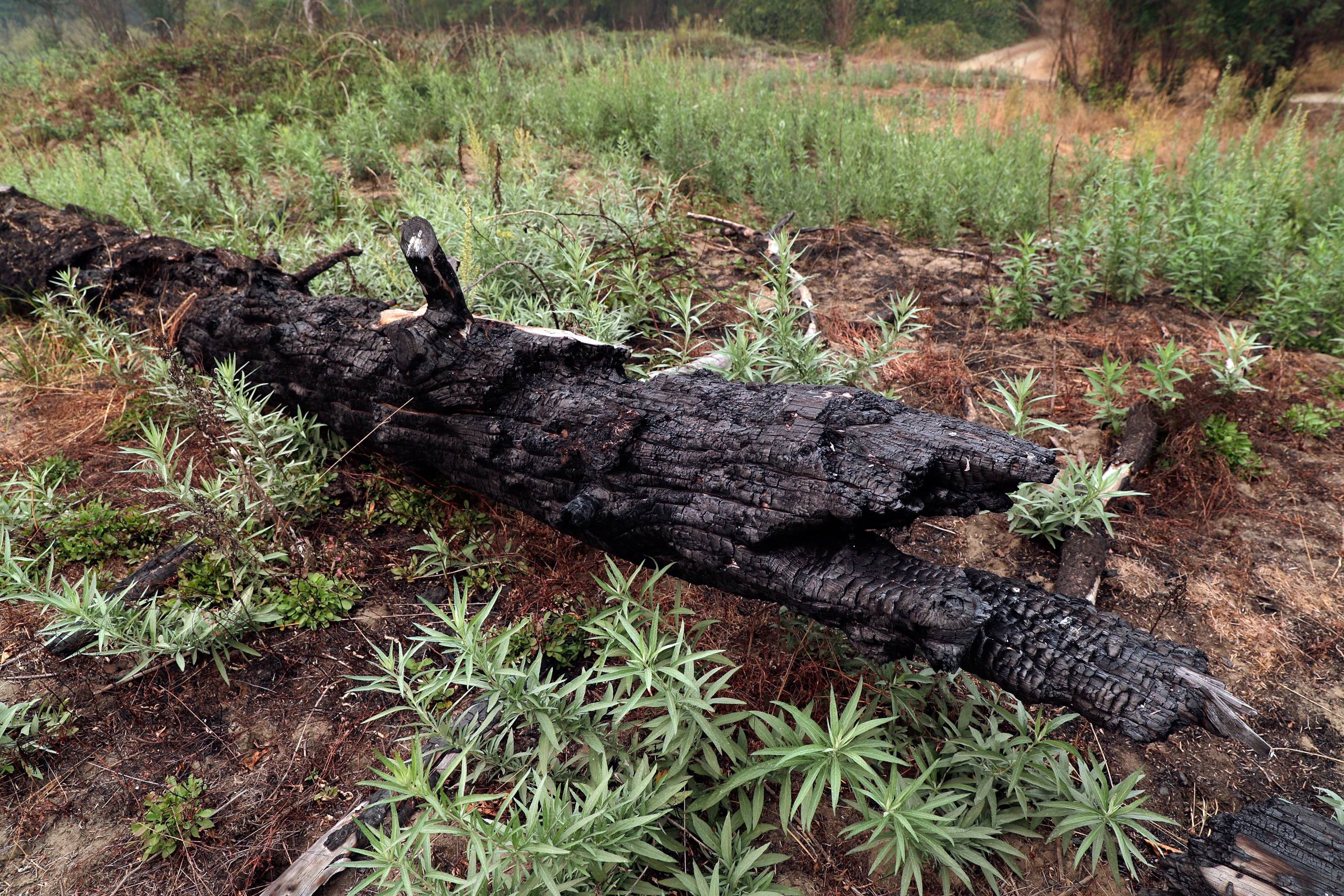
A log that was burned in a past wildfire sits among new growth of mugwort that sprouted after a traditional Karuk prescribed burn on tribal land near Happy Camp, Calif., on Wednesday, September 30, 2020. For millennia, the local Karuk tribe has conducted traditional prescribed burns in the area, and put together a climate change adaptation plan, a big piece of which is returning traditional fire to the landscape. (Photo By Carlos Avila Gonzalez/The San Francisco Chronicle via Getty Images)

Here are the morning’s top stories for Monday, December 29th, 2025:

  • The Karuk Tribe in Northern California is crafting an environmental policy that unites traditional knowledge with more contemporary environmental sciences–pushing back against years of bias dismissing tribal knowledge of the Karuk’s ancestral lands.
  • A federal judge in the Bay Area has halted ICE from making arrests at immigration courthouses in the region.
  • California’s Minimum Wage is increasing next year. A new law means that the state’s minimum wage is jumping by $0.40.

Ancestral Knowledge Leads to More Robust Environmental Plan for Karuk Tribe

Western scientists  have often dismissed the traditional knowledge that Native Americans have cultivated about stewarding their ancestral lands.

For instance, in 1850, California passed the “Act for the Government and Protection of Indians,” which not only forced many Native Americans into servitude, but also banned traditional land management practices, like tribal-led prescribed burns to mitigate more disastrous wildfires.

The Karuk Tribe in Northern California is challenging that bias viewpoint, with officials building their environmental plan using an approach that weaves the understandings of traditional knowledge with contemporary science.

Sponsored

Fed. Judge Rules ICE Can’t Make Arrests at Courthouses in San Francisco Jurisdiction

A federal judge in San Jose has ordered Immigration and Customs Enforcement agents to stop making arrests at regional courthouses.

Immigrant advocates filed a class action lawsuit back in September against the Trump Administration over ICE arrests at immigration courts in the Bay Area. The complaint

U.S. District Court Judge, Casey Pitts issued the ruling last week in a class-action lawsuit filed in September that  arguing that ICE agents were creating an atmosphere where immigrants were facing arrest for following the law and appearing for their court hearings.

In the ruling, Pitts writes, “Nothing in ICE’s courthouse-arrest policies or the case law identified by the government explains the lack of a logical connection between ICE’s rationales and its expansion of civil arrests at immigration courthouses. This, too, likely makes ICE’s courthouse-arrest policies arbitrary and capricious.”

The ruling applies to the jurisdiction of the ICE San Francisco field office, which includes courts in Concord, Sacramento, Central California, Hawaii, Guam and Saipan.

California’s Minimum Wage Hits New Heights in 2026

Starting January 1st, California’s minimum wage is increasing by $0.40 to $16.90 per hour.

The change will apply to people employed in positions like cashiers, farm workers and restaurant servers.

The change will not apply to fast food and healthcare workers in the state. The minimum wage for those positions was increased past $16.90 because of laws that took effect in 2024.


lower waypoint
next waypoint
Player sponsored by