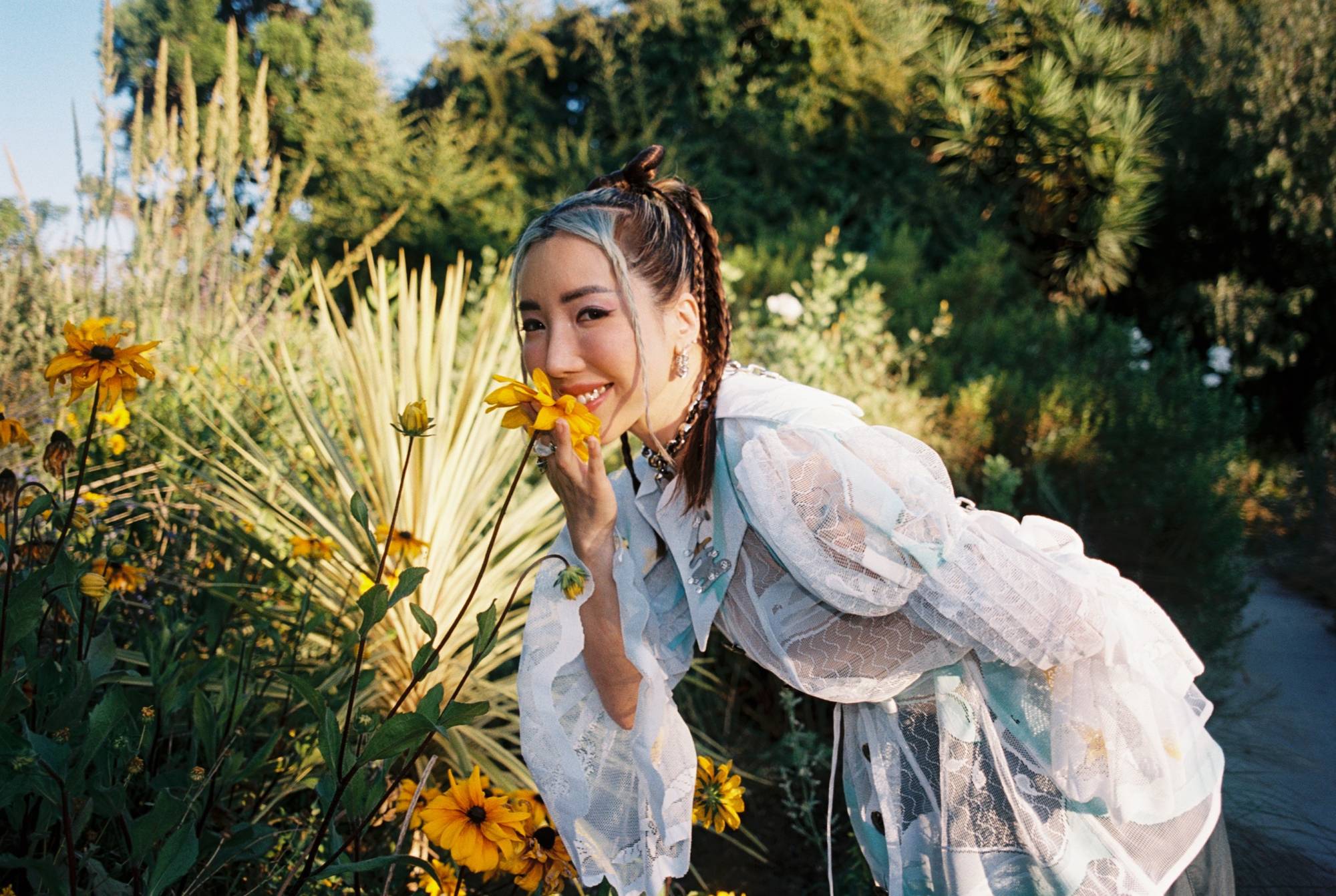
Tokimonsta’s ‘Eternal Reverie’: The Los Angeles DJ’s Dreamy New Sound
Bay Area Chicana Blues Singer's New Album Is a Celebration of Spanish — a Language She Fought to Learn
Family Ties Shape New Albums by Douyé, and The Sons of the Soul Revivers
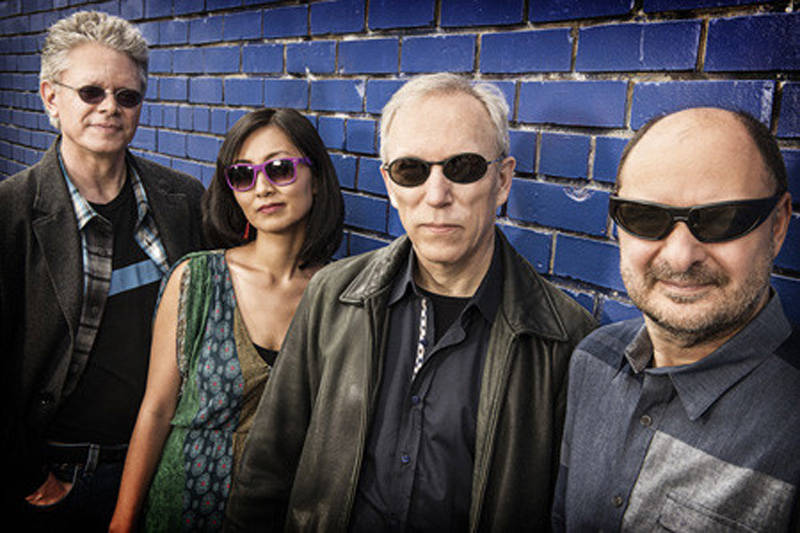
Days of Future Past with Kronos Quartet and Nicole Mitchell's Black Earth Ensemble
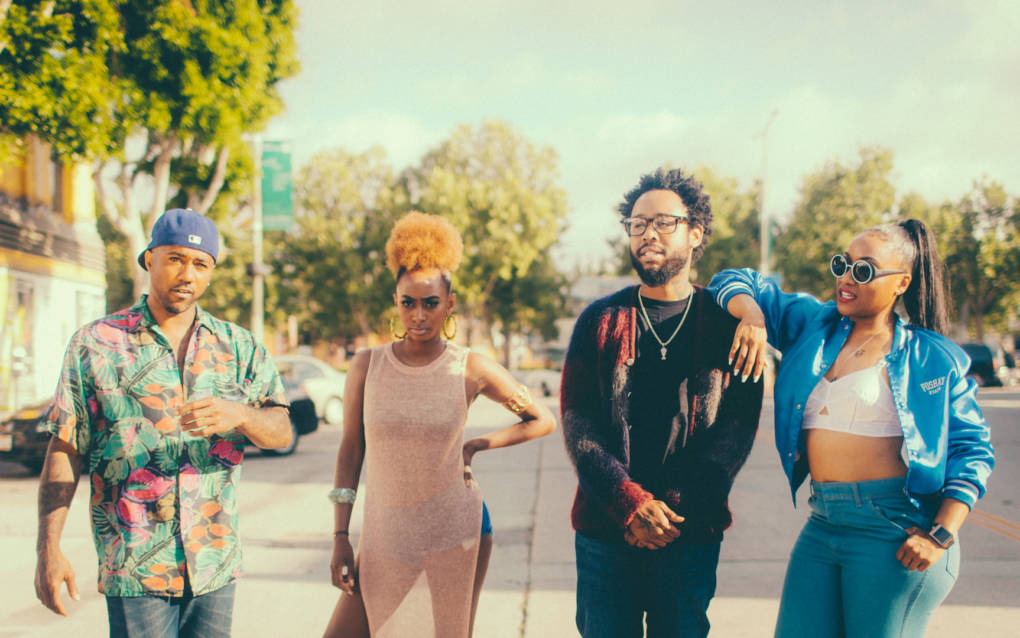
From Crenshaw to Pt. Reyes: Cool Summer Sounds From Terrace Martin's Pollyseeds and Art Feynman
L.A. Takedown Makes Imaginative Scores for Imaginary Films
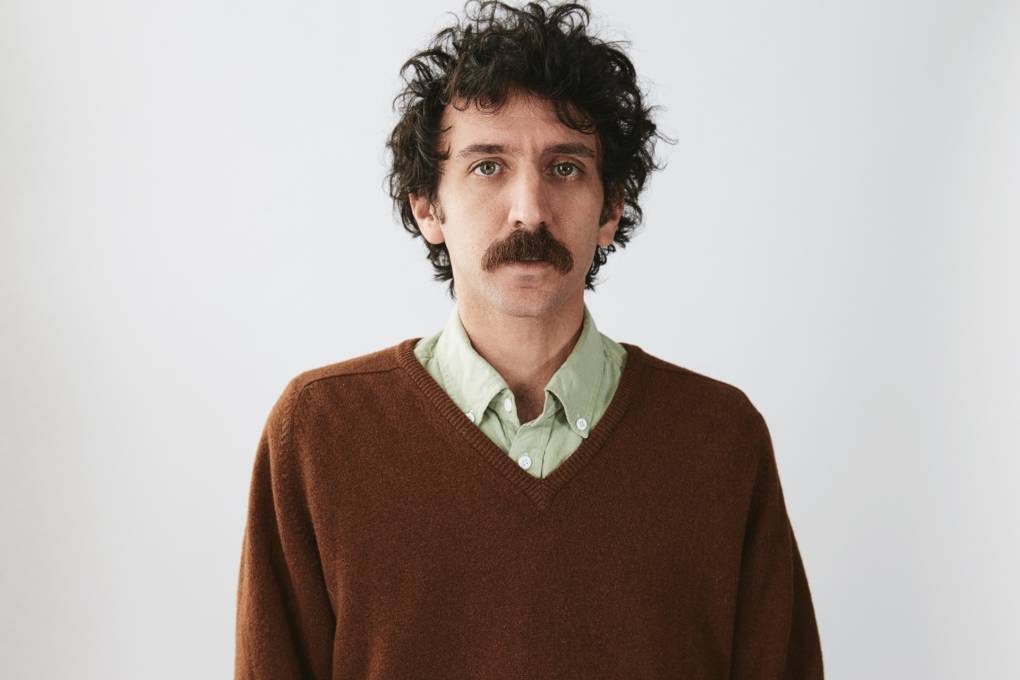
California Sounds: Nite Jewel, Derrick Anderson and Adam Turchin
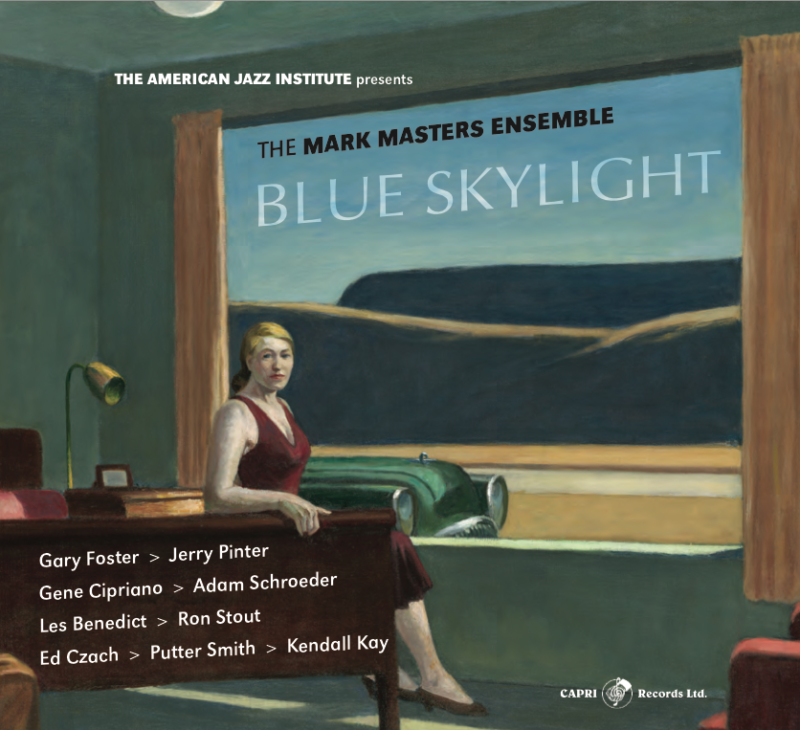
New Releases from SFJAZZ Collective and Mark Masters Offer Fresh Takes on Jazz Giants
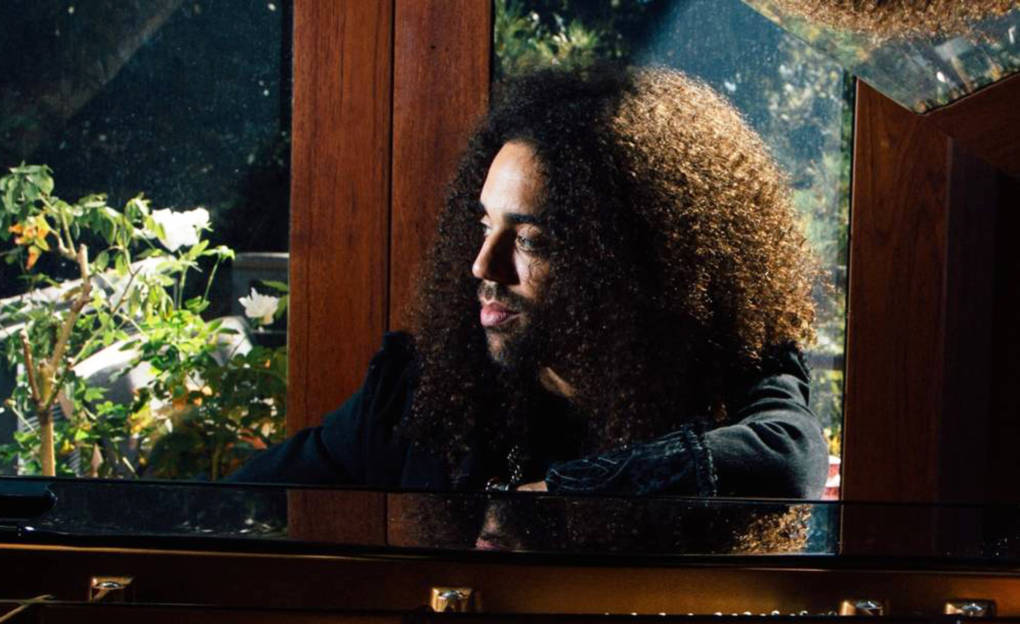
New Jazz Releases from Alex Cline and Cameron Graves Draw on Spiritual Inspiration
Sponsored
Player sponsored by
window.__IS_SSR__=true
window.__INITIAL_STATE__={
"attachmentsReducer": {
"audio_0": {
"type": "attachments",
"id": "audio_0",
"imgSizes": {
"kqedFullSize": {
"file": "https://ww2.kqed.org/news/wp-content/themes/KQED-unified/img/audio_bgs/background0.jpg"
}
}
},
"audio_1": {
"type": "attachments",
"id": "audio_1",
"imgSizes": {
"kqedFullSize": {
"file": "https://ww2.kqed.org/news/wp-content/themes/KQED-unified/img/audio_bgs/background1.jpg"
}
}
},
"audio_2": {
"type": "attachments",
"id": "audio_2",
"imgSizes": {
"kqedFullSize": {
"file": "https://ww2.kqed.org/news/wp-content/themes/KQED-unified/img/audio_bgs/background2.jpg"
}
}
},
"audio_3": {
"type": "attachments",
"id": "audio_3",
"imgSizes": {
"kqedFullSize": {
"file": "https://ww2.kqed.org/news/wp-content/themes/KQED-unified/img/audio_bgs/background3.jpg"
}
}
},
"audio_4": {
"type": "attachments",
"id": "audio_4",
"imgSizes": {
"kqedFullSize": {
"file": "https://ww2.kqed.org/news/wp-content/themes/KQED-unified/img/audio_bgs/background4.jpg"
}
}
},
"placeholder": {
"type": "attachments",
"id": "placeholder",
"imgSizes": {
"thumbnail": {
"file": "https://cdn.kqed.org/wp-content/uploads/2024/12/KQED-Default-Image-816638274-2000x1333-1-160x107.jpg",
"width": 160,
"height": 107,
"mimeType": "image/jpeg"
},
"medium": {
"file": "https://cdn.kqed.org/wp-content/uploads/2024/12/KQED-Default-Image-816638274-2000x1333-1-800x533.jpg",
"width": 800,
"height": 533,
"mimeType": "image/jpeg"
},
"medium_large": {
"file": "https://cdn.kqed.org/wp-content/uploads/2024/12/KQED-Default-Image-816638274-2000x1333-1-768x512.jpg",
"width": 768,
"height": 512,
"mimeType": "image/jpeg"
},
"large": {
"file": "https://cdn.kqed.org/wp-content/uploads/2024/12/KQED-Default-Image-816638274-2000x1333-1-1020x680.jpg",
"width": 1020,
"height": 680,
"mimeType": "image/jpeg"
},
"1536x1536": {
"file": "https://cdn.kqed.org/wp-content/uploads/2024/12/KQED-Default-Image-816638274-2000x1333-1-1536x1024.jpg",
"width": 1536,
"height": 1024,
"mimeType": "image/jpeg"
},
"fd-lrg": {
"file": "https://cdn.kqed.org/wp-content/uploads/2024/12/KQED-Default-Image-816638274-2000x1333-1-1536x1024.jpg",
"width": 1536,
"height": 1024,
"mimeType": "image/jpeg"
},
"fd-med": {
"file": "https://cdn.kqed.org/wp-content/uploads/2024/12/KQED-Default-Image-816638274-2000x1333-1-1020x680.jpg",
"width": 1020,
"height": 680,
"mimeType": "image/jpeg"
},
"fd-sm": {
"file": "https://cdn.kqed.org/wp-content/uploads/2024/12/KQED-Default-Image-816638274-2000x1333-1-800x533.jpg",
"width": 800,
"height": 533,
"mimeType": "image/jpeg"
},
"post-thumbnail": {
"file": "https://cdn.kqed.org/wp-content/uploads/2024/12/KQED-Default-Image-816638274-2000x1333-1-672x372.jpg",
"width": 672,
"height": 372,
"mimeType": "image/jpeg"
},
"twentyfourteen-full-width": {
"file": "https://cdn.kqed.org/wp-content/uploads/2024/12/KQED-Default-Image-816638274-2000x1333-1-1038x576.jpg",
"width": 1038,
"height": 576,
"mimeType": "image/jpeg"
},
"xxsmall": {
"file": "https://cdn.kqed.org/wp-content/uploads/2024/12/KQED-Default-Image-816638274-2000x1333-1-160x107.jpg",
"width": 160,
"height": 107,
"mimeType": "image/jpeg"
},
"xsmall": {
"file": "https://cdn.kqed.org/wp-content/uploads/2024/12/KQED-Default-Image-816638274-2000x1333-1-672x372.jpg",
"width": 672,
"height": 372,
"mimeType": "image/jpeg"
},
"small": {
"file": "https://cdn.kqed.org/wp-content/uploads/2024/12/KQED-Default-Image-816638274-2000x1333-1-672x372.jpg",
"width": 672,
"height": 372,
"mimeType": "image/jpeg"
},
"xlarge": {
"file": "https://cdn.kqed.org/wp-content/uploads/2024/12/KQED-Default-Image-816638274-2000x1333-1-1020x680.jpg",
"width": 1020,
"height": 680,
"mimeType": "image/jpeg"
},
"full-width": {
"file": "https://cdn.kqed.org/wp-content/uploads/2024/12/KQED-Default-Image-816638274-2000x1333-1-1920x1280.jpg",
"width": 1920,
"height": 1280,
"mimeType": "image/jpeg"
},
"guest-author-32": {
"file": "https://cdn.kqed.org/wp-content/uploads/2025/01/KQED-Default-Image-816638274-1333x1333-1-160x160.jpg",
"width": 32,
"height": 32,
"mimeType": "image/jpeg"
},
"guest-author-50": {
"file": "https://cdn.kqed.org/wp-content/uploads/2025/01/KQED-Default-Image-816638274-1333x1333-1-160x160.jpg",
"width": 50,
"height": 50,
"mimeType": "image/jpeg"
},
"guest-author-64": {
"file": "https://cdn.kqed.org/wp-content/uploads/2025/01/KQED-Default-Image-816638274-1333x1333-1-160x160.jpg",
"width": 64,
"height": 64,
"mimeType": "image/jpeg"
},
"guest-author-96": {
"file": "https://cdn.kqed.org/wp-content/uploads/2025/01/KQED-Default-Image-816638274-1333x1333-1-160x160.jpg",
"width": 96,
"height": 96,
"mimeType": "image/jpeg"
},
"guest-author-128": {
"file": "https://cdn.kqed.org/wp-content/uploads/2025/01/KQED-Default-Image-816638274-1333x1333-1-160x160.jpg",
"width": 128,
"height": 128,
"mimeType": "image/jpeg"
},
"detail": {
"file": "https://cdn.kqed.org/wp-content/uploads/2025/01/KQED-Default-Image-816638274-1333x1333-1-160x160.jpg",
"width": 160,
"height": 160,
"mimeType": "image/jpeg"
},
"kqedFullSize": {
"file": "https://cdn.kqed.org/wp-content/uploads/2024/12/KQED-Default-Image-816638274-2000x1333-1.jpg",
"width": 2000,
"height": 1333
}
}
},
"news_12047258": {
"type": "attachments",
"id": "news_12047258",
"meta": {
"index": "attachments_1716263798",
"site": "news",
"id": "12047258",
"found": true
},
"title": "GARDEN",
"publishDate": 1751922452,
"status": "inherit",
"parent": 12047253,
"modified": 1751922660,
"caption": "Tokimonsta is a Los Angeles-born and raised musician who’s known for her genre-bending electronic beats. On her fifth studio album, she explores global soundscapes, and challenging life events close to home. ",
"credit": "Courtesy of Tokimonsta",
"altTag": null,
"description": null,
"imgSizes": {
"medium": {
"file": "https://cdn.kqed.org/wp-content/uploads/sites/10/2025/07/GARDEN-2000x1342.jpg",
"width": 2000,
"height": 1342,
"mimeType": "image/jpeg"
},
"large": {
"file": "https://cdn.kqed.org/wp-content/uploads/sites/10/2025/07/GARDEN-2000x1342.jpg",
"width": 2000,
"height": 1342,
"mimeType": "image/jpeg"
},
"thumbnail": {
"file": "https://cdn.kqed.org/wp-content/uploads/sites/10/2025/07/GARDEN-160x107.jpg",
"width": 160,
"height": 107,
"mimeType": "image/jpeg"
},
"1536x1536": {
"file": "https://cdn.kqed.org/wp-content/uploads/sites/10/2025/07/GARDEN-1536x1031.jpg",
"width": 1536,
"height": 1031,
"mimeType": "image/jpeg"
},
"2048x2048": {
"file": "https://cdn.kqed.org/wp-content/uploads/sites/10/2025/07/GARDEN-2048x1374.jpg",
"width": 2048,
"height": 1374,
"mimeType": "image/jpeg"
},
"post-thumbnail": {
"file": "https://cdn.kqed.org/wp-content/uploads/sites/10/2025/07/GARDEN-672x372.jpg",
"width": 672,
"height": 372,
"mimeType": "image/jpeg"
},
"twentyfourteen-full-width": {
"file": "https://cdn.kqed.org/wp-content/uploads/sites/10/2025/07/GARDEN-1038x576.jpg",
"width": 1038,
"height": 576,
"mimeType": "image/jpeg"
},
"full-width": {
"file": "https://cdn.kqed.org/wp-content/uploads/sites/10/2025/07/GARDEN-2000x1342.jpg",
"width": 2000,
"height": 1342,
"mimeType": "image/jpeg"
},
"kqedFullSize": {
"file": "https://cdn.kqed.org/wp-content/uploads/sites/10/2025/07/GARDEN-scaled.jpg",
"width": 2560,
"height": 1718
}
},
"fetchFailed": false,
"isLoading": false
},
"news_11916224": {
"type": "attachments",
"id": "news_11916224",
"meta": {
"index": "attachments_1716263798",
"site": "news",
"id": "11916224",
"found": true
},
"parent": 11916115,
"imgSizes": {
"twentyfourteen-full-width": {
"file": "https://ww2.kqed.org/app/uploads/sites/10/2022/06/Marina-Crouse-Promo-Hat-1038x576.jpg",
"width": 1038,
"mimeType": "image/jpeg",
"height": 576
},
"thumbnail": {
"file": "https://ww2.kqed.org/app/uploads/sites/10/2022/06/Marina-Crouse-Promo-Hat-160x114.jpg",
"width": 160,
"mimeType": "image/jpeg",
"height": 114
},
"post-thumbnail": {
"file": "https://ww2.kqed.org/app/uploads/sites/10/2022/06/Marina-Crouse-Promo-Hat-672x372.jpg",
"width": 672,
"mimeType": "image/jpeg",
"height": 372
},
"kqedFullSize": {
"file": "https://ww2.kqed.org/app/uploads/sites/10/2022/06/Marina-Crouse-Promo-Hat-scaled.jpg",
"width": 2560,
"height": 1830
},
"2048x2048": {
"file": "https://ww2.kqed.org/app/uploads/sites/10/2022/06/Marina-Crouse-Promo-Hat-2048x1464.jpg",
"width": 2048,
"mimeType": "image/jpeg",
"height": 1464
},
"large": {
"file": "https://ww2.kqed.org/app/uploads/sites/10/2022/06/Marina-Crouse-Promo-Hat-1020x729.jpg",
"width": 1020,
"mimeType": "image/jpeg",
"height": 729
},
"1536x1536": {
"file": "https://ww2.kqed.org/app/uploads/sites/10/2022/06/Marina-Crouse-Promo-Hat-1536x1098.jpg",
"width": 1536,
"mimeType": "image/jpeg",
"height": 1098
},
"full-width": {
"file": "https://ww2.kqed.org/app/uploads/sites/10/2022/06/Marina-Crouse-Promo-Hat-1920x1372.jpg",
"width": 1920,
"mimeType": "image/jpeg",
"height": 1372
},
"medium": {
"file": "https://ww2.kqed.org/app/uploads/sites/10/2022/06/Marina-Crouse-Promo-Hat-800x572.jpg",
"width": 800,
"mimeType": "image/jpeg",
"height": 572
}
},
"publishDate": 1654558593,
"modified": 1654898227,
"caption": "Singer Marina Crouse just released her second album, 'Canto de mi corazon.'",
"description": null,
"title": "Marina Crouse Promo Hat",
"credit": "Courtesy of Pedro Lange",
"status": "inherit",
"altTag": "A black-and-white photo portrait of a woman smiling and wearing a top hat.",
"fetchFailed": false,
"isLoading": false
},
"news_11614784": {
"type": "attachments",
"id": "news_11614784",
"meta": {
"index": "attachments_1716263798",
"site": "news",
"id": "11614784",
"found": true
},
"parent": 11613883,
"imgSizes": {
"small": {
"file": "https://ww2.kqed.org/app/uploads/sites/10/2017/08/DouyeOrange-520x425.jpg",
"width": 520,
"mimeType": "image/jpeg",
"height": 425
},
"twentyfourteen-full-width": {
"file": "https://ww2.kqed.org/app/uploads/sites/10/2017/08/DouyeOrange-1038x576.jpg",
"width": 1038,
"mimeType": "image/jpeg",
"height": 576
},
"thumbnail": {
"file": "https://ww2.kqed.org/app/uploads/sites/10/2017/08/DouyeOrange-160x131.jpg",
"width": 160,
"mimeType": "image/jpeg",
"height": 131
},
"fd-sm": {
"file": "https://ww2.kqed.org/app/uploads/sites/10/2017/08/DouyeOrange-960x784.jpg",
"width": 960,
"mimeType": "image/jpeg",
"height": 784
},
"post-thumbnail": {
"file": "https://ww2.kqed.org/app/uploads/sites/10/2017/08/DouyeOrange-672x372.jpg",
"width": 672,
"mimeType": "image/jpeg",
"height": 372
},
"xsmall": {
"file": "https://ww2.kqed.org/app/uploads/sites/10/2017/08/DouyeOrange-375x306.jpg",
"width": 375,
"mimeType": "image/jpeg",
"height": 306
},
"kqedFullSize": {
"file": "https://ww2.kqed.org/app/uploads/sites/10/2017/08/DouyeOrange.jpg",
"width": 1920,
"height": 1568
},
"large": {
"file": "https://ww2.kqed.org/app/uploads/sites/10/2017/08/DouyeOrange-1020x833.jpg",
"width": 1020,
"mimeType": "image/jpeg",
"height": 833
},
"xlarge": {
"file": "https://ww2.kqed.org/app/uploads/sites/10/2017/08/DouyeOrange-1180x964.jpg",
"width": 1180,
"mimeType": "image/jpeg",
"height": 964
},
"guest-author-50": {
"file": "https://ww2.kqed.org/app/uploads/sites/10/2017/08/DouyeOrange-50x50.jpg",
"width": 50,
"mimeType": "image/jpeg",
"height": 50
},
"guest-author-96": {
"file": "https://ww2.kqed.org/app/uploads/sites/10/2017/08/DouyeOrange-96x96.jpg",
"width": 96,
"mimeType": "image/jpeg",
"height": 96
},
"medium": {
"file": "https://ww2.kqed.org/app/uploads/sites/10/2017/08/DouyeOrange-800x653.jpg",
"width": 800,
"mimeType": "image/jpeg",
"height": 653
},
"guest-author-64": {
"file": "https://ww2.kqed.org/app/uploads/sites/10/2017/08/DouyeOrange-64x64.jpg",
"width": 64,
"mimeType": "image/jpeg",
"height": 64
},
"guest-author-32": {
"file": "https://ww2.kqed.org/app/uploads/sites/10/2017/08/DouyeOrange-32x32.jpg",
"width": 32,
"mimeType": "image/jpeg",
"height": 32
},
"fd-lrg": {
"file": "https://ww2.kqed.org/app/uploads/sites/10/2017/08/DouyeOrange-1920x1568.jpg",
"width": 1920,
"mimeType": "image/jpeg",
"height": 1568
},
"fd-med": {
"file": "https://ww2.kqed.org/app/uploads/sites/10/2017/08/DouyeOrange-1180x964.jpg",
"width": 1180,
"mimeType": "image/jpeg",
"height": 964
},
"full-width": {
"file": "https://ww2.kqed.org/app/uploads/sites/10/2017/08/DouyeOrange-1920x1568.jpg",
"width": 1920,
"mimeType": "image/jpeg",
"height": 1568
},
"detail": {
"file": "https://ww2.kqed.org/app/uploads/sites/10/2017/08/DouyeOrange-150x150.jpg",
"width": 150,
"mimeType": "image/jpeg",
"height": 150
},
"guest-author-128": {
"file": "https://ww2.kqed.org/app/uploads/sites/10/2017/08/DouyeOrange-128x128.jpg",
"width": 128,
"mimeType": "image/jpeg",
"height": 128
},
"xxsmall": {
"file": "https://ww2.kqed.org/app/uploads/sites/10/2017/08/DouyeOrange-240x196.jpg",
"width": 240,
"mimeType": "image/jpeg",
"height": 196
}
},
"publishDate": 1504131835,
"modified": 1504131866,
"caption": "After starting her career singing R & B, Douyé' takes on jazz standards on her new album \"Daddy Said So.\"",
"description": null,
"title": "DouyeOrange",
"credit": null,
"status": "inherit",
"fetchFailed": false,
"isLoading": false
},
"news_11597264": {
"type": "attachments",
"id": "news_11597264",
"meta": {
"index": "attachments_1716263798",
"site": "news",
"id": "11597264",
"found": true
},
"parent": 11566435,
"imgSizes": {
"small": {
"file": "https://ww2.kqed.org/app/uploads/sites/10/2017/07/Kronos800-520x346.jpg",
"width": 520,
"mimeType": "image/jpeg",
"height": 346
},
"thumbnail": {
"file": "https://ww2.kqed.org/app/uploads/sites/10/2017/07/Kronos800-160x107.jpg",
"width": 160,
"mimeType": "image/jpeg",
"height": 107
},
"post-thumbnail": {
"file": "https://ww2.kqed.org/app/uploads/sites/10/2017/07/Kronos800-672x372.jpg",
"width": 672,
"mimeType": "image/jpeg",
"height": 372
},
"xsmall": {
"file": "https://ww2.kqed.org/app/uploads/sites/10/2017/07/Kronos800-375x250.jpg",
"width": 375,
"mimeType": "image/jpeg",
"height": 250
},
"kqedFullSize": {
"file": "https://ww2.kqed.org/app/uploads/sites/10/2017/07/Kronos800.jpg",
"width": 800,
"height": 533
},
"guest-author-50": {
"file": "https://ww2.kqed.org/app/uploads/sites/10/2017/07/Kronos800-50x50.jpg",
"width": 50,
"mimeType": "image/jpeg",
"height": 50
},
"guest-author-96": {
"file": "https://ww2.kqed.org/app/uploads/sites/10/2017/07/Kronos800-96x96.jpg",
"width": 96,
"mimeType": "image/jpeg",
"height": 96
},
"medium": {
"file": "https://ww2.kqed.org/app/uploads/sites/10/2017/07/Kronos800-800x533.jpg",
"width": 800,
"mimeType": "image/jpeg",
"height": 533
},
"guest-author-64": {
"file": "https://ww2.kqed.org/app/uploads/sites/10/2017/07/Kronos800-64x64.jpg",
"width": 64,
"mimeType": "image/jpeg",
"height": 64
},
"guest-author-32": {
"file": "https://ww2.kqed.org/app/uploads/sites/10/2017/07/Kronos800-32x32.jpg",
"width": 32,
"mimeType": "image/jpeg",
"height": 32
},
"detail": {
"file": "https://ww2.kqed.org/app/uploads/sites/10/2017/07/Kronos800-150x150.jpg",
"width": 150,
"mimeType": "image/jpeg",
"height": 150
},
"guest-author-128": {
"file": "https://ww2.kqed.org/app/uploads/sites/10/2017/07/Kronos800-128x128.jpg",
"width": 128,
"mimeType": "image/jpeg",
"height": 128
},
"xxsmall": {
"file": "https://ww2.kqed.org/app/uploads/sites/10/2017/07/Kronos800-240x160.jpg",
"width": 240,
"mimeType": "image/jpeg",
"height": 160
}
},
"publishDate": 1501194826,
"modified": 1501194867,
"caption": "The usually pyrotechnic Kronos Quartet slows things down on its new album, 'Folk Songs.'",
"description": "The usually pyrotechnic Kronos Quartet slows things down on its new album, 'Folk Songs.'",
"title": "Kronos800",
"credit": "Jay Blakesberg",
"status": "inherit",
"fetchFailed": false,
"isLoading": false
},
"news_11553691": {
"type": "attachments",
"id": "news_11553691",
"meta": {
"index": "attachments_1716263798",
"site": "news",
"id": "11553691",
"found": true
},
"parent": 11553605,
"imgSizes": {
"small": {
"file": "https://ww2.kqed.org/app/uploads/sites/10/2017/07/Pollyseeds-band-Photo-credit-Samantha-J-copy-520x325.jpeg",
"width": 520,
"mimeType": "image/jpeg",
"height": 325
},
"twentyfourteen-full-width": {
"file": "https://ww2.kqed.org/app/uploads/sites/10/2017/07/Pollyseeds-band-Photo-credit-Samantha-J-copy-1038x576.jpeg",
"width": 1038,
"mimeType": "image/jpeg",
"height": 576
},
"thumbnail": {
"file": "https://ww2.kqed.org/app/uploads/sites/10/2017/07/Pollyseeds-band-Photo-credit-Samantha-J-copy-160x100.jpeg",
"width": 160,
"mimeType": "image/jpeg",
"height": 100
},
"fd-sm": {
"file": "https://ww2.kqed.org/app/uploads/sites/10/2017/07/Pollyseeds-band-Photo-credit-Samantha-J-copy-960x601.jpeg",
"width": 960,
"mimeType": "image/jpeg",
"height": 601
},
"post-thumbnail": {
"file": "https://ww2.kqed.org/app/uploads/sites/10/2017/07/Pollyseeds-band-Photo-credit-Samantha-J-copy-672x372.jpeg",
"width": 672,
"mimeType": "image/jpeg",
"height": 372
},
"xsmall": {
"file": "https://ww2.kqed.org/app/uploads/sites/10/2017/07/Pollyseeds-band-Photo-credit-Samantha-J-copy-375x235.jpeg",
"width": 375,
"mimeType": "image/jpeg",
"height": 235
},
"kqedFullSize": {
"file": "https://ww2.kqed.org/app/uploads/sites/10/2017/07/Pollyseeds-band-Photo-credit-Samantha-J-copy.jpeg",
"width": 1726,
"height": 1080
},
"large": {
"file": "https://ww2.kqed.org/app/uploads/sites/10/2017/07/Pollyseeds-band-Photo-credit-Samantha-J-copy-1020x638.jpeg",
"width": 1020,
"mimeType": "image/jpeg",
"height": 638
},
"xlarge": {
"file": "https://ww2.kqed.org/app/uploads/sites/10/2017/07/Pollyseeds-band-Photo-credit-Samantha-J-copy-1180x738.jpeg",
"width": 1180,
"mimeType": "image/jpeg",
"height": 738
},
"guest-author-50": {
"file": "https://ww2.kqed.org/app/uploads/sites/10/2017/07/Pollyseeds-band-Photo-credit-Samantha-J-copy-50x50.jpeg",
"width": 50,
"mimeType": "image/jpeg",
"height": 50
},
"guest-author-96": {
"file": "https://ww2.kqed.org/app/uploads/sites/10/2017/07/Pollyseeds-band-Photo-credit-Samantha-J-copy-96x96.jpeg",
"width": 96,
"mimeType": "image/jpeg",
"height": 96
},
"medium": {
"file": "https://ww2.kqed.org/app/uploads/sites/10/2017/07/Pollyseeds-band-Photo-credit-Samantha-J-copy-800x501.jpeg",
"width": 800,
"mimeType": "image/jpeg",
"height": 501
},
"guest-author-64": {
"file": "https://ww2.kqed.org/app/uploads/sites/10/2017/07/Pollyseeds-band-Photo-credit-Samantha-J-copy-64x64.jpeg",
"width": 64,
"mimeType": "image/jpeg",
"height": 64
},
"guest-author-32": {
"file": "https://ww2.kqed.org/app/uploads/sites/10/2017/07/Pollyseeds-band-Photo-credit-Samantha-J-copy-32x32.jpeg",
"width": 32,
"mimeType": "image/jpeg",
"height": 32
},
"fd-med": {
"file": "https://ww2.kqed.org/app/uploads/sites/10/2017/07/Pollyseeds-band-Photo-credit-Samantha-J-copy-1180x738.jpeg",
"width": 1180,
"mimeType": "image/jpeg",
"height": 738
},
"detail": {
"file": "https://ww2.kqed.org/app/uploads/sites/10/2017/07/Pollyseeds-band-Photo-credit-Samantha-J-copy-150x150.jpeg",
"width": 150,
"mimeType": "image/jpeg",
"height": 150
},
"guest-author-128": {
"file": "https://ww2.kqed.org/app/uploads/sites/10/2017/07/Pollyseeds-band-Photo-credit-Samantha-J-copy-128x128.jpeg",
"width": 128,
"mimeType": "image/jpeg",
"height": 128
},
"xxsmall": {
"file": "https://ww2.kqed.org/app/uploads/sites/10/2017/07/Pollyseeds-band-Photo-credit-Samantha-J-copy-240x150.jpeg",
"width": 240,
"mimeType": "image/jpeg",
"height": 150
}
},
"publishDate": 1499450438,
"modified": 1499463890,
"caption": "The Pollyseeds, l-r: Chachi, Rose Gold, Terrace Martin, Wyann Vaughn. ",
"description": null,
"title": "Pollyseeds band Photo credit Samantha J copy",
"credit": "Photo courtesy of Samantha J",
"status": "inherit",
"fetchFailed": false,
"isLoading": false
},
"news_11491278": {
"type": "attachments",
"id": "news_11491278",
"meta": {
"index": "attachments_1716263798",
"site": "news",
"id": "11491278",
"found": true
},
"parent": 11477982,
"imgSizes": {
"small": {
"file": "https://ww2.kqed.org/app/uploads/sites/10/2017/05/RS25555_LA-Takedown-Photo-Credit-Conor-Collins-General-004-300dpi-qut-520x347.jpg",
"width": 520,
"mimeType": "image/jpeg",
"height": 347
},
"twentyfourteen-full-width": {
"file": "https://ww2.kqed.org/app/uploads/sites/10/2017/05/RS25555_LA-Takedown-Photo-Credit-Conor-Collins-General-004-300dpi-qut-1038x576.jpg",
"width": 1038,
"mimeType": "image/jpeg",
"height": 576
},
"thumbnail": {
"file": "https://ww2.kqed.org/app/uploads/sites/10/2017/05/RS25555_LA-Takedown-Photo-Credit-Conor-Collins-General-004-300dpi-qut-160x107.jpg",
"width": 160,
"mimeType": "image/jpeg",
"height": 107
},
"fd-sm": {
"file": "https://ww2.kqed.org/app/uploads/sites/10/2017/05/RS25555_LA-Takedown-Photo-Credit-Conor-Collins-General-004-300dpi-qut-960x640.jpg",
"width": 960,
"mimeType": "image/jpeg",
"height": 640
},
"post-thumbnail": {
"file": "https://ww2.kqed.org/app/uploads/sites/10/2017/05/RS25555_LA-Takedown-Photo-Credit-Conor-Collins-General-004-300dpi-qut-672x372.jpg",
"width": 672,
"mimeType": "image/jpeg",
"height": 372
},
"xsmall": {
"file": "https://ww2.kqed.org/app/uploads/sites/10/2017/05/RS25555_LA-Takedown-Photo-Credit-Conor-Collins-General-004-300dpi-qut-375x250.jpg",
"width": 375,
"mimeType": "image/jpeg",
"height": 250
},
"kqedFullSize": {
"file": "https://ww2.kqed.org/app/uploads/sites/10/2017/05/RS25555_LA-Takedown-Photo-Credit-Conor-Collins-General-004-300dpi-qut.jpg",
"width": 1920,
"height": 1280
},
"large": {
"file": "https://ww2.kqed.org/app/uploads/sites/10/2017/05/RS25555_LA-Takedown-Photo-Credit-Conor-Collins-General-004-300dpi-qut-1020x680.jpg",
"width": 1020,
"mimeType": "image/jpeg",
"height": 680
},
"xlarge": {
"file": "https://ww2.kqed.org/app/uploads/sites/10/2017/05/RS25555_LA-Takedown-Photo-Credit-Conor-Collins-General-004-300dpi-qut-1180x787.jpg",
"width": 1180,
"mimeType": "image/jpeg",
"height": 787
},
"guest-author-50": {
"file": "https://ww2.kqed.org/app/uploads/sites/10/2017/05/RS25555_LA-Takedown-Photo-Credit-Conor-Collins-General-004-300dpi-qut-50x50.jpg",
"width": 50,
"mimeType": "image/jpeg",
"height": 50
},
"guest-author-96": {
"file": "https://ww2.kqed.org/app/uploads/sites/10/2017/05/RS25555_LA-Takedown-Photo-Credit-Conor-Collins-General-004-300dpi-qut-96x96.jpg",
"width": 96,
"mimeType": "image/jpeg",
"height": 96
},
"medium": {
"file": "https://ww2.kqed.org/app/uploads/sites/10/2017/05/RS25555_LA-Takedown-Photo-Credit-Conor-Collins-General-004-300dpi-qut-800x533.jpg",
"width": 800,
"mimeType": "image/jpeg",
"height": 533
},
"guest-author-64": {
"file": "https://ww2.kqed.org/app/uploads/sites/10/2017/05/RS25555_LA-Takedown-Photo-Credit-Conor-Collins-General-004-300dpi-qut-64x64.jpg",
"width": 64,
"mimeType": "image/jpeg",
"height": 64
},
"guest-author-32": {
"file": "https://ww2.kqed.org/app/uploads/sites/10/2017/05/RS25555_LA-Takedown-Photo-Credit-Conor-Collins-General-004-300dpi-qut-32x32.jpg",
"width": 32,
"mimeType": "image/jpeg",
"height": 32
},
"fd-lrg": {
"file": "https://ww2.kqed.org/app/uploads/sites/10/2017/05/RS25555_LA-Takedown-Photo-Credit-Conor-Collins-General-004-300dpi-qut-1920x1280.jpg",
"width": 1920,
"mimeType": "image/jpeg",
"height": 1280
},
"fd-med": {
"file": "https://ww2.kqed.org/app/uploads/sites/10/2017/05/RS25555_LA-Takedown-Photo-Credit-Conor-Collins-General-004-300dpi-qut-1180x787.jpg",
"width": 1180,
"mimeType": "image/jpeg",
"height": 787
},
"full-width": {
"file": "https://ww2.kqed.org/app/uploads/sites/10/2017/05/RS25555_LA-Takedown-Photo-Credit-Conor-Collins-General-004-300dpi-qut-1920x1280.jpg",
"width": 1920,
"mimeType": "image/jpeg",
"height": 1280
},
"detail": {
"file": "https://ww2.kqed.org/app/uploads/sites/10/2017/05/RS25555_LA-Takedown-Photo-Credit-Conor-Collins-General-004-300dpi-qut-150x150.jpg",
"width": 150,
"mimeType": "image/jpeg",
"height": 150
},
"guest-author-128": {
"file": "https://ww2.kqed.org/app/uploads/sites/10/2017/05/RS25555_LA-Takedown-Photo-Credit-Conor-Collins-General-004-300dpi-qut-128x128.jpg",
"width": 128,
"mimeType": "image/jpeg",
"height": 128
},
"xxsmall": {
"file": "https://ww2.kqed.org/app/uploads/sites/10/2017/05/RS25555_LA-Takedown-Photo-Credit-Conor-Collins-General-004-300dpi-qut-240x160.jpg",
"width": 240,
"mimeType": "image/jpeg",
"height": 160
}
},
"publishDate": 1496445070,
"modified": 1496453150,
"caption": "L.A. Takedown's Aaron M. Olson. ",
"description": "L.A. Takedown's Aaron M. Olson. ",
"title": "RS25555_LA-Takedown-Photo-Credit-Conor-Collins-General-004-300dpi-qut",
"credit": "Courtesy: Conor Collins",
"status": "inherit",
"fetchFailed": false,
"isLoading": false
},
"news_11436031": {
"type": "attachments",
"id": "news_11436031",
"meta": {
"index": "attachments_1716263798",
"site": "news",
"id": "11436031",
"found": true
},
"parent": 11426849,
"imgSizes": {
"small": {
"file": "https://ww2.kqed.org/app/uploads/sites/10/2017/05/Nite-Jewel_credit_Leo_Garcí-a-800x533-520x346.jpg",
"width": 520,
"mimeType": "image/jpeg",
"height": 346
},
"thumbnail": {
"file": "https://ww2.kqed.org/app/uploads/sites/10/2017/05/Nite-Jewel_credit_Leo_Garcí-a-800x533-160x107.jpg",
"width": 160,
"mimeType": "image/jpeg",
"height": 107
},
"post-thumbnail": {
"file": "https://ww2.kqed.org/app/uploads/sites/10/2017/05/Nite-Jewel_credit_Leo_Garcí-a-800x533-672x372.jpg",
"width": 672,
"mimeType": "image/jpeg",
"height": 372
},
"xsmall": {
"file": "https://ww2.kqed.org/app/uploads/sites/10/2017/05/Nite-Jewel_credit_Leo_Garcí-a-800x533-375x250.jpg",
"width": 375,
"mimeType": "image/jpeg",
"height": 250
},
"kqedFullSize": {
"file": "https://ww2.kqed.org/app/uploads/sites/10/2017/05/Nite-Jewel_credit_Leo_Garcí-a-800x533.jpg",
"width": 800,
"height": 533
},
"guest-author-50": {
"file": "https://ww2.kqed.org/app/uploads/sites/10/2017/05/Nite-Jewel_credit_Leo_Garcí-a-800x533-50x50.jpg",
"width": 50,
"mimeType": "image/jpeg",
"height": 50
},
"guest-author-96": {
"file": "https://ww2.kqed.org/app/uploads/sites/10/2017/05/Nite-Jewel_credit_Leo_Garcí-a-800x533-96x96.jpg",
"width": 96,
"mimeType": "image/jpeg",
"height": 96
},
"medium": {
"file": "https://ww2.kqed.org/app/uploads/sites/10/2017/05/Nite-Jewel_credit_Leo_Garcí-a-800x533-800x533.jpg",
"width": 800,
"mimeType": "image/jpeg",
"height": 533
},
"guest-author-64": {
"file": "https://ww2.kqed.org/app/uploads/sites/10/2017/05/Nite-Jewel_credit_Leo_Garcí-a-800x533-64x64.jpg",
"width": 64,
"mimeType": "image/jpeg",
"height": 64
},
"guest-author-32": {
"file": "https://ww2.kqed.org/app/uploads/sites/10/2017/05/Nite-Jewel_credit_Leo_Garcí-a-800x533-32x32.jpg",
"width": 32,
"mimeType": "image/jpeg",
"height": 32
},
"detail": {
"file": "https://ww2.kqed.org/app/uploads/sites/10/2017/05/Nite-Jewel_credit_Leo_Garcí-a-800x533-150x150.jpg",
"width": 150,
"mimeType": "image/jpeg",
"height": 150
},
"guest-author-128": {
"file": "https://ww2.kqed.org/app/uploads/sites/10/2017/05/Nite-Jewel_credit_Leo_Garcí-a-800x533-128x128.jpg",
"width": 128,
"mimeType": "image/jpeg",
"height": 128
},
"xxsmall": {
"file": "https://ww2.kqed.org/app/uploads/sites/10/2017/05/Nite-Jewel_credit_Leo_Garcí-a-800x533-240x160.jpg",
"width": 240,
"mimeType": "image/jpeg",
"height": 160
}
},
"publishDate": 1493677409,
"modified": 1493767835,
"caption": "Nite Jewel, aka Ramona Gonzalez.",
"description": "Nite Jewel, a.k.a. Ramona Gonzalez.",
"title": "Nite-Jewel_credit_Leo_Garcí-a-800x533",
"credit": "Leo García",
"status": "inherit",
"fetchFailed": false,
"isLoading": false
},
"news_11407672": {
"type": "attachments",
"id": "news_11407672",
"meta": {
"index": "attachments_1716263798",
"site": "news",
"id": "11407672",
"found": true
},
"parent": 11407606,
"imgSizes": {
"small": {
"file": "https://ww2.kqed.org/app/uploads/sites/10/2017/04/Masters_Blue_Skylight_Cover-520x475.png",
"width": 520,
"mimeType": "image/png",
"height": 475
},
"twentyfourteen-full-width": {
"file": "https://ww2.kqed.org/app/uploads/sites/10/2017/04/Masters_Blue_Skylight_Cover-836x576.png",
"width": 836,
"mimeType": "image/png",
"height": 576
},
"thumbnail": {
"file": "https://ww2.kqed.org/app/uploads/sites/10/2017/04/Masters_Blue_Skylight_Cover-160x146.png",
"width": 160,
"mimeType": "image/png",
"height": 146
},
"post-thumbnail": {
"file": "https://ww2.kqed.org/app/uploads/sites/10/2017/04/Masters_Blue_Skylight_Cover-672x372.png",
"width": 672,
"mimeType": "image/png",
"height": 372
},
"xsmall": {
"file": "https://ww2.kqed.org/app/uploads/sites/10/2017/04/Masters_Blue_Skylight_Cover-375x342.png",
"width": 375,
"mimeType": "image/png",
"height": 342
},
"kqedFullSize": {
"file": "https://ww2.kqed.org/app/uploads/sites/10/2017/04/Masters_Blue_Skylight_Cover.png",
"width": 836,
"height": 763
},
"guest-author-50": {
"file": "https://ww2.kqed.org/app/uploads/sites/10/2017/04/Masters_Blue_Skylight_Cover-50x50.png",
"width": 50,
"mimeType": "image/png",
"height": 50
},
"guest-author-96": {
"file": "https://ww2.kqed.org/app/uploads/sites/10/2017/04/Masters_Blue_Skylight_Cover-96x96.png",
"width": 96,
"mimeType": "image/png",
"height": 96
},
"medium": {
"file": "https://ww2.kqed.org/app/uploads/sites/10/2017/04/Masters_Blue_Skylight_Cover-800x730.png",
"width": 800,
"mimeType": "image/png",
"height": 730
},
"guest-author-64": {
"file": "https://ww2.kqed.org/app/uploads/sites/10/2017/04/Masters_Blue_Skylight_Cover-64x64.png",
"width": 64,
"mimeType": "image/png",
"height": 64
},
"guest-author-32": {
"file": "https://ww2.kqed.org/app/uploads/sites/10/2017/04/Masters_Blue_Skylight_Cover-32x32.png",
"width": 32,
"mimeType": "image/png",
"height": 32
},
"detail": {
"file": "https://ww2.kqed.org/app/uploads/sites/10/2017/04/Masters_Blue_Skylight_Cover-150x150.png",
"width": 150,
"mimeType": "image/png",
"height": 150
},
"guest-author-128": {
"file": "https://ww2.kqed.org/app/uploads/sites/10/2017/04/Masters_Blue_Skylight_Cover-128x128.png",
"width": 128,
"mimeType": "image/png",
"height": 128
},
"xxsmall": {
"file": "https://ww2.kqed.org/app/uploads/sites/10/2017/04/Masters_Blue_Skylight_Cover-240x219.png",
"width": 240,
"mimeType": "image/png",
"height": 219
}
},
"publishDate": 1492149643,
"modified": 1492149643,
"caption": null,
"description": null,
"title": "Masters_Blue_Skylight_Cover",
"credit": null,
"status": "inherit",
"fetchFailed": false,
"isLoading": false
},
"news_11368038": {
"type": "attachments",
"id": "news_11368038",
"meta": {
"index": "attachments_1716263798",
"site": "news",
"id": "11368038",
"found": true
},
"parent": 11363086,
"imgSizes": {
"small": {
"file": "https://ww2.kqed.org/app/uploads/sites/10/2017/03/PianistCameronGraves-520x318.jpg",
"width": 520,
"mimeType": "image/jpeg",
"height": 318
},
"twentyfourteen-full-width": {
"file": "https://ww2.kqed.org/app/uploads/sites/10/2017/03/PianistCameronGraves-1038x576.jpg",
"width": 1038,
"mimeType": "image/jpeg",
"height": 576
},
"thumbnail": {
"file": "https://ww2.kqed.org/app/uploads/sites/10/2017/03/PianistCameronGraves-160x98.jpg",
"width": 160,
"mimeType": "image/jpeg",
"height": 98
},
"fd-sm": {
"file": "https://ww2.kqed.org/app/uploads/sites/10/2017/03/PianistCameronGraves-960x587.jpg",
"width": 960,
"mimeType": "image/jpeg",
"height": 587
},
"post-thumbnail": {
"file": "https://ww2.kqed.org/app/uploads/sites/10/2017/03/PianistCameronGraves-672x372.jpg",
"width": 672,
"mimeType": "image/jpeg",
"height": 372
},
"xsmall": {
"file": "https://ww2.kqed.org/app/uploads/sites/10/2017/03/PianistCameronGraves-375x229.jpg",
"width": 375,
"mimeType": "image/jpeg",
"height": 229
},
"kqedFullSize": {
"file": "https://ww2.kqed.org/app/uploads/sites/10/2017/03/PianistCameronGraves.jpg",
"width": 1920,
"height": 1174
},
"large": {
"file": "https://ww2.kqed.org/app/uploads/sites/10/2017/03/PianistCameronGraves-1020x624.jpg",
"width": 1020,
"mimeType": "image/jpeg",
"height": 624
},
"xlarge": {
"file": "https://ww2.kqed.org/app/uploads/sites/10/2017/03/PianistCameronGraves-1180x722.jpg",
"width": 1180,
"mimeType": "image/jpeg",
"height": 722
},
"guest-author-50": {
"file": "https://ww2.kqed.org/app/uploads/sites/10/2017/03/PianistCameronGraves-50x50.jpg",
"width": 50,
"mimeType": "image/jpeg",
"height": 50
},
"guest-author-96": {
"file": "https://ww2.kqed.org/app/uploads/sites/10/2017/03/PianistCameronGraves-96x96.jpg",
"width": 96,
"mimeType": "image/jpeg",
"height": 96
},
"medium": {
"file": "https://ww2.kqed.org/app/uploads/sites/10/2017/03/PianistCameronGraves-800x489.jpg",
"width": 800,
"mimeType": "image/jpeg",
"height": 489
},
"guest-author-64": {
"file": "https://ww2.kqed.org/app/uploads/sites/10/2017/03/PianistCameronGraves-64x64.jpg",
"width": 64,
"mimeType": "image/jpeg",
"height": 64
},
"guest-author-32": {
"file": "https://ww2.kqed.org/app/uploads/sites/10/2017/03/PianistCameronGraves-32x32.jpg",
"width": 32,
"mimeType": "image/jpeg",
"height": 32
},
"fd-lrg": {
"file": "https://ww2.kqed.org/app/uploads/sites/10/2017/03/PianistCameronGraves-1920x1174.jpg",
"width": 1920,
"mimeType": "image/jpeg",
"height": 1174
},
"fd-med": {
"file": "https://ww2.kqed.org/app/uploads/sites/10/2017/03/PianistCameronGraves-1180x722.jpg",
"width": 1180,
"mimeType": "image/jpeg",
"height": 722
},
"full-width": {
"file": "https://ww2.kqed.org/app/uploads/sites/10/2017/03/PianistCameronGraves-1920x1174.jpg",
"width": 1920,
"mimeType": "image/jpeg",
"height": 1174
},
"detail": {
"file": "https://ww2.kqed.org/app/uploads/sites/10/2017/03/PianistCameronGraves-150x150.jpg",
"width": 150,
"mimeType": "image/jpeg",
"height": 150
},
"guest-author-128": {
"file": "https://ww2.kqed.org/app/uploads/sites/10/2017/03/PianistCameronGraves-128x128.jpg",
"width": 128,
"mimeType": "image/jpeg",
"height": 128
},
"xxsmall": {
"file": "https://ww2.kqed.org/app/uploads/sites/10/2017/03/PianistCameronGraves-240x147.jpg",
"width": 240,
"mimeType": "image/jpeg",
"height": 147
}
},
"publishDate": 1490032692,
"modified": 1490032708,
"caption": "Pianist Cameron Graves",
"description": "Pianist Cameron Graves",
"title": "PianistCameronGraves",
"credit": null,
"status": "inherit",
"fetchFailed": false,
"isLoading": false
}
},
"audioPlayerReducer": {
"postId": "stream_live",
"isPaused": true,
"isPlaying": false,
"pfsActive": false,
"pledgeModalIsOpen": true,
"playerDrawerIsOpen": false
},
"authorsReducer": {
"byline_news_12047253": {
"type": "authors",
"id": "byline_news_12047253",
"meta": {
"override": true
},
"slug": "byline_news_12047253",
"name": "Clare Wiley",
"isLoading": false
},
"byline_news_11916115": {
"type": "authors",
"id": "byline_news_11916115",
"meta": {
"override": true
},
"slug": "byline_news_11916115",
"name": "Amy Mayer",
"isLoading": false
},
"agilbert": {
"type": "authors",
"id": "86",
"meta": {
"index": "authors_1716337520",
"id": "86",
"found": true
},
"name": "Andrew Gilbert",
"firstName": "Andrew",
"lastName": "Gilbert",
"slug": "agilbert",
"email": "jazzscribe@aol.com",
"display_author_email": false,
"staff_mastheads": [],
"title": "KQED Contributor",
"bio": "A Los Angeles native based in the Berkeley area since 1996, Andrew Gilbert covers jazz, international music and dance for KQED's \u003ci>California Report, \u003c/i>the\u003ci> Mercury News\u003c/i>, \u003ci>San Francisco Chronicle\u003c/i>, \u003ci>Berkeleyside.com\u003c/i>, and other publications. He is available for weddings and bar and bat mitzvahs. #jazzscribe",
"avatar": "https://secure.gravatar.com/avatar/445e6fe4cc696bd39773e3c90f5108b6?s=600&d=blank&r=g",
"twitter": null,
"facebook": null,
"instagram": null,
"linkedin": null,
"sites": [
{
"site": "arts",
"roles": [
"Contributor",
"author"
]
},
{
"site": "news",
"roles": [
"author"
]
}
],
"headData": {
"title": "Andrew Gilbert | KQED",
"description": "KQED Contributor",
"ogImgSrc": "https://secure.gravatar.com/avatar/445e6fe4cc696bd39773e3c90f5108b6?s=600&d=blank&r=g",
"twImgSrc": "https://secure.gravatar.com/avatar/445e6fe4cc696bd39773e3c90f5108b6?s=600&d=blank&r=g"
},
"isLoading": false,
"link": "/author/agilbert"
},
"shochman": {
"type": "authors",
"id": "87",
"meta": {
"index": "authors_1716337520",
"id": "87",
"found": true
},
"name": "Steve Hochman",
"firstName": "Steve",
"lastName": "Hochman",
"slug": "shochman",
"email": "sehochman@me.com",
"display_author_email": false,
"staff_mastheads": [],
"title": null,
"bio": "Steve Hochman has covered popular, and unpopular, music for more than 30 years, most of that time as a key member of the \u003ci>Los Angeles Times\u003c/i>' music team. In that capacity he wrote about the full range of music and musicians, from Hungarian folk to industrial noise, and from 1991 through 2005 wrote the \u003ci>Times\u003c/i>' widely read weekly \"Pop Eye\" column. In addition to his role with \u003ci>The California Report\u003c/i>, he's a music critic for Pasadena station KPCC's morning magazine \u003ci>Take Two\u003c/i> and a regular contributor to Grammy.com, Fender.com and other outlets. His byline has appeared through the years in an array of major publications, including \u003ci>Rolling Stone\u003c/i>, \u003ci>Billboard\u003c/i> and \u003ci>Entertainment Weekly\u003c/i> and New Orleans' \u003ci>Offbeat\u003c/i>.",
"avatar": "https://secure.gravatar.com/avatar/077dff4c70c18d98a02c98162d7e065b?s=600&d=blank&r=g",
"twitter": null,
"facebook": null,
"instagram": null,
"linkedin": null,
"sites": [
{
"site": "arts",
"roles": [
"Contributor",
"contributor"
]
},
{
"site": "news",
"roles": [
"author"
]
}
],
"headData": {
"title": "Steve Hochman | KQED",
"description": null,
"ogImgSrc": "https://secure.gravatar.com/avatar/077dff4c70c18d98a02c98162d7e065b?s=600&d=blank&r=g",
"twImgSrc": "https://secure.gravatar.com/avatar/077dff4c70c18d98a02c98162d7e065b?s=600&d=blank&r=g"
},
"isLoading": false,
"link": "/author/shochman"
}
},
"breakingNewsReducer": {},
"pagesReducer": {},
"postsReducer": {
"stream_live": {
"type": "live",
"id": "stream_live",
"audioUrl": "https://streams.kqed.org/kqedradio",
"title": "Live Stream",
"excerpt": "Live Stream information currently unavailable.",
"link": "/radio",
"featImg": "",
"label": {
"name": "KQED Live",
"link": "/"
}
},
"stream_kqedNewscast": {
"type": "posts",
"id": "stream_kqedNewscast",
"audioUrl": "https://www.kqed.org/.stream/anon/radio/RDnews/newscast.mp3?_=1",
"title": "KQED Newscast",
"featImg": "",
"label": {
"name": "88.5 FM",
"link": "/"
}
},
"news_12047253": {
"type": "posts",
"id": "news_12047253",
"meta": {
"index": "posts_1716263798",
"site": "news",
"id": "12047253",
"score": null,
"sort": [
1752249655000
]
},
"guestAuthors": [],
"slug": "tokimonstas-eternal-reverie-the-los-angeles-djs-dreamy-new-sound",
"title": "Tokimonsta’s ‘Eternal Reverie’: The Los Angeles DJ’s Dreamy New Sound",
"publishDate": 1752249655,
"format": "standard",
"headTitle": "Tokimonsta’s ‘Eternal Reverie’: The Los Angeles DJ’s Dreamy New Sound | KQED",
"labelTerm": {
"term": 26731,
"site": "news"
},
"content": "\u003cp>Tokimonsta went through a lot in making her new record, \u003cem>Eternal Reverie\u003c/em>.\u003c/p>\n\u003cp>Inspiration for the record’s sound — sunny and joyful, but with an edge — struck at an unlikely moment. Toki was travelling in São Paulo, Brazil, with her friend Regina Biondo, when they spotted a street vendor.\u003c/p>\n\u003cp>“It’s just this young guy with crates and crates of vinyls, with a very beat-up record player and beat-up headphones, just waiting for people to buy these records,” said Tokimonsta, whose real name is Jennifer Lee. “It felt very serendipitous.”\u003c/p>\n\u003cp>[ad fullwidth]\u003c/p>\n\u003cp>Rifling through the collection, the Los Angeles-born-and-raised musician — who also goes by Toki — came across a worn-out old record by Brazilian artist Jaime Além, featuring a catchy, disco-inflected track with a soulful vocal called “Disco Fevers.” The song immediately fired up her imagination.\u003c/p>\n\u003cp>“There’s something special about finding a very dusty sample and being like, ‘How can I give this new life again?’” Toki said.\u003c/p>\n\u003cp>When she got back to her studio in California, Toki put the sample in her music software and cut it up, intuitively picking the best snippets, then rearranging them. Then she programmed drums, followed by synthy chords and strings.\u003c/p>\n\u003cp>“I was like, I want this to be like a banger. And I created [it] with that sense of freedom,” she said. “I wanted it to sound vintage, nostalgic, gritty, and to have a lot of energy and power behind it.”\u003c/p>\n\u003cp>https://www.youtube.com/watch?v=OmmEa7dn4cw&list=OLAK5uy_mE6AAvK650TowwoSX1G5xtPKnuANtQzqU&index=2\u003c/p>\n\u003cp>The track, which she called “Corazón: Death by Disco Part 2” and features on the new album, took on more meaning than Toki could have predicted when she was making it. Regina Biondo — Toki’s best friend who was with her in Brazil and helped her find the sample —died of cancer last year. Toki postponed the release of her album so she could care for Regina in her final days.\u003c/p>\n\u003cp>“I will never regret that,” she said. “I am happy that this album is out in the world, because it’s important for this journey of mine to share it with people, because it is the way that I can celebrate Regina, but also a way for me to process her loss, because it’s a long road and it hurts a lot.”\u003c/p>\n\u003cp>[aside postID=news_12041727 hero='https://cdn.kqed.org/wp-content/uploads/sites/10/2025/05/250530-ASTRALOGIK-13-BL-KQED-1020x680.jpg']\u003c/p>\n\u003cp>“I am so grateful, because without her, I would not be the person I am today,” Toki said. “Her legacy and her impact on my life is the way I carry her forever.”\u003c/p>\n\u003cp>Toki grew up in Torrance, a coastal city in southwest L.A., and was mostly raised by her mother, who owned a small business. She started piano lessons at around 6 years old, but she didn’t really love practicing classical pieces. It was a very different sound that captured her imagination as a little girl.\u003c/p>\n\u003cp>When Toki was in the fourth grade, a classmate turned up at school with a CD in his backpack: \u003cem>Dookie,\u003c/em> the third album by the pop-punk band Green Day.\u003c/p>\n\u003cp>“He was just showing it off to all the kids, and I was like, ‘Wow, this is really cool.’ It was exuberant, it was wild. It also felt very L.A.; there’s this freedom and sunniness. This punk attitude resonated with me as a very young kid.”\u003c/p>\n\u003cp>But Toki didn’t stick to just punk music: soon after, she discovered hip-hop and R&B. She listened to TLC’s iconic “Chasing Waterfalls”, “Gangsta’s Paradise” by Coolio and even Enya — strains of which can all be heard in her music.\u003c/p>\n\u003cp>https://www.youtube.com/watch?v=YRF1NlM6ooQ\u003c/p>\n\u003cp>As she was growing up, Toki absorbed all of these sounds and musical textures like a sponge. She also listened to house music and more experimental electronic artists like Aphex Twin and Squarepusher.[aside postID=news_12000787 hero='https://cdn.kqed.org/wp-content/uploads/sites/10/2024/06/240611-DestinyMuhammad-10-BL_qut-1020x680.jpg']This moment, in mid-2000s L.A., was at the beginning of what became known as the Beat Scene: a collective of musicians exploring leftfield electronic music and underground hip-hop. In her late teens, Toki began going to beat ciphers: competitions where musicians play a beat or rappers freestyle.\u003c/p>\n\u003cp>“You had 15 seconds to 30 seconds to play a beat, and it had to hit within that amount of time,” she said.\u003c/p>\n\u003cp>“Everyone looked at me like [I was] a crazy person, because I didn’t look like someone who’d make heat, like I wouldn’t come with the fire, the bangers or whatever. I was just this Asian girl in South L.A. [But] I played my beats and everyone recognized at that time that it was possible for someone that looked like me to make music that was really authentic and real and also pretty good.”\u003c/p>\n\u003cp>Toki went to club nights at influential venues like Project Blowed and later Low End Theory — using them to sharpen her production skills. “Without being in L.A., I don’t think I would have the gusto to be as experimental as I was when I was younger,” she said. “The city and the community is a very integral part of [who I am] as a musician.”\u003c/p>\n\u003cp>\u003cimg loading=\"lazy\" decoding=\"async\" class=\"alignleft size-thumbnail wp-image-12047262\" src=\"https://cdn.kqed.org/wp-content/uploads/sites/10/2025/07/blue-background3_FINAL-WEB-160x240.jpg\" alt=\"\" width=\"160\" height=\"240\" srcset=\"https://cdn.kqed.org/wp-content/uploads/sites/10/2025/07/blue-background3_FINAL-WEB-160x240.jpg 160w, https://cdn.kqed.org/wp-content/uploads/sites/10/2025/07/blue-background3_FINAL-WEB-2000x2999.jpg 2000w, https://cdn.kqed.org/wp-content/uploads/sites/10/2025/07/blue-background3_FINAL-WEB-1024x1536.jpg 1024w, https://cdn.kqed.org/wp-content/uploads/sites/10/2025/07/blue-background3_FINAL-WEB-1366x2048.jpg 1366w, https://cdn.kqed.org/wp-content/uploads/sites/10/2025/07/blue-background3_FINAL-WEB-scaled.jpg 1707w\" sizes=\"auto, (max-width: 160px) 100vw, 160px\">\u003c/p>\n\u003cp>Around 2009, she started making music under the name Tokimonsta. “Toki means rabbit in Korean, and monsta … I thought that was a cool way to say monster. I was in high school; it was my iChat name.”\u003c/p>\n\u003cp>At the time, she didn’t think the name would stick. “And yet, I’ve grown to also love my name because it represents who I am. I am this soft thing and this hard thing. I am this lightness and I am this darkness, I am this uplifted and strong, and I am this sensitive person.”\u003c/p>\n\u003cp>Toki continued to hone her signature, shapeshifting sound and went on to make five full-length albums, collaborating with Ty Dolla $ign, Ryuichi Sakamoto and Anderson .Paak.\u003c/p>\n\u003cp>https://www.youtube.com/watch?v=RF5RdUzQxjI\u003c/p>\n\u003cp>“I’ve always wanted to push the limits of who I am as a musician — forward, backwards, every direction. That meant being the weird one for a very long time, for making music that people didn’t really understand but somehow resonated [with them].”\u003c/p>\n\u003cp>https://www.youtube.com/watch?v=bW0giCDArjE\u003c/p>\n\u003cp>Toki points to a track on \u003cem>Eternal Reverie\u003c/em> called “Say Tell Me” as an example of her reflective side.\u003c/p>\n\u003cp>The song starts out gentle, but shifts halfway through, the tone mirrored by a heavy arpeggiating bass line.\u003c/p>\n\u003cp>“I always like to think of all my songs as a ‘hero’s journey,’ and to follow that path of, where is this melody taking us? Where is the song taking us? And [so] when the bass comes in, that is the peak moment in that song,” she said. “That is the hero accomplishing its big thing.”\u003c/p>\n\u003cp>\u003cimg loading=\"lazy\" decoding=\"async\" class=\"alignright size-thumbnail wp-image-12047263\" src=\"https://cdn.kqed.org/wp-content/uploads/sites/10/2025/07/TOKI-BLUE-AND-SILVER-3-160x240.jpg\" alt=\"\" width=\"160\" height=\"240\" srcset=\"https://cdn.kqed.org/wp-content/uploads/sites/10/2025/07/TOKI-BLUE-AND-SILVER-3-160x240.jpg 160w, https://cdn.kqed.org/wp-content/uploads/sites/10/2025/07/TOKI-BLUE-AND-SILVER-3-1024x1536.jpg 1024w, https://cdn.kqed.org/wp-content/uploads/sites/10/2025/07/TOKI-BLUE-AND-SILVER-3-1366x2048.jpg 1366w, https://cdn.kqed.org/wp-content/uploads/sites/10/2025/07/TOKI-BLUE-AND-SILVER-3.jpg 1451w\" sizes=\"auto, (max-width: 160px) 100vw, 160px\">\u003c/p>\n\u003cp>Toki has been on her own epic journey, one with an unimaginable hurdle and a surprising twist for her musical career.\u003c/p>\n\u003cp>At the end of 2015, Toki was diagnosed with Moyamoya disease, a rare and life-threatening blood vessel condition where some arteries become blocked and affect blood flow to the brain. She needed surgery immediately.\u003c/p>\n\u003cp>“The surgery itself comes with all these side effects, which was how I came to have aphasia, how I lost my ability to understand music,” she said. “Those were all because someone tinkered with my brain.”\u003c/p>\n\u003cp>After surgery, music sounded like noise in Toki’s ears: There was no rhythm or melody.\u003c/p>\n\u003cp>“It was very disheartening. … I was alive, which is the most important thing. But what is a life without music? What is a life for me without being able to create, which is what brings me joy in life?”\u003c/p>\n\u003cp>Slowly, Toki’s brain gradually began to heal and music started to make sense. After just a few months of recovery, she produced a song called “I Wish I Could,” featuring Belgian artist Selah Sue.\u003c/p>\n\u003cp>“It just felt like a heroic feeling,” Toki said. “It was relief. It was joy. It was like, oh my god, ‘I’m back.’”\u003c/p>\n\u003cp>https://www.youtube.com/watch?v=PHLLeZ6UXP8\u003c/p>\n\u003cp>Soon after, Toki was back on stage. During her recovery, she made an album called \u003cem>Lune Rouge\u003c/em>, which was nominated for a Grammy in 2019, making her the first female Asian American producer to be nominated in the dance/electronic album category.\u003c/p>\n\u003cp>\u003cem>“\u003c/em>I would love to think that I’m superhuman now, but unfortunately, not. I’m just me, but with less headaches and still alive. So I’m pretty happy with that.”\u003c/p>\n\u003cp>Despite having a singular vision for her work, being in the music industry for decades has taken a toll on Toki. Early last year, the pressures of social media and the demands of touring prompted Toki to take a break from performing.\u003c/p>\n\u003cp>“I was starting to feel a bit jaded,” she said.“When I sensed that cynical feeling creeping into me, I knew it was time to take a step back.”\u003c/p>\n\u003cp>To regain her energy, Toki spent time with friends going to clubs and underground raves in L.A., focusing on rekindling her eternal love of music.\u003c/p>\n\u003cp>“It’s important to remember that that dreamer exists, and sometimes I need to be reminded,” she said. “I hope for the rest of my life I remain this inquisitive dreamer forever. I hope that spark never goes away.”\u003c/p>\n\u003cp>[ad floatright]\u003c/p>\n",
"blocks": [],
"excerpt": "On her 5th studio album, the Los Angeles-based musician explores global soundscapes, and challenging life events close to home. ",
"status": "publish",
"parent": 0,
"modified": 1753738933,
"stats": {
"hasAudio": false,
"hasVideo": true,
"hasChartOrMap": false,
"iframeSrcs": [],
"hasGoogleForm": false,
"hasGallery": false,
"hasHearkenModule": false,
"hasPolis": false,
"paragraphCount": 43,
"wordCount": 1722
},
"headData": {
"title": "Tokimonsta’s ‘Eternal Reverie’: The Los Angeles DJ’s Dreamy New Sound | KQED",
"description": "On her 5th studio album, the Los Angeles-based musician explores global soundscapes, and challenging life events close to home. ",
"ogTitle": "",
"ogDescription": "",
"ogImgId": "",
"twTitle": "",
"twDescription": "",
"twImgId": "",
"schema": {
"@context": "https://schema.org",
"@type": "NewsArticle",
"headline": "Tokimonsta’s ‘Eternal Reverie’: The Los Angeles DJ’s Dreamy New Sound",
"datePublished": "2025-07-11T09:00:55-07:00",
"dateModified": "2025-07-28T14:42:13-07:00",
"image": "https://cdn.kqed.org/wp-content/uploads/2020/02/KQED-OG-Image@1x.png",
"isAccessibleForFree": "True",
"publisher": {
"@type": "NewsMediaOrganization",
"@id": "https://www.kqed.org/#organization",
"name": "KQED",
"logo": "https://cdn.kqed.org/wp-content/uploads/2020/02/KQED-OG-Image@1x.png",
"url": "https://www.kqed.org",
"sameAs": [
"https://www.facebook.com/KQED",
"https://twitter.com/KQED",
"https://www.instagram.com/kqed/",
"https://www.tiktok.com/@kqedofficial",
"https://www.linkedin.com/company/kqed",
"https://www.youtube.com/channel/UCeC0IOo7i1P_61zVUWbJ4nw"
]
}
}
},
"primaryCategory": {
"termId": 8,
"slug": "news",
"name": "News"
},
"audioUrl": "https://traffic.omny.fm/d/clips/0af137ef-751e-4b19-a055-aaef00d2d578/ffca7e9f-6831-41c5-bcaf-aaef00f5a073/959c8c22-a303-46fd-88d8-b313011fb62b/audio.mp3?accessToken=eyJhbGciOiJIUzI1NiIsImtpZCI6IjlzYTZ6N20wdUVtT0VhcnZBUGdxVHciLCJ0eXAiOiJKV1QifQ.eyJjbGlwIjoiOTU5YzhjMjItYTMwMy00NmZkLTg4ZDgtYjMxMzAxMWZiNjJiIiwiYWRzIjowfQ.CPBdTp0WYgFTp7AfYGRgamuWD7jmhzQPCSAOKlRh74U",
"sticky": false,
"nprByline": "Clare Wiley",
"nprStoryId": "kqed-12047253",
"templateType": "standard",
"featuredImageType": "standard",
"excludeFromSiteSearch": "Include",
"showOnAuthorArchivePages": "No",
"articleAge": "0",
"path": "/news/12047253/tokimonstas-eternal-reverie-the-los-angeles-djs-dreamy-new-sound",
"audioTrackLength": null,
"parsedContent": [
{
"type": "contentString",
"content": "\u003cdiv class=\"post-body\">\u003cp>\u003cp>Tokimonsta went through a lot in making her new record, \u003cem>Eternal Reverie\u003c/em>.\u003c/p>\n\u003cp>Inspiration for the record’s sound — sunny and joyful, but with an edge — struck at an unlikely moment. Toki was travelling in São Paulo, Brazil, with her friend Regina Biondo, when they spotted a street vendor.\u003c/p>\n\u003cp>“It’s just this young guy with crates and crates of vinyls, with a very beat-up record player and beat-up headphones, just waiting for people to buy these records,” said Tokimonsta, whose real name is Jennifer Lee. “It felt very serendipitous.”\u003c/p>\n\u003cp>\u003c/p>\u003c/div>",
"attributes": {
"named": {},
"numeric": []
}
},
{
"type": "component",
"content": "",
"name": "ad",
"attributes": {
"named": {
"label": "fullwidth"
},
"numeric": [
"fullwidth"
]
}
},
{
"type": "contentString",
"content": "\u003cdiv class=\"post-body\">\u003cp>\u003c/p>\n\u003cp>Rifling through the collection, the Los Angeles-born-and-raised musician — who also goes by Toki — came across a worn-out old record by Brazilian artist Jaime Além, featuring a catchy, disco-inflected track with a soulful vocal called “Disco Fevers.” The song immediately fired up her imagination.\u003c/p>\n\u003cp>“There’s something special about finding a very dusty sample and being like, ‘How can I give this new life again?’” Toki said.\u003c/p>\n\u003cp>When she got back to her studio in California, Toki put the sample in her music software and cut it up, intuitively picking the best snippets, then rearranging them. Then she programmed drums, followed by synthy chords and strings.\u003c/p>\n\u003cp>“I was like, I want this to be like a banger. And I created [it] with that sense of freedom,” she said. “I wanted it to sound vintage, nostalgic, gritty, and to have a lot of energy and power behind it.”\u003c/p>\u003c/p>\u003cp>\u003cspan class='utils-parseShortcode-shortcodes-__youtubeShortcode__embedYoutube'>\n \u003cspan class='utils-parseShortcode-shortcodes-__youtubeShortcode__embedYoutubeInside'>\n \u003ciframe\n loading='lazy'\n class='utils-parseShortcode-shortcodes-__youtubeShortcode__youtubePlayer'\n type='text/html'\n src='//www.youtube.com/embed/OmmEa7dn4cw'\n title='//www.youtube.com/embed/OmmEa7dn4cw'\n allowfullscreen='true'\n style='border:0;'>\u003c/iframe>\n \u003c/span>\n \u003c/span>\u003c/p>\u003cp>\u003cp>The track, which she called “Corazón: Death by Disco Part 2” and features on the new album, took on more meaning than Toki could have predicted when she was making it. Regina Biondo — Toki’s best friend who was with her in Brazil and helped her find the sample —died of cancer last year. Toki postponed the release of her album so she could care for Regina in her final days.\u003c/p>\n\u003cp>“I will never regret that,” she said. “I am happy that this album is out in the world, because it’s important for this journey of mine to share it with people, because it is the way that I can celebrate Regina, but also a way for me to process her loss, because it’s a long road and it hurts a lot.”\u003c/p>\n\u003cp>\u003c/p>\u003c/div>",
"attributes": {
"named": {},
"numeric": []
}
},
{
"type": "component",
"content": "",
"name": "aside",
"attributes": {
"named": {
"postid": "news_12041727",
"hero": "https://cdn.kqed.org/wp-content/uploads/sites/10/2025/05/250530-ASTRALOGIK-13-BL-KQED-1020x680.jpg",
"label": ""
},
"numeric": []
}
},
{
"type": "contentString",
"content": "\u003cdiv class=\"post-body\">\u003cp>\u003c/p>\n\u003cp>“I am so grateful, because without her, I would not be the person I am today,” Toki said. “Her legacy and her impact on my life is the way I carry her forever.”\u003c/p>\n\u003cp>Toki grew up in Torrance, a coastal city in southwest L.A., and was mostly raised by her mother, who owned a small business. She started piano lessons at around 6 years old, but she didn’t really love practicing classical pieces. It was a very different sound that captured her imagination as a little girl.\u003c/p>\n\u003cp>When Toki was in the fourth grade, a classmate turned up at school with a CD in his backpack: \u003cem>Dookie,\u003c/em> the third album by the pop-punk band Green Day.\u003c/p>\n\u003cp>“He was just showing it off to all the kids, and I was like, ‘Wow, this is really cool.’ It was exuberant, it was wild. It also felt very L.A.; there’s this freedom and sunniness. This punk attitude resonated with me as a very young kid.”\u003c/p>\n\u003cp>But Toki didn’t stick to just punk music: soon after, she discovered hip-hop and R&B. She listened to TLC’s iconic “Chasing Waterfalls”, “Gangsta’s Paradise” by Coolio and even Enya — strains of which can all be heard in her music.\u003c/p>\u003c/p>\u003cp>\u003cspan class='utils-parseShortcode-shortcodes-__youtubeShortcode__embedYoutube'>\n \u003cspan class='utils-parseShortcode-shortcodes-__youtubeShortcode__embedYoutubeInside'>\n \u003ciframe\n loading='lazy'\n class='utils-parseShortcode-shortcodes-__youtubeShortcode__youtubePlayer'\n type='text/html'\n src='//www.youtube.com/embed/YRF1NlM6ooQ'\n title='//www.youtube.com/embed/YRF1NlM6ooQ'\n allowfullscreen='true'\n style='border:0;'>\u003c/iframe>\n \u003c/span>\n \u003c/span>\u003c/p>\u003cp>\u003cp>As she was growing up, Toki absorbed all of these sounds and musical textures like a sponge. She also listened to house music and more experimental electronic artists like Aphex Twin and Squarepusher.\u003c/p>\u003c/div>",
"attributes": {
"named": {},
"numeric": []
}
},
{
"type": "component",
"content": "",
"name": "aside",
"attributes": {
"named": {
"postid": "news_12000787",
"hero": "https://cdn.kqed.org/wp-content/uploads/sites/10/2024/06/240611-DestinyMuhammad-10-BL_qut-1020x680.jpg",
"label": ""
},
"numeric": []
}
},
{
"type": "contentString",
"content": "\u003cdiv class=\"post-body\">\u003cp>This moment, in mid-2000s L.A., was at the beginning of what became known as the Beat Scene: a collective of musicians exploring leftfield electronic music and underground hip-hop. In her late teens, Toki began going to beat ciphers: competitions where musicians play a beat or rappers freestyle.\u003c/p>\n\u003cp>“You had 15 seconds to 30 seconds to play a beat, and it had to hit within that amount of time,” she said.\u003c/p>\n\u003cp>“Everyone looked at me like [I was] a crazy person, because I didn’t look like someone who’d make heat, like I wouldn’t come with the fire, the bangers or whatever. I was just this Asian girl in South L.A. [But] I played my beats and everyone recognized at that time that it was possible for someone that looked like me to make music that was really authentic and real and also pretty good.”\u003c/p>\n\u003cp>Toki went to club nights at influential venues like Project Blowed and later Low End Theory — using them to sharpen her production skills. “Without being in L.A., I don’t think I would have the gusto to be as experimental as I was when I was younger,” she said. “The city and the community is a very integral part of [who I am] as a musician.”\u003c/p>\n\u003cp>\u003cimg loading=\"lazy\" decoding=\"async\" class=\"alignleft size-thumbnail wp-image-12047262\" src=\"https://cdn.kqed.org/wp-content/uploads/sites/10/2025/07/blue-background3_FINAL-WEB-160x240.jpg\" alt=\"\" width=\"160\" height=\"240\" srcset=\"https://cdn.kqed.org/wp-content/uploads/sites/10/2025/07/blue-background3_FINAL-WEB-160x240.jpg 160w, https://cdn.kqed.org/wp-content/uploads/sites/10/2025/07/blue-background3_FINAL-WEB-2000x2999.jpg 2000w, https://cdn.kqed.org/wp-content/uploads/sites/10/2025/07/blue-background3_FINAL-WEB-1024x1536.jpg 1024w, https://cdn.kqed.org/wp-content/uploads/sites/10/2025/07/blue-background3_FINAL-WEB-1366x2048.jpg 1366w, https://cdn.kqed.org/wp-content/uploads/sites/10/2025/07/blue-background3_FINAL-WEB-scaled.jpg 1707w\" sizes=\"auto, (max-width: 160px) 100vw, 160px\">\u003c/p>\n\u003cp>Around 2009, she started making music under the name Tokimonsta. “Toki means rabbit in Korean, and monsta … I thought that was a cool way to say monster. I was in high school; it was my iChat name.”\u003c/p>\n\u003cp>At the time, she didn’t think the name would stick. “And yet, I’ve grown to also love my name because it represents who I am. I am this soft thing and this hard thing. I am this lightness and I am this darkness, I am this uplifted and strong, and I am this sensitive person.”\u003c/p>\n\u003cp>Toki continued to hone her signature, shapeshifting sound and went on to make five full-length albums, collaborating with Ty Dolla $ign, Ryuichi Sakamoto and Anderson .Paak.\u003c/p>\u003c/p>\u003cp>\u003cspan class='utils-parseShortcode-shortcodes-__youtubeShortcode__embedYoutube'>\n \u003cspan class='utils-parseShortcode-shortcodes-__youtubeShortcode__embedYoutubeInside'>\n \u003ciframe\n loading='lazy'\n class='utils-parseShortcode-shortcodes-__youtubeShortcode__youtubePlayer'\n type='text/html'\n src='//www.youtube.com/embed/RF5RdUzQxjI'\n title='//www.youtube.com/embed/RF5RdUzQxjI'\n allowfullscreen='true'\n style='border:0;'>\u003c/iframe>\n \u003c/span>\n \u003c/span>\u003c/p>\u003cp>\u003cp>“I’ve always wanted to push the limits of who I am as a musician — forward, backwards, every direction. That meant being the weird one for a very long time, for making music that people didn’t really understand but somehow resonated [with them].”\u003c/p>\u003c/p>\u003cp>\u003cspan class='utils-parseShortcode-shortcodes-__youtubeShortcode__embedYoutube'>\n \u003cspan class='utils-parseShortcode-shortcodes-__youtubeShortcode__embedYoutubeInside'>\n \u003ciframe\n loading='lazy'\n class='utils-parseShortcode-shortcodes-__youtubeShortcode__youtubePlayer'\n type='text/html'\n src='//www.youtube.com/embed/bW0giCDArjE'\n title='//www.youtube.com/embed/bW0giCDArjE'\n allowfullscreen='true'\n style='border:0;'>\u003c/iframe>\n \u003c/span>\n \u003c/span>\u003c/p>\u003cp>\u003cp>Toki points to a track on \u003cem>Eternal Reverie\u003c/em> called “Say Tell Me” as an example of her reflective side.\u003c/p>\n\u003cp>The song starts out gentle, but shifts halfway through, the tone mirrored by a heavy arpeggiating bass line.\u003c/p>\n\u003cp>“I always like to think of all my songs as a ‘hero’s journey,’ and to follow that path of, where is this melody taking us? Where is the song taking us? And [so] when the bass comes in, that is the peak moment in that song,” she said. “That is the hero accomplishing its big thing.”\u003c/p>\n\u003cp>\u003cimg loading=\"lazy\" decoding=\"async\" class=\"alignright size-thumbnail wp-image-12047263\" src=\"https://cdn.kqed.org/wp-content/uploads/sites/10/2025/07/TOKI-BLUE-AND-SILVER-3-160x240.jpg\" alt=\"\" width=\"160\" height=\"240\" srcset=\"https://cdn.kqed.org/wp-content/uploads/sites/10/2025/07/TOKI-BLUE-AND-SILVER-3-160x240.jpg 160w, https://cdn.kqed.org/wp-content/uploads/sites/10/2025/07/TOKI-BLUE-AND-SILVER-3-1024x1536.jpg 1024w, https://cdn.kqed.org/wp-content/uploads/sites/10/2025/07/TOKI-BLUE-AND-SILVER-3-1366x2048.jpg 1366w, https://cdn.kqed.org/wp-content/uploads/sites/10/2025/07/TOKI-BLUE-AND-SILVER-3.jpg 1451w\" sizes=\"auto, (max-width: 160px) 100vw, 160px\">\u003c/p>\n\u003cp>Toki has been on her own epic journey, one with an unimaginable hurdle and a surprising twist for her musical career.\u003c/p>\n\u003cp>At the end of 2015, Toki was diagnosed with Moyamoya disease, a rare and life-threatening blood vessel condition where some arteries become blocked and affect blood flow to the brain. She needed surgery immediately.\u003c/p>\n\u003cp>“The surgery itself comes with all these side effects, which was how I came to have aphasia, how I lost my ability to understand music,” she said. “Those were all because someone tinkered with my brain.”\u003c/p>\n\u003cp>After surgery, music sounded like noise in Toki’s ears: There was no rhythm or melody.\u003c/p>\n\u003cp>“It was very disheartening. … I was alive, which is the most important thing. But what is a life without music? What is a life for me without being able to create, which is what brings me joy in life?”\u003c/p>\n\u003cp>Slowly, Toki’s brain gradually began to heal and music started to make sense. After just a few months of recovery, she produced a song called “I Wish I Could,” featuring Belgian artist Selah Sue.\u003c/p>\n\u003cp>“It just felt like a heroic feeling,” Toki said. “It was relief. It was joy. It was like, oh my god, ‘I’m back.’”\u003c/p>\u003c/p>\u003cp>\u003cspan class='utils-parseShortcode-shortcodes-__youtubeShortcode__embedYoutube'>\n \u003cspan class='utils-parseShortcode-shortcodes-__youtubeShortcode__embedYoutubeInside'>\n \u003ciframe\n loading='lazy'\n class='utils-parseShortcode-shortcodes-__youtubeShortcode__youtubePlayer'\n type='text/html'\n src='//www.youtube.com/embed/PHLLeZ6UXP8'\n title='//www.youtube.com/embed/PHLLeZ6UXP8'\n allowfullscreen='true'\n style='border:0;'>\u003c/iframe>\n \u003c/span>\n \u003c/span>\u003c/p>\u003cp>\u003cp>Soon after, Toki was back on stage. During her recovery, she made an album called \u003cem>Lune Rouge\u003c/em>, which was nominated for a Grammy in 2019, making her the first female Asian American producer to be nominated in the dance/electronic album category.\u003c/p>\n\u003cp>\u003cem>“\u003c/em>I would love to think that I’m superhuman now, but unfortunately, not. I’m just me, but with less headaches and still alive. So I’m pretty happy with that.”\u003c/p>\n\u003cp>Despite having a singular vision for her work, being in the music industry for decades has taken a toll on Toki. Early last year, the pressures of social media and the demands of touring prompted Toki to take a break from performing.\u003c/p>\n\u003cp>“I was starting to feel a bit jaded,” she said.“When I sensed that cynical feeling creeping into me, I knew it was time to take a step back.”\u003c/p>\n\u003cp>To regain her energy, Toki spent time with friends going to clubs and underground raves in L.A., focusing on rekindling her eternal love of music.\u003c/p>\n\u003cp>“It’s important to remember that that dreamer exists, and sometimes I need to be reminded,” she said. “I hope for the rest of my life I remain this inquisitive dreamer forever. I hope that spark never goes away.”\u003c/p>\n\u003cp>\u003c/p>\u003c/div>",
"attributes": {
"named": {},
"numeric": []
}
},
{
"type": "component",
"content": "",
"name": "ad",
"attributes": {
"named": {
"label": "floatright"
},
"numeric": [
"floatright"
]
}
},
{
"type": "contentString",
"content": "\u003cdiv class=\"post-body\">\u003cp>\u003c/p>\n\u003c/div>\u003c/p>",
"attributes": {
"named": {},
"numeric": []
}
}
],
"link": "/news/12047253/tokimonstas-eternal-reverie-the-los-angeles-djs-dreamy-new-sound",
"authors": [
"byline_news_12047253"
],
"programs": [
"news_26731"
],
"categories": [
"news_29992",
"news_223",
"news_31795",
"news_8"
],
"tags": [
"news_32662",
"news_34341",
"news_1425",
"news_17051",
"news_30233"
],
"featImg": "news_12047258",
"label": "news_26731"
},
"news_11916115": {
"type": "posts",
"id": "news_11916115",
"meta": {
"index": "posts_1716263798",
"site": "news",
"id": "11916115",
"score": null,
"sort": [
1654904356000
]
},
"guestAuthors": [],
"slug": "bay-area-chicana-blues-singers-new-album-is-a-celebration-of-spanish-a-language-she-fought-to-learn",
"title": "Bay Area Chicana Blues Singer's New Album Is a Celebration of Spanish — a Language She Fought to Learn",
"publishDate": 1654904356,
"format": "standard",
"headTitle": "Bay Area Chicana Blues Singer’s New Album Is a Celebration of Spanish — a Language She Fought to Learn | KQED",
"labelTerm": {
"term": 26731,
"site": "news"
},
"content": "\u003cp>When singer Marina Crouse was a child in Southern California, Spanish surrounded her but was not a language she spoke. She’s a fourth-generation Californian and a Chicana, but when she was born, in the late 1960s, speaking English was heavily prioritized.\u003c/p>\n\u003cp>“People now value being bilingual, but at that time, and before that, it was not necessarily valued,” says Crouse, who now lives in El Cerrito.\u003c/p>\n\u003cp>Eventually, as an adult, she made a concerted effort to learn Spanish. It was a pursuit she became so committed to that she has since become a Spanish professor at Diablo Valley College in Pleasant Hill.\u003c/p>\n\u003cp>But Crouse’s study of language and literature came only after she pursued a career in music.\u003c/p>\n\u003cfigure id=\"attachment_11916613\" class=\"wp-caption alignnone\" style=\"max-width: 800px\">\u003cimg loading=\"lazy\" decoding=\"async\" class=\"wp-image-11916613 size-medium\" src=\"https://ww2.kqed.org/app/uploads/sites/10/2022/06/IMG_8464-800x640.jpg\" alt=\"A women sings into a microphone.\" width=\"800\" height=\"640\" srcset=\"https://cdn.kqed.org/wp-content/uploads/sites/10/2022/06/IMG_8464-800x640.jpg 800w, https://cdn.kqed.org/wp-content/uploads/sites/10/2022/06/IMG_8464-1020x816.jpg 1020w, https://cdn.kqed.org/wp-content/uploads/sites/10/2022/06/IMG_8464-160x128.jpg 160w, https://cdn.kqed.org/wp-content/uploads/sites/10/2022/06/IMG_8464-1536x1229.jpg 1536w, https://cdn.kqed.org/wp-content/uploads/sites/10/2022/06/IMG_8464-1920x1536.jpg 1920w, https://cdn.kqed.org/wp-content/uploads/sites/10/2022/06/IMG_8464.jpg 2048w\" sizes=\"(max-width: 800px) 100vw, 800px\">\u003cfigcaption class=\"wp-caption-text\">Singer Marina Crouse is well-known for her throaty blues. But her new album features Spanish songs originally sung by ‘crossover‘ artist Eydie Gormé. \u003ccite>(R Hakins/Freight and Salvage)\u003c/cite>\u003c/figcaption>\u003c/figure>\n\u003cp>“I studied classical music [in college] and I thought I was going to be maybe an opera singer,” says Crouse.\u003c/p>\n\u003cp>[ad fullwidth]\u003c/p>\n\u003cp>But it was expensive to hire a teacher, and Crouse’s family couldn’t afford to help support her education. Crouse, who grew up in a lower-income, single-parent home, needed financial security, and wasn’t sure her love of music would translate into a true career.\u003c/p>\n\u003cp>Still, after college, graduate school, and a divorce, Crouse’s daughter encouraged her to return to music. She discovered that her bold, brassy voice was perfect for singing blues, and released her first album, “Never Too Soon,” in 2018.\u003c/p>\n\u003cp>https://youtu.be/O1-xmJmLTCQ\u003c/p>\n\u003cp>Now, Crouse is back with a new album , “\u003ca href=\"https://www.marinacrouse.com/music\">Canto de Mi Corazón\u003c/a>” (released by the Bay Area’s Little Village Foundation), that celebrates her love of the Spanish language. It’s also a tribute to an artist whose work has long inspired her.\u003c/p>\n\u003cfigure id=\"attachment_11916683\" class=\"wp-caption alignright\" style=\"max-width: 240px\">\u003ca href=\"https://ww2.kqed.org/app/uploads/sites/10/2022/06/IMG_8543.jpg\">\u003cimg loading=\"lazy\" decoding=\"async\" class=\"wp-image-11916683 size-full\" src=\"https://ww2.kqed.org/app/uploads/sites/10/2022/06/IMG_8543.jpg\" alt=\"A woman holds a record cover of an album called 'Amor' by Eydie Gormé and The Trio Los Panchos.\" width=\"240\" height=\"320\" srcset=\"https://cdn.kqed.org/wp-content/uploads/sites/10/2022/06/IMG_8543.jpg 240w, https://cdn.kqed.org/wp-content/uploads/sites/10/2022/06/IMG_8543-160x213.jpg 160w\" sizes=\"(max-width: 240px) 100vw, 240px\">\u003c/a>\u003cfigcaption class=\"wp-caption-text\">Marina Crouse holds a copy of the album ‘Amor’ performed by Eydie Gormé and The Trio Los Panchos. Crouse remembers her grandmother playing the record whenever she would visit her as a child in Los Angeles. \u003ccite>(Courtesy Marina Crouse)\u003c/cite>\u003c/figcaption>\u003c/figure>\n\u003cp>Like Crouse, the renowned singer \u003ca href=\"https://en.wikipedia.org/wiki/Eydie_Gorm%C3%A9\">Eydie Gormé\u003c/a> — who rose to stardom in the 1950s and 1960s — recorded in both English and Spanish. But Gormé’s background was a bit different: Her parents were Turkish-born Jews who emigrated to New York and spoke Ladino, a language derived from Spanish by Jews who were expelled from their homeland during the Spanish Inquisition. \u003ca href=\"https://www.youtube.com/watch?v=kQeGLk4nGus&ab_channel=iTubeNL\">Gormé performed in Spanish\u003c/a> with a group called The Trio Los Panchos, becoming among the earliest so-called “crossover” artists.\u003c/p>\n\u003cp>“Her music, and the music she did in Spanish with Trio Los Panchos, was probably the most memorable music for me growing up,” says Crouse, whose new album pays tribute to Gormé, with versions of the songs “Piel Canela, Sabor a Mi” and “Cuando Vuelva a tu Lado.” She sings the entire album in Spanish.\u003c/p>\n\u003cp>Crouse, who grew up in Los Angeles, says her childhood was difficult. She moved around a lot and attended many different schools, she recalls.\u003c/p>\n\u003cp>But when she was a child, her grandmother’s house was an anchor for her. And that’s where she first encountered Gormé’s music, immediately noticing how happy it made her grandmother.\u003c/p>\n\u003cfigure id=\"attachment_11916611\" class=\"wp-caption alignright\" style=\"max-width: 232px\">\u003ca href=\"https://ww2.kqed.org/app/uploads/sites/10/2022/06/Granny-.jpg\">\u003cimg loading=\"lazy\" decoding=\"async\" class=\"wp-image-11916611\" src=\"https://ww2.kqed.org/app/uploads/sites/10/2022/06/Granny-.jpg\" alt=\"A young girl and a baby sit on an elderly woman's lap.\" width=\"232\" height=\"185\" srcset=\"https://cdn.kqed.org/wp-content/uploads/sites/10/2022/06/Granny-.jpg 451w, https://cdn.kqed.org/wp-content/uploads/sites/10/2022/06/Granny--160x128.jpg 160w\" sizes=\"(max-width: 232px) 100vw, 232px\">\u003c/a>\u003cfigcaption class=\"wp-caption-text\">Marina Crouse (left) says listening to Eydie Gormé’s records in Spanish with her grandmother is among her favorite memories from a childhood that was otherwise turbulent. \u003ccite>(Courtesy Marina Crouse)\u003c/cite>\u003c/figcaption>\u003c/figure>\n\u003cp>“She had one of these big stereos that look like a 1960s TV console,” Crouse says. “And you would lift up the heavy top and put the records on in there and then the speakers were on each side.”\u003c/p>\n\u003cp>Crouse remembers studying the album covers, reading the names of songs and looking at the pictures. Even though she didn’t understand the lyrics back then, the music — and the experience — left a lasting impression.\u003c/p>\n\u003cp>“It was this sort of magical thing. And the music was so beautiful,” she says.\u003c/p>\n\u003cp>“Piel Canela” is one of Crouse’s favorite tracks on the new album.\u003c/p>\n\u003cp>“The lyrics are just so gorgeous,” she says. “It’s about brown skin, and the beauty of brown skin.”\u003c/p>\n\u003cp>Crouse says singing in Spanish “feels incredible” after the frustration she experienced as a child, when people often assumed she spoke Spanish, and she sometimes felt ashamed because she didn’t.\u003c/p>\n\u003cp>“I used to sort of phonetically sing along, but I didn’t really understand what they were talking about,” she says. “After spending all these years studying Spanish and teaching literature and poetry and really, you know, sinking into words, it just feels … it sounds very cliché — it just feels like home.”\u003c/p>\n\u003cp>https://youtu.be/p046AdGMDc4\u003c/p>\n\u003cp>\u003c/p>\n\u003cp>\u003cem>Marina Crouse plans to celebrate her new album at a \u003ca href=\"https://www.bandsintown.com/artist-rsvp/11902503?event_id=103493680&utm_campaign=event&utm_medium=api&app_id=WIX_marina-crouse-sings&utm_source=public_api&came_from=267&spn=0&signature=ZZea27e3c573a72de12bebfee46904818726858739fbb90311044b19ab85c27f88\">record release party \u003c/a>July 23 at The Sound Room in Oakland. \u003c/em>\u003c/p>\n\n",
"blocks": [],
"excerpt": "Blues vocalist Marina Crouse celebrates childhood memories with the vintage Spanish songs of Eydie Gormé.",
"status": "publish",
"parent": 0,
"modified": 1721156349,
"stats": {
"hasAudio": false,
"hasVideo": false,
"hasChartOrMap": false,
"iframeSrcs": [],
"hasGoogleForm": false,
"hasGallery": false,
"hasHearkenModule": false,
"hasPolis": false,
"paragraphCount": 22,
"wordCount": 872
},
"headData": {
"title": "Bay Area Chicana Blues Singer's New Album Is a Celebration of Spanish — a Language She Fought to Learn | KQED",
"description": "Blues vocalist Marina Crouse celebrates childhood memories with the vintage Spanish songs of Eydie Gormé.",
"ogTitle": "",
"ogDescription": "",
"ogImgId": "",
"twTitle": "",
"twDescription": "",
"twImgId": "",
"schema": {
"@context": "https://schema.org",
"@type": "NewsArticle",
"headline": "Bay Area Chicana Blues Singer's New Album Is a Celebration of Spanish — a Language She Fought to Learn",
"datePublished": "2022-06-10T16:39:16-07:00",
"dateModified": "2024-07-16T11:59:09-07:00",
"image": "https://cdn.kqed.org/wp-content/uploads/2020/02/KQED-OG-Image@1x.png",
"isAccessibleForFree": "True",
"publisher": {
"@type": "NewsMediaOrganization",
"@id": "https://www.kqed.org/#organization",
"name": "KQED",
"logo": "https://cdn.kqed.org/wp-content/uploads/2020/02/KQED-OG-Image@1x.png",
"url": "https://www.kqed.org",
"sameAs": [
"https://www.facebook.com/KQED",
"https://twitter.com/KQED",
"https://www.instagram.com/kqed/",
"https://www.tiktok.com/@kqedofficial",
"https://www.linkedin.com/company/kqed",
"https://www.youtube.com/channel/UCeC0IOo7i1P_61zVUWbJ4nw"
]
}
}
},
"audioUrl": "https://traffic.omny.fm/d/clips/0af137ef-751e-4b19-a055-aaef00d2d578/ffca7e9f-6831-41c5-bcaf-aaef00f5a073/e0fc7780-7ebb-4cd6-9a1e-aeb0012ca024/audio.mp3",
"sticky": false,
"nprByline": "Amy Mayer",
"excludeFromSiteSearch": "Include",
"showOnAuthorArchivePages": "No",
"path": "/news/11916115/bay-area-chicana-blues-singers-new-album-is-a-celebration-of-spanish-a-language-she-fought-to-learn",
"audioTrackLength": null,
"parsedContent": [
{
"type": "contentString",
"content": "\u003cdiv class=\"post-body\">\u003cp>\u003cp>When singer Marina Crouse was a child in Southern California, Spanish surrounded her but was not a language she spoke. She’s a fourth-generation Californian and a Chicana, but when she was born, in the late 1960s, speaking English was heavily prioritized.\u003c/p>\n\u003cp>“People now value being bilingual, but at that time, and before that, it was not necessarily valued,” says Crouse, who now lives in El Cerrito.\u003c/p>\n\u003cp>Eventually, as an adult, she made a concerted effort to learn Spanish. It was a pursuit she became so committed to that she has since become a Spanish professor at Diablo Valley College in Pleasant Hill.\u003c/p>\n\u003cp>But Crouse’s study of language and literature came only after she pursued a career in music.\u003c/p>\n\u003cfigure id=\"attachment_11916613\" class=\"wp-caption alignnone\" style=\"max-width: 800px\">\u003cimg loading=\"lazy\" decoding=\"async\" class=\"wp-image-11916613 size-medium\" src=\"https://ww2.kqed.org/app/uploads/sites/10/2022/06/IMG_8464-800x640.jpg\" alt=\"A women sings into a microphone.\" width=\"800\" height=\"640\" srcset=\"https://cdn.kqed.org/wp-content/uploads/sites/10/2022/06/IMG_8464-800x640.jpg 800w, https://cdn.kqed.org/wp-content/uploads/sites/10/2022/06/IMG_8464-1020x816.jpg 1020w, https://cdn.kqed.org/wp-content/uploads/sites/10/2022/06/IMG_8464-160x128.jpg 160w, https://cdn.kqed.org/wp-content/uploads/sites/10/2022/06/IMG_8464-1536x1229.jpg 1536w, https://cdn.kqed.org/wp-content/uploads/sites/10/2022/06/IMG_8464-1920x1536.jpg 1920w, https://cdn.kqed.org/wp-content/uploads/sites/10/2022/06/IMG_8464.jpg 2048w\" sizes=\"(max-width: 800px) 100vw, 800px\">\u003cfigcaption class=\"wp-caption-text\">Singer Marina Crouse is well-known for her throaty blues. But her new album features Spanish songs originally sung by ‘crossover‘ artist Eydie Gormé. \u003ccite>(R Hakins/Freight and Salvage)\u003c/cite>\u003c/figcaption>\u003c/figure>\n\u003cp>“I studied classical music [in college] and I thought I was going to be maybe an opera singer,” says Crouse.\u003c/p>\n\u003cp>\u003c/p>\u003c/div>",
"attributes": {
"named": {},
"numeric": []
}
},
{
"type": "component",
"content": "",
"name": "ad",
"attributes": {
"named": {
"label": "fullwidth"
},
"numeric": [
"fullwidth"
]
}
},
{
"type": "contentString",
"content": "\u003cdiv class=\"post-body\">\u003cp>\u003c/p>\n\u003cp>But it was expensive to hire a teacher, and Crouse’s family couldn’t afford to help support her education. Crouse, who grew up in a lower-income, single-parent home, needed financial security, and wasn’t sure her love of music would translate into a true career.\u003c/p>\n\u003cp>Still, after college, graduate school, and a divorce, Crouse’s daughter encouraged her to return to music. She discovered that her bold, brassy voice was perfect for singing blues, and released her first album, “Never Too Soon,” in 2018.\u003c/p>\u003c/p>\u003cp>\u003cspan class='utils-parseShortcode-shortcodes-__youtubeShortcode__embedYoutube'>\n \u003cspan class='utils-parseShortcode-shortcodes-__youtubeShortcode__embedYoutubeInside'>\n \u003ciframe\n loading='lazy'\n class='utils-parseShortcode-shortcodes-__youtubeShortcode__youtubePlayer'\n type='text/html'\n src='//www.youtube.com/embed/O1-xmJmLTCQ'\n title='//www.youtube.com/embed/O1-xmJmLTCQ'\n allowfullscreen='true'\n style='border:0;'>\u003c/iframe>\n \u003c/span>\n \u003c/span>\u003c/p>\u003cp>\u003cp>Now, Crouse is back with a new album , “\u003ca href=\"https://www.marinacrouse.com/music\">Canto de Mi Corazón\u003c/a>” (released by the Bay Area’s Little Village Foundation), that celebrates her love of the Spanish language. It’s also a tribute to an artist whose work has long inspired her.\u003c/p>\n\u003cfigure id=\"attachment_11916683\" class=\"wp-caption alignright\" style=\"max-width: 240px\">\u003ca href=\"https://ww2.kqed.org/app/uploads/sites/10/2022/06/IMG_8543.jpg\">\u003cimg loading=\"lazy\" decoding=\"async\" class=\"wp-image-11916683 size-full\" src=\"https://ww2.kqed.org/app/uploads/sites/10/2022/06/IMG_8543.jpg\" alt=\"A woman holds a record cover of an album called 'Amor' by Eydie Gormé and The Trio Los Panchos.\" width=\"240\" height=\"320\" srcset=\"https://cdn.kqed.org/wp-content/uploads/sites/10/2022/06/IMG_8543.jpg 240w, https://cdn.kqed.org/wp-content/uploads/sites/10/2022/06/IMG_8543-160x213.jpg 160w\" sizes=\"(max-width: 240px) 100vw, 240px\">\u003c/a>\u003cfigcaption class=\"wp-caption-text\">Marina Crouse holds a copy of the album ‘Amor’ performed by Eydie Gormé and The Trio Los Panchos. Crouse remembers her grandmother playing the record whenever she would visit her as a child in Los Angeles. \u003ccite>(Courtesy Marina Crouse)\u003c/cite>\u003c/figcaption>\u003c/figure>\n\u003cp>Like Crouse, the renowned singer \u003ca href=\"https://en.wikipedia.org/wiki/Eydie_Gorm%C3%A9\">Eydie Gormé\u003c/a> — who rose to stardom in the 1950s and 1960s — recorded in both English and Spanish. But Gormé’s background was a bit different: Her parents were Turkish-born Jews who emigrated to New York and spoke Ladino, a language derived from Spanish by Jews who were expelled from their homeland during the Spanish Inquisition. \u003ca href=\"https://www.youtube.com/watch?v=kQeGLk4nGus&ab_channel=iTubeNL\">Gormé performed in Spanish\u003c/a> with a group called The Trio Los Panchos, becoming among the earliest so-called “crossover” artists.\u003c/p>\n\u003cp>“Her music, and the music she did in Spanish with Trio Los Panchos, was probably the most memorable music for me growing up,” says Crouse, whose new album pays tribute to Gormé, with versions of the songs “Piel Canela, Sabor a Mi” and “Cuando Vuelva a tu Lado.” She sings the entire album in Spanish.\u003c/p>\n\u003cp>Crouse, who grew up in Los Angeles, says her childhood was difficult. She moved around a lot and attended many different schools, she recalls.\u003c/p>\n\u003cp>But when she was a child, her grandmother’s house was an anchor for her. And that’s where she first encountered Gormé’s music, immediately noticing how happy it made her grandmother.\u003c/p>\n\u003cfigure id=\"attachment_11916611\" class=\"wp-caption alignright\" style=\"max-width: 232px\">\u003ca href=\"https://ww2.kqed.org/app/uploads/sites/10/2022/06/Granny-.jpg\">\u003cimg loading=\"lazy\" decoding=\"async\" class=\"wp-image-11916611\" src=\"https://ww2.kqed.org/app/uploads/sites/10/2022/06/Granny-.jpg\" alt=\"A young girl and a baby sit on an elderly woman's lap.\" width=\"232\" height=\"185\" srcset=\"https://cdn.kqed.org/wp-content/uploads/sites/10/2022/06/Granny-.jpg 451w, https://cdn.kqed.org/wp-content/uploads/sites/10/2022/06/Granny--160x128.jpg 160w\" sizes=\"(max-width: 232px) 100vw, 232px\">\u003c/a>\u003cfigcaption class=\"wp-caption-text\">Marina Crouse (left) says listening to Eydie Gormé’s records in Spanish with her grandmother is among her favorite memories from a childhood that was otherwise turbulent. \u003ccite>(Courtesy Marina Crouse)\u003c/cite>\u003c/figcaption>\u003c/figure>\n\u003cp>“She had one of these big stereos that look like a 1960s TV console,” Crouse says. “And you would lift up the heavy top and put the records on in there and then the speakers were on each side.”\u003c/p>\n\u003cp>Crouse remembers studying the album covers, reading the names of songs and looking at the pictures. Even though she didn’t understand the lyrics back then, the music — and the experience — left a lasting impression.\u003c/p>\n\u003cp>“It was this sort of magical thing. And the music was so beautiful,” she says.\u003c/p>\n\u003cp>“Piel Canela” is one of Crouse’s favorite tracks on the new album.\u003c/p>\n\u003cp>“The lyrics are just so gorgeous,” she says. “It’s about brown skin, and the beauty of brown skin.”\u003c/p>\n\u003cp>Crouse says singing in Spanish “feels incredible” after the frustration she experienced as a child, when people often assumed she spoke Spanish, and she sometimes felt ashamed because she didn’t.\u003c/p>\n\u003cp>“I used to sort of phonetically sing along, but I didn’t really understand what they were talking about,” she says. “After spending all these years studying Spanish and teaching literature and poetry and really, you know, sinking into words, it just feels … it sounds very cliché — it just feels like home.”\u003c/p>\u003c/p>\u003cp>\u003cspan class='utils-parseShortcode-shortcodes-__youtubeShortcode__embedYoutube'>\n \u003cspan class='utils-parseShortcode-shortcodes-__youtubeShortcode__embedYoutubeInside'>\n \u003ciframe\n loading='lazy'\n class='utils-parseShortcode-shortcodes-__youtubeShortcode__youtubePlayer'\n type='text/html'\n src='//www.youtube.com/embed/p046AdGMDc4'\n title='//www.youtube.com/embed/p046AdGMDc4'\n allowfullscreen='true'\n style='border:0;'>\u003c/iframe>\n \u003c/span>\n \u003c/span>\u003c/p>\u003cp>\u003cp>\u003c/p>\n\u003cp>\u003cem>Marina Crouse plans to celebrate her new album at a \u003ca href=\"https://www.bandsintown.com/artist-rsvp/11902503?event_id=103493680&utm_campaign=event&utm_medium=api&app_id=WIX_marina-crouse-sings&utm_source=public_api&came_from=267&spn=0&signature=ZZea27e3c573a72de12bebfee46904818726858739fbb90311044b19ab85c27f88\">record release party \u003c/a>July 23 at The Sound Room in Oakland. \u003c/em>\u003c/p>\n\n\u003c/div>\u003c/p>",
"attributes": {
"named": {},
"numeric": []
}
}
],
"link": "/news/11916115/bay-area-chicana-blues-singers-new-album-is-a-celebration-of-spanish-a-language-she-fought-to-learn",
"authors": [
"byline_news_11916115"
],
"programs": [
"news_72",
"news_26731"
],
"categories": [
"news_223",
"news_8"
],
"tags": [
"news_22285",
"news_4",
"news_1425",
"news_17051",
"news_27160"
],
"featImg": "news_11916224",
"label": "news_26731"
},
"news_11613883": {
"type": "posts",
"id": "news_11613883",
"meta": {
"index": "posts_1716263798",
"site": "news",
"id": "11613883",
"score": null,
"sort": [
1504141314000
]
},
"parent": 0,
"labelTerm": {
"site": "news",
"term": 72
},
"blocks": [],
"publishDate": 1504141314,
"format": "audio",
"disqusTitle": "Family Ties Shape New Albums by Douyé, and The Sons of the Soul Revivers",
"title": "Family Ties Shape New Albums by Douyé, and The Sons of the Soul Revivers",
"headTitle": "The California Report | KQED News",
"content": "\u003cp>Musical traditions are often passed down from one generation to another, but that transmission can take very different forms. New albums by vocalist Douyé and gospel combo The Sons of the Soul Revivers represent exemplary work by artists honoring their families, while walking very different paths.\u003c/p>\n\u003ch3>Douyé\u003c/h3>\n\u003cp>Born in Nigeria,\u003ca href=\"http://douyemusic.com\"> Douyé\u003c/a> (pronounced doe-yay) was well on her way to establishing herself as a Sade-inspired R&B vocalist when she felt the pull of a deathbed request made by her father. While she was growing up in Lagos he filled their house with the sounds of legendary jazz singers Ella Fitzgerald, Billie Holiday, Sarah Vaughan and Dinah Washington. He died when she was only 11, and at the end he beseeched her to follow her love of music into jazz.\u003c/p>\n\u003cp>\u003cimg class=\"wp-image-11614412 alignleft\" src=\"https://ww2.kqed.org/news/wp-content/uploads/sites/10/2017/08/Douye_DSS_HRes-copy-800x728.jpg\" alt=\"\" width=\"300\" height=\"273\" srcset=\"https://ww2.kqed.org/app/uploads/sites/10/2017/08/Douye_DSS_HRes-copy-800x728.jpg 800w, https://ww2.kqed.org/app/uploads/sites/10/2017/08/Douye_DSS_HRes-copy-160x146.jpg 160w, https://ww2.kqed.org/app/uploads/sites/10/2017/08/Douye_DSS_HRes-copy-1020x928.jpg 1020w, https://ww2.kqed.org/app/uploads/sites/10/2017/08/Douye_DSS_HRes-copy-1180x1074.jpg 1180w, https://ww2.kqed.org/app/uploads/sites/10/2017/08/Douye_DSS_HRes-copy-960x874.jpg 960w, https://ww2.kqed.org/app/uploads/sites/10/2017/08/Douye_DSS_HRes-copy-240x218.jpg 240w, https://ww2.kqed.org/app/uploads/sites/10/2017/08/Douye_DSS_HRes-copy-375x341.jpg 375w, https://ww2.kqed.org/app/uploads/sites/10/2017/08/Douye_DSS_HRes-copy-520x473.jpg 520w, https://ww2.kqed.org/app/uploads/sites/10/2017/08/Douye_DSS_HRes-copy.jpg 1500w\" sizes=\"(max-width: 300px) 100vw, 300px\">\u003c/p>\n\u003cp>Her pursuit of a musical education took her to London and then Los Angeles, where she studied at the Musicians Institute and released two sultry albums of slow-burning R&B: 2008’s “Journey” and 2014’s “So Much Love.” But in between those projects she felt the call of her father’s wish and started getting acquainted with the L.A. jazz scene, sitting in at jam sessions at \u003ca href=\"http://www.theworldstage.org\">the World Stage\u003c/a> in Leimert Park.\u003c/p>\n\u003cp>With “Daddy Said So” (Groove Note Records), she more than fulfills her commitment to her father. Teaming up with some of jazz’s greatest musicians, Douyé effectively applies her compressed range and smoky tone to a program of lush ballads. Her cool delivery often brings to mind the understated approach of Chet Baker and Julie London on their definitive 1950s recordings, and she’s well served by her strong cast of arrangers, who create a shifting array of settings for her appealing sound.\u003c/p>\n\u003cp>[ad fullwidth]\u003c/p>\n\u003cp>https://www.youtube.com/watch?v=rrovR1hn838\u003c/p>\n\u003cp>Douyé mines the L.A. scene on “Round Midnight” and “In A Sentimental Mood,” which feature pianist John Beasley’s savvy arrangements and first-call players like saxophonist Bob Sheppard, bassist John Clayton and drummer Roy McCurdy. But she also taps New York talent on “Mood Indigo” and “I Loves You Porgy,” featuring piano great Kenny Barron’s trio. “But Beautiful,” taken at a Shirley Horn time-stopping tempo, and re-harmonized “All the Things You Are,” feature impressive work by Nigerian tenor-saxophonist Zem Audu (and Nigerian-American bassist Essiet Essiet).\u003c/p>\n\u003cp>The album’s only real drawback is the lack of surprises when it comes to repertoire. Douyé brings her less-is-more sensibility to dramatic standards like “Lush Life,” “Autumn Leaves” “I Loves You Porgy,” but doesn’t change the way we hear these familiar tunes (a tall order, given how often they’ve been interpreted by jazz’s greatest artists). She’s definitely fulfilled her promise to her father. It will be interesting to see what she does next, for herself.\u003c/p>\n\u003ch3>The Sons of the Soul Revivers\u003c/h3>\n\u003cp>\u003ca href=\"http://littlevillagefoundation.com/the-sons-of-the-soul-revivers/\">The Sons of the Soul Revivers\u003c/a> are also following in their parents’ footsteps, but their journey started as kids back in the early 1970s (building on the foundation of their family’s well-regarded gospel group the Soul Revivers).\u003c/p>\n\u003cp>\u003cimg class=\"wp-image-11614414 alignleft\" src=\"https://ww2.kqed.org/news/wp-content/uploads/sites/10/2017/08/SOTSR-HR-Cover2-800x799.jpg\" alt=\"\" width=\"301\" height=\"300\" srcset=\"https://ww2.kqed.org/app/uploads/sites/10/2017/08/SOTSR-HR-Cover2-800x799.jpg 800w, https://ww2.kqed.org/app/uploads/sites/10/2017/08/SOTSR-HR-Cover2-160x160.jpg 160w, https://ww2.kqed.org/app/uploads/sites/10/2017/08/SOTSR-HR-Cover2-1020x1019.jpg 1020w, https://ww2.kqed.org/app/uploads/sites/10/2017/08/SOTSR-HR-Cover2-1180x1179.jpg 1180w, https://ww2.kqed.org/app/uploads/sites/10/2017/08/SOTSR-HR-Cover2-960x959.jpg 960w, https://ww2.kqed.org/app/uploads/sites/10/2017/08/SOTSR-HR-Cover2-240x240.jpg 240w, https://ww2.kqed.org/app/uploads/sites/10/2017/08/SOTSR-HR-Cover2-375x375.jpg 375w, https://ww2.kqed.org/app/uploads/sites/10/2017/08/SOTSR-HR-Cover2-520x520.jpg 520w, https://ww2.kqed.org/app/uploads/sites/10/2017/08/SOTSR-HR-Cover2-32x32.jpg 32w, https://ww2.kqed.org/app/uploads/sites/10/2017/08/SOTSR-HR-Cover2-50x50.jpg 50w, https://ww2.kqed.org/app/uploads/sites/10/2017/08/SOTSR-HR-Cover2-64x64.jpg 64w, https://ww2.kqed.org/app/uploads/sites/10/2017/08/SOTSR-HR-Cover2-96x96.jpg 96w, https://ww2.kqed.org/app/uploads/sites/10/2017/08/SOTSR-HR-Cover2-128x128.jpg 128w, https://ww2.kqed.org/app/uploads/sites/10/2017/08/SOTSR-HR-Cover2-150x150.jpg 150w, https://ww2.kqed.org/app/uploads/sites/10/2017/08/SOTSR-HR-Cover2.jpg 1483w\" sizes=\"(max-width: 301px) 100vw, 301px\">\u003c/p>\n\u003cp>A rousing gospel ensemble from Vallejo, the Sons are built around three brothers, James, Dwayne and Walter Morgan Jr., who are steeped in the classic gospel quartet sound that was one of the mightiest currents running through African-American culture in the middle decades of the 20th century.\u003c/p>\n\u003cp>Captured in the heat of the action on “Live! Rancho Nicasio” (Little Village Foundation), the Sons draw directly from the glorious golden-age gospel groups like the Dixie Hummingbirds, the Mighty Clouds of Joy, the Silver Leaf Quartet and the Soul Stirrers, which had huge popular followings and launched the careers of soul pioneers like Sam Cooke (and more recently Raphael Saadiq).\u003c/p>\n\u003cp>On “Rancho Nicasio” the Sons seamlessly mix rollicking arrangements of traditional songs like “Pilgrim and a Stranger” and “Come Over Here” with Dwayne Morgan’s beautifully wrought originals, like the ecstatic “Joy” and roof-raising “Shook.” Imbued with warmth and grit, the brothers’ voices deliver the good news with the authority of masters (augmented by bassist/vocalist DeQuantae Johnson, who lays irresistible grooves with commanding drummer Oliver Calloway).\u003c/p>\n\u003cp>https://www.youtube.com/watch?v=YG9uSWdEmNM\u003c/p>\n\u003cp>They’ve released several acclaimed albums over the years, and made a big impression on the East Bay music scene in the 1980s while providing an early jolt of inspiration for Raphael Saadiq and Tony! Toni! Toné!\u003c/p>\n\u003cp>[contextly_sidebar id=\"duq25hc30AgO3uuNTsHLJVHphXjARe3P\"]\u003c/p>\n\u003cp>But “Rancho Nicasio” seems ideally suited to introduce the Sons to a new audience. Veteran blues organist Jim Pugh, who contributes to the album, launched the \u003ca href=\"http://littlevillagefoundation.com\">Little Village Foundation\u003c/a> label to document roots music in California, and this album is part of a second batch of releases that include excellent albums by blues guitar great Chris Cain, Americana songsmith Maurice Tani and \u003ca href=\"https://ww2.kqed.org/news/2017/07/18/at-17-this-mariachi-veteran-is-releasing-her-first-poetry-album/\" target=\"_blank\" rel=\"noopener noreferrer\">Xochitl Morales\u003c/a>, a 17-year-old mariachi trumpeter, vocalist and slam poet from Delano.\u003c/p>\n\u003cp>\u003c/p>\n\u003cp>More than maintaining a family tradition, the Morgan brothers ensure that a joyous sound woven into the DNA of American music doesn’t get swamped by subsequent styles. Whatever one’s faith, the Sons of Soul Revivers offer a potent cure for the travails of everyday life.\u003c/p>\n\n",
"disqusIdentifier": "11613883 https://ww2.kqed.org/news/?p=11613883",
"disqusUrl": "https://ww2.kqed.org/news/2017/08/30/family-ties-shape-new-albums-by-douye-and-the-sons-of-the-soul-revivers/",
"stats": {
"hasVideo": true,
"hasChartOrMap": false,
"hasAudio": false,
"hasPolis": false,
"wordCount": 936,
"hasGoogleForm": false,
"hasGallery": false,
"hasHearkenModule": false,
"iframeSrcs": [],
"paragraphCount": 18
},
"modified": 1504141087,
"excerpt": "New albums by L.A. vocalist Douyé and Vallejo gospel combo The Sons of the Soul Revivers represent exemplary work by artists honoring their families, while walking very different paths.",
"headData": {
"twImgId": "",
"twTitle": "",
"ogTitle": "",
"ogImgId": "",
"twDescription": "",
"description": "New albums by L.A. vocalist Douyé and Vallejo gospel combo The Sons of the Soul Revivers represent exemplary work by artists honoring their families, while walking very different paths.",
"title": "Family Ties Shape New Albums by Douyé, and The Sons of the Soul Revivers | KQED",
"ogDescription": "",
"schema": {
"@context": "https://schema.org",
"@type": "NewsArticle",
"headline": "Family Ties Shape New Albums by Douyé, and The Sons of the Soul Revivers",
"datePublished": "2017-08-30T18:01:54-07:00",
"dateModified": "2017-08-30T17:58:07-07:00",
"image": "https://cdn.kqed.org/wp-content/uploads/2020/02/KQED-OG-Image@1x.png",
"isAccessibleForFree": "True",
"publisher": {
"@type": "NewsMediaOrganization",
"@id": "https://www.kqed.org/#organization",
"name": "KQED",
"logo": "https://cdn.kqed.org/wp-content/uploads/2020/02/KQED-OG-Image@1x.png",
"url": "https://www.kqed.org",
"sameAs": [
"https://www.facebook.com/KQED",
"https://twitter.com/KQED",
"https://www.instagram.com/kqed/",
"https://www.tiktok.com/@kqedofficial",
"https://www.linkedin.com/company/kqed",
"https://www.youtube.com/channel/UCeC0IOo7i1P_61zVUWbJ4nw"
]
}
}
},
"guestAuthors": [],
"slug": "family-ties-shape-new-albums-by-douye-and-the-sons-of-the-soul-revivers",
"status": "publish",
"audioUrl": "http://www.kqed.org/.stream/anon/radio/tcr/2017/08/MusicReview.mp3",
"path": "/news/11613883/family-ties-shape-new-albums-by-douye-and-the-sons-of-the-soul-revivers",
"audioTrackLength": null,
"parsedContent": [
{
"type": "contentString",
"content": "\u003cdiv class=\"post-body\">\u003cp>\u003cp>Musical traditions are often passed down from one generation to another, but that transmission can take very different forms. New albums by vocalist Douyé and gospel combo The Sons of the Soul Revivers represent exemplary work by artists honoring their families, while walking very different paths.\u003c/p>\n\u003ch3>Douyé\u003c/h3>\n\u003cp>Born in Nigeria,\u003ca href=\"http://douyemusic.com\"> Douyé\u003c/a> (pronounced doe-yay) was well on her way to establishing herself as a Sade-inspired R&B vocalist when she felt the pull of a deathbed request made by her father. While she was growing up in Lagos he filled their house with the sounds of legendary jazz singers Ella Fitzgerald, Billie Holiday, Sarah Vaughan and Dinah Washington. He died when she was only 11, and at the end he beseeched her to follow her love of music into jazz.\u003c/p>\n\u003cp>\u003cimg class=\"wp-image-11614412 alignleft\" src=\"https://ww2.kqed.org/news/wp-content/uploads/sites/10/2017/08/Douye_DSS_HRes-copy-800x728.jpg\" alt=\"\" width=\"300\" height=\"273\" srcset=\"https://ww2.kqed.org/app/uploads/sites/10/2017/08/Douye_DSS_HRes-copy-800x728.jpg 800w, https://ww2.kqed.org/app/uploads/sites/10/2017/08/Douye_DSS_HRes-copy-160x146.jpg 160w, https://ww2.kqed.org/app/uploads/sites/10/2017/08/Douye_DSS_HRes-copy-1020x928.jpg 1020w, https://ww2.kqed.org/app/uploads/sites/10/2017/08/Douye_DSS_HRes-copy-1180x1074.jpg 1180w, https://ww2.kqed.org/app/uploads/sites/10/2017/08/Douye_DSS_HRes-copy-960x874.jpg 960w, https://ww2.kqed.org/app/uploads/sites/10/2017/08/Douye_DSS_HRes-copy-240x218.jpg 240w, https://ww2.kqed.org/app/uploads/sites/10/2017/08/Douye_DSS_HRes-copy-375x341.jpg 375w, https://ww2.kqed.org/app/uploads/sites/10/2017/08/Douye_DSS_HRes-copy-520x473.jpg 520w, https://ww2.kqed.org/app/uploads/sites/10/2017/08/Douye_DSS_HRes-copy.jpg 1500w\" sizes=\"(max-width: 300px) 100vw, 300px\">\u003c/p>\n\u003cp>Her pursuit of a musical education took her to London and then Los Angeles, where she studied at the Musicians Institute and released two sultry albums of slow-burning R&B: 2008’s “Journey” and 2014’s “So Much Love.” But in between those projects she felt the call of her father’s wish and started getting acquainted with the L.A. jazz scene, sitting in at jam sessions at \u003ca href=\"http://www.theworldstage.org\">the World Stage\u003c/a> in Leimert Park.\u003c/p>\n\u003cp>With “Daddy Said So” (Groove Note Records), she more than fulfills her commitment to her father. Teaming up with some of jazz’s greatest musicians, Douyé effectively applies her compressed range and smoky tone to a program of lush ballads. Her cool delivery often brings to mind the understated approach of Chet Baker and Julie London on their definitive 1950s recordings, and she’s well served by her strong cast of arrangers, who create a shifting array of settings for her appealing sound.\u003c/p>\n\u003cp>\u003c/p>\u003c/div>",
"attributes": {
"named": {},
"numeric": []
}
},
{
"type": "component",
"content": "",
"name": "ad",
"attributes": {
"named": {
"label": "fullwidth"
},
"numeric": [
"fullwidth"
]
}
},
{
"type": "contentString",
"content": "\u003cdiv class=\"post-body\">\u003cp>\u003c/p>\u003c/p>\u003cp>\u003cspan class='utils-parseShortcode-shortcodes-__youtubeShortcode__embedYoutube'>\n \u003cspan class='utils-parseShortcode-shortcodes-__youtubeShortcode__embedYoutubeInside'>\n \u003ciframe\n loading='lazy'\n class='utils-parseShortcode-shortcodes-__youtubeShortcode__youtubePlayer'\n type='text/html'\n src='//www.youtube.com/embed/rrovR1hn838'\n title='//www.youtube.com/embed/rrovR1hn838'\n allowfullscreen='true'\n style='border:0;'>\u003c/iframe>\n \u003c/span>\n \u003c/span>\u003c/p>\u003cp>\u003cp>Douyé mines the L.A. scene on “Round Midnight” and “In A Sentimental Mood,” which feature pianist John Beasley’s savvy arrangements and first-call players like saxophonist Bob Sheppard, bassist John Clayton and drummer Roy McCurdy. But she also taps New York talent on “Mood Indigo” and “I Loves You Porgy,” featuring piano great Kenny Barron’s trio. “But Beautiful,” taken at a Shirley Horn time-stopping tempo, and re-harmonized “All the Things You Are,” feature impressive work by Nigerian tenor-saxophonist Zem Audu (and Nigerian-American bassist Essiet Essiet).\u003c/p>\n\u003cp>The album’s only real drawback is the lack of surprises when it comes to repertoire. Douyé brings her less-is-more sensibility to dramatic standards like “Lush Life,” “Autumn Leaves” “I Loves You Porgy,” but doesn’t change the way we hear these familiar tunes (a tall order, given how often they’ve been interpreted by jazz’s greatest artists). She’s definitely fulfilled her promise to her father. It will be interesting to see what she does next, for herself.\u003c/p>\n\u003ch3>The Sons of the Soul Revivers\u003c/h3>\n\u003cp>\u003ca href=\"http://littlevillagefoundation.com/the-sons-of-the-soul-revivers/\">The Sons of the Soul Revivers\u003c/a> are also following in their parents’ footsteps, but their journey started as kids back in the early 1970s (building on the foundation of their family’s well-regarded gospel group the Soul Revivers).\u003c/p>\n\u003cp>\u003cimg class=\"wp-image-11614414 alignleft\" src=\"https://ww2.kqed.org/news/wp-content/uploads/sites/10/2017/08/SOTSR-HR-Cover2-800x799.jpg\" alt=\"\" width=\"301\" height=\"300\" srcset=\"https://ww2.kqed.org/app/uploads/sites/10/2017/08/SOTSR-HR-Cover2-800x799.jpg 800w, https://ww2.kqed.org/app/uploads/sites/10/2017/08/SOTSR-HR-Cover2-160x160.jpg 160w, https://ww2.kqed.org/app/uploads/sites/10/2017/08/SOTSR-HR-Cover2-1020x1019.jpg 1020w, https://ww2.kqed.org/app/uploads/sites/10/2017/08/SOTSR-HR-Cover2-1180x1179.jpg 1180w, https://ww2.kqed.org/app/uploads/sites/10/2017/08/SOTSR-HR-Cover2-960x959.jpg 960w, https://ww2.kqed.org/app/uploads/sites/10/2017/08/SOTSR-HR-Cover2-240x240.jpg 240w, https://ww2.kqed.org/app/uploads/sites/10/2017/08/SOTSR-HR-Cover2-375x375.jpg 375w, https://ww2.kqed.org/app/uploads/sites/10/2017/08/SOTSR-HR-Cover2-520x520.jpg 520w, https://ww2.kqed.org/app/uploads/sites/10/2017/08/SOTSR-HR-Cover2-32x32.jpg 32w, https://ww2.kqed.org/app/uploads/sites/10/2017/08/SOTSR-HR-Cover2-50x50.jpg 50w, https://ww2.kqed.org/app/uploads/sites/10/2017/08/SOTSR-HR-Cover2-64x64.jpg 64w, https://ww2.kqed.org/app/uploads/sites/10/2017/08/SOTSR-HR-Cover2-96x96.jpg 96w, https://ww2.kqed.org/app/uploads/sites/10/2017/08/SOTSR-HR-Cover2-128x128.jpg 128w, https://ww2.kqed.org/app/uploads/sites/10/2017/08/SOTSR-HR-Cover2-150x150.jpg 150w, https://ww2.kqed.org/app/uploads/sites/10/2017/08/SOTSR-HR-Cover2.jpg 1483w\" sizes=\"(max-width: 301px) 100vw, 301px\">\u003c/p>\n\u003cp>A rousing gospel ensemble from Vallejo, the Sons are built around three brothers, James, Dwayne and Walter Morgan Jr., who are steeped in the classic gospel quartet sound that was one of the mightiest currents running through African-American culture in the middle decades of the 20th century.\u003c/p>\n\u003cp>Captured in the heat of the action on “Live! Rancho Nicasio” (Little Village Foundation), the Sons draw directly from the glorious golden-age gospel groups like the Dixie Hummingbirds, the Mighty Clouds of Joy, the Silver Leaf Quartet and the Soul Stirrers, which had huge popular followings and launched the careers of soul pioneers like Sam Cooke (and more recently Raphael Saadiq).\u003c/p>\n\u003cp>On “Rancho Nicasio” the Sons seamlessly mix rollicking arrangements of traditional songs like “Pilgrim and a Stranger” and “Come Over Here” with Dwayne Morgan’s beautifully wrought originals, like the ecstatic “Joy” and roof-raising “Shook.” Imbued with warmth and grit, the brothers’ voices deliver the good news with the authority of masters (augmented by bassist/vocalist DeQuantae Johnson, who lays irresistible grooves with commanding drummer Oliver Calloway).\u003c/p>\u003c/p>\u003cp>\u003cspan class='utils-parseShortcode-shortcodes-__youtubeShortcode__embedYoutube'>\n \u003cspan class='utils-parseShortcode-shortcodes-__youtubeShortcode__embedYoutubeInside'>\n \u003ciframe\n loading='lazy'\n class='utils-parseShortcode-shortcodes-__youtubeShortcode__youtubePlayer'\n type='text/html'\n src='//www.youtube.com/embed/YG9uSWdEmNM'\n title='//www.youtube.com/embed/YG9uSWdEmNM'\n allowfullscreen='true'\n style='border:0;'>\u003c/iframe>\n \u003c/span>\n \u003c/span>\u003c/p>\u003cp>\u003cp>They’ve released several acclaimed albums over the years, and made a big impression on the East Bay music scene in the 1980s while providing an early jolt of inspiration for Raphael Saadiq and Tony! Toni! Toné!\u003c/p>\n\u003cp>\u003c/p>\u003cp>\u003c/p>\u003cp>\u003c/p>\n\u003cp>But “Rancho Nicasio” seems ideally suited to introduce the Sons to a new audience. Veteran blues organist Jim Pugh, who contributes to the album, launched the \u003ca href=\"http://littlevillagefoundation.com\">Little Village Foundation\u003c/a> label to document roots music in California, and this album is part of a second batch of releases that include excellent albums by blues guitar great Chris Cain, Americana songsmith Maurice Tani and \u003ca href=\"https://ww2.kqed.org/news/2017/07/18/at-17-this-mariachi-veteran-is-releasing-her-first-poetry-album/\" target=\"_blank\" rel=\"noopener noreferrer\">Xochitl Morales\u003c/a>, a 17-year-old mariachi trumpeter, vocalist and slam poet from Delano.\u003c/p>\n\u003cp>\u003c/p>\n\u003cp>More than maintaining a family tradition, the Morgan brothers ensure that a joyous sound woven into the DNA of American music doesn’t get swamped by subsequent styles. Whatever one’s faith, the Sons of Soul Revivers offer a potent cure for the travails of everyday life.\u003c/p>\n\n\u003c/div>\u003c/p>",
"attributes": {
"named": {},
"numeric": []
}
}
],
"link": "/news/11613883/family-ties-shape-new-albums-by-douye-and-the-sons-of-the-soul-revivers",
"authors": [
"86"
],
"programs": [
"news_72"
],
"categories": [
"news_223"
],
"tags": [
"news_3771",
"news_1425",
"news_17051",
"news_17286"
],
"featImg": "news_11614784",
"label": "news_72"
},
"news_11566435": {
"type": "posts",
"id": "news_11566435",
"meta": {
"index": "posts_1716263798",
"site": "news",
"id": "11566435",
"score": null,
"sort": [
1501205425000
]
},
"parent": 0,
"labelTerm": {
"site": "news",
"term": 72
},
"blocks": [],
"publishDate": 1501205425,
"format": "audio",
"disqusTitle": "Days of Future Past with Kronos Quartet and Nicole Mitchell's Black Earth Ensemble",
"title": "Days of Future Past with Kronos Quartet and Nicole Mitchell's Black Earth Ensemble",
"headTitle": "The California Report | KQED News",
"content": "\u003cp>Music can thrill and entertain us. It can also suggest new ways to think about the past and the future. Two new albums by visionary California artists look backward and forward at the same time.\u003c/p>\n\u003cp>After more than four decades expanding the creative limits of classical music, San Francisco’s \u003ca href=\"http://www.kronosquartet.org\">Kronos Quartet\u003c/a> is more than capable of delivering surprises. On their latest album, “Folk Songs,” they’re exploring traditional American music with four guest artists who are all Nonesuch label mates: \u003ca href=\"http://www.nataliemerchant.com\">Natalie Merchant\u003c/a>, \u003ca href=\"http://www.oliviachaney.net\">Olivia Chaney\u003c/a>, \u003ca href=\"http://www.samamidon.com\">Sam Amidon\u003c/a> and the Carolina Chocolate Drops’ \u003ca href=\"http://rhiannongiddens.com\">Rhiannon Giddens\u003c/a>.\u003c/p>\n\u003cp>Part of what makes “Folk Songs” such a departure for Kronos is what’s not here. We often expect instrumental pyrotechnics and exotic timbres from the ensemble. “Folk Songs” slows the action down, luxuriating in traditional American forms.\u003c/p>\n\u003cp>Working with imaginative arrangers like \u003ca href=\"https://en.wikipedia.org/wiki/Gabe_Witcher\">Gabe Witcher,\u003c/a> \u003ca href=\"http://nicomuhly.com\">Nico Muhly\u003c/a> and \u003ca href=\"http://jacobgarchik.com\">Jacob Garchik\u003c/a> (son of longtime San Francisco Chronicle columnist Leah Garchik), Kronos keeps the spotlight on the singers, who fully inhabit a series of soundscapes haunted by death, separation and judgment day.\u003c/p>\n\u003cp>\u003cimg class=\"alignnone size-medium wp-image-11566440\" src=\"https://ww2.kqed.org/news/wp-content/uploads/sites/10/2017/07/KRONOS-QUARTET-Folk-Songs-sq-800x800.jpg\" alt=\"\" width=\"800\" height=\"800\" srcset=\"https://ww2.kqed.org/app/uploads/sites/10/2017/07/KRONOS-QUARTET-Folk-Songs-sq-800x800.jpg 800w, https://ww2.kqed.org/app/uploads/sites/10/2017/07/KRONOS-QUARTET-Folk-Songs-sq-160x160.jpg 160w, https://ww2.kqed.org/app/uploads/sites/10/2017/07/KRONOS-QUARTET-Folk-Songs-sq-1020x1020.jpg 1020w, https://ww2.kqed.org/app/uploads/sites/10/2017/07/KRONOS-QUARTET-Folk-Songs-sq-1180x1180.jpg 1180w, https://ww2.kqed.org/app/uploads/sites/10/2017/07/KRONOS-QUARTET-Folk-Songs-sq-960x960.jpg 960w, https://ww2.kqed.org/app/uploads/sites/10/2017/07/KRONOS-QUARTET-Folk-Songs-sq-240x240.jpg 240w, https://ww2.kqed.org/app/uploads/sites/10/2017/07/KRONOS-QUARTET-Folk-Songs-sq-375x375.jpg 375w, https://ww2.kqed.org/app/uploads/sites/10/2017/07/KRONOS-QUARTET-Folk-Songs-sq-520x520.jpg 520w, https://ww2.kqed.org/app/uploads/sites/10/2017/07/KRONOS-QUARTET-Folk-Songs-sq-32x32.jpg 32w, https://ww2.kqed.org/app/uploads/sites/10/2017/07/KRONOS-QUARTET-Folk-Songs-sq-50x50.jpg 50w, https://ww2.kqed.org/app/uploads/sites/10/2017/07/KRONOS-QUARTET-Folk-Songs-sq-64x64.jpg 64w, https://ww2.kqed.org/app/uploads/sites/10/2017/07/KRONOS-QUARTET-Folk-Songs-sq-96x96.jpg 96w, https://ww2.kqed.org/app/uploads/sites/10/2017/07/KRONOS-QUARTET-Folk-Songs-sq-128x128.jpg 128w, https://ww2.kqed.org/app/uploads/sites/10/2017/07/KRONOS-QUARTET-Folk-Songs-sq-150x150.jpg 150w, https://ww2.kqed.org/app/uploads/sites/10/2017/07/KRONOS-QUARTET-Folk-Songs-sq.jpg 1500w\" sizes=\"(max-width: 800px) 100vw, 800px\">\u003c/p>\n\u003cp>[ad fullwidth]\u003c/p>\n\u003cp>In many ways the album’s touchstone is Amidon’s lugubrious take on “I See the Sign,” a harbinger of the apocalypse in which he sounds utterly resigned to the end. The song also served as the title track of his 2010 Bedroom Community album, an avant-chamber folk project featuring gorgeous arrangements by Muhly, who seems to distill that chart for Kronos. Muhly also contributes a starkly beautiful arrangement for Amidon on “Oh Where,” a traditional lament that opens the album.\u003c/p>\n\u003cp>Giddens seems to be everywhere these days, and her striking voice is heard to advantage on “Folk Songs.” Like with Amidon, Kronos features her on a song she previously recorded, with Gabe Witcher revamping his arrangement of “Factory Girl” (the title track of her 2015 Nonesuch EP). The contrast between the purity of her tone and the brutal story about an industrial disaster heightens the drama, which rises with Sunny Yang’s cello.\u003c/p>\n\u003cp>https://www.youtube.com/watch?v=YAcikv1Q1eY\u003c/p>\n\u003cp>With so many bad tidings, rumors of war can’t be far behind, and Natalie Merchant continues her sojourn into Anglo-American roots music with “Johnny Has Gone for a Soldier,” a swirling, ache-filled arrangement by Garchik. After all the loss and devastation, Kronos closes the album with Giddens delivering Witcher’s brisk and beautiful arrangement of “Lullaby.” Thematically and musically, the quartet ushers string band-inspired music into the world of contemporary chamber music.\u003c/p>\n\u003ch3>Nicole Mitchell’s Black Earth Ensemble\u003c/h3>\n\u003cp>While Kronos reimagines the musical past on “Folk Songs,” flutist and composer Nicole Mitchell is exploring the future on \"Mandorla Awakening II: Emerging Worlds.\" Recorded in concert at Chicago’s Museum of Contemporary Art, the album features her Black Earth Ensemble, a singular band built on a coruscating matrix of strings, percussion and winds (particularly the intertwined lines of Mitchell’s flute and the shakuhachi of \u003ca href=\"https://www.silkroadproject.org/ensemble/artists/kojiro-umezaki\">Kojiro Umezaki\u003c/a>, best known for his work in the Silk Road Ensemble).\u003c/p>\n\u003cp>Bristling with exceptional improvisers, the Black Earth Ensemble features the brilliant \u003ca href=\"http://www.tomekareid.net\">cellist Tomeka Reid\u003c/a> (who doubles on banjo); \u003ca href=\"http://www.thegreatblackmusicproject.org/reneebaker.html\">violinist Renèe Baker\u003c/a>; \u003ca href=\"http://www.tatsuaoki.com\">Tatsu Aoki\u003c/a> on bass, shamisen and taiko; Alex Wing on electric guitar, oud and theremin; \u003ca href=\"http://www.joviamusic.com\">percussionist Jovia Armstrong\u003c/a> and vocalist \u003ca href=\"https://www.3arts.org/artist/avery-young/\">Avery R. Young\u003c/a>.\u003c/p>\n\u003cfigure id=\"attachment_11574943\" class=\"wp-caption aligncenter\" style=\"max-width: 800px\">\u003cimg class=\"size-medium wp-image-11574943\" src=\"https://ww2.kqed.org/news/wp-content/uploads/sites/10/2017/07/RS26024_NM-LD-Recent-qut-800x533.jpg\" alt=\"\" width=\"800\" height=\"533\" srcset=\"https://ww2.kqed.org/app/uploads/sites/10/2017/07/RS26024_NM-LD-Recent-qut-800x533.jpg 800w, https://ww2.kqed.org/app/uploads/sites/10/2017/07/RS26024_NM-LD-Recent-qut-160x107.jpg 160w, https://ww2.kqed.org/app/uploads/sites/10/2017/07/RS26024_NM-LD-Recent-qut-1020x680.jpg 1020w, https://ww2.kqed.org/app/uploads/sites/10/2017/07/RS26024_NM-LD-Recent-qut.jpg 1920w, https://ww2.kqed.org/app/uploads/sites/10/2017/07/RS26024_NM-LD-Recent-qut-1180x787.jpg 1180w, https://ww2.kqed.org/app/uploads/sites/10/2017/07/RS26024_NM-LD-Recent-qut-960x640.jpg 960w, https://ww2.kqed.org/app/uploads/sites/10/2017/07/RS26024_NM-LD-Recent-qut-240x160.jpg 240w, https://ww2.kqed.org/app/uploads/sites/10/2017/07/RS26024_NM-LD-Recent-qut-375x250.jpg 375w, https://ww2.kqed.org/app/uploads/sites/10/2017/07/RS26024_NM-LD-Recent-qut-520x347.jpg 520w\" sizes=\"(max-width: 800px) 100vw, 800px\">\u003cfigcaption class=\"wp-caption-text\">Flutist Nicole Mitchell's “Mandorla” is set on an island in post-apocalyptic 2099. \u003ccite>(Photo by Lauren Deutsch)\u003c/cite>\u003c/figcaption>\u003c/figure>\n\u003cp>Part song cycle, part suite — and very much an attempt to imagine a brave new world — \"Mandorla\" is set on an island in post-apocalyptic 2099. Inspired by writers like Octavia Butler, Mitchell paints another chapter in her ongoing Afro-futurist project, an attempt to imagine a realm in which gender and race aren’t vectors for oppression.\u003c/p>\n\u003cp>Like much of Mitchell’s music, there’s a lot going on. She can sound rootsy and avant-garde in the same phrase. One of the greatest flutists in jazz, she’s a strikingly expressive improviser, and her instrument is the album’s primary voice, though she also relies on vocalist Avery Young, who gives an incendiary, soul-steeped performance.\u003c/p>\n\u003cp>\u003cimg class=\"aligncenter size-medium wp-image-11597269\" src=\"https://ww2.kqed.org/news/wp-content/uploads/sites/10/2017/07/Mandorla-Awakening-cover-800x800-1-800x800.jpg\" alt=\"\" width=\"800\" height=\"800\" srcset=\"https://ww2.kqed.org/app/uploads/sites/10/2017/07/Mandorla-Awakening-cover-800x800-1.jpg 800w, https://ww2.kqed.org/app/uploads/sites/10/2017/07/Mandorla-Awakening-cover-800x800-1-160x160.jpg 160w, https://ww2.kqed.org/app/uploads/sites/10/2017/07/Mandorla-Awakening-cover-800x800-1-240x240.jpg 240w, https://ww2.kqed.org/app/uploads/sites/10/2017/07/Mandorla-Awakening-cover-800x800-1-375x375.jpg 375w, https://ww2.kqed.org/app/uploads/sites/10/2017/07/Mandorla-Awakening-cover-800x800-1-520x520.jpg 520w, https://ww2.kqed.org/app/uploads/sites/10/2017/07/Mandorla-Awakening-cover-800x800-1-32x32.jpg 32w, https://ww2.kqed.org/app/uploads/sites/10/2017/07/Mandorla-Awakening-cover-800x800-1-50x50.jpg 50w, https://ww2.kqed.org/app/uploads/sites/10/2017/07/Mandorla-Awakening-cover-800x800-1-64x64.jpg 64w, https://ww2.kqed.org/app/uploads/sites/10/2017/07/Mandorla-Awakening-cover-800x800-1-96x96.jpg 96w, https://ww2.kqed.org/app/uploads/sites/10/2017/07/Mandorla-Awakening-cover-800x800-1-128x128.jpg 128w, https://ww2.kqed.org/app/uploads/sites/10/2017/07/Mandorla-Awakening-cover-800x800-1-150x150.jpg 150w\" sizes=\"(max-width: 800px) 100vw, 800px\">\u003cbr>\nMitchell grew up in Orange County and currently works as a professor of music in UC Irvine’s Claire Trevor School of the Arts’ integrated composition, improvisation and technology program. But she’s very much a product of the Chicago scene. Part of what makes her such a consistently enthralling artist is the way she’s forged a vividly idiosyncratic vision out of the disparate sonic strands running through Chicago's \u003ca href=\"http://www.aacmchicago.org/\" target=\"_blank\" rel=\"noopener noreferrer\">Association for the Advancement of Creative Musicians.\u003c/a>\u003c/p>\n\u003cp>\u003c/p>\n\u003cp>“Mandorla” is the latest dispatch from an artist pushing jazz forward from the inside and the outside. And while “Mandorla” and “Folk Songs” sound like worlds apart, it wouldn’t be a stretch for Kronos to commission Nicole Mitchell on some future project.\u003c/p>\n\n",
"disqusIdentifier": "11566435 https://ww2.kqed.org/news/?p=11566435",
"disqusUrl": "https://ww2.kqed.org/news/2017/07/27/days-of-future-past-with-kronos-quartet-and-nicole-mitchells-black-earth-ensemble/",
"stats": {
"hasVideo": true,
"hasChartOrMap": false,
"hasAudio": false,
"hasPolis": false,
"wordCount": 858,
"hasGoogleForm": false,
"hasGallery": false,
"hasHearkenModule": false,
"iframeSrcs": [],
"paragraphCount": 16
},
"modified": 1501203683,
"excerpt": "Two new jazz albums out this month: one reinvents the past, while the other conjures up a utopian future.",
"headData": {
"twImgId": "",
"twTitle": "",
"ogTitle": "",
"ogImgId": "",
"twDescription": "",
"description": "Two new jazz albums out this month: one reinvents the past, while the other conjures up a utopian future.",
"title": "Days of Future Past with Kronos Quartet and Nicole Mitchell's Black Earth Ensemble | KQED",
"ogDescription": "",
"schema": {
"@context": "https://schema.org",
"@type": "NewsArticle",
"headline": "Days of Future Past with Kronos Quartet and Nicole Mitchell's Black Earth Ensemble",
"datePublished": "2017-07-27T18:30:25-07:00",
"dateModified": "2017-07-27T18:01:23-07:00",
"image": "https://cdn.kqed.org/wp-content/uploads/2020/02/KQED-OG-Image@1x.png",
"isAccessibleForFree": "True",
"publisher": {
"@type": "NewsMediaOrganization",
"@id": "https://www.kqed.org/#organization",
"name": "KQED",
"logo": "https://cdn.kqed.org/wp-content/uploads/2020/02/KQED-OG-Image@1x.png",
"url": "https://www.kqed.org",
"sameAs": [
"https://www.facebook.com/KQED",
"https://twitter.com/KQED",
"https://www.instagram.com/kqed/",
"https://www.tiktok.com/@kqedofficial",
"https://www.linkedin.com/company/kqed",
"https://www.youtube.com/channel/UCeC0IOo7i1P_61zVUWbJ4nw"
]
}
}
},
"guestAuthors": [],
"slug": "days-of-future-past-with-kronos-quartet-and-nicole-mitchells-black-earth-ensemble",
"status": "publish",
"audioUrl": "http://www.kqed.org/.stream/anon/radio/tcrmag/2017/07/TCRMag20170721Seg3Music.mp3",
"guestFields": "0",
"path": "/news/11566435/days-of-future-past-with-kronos-quartet-and-nicole-mitchells-black-earth-ensemble",
"audioTrackLength": null,
"parsedContent": [
{
"type": "contentString",
"content": "\u003cdiv class=\"post-body\">\u003cp>\u003cp>Music can thrill and entertain us. It can also suggest new ways to think about the past and the future. Two new albums by visionary California artists look backward and forward at the same time.\u003c/p>\n\u003cp>After more than four decades expanding the creative limits of classical music, San Francisco’s \u003ca href=\"http://www.kronosquartet.org\">Kronos Quartet\u003c/a> is more than capable of delivering surprises. On their latest album, “Folk Songs,” they’re exploring traditional American music with four guest artists who are all Nonesuch label mates: \u003ca href=\"http://www.nataliemerchant.com\">Natalie Merchant\u003c/a>, \u003ca href=\"http://www.oliviachaney.net\">Olivia Chaney\u003c/a>, \u003ca href=\"http://www.samamidon.com\">Sam Amidon\u003c/a> and the Carolina Chocolate Drops’ \u003ca href=\"http://rhiannongiddens.com\">Rhiannon Giddens\u003c/a>.\u003c/p>\n\u003cp>Part of what makes “Folk Songs” such a departure for Kronos is what’s not here. We often expect instrumental pyrotechnics and exotic timbres from the ensemble. “Folk Songs” slows the action down, luxuriating in traditional American forms.\u003c/p>\n\u003cp>Working with imaginative arrangers like \u003ca href=\"https://en.wikipedia.org/wiki/Gabe_Witcher\">Gabe Witcher,\u003c/a> \u003ca href=\"http://nicomuhly.com\">Nico Muhly\u003c/a> and \u003ca href=\"http://jacobgarchik.com\">Jacob Garchik\u003c/a> (son of longtime San Francisco Chronicle columnist Leah Garchik), Kronos keeps the spotlight on the singers, who fully inhabit a series of soundscapes haunted by death, separation and judgment day.\u003c/p>\n\u003cp>\u003cimg class=\"alignnone size-medium wp-image-11566440\" src=\"https://ww2.kqed.org/news/wp-content/uploads/sites/10/2017/07/KRONOS-QUARTET-Folk-Songs-sq-800x800.jpg\" alt=\"\" width=\"800\" height=\"800\" srcset=\"https://ww2.kqed.org/app/uploads/sites/10/2017/07/KRONOS-QUARTET-Folk-Songs-sq-800x800.jpg 800w, https://ww2.kqed.org/app/uploads/sites/10/2017/07/KRONOS-QUARTET-Folk-Songs-sq-160x160.jpg 160w, https://ww2.kqed.org/app/uploads/sites/10/2017/07/KRONOS-QUARTET-Folk-Songs-sq-1020x1020.jpg 1020w, https://ww2.kqed.org/app/uploads/sites/10/2017/07/KRONOS-QUARTET-Folk-Songs-sq-1180x1180.jpg 1180w, https://ww2.kqed.org/app/uploads/sites/10/2017/07/KRONOS-QUARTET-Folk-Songs-sq-960x960.jpg 960w, https://ww2.kqed.org/app/uploads/sites/10/2017/07/KRONOS-QUARTET-Folk-Songs-sq-240x240.jpg 240w, https://ww2.kqed.org/app/uploads/sites/10/2017/07/KRONOS-QUARTET-Folk-Songs-sq-375x375.jpg 375w, https://ww2.kqed.org/app/uploads/sites/10/2017/07/KRONOS-QUARTET-Folk-Songs-sq-520x520.jpg 520w, https://ww2.kqed.org/app/uploads/sites/10/2017/07/KRONOS-QUARTET-Folk-Songs-sq-32x32.jpg 32w, https://ww2.kqed.org/app/uploads/sites/10/2017/07/KRONOS-QUARTET-Folk-Songs-sq-50x50.jpg 50w, https://ww2.kqed.org/app/uploads/sites/10/2017/07/KRONOS-QUARTET-Folk-Songs-sq-64x64.jpg 64w, https://ww2.kqed.org/app/uploads/sites/10/2017/07/KRONOS-QUARTET-Folk-Songs-sq-96x96.jpg 96w, https://ww2.kqed.org/app/uploads/sites/10/2017/07/KRONOS-QUARTET-Folk-Songs-sq-128x128.jpg 128w, https://ww2.kqed.org/app/uploads/sites/10/2017/07/KRONOS-QUARTET-Folk-Songs-sq-150x150.jpg 150w, https://ww2.kqed.org/app/uploads/sites/10/2017/07/KRONOS-QUARTET-Folk-Songs-sq.jpg 1500w\" sizes=\"(max-width: 800px) 100vw, 800px\">\u003c/p>\n\u003cp>\u003c/p>\u003c/div>",
"attributes": {
"named": {},
"numeric": []
}
},
{
"type": "component",
"content": "",
"name": "ad",
"attributes": {
"named": {
"label": "fullwidth"
},
"numeric": [
"fullwidth"
]
}
},
{
"type": "contentString",
"content": "\u003cdiv class=\"post-body\">\u003cp>\u003c/p>\n\u003cp>In many ways the album’s touchstone is Amidon’s lugubrious take on “I See the Sign,” a harbinger of the apocalypse in which he sounds utterly resigned to the end. The song also served as the title track of his 2010 Bedroom Community album, an avant-chamber folk project featuring gorgeous arrangements by Muhly, who seems to distill that chart for Kronos. Muhly also contributes a starkly beautiful arrangement for Amidon on “Oh Where,” a traditional lament that opens the album.\u003c/p>\n\u003cp>Giddens seems to be everywhere these days, and her striking voice is heard to advantage on “Folk Songs.” Like with Amidon, Kronos features her on a song she previously recorded, with Gabe Witcher revamping his arrangement of “Factory Girl” (the title track of her 2015 Nonesuch EP). The contrast between the purity of her tone and the brutal story about an industrial disaster heightens the drama, which rises with Sunny Yang’s cello.\u003c/p>\u003c/p>\u003cp>\u003cspan class='utils-parseShortcode-shortcodes-__youtubeShortcode__embedYoutube'>\n \u003cspan class='utils-parseShortcode-shortcodes-__youtubeShortcode__embedYoutubeInside'>\n \u003ciframe\n loading='lazy'\n class='utils-parseShortcode-shortcodes-__youtubeShortcode__youtubePlayer'\n type='text/html'\n src='//www.youtube.com/embed/YAcikv1Q1eY'\n title='//www.youtube.com/embed/YAcikv1Q1eY'\n allowfullscreen='true'\n style='border:0;'>\u003c/iframe>\n \u003c/span>\n \u003c/span>\u003c/p>\u003cp>\u003cp>With so many bad tidings, rumors of war can’t be far behind, and Natalie Merchant continues her sojourn into Anglo-American roots music with “Johnny Has Gone for a Soldier,” a swirling, ache-filled arrangement by Garchik. After all the loss and devastation, Kronos closes the album with Giddens delivering Witcher’s brisk and beautiful arrangement of “Lullaby.” Thematically and musically, the quartet ushers string band-inspired music into the world of contemporary chamber music.\u003c/p>\n\u003ch3>Nicole Mitchell’s Black Earth Ensemble\u003c/h3>\n\u003cp>While Kronos reimagines the musical past on “Folk Songs,” flutist and composer Nicole Mitchell is exploring the future on \"Mandorla Awakening II: Emerging Worlds.\" Recorded in concert at Chicago’s Museum of Contemporary Art, the album features her Black Earth Ensemble, a singular band built on a coruscating matrix of strings, percussion and winds (particularly the intertwined lines of Mitchell’s flute and the shakuhachi of \u003ca href=\"https://www.silkroadproject.org/ensemble/artists/kojiro-umezaki\">Kojiro Umezaki\u003c/a>, best known for his work in the Silk Road Ensemble).\u003c/p>\n\u003cp>Bristling with exceptional improvisers, the Black Earth Ensemble features the brilliant \u003ca href=\"http://www.tomekareid.net\">cellist Tomeka Reid\u003c/a> (who doubles on banjo); \u003ca href=\"http://www.thegreatblackmusicproject.org/reneebaker.html\">violinist Renèe Baker\u003c/a>; \u003ca href=\"http://www.tatsuaoki.com\">Tatsu Aoki\u003c/a> on bass, shamisen and taiko; Alex Wing on electric guitar, oud and theremin; \u003ca href=\"http://www.joviamusic.com\">percussionist Jovia Armstrong\u003c/a> and vocalist \u003ca href=\"https://www.3arts.org/artist/avery-young/\">Avery R. Young\u003c/a>.\u003c/p>\n\u003cfigure id=\"attachment_11574943\" class=\"wp-caption aligncenter\" style=\"max-width: 800px\">\u003cimg class=\"size-medium wp-image-11574943\" src=\"https://ww2.kqed.org/news/wp-content/uploads/sites/10/2017/07/RS26024_NM-LD-Recent-qut-800x533.jpg\" alt=\"\" width=\"800\" height=\"533\" srcset=\"https://ww2.kqed.org/app/uploads/sites/10/2017/07/RS26024_NM-LD-Recent-qut-800x533.jpg 800w, https://ww2.kqed.org/app/uploads/sites/10/2017/07/RS26024_NM-LD-Recent-qut-160x107.jpg 160w, https://ww2.kqed.org/app/uploads/sites/10/2017/07/RS26024_NM-LD-Recent-qut-1020x680.jpg 1020w, https://ww2.kqed.org/app/uploads/sites/10/2017/07/RS26024_NM-LD-Recent-qut.jpg 1920w, https://ww2.kqed.org/app/uploads/sites/10/2017/07/RS26024_NM-LD-Recent-qut-1180x787.jpg 1180w, https://ww2.kqed.org/app/uploads/sites/10/2017/07/RS26024_NM-LD-Recent-qut-960x640.jpg 960w, https://ww2.kqed.org/app/uploads/sites/10/2017/07/RS26024_NM-LD-Recent-qut-240x160.jpg 240w, https://ww2.kqed.org/app/uploads/sites/10/2017/07/RS26024_NM-LD-Recent-qut-375x250.jpg 375w, https://ww2.kqed.org/app/uploads/sites/10/2017/07/RS26024_NM-LD-Recent-qut-520x347.jpg 520w\" sizes=\"(max-width: 800px) 100vw, 800px\">\u003cfigcaption class=\"wp-caption-text\">Flutist Nicole Mitchell's “Mandorla” is set on an island in post-apocalyptic 2099. \u003ccite>(Photo by Lauren Deutsch)\u003c/cite>\u003c/figcaption>\u003c/figure>\n\u003cp>Part song cycle, part suite — and very much an attempt to imagine a brave new world — \"Mandorla\" is set on an island in post-apocalyptic 2099. Inspired by writers like Octavia Butler, Mitchell paints another chapter in her ongoing Afro-futurist project, an attempt to imagine a realm in which gender and race aren’t vectors for oppression.\u003c/p>\n\u003cp>Like much of Mitchell’s music, there’s a lot going on. She can sound rootsy and avant-garde in the same phrase. One of the greatest flutists in jazz, she’s a strikingly expressive improviser, and her instrument is the album’s primary voice, though she also relies on vocalist Avery Young, who gives an incendiary, soul-steeped performance.\u003c/p>\n\u003cp>\u003cimg class=\"aligncenter size-medium wp-image-11597269\" src=\"https://ww2.kqed.org/news/wp-content/uploads/sites/10/2017/07/Mandorla-Awakening-cover-800x800-1-800x800.jpg\" alt=\"\" width=\"800\" height=\"800\" srcset=\"https://ww2.kqed.org/app/uploads/sites/10/2017/07/Mandorla-Awakening-cover-800x800-1.jpg 800w, https://ww2.kqed.org/app/uploads/sites/10/2017/07/Mandorla-Awakening-cover-800x800-1-160x160.jpg 160w, https://ww2.kqed.org/app/uploads/sites/10/2017/07/Mandorla-Awakening-cover-800x800-1-240x240.jpg 240w, https://ww2.kqed.org/app/uploads/sites/10/2017/07/Mandorla-Awakening-cover-800x800-1-375x375.jpg 375w, https://ww2.kqed.org/app/uploads/sites/10/2017/07/Mandorla-Awakening-cover-800x800-1-520x520.jpg 520w, https://ww2.kqed.org/app/uploads/sites/10/2017/07/Mandorla-Awakening-cover-800x800-1-32x32.jpg 32w, https://ww2.kqed.org/app/uploads/sites/10/2017/07/Mandorla-Awakening-cover-800x800-1-50x50.jpg 50w, https://ww2.kqed.org/app/uploads/sites/10/2017/07/Mandorla-Awakening-cover-800x800-1-64x64.jpg 64w, https://ww2.kqed.org/app/uploads/sites/10/2017/07/Mandorla-Awakening-cover-800x800-1-96x96.jpg 96w, https://ww2.kqed.org/app/uploads/sites/10/2017/07/Mandorla-Awakening-cover-800x800-1-128x128.jpg 128w, https://ww2.kqed.org/app/uploads/sites/10/2017/07/Mandorla-Awakening-cover-800x800-1-150x150.jpg 150w\" sizes=\"(max-width: 800px) 100vw, 800px\">\u003cbr>\nMitchell grew up in Orange County and currently works as a professor of music in UC Irvine’s Claire Trevor School of the Arts’ integrated composition, improvisation and technology program. But she’s very much a product of the Chicago scene. Part of what makes her such a consistently enthralling artist is the way she’s forged a vividly idiosyncratic vision out of the disparate sonic strands running through Chicago's \u003ca href=\"http://www.aacmchicago.org/\" target=\"_blank\" rel=\"noopener noreferrer\">Association for the Advancement of Creative Musicians.\u003c/a>\u003c/p>\n\u003cp>\u003c/p>\n\u003cp>“Mandorla” is the latest dispatch from an artist pushing jazz forward from the inside and the outside. And while “Mandorla” and “Folk Songs” sound like worlds apart, it wouldn’t be a stretch for Kronos to commission Nicole Mitchell on some future project.\u003c/p>\n\n\u003c/div>\u003c/p>",
"attributes": {
"named": {},
"numeric": []
}
}
],
"link": "/news/11566435/days-of-future-past-with-kronos-quartet-and-nicole-mitchells-black-earth-ensemble",
"authors": [
"86"
],
"programs": [
"news_72"
],
"categories": [
"news_223"
],
"tags": [
"news_3771",
"news_1425",
"news_17051",
"news_17286"
],
"featImg": "news_11597264",
"label": "news_72"
},
"news_11553605": {
"type": "posts",
"id": "news_11553605",
"meta": {
"index": "posts_1716263798",
"site": "news",
"id": "11553605",
"score": null,
"sort": [
1499737546000
]
},
"parent": 0,
"labelTerm": {
"site": "news",
"term": 72
},
"blocks": [],
"publishDate": 1499737546,
"format": "audio",
"disqusTitle": "From Crenshaw to Pt. Reyes: Cool Summer Sounds From Terrace Martin's Pollyseeds and Art Feynman",
"title": "From Crenshaw to Pt. Reyes: Cool Summer Sounds From Terrace Martin's Pollyseeds and Art Feynman",
"headTitle": "The California Report | KQED News",
"content": "\u003cp>The Pollyseeds' \u003ca href=\"http://www.soundsofcrenshaw.com\">“The Sounds of Crenshaw Volume 1”\u003c/a> album is deeply tied to roots in urban Los Angeles. \u003ca href=\"http://westernvinyl.com/artists/art-feynman\">Art Feynman\u003c/a>’s “Blasting Through the Wicker” comes on the heels of a relocation from his longtime East Coast home to Marin County’s relatively rustic Point Reyes. “Crenshaw” is a vibrant community effort, with more than a dozen musicians (including young jazz innovators Kamasi Washington and Robert Glasper) convened by producer-saxophonist-keyboardist Terrace Martin.\u003c/p>\n\u003cp>“Wicker” is a one-man effort made in the artist’s bedroom on a four-track cassette. Martin and crew celebrate the silky sounds of '70s soul and smooth jazz mixed with some hip-hop sensibilities. Feynman (aka Luke Temple of electro-folk band \u003ca href=\"http://herewegomagicband.tumblr.com/\" target=\"_blank\">Here We Go Magic\u003c/a>) draws on the burbling rhythms of African Highlife and German “Krautrock” mixed with the arty moodiness of Radiohead. One is driving around L.A. with the windows rolled down listening to soul station KJLH. The other is a hipster-tribal jam among the redwoods.\u003c/p>\n\u003cp>And yet, a sharp DJ could make a very cool summery pairing of the sexy sidewalk come-on of the Pollyseeds’ “Intentions” (featuring singer-rapper Chachi) and the bristling joy of Feynman’s pulsating “Feeling Good About Feeling Good.” Or, at the other end of a temperate night, the more somber reflection of the former’s “Up & Away” or the very subdued piano-centric “Wake Up” paired with the latter’s “Slow Down.” \u003c/p>\n\u003cp>\u003cimg src=\"https://ww2.kqed.org/news/wp-content/uploads/sites/10/2017/07/RS25935_wv162.2000-qut-800x800.jpg\" alt=\"\" width=\"800\" height=\"800\" class=\"aligncenter size-medium wp-image-11554376\" srcset=\"https://ww2.kqed.org/app/uploads/sites/10/2017/07/RS25935_wv162.2000-qut-800x800.jpg 800w, https://ww2.kqed.org/app/uploads/sites/10/2017/07/RS25935_wv162.2000-qut-160x160.jpg 160w, https://ww2.kqed.org/app/uploads/sites/10/2017/07/RS25935_wv162.2000-qut-1020x1020.jpg 1020w, https://ww2.kqed.org/app/uploads/sites/10/2017/07/RS25935_wv162.2000-qut.jpg 1920w, https://ww2.kqed.org/app/uploads/sites/10/2017/07/RS25935_wv162.2000-qut-1180x1180.jpg 1180w, https://ww2.kqed.org/app/uploads/sites/10/2017/07/RS25935_wv162.2000-qut-960x960.jpg 960w, https://ww2.kqed.org/app/uploads/sites/10/2017/07/RS25935_wv162.2000-qut-240x240.jpg 240w, https://ww2.kqed.org/app/uploads/sites/10/2017/07/RS25935_wv162.2000-qut-375x375.jpg 375w, https://ww2.kqed.org/app/uploads/sites/10/2017/07/RS25935_wv162.2000-qut-520x520.jpg 520w, https://ww2.kqed.org/app/uploads/sites/10/2017/07/RS25935_wv162.2000-qut-32x32.jpg 32w, https://ww2.kqed.org/app/uploads/sites/10/2017/07/RS25935_wv162.2000-qut-50x50.jpg 50w, https://ww2.kqed.org/app/uploads/sites/10/2017/07/RS25935_wv162.2000-qut-64x64.jpg 64w, https://ww2.kqed.org/app/uploads/sites/10/2017/07/RS25935_wv162.2000-qut-96x96.jpg 96w, https://ww2.kqed.org/app/uploads/sites/10/2017/07/RS25935_wv162.2000-qut-128x128.jpg 128w, https://ww2.kqed.org/app/uploads/sites/10/2017/07/RS25935_wv162.2000-qut-150x150.jpg 150w\" sizes=\"(max-width: 800px) 100vw, 800px\">\u003c/p>\n\u003cp>There’s a complementary compatibility to these compelling albums that together strongly evoke seasonal sensibilities and their whiffs of hazy nostalgia. Hey, it’s not all sand and surf here in California, you know. Sorry Dick Dale. Sorry Beach Boys.\u003c/p>\n\u003cp>[ad fullwidth]\u003c/p>\n\u003cp>Though the “Crenshaw” billing — Terrace Martin Presents the Pollyseeds — suggest some sort of anthology or collection, this is a more coherent, consistent whole than last year’s “Velvet Portraits,” nominally Martin’s own project. On paper the two are much the same — both featuring a core group, the Pollyseeds, anchored by Martin, with a host of guests including such notables as sax star Washington, keyboardist Glasper and vocalist Rose Gold. They’re all in the intersecting circles around Kendrick Lamar (Martin was a key figure on several of his projects) and Thundercat, which clearly remains incredibly fertile ground.\u003c/p>\n\u003cp>In contrast to the gallery of “Portraits” of the last album, this is, as the album’s brief Moog-and-guitar prelude puts it, a “Tapestry.” From there, “Chef E Dubble” sets the tone with Glasper’s Fender Rhodes and some breezy sax interplay from Martin (alto) and Washington (tenor), followed by that sexy “Intentions” (“Don’t mind my bad intentions, but you’ve got my attention”). \u003c/p>\n\u003cp>Rose Gold, who also had a couple of star turns on the last Martin album, shines on the sparkling “You and Me.” And the gentle air of wistful nostalgia comes to the fore on two tracks, a slowed-down seven-minute jam on Janet Jackson’s “Funny How Time Flies” (Glasper’s Fender Rhodes topping off an array of synthesizers and vocoder from Martin) and the album-closing “Don’t Trip,” featuring singer Preston Harris, the vibe much like a Stevie Wonder '70s ballad. Wonder, of course, is part of the ownership team of KJLH. So it all comes around on the Crenshaw streets.\u003c/p>\n\u003cfigure id=\"attachment_11554377\" class=\"wp-caption alignright\" style=\"max-width: 800px\">\u003cimg src=\"https://ww2.kqed.org/news/wp-content/uploads/sites/10/2017/07/RS25934_Art-Feynman-3-qut-800x1142.jpg\" alt=\"\" width=\"800\" height=\"1142\" class=\"size-medium wp-image-11554377\" srcset=\"https://ww2.kqed.org/app/uploads/sites/10/2017/07/RS25934_Art-Feynman-3-qut-800x1142.jpg 800w, https://ww2.kqed.org/app/uploads/sites/10/2017/07/RS25934_Art-Feynman-3-qut-160x228.jpg 160w, https://ww2.kqed.org/app/uploads/sites/10/2017/07/RS25934_Art-Feynman-3-qut-1020x1457.jpg 1020w, https://ww2.kqed.org/app/uploads/sites/10/2017/07/RS25934_Art-Feynman-3-qut-1180x1685.jpg 1180w, https://ww2.kqed.org/app/uploads/sites/10/2017/07/RS25934_Art-Feynman-3-qut-960x1371.jpg 960w, https://ww2.kqed.org/app/uploads/sites/10/2017/07/RS25934_Art-Feynman-3-qut-240x343.jpg 240w, https://ww2.kqed.org/app/uploads/sites/10/2017/07/RS25934_Art-Feynman-3-qut-375x536.jpg 375w, https://ww2.kqed.org/app/uploads/sites/10/2017/07/RS25934_Art-Feynman-3-qut-520x743.jpg 520w, https://ww2.kqed.org/app/uploads/sites/10/2017/07/RS25934_Art-Feynman-3-qut.jpg 1500w\" sizes=\"(max-width: 800px) 100vw, 800px\">\u003cfigcaption class=\"wp-caption-text\">Art Feyman is an alter-ego for Luke Temple of the band Here We Go Magic.\u003c/figcaption>\u003c/figure>\n\u003cp>Feynman’s “Wicker,” despite the alter-ego name (a tribute to two of his heroes, the late New York musician Arthur Russell and noted physicist Richard Feynman), is not really a radical departure from Here We Go Magic, which, after all, grew out of a Luke Temple solo venture in the late ‘00s. The debut HWGM album was largely a one-man home recording before he started recruiting partners for touring and more recording. \u003c/p>\n\u003cp>But time, experience, maturity — and the move west — have all brought a nice combo of breeziness and sophistication, of celebration and contemplation to this solo return. It’s easy to see why Radiohead’s Thom Yorke is a Here We Go Magic fan, and several songs, the opening “Eternity in Pictures” and “Slow Down” among them, have very “Kid A”/“OK Computer” feels to them.\u003c/p>\n\u003cp>On the other hand, \"Two Minor” puts words about finding the sweet spot in a contentious relationship to a sweet pop melody fitted over bouncy West African rhythms, and “Hot Night Jeremiah\" – running at more than seven minutes – is twitchy and clangy, a bit like the very early Kraftwerk experiments, before it heads out into the psychedelic ether. And let’s note that this was all done without loops or drum machines, just guitars and percussion. \u003c/p>\n\u003cp>And on the other other hand, “Win Win” contrasts its upbeat title with a very dark, very lo-fi tone, acoustic guitar and spooky keyboards with a nearly submerged croon to his voice, sounding like Feynman/Temple recorded it in total darkness. \u003c/p>\n\u003cp>Well, that happens in summer too.\u003c/p>\n\u003cp>\u003c/p>\n\u003cp>https://www.youtube.com/watch?v=MewaVB21J38\u003c/p>\n\n",
"disqusIdentifier": "11553605 https://ww2.kqed.org/news/?p=11553605",
"disqusUrl": "https://ww2.kqed.org/news/2017/07/10/__trashed-58/",
"stats": {
"hasVideo": true,
"hasChartOrMap": false,
"hasAudio": false,
"hasPolis": false,
"wordCount": 926,
"hasGoogleForm": false,
"hasGallery": false,
"hasHearkenModule": false,
"iframeSrcs": [],
"paragraphCount": 15
},
"modified": 1499737974,
"excerpt": "If you haven't filled up your summer road trip playlists yet, here are a couple contenders, from soul to low-fi psych rock.",
"headData": {
"twImgId": "",
"twTitle": "",
"ogTitle": "",
"ogImgId": "",
"twDescription": "",
"description": "If you haven't filled up your summer road trip playlists yet, here are a couple contenders, from soul to low-fi psych rock.",
"title": "From Crenshaw to Pt. Reyes: Cool Summer Sounds From Terrace Martin's Pollyseeds and Art Feynman | KQED",
"ogDescription": "",
"schema": {
"@context": "https://schema.org",
"@type": "NewsArticle",
"headline": "From Crenshaw to Pt. Reyes: Cool Summer Sounds From Terrace Martin's Pollyseeds and Art Feynman",
"datePublished": "2017-07-10T18:45:46-07:00",
"dateModified": "2017-07-10T18:52:54-07:00",
"image": "https://cdn.kqed.org/wp-content/uploads/2020/02/KQED-OG-Image@1x.png",
"isAccessibleForFree": "True",
"publisher": {
"@type": "NewsMediaOrganization",
"@id": "https://www.kqed.org/#organization",
"name": "KQED",
"logo": "https://cdn.kqed.org/wp-content/uploads/2020/02/KQED-OG-Image@1x.png",
"url": "https://www.kqed.org",
"sameAs": [
"https://www.facebook.com/KQED",
"https://twitter.com/KQED",
"https://www.instagram.com/kqed/",
"https://www.tiktok.com/@kqedofficial",
"https://www.linkedin.com/company/kqed",
"https://www.youtube.com/channel/UCeC0IOo7i1P_61zVUWbJ4nw"
]
}
}
},
"guestAuthors": [],
"slug": "__trashed-58",
"status": "publish",
"audioUrl": "http://www.kqed.org/.stream/anon/radio/tcrmag/2017/07/HochmanMusic.mp3",
"guestFields": "0",
"path": "/news/11553605/__trashed-58",
"audioTrackLength": null,
"parsedContent": [
{
"type": "contentString",
"content": "\u003cdiv class=\"post-body\">\u003cp>\u003cp>The Pollyseeds' \u003ca href=\"http://www.soundsofcrenshaw.com\">“The Sounds of Crenshaw Volume 1”\u003c/a> album is deeply tied to roots in urban Los Angeles. \u003ca href=\"http://westernvinyl.com/artists/art-feynman\">Art Feynman\u003c/a>’s “Blasting Through the Wicker” comes on the heels of a relocation from his longtime East Coast home to Marin County’s relatively rustic Point Reyes. “Crenshaw” is a vibrant community effort, with more than a dozen musicians (including young jazz innovators Kamasi Washington and Robert Glasper) convened by producer-saxophonist-keyboardist Terrace Martin.\u003c/p>\n\u003cp>“Wicker” is a one-man effort made in the artist’s bedroom on a four-track cassette. Martin and crew celebrate the silky sounds of '70s soul and smooth jazz mixed with some hip-hop sensibilities. Feynman (aka Luke Temple of electro-folk band \u003ca href=\"http://herewegomagicband.tumblr.com/\" target=\"_blank\">Here We Go Magic\u003c/a>) draws on the burbling rhythms of African Highlife and German “Krautrock” mixed with the arty moodiness of Radiohead. One is driving around L.A. with the windows rolled down listening to soul station KJLH. The other is a hipster-tribal jam among the redwoods.\u003c/p>\n\u003cp>And yet, a sharp DJ could make a very cool summery pairing of the sexy sidewalk come-on of the Pollyseeds’ “Intentions” (featuring singer-rapper Chachi) and the bristling joy of Feynman’s pulsating “Feeling Good About Feeling Good.” Or, at the other end of a temperate night, the more somber reflection of the former’s “Up & Away” or the very subdued piano-centric “Wake Up” paired with the latter’s “Slow Down.” \u003c/p>\n\u003cp>\u003cimg src=\"https://ww2.kqed.org/news/wp-content/uploads/sites/10/2017/07/RS25935_wv162.2000-qut-800x800.jpg\" alt=\"\" width=\"800\" height=\"800\" class=\"aligncenter size-medium wp-image-11554376\" srcset=\"https://ww2.kqed.org/app/uploads/sites/10/2017/07/RS25935_wv162.2000-qut-800x800.jpg 800w, https://ww2.kqed.org/app/uploads/sites/10/2017/07/RS25935_wv162.2000-qut-160x160.jpg 160w, https://ww2.kqed.org/app/uploads/sites/10/2017/07/RS25935_wv162.2000-qut-1020x1020.jpg 1020w, https://ww2.kqed.org/app/uploads/sites/10/2017/07/RS25935_wv162.2000-qut.jpg 1920w, https://ww2.kqed.org/app/uploads/sites/10/2017/07/RS25935_wv162.2000-qut-1180x1180.jpg 1180w, https://ww2.kqed.org/app/uploads/sites/10/2017/07/RS25935_wv162.2000-qut-960x960.jpg 960w, https://ww2.kqed.org/app/uploads/sites/10/2017/07/RS25935_wv162.2000-qut-240x240.jpg 240w, https://ww2.kqed.org/app/uploads/sites/10/2017/07/RS25935_wv162.2000-qut-375x375.jpg 375w, https://ww2.kqed.org/app/uploads/sites/10/2017/07/RS25935_wv162.2000-qut-520x520.jpg 520w, https://ww2.kqed.org/app/uploads/sites/10/2017/07/RS25935_wv162.2000-qut-32x32.jpg 32w, https://ww2.kqed.org/app/uploads/sites/10/2017/07/RS25935_wv162.2000-qut-50x50.jpg 50w, https://ww2.kqed.org/app/uploads/sites/10/2017/07/RS25935_wv162.2000-qut-64x64.jpg 64w, https://ww2.kqed.org/app/uploads/sites/10/2017/07/RS25935_wv162.2000-qut-96x96.jpg 96w, https://ww2.kqed.org/app/uploads/sites/10/2017/07/RS25935_wv162.2000-qut-128x128.jpg 128w, https://ww2.kqed.org/app/uploads/sites/10/2017/07/RS25935_wv162.2000-qut-150x150.jpg 150w\" sizes=\"(max-width: 800px) 100vw, 800px\">\u003c/p>\n\u003cp>There’s a complementary compatibility to these compelling albums that together strongly evoke seasonal sensibilities and their whiffs of hazy nostalgia. Hey, it’s not all sand and surf here in California, you know. Sorry Dick Dale. Sorry Beach Boys.\u003c/p>\n\u003cp>\u003c/p>\u003c/div>",
"attributes": {
"named": {},
"numeric": []
}
},
{
"type": "component",
"content": "",
"name": "ad",
"attributes": {
"named": {
"label": "fullwidth"
},
"numeric": [
"fullwidth"
]
}
},
{
"type": "contentString",
"content": "\u003cdiv class=\"post-body\">\u003cp>\u003c/p>\n\u003cp>Though the “Crenshaw” billing — Terrace Martin Presents the Pollyseeds — suggest some sort of anthology or collection, this is a more coherent, consistent whole than last year’s “Velvet Portraits,” nominally Martin’s own project. On paper the two are much the same — both featuring a core group, the Pollyseeds, anchored by Martin, with a host of guests including such notables as sax star Washington, keyboardist Glasper and vocalist Rose Gold. They’re all in the intersecting circles around Kendrick Lamar (Martin was a key figure on several of his projects) and Thundercat, which clearly remains incredibly fertile ground.\u003c/p>\n\u003cp>In contrast to the gallery of “Portraits” of the last album, this is, as the album’s brief Moog-and-guitar prelude puts it, a “Tapestry.” From there, “Chef E Dubble” sets the tone with Glasper’s Fender Rhodes and some breezy sax interplay from Martin (alto) and Washington (tenor), followed by that sexy “Intentions” (“Don’t mind my bad intentions, but you’ve got my attention”). \u003c/p>\n\u003cp>Rose Gold, who also had a couple of star turns on the last Martin album, shines on the sparkling “You and Me.” And the gentle air of wistful nostalgia comes to the fore on two tracks, a slowed-down seven-minute jam on Janet Jackson’s “Funny How Time Flies” (Glasper’s Fender Rhodes topping off an array of synthesizers and vocoder from Martin) and the album-closing “Don’t Trip,” featuring singer Preston Harris, the vibe much like a Stevie Wonder '70s ballad. Wonder, of course, is part of the ownership team of KJLH. So it all comes around on the Crenshaw streets.\u003c/p>\n\u003cfigure id=\"attachment_11554377\" class=\"wp-caption alignright\" style=\"max-width: 800px\">\u003cimg src=\"https://ww2.kqed.org/news/wp-content/uploads/sites/10/2017/07/RS25934_Art-Feynman-3-qut-800x1142.jpg\" alt=\"\" width=\"800\" height=\"1142\" class=\"size-medium wp-image-11554377\" srcset=\"https://ww2.kqed.org/app/uploads/sites/10/2017/07/RS25934_Art-Feynman-3-qut-800x1142.jpg 800w, https://ww2.kqed.org/app/uploads/sites/10/2017/07/RS25934_Art-Feynman-3-qut-160x228.jpg 160w, https://ww2.kqed.org/app/uploads/sites/10/2017/07/RS25934_Art-Feynman-3-qut-1020x1457.jpg 1020w, https://ww2.kqed.org/app/uploads/sites/10/2017/07/RS25934_Art-Feynman-3-qut-1180x1685.jpg 1180w, https://ww2.kqed.org/app/uploads/sites/10/2017/07/RS25934_Art-Feynman-3-qut-960x1371.jpg 960w, https://ww2.kqed.org/app/uploads/sites/10/2017/07/RS25934_Art-Feynman-3-qut-240x343.jpg 240w, https://ww2.kqed.org/app/uploads/sites/10/2017/07/RS25934_Art-Feynman-3-qut-375x536.jpg 375w, https://ww2.kqed.org/app/uploads/sites/10/2017/07/RS25934_Art-Feynman-3-qut-520x743.jpg 520w, https://ww2.kqed.org/app/uploads/sites/10/2017/07/RS25934_Art-Feynman-3-qut.jpg 1500w\" sizes=\"(max-width: 800px) 100vw, 800px\">\u003cfigcaption class=\"wp-caption-text\">Art Feyman is an alter-ego for Luke Temple of the band Here We Go Magic.\u003c/figcaption>\u003c/figure>\n\u003cp>Feynman’s “Wicker,” despite the alter-ego name (a tribute to two of his heroes, the late New York musician Arthur Russell and noted physicist Richard Feynman), is not really a radical departure from Here We Go Magic, which, after all, grew out of a Luke Temple solo venture in the late ‘00s. The debut HWGM album was largely a one-man home recording before he started recruiting partners for touring and more recording. \u003c/p>\n\u003cp>But time, experience, maturity — and the move west — have all brought a nice combo of breeziness and sophistication, of celebration and contemplation to this solo return. It’s easy to see why Radiohead’s Thom Yorke is a Here We Go Magic fan, and several songs, the opening “Eternity in Pictures” and “Slow Down” among them, have very “Kid A”/“OK Computer” feels to them.\u003c/p>\n\u003cp>On the other hand, \"Two Minor” puts words about finding the sweet spot in a contentious relationship to a sweet pop melody fitted over bouncy West African rhythms, and “Hot Night Jeremiah\" – running at more than seven minutes – is twitchy and clangy, a bit like the very early Kraftwerk experiments, before it heads out into the psychedelic ether. And let’s note that this was all done without loops or drum machines, just guitars and percussion. \u003c/p>\n\u003cp>And on the other other hand, “Win Win” contrasts its upbeat title with a very dark, very lo-fi tone, acoustic guitar and spooky keyboards with a nearly submerged croon to his voice, sounding like Feynman/Temple recorded it in total darkness. \u003c/p>\n\u003cp>Well, that happens in summer too.\u003c/p>\n\u003cp>\u003c/p>\u003c/p>\u003cp>\u003cspan class='utils-parseShortcode-shortcodes-__youtubeShortcode__embedYoutube'>\n \u003cspan class='utils-parseShortcode-shortcodes-__youtubeShortcode__embedYoutubeInside'>\n \u003ciframe\n loading='lazy'\n class='utils-parseShortcode-shortcodes-__youtubeShortcode__youtubePlayer'\n type='text/html'\n src='//www.youtube.com/embed/MewaVB21J38'\n title='//www.youtube.com/embed/MewaVB21J38'\n allowfullscreen='true'\n style='border:0;'>\u003c/iframe>\n \u003c/span>\n \u003c/span>\u003c/p>\u003cp>\n\u003c/div>\u003c/p>",
"attributes": {
"named": {},
"numeric": []
}
}
],
"link": "/news/11553605/__trashed-58",
"authors": [
"87"
],
"programs": [
"news_72"
],
"categories": [
"news_223"
],
"tags": [
"news_1425",
"news_17051",
"news_17286"
],
"featImg": "news_11553691",
"label": "news_72"
},
"news_11477982": {
"type": "posts",
"id": "news_11477982",
"meta": {
"index": "posts_1716263798",
"site": "news",
"id": "11477982",
"score": null,
"sort": [
1496498457000
]
},
"parent": 0,
"labelTerm": {
"site": "news",
"term": 72
},
"blocks": [],
"publishDate": 1496498457,
"format": "audio",
"disqusTitle": "L.A. Takedown Makes Imaginative Scores for Imaginary Films",
"title": "L.A. Takedown Makes Imaginative Scores for Imaginary Films",
"headTitle": "The California Report | KQED News",
"content": "\u003cp>With his bushy mustache and tousled, dare we say, disregarded hair, Aaron M. Olson looks like a mad scientist. And he makes music like one, too. There’s a chemistry, even alchemy, to the sounds he’s created with his seven-piece ensemble, \u003ca href=\"http://latakedown.com\">L.A. Takedown\u003c/a>.\u003c/p>\n\u003cp>On that note, the cover photo of the new second Takedown album, “II,” is a little white pill pinched between a thumb and forefinger. And there is certainly an altered state aspect to these pieces, right from the sunlight-on-the water ripples of the opening prelude, “The First Thing.” On “Blue Skies (on Mars),” Olson and crew evoke \u003ci>that\u003c/i> scene with elastic guitar lines that call to mind Roxy Music’s Phil Manzanera.\u003c/p>\n\u003cfigure id=\"attachment_11491281\" class=\"wp-caption aligncenter\" style=\"max-width: 800px\">\u003cimg class=\"size-medium wp-image-11491281\" src=\"https://ww2.kqed.org/news/wp-content/uploads/sites/10/2017/05/RS25554_L.A-Takedown-II-qut-800x800.jpg\" alt=\"The cover of L.A. Takedown's 'II.'\" width=\"800\" height=\"800\" srcset=\"https://ww2.kqed.org/app/uploads/sites/10/2017/05/RS25554_L.A-Takedown-II-qut-800x800.jpg 800w, https://ww2.kqed.org/app/uploads/sites/10/2017/05/RS25554_L.A-Takedown-II-qut-160x160.jpg 160w, https://ww2.kqed.org/app/uploads/sites/10/2017/05/RS25554_L.A-Takedown-II-qut-1020x1020.jpg 1020w, https://ww2.kqed.org/app/uploads/sites/10/2017/05/RS25554_L.A-Takedown-II-qut-1180x1180.jpg 1180w, https://ww2.kqed.org/app/uploads/sites/10/2017/05/RS25554_L.A-Takedown-II-qut-960x960.jpg 960w, https://ww2.kqed.org/app/uploads/sites/10/2017/05/RS25554_L.A-Takedown-II-qut-240x240.jpg 240w, https://ww2.kqed.org/app/uploads/sites/10/2017/05/RS25554_L.A-Takedown-II-qut-375x375.jpg 375w, https://ww2.kqed.org/app/uploads/sites/10/2017/05/RS25554_L.A-Takedown-II-qut-520x520.jpg 520w, https://ww2.kqed.org/app/uploads/sites/10/2017/05/RS25554_L.A-Takedown-II-qut-32x32.jpg 32w, https://ww2.kqed.org/app/uploads/sites/10/2017/05/RS25554_L.A-Takedown-II-qut-50x50.jpg 50w, https://ww2.kqed.org/app/uploads/sites/10/2017/05/RS25554_L.A-Takedown-II-qut-64x64.jpg 64w, https://ww2.kqed.org/app/uploads/sites/10/2017/05/RS25554_L.A-Takedown-II-qut-96x96.jpg 96w, https://ww2.kqed.org/app/uploads/sites/10/2017/05/RS25554_L.A-Takedown-II-qut-128x128.jpg 128w, https://ww2.kqed.org/app/uploads/sites/10/2017/05/RS25554_L.A-Takedown-II-qut-150x150.jpg 150w, https://ww2.kqed.org/app/uploads/sites/10/2017/05/RS25554_L.A-Takedown-II-qut.jpg 1200w\" sizes=\"(max-width: 800px) 100vw, 800px\">\u003cfigcaption class=\"wp-caption-text\">The cover of L.A. Takedown's 'II.'\u003c/figcaption>\u003c/figure>\n\u003cp>Olson was born and raised in San Diego, studied classical music history and theory at San Francisco State, and then settled in L.A. For this music, he cites such disparate influences as King Crimson’s \u003ca href=\"http://www.rollingstone.com/music/lists/100-greatest-guitarists-20111123/robert-fripp-20111122\">Robert Fripp\u003c/a>, Nigerian AfroPop star \u003ca href=\"http://www.allmusic.com/artist/king-sunny-ade-mn0000771297/biography\">King Sunny Ade\u003c/a> and Japanese composer Tori Kudo. You also might hear the electronic atmospheres of Tangerine Dream or “Wish You Were Here”-era Pink Floyd to varying degrees. On one end of the scale, there’s a track called “Dose,” all drift and float.\u003c/p>\n\u003cp>On the other side, there’s an action-scene vibe. A \u003ci>lot\u003c/i> of this has a soundtrack feel to it, even down to some of the titles. You can easily imagine “Bad Night at Black's Beach” behind a scene in an '80s\u003ca href=\"http://www.imdb.com/name/nm0000520/\"> Michael Mann\u003c/a> thriller. In fact, L.A. Takedown was born a few years back to score a series of short films, with the results released on their self-titled 2015 debut. This second one sees the project expanded to a full band and wider scope, reflecting Olson's history and tastes.\u003c/p>\n\u003cp>If some of this, such as the pulsating “Night Skiing,” catches the ears of a few Hollywood directors, Olson’s next project might not be \u003ci>imaginary\u003c/i> feature soundtracks.\u003c/p>\n\u003cp>[ad fullwidth]\u003c/p>\n\u003cp>\u003c/p>\n\u003cp>https://www.youtube.com/watch?v=4-fcWe8cKok\u003c/p>\n\n",
"disqusIdentifier": "11477982 https://ww2.kqed.org/news/?p=11477982",
"disqusUrl": "https://ww2.kqed.org/news/2017/06/03/l-a-takedown-makes-imaginative-scores-for-imaginary-films/",
"stats": {
"hasVideo": true,
"hasChartOrMap": false,
"hasAudio": false,
"hasPolis": false,
"wordCount": 369,
"hasGoogleForm": false,
"hasGallery": false,
"hasHearkenModule": false,
"iframeSrcs": [],
"paragraphCount": 7
},
"modified": 1496787010,
"excerpt": "The guy behind the cinematic sounds of L.A. Takedown's sophomore album looks a bit like a mad scientist -- and he makes music like one, too.",
"headData": {
"twImgId": "",
"twTitle": "",
"ogTitle": "",
"ogImgId": "",
"twDescription": "",
"description": "The guy behind the cinematic sounds of L.A. Takedown's sophomore album looks a bit like a mad scientist -- and he makes music like one, too.",
"title": "L.A. Takedown Makes Imaginative Scores for Imaginary Films | KQED",
"ogDescription": "",
"schema": {
"@context": "https://schema.org",
"@type": "NewsArticle",
"headline": "L.A. Takedown Makes Imaginative Scores for Imaginary Films",
"datePublished": "2017-06-03T07:00:57-07:00",
"dateModified": "2017-06-06T15:10:10-07:00",
"image": "https://cdn.kqed.org/wp-content/uploads/2020/02/KQED-OG-Image@1x.png",
"isAccessibleForFree": "True",
"publisher": {
"@type": "NewsMediaOrganization",
"@id": "https://www.kqed.org/#organization",
"name": "KQED",
"logo": "https://cdn.kqed.org/wp-content/uploads/2020/02/KQED-OG-Image@1x.png",
"url": "https://www.kqed.org",
"sameAs": [
"https://www.facebook.com/KQED",
"https://twitter.com/KQED",
"https://www.instagram.com/kqed/",
"https://www.tiktok.com/@kqedofficial",
"https://www.linkedin.com/company/kqed",
"https://www.youtube.com/channel/UCeC0IOo7i1P_61zVUWbJ4nw"
]
}
}
},
"guestAuthors": [],
"slug": "l-a-takedown-makes-imaginative-scores-for-imaginary-films",
"status": "publish",
"audioUrl": "http://www.kqed.org/.stream/anon/radio/tcrmag/2017/06/2017-06-02d-tcrmag.mp3",
"guestFields": "0",
"path": "/news/11477982/l-a-takedown-makes-imaginative-scores-for-imaginary-films",
"audioTrackLength": null,
"parsedContent": [
{
"type": "contentString",
"content": "\u003cdiv class=\"post-body\">\u003cp>\u003cp>With his bushy mustache and tousled, dare we say, disregarded hair, Aaron M. Olson looks like a mad scientist. And he makes music like one, too. There’s a chemistry, even alchemy, to the sounds he’s created with his seven-piece ensemble, \u003ca href=\"http://latakedown.com\">L.A. Takedown\u003c/a>.\u003c/p>\n\u003cp>On that note, the cover photo of the new second Takedown album, “II,” is a little white pill pinched between a thumb and forefinger. And there is certainly an altered state aspect to these pieces, right from the sunlight-on-the water ripples of the opening prelude, “The First Thing.” On “Blue Skies (on Mars),” Olson and crew evoke \u003ci>that\u003c/i> scene with elastic guitar lines that call to mind Roxy Music’s Phil Manzanera.\u003c/p>\n\u003cfigure id=\"attachment_11491281\" class=\"wp-caption aligncenter\" style=\"max-width: 800px\">\u003cimg class=\"size-medium wp-image-11491281\" src=\"https://ww2.kqed.org/news/wp-content/uploads/sites/10/2017/05/RS25554_L.A-Takedown-II-qut-800x800.jpg\" alt=\"The cover of L.A. Takedown's 'II.'\" width=\"800\" height=\"800\" srcset=\"https://ww2.kqed.org/app/uploads/sites/10/2017/05/RS25554_L.A-Takedown-II-qut-800x800.jpg 800w, https://ww2.kqed.org/app/uploads/sites/10/2017/05/RS25554_L.A-Takedown-II-qut-160x160.jpg 160w, https://ww2.kqed.org/app/uploads/sites/10/2017/05/RS25554_L.A-Takedown-II-qut-1020x1020.jpg 1020w, https://ww2.kqed.org/app/uploads/sites/10/2017/05/RS25554_L.A-Takedown-II-qut-1180x1180.jpg 1180w, https://ww2.kqed.org/app/uploads/sites/10/2017/05/RS25554_L.A-Takedown-II-qut-960x960.jpg 960w, https://ww2.kqed.org/app/uploads/sites/10/2017/05/RS25554_L.A-Takedown-II-qut-240x240.jpg 240w, https://ww2.kqed.org/app/uploads/sites/10/2017/05/RS25554_L.A-Takedown-II-qut-375x375.jpg 375w, https://ww2.kqed.org/app/uploads/sites/10/2017/05/RS25554_L.A-Takedown-II-qut-520x520.jpg 520w, https://ww2.kqed.org/app/uploads/sites/10/2017/05/RS25554_L.A-Takedown-II-qut-32x32.jpg 32w, https://ww2.kqed.org/app/uploads/sites/10/2017/05/RS25554_L.A-Takedown-II-qut-50x50.jpg 50w, https://ww2.kqed.org/app/uploads/sites/10/2017/05/RS25554_L.A-Takedown-II-qut-64x64.jpg 64w, https://ww2.kqed.org/app/uploads/sites/10/2017/05/RS25554_L.A-Takedown-II-qut-96x96.jpg 96w, https://ww2.kqed.org/app/uploads/sites/10/2017/05/RS25554_L.A-Takedown-II-qut-128x128.jpg 128w, https://ww2.kqed.org/app/uploads/sites/10/2017/05/RS25554_L.A-Takedown-II-qut-150x150.jpg 150w, https://ww2.kqed.org/app/uploads/sites/10/2017/05/RS25554_L.A-Takedown-II-qut.jpg 1200w\" sizes=\"(max-width: 800px) 100vw, 800px\">\u003cfigcaption class=\"wp-caption-text\">The cover of L.A. Takedown's 'II.'\u003c/figcaption>\u003c/figure>\n\u003cp>Olson was born and raised in San Diego, studied classical music history and theory at San Francisco State, and then settled in L.A. For this music, he cites such disparate influences as King Crimson’s \u003ca href=\"http://www.rollingstone.com/music/lists/100-greatest-guitarists-20111123/robert-fripp-20111122\">Robert Fripp\u003c/a>, Nigerian AfroPop star \u003ca href=\"http://www.allmusic.com/artist/king-sunny-ade-mn0000771297/biography\">King Sunny Ade\u003c/a> and Japanese composer Tori Kudo. You also might hear the electronic atmospheres of Tangerine Dream or “Wish You Were Here”-era Pink Floyd to varying degrees. On one end of the scale, there’s a track called “Dose,” all drift and float.\u003c/p>\n\u003cp>On the other side, there’s an action-scene vibe. A \u003ci>lot\u003c/i> of this has a soundtrack feel to it, even down to some of the titles. You can easily imagine “Bad Night at Black's Beach” behind a scene in an '80s\u003ca href=\"http://www.imdb.com/name/nm0000520/\"> Michael Mann\u003c/a> thriller. In fact, L.A. Takedown was born a few years back to score a series of short films, with the results released on their self-titled 2015 debut. This second one sees the project expanded to a full band and wider scope, reflecting Olson's history and tastes.\u003c/p>\n\u003cp>If some of this, such as the pulsating “Night Skiing,” catches the ears of a few Hollywood directors, Olson’s next project might not be \u003ci>imaginary\u003c/i> feature soundtracks.\u003c/p>\n\u003cp>\u003c/p>\u003c/div>",
"attributes": {
"named": {},
"numeric": []
}
},
{
"type": "component",
"content": "",
"name": "ad",
"attributes": {
"named": {
"label": "fullwidth"
},
"numeric": [
"fullwidth"
]
}
},
{
"type": "contentString",
"content": "\u003cdiv class=\"post-body\">\u003cp>\u003c/p>\n\u003cp>\u003c/p>\u003c/p>\u003cp>\u003cspan class='utils-parseShortcode-shortcodes-__youtubeShortcode__embedYoutube'>\n \u003cspan class='utils-parseShortcode-shortcodes-__youtubeShortcode__embedYoutubeInside'>\n \u003ciframe\n loading='lazy'\n class='utils-parseShortcode-shortcodes-__youtubeShortcode__youtubePlayer'\n type='text/html'\n src='//www.youtube.com/embed/4-fcWe8cKok'\n title='//www.youtube.com/embed/4-fcWe8cKok'\n allowfullscreen='true'\n style='border:0;'>\u003c/iframe>\n \u003c/span>\n \u003c/span>\u003c/p>\u003cp>\n\u003c/div>\u003c/p>",
"attributes": {
"named": {},
"numeric": []
}
}
],
"link": "/news/11477982/l-a-takedown-makes-imaginative-scores-for-imaginary-films",
"authors": [
"87"
],
"programs": [
"news_72"
],
"categories": [
"news_223"
],
"tags": [
"news_1425",
"news_17051",
"news_17286"
],
"featImg": "news_11491278",
"label": "news_72"
},
"news_11426849": {
"type": "posts",
"id": "news_11426849",
"meta": {
"index": "posts_1716263798",
"site": "news",
"id": "11426849",
"score": null,
"sort": [
1493690411000
]
},
"parent": 0,
"labelTerm": {
"site": "news",
"term": 72
},
"blocks": [],
"publishDate": 1493690411,
"format": "audio",
"disqusTitle": "California Sounds: Nite Jewel, Derrick Anderson and Adam Turchin",
"title": "California Sounds: Nite Jewel, Derrick Anderson and Adam Turchin",
"headTitle": "The California Report | KQED News",
"content": "\u003ch3>Nite Jewel\u003c/h3>\n\u003cp>When a young woman with a philosophy degree has a song called “The Answer,” you might expect something a little heavier than what \u003ca href=\"http://www.nitejewel.com/\" target=\"_blank\">Nite Jewel\u003c/a>, aka Ramona Gonzalez, has done. But you also might not expect something so pleasurable.\u003c/p>\n\u003cp>Having taken the Nite Jewel nom-de-music while still an undergrad at Occidental College more than a decade ago, she’s long sought a balance between heavy and light, between art and pop in her songs and videos. Heck, she had a 2011 song asking the ultimate philosophy question, “Am I Real?” posed in bubbly electro-pop and accompanied by a dreamscape video befitting someone who has done multimedia installations. And she has collaborated with always-arty Angeleno musician Julia Holter in the combined guise of Jewelia.\u003c/p>\n\u003cp>But with her new album, “Real High,” she’s given herself over to the pure joys -- and sorrows -- of love in the sensual realm, not the philosophical one, and is inviting us to join her in that pursuit. That invitation comes in the delightful form of understated, silky-smooth soul-pop, her lovely voice set in spare, deftly crafted electronics made by her and her producer/husband Cole M.G.N., who has worked with Beck, Snoop Dogg and many others. And yet, throughout the album there’s a smartness, and artfulness, at every turn. It almost seems, in the title of another highlight from the album, “2 Good 2 Be True.”\u003c/p>\n\u003cp>https://www.youtube.com/watch?v=rDeiQvoCT_A\u003c/p>\n\u003cp>As that title’s spelling might tip off, there’s a strong grounding here in the music of the early ‘80s. You could easily imagine the silky-smooth, understated sounds of almost anything here slotted alongside, oh, a Madonna song on MTV late night circa 1983, or used as a cool-down track in the hands of a savvy club deejay around that same time. It’s not a big shift -- she’s cited Janet Jackson and Mariah Carey among her influences. But there’s both a dreaminess and maturity in these tracks that break away from any nostalgia.\u003c/p>\n\u003ch3>Derrick Anderson\u003c/h3>\n\u003cp>\u003cimg class=\"alignnone size-medium wp-image-11428558\" src=\"https://ww2.kqed.org/news/wp-content/uploads/sites/10/2017/04/Derrick-Anderson-Press-Photo-by-W.-Scott-Prestwood-800x640.jpg\" alt=\"Derrick Anderson Press Photo by W. Scott Prestwood\" width=\"800\" height=\"640\" srcset=\"https://ww2.kqed.org/app/uploads/sites/10/2017/04/Derrick-Anderson-Press-Photo-by-W.-Scott-Prestwood-800x640.jpg 800w, https://ww2.kqed.org/app/uploads/sites/10/2017/04/Derrick-Anderson-Press-Photo-by-W.-Scott-Prestwood-160x128.jpg 160w, https://ww2.kqed.org/app/uploads/sites/10/2017/04/Derrick-Anderson-Press-Photo-by-W.-Scott-Prestwood-1020x816.jpg 1020w, https://ww2.kqed.org/app/uploads/sites/10/2017/04/Derrick-Anderson-Press-Photo-by-W.-Scott-Prestwood-1920x1537.jpg 1920w, https://ww2.kqed.org/app/uploads/sites/10/2017/04/Derrick-Anderson-Press-Photo-by-W.-Scott-Prestwood-1180x945.jpg 1180w, https://ww2.kqed.org/app/uploads/sites/10/2017/04/Derrick-Anderson-Press-Photo-by-W.-Scott-Prestwood-960x768.jpg 960w, https://ww2.kqed.org/app/uploads/sites/10/2017/04/Derrick-Anderson-Press-Photo-by-W.-Scott-Prestwood-240x192.jpg 240w, https://ww2.kqed.org/app/uploads/sites/10/2017/04/Derrick-Anderson-Press-Photo-by-W.-Scott-Prestwood-375x300.jpg 375w, https://ww2.kqed.org/app/uploads/sites/10/2017/04/Derrick-Anderson-Press-Photo-by-W.-Scott-Prestwood-520x416.jpg 520w\" sizes=\"(max-width: 800px) 100vw, 800px\">\u003c/p>\n\u003cp>[ad fullwidth]\u003c/p>\n\u003cp>If you’ve seen the Bangles in the last decade or so, you may have been wondering, “Who’s that guy off to the side?” Well, that’s \u003ca href=\"https://www.derrickandersonmusic.com/\" target=\"_blank\">Derrick Anderson\u003c/a>. If you’ve had the great pleasure of being at any of the shows done in the L.A. area by the Wild Honey organizations — all-star full-album benefit tributes to the Beatles, Big Star, the Band and so on — you’ve seen Anderson anchoring the house band as well.\u003c/p>\n\u003cp>So then you won’t be too surprised to hear that his solo album, the first after a long career primarily as a sideman, is a full-on blast of power-pop glory. Or maybe you didn’t notice him. He tends to be a quiet guy, stays out of the spotlight, just gets the job done. But that has won him a fan base among his fellow musicians, and many of them eagerly joined in to help on this.\u003c/p>\n\u003cp>“A World of My Own” is populated with the three principal Bangles, the Smithereens, three Cowsills, Kim Shattuck of the Muffs and Pandoras, Steve Barton of Translator -- most of them Big Honey regulars, too. And, on the somber waltz “Spring,” Anderson reunites with Robby Rist, Wil O’Brien and Marc Joseph, his partners in the ’90s-‘00s L.A. band the Andersons! (exclamation point included).\u003c/p>\n\u003cp>\u003cimg class=\"alignnone wp-image-11428555 size-medium\" src=\"https://ww2.kqed.org/news/wp-content/uploads/sites/10/2017/04/Anderson-Derrick-A-World-Of-My-Own-OV-215-800x800.jpg\" width=\"800\" height=\"800\" srcset=\"https://ww2.kqed.org/app/uploads/sites/10/2017/04/Anderson-Derrick-A-World-Of-My-Own-OV-215-800x800.jpg 800w, https://ww2.kqed.org/app/uploads/sites/10/2017/04/Anderson-Derrick-A-World-Of-My-Own-OV-215-160x160.jpg 160w, https://ww2.kqed.org/app/uploads/sites/10/2017/04/Anderson-Derrick-A-World-Of-My-Own-OV-215-1020x1020.jpg 1020w, https://ww2.kqed.org/app/uploads/sites/10/2017/04/Anderson-Derrick-A-World-Of-My-Own-OV-215-1180x1180.jpg 1180w, https://ww2.kqed.org/app/uploads/sites/10/2017/04/Anderson-Derrick-A-World-Of-My-Own-OV-215-960x960.jpg 960w, https://ww2.kqed.org/app/uploads/sites/10/2017/04/Anderson-Derrick-A-World-Of-My-Own-OV-215-240x240.jpg 240w, https://ww2.kqed.org/app/uploads/sites/10/2017/04/Anderson-Derrick-A-World-Of-My-Own-OV-215-375x375.jpg 375w, https://ww2.kqed.org/app/uploads/sites/10/2017/04/Anderson-Derrick-A-World-Of-My-Own-OV-215-520x520.jpg 520w, https://ww2.kqed.org/app/uploads/sites/10/2017/04/Anderson-Derrick-A-World-Of-My-Own-OV-215-32x32.jpg 32w, https://ww2.kqed.org/app/uploads/sites/10/2017/04/Anderson-Derrick-A-World-Of-My-Own-OV-215-50x50.jpg 50w, https://ww2.kqed.org/app/uploads/sites/10/2017/04/Anderson-Derrick-A-World-Of-My-Own-OV-215-64x64.jpg 64w, https://ww2.kqed.org/app/uploads/sites/10/2017/04/Anderson-Derrick-A-World-Of-My-Own-OV-215-96x96.jpg 96w, https://ww2.kqed.org/app/uploads/sites/10/2017/04/Anderson-Derrick-A-World-Of-My-Own-OV-215-128x128.jpg 128w, https://ww2.kqed.org/app/uploads/sites/10/2017/04/Anderson-Derrick-A-World-Of-My-Own-OV-215-150x150.jpg 150w, https://ww2.kqed.org/app/uploads/sites/10/2017/04/Anderson-Derrick-A-World-Of-My-Own-OV-215.jpg 1500w\" sizes=\"(max-width: 800px) 100vw, 800px\">\u003c/p>\n\u003cp>“Revolver”-esque guitars (naturally) chime throughout, from the very first notes of opener “Send Me Down a Sign.” There’s a swampy Creedence-via-Memphis kick to “You Don’t Have to Hurt No More.” “Waiting for You,” featuring the Smithereens, has a bit of that band’s darkness -- the Smithereens are a clear influence in several of the songs. And the Beatles (naturally) are never really out of earshot, implicitly present throughout and implicitly in “Happiness,” with its “Dr. Robert”-like riff, and “Stop Messin’ About,” with an audience cheering along to evoke the Fabs’ Shea Stadium romp through “I’m Down.”\u003c/p>\n\u003cp>https://www.youtube.com/watch?v=LMJtpyzc8TY\u003c/p>\n\u003cp>As if there’s any doubt, the set closes with “Norwegian Wood,” transformed into a garage-rock rave (though with the odd choice to replace John Lennon’s original, dreamy melody with an enthusiastic, but less-interesting line).\u003c/p>\n\u003cp>OK, so it’s not exactly, as one song title puts it, “Something New.” Anderson and friends still put some sparkle on the old sounds.\u003c/p>\n\u003ch3>Adam Turchin\u003c/h3>\n\u003cfigure id=\"attachment_11428557\" class=\"wp-caption alignnone\" style=\"max-width: 800px\">\u003cimg class=\"wp-image-11428557 size-medium\" src=\"https://ww2.kqed.org/news/wp-content/uploads/sites/10/2017/04/Adam-Turchin_1-800x533.jpg\" alt=\"Adam Turchin_1\" width=\"800\" height=\"533\" srcset=\"https://ww2.kqed.org/app/uploads/sites/10/2017/04/Adam-Turchin_1-800x533.jpg 800w, https://ww2.kqed.org/app/uploads/sites/10/2017/04/Adam-Turchin_1-160x107.jpg 160w, https://ww2.kqed.org/app/uploads/sites/10/2017/04/Adam-Turchin_1-1020x680.jpg 1020w, https://ww2.kqed.org/app/uploads/sites/10/2017/04/Adam-Turchin_1-1920x1280.jpg 1920w, https://ww2.kqed.org/app/uploads/sites/10/2017/04/Adam-Turchin_1-1180x787.jpg 1180w, https://ww2.kqed.org/app/uploads/sites/10/2017/04/Adam-Turchin_1-960x640.jpg 960w, https://ww2.kqed.org/app/uploads/sites/10/2017/04/Adam-Turchin_1-240x160.jpg 240w, https://ww2.kqed.org/app/uploads/sites/10/2017/04/Adam-Turchin_1-375x250.jpg 375w, https://ww2.kqed.org/app/uploads/sites/10/2017/04/Adam-Turchin_1-520x347.jpg 520w\" sizes=\"(max-width: 800px) 100vw, 800px\">\u003cfigcaption class=\"wp-caption-text\">Saxophonist Adam Turchin\u003c/figcaption>\u003c/figure>\n\u003cp>As the title suggests, “Manifest Destiny” is the story of a westward journey, in this case the one taken seven years ago by sax player and composer \u003ca href=\"https://adamturchin.bandcamp.com/\" target=\"_blank\">Adam Turchin\u003c/a> when he left his Philadelphia home in a beat-up car for the wild frontier of Los Angeles, having sold all but one of his instruments to pay his way.\u003c/p>\n\u003cp>It was a fortuitous trek, as soon on arrival he met musician and producer Terrace Martin, who in turn introduced him to Kendrick Lamar, who brought Turchin in to play baritone on what turned out to be one of the defining albums of recent years, “To Pimp a Butterfly.” The jazz elements, with Turchin, Martin and Kamasi Washington among the contributors, were key to that triumph.\u003c/p>\n\u003cp>With \"Manifest Destiny,\" Turchin triumphs in a different way. This is not jazz per se, nor is it really hip-hop, though it involves elements of both. It’s something of an impressionist amalgam, Turchin as composer, arranger, orchestrator, producer, playing keyboards, guitar, electronics and, of course, sax, supplemented by a small cast of other musicians. Martin makes a couple of appearances and vocalists Rose Gold, Kate Faust, Javier Starks and Brandon Ashe each get billing as “primary artist” on various songs.\u003c/p>\n\u003cp>\u003cimg class=\"alignnone size-medium wp-image-11428556\" src=\"https://ww2.kqed.org/news/wp-content/uploads/sites/10/2017/04/Adam-Turchin_Manifest-Destiny_Cover-800x800.jpeg\" alt=\"Adam Turchin_Manifest Destiny_Cover\" width=\"800\" height=\"800\" srcset=\"https://ww2.kqed.org/app/uploads/sites/10/2017/04/Adam-Turchin_Manifest-Destiny_Cover-800x800.jpeg 800w, https://ww2.kqed.org/app/uploads/sites/10/2017/04/Adam-Turchin_Manifest-Destiny_Cover-160x160.jpeg 160w, https://ww2.kqed.org/app/uploads/sites/10/2017/04/Adam-Turchin_Manifest-Destiny_Cover.jpeg 960w, https://ww2.kqed.org/app/uploads/sites/10/2017/04/Adam-Turchin_Manifest-Destiny_Cover-240x240.jpeg 240w, https://ww2.kqed.org/app/uploads/sites/10/2017/04/Adam-Turchin_Manifest-Destiny_Cover-375x375.jpeg 375w, https://ww2.kqed.org/app/uploads/sites/10/2017/04/Adam-Turchin_Manifest-Destiny_Cover-520x520.jpeg 520w, https://ww2.kqed.org/app/uploads/sites/10/2017/04/Adam-Turchin_Manifest-Destiny_Cover-32x32.jpeg 32w, https://ww2.kqed.org/app/uploads/sites/10/2017/04/Adam-Turchin_Manifest-Destiny_Cover-50x50.jpeg 50w, https://ww2.kqed.org/app/uploads/sites/10/2017/04/Adam-Turchin_Manifest-Destiny_Cover-64x64.jpeg 64w, https://ww2.kqed.org/app/uploads/sites/10/2017/04/Adam-Turchin_Manifest-Destiny_Cover-96x96.jpeg 96w, https://ww2.kqed.org/app/uploads/sites/10/2017/04/Adam-Turchin_Manifest-Destiny_Cover-128x128.jpeg 128w, https://ww2.kqed.org/app/uploads/sites/10/2017/04/Adam-Turchin_Manifest-Destiny_Cover-150x150.jpeg 150w\" sizes=\"(max-width: 800px) 100vw, 800px\">\u003c/p>\n\u003cp>The titles give some hints to the story: “Gold Rush,” “My Mind is Moving So Crazy,” “Tell Me No Dreams; Sell Me No Schemes” and “Fruition” make up one sequence. “Destiny Is Just a Dream” wraps up the combination of gratitude and determination. And it’s no accident that there is repeated use of the terms \u003ci>dream\u003c/i> and \u003ci>destiny\u003c/i>.\u003c/p>\n\u003cp>Turchin, by the way, is not on Lamar’s new “Damn.” Lamar went with a more stripped-down hip-hop approach this time, and listening to “Manifest Destiny” you might get a little sense of what’s missing.\u003c/p>\n\u003cp>[ad floatright]\u003c/p>\n\u003cp>https://www.youtube.com/watch?v=Tg3iGQhAj4Q\u003c/p>\n\n",
"disqusIdentifier": "11426849 https://ww2.kqed.org/news/?p=11426849",
"disqusUrl": "https://ww2.kqed.org/news/2017/05/01/california-sounds-nite-jewel-derrick-anderson-and-adam-turchin/",
"stats": {
"hasVideo": true,
"hasChartOrMap": false,
"hasAudio": false,
"hasPolis": false,
"wordCount": 1158,
"hasGoogleForm": false,
"hasGallery": false,
"hasHearkenModule": false,
"iframeSrcs": [],
"paragraphCount": 20
},
"modified": 1493768308,
"excerpt": "This month, music fans flocked to the desert to see and be seen at Coachella. But we prefer to focus on some homegrown talent that might not make big headlines.",
"headData": {
"twImgId": "",
"twTitle": "",
"ogTitle": "",
"ogImgId": "",
"twDescription": "",
"description": "This month, music fans flocked to the desert to see and be seen at Coachella. But we prefer to focus on some homegrown talent that might not make big headlines.",
"title": "California Sounds: Nite Jewel, Derrick Anderson and Adam Turchin | KQED",
"ogDescription": "",
"schema": {
"@context": "https://schema.org",
"@type": "NewsArticle",
"headline": "California Sounds: Nite Jewel, Derrick Anderson and Adam Turchin",
"datePublished": "2017-05-01T19:00:11-07:00",
"dateModified": "2017-05-02T16:38:28-07:00",
"image": "https://cdn.kqed.org/wp-content/uploads/2020/02/KQED-OG-Image@1x.png",
"isAccessibleForFree": "True",
"publisher": {
"@type": "NewsMediaOrganization",
"@id": "https://www.kqed.org/#organization",
"name": "KQED",
"logo": "https://cdn.kqed.org/wp-content/uploads/2020/02/KQED-OG-Image@1x.png",
"url": "https://www.kqed.org",
"sameAs": [
"https://www.facebook.com/KQED",
"https://twitter.com/KQED",
"https://www.instagram.com/kqed/",
"https://www.tiktok.com/@kqedofficial",
"https://www.linkedin.com/company/kqed",
"https://www.youtube.com/channel/UCeC0IOo7i1P_61zVUWbJ4nw"
]
}
}
},
"guestAuthors": [],
"slug": "california-sounds-nite-jewel-derrick-anderson-and-adam-turchin",
"status": "publish",
"audioUrl": "http://www.kqed.org/.stream/anon/radio/tcrmag/2017/04/2017-04-28c-tcrmag.mp3",
"guestFields": "0",
"path": "/news/11426849/california-sounds-nite-jewel-derrick-anderson-and-adam-turchin",
"audioTrackLength": null,
"parsedContent": [
{
"type": "contentString",
"content": "\u003cdiv class=\"post-body\">\u003cp>\u003ch3>Nite Jewel\u003c/h3>\n\u003cp>When a young woman with a philosophy degree has a song called “The Answer,” you might expect something a little heavier than what \u003ca href=\"http://www.nitejewel.com/\" target=\"_blank\">Nite Jewel\u003c/a>, aka Ramona Gonzalez, has done. But you also might not expect something so pleasurable.\u003c/p>\n\u003cp>Having taken the Nite Jewel nom-de-music while still an undergrad at Occidental College more than a decade ago, she’s long sought a balance between heavy and light, between art and pop in her songs and videos. Heck, she had a 2011 song asking the ultimate philosophy question, “Am I Real?” posed in bubbly electro-pop and accompanied by a dreamscape video befitting someone who has done multimedia installations. And she has collaborated with always-arty Angeleno musician Julia Holter in the combined guise of Jewelia.\u003c/p>\n\u003cp>But with her new album, “Real High,” she’s given herself over to the pure joys -- and sorrows -- of love in the sensual realm, not the philosophical one, and is inviting us to join her in that pursuit. That invitation comes in the delightful form of understated, silky-smooth soul-pop, her lovely voice set in spare, deftly crafted electronics made by her and her producer/husband Cole M.G.N., who has worked with Beck, Snoop Dogg and many others. And yet, throughout the album there’s a smartness, and artfulness, at every turn. It almost seems, in the title of another highlight from the album, “2 Good 2 Be True.”\u003c/p>\u003c/p>\u003cp>\u003cspan class='utils-parseShortcode-shortcodes-__youtubeShortcode__embedYoutube'>\n \u003cspan class='utils-parseShortcode-shortcodes-__youtubeShortcode__embedYoutubeInside'>\n \u003ciframe\n loading='lazy'\n class='utils-parseShortcode-shortcodes-__youtubeShortcode__youtubePlayer'\n type='text/html'\n src='//www.youtube.com/embed/rDeiQvoCT_A'\n title='//www.youtube.com/embed/rDeiQvoCT_A'\n allowfullscreen='true'\n style='border:0;'>\u003c/iframe>\n \u003c/span>\n \u003c/span>\u003c/p>\u003cp>\u003cp>As that title’s spelling might tip off, there’s a strong grounding here in the music of the early ‘80s. You could easily imagine the silky-smooth, understated sounds of almost anything here slotted alongside, oh, a Madonna song on MTV late night circa 1983, or used as a cool-down track in the hands of a savvy club deejay around that same time. It’s not a big shift -- she’s cited Janet Jackson and Mariah Carey among her influences. But there’s both a dreaminess and maturity in these tracks that break away from any nostalgia.\u003c/p>\n\u003ch3>Derrick Anderson\u003c/h3>\n\u003cp>\u003cimg class=\"alignnone size-medium wp-image-11428558\" src=\"https://ww2.kqed.org/news/wp-content/uploads/sites/10/2017/04/Derrick-Anderson-Press-Photo-by-W.-Scott-Prestwood-800x640.jpg\" alt=\"Derrick Anderson Press Photo by W. Scott Prestwood\" width=\"800\" height=\"640\" srcset=\"https://ww2.kqed.org/app/uploads/sites/10/2017/04/Derrick-Anderson-Press-Photo-by-W.-Scott-Prestwood-800x640.jpg 800w, https://ww2.kqed.org/app/uploads/sites/10/2017/04/Derrick-Anderson-Press-Photo-by-W.-Scott-Prestwood-160x128.jpg 160w, https://ww2.kqed.org/app/uploads/sites/10/2017/04/Derrick-Anderson-Press-Photo-by-W.-Scott-Prestwood-1020x816.jpg 1020w, https://ww2.kqed.org/app/uploads/sites/10/2017/04/Derrick-Anderson-Press-Photo-by-W.-Scott-Prestwood-1920x1537.jpg 1920w, https://ww2.kqed.org/app/uploads/sites/10/2017/04/Derrick-Anderson-Press-Photo-by-W.-Scott-Prestwood-1180x945.jpg 1180w, https://ww2.kqed.org/app/uploads/sites/10/2017/04/Derrick-Anderson-Press-Photo-by-W.-Scott-Prestwood-960x768.jpg 960w, https://ww2.kqed.org/app/uploads/sites/10/2017/04/Derrick-Anderson-Press-Photo-by-W.-Scott-Prestwood-240x192.jpg 240w, https://ww2.kqed.org/app/uploads/sites/10/2017/04/Derrick-Anderson-Press-Photo-by-W.-Scott-Prestwood-375x300.jpg 375w, https://ww2.kqed.org/app/uploads/sites/10/2017/04/Derrick-Anderson-Press-Photo-by-W.-Scott-Prestwood-520x416.jpg 520w\" sizes=\"(max-width: 800px) 100vw, 800px\">\u003c/p>\n\u003cp>\u003c/p>\u003c/div>",
"attributes": {
"named": {},
"numeric": []
}
},
{
"type": "component",
"content": "",
"name": "ad",
"attributes": {
"named": {
"label": "fullwidth"
},
"numeric": [
"fullwidth"
]
}
},
{
"type": "contentString",
"content": "\u003cdiv class=\"post-body\">\u003cp>\u003c/p>\n\u003cp>If you’ve seen the Bangles in the last decade or so, you may have been wondering, “Who’s that guy off to the side?” Well, that’s \u003ca href=\"https://www.derrickandersonmusic.com/\" target=\"_blank\">Derrick Anderson\u003c/a>. If you’ve had the great pleasure of being at any of the shows done in the L.A. area by the Wild Honey organizations — all-star full-album benefit tributes to the Beatles, Big Star, the Band and so on — you’ve seen Anderson anchoring the house band as well.\u003c/p>\n\u003cp>So then you won’t be too surprised to hear that his solo album, the first after a long career primarily as a sideman, is a full-on blast of power-pop glory. Or maybe you didn’t notice him. He tends to be a quiet guy, stays out of the spotlight, just gets the job done. But that has won him a fan base among his fellow musicians, and many of them eagerly joined in to help on this.\u003c/p>\n\u003cp>“A World of My Own” is populated with the three principal Bangles, the Smithereens, three Cowsills, Kim Shattuck of the Muffs and Pandoras, Steve Barton of Translator -- most of them Big Honey regulars, too. And, on the somber waltz “Spring,” Anderson reunites with Robby Rist, Wil O’Brien and Marc Joseph, his partners in the ’90s-‘00s L.A. band the Andersons! (exclamation point included).\u003c/p>\n\u003cp>\u003cimg class=\"alignnone wp-image-11428555 size-medium\" src=\"https://ww2.kqed.org/news/wp-content/uploads/sites/10/2017/04/Anderson-Derrick-A-World-Of-My-Own-OV-215-800x800.jpg\" width=\"800\" height=\"800\" srcset=\"https://ww2.kqed.org/app/uploads/sites/10/2017/04/Anderson-Derrick-A-World-Of-My-Own-OV-215-800x800.jpg 800w, https://ww2.kqed.org/app/uploads/sites/10/2017/04/Anderson-Derrick-A-World-Of-My-Own-OV-215-160x160.jpg 160w, https://ww2.kqed.org/app/uploads/sites/10/2017/04/Anderson-Derrick-A-World-Of-My-Own-OV-215-1020x1020.jpg 1020w, https://ww2.kqed.org/app/uploads/sites/10/2017/04/Anderson-Derrick-A-World-Of-My-Own-OV-215-1180x1180.jpg 1180w, https://ww2.kqed.org/app/uploads/sites/10/2017/04/Anderson-Derrick-A-World-Of-My-Own-OV-215-960x960.jpg 960w, https://ww2.kqed.org/app/uploads/sites/10/2017/04/Anderson-Derrick-A-World-Of-My-Own-OV-215-240x240.jpg 240w, https://ww2.kqed.org/app/uploads/sites/10/2017/04/Anderson-Derrick-A-World-Of-My-Own-OV-215-375x375.jpg 375w, https://ww2.kqed.org/app/uploads/sites/10/2017/04/Anderson-Derrick-A-World-Of-My-Own-OV-215-520x520.jpg 520w, https://ww2.kqed.org/app/uploads/sites/10/2017/04/Anderson-Derrick-A-World-Of-My-Own-OV-215-32x32.jpg 32w, https://ww2.kqed.org/app/uploads/sites/10/2017/04/Anderson-Derrick-A-World-Of-My-Own-OV-215-50x50.jpg 50w, https://ww2.kqed.org/app/uploads/sites/10/2017/04/Anderson-Derrick-A-World-Of-My-Own-OV-215-64x64.jpg 64w, https://ww2.kqed.org/app/uploads/sites/10/2017/04/Anderson-Derrick-A-World-Of-My-Own-OV-215-96x96.jpg 96w, https://ww2.kqed.org/app/uploads/sites/10/2017/04/Anderson-Derrick-A-World-Of-My-Own-OV-215-128x128.jpg 128w, https://ww2.kqed.org/app/uploads/sites/10/2017/04/Anderson-Derrick-A-World-Of-My-Own-OV-215-150x150.jpg 150w, https://ww2.kqed.org/app/uploads/sites/10/2017/04/Anderson-Derrick-A-World-Of-My-Own-OV-215.jpg 1500w\" sizes=\"(max-width: 800px) 100vw, 800px\">\u003c/p>\n\u003cp>“Revolver”-esque guitars (naturally) chime throughout, from the very first notes of opener “Send Me Down a Sign.” There’s a swampy Creedence-via-Memphis kick to “You Don’t Have to Hurt No More.” “Waiting for You,” featuring the Smithereens, has a bit of that band’s darkness -- the Smithereens are a clear influence in several of the songs. And the Beatles (naturally) are never really out of earshot, implicitly present throughout and implicitly in “Happiness,” with its “Dr. Robert”-like riff, and “Stop Messin’ About,” with an audience cheering along to evoke the Fabs’ Shea Stadium romp through “I’m Down.”\u003c/p>\u003c/p>\u003cp>\u003cspan class='utils-parseShortcode-shortcodes-__youtubeShortcode__embedYoutube'>\n \u003cspan class='utils-parseShortcode-shortcodes-__youtubeShortcode__embedYoutubeInside'>\n \u003ciframe\n loading='lazy'\n class='utils-parseShortcode-shortcodes-__youtubeShortcode__youtubePlayer'\n type='text/html'\n src='//www.youtube.com/embed/LMJtpyzc8TY'\n title='//www.youtube.com/embed/LMJtpyzc8TY'\n allowfullscreen='true'\n style='border:0;'>\u003c/iframe>\n \u003c/span>\n \u003c/span>\u003c/p>\u003cp>\u003cp>As if there’s any doubt, the set closes with “Norwegian Wood,” transformed into a garage-rock rave (though with the odd choice to replace John Lennon’s original, dreamy melody with an enthusiastic, but less-interesting line).\u003c/p>\n\u003cp>OK, so it’s not exactly, as one song title puts it, “Something New.” Anderson and friends still put some sparkle on the old sounds.\u003c/p>\n\u003ch3>Adam Turchin\u003c/h3>\n\u003cfigure id=\"attachment_11428557\" class=\"wp-caption alignnone\" style=\"max-width: 800px\">\u003cimg class=\"wp-image-11428557 size-medium\" src=\"https://ww2.kqed.org/news/wp-content/uploads/sites/10/2017/04/Adam-Turchin_1-800x533.jpg\" alt=\"Adam Turchin_1\" width=\"800\" height=\"533\" srcset=\"https://ww2.kqed.org/app/uploads/sites/10/2017/04/Adam-Turchin_1-800x533.jpg 800w, https://ww2.kqed.org/app/uploads/sites/10/2017/04/Adam-Turchin_1-160x107.jpg 160w, https://ww2.kqed.org/app/uploads/sites/10/2017/04/Adam-Turchin_1-1020x680.jpg 1020w, https://ww2.kqed.org/app/uploads/sites/10/2017/04/Adam-Turchin_1-1920x1280.jpg 1920w, https://ww2.kqed.org/app/uploads/sites/10/2017/04/Adam-Turchin_1-1180x787.jpg 1180w, https://ww2.kqed.org/app/uploads/sites/10/2017/04/Adam-Turchin_1-960x640.jpg 960w, https://ww2.kqed.org/app/uploads/sites/10/2017/04/Adam-Turchin_1-240x160.jpg 240w, https://ww2.kqed.org/app/uploads/sites/10/2017/04/Adam-Turchin_1-375x250.jpg 375w, https://ww2.kqed.org/app/uploads/sites/10/2017/04/Adam-Turchin_1-520x347.jpg 520w\" sizes=\"(max-width: 800px) 100vw, 800px\">\u003cfigcaption class=\"wp-caption-text\">Saxophonist Adam Turchin\u003c/figcaption>\u003c/figure>\n\u003cp>As the title suggests, “Manifest Destiny” is the story of a westward journey, in this case the one taken seven years ago by sax player and composer \u003ca href=\"https://adamturchin.bandcamp.com/\" target=\"_blank\">Adam Turchin\u003c/a> when he left his Philadelphia home in a beat-up car for the wild frontier of Los Angeles, having sold all but one of his instruments to pay his way.\u003c/p>\n\u003cp>It was a fortuitous trek, as soon on arrival he met musician and producer Terrace Martin, who in turn introduced him to Kendrick Lamar, who brought Turchin in to play baritone on what turned out to be one of the defining albums of recent years, “To Pimp a Butterfly.” The jazz elements, with Turchin, Martin and Kamasi Washington among the contributors, were key to that triumph.\u003c/p>\n\u003cp>With \"Manifest Destiny,\" Turchin triumphs in a different way. This is not jazz per se, nor is it really hip-hop, though it involves elements of both. It’s something of an impressionist amalgam, Turchin as composer, arranger, orchestrator, producer, playing keyboards, guitar, electronics and, of course, sax, supplemented by a small cast of other musicians. Martin makes a couple of appearances and vocalists Rose Gold, Kate Faust, Javier Starks and Brandon Ashe each get billing as “primary artist” on various songs.\u003c/p>\n\u003cp>\u003cimg class=\"alignnone size-medium wp-image-11428556\" src=\"https://ww2.kqed.org/news/wp-content/uploads/sites/10/2017/04/Adam-Turchin_Manifest-Destiny_Cover-800x800.jpeg\" alt=\"Adam Turchin_Manifest Destiny_Cover\" width=\"800\" height=\"800\" srcset=\"https://ww2.kqed.org/app/uploads/sites/10/2017/04/Adam-Turchin_Manifest-Destiny_Cover-800x800.jpeg 800w, https://ww2.kqed.org/app/uploads/sites/10/2017/04/Adam-Turchin_Manifest-Destiny_Cover-160x160.jpeg 160w, https://ww2.kqed.org/app/uploads/sites/10/2017/04/Adam-Turchin_Manifest-Destiny_Cover.jpeg 960w, https://ww2.kqed.org/app/uploads/sites/10/2017/04/Adam-Turchin_Manifest-Destiny_Cover-240x240.jpeg 240w, https://ww2.kqed.org/app/uploads/sites/10/2017/04/Adam-Turchin_Manifest-Destiny_Cover-375x375.jpeg 375w, https://ww2.kqed.org/app/uploads/sites/10/2017/04/Adam-Turchin_Manifest-Destiny_Cover-520x520.jpeg 520w, https://ww2.kqed.org/app/uploads/sites/10/2017/04/Adam-Turchin_Manifest-Destiny_Cover-32x32.jpeg 32w, https://ww2.kqed.org/app/uploads/sites/10/2017/04/Adam-Turchin_Manifest-Destiny_Cover-50x50.jpeg 50w, https://ww2.kqed.org/app/uploads/sites/10/2017/04/Adam-Turchin_Manifest-Destiny_Cover-64x64.jpeg 64w, https://ww2.kqed.org/app/uploads/sites/10/2017/04/Adam-Turchin_Manifest-Destiny_Cover-96x96.jpeg 96w, https://ww2.kqed.org/app/uploads/sites/10/2017/04/Adam-Turchin_Manifest-Destiny_Cover-128x128.jpeg 128w, https://ww2.kqed.org/app/uploads/sites/10/2017/04/Adam-Turchin_Manifest-Destiny_Cover-150x150.jpeg 150w\" sizes=\"(max-width: 800px) 100vw, 800px\">\u003c/p>\n\u003cp>The titles give some hints to the story: “Gold Rush,” “My Mind is Moving So Crazy,” “Tell Me No Dreams; Sell Me No Schemes” and “Fruition” make up one sequence. “Destiny Is Just a Dream” wraps up the combination of gratitude and determination. And it’s no accident that there is repeated use of the terms \u003ci>dream\u003c/i> and \u003ci>destiny\u003c/i>.\u003c/p>\n\u003cp>Turchin, by the way, is not on Lamar’s new “Damn.” Lamar went with a more stripped-down hip-hop approach this time, and listening to “Manifest Destiny” you might get a little sense of what’s missing.\u003c/p>\n\u003cp>\u003c/p>\u003c/div>",
"attributes": {
"named": {},
"numeric": []
}
},
{
"type": "component",
"content": "",
"name": "ad",
"attributes": {
"named": {
"label": "floatright"
},
"numeric": [
"floatright"
]
}
},
{
"type": "contentString",
"content": "\u003cdiv class=\"post-body\">\u003cp>\u003c/p>\u003c/p>\u003cp>\u003cspan class='utils-parseShortcode-shortcodes-__youtubeShortcode__embedYoutube'>\n \u003cspan class='utils-parseShortcode-shortcodes-__youtubeShortcode__embedYoutubeInside'>\n \u003ciframe\n loading='lazy'\n class='utils-parseShortcode-shortcodes-__youtubeShortcode__youtubePlayer'\n type='text/html'\n src='//www.youtube.com/embed/Tg3iGQhAj4Q'\n title='//www.youtube.com/embed/Tg3iGQhAj4Q'\n allowfullscreen='true'\n style='border:0;'>\u003c/iframe>\n \u003c/span>\n \u003c/span>\u003c/p>\u003cp>\n\u003c/div>\u003c/p>",
"attributes": {
"named": {},
"numeric": []
}
}
],
"link": "/news/11426849/california-sounds-nite-jewel-derrick-anderson-and-adam-turchin",
"authors": [
"87"
],
"programs": [
"news_72"
],
"categories": [
"news_223"
],
"tags": [
"news_17051",
"news_17286"
],
"featImg": "news_11436031",
"label": "news_72"
},
"news_11407606": {
"type": "posts",
"id": "news_11407606",
"meta": {
"index": "posts_1716263798",
"site": "news",
"id": "11407606",
"score": null,
"sort": [
1492383624000
]
},
"parent": 0,
"labelTerm": {
"site": "news",
"term": 72
},
"blocks": [],
"publishDate": 1492383624,
"format": "audio",
"disqusTitle": "New Releases from SFJAZZ Collective and Mark Masters Offer Fresh Takes on Jazz Giants",
"title": "New Releases from SFJAZZ Collective and Mark Masters Offer Fresh Takes on Jazz Giants",
"headTitle": "The California Report | KQED News",
"content": "\u003cp>No matter how you slice it, jazz is a tough business.\u003c/p>\n\u003cp>For the vast majority of musicians, presenting new music -- whether in concert or via recordings -- requires self-exploitation, particularly if the ensemble features more than a handful of players. Two extraordinary California bands recently released albums that make a compelling case for different nonprofit models.\u003c/p>\n\u003ch2>Mark Masters Ensemble\u003c/h2>\n\u003cp>Pasadena-based \u003ca href=\"http://caprirecords.com/artists/mark-masters\">arranger Mark Masters\u003c/a> has kept his variably sized Mark Masters Ensemble together for some two decades under the auspices of the nonprofit \u003ca href=\"http://www.amjazzin.com\">American Jazz Institute\u003c/a>. Over the years he’s released a series of stellar albums for Capri Records, each one featuring his arrangements focusing on a particular body of music.\u003c/p>\n\u003cp>He tackled “Porgy and Bess” on a \u003ca href=\"https://www.allaboutjazz.com/porgy-and-bess-redefined-review-by-john-kelman.php\" target=\"_blank\">2005 album\u003c/a> and the music of Walter Becker and Donald Fagan on 2013’s \u003cem>Everything You Did, \u003c/em>which both featured tenor sax great \u003ca href=\"http://www.billyharper.com/\" target=\"_blank\">Billy Harper\u003c/a> and trumpeter \u003ca href=\"https://www.timhagans.com/\" target=\"_blank\">Tim Hagans\u003c/a>. On 2008’s \u003cem>Farewell Walter Dewey Redman, \u003c/em> Masters expanded seven tunes by the tenor saxophone titan \u003ca href=\"http://www.nytimes.com/2006/09/04/arts/music/04redman.html\" target=\"_blank\">Dewey Redman\u003c/a> for a 16-piece ensemble featuring a cast of world-class Southern California players and special guests Tim Hagans and alto saxophonist \u003ca href=\"http://oliverlake.net/\" target=\"_blank\">Oliver Lake\u003c/a>.\u003c/p>\n\u003cp>Masters’ new album \u003cem>Blue Skylight,\u003c/em> which focuses on the music of Gerry Mulligan and Charles Mingus, is something of a departure. He’s slimmed the ensemble down to seven pieces, and instead of bringing in several guest stars he showcases his core of estimable L.A. players, like the great alto saxophonist Gary Foster and veteran bassist Putter Smith.\u003c/p>\n\u003cp>[ad fullwidth]\u003c/p>\n\u003cp>As subjects go, it’s an intriguing pairing, with Mulligan, the baritone saxophonist, known for his cool contrapuntal lines and Mingus, the ferocious bassist, associated with volcanic energy. He finds plenty of common ground between them, for instance pairing Mingus’ paean “Duke Ellington’s Sounds of Love” with Mulligan’s love letter to Ellington’s essential collaborator Billy Strayhorn, “Strayhorn 2” (a luscious ballad feature for baritone saxophonist Adam Schroeder).\u003c/p>\n\u003cp>In jazz, arranging is as much a creative act as composing. These tunes aren’t covers the way we think of a pop or rock band playing another act’s song. Each one bears the imprint of Masters’ mind. Part of what makes him such an invaluable interpreter is his keen ear for overlooked treasures, like his compressed version of Mingus’ ecstatic salute “So Long Eric,” and Mulligan’s elegant tribute to Charlie Parker “Birds of a Feather,” (a piece from a 1958 Gene Krupa album).\u003c/p>\n\u003ch2>SFJAZZ Collective\u003c/h2>\n\u003cp>\u003cimg class=\"alignnone size-medium wp-image-11407673\" src=\"https://ww2.kqed.org/news/wp-content/uploads/sites/10/2017/04/SFJAZZ_Miles_3000x3000_RGB-800x800.jpeg\" alt=\"SFJAZZ_Miles_3000x3000_RGB\" width=\"800\" height=\"800\" srcset=\"https://ww2.kqed.org/app/uploads/sites/10/2017/04/SFJAZZ_Miles_3000x3000_RGB-800x800.jpeg 800w, https://ww2.kqed.org/app/uploads/sites/10/2017/04/SFJAZZ_Miles_3000x3000_RGB-160x160.jpeg 160w, https://ww2.kqed.org/app/uploads/sites/10/2017/04/SFJAZZ_Miles_3000x3000_RGB-1020x1020.jpeg 1020w, https://ww2.kqed.org/app/uploads/sites/10/2017/04/SFJAZZ_Miles_3000x3000_RGB-1920x1920.jpeg 1920w, https://ww2.kqed.org/app/uploads/sites/10/2017/04/SFJAZZ_Miles_3000x3000_RGB-1180x1180.jpeg 1180w, https://ww2.kqed.org/app/uploads/sites/10/2017/04/SFJAZZ_Miles_3000x3000_RGB-960x960.jpeg 960w, https://ww2.kqed.org/app/uploads/sites/10/2017/04/SFJAZZ_Miles_3000x3000_RGB-240x240.jpeg 240w, https://ww2.kqed.org/app/uploads/sites/10/2017/04/SFJAZZ_Miles_3000x3000_RGB-375x375.jpeg 375w, https://ww2.kqed.org/app/uploads/sites/10/2017/04/SFJAZZ_Miles_3000x3000_RGB-520x520.jpeg 520w, https://ww2.kqed.org/app/uploads/sites/10/2017/04/SFJAZZ_Miles_3000x3000_RGB-32x32.jpeg 32w, https://ww2.kqed.org/app/uploads/sites/10/2017/04/SFJAZZ_Miles_3000x3000_RGB-50x50.jpeg 50w, https://ww2.kqed.org/app/uploads/sites/10/2017/04/SFJAZZ_Miles_3000x3000_RGB-64x64.jpeg 64w, https://ww2.kqed.org/app/uploads/sites/10/2017/04/SFJAZZ_Miles_3000x3000_RGB-96x96.jpeg 96w, https://ww2.kqed.org/app/uploads/sites/10/2017/04/SFJAZZ_Miles_3000x3000_RGB-128x128.jpeg 128w, https://ww2.kqed.org/app/uploads/sites/10/2017/04/SFJAZZ_Miles_3000x3000_RGB-150x150.jpeg 150w\" sizes=\"(max-width: 800px) 100vw, 800px\">\u003c/p>\n\u003cp>Where the Mark Masters Ensemble reflects the vision of one man, the \u003ca href=\"https://sfjazz.org/sfjazzcollective\">SFJAZZ Collective\u003c/a> is a group that’s thrived by sharing responsibilities. An all-star eight-piece band that’s run by the Bay Area jazz organization SFJAZZ, the collective chooses a composer every year, and each member arranges a tune by that artist (past seasons have explored the music of composers such as McCoy Tyner, Horace Silver, Stevie Wonder, and John Coltrane). Every player is also commissioned to write an original piece for the ensemble, and each year the organization releases a live album documenting some of those pieces.\u003c/p>\n\u003cp>For the 2016 season the collective focused on the music of Miles Davis, and the new double album, \u003cem>The Music of Miles Davis and Original Compositions, \u003c/em> features one disc of the trumpeter's music and one disc of original compositions. Following up on 2015’s consistently winning \u003cem>The Music of Michael Jackson and Original Compositions \u003c/em>(which features the same personnel), the new album goes from strength to strength. Some of Davis’ best known pieces get cleverly refurbished, like trumpeter Sean Jones’ atmospheric arrangement of “So What.”\u003c/p>\n\u003cp>Davis’ electric work is too often overlooked as a source for interesting material, and it’s thrilling to hear how drummer Obed Calvaire fills out the harmonies on the sinewy “Bitches Brew,” a seminal piece of jazz-rock fusion, and trombonist Robin Eubanks' celestial take on “Tutu” (by bassist Marcus Miller). My favorite track is by alto saxophonist Miguel Zenón, the only founding member of the collective still in the fold. In his hands, the mysterious tune “Nardis” sounds like a rave from a Bulgarian wedding.\u003c/p>\n\u003cp>\u003c/p>\n\u003cp>The disc of originals is nearly as engaging. High points include tenor saxophonist David Sanchez’s achingly beautiful “Canto,” vibraphonist Warren Wolf’s sassy blues waltz “In the Heat of the Night,” and trumpeter Sean Jones’ tribute to a founding SFJAZZ Collective member, “Hutcherson’s Hug,” a warmly lyrical evocation of vibraphone legend Bobby Hutcherson, who \u003ca href=\"http://www.npr.org/2016/08/16/490226783/bobby-hutcherson-jazz-vibraphone-modernist-has-died\" target=\"_blank\">died last year\u003c/a>. Beautifully recorded at the SFJazz Center’s Minor Auditorium by Jeff Cressman, who also produced the album, the collective’s 12th release makes an indisputable case for the ongoing vitality of this group and the repertory-and-originals concept on which it was founded.\u003c/p>\n\n",
"disqusIdentifier": "11407606 https://ww2.kqed.org/news/?p=11407606",
"disqusUrl": "https://ww2.kqed.org/news/2017/04/16/new-releases-from-sfjazz-collective-and-mark-masters-offer-fresh-takes-on-jazz-giants/",
"stats": {
"hasVideo": false,
"hasChartOrMap": false,
"hasAudio": false,
"hasPolis": false,
"wordCount": 842,
"hasGoogleForm": false,
"hasGallery": false,
"hasHearkenModule": false,
"iframeSrcs": [],
"paragraphCount": 14
},
"modified": 1492469024,
"excerpt": "Jazz critic Andrew Gilbert reviews two new releases that recast music from jazz masters.",
"headData": {
"twImgId": "",
"twTitle": "",
"ogTitle": "",
"ogImgId": "",
"twDescription": "",
"description": "Jazz critic Andrew Gilbert reviews two new releases that recast music from jazz masters.",
"title": "New Releases from SFJAZZ Collective and Mark Masters Offer Fresh Takes on Jazz Giants | KQED",
"ogDescription": "",
"schema": {
"@context": "https://schema.org",
"@type": "NewsArticle",
"headline": "New Releases from SFJAZZ Collective and Mark Masters Offer Fresh Takes on Jazz Giants",
"datePublished": "2017-04-16T16:00:24-07:00",
"dateModified": "2017-04-17T15:43:44-07:00",
"image": "https://cdn.kqed.org/wp-content/uploads/2020/02/KQED-OG-Image@1x.png",
"isAccessibleForFree": "True",
"publisher": {
"@type": "NewsMediaOrganization",
"@id": "https://www.kqed.org/#organization",
"name": "KQED",
"logo": "https://cdn.kqed.org/wp-content/uploads/2020/02/KQED-OG-Image@1x.png",
"url": "https://www.kqed.org",
"sameAs": [
"https://www.facebook.com/KQED",
"https://twitter.com/KQED",
"https://www.instagram.com/kqed/",
"https://www.tiktok.com/@kqedofficial",
"https://www.linkedin.com/company/kqed",
"https://www.youtube.com/channel/UCeC0IOo7i1P_61zVUWbJ4nw"
]
}
}
},
"guestAuthors": [],
"slug": "new-releases-from-sfjazz-collective-and-mark-masters-offer-fresh-takes-on-jazz-giants",
"status": "publish",
"audioUrl": "http://www.kqed.org/.stream/anon/radio/tcrmag/2017/04/2017-04-14d-tcrmag.mp3",
"guestFields": "0",
"path": "/news/11407606/new-releases-from-sfjazz-collective-and-mark-masters-offer-fresh-takes-on-jazz-giants",
"audioTrackLength": null,
"parsedContent": [
{
"type": "contentString",
"content": "\u003cdiv class=\"post-body\">\u003cp>\u003cp>No matter how you slice it, jazz is a tough business.\u003c/p>\n\u003cp>For the vast majority of musicians, presenting new music -- whether in concert or via recordings -- requires self-exploitation, particularly if the ensemble features more than a handful of players. Two extraordinary California bands recently released albums that make a compelling case for different nonprofit models.\u003c/p>\n\u003ch2>Mark Masters Ensemble\u003c/h2>\n\u003cp>Pasadena-based \u003ca href=\"http://caprirecords.com/artists/mark-masters\">arranger Mark Masters\u003c/a> has kept his variably sized Mark Masters Ensemble together for some two decades under the auspices of the nonprofit \u003ca href=\"http://www.amjazzin.com\">American Jazz Institute\u003c/a>. Over the years he’s released a series of stellar albums for Capri Records, each one featuring his arrangements focusing on a particular body of music.\u003c/p>\n\u003cp>He tackled “Porgy and Bess” on a \u003ca href=\"https://www.allaboutjazz.com/porgy-and-bess-redefined-review-by-john-kelman.php\" target=\"_blank\">2005 album\u003c/a> and the music of Walter Becker and Donald Fagan on 2013’s \u003cem>Everything You Did, \u003c/em>which both featured tenor sax great \u003ca href=\"http://www.billyharper.com/\" target=\"_blank\">Billy Harper\u003c/a> and trumpeter \u003ca href=\"https://www.timhagans.com/\" target=\"_blank\">Tim Hagans\u003c/a>. On 2008’s \u003cem>Farewell Walter Dewey Redman, \u003c/em> Masters expanded seven tunes by the tenor saxophone titan \u003ca href=\"http://www.nytimes.com/2006/09/04/arts/music/04redman.html\" target=\"_blank\">Dewey Redman\u003c/a> for a 16-piece ensemble featuring a cast of world-class Southern California players and special guests Tim Hagans and alto saxophonist \u003ca href=\"http://oliverlake.net/\" target=\"_blank\">Oliver Lake\u003c/a>.\u003c/p>\n\u003cp>Masters’ new album \u003cem>Blue Skylight,\u003c/em> which focuses on the music of Gerry Mulligan and Charles Mingus, is something of a departure. He’s slimmed the ensemble down to seven pieces, and instead of bringing in several guest stars he showcases his core of estimable L.A. players, like the great alto saxophonist Gary Foster and veteran bassist Putter Smith.\u003c/p>\n\u003cp>\u003c/p>\u003c/div>",
"attributes": {
"named": {},
"numeric": []
}
},
{
"type": "component",
"content": "",
"name": "ad",
"attributes": {
"named": {
"label": "fullwidth"
},
"numeric": [
"fullwidth"
]
}
},
{
"type": "contentString",
"content": "\u003cdiv class=\"post-body\">\u003cp>\u003c/p>\n\u003cp>As subjects go, it’s an intriguing pairing, with Mulligan, the baritone saxophonist, known for his cool contrapuntal lines and Mingus, the ferocious bassist, associated with volcanic energy. He finds plenty of common ground between them, for instance pairing Mingus’ paean “Duke Ellington’s Sounds of Love” with Mulligan’s love letter to Ellington’s essential collaborator Billy Strayhorn, “Strayhorn 2” (a luscious ballad feature for baritone saxophonist Adam Schroeder).\u003c/p>\n\u003cp>In jazz, arranging is as much a creative act as composing. These tunes aren’t covers the way we think of a pop or rock band playing another act’s song. Each one bears the imprint of Masters’ mind. Part of what makes him such an invaluable interpreter is his keen ear for overlooked treasures, like his compressed version of Mingus’ ecstatic salute “So Long Eric,” and Mulligan’s elegant tribute to Charlie Parker “Birds of a Feather,” (a piece from a 1958 Gene Krupa album).\u003c/p>\n\u003ch2>SFJAZZ Collective\u003c/h2>\n\u003cp>\u003cimg class=\"alignnone size-medium wp-image-11407673\" src=\"https://ww2.kqed.org/news/wp-content/uploads/sites/10/2017/04/SFJAZZ_Miles_3000x3000_RGB-800x800.jpeg\" alt=\"SFJAZZ_Miles_3000x3000_RGB\" width=\"800\" height=\"800\" srcset=\"https://ww2.kqed.org/app/uploads/sites/10/2017/04/SFJAZZ_Miles_3000x3000_RGB-800x800.jpeg 800w, https://ww2.kqed.org/app/uploads/sites/10/2017/04/SFJAZZ_Miles_3000x3000_RGB-160x160.jpeg 160w, https://ww2.kqed.org/app/uploads/sites/10/2017/04/SFJAZZ_Miles_3000x3000_RGB-1020x1020.jpeg 1020w, https://ww2.kqed.org/app/uploads/sites/10/2017/04/SFJAZZ_Miles_3000x3000_RGB-1920x1920.jpeg 1920w, https://ww2.kqed.org/app/uploads/sites/10/2017/04/SFJAZZ_Miles_3000x3000_RGB-1180x1180.jpeg 1180w, https://ww2.kqed.org/app/uploads/sites/10/2017/04/SFJAZZ_Miles_3000x3000_RGB-960x960.jpeg 960w, https://ww2.kqed.org/app/uploads/sites/10/2017/04/SFJAZZ_Miles_3000x3000_RGB-240x240.jpeg 240w, https://ww2.kqed.org/app/uploads/sites/10/2017/04/SFJAZZ_Miles_3000x3000_RGB-375x375.jpeg 375w, https://ww2.kqed.org/app/uploads/sites/10/2017/04/SFJAZZ_Miles_3000x3000_RGB-520x520.jpeg 520w, https://ww2.kqed.org/app/uploads/sites/10/2017/04/SFJAZZ_Miles_3000x3000_RGB-32x32.jpeg 32w, https://ww2.kqed.org/app/uploads/sites/10/2017/04/SFJAZZ_Miles_3000x3000_RGB-50x50.jpeg 50w, https://ww2.kqed.org/app/uploads/sites/10/2017/04/SFJAZZ_Miles_3000x3000_RGB-64x64.jpeg 64w, https://ww2.kqed.org/app/uploads/sites/10/2017/04/SFJAZZ_Miles_3000x3000_RGB-96x96.jpeg 96w, https://ww2.kqed.org/app/uploads/sites/10/2017/04/SFJAZZ_Miles_3000x3000_RGB-128x128.jpeg 128w, https://ww2.kqed.org/app/uploads/sites/10/2017/04/SFJAZZ_Miles_3000x3000_RGB-150x150.jpeg 150w\" sizes=\"(max-width: 800px) 100vw, 800px\">\u003c/p>\n\u003cp>Where the Mark Masters Ensemble reflects the vision of one man, the \u003ca href=\"https://sfjazz.org/sfjazzcollective\">SFJAZZ Collective\u003c/a> is a group that’s thrived by sharing responsibilities. An all-star eight-piece band that’s run by the Bay Area jazz organization SFJAZZ, the collective chooses a composer every year, and each member arranges a tune by that artist (past seasons have explored the music of composers such as McCoy Tyner, Horace Silver, Stevie Wonder, and John Coltrane). Every player is also commissioned to write an original piece for the ensemble, and each year the organization releases a live album documenting some of those pieces.\u003c/p>\n\u003cp>For the 2016 season the collective focused on the music of Miles Davis, and the new double album, \u003cem>The Music of Miles Davis and Original Compositions, \u003c/em> features one disc of the trumpeter's music and one disc of original compositions. Following up on 2015’s consistently winning \u003cem>The Music of Michael Jackson and Original Compositions \u003c/em>(which features the same personnel), the new album goes from strength to strength. Some of Davis’ best known pieces get cleverly refurbished, like trumpeter Sean Jones’ atmospheric arrangement of “So What.”\u003c/p>\n\u003cp>Davis’ electric work is too often overlooked as a source for interesting material, and it’s thrilling to hear how drummer Obed Calvaire fills out the harmonies on the sinewy “Bitches Brew,” a seminal piece of jazz-rock fusion, and trombonist Robin Eubanks' celestial take on “Tutu” (by bassist Marcus Miller). My favorite track is by alto saxophonist Miguel Zenón, the only founding member of the collective still in the fold. In his hands, the mysterious tune “Nardis” sounds like a rave from a Bulgarian wedding.\u003c/p>\n\u003cp>\u003c/p>\n\u003cp>The disc of originals is nearly as engaging. High points include tenor saxophonist David Sanchez’s achingly beautiful “Canto,” vibraphonist Warren Wolf’s sassy blues waltz “In the Heat of the Night,” and trumpeter Sean Jones’ tribute to a founding SFJAZZ Collective member, “Hutcherson’s Hug,” a warmly lyrical evocation of vibraphone legend Bobby Hutcherson, who \u003ca href=\"http://www.npr.org/2016/08/16/490226783/bobby-hutcherson-jazz-vibraphone-modernist-has-died\" target=\"_blank\">died last year\u003c/a>. Beautifully recorded at the SFJazz Center’s Minor Auditorium by Jeff Cressman, who also produced the album, the collective’s 12th release makes an indisputable case for the ongoing vitality of this group and the repertory-and-originals concept on which it was founded.\u003c/p>\n\n\u003c/div>\u003c/p>",
"attributes": {
"named": {},
"numeric": []
}
}
],
"link": "/news/11407606/new-releases-from-sfjazz-collective-and-mark-masters-offer-fresh-takes-on-jazz-giants",
"authors": [
"86"
],
"programs": [
"news_72"
],
"categories": [
"news_223"
],
"tags": [
"news_3771",
"news_17051",
"news_17286"
],
"featImg": "news_11407672",
"label": "news_72"
},
"news_11363086": {
"type": "posts",
"id": "news_11363086",
"meta": {
"index": "posts_1716263798",
"site": "news",
"id": "11363086",
"score": null,
"sort": [
1489932002000
]
},
"parent": 0,
"labelTerm": {
"site": "news",
"term": 72
},
"blocks": [],
"publishDate": 1489932002,
"format": "audio",
"disqusTitle": "New Jazz Releases from Alex Cline and Cameron Graves Draw on Spiritual Inspiration",
"title": "New Jazz Releases from Alex Cline and Cameron Graves Draw on Spiritual Inspiration",
"headTitle": "The California Report | KQED News",
"content": "\u003cp>Los Angeles is often described as an atomized metropolis where it’s nearly impossible to build a sense of community. The sprawling geography (and soul-sucking traffic!) certainly present daunting challenges, but new albums by two very different L.A. musicians highlight some of the enduring creative networks thriving in the Southland.\u003c/p>\n\u003ch2>Alex Cline\u003c/h2>\n\u003cp>\u003ca href=\"https://cryptogramophone.com/artists/alex-cline\">Percussionist/composer Alex Cline\u003c/a> has been a quiet force on the L.A. scene for nearly four decades, and his sumptuous new double album \u003cem>Oceans of Vows\u003c/em> (Cryptogramophone) flows from relationships that have defined his life (starting with his twin brother, guitarist Nels Cline). Long interested in setting the poetry of Vietnamese Buddhist monk and peace activist \u003ca href=\"http://plumvillage.org/about/thich-nhat-hanh/\">Thich Nhat Hanh\u003c/a> and verses from the \u003ca href=\"https://en.wikipedia.org/wiki/Avatamsaka_Sutra\">Avatamsaka Sutra\u003c/a> to music, he created two expansive suites of five pieces each for the Flower Garland Orchestra, a 14-piece ensemble conducted by new music pianist \u003ca href=\"http://pianospheres.org/artists/another/vicki-ray/\">Vicki Ray\u003c/a>.\u003c/p>\n\u003cp>The music takes some patience. The forms are long and often develop slowly, with improvised stretches emerging seamless from the thrumming orchestrations. I love the way Cline uses twinned instrumentation. Every player has a counterpart. There’s Nels Cline and GE Stinson’s guitars, the electric violins of Jeff Gauthier and Miguel Atwood-Ferguson, and the keyboards of Wayne Peet and Yuka Honda, though Chi Li’s traditional Chinese instruments (two-string erhu, lower-pitched zhonghu, and zither-like zheng) stand out strikingly in the mix. The crystalline vocalist,\u003ca href=\"http://www.arenismiles.com/areni---bio.html\"> Areni Agbabian, \u003c/a>delivers the lyrics at an incantatory tempo and adds wordless vocal textures.\u003c/p>\n\u003cp>\u003c!-- iframe plugin v.4.3 wordpress.org/plugins/iframe/ -->\u003cbr>\n\u003ciframe src=\"https://player.vimeo.com/video/187518937\" width=\"800\" height=\"360\" frameborder=\"0\" scrolling=\"yes\" class=\"iframe-class\">\u003c/iframe>\u003c/p>\n\u003cp>Meditative, roiling and shimmering, the music draws you in, and often arrives at a breathtaking plateau. Enlightenment may not arrive with Atwood-Ferguson’s final solo on the nearly 23-minute closing piece, “The Ten Great Aspirations of Samantabhadra Bodhisattva,” but I felt like I’d completed a rewarding journey.\u003c/p>\n\u003ch2>Cameron Graves\u003c/h2>\n\u003cp>Atwood-Ferguson doesn’t play on pianist/composer Cameron Graves’ debut album “Planetary Prince” (Mack Avenue), but as a Kendrick Lamar collaborator he’s one point of connection between Graves’ West Coast Get Down and Cline’s crew. Like Cline, Graves has surrounded himself with artists he’s been making music with his whole life, and it shows.\u003c/p>\n\u003cp>[ad fullwidth]\u003c/p>\n\u003cp>\u003cimg class=\"aligncenter wp-image-11363815\" src=\"https://ww2.kqed.org/news/wp-content/uploads/sites/10/2017/03/RS24655_MAC1123-Cameron-Graves_Cover_1500pxRGB-qut-800x800.jpg\" alt=\"RS24655_MAC1123-Cameron-Graves_Cover_1500pxRGB-qut\" width=\"800\" height=\"800\" srcset=\"https://ww2.kqed.org/app/uploads/sites/10/2017/03/RS24655_MAC1123-Cameron-Graves_Cover_1500pxRGB-qut-800x800.jpg 800w, https://ww2.kqed.org/app/uploads/sites/10/2017/03/RS24655_MAC1123-Cameron-Graves_Cover_1500pxRGB-qut-160x160.jpg 160w, https://ww2.kqed.org/app/uploads/sites/10/2017/03/RS24655_MAC1123-Cameron-Graves_Cover_1500pxRGB-qut-1020x1020.jpg 1020w, https://ww2.kqed.org/app/uploads/sites/10/2017/03/RS24655_MAC1123-Cameron-Graves_Cover_1500pxRGB-qut-1180x1180.jpg 1180w, https://ww2.kqed.org/app/uploads/sites/10/2017/03/RS24655_MAC1123-Cameron-Graves_Cover_1500pxRGB-qut-960x960.jpg 960w, https://ww2.kqed.org/app/uploads/sites/10/2017/03/RS24655_MAC1123-Cameron-Graves_Cover_1500pxRGB-qut-240x240.jpg 240w, https://ww2.kqed.org/app/uploads/sites/10/2017/03/RS24655_MAC1123-Cameron-Graves_Cover_1500pxRGB-qut-375x375.jpg 375w, https://ww2.kqed.org/app/uploads/sites/10/2017/03/RS24655_MAC1123-Cameron-Graves_Cover_1500pxRGB-qut-520x520.jpg 520w, https://ww2.kqed.org/app/uploads/sites/10/2017/03/RS24655_MAC1123-Cameron-Graves_Cover_1500pxRGB-qut-32x32.jpg 32w, https://ww2.kqed.org/app/uploads/sites/10/2017/03/RS24655_MAC1123-Cameron-Graves_Cover_1500pxRGB-qut-50x50.jpg 50w, https://ww2.kqed.org/app/uploads/sites/10/2017/03/RS24655_MAC1123-Cameron-Graves_Cover_1500pxRGB-qut-64x64.jpg 64w, https://ww2.kqed.org/app/uploads/sites/10/2017/03/RS24655_MAC1123-Cameron-Graves_Cover_1500pxRGB-qut-96x96.jpg 96w, https://ww2.kqed.org/app/uploads/sites/10/2017/03/RS24655_MAC1123-Cameron-Graves_Cover_1500pxRGB-qut-128x128.jpg 128w, https://ww2.kqed.org/app/uploads/sites/10/2017/03/RS24655_MAC1123-Cameron-Graves_Cover_1500pxRGB-qut-150x150.jpg 150w, https://ww2.kqed.org/app/uploads/sites/10/2017/03/RS24655_MAC1123-Cameron-Graves_Cover_1500pxRGB-qut.jpg 1500w\" sizes=\"(max-width: 800px) 100vw, 800px\">\u003c/p>\n\u003cp>Where Cline’s music seems to represent an inward journey, Graves is all about mixing it up in the world, and his music is inspired by a mysterious spiritual tome that appeared in Chicago in the 1920s called “\u003ca href=\"https://en.wikipedia.org/wiki/The_Urantia_Book\">The Urantia Book\u003c/a>” (an esoteric text that also inspired Stockhausen and Hendrix).\u003c/p>\n\u003cp>He’s part of a new wave of jazz musicians who intersected with L.A.'s hip-hop scene, particularly Kendrick Lamar. Like Kamasi Washington, he’s a founding member of the West Coast Get Down collective, and his piano work is all over \u003cem>The Epic\u003c/em>.\u003c/p>\n\u003cp>\u003cem>Planetary Prince\u003c/em> also features Washington’s burly tenor sax, trombonist Ryan Porter, bassist Stephen “Thundercat” Bruner, and his brother, drummer Ronald Bruner Jr. But if you’re expecting “The Epic, Part 2,” you’ll be disappointed. Like Washington, Graves is bursting with ambition and has no shortage of ideas.\u003c/p>\n\u003cp>Listening to a piece like the torrential “El Diablo,” I kept thinking he’s learned a lot from the jazz rock fusion of the 1970s in a good way, as if he took the guitar out of Chick Corea’s Elektric Band and added a horn section instead.\u003c/p>\n\u003cp>https://www.youtube.com/watch?v=GgIEmOitspg\u003c/p>\n\u003cp>\u003c/p>\n\u003cp>With his percussive touch, Graves locks in again and again with Thundercat and Bruner, a remarkable bass and drums tandem. His compositions drill down into grooves and then suddenly spring open, like the stunning \"Satania” and the herky funk of \"End of Corporatism.” Clocking in at a generous 80 minutes, \u003cem>Planetary Prince\u003c/em> is a more fully realized statement than \u003cem>The Epic\u003c/em>, which tended to sprawl and repeat itself. As impressive as it is, I get the sense that \u003cem>Planetary Prince\u003c/em> is just one small chapter in the unfolding book of Cameron Graves.\u003c/p>\n\n",
"disqusIdentifier": "11363086 https://ww2.kqed.org/news/?p=11363086",
"disqusUrl": "https://ww2.kqed.org/news/2017/03/19/new-jazz-releases-from-alex-cline-and-cameron-graves-draw-on-spiritual-inspiration/",
"stats": {
"hasVideo": true,
"hasChartOrMap": false,
"hasAudio": false,
"hasPolis": false,
"wordCount": 690,
"hasGoogleForm": false,
"hasGallery": false,
"hasHearkenModule": false,
"iframeSrcs": [],
"paragraphCount": 14
},
"modified": 1490137639,
"excerpt": "Two new jazz albums from L.A. musicians highlight some of the enduring creative networks thriving in Southern California.",
"headData": {
"twImgId": "",
"twTitle": "",
"ogTitle": "",
"ogImgId": "",
"twDescription": "",
"description": "Two new jazz albums from L.A. musicians highlight some of the enduring creative networks thriving in Southern California.",
"title": "New Jazz Releases from Alex Cline and Cameron Graves Draw on Spiritual Inspiration | KQED",
"ogDescription": "",
"schema": {
"@context": "https://schema.org",
"@type": "NewsArticle",
"headline": "New Jazz Releases from Alex Cline and Cameron Graves Draw on Spiritual Inspiration",
"datePublished": "2017-03-19T07:00:02-07:00",
"dateModified": "2017-03-21T16:07:19-07:00",
"image": "https://cdn.kqed.org/wp-content/uploads/2020/02/KQED-OG-Image@1x.png",
"isAccessibleForFree": "True",
"publisher": {
"@type": "NewsMediaOrganization",
"@id": "https://www.kqed.org/#organization",
"name": "KQED",
"logo": "https://cdn.kqed.org/wp-content/uploads/2020/02/KQED-OG-Image@1x.png",
"url": "https://www.kqed.org",
"sameAs": [
"https://www.facebook.com/KQED",
"https://twitter.com/KQED",
"https://www.instagram.com/kqed/",
"https://www.tiktok.com/@kqedofficial",
"https://www.linkedin.com/company/kqed",
"https://www.youtube.com/channel/UCeC0IOo7i1P_61zVUWbJ4nw"
]
}
}
},
"guestAuthors": [],
"slug": "new-jazz-releases-from-alex-cline-and-cameron-graves-draw-on-spiritual-inspiration",
"status": "publish",
"audioUrl": "http://www.kqed.org/.stream/anon/radio/tcrmag/2017/03/2017-03-17d-tcrmag.mp3",
"guestFields": "0",
"path": "/news/11363086/new-jazz-releases-from-alex-cline-and-cameron-graves-draw-on-spiritual-inspiration",
"audioTrackLength": null,
"parsedContent": [
{
"type": "contentString",
"content": "\u003cdiv class=\"post-body\">\u003cp>\u003cp>Los Angeles is often described as an atomized metropolis where it’s nearly impossible to build a sense of community. The sprawling geography (and soul-sucking traffic!) certainly present daunting challenges, but new albums by two very different L.A. musicians highlight some of the enduring creative networks thriving in the Southland.\u003c/p>\n\u003ch2>Alex Cline\u003c/h2>\n\u003cp>\u003ca href=\"https://cryptogramophone.com/artists/alex-cline\">Percussionist/composer Alex Cline\u003c/a> has been a quiet force on the L.A. scene for nearly four decades, and his sumptuous new double album \u003cem>Oceans of Vows\u003c/em> (Cryptogramophone) flows from relationships that have defined his life (starting with his twin brother, guitarist Nels Cline). Long interested in setting the poetry of Vietnamese Buddhist monk and peace activist \u003ca href=\"http://plumvillage.org/about/thich-nhat-hanh/\">Thich Nhat Hanh\u003c/a> and verses from the \u003ca href=\"https://en.wikipedia.org/wiki/Avatamsaka_Sutra\">Avatamsaka Sutra\u003c/a> to music, he created two expansive suites of five pieces each for the Flower Garland Orchestra, a 14-piece ensemble conducted by new music pianist \u003ca href=\"http://pianospheres.org/artists/another/vicki-ray/\">Vicki Ray\u003c/a>.\u003c/p>\n\u003cp>The music takes some patience. The forms are long and often develop slowly, with improvised stretches emerging seamless from the thrumming orchestrations. I love the way Cline uses twinned instrumentation. Every player has a counterpart. There’s Nels Cline and GE Stinson’s guitars, the electric violins of Jeff Gauthier and Miguel Atwood-Ferguson, and the keyboards of Wayne Peet and Yuka Honda, though Chi Li’s traditional Chinese instruments (two-string erhu, lower-pitched zhonghu, and zither-like zheng) stand out strikingly in the mix. The crystalline vocalist,\u003ca href=\"http://www.arenismiles.com/areni---bio.html\"> Areni Agbabian, \u003c/a>delivers the lyrics at an incantatory tempo and adds wordless vocal textures.\u003c/p>\n\u003cp>\u003c!-- iframe plugin v.4.3 wordpress.org/plugins/iframe/ -->\u003cbr>\n\u003ciframe src=\"https://player.vimeo.com/video/187518937\" width=\"800\" height=\"360\" frameborder=\"0\" scrolling=\"yes\" class=\"iframe-class\">\u003c/iframe>\u003c/p>\n\u003cp>Meditative, roiling and shimmering, the music draws you in, and often arrives at a breathtaking plateau. Enlightenment may not arrive with Atwood-Ferguson’s final solo on the nearly 23-minute closing piece, “The Ten Great Aspirations of Samantabhadra Bodhisattva,” but I felt like I’d completed a rewarding journey.\u003c/p>\n\u003ch2>Cameron Graves\u003c/h2>\n\u003cp>Atwood-Ferguson doesn’t play on pianist/composer Cameron Graves’ debut album “Planetary Prince” (Mack Avenue), but as a Kendrick Lamar collaborator he’s one point of connection between Graves’ West Coast Get Down and Cline’s crew. Like Cline, Graves has surrounded himself with artists he’s been making music with his whole life, and it shows.\u003c/p>\n\u003cp>\u003c/p>\u003c/div>",
"attributes": {
"named": {},
"numeric": []
}
},
{
"type": "component",
"content": "",
"name": "ad",
"attributes": {
"named": {
"label": "fullwidth"
},
"numeric": [
"fullwidth"
]
}
},
{
"type": "contentString",
"content": "\u003cdiv class=\"post-body\">\u003cp>\u003c/p>\n\u003cp>\u003cimg class=\"aligncenter wp-image-11363815\" src=\"https://ww2.kqed.org/news/wp-content/uploads/sites/10/2017/03/RS24655_MAC1123-Cameron-Graves_Cover_1500pxRGB-qut-800x800.jpg\" alt=\"RS24655_MAC1123-Cameron-Graves_Cover_1500pxRGB-qut\" width=\"800\" height=\"800\" srcset=\"https://ww2.kqed.org/app/uploads/sites/10/2017/03/RS24655_MAC1123-Cameron-Graves_Cover_1500pxRGB-qut-800x800.jpg 800w, https://ww2.kqed.org/app/uploads/sites/10/2017/03/RS24655_MAC1123-Cameron-Graves_Cover_1500pxRGB-qut-160x160.jpg 160w, https://ww2.kqed.org/app/uploads/sites/10/2017/03/RS24655_MAC1123-Cameron-Graves_Cover_1500pxRGB-qut-1020x1020.jpg 1020w, https://ww2.kqed.org/app/uploads/sites/10/2017/03/RS24655_MAC1123-Cameron-Graves_Cover_1500pxRGB-qut-1180x1180.jpg 1180w, https://ww2.kqed.org/app/uploads/sites/10/2017/03/RS24655_MAC1123-Cameron-Graves_Cover_1500pxRGB-qut-960x960.jpg 960w, https://ww2.kqed.org/app/uploads/sites/10/2017/03/RS24655_MAC1123-Cameron-Graves_Cover_1500pxRGB-qut-240x240.jpg 240w, https://ww2.kqed.org/app/uploads/sites/10/2017/03/RS24655_MAC1123-Cameron-Graves_Cover_1500pxRGB-qut-375x375.jpg 375w, https://ww2.kqed.org/app/uploads/sites/10/2017/03/RS24655_MAC1123-Cameron-Graves_Cover_1500pxRGB-qut-520x520.jpg 520w, https://ww2.kqed.org/app/uploads/sites/10/2017/03/RS24655_MAC1123-Cameron-Graves_Cover_1500pxRGB-qut-32x32.jpg 32w, https://ww2.kqed.org/app/uploads/sites/10/2017/03/RS24655_MAC1123-Cameron-Graves_Cover_1500pxRGB-qut-50x50.jpg 50w, https://ww2.kqed.org/app/uploads/sites/10/2017/03/RS24655_MAC1123-Cameron-Graves_Cover_1500pxRGB-qut-64x64.jpg 64w, https://ww2.kqed.org/app/uploads/sites/10/2017/03/RS24655_MAC1123-Cameron-Graves_Cover_1500pxRGB-qut-96x96.jpg 96w, https://ww2.kqed.org/app/uploads/sites/10/2017/03/RS24655_MAC1123-Cameron-Graves_Cover_1500pxRGB-qut-128x128.jpg 128w, https://ww2.kqed.org/app/uploads/sites/10/2017/03/RS24655_MAC1123-Cameron-Graves_Cover_1500pxRGB-qut-150x150.jpg 150w, https://ww2.kqed.org/app/uploads/sites/10/2017/03/RS24655_MAC1123-Cameron-Graves_Cover_1500pxRGB-qut.jpg 1500w\" sizes=\"(max-width: 800px) 100vw, 800px\">\u003c/p>\n\u003cp>Where Cline’s music seems to represent an inward journey, Graves is all about mixing it up in the world, and his music is inspired by a mysterious spiritual tome that appeared in Chicago in the 1920s called “\u003ca href=\"https://en.wikipedia.org/wiki/The_Urantia_Book\">The Urantia Book\u003c/a>” (an esoteric text that also inspired Stockhausen and Hendrix).\u003c/p>\n\u003cp>He’s part of a new wave of jazz musicians who intersected with L.A.'s hip-hop scene, particularly Kendrick Lamar. Like Kamasi Washington, he’s a founding member of the West Coast Get Down collective, and his piano work is all over \u003cem>The Epic\u003c/em>.\u003c/p>\n\u003cp>\u003cem>Planetary Prince\u003c/em> also features Washington’s burly tenor sax, trombonist Ryan Porter, bassist Stephen “Thundercat” Bruner, and his brother, drummer Ronald Bruner Jr. But if you’re expecting “The Epic, Part 2,” you’ll be disappointed. Like Washington, Graves is bursting with ambition and has no shortage of ideas.\u003c/p>\n\u003cp>Listening to a piece like the torrential “El Diablo,” I kept thinking he’s learned a lot from the jazz rock fusion of the 1970s in a good way, as if he took the guitar out of Chick Corea’s Elektric Band and added a horn section instead.\u003c/p>\u003c/p>\u003cp>\u003cspan class='utils-parseShortcode-shortcodes-__youtubeShortcode__embedYoutube'>\n \u003cspan class='utils-parseShortcode-shortcodes-__youtubeShortcode__embedYoutubeInside'>\n \u003ciframe\n loading='lazy'\n class='utils-parseShortcode-shortcodes-__youtubeShortcode__youtubePlayer'\n type='text/html'\n src='//www.youtube.com/embed/GgIEmOitspg'\n title='//www.youtube.com/embed/GgIEmOitspg'\n allowfullscreen='true'\n style='border:0;'>\u003c/iframe>\n \u003c/span>\n \u003c/span>\u003c/p>\u003cp>\u003cp>\u003c/p>\n\u003cp>With his percussive touch, Graves locks in again and again with Thundercat and Bruner, a remarkable bass and drums tandem. His compositions drill down into grooves and then suddenly spring open, like the stunning \"Satania” and the herky funk of \"End of Corporatism.” Clocking in at a generous 80 minutes, \u003cem>Planetary Prince\u003c/em> is a more fully realized statement than \u003cem>The Epic\u003c/em>, which tended to sprawl and repeat itself. As impressive as it is, I get the sense that \u003cem>Planetary Prince\u003c/em> is just one small chapter in the unfolding book of Cameron Graves.\u003c/p>\n\n\u003c/div>\u003c/p>",
"attributes": {
"named": {},
"numeric": []
}
}
],
"link": "/news/11363086/new-jazz-releases-from-alex-cline-and-cameron-graves-draw-on-spiritual-inspiration",
"authors": [
"86"
],
"programs": [
"news_72"
],
"categories": [
"news_223"
],
"tags": [
"news_3771",
"news_17051",
"news_17286"
],
"featImg": "news_11368038",
"label": "news_72"
}
},
"programsReducer": {
"all-things-considered": {
"id": "all-things-considered",
"title": "All Things Considered",
"info": "Every weekday, \u003cem>All Things Considered\u003c/em> hosts Robert Siegel, Audie Cornish, Ari Shapiro, and Kelly McEvers present the program's trademark mix of news, interviews, commentaries, reviews, and offbeat features. Michel Martin hosts on the weekends.",
"airtime": "MON-FRI 1pm-2pm, 4:30pm-6:30pm\u003cbr />SAT-SUN 5pm-6pm",
"imageSrc": "https://cdn.kqed.org/wp-content/uploads/2024/04/All-Things-Considered-Podcast-Tile-360x360-1.jpg",
"officialWebsiteLink": "https://www.npr.org/programs/all-things-considered/",
"meta": {
"site": "news",
"source": "npr"
},
"link": "/radio/program/all-things-considered"
},
"american-suburb-podcast": {
"id": "american-suburb-podcast",
"title": "American Suburb: The Podcast",
"tagline": "The flip side of gentrification, told through one town",
"info": "Gentrification is changing cities across America, forcing people from neighborhoods they have long called home. Call them the displaced. Now those priced out of the Bay Area are looking for a better life in an unlikely place. American Suburb follows this migration to one California town along the Delta, 45 miles from San Francisco. But is this once sleepy suburb ready for them?",
"imageSrc": "https://cdn.kqed.org/wp-content/uploads/2024/04/American-Suburb-Podcast-Tile-703x703-1.jpg",
"officialWebsiteLink": "/news/series/american-suburb-podcast",
"meta": {
"site": "news",
"source": "kqed",
"order": 19
},
"link": "/news/series/american-suburb-podcast/",
"subscribe": {
"npr": "https://rpb3r.app.goo.gl/RBrW",
"apple": "https://itunes.apple.com/WebObjects/MZStore.woa/wa/viewPodcast?mt=2&id=1287748328",
"tuneIn": "https://tunein.com/radio/American-Suburb-p1086805/",
"rss": "https://ww2.kqed.org/news/series/american-suburb-podcast/feed/podcast",
"google": "https://podcasts.google.com/feed/aHR0cHM6Ly9mZWVkcy5tZWdhcGhvbmUuZm0vS1FJTkMzMDExODgxNjA5"
}
},
"baycurious": {
"id": "baycurious",
"title": "Bay Curious",
"tagline": "Exploring the Bay Area, one question at a time",
"info": "KQED’s new podcast, Bay Curious, gets to the bottom of the mysteries — both profound and peculiar — that give the Bay Area its unique identity. And we’ll do it with your help! You ask the questions. You decide what Bay Curious investigates. And you join us on the journey to find the answers.",
"imageSrc": "https://cdn.kqed.org/wp-content/uploads/2024/04/Bay-Curious-Podcast-Tile-703x703-1.jpg",
"imageAlt": "\"KQED Bay Curious",
"officialWebsiteLink": "/news/series/baycurious",
"meta": {
"site": "news",
"source": "kqed",
"order": 3
},
"link": "/podcasts/baycurious",
"subscribe": {
"apple": "https://podcasts.apple.com/us/podcast/bay-curious/id1172473406",
"npr": "https://www.npr.org/podcasts/500557090/bay-curious",
"rss": "https://ww2.kqed.org/news/category/bay-curious-podcast/feed/podcast",
"google": "https://podcasts.google.com/feed/aHR0cHM6Ly93dzIua3FlZC5vcmcvbmV3cy9jYXRlZ29yeS9iYXktY3VyaW91cy1wb2RjYXN0L2ZlZWQvcG9kY2FzdA",
"stitcher": "https://www.stitcher.com/podcast/kqed/bay-curious",
"spotify": "https://open.spotify.com/show/6O76IdmhixfijmhTZLIJ8k"
}
},
"bbc-world-service": {
"id": "bbc-world-service",
"title": "BBC World Service",
"info": "The day's top stories from BBC News compiled twice daily in the week, once at weekends.",
"airtime": "MON-FRI 9pm-10pm, TUE-FRI 1am-2am",
"imageSrc": "https://cdn.kqed.org/wp-content/uploads/2024/04/BBC-World-Service-Podcast-Tile-360x360-1.jpg",
"officialWebsiteLink": "https://www.bbc.co.uk/sounds/play/live:bbc_world_service",
"meta": {
"site": "news",
"source": "BBC World Service"
},
"link": "/radio/program/bbc-world-service",
"subscribe": {
"apple": "https://itunes.apple.com/us/podcast/global-news-podcast/id135067274?mt=2",
"tuneIn": "https://tunein.com/radio/BBC-World-Service-p455581/",
"rss": "https://podcasts.files.bbci.co.uk/p02nq0gn.rss"
}
},
"californiareport": {
"id": "californiareport",
"title": "The California Report",
"tagline": "California, day by day",
"info": "KQED’s statewide radio news program providing daily coverage of issues, trends and public policy decisions.",
"imageSrc": "https://cdn.kqed.org/wp-content/uploads/2024/04/The-California-Report-Podcast-Tile-703x703-1.jpg",
"imageAlt": "KQED The California Report",
"officialWebsiteLink": "/californiareport",
"meta": {
"site": "news",
"source": "kqed",
"order": 8
},
"link": "/californiareport",
"subscribe": {
"apple": "https://podcasts.apple.com/us/podcast/kqeds-the-california-report/id79681292",
"google": "https://podcasts.google.com/feed/aHR0cHM6Ly9mZWVkcy5tZWdhcGhvbmUuZm0vS1FJTkM1MDAyODE4NTgz",
"npr": "https://www.npr.org/podcasts/432285393/the-california-report",
"stitcher": "https://www.stitcher.com/podcast/kqedfm-kqeds-the-california-report-podcast-8838",
"rss": "https://ww2.kqed.org/news/tag/tcram/feed/podcast"
}
},
"californiareportmagazine": {
"id": "californiareportmagazine",
"title": "The California Report Magazine",
"tagline": "Your state, your stories",
"info": "Every week, The California Report Magazine takes you on a road trip for the ears: to visit the places and meet the people who make California unique. The in-depth storytelling podcast from the California Report.",
"airtime": "FRI 4:30pm-5pm, 6:30pm-7pm, 11pm-11:30pm",
"imageSrc": "https://cdn.kqed.org/wp-content/uploads/2024/04/The-California-Report-Magazine-Podcast-Tile-703x703-1.jpg",
"imageAlt": "KQED The California Report Magazine",
"officialWebsiteLink": "/californiareportmagazine",
"meta": {
"site": "news",
"source": "kqed",
"order": 10
},
"link": "/californiareportmagazine",
"subscribe": {
"apple": "https://podcasts.apple.com/us/podcast/the-california-report-magazine/id1314750545",
"google": "https://podcasts.google.com/feed/aHR0cHM6Ly9mZWVkcy5tZWdhcGhvbmUuZm0vS1FJTkM3NjkwNjk1OTAz",
"npr": "https://www.npr.org/podcasts/564733126/the-california-report-magazine",
"stitcher": "https://www.stitcher.com/podcast/kqed/the-california-report-magazine",
"rss": "https://ww2.kqed.org/news/tag/tcrmag/feed/podcast"
}
},
"city-arts": {
"id": "city-arts",
"title": "City Arts & Lectures",
"info": "A one-hour radio program to hear celebrated writers, artists and thinkers address contemporary ideas and values, often discussing the creative process. Please note: tapes or transcripts are not available",
"imageSrc": "https://ww2.kqed.org/radio/wp-content/uploads/sites/50/2018/05/cityartsandlecture-300x300.jpg",
"officialWebsiteLink": "https://www.cityarts.net/",
"airtime": "SUN 1pm-2pm, TUE 10pm, WED 1am",
"meta": {
"site": "news",
"source": "City Arts & Lectures"
},
"link": "https://www.cityarts.net",
"subscribe": {
"tuneIn": "https://tunein.com/radio/City-Arts-and-Lectures-p692/",
"rss": "https://www.cityarts.net/feed/"
}
},
"closealltabs": {
"id": "closealltabs",
"title": "Close All Tabs",
"tagline": "Your irreverent guide to the trends redefining our world",
"info": "Close All Tabs breaks down how digital culture shapes our world through thoughtful insights and irreverent humor.",
"imageSrc": "https://cdn.kqed.org/wp-content/uploads/2025/02/CAT_2_Tile-scaled.jpg",
"imageAlt": "\"KQED Close All Tabs",
"officialWebsiteLink": "/podcasts/closealltabs",
"meta": {
"site": "news",
"source": "kqed",
"order": 1
},
"link": "/podcasts/closealltabs",
"subscribe": {
"apple": "https://podcasts.apple.com/us/podcast/close-all-tabs/id214663465",
"rss": "https://feeds.megaphone.fm/KQINC6993880386",
"amazon": "https://music.amazon.com/podcasts/92d9d4ac-67a3-4eed-b10a-fb45d45b1ef2/close-all-tabs",
"spotify": "https://open.spotify.com/show/6LAJFHnGK1pYXYzv6SIol6?si=deb0cae19813417c"
}
},
"code-switch-life-kit": {
"id": "code-switch-life-kit",
"title": "Code Switch / Life Kit",
"info": "\u003cem>Code Switch\u003c/em>, which listeners will hear in the first part of the hour, has fearless and much-needed conversations about race. Hosted by journalists of color, the show tackles the subject of race head-on, exploring how it impacts every part of society — from politics and pop culture to history, sports and more.\u003cbr />\u003cbr />\u003cem>Life Kit\u003c/em>, which will be in the second part of the hour, guides you through spaces and feelings no one prepares you for — from finances to mental health, from workplace microaggressions to imposter syndrome, from relationships to parenting. The show features experts with real world experience and shares their knowledge. Because everyone needs a little help being human.\u003cbr />\u003cbr />\u003ca href=\"https://www.npr.org/podcasts/510312/codeswitch\">\u003cem>Code Switch\u003c/em> offical site and podcast\u003c/a>\u003cbr />\u003ca href=\"https://www.npr.org/lifekit\">\u003cem>Life Kit\u003c/em> offical site and podcast\u003c/a>\u003cbr />",
"airtime": "SUN 9pm-10pm",
"imageSrc": "https://cdn.kqed.org/wp-content/uploads/2024/04/Code-Switch-Life-Kit-Podcast-Tile-360x360-1.jpg",
"meta": {
"site": "radio",
"source": "npr"
},
"link": "/radio/program/code-switch-life-kit",
"subscribe": {
"apple": "https://podcasts.apple.com/podcast/1112190608?mt=2&at=11l79Y&ct=nprdirectory",
"google": "https://podcasts.google.com/feed/aHR0cHM6Ly93d3cubnByLm9yZy9yc3MvcG9kY2FzdC5waHA_aWQ9NTEwMzEy",
"spotify": "https://open.spotify.com/show/3bExJ9JQpkwNhoHvaIIuyV",
"rss": "https://feeds.npr.org/510312/podcast.xml"
}
},
"commonwealth-club": {
"id": "commonwealth-club",
"title": "Commonwealth Club of California Podcast",
"info": "The Commonwealth Club of California is the nation's oldest and largest public affairs forum. As a non-partisan forum, The Club brings to the public airwaves diverse viewpoints on important topics. The Club's weekly radio broadcast - the oldest in the U.S., dating back to 1924 - is carried across the nation on public radio stations and is now podcasting. Our website archive features audio of our recent programs, as well as selected speeches from our long and distinguished history. This podcast feed is usually updated twice a week and is always un-edited.",
"airtime": "THU 10pm, FRI 1am",
"imageSrc": "https://cdn.kqed.org/wp-content/uploads/2024/04/Commonwealth-Club-Podcast-Tile-360x360-1.jpg",
"officialWebsiteLink": "https://www.commonwealthclub.org/podcasts",
"meta": {
"site": "news",
"source": "Commonwealth Club of California"
},
"link": "/radio/program/commonwealth-club",
"subscribe": {
"apple": "https://itunes.apple.com/us/podcast/commonwealth-club-of-california-podcast/id976334034?mt=2",
"google": "https://podcasts.google.com/feed/aHR0cDovL3d3dy5jb21tb253ZWFsdGhjbHViLm9yZy9hdWRpby9wb2RjYXN0L3dlZWtseS54bWw",
"tuneIn": "https://tunein.com/radio/Commonwealth-Club-of-California-p1060/"
}
},
"forum": {
"id": "forum",
"title": "Forum",
"tagline": "The conversation starts here",
"info": "KQED’s live call-in program discussing local, state, national and international issues, as well as in-depth interviews.",
"airtime": "MON-FRI 9am-11am, 10pm-11pm",
"imageSrc": "https://cdn.kqed.org/wp-content/uploads/2024/04/Forum-Podcast-Tile-703x703-1.jpg",
"imageAlt": "KQED Forum with Mina Kim and Alexis Madrigal",
"officialWebsiteLink": "/forum",
"meta": {
"site": "news",
"source": "kqed",
"order": 9
},
"link": "/forum",
"subscribe": {
"apple": "https://podcasts.apple.com/us/podcast/kqeds-forum/id73329719",
"google": "https://podcasts.google.com/feed/aHR0cHM6Ly9mZWVkcy5tZWdhcGhvbmUuZm0vS1FJTkM5NTU3MzgxNjMz",
"npr": "https://www.npr.org/podcasts/432307980/forum",
"stitcher": "https://www.stitcher.com/podcast/kqedfm-kqeds-forum-podcast",
"rss": "https://feeds.megaphone.fm/KQINC9557381633"
}
},
"freakonomics-radio": {
"id": "freakonomics-radio",
"title": "Freakonomics Radio",
"info": "Freakonomics Radio is a one-hour award-winning podcast and public-radio project hosted by Stephen Dubner, with co-author Steve Levitt as a regular guest. It is produced in partnership with WNYC.",
"imageSrc": "https://ww2.kqed.org/news/wp-content/uploads/sites/10/2018/05/freakonomicsRadio.png",
"officialWebsiteLink": "http://freakonomics.com/",
"airtime": "SUN 1am-2am, SAT 3pm-4pm",
"meta": {
"site": "radio",
"source": "WNYC"
},
"link": "/radio/program/freakonomics-radio",
"subscribe": {
"npr": "https://rpb3r.app.goo.gl/4s8b",
"apple": "https://itunes.apple.com/us/podcast/freakonomics-radio/id354668519",
"tuneIn": "https://tunein.com/podcasts/WNYC-Podcasts/Freakonomics-Radio-p272293/",
"rss": "https://feeds.feedburner.com/freakonomicsradio"
}
},
"fresh-air": {
"id": "fresh-air",
"title": "Fresh Air",
"info": "Hosted by Terry Gross, \u003cem>Fresh Air from WHYY\u003c/em> is the Peabody Award-winning weekday magazine of contemporary arts and issues. One of public radio's most popular programs, Fresh Air features intimate conversations with today's biggest luminaries.",
"airtime": "MON-FRI 7pm-8pm",
"imageSrc": "https://cdn.kqed.org/wp-content/uploads/2024/04/Fresh-Air-Podcast-Tile-360x360-1.jpg",
"officialWebsiteLink": "https://www.npr.org/programs/fresh-air/",
"meta": {
"site": "radio",
"source": "npr"
},
"link": "/radio/program/fresh-air",
"subscribe": {
"npr": "https://rpb3r.app.goo.gl/4s8b",
"apple": "https://itunes.apple.com/WebObjects/MZStore.woa/wa/viewPodcast?s=143441&mt=2&id=214089682&at=11l79Y&ct=nprdirectory",
"tuneIn": "https://tunein.com/radio/Fresh-Air-p17/",
"rss": "https://feeds.npr.org/381444908/podcast.xml"
}
},
"here-and-now": {
"id": "here-and-now",
"title": "Here & Now",
"info": "A live production of NPR and WBUR Boston, in collaboration with stations across the country, Here & Now reflects the fluid world of news as it's happening in the middle of the day, with timely, in-depth news, interviews and conversation. Hosted by Robin Young, Jeremy Hobson and Tonya Mosley.",
"airtime": "MON-THU 11am-12pm",
"imageSrc": "https://cdn.kqed.org/wp-content/uploads/2024/04/Here-And-Now-Podcast-Tile-360x360-1.jpg",
"officialWebsiteLink": "http://www.wbur.org/hereandnow",
"meta": {
"site": "news",
"source": "npr"
},
"link": "/radio/program/here-and-now",
"subsdcribe": {
"apple": "https://itunes.apple.com/WebObjects/MZStore.woa/wa/viewPodcast?mt=2&id=426698661",
"tuneIn": "https://tunein.com/radio/Here--Now-p211/",
"rss": "https://feeds.npr.org/510051/podcast.xml"
}
},
"hidden-brain": {
"id": "hidden-brain",
"title": "Hidden Brain",
"info": "Shankar Vedantam uses science and storytelling to reveal the unconscious patterns that drive human behavior, shape our choices and direct our relationships.",
"imageSrc": "https://ww2.kqed.org/radio/wp-content/uploads/sites/50/2018/05/hiddenbrain.jpg",
"officialWebsiteLink": "https://www.npr.org/series/423302056/hidden-brain",
"airtime": "SUN 7pm-8pm",
"meta": {
"site": "news",
"source": "NPR"
},
"link": "/radio/program/hidden-brain",
"subscribe": {
"apple": "https://itunes.apple.com/us/podcast/hidden-brain/id1028908750?mt=2",
"tuneIn": "https://tunein.com/podcasts/Science-Podcasts/Hidden-Brain-p787503/",
"rss": "https://feeds.npr.org/510308/podcast.xml"
}
},
"how-i-built-this": {
"id": "how-i-built-this",
"title": "How I Built This with Guy Raz",
"info": "Guy Raz dives into the stories behind some of the world's best known companies. How I Built This weaves a narrative journey about innovators, entrepreneurs and idealists—and the movements they built.",
"imageSrc": "https://ww2.kqed.org/news/wp-content/uploads/sites/10/2018/05/howIBuiltThis.png",
"officialWebsiteLink": "https://www.npr.org/podcasts/510313/how-i-built-this",
"airtime": "SUN 7:30pm-8pm",
"meta": {
"site": "news",
"source": "npr"
},
"link": "/radio/program/how-i-built-this",
"subscribe": {
"npr": "https://rpb3r.app.goo.gl/3zxy",
"apple": "https://itunes.apple.com/us/podcast/how-i-built-this-with-guy-raz/id1150510297?mt=2",
"tuneIn": "https://tunein.com/podcasts/Arts--Culture-Podcasts/How-I-Built-This-p910896/",
"rss": "https://feeds.npr.org/510313/podcast.xml"
}
},
"hyphenacion": {
"id": "hyphenacion",
"title": "Hyphenación",
"tagline": "Where conversation and cultura meet",
"info": "What kind of no sabo word is Hyphenación? For us, it’s about living within a hyphenation. Like being a third-gen Mexican-American from the Texas border now living that Bay Area Chicano life. Like Xorje! Each week we bring together a couple of hyphenated Latinos to talk all about personal life choices: family, careers, relationships, belonging … everything is on the table. ",
"imageSrc": "https://cdn.kqed.org/wp-content/uploads/2025/03/Hyphenacion_FinalAssets_PodcastTile.png",
"imageAlt": "KQED Hyphenación",
"officialWebsiteLink": "/podcasts/hyphenacion",
"meta": {
"site": "news",
"source": "kqed",
"order": 15
},
"link": "/podcasts/hyphenacion",
"subscribe": {
"apple": "https://podcasts.apple.com/us/podcast/hyphenaci%C3%B3n/id1191591838",
"spotify": "https://open.spotify.com/show/2p3Fifq96nw9BPcmFdIq0o?si=39209f7b25774f38",
"youtube": "https://www.youtube.com/c/kqedarts",
"amazon": "https://music.amazon.com/podcasts/6c3dd23c-93fb-4aab-97ba-1725fa6315f1/hyphenaci%C3%B3n",
"rss": "https://feeds.megaphone.fm/KQINC2275451163"
}
},
"jerrybrown": {
"id": "jerrybrown",
"title": "The Political Mind of Jerry Brown",
"tagline": "Lessons from a lifetime in politics",
"info": "The Political Mind of Jerry Brown brings listeners the wisdom of the former Governor, Mayor, and presidential candidate. Scott Shafer interviewed Brown for more than 40 hours, covering the former governor's life and half-century in the political game – and Brown has some lessons he'd like to share. ",
"imageSrc": "https://cdn.kqed.org/wp-content/uploads/2024/04/The-Political-Mind-of-Jerry-Brown-Podcast-Tile-703x703-1.jpg",
"imageAlt": "KQED The Political Mind of Jerry Brown",
"officialWebsiteLink": "/podcasts/jerrybrown",
"meta": {
"site": "news",
"source": "kqed",
"order": 18
},
"link": "/podcasts/jerrybrown",
"subscribe": {
"npr": "https://www.npr.org/podcasts/790253322/the-political-mind-of-jerry-brown",
"apple": "https://itunes.apple.com/us/podcast/id1492194549",
"rss": "https://ww2.kqed.org/news/series/jerrybrown/feed/podcast/",
"tuneIn": "http://tun.in/pjGcK",
"stitcher": "https://www.stitcher.com/podcast/kqed/the-political-mind-of-jerry-brown",
"spotify": "https://open.spotify.com/show/54C1dmuyFyKMFttY6X2j6r?si=K8SgRCoISNK6ZbjpXrX5-w",
"google": "https://podcasts.google.com/feed/aHR0cHM6Ly93dzIua3FlZC5vcmcvbmV3cy9zZXJpZXMvamVycnlicm93bi9mZWVkL3BvZGNhc3Qv"
}
},
"latino-usa": {
"id": "latino-usa",
"title": "Latino USA",
"airtime": "MON 1am-2am, SUN 6pm-7pm",
"info": "Latino USA, the radio journal of news and culture, is the only national, English-language radio program produced from a Latino perspective.",
"imageSrc": "https://ww2.kqed.org/radio/wp-content/uploads/sites/50/2018/04/latinoUsa.jpg",
"officialWebsiteLink": "http://latinousa.org/",
"meta": {
"site": "news",
"source": "npr"
},
"link": "/radio/program/latino-usa",
"subscribe": {
"npr": "https://rpb3r.app.goo.gl/xtTd",
"apple": "https://itunes.apple.com/WebObjects/MZStore.woa/wa/viewPodcast?s=143441&mt=2&id=79681317&at=11l79Y&ct=nprdirectory",
"tuneIn": "https://tunein.com/radio/Latino-USA-p621/",
"rss": "https://feeds.npr.org/510016/podcast.xml"
}
},
"marketplace": {
"id": "marketplace",
"title": "Marketplace",
"info": "Our flagship program, helmed by Kai Ryssdal, examines what the day in money delivered, through stories, conversations, newsworthy numbers and more. Updated Monday through Friday at about 3:30 p.m. PT.",
"airtime": "MON-FRI 4pm-4:30pm, MON-WED 6:30pm-7pm",
"imageSrc": "https://cdn.kqed.org/wp-content/uploads/2024/04/Marketplace-Podcast-Tile-360x360-1.jpg",
"officialWebsiteLink": "https://www.marketplace.org/",
"meta": {
"site": "news",
"source": "American Public Media"
},
"link": "/radio/program/marketplace",
"subscribe": {
"apple": "https://itunes.apple.com/WebObjects/MZStore.woa/wa/viewPodcast?s=143441&mt=2&id=201853034&at=11l79Y&ct=nprdirectory",
"tuneIn": "https://tunein.com/radio/APM-Marketplace-p88/",
"rss": "https://feeds.publicradio.org/public_feeds/marketplace-pm/rss/rss"
}
},
"masters-of-scale": {
"id": "masters-of-scale",
"title": "Masters of Scale",
"info": "Masters of Scale is an original podcast in which LinkedIn co-founder and Greylock Partner Reid Hoffman sets out to describe and prove theories that explain how great entrepreneurs take their companies from zero to a gazillion in ingenious fashion.",
"airtime": "Every other Wednesday June 12 through October 16 at 8pm (repeats Thursdays at 2am)",
"imageSrc": "https://cdn.kqed.org/wp-content/uploads/2024/04/Masters-of-Scale-Podcast-Tile-360x360-1.jpg",
"officialWebsiteLink": "https://mastersofscale.com/",
"meta": {
"site": "radio",
"source": "WaitWhat"
},
"link": "/radio/program/masters-of-scale",
"subscribe": {
"apple": "http://mastersofscale.app.link/",
"rss": "https://rss.art19.com/masters-of-scale"
}
},
"mindshift": {
"id": "mindshift",
"title": "MindShift",
"tagline": "A podcast about the future of learning and how we raise our kids",
"info": "The MindShift podcast explores the innovations in education that are shaping how kids learn. Hosts Ki Sung and Katrina Schwartz introduce listeners to educators, researchers, parents and students who are developing effective ways to improve how kids learn. We cover topics like how fed-up administrators are developing surprising tactics to deal with classroom disruptions; how listening to podcasts are helping kids develop reading skills; the consequences of overparenting; and why interdisciplinary learning can engage students on all ends of the traditional achievement spectrum. This podcast is part of the MindShift education site, a division of KQED News. KQED is an NPR/PBS member station based in San Francisco. You can also visit the MindShift website for episodes and supplemental blog posts or tweet us \u003ca href=\"https://twitter.com/MindShiftKQED\">@MindShiftKQED\u003c/a> or visit us at \u003ca href=\"/mindshift\">MindShift.KQED.org\u003c/a>",
"imageSrc": "https://cdn.kqed.org/wp-content/uploads/2024/04/Mindshift-Podcast-Tile-703x703-1.jpg",
"imageAlt": "KQED MindShift: How We Will Learn",
"officialWebsiteLink": "/mindshift/",
"meta": {
"site": "news",
"source": "kqed",
"order": 12
},
"link": "/podcasts/mindshift",
"subscribe": {
"apple": "https://podcasts.apple.com/us/podcast/mindshift-podcast/id1078765985",
"google": "https://podcasts.google.com/feed/aHR0cHM6Ly9mZWVkcy5tZWdhcGhvbmUuZm0vS1FJTkM1NzY0NjAwNDI5",
"npr": "https://www.npr.org/podcasts/464615685/mind-shift-podcast",
"stitcher": "https://www.stitcher.com/podcast/kqed/stories-teachers-share",
"spotify": "https://open.spotify.com/show/0MxSpNYZKNprFLCl7eEtyx"
}
},
"morning-edition": {
"id": "morning-edition",
"title": "Morning Edition",
"info": "\u003cem>Morning Edition\u003c/em> takes listeners around the country and the world with multi-faceted stories and commentaries every weekday. Hosts Steve Inskeep, David Greene and Rachel Martin bring you the latest breaking news and features to prepare you for the day.",
"airtime": "MON-FRI 3am-9am",
"imageSrc": "https://cdn.kqed.org/wp-content/uploads/2024/04/Morning-Edition-Podcast-Tile-360x360-1.jpg",
"officialWebsiteLink": "https://www.npr.org/programs/morning-edition/",
"meta": {
"site": "news",
"source": "npr"
},
"link": "/radio/program/morning-edition"
},
"onourwatch": {
"id": "onourwatch",
"title": "On Our Watch",
"tagline": "Deeply-reported investigative journalism",
"info": "For decades, the process for how police police themselves has been inconsistent – if not opaque. In some states, like California, these proceedings were completely hidden. After a new police transparency law unsealed scores of internal affairs files, our reporters set out to examine these cases and the shadow world of police discipline. On Our Watch brings listeners into the rooms where officers are questioned and witnesses are interrogated to find out who this system is really protecting. Is it the officers, or the public they've sworn to serve?",
"imageSrc": "https://cdn.kqed.org/wp-content/uploads/2024/04/On-Our-Watch-Podcast-Tile-703x703-1.jpg",
"imageAlt": "On Our Watch from NPR and KQED",
"officialWebsiteLink": "/podcasts/onourwatch",
"meta": {
"site": "news",
"source": "kqed",
"order": 11
},
"link": "/podcasts/onourwatch",
"subscribe": {
"apple": "https://podcasts.apple.com/podcast/id1567098962",
"google": "https://podcasts.google.com/feed/aHR0cHM6Ly9mZWVkcy5ucHIub3JnLzUxMDM2MC9wb2RjYXN0LnhtbD9zYz1nb29nbGVwb2RjYXN0cw",
"npr": "https://rpb3r.app.goo.gl/onourwatch",
"spotify": "https://open.spotify.com/show/0OLWoyizopu6tY1XiuX70x",
"tuneIn": "https://tunein.com/radio/On-Our-Watch-p1436229/",
"stitcher": "https://www.stitcher.com/show/on-our-watch",
"rss": "https://feeds.npr.org/510360/podcast.xml"
}
},
"on-the-media": {
"id": "on-the-media",
"title": "On The Media",
"info": "Our weekly podcast explores how the media 'sausage' is made, casts an incisive eye on fluctuations in the marketplace of ideas, and examines threats to the freedom of information and expression in America and abroad. For one hour a week, the show tries to lift the veil from the process of \"making media,\" especially news media, because it's through that lens that we see the world and the world sees us",
"airtime": "SUN 2pm-3pm, MON 12am-1am",
"imageSrc": "https://ww2.kqed.org/radio/wp-content/uploads/sites/50/2018/04/onTheMedia.png",
"officialWebsiteLink": "https://www.wnycstudios.org/shows/otm",
"meta": {
"site": "news",
"source": "wnyc"
},
"link": "/radio/program/on-the-media",
"subscribe": {
"apple": "https://itunes.apple.com/us/podcast/on-the-media/id73330715?mt=2",
"tuneIn": "https://tunein.com/radio/On-the-Media-p69/",
"rss": "http://feeds.wnyc.org/onthemedia"
}
},
"pbs-newshour": {
"id": "pbs-newshour",
"title": "PBS NewsHour",
"info": "Analysis, background reports and updates from the PBS NewsHour putting today's news in context.",
"airtime": "MON-FRI 3pm-4pm",
"imageSrc": "https://cdn.kqed.org/wp-content/uploads/2024/04/PBS-News-Hour-Podcast-Tile-360x360-1.jpg",
"officialWebsiteLink": "https://www.pbs.org/newshour/",
"meta": {
"site": "news",
"source": "pbs"
},
"link": "/radio/program/pbs-newshour",
"subscribe": {
"apple": "https://itunes.apple.com/us/podcast/pbs-newshour-full-show/id394432287?mt=2",
"tuneIn": "https://tunein.com/radio/PBS-NewsHour---Full-Show-p425698/",
"rss": "https://www.pbs.org/newshour/feeds/rss/podcasts/show"
}
},
"perspectives": {
"id": "perspectives",
"title": "Perspectives",
"tagline": "KQED's series of daily listener commentaries since 1991",
"info": "KQED's series of daily listener commentaries since 1991.",
"imageSrc": "https://cdn.kqed.org/wp-content/uploads/2025/01/Perspectives_Tile_Final.jpg",
"officialWebsiteLink": "/perspectives/",
"meta": {
"site": "radio",
"source": "kqed",
"order": 14
},
"link": "/perspectives",
"subscribe": {
"apple": "https://podcasts.apple.com/us/podcast/id73801135",
"npr": "https://www.npr.org/podcasts/432309616/perspectives",
"rss": "https://ww2.kqed.org/perspectives/category/perspectives/feed/",
"google": "https://podcasts.google.com/feed/aHR0cHM6Ly93dzIua3FlZC5vcmcvcGVyc3BlY3RpdmVzL2NhdGVnb3J5L3BlcnNwZWN0aXZlcy9mZWVkLw"
}
},
"planet-money": {
"id": "planet-money",
"title": "Planet Money",
"info": "The economy explained. Imagine you could call up a friend and say, Meet me at the bar and tell me what's going on with the economy. Now imagine that's actually a fun evening.",
"airtime": "SUN 3pm-4pm",
"imageSrc": "https://ww2.kqed.org/radio/wp-content/uploads/sites/50/2018/04/planetmoney.jpg",
"officialWebsiteLink": "https://www.npr.org/sections/money/",
"meta": {
"site": "news",
"source": "npr"
},
"link": "/radio/program/planet-money",
"subscribe": {
"npr": "https://rpb3r.app.goo.gl/M4f5",
"apple": "https://itunes.apple.com/us/podcast/planet-money/id290783428?mt=2",
"tuneIn": "https://tunein.com/podcasts/Business--Economics-Podcasts/Planet-Money-p164680/",
"rss": "https://feeds.npr.org/510289/podcast.xml"
}
},
"politicalbreakdown": {
"id": "politicalbreakdown",
"title": "Political Breakdown",
"tagline": "Politics from a personal perspective",
"info": "Political Breakdown is a new series that explores the political intersection of California and the nation. Each week hosts Scott Shafer and Marisa Lagos are joined with a new special guest to unpack politics -- with personality — and offer an insider’s glimpse at how politics happens.",
"airtime": "THU 6:30pm-7pm",
"imageSrc": "https://cdn.kqed.org/wp-content/uploads/2024/04/Political-Breakdown-2024-Podcast-Tile-703x703-1.jpg",
"imageAlt": "KQED Political Breakdown",
"officialWebsiteLink": "/podcasts/politicalbreakdown",
"meta": {
"site": "radio",
"source": "kqed",
"order": 5
},
"link": "/podcasts/politicalbreakdown",
"subscribe": {
"apple": "https://podcasts.apple.com/us/podcast/political-breakdown/id1327641087",
"google": "https://podcasts.google.com/feed/aHR0cHM6Ly9mZWVkcy5tZWdhcGhvbmUuZm0vS1FJTkM5Nzk2MzI2MTEx",
"npr": "https://www.npr.org/podcasts/572155894/political-breakdown",
"stitcher": "https://www.stitcher.com/podcast/kqed/political-breakdown",
"spotify": "https://open.spotify.com/show/07RVyIjIdk2WDuVehvBMoN",
"rss": "https://ww2.kqed.org/news/tag/political-breakdown/feed/podcast"
}
},
"possible": {
"id": "possible",
"title": "Possible",
"info": "Possible is hosted by entrepreneur Reid Hoffman and writer Aria Finger. Together in Possible, Hoffman and Finger lead enlightening discussions about building a brighter collective future. The show features interviews with visionary guests like Trevor Noah, Sam Altman and Janette Sadik-Khan. Possible paints an optimistic portrait of the world we can create through science, policy, business, art and our shared humanity. It asks: What if everything goes right for once? How can we get there? Each episode also includes a short fiction story generated by advanced AI GPT-4, serving as a thought-provoking springboard to speculate how humanity could leverage technology for good.",
"airtime": "SUN 2pm",
"imageSrc": "https://cdn.kqed.org/wp-content/uploads/2024/04/Possible-Podcast-Tile-360x360-1.jpg",
"officialWebsiteLink": "https://www.possible.fm/",
"meta": {
"site": "news",
"source": "Possible"
},
"link": "/radio/program/possible",
"subscribe": {
"apple": "https://podcasts.apple.com/us/podcast/possible/id1677184070",
"spotify": "https://open.spotify.com/show/730YpdUSNlMyPQwNnyjp4k"
}
},
"pri-the-world": {
"id": "pri-the-world",
"title": "PRI's The World: Latest Edition",
"info": "Each weekday, host Marco Werman and his team of producers bring you the world's most interesting stories in an hour of radio that reminds us just how small our planet really is.",
"airtime": "MON-FRI 2pm-3pm",
"imageSrc": "https://cdn.kqed.org/wp-content/uploads/2024/04/The-World-Podcast-Tile-360x360-1.jpg",
"officialWebsiteLink": "https://www.pri.org/programs/the-world",
"meta": {
"site": "news",
"source": "PRI"
},
"link": "/radio/program/pri-the-world",
"subscribe": {
"apple": "https://itunes.apple.com/us/podcast/pris-the-world-latest-edition/id278196007?mt=2",
"tuneIn": "https://tunein.com/podcasts/News--Politics-Podcasts/PRIs-The-World-p24/",
"rss": "http://feeds.feedburner.com/pri/theworld"
}
},
"radiolab": {
"id": "radiolab",
"title": "Radiolab",
"info": "A two-time Peabody Award-winner, Radiolab is an investigation told through sounds and stories, and centered around one big idea. In the Radiolab world, information sounds like music and science and culture collide. Hosted by Jad Abumrad and Robert Krulwich, the show is designed for listeners who demand skepticism, but appreciate wonder. WNYC Studios is the producer of other leading podcasts including Freakonomics Radio, Death, Sex & Money, On the Media and many more.",
"airtime": "SUN 12am-1am, SAT 2pm-3pm",
"imageSrc": "https://ww2.kqed.org/radio/wp-content/uploads/sites/50/2018/04/radiolab1400.png",
"officialWebsiteLink": "https://www.wnycstudios.org/shows/radiolab/",
"meta": {
"site": "science",
"source": "WNYC"
},
"link": "/radio/program/radiolab",
"subscribe": {
"apple": "https://itunes.apple.com/us/podcast/radiolab/id152249110?mt=2",
"tuneIn": "https://tunein.com/radio/RadioLab-p68032/",
"rss": "https://feeds.wnyc.org/radiolab"
}
},
"reveal": {
"id": "reveal",
"title": "Reveal",
"info": "Created by The Center for Investigative Reporting and PRX, Reveal is public radios first one-hour weekly radio show and podcast dedicated to investigative reporting. Credible, fact based and without a partisan agenda, Reveal combines the power and artistry of driveway moment storytelling with data-rich reporting on critically important issues. The result is stories that inform and inspire, arming our listeners with information to right injustices, hold the powerful accountable and improve lives.Reveal is hosted by Al Letson and showcases the award-winning work of CIR and newsrooms large and small across the nation. In a radio and podcast market crowded with choices, Reveal focuses on important and often surprising stories that illuminate the world for our listeners.",
"airtime": "SAT 4pm-5pm",
"imageSrc": "https://ww2.kqed.org/radio/wp-content/uploads/sites/50/2018/04/reveal300px.png",
"officialWebsiteLink": "https://www.revealnews.org/episodes/",
"meta": {
"site": "news",
"source": "npr"
},
"link": "/radio/program/reveal",
"subscribe": {
"apple": "https://itunes.apple.com/us/podcast/reveal/id886009669",
"tuneIn": "https://tunein.com/radio/Reveal-p679597/",
"rss": "http://feeds.revealradio.org/revealpodcast"
}
},
"rightnowish": {
"id": "rightnowish",
"title": "Rightnowish",
"tagline": "Art is where you find it",
"info": "Rightnowish digs into life in the Bay Area right now… ish. Journalist Pendarvis Harshaw takes us to galleries painted on the sides of liquor stores in West Oakland. We'll dance in warehouses in the Bayview, make smoothies with kids in South Berkeley, and listen to classical music in a 1984 Cutlass Supreme in Richmond. Every week, Pen talks to movers and shakers about how the Bay Area shapes what they create, and how they shape the place we call home.",
"imageSrc": "https://cdn.kqed.org/wp-content/uploads/2024/04/Rightnowish-Podcast-Tile-500x500-1.jpg",
"imageAlt": "KQED Rightnowish with Pendarvis Harshaw",
"officialWebsiteLink": "/podcasts/rightnowish",
"meta": {
"site": "arts",
"source": "kqed",
"order": 16
},
"link": "/podcasts/rightnowish",
"subscribe": {
"npr": "https://www.npr.org/podcasts/721590300/rightnowish",
"rss": "https://ww2.kqed.org/arts/programs/rightnowish/feed/podcast",
"apple": "https://podcasts.apple.com/us/podcast/rightnowish/id1482187648",
"stitcher": "https://www.stitcher.com/podcast/kqed/rightnowish",
"google": "https://podcasts.google.com/feed/aHR0cHM6Ly9mZWVkcy5tZWdhcGhvbmUuZm0vS1FJTkMxMjU5MTY3NDc4",
"spotify": "https://open.spotify.com/show/7kEJuafTzTVan7B78ttz1I"
}
},
"science-friday": {
"id": "science-friday",
"title": "Science Friday",
"info": "Science Friday is a weekly science talk show, broadcast live over public radio stations nationwide. Each week, the show focuses on science topics that are in the news and tries to bring an educated, balanced discussion to bear on the scientific issues at hand. Panels of expert guests join host Ira Flatow, a veteran science journalist, to discuss science and to take questions from listeners during the call-in portion of the program.",
"airtime": "FRI 11am-1pm",
"imageSrc": "https://cdn.kqed.org/wp-content/uploads/2024/04/Science-Friday-Podcast-Tile-360x360-1.jpg",
"officialWebsiteLink": "https://www.wnycstudios.org/shows/science-friday",
"meta": {
"site": "news",
"source": "npr"
},
"link": "/radio/program/science-friday",
"subscribe": {
"apple": "https://itunes.apple.com/WebObjects/MZStore.woa/wa/viewPodcast?s=143441&mt=2&id=73329284&at=11l79Y&ct=nprdirectory",
"tuneIn": "https://tunein.com/radio/Science-Friday-p394/",
"rss": "http://feeds.wnyc.org/science-friday"
}
},
"snap-judgment": {
"id": "snap-judgment",
"title": "Snap Judgment",
"tagline": "Real stories with killer beats",
"info": "The Snap Judgment radio show and podcast mixes real stories with killer beats to produce cinematic, dramatic radio. Snap's musical brand of storytelling dares listeners to see the world through the eyes of another. This is storytelling... with a BEAT!! Snap first aired on public radio stations nationwide in July 2010. Today, Snap Judgment airs on over 450 public radio stations and is brought to the airwaves by KQED & PRX.",
"airtime": "SAT 1pm-2pm, 9pm-10pm",
"imageSrc": "https://cdn.kqed.org/wp-content/uploads/2024/05/Snap-Judgment-Podcast-Tile-703x703-1.jpg",
"officialWebsiteLink": "https://snapjudgment.org",
"meta": {
"site": "arts",
"source": "kqed",
"order": 4
},
"link": "https://snapjudgment.org",
"subscribe": {
"apple": "https://podcasts.apple.com/us/podcast/snap-judgment/id283657561",
"npr": "https://www.npr.org/podcasts/449018144/snap-judgment",
"stitcher": "https://www.pandora.com/podcast/snap-judgment/PC:241?source=stitcher-sunset",
"spotify": "https://open.spotify.com/show/3Cct7ZWmxHNAtLgBTqjC5v",
"rss": "https://snap.feed.snapjudgment.org/"
}
},
"soldout": {
"id": "soldout",
"title": "SOLD OUT: Rethinking Housing in America",
"tagline": "A new future for housing",
"info": "Sold Out: Rethinking Housing in America",
"imageSrc": "https://cdn.kqed.org/wp-content/uploads/2024/04/Sold-Out-Podcast-Tile-703x703-1.jpg",
"imageAlt": "KQED Sold Out: Rethinking Housing in America",
"officialWebsiteLink": "/podcasts/soldout",
"meta": {
"site": "news",
"source": "kqed",
"order": 13
},
"link": "/podcasts/soldout",
"subscribe": {
"npr": "https://www.npr.org/podcasts/911586047/s-o-l-d-o-u-t-a-new-future-for-housing",
"apple": "https://podcasts.apple.com/us/podcast/introducing-sold-out-rethinking-housing-in-america/id1531354937",
"rss": "https://feeds.megaphone.fm/soldout",
"spotify": "https://open.spotify.com/show/38dTBSk2ISFoPiyYNoKn1X",
"stitcher": "https://www.stitcher.com/podcast/kqed/sold-out-rethinking-housing-in-america",
"tunein": "https://tunein.com/radio/SOLD-OUT-Rethinking-Housing-in-America-p1365871/",
"google": "https://podcasts.google.com/feed/aHR0cHM6Ly9mZWVkcy5tZWdhcGhvbmUuZm0vc29sZG91dA"
}
},
"spooked": {
"id": "spooked",
"title": "Spooked",
"tagline": "True-life supernatural stories",
"info": "",
"imageSrc": "https://cdn.kqed.org/wp-content/uploads/2024/10/Spooked-Podcast-Tile-703x703-1.jpg",
"imageAlt": "",
"officialWebsiteLink": "https://spookedpodcast.org/",
"meta": {
"site": "news",
"source": "kqed",
"order": 7
},
"link": "https://spookedpodcast.org/",
"subscribe": {
"apple": "https://podcasts.apple.com/us/podcast/spooked/id1279361017",
"npr": "https://www.npr.org/podcasts/549547848/snap-judgment-presents-spooked",
"spotify": "https://open.spotify.com/show/76571Rfl3m7PLJQZKQIGCT",
"rss": "https://feeds.simplecast.com/TBotaapn"
}
},
"tech-nation": {
"id": "tech-nation",
"title": "Tech Nation Radio Podcast",
"info": "Tech Nation is a weekly public radio program, hosted by Dr. Moira Gunn. Founded in 1993, it has grown from a simple interview show to a multi-faceted production, featuring conversations with noted technology and science leaders, and a weekly science and technology-related commentary.",
"airtime": "FRI 10pm",
"imageSrc": "https://cdn.kqed.org/wp-content/uploads/2024/04/Tech-Nation-Radio-Podcast-Tile-360x360-1.jpg",
"officialWebsiteLink": "http://technation.podomatic.com/",
"meta": {
"site": "science",
"source": "Tech Nation Media"
},
"link": "/radio/program/tech-nation",
"subscribe": {
"rss": "https://technation.podomatic.com/rss2.xml"
}
},
"ted-radio-hour": {
"id": "ted-radio-hour",
"title": "TED Radio Hour",
"info": "The TED Radio Hour is a journey through fascinating ideas, astonishing inventions, fresh approaches to old problems, and new ways to think and create.",
"airtime": "SUN 3pm-4pm, SAT 10pm-11pm",
"imageSrc": "https://ww2.kqed.org/radio/wp-content/uploads/sites/50/2018/04/tedRadioHour.jpg",
"officialWebsiteLink": "https://www.npr.org/programs/ted-radio-hour/?showDate=2018-06-22",
"meta": {
"site": "news",
"source": "npr"
},
"link": "/radio/program/ted-radio-hour",
"subscribe": {
"npr": "https://rpb3r.app.goo.gl/8vsS",
"apple": "https://itunes.apple.com/WebObjects/MZStore.woa/wa/viewPodcast?s=143441&mt=2&id=523121474&at=11l79Y&ct=nprdirectory",
"tuneIn": "https://tunein.com/radio/TED-Radio-Hour-p418021/",
"rss": "https://feeds.npr.org/510298/podcast.xml"
}
},
"thebay": {
"id": "thebay",
"title": "The Bay",
"tagline": "Local news to keep you rooted",
"info": "Host Devin Katayama walks you through the biggest story of the day with reporters and newsmakers.",
"imageSrc": "https://cdn.kqed.org/wp-content/uploads/2024/04/The-Bay-Podcast-Tile-703x703-1.jpg",
"imageAlt": "KQED The Bay",
"officialWebsiteLink": "/podcasts/thebay",
"meta": {
"site": "radio",
"source": "kqed",
"order": 2
},
"link": "/podcasts/thebay",
"subscribe": {
"apple": "https://podcasts.apple.com/us/podcast/the-bay/id1350043452",
"google": "https://podcasts.google.com/feed/aHR0cHM6Ly9mZWVkcy5tZWdhcGhvbmUuZm0vS1FJTkM4MjU5Nzg2MzI3",
"npr": "https://www.npr.org/podcasts/586725995/the-bay",
"stitcher": "https://www.stitcher.com/podcast/kqed/the-bay",
"spotify": "https://open.spotify.com/show/4BIKBKIujizLHlIlBNaAqQ",
"rss": "https://feeds.megaphone.fm/KQINC8259786327"
}
},
"thelatest": {
"id": "thelatest",
"title": "The Latest",
"tagline": "Trusted local news in real time",
"info": "",
"imageSrc": "https://cdn.kqed.org/wp-content/uploads/2025/05/The-Latest-2025-Podcast-Tile-703x703-1.jpg",
"imageAlt": "KQED The Latest",
"officialWebsiteLink": "/thelatest",
"meta": {
"site": "news",
"source": "kqed",
"order": 6
},
"link": "/thelatest",
"subscribe": {
"apple": "https://podcasts.apple.com/us/podcast/the-latest-from-kqed/id1197721799",
"npr": "https://www.npr.org/podcasts/1257949365/the-latest-from-k-q-e-d",
"spotify": "https://open.spotify.com/show/5KIIXMgM9GTi5AepwOYvIZ?si=bd3053fec7244dba",
"rss": "https://feeds.megaphone.fm/KQINC9137121918"
}
},
"theleap": {
"id": "theleap",
"title": "The Leap",
"tagline": "What if you closed your eyes, and jumped?",
"info": "Stories about people making dramatic, risky changes, told by award-winning public radio reporter Judy Campbell.",
"imageSrc": "https://cdn.kqed.org/wp-content/uploads/2024/04/The-Leap-Podcast-Tile-703x703-1.jpg",
"imageAlt": "KQED The Leap",
"officialWebsiteLink": "/podcasts/theleap",
"meta": {
"site": "news",
"source": "kqed",
"order": 17
},
"link": "/podcasts/theleap",
"subscribe": {
"apple": "https://podcasts.apple.com/us/podcast/the-leap/id1046668171",
"google": "https://podcasts.google.com/feed/aHR0cHM6Ly9mZWVkcy5tZWdhcGhvbmUuZm0vS1FJTkM0NTcwODQ2MjY2",
"npr": "https://www.npr.org/podcasts/447248267/the-leap",
"stitcher": "https://www.stitcher.com/podcast/kqed/the-leap",
"spotify": "https://open.spotify.com/show/3sSlVHHzU0ytLwuGs1SD1U",
"rss": "https://ww2.kqed.org/news/programs/the-leap/feed/podcast"
}
},
"the-moth-radio-hour": {
"id": "the-moth-radio-hour",
"title": "The Moth Radio Hour",
"info": "Since its launch in 1997, The Moth has presented thousands of true stories, told live and without notes, to standing-room-only crowds worldwide. Moth storytellers stand alone, under a spotlight, with only a microphone and a roomful of strangers. The storyteller and the audience embark on a high-wire act of shared experience which is both terrifying and exhilarating. Since 2008, The Moth podcast has featured many of our favorite stories told live on Moth stages around the country. For information on all of our programs and live events, visit themoth.org.",
"airtime": "SAT 8pm-9pm and SUN 11am-12pm",
"imageSrc": "https://ww2.kqed.org/radio/wp-content/uploads/sites/50/2018/04/theMoth.jpg",
"officialWebsiteLink": "https://themoth.org/",
"meta": {
"site": "arts",
"source": "prx"
},
"link": "/radio/program/the-moth-radio-hour",
"subscribe": {
"apple": "https://itunes.apple.com/us/podcast/the-moth-podcast/id275699983?mt=2",
"tuneIn": "https://tunein.com/radio/The-Moth-p273888/",
"rss": "http://feeds.themoth.org/themothpodcast"
}
},
"the-new-yorker-radio-hour": {
"id": "the-new-yorker-radio-hour",
"title": "The New Yorker Radio Hour",
"info": "The New Yorker Radio Hour is a weekly program presented by the magazine's editor, David Remnick, and produced by WNYC Studios and The New Yorker. Each episode features a diverse mix of interviews, profiles, storytelling, and an occasional burst of humor inspired by the magazine, and shaped by its writers, artists, and editors. This isn't a radio version of a magazine, but something all its own, reflecting the rich possibilities of audio storytelling and conversation. Theme music for the show was composed and performed by Merrill Garbus of tUnE-YArDs.",
"airtime": "SAT 10am-11am",
"imageSrc": "https://cdn.kqed.org/wp-content/uploads/2024/04/The-New-Yorker-Podcast-Tile-360x360-1.jpg",
"officialWebsiteLink": "https://www.wnycstudios.org/shows/tnyradiohour",
"meta": {
"site": "arts",
"source": "WNYC"
},
"link": "/radio/program/the-new-yorker-radio-hour",
"subscribe": {
"apple": "https://itunes.apple.com/us/podcast/id1050430296",
"tuneIn": "https://tunein.com/podcasts/WNYC-Podcasts/New-Yorker-Radio-Hour-p803804/",
"rss": "https://feeds.feedburner.com/newyorkerradiohour"
}
},
"the-sam-sanders-show": {
"id": "the-sam-sanders-show",
"title": "The Sam Sanders Show",
"info": "One of public radio's most dynamic voices, Sam Sanders helped launch The NPR Politics Podcast and hosted NPR's hit show It's Been A Minute. Now, the award-winning host returns with something brand new, The Sam Sanders Show. Every week, Sam Sanders and friends dig into the culture that shapes our lives: what's driving the biggest trends, how artists really think, and even the memes you can't stop scrolling past. Sam is beloved for his way of unpacking the world and bringing you up close to fresh currents and engaging conversations. The Sam Sanders Show is smart, funny and always a good time.",
"airtime": "FRI 12-1pm AND SAT 11am-12pm",
"imageSrc": "https://cdn.kqed.org/wp-content/uploads/2025/11/The-Sam-Sanders-Show-Podcast-Tile-400x400-1.jpg",
"officialWebsiteLink": "https://www.kcrw.com/shows/the-sam-sanders-show/latest",
"meta": {
"site": "arts",
"source": "KCRW"
},
"link": "https://www.kcrw.com/shows/the-sam-sanders-show/latest",
"subscribe": {
"rss": "https://feed.cdnstream1.com/zjb/feed/download/ac/28/59/ac28594c-e1d0-4231-8728-61865cdc80e8.xml"
}
},
"the-splendid-table": {
"id": "the-splendid-table",
"title": "The Splendid Table",
"info": "\u003cem>The Splendid Table\u003c/em> hosts our nation's conversations about cooking, sustainability and food culture.",
"imageSrc": "https://cdn.kqed.org/wp-content/uploads/2024/04/The-Splendid-Table-Podcast-Tile-360x360-1.jpg",
"officialWebsiteLink": "https://www.splendidtable.org/",
"airtime": "SUN 10-11 pm",
"meta": {
"site": "radio",
"source": "npr"
},
"link": "/radio/program/the-splendid-table"
},
"this-american-life": {
"id": "this-american-life",
"title": "This American Life",
"info": "This American Life is a weekly public radio show, heard by 2.2 million people on more than 500 stations. Another 2.5 million people download the weekly podcast. It is hosted by Ira Glass, produced in collaboration with Chicago Public Media, delivered to stations by PRX The Public Radio Exchange, and has won all of the major broadcasting awards.",
"airtime": "SAT 12pm-1pm, 7pm-8pm",
"imageSrc": "https://ww2.kqed.org/radio/wp-content/uploads/sites/50/2018/04/thisAmericanLife.png",
"officialWebsiteLink": "https://www.thisamericanlife.org/",
"meta": {
"site": "news",
"source": "wbez"
},
"link": "/radio/program/this-american-life",
"subscribe": {
"apple": "https://itunes.apple.com/WebObjects/MZStore.woa/wa/viewPodcast?s=143441&mt=2&id=201671138&at=11l79Y&ct=nprdirectory",
"rss": "https://www.thisamericanlife.org/podcast/rss.xml"
}
},
"tinydeskradio": {
"id": "tinydeskradio",
"title": "Tiny Desk Radio",
"info": "We're bringing the best of Tiny Desk to the airwaves, only on public radio.",
"airtime": "SUN 8pm and SAT 9pm",
"imageSrc": "https://cdn.kqed.org/wp-content/uploads/2025/04/300x300-For-Member-Station-Logo-Tiny-Desk-Radio-@2x.png",
"officialWebsiteLink": "https://www.npr.org/series/g-s1-52030/tiny-desk-radio",
"meta": {
"site": "news",
"source": "npr"
},
"link": "/radio/program/tinydeskradio",
"subscribe": {
"rss": "https://feeds.npr.org/g-s1-52030/rss.xml"
}
},
"wait-wait-dont-tell-me": {
"id": "wait-wait-dont-tell-me",
"title": "Wait Wait... Don't Tell Me!",
"info": "Peter Sagal and Bill Kurtis host the weekly NPR News quiz show alongside some of the best and brightest news and entertainment personalities.",
"airtime": "SUN 10am-11am, SAT 11am-12pm, SAT 6pm-7pm",
"imageSrc": "https://cdn.kqed.org/wp-content/uploads/2024/04/Wait-Wait-Podcast-Tile-300x300-1.jpg",
"officialWebsiteLink": "https://www.npr.org/programs/wait-wait-dont-tell-me/",
"meta": {
"site": "news",
"source": "npr"
},
"link": "/radio/program/wait-wait-dont-tell-me",
"subscribe": {
"npr": "https://rpb3r.app.goo.gl/Xogv",
"apple": "https://itunes.apple.com/WebObjects/MZStore.woa/wa/viewPodcast?s=143441&mt=2&id=121493804&at=11l79Y&ct=nprdirectory",
"tuneIn": "https://tunein.com/radio/Wait-Wait-Dont-Tell-Me-p46/",
"rss": "https://feeds.npr.org/344098539/podcast.xml"
}
},
"weekend-edition-saturday": {
"id": "weekend-edition-saturday",
"title": "Weekend Edition Saturday",
"info": "Weekend Edition Saturday wraps up the week's news and offers a mix of analysis and features on a wide range of topics, including arts, sports, entertainment, and human interest stories. The two-hour program is hosted by NPR's Peabody Award-winning Scott Simon.",
"airtime": "SAT 5am-10am",
"imageSrc": "https://cdn.kqed.org/wp-content/uploads/2024/04/Weekend-Edition-Podcast-Tile-360x360-1.jpg",
"officialWebsiteLink": "https://www.npr.org/programs/weekend-edition-saturday/",
"meta": {
"site": "news",
"source": "npr"
},
"link": "/radio/program/weekend-edition-saturday"
},
"weekend-edition-sunday": {
"id": "weekend-edition-sunday",
"title": "Weekend Edition Sunday",
"info": "Weekend Edition Sunday features interviews with newsmakers, artists, scientists, politicians, musicians, writers, theologians and historians. The program has covered news events from Nelson Mandela's 1990 release from a South African prison to the capture of Saddam Hussein.",
"airtime": "SUN 5am-10am",
"imageSrc": "https://cdn.kqed.org/wp-content/uploads/2024/04/Weekend-Edition-Podcast-Tile-360x360-1.jpg",
"officialWebsiteLink": "https://www.npr.org/programs/weekend-edition-sunday/",
"meta": {
"site": "news",
"source": "npr"
},
"link": "/radio/program/weekend-edition-sunday"
}
},
"racesReducer": {},
"racesGenElectionReducer": {},
"radioSchedulesReducer": {},
"listsReducer": {
"posts/news?tag=music-review": {
"isFetching": false,
"latestQuery": {
"from": 0,
"postsToRender": 9
},
"tag": null,
"vitalsOnly": true,
"totalRequested": 9,
"isLoading": false,
"isLoadingMore": true,
"total": {
"value": 43,
"relation": "eq"
},
"items": [
"news_12047253",
"news_11916115",
"news_11613883",
"news_11566435",
"news_11553605",
"news_11477982",
"news_11426849",
"news_11407606",
"news_11363086"
]
}
},
"recallGuideReducer": {
"intros": {},
"policy": {},
"candidates": {}
},
"savedArticleReducer": {
"articles": [],
"status": {}
},
"pfsSessionReducer": {},
"subscriptionsReducer": {},
"termsReducer": {
"about": {
"name": "About",
"type": "terms",
"id": "about",
"slug": "about",
"link": "/about",
"taxonomy": "site"
},
"arts": {
"name": "Arts & Culture",
"grouping": [
"arts",
"pop",
"trulyca"
],
"description": "KQED Arts provides daily in-depth coverage of the Bay Area's music, art, film, performing arts, literature and arts news, as well as cultural commentary and criticism.",
"type": "terms",
"id": "arts",
"slug": "arts",
"link": "/arts",
"taxonomy": "site"
},
"artschool": {
"name": "Art School",
"parent": "arts",
"type": "terms",
"id": "artschool",
"slug": "artschool",
"link": "/artschool",
"taxonomy": "site"
},
"bayareabites": {
"name": "KQED food",
"grouping": [
"food",
"bayareabites",
"checkplease"
],
"parent": "food",
"type": "terms",
"id": "bayareabites",
"slug": "bayareabites",
"link": "/food",
"taxonomy": "site"
},
"bayareahiphop": {
"name": "Bay Area Hiphop",
"type": "terms",
"id": "bayareahiphop",
"slug": "bayareahiphop",
"link": "/bayareahiphop",
"taxonomy": "site"
},
"campaign21": {
"name": "Campaign 21",
"type": "terms",
"id": "campaign21",
"slug": "campaign21",
"link": "/campaign21",
"taxonomy": "site"
},
"checkplease": {
"name": "KQED food",
"grouping": [
"food",
"bayareabites",
"checkplease"
],
"parent": "food",
"type": "terms",
"id": "checkplease",
"slug": "checkplease",
"link": "/food",
"taxonomy": "site"
},
"education": {
"name": "Education",
"grouping": [
"education"
],
"type": "terms",
"id": "education",
"slug": "education",
"link": "/education",
"taxonomy": "site"
},
"elections": {
"name": "Elections",
"type": "terms",
"id": "elections",
"slug": "elections",
"link": "/elections",
"taxonomy": "site"
},
"events": {
"name": "Events",
"type": "terms",
"id": "events",
"slug": "events",
"link": "/events",
"taxonomy": "site"
},
"event": {
"name": "Event",
"alias": "events",
"type": "terms",
"id": "event",
"slug": "event",
"link": "/event",
"taxonomy": "site"
},
"filmschoolshorts": {
"name": "Film School Shorts",
"type": "terms",
"id": "filmschoolshorts",
"slug": "filmschoolshorts",
"link": "/filmschoolshorts",
"taxonomy": "site"
},
"food": {
"name": "KQED food",
"grouping": [
"food",
"bayareabites",
"checkplease"
],
"type": "terms",
"id": "food",
"slug": "food",
"link": "/food",
"taxonomy": "site"
},
"forum": {
"name": "Forum",
"relatedContentQuery": "posts/forum?",
"parent": "news",
"type": "terms",
"id": "forum",
"slug": "forum",
"link": "/forum",
"taxonomy": "site"
},
"futureofyou": {
"name": "Future of You",
"grouping": [
"science",
"futureofyou"
],
"parent": "science",
"type": "terms",
"id": "futureofyou",
"slug": "futureofyou",
"link": "/futureofyou",
"taxonomy": "site"
},
"jpepinheart": {
"name": "KQED food",
"relatedContentQuery": "posts/food,bayareabites,checkplease",
"parent": "food",
"type": "terms",
"id": "jpepinheart",
"slug": "jpepinheart",
"link": "/food",
"taxonomy": "site"
},
"liveblog": {
"name": "Live Blog",
"type": "terms",
"id": "liveblog",
"slug": "liveblog",
"link": "/liveblog",
"taxonomy": "site"
},
"livetv": {
"name": "Live TV",
"parent": "tv",
"type": "terms",
"id": "livetv",
"slug": "livetv",
"link": "/livetv",
"taxonomy": "site"
},
"lowdown": {
"name": "The Lowdown",
"relatedContentQuery": "posts/lowdown?",
"parent": "news",
"type": "terms",
"id": "lowdown",
"slug": "lowdown",
"link": "/lowdown",
"taxonomy": "site"
},
"mindshift": {
"name": "Mindshift",
"parent": "news",
"description": "MindShift explores the future of education by highlighting the innovative – and sometimes counterintuitive – ways educators and parents are helping all children succeed.",
"type": "terms",
"id": "mindshift",
"slug": "mindshift",
"link": "/mindshift",
"taxonomy": "site"
},
"news": {
"name": "News",
"grouping": [
"news",
"forum"
],
"type": "terms",
"id": "news",
"slug": "news",
"link": "/news",
"taxonomy": "site"
},
"perspectives": {
"name": "Perspectives",
"parent": "radio",
"type": "terms",
"id": "perspectives",
"slug": "perspectives",
"link": "/perspectives",
"taxonomy": "site"
},
"podcasts": {
"name": "Podcasts",
"type": "terms",
"id": "podcasts",
"slug": "podcasts",
"link": "/podcasts",
"taxonomy": "site"
},
"pop": {
"name": "Pop",
"parent": "arts",
"type": "terms",
"id": "pop",
"slug": "pop",
"link": "/pop",
"taxonomy": "site"
},
"pressroom": {
"name": "Pressroom",
"type": "terms",
"id": "pressroom",
"slug": "pressroom",
"link": "/pressroom",
"taxonomy": "site"
},
"quest": {
"name": "Quest",
"parent": "science",
"type": "terms",
"id": "quest",
"slug": "quest",
"link": "/quest",
"taxonomy": "site"
},
"radio": {
"name": "Radio",
"grouping": [
"forum",
"perspectives"
],
"description": "Listen to KQED Public Radio – home of Forum and The California Report – on 88.5 FM in San Francisco, 89.3 FM in Sacramento, 88.3 FM in Santa Rosa and 88.1 FM in Martinez.",
"type": "terms",
"id": "radio",
"slug": "radio",
"link": "/radio",
"taxonomy": "site"
},
"root": {
"name": "KQED",
"image": "https://ww2.kqed.org/app/uploads/2020/02/KQED-OG-Image@1x.png",
"imageWidth": 1200,
"imageHeight": 630,
"headData": {
"title": "KQED | News, Radio, Podcasts, TV | Public Media for Northern California",
"description": "KQED provides public radio, television, and independent reporting on issues that matter to the Bay Area. We’re the NPR and PBS member station for Northern California."
},
"type": "terms",
"id": "root",
"slug": "root",
"link": "/root",
"taxonomy": "site"
},
"science": {
"name": "Science",
"grouping": [
"science",
"futureofyou"
],
"description": "KQED Science brings you award-winning science and environment coverage from the Bay Area and beyond.",
"type": "terms",
"id": "science",
"slug": "science",
"link": "/science",
"taxonomy": "site"
},
"stateofhealth": {
"name": "State of Health",
"parent": "science",
"type": "terms",
"id": "stateofhealth",
"slug": "stateofhealth",
"link": "/stateofhealth",
"taxonomy": "site"
},
"support": {
"name": "Support",
"type": "terms",
"id": "support",
"slug": "support",
"link": "/support",
"taxonomy": "site"
},
"thedolist": {
"name": "The Do List",
"parent": "arts",
"type": "terms",
"id": "thedolist",
"slug": "thedolist",
"link": "/thedolist",
"taxonomy": "site"
},
"trulyca": {
"name": "Truly CA",
"grouping": [
"arts",
"pop",
"trulyca"
],
"parent": "arts",
"type": "terms",
"id": "trulyca",
"slug": "trulyca",
"link": "/trulyca",
"taxonomy": "site"
},
"tv": {
"name": "TV",
"type": "terms",
"id": "tv",
"slug": "tv",
"link": "/tv",
"taxonomy": "site"
},
"voterguide": {
"name": "Voter Guide",
"parent": "elections",
"alias": "elections",
"type": "terms",
"id": "voterguide",
"slug": "voterguide",
"link": "/voterguide",
"taxonomy": "site"
},
"guiaelectoral": {
"name": "Guia Electoral",
"parent": "elections",
"alias": "elections",
"type": "terms",
"id": "guiaelectoral",
"slug": "guiaelectoral",
"link": "/guiaelectoral",
"taxonomy": "site"
},
"news_17051": {
"type": "terms",
"id": "news_17051",
"meta": {
"index": "terms_1716263798",
"site": "news",
"id": "17051",
"found": true
},
"relationships": {},
"featImg": null,
"name": "Music Review",
"description": null,
"taxonomy": "tag",
"headData": {
"twImgId": null,
"twTitle": null,
"ogTitle": null,
"ogImgId": null,
"twDescription": null,
"description": null,
"title": "Music Review Archives | KQED News",
"ogDescription": null,
"imageData": {
"ogImageSize": {
"file": "https://cdn.kqed.org/wp-content/uploads/2020/02/KQED-OG-Image@1x.png",
"width": 1200,
"height": 630
},
"twImageSize": {
"file": "https://cdn.kqed.org/wp-content/uploads/2020/02/KQED-OG-Image@1x.png"
},
"twitterCard": "summary_large_image"
}
},
"ttid": 17079,
"slug": "music-review",
"isLoading": false,
"link": "/news/tag/music-review"
},
"news_26731": {
"type": "terms",
"id": "news_26731",
"meta": {
"index": "terms_1716263798",
"site": "news",
"id": "26731",
"found": true
},
"relationships": {},
"featImg": null,
"name": "The California Report Magazine",
"description": null,
"taxonomy": "program",
"headData": {
"twImgId": null,
"twTitle": null,
"ogTitle": null,
"ogImgId": null,
"twDescription": null,
"description": null,
"title": "The California Report Magazine Archives | KQED News",
"ogDescription": null
},
"ttid": 26748,
"slug": "the-california-report-magazine",
"isLoading": false,
"link": "/news/program/the-california-report-magazine"
},
"news_29992": {
"type": "terms",
"id": "news_29992",
"meta": {
"index": "terms_1716263798",
"site": "news",
"id": "29992",
"found": true
},
"relationships": {},
"featImg": null,
"name": "Arts",
"description": null,
"taxonomy": "category",
"headData": {
"twImgId": null,
"twTitle": null,
"ogTitle": null,
"ogImgId": null,
"twDescription": null,
"description": null,
"title": "Arts Archives | KQED News",
"ogDescription": null
},
"ttid": 30009,
"slug": "arts",
"isLoading": false,
"link": "/news/category/arts"
},
"news_223": {
"type": "terms",
"id": "news_223",
"meta": {
"index": "terms_1716263798",
"site": "news",
"id": "223",
"found": true
},
"relationships": {},
"featImg": null,
"name": "Arts and Culture",
"description": null,
"taxonomy": "category",
"headData": {
"twImgId": null,
"twTitle": null,
"ogTitle": null,
"ogImgId": null,
"twDescription": null,
"description": null,
"title": "Arts and Culture Archives | KQED News",
"ogDescription": null
},
"ttid": 231,
"slug": "arts-and-culture",
"isLoading": false,
"link": "/news/category/arts-and-culture"
},
"news_31795": {
"type": "terms",
"id": "news_31795",
"meta": {
"index": "terms_1716263798",
"site": "news",
"id": "31795",
"found": true
},
"relationships": {},
"featImg": null,
"name": "California",
"description": null,
"taxonomy": "category",
"headData": {
"twImgId": null,
"twTitle": null,
"ogTitle": null,
"ogImgId": null,
"twDescription": null,
"description": null,
"title": "California Archives | KQED News",
"ogDescription": null
},
"ttid": 31812,
"slug": "california",
"isLoading": false,
"link": "/news/category/california"
},
"news_8": {
"type": "terms",
"id": "news_8",
"meta": {
"index": "terms_1716263798",
"site": "news",
"id": "8",
"found": true
},
"relationships": {},
"featImg": null,
"name": "News",
"description": null,
"taxonomy": "category",
"headData": {
"twImgId": null,
"twTitle": null,
"ogTitle": null,
"ogImgId": null,
"twDescription": null,
"description": null,
"title": "News Archives | KQED News",
"ogDescription": null
},
"ttid": 8,
"slug": "news",
"isLoading": false,
"link": "/news/category/news"
},
"news_32662": {
"type": "terms",
"id": "news_32662",
"meta": {
"index": "terms_1716263798",
"site": "news",
"id": "32662",
"found": true
},
"relationships": {},
"featImg": null,
"name": "arts and culture",
"description": null,
"taxonomy": "tag",
"headData": {
"twImgId": null,
"twTitle": null,
"ogTitle": null,
"ogImgId": null,
"twDescription": null,
"description": null,
"title": "arts and culture Archives | KQED News",
"ogDescription": null
},
"ttid": 32679,
"slug": "arts-and-culture",
"isLoading": false,
"link": "/news/tag/arts-and-culture"
},
"news_34341": {
"type": "terms",
"id": "news_34341",
"meta": {
"index": "terms_1716263798",
"site": "news",
"id": "34341",
"found": true
},
"relationships": {},
"name": "California composers",
"slug": "california-composers",
"taxonomy": "tag",
"description": null,
"featImg": null,
"headData": {
"title": "California composers Archives | KQED News",
"description": null,
"ogTitle": null,
"ogDescription": null,
"ogImgId": null,
"twTitle": null,
"twDescription": null,
"twImgId": null
},
"ttid": 34358,
"isLoading": false,
"link": "/news/tag/california-composers"
},
"news_1425": {
"type": "terms",
"id": "news_1425",
"meta": {
"index": "terms_1716263798",
"site": "news",
"id": "1425",
"found": true
},
"relationships": {},
"featImg": null,
"name": "music",
"description": null,
"taxonomy": "tag",
"headData": {
"twImgId": null,
"twTitle": null,
"ogTitle": null,
"ogImgId": null,
"twDescription": null,
"description": null,
"title": "music Archives | KQED News",
"ogDescription": null
},
"ttid": 1437,
"slug": "music",
"isLoading": false,
"link": "/news/tag/music"
},
"news_30233": {
"type": "terms",
"id": "news_30233",
"meta": {
"index": "terms_1716263798",
"site": "news",
"id": "30233",
"found": true
},
"relationships": {},
"featImg": null,
"name": "TCR Mag",
"description": null,
"taxonomy": "tag",
"headData": {
"twImgId": null,
"twTitle": null,
"ogTitle": null,
"ogImgId": null,
"twDescription": null,
"description": null,
"title": "TCR Mag Archives | KQED News",
"ogDescription": null
},
"ttid": 30250,
"slug": "tcr-mag",
"isLoading": false,
"link": "/news/tag/tcr-mag"
},
"news_33736": {
"type": "terms",
"id": "news_33736",
"meta": {
"index": "terms_1716263798",
"site": "news",
"id": "33736",
"found": true
},
"relationships": {},
"featImg": null,
"name": "Arts and Culture",
"description": null,
"taxonomy": "interest",
"headData": {
"twImgId": null,
"twTitle": null,
"ogTitle": null,
"ogImgId": null,
"twDescription": null,
"description": null,
"title": "Arts and Culture Archives | KQED News",
"ogDescription": null
},
"ttid": 33753,
"slug": "arts-and-culture",
"isLoading": false,
"link": "/news/interest/arts-and-culture"
},
"news_33738": {
"type": "terms",
"id": "news_33738",
"meta": {
"index": "terms_1716263798",
"site": "news",
"id": "33738",
"found": true
},
"relationships": {},
"featImg": null,
"name": "California",
"description": null,
"taxonomy": "interest",
"headData": {
"twImgId": null,
"twTitle": null,
"ogTitle": null,
"ogImgId": null,
"twDescription": null,
"description": null,
"title": "California Archives | KQED News",
"ogDescription": null
},
"ttid": 33755,
"slug": "california",
"isLoading": false,
"link": "/news/interest/california"
},
"news_33749": {
"type": "terms",
"id": "news_33749",
"meta": {
"index": "terms_1716263798",
"site": "news",
"id": "33749",
"found": true
},
"relationships": {},
"featImg": null,
"name": "Entertainment",
"description": null,
"taxonomy": "interest",
"headData": {
"twImgId": null,
"twTitle": null,
"ogTitle": null,
"ogImgId": null,
"twDescription": null,
"description": null,
"title": "Entertainment Archives | KQED News",
"ogDescription": null
},
"ttid": 33766,
"slug": "entertainment",
"isLoading": false,
"link": "/news/interest/entertainment"
},
"news_33733": {
"type": "terms",
"id": "news_33733",
"meta": {
"index": "terms_1716263798",
"site": "news",
"id": "33733",
"found": true
},
"relationships": {},
"featImg": null,
"name": "News",
"description": null,
"taxonomy": "interest",
"headData": {
"twImgId": null,
"twTitle": null,
"ogTitle": null,
"ogImgId": null,
"twDescription": null,
"description": null,
"title": "News Archives | KQED News",
"ogDescription": null
},
"ttid": 33750,
"slug": "news",
"isLoading": false,
"link": "/news/interest/news"
},
"news_72": {
"type": "terms",
"id": "news_72",
"meta": {
"index": "terms_1716263798",
"site": "news",
"id": "72",
"found": true
},
"relationships": {},
"featImg": "https://ww2.kqed.org/app/uploads/sites/10/2014/10/TCR-2-Logo-Web-Banners-03.png",
"name": "The California Report",
"description": null,
"taxonomy": "program",
"headData": {
"twImgId": null,
"twTitle": null,
"ogTitle": null,
"ogImgId": null,
"twDescription": null,
"description": null,
"title": "The California Report Archives | KQED News",
"ogDescription": null
},
"ttid": 6969,
"slug": "the-california-report",
"isLoading": false,
"link": "/news/program/the-california-report"
},
"news_22285": {
"type": "terms",
"id": "news_22285",
"meta": {
"index": "terms_1716263798",
"site": "news",
"id": "22285",
"found": true
},
"relationships": {},
"featImg": null,
"name": "El Cerrito",
"description": null,
"taxonomy": "tag",
"headData": {
"twImgId": null,
"twTitle": null,
"ogTitle": null,
"ogImgId": null,
"twDescription": null,
"description": null,
"title": "El Cerrito Archives | KQED News",
"ogDescription": null
},
"ttid": 22302,
"slug": "el-cerrito",
"isLoading": false,
"link": "/news/tag/el-cerrito"
},
"news_4": {
"type": "terms",
"id": "news_4",
"meta": {
"index": "terms_1716263798",
"site": "news",
"id": "4",
"found": true
},
"relationships": {},
"featImg": null,
"name": "los angeles",
"description": null,
"taxonomy": "tag",
"headData": {
"twImgId": null,
"twTitle": null,
"ogTitle": null,
"ogImgId": null,
"twDescription": null,
"description": null,
"title": "los angeles Archives | KQED News",
"ogDescription": null
},
"ttid": 4,
"slug": "los-angeles",
"isLoading": false,
"link": "/news/tag/los-angeles"
},
"news_27160": {
"type": "terms",
"id": "news_27160",
"meta": {
"index": "terms_1716263798",
"site": "news",
"id": "27160",
"found": true
},
"relationships": {},
"featImg": null,
"name": "Spanish",
"description": null,
"taxonomy": "tag",
"headData": {
"twImgId": null,
"twTitle": null,
"ogTitle": null,
"ogImgId": null,
"twDescription": null,
"description": null,
"title": "Spanish Archives | KQED News",
"ogDescription": null
},
"ttid": 27177,
"slug": "spanish",
"isLoading": false,
"link": "/news/tag/spanish"
},
"news_3771": {
"type": "terms",
"id": "news_3771",
"meta": {
"index": "terms_1716263798",
"site": "news",
"id": "3771",
"found": true
},
"relationships": {},
"featImg": null,
"name": "jazz",
"description": null,
"taxonomy": "tag",
"headData": {
"twImgId": null,
"twTitle": null,
"ogTitle": null,
"ogImgId": null,
"twDescription": null,
"description": null,
"title": "jazz Archives | KQED News",
"ogDescription": null
},
"ttid": 3789,
"slug": "jazz",
"isLoading": false,
"link": "/news/tag/jazz"
},
"news_17286": {
"type": "terms",
"id": "news_17286",
"meta": {
"index": "terms_1716263798",
"site": "news",
"id": "17286",
"found": true
},
"relationships": {},
"featImg": null,
"name": "tcr",
"description": null,
"taxonomy": "tag",
"headData": {
"twImgId": null,
"twTitle": null,
"ogTitle": null,
"ogImgId": null,
"twDescription": null,
"description": null,
"title": "tcr Archives | KQED News",
"ogDescription": null
},
"ttid": 17318,
"slug": "tcr",
"isLoading": false,
"link": "/news/tag/tcr"
}
},
"userAgentReducer": {
"userAgent": "Mozilla/5.0 AppleWebKit/537.36 (KHTML, like Gecko; compatible; ClaudeBot/1.0; +claudebot@anthropic.com)",
"isBot": true
},
"userPermissionsReducer": {
"wpLoggedIn": false
},
"localStorageReducer": {},
"browserHistoryReducer": [],
"eventsReducer": {},
"fssReducer": {},
"tvDailyScheduleReducer": {},
"tvWeeklyScheduleReducer": {},
"tvPrimetimeScheduleReducer": {},
"tvMonthlyScheduleReducer": {},
"userAccountReducer": {
"user": {
"email": null,
"emailStatus": "EMAIL_UNVALIDATED",
"loggedStatus": "LOGGED_OUT",
"loggingChecked": false,
"articles": [],
"firstName": null,
"lastName": null,
"phoneNumber": null,
"fetchingMembership": false,
"membershipError": false,
"memberships": [
{
"id": null,
"startDate": null,
"firstName": null,
"lastName": null,
"familyNumber": null,
"memberNumber": null,
"memberSince": null,
"expirationDate": null,
"pfsEligible": false,
"isSustaining": false,
"membershipLevel": "Prospect",
"membershipStatus": "Non Member",
"lastGiftDate": null,
"renewalDate": null,
"lastDonationAmount": null
}
]
},
"authModal": {
"isOpen": false,
"view": "LANDING_VIEW"
},
"error": null
},
"youthMediaReducer": {},
"checkPleaseReducer": {
"filterData": {},
"restaurantData": []
},
"location": {
"pathname": "/news/tag/music-review",
"previousPathname": "/"
}
}