LA Artist El Compa Negro Plays Regional Mexican Music, Straight Outta Compton
Mexican Band’s California Shows in Jeopardy After US Revokes Visas Over Narco Imagery
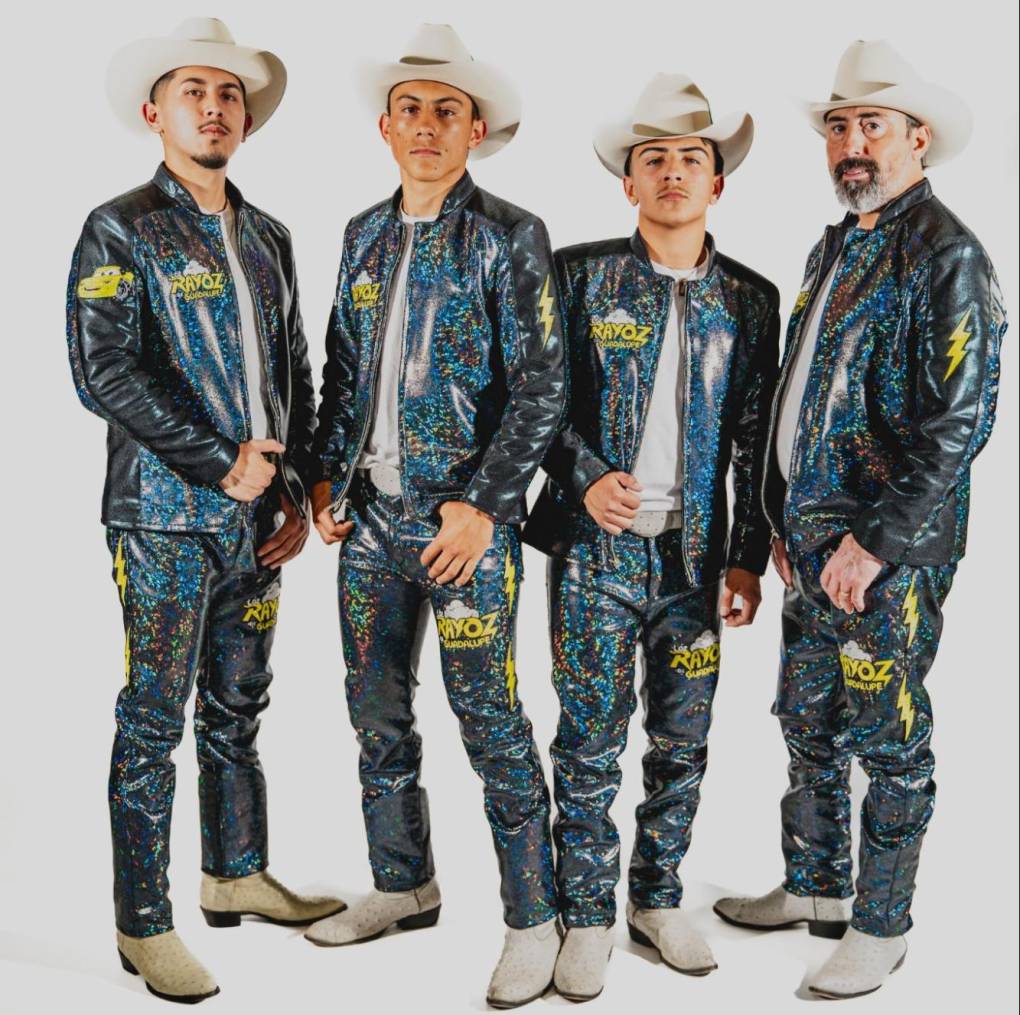
Loz Rayoz de Guadalupe: Central Coast Norteño Band Embrace and Evolve Traditional Mexican Sound
Heading to Peso Pluma’s San José Show? What to Know Before You Go
‘Everybody’s Hoping to See You at Their Door’: Lila Downs Honors Essential Workers Through Song
Player sponsored by
window.__IS_SSR__=true
window.__INITIAL_STATE__={
"attachmentsReducer": {
"audio_0": {
"type": "attachments",
"id": "audio_0",
"imgSizes": {
"kqedFullSize": {
"file": "https://ww2.kqed.org/news/wp-content/themes/KQED-unified/img/audio_bgs/background0.jpg"
}
}
},
"audio_1": {
"type": "attachments",
"id": "audio_1",
"imgSizes": {
"kqedFullSize": {
"file": "https://ww2.kqed.org/news/wp-content/themes/KQED-unified/img/audio_bgs/background1.jpg"
}
}
},
"audio_2": {
"type": "attachments",
"id": "audio_2",
"imgSizes": {
"kqedFullSize": {
"file": "https://ww2.kqed.org/news/wp-content/themes/KQED-unified/img/audio_bgs/background2.jpg"
}
}
},
"audio_3": {
"type": "attachments",
"id": "audio_3",
"imgSizes": {
"kqedFullSize": {
"file": "https://ww2.kqed.org/news/wp-content/themes/KQED-unified/img/audio_bgs/background3.jpg"
}
}
},
"audio_4": {
"type": "attachments",
"id": "audio_4",
"imgSizes": {
"kqedFullSize": {
"file": "https://ww2.kqed.org/news/wp-content/themes/KQED-unified/img/audio_bgs/background4.jpg"
}
}
},
"placeholder": {
"type": "attachments",
"id": "placeholder",
"imgSizes": {
"thumbnail": {
"file": "https://cdn.kqed.org/wp-content/uploads/2024/12/KQED-Default-Image-816638274-2000x1333-1-160x107.jpg",
"width": 160,
"height": 107,
"mimeType": "image/jpeg"
},
"medium": {
"file": "https://cdn.kqed.org/wp-content/uploads/2024/12/KQED-Default-Image-816638274-2000x1333-1-800x533.jpg",
"width": 800,
"height": 533,
"mimeType": "image/jpeg"
},
"medium_large": {
"file": "https://cdn.kqed.org/wp-content/uploads/2024/12/KQED-Default-Image-816638274-2000x1333-1-768x512.jpg",
"width": 768,
"height": 512,
"mimeType": "image/jpeg"
},
"large": {
"file": "https://cdn.kqed.org/wp-content/uploads/2024/12/KQED-Default-Image-816638274-2000x1333-1-1020x680.jpg",
"width": 1020,
"height": 680,
"mimeType": "image/jpeg"
},
"1536x1536": {
"file": "https://cdn.kqed.org/wp-content/uploads/2024/12/KQED-Default-Image-816638274-2000x1333-1-1536x1024.jpg",
"width": 1536,
"height": 1024,
"mimeType": "image/jpeg"
},
"fd-lrg": {
"file": "https://cdn.kqed.org/wp-content/uploads/2024/12/KQED-Default-Image-816638274-2000x1333-1-1536x1024.jpg",
"width": 1536,
"height": 1024,
"mimeType": "image/jpeg"
},
"fd-med": {
"file": "https://cdn.kqed.org/wp-content/uploads/2024/12/KQED-Default-Image-816638274-2000x1333-1-1020x680.jpg",
"width": 1020,
"height": 680,
"mimeType": "image/jpeg"
},
"fd-sm": {
"file": "https://cdn.kqed.org/wp-content/uploads/2024/12/KQED-Default-Image-816638274-2000x1333-1-800x533.jpg",
"width": 800,
"height": 533,
"mimeType": "image/jpeg"
},
"post-thumbnail": {
"file": "https://cdn.kqed.org/wp-content/uploads/2024/12/KQED-Default-Image-816638274-2000x1333-1-672x372.jpg",
"width": 672,
"height": 372,
"mimeType": "image/jpeg"
},
"twentyfourteen-full-width": {
"file": "https://cdn.kqed.org/wp-content/uploads/2024/12/KQED-Default-Image-816638274-2000x1333-1-1038x576.jpg",
"width": 1038,
"height": 576,
"mimeType": "image/jpeg"
},
"xxsmall": {
"file": "https://cdn.kqed.org/wp-content/uploads/2024/12/KQED-Default-Image-816638274-2000x1333-1-160x107.jpg",
"width": 160,
"height": 107,
"mimeType": "image/jpeg"
},
"xsmall": {
"file": "https://cdn.kqed.org/wp-content/uploads/2024/12/KQED-Default-Image-816638274-2000x1333-1-672x372.jpg",
"width": 672,
"height": 372,
"mimeType": "image/jpeg"
},
"small": {
"file": "https://cdn.kqed.org/wp-content/uploads/2024/12/KQED-Default-Image-816638274-2000x1333-1-672x372.jpg",
"width": 672,
"height": 372,
"mimeType": "image/jpeg"
},
"xlarge": {
"file": "https://cdn.kqed.org/wp-content/uploads/2024/12/KQED-Default-Image-816638274-2000x1333-1-1020x680.jpg",
"width": 1020,
"height": 680,
"mimeType": "image/jpeg"
},
"full-width": {
"file": "https://cdn.kqed.org/wp-content/uploads/2024/12/KQED-Default-Image-816638274-2000x1333-1-1920x1280.jpg",
"width": 1920,
"height": 1280,
"mimeType": "image/jpeg"
},
"guest-author-32": {
"file": "https://cdn.kqed.org/wp-content/uploads/2025/01/KQED-Default-Image-816638274-1333x1333-1-160x160.jpg",
"width": 32,
"height": 32,
"mimeType": "image/jpeg"
},
"guest-author-50": {
"file": "https://cdn.kqed.org/wp-content/uploads/2025/01/KQED-Default-Image-816638274-1333x1333-1-160x160.jpg",
"width": 50,
"height": 50,
"mimeType": "image/jpeg"
},
"guest-author-64": {
"file": "https://cdn.kqed.org/wp-content/uploads/2025/01/KQED-Default-Image-816638274-1333x1333-1-160x160.jpg",
"width": 64,
"height": 64,
"mimeType": "image/jpeg"
},
"guest-author-96": {
"file": "https://cdn.kqed.org/wp-content/uploads/2025/01/KQED-Default-Image-816638274-1333x1333-1-160x160.jpg",
"width": 96,
"height": 96,
"mimeType": "image/jpeg"
},
"guest-author-128": {
"file": "https://cdn.kqed.org/wp-content/uploads/2025/01/KQED-Default-Image-816638274-1333x1333-1-160x160.jpg",
"width": 128,
"height": 128,
"mimeType": "image/jpeg"
},
"detail": {
"file": "https://cdn.kqed.org/wp-content/uploads/2025/01/KQED-Default-Image-816638274-1333x1333-1-160x160.jpg",
"width": 160,
"height": 160,
"mimeType": "image/jpeg"
},
"kqedFullSize": {
"file": "https://cdn.kqed.org/wp-content/uploads/2024/12/KQED-Default-Image-816638274-2000x1333-1.jpg",
"width": 2000,
"height": 1333
}
}
},
"news_12034732": {
"type": "attachments",
"id": "news_12034732",
"meta": {
"index": "attachments_1716263798",
"site": "news",
"id": "12034732",
"found": true
},
"title": "250407-EL COMPA NEGRO-01-KQED",
"publishDate": 1744048062,
"status": "inherit",
"parent": 12037162,
"modified": 1745359081,
"caption": "El Compa Negro, performs in front of the Compton Art and History Museum. He wears a sparkly, Black velvet suit with a felt black cowboy hat known as a Tejana–a popular accessory in the regional Mexican music scene.",
"credit": "Aisha Wallace-Palomares for KQED",
"altTag": null,
"description": null,
"imgSizes": {
"medium": {
"file": "https://cdn.kqed.org/wp-content/uploads/sites/10/2025/04/250407-EL-COMPA-NEGRO-01-KQED-800x533.jpg",
"width": 800,
"height": 533,
"mimeType": "image/jpeg"
},
"large": {
"file": "https://cdn.kqed.org/wp-content/uploads/sites/10/2025/04/250407-EL-COMPA-NEGRO-01-KQED-1020x680.jpg",
"width": 1020,
"height": 680,
"mimeType": "image/jpeg"
},
"thumbnail": {
"file": "https://cdn.kqed.org/wp-content/uploads/sites/10/2025/04/250407-EL-COMPA-NEGRO-01-KQED-160x107.jpg",
"width": 160,
"height": 107,
"mimeType": "image/jpeg"
},
"1536x1536": {
"file": "https://cdn.kqed.org/wp-content/uploads/sites/10/2025/04/250407-EL-COMPA-NEGRO-01-KQED-1536x1024.jpg",
"width": 1536,
"height": 1024,
"mimeType": "image/jpeg"
},
"post-thumbnail": {
"file": "https://cdn.kqed.org/wp-content/uploads/sites/10/2025/04/250407-EL-COMPA-NEGRO-01-KQED-672x372.jpg",
"width": 672,
"height": 372,
"mimeType": "image/jpeg"
},
"twentyfourteen-full-width": {
"file": "https://cdn.kqed.org/wp-content/uploads/sites/10/2025/04/250407-EL-COMPA-NEGRO-01-KQED-1038x576.jpg",
"width": 1038,
"height": 576,
"mimeType": "image/jpeg"
},
"full-width": {
"file": "https://cdn.kqed.org/wp-content/uploads/sites/10/2025/04/250407-EL-COMPA-NEGRO-01-KQED-1920x1280.jpg",
"width": 1920,
"height": 1280,
"mimeType": "image/jpeg"
},
"kqedFullSize": {
"file": "https://cdn.kqed.org/wp-content/uploads/sites/10/2025/04/250407-EL-COMPA-NEGRO-01-KQED.jpg",
"width": 2000,
"height": 1333
}
},
"isLoading": false,
"fetchFailed": false
},
"news_12036143": {
"type": "attachments",
"id": "news_12036143",
"meta": {
"index": "attachments_1716263798",
"site": "news",
"id": "12036143",
"found": true
},
"title": "Narcocorridos",
"publishDate": 1744763441,
"status": "inherit",
"parent": 12036107,
"modified": 1744825004,
"caption": "People dance to a band playing corridos at the Lido Club in South Gate, California. One of the most cherished traditions within Mexican regional music, corridos are narrative ballads that tell a story, sometimes about the crime, violence and misogyny that have plagued Mexico for decades.",
"credit": "Gregory Bojorquez/Getty Images",
"altTag": null,
"description": null,
"imgSizes": {
"medium": {
"file": "https://cdn.kqed.org/wp-content/uploads/sites/10/2025/04/GettyImages-1341918465_qed-800x532.jpg",
"width": 800,
"height": 532,
"mimeType": "image/jpeg"
},
"large": {
"file": "https://cdn.kqed.org/wp-content/uploads/sites/10/2025/04/GettyImages-1341918465_qed-1020x678.jpg",
"width": 1020,
"height": 678,
"mimeType": "image/jpeg"
},
"thumbnail": {
"file": "https://cdn.kqed.org/wp-content/uploads/sites/10/2025/04/GettyImages-1341918465_qed-160x106.jpg",
"width": 160,
"height": 106,
"mimeType": "image/jpeg"
},
"1536x1536": {
"file": "https://cdn.kqed.org/wp-content/uploads/sites/10/2025/04/GettyImages-1341918465_qed-1536x1021.jpg",
"width": 1536,
"height": 1021,
"mimeType": "image/jpeg"
},
"post-thumbnail": {
"file": "https://cdn.kqed.org/wp-content/uploads/sites/10/2025/04/GettyImages-1341918465_qed-672x372.jpg",
"width": 672,
"height": 372,
"mimeType": "image/jpeg"
},
"twentyfourteen-full-width": {
"file": "https://cdn.kqed.org/wp-content/uploads/sites/10/2025/04/GettyImages-1341918465_qed-1038x576.jpg",
"width": 1038,
"height": 576,
"mimeType": "image/jpeg"
},
"full-width": {
"file": "https://cdn.kqed.org/wp-content/uploads/sites/10/2025/04/GettyImages-1341918465_qed-1920x1276.jpg",
"width": 1920,
"height": 1276,
"mimeType": "image/jpeg"
},
"kqedFullSize": {
"file": "https://cdn.kqed.org/wp-content/uploads/sites/10/2025/04/GettyImages-1341918465_qed.jpg",
"width": 2000,
"height": 1329
}
},
"isLoading": false,
"fetchFailed": false
},
"news_12027984": {
"type": "attachments",
"id": "news_12027984",
"meta": {
"index": "attachments_1716263798",
"site": "news",
"id": "12027984",
"found": true
},
"title": "image4",
"publishDate": 1740093827,
"status": "inherit",
"parent": 12027942,
"modified": 1740093909,
"caption": "Loz Rayoz de Guadalupe pose in their custom-made outfits — an important part of many Mexican regional music groups. Left to right: Irving Fabela, Joaquin Perez, Chencho Pérez, Aníbal Pérez.",
"credit": "Courtesy of Loz Rayoz de Guadalupe",
"altTag": null,
"description": null,
"imgSizes": {
"medium": {
"file": "https://cdn.kqed.org/wp-content/uploads/sites/10/2025/02/image4-e1740093867875-800x796.jpg",
"width": 800,
"height": 796,
"mimeType": "image/jpeg"
},
"large": {
"file": "https://cdn.kqed.org/wp-content/uploads/sites/10/2025/02/image4-e1740093867875-1020x1015.jpg",
"width": 1020,
"height": 1015,
"mimeType": "image/jpeg"
},
"thumbnail": {
"file": "https://cdn.kqed.org/wp-content/uploads/sites/10/2025/02/image4-e1740093867875-160x159.jpg",
"width": 160,
"height": 159,
"mimeType": "image/jpeg"
},
"1536x1536": {
"file": "https://cdn.kqed.org/wp-content/uploads/sites/10/2025/02/image4-1024x1536.jpg",
"width": 1024,
"height": 1536,
"mimeType": "image/jpeg"
},
"post-thumbnail": {
"file": "https://cdn.kqed.org/wp-content/uploads/sites/10/2025/02/image4-e1740093867875-672x372.jpg",
"width": 672,
"height": 372,
"mimeType": "image/jpeg"
},
"twentyfourteen-full-width": {
"file": "https://cdn.kqed.org/wp-content/uploads/sites/10/2025/02/image4-e1740093867875-1038x576.jpg",
"width": 1038,
"height": 576,
"mimeType": "image/jpeg"
},
"kqedFullSize": {
"file": "https://cdn.kqed.org/wp-content/uploads/sites/10/2025/02/image4-e1740093867875.jpg",
"width": 1333,
"height": 1326
}
},
"isLoading": false,
"fetchFailed": false
},
"news_11963879": {
"type": "attachments",
"id": "news_11963879",
"meta": {
"index": "attachments_1716263798",
"site": "news",
"id": "11963879",
"found": true
},
"parent": 11963875,
"imgSizes": {
"twentyfourteen-full-width": {
"file": "https://ww2.kqed.org/app/uploads/sites/10/2023/10/GettyImages-1677356252-qut-1038x576.jpg",
"width": 1038,
"mimeType": "image/jpeg",
"height": 576
},
"thumbnail": {
"file": "https://ww2.kqed.org/app/uploads/sites/10/2023/10/GettyImages-1677356252-qut-160x107.jpg",
"width": 160,
"mimeType": "image/jpeg",
"height": 107
},
"post-thumbnail": {
"file": "https://ww2.kqed.org/app/uploads/sites/10/2023/10/GettyImages-1677356252-qut-672x372.jpg",
"width": 672,
"mimeType": "image/jpeg",
"height": 372
},
"kqedFullSize": {
"file": "https://ww2.kqed.org/app/uploads/sites/10/2023/10/GettyImages-1677356252-qut.jpg",
"width": 1920,
"height": 1280
},
"large": {
"file": "https://ww2.kqed.org/app/uploads/sites/10/2023/10/GettyImages-1677356252-qut-1020x680.jpg",
"width": 1020,
"mimeType": "image/jpeg",
"height": 680
},
"1536x1536": {
"file": "https://ww2.kqed.org/app/uploads/sites/10/2023/10/GettyImages-1677356252-qut-1536x1024.jpg",
"width": 1536,
"mimeType": "image/jpeg",
"height": 1024
},
"medium": {
"file": "https://ww2.kqed.org/app/uploads/sites/10/2023/10/GettyImages-1677356252-qut-800x533.jpg",
"width": 800,
"mimeType": "image/jpeg",
"height": 533
}
},
"publishDate": 1696880867,
"modified": 1696962241,
"caption": "Peso Pluma performs onstage during the 2023 MTV Video Music Awards at Prudential Center on Sept. 12, 2023 in Newark, New Jersey. ",
"description": null,
"title": "2023 MTV Video Music Awards - Show",
"credit": "Mike Coppola/Getty Images for MTV",
"status": "inherit",
"altTag": "A younger man with blunt brown bangs and mullet wears large dark sunglasses and a broad-shouldered black shirt, singing into a mic onstage",
"isLoading": false,
"fetchFailed": false
},
"news_11866138": {
"type": "attachments",
"id": "news_11866138",
"meta": {
"index": "attachments_1716263798",
"site": "news",
"id": "11866138",
"found": true
},
"parent": 11863423,
"imgSizes": {
"twentyfourteen-full-width": {
"file": "https://ww2.kqed.org/app/uploads/sites/10/2021/03/04-2-1038x576.jpg",
"width": 1038,
"mimeType": "image/jpeg",
"height": 576
},
"thumbnail": {
"file": "https://ww2.kqed.org/app/uploads/sites/10/2021/03/04-2-160x107.jpg",
"width": 160,
"mimeType": "image/jpeg",
"height": 107
},
"post-thumbnail": {
"file": "https://ww2.kqed.org/app/uploads/sites/10/2021/03/04-2-672x372.jpg",
"width": 672,
"mimeType": "image/jpeg",
"height": 372
},
"kqedFullSize": {
"file": "https://ww2.kqed.org/app/uploads/sites/10/2021/03/04-2-scaled.jpg",
"width": 2560,
"height": 1718
},
"2048x2048": {
"file": "https://ww2.kqed.org/app/uploads/sites/10/2021/03/04-2-2048x1374.jpg",
"width": 2048,
"mimeType": "image/jpeg",
"height": 1374
},
"large": {
"file": "https://ww2.kqed.org/app/uploads/sites/10/2021/03/04-2-1020x685.jpg",
"width": 1020,
"mimeType": "image/jpeg",
"height": 685
},
"1536x1536": {
"file": "https://ww2.kqed.org/app/uploads/sites/10/2021/03/04-2-1536x1031.jpg",
"width": 1536,
"mimeType": "image/jpeg",
"height": 1031
},
"full-width": {
"file": "https://ww2.kqed.org/app/uploads/sites/10/2021/03/04-2-1920x1289.jpg",
"width": 1920,
"mimeType": "image/jpeg",
"height": 1289
},
"medium": {
"file": "https://ww2.kqed.org/app/uploads/sites/10/2021/03/04-2-800x537.jpg",
"width": 800,
"mimeType": "image/jpeg",
"height": 537
}
},
"publishDate": 1616543285,
"modified": 1616798682,
"caption": "Maria Madrigal picks persimmons in a field near Poplar in the San Joaquin Valley, in a crew of Mexican immigrants. Many workers wear face masks or bandanas as a protection against spreading the coronavirus.",
"description": "Maria Madrigal picks persimmons in a field near Poplar, in the San Joaquin Valley, in a crew of Mexican immigrants. Many workers wear facemasks or bandannas as a protection against spreading the coronavirus.",
"title": "Farmworkers pick persimmons in a San Joaquin Valley grove",
"credit": "David Bacon",
"status": "inherit",
"altTag": null,
"isLoading": false,
"fetchFailed": false
}
},
"audioPlayerReducer": {
"postId": "stream_live",
"isPaused": true,
"isPlaying": false,
"pfsActive": false,
"pledgeModalIsOpen": true,
"playerDrawerIsOpen": false,
"liveAudioPlayStartedAt": 0,
"liveAudioPlayContext": ""
},
"authorsReducer": {
"byline_news_12037162": {
"type": "authors",
"id": "byline_news_12037162",
"meta": {
"override": true
},
"slug": "byline_news_12037162",
"name": "Aisha Wallace-Palomares",
"isLoading": false
},
"byline_news_12027942": {
"type": "authors",
"id": "byline_news_12027942",
"meta": {
"override": true
},
"slug": "byline_news_12027942",
"name": "\u003ca href=\"https://x.com/benjaminpurper\">Benjamin Purper\u003c/a>",
"isLoading": false
},
"matthewgreen": {
"type": "authors",
"id": "1263",
"meta": {
"index": "authors_1716337520",
"id": "1263",
"found": true
},
"name": "Matthew Green",
"firstName": "Matthew",
"lastName": "Green",
"slug": "matthewgreen",
"email": "mgreen@kqed.org",
"display_author_email": false,
"staff_mastheads": [],
"title": "KQED Editor/Reporter",
"bio": "Matthew Green is a digital media producer for KQED News. He previously produced \u003ca href=\"http://www.kqed.org/lowdown\">The Lowdown\u003c/a>, KQED’s multimedia news education blog. Matthew's written for numerous Bay Area publications, including the Oakland Tribune and San Francisco Chronicle. He also taught journalism classes at Fremont High School in East Oakland.\r\n\r\nEmail: mgreen@kqed.org; Twitter: @MGreenKQED",
"avatar": "https://secure.gravatar.com/avatar/3bf498d1267ca02c8494f33d8cfc575e?s=600&d=blank&r=g",
"twitter": "MGreenKQED",
"facebook": null,
"instagram": null,
"linkedin": null,
"sites": [
{
"site": "news",
"roles": []
},
{
"site": "lowdown",
"roles": []
},
{
"site": "science",
"roles": []
},
{
"site": "education",
"roles": []
},
{
"site": "quest",
"roles": []
},
{
"site": "liveblog",
"roles": []
}
],
"headData": {
"title": "Matthew Green | KQED",
"description": "KQED Editor/Reporter",
"ogImgSrc": "https://secure.gravatar.com/avatar/3bf498d1267ca02c8494f33d8cfc575e?s=600&d=blank&r=g",
"twImgSrc": "https://secure.gravatar.com/avatar/3bf498d1267ca02c8494f33d8cfc575e?s=600&d=blank&r=g"
},
"isLoading": false,
"link": "/author/matthewgreen"
},
"ccabreralomeli": {
"type": "authors",
"id": "11708",
"meta": {
"index": "authors_1716337520",
"id": "11708",
"found": true
},
"name": "Carlos Cabrera-Lomelí",
"firstName": "Carlos",
"lastName": "Cabrera-Lomelí",
"slug": "ccabreralomeli",
"email": "ccabreralomeli@KQED.org",
"display_author_email": true,
"staff_mastheads": [
"news"
],
"title": "Community Reporter",
"bio": "Carlos Cabrera-Lomelí is a community reporter with KQED's digital engagement team. He also reports and co-produces for KQED's bilingual news hub KQED en Español. He grew up in San Francisco's Mission District and has previously worked with Univision, 48 Hills and REFORMA in Mexico City.",
"avatar": "https://secure.gravatar.com/avatar/c309be9665e484f887b818c89e273ecc673004f426f36b24d00a4d813a2e0518?s=600&d=blank&r=g",
"twitter": "@LomeliCabrera",
"bluesky": null,
"facebook": null,
"instagram": null,
"linkedin": null,
"sites": [
{
"site": "arts",
"roles": [
"editor"
]
},
{
"site": "news",
"roles": [
"editor"
]
},
{
"site": "about",
"roles": [
"editor"
]
},
{
"site": "science",
"roles": [
"editor"
]
},
{
"site": "perspectives",
"roles": [
"editor"
]
},
{
"site": "elections",
"roles": [
"editor"
]
},
{
"site": "liveblog",
"roles": [
"contributor"
]
}
],
"headData": {
"title": "Carlos Cabrera-Lomelí | KQED",
"description": "Community Reporter",
"ogImgSrc": "https://secure.gravatar.com/avatar/c309be9665e484f887b818c89e273ecc673004f426f36b24d00a4d813a2e0518?s=600&d=blank&r=g",
"twImgSrc": "https://secure.gravatar.com/avatar/c309be9665e484f887b818c89e273ecc673004f426f36b24d00a4d813a2e0518?s=600&d=blank&r=g"
},
"isLoading": false,
"link": "/author/ccabreralomeli"
},
"harzate": {
"type": "authors",
"id": "11727",
"meta": {
"index": "authors_1716337520",
"id": "11727",
"found": true
},
"name": "Héctor Alejandro Arzate",
"firstName": "Héctor Alejandro",
"lastName": "Arzate",
"slug": "harzate",
"email": "harzate@kqed.org",
"display_author_email": false,
"staff_mastheads": [],
"title": "KQED Contributor",
"bio": null,
"avatar": "https://secure.gravatar.com/avatar/23c72c3afa19f2c6801c5db997a908d8?s=600&d=blank&r=g",
"twitter": null,
"facebook": null,
"instagram": null,
"linkedin": null,
"sites": [
{
"site": "news",
"roles": [
"author"
]
}
],
"headData": {
"title": "Héctor Alejandro Arzate | KQED",
"description": "KQED Contributor",
"ogImgSrc": "https://secure.gravatar.com/avatar/23c72c3afa19f2c6801c5db997a908d8?s=600&d=blank&r=g",
"twImgSrc": "https://secure.gravatar.com/avatar/23c72c3afa19f2c6801c5db997a908d8?s=600&d=blank&r=g"
},
"isLoading": false,
"link": "/author/harzate"
}
},
"pagesReducer": {
"news_tag_mexican-music": {
"type": "terms",
"id": "news_29283",
"meta": {
"index": "terms_1716263798",
"site": "news",
"id": "29283",
"score": 10.404608
},
"featImg": null,
"name": "Mexican music",
"description": null,
"taxonomy": "tag",
"headData": {
"twImgId": null,
"twTitle": null,
"ogTitle": null,
"ogImgId": null,
"twDescription": null,
"description": null,
"title": "Mexican music Archives | KQED News",
"ogDescription": null
},
"ttid": 29300,
"slug": "mexican-music",
"isLoading": false,
"title": "Mexican music",
"pageMeta": {
"site": "news",
"WpPageTemplate": "page-topic-editorial",
"currentPage": 1
},
"blocks": [
{
"blockName": "kqed/post-list",
"attrs": {
"layout": "cardArticle2",
"query": "posts/news?tag=mexican-music",
"seeMore": false,
"paginated": true,
"page": 1
}
},
{
"blockName": "kqed/ad"
}
]
}
},
"pfsSessionReducer": {},
"postsReducer": {
"stream_live": {
"type": "live",
"id": "stream_live",
"audioUrl": "https://streams.kqed.org/kqedradio",
"title": "Live Stream",
"excerpt": "Live Stream information currently unavailable.",
"link": "/radio",
"featImg": "",
"label": {
"name": "KQED Live",
"link": "/"
}
},
"stream_kqedNewscast": {
"type": "posts",
"id": "stream_kqedNewscast",
"audioUrl": "https://www.kqed.org/.stream/anon/radio/RDnews/newscast.mp3?_=1",
"title": "KQED Newscast",
"featImg": "",
"label": {
"name": "88.5 FM",
"link": "/"
}
},
"news_12037162": {
"type": "posts",
"id": "news_12037162",
"meta": {
"index": "posts_1716263798",
"site": "news",
"id": "12037162",
"score": null,
"sort": [
1745596835000
]
},
"guestAuthors": [],
"slug": "la-artist-el-compa-negro-plays-traditional-mexican-music-straight-outta-compton",
"title": "LA Artist El Compa Negro Plays Regional Mexican Music, Straight Outta Compton",
"publishDate": 1745596835,
"format": "standard",
"headTitle": "LA Artist El Compa Negro Plays Regional Mexican Music, Straight Outta Compton | KQED",
"labelTerm": {
"term": 26731,
"site": "news"
},
"content": "\u003cp>El Compa Negro is on Facetime with his stylist, trying to pick out his outfit ahead of his set at the Compton Art & History Museum.\u003c/p>\n\u003cp>The \u003ca href=\"https://www.kqed.org/news/tag/los-angeles-county\">Los Angeles\u003c/a>-based musician is performing for the opening reception of “Corridos from the Hood,” an \u003ca href=\"https://www.comptonmuseum.org/previous-exhibitions/corridos-from-the-hood\">exhibit \u003c/a>dedicated to the popular genre of \u003ca href=\"https://www.kqed.org/news/12034651/k-onda-april\">storytelling ballad\u003c/a> and one of the most cherished traditions in Mexican regional music. After going back and forth a few times, he settles on a black suit — a sparkly black velvet coat, a black tejana hat and sneakers.\u003c/p>\n\u003cp>Tucked in the corner of an unassuming strip mall, the museum could easily be overshadowed by the Popeyes that sits across from it. But tonight the museum is hard to miss, with El Compa Negro’s performance taking over the parking lot in front.\u003c/p>\n\u003cp>Smiling, he sings, “Afro-Americano dueño de las calles.”\u003c/p>\n\u003cp>[ad fullwidth]\u003c/p>\n\u003cp>The Sinaloan-style, all-female group \u003ca href=\"https://bandalasangelinas.com/\">Banda Las Angelinas\u003c/a> accompanies him as he belts out, “Compton es nuestro lugar, es mi casa y es mi hogar.”\u003c/p>\n\u003cp>“Yo Soy Compton,” an unreleased song, is El Compa Negro’s ode to his hometown. Cowboy hats bob to the music, while botas and sneakers dance along to the song in a flurry of cheers and motion.\u003c/p>\n\u003cfigure id=\"attachment_12034735\" class=\"wp-caption aligncenter\" style=\"max-width: 2000px\">\u003ca href=\"https://cdn.kqed.org/wp-content/uploads/sites/10/2025/04/250407-EL-COMPA-NEGRO-04-KQED.jpg\">\u003cimg loading=\"lazy\" decoding=\"async\" class=\"size-full wp-image-12034735\" src=\"https://cdn.kqed.org/wp-content/uploads/sites/10/2025/04/250407-EL-COMPA-NEGRO-04-KQED.jpg\" alt=\"\" width=\"2000\" height=\"1333\" srcset=\"https://cdn.kqed.org/wp-content/uploads/sites/10/2025/04/250407-EL-COMPA-NEGRO-04-KQED.jpg 2000w, https://cdn.kqed.org/wp-content/uploads/sites/10/2025/04/250407-EL-COMPA-NEGRO-04-KQED-800x533.jpg 800w, https://cdn.kqed.org/wp-content/uploads/sites/10/2025/04/250407-EL-COMPA-NEGRO-04-KQED-1020x680.jpg 1020w, https://cdn.kqed.org/wp-content/uploads/sites/10/2025/04/250407-EL-COMPA-NEGRO-04-KQED-160x107.jpg 160w, https://cdn.kqed.org/wp-content/uploads/sites/10/2025/04/250407-EL-COMPA-NEGRO-04-KQED-1536x1024.jpg 1536w, https://cdn.kqed.org/wp-content/uploads/sites/10/2025/04/250407-EL-COMPA-NEGRO-04-KQED-1920x1280.jpg 1920w\" sizes=\"auto, (max-width: 2000px) 100vw, 2000px\">\u003c/a>\u003cfigcaption class=\"wp-caption-text\">Marco Bravo, a photographer whose work was highlighted in the exhibit “Corridos from the Hood,” at the Compton Art & History Museum, dances with a partner, as El Compa Negro performs with Banda Las Angelinas. \u003ccite>(Aisha Wallace-Palomares for KQED)\u003c/cite>\u003c/figcaption>\u003c/figure>\n\u003cp>When many people think about Compton, they think about N.W.A and Kendrick Lamar. Compton is a historically Black city known for its vibrant African American community — an image that prevailed through the ‘90s.\u003c/p>\n\u003cp>However, folks from Compton will tell you that a celebration of regional Mexican music on the city streets is not surprising, as Compton has gone through major demographic changes in recent decades. In 1996, the year El Compa Negro was born, the Hispanic or Latino population was around 34 percent. Now, Compton is around 71 percent Latino.\u003c/p>\n\u003cp>But while Rhyan Lavelle Lowery, who performs as El Compa Negro, is a regional Mexican artist, the musician isn’t personally of Mexican descent. Lowery learned Spanish at the Progress Baptist Church, where he also sang in choir and learned to play the organ.\u003c/p>\n\u003cp>Lowery said the church played a big part in his childhood. During weekly services, the children were sent to the nursery where the late Pastor Waddell Hudson taught them the Spanish ABCs on a whiteboard. Of his siblings, Lowery said he was the one who became the most interested in learning Spanish.\u003c/p>\n\u003cp>He grew up in a mostly Black and Mexican neighborhood — on North Pearl and Peck Avenue — where he got many opportunities to practice his Spanish. When he was a teenager, his family moved an hour away to Perris, California, where they owned a few acres of land.\u003c/p>\n\u003cp>“There’s a lot of Mexicans…they would be partying, you know the jaripeos, charreadas\u003cem>,\u003c/em> like bailes, horses dancing and a banda\u003cem>,\u003c/em>” El Compa Negro said, reminiscing over his teen years.\u003c/p>\n\u003cp>[aside postID=news_12035436 hero='https://cdn.kqed.org/wp-content/uploads/sites/10/2025/04/230401-Brittianna-Robinson-04-KQED-1020x680.jpg']\u003c/p>\n\u003cp>Lowery said this was a difficult time in his life — his parents were in the midst of a divorce and the housing crisis put strain on the family, ultimately resulting in the loss of their house. During this time, his Mexican friends and their family became a source of comfort — they welcomed him into their culture and traditions, even gifting him a horse named Preciosa— with open arms, something he is grateful for to this day.\u003c/p>\n\u003cp>As the culture rubbed off on him, he started listening to regional Mexican music. The vast genre encompasses many styles of traditional Mexican music from \u003ca href=\"https://www.kqed.org/news/12027942/loz-rayoz-de-guadalupe-central-coast-norteno-band-embrace-and-evolve-traditional-mexican-sound\">\u003cem>norteño\u003c/em> \u003c/a>to \u003ca href=\"https://www.kqed.org/news/12034651/k-onda-april\">\u003cem>banda\u003c/em> \u003c/a>to \u003ca href=\"https://www.kqed.org/news/11963416/this-all-women-mariachi-group-from-sacramento-is-redefining-the-genre\">\u003cem>mariachi\u003c/em>\u003c/a>. In high school, his friends formed a norteño grupo, called Los Nuevos Padrinos. They asked Compa if he wanted to be a drummer, and he said yes. One day, as they practiced “Y Tú” by Julion Alvarez over and over again —Compa remembers memorizing the words.\u003c/p>\n\u003cp>“They told me to grab a mic, that I sang better than I played,” he said.\u003c/p>\n\u003cp>His friend randomly recorded one of the times they were playing music at school, titled it “\u003ca href=\"https://www.youtube.com/watch?v=J47iRCeNCEE\">El Compa Negro Gettin Down\u003c/a>,” and uploaded it to YouTube. The clip went viral.\u003c/p>\n\u003cp>In the video, a teenage Lowery sings along with his friend’s guitar rendition of “Y Tu.” Lowery grows in confidence with each verse, eventually flashing a big smile at the camera and breaking out into dance as he sings the final lines. In the background, a classmate chants: “Negro\u003cem>,\u003c/em> Negro, Negro, eh, eh!”\u003c/p>\n\u003cp>Lowery said his stage name translates to “The Black friend,” or “the Black homie.” The word Negro or Negra is a commonly used in Spanish to refer to Black people across Latin America and the Latin American diaspora. These words have a complicated history — while they can be used in derogatory ways, many Afro-Latinos, Latinos of African descent, have chosen to embrace the words, like Miami artist \u003ca href=\"https://www.nbcnews.com/news/latino/amara-la-negra-lifting-afrolatinidad-she-moves-hip-hop-n850611\">Amara La Negra\u003c/a>.\u003c/p>\n\u003cfigure id=\"attachment_12034737\" class=\"wp-caption aligncenter\" style=\"max-width: 2000px\">\u003ca href=\"https://cdn.kqed.org/wp-content/uploads/sites/10/2025/04/250407-EL-COMPA-NEGRO-06-KQED.jpg\">\u003cimg loading=\"lazy\" decoding=\"async\" class=\"size-full wp-image-12034737\" src=\"https://cdn.kqed.org/wp-content/uploads/sites/10/2025/04/250407-EL-COMPA-NEGRO-06-KQED.jpg\" alt=\"\" width=\"2000\" height=\"1333\" srcset=\"https://cdn.kqed.org/wp-content/uploads/sites/10/2025/04/250407-EL-COMPA-NEGRO-06-KQED.jpg 2000w, https://cdn.kqed.org/wp-content/uploads/sites/10/2025/04/250407-EL-COMPA-NEGRO-06-KQED-800x533.jpg 800w, https://cdn.kqed.org/wp-content/uploads/sites/10/2025/04/250407-EL-COMPA-NEGRO-06-KQED-1020x680.jpg 1020w, https://cdn.kqed.org/wp-content/uploads/sites/10/2025/04/250407-EL-COMPA-NEGRO-06-KQED-160x107.jpg 160w, https://cdn.kqed.org/wp-content/uploads/sites/10/2025/04/250407-EL-COMPA-NEGRO-06-KQED-1536x1024.jpg 1536w, https://cdn.kqed.org/wp-content/uploads/sites/10/2025/04/250407-EL-COMPA-NEGRO-06-KQED-1920x1280.jpg 1920w\" sizes=\"auto, (max-width: 2000px) 100vw, 2000px\">\u003c/a>\u003cfigcaption class=\"wp-caption-text\">A man dressed in a charro suit, spins a lasso around himself, while a crowd watches in Compton. \u003ccite>(Aisha Wallace-Palomares for KQED)\u003c/cite>\u003c/figcaption>\u003c/figure>\n\u003cfigure id=\"attachment_12034736\" class=\"wp-caption aligncenter\" style=\"max-width: 2000px\">\u003ca href=\"https://cdn.kqed.org/wp-content/uploads/sites/10/2025/04/250407-EL-COMPA-NEGRO-05-KQED.jpg\">\u003cimg loading=\"lazy\" decoding=\"async\" class=\"size-full wp-image-12034736\" src=\"https://cdn.kqed.org/wp-content/uploads/sites/10/2025/04/250407-EL-COMPA-NEGRO-05-KQED.jpg\" alt=\"\" width=\"2000\" height=\"1333\" srcset=\"https://cdn.kqed.org/wp-content/uploads/sites/10/2025/04/250407-EL-COMPA-NEGRO-05-KQED.jpg 2000w, https://cdn.kqed.org/wp-content/uploads/sites/10/2025/04/250407-EL-COMPA-NEGRO-05-KQED-800x533.jpg 800w, https://cdn.kqed.org/wp-content/uploads/sites/10/2025/04/250407-EL-COMPA-NEGRO-05-KQED-1020x680.jpg 1020w, https://cdn.kqed.org/wp-content/uploads/sites/10/2025/04/250407-EL-COMPA-NEGRO-05-KQED-160x107.jpg 160w, https://cdn.kqed.org/wp-content/uploads/sites/10/2025/04/250407-EL-COMPA-NEGRO-05-KQED-1536x1024.jpg 1536w, https://cdn.kqed.org/wp-content/uploads/sites/10/2025/04/250407-EL-COMPA-NEGRO-05-KQED-1920x1280.jpg 1920w\" sizes=\"auto, (max-width: 2000px) 100vw, 2000px\">\u003c/a>\u003cfigcaption class=\"wp-caption-text\">Two men on horseback ride on the sidewalk in Compton. \u003ccite>(Aisha Wallace-Palomares for KQED)\u003c/cite>\u003c/figcaption>\u003c/figure>\n\u003cp>Lowery chose to embrace using “Negro,” too.\u003c/p>\n\u003cp>“They’re not really separating me, they are just describing me. In Spanish, when you’re describing something, you describe it, and it becomes a part of the name,” he said.\u003c/p>\n\u003cp>He emphasized the differences between how the word is pronounced in Spanish in English. “ The alphabet is different and has a different meaning.”\u003c/p>\n\u003cp>While Lowery was celebrated by his friends at the beginning stages of his career, he faced a lot of pushback from the Mexican community. Anti-Blackness is prevalent in the Latino community, rooted in the history of colonization. Five hundred years ago, when enslaved Africans were forcibly brought to Mexico’s shores, Spanish colonizers created a racial caste system to control the white, Black, Indigenous and multi-racial residents. The lighter you were, the higher up you could move on the social ladder. This racialized system persists to this day.\u003c/p>\n\u003cp>“People would tell me they were going to kill me,” Lowery said. “I just kept doing my thing. A lot of people would tell me to leave the Mexican music for the Mexicans — that I should be rapping. But I did my research. Mariachi music has a lot of elements that are derived from African music.”\u003c/p>\n\u003cp>Lowery learned about mariachi’s Afro-Mexican origins, heard in the \u003ca href=\"https://www.youtube.com/watch?v=oGtvdFnc8oM\">polyrhythms\u003c/a> — multiple rhythms happening at the same time — of songs like “\u003ca href=\"https://www.youtube.com/watch?v=MiY-Rj3VA5s\">El Son de la Negra\u003c/a>.”\u003c/p>\n\u003cp>“This whole time that they were telling me to not sing this music, I was singing my own music,” he said.\u003c/p>\n\u003cp>[aside postID=news_12035344 hero='https://cdn.kqed.org/wp-content/uploads/sites/10/2025/04/250408-CAL-TECH-TESTING-113-ZS-KQED-1020x680.jpg']\u003c/p>\n\u003cp>The erasure of African heritage in Latinidad, especially within Mexican history, is one of the issues that Lowery attempts to address as an African-American artist singing regional Mexican music. Core to his mission is standing up against racial injustice, anti-Blackness and colorism in the Latino community. He hopes that he can bring both of these families closer together through his music.\u003c/p>\n\u003cp>When Lowery was 17, his idol — popular Mexican-American artist Larry Hernandez — \u003ca href=\"https://www.nbcsandiego.com/sounddiego/larry-hernandez-is-el-amigo-de-todos/1956948/\">invited him\u003c/a> on stage to sing with him at the Del Mar County Fair in San Diego. Hernandez had seen a video of Lowery covering his song “\u003ca href=\"https://www.youtube.com/watch?v=HCKK0RJV7fs\">Arrastrando Las Patas\u003c/a>” on YouTube and the artist was impressed. That was a pivotal day for a young Lowery — he performed for a crowd of about 15,000 people.\u003c/p>\n\u003cp>In 2015, he was a contestant on the Mexican talent competition show, \u003cem>“\u003c/em>\u003ca href=\"https://www.youtube.com/watch?v=7lVAp1VgXbs\">Tengo Talento, Mucho Talento\u003c/a>” — and won third place.\u003c/p>\n\u003cp>Despite the success and momentum around him, Lowery found it hard to make a living as a working musician. Traditional Mexican labels, he said, did not want to sign him because he was a “Negrito.”\u003c/p>\n\u003cp>Around that time, Lowery learned he was going to become a father. He decided to prioritize family life and focus on fatherhood, and get a day job. For the next few years, he worked as a construction worker and tried his hand at being a car salesman. Although he picked up music gigs here and there, for the most part, he focused on providing for his family.\u003c/p>\n\u003cp>Then, an opportunity came that he couldn’t miss: in 2022, El Compa Negro was offered a record deal from Boss City Music and Death Row Records. At 29, he’s finally being recognized.\u003c/p>\n\u003cfigure id=\"attachment_12034740\" class=\"wp-caption aligncenter\" style=\"max-width: 2000px\">\u003ca href=\"https://cdn.kqed.org/wp-content/uploads/sites/10/2025/04/250407-EL-COMPA-NEGRO-09-KQED.jpg\">\u003cimg loading=\"lazy\" decoding=\"async\" class=\"size-full wp-image-12034740\" src=\"https://cdn.kqed.org/wp-content/uploads/sites/10/2025/04/250407-EL-COMPA-NEGRO-09-KQED.jpg\" alt=\"\" width=\"2000\" height=\"1333\" srcset=\"https://cdn.kqed.org/wp-content/uploads/sites/10/2025/04/250407-EL-COMPA-NEGRO-09-KQED.jpg 2000w, https://cdn.kqed.org/wp-content/uploads/sites/10/2025/04/250407-EL-COMPA-NEGRO-09-KQED-800x533.jpg 800w, https://cdn.kqed.org/wp-content/uploads/sites/10/2025/04/250407-EL-COMPA-NEGRO-09-KQED-1020x680.jpg 1020w, https://cdn.kqed.org/wp-content/uploads/sites/10/2025/04/250407-EL-COMPA-NEGRO-09-KQED-160x107.jpg 160w, https://cdn.kqed.org/wp-content/uploads/sites/10/2025/04/250407-EL-COMPA-NEGRO-09-KQED-1536x1024.jpg 1536w, https://cdn.kqed.org/wp-content/uploads/sites/10/2025/04/250407-EL-COMPA-NEGRO-09-KQED-1920x1280.jpg 1920w\" sizes=\"auto, (max-width: 2000px) 100vw, 2000px\">\u003c/a>\u003cfigcaption class=\"wp-caption-text\">El Compa Negro performs performs with Banda La Unica Tierra de Reyes at El Dia Del Ranchero event in Compton. \u003ccite>(Aisha Wallace-Palomares for KQED)\u003c/cite>\u003c/figcaption>\u003c/figure>\n\u003cp>It’s been hard to make ends meet in an industry that is only beginning to accept him.\u003c/p>\n\u003cp>“People tell me jamás, jamás vas a poder [you will never be able to], but I know that I will,” he said.\u003c/p>\n\u003cp>Lowery works evening shifts at Amazon and flips burgers at a club late into the night on the weekends. He’s a single dad and lost his mom 2 years ago.\u003c/p>\n\u003cp>But Lowery said all of the hardship and pain has led El Compa Negro to creating a new, highly-anticipated, 10-track album.\u003c/p>\n\u003cp>“I know that one day, we will be united,” he said. This album brings him one step closer to achieving his dream.\u003c/p>\n\u003cp>The record will feature romantic banda songs, traditional corridos and his soon-to-be-released single — and the album’s title track — “Yo Soy Compton.”\u003c/p>\n\u003cp>\u003cem>Aisha Wallace-Palomares is a journalism student at UC Berkeley Graduate School of Journalism’s Audio Program, where she has been covering regional Mexican music. \u003c/em>\u003c/p>\n\u003cp>[ad floatright]\u003c/p>\n",
"blocks": [],
"excerpt": "This African American musician from Los Angeles is a rising star in Southern California’s regional Mexican music scene. ",
"status": "publish",
"parent": 0,
"modified": 1745690405,
"stats": {
"hasAudio": false,
"hasVideo": false,
"hasChartOrMap": false,
"iframeSrcs": [],
"hasGoogleForm": false,
"hasGallery": false,
"hasHearkenModule": false,
"hasPolis": false,
"paragraphCount": 42,
"wordCount": 1753
},
"headData": {
"title": "LA Artist El Compa Negro Plays Regional Mexican Music, Straight Outta Compton | KQED",
"description": "This African American musician from Los Angeles is a rising star in Southern California’s regional Mexican music scene. ",
"ogTitle": "",
"ogDescription": "",
"ogImgId": "",
"twTitle": "",
"twDescription": "",
"twImgId": "",
"schema": {
"@context": "https://schema.org",
"@type": "NewsArticle",
"headline": "LA Artist El Compa Negro Plays Regional Mexican Music, Straight Outta Compton",
"datePublished": "2025-04-25T09:00:35-07:00",
"dateModified": "2025-04-26T11:00:05-07:00",
"image": "https://cdn.kqed.org/wp-content/uploads/2020/02/KQED-OG-Image@1x.png",
"isAccessibleForFree": "True",
"publisher": {
"@type": "NewsMediaOrganization",
"@id": "https://www.kqed.org/#organization",
"name": "KQED",
"logo": "https://cdn.kqed.org/wp-content/uploads/2020/02/KQED-OG-Image@1x.png",
"url": "https://www.kqed.org",
"sameAs": [
"https://www.facebook.com/KQED",
"https://twitter.com/KQED",
"https://www.instagram.com/kqed/",
"https://www.tiktok.com/@kqedofficial",
"https://www.linkedin.com/company/kqed",
"https://www.youtube.com/channel/UCeC0IOo7i1P_61zVUWbJ4nw"
]
}
}
},
"audioUrl": "https://traffic.omny.fm/d/clips/0af137ef-751e-4b19-a055-aaef00d2d578/ffca7e9f-6831-41c5-bcaf-aaef00f5a073/b2ffded4-d13c-4f15-9da3-b2c801530cff/audio.mp3",
"sticky": false,
"nprByline": "Aisha Wallace-Palomares",
"nprStoryId": "kqed-12037162",
"templateType": "standard",
"featuredImageType": "standard",
"excludeFromSiteSearch": "Include",
"showOnAuthorArchivePages": "No",
"articleAge": "0",
"path": "/news/12037162/la-artist-el-compa-negro-plays-traditional-mexican-music-straight-outta-compton",
"audioTrackLength": null,
"parsedContent": [
{
"type": "contentString",
"content": "\u003cdiv class=\"post-body\">\u003cp>\u003cp>El Compa Negro is on Facetime with his stylist, trying to pick out his outfit ahead of his set at the Compton Art & History Museum.\u003c/p>\n\u003cp>The \u003ca href=\"https://www.kqed.org/news/tag/los-angeles-county\">Los Angeles\u003c/a>-based musician is performing for the opening reception of “Corridos from the Hood,” an \u003ca href=\"https://www.comptonmuseum.org/previous-exhibitions/corridos-from-the-hood\">exhibit \u003c/a>dedicated to the popular genre of \u003ca href=\"https://www.kqed.org/news/12034651/k-onda-april\">storytelling ballad\u003c/a> and one of the most cherished traditions in Mexican regional music. After going back and forth a few times, he settles on a black suit — a sparkly black velvet coat, a black tejana hat and sneakers.\u003c/p>\n\u003cp>Tucked in the corner of an unassuming strip mall, the museum could easily be overshadowed by the Popeyes that sits across from it. But tonight the museum is hard to miss, with El Compa Negro’s performance taking over the parking lot in front.\u003c/p>\n\u003cp>Smiling, he sings, “Afro-Americano dueño de las calles.”\u003c/p>\n\u003cp>\u003c/p>\u003c/div>",
"attributes": {
"named": {},
"numeric": []
}
},
{
"type": "component",
"content": "",
"name": "ad",
"attributes": {
"named": {
"label": "fullwidth"
},
"numeric": [
"fullwidth"
]
}
},
{
"type": "contentString",
"content": "\u003cdiv class=\"post-body\">\u003cp>\u003c/p>\n\u003cp>The Sinaloan-style, all-female group \u003ca href=\"https://bandalasangelinas.com/\">Banda Las Angelinas\u003c/a> accompanies him as he belts out, “Compton es nuestro lugar, es mi casa y es mi hogar.”\u003c/p>\n\u003cp>“Yo Soy Compton,” an unreleased song, is El Compa Negro’s ode to his hometown. Cowboy hats bob to the music, while botas and sneakers dance along to the song in a flurry of cheers and motion.\u003c/p>\n\u003cfigure id=\"attachment_12034735\" class=\"wp-caption aligncenter\" style=\"max-width: 2000px\">\u003ca href=\"https://cdn.kqed.org/wp-content/uploads/sites/10/2025/04/250407-EL-COMPA-NEGRO-04-KQED.jpg\">\u003cimg loading=\"lazy\" decoding=\"async\" class=\"size-full wp-image-12034735\" src=\"https://cdn.kqed.org/wp-content/uploads/sites/10/2025/04/250407-EL-COMPA-NEGRO-04-KQED.jpg\" alt=\"\" width=\"2000\" height=\"1333\" srcset=\"https://cdn.kqed.org/wp-content/uploads/sites/10/2025/04/250407-EL-COMPA-NEGRO-04-KQED.jpg 2000w, https://cdn.kqed.org/wp-content/uploads/sites/10/2025/04/250407-EL-COMPA-NEGRO-04-KQED-800x533.jpg 800w, https://cdn.kqed.org/wp-content/uploads/sites/10/2025/04/250407-EL-COMPA-NEGRO-04-KQED-1020x680.jpg 1020w, https://cdn.kqed.org/wp-content/uploads/sites/10/2025/04/250407-EL-COMPA-NEGRO-04-KQED-160x107.jpg 160w, https://cdn.kqed.org/wp-content/uploads/sites/10/2025/04/250407-EL-COMPA-NEGRO-04-KQED-1536x1024.jpg 1536w, https://cdn.kqed.org/wp-content/uploads/sites/10/2025/04/250407-EL-COMPA-NEGRO-04-KQED-1920x1280.jpg 1920w\" sizes=\"auto, (max-width: 2000px) 100vw, 2000px\">\u003c/a>\u003cfigcaption class=\"wp-caption-text\">Marco Bravo, a photographer whose work was highlighted in the exhibit “Corridos from the Hood,” at the Compton Art & History Museum, dances with a partner, as El Compa Negro performs with Banda Las Angelinas. \u003ccite>(Aisha Wallace-Palomares for KQED)\u003c/cite>\u003c/figcaption>\u003c/figure>\n\u003cp>When many people think about Compton, they think about N.W.A and Kendrick Lamar. Compton is a historically Black city known for its vibrant African American community — an image that prevailed through the ‘90s.\u003c/p>\n\u003cp>However, folks from Compton will tell you that a celebration of regional Mexican music on the city streets is not surprising, as Compton has gone through major demographic changes in recent decades. In 1996, the year El Compa Negro was born, the Hispanic or Latino population was around 34 percent. Now, Compton is around 71 percent Latino.\u003c/p>\n\u003cp>But while Rhyan Lavelle Lowery, who performs as El Compa Negro, is a regional Mexican artist, the musician isn’t personally of Mexican descent. Lowery learned Spanish at the Progress Baptist Church, where he also sang in choir and learned to play the organ.\u003c/p>\n\u003cp>Lowery said the church played a big part in his childhood. During weekly services, the children were sent to the nursery where the late Pastor Waddell Hudson taught them the Spanish ABCs on a whiteboard. Of his siblings, Lowery said he was the one who became the most interested in learning Spanish.\u003c/p>\n\u003cp>He grew up in a mostly Black and Mexican neighborhood — on North Pearl and Peck Avenue — where he got many opportunities to practice his Spanish. When he was a teenager, his family moved an hour away to Perris, California, where they owned a few acres of land.\u003c/p>\n\u003cp>“There’s a lot of Mexicans…they would be partying, you know the jaripeos, charreadas\u003cem>,\u003c/em> like bailes, horses dancing and a banda\u003cem>,\u003c/em>” El Compa Negro said, reminiscing over his teen years.\u003c/p>\n\u003cp>\u003c/p>\u003c/div>",
"attributes": {
"named": {},
"numeric": []
}
},
{
"type": "component",
"content": "",
"name": "aside",
"attributes": {
"named": {
"postid": "news_12035436",
"hero": "https://cdn.kqed.org/wp-content/uploads/sites/10/2025/04/230401-Brittianna-Robinson-04-KQED-1020x680.jpg",
"label": ""
},
"numeric": []
}
},
{
"type": "contentString",
"content": "\u003cdiv class=\"post-body\">\u003cp>\u003c/p>\n\u003cp>Lowery said this was a difficult time in his life — his parents were in the midst of a divorce and the housing crisis put strain on the family, ultimately resulting in the loss of their house. During this time, his Mexican friends and their family became a source of comfort — they welcomed him into their culture and traditions, even gifting him a horse named Preciosa— with open arms, something he is grateful for to this day.\u003c/p>\n\u003cp>As the culture rubbed off on him, he started listening to regional Mexican music. The vast genre encompasses many styles of traditional Mexican music from \u003ca href=\"https://www.kqed.org/news/12027942/loz-rayoz-de-guadalupe-central-coast-norteno-band-embrace-and-evolve-traditional-mexican-sound\">\u003cem>norteño\u003c/em> \u003c/a>to \u003ca href=\"https://www.kqed.org/news/12034651/k-onda-april\">\u003cem>banda\u003c/em> \u003c/a>to \u003ca href=\"https://www.kqed.org/news/11963416/this-all-women-mariachi-group-from-sacramento-is-redefining-the-genre\">\u003cem>mariachi\u003c/em>\u003c/a>. In high school, his friends formed a norteño grupo, called Los Nuevos Padrinos. They asked Compa if he wanted to be a drummer, and he said yes. One day, as they practiced “Y Tú” by Julion Alvarez over and over again —Compa remembers memorizing the words.\u003c/p>\n\u003cp>“They told me to grab a mic, that I sang better than I played,” he said.\u003c/p>\n\u003cp>His friend randomly recorded one of the times they were playing music at school, titled it “\u003ca href=\"https://www.youtube.com/watch?v=J47iRCeNCEE\">El Compa Negro Gettin Down\u003c/a>,” and uploaded it to YouTube. The clip went viral.\u003c/p>\n\u003cp>In the video, a teenage Lowery sings along with his friend’s guitar rendition of “Y Tu.” Lowery grows in confidence with each verse, eventually flashing a big smile at the camera and breaking out into dance as he sings the final lines. In the background, a classmate chants: “Negro\u003cem>,\u003c/em> Negro, Negro, eh, eh!”\u003c/p>\n\u003cp>Lowery said his stage name translates to “The Black friend,” or “the Black homie.” The word Negro or Negra is a commonly used in Spanish to refer to Black people across Latin America and the Latin American diaspora. These words have a complicated history — while they can be used in derogatory ways, many Afro-Latinos, Latinos of African descent, have chosen to embrace the words, like Miami artist \u003ca href=\"https://www.nbcnews.com/news/latino/amara-la-negra-lifting-afrolatinidad-she-moves-hip-hop-n850611\">Amara La Negra\u003c/a>.\u003c/p>\n\u003cfigure id=\"attachment_12034737\" class=\"wp-caption aligncenter\" style=\"max-width: 2000px\">\u003ca href=\"https://cdn.kqed.org/wp-content/uploads/sites/10/2025/04/250407-EL-COMPA-NEGRO-06-KQED.jpg\">\u003cimg loading=\"lazy\" decoding=\"async\" class=\"size-full wp-image-12034737\" src=\"https://cdn.kqed.org/wp-content/uploads/sites/10/2025/04/250407-EL-COMPA-NEGRO-06-KQED.jpg\" alt=\"\" width=\"2000\" height=\"1333\" srcset=\"https://cdn.kqed.org/wp-content/uploads/sites/10/2025/04/250407-EL-COMPA-NEGRO-06-KQED.jpg 2000w, https://cdn.kqed.org/wp-content/uploads/sites/10/2025/04/250407-EL-COMPA-NEGRO-06-KQED-800x533.jpg 800w, https://cdn.kqed.org/wp-content/uploads/sites/10/2025/04/250407-EL-COMPA-NEGRO-06-KQED-1020x680.jpg 1020w, https://cdn.kqed.org/wp-content/uploads/sites/10/2025/04/250407-EL-COMPA-NEGRO-06-KQED-160x107.jpg 160w, https://cdn.kqed.org/wp-content/uploads/sites/10/2025/04/250407-EL-COMPA-NEGRO-06-KQED-1536x1024.jpg 1536w, https://cdn.kqed.org/wp-content/uploads/sites/10/2025/04/250407-EL-COMPA-NEGRO-06-KQED-1920x1280.jpg 1920w\" sizes=\"auto, (max-width: 2000px) 100vw, 2000px\">\u003c/a>\u003cfigcaption class=\"wp-caption-text\">A man dressed in a charro suit, spins a lasso around himself, while a crowd watches in Compton. \u003ccite>(Aisha Wallace-Palomares for KQED)\u003c/cite>\u003c/figcaption>\u003c/figure>\n\u003cfigure id=\"attachment_12034736\" class=\"wp-caption aligncenter\" style=\"max-width: 2000px\">\u003ca href=\"https://cdn.kqed.org/wp-content/uploads/sites/10/2025/04/250407-EL-COMPA-NEGRO-05-KQED.jpg\">\u003cimg loading=\"lazy\" decoding=\"async\" class=\"size-full wp-image-12034736\" src=\"https://cdn.kqed.org/wp-content/uploads/sites/10/2025/04/250407-EL-COMPA-NEGRO-05-KQED.jpg\" alt=\"\" width=\"2000\" height=\"1333\" srcset=\"https://cdn.kqed.org/wp-content/uploads/sites/10/2025/04/250407-EL-COMPA-NEGRO-05-KQED.jpg 2000w, https://cdn.kqed.org/wp-content/uploads/sites/10/2025/04/250407-EL-COMPA-NEGRO-05-KQED-800x533.jpg 800w, https://cdn.kqed.org/wp-content/uploads/sites/10/2025/04/250407-EL-COMPA-NEGRO-05-KQED-1020x680.jpg 1020w, https://cdn.kqed.org/wp-content/uploads/sites/10/2025/04/250407-EL-COMPA-NEGRO-05-KQED-160x107.jpg 160w, https://cdn.kqed.org/wp-content/uploads/sites/10/2025/04/250407-EL-COMPA-NEGRO-05-KQED-1536x1024.jpg 1536w, https://cdn.kqed.org/wp-content/uploads/sites/10/2025/04/250407-EL-COMPA-NEGRO-05-KQED-1920x1280.jpg 1920w\" sizes=\"auto, (max-width: 2000px) 100vw, 2000px\">\u003c/a>\u003cfigcaption class=\"wp-caption-text\">Two men on horseback ride on the sidewalk in Compton. \u003ccite>(Aisha Wallace-Palomares for KQED)\u003c/cite>\u003c/figcaption>\u003c/figure>\n\u003cp>Lowery chose to embrace using “Negro,” too.\u003c/p>\n\u003cp>“They’re not really separating me, they are just describing me. In Spanish, when you’re describing something, you describe it, and it becomes a part of the name,” he said.\u003c/p>\n\u003cp>He emphasized the differences between how the word is pronounced in Spanish in English. “ The alphabet is different and has a different meaning.”\u003c/p>\n\u003cp>While Lowery was celebrated by his friends at the beginning stages of his career, he faced a lot of pushback from the Mexican community. Anti-Blackness is prevalent in the Latino community, rooted in the history of colonization. Five hundred years ago, when enslaved Africans were forcibly brought to Mexico’s shores, Spanish colonizers created a racial caste system to control the white, Black, Indigenous and multi-racial residents. The lighter you were, the higher up you could move on the social ladder. This racialized system persists to this day.\u003c/p>\n\u003cp>“People would tell me they were going to kill me,” Lowery said. “I just kept doing my thing. A lot of people would tell me to leave the Mexican music for the Mexicans — that I should be rapping. But I did my research. Mariachi music has a lot of elements that are derived from African music.”\u003c/p>\n\u003cp>Lowery learned about mariachi’s Afro-Mexican origins, heard in the \u003ca href=\"https://www.youtube.com/watch?v=oGtvdFnc8oM\">polyrhythms\u003c/a> — multiple rhythms happening at the same time — of songs like “\u003ca href=\"https://www.youtube.com/watch?v=MiY-Rj3VA5s\">El Son de la Negra\u003c/a>.”\u003c/p>\n\u003cp>“This whole time that they were telling me to not sing this music, I was singing my own music,” he said.\u003c/p>\n\u003cp>\u003c/p>\u003c/div>",
"attributes": {
"named": {},
"numeric": []
}
},
{
"type": "component",
"content": "",
"name": "aside",
"attributes": {
"named": {
"postid": "news_12035344",
"hero": "https://cdn.kqed.org/wp-content/uploads/sites/10/2025/04/250408-CAL-TECH-TESTING-113-ZS-KQED-1020x680.jpg",
"label": ""
},
"numeric": []
}
},
{
"type": "contentString",
"content": "\u003cdiv class=\"post-body\">\u003cp>\u003c/p>\n\u003cp>The erasure of African heritage in Latinidad, especially within Mexican history, is one of the issues that Lowery attempts to address as an African-American artist singing regional Mexican music. Core to his mission is standing up against racial injustice, anti-Blackness and colorism in the Latino community. He hopes that he can bring both of these families closer together through his music.\u003c/p>\n\u003cp>When Lowery was 17, his idol — popular Mexican-American artist Larry Hernandez — \u003ca href=\"https://www.nbcsandiego.com/sounddiego/larry-hernandez-is-el-amigo-de-todos/1956948/\">invited him\u003c/a> on stage to sing with him at the Del Mar County Fair in San Diego. Hernandez had seen a video of Lowery covering his song “\u003ca href=\"https://www.youtube.com/watch?v=HCKK0RJV7fs\">Arrastrando Las Patas\u003c/a>” on YouTube and the artist was impressed. That was a pivotal day for a young Lowery — he performed for a crowd of about 15,000 people.\u003c/p>\n\u003cp>In 2015, he was a contestant on the Mexican talent competition show, \u003cem>“\u003c/em>\u003ca href=\"https://www.youtube.com/watch?v=7lVAp1VgXbs\">Tengo Talento, Mucho Talento\u003c/a>” — and won third place.\u003c/p>\n\u003cp>Despite the success and momentum around him, Lowery found it hard to make a living as a working musician. Traditional Mexican labels, he said, did not want to sign him because he was a “Negrito.”\u003c/p>\n\u003cp>Around that time, Lowery learned he was going to become a father. He decided to prioritize family life and focus on fatherhood, and get a day job. For the next few years, he worked as a construction worker and tried his hand at being a car salesman. Although he picked up music gigs here and there, for the most part, he focused on providing for his family.\u003c/p>\n\u003cp>Then, an opportunity came that he couldn’t miss: in 2022, El Compa Negro was offered a record deal from Boss City Music and Death Row Records. At 29, he’s finally being recognized.\u003c/p>\n\u003cfigure id=\"attachment_12034740\" class=\"wp-caption aligncenter\" style=\"max-width: 2000px\">\u003ca href=\"https://cdn.kqed.org/wp-content/uploads/sites/10/2025/04/250407-EL-COMPA-NEGRO-09-KQED.jpg\">\u003cimg loading=\"lazy\" decoding=\"async\" class=\"size-full wp-image-12034740\" src=\"https://cdn.kqed.org/wp-content/uploads/sites/10/2025/04/250407-EL-COMPA-NEGRO-09-KQED.jpg\" alt=\"\" width=\"2000\" height=\"1333\" srcset=\"https://cdn.kqed.org/wp-content/uploads/sites/10/2025/04/250407-EL-COMPA-NEGRO-09-KQED.jpg 2000w, https://cdn.kqed.org/wp-content/uploads/sites/10/2025/04/250407-EL-COMPA-NEGRO-09-KQED-800x533.jpg 800w, https://cdn.kqed.org/wp-content/uploads/sites/10/2025/04/250407-EL-COMPA-NEGRO-09-KQED-1020x680.jpg 1020w, https://cdn.kqed.org/wp-content/uploads/sites/10/2025/04/250407-EL-COMPA-NEGRO-09-KQED-160x107.jpg 160w, https://cdn.kqed.org/wp-content/uploads/sites/10/2025/04/250407-EL-COMPA-NEGRO-09-KQED-1536x1024.jpg 1536w, https://cdn.kqed.org/wp-content/uploads/sites/10/2025/04/250407-EL-COMPA-NEGRO-09-KQED-1920x1280.jpg 1920w\" sizes=\"auto, (max-width: 2000px) 100vw, 2000px\">\u003c/a>\u003cfigcaption class=\"wp-caption-text\">El Compa Negro performs performs with Banda La Unica Tierra de Reyes at El Dia Del Ranchero event in Compton. \u003ccite>(Aisha Wallace-Palomares for KQED)\u003c/cite>\u003c/figcaption>\u003c/figure>\n\u003cp>It’s been hard to make ends meet in an industry that is only beginning to accept him.\u003c/p>\n\u003cp>“People tell me jamás, jamás vas a poder [you will never be able to], but I know that I will,” he said.\u003c/p>\n\u003cp>Lowery works evening shifts at Amazon and flips burgers at a club late into the night on the weekends. He’s a single dad and lost his mom 2 years ago.\u003c/p>\n\u003cp>But Lowery said all of the hardship and pain has led El Compa Negro to creating a new, highly-anticipated, 10-track album.\u003c/p>\n\u003cp>“I know that one day, we will be united,” he said. This album brings him one step closer to achieving his dream.\u003c/p>\n\u003cp>The record will feature romantic banda songs, traditional corridos and his soon-to-be-released single — and the album’s title track — “Yo Soy Compton.”\u003c/p>\n\u003cp>\u003cem>Aisha Wallace-Palomares is a journalism student at UC Berkeley Graduate School of Journalism’s Audio Program, where she has been covering regional Mexican music. \u003c/em>\u003c/p>\n\u003cp>\u003c/p>\u003c/div>",
"attributes": {
"named": {},
"numeric": []
}
},
{
"type": "component",
"content": "",
"name": "ad",
"attributes": {
"named": {
"label": "floatright"
},
"numeric": [
"floatright"
]
}
},
{
"type": "contentString",
"content": "\u003cdiv class=\"post-body\">\u003cp>\u003c/p>\n\u003c/div>\u003c/p>",
"attributes": {
"named": {},
"numeric": []
}
}
],
"link": "/news/12037162/la-artist-el-compa-negro-plays-traditional-mexican-music-straight-outta-compton",
"authors": [
"byline_news_12037162"
],
"programs": [
"news_72",
"news_26731"
],
"categories": [
"news_8"
],
"tags": [
"news_20257",
"news_32662",
"news_18538",
"news_34270",
"news_27626",
"news_18477",
"news_21238",
"news_29283",
"news_2403",
"news_18355",
"news_17286",
"news_17041"
],
"featImg": "news_12034732",
"label": "news_26731"
},
"news_12036107": {
"type": "posts",
"id": "news_12036107",
"meta": {
"index": "posts_1716263798",
"site": "news",
"id": "12036107",
"score": null,
"sort": [
1744819225000
]
},
"guestAuthors": [],
"slug": "mexican-bands-california-shows-in-jeopardy-after-u-s-revokes-visas-over-narco-imagery",
"title": "Mexican Band’s California Shows in Jeopardy After US Revokes Visas Over Narco Imagery",
"publishDate": 1744819225,
"format": "standard",
"headTitle": "Mexican Band’s California Shows in Jeopardy After US Revokes Visas Over Narco Imagery | KQED",
"labelTerm": {
"site": "news"
},
"content": "\u003cp>Los Alegres del Barranco will likely have to cancel its U.S. tour, including a performance in Morgan Hill, after the State Department revoked the popular Mexican band’s visas for “glorifying [a] drug kingpin.”\u003c/p>\n\u003cp>The band — known for \u003ca href=\"https://www.kqed.org/news/11904539/idolo-why-singer-chalino-sanchez-is-still-a-legend-30-years-after-his-unsolved-murder\">“narco ballads” or narcocorridos\u003c/a> — drew attention from both the U.S. and Mexican governments after projecting an image of a Sinaloa drug cartel leader onto a screen at a recent concert in Mexico.\u003c/p>\n\u003cp>The group, from the Mexican state of Sinaloa, was scheduled to perform at the rodeo grounds of Rancho Grande de Morgan Hill on April 27. The concert promoter has not officially confirmed the cancellation and did not respond to KQED’s request for comment.\u003c/p>\n\u003cp>“I’m a firm believer in freedom of expression, but that doesn’t mean that expression should be free of consequences,” U.S. Deputy Secretary of State Christopher Landau wrote in a \u003ca href=\"https://x.com/DeputySecState/status/1907273733573660813\">post on X\u003c/a>. “In the Trump Administration, we take seriously our responsibility over foreigners’ access to our country. The last thing we need is a welcome mat for people who extol criminals and terrorists.”\u003c/p>\n\u003cp>[ad fullwidth]\u003c/p>\n\u003cp>During its March 29 show in Guadalajara, the band projected the image of Nemesio “El Mencho” Oseguera Ramos of the Jalisco New Generation Cartel, one of the most feared transnational drug trafficking groups.\u003c/p>\n\u003cp>The concert took place just weeks after the \u003ca href=\"https://www.npr.org/2025/03/14/nx-s1-5328058/mexico-disappeared-jalisco-cartel\">remains of dozens of missing people\u003c/a> were found at a remote ranch in the state of Jalisco, an incident that was linked to the cartel.[aside postID=news_12034651 hero='https://cdn.kqed.org/wp-content/uploads/sites/10/2025/04/005_KQEDARTS_ALAMEDA_LADONA_07202021-KQED.jpg']\u003c/p>\n\u003cp>The CJNG is one of eight criminal groups the Trump administration \u003ca href=\"https://www.state.gov/designation-of-international-cartels/\">recently declared\u003c/a> “foreign terrorist organizations” as part of its bid to “ensure the total elimination” of these groups in the U.S.\u003c/p>\n\u003cp>“It was a lack of taste to say the least,” said Juan Carlos Ramirez Pimienta, a professor of border studies at San Diego State University, noting that Mexican leaders, including its president, were quick to publicly condemn the band.\u003c/p>\n\u003cp>In a \u003ca href=\"https://www.facebook.com/photo/?fbid=1193322902157094&set=a.579115136911210\">statement\u003c/a> and \u003ca href=\"https://www.instagram.com/stories/losalegresdelbarranco1/3602310590094574725/\">video\u003c/a> posted in Spanish on social media several days later, the group apologized, claiming “it was never our intention to create controversy, much less cause offense.” The band promised to “take stricter measures” in choosing their visual and narrative content during performances.\u003c/p>\n\u003cp>However, the group, which performs regional Mexican music, also emphasized that its corridos — or ballads — are firmly rooted in Mexican culture and folklore.\u003c/p>\n\u003cp>“We reaffirm that our music is inspired by telling popular stories within Mexican music,” the group wrote.\u003c/p>\n\u003cfigure id=\"attachment_12036153\" class=\"wp-caption aligncenter\" style=\"max-width: 1920px\">\u003cimg loading=\"lazy\" decoding=\"async\" class=\"size-full wp-image-12036153\" src=\"https://cdn.kqed.org/wp-content/uploads/sites/10/2025/04/231013_PesoPluma_EG-59.jpg\" alt=\"\" width=\"1920\" height=\"1280\" srcset=\"https://cdn.kqed.org/wp-content/uploads/sites/10/2025/04/231013_PesoPluma_EG-59.jpg 1920w, https://cdn.kqed.org/wp-content/uploads/sites/10/2025/04/231013_PesoPluma_EG-59-800x533.jpg 800w, https://cdn.kqed.org/wp-content/uploads/sites/10/2025/04/231013_PesoPluma_EG-59-1020x680.jpg 1020w, https://cdn.kqed.org/wp-content/uploads/sites/10/2025/04/231013_PesoPluma_EG-59-160x107.jpg 160w, https://cdn.kqed.org/wp-content/uploads/sites/10/2025/04/231013_PesoPluma_EG-59-1536x1024.jpg 1536w\" sizes=\"auto, (max-width: 1920px) 100vw, 1920px\">\u003cfigcaption class=\"wp-caption-text\">Peso Pluma performs at the SAP Center on Friday, Oct. 13, 2023. \u003ccite>(Estefany Gonzalez for KQED)\u003c/cite>\u003c/figcaption>\u003c/figure>\n\u003cp>The backlash against the band may have an impact on other Mexican performers in the U.S. Junior H, a Mexican singer known for his corridos tumbados — a blend of traditional music with trap and hip-hop elements — avoided performing explicit corridos during his highly anticipated Coachella set last weekend, a year after \u003ca href=\"https://www.kqed.org/arts/13936406/peso-pluma-photos-fans-san-jose\">Peso Pluma\u003c/a> delivered multiple narcocorridos at the same festival.\u003c/p>\n\u003cp>Ramirez Pimienta said he’s not surprised that the U.S. government revoked the band’s work and tourism visas after such a controversial incident. However, he said there also seems to be another, more concerning element at play, given the Trump administration’s broader efforts to crack down on immigration and distance itself from neighboring countries.\u003c/p>\n\u003cp>“I do perceive another element — a political, ideological attack on Mexican-ness, Mexican identity,” he said. “The Mexican population perceives itself as being under siege — under attack — and I think they do so correctly, especially in these times. So that’s part of that whole scenario.”[aside postID=news_11904539 hero='https://cdn.kqed.org/wp-content/uploads/sites/10/2022/02/Chalino-master.jpg']\u003c/p>\n\u003cp>Although corridos and the bands that perform them have become a major industry in Mexico and are often associated with stories about drug cartels, the genre has humble origins, presenting “counternarratives” from common people struggling to survive, said Ramirez Pimienta.\u003c/p>\n\u003cp>“At least at the beginning, before it was a huge industry, they were tales from the underdog in order to make sense of what is happening in their lives,” he said, noting the corridos about migrants mistreated by Texas Rangers in the early 1900s. “I like to emphasize that corridos as a musical genre do not have a set ideology. Intrinsically, they are not one thing.”\u003c/p>\n\u003cp>Los Alegres del Barranco’s \u003ca href=\"https://www.youtube.com/watch?v=0yz_RsgiiN4\">song celebrating El Mencho\u003c/a> is not the only narcocorrido in its repertoire. Another song, “\u003ca href=\"https://www.youtube.com/watch?v=sZ1cdzkHeP8\">El 701\u003c/a>,” tells the story of Joaquín “El Chapo” Guzmán, the former leader of the Sinaloa cartel, who rose from humble beginnings to reach Forbes’ list of the world’s richest people.\u003c/p>\n\u003cp>But Ramirez Pimienta notes that, unlike some other bands in the same genre that explicitly perform corridos — often of the narco variety — Los Alegres del Barranco has a broader repertoire.\u003c/p>\n\u003cp>“Some other performers, if they were prohibited from singing corridos, they would have no act,” he said. “These guys also write love songs and rhythmic songs. So they would be able to give a concert without necessarily having to sing corridos.”\u003c/p>\n\u003cp>\u003c/p>\n",
"blocks": [],
"excerpt": "Los Alegres del Barranco will likely have to cancel its California concerts after the State Department revoked the band’s visas for extolling “criminals and terrorists.”",
"status": "publish",
"parent": 0,
"modified": 1744825246,
"stats": {
"hasAudio": false,
"hasVideo": false,
"hasChartOrMap": false,
"iframeSrcs": [],
"hasGoogleForm": false,
"hasGallery": false,
"hasHearkenModule": false,
"hasPolis": false,
"paragraphCount": 21,
"wordCount": 920
},
"headData": {
"title": "Mexican Band’s California Shows in Jeopardy After US Revokes Visas Over Narco Imagery | KQED",
"description": "Los Alegres del Barranco will likely have to cancel its California concerts after the State Department revoked the band’s visas for extolling “criminals and terrorists.”",
"ogTitle": "",
"ogDescription": "",
"ogImgId": "",
"twTitle": "",
"twDescription": "",
"twImgId": "",
"schema": {
"@context": "https://schema.org",
"@type": "NewsArticle",
"headline": "Mexican Band’s California Shows in Jeopardy After US Revokes Visas Over Narco Imagery",
"datePublished": "2025-04-16T09:00:25-07:00",
"dateModified": "2025-04-16T10:40:46-07:00",
"image": "https://cdn.kqed.org/wp-content/uploads/2020/02/KQED-OG-Image@1x.png",
"isAccessibleForFree": "True",
"publisher": {
"@type": "NewsMediaOrganization",
"@id": "https://www.kqed.org/#organization",
"name": "KQED",
"logo": "https://cdn.kqed.org/wp-content/uploads/2020/02/KQED-OG-Image@1x.png",
"url": "https://www.kqed.org",
"sameAs": [
"https://www.facebook.com/KQED",
"https://twitter.com/KQED",
"https://www.instagram.com/kqed/",
"https://www.tiktok.com/@kqedofficial",
"https://www.linkedin.com/company/kqed",
"https://www.youtube.com/channel/UCeC0IOo7i1P_61zVUWbJ4nw"
]
}
}
},
"sticky": false,
"nprStoryId": "kqed-12036107",
"templateType": "standard",
"featuredImageType": "standard",
"excludeFromSiteSearch": "Include",
"articleAge": "0",
"path": "/news/12036107/mexican-bands-california-shows-in-jeopardy-after-u-s-revokes-visas-over-narco-imagery",
"audioTrackLength": null,
"parsedContent": [
{
"type": "contentString",
"content": "\u003cdiv class=\"post-body\">\u003cp>\u003cp>Los Alegres del Barranco will likely have to cancel its U.S. tour, including a performance in Morgan Hill, after the State Department revoked the popular Mexican band’s visas for “glorifying [a] drug kingpin.”\u003c/p>\n\u003cp>The band — known for \u003ca href=\"https://www.kqed.org/news/11904539/idolo-why-singer-chalino-sanchez-is-still-a-legend-30-years-after-his-unsolved-murder\">“narco ballads” or narcocorridos\u003c/a> — drew attention from both the U.S. and Mexican governments after projecting an image of a Sinaloa drug cartel leader onto a screen at a recent concert in Mexico.\u003c/p>\n\u003cp>The group, from the Mexican state of Sinaloa, was scheduled to perform at the rodeo grounds of Rancho Grande de Morgan Hill on April 27. The concert promoter has not officially confirmed the cancellation and did not respond to KQED’s request for comment.\u003c/p>\n\u003cp>“I’m a firm believer in freedom of expression, but that doesn’t mean that expression should be free of consequences,” U.S. Deputy Secretary of State Christopher Landau wrote in a \u003ca href=\"https://x.com/DeputySecState/status/1907273733573660813\">post on X\u003c/a>. “In the Trump Administration, we take seriously our responsibility over foreigners’ access to our country. The last thing we need is a welcome mat for people who extol criminals and terrorists.”\u003c/p>\n\u003cp>\u003c/p>\u003c/div>",
"attributes": {
"named": {},
"numeric": []
}
},
{
"type": "component",
"content": "",
"name": "ad",
"attributes": {
"named": {
"label": "fullwidth"
},
"numeric": [
"fullwidth"
]
}
},
{
"type": "contentString",
"content": "\u003cdiv class=\"post-body\">\u003cp>\u003c/p>\n\u003cp>During its March 29 show in Guadalajara, the band projected the image of Nemesio “El Mencho” Oseguera Ramos of the Jalisco New Generation Cartel, one of the most feared transnational drug trafficking groups.\u003c/p>\n\u003cp>The concert took place just weeks after the \u003ca href=\"https://www.npr.org/2025/03/14/nx-s1-5328058/mexico-disappeared-jalisco-cartel\">remains of dozens of missing people\u003c/a> were found at a remote ranch in the state of Jalisco, an incident that was linked to the cartel.\u003c/p>\u003c/div>",
"attributes": {
"named": {},
"numeric": []
}
},
{
"type": "component",
"content": "",
"name": "aside",
"attributes": {
"named": {
"postid": "news_12034651",
"hero": "https://cdn.kqed.org/wp-content/uploads/sites/10/2025/04/005_KQEDARTS_ALAMEDA_LADONA_07202021-KQED.jpg",
"label": ""
},
"numeric": []
}
},
{
"type": "contentString",
"content": "\u003cdiv class=\"post-body\">\u003cp>\u003c/p>\n\u003cp>The CJNG is one of eight criminal groups the Trump administration \u003ca href=\"https://www.state.gov/designation-of-international-cartels/\">recently declared\u003c/a> “foreign terrorist organizations” as part of its bid to “ensure the total elimination” of these groups in the U.S.\u003c/p>\n\u003cp>“It was a lack of taste to say the least,” said Juan Carlos Ramirez Pimienta, a professor of border studies at San Diego State University, noting that Mexican leaders, including its president, were quick to publicly condemn the band.\u003c/p>\n\u003cp>In a \u003ca href=\"https://www.facebook.com/photo/?fbid=1193322902157094&set=a.579115136911210\">statement\u003c/a> and \u003ca href=\"https://www.instagram.com/stories/losalegresdelbarranco1/3602310590094574725/\">video\u003c/a> posted in Spanish on social media several days later, the group apologized, claiming “it was never our intention to create controversy, much less cause offense.” The band promised to “take stricter measures” in choosing their visual and narrative content during performances.\u003c/p>\n\u003cp>However, the group, which performs regional Mexican music, also emphasized that its corridos — or ballads — are firmly rooted in Mexican culture and folklore.\u003c/p>\n\u003cp>“We reaffirm that our music is inspired by telling popular stories within Mexican music,” the group wrote.\u003c/p>\n\u003cfigure id=\"attachment_12036153\" class=\"wp-caption aligncenter\" style=\"max-width: 1920px\">\u003cimg loading=\"lazy\" decoding=\"async\" class=\"size-full wp-image-12036153\" src=\"https://cdn.kqed.org/wp-content/uploads/sites/10/2025/04/231013_PesoPluma_EG-59.jpg\" alt=\"\" width=\"1920\" height=\"1280\" srcset=\"https://cdn.kqed.org/wp-content/uploads/sites/10/2025/04/231013_PesoPluma_EG-59.jpg 1920w, https://cdn.kqed.org/wp-content/uploads/sites/10/2025/04/231013_PesoPluma_EG-59-800x533.jpg 800w, https://cdn.kqed.org/wp-content/uploads/sites/10/2025/04/231013_PesoPluma_EG-59-1020x680.jpg 1020w, https://cdn.kqed.org/wp-content/uploads/sites/10/2025/04/231013_PesoPluma_EG-59-160x107.jpg 160w, https://cdn.kqed.org/wp-content/uploads/sites/10/2025/04/231013_PesoPluma_EG-59-1536x1024.jpg 1536w\" sizes=\"auto, (max-width: 1920px) 100vw, 1920px\">\u003cfigcaption class=\"wp-caption-text\">Peso Pluma performs at the SAP Center on Friday, Oct. 13, 2023. \u003ccite>(Estefany Gonzalez for KQED)\u003c/cite>\u003c/figcaption>\u003c/figure>\n\u003cp>The backlash against the band may have an impact on other Mexican performers in the U.S. Junior H, a Mexican singer known for his corridos tumbados — a blend of traditional music with trap and hip-hop elements — avoided performing explicit corridos during his highly anticipated Coachella set last weekend, a year after \u003ca href=\"https://www.kqed.org/arts/13936406/peso-pluma-photos-fans-san-jose\">Peso Pluma\u003c/a> delivered multiple narcocorridos at the same festival.\u003c/p>\n\u003cp>Ramirez Pimienta said he’s not surprised that the U.S. government revoked the band’s work and tourism visas after such a controversial incident. However, he said there also seems to be another, more concerning element at play, given the Trump administration’s broader efforts to crack down on immigration and distance itself from neighboring countries.\u003c/p>\n\u003cp>“I do perceive another element — a political, ideological attack on Mexican-ness, Mexican identity,” he said. “The Mexican population perceives itself as being under siege — under attack — and I think they do so correctly, especially in these times. So that’s part of that whole scenario.”\u003c/p>\u003c/div>",
"attributes": {
"named": {},
"numeric": []
}
},
{
"type": "component",
"content": "",
"name": "aside",
"attributes": {
"named": {
"postid": "news_11904539",
"hero": "https://cdn.kqed.org/wp-content/uploads/sites/10/2022/02/Chalino-master.jpg",
"label": ""
},
"numeric": []
}
},
{
"type": "contentString",
"content": "\u003cdiv class=\"post-body\">\u003cp>\u003c/p>\n\u003cp>Although corridos and the bands that perform them have become a major industry in Mexico and are often associated with stories about drug cartels, the genre has humble origins, presenting “counternarratives” from common people struggling to survive, said Ramirez Pimienta.\u003c/p>\n\u003cp>“At least at the beginning, before it was a huge industry, they were tales from the underdog in order to make sense of what is happening in their lives,” he said, noting the corridos about migrants mistreated by Texas Rangers in the early 1900s. “I like to emphasize that corridos as a musical genre do not have a set ideology. Intrinsically, they are not one thing.”\u003c/p>\n\u003cp>Los Alegres del Barranco’s \u003ca href=\"https://www.youtube.com/watch?v=0yz_RsgiiN4\">song celebrating El Mencho\u003c/a> is not the only narcocorrido in its repertoire. Another song, “\u003ca href=\"https://www.youtube.com/watch?v=sZ1cdzkHeP8\">El 701\u003c/a>,” tells the story of Joaquín “El Chapo” Guzmán, the former leader of the Sinaloa cartel, who rose from humble beginnings to reach Forbes’ list of the world’s richest people.\u003c/p>\n\u003cp>But Ramirez Pimienta notes that, unlike some other bands in the same genre that explicitly perform corridos — often of the narco variety — Los Alegres del Barranco has a broader repertoire.\u003c/p>\n\u003cp>“Some other performers, if they were prohibited from singing corridos, they would have no act,” he said. “These guys also write love songs and rhythmic songs. So they would be able to give a concert without necessarily having to sing corridos.”\u003c/p>\n\u003cp>\u003c/p>\n\u003c/div>\u003c/p>",
"attributes": {
"named": {},
"numeric": []
}
}
],
"link": "/news/12036107/mexican-bands-california-shows-in-jeopardy-after-u-s-revokes-visas-over-narco-imagery",
"authors": [
"1263"
],
"categories": [
"news_31795",
"news_1169",
"news_34551",
"news_28250",
"news_8",
"news_13"
],
"tags": [
"news_32662",
"news_18538",
"news_34270",
"news_18123",
"news_1323",
"news_20466",
"news_34377",
"news_20202",
"news_18142",
"news_25409",
"news_23121",
"news_29283",
"news_1425",
"news_17968"
],
"featImg": "news_12036143",
"label": "news"
},
"news_12027942": {
"type": "posts",
"id": "news_12027942",
"meta": {
"index": "posts_1716263798",
"site": "news",
"id": "12027942",
"score": null,
"sort": [
1740238215000
]
},
"guestAuthors": [],
"slug": "loz-rayoz-de-guadalupe-central-coast-norteno-band-embrace-and-evolve-traditional-mexican-sound",
"title": "Loz Rayoz de Guadalupe: Central Coast Norteño Band Embrace and Evolve Traditional Mexican Sound",
"publishDate": 1740238215,
"format": "standard",
"headTitle": "Loz Rayoz de Guadalupe: Central Coast Norteño Band Embrace and Evolve Traditional Mexican Sound | KQED",
"labelTerm": {
"term": 26731,
"site": "news"
},
"content": "\u003cp>Mexican music has a long, rich history of popularity and appreciation beyond the country’s borders, extending into the United States, the rest of Latin America and around the world. But in the last few years, Mexican regional music — a diverse group of folkloric styles from throughout the country — has exploded in popularity.\u003c/p>\n\u003cp>Under the umbrella of Mexican regional music is \u003cem>norteño\u003c/em>, a distinct style from the country’s northern states that’s \u003ca href=\"https://www.npr.org/2015/03/11/392141073/how-mexico-learned-to-polka\">heavily influenced by European polka\u003c/a>.\u003c/p>\n\u003cp>California’s Central Coast is a hotspot for the state’s norteño music scene. The Santa Maria Valley, north of Santa Barbara, is home to a new generation of norteño musicians preserving this musical heritage while making it their own.\u003c/p>\n\u003cp>[ad fullwidth]\u003c/p>\n\u003cp>Norteño music was the soundtrack of Chencho Pérez’s childhood. He’s a 19-year-old musician from the Central Coast city of Guadalupe, where he plays and sings in a band that includes his brother and father.\u003c/p>\n\u003cp>“Growing up, my mom would always put [on] norteño artists, like Ramón Ayala, Los Tigres del Norte, Los Tucanes — we would listen to everything in norteño,” Pérez said. “So I’ve always had a passion for that type of music.”\u003c/p>\n\u003cp>Pérez said norteño has a unique instrumentation that sets it apart from other types of Mexican regional music. A major part of that is the \u003cem>bajo quinto\u003c/em>, a 10-stringed instrument that looks like a cross between an acoustic guitar and a bass. The use of a \u003cem>bajo quinto\u003c/em> sets norteño apart from other Mexican musical styles like \u003ca href=\"https://www.npr.org/2023/11/29/1215765458/the-popularity-of-regional-mexican-music-is-crossing-borders-and-going-global\">sierreño\u003c/a>.\u003c/p>\n\u003cfigure id=\"attachment_12027979\" class=\"wp-caption aligncenter\" style=\"max-width: 1102px\">\u003cimg loading=\"lazy\" decoding=\"async\" class=\"size-full wp-image-12027979\" src=\"https://cdn.kqed.org/wp-content/uploads/sites/10/2025/02/image3.jpg\" alt=\"\" width=\"1102\" height=\"1296\" srcset=\"https://cdn.kqed.org/wp-content/uploads/sites/10/2025/02/image3.jpg 1102w, https://cdn.kqed.org/wp-content/uploads/sites/10/2025/02/image3-800x941.jpg 800w, https://cdn.kqed.org/wp-content/uploads/sites/10/2025/02/image3-1020x1200.jpg 1020w, https://cdn.kqed.org/wp-content/uploads/sites/10/2025/02/image3-160x188.jpg 160w\" sizes=\"auto, (max-width: 1102px) 100vw, 1102px\">\u003cfigcaption class=\"wp-caption-text\">Loz Rayoz de Guadalupe is a Central Coast-based band formed by Irving Fabela, Joaquin Pérez, Chencho Pérez, and Aníbal Pérez. \u003ccite>(Courtesy of Loz Rayoz de Guadalupe)\u003c/cite>\u003c/figcaption>\u003c/figure>\n\u003cp>“Sierreño is basically people picking up 12-string guitars, and a bass, and six-string guitar, so that’s different from norteño,” Pérez said. “Norteño is like accordion, bajo quinto, and then you got the bass and the drums. So it’s Mexican music, but it’s still different — it’s like punk rock and metal rock.”\u003c/p>\n\u003cp>Norteño, sierreño, and other Mexican genres like banda and mariachi are extremely popular in the Santa Maria Valley, drawing in performers and fans of all ages. Chencho didn’t just grow up hearing this music on records or the radio — he comes from a family of musicians.\u003c/p>\n\u003cp>Pérez’s father plays several instruments, so as kids, he and his brother were surrounded by drums, guitars, bajo quintos, and more.\u003c/p>\n\u003cp>When his younger brother started learning bass, Chencho learned drums with help from his dad. The three of them joined up with some other musicians and started performing norteño music when Chencho and his brother were just teenagers.\u003c/p>\n\u003cp>The COVID-19 pandemic forced them to stop playing music for a while, during which time Pérez expanded his skills into new instruments, including the bajo quinto. Shortly after they were able to start performing again, they were \u003ca href=\"https://www.youtube.com/watch?v=s7vO5OV_Oy0\">invited to appear on Tengo Mucho Talento\u003c/a>, a kind of Spanish-language \u003cem>America’s Got Talent.\u003c/em>\u003c/p>\n\u003cp>Chencho’s band didn’t win the competition, but appearing on TV put them on the map.\u003c/p>\n\u003cp>“So we didn’t win, but we got a lot of work that following year,” Pérez said. “We were fully booked the whole year.”\u003c/p>\n\u003cp>After some reshuffling of band members, Chencho, his dad and his brother decided to split off into a new group. Suddenly, they had to settle on a new name.\u003c/p>\n\u003cp>“When we were on the show, they told us that we had a lot of energy — like you can feel the energy when we play,” he said. “So when you think of energy, you think of a lightning bolt.”\u003c/p>\n\u003cp>That image gave them the idea to use the Spanish word “rayo” — as in, a ray of lightning. And the word resonated with Chencho and his family bandmates for another reason.\u003c/p>\n\u003cp>“We had a dog that was blind, he lived a long time, and he was a very loyal dog, and his name was Rayo,” Pérez said.\u003c/p>\n\u003cfigure id=\"attachment_12027982\" class=\"wp-caption aligncenter\" style=\"max-width: 1333px\">\u003cimg loading=\"lazy\" decoding=\"async\" class=\"size-full wp-image-12027982\" src=\"https://cdn.kqed.org/wp-content/uploads/sites/10/2025/02/image2-e1740093624415.jpg\" alt=\"\" width=\"1333\" height=\"1633\" srcset=\"https://cdn.kqed.org/wp-content/uploads/sites/10/2025/02/image2-e1740093624415.jpg 1333w, https://cdn.kqed.org/wp-content/uploads/sites/10/2025/02/image2-e1740093624415-800x980.jpg 800w, https://cdn.kqed.org/wp-content/uploads/sites/10/2025/02/image2-e1740093624415-1020x1250.jpg 1020w, https://cdn.kqed.org/wp-content/uploads/sites/10/2025/02/image2-e1740093624415-160x196.jpg 160w, https://cdn.kqed.org/wp-content/uploads/sites/10/2025/02/image2-e1740093624415-1254x1536.jpg 1254w\" sizes=\"auto, (max-width: 1333px) 100vw, 1333px\">\u003cfigcaption class=\"wp-caption-text\">Chencho Pérez poses with his bajo quinto. \u003ccite>(Courtesy of Loz Rayoz de Guadalupe)\u003c/cite>\u003c/figcaption>\u003c/figure>\n\u003cp>Pérez and his bandmates combined the word “rayo” with a reference to their hometown, and the new name was born: \u003cem>Loz Rayoz de Guadalupe. \u003c/em>\u003c/p>\n\u003cp>“When we announced the \u003ca href=\"https://www.instagram.com/lozrayozdeguadalupe/\">Instagram\u003c/a> post that we were like back with the new name and a new member, we got so much support. It felt really nice, like we really mattered in the community,” Pérez said.\u003c/p>\n\u003cp>Pérez is just one of many young norteño musicians embracing change while staying true to the genre’s roots. He’s now teaching himself accordion, so now, along with bajo quinto, bass, drums, guitar and vocals, he can play every instrument in a norteño band.\u003c/p>\n\u003cp>Loz Rayoz de Guadalupe is borrowing from other styles of Mexican regional music to create new sounds. “The music we recently recorded, it’s like accordion, bajo quinto, two alto horns [called] \u003cem>charchetas,\u003c/em> and then it’s a stand-up bass, and then a tuba,” Pérez said. “That’s something different that I also fell in love with. That type of sound is also kind of like what’s hitting right now on the charts.”\u003c/p>\n\u003cp>For Pérez, music isn’t just a passion — it’s a career. Besides performing, he’s also learning the technical side of music, including live sound and audio engineering.\u003c/p>\n\u003cp>“Music’s a business. Once you understand that, that’s when you’re on the right track. Music’s whatever you want it to be, but I want to make this as a lifestyle and my job.”\u003c/p>\n\u003cp>At age 19, Chencho Pérez has already performed on TV and played with major artists he grew up listening to, like norteño legend \u003ca href=\"https://www.npr.org/sections/altlatino/2014/04/12/301443014/borderland-music-songs-from-the-u-s-mexico-frontera\">Ramon Ayala\u003c/a>. He’s recording original music and making \u003ca href=\"https://www.youtube.com/watch?v=2fTAmwHJQsE\">music videos\u003c/a> with Loz Rayoz de Guadalupe. He’s also getting a degree in music.\u003c/p>\n\u003cp>But even as he grows and expands his musical horizons, Pérez said norteño will always be his roots.\u003c/p>\n\u003cp>“I fall in love with music every day I perform,” he said. “Hearing the accordion, the drums, the bass, and just everything coming together — nothing else in this world can really bring people together like that. That’s why music is so special.”\u003c/p>\n\u003cp>[ad floatright]\u003c/p>\n",
"blocks": [],
"excerpt": "Chencho Pérez and his bandmates are part of a new generation of Mexican musicians in California's Central Coast who are not just preserving the norteño musical heritage but making it their own. ",
"status": "publish",
"parent": 0,
"modified": 1740103570,
"stats": {
"hasAudio": false,
"hasVideo": false,
"hasChartOrMap": false,
"iframeSrcs": [],
"hasGoogleForm": false,
"hasGallery": false,
"hasHearkenModule": false,
"hasPolis": false,
"paragraphCount": 28,
"wordCount": 1196
},
"headData": {
"title": "Loz Rayoz de Guadalupe: Central Coast Norteño Band Embrace and Evolve Traditional Mexican Sound | KQED",
"description": "Chencho Pérez and his bandmates are part of a new generation of Mexican musicians in California's Central Coast who are not just preserving the norteño musical heritage but making it their own. ",
"ogTitle": "",
"ogDescription": "",
"ogImgId": "",
"twTitle": "",
"twDescription": "",
"twImgId": "",
"schema": {
"@context": "https://schema.org",
"@type": "NewsArticle",
"headline": "Loz Rayoz de Guadalupe: Central Coast Norteño Band Embrace and Evolve Traditional Mexican Sound",
"datePublished": "2025-02-22T07:30:15-08:00",
"dateModified": "2025-02-20T18:06:10-08:00",
"image": "https://cdn.kqed.org/wp-content/uploads/2020/02/KQED-OG-Image@1x.png",
"isAccessibleForFree": "True",
"publisher": {
"@type": "NewsMediaOrganization",
"@id": "https://www.kqed.org/#organization",
"name": "KQED",
"logo": "https://cdn.kqed.org/wp-content/uploads/2020/02/KQED-OG-Image@1x.png",
"url": "https://www.kqed.org",
"sameAs": [
"https://www.facebook.com/KQED",
"https://twitter.com/KQED",
"https://www.instagram.com/kqed/",
"https://www.tiktok.com/@kqedofficial",
"https://www.linkedin.com/company/kqed",
"https://www.youtube.com/channel/UCeC0IOo7i1P_61zVUWbJ4nw"
]
}
}
},
"audioUrl": "https://cdn.kqed.org/wp-content/uploads/sites/10/2025/02/The-19-Year-Old-Bandleader-Creating-a-Future-for-Norteño-Music.mp3",
"sticky": false,
"nprByline": "\u003ca href=\"https://x.com/benjaminpurper\">Benjamin Purper\u003c/a>",
"excludeFromSiteSearch": "Include",
"showOnAuthorArchivePages": "No",
"articleAge": "0",
"path": "/news/12027942/loz-rayoz-de-guadalupe-central-coast-norteno-band-embrace-and-evolve-traditional-mexican-sound",
"audioTrackLength": null,
"parsedContent": [
{
"type": "contentString",
"content": "\u003cdiv class=\"post-body\">\u003cp>\u003cp>Mexican music has a long, rich history of popularity and appreciation beyond the country’s borders, extending into the United States, the rest of Latin America and around the world. But in the last few years, Mexican regional music — a diverse group of folkloric styles from throughout the country — has exploded in popularity.\u003c/p>\n\u003cp>Under the umbrella of Mexican regional music is \u003cem>norteño\u003c/em>, a distinct style from the country’s northern states that’s \u003ca href=\"https://www.npr.org/2015/03/11/392141073/how-mexico-learned-to-polka\">heavily influenced by European polka\u003c/a>.\u003c/p>\n\u003cp>California’s Central Coast is a hotspot for the state’s norteño music scene. The Santa Maria Valley, north of Santa Barbara, is home to a new generation of norteño musicians preserving this musical heritage while making it their own.\u003c/p>\n\u003cp>\u003c/p>\u003c/div>",
"attributes": {
"named": {},
"numeric": []
}
},
{
"type": "component",
"content": "",
"name": "ad",
"attributes": {
"named": {
"label": "fullwidth"
},
"numeric": [
"fullwidth"
]
}
},
{
"type": "contentString",
"content": "\u003cdiv class=\"post-body\">\u003cp>\u003c/p>\n\u003cp>Norteño music was the soundtrack of Chencho Pérez’s childhood. He’s a 19-year-old musician from the Central Coast city of Guadalupe, where he plays and sings in a band that includes his brother and father.\u003c/p>\n\u003cp>“Growing up, my mom would always put [on] norteño artists, like Ramón Ayala, Los Tigres del Norte, Los Tucanes — we would listen to everything in norteño,” Pérez said. “So I’ve always had a passion for that type of music.”\u003c/p>\n\u003cp>Pérez said norteño has a unique instrumentation that sets it apart from other types of Mexican regional music. A major part of that is the \u003cem>bajo quinto\u003c/em>, a 10-stringed instrument that looks like a cross between an acoustic guitar and a bass. The use of a \u003cem>bajo quinto\u003c/em> sets norteño apart from other Mexican musical styles like \u003ca href=\"https://www.npr.org/2023/11/29/1215765458/the-popularity-of-regional-mexican-music-is-crossing-borders-and-going-global\">sierreño\u003c/a>.\u003c/p>\n\u003cfigure id=\"attachment_12027979\" class=\"wp-caption aligncenter\" style=\"max-width: 1102px\">\u003cimg loading=\"lazy\" decoding=\"async\" class=\"size-full wp-image-12027979\" src=\"https://cdn.kqed.org/wp-content/uploads/sites/10/2025/02/image3.jpg\" alt=\"\" width=\"1102\" height=\"1296\" srcset=\"https://cdn.kqed.org/wp-content/uploads/sites/10/2025/02/image3.jpg 1102w, https://cdn.kqed.org/wp-content/uploads/sites/10/2025/02/image3-800x941.jpg 800w, https://cdn.kqed.org/wp-content/uploads/sites/10/2025/02/image3-1020x1200.jpg 1020w, https://cdn.kqed.org/wp-content/uploads/sites/10/2025/02/image3-160x188.jpg 160w\" sizes=\"auto, (max-width: 1102px) 100vw, 1102px\">\u003cfigcaption class=\"wp-caption-text\">Loz Rayoz de Guadalupe is a Central Coast-based band formed by Irving Fabela, Joaquin Pérez, Chencho Pérez, and Aníbal Pérez. \u003ccite>(Courtesy of Loz Rayoz de Guadalupe)\u003c/cite>\u003c/figcaption>\u003c/figure>\n\u003cp>“Sierreño is basically people picking up 12-string guitars, and a bass, and six-string guitar, so that’s different from norteño,” Pérez said. “Norteño is like accordion, bajo quinto, and then you got the bass and the drums. So it’s Mexican music, but it’s still different — it’s like punk rock and metal rock.”\u003c/p>\n\u003cp>Norteño, sierreño, and other Mexican genres like banda and mariachi are extremely popular in the Santa Maria Valley, drawing in performers and fans of all ages. Chencho didn’t just grow up hearing this music on records or the radio — he comes from a family of musicians.\u003c/p>\n\u003cp>Pérez’s father plays several instruments, so as kids, he and his brother were surrounded by drums, guitars, bajo quintos, and more.\u003c/p>\n\u003cp>When his younger brother started learning bass, Chencho learned drums with help from his dad. The three of them joined up with some other musicians and started performing norteño music when Chencho and his brother were just teenagers.\u003c/p>\n\u003cp>The COVID-19 pandemic forced them to stop playing music for a while, during which time Pérez expanded his skills into new instruments, including the bajo quinto. Shortly after they were able to start performing again, they were \u003ca href=\"https://www.youtube.com/watch?v=s7vO5OV_Oy0\">invited to appear on Tengo Mucho Talento\u003c/a>, a kind of Spanish-language \u003cem>America’s Got Talent.\u003c/em>\u003c/p>\n\u003cp>Chencho’s band didn’t win the competition, but appearing on TV put them on the map.\u003c/p>\n\u003cp>“So we didn’t win, but we got a lot of work that following year,” Pérez said. “We were fully booked the whole year.”\u003c/p>\n\u003cp>After some reshuffling of band members, Chencho, his dad and his brother decided to split off into a new group. Suddenly, they had to settle on a new name.\u003c/p>\n\u003cp>“When we were on the show, they told us that we had a lot of energy — like you can feel the energy when we play,” he said. “So when you think of energy, you think of a lightning bolt.”\u003c/p>\n\u003cp>That image gave them the idea to use the Spanish word “rayo” — as in, a ray of lightning. And the word resonated with Chencho and his family bandmates for another reason.\u003c/p>\n\u003cp>“We had a dog that was blind, he lived a long time, and he was a very loyal dog, and his name was Rayo,” Pérez said.\u003c/p>\n\u003cfigure id=\"attachment_12027982\" class=\"wp-caption aligncenter\" style=\"max-width: 1333px\">\u003cimg loading=\"lazy\" decoding=\"async\" class=\"size-full wp-image-12027982\" src=\"https://cdn.kqed.org/wp-content/uploads/sites/10/2025/02/image2-e1740093624415.jpg\" alt=\"\" width=\"1333\" height=\"1633\" srcset=\"https://cdn.kqed.org/wp-content/uploads/sites/10/2025/02/image2-e1740093624415.jpg 1333w, https://cdn.kqed.org/wp-content/uploads/sites/10/2025/02/image2-e1740093624415-800x980.jpg 800w, https://cdn.kqed.org/wp-content/uploads/sites/10/2025/02/image2-e1740093624415-1020x1250.jpg 1020w, https://cdn.kqed.org/wp-content/uploads/sites/10/2025/02/image2-e1740093624415-160x196.jpg 160w, https://cdn.kqed.org/wp-content/uploads/sites/10/2025/02/image2-e1740093624415-1254x1536.jpg 1254w\" sizes=\"auto, (max-width: 1333px) 100vw, 1333px\">\u003cfigcaption class=\"wp-caption-text\">Chencho Pérez poses with his bajo quinto. \u003ccite>(Courtesy of Loz Rayoz de Guadalupe)\u003c/cite>\u003c/figcaption>\u003c/figure>\n\u003cp>Pérez and his bandmates combined the word “rayo” with a reference to their hometown, and the new name was born: \u003cem>Loz Rayoz de Guadalupe. \u003c/em>\u003c/p>\n\u003cp>“When we announced the \u003ca href=\"https://www.instagram.com/lozrayozdeguadalupe/\">Instagram\u003c/a> post that we were like back with the new name and a new member, we got so much support. It felt really nice, like we really mattered in the community,” Pérez said.\u003c/p>\n\u003cp>Pérez is just one of many young norteño musicians embracing change while staying true to the genre’s roots. He’s now teaching himself accordion, so now, along with bajo quinto, bass, drums, guitar and vocals, he can play every instrument in a norteño band.\u003c/p>\n\u003cp>Loz Rayoz de Guadalupe is borrowing from other styles of Mexican regional music to create new sounds. “The music we recently recorded, it’s like accordion, bajo quinto, two alto horns [called] \u003cem>charchetas,\u003c/em> and then it’s a stand-up bass, and then a tuba,” Pérez said. “That’s something different that I also fell in love with. That type of sound is also kind of like what’s hitting right now on the charts.”\u003c/p>\n\u003cp>For Pérez, music isn’t just a passion — it’s a career. Besides performing, he’s also learning the technical side of music, including live sound and audio engineering.\u003c/p>\n\u003cp>“Music’s a business. Once you understand that, that’s when you’re on the right track. Music’s whatever you want it to be, but I want to make this as a lifestyle and my job.”\u003c/p>\n\u003cp>At age 19, Chencho Pérez has already performed on TV and played with major artists he grew up listening to, like norteño legend \u003ca href=\"https://www.npr.org/sections/altlatino/2014/04/12/301443014/borderland-music-songs-from-the-u-s-mexico-frontera\">Ramon Ayala\u003c/a>. He’s recording original music and making \u003ca href=\"https://www.youtube.com/watch?v=2fTAmwHJQsE\">music videos\u003c/a> with Loz Rayoz de Guadalupe. He’s also getting a degree in music.\u003c/p>\n\u003cp>But even as he grows and expands his musical horizons, Pérez said norteño will always be his roots.\u003c/p>\n\u003cp>“I fall in love with music every day I perform,” he said. “Hearing the accordion, the drums, the bass, and just everything coming together — nothing else in this world can really bring people together like that. That’s why music is so special.”\u003c/p>\n\u003cp>\u003c/p>\u003c/div>",
"attributes": {
"named": {},
"numeric": []
}
},
{
"type": "component",
"content": "",
"name": "ad",
"attributes": {
"named": {
"label": "floatright"
},
"numeric": [
"floatright"
]
}
},
{
"type": "contentString",
"content": "\u003cdiv class=\"post-body\">\u003cp>\u003c/p>\n\u003c/div>\u003c/p>",
"attributes": {
"named": {},
"numeric": []
}
}
],
"link": "/news/12027942/loz-rayoz-de-guadalupe-central-coast-norteno-band-embrace-and-evolve-traditional-mexican-sound",
"authors": [
"byline_news_12027942"
],
"programs": [
"news_72",
"news_26731"
],
"categories": [
"news_29992",
"news_223",
"news_31795",
"news_8"
],
"tags": [
"news_23121",
"news_29283",
"news_1425",
"news_22018"
],
"featImg": "news_12027984",
"label": "news_26731"
},
"news_11963875": {
"type": "posts",
"id": "news_11963875",
"meta": {
"index": "posts_1716263798",
"site": "news",
"id": "11963875",
"score": null,
"sort": [
1697209239000
]
},
"guestAuthors": [],
"slug": "peso-pluma-san-jose-parking-schedule",
"title": "Heading to Peso Pluma’s San José Show? What to Know Before You Go",
"publishDate": 1697209239,
"format": "standard",
"headTitle": "Heading to Peso Pluma’s San José Show? What to Know Before You Go | KQED",
"labelTerm": {
"site": "news"
},
"content": "\u003cp>\u003ca href=\"https://www.kqed.org/news/11964064/peso-pluma-en-san-jose-estacionamiento-seguridad\">\u003cem>¿Buscas esta informacion en español? KQED en Español tiene lo que necesitas — haz clic aquí para leer nuestra cobertura bilingüe.\u003c/em>\u003c/a>\u003c/p>\n\u003cp>Peso Pluma — \u003ca href=\"https://www.billboard.com/music/features/peso-pluma-regional-mexican-cover-story-interview-1235370073/\">who topped global Billboard charts twice this summer\u003c/a> — is coming to the Bay Area. The \u003ca href=\"https://remezcla.com/music/julio-preciado-talks-about-corridos-tumbados-calls-them-cochinadas/\">corrido tumbado\u003c/a> superstar will perform at San José’s SAP Center on Friday, October 13.\u003c/p>\n\u003cp>October is shaping up to be a very exciting time in the Bay Area across the different genres of Latino music. Just this past weekend, Mexican pop band RBD played in both San Francisco and San José (\u003ca href=\"https://www.instagram.com/p/CyHG9znSxWj/\">KQED was at the San José show\u003c/a>), while bachata legend Romeo Santos performed at the Oakland Arena — and that’s without even mentioning the big-hitters that have already passed through this year, including Kali Uchis, Karol G and Maluma.\u003c/p>\n\u003cp>But regional Mexican music, in particular, is in the spotlight. Grupo Frontera joined Bad Bunny on Coachella’s main stage this year. At just 19, \u003ca href=\"https://www.youtube.com/watch?v=AynDvSkZ8og\">DannyLux performed for NPR’s\u003cem> Tiny Desk Concerts\u003c/em> last month\u003c/a>. And Peso Pluma returns to the Bay Area (featuring rapper Alemán) with high expectations from fans following his performance at the \u003cem>MTV Video Music Awards\u003c/em> and the release of his latest album, \u003cem>Génesis\u003c/em>, that reached No. 1 in Billboard’s Latin Albums chart in one week.\u003c/p>\n\u003cp>Whether it’s your very first concert or your 50th, we have some tips that can help you prepare, get there and back safely and ensure you have fun at the Peso Pluma concert.\u003c/p>\n\u003cp>Keep reading, or jump straight to:\u003c/p>\n\u003cul>\n\u003cli>\u003cstrong>\u003ca href=\"#parkingSAPcenter\">Where can I find parking for SAP Center?\u003c/a>\u003c/strong>\u003c/li>\n\u003cli>\u003cstrong>\u003ca href=\"#SAPcenterbanneditems\">What’s the bag policy at SAP Center?\u003c/a>\u003c/strong>\u003c/li>\n\u003cli>\u003cstrong>\u003ca href=\"#tailgatepesopluma\">Can I tailgate the Peso Pluma concert?\u003c/a>\u003c/strong>\u003c/li>\n\u003cli>\u003cstrong>\u003ca href=\"#pesoplumapolice\">What will the police presence be like?\u003c/a>\u003c/strong>\u003c/li>\n\u003cli>\u003cstrong>\u003ca href=\"#pesoplumatickets\">Can I still buy Peso Pluma tickets?\u003c/a>\u003c/strong>\u003c/li>\n\u003c/ul>\n\u003ch2>Wasn’t Peso Pluma’s performance in Tijuana recently canceled? Could that happen for the San José concert?\u003c/h2>\n\u003cp>You may have heard that \u003ca href=\"https://www.billboard.com/music/latin/peso-pluma-tijuana-mexico-concert-canceled-threats-1235417440/\">Peso Pluma’s Tijuana show — originally scheduled for Oct. 14 — was canceled\u003c/a> due to security concerns. Banners with threats against Peso showed up at several points in the Mexican city last month.\u003c/p>\n\u003cp>KQED asked Live Nation, which is in charge of putting on the San José concert, if there is the possibility that this Bay Area show would also be canceled. Live Nation staff have replied it is “very doubtful” that would happen, and that the show in San José is still scheduled to take place.\u003c/p>\n\u003cp>[ad fullwidth]\u003c/p>\n\u003ch2>How can I get to SAP Center by car?\u003c/h2>\n\u003cp>If you’re driving from out of town, you have several options to get to downtown San José. If you’re coming from the San Francisco/Peninsula direction, both Highway 101 and the I-280 freeways (and El Camino Real, if you have a lot of time to spare) take you straight to the city’s center. If you’re coming in from the East Bay, you can take either the I-680 or the I-880.\u003c/p>\n\u003cul>\n\u003cli>\u003cstrong>\u003ca href=\"#tellus\">Tell us: What else do you need an explainer on right now?\u003c/a>\u003c/strong>\u003c/li>\n\u003c/ul>\n\u003cp>According to Google Trends, \u003ca href=\"https://trends.google.com/trends/explore?date=today%201-m&geo=US-CA-807&q=peso%20pluma%20concert&hl=en\">places in the North Bay, including Santa Rosa and Larkspur, have shown some of the strongest interest for Peso’s concert.\u003c/a> If that’s where you’re coming from, the fastest option will likely be getting on the I-580, crossing the Richmond Bridge and then transferring on to I-880 that will take you straight to downtown San José.\u003c/p>\n\u003ch2>\u003ca id=\"parkingSAPcenter\">\u003c/a>Where can I find parking at SAP Center?\u003c/h2>\n\u003cp>One word: timing.\u003c/p>\n\u003cp>SAP Center has on-site parking at their ABC Lot but anyone who has been to a concert here knows that parking can fill up fast. “I’d just encourage everybody to arrive early,” says Jim Sparaco, director of public relations for SAP Center. “Most people like to arrive before the concert starts, but of course, that’s when everyone wants to arrive — and that can create longer lines.”\u003c/p>\n\u003cp>[aside postID=\"news_11959799\" hero=\"https://ww2.kqed.org/app/uploads/sites/10/2023/08/GettyImages-1258762861-1-1-1020x680.jpg\"]The show is scheduled to start at 8 p.m., and Sparaco recommends you get to SAP Center at least an hour before the concert begins. Concert tickets are usually not cheap, and if you want to make the most of the show, make sure you’re in your seat when it begins — not sitting in your car waiting for a parking spot.\u003c/p>\n\u003cp>You can also reserve parking ahead of time, either at the main ABC Lot or at another, nearby parking lot, using \u003ca href=\"https://sapcenter.parkmobile.io/\">the SAP Center’s parking reservation tool\u003c/a>. Reservations range from $25 to $35.\u003c/p>\n\u003cp>You can also try looking for street parking — but keep in mind that others will have the same idea, and you may have to walk 15–20 minutes from your car to the venue depending on how busy it gets. And check signs for any parking restrictions, as you don’t want to return to your car after the concert to find a hefty parking ticket.\u003c/p>\n\u003ch2>How can I get to SAP Center using public transit?\u003c/h2>\n\u003cp>You’re in luck: downtown San José is very well connected by several public transit agencies.\u003c/p>\n\u003cp>If you’re coming from the city’s Eastside, you can take the light rail VTA from Alum Rock station straight to San José-Diridon, which is only one block away from SAP Center.\u003c/p>\n\u003cp>Caltrain, which goes from San Francisco, all through San Mateo County, to the South Bay, also stops at San José-Diridon. Coming in from the East Bay? You can take BART and get off at Berryessa/North San José station and then get on a VTA bus, specifically the Rapid 500 bus line, which will quickly take you straight to SAP Center.\u003c/p>\n\u003cp>Keep in mind that public transportation in San José does not run the whole night and \u003ca href=\"https://www.vta.org/sites/default/files/route_schedule_pdfs/current/route_500/route_500_schedule.pdf\">the last Rapid 500 bus is scheduled to leave from the SAP Center area (from the Caltrain station) at 11:19 p.m. (PDF)\u003c/a> The \u003ca href=\"https://www.caltrain.com/schedules/pdfs\">last Caltrain leaves San José at 11:12 p.m. (PDF)\u003c/a> and the last BART out of Berryessa is scheduled for 11:48 p.m., headed towards Richmond.\u003c/p>\n\u003cp>In an email, VTA officials confirmed to KQED that the transit agency is not offering extra service for this concert. So if you’re getting home from the Peso Pluma concert by public transit, be very sure of when you need to get up from your seat and start heading out — you don’t want to be stranded.\u003c/p>\n\u003cfigure id=\"attachment_11963911\" class=\"wp-caption alignnone\" style=\"max-width: 1920px\">\u003cimg loading=\"lazy\" decoding=\"async\" class=\"size-full wp-image-11963911\" src=\"https://ww2.kqed.org/app/uploads/sites/10/2023/10/GettyImages-1719835577-qut.jpg\" alt=\"A group of people perform on a blue and red toned stage, with red lighting cast on their faces and bodies, holding their arms in the air. Two men at the front hold microphones.\" width=\"1920\" height=\"1280\" srcset=\"https://cdn.kqed.org/wp-content/uploads/sites/10/2023/10/GettyImages-1719835577-qut.jpg 1920w, https://cdn.kqed.org/wp-content/uploads/sites/10/2023/10/GettyImages-1719835577-qut-800x533.jpg 800w, https://cdn.kqed.org/wp-content/uploads/sites/10/2023/10/GettyImages-1719835577-qut-1020x680.jpg 1020w, https://cdn.kqed.org/wp-content/uploads/sites/10/2023/10/GettyImages-1719835577-qut-160x107.jpg 160w, https://cdn.kqed.org/wp-content/uploads/sites/10/2023/10/GettyImages-1719835577-qut-1536x1024.jpg 1536w\" sizes=\"auto, (max-width: 1920px) 100vw, 1920px\">\u003cfigcaption class=\"wp-caption-text\">Peso Pluma and Yng Lvcas perform onstage during the 2023 Billboard Latin Music Awards at Watsco Center on Oct. 5, 2023 in Coral Gables, Florida. \u003ccite>(Photo by Jason Koerner/Getty Images)\u003c/cite>\u003c/figcaption>\u003c/figure>\n\u003ch2>\u003ca id=\"SAPcenterbanneditems\">\u003c/a>Bag policy: What’s not allowed into SAP Center?\u003c/h2>\n\u003cp>\u003cstrong>No food.\u003c/strong>\u003c/p>\n\u003cp>Long-time San José residents know this well: Their city is \u003ca href=\"https://www.kqed.org/sanjosefood\">a treasure trove of delicious cuisine from all over the world\u003c/a>. And \u003ca href=\"https://www.sfchronicle.com/food/restaurants/article/san-jose-mexican-food-18167782.php\">the SR 408 is a particularly fantastic place to eat Sinaloa-style Mexican food\u003c/a> (fitting, as Peso Pluma has family in Sinaloa).\u003c/p>\n\u003cp>But if you’re thinking of grabbing some mariscos or aguachile before the concert, you will have to finish it before heading to the show as you are \u003cem>not\u003c/em> allowed to bring outside food into SAP Center.\u003c/p>\n\u003cp>\u003cstrong>No alcohol.\u003c/strong>\u003c/p>\n\u003cp>Nope, you won’t be allowed in with outside alcoholic beverages — so finish or throw away the michelada before you get to security. Cans, glass bottles and coolers are also not allowed in — doesn’t matter if they are open or closed. (Plastic bottles are fine, however, and you can refill your water bottle inside SAP Center.)\u003c/p>\n\u003cp>There are, however, several spots inside SAP Center where you can pick up a drink that you can enjoy at your seat. But lines get long, especially as the concert is starting, so that’s another reason to make it to the concert with extra time.\u003c/p>\n\u003cp>\u003cstrong>What kind of bag can I bring?\u003c/strong>\u003c/p>\n\u003cp>Let’s talk bags and purses. \u003ca href=\"https://www.sapcenter.com/plan-your-visit/bag-policy\">You do not need to bring a transparent bag to carry your things.\u003c/a> If your bag or clutch is smaller than 5 x 9 x 2 inches, you can pass through security without a problem.\u003c/p>\n\u003cp>But if your bag is bigger than that — including larger fanny packs or diaper bags — your bag may go through X-ray inspection.\u003c/p>\n\u003cp>There \u003cem>are\u003c/em> size limits, however. You can’t enter SAP Center with bags bigger than 20 x 14 x 11 inches (which is roughly similar to a medium-sized tote bag). So don’t try coming in with your backpack and ask to check it in as \u003ca href=\"https://www.sapcenter.com/plan-your-visit/bag-policy\">SAP Center no longer offers a bag check option or storage lockers onsite\u003c/a>.\u003c/p>\n\u003ch2>\u003ca id=\"tailgatepesopluma\">\u003c/a>Can I tailgate the Peso Pluma concert?\u003c/h2>\n\u003cp>If you didn’t get tickets but still want to organize something with your friends on your truck at a nearby parking lot, we got bad news: Informal tailgating is prohibited due to a San José city ordinance.\u003c/p>\n\u003cp>You may have heard that for the Taylor Swift concerts at Levi’s Stadium back in July fans were able to hear her singing from blocks away. But let’s keep it real: SAP Center is not an open-air stadium like Levi’s, and it can be pretty hard to hear what’s going on inside even from the main parking lot.\u003c/p>\n\u003cp>If you’re bummed that you won’t see Peso Pluma this time around, keep reading for \u003ca href=\"#pesoplumatickets\">other things to do during the concert weekend.\u003c/a>\u003c/p>\n\u003ch2>\u003ca id=\"pesoplumapolice\">\u003c/a>What will the police presence be like during and after the event?\u003c/h2>\n\u003cp>The San Jose Police Department did not accept KQED’s request for an interview for this story — and added in an email that they “do not comment on [their] planning or tactics when it comes to special event management.”\u003c/p>\n\u003cp>For its part, VTA did share with KQED that it is not planning for extra security on its buses and trains, other than the Sheriff’s Office Transit Patrol and the private security firm it regularly has on its system.[aside postID=\"news_11959477\" hero=\"https://ww2.kqed.org/app/uploads/sites/10/2023/08/081723-CAR-BREAK-IN-BIPPED-AV-KQED-1020x680.jpg\"]If you are invited to a sideshow after the concert, keep in mind that both the City of San José and SJPD are taking stronger measures to clamp down on sideshows. Mayor Matt Mahan has already asked Snapchat and Meta (which owns Instagram and Facebook) to \u003ca href=\"https://sanjosespotlight.com/san-jose-mayor-wants-tech-giants-meta-facebook-instagram-snapchat-tiktok-to-moderate-sideshow-content-street-racing/\">temporarily suspend accounts that post content promoting sideshows\u003c/a>.\u003c/p>\n\u003cp>\u003ca href=\"https://sanjosespotlight.com/san-jose-considers-penalties-for-encouraging-sideshow-spectators/\">It’s already illegal in San José to post content on social media encouraging people to go to sideshows.\u003c/a> Doing so could cost you $1,000 and potentially up to six months in jail. Being a spectator is also illegal and \u003ca href=\"https://sanjose.legistar.com/View.ashx?M=F&ID=7173635&GUID=BBF0067B-9707-472B-95FB-4AFBDA1852F6\">you could still get in trouble even if you’re within 200 feet of the sideshow\u003c/a>.\u003c/p>\n\u003ch2>\u003ca id=\"pesoplumatickets\">\u003c/a>Can I still find tickets for Peso Pluma in San José?\u003c/h2>\n\u003cp>There are still tickets for Peso Pluma’s Oct. 13 show, as long as you’re down to buy them on resale. But on Ticketmaster, even a seat in some of the last rows of the last section could cost you more than $300. As for a floor seat? Expect to cough up more than $1,000.\u003c/p>\n\u003cp>You may also want to check out Facebook Marketplace or Stubhub. \u003ca href=\"https://abc7news.com/taylor-swift-scams-concert-tickets-better-business-bureau/13474055/\">The Better Business Bureau (BBB) issued a warning about resale scams\u003c/a>, with many people discovering after sending money through apps like Venmo or Zelle that these “tickets” never existed. Check out the person’s profile and their past posting history to see if it seems real. And \u003ca href=\"https://www.bbb.org/article/scams/28902-bbb-scam-alert-spot-the-scam-before-paying-big-bucks-for-taylor-swift-tickets\">if you do choose to buy a resale ticket, use your credit card\u003c/a>, says the BBB. This at least provides some protection for you if the deal was fake.[aside label='More guides from KQED' tag='audience-news']And \u003ca href=\"https://www.bbb.org/article/scams/28902-bbb-scam-alert-spot-the-scam-before-paying-big-bucks-for-taylor-swift-tickets\">if you’re in a large group chat and get a ticket offer from someone you know\u003c/a>, call this person directly — to make sure someone isn’t impersonating them online.\u003c/p>\n\u003cp>The website\u003ca href=\"https://aviewfrommyseat.com/venue/SAP+Center/seating/all/?photo_type=concert\"> a view from my seat\u003c/a> shares what fans who have gone to SAP Center already could see from where they sat. You can check out different sections in the arena to see what works best for you.\u003c/p>\n\u003cp>And can’t make it at all to the concert? No worries. You can definitely hear Peso’s music play throughout San José all weekend. The Ritz, a club in downtown, is already organizing \u003ca href=\"https://www.instagram.com/p/Cx1Wf29MTU-/\">a Peso Pluma night for Oct. 14, the day after the concert\u003c/a>. And Peso Pluma isn’t your only chance to hear corridos that put you in your feels in the Bay Area: Iván Cornejo has one show in San José on Oct. 25 and another one in Oakland on Oct. 26. Eslabon Armado will play at San Jose Civic on Nov. 3\u003c/p>\n\u003cp>\u003cem>This story includes reporting from KQED’s Nisa Khan and Paloma Abarca. An earlier version of this story originally published on October 10.\u003c/em>\u003c/p>\n\u003ch2>\u003ca id=\"tellus\">\u003c/a>Tell us: What else do you need information about?\u003c/h2>\n\u003cp>At KQED News, we know that it can sometimes be hard to track down the answers to navigate life in the Bay Area in 2023. We’ve published \u003ca href=\"https://www.kqed.org/news/tag/coronavirus-resources-and-explainers\">clear, practical explainers and guides about COVID\u003c/a>, \u003ca href=\"https://www.kqed.org/news/11936674/how-to-prepare-for-this-weeks-atmospheric-river-storm-sandbags-emergency-kits-and-more\">how to cope with intense winter weather\u003c/a> and \u003ca href=\"https://www.kqed.org/news/11821950/how-to-safely-attend-a-protest-in-the-bay-area\">how to exercise your right to protest safely\u003c/a>.\u003c/p>\n\u003cp>So tell us: What do you need to know more about? Tell us, and you could see your question answered online or on social media. What you submit will make our reporting stronger, and help us decide what to cover here on our site, and on KQED Public Radio, too.\u003c/p>\n\u003cp>[hearken id=\"10483\" src=\"https://modules.wearehearken.com/kqed/embed/10483.js\"]\u003cbr>\n[ad fullwidth]\u003c/p>\n\u003cp>[ad floatright]\u003c/p>\n",
"blocks": [],
"excerpt": "If you're attending Peso Pluma's upcoming concert at SAP Center in San José, here's everything you need to know about getting there, parking, public transit and more.",
"status": "publish",
"parent": 0,
"modified": 1747674820,
"stats": {
"hasAudio": false,
"hasVideo": false,
"hasChartOrMap": false,
"iframeSrcs": [],
"hasGoogleForm": false,
"hasGallery": false,
"hasHearkenModule": true,
"hasPolis": false,
"paragraphCount": 46,
"wordCount": 2389
},
"headData": {
"title": "Peso Pluma Concert: Parking, Schedule & What to Bring | KQED",
"description": "Get ready for Peso Pluma's performance at San José's SAP Center. Find out about parking options, concert schedule & what items you can bring to the venue.",
"ogTitle": "",
"ogDescription": "",
"ogImgId": "",
"twTitle": "",
"twDescription": "",
"twImgId": "",
"socialTitle": "Peso Pluma Concert: Parking, Schedule & What to Bring | KQED",
"socialDescription": "Get ready for Peso Pluma's performance at San José's SAP Center. Find out about parking options, concert schedule & what items you can bring to the venue.",
"schema": {
"@context": "https://schema.org",
"@type": "NewsArticle",
"headline": "Heading to Peso Pluma’s San José Show? What to Know Before You Go",
"datePublished": "2023-10-13T08:00:39-07:00",
"dateModified": "2025-05-19T10:13:40-07:00",
"image": "https://cdn.kqed.org/wp-content/uploads/2020/02/KQED-OG-Image@1x.png",
"isAccessibleForFree": "True",
"publisher": {
"@type": "NewsMediaOrganization",
"@id": "https://www.kqed.org/#organization",
"name": "KQED",
"logo": "https://cdn.kqed.org/wp-content/uploads/2020/02/KQED-OG-Image@1x.png",
"url": "https://www.kqed.org",
"sameAs": [
"https://www.facebook.com/KQED",
"https://twitter.com/KQED",
"https://www.instagram.com/kqed/",
"https://www.tiktok.com/@kqedofficial",
"https://www.linkedin.com/company/kqed",
"https://www.youtube.com/channel/UCeC0IOo7i1P_61zVUWbJ4nw"
]
}
}
},
"sticky": false,
"templateType": "standard",
"featuredImageType": "standard",
"excludeFromSiteSearch": "Include",
"articleAge": "0",
"path": "/news/11963875/peso-pluma-san-jose-parking-schedule",
"audioTrackLength": null,
"parsedContent": [
{
"type": "contentString",
"content": "\u003cdiv class=\"post-body\">\u003cp>\u003cp>\u003ca href=\"https://www.kqed.org/news/11964064/peso-pluma-en-san-jose-estacionamiento-seguridad\">\u003cem>¿Buscas esta informacion en español? KQED en Español tiene lo que necesitas — haz clic aquí para leer nuestra cobertura bilingüe.\u003c/em>\u003c/a>\u003c/p>\n\u003cp>Peso Pluma — \u003ca href=\"https://www.billboard.com/music/features/peso-pluma-regional-mexican-cover-story-interview-1235370073/\">who topped global Billboard charts twice this summer\u003c/a> — is coming to the Bay Area. The \u003ca href=\"https://remezcla.com/music/julio-preciado-talks-about-corridos-tumbados-calls-them-cochinadas/\">corrido tumbado\u003c/a> superstar will perform at San José’s SAP Center on Friday, October 13.\u003c/p>\n\u003cp>October is shaping up to be a very exciting time in the Bay Area across the different genres of Latino music. Just this past weekend, Mexican pop band RBD played in both San Francisco and San José (\u003ca href=\"https://www.instagram.com/p/CyHG9znSxWj/\">KQED was at the San José show\u003c/a>), while bachata legend Romeo Santos performed at the Oakland Arena — and that’s without even mentioning the big-hitters that have already passed through this year, including Kali Uchis, Karol G and Maluma.\u003c/p>\n\u003cp>But regional Mexican music, in particular, is in the spotlight. Grupo Frontera joined Bad Bunny on Coachella’s main stage this year. At just 19, \u003ca href=\"https://www.youtube.com/watch?v=AynDvSkZ8og\">DannyLux performed for NPR’s\u003cem> Tiny Desk Concerts\u003c/em> last month\u003c/a>. And Peso Pluma returns to the Bay Area (featuring rapper Alemán) with high expectations from fans following his performance at the \u003cem>MTV Video Music Awards\u003c/em> and the release of his latest album, \u003cem>Génesis\u003c/em>, that reached No. 1 in Billboard’s Latin Albums chart in one week.\u003c/p>\n\u003cp>Whether it’s your very first concert or your 50th, we have some tips that can help you prepare, get there and back safely and ensure you have fun at the Peso Pluma concert.\u003c/p>\n\u003cp>Keep reading, or jump straight to:\u003c/p>\n\u003cul>\n\u003cli>\u003cstrong>\u003ca href=\"#parkingSAPcenter\">Where can I find parking for SAP Center?\u003c/a>\u003c/strong>\u003c/li>\n\u003cli>\u003cstrong>\u003ca href=\"#SAPcenterbanneditems\">What’s the bag policy at SAP Center?\u003c/a>\u003c/strong>\u003c/li>\n\u003cli>\u003cstrong>\u003ca href=\"#tailgatepesopluma\">Can I tailgate the Peso Pluma concert?\u003c/a>\u003c/strong>\u003c/li>\n\u003cli>\u003cstrong>\u003ca href=\"#pesoplumapolice\">What will the police presence be like?\u003c/a>\u003c/strong>\u003c/li>\n\u003cli>\u003cstrong>\u003ca href=\"#pesoplumatickets\">Can I still buy Peso Pluma tickets?\u003c/a>\u003c/strong>\u003c/li>\n\u003c/ul>\n\u003ch2>Wasn’t Peso Pluma’s performance in Tijuana recently canceled? Could that happen for the San José concert?\u003c/h2>\n\u003cp>You may have heard that \u003ca href=\"https://www.billboard.com/music/latin/peso-pluma-tijuana-mexico-concert-canceled-threats-1235417440/\">Peso Pluma’s Tijuana show — originally scheduled for Oct. 14 — was canceled\u003c/a> due to security concerns. Banners with threats against Peso showed up at several points in the Mexican city last month.\u003c/p>\n\u003cp>KQED asked Live Nation, which is in charge of putting on the San José concert, if there is the possibility that this Bay Area show would also be canceled. Live Nation staff have replied it is “very doubtful” that would happen, and that the show in San José is still scheduled to take place.\u003c/p>\n\u003cp>\u003c/p>\u003c/div>",
"attributes": {
"named": {},
"numeric": []
}
},
{
"type": "component",
"content": "",
"name": "ad",
"attributes": {
"named": {
"label": "fullwidth"
},
"numeric": [
"fullwidth"
]
}
},
{
"type": "contentString",
"content": "\u003cdiv class=\"post-body\">\u003cp>\u003c/p>\n\u003ch2>How can I get to SAP Center by car?\u003c/h2>\n\u003cp>If you’re driving from out of town, you have several options to get to downtown San José. If you’re coming from the San Francisco/Peninsula direction, both Highway 101 and the I-280 freeways (and El Camino Real, if you have a lot of time to spare) take you straight to the city’s center. If you’re coming in from the East Bay, you can take either the I-680 or the I-880.\u003c/p>\n\u003cul>\n\u003cli>\u003cstrong>\u003ca href=\"#tellus\">Tell us: What else do you need an explainer on right now?\u003c/a>\u003c/strong>\u003c/li>\n\u003c/ul>\n\u003cp>According to Google Trends, \u003ca href=\"https://trends.google.com/trends/explore?date=today%201-m&geo=US-CA-807&q=peso%20pluma%20concert&hl=en\">places in the North Bay, including Santa Rosa and Larkspur, have shown some of the strongest interest for Peso’s concert.\u003c/a> If that’s where you’re coming from, the fastest option will likely be getting on the I-580, crossing the Richmond Bridge and then transferring on to I-880 that will take you straight to downtown San José.\u003c/p>\n\u003ch2>\u003ca id=\"parkingSAPcenter\">\u003c/a>Where can I find parking at SAP Center?\u003c/h2>\n\u003cp>One word: timing.\u003c/p>\n\u003cp>SAP Center has on-site parking at their ABC Lot but anyone who has been to a concert here knows that parking can fill up fast. “I’d just encourage everybody to arrive early,” says Jim Sparaco, director of public relations for SAP Center. “Most people like to arrive before the concert starts, but of course, that’s when everyone wants to arrive — and that can create longer lines.”\u003c/p>\n\u003cp>\u003c/p>\u003c/div>",
"attributes": {
"named": {},
"numeric": []
}
},
{
"type": "component",
"content": "",
"name": "aside",
"attributes": {
"named": {
"postid": "news_11959799",
"hero": "https://ww2.kqed.org/app/uploads/sites/10/2023/08/GettyImages-1258762861-1-1-1020x680.jpg",
"label": ""
},
"numeric": []
}
},
{
"type": "contentString",
"content": "\u003cdiv class=\"post-body\">\u003cp>The show is scheduled to start at 8 p.m., and Sparaco recommends you get to SAP Center at least an hour before the concert begins. Concert tickets are usually not cheap, and if you want to make the most of the show, make sure you’re in your seat when it begins — not sitting in your car waiting for a parking spot.\u003c/p>\n\u003cp>You can also reserve parking ahead of time, either at the main ABC Lot or at another, nearby parking lot, using \u003ca href=\"https://sapcenter.parkmobile.io/\">the SAP Center’s parking reservation tool\u003c/a>. Reservations range from $25 to $35.\u003c/p>\n\u003cp>You can also try looking for street parking — but keep in mind that others will have the same idea, and you may have to walk 15–20 minutes from your car to the venue depending on how busy it gets. And check signs for any parking restrictions, as you don’t want to return to your car after the concert to find a hefty parking ticket.\u003c/p>\n\u003ch2>How can I get to SAP Center using public transit?\u003c/h2>\n\u003cp>You’re in luck: downtown San José is very well connected by several public transit agencies.\u003c/p>\n\u003cp>If you’re coming from the city’s Eastside, you can take the light rail VTA from Alum Rock station straight to San José-Diridon, which is only one block away from SAP Center.\u003c/p>\n\u003cp>Caltrain, which goes from San Francisco, all through San Mateo County, to the South Bay, also stops at San José-Diridon. Coming in from the East Bay? You can take BART and get off at Berryessa/North San José station and then get on a VTA bus, specifically the Rapid 500 bus line, which will quickly take you straight to SAP Center.\u003c/p>\n\u003cp>Keep in mind that public transportation in San José does not run the whole night and \u003ca href=\"https://www.vta.org/sites/default/files/route_schedule_pdfs/current/route_500/route_500_schedule.pdf\">the last Rapid 500 bus is scheduled to leave from the SAP Center area (from the Caltrain station) at 11:19 p.m. (PDF)\u003c/a> The \u003ca href=\"https://www.caltrain.com/schedules/pdfs\">last Caltrain leaves San José at 11:12 p.m. (PDF)\u003c/a> and the last BART out of Berryessa is scheduled for 11:48 p.m., headed towards Richmond.\u003c/p>\n\u003cp>In an email, VTA officials confirmed to KQED that the transit agency is not offering extra service for this concert. So if you’re getting home from the Peso Pluma concert by public transit, be very sure of when you need to get up from your seat and start heading out — you don’t want to be stranded.\u003c/p>\n\u003cfigure id=\"attachment_11963911\" class=\"wp-caption alignnone\" style=\"max-width: 1920px\">\u003cimg loading=\"lazy\" decoding=\"async\" class=\"size-full wp-image-11963911\" src=\"https://ww2.kqed.org/app/uploads/sites/10/2023/10/GettyImages-1719835577-qut.jpg\" alt=\"A group of people perform on a blue and red toned stage, with red lighting cast on their faces and bodies, holding their arms in the air. Two men at the front hold microphones.\" width=\"1920\" height=\"1280\" srcset=\"https://cdn.kqed.org/wp-content/uploads/sites/10/2023/10/GettyImages-1719835577-qut.jpg 1920w, https://cdn.kqed.org/wp-content/uploads/sites/10/2023/10/GettyImages-1719835577-qut-800x533.jpg 800w, https://cdn.kqed.org/wp-content/uploads/sites/10/2023/10/GettyImages-1719835577-qut-1020x680.jpg 1020w, https://cdn.kqed.org/wp-content/uploads/sites/10/2023/10/GettyImages-1719835577-qut-160x107.jpg 160w, https://cdn.kqed.org/wp-content/uploads/sites/10/2023/10/GettyImages-1719835577-qut-1536x1024.jpg 1536w\" sizes=\"auto, (max-width: 1920px) 100vw, 1920px\">\u003cfigcaption class=\"wp-caption-text\">Peso Pluma and Yng Lvcas perform onstage during the 2023 Billboard Latin Music Awards at Watsco Center on Oct. 5, 2023 in Coral Gables, Florida. \u003ccite>(Photo by Jason Koerner/Getty Images)\u003c/cite>\u003c/figcaption>\u003c/figure>\n\u003ch2>\u003ca id=\"SAPcenterbanneditems\">\u003c/a>Bag policy: What’s not allowed into SAP Center?\u003c/h2>\n\u003cp>\u003cstrong>No food.\u003c/strong>\u003c/p>\n\u003cp>Long-time San José residents know this well: Their city is \u003ca href=\"https://www.kqed.org/sanjosefood\">a treasure trove of delicious cuisine from all over the world\u003c/a>. And \u003ca href=\"https://www.sfchronicle.com/food/restaurants/article/san-jose-mexican-food-18167782.php\">the SR 408 is a particularly fantastic place to eat Sinaloa-style Mexican food\u003c/a> (fitting, as Peso Pluma has family in Sinaloa).\u003c/p>\n\u003cp>But if you’re thinking of grabbing some mariscos or aguachile before the concert, you will have to finish it before heading to the show as you are \u003cem>not\u003c/em> allowed to bring outside food into SAP Center.\u003c/p>\n\u003cp>\u003cstrong>No alcohol.\u003c/strong>\u003c/p>\n\u003cp>Nope, you won’t be allowed in with outside alcoholic beverages — so finish or throw away the michelada before you get to security. Cans, glass bottles and coolers are also not allowed in — doesn’t matter if they are open or closed. (Plastic bottles are fine, however, and you can refill your water bottle inside SAP Center.)\u003c/p>\n\u003cp>There are, however, several spots inside SAP Center where you can pick up a drink that you can enjoy at your seat. But lines get long, especially as the concert is starting, so that’s another reason to make it to the concert with extra time.\u003c/p>\n\u003cp>\u003cstrong>What kind of bag can I bring?\u003c/strong>\u003c/p>\n\u003cp>Let’s talk bags and purses. \u003ca href=\"https://www.sapcenter.com/plan-your-visit/bag-policy\">You do not need to bring a transparent bag to carry your things.\u003c/a> If your bag or clutch is smaller than 5 x 9 x 2 inches, you can pass through security without a problem.\u003c/p>\n\u003cp>But if your bag is bigger than that — including larger fanny packs or diaper bags — your bag may go through X-ray inspection.\u003c/p>\n\u003cp>There \u003cem>are\u003c/em> size limits, however. You can’t enter SAP Center with bags bigger than 20 x 14 x 11 inches (which is roughly similar to a medium-sized tote bag). So don’t try coming in with your backpack and ask to check it in as \u003ca href=\"https://www.sapcenter.com/plan-your-visit/bag-policy\">SAP Center no longer offers a bag check option or storage lockers onsite\u003c/a>.\u003c/p>\n\u003ch2>\u003ca id=\"tailgatepesopluma\">\u003c/a>Can I tailgate the Peso Pluma concert?\u003c/h2>\n\u003cp>If you didn’t get tickets but still want to organize something with your friends on your truck at a nearby parking lot, we got bad news: Informal tailgating is prohibited due to a San José city ordinance.\u003c/p>\n\u003cp>You may have heard that for the Taylor Swift concerts at Levi’s Stadium back in July fans were able to hear her singing from blocks away. But let’s keep it real: SAP Center is not an open-air stadium like Levi’s, and it can be pretty hard to hear what’s going on inside even from the main parking lot.\u003c/p>\n\u003cp>If you’re bummed that you won’t see Peso Pluma this time around, keep reading for \u003ca href=\"#pesoplumatickets\">other things to do during the concert weekend.\u003c/a>\u003c/p>\n\u003ch2>\u003ca id=\"pesoplumapolice\">\u003c/a>What will the police presence be like during and after the event?\u003c/h2>\n\u003cp>The San Jose Police Department did not accept KQED’s request for an interview for this story — and added in an email that they “do not comment on [their] planning or tactics when it comes to special event management.”\u003c/p>\n\u003cp>For its part, VTA did share with KQED that it is not planning for extra security on its buses and trains, other than the Sheriff’s Office Transit Patrol and the private security firm it regularly has on its system.\u003c/p>\u003c/div>",
"attributes": {
"named": {},
"numeric": []
}
},
{
"type": "component",
"content": "",
"name": "aside",
"attributes": {
"named": {
"postid": "news_11959477",
"hero": "https://ww2.kqed.org/app/uploads/sites/10/2023/08/081723-CAR-BREAK-IN-BIPPED-AV-KQED-1020x680.jpg",
"label": ""
},
"numeric": []
}
},
{
"type": "contentString",
"content": "\u003cdiv class=\"post-body\">\u003cp>If you are invited to a sideshow after the concert, keep in mind that both the City of San José and SJPD are taking stronger measures to clamp down on sideshows. Mayor Matt Mahan has already asked Snapchat and Meta (which owns Instagram and Facebook) to \u003ca href=\"https://sanjosespotlight.com/san-jose-mayor-wants-tech-giants-meta-facebook-instagram-snapchat-tiktok-to-moderate-sideshow-content-street-racing/\">temporarily suspend accounts that post content promoting sideshows\u003c/a>.\u003c/p>\n\u003cp>\u003ca href=\"https://sanjosespotlight.com/san-jose-considers-penalties-for-encouraging-sideshow-spectators/\">It’s already illegal in San José to post content on social media encouraging people to go to sideshows.\u003c/a> Doing so could cost you $1,000 and potentially up to six months in jail. Being a spectator is also illegal and \u003ca href=\"https://sanjose.legistar.com/View.ashx?M=F&ID=7173635&GUID=BBF0067B-9707-472B-95FB-4AFBDA1852F6\">you could still get in trouble even if you’re within 200 feet of the sideshow\u003c/a>.\u003c/p>\n\u003ch2>\u003ca id=\"pesoplumatickets\">\u003c/a>Can I still find tickets for Peso Pluma in San José?\u003c/h2>\n\u003cp>There are still tickets for Peso Pluma’s Oct. 13 show, as long as you’re down to buy them on resale. But on Ticketmaster, even a seat in some of the last rows of the last section could cost you more than $300. As for a floor seat? Expect to cough up more than $1,000.\u003c/p>\n\u003cp>You may also want to check out Facebook Marketplace or Stubhub. \u003ca href=\"https://abc7news.com/taylor-swift-scams-concert-tickets-better-business-bureau/13474055/\">The Better Business Bureau (BBB) issued a warning about resale scams\u003c/a>, with many people discovering after sending money through apps like Venmo or Zelle that these “tickets” never existed. Check out the person’s profile and their past posting history to see if it seems real. And \u003ca href=\"https://www.bbb.org/article/scams/28902-bbb-scam-alert-spot-the-scam-before-paying-big-bucks-for-taylor-swift-tickets\">if you do choose to buy a resale ticket, use your credit card\u003c/a>, says the BBB. This at least provides some protection for you if the deal was fake.\u003c/p>\u003c/div>",
"attributes": {
"named": {},
"numeric": []
}
},
{
"type": "component",
"content": "",
"name": "aside",
"attributes": {
"named": {
"label": "More guides from KQED ",
"tag": "audience-news"
},
"numeric": []
}
},
{
"type": "contentString",
"content": "\u003cdiv class=\"post-body\">\u003cp>And \u003ca href=\"https://www.bbb.org/article/scams/28902-bbb-scam-alert-spot-the-scam-before-paying-big-bucks-for-taylor-swift-tickets\">if you’re in a large group chat and get a ticket offer from someone you know\u003c/a>, call this person directly — to make sure someone isn’t impersonating them online.\u003c/p>\n\u003cp>The website\u003ca href=\"https://aviewfrommyseat.com/venue/SAP+Center/seating/all/?photo_type=concert\"> a view from my seat\u003c/a> shares what fans who have gone to SAP Center already could see from where they sat. You can check out different sections in the arena to see what works best for you.\u003c/p>\n\u003cp>And can’t make it at all to the concert? No worries. You can definitely hear Peso’s music play throughout San José all weekend. The Ritz, a club in downtown, is already organizing \u003ca href=\"https://www.instagram.com/p/Cx1Wf29MTU-/\">a Peso Pluma night for Oct. 14, the day after the concert\u003c/a>. And Peso Pluma isn’t your only chance to hear corridos that put you in your feels in the Bay Area: Iván Cornejo has one show in San José on Oct. 25 and another one in Oakland on Oct. 26. Eslabon Armado will play at San Jose Civic on Nov. 3\u003c/p>\n\u003cp>\u003cem>This story includes reporting from KQED’s Nisa Khan and Paloma Abarca. An earlier version of this story originally published on October 10.\u003c/em>\u003c/p>\n\u003ch2>\u003ca id=\"tellus\">\u003c/a>Tell us: What else do you need information about?\u003c/h2>\n\u003cp>At KQED News, we know that it can sometimes be hard to track down the answers to navigate life in the Bay Area in 2023. We’ve published \u003ca href=\"https://www.kqed.org/news/tag/coronavirus-resources-and-explainers\">clear, practical explainers and guides about COVID\u003c/a>, \u003ca href=\"https://www.kqed.org/news/11936674/how-to-prepare-for-this-weeks-atmospheric-river-storm-sandbags-emergency-kits-and-more\">how to cope with intense winter weather\u003c/a> and \u003ca href=\"https://www.kqed.org/news/11821950/how-to-safely-attend-a-protest-in-the-bay-area\">how to exercise your right to protest safely\u003c/a>.\u003c/p>\n\u003cp>So tell us: What do you need to know more about? Tell us, and you could see your question answered online or on social media. What you submit will make our reporting stronger, and help us decide what to cover here on our site, and on KQED Public Radio, too.\u003c/p>\n\u003cp>\u003c/p>\u003c/div>",
"attributes": {
"named": {},
"numeric": []
}
},
{
"type": "component",
"content": "",
"name": "hearken",
"attributes": {
"named": {
"id": "10483",
"src": "https://modules.wearehearken.com/kqed/embed/10483.js",
"label": ""
},
"numeric": []
}
},
{
"type": "contentString",
"content": "\u003cdiv class=\"post-body\">\u003cp>\u003cbr>\n\u003c/p>\u003c/div>",
"attributes": {
"named": {},
"numeric": []
}
},
{
"type": "component",
"content": "",
"name": "ad",
"attributes": {
"named": {
"label": "fullwidth"
},
"numeric": [
"fullwidth"
]
}
},
{
"type": "contentString",
"content": "\u003cdiv class=\"post-body\">\u003cp>\u003c/p>\n\u003cp>\u003c/p>\u003c/div>",
"attributes": {
"named": {},
"numeric": []
}
},
{
"type": "component",
"content": "",
"name": "ad",
"attributes": {
"named": {
"label": "floatright"
},
"numeric": [
"floatright"
]
}
},
{
"type": "contentString",
"content": "\u003cdiv class=\"post-body\">\u003cp>\u003c/p>\n\u003c/div>\u003c/p>",
"attributes": {
"named": {},
"numeric": []
}
}
],
"link": "/news/11963875/peso-pluma-san-jose-parking-schedule",
"authors": [
"11708"
],
"categories": [
"news_8"
],
"tags": [
"news_32707",
"news_26702",
"news_29283",
"news_1425",
"news_33308"
],
"featImg": "news_11963879",
"label": "news"
},
"news_11863423": {
"type": "posts",
"id": "news_11863423",
"meta": {
"index": "posts_1716263798",
"site": "news",
"id": "11863423",
"score": null,
"sort": [
1616796026000
]
},
"parent": 0,
"labelTerm": {
"site": "news",
"term": 26731
},
"blocks": [],
"publishDate": 1616796026,
"format": "audio",
"disqusTitle": "‘Everybody’s Hoping to See You at Their Door’: Lila Downs Honors Essential Workers Through Song",
"title": "‘Everybody’s Hoping to See You at Their Door’: Lila Downs Honors Essential Workers Through Song",
"headTitle": "The California Report Magazine | KQED News",
"content": "\u003cp>It's been more than a year since the pandemic began. And while some Californians are looking back at a year of working from home and ordering groceries online, essential workers are marking a year of risking their lives to stock grocery shelves, work in restaurant kitchens or to harvest crops. And COVID-19 has taken an especially heavy toll on migrant farmworkers in the state.\u003c/p>\n\u003cp>\"This time has been more difficult,\" says Nicolasa González, an Indigenous Mixteca farmworker who lives in Fresno. \"We need to protect ourselves, but some of my co-workers have gotten sick.\"\u003c/p>\n\u003cp>Like González, musician Lila Downs has Indigenous roots in the Mexican state of Oaxaca. She's released a new song to honor essential workers called “Dark Eyes.\" The lyrics reflect on people locked inside their homes who are \"waiting for the dark eyes outside\" to deliver food and packages, saying \"everybody's hoping to see you at their door.\"\u003c/p>\n\u003cp>https://www.youtube.com/watch?v=bdC2gE3SNWw\u003c/p>\n\u003cp>“You see the harsh way that sometimes people are treated in the U.S.,” Downs \u003ca href=\"https://www.npr.org/2021/01/20/958437186/lila-downs-new-song-is-about-indigenous-workers-invisible-labor\">told NPR in a recent interview\u003c/a>. “There still is a lot of discrimination and racism, and it's a difficult thing to face, especially when they are the people who are providing our food.”\u003c/p>\n\u003cp>[ad fullwidth]\u003c/p>\n\u003cp>Proceeds from the song will benefit the \u003ca href=\"https://www.centrobinacional.org\">Centro Binacional para el Desarrollo Indígena Oaxaqueño\u003c/a> (CBDIO), a nonprofit based in Fresno that advocates for Indigenous migrant communities living throughout the Central Valley and Central Coast.\u003c/p>\n\u003cp>Sarait Martinez, CBDIO's executive director, says Indigenous immigrants from Oaxaca are crucial to the agriculture industry and keeping California fed.\u003c/p>\n\u003cp>“It’s not a coincidence that [Indigenous people] work in agriculture, because we know how to take care of the land and produce our food,” says Martinez, who is Zapoteca. “It’s because of [farmworkers] that we continue to have food on our tables.”\u003c/p>\n\u003cfigure id=\"attachment_11866139\" class=\"wp-caption aligncenter\" style=\"max-width: 800px\">\u003cimg class=\"size-medium wp-image-11866139\" src=\"https://ww2.kqed.org/app/uploads/sites/10/2021/03/03-800x537.jpg\" alt=\"\" width=\"800\" height=\"537\" srcset=\"https://ww2.kqed.org/app/uploads/sites/10/2021/03/03-800x537.jpg 800w, https://ww2.kqed.org/app/uploads/sites/10/2021/03/03-1020x685.jpg 1020w, https://ww2.kqed.org/app/uploads/sites/10/2021/03/03-160x107.jpg 160w, https://ww2.kqed.org/app/uploads/sites/10/2021/03/03-1536x1031.jpg 1536w, https://ww2.kqed.org/app/uploads/sites/10/2021/03/03-2048x1374.jpg 2048w, https://ww2.kqed.org/app/uploads/sites/10/2021/03/03-1920x1289.jpg 1920w\" sizes=\"(max-width: 800px) 100vw, 800px\">\u003cfigcaption class=\"wp-caption-text\">Manuel Ortiz’s hands show a lifetime of work. Ortiz came to the U.S. from Mexico as a bracero in the late 1950s, and spent decades working on farms in California and Washington. \u003ccite>(David Bacon)\u003c/cite>\u003c/figcaption>\u003c/figure>\n\u003cp>Still, farmworkers like González worry about getting sick on the job and losing wages as a result.\u003c/p>\n\u003cp>\"If that happens to me, how will I make enough to pay rent?\" says González, who harvests bell peppers and table grapes each season.\u003c/p>\n\u003cp>According to a \u003ca href=\"https://www.cirsinc.org/phocadownload/farmworker_vulnerability_covid-19_research-report_final_villarejo_07-26-2020.pdf\">study last year by the California Institute for Rural Studies\u003c/a>, agricultural workers in Monterey County were infected by COVID-19 at rates three times higher than non-agricultural workers. Meanwhile, \u003ca href=\"https://cerch.berkeley.edu/sites/default/files/ucb_csvs_white_paper_12_01_20_final_compressed.pdf\">a study from UC Berkeley\u003c/a> that followed 1,091 participants in the Salinas Valley found that farmworkers with lower levels of education or who spoke an Indigenous language had a higher test positivity rate of 23% for COVID-19.\u003c/p>\n\u003cp>Martinez says that language accessibility is key to keeping people safe. Proceeds from the song have helped CBDIO provide workers with information on testing and vaccine sites, in Indigenous languages like Zapoteco and Mixteco.\u003c/p>\n\u003cfigure id=\"attachment_11866140\" class=\"wp-caption alignnone\" style=\"max-width: 800px\">\u003cimg class=\"size-medium wp-image-11866140\" src=\"https://ww2.kqed.org/app/uploads/sites/10/2021/03/02-800x537.jpg\" alt=\"\" width=\"800\" height=\"537\" srcset=\"https://ww2.kqed.org/app/uploads/sites/10/2021/03/02-800x537.jpg 800w, https://ww2.kqed.org/app/uploads/sites/10/2021/03/02-1020x685.jpg 1020w, https://ww2.kqed.org/app/uploads/sites/10/2021/03/02-160x107.jpg 160w, https://ww2.kqed.org/app/uploads/sites/10/2021/03/02-1536x1031.jpg 1536w, https://ww2.kqed.org/app/uploads/sites/10/2021/03/02-2048x1374.jpg 2048w, https://ww2.kqed.org/app/uploads/sites/10/2021/03/02-1920x1289.jpg 1920w\" sizes=\"(max-width: 800px) 100vw, 800px\">\u003cfigcaption class=\"wp-caption-text\">A farmworker named Petra tosses the pluots into a bag held on her shoulders by a harness. When the bag is full, it can weigh 40 to 50 pounds. In July, the temperature rises to over 105 degrees. It seems counterintuitive, but farmworkers dress in multiple layers of clothing because it provides insulation from the heat. \u003ccite>(David Bacon)\u003c/cite>\u003c/figcaption>\u003c/figure>\n\u003cp>“When you think of farmworkers, you think of folks that speak Spanish,\" Martinez said. \"But Indigenous farmworkers have very different linguistic and cultural needs that we keep forgetting about. The song really helps us to bring visibility to our work.”\u003c/p>\n\u003cp>Martinez attributes the high COVID-19 rates for farmworkers to factors like substandard housing, a lack of reliable transportation and the exploitation of undocumented workers.\u003c/p>\n\u003cp>“I’m really hoping that as we go through the pandemic, we reflect on [working conditions],” Martinez says. “And really paint not only us as farmworkers as heroes, but [also people who deserve] respect and dignity. And that that translates into adequate policies that ensure that we have a living wage for farmworkers and full labor rights at the workplace.”\u003c/p>\n\u003cfigure id=\"attachment_11866141\" class=\"wp-caption alignnone\" style=\"max-width: 800px\">\u003cimg class=\"size-medium wp-image-11866141\" src=\"https://ww2.kqed.org/app/uploads/sites/10/2021/03/01-800x537.jpg\" alt=\"\" width=\"800\" height=\"537\" srcset=\"https://ww2.kqed.org/app/uploads/sites/10/2021/03/01-800x537.jpg 800w, https://ww2.kqed.org/app/uploads/sites/10/2021/03/01-1020x685.jpg 1020w, https://ww2.kqed.org/app/uploads/sites/10/2021/03/01-160x107.jpg 160w, https://ww2.kqed.org/app/uploads/sites/10/2021/03/01-1536x1031.jpg 1536w, https://ww2.kqed.org/app/uploads/sites/10/2021/03/01-2048x1374.jpg 2048w, https://ww2.kqed.org/app/uploads/sites/10/2021/03/01-1920x1289.jpg 1920w\" sizes=\"(max-width: 800px) 100vw, 800px\">\u003cfigcaption class=\"wp-caption-text\">Erika, a farmworker in Tulare County, California, carries her ladder from one row of pluot trees to the next. The ladder weighs about 30 pounds. \u003ccite>(David Bacon)\u003c/cite>\u003c/figcaption>\u003c/figure>\n\u003cp>With the help of proceeds from \"Dark Eyes,\" and a partnership with local counties, the CBDIO has provided some essential workers with direct financial relief checks of $500 each.\u003c/p>\n\u003cp>Martinez says that some families are using the money to cover hours lost from work if they need to quarantine or to support their kids' expenses during virtual school.\u003c/p>\n\u003cp>For González, who pays about $600 for rent each month, the fund has put food on the table during the offseason.\u003c/p>\n\u003cp>\u003c/p>\n\u003cp>\"I was able to pay rent and buy food, that what's helped me the most,\" González says. \"God bless them for supporting us and helping us.\"\u003c/p>\n\n",
"disqusIdentifier": "11863423 https://ww2.kqed.org/news/?p=11863423",
"disqusUrl": "https://ww2.kqed.org/news/2021/03/26/everybodys-hoping-to-see-you-at-their-door-lila-downs-song-honors-essential-workers/",
"stats": {
"hasVideo": true,
"hasChartOrMap": false,
"hasAudio": false,
"hasPolis": false,
"wordCount": 849,
"hasGoogleForm": false,
"hasGallery": false,
"hasHearkenModule": false,
"iframeSrcs": [],
"paragraphCount": 20
},
"modified": 1616798686,
"excerpt": "The lyrics reflect on people locked inside their home 'waiting for the dark eyes outside their door' to deliver food and packages. Proceeds from the song go to Indigenous farmworkers impacted by the pandemic. ",
"headData": {
"twImgId": "",
"twTitle": "",
"ogTitle": "",
"ogImgId": "",
"twDescription": "",
"description": "The lyrics reflect on people locked inside their home 'waiting for the dark eyes outside their door' to deliver food and packages. Proceeds from the song go to Indigenous farmworkers impacted by the pandemic. ",
"title": "‘Everybody’s Hoping to See You at Their Door’: Lila Downs Honors Essential Workers Through Song | KQED",
"ogDescription": "",
"schema": {
"@context": "https://schema.org",
"@type": "NewsArticle",
"headline": "‘Everybody’s Hoping to See You at Their Door’: Lila Downs Honors Essential Workers Through Song",
"datePublished": "2021-03-26T15:00:26-07:00",
"dateModified": "2021-03-26T15:44:46-07:00",
"image": "https://cdn.kqed.org/wp-content/uploads/2020/02/KQED-OG-Image@1x.png",
"isAccessibleForFree": "True",
"publisher": {
"@type": "NewsMediaOrganization",
"@id": "https://www.kqed.org/#organization",
"name": "KQED",
"logo": "https://cdn.kqed.org/wp-content/uploads/2020/02/KQED-OG-Image@1x.png",
"url": "https://www.kqed.org",
"sameAs": [
"https://www.facebook.com/KQED",
"https://twitter.com/KQED",
"https://www.instagram.com/kqed/",
"https://www.tiktok.com/@kqedofficial",
"https://www.linkedin.com/company/kqed",
"https://www.youtube.com/channel/UCeC0IOo7i1P_61zVUWbJ4nw"
]
}
}
},
"guestAuthors": [],
"slug": "everybodys-hoping-to-see-you-at-their-door-lila-downs-song-honors-essential-workers",
"status": "publish",
"audioUrl": "https://traffic.omny.fm/d/clips/0af137ef-751e-4b19-a055-aaef00d2d578/ffca7e9f-6831-4[…]f-aaef00f5a073/69d91d5b-195e-4ecb-822d-acf70135cd98/audio.mp3",
"path": "/news/11863423/everybodys-hoping-to-see-you-at-their-door-lila-downs-song-honors-essential-workers",
"audioTrackLength": null,
"parsedContent": [
{
"type": "contentString",
"content": "\u003cdiv class=\"post-body\">\u003cp>\u003cp>It's been more than a year since the pandemic began. And while some Californians are looking back at a year of working from home and ordering groceries online, essential workers are marking a year of risking their lives to stock grocery shelves, work in restaurant kitchens or to harvest crops. And COVID-19 has taken an especially heavy toll on migrant farmworkers in the state.\u003c/p>\n\u003cp>\"This time has been more difficult,\" says Nicolasa González, an Indigenous Mixteca farmworker who lives in Fresno. \"We need to protect ourselves, but some of my co-workers have gotten sick.\"\u003c/p>\n\u003cp>Like González, musician Lila Downs has Indigenous roots in the Mexican state of Oaxaca. She's released a new song to honor essential workers called “Dark Eyes.\" The lyrics reflect on people locked inside their homes who are \"waiting for the dark eyes outside\" to deliver food and packages, saying \"everybody's hoping to see you at their door.\"\u003c/p>\u003c/p>\u003cp>\u003cspan class='utils-parseShortcode-shortcodes-__youtubeShortcode__embedYoutube'>\n \u003cspan class='utils-parseShortcode-shortcodes-__youtubeShortcode__embedYoutubeInside'>\n \u003ciframe\n loading='lazy'\n class='utils-parseShortcode-shortcodes-__youtubeShortcode__youtubePlayer'\n type='text/html'\n src='//www.youtube.com/embed/bdC2gE3SNWw'\n title='//www.youtube.com/embed/bdC2gE3SNWw'\n allowfullscreen='true'\n style='border:0;'>\u003c/iframe>\n \u003c/span>\n \u003c/span>\u003c/p>\u003cp>\u003cp>“You see the harsh way that sometimes people are treated in the U.S.,” Downs \u003ca href=\"https://www.npr.org/2021/01/20/958437186/lila-downs-new-song-is-about-indigenous-workers-invisible-labor\">told NPR in a recent interview\u003c/a>. “There still is a lot of discrimination and racism, and it's a difficult thing to face, especially when they are the people who are providing our food.”\u003c/p>\n\u003cp>\u003c/p>\u003c/div>",
"attributes": {
"named": {},
"numeric": []
}
},
{
"type": "component",
"content": "",
"name": "ad",
"attributes": {
"named": {
"label": "fullwidth"
},
"numeric": [
"fullwidth"
]
}
},
{
"type": "contentString",
"content": "\u003cdiv class=\"post-body\">\u003cp>\u003c/p>\n\u003cp>Proceeds from the song will benefit the \u003ca href=\"https://www.centrobinacional.org\">Centro Binacional para el Desarrollo Indígena Oaxaqueño\u003c/a> (CBDIO), a nonprofit based in Fresno that advocates for Indigenous migrant communities living throughout the Central Valley and Central Coast.\u003c/p>\n\u003cp>Sarait Martinez, CBDIO's executive director, says Indigenous immigrants from Oaxaca are crucial to the agriculture industry and keeping California fed.\u003c/p>\n\u003cp>“It’s not a coincidence that [Indigenous people] work in agriculture, because we know how to take care of the land and produce our food,” says Martinez, who is Zapoteca. “It’s because of [farmworkers] that we continue to have food on our tables.”\u003c/p>\n\u003cfigure id=\"attachment_11866139\" class=\"wp-caption aligncenter\" style=\"max-width: 800px\">\u003cimg class=\"size-medium wp-image-11866139\" src=\"https://ww2.kqed.org/app/uploads/sites/10/2021/03/03-800x537.jpg\" alt=\"\" width=\"800\" height=\"537\" srcset=\"https://ww2.kqed.org/app/uploads/sites/10/2021/03/03-800x537.jpg 800w, https://ww2.kqed.org/app/uploads/sites/10/2021/03/03-1020x685.jpg 1020w, https://ww2.kqed.org/app/uploads/sites/10/2021/03/03-160x107.jpg 160w, https://ww2.kqed.org/app/uploads/sites/10/2021/03/03-1536x1031.jpg 1536w, https://ww2.kqed.org/app/uploads/sites/10/2021/03/03-2048x1374.jpg 2048w, https://ww2.kqed.org/app/uploads/sites/10/2021/03/03-1920x1289.jpg 1920w\" sizes=\"(max-width: 800px) 100vw, 800px\">\u003cfigcaption class=\"wp-caption-text\">Manuel Ortiz’s hands show a lifetime of work. Ortiz came to the U.S. from Mexico as a bracero in the late 1950s, and spent decades working on farms in California and Washington. \u003ccite>(David Bacon)\u003c/cite>\u003c/figcaption>\u003c/figure>\n\u003cp>Still, farmworkers like González worry about getting sick on the job and losing wages as a result.\u003c/p>\n\u003cp>\"If that happens to me, how will I make enough to pay rent?\" says González, who harvests bell peppers and table grapes each season.\u003c/p>\n\u003cp>According to a \u003ca href=\"https://www.cirsinc.org/phocadownload/farmworker_vulnerability_covid-19_research-report_final_villarejo_07-26-2020.pdf\">study last year by the California Institute for Rural Studies\u003c/a>, agricultural workers in Monterey County were infected by COVID-19 at rates three times higher than non-agricultural workers. Meanwhile, \u003ca href=\"https://cerch.berkeley.edu/sites/default/files/ucb_csvs_white_paper_12_01_20_final_compressed.pdf\">a study from UC Berkeley\u003c/a> that followed 1,091 participants in the Salinas Valley found that farmworkers with lower levels of education or who spoke an Indigenous language had a higher test positivity rate of 23% for COVID-19.\u003c/p>\n\u003cp>Martinez says that language accessibility is key to keeping people safe. Proceeds from the song have helped CBDIO provide workers with information on testing and vaccine sites, in Indigenous languages like Zapoteco and Mixteco.\u003c/p>\n\u003cfigure id=\"attachment_11866140\" class=\"wp-caption alignnone\" style=\"max-width: 800px\">\u003cimg class=\"size-medium wp-image-11866140\" src=\"https://ww2.kqed.org/app/uploads/sites/10/2021/03/02-800x537.jpg\" alt=\"\" width=\"800\" height=\"537\" srcset=\"https://ww2.kqed.org/app/uploads/sites/10/2021/03/02-800x537.jpg 800w, https://ww2.kqed.org/app/uploads/sites/10/2021/03/02-1020x685.jpg 1020w, https://ww2.kqed.org/app/uploads/sites/10/2021/03/02-160x107.jpg 160w, https://ww2.kqed.org/app/uploads/sites/10/2021/03/02-1536x1031.jpg 1536w, https://ww2.kqed.org/app/uploads/sites/10/2021/03/02-2048x1374.jpg 2048w, https://ww2.kqed.org/app/uploads/sites/10/2021/03/02-1920x1289.jpg 1920w\" sizes=\"(max-width: 800px) 100vw, 800px\">\u003cfigcaption class=\"wp-caption-text\">A farmworker named Petra tosses the pluots into a bag held on her shoulders by a harness. When the bag is full, it can weigh 40 to 50 pounds. In July, the temperature rises to over 105 degrees. It seems counterintuitive, but farmworkers dress in multiple layers of clothing because it provides insulation from the heat. \u003ccite>(David Bacon)\u003c/cite>\u003c/figcaption>\u003c/figure>\n\u003cp>“When you think of farmworkers, you think of folks that speak Spanish,\" Martinez said. \"But Indigenous farmworkers have very different linguistic and cultural needs that we keep forgetting about. The song really helps us to bring visibility to our work.”\u003c/p>\n\u003cp>Martinez attributes the high COVID-19 rates for farmworkers to factors like substandard housing, a lack of reliable transportation and the exploitation of undocumented workers.\u003c/p>\n\u003cp>“I’m really hoping that as we go through the pandemic, we reflect on [working conditions],” Martinez says. “And really paint not only us as farmworkers as heroes, but [also people who deserve] respect and dignity. And that that translates into adequate policies that ensure that we have a living wage for farmworkers and full labor rights at the workplace.”\u003c/p>\n\u003cfigure id=\"attachment_11866141\" class=\"wp-caption alignnone\" style=\"max-width: 800px\">\u003cimg class=\"size-medium wp-image-11866141\" src=\"https://ww2.kqed.org/app/uploads/sites/10/2021/03/01-800x537.jpg\" alt=\"\" width=\"800\" height=\"537\" srcset=\"https://ww2.kqed.org/app/uploads/sites/10/2021/03/01-800x537.jpg 800w, https://ww2.kqed.org/app/uploads/sites/10/2021/03/01-1020x685.jpg 1020w, https://ww2.kqed.org/app/uploads/sites/10/2021/03/01-160x107.jpg 160w, https://ww2.kqed.org/app/uploads/sites/10/2021/03/01-1536x1031.jpg 1536w, https://ww2.kqed.org/app/uploads/sites/10/2021/03/01-2048x1374.jpg 2048w, https://ww2.kqed.org/app/uploads/sites/10/2021/03/01-1920x1289.jpg 1920w\" sizes=\"(max-width: 800px) 100vw, 800px\">\u003cfigcaption class=\"wp-caption-text\">Erika, a farmworker in Tulare County, California, carries her ladder from one row of pluot trees to the next. The ladder weighs about 30 pounds. \u003ccite>(David Bacon)\u003c/cite>\u003c/figcaption>\u003c/figure>\n\u003cp>With the help of proceeds from \"Dark Eyes,\" and a partnership with local counties, the CBDIO has provided some essential workers with direct financial relief checks of $500 each.\u003c/p>\n\u003cp>Martinez says that some families are using the money to cover hours lost from work if they need to quarantine or to support their kids' expenses during virtual school.\u003c/p>\n\u003cp>For González, who pays about $600 for rent each month, the fund has put food on the table during the offseason.\u003c/p>\n\u003cp>\u003c/p>\n\u003cp>\"I was able to pay rent and buy food, that what's helped me the most,\" González says. \"God bless them for supporting us and helping us.\"\u003c/p>\n\n\u003c/div>\u003c/p>",
"attributes": {
"named": {},
"numeric": []
}
}
],
"link": "/news/11863423/everybodys-hoping-to-see-you-at-their-door-lila-downs-song-honors-essential-workers",
"authors": [
"11727"
],
"programs": [
"news_72",
"news_26731"
],
"categories": [
"news_223",
"news_24114",
"news_457",
"news_1169",
"news_8"
],
"tags": [
"news_19133",
"news_29278",
"news_311",
"news_18269",
"news_37",
"news_27966",
"news_29282",
"news_23121",
"news_29283",
"news_2403",
"news_29280",
"news_1425",
"news_29279",
"news_29281"
],
"featImg": "news_11866138",
"label": "news_26731"
}
},
"podcastsReducer": {
"isFetching": false,
"fetchFailed": false,
"hasFetched": false,
"podcasts": {}
},
"radioProgramsReducer": {
"isFetching": false,
"fetchFailed": false,
"hasFetched": false,
"radioPrograms": {}
},
"radioSearchSegmentsReducer": {},
"programsReducer": {
"all-things-considered": {
"id": "all-things-considered",
"title": "All Things Considered",
"info": "Every weekday, \u003cem>All Things Considered\u003c/em> hosts Robert Siegel, Audie Cornish, Ari Shapiro, and Kelly McEvers present the program's trademark mix of news, interviews, commentaries, reviews, and offbeat features. Michel Martin hosts on the weekends.",
"airtime": "MON-FRI 1pm-2pm, 4:30pm-6:30pm\u003cbr />SAT-SUN 5pm-6pm",
"imageSrc": "https://cdn.kqed.org/wp-content/uploads/2024/04/All-Things-Considered-Podcast-Tile-360x360-1.jpg",
"officialWebsiteLink": "https://www.npr.org/programs/all-things-considered/",
"meta": {
"site": "news",
"source": "npr"
},
"link": "/radio/program/all-things-considered"
},
"american-suburb-podcast": {
"id": "american-suburb-podcast",
"title": "American Suburb: The Podcast",
"tagline": "The flip side of gentrification, told through one town",
"info": "Gentrification is changing cities across America, forcing people from neighborhoods they have long called home. Call them the displaced. Now those priced out of the Bay Area are looking for a better life in an unlikely place. American Suburb follows this migration to one California town along the Delta, 45 miles from San Francisco. But is this once sleepy suburb ready for them?",
"imageSrc": "https://cdn.kqed.org/wp-content/uploads/2024/04/American-Suburb-Podcast-Tile-703x703-1.jpg",
"officialWebsiteLink": "/news/series/american-suburb-podcast",
"meta": {
"site": "news",
"source": "kqed",
"order": 19
},
"link": "/news/series/american-suburb-podcast/",
"subscribe": {
"npr": "https://rpb3r.app.goo.gl/RBrW",
"apple": "https://itunes.apple.com/WebObjects/MZStore.woa/wa/viewPodcast?mt=2&id=1287748328",
"tuneIn": "https://tunein.com/radio/American-Suburb-p1086805/",
"rss": "https://ww2.kqed.org/news/series/american-suburb-podcast/feed/podcast",
"google": "https://podcasts.google.com/feed/aHR0cHM6Ly9mZWVkcy5tZWdhcGhvbmUuZm0vS1FJTkMzMDExODgxNjA5"
}
},
"baycurious": {
"id": "baycurious",
"title": "Bay Curious",
"tagline": "Exploring the Bay Area, one question at a time",
"info": "KQED’s new podcast, Bay Curious, gets to the bottom of the mysteries — both profound and peculiar — that give the Bay Area its unique identity. And we’ll do it with your help! You ask the questions. You decide what Bay Curious investigates. And you join us on the journey to find the answers.",
"imageSrc": "https://cdn.kqed.org/wp-content/uploads/2024/04/Bay-Curious-Podcast-Tile-703x703-1.jpg",
"imageAlt": "KQED Bay Curious",
"officialWebsiteLink": "/news/series/baycurious",
"meta": {
"site": "news",
"source": "kqed",
"order": 3
},
"link": "/podcasts/baycurious",
"subscribe": {
"apple": "https://podcasts.apple.com/us/podcast/bay-curious/id1172473406",
"npr": "https://www.npr.org/podcasts/500557090/bay-curious",
"rss": "https://ww2.kqed.org/news/category/bay-curious-podcast/feed/podcast",
"amazon": "https://music.amazon.com/podcasts/9a90d476-aa04-455d-9a4c-0871ed6216d4/bay-curious",
"stitcher": "https://www.stitcher.com/podcast/kqed/bay-curious",
"spotify": "https://open.spotify.com/show/6O76IdmhixfijmhTZLIJ8k"
}
},
"bbc-world-service": {
"id": "bbc-world-service",
"title": "BBC World Service",
"info": "The day's top stories from BBC News compiled twice daily in the week, once at weekends.",
"airtime": "MON-FRI 9pm-10pm, TUE-FRI 1am-2am",
"imageSrc": "https://cdn.kqed.org/wp-content/uploads/2024/04/BBC-World-Service-Podcast-Tile-360x360-1.jpg",
"officialWebsiteLink": "https://www.bbc.co.uk/sounds/play/live:bbc_world_service",
"meta": {
"site": "news",
"source": "BBC World Service"
},
"link": "/radio/program/bbc-world-service",
"subscribe": {
"apple": "https://itunes.apple.com/us/podcast/global-news-podcast/id135067274?mt=2",
"tuneIn": "https://tunein.com/radio/BBC-World-Service-p455581/",
"rss": "https://podcasts.files.bbci.co.uk/p02nq0gn.rss"
}
},
"californiareport": {
"id": "californiareport",
"title": "The California Report",
"tagline": "California, day by day",
"info": "KQED’s statewide radio news program providing daily coverage of issues, trends and public policy decisions.",
"imageSrc": "https://cdn.kqed.org/wp-content/uploads/2024/04/The-California-Report-Podcast-Tile-703x703-1.jpg",
"imageAlt": "KQED The California Report",
"officialWebsiteLink": "/californiareport",
"meta": {
"site": "news",
"source": "kqed",
"order": 8
},
"link": "/californiareport",
"subscribe": {
"apple": "https://podcasts.apple.com/us/podcast/kqeds-the-california-report/id79681292",
"amazon": "https://music.amazon.com/podcasts/26099305-72af-4542-9dde-ac1807fe36d5/kqed-s-the-california-report",
"npr": "https://www.npr.org/podcasts/432285393/the-california-report",
"stitcher": "https://www.stitcher.com/podcast/kqedfm-kqeds-the-california-report-podcast-8838",
"rss": "https://ww2.kqed.org/news/tag/tcram/feed/podcast"
}
},
"californiareportmagazine": {
"id": "californiareportmagazine",
"title": "The California Report Magazine",
"tagline": "Your state, your stories",
"info": "Every week, The California Report Magazine takes you on a road trip for the ears: to visit the places and meet the people who make California unique. The in-depth storytelling podcast from the California Report.",
"airtime": "FRI 4:30pm-5pm, 6:30pm-7pm, 11pm-11:30pm",
"imageSrc": "https://cdn.kqed.org/wp-content/uploads/2024/04/The-California-Report-Magazine-Podcast-Tile-703x703-1.jpg",
"imageAlt": "KQED The California Report Magazine",
"officialWebsiteLink": "/californiareportmagazine",
"meta": {
"site": "news",
"source": "kqed",
"order": 10
},
"link": "/californiareportmagazine",
"subscribe": {
"apple": "https://podcasts.apple.com/us/podcast/the-california-report-magazine/id1314750545",
"google": "https://podcasts.google.com/feed/aHR0cHM6Ly9mZWVkcy5tZWdhcGhvbmUuZm0vS1FJTkM3NjkwNjk1OTAz",
"npr": "https://www.npr.org/podcasts/564733126/the-california-report-magazine",
"stitcher": "https://www.stitcher.com/podcast/kqed/the-california-report-magazine",
"rss": "https://ww2.kqed.org/news/tag/tcrmag/feed/podcast"
}
},
"city-arts": {
"id": "city-arts",
"title": "City Arts & Lectures",
"info": "A one-hour radio program to hear celebrated writers, artists and thinkers address contemporary ideas and values, often discussing the creative process. Please note: tapes or transcripts are not available",
"imageSrc": "https://ww2.kqed.org/radio/wp-content/uploads/sites/50/2018/05/cityartsandlecture-300x300.jpg",
"officialWebsiteLink": "https://www.cityarts.net/",
"airtime": "SUN 1pm-2pm, TUE 10pm, WED 1am",
"meta": {
"site": "news",
"source": "City Arts & Lectures"
},
"link": "https://www.cityarts.net",
"subscribe": {
"tuneIn": "https://tunein.com/radio/City-Arts-and-Lectures-p692/",
"rss": "https://www.cityarts.net/feed/"
}
},
"closealltabs": {
"id": "closealltabs",
"title": "Close All Tabs",
"tagline": "Your irreverent guide to the trends redefining our world",
"info": "Close All Tabs breaks down how digital culture shapes our world through thoughtful insights and irreverent humor.",
"imageSrc": "https://cdn.kqed.org/wp-content/uploads/2025/02/CAT_2_Tile-scaled.jpg",
"imageAlt": "KQED Close All Tabs",
"officialWebsiteLink": "/podcasts/closealltabs",
"meta": {
"site": "news",
"source": "kqed",
"order": 1
},
"link": "/podcasts/closealltabs",
"subscribe": {
"apple": "https://podcasts.apple.com/us/podcast/close-all-tabs/id214663465",
"rss": "https://feeds.megaphone.fm/KQINC6993880386",
"amazon": "https://music.amazon.com/podcasts/92d9d4ac-67a3-4eed-b10a-fb45d45b1ef2/close-all-tabs",
"spotify": "https://open.spotify.com/show/6LAJFHnGK1pYXYzv6SIol6?si=deb0cae19813417c"
}
},
"code-switch-life-kit": {
"id": "code-switch-life-kit",
"title": "Code Switch / Life Kit",
"info": "\u003cem>Code Switch\u003c/em>, which listeners will hear in the first part of the hour, has fearless and much-needed conversations about race. Hosted by journalists of color, the show tackles the subject of race head-on, exploring how it impacts every part of society — from politics and pop culture to history, sports and more.\u003cbr />\u003cbr />\u003cem>Life Kit\u003c/em>, which will be in the second part of the hour, guides you through spaces and feelings no one prepares you for — from finances to mental health, from workplace microaggressions to imposter syndrome, from relationships to parenting. The show features experts with real world experience and shares their knowledge. Because everyone needs a little help being human.\u003cbr />\u003cbr />\u003ca href=\"https://www.npr.org/podcasts/510312/codeswitch\">\u003cem>Code Switch\u003c/em> offical site and podcast\u003c/a>\u003cbr />\u003ca href=\"https://www.npr.org/lifekit\">\u003cem>Life Kit\u003c/em> offical site and podcast\u003c/a>\u003cbr />",
"airtime": "SUN 9pm-10pm",
"imageSrc": "https://cdn.kqed.org/wp-content/uploads/2024/04/Code-Switch-Life-Kit-Podcast-Tile-360x360-1.jpg",
"meta": {
"site": "radio",
"source": "npr"
},
"link": "/radio/program/code-switch-life-kit",
"subscribe": {
"apple": "https://podcasts.apple.com/podcast/1112190608?mt=2&at=11l79Y&ct=nprdirectory",
"google": "https://podcasts.google.com/feed/aHR0cHM6Ly93d3cubnByLm9yZy9yc3MvcG9kY2FzdC5waHA_aWQ9NTEwMzEy",
"spotify": "https://open.spotify.com/show/3bExJ9JQpkwNhoHvaIIuyV",
"rss": "https://feeds.npr.org/510312/podcast.xml"
}
},
"commonwealth-club": {
"id": "commonwealth-club",
"title": "Commonwealth Club of California Podcast",
"info": "The Commonwealth Club of California is the nation's oldest and largest public affairs forum. As a non-partisan forum, The Club brings to the public airwaves diverse viewpoints on important topics. The Club's weekly radio broadcast - the oldest in the U.S., dating back to 1924 - is carried across the nation on public radio stations and is now podcasting. Our website archive features audio of our recent programs, as well as selected speeches from our long and distinguished history. This podcast feed is usually updated twice a week and is always un-edited.",
"airtime": "THU 10pm, FRI 1am",
"imageSrc": "https://cdn.kqed.org/wp-content/uploads/2024/04/Commonwealth-Club-Podcast-Tile-360x360-1.jpg",
"officialWebsiteLink": "https://www.commonwealthclub.org/podcasts",
"meta": {
"site": "news",
"source": "Commonwealth Club of California"
},
"link": "/radio/program/commonwealth-club",
"subscribe": {
"apple": "https://itunes.apple.com/us/podcast/commonwealth-club-of-california-podcast/id976334034?mt=2",
"google": "https://podcasts.google.com/feed/aHR0cDovL3d3dy5jb21tb253ZWFsdGhjbHViLm9yZy9hdWRpby9wb2RjYXN0L3dlZWtseS54bWw",
"tuneIn": "https://tunein.com/radio/Commonwealth-Club-of-California-p1060/"
}
},
"forum": {
"id": "forum",
"title": "Forum",
"tagline": "The conversation starts here",
"info": "KQED’s live call-in program discussing local, state, national and international issues, as well as in-depth interviews.",
"airtime": "MON-FRI 9am-11am, 10pm-11pm",
"imageSrc": "https://cdn.kqed.org/wp-content/uploads/2024/04/Forum-Podcast-Tile-703x703-1.jpg",
"imageAlt": "KQED Forum with Mina Kim and Alexis Madrigal",
"officialWebsiteLink": "/forum",
"meta": {
"site": "news",
"source": "kqed",
"order": 9
},
"link": "/forum",
"subscribe": {
"apple": "https://podcasts.apple.com/us/podcast/kqeds-forum/id73329719",
"google": "https://podcasts.google.com/feed/aHR0cHM6Ly9mZWVkcy5tZWdhcGhvbmUuZm0vS1FJTkM5NTU3MzgxNjMz",
"npr": "https://www.npr.org/podcasts/432307980/forum",
"stitcher": "https://www.stitcher.com/podcast/kqedfm-kqeds-forum-podcast",
"rss": "https://feeds.megaphone.fm/KQINC9557381633"
}
},
"freakonomics-radio": {
"id": "freakonomics-radio",
"title": "Freakonomics Radio",
"info": "Freakonomics Radio is a one-hour award-winning podcast and public-radio project hosted by Stephen Dubner, with co-author Steve Levitt as a regular guest. It is produced in partnership with WNYC.",
"imageSrc": "https://ww2.kqed.org/news/wp-content/uploads/sites/10/2018/05/freakonomicsRadio.png",
"officialWebsiteLink": "http://freakonomics.com/",
"airtime": "SUN 1am-2am, SAT 3pm-4pm",
"meta": {
"site": "radio",
"source": "WNYC"
},
"link": "/radio/program/freakonomics-radio",
"subscribe": {
"npr": "https://rpb3r.app.goo.gl/4s8b",
"apple": "https://itunes.apple.com/us/podcast/freakonomics-radio/id354668519",
"tuneIn": "https://tunein.com/podcasts/WNYC-Podcasts/Freakonomics-Radio-p272293/",
"rss": "https://feeds.feedburner.com/freakonomicsradio"
}
},
"fresh-air": {
"id": "fresh-air",
"title": "Fresh Air",
"info": "Hosted by Terry Gross, \u003cem>Fresh Air from WHYY\u003c/em> is the Peabody Award-winning weekday magazine of contemporary arts and issues. One of public radio's most popular programs, Fresh Air features intimate conversations with today's biggest luminaries.",
"airtime": "MON-FRI 7pm-8pm",
"imageSrc": "https://cdn.kqed.org/wp-content/uploads/2024/04/Fresh-Air-Podcast-Tile-360x360-1.jpg",
"officialWebsiteLink": "https://www.npr.org/programs/fresh-air/",
"meta": {
"site": "radio",
"source": "npr"
},
"link": "/radio/program/fresh-air",
"subscribe": {
"npr": "https://rpb3r.app.goo.gl/4s8b",
"apple": "https://itunes.apple.com/WebObjects/MZStore.woa/wa/viewPodcast?s=143441&mt=2&id=214089682&at=11l79Y&ct=nprdirectory",
"tuneIn": "https://tunein.com/radio/Fresh-Air-p17/",
"rss": "https://feeds.npr.org/381444908/podcast.xml"
}
},
"here-and-now": {
"id": "here-and-now",
"title": "Here & Now",
"info": "A live production of NPR and WBUR Boston, in collaboration with stations across the country, Here & Now reflects the fluid world of news as it's happening in the middle of the day, with timely, in-depth news, interviews and conversation. Hosted by Robin Young, Jeremy Hobson and Tonya Mosley.",
"airtime": "MON-THU 11am-12pm",
"imageSrc": "https://cdn.kqed.org/wp-content/uploads/2024/04/Here-And-Now-Podcast-Tile-360x360-1.jpg",
"officialWebsiteLink": "http://www.wbur.org/hereandnow",
"meta": {
"site": "news",
"source": "npr"
},
"link": "/radio/program/here-and-now",
"subsdcribe": {
"apple": "https://itunes.apple.com/WebObjects/MZStore.woa/wa/viewPodcast?mt=2&id=426698661",
"tuneIn": "https://tunein.com/radio/Here--Now-p211/",
"rss": "https://feeds.npr.org/510051/podcast.xml"
}
},
"hidden-brain": {
"id": "hidden-brain",
"title": "Hidden Brain",
"info": "Shankar Vedantam uses science and storytelling to reveal the unconscious patterns that drive human behavior, shape our choices and direct our relationships.",
"imageSrc": "https://ww2.kqed.org/radio/wp-content/uploads/sites/50/2018/05/hiddenbrain.jpg",
"officialWebsiteLink": "https://www.npr.org/series/423302056/hidden-brain",
"airtime": "SUN 7pm-8pm",
"meta": {
"site": "news",
"source": "NPR"
},
"link": "/radio/program/hidden-brain",
"subscribe": {
"apple": "https://itunes.apple.com/us/podcast/hidden-brain/id1028908750?mt=2",
"tuneIn": "https://tunein.com/podcasts/Science-Podcasts/Hidden-Brain-p787503/",
"rss": "https://feeds.npr.org/510308/podcast.xml"
}
},
"how-i-built-this": {
"id": "how-i-built-this",
"title": "How I Built This with Guy Raz",
"info": "Guy Raz dives into the stories behind some of the world's best known companies. How I Built This weaves a narrative journey about innovators, entrepreneurs and idealists—and the movements they built.",
"imageSrc": "https://ww2.kqed.org/news/wp-content/uploads/sites/10/2018/05/howIBuiltThis.png",
"officialWebsiteLink": "https://www.npr.org/podcasts/510313/how-i-built-this",
"airtime": "SUN 7:30pm-8pm",
"meta": {
"site": "news",
"source": "npr"
},
"link": "/radio/program/how-i-built-this",
"subscribe": {
"npr": "https://rpb3r.app.goo.gl/3zxy",
"apple": "https://itunes.apple.com/us/podcast/how-i-built-this-with-guy-raz/id1150510297?mt=2",
"tuneIn": "https://tunein.com/podcasts/Arts--Culture-Podcasts/How-I-Built-This-p910896/",
"rss": "https://feeds.npr.org/510313/podcast.xml"
}
},
"hyphenacion": {
"id": "hyphenacion",
"title": "Hyphenación",
"tagline": "Where conversation and cultura meet",
"info": "What kind of no sabo word is Hyphenación? For us, it’s about living within a hyphenation. Like being a third-gen Mexican-American from the Texas border now living that Bay Area Chicano life. Like Xorje! Each week we bring together a couple of hyphenated Latinos to talk all about personal life choices: family, careers, relationships, belonging … everything is on the table. ",
"imageSrc": "https://cdn.kqed.org/wp-content/uploads/2025/03/Hyphenacion_FinalAssets_PodcastTile.png",
"imageAlt": "KQED Hyphenación",
"officialWebsiteLink": "/podcasts/hyphenacion",
"meta": {
"site": "news",
"source": "kqed",
"order": 15
},
"link": "/podcasts/hyphenacion",
"subscribe": {
"apple": "https://podcasts.apple.com/us/podcast/hyphenaci%C3%B3n/id1191591838",
"spotify": "https://open.spotify.com/show/2p3Fifq96nw9BPcmFdIq0o?si=39209f7b25774f38",
"youtube": "https://www.youtube.com/c/kqedarts",
"amazon": "https://music.amazon.com/podcasts/6c3dd23c-93fb-4aab-97ba-1725fa6315f1/hyphenaci%C3%B3n",
"rss": "https://feeds.megaphone.fm/KQINC2275451163"
}
},
"jerrybrown": {
"id": "jerrybrown",
"title": "The Political Mind of Jerry Brown",
"tagline": "Lessons from a lifetime in politics",
"info": "The Political Mind of Jerry Brown brings listeners the wisdom of the former Governor, Mayor, and presidential candidate. Scott Shafer interviewed Brown for more than 40 hours, covering the former governor's life and half-century in the political game – and Brown has some lessons he'd like to share. ",
"imageSrc": "https://cdn.kqed.org/wp-content/uploads/2024/04/The-Political-Mind-of-Jerry-Brown-Podcast-Tile-703x703-1.jpg",
"imageAlt": "KQED The Political Mind of Jerry Brown",
"officialWebsiteLink": "/podcasts/jerrybrown",
"meta": {
"site": "news",
"source": "kqed",
"order": 18
},
"link": "/podcasts/jerrybrown",
"subscribe": {
"npr": "https://www.npr.org/podcasts/790253322/the-political-mind-of-jerry-brown",
"apple": "https://itunes.apple.com/us/podcast/id1492194549",
"rss": "https://ww2.kqed.org/news/series/jerrybrown/feed/podcast/",
"tuneIn": "http://tun.in/pjGcK",
"stitcher": "https://www.stitcher.com/podcast/kqed/the-political-mind-of-jerry-brown",
"spotify": "https://open.spotify.com/show/54C1dmuyFyKMFttY6X2j6r?si=K8SgRCoISNK6ZbjpXrX5-w",
"amazon": "https://music.amazon.com/podcasts/44420f75-3b0e-4301-ab3b-16da6b09e543/the-political-mind-of-jerry-brown"
}
},
"latino-usa": {
"id": "latino-usa",
"title": "Latino USA",
"airtime": "MON 1am-2am, SUN 6pm-7pm",
"info": "Latino USA, the radio journal of news and culture, is the only national, English-language radio program produced from a Latino perspective.",
"imageSrc": "https://ww2.kqed.org/radio/wp-content/uploads/sites/50/2018/04/latinoUsa.jpg",
"officialWebsiteLink": "http://latinousa.org/",
"meta": {
"site": "news",
"source": "npr"
},
"link": "/radio/program/latino-usa",
"subscribe": {
"npr": "https://rpb3r.app.goo.gl/xtTd",
"apple": "https://itunes.apple.com/WebObjects/MZStore.woa/wa/viewPodcast?s=143441&mt=2&id=79681317&at=11l79Y&ct=nprdirectory",
"tuneIn": "https://tunein.com/radio/Latino-USA-p621/",
"rss": "https://feeds.npr.org/510016/podcast.xml"
}
},
"marketplace": {
"id": "marketplace",
"title": "Marketplace",
"info": "Our flagship program, helmed by Kai Ryssdal, examines what the day in money delivered, through stories, conversations, newsworthy numbers and more. Updated Monday through Friday at about 3:30 p.m. PT.",
"airtime": "MON-FRI 4pm-4:30pm, MON-WED 6:30pm-7pm",
"imageSrc": "https://cdn.kqed.org/wp-content/uploads/2024/04/Marketplace-Podcast-Tile-360x360-1.jpg",
"officialWebsiteLink": "https://www.marketplace.org/",
"meta": {
"site": "news",
"source": "American Public Media"
},
"link": "/radio/program/marketplace",
"subscribe": {
"apple": "https://itunes.apple.com/WebObjects/MZStore.woa/wa/viewPodcast?s=143441&mt=2&id=201853034&at=11l79Y&ct=nprdirectory",
"tuneIn": "https://tunein.com/radio/APM-Marketplace-p88/",
"rss": "https://feeds.publicradio.org/public_feeds/marketplace-pm/rss/rss"
}
},
"masters-of-scale": {
"id": "masters-of-scale",
"title": "Masters of Scale",
"info": "Masters of Scale is an original podcast in which LinkedIn co-founder and Greylock Partner Reid Hoffman sets out to describe and prove theories that explain how great entrepreneurs take their companies from zero to a gazillion in ingenious fashion.",
"airtime": "Every other Wednesday June 12 through October 16 at 8pm (repeats Thursdays at 2am)",
"imageSrc": "https://cdn.kqed.org/wp-content/uploads/2024/04/Masters-of-Scale-Podcast-Tile-360x360-1.jpg",
"officialWebsiteLink": "https://mastersofscale.com/",
"meta": {
"site": "radio",
"source": "WaitWhat"
},
"link": "/radio/program/masters-of-scale",
"subscribe": {
"apple": "http://mastersofscale.app.link/",
"rss": "https://rss.art19.com/masters-of-scale"
}
},
"mindshift": {
"id": "mindshift",
"title": "MindShift",
"tagline": "A podcast about the future of learning and how we raise our kids",
"info": "The MindShift podcast explores the innovations in education that are shaping how kids learn. Hosts Ki Sung and Katrina Schwartz introduce listeners to educators, researchers, parents and students who are developing effective ways to improve how kids learn. We cover topics like how fed-up administrators are developing surprising tactics to deal with classroom disruptions; how listening to podcasts are helping kids develop reading skills; the consequences of overparenting; and why interdisciplinary learning can engage students on all ends of the traditional achievement spectrum. This podcast is part of the MindShift education site, a division of KQED News. KQED is an NPR/PBS member station based in San Francisco. You can also visit the MindShift website for episodes and supplemental blog posts or tweet us \u003ca href=\"https://twitter.com/MindShiftKQED\">@MindShiftKQED\u003c/a> or visit us at \u003ca href=\"/mindshift\">MindShift.KQED.org\u003c/a>",
"imageSrc": "https://cdn.kqed.org/wp-content/uploads/2024/04/Mindshift-Podcast-Tile-703x703-1.jpg",
"imageAlt": "KQED MindShift: How We Will Learn",
"officialWebsiteLink": "/mindshift/",
"meta": {
"site": "news",
"source": "kqed",
"order": 12
},
"link": "/podcasts/mindshift",
"subscribe": {
"apple": "https://podcasts.apple.com/us/podcast/mindshift-podcast/id1078765985",
"google": "https://podcasts.google.com/feed/aHR0cHM6Ly9mZWVkcy5tZWdhcGhvbmUuZm0vS1FJTkM1NzY0NjAwNDI5",
"npr": "https://www.npr.org/podcasts/464615685/mind-shift-podcast",
"stitcher": "https://www.stitcher.com/podcast/kqed/stories-teachers-share",
"spotify": "https://open.spotify.com/show/0MxSpNYZKNprFLCl7eEtyx"
}
},
"morning-edition": {
"id": "morning-edition",
"title": "Morning Edition",
"info": "\u003cem>Morning Edition\u003c/em> takes listeners around the country and the world with multi-faceted stories and commentaries every weekday. Hosts Steve Inskeep, David Greene and Rachel Martin bring you the latest breaking news and features to prepare you for the day.",
"airtime": "MON-FRI 3am-9am",
"imageSrc": "https://cdn.kqed.org/wp-content/uploads/2024/04/Morning-Edition-Podcast-Tile-360x360-1.jpg",
"officialWebsiteLink": "https://www.npr.org/programs/morning-edition/",
"meta": {
"site": "news",
"source": "npr"
},
"link": "/radio/program/morning-edition"
},
"onourwatch": {
"id": "onourwatch",
"title": "On Our Watch",
"tagline": "Deeply-reported investigative journalism",
"info": "For decades, the process for how police police themselves has been inconsistent – if not opaque. In some states, like California, these proceedings were completely hidden. After a new police transparency law unsealed scores of internal affairs files, our reporters set out to examine these cases and the shadow world of police discipline. On Our Watch brings listeners into the rooms where officers are questioned and witnesses are interrogated to find out who this system is really protecting. Is it the officers, or the public they've sworn to serve?",
"imageSrc": "https://cdn.kqed.org/wp-content/uploads/2024/04/On-Our-Watch-Podcast-Tile-703x703-1.jpg",
"imageAlt": "On Our Watch from NPR and KQED",
"officialWebsiteLink": "/podcasts/onourwatch",
"meta": {
"site": "news",
"source": "kqed",
"order": 11
},
"link": "/podcasts/onourwatch",
"subscribe": {
"apple": "https://podcasts.apple.com/podcast/id1567098962",
"google": "https://podcasts.google.com/feed/aHR0cHM6Ly9mZWVkcy5ucHIub3JnLzUxMDM2MC9wb2RjYXN0LnhtbD9zYz1nb29nbGVwb2RjYXN0cw",
"npr": "https://rpb3r.app.goo.gl/onourwatch",
"spotify": "https://open.spotify.com/show/0OLWoyizopu6tY1XiuX70x",
"tuneIn": "https://tunein.com/radio/On-Our-Watch-p1436229/",
"stitcher": "https://www.stitcher.com/show/on-our-watch",
"rss": "https://feeds.npr.org/510360/podcast.xml"
}
},
"on-the-media": {
"id": "on-the-media",
"title": "On The Media",
"info": "Our weekly podcast explores how the media 'sausage' is made, casts an incisive eye on fluctuations in the marketplace of ideas, and examines threats to the freedom of information and expression in America and abroad. For one hour a week, the show tries to lift the veil from the process of \"making media,\" especially news media, because it's through that lens that we see the world and the world sees us",
"airtime": "SUN 2pm-3pm, MON 12am-1am",
"imageSrc": "https://ww2.kqed.org/radio/wp-content/uploads/sites/50/2018/04/onTheMedia.png",
"officialWebsiteLink": "https://www.wnycstudios.org/shows/otm",
"meta": {
"site": "news",
"source": "wnyc"
},
"link": "/radio/program/on-the-media",
"subscribe": {
"apple": "https://itunes.apple.com/us/podcast/on-the-media/id73330715?mt=2",
"tuneIn": "https://tunein.com/radio/On-the-Media-p69/",
"rss": "http://feeds.wnyc.org/onthemedia"
}
},
"pbs-newshour": {
"id": "pbs-newshour",
"title": "PBS NewsHour",
"info": "Analysis, background reports and updates from the PBS NewsHour putting today's news in context.",
"airtime": "MON-FRI 3pm-4pm",
"imageSrc": "https://cdn.kqed.org/wp-content/uploads/2024/04/PBS-News-Hour-Podcast-Tile-360x360-1.jpg",
"officialWebsiteLink": "https://www.pbs.org/newshour/",
"meta": {
"site": "news",
"source": "pbs"
},
"link": "/radio/program/pbs-newshour",
"subscribe": {
"apple": "https://itunes.apple.com/us/podcast/pbs-newshour-full-show/id394432287?mt=2",
"tuneIn": "https://tunein.com/radio/PBS-NewsHour---Full-Show-p425698/",
"rss": "https://www.pbs.org/newshour/feeds/rss/podcasts/show"
}
},
"perspectives": {
"id": "perspectives",
"title": "Perspectives",
"tagline": "KQED's series of daily listener commentaries since 1991",
"info": "KQED's series of daily listener commentaries since 1991.",
"imageSrc": "https://cdn.kqed.org/wp-content/uploads/2025/01/Perspectives_Tile_Final.jpg",
"imageAlt": "KQED Perspectives",
"officialWebsiteLink": "/perspectives/",
"meta": {
"site": "radio",
"source": "kqed",
"order": 14
},
"link": "/perspectives",
"subscribe": {
"apple": "https://podcasts.apple.com/us/podcast/id73801135",
"npr": "https://www.npr.org/podcasts/432309616/perspectives",
"rss": "https://ww2.kqed.org/perspectives/category/perspectives/feed/",
"google": "https://podcasts.google.com/feed/aHR0cHM6Ly93dzIua3FlZC5vcmcvcGVyc3BlY3RpdmVzL2NhdGVnb3J5L3BlcnNwZWN0aXZlcy9mZWVkLw"
}
},
"planet-money": {
"id": "planet-money",
"title": "Planet Money",
"info": "The economy explained. Imagine you could call up a friend and say, Meet me at the bar and tell me what's going on with the economy. Now imagine that's actually a fun evening.",
"airtime": "SUN 3pm-4pm",
"imageSrc": "https://ww2.kqed.org/radio/wp-content/uploads/sites/50/2018/04/planetmoney.jpg",
"officialWebsiteLink": "https://www.npr.org/sections/money/",
"meta": {
"site": "news",
"source": "npr"
},
"link": "/radio/program/planet-money",
"subscribe": {
"npr": "https://rpb3r.app.goo.gl/M4f5",
"apple": "https://itunes.apple.com/us/podcast/planet-money/id290783428?mt=2",
"tuneIn": "https://tunein.com/podcasts/Business--Economics-Podcasts/Planet-Money-p164680/",
"rss": "https://feeds.npr.org/510289/podcast.xml"
}
},
"politicalbreakdown": {
"id": "politicalbreakdown",
"title": "Political Breakdown",
"tagline": "Politics from a personal perspective",
"info": "Political Breakdown is a new series that explores the political intersection of California and the nation. Each week hosts Scott Shafer and Marisa Lagos are joined with a new special guest to unpack politics -- with personality — and offer an insider’s glimpse at how politics happens.",
"airtime": "THU 6:30pm-7pm",
"imageSrc": "https://cdn.kqed.org/wp-content/uploads/2024/04/Political-Breakdown-2024-Podcast-Tile-703x703-1.jpg",
"imageAlt": "KQED Political Breakdown",
"officialWebsiteLink": "/podcasts/politicalbreakdown",
"meta": {
"site": "radio",
"source": "kqed",
"order": 5
},
"link": "/podcasts/politicalbreakdown",
"subscribe": {
"apple": "https://podcasts.apple.com/us/podcast/political-breakdown/id1327641087",
"amazon": "https://music.amazon.com/podcasts/e0c2d153-ad36-4c8d-901d-f1da6a724824/political-breakdown",
"npr": "https://www.npr.org/podcasts/572155894/political-breakdown",
"stitcher": "https://www.stitcher.com/podcast/kqed/political-breakdown",
"spotify": "https://open.spotify.com/show/07RVyIjIdk2WDuVehvBMoN",
"rss": "https://ww2.kqed.org/news/tag/political-breakdown/feed/podcast"
}
},
"possible": {
"id": "possible",
"title": "Possible",
"info": "Possible is hosted by entrepreneur Reid Hoffman and writer Aria Finger. Together in Possible, Hoffman and Finger lead enlightening discussions about building a brighter collective future. The show features interviews with visionary guests like Trevor Noah, Sam Altman and Janette Sadik-Khan. Possible paints an optimistic portrait of the world we can create through science, policy, business, art and our shared humanity. It asks: What if everything goes right for once? How can we get there? Each episode also includes a short fiction story generated by advanced AI GPT-4, serving as a thought-provoking springboard to speculate how humanity could leverage technology for good.",
"airtime": "SUN 2pm",
"imageSrc": "https://cdn.kqed.org/wp-content/uploads/2024/04/Possible-Podcast-Tile-360x360-1.jpg",
"officialWebsiteLink": "https://www.possible.fm/",
"meta": {
"site": "news",
"source": "Possible"
},
"link": "/radio/program/possible",
"subscribe": {
"apple": "https://podcasts.apple.com/us/podcast/possible/id1677184070",
"spotify": "https://open.spotify.com/show/730YpdUSNlMyPQwNnyjp4k"
}
},
"pri-the-world": {
"id": "pri-the-world",
"title": "PRI's The World: Latest Edition",
"info": "Each weekday, host Marco Werman and his team of producers bring you the world's most interesting stories in an hour of radio that reminds us just how small our planet really is.",
"airtime": "MON-FRI 2pm-3pm",
"imageSrc": "https://cdn.kqed.org/wp-content/uploads/2024/04/The-World-Podcast-Tile-360x360-1.jpg",
"officialWebsiteLink": "https://www.pri.org/programs/the-world",
"meta": {
"site": "news",
"source": "PRI"
},
"link": "/radio/program/pri-the-world",
"subscribe": {
"apple": "https://itunes.apple.com/us/podcast/pris-the-world-latest-edition/id278196007?mt=2",
"tuneIn": "https://tunein.com/podcasts/News--Politics-Podcasts/PRIs-The-World-p24/",
"rss": "http://feeds.feedburner.com/pri/theworld"
}
},
"radiolab": {
"id": "radiolab",
"title": "Radiolab",
"info": "A two-time Peabody Award-winner, Radiolab is an investigation told through sounds and stories, and centered around one big idea. In the Radiolab world, information sounds like music and science and culture collide. Hosted by Jad Abumrad and Robert Krulwich, the show is designed for listeners who demand skepticism, but appreciate wonder. WNYC Studios is the producer of other leading podcasts including Freakonomics Radio, Death, Sex & Money, On the Media and many more.",
"airtime": "SUN 12am-1am, SAT 2pm-3pm",
"imageSrc": "https://ww2.kqed.org/radio/wp-content/uploads/sites/50/2018/04/radiolab1400.png",
"officialWebsiteLink": "https://www.wnycstudios.org/shows/radiolab/",
"meta": {
"site": "science",
"source": "WNYC"
},
"link": "/radio/program/radiolab",
"subscribe": {
"apple": "https://itunes.apple.com/us/podcast/radiolab/id152249110?mt=2",
"tuneIn": "https://tunein.com/radio/RadioLab-p68032/",
"rss": "https://feeds.wnyc.org/radiolab"
}
},
"reveal": {
"id": "reveal",
"title": "Reveal",
"info": "Created by The Center for Investigative Reporting and PRX, Reveal is public radios first one-hour weekly radio show and podcast dedicated to investigative reporting. Credible, fact based and without a partisan agenda, Reveal combines the power and artistry of driveway moment storytelling with data-rich reporting on critically important issues. The result is stories that inform and inspire, arming our listeners with information to right injustices, hold the powerful accountable and improve lives.Reveal is hosted by Al Letson and showcases the award-winning work of CIR and newsrooms large and small across the nation. In a radio and podcast market crowded with choices, Reveal focuses on important and often surprising stories that illuminate the world for our listeners.",
"airtime": "SAT 4pm-5pm",
"imageSrc": "https://ww2.kqed.org/radio/wp-content/uploads/sites/50/2018/04/reveal300px.png",
"officialWebsiteLink": "https://www.revealnews.org/episodes/",
"meta": {
"site": "news",
"source": "npr"
},
"link": "/radio/program/reveal",
"subscribe": {
"apple": "https://itunes.apple.com/us/podcast/reveal/id886009669",
"tuneIn": "https://tunein.com/radio/Reveal-p679597/",
"rss": "http://feeds.revealradio.org/revealpodcast"
}
},
"rightnowish": {
"id": "rightnowish",
"title": "Rightnowish",
"tagline": "Art is where you find it",
"info": "Rightnowish digs into life in the Bay Area right now… ish. Journalist Pendarvis Harshaw takes us to galleries painted on the sides of liquor stores in West Oakland. We'll dance in warehouses in the Bayview, make smoothies with kids in South Berkeley, and listen to classical music in a 1984 Cutlass Supreme in Richmond. Every week, Pen talks to movers and shakers about how the Bay Area shapes what they create, and how they shape the place we call home.",
"imageSrc": "https://cdn.kqed.org/wp-content/uploads/2024/04/Rightnowish-Podcast-Tile-500x500-1.jpg",
"imageAlt": "KQED Rightnowish with Pendarvis Harshaw",
"officialWebsiteLink": "/podcasts/rightnowish",
"meta": {
"site": "arts",
"source": "kqed",
"order": 16
},
"link": "/podcasts/rightnowish",
"subscribe": {
"npr": "https://www.npr.org/podcasts/721590300/rightnowish",
"rss": "https://ww2.kqed.org/arts/programs/rightnowish/feed/podcast",
"apple": "https://podcasts.apple.com/us/podcast/rightnowish/id1482187648",
"stitcher": "https://www.stitcher.com/podcast/kqed/rightnowish",
"google": "https://podcasts.google.com/feed/aHR0cHM6Ly9mZWVkcy5tZWdhcGhvbmUuZm0vS1FJTkMxMjU5MTY3NDc4",
"spotify": "https://open.spotify.com/show/7kEJuafTzTVan7B78ttz1I"
}
},
"science-friday": {
"id": "science-friday",
"title": "Science Friday",
"info": "Science Friday is a weekly science talk show, broadcast live over public radio stations nationwide. Each week, the show focuses on science topics that are in the news and tries to bring an educated, balanced discussion to bear on the scientific issues at hand. Panels of expert guests join host Ira Flatow, a veteran science journalist, to discuss science and to take questions from listeners during the call-in portion of the program.",
"airtime": "FRI 11am-1pm",
"imageSrc": "https://cdn.kqed.org/wp-content/uploads/2024/04/Science-Friday-Podcast-Tile-360x360-1.jpg",
"officialWebsiteLink": "https://www.wnycstudios.org/shows/science-friday",
"meta": {
"site": "news",
"source": "npr"
},
"link": "/radio/program/science-friday",
"subscribe": {
"apple": "https://itunes.apple.com/WebObjects/MZStore.woa/wa/viewPodcast?s=143441&mt=2&id=73329284&at=11l79Y&ct=nprdirectory",
"tuneIn": "https://tunein.com/radio/Science-Friday-p394/",
"rss": "http://feeds.wnyc.org/science-friday"
}
},
"snap-judgment": {
"id": "snap-judgment",
"title": "Snap Judgment",
"tagline": "Real stories with killer beats",
"info": "The Snap Judgment radio show and podcast mixes real stories with killer beats to produce cinematic, dramatic radio. Snap's musical brand of storytelling dares listeners to see the world through the eyes of another. This is storytelling... with a BEAT!! Snap first aired on public radio stations nationwide in July 2010. Today, Snap Judgment airs on over 450 public radio stations and is brought to the airwaves by KQED & PRX.",
"airtime": "SAT 1pm-2pm, 9pm-10pm",
"imageSrc": "https://cdn.kqed.org/wp-content/uploads/2024/05/Snap-Judgment-Podcast-Tile-703x703-1.jpg",
"imageAlt": "KQED Snap Judgment",
"officialWebsiteLink": "https://snapjudgment.org",
"meta": {
"site": "arts",
"source": "kqed",
"order": 4
},
"link": "https://snapjudgment.org",
"subscribe": {
"apple": "https://podcasts.apple.com/us/podcast/snap-judgment/id283657561",
"npr": "https://www.npr.org/podcasts/449018144/snap-judgment",
"stitcher": "https://www.pandora.com/podcast/snap-judgment/PC:241?source=stitcher-sunset",
"spotify": "https://open.spotify.com/show/3Cct7ZWmxHNAtLgBTqjC5v",
"rss": "https://snap.feed.snapjudgment.org/"
}
},
"soldout": {
"id": "soldout",
"title": "SOLD OUT: Rethinking Housing in America",
"tagline": "A new future for housing",
"info": "Sold Out: Rethinking Housing in America",
"imageSrc": "https://cdn.kqed.org/wp-content/uploads/2024/04/Sold-Out-Podcast-Tile-703x703-1.jpg",
"imageAlt": "KQED Sold Out: Rethinking Housing in America",
"officialWebsiteLink": "/podcasts/soldout",
"meta": {
"site": "news",
"source": "kqed",
"order": 13
},
"link": "/podcasts/soldout",
"subscribe": {
"npr": "https://www.npr.org/podcasts/911586047/s-o-l-d-o-u-t-a-new-future-for-housing",
"apple": "https://podcasts.apple.com/us/podcast/introducing-sold-out-rethinking-housing-in-america/id1531354937",
"rss": "https://feeds.megaphone.fm/soldout",
"spotify": "https://open.spotify.com/show/38dTBSk2ISFoPiyYNoKn1X",
"stitcher": "https://www.stitcher.com/podcast/kqed/sold-out-rethinking-housing-in-america",
"tunein": "https://tunein.com/radio/SOLD-OUT-Rethinking-Housing-in-America-p1365871/"
}
},
"spooked": {
"id": "spooked",
"title": "Spooked",
"tagline": "True-life supernatural stories",
"info": "",
"imageSrc": "https://cdn.kqed.org/wp-content/uploads/2024/10/Spooked-Podcast-Tile-703x703-1.jpg",
"imageAlt": "KQED Spooked",
"officialWebsiteLink": "https://spookedpodcast.org/",
"meta": {
"site": "news",
"source": "kqed",
"order": 7
},
"link": "https://spookedpodcast.org/",
"subscribe": {
"apple": "https://podcasts.apple.com/us/podcast/spooked/id1279361017",
"npr": "https://www.npr.org/podcasts/549547848/snap-judgment-presents-spooked",
"spotify": "https://open.spotify.com/show/76571Rfl3m7PLJQZKQIGCT",
"rss": "https://feeds.simplecast.com/TBotaapn"
}
},
"tech-nation": {
"id": "tech-nation",
"title": "Tech Nation Radio Podcast",
"info": "Tech Nation is a weekly public radio program, hosted by Dr. Moira Gunn. Founded in 1993, it has grown from a simple interview show to a multi-faceted production, featuring conversations with noted technology and science leaders, and a weekly science and technology-related commentary.",
"airtime": "FRI 10pm",
"imageSrc": "https://cdn.kqed.org/wp-content/uploads/2024/04/Tech-Nation-Radio-Podcast-Tile-360x360-1.jpg",
"officialWebsiteLink": "http://technation.podomatic.com/",
"meta": {
"site": "science",
"source": "Tech Nation Media"
},
"link": "/radio/program/tech-nation",
"subscribe": {
"rss": "https://technation.podomatic.com/rss2.xml"
}
},
"ted-radio-hour": {
"id": "ted-radio-hour",
"title": "TED Radio Hour",
"info": "The TED Radio Hour is a journey through fascinating ideas, astonishing inventions, fresh approaches to old problems, and new ways to think and create.",
"airtime": "SUN 3pm-4pm, SAT 10pm-11pm",
"imageSrc": "https://ww2.kqed.org/radio/wp-content/uploads/sites/50/2018/04/tedRadioHour.jpg",
"officialWebsiteLink": "https://www.npr.org/programs/ted-radio-hour/?showDate=2018-06-22",
"meta": {
"site": "news",
"source": "npr"
},
"link": "/radio/program/ted-radio-hour",
"subscribe": {
"npr": "https://rpb3r.app.goo.gl/8vsS",
"apple": "https://itunes.apple.com/WebObjects/MZStore.woa/wa/viewPodcast?s=143441&mt=2&id=523121474&at=11l79Y&ct=nprdirectory",
"tuneIn": "https://tunein.com/radio/TED-Radio-Hour-p418021/",
"rss": "https://feeds.npr.org/510298/podcast.xml"
}
},
"thebay": {
"id": "thebay",
"title": "The Bay",
"tagline": "Local news to keep you rooted",
"info": "Host Devin Katayama walks you through the biggest story of the day with reporters and newsmakers.",
"imageSrc": "https://cdn.kqed.org/wp-content/uploads/2024/04/The-Bay-Podcast-Tile-703x703-1.jpg",
"imageAlt": "KQED The Bay",
"officialWebsiteLink": "/podcasts/thebay",
"meta": {
"site": "radio",
"source": "kqed",
"order": 2
},
"link": "/podcasts/thebay",
"subscribe": {
"apple": "https://podcasts.apple.com/us/podcast/the-bay/id1350043452",
"amazon": "https://music.amazon.com/podcasts/d800ea4c-7a2c-42f2-b861-edaf78a5db0b/the-bay",
"npr": "https://www.npr.org/podcasts/586725995/the-bay",
"stitcher": "https://www.stitcher.com/podcast/kqed/the-bay",
"spotify": "https://open.spotify.com/show/4BIKBKIujizLHlIlBNaAqQ",
"rss": "https://feeds.megaphone.fm/KQINC8259786327"
}
},
"thelatest": {
"id": "thelatest",
"title": "The Latest",
"tagline": "Trusted local news in real time",
"info": "",
"imageSrc": "https://cdn.kqed.org/wp-content/uploads/2025/05/The-Latest-2025-Podcast-Tile-703x703-1.jpg",
"imageAlt": "KQED The Latest",
"officialWebsiteLink": "/thelatest",
"meta": {
"site": "news",
"source": "kqed",
"order": 6
},
"link": "/thelatest",
"subscribe": {
"apple": "https://podcasts.apple.com/us/podcast/the-latest-from-kqed/id1197721799",
"npr": "https://www.npr.org/podcasts/1257949365/the-latest-from-k-q-e-d",
"spotify": "https://open.spotify.com/show/5KIIXMgM9GTi5AepwOYvIZ?si=bd3053fec7244dba",
"rss": "https://feeds.megaphone.fm/KQINC9137121918"
}
},
"theleap": {
"id": "theleap",
"title": "The Leap",
"tagline": "What if you closed your eyes, and jumped?",
"info": "Stories about people making dramatic, risky changes, told by award-winning public radio reporter Judy Campbell.",
"imageSrc": "https://cdn.kqed.org/wp-content/uploads/2024/04/The-Leap-Podcast-Tile-703x703-1.jpg",
"imageAlt": "KQED The Leap",
"officialWebsiteLink": "/podcasts/theleap",
"meta": {
"site": "news",
"source": "kqed",
"order": 17
},
"link": "/podcasts/theleap",
"subscribe": {
"apple": "https://podcasts.apple.com/us/podcast/the-leap/id1046668171",
"npr": "https://www.npr.org/podcasts/447248267/the-leap",
"stitcher": "https://www.stitcher.com/podcast/kqed/the-leap",
"spotify": "https://open.spotify.com/show/3sSlVHHzU0ytLwuGs1SD1U",
"rss": "https://ww2.kqed.org/news/programs/the-leap/feed/podcast"
}
},
"the-moth-radio-hour": {
"id": "the-moth-radio-hour",
"title": "The Moth Radio Hour",
"info": "Since its launch in 1997, The Moth has presented thousands of true stories, told live and without notes, to standing-room-only crowds worldwide. Moth storytellers stand alone, under a spotlight, with only a microphone and a roomful of strangers. The storyteller and the audience embark on a high-wire act of shared experience which is both terrifying and exhilarating. Since 2008, The Moth podcast has featured many of our favorite stories told live on Moth stages around the country. For information on all of our programs and live events, visit themoth.org.",
"airtime": "SAT 8pm-9pm and SUN 11am-12pm",
"imageSrc": "https://ww2.kqed.org/radio/wp-content/uploads/sites/50/2018/04/theMoth.jpg",
"officialWebsiteLink": "https://themoth.org/",
"meta": {
"site": "arts",
"source": "prx"
},
"link": "/radio/program/the-moth-radio-hour",
"subscribe": {
"apple": "https://itunes.apple.com/us/podcast/the-moth-podcast/id275699983?mt=2",
"tuneIn": "https://tunein.com/radio/The-Moth-p273888/",
"rss": "http://feeds.themoth.org/themothpodcast"
}
},
"the-new-yorker-radio-hour": {
"id": "the-new-yorker-radio-hour",
"title": "The New Yorker Radio Hour",
"info": "The New Yorker Radio Hour is a weekly program presented by the magazine's editor, David Remnick, and produced by WNYC Studios and The New Yorker. Each episode features a diverse mix of interviews, profiles, storytelling, and an occasional burst of humor inspired by the magazine, and shaped by its writers, artists, and editors. This isn't a radio version of a magazine, but something all its own, reflecting the rich possibilities of audio storytelling and conversation. Theme music for the show was composed and performed by Merrill Garbus of tUnE-YArDs.",
"airtime": "SAT 10am-11am",
"imageSrc": "https://cdn.kqed.org/wp-content/uploads/2024/04/The-New-Yorker-Podcast-Tile-360x360-1.jpg",
"officialWebsiteLink": "https://www.wnycstudios.org/shows/tnyradiohour",
"meta": {
"site": "arts",
"source": "WNYC"
},
"link": "/radio/program/the-new-yorker-radio-hour",
"subscribe": {
"apple": "https://itunes.apple.com/us/podcast/id1050430296",
"tuneIn": "https://tunein.com/podcasts/WNYC-Podcasts/New-Yorker-Radio-Hour-p803804/",
"rss": "https://feeds.feedburner.com/newyorkerradiohour"
}
},
"the-sam-sanders-show": {
"id": "the-sam-sanders-show",
"title": "The Sam Sanders Show",
"info": "One of public radio's most dynamic voices, Sam Sanders helped launch The NPR Politics Podcast and hosted NPR's hit show It's Been A Minute. Now, the award-winning host returns with something brand new, The Sam Sanders Show. Every week, Sam Sanders and friends dig into the culture that shapes our lives: what's driving the biggest trends, how artists really think, and even the memes you can't stop scrolling past. Sam is beloved for his way of unpacking the world and bringing you up close to fresh currents and engaging conversations. The Sam Sanders Show is smart, funny and always a good time.",
"airtime": "FRI 12-1pm AND SAT 11am-12pm",
"imageSrc": "https://cdn.kqed.org/wp-content/uploads/2025/11/The-Sam-Sanders-Show-Podcast-Tile-400x400-1.jpg",
"officialWebsiteLink": "https://www.kcrw.com/shows/the-sam-sanders-show/latest",
"meta": {
"site": "arts",
"source": "KCRW"
},
"link": "https://www.kcrw.com/shows/the-sam-sanders-show/latest",
"subscribe": {
"rss": "https://feed.cdnstream1.com/zjb/feed/download/ac/28/59/ac28594c-e1d0-4231-8728-61865cdc80e8.xml"
}
},
"the-splendid-table": {
"id": "the-splendid-table",
"title": "The Splendid Table",
"info": "\u003cem>The Splendid Table\u003c/em> hosts our nation's conversations about cooking, sustainability and food culture.",
"imageSrc": "https://cdn.kqed.org/wp-content/uploads/2024/04/The-Splendid-Table-Podcast-Tile-360x360-1.jpg",
"officialWebsiteLink": "https://www.splendidtable.org/",
"airtime": "SUN 10-11 pm",
"meta": {
"site": "radio",
"source": "npr"
},
"link": "/radio/program/the-splendid-table"
},
"this-american-life": {
"id": "this-american-life",
"title": "This American Life",
"info": "This American Life is a weekly public radio show, heard by 2.2 million people on more than 500 stations. Another 2.5 million people download the weekly podcast. It is hosted by Ira Glass, produced in collaboration with Chicago Public Media, delivered to stations by PRX The Public Radio Exchange, and has won all of the major broadcasting awards.",
"airtime": "SAT 12pm-1pm, 7pm-8pm",
"imageSrc": "https://ww2.kqed.org/radio/wp-content/uploads/sites/50/2018/04/thisAmericanLife.png",
"officialWebsiteLink": "https://www.thisamericanlife.org/",
"meta": {
"site": "news",
"source": "wbez"
},
"link": "/radio/program/this-american-life",
"subscribe": {
"apple": "https://itunes.apple.com/WebObjects/MZStore.woa/wa/viewPodcast?s=143441&mt=2&id=201671138&at=11l79Y&ct=nprdirectory",
"rss": "https://www.thisamericanlife.org/podcast/rss.xml"
}
},
"tinydeskradio": {
"id": "tinydeskradio",
"title": "Tiny Desk Radio",
"info": "We're bringing the best of Tiny Desk to the airwaves, only on public radio.",
"airtime": "SUN 8pm and SAT 9pm",
"imageSrc": "https://cdn.kqed.org/wp-content/uploads/2025/04/300x300-For-Member-Station-Logo-Tiny-Desk-Radio-@2x.png",
"officialWebsiteLink": "https://www.npr.org/series/g-s1-52030/tiny-desk-radio",
"meta": {
"site": "news",
"source": "npr"
},
"link": "/radio/program/tinydeskradio",
"subscribe": {
"rss": "https://feeds.npr.org/g-s1-52030/rss.xml"
}
},
"wait-wait-dont-tell-me": {
"id": "wait-wait-dont-tell-me",
"title": "Wait Wait... Don't Tell Me!",
"info": "Peter Sagal and Bill Kurtis host the weekly NPR News quiz show alongside some of the best and brightest news and entertainment personalities.",
"airtime": "SUN 10am-11am, SAT 11am-12pm, SAT 6pm-7pm",
"imageSrc": "https://cdn.kqed.org/wp-content/uploads/2024/04/Wait-Wait-Podcast-Tile-300x300-1.jpg",
"officialWebsiteLink": "https://www.npr.org/programs/wait-wait-dont-tell-me/",
"meta": {
"site": "news",
"source": "npr"
},
"link": "/radio/program/wait-wait-dont-tell-me",
"subscribe": {
"npr": "https://rpb3r.app.goo.gl/Xogv",
"apple": "https://itunes.apple.com/WebObjects/MZStore.woa/wa/viewPodcast?s=143441&mt=2&id=121493804&at=11l79Y&ct=nprdirectory",
"tuneIn": "https://tunein.com/radio/Wait-Wait-Dont-Tell-Me-p46/",
"rss": "https://feeds.npr.org/344098539/podcast.xml"
}
},
"weekend-edition-saturday": {
"id": "weekend-edition-saturday",
"title": "Weekend Edition Saturday",
"info": "Weekend Edition Saturday wraps up the week's news and offers a mix of analysis and features on a wide range of topics, including arts, sports, entertainment, and human interest stories. The two-hour program is hosted by NPR's Peabody Award-winning Scott Simon.",
"airtime": "SAT 5am-10am",
"imageSrc": "https://cdn.kqed.org/wp-content/uploads/2024/04/Weekend-Edition-Podcast-Tile-360x360-1.jpg",
"officialWebsiteLink": "https://www.npr.org/programs/weekend-edition-saturday/",
"meta": {
"site": "news",
"source": "npr"
},
"link": "/radio/program/weekend-edition-saturday"
},
"weekend-edition-sunday": {
"id": "weekend-edition-sunday",
"title": "Weekend Edition Sunday",
"info": "Weekend Edition Sunday features interviews with newsmakers, artists, scientists, politicians, musicians, writers, theologians and historians. The program has covered news events from Nelson Mandela's 1990 release from a South African prison to the capture of Saddam Hussein.",
"airtime": "SUN 5am-10am",
"imageSrc": "https://cdn.kqed.org/wp-content/uploads/2024/04/Weekend-Edition-Podcast-Tile-360x360-1.jpg",
"officialWebsiteLink": "https://www.npr.org/programs/weekend-edition-sunday/",
"meta": {
"site": "news",
"source": "npr"
},
"link": "/radio/program/weekend-edition-sunday"
}
},
"racesReducer": {},
"racesGenElectionReducer": {},
"racesGenElection2026Reducer": {},
"racesGenElection2026PresidentialReducer": {},
"radioSchedulesReducer": {},
"listsReducer": {
"posts/news?tag=mexican-music": {
"isFetching": false,
"latestQuery": {
"from": 0,
"size": 12
},
"vitalsOnly": false,
"totalRequested": 5,
"isLoading": false,
"isLoadingMore": true,
"total": {
"value": 5,
"relation": "eq"
},
"items": [
"news_12037162",
"news_12036107",
"news_12027942",
"news_11963875",
"news_11863423"
],
"complete": true
}
},
"recallGuideReducer": {
"intros": {},
"policy": {},
"candidates": {}
},
"savedArticleReducer": {
"articles": [],
"status": {}
},
"newslettersReducer": {
"isFetching": false,
"fetchFailed": false,
"hasFetched": false,
"newsletters": {},
"isSubscribing": false,
"isUnsubscribing": false,
"subscribedNewsletters": {}
},
"termsReducer": {
"about": {
"name": "About",
"type": "terms",
"id": "about",
"slug": "about",
"link": "/about",
"taxonomy": "site"
},
"arts": {
"name": "Arts & Culture",
"grouping": [
"arts",
"pop",
"trulyca"
],
"description": "KQED Arts provides daily in-depth coverage of the Bay Area's music, art, film, performing arts, literature and arts news, as well as cultural commentary and criticism.",
"type": "terms",
"id": "arts",
"slug": "arts",
"link": "/arts",
"taxonomy": "site"
},
"artschool": {
"name": "Art School",
"parent": "arts",
"type": "terms",
"id": "artschool",
"slug": "artschool",
"link": "/artschool",
"taxonomy": "site"
},
"bayareabites": {
"name": "KQED food",
"grouping": [
"food",
"bayareabites",
"checkplease"
],
"parent": "food",
"type": "terms",
"id": "bayareabites",
"slug": "bayareabites",
"link": "/food",
"taxonomy": "site"
},
"bayareahiphop": {
"name": "Bay Area Hiphop",
"type": "terms",
"id": "bayareahiphop",
"slug": "bayareahiphop",
"link": "/bayareahiphop",
"taxonomy": "site"
},
"campaign21": {
"name": "Campaign 21",
"type": "terms",
"id": "campaign21",
"slug": "campaign21",
"link": "/campaign21",
"taxonomy": "site"
},
"careers": {
"name": "Careers",
"type": "terms",
"id": "careers",
"slug": "careers",
"link": "/careers",
"taxonomy": "site"
},
"checkplease": {
"name": "KQED food",
"grouping": [
"food",
"bayareabites",
"checkplease"
],
"parent": "food",
"type": "terms",
"id": "checkplease",
"slug": "checkplease",
"link": "/food",
"taxonomy": "site"
},
"education": {
"name": "Education",
"grouping": [
"education"
],
"type": "terms",
"id": "education",
"slug": "education",
"link": "/education",
"taxonomy": "site"
},
"elections": {
"name": "Elections",
"type": "terms",
"id": "elections",
"slug": "elections",
"link": "/elections",
"taxonomy": "site"
},
"events": {
"name": "Events",
"type": "terms",
"id": "events",
"slug": "events",
"link": "/events",
"taxonomy": "site"
},
"event": {
"name": "Event",
"alias": "events",
"type": "terms",
"id": "event",
"slug": "event",
"link": "/event",
"taxonomy": "site"
},
"filmschoolshorts": {
"name": "Film School Shorts",
"type": "terms",
"id": "filmschoolshorts",
"slug": "filmschoolshorts",
"link": "/filmschoolshorts",
"taxonomy": "site"
},
"food": {
"name": "KQED food",
"grouping": [
"food",
"bayareabites",
"checkplease"
],
"type": "terms",
"id": "food",
"slug": "food",
"link": "/food",
"taxonomy": "site"
},
"forum": {
"name": "Forum",
"relatedContentQuery": "posts/forum?",
"parent": "news",
"type": "terms",
"id": "forum",
"slug": "forum",
"link": "/forum",
"taxonomy": "site"
},
"futureofyou": {
"name": "Future of You",
"grouping": [
"science",
"futureofyou"
],
"parent": "science",
"type": "terms",
"id": "futureofyou",
"slug": "futureofyou",
"link": "/futureofyou",
"taxonomy": "site"
},
"jpepinheart": {
"name": "KQED food",
"relatedContentQuery": "posts/food,bayareabites,checkplease",
"parent": "food",
"type": "terms",
"id": "jpepinheart",
"slug": "jpepinheart",
"link": "/food",
"taxonomy": "site"
},
"liveblog": {
"name": "Live Blog",
"type": "terms",
"id": "liveblog",
"slug": "liveblog",
"link": "/liveblog",
"taxonomy": "site"
},
"livetv": {
"name": "Live TV",
"parent": "tv",
"type": "terms",
"id": "livetv",
"slug": "livetv",
"link": "/livetv",
"taxonomy": "site"
},
"lowdown": {
"name": "The Lowdown",
"relatedContentQuery": "posts/lowdown?",
"parent": "news",
"type": "terms",
"id": "lowdown",
"slug": "lowdown",
"link": "/lowdown",
"taxonomy": "site"
},
"mindshift": {
"name": "Mindshift",
"parent": "news",
"description": "MindShift explores the future of education by highlighting the innovative – and sometimes counterintuitive – ways educators and parents are helping all children succeed.",
"type": "terms",
"id": "mindshift",
"slug": "mindshift",
"link": "/mindshift",
"taxonomy": "site"
},
"news": {
"name": "News",
"grouping": [
"news",
"forum"
],
"type": "terms",
"id": "news",
"slug": "news",
"link": "/news",
"taxonomy": "site"
},
"newsletters": {
"name": "newsletters",
"type": "terms",
"id": "newsletters",
"slug": "newsletters",
"link": "/newsletters",
"taxonomy": "site"
},
"perspectives": {
"name": "Perspectives",
"parent": "radio",
"type": "terms",
"id": "perspectives",
"slug": "perspectives",
"link": "/perspectives",
"taxonomy": "site"
},
"podcasts": {
"name": "Podcasts",
"type": "terms",
"id": "podcasts",
"slug": "podcasts",
"link": "/podcasts",
"taxonomy": "site"
},
"pop": {
"name": "Pop",
"parent": "arts",
"type": "terms",
"id": "pop",
"slug": "pop",
"link": "/pop",
"taxonomy": "site"
},
"pressroom": {
"name": "Pressroom",
"type": "terms",
"id": "pressroom",
"slug": "pressroom",
"link": "/pressroom",
"taxonomy": "site"
},
"quest": {
"name": "Quest",
"parent": "science",
"type": "terms",
"id": "quest",
"slug": "quest",
"link": "/quest",
"taxonomy": "site"
},
"radio": {
"name": "Radio",
"grouping": [
"forum",
"perspectives"
],
"description": "Listen to KQED Public Radio – home of Forum and The California Report – on 88.5 FM in San Francisco, 89.3 FM in Sacramento, 88.3 FM in Santa Rosa and 88.1 FM in Martinez.",
"type": "terms",
"id": "radio",
"slug": "radio",
"link": "/radio",
"taxonomy": "site"
},
"root": {
"name": "KQED",
"image": "https://ww2.kqed.org/app/uploads/2020/02/KQED-OG-Image@1x.png",
"imageWidth": 1200,
"imageHeight": 630,
"headData": {
"title": "KQED | News, Radio, Podcasts, TV | Public Media for Northern California",
"description": "KQED provides public radio, television, and independent reporting on issues that matter to the Bay Area. We’re the NPR and PBS member station for Northern California."
},
"type": "terms",
"id": "root",
"slug": "root",
"link": "/root",
"taxonomy": "site"
},
"science": {
"name": "Science",
"grouping": [
"science",
"futureofyou"
],
"description": "KQED Science brings you award-winning science and environment coverage from the Bay Area and beyond.",
"type": "terms",
"id": "science",
"slug": "science",
"link": "/science",
"taxonomy": "site"
},
"stateofhealth": {
"name": "State of Health",
"parent": "science",
"type": "terms",
"id": "stateofhealth",
"slug": "stateofhealth",
"link": "/stateofhealth",
"taxonomy": "site"
},
"support": {
"name": "Support",
"type": "terms",
"id": "support",
"slug": "support",
"link": "/support",
"taxonomy": "site"
},
"thedolist": {
"name": "The Do List",
"parent": "arts",
"type": "terms",
"id": "thedolist",
"slug": "thedolist",
"link": "/thedolist",
"taxonomy": "site"
},
"trulyca": {
"name": "Truly CA",
"grouping": [
"arts",
"pop",
"trulyca"
],
"parent": "arts",
"type": "terms",
"id": "trulyca",
"slug": "trulyca",
"link": "/trulyca",
"taxonomy": "site"
},
"tv": {
"name": "TV",
"type": "terms",
"id": "tv",
"slug": "tv",
"link": "/tv",
"taxonomy": "site"
},
"voterguide": {
"name": "Voter Guide",
"parent": "elections",
"alias": "elections",
"type": "terms",
"id": "voterguide",
"slug": "voterguide",
"link": "/voterguide",
"taxonomy": "site"
},
"guiaelectoral": {
"name": "Guia Electoral",
"parent": "elections",
"alias": "elections",
"type": "terms",
"id": "guiaelectoral",
"slug": "guiaelectoral",
"link": "/guiaelectoral",
"taxonomy": "site"
},
"news_tag_mexican-music": {
"isLoading": true
},
"news_29283": {
"type": "terms",
"id": "news_29283",
"meta": {
"index": "terms_1716263798",
"site": "news",
"id": "29283",
"found": true
},
"relationships": {},
"featImg": null,
"name": "Mexican music",
"description": null,
"taxonomy": "tag",
"headData": {
"twImgId": null,
"twTitle": null,
"ogTitle": null,
"ogImgId": null,
"twDescription": null,
"description": null,
"title": "Mexican music Archives | KQED News",
"ogDescription": null
},
"ttid": 29300,
"slug": "mexican-music",
"isLoading": false,
"link": "/news/tag/mexican-music"
},
"news_72": {
"type": "terms",
"id": "news_72",
"meta": {
"index": "terms_1716263798",
"site": "news",
"id": "72",
"found": true
},
"relationships": {},
"featImg": "https://ww2.kqed.org/app/uploads/sites/10/2014/10/TCR-2-Logo-Web-Banners-03.png",
"name": "The California Report",
"description": null,
"taxonomy": "program",
"headData": {
"twImgId": null,
"twTitle": null,
"ogTitle": null,
"ogImgId": null,
"twDescription": null,
"description": null,
"title": "The California Report Archives | KQED News",
"ogDescription": null
},
"ttid": 6969,
"slug": "the-california-report",
"isLoading": false,
"link": "/news/program/the-california-report"
},
"news_26731": {
"type": "terms",
"id": "news_26731",
"meta": {
"index": "terms_1716263798",
"site": "news",
"id": "26731",
"found": true
},
"relationships": {},
"featImg": null,
"name": "The California Report Magazine",
"description": null,
"taxonomy": "program",
"headData": {
"twImgId": null,
"twTitle": null,
"ogTitle": null,
"ogImgId": null,
"twDescription": null,
"description": null,
"title": "The California Report Magazine Archives | KQED News",
"ogDescription": null
},
"ttid": 26748,
"slug": "the-california-report-magazine",
"isLoading": false,
"link": "/news/program/the-california-report-magazine"
},
"news_8": {
"type": "terms",
"id": "news_8",
"meta": {
"index": "terms_1716263798",
"site": "news",
"id": "8",
"found": true
},
"relationships": {},
"featImg": null,
"name": "News",
"description": null,
"taxonomy": "category",
"headData": {
"twImgId": null,
"twTitle": null,
"ogTitle": null,
"ogImgId": null,
"twDescription": null,
"description": null,
"title": "News Archives | KQED News",
"ogDescription": null
},
"ttid": 8,
"slug": "news",
"isLoading": false,
"link": "/news/category/news"
},
"news_20257": {
"type": "terms",
"id": "news_20257",
"meta": {
"index": "terms_1716263798",
"site": "news",
"id": "20257",
"found": true
},
"relationships": {},
"featImg": null,
"name": "art",
"description": null,
"taxonomy": "tag",
"headData": {
"twImgId": null,
"twTitle": null,
"ogTitle": null,
"ogImgId": null,
"twDescription": null,
"description": null,
"title": "art Archives | KQED News",
"ogDescription": null
},
"ttid": 20274,
"slug": "art",
"isLoading": false,
"link": "/news/tag/art"
},
"news_32662": {
"type": "terms",
"id": "news_32662",
"meta": {
"index": "terms_1716263798",
"site": "news",
"id": "32662",
"found": true
},
"relationships": {},
"featImg": null,
"name": "arts and culture",
"description": null,
"taxonomy": "tag",
"headData": {
"twImgId": null,
"twTitle": null,
"ogTitle": null,
"ogImgId": null,
"twDescription": null,
"description": null,
"title": "arts and culture Archives | KQED News",
"ogDescription": null
},
"ttid": 32679,
"slug": "arts-and-culture",
"isLoading": false,
"link": "/news/tag/arts-and-culture"
},
"news_18538": {
"type": "terms",
"id": "news_18538",
"meta": {
"index": "terms_1716263798",
"site": "news",
"id": "18538",
"found": true
},
"relationships": {},
"featImg": null,
"name": "California",
"description": null,
"taxonomy": "tag",
"headData": {
"twImgId": null,
"twTitle": null,
"ogTitle": null,
"ogImgId": null,
"twDescription": null,
"description": null,
"title": "California Archives | KQED News",
"ogDescription": null
},
"ttid": 31,
"slug": "california",
"isLoading": false,
"link": "/news/tag/california"
},
"news_34270": {
"type": "terms",
"id": "news_34270",
"meta": {
"index": "terms_1716263798",
"site": "news",
"id": "34270",
"found": true
},
"relationships": {},
"name": "corridos",
"slug": "corridos",
"taxonomy": "tag",
"description": null,
"featImg": null,
"headData": {
"title": "corridos Archives | KQED News",
"description": null,
"ogTitle": null,
"ogDescription": null,
"ogImgId": null,
"twTitle": null,
"twDescription": null,
"twImgId": null
},
"ttid": 34287,
"isLoading": false,
"link": "/news/tag/corridos"
},
"news_27626": {
"type": "terms",
"id": "news_27626",
"meta": {
"index": "terms_1716263798",
"site": "news",
"id": "27626",
"found": true
},
"relationships": {},
"featImg": null,
"name": "featured-news",
"description": null,
"taxonomy": "tag",
"headData": {
"twImgId": null,
"twTitle": null,
"ogTitle": null,
"ogImgId": null,
"twDescription": null,
"description": null,
"title": "featured-news Archives | KQED News",
"ogDescription": null
},
"ttid": 27643,
"slug": "featured-news",
"isLoading": false,
"link": "/news/tag/featured-news"
},
"news_18477": {
"type": "terms",
"id": "news_18477",
"meta": {
"index": "terms_1716263798",
"site": "news",
"id": "18477",
"found": true
},
"relationships": {},
"featImg": null,
"name": "hip-hop",
"description": null,
"taxonomy": "tag",
"headData": {
"twImgId": null,
"twTitle": null,
"ogTitle": null,
"ogImgId": null,
"twDescription": null,
"description": null,
"title": "hip-hop Archives | KQED News",
"ogDescription": null
},
"ttid": 18511,
"slug": "hip-hop",
"isLoading": false,
"link": "/news/tag/hip-hop"
},
"news_21238": {
"type": "terms",
"id": "news_21238",
"meta": {
"index": "terms_1716263798",
"site": "news",
"id": "21238",
"found": true
},
"relationships": {},
"featImg": null,
"name": "Los Angeles County",
"description": null,
"taxonomy": "tag",
"headData": {
"twImgId": null,
"twTitle": null,
"ogTitle": null,
"ogImgId": null,
"twDescription": null,
"description": null,
"title": "Los Angeles County Archives | KQED News",
"ogDescription": null
},
"ttid": 21255,
"slug": "los-angeles-county",
"isLoading": false,
"link": "/news/tag/los-angeles-county"
},
"news_2403": {
"type": "terms",
"id": "news_2403",
"meta": {
"index": "terms_1716263798",
"site": "news",
"id": "2403",
"found": true
},
"relationships": {},
"featImg": null,
"name": "Mexico",
"description": null,
"taxonomy": "tag",
"headData": {
"twImgId": null,
"twTitle": null,
"ogTitle": null,
"ogImgId": null,
"twDescription": null,
"description": null,
"title": "Mexico Archives | KQED News",
"ogDescription": null
},
"ttid": 2418,
"slug": "mexico",
"isLoading": false,
"link": "/news/tag/mexico"
},
"news_18355": {
"type": "terms",
"id": "news_18355",
"meta": {
"index": "terms_1716263798",
"site": "news",
"id": "18355",
"found": true
},
"relationships": {},
"featImg": null,
"name": "Southern California",
"description": null,
"taxonomy": "tag",
"headData": {
"twImgId": null,
"twTitle": null,
"ogTitle": null,
"ogImgId": null,
"twDescription": null,
"description": null,
"title": "Southern California Archives | KQED News",
"ogDescription": null
},
"ttid": 18389,
"slug": "southern-california",
"isLoading": false,
"link": "/news/tag/southern-california"
},
"news_17286": {
"type": "terms",
"id": "news_17286",
"meta": {
"index": "terms_1716263798",
"site": "news",
"id": "17286",
"found": true
},
"relationships": {},
"featImg": null,
"name": "tcr",
"description": null,
"taxonomy": "tag",
"headData": {
"twImgId": null,
"twTitle": null,
"ogTitle": null,
"ogImgId": null,
"twDescription": null,
"description": null,
"title": "tcr Archives | KQED News",
"ogDescription": null
},
"ttid": 17318,
"slug": "tcr",
"isLoading": false,
"link": "/news/tag/tcr"
},
"news_17041": {
"type": "terms",
"id": "news_17041",
"meta": {
"index": "terms_1716263798",
"site": "news",
"id": "17041",
"found": true
},
"relationships": {},
"featImg": null,
"name": "the-california-report-featured",
"description": null,
"taxonomy": "tag",
"headData": {
"twImgId": null,
"twTitle": null,
"ogTitle": null,
"ogImgId": null,
"twDescription": null,
"description": null,
"title": "the-california-report-featured Archives | KQED News",
"ogDescription": null
},
"ttid": 17067,
"slug": "the-california-report-featured",
"isLoading": false,
"link": "/news/tag/the-california-report-featured"
},
"news_33738": {
"type": "terms",
"id": "news_33738",
"meta": {
"index": "terms_1716263798",
"site": "news",
"id": "33738",
"found": true
},
"relationships": {},
"featImg": null,
"name": "California",
"description": null,
"taxonomy": "interest",
"headData": {
"twImgId": null,
"twTitle": null,
"ogTitle": null,
"ogImgId": null,
"twDescription": null,
"description": null,
"title": "California Archives | KQED News",
"ogDescription": null
},
"ttid": 33755,
"slug": "california",
"isLoading": false,
"link": "/news/interest/california"
},
"news_33733": {
"type": "terms",
"id": "news_33733",
"meta": {
"index": "terms_1716263798",
"site": "news",
"id": "33733",
"found": true
},
"relationships": {},
"featImg": null,
"name": "News",
"description": null,
"taxonomy": "interest",
"headData": {
"twImgId": null,
"twTitle": null,
"ogTitle": null,
"ogImgId": null,
"twDescription": null,
"description": null,
"title": "News Archives | KQED News",
"ogDescription": null
},
"ttid": 33750,
"slug": "news",
"isLoading": false,
"link": "/news/interest/news"
},
"news_31795": {
"type": "terms",
"id": "news_31795",
"meta": {
"index": "terms_1716263798",
"site": "news",
"id": "31795",
"found": true
},
"relationships": {},
"featImg": null,
"name": "California",
"description": null,
"taxonomy": "category",
"headData": {
"twImgId": null,
"twTitle": null,
"ogTitle": null,
"ogImgId": null,
"twDescription": null,
"description": null,
"title": "California Archives | KQED News",
"ogDescription": null
},
"ttid": 31812,
"slug": "california",
"isLoading": false,
"link": "/news/category/california"
},
"news_1169": {
"type": "terms",
"id": "news_1169",
"meta": {
"index": "terms_1716263798",
"site": "news",
"id": "1169",
"found": true
},
"relationships": {},
"featImg": null,
"name": "Immigration",
"description": null,
"taxonomy": "category",
"headData": {
"twImgId": null,
"twTitle": null,
"ogTitle": null,
"ogImgId": null,
"twDescription": null,
"description": null,
"title": "Immigration Archives | KQED News",
"ogDescription": null
},
"ttid": 1180,
"slug": "immigration",
"isLoading": false,
"link": "/news/category/immigration"
},
"news_34551": {
"type": "terms",
"id": "news_34551",
"meta": {
"index": "terms_1716263798",
"site": "news",
"id": "34551",
"found": true
},
"relationships": {},
"name": "Labor",
"slug": "labor",
"taxonomy": "category",
"description": "We examine worker safety, workplace regulation, employment trends and union organizing.",
"featImg": null,
"headData": {
"title": "Labor | KQED News",
"description": "We examine worker safety, workplace regulation, employment trends and union organizing.",
"ogTitle": null,
"ogDescription": null,
"ogImgId": null,
"twTitle": null,
"twDescription": null,
"twImgId": null
},
"ttid": 34568,
"isLoading": false,
"link": "/news/category/labor"
},
"news_28250": {
"type": "terms",
"id": "news_28250",
"meta": {
"index": "terms_1716263798",
"site": "news",
"id": "28250",
"found": true
},
"relationships": {},
"featImg": null,
"name": "Local",
"description": null,
"taxonomy": "category",
"headData": {
"twImgId": null,
"twTitle": null,
"ogTitle": null,
"ogImgId": null,
"twDescription": null,
"description": null,
"title": "Local Archives | KQED News",
"ogDescription": null
},
"ttid": 28267,
"slug": "local",
"isLoading": false,
"link": "/news/category/local"
},
"news_13": {
"type": "terms",
"id": "news_13",
"meta": {
"index": "terms_1716263798",
"site": "news",
"id": "13",
"found": true
},
"relationships": {},
"name": "Politics",
"slug": "politics",
"taxonomy": "category",
"description": null,
"featImg": null,
"headData": {
"title": "Politics | KQED News",
"description": null,
"ogTitle": null,
"ogDescription": null,
"ogImgId": null,
"twTitle": null,
"twDescription": null,
"twImgId": null
},
"ttid": 13,
"isLoading": false,
"link": "/news/category/politics"
},
"news_18123": {
"type": "terms",
"id": "news_18123",
"meta": {
"index": "terms_1716263798",
"site": "news",
"id": "18123",
"found": true
},
"relationships": {},
"featImg": null,
"name": "deportation",
"description": null,
"taxonomy": "tag",
"headData": {
"twImgId": null,
"twTitle": null,
"ogTitle": null,
"ogImgId": null,
"twDescription": null,
"description": null,
"title": "deportation Archives | KQED News",
"ogDescription": null
},
"ttid": 18157,
"slug": "deportation",
"isLoading": false,
"link": "/news/tag/deportation"
},
"news_1323": {
"type": "terms",
"id": "news_1323",
"meta": {
"index": "terms_1716263798",
"site": "news",
"id": "1323",
"found": true
},
"relationships": {},
"featImg": null,
"name": "Donald Trump",
"description": null,
"taxonomy": "tag",
"headData": {
"twImgId": null,
"twTitle": null,
"ogTitle": null,
"ogImgId": null,
"twDescription": null,
"description": null,
"title": "Donald Trump Archives | KQED News",
"ogDescription": null
},
"ttid": 1335,
"slug": "donald-trump",
"isLoading": false,
"link": "/news/tag/donald-trump"
},
"news_20466": {
"type": "terms",
"id": "news_20466",
"meta": {
"index": "terms_1716263798",
"site": "news",
"id": "20466",
"found": true
},
"relationships": {},
"featImg": null,
"name": "Executive Order",
"description": null,
"taxonomy": "tag",
"headData": {
"twImgId": null,
"twTitle": null,
"ogTitle": null,
"ogImgId": null,
"twDescription": null,
"description": null,
"title": "Executive Order Archives | KQED News",
"ogDescription": null
},
"ttid": 20483,
"slug": "executive-order",
"isLoading": false,
"link": "/news/tag/executive-order"
},
"news_34377": {
"type": "terms",
"id": "news_34377",
"meta": {
"index": "terms_1716263798",
"site": "news",
"id": "34377",
"found": true
},
"relationships": {},
"name": "featured-politics",
"slug": "featured-politics",
"taxonomy": "tag",
"description": null,
"featImg": null,
"headData": {
"title": "featured-politics Archives | KQED News",
"description": null,
"ogTitle": null,
"ogDescription": null,
"ogImgId": null,
"twTitle": null,
"twDescription": null,
"twImgId": null
},
"ttid": 34394,
"isLoading": false,
"link": "/news/tag/featured-politics"
},
"news_20202": {
"type": "terms",
"id": "news_20202",
"meta": {
"index": "terms_1716263798",
"site": "news",
"id": "20202",
"found": true
},
"relationships": {},
"featImg": null,
"name": "immigration",
"description": null,
"taxonomy": "tag",
"headData": {
"twImgId": null,
"twTitle": null,
"ogTitle": null,
"ogImgId": null,
"twDescription": null,
"description": null,
"title": "immigration Archives | KQED News",
"ogDescription": null
},
"ttid": 20219,
"slug": "immigration",
"isLoading": false,
"link": "/news/tag/immigration"
},
"news_18142": {
"type": "terms",
"id": "news_18142",
"meta": {
"index": "terms_1716263798",
"site": "news",
"id": "18142",
"found": true
},
"relationships": {},
"featImg": null,
"name": "Latinos",
"description": null,
"taxonomy": "tag",
"headData": {
"twImgId": null,
"twTitle": null,
"ogTitle": null,
"ogImgId": null,
"twDescription": null,
"description": null,
"title": "Latinos Archives | KQED News",
"ogDescription": null
},
"ttid": 18176,
"slug": "latinos",
"isLoading": false,
"link": "/news/tag/latinos"
},
"news_25409": {
"type": "terms",
"id": "news_25409",
"meta": {
"index": "terms_1716263798",
"site": "news",
"id": "25409",
"found": true
},
"relationships": {},
"featImg": null,
"name": "Latinx",
"description": null,
"taxonomy": "tag",
"headData": {
"twImgId": null,
"twTitle": null,
"ogTitle": null,
"ogImgId": null,
"twDescription": null,
"description": null,
"title": "Latinx Archives | KQED News",
"ogDescription": null
},
"ttid": 25426,
"slug": "latinx",
"isLoading": false,
"link": "/news/tag/latinx"
},
"news_23121": {
"type": "terms",
"id": "news_23121",
"meta": {
"index": "terms_1716263798",
"site": "news",
"id": "23121",
"found": true
},
"relationships": {},
"featImg": null,
"name": "Mexican Americans",
"description": null,
"taxonomy": "tag",
"headData": {
"twImgId": null,
"twTitle": null,
"ogTitle": null,
"ogImgId": null,
"twDescription": null,
"description": null,
"title": "Mexican Americans Archives | KQED News",
"ogDescription": null
},
"ttid": 23138,
"slug": "mexican-americans",
"isLoading": false,
"link": "/news/tag/mexican-americans"
},
"news_1425": {
"type": "terms",
"id": "news_1425",
"meta": {
"index": "terms_1716263798",
"site": "news",
"id": "1425",
"found": true
},
"relationships": {},
"featImg": null,
"name": "music",
"description": null,
"taxonomy": "tag",
"headData": {
"twImgId": null,
"twTitle": null,
"ogTitle": null,
"ogImgId": null,
"twDescription": null,
"description": null,
"title": "music Archives | KQED News",
"ogDescription": null
},
"ttid": 1437,
"slug": "music",
"isLoading": false,
"link": "/news/tag/music"
},
"news_17968": {
"type": "terms",
"id": "news_17968",
"meta": {
"index": "terms_1716263798",
"site": "news",
"id": "17968",
"found": true
},
"relationships": {},
"name": "Politics",
"slug": "politics",
"taxonomy": "tag",
"description": null,
"featImg": null,
"headData": {
"title": "Politics | KQED News",
"description": null,
"ogTitle": null,
"ogDescription": null,
"ogImgId": null,
"twTitle": null,
"twDescription": null,
"twImgId": null
},
"ttid": 18002,
"isLoading": false,
"link": "/news/tag/politics"
},
"news_33748": {
"type": "terms",
"id": "news_33748",
"meta": {
"index": "terms_1716263798",
"site": "news",
"id": "33748",
"found": true
},
"relationships": {},
"featImg": null,
"name": "Immigration",
"description": null,
"taxonomy": "interest",
"headData": {
"twImgId": null,
"twTitle": null,
"ogTitle": null,
"ogImgId": null,
"twDescription": null,
"description": null,
"title": "Immigration Archives | KQED News",
"ogDescription": null
},
"ttid": 33765,
"slug": "immigration",
"isLoading": false,
"link": "/news/interest/immigration"
},
"news_33734": {
"type": "terms",
"id": "news_33734",
"meta": {
"index": "terms_1716263798",
"site": "news",
"id": "33734",
"found": true
},
"relationships": {},
"featImg": null,
"name": "Local Politics",
"description": null,
"taxonomy": "interest",
"headData": {
"twImgId": null,
"twTitle": null,
"ogTitle": null,
"ogImgId": null,
"twDescription": null,
"description": null,
"title": "Local Politics Archives | KQED News",
"ogDescription": null
},
"ttid": 33751,
"slug": "local-politics",
"isLoading": false,
"link": "/news/interest/local-politics"
},
"news_29992": {
"type": "terms",
"id": "news_29992",
"meta": {
"index": "terms_1716263798",
"site": "news",
"id": "29992",
"found": true
},
"relationships": {},
"featImg": null,
"name": "Arts",
"description": null,
"taxonomy": "category",
"headData": {
"twImgId": null,
"twTitle": null,
"ogTitle": null,
"ogImgId": null,
"twDescription": null,
"description": null,
"title": "Arts Archives | KQED News",
"ogDescription": null
},
"ttid": 30009,
"slug": "arts",
"isLoading": false,
"link": "/news/category/arts"
},
"news_223": {
"type": "terms",
"id": "news_223",
"meta": {
"index": "terms_1716263798",
"site": "news",
"id": "223",
"found": true
},
"relationships": {},
"featImg": null,
"name": "Arts and Culture",
"description": null,
"taxonomy": "category",
"headData": {
"twImgId": null,
"twTitle": null,
"ogTitle": null,
"ogImgId": null,
"twDescription": null,
"description": null,
"title": "Arts and Culture Archives | KQED News",
"ogDescription": null
},
"ttid": 231,
"slug": "arts-and-culture",
"isLoading": false,
"link": "/news/category/arts-and-culture"
},
"news_22018": {
"type": "terms",
"id": "news_22018",
"meta": {
"index": "terms_1716263798",
"site": "news",
"id": "22018",
"found": true
},
"relationships": {},
"featImg": null,
"name": "TCRMag",
"description": null,
"taxonomy": "tag",
"headData": {
"twImgId": null,
"twTitle": null,
"ogTitle": null,
"ogImgId": null,
"twDescription": null,
"description": null,
"title": "TCRMag Archives | KQED News",
"ogDescription": null
},
"ttid": 22035,
"slug": "tcrmag",
"isLoading": false,
"link": "/news/tag/tcrmag"
},
"news_33736": {
"type": "terms",
"id": "news_33736",
"meta": {
"index": "terms_1716263798",
"site": "news",
"id": "33736",
"found": true
},
"relationships": {},
"featImg": null,
"name": "Arts and Culture",
"description": null,
"taxonomy": "interest",
"headData": {
"twImgId": null,
"twTitle": null,
"ogTitle": null,
"ogImgId": null,
"twDescription": null,
"description": null,
"title": "Arts and Culture Archives | KQED News",
"ogDescription": null
},
"ttid": 33753,
"slug": "arts-and-culture",
"isLoading": false,
"link": "/news/interest/arts-and-culture"
},
"news_32707": {
"type": "terms",
"id": "news_32707",
"meta": {
"index": "terms_1716263798",
"site": "news",
"id": "32707",
"found": true
},
"relationships": {},
"featImg": null,
"name": "audience-news",
"description": null,
"taxonomy": "tag",
"headData": {
"twImgId": null,
"twTitle": null,
"ogTitle": null,
"ogImgId": null,
"twDescription": null,
"description": null,
"title": "audience-news Archives | KQED News",
"ogDescription": null
},
"ttid": 32724,
"slug": "audience-news",
"isLoading": false,
"link": "/news/tag/audience-news"
},
"news_26702": {
"type": "terms",
"id": "news_26702",
"meta": {
"index": "terms_1716263798",
"site": "news",
"id": "26702",
"found": true
},
"relationships": {},
"featImg": null,
"name": "KQED guides",
"description": null,
"taxonomy": "tag",
"headData": {
"twImgId": null,
"twTitle": null,
"ogTitle": null,
"ogImgId": null,
"twDescription": null,
"description": null,
"title": "KQED guides Archives | KQED News",
"ogDescription": null
},
"ttid": 26719,
"slug": "kqed-guides",
"isLoading": false,
"link": "/news/tag/kqed-guides"
},
"news_33308": {
"type": "terms",
"id": "news_33308",
"meta": {
"index": "terms_1716263798",
"site": "news",
"id": "33308",
"found": true
},
"relationships": {},
"name": "Peso Pluma",
"slug": "peso-pluma",
"taxonomy": "tag",
"description": null,
"featImg": null,
"headData": {
"title": "Peso Pluma | KQED News",
"description": null,
"ogTitle": null,
"ogDescription": null,
"ogImgId": null,
"twTitle": null,
"twDescription": null,
"twImgId": null,
"metaRobotsNoIndex": "noindex"
},
"ttid": 33325,
"isLoading": false,
"link": "/news/tag/peso-pluma"
},
"news_24114": {
"type": "terms",
"id": "news_24114",
"meta": {
"index": "terms_1716263798",
"site": "news",
"id": "24114",
"found": true
},
"relationships": {},
"featImg": null,
"name": "Food",
"description": null,
"taxonomy": "category",
"headData": {
"twImgId": null,
"twTitle": null,
"ogTitle": null,
"ogImgId": null,
"twDescription": null,
"description": null,
"title": "Food Archives | KQED News",
"ogDescription": null
},
"ttid": 24131,
"slug": "food",
"isLoading": false,
"link": "/news/category/food"
},
"news_457": {
"type": "terms",
"id": "news_457",
"meta": {
"index": "terms_1716263798",
"site": "news",
"id": "457",
"found": true
},
"relationships": {},
"featImg": null,
"name": "Health",
"description": null,
"taxonomy": "category",
"headData": {
"twImgId": null,
"twTitle": null,
"ogTitle": null,
"ogImgId": null,
"twDescription": null,
"description": null,
"title": "Health Archives | KQED News",
"ogDescription": null
},
"ttid": 16998,
"slug": "health",
"isLoading": false,
"link": "/news/category/health"
},
"news_19133": {
"type": "terms",
"id": "news_19133",
"meta": {
"index": "terms_1716263798",
"site": "news",
"id": "19133",
"found": true
},
"relationships": {},
"featImg": null,
"name": "Arts",
"description": null,
"taxonomy": "tag",
"headData": {
"twImgId": null,
"twTitle": null,
"ogTitle": null,
"ogImgId": null,
"twDescription": null,
"description": null,
"title": "Arts Archives | KQED News",
"ogDescription": null
},
"ttid": 19150,
"slug": "arts",
"isLoading": false,
"link": "/news/tag/arts"
},
"news_29278": {
"type": "terms",
"id": "news_29278",
"meta": {
"index": "terms_1716263798",
"site": "news",
"id": "29278",
"found": true
},
"relationships": {},
"featImg": null,
"name": "Central Coast",
"description": null,
"taxonomy": "tag",
"headData": {
"twImgId": null,
"twTitle": null,
"ogTitle": null,
"ogImgId": null,
"twDescription": null,
"description": null,
"title": "Central Coast Archives | KQED News",
"ogDescription": null
},
"ttid": 29295,
"slug": "central-coast",
"isLoading": false,
"link": "/news/tag/central-coast"
},
"news_311": {
"type": "terms",
"id": "news_311",
"meta": {
"index": "terms_1716263798",
"site": "news",
"id": "311",
"found": true
},
"relationships": {},
"featImg": null,
"name": "Central Valley",
"description": null,
"taxonomy": "tag",
"headData": {
"twImgId": null,
"twTitle": null,
"ogTitle": null,
"ogImgId": null,
"twDescription": null,
"description": null,
"title": "Central Valley Archives | KQED News",
"ogDescription": null
},
"ttid": 319,
"slug": "central-valley",
"isLoading": false,
"link": "/news/tag/central-valley"
},
"news_18269": {
"type": "terms",
"id": "news_18269",
"meta": {
"index": "terms_1716263798",
"site": "news",
"id": "18269",
"found": true
},
"relationships": {},
"featImg": null,
"name": "farmworkers",
"description": null,
"taxonomy": "tag",
"headData": {
"twImgId": null,
"twTitle": null,
"ogTitle": null,
"ogImgId": null,
"twDescription": null,
"description": null,
"title": "farmworkers Archives | KQED News",
"ogDescription": null
},
"ttid": 18303,
"slug": "farmworkers",
"isLoading": false,
"link": "/news/tag/farmworkers"
},
"news_37": {
"type": "terms",
"id": "news_37",
"meta": {
"index": "terms_1716263798",
"site": "news",
"id": "37",
"found": true
},
"relationships": {},
"featImg": null,
"name": "Fresno",
"description": null,
"taxonomy": "tag",
"headData": {
"twImgId": null,
"twTitle": null,
"ogTitle": null,
"ogImgId": null,
"twDescription": null,
"description": null,
"title": "Fresno Archives | KQED News",
"ogDescription": null
},
"ttid": 37,
"slug": "fresno",
"isLoading": false,
"link": "/news/tag/fresno"
},
"news_27966": {
"type": "terms",
"id": "news_27966",
"meta": {
"index": "terms_1716263798",
"site": "news",
"id": "27966",
"found": true
},
"relationships": {},
"featImg": null,
"name": "indigenous",
"description": null,
"taxonomy": "tag",
"headData": {
"twImgId": null,
"twTitle": null,
"ogTitle": null,
"ogImgId": null,
"twDescription": null,
"description": null,
"title": "indigenous Archives | KQED News",
"ogDescription": null
},
"ttid": 27983,
"slug": "indigenous",
"isLoading": false,
"link": "/news/tag/indigenous"
}
},
"userPermissionsReducer": {
"wpLoggedIn": false
},
"eventsReducer": {},
"fssReducer": {},
"tvDailyScheduleReducer": {},
"tvWeeklyScheduleReducer": {},
"tvPrimetimeScheduleReducer": {},
"tvMonthlyScheduleReducer": {},
"userAccountReducer": {
"user": {
"email": null,
"emailStatus": "EMAIL_UNVALIDATED",
"loggedStatus": "LOGGED_OUT",
"loggingChecked": false,
"articles": [],
"firstName": null,
"lastName": null,
"phoneNumber": null,
"fetchingMembership": false,
"membershipError": false,
"memberships": [
{
"id": null,
"startDate": null,
"firstName": null,
"lastName": null,
"familyNumber": null,
"memberNumber": null,
"memberSince": null,
"expirationDate": null,
"pfsEligible": false,
"isSustaining": false,
"membershipLevel": "Prospect",
"membershipStatus": "Non Member",
"lastGiftDate": null,
"renewalDate": null,
"lastDonationAmount": null
}
]
},
"authModal": {
"isOpen": false,
"view": "LANDING_VIEW"
},
"error": null
},
"youthMediaReducer": {},
"checkPleaseReducer": {
"filterData": {
"region": {
"key": "Restaurant Region",
"filters": [
"Any Region"
]
},
"cuisine": {
"key": "Restaurant Cuisine",
"filters": [
"Any Cuisine"
]
}
},
"restaurantDataById": {},
"restaurantIdsSorted": [],
"error": null
},
"userAgentReducer": {
"userAgent": "Mozilla/5.0 AppleWebKit/537.36 (KHTML, like Gecko; compatible; ClaudeBot/1.0; +claudebot@anthropic.com)",
"isBot": true
},
"requestOutcomesReducer": {
"notFound": []
}
}