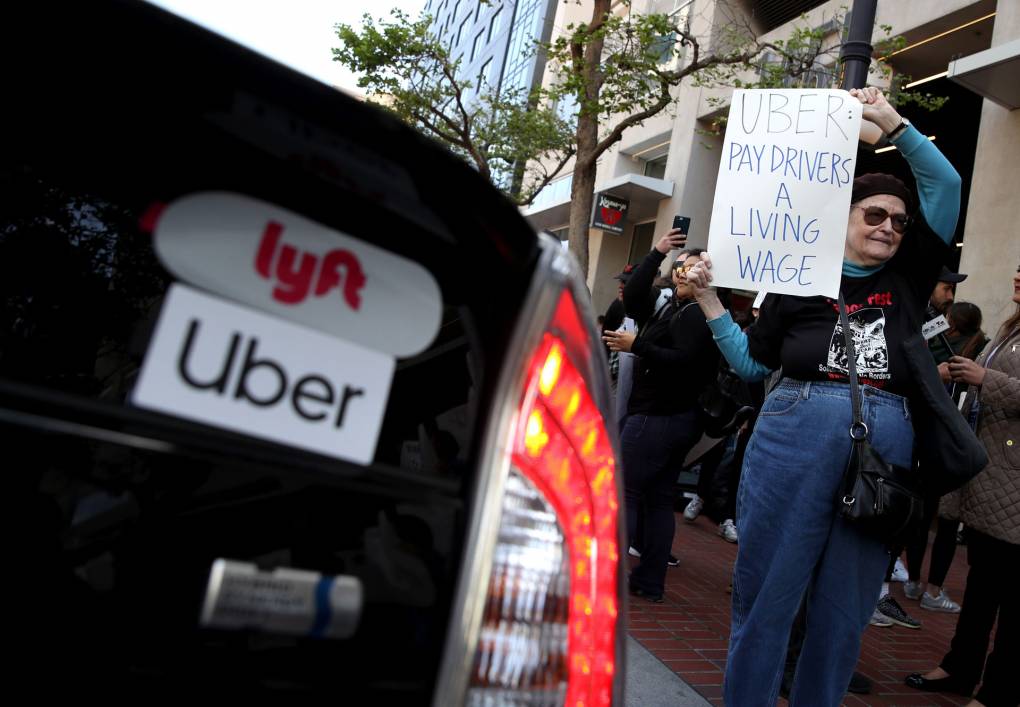
SF Supervisors Propose Tax on Wealthy CEOs, Ride-Hailing Companies for 2026 Ballot
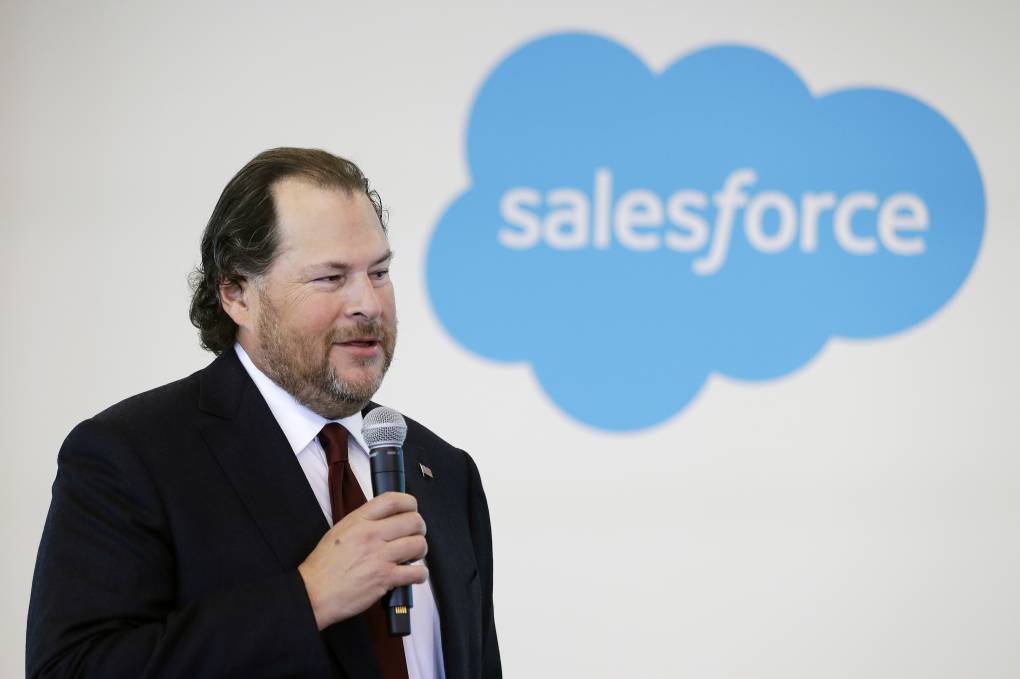
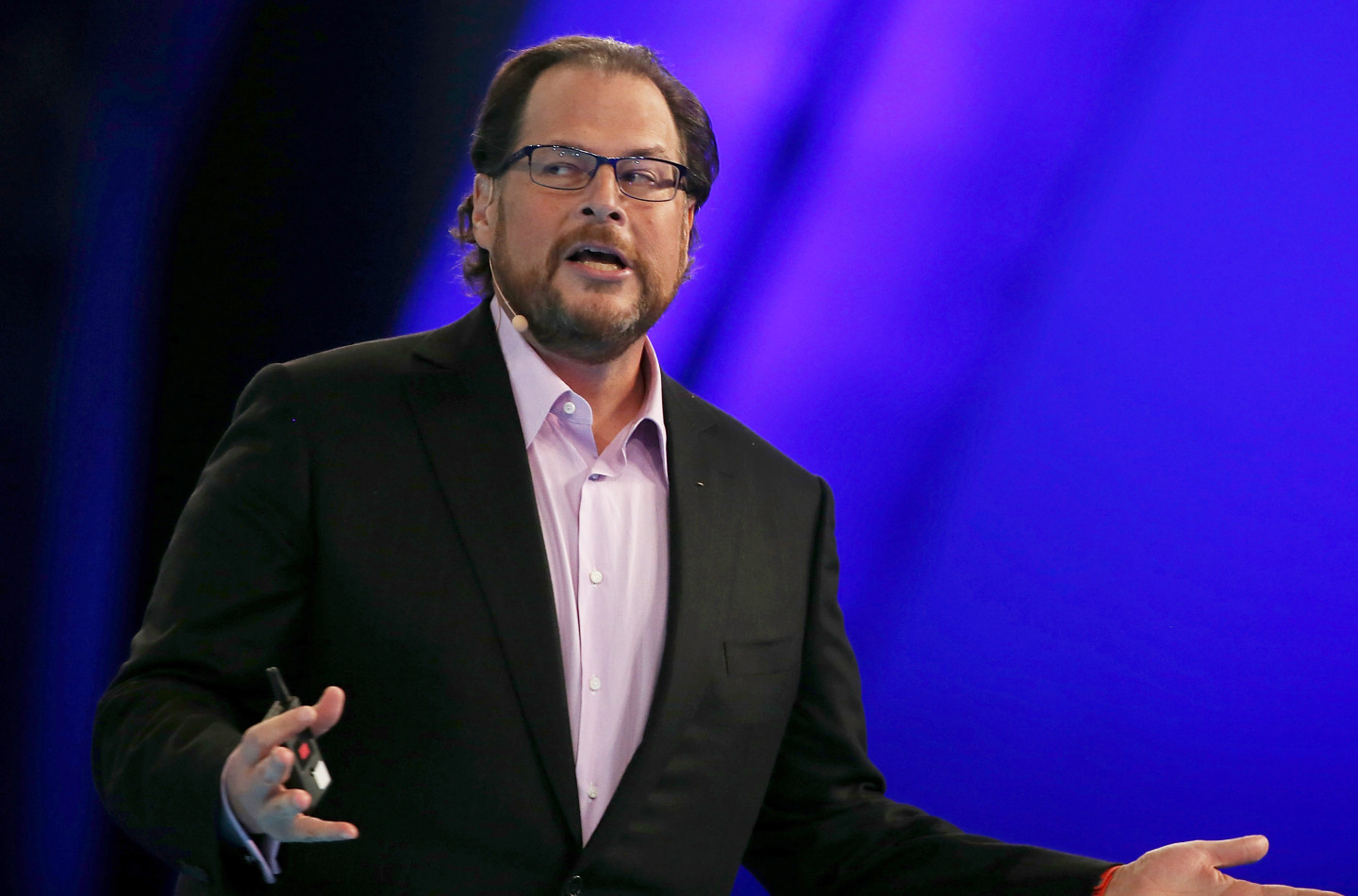
Salesforce CEO Marc Benioff Walks Back Call for National Guard to San Francisco
Trump Calls Out San Francisco as Next Target for National Guard Deployment
Salesforce CEO Marc Benioff, SF Mayor Scrap Event After National Guard Comment
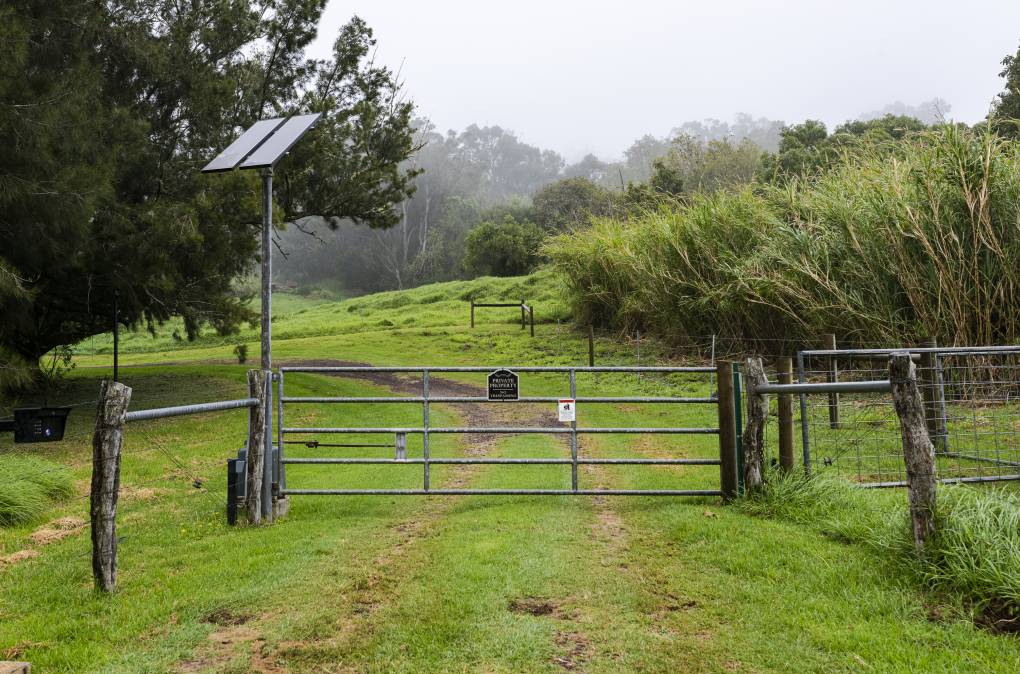
'I'm Not a Prepper': Why Is Bay Area Billionaire Marc Benioff Buying Up So Much Land in Hawaii?
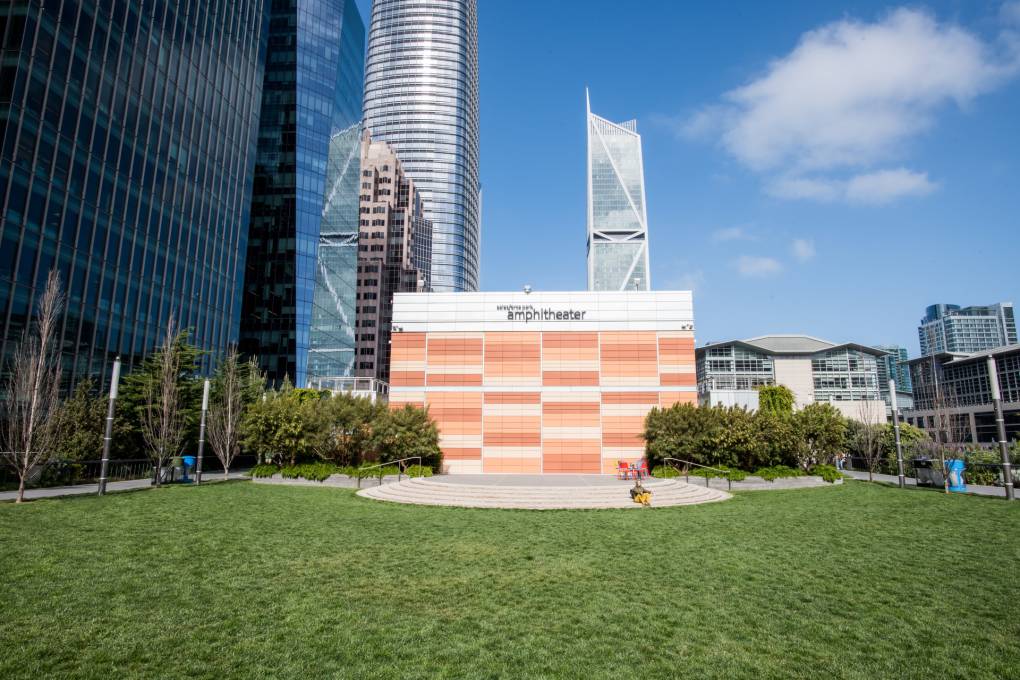
Salesforce to Lay Off 8,000 Workers in Latest Tech Purge
Salesforce CEO Marc Benioff Gives $30 Million to UCSF to Study Homelessness
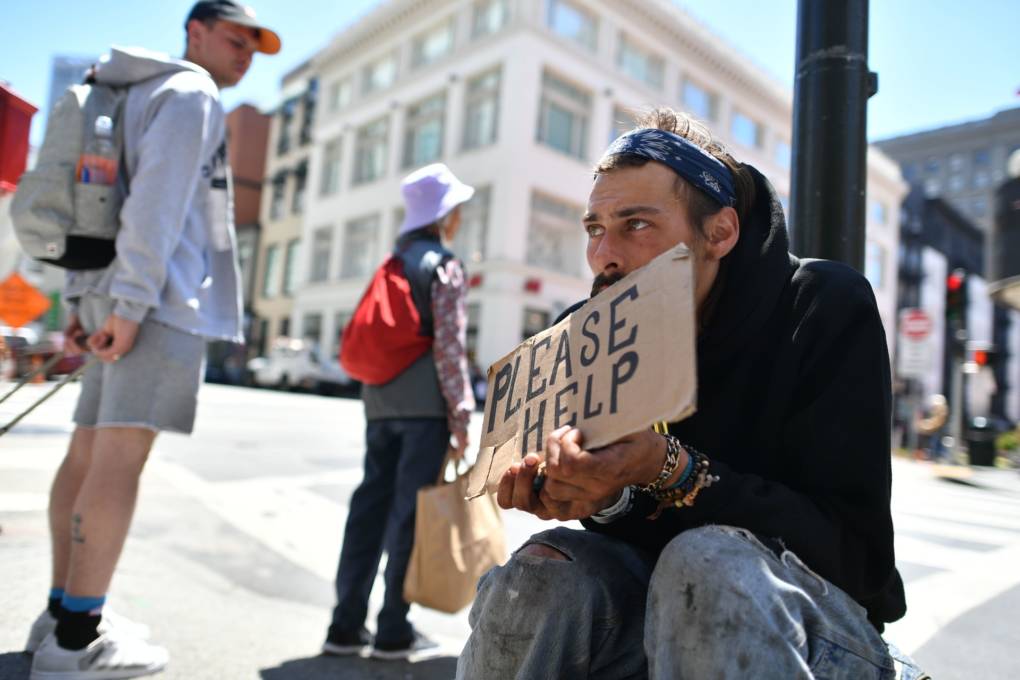
Should Big Business Pay to Fight Homelessness, Transportation Woes? Voters Will Decide
Benioffs to Buy Time Magazine for $190 Million
Sponsored
Player sponsored by
window.__IS_SSR__=true
window.__INITIAL_STATE__={
"attachmentsReducer": {
"audio_0": {
"type": "attachments",
"id": "audio_0",
"imgSizes": {
"kqedFullSize": {
"file": "https://ww2.kqed.org/news/wp-content/themes/KQED-unified/img/audio_bgs/background0.jpg"
}
}
},
"audio_1": {
"type": "attachments",
"id": "audio_1",
"imgSizes": {
"kqedFullSize": {
"file": "https://ww2.kqed.org/news/wp-content/themes/KQED-unified/img/audio_bgs/background1.jpg"
}
}
},
"audio_2": {
"type": "attachments",
"id": "audio_2",
"imgSizes": {
"kqedFullSize": {
"file": "https://ww2.kqed.org/news/wp-content/themes/KQED-unified/img/audio_bgs/background2.jpg"
}
}
},
"audio_3": {
"type": "attachments",
"id": "audio_3",
"imgSizes": {
"kqedFullSize": {
"file": "https://ww2.kqed.org/news/wp-content/themes/KQED-unified/img/audio_bgs/background3.jpg"
}
}
},
"audio_4": {
"type": "attachments",
"id": "audio_4",
"imgSizes": {
"kqedFullSize": {
"file": "https://ww2.kqed.org/news/wp-content/themes/KQED-unified/img/audio_bgs/background4.jpg"
}
}
},
"placeholder": {
"type": "attachments",
"id": "placeholder",
"imgSizes": {
"thumbnail": {
"file": "https://cdn.kqed.org/wp-content/uploads/2024/12/KQED-Default-Image-816638274-2000x1333-1-160x107.jpg",
"width": 160,
"height": 107,
"mimeType": "image/jpeg"
},
"medium": {
"file": "https://cdn.kqed.org/wp-content/uploads/2024/12/KQED-Default-Image-816638274-2000x1333-1-800x533.jpg",
"width": 800,
"height": 533,
"mimeType": "image/jpeg"
},
"medium_large": {
"file": "https://cdn.kqed.org/wp-content/uploads/2024/12/KQED-Default-Image-816638274-2000x1333-1-768x512.jpg",
"width": 768,
"height": 512,
"mimeType": "image/jpeg"
},
"large": {
"file": "https://cdn.kqed.org/wp-content/uploads/2024/12/KQED-Default-Image-816638274-2000x1333-1-1020x680.jpg",
"width": 1020,
"height": 680,
"mimeType": "image/jpeg"
},
"1536x1536": {
"file": "https://cdn.kqed.org/wp-content/uploads/2024/12/KQED-Default-Image-816638274-2000x1333-1-1536x1024.jpg",
"width": 1536,
"height": 1024,
"mimeType": "image/jpeg"
},
"fd-lrg": {
"file": "https://cdn.kqed.org/wp-content/uploads/2024/12/KQED-Default-Image-816638274-2000x1333-1-1536x1024.jpg",
"width": 1536,
"height": 1024,
"mimeType": "image/jpeg"
},
"fd-med": {
"file": "https://cdn.kqed.org/wp-content/uploads/2024/12/KQED-Default-Image-816638274-2000x1333-1-1020x680.jpg",
"width": 1020,
"height": 680,
"mimeType": "image/jpeg"
},
"fd-sm": {
"file": "https://cdn.kqed.org/wp-content/uploads/2024/12/KQED-Default-Image-816638274-2000x1333-1-800x533.jpg",
"width": 800,
"height": 533,
"mimeType": "image/jpeg"
},
"post-thumbnail": {
"file": "https://cdn.kqed.org/wp-content/uploads/2024/12/KQED-Default-Image-816638274-2000x1333-1-672x372.jpg",
"width": 672,
"height": 372,
"mimeType": "image/jpeg"
},
"twentyfourteen-full-width": {
"file": "https://cdn.kqed.org/wp-content/uploads/2024/12/KQED-Default-Image-816638274-2000x1333-1-1038x576.jpg",
"width": 1038,
"height": 576,
"mimeType": "image/jpeg"
},
"xxsmall": {
"file": "https://cdn.kqed.org/wp-content/uploads/2024/12/KQED-Default-Image-816638274-2000x1333-1-160x107.jpg",
"width": 160,
"height": 107,
"mimeType": "image/jpeg"
},
"xsmall": {
"file": "https://cdn.kqed.org/wp-content/uploads/2024/12/KQED-Default-Image-816638274-2000x1333-1-672x372.jpg",
"width": 672,
"height": 372,
"mimeType": "image/jpeg"
},
"small": {
"file": "https://cdn.kqed.org/wp-content/uploads/2024/12/KQED-Default-Image-816638274-2000x1333-1-672x372.jpg",
"width": 672,
"height": 372,
"mimeType": "image/jpeg"
},
"xlarge": {
"file": "https://cdn.kqed.org/wp-content/uploads/2024/12/KQED-Default-Image-816638274-2000x1333-1-1020x680.jpg",
"width": 1020,
"height": 680,
"mimeType": "image/jpeg"
},
"full-width": {
"file": "https://cdn.kqed.org/wp-content/uploads/2024/12/KQED-Default-Image-816638274-2000x1333-1-1920x1280.jpg",
"width": 1920,
"height": 1280,
"mimeType": "image/jpeg"
},
"guest-author-32": {
"file": "https://cdn.kqed.org/wp-content/uploads/2025/01/KQED-Default-Image-816638274-1333x1333-1-160x160.jpg",
"width": 32,
"height": 32,
"mimeType": "image/jpeg"
},
"guest-author-50": {
"file": "https://cdn.kqed.org/wp-content/uploads/2025/01/KQED-Default-Image-816638274-1333x1333-1-160x160.jpg",
"width": 50,
"height": 50,
"mimeType": "image/jpeg"
},
"guest-author-64": {
"file": "https://cdn.kqed.org/wp-content/uploads/2025/01/KQED-Default-Image-816638274-1333x1333-1-160x160.jpg",
"width": 64,
"height": 64,
"mimeType": "image/jpeg"
},
"guest-author-96": {
"file": "https://cdn.kqed.org/wp-content/uploads/2025/01/KQED-Default-Image-816638274-1333x1333-1-160x160.jpg",
"width": 96,
"height": 96,
"mimeType": "image/jpeg"
},
"guest-author-128": {
"file": "https://cdn.kqed.org/wp-content/uploads/2025/01/KQED-Default-Image-816638274-1333x1333-1-160x160.jpg",
"width": 128,
"height": 128,
"mimeType": "image/jpeg"
},
"detail": {
"file": "https://cdn.kqed.org/wp-content/uploads/2025/01/KQED-Default-Image-816638274-1333x1333-1-160x160.jpg",
"width": 160,
"height": 160,
"mimeType": "image/jpeg"
},
"kqedFullSize": {
"file": "https://cdn.kqed.org/wp-content/uploads/2024/12/KQED-Default-Image-816638274-2000x1333-1.jpg",
"width": 2000,
"height": 1333
}
}
},
"news_11843813": {
"type": "attachments",
"id": "news_11843813",
"meta": {
"index": "attachments_1716263798",
"site": "news",
"id": "11843813",
"found": true
},
"parent": 11843123,
"imgSizes": {
"apple_news_ca_landscape_5_5": {
"file": "https://ww2.kqed.org/app/uploads/sites/10/2020/10/uber-lyft-protest-sign-1044x783.jpg",
"width": 1044,
"mimeType": "image/jpeg",
"height": 783
},
"apple_news_ca_square_4_0": {
"file": "https://ww2.kqed.org/app/uploads/sites/10/2020/10/uber-lyft-protest-sign-470x470.jpg",
"width": 470,
"mimeType": "image/jpeg",
"height": 470
},
"twentyfourteen-full-width": {
"file": "https://ww2.kqed.org/app/uploads/sites/10/2020/10/uber-lyft-protest-sign-1038x576.jpg",
"width": 1038,
"mimeType": "image/jpeg",
"height": 576
},
"thumbnail": {
"file": "https://ww2.kqed.org/app/uploads/sites/10/2020/10/uber-lyft-protest-sign-160x111.jpg",
"width": 160,
"mimeType": "image/jpeg",
"height": 111
},
"post-thumbnail": {
"file": "https://ww2.kqed.org/app/uploads/sites/10/2020/10/uber-lyft-protest-sign-672x372.jpg",
"width": 672,
"mimeType": "image/jpeg",
"height": 372
},
"kqedFullSize": {
"file": "https://ww2.kqed.org/app/uploads/sites/10/2020/10/uber-lyft-protest-sign.jpg",
"width": 1920,
"height": 1330
},
"apple_news_ca_landscape_4_7": {
"file": "https://ww2.kqed.org/app/uploads/sites/10/2020/10/uber-lyft-protest-sign-632x474.jpg",
"width": 632,
"mimeType": "image/jpeg",
"height": 474
},
"large": {
"file": "https://ww2.kqed.org/app/uploads/sites/10/2020/10/uber-lyft-protest-sign-1020x707.jpg",
"width": 1020,
"mimeType": "image/jpeg",
"height": 707
},
"apple_news_ca_landscape_4_0": {
"file": "https://ww2.kqed.org/app/uploads/sites/10/2020/10/uber-lyft-protest-sign-536x402.jpg",
"width": 536,
"mimeType": "image/jpeg",
"height": 402
},
"apple_news_ca_portrait_12_9": {
"file": "https://ww2.kqed.org/app/uploads/sites/10/2020/10/uber-lyft-protest-sign-1122x1330.jpg",
"width": 1122,
"mimeType": "image/jpeg",
"height": 1330
},
"medium": {
"file": "https://ww2.kqed.org/app/uploads/sites/10/2020/10/uber-lyft-protest-sign-800x554.jpg",
"width": 800,
"mimeType": "image/jpeg",
"height": 554
},
"apple_news_ca_portrait_4_0": {
"file": "https://ww2.kqed.org/app/uploads/sites/10/2020/10/uber-lyft-protest-sign-354x472.jpg",
"width": 354,
"mimeType": "image/jpeg",
"height": 472
},
"apple_news_ca_portrait_9_7": {
"file": "https://ww2.kqed.org/app/uploads/sites/10/2020/10/uber-lyft-protest-sign-840x1120.jpg",
"width": 840,
"mimeType": "image/jpeg",
"height": 1120
},
"apple_news_ca_landscape_12_9": {
"file": "https://ww2.kqed.org/app/uploads/sites/10/2020/10/uber-lyft-protest-sign-1832x1330.jpg",
"width": 1832,
"mimeType": "image/jpeg",
"height": 1330
},
"apple_news_ca_square_9_7": {
"file": "https://ww2.kqed.org/app/uploads/sites/10/2020/10/uber-lyft-protest-sign-1104x1104.jpg",
"width": 1104,
"mimeType": "image/jpeg",
"height": 1104
},
"1536x1536": {
"file": "https://ww2.kqed.org/app/uploads/sites/10/2020/10/uber-lyft-protest-sign-1536x1064.jpg",
"width": 1536,
"mimeType": "image/jpeg",
"height": 1064
},
"apple_news_ca_portrait_4_7": {
"file": "https://ww2.kqed.org/app/uploads/sites/10/2020/10/uber-lyft-protest-sign-414x552.jpg",
"width": 414,
"mimeType": "image/jpeg",
"height": 552
},
"apple_news_ca_square_12_9": {
"file": "https://ww2.kqed.org/app/uploads/sites/10/2020/10/uber-lyft-protest-sign-1472x1330.jpg",
"width": 1472,
"mimeType": "image/jpeg",
"height": 1330
},
"apple_news_ca_portrait_5_5": {
"file": "https://ww2.kqed.org/app/uploads/sites/10/2020/10/uber-lyft-protest-sign-687x916.jpg",
"width": 687,
"mimeType": "image/jpeg",
"height": 916
},
"apple_news_ca_square_4_7": {
"file": "https://ww2.kqed.org/app/uploads/sites/10/2020/10/uber-lyft-protest-sign-550x550.jpg",
"width": 550,
"mimeType": "image/jpeg",
"height": 550
},
"apple_news_ca_landscape_9_7": {
"file": "https://ww2.kqed.org/app/uploads/sites/10/2020/10/uber-lyft-protest-sign-1376x1032.jpg",
"width": 1376,
"mimeType": "image/jpeg",
"height": 1032
},
"apple_news_ca_square_5_5": {
"file": "https://ww2.kqed.org/app/uploads/sites/10/2020/10/uber-lyft-protest-sign-912x912.jpg",
"width": 912,
"mimeType": "image/jpeg",
"height": 912
}
},
"publishDate": 1603753946,
"modified": 1678823724,
"caption": "A supporter of ride-hail drivers holds a sign during a protest in front of Uber headquarters in May 2019. San Francisco supervisors say recent comments from Salesforce CEO Marc Benioff warrant a proposed hike to the city’s Overpaid Executive Tax.",
"description": "A supporter of ride-hail drivers holds a sign during a protest in front of Uber headquarters in May, 2019. Prop. 22, backed by huge amounts of cash from gig companies, would create a new class of worker in California.",
"title": "uber-lyft-protest-sign",
"credit": "Justin Sullivan/Getty Images",
"status": "inherit",
"altTag": "Protesters stand on a sidewalk in front of an office, and next to a car with Lyft and Uber stickers on the back. A woman holds a sign that says: Uber: 'Pay Drivers a Living Wage.'",
"fetchFailed": false,
"isLoading": false
},
"news_11977514": {
"type": "attachments",
"id": "news_11977514",
"meta": {
"index": "attachments_1716263798",
"site": "news",
"id": "11977514",
"found": true
},
"title": "Benioff speaks during a news conference in 2019. He is adamant that he is not building a Salesforce facility in Waimea.",
"publishDate": 1709165719,
"status": "inherit",
"parent": 11977506,
"modified": 1760564920,
"caption": "Salesforce CEO Marc Benioff speaks during a news conference in Indianapolis on Dec. 1, 2020.",
"credit": "Darron Cummings/AP Photo",
"altTag": null,
"description": "FILE - In this May 16, 2019, file photo, Salesforce chairman Marc Benioff speaks during a news conference, in Indianapolis. In a deal announced Tuesday, Dec. 1, 2020, business software pioneer Salesforce.com is buying work-chatting service Slack for $27.7 billion in a deal aimed at giving the two companies a better shot at competing against longtime industry powerhouse Microsoft. (AP Photo/Darron Cummings, File)",
"imgSizes": {
"medium": {
"file": "https://cdn.kqed.org/wp-content/uploads/sites/10/2024/02/ap20336794283031_custom-78b2f9039ebb1cd87ba3c4d3edf97a3854590c5a-800x533.jpg",
"width": 800,
"height": 533,
"mimeType": "image/jpeg"
},
"large": {
"file": "https://cdn.kqed.org/wp-content/uploads/sites/10/2024/02/ap20336794283031_custom-78b2f9039ebb1cd87ba3c4d3edf97a3854590c5a-1020x679.jpg",
"width": 1020,
"height": 679,
"mimeType": "image/jpeg"
},
"thumbnail": {
"file": "https://cdn.kqed.org/wp-content/uploads/sites/10/2024/02/ap20336794283031_custom-78b2f9039ebb1cd87ba3c4d3edf97a3854590c5a-160x107.jpg",
"width": 160,
"height": 107,
"mimeType": "image/jpeg"
},
"1536x1536": {
"file": "https://cdn.kqed.org/wp-content/uploads/sites/10/2024/02/ap20336794283031_custom-78b2f9039ebb1cd87ba3c4d3edf97a3854590c5a-1536x1023.jpg",
"width": 1536,
"height": 1023,
"mimeType": "image/jpeg"
},
"2048x2048": {
"file": "https://cdn.kqed.org/wp-content/uploads/sites/10/2024/02/ap20336794283031_custom-78b2f9039ebb1cd87ba3c4d3edf97a3854590c5a-2048x1364.jpg",
"width": 2048,
"height": 1364,
"mimeType": "image/jpeg"
},
"post-thumbnail": {
"file": "https://cdn.kqed.org/wp-content/uploads/sites/10/2024/02/ap20336794283031_custom-78b2f9039ebb1cd87ba3c4d3edf97a3854590c5a-672x372.jpg",
"width": 672,
"height": 372,
"mimeType": "image/jpeg"
},
"twentyfourteen-full-width": {
"file": "https://cdn.kqed.org/wp-content/uploads/sites/10/2024/02/ap20336794283031_custom-78b2f9039ebb1cd87ba3c4d3edf97a3854590c5a-1038x576.jpg",
"width": 1038,
"height": 576,
"mimeType": "image/jpeg"
},
"full-width": {
"file": "https://cdn.kqed.org/wp-content/uploads/sites/10/2024/02/ap20336794283031_custom-78b2f9039ebb1cd87ba3c4d3edf97a3854590c5a-1920x1279.jpg",
"width": 1920,
"height": 1279,
"mimeType": "image/jpeg"
},
"kqedFullSize": {
"file": "https://cdn.kqed.org/wp-content/uploads/sites/10/2024/02/ap20336794283031_custom-78b2f9039ebb1cd87ba3c4d3edf97a3854590c5a-scaled-e1760564859201.jpg",
"width": 2000,
"height": 1332
}
},
"fetchFailed": false,
"isLoading": false
},
"news_12060040": {
"type": "attachments",
"id": "news_12060040",
"meta": {
"index": "attachments_1716263798",
"site": "news",
"id": "12060040",
"found": true
},
"title": "250609-LuriePresser-04-BL_qed",
"publishDate": 1760559792,
"status": "inherit",
"parent": 12060033,
"modified": 1760559803,
"caption": "Mayor Daniel Lurie speaks at a press conference with public safety leaders in San Francisco on June 9, 2025.",
"credit": "Beth LaBerge/KQED",
"altTag": null,
"description": null,
"imgSizes": {
"thumbnail": {
"file": "https://cdn.kqed.org/wp-content/uploads/sites/10/2025/10/250609-LuriePresser-04-BL_qed-160x107.jpg",
"width": 160,
"height": 107,
"mimeType": "image/jpeg"
},
"1536x1536": {
"file": "https://cdn.kqed.org/wp-content/uploads/sites/10/2025/10/250609-LuriePresser-04-BL_qed-1536x1024.jpg",
"width": 1536,
"height": 1024,
"mimeType": "image/jpeg"
},
"post-thumbnail": {
"file": "https://cdn.kqed.org/wp-content/uploads/sites/10/2025/10/250609-LuriePresser-04-BL_qed-672x372.jpg",
"width": 672,
"height": 372,
"mimeType": "image/jpeg"
},
"twentyfourteen-full-width": {
"file": "https://cdn.kqed.org/wp-content/uploads/sites/10/2025/10/250609-LuriePresser-04-BL_qed-1038x576.jpg",
"width": 1038,
"height": 576,
"mimeType": "image/jpeg"
},
"kqedFullSize": {
"file": "https://cdn.kqed.org/wp-content/uploads/sites/10/2025/10/250609-LuriePresser-04-BL_qed.jpg",
"width": 1999,
"height": 1333
}
},
"fetchFailed": false,
"isLoading": false
},
"news_12059732": {
"type": "attachments",
"id": "news_12059732",
"meta": {
"index": "attachments_1716263798",
"site": "news",
"id": "12059732",
"found": true
},
"title": "Salesforce CEO Marc Benioff And NVIDIA's CEO Jensen Huang Speak At Salesforce's Dreamforce Event",
"publishDate": 1760388192,
"status": "inherit",
"parent": 12059728,
"modified": 1760388229,
"caption": "Salesforce CEO Marc Benioff speaks during Salesforce's Dreamforce on Sept. 17, 2024, in San Francisco, California. ",
"credit": "Justin Sullivan/Getty Images",
"altTag": null,
"description": null,
"imgSizes": {
"thumbnail": {
"file": "https://cdn.kqed.org/wp-content/uploads/sites/10/2025/10/MarcBenioffGetty-160x107.jpg",
"width": 160,
"height": 107,
"mimeType": "image/jpeg"
},
"1536x1536": {
"file": "https://cdn.kqed.org/wp-content/uploads/sites/10/2025/10/MarcBenioffGetty-1536x1031.jpg",
"width": 1536,
"height": 1031,
"mimeType": "image/jpeg"
},
"post-thumbnail": {
"file": "https://cdn.kqed.org/wp-content/uploads/sites/10/2025/10/MarcBenioffGetty-672x372.jpg",
"width": 672,
"height": 372,
"mimeType": "image/jpeg"
},
"twentyfourteen-full-width": {
"file": "https://cdn.kqed.org/wp-content/uploads/sites/10/2025/10/MarcBenioffGetty-1038x576.jpg",
"width": 1038,
"height": 576,
"mimeType": "image/jpeg"
},
"kqedFullSize": {
"file": "https://cdn.kqed.org/wp-content/uploads/sites/10/2025/10/MarcBenioffGetty.jpg",
"width": 2000,
"height": 1343
}
},
"fetchFailed": false,
"isLoading": false
},
"news_11977507": {
"type": "attachments",
"id": "news_11977507",
"meta": {
"index": "attachments_1716263798",
"site": "news",
"id": "11977507",
"found": true
},
"parent": 11977506,
"imgSizes": {
"twentyfourteen-full-width": {
"file": "https://cdn.kqed.org/wp-content/uploads/sites/10/2024/02/waimea-2_custom-3e3b796df19537131158318566195b4713aae87c-1038x576.jpg",
"width": 1038,
"mimeType": "image/jpeg",
"height": 576
},
"thumbnail": {
"file": "https://cdn.kqed.org/wp-content/uploads/sites/10/2024/02/waimea-2_custom-3e3b796df19537131158318566195b4713aae87c-160x106.jpg",
"width": 160,
"mimeType": "image/jpeg",
"height": 106
},
"post-thumbnail": {
"file": "https://cdn.kqed.org/wp-content/uploads/sites/10/2024/02/waimea-2_custom-3e3b796df19537131158318566195b4713aae87c-672x372.jpg",
"width": 672,
"mimeType": "image/jpeg",
"height": 372
},
"kqedFullSize": {
"file": "https://cdn.kqed.org/wp-content/uploads/sites/10/2024/02/waimea-2_custom-3e3b796df19537131158318566195b4713aae87c-scaled.jpg",
"width": 2560,
"height": 1691
},
"2048x2048": {
"file": "https://cdn.kqed.org/wp-content/uploads/sites/10/2024/02/waimea-2_custom-3e3b796df19537131158318566195b4713aae87c-2048x1353.jpg",
"width": 2048,
"mimeType": "image/jpeg",
"height": 1353
},
"large": {
"file": "https://cdn.kqed.org/wp-content/uploads/sites/10/2024/02/waimea-2_custom-3e3b796df19537131158318566195b4713aae87c-1020x674.jpg",
"width": 1020,
"mimeType": "image/jpeg",
"height": 674
},
"1536x1536": {
"file": "https://cdn.kqed.org/wp-content/uploads/sites/10/2024/02/waimea-2_custom-3e3b796df19537131158318566195b4713aae87c-1536x1015.jpg",
"width": 1536,
"mimeType": "image/jpeg",
"height": 1015
},
"full-width": {
"file": "https://cdn.kqed.org/wp-content/uploads/sites/10/2024/02/waimea-2_custom-3e3b796df19537131158318566195b4713aae87c-1920x1268.jpg",
"width": 1920,
"mimeType": "image/jpeg",
"height": 1268
},
"medium": {
"file": "https://cdn.kqed.org/wp-content/uploads/sites/10/2024/02/waimea-2_custom-3e3b796df19537131158318566195b4713aae87c-800x529.jpg",
"width": 800,
"mimeType": "image/jpeg",
"height": 529
}
},
"publishDate": 1709165649,
"modified": 1709228984,
"caption": "The gate to a large property in Waimea, HI, on Jan. 30, 2024.",
"description": "The gate to a large property in Waimea, HI, on January 30, 2024.",
"title": "The gate to a large property in Waimea. Median home prices in the area are up 87% from pre-pandemic prices.",
"credit": "Ronit Fahl/NPR",
"status": "inherit",
"altTag": "A gate in front of a grassy landscape with trees and mountains in the background.",
"fetchFailed": false,
"isLoading": false
},
"news_11936763": {
"type": "attachments",
"id": "news_11936763",
"meta": {
"index": "attachments_1716263798",
"site": "news",
"id": "11936763",
"found": true
},
"parent": 11936759,
"imgSizes": {
"twentyfourteen-full-width": {
"file": "https://ww2.kqed.org/app/uploads/sites/10/2023/01/RS42057_048_KQED_SanFrancisco_Coronavirus_03132020_7414-qut-1038x576.jpg",
"width": 1038,
"mimeType": "image/jpeg",
"height": 576
},
"thumbnail": {
"file": "https://ww2.kqed.org/app/uploads/sites/10/2023/01/RS42057_048_KQED_SanFrancisco_Coronavirus_03132020_7414-qut-160x107.jpg",
"width": 160,
"mimeType": "image/jpeg",
"height": 107
},
"post-thumbnail": {
"file": "https://ww2.kqed.org/app/uploads/sites/10/2023/01/RS42057_048_KQED_SanFrancisco_Coronavirus_03132020_7414-qut-672x372.jpg",
"width": 672,
"mimeType": "image/jpeg",
"height": 372
},
"kqedFullSize": {
"file": "https://ww2.kqed.org/app/uploads/sites/10/2023/01/RS42057_048_KQED_SanFrancisco_Coronavirus_03132020_7414-qut.jpg",
"width": 1920,
"height": 1280
},
"large": {
"file": "https://ww2.kqed.org/app/uploads/sites/10/2023/01/RS42057_048_KQED_SanFrancisco_Coronavirus_03132020_7414-qut-1020x680.jpg",
"width": 1020,
"mimeType": "image/jpeg",
"height": 680
},
"1536x1536": {
"file": "https://ww2.kqed.org/app/uploads/sites/10/2023/01/RS42057_048_KQED_SanFrancisco_Coronavirus_03132020_7414-qut-1536x1024.jpg",
"width": 1536,
"mimeType": "image/jpeg",
"height": 1024
},
"medium": {
"file": "https://ww2.kqed.org/app/uploads/sites/10/2023/01/RS42057_048_KQED_SanFrancisco_Coronavirus_03132020_7414-qut-800x533.jpg",
"width": 800,
"mimeType": "image/jpeg",
"height": 533
}
},
"publishDate": 1672860281,
"modified": 1672862059,
"caption": "A nearly empty Salesforce Park in downtown San Francisco on March 13, 2020. Salesforce employed about 49,000 people in January 2020 just before the pandemic struck. Salesforce's workforce today is still 50% larger than it was before the pandemic.",
"description": null,
"title": "RS42057_048_KQED_SanFrancisco_Coronavirus_03132020_7414-qut",
"credit": "Beth LaBerge/KQED",
"status": "inherit",
"altTag": "Empty Salesforce park on a sunny day",
"fetchFailed": false,
"isLoading": false
},
"news_10467228": {
"type": "attachments",
"id": "news_10467228",
"meta": {
"index": "attachments_1716263798",
"site": "news",
"id": "10467228",
"found": true
},
"parent": 10467145,
"imgSizes": {
"twentyfourteen-full-width": {
"file": "https://ww2.kqed.org/app/uploads/sites/10/2015/03/457215846-1038x576.jpg",
"width": 1038,
"mimeType": "image/jpeg",
"height": 576
},
"thumbnail": {
"file": "https://ww2.kqed.org/app/uploads/sites/10/2015/03/457215846-400x264.jpg",
"width": 400,
"mimeType": "image/jpeg",
"height": 264
},
"fd-sm": {
"file": "https://ww2.kqed.org/app/uploads/sites/10/2015/03/457215846-320x211.jpg",
"width": 320,
"mimeType": "image/jpeg",
"height": 211
},
"post-thumbnail": {
"file": "https://ww2.kqed.org/app/uploads/sites/10/2015/03/457215846-672x372.jpg",
"width": 672,
"mimeType": "image/jpeg",
"height": 372
},
"kqedFullSize": {
"file": "https://ww2.kqed.org/app/uploads/sites/10/2015/03/457215846.jpg",
"width": 3000,
"height": 1980
},
"large": {
"file": "https://ww2.kqed.org/app/uploads/sites/10/2015/03/457215846-1440x950.jpg",
"width": 1440,
"mimeType": "image/jpeg",
"height": 950
},
"guest-author-96": {
"file": "https://ww2.kqed.org/app/uploads/sites/10/2015/03/457215846-96x96.jpg",
"width": 96,
"mimeType": "image/jpeg",
"height": 96
},
"medium": {
"file": "https://ww2.kqed.org/app/uploads/sites/10/2015/03/457215846-800x528.jpg",
"width": 800,
"mimeType": "image/jpeg",
"height": 528
},
"guest-author-64": {
"file": "https://ww2.kqed.org/app/uploads/sites/10/2015/03/457215846-64x64.jpg",
"width": 64,
"mimeType": "image/jpeg",
"height": 64
},
"guest-author-32": {
"file": "https://ww2.kqed.org/app/uploads/sites/10/2015/03/457215846-32x32.jpg",
"width": 32,
"mimeType": "image/jpeg",
"height": 32
},
"fd-lrg": {
"file": "https://ww2.kqed.org/app/uploads/sites/10/2015/03/457215846-1180x779.jpg",
"width": 1180,
"mimeType": "image/jpeg",
"height": 779
},
"fd-med": {
"file": "https://ww2.kqed.org/app/uploads/sites/10/2015/03/457215846-768x507.jpg",
"width": 768,
"mimeType": "image/jpeg",
"height": 507
},
"detail": {
"file": "https://ww2.kqed.org/app/uploads/sites/10/2015/03/457215846-75x75.jpg",
"width": 75,
"mimeType": "image/jpeg",
"height": 75
},
"guest-author-128": {
"file": "https://ww2.kqed.org/app/uploads/sites/10/2015/03/457215846-128x128.jpg",
"width": 128,
"mimeType": "image/jpeg",
"height": 128
}
},
"publishDate": 1427415324,
"modified": 1556737881,
"caption": "Salesforce CEO Marc Benioff delivers a keynote address during the 2014 DreamForce conference on Oct. 14, 2014, in San Francisco.",
"description": "Salesforce CEO Marc Benioff delivers a keynote address during the 2014 DreamForce conference on Oct. 14, 2014, in San Francisco.",
"title": "Marc Benioff-Salesforce.com",
"credit": "Justin Sullivan/Getty Images",
"status": "inherit",
"fetchFailed": false,
"isLoading": false
},
"news_11701175": {
"type": "attachments",
"id": "news_11701175",
"meta": {
"index": "attachments_1716263798",
"site": "news",
"id": "11701175",
"found": true
},
"parent": 11701154,
"imgSizes": {
"small": {
"file": "https://ww2.kqed.org/app/uploads/sites/10/2018/10/RS33432_GettyImages-543499084-qut-520x347.jpg",
"width": 520,
"mimeType": "image/jpeg",
"height": 347
},
"twentyfourteen-full-width": {
"file": "https://ww2.kqed.org/app/uploads/sites/10/2018/10/RS33432_GettyImages-543499084-qut-1038x576.jpg",
"width": 1038,
"mimeType": "image/jpeg",
"height": 576
},
"thumbnail": {
"file": "https://ww2.kqed.org/app/uploads/sites/10/2018/10/RS33432_GettyImages-543499084-qut-160x107.jpg",
"width": 160,
"mimeType": "image/jpeg",
"height": 107
},
"fd-sm": {
"file": "https://ww2.kqed.org/app/uploads/sites/10/2018/10/RS33432_GettyImages-543499084-qut-960x640.jpg",
"width": 960,
"mimeType": "image/jpeg",
"height": 640
},
"post-thumbnail": {
"file": "https://ww2.kqed.org/app/uploads/sites/10/2018/10/RS33432_GettyImages-543499084-qut-672x372.jpg",
"width": 672,
"mimeType": "image/jpeg",
"height": 372
},
"xsmall": {
"file": "https://ww2.kqed.org/app/uploads/sites/10/2018/10/RS33432_GettyImages-543499084-qut-375x250.jpg",
"width": 375,
"mimeType": "image/jpeg",
"height": 250
},
"kqedFullSize": {
"file": "https://ww2.kqed.org/app/uploads/sites/10/2018/10/RS33432_GettyImages-543499084-qut.jpg",
"width": 1920,
"height": 1280
},
"large": {
"file": "https://ww2.kqed.org/app/uploads/sites/10/2018/10/RS33432_GettyImages-543499084-qut-1020x680.jpg",
"width": 1020,
"mimeType": "image/jpeg",
"height": 680
},
"xlarge": {
"file": "https://ww2.kqed.org/app/uploads/sites/10/2018/10/RS33432_GettyImages-543499084-qut-1180x787.jpg",
"width": 1180,
"mimeType": "image/jpeg",
"height": 787
},
"complete_open_graph": {
"file": "https://ww2.kqed.org/app/uploads/sites/10/2018/10/RS33432_GettyImages-543499084-qut-1200x800.jpg",
"width": 1200,
"mimeType": "image/jpeg",
"height": 800
},
"guest-author-50": {
"file": "https://ww2.kqed.org/app/uploads/sites/10/2018/10/RS33432_GettyImages-543499084-qut-50x50.jpg",
"width": 50,
"mimeType": "image/jpeg",
"height": 50
},
"guest-author-96": {
"file": "https://ww2.kqed.org/app/uploads/sites/10/2018/10/RS33432_GettyImages-543499084-qut-96x96.jpg",
"width": 96,
"mimeType": "image/jpeg",
"height": 96
},
"medium": {
"file": "https://ww2.kqed.org/app/uploads/sites/10/2018/10/RS33432_GettyImages-543499084-qut-800x533.jpg",
"width": 800,
"mimeType": "image/jpeg",
"height": 533
},
"guest-author-64": {
"file": "https://ww2.kqed.org/app/uploads/sites/10/2018/10/RS33432_GettyImages-543499084-qut-64x64.jpg",
"width": 64,
"mimeType": "image/jpeg",
"height": 64
},
"guest-author-32": {
"file": "https://ww2.kqed.org/app/uploads/sites/10/2018/10/RS33432_GettyImages-543499084-qut-32x32.jpg",
"width": 32,
"mimeType": "image/jpeg",
"height": 32
},
"fd-lrg": {
"file": "https://ww2.kqed.org/app/uploads/sites/10/2018/10/RS33432_GettyImages-543499084-qut-1920x1280.jpg",
"width": 1920,
"mimeType": "image/jpeg",
"height": 1280
},
"fd-med": {
"file": "https://ww2.kqed.org/app/uploads/sites/10/2018/10/RS33432_GettyImages-543499084-qut-1180x787.jpg",
"width": 1180,
"mimeType": "image/jpeg",
"height": 787
},
"full-width": {
"file": "https://ww2.kqed.org/app/uploads/sites/10/2018/10/RS33432_GettyImages-543499084-qut-1920x1280.jpg",
"width": 1920,
"mimeType": "image/jpeg",
"height": 1280
},
"detail": {
"file": "https://ww2.kqed.org/app/uploads/sites/10/2018/10/RS33432_GettyImages-543499084-qut-150x150.jpg",
"width": 150,
"mimeType": "image/jpeg",
"height": 150
},
"guest-author-128": {
"file": "https://ww2.kqed.org/app/uploads/sites/10/2018/10/RS33432_GettyImages-543499084-qut-128x128.jpg",
"width": 128,
"mimeType": "image/jpeg",
"height": 128
},
"xxsmall": {
"file": "https://ww2.kqed.org/app/uploads/sites/10/2018/10/RS33432_GettyImages-543499084-qut-240x160.jpg",
"width": 240,
"mimeType": "image/jpeg",
"height": 160
}
},
"publishDate": 1540477674,
"modified": 1540507396,
"caption": "A man panhandles along a sidewalk in downtown San Francisco on June 28, 2016.",
"description": "A man panhandles along a sidewalk in downtown San Francisco on June 28, 2016.",
"title": "US-HOMELESS-SAN-FRANCISCO",
"credit": "Josh Edelson/Getty Images",
"status": "inherit",
"fetchFailed": false,
"isLoading": false
},
"news_11692898": {
"type": "attachments",
"id": "news_11692898",
"meta": {
"index": "attachments_1716263798",
"site": "news",
"id": "11692898",
"found": true
},
"parent": 11692894,
"imgSizes": {
"small": {
"file": "https://ww2.kqed.org/app/uploads/sites/10/2018/09/RS32836_GettyImages-981544576-qut-520x347.jpg",
"width": 520,
"mimeType": "image/jpeg",
"height": 347
},
"twentyfourteen-full-width": {
"file": "https://ww2.kqed.org/app/uploads/sites/10/2018/09/RS32836_GettyImages-981544576-qut-1038x576.jpg",
"width": 1038,
"mimeType": "image/jpeg",
"height": 576
},
"thumbnail": {
"file": "https://ww2.kqed.org/app/uploads/sites/10/2018/09/RS32836_GettyImages-981544576-qut-160x107.jpg",
"width": 160,
"mimeType": "image/jpeg",
"height": 107
},
"fd-sm": {
"file": "https://ww2.kqed.org/app/uploads/sites/10/2018/09/RS32836_GettyImages-981544576-qut-960x640.jpg",
"width": 960,
"mimeType": "image/jpeg",
"height": 640
},
"post-thumbnail": {
"file": "https://ww2.kqed.org/app/uploads/sites/10/2018/09/RS32836_GettyImages-981544576-qut-672x372.jpg",
"width": 672,
"mimeType": "image/jpeg",
"height": 372
},
"xsmall": {
"file": "https://ww2.kqed.org/app/uploads/sites/10/2018/09/RS32836_GettyImages-981544576-qut-375x250.jpg",
"width": 375,
"mimeType": "image/jpeg",
"height": 250
},
"kqedFullSize": {
"file": "https://ww2.kqed.org/app/uploads/sites/10/2018/09/RS32836_GettyImages-981544576-qut.jpg",
"width": 1920,
"height": 1280
},
"large": {
"file": "https://ww2.kqed.org/app/uploads/sites/10/2018/09/RS32836_GettyImages-981544576-qut-1020x680.jpg",
"width": 1020,
"mimeType": "image/jpeg",
"height": 680
},
"xlarge": {
"file": "https://ww2.kqed.org/app/uploads/sites/10/2018/09/RS32836_GettyImages-981544576-qut-1180x787.jpg",
"width": 1180,
"mimeType": "image/jpeg",
"height": 787
},
"complete_open_graph": {
"file": "https://ww2.kqed.org/app/uploads/sites/10/2018/09/RS32836_GettyImages-981544576-qut-1200x800.jpg",
"width": 1200,
"mimeType": "image/jpeg",
"height": 800
},
"guest-author-50": {
"file": "https://ww2.kqed.org/app/uploads/sites/10/2018/09/RS32836_GettyImages-981544576-qut-50x50.jpg",
"width": 50,
"mimeType": "image/jpeg",
"height": 50
},
"guest-author-96": {
"file": "https://ww2.kqed.org/app/uploads/sites/10/2018/09/RS32836_GettyImages-981544576-qut-96x96.jpg",
"width": 96,
"mimeType": "image/jpeg",
"height": 96
},
"medium": {
"file": "https://ww2.kqed.org/app/uploads/sites/10/2018/09/RS32836_GettyImages-981544576-qut-800x533.jpg",
"width": 800,
"mimeType": "image/jpeg",
"height": 533
},
"guest-author-64": {
"file": "https://ww2.kqed.org/app/uploads/sites/10/2018/09/RS32836_GettyImages-981544576-qut-64x64.jpg",
"width": 64,
"mimeType": "image/jpeg",
"height": 64
},
"guest-author-32": {
"file": "https://ww2.kqed.org/app/uploads/sites/10/2018/09/RS32836_GettyImages-981544576-qut-32x32.jpg",
"width": 32,
"mimeType": "image/jpeg",
"height": 32
},
"fd-lrg": {
"file": "https://ww2.kqed.org/app/uploads/sites/10/2018/09/RS32836_GettyImages-981544576-qut-1920x1280.jpg",
"width": 1920,
"mimeType": "image/jpeg",
"height": 1280
},
"fd-med": {
"file": "https://ww2.kqed.org/app/uploads/sites/10/2018/09/RS32836_GettyImages-981544576-qut-1180x787.jpg",
"width": 1180,
"mimeType": "image/jpeg",
"height": 787
},
"full-width": {
"file": "https://ww2.kqed.org/app/uploads/sites/10/2018/09/RS32836_GettyImages-981544576-qut-1920x1280.jpg",
"width": 1920,
"mimeType": "image/jpeg",
"height": 1280
},
"detail": {
"file": "https://ww2.kqed.org/app/uploads/sites/10/2018/09/RS32836_GettyImages-981544576-qut-150x150.jpg",
"width": 150,
"mimeType": "image/jpeg",
"height": 150
},
"guest-author-128": {
"file": "https://ww2.kqed.org/app/uploads/sites/10/2018/09/RS32836_GettyImages-981544576-qut-128x128.jpg",
"width": 128,
"mimeType": "image/jpeg",
"height": 128
},
"xxsmall": {
"file": "https://ww2.kqed.org/app/uploads/sites/10/2018/09/RS32836_GettyImages-981544576-qut-240x160.jpg",
"width": 240,
"mimeType": "image/jpeg",
"height": 160
}
},
"publishDate": 1537150421,
"modified": 1537150464,
"caption": "Marc and Lynne Benioff have agreed to buy Time Magazine for $190 million.",
"description": "Marc and Lynne Benioff have agreed to buy Time Magazine for $190 million.",
"title": "US-IMMIGRATION-MIGRANTS-TIME MAGAZINE-MEDIA-INTERNET",
"credit": "ERIC BARADAT/AFP/Getty Images",
"status": "inherit",
"fetchFailed": false,
"isLoading": false
}
},
"audioPlayerReducer": {
"postId": "stream_live",
"isPaused": true,
"isPlaying": false,
"pfsActive": false,
"pledgeModalIsOpen": true,
"playerDrawerIsOpen": false
},
"authorsReducer": {
"byline_news_11977506": {
"type": "authors",
"id": "byline_news_11977506",
"meta": {
"override": true
},
"slug": "byline_news_11977506",
"name": "Dara Kerr",
"isLoading": false
},
"byline_news_11936759": {
"type": "authors",
"id": "byline_news_11936759",
"meta": {
"override": true
},
"slug": "byline_news_11936759",
"name": "Michael Liedtke and Michelle Chapman\u003cbr>The Associated Press",
"isLoading": false
},
"byline_news_11744229": {
"type": "authors",
"id": "byline_news_11744229",
"meta": {
"override": true
},
"slug": "byline_news_11744229",
"name": "\u003cstrong>Associated Press\u003c/strong>",
"isLoading": false
},
"byline_news_11692894": {
"type": "authors",
"id": "byline_news_11692894",
"meta": {
"override": true
},
"slug": "byline_news_11692894",
"name": "\u003cstrong>Martin Crutsinger\u003c/br>Associated Press\u003c/strong>",
"isLoading": false
},
"gmarzorati": {
"type": "authors",
"id": "227",
"meta": {
"index": "authors_1716337520",
"id": "227",
"found": true
},
"name": "Guy Marzorati",
"firstName": "Guy",
"lastName": "Marzorati",
"slug": "gmarzorati",
"email": "gmarzorati@KQED.org",
"display_author_email": true,
"staff_mastheads": [
"news"
],
"title": "Correspondent",
"bio": "Guy Marzorati is a correspondent on KQED's California Politics and Government Desk, based in San Jose. A graduate of Santa Clara University, Guy joined KQED in 2013. He reports on state and local politics and produces KQED's digital voter guide.",
"avatar": "https://secure.gravatar.com/avatar/e7038b8dbfd55b104369b76b1cd0b9de?s=600&d=blank&r=g",
"twitter": "guymarzorati",
"facebook": null,
"instagram": null,
"linkedin": null,
"sites": [
{
"site": "",
"roles": [
"editor"
]
},
{
"site": "news",
"roles": [
"editor"
]
},
{
"site": "science",
"roles": [
"editor"
]
},
{
"site": "forum",
"roles": [
"editor"
]
},
{
"site": "elections",
"roles": [
"editor"
]
},
{
"site": "liveblog",
"roles": [
"editor"
]
}
],
"headData": {
"title": "Guy Marzorati | KQED",
"description": "Correspondent",
"ogImgSrc": "https://secure.gravatar.com/avatar/e7038b8dbfd55b104369b76b1cd0b9de?s=600&d=blank&r=g",
"twImgSrc": "https://secure.gravatar.com/avatar/e7038b8dbfd55b104369b76b1cd0b9de?s=600&d=blank&r=g"
},
"isLoading": false,
"link": "/author/gmarzorati"
},
"sjohnson": {
"type": "authors",
"id": "11840",
"meta": {
"index": "authors_1716337520",
"id": "11840",
"found": true
},
"name": "Sydney Johnson",
"firstName": "Sydney",
"lastName": "Johnson",
"slug": "sjohnson",
"email": "sjohnson@kqed.org",
"display_author_email": false,
"staff_mastheads": [
"news"
],
"title": "KQED Reporter",
"bio": "Sydney Johnson is a general assignment reporter at KQED. She previously reported on public health and city government at the San Francisco Examiner, and before that, she covered statewide education policy for EdSource. Her reporting has won multiple local, state and national awards. Sydney is a graduate of the University of California, Berkeley and lives in San Francisco.",
"avatar": "https://secure.gravatar.com/avatar/97855f2719b72ad6190b7c535fe642c8?s=600&d=blank&r=g",
"twitter": "sydneyfjohnson",
"facebook": null,
"instagram": null,
"linkedin": null,
"sites": [
{
"site": "news",
"roles": [
"editor"
]
}
],
"headData": {
"title": "Sydney Johnson | KQED",
"description": "KQED Reporter",
"ogImgSrc": "https://secure.gravatar.com/avatar/97855f2719b72ad6190b7c535fe642c8?s=600&d=blank&r=g",
"twImgSrc": "https://secure.gravatar.com/avatar/97855f2719b72ad6190b7c535fe642c8?s=600&d=blank&r=g"
},
"isLoading": false,
"link": "/author/sjohnson"
}
},
"breakingNewsReducer": {},
"pagesReducer": {},
"postsReducer": {
"stream_live": {
"type": "live",
"id": "stream_live",
"audioUrl": "https://streams.kqed.org/kqedradio",
"title": "Live Stream",
"excerpt": "Live Stream information currently unavailable.",
"link": "/radio",
"featImg": "",
"label": {
"name": "KQED Live",
"link": "/"
}
},
"stream_kqedNewscast": {
"type": "posts",
"id": "stream_kqedNewscast",
"audioUrl": "https://www.kqed.org/.stream/anon/radio/RDnews/newscast.mp3?_=1",
"title": "KQED Newscast",
"featImg": "",
"label": {
"name": "88.5 FM",
"link": "/"
}
},
"news_12061967": {
"type": "posts",
"id": "news_12061967",
"meta": {
"index": "posts_1716263798",
"site": "news",
"id": "12061967",
"score": null,
"sort": [
1761748209000
]
},
"guestAuthors": [],
"slug": "sf-supervisors-propose-tax-on-wealthy-ceos-ride-hailing-companies-for-2026-ballot",
"title": "SF Supervisors Propose Tax on Wealthy CEOs, Ride-Hailing Companies for 2026 Ballot",
"publishDate": 1761748209,
"format": "standard",
"headTitle": "SF Supervisors Propose Tax on Wealthy CEOs, Ride-Hailing Companies for 2026 Ballot | KQED",
"labelTerm": {
"site": "news"
},
"content": "\u003cp>San Francisco supervisors are looking to increase taxes on the city’s wealthiest executives and ride-hailing companies through a \u003ca href=\"https://media.api.sf.gov/documents/20251024_Gross_Receipts_Tax_Increase_for_Certain_Ride_Services.pdf?utm_campaign=power_play&utm_medium=email&utm_source=sfs_newsletter&utm_term=10_26_25\">November 2026 ballot measure\u003c/a>.\u003c/p>\n\u003cp>Supervisor Connie Chan said the move was urgent after Salesforce CEO Marc Benioff’s recent comments supporting President Donald Trump’s threats to send the National Guard to San Francisco, which triggered a \u003ca href=\"https://www.kqed.org/news/12060875/san-francisco-prepares-necessary-legal-action-if-trump-deploys-national-guard\">media firestorm\u003c/a> before Benioff \u003ca href=\"https://www.kqed.org/news/12060384/salesforce-ceo-marc-benioff-walks-back-call-for-national-guard-to-san-francisco\">walked back his remarks\u003c/a> and proved instrumental in getting Trump to abandon his plans for an immigration enforcement surge in the Bay Area.\u003c/p>\n\u003cp>“They make billions in profit off of the backs of workers in San Francisco, then they can have a throwaway line and throw the entire city into turmoil. It’s time to make sure they pay their fair share,” Chan told KQED.\u003c/p>\n\u003cp>[ad fullwidth]\u003c/p>\n\u003cp>Chan’s proposal would ask city voters to reinstate the previous structure of the city’s Overpaid Executive Tax, which imposes a tax on businesses where the highest-paid executive earns more than 100 times the median compensation of San Francisco employees.. In November 2024, voters repealed parts of the executive tax through Proposition M, a comprehensive business tax reform measure. Chan’s proposal allows other changes made in Prop M to remain intact.\u003c/p>\n\u003cp>The plan would also raise taxes on ride-hailing companies, including Uber, Lyft and Waymo, similar to Proposition L on the November 2024 ballot. Although voters approved Prop L, the proposal did not take effect because Prop M included a provision that nullified the ride-share tax.\u003c/p>\n\u003cfigure id=\"attachment_12053307\" class=\"wp-caption aligncenter\" style=\"max-width: 2000px\">\u003cimg loading=\"lazy\" decoding=\"async\" class=\"size-full wp-image-12053307\" src=\"https://cdn.kqed.org/wp-content/uploads/sites/10/2025/08/231102-DriverlessTaxi-15-BL_qed.jpg\" alt=\"\" width=\"2000\" height=\"1333\" srcset=\"https://cdn.kqed.org/wp-content/uploads/sites/10/2025/08/231102-DriverlessTaxi-15-BL_qed.jpg 2000w, https://cdn.kqed.org/wp-content/uploads/sites/10/2025/08/231102-DriverlessTaxi-15-BL_qed-160x107.jpg 160w, https://cdn.kqed.org/wp-content/uploads/sites/10/2025/08/231102-DriverlessTaxi-15-BL_qed-1536x1024.jpg 1536w\" sizes=\"auto, (max-width: 2000px) 100vw, 2000px\">\u003cfigcaption class=\"wp-caption-text\">A Waymo driverless taxi drives through Downtown San Francisco, California, on Nov. 2, 2023. \u003ccite>(Carlos Avila Gonzalez/SF Chronicle )\u003c/cite>\u003c/figcaption>\u003c/figure>\n\u003cp>The ballot measure proposal needs only a 50% majority to pass, and could generate around $150-200 million annually. It has been submitted for a hearing before the Board of Supervisors Rules Committee; however, it automatically qualifies for the November 2026 ballot because four supervisors signed on — Chan, along with Supervisors Shamann Walton, Jackie Fielder and Chyanne Chen.\u003c/p>\n\u003cp>Chan, who represents the Richmond District, said the funding, which would not be earmarked for a specific purpose, is needed as the city weathers cuts from the federal government to healthcare, food benefits and the city’s public transportation system, which is facing a deficit of more than $300 million.\u003c/p>\n\u003cp>“Our city government is being put into an impossible position to step up to the plate, which is to say that this is the time and moment that billionaires need to pay their fair share,” Chan said. “We know that since January, they’ve gotten their way with the Trump administration through tax cuts.”[aside postID=news_12060384 hero='https://cdn.kqed.org/wp-content/uploads/sites/10/2024/02/ap20336794283031_custom-78b2f9039ebb1cd87ba3c4d3edf97a3854590c5a-1020x679.jpg']Other state and local officials have meanwhile put forward other ideas to solve the city’s funding gaps. Mayor Daniel Lurie is backing a \u003ca href=\"https://www.sf.gov/news-mayor-lurie-unveils-heart-of-the-city-executive-directive-to-accelerate-san-franciscos-economic-comeback\">parcel tax that would raise funding\u003c/a> for local public transit. State Sens. Scott Wiener (D-San Francisco) and Jesse Arreguín (D-Berkeley) have put forward a \u003ca href=\"https://www.kqed.org/news/12032607/first-look-at-2026-tax-proposal-to-keep-bay-area-transit-running\">regional sales tax for the November 2026\u003c/a> ballot to fund Bay Area transit agencies.\u003c/p>\n\u003cp>Lurie has not publicly commented on the recent progressive business tax measure.\u003c/p>\n\u003cp>Earlier this year, the mayor moved to \u003ca href=\"https://www.sf.gov/news-mayor-lurie-announces-next-phase-of-waymo-operations-on-market-street-to-drive-downtowns-comeback-with-new-transportation-options-coming-to-market-street-august-26\">allow Waymo’s autonomous vehicles\u003c/a> to drive along the stretch of Market Street where cars are prohibited, stirring backlash from Uber and Lyft, as well as public transportation and bicycle advocates.\u003c/p>\n\u003cp>“This measure would hinder the city’s comeback by making rides more expensive and hurting drivers,” said CJ Macklin, director of communications at Lyft. “This would be particularly devastating for low-income communities who struggle to even access the Muni system and depend on ride-share to get around. It’s the wrong move for San Francisco.”\u003c/p>\n\u003cp>“This TNC tax hits people who most rely on our platform to move and work,” a spokesperson for Uber said in an email. “It is irresponsible and blatantly ignores the city’s affordability crisis, less than a year after voters overwhelmingly approved business tax reform [Prop M] to encourage our city’s recovery.”\u003c/p>\n\u003cp>Waymo did not immediately respond to requests for comment.\u003c/p>\n\u003cp>Supervisor Matt Dorsey, who represents downtown and Mission Bay, where many major companies and ride-share services are based, did not co-sign the paperwork for the proposal.\u003c/p>\n\u003cp>But he said he’s open to a tax on ride-hailing companies to fund public transportation, and supported Prop L in 2024.\u003c/p>\n\u003cp>“My big worry as the downtown supervisor when we ask for funding for our transit service and Muni, in particular, it needs to be a tax that’s fair, reasonable and sufficient to solve the problem,” Dorsey said. “I would like for everybody to get on the same page. Public transit is something that we can’t afford to lose.”\u003c/p>\n\u003cp>\u003c/p>\n",
"blocks": [],
"excerpt": "San Francisco supervisors say recent comments from Salesforce CEO Marc Benioff warrant the proposed hike to the city’s Overpaid Executive Tax.",
"status": "publish",
"parent": 0,
"modified": 1761763045,
"stats": {
"hasAudio": false,
"hasVideo": false,
"hasChartOrMap": false,
"iframeSrcs": [],
"hasGoogleForm": false,
"hasGallery": false,
"hasHearkenModule": false,
"hasPolis": false,
"paragraphCount": 18,
"wordCount": 832
},
"headData": {
"title": "SF Supervisors Propose Tax on Wealthy CEOs, Ride-Hailing Companies for 2026 Ballot | KQED",
"description": "San Francisco supervisors say recent comments from Salesforce CEO Marc Benioff warrant the proposed hike to the city’s Overpaid Executive Tax.",
"ogTitle": "",
"ogDescription": "",
"ogImgId": "",
"twTitle": "",
"twDescription": "",
"twImgId": "",
"schema": {
"@context": "https://schema.org",
"@type": "NewsArticle",
"headline": "SF Supervisors Propose Tax on Wealthy CEOs, Ride-Hailing Companies for 2026 Ballot",
"datePublished": "2025-10-29T07:30:09-07:00",
"dateModified": "2025-10-29T11:37:25-07:00",
"image": "https://cdn.kqed.org/wp-content/uploads/2020/02/KQED-OG-Image@1x.png",
"isAccessibleForFree": "True",
"publisher": {
"@type": "NewsMediaOrganization",
"@id": "https://www.kqed.org/#organization",
"name": "KQED",
"logo": "https://cdn.kqed.org/wp-content/uploads/2020/02/KQED-OG-Image@1x.png",
"url": "https://www.kqed.org",
"sameAs": [
"https://www.facebook.com/KQED",
"https://twitter.com/KQED",
"https://www.instagram.com/kqed/",
"https://www.tiktok.com/@kqedofficial",
"https://www.linkedin.com/company/kqed",
"https://www.youtube.com/channel/UCeC0IOo7i1P_61zVUWbJ4nw"
]
}
}
},
"primaryCategory": {
"termId": 13,
"slug": "politics",
"name": "Politics"
},
"sticky": false,
"nprStoryId": "kqed-12061967",
"templateType": "standard",
"featuredImageType": "standard",
"excludeFromSiteSearch": "Include",
"articleAge": "0",
"path": "/news/12061967/sf-supervisors-propose-tax-on-wealthy-ceos-ride-hailing-companies-for-2026-ballot",
"audioTrackLength": null,
"parsedContent": [
{
"type": "contentString",
"content": "\u003cdiv class=\"post-body\">\u003cp>\u003cp>San Francisco supervisors are looking to increase taxes on the city’s wealthiest executives and ride-hailing companies through a \u003ca href=\"https://media.api.sf.gov/documents/20251024_Gross_Receipts_Tax_Increase_for_Certain_Ride_Services.pdf?utm_campaign=power_play&utm_medium=email&utm_source=sfs_newsletter&utm_term=10_26_25\">November 2026 ballot measure\u003c/a>.\u003c/p>\n\u003cp>Supervisor Connie Chan said the move was urgent after Salesforce CEO Marc Benioff’s recent comments supporting President Donald Trump’s threats to send the National Guard to San Francisco, which triggered a \u003ca href=\"https://www.kqed.org/news/12060875/san-francisco-prepares-necessary-legal-action-if-trump-deploys-national-guard\">media firestorm\u003c/a> before Benioff \u003ca href=\"https://www.kqed.org/news/12060384/salesforce-ceo-marc-benioff-walks-back-call-for-national-guard-to-san-francisco\">walked back his remarks\u003c/a> and proved instrumental in getting Trump to abandon his plans for an immigration enforcement surge in the Bay Area.\u003c/p>\n\u003cp>“They make billions in profit off of the backs of workers in San Francisco, then they can have a throwaway line and throw the entire city into turmoil. It’s time to make sure they pay their fair share,” Chan told KQED.\u003c/p>\n\u003cp>\u003c/p>\u003c/div>",
"attributes": {
"named": {},
"numeric": []
}
},
{
"type": "component",
"content": "",
"name": "ad",
"attributes": {
"named": {
"label": "fullwidth"
},
"numeric": [
"fullwidth"
]
}
},
{
"type": "contentString",
"content": "\u003cdiv class=\"post-body\">\u003cp>\u003c/p>\n\u003cp>Chan’s proposal would ask city voters to reinstate the previous structure of the city’s Overpaid Executive Tax, which imposes a tax on businesses where the highest-paid executive earns more than 100 times the median compensation of San Francisco employees.. In November 2024, voters repealed parts of the executive tax through Proposition M, a comprehensive business tax reform measure. Chan’s proposal allows other changes made in Prop M to remain intact.\u003c/p>\n\u003cp>The plan would also raise taxes on ride-hailing companies, including Uber, Lyft and Waymo, similar to Proposition L on the November 2024 ballot. Although voters approved Prop L, the proposal did not take effect because Prop M included a provision that nullified the ride-share tax.\u003c/p>\n\u003cfigure id=\"attachment_12053307\" class=\"wp-caption aligncenter\" style=\"max-width: 2000px\">\u003cimg loading=\"lazy\" decoding=\"async\" class=\"size-full wp-image-12053307\" src=\"https://cdn.kqed.org/wp-content/uploads/sites/10/2025/08/231102-DriverlessTaxi-15-BL_qed.jpg\" alt=\"\" width=\"2000\" height=\"1333\" srcset=\"https://cdn.kqed.org/wp-content/uploads/sites/10/2025/08/231102-DriverlessTaxi-15-BL_qed.jpg 2000w, https://cdn.kqed.org/wp-content/uploads/sites/10/2025/08/231102-DriverlessTaxi-15-BL_qed-160x107.jpg 160w, https://cdn.kqed.org/wp-content/uploads/sites/10/2025/08/231102-DriverlessTaxi-15-BL_qed-1536x1024.jpg 1536w\" sizes=\"auto, (max-width: 2000px) 100vw, 2000px\">\u003cfigcaption class=\"wp-caption-text\">A Waymo driverless taxi drives through Downtown San Francisco, California, on Nov. 2, 2023. \u003ccite>(Carlos Avila Gonzalez/SF Chronicle )\u003c/cite>\u003c/figcaption>\u003c/figure>\n\u003cp>The ballot measure proposal needs only a 50% majority to pass, and could generate around $150-200 million annually. It has been submitted for a hearing before the Board of Supervisors Rules Committee; however, it automatically qualifies for the November 2026 ballot because four supervisors signed on — Chan, along with Supervisors Shamann Walton, Jackie Fielder and Chyanne Chen.\u003c/p>\n\u003cp>Chan, who represents the Richmond District, said the funding, which would not be earmarked for a specific purpose, is needed as the city weathers cuts from the federal government to healthcare, food benefits and the city’s public transportation system, which is facing a deficit of more than $300 million.\u003c/p>\n\u003cp>“Our city government is being put into an impossible position to step up to the plate, which is to say that this is the time and moment that billionaires need to pay their fair share,” Chan said. “We know that since January, they’ve gotten their way with the Trump administration through tax cuts.”\u003c/p>\u003c/div>",
"attributes": {
"named": {},
"numeric": []
}
},
{
"type": "component",
"content": "",
"name": "aside",
"attributes": {
"named": {
"postid": "news_12060384",
"hero": "https://cdn.kqed.org/wp-content/uploads/sites/10/2024/02/ap20336794283031_custom-78b2f9039ebb1cd87ba3c4d3edf97a3854590c5a-1020x679.jpg",
"label": ""
},
"numeric": []
}
},
{
"type": "contentString",
"content": "\u003cdiv class=\"post-body\">\u003cp>Other state and local officials have meanwhile put forward other ideas to solve the city’s funding gaps. Mayor Daniel Lurie is backing a \u003ca href=\"https://www.sf.gov/news-mayor-lurie-unveils-heart-of-the-city-executive-directive-to-accelerate-san-franciscos-economic-comeback\">parcel tax that would raise funding\u003c/a> for local public transit. State Sens. Scott Wiener (D-San Francisco) and Jesse Arreguín (D-Berkeley) have put forward a \u003ca href=\"https://www.kqed.org/news/12032607/first-look-at-2026-tax-proposal-to-keep-bay-area-transit-running\">regional sales tax for the November 2026\u003c/a> ballot to fund Bay Area transit agencies.\u003c/p>\n\u003cp>Lurie has not publicly commented on the recent progressive business tax measure.\u003c/p>\n\u003cp>Earlier this year, the mayor moved to \u003ca href=\"https://www.sf.gov/news-mayor-lurie-announces-next-phase-of-waymo-operations-on-market-street-to-drive-downtowns-comeback-with-new-transportation-options-coming-to-market-street-august-26\">allow Waymo’s autonomous vehicles\u003c/a> to drive along the stretch of Market Street where cars are prohibited, stirring backlash from Uber and Lyft, as well as public transportation and bicycle advocates.\u003c/p>\n\u003cp>“This measure would hinder the city’s comeback by making rides more expensive and hurting drivers,” said CJ Macklin, director of communications at Lyft. “This would be particularly devastating for low-income communities who struggle to even access the Muni system and depend on ride-share to get around. It’s the wrong move for San Francisco.”\u003c/p>\n\u003cp>“This TNC tax hits people who most rely on our platform to move and work,” a spokesperson for Uber said in an email. “It is irresponsible and blatantly ignores the city’s affordability crisis, less than a year after voters overwhelmingly approved business tax reform [Prop M] to encourage our city’s recovery.”\u003c/p>\n\u003cp>Waymo did not immediately respond to requests for comment.\u003c/p>\n\u003cp>Supervisor Matt Dorsey, who represents downtown and Mission Bay, where many major companies and ride-share services are based, did not co-sign the paperwork for the proposal.\u003c/p>\n\u003cp>But he said he’s open to a tax on ride-hailing companies to fund public transportation, and supported Prop L in 2024.\u003c/p>\n\u003cp>“My big worry as the downtown supervisor when we ask for funding for our transit service and Muni, in particular, it needs to be a tax that’s fair, reasonable and sufficient to solve the problem,” Dorsey said. “I would like for everybody to get on the same page. Public transit is something that we can’t afford to lose.”\u003c/p>\n\u003cp>\u003c/p>\n\u003c/div>\u003c/p>",
"attributes": {
"named": {},
"numeric": []
}
}
],
"link": "/news/12061967/sf-supervisors-propose-tax-on-wealthy-ceos-ride-hailing-companies-for-2026-ballot",
"authors": [
"11840"
],
"categories": [
"news_31795",
"news_1169",
"news_28250",
"news_8",
"news_13"
],
"tags": [
"news_1386",
"news_34061",
"news_20098",
"news_35606",
"news_20202",
"news_4524",
"news_17897",
"news_79",
"news_18183",
"news_23667",
"news_4756",
"news_38",
"news_4523"
],
"featImg": "news_11843813",
"label": "news"
},
"news_12060384": {
"type": "posts",
"id": "news_12060384",
"meta": {
"index": "posts_1716263798",
"site": "news",
"id": "12060384",
"score": null,
"sort": [
1760739096000
]
},
"guestAuthors": [],
"slug": "salesforce-ceo-marc-benioff-walks-back-call-for-national-guard-to-san-francisco",
"title": "Salesforce CEO Marc Benioff Walks Back Call for National Guard to San Francisco",
"publishDate": 1760739096,
"format": "standard",
"headTitle": "Salesforce CEO Marc Benioff Walks Back Call for National Guard to San Francisco | KQED",
"labelTerm": {
"site": "news"
},
"content": "\u003cp>After a weeklong media storm, Salesforce CEO Marc Benioff on Friday apologized for \u003ca href=\"https://www.kqed.org/news/12059728/salesforce-ceo-marc-benioff-sf-mayor-scrap-event-after-national-guard-comment\">comments he made last week\u003c/a> supporting sending National Guard troops to San Francisco.\u003c/p>\n\u003cp>“Having listened closely to my fellow San Franciscans and our local officials, and after the largest and safest Dreamforce in our history, I do not believe the National Guard is needed to address safety in San Francisco,” Benioff \u003ca href=\"https://x.com/benioff/status/1979276817396830411?s=46&t=mo6t_ciGGvBE7BgQzo7Zlw\">wrote in a post on the social media platform X\u003c/a>.\u003c/p>\n\u003cp>The apology comes one day after venture capitalist Ron Conway announced he was leaving the board of Salesforce’s philanthropic arm after nearly a decade.\u003c/p>\n\u003cp>[ad fullwidth]\u003c/p>\n\u003cp>Conway, who has donated millions of dollars to moderate Democratic candidates in San Francisco elections, said in his resignation email that recent comments from the Salesforce CEO led to his decision, \u003ca href=\"https://www.nytimes.com/2025/10/16/us/salesforce-resign-benioff-ron-conway.html\">according to \u003cem>The\u003c/em> \u003cem>New York Times\u003c/em>\u003c/a>.\u003c/p>\n\u003cp>“I have expressed candidly to you, repeatedly, in recent days, that I am shocked and disappointed by your comments calling for an unwanted invasion of San Francisco by federal troops,” he wrote in the email, “and by your willful ignorance and detachment from the impacts of the ICE immigration raids of families with NO criminal record.”\u003c/p>\n\u003cfigure id=\"attachment_12059236\" class=\"wp-caption aligncenter\" style=\"max-width: 2000px\">\u003cimg loading=\"lazy\" decoding=\"async\" class=\"size-full wp-image-12059236\" src=\"https://cdn.kqed.org/wp-content/uploads/sites/10/2025/10/NationalGuardPortlandAP.jpg\" alt=\"\" width=\"2000\" height=\"1334\" srcset=\"https://cdn.kqed.org/wp-content/uploads/sites/10/2025/10/NationalGuardPortlandAP.jpg 2000w, https://cdn.kqed.org/wp-content/uploads/sites/10/2025/10/NationalGuardPortlandAP-160x107.jpg 160w, https://cdn.kqed.org/wp-content/uploads/sites/10/2025/10/NationalGuardPortlandAP-1536x1025.jpg 1536w\" sizes=\"auto, (max-width: 2000px) 100vw, 2000px\">\u003cfigcaption class=\"wp-caption-text\">A protester is arrested by police and federal officers outside a U.S. Immigration and Customs Enforcement facility in Portland, Oregon, on Monday, Oct. 6, 2025. \u003ccite>(Ethan Swope/AP Photo)\u003c/cite>\u003c/figcaption>\u003c/figure>\n\u003cp>Benioff had previously told the New York Times that he supported President Donald Trump and would back his efforts to deploy the National Guard in the city and called for San Francisco to “refund” the police department.\u003c/p>\n\u003cp>Trump, this year, has deployed the National Guard to Democratic strongholds like Portland, Oregon, and Chicago.\u003c/p>\n\u003cp>San Francisco is shy several hundred officers from its recommended staffing levels; however, the city never defunded the police, and the department’s budget has increased, even as the city faced a major budget deficit this year that led to cuts across other city agencies.\u003c/p>\n\u003cp>City officials were quick to fire back at Benioff’s comments, pointing out that crime has decreased citywide by nearly 30% in the last year.[aside postID=news_12059728 hero='https://cdn.kqed.org/wp-content/uploads/sites/10/2025/10/MarcBenioffGetty.jpg'] Mayor Daniel Lurie, who has refrained from calling out Trump directly, defended the city’s law enforcement when asked about Benioff’s comments during a press conference on Tuesday.\u003c/p>\n\u003cp>“I trust our local law enforcement,” Lurie said. “We are going to be relentless on keeping San Franciscans safe, keeping our tourists safe, and keeping those who come for conventions safe.”\u003c/p>\n\u003cp>Hours after the conference, \u003ca href=\"https://www.kqed.org/news/12060033/trump-calls-out-san-francisco-as-next-target-for-national-guard-deployment\">Trump said San Francisco is on his list\u003c/a> of cities that federal law enforcement should look to “next.”\u003c/p>\n\u003cp>District Attorney Brooke Jenkins told reporters that federal troops already deployed in cities like Chicago continue to “spiral out of control.”\u003c/p>\n\u003cp>“Tear gas is being deployed, assaults are happening. We just cannot afford to have what is happening [in Chicago] go on here,” Jenkins said. “It is not promoting law and order. It is NOT promoting safety. It is promoting chaos, terror and fear.”\u003c/p>\n\u003cp>Jenkins has largely dismissed police shooting cases locally. But the DA said she would “hold any law enforcement officer accountable, including ICE and anyone else, if they cross the bounds of the law, which includes using excessive force, harassing tactics, anything that I believe crosses the line.”\u003c/p>\n\u003cp>Attorney General Rob Bonta also told reporters this week he would challenge any National Guard deployment to San Francisco in court. In September, \u003ca href=\"https://www.kqed.org/news/12054322/judge-rules-trump-violated-law-by-sending-troops-to-los-angeles\">a judge ruled that Trump violated the law\u003c/a> this summer when he sent troops to Los Angeles during protests against increasing Immigration and Customs Enforcement raids and arrests. Other states, such as Illinois and Oregon, have also sued the Trump Administration over unsolicited deployments to major cities.\u003c/p>\n\u003cfigure id=\"attachment_12052849\" class=\"wp-caption aligncenter\" style=\"max-width: 2000px\">\u003cimg loading=\"lazy\" decoding=\"async\" class=\"size-full wp-image-12052849\" src=\"https://cdn.kqed.org/wp-content/uploads/sites/10/2025/08/Rob-Bonta-CalMatters.jpg\" alt=\"\" width=\"2000\" height=\"1333\" srcset=\"https://cdn.kqed.org/wp-content/uploads/sites/10/2025/08/Rob-Bonta-CalMatters.jpg 2000w, https://cdn.kqed.org/wp-content/uploads/sites/10/2025/08/Rob-Bonta-CalMatters-160x107.jpg 160w, https://cdn.kqed.org/wp-content/uploads/sites/10/2025/08/Rob-Bonta-CalMatters-1536x1024.jpg 1536w\" sizes=\"auto, (max-width: 2000px) 100vw, 2000px\">\u003cfigcaption class=\"wp-caption-text\">Attorney General Rob Bonta discusses the California Department of Justice’s efforts to protect rights of the state’s immigrant communities at a news conference at the San Francisco Public Library’s Bernal Heights branch in San Francisco, on Dec. 4, 2024. \u003ccite>(Jeff Chiu/AP Photo)\u003c/cite>\u003c/figcaption>\u003c/figure>\n\u003cp>Lurie spoke to Benioff on Sunday after his conversation with the \u003cem>Times\u003c/em> went viral. The Salesforce CEO attempted to clarify some of his comments in the following days, as the company’s flagship technology conference, called Dreamforce, took place downtown.\u003c/p>\n\u003cp>Benioff later said he was supporting public safety in San Francisco and wants to see an increase in policing. The National Guard cannot carry out local law enforcement duties, however. And it is common for companies to hire additional security to be brought in temporarily for massive events like Dreamforce, which brings in thousands of people.\u003c/p>\n\u003cp>Benioff’s message on Friday was more direct.\u003c/p>\n\u003cp>“My earlier comment came from an abundance of caution around the event, and I sincerely apologize for the concern it caused,” Benioff said. “It’s my firm belief that our city makes the most progress when we all work together in a spirit of partnership.”\u003c/p>\n\u003cp>The apology from Benioff, once considered among the more progressive tech executives, did not walk back his support for Trump.\u003c/p>\n\u003cp>\u003c/p>\n",
"blocks": [],
"excerpt": "The apology comes one day after a major venture capitalist resigned from the Salesforce Foundation board and days after President Donald Trump echoed calls to send troops to San Francisco. ",
"status": "publish",
"parent": 0,
"modified": 1760743234,
"stats": {
"hasAudio": false,
"hasVideo": false,
"hasChartOrMap": false,
"iframeSrcs": [],
"hasGoogleForm": false,
"hasGallery": false,
"hasHearkenModule": false,
"hasPolis": false,
"paragraphCount": 22,
"wordCount": 879
},
"headData": {
"title": "Salesforce CEO Marc Benioff Walks Back Call for National Guard to San Francisco | KQED",
"description": "The apology comes one day after a major venture capitalist resigned from the Salesforce Foundation board and days after President Donald Trump echoed calls to send troops to San Francisco. ",
"ogTitle": "",
"ogDescription": "",
"ogImgId": "",
"twTitle": "",
"twDescription": "",
"twImgId": "",
"schema": {
"@context": "https://schema.org",
"@type": "NewsArticle",
"headline": "Salesforce CEO Marc Benioff Walks Back Call for National Guard to San Francisco",
"datePublished": "2025-10-17T15:11:36-07:00",
"dateModified": "2025-10-17T16:20:34-07:00",
"image": "https://cdn.kqed.org/wp-content/uploads/2020/02/KQED-OG-Image@1x.png",
"isAccessibleForFree": "True",
"publisher": {
"@type": "NewsMediaOrganization",
"@id": "https://www.kqed.org/#organization",
"name": "KQED",
"logo": "https://cdn.kqed.org/wp-content/uploads/2020/02/KQED-OG-Image@1x.png",
"url": "https://www.kqed.org",
"sameAs": [
"https://www.facebook.com/KQED",
"https://twitter.com/KQED",
"https://www.instagram.com/kqed/",
"https://www.tiktok.com/@kqedofficial",
"https://www.linkedin.com/company/kqed",
"https://www.youtube.com/channel/UCeC0IOo7i1P_61zVUWbJ4nw"
]
}
}
},
"primaryCategory": {
"termId": 13,
"slug": "politics",
"name": "Politics"
},
"sticky": false,
"nprStoryId": "kqed-12060384",
"templateType": "standard",
"featuredImageType": "standard",
"excludeFromSiteSearch": "Include",
"articleAge": "0",
"path": "/news/12060384/salesforce-ceo-marc-benioff-walks-back-call-for-national-guard-to-san-francisco",
"audioTrackLength": null,
"parsedContent": [
{
"type": "contentString",
"content": "\u003cdiv class=\"post-body\">\u003cp>\u003cp>After a weeklong media storm, Salesforce CEO Marc Benioff on Friday apologized for \u003ca href=\"https://www.kqed.org/news/12059728/salesforce-ceo-marc-benioff-sf-mayor-scrap-event-after-national-guard-comment\">comments he made last week\u003c/a> supporting sending National Guard troops to San Francisco.\u003c/p>\n\u003cp>“Having listened closely to my fellow San Franciscans and our local officials, and after the largest and safest Dreamforce in our history, I do not believe the National Guard is needed to address safety in San Francisco,” Benioff \u003ca href=\"https://x.com/benioff/status/1979276817396830411?s=46&t=mo6t_ciGGvBE7BgQzo7Zlw\">wrote in a post on the social media platform X\u003c/a>.\u003c/p>\n\u003cp>The apology comes one day after venture capitalist Ron Conway announced he was leaving the board of Salesforce’s philanthropic arm after nearly a decade.\u003c/p>\n\u003cp>\u003c/p>\u003c/div>",
"attributes": {
"named": {},
"numeric": []
}
},
{
"type": "component",
"content": "",
"name": "ad",
"attributes": {
"named": {
"label": "fullwidth"
},
"numeric": [
"fullwidth"
]
}
},
{
"type": "contentString",
"content": "\u003cdiv class=\"post-body\">\u003cp>\u003c/p>\n\u003cp>Conway, who has donated millions of dollars to moderate Democratic candidates in San Francisco elections, said in his resignation email that recent comments from the Salesforce CEO led to his decision, \u003ca href=\"https://www.nytimes.com/2025/10/16/us/salesforce-resign-benioff-ron-conway.html\">according to \u003cem>The\u003c/em> \u003cem>New York Times\u003c/em>\u003c/a>.\u003c/p>\n\u003cp>“I have expressed candidly to you, repeatedly, in recent days, that I am shocked and disappointed by your comments calling for an unwanted invasion of San Francisco by federal troops,” he wrote in the email, “and by your willful ignorance and detachment from the impacts of the ICE immigration raids of families with NO criminal record.”\u003c/p>\n\u003cfigure id=\"attachment_12059236\" class=\"wp-caption aligncenter\" style=\"max-width: 2000px\">\u003cimg loading=\"lazy\" decoding=\"async\" class=\"size-full wp-image-12059236\" src=\"https://cdn.kqed.org/wp-content/uploads/sites/10/2025/10/NationalGuardPortlandAP.jpg\" alt=\"\" width=\"2000\" height=\"1334\" srcset=\"https://cdn.kqed.org/wp-content/uploads/sites/10/2025/10/NationalGuardPortlandAP.jpg 2000w, https://cdn.kqed.org/wp-content/uploads/sites/10/2025/10/NationalGuardPortlandAP-160x107.jpg 160w, https://cdn.kqed.org/wp-content/uploads/sites/10/2025/10/NationalGuardPortlandAP-1536x1025.jpg 1536w\" sizes=\"auto, (max-width: 2000px) 100vw, 2000px\">\u003cfigcaption class=\"wp-caption-text\">A protester is arrested by police and federal officers outside a U.S. Immigration and Customs Enforcement facility in Portland, Oregon, on Monday, Oct. 6, 2025. \u003ccite>(Ethan Swope/AP Photo)\u003c/cite>\u003c/figcaption>\u003c/figure>\n\u003cp>Benioff had previously told the New York Times that he supported President Donald Trump and would back his efforts to deploy the National Guard in the city and called for San Francisco to “refund” the police department.\u003c/p>\n\u003cp>Trump, this year, has deployed the National Guard to Democratic strongholds like Portland, Oregon, and Chicago.\u003c/p>\n\u003cp>San Francisco is shy several hundred officers from its recommended staffing levels; however, the city never defunded the police, and the department’s budget has increased, even as the city faced a major budget deficit this year that led to cuts across other city agencies.\u003c/p>\n\u003cp>City officials were quick to fire back at Benioff’s comments, pointing out that crime has decreased citywide by nearly 30% in the last year.\u003c/p>\u003c/div>",
"attributes": {
"named": {},
"numeric": []
}
},
{
"type": "component",
"content": "",
"name": "aside",
"attributes": {
"named": {
"postid": "news_12059728",
"hero": "https://cdn.kqed.org/wp-content/uploads/sites/10/2025/10/MarcBenioffGetty.jpg",
"label": ""
},
"numeric": []
}
},
{
"type": "contentString",
"content": "\u003cdiv class=\"post-body\">\u003cp> Mayor Daniel Lurie, who has refrained from calling out Trump directly, defended the city’s law enforcement when asked about Benioff’s comments during a press conference on Tuesday.\u003c/p>\n\u003cp>“I trust our local law enforcement,” Lurie said. “We are going to be relentless on keeping San Franciscans safe, keeping our tourists safe, and keeping those who come for conventions safe.”\u003c/p>\n\u003cp>Hours after the conference, \u003ca href=\"https://www.kqed.org/news/12060033/trump-calls-out-san-francisco-as-next-target-for-national-guard-deployment\">Trump said San Francisco is on his list\u003c/a> of cities that federal law enforcement should look to “next.”\u003c/p>\n\u003cp>District Attorney Brooke Jenkins told reporters that federal troops already deployed in cities like Chicago continue to “spiral out of control.”\u003c/p>\n\u003cp>“Tear gas is being deployed, assaults are happening. We just cannot afford to have what is happening [in Chicago] go on here,” Jenkins said. “It is not promoting law and order. It is NOT promoting safety. It is promoting chaos, terror and fear.”\u003c/p>\n\u003cp>Jenkins has largely dismissed police shooting cases locally. But the DA said she would “hold any law enforcement officer accountable, including ICE and anyone else, if they cross the bounds of the law, which includes using excessive force, harassing tactics, anything that I believe crosses the line.”\u003c/p>\n\u003cp>Attorney General Rob Bonta also told reporters this week he would challenge any National Guard deployment to San Francisco in court. In September, \u003ca href=\"https://www.kqed.org/news/12054322/judge-rules-trump-violated-law-by-sending-troops-to-los-angeles\">a judge ruled that Trump violated the law\u003c/a> this summer when he sent troops to Los Angeles during protests against increasing Immigration and Customs Enforcement raids and arrests. Other states, such as Illinois and Oregon, have also sued the Trump Administration over unsolicited deployments to major cities.\u003c/p>\n\u003cfigure id=\"attachment_12052849\" class=\"wp-caption aligncenter\" style=\"max-width: 2000px\">\u003cimg loading=\"lazy\" decoding=\"async\" class=\"size-full wp-image-12052849\" src=\"https://cdn.kqed.org/wp-content/uploads/sites/10/2025/08/Rob-Bonta-CalMatters.jpg\" alt=\"\" width=\"2000\" height=\"1333\" srcset=\"https://cdn.kqed.org/wp-content/uploads/sites/10/2025/08/Rob-Bonta-CalMatters.jpg 2000w, https://cdn.kqed.org/wp-content/uploads/sites/10/2025/08/Rob-Bonta-CalMatters-160x107.jpg 160w, https://cdn.kqed.org/wp-content/uploads/sites/10/2025/08/Rob-Bonta-CalMatters-1536x1024.jpg 1536w\" sizes=\"auto, (max-width: 2000px) 100vw, 2000px\">\u003cfigcaption class=\"wp-caption-text\">Attorney General Rob Bonta discusses the California Department of Justice’s efforts to protect rights of the state’s immigrant communities at a news conference at the San Francisco Public Library’s Bernal Heights branch in San Francisco, on Dec. 4, 2024. \u003ccite>(Jeff Chiu/AP Photo)\u003c/cite>\u003c/figcaption>\u003c/figure>\n\u003cp>Lurie spoke to Benioff on Sunday after his conversation with the \u003cem>Times\u003c/em> went viral. The Salesforce CEO attempted to clarify some of his comments in the following days, as the company’s flagship technology conference, called Dreamforce, took place downtown.\u003c/p>\n\u003cp>Benioff later said he was supporting public safety in San Francisco and wants to see an increase in policing. The National Guard cannot carry out local law enforcement duties, however. And it is common for companies to hire additional security to be brought in temporarily for massive events like Dreamforce, which brings in thousands of people.\u003c/p>\n\u003cp>Benioff’s message on Friday was more direct.\u003c/p>\n\u003cp>“My earlier comment came from an abundance of caution around the event, and I sincerely apologize for the concern it caused,” Benioff said. “It’s my firm belief that our city makes the most progress when we all work together in a spirit of partnership.”\u003c/p>\n\u003cp>The apology from Benioff, once considered among the more progressive tech executives, did not walk back his support for Trump.\u003c/p>\n\u003cp>\u003c/p>\n\u003c/div>\u003c/p>",
"attributes": {
"named": {},
"numeric": []
}
}
],
"link": "/news/12060384/salesforce-ceo-marc-benioff-walks-back-call-for-national-guard-to-san-francisco",
"authors": [
"11840"
],
"categories": [
"news_31795",
"news_1169",
"news_28250",
"news_8",
"news_13"
],
"tags": [
"news_20098",
"news_27626",
"news_34377",
"news_35606",
"news_20202",
"news_17897",
"news_79",
"news_17996",
"news_17968",
"news_5150"
],
"featImg": "news_11977514",
"label": "news"
},
"news_12060033": {
"type": "posts",
"id": "news_12060033",
"meta": {
"index": "posts_1716263798",
"site": "news",
"id": "12060033",
"score": null,
"sort": [
1760565217000
]
},
"guestAuthors": [],
"slug": "trump-calls-out-san-francisco-as-next-target-for-national-guard-deployment",
"title": "Trump Calls Out San Francisco as Next Target for National Guard Deployment",
"publishDate": 1760565217,
"format": "standard",
"headTitle": "Trump Calls Out San Francisco as Next Target for National Guard Deployment | KQED",
"labelTerm": {
"site": "news"
},
"content": "\u003cp>President \u003ca href=\"https://www.kqed.org/news/tag/donald-trump\">Donald Trump\u003c/a> said Wednesday that he’s casting his focus on \u003ca href=\"https://www.kqed.org/news/tag/san-francisco\">San Francisco\u003c/a> as one of the next cities on his list of places where he’s looking to deploy the National Guard.\u003c/p>\n\u003cp>In a meeting at the White House with FBI Director Kash Patel, Trump called San Francisco “a mess” and said he is encouraging his administration to start looking at the city for future federal law enforcement interventions.\u003c/p>\n\u003cp>Democratic representatives for San Francisco quickly blasted Trump’s remarks.\u003c/p>\n\u003cp>[ad fullwidth]\u003c/p>\n\u003cp>“San Francisco neither needs nor wants Trump’s personal army on our streets. Contrary to Trump’s lie, no ‘government officials’ here have requested federal occupation,” \u003ca href=\"https://x.com/Scott_Wiener/status/1978559432259686707\">Sen. Scott Wiener posted on the social media platform X\u003c/a>. “We don’t need Trump’s authoritarian crackdown in our city. Bottom line: Stay the hell out of San Francisco.”\u003c/p>\n\u003cp>The president’s comments arrived shortly after city officials on Wednesday morning pushed back against \u003ca href=\"https://www.kqed.org/news/12059728/salesforce-ceo-marc-benioff-sf-mayor-scrap-event-after-national-guard-comment\">recent comments by Salesforce CEO Marc Benioff\u003c/a> and Trump, suggesting the president should send the National Guard to San Francisco and touting an increase in local law enforcement officers.\u003c/p>\n\u003cfigure id=\"attachment_12060046\" class=\"wp-caption aligncenter\" style=\"max-width: 2000px\">\u003cimg loading=\"lazy\" decoding=\"async\" class=\"size-full wp-image-12060046\" src=\"https://cdn.kqed.org/wp-content/uploads/sites/10/2025/10/LurieJenkinsKQED.jpg\" alt=\"\" width=\"2000\" height=\"1500\" srcset=\"https://cdn.kqed.org/wp-content/uploads/sites/10/2025/10/LurieJenkinsKQED.jpg 2000w, https://cdn.kqed.org/wp-content/uploads/sites/10/2025/10/LurieJenkinsKQED-160x120.jpg 160w, https://cdn.kqed.org/wp-content/uploads/sites/10/2025/10/LurieJenkinsKQED-1536x1152.jpg 1536w\" sizes=\"auto, (max-width: 2000px) 100vw, 2000px\">\u003cfigcaption class=\"wp-caption-text\">Mayor Daniel Lurie and District Attorney Brooke Jenkins visited the city’s police academy on Oct. 15, 2025. \u003ccite>(Sydney Johnson/KQED)\u003c/cite>\u003c/figcaption>\u003c/figure>\n\u003cp>“It certainly undermines the work that we’ve been doing,” District Attorney Brooke Jenkins told reporters when asked about Benioff’s comments. “Anytime somebody of the level of influence that he has speaks in that way — who we know has a voice with the [Trump] administration — is concerning.”\u003c/p>\n\u003cp>Jenkins joined Mayor Daniel Lurie on Wednesday morning in announcing the first net growth in the number of police officers in the city since 2020. Speaking at the city’s police academy, she said Benioff’s idea of bringing federal troops to San Francisco, published in an interview with \u003ca href=\"https://www.nytimes.com/2025/10/10/us/marc-benioff-san-francisco-guard.html\">\u003cem>The New York Times\u003c/em>\u003c/a> last week, was unnecessary and would put local policing efforts at greater risk.\u003c/p>\n\u003cp>A fourth-generation San Franciscan, Benioff came under fire this week from city supervisors and other officials for praising Trump, supporting deploying federal troops in San Francisco and calling the city to “refund” the police.\u003c/p>\n\u003cp>But crime rates in San Francisco are actually lower than they have been in years, and both the police budget and force have grown despite a major budget deficit this year that forced the city to cut millions of dollars from other departments.[aside postID=news_12059958 hero='https://cdn.kqed.org/wp-content/uploads/sites/10/2025/10/SFFIRE1-2000x1500.jpg']Benioff’s comments came just before the kickoff of Salesforce’s massive conference, called Dreamforce, happening this week in San Francisco. To prepare for the temporary influx of people downtown, California Highway Patrol has sent in 200 extra officers.\u003c/p>\n\u003cp>The city is shy about 500 officers from recommended staffing levels, according to the Police Department, and Benioff blasted the city for failing to maintain the same levels of policing outside of the conference week. However, it’s common during any major event for the city to ramp up policing and for private event holders to pay for extra security costs.\u003c/p>\n\u003cp>Speaking at the police academy, Lurie did not mention Trump’s name on Wednesday, \u003ca href=\"https://www.kqed.org/news/12023569/lurie-tiptoes-around-trump-as-sf-leaders-challenge-executive-orders\">staying consistent with his communication strategy\u003c/a> since assuming office in January to avoid calling out the president. He instead emphasized the city’s declining crime rates and growing police force as evidence that the National Guard is not needed in San Francisco.\u003c/p>\n\u003cp>“We have seen crime go down in Union Square 40%. Crime citywide is down 30%. We are at 70-year lows when it comes to homicides. Car break-ins are at 22-year lows,” Lurie said. “I am clear-eyed about the challenges that we have. We have a lot of work to do. But I trust our local law enforcement.”\u003c/p>\n\u003cp>Across San Francisco, there has been a 45% decrease in homicides and 40% decrease in robberies since 2019, according to data from the Major Cities Chiefs Association, a professional organization of police executives.\u003c/p>\n\u003cfigure id=\"attachment_11977514\" class=\"wp-caption aligncenter\" style=\"max-width: 2000px\">\u003cimg loading=\"lazy\" decoding=\"async\" class=\"size-full wp-image-11977514\" src=\"https://cdn.kqed.org/wp-content/uploads/sites/10/2024/02/ap20336794283031_custom-78b2f9039ebb1cd87ba3c4d3edf97a3854590c5a-scaled-e1760564859201.jpg\" alt=\"\" width=\"2000\" height=\"1332\">\u003cfigcaption class=\"wp-caption-text\">Salesforce CEO Marc Benioff speaks during a news conference in Indianapolis on Dec. 1, 2020. \u003ccite>(Darron Cummings/AP Photo)\u003c/cite>\u003c/figcaption>\u003c/figure>\n\u003cp>Lurie said he spoke to the Salesforce CEO after his comments snowballed over the weekend, but declined to go into detail about their conversation.\u003c/p>\n\u003cp>“I’m not trying to change those people’s minds,” the mayor told reporters on Wednesday. “They’re entitled to their own opinions, but they’re not entitled to their own facts.”\u003c/p>\n\u003cp>Benioff, who is a major donor to San Francisco, has since softened his stance, saying his intention was to support increased public safety in the city.\u003cbr>\n[aside postID=news_12059728 hero='https://cdn.kqed.org/wp-content/uploads/sites/10/2025/10/MarcBenioffGetty.jpg']“San Francisco’s public safety challenges are real and complex, and we need to continue exploring every possible pathway to create a safer city for everyone,” Benioff said in a post on X following his interview with the \u003cem>Times\u003c/em>.\u003c/p>\n\u003cp>Trump recently called out \u003ca href=\"https://www.kqed.org/news/12058130/san-francisco-officials-respond-to-trump-telling-us-generals-were-under-invasion-from-within\">San Francisco among the list of Democratic cities\u003c/a> he said the federal government and military would crack down on, in what he called an effort to fight enemies “from within.”\u003c/p>\n\u003cp>Jenkins told reporters that decisions to deploy federal troops in cities like Chicago have escalated violence and tensions on the ground.\u003c/p>\n\u003cp>“We just cannot afford to have what is happening [in Chicago] go on here,” Jenkins said. “It is not promoting law and order. It is not promoting safety. It is promoting chaos, terror and fear,” she said.\u003c/p>\n\u003cp>San Francisco is a sanctuary city, meaning that local law enforcement cannot aid federal Immigration and Customs Enforcement. But local law enforcement also cannot interfere with National Guard troops or ICE agents on the ground, Jenkins said, unless they witness any violence or crime being committed.\u003c/p>\n\u003cp>“This is a tough space, particularly for our police and our Sheriff’s Department to be in, because they will see things that maybe they morally want to address, but cannot legally,” Jenkins said.\u003c/p>\n\u003cp>\u003c/p>\n",
"blocks": [],
"excerpt": "Top city officials on Wednesday fired back at recent comments suggesting President Donald Trump should send the National Guard to San Francisco.",
"status": "publish",
"parent": 0,
"modified": 1760566809,
"stats": {
"hasAudio": false,
"hasVideo": false,
"hasChartOrMap": false,
"iframeSrcs": [],
"hasGoogleForm": false,
"hasGallery": false,
"hasHearkenModule": false,
"hasPolis": false,
"paragraphCount": 23,
"wordCount": 1051
},
"headData": {
"title": "Trump Calls Out San Francisco as Next Target for National Guard Deployment | KQED",
"description": "Top city officials on Wednesday fired back at recent comments suggesting President Donald Trump should send the National Guard to San Francisco.",
"ogTitle": "",
"ogDescription": "",
"ogImgId": "",
"twTitle": "",
"twDescription": "",
"twImgId": "",
"schema": {
"@context": "https://schema.org",
"@type": "NewsArticle",
"headline": "Trump Calls Out San Francisco as Next Target for National Guard Deployment",
"datePublished": "2025-10-15T14:53:37-07:00",
"dateModified": "2025-10-15T15:20:09-07:00",
"image": "https://cdn.kqed.org/wp-content/uploads/2020/02/KQED-OG-Image@1x.png",
"isAccessibleForFree": "True",
"publisher": {
"@type": "NewsMediaOrganization",
"@id": "https://www.kqed.org/#organization",
"name": "KQED",
"logo": "https://cdn.kqed.org/wp-content/uploads/2020/02/KQED-OG-Image@1x.png",
"url": "https://www.kqed.org",
"sameAs": [
"https://www.facebook.com/KQED",
"https://twitter.com/KQED",
"https://www.instagram.com/kqed/",
"https://www.tiktok.com/@kqedofficial",
"https://www.linkedin.com/company/kqed",
"https://www.youtube.com/channel/UCeC0IOo7i1P_61zVUWbJ4nw"
]
}
}
},
"primaryCategory": {
"termId": 13,
"slug": "politics",
"name": "Politics"
},
"sticky": false,
"nprStoryId": "kqed-12060033",
"templateType": "standard",
"featuredImageType": "standard",
"excludeFromSiteSearch": "Include",
"articleAge": "0",
"path": "/news/12060033/trump-calls-out-san-francisco-as-next-target-for-national-guard-deployment",
"audioTrackLength": null,
"parsedContent": [
{
"type": "contentString",
"content": "\u003cdiv class=\"post-body\">\u003cp>\u003cp>President \u003ca href=\"https://www.kqed.org/news/tag/donald-trump\">Donald Trump\u003c/a> said Wednesday that he’s casting his focus on \u003ca href=\"https://www.kqed.org/news/tag/san-francisco\">San Francisco\u003c/a> as one of the next cities on his list of places where he’s looking to deploy the National Guard.\u003c/p>\n\u003cp>In a meeting at the White House with FBI Director Kash Patel, Trump called San Francisco “a mess” and said he is encouraging his administration to start looking at the city for future federal law enforcement interventions.\u003c/p>\n\u003cp>Democratic representatives for San Francisco quickly blasted Trump’s remarks.\u003c/p>\n\u003cp>\u003c/p>\u003c/div>",
"attributes": {
"named": {},
"numeric": []
}
},
{
"type": "component",
"content": "",
"name": "ad",
"attributes": {
"named": {
"label": "fullwidth"
},
"numeric": [
"fullwidth"
]
}
},
{
"type": "contentString",
"content": "\u003cdiv class=\"post-body\">\u003cp>\u003c/p>\n\u003cp>“San Francisco neither needs nor wants Trump’s personal army on our streets. Contrary to Trump’s lie, no ‘government officials’ here have requested federal occupation,” \u003ca href=\"https://x.com/Scott_Wiener/status/1978559432259686707\">Sen. Scott Wiener posted on the social media platform X\u003c/a>. “We don’t need Trump’s authoritarian crackdown in our city. Bottom line: Stay the hell out of San Francisco.”\u003c/p>\n\u003cp>The president’s comments arrived shortly after city officials on Wednesday morning pushed back against \u003ca href=\"https://www.kqed.org/news/12059728/salesforce-ceo-marc-benioff-sf-mayor-scrap-event-after-national-guard-comment\">recent comments by Salesforce CEO Marc Benioff\u003c/a> and Trump, suggesting the president should send the National Guard to San Francisco and touting an increase in local law enforcement officers.\u003c/p>\n\u003cfigure id=\"attachment_12060046\" class=\"wp-caption aligncenter\" style=\"max-width: 2000px\">\u003cimg loading=\"lazy\" decoding=\"async\" class=\"size-full wp-image-12060046\" src=\"https://cdn.kqed.org/wp-content/uploads/sites/10/2025/10/LurieJenkinsKQED.jpg\" alt=\"\" width=\"2000\" height=\"1500\" srcset=\"https://cdn.kqed.org/wp-content/uploads/sites/10/2025/10/LurieJenkinsKQED.jpg 2000w, https://cdn.kqed.org/wp-content/uploads/sites/10/2025/10/LurieJenkinsKQED-160x120.jpg 160w, https://cdn.kqed.org/wp-content/uploads/sites/10/2025/10/LurieJenkinsKQED-1536x1152.jpg 1536w\" sizes=\"auto, (max-width: 2000px) 100vw, 2000px\">\u003cfigcaption class=\"wp-caption-text\">Mayor Daniel Lurie and District Attorney Brooke Jenkins visited the city’s police academy on Oct. 15, 2025. \u003ccite>(Sydney Johnson/KQED)\u003c/cite>\u003c/figcaption>\u003c/figure>\n\u003cp>“It certainly undermines the work that we’ve been doing,” District Attorney Brooke Jenkins told reporters when asked about Benioff’s comments. “Anytime somebody of the level of influence that he has speaks in that way — who we know has a voice with the [Trump] administration — is concerning.”\u003c/p>\n\u003cp>Jenkins joined Mayor Daniel Lurie on Wednesday morning in announcing the first net growth in the number of police officers in the city since 2020. Speaking at the city’s police academy, she said Benioff’s idea of bringing federal troops to San Francisco, published in an interview with \u003ca href=\"https://www.nytimes.com/2025/10/10/us/marc-benioff-san-francisco-guard.html\">\u003cem>The New York Times\u003c/em>\u003c/a> last week, was unnecessary and would put local policing efforts at greater risk.\u003c/p>\n\u003cp>A fourth-generation San Franciscan, Benioff came under fire this week from city supervisors and other officials for praising Trump, supporting deploying federal troops in San Francisco and calling the city to “refund” the police.\u003c/p>\n\u003cp>But crime rates in San Francisco are actually lower than they have been in years, and both the police budget and force have grown despite a major budget deficit this year that forced the city to cut millions of dollars from other departments.\u003c/p>\u003c/div>",
"attributes": {
"named": {},
"numeric": []
}
},
{
"type": "component",
"content": "",
"name": "aside",
"attributes": {
"named": {
"postid": "news_12059958",
"hero": "https://cdn.kqed.org/wp-content/uploads/sites/10/2025/10/SFFIRE1-2000x1500.jpg",
"label": ""
},
"numeric": []
}
},
{
"type": "contentString",
"content": "\u003cdiv class=\"post-body\">\u003cp>Benioff’s comments came just before the kickoff of Salesforce’s massive conference, called Dreamforce, happening this week in San Francisco. To prepare for the temporary influx of people downtown, California Highway Patrol has sent in 200 extra officers.\u003c/p>\n\u003cp>The city is shy about 500 officers from recommended staffing levels, according to the Police Department, and Benioff blasted the city for failing to maintain the same levels of policing outside of the conference week. However, it’s common during any major event for the city to ramp up policing and for private event holders to pay for extra security costs.\u003c/p>\n\u003cp>Speaking at the police academy, Lurie did not mention Trump’s name on Wednesday, \u003ca href=\"https://www.kqed.org/news/12023569/lurie-tiptoes-around-trump-as-sf-leaders-challenge-executive-orders\">staying consistent with his communication strategy\u003c/a> since assuming office in January to avoid calling out the president. He instead emphasized the city’s declining crime rates and growing police force as evidence that the National Guard is not needed in San Francisco.\u003c/p>\n\u003cp>“We have seen crime go down in Union Square 40%. Crime citywide is down 30%. We are at 70-year lows when it comes to homicides. Car break-ins are at 22-year lows,” Lurie said. “I am clear-eyed about the challenges that we have. We have a lot of work to do. But I trust our local law enforcement.”\u003c/p>\n\u003cp>Across San Francisco, there has been a 45% decrease in homicides and 40% decrease in robberies since 2019, according to data from the Major Cities Chiefs Association, a professional organization of police executives.\u003c/p>\n\u003cfigure id=\"attachment_11977514\" class=\"wp-caption aligncenter\" style=\"max-width: 2000px\">\u003cimg loading=\"lazy\" decoding=\"async\" class=\"size-full wp-image-11977514\" src=\"https://cdn.kqed.org/wp-content/uploads/sites/10/2024/02/ap20336794283031_custom-78b2f9039ebb1cd87ba3c4d3edf97a3854590c5a-scaled-e1760564859201.jpg\" alt=\"\" width=\"2000\" height=\"1332\">\u003cfigcaption class=\"wp-caption-text\">Salesforce CEO Marc Benioff speaks during a news conference in Indianapolis on Dec. 1, 2020. \u003ccite>(Darron Cummings/AP Photo)\u003c/cite>\u003c/figcaption>\u003c/figure>\n\u003cp>Lurie said he spoke to the Salesforce CEO after his comments snowballed over the weekend, but declined to go into detail about their conversation.\u003c/p>\n\u003cp>“I’m not trying to change those people’s minds,” the mayor told reporters on Wednesday. “They’re entitled to their own opinions, but they’re not entitled to their own facts.”\u003c/p>\n\u003cp>Benioff, who is a major donor to San Francisco, has since softened his stance, saying his intention was to support increased public safety in the city.\u003cbr>\n\u003c/p>\u003c/div>",
"attributes": {
"named": {},
"numeric": []
}
},
{
"type": "component",
"content": "",
"name": "aside",
"attributes": {
"named": {
"postid": "news_12059728",
"hero": "https://cdn.kqed.org/wp-content/uploads/sites/10/2025/10/MarcBenioffGetty.jpg",
"label": ""
},
"numeric": []
}
},
{
"type": "contentString",
"content": "\u003cdiv class=\"post-body\">\u003cp>“San Francisco’s public safety challenges are real and complex, and we need to continue exploring every possible pathway to create a safer city for everyone,” Benioff said in a post on X following his interview with the \u003cem>Times\u003c/em>.\u003c/p>\n\u003cp>Trump recently called out \u003ca href=\"https://www.kqed.org/news/12058130/san-francisco-officials-respond-to-trump-telling-us-generals-were-under-invasion-from-within\">San Francisco among the list of Democratic cities\u003c/a> he said the federal government and military would crack down on, in what he called an effort to fight enemies “from within.”\u003c/p>\n\u003cp>Jenkins told reporters that decisions to deploy federal troops in cities like Chicago have escalated violence and tensions on the ground.\u003c/p>\n\u003cp>“We just cannot afford to have what is happening [in Chicago] go on here,” Jenkins said. “It is not promoting law and order. It is not promoting safety. It is promoting chaos, terror and fear,” she said.\u003c/p>\n\u003cp>San Francisco is a sanctuary city, meaning that local law enforcement cannot aid federal Immigration and Customs Enforcement. But local law enforcement also cannot interfere with National Guard troops or ICE agents on the ground, Jenkins said, unless they witness any violence or crime being committed.\u003c/p>\n\u003cp>“This is a tough space, particularly for our police and our Sheriff’s Department to be in, because they will see things that maybe they morally want to address, but cannot legally,” Jenkins said.\u003c/p>\n\u003cp>\u003c/p>\n\u003c/div>\u003c/p>",
"attributes": {
"named": {},
"numeric": []
}
}
],
"link": "/news/12060033/trump-calls-out-san-francisco-as-next-target-for-national-guard-deployment",
"authors": [
"11840"
],
"categories": [
"news_28250",
"news_8",
"news_13"
],
"tags": [
"news_31298",
"news_20098",
"news_34055",
"news_27626",
"news_35606",
"news_20202",
"news_17897",
"news_79",
"news_17968",
"news_38",
"news_545",
"news_20529"
],
"featImg": "news_12060040",
"label": "news"
},
"news_12059728": {
"type": "posts",
"id": "news_12059728",
"meta": {
"index": "posts_1716263798",
"site": "news",
"id": "12059728",
"score": null,
"sort": [
1760393555000
]
},
"guestAuthors": [],
"slug": "salesforce-ceo-marc-benioff-sf-mayor-scrap-event-after-national-guard-comment",
"title": "Salesforce CEO Marc Benioff, SF Mayor Scrap Event After National Guard Comment",
"publishDate": 1760393555,
"format": "standard",
"headTitle": "Salesforce CEO Marc Benioff, SF Mayor Scrap Event After National Guard Comment | KQED",
"labelTerm": {
"site": "news"
},
"content": "\u003cp>Days after his comments advocating for President \u003ca href=\"https://www.kqed.org/news/tag/donald-trump\">Donald Trump\u003c/a> to send the National Guard into San Francisco ballooned into a controversy, Salesforce CEO Marc Benioff was slated to appear at a press event on Monday afternoon with Mayor Daniel Lurie. Then it was cancelled.\u003c/p>\n\u003cp>The abrupt change came after Benioff, a fourth-generation San Franciscan once viewed as relatively liberal, came under fire over the weekend for praising Trump in an interview with \u003ca href=\"https://www.nytimes.com/2025/10/10/us/marc-benioff-san-francisco-guard.html\">\u003cem>The New York Times\u003c/em>\u003c/a> and lambasting the city’s approach to combating crime, saying the city should “refund” the police force—even though the police budget has grown and violent crime rates are down.\u003c/p>\n\u003cp>“San Francisco’s public safety challenges are real and complex, and we need to continue exploring every possible pathway to create a safer city for everyone,” Benioff, who once hosted a dinner for then-Democratic presidential candidate Hillary Clinton, said in a post on the social media platform X following his interview with \u003cem>the Times\u003c/em>.\u003c/p>\n\u003cp>[ad fullwidth]\u003c/p>\n\u003cp>Salesforce media representatives said the cancellation was due to an expected rainstorm. They did not say why the event — announcing millions of dollars in donations to UCSF Benioff Children’s Hospital and local public schools — was not simply moved indoors.\u003c/p>\n\u003cp>Benioff has since said that his comments were intended to suggest that San Francisco needs the same level of policing that takes place during Salesforce’s flagship conference, Dreamforce, happening this week in downtown San Francisco. Homeless advocates have also criticized the way the city increases encampment sweeps and policing \u003ca href=\"https://www.kqed.org/news/11966960/san-francisco-is-clearing-homeless-encampments-ahead-of-apec\">during major public events\u003c/a>, rather than putting more resources toward seeking long-term solutions.\u003c/p>\n\u003cfigure id=\"attachment_12037910\" class=\"wp-caption aligncenter\" style=\"max-width: 2000px\">\u003cimg loading=\"lazy\" decoding=\"async\" class=\"wp-image-12037910 size-full\" src=\"https://cdn.kqed.org/wp-content/uploads/sites/10/2025/04/20250424_UCSFFILE_GC-17-KQED.jpg\" alt=\"\" width=\"2000\" height=\"1333\" srcset=\"https://cdn.kqed.org/wp-content/uploads/sites/10/2025/04/20250424_UCSFFILE_GC-17-KQED.jpg 2000w, https://cdn.kqed.org/wp-content/uploads/sites/10/2025/04/20250424_UCSFFILE_GC-17-KQED-800x533.jpg 800w, https://cdn.kqed.org/wp-content/uploads/sites/10/2025/04/20250424_UCSFFILE_GC-17-KQED-1020x680.jpg 1020w, https://cdn.kqed.org/wp-content/uploads/sites/10/2025/04/20250424_UCSFFILE_GC-17-KQED-160x107.jpg 160w, https://cdn.kqed.org/wp-content/uploads/sites/10/2025/04/20250424_UCSFFILE_GC-17-KQED-1536x1024.jpg 1536w, https://cdn.kqed.org/wp-content/uploads/sites/10/2025/04/20250424_UCSFFILE_GC-17-KQED-1920x1280.jpg 1920w\" sizes=\"auto, (max-width: 2000px) 100vw, 2000px\">\u003cfigcaption class=\"wp-caption-text\">UCSF Benioff Children’s Hospital at Mission Bay in San Francisco on April 24, 2025. \u003ccite>(Gina Castro/KQED)\u003c/cite>\u003c/figcaption>\u003c/figure>\n\u003cp>But Benioff’s comments shocked some city officials and were immediately seized on by other tech giants close to Trump, like Elon Musk, who echoed Benioff’s call to bring the National Guard to San Francisco.\u003c/p>\n\u003cp>“It’s the only solution at this point,” Musk \u003ca href=\"https://x.com/elonmusk/status/1977277765415321926\">posted Sunday on X\u003c/a>. “Nothing else has or will work.”\u003c/p>\n\u003cp>On Sunday, the Salesforce CEO elaborated on his remarks on X.\u003c/p>\n\u003cp>“When I was recently asked about federal resources, my point was this: each year, to make Dreamforce as safe as possible for 50,000 attendees, we add 200 additional law-enforcement professionals — coordinated across city, state, and other partners,” he said in the lengthy post. “It’s proof that collaboration works and a reminder that the city needs more resources to keep San Franciscans safe year-round.”[aside postID=news_11977506 hero='https://cdn.kqed.org/wp-content/uploads/sites/10/2024/02/waimea-2_custom-3e3b796df19537131158318566195b4713aae87c-1020x674.jpg']Mayor Daniel Lurie, a moderate Democrat who has refrained from speaking out against Trump or his allies in tech, declined to respond to Benioff’s National Guard comments but defended the city’s law enforcement capabilities, saying crime is down 30% citywide compared to last year.\u003c/p>\n\u003cp>“We are going to keep people safe during Salesforce and Dreamforce this week, and we will keep people safe 365 days a year,” Lurie said when asked by reporters about Benioff’s comments at the city’s Italian Heritage Festival on Sunday. “We have work to do, there is no doubt about that. We need more SFPD.\u003c/p>\n\u003cp>“For the first time in seven years, we have an increase in SFPD officers, and for the first time in 10 years, we have an increase in Sheriff’s officers,” Lurie said. “The city is on the rise. San Francisco is coming back, and I trust my local law enforcement.”\u003c/p>\n\u003cp>But other local officials blasted Benioff for adding fuel to the president’s decision to send the military to largely Democratic cities, including Portland, Chicago and Los Angeles.\u003c/p>\n\u003cp>“This is a slap in the face to San Francisco. It’s insulting to our cops, and it’s honestly galling to those of us who’ve been fighting hard over the last few years to fully staff our SFPD,” Supervisor Matt Dorsey said \u003ca href=\"https://x.com/mattdorsey/status/1976842793265119244\">in a post on X\u003c/a>. “Marc Benioff, I pleaded for your support last year for the Prop F Charter Amendment I wrote, which would have swelled our police staffing ranks by hundreds of officers.”\u003c/p>\n\u003cfigure id=\"attachment_11993653\" class=\"wp-caption aligncenter\" style=\"max-width: 2000px\">\u003cimg loading=\"lazy\" decoding=\"async\" class=\"wp-image-11993653 size-full\" src=\"https://cdn.kqed.org/wp-content/uploads/sites/10/2024/07/240711-NEWSOM-CARS-AF-01-KQED.jpg\" alt=\"\" width=\"2000\" height=\"1333\" srcset=\"https://cdn.kqed.org/wp-content/uploads/sites/10/2024/07/240711-NEWSOM-CARS-AF-01-KQED.jpg 2000w, https://cdn.kqed.org/wp-content/uploads/sites/10/2024/07/240711-NEWSOM-CARS-AF-01-KQED-800x533.jpg 800w, https://cdn.kqed.org/wp-content/uploads/sites/10/2024/07/240711-NEWSOM-CARS-AF-01-KQED-1020x680.jpg 1020w, https://cdn.kqed.org/wp-content/uploads/sites/10/2024/07/240711-NEWSOM-CARS-AF-01-KQED-160x107.jpg 160w, https://cdn.kqed.org/wp-content/uploads/sites/10/2024/07/240711-NEWSOM-CARS-AF-01-KQED-1536x1024.jpg 1536w, https://cdn.kqed.org/wp-content/uploads/sites/10/2024/07/240711-NEWSOM-CARS-AF-01-KQED-1920x1280.jpg 1920w\" sizes=\"auto, (max-width: 2000px) 100vw, 2000px\">\u003cfigcaption class=\"wp-caption-text\">Gov. Gavin Newsom announced a fourfold increase in California Highway Patrol operations in the East Bay on July 11, 2024, at Berry Bros. Towing in West Oakland, backed by rows of cars recovered by CHP. He was joined by Oakland Police Chief Floyd Mitchell (left) and CHP Commissioner Sean Duryee (right). \u003ccite>(Annelise Finney/KQED)\u003c/cite>\u003c/figcaption>\u003c/figure>\n\u003cp>The city has struggled over the last decade to recruit and retain police officers, even with increased financial incentives.\u003c/p>\n\u003cp>In 2023, Gov. Gavin Newsom ordered the California Highway Patrol and National Guard to \u003ca href=\"https://www.npr.org/2023/04/22/1171467560/newsom-san-francisco-fentanyl-national-guard-highway-patrol\">assist San Francisco law enforcement\u003c/a> with fentanyl trafficking in the city. But legal experts have said Trump’s decision to deploy troops in cities, against the will of their local and state leadership, violates federal law.\u003c/p>\n\u003cp>In contrast to many other tech executives, the Salesforce CEO was outspokenly supportive of a 2018 ballot measure, Prop C, which taxed the city’s wealthiest technology companies to fund homelessness services.\u003c/p>\n\u003cp>But like Musk and other tech titans, Benioff’s politics in recent years have shifted to the right.[aside postID=news_12058799 hero='https://cdn.kqed.org/wp-content/uploads/sites/10/2025/10/RobBontaTrumpGetty.jpg']In 2024, as the city was debating a new policy to ban pretextual traffic stops, which data show disproportionately affect Black drivers, Benioff said San Francisco should continue the controversial practice and increase police funding.\u003c/p>\n\u003cp>“Our police need to be empowered now — not this new terrible decision to end pretext stops,” he posted on X.\u003c/p>\n\u003cp>It’s unclear exactly what’s prompted Benioff’s pivot toward Trump, but Salesforce does business with the federal government and tech moguls from OpenAI’s Sam Altman to Meta’s Mark Zuckerberg have spoken favorably of the president in what many analysts say is an attempt to preserve their own business interests in the face of a commander-in-chief who has sought to punish his enemies.\u003c/p>\n\u003cp>Benioff’s latest comments signal to Keally McBride, a professor of politics at the University of San Francisco, that Benioff, who has largely relocated in recent years to Hawaii, “is probably not in touch with what life in San Francisco really is like these days. And he’s not thinking very clearly about the human costs that are associated with bringing in the National Guard to police.”\u003c/p>\n\u003cp>His remarks also pose a challenge for Lurie, who, while steering clear of criticizing Trump, has also sought to foster relationships with tech leaders.\u003c/p>\n\u003cfigure id=\"attachment_12059031\" class=\"wp-caption aligncenter\" style=\"max-width: 2000px\">\u003cimg loading=\"lazy\" decoding=\"async\" class=\"size-full wp-image-12059031\" src=\"https://cdn.kqed.org/wp-content/uploads/sites/10/2025/10/251007_Urban-Alchemy-Rally_-2_qed.jpg\" alt=\"\" width=\"2000\" height=\"1333\" srcset=\"https://cdn.kqed.org/wp-content/uploads/sites/10/2025/10/251007_Urban-Alchemy-Rally_-2_qed.jpg 2000w, https://cdn.kqed.org/wp-content/uploads/sites/10/2025/10/251007_Urban-Alchemy-Rally_-2_qed-160x107.jpg 160w, https://cdn.kqed.org/wp-content/uploads/sites/10/2025/10/251007_Urban-Alchemy-Rally_-2_qed-1536x1024.jpg 1536w\" sizes=\"auto, (max-width: 2000px) 100vw, 2000px\">\u003cfigcaption class=\"wp-caption-text\">Mayor Daniel Lurie speaks at a rally on the steps of City Hall in San Francisco on Oct. 7, 2025. \u003ccite>(Gustavo Hernandez/KQED)\u003c/cite>\u003c/figcaption>\u003c/figure>\n\u003cp>“Benioff coming out and saying, ‘I think the National Guard should come in,’ makes it clear that there are political costs for San Franciscans, but also for Lurie in associating himself with these people,” McBride said. “Lurie’s trying to be like, ‘We’re the good rich people,’ and this is not going to help.”\u003c/p>\n\u003cp>The mayor, a Levi Strauss heir, is walking a tightrope in trying to court business interest in the city, at a time when the city has had to cut millions of dollars from its annual budget and is increasingly looking to private philanthropy to fill in the gaps. Angering Benioff, who has poured millions of dollars into various San Francisco causes, could have serious repercussions. The Salesforce CEO has already threatened in the past to move Dreamforce to another city, like Las Vegas.\u003c/p>\n\u003cp>“No one is doing more philanthropy in San Francisco this year than I am,” Benioff said in an \u003ca href=\"https://sfstandard.com/2025/10/13/publicly-turning-san-francisco-marc-benioff-had-privately-left/\">interview with \u003cem>the San Francisco Standard\u003c/em>\u003c/a>. “We are the largest philanthropist in San Francisco by the company and individually. Nobody has given more than my family. Nobody has given more than my company.”\u003c/p>\n\u003cp>At the start of Lurie’s term this year, McBride said she hoped Lurie’s keep-quiet approach, “would mean that San Francisco would dodge the ire of Donald Trump, and that his affiliation with the tech industry leaders would help in that regard,” she said.\u003c/p>\n\u003cp>Lurie has \u003ca href=\"https://www.kqed.org/news/12023569/lurie-tiptoes-around-trump-as-sf-leaders-challenge-executive-orders\">remained silent as Trump\u003c/a> has sent the National Guard to crack down on protests against increased immigration raids and arrests, and as the president said he will continue to send troops to Democratic strongholds like San Francisco to fight a “\u003ca href=\"https://www.kqed.org/news/12058130/san-francisco-officials-respond-to-trump-telling-us-generals-were-under-invasion-from-within\">war from within\u003c/a>.”\u003c/p>\n\u003cp>Now, that approach is being tested.\u003c/p>\n\u003cp>“Benioff’s statements, if anything, serve as encouragement to the Trump Administration. It could be decisive,” McBride said. “But, it’s really hard to know what the White House will do. I’m way beyond trying to predict what’s going to happen next week.”\u003c/p>\n\u003cp>[ad floatright]\u003c/p>\n",
"blocks": [],
"excerpt": "The event was scheduled days after Benioff praised President Donald Trump in an interview with The New York Times, advocating for him to send troops to San Francisco.",
"status": "publish",
"parent": 0,
"modified": 1760399359,
"stats": {
"hasAudio": false,
"hasVideo": false,
"hasChartOrMap": false,
"iframeSrcs": [],
"hasGoogleForm": false,
"hasGallery": false,
"hasHearkenModule": false,
"hasPolis": false,
"paragraphCount": 30,
"wordCount": 1546
},
"headData": {
"title": "Salesforce CEO Marc Benioff, SF Mayor Scrap Event After National Guard Comment | KQED",
"description": "The event was scheduled days after Benioff praised President Donald Trump in an interview with The New York Times, advocating for him to send troops to San Francisco.",
"ogTitle": "",
"ogDescription": "",
"ogImgId": "",
"twTitle": "",
"twDescription": "",
"twImgId": "",
"schema": {
"@context": "https://schema.org",
"@type": "NewsArticle",
"headline": "Salesforce CEO Marc Benioff, SF Mayor Scrap Event After National Guard Comment",
"datePublished": "2025-10-13T15:12:35-07:00",
"dateModified": "2025-10-13T16:49:19-07:00",
"image": "https://cdn.kqed.org/wp-content/uploads/2020/02/KQED-OG-Image@1x.png",
"isAccessibleForFree": "True",
"publisher": {
"@type": "NewsMediaOrganization",
"@id": "https://www.kqed.org/#organization",
"name": "KQED",
"logo": "https://cdn.kqed.org/wp-content/uploads/2020/02/KQED-OG-Image@1x.png",
"url": "https://www.kqed.org",
"sameAs": [
"https://www.facebook.com/KQED",
"https://twitter.com/KQED",
"https://www.instagram.com/kqed/",
"https://www.tiktok.com/@kqedofficial",
"https://www.linkedin.com/company/kqed",
"https://www.youtube.com/channel/UCeC0IOo7i1P_61zVUWbJ4nw"
]
}
}
},
"primaryCategory": {
"termId": 13,
"slug": "politics",
"name": "Politics"
},
"sticky": false,
"nprStoryId": "kqed-12059728",
"templateType": "standard",
"featuredImageType": "standard",
"excludeFromSiteSearch": "Include",
"articleAge": "0",
"path": "/news/12059728/salesforce-ceo-marc-benioff-sf-mayor-scrap-event-after-national-guard-comment",
"audioTrackLength": null,
"parsedContent": [
{
"type": "contentString",
"content": "\u003cdiv class=\"post-body\">\u003cp>\u003cp>Days after his comments advocating for President \u003ca href=\"https://www.kqed.org/news/tag/donald-trump\">Donald Trump\u003c/a> to send the National Guard into San Francisco ballooned into a controversy, Salesforce CEO Marc Benioff was slated to appear at a press event on Monday afternoon with Mayor Daniel Lurie. Then it was cancelled.\u003c/p>\n\u003cp>The abrupt change came after Benioff, a fourth-generation San Franciscan once viewed as relatively liberal, came under fire over the weekend for praising Trump in an interview with \u003ca href=\"https://www.nytimes.com/2025/10/10/us/marc-benioff-san-francisco-guard.html\">\u003cem>The New York Times\u003c/em>\u003c/a> and lambasting the city’s approach to combating crime, saying the city should “refund” the police force—even though the police budget has grown and violent crime rates are down.\u003c/p>\n\u003cp>“San Francisco’s public safety challenges are real and complex, and we need to continue exploring every possible pathway to create a safer city for everyone,” Benioff, who once hosted a dinner for then-Democratic presidential candidate Hillary Clinton, said in a post on the social media platform X following his interview with \u003cem>the Times\u003c/em>.\u003c/p>\n\u003cp>\u003c/p>\u003c/div>",
"attributes": {
"named": {},
"numeric": []
}
},
{
"type": "component",
"content": "",
"name": "ad",
"attributes": {
"named": {
"label": "fullwidth"
},
"numeric": [
"fullwidth"
]
}
},
{
"type": "contentString",
"content": "\u003cdiv class=\"post-body\">\u003cp>\u003c/p>\n\u003cp>Salesforce media representatives said the cancellation was due to an expected rainstorm. They did not say why the event — announcing millions of dollars in donations to UCSF Benioff Children’s Hospital and local public schools — was not simply moved indoors.\u003c/p>\n\u003cp>Benioff has since said that his comments were intended to suggest that San Francisco needs the same level of policing that takes place during Salesforce’s flagship conference, Dreamforce, happening this week in downtown San Francisco. Homeless advocates have also criticized the way the city increases encampment sweeps and policing \u003ca href=\"https://www.kqed.org/news/11966960/san-francisco-is-clearing-homeless-encampments-ahead-of-apec\">during major public events\u003c/a>, rather than putting more resources toward seeking long-term solutions.\u003c/p>\n\u003cfigure id=\"attachment_12037910\" class=\"wp-caption aligncenter\" style=\"max-width: 2000px\">\u003cimg loading=\"lazy\" decoding=\"async\" class=\"wp-image-12037910 size-full\" src=\"https://cdn.kqed.org/wp-content/uploads/sites/10/2025/04/20250424_UCSFFILE_GC-17-KQED.jpg\" alt=\"\" width=\"2000\" height=\"1333\" srcset=\"https://cdn.kqed.org/wp-content/uploads/sites/10/2025/04/20250424_UCSFFILE_GC-17-KQED.jpg 2000w, https://cdn.kqed.org/wp-content/uploads/sites/10/2025/04/20250424_UCSFFILE_GC-17-KQED-800x533.jpg 800w, https://cdn.kqed.org/wp-content/uploads/sites/10/2025/04/20250424_UCSFFILE_GC-17-KQED-1020x680.jpg 1020w, https://cdn.kqed.org/wp-content/uploads/sites/10/2025/04/20250424_UCSFFILE_GC-17-KQED-160x107.jpg 160w, https://cdn.kqed.org/wp-content/uploads/sites/10/2025/04/20250424_UCSFFILE_GC-17-KQED-1536x1024.jpg 1536w, https://cdn.kqed.org/wp-content/uploads/sites/10/2025/04/20250424_UCSFFILE_GC-17-KQED-1920x1280.jpg 1920w\" sizes=\"auto, (max-width: 2000px) 100vw, 2000px\">\u003cfigcaption class=\"wp-caption-text\">UCSF Benioff Children’s Hospital at Mission Bay in San Francisco on April 24, 2025. \u003ccite>(Gina Castro/KQED)\u003c/cite>\u003c/figcaption>\u003c/figure>\n\u003cp>But Benioff’s comments shocked some city officials and were immediately seized on by other tech giants close to Trump, like Elon Musk, who echoed Benioff’s call to bring the National Guard to San Francisco.\u003c/p>\n\u003cp>“It’s the only solution at this point,” Musk \u003ca href=\"https://x.com/elonmusk/status/1977277765415321926\">posted Sunday on X\u003c/a>. “Nothing else has or will work.”\u003c/p>\n\u003cp>On Sunday, the Salesforce CEO elaborated on his remarks on X.\u003c/p>\n\u003cp>“When I was recently asked about federal resources, my point was this: each year, to make Dreamforce as safe as possible for 50,000 attendees, we add 200 additional law-enforcement professionals — coordinated across city, state, and other partners,” he said in the lengthy post. “It’s proof that collaboration works and a reminder that the city needs more resources to keep San Franciscans safe year-round.”\u003c/p>\u003c/div>",
"attributes": {
"named": {},
"numeric": []
}
},
{
"type": "component",
"content": "",
"name": "aside",
"attributes": {
"named": {
"postid": "news_11977506",
"hero": "https://cdn.kqed.org/wp-content/uploads/sites/10/2024/02/waimea-2_custom-3e3b796df19537131158318566195b4713aae87c-1020x674.jpg",
"label": ""
},
"numeric": []
}
},
{
"type": "contentString",
"content": "\u003cdiv class=\"post-body\">\u003cp>Mayor Daniel Lurie, a moderate Democrat who has refrained from speaking out against Trump or his allies in tech, declined to respond to Benioff’s National Guard comments but defended the city’s law enforcement capabilities, saying crime is down 30% citywide compared to last year.\u003c/p>\n\u003cp>“We are going to keep people safe during Salesforce and Dreamforce this week, and we will keep people safe 365 days a year,” Lurie said when asked by reporters about Benioff’s comments at the city’s Italian Heritage Festival on Sunday. “We have work to do, there is no doubt about that. We need more SFPD.\u003c/p>\n\u003cp>“For the first time in seven years, we have an increase in SFPD officers, and for the first time in 10 years, we have an increase in Sheriff’s officers,” Lurie said. “The city is on the rise. San Francisco is coming back, and I trust my local law enforcement.”\u003c/p>\n\u003cp>But other local officials blasted Benioff for adding fuel to the president’s decision to send the military to largely Democratic cities, including Portland, Chicago and Los Angeles.\u003c/p>\n\u003cp>“This is a slap in the face to San Francisco. It’s insulting to our cops, and it’s honestly galling to those of us who’ve been fighting hard over the last few years to fully staff our SFPD,” Supervisor Matt Dorsey said \u003ca href=\"https://x.com/mattdorsey/status/1976842793265119244\">in a post on X\u003c/a>. “Marc Benioff, I pleaded for your support last year for the Prop F Charter Amendment I wrote, which would have swelled our police staffing ranks by hundreds of officers.”\u003c/p>\n\u003cfigure id=\"attachment_11993653\" class=\"wp-caption aligncenter\" style=\"max-width: 2000px\">\u003cimg loading=\"lazy\" decoding=\"async\" class=\"wp-image-11993653 size-full\" src=\"https://cdn.kqed.org/wp-content/uploads/sites/10/2024/07/240711-NEWSOM-CARS-AF-01-KQED.jpg\" alt=\"\" width=\"2000\" height=\"1333\" srcset=\"https://cdn.kqed.org/wp-content/uploads/sites/10/2024/07/240711-NEWSOM-CARS-AF-01-KQED.jpg 2000w, https://cdn.kqed.org/wp-content/uploads/sites/10/2024/07/240711-NEWSOM-CARS-AF-01-KQED-800x533.jpg 800w, https://cdn.kqed.org/wp-content/uploads/sites/10/2024/07/240711-NEWSOM-CARS-AF-01-KQED-1020x680.jpg 1020w, https://cdn.kqed.org/wp-content/uploads/sites/10/2024/07/240711-NEWSOM-CARS-AF-01-KQED-160x107.jpg 160w, https://cdn.kqed.org/wp-content/uploads/sites/10/2024/07/240711-NEWSOM-CARS-AF-01-KQED-1536x1024.jpg 1536w, https://cdn.kqed.org/wp-content/uploads/sites/10/2024/07/240711-NEWSOM-CARS-AF-01-KQED-1920x1280.jpg 1920w\" sizes=\"auto, (max-width: 2000px) 100vw, 2000px\">\u003cfigcaption class=\"wp-caption-text\">Gov. Gavin Newsom announced a fourfold increase in California Highway Patrol operations in the East Bay on July 11, 2024, at Berry Bros. Towing in West Oakland, backed by rows of cars recovered by CHP. He was joined by Oakland Police Chief Floyd Mitchell (left) and CHP Commissioner Sean Duryee (right). \u003ccite>(Annelise Finney/KQED)\u003c/cite>\u003c/figcaption>\u003c/figure>\n\u003cp>The city has struggled over the last decade to recruit and retain police officers, even with increased financial incentives.\u003c/p>\n\u003cp>In 2023, Gov. Gavin Newsom ordered the California Highway Patrol and National Guard to \u003ca href=\"https://www.npr.org/2023/04/22/1171467560/newsom-san-francisco-fentanyl-national-guard-highway-patrol\">assist San Francisco law enforcement\u003c/a> with fentanyl trafficking in the city. But legal experts have said Trump’s decision to deploy troops in cities, against the will of their local and state leadership, violates federal law.\u003c/p>\n\u003cp>In contrast to many other tech executives, the Salesforce CEO was outspokenly supportive of a 2018 ballot measure, Prop C, which taxed the city’s wealthiest technology companies to fund homelessness services.\u003c/p>\n\u003cp>But like Musk and other tech titans, Benioff’s politics in recent years have shifted to the right.\u003c/p>\u003c/div>",
"attributes": {
"named": {},
"numeric": []
}
},
{
"type": "component",
"content": "",
"name": "aside",
"attributes": {
"named": {
"postid": "news_12058799",
"hero": "https://cdn.kqed.org/wp-content/uploads/sites/10/2025/10/RobBontaTrumpGetty.jpg",
"label": ""
},
"numeric": []
}
},
{
"type": "contentString",
"content": "\u003cdiv class=\"post-body\">\u003cp>In 2024, as the city was debating a new policy to ban pretextual traffic stops, which data show disproportionately affect Black drivers, Benioff said San Francisco should continue the controversial practice and increase police funding.\u003c/p>\n\u003cp>“Our police need to be empowered now — not this new terrible decision to end pretext stops,” he posted on X.\u003c/p>\n\u003cp>It’s unclear exactly what’s prompted Benioff’s pivot toward Trump, but Salesforce does business with the federal government and tech moguls from OpenAI’s Sam Altman to Meta’s Mark Zuckerberg have spoken favorably of the president in what many analysts say is an attempt to preserve their own business interests in the face of a commander-in-chief who has sought to punish his enemies.\u003c/p>\n\u003cp>Benioff’s latest comments signal to Keally McBride, a professor of politics at the University of San Francisco, that Benioff, who has largely relocated in recent years to Hawaii, “is probably not in touch with what life in San Francisco really is like these days. And he’s not thinking very clearly about the human costs that are associated with bringing in the National Guard to police.”\u003c/p>\n\u003cp>His remarks also pose a challenge for Lurie, who, while steering clear of criticizing Trump, has also sought to foster relationships with tech leaders.\u003c/p>\n\u003cfigure id=\"attachment_12059031\" class=\"wp-caption aligncenter\" style=\"max-width: 2000px\">\u003cimg loading=\"lazy\" decoding=\"async\" class=\"size-full wp-image-12059031\" src=\"https://cdn.kqed.org/wp-content/uploads/sites/10/2025/10/251007_Urban-Alchemy-Rally_-2_qed.jpg\" alt=\"\" width=\"2000\" height=\"1333\" srcset=\"https://cdn.kqed.org/wp-content/uploads/sites/10/2025/10/251007_Urban-Alchemy-Rally_-2_qed.jpg 2000w, https://cdn.kqed.org/wp-content/uploads/sites/10/2025/10/251007_Urban-Alchemy-Rally_-2_qed-160x107.jpg 160w, https://cdn.kqed.org/wp-content/uploads/sites/10/2025/10/251007_Urban-Alchemy-Rally_-2_qed-1536x1024.jpg 1536w\" sizes=\"auto, (max-width: 2000px) 100vw, 2000px\">\u003cfigcaption class=\"wp-caption-text\">Mayor Daniel Lurie speaks at a rally on the steps of City Hall in San Francisco on Oct. 7, 2025. \u003ccite>(Gustavo Hernandez/KQED)\u003c/cite>\u003c/figcaption>\u003c/figure>\n\u003cp>“Benioff coming out and saying, ‘I think the National Guard should come in,’ makes it clear that there are political costs for San Franciscans, but also for Lurie in associating himself with these people,” McBride said. “Lurie’s trying to be like, ‘We’re the good rich people,’ and this is not going to help.”\u003c/p>\n\u003cp>The mayor, a Levi Strauss heir, is walking a tightrope in trying to court business interest in the city, at a time when the city has had to cut millions of dollars from its annual budget and is increasingly looking to private philanthropy to fill in the gaps. Angering Benioff, who has poured millions of dollars into various San Francisco causes, could have serious repercussions. The Salesforce CEO has already threatened in the past to move Dreamforce to another city, like Las Vegas.\u003c/p>\n\u003cp>“No one is doing more philanthropy in San Francisco this year than I am,” Benioff said in an \u003ca href=\"https://sfstandard.com/2025/10/13/publicly-turning-san-francisco-marc-benioff-had-privately-left/\">interview with \u003cem>the San Francisco Standard\u003c/em>\u003c/a>. “We are the largest philanthropist in San Francisco by the company and individually. Nobody has given more than my family. Nobody has given more than my company.”\u003c/p>\n\u003cp>At the start of Lurie’s term this year, McBride said she hoped Lurie’s keep-quiet approach, “would mean that San Francisco would dodge the ire of Donald Trump, and that his affiliation with the tech industry leaders would help in that regard,” she said.\u003c/p>\n\u003cp>Lurie has \u003ca href=\"https://www.kqed.org/news/12023569/lurie-tiptoes-around-trump-as-sf-leaders-challenge-executive-orders\">remained silent as Trump\u003c/a> has sent the National Guard to crack down on protests against increased immigration raids and arrests, and as the president said he will continue to send troops to Democratic strongholds like San Francisco to fight a “\u003ca href=\"https://www.kqed.org/news/12058130/san-francisco-officials-respond-to-trump-telling-us-generals-were-under-invasion-from-within\">war from within\u003c/a>.”\u003c/p>\n\u003cp>Now, that approach is being tested.\u003c/p>\n\u003cp>“Benioff’s statements, if anything, serve as encouragement to the Trump Administration. It could be decisive,” McBride said. “But, it’s really hard to know what the White House will do. I’m way beyond trying to predict what’s going to happen next week.”\u003c/p>\n\u003cp>\u003c/p>\u003c/div>",
"attributes": {
"named": {},
"numeric": []
}
},
{
"type": "component",
"content": "",
"name": "ad",
"attributes": {
"named": {
"label": "floatright"
},
"numeric": [
"floatright"
]
}
},
{
"type": "contentString",
"content": "\u003cdiv class=\"post-body\">\u003cp>\u003c/p>\n\u003c/div>\u003c/p>",
"attributes": {
"named": {},
"numeric": []
}
}
],
"link": "/news/12059728/salesforce-ceo-marc-benioff-sf-mayor-scrap-event-after-national-guard-comment",
"authors": [
"11840"
],
"categories": [
"news_31795",
"news_1169",
"news_28250",
"news_8",
"news_13"
],
"tags": [
"news_1386",
"news_20098",
"news_34377",
"news_35606",
"news_20202",
"news_17897",
"news_79",
"news_17968",
"news_5150",
"news_6467",
"news_20529",
"news_31295"
],
"featImg": "news_12059732",
"label": "news"
},
"news_11977506": {
"type": "posts",
"id": "news_11977506",
"meta": {
"index": "posts_1716263798",
"site": "news",
"id": "11977506",
"score": null,
"sort": [
1709236834000
]
},
"parent": 0,
"labelTerm": {
"site": "news",
"term": 253
},
"blocks": [],
"publishDate": 1709236834,
"format": "standard",
"title": "'I'm Not a Prepper': Why Is Bay Area Billionaire Marc Benioff Buying Up So Much Land in Hawaii?",
"headTitle": "‘I’m Not a Prepper’: Why Is Bay Area Billionaire Marc Benioff Buying Up So Much Land in Hawaii? | KQED",
"content": "\u003cp>A life-size bronze statue of a cowboy sits at the center of Waimea, Hawaii. The cowboy is riding a horse, lasso in hand, pursuing a wild bull. It’s a monument to Ikua Purdy, a hometown hero who was the first Hawaiian to become a \u003ca href=\"https://nationalcowboymuseum.org/collections/awards/rodeo-hall-of-fame/inductees/5255/\">hall-of-fame rodeo roper\u003c/a>. This statue is meant to represent the spirit of the place here on Hawaii’s Big Island, which is wholly different from the tourist-laden beaches of Waikiki.\u003c/p>\n\u003cp>Waimea is primarily an agricultural town with just three stoplights and around 10,000 residents. It has lush forests filled with guava trees and torch ginger, and it’s known for being the birthplace of the Hawaiian cowboy, or paniolo. It sits thousands of feet above sea level, where misty winds often blow sideways and, on clear days, give way to expansive views of the island’s three towering volcanoes.\u003c/p>\n\u003cp>Over the last couple of years, a mystery has been brewing in this small mountain town. Someone has been quietly buying hundreds of acres of land — stirring worries about rising housing prices and speculation among locals about what exactly is going on.\u003c/p>\n\u003cp>Waimea is a tight-knit community that has a large Native Hawaiian population, and the people here say they don’t want to lose that culture.\u003c/p>\n\u003cp>I first heard rumors about the land buys when I was visiting my family near there in November. My grandmother grew up in Hawaii, and I lived here as a child. I started asking around Waimea, and everyone seemed to know who was behind the purchases: billionaire Marc Benioff.\u003c/p>\n\u003cp>[ad fullwidth]\u003c/p>\n\u003cp>[pullquote size=\"medium\" align=\"right\" citation=\"Marc Benioff, CEO, Salesforce\"]‘There’s nothing owned by Salesforce in Hawaii. There never will be.’[/pullquote]He’s the CEO and co-founder of San Francisco-based Salesforce, one of the world’s largest software companies, which owns the popular messaging service Slack and is worth nearly $300 billion. He also owns \u003cem>Time\u003c/em> magazine. Benioff is hard to miss — the 59-year-old stands at a towering 6 feet, 5 inches and is often seen driving around Waimea in his white Hummer pickup, sporting his signature look of a baseball cap with his curly brown hair tumbling out back.\u003c/p>\n\u003cp>Benioff \u003ca href=\"https://www.wsj.com/articles/SB114852253987662635\">lives in a beachside mansion\u003c/a> down the mountain from Waimea. He built the $24.5 million, 9,800-square-foot home about 20 years ago and also bought dozens of acres of ranch land in Waimea around that time, according to public records. Since the onset of the pandemic in 2020, however, I found that Benioff has gone on a much larger — and previously unreported — shopping spree.\u003c/p>\n\u003cp>Hawaii has long been a place where the world’s elite has flocked. And tech billionaires are now among the \u003ca href=\"https://www.vanityfair.com/hollywood/2023/11/hawaiis-crisis-as-a-playground-for-the-ultrawealthy\">newest cadre of migrants to buy land\u003c/a> in the islands. Amazon founder Jeff Bezos owns a sprawling beach mansion in Maui. Facebook co-founder Mark Zuckerberg has plans to build a bunker on his land in Kauai, \u003ca href=\"https://www.wired.com/story/mark-zuckerberg-inside-hawaii-compound/\">according to \u003cem>Wired\u003c/em>\u003c/a>. Benioff’s former boss, Oracle co-founder Larry Ellison, \u003ca href=\"https://www.bloomberg.com/graphics/2022-oracle-larry-ellison-lanai-hawaii-plans-tourism/?sref=h2AwP2mF&embedded-checkout=true\">owns 98% of Lanai\u003c/a>. And the list goes on.\u003c/p>\n\u003cp>The billionaires stand in stark contrast to the rest of Hawaii’s residents — where on the Big Island specifically, the median household income is around $74,000, according to county data.\u003c/p>\n\u003cp>What’s different here is that rather than focusing on coastal mansions in gated communities, Benioff is buying property in a rural residential town. In the majority of instances, he’s paid more than current market value, according to public records. For example, the longtime Mamane Bakery — known for its lilikoi cheesecake and mango-guava hot cross buns — shuttered after he purchased the land for more than 50% above the current market value.\u003c/p>\n\u003cp>I spoke with several longtime residents who say they fear that these land buys will add to already sky-high housing costs and that they’ll be priced out of Waimea. Some people say a few of his neighbors had been approached about their properties, and Benioff himself says homeowners have come to him about selling.\u003c/p>\n\u003cp>While the people of Waimea understand that Benioff is behind the recent land purchases, hardly anyone seems to know his plans. Some guess he’s building a Salesforce training center and moving in engineers; others say he’s generously donating to the community and helping local schools. Most people just shake their heads.\u003c/p>\n\u003cp>“That’s kind of how the rumor mill starts, right?” says local resident Mike Donoho, who works in natural resource planning on the islands. “When there’s not clarity or disclosure about what the intentions are of someone purchasing a property or multiple properties, then there’s that level of uncertainty. And with those gaps of information, people are filling in the blanks.”\u003c/p>\n\u003cp>Nearly all the 18 residents who spoke to me did so on the condition that I not use their names. They don’t want to be seen as talking critically about Benioff; they say he holds a lot of sway here. One person told me that, in this small town, it stems from a culture of not criticizing people in public, or what locals call “no talk stink.”\u003c/p>\n\u003cp>Most of them have similar sentiments about a single individual buying a lot of land in Waimea. As one person put it, “When you have the locals getting priced out of towns like this and more challenges with people moving over here, it just creates more competition in terms of trying to buy land. … At what point does Hawaii not become Hawaii anymore, if no Hawaiians are here?”\u003c/p>\n\u003cp>As for Benioff, he has stayed silent on the topic. Until now.\u003c/p>\n\u003cp>“Everyone’s seen the movie \u003cem>South Pacific\u003c/em>. It’s Bali Ha’i,” he tells me in a sit-down interview. “This is a place that everybody loves to be. It’s a magical place. It’s a place that people come and transform and change, evolve. They experience God. They experience nature. They experience themselves.”\u003c/p>\n\u003ch2>ʻOhana, dolphins and Salesforce gets the aloha spirit\u003c/h2>\n\u003cp>People in Waimea tell me about Benioff’s land purchases, but I want to confirm them. Before speaking with him, I start combing through Waimea property maps and cross-checking the data with public records from Hawaii’s secretary of state.\u003c/p>\n\u003cp>I find that since 2000, Benioff has bought at least 38 parcels of land through at least six anonymous limited liability companies, or LLCs, and one nonprofit. All of the property owned by the LLCs has the same mailing address — a P.O. box in the San Francisco Bay Area — and the same registered agent in Palo Alto, California. None of the documentation has Benioff’s name, but he doesn’t dispute any of it.\u003c/p>\n\u003cp>The property totals more than 600 acres of land. He’s bought 29 parcels, more than 580 acres, in Waimea, and nine others, about 25 acres, at beach resorts. One of his coastal properties surrounds an entire public beach. The combined market value of this land stands at nearly $100 million.\u003c/p>\n\u003cp>During the first 15 years that Benioff bought land in Hawaii, he mostly focused on beach resort property. When the pandemic started, he ramped up buying residential, commercial and agricultural land in and around Waimea. Since 2020, he has purchased 22 parcels of land here — a town where inventory is low.\u003c/p>\n\u003cp>Benioff has long professed his love for Hawaii, which he started visiting when he was young. Salesforce’s origin story even begins with him swimming with dolphins off the Big Island in the late 1990s and having a vision of selling software as a subscription service over the internet.\u003c/p>\n\u003cp>“I came to Hawaii for the first time and fell in love,” Benioff says. “I fell in love with the people, or what we call here in Hawaii ʻohana. I fell in love with the land that we call ʻāina. And, of course, I fell in love with the aloha spirit.”\u003c/p>\n\u003cp>That aloha spirit is a big part of Salesforce’s corporate identity. The word ʻohana, Hawaiian for “family,” is a common refrain at business meetings, in \u003ca href=\"https://www.salesforce.com/campaign/peering/\">company blogs\u003c/a> and on social media. And \u003ca href=\"https://www.thedailybeast.com/salesforce-is-ditching-its-awkward-corporate-obsession-with-hawaiian-culture\">Fridays at Salesforce have been known as Aloha shirt days\u003c/a>, replete with company events that include hula dancers and Hawaiian drummers. More than once, Benioff has \u003ca href=\"https://www.ft.com/content/f1b696d6-0226-11e8-9650-9c0ad2d7c5b5\">thrown a Hawaiian luau\u003c/a> at the World Economic Forum confab in Davos, Switzerland, for the annual Salesforce party.\u003c/p>\n\u003cp>When construction got underway in 2014 for the Salesforce Tower in San Francisco, the city’s tallest building, Benioff had his longtime friends and Hawaiian spiritual advisers Danny Akaka Jr. and Anna Akaka bless the area. (Danny is the son of late U.S. Sen. Daniel Akaka.) The Akakas have also blessed Salesforce conferences and other projects that Benioff has worked on.\u003c/p>\n\u003cp>“The Hawaiians always believed that whenever you embark upon a new adventure, whether it’s a voyage or making a new canoe or building a heiau [temple], it always needs to be preceded by a blessing,” Danny Akaka Jr. told me in an interview. “Marc also felt like that too — that whatever is done should be done in a way that’s pono, that’s good.”\u003c/p>\n\u003cp>In 2022, Salesforce \u003ca href=\"https://www.wsj.com/articles/forget-the-officesalesforce-is-making-a-wellness-retreat-for-workers-11644510615\">rented a 75-acre luxury retreat center in California\u003c/a> for its employees to come together and bond. Benioff told \u003cem>The Wall Street Journal\u003c/em> that his vision was to \u003ca href=\"https://www.wsj.com/articles/marc-benioff-says-a-ranch-may-be-what-salesforces-work-culture-needs-11620758858?mod=article_inline\">purchase a large property\u003c/a> and build his own retreat-like ranch for his employees. One of the properties he floated was in Maui, but according to the \u003cem>Journal\u003c/em>, he hadn’t yet settled on a location.\u003c/p>\n\u003cp>As I continued to piece together Benioff’s land purchases in Waimea, a colleague at NPR got an out-of-the-blue text from him. Word had gotten back to Benioff that I was poking around town. He wanted to speak with me.\u003c/p>\n\u003ch2>A “seriously zen” billionaire known for philanthropy\u003c/h2>\n\u003cp>Benioff’s CEO persona isn’t that of your typical cutthroat winner-takes-all billionaire. He’s seen more as a socialite tech guru who hangs out with people like New Age author Deepak Chopra, Bono and a \u003ca href=\"https://www.nytimes.com/2023/11/09/technology/silicon-valleys-big-bold-sci-fi-bet-on-the-device-that-comes-after-the-smartphone.html\">Buddhist monk named Brother Spirit\u003c/a>. He hired actor Matthew McConaughey (who’s also regularly seen around Waimea) to be Salesforce’s brand ambassador. One of Benioff’s books is even titled \u003cem>Compassionate Capitalism\u003c/em>.\u003c/p>\n\u003cp>\u003cem>GQ\u003c/em> \u003ca href=\"https://www.gq.com/story/marc-benioff-gq-clout\">calls him\u003c/a> “seriously zen,” \u003cem>Fortune\u003c/em> says he’s \u003ca href=\"https://fortune.com/longform/marc-benioff-salesforce-slack-acquisition-diversity-inclusion-fortune-500/\">one of few CEOs\u003c/a> who has achieved “rock star–level status” and \u003cem>Forbes\u003c/em> \u003ca href=\"https://www.forbes.com/sites/katiasavchuk/2014/06/19/san-franciscos-giant-of-generosity/\">calls him\u003c/a> a “giant of generosity.”\u003c/p>\n\u003cp>Benioff’s current net worth is around $10.3 billion, according to the \u003ca href=\"https://www.bloomberg.com/billionaires/profiles/marc-r-benioff/?sref=h2AwP2mF\">Bloomberg Billionaires Index\u003c/a>. And over the last year, by NPR’s calculation, his wealth has risen by an average of $9.5 million per day.\u003c/p>\n\u003cp>It can be hard to fathom that much money, says Rachel Sherman, a sociology professor at The New School \u003ca href=\"https://www.newschool.edu/nssr/story/tackling-the-anxieties-of-affluence/\">who studies wealth\u003c/a>. “Just like how much a billion actually is,” she says. “It’s not just a little bit more than a million.”\u003c/p>\n\u003cp>Benioff is a well-known philanthropist. In the Bay Area, his name is plastered across the city. He and his wife, Lynne Benioff, donated $250 million to UCSF Benioff Children’s Hospitals in San Francisco and Oakland. He has given millions of dollars to local schools, pledged $2 million to \u003ca href=\"https://www.wired.com/story/gospel-of-wealth-according-to-marc-benioff/\">champion a homelessness initiative\u003c/a> and has thrown his support behind LGBTQ+ rights. Salesforce, as a company, has donated hundreds of millions too.\u003c/p>\n\u003cp>Salesforce also \u003ca href=\"https://www.nytimes.com/2022/01/13/business/davos-man-marc-benioff-book.html\">paid $0 in federal taxes\u003c/a> from 2018 to 2020, according to the \u003ca href=\"https://itep.org/55-profitable-corporations-zero-corporate-tax/\">Institute on Taxation and Economic Policy\u003c/a>. When asked for comment, a Salesforce spokesperson says the company “fully complies with all tax laws.”\u003c/p>\n\u003cp>In 2018, Benioff and his wife bought \u003cem>Time\u003c/em> magazine for $190 million. He doesn’t shy away from publicity.\u003c/p>\n\u003cp>Yet, when it comes to Hawaii, Benioff is extremely private.\u003c/p>\n\u003cp>We speak for the first time in December on a Zoom call that lasted 90 minutes. Over the following days, Benioff texts me constantly, often many times a day. The primary focus of these texts is to draw attention to his philanthropy in Hawaii, which has almost all been anonymous. He adds me to several group threads with people who know about his charity.\u003c/p>\n\u003cp>He talks about donations to the fire department, which include massive trucks that can roll over the rocky lava terrain common in the area (Benioff calls them “monster trucks”). He has given money to public schools through the state’s Department of Education and bought several homes for teachers at a local private school. He flew in 1 million masks for protection against COVID-19 during the pandemic. He works with the Papahānaumokuākea Marine Debris Project, and there are island reforestation projects with a group called American Forests. He says he’s also working on major health care grants with Gov. Josh Green.\u003c/p>\n\u003cp>Benioff says he likes to find local organizations already doing the work and to give them what they need. He’s ready to go public, he says. He releases his nonprofit partners from their anonymity agreements to speak with me.\u003c/p>\n\u003cp>Since the beginning, I’d explained to Benioff that I was working on this story after hearing from townspeople worried about what was happening with his land purchases in Waimea.\u003c/p>\n\u003cp>About a week after we first talked, Benioff emailed to say he had just published a news release about one of his land tracts called Ouli. “You inspired me with your idea to dispel the myths and fears,” he later texts, referring to what I’ve told him was the purpose of my story. He tops off that text conversation with an angel emoji.\u003c/p>\n\u003cp>The \u003ca href=\"https://www.hawaiipublicradio.org/local-news/2023-12-19/donors-give-nearly-300-acres-and-7m-to-expand-affordable-housing-on-hawai%CA%BBi-island\">Ouli project covers 282 acres\u003c/a> that Benioff and his wife bought and donated to the Hawaii Island Community Development Corp., which builds affordable housing on the Big Island. The organization has developed nearly 900 homes here over the last 30 years. The initial plan is to build about 40 houses on the currently uninhabited property in Ouli, but that number could grow. The project is about 6 miles out of town, and because of the terrain and scope of the project, it won’t be done for several years.\u003c/p>\n\u003cp>Keith Kato, the organization’s soft-spoken executive director, offers me a tour in his four-wheel-drive pickup. It’s a clear day, and you can see the ocean in the distance and snow glistening off the top of Mauna Kea. He shows me another subdivision that his group built, which resembles what Ouli will look like — modest single-story homes on 10,000-square-foot lots. It’s on the dry side of town, where the rainforest fades to grassland covering an ancient lava field.\u003c/p>\n\u003cp>“It’s interesting that you have people who have that much wealth and that they’re actually willing to put it to use in the community,” Kato says. “So this was like a gift from heaven, so to speak.”\u003c/p>\n\u003cp>“Hopefully we get some of the rumors put to bed,” he adds. The mystery around Ouli is solved, but dozens more properties remain.\u003c/p>\n\u003ch2>“I’m not a prepper”\u003c/h2>\n\u003cp>In January, I pull up to a residential home that Benioff bought in Waimea in late 2020. It’s a midcentury modern house made of redwood that sits on a hillside and has sweeping views of the town below and volcanoes in the background. Bird-of-paradise flowers flourish outside, along with monstera vines and an avocado tree. A wild turkey pecks at the grass. Benioff’s Hummer is parked out front.\u003c/p>\n\u003cp>Benioff calls this his Waimea office, and I’m here to interview him in person. As I get situated, I meet two assistants — who are both named Kendall — and his two golden retrievers, Brandy and Honey.\u003c/p>\n\u003cp>His artwork includes the famous anti-capitalist \u003ca href=\"https://www.artsy.net/artwork/zevs-liquidated-google-14\">\u003cem>Liquidated Google\u003c/em>\u003c/a> print by French graffiti artist Zevs and a wall-size painting by the Brazilian graffiti duo OSGEMEOS. Benioff says the Brazilian artists are his friends. He also has an array of Hawaiian art, including a collection of antique \u003ca href=\"https://hawaiialive.org/lei-niho-palaoa/\">lei niho palaoa\u003c/a> necklaces that are made with an ivory pendant strung by thick cords of intricately woven human hair.\u003c/p>\n\u003cp>We sit down on a big white semicircle couch; Brandy and Honey join us. A Salesforce adviser tunes in from New Jersey via a Zoom call. One wall of this room is papered corner to corner with magazine covers and newspaper articles about Benioff. I bring up Zuckerberg and Ellison, who have famously purchased tons of land in Hawaii, and ask Benioff how he sees himself compared with them.\u003c/p>\n\u003cp>“Our philosophy has always been different, which is that we’re really only here to have a home for our family and then to give,” he says. “We don’t have outsized properties. We have basically enough for ourselves.”\u003c/p>\n\u003cp>“I’m not a prepper,” he adds when I ask him about a bunker (like the ones Zuckerberg and other tech billionaires have planned).\u003c/p>\n\u003cp>Benioff deflects the majority of my questions to talk about his philanthropy again. How he has donated millions to the fire department — his beachside home has nearly burned down. How his philosophy is to give unconditionally without expecting anything in return. How he has donated around $100 million in Hawaii and has been able to remain anonymous until now.\u003c/p>\n\u003cp>He’s adamant that he’s not building a Salesforce facility in Waimea.\u003c/p>\n\u003cp>“There’s nothing owned by Salesforce in Hawaii. There never will be,” Benioff says. “Unfortunately, let me tell you the reality of Waimea and Hawaii: We wouldn’t be able to do it. There isn’t enough land, and there isn’t enough housing.”\u003c/p>\n\u003cp>“So for people who say to me, and many have, ‘Oh, I heard you’re going to bring a Salesforce campus here — you’re bringing over 50 people or 100 people.’ They don’t understand what’s going on in this town and this state,” he adds.\u003c/p>\n\u003cp>When I ask Benioff about the properties in the anonymous LLCs, things seem to take a turn. He starts speaking more quickly and fidgets with a piece of paper in his hand. He’s reluctant to go through the holdings, and his adviser on the Zoom call jumps in to say we can discuss it later.\u003c/p>\n\u003cp>He does give me some tidbits. He says he has a private ranch with 10 horses where he lets a local family run their cattle. He says that he has family living here and that he’s starting a community meeting center.\u003c/p>\n\u003cp>A couple of days before the interview, Benioff texted the same NPR colleague again, asking for intel on my story. Then he called me and demanded to know the title of this piece. During that call, he also mentioned he knew the exact area where I was staying. Unnerved, I asked how he knew, and he said, “It’s my job. You have a job and I have a job.” During the interview, he brings up more personal details about me and my family.\u003c/p>\n\u003cp>I leave the meeting disconcerted and still unclear about what exactly is happening with his land in Waimea.\u003c/p>\n\u003cp>The following day, I drive around with a photographer to take pictures of the town and Benioff’s projects. We go to the property he described as a community center and are confronted by one of his employees. The photographer explains we’re there to take photos of the outside of the building. Shortly afterward, I get a text from Benioff. His employee seemed to think we were “snooping,” and he says he’s escalating the incident to NPR CEO John Lansing. Lansing confirmed he spoke with Benioff without going into detail — the NPR newsroom operates independently, and the CEO is not involved in editorial decision-making. Benioff didn’t respond to my question about the purpose of this call.\u003c/p>\n\u003ch2>What’s at stake\u003c/h2>\n\u003cp>Hawaii has gone through major demographic shifts over the last few years. More Native Hawaiians now \u003ca href=\"https://kawaiola.news/cover/kanaka-come-home/\">live outside the state\u003c/a> than on the islands, according to the U.S. Census Bureau. Kamehameha Schools’ Strategy & Transformation Group, which studies Native Hawaiian well-being, \u003ca href=\"https://sites.google.com/ksbe.edu/wellbeing2018/migration\">looked at why they may be leaving\u003c/a> and found that the state’s high cost of living and lack of affordable housing are major factors.\u003c/p>\n\u003cp>Across the state, median home prices have risen by at least 22% from pre-pandemic prices, according to \u003ca href=\"https://www.redfin.com/state/Hawaii/housing-market\">Redfin\u003c/a>. In Waimea, it appears especially dire. Median home prices \u003ca href=\"https://www.redfin.com/city/19780/HI/Waimea/housing-market\">topped $1 million\u003c/a> in January, up 87% from prices before the pandemic.\u003c/p>\n\u003cp>Tim Richards, a state senator and sixth-generation Hawaii resident whose family has lived in the Waimea area for the last 100 years, says the beginning of the pandemic is when things really changed.\u003c/p>\n\u003cp>“We saw an influx of people coming from the mainland who wanted to get someplace that was, I guess, more isolated,” Richards says. “We saw a huge uptick of house sales and huge uptick of median price. … And that poses a problem.”\u003c/p>\n\u003cp>“What young couple can afford that? Seriously. The answer is nobody,” he says.\u003c/p>\n\u003cp>As I tick through Benioff’s property, I tabulate that 11 of the 38 land parcels are for philanthropy and centered on affordable housing. Those include a cluster for the Ouli project and five residential properties, which were gifted to a private school in Waimea in 2022. He says one parcel of land adjacent to Ouli, which is 158 acres, is also planned for philanthropic use.\u003c/p>\n\u003cp>Benioff also bought commercial property in town in 2022, which included the Mamane Bakery, which shut down after he purchased it.\u003c/p>\n\u003cp>This is now the location of the community center that Benioff says he’s establishing. When I visit, his employee refers to it as a Jewish community center and I see Hebrew writing on the wall, but Benioff says it will have many different uses. Although it’s not yet finished, Benioff says the center has already been open for “all community use” since September and has served many different religious and secular groups.\u003c/p>\n\u003cp>Benioff’s 24 remaining parcels of land, about 165 acres, are set aside for him and his family members. There’s the private ranch with horses and about a dozen homes scattered across Waimea and down by the beach. He says his anonymity has been motivated by his desire to maintain his family’s privacy.\u003c/p>\n\u003cp>So, the majority of Benioff’s land buys haven’t been about Salesforce or his philanthropy — but rather for personal use.\u003c/p>\n\u003cp>About three weeks ago, he texts me saying, “I just read this report and thought it would interest you.” The \u003ca href=\"https://www.grassrootinstitute.org/2022/08/outsider-theory-hawaii-housing-crisis/\">report\u003c/a> is by the Grassroot Institute of Hawaii, a conservative think tank. It analyzes housing in the state and concludes that “regulatory barriers” are causing the housing crisis and “there is no evidence that outside buyers are the driving factor in Hawaii’s high housing costs or lack of affordable housing.”\u003c/p>\n\u003cp>I think back to that statue in the center of Waimea depicting Ikua Purdy roping the wild bull.\u003c/p>\n\u003cp>The statue’s plaque tells the story of cattle first arriving in Hawaii in 1793, given as gifts to King Kamehameha I. But soon the cattle overran the land. “It was not long before they overpopulated and plundered the countryside from the mountains to the seashores,” the plaque reads. It’s hard not to think about the parallels to the islands’ long history of newcomers arriving, and of today, with billionaires buying up the land.\u003c/p>\n\u003cp>I ask Richards about Waimea and what happened with the cattle. It was the Hawaiian cowboys, the paniolos, he tells me, who learned to subdue them.\u003c/p>\n\u003cp>“Waimea was and still is, in large part, a cow town,” he says. But, he adds, if we don’t pay attention to what’s happening, “we will lose the fabric that makes Hawaii, Hawaii.”\u003c/p>\n\u003cp>[ad floatright]\u003c/p>\n\u003cp>\u003cem>NPR’s Daniel Wood contributed to this report.\u003c/em>\u003c/p>\n\u003cdiv class=\"fullattribution\">Copyright 2024 NPR. To see more, visit https://www.npr.org.\u003cimg decoding=\"async\" src=\"https://www.google-analytics.com/__utm.gif?utmac=UA-5828686-4&utmdt=A+tech+billionaire+is+quietly+buying+up+land+in+Hawaii.+No+one+knows+why&utme=8(APIKey)9(MDAxOTAwOTE4MDEyMTkxMDAzNjczZDljZA004)\">\u003c/div>\n\n",
"stats": {
"hasVideo": false,
"hasChartOrMap": false,
"hasAudio": false,
"hasPolis": false,
"wordCount": 4203,
"hasGoogleForm": false,
"hasGallery": false,
"hasHearkenModule": false,
"iframeSrcs": [],
"paragraphCount": 78
},
"modified": 1709334052,
"excerpt": "A mystery has been brewing in a small ranching town on Hawaii's Big Island. Word has it that Salesforce CEO Marc Benioff bought the land, stirring worries about what he plans to do with it.",
"headData": {
"twImgId": "",
"twTitle": "",
"ogTitle": "",
"ogImgId": "",
"twDescription": "",
"description": "A mystery has been brewing in a small ranching town on Hawaii's Big Island. Word has it that Salesforce CEO Marc Benioff bought the land, stirring worries about what he plans to do with it.",
"title": "'I'm Not a Prepper': Why Is Bay Area Billionaire Marc Benioff Buying Up So Much Land in Hawaii? | KQED",
"ogDescription": "",
"schema": {
"@context": "https://schema.org",
"@type": "NewsArticle",
"headline": "'I'm Not a Prepper': Why Is Bay Area Billionaire Marc Benioff Buying Up So Much Land in Hawaii?",
"datePublished": "2024-02-29T12:00:34-08:00",
"dateModified": "2024-03-01T15:00:52-08:00",
"image": "https://cdn.kqed.org/wp-content/uploads/2020/02/KQED-OG-Image@1x.png",
"isAccessibleForFree": "True",
"publisher": {
"@type": "NewsMediaOrganization",
"@id": "https://www.kqed.org/#organization",
"name": "KQED",
"logo": "https://cdn.kqed.org/wp-content/uploads/2020/02/KQED-OG-Image@1x.png",
"url": "https://www.kqed.org",
"sameAs": [
"https://www.facebook.com/KQED",
"https://twitter.com/KQED",
"https://www.instagram.com/kqed/",
"https://www.tiktok.com/@kqedofficial",
"https://www.linkedin.com/company/kqed",
"https://www.youtube.com/channel/UCeC0IOo7i1P_61zVUWbJ4nw"
]
}
}
},
"guestAuthors": [],
"slug": "im-not-a-prepper-why-is-bay-area-billionaire-marc-benioff-buying-up-so-much-land-in-hawaii",
"status": "publish",
"nprApiLink": "http://api.npr.org/query?id=1232564250&apiKey=MDAxOTAwOTE4MDEyMTkxMDAzNjczZDljZA004",
"nprStoryDate": "Wed, 28 Feb 2024 05:00:40 -0500",
"excludeFromSiteSearch": "Include",
"nprLastModifiedDate": "Wed, 28 Feb 2024 09:37:53 -0500",
"nprHtmlLink": "https://www.npr.org/2024/02/28/1232564250/billionaire-benioff-buys-hawaii-land-salesforce?ft=nprml&f=1232564250",
"nprImageAgency": "Ronit Fahl for NPR",
"nprStoryId": "1232564250",
"nprByline": "Dara Kerr",
"sticky": false,
"showOnAuthorArchivePages": "No",
"articleAge": "0",
"nprRetrievedStory": "1",
"nprPubDate": "Wed, 28 Feb 2024 09:37:00 -0500",
"path": "/news/11977506/im-not-a-prepper-why-is-bay-area-billionaire-marc-benioff-buying-up-so-much-land-in-hawaii",
"audioTrackLength": null,
"parsedContent": [
{
"type": "contentString",
"content": "\u003cdiv class=\"post-body\">\u003cp>\u003cp>A life-size bronze statue of a cowboy sits at the center of Waimea, Hawaii. The cowboy is riding a horse, lasso in hand, pursuing a wild bull. It’s a monument to Ikua Purdy, a hometown hero who was the first Hawaiian to become a \u003ca href=\"https://nationalcowboymuseum.org/collections/awards/rodeo-hall-of-fame/inductees/5255/\">hall-of-fame rodeo roper\u003c/a>. This statue is meant to represent the spirit of the place here on Hawaii’s Big Island, which is wholly different from the tourist-laden beaches of Waikiki.\u003c/p>\n\u003cp>Waimea is primarily an agricultural town with just three stoplights and around 10,000 residents. It has lush forests filled with guava trees and torch ginger, and it’s known for being the birthplace of the Hawaiian cowboy, or paniolo. It sits thousands of feet above sea level, where misty winds often blow sideways and, on clear days, give way to expansive views of the island’s three towering volcanoes.\u003c/p>\n\u003cp>Over the last couple of years, a mystery has been brewing in this small mountain town. Someone has been quietly buying hundreds of acres of land — stirring worries about rising housing prices and speculation among locals about what exactly is going on.\u003c/p>\n\u003cp>Waimea is a tight-knit community that has a large Native Hawaiian population, and the people here say they don’t want to lose that culture.\u003c/p>\n\u003cp>I first heard rumors about the land buys when I was visiting my family near there in November. My grandmother grew up in Hawaii, and I lived here as a child. I started asking around Waimea, and everyone seemed to know who was behind the purchases: billionaire Marc Benioff.\u003c/p>\n\u003cp>\u003c/p>\u003c/div>",
"attributes": {
"named": {},
"numeric": []
}
},
{
"type": "component",
"content": "",
"name": "ad",
"attributes": {
"named": {
"label": "fullwidth"
},
"numeric": [
"fullwidth"
]
}
},
{
"type": "contentString",
"content": "\u003cdiv class=\"post-body\">\u003cp>\u003c/p>\n\u003cp>\u003c/p>\u003c/div>",
"attributes": {
"named": {},
"numeric": []
}
},
{
"type": "component",
"content": "‘There’s nothing owned by Salesforce in Hawaii. There never will be.’",
"name": "pullquote",
"attributes": {
"named": {
"size": "medium",
"align": "right",
"citation": "Marc Benioff, CEO, Salesforce",
"label": ""
},
"numeric": []
}
},
{
"type": "contentString",
"content": "\u003cdiv class=\"post-body\">\u003cp>He’s the CEO and co-founder of San Francisco-based Salesforce, one of the world’s largest software companies, which owns the popular messaging service Slack and is worth nearly $300 billion. He also owns \u003cem>Time\u003c/em> magazine. Benioff is hard to miss — the 59-year-old stands at a towering 6 feet, 5 inches and is often seen driving around Waimea in his white Hummer pickup, sporting his signature look of a baseball cap with his curly brown hair tumbling out back.\u003c/p>\n\u003cp>Benioff \u003ca href=\"https://www.wsj.com/articles/SB114852253987662635\">lives in a beachside mansion\u003c/a> down the mountain from Waimea. He built the $24.5 million, 9,800-square-foot home about 20 years ago and also bought dozens of acres of ranch land in Waimea around that time, according to public records. Since the onset of the pandemic in 2020, however, I found that Benioff has gone on a much larger — and previously unreported — shopping spree.\u003c/p>\n\u003cp>Hawaii has long been a place where the world’s elite has flocked. And tech billionaires are now among the \u003ca href=\"https://www.vanityfair.com/hollywood/2023/11/hawaiis-crisis-as-a-playground-for-the-ultrawealthy\">newest cadre of migrants to buy land\u003c/a> in the islands. Amazon founder Jeff Bezos owns a sprawling beach mansion in Maui. Facebook co-founder Mark Zuckerberg has plans to build a bunker on his land in Kauai, \u003ca href=\"https://www.wired.com/story/mark-zuckerberg-inside-hawaii-compound/\">according to \u003cem>Wired\u003c/em>\u003c/a>. Benioff’s former boss, Oracle co-founder Larry Ellison, \u003ca href=\"https://www.bloomberg.com/graphics/2022-oracle-larry-ellison-lanai-hawaii-plans-tourism/?sref=h2AwP2mF&embedded-checkout=true\">owns 98% of Lanai\u003c/a>. And the list goes on.\u003c/p>\n\u003cp>The billionaires stand in stark contrast to the rest of Hawaii’s residents — where on the Big Island specifically, the median household income is around $74,000, according to county data.\u003c/p>\n\u003cp>What’s different here is that rather than focusing on coastal mansions in gated communities, Benioff is buying property in a rural residential town. In the majority of instances, he’s paid more than current market value, according to public records. For example, the longtime Mamane Bakery — known for its lilikoi cheesecake and mango-guava hot cross buns — shuttered after he purchased the land for more than 50% above the current market value.\u003c/p>\n\u003cp>I spoke with several longtime residents who say they fear that these land buys will add to already sky-high housing costs and that they’ll be priced out of Waimea. Some people say a few of his neighbors had been approached about their properties, and Benioff himself says homeowners have come to him about selling.\u003c/p>\n\u003cp>While the people of Waimea understand that Benioff is behind the recent land purchases, hardly anyone seems to know his plans. Some guess he’s building a Salesforce training center and moving in engineers; others say he’s generously donating to the community and helping local schools. Most people just shake their heads.\u003c/p>\n\u003cp>“That’s kind of how the rumor mill starts, right?” says local resident Mike Donoho, who works in natural resource planning on the islands. “When there’s not clarity or disclosure about what the intentions are of someone purchasing a property or multiple properties, then there’s that level of uncertainty. And with those gaps of information, people are filling in the blanks.”\u003c/p>\n\u003cp>Nearly all the 18 residents who spoke to me did so on the condition that I not use their names. They don’t want to be seen as talking critically about Benioff; they say he holds a lot of sway here. One person told me that, in this small town, it stems from a culture of not criticizing people in public, or what locals call “no talk stink.”\u003c/p>\n\u003cp>Most of them have similar sentiments about a single individual buying a lot of land in Waimea. As one person put it, “When you have the locals getting priced out of towns like this and more challenges with people moving over here, it just creates more competition in terms of trying to buy land. … At what point does Hawaii not become Hawaii anymore, if no Hawaiians are here?”\u003c/p>\n\u003cp>As for Benioff, he has stayed silent on the topic. Until now.\u003c/p>\n\u003cp>“Everyone’s seen the movie \u003cem>South Pacific\u003c/em>. It’s Bali Ha’i,” he tells me in a sit-down interview. “This is a place that everybody loves to be. It’s a magical place. It’s a place that people come and transform and change, evolve. They experience God. They experience nature. They experience themselves.”\u003c/p>\n\u003ch2>ʻOhana, dolphins and Salesforce gets the aloha spirit\u003c/h2>\n\u003cp>People in Waimea tell me about Benioff’s land purchases, but I want to confirm them. Before speaking with him, I start combing through Waimea property maps and cross-checking the data with public records from Hawaii’s secretary of state.\u003c/p>\n\u003cp>I find that since 2000, Benioff has bought at least 38 parcels of land through at least six anonymous limited liability companies, or LLCs, and one nonprofit. All of the property owned by the LLCs has the same mailing address — a P.O. box in the San Francisco Bay Area — and the same registered agent in Palo Alto, California. None of the documentation has Benioff’s name, but he doesn’t dispute any of it.\u003c/p>\n\u003cp>The property totals more than 600 acres of land. He’s bought 29 parcels, more than 580 acres, in Waimea, and nine others, about 25 acres, at beach resorts. One of his coastal properties surrounds an entire public beach. The combined market value of this land stands at nearly $100 million.\u003c/p>\n\u003cp>During the first 15 years that Benioff bought land in Hawaii, he mostly focused on beach resort property. When the pandemic started, he ramped up buying residential, commercial and agricultural land in and around Waimea. Since 2020, he has purchased 22 parcels of land here — a town where inventory is low.\u003c/p>\n\u003cp>Benioff has long professed his love for Hawaii, which he started visiting when he was young. Salesforce’s origin story even begins with him swimming with dolphins off the Big Island in the late 1990s and having a vision of selling software as a subscription service over the internet.\u003c/p>\n\u003cp>“I came to Hawaii for the first time and fell in love,” Benioff says. “I fell in love with the people, or what we call here in Hawaii ʻohana. I fell in love with the land that we call ʻāina. And, of course, I fell in love with the aloha spirit.”\u003c/p>\n\u003cp>That aloha spirit is a big part of Salesforce’s corporate identity. The word ʻohana, Hawaiian for “family,” is a common refrain at business meetings, in \u003ca href=\"https://www.salesforce.com/campaign/peering/\">company blogs\u003c/a> and on social media. And \u003ca href=\"https://www.thedailybeast.com/salesforce-is-ditching-its-awkward-corporate-obsession-with-hawaiian-culture\">Fridays at Salesforce have been known as Aloha shirt days\u003c/a>, replete with company events that include hula dancers and Hawaiian drummers. More than once, Benioff has \u003ca href=\"https://www.ft.com/content/f1b696d6-0226-11e8-9650-9c0ad2d7c5b5\">thrown a Hawaiian luau\u003c/a> at the World Economic Forum confab in Davos, Switzerland, for the annual Salesforce party.\u003c/p>\n\u003cp>When construction got underway in 2014 for the Salesforce Tower in San Francisco, the city’s tallest building, Benioff had his longtime friends and Hawaiian spiritual advisers Danny Akaka Jr. and Anna Akaka bless the area. (Danny is the son of late U.S. Sen. Daniel Akaka.) The Akakas have also blessed Salesforce conferences and other projects that Benioff has worked on.\u003c/p>\n\u003cp>“The Hawaiians always believed that whenever you embark upon a new adventure, whether it’s a voyage or making a new canoe or building a heiau [temple], it always needs to be preceded by a blessing,” Danny Akaka Jr. told me in an interview. “Marc also felt like that too — that whatever is done should be done in a way that’s pono, that’s good.”\u003c/p>\n\u003cp>In 2022, Salesforce \u003ca href=\"https://www.wsj.com/articles/forget-the-officesalesforce-is-making-a-wellness-retreat-for-workers-11644510615\">rented a 75-acre luxury retreat center in California\u003c/a> for its employees to come together and bond. Benioff told \u003cem>The Wall Street Journal\u003c/em> that his vision was to \u003ca href=\"https://www.wsj.com/articles/marc-benioff-says-a-ranch-may-be-what-salesforces-work-culture-needs-11620758858?mod=article_inline\">purchase a large property\u003c/a> and build his own retreat-like ranch for his employees. One of the properties he floated was in Maui, but according to the \u003cem>Journal\u003c/em>, he hadn’t yet settled on a location.\u003c/p>\n\u003cp>As I continued to piece together Benioff’s land purchases in Waimea, a colleague at NPR got an out-of-the-blue text from him. Word had gotten back to Benioff that I was poking around town. He wanted to speak with me.\u003c/p>\n\u003ch2>A “seriously zen” billionaire known for philanthropy\u003c/h2>\n\u003cp>Benioff’s CEO persona isn’t that of your typical cutthroat winner-takes-all billionaire. He’s seen more as a socialite tech guru who hangs out with people like New Age author Deepak Chopra, Bono and a \u003ca href=\"https://www.nytimes.com/2023/11/09/technology/silicon-valleys-big-bold-sci-fi-bet-on-the-device-that-comes-after-the-smartphone.html\">Buddhist monk named Brother Spirit\u003c/a>. He hired actor Matthew McConaughey (who’s also regularly seen around Waimea) to be Salesforce’s brand ambassador. One of Benioff’s books is even titled \u003cem>Compassionate Capitalism\u003c/em>.\u003c/p>\n\u003cp>\u003cem>GQ\u003c/em> \u003ca href=\"https://www.gq.com/story/marc-benioff-gq-clout\">calls him\u003c/a> “seriously zen,” \u003cem>Fortune\u003c/em> says he’s \u003ca href=\"https://fortune.com/longform/marc-benioff-salesforce-slack-acquisition-diversity-inclusion-fortune-500/\">one of few CEOs\u003c/a> who has achieved “rock star–level status” and \u003cem>Forbes\u003c/em> \u003ca href=\"https://www.forbes.com/sites/katiasavchuk/2014/06/19/san-franciscos-giant-of-generosity/\">calls him\u003c/a> a “giant of generosity.”\u003c/p>\n\u003cp>Benioff’s current net worth is around $10.3 billion, according to the \u003ca href=\"https://www.bloomberg.com/billionaires/profiles/marc-r-benioff/?sref=h2AwP2mF\">Bloomberg Billionaires Index\u003c/a>. And over the last year, by NPR’s calculation, his wealth has risen by an average of $9.5 million per day.\u003c/p>\n\u003cp>It can be hard to fathom that much money, says Rachel Sherman, a sociology professor at The New School \u003ca href=\"https://www.newschool.edu/nssr/story/tackling-the-anxieties-of-affluence/\">who studies wealth\u003c/a>. “Just like how much a billion actually is,” she says. “It’s not just a little bit more than a million.”\u003c/p>\n\u003cp>Benioff is a well-known philanthropist. In the Bay Area, his name is plastered across the city. He and his wife, Lynne Benioff, donated $250 million to UCSF Benioff Children’s Hospitals in San Francisco and Oakland. He has given millions of dollars to local schools, pledged $2 million to \u003ca href=\"https://www.wired.com/story/gospel-of-wealth-according-to-marc-benioff/\">champion a homelessness initiative\u003c/a> and has thrown his support behind LGBTQ+ rights. Salesforce, as a company, has donated hundreds of millions too.\u003c/p>\n\u003cp>Salesforce also \u003ca href=\"https://www.nytimes.com/2022/01/13/business/davos-man-marc-benioff-book.html\">paid $0 in federal taxes\u003c/a> from 2018 to 2020, according to the \u003ca href=\"https://itep.org/55-profitable-corporations-zero-corporate-tax/\">Institute on Taxation and Economic Policy\u003c/a>. When asked for comment, a Salesforce spokesperson says the company “fully complies with all tax laws.”\u003c/p>\n\u003cp>In 2018, Benioff and his wife bought \u003cem>Time\u003c/em> magazine for $190 million. He doesn’t shy away from publicity.\u003c/p>\n\u003cp>Yet, when it comes to Hawaii, Benioff is extremely private.\u003c/p>\n\u003cp>We speak for the first time in December on a Zoom call that lasted 90 minutes. Over the following days, Benioff texts me constantly, often many times a day. The primary focus of these texts is to draw attention to his philanthropy in Hawaii, which has almost all been anonymous. He adds me to several group threads with people who know about his charity.\u003c/p>\n\u003cp>He talks about donations to the fire department, which include massive trucks that can roll over the rocky lava terrain common in the area (Benioff calls them “monster trucks”). He has given money to public schools through the state’s Department of Education and bought several homes for teachers at a local private school. He flew in 1 million masks for protection against COVID-19 during the pandemic. He works with the Papahānaumokuākea Marine Debris Project, and there are island reforestation projects with a group called American Forests. He says he’s also working on major health care grants with Gov. Josh Green.\u003c/p>\n\u003cp>Benioff says he likes to find local organizations already doing the work and to give them what they need. He’s ready to go public, he says. He releases his nonprofit partners from their anonymity agreements to speak with me.\u003c/p>\n\u003cp>Since the beginning, I’d explained to Benioff that I was working on this story after hearing from townspeople worried about what was happening with his land purchases in Waimea.\u003c/p>\n\u003cp>About a week after we first talked, Benioff emailed to say he had just published a news release about one of his land tracts called Ouli. “You inspired me with your idea to dispel the myths and fears,” he later texts, referring to what I’ve told him was the purpose of my story. He tops off that text conversation with an angel emoji.\u003c/p>\n\u003cp>The \u003ca href=\"https://www.hawaiipublicradio.org/local-news/2023-12-19/donors-give-nearly-300-acres-and-7m-to-expand-affordable-housing-on-hawai%CA%BBi-island\">Ouli project covers 282 acres\u003c/a> that Benioff and his wife bought and donated to the Hawaii Island Community Development Corp., which builds affordable housing on the Big Island. The organization has developed nearly 900 homes here over the last 30 years. The initial plan is to build about 40 houses on the currently uninhabited property in Ouli, but that number could grow. The project is about 6 miles out of town, and because of the terrain and scope of the project, it won’t be done for several years.\u003c/p>\n\u003cp>Keith Kato, the organization’s soft-spoken executive director, offers me a tour in his four-wheel-drive pickup. It’s a clear day, and you can see the ocean in the distance and snow glistening off the top of Mauna Kea. He shows me another subdivision that his group built, which resembles what Ouli will look like — modest single-story homes on 10,000-square-foot lots. It’s on the dry side of town, where the rainforest fades to grassland covering an ancient lava field.\u003c/p>\n\u003cp>“It’s interesting that you have people who have that much wealth and that they’re actually willing to put it to use in the community,” Kato says. “So this was like a gift from heaven, so to speak.”\u003c/p>\n\u003cp>“Hopefully we get some of the rumors put to bed,” he adds. The mystery around Ouli is solved, but dozens more properties remain.\u003c/p>\n\u003ch2>“I’m not a prepper”\u003c/h2>\n\u003cp>In January, I pull up to a residential home that Benioff bought in Waimea in late 2020. It’s a midcentury modern house made of redwood that sits on a hillside and has sweeping views of the town below and volcanoes in the background. Bird-of-paradise flowers flourish outside, along with monstera vines and an avocado tree. A wild turkey pecks at the grass. Benioff’s Hummer is parked out front.\u003c/p>\n\u003cp>Benioff calls this his Waimea office, and I’m here to interview him in person. As I get situated, I meet two assistants — who are both named Kendall — and his two golden retrievers, Brandy and Honey.\u003c/p>\n\u003cp>His artwork includes the famous anti-capitalist \u003ca href=\"https://www.artsy.net/artwork/zevs-liquidated-google-14\">\u003cem>Liquidated Google\u003c/em>\u003c/a> print by French graffiti artist Zevs and a wall-size painting by the Brazilian graffiti duo OSGEMEOS. Benioff says the Brazilian artists are his friends. He also has an array of Hawaiian art, including a collection of antique \u003ca href=\"https://hawaiialive.org/lei-niho-palaoa/\">lei niho palaoa\u003c/a> necklaces that are made with an ivory pendant strung by thick cords of intricately woven human hair.\u003c/p>\n\u003cp>We sit down on a big white semicircle couch; Brandy and Honey join us. A Salesforce adviser tunes in from New Jersey via a Zoom call. One wall of this room is papered corner to corner with magazine covers and newspaper articles about Benioff. I bring up Zuckerberg and Ellison, who have famously purchased tons of land in Hawaii, and ask Benioff how he sees himself compared with them.\u003c/p>\n\u003cp>“Our philosophy has always been different, which is that we’re really only here to have a home for our family and then to give,” he says. “We don’t have outsized properties. We have basically enough for ourselves.”\u003c/p>\n\u003cp>“I’m not a prepper,” he adds when I ask him about a bunker (like the ones Zuckerberg and other tech billionaires have planned).\u003c/p>\n\u003cp>Benioff deflects the majority of my questions to talk about his philanthropy again. How he has donated millions to the fire department — his beachside home has nearly burned down. How his philosophy is to give unconditionally without expecting anything in return. How he has donated around $100 million in Hawaii and has been able to remain anonymous until now.\u003c/p>\n\u003cp>He’s adamant that he’s not building a Salesforce facility in Waimea.\u003c/p>\n\u003cp>“There’s nothing owned by Salesforce in Hawaii. There never will be,” Benioff says. “Unfortunately, let me tell you the reality of Waimea and Hawaii: We wouldn’t be able to do it. There isn’t enough land, and there isn’t enough housing.”\u003c/p>\n\u003cp>“So for people who say to me, and many have, ‘Oh, I heard you’re going to bring a Salesforce campus here — you’re bringing over 50 people or 100 people.’ They don’t understand what’s going on in this town and this state,” he adds.\u003c/p>\n\u003cp>When I ask Benioff about the properties in the anonymous LLCs, things seem to take a turn. He starts speaking more quickly and fidgets with a piece of paper in his hand. He’s reluctant to go through the holdings, and his adviser on the Zoom call jumps in to say we can discuss it later.\u003c/p>\n\u003cp>He does give me some tidbits. He says he has a private ranch with 10 horses where he lets a local family run their cattle. He says that he has family living here and that he’s starting a community meeting center.\u003c/p>\n\u003cp>A couple of days before the interview, Benioff texted the same NPR colleague again, asking for intel on my story. Then he called me and demanded to know the title of this piece. During that call, he also mentioned he knew the exact area where I was staying. Unnerved, I asked how he knew, and he said, “It’s my job. You have a job and I have a job.” During the interview, he brings up more personal details about me and my family.\u003c/p>\n\u003cp>I leave the meeting disconcerted and still unclear about what exactly is happening with his land in Waimea.\u003c/p>\n\u003cp>The following day, I drive around with a photographer to take pictures of the town and Benioff’s projects. We go to the property he described as a community center and are confronted by one of his employees. The photographer explains we’re there to take photos of the outside of the building. Shortly afterward, I get a text from Benioff. His employee seemed to think we were “snooping,” and he says he’s escalating the incident to NPR CEO John Lansing. Lansing confirmed he spoke with Benioff without going into detail — the NPR newsroom operates independently, and the CEO is not involved in editorial decision-making. Benioff didn’t respond to my question about the purpose of this call.\u003c/p>\n\u003ch2>What’s at stake\u003c/h2>\n\u003cp>Hawaii has gone through major demographic shifts over the last few years. More Native Hawaiians now \u003ca href=\"https://kawaiola.news/cover/kanaka-come-home/\">live outside the state\u003c/a> than on the islands, according to the U.S. Census Bureau. Kamehameha Schools’ Strategy & Transformation Group, which studies Native Hawaiian well-being, \u003ca href=\"https://sites.google.com/ksbe.edu/wellbeing2018/migration\">looked at why they may be leaving\u003c/a> and found that the state’s high cost of living and lack of affordable housing are major factors.\u003c/p>\n\u003cp>Across the state, median home prices have risen by at least 22% from pre-pandemic prices, according to \u003ca href=\"https://www.redfin.com/state/Hawaii/housing-market\">Redfin\u003c/a>. In Waimea, it appears especially dire. Median home prices \u003ca href=\"https://www.redfin.com/city/19780/HI/Waimea/housing-market\">topped $1 million\u003c/a> in January, up 87% from prices before the pandemic.\u003c/p>\n\u003cp>Tim Richards, a state senator and sixth-generation Hawaii resident whose family has lived in the Waimea area for the last 100 years, says the beginning of the pandemic is when things really changed.\u003c/p>\n\u003cp>“We saw an influx of people coming from the mainland who wanted to get someplace that was, I guess, more isolated,” Richards says. “We saw a huge uptick of house sales and huge uptick of median price. … And that poses a problem.”\u003c/p>\n\u003cp>“What young couple can afford that? Seriously. The answer is nobody,” he says.\u003c/p>\n\u003cp>As I tick through Benioff’s property, I tabulate that 11 of the 38 land parcels are for philanthropy and centered on affordable housing. Those include a cluster for the Ouli project and five residential properties, which were gifted to a private school in Waimea in 2022. He says one parcel of land adjacent to Ouli, which is 158 acres, is also planned for philanthropic use.\u003c/p>\n\u003cp>Benioff also bought commercial property in town in 2022, which included the Mamane Bakery, which shut down after he purchased it.\u003c/p>\n\u003cp>This is now the location of the community center that Benioff says he’s establishing. When I visit, his employee refers to it as a Jewish community center and I see Hebrew writing on the wall, but Benioff says it will have many different uses. Although it’s not yet finished, Benioff says the center has already been open for “all community use” since September and has served many different religious and secular groups.\u003c/p>\n\u003cp>Benioff’s 24 remaining parcels of land, about 165 acres, are set aside for him and his family members. There’s the private ranch with horses and about a dozen homes scattered across Waimea and down by the beach. He says his anonymity has been motivated by his desire to maintain his family’s privacy.\u003c/p>\n\u003cp>So, the majority of Benioff’s land buys haven’t been about Salesforce or his philanthropy — but rather for personal use.\u003c/p>\n\u003cp>About three weeks ago, he texts me saying, “I just read this report and thought it would interest you.” The \u003ca href=\"https://www.grassrootinstitute.org/2022/08/outsider-theory-hawaii-housing-crisis/\">report\u003c/a> is by the Grassroot Institute of Hawaii, a conservative think tank. It analyzes housing in the state and concludes that “regulatory barriers” are causing the housing crisis and “there is no evidence that outside buyers are the driving factor in Hawaii’s high housing costs or lack of affordable housing.”\u003c/p>\n\u003cp>I think back to that statue in the center of Waimea depicting Ikua Purdy roping the wild bull.\u003c/p>\n\u003cp>The statue’s plaque tells the story of cattle first arriving in Hawaii in 1793, given as gifts to King Kamehameha I. But soon the cattle overran the land. “It was not long before they overpopulated and plundered the countryside from the mountains to the seashores,” the plaque reads. It’s hard not to think about the parallels to the islands’ long history of newcomers arriving, and of today, with billionaires buying up the land.\u003c/p>\n\u003cp>I ask Richards about Waimea and what happened with the cattle. It was the Hawaiian cowboys, the paniolos, he tells me, who learned to subdue them.\u003c/p>\n\u003cp>“Waimea was and still is, in large part, a cow town,” he says. But, he adds, if we don’t pay attention to what’s happening, “we will lose the fabric that makes Hawaii, Hawaii.”\u003c/p>\n\u003cp>\u003c/p>\u003c/div>",
"attributes": {
"named": {},
"numeric": []
}
},
{
"type": "component",
"content": "",
"name": "ad",
"attributes": {
"named": {
"label": "floatright"
},
"numeric": [
"floatright"
]
}
},
{
"type": "contentString",
"content": "\u003cdiv class=\"post-body\">\u003cp>\u003c/p>\n\u003cp>\u003cem>NPR’s Daniel Wood contributed to this report.\u003c/em>\u003c/p>\n\u003cdiv class=\"fullattribution\">Copyright 2024 NPR. To see more, visit https://www.npr.org.\u003cimg decoding=\"async\" src=\"https://www.google-analytics.com/__utm.gif?utmac=UA-5828686-4&utmdt=A+tech+billionaire+is+quietly+buying+up+land+in+Hawaii.+No+one+knows+why&utme=8(APIKey)9(MDAxOTAwOTE4MDEyMTkxMDAzNjczZDljZA004)\">\u003c/div>\n\n\u003c/div>\u003c/p>",
"attributes": {
"named": {},
"numeric": []
}
}
],
"link": "/news/11977506/im-not-a-prepper-why-is-bay-area-billionaire-marc-benioff-buying-up-so-much-land-in-hawaii",
"authors": [
"byline_news_11977506"
],
"categories": [
"news_8"
],
"tags": [
"news_27626",
"news_1019",
"news_17897",
"news_5166"
],
"affiliates": [
"news_253"
],
"featImg": "news_11977507",
"label": "news_253"
},
"news_11936759": {
"type": "posts",
"id": "news_11936759",
"meta": {
"index": "posts_1716263798",
"site": "news",
"id": "11936759",
"score": null,
"sort": [
1672862383000
]
},
"guestAuthors": [],
"slug": "salesforce-to-lay-off-8000-workers-in-latest-tech-purge",
"title": "Salesforce to Lay Off 8,000 Workers in Latest Tech Purge",
"publishDate": 1672862383,
"format": "standard",
"headTitle": "Salesforce to Lay Off 8,000 Workers in Latest Tech Purge | KQED",
"labelTerm": {
"site": "news"
},
"content": "\u003cp>Business software maker Salesforce is laying off about 8,000 employees, or 10% of its workforce, as major technology companies continue to prune payrolls that rapidly expanded during pandemic lockdowns.\u003c/p>\n\u003cp>The cuts announced Wednesday are by far the largest in the 23-year history of the San Francisco company founded by former Oracle executive Marc Benioff. Benioff pioneered the method of leasing software services to internet-connected devices — a concept now known as “cloud computing.”\u003c/p>\n\u003cp>The layoffs are coming on the heels of a shake-up in Salesforce’s top ranks. Benioff’s handpicked co-CEO Bret Taylor, who also was Twitter’s chair at the time of its tortuous $44 billion sale to billionaire Elon Musk, left Salesforce. Then, Slack co-founder Stewart Butterfield left; \u003ca href=\"https://apnews.com/article/us-news-coronavirus-pandemic-marc-benioff-14fd88a9308e240570ae749f809defdf\">Salesforce bought Slack\u003c/a> two years ago for nearly $28 billion.\u003c/p>\n\u003cp>Salesforce workers who lose their jobs will receive nearly five months of pay, health insurance, career resources and other benefits, according to the company.\u003c/p>\n\u003cp>Benioff, now the sole chief executive at Salesforce, told employees in a letter that he blamed himself for the layoffs after continuing to hire aggressively into the pandemic, with millions of Americans working from home and demand for the company’s technology surging.\u003c/p>\n\u003cfigure id=\"attachment_11936764\" class=\"wp-caption alignnone\" style=\"max-width: 800px\">\u003cimg loading=\"lazy\" decoding=\"async\" class=\"size-medium wp-image-11936764\" src=\"https://ww2.kqed.org/app/uploads/sites/10/2023/01/RS18480_457215846-qut-800x528.jpg\" alt=\"A man speaks in front of a purple background.\" width=\"800\" height=\"528\" srcset=\"https://cdn.kqed.org/wp-content/uploads/sites/10/2023/01/RS18480_457215846-qut-800x528.jpg 800w, https://cdn.kqed.org/wp-content/uploads/sites/10/2023/01/RS18480_457215846-qut-1020x673.jpg 1020w, https://cdn.kqed.org/wp-content/uploads/sites/10/2023/01/RS18480_457215846-qut-160x106.jpg 160w, https://cdn.kqed.org/wp-content/uploads/sites/10/2023/01/RS18480_457215846-qut-1536x1014.jpg 1536w, https://cdn.kqed.org/wp-content/uploads/sites/10/2023/01/RS18480_457215846-qut.jpg 1920w\" sizes=\"auto, (max-width: 800px) 100vw, 800px\">\u003cfigcaption class=\"wp-caption-text\">Salesforce CEO Marc Benioff delivers a keynote address during the 2014 Dreamforce conference on Oct. 14, 2014, in San Francisco. \u003ccite>(Justin Sullivan/Getty Images)\u003c/cite>\u003c/figcaption>\u003c/figure>\n\u003cp>“As our revenue accelerated through the pandemic, we hired too many people leading into this economic downturn we’re now facing, and I take responsibility for that,” Benioff wrote.\u003c/p>\n\u003cp>[ad fullwidth]\u003c/p>\n\u003cp>Salesforce employed about 49,000 people in January 2020 just before the pandemic struck. Salesforce’s workforce today is still 50% larger than it was before the pandemic.[aside tag=\"salesforce, layoffs\" label=\"More Related Stories\"]\u003c/p>\n\u003cp>Meta Platforms CEO Mark Zuckerberg also said he misread the revenue gains that the owner of Facebook and Instagram was reaping during the pandemic when he announced in November that his company would be \u003ca href=\"https://apnews.com/article/facebook-meta-layoffs-283a6e1c1a2e02a439d177a7acdf4296\">laying off 11,000 employees\u003c/a>, or 13% of its workforce. E-commerce giant Amazon and a wide range of other companies also have been jettisoning thousands of workers in recent months after expanding aggressively during the pandemic.\u003c/p>\n\u003cp>Like other major tech companies, Salesforce’s recent comedown from the heady days of the pandemic has taken a major toll on its stock. Before Wednesday’s announcement, shares had plunged more than 50% from their peak close of almost $310 in November 2021. The shares gained nearly 4% Wednesday.\u003c/p>\n\u003cp>“This is a smart poker move by Benioff to preserve margins in an uncertain backdrop as the company clearly overbuilt out its organization over the past few years along with the rest of the tech sector with a slowdown now on the horizon,” Wedbush analyst Dan Ives wrote.\u003c/p>\n\u003cp>Salesforce also said Wednesday that it will be closing some of its offices, but didn’t include locations. The company’s 61-story headquarters is a prominent feature of the San Francisco skyline and ostensibly a symbol of tech’s importance to the city since its completion in 2018.\u003c/p>\n\u003cp>\u003c/p>\n\u003cp>Salesforce anticipates incurring $1.4 billion to $2.1 billion in costs to carry out its cutbacks. That includes $1 billion to $1.4 billion in charges tied to employee transition, severance payments, employee benefits and stock-based compensation. There will be $450 million to $650 million in charges for office closings. Approximately $800 million to $1 billion in charges are expected to occur in Salesforce’s fiscal fourth quarter ending Jan. 31.\u003c/p>\n\n",
"blocks": [],
"excerpt": "Business software maker Salesforce is laying off about 8,000 employees, or 10% of its workforce, as major technology companies continue to prune payrolls that rapidly expanded during the pandemic lockdown.",
"status": "publish",
"parent": 0,
"modified": 1740178992,
"stats": {
"hasAudio": false,
"hasVideo": false,
"hasChartOrMap": false,
"iframeSrcs": [],
"hasGoogleForm": false,
"hasGallery": false,
"hasHearkenModule": false,
"hasPolis": false,
"paragraphCount": 14,
"wordCount": 604
},
"headData": {
"title": "Salesforce to Lay Off 8,000 Workers in Latest Tech Purge | KQED",
"description": "Business software maker Salesforce is laying off about 8,000 employees, or 10% of its workforce, as major technology companies continue to prune payrolls that rapidly expanded during the pandemic lockdown.",
"ogTitle": "",
"ogDescription": "",
"ogImgId": "",
"twTitle": "",
"twDescription": "",
"twImgId": "",
"schema": {
"@context": "https://schema.org",
"@type": "NewsArticle",
"headline": "Salesforce to Lay Off 8,000 Workers in Latest Tech Purge",
"datePublished": "2023-01-04T11:59:43-08:00",
"dateModified": "2025-02-21T15:03:12-08:00",
"image": "https://cdn.kqed.org/wp-content/uploads/2020/02/KQED-OG-Image@1x.png",
"isAccessibleForFree": "True",
"publisher": {
"@type": "NewsMediaOrganization",
"@id": "https://www.kqed.org/#organization",
"name": "KQED",
"logo": "https://cdn.kqed.org/wp-content/uploads/2020/02/KQED-OG-Image@1x.png",
"url": "https://www.kqed.org",
"sameAs": [
"https://www.facebook.com/KQED",
"https://twitter.com/KQED",
"https://www.instagram.com/kqed/",
"https://www.tiktok.com/@kqedofficial",
"https://www.linkedin.com/company/kqed",
"https://www.youtube.com/channel/UCeC0IOo7i1P_61zVUWbJ4nw"
]
}
}
},
"sticky": false,
"nprByline": "Michael Liedtke and Michelle Chapman\u003cbr>The Associated Press",
"excludeFromSiteSearch": "Include",
"showOnAuthorArchivePages": "No",
"articleAge": "0",
"path": "/news/11936759/salesforce-to-lay-off-8000-workers-in-latest-tech-purge",
"audioTrackLength": null,
"parsedContent": [
{
"type": "contentString",
"content": "\u003cdiv class=\"post-body\">\u003cp>\u003cp>Business software maker Salesforce is laying off about 8,000 employees, or 10% of its workforce, as major technology companies continue to prune payrolls that rapidly expanded during pandemic lockdowns.\u003c/p>\n\u003cp>The cuts announced Wednesday are by far the largest in the 23-year history of the San Francisco company founded by former Oracle executive Marc Benioff. Benioff pioneered the method of leasing software services to internet-connected devices — a concept now known as “cloud computing.”\u003c/p>\n\u003cp>The layoffs are coming on the heels of a shake-up in Salesforce’s top ranks. Benioff’s handpicked co-CEO Bret Taylor, who also was Twitter’s chair at the time of its tortuous $44 billion sale to billionaire Elon Musk, left Salesforce. Then, Slack co-founder Stewart Butterfield left; \u003ca href=\"https://apnews.com/article/us-news-coronavirus-pandemic-marc-benioff-14fd88a9308e240570ae749f809defdf\">Salesforce bought Slack\u003c/a> two years ago for nearly $28 billion.\u003c/p>\n\u003cp>Salesforce workers who lose their jobs will receive nearly five months of pay, health insurance, career resources and other benefits, according to the company.\u003c/p>\n\u003cp>Benioff, now the sole chief executive at Salesforce, told employees in a letter that he blamed himself for the layoffs after continuing to hire aggressively into the pandemic, with millions of Americans working from home and demand for the company’s technology surging.\u003c/p>\n\u003cfigure id=\"attachment_11936764\" class=\"wp-caption alignnone\" style=\"max-width: 800px\">\u003cimg loading=\"lazy\" decoding=\"async\" class=\"size-medium wp-image-11936764\" src=\"https://ww2.kqed.org/app/uploads/sites/10/2023/01/RS18480_457215846-qut-800x528.jpg\" alt=\"A man speaks in front of a purple background.\" width=\"800\" height=\"528\" srcset=\"https://cdn.kqed.org/wp-content/uploads/sites/10/2023/01/RS18480_457215846-qut-800x528.jpg 800w, https://cdn.kqed.org/wp-content/uploads/sites/10/2023/01/RS18480_457215846-qut-1020x673.jpg 1020w, https://cdn.kqed.org/wp-content/uploads/sites/10/2023/01/RS18480_457215846-qut-160x106.jpg 160w, https://cdn.kqed.org/wp-content/uploads/sites/10/2023/01/RS18480_457215846-qut-1536x1014.jpg 1536w, https://cdn.kqed.org/wp-content/uploads/sites/10/2023/01/RS18480_457215846-qut.jpg 1920w\" sizes=\"auto, (max-width: 800px) 100vw, 800px\">\u003cfigcaption class=\"wp-caption-text\">Salesforce CEO Marc Benioff delivers a keynote address during the 2014 Dreamforce conference on Oct. 14, 2014, in San Francisco. \u003ccite>(Justin Sullivan/Getty Images)\u003c/cite>\u003c/figcaption>\u003c/figure>\n\u003cp>“As our revenue accelerated through the pandemic, we hired too many people leading into this economic downturn we’re now facing, and I take responsibility for that,” Benioff wrote.\u003c/p>\n\u003cp>\u003c/p>\u003c/div>",
"attributes": {
"named": {},
"numeric": []
}
},
{
"type": "component",
"content": "",
"name": "ad",
"attributes": {
"named": {
"label": "fullwidth"
},
"numeric": [
"fullwidth"
]
}
},
{
"type": "contentString",
"content": "\u003cdiv class=\"post-body\">\u003cp>\u003c/p>\n\u003cp>Salesforce employed about 49,000 people in January 2020 just before the pandemic struck. Salesforce’s workforce today is still 50% larger than it was before the pandemic.\u003c/p>\u003c/div>",
"attributes": {
"named": {},
"numeric": []
}
},
{
"type": "component",
"content": "",
"name": "aside",
"attributes": {
"named": {
"tag": "salesforce, layoffs",
"label": "More Related Stories "
},
"numeric": []
}
},
{
"type": "contentString",
"content": "\u003cdiv class=\"post-body\">\u003cp>\u003c/p>\n\u003cp>Meta Platforms CEO Mark Zuckerberg also said he misread the revenue gains that the owner of Facebook and Instagram was reaping during the pandemic when he announced in November that his company would be \u003ca href=\"https://apnews.com/article/facebook-meta-layoffs-283a6e1c1a2e02a439d177a7acdf4296\">laying off 11,000 employees\u003c/a>, or 13% of its workforce. E-commerce giant Amazon and a wide range of other companies also have been jettisoning thousands of workers in recent months after expanding aggressively during the pandemic.\u003c/p>\n\u003cp>Like other major tech companies, Salesforce’s recent comedown from the heady days of the pandemic has taken a major toll on its stock. Before Wednesday’s announcement, shares had plunged more than 50% from their peak close of almost $310 in November 2021. The shares gained nearly 4% Wednesday.\u003c/p>\n\u003cp>“This is a smart poker move by Benioff to preserve margins in an uncertain backdrop as the company clearly overbuilt out its organization over the past few years along with the rest of the tech sector with a slowdown now on the horizon,” Wedbush analyst Dan Ives wrote.\u003c/p>\n\u003cp>Salesforce also said Wednesday that it will be closing some of its offices, but didn’t include locations. The company’s 61-story headquarters is a prominent feature of the San Francisco skyline and ostensibly a symbol of tech’s importance to the city since its completion in 2018.\u003c/p>\n\u003cp>\u003c/p>\n\u003cp>Salesforce anticipates incurring $1.4 billion to $2.1 billion in costs to carry out its cutbacks. That includes $1 billion to $1.4 billion in charges tied to employee transition, severance payments, employee benefits and stock-based compensation. There will be $450 million to $650 million in charges for office closings. Approximately $800 million to $1 billion in charges are expected to occur in Salesforce’s fiscal fourth quarter ending Jan. 31.\u003c/p>\n\n\u003c/div>\u003c/p>",
"attributes": {
"named": {},
"numeric": []
}
}
],
"link": "/news/11936759/salesforce-to-lay-off-8000-workers-in-latest-tech-purge",
"authors": [
"byline_news_11936759"
],
"categories": [
"news_1758",
"news_8"
],
"tags": [
"news_1760",
"news_352",
"news_17897",
"news_5150",
"news_1631"
],
"featImg": "news_11936763",
"label": "news"
},
"news_11744229": {
"type": "posts",
"id": "news_11744229",
"meta": {
"index": "posts_1716263798",
"site": "news",
"id": "11744229",
"score": null,
"sort": [
1556738865000
]
},
"guestAuthors": [],
"slug": "salesforce-ceo-marc-benioff-gives-30-million-to-ucsf-to-study-homelessness",
"title": "Salesforce CEO Marc Benioff Gives $30 Million to UCSF to Study Homelessness",
"publishDate": 1556738865,
"format": "standard",
"headTitle": "Salesforce CEO Marc Benioff Gives $30 Million to UCSF to Study Homelessness | KQED",
"labelTerm": {
"site": "news"
},
"content": "\u003cp>A San Francisco billionaire is donating $30 million to the University of California, San Francisco, to research root causes of homelessness and potential solutions.\u003c/p>\n\u003cp>Salesforce CEO Marc Benioff, a San Francisco native, has embraced homelessness as a philanthropic cause, pumping millions into a 2018 city measure to tax wealthy companies to pay for homeless services.\u003c/p>\n\u003cp>[pullquote size='small' align='right' citation='Marc Benioff']‘The world needs a North Star for truth on homelessness.’[/pullquote]\u003c/p>\n\u003cp>The five-year initiative funded by Benioff and his wife, Lynne, will conduct academic research, provide testimony and fact sheets, and train people who have been homeless as expert speakers. The UCSF Benioff Homelessness and Housing Initiative will be part of the UCSF Center for Vulnerable Populations, led by Dr. Margot Kushel.\u003c/p>\n\u003cp>The $30 million contribution is the largest-ever private donation to fund homelessness research, Salesforce said.\u003c/p>\n\u003cp>[ad fullwidth]\u003c/p>\n\u003cp>[aside tag='homelessness' label='More Coverage of Homelessness in the Bay Area']\u003c/p>\n\u003cp>“The world needs a North Star for truth on homelessness,” Benioff said in a statement. The initiative “will be that North Star, providing the latest research, data and evidence-based solutions to ensure we’re investing in programs that will help solve the homelessness crisis.”\u003c/p>\n\u003cp>Some San Francisco residents are frustrated with technology companies like Salesforce, a cloud-based software business, saying they contribute to inequality with high-paying jobs that drive up housing prices.\u003c/p>\n\u003cp>More than 4,000 people sleep on the streets every night in the city, where the median price of a two-bedroom home is $1.3 million. A family of four earning $117,400 a year is considered low income in San Francisco.\u003c/p>\n\u003cp>Benioff approached the university because he wants officials spending tax money to make decisions with the best data available, Kushel said. The plan is for researchers to analyze the data and provide neutral, trusted analysis.\u003c/p>\n\u003cp>[pullquote size='small' align='right' citation='Dr. Margot Kushel of UCSF']‘The problem is so big that we don’t think it’s going to be solved by tweaking programs.’[/pullquote]\u003c/p>\n\u003cp>“The problem is so big that we don’t think it’s going to be solved by tweaking programs. We actually think that we need a re-direction of our policies,” Kushel said. “This will give us the money to really plan and be sure that what we’re doing is the right thing.”\u003c/p>\n\u003cp>The initiative will have the ability to help a city, for example, decide whether and how to implement an alcohol management program, study the results of it and then broadly share the information.\u003c/p>\n\u003cp>“We want to be a rapid response team to really help the public,” Kushel said. “This is democratizing data. This is meant to get the data out there.”\u003c/p>\n\u003cp>\u003c/p>\n\u003cp>\u003cem>KQED’s Laura Klivans contributed to this report.\u003c/em>\u003c/p>\n\n",
"blocks": [],
"excerpt": "Salesforce CEO Marc Benioff, a San Francisco native, has embraced homelessness as a philanthropic cause, pumping millions into a 2018 city measure to tax wealthy companies to pay for homeless services.",
"status": "publish",
"parent": 0,
"modified": 1740517500,
"stats": {
"hasAudio": false,
"hasVideo": false,
"hasChartOrMap": false,
"iframeSrcs": [],
"hasGoogleForm": false,
"hasGallery": false,
"hasHearkenModule": false,
"hasPolis": false,
"paragraphCount": 17,
"wordCount": 487
},
"headData": {
"title": "Salesforce CEO Marc Benioff Gives $30 Million to UCSF to Study Homelessness | KQED",
"description": "Salesforce CEO Marc Benioff, a San Francisco native, has embraced homelessness as a philanthropic cause, pumping millions into a 2018 city measure to tax wealthy companies to pay for homeless services.",
"ogTitle": "",
"ogDescription": "",
"ogImgId": "",
"twTitle": "",
"twDescription": "",
"twImgId": "",
"schema": {
"@context": "https://schema.org",
"@type": "NewsArticle",
"headline": "Salesforce CEO Marc Benioff Gives $30 Million to UCSF to Study Homelessness",
"datePublished": "2019-05-01T12:27:45-07:00",
"dateModified": "2025-02-25T13:05:00-08:00",
"image": "https://cdn.kqed.org/wp-content/uploads/2020/02/KQED-OG-Image@1x.png",
"isAccessibleForFree": "True",
"publisher": {
"@type": "NewsMediaOrganization",
"@id": "https://www.kqed.org/#organization",
"name": "KQED",
"logo": "https://cdn.kqed.org/wp-content/uploads/2020/02/KQED-OG-Image@1x.png",
"url": "https://www.kqed.org",
"sameAs": [
"https://www.facebook.com/KQED",
"https://twitter.com/KQED",
"https://www.instagram.com/kqed/",
"https://www.tiktok.com/@kqedofficial",
"https://www.linkedin.com/company/kqed",
"https://www.youtube.com/channel/UCeC0IOo7i1P_61zVUWbJ4nw"
]
}
}
},
"audioUrl": "https://www.kqed.org/.stream/anon/radio/RDnews/2019/05/KlivansBenioffDonation.mp3",
"sticky": false,
"nprByline": "\u003cstrong>Associated Press\u003c/strong>",
"audioTrackLength": 58,
"path": "/news/11744229/salesforce-ceo-marc-benioff-gives-30-million-to-ucsf-to-study-homelessness",
"audioDuration": 58000,
"parsedContent": [
{
"type": "contentString",
"content": "\u003cdiv class=\"post-body\">\u003cp>\u003cp>A San Francisco billionaire is donating $30 million to the University of California, San Francisco, to research root causes of homelessness and potential solutions.\u003c/p>\n\u003cp>Salesforce CEO Marc Benioff, a San Francisco native, has embraced homelessness as a philanthropic cause, pumping millions into a 2018 city measure to tax wealthy companies to pay for homeless services.\u003c/p>\n\u003cp>\u003c/p>\u003c/div>",
"attributes": {
"named": {},
"numeric": []
}
},
{
"type": "component",
"content": "‘The world needs a North Star for truth on homelessness.’",
"name": "pullquote",
"attributes": {
"named": {
"size": "small",
"align": "right",
"citation": "Marc Benioff",
"label": ""
},
"numeric": []
}
},
{
"type": "contentString",
"content": "\u003cdiv class=\"post-body\">\u003cp>\u003c/p>\n\u003cp>The five-year initiative funded by Benioff and his wife, Lynne, will conduct academic research, provide testimony and fact sheets, and train people who have been homeless as expert speakers. The UCSF Benioff Homelessness and Housing Initiative will be part of the UCSF Center for Vulnerable Populations, led by Dr. Margot Kushel.\u003c/p>\n\u003cp>The $30 million contribution is the largest-ever private donation to fund homelessness research, Salesforce said.\u003c/p>\n\u003cp>\u003c/p>\u003c/div>",
"attributes": {
"named": {},
"numeric": []
}
},
{
"type": "component",
"content": "",
"name": "ad",
"attributes": {
"named": {
"label": "fullwidth"
},
"numeric": [
"fullwidth"
]
}
},
{
"type": "contentString",
"content": "\u003cdiv class=\"post-body\">\u003cp>\u003c/p>\n\u003cp>\u003c/p>\u003c/div>",
"attributes": {
"named": {},
"numeric": []
}
},
{
"type": "component",
"content": "",
"name": "aside",
"attributes": {
"named": {
"tag": "homelessness",
"label": "More Coverage of Homelessness in the Bay Area "
},
"numeric": []
}
},
{
"type": "contentString",
"content": "\u003cdiv class=\"post-body\">\u003cp>\u003c/p>\n\u003cp>“The world needs a North Star for truth on homelessness,” Benioff said in a statement. The initiative “will be that North Star, providing the latest research, data and evidence-based solutions to ensure we’re investing in programs that will help solve the homelessness crisis.”\u003c/p>\n\u003cp>Some San Francisco residents are frustrated with technology companies like Salesforce, a cloud-based software business, saying they contribute to inequality with high-paying jobs that drive up housing prices.\u003c/p>\n\u003cp>More than 4,000 people sleep on the streets every night in the city, where the median price of a two-bedroom home is $1.3 million. A family of four earning $117,400 a year is considered low income in San Francisco.\u003c/p>\n\u003cp>Benioff approached the university because he wants officials spending tax money to make decisions with the best data available, Kushel said. The plan is for researchers to analyze the data and provide neutral, trusted analysis.\u003c/p>\n\u003cp>\u003c/p>\u003c/div>",
"attributes": {
"named": {},
"numeric": []
}
},
{
"type": "component",
"content": "‘The problem is so big that we don’t think it’s going to be solved by tweaking programs.’",
"name": "pullquote",
"attributes": {
"named": {
"size": "small",
"align": "right",
"citation": "Dr. Margot Kushel of UCSF",
"label": ""
},
"numeric": []
}
},
{
"type": "contentString",
"content": "\u003cdiv class=\"post-body\">\u003cp>\u003c/p>\n\u003cp>“The problem is so big that we don’t think it’s going to be solved by tweaking programs. We actually think that we need a re-direction of our policies,” Kushel said. “This will give us the money to really plan and be sure that what we’re doing is the right thing.”\u003c/p>\n\u003cp>The initiative will have the ability to help a city, for example, decide whether and how to implement an alcohol management program, study the results of it and then broadly share the information.\u003c/p>\n\u003cp>“We want to be a rapid response team to really help the public,” Kushel said. “This is democratizing data. This is meant to get the data out there.”\u003c/p>\n\u003cp>\u003c/p>\n\u003cp>\u003cem>KQED’s Laura Klivans contributed to this report.\u003c/em>\u003c/p>\n\n\u003c/div>\u003c/p>",
"attributes": {
"named": {},
"numeric": []
}
}
],
"link": "/news/11744229/salesforce-ceo-marc-benioff-gives-30-million-to-ucsf-to-study-homelessness",
"authors": [
"byline_news_11744229"
],
"categories": [
"news_457",
"news_6266",
"news_8",
"news_13"
],
"tags": [
"news_4020",
"news_17897",
"news_5150",
"news_922"
],
"featImg": "news_10467228",
"label": "news"
},
"news_11701154": {
"type": "posts",
"id": "news_11701154",
"meta": {
"index": "posts_1716263798",
"site": "news",
"id": "11701154",
"score": null,
"sort": [
1540511053000
]
},
"guestAuthors": [],
"slug": "should-big-business-pay-to-fight-homelessness-transportation-woes-voters-will-decide",
"title": "Should Big Business Pay to Fight Homelessness, Transportation Woes? Voters Will Decide",
"publishDate": 1540511053,
"format": "audio",
"headTitle": "Should Big Business Pay to Fight Homelessness, Transportation Woes? Voters Will Decide | KQED",
"labelTerm": {
"term": 72,
"site": "news"
},
"content": "\u003cp>After years of economic boom, voters in San Francisco, East Palo Alto and Mountain View will decide this November if big corporations should be taxed to help pay for issues that have only gotten worse as business has grown: housing and transportation.\u003c/p>\n\u003cp>Business groups against the tax hikes argue the measures would give companies a reason to expand in other cities, or even worse, leave the region altogether.\u003c/p>\n\u003cp>Supporters however, counter that corporate philanthropy has been insufficient to take on the Bay Area’s problems like homelessness and transportation. They argue that a steady funding stream must be created to pay for services.\u003c/p>\n\u003caside class=\"pullquote alignright\">‘There’s two kinds of people in San Francisco. There’s people who are willing to give and always opening their hearts and their wallets to support whatever society needs. And there’s those who won’t give at all no matter what.’\u003ccite>Salesforce CEO Marc Benioff\u003c/cite>\u003c/aside>\n\u003cp>“With all of these business taxes right now, there’s certainly an inspiration to take advantage of the enormous prosperity we have in the region, while we have it,” said Molly Turner, a lecturer at the UC Berkeley Haas School of Business.\u003c/p>\n\u003cp>The debate has touched a nerve in San Francisco, where a proposed tax hike has sparked a clash of tech titans, divided political allies and led the city’s new mayor to make the most controversial decision of her tenure.\u003c/p>\n\u003cp>Proposition C would double the city’s homeless services budget by raising the gross receipts tax on annual revenue above $50 million that companies bring in.\u003c/p>\n\u003cp>The average half-percent increase in the tax would raise roughly $300 million annually to help get homeless San Franciscans off of the street. Half of the money would go toward long-term fixes, like supportive housing, while the other half would go toward more immediate assistance, like shelters, mental health services and rental assistance.\u003c/p>\n\u003cp>[ad fullwidth]\u003c/p>\n\u003cp>“We just got this massive tax break from [President] Trump. The corporate rate went from 35 percent all the way down to 21 percent,” said Jennifer Friedenbach, executive director of the Coalition on Homelessness, which sponsored the measure. “In order to address the systemic crises we need ongoing revenue.”\u003c/p>\n\u003cp>As thousands of people sleep on the street each night, most San Franciscans would be quick to name homelessness as a top issue facing the city. Less clear is what voters are willing to do to address the problem.\u003c/p>\n\u003cp>The last two ballot measures that proposed a tax hike to raise money for the homeless — a 2016 sales tax increase and a real estate tax on the ballot last June — both failed. Proposition C differs because it would dedicate all the revenue it raises to homeless programs.\u003c/p>\n\u003cp>“What we’ve seen in the past is tinkering, and I don’t think voters have a lot of patience for that,” said Friedenbach. “They want to see big change.”\u003c/p>\n\u003cp>https://www.youtube.com/watch?v=JYKxFrMkzKA\u003c/p>\n\u003cp>It’s estimated that 300 to 400 companies would pay the Proposition C tax hike. These corporations already pay 57 percent of the business taxes collected by San Francisco, according to a \u003ca href=\"https://sfcontroller.org/sites/default/files/Documents/Economic%20Analysis/hgrt_economic_impact_final.pdf\" target=\"_blank\" rel=\"noopener\">report\u003c/a> from the Office of Economic Analysis.\u003c/p>\n\u003cp>That’s on top of the increased costs necessary to recruit and retain workers in the region, said Jim Lazarus, senior vice president of public policy at the San Francisco Chamber of Commerce.\u003c/p>\n\u003cp>“At some point the straw breaks the camel’s back and some chief financial officer says, ‘When the lease comes up we’re leaving town,’ ” he said.\u003c/p>\n\u003cp>Similar warnings from Amazon pushed Seattle’s City Council to abandon a newly enacted business tax earlier this year.\u003c/p>\n\u003cp>But San Francisco’s largest private employer, Salesforce, has taken a markedly different stance on Proposition C. The cloud computing giant has donated $4.7 million to the Yes on C campaign, with another $1 million coming from CEO Marc Benioff. This despite Benioff’s assertion that the company stands to pay millions more under the tax proposal.\u003c/p>\n\u003cfigure id=\"attachment_10467228\" class=\"wp-caption aligncenter\" style=\"max-width: 800px\">\u003cimg loading=\"lazy\" decoding=\"async\" class=\"size-medium wp-image-10467228\" src=\"https://ww2.kqed.org/news/wp-content/uploads/sites/10/2015/03/457215846-800x528.jpg\" alt=\"\" width=\"800\" height=\"528\" srcset=\"https://cdn.kqed.org/wp-content/uploads/sites/10/2015/03/457215846-800x528.jpg 800w, https://cdn.kqed.org/wp-content/uploads/sites/10/2015/03/457215846-400x264.jpg 400w, https://cdn.kqed.org/wp-content/uploads/sites/10/2015/03/457215846-1440x950.jpg 1440w, https://cdn.kqed.org/wp-content/uploads/sites/10/2015/03/457215846-1180x779.jpg 1180w, https://cdn.kqed.org/wp-content/uploads/sites/10/2015/03/457215846-768x507.jpg 768w, https://cdn.kqed.org/wp-content/uploads/sites/10/2015/03/457215846-320x211.jpg 320w\" sizes=\"auto, (max-width: 800px) 100vw, 800px\">\u003cfigcaption class=\"wp-caption-text\">Salesforce CEO Marc Benioff pictured at company conference in October 2014. \u003ccite>(Justin Sullivan/Getty Images)\u003c/cite>\u003c/figcaption>\u003c/figure>\n\u003cp>To Benioff, the debate over Proposition C is black and white, and CEOs who aren’t for the measure aren’t being socially responsible.\u003c/p>\n\u003cp>“What I’ve found is there’s two kinds of people in San Francisco,” he told KQED. “There’s people who are willing to give and always opening their hearts and their wallets to support whatever society needs. And there’s those who won’t give at all no matter what.”\u003c/p>\n\u003cp>Implied in that second group was Twitter CEO Jack Dorsey, who Benioff traded jabs with over Proposition C. Dorsey argued that his company Square will be hurt more by the tax increase than Salesforce.\u003c/p>\n\u003cp>https://twitter.com/jack/status/1053312148317716480\u003c/p>\n\u003cp>Last week, Lyft and Macy’s joined Square to donate to the No on Prop. C campaign. It didn’t make much of a dent. Thanks to Benioff, the “yes” side has raked in four times as much in contributions, according to \u003ca href=\"https://sfethics.org/ethics/2018/03/campaign-finance-dashboards-june-5-2018-and-november-6-2018-elections.html\" target=\"_blank\" rel=\"noopener\">data\u003c/a> from the San Francisco Department of Elections.\u003c/p>\n\u003cp>Benioff’s stance on Proposition C has also caused a fissure with a political ally: San Francisco Mayor London Breed.\u003c/p>\n\u003cp>Benioff said the need for sustained homeless funding is best illustrated by a call he recently got from the mayor. Breed was looking for a donation of $8 million to acquire a site that could be used for affordable housing.\u003c/p>\n\u003cp>“She’s out of money. Her budget was fully maxed,” Benioff said. “The city has these shovel-ready projects ready to go and we can directly address these homeless people if we have more directed funding.”\u003c/p>\n\u003cp>Breed disagrees, not only with the nature of the call — she said she asked Benioff for the immediate donation because a budget supplemental would have taken too long to secure the units — but with the idea that San Francisco can hike taxes for homeless services without consequences.\u003c/p>\n\u003cp>“Can big business pay more to support this? Yes, they can,” Breed told KQED.\u003c/p>\n\u003cp>“But things like a ballot measure need to be handled more responsibly,” she added. “Making sure that as we try and tax, that there aren’t the unintended consequences of job loss for middle-income residents. I mean manufacturing, retail, those are things that are important to San Francisco.”\u003c/p>\n\u003cfigure id=\"attachment_11690711\" class=\"wp-caption aligncenter\" style=\"max-width: 800px\">\u003cimg loading=\"lazy\" decoding=\"async\" class=\"size-medium wp-image-11690711\" src=\"https://ww2.kqed.org/news/wp-content/uploads/sites/10/2018/09/LondonBreed-800x552.jpg\" alt=\"San Francisco Mayor London Breed.\" width=\"800\" height=\"552\" srcset=\"https://cdn.kqed.org/wp-content/uploads/sites/10/2018/09/LondonBreed-800x552.jpg 800w, https://cdn.kqed.org/wp-content/uploads/sites/10/2018/09/LondonBreed-160x110.jpg 160w, https://cdn.kqed.org/wp-content/uploads/sites/10/2018/09/LondonBreed-1020x704.jpg 1020w, https://cdn.kqed.org/wp-content/uploads/sites/10/2018/09/LondonBreed-1200x828.jpg 1200w, https://cdn.kqed.org/wp-content/uploads/sites/10/2018/09/LondonBreed.jpg 1920w, https://cdn.kqed.org/wp-content/uploads/sites/10/2018/09/LondonBreed-1180x814.jpg 1180w, https://cdn.kqed.org/wp-content/uploads/sites/10/2018/09/LondonBreed-960x663.jpg 960w, https://cdn.kqed.org/wp-content/uploads/sites/10/2018/09/LondonBreed-240x166.jpg 240w, https://cdn.kqed.org/wp-content/uploads/sites/10/2018/09/LondonBreed-375x259.jpg 375w, https://cdn.kqed.org/wp-content/uploads/sites/10/2018/09/LondonBreed-520x359.jpg 520w\" sizes=\"auto, (max-width: 800px) 100vw, 800px\">\u003cfigcaption class=\"wp-caption-text\">San Francisco Mayor London Breed. \u003ccite>(Justin Sullivan/Getty Images)\u003c/cite>\u003c/figcaption>\u003c/figure>\n\u003cp>The city’s economic analysis of Proposition C finds that retail would be the sector most at risk of job loss, but that the tax’s overall impact on jobs would be insignificant: an estimated loss of 0.1 percent of all jobs in the city.\u003c/p>\n\u003cp>Brimming beneath Breed’s warning of job flight, and her stated desire for the city to get a better handle on how it spends the $300 million already dedicated to homelessness, seems to be a political frustration.\u003c/p>\n\u003cp>The mayor was elected in June on a promise to address the crisis. If Proposition C passes and doubles the city’s homeless budget, it will likely be Breed — not Benioff or the homeless advocates who wrote the measure — who will be judged for its results.\u003c/p>\n\u003cp>“I want to make sure that I’m being held accountable for the decisions I make,” she said. “Not the decisions that other people are making.”\u003c/p>\n\u003cp>And there’s a chance the heated debate over Proposition C could actually stretch past November. Supporters are hoping that a recent state Supreme Court ruling will allow the citizens’ initiative to pass with a majority vote. Historically, local measures that directed funding to a specific source, like homeless services, required a two-thirds vote.\u003c/p>\n\u003cp>The tax measures in Mountain View and East Palo Alto have come with significantly fewer political fireworks, but also reflect a shift toward demanding greater corporate responsibility to take on the Bay Area’s vexing housing and transportation problems.\u003c/p>\n\u003cfigure id=\"attachment_11647955\" class=\"wp-caption aligncenter\" style=\"max-width: 800px\">\u003cimg loading=\"lazy\" decoding=\"async\" class=\"wp-image-11647955 size-medium\" src=\"https://ww2.kqed.org/news/wp-content/uploads/sites/10/2018/02/RS378_Google_082411-800x504.jpg\" alt=\"\" width=\"800\" height=\"504\">\u003cfigcaption class=\"wp-caption-text\">A sign is posted outside Google headquarters Jan. 21, 2010, in Mountain View, California. \u003ccite>(Justin Sullivan/Getty Images)\u003c/cite>\u003c/figcaption>\u003c/figure>\n\u003cp>Measure HH in East Palo Alto would tax large commercial office space at a rate of $2.50 per square foot to pay for affordable housing.\u003c/p>\n\u003cp>Supporters are hoping to capitalize on the recent growth of Amazon in the city, and Facebook’s expansion in nearby Menlo Park.\u003c/p>\n\u003cp>“We’re just trying to protect our community and have a fair share that will improve the lives of more people,” said Mayor Ruben Abrica. “We’re also trying to be proactive because we know that other development is going to take place.”\u003c/p>\n\u003cp>Mountain View’s tax is more heavily directed toward a single company: Google.\u003c/p>\n\u003cp>The proposed “head tax” in Measure P would tax companies for each employee, with larger companies paying higher rates. Revenue from the tax will go to the general fund, with the promise that it will be used for transportation.\u003c/p>\n\u003cp>The tax is expected to raise $6 million annually, with more than half coming from Google.\u003c/p>\n\u003cp>Google is not opposing the tax increase, and Mountain View Mayor Lenny Siegel said the search giant has been quick to assist with issues like homelessness in the past.\u003c/p>\n\u003cp>“They’re a good corporate citizen but we can’t bond against their donations,” he told \u003ca href=\"https://www.kqed.org/forum/2010101866893/election-2018-bay-area-cities-to-vote-on-taxing-big-business\" target=\"_blank\" rel=\"noopener\">KQED’s Forum\u003c/a>. “So the tax will allow us to bond so that we can build the infrastructure that allows Google employees to get from Caltrain to the Googleplex.”\u003c/p>\n\u003caside class=\"alignright\">\n\u003ch3>\u003ca href=\"https://www.kqed.org/news/11700919/sen-feinstein-calls-out-s-f-tech-ceos-for-lack-of-civic-engagement\">Sen. Dianne Feinstein Calls Out S.F. Tech CEOs for Lack of Civic Engagement\u003c/a>\u003c/h3>\n\u003cfigure>\u003ca href=\"https://www.kqed.org/news/11700919/sen-feinstein-calls-out-s-f-tech-ceos-for-lack-of-civic-engagement\">\u003cimg decoding=\"async\" src=\"https://ww2.kqed.org/news/wp-content/uploads/sites/10/2018/10/RS33368_102318_AW_DianeFeinstein_03-1180x787.jpg\" alt=\"\">\u003c/a>\u003c/figure>\n\u003c/aside>\n\u003cp>The demand for more investment from big business, and in particular the region’s thriving tech companies, is a reversal from the policy conversations that took place in Bay Area cities at the beginning of the decade.\u003c/p>\n\u003cp>Then, San Francisco \u003ca href=\"https://www.kqed.org/news/22623/watch-live-sf-supervisors-vote-on-twitter-tax-break\" target=\"_blank\" rel=\"noopener\">changed its tax code\u003c/a> to attract and retain businesses, with particular incentives for growing tech companies.\u003c/p>\n\u003cp>Many supporters of the Bay Area business taxes claim that those thriving corporations did not reciprocate the friendly policies.\u003c/p>\n\u003cp>“I don’t see tech as very civically involved, and I think they have to be,” said Sen. Dianne Feinstein, who told KQED \u003ca href=\"https://www.kqed.org/news/11700919/sen-feinstein-calls-out-s-f-tech-ceos-for-lack-of-civic-engagement\" target=\"_blank\" rel=\"noopener\">she supports Proposition C\u003c/a>.\u003c/p>\n\u003cp>“Like when I was mayor, the CEOs of the big banks — I could go in and ask them to help with any civic cause. Cross my heart. I never got a ‘no.’ Bank of America, Wells [Fargo], all of them said ‘yes.’ ”\u003c/p>\n\u003cp>So instead of asking, the tax measures hope to compel Bay Area corporations to put a greater amount of skin in the game toward local problems.\u003c/p>\n\u003cp>The question remains whether a push like Proposition C has come too late, and is simply setting the stage for a fleeting victory.\u003c/p>\n\u003cp>“There is certainly a risk if we rely on this one tax to fund a huge part of our homeless services,” said Molly Turner of the UC Berkeley Haas School of Business. “If we have a correction or a recession in the near future, that’s going to cut significantly to our ability to fund those programs.”\u003c/p>\n\u003cp>[ad floatright]\u003c/p>\n",
"blocks": [],
"excerpt": "Proposition C in San Francisco, Measure P in Mountain View and Measure HH in East Palo Alto would all raise taxes on businesses.",
"status": "publish",
"parent": 0,
"modified": 1740179085,
"stats": {
"hasAudio": false,
"hasVideo": true,
"hasChartOrMap": false,
"iframeSrcs": [],
"hasGoogleForm": false,
"hasGallery": false,
"hasHearkenModule": false,
"hasPolis": false,
"paragraphCount": 50,
"wordCount": 1940
},
"headData": {
"title": "Should Big Business Pay to Fight Homelessness, Transportation Woes? Voters Will Decide | KQED",
"description": "Proposition C in San Francisco, Measure P in Mountain View and Measure HH in East Palo Alto would all raise taxes on businesses.",
"ogTitle": "",
"ogDescription": "",
"ogImgId": "",
"twTitle": "",
"twDescription": "",
"twImgId": "",
"schema": {
"@context": "https://schema.org",
"@type": "NewsArticle",
"headline": "Should Big Business Pay to Fight Homelessness, Transportation Woes? Voters Will Decide",
"datePublished": "2018-10-25T16:44:13-07:00",
"dateModified": "2025-02-21T15:04:45-08:00",
"image": "https://cdn.kqed.org/wp-content/uploads/2020/02/KQED-OG-Image@1x.png",
"isAccessibleForFree": "True",
"publisher": {
"@type": "NewsMediaOrganization",
"@id": "https://www.kqed.org/#organization",
"name": "KQED",
"logo": "https://cdn.kqed.org/wp-content/uploads/2020/02/KQED-OG-Image@1x.png",
"url": "https://www.kqed.org",
"sameAs": [
"https://www.facebook.com/KQED",
"https://twitter.com/KQED",
"https://www.instagram.com/kqed/",
"https://www.tiktok.com/@kqedofficial",
"https://www.linkedin.com/company/kqed",
"https://www.youtube.com/channel/UCeC0IOo7i1P_61zVUWbJ4nw"
]
}
}
},
"audioUrl": "https://www.kqed.org/.stream/anon/radio/RDnews/2018/10/MarzoratiPropCTax.mp3",
"sticky": false,
"audioTrackLength": 287,
"path": "/news/11701154/should-big-business-pay-to-fight-homelessness-transportation-woes-voters-will-decide",
"parsedContent": [
{
"type": "contentString",
"content": "\u003cdiv class=\"post-body\">\u003cp>\u003cp>After years of economic boom, voters in San Francisco, East Palo Alto and Mountain View will decide this November if big corporations should be taxed to help pay for issues that have only gotten worse as business has grown: housing and transportation.\u003c/p>\n\u003cp>Business groups against the tax hikes argue the measures would give companies a reason to expand in other cities, or even worse, leave the region altogether.\u003c/p>\n\u003cp>Supporters however, counter that corporate philanthropy has been insufficient to take on the Bay Area’s problems like homelessness and transportation. They argue that a steady funding stream must be created to pay for services.\u003c/p>\n\u003caside class=\"pullquote alignright\">‘There’s two kinds of people in San Francisco. There’s people who are willing to give and always opening their hearts and their wallets to support whatever society needs. And there’s those who won’t give at all no matter what.’\u003ccite>Salesforce CEO Marc Benioff\u003c/cite>\u003c/aside>\n\u003cp>“With all of these business taxes right now, there’s certainly an inspiration to take advantage of the enormous prosperity we have in the region, while we have it,” said Molly Turner, a lecturer at the UC Berkeley Haas School of Business.\u003c/p>\n\u003cp>The debate has touched a nerve in San Francisco, where a proposed tax hike has sparked a clash of tech titans, divided political allies and led the city’s new mayor to make the most controversial decision of her tenure.\u003c/p>\n\u003cp>Proposition C would double the city’s homeless services budget by raising the gross receipts tax on annual revenue above $50 million that companies bring in.\u003c/p>\n\u003cp>The average half-percent increase in the tax would raise roughly $300 million annually to help get homeless San Franciscans off of the street. Half of the money would go toward long-term fixes, like supportive housing, while the other half would go toward more immediate assistance, like shelters, mental health services and rental assistance.\u003c/p>\n\u003cp>\u003c/p>\u003c/div>",
"attributes": {
"named": {},
"numeric": []
}
},
{
"type": "component",
"content": "",
"name": "ad",
"attributes": {
"named": {
"label": "fullwidth"
},
"numeric": [
"fullwidth"
]
}
},
{
"type": "contentString",
"content": "\u003cdiv class=\"post-body\">\u003cp>\u003c/p>\n\u003cp>“We just got this massive tax break from [President] Trump. The corporate rate went from 35 percent all the way down to 21 percent,” said Jennifer Friedenbach, executive director of the Coalition on Homelessness, which sponsored the measure. “In order to address the systemic crises we need ongoing revenue.”\u003c/p>\n\u003cp>As thousands of people sleep on the street each night, most San Franciscans would be quick to name homelessness as a top issue facing the city. Less clear is what voters are willing to do to address the problem.\u003c/p>\n\u003cp>The last two ballot measures that proposed a tax hike to raise money for the homeless — a 2016 sales tax increase and a real estate tax on the ballot last June — both failed. Proposition C differs because it would dedicate all the revenue it raises to homeless programs.\u003c/p>\n\u003cp>“What we’ve seen in the past is tinkering, and I don’t think voters have a lot of patience for that,” said Friedenbach. “They want to see big change.”\u003c/p>\u003c/p>\u003cp>\u003cspan class='utils-parseShortcode-shortcodes-__youtubeShortcode__embedYoutube'>\n \u003cspan class='utils-parseShortcode-shortcodes-__youtubeShortcode__embedYoutubeInside'>\n \u003ciframe\n loading='lazy'\n class='utils-parseShortcode-shortcodes-__youtubeShortcode__youtubePlayer'\n type='text/html'\n src='//www.youtube.com/embed/JYKxFrMkzKA'\n title='//www.youtube.com/embed/JYKxFrMkzKA'\n allowfullscreen='true'\n style='border:0;'>\u003c/iframe>\n \u003c/span>\n \u003c/span>\u003c/p>\u003cp>\u003cp>It’s estimated that 300 to 400 companies would pay the Proposition C tax hike. These corporations already pay 57 percent of the business taxes collected by San Francisco, according to a \u003ca href=\"https://sfcontroller.org/sites/default/files/Documents/Economic%20Analysis/hgrt_economic_impact_final.pdf\" target=\"_blank\" rel=\"noopener\">report\u003c/a> from the Office of Economic Analysis.\u003c/p>\n\u003cp>That’s on top of the increased costs necessary to recruit and retain workers in the region, said Jim Lazarus, senior vice president of public policy at the San Francisco Chamber of Commerce.\u003c/p>\n\u003cp>“At some point the straw breaks the camel’s back and some chief financial officer says, ‘When the lease comes up we’re leaving town,’ ” he said.\u003c/p>\n\u003cp>Similar warnings from Amazon pushed Seattle’s City Council to abandon a newly enacted business tax earlier this year.\u003c/p>\n\u003cp>But San Francisco’s largest private employer, Salesforce, has taken a markedly different stance on Proposition C. The cloud computing giant has donated $4.7 million to the Yes on C campaign, with another $1 million coming from CEO Marc Benioff. This despite Benioff’s assertion that the company stands to pay millions more under the tax proposal.\u003c/p>\n\u003cfigure id=\"attachment_10467228\" class=\"wp-caption aligncenter\" style=\"max-width: 800px\">\u003cimg loading=\"lazy\" decoding=\"async\" class=\"size-medium wp-image-10467228\" src=\"https://ww2.kqed.org/news/wp-content/uploads/sites/10/2015/03/457215846-800x528.jpg\" alt=\"\" width=\"800\" height=\"528\" srcset=\"https://cdn.kqed.org/wp-content/uploads/sites/10/2015/03/457215846-800x528.jpg 800w, https://cdn.kqed.org/wp-content/uploads/sites/10/2015/03/457215846-400x264.jpg 400w, https://cdn.kqed.org/wp-content/uploads/sites/10/2015/03/457215846-1440x950.jpg 1440w, https://cdn.kqed.org/wp-content/uploads/sites/10/2015/03/457215846-1180x779.jpg 1180w, https://cdn.kqed.org/wp-content/uploads/sites/10/2015/03/457215846-768x507.jpg 768w, https://cdn.kqed.org/wp-content/uploads/sites/10/2015/03/457215846-320x211.jpg 320w\" sizes=\"auto, (max-width: 800px) 100vw, 800px\">\u003cfigcaption class=\"wp-caption-text\">Salesforce CEO Marc Benioff pictured at company conference in October 2014. \u003ccite>(Justin Sullivan/Getty Images)\u003c/cite>\u003c/figcaption>\u003c/figure>\n\u003cp>To Benioff, the debate over Proposition C is black and white, and CEOs who aren’t for the measure aren’t being socially responsible.\u003c/p>\n\u003cp>“What I’ve found is there’s two kinds of people in San Francisco,” he told KQED. “There’s people who are willing to give and always opening their hearts and their wallets to support whatever society needs. And there’s those who won’t give at all no matter what.”\u003c/p>\n\u003cp>Implied in that second group was Twitter CEO Jack Dorsey, who Benioff traded jabs with over Proposition C. Dorsey argued that his company Square will be hurt more by the tax increase than Salesforce.\u003c/p>\u003c/p>\u003c/div>",
"attributes": {
"named": {},
"numeric": []
}
},
{
"type": "component",
"content": "",
"name": "singleTwitterStatus",
"attributes": {
"named": {
"id": "1053312148317716480"
},
"numeric": []
}
},
{
"type": "contentString",
"content": "\u003cdiv class=\"post-body\">\u003cp>\n\u003cp>Last week, Lyft and Macy’s joined Square to donate to the No on Prop. C campaign. It didn’t make much of a dent. Thanks to Benioff, the “yes” side has raked in four times as much in contributions, according to \u003ca href=\"https://sfethics.org/ethics/2018/03/campaign-finance-dashboards-june-5-2018-and-november-6-2018-elections.html\" target=\"_blank\" rel=\"noopener\">data\u003c/a> from the San Francisco Department of Elections.\u003c/p>\n\u003cp>Benioff’s stance on Proposition C has also caused a fissure with a political ally: San Francisco Mayor London Breed.\u003c/p>\n\u003cp>Benioff said the need for sustained homeless funding is best illustrated by a call he recently got from the mayor. Breed was looking for a donation of $8 million to acquire a site that could be used for affordable housing.\u003c/p>\n\u003cp>“She’s out of money. Her budget was fully maxed,” Benioff said. “The city has these shovel-ready projects ready to go and we can directly address these homeless people if we have more directed funding.”\u003c/p>\n\u003cp>Breed disagrees, not only with the nature of the call — she said she asked Benioff for the immediate donation because a budget supplemental would have taken too long to secure the units — but with the idea that San Francisco can hike taxes for homeless services without consequences.\u003c/p>\n\u003cp>“Can big business pay more to support this? Yes, they can,” Breed told KQED.\u003c/p>\n\u003cp>“But things like a ballot measure need to be handled more responsibly,” she added. “Making sure that as we try and tax, that there aren’t the unintended consequences of job loss for middle-income residents. I mean manufacturing, retail, those are things that are important to San Francisco.”\u003c/p>\n\u003cfigure id=\"attachment_11690711\" class=\"wp-caption aligncenter\" style=\"max-width: 800px\">\u003cimg loading=\"lazy\" decoding=\"async\" class=\"size-medium wp-image-11690711\" src=\"https://ww2.kqed.org/news/wp-content/uploads/sites/10/2018/09/LondonBreed-800x552.jpg\" alt=\"San Francisco Mayor London Breed.\" width=\"800\" height=\"552\" srcset=\"https://cdn.kqed.org/wp-content/uploads/sites/10/2018/09/LondonBreed-800x552.jpg 800w, https://cdn.kqed.org/wp-content/uploads/sites/10/2018/09/LondonBreed-160x110.jpg 160w, https://cdn.kqed.org/wp-content/uploads/sites/10/2018/09/LondonBreed-1020x704.jpg 1020w, https://cdn.kqed.org/wp-content/uploads/sites/10/2018/09/LondonBreed-1200x828.jpg 1200w, https://cdn.kqed.org/wp-content/uploads/sites/10/2018/09/LondonBreed.jpg 1920w, https://cdn.kqed.org/wp-content/uploads/sites/10/2018/09/LondonBreed-1180x814.jpg 1180w, https://cdn.kqed.org/wp-content/uploads/sites/10/2018/09/LondonBreed-960x663.jpg 960w, https://cdn.kqed.org/wp-content/uploads/sites/10/2018/09/LondonBreed-240x166.jpg 240w, https://cdn.kqed.org/wp-content/uploads/sites/10/2018/09/LondonBreed-375x259.jpg 375w, https://cdn.kqed.org/wp-content/uploads/sites/10/2018/09/LondonBreed-520x359.jpg 520w\" sizes=\"auto, (max-width: 800px) 100vw, 800px\">\u003cfigcaption class=\"wp-caption-text\">San Francisco Mayor London Breed. \u003ccite>(Justin Sullivan/Getty Images)\u003c/cite>\u003c/figcaption>\u003c/figure>\n\u003cp>The city’s economic analysis of Proposition C finds that retail would be the sector most at risk of job loss, but that the tax’s overall impact on jobs would be insignificant: an estimated loss of 0.1 percent of all jobs in the city.\u003c/p>\n\u003cp>Brimming beneath Breed’s warning of job flight, and her stated desire for the city to get a better handle on how it spends the $300 million already dedicated to homelessness, seems to be a political frustration.\u003c/p>\n\u003cp>The mayor was elected in June on a promise to address the crisis. If Proposition C passes and doubles the city’s homeless budget, it will likely be Breed — not Benioff or the homeless advocates who wrote the measure — who will be judged for its results.\u003c/p>\n\u003cp>“I want to make sure that I’m being held accountable for the decisions I make,” she said. “Not the decisions that other people are making.”\u003c/p>\n\u003cp>And there’s a chance the heated debate over Proposition C could actually stretch past November. Supporters are hoping that a recent state Supreme Court ruling will allow the citizens’ initiative to pass with a majority vote. Historically, local measures that directed funding to a specific source, like homeless services, required a two-thirds vote.\u003c/p>\n\u003cp>The tax measures in Mountain View and East Palo Alto have come with significantly fewer political fireworks, but also reflect a shift toward demanding greater corporate responsibility to take on the Bay Area’s vexing housing and transportation problems.\u003c/p>\n\u003cfigure id=\"attachment_11647955\" class=\"wp-caption aligncenter\" style=\"max-width: 800px\">\u003cimg loading=\"lazy\" decoding=\"async\" class=\"wp-image-11647955 size-medium\" src=\"https://ww2.kqed.org/news/wp-content/uploads/sites/10/2018/02/RS378_Google_082411-800x504.jpg\" alt=\"\" width=\"800\" height=\"504\">\u003cfigcaption class=\"wp-caption-text\">A sign is posted outside Google headquarters Jan. 21, 2010, in Mountain View, California. \u003ccite>(Justin Sullivan/Getty Images)\u003c/cite>\u003c/figcaption>\u003c/figure>\n\u003cp>Measure HH in East Palo Alto would tax large commercial office space at a rate of $2.50 per square foot to pay for affordable housing.\u003c/p>\n\u003cp>Supporters are hoping to capitalize on the recent growth of Amazon in the city, and Facebook’s expansion in nearby Menlo Park.\u003c/p>\n\u003cp>“We’re just trying to protect our community and have a fair share that will improve the lives of more people,” said Mayor Ruben Abrica. “We’re also trying to be proactive because we know that other development is going to take place.”\u003c/p>\n\u003cp>Mountain View’s tax is more heavily directed toward a single company: Google.\u003c/p>\n\u003cp>The proposed “head tax” in Measure P would tax companies for each employee, with larger companies paying higher rates. Revenue from the tax will go to the general fund, with the promise that it will be used for transportation.\u003c/p>\n\u003cp>The tax is expected to raise $6 million annually, with more than half coming from Google.\u003c/p>\n\u003cp>Google is not opposing the tax increase, and Mountain View Mayor Lenny Siegel said the search giant has been quick to assist with issues like homelessness in the past.\u003c/p>\n\u003cp>“They’re a good corporate citizen but we can’t bond against their donations,” he told \u003ca href=\"https://www.kqed.org/forum/2010101866893/election-2018-bay-area-cities-to-vote-on-taxing-big-business\" target=\"_blank\" rel=\"noopener\">KQED’s Forum\u003c/a>. “So the tax will allow us to bond so that we can build the infrastructure that allows Google employees to get from Caltrain to the Googleplex.”\u003c/p>\n\u003caside class=\"alignright\">\n\u003ch3>\u003ca href=\"https://www.kqed.org/news/11700919/sen-feinstein-calls-out-s-f-tech-ceos-for-lack-of-civic-engagement\">Sen. Dianne Feinstein Calls Out S.F. Tech CEOs for Lack of Civic Engagement\u003c/a>\u003c/h3>\n\u003cfigure>\u003ca href=\"https://www.kqed.org/news/11700919/sen-feinstein-calls-out-s-f-tech-ceos-for-lack-of-civic-engagement\">\u003cimg decoding=\"async\" src=\"https://ww2.kqed.org/news/wp-content/uploads/sites/10/2018/10/RS33368_102318_AW_DianeFeinstein_03-1180x787.jpg\" alt=\"\">\u003c/a>\u003c/figure>\n\u003c/aside>\n\u003cp>The demand for more investment from big business, and in particular the region’s thriving tech companies, is a reversal from the policy conversations that took place in Bay Area cities at the beginning of the decade.\u003c/p>\n\u003cp>Then, San Francisco \u003ca href=\"https://www.kqed.org/news/22623/watch-live-sf-supervisors-vote-on-twitter-tax-break\" target=\"_blank\" rel=\"noopener\">changed its tax code\u003c/a> to attract and retain businesses, with particular incentives for growing tech companies.\u003c/p>\n\u003cp>Many supporters of the Bay Area business taxes claim that those thriving corporations did not reciprocate the friendly policies.\u003c/p>\n\u003cp>“I don’t see tech as very civically involved, and I think they have to be,” said Sen. Dianne Feinstein, who told KQED \u003ca href=\"https://www.kqed.org/news/11700919/sen-feinstein-calls-out-s-f-tech-ceos-for-lack-of-civic-engagement\" target=\"_blank\" rel=\"noopener\">she supports Proposition C\u003c/a>.\u003c/p>\n\u003cp>“Like when I was mayor, the CEOs of the big banks — I could go in and ask them to help with any civic cause. Cross my heart. I never got a ‘no.’ Bank of America, Wells [Fargo], all of them said ‘yes.’ ”\u003c/p>\n\u003cp>So instead of asking, the tax measures hope to compel Bay Area corporations to put a greater amount of skin in the game toward local problems.\u003c/p>\n\u003cp>The question remains whether a push like Proposition C has come too late, and is simply setting the stage for a fleeting victory.\u003c/p>\n\u003cp>“There is certainly a risk if we rely on this one tax to fund a huge part of our homeless services,” said Molly Turner of the UC Berkeley Haas School of Business. “If we have a correction or a recession in the near future, that’s going to cut significantly to our ability to fund those programs.”\u003c/p>\n\u003cp>\u003c/p>\u003c/div>",
"attributes": {
"named": {},
"numeric": []
}
},
{
"type": "component",
"content": "",
"name": "ad",
"attributes": {
"named": {
"label": "floatright"
},
"numeric": [
"floatright"
]
}
},
{
"type": "contentString",
"content": "\u003cdiv class=\"post-body\">\u003cp>\u003c/p>\n\u003c/div>\u003c/p>",
"attributes": {
"named": {},
"numeric": []
}
}
],
"link": "/news/11701154/should-big-business-pay-to-fight-homelessness-transportation-woes-voters-will-decide",
"authors": [
"227"
],
"programs": [
"news_72"
],
"categories": [
"news_1758",
"news_6266",
"news_8",
"news_33520",
"news_13",
"news_248",
"news_1397"
],
"tags": [
"news_17611",
"news_20191",
"news_23394",
"news_19542",
"news_4020",
"news_24446",
"news_6931",
"news_17897",
"news_23361",
"news_20164",
"news_1631",
"news_20517",
"news_150"
],
"featImg": "news_11701175",
"label": "news_72"
},
"news_11692894": {
"type": "posts",
"id": "news_11692894",
"meta": {
"index": "posts_1716263798",
"site": "news",
"id": "11692894",
"score": null,
"sort": [
1537150732000
]
},
"parent": 0,
"labelTerm": {},
"blocks": [],
"publishDate": 1537150732,
"format": "standard",
"disqusTitle": "Benioffs to Buy Time Magazine for $190 Million",
"title": "Benioffs to Buy Time Magazine for $190 Million",
"headTitle": "KQED News",
"content": "\u003cp>Time Magazine is being sold by Meredith Corp. to Marc Benioff, a co-founder of Salesforce, and his wife Lynne, it was announced Sunday.\u003c/p>\n\u003cp>\u003ca href=\"http://meredith.mediaroom.com/2018-09-16-Meredith-Corporation-To-Sell-TIME-Media-Brand-To-Marc-And-Lynne-Benioff\" target=\"_blank\" rel=\"noopener\">Meredith announced\u003c/a> that it was selling Time magazine for $190 million in cash to the Benioffs. Marc Benioff is one of four co-founders of Salesforce, and Lynne Benioff is a marketing consultant and philanthropist.\u003c/p>\n\u003cp>Meredith had completed the purchase of Time along with other publications of Time Inc. earlier this year.\u003c/p>\n\u003cp>The Benioffs are purchasing Time personally, and the transaction is unrelated to Salesforce, where Benioff is chairman, co-CEO and co-founder. The announcement by Meredith said that the Benioffs would not be involved in the day-to-day operations or journalistic decisions at Time. Those decisions will continue to be made by Time's current executive leadership team, the announcement said.\u003c/p>\n\u003cfigure id=\"attachment_11692897\" class=\"wp-caption aligncenter\" style=\"max-width: 800px\">\u003cimg class=\"wp-image-11692897 size-medium\" src=\"https://ww2.kqed.org/news/wp-content/uploads/sites/10/2018/09/RS32835_GettyImages-451147306-qut-800x526.jpg\" alt=\"Marc and Lynne Benioff will not be involved in day-to-day operations or journalistic decisions at Time Magazine.\" width=\"800\" height=\"526\" srcset=\"https://ww2.kqed.org/app/uploads/sites/10/2018/09/RS32835_GettyImages-451147306-qut-800x526.jpg 800w, https://ww2.kqed.org/app/uploads/sites/10/2018/09/RS32835_GettyImages-451147306-qut-160x105.jpg 160w, https://ww2.kqed.org/app/uploads/sites/10/2018/09/RS32835_GettyImages-451147306-qut-1020x670.jpg 1020w, https://ww2.kqed.org/app/uploads/sites/10/2018/09/RS32835_GettyImages-451147306-qut-1200x789.jpg 1200w, https://ww2.kqed.org/app/uploads/sites/10/2018/09/RS32835_GettyImages-451147306-qut.jpg 1920w, https://ww2.kqed.org/app/uploads/sites/10/2018/09/RS32835_GettyImages-451147306-qut-1180x776.jpg 1180w, https://ww2.kqed.org/app/uploads/sites/10/2018/09/RS32835_GettyImages-451147306-qut-960x631.jpg 960w, https://ww2.kqed.org/app/uploads/sites/10/2018/09/RS32835_GettyImages-451147306-qut-240x158.jpg 240w, https://ww2.kqed.org/app/uploads/sites/10/2018/09/RS32835_GettyImages-451147306-qut-375x246.jpg 375w, https://ww2.kqed.org/app/uploads/sites/10/2018/09/RS32835_GettyImages-451147306-qut-520x342.jpg 520w\" sizes=\"(max-width: 800px) 100vw, 800px\">\u003cfigcaption class=\"wp-caption-text\">Marc and Lynne Benioff will not be involved in day-to-day operations or journalistic decisions at Time Magazine. \u003ccite>(ALAIN JOCARD/AFP/Getty Images)\u003c/cite>\u003c/figcaption>\u003c/figure>\n\u003cp>\"We're pleased to have found such passionate buyers in Marc and Lynne Benioff for the Time brand,\" Meredith president and CEO Tom Harty said in a statement. \"For over 90 years, Time has been at the forefront of the most significant events and impactful stories that shape our global conversation.\"\u003c/p>\n\u003cp>Meredith, the publisher of such magazines as People and Better Homes & Gardens, had put four Time Inc. publications up for sale in March. Negotiations for the sale of the three other publications — Fortune, Money and Sports Illustrated — are continuing.\u003c/p>\n\u003cp>The prospective sale is expected to close within 30 days. In an interview with \u003ca href=\"https://www.wsj.com/articles/time-magazine-sold-to-salesforce-founder-marc-benioff-for-190-million-1537137165\" target=\"_blank\" rel=\"noopener\">The Wall Street Journal\u003c/a>, Benioff said he and his wife were investing \"in a company with tremendous impact on the world, one that is also an incredibly strong business. That's what we're looking for when we invest as a family.\"\u003c/p>\n\u003cp>https://twitter.com/Benioff/status/1041459167876149248\u003c/p>\n\u003cp>The purchase of Time by Benioff continues a trend of acquisitions of old-line media institutions by wealthy tech giants. The Washington Post was purchased by Amazon founder Jeff Bezos in 2013 for $250 million.\u003c/p>\n\u003cp>Time, like other magazines, has struggled with continued declines in print advertising and newsstand sales.\u003c/p>\n\u003cp>Started by Yale University graduates Henry Luce and Briton Hadden, Time first went on sale in March 1923.\u003c/p>\n\u003cp>[ad fullwidth]\u003c/p>\n\u003cp>\u003c/p>\n",
"disqusIdentifier": "11692894 https://ww2.kqed.org/news/?p=11692894",
"disqusUrl": "https://ww2.kqed.org/news/2018/09/16/benioffs-to-buy-time-magazine-for-190-million/",
"stats": {
"hasVideo": false,
"hasChartOrMap": false,
"hasAudio": false,
"hasPolis": false,
"wordCount": 387,
"hasGoogleForm": false,
"hasGallery": false,
"hasHearkenModule": false,
"iframeSrcs": [],
"paragraphCount": 12
},
"modified": 1537150732,
"excerpt": "The Salesforce co-founder and his wife will not be involved in the day-to-day operations or journalistic decisions of Time Magazine.",
"headData": {
"twImgId": "",
"twTitle": "",
"ogTitle": "",
"ogImgId": "",
"twDescription": "",
"description": "The Salesforce co-founder and his wife will not be involved in the day-to-day operations or journalistic decisions of Time Magazine.",
"title": "Benioffs to Buy Time Magazine for $190 Million | KQED",
"ogDescription": "",
"schema": {
"@context": "https://schema.org",
"@type": "NewsArticle",
"headline": "Benioffs to Buy Time Magazine for $190 Million",
"datePublished": "2018-09-16T19:18:52-07:00",
"dateModified": "2018-09-16T19:18:52-07:00",
"image": "https://cdn.kqed.org/wp-content/uploads/2020/02/KQED-OG-Image@1x.png",
"isAccessibleForFree": "True",
"publisher": {
"@type": "NewsMediaOrganization",
"@id": "https://www.kqed.org/#organization",
"name": "KQED",
"logo": "https://cdn.kqed.org/wp-content/uploads/2020/02/KQED-OG-Image@1x.png",
"url": "https://www.kqed.org",
"sameAs": [
"https://www.facebook.com/KQED",
"https://twitter.com/KQED",
"https://www.instagram.com/kqed/",
"https://www.tiktok.com/@kqedofficial",
"https://www.linkedin.com/company/kqed",
"https://www.youtube.com/channel/UCeC0IOo7i1P_61zVUWbJ4nw"
]
}
}
},
"guestAuthors": [],
"slug": "benioffs-to-buy-time-magazine-for-190-million",
"status": "publish",
"nprByline": "\u003cstrong>Martin Crutsinger\u003c/br>Associated Press\u003c/strong>",
"source": "Associated Press",
"path": "/news/11692894/benioffs-to-buy-time-magazine-for-190-million",
"audioTrackLength": null,
"parsedContent": [
{
"type": "contentString",
"content": "\u003cdiv class=\"post-body\">\u003cp>\u003cp>Time Magazine is being sold by Meredith Corp. to Marc Benioff, a co-founder of Salesforce, and his wife Lynne, it was announced Sunday.\u003c/p>\n\u003cp>\u003ca href=\"http://meredith.mediaroom.com/2018-09-16-Meredith-Corporation-To-Sell-TIME-Media-Brand-To-Marc-And-Lynne-Benioff\" target=\"_blank\" rel=\"noopener\">Meredith announced\u003c/a> that it was selling Time magazine for $190 million in cash to the Benioffs. Marc Benioff is one of four co-founders of Salesforce, and Lynne Benioff is a marketing consultant and philanthropist.\u003c/p>\n\u003cp>Meredith had completed the purchase of Time along with other publications of Time Inc. earlier this year.\u003c/p>\n\u003cp>The Benioffs are purchasing Time personally, and the transaction is unrelated to Salesforce, where Benioff is chairman, co-CEO and co-founder. The announcement by Meredith said that the Benioffs would not be involved in the day-to-day operations or journalistic decisions at Time. Those decisions will continue to be made by Time's current executive leadership team, the announcement said.\u003c/p>\n\u003cfigure id=\"attachment_11692897\" class=\"wp-caption aligncenter\" style=\"max-width: 800px\">\u003cimg class=\"wp-image-11692897 size-medium\" src=\"https://ww2.kqed.org/news/wp-content/uploads/sites/10/2018/09/RS32835_GettyImages-451147306-qut-800x526.jpg\" alt=\"Marc and Lynne Benioff will not be involved in day-to-day operations or journalistic decisions at Time Magazine.\" width=\"800\" height=\"526\" srcset=\"https://ww2.kqed.org/app/uploads/sites/10/2018/09/RS32835_GettyImages-451147306-qut-800x526.jpg 800w, https://ww2.kqed.org/app/uploads/sites/10/2018/09/RS32835_GettyImages-451147306-qut-160x105.jpg 160w, https://ww2.kqed.org/app/uploads/sites/10/2018/09/RS32835_GettyImages-451147306-qut-1020x670.jpg 1020w, https://ww2.kqed.org/app/uploads/sites/10/2018/09/RS32835_GettyImages-451147306-qut-1200x789.jpg 1200w, https://ww2.kqed.org/app/uploads/sites/10/2018/09/RS32835_GettyImages-451147306-qut.jpg 1920w, https://ww2.kqed.org/app/uploads/sites/10/2018/09/RS32835_GettyImages-451147306-qut-1180x776.jpg 1180w, https://ww2.kqed.org/app/uploads/sites/10/2018/09/RS32835_GettyImages-451147306-qut-960x631.jpg 960w, https://ww2.kqed.org/app/uploads/sites/10/2018/09/RS32835_GettyImages-451147306-qut-240x158.jpg 240w, https://ww2.kqed.org/app/uploads/sites/10/2018/09/RS32835_GettyImages-451147306-qut-375x246.jpg 375w, https://ww2.kqed.org/app/uploads/sites/10/2018/09/RS32835_GettyImages-451147306-qut-520x342.jpg 520w\" sizes=\"(max-width: 800px) 100vw, 800px\">\u003cfigcaption class=\"wp-caption-text\">Marc and Lynne Benioff will not be involved in day-to-day operations or journalistic decisions at Time Magazine. \u003ccite>(ALAIN JOCARD/AFP/Getty Images)\u003c/cite>\u003c/figcaption>\u003c/figure>\n\u003cp>\"We're pleased to have found such passionate buyers in Marc and Lynne Benioff for the Time brand,\" Meredith president and CEO Tom Harty said in a statement. \"For over 90 years, Time has been at the forefront of the most significant events and impactful stories that shape our global conversation.\"\u003c/p>\n\u003cp>Meredith, the publisher of such magazines as People and Better Homes & Gardens, had put four Time Inc. publications up for sale in March. Negotiations for the sale of the three other publications — Fortune, Money and Sports Illustrated — are continuing.\u003c/p>\n\u003cp>The prospective sale is expected to close within 30 days. In an interview with \u003ca href=\"https://www.wsj.com/articles/time-magazine-sold-to-salesforce-founder-marc-benioff-for-190-million-1537137165\" target=\"_blank\" rel=\"noopener\">The Wall Street Journal\u003c/a>, Benioff said he and his wife were investing \"in a company with tremendous impact on the world, one that is also an incredibly strong business. That's what we're looking for when we invest as a family.\"\u003c/p>\u003c/p>\u003c/div>",
"attributes": {
"named": {},
"numeric": []
}
},
{
"type": "component",
"content": "",
"name": "singleTwitterStatus",
"attributes": {
"named": {
"id": "1041459167876149248"
},
"numeric": []
}
},
{
"type": "contentString",
"content": "\u003cdiv class=\"post-body\">\u003cp>\n\u003cp>The purchase of Time by Benioff continues a trend of acquisitions of old-line media institutions by wealthy tech giants. The Washington Post was purchased by Amazon founder Jeff Bezos in 2013 for $250 million.\u003c/p>\n\u003cp>Time, like other magazines, has struggled with continued declines in print advertising and newsstand sales.\u003c/p>\n\u003cp>Started by Yale University graduates Henry Luce and Briton Hadden, Time first went on sale in March 1923.\u003c/p>\n\u003cp>\u003c/p>\u003c/div>",
"attributes": {
"named": {},
"numeric": []
}
},
{
"type": "component",
"content": "",
"name": "ad",
"attributes": {
"named": {
"label": "fullwidth"
},
"numeric": [
"fullwidth"
]
}
},
{
"type": "contentString",
"content": "\u003cdiv class=\"post-body\">\u003cp>\u003c/p>\n\u003cp>\u003c/p>\n\u003c/div>\u003c/p>",
"attributes": {
"named": {},
"numeric": []
}
}
],
"link": "/news/11692894/benioffs-to-buy-time-magazine-for-190-million",
"authors": [
"byline_news_11692894"
],
"categories": [
"news_8"
],
"tags": [
"news_17897",
"news_5150"
],
"featImg": "news_11692898",
"label": "source_news_11692894"
}
},
"programsReducer": {
"all-things-considered": {
"id": "all-things-considered",
"title": "All Things Considered",
"info": "Every weekday, \u003cem>All Things Considered\u003c/em> hosts Robert Siegel, Audie Cornish, Ari Shapiro, and Kelly McEvers present the program's trademark mix of news, interviews, commentaries, reviews, and offbeat features. Michel Martin hosts on the weekends.",
"airtime": "MON-FRI 1pm-2pm, 4:30pm-6:30pm\u003cbr />SAT-SUN 5pm-6pm",
"imageSrc": "https://cdn.kqed.org/wp-content/uploads/2024/04/All-Things-Considered-Podcast-Tile-360x360-1.jpg",
"officialWebsiteLink": "https://www.npr.org/programs/all-things-considered/",
"meta": {
"site": "news",
"source": "npr"
},
"link": "/radio/program/all-things-considered"
},
"american-suburb-podcast": {
"id": "american-suburb-podcast",
"title": "American Suburb: The Podcast",
"tagline": "The flip side of gentrification, told through one town",
"info": "Gentrification is changing cities across America, forcing people from neighborhoods they have long called home. Call them the displaced. Now those priced out of the Bay Area are looking for a better life in an unlikely place. American Suburb follows this migration to one California town along the Delta, 45 miles from San Francisco. But is this once sleepy suburb ready for them?",
"imageSrc": "https://cdn.kqed.org/wp-content/uploads/2024/04/American-Suburb-Podcast-Tile-703x703-1.jpg",
"officialWebsiteLink": "/news/series/american-suburb-podcast",
"meta": {
"site": "news",
"source": "kqed",
"order": 19
},
"link": "/news/series/american-suburb-podcast/",
"subscribe": {
"npr": "https://rpb3r.app.goo.gl/RBrW",
"apple": "https://itunes.apple.com/WebObjects/MZStore.woa/wa/viewPodcast?mt=2&id=1287748328",
"tuneIn": "https://tunein.com/radio/American-Suburb-p1086805/",
"rss": "https://ww2.kqed.org/news/series/american-suburb-podcast/feed/podcast",
"google": "https://podcasts.google.com/feed/aHR0cHM6Ly9mZWVkcy5tZWdhcGhvbmUuZm0vS1FJTkMzMDExODgxNjA5"
}
},
"baycurious": {
"id": "baycurious",
"title": "Bay Curious",
"tagline": "Exploring the Bay Area, one question at a time",
"info": "KQED’s new podcast, Bay Curious, gets to the bottom of the mysteries — both profound and peculiar — that give the Bay Area its unique identity. And we’ll do it with your help! You ask the questions. You decide what Bay Curious investigates. And you join us on the journey to find the answers.",
"imageSrc": "https://cdn.kqed.org/wp-content/uploads/2024/04/Bay-Curious-Podcast-Tile-703x703-1.jpg",
"imageAlt": "\"KQED Bay Curious",
"officialWebsiteLink": "/news/series/baycurious",
"meta": {
"site": "news",
"source": "kqed",
"order": 3
},
"link": "/podcasts/baycurious",
"subscribe": {
"apple": "https://podcasts.apple.com/us/podcast/bay-curious/id1172473406",
"npr": "https://www.npr.org/podcasts/500557090/bay-curious",
"rss": "https://ww2.kqed.org/news/category/bay-curious-podcast/feed/podcast",
"google": "https://podcasts.google.com/feed/aHR0cHM6Ly93dzIua3FlZC5vcmcvbmV3cy9jYXRlZ29yeS9iYXktY3VyaW91cy1wb2RjYXN0L2ZlZWQvcG9kY2FzdA",
"stitcher": "https://www.stitcher.com/podcast/kqed/bay-curious",
"spotify": "https://open.spotify.com/show/6O76IdmhixfijmhTZLIJ8k"
}
},
"bbc-world-service": {
"id": "bbc-world-service",
"title": "BBC World Service",
"info": "The day's top stories from BBC News compiled twice daily in the week, once at weekends.",
"airtime": "MON-FRI 9pm-10pm, TUE-FRI 1am-2am",
"imageSrc": "https://cdn.kqed.org/wp-content/uploads/2024/04/BBC-World-Service-Podcast-Tile-360x360-1.jpg",
"officialWebsiteLink": "https://www.bbc.co.uk/sounds/play/live:bbc_world_service",
"meta": {
"site": "news",
"source": "BBC World Service"
},
"link": "/radio/program/bbc-world-service",
"subscribe": {
"apple": "https://itunes.apple.com/us/podcast/global-news-podcast/id135067274?mt=2",
"tuneIn": "https://tunein.com/radio/BBC-World-Service-p455581/",
"rss": "https://podcasts.files.bbci.co.uk/p02nq0gn.rss"
}
},
"californiareport": {
"id": "californiareport",
"title": "The California Report",
"tagline": "California, day by day",
"info": "KQED’s statewide radio news program providing daily coverage of issues, trends and public policy decisions.",
"imageSrc": "https://cdn.kqed.org/wp-content/uploads/2024/04/The-California-Report-Podcast-Tile-703x703-1.jpg",
"imageAlt": "KQED The California Report",
"officialWebsiteLink": "/californiareport",
"meta": {
"site": "news",
"source": "kqed",
"order": 8
},
"link": "/californiareport",
"subscribe": {
"apple": "https://podcasts.apple.com/us/podcast/kqeds-the-california-report/id79681292",
"google": "https://podcasts.google.com/feed/aHR0cHM6Ly9mZWVkcy5tZWdhcGhvbmUuZm0vS1FJTkM1MDAyODE4NTgz",
"npr": "https://www.npr.org/podcasts/432285393/the-california-report",
"stitcher": "https://www.stitcher.com/podcast/kqedfm-kqeds-the-california-report-podcast-8838",
"rss": "https://ww2.kqed.org/news/tag/tcram/feed/podcast"
}
},
"californiareportmagazine": {
"id": "californiareportmagazine",
"title": "The California Report Magazine",
"tagline": "Your state, your stories",
"info": "Every week, The California Report Magazine takes you on a road trip for the ears: to visit the places and meet the people who make California unique. The in-depth storytelling podcast from the California Report.",
"airtime": "FRI 4:30pm-5pm, 6:30pm-7pm, 11pm-11:30pm",
"imageSrc": "https://cdn.kqed.org/wp-content/uploads/2024/04/The-California-Report-Magazine-Podcast-Tile-703x703-1.jpg",
"imageAlt": "KQED The California Report Magazine",
"officialWebsiteLink": "/californiareportmagazine",
"meta": {
"site": "news",
"source": "kqed",
"order": 10
},
"link": "/californiareportmagazine",
"subscribe": {
"apple": "https://podcasts.apple.com/us/podcast/the-california-report-magazine/id1314750545",
"google": "https://podcasts.google.com/feed/aHR0cHM6Ly9mZWVkcy5tZWdhcGhvbmUuZm0vS1FJTkM3NjkwNjk1OTAz",
"npr": "https://www.npr.org/podcasts/564733126/the-california-report-magazine",
"stitcher": "https://www.stitcher.com/podcast/kqed/the-california-report-magazine",
"rss": "https://ww2.kqed.org/news/tag/tcrmag/feed/podcast"
}
},
"city-arts": {
"id": "city-arts",
"title": "City Arts & Lectures",
"info": "A one-hour radio program to hear celebrated writers, artists and thinkers address contemporary ideas and values, often discussing the creative process. Please note: tapes or transcripts are not available",
"imageSrc": "https://ww2.kqed.org/radio/wp-content/uploads/sites/50/2018/05/cityartsandlecture-300x300.jpg",
"officialWebsiteLink": "https://www.cityarts.net/",
"airtime": "SUN 1pm-2pm, TUE 10pm, WED 1am",
"meta": {
"site": "news",
"source": "City Arts & Lectures"
},
"link": "https://www.cityarts.net",
"subscribe": {
"tuneIn": "https://tunein.com/radio/City-Arts-and-Lectures-p692/",
"rss": "https://www.cityarts.net/feed/"
}
},
"closealltabs": {
"id": "closealltabs",
"title": "Close All Tabs",
"tagline": "Your irreverent guide to the trends redefining our world",
"info": "Close All Tabs breaks down how digital culture shapes our world through thoughtful insights and irreverent humor.",
"imageSrc": "https://cdn.kqed.org/wp-content/uploads/2025/02/CAT_2_Tile-scaled.jpg",
"imageAlt": "\"KQED Close All Tabs",
"officialWebsiteLink": "/podcasts/closealltabs",
"meta": {
"site": "news",
"source": "kqed",
"order": 1
},
"link": "/podcasts/closealltabs",
"subscribe": {
"apple": "https://podcasts.apple.com/us/podcast/close-all-tabs/id214663465",
"rss": "https://feeds.megaphone.fm/KQINC6993880386",
"amazon": "https://music.amazon.com/podcasts/92d9d4ac-67a3-4eed-b10a-fb45d45b1ef2/close-all-tabs",
"spotify": "https://open.spotify.com/show/6LAJFHnGK1pYXYzv6SIol6?si=deb0cae19813417c"
}
},
"code-switch-life-kit": {
"id": "code-switch-life-kit",
"title": "Code Switch / Life Kit",
"info": "\u003cem>Code Switch\u003c/em>, which listeners will hear in the first part of the hour, has fearless and much-needed conversations about race. Hosted by journalists of color, the show tackles the subject of race head-on, exploring how it impacts every part of society — from politics and pop culture to history, sports and more.\u003cbr />\u003cbr />\u003cem>Life Kit\u003c/em>, which will be in the second part of the hour, guides you through spaces and feelings no one prepares you for — from finances to mental health, from workplace microaggressions to imposter syndrome, from relationships to parenting. The show features experts with real world experience and shares their knowledge. Because everyone needs a little help being human.\u003cbr />\u003cbr />\u003ca href=\"https://www.npr.org/podcasts/510312/codeswitch\">\u003cem>Code Switch\u003c/em> offical site and podcast\u003c/a>\u003cbr />\u003ca href=\"https://www.npr.org/lifekit\">\u003cem>Life Kit\u003c/em> offical site and podcast\u003c/a>\u003cbr />",
"airtime": "SUN 9pm-10pm",
"imageSrc": "https://cdn.kqed.org/wp-content/uploads/2024/04/Code-Switch-Life-Kit-Podcast-Tile-360x360-1.jpg",
"meta": {
"site": "radio",
"source": "npr"
},
"link": "/radio/program/code-switch-life-kit",
"subscribe": {
"apple": "https://podcasts.apple.com/podcast/1112190608?mt=2&at=11l79Y&ct=nprdirectory",
"google": "https://podcasts.google.com/feed/aHR0cHM6Ly93d3cubnByLm9yZy9yc3MvcG9kY2FzdC5waHA_aWQ9NTEwMzEy",
"spotify": "https://open.spotify.com/show/3bExJ9JQpkwNhoHvaIIuyV",
"rss": "https://feeds.npr.org/510312/podcast.xml"
}
},
"commonwealth-club": {
"id": "commonwealth-club",
"title": "Commonwealth Club of California Podcast",
"info": "The Commonwealth Club of California is the nation's oldest and largest public affairs forum. As a non-partisan forum, The Club brings to the public airwaves diverse viewpoints on important topics. The Club's weekly radio broadcast - the oldest in the U.S., dating back to 1924 - is carried across the nation on public radio stations and is now podcasting. Our website archive features audio of our recent programs, as well as selected speeches from our long and distinguished history. This podcast feed is usually updated twice a week and is always un-edited.",
"airtime": "THU 10pm, FRI 1am",
"imageSrc": "https://cdn.kqed.org/wp-content/uploads/2024/04/Commonwealth-Club-Podcast-Tile-360x360-1.jpg",
"officialWebsiteLink": "https://www.commonwealthclub.org/podcasts",
"meta": {
"site": "news",
"source": "Commonwealth Club of California"
},
"link": "/radio/program/commonwealth-club",
"subscribe": {
"apple": "https://itunes.apple.com/us/podcast/commonwealth-club-of-california-podcast/id976334034?mt=2",
"google": "https://podcasts.google.com/feed/aHR0cDovL3d3dy5jb21tb253ZWFsdGhjbHViLm9yZy9hdWRpby9wb2RjYXN0L3dlZWtseS54bWw",
"tuneIn": "https://tunein.com/radio/Commonwealth-Club-of-California-p1060/"
}
},
"forum": {
"id": "forum",
"title": "Forum",
"tagline": "The conversation starts here",
"info": "KQED’s live call-in program discussing local, state, national and international issues, as well as in-depth interviews.",
"airtime": "MON-FRI 9am-11am, 10pm-11pm",
"imageSrc": "https://cdn.kqed.org/wp-content/uploads/2024/04/Forum-Podcast-Tile-703x703-1.jpg",
"imageAlt": "KQED Forum with Mina Kim and Alexis Madrigal",
"officialWebsiteLink": "/forum",
"meta": {
"site": "news",
"source": "kqed",
"order": 9
},
"link": "/forum",
"subscribe": {
"apple": "https://podcasts.apple.com/us/podcast/kqeds-forum/id73329719",
"google": "https://podcasts.google.com/feed/aHR0cHM6Ly9mZWVkcy5tZWdhcGhvbmUuZm0vS1FJTkM5NTU3MzgxNjMz",
"npr": "https://www.npr.org/podcasts/432307980/forum",
"stitcher": "https://www.stitcher.com/podcast/kqedfm-kqeds-forum-podcast",
"rss": "https://feeds.megaphone.fm/KQINC9557381633"
}
},
"freakonomics-radio": {
"id": "freakonomics-radio",
"title": "Freakonomics Radio",
"info": "Freakonomics Radio is a one-hour award-winning podcast and public-radio project hosted by Stephen Dubner, with co-author Steve Levitt as a regular guest. It is produced in partnership with WNYC.",
"imageSrc": "https://ww2.kqed.org/news/wp-content/uploads/sites/10/2018/05/freakonomicsRadio.png",
"officialWebsiteLink": "http://freakonomics.com/",
"airtime": "SUN 1am-2am, SAT 3pm-4pm",
"meta": {
"site": "radio",
"source": "WNYC"
},
"link": "/radio/program/freakonomics-radio",
"subscribe": {
"npr": "https://rpb3r.app.goo.gl/4s8b",
"apple": "https://itunes.apple.com/us/podcast/freakonomics-radio/id354668519",
"tuneIn": "https://tunein.com/podcasts/WNYC-Podcasts/Freakonomics-Radio-p272293/",
"rss": "https://feeds.feedburner.com/freakonomicsradio"
}
},
"fresh-air": {
"id": "fresh-air",
"title": "Fresh Air",
"info": "Hosted by Terry Gross, \u003cem>Fresh Air from WHYY\u003c/em> is the Peabody Award-winning weekday magazine of contemporary arts and issues. One of public radio's most popular programs, Fresh Air features intimate conversations with today's biggest luminaries.",
"airtime": "MON-FRI 7pm-8pm",
"imageSrc": "https://cdn.kqed.org/wp-content/uploads/2024/04/Fresh-Air-Podcast-Tile-360x360-1.jpg",
"officialWebsiteLink": "https://www.npr.org/programs/fresh-air/",
"meta": {
"site": "radio",
"source": "npr"
},
"link": "/radio/program/fresh-air",
"subscribe": {
"npr": "https://rpb3r.app.goo.gl/4s8b",
"apple": "https://itunes.apple.com/WebObjects/MZStore.woa/wa/viewPodcast?s=143441&mt=2&id=214089682&at=11l79Y&ct=nprdirectory",
"tuneIn": "https://tunein.com/radio/Fresh-Air-p17/",
"rss": "https://feeds.npr.org/381444908/podcast.xml"
}
},
"here-and-now": {
"id": "here-and-now",
"title": "Here & Now",
"info": "A live production of NPR and WBUR Boston, in collaboration with stations across the country, Here & Now reflects the fluid world of news as it's happening in the middle of the day, with timely, in-depth news, interviews and conversation. Hosted by Robin Young, Jeremy Hobson and Tonya Mosley.",
"airtime": "MON-THU 11am-12pm",
"imageSrc": "https://cdn.kqed.org/wp-content/uploads/2024/04/Here-And-Now-Podcast-Tile-360x360-1.jpg",
"officialWebsiteLink": "http://www.wbur.org/hereandnow",
"meta": {
"site": "news",
"source": "npr"
},
"link": "/radio/program/here-and-now",
"subsdcribe": {
"apple": "https://itunes.apple.com/WebObjects/MZStore.woa/wa/viewPodcast?mt=2&id=426698661",
"tuneIn": "https://tunein.com/radio/Here--Now-p211/",
"rss": "https://feeds.npr.org/510051/podcast.xml"
}
},
"hidden-brain": {
"id": "hidden-brain",
"title": "Hidden Brain",
"info": "Shankar Vedantam uses science and storytelling to reveal the unconscious patterns that drive human behavior, shape our choices and direct our relationships.",
"imageSrc": "https://ww2.kqed.org/radio/wp-content/uploads/sites/50/2018/05/hiddenbrain.jpg",
"officialWebsiteLink": "https://www.npr.org/series/423302056/hidden-brain",
"airtime": "SUN 7pm-8pm",
"meta": {
"site": "news",
"source": "NPR"
},
"link": "/radio/program/hidden-brain",
"subscribe": {
"apple": "https://itunes.apple.com/us/podcast/hidden-brain/id1028908750?mt=2",
"tuneIn": "https://tunein.com/podcasts/Science-Podcasts/Hidden-Brain-p787503/",
"rss": "https://feeds.npr.org/510308/podcast.xml"
}
},
"how-i-built-this": {
"id": "how-i-built-this",
"title": "How I Built This with Guy Raz",
"info": "Guy Raz dives into the stories behind some of the world's best known companies. How I Built This weaves a narrative journey about innovators, entrepreneurs and idealists—and the movements they built.",
"imageSrc": "https://ww2.kqed.org/news/wp-content/uploads/sites/10/2018/05/howIBuiltThis.png",
"officialWebsiteLink": "https://www.npr.org/podcasts/510313/how-i-built-this",
"airtime": "SUN 7:30pm-8pm",
"meta": {
"site": "news",
"source": "npr"
},
"link": "/radio/program/how-i-built-this",
"subscribe": {
"npr": "https://rpb3r.app.goo.gl/3zxy",
"apple": "https://itunes.apple.com/us/podcast/how-i-built-this-with-guy-raz/id1150510297?mt=2",
"tuneIn": "https://tunein.com/podcasts/Arts--Culture-Podcasts/How-I-Built-This-p910896/",
"rss": "https://feeds.npr.org/510313/podcast.xml"
}
},
"hyphenacion": {
"id": "hyphenacion",
"title": "Hyphenación",
"tagline": "Where conversation and cultura meet",
"info": "What kind of no sabo word is Hyphenación? For us, it’s about living within a hyphenation. Like being a third-gen Mexican-American from the Texas border now living that Bay Area Chicano life. Like Xorje! Each week we bring together a couple of hyphenated Latinos to talk all about personal life choices: family, careers, relationships, belonging … everything is on the table. ",
"imageSrc": "https://cdn.kqed.org/wp-content/uploads/2025/03/Hyphenacion_FinalAssets_PodcastTile.png",
"imageAlt": "KQED Hyphenación",
"officialWebsiteLink": "/podcasts/hyphenacion",
"meta": {
"site": "news",
"source": "kqed",
"order": 15
},
"link": "/podcasts/hyphenacion",
"subscribe": {
"apple": "https://podcasts.apple.com/us/podcast/hyphenaci%C3%B3n/id1191591838",
"spotify": "https://open.spotify.com/show/2p3Fifq96nw9BPcmFdIq0o?si=39209f7b25774f38",
"youtube": "https://www.youtube.com/c/kqedarts",
"amazon": "https://music.amazon.com/podcasts/6c3dd23c-93fb-4aab-97ba-1725fa6315f1/hyphenaci%C3%B3n",
"rss": "https://feeds.megaphone.fm/KQINC2275451163"
}
},
"jerrybrown": {
"id": "jerrybrown",
"title": "The Political Mind of Jerry Brown",
"tagline": "Lessons from a lifetime in politics",
"info": "The Political Mind of Jerry Brown brings listeners the wisdom of the former Governor, Mayor, and presidential candidate. Scott Shafer interviewed Brown for more than 40 hours, covering the former governor's life and half-century in the political game – and Brown has some lessons he'd like to share. ",
"imageSrc": "https://cdn.kqed.org/wp-content/uploads/2024/04/The-Political-Mind-of-Jerry-Brown-Podcast-Tile-703x703-1.jpg",
"imageAlt": "KQED The Political Mind of Jerry Brown",
"officialWebsiteLink": "/podcasts/jerrybrown",
"meta": {
"site": "news",
"source": "kqed",
"order": 18
},
"link": "/podcasts/jerrybrown",
"subscribe": {
"npr": "https://www.npr.org/podcasts/790253322/the-political-mind-of-jerry-brown",
"apple": "https://itunes.apple.com/us/podcast/id1492194549",
"rss": "https://ww2.kqed.org/news/series/jerrybrown/feed/podcast/",
"tuneIn": "http://tun.in/pjGcK",
"stitcher": "https://www.stitcher.com/podcast/kqed/the-political-mind-of-jerry-brown",
"spotify": "https://open.spotify.com/show/54C1dmuyFyKMFttY6X2j6r?si=K8SgRCoISNK6ZbjpXrX5-w",
"google": "https://podcasts.google.com/feed/aHR0cHM6Ly93dzIua3FlZC5vcmcvbmV3cy9zZXJpZXMvamVycnlicm93bi9mZWVkL3BvZGNhc3Qv"
}
},
"latino-usa": {
"id": "latino-usa",
"title": "Latino USA",
"airtime": "MON 1am-2am, SUN 6pm-7pm",
"info": "Latino USA, the radio journal of news and culture, is the only national, English-language radio program produced from a Latino perspective.",
"imageSrc": "https://ww2.kqed.org/radio/wp-content/uploads/sites/50/2018/04/latinoUsa.jpg",
"officialWebsiteLink": "http://latinousa.org/",
"meta": {
"site": "news",
"source": "npr"
},
"link": "/radio/program/latino-usa",
"subscribe": {
"npr": "https://rpb3r.app.goo.gl/xtTd",
"apple": "https://itunes.apple.com/WebObjects/MZStore.woa/wa/viewPodcast?s=143441&mt=2&id=79681317&at=11l79Y&ct=nprdirectory",
"tuneIn": "https://tunein.com/radio/Latino-USA-p621/",
"rss": "https://feeds.npr.org/510016/podcast.xml"
}
},
"marketplace": {
"id": "marketplace",
"title": "Marketplace",
"info": "Our flagship program, helmed by Kai Ryssdal, examines what the day in money delivered, through stories, conversations, newsworthy numbers and more. Updated Monday through Friday at about 3:30 p.m. PT.",
"airtime": "MON-FRI 4pm-4:30pm, MON-WED 6:30pm-7pm",
"imageSrc": "https://cdn.kqed.org/wp-content/uploads/2024/04/Marketplace-Podcast-Tile-360x360-1.jpg",
"officialWebsiteLink": "https://www.marketplace.org/",
"meta": {
"site": "news",
"source": "American Public Media"
},
"link": "/radio/program/marketplace",
"subscribe": {
"apple": "https://itunes.apple.com/WebObjects/MZStore.woa/wa/viewPodcast?s=143441&mt=2&id=201853034&at=11l79Y&ct=nprdirectory",
"tuneIn": "https://tunein.com/radio/APM-Marketplace-p88/",
"rss": "https://feeds.publicradio.org/public_feeds/marketplace-pm/rss/rss"
}
},
"masters-of-scale": {
"id": "masters-of-scale",
"title": "Masters of Scale",
"info": "Masters of Scale is an original podcast in which LinkedIn co-founder and Greylock Partner Reid Hoffman sets out to describe and prove theories that explain how great entrepreneurs take their companies from zero to a gazillion in ingenious fashion.",
"airtime": "Every other Wednesday June 12 through October 16 at 8pm (repeats Thursdays at 2am)",
"imageSrc": "https://cdn.kqed.org/wp-content/uploads/2024/04/Masters-of-Scale-Podcast-Tile-360x360-1.jpg",
"officialWebsiteLink": "https://mastersofscale.com/",
"meta": {
"site": "radio",
"source": "WaitWhat"
},
"link": "/radio/program/masters-of-scale",
"subscribe": {
"apple": "http://mastersofscale.app.link/",
"rss": "https://rss.art19.com/masters-of-scale"
}
},
"mindshift": {
"id": "mindshift",
"title": "MindShift",
"tagline": "A podcast about the future of learning and how we raise our kids",
"info": "The MindShift podcast explores the innovations in education that are shaping how kids learn. Hosts Ki Sung and Katrina Schwartz introduce listeners to educators, researchers, parents and students who are developing effective ways to improve how kids learn. We cover topics like how fed-up administrators are developing surprising tactics to deal with classroom disruptions; how listening to podcasts are helping kids develop reading skills; the consequences of overparenting; and why interdisciplinary learning can engage students on all ends of the traditional achievement spectrum. This podcast is part of the MindShift education site, a division of KQED News. KQED is an NPR/PBS member station based in San Francisco. You can also visit the MindShift website for episodes and supplemental blog posts or tweet us \u003ca href=\"https://twitter.com/MindShiftKQED\">@MindShiftKQED\u003c/a> or visit us at \u003ca href=\"/mindshift\">MindShift.KQED.org\u003c/a>",
"imageSrc": "https://cdn.kqed.org/wp-content/uploads/2024/04/Mindshift-Podcast-Tile-703x703-1.jpg",
"imageAlt": "KQED MindShift: How We Will Learn",
"officialWebsiteLink": "/mindshift/",
"meta": {
"site": "news",
"source": "kqed",
"order": 12
},
"link": "/podcasts/mindshift",
"subscribe": {
"apple": "https://podcasts.apple.com/us/podcast/mindshift-podcast/id1078765985",
"google": "https://podcasts.google.com/feed/aHR0cHM6Ly9mZWVkcy5tZWdhcGhvbmUuZm0vS1FJTkM1NzY0NjAwNDI5",
"npr": "https://www.npr.org/podcasts/464615685/mind-shift-podcast",
"stitcher": "https://www.stitcher.com/podcast/kqed/stories-teachers-share",
"spotify": "https://open.spotify.com/show/0MxSpNYZKNprFLCl7eEtyx"
}
},
"morning-edition": {
"id": "morning-edition",
"title": "Morning Edition",
"info": "\u003cem>Morning Edition\u003c/em> takes listeners around the country and the world with multi-faceted stories and commentaries every weekday. Hosts Steve Inskeep, David Greene and Rachel Martin bring you the latest breaking news and features to prepare you for the day.",
"airtime": "MON-FRI 3am-9am",
"imageSrc": "https://cdn.kqed.org/wp-content/uploads/2024/04/Morning-Edition-Podcast-Tile-360x360-1.jpg",
"officialWebsiteLink": "https://www.npr.org/programs/morning-edition/",
"meta": {
"site": "news",
"source": "npr"
},
"link": "/radio/program/morning-edition"
},
"onourwatch": {
"id": "onourwatch",
"title": "On Our Watch",
"tagline": "Deeply-reported investigative journalism",
"info": "For decades, the process for how police police themselves has been inconsistent – if not opaque. In some states, like California, these proceedings were completely hidden. After a new police transparency law unsealed scores of internal affairs files, our reporters set out to examine these cases and the shadow world of police discipline. On Our Watch brings listeners into the rooms where officers are questioned and witnesses are interrogated to find out who this system is really protecting. Is it the officers, or the public they've sworn to serve?",
"imageSrc": "https://cdn.kqed.org/wp-content/uploads/2024/04/On-Our-Watch-Podcast-Tile-703x703-1.jpg",
"imageAlt": "On Our Watch from NPR and KQED",
"officialWebsiteLink": "/podcasts/onourwatch",
"meta": {
"site": "news",
"source": "kqed",
"order": 11
},
"link": "/podcasts/onourwatch",
"subscribe": {
"apple": "https://podcasts.apple.com/podcast/id1567098962",
"google": "https://podcasts.google.com/feed/aHR0cHM6Ly9mZWVkcy5ucHIub3JnLzUxMDM2MC9wb2RjYXN0LnhtbD9zYz1nb29nbGVwb2RjYXN0cw",
"npr": "https://rpb3r.app.goo.gl/onourwatch",
"spotify": "https://open.spotify.com/show/0OLWoyizopu6tY1XiuX70x",
"tuneIn": "https://tunein.com/radio/On-Our-Watch-p1436229/",
"stitcher": "https://www.stitcher.com/show/on-our-watch",
"rss": "https://feeds.npr.org/510360/podcast.xml"
}
},
"on-the-media": {
"id": "on-the-media",
"title": "On The Media",
"info": "Our weekly podcast explores how the media 'sausage' is made, casts an incisive eye on fluctuations in the marketplace of ideas, and examines threats to the freedom of information and expression in America and abroad. For one hour a week, the show tries to lift the veil from the process of \"making media,\" especially news media, because it's through that lens that we see the world and the world sees us",
"airtime": "SUN 2pm-3pm, MON 12am-1am",
"imageSrc": "https://ww2.kqed.org/radio/wp-content/uploads/sites/50/2018/04/onTheMedia.png",
"officialWebsiteLink": "https://www.wnycstudios.org/shows/otm",
"meta": {
"site": "news",
"source": "wnyc"
},
"link": "/radio/program/on-the-media",
"subscribe": {
"apple": "https://itunes.apple.com/us/podcast/on-the-media/id73330715?mt=2",
"tuneIn": "https://tunein.com/radio/On-the-Media-p69/",
"rss": "http://feeds.wnyc.org/onthemedia"
}
},
"pbs-newshour": {
"id": "pbs-newshour",
"title": "PBS NewsHour",
"info": "Analysis, background reports and updates from the PBS NewsHour putting today's news in context.",
"airtime": "MON-FRI 3pm-4pm",
"imageSrc": "https://cdn.kqed.org/wp-content/uploads/2024/04/PBS-News-Hour-Podcast-Tile-360x360-1.jpg",
"officialWebsiteLink": "https://www.pbs.org/newshour/",
"meta": {
"site": "news",
"source": "pbs"
},
"link": "/radio/program/pbs-newshour",
"subscribe": {
"apple": "https://itunes.apple.com/us/podcast/pbs-newshour-full-show/id394432287?mt=2",
"tuneIn": "https://tunein.com/radio/PBS-NewsHour---Full-Show-p425698/",
"rss": "https://www.pbs.org/newshour/feeds/rss/podcasts/show"
}
},
"perspectives": {
"id": "perspectives",
"title": "Perspectives",
"tagline": "KQED's series of daily listener commentaries since 1991",
"info": "KQED's series of daily listener commentaries since 1991.",
"imageSrc": "https://cdn.kqed.org/wp-content/uploads/2025/01/Perspectives_Tile_Final.jpg",
"officialWebsiteLink": "/perspectives/",
"meta": {
"site": "radio",
"source": "kqed",
"order": 14
},
"link": "/perspectives",
"subscribe": {
"apple": "https://podcasts.apple.com/us/podcast/id73801135",
"npr": "https://www.npr.org/podcasts/432309616/perspectives",
"rss": "https://ww2.kqed.org/perspectives/category/perspectives/feed/",
"google": "https://podcasts.google.com/feed/aHR0cHM6Ly93dzIua3FlZC5vcmcvcGVyc3BlY3RpdmVzL2NhdGVnb3J5L3BlcnNwZWN0aXZlcy9mZWVkLw"
}
},
"planet-money": {
"id": "planet-money",
"title": "Planet Money",
"info": "The economy explained. Imagine you could call up a friend and say, Meet me at the bar and tell me what's going on with the economy. Now imagine that's actually a fun evening.",
"airtime": "SUN 3pm-4pm",
"imageSrc": "https://ww2.kqed.org/radio/wp-content/uploads/sites/50/2018/04/planetmoney.jpg",
"officialWebsiteLink": "https://www.npr.org/sections/money/",
"meta": {
"site": "news",
"source": "npr"
},
"link": "/radio/program/planet-money",
"subscribe": {
"npr": "https://rpb3r.app.goo.gl/M4f5",
"apple": "https://itunes.apple.com/us/podcast/planet-money/id290783428?mt=2",
"tuneIn": "https://tunein.com/podcasts/Business--Economics-Podcasts/Planet-Money-p164680/",
"rss": "https://feeds.npr.org/510289/podcast.xml"
}
},
"politicalbreakdown": {
"id": "politicalbreakdown",
"title": "Political Breakdown",
"tagline": "Politics from a personal perspective",
"info": "Political Breakdown is a new series that explores the political intersection of California and the nation. Each week hosts Scott Shafer and Marisa Lagos are joined with a new special guest to unpack politics -- with personality — and offer an insider’s glimpse at how politics happens.",
"airtime": "THU 6:30pm-7pm",
"imageSrc": "https://cdn.kqed.org/wp-content/uploads/2024/04/Political-Breakdown-2024-Podcast-Tile-703x703-1.jpg",
"imageAlt": "KQED Political Breakdown",
"officialWebsiteLink": "/podcasts/politicalbreakdown",
"meta": {
"site": "radio",
"source": "kqed",
"order": 5
},
"link": "/podcasts/politicalbreakdown",
"subscribe": {
"apple": "https://podcasts.apple.com/us/podcast/political-breakdown/id1327641087",
"google": "https://podcasts.google.com/feed/aHR0cHM6Ly9mZWVkcy5tZWdhcGhvbmUuZm0vS1FJTkM5Nzk2MzI2MTEx",
"npr": "https://www.npr.org/podcasts/572155894/political-breakdown",
"stitcher": "https://www.stitcher.com/podcast/kqed/political-breakdown",
"spotify": "https://open.spotify.com/show/07RVyIjIdk2WDuVehvBMoN",
"rss": "https://ww2.kqed.org/news/tag/political-breakdown/feed/podcast"
}
},
"possible": {
"id": "possible",
"title": "Possible",
"info": "Possible is hosted by entrepreneur Reid Hoffman and writer Aria Finger. Together in Possible, Hoffman and Finger lead enlightening discussions about building a brighter collective future. The show features interviews with visionary guests like Trevor Noah, Sam Altman and Janette Sadik-Khan. Possible paints an optimistic portrait of the world we can create through science, policy, business, art and our shared humanity. It asks: What if everything goes right for once? How can we get there? Each episode also includes a short fiction story generated by advanced AI GPT-4, serving as a thought-provoking springboard to speculate how humanity could leverage technology for good.",
"airtime": "SUN 2pm",
"imageSrc": "https://cdn.kqed.org/wp-content/uploads/2024/04/Possible-Podcast-Tile-360x360-1.jpg",
"officialWebsiteLink": "https://www.possible.fm/",
"meta": {
"site": "news",
"source": "Possible"
},
"link": "/radio/program/possible",
"subscribe": {
"apple": "https://podcasts.apple.com/us/podcast/possible/id1677184070",
"spotify": "https://open.spotify.com/show/730YpdUSNlMyPQwNnyjp4k"
}
},
"pri-the-world": {
"id": "pri-the-world",
"title": "PRI's The World: Latest Edition",
"info": "Each weekday, host Marco Werman and his team of producers bring you the world's most interesting stories in an hour of radio that reminds us just how small our planet really is.",
"airtime": "MON-FRI 2pm-3pm",
"imageSrc": "https://cdn.kqed.org/wp-content/uploads/2024/04/The-World-Podcast-Tile-360x360-1.jpg",
"officialWebsiteLink": "https://www.pri.org/programs/the-world",
"meta": {
"site": "news",
"source": "PRI"
},
"link": "/radio/program/pri-the-world",
"subscribe": {
"apple": "https://itunes.apple.com/us/podcast/pris-the-world-latest-edition/id278196007?mt=2",
"tuneIn": "https://tunein.com/podcasts/News--Politics-Podcasts/PRIs-The-World-p24/",
"rss": "http://feeds.feedburner.com/pri/theworld"
}
},
"radiolab": {
"id": "radiolab",
"title": "Radiolab",
"info": "A two-time Peabody Award-winner, Radiolab is an investigation told through sounds and stories, and centered around one big idea. In the Radiolab world, information sounds like music and science and culture collide. Hosted by Jad Abumrad and Robert Krulwich, the show is designed for listeners who demand skepticism, but appreciate wonder. WNYC Studios is the producer of other leading podcasts including Freakonomics Radio, Death, Sex & Money, On the Media and many more.",
"airtime": "SUN 12am-1am, SAT 2pm-3pm",
"imageSrc": "https://ww2.kqed.org/radio/wp-content/uploads/sites/50/2018/04/radiolab1400.png",
"officialWebsiteLink": "https://www.wnycstudios.org/shows/radiolab/",
"meta": {
"site": "science",
"source": "WNYC"
},
"link": "/radio/program/radiolab",
"subscribe": {
"apple": "https://itunes.apple.com/us/podcast/radiolab/id152249110?mt=2",
"tuneIn": "https://tunein.com/radio/RadioLab-p68032/",
"rss": "https://feeds.wnyc.org/radiolab"
}
},
"reveal": {
"id": "reveal",
"title": "Reveal",
"info": "Created by The Center for Investigative Reporting and PRX, Reveal is public radios first one-hour weekly radio show and podcast dedicated to investigative reporting. Credible, fact based and without a partisan agenda, Reveal combines the power and artistry of driveway moment storytelling with data-rich reporting on critically important issues. The result is stories that inform and inspire, arming our listeners with information to right injustices, hold the powerful accountable and improve lives.Reveal is hosted by Al Letson and showcases the award-winning work of CIR and newsrooms large and small across the nation. In a radio and podcast market crowded with choices, Reveal focuses on important and often surprising stories that illuminate the world for our listeners.",
"airtime": "SAT 4pm-5pm",
"imageSrc": "https://ww2.kqed.org/radio/wp-content/uploads/sites/50/2018/04/reveal300px.png",
"officialWebsiteLink": "https://www.revealnews.org/episodes/",
"meta": {
"site": "news",
"source": "npr"
},
"link": "/radio/program/reveal",
"subscribe": {
"apple": "https://itunes.apple.com/us/podcast/reveal/id886009669",
"tuneIn": "https://tunein.com/radio/Reveal-p679597/",
"rss": "http://feeds.revealradio.org/revealpodcast"
}
},
"rightnowish": {
"id": "rightnowish",
"title": "Rightnowish",
"tagline": "Art is where you find it",
"info": "Rightnowish digs into life in the Bay Area right now… ish. Journalist Pendarvis Harshaw takes us to galleries painted on the sides of liquor stores in West Oakland. We'll dance in warehouses in the Bayview, make smoothies with kids in South Berkeley, and listen to classical music in a 1984 Cutlass Supreme in Richmond. Every week, Pen talks to movers and shakers about how the Bay Area shapes what they create, and how they shape the place we call home.",
"imageSrc": "https://cdn.kqed.org/wp-content/uploads/2024/04/Rightnowish-Podcast-Tile-500x500-1.jpg",
"imageAlt": "KQED Rightnowish with Pendarvis Harshaw",
"officialWebsiteLink": "/podcasts/rightnowish",
"meta": {
"site": "arts",
"source": "kqed",
"order": 16
},
"link": "/podcasts/rightnowish",
"subscribe": {
"npr": "https://www.npr.org/podcasts/721590300/rightnowish",
"rss": "https://ww2.kqed.org/arts/programs/rightnowish/feed/podcast",
"apple": "https://podcasts.apple.com/us/podcast/rightnowish/id1482187648",
"stitcher": "https://www.stitcher.com/podcast/kqed/rightnowish",
"google": "https://podcasts.google.com/feed/aHR0cHM6Ly9mZWVkcy5tZWdhcGhvbmUuZm0vS1FJTkMxMjU5MTY3NDc4",
"spotify": "https://open.spotify.com/show/7kEJuafTzTVan7B78ttz1I"
}
},
"science-friday": {
"id": "science-friday",
"title": "Science Friday",
"info": "Science Friday is a weekly science talk show, broadcast live over public radio stations nationwide. Each week, the show focuses on science topics that are in the news and tries to bring an educated, balanced discussion to bear on the scientific issues at hand. Panels of expert guests join host Ira Flatow, a veteran science journalist, to discuss science and to take questions from listeners during the call-in portion of the program.",
"airtime": "FRI 11am-1pm",
"imageSrc": "https://cdn.kqed.org/wp-content/uploads/2024/04/Science-Friday-Podcast-Tile-360x360-1.jpg",
"officialWebsiteLink": "https://www.wnycstudios.org/shows/science-friday",
"meta": {
"site": "news",
"source": "npr"
},
"link": "/radio/program/science-friday",
"subscribe": {
"apple": "https://itunes.apple.com/WebObjects/MZStore.woa/wa/viewPodcast?s=143441&mt=2&id=73329284&at=11l79Y&ct=nprdirectory",
"tuneIn": "https://tunein.com/radio/Science-Friday-p394/",
"rss": "http://feeds.wnyc.org/science-friday"
}
},
"snap-judgment": {
"id": "snap-judgment",
"title": "Snap Judgment",
"tagline": "Real stories with killer beats",
"info": "The Snap Judgment radio show and podcast mixes real stories with killer beats to produce cinematic, dramatic radio. Snap's musical brand of storytelling dares listeners to see the world through the eyes of another. This is storytelling... with a BEAT!! Snap first aired on public radio stations nationwide in July 2010. Today, Snap Judgment airs on over 450 public radio stations and is brought to the airwaves by KQED & PRX.",
"airtime": "SAT 1pm-2pm, 9pm-10pm",
"imageSrc": "https://cdn.kqed.org/wp-content/uploads/2024/05/Snap-Judgment-Podcast-Tile-703x703-1.jpg",
"officialWebsiteLink": "https://snapjudgment.org",
"meta": {
"site": "arts",
"source": "kqed",
"order": 4
},
"link": "https://snapjudgment.org",
"subscribe": {
"apple": "https://podcasts.apple.com/us/podcast/snap-judgment/id283657561",
"npr": "https://www.npr.org/podcasts/449018144/snap-judgment",
"stitcher": "https://www.pandora.com/podcast/snap-judgment/PC:241?source=stitcher-sunset",
"spotify": "https://open.spotify.com/show/3Cct7ZWmxHNAtLgBTqjC5v",
"rss": "https://snap.feed.snapjudgment.org/"
}
},
"soldout": {
"id": "soldout",
"title": "SOLD OUT: Rethinking Housing in America",
"tagline": "A new future for housing",
"info": "Sold Out: Rethinking Housing in America",
"imageSrc": "https://cdn.kqed.org/wp-content/uploads/2024/04/Sold-Out-Podcast-Tile-703x703-1.jpg",
"imageAlt": "KQED Sold Out: Rethinking Housing in America",
"officialWebsiteLink": "/podcasts/soldout",
"meta": {
"site": "news",
"source": "kqed",
"order": 13
},
"link": "/podcasts/soldout",
"subscribe": {
"npr": "https://www.npr.org/podcasts/911586047/s-o-l-d-o-u-t-a-new-future-for-housing",
"apple": "https://podcasts.apple.com/us/podcast/introducing-sold-out-rethinking-housing-in-america/id1531354937",
"rss": "https://feeds.megaphone.fm/soldout",
"spotify": "https://open.spotify.com/show/38dTBSk2ISFoPiyYNoKn1X",
"stitcher": "https://www.stitcher.com/podcast/kqed/sold-out-rethinking-housing-in-america",
"tunein": "https://tunein.com/radio/SOLD-OUT-Rethinking-Housing-in-America-p1365871/",
"google": "https://podcasts.google.com/feed/aHR0cHM6Ly9mZWVkcy5tZWdhcGhvbmUuZm0vc29sZG91dA"
}
},
"spooked": {
"id": "spooked",
"title": "Spooked",
"tagline": "True-life supernatural stories",
"info": "",
"imageSrc": "https://cdn.kqed.org/wp-content/uploads/2024/10/Spooked-Podcast-Tile-703x703-1.jpg",
"imageAlt": "",
"officialWebsiteLink": "https://spookedpodcast.org/",
"meta": {
"site": "news",
"source": "kqed",
"order": 7
},
"link": "https://spookedpodcast.org/",
"subscribe": {
"apple": "https://podcasts.apple.com/us/podcast/spooked/id1279361017",
"npr": "https://www.npr.org/podcasts/549547848/snap-judgment-presents-spooked",
"spotify": "https://open.spotify.com/show/76571Rfl3m7PLJQZKQIGCT",
"rss": "https://feeds.simplecast.com/TBotaapn"
}
},
"tech-nation": {
"id": "tech-nation",
"title": "Tech Nation Radio Podcast",
"info": "Tech Nation is a weekly public radio program, hosted by Dr. Moira Gunn. Founded in 1993, it has grown from a simple interview show to a multi-faceted production, featuring conversations with noted technology and science leaders, and a weekly science and technology-related commentary.",
"airtime": "FRI 10pm",
"imageSrc": "https://cdn.kqed.org/wp-content/uploads/2024/04/Tech-Nation-Radio-Podcast-Tile-360x360-1.jpg",
"officialWebsiteLink": "http://technation.podomatic.com/",
"meta": {
"site": "science",
"source": "Tech Nation Media"
},
"link": "/radio/program/tech-nation",
"subscribe": {
"rss": "https://technation.podomatic.com/rss2.xml"
}
},
"ted-radio-hour": {
"id": "ted-radio-hour",
"title": "TED Radio Hour",
"info": "The TED Radio Hour is a journey through fascinating ideas, astonishing inventions, fresh approaches to old problems, and new ways to think and create.",
"airtime": "SUN 3pm-4pm, SAT 10pm-11pm",
"imageSrc": "https://ww2.kqed.org/radio/wp-content/uploads/sites/50/2018/04/tedRadioHour.jpg",
"officialWebsiteLink": "https://www.npr.org/programs/ted-radio-hour/?showDate=2018-06-22",
"meta": {
"site": "news",
"source": "npr"
},
"link": "/radio/program/ted-radio-hour",
"subscribe": {
"npr": "https://rpb3r.app.goo.gl/8vsS",
"apple": "https://itunes.apple.com/WebObjects/MZStore.woa/wa/viewPodcast?s=143441&mt=2&id=523121474&at=11l79Y&ct=nprdirectory",
"tuneIn": "https://tunein.com/radio/TED-Radio-Hour-p418021/",
"rss": "https://feeds.npr.org/510298/podcast.xml"
}
},
"thebay": {
"id": "thebay",
"title": "The Bay",
"tagline": "Local news to keep you rooted",
"info": "Host Devin Katayama walks you through the biggest story of the day with reporters and newsmakers.",
"imageSrc": "https://cdn.kqed.org/wp-content/uploads/2024/04/The-Bay-Podcast-Tile-703x703-1.jpg",
"imageAlt": "KQED The Bay",
"officialWebsiteLink": "/podcasts/thebay",
"meta": {
"site": "radio",
"source": "kqed",
"order": 2
},
"link": "/podcasts/thebay",
"subscribe": {
"apple": "https://podcasts.apple.com/us/podcast/the-bay/id1350043452",
"google": "https://podcasts.google.com/feed/aHR0cHM6Ly9mZWVkcy5tZWdhcGhvbmUuZm0vS1FJTkM4MjU5Nzg2MzI3",
"npr": "https://www.npr.org/podcasts/586725995/the-bay",
"stitcher": "https://www.stitcher.com/podcast/kqed/the-bay",
"spotify": "https://open.spotify.com/show/4BIKBKIujizLHlIlBNaAqQ",
"rss": "https://feeds.megaphone.fm/KQINC8259786327"
}
},
"thelatest": {
"id": "thelatest",
"title": "The Latest",
"tagline": "Trusted local news in real time",
"info": "",
"imageSrc": "https://cdn.kqed.org/wp-content/uploads/2025/05/The-Latest-2025-Podcast-Tile-703x703-1.jpg",
"imageAlt": "KQED The Latest",
"officialWebsiteLink": "/thelatest",
"meta": {
"site": "news",
"source": "kqed",
"order": 6
},
"link": "/thelatest",
"subscribe": {
"apple": "https://podcasts.apple.com/us/podcast/the-latest-from-kqed/id1197721799",
"npr": "https://www.npr.org/podcasts/1257949365/the-latest-from-k-q-e-d",
"spotify": "https://open.spotify.com/show/5KIIXMgM9GTi5AepwOYvIZ?si=bd3053fec7244dba",
"rss": "https://feeds.megaphone.fm/KQINC9137121918"
}
},
"theleap": {
"id": "theleap",
"title": "The Leap",
"tagline": "What if you closed your eyes, and jumped?",
"info": "Stories about people making dramatic, risky changes, told by award-winning public radio reporter Judy Campbell.",
"imageSrc": "https://cdn.kqed.org/wp-content/uploads/2024/04/The-Leap-Podcast-Tile-703x703-1.jpg",
"imageAlt": "KQED The Leap",
"officialWebsiteLink": "/podcasts/theleap",
"meta": {
"site": "news",
"source": "kqed",
"order": 17
},
"link": "/podcasts/theleap",
"subscribe": {
"apple": "https://podcasts.apple.com/us/podcast/the-leap/id1046668171",
"google": "https://podcasts.google.com/feed/aHR0cHM6Ly9mZWVkcy5tZWdhcGhvbmUuZm0vS1FJTkM0NTcwODQ2MjY2",
"npr": "https://www.npr.org/podcasts/447248267/the-leap",
"stitcher": "https://www.stitcher.com/podcast/kqed/the-leap",
"spotify": "https://open.spotify.com/show/3sSlVHHzU0ytLwuGs1SD1U",
"rss": "https://ww2.kqed.org/news/programs/the-leap/feed/podcast"
}
},
"the-moth-radio-hour": {
"id": "the-moth-radio-hour",
"title": "The Moth Radio Hour",
"info": "Since its launch in 1997, The Moth has presented thousands of true stories, told live and without notes, to standing-room-only crowds worldwide. Moth storytellers stand alone, under a spotlight, with only a microphone and a roomful of strangers. The storyteller and the audience embark on a high-wire act of shared experience which is both terrifying and exhilarating. Since 2008, The Moth podcast has featured many of our favorite stories told live on Moth stages around the country. For information on all of our programs and live events, visit themoth.org.",
"airtime": "SAT 8pm-9pm and SUN 11am-12pm",
"imageSrc": "https://ww2.kqed.org/radio/wp-content/uploads/sites/50/2018/04/theMoth.jpg",
"officialWebsiteLink": "https://themoth.org/",
"meta": {
"site": "arts",
"source": "prx"
},
"link": "/radio/program/the-moth-radio-hour",
"subscribe": {
"apple": "https://itunes.apple.com/us/podcast/the-moth-podcast/id275699983?mt=2",
"tuneIn": "https://tunein.com/radio/The-Moth-p273888/",
"rss": "http://feeds.themoth.org/themothpodcast"
}
},
"the-new-yorker-radio-hour": {
"id": "the-new-yorker-radio-hour",
"title": "The New Yorker Radio Hour",
"info": "The New Yorker Radio Hour is a weekly program presented by the magazine's editor, David Remnick, and produced by WNYC Studios and The New Yorker. Each episode features a diverse mix of interviews, profiles, storytelling, and an occasional burst of humor inspired by the magazine, and shaped by its writers, artists, and editors. This isn't a radio version of a magazine, but something all its own, reflecting the rich possibilities of audio storytelling and conversation. Theme music for the show was composed and performed by Merrill Garbus of tUnE-YArDs.",
"airtime": "SAT 10am-11am",
"imageSrc": "https://cdn.kqed.org/wp-content/uploads/2024/04/The-New-Yorker-Podcast-Tile-360x360-1.jpg",
"officialWebsiteLink": "https://www.wnycstudios.org/shows/tnyradiohour",
"meta": {
"site": "arts",
"source": "WNYC"
},
"link": "/radio/program/the-new-yorker-radio-hour",
"subscribe": {
"apple": "https://itunes.apple.com/us/podcast/id1050430296",
"tuneIn": "https://tunein.com/podcasts/WNYC-Podcasts/New-Yorker-Radio-Hour-p803804/",
"rss": "https://feeds.feedburner.com/newyorkerradiohour"
}
},
"the-sam-sanders-show": {
"id": "the-sam-sanders-show",
"title": "The Sam Sanders Show",
"info": "One of public radio's most dynamic voices, Sam Sanders helped launch The NPR Politics Podcast and hosted NPR's hit show It's Been A Minute. Now, the award-winning host returns with something brand new, The Sam Sanders Show. Every week, Sam Sanders and friends dig into the culture that shapes our lives: what's driving the biggest trends, how artists really think, and even the memes you can't stop scrolling past. Sam is beloved for his way of unpacking the world and bringing you up close to fresh currents and engaging conversations. The Sam Sanders Show is smart, funny and always a good time.",
"airtime": "FRI 12-1pm AND SAT 11am-12pm",
"imageSrc": "https://cdn.kqed.org/wp-content/uploads/2025/11/The-Sam-Sanders-Show-Podcast-Tile-400x400-1.jpg",
"officialWebsiteLink": "https://www.kcrw.com/shows/the-sam-sanders-show/latest",
"meta": {
"site": "arts",
"source": "KCRW"
},
"link": "https://www.kcrw.com/shows/the-sam-sanders-show/latest",
"subscribe": {
"rss": "https://feed.cdnstream1.com/zjb/feed/download/ac/28/59/ac28594c-e1d0-4231-8728-61865cdc80e8.xml"
}
},
"the-splendid-table": {
"id": "the-splendid-table",
"title": "The Splendid Table",
"info": "\u003cem>The Splendid Table\u003c/em> hosts our nation's conversations about cooking, sustainability and food culture.",
"imageSrc": "https://cdn.kqed.org/wp-content/uploads/2024/04/The-Splendid-Table-Podcast-Tile-360x360-1.jpg",
"officialWebsiteLink": "https://www.splendidtable.org/",
"airtime": "SUN 10-11 pm",
"meta": {
"site": "radio",
"source": "npr"
},
"link": "/radio/program/the-splendid-table"
},
"this-american-life": {
"id": "this-american-life",
"title": "This American Life",
"info": "This American Life is a weekly public radio show, heard by 2.2 million people on more than 500 stations. Another 2.5 million people download the weekly podcast. It is hosted by Ira Glass, produced in collaboration with Chicago Public Media, delivered to stations by PRX The Public Radio Exchange, and has won all of the major broadcasting awards.",
"airtime": "SAT 12pm-1pm, 7pm-8pm",
"imageSrc": "https://ww2.kqed.org/radio/wp-content/uploads/sites/50/2018/04/thisAmericanLife.png",
"officialWebsiteLink": "https://www.thisamericanlife.org/",
"meta": {
"site": "news",
"source": "wbez"
},
"link": "/radio/program/this-american-life",
"subscribe": {
"apple": "https://itunes.apple.com/WebObjects/MZStore.woa/wa/viewPodcast?s=143441&mt=2&id=201671138&at=11l79Y&ct=nprdirectory",
"rss": "https://www.thisamericanlife.org/podcast/rss.xml"
}
},
"tinydeskradio": {
"id": "tinydeskradio",
"title": "Tiny Desk Radio",
"info": "We're bringing the best of Tiny Desk to the airwaves, only on public radio.",
"airtime": "SUN 8pm and SAT 9pm",
"imageSrc": "https://cdn.kqed.org/wp-content/uploads/2025/04/300x300-For-Member-Station-Logo-Tiny-Desk-Radio-@2x.png",
"officialWebsiteLink": "https://www.npr.org/series/g-s1-52030/tiny-desk-radio",
"meta": {
"site": "news",
"source": "npr"
},
"link": "/radio/program/tinydeskradio",
"subscribe": {
"rss": "https://feeds.npr.org/g-s1-52030/rss.xml"
}
},
"wait-wait-dont-tell-me": {
"id": "wait-wait-dont-tell-me",
"title": "Wait Wait... Don't Tell Me!",
"info": "Peter Sagal and Bill Kurtis host the weekly NPR News quiz show alongside some of the best and brightest news and entertainment personalities.",
"airtime": "SUN 10am-11am, SAT 11am-12pm, SAT 6pm-7pm",
"imageSrc": "https://cdn.kqed.org/wp-content/uploads/2024/04/Wait-Wait-Podcast-Tile-300x300-1.jpg",
"officialWebsiteLink": "https://www.npr.org/programs/wait-wait-dont-tell-me/",
"meta": {
"site": "news",
"source": "npr"
},
"link": "/radio/program/wait-wait-dont-tell-me",
"subscribe": {
"npr": "https://rpb3r.app.goo.gl/Xogv",
"apple": "https://itunes.apple.com/WebObjects/MZStore.woa/wa/viewPodcast?s=143441&mt=2&id=121493804&at=11l79Y&ct=nprdirectory",
"tuneIn": "https://tunein.com/radio/Wait-Wait-Dont-Tell-Me-p46/",
"rss": "https://feeds.npr.org/344098539/podcast.xml"
}
},
"weekend-edition-saturday": {
"id": "weekend-edition-saturday",
"title": "Weekend Edition Saturday",
"info": "Weekend Edition Saturday wraps up the week's news and offers a mix of analysis and features on a wide range of topics, including arts, sports, entertainment, and human interest stories. The two-hour program is hosted by NPR's Peabody Award-winning Scott Simon.",
"airtime": "SAT 5am-10am",
"imageSrc": "https://cdn.kqed.org/wp-content/uploads/2024/04/Weekend-Edition-Podcast-Tile-360x360-1.jpg",
"officialWebsiteLink": "https://www.npr.org/programs/weekend-edition-saturday/",
"meta": {
"site": "news",
"source": "npr"
},
"link": "/radio/program/weekend-edition-saturday"
},
"weekend-edition-sunday": {
"id": "weekend-edition-sunday",
"title": "Weekend Edition Sunday",
"info": "Weekend Edition Sunday features interviews with newsmakers, artists, scientists, politicians, musicians, writers, theologians and historians. The program has covered news events from Nelson Mandela's 1990 release from a South African prison to the capture of Saddam Hussein.",
"airtime": "SUN 5am-10am",
"imageSrc": "https://cdn.kqed.org/wp-content/uploads/2024/04/Weekend-Edition-Podcast-Tile-360x360-1.jpg",
"officialWebsiteLink": "https://www.npr.org/programs/weekend-edition-sunday/",
"meta": {
"site": "news",
"source": "npr"
},
"link": "/radio/program/weekend-edition-sunday"
}
},
"racesReducer": {},
"racesGenElectionReducer": {},
"radioSchedulesReducer": {},
"listsReducer": {
"posts/news?tag=marc-benioff": {
"isFetching": false,
"latestQuery": {
"from": 0,
"postsToRender": 9
},
"tag": null,
"vitalsOnly": true,
"totalRequested": 9,
"isLoading": false,
"isLoadingMore": true,
"total": {
"value": 11,
"relation": "eq"
},
"items": [
"news_12061967",
"news_12060384",
"news_12060033",
"news_12059728",
"news_11977506",
"news_11936759",
"news_11744229",
"news_11701154",
"news_11692894"
]
}
},
"recallGuideReducer": {
"intros": {},
"policy": {},
"candidates": {}
},
"savedArticleReducer": {
"articles": [],
"status": {}
},
"pfsSessionReducer": {},
"subscriptionsReducer": {},
"termsReducer": {
"about": {
"name": "About",
"type": "terms",
"id": "about",
"slug": "about",
"link": "/about",
"taxonomy": "site"
},
"arts": {
"name": "Arts & Culture",
"grouping": [
"arts",
"pop",
"trulyca"
],
"description": "KQED Arts provides daily in-depth coverage of the Bay Area's music, art, film, performing arts, literature and arts news, as well as cultural commentary and criticism.",
"type": "terms",
"id": "arts",
"slug": "arts",
"link": "/arts",
"taxonomy": "site"
},
"artschool": {
"name": "Art School",
"parent": "arts",
"type": "terms",
"id": "artschool",
"slug": "artschool",
"link": "/artschool",
"taxonomy": "site"
},
"bayareabites": {
"name": "KQED food",
"grouping": [
"food",
"bayareabites",
"checkplease"
],
"parent": "food",
"type": "terms",
"id": "bayareabites",
"slug": "bayareabites",
"link": "/food",
"taxonomy": "site"
},
"bayareahiphop": {
"name": "Bay Area Hiphop",
"type": "terms",
"id": "bayareahiphop",
"slug": "bayareahiphop",
"link": "/bayareahiphop",
"taxonomy": "site"
},
"campaign21": {
"name": "Campaign 21",
"type": "terms",
"id": "campaign21",
"slug": "campaign21",
"link": "/campaign21",
"taxonomy": "site"
},
"checkplease": {
"name": "KQED food",
"grouping": [
"food",
"bayareabites",
"checkplease"
],
"parent": "food",
"type": "terms",
"id": "checkplease",
"slug": "checkplease",
"link": "/food",
"taxonomy": "site"
},
"education": {
"name": "Education",
"grouping": [
"education"
],
"type": "terms",
"id": "education",
"slug": "education",
"link": "/education",
"taxonomy": "site"
},
"elections": {
"name": "Elections",
"type": "terms",
"id": "elections",
"slug": "elections",
"link": "/elections",
"taxonomy": "site"
},
"events": {
"name": "Events",
"type": "terms",
"id": "events",
"slug": "events",
"link": "/events",
"taxonomy": "site"
},
"event": {
"name": "Event",
"alias": "events",
"type": "terms",
"id": "event",
"slug": "event",
"link": "/event",
"taxonomy": "site"
},
"filmschoolshorts": {
"name": "Film School Shorts",
"type": "terms",
"id": "filmschoolshorts",
"slug": "filmschoolshorts",
"link": "/filmschoolshorts",
"taxonomy": "site"
},
"food": {
"name": "KQED food",
"grouping": [
"food",
"bayareabites",
"checkplease"
],
"type": "terms",
"id": "food",
"slug": "food",
"link": "/food",
"taxonomy": "site"
},
"forum": {
"name": "Forum",
"relatedContentQuery": "posts/forum?",
"parent": "news",
"type": "terms",
"id": "forum",
"slug": "forum",
"link": "/forum",
"taxonomy": "site"
},
"futureofyou": {
"name": "Future of You",
"grouping": [
"science",
"futureofyou"
],
"parent": "science",
"type": "terms",
"id": "futureofyou",
"slug": "futureofyou",
"link": "/futureofyou",
"taxonomy": "site"
},
"jpepinheart": {
"name": "KQED food",
"relatedContentQuery": "posts/food,bayareabites,checkplease",
"parent": "food",
"type": "terms",
"id": "jpepinheart",
"slug": "jpepinheart",
"link": "/food",
"taxonomy": "site"
},
"liveblog": {
"name": "Live Blog",
"type": "terms",
"id": "liveblog",
"slug": "liveblog",
"link": "/liveblog",
"taxonomy": "site"
},
"livetv": {
"name": "Live TV",
"parent": "tv",
"type": "terms",
"id": "livetv",
"slug": "livetv",
"link": "/livetv",
"taxonomy": "site"
},
"lowdown": {
"name": "The Lowdown",
"relatedContentQuery": "posts/lowdown?",
"parent": "news",
"type": "terms",
"id": "lowdown",
"slug": "lowdown",
"link": "/lowdown",
"taxonomy": "site"
},
"mindshift": {
"name": "Mindshift",
"parent": "news",
"description": "MindShift explores the future of education by highlighting the innovative – and sometimes counterintuitive – ways educators and parents are helping all children succeed.",
"type": "terms",
"id": "mindshift",
"slug": "mindshift",
"link": "/mindshift",
"taxonomy": "site"
},
"news": {
"name": "News",
"grouping": [
"news",
"forum"
],
"type": "terms",
"id": "news",
"slug": "news",
"link": "/news",
"taxonomy": "site"
},
"perspectives": {
"name": "Perspectives",
"parent": "radio",
"type": "terms",
"id": "perspectives",
"slug": "perspectives",
"link": "/perspectives",
"taxonomy": "site"
},
"podcasts": {
"name": "Podcasts",
"type": "terms",
"id": "podcasts",
"slug": "podcasts",
"link": "/podcasts",
"taxonomy": "site"
},
"pop": {
"name": "Pop",
"parent": "arts",
"type": "terms",
"id": "pop",
"slug": "pop",
"link": "/pop",
"taxonomy": "site"
},
"pressroom": {
"name": "Pressroom",
"type": "terms",
"id": "pressroom",
"slug": "pressroom",
"link": "/pressroom",
"taxonomy": "site"
},
"quest": {
"name": "Quest",
"parent": "science",
"type": "terms",
"id": "quest",
"slug": "quest",
"link": "/quest",
"taxonomy": "site"
},
"radio": {
"name": "Radio",
"grouping": [
"forum",
"perspectives"
],
"description": "Listen to KQED Public Radio – home of Forum and The California Report – on 88.5 FM in San Francisco, 89.3 FM in Sacramento, 88.3 FM in Santa Rosa and 88.1 FM in Martinez.",
"type": "terms",
"id": "radio",
"slug": "radio",
"link": "/radio",
"taxonomy": "site"
},
"root": {
"name": "KQED",
"image": "https://ww2.kqed.org/app/uploads/2020/02/KQED-OG-Image@1x.png",
"imageWidth": 1200,
"imageHeight": 630,
"headData": {
"title": "KQED | News, Radio, Podcasts, TV | Public Media for Northern California",
"description": "KQED provides public radio, television, and independent reporting on issues that matter to the Bay Area. We’re the NPR and PBS member station for Northern California."
},
"type": "terms",
"id": "root",
"slug": "root",
"link": "/root",
"taxonomy": "site"
},
"science": {
"name": "Science",
"grouping": [
"science",
"futureofyou"
],
"description": "KQED Science brings you award-winning science and environment coverage from the Bay Area and beyond.",
"type": "terms",
"id": "science",
"slug": "science",
"link": "/science",
"taxonomy": "site"
},
"stateofhealth": {
"name": "State of Health",
"parent": "science",
"type": "terms",
"id": "stateofhealth",
"slug": "stateofhealth",
"link": "/stateofhealth",
"taxonomy": "site"
},
"support": {
"name": "Support",
"type": "terms",
"id": "support",
"slug": "support",
"link": "/support",
"taxonomy": "site"
},
"thedolist": {
"name": "The Do List",
"parent": "arts",
"type": "terms",
"id": "thedolist",
"slug": "thedolist",
"link": "/thedolist",
"taxonomy": "site"
},
"trulyca": {
"name": "Truly CA",
"grouping": [
"arts",
"pop",
"trulyca"
],
"parent": "arts",
"type": "terms",
"id": "trulyca",
"slug": "trulyca",
"link": "/trulyca",
"taxonomy": "site"
},
"tv": {
"name": "TV",
"type": "terms",
"id": "tv",
"slug": "tv",
"link": "/tv",
"taxonomy": "site"
},
"voterguide": {
"name": "Voter Guide",
"parent": "elections",
"alias": "elections",
"type": "terms",
"id": "voterguide",
"slug": "voterguide",
"link": "/voterguide",
"taxonomy": "site"
},
"guiaelectoral": {
"name": "Guia Electoral",
"parent": "elections",
"alias": "elections",
"type": "terms",
"id": "guiaelectoral",
"slug": "guiaelectoral",
"link": "/guiaelectoral",
"taxonomy": "site"
},
"news_17897": {
"type": "terms",
"id": "news_17897",
"meta": {
"index": "terms_1716263798",
"site": "news",
"id": "17897",
"found": true
},
"relationships": {},
"featImg": null,
"name": "Marc Benioff",
"description": null,
"taxonomy": "tag",
"headData": {
"twImgId": null,
"twTitle": null,
"ogTitle": null,
"ogImgId": null,
"twDescription": null,
"description": null,
"title": "Marc Benioff Archives | KQED News",
"ogDescription": null,
"imageData": {
"ogImageSize": {
"file": "https://cdn.kqed.org/wp-content/uploads/2020/02/KQED-OG-Image@1x.png",
"width": 1200,
"height": 630
},
"twImageSize": {
"file": "https://cdn.kqed.org/wp-content/uploads/2020/02/KQED-OG-Image@1x.png"
},
"twitterCard": "summary_large_image"
}
},
"ttid": 17931,
"slug": "marc-benioff",
"isLoading": false,
"link": "/news/tag/marc-benioff"
},
"source_news_11692894": {
"type": "terms",
"id": "source_news_11692894",
"meta": {
"override": true
},
"name": "Associated Press",
"isLoading": false
},
"news_31795": {
"type": "terms",
"id": "news_31795",
"meta": {
"index": "terms_1716263798",
"site": "news",
"id": "31795",
"found": true
},
"relationships": {},
"featImg": null,
"name": "California",
"description": null,
"taxonomy": "category",
"headData": {
"twImgId": null,
"twTitle": null,
"ogTitle": null,
"ogImgId": null,
"twDescription": null,
"description": null,
"title": "California Archives | KQED News",
"ogDescription": null
},
"ttid": 31812,
"slug": "california",
"isLoading": false,
"link": "/news/category/california"
},
"news_1169": {
"type": "terms",
"id": "news_1169",
"meta": {
"index": "terms_1716263798",
"site": "news",
"id": "1169",
"found": true
},
"relationships": {},
"featImg": null,
"name": "Immigration",
"description": null,
"taxonomy": "category",
"headData": {
"twImgId": null,
"twTitle": null,
"ogTitle": null,
"ogImgId": null,
"twDescription": null,
"description": null,
"title": "Immigration Archives | KQED News",
"ogDescription": null
},
"ttid": 1180,
"slug": "immigration",
"isLoading": false,
"link": "/news/category/immigration"
},
"news_28250": {
"type": "terms",
"id": "news_28250",
"meta": {
"index": "terms_1716263798",
"site": "news",
"id": "28250",
"found": true
},
"relationships": {},
"featImg": null,
"name": "Local",
"description": null,
"taxonomy": "category",
"headData": {
"twImgId": null,
"twTitle": null,
"ogTitle": null,
"ogImgId": null,
"twDescription": null,
"description": null,
"title": "Local Archives | KQED News",
"ogDescription": null
},
"ttid": 28267,
"slug": "local",
"isLoading": false,
"link": "/news/category/local"
},
"news_8": {
"type": "terms",
"id": "news_8",
"meta": {
"index": "terms_1716263798",
"site": "news",
"id": "8",
"found": true
},
"relationships": {},
"featImg": null,
"name": "News",
"description": null,
"taxonomy": "category",
"headData": {
"twImgId": null,
"twTitle": null,
"ogTitle": null,
"ogImgId": null,
"twDescription": null,
"description": null,
"title": "News Archives | KQED News",
"ogDescription": null
},
"ttid": 8,
"slug": "news",
"isLoading": false,
"link": "/news/category/news"
},
"news_13": {
"type": "terms",
"id": "news_13",
"meta": {
"index": "terms_1716263798",
"site": "news",
"id": "13",
"found": true
},
"relationships": {},
"name": "Politics",
"slug": "politics",
"taxonomy": "category",
"description": null,
"featImg": null,
"headData": {
"title": "Politics | KQED News",
"description": null,
"ogTitle": null,
"ogDescription": null,
"ogImgId": null,
"twTitle": null,
"twDescription": null,
"twImgId": null
},
"ttid": 13,
"isLoading": false,
"link": "/news/category/politics"
},
"news_1386": {
"type": "terms",
"id": "news_1386",
"meta": {
"index": "terms_1716263798",
"site": "news",
"id": "1386",
"found": true
},
"relationships": {},
"featImg": null,
"name": "Bay Area",
"description": null,
"taxonomy": "tag",
"headData": {
"twImgId": null,
"twTitle": null,
"ogTitle": null,
"ogImgId": null,
"twDescription": null,
"description": null,
"title": "Bay Area Archives | KQED News",
"ogDescription": null
},
"ttid": 1398,
"slug": "bay-area",
"isLoading": false,
"link": "/news/tag/bay-area"
},
"news_34061": {
"type": "terms",
"id": "news_34061",
"meta": {
"index": "terms_1716263798",
"site": "news",
"id": "34061",
"found": true
},
"relationships": {},
"featImg": null,
"name": "billionaires",
"description": null,
"taxonomy": "tag",
"headData": {
"twImgId": null,
"twTitle": null,
"ogTitle": null,
"ogImgId": null,
"twDescription": null,
"description": null,
"title": "billionaires Archives | KQED News",
"ogDescription": null
},
"ttid": 34078,
"slug": "billionaires",
"isLoading": false,
"link": "/news/tag/billionaires"
},
"news_20098": {
"type": "terms",
"id": "news_20098",
"meta": {
"index": "terms_1716263798",
"site": "news",
"id": "20098",
"found": true
},
"relationships": {},
"featImg": null,
"name": "California National Guard",
"description": null,
"taxonomy": "tag",
"headData": {
"twImgId": null,
"twTitle": null,
"ogTitle": null,
"ogImgId": null,
"twDescription": null,
"description": null,
"title": "California National Guard Archives | KQED News",
"ogDescription": null
},
"ttid": 20115,
"slug": "california-national-guard",
"isLoading": false,
"link": "/news/tag/california-national-guard"
},
"news_35606": {
"type": "terms",
"id": "news_35606",
"meta": {
"index": "terms_1716263798",
"site": "news",
"id": "35606",
"found": true
},
"relationships": {},
"name": "ICE raids",
"slug": "ice-raids",
"taxonomy": "tag",
"description": null,
"featImg": null,
"headData": {
"title": "ICE raids | KQED News",
"description": null,
"ogTitle": null,
"ogDescription": null,
"ogImgId": null,
"twTitle": null,
"twDescription": null,
"twImgId": null
},
"ttid": 35623,
"isLoading": false,
"link": "/news/tag/ice-raids"
},
"news_20202": {
"type": "terms",
"id": "news_20202",
"meta": {
"index": "terms_1716263798",
"site": "news",
"id": "20202",
"found": true
},
"relationships": {},
"featImg": null,
"name": "immigration",
"description": null,
"taxonomy": "tag",
"headData": {
"twImgId": null,
"twTitle": null,
"ogTitle": null,
"ogImgId": null,
"twDescription": null,
"description": null,
"title": "immigration Archives | KQED News",
"ogDescription": null
},
"ttid": 20219,
"slug": "immigration",
"isLoading": false,
"link": "/news/tag/immigration"
},
"news_4524": {
"type": "terms",
"id": "news_4524",
"meta": {
"index": "terms_1716263798",
"site": "news",
"id": "4524",
"found": true
},
"relationships": {},
"featImg": null,
"name": "Lyft",
"description": null,
"taxonomy": "tag",
"headData": {
"twImgId": null,
"twTitle": null,
"ogTitle": null,
"ogImgId": null,
"twDescription": null,
"description": null,
"title": "Lyft Archives | KQED News",
"ogDescription": null
},
"ttid": 4543,
"slug": "lyft",
"isLoading": false,
"link": "/news/tag/lyft"
},
"news_79": {
"type": "terms",
"id": "news_79",
"meta": {
"index": "terms_1716263798",
"site": "news",
"id": "79",
"found": true
},
"relationships": {},
"featImg": null,
"name": "National Guard",
"description": null,
"taxonomy": "tag",
"headData": {
"twImgId": null,
"twTitle": null,
"ogTitle": null,
"ogImgId": null,
"twDescription": null,
"description": null,
"title": "National Guard Archives | KQED News",
"ogDescription": null
},
"ttid": 80,
"slug": "national-guard",
"isLoading": false,
"link": "/news/tag/national-guard"
},
"news_18183": {
"type": "terms",
"id": "news_18183",
"meta": {
"index": "terms_1716263798",
"site": "news",
"id": "18183",
"found": true
},
"relationships": {},
"featImg": null,
"name": "ride services",
"description": null,
"taxonomy": "tag",
"headData": {
"twImgId": null,
"twTitle": null,
"ogTitle": null,
"ogImgId": null,
"twDescription": null,
"description": null,
"title": "ride services Archives | KQED News",
"ogDescription": null
},
"ttid": 18217,
"slug": "ride-services",
"isLoading": false,
"link": "/news/tag/ride-services"
},
"news_23667": {
"type": "terms",
"id": "news_23667",
"meta": {
"index": "terms_1716263798",
"site": "news",
"id": "23667",
"found": true
},
"relationships": {},
"featImg": null,
"name": "ride-hailing",
"description": null,
"taxonomy": "tag",
"headData": {
"twImgId": null,
"twTitle": null,
"ogTitle": null,
"ogImgId": null,
"twDescription": null,
"description": null,
"title": "ride-hailing Archives | KQED News",
"ogDescription": null
},
"ttid": 23684,
"slug": "ride-hailing",
"isLoading": false,
"link": "/news/tag/ride-hailing"
},
"news_4756": {
"type": "terms",
"id": "news_4756",
"meta": {
"index": "terms_1716263798",
"site": "news",
"id": "4756",
"found": true
},
"relationships": {},
"featImg": null,
"name": "ride-sharing",
"description": null,
"taxonomy": "tag",
"headData": {
"twImgId": null,
"twTitle": null,
"ogTitle": null,
"ogImgId": null,
"twDescription": null,
"description": null,
"title": "ride-sharing Archives | KQED News",
"ogDescription": null
},
"ttid": 4775,
"slug": "ride-sharing",
"isLoading": false,
"link": "/news/tag/ride-sharing"
},
"news_38": {
"type": "terms",
"id": "news_38",
"meta": {
"index": "terms_1716263798",
"site": "news",
"id": "38",
"found": true
},
"relationships": {},
"featImg": null,
"name": "San Francisco",
"description": null,
"taxonomy": "tag",
"headData": {
"twImgId": null,
"twTitle": null,
"ogTitle": null,
"ogImgId": null,
"twDescription": null,
"description": null,
"title": "San Francisco Archives | KQED News",
"ogDescription": null
},
"ttid": 58,
"slug": "san-francisco",
"isLoading": false,
"link": "/news/tag/san-francisco"
},
"news_4523": {
"type": "terms",
"id": "news_4523",
"meta": {
"index": "terms_1716263798",
"site": "news",
"id": "4523",
"found": true
},
"relationships": {},
"featImg": null,
"name": "Uber",
"description": null,
"taxonomy": "tag",
"headData": {
"twImgId": null,
"twTitle": null,
"ogTitle": null,
"ogImgId": null,
"twDescription": null,
"description": null,
"title": "Uber Archives | KQED News",
"ogDescription": null
},
"ttid": 4542,
"slug": "uber",
"isLoading": false,
"link": "/news/tag/uber"
},
"news_33734": {
"type": "terms",
"id": "news_33734",
"meta": {
"index": "terms_1716263798",
"site": "news",
"id": "33734",
"found": true
},
"relationships": {},
"featImg": null,
"name": "Local Politics",
"description": null,
"taxonomy": "interest",
"headData": {
"twImgId": null,
"twTitle": null,
"ogTitle": null,
"ogImgId": null,
"twDescription": null,
"description": null,
"title": "Local Politics Archives | KQED News",
"ogDescription": null
},
"ttid": 33751,
"slug": "local-politics",
"isLoading": false,
"link": "/news/interest/local-politics"
},
"news_33733": {
"type": "terms",
"id": "news_33733",
"meta": {
"index": "terms_1716263798",
"site": "news",
"id": "33733",
"found": true
},
"relationships": {},
"featImg": null,
"name": "News",
"description": null,
"taxonomy": "interest",
"headData": {
"twImgId": null,
"twTitle": null,
"ogTitle": null,
"ogImgId": null,
"twDescription": null,
"description": null,
"title": "News Archives | KQED News",
"ogDescription": null
},
"ttid": 33750,
"slug": "news",
"isLoading": false,
"link": "/news/interest/news"
},
"news_33729": {
"type": "terms",
"id": "news_33729",
"meta": {
"index": "terms_1716263798",
"site": "news",
"id": "33729",
"found": true
},
"relationships": {},
"featImg": null,
"name": "San Francisco",
"description": null,
"taxonomy": "interest",
"headData": {
"twImgId": null,
"twTitle": null,
"ogTitle": null,
"ogImgId": null,
"twDescription": null,
"description": null,
"title": "San Francisco Archives | KQED News",
"ogDescription": null
},
"ttid": 33746,
"slug": "san-francisco",
"isLoading": false,
"link": "/news/interest/san-francisco"
},
"news_27626": {
"type": "terms",
"id": "news_27626",
"meta": {
"index": "terms_1716263798",
"site": "news",
"id": "27626",
"found": true
},
"relationships": {},
"featImg": null,
"name": "featured-news",
"description": null,
"taxonomy": "tag",
"headData": {
"twImgId": null,
"twTitle": null,
"ogTitle": null,
"ogImgId": null,
"twDescription": null,
"description": null,
"title": "featured-news Archives | KQED News",
"ogDescription": null
},
"ttid": 27643,
"slug": "featured-news",
"isLoading": false,
"link": "/news/tag/featured-news"
},
"news_34377": {
"type": "terms",
"id": "news_34377",
"meta": {
"index": "terms_1716263798",
"site": "news",
"id": "34377",
"found": true
},
"relationships": {},
"name": "featured-politics",
"slug": "featured-politics",
"taxonomy": "tag",
"description": null,
"featImg": null,
"headData": {
"title": "featured-politics Archives | KQED News",
"description": null,
"ogTitle": null,
"ogDescription": null,
"ogImgId": null,
"twTitle": null,
"twDescription": null,
"twImgId": null
},
"ttid": 34394,
"isLoading": false,
"link": "/news/tag/featured-politics"
},
"news_17996": {
"type": "terms",
"id": "news_17996",
"meta": {
"index": "terms_1716263798",
"site": "news",
"id": "17996",
"found": true
},
"relationships": {},
"featImg": null,
"name": "News",
"description": null,
"taxonomy": "tag",
"headData": {
"twImgId": null,
"twTitle": null,
"ogTitle": null,
"ogImgId": null,
"twDescription": null,
"description": null,
"title": "News Archives | KQED News",
"ogDescription": null
},
"ttid": 18030,
"slug": "news",
"isLoading": false,
"link": "/news/tag/news"
},
"news_17968": {
"type": "terms",
"id": "news_17968",
"meta": {
"index": "terms_1716263798",
"site": "news",
"id": "17968",
"found": true
},
"relationships": {},
"name": "Politics",
"slug": "politics",
"taxonomy": "tag",
"description": null,
"featImg": null,
"headData": {
"title": "Politics | KQED News",
"description": null,
"ogTitle": null,
"ogDescription": null,
"ogImgId": null,
"twTitle": null,
"twDescription": null,
"twImgId": null
},
"ttid": 18002,
"isLoading": false,
"link": "/news/tag/politics"
},
"news_5150": {
"type": "terms",
"id": "news_5150",
"meta": {
"index": "terms_1716263798",
"site": "news",
"id": "5150",
"found": true
},
"relationships": {},
"featImg": null,
"name": "Salesforce",
"description": null,
"taxonomy": "tag",
"headData": {
"twImgId": null,
"twTitle": null,
"ogTitle": null,
"ogImgId": null,
"twDescription": null,
"description": null,
"title": "Salesforce Archives | KQED News",
"ogDescription": null
},
"ttid": 5171,
"slug": "salesforce",
"isLoading": false,
"link": "/news/tag/salesforce"
},
"news_33738": {
"type": "terms",
"id": "news_33738",
"meta": {
"index": "terms_1716263798",
"site": "news",
"id": "33738",
"found": true
},
"relationships": {},
"featImg": null,
"name": "California",
"description": null,
"taxonomy": "interest",
"headData": {
"twImgId": null,
"twTitle": null,
"ogTitle": null,
"ogImgId": null,
"twDescription": null,
"description": null,
"title": "California Archives | KQED News",
"ogDescription": null
},
"ttid": 33755,
"slug": "california",
"isLoading": false,
"link": "/news/interest/california"
},
"news_33748": {
"type": "terms",
"id": "news_33748",
"meta": {
"index": "terms_1716263798",
"site": "news",
"id": "33748",
"found": true
},
"relationships": {},
"featImg": null,
"name": "Immigration",
"description": null,
"taxonomy": "interest",
"headData": {
"twImgId": null,
"twTitle": null,
"ogTitle": null,
"ogImgId": null,
"twDescription": null,
"description": null,
"title": "Immigration Archives | KQED News",
"ogDescription": null
},
"ttid": 33765,
"slug": "immigration",
"isLoading": false,
"link": "/news/interest/immigration"
},
"news_31298": {
"type": "terms",
"id": "news_31298",
"meta": {
"index": "terms_1716263798",
"site": "news",
"id": "31298",
"found": true
},
"relationships": {},
"name": "Brooke Jenkins",
"slug": "brooke-jenkins",
"taxonomy": "tag",
"description": null,
"featImg": null,
"headData": {
"title": "Brooke Jenkins | KQED News",
"description": null,
"ogTitle": null,
"ogDescription": null,
"ogImgId": null,
"twTitle": null,
"twDescription": null,
"twImgId": null,
"metaRobotsNoIndex": "index"
},
"ttid": 31315,
"isLoading": false,
"link": "/news/tag/brooke-jenkins"
},
"news_34055": {
"type": "terms",
"id": "news_34055",
"meta": {
"index": "terms_1716263798",
"site": "news",
"id": "34055",
"found": true
},
"relationships": {},
"name": "Daniel Lurie",
"slug": "daniel-lurie",
"taxonomy": "tag",
"description": null,
"featImg": null,
"headData": {
"title": "Daniel Lurie | KQED News",
"description": null,
"ogTitle": null,
"ogDescription": null,
"ogImgId": null,
"twTitle": null,
"twDescription": null,
"twImgId": null
},
"ttid": 34072,
"isLoading": false,
"link": "/news/tag/daniel-lurie"
},
"news_545": {
"type": "terms",
"id": "news_545",
"meta": {
"index": "terms_1716263798",
"site": "news",
"id": "545",
"found": true
},
"relationships": {},
"featImg": null,
"name": "San Francisco Police Department",
"description": null,
"taxonomy": "tag",
"headData": {
"twImgId": null,
"twTitle": null,
"ogTitle": null,
"ogImgId": null,
"twDescription": null,
"description": null,
"title": "San Francisco Police Department Archives | KQED News",
"ogDescription": null
},
"ttid": 554,
"slug": "san-francisco-police-department",
"isLoading": false,
"link": "/news/tag/san-francisco-police-department"
},
"news_20529": {
"type": "terms",
"id": "news_20529",
"meta": {
"index": "terms_1716263798",
"site": "news",
"id": "20529",
"found": true
},
"relationships": {},
"featImg": null,
"name": "U.S. Immigration and Customs Enforcement",
"description": null,
"taxonomy": "tag",
"headData": {
"twImgId": null,
"twTitle": null,
"ogTitle": null,
"ogImgId": null,
"twDescription": null,
"description": null,
"title": "U.S. Immigration and Customs Enforcement Archives | KQED News",
"ogDescription": null
},
"ttid": 20546,
"slug": "u-s-immigration-and-customs-enforcement",
"isLoading": false,
"link": "/news/tag/u-s-immigration-and-customs-enforcement"
},
"news_6467": {
"type": "terms",
"id": "news_6467",
"meta": {
"index": "terms_1716263798",
"site": "news",
"id": "6467",
"found": true
},
"relationships": {},
"name": "Salesforce Tower",
"slug": "salesforce-tower",
"taxonomy": "tag",
"description": null,
"featImg": null,
"headData": {
"title": "Salesforce Tower | KQED News",
"description": null,
"ogTitle": null,
"ogDescription": null,
"ogImgId": null,
"twTitle": null,
"twDescription": null,
"twImgId": null,
"metaRobotsNoIndex": "noindex"
},
"ttid": 6491,
"isLoading": false,
"link": "/news/tag/salesforce-tower"
},
"news_31295": {
"type": "terms",
"id": "news_31295",
"meta": {
"index": "terms_1716263798",
"site": "news",
"id": "31295",
"found": true
},
"relationships": {},
"featImg": null,
"name": "UCSF Benioff Children's Hospital San Francisco",
"description": null,
"taxonomy": "tag",
"headData": {
"twImgId": null,
"twTitle": null,
"ogTitle": null,
"ogImgId": null,
"twDescription": null,
"description": null,
"title": "UCSF Benioff Children's Hospital San Francisco Archives | KQED News",
"ogDescription": null
},
"ttid": 31312,
"slug": "ucsf-benioff-childrens-hospital-san-francisco",
"isLoading": false,
"link": "/news/tag/ucsf-benioff-childrens-hospital-san-francisco"
},
"news_253": {
"type": "terms",
"id": "news_253",
"meta": {
"index": "terms_1716263798",
"site": "news",
"id": "253",
"found": true
},
"relationships": {},
"featImg": null,
"name": "NPR",
"description": null,
"taxonomy": "affiliate",
"headData": {
"twImgId": null,
"twTitle": null,
"ogTitle": null,
"ogImgId": null,
"twDescription": null,
"description": "KQED is the NPR station for the Bay Area, providing award-winning news, programming, and community engagement.",
"title": "NPR Archives - Get the Latest News and Reports from California | KQED",
"ogDescription": null
},
"ttid": 7083,
"slug": "npr",
"isLoading": false,
"link": "/news/affiliate/npr"
},
"news_33739": {
"type": "terms",
"id": "news_33739",
"meta": {
"index": "terms_1716263798",
"site": "news",
"id": "33739",
"found": true
},
"relationships": {},
"featImg": null,
"name": "Housing",
"description": null,
"taxonomy": "interest",
"headData": {
"twImgId": null,
"twTitle": null,
"ogTitle": null,
"ogImgId": null,
"twDescription": null,
"description": null,
"title": "Housing Archives | KQED News",
"ogDescription": null
},
"ttid": 33756,
"slug": "housing",
"isLoading": false,
"link": "/news/interest/housing"
},
"news_1758": {
"type": "terms",
"id": "news_1758",
"meta": {
"index": "terms_1716263798",
"site": "news",
"id": "1758",
"found": true
},
"relationships": {},
"featImg": null,
"name": "Economy",
"description": null,
"taxonomy": "category",
"headData": {
"twImgId": null,
"twTitle": null,
"ogTitle": null,
"ogImgId": null,
"twDescription": null,
"description": "Full coverage of the economy",
"title": "Economy Archives | KQED News",
"ogDescription": null
},
"ttid": 2648,
"slug": "economy",
"isLoading": false,
"link": "/news/category/economy"
},
"news_1760": {
"type": "terms",
"id": "news_1760",
"meta": {
"index": "terms_1716263798",
"site": "news",
"id": "1760",
"found": true
},
"relationships": {},
"featImg": null,
"name": "Jobs",
"description": null,
"taxonomy": "tag",
"headData": {
"twImgId": null,
"twTitle": null,
"ogTitle": null,
"ogImgId": null,
"twDescription": null,
"description": null,
"title": "Jobs Archives | KQED News",
"ogDescription": null
},
"ttid": 1773,
"slug": "jobs",
"isLoading": false,
"link": "/news/tag/jobs"
},
"news_352": {
"type": "terms",
"id": "news_352",
"meta": {
"index": "terms_1716263798",
"site": "news",
"id": "352",
"found": true
},
"relationships": {},
"featImg": null,
"name": "layoffs",
"description": null,
"taxonomy": "tag",
"headData": {
"twImgId": null,
"twTitle": null,
"ogTitle": null,
"ogImgId": null,
"twDescription": null,
"description": null,
"title": "layoffs Archives | KQED News",
"ogDescription": null
},
"ttid": 360,
"slug": "layoffs",
"isLoading": false,
"link": "/news/tag/layoffs"
},
"news_1631": {
"type": "terms",
"id": "news_1631",
"meta": {
"index": "terms_1716263798",
"site": "news",
"id": "1631",
"found": true
},
"relationships": {},
"name": "Technology",
"slug": "technology",
"taxonomy": "tag",
"description": null,
"featImg": null,
"headData": {
"title": "Technology | KQED News",
"description": null,
"ogTitle": null,
"ogDescription": null,
"ogImgId": null,
"twTitle": null,
"twDescription": null,
"twImgId": null
},
"ttid": 1643,
"isLoading": false,
"link": "/news/tag/technology"
},
"news_457": {
"type": "terms",
"id": "news_457",
"meta": {
"index": "terms_1716263798",
"site": "news",
"id": "457",
"found": true
},
"relationships": {},
"featImg": null,
"name": "Health",
"description": null,
"taxonomy": "category",
"headData": {
"twImgId": null,
"twTitle": null,
"ogTitle": null,
"ogImgId": null,
"twDescription": null,
"description": null,
"title": "Health Archives | KQED News",
"ogDescription": null
},
"ttid": 16998,
"slug": "health",
"isLoading": false,
"link": "/news/category/health"
},
"news_6266": {
"type": "terms",
"id": "news_6266",
"meta": {
"index": "terms_1716263798",
"site": "news",
"id": "6266",
"found": true
},
"relationships": {},
"featImg": null,
"name": "Housing",
"description": null,
"taxonomy": "category",
"headData": {
"twImgId": null,
"twTitle": null,
"ogTitle": null,
"ogImgId": null,
"twDescription": null,
"description": null,
"title": "Housing Archives | KQED News",
"ogDescription": null
},
"ttid": 6290,
"slug": "housing",
"isLoading": false,
"link": "/news/category/housing"
},
"news_4020": {
"type": "terms",
"id": "news_4020",
"meta": {
"index": "terms_1716263798",
"site": "news",
"id": "4020",
"found": true
},
"relationships": {},
"name": "Homelessness",
"slug": "homelessness",
"taxonomy": "tag",
"description": null,
"featImg": null,
"headData": {
"title": "Homelessness | KQED News",
"description": null,
"ogTitle": null,
"ogDescription": null,
"ogImgId": null,
"twTitle": null,
"twDescription": null,
"twImgId": null,
"metaRobotsNoIndex": "index"
},
"ttid": 4039,
"isLoading": false,
"link": "/news/tag/homelessness"
},
"news_922": {
"type": "terms",
"id": "news_922",
"meta": {
"index": "terms_1716263798",
"site": "news",
"id": "922",
"found": true
},
"relationships": {},
"featImg": null,
"name": "ucsf",
"description": null,
"taxonomy": "tag",
"headData": {
"twImgId": null,
"twTitle": null,
"ogTitle": null,
"ogImgId": null,
"twDescription": null,
"description": null,
"title": "ucsf Archives | KQED News",
"ogDescription": null
},
"ttid": 932,
"slug": "ucsf",
"isLoading": false,
"link": "/news/tag/ucsf"
},
"news_72": {
"type": "terms",
"id": "news_72",
"meta": {
"index": "terms_1716263798",
"site": "news",
"id": "72",
"found": true
},
"relationships": {},
"featImg": "https://ww2.kqed.org/app/uploads/sites/10/2014/10/TCR-2-Logo-Web-Banners-03.png",
"name": "The California Report",
"description": null,
"taxonomy": "program",
"headData": {
"twImgId": null,
"twTitle": null,
"ogTitle": null,
"ogImgId": null,
"twDescription": null,
"description": null,
"title": "The California Report Archives | KQED News",
"ogDescription": null
},
"ttid": 6969,
"slug": "the-california-report",
"isLoading": false,
"link": "/news/program/the-california-report"
},
"news_33520": {
"type": "terms",
"id": "news_33520",
"meta": {
"index": "terms_1716263798",
"site": "news",
"id": "33520",
"found": true
},
"relationships": {},
"featImg": null,
"name": "Podcast",
"description": null,
"taxonomy": "category",
"headData": {
"twImgId": null,
"twTitle": null,
"ogTitle": null,
"ogImgId": null,
"twDescription": null,
"description": null,
"title": "Podcast Archives | KQED News",
"ogDescription": null
},
"ttid": 33537,
"slug": "podcast",
"isLoading": false,
"link": "/news/category/podcast"
},
"news_248": {
"type": "terms",
"id": "news_248",
"meta": {
"index": "terms_1716263798",
"site": "news",
"id": "248",
"found": true
},
"relationships": {},
"featImg": null,
"name": "Technology",
"description": null,
"taxonomy": "category",
"headData": {
"twImgId": null,
"twTitle": null,
"ogTitle": null,
"ogImgId": null,
"twDescription": null,
"description": null,
"title": "Technology Archives | KQED News",
"ogDescription": null
},
"ttid": 256,
"slug": "technology",
"isLoading": false,
"link": "/news/category/technology"
},
"news_1397": {
"type": "terms",
"id": "news_1397",
"meta": {
"index": "terms_1716263798",
"site": "news",
"id": "1397",
"found": true
},
"relationships": {},
"featImg": null,
"name": "Transportation",
"description": null,
"taxonomy": "category",
"headData": {
"twImgId": null,
"twTitle": null,
"ogTitle": null,
"ogImgId": null,
"twDescription": null,
"description": null,
"title": "Transportation Archives | KQED News",
"ogDescription": null
},
"ttid": 1409,
"slug": "transportation",
"isLoading": false,
"link": "/news/category/transportation"
},
"news_17611": {
"type": "terms",
"id": "news_17611",
"meta": {
"index": "terms_1716263798",
"site": "news",
"id": "17611",
"found": true
},
"relationships": {},
"featImg": null,
"name": "business",
"description": null,
"taxonomy": "tag",
"headData": {
"twImgId": null,
"twTitle": null,
"ogTitle": null,
"ogImgId": null,
"twDescription": null,
"description": null,
"title": "business Archives | KQED News",
"ogDescription": null
},
"ttid": 17645,
"slug": "business",
"isLoading": false,
"link": "/news/tag/business"
},
"news_20191": {
"type": "terms",
"id": "news_20191",
"meta": {
"index": "terms_1716263798",
"site": "news",
"id": "20191",
"found": true
},
"relationships": {},
"featImg": null,
"name": "election 2018",
"description": null,
"taxonomy": "tag",
"headData": {
"twImgId": null,
"twTitle": null,
"ogTitle": null,
"ogImgId": null,
"twDescription": null,
"description": null,
"title": "election 2018 Archives | KQED News",
"ogDescription": null
},
"ttid": 20208,
"slug": "election-2018",
"isLoading": false,
"link": "/news/tag/election-2018"
},
"news_23394": {
"type": "terms",
"id": "news_23394",
"meta": {
"index": "terms_1716263798",
"site": "news",
"id": "23394",
"found": true
},
"relationships": {},
"featImg": null,
"name": "elections",
"description": null,
"taxonomy": "tag",
"headData": {
"twImgId": null,
"twTitle": null,
"ogTitle": null,
"ogImgId": null,
"twDescription": null,
"description": null,
"title": "elections Archives | KQED News",
"ogDescription": null
},
"ttid": 23411,
"slug": "elections",
"isLoading": false,
"link": "/news/tag/elections"
},
"news_19542": {
"type": "terms",
"id": "news_19542",
"meta": {
"index": "terms_1716263798",
"site": "news",
"id": "19542",
"found": true
},
"relationships": {},
"featImg": null,
"name": "featured",
"description": null,
"taxonomy": "tag",
"headData": {
"twImgId": null,
"twTitle": null,
"ogTitle": null,
"ogImgId": null,
"twDescription": null,
"description": null,
"title": "featured Archives | KQED News",
"ogDescription": null
},
"ttid": 19559,
"slug": "featured",
"isLoading": false,
"link": "/news/tag/featured"
},
"news_24446": {
"type": "terms",
"id": "news_24446",
"meta": {
"index": "terms_1716263798",
"site": "news",
"id": "24446",
"found": true
},
"relationships": {},
"featImg": null,
"name": "local 2018",
"description": null,
"taxonomy": "tag",
"headData": {
"twImgId": null,
"twTitle": null,
"ogTitle": null,
"ogImgId": null,
"twDescription": null,
"description": null,
"title": "local 2018 Archives | KQED News",
"ogDescription": null
},
"ttid": 24463,
"slug": "local-2018",
"isLoading": false,
"link": "/news/tag/local-2018"
},
"news_6931": {
"type": "terms",
"id": "news_6931",
"meta": {
"index": "terms_1716263798",
"site": "news",
"id": "6931",
"found": true
},
"relationships": {},
"featImg": null,
"name": "London Breed",
"description": null,
"taxonomy": "tag",
"headData": {
"twImgId": null,
"twTitle": null,
"ogTitle": null,
"ogImgId": null,
"twDescription": null,
"description": null,
"title": "London Breed Archives | KQED News",
"ogDescription": null
},
"ttid": 6955,
"slug": "london-breed",
"isLoading": false,
"link": "/news/tag/london-breed"
},
"news_23361": {
"type": "terms",
"id": "news_23361",
"meta": {
"index": "terms_1716263798",
"site": "news",
"id": "23361",
"found": true
},
"relationships": {},
"featImg": null,
"name": "measure p",
"description": null,
"taxonomy": "tag",
"headData": {
"twImgId": null,
"twTitle": null,
"ogTitle": null,
"ogImgId": null,
"twDescription": null,
"description": null,
"title": "measure p Archives | KQED News",
"ogDescription": null
},
"ttid": 23378,
"slug": "measure-p",
"isLoading": false,
"link": "/news/tag/measure-p"
},
"news_20164": {
"type": "terms",
"id": "news_20164",
"meta": {
"index": "terms_1716263798",
"site": "news",
"id": "20164",
"found": true
},
"relationships": {},
"featImg": null,
"name": "Proposition C",
"description": null,
"taxonomy": "tag",
"headData": {
"twImgId": null,
"twTitle": null,
"ogTitle": null,
"ogImgId": null,
"twDescription": null,
"description": null,
"title": "Proposition C Archives | KQED News",
"ogDescription": null
},
"ttid": 20181,
"slug": "proposition-c",
"isLoading": false,
"link": "/news/tag/proposition-c"
},
"news_20517": {
"type": "terms",
"id": "news_20517",
"meta": {
"index": "terms_1716263798",
"site": "news",
"id": "20517",
"found": true
},
"relationships": {},
"featImg": null,
"name": "transportation",
"description": null,
"taxonomy": "tag",
"headData": {
"twImgId": null,
"twTitle": null,
"ogTitle": null,
"ogImgId": null,
"twDescription": null,
"description": null,
"title": "transportation Archives | KQED News",
"ogDescription": null
},
"ttid": 20534,
"slug": "transportation",
"isLoading": false,
"link": "/news/tag/transportation"
},
"news_150": {
"type": "terms",
"id": "news_150",
"meta": {
"index": "terms_1716263798",
"site": "news",
"id": "150",
"found": true
},
"relationships": {},
"featImg": null,
"name": "video",
"description": null,
"taxonomy": "tag",
"headData": {
"twImgId": null,
"twTitle": null,
"ogTitle": null,
"ogImgId": null,
"twDescription": null,
"description": null,
"title": "video Archives | KQED News",
"ogDescription": null
},
"ttid": 157,
"slug": "video",
"isLoading": false,
"link": "/news/tag/video"
}
},
"userAgentReducer": {
"userAgent": "Mozilla/5.0 AppleWebKit/537.36 (KHTML, like Gecko; compatible; ClaudeBot/1.0; +claudebot@anthropic.com)",
"isBot": true
},
"userPermissionsReducer": {
"wpLoggedIn": false
},
"localStorageReducer": {},
"browserHistoryReducer": [],
"eventsReducer": {},
"fssReducer": {},
"tvDailyScheduleReducer": {},
"tvWeeklyScheduleReducer": {},
"tvPrimetimeScheduleReducer": {},
"tvMonthlyScheduleReducer": {},
"userAccountReducer": {
"user": {
"email": null,
"emailStatus": "EMAIL_UNVALIDATED",
"loggedStatus": "LOGGED_OUT",
"loggingChecked": false,
"articles": [],
"firstName": null,
"lastName": null,
"phoneNumber": null,
"fetchingMembership": false,
"membershipError": false,
"memberships": [
{
"id": null,
"startDate": null,
"firstName": null,
"lastName": null,
"familyNumber": null,
"memberNumber": null,
"memberSince": null,
"expirationDate": null,
"pfsEligible": false,
"isSustaining": false,
"membershipLevel": "Prospect",
"membershipStatus": "Non Member",
"lastGiftDate": null,
"renewalDate": null,
"lastDonationAmount": null
}
]
},
"authModal": {
"isOpen": false,
"view": "LANDING_VIEW"
},
"error": null
},
"youthMediaReducer": {},
"checkPleaseReducer": {
"filterData": {},
"restaurantData": []
},
"location": {
"pathname": "/news/tag/marc-benioff",
"previousPathname": "/"
}
}