2025 Día de los Muertos Events Around the Bay Area
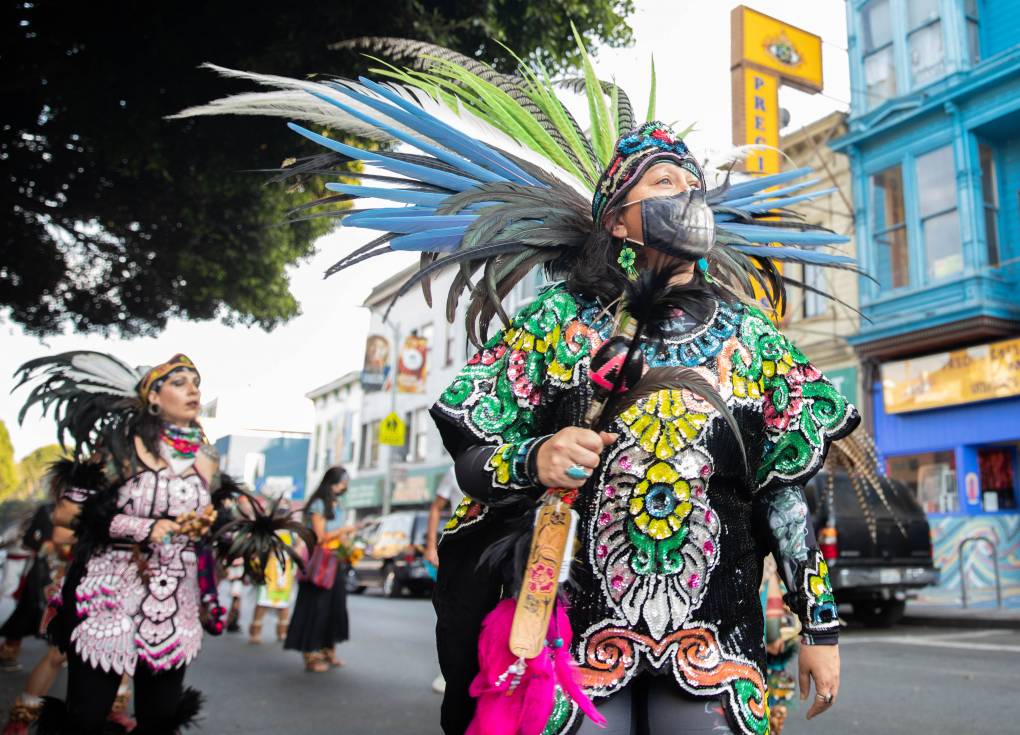
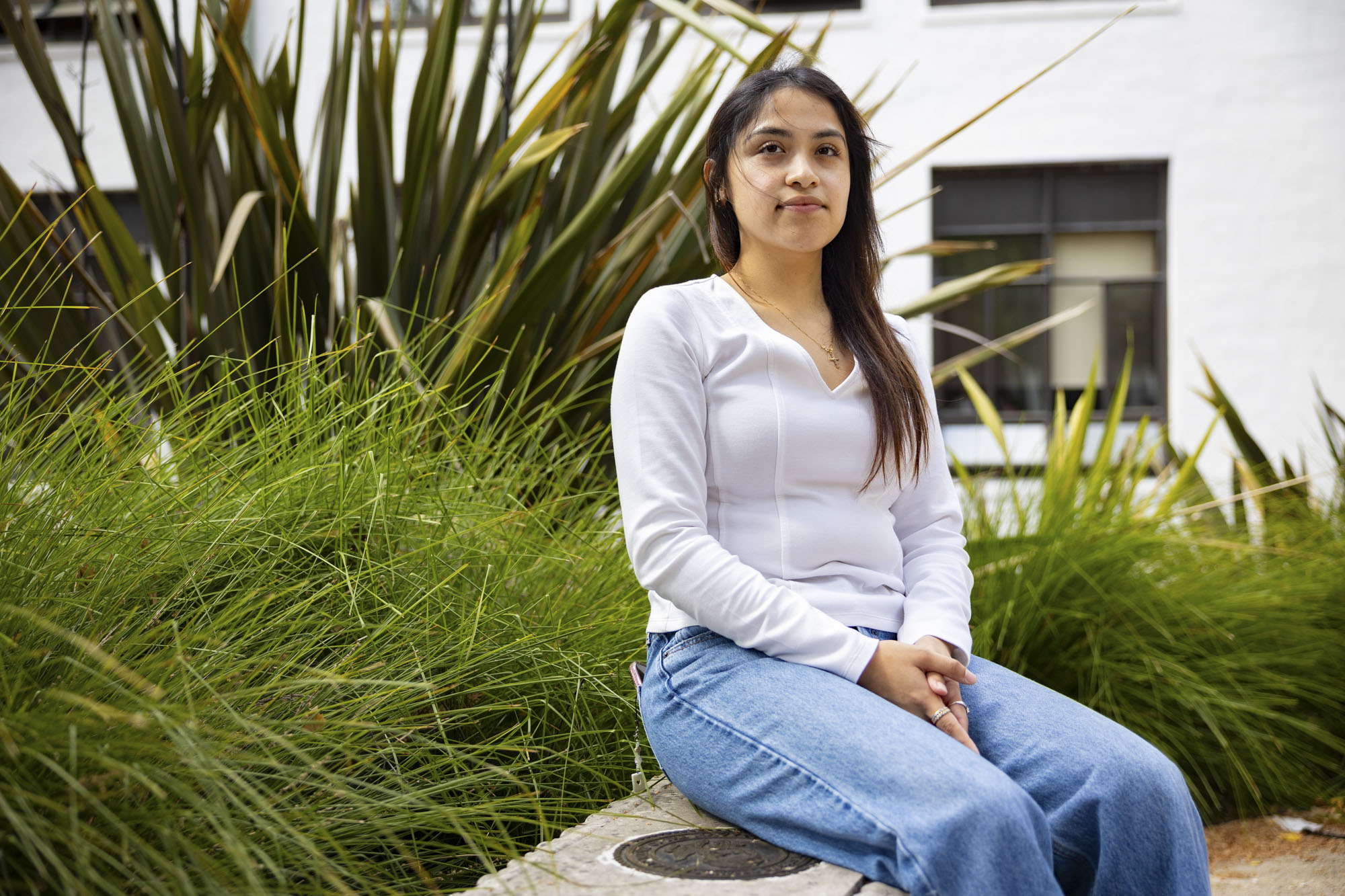
California Colleges Fear Loss of Federal Funding for Hispanic-Serving Institutions
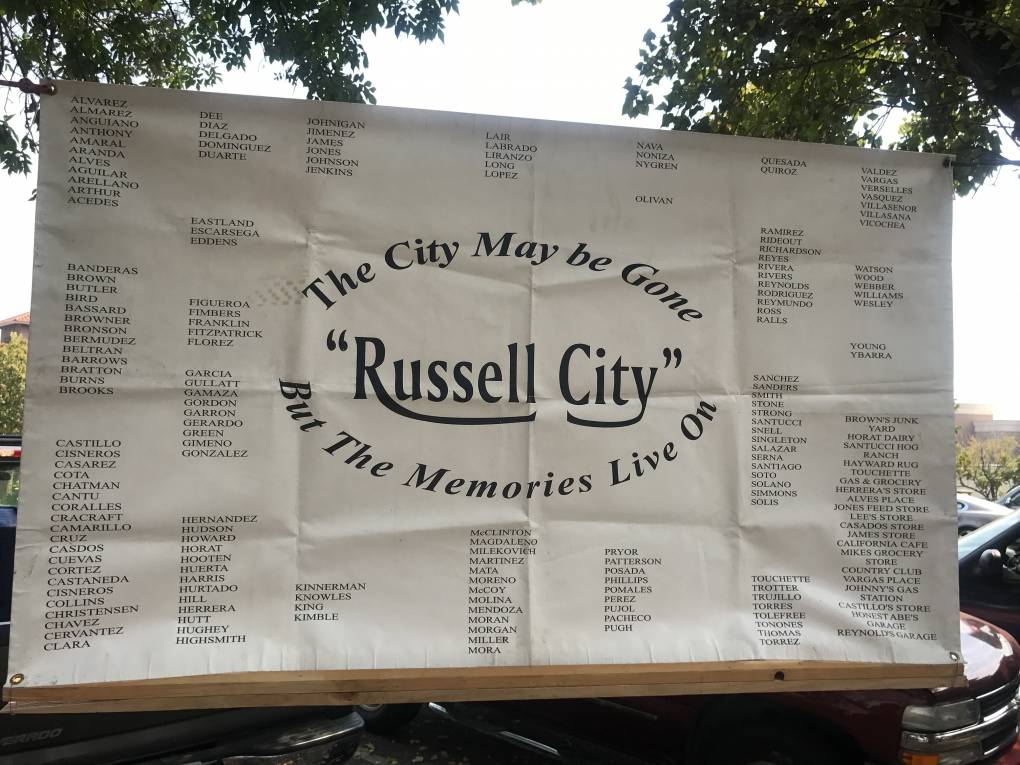
Alameda County Moves Ahead With Reparations Plan for Displaced Russell City Residents
'No Sanctuary Anywhere': Border Patrol Raids Strike Heart of California Capitol
San José Could Temporarily Ban Smoke Shops, Citing Health Inequities
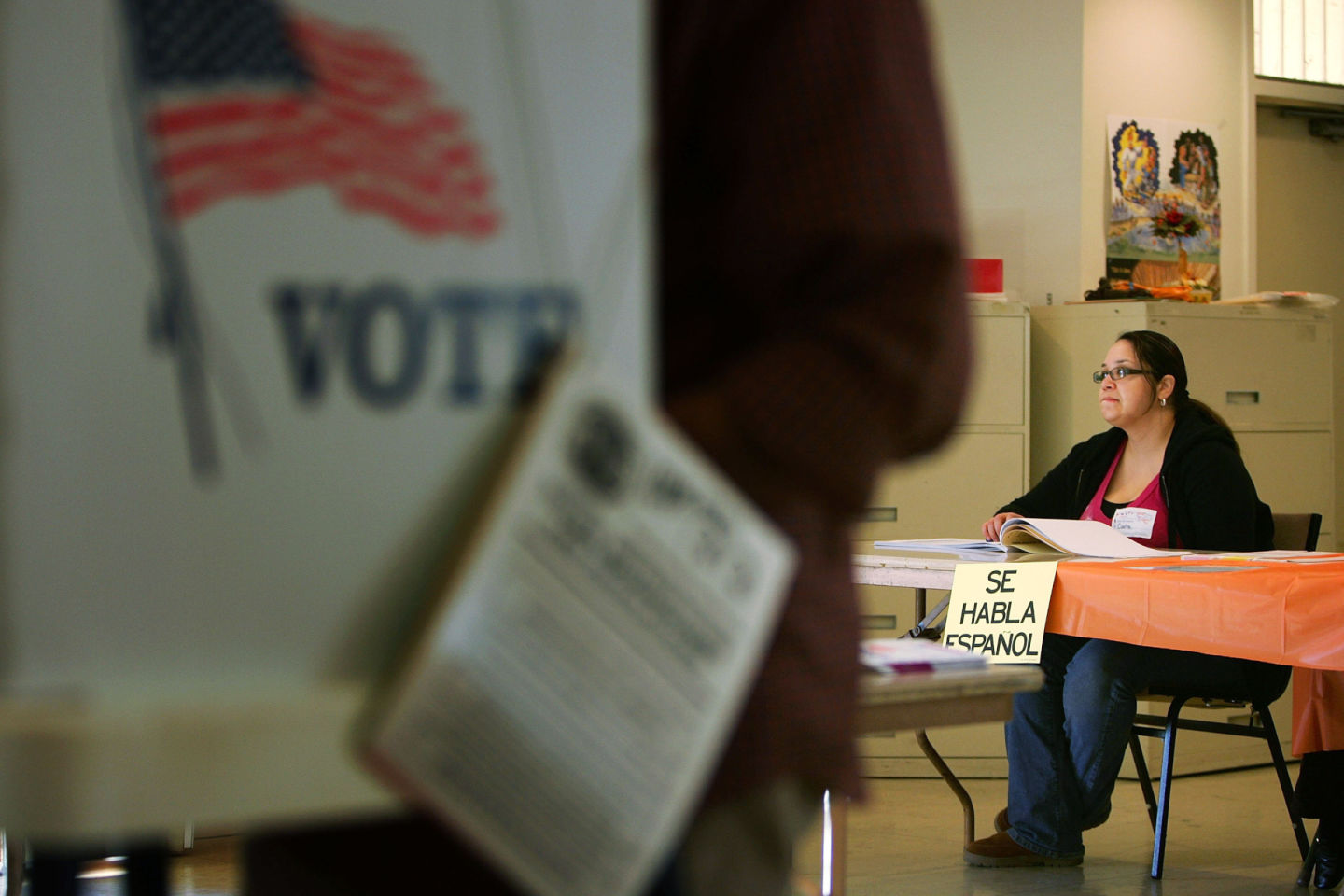
Trump Is ‘Missing the Mark’ With Latino Voters in First 100 Days, New Poll Finds
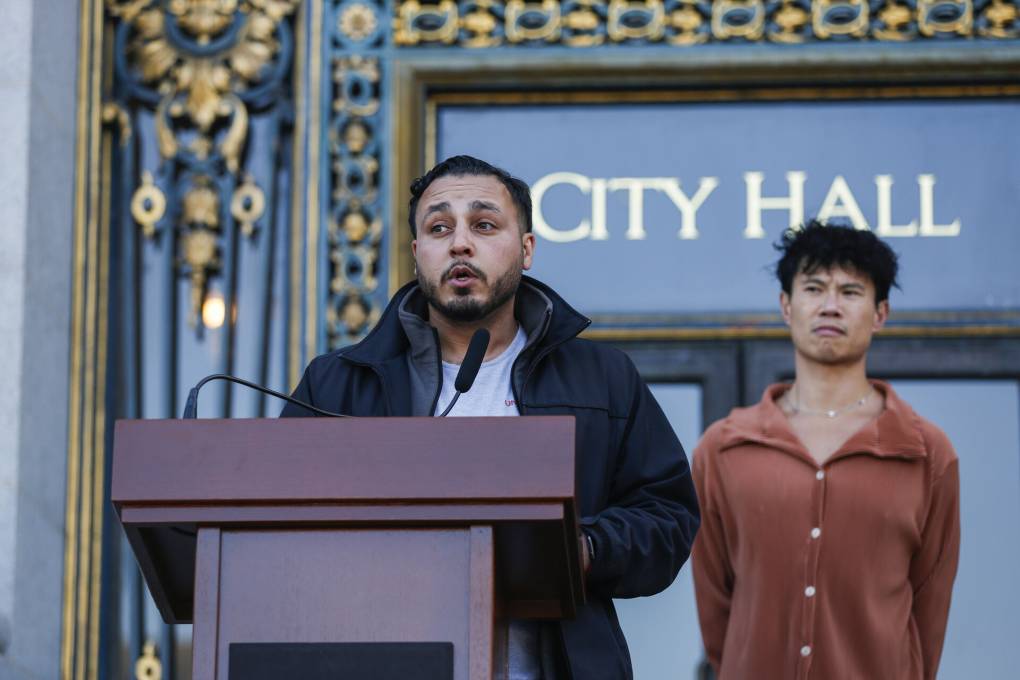
SF Latinx Club Leaves the Local Democratic Party
SF’s History With Sanctuary Laws Brings Renewed Challenges Under Trump
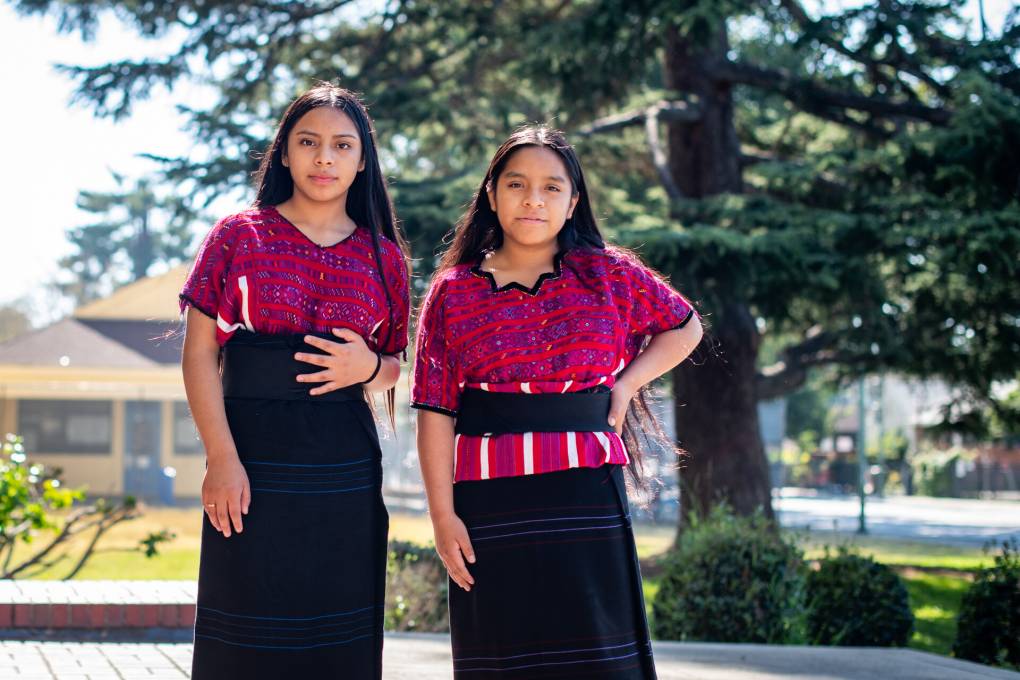
California Law Recognizes Unique Health Needs of Indigenous Latin Americans
Sponsored
Player sponsored by
window.__IS_SSR__=true
window.__INITIAL_STATE__={
"attachmentsReducer": {
"audio_0": {
"type": "attachments",
"id": "audio_0",
"imgSizes": {
"kqedFullSize": {
"file": "https://ww2.kqed.org/news/wp-content/themes/KQED-unified/img/audio_bgs/background0.jpg"
}
}
},
"audio_1": {
"type": "attachments",
"id": "audio_1",
"imgSizes": {
"kqedFullSize": {
"file": "https://ww2.kqed.org/news/wp-content/themes/KQED-unified/img/audio_bgs/background1.jpg"
}
}
},
"audio_2": {
"type": "attachments",
"id": "audio_2",
"imgSizes": {
"kqedFullSize": {
"file": "https://ww2.kqed.org/news/wp-content/themes/KQED-unified/img/audio_bgs/background2.jpg"
}
}
},
"audio_3": {
"type": "attachments",
"id": "audio_3",
"imgSizes": {
"kqedFullSize": {
"file": "https://ww2.kqed.org/news/wp-content/themes/KQED-unified/img/audio_bgs/background3.jpg"
}
}
},
"audio_4": {
"type": "attachments",
"id": "audio_4",
"imgSizes": {
"kqedFullSize": {
"file": "https://ww2.kqed.org/news/wp-content/themes/KQED-unified/img/audio_bgs/background4.jpg"
}
}
},
"placeholder": {
"type": "attachments",
"id": "placeholder",
"imgSizes": {
"thumbnail": {
"file": "https://cdn.kqed.org/wp-content/uploads/2024/12/KQED-Default-Image-816638274-2000x1333-1-160x107.jpg",
"width": 160,
"height": 107,
"mimeType": "image/jpeg"
},
"medium": {
"file": "https://cdn.kqed.org/wp-content/uploads/2024/12/KQED-Default-Image-816638274-2000x1333-1-800x533.jpg",
"width": 800,
"height": 533,
"mimeType": "image/jpeg"
},
"medium_large": {
"file": "https://cdn.kqed.org/wp-content/uploads/2024/12/KQED-Default-Image-816638274-2000x1333-1-768x512.jpg",
"width": 768,
"height": 512,
"mimeType": "image/jpeg"
},
"large": {
"file": "https://cdn.kqed.org/wp-content/uploads/2024/12/KQED-Default-Image-816638274-2000x1333-1-1020x680.jpg",
"width": 1020,
"height": 680,
"mimeType": "image/jpeg"
},
"1536x1536": {
"file": "https://cdn.kqed.org/wp-content/uploads/2024/12/KQED-Default-Image-816638274-2000x1333-1-1536x1024.jpg",
"width": 1536,
"height": 1024,
"mimeType": "image/jpeg"
},
"fd-lrg": {
"file": "https://cdn.kqed.org/wp-content/uploads/2024/12/KQED-Default-Image-816638274-2000x1333-1-1536x1024.jpg",
"width": 1536,
"height": 1024,
"mimeType": "image/jpeg"
},
"fd-med": {
"file": "https://cdn.kqed.org/wp-content/uploads/2024/12/KQED-Default-Image-816638274-2000x1333-1-1020x680.jpg",
"width": 1020,
"height": 680,
"mimeType": "image/jpeg"
},
"fd-sm": {
"file": "https://cdn.kqed.org/wp-content/uploads/2024/12/KQED-Default-Image-816638274-2000x1333-1-800x533.jpg",
"width": 800,
"height": 533,
"mimeType": "image/jpeg"
},
"post-thumbnail": {
"file": "https://cdn.kqed.org/wp-content/uploads/2024/12/KQED-Default-Image-816638274-2000x1333-1-672x372.jpg",
"width": 672,
"height": 372,
"mimeType": "image/jpeg"
},
"twentyfourteen-full-width": {
"file": "https://cdn.kqed.org/wp-content/uploads/2024/12/KQED-Default-Image-816638274-2000x1333-1-1038x576.jpg",
"width": 1038,
"height": 576,
"mimeType": "image/jpeg"
},
"xxsmall": {
"file": "https://cdn.kqed.org/wp-content/uploads/2024/12/KQED-Default-Image-816638274-2000x1333-1-160x107.jpg",
"width": 160,
"height": 107,
"mimeType": "image/jpeg"
},
"xsmall": {
"file": "https://cdn.kqed.org/wp-content/uploads/2024/12/KQED-Default-Image-816638274-2000x1333-1-672x372.jpg",
"width": 672,
"height": 372,
"mimeType": "image/jpeg"
},
"small": {
"file": "https://cdn.kqed.org/wp-content/uploads/2024/12/KQED-Default-Image-816638274-2000x1333-1-672x372.jpg",
"width": 672,
"height": 372,
"mimeType": "image/jpeg"
},
"xlarge": {
"file": "https://cdn.kqed.org/wp-content/uploads/2024/12/KQED-Default-Image-816638274-2000x1333-1-1020x680.jpg",
"width": 1020,
"height": 680,
"mimeType": "image/jpeg"
},
"full-width": {
"file": "https://cdn.kqed.org/wp-content/uploads/2024/12/KQED-Default-Image-816638274-2000x1333-1-1920x1280.jpg",
"width": 1920,
"height": 1280,
"mimeType": "image/jpeg"
},
"guest-author-32": {
"file": "https://cdn.kqed.org/wp-content/uploads/2025/01/KQED-Default-Image-816638274-1333x1333-1-160x160.jpg",
"width": 32,
"height": 32,
"mimeType": "image/jpeg"
},
"guest-author-50": {
"file": "https://cdn.kqed.org/wp-content/uploads/2025/01/KQED-Default-Image-816638274-1333x1333-1-160x160.jpg",
"width": 50,
"height": 50,
"mimeType": "image/jpeg"
},
"guest-author-64": {
"file": "https://cdn.kqed.org/wp-content/uploads/2025/01/KQED-Default-Image-816638274-1333x1333-1-160x160.jpg",
"width": 64,
"height": 64,
"mimeType": "image/jpeg"
},
"guest-author-96": {
"file": "https://cdn.kqed.org/wp-content/uploads/2025/01/KQED-Default-Image-816638274-1333x1333-1-160x160.jpg",
"width": 96,
"height": 96,
"mimeType": "image/jpeg"
},
"guest-author-128": {
"file": "https://cdn.kqed.org/wp-content/uploads/2025/01/KQED-Default-Image-816638274-1333x1333-1-160x160.jpg",
"width": 128,
"height": 128,
"mimeType": "image/jpeg"
},
"detail": {
"file": "https://cdn.kqed.org/wp-content/uploads/2025/01/KQED-Default-Image-816638274-1333x1333-1-160x160.jpg",
"width": 160,
"height": 160,
"mimeType": "image/jpeg"
},
"kqedFullSize": {
"file": "https://cdn.kqed.org/wp-content/uploads/2024/12/KQED-Default-Image-816638274-2000x1333-1.jpg",
"width": 2000,
"height": 1333
}
}
},
"news_11908239": {
"type": "attachments",
"id": "news_11908239",
"meta": {
"index": "attachments_1716263798",
"site": "news",
"id": "11908239",
"found": true
},
"title": "IMG_9034",
"publishDate": 1647370736,
"status": "inherit",
"parent": 11906012,
"modified": 1760730990,
"caption": "An Aztec dancer looks above the trees on 24th Street, during a blessing of the alters on 24th and Folsom streets to start Día de los Muertos in the Mission District, San Francisco on Sunday, Nov. 1, 2020. The Bay Area is preparing for Día de los Muertos this year, which will fall on a weekend.",
"credit": "Sebastian Miño-Bucheli/KQED",
"altTag": "A person wearing a beaded and multicolored blouse stands in the foreground, wearing a mask. A plume of feathers in black, blue, yellow and white fan out behind their head.",
"description": null,
"imgSizes": {
"medium": {
"file": "https://cdn.kqed.org/wp-content/uploads/sites/10/2022/03/IMG_9034-800x576.jpg",
"width": 800,
"height": 576,
"mimeType": "image/jpeg"
},
"large": {
"file": "https://cdn.kqed.org/wp-content/uploads/sites/10/2022/03/IMG_9034-1020x735.jpg",
"width": 1020,
"height": 735,
"mimeType": "image/jpeg"
},
"thumbnail": {
"file": "https://cdn.kqed.org/wp-content/uploads/sites/10/2022/03/IMG_9034-160x115.jpg",
"width": 160,
"height": 115,
"mimeType": "image/jpeg"
},
"1536x1536": {
"file": "https://cdn.kqed.org/wp-content/uploads/sites/10/2022/03/IMG_9034-1536x1106.jpg",
"width": 1536,
"height": 1106,
"mimeType": "image/jpeg"
},
"2048x2048": {
"file": "https://cdn.kqed.org/wp-content/uploads/sites/10/2022/03/IMG_9034-2048x1475.jpg",
"width": 2048,
"height": 1475,
"mimeType": "image/jpeg"
},
"post-thumbnail": {
"file": "https://cdn.kqed.org/wp-content/uploads/sites/10/2022/03/IMG_9034-672x372.jpg",
"width": 672,
"height": 372,
"mimeType": "image/jpeg"
},
"twentyfourteen-full-width": {
"file": "https://cdn.kqed.org/wp-content/uploads/sites/10/2022/03/IMG_9034-1038x576.jpg",
"width": 1038,
"height": 576,
"mimeType": "image/jpeg"
},
"full-width": {
"file": "https://cdn.kqed.org/wp-content/uploads/sites/10/2022/03/IMG_9034-1920x1383.jpg",
"width": 1920,
"height": 1383,
"mimeType": "image/jpeg"
},
"kqedFullSize": {
"file": "https://cdn.kqed.org/wp-content/uploads/sites/10/2022/03/IMG_9034-scaled.jpg",
"width": 2560,
"height": 1844
}
},
"fetchFailed": false,
"isLoading": false
},
"news_12058492": {
"type": "attachments",
"id": "news_12058492",
"meta": {
"index": "attachments_1716263798",
"site": "news",
"id": "12058492",
"found": true
},
"title": "20250930_HISPANICSERVINGINSTITUTIONS_GC-14-KQED",
"publishDate": 1759447546,
"status": "inherit",
"parent": 0,
"modified": 1760127539,
"caption": "Vanessa Perez Rojas, a fourth-year student, poses for a photo at Saint Mary’s College of California in Moraga on Sept. 30, 2025. Vanessa says spirituality is a big reason why she is at this university.",
"credit": "Gina Castro/KQED",
"altTag": null,
"description": null,
"imgSizes": {
"thumbnail": {
"file": "https://cdn.kqed.org/wp-content/uploads/sites/10/2025/10/20250930_HISPANICSERVINGINSTITUTIONS_GC-14-KQED-160x107.jpg",
"width": 160,
"height": 107,
"mimeType": "image/jpeg"
},
"1536x1536": {
"file": "https://cdn.kqed.org/wp-content/uploads/sites/10/2025/10/20250930_HISPANICSERVINGINSTITUTIONS_GC-14-KQED-1536x1024.jpg",
"width": 1536,
"height": 1024,
"mimeType": "image/jpeg"
},
"post-thumbnail": {
"file": "https://cdn.kqed.org/wp-content/uploads/sites/10/2025/10/20250930_HISPANICSERVINGINSTITUTIONS_GC-14-KQED-672x372.jpg",
"width": 672,
"height": 372,
"mimeType": "image/jpeg"
},
"twentyfourteen-full-width": {
"file": "https://cdn.kqed.org/wp-content/uploads/sites/10/2025/10/20250930_HISPANICSERVINGINSTITUTIONS_GC-14-KQED-1038x576.jpg",
"width": 1038,
"height": 576,
"mimeType": "image/jpeg"
},
"kqedFullSize": {
"file": "https://cdn.kqed.org/wp-content/uploads/sites/10/2025/10/20250930_HISPANICSERVINGINSTITUTIONS_GC-14-KQED.jpg",
"width": 2000,
"height": 1333
}
},
"fetchFailed": false,
"isLoading": false
},
"news_11897865": {
"type": "attachments",
"id": "news_11897865",
"meta": {
"index": "attachments_1716263798",
"site": "news",
"id": "11897865",
"found": true
},
"title": "IMG_2829",
"publishDate": 1638419658,
"status": "inherit",
"parent": 11897843,
"modified": 1753224057,
"caption": "A board honoring the families that lived in Russell City is displayed during the annual Russell City reunion picnic at Kennedy Park in Hayward on Sept. 3, 2017.",
"credit": "Courtesy of Aisha Knowles",
"altTag": "A board reads, \"Russell City: The city may be gone, but the memories live on.\"",
"description": null,
"imgSizes": {
"medium": {
"file": "https://cdn.kqed.org/wp-content/uploads/sites/10/2021/12/IMG_2829-800x600.jpg",
"width": 800,
"height": 600,
"mimeType": "image/jpeg"
},
"large": {
"file": "https://cdn.kqed.org/wp-content/uploads/sites/10/2021/12/IMG_2829-1020x765.jpg",
"width": 1020,
"height": 765,
"mimeType": "image/jpeg"
},
"thumbnail": {
"file": "https://cdn.kqed.org/wp-content/uploads/sites/10/2021/12/IMG_2829-160x120.jpg",
"width": 160,
"height": 120,
"mimeType": "image/jpeg"
},
"1536x1536": {
"file": "https://cdn.kqed.org/wp-content/uploads/sites/10/2021/12/IMG_2829-1536x1152.jpg",
"width": 1536,
"height": 1152,
"mimeType": "image/jpeg"
},
"2048x2048": {
"file": "https://cdn.kqed.org/wp-content/uploads/sites/10/2021/12/IMG_2829-2048x1536.jpg",
"width": 2048,
"height": 1536,
"mimeType": "image/jpeg"
},
"post-thumbnail": {
"file": "https://cdn.kqed.org/wp-content/uploads/sites/10/2021/12/IMG_2829-672x372.jpg",
"width": 672,
"height": 372,
"mimeType": "image/jpeg"
},
"twentyfourteen-full-width": {
"file": "https://cdn.kqed.org/wp-content/uploads/sites/10/2021/12/IMG_2829-1038x576.jpg",
"width": 1038,
"height": 576,
"mimeType": "image/jpeg"
},
"full-width": {
"file": "https://cdn.kqed.org/wp-content/uploads/sites/10/2021/12/IMG_2829-1920x1440.jpg",
"width": 1920,
"height": 1440,
"mimeType": "image/jpeg"
},
"kqedFullSize": {
"file": "https://cdn.kqed.org/wp-content/uploads/sites/10/2021/12/IMG_2829-scaled-e1638419681640.jpg",
"width": 1920,
"height": 1440
}
},
"fetchFailed": false,
"isLoading": false
},
"news_12048692": {
"type": "attachments",
"id": "news_12048692",
"meta": {
"index": "attachments_1716263798",
"site": "news",
"id": "12048692",
"found": true
},
"title": "CMBorderPatrolSac1",
"publishDate": 1752856858,
"status": "inherit",
"parent": 12048690,
"modified": 1752856914,
"caption": "Andrea Castillo speaks to a relative after her husband, who she said was born in Sacramento, was taken into custody by masked uniformed men from the U.S. Border Patrol at the Home Depot on Florin Road near Highway 99 in south Sacramento on July 17, 2025.",
"credit": "Hector Amezcua/The Sacramento Bee via Reuters",
"altTag": null,
"description": null,
"imgSizes": {
"thumbnail": {
"file": "https://cdn.kqed.org/wp-content/uploads/sites/10/2025/07/CMBorderPatrolSac1-160x109.jpg",
"width": 160,
"height": 109,
"mimeType": "image/jpeg"
},
"1536x1536": {
"file": "https://cdn.kqed.org/wp-content/uploads/sites/10/2025/07/CMBorderPatrolSac1-1536x1045.jpg",
"width": 1536,
"height": 1045,
"mimeType": "image/jpeg"
},
"post-thumbnail": {
"file": "https://cdn.kqed.org/wp-content/uploads/sites/10/2025/07/CMBorderPatrolSac1-672x372.jpg",
"width": 672,
"height": 372,
"mimeType": "image/jpeg"
},
"twentyfourteen-full-width": {
"file": "https://cdn.kqed.org/wp-content/uploads/sites/10/2025/07/CMBorderPatrolSac1-1038x576.jpg",
"width": 1038,
"height": 576,
"mimeType": "image/jpeg"
},
"kqedFullSize": {
"file": "https://cdn.kqed.org/wp-content/uploads/sites/10/2025/07/CMBorderPatrolSac1.jpg",
"width": 2000,
"height": 1361
}
},
"fetchFailed": false,
"isLoading": false
},
"news_12041943": {
"type": "attachments",
"id": "news_12041943",
"meta": {
"index": "attachments_1716263798",
"site": "news",
"id": "12041943",
"found": true
},
"title": "250528-SJSMOKESHOPS-JG-5-KQED",
"publishDate": 1748538909,
"status": "inherit",
"parent": 0,
"modified": 1748539459,
"caption": "Houdini’s Smoke Shop in downtown San José is seen on May 28, 2025. City Councilmember Peter Ortiz is pushing for a temporary ban on all new smoke shop businesses in the city over health equity concerns.",
"credit": "Joseph Geha/KQED",
"altTag": null,
"description": null,
"imgSizes": {
"medium": {
"file": "https://cdn.kqed.org/wp-content/uploads/sites/10/2025/05/250528-SJSMOKESHOPS-JG-5-KQED-800x533.jpg",
"width": 800,
"height": 533,
"mimeType": "image/jpeg"
},
"large": {
"file": "https://cdn.kqed.org/wp-content/uploads/sites/10/2025/05/250528-SJSMOKESHOPS-JG-5-KQED-1020x680.jpg",
"width": 1020,
"height": 680,
"mimeType": "image/jpeg"
},
"thumbnail": {
"file": "https://cdn.kqed.org/wp-content/uploads/sites/10/2025/05/250528-SJSMOKESHOPS-JG-5-KQED-160x107.jpg",
"width": 160,
"height": 107,
"mimeType": "image/jpeg"
},
"1536x1536": {
"file": "https://cdn.kqed.org/wp-content/uploads/sites/10/2025/05/250528-SJSMOKESHOPS-JG-5-KQED-1536x1024.jpg",
"width": 1536,
"height": 1024,
"mimeType": "image/jpeg"
},
"post-thumbnail": {
"file": "https://cdn.kqed.org/wp-content/uploads/sites/10/2025/05/250528-SJSMOKESHOPS-JG-5-KQED-672x372.jpg",
"width": 672,
"height": 372,
"mimeType": "image/jpeg"
},
"twentyfourteen-full-width": {
"file": "https://cdn.kqed.org/wp-content/uploads/sites/10/2025/05/250528-SJSMOKESHOPS-JG-5-KQED-1038x576.jpg",
"width": 1038,
"height": 576,
"mimeType": "image/jpeg"
},
"full-width": {
"file": "https://cdn.kqed.org/wp-content/uploads/sites/10/2025/05/250528-SJSMOKESHOPS-JG-5-KQED-1920x1280.jpg",
"width": 1920,
"height": 1280,
"mimeType": "image/jpeg"
},
"kqedFullSize": {
"file": "https://cdn.kqed.org/wp-content/uploads/sites/10/2025/05/250528-SJSMOKESHOPS-JG-5-KQED.jpg",
"width": 2000,
"height": 1333
}
},
"fetchFailed": false,
"isLoading": false
},
"news_10846895": {
"type": "attachments",
"id": "news_10846895",
"meta": {
"index": "attachments_1716263798",
"site": "news",
"id": "10846895",
"found": true
},
"title": "California Voters Participate In The State's Pivotal Primary",
"publishDate": 1453931158,
"status": "inherit",
"parent": 10845688,
"modified": 1745886676,
"caption": "A \"Se Habla Español\" sign identifies a bilingual election official in the predominantly Latino neighborhood of Boyle Heights on Feb. 5, 2008, in Los Angeles.",
"credit": "David McNew/Getty Images",
"altTag": "A \"Se Habla Español\" sign identifies a bilingual election official in the predominantly Latino neighborhood of Boyle Heights on Feb. 5, 2008, in Los Angeles.",
"description": "A \"Se habla Espanol\" sign identifies a bilingual election official in the predominantly Latino neighborhood of Boyle Heights on Feb. 5, 2008, in Los Angeles.",
"imgSizes": {
"thumbnail": {
"file": "https://cdn.kqed.org/wp-content/uploads/sites/10/2016/01/3527_transform-400x267.jpg",
"width": 400,
"height": 267,
"mimeType": "image/jpeg"
},
"medium": {
"file": "https://cdn.kqed.org/wp-content/uploads/sites/10/2016/01/3527_transform-800x533.jpg",
"width": 800,
"height": 533,
"mimeType": "image/jpeg"
},
"medium_large": {
"file": "https://cdn.kqed.org/wp-content/uploads/sites/10/2016/01/3527_transform-768x512.jpg",
"width": 768,
"height": 512,
"mimeType": "image/jpeg"
},
"large": {
"file": "https://cdn.kqed.org/wp-content/uploads/sites/10/2016/01/3527_transform-1440x960.jpg",
"width": 1440,
"height": 960,
"mimeType": "image/jpeg"
},
"fd-lrg": {
"file": "https://cdn.kqed.org/wp-content/uploads/sites/10/2016/01/3527_transform-1920x1280.jpg",
"width": 1920,
"height": 1280,
"mimeType": "image/jpeg"
},
"fd-med": {
"file": "https://cdn.kqed.org/wp-content/uploads/sites/10/2016/01/3527_transform-1180x787.jpg",
"width": 1180,
"height": 787,
"mimeType": "image/jpeg"
},
"fd-sm": {
"file": "https://cdn.kqed.org/wp-content/uploads/sites/10/2016/01/3527_transform-960x640.jpg",
"width": 960,
"height": 640,
"mimeType": "image/jpeg"
},
"post-thumbnail": {
"file": "https://cdn.kqed.org/wp-content/uploads/sites/10/2016/01/3527_transform-672x372.jpg",
"width": 672,
"height": 372,
"mimeType": "image/jpeg"
},
"twentyfourteen-full-width": {
"file": "https://cdn.kqed.org/wp-content/uploads/sites/10/2016/01/3527_transform-1038x576.jpg",
"width": 1038,
"height": 576,
"mimeType": "image/jpeg"
},
"guest-author-32": {
"file": "https://cdn.kqed.org/wp-content/uploads/sites/10/2016/01/3527_transform-32x32.jpg",
"width": 32,
"height": 32,
"mimeType": "image/jpeg"
},
"guest-author-64": {
"file": "https://cdn.kqed.org/wp-content/uploads/sites/10/2016/01/3527_transform-64x64.jpg",
"width": 64,
"height": 64,
"mimeType": "image/jpeg"
},
"guest-author-96": {
"file": "https://cdn.kqed.org/wp-content/uploads/sites/10/2016/01/3527_transform-96x96.jpg",
"width": 96,
"height": 96,
"mimeType": "image/jpeg"
},
"guest-author-128": {
"file": "https://cdn.kqed.org/wp-content/uploads/sites/10/2016/01/3527_transform-128x128.jpg",
"width": 128,
"height": 128,
"mimeType": "image/jpeg"
},
"detail": {
"file": "https://cdn.kqed.org/wp-content/uploads/sites/10/2016/01/3527_transform-75x75.jpg",
"width": 75,
"height": 75,
"mimeType": "image/jpeg"
},
"jmtc-small-thumb": {
"file": "https://cdn.kqed.org/wp-content/uploads/sites/10/2016/01/3527_transform-280x150.jpg",
"width": 280,
"height": 150,
"mimeType": "image/jpeg"
},
"kqedFullSize": {
"file": "https://cdn.kqed.org/wp-content/uploads/sites/10/2016/01/3527_transform.jpg",
"width": 1920,
"height": 1280
}
},
"fetchFailed": false,
"isLoading": false
},
"news_11956120": {
"type": "attachments",
"id": "news_11956120",
"meta": {
"index": "attachments_1716263798",
"site": "news",
"id": "11956120",
"found": true
},
"title": "RS67112_20230719-cityhallrally-07-JY-qut",
"publishDate": 1689883979,
"status": "inherit",
"parent": 11956110,
"modified": 1743032045,
"caption": "SF Latinx Democratic Club President Kevin Ortiz speaks at a rally in front of City Hall before the San Francisco Police Commission meeting in San Francisco on Wednesday, July 19, 2023. ",
"credit": "Juliana Yamada/KQED",
"altTag": "A man wearing a dark hooded sweatshirt stands at a podium with another man standing to his right wearing a reddish shirt in front of a building that has a sign reading \"City Hall.\"",
"description": null,
"imgSizes": {
"medium": {
"file": "https://cdn.kqed.org/wp-content/uploads/sites/10/2023/07/RS67112_20230719-cityhallrally-07-JY-qut-800x533.jpg",
"width": 800,
"height": 533,
"mimeType": "image/jpeg"
},
"large": {
"file": "https://cdn.kqed.org/wp-content/uploads/sites/10/2023/07/RS67112_20230719-cityhallrally-07-JY-qut-1020x680.jpg",
"width": 1020,
"height": 680,
"mimeType": "image/jpeg"
},
"thumbnail": {
"file": "https://cdn.kqed.org/wp-content/uploads/sites/10/2023/07/RS67112_20230719-cityhallrally-07-JY-qut-160x107.jpg",
"width": 160,
"height": 107,
"mimeType": "image/jpeg"
},
"1536x1536": {
"file": "https://cdn.kqed.org/wp-content/uploads/sites/10/2023/07/RS67112_20230719-cityhallrally-07-JY-qut-1536x1024.jpg",
"width": 1536,
"height": 1024,
"mimeType": "image/jpeg"
},
"post-thumbnail": {
"file": "https://cdn.kqed.org/wp-content/uploads/sites/10/2023/07/RS67112_20230719-cityhallrally-07-JY-qut-672x372.jpg",
"width": 672,
"height": 372,
"mimeType": "image/jpeg"
},
"twentyfourteen-full-width": {
"file": "https://cdn.kqed.org/wp-content/uploads/sites/10/2023/07/RS67112_20230719-cityhallrally-07-JY-qut-1038x576.jpg",
"width": 1038,
"height": 576,
"mimeType": "image/jpeg"
},
"kqedFullSize": {
"file": "https://cdn.kqed.org/wp-content/uploads/sites/10/2023/07/RS67112_20230719-cityhallrally-07-JY-qut.jpg",
"width": 1920,
"height": 1280
}
},
"fetchFailed": false,
"isLoading": false
},
"news_12024430": {
"type": "attachments",
"id": "news_12024430",
"meta": {
"index": "attachments_1716263798",
"site": "news",
"id": "12024430",
"found": true
},
"title": "250128-SFImmigration-08-BL",
"publishDate": 1738105102,
"status": "inherit",
"parent": 12024325,
"modified": 1742325555,
"caption": "A group of elected and public safety officials, labor leaders, and community members fill the steps in front of City Hall in San Francisco on Jan. 28, 2025, during a press conference to reaffirm San Francisco’s commitment to being a Sanctuary City.",
"credit": "Beth LaBerge/KQED",
"altTag": null,
"description": null,
"imgSizes": {
"medium": {
"file": "https://cdn.kqed.org/wp-content/uploads/sites/10/2025/01/250128-SFImmigration-08-BL-800x533.jpg",
"width": 800,
"height": 533,
"mimeType": "image/jpeg"
},
"large": {
"file": "https://cdn.kqed.org/wp-content/uploads/sites/10/2025/01/250128-SFImmigration-08-BL-1020x680.jpg",
"width": 1020,
"height": 680,
"mimeType": "image/jpeg"
},
"thumbnail": {
"file": "https://cdn.kqed.org/wp-content/uploads/sites/10/2025/01/250128-SFImmigration-08-BL-160x107.jpg",
"width": 160,
"height": 107,
"mimeType": "image/jpeg"
},
"1536x1536": {
"file": "https://cdn.kqed.org/wp-content/uploads/sites/10/2025/01/250128-SFImmigration-08-BL-1536x1024.jpg",
"width": 1536,
"height": 1024,
"mimeType": "image/jpeg"
},
"post-thumbnail": {
"file": "https://cdn.kqed.org/wp-content/uploads/sites/10/2025/01/250128-SFImmigration-08-BL-672x372.jpg",
"width": 672,
"height": 372,
"mimeType": "image/jpeg"
},
"twentyfourteen-full-width": {
"file": "https://cdn.kqed.org/wp-content/uploads/sites/10/2025/01/250128-SFImmigration-08-BL-1038x576.jpg",
"width": 1038,
"height": 576,
"mimeType": "image/jpeg"
},
"full-width": {
"file": "https://cdn.kqed.org/wp-content/uploads/sites/10/2025/01/250128-SFImmigration-08-BL-1920x1280.jpg",
"width": 1920,
"height": 1280,
"mimeType": "image/jpeg"
},
"kqedFullSize": {
"file": "https://cdn.kqed.org/wp-content/uploads/sites/10/2025/01/250128-SFImmigration-08-BL.jpg",
"width": 2000,
"height": 1333
}
},
"fetchFailed": false,
"isLoading": false
},
"news_11924355": {
"type": "attachments",
"id": "news_11924355",
"meta": {
"index": "attachments_1716263798",
"site": "news",
"id": "11924355",
"found": true
},
"parent": 11924343,
"imgSizes": {
"twentyfourteen-full-width": {
"file": "https://ww2.kqed.org/app/uploads/sites/10/2022/08/RS58239_003_BridgesAcademyMamStudents_08302022-qut-1038x576.jpg",
"width": 1038,
"mimeType": "image/jpeg",
"height": 576
},
"thumbnail": {
"file": "https://ww2.kqed.org/app/uploads/sites/10/2022/08/RS58239_003_BridgesAcademyMamStudents_08302022-qut-160x107.jpg",
"width": 160,
"mimeType": "image/jpeg",
"height": 107
},
"post-thumbnail": {
"file": "https://ww2.kqed.org/app/uploads/sites/10/2022/08/RS58239_003_BridgesAcademyMamStudents_08302022-qut-672x372.jpg",
"width": 672,
"mimeType": "image/jpeg",
"height": 372
},
"kqedFullSize": {
"file": "https://ww2.kqed.org/app/uploads/sites/10/2022/08/RS58239_003_BridgesAcademyMamStudents_08302022-qut.jpg",
"width": 1920,
"height": 1280
},
"large": {
"file": "https://ww2.kqed.org/app/uploads/sites/10/2022/08/RS58239_003_BridgesAcademyMamStudents_08302022-qut-1020x680.jpg",
"width": 1020,
"mimeType": "image/jpeg",
"height": 680
},
"1536x1536": {
"file": "https://ww2.kqed.org/app/uploads/sites/10/2022/08/RS58239_003_BridgesAcademyMamStudents_08302022-qut-1536x1024.jpg",
"width": 1536,
"mimeType": "image/jpeg",
"height": 1024
},
"medium": {
"file": "https://ww2.kqed.org/app/uploads/sites/10/2022/08/RS58239_003_BridgesAcademyMamStudents_08302022-qut-800x533.jpg",
"width": 800,
"mimeType": "image/jpeg",
"height": 533
}
},
"publishDate": 1662053155,
"modified": 1662140039,
"caption": "Sisters Katy Noeli (left) and Heymer Johana Domingo Godinez stand outside their new school, Elmhurst United Middle School, in Oakland on Aug. 30, 2022.",
"description": null,
"title": "RS58239_003_BridgesAcademyMamStudents_08302022-qut",
"credit": "Beth LaBerge/KQED",
"status": "inherit",
"altTag": "Two young girls wearing red decorative shirts and long black skirts stand outside.",
"fetchFailed": false,
"isLoading": false
}
},
"audioPlayerReducer": {
"postId": "stream_live",
"isPaused": true,
"isPlaying": false,
"pfsActive": false,
"pledgeModalIsOpen": true,
"playerDrawerIsOpen": false
},
"authorsReducer": {
"byline_news_12048690": {
"type": "authors",
"id": "byline_news_12048690",
"meta": {
"override": true
},
"slug": "byline_news_12048690",
"name": "Wendy Fry and Sergio Olmos, CalMatters",
"isLoading": false
},
"byline_news_12008261": {
"type": "authors",
"id": "byline_news_12008261",
"meta": {
"override": true
},
"slug": "byline_news_12008261",
"name": "Jasmine Aguilera and Cassandra Garibay, El Tímpano",
"isLoading": false
},
"matthewgreen": {
"type": "authors",
"id": "1263",
"meta": {
"index": "authors_1716337520",
"id": "1263",
"found": true
},
"name": "Matthew Green",
"firstName": "Matthew",
"lastName": "Green",
"slug": "matthewgreen",
"email": "mgreen@kqed.org",
"display_author_email": false,
"staff_mastheads": [],
"title": "KQED Editor/Reporter",
"bio": "Matthew Green is a digital media producer for KQED News. He previously produced \u003ca href=\"http://www.kqed.org/lowdown\">The Lowdown\u003c/a>, KQED’s multimedia news education blog. Matthew's written for numerous Bay Area publications, including the Oakland Tribune and San Francisco Chronicle. He also taught journalism classes at Fremont High School in East Oakland.\r\n\r\nEmail: mgreen@kqed.org; Twitter: @MGreenKQED",
"avatar": "https://secure.gravatar.com/avatar/3bf498d1267ca02c8494f33d8cfc575e?s=600&d=blank&r=g",
"twitter": "MGreenKQED",
"facebook": null,
"instagram": null,
"linkedin": null,
"sites": [
{
"site": "news",
"roles": []
},
{
"site": "lowdown",
"roles": []
},
{
"site": "science",
"roles": []
},
{
"site": "education",
"roles": []
},
{
"site": "quest",
"roles": []
},
{
"site": "liveblog",
"roles": []
}
],
"headData": {
"title": "Matthew Green | KQED",
"description": "KQED Editor/Reporter",
"ogImgSrc": "https://secure.gravatar.com/avatar/3bf498d1267ca02c8494f33d8cfc575e?s=600&d=blank&r=g",
"twImgSrc": "https://secure.gravatar.com/avatar/3bf498d1267ca02c8494f33d8cfc575e?s=600&d=blank&r=g"
},
"isLoading": false,
"link": "/author/matthewgreen"
},
"mlagos": {
"type": "authors",
"id": "3239",
"meta": {
"index": "authors_1716337520",
"id": "3239",
"found": true
},
"name": "Marisa Lagos",
"firstName": "Marisa",
"lastName": "Lagos",
"slug": "mlagos",
"email": "mlagos@kqed.org",
"display_author_email": false,
"staff_mastheads": [
"news"
],
"title": "KQED Contributor",
"bio": "Marisa Lagos is a correspondent for KQED’s California Politics and Government Desk and co-hosts the award-winning show and podcast, Political Breakdown. At KQED, Lagos also conducts reporting, analysis and investigations into state, local and national politics for radio, TV, online and onstage. In 2022, she and co-host, Scott Shafer, moderated the only gubernatorial debate in California. In 2020, the \u003ci>Washington Post\u003c/i> named her one of the top political journalists in California; she was nominated for a Peabody and won several other awards for her work investigating the 2017 California wildfires. She has worked at the \u003ci>San Francisco Chronicle\u003c/i>, \u003ci>San Francisco Examiner\u003c/i> and \u003ci>Los Angeles Times\u003c/i>. A UC Santa Barbara graduate, she lives in San Francisco with her two sons and husband.",
"avatar": "https://secure.gravatar.com/avatar/a261a0d3696fc066871ef96b85b5e7d2?s=600&d=blank&r=g",
"twitter": "@mlagos",
"facebook": null,
"instagram": null,
"linkedin": null,
"sites": [
{
"site": "arts",
"roles": [
"author"
]
},
{
"site": "news",
"roles": [
"editor"
]
},
{
"site": "science",
"roles": [
"editor"
]
},
{
"site": "forum",
"roles": [
"author"
]
},
{
"site": "liveblog",
"roles": [
"author"
]
}
],
"headData": {
"title": "Marisa Lagos | KQED",
"description": "KQED Contributor",
"ogImgSrc": "https://secure.gravatar.com/avatar/a261a0d3696fc066871ef96b85b5e7d2?s=600&d=blank&r=g",
"twImgSrc": "https://secure.gravatar.com/avatar/a261a0d3696fc066871ef96b85b5e7d2?s=600&d=blank&r=g"
},
"isLoading": false,
"link": "/author/mlagos"
},
"ecruzguevarra": {
"type": "authors",
"id": "8654",
"meta": {
"index": "authors_1716337520",
"id": "8654",
"found": true
},
"name": "Ericka Cruz Guevarra",
"firstName": "Ericka",
"lastName": "Cruz Guevarra",
"slug": "ecruzguevarra",
"email": "ecruzguevarra@kqed.org",
"display_author_email": true,
"staff_mastheads": [
"news"
],
"title": "Producer, The Bay Podcast",
"bio": "Ericka Cruz Guevarra is host of \u003ca href=\"https://www.kqed.org/podcasts/thebay\">\u003cem>The Bay\u003c/em>\u003c/a> podcast at KQED. Before host, she was the show’s producer. Her work in that capacity includes a three-part reported series on policing in Vallejo, which won a 2020 excellence in journalism award from the Society of Professional Journalists. Ericka has worked as a breaking news reporter at Oregon Public Broadcasting, helped produce the Code Switch podcast, and was KQED’s inaugural Raul Ramirez Diversity Fund intern. She’s also an alumna of NPR’s Next Generation Radio program. Send her an email if you have strong feelings about whether Fairfield and Suisun City are the Bay. Ericka is represented by SAG-AFTRA.",
"avatar": "https://secure.gravatar.com/avatar/25e5ab8d3d53fad2dcc7bb2b5c506b1a?s=600&d=blank&r=g",
"twitter": "NotoriousECG",
"facebook": null,
"instagram": null,
"linkedin": null,
"sites": [
{
"site": "arts",
"roles": [
"subscriber"
]
},
{
"site": "news",
"roles": [
"editor",
"manage_categories"
]
},
{
"site": "futureofyou",
"roles": [
"subscriber"
]
},
{
"site": "stateofhealth",
"roles": [
"subscriber"
]
},
{
"site": "science",
"roles": [
"editor"
]
},
{
"site": "forum",
"roles": [
"subscriber"
]
}
],
"headData": {
"title": "Ericka Cruz Guevarra | KQED",
"description": "Producer, The Bay Podcast",
"ogImgSrc": "https://secure.gravatar.com/avatar/25e5ab8d3d53fad2dcc7bb2b5c506b1a?s=600&d=blank&r=g",
"twImgSrc": "https://secure.gravatar.com/avatar/25e5ab8d3d53fad2dcc7bb2b5c506b1a?s=600&d=blank&r=g"
},
"isLoading": false,
"link": "/author/ecruzguevarra"
},
"btorres": {
"type": "authors",
"id": "11666",
"meta": {
"index": "authors_1716337520",
"id": "11666",
"found": true
},
"name": "Blanca Torres",
"firstName": "Blanca",
"lastName": "Torres",
"slug": "btorres",
"email": "btorres@kqed.org",
"display_author_email": true,
"staff_mastheads": [
"news"
],
"title": "Producer, Forum",
"bio": "Blanca Torres brings sharp news judgement and keen sense of lively conversation to her work as producer for Forum. She loves producing shows that leave listeners feeling like they heard distinctive voices, learned something new and gained a fresh perspective.\r\n\r\nShe joined KQED in January of 2020 after 16 years of working as a newspaper reporter most recently at the \u003cem>San Francisco Business Times,\u003c/em> where she wrote about real estate and economic development. Before that, she covered a variety of beats including crime, education, retail, workplace, the economy, consumer issues, and small business for the \u003cem>Contra Costa Times, Baltimore Sun\u003c/em> and\u003cem> The Seattle Times\u003c/em>. In addition to reporting, she worked as an editorial writer and columnist for the \u003cem>Seattle Times\u003c/em>. From 2017 to 2020, Blanca won a total of ten awards from the National Association of Real Estate Editors and won first place for land use reporting from the California News Publishers Association two years in a row. She is also a member and former board member for the National Association of Hispanic Journalists.\r\n\r\nA native of the Pacific Northwest, Blanca earned her bachelor's degree from Vanderbilt University in Nashville and a master's in fine arts in creative writing at Mills College. She lives in the East Bay with her family.",
"avatar": "https://secure.gravatar.com/avatar/f2322ff46076d337f7ba731ee6068cb1?s=600&d=blank&r=g",
"twitter": "@blancawrites",
"facebook": null,
"instagram": null,
"linkedin": null,
"sites": [
{
"site": "arts",
"roles": [
"editor"
]
},
{
"site": "news",
"roles": [
"editor"
]
},
{
"site": "forum",
"roles": [
"editor"
]
}
],
"headData": {
"title": "Blanca Torres | KQED",
"description": "Producer, Forum",
"ogImgSrc": "https://secure.gravatar.com/avatar/f2322ff46076d337f7ba731ee6068cb1?s=600&d=blank&r=g",
"twImgSrc": "https://secure.gravatar.com/avatar/f2322ff46076d337f7ba731ee6068cb1?s=600&d=blank&r=g"
},
"isLoading": false,
"link": "/author/btorres"
},
"ccabreralomeli": {
"type": "authors",
"id": "11708",
"meta": {
"index": "authors_1716337520",
"id": "11708",
"found": true
},
"name": "Carlos Cabrera-Lomelí",
"firstName": "Carlos",
"lastName": "Cabrera-Lomelí",
"slug": "ccabreralomeli",
"email": "ccabreralomeli@KQED.org",
"display_author_email": true,
"staff_mastheads": [
"news"
],
"title": "Community Reporter",
"bio": "Carlos Cabrera-Lomelí is a community reporter with KQED's digital engagement team. He also reports and co-produces for KQED's bilingual news hub KQED en Español. He grew up in San Francisco's Mission District and has previously worked with Univision, 48 Hills and REFORMA in Mexico City.",
"avatar": "https://secure.gravatar.com/avatar/e95ff80bb2eaf18a8f2af4dcf7ffb54b?s=600&d=mm&r=g",
"twitter": "@LomeliCabrera",
"facebook": null,
"instagram": null,
"linkedin": null,
"sites": [
{
"site": "arts",
"roles": [
"editor"
]
},
{
"site": "news",
"roles": [
"editor"
]
},
{
"site": "about",
"roles": [
"editor"
]
},
{
"site": "science",
"roles": [
"editor"
]
},
{
"site": "perspectives",
"roles": [
"editor"
]
},
{
"site": "elections",
"roles": [
"editor"
]
},
{
"site": "liveblog",
"roles": [
"contributor"
]
}
],
"headData": {
"title": "Carlos Cabrera-Lomelí | KQED",
"description": "Community Reporter",
"ogImgSrc": "https://secure.gravatar.com/avatar/e95ff80bb2eaf18a8f2af4dcf7ffb54b?s=600&d=mm&r=g",
"twImgSrc": "https://secure.gravatar.com/avatar/e95ff80bb2eaf18a8f2af4dcf7ffb54b?s=600&d=mm&r=g"
},
"isLoading": false,
"link": "/author/ccabreralomeli"
},
"agonzalez": {
"type": "authors",
"id": "11724",
"meta": {
"index": "authors_1716337520",
"id": "11724",
"found": true
},
"name": "Alexander Gonzalez",
"firstName": "Alexander",
"lastName": "Gonzalez",
"slug": "agonzalez",
"email": "AlexanderGonzalez@KQED.org",
"display_author_email": false,
"staff_mastheads": [
"news"
],
"title": "KQED Contributor",
"bio": null,
"avatar": "https://secure.gravatar.com/avatar/63d43593dd7ebcafcd638e851a9bce5a?s=600&d=blank&r=g",
"twitter": null,
"facebook": null,
"instagram": null,
"linkedin": null,
"sites": [
{
"site": "arts",
"roles": [
"editor"
]
},
{
"site": "news",
"roles": [
"editor"
]
}
],
"headData": {
"title": "Alexander Gonzalez | KQED",
"description": "KQED Contributor",
"ogImgSrc": "https://secure.gravatar.com/avatar/63d43593dd7ebcafcd638e851a9bce5a?s=600&d=blank&r=g",
"twImgSrc": "https://secure.gravatar.com/avatar/63d43593dd7ebcafcd638e851a9bce5a?s=600&d=blank&r=g"
},
"isLoading": false,
"link": "/author/agonzalez"
},
"jessicakariisa": {
"type": "authors",
"id": "11831",
"meta": {
"index": "authors_1716337520",
"id": "11831",
"found": true
},
"name": "Jessica Kariisa",
"firstName": "Jessica",
"lastName": "Kariisa",
"slug": "jessicakariisa",
"email": "jkariisa@kqed.org",
"display_author_email": false,
"staff_mastheads": [
"news"
],
"title": "Producer, The Bay",
"bio": "Jessica Kariisa is the producer of The Bay. She first joined KQED as an intern for The California Report Magazine, after which she became an on-call producer. She reported a Bay Curious episode on the use of rap lyrics in criminal trials which won a Society of Professional Journalists award in 2023 for Excellence in Features Journalism and the 2023 Signal Award for Best Conversation Starter. She’s worked on podcasts for Snap Judgment and American Public Media. Before embarking on her audio career, she was a music journalist.\r\n\r\nJessica Kariisa is represented by SAG-AFTRA.",
"avatar": "https://secure.gravatar.com/avatar/4afd355fd24f5515aeab77fd6c72b671?s=600&d=blank&r=g",
"twitter": null,
"facebook": null,
"instagram": null,
"linkedin": null,
"sites": [
{
"site": "arts",
"roles": [
"author"
]
},
{
"site": "news",
"roles": [
"editor",
"manage_categories"
]
}
],
"headData": {
"title": "Jessica Kariisa | KQED",
"description": "Producer, The Bay",
"ogImgSrc": "https://secure.gravatar.com/avatar/4afd355fd24f5515aeab77fd6c72b671?s=600&d=blank&r=g",
"twImgSrc": "https://secure.gravatar.com/avatar/4afd355fd24f5515aeab77fd6c72b671?s=600&d=blank&r=g"
},
"isLoading": false,
"link": "/author/jessicakariisa"
},
"jgeha": {
"type": "authors",
"id": "11906",
"meta": {
"index": "authors_1716337520",
"id": "11906",
"found": true
},
"name": "Joseph Geha",
"firstName": "Joseph",
"lastName": "Geha",
"slug": "jgeha",
"email": "jgeha@kqed.org",
"display_author_email": false,
"staff_mastheads": [
"news",
"science"
],
"title": "KQED Contributor",
"bio": null,
"avatar": "https://secure.gravatar.com/avatar/06334764312afacae9c3d6cd48fd9fd7?s=600&d=blank&r=g",
"twitter": null,
"facebook": null,
"instagram": null,
"linkedin": null,
"sites": [
{
"site": "news",
"roles": [
"editor"
]
},
{
"site": "liveblog",
"roles": [
"author"
]
}
],
"headData": {
"title": "Joseph Geha | KQED",
"description": "KQED Contributor",
"ogImgSrc": "https://secure.gravatar.com/avatar/06334764312afacae9c3d6cd48fd9fd7?s=600&d=blank&r=g",
"twImgSrc": "https://secure.gravatar.com/avatar/06334764312afacae9c3d6cd48fd9fd7?s=600&d=blank&r=g"
},
"isLoading": false,
"link": "/author/jgeha"
},
"slim": {
"type": "authors",
"id": "11920",
"meta": {
"index": "authors_1716337520",
"id": "11920",
"found": true
},
"name": "Samantha Lim",
"firstName": "Samantha",
"lastName": "Lim",
"slug": "slim",
"email": "slim@KQED.org",
"display_author_email": false,
"staff_mastheads": [],
"title": "KQED Contributor",
"bio": null,
"avatar": "https://secure.gravatar.com/avatar/82e592e6c15fe1a04d385e8ad0fb0b4e?s=600&d=blank&r=g",
"twitter": null,
"facebook": null,
"instagram": null,
"linkedin": null,
"sites": [
{
"site": "news",
"roles": []
}
],
"headData": {
"title": "Samantha Lim | KQED",
"description": "KQED Contributor",
"ogImgSrc": "https://secure.gravatar.com/avatar/82e592e6c15fe1a04d385e8ad0fb0b4e?s=600&d=blank&r=g",
"twImgSrc": "https://secure.gravatar.com/avatar/82e592e6c15fe1a04d385e8ad0fb0b4e?s=600&d=blank&r=g"
},
"isLoading": false,
"link": "/author/slim"
},
"mvelasquez": {
"type": "authors",
"id": "11939",
"meta": {
"index": "authors_1716337520",
"id": "11939",
"found": true
},
"name": "Mel Velasquez",
"firstName": "Mel",
"lastName": "Velasquez",
"slug": "mvelasquez",
"email": "mvelasquez@kqed.org",
"display_author_email": false,
"staff_mastheads": [],
"title": "KQED Contributor",
"bio": null,
"avatar": "https://secure.gravatar.com/avatar/409094312d56fab09fef4251e949ffa6?s=600&d=blank&r=g",
"twitter": null,
"facebook": null,
"instagram": null,
"linkedin": "www.linkedin.com/in/melanievelasquezz",
"sites": [
{
"site": "news",
"roles": [
"editor"
]
}
],
"headData": {
"title": "Mel Velasquez | KQED",
"description": "KQED Contributor",
"ogImgSrc": "https://secure.gravatar.com/avatar/409094312d56fab09fef4251e949ffa6?s=600&d=blank&r=g",
"twImgSrc": "https://secure.gravatar.com/avatar/409094312d56fab09fef4251e949ffa6?s=600&d=blank&r=g"
},
"isLoading": false,
"link": "/author/mvelasquez"
}
},
"breakingNewsReducer": {},
"pagesReducer": {},
"postsReducer": {
"stream_live": {
"type": "live",
"id": "stream_live",
"audioUrl": "https://streams.kqed.org/kqedradio",
"title": "Live Stream",
"excerpt": "Live Stream information currently unavailable.",
"link": "/radio",
"featImg": "",
"label": {
"name": "KQED Live",
"link": "/"
}
},
"stream_kqedNewscast": {
"type": "posts",
"id": "stream_kqedNewscast",
"audioUrl": "https://www.kqed.org/.stream/anon/radio/RDnews/newscast.mp3?_=1",
"title": "KQED Newscast",
"featImg": "",
"label": {
"name": "88.5 FM",
"link": "/"
}
},
"news_12060264": {
"type": "posts",
"id": "news_12060264",
"meta": {
"index": "posts_1716263798",
"site": "news",
"id": "12060264",
"score": null,
"sort": [
1760958041000
]
},
"guestAuthors": [],
"slug": "2025-dia-de-los-muertos-events-around-the-bay-area",
"title": "2025 Día de los Muertos Events Around the Bay Area",
"publishDate": 1760958041,
"format": "standard",
"headTitle": "2025 Día de los Muertos Events Around the Bay Area | KQED",
"labelTerm": {
"site": "news"
},
"content": "\u003cp>\u003cem>\u003ca href=\"https://www.kqed.org/news/12061160/celebraciones-del-dia-de-muertos-2025-en-el-area-de-la-bahia\">Leer en español\u003c/a>\u003c/em>\u003c/p>\n\u003cp>The bright petals of \u003ca href=\"https://www.npr.org/2021/10/30/1050726374/why-marigolds-or-cempasuchil-are-the-iconic-flower-of-dia-de-los-muertos\">cempasúchil\u003c/a>. The candles that illuminate photographs of loved ones who have passed on. And the warmth that comes with eating delicious tamales.\u003c/p>\n\u003cp>At home and in community spaces, the Bay Area is preparing for Día de los Muertos, traditionally celebrated on Nov. 1 and 2 — which this year falls on a weekend.\u003c/p>\n\u003cp>For centuries, families in Mexico and several other Latin American countries have gathered at this time to honor the dead, from generations past to those recently lost.\u003c/p>\n\u003cp>[ad fullwidth]\u003c/p>\n\u003cp>Photos are placed on ofrendas: colorful handmade altars that hold the favorite food or drink of a late loved one, alongside carefully detailed sugar skulls and plenty of marigolds.\u003c/p>\n\u003cp>\u003cstrong>Jump straight to details of major events:\u003c/strong>\u003c/p>\n\u003cul>\n\u003cli>\u003cstrong>\u003ca href=\"#OaklandDiadelosMuertosFestival\">Oakland Día de los Muertos Festival\u003c/a>\u003c/strong>\u003c/li>\n\u003cli>\u003cstrong>\u003ca href=\"#DayoftheDeadFestivalofAltarsinSanFrancisco\">Day of the Dead Festival of Altars in San Francisco\u003c/a>\u003c/strong>\u003c/li>\n\u003cli>\u003cstrong>\u003ca href=\"#DayoftheDeadRitualProcessioninSanFrancisco\">Day of the Dead Ritual Procession in San Francisco\u003c/a>\u003c/strong>\u003c/li>\n\u003c/ul>\n\u003cp>Thanks to the Bay Area’s large Latino diaspora, there are multiple community celebrations for Día de los Muertos held across the region that are family-friendly and open to all — including those who are just starting to learn more about this tradition.\u003c/p>\n\u003cp>Keep in mind that some events are high-energy celebrations with spaces for dancing and socializing, while others are more solemn occasions that include traditional blessings and spoken word.\u003c/p>\n\u003ch2>\u003ca id=\"OaklandDiadelosMuertosFestival\">\u003c/a>Oakland Día de los Muertos Festival\u003c/h2>\n\u003cp>\u003cstrong>Sunday, Nov. 2\u003c/strong>\u003c/p>\n\u003cp>In terms of attendance — and sheer scale of production — this is by far the biggest celebration for Día de los Muertos in the Bay Area. On Sunday, Nov. 2, nine blocks along International Boulevard in the city’s Fruitvale neighborhood will fill up with giant ofrendas created by local artists, \u003ca href=\"https://www.kqed.org/news/12001199/the-provocative-and-flamboyant-origins-of-lowriding\">lowriders\u003c/a>, live music stages and dozens of booths from community groups as well as local government agencies.\u003c/p>\n\u003cp>Celebrating its 30th anniversary this year, \u003ca href=\"https://diaoakland.com/\">Oakland’s Día de los Muertos Festival\u003c/a> is known to be a place to dance to live banda for hours and reunite with friends you haven’t seen in years — as well as being an event that firmly defends public spaces for immigrant families. This year’s theme is “Aquí Estamos y No Nos Vamos”: “We are here and we are not leaving.”\u003c/p>\n\u003cfigure id=\"attachment_12060282\" class=\"wp-caption aligncenter\" style=\"max-width: 1995px\">\u003cimg loading=\"lazy\" decoding=\"async\" class=\"size-full wp-image-12060282\" src=\"https://cdn.kqed.org/wp-content/uploads/sites/10/2025/10/Dia_photo.jpg\" alt=\"\" width=\"1995\" height=\"998\" srcset=\"https://cdn.kqed.org/wp-content/uploads/sites/10/2025/10/Dia_photo.jpg 1995w, https://cdn.kqed.org/wp-content/uploads/sites/10/2025/10/Dia_photo-160x80.jpg 160w, https://cdn.kqed.org/wp-content/uploads/sites/10/2025/10/Dia_photo-1536x768.jpg 1536w\" sizes=\"auto, (max-width: 1995px) 100vw, 1995px\">\u003cfigcaption class=\"wp-caption-text\">A map of Oakland’s Día de los Muertos Festival on International Blvd.\u003c/figcaption>\u003c/figure>\n\u003ch2>\u003ca id=\"DayoftheDeadFestivalofAltarsinSanFrancisco\">\u003c/a>Day of the Dead Festival of Altars in San Francisco\u003c/h2>\n\u003cp>\u003cstrong>Sunday, Nov. 2\u003c/strong>\u003c/p>\n\u003cp>For more than 20 years, families have gathered in San Francisco’s Potrero Del Sol Park to install intricately decorated large-scale ofrendas. While honoring loved ones, many of these also address larger political and social questions — like the federal government’s immigration policy or Israel’s invasion of Gaza.\u003c/p>\n\u003cfigure id=\"attachment_11894973\" class=\"wp-caption aligncenter\" style=\"max-width: 1920px\">\u003cimg loading=\"lazy\" decoding=\"async\" class=\"size-full wp-image-11894973\" src=\"https://cdn.kqed.org/wp-content/uploads/sites/10/2021/11/RS52341_022_SanFrancisco_DiadelosMuertos_11022021-qut.jpg\" alt=\"A collage of photos with pink, green, and yellow paper flowers stands next a small mortar that carries burning sage. A few candles are nearby.\" width=\"1920\" height=\"1280\" srcset=\"https://cdn.kqed.org/wp-content/uploads/sites/10/2021/11/RS52341_022_SanFrancisco_DiadelosMuertos_11022021-qut.jpg 1920w, https://cdn.kqed.org/wp-content/uploads/sites/10/2021/11/RS52341_022_SanFrancisco_DiadelosMuertos_11022021-qut-800x533.jpg 800w, https://cdn.kqed.org/wp-content/uploads/sites/10/2021/11/RS52341_022_SanFrancisco_DiadelosMuertos_11022021-qut-1020x680.jpg 1020w, https://cdn.kqed.org/wp-content/uploads/sites/10/2021/11/RS52341_022_SanFrancisco_DiadelosMuertos_11022021-qut-160x107.jpg 160w, https://cdn.kqed.org/wp-content/uploads/sites/10/2021/11/RS52341_022_SanFrancisco_DiadelosMuertos_11022021-qut-1536x1024.jpg 1536w\" sizes=\"auto, (max-width: 1920px) 100vw, 1920px\">\u003cfigcaption class=\"wp-caption-text\">An altar made by the Young Women’s Freedom Center for people lost to police brutality and gender violence, as well as people who passed through the program, at a Dia de los Muertos celebration in San Francisco’s Mission District on Nov. 2, 2021. \u003ccite>(Beth LaBerge/KQED)\u003c/cite>\u003c/figcaption>\u003c/figure>\n\u003cp>Installations will take place from 8 a.m. to 9 p.m. on Nov. 2. You can enter the park through any entrance and walk through the space to observe the ofrendas.\u003c/p>\n\u003cp>At noon, there will be a ceremony, and at 5 p.m., musical performances and poetry readings will begin.\u003c/p>\n\u003cp>\u003ca href=\"https://www.dayofthedeadsf.org/festival-of-altars/#honorsection\">You can also sign up to make your own ofrenda.\u003c/a>\u003c/p>\n\u003ch2>\u003ca id=\"DayoftheDeadRitualProcessioninSanFrancisco\">\u003c/a>Day of the Dead Ritual Procession in San Francisco\u003c/h2>\n\u003cp>\u003cstrong>Sunday, Nov. 2 \u003c/strong>\u003c/p>\n\u003cp>Just a block away from the ofrendas in Potrero Del Sol Park, musicians, artists and culture keepers will march down 24th Street, with thousands of families gathering on the sidewalk to watch.\u003c/p>\n\u003cp>Organized by the community group El Collectivo del Rescate Cultural de La Mission — or Collective to Rescue the Mission’s Culture —ofrendas, cempasúchil and vendors selling handmade crafts fill up almost every block at this event.\u003c/p>\n\u003cfigure id=\"attachment_11894972\" class=\"wp-caption aligncenter\" style=\"max-width: 1920px\">\u003cimg loading=\"lazy\" decoding=\"async\" class=\"size-full wp-image-11894972\" src=\"https://cdn.kqed.org/wp-content/uploads/sites/10/2021/11/RS52357_037_SanFrancisco_DiadelosMuertos_11022021-qut.jpg\" alt=\"Two people wear face paint and flowers in their hair and look at the camera.\" width=\"1920\" height=\"1280\" srcset=\"https://cdn.kqed.org/wp-content/uploads/sites/10/2021/11/RS52357_037_SanFrancisco_DiadelosMuertos_11022021-qut.jpg 1920w, https://cdn.kqed.org/wp-content/uploads/sites/10/2021/11/RS52357_037_SanFrancisco_DiadelosMuertos_11022021-qut-800x533.jpg 800w, https://cdn.kqed.org/wp-content/uploads/sites/10/2021/11/RS52357_037_SanFrancisco_DiadelosMuertos_11022021-qut-1020x680.jpg 1020w, https://cdn.kqed.org/wp-content/uploads/sites/10/2021/11/RS52357_037_SanFrancisco_DiadelosMuertos_11022021-qut-160x107.jpg 160w, https://cdn.kqed.org/wp-content/uploads/sites/10/2021/11/RS52357_037_SanFrancisco_DiadelosMuertos_11022021-qut-1536x1024.jpg 1536w\" sizes=\"auto, (max-width: 1920px) 100vw, 1920px\">\u003cfigcaption class=\"wp-caption-text\">Mariah Cativo (left) and Lucy Molina pause for a portrait as they walk along 24th Street in San Francisco’s Mission District during a Dia de los Muertos celebration on Nov. 2, 2021. \u003ccite>(Beth LaBerge/KQED)\u003c/cite>\u003c/figcaption>\u003c/figure>\n\u003cp>And while some parts of the procession are quieter and solemn, there will be live bands, dance groups and lowriders moving through too, with performances all over the Mission District through the night.\u003c/p>\n\u003cp>The procession begins at 7 p.m. on Nov. 2 on the corner of 22nd and Bryant Street, then moves to 24th Street, where marchers will stay until they reach Mission Street. At each main intersection, Aztec dancers leading the procession will pause to perform a ritual dance.\u003c/p>\n\u003ch2>\u003ca id=\"DiadelosMuertosattheChildrensDiscoveryMuseumofSanJose\">\u003c/a>Día de los Muertos at the Children’s Discovery Museum of San José\u003c/h2>\n\u003cp>\u003cstrong>Saturday, Nov. 1\u003c/strong>\u003c/p>\n\u003cp>On Nov. 1, the Children’s Discovery Museum in downtown San José will host a family-friendly Día de los Muertos event from 9:30 a.m. to 4:30 p.m.\u003c/p>\n\u003cp>There will be storytelling for children, sand painting, performances by giant skeleton puppets and a procession that interacts with museum installations, including its mammoth skeleton.\u003c/p>\n\u003cp>\u003ca href=\"https://14945.blackbaudhosting.com/14945/page.aspx?pid=196&tab=2&txobjid=196b56dd-e8aa-4160-bb0e-66cae3f3ed91\">Tickets are $18 for both adults and children.\u003c/a>\u003c/p>\n\u003ch2>Tenderloin Street Fair’s Dia de Muertos Celebration, San Francisco\u003c/h2>\n\u003cp>\u003cstrong>Saturday, Nov. 1\u003c/strong>\u003c/p>\n\u003cp>San Francisco’s Tenderloin district is throwing \u003ca href=\"https://www.eventbrite.com/e/tenderloin-street-fair-presents-dia-de-muertos-celebration-2025-tickets-1712459505479?aff=oddtdtcreator\">a free family street fair on Nov. 1 from 2 p.m. to 8 p.m. for Día de los Muertos\u003c/a>, which will offer ofrendas, face painting, Aztec dance, live music and local vendors,\u003c/p>\n\u003cp>There’ll also be a “kids zone” with lucha libre matches, bounce houses and a petting zoo.\u003c/p>\n\u003cp>Tickets are free, but you can \u003ca href=\"https://www.eventbrite.com/e/tenderloin-street-fair-presents-dia-de-muertos-celebration-2025-tickets-1712459505479?aff=oddtdtcreator\">RSVP to receive a free screenprint from Evolved SF\u003c/a> when you arrive (while supplies last.)\u003c/p>\n\u003ch2>Baile de los Muertos at the Mission Cultural Center for Latino Arts, San Francisco\u003c/h2>\n\u003cp>\u003cstrong>Friday, Oct. 31\u003c/strong>\u003c/p>\n\u003cp>Known for its annual exhibition of ofrendas that runs for most of November, \u003ca href=\"https://www.instagram.com/p/DP3z59YgdAD/\">MCCLA is also throwing a dance party\u003c/a> in San Francisco’s Mission District, a block away from 24th Mission BART station, on Oct. 31 from 7 p.m. to 11 p.m.\u003c/p>\n\u003cp>This “perreo fest” will also include plenty of different contests, including competitions for best costume and catrina. Entrance is $5 for ages 16 and up.\u003c/p>\n\u003cp>\u003ca href=\"https://static1.squarespace.com/static/63cb3cd8c3f4173105d0917a/t/68f179aa46ba0625b4da642f/1760655789718/DOTD+-+All+Events+-+IG.jpg\">MCCLA will be hosting other Día de los Muertos programming\u003c/a> throughout October and November.\u003c/p>\n\u003ch2>Redwood City’s Día de los Muertos Celebration\u003c/h2>\n\u003cp>\u003cstrong>Sunday, Nov. 2\u003c/strong>\u003c/p>\n\u003cp>\u003ca href=\"https://casacirculocultural.org/adult-initiative/dia-de-los-muertos/\">The biggest Día de los Muertos celebration in San Mateo County\u003c/a> takes place this year in Redwood City’s Courthouse Square on Nov. 2 from 3 p.m. to 8:30 p.m.\u003c/p>\n\u003cp>Dance and musical performances will fill the square, with a special emphasis placed this year on the traditions from the Mexican state of Puebla. Volunteers at the face-painting booth will be painting traditional skull designs on guests.\u003c/p>\n\u003cp>The San Mateo County History Museum will also be open at this time and families can step inside to decorate sugar skulls and make their own papel picado decorations.\u003c/p>\n\u003ch2>Healdsburg’s Día de los Muertos Celebration\u003c/h2>\n\u003cp>\u003cstrong>Sunday, Oct. 26\u003c/strong>\u003c/p>\n\u003cp>Community group Corazón Healdsburg will host \u003ca href=\"https://www.facebook.com/events/974029314866436\">a Día de los Muertos celebration\u003c/a> in the city’s main plaza on Oct. 26 from noon to 6 p.m.\u003c/p>\n\u003cp>Families are welcome to bring photos of loved ones to add to the communal ofrenda. There will be plenty of live music, dance performances and face painting throughout the day.\u003c/p>\n\u003cp>[ad floatright]\u003c/p>\n",
"blocks": [],
"excerpt": "Where to honor Día de los Muertos on Nov. 1 and 2 this year in San Francisco, Oakland and San José.",
"status": "publish",
"parent": 0,
"modified": 1761250341,
"stats": {
"hasAudio": false,
"hasVideo": false,
"hasChartOrMap": false,
"iframeSrcs": [],
"hasGoogleForm": false,
"hasGallery": false,
"hasHearkenModule": false,
"hasPolis": false,
"paragraphCount": 42,
"wordCount": 1284
},
"headData": {
"title": "2025 Día de los Muertos Events Around the Bay Area | KQED",
"description": "Where to honor Día de los Muertos on Nov. 1 and 2 this year in San Francisco, Oakland and San José.",
"ogTitle": "",
"ogDescription": "",
"ogImgId": "",
"twTitle": "",
"twDescription": "",
"twImgId": "",
"schema": {
"@context": "https://schema.org",
"@type": "NewsArticle",
"headline": "2025 Día de los Muertos Events Around the Bay Area",
"datePublished": "2025-10-20T04:00:41-07:00",
"dateModified": "2025-10-23T13:12:21-07:00",
"image": "https://cdn.kqed.org/wp-content/uploads/2020/02/KQED-OG-Image@1x.png",
"isAccessibleForFree": "True",
"publisher": {
"@type": "NewsMediaOrganization",
"@id": "https://www.kqed.org/#organization",
"name": "KQED",
"logo": "https://cdn.kqed.org/wp-content/uploads/2020/02/KQED-OG-Image@1x.png",
"url": "https://www.kqed.org",
"sameAs": [
"https://www.facebook.com/KQED",
"https://twitter.com/KQED",
"https://www.instagram.com/kqed/",
"https://www.tiktok.com/@kqedofficial",
"https://www.linkedin.com/company/kqed",
"https://www.youtube.com/channel/UCeC0IOo7i1P_61zVUWbJ4nw"
]
}
}
},
"primaryCategory": {
"termId": 34168,
"slug": "guides-and-explainers",
"name": "Guides and Explainers"
},
"sticky": false,
"nprStoryId": "kqed-12060264",
"templateType": "standard",
"featuredImageType": "standard",
"excludeFromSiteSearch": "Include",
"articleAge": "0",
"path": "/news/12060264/2025-dia-de-los-muertos-events-around-the-bay-area",
"audioTrackLength": null,
"parsedContent": [
{
"type": "contentString",
"content": "\u003cdiv class=\"post-body\">\u003cp>\u003cp>\u003cem>\u003ca href=\"https://www.kqed.org/news/12061160/celebraciones-del-dia-de-muertos-2025-en-el-area-de-la-bahia\">Leer en español\u003c/a>\u003c/em>\u003c/p>\n\u003cp>The bright petals of \u003ca href=\"https://www.npr.org/2021/10/30/1050726374/why-marigolds-or-cempasuchil-are-the-iconic-flower-of-dia-de-los-muertos\">cempasúchil\u003c/a>. The candles that illuminate photographs of loved ones who have passed on. And the warmth that comes with eating delicious tamales.\u003c/p>\n\u003cp>At home and in community spaces, the Bay Area is preparing for Día de los Muertos, traditionally celebrated on Nov. 1 and 2 — which this year falls on a weekend.\u003c/p>\n\u003cp>For centuries, families in Mexico and several other Latin American countries have gathered at this time to honor the dead, from generations past to those recently lost.\u003c/p>\n\u003cp>\u003c/p>\u003c/div>",
"attributes": {
"named": {},
"numeric": []
}
},
{
"type": "component",
"content": "",
"name": "ad",
"attributes": {
"named": {
"label": "fullwidth"
},
"numeric": [
"fullwidth"
]
}
},
{
"type": "contentString",
"content": "\u003cdiv class=\"post-body\">\u003cp>\u003c/p>\n\u003cp>Photos are placed on ofrendas: colorful handmade altars that hold the favorite food or drink of a late loved one, alongside carefully detailed sugar skulls and plenty of marigolds.\u003c/p>\n\u003cp>\u003cstrong>Jump straight to details of major events:\u003c/strong>\u003c/p>\n\u003cul>\n\u003cli>\u003cstrong>\u003ca href=\"#OaklandDiadelosMuertosFestival\">Oakland Día de los Muertos Festival\u003c/a>\u003c/strong>\u003c/li>\n\u003cli>\u003cstrong>\u003ca href=\"#DayoftheDeadFestivalofAltarsinSanFrancisco\">Day of the Dead Festival of Altars in San Francisco\u003c/a>\u003c/strong>\u003c/li>\n\u003cli>\u003cstrong>\u003ca href=\"#DayoftheDeadRitualProcessioninSanFrancisco\">Day of the Dead Ritual Procession in San Francisco\u003c/a>\u003c/strong>\u003c/li>\n\u003c/ul>\n\u003cp>Thanks to the Bay Area’s large Latino diaspora, there are multiple community celebrations for Día de los Muertos held across the region that are family-friendly and open to all — including those who are just starting to learn more about this tradition.\u003c/p>\n\u003cp>Keep in mind that some events are high-energy celebrations with spaces for dancing and socializing, while others are more solemn occasions that include traditional blessings and spoken word.\u003c/p>\n\u003ch2>\u003ca id=\"OaklandDiadelosMuertosFestival\">\u003c/a>Oakland Día de los Muertos Festival\u003c/h2>\n\u003cp>\u003cstrong>Sunday, Nov. 2\u003c/strong>\u003c/p>\n\u003cp>In terms of attendance — and sheer scale of production — this is by far the biggest celebration for Día de los Muertos in the Bay Area. On Sunday, Nov. 2, nine blocks along International Boulevard in the city’s Fruitvale neighborhood will fill up with giant ofrendas created by local artists, \u003ca href=\"https://www.kqed.org/news/12001199/the-provocative-and-flamboyant-origins-of-lowriding\">lowriders\u003c/a>, live music stages and dozens of booths from community groups as well as local government agencies.\u003c/p>\n\u003cp>Celebrating its 30th anniversary this year, \u003ca href=\"https://diaoakland.com/\">Oakland’s Día de los Muertos Festival\u003c/a> is known to be a place to dance to live banda for hours and reunite with friends you haven’t seen in years — as well as being an event that firmly defends public spaces for immigrant families. This year’s theme is “Aquí Estamos y No Nos Vamos”: “We are here and we are not leaving.”\u003c/p>\n\u003cfigure id=\"attachment_12060282\" class=\"wp-caption aligncenter\" style=\"max-width: 1995px\">\u003cimg loading=\"lazy\" decoding=\"async\" class=\"size-full wp-image-12060282\" src=\"https://cdn.kqed.org/wp-content/uploads/sites/10/2025/10/Dia_photo.jpg\" alt=\"\" width=\"1995\" height=\"998\" srcset=\"https://cdn.kqed.org/wp-content/uploads/sites/10/2025/10/Dia_photo.jpg 1995w, https://cdn.kqed.org/wp-content/uploads/sites/10/2025/10/Dia_photo-160x80.jpg 160w, https://cdn.kqed.org/wp-content/uploads/sites/10/2025/10/Dia_photo-1536x768.jpg 1536w\" sizes=\"auto, (max-width: 1995px) 100vw, 1995px\">\u003cfigcaption class=\"wp-caption-text\">A map of Oakland’s Día de los Muertos Festival on International Blvd.\u003c/figcaption>\u003c/figure>\n\u003ch2>\u003ca id=\"DayoftheDeadFestivalofAltarsinSanFrancisco\">\u003c/a>Day of the Dead Festival of Altars in San Francisco\u003c/h2>\n\u003cp>\u003cstrong>Sunday, Nov. 2\u003c/strong>\u003c/p>\n\u003cp>For more than 20 years, families have gathered in San Francisco’s Potrero Del Sol Park to install intricately decorated large-scale ofrendas. While honoring loved ones, many of these also address larger political and social questions — like the federal government’s immigration policy or Israel’s invasion of Gaza.\u003c/p>\n\u003cfigure id=\"attachment_11894973\" class=\"wp-caption aligncenter\" style=\"max-width: 1920px\">\u003cimg loading=\"lazy\" decoding=\"async\" class=\"size-full wp-image-11894973\" src=\"https://cdn.kqed.org/wp-content/uploads/sites/10/2021/11/RS52341_022_SanFrancisco_DiadelosMuertos_11022021-qut.jpg\" alt=\"A collage of photos with pink, green, and yellow paper flowers stands next a small mortar that carries burning sage. A few candles are nearby.\" width=\"1920\" height=\"1280\" srcset=\"https://cdn.kqed.org/wp-content/uploads/sites/10/2021/11/RS52341_022_SanFrancisco_DiadelosMuertos_11022021-qut.jpg 1920w, https://cdn.kqed.org/wp-content/uploads/sites/10/2021/11/RS52341_022_SanFrancisco_DiadelosMuertos_11022021-qut-800x533.jpg 800w, https://cdn.kqed.org/wp-content/uploads/sites/10/2021/11/RS52341_022_SanFrancisco_DiadelosMuertos_11022021-qut-1020x680.jpg 1020w, https://cdn.kqed.org/wp-content/uploads/sites/10/2021/11/RS52341_022_SanFrancisco_DiadelosMuertos_11022021-qut-160x107.jpg 160w, https://cdn.kqed.org/wp-content/uploads/sites/10/2021/11/RS52341_022_SanFrancisco_DiadelosMuertos_11022021-qut-1536x1024.jpg 1536w\" sizes=\"auto, (max-width: 1920px) 100vw, 1920px\">\u003cfigcaption class=\"wp-caption-text\">An altar made by the Young Women’s Freedom Center for people lost to police brutality and gender violence, as well as people who passed through the program, at a Dia de los Muertos celebration in San Francisco’s Mission District on Nov. 2, 2021. \u003ccite>(Beth LaBerge/KQED)\u003c/cite>\u003c/figcaption>\u003c/figure>\n\u003cp>Installations will take place from 8 a.m. to 9 p.m. on Nov. 2. You can enter the park through any entrance and walk through the space to observe the ofrendas.\u003c/p>\n\u003cp>At noon, there will be a ceremony, and at 5 p.m., musical performances and poetry readings will begin.\u003c/p>\n\u003cp>\u003ca href=\"https://www.dayofthedeadsf.org/festival-of-altars/#honorsection\">You can also sign up to make your own ofrenda.\u003c/a>\u003c/p>\n\u003ch2>\u003ca id=\"DayoftheDeadRitualProcessioninSanFrancisco\">\u003c/a>Day of the Dead Ritual Procession in San Francisco\u003c/h2>\n\u003cp>\u003cstrong>Sunday, Nov. 2 \u003c/strong>\u003c/p>\n\u003cp>Just a block away from the ofrendas in Potrero Del Sol Park, musicians, artists and culture keepers will march down 24th Street, with thousands of families gathering on the sidewalk to watch.\u003c/p>\n\u003cp>Organized by the community group El Collectivo del Rescate Cultural de La Mission — or Collective to Rescue the Mission’s Culture —ofrendas, cempasúchil and vendors selling handmade crafts fill up almost every block at this event.\u003c/p>\n\u003cfigure id=\"attachment_11894972\" class=\"wp-caption aligncenter\" style=\"max-width: 1920px\">\u003cimg loading=\"lazy\" decoding=\"async\" class=\"size-full wp-image-11894972\" src=\"https://cdn.kqed.org/wp-content/uploads/sites/10/2021/11/RS52357_037_SanFrancisco_DiadelosMuertos_11022021-qut.jpg\" alt=\"Two people wear face paint and flowers in their hair and look at the camera.\" width=\"1920\" height=\"1280\" srcset=\"https://cdn.kqed.org/wp-content/uploads/sites/10/2021/11/RS52357_037_SanFrancisco_DiadelosMuertos_11022021-qut.jpg 1920w, https://cdn.kqed.org/wp-content/uploads/sites/10/2021/11/RS52357_037_SanFrancisco_DiadelosMuertos_11022021-qut-800x533.jpg 800w, https://cdn.kqed.org/wp-content/uploads/sites/10/2021/11/RS52357_037_SanFrancisco_DiadelosMuertos_11022021-qut-1020x680.jpg 1020w, https://cdn.kqed.org/wp-content/uploads/sites/10/2021/11/RS52357_037_SanFrancisco_DiadelosMuertos_11022021-qut-160x107.jpg 160w, https://cdn.kqed.org/wp-content/uploads/sites/10/2021/11/RS52357_037_SanFrancisco_DiadelosMuertos_11022021-qut-1536x1024.jpg 1536w\" sizes=\"auto, (max-width: 1920px) 100vw, 1920px\">\u003cfigcaption class=\"wp-caption-text\">Mariah Cativo (left) and Lucy Molina pause for a portrait as they walk along 24th Street in San Francisco’s Mission District during a Dia de los Muertos celebration on Nov. 2, 2021. \u003ccite>(Beth LaBerge/KQED)\u003c/cite>\u003c/figcaption>\u003c/figure>\n\u003cp>And while some parts of the procession are quieter and solemn, there will be live bands, dance groups and lowriders moving through too, with performances all over the Mission District through the night.\u003c/p>\n\u003cp>The procession begins at 7 p.m. on Nov. 2 on the corner of 22nd and Bryant Street, then moves to 24th Street, where marchers will stay until they reach Mission Street. At each main intersection, Aztec dancers leading the procession will pause to perform a ritual dance.\u003c/p>\n\u003ch2>\u003ca id=\"DiadelosMuertosattheChildrensDiscoveryMuseumofSanJose\">\u003c/a>Día de los Muertos at the Children’s Discovery Museum of San José\u003c/h2>\n\u003cp>\u003cstrong>Saturday, Nov. 1\u003c/strong>\u003c/p>\n\u003cp>On Nov. 1, the Children’s Discovery Museum in downtown San José will host a family-friendly Día de los Muertos event from 9:30 a.m. to 4:30 p.m.\u003c/p>\n\u003cp>There will be storytelling for children, sand painting, performances by giant skeleton puppets and a procession that interacts with museum installations, including its mammoth skeleton.\u003c/p>\n\u003cp>\u003ca href=\"https://14945.blackbaudhosting.com/14945/page.aspx?pid=196&tab=2&txobjid=196b56dd-e8aa-4160-bb0e-66cae3f3ed91\">Tickets are $18 for both adults and children.\u003c/a>\u003c/p>\n\u003ch2>Tenderloin Street Fair’s Dia de Muertos Celebration, San Francisco\u003c/h2>\n\u003cp>\u003cstrong>Saturday, Nov. 1\u003c/strong>\u003c/p>\n\u003cp>San Francisco’s Tenderloin district is throwing \u003ca href=\"https://www.eventbrite.com/e/tenderloin-street-fair-presents-dia-de-muertos-celebration-2025-tickets-1712459505479?aff=oddtdtcreator\">a free family street fair on Nov. 1 from 2 p.m. to 8 p.m. for Día de los Muertos\u003c/a>, which will offer ofrendas, face painting, Aztec dance, live music and local vendors,\u003c/p>\n\u003cp>There’ll also be a “kids zone” with lucha libre matches, bounce houses and a petting zoo.\u003c/p>\n\u003cp>Tickets are free, but you can \u003ca href=\"https://www.eventbrite.com/e/tenderloin-street-fair-presents-dia-de-muertos-celebration-2025-tickets-1712459505479?aff=oddtdtcreator\">RSVP to receive a free screenprint from Evolved SF\u003c/a> when you arrive (while supplies last.)\u003c/p>\n\u003ch2>Baile de los Muertos at the Mission Cultural Center for Latino Arts, San Francisco\u003c/h2>\n\u003cp>\u003cstrong>Friday, Oct. 31\u003c/strong>\u003c/p>\n\u003cp>Known for its annual exhibition of ofrendas that runs for most of November, \u003ca href=\"https://www.instagram.com/p/DP3z59YgdAD/\">MCCLA is also throwing a dance party\u003c/a> in San Francisco’s Mission District, a block away from 24th Mission BART station, on Oct. 31 from 7 p.m. to 11 p.m.\u003c/p>\n\u003cp>This “perreo fest” will also include plenty of different contests, including competitions for best costume and catrina. Entrance is $5 for ages 16 and up.\u003c/p>\n\u003cp>\u003ca href=\"https://static1.squarespace.com/static/63cb3cd8c3f4173105d0917a/t/68f179aa46ba0625b4da642f/1760655789718/DOTD+-+All+Events+-+IG.jpg\">MCCLA will be hosting other Día de los Muertos programming\u003c/a> throughout October and November.\u003c/p>\n\u003ch2>Redwood City’s Día de los Muertos Celebration\u003c/h2>\n\u003cp>\u003cstrong>Sunday, Nov. 2\u003c/strong>\u003c/p>\n\u003cp>\u003ca href=\"https://casacirculocultural.org/adult-initiative/dia-de-los-muertos/\">The biggest Día de los Muertos celebration in San Mateo County\u003c/a> takes place this year in Redwood City’s Courthouse Square on Nov. 2 from 3 p.m. to 8:30 p.m.\u003c/p>\n\u003cp>Dance and musical performances will fill the square, with a special emphasis placed this year on the traditions from the Mexican state of Puebla. Volunteers at the face-painting booth will be painting traditional skull designs on guests.\u003c/p>\n\u003cp>The San Mateo County History Museum will also be open at this time and families can step inside to decorate sugar skulls and make their own papel picado decorations.\u003c/p>\n\u003ch2>Healdsburg’s Día de los Muertos Celebration\u003c/h2>\n\u003cp>\u003cstrong>Sunday, Oct. 26\u003c/strong>\u003c/p>\n\u003cp>Community group Corazón Healdsburg will host \u003ca href=\"https://www.facebook.com/events/974029314866436\">a Día de los Muertos celebration\u003c/a> in the city’s main plaza on Oct. 26 from noon to 6 p.m.\u003c/p>\n\u003cp>Families are welcome to bring photos of loved ones to add to the communal ofrenda. There will be plenty of live music, dance performances and face painting throughout the day.\u003c/p>\n\u003cp>\u003c/p>\u003c/div>",
"attributes": {
"named": {},
"numeric": []
}
},
{
"type": "component",
"content": "",
"name": "ad",
"attributes": {
"named": {
"label": "floatright"
},
"numeric": [
"floatright"
]
}
},
{
"type": "contentString",
"content": "\u003cdiv class=\"post-body\">\u003cp>\u003c/p>\n\u003c/div>\u003c/p>",
"attributes": {
"named": {},
"numeric": []
}
}
],
"link": "/news/12060264/2025-dia-de-los-muertos-events-around-the-bay-area",
"authors": [
"11708"
],
"categories": [
"news_223",
"news_34168",
"news_28250",
"news_8"
],
"tags": [
"news_32707",
"news_1386",
"news_20132",
"news_34081",
"news_35888",
"news_27626",
"news_31420",
"news_29792",
"news_17996"
],
"featImg": "news_11908239",
"label": "news"
},
"news_12059504": {
"type": "posts",
"id": "news_12059504",
"meta": {
"index": "posts_1716263798",
"site": "news",
"id": "12059504",
"score": null,
"sort": [
1760202038000
]
},
"guestAuthors": [],
"slug": "california-colleges-fear-loss-of-federal-funding-for-hispanic-serving-institutions",
"title": "California Colleges Fear Loss of Federal Funding for Hispanic-Serving Institutions",
"publishDate": 1760202038,
"format": "standard",
"headTitle": "California Colleges Fear Loss of Federal Funding for Hispanic-Serving Institutions | KQED",
"labelTerm": {
"site": "news"
},
"content": "\u003cp>\u003cspan style=\"font-weight: 400;\">When Vanessa Perez Rojas began her first year at Saint Mary’s College in Moraga, she recalled feeling a bit lost and out of place. Growing up in \u003ca href=\"https://www.kqed.org/news/tag/san-francisco\">San Francisco\u003c/a> with parents who migrated from Mexico and El Salvador, she said she wasn’t exposed to much information about college.\u003c/span>\u003c/p>\n\u003cp>\u003cspan style=\"font-weight: 400;\">“I had no idea how to even declare a major. I didn’t really even know where to look,” said the 21-year-old speaking from campus, where graduation celebrations often include mariachi bands and taco bars.\u003c/span>\u003c/p>\n\u003cp>\u003cspan style=\"font-weight: 400;\">Perez Rojas knew of Saint Mary’s because her older brother had attended — which gave her the confidence that she could find support as a first-generation college student. More than one-third of St. Mary’s students are Latino, and the school is designated a Hispanic Serving Institution, a federal program that allows colleges to apply for grants if at least 25% of their students identify as Hispanic.\u003c/span>\u003c/p>\n\u003cp>[ad fullwidth]\u003c/p>\n\u003cp>\u003cspan style=\"font-weight: 400;\">“I’ve been able to meet great mentors who also fit that description of being first generation, and far beyond being able to see myself through them, they want to see people like myself succeed,” Perez Rojas said.\u003c/span>\u003c/p>\n\u003cp>\u003cspan style=\"font-weight: 400;\">There are 171 Hispanic-Serving Institutions in California — the most of any state — and they have long relied on federal funding to \u003c/span>\u003ca href=\"https://www.kqed.org/news/12057033/california-faces-steepest-cuts-as-trump-ends-diversity-grants-how-one-college-is-faring\">\u003cspan style=\"font-weight: 400;\">pay for programs, staff, and support services\u003c/span>\u003cspan style=\"font-weight: 400;\">. Now, those schools are worried about \u003c/span>\u003c/a>\u003cspan style=\"font-weight: 400;\">the program’s future. Last month, the U.S. Department of Education pulled $350 million that had been allocated to HSIs. \u003c/span>\u003c/p>\n\u003cfigure id=\"attachment_12058488\" class=\"wp-caption aligncenter\" style=\"max-width: 2000px\">\u003cimg loading=\"lazy\" decoding=\"async\" class=\"size-full wp-image-12058488\" src=\"https://cdn.kqed.org/wp-content/uploads/sites/10/2025/10/20250930_HISPANICSERVINGINSTITUTIONS_GC-9-KQED.jpg\" alt=\"\" width=\"2000\" height=\"1333\" srcset=\"https://cdn.kqed.org/wp-content/uploads/sites/10/2025/10/20250930_HISPANICSERVINGINSTITUTIONS_GC-9-KQED.jpg 2000w, https://cdn.kqed.org/wp-content/uploads/sites/10/2025/10/20250930_HISPANICSERVINGINSTITUTIONS_GC-9-KQED-160x107.jpg 160w, https://cdn.kqed.org/wp-content/uploads/sites/10/2025/10/20250930_HISPANICSERVINGINSTITUTIONS_GC-9-KQED-1536x1024.jpg 1536w\" sizes=\"auto, (max-width: 2000px) 100vw, 2000px\">\u003cfigcaption class=\"wp-caption-text\">The chapel at Saint Mary’s College of California in Moraga on Sept. 30, 2025. \u003ccite>(Gina Castro/KQED)\u003c/cite>\u003c/figcaption>\u003c/figure>\n\u003cp>\u003cspan style=\"font-weight: 400;\">In a statement, Secretary of Education Linda McMahon \u003c/span>\u003ca href=\"https://www.ed.gov/about/news/press-release/us-department-of-education-ends-funding-racially-discriminatory-discretionary-grant-programs-minority-serving-institutions\">\u003cspan style=\"font-weight: 400;\">said\u003c/span>\u003c/a>\u003cspan style=\"font-weight: 400;\"> the HSI program amounts to “discrimination based upon race or ethnicity,” as the Trump administration scales back initiatives related to diversity, equity and inclusion. \u003c/span>\u003c/p>\n\u003cp>\u003cspan style=\"font-weight: 400;\">“The Department will no longer award Minority-Serving Institution grants that discriminate by restricting eligibility to institutions that meet government-mandated racial quotas,” McMahon said.[aside postID=news_12057037 hero='https://cdn.kqed.org/wp-content/uploads/sites/10/2025/09/250904_K-ONDA-SEPTEMBER-NAIL-ARTIST-_GH-2-KQED.jpg']\u003c/span>\u003cspan style=\"font-weight: 400;\">The program’s existence was already under threat. In June, the state of Tennessee and Students for Fair Admissions,\u003c/span> \u003cspan style=\"font-weight: 400;\">a nonprofit legal advocacy organization founded by conservative activist Edward Blum for the purpose of challenging affirmative action admissions policies at schools, filed\u003c/span>\u003ca href=\"https://www.tn.gov/attorneygeneral/news/2025/6/11/pr25-33.html\">\u003cspan style=\"font-weight: 400;\"> a federal lawsuit\u003c/span>\u003c/a>\u003cspan style=\"font-weight: 400;\"> claiming HSI funding is unconstitutional. The Trump administration declined to contest the case.\u003c/span>\u003c/p>\n\u003cp>\u003cspan style=\"font-weight: 400;\">The idea that the program is discriminatory is misleading, said Gina Ann Garcia, a professor in the UC Berkeley School of Education who studies HSIs and hosts a podcast about them. \u003c/span>\u003c/p>\n\u003cp>\u003cspan style=\"font-weight: 400;\">“A lot of campuses do benefit, including our community college system in California, and have had a good success rate of getting those HSI grants to advance programs that we know are serving students,” Garcia said. “It would be detrimental to California if we no longer have access to those funds.”\u003c/span>\u003c/p>\n\u003cp>\u003cspan style=\"font-weight: 400;\">HSIs were created in the 1990s to ensure that colleges enrolling large numbers of Latino students received adequate funding to help those students graduate. \u003c/span>\u003c/p>\n\u003cfigure id=\"attachment_12058491\" class=\"wp-caption aligncenter\" style=\"max-width: 2000px\">\u003cimg loading=\"lazy\" decoding=\"async\" class=\"size-full wp-image-12058491\" src=\"https://cdn.kqed.org/wp-content/uploads/sites/10/2025/10/20250930_HISPANICSERVINGINSTITUTIONS_GC-11-KQED.jpg\" alt=\"\" width=\"2000\" height=\"1333\" srcset=\"https://cdn.kqed.org/wp-content/uploads/sites/10/2025/10/20250930_HISPANICSERVINGINSTITUTIONS_GC-11-KQED.jpg 2000w, https://cdn.kqed.org/wp-content/uploads/sites/10/2025/10/20250930_HISPANICSERVINGINSTITUTIONS_GC-11-KQED-160x107.jpg 160w, https://cdn.kqed.org/wp-content/uploads/sites/10/2025/10/20250930_HISPANICSERVINGINSTITUTIONS_GC-11-KQED-1536x1024.jpg 1536w\" sizes=\"auto, (max-width: 2000px) 100vw, 2000px\">\u003cfigcaption class=\"wp-caption-text\">A poster reading “Hispanic Culture and Heritage” is displayed in the Intercultural Center at Saint Mary’s College of California in Moraga on Sept. 30, 2025. \u003ccite>(Gina Castro/KQED)\u003c/cite>\u003c/figcaption>\u003c/figure>\n\u003cp>\u003cspan style=\"font-weight: 400;\">In California, more than 90% of community colleges, and 21 out of 22 California State Universities and seven of nine University of California undergraduate campuses qualify as HSIs. Community colleges in the state estimate they\u003c/span>\u003ca href=\"https://edsource.org/updates/california-community-colleges-to-lose-20-million-next-year-amid-hispanic-serving-institution-grant-cuts\">\u003cspan style=\"font-weight: 400;\"> will lose at least $20 million this year.\u003c/span>\u003c/a>\u003cspan style=\"font-weight: 400;\"> \u003c/span>\u003c/p>\n\u003cp>\u003cspan style=\"font-weight: 400;\">“The mission of our colleges is to ensure that all students, regardless of background, have the opportunity to succeed,” California Community Colleges Chancellor Sonya Christian said in a statement after the Education Department pulled HSI funding. “We are deeply troubled that this action could limit access to resources that support their educational advancement and economic mobility.”\u003c/span>\u003c/p>\n\u003cp>\u003cspan style=\"font-weight: 400;\">HSI funds have helped pay for high school students to take community college classes, cover students’ living expenses and provide mentorship — efforts shown to\u003c/span>\u003ca href=\"https://www.kqed.org/mindshift/65399/how-some-colleges-are-working-to-engage-and-better-recruit-latino-students\">\u003cspan style=\"font-weight: 400;\"> increase graduation rates\u003c/span>\u003c/a>\u003cspan style=\"font-weight: 400;\"> and long-term socioeconomic mobility for Latinos, Garcia said. \u003c/span>\u003c/p>\n\u003cfigure id=\"attachment_12058487\" class=\"wp-caption alignleft\" style=\"max-width: 1333px\">\u003cimg loading=\"lazy\" decoding=\"async\" class=\"size-full wp-image-12058487\" src=\"https://cdn.kqed.org/wp-content/uploads/sites/10/2025/10/20250930_HISPANICSERVINGINSTITUTIONS_GC-7-KQED.jpg\" alt=\"\" width=\"1333\" height=\"2000\" srcset=\"https://cdn.kqed.org/wp-content/uploads/sites/10/2025/10/20250930_HISPANICSERVINGINSTITUTIONS_GC-7-KQED.jpg 1333w, https://cdn.kqed.org/wp-content/uploads/sites/10/2025/10/20250930_HISPANICSERVINGINSTITUTIONS_GC-7-KQED-160x240.jpg 160w, https://cdn.kqed.org/wp-content/uploads/sites/10/2025/10/20250930_HISPANICSERVINGINSTITUTIONS_GC-7-KQED-1024x1536.jpg 1024w\" sizes=\"auto, (max-width: 1333px) 100vw, 1333px\">\u003cfigcaption class=\"wp-caption-text\">Vanessa Perez Rojas, a fourth-year student, prays in the chapel at Saint Mary’s College of California in Moraga on Sept. 30, 2025. \u003ccite>(Gina Castro/KQED)\u003c/cite>\u003c/figcaption>\u003c/figure>\n\u003cp>\u003cspan style=\"font-weight: 400;\">At Saint Mary’s, the school will not see an immediate financial hit because it doesn’t currently have active HSI grants, but participation in the program signals a commitment to serving Latino students, Provost Carol Ann Gittens said.\u003c/span>\u003c/p>\n\u003cp>\u003cspan style=\"font-weight: 400;\">“What that says to students and families is that if you come to Saint Mary’s College, you’re going to be supported,” Roger Thompson, president of Saint Mary’s, told KQED. “Latino students are the fastest growing demographic in the state and the country, but it’s also one of the least likely to go to college. We are leaning in in every way possible to try to build and increase our Hispanic student population.” \u003c/span>\u003c/p>\n\u003cp>\u003cspan style=\"font-weight: 400;\">Perez Rojas is on track to graduate next spring with a degree in business administration. Her path wasn’t always certain. In 2020, when the pandemic hit, she had to transfer after her high school closed. Her new school offered little college guidance, so she relied on her brother for help.\u003c/span>\u003c/p>\n\u003cp>\u003cspan style=\"font-weight: 400;\">At Saint Mary’s, admissions and financial aid counselors met with her parents in person — in Spanish. \u003c/span>\u003c/p>\n\u003cp>\u003cspan style=\"font-weight: 400;\">“Just sitting down and explaining things really made a difference,” Perez Rojas said. “I don’t think I would be in college if that wasn’t the case.” \u003c/span>\u003c/p>\n\u003cp>\u003cspan style=\"font-weight: 400;\">A combination of financial aid and scholarships, including one for students with family alumni, made her education possible.\u003c/span>\u003cb> \u003c/b>\u003c/p>\n\u003cp>\u003cspan style=\"font-weight: 400;\">But once she arrived on campus, Perez Rojas said she still struggled to adapt. She recalled attending a panel discussion about imposter syndrome at the college’s Intercultural Center that had a profound impact. \u003c/span>\u003c/p>\n\u003cp>\u003cspan style=\"font-weight: 400;\">“I realized that there are other people on this campus that feel that same way. It definitely changed my perspective on being worthy of having a bachelor’s degree,” said Perez Rojas, who hopes to use her business background to serve the Latino community. “I want to promote, hopefully, more Latinx students to come to Saint Mary’s, but also to foster that idea that you are important, you are known and you can be safe here.”\u003c/span>\u003c/p>\n\u003cp>[ad floatright]\u003c/p>\n",
"blocks": [],
"excerpt": "After the Trump administration cut $350 million in Hispanic-Serving Institution funding, Saint Mary’s College in Moraga says it remains committed to supporting Latino students. ",
"status": "publish",
"parent": 0,
"modified": 1761762797,
"stats": {
"hasAudio": false,
"hasVideo": false,
"hasChartOrMap": false,
"iframeSrcs": [],
"hasGoogleForm": false,
"hasGallery": false,
"hasHearkenModule": false,
"hasPolis": false,
"paragraphCount": 23,
"wordCount": 1120
},
"headData": {
"title": "California Colleges Fear Loss of Federal Funding for Hispanic-Serving Institutions | KQED",
"description": "After the Trump administration cut $350 million in Hispanic-Serving Institution funding, Saint Mary’s College in Moraga says it remains committed to supporting Latino students. ",
"ogTitle": "",
"ogDescription": "",
"ogImgId": "",
"twTitle": "",
"twDescription": "",
"twImgId": "",
"schema": {
"@context": "https://schema.org",
"@type": "NewsArticle",
"headline": "California Colleges Fear Loss of Federal Funding for Hispanic-Serving Institutions",
"datePublished": "2025-10-11T10:00:38-07:00",
"dateModified": "2025-10-29T11:33:17-07:00",
"image": "https://cdn.kqed.org/wp-content/uploads/2020/02/KQED-OG-Image@1x.png",
"isAccessibleForFree": "True",
"publisher": {
"@type": "NewsMediaOrganization",
"@id": "https://www.kqed.org/#organization",
"name": "KQED",
"logo": "https://cdn.kqed.org/wp-content/uploads/2020/02/KQED-OG-Image@1x.png",
"url": "https://www.kqed.org",
"sameAs": [
"https://www.facebook.com/KQED",
"https://twitter.com/KQED",
"https://www.instagram.com/kqed/",
"https://www.tiktok.com/@kqedofficial",
"https://www.linkedin.com/company/kqed",
"https://www.youtube.com/channel/UCeC0IOo7i1P_61zVUWbJ4nw"
]
}
}
},
"primaryCategory": {
"termId": 18540,
"slug": "education",
"name": "Education"
},
"audioUrl": "https://traffic.omny.fm/d/clips/0af137ef-751e-4b19-a055-aaef00d2d578/ffca7e9f-6831-41c5-bcaf-aaef00f5a073/62bd7e32-aa28-4d7f-94a9-b3850111efd3/audio.mp3",
"sticky": false,
"nprStoryId": "kqed-12059504",
"templateType": "standard",
"featuredImageType": "standard",
"excludeFromSiteSearch": "Include",
"articleAge": "0",
"path": "/news/12059504/california-colleges-fear-loss-of-federal-funding-for-hispanic-serving-institutions",
"audioTrackLength": null,
"parsedContent": [
{
"type": "contentString",
"content": "\u003cdiv class=\"post-body\">\u003cp>\u003cp>\u003cspan style=\"font-weight: 400;\">When Vanessa Perez Rojas began her first year at Saint Mary’s College in Moraga, she recalled feeling a bit lost and out of place. Growing up in \u003ca href=\"https://www.kqed.org/news/tag/san-francisco\">San Francisco\u003c/a> with parents who migrated from Mexico and El Salvador, she said she wasn’t exposed to much information about college.\u003c/span>\u003c/p>\n\u003cp>\u003cspan style=\"font-weight: 400;\">“I had no idea how to even declare a major. I didn’t really even know where to look,” said the 21-year-old speaking from campus, where graduation celebrations often include mariachi bands and taco bars.\u003c/span>\u003c/p>\n\u003cp>\u003cspan style=\"font-weight: 400;\">Perez Rojas knew of Saint Mary’s because her older brother had attended — which gave her the confidence that she could find support as a first-generation college student. More than one-third of St. Mary’s students are Latino, and the school is designated a Hispanic Serving Institution, a federal program that allows colleges to apply for grants if at least 25% of their students identify as Hispanic.\u003c/span>\u003c/p>\n\u003cp>\u003c/p>\u003c/div>",
"attributes": {
"named": {},
"numeric": []
}
},
{
"type": "component",
"content": "",
"name": "ad",
"attributes": {
"named": {
"label": "fullwidth"
},
"numeric": [
"fullwidth"
]
}
},
{
"type": "contentString",
"content": "\u003cdiv class=\"post-body\">\u003cp>\u003c/p>\n\u003cp>\u003cspan style=\"font-weight: 400;\">“I’ve been able to meet great mentors who also fit that description of being first generation, and far beyond being able to see myself through them, they want to see people like myself succeed,” Perez Rojas said.\u003c/span>\u003c/p>\n\u003cp>\u003cspan style=\"font-weight: 400;\">There are 171 Hispanic-Serving Institutions in California — the most of any state — and they have long relied on federal funding to \u003c/span>\u003ca href=\"https://www.kqed.org/news/12057033/california-faces-steepest-cuts-as-trump-ends-diversity-grants-how-one-college-is-faring\">\u003cspan style=\"font-weight: 400;\">pay for programs, staff, and support services\u003c/span>\u003cspan style=\"font-weight: 400;\">. Now, those schools are worried about \u003c/span>\u003c/a>\u003cspan style=\"font-weight: 400;\">the program’s future. Last month, the U.S. Department of Education pulled $350 million that had been allocated to HSIs. \u003c/span>\u003c/p>\n\u003cfigure id=\"attachment_12058488\" class=\"wp-caption aligncenter\" style=\"max-width: 2000px\">\u003cimg loading=\"lazy\" decoding=\"async\" class=\"size-full wp-image-12058488\" src=\"https://cdn.kqed.org/wp-content/uploads/sites/10/2025/10/20250930_HISPANICSERVINGINSTITUTIONS_GC-9-KQED.jpg\" alt=\"\" width=\"2000\" height=\"1333\" srcset=\"https://cdn.kqed.org/wp-content/uploads/sites/10/2025/10/20250930_HISPANICSERVINGINSTITUTIONS_GC-9-KQED.jpg 2000w, https://cdn.kqed.org/wp-content/uploads/sites/10/2025/10/20250930_HISPANICSERVINGINSTITUTIONS_GC-9-KQED-160x107.jpg 160w, https://cdn.kqed.org/wp-content/uploads/sites/10/2025/10/20250930_HISPANICSERVINGINSTITUTIONS_GC-9-KQED-1536x1024.jpg 1536w\" sizes=\"auto, (max-width: 2000px) 100vw, 2000px\">\u003cfigcaption class=\"wp-caption-text\">The chapel at Saint Mary’s College of California in Moraga on Sept. 30, 2025. \u003ccite>(Gina Castro/KQED)\u003c/cite>\u003c/figcaption>\u003c/figure>\n\u003cp>\u003cspan style=\"font-weight: 400;\">In a statement, Secretary of Education Linda McMahon \u003c/span>\u003ca href=\"https://www.ed.gov/about/news/press-release/us-department-of-education-ends-funding-racially-discriminatory-discretionary-grant-programs-minority-serving-institutions\">\u003cspan style=\"font-weight: 400;\">said\u003c/span>\u003c/a>\u003cspan style=\"font-weight: 400;\"> the HSI program amounts to “discrimination based upon race or ethnicity,” as the Trump administration scales back initiatives related to diversity, equity and inclusion. \u003c/span>\u003c/p>\n\u003cp>\u003cspan style=\"font-weight: 400;\">“The Department will no longer award Minority-Serving Institution grants that discriminate by restricting eligibility to institutions that meet government-mandated racial quotas,” McMahon said.\u003c/p>\u003c/div>",
"attributes": {
"named": {},
"numeric": []
}
},
{
"type": "component",
"content": "",
"name": "aside",
"attributes": {
"named": {
"postid": "news_12057037",
"hero": "https://cdn.kqed.org/wp-content/uploads/sites/10/2025/09/250904_K-ONDA-SEPTEMBER-NAIL-ARTIST-_GH-2-KQED.jpg",
"label": ""
},
"numeric": []
}
},
{
"type": "contentString",
"content": "\u003cdiv class=\"post-body\">\u003cp>\u003c/span>\u003cspan style=\"font-weight: 400;\">The program’s existence was already under threat. In June, the state of Tennessee and Students for Fair Admissions,\u003c/span> \u003cspan style=\"font-weight: 400;\">a nonprofit legal advocacy organization founded by conservative activist Edward Blum for the purpose of challenging affirmative action admissions policies at schools, filed\u003c/span>\u003ca href=\"https://www.tn.gov/attorneygeneral/news/2025/6/11/pr25-33.html\">\u003cspan style=\"font-weight: 400;\"> a federal lawsuit\u003c/span>\u003c/a>\u003cspan style=\"font-weight: 400;\"> claiming HSI funding is unconstitutional. The Trump administration declined to contest the case.\u003c/span>\u003c/p>\n\u003cp>\u003cspan style=\"font-weight: 400;\">The idea that the program is discriminatory is misleading, said Gina Ann Garcia, a professor in the UC Berkeley School of Education who studies HSIs and hosts a podcast about them. \u003c/span>\u003c/p>\n\u003cp>\u003cspan style=\"font-weight: 400;\">“A lot of campuses do benefit, including our community college system in California, and have had a good success rate of getting those HSI grants to advance programs that we know are serving students,” Garcia said. “It would be detrimental to California if we no longer have access to those funds.”\u003c/span>\u003c/p>\n\u003cp>\u003cspan style=\"font-weight: 400;\">HSIs were created in the 1990s to ensure that colleges enrolling large numbers of Latino students received adequate funding to help those students graduate. \u003c/span>\u003c/p>\n\u003cfigure id=\"attachment_12058491\" class=\"wp-caption aligncenter\" style=\"max-width: 2000px\">\u003cimg loading=\"lazy\" decoding=\"async\" class=\"size-full wp-image-12058491\" src=\"https://cdn.kqed.org/wp-content/uploads/sites/10/2025/10/20250930_HISPANICSERVINGINSTITUTIONS_GC-11-KQED.jpg\" alt=\"\" width=\"2000\" height=\"1333\" srcset=\"https://cdn.kqed.org/wp-content/uploads/sites/10/2025/10/20250930_HISPANICSERVINGINSTITUTIONS_GC-11-KQED.jpg 2000w, https://cdn.kqed.org/wp-content/uploads/sites/10/2025/10/20250930_HISPANICSERVINGINSTITUTIONS_GC-11-KQED-160x107.jpg 160w, https://cdn.kqed.org/wp-content/uploads/sites/10/2025/10/20250930_HISPANICSERVINGINSTITUTIONS_GC-11-KQED-1536x1024.jpg 1536w\" sizes=\"auto, (max-width: 2000px) 100vw, 2000px\">\u003cfigcaption class=\"wp-caption-text\">A poster reading “Hispanic Culture and Heritage” is displayed in the Intercultural Center at Saint Mary’s College of California in Moraga on Sept. 30, 2025. \u003ccite>(Gina Castro/KQED)\u003c/cite>\u003c/figcaption>\u003c/figure>\n\u003cp>\u003cspan style=\"font-weight: 400;\">In California, more than 90% of community colleges, and 21 out of 22 California State Universities and seven of nine University of California undergraduate campuses qualify as HSIs. Community colleges in the state estimate they\u003c/span>\u003ca href=\"https://edsource.org/updates/california-community-colleges-to-lose-20-million-next-year-amid-hispanic-serving-institution-grant-cuts\">\u003cspan style=\"font-weight: 400;\"> will lose at least $20 million this year.\u003c/span>\u003c/a>\u003cspan style=\"font-weight: 400;\"> \u003c/span>\u003c/p>\n\u003cp>\u003cspan style=\"font-weight: 400;\">“The mission of our colleges is to ensure that all students, regardless of background, have the opportunity to succeed,” California Community Colleges Chancellor Sonya Christian said in a statement after the Education Department pulled HSI funding. “We are deeply troubled that this action could limit access to resources that support their educational advancement and economic mobility.”\u003c/span>\u003c/p>\n\u003cp>\u003cspan style=\"font-weight: 400;\">HSI funds have helped pay for high school students to take community college classes, cover students’ living expenses and provide mentorship — efforts shown to\u003c/span>\u003ca href=\"https://www.kqed.org/mindshift/65399/how-some-colleges-are-working-to-engage-and-better-recruit-latino-students\">\u003cspan style=\"font-weight: 400;\"> increase graduation rates\u003c/span>\u003c/a>\u003cspan style=\"font-weight: 400;\"> and long-term socioeconomic mobility for Latinos, Garcia said. \u003c/span>\u003c/p>\n\u003cfigure id=\"attachment_12058487\" class=\"wp-caption alignleft\" style=\"max-width: 1333px\">\u003cimg loading=\"lazy\" decoding=\"async\" class=\"size-full wp-image-12058487\" src=\"https://cdn.kqed.org/wp-content/uploads/sites/10/2025/10/20250930_HISPANICSERVINGINSTITUTIONS_GC-7-KQED.jpg\" alt=\"\" width=\"1333\" height=\"2000\" srcset=\"https://cdn.kqed.org/wp-content/uploads/sites/10/2025/10/20250930_HISPANICSERVINGINSTITUTIONS_GC-7-KQED.jpg 1333w, https://cdn.kqed.org/wp-content/uploads/sites/10/2025/10/20250930_HISPANICSERVINGINSTITUTIONS_GC-7-KQED-160x240.jpg 160w, https://cdn.kqed.org/wp-content/uploads/sites/10/2025/10/20250930_HISPANICSERVINGINSTITUTIONS_GC-7-KQED-1024x1536.jpg 1024w\" sizes=\"auto, (max-width: 1333px) 100vw, 1333px\">\u003cfigcaption class=\"wp-caption-text\">Vanessa Perez Rojas, a fourth-year student, prays in the chapel at Saint Mary’s College of California in Moraga on Sept. 30, 2025. \u003ccite>(Gina Castro/KQED)\u003c/cite>\u003c/figcaption>\u003c/figure>\n\u003cp>\u003cspan style=\"font-weight: 400;\">At Saint Mary’s, the school will not see an immediate financial hit because it doesn’t currently have active HSI grants, but participation in the program signals a commitment to serving Latino students, Provost Carol Ann Gittens said.\u003c/span>\u003c/p>\n\u003cp>\u003cspan style=\"font-weight: 400;\">“What that says to students and families is that if you come to Saint Mary’s College, you’re going to be supported,” Roger Thompson, president of Saint Mary’s, told KQED. “Latino students are the fastest growing demographic in the state and the country, but it’s also one of the least likely to go to college. We are leaning in in every way possible to try to build and increase our Hispanic student population.” \u003c/span>\u003c/p>\n\u003cp>\u003cspan style=\"font-weight: 400;\">Perez Rojas is on track to graduate next spring with a degree in business administration. Her path wasn’t always certain. In 2020, when the pandemic hit, she had to transfer after her high school closed. Her new school offered little college guidance, so she relied on her brother for help.\u003c/span>\u003c/p>\n\u003cp>\u003cspan style=\"font-weight: 400;\">At Saint Mary’s, admissions and financial aid counselors met with her parents in person — in Spanish. \u003c/span>\u003c/p>\n\u003cp>\u003cspan style=\"font-weight: 400;\">“Just sitting down and explaining things really made a difference,” Perez Rojas said. “I don’t think I would be in college if that wasn’t the case.” \u003c/span>\u003c/p>\n\u003cp>\u003cspan style=\"font-weight: 400;\">A combination of financial aid and scholarships, including one for students with family alumni, made her education possible.\u003c/span>\u003cb> \u003c/b>\u003c/p>\n\u003cp>\u003cspan style=\"font-weight: 400;\">But once she arrived on campus, Perez Rojas said she still struggled to adapt. She recalled attending a panel discussion about imposter syndrome at the college’s Intercultural Center that had a profound impact. \u003c/span>\u003c/p>\n\u003cp>\u003cspan style=\"font-weight: 400;\">“I realized that there are other people on this campus that feel that same way. It definitely changed my perspective on being worthy of having a bachelor’s degree,” said Perez Rojas, who hopes to use her business background to serve the Latino community. “I want to promote, hopefully, more Latinx students to come to Saint Mary’s, but also to foster that idea that you are important, you are known and you can be safe here.”\u003c/span>\u003c/p>\n\u003cp>\u003c/p>\u003c/div>",
"attributes": {
"named": {},
"numeric": []
}
},
{
"type": "component",
"content": "",
"name": "ad",
"attributes": {
"named": {
"label": "floatright"
},
"numeric": [
"floatright"
]
}
},
{
"type": "contentString",
"content": "\u003cdiv class=\"post-body\">\u003cp>\u003c/p>\n\u003c/div>\u003c/p>",
"attributes": {
"named": {},
"numeric": []
}
}
],
"link": "/news/12059504/california-colleges-fear-loss-of-federal-funding-for-hispanic-serving-institutions",
"authors": [
"11666"
],
"categories": [
"news_31795",
"news_18540",
"news_1169",
"news_8",
"news_13"
],
"tags": [
"news_18538",
"news_33638",
"news_20013",
"news_27626",
"news_35063",
"news_34927",
"news_2968",
"news_35606",
"news_20202",
"news_31420",
"news_18142",
"news_25409",
"news_17968",
"news_20529"
],
"featImg": "news_12058492",
"label": "news"
},
"news_12049197": {
"type": "posts",
"id": "news_12049197",
"meta": {
"index": "posts_1716263798",
"site": "news",
"id": "12049197",
"score": null,
"sort": [
1753223621000
]
},
"guestAuthors": [],
"slug": "alameda-county-moves-ahead-with-reparations-plan-for-displaced-russell-city-residents",
"title": "Alameda County Moves Ahead With Reparations Plan for Displaced Russell City Residents",
"publishDate": 1753223621,
"format": "standard",
"headTitle": "Alameda County Moves Ahead With Reparations Plan for Displaced Russell City Residents | KQED",
"labelTerm": {},
"content": "\u003cp>Former residents of \u003ca href=\"https://www.kqed.org/news/11922175/remembering-russell-city-a-thriving-east-bay-town-razed-by-racist-government\">Russell City\u003c/a> may receive reparations payments after the Alameda County Board of Supervisors on Tuesday approved \u003ca href=\"https://www.kqed.org/news/12048684/alameda-county-set-to-approve-reparations-fund-for-displaced-russell-city-residents\">three-quarters of a million dollars\u003c/a> in redress funds for people who were forced out of their homes and businesses when officials bulldozed the community in the early 1960s.\u003c/p>\n\u003cp>Supervisors Elisa Márquez and Nate Miley, earlier this month, announced a proposal to earmark nearly a million dollars for the fund. The board’s vote this week agreed to allocate $750,000 to the pool in recognition of the county’s role in the displacement of former Russell City residents.\u003c/p>\n\u003cp>The city of Hayward pledged an additional $250,000 to the new fund as part of its justice initiative, bringing the total to $1 million.\u003c/p>\n\u003cp>[ad fullwidth]\u003c/p>\n\u003cp>“The destruction of Russell City is an atrocity that cannot be undone,” Márquez said during the board meeting. “The displacement of homes, businesses and livelihoods represents a profound injustice that continues to affect former residents, including the elders who are still alive and living in Alameda County today, as well as their descendants.”\u003c/p>\n\u003cp>\u003ca href=\"https://www.kqed.org/news/11922175/remembering-russell-city-a-thriving-east-bay-town-razed-by-racist-government\">Russell City\u003c/a>, an unincorporated neighborhood of about 1,400 people near the Hayward Shoreline, was a cultural and residential haven for Black and Latino families in the years following World War II. It was known for its thriving small business sector and its vibrant clubbing and art scene.\u003c/p>\n\u003cfigure id=\"attachment_11989386\" class=\"wp-caption aligncenter\" style=\"max-width: 1920px\">\u003cimg loading=\"lazy\" decoding=\"async\" class=\"size-full wp-image-11989386\" src=\"https://cdn.kqed.org/wp-content/uploads/sites/10/2024/06/008_Hayward_RussellCity_12022021_qut.jpg\" alt=\"\" width=\"1920\" height=\"1280\" srcset=\"https://cdn.kqed.org/wp-content/uploads/sites/10/2024/06/008_Hayward_RussellCity_12022021_qut.jpg 1920w, https://cdn.kqed.org/wp-content/uploads/sites/10/2024/06/008_Hayward_RussellCity_12022021_qut-800x533.jpg 800w, https://cdn.kqed.org/wp-content/uploads/sites/10/2024/06/008_Hayward_RussellCity_12022021_qut-1020x680.jpg 1020w, https://cdn.kqed.org/wp-content/uploads/sites/10/2024/06/008_Hayward_RussellCity_12022021_qut-160x107.jpg 160w, https://cdn.kqed.org/wp-content/uploads/sites/10/2024/06/008_Hayward_RussellCity_12022021_qut-1536x1024.jpg 1536w\" sizes=\"auto, (max-width: 1920px) 100vw, 1920px\">\u003cfigcaption class=\"wp-caption-text\">A mural at A Street and Maple Court in Hayward on Dec. 2, 2021, pays tribute to Russell City. Mural artists are Joshua Powell, assisted by Wythe Bowart, Nicole Pierret and Brent McHugh. \u003ccite>(Beth LaBerge/KQED)\u003c/cite>\u003c/figcaption>\u003c/figure>\n\u003cp>Because the city was unincorporated, however, it also lacked essential city services such as sewage, plumbing and electricity. When residents turned to local officials for assistance, they were repeatedly denied. Instead, officials used the conditions to declare Russell City a “blight” on the surrounding communities.\u003c/p>\n\u003cp>In the early 1960s, Alameda County and the city of Hayward began seizing property in the area through eminent domain as part of a plan to turn the neighborhood into an industrial park. By 1966, the beloved neighborhood was bulldozed to the ground.\u003c/p>\n\u003cp>More than a thousand residents were displaced from their homes, forced to rebuild their lives at a time when racist policies like redlining and racial steering made it extremely difficult for Black and brown people to relocate.[aside postID=news_12048684 hero='https://cdn.kqed.org/wp-content/uploads/sites/10/2025/07/004_Hayward_RussellCity_12022021_qed.jpg']Márquez acknowledged the role county officials played in the destruction of the community, adding that the funds are a recognition of the pain they inflicted on former residents and the suffering that continues to the present day.\u003c/p>\n\u003cp>In 2021, following the murder of George Floyd by Minneapolis police and the national reckoning it sparked, Hayward issued a formal apology for its culpability in the takeover of Russell City. It launched the Russell City Reparative Justice Project the following year.\u003c/p>\n\u003cp>“It signals to the community that the city of Hayward acknowledges what happened and is willing to take steps forward to apologize … and to make good on something that was so terribly wrong,” said Mayor Mark Salinas.\u003c/p>\n\u003cp>While Hayward officials didn’t issue eviction notices themselves, the city still benefited from the acquisition of Russell City and helped secure investors and developers, Salinas said, adding that it’s time to acknowledge the harm they caused.\u003c/p>\n\u003cp>“I hope cities begin to look at and evaluate their own histories in relation to families of color and neighborhoods of color,” he said. “Things don’t just happen out of thin air. People meet, people plan and people build. That’s where institutional racism and discrimination manifest.”\u003c/p>\n\u003cfigure id=\"attachment_11922192\" class=\"wp-caption aligncenter\" style=\"max-width: 1920px\">\u003cimg loading=\"lazy\" decoding=\"async\" class=\"size-full wp-image-11922192\" src=\"https://cdn.kqed.org/wp-content/uploads/sites/10/2022/08/Property-Russell-City-sized.jpg\" alt=\"Black and white photograph of several wooden buildings including a home, a large shed or garage and several small structures.\" width=\"1920\" height=\"1568\" srcset=\"https://cdn.kqed.org/wp-content/uploads/sites/10/2022/08/Property-Russell-City-sized.jpg 1920w, https://cdn.kqed.org/wp-content/uploads/sites/10/2022/08/Property-Russell-City-sized-800x653.jpg 800w, https://cdn.kqed.org/wp-content/uploads/sites/10/2022/08/Property-Russell-City-sized-1020x833.jpg 1020w, https://cdn.kqed.org/wp-content/uploads/sites/10/2022/08/Property-Russell-City-sized-160x131.jpg 160w, https://cdn.kqed.org/wp-content/uploads/sites/10/2022/08/Property-Russell-City-sized-1536x1254.jpg 1536w\" sizes=\"auto, (max-width: 1920px) 100vw, 1920px\">\u003cfigcaption class=\"wp-caption-text\">A Russell City home circa 1950. \u003ccite>(Courtesy of the Hayward Area Historical Society)\u003c/cite>\u003c/figcaption>\u003c/figure>\n\u003cp>Alameda County Supervisor David Haubert, who allocated $100,000 to the redress fund from his office, said he hopes that the money will allow families to “move forward.”\u003c/p>\n\u003cp>“This doesn’t completely address and redress all of the harms which are long-lasting, which are traumatic, and yet at the same time, I think it is very symbolic in terms of going beyond the apology,” Haubert said.\u003c/p>\n\u003cp>With the funds secured, the next step for officials is to determine eligibility requirements, identify which families lived in Russell City and figure out a process for disbursement, Salinas said. According to the Board of Supervisors’ proposal, direct payments will be provided to former residents who had their property seized by the county and annexed into Hayward.\u003c/p>\n\u003cp>\u003cem>Do you have more questions about the Russell City reparations fund? Read \u003c/em>\u003ca href=\"https://www.kqed.org/news/12048684/alameda-county-set-to-approve-reparations-fund-for-displaced-russell-city-residents#:~:text=Aisha%20Knowles'%20father%20grew%20up%20in%20a,1960s%2C%20forcibly%20displacing%20more%20than%201%2C000%20people.\">\u003cem>KQED’s explainer here\u003c/em>\u003c/a>\u003cem>.\u003c/em>\u003c/p>\n\u003cp>\u003cem>KQED’s \u003c/em>\u003ca href=\"https://www.kqed.org/author/bkrans\">\u003cem>Brian Krans\u003c/em>\u003c/a>\u003cem> contributed to this report.\u003c/em>\u003c/p>\n\u003cp>\u003c/p>\n",
"blocks": [],
"excerpt": "Russell City was a thriving Black and Latino community. Decades after officials razed it, they’re putting nearly a million dollars toward repairing the harm they caused former residents.",
"status": "publish",
"parent": 0,
"modified": 1753226078,
"stats": {
"hasAudio": false,
"hasVideo": false,
"hasChartOrMap": false,
"iframeSrcs": [],
"hasGoogleForm": false,
"hasGallery": false,
"hasHearkenModule": false,
"hasPolis": false,
"paragraphCount": 19,
"wordCount": 800
},
"headData": {
"title": "Alameda County Moves Ahead With Reparations Plan for Displaced Russell City Residents | KQED",
"description": "Russell City was a thriving Black and Latino community. Decades after officials razed it, they’re putting nearly a million dollars toward repairing the harm they caused former residents.",
"ogTitle": "",
"ogDescription": "",
"ogImgId": "",
"twTitle": "",
"twDescription": "",
"twImgId": "",
"schema": {
"@context": "https://schema.org",
"@type": "NewsArticle",
"headline": "Alameda County Moves Ahead With Reparations Plan for Displaced Russell City Residents",
"datePublished": "2025-07-22T15:33:41-07:00",
"dateModified": "2025-07-22T16:14:38-07:00",
"image": "https://cdn.kqed.org/wp-content/uploads/2020/02/KQED-OG-Image@1x.png",
"isAccessibleForFree": "True",
"publisher": {
"@type": "NewsMediaOrganization",
"@id": "https://www.kqed.org/#organization",
"name": "KQED",
"logo": "https://cdn.kqed.org/wp-content/uploads/2020/02/KQED-OG-Image@1x.png",
"url": "https://www.kqed.org",
"sameAs": [
"https://www.facebook.com/KQED",
"https://twitter.com/KQED",
"https://www.instagram.com/kqed/",
"https://www.tiktok.com/@kqedofficial",
"https://www.linkedin.com/company/kqed",
"https://www.youtube.com/channel/UCeC0IOo7i1P_61zVUWbJ4nw"
]
}
}
},
"primaryCategory": {
"termId": 8,
"slug": "news",
"name": "News"
},
"source": "Reparations",
"sticky": false,
"nprStoryId": "kqed-12049197",
"templateType": "standard",
"featuredImageType": "standard",
"excludeFromSiteSearch": "Include",
"articleAge": "0",
"path": "/news/12049197/alameda-county-moves-ahead-with-reparations-plan-for-displaced-russell-city-residents",
"audioTrackLength": null,
"parsedContent": [
{
"type": "contentString",
"content": "\u003cdiv class=\"post-body\">\u003cp>\u003cp>Former residents of \u003ca href=\"https://www.kqed.org/news/11922175/remembering-russell-city-a-thriving-east-bay-town-razed-by-racist-government\">Russell City\u003c/a> may receive reparations payments after the Alameda County Board of Supervisors on Tuesday approved \u003ca href=\"https://www.kqed.org/news/12048684/alameda-county-set-to-approve-reparations-fund-for-displaced-russell-city-residents\">three-quarters of a million dollars\u003c/a> in redress funds for people who were forced out of their homes and businesses when officials bulldozed the community in the early 1960s.\u003c/p>\n\u003cp>Supervisors Elisa Márquez and Nate Miley, earlier this month, announced a proposal to earmark nearly a million dollars for the fund. The board’s vote this week agreed to allocate $750,000 to the pool in recognition of the county’s role in the displacement of former Russell City residents.\u003c/p>\n\u003cp>The city of Hayward pledged an additional $250,000 to the new fund as part of its justice initiative, bringing the total to $1 million.\u003c/p>\n\u003cp>\u003c/p>\u003c/div>",
"attributes": {
"named": {},
"numeric": []
}
},
{
"type": "component",
"content": "",
"name": "ad",
"attributes": {
"named": {
"label": "fullwidth"
},
"numeric": [
"fullwidth"
]
}
},
{
"type": "contentString",
"content": "\u003cdiv class=\"post-body\">\u003cp>\u003c/p>\n\u003cp>“The destruction of Russell City is an atrocity that cannot be undone,” Márquez said during the board meeting. “The displacement of homes, businesses and livelihoods represents a profound injustice that continues to affect former residents, including the elders who are still alive and living in Alameda County today, as well as their descendants.”\u003c/p>\n\u003cp>\u003ca href=\"https://www.kqed.org/news/11922175/remembering-russell-city-a-thriving-east-bay-town-razed-by-racist-government\">Russell City\u003c/a>, an unincorporated neighborhood of about 1,400 people near the Hayward Shoreline, was a cultural and residential haven for Black and Latino families in the years following World War II. It was known for its thriving small business sector and its vibrant clubbing and art scene.\u003c/p>\n\u003cfigure id=\"attachment_11989386\" class=\"wp-caption aligncenter\" style=\"max-width: 1920px\">\u003cimg loading=\"lazy\" decoding=\"async\" class=\"size-full wp-image-11989386\" src=\"https://cdn.kqed.org/wp-content/uploads/sites/10/2024/06/008_Hayward_RussellCity_12022021_qut.jpg\" alt=\"\" width=\"1920\" height=\"1280\" srcset=\"https://cdn.kqed.org/wp-content/uploads/sites/10/2024/06/008_Hayward_RussellCity_12022021_qut.jpg 1920w, https://cdn.kqed.org/wp-content/uploads/sites/10/2024/06/008_Hayward_RussellCity_12022021_qut-800x533.jpg 800w, https://cdn.kqed.org/wp-content/uploads/sites/10/2024/06/008_Hayward_RussellCity_12022021_qut-1020x680.jpg 1020w, https://cdn.kqed.org/wp-content/uploads/sites/10/2024/06/008_Hayward_RussellCity_12022021_qut-160x107.jpg 160w, https://cdn.kqed.org/wp-content/uploads/sites/10/2024/06/008_Hayward_RussellCity_12022021_qut-1536x1024.jpg 1536w\" sizes=\"auto, (max-width: 1920px) 100vw, 1920px\">\u003cfigcaption class=\"wp-caption-text\">A mural at A Street and Maple Court in Hayward on Dec. 2, 2021, pays tribute to Russell City. Mural artists are Joshua Powell, assisted by Wythe Bowart, Nicole Pierret and Brent McHugh. \u003ccite>(Beth LaBerge/KQED)\u003c/cite>\u003c/figcaption>\u003c/figure>\n\u003cp>Because the city was unincorporated, however, it also lacked essential city services such as sewage, plumbing and electricity. When residents turned to local officials for assistance, they were repeatedly denied. Instead, officials used the conditions to declare Russell City a “blight” on the surrounding communities.\u003c/p>\n\u003cp>In the early 1960s, Alameda County and the city of Hayward began seizing property in the area through eminent domain as part of a plan to turn the neighborhood into an industrial park. By 1966, the beloved neighborhood was bulldozed to the ground.\u003c/p>\n\u003cp>More than a thousand residents were displaced from their homes, forced to rebuild their lives at a time when racist policies like redlining and racial steering made it extremely difficult for Black and brown people to relocate.\u003c/p>\u003c/div>",
"attributes": {
"named": {},
"numeric": []
}
},
{
"type": "component",
"content": "",
"name": "aside",
"attributes": {
"named": {
"postid": "news_12048684",
"hero": "https://cdn.kqed.org/wp-content/uploads/sites/10/2025/07/004_Hayward_RussellCity_12022021_qed.jpg",
"label": ""
},
"numeric": []
}
},
{
"type": "contentString",
"content": "\u003cdiv class=\"post-body\">\u003cp>Márquez acknowledged the role county officials played in the destruction of the community, adding that the funds are a recognition of the pain they inflicted on former residents and the suffering that continues to the present day.\u003c/p>\n\u003cp>In 2021, following the murder of George Floyd by Minneapolis police and the national reckoning it sparked, Hayward issued a formal apology for its culpability in the takeover of Russell City. It launched the Russell City Reparative Justice Project the following year.\u003c/p>\n\u003cp>“It signals to the community that the city of Hayward acknowledges what happened and is willing to take steps forward to apologize … and to make good on something that was so terribly wrong,” said Mayor Mark Salinas.\u003c/p>\n\u003cp>While Hayward officials didn’t issue eviction notices themselves, the city still benefited from the acquisition of Russell City and helped secure investors and developers, Salinas said, adding that it’s time to acknowledge the harm they caused.\u003c/p>\n\u003cp>“I hope cities begin to look at and evaluate their own histories in relation to families of color and neighborhoods of color,” he said. “Things don’t just happen out of thin air. People meet, people plan and people build. That’s where institutional racism and discrimination manifest.”\u003c/p>\n\u003cfigure id=\"attachment_11922192\" class=\"wp-caption aligncenter\" style=\"max-width: 1920px\">\u003cimg loading=\"lazy\" decoding=\"async\" class=\"size-full wp-image-11922192\" src=\"https://cdn.kqed.org/wp-content/uploads/sites/10/2022/08/Property-Russell-City-sized.jpg\" alt=\"Black and white photograph of several wooden buildings including a home, a large shed or garage and several small structures.\" width=\"1920\" height=\"1568\" srcset=\"https://cdn.kqed.org/wp-content/uploads/sites/10/2022/08/Property-Russell-City-sized.jpg 1920w, https://cdn.kqed.org/wp-content/uploads/sites/10/2022/08/Property-Russell-City-sized-800x653.jpg 800w, https://cdn.kqed.org/wp-content/uploads/sites/10/2022/08/Property-Russell-City-sized-1020x833.jpg 1020w, https://cdn.kqed.org/wp-content/uploads/sites/10/2022/08/Property-Russell-City-sized-160x131.jpg 160w, https://cdn.kqed.org/wp-content/uploads/sites/10/2022/08/Property-Russell-City-sized-1536x1254.jpg 1536w\" sizes=\"auto, (max-width: 1920px) 100vw, 1920px\">\u003cfigcaption class=\"wp-caption-text\">A Russell City home circa 1950. \u003ccite>(Courtesy of the Hayward Area Historical Society)\u003c/cite>\u003c/figcaption>\u003c/figure>\n\u003cp>Alameda County Supervisor David Haubert, who allocated $100,000 to the redress fund from his office, said he hopes that the money will allow families to “move forward.”\u003c/p>\n\u003cp>“This doesn’t completely address and redress all of the harms which are long-lasting, which are traumatic, and yet at the same time, I think it is very symbolic in terms of going beyond the apology,” Haubert said.\u003c/p>\n\u003cp>With the funds secured, the next step for officials is to determine eligibility requirements, identify which families lived in Russell City and figure out a process for disbursement, Salinas said. According to the Board of Supervisors’ proposal, direct payments will be provided to former residents who had their property seized by the county and annexed into Hayward.\u003c/p>\n\u003cp>\u003cem>Do you have more questions about the Russell City reparations fund? Read \u003c/em>\u003ca href=\"https://www.kqed.org/news/12048684/alameda-county-set-to-approve-reparations-fund-for-displaced-russell-city-residents#:~:text=Aisha%20Knowles'%20father%20grew%20up%20in%20a,1960s%2C%20forcibly%20displacing%20more%20than%201%2C000%20people.\">\u003cem>KQED’s explainer here\u003c/em>\u003c/a>\u003cem>.\u003c/em>\u003c/p>\n\u003cp>\u003cem>KQED’s \u003c/em>\u003ca href=\"https://www.kqed.org/author/bkrans\">\u003cem>Brian Krans\u003c/em>\u003c/a>\u003cem> contributed to this report.\u003c/em>\u003c/p>\n\u003cp>\u003c/p>\n\u003c/div>\u003c/p>",
"attributes": {
"named": {},
"numeric": []
}
}
],
"link": "/news/12049197/alameda-county-moves-ahead-with-reparations-plan-for-displaced-russell-city-residents",
"authors": [
"11920"
],
"categories": [
"news_31795",
"news_28250",
"news_8",
"news_13",
"news_34199"
],
"tags": [
"news_3921",
"news_30656",
"news_260",
"news_1386",
"news_32487",
"news_18538",
"news_30652",
"news_33935",
"news_34512",
"news_1775",
"news_31420",
"news_18142",
"news_17968",
"news_2923",
"news_30320"
],
"featImg": "news_11897865",
"label": "source_news_12049197"
},
"news_12048690": {
"type": "posts",
"id": "news_12048690",
"meta": {
"index": "posts_1716263798",
"site": "news",
"id": "12048690",
"score": null,
"sort": [
1752859846000
]
},
"guestAuthors": [],
"slug": "no-sanctuary-anywhere-border-patrol-raids-strike-heart-of-california-capitol",
"title": "'No Sanctuary Anywhere': Border Patrol Raids Strike Heart of California Capitol",
"publishDate": 1752859846,
"format": "standard",
"headTitle": "‘No Sanctuary Anywhere’: Border Patrol Raids Strike Heart of California Capitol | KQED",
"labelTerm": {},
"content": "\u003cp>\u003cem>This story was originally published by \u003ca href=\"https://calmatters.org/\">CalMatters\u003c/a>. \u003ca href=\"https://calmatters.org/subscribe-to-calmatters/\">Sign up\u003c/a> for their newsletters.\u003c/em>\u003c/p>\n\u003cp>Border Patrol agents moved their operations northward Thursday to California’s capital, targeting a Home Depot in Sacramento, this time more than 500 miles away from the border.\u003c/p>\n\u003cp>On Friday, a judge in Los Angeles \u003ca href=\"https://calmatters.org/justice/2025/07/la-immigration-restraining-order/\">ordered federal immigration agents\u003c/a> to temporarily stop the “roving patrols” in which \u003ca href=\"https://calmatters.org/investigation/2025/07/patterns-in-california-immigration-raids/\">heavily armed agents\u003c/a> have aggressively detained immigrants and U.S. citizens throughout Southern California during a month-long crackdown. They targeted car washes, construction jobs, and Home Depots, arresting mostly Latino men who were longtime residents of Los Angeles.\u003c/p>\n\u003cp>It appeared agents had stopped the warrantless, aggressive sweeps through Los Angeles since the court ruling, which only applied to the state’s Central District. However, Border Patrol has been under a separate court order to stop similar warrantless raids in the state’s Eastern District — which includes Sacramento — after agents raided a Home Depot and other worksites in January.\u003c/p>\n\u003cp>[ad fullwidth]\u003c/p>\n\u003cp>The architect of both the Central Valley and Los Angeles operations, \u003ca href=\"https://calmatters.org/investigation/2025/06/los-angeles-border-patrol-chief/\">Gregory Bovino\u003c/a>, stood in front of the State Capitol Building on Thursday for \u003ca href=\"https://x.com/billmelugin_/status/1945902933813690454?s=46\">an interview with Fox News\u003c/a>.\u003c/p>\n\u003cp>“There is no sanctuary city. Sacramento is not a sanctuary city. The state of California is not a sanctuary state. There is no sanctuary anywhere,” the El Centro sector’s chief patrol agent said. “We’re here to stay. We’re not going anywhere. We’re going to affect this mission and secure the homeland.”\u003c/p>\n\u003cp>Also on Thursday, a federal appeals court denied on procedural grounds the Department of Homeland Security’s request to pause the temporary restraining order won last week by civil rights groups, who argued that the “\u003ca href=\"https://calmatters.org/justice/2025/07/la-immigration-raids-lawsuit/\">brazen, midday kidnappings\u003c/a>” violated the Constitution’s protections against unreasonable searches. The government was illegally \u003ca href=\"https://calmatters.org/investigation/2025/06/taken-la-immigration-raids/\">denying detainees access to an attorney\u003c/a>.\u003c/p>\n\u003cfigure id=\"attachment_12048135\" class=\"wp-caption aligncenter\" style=\"max-width: 2000px\">\u003cimg loading=\"lazy\" decoding=\"async\" class=\"wp-image-12048135 size-full\" src=\"https://cdn.kqed.org/wp-content/uploads/sites/10/2025/07/GettyImages-2220045842-scaled-e1752857672682.jpg\" alt=\"\" width=\"2000\" height=\"1334\">\u003cfigcaption class=\"wp-caption-text\">Federal agents guard outside of a federal building and Immigration and Customs Enforcement (ICE) detention center in downtown Los Angeles as demonstrations continue after a series of immigration raids began last Friday, on June 13, 2025, in Los Angeles, California. Tensions in the city remain high after the Trump administration called in the National Guard and the Marines against the wishes of city leaders. \u003ccite>(Spencer Platt/Getty Images)\u003c/cite>\u003c/figcaption>\u003c/figure>\n\u003cp>In the Kern County case, a federal judge issued a preliminary injunction in April \u003ca href=\"https://calmatters.org/justice/2025/04/border-patrol-injunction/\">barring agents from using racial profiling\u003c/a> in the Eastern District of California, which includes Sacramento.\u003c/p>\n\u003cp>In court paperwork, the federal government maintains that its tactics are legitimate while \u003ca href=\"https://calmatters.org/justice/2025/04/border-patrol-to-retrain-hundreds-of-california-agents-on-how-to-comply-with-the-constitution/\">vowing to retrain agents\u003c/a> on the Fourth and Fifth Amendments of the U.S. Constitution.\u003c/p>\n\u003cp>Bovino publicly said that Border Patrol went after a list of specific criminal targets, but the \u003ca href=\"https://calmatters.org/economy/2025/04/border-patrol-records-kern-county/\">agency’s own documents\u003c/a> later showed that it only had a previous record on one of the 78 people it arrested.\u003c/p>\n\u003cp>After that court ruling, Border Patrol agents moved districts and became more aggressive, fanning out, while wearing masks, across Southern California.[aside postID=news_12048509 hero='https://cdn.kqed.org/wp-content/uploads/sites/10/2025/07/Interior-Secretary-Doug-Burgum.jpg']Not only do Thursday’s activities mark a return to the Eastern District, but they went right to the heart of California’s government.\u003c/p>\n\u003cp>Gov. Gavin Newsom said the Border Patrol is trying to escape a court order, and said they should get out of California.\u003c/p>\n\u003cp>“The Border Patrol should do their jobs — at the border — instead of continuing their tirade statewide of illegal racial profiling and illegal arrests,” said Diana Crofts-Pelayo, a Newsom spokesperson.\u003c/p>\n\u003cp>Agents arrested about 10 people at the Home Depot in Sacramento on Thursday, according to Border Patrol.\u003c/p>\n\u003cp>\u003ca href=\"https://www.kcra.com/article/border-patrol-raid-home-depot-florin-road-sacramento/65440117\">In a video shared by KCRA\u003c/a>, the NBC affiliate in Sacramento, a woman identified as Andrea Castillo can be heard shouting, “Leave him alone! He’s a U.S. citizen!” as masked agents chase a man running across a parking lot. An agent wearing a mask momentarily turns and points a can of mace at the person filming the video. Another armed man, in a full-face mask and wearing a green vest labeled only “police,” could be seen joining in the chase. Castillo continues shouting, “He’s my husband.”\u003c/p>\n\u003cp>Five men surround the man, who is face-down on the blacktop, while screaming at the person filming the video to stay back. “His brother is a Marine Corps officer,” she shouts while several more armed and masked men join in on the arrest. “Stand back or you will be maced,” another agent screams at her. The woman filming asks one of the agents for his badge number, and he responds: “Google me.”\u003c/p>\n\u003cfigure id=\"attachment_12040806\" class=\"wp-caption aligncenter\" style=\"max-width: 2000px\">\u003cimg loading=\"lazy\" decoding=\"async\" class=\"size-full wp-image-12040806\" src=\"https://cdn.kqed.org/wp-content/uploads/sites/10/2025/05/250506-SACRAMENTOFILE-04-BL-KQED.jpg\" alt=\"\" width=\"2000\" height=\"1333\" srcset=\"https://cdn.kqed.org/wp-content/uploads/sites/10/2025/05/250506-SACRAMENTOFILE-04-BL-KQED.jpg 2000w, https://cdn.kqed.org/wp-content/uploads/sites/10/2025/05/250506-SACRAMENTOFILE-04-BL-KQED-800x533.jpg 800w, https://cdn.kqed.org/wp-content/uploads/sites/10/2025/05/250506-SACRAMENTOFILE-04-BL-KQED-1020x680.jpg 1020w, https://cdn.kqed.org/wp-content/uploads/sites/10/2025/05/250506-SACRAMENTOFILE-04-BL-KQED-160x107.jpg 160w, https://cdn.kqed.org/wp-content/uploads/sites/10/2025/05/250506-SACRAMENTOFILE-04-BL-KQED-1536x1024.jpg 1536w, https://cdn.kqed.org/wp-content/uploads/sites/10/2025/05/250506-SACRAMENTOFILE-04-BL-KQED-1920x1280.jpg 1920w\" sizes=\"auto, (max-width: 2000px) 100vw, 2000px\">\u003cfigcaption class=\"wp-caption-text\">The California State Capitol in Sacramento on May 6, 2025. \u003ccite>(Beth LaBerge/KQED)\u003c/cite>\u003c/figcaption>\u003c/figure>\n\u003cp>Another photo shared to social media shows the man — identified in media reports as Jose Castillo — being arrested with a badly stained face, presumably from mace, and what appears to be a bruise under his left eye. His wife told KCRA he is a U.S. citizen. The Border Patrol said he slashed one of their tires in the Home Depot parking lot.\u003c/p>\n\u003cp>The Mexican government interviewed 330 Mexican nationals who were arrested by immigration officials in Los Angeles between June 6 and July 6, finding more than half had lived in the U.S. for at least a decade. One-third had lived here for more than 20 years, and one-third had U.S.-born children, according to the Mexican Consulate of Los Angeles.\u003c/p>\n\u003cp>The vast majority of those arrested were employed in working-class labor-intensive jobs, with 16.4% working at a car wash, 13.3% in construction, 13% had a factory job, and 11.5% worked as landscapers.[aside postID=news_12048357 hero='https://cdn.kqed.org/wp-content/uploads/sites/10/2025/06/250609-SF-IMMIGRATION-PROTESTS-MD-08-KQED-3.jpg']In a motion to dismiss the Kern County lawsuit, the federal government argued agents are using a variety of factors, and not just a person’s skin color, when considering immigration stops, including the type of haircut a person has.\u003c/p>\n\u003cp>“There are a number of factors Border Patrol can consider in assessing reasonable suspicion, including the characteristic appearance of persons who live in Mexico, such as the mode of dress and haircut,” the federal government wrote in their motion to dismiss the lawsuit brought by the American Civil Liberties Union of Northern California on behalf of the United Farm Workers.\u003c/p>\n\u003cp>The government also said in the court filings that agents are considering a “totality of the circumstances, including the agent’s training and experience,” and prior surveillance of locations known to agents as places where undocumented workers congregate.\u003c/p>\n\u003cp>The Border Patrol also issued new guidelines to agents, the government said, to provide detainees with access to legal counsel before they sign “voluntary removal” orders, after being accused of using coercive tactics like brandishing their guns when someone asked to see an immigration judge.\u003c/p>\n\u003cp>\u003cem>This article was \u003ca href=\"https://calmatters.org/justice/2025/07/sacramento-border-patrol-raids/\">originally published on CalMatters\u003c/a> and was republished under the \u003ca href=\"https://creativecommons.org/licenses/by-nc-nd/4.0/\">Creative Commons Attribution-NonCommercial-NoDerivatives\u003c/a> license.\u003c/em>\u003c/p>\n\u003cp>[ad floatright]\u003c/p>\n",
"blocks": [],
"excerpt": "The Border Patrol began conducting operations in Sacramento on Thursday, as two federal court rulings have ordered them to stop warrantless raids.",
"status": "publish",
"parent": 0,
"modified": 1752858051,
"stats": {
"hasAudio": false,
"hasVideo": false,
"hasChartOrMap": false,
"iframeSrcs": [],
"hasGoogleForm": false,
"hasGallery": false,
"hasHearkenModule": false,
"hasPolis": false,
"paragraphCount": 25,
"wordCount": 1214
},
"headData": {
"title": "'No Sanctuary Anywhere': Border Patrol Raids Strike Heart of California Capitol | KQED",
"description": "The Border Patrol began conducting operations in Sacramento on Thursday, as two federal court rulings have ordered them to stop warrantless raids.",
"ogTitle": "",
"ogDescription": "",
"ogImgId": "",
"twTitle": "",
"twDescription": "",
"twImgId": "",
"schema": {
"@context": "https://schema.org",
"@type": "NewsArticle",
"headline": "'No Sanctuary Anywhere': Border Patrol Raids Strike Heart of California Capitol",
"datePublished": "2025-07-18T10:30:46-07:00",
"dateModified": "2025-07-18T10:00:51-07:00",
"image": "https://cdn.kqed.org/wp-content/uploads/2020/02/KQED-OG-Image@1x.png",
"isAccessibleForFree": "True",
"publisher": {
"@type": "NewsMediaOrganization",
"@id": "https://www.kqed.org/#organization",
"name": "KQED",
"logo": "https://cdn.kqed.org/wp-content/uploads/2020/02/KQED-OG-Image@1x.png",
"url": "https://www.kqed.org",
"sameAs": [
"https://www.facebook.com/KQED",
"https://twitter.com/KQED",
"https://www.instagram.com/kqed/",
"https://www.tiktok.com/@kqedofficial",
"https://www.linkedin.com/company/kqed",
"https://www.youtube.com/channel/UCeC0IOo7i1P_61zVUWbJ4nw"
]
}
}
},
"primaryCategory": {
"termId": 8,
"slug": "news",
"name": "News"
},
"source": "CalMatters",
"sourceUrl": "https://calmatters.org/",
"sticky": false,
"nprByline": "Wendy Fry and Sergio Olmos, CalMatters",
"templateType": "standard",
"featuredImageType": "standard",
"excludeFromSiteSearch": "Include",
"showOnAuthorArchivePages": "No",
"articleAge": "0",
"path": "/news/12048690/no-sanctuary-anywhere-border-patrol-raids-strike-heart-of-california-capitol",
"audioTrackLength": null,
"parsedContent": [
{
"type": "contentString",
"content": "\u003cdiv class=\"post-body\">\u003cp>\u003cp>\u003cem>This story was originally published by \u003ca href=\"https://calmatters.org/\">CalMatters\u003c/a>. \u003ca href=\"https://calmatters.org/subscribe-to-calmatters/\">Sign up\u003c/a> for their newsletters.\u003c/em>\u003c/p>\n\u003cp>Border Patrol agents moved their operations northward Thursday to California’s capital, targeting a Home Depot in Sacramento, this time more than 500 miles away from the border.\u003c/p>\n\u003cp>On Friday, a judge in Los Angeles \u003ca href=\"https://calmatters.org/justice/2025/07/la-immigration-restraining-order/\">ordered federal immigration agents\u003c/a> to temporarily stop the “roving patrols” in which \u003ca href=\"https://calmatters.org/investigation/2025/07/patterns-in-california-immigration-raids/\">heavily armed agents\u003c/a> have aggressively detained immigrants and U.S. citizens throughout Southern California during a month-long crackdown. They targeted car washes, construction jobs, and Home Depots, arresting mostly Latino men who were longtime residents of Los Angeles.\u003c/p>\n\u003cp>It appeared agents had stopped the warrantless, aggressive sweeps through Los Angeles since the court ruling, which only applied to the state’s Central District. However, Border Patrol has been under a separate court order to stop similar warrantless raids in the state’s Eastern District — which includes Sacramento — after agents raided a Home Depot and other worksites in January.\u003c/p>\n\u003cp>\u003c/p>\u003c/div>",
"attributes": {
"named": {},
"numeric": []
}
},
{
"type": "component",
"content": "",
"name": "ad",
"attributes": {
"named": {
"label": "fullwidth"
},
"numeric": [
"fullwidth"
]
}
},
{
"type": "contentString",
"content": "\u003cdiv class=\"post-body\">\u003cp>\u003c/p>\n\u003cp>The architect of both the Central Valley and Los Angeles operations, \u003ca href=\"https://calmatters.org/investigation/2025/06/los-angeles-border-patrol-chief/\">Gregory Bovino\u003c/a>, stood in front of the State Capitol Building on Thursday for \u003ca href=\"https://x.com/billmelugin_/status/1945902933813690454?s=46\">an interview with Fox News\u003c/a>.\u003c/p>\n\u003cp>“There is no sanctuary city. Sacramento is not a sanctuary city. The state of California is not a sanctuary state. There is no sanctuary anywhere,” the El Centro sector’s chief patrol agent said. “We’re here to stay. We’re not going anywhere. We’re going to affect this mission and secure the homeland.”\u003c/p>\n\u003cp>Also on Thursday, a federal appeals court denied on procedural grounds the Department of Homeland Security’s request to pause the temporary restraining order won last week by civil rights groups, who argued that the “\u003ca href=\"https://calmatters.org/justice/2025/07/la-immigration-raids-lawsuit/\">brazen, midday kidnappings\u003c/a>” violated the Constitution’s protections against unreasonable searches. The government was illegally \u003ca href=\"https://calmatters.org/investigation/2025/06/taken-la-immigration-raids/\">denying detainees access to an attorney\u003c/a>.\u003c/p>\n\u003cfigure id=\"attachment_12048135\" class=\"wp-caption aligncenter\" style=\"max-width: 2000px\">\u003cimg loading=\"lazy\" decoding=\"async\" class=\"wp-image-12048135 size-full\" src=\"https://cdn.kqed.org/wp-content/uploads/sites/10/2025/07/GettyImages-2220045842-scaled-e1752857672682.jpg\" alt=\"\" width=\"2000\" height=\"1334\">\u003cfigcaption class=\"wp-caption-text\">Federal agents guard outside of a federal building and Immigration and Customs Enforcement (ICE) detention center in downtown Los Angeles as demonstrations continue after a series of immigration raids began last Friday, on June 13, 2025, in Los Angeles, California. Tensions in the city remain high after the Trump administration called in the National Guard and the Marines against the wishes of city leaders. \u003ccite>(Spencer Platt/Getty Images)\u003c/cite>\u003c/figcaption>\u003c/figure>\n\u003cp>In the Kern County case, a federal judge issued a preliminary injunction in April \u003ca href=\"https://calmatters.org/justice/2025/04/border-patrol-injunction/\">barring agents from using racial profiling\u003c/a> in the Eastern District of California, which includes Sacramento.\u003c/p>\n\u003cp>In court paperwork, the federal government maintains that its tactics are legitimate while \u003ca href=\"https://calmatters.org/justice/2025/04/border-patrol-to-retrain-hundreds-of-california-agents-on-how-to-comply-with-the-constitution/\">vowing to retrain agents\u003c/a> on the Fourth and Fifth Amendments of the U.S. Constitution.\u003c/p>\n\u003cp>Bovino publicly said that Border Patrol went after a list of specific criminal targets, but the \u003ca href=\"https://calmatters.org/economy/2025/04/border-patrol-records-kern-county/\">agency’s own documents\u003c/a> later showed that it only had a previous record on one of the 78 people it arrested.\u003c/p>\n\u003cp>After that court ruling, Border Patrol agents moved districts and became more aggressive, fanning out, while wearing masks, across Southern California.\u003c/p>\u003c/div>",
"attributes": {
"named": {},
"numeric": []
}
},
{
"type": "component",
"content": "",
"name": "aside",
"attributes": {
"named": {
"postid": "news_12048509",
"hero": "https://cdn.kqed.org/wp-content/uploads/sites/10/2025/07/Interior-Secretary-Doug-Burgum.jpg",
"label": ""
},
"numeric": []
}
},
{
"type": "contentString",
"content": "\u003cdiv class=\"post-body\">\u003cp>Not only do Thursday’s activities mark a return to the Eastern District, but they went right to the heart of California’s government.\u003c/p>\n\u003cp>Gov. Gavin Newsom said the Border Patrol is trying to escape a court order, and said they should get out of California.\u003c/p>\n\u003cp>“The Border Patrol should do their jobs — at the border — instead of continuing their tirade statewide of illegal racial profiling and illegal arrests,” said Diana Crofts-Pelayo, a Newsom spokesperson.\u003c/p>\n\u003cp>Agents arrested about 10 people at the Home Depot in Sacramento on Thursday, according to Border Patrol.\u003c/p>\n\u003cp>\u003ca href=\"https://www.kcra.com/article/border-patrol-raid-home-depot-florin-road-sacramento/65440117\">In a video shared by KCRA\u003c/a>, the NBC affiliate in Sacramento, a woman identified as Andrea Castillo can be heard shouting, “Leave him alone! He’s a U.S. citizen!” as masked agents chase a man running across a parking lot. An agent wearing a mask momentarily turns and points a can of mace at the person filming the video. Another armed man, in a full-face mask and wearing a green vest labeled only “police,” could be seen joining in the chase. Castillo continues shouting, “He’s my husband.”\u003c/p>\n\u003cp>Five men surround the man, who is face-down on the blacktop, while screaming at the person filming the video to stay back. “His brother is a Marine Corps officer,” she shouts while several more armed and masked men join in on the arrest. “Stand back or you will be maced,” another agent screams at her. The woman filming asks one of the agents for his badge number, and he responds: “Google me.”\u003c/p>\n\u003cfigure id=\"attachment_12040806\" class=\"wp-caption aligncenter\" style=\"max-width: 2000px\">\u003cimg loading=\"lazy\" decoding=\"async\" class=\"size-full wp-image-12040806\" src=\"https://cdn.kqed.org/wp-content/uploads/sites/10/2025/05/250506-SACRAMENTOFILE-04-BL-KQED.jpg\" alt=\"\" width=\"2000\" height=\"1333\" srcset=\"https://cdn.kqed.org/wp-content/uploads/sites/10/2025/05/250506-SACRAMENTOFILE-04-BL-KQED.jpg 2000w, https://cdn.kqed.org/wp-content/uploads/sites/10/2025/05/250506-SACRAMENTOFILE-04-BL-KQED-800x533.jpg 800w, https://cdn.kqed.org/wp-content/uploads/sites/10/2025/05/250506-SACRAMENTOFILE-04-BL-KQED-1020x680.jpg 1020w, https://cdn.kqed.org/wp-content/uploads/sites/10/2025/05/250506-SACRAMENTOFILE-04-BL-KQED-160x107.jpg 160w, https://cdn.kqed.org/wp-content/uploads/sites/10/2025/05/250506-SACRAMENTOFILE-04-BL-KQED-1536x1024.jpg 1536w, https://cdn.kqed.org/wp-content/uploads/sites/10/2025/05/250506-SACRAMENTOFILE-04-BL-KQED-1920x1280.jpg 1920w\" sizes=\"auto, (max-width: 2000px) 100vw, 2000px\">\u003cfigcaption class=\"wp-caption-text\">The California State Capitol in Sacramento on May 6, 2025. \u003ccite>(Beth LaBerge/KQED)\u003c/cite>\u003c/figcaption>\u003c/figure>\n\u003cp>Another photo shared to social media shows the man — identified in media reports as Jose Castillo — being arrested with a badly stained face, presumably from mace, and what appears to be a bruise under his left eye. His wife told KCRA he is a U.S. citizen. The Border Patrol said he slashed one of their tires in the Home Depot parking lot.\u003c/p>\n\u003cp>The Mexican government interviewed 330 Mexican nationals who were arrested by immigration officials in Los Angeles between June 6 and July 6, finding more than half had lived in the U.S. for at least a decade. One-third had lived here for more than 20 years, and one-third had U.S.-born children, according to the Mexican Consulate of Los Angeles.\u003c/p>\n\u003cp>The vast majority of those arrested were employed in working-class labor-intensive jobs, with 16.4% working at a car wash, 13.3% in construction, 13% had a factory job, and 11.5% worked as landscapers.\u003c/p>\u003c/div>",
"attributes": {
"named": {},
"numeric": []
}
},
{
"type": "component",
"content": "",
"name": "aside",
"attributes": {
"named": {
"postid": "news_12048357",
"hero": "https://cdn.kqed.org/wp-content/uploads/sites/10/2025/06/250609-SF-IMMIGRATION-PROTESTS-MD-08-KQED-3.jpg",
"label": ""
},
"numeric": []
}
},
{
"type": "contentString",
"content": "\u003cdiv class=\"post-body\">\u003cp>In a motion to dismiss the Kern County lawsuit, the federal government argued agents are using a variety of factors, and not just a person’s skin color, when considering immigration stops, including the type of haircut a person has.\u003c/p>\n\u003cp>“There are a number of factors Border Patrol can consider in assessing reasonable suspicion, including the characteristic appearance of persons who live in Mexico, such as the mode of dress and haircut,” the federal government wrote in their motion to dismiss the lawsuit brought by the American Civil Liberties Union of Northern California on behalf of the United Farm Workers.\u003c/p>\n\u003cp>The government also said in the court filings that agents are considering a “totality of the circumstances, including the agent’s training and experience,” and prior surveillance of locations known to agents as places where undocumented workers congregate.\u003c/p>\n\u003cp>The Border Patrol also issued new guidelines to agents, the government said, to provide detainees with access to legal counsel before they sign “voluntary removal” orders, after being accused of using coercive tactics like brandishing their guns when someone asked to see an immigration judge.\u003c/p>\n\u003cp>\u003cem>This article was \u003ca href=\"https://calmatters.org/justice/2025/07/sacramento-border-patrol-raids/\">originally published on CalMatters\u003c/a> and was republished under the \u003ca href=\"https://creativecommons.org/licenses/by-nc-nd/4.0/\">Creative Commons Attribution-NonCommercial-NoDerivatives\u003c/a> license.\u003c/em>\u003c/p>\n\u003cp>\u003c/p>\u003c/div>",
"attributes": {
"named": {},
"numeric": []
}
},
{
"type": "component",
"content": "",
"name": "ad",
"attributes": {
"named": {
"label": "floatright"
},
"numeric": [
"floatright"
]
}
},
{
"type": "contentString",
"content": "\u003cdiv class=\"post-body\">\u003cp>\u003c/p>\n\u003c/div>\u003c/p>",
"attributes": {
"named": {},
"numeric": []
}
}
],
"link": "/news/12048690/no-sanctuary-anywhere-border-patrol-raids-strike-heart-of-california-capitol",
"authors": [
"byline_news_12048690"
],
"categories": [
"news_31795",
"news_1169",
"news_8",
"news_13"
],
"tags": [
"news_20595",
"news_18538",
"news_1323",
"news_20466",
"news_16",
"news_17708",
"news_20202",
"news_31420",
"news_18142",
"news_17968",
"news_95",
"news_20529",
"news_244"
],
"affiliates": [
"news_18481"
],
"featImg": "news_12048692",
"label": "source_news_12048690"
},
"news_12041847": {
"type": "posts",
"id": "news_12041847",
"meta": {
"index": "posts_1716263798",
"site": "news",
"id": "12041847",
"score": null,
"sort": [
1748523646000
]
},
"guestAuthors": [],
"slug": "san-jose-could-temporarily-ban-smoke-shops-citing-health-inequities",
"title": "San José Could Temporarily Ban Smoke Shops, Citing Health Inequities",
"publishDate": 1748523646,
"format": "standard",
"headTitle": "San José Could Temporarily Ban Smoke Shops, Citing Health Inequities | KQED",
"labelTerm": {
"site": "news"
},
"content": "\u003cp>San José is taking an initial step toward temporarily banning all new smoke shops, as city leaders hope to redistribute the concentration of such businesses across the city.\u003c/p>\n\u003cp>District 5 Councilmember Peter Ortiz proposed a temporary moratorium on smoke shops to the City Council’s rules committee on Wednesday. Ortiz championed the idea in response to a new county report showing that predominantly Latino areas of the city are heavily saturated with the businesses.\u003c/p>\n\u003cp>“People have been waiting long enough for health justice, and so we’re taking action now,” Ortiz said Wednesday outside City Hall.\u003c/p>\n\u003cp>[ad fullwidth]\u003c/p>\n\u003cp>While Latinos make up about one in every four residents across Santa Clara County, in the southern portions of the county and in East San José, Latinos account for nearly half of the population.\u003c/p>\n\u003cp>Santa Clara County’s recently released 2025 \u003ca href=\"https://files.santaclaracounty.gov/exjcpb1751/2025-05/lhareport-5-05-2025.pdf?VersionId=x29kOMOkTjA3JoztYS5K8tbKUKkgFQrs\">Latino Health Assessment\u003c/a> — the first comprehensive county analysis of Latino living conditions and outcomes in more than a decade — found that tobacco retailers are more than twice as common in East San José, with nearly seven retailers per square mile, compared to three in the county overall.\u003c/p>\n\u003cfigure id=\"attachment_12041917\" class=\"wp-caption aligncenter\" style=\"max-width: 2000px\">\u003cimg loading=\"lazy\" decoding=\"async\" class=\"size-full wp-image-12041917\" src=\"https://cdn.kqed.org/wp-content/uploads/sites/10/2025/05/SmokeShopsJG4.jpg\" alt=\"\" width=\"2000\" height=\"1333\" srcset=\"https://cdn.kqed.org/wp-content/uploads/sites/10/2025/05/SmokeShopsJG4.jpg 2000w, https://cdn.kqed.org/wp-content/uploads/sites/10/2025/05/SmokeShopsJG4-800x533.jpg 800w, https://cdn.kqed.org/wp-content/uploads/sites/10/2025/05/SmokeShopsJG4-1020x680.jpg 1020w, https://cdn.kqed.org/wp-content/uploads/sites/10/2025/05/SmokeShopsJG4-160x107.jpg 160w, https://cdn.kqed.org/wp-content/uploads/sites/10/2025/05/SmokeShopsJG4-1536x1024.jpg 1536w, https://cdn.kqed.org/wp-content/uploads/sites/10/2025/05/SmokeShopsJG4-1920x1280.jpg 1920w\" sizes=\"auto, (max-width: 2000px) 100vw, 2000px\">\u003cfigcaption class=\"wp-caption-text\">San José District 5 City Councilmember Peter Ortiz, right, listens as Santa Clara County Supervisor Sylvia Arenas speaks during a press conference in support of a temporary ban on new smoke shops in San José outside City Hall on May 28, 2025. \u003ccite>(Joseph Geha/KQED)\u003c/cite>\u003c/figcaption>\u003c/figure>\n\u003cp>“Studies have shown that tobacco and alcohol retailers cluster in low-income neighborhoods and neighborhoods that predominantly house residents of color,” the assessment report said. “Living near a large number of alcohol and tobacco retailers increases the risk of drinking and smoking and makes it harder to quit these behaviors.”\u003c/p>\n\u003cp>The assessment also said that neighborhoods with a higher density of alcohol and tobacco retailers have higher rates of assault, injuries and collisions between cars and pedestrians.\u003c/p>\n\u003cp>“These businesses are making it easier for children to access tobacco and vaping products before they even understand the risk,” Pastor Danny Sanchez said Wednesday during a press conference outside City Hall. “In East San José, it’s not uncommon to find two or three smoke shops within a few blocks of a school, but if you go to Los Gatos or Almaden Valley, it is not the same pattern.”\u003c/p>\n\u003cp>[aside postID=news_11983224 hero='https://cdn.kqed.org/wp-content/uploads/sites/10/2024/04/GettyImages-1486127435-1020x680.jpg']Ortiz, who represents a portion of East San José, told KQED he is “pro-business,” and expects any such moratorium wouldn’t need to be in place for more than a year, while the city works to formulate new regulations and programs around how and where tobacco or smoke shops are allowed to open.\u003c/p>\n\u003cp>“There’s not a lack of smoke shops on the East Side or throughout the city of San José,” Ortiz said. “You’re advertising and selling products that will result in health problems to our community, and you’re making money off that. And so we need to have leaders that are willing to stand up to greed and advocate for the health outcomes of our community.”\u003c/p>\n\u003cp>The rules committee asked city staff Wednesday to create an estimate of how much work it would take to craft such a moratorium and other policies to control smoke shops, which the committee will consider on June 11. At that meeting, the committee could also make more specific policy recommendations regarding the moratorium to be reviewed later by the full city council.\u003c/p>\n\u003cfigure id=\"attachment_12041913\" class=\"wp-caption aligncenter\" style=\"max-width: 2000px\">\u003cimg loading=\"lazy\" decoding=\"async\" class=\"size-full wp-image-12041913\" src=\"https://cdn.kqed.org/wp-content/uploads/sites/10/2025/05/SmokeShopsJG1.jpg\" alt=\"\" width=\"2000\" height=\"1333\" srcset=\"https://cdn.kqed.org/wp-content/uploads/sites/10/2025/05/SmokeShopsJG1.jpg 2000w, https://cdn.kqed.org/wp-content/uploads/sites/10/2025/05/SmokeShopsJG1-800x533.jpg 800w, https://cdn.kqed.org/wp-content/uploads/sites/10/2025/05/SmokeShopsJG1-1020x680.jpg 1020w, https://cdn.kqed.org/wp-content/uploads/sites/10/2025/05/SmokeShopsJG1-160x107.jpg 160w, https://cdn.kqed.org/wp-content/uploads/sites/10/2025/05/SmokeShopsJG1-1536x1024.jpg 1536w, https://cdn.kqed.org/wp-content/uploads/sites/10/2025/05/SmokeShopsJG1-1920x1280.jpg 1920w\" sizes=\"auto, (max-width: 2000px) 100vw, 2000px\">\u003cfigcaption class=\"wp-caption-text\">Darcie Green, executive director of health nonprofit Latinas Contra Cancer, speaks in support of a temporary ban on new smoke shops in San José outside City Hall on May 28, 2025. \u003ccite>(Joseph Geha/KQED)\u003c/cite>\u003c/figcaption>\u003c/figure>\n\u003cp>Darcie Green, executive director of health nonprofit Latinas Contra Cancer, was on the steering committee for the county’s report, which she said affirmed much of what Latinos in East San José already knew anecdotally about health, education and opportunities for communities of color and immigrants.\u003c/p>\n\u003cp>She said the call for the moratorium isn’t just about opposing smoke shops, but advocating in favor of healthier environments for everyone.\u003c/p>\n\u003cp>“This moratorium gives us the breathing room to reimagine East San José, not as a place saturated with harm, but as a model of health, justice and care,” she said Wednesday at City Hall.\u003c/p>\n\u003cp>“We deserve to regularly assess the health and quality of life of places where we live, work and play, and to reclaim the right to design our surroundings based on what we know, what we value, and what we envision for our own future,” Green added.\u003c/p>\n\u003cp>The city already has regulations in place for where cannabis dispensaries can operate and how many of them are allowed in a given area — rules which the council softened in 2023. San José also requires retailers to obtain a retail license from the city to sell tobacco products and bans the sale of flavored tobacco and vapes.\u003c/p>\n\u003cfigure id=\"attachment_12041935\" class=\"wp-caption aligncenter\" style=\"max-width: 1999px\">\u003cimg loading=\"lazy\" decoding=\"async\" class=\"size-full wp-image-12041935\" src=\"https://cdn.kqed.org/wp-content/uploads/sites/10/2025/05/250528-SJSMOKESHOPS-JG-3_qed.jpg\" alt=\"\" width=\"1999\" height=\"1333\" srcset=\"https://cdn.kqed.org/wp-content/uploads/sites/10/2025/05/250528-SJSMOKESHOPS-JG-3_qed.jpg 1999w, https://cdn.kqed.org/wp-content/uploads/sites/10/2025/05/250528-SJSMOKESHOPS-JG-3_qed-800x533.jpg 800w, https://cdn.kqed.org/wp-content/uploads/sites/10/2025/05/250528-SJSMOKESHOPS-JG-3_qed-1020x680.jpg 1020w, https://cdn.kqed.org/wp-content/uploads/sites/10/2025/05/250528-SJSMOKESHOPS-JG-3_qed-160x107.jpg 160w, https://cdn.kqed.org/wp-content/uploads/sites/10/2025/05/250528-SJSMOKESHOPS-JG-3_qed-1536x1024.jpg 1536w, https://cdn.kqed.org/wp-content/uploads/sites/10/2025/05/250528-SJSMOKESHOPS-JG-3_qed-1920x1280.jpg 1920w\" sizes=\"auto, (max-width: 1999px) 100vw, 1999px\">\u003cfigcaption class=\"wp-caption-text\">Grizzlys Smoke Shop in the Sunol-Midtown neighborhood of San José on May 28, 2025. San José officials are considering a temporary ban on all new smoke shop businesses in the city after a county report showed they are oversaturated in predominantly Latino areas.\u003c/figcaption>\u003c/figure>\n\u003cp>But some businesses, Ortiz contended, set up as “smoke shops” that don’t sell tobacco, and therefore don’t need a license.\u003c/p>\n\u003cp>“And they’re not necessarily selling tobacco, but they’re selling paraphernalia. And then they’re sending cannabis and mushrooms under the table,” Ortiz said, adding that these loopholes circumvent city efforts to reduce clustering of such shops and to combat illegal sales of drugs.\u003c/p>\n\u003cp>“So we need to make sure that there is an analysis by city staff and then a response through policy,” Ortiz said.\u003c/p>\n\u003cp>The Latino Health Assessment also shows that the community is disproportionately hindered by violence, access to healthcare, social determinants of health such as lower incomes, housing stability and faces increased mental health challenges and systematic barriers, disproportionately hinders the community when compared to the general population.\u003c/p>\n\u003cp>\u003c/p>\n",
"blocks": [],
"excerpt": "San José leaders are advocating for a temporary halt on new smoke shops across the city, following a recent report showing these businesses are overrepresented in predominantly Latino areas of the city. ",
"status": "publish",
"parent": 0,
"modified": 1748539947,
"stats": {
"hasAudio": false,
"hasVideo": false,
"hasChartOrMap": false,
"iframeSrcs": [],
"hasGoogleForm": false,
"hasGallery": false,
"hasHearkenModule": false,
"hasPolis": false,
"paragraphCount": 22,
"wordCount": 1057
},
"headData": {
"title": "San José Could Temporarily Ban Smoke Shops, Citing Health Inequities | KQED",
"description": "San José leaders are advocating for a temporary halt on new smoke shops across the city, following a recent report showing these businesses are overrepresented in predominantly Latino areas of the city. ",
"ogTitle": "",
"ogDescription": "",
"ogImgId": "",
"twTitle": "",
"twDescription": "",
"twImgId": "",
"schema": {
"@context": "https://schema.org",
"@type": "NewsArticle",
"headline": "San José Could Temporarily Ban Smoke Shops, Citing Health Inequities",
"datePublished": "2025-05-29T06:00:46-07:00",
"dateModified": "2025-05-29T10:32:27-07:00",
"image": "https://cdn.kqed.org/wp-content/uploads/2020/02/KQED-OG-Image@1x.png",
"isAccessibleForFree": "True",
"publisher": {
"@type": "NewsMediaOrganization",
"@id": "https://www.kqed.org/#organization",
"name": "KQED",
"logo": "https://cdn.kqed.org/wp-content/uploads/2020/02/KQED-OG-Image@1x.png",
"url": "https://www.kqed.org",
"sameAs": [
"https://www.facebook.com/KQED",
"https://twitter.com/KQED",
"https://www.instagram.com/kqed/",
"https://www.tiktok.com/@kqedofficial",
"https://www.linkedin.com/company/kqed",
"https://www.youtube.com/channel/UCeC0IOo7i1P_61zVUWbJ4nw"
]
}
}
},
"sticky": false,
"nprStoryId": "kqed-12041847",
"templateType": "standard",
"featuredImageType": "standard",
"excludeFromSiteSearch": "Include",
"articleAge": "0",
"path": "/news/12041847/san-jose-could-temporarily-ban-smoke-shops-citing-health-inequities",
"audioTrackLength": null,
"parsedContent": [
{
"type": "contentString",
"content": "\u003cdiv class=\"post-body\">\u003cp>\u003cp>San José is taking an initial step toward temporarily banning all new smoke shops, as city leaders hope to redistribute the concentration of such businesses across the city.\u003c/p>\n\u003cp>District 5 Councilmember Peter Ortiz proposed a temporary moratorium on smoke shops to the City Council’s rules committee on Wednesday. Ortiz championed the idea in response to a new county report showing that predominantly Latino areas of the city are heavily saturated with the businesses.\u003c/p>\n\u003cp>“People have been waiting long enough for health justice, and so we’re taking action now,” Ortiz said Wednesday outside City Hall.\u003c/p>\n\u003cp>\u003c/p>\u003c/div>",
"attributes": {
"named": {},
"numeric": []
}
},
{
"type": "component",
"content": "",
"name": "ad",
"attributes": {
"named": {
"label": "fullwidth"
},
"numeric": [
"fullwidth"
]
}
},
{
"type": "contentString",
"content": "\u003cdiv class=\"post-body\">\u003cp>\u003c/p>\n\u003cp>While Latinos make up about one in every four residents across Santa Clara County, in the southern portions of the county and in East San José, Latinos account for nearly half of the population.\u003c/p>\n\u003cp>Santa Clara County’s recently released 2025 \u003ca href=\"https://files.santaclaracounty.gov/exjcpb1751/2025-05/lhareport-5-05-2025.pdf?VersionId=x29kOMOkTjA3JoztYS5K8tbKUKkgFQrs\">Latino Health Assessment\u003c/a> — the first comprehensive county analysis of Latino living conditions and outcomes in more than a decade — found that tobacco retailers are more than twice as common in East San José, with nearly seven retailers per square mile, compared to three in the county overall.\u003c/p>\n\u003cfigure id=\"attachment_12041917\" class=\"wp-caption aligncenter\" style=\"max-width: 2000px\">\u003cimg loading=\"lazy\" decoding=\"async\" class=\"size-full wp-image-12041917\" src=\"https://cdn.kqed.org/wp-content/uploads/sites/10/2025/05/SmokeShopsJG4.jpg\" alt=\"\" width=\"2000\" height=\"1333\" srcset=\"https://cdn.kqed.org/wp-content/uploads/sites/10/2025/05/SmokeShopsJG4.jpg 2000w, https://cdn.kqed.org/wp-content/uploads/sites/10/2025/05/SmokeShopsJG4-800x533.jpg 800w, https://cdn.kqed.org/wp-content/uploads/sites/10/2025/05/SmokeShopsJG4-1020x680.jpg 1020w, https://cdn.kqed.org/wp-content/uploads/sites/10/2025/05/SmokeShopsJG4-160x107.jpg 160w, https://cdn.kqed.org/wp-content/uploads/sites/10/2025/05/SmokeShopsJG4-1536x1024.jpg 1536w, https://cdn.kqed.org/wp-content/uploads/sites/10/2025/05/SmokeShopsJG4-1920x1280.jpg 1920w\" sizes=\"auto, (max-width: 2000px) 100vw, 2000px\">\u003cfigcaption class=\"wp-caption-text\">San José District 5 City Councilmember Peter Ortiz, right, listens as Santa Clara County Supervisor Sylvia Arenas speaks during a press conference in support of a temporary ban on new smoke shops in San José outside City Hall on May 28, 2025. \u003ccite>(Joseph Geha/KQED)\u003c/cite>\u003c/figcaption>\u003c/figure>\n\u003cp>“Studies have shown that tobacco and alcohol retailers cluster in low-income neighborhoods and neighborhoods that predominantly house residents of color,” the assessment report said. “Living near a large number of alcohol and tobacco retailers increases the risk of drinking and smoking and makes it harder to quit these behaviors.”\u003c/p>\n\u003cp>The assessment also said that neighborhoods with a higher density of alcohol and tobacco retailers have higher rates of assault, injuries and collisions between cars and pedestrians.\u003c/p>\n\u003cp>“These businesses are making it easier for children to access tobacco and vaping products before they even understand the risk,” Pastor Danny Sanchez said Wednesday during a press conference outside City Hall. “In East San José, it’s not uncommon to find two or three smoke shops within a few blocks of a school, but if you go to Los Gatos or Almaden Valley, it is not the same pattern.”\u003c/p>\n\u003cp>\u003c/p>\u003c/div>",
"attributes": {
"named": {},
"numeric": []
}
},
{
"type": "component",
"content": "",
"name": "aside",
"attributes": {
"named": {
"postid": "news_11983224",
"hero": "https://cdn.kqed.org/wp-content/uploads/sites/10/2024/04/GettyImages-1486127435-1020x680.jpg",
"label": ""
},
"numeric": []
}
},
{
"type": "contentString",
"content": "\u003cdiv class=\"post-body\">\u003cp>Ortiz, who represents a portion of East San José, told KQED he is “pro-business,” and expects any such moratorium wouldn’t need to be in place for more than a year, while the city works to formulate new regulations and programs around how and where tobacco or smoke shops are allowed to open.\u003c/p>\n\u003cp>“There’s not a lack of smoke shops on the East Side or throughout the city of San José,” Ortiz said. “You’re advertising and selling products that will result in health problems to our community, and you’re making money off that. And so we need to have leaders that are willing to stand up to greed and advocate for the health outcomes of our community.”\u003c/p>\n\u003cp>The rules committee asked city staff Wednesday to create an estimate of how much work it would take to craft such a moratorium and other policies to control smoke shops, which the committee will consider on June 11. At that meeting, the committee could also make more specific policy recommendations regarding the moratorium to be reviewed later by the full city council.\u003c/p>\n\u003cfigure id=\"attachment_12041913\" class=\"wp-caption aligncenter\" style=\"max-width: 2000px\">\u003cimg loading=\"lazy\" decoding=\"async\" class=\"size-full wp-image-12041913\" src=\"https://cdn.kqed.org/wp-content/uploads/sites/10/2025/05/SmokeShopsJG1.jpg\" alt=\"\" width=\"2000\" height=\"1333\" srcset=\"https://cdn.kqed.org/wp-content/uploads/sites/10/2025/05/SmokeShopsJG1.jpg 2000w, https://cdn.kqed.org/wp-content/uploads/sites/10/2025/05/SmokeShopsJG1-800x533.jpg 800w, https://cdn.kqed.org/wp-content/uploads/sites/10/2025/05/SmokeShopsJG1-1020x680.jpg 1020w, https://cdn.kqed.org/wp-content/uploads/sites/10/2025/05/SmokeShopsJG1-160x107.jpg 160w, https://cdn.kqed.org/wp-content/uploads/sites/10/2025/05/SmokeShopsJG1-1536x1024.jpg 1536w, https://cdn.kqed.org/wp-content/uploads/sites/10/2025/05/SmokeShopsJG1-1920x1280.jpg 1920w\" sizes=\"auto, (max-width: 2000px) 100vw, 2000px\">\u003cfigcaption class=\"wp-caption-text\">Darcie Green, executive director of health nonprofit Latinas Contra Cancer, speaks in support of a temporary ban on new smoke shops in San José outside City Hall on May 28, 2025. \u003ccite>(Joseph Geha/KQED)\u003c/cite>\u003c/figcaption>\u003c/figure>\n\u003cp>Darcie Green, executive director of health nonprofit Latinas Contra Cancer, was on the steering committee for the county’s report, which she said affirmed much of what Latinos in East San José already knew anecdotally about health, education and opportunities for communities of color and immigrants.\u003c/p>\n\u003cp>She said the call for the moratorium isn’t just about opposing smoke shops, but advocating in favor of healthier environments for everyone.\u003c/p>\n\u003cp>“This moratorium gives us the breathing room to reimagine East San José, not as a place saturated with harm, but as a model of health, justice and care,” she said Wednesday at City Hall.\u003c/p>\n\u003cp>“We deserve to regularly assess the health and quality of life of places where we live, work and play, and to reclaim the right to design our surroundings based on what we know, what we value, and what we envision for our own future,” Green added.\u003c/p>\n\u003cp>The city already has regulations in place for where cannabis dispensaries can operate and how many of them are allowed in a given area — rules which the council softened in 2023. San José also requires retailers to obtain a retail license from the city to sell tobacco products and bans the sale of flavored tobacco and vapes.\u003c/p>\n\u003cfigure id=\"attachment_12041935\" class=\"wp-caption aligncenter\" style=\"max-width: 1999px\">\u003cimg loading=\"lazy\" decoding=\"async\" class=\"size-full wp-image-12041935\" src=\"https://cdn.kqed.org/wp-content/uploads/sites/10/2025/05/250528-SJSMOKESHOPS-JG-3_qed.jpg\" alt=\"\" width=\"1999\" height=\"1333\" srcset=\"https://cdn.kqed.org/wp-content/uploads/sites/10/2025/05/250528-SJSMOKESHOPS-JG-3_qed.jpg 1999w, https://cdn.kqed.org/wp-content/uploads/sites/10/2025/05/250528-SJSMOKESHOPS-JG-3_qed-800x533.jpg 800w, https://cdn.kqed.org/wp-content/uploads/sites/10/2025/05/250528-SJSMOKESHOPS-JG-3_qed-1020x680.jpg 1020w, https://cdn.kqed.org/wp-content/uploads/sites/10/2025/05/250528-SJSMOKESHOPS-JG-3_qed-160x107.jpg 160w, https://cdn.kqed.org/wp-content/uploads/sites/10/2025/05/250528-SJSMOKESHOPS-JG-3_qed-1536x1024.jpg 1536w, https://cdn.kqed.org/wp-content/uploads/sites/10/2025/05/250528-SJSMOKESHOPS-JG-3_qed-1920x1280.jpg 1920w\" sizes=\"auto, (max-width: 1999px) 100vw, 1999px\">\u003cfigcaption class=\"wp-caption-text\">Grizzlys Smoke Shop in the Sunol-Midtown neighborhood of San José on May 28, 2025. San José officials are considering a temporary ban on all new smoke shop businesses in the city after a county report showed they are oversaturated in predominantly Latino areas.\u003c/figcaption>\u003c/figure>\n\u003cp>But some businesses, Ortiz contended, set up as “smoke shops” that don’t sell tobacco, and therefore don’t need a license.\u003c/p>\n\u003cp>“And they’re not necessarily selling tobacco, but they’re selling paraphernalia. And then they’re sending cannabis and mushrooms under the table,” Ortiz said, adding that these loopholes circumvent city efforts to reduce clustering of such shops and to combat illegal sales of drugs.\u003c/p>\n\u003cp>“So we need to make sure that there is an analysis by city staff and then a response through policy,” Ortiz said.\u003c/p>\n\u003cp>The Latino Health Assessment also shows that the community is disproportionately hindered by violence, access to healthcare, social determinants of health such as lower incomes, housing stability and faces increased mental health challenges and systematic barriers, disproportionately hinders the community when compared to the general population.\u003c/p>\n\u003cp>\u003c/p>\n\u003c/div>\u003c/p>",
"attributes": {
"named": {},
"numeric": []
}
}
],
"link": "/news/12041847/san-jose-could-temporarily-ban-smoke-shops-citing-health-inequities",
"authors": [
"11906"
],
"categories": [
"news_31795",
"news_457",
"news_8"
],
"tags": [
"news_18538",
"news_27626",
"news_23477",
"news_31420",
"news_18142",
"news_17968",
"news_19960",
"news_18541",
"news_21285",
"news_2629",
"news_22857"
],
"featImg": "news_12041943",
"label": "news"
},
"news_12037900": {
"type": "posts",
"id": "news_12037900",
"meta": {
"index": "posts_1716263798",
"site": "news",
"id": "12037900",
"score": null,
"sort": [
1745931610000
]
},
"guestAuthors": [],
"slug": "latino-voters-say-trump-is-missing-the-mark-in-first-100-days-new-poll-finds",
"title": "Trump Is ‘Missing the Mark’ With Latino Voters in First 100 Days, New Poll Finds",
"publishDate": 1745931610,
"format": "standard",
"headTitle": "Trump Is ‘Missing the Mark’ With Latino Voters in First 100 Days, New Poll Finds | KQED",
"labelTerm": {
"site": "news"
},
"content": "\u003cp>“Worried, angry and afraid.”\u003c/p>\n\u003cp>That’s how most Latino voters say they’re feeling about President Donald Trump’s frenetic first 100 days in office, according to \u003ca href=\"https://latinocf.org/wp-content/uploads/2025/04/FULL-RESULTS_LCF_VL_Poll-Results-1.pdf\">a new nationwide poll\u003c/a> out this week from the San Francisco-based Latino Community Foundation and Voto Latino.\u003c/p>\n\u003cp>“The poll reflects that there’s a lot of anxiety, disappointment, and sometimes anger, especially around the economy,” said Julián Castro, CEO of the Latino Community Foundation. “People feel like the administration has made things worse in a lot of instances. And also they feel like he’s gone too far on immigration enforcement.”\u003c/p>\n\u003cp>[ad fullwidth]\u003c/p>\n\u003cp>The survey — of 1,000 Latino voters across the country who cast ballots in the 2024 election — found inflation and the cost of living to be the top concern (66%), followed by the economy and jobs (50%), and the cost of health care (34%).\u003c/p>\n\u003cp>“Across the board, whether you’re talking about the Latino community or just all Americans, people are giving him low marks for his handling of the economy,” said Castro, a Democratic presidential candidate in 2020, who previously served as U.S. secretary of housing and urban development during President Barack Obama’s second term.\u003c/p>\n\u003cfigure id=\"attachment_12037989\" class=\"wp-caption aligncenter\" style=\"max-width: 2000px\">\u003cimg loading=\"lazy\" decoding=\"async\" class=\"size-full wp-image-12037989\" src=\"https://cdn.kqed.org/wp-content/uploads/sites/10/2025/04/Julian-Castro-AP.jpg\" alt=\"\" width=\"2000\" height=\"1312\" srcset=\"https://cdn.kqed.org/wp-content/uploads/sites/10/2025/04/Julian-Castro-AP.jpg 2000w, https://cdn.kqed.org/wp-content/uploads/sites/10/2025/04/Julian-Castro-AP-800x525.jpg 800w, https://cdn.kqed.org/wp-content/uploads/sites/10/2025/04/Julian-Castro-AP-1020x669.jpg 1020w, https://cdn.kqed.org/wp-content/uploads/sites/10/2025/04/Julian-Castro-AP-160x105.jpg 160w, https://cdn.kqed.org/wp-content/uploads/sites/10/2025/04/Julian-Castro-AP-1536x1008.jpg 1536w, https://cdn.kqed.org/wp-content/uploads/sites/10/2025/04/Julian-Castro-AP-1920x1260.jpg 1920w\" sizes=\"auto, (max-width: 2000px) 100vw, 2000px\">\u003cfigcaption class=\"wp-caption-text\">Former Housing and Urban Development Secretary and Democratic presidential candidate Julian Castro speaks at the Iowa Democratic Wing Ding at the Surf Ballroom on Aug. 9, 2019, in Clear Lake, Iowa. \u003ccite>(John Locher/AP Photo)\u003c/cite>\u003c/figcaption>\u003c/figure>\n\u003cp>The chaos and instability Trump has injected into the economy, through a barrage of tariffs and trade wars, have left voters feeling deeply concerned about “their own pocketbook and their family’s future,” Castro added.\u003c/p>\n\u003cp>“Time and again, when people have said they support him, it was because they believed that he could make the economy better. He’s not doing it. They feel like he’s made the economy worse,” Castro added, noting that continued economic instability could spell serious trouble for Republicans heading into the 2026 midterm elections.\u003c/p>\n\u003cp>The poll, conducted in mid-April, also found that the surge in support for Trump among Latino voters, especially among young men, that helped propel him to the White House in November, had fallen considerably — from 46% in November to under 40%. That roughly tracks with the president’s overall approval rating of just 41%, the lowest for any newly elected president at the 100-day mark in at least seven decades, \u003ca href=\"https://www.cnn.com/2025/04/27/politics/approval-rating-trump-100-days/index.html\">according to CNN\u003c/a>.[aside postID=news_12037247 hero='https://cdn.kqed.org/wp-content/uploads/sites/10/2025/04/download-6808ee26cc542-1020x574.jpg']More than 36 million Hispanic citizens in the U.S. \u003ca href=\"https://www.pewresearch.org/short-reads/2024/01/10/key-facts-about-hispanic-eligible-voters-in-2024/\">were eligible to vote\u003c/a> in 2024 — up 12% since 2020 — accounting for nearly 15% of the electorate.\u003c/p>\n\u003cp>Inflation and the cost of living were a serious concern for Latino voters before the election, and a big reason why many who didn’t vote for Trump in 2020 chose to back him this time around, said Elizabeth Sena of the polling firm GQR, which helped conduct the survey.\u003c/p>\n\u003cp>“The fact that he hasn’t been able to reduce that level of concern, I think, is really a standout issue,” she said. “So he’s very much missing the mark with what Latino voters want.”\u003c/p>\n\u003cp>A significant majority also said they were critical of the Trump administration’s aggressive immigration crackdown, with 63% saying it had gone too far in trying to stop illegal immigration and deport undocumented migrants.\u003c/p>\n\u003cp>More than 1 in 10 people surveyed said they know someone who has been deported since Trump took office, and nearly half said they feared for people in their communities.\u003c/p>\n\u003cp>Despite Trump’s campaign pledge to conduct the largest mass deportation in U.S. history, Castro said most Latino voters thought that the crackdown would be largely focused on people who had committed serious offenses.\u003c/p>\n\u003cp>“They convinced a large segment of the Latino community that who they really meant in terms of deporting people were people who were rapists and murderers and committed major crimes,” he said. “Not that they were going to deport people regardless of what they’ve done, even people that don’t have any kind of criminal record in the United States.”\u003c/p>\n\u003cp>A majority also had negative views of both major political parties, although Democrats fared slightly better, garnering 43% approval, compared to just 37% for Republicans.\u003c/p>\n\u003cp>In reviewing a list of political figures on the national stage, respondents had the most favorable impression of Bernie Sanders, the 83-year-old independent senator from Vermont who has drawn huge crowds across the country on his \u003ca href=\"https://www.nytimes.com/2025/04/16/us/politics/bernie-sanders-aoc-trump-democrats.html\">“Fighting Oligarchy” tour\u003c/a>. More than 50% said they appreciated the self-described democratic socialist and the message he was delivering. (By contrast, just 33% held a favorable view of Vice President JD Vance, 31% of Elon Musk, and 18% of Sen. Minority Leader Chuck Schumer.)\u003c/p>\n\u003cp>“A lot of what Bernie’s talking about resonates with not only Latinos, but [all] Americans these days — about billionaires running the United States at the expense of regular everyday Americans,” Castro said. “Perhaps there’s no politician right now whose message more meets the moment, in some ways, than Bernie Sanders.”\u003c/p>\n\u003cp>\u003c/p>\n",
"blocks": [],
"excerpt": "Latino voters nationwide said inflation, the cost of living and the economy are their top concerns, with many reporting that Trump’s policies have made conditions worse. ",
"status": "publish",
"parent": 0,
"modified": 1745948665,
"stats": {
"hasAudio": false,
"hasVideo": false,
"hasChartOrMap": false,
"iframeSrcs": [],
"hasGoogleForm": false,
"hasGallery": false,
"hasHearkenModule": false,
"hasPolis": false,
"paragraphCount": 19,
"wordCount": 905
},
"headData": {
"title": "Trump Is ‘Missing the Mark’ With Latino Voters in First 100 Days, New Poll Finds | KQED",
"description": "Latino voters nationwide said inflation, the cost of living and the economy are their top concerns, with many reporting that Trump’s policies have made conditions worse. ",
"ogTitle": "",
"ogDescription": "",
"ogImgId": "",
"twTitle": "",
"twDescription": "",
"twImgId": "",
"schema": {
"@context": "https://schema.org",
"@type": "NewsArticle",
"headline": "Trump Is ‘Missing the Mark’ With Latino Voters in First 100 Days, New Poll Finds",
"datePublished": "2025-04-29T06:00:10-07:00",
"dateModified": "2025-04-29T10:44:25-07:00",
"image": "https://cdn.kqed.org/wp-content/uploads/2020/02/KQED-OG-Image@1x.png",
"isAccessibleForFree": "True",
"publisher": {
"@type": "NewsMediaOrganization",
"@id": "https://www.kqed.org/#organization",
"name": "KQED",
"logo": "https://cdn.kqed.org/wp-content/uploads/2020/02/KQED-OG-Image@1x.png",
"url": "https://www.kqed.org",
"sameAs": [
"https://www.facebook.com/KQED",
"https://twitter.com/KQED",
"https://www.instagram.com/kqed/",
"https://www.tiktok.com/@kqedofficial",
"https://www.linkedin.com/company/kqed",
"https://www.youtube.com/channel/UCeC0IOo7i1P_61zVUWbJ4nw"
]
}
}
},
"sticky": false,
"nprStoryId": "kqed-12037900",
"templateType": "standard",
"featuredImageType": "standard",
"excludeFromSiteSearch": "Include",
"articleAge": "0",
"path": "/news/12037900/latino-voters-say-trump-is-missing-the-mark-in-first-100-days-new-poll-finds",
"audioTrackLength": null,
"parsedContent": [
{
"type": "contentString",
"content": "\u003cdiv class=\"post-body\">\u003cp>\u003cp>“Worried, angry and afraid.”\u003c/p>\n\u003cp>That’s how most Latino voters say they’re feeling about President Donald Trump’s frenetic first 100 days in office, according to \u003ca href=\"https://latinocf.org/wp-content/uploads/2025/04/FULL-RESULTS_LCF_VL_Poll-Results-1.pdf\">a new nationwide poll\u003c/a> out this week from the San Francisco-based Latino Community Foundation and Voto Latino.\u003c/p>\n\u003cp>“The poll reflects that there’s a lot of anxiety, disappointment, and sometimes anger, especially around the economy,” said Julián Castro, CEO of the Latino Community Foundation. “People feel like the administration has made things worse in a lot of instances. And also they feel like he’s gone too far on immigration enforcement.”\u003c/p>\n\u003cp>\u003c/p>\u003c/div>",
"attributes": {
"named": {},
"numeric": []
}
},
{
"type": "component",
"content": "",
"name": "ad",
"attributes": {
"named": {
"label": "fullwidth"
},
"numeric": [
"fullwidth"
]
}
},
{
"type": "contentString",
"content": "\u003cdiv class=\"post-body\">\u003cp>\u003c/p>\n\u003cp>The survey — of 1,000 Latino voters across the country who cast ballots in the 2024 election — found inflation and the cost of living to be the top concern (66%), followed by the economy and jobs (50%), and the cost of health care (34%).\u003c/p>\n\u003cp>“Across the board, whether you’re talking about the Latino community or just all Americans, people are giving him low marks for his handling of the economy,” said Castro, a Democratic presidential candidate in 2020, who previously served as U.S. secretary of housing and urban development during President Barack Obama’s second term.\u003c/p>\n\u003cfigure id=\"attachment_12037989\" class=\"wp-caption aligncenter\" style=\"max-width: 2000px\">\u003cimg loading=\"lazy\" decoding=\"async\" class=\"size-full wp-image-12037989\" src=\"https://cdn.kqed.org/wp-content/uploads/sites/10/2025/04/Julian-Castro-AP.jpg\" alt=\"\" width=\"2000\" height=\"1312\" srcset=\"https://cdn.kqed.org/wp-content/uploads/sites/10/2025/04/Julian-Castro-AP.jpg 2000w, https://cdn.kqed.org/wp-content/uploads/sites/10/2025/04/Julian-Castro-AP-800x525.jpg 800w, https://cdn.kqed.org/wp-content/uploads/sites/10/2025/04/Julian-Castro-AP-1020x669.jpg 1020w, https://cdn.kqed.org/wp-content/uploads/sites/10/2025/04/Julian-Castro-AP-160x105.jpg 160w, https://cdn.kqed.org/wp-content/uploads/sites/10/2025/04/Julian-Castro-AP-1536x1008.jpg 1536w, https://cdn.kqed.org/wp-content/uploads/sites/10/2025/04/Julian-Castro-AP-1920x1260.jpg 1920w\" sizes=\"auto, (max-width: 2000px) 100vw, 2000px\">\u003cfigcaption class=\"wp-caption-text\">Former Housing and Urban Development Secretary and Democratic presidential candidate Julian Castro speaks at the Iowa Democratic Wing Ding at the Surf Ballroom on Aug. 9, 2019, in Clear Lake, Iowa. \u003ccite>(John Locher/AP Photo)\u003c/cite>\u003c/figcaption>\u003c/figure>\n\u003cp>The chaos and instability Trump has injected into the economy, through a barrage of tariffs and trade wars, have left voters feeling deeply concerned about “their own pocketbook and their family’s future,” Castro added.\u003c/p>\n\u003cp>“Time and again, when people have said they support him, it was because they believed that he could make the economy better. He’s not doing it. They feel like he’s made the economy worse,” Castro added, noting that continued economic instability could spell serious trouble for Republicans heading into the 2026 midterm elections.\u003c/p>\n\u003cp>The poll, conducted in mid-April, also found that the surge in support for Trump among Latino voters, especially among young men, that helped propel him to the White House in November, had fallen considerably — from 46% in November to under 40%. That roughly tracks with the president’s overall approval rating of just 41%, the lowest for any newly elected president at the 100-day mark in at least seven decades, \u003ca href=\"https://www.cnn.com/2025/04/27/politics/approval-rating-trump-100-days/index.html\">according to CNN\u003c/a>.\u003c/p>\u003c/div>",
"attributes": {
"named": {},
"numeric": []
}
},
{
"type": "component",
"content": "",
"name": "aside",
"attributes": {
"named": {
"postid": "news_12037247",
"hero": "https://cdn.kqed.org/wp-content/uploads/sites/10/2025/04/download-6808ee26cc542-1020x574.jpg",
"label": ""
},
"numeric": []
}
},
{
"type": "contentString",
"content": "\u003cdiv class=\"post-body\">\u003cp>More than 36 million Hispanic citizens in the U.S. \u003ca href=\"https://www.pewresearch.org/short-reads/2024/01/10/key-facts-about-hispanic-eligible-voters-in-2024/\">were eligible to vote\u003c/a> in 2024 — up 12% since 2020 — accounting for nearly 15% of the electorate.\u003c/p>\n\u003cp>Inflation and the cost of living were a serious concern for Latino voters before the election, and a big reason why many who didn’t vote for Trump in 2020 chose to back him this time around, said Elizabeth Sena of the polling firm GQR, which helped conduct the survey.\u003c/p>\n\u003cp>“The fact that he hasn’t been able to reduce that level of concern, I think, is really a standout issue,” she said. “So he’s very much missing the mark with what Latino voters want.”\u003c/p>\n\u003cp>A significant majority also said they were critical of the Trump administration’s aggressive immigration crackdown, with 63% saying it had gone too far in trying to stop illegal immigration and deport undocumented migrants.\u003c/p>\n\u003cp>More than 1 in 10 people surveyed said they know someone who has been deported since Trump took office, and nearly half said they feared for people in their communities.\u003c/p>\n\u003cp>Despite Trump’s campaign pledge to conduct the largest mass deportation in U.S. history, Castro said most Latino voters thought that the crackdown would be largely focused on people who had committed serious offenses.\u003c/p>\n\u003cp>“They convinced a large segment of the Latino community that who they really meant in terms of deporting people were people who were rapists and murderers and committed major crimes,” he said. “Not that they were going to deport people regardless of what they’ve done, even people that don’t have any kind of criminal record in the United States.”\u003c/p>\n\u003cp>A majority also had negative views of both major political parties, although Democrats fared slightly better, garnering 43% approval, compared to just 37% for Republicans.\u003c/p>\n\u003cp>In reviewing a list of political figures on the national stage, respondents had the most favorable impression of Bernie Sanders, the 83-year-old independent senator from Vermont who has drawn huge crowds across the country on his \u003ca href=\"https://www.nytimes.com/2025/04/16/us/politics/bernie-sanders-aoc-trump-democrats.html\">“Fighting Oligarchy” tour\u003c/a>. More than 50% said they appreciated the self-described democratic socialist and the message he was delivering. (By contrast, just 33% held a favorable view of Vice President JD Vance, 31% of Elon Musk, and 18% of Sen. Minority Leader Chuck Schumer.)\u003c/p>\n\u003cp>“A lot of what Bernie’s talking about resonates with not only Latinos, but [all] Americans these days — about billionaires running the United States at the expense of regular everyday Americans,” Castro said. “Perhaps there’s no politician right now whose message more meets the moment, in some ways, than Bernie Sanders.”\u003c/p>\n\u003cp>\u003c/p>\n\u003c/div>\u003c/p>",
"attributes": {
"named": {},
"numeric": []
}
}
],
"link": "/news/12037900/latino-voters-say-trump-is-missing-the-mark-in-first-100-days-new-poll-finds",
"authors": [
"1263"
],
"categories": [
"news_28250",
"news_8",
"news_13"
],
"tags": [
"news_1386",
"news_18538",
"news_1323",
"news_34377",
"news_20202",
"news_31420",
"news_27600",
"news_18142",
"news_25409",
"news_17968",
"news_38"
],
"featImg": "news_10846895",
"label": "news"
},
"news_12033207": {
"type": "posts",
"id": "news_12033207",
"meta": {
"index": "posts_1716263798",
"site": "news",
"id": "12033207",
"score": null,
"sort": [
1743031311000
]
},
"guestAuthors": [],
"slug": "sf-latinx-club-leaves-local-democratic-party",
"title": "SF Latinx Club Leaves the Local Democratic Party",
"publishDate": 1743031311,
"format": "standard",
"headTitle": "SF Latinx Club Leaves the Local Democratic Party | KQED",
"labelTerm": {
"site": "news"
},
"content": "\u003cp>The San Francisco Latinx Democratic Club announced this week that it is formally withdrawing from the \u003ca href=\"https://www.kqed.org/news/tag/san-francisco\">San Francisco\u003c/a> Democratic Party, the second chartered club to split off this year.\u003c/p>\n\u003cp>In a public statement released Wednesday, the club’s leadership \u003ca href=\"https://www.sflatinodemocrats.com/sfdemsdepart\">criticized \u003c/a>the local party for allegedly refusing to protect the city’s Latino community from attacks by \u003ca href=\"https://www.kqed.org/news/tag/donald-trump\">President Donald Trump\u003c/a>, specifically from policies targeting birthright citizenship and constitutional protections for immigrants.\u003c/p>\n\u003cp>The Latinx Democratic Club “will no longer recognize the local party as a legitimate representative of our community’s values or interests,” the statement read. “At a time when immigrant families are under siege and Latino communities are being scapegoated, the silence from the San Francisco Democratic Party speaks volumes.”\u003c/p>\n\u003cp>[ad fullwidth]\u003c/p>\n\u003cp>Kevin Ortiz, co-president of the Latinx Democratic Club, said the organization’s primary mission has been rooted in political advocacy for the community. But Latino residents are not being represented equitably on the Democratic County Central Committee — which is mostly composed of white representatives, with only one Latino on the slate, he said.\u003c/p>\n\u003cp>“It’s clear that the San Francisco Democratic Party is not a beacon of hope and the voice we need right now to fight for Latino issues,” Ortiz told KQED. “If you don’t have representation, you’re less likely to have folks that are championing Latino issues.”\u003c/p>\n\u003cfigure id=\"attachment_11999070\" class=\"wp-caption aligncenter\" style=\"max-width: 1024px\">\u003cimg loading=\"lazy\" decoding=\"async\" class=\"size-full wp-image-11999070\" src=\"https://cdn.kqed.org/wp-content/uploads/sites/10/2024/08/1024px-City_Hall_SF_evening.jpg\" alt=\"A shot of San Francisco City Hall lit up in the evening.\" width=\"1024\" height=\"768\" srcset=\"https://cdn.kqed.org/wp-content/uploads/sites/10/2024/08/1024px-City_Hall_SF_evening.jpg 1024w, https://cdn.kqed.org/wp-content/uploads/sites/10/2024/08/1024px-City_Hall_SF_evening-800x600.jpg 800w, https://cdn.kqed.org/wp-content/uploads/sites/10/2024/08/1024px-City_Hall_SF_evening-1020x765.jpg 1020w, https://cdn.kqed.org/wp-content/uploads/sites/10/2024/08/1024px-City_Hall_SF_evening-160x120.jpg 160w\" sizes=\"auto, (max-width: 1024px) 100vw, 1024px\">\u003cfigcaption class=\"wp-caption-text\">San Francisco City Hall lit up at night on Aug. 6, 2024. \u003ccite>(Christoph Radtke/Wikimedia)\u003c/cite>\u003c/figcaption>\u003c/figure>\n\u003cp>But the timing of the club’s announcement followed controversy over Ortiz, who was accused of sexual assault last year by several women in the political community.\u003c/p>\n\u003cp>The club said in January that an \u003ca href=\"https://www.kqed.org/news/12020452/sf-politico-resumes-role-president-latinx-democratic-club-after-sexual-assault-allegations\">internal investigation\u003c/a> found that the allegations were unsupported, and Ortiz was reinstated to his position. His reappointment caused public outcry, which included some of the women who had accused Ortiz of abuse.\u003c/p>\n\u003cp>Under pressure to respond to allegations made against Ortiz and \u003ca href=\"https://www.kqed.org/news/11996787/reckoning-on-sexual-assault-roils-sf-democrats-as-mayoral-endorsement-looms\">others in the San Francisco political scene\u003c/a>, the city’s Democratic Party voted to adopt \u003ca href=\"https://www.kqed.org/news/12016733/sf-democrats-adopt-new-sexual-assault-reporting-policies\">new guidelines\u003c/a> for reporting and monitoring sexual misconduct cases.\u003c/p>\n\u003cp>Starting in May, an ombudsperson will investigate reports of sexual violence, and an adjudication panel will be put in place to decide potential remedies and consequences. While the new policy allows victims to bring allegations to their local Democratic chapters, those who feel uncomfortable doing so can now choose to go through the official Democratic Party.\u003c/p>\n\u003cp>Leaders of local chapters will have to complete sexual harassment training and incorporate the policies into their chapters’ bylaws if they wish to remain chartered.[aside postID=news_12032892 hero='https://cdn.kqed.org/wp-content/uploads/sites/10/2025/03/250310-TRUMP-SF-MD-02-KQED-1020x680.jpg']“I have not received any type of communication from the Latinx club or its leadership, and so I can’t say for sure what their motivations are aside from what they’ve written on paper,” said Nancy Tung, chair of the San Francisco Democratic Party. “But I will say that it’s a bit strange to me that people who have been long-term Democrats would not seek to try to mediate differences with the party before unilaterally and without warning deciding to leave.”\u003c/p>\n\u003cp>According to Ortiz, the club fully adopted the party’s new code of conduct policies and have also restructured their own internal processes when it comes to addressing sexual misconduct.\u003c/p>\n\u003cp>The Latinx Democratic Club is not the first this year to cut ties. Leadership with the Rose Pak Democratic Club, which changed its name to the Rose Pak Asian American Club, announced that they would not be rechartering with San Francisco’s Democratic Party in January.\u003c/p>\n\u003cp>In a letter addressed to Tung, the club’s leadership said that monolingual seniors expressed distrust when interacting with the party and alleged that the Democratic Party failed to address the immediate concerns of Asian American and immigrant communities.\u003c/p>\n\u003cp>The San Francisco Democratic Party signed a resolution in February condemning the Trump administration’s actions and reaffirming the city’s status as a sanctuary for immigrants and other marginalized communities. Ortiz called it a “weak response.”\u003c/p>\n\u003cp>Tung said the Latinx Club was very eager about rechartering prior to its announcement and felt the club’s about-face was “sudden.” The organization’s allegations that the party has done nothing to protect the city’s vulnerable communities are “not true and disappointing,” she said.\u003c/p>\n\u003cp>“To suddenly disrupt the process and not even give us the courtesy of a call is disappointing… It’s a privilege to be chartered with the Democratic Party locally, and we have a lot to offer in terms of helping them grow their membership and partnering on important issues,” Tung said. “All I can say is that I wish them well.”\u003c/p>\n\u003cp>\u003c/p>\n",
"blocks": [],
"excerpt": "The decision to break from the San Francisco Democratic Party followed allegations made against the Latinx club’s co-president, Kevin Ortiz, last year.",
"status": "publish",
"parent": 0,
"modified": 1743032985,
"stats": {
"hasAudio": false,
"hasVideo": false,
"hasChartOrMap": false,
"iframeSrcs": [],
"hasGoogleForm": false,
"hasGallery": false,
"hasHearkenModule": false,
"hasPolis": false,
"paragraphCount": 18,
"wordCount": 833
},
"headData": {
"title": "SF Latinx Club Leaves the Local Democratic Party | KQED",
"description": "The decision to break from the San Francisco Democratic Party followed allegations made against the Latinx club’s co-president, Kevin Ortiz, last year.",
"ogTitle": "",
"ogDescription": "",
"ogImgId": "",
"twTitle": "",
"twDescription": "",
"twImgId": "",
"schema": {
"@context": "https://schema.org",
"@type": "NewsArticle",
"headline": "SF Latinx Club Leaves the Local Democratic Party",
"datePublished": "2025-03-26T16:21:51-07:00",
"dateModified": "2025-03-26T16:49:45-07:00",
"image": "https://cdn.kqed.org/wp-content/uploads/2020/02/KQED-OG-Image@1x.png",
"isAccessibleForFree": "True",
"publisher": {
"@type": "NewsMediaOrganization",
"@id": "https://www.kqed.org/#organization",
"name": "KQED",
"logo": "https://cdn.kqed.org/wp-content/uploads/2020/02/KQED-OG-Image@1x.png",
"url": "https://www.kqed.org",
"sameAs": [
"https://www.facebook.com/KQED",
"https://twitter.com/KQED",
"https://www.instagram.com/kqed/",
"https://www.tiktok.com/@kqedofficial",
"https://www.linkedin.com/company/kqed",
"https://www.youtube.com/channel/UCeC0IOo7i1P_61zVUWbJ4nw"
]
}
}
},
"sticky": false,
"nprStoryId": "kqed-12033207",
"templateType": "standard",
"featuredImageType": "standard",
"excludeFromSiteSearch": "Include",
"articleAge": "0",
"path": "/news/12033207/sf-latinx-club-leaves-local-democratic-party",
"audioTrackLength": null,
"parsedContent": [
{
"type": "contentString",
"content": "\u003cdiv class=\"post-body\">\u003cp>\u003cp>The San Francisco Latinx Democratic Club announced this week that it is formally withdrawing from the \u003ca href=\"https://www.kqed.org/news/tag/san-francisco\">San Francisco\u003c/a> Democratic Party, the second chartered club to split off this year.\u003c/p>\n\u003cp>In a public statement released Wednesday, the club’s leadership \u003ca href=\"https://www.sflatinodemocrats.com/sfdemsdepart\">criticized \u003c/a>the local party for allegedly refusing to protect the city’s Latino community from attacks by \u003ca href=\"https://www.kqed.org/news/tag/donald-trump\">President Donald Trump\u003c/a>, specifically from policies targeting birthright citizenship and constitutional protections for immigrants.\u003c/p>\n\u003cp>The Latinx Democratic Club “will no longer recognize the local party as a legitimate representative of our community’s values or interests,” the statement read. “At a time when immigrant families are under siege and Latino communities are being scapegoated, the silence from the San Francisco Democratic Party speaks volumes.”\u003c/p>\n\u003cp>\u003c/p>\u003c/div>",
"attributes": {
"named": {},
"numeric": []
}
},
{
"type": "component",
"content": "",
"name": "ad",
"attributes": {
"named": {
"label": "fullwidth"
},
"numeric": [
"fullwidth"
]
}
},
{
"type": "contentString",
"content": "\u003cdiv class=\"post-body\">\u003cp>\u003c/p>\n\u003cp>Kevin Ortiz, co-president of the Latinx Democratic Club, said the organization’s primary mission has been rooted in political advocacy for the community. But Latino residents are not being represented equitably on the Democratic County Central Committee — which is mostly composed of white representatives, with only one Latino on the slate, he said.\u003c/p>\n\u003cp>“It’s clear that the San Francisco Democratic Party is not a beacon of hope and the voice we need right now to fight for Latino issues,” Ortiz told KQED. “If you don’t have representation, you’re less likely to have folks that are championing Latino issues.”\u003c/p>\n\u003cfigure id=\"attachment_11999070\" class=\"wp-caption aligncenter\" style=\"max-width: 1024px\">\u003cimg loading=\"lazy\" decoding=\"async\" class=\"size-full wp-image-11999070\" src=\"https://cdn.kqed.org/wp-content/uploads/sites/10/2024/08/1024px-City_Hall_SF_evening.jpg\" alt=\"A shot of San Francisco City Hall lit up in the evening.\" width=\"1024\" height=\"768\" srcset=\"https://cdn.kqed.org/wp-content/uploads/sites/10/2024/08/1024px-City_Hall_SF_evening.jpg 1024w, https://cdn.kqed.org/wp-content/uploads/sites/10/2024/08/1024px-City_Hall_SF_evening-800x600.jpg 800w, https://cdn.kqed.org/wp-content/uploads/sites/10/2024/08/1024px-City_Hall_SF_evening-1020x765.jpg 1020w, https://cdn.kqed.org/wp-content/uploads/sites/10/2024/08/1024px-City_Hall_SF_evening-160x120.jpg 160w\" sizes=\"auto, (max-width: 1024px) 100vw, 1024px\">\u003cfigcaption class=\"wp-caption-text\">San Francisco City Hall lit up at night on Aug. 6, 2024. \u003ccite>(Christoph Radtke/Wikimedia)\u003c/cite>\u003c/figcaption>\u003c/figure>\n\u003cp>But the timing of the club’s announcement followed controversy over Ortiz, who was accused of sexual assault last year by several women in the political community.\u003c/p>\n\u003cp>The club said in January that an \u003ca href=\"https://www.kqed.org/news/12020452/sf-politico-resumes-role-president-latinx-democratic-club-after-sexual-assault-allegations\">internal investigation\u003c/a> found that the allegations were unsupported, and Ortiz was reinstated to his position. His reappointment caused public outcry, which included some of the women who had accused Ortiz of abuse.\u003c/p>\n\u003cp>Under pressure to respond to allegations made against Ortiz and \u003ca href=\"https://www.kqed.org/news/11996787/reckoning-on-sexual-assault-roils-sf-democrats-as-mayoral-endorsement-looms\">others in the San Francisco political scene\u003c/a>, the city’s Democratic Party voted to adopt \u003ca href=\"https://www.kqed.org/news/12016733/sf-democrats-adopt-new-sexual-assault-reporting-policies\">new guidelines\u003c/a> for reporting and monitoring sexual misconduct cases.\u003c/p>\n\u003cp>Starting in May, an ombudsperson will investigate reports of sexual violence, and an adjudication panel will be put in place to decide potential remedies and consequences. While the new policy allows victims to bring allegations to their local Democratic chapters, those who feel uncomfortable doing so can now choose to go through the official Democratic Party.\u003c/p>\n\u003cp>Leaders of local chapters will have to complete sexual harassment training and incorporate the policies into their chapters’ bylaws if they wish to remain chartered.\u003c/p>\u003c/div>",
"attributes": {
"named": {},
"numeric": []
}
},
{
"type": "component",
"content": "",
"name": "aside",
"attributes": {
"named": {
"postid": "news_12032892",
"hero": "https://cdn.kqed.org/wp-content/uploads/sites/10/2025/03/250310-TRUMP-SF-MD-02-KQED-1020x680.jpg",
"label": ""
},
"numeric": []
}
},
{
"type": "contentString",
"content": "\u003cdiv class=\"post-body\">\u003cp>“I have not received any type of communication from the Latinx club or its leadership, and so I can’t say for sure what their motivations are aside from what they’ve written on paper,” said Nancy Tung, chair of the San Francisco Democratic Party. “But I will say that it’s a bit strange to me that people who have been long-term Democrats would not seek to try to mediate differences with the party before unilaterally and without warning deciding to leave.”\u003c/p>\n\u003cp>According to Ortiz, the club fully adopted the party’s new code of conduct policies and have also restructured their own internal processes when it comes to addressing sexual misconduct.\u003c/p>\n\u003cp>The Latinx Democratic Club is not the first this year to cut ties. Leadership with the Rose Pak Democratic Club, which changed its name to the Rose Pak Asian American Club, announced that they would not be rechartering with San Francisco’s Democratic Party in January.\u003c/p>\n\u003cp>In a letter addressed to Tung, the club’s leadership said that monolingual seniors expressed distrust when interacting with the party and alleged that the Democratic Party failed to address the immediate concerns of Asian American and immigrant communities.\u003c/p>\n\u003cp>The San Francisco Democratic Party signed a resolution in February condemning the Trump administration’s actions and reaffirming the city’s status as a sanctuary for immigrants and other marginalized communities. Ortiz called it a “weak response.”\u003c/p>\n\u003cp>Tung said the Latinx Club was very eager about rechartering prior to its announcement and felt the club’s about-face was “sudden.” The organization’s allegations that the party has done nothing to protect the city’s vulnerable communities are “not true and disappointing,” she said.\u003c/p>\n\u003cp>“To suddenly disrupt the process and not even give us the courtesy of a call is disappointing… It’s a privilege to be chartered with the Democratic Party locally, and we have a lot to offer in terms of helping them grow their membership and partnering on important issues,” Tung said. “All I can say is that I wish them well.”\u003c/p>\n\u003cp>\u003c/p>\n\u003c/div>\u003c/p>",
"attributes": {
"named": {},
"numeric": []
}
}
],
"link": "/news/12033207/sf-latinx-club-leaves-local-democratic-party",
"authors": [
"11920"
],
"categories": [
"news_31795",
"news_8",
"news_13"
],
"tags": [
"news_20251",
"news_176",
"news_34377",
"news_31420",
"news_27600",
"news_25409",
"news_17968",
"news_38"
],
"featImg": "news_11956120",
"label": "news"
},
"news_12028154": {
"type": "posts",
"id": "news_12028154",
"meta": {
"index": "posts_1716263798",
"site": "news",
"id": "12028154",
"score": null,
"sort": [
1740394836000
]
},
"guestAuthors": [],
"slug": "sfs-history-with-sanctuary-laws-brings-renewed-challenges-under-trump",
"title": "SF’s History With Sanctuary Laws Brings Renewed Challenges Under Trump",
"publishDate": 1740394836,
"format": "audio",
"headTitle": "SF’s History With Sanctuary Laws Brings Renewed Challenges Under Trump | KQED",
"labelTerm": {},
"content": "\u003cp>\u003cspan style=\"font-weight: 400\">San Francisco’s sanctuary policies have been contested repeatedly since they were first enacted in the 1980s following an immigration raid at a Mission District dance club that left dozens of people detained for hours — some U.S. citizens. So what can the history of challenges against the city’s sanctuary policies tell us about President Donald Trump’s threats to it today?\u003c/span>\u003c/p>\n\u003cp>\u003cem>Some members of the KQED podcast team are represented by The Screen Actors Guild, American Federation of Television and Radio Artists. San Francisco Northern California Local.\u003c/em>\u003c/p>\n\u003cp>\u003c!-- iframe plugin v.4.3 wordpress.org/plugins/iframe/ -->\u003cbr>\n\u003ciframe loading=\"lazy\" frameborder=\"0\" height=\"200\" scrolling=\"no\" src=\"https://playlist.megaphone.fm?e=KQINC1834114881&light=true\" width=\"100%\" class=\"iframe-class\">\u003c/iframe>\u003c/p>\n\u003cp>\u003cem>This is a computer-generated transcript. While our team has reviewed it, there may be errors.\u003c/em>\u003c/p>\n\u003cp>\u003cstrong>Ericka Cruz Guevarra \u003c/strong>[00:00:57] I wonder if you could take us back to the 1980s before San Francisco was a sanctuary city. What was going on in the U .S. and abroad at that time?\u003c/p>\n\u003cp>[ad fullwidth]\u003c/p>\n\u003cp>\u003cstrong>Marisa Lagos \u003c/strong>[00:01:07] So in the 1980s, there was a number of Central American countries, Nicaragua, El Salvador, Guatemala, Honduras, who were wrapped up in civil wars. A lot of people were fleeing to the United States and seeking refugee status. The Reagan administration, Ronald Reagan was in the White House at the time, refused to recognize these folks as asylum seekers.\u003c/p>\n\u003cp>\u003cstrong>Ericka Cruz Guevarra \u003c/strong>[00:01:45] Was the city then at the time like openly collaborating with federal immigration agents like all the time?\u003c/p>\n\u003cp>\u003cstrong>Marisa Lagos \u003c/strong>[00:01:53] You know, it was normal for federal immigration officials to show up at the county jail, ask to just look through the records of who was there. From what I’ve talked to folks who were in the sheriff’s department and around during that time, it sounds like there was sort of this open door policy into the jails. And then there was a moment in 1989 that really sort of changed the entire dynamic here in San Francisco.\u003c/p>\n\u003cp>\u003cstrong>Ericka Cruz Guevarra \u003c/strong>[00:02:17] And that turning point moment was this immigration raid that happened at a dance club in the Mission known as Club Elegante. What was Club Elegante?\u003c/p>\n\u003cp>\u003cstrong>Marisa Lagos \u003c/strong>[00:02:28] So this was like a Latin dance club in the Mission. It was a super popular spot for folks to go on the weekends and blow off steam.\u003c/p>\n\u003cp>\u003cstrong>Tom Ammiano \u003c/strong>[00:02:36] You know, you get your paycheck on Friday and you want to go, you know, have a little fun or whatever.\u003c/p>\n\u003cp>\u003cstrong>Marisa Lagos \u003c/strong>[00:02:43] Tom Amiano was a longtime politician in San Francisco, and I spoke to him about what was going on in San Francisco in the 1980s, back in 2017.\u003c/p>\n\u003cp>\u003cstrong>Tom Ammiano \u003c/strong>[00:02:53] It was really a place where I think a lot of people were undocumented, you know, especially people maybe associated with the day laborers. And when it happened, you could hear the sirens and the activity, but one one really didn’t know what was it, you know, what was what was really happening.\u003c/p>\n\u003cp>\u003cstrong>Marisa Lagos \u003c/strong>[00:03:17] There was a joint raid between the federal government and local police in which they essentially came into this club on a busy weekend night and took, I think, most everyone there into custody.\u003c/p>\n\u003cp>\u003cstrong>Tom Ammiano \u003c/strong>[00:03:31] Our police, they went in there and they roughed up a lot of people. And I think they busted some people who were citizens. You know, it was obvious that this was a big snafu that should have never happened. And I think it was what ignited that sleeping giant.\u003c/p>\n\u003cp>\u003cstrong>Marisa Lagos \u003c/strong>[00:03:50] So it was a really huge moment in the city, and it was something that people were very much aware of. It made a lot of headlines and sparked a lot of anger.\u003c/p>\n\u003cp>\u003cstrong>Ericka Cruz Guevarra \u003c/strong>[00:04:00] I mean, I can’t even imagine something like that happening today in San Francisco. That would just be insane. And I guess how did we go from this raid at Club Elegante to city leaders starting to to really talk seriously about the sanctuary policies and what was their rationale at the time?\u003c/p>\n\u003cp>\u003cstrong>Marisa Lagos \u003c/strong>[00:04:29] Some of them actually came out of law enforcement. Like the police themselves were saying, hey, if we’re being deputized to essentially do the job of the federal government, we are undermining our ability to build trust with these immigrant communities.\u003c/p>\n\u003cp>\u003cstrong>Tom Ammiano \u003c/strong>[00:04:46] There were demands made on the mayor. And what are you going to do? What is the solution?\u003c/p>\n\u003cp>\u003cstrong>Marisa Lagos \u003c/strong>[00:04:51] When this Club Elegante raid happened and there was such huge outcry and fear in the immigrant community, it really created a lot of political momentum and pressure on City Hall and on the police chief, Frank Jordan, to figure out a way to kind of thread this needle. Because it’s not just about someone who’s undocumented being scared to come to the police, although certainly it’s that. But if you are a citizen or a legal resident, but your neighbor is not, or your uncle or your spouse, like a crime happens to you, are you going to be willing to go to the police if you know that they might actually call federal immigration enforcement? And so by the end of that year, they had written and passed the sanctuary policy.\u003c/p>\n\u003cp>\u003cstrong>Ericka Cruz Guevarra \u003c/strong>[00:05:42] What exactly do San Francisco’s first sanctuary policies look like? And I guess what was passed as a result of this raid?\u003c/p>\n\u003cp>\u003cstrong>Marisa Lagos \u003c/strong>[00:05:51] Yeah, the original sanctuary ordinance was really straightforward. It basically just said city employees may not use city funds or resources to help federal immigration enforcement. We won’t stand in the way because that would be illegal, but we’re not going to participate in immigration actions as a local police force.\u003c/p>\n\u003cp>\u003cstrong>Ericka Cruz Guevarra \u003c/strong>[00:06:20] It’s sort of interesting to think of sanctuary policies being really a result of pushes by local law enforcement.\u003c/p>\n\u003cp>\u003cstrong>Marisa Lagos \u003c/strong>[00:06:28] But I do think when you have people in law enforcement, I mean, who are part of, let’s be real, that political system and they’re hearing the same thing and they’re seeing the impact on their ability to investigate and solve crimes, which is the main sort of core function of a local police department. You know, I think often there are disagreements around the nuance and details of these things. But I think that over the years, there has been a fair amount of support within police agencies for these sorts of things.\u003c/p>\n\u003cp>\u003cstrong>Ericka Cruz Guevarra \u003c/strong>[00:07:20] I mean, for I guess as long as I’ve lived now, San Francisco has always been a sanctuary city, but has there always been support for this policy or these policies in San Francisco?\u003c/p>\n\u003cp>\u003cstrong>Marisa Lagos \u003c/strong>[00:07:33] Yeah, I mean, it’s interesting. I was not here in the 1990s, but that was an era where there was a lot of sort of backlash to immigration in California, right? This was an era when Prop 187 was passed statewide, which sought to take any public resources and benefits away from folks without legal status. But it really wasn’t until the 2000s that we saw some really high profile criminal cases that kind of brought the sanctuary policy back into the forefront in San Francisco.\u003c/p>\n\u003cp>\u003cstrong>Marisa Lagos \u003c/strong>[00:08:12] The first one was a really tragic triple murder. A man and his two sons were driving in San Francisco in June of 2008, and they were shot by a man who turned out was a gang member and an undocumented immigrant, and it was a case of mistaken identity. This was the first real example in recent years that we saw the right really seize on these policies and really go after San Francisco. The widow of the man, Tony Bologna, who died, you know, went on Fox News and was on Laura Ingraham talking about this. They really made a connection between these sanctuary policies and this murder because the accused shooter, Edwin Ramos, had been convicted of two violent felonies when he was a juvenile. The federal government knew exactly who this person was, Edwin Ramos. He had applied for legal status, so he was in their system. They knew where he lived and what he was doing. And there’s evidence that shows that they had actively sort of chosen not to deport him because they were trying to build a bigger gang case against him and other folks. But because under the current policy at the time, there was like no mechanism to hand over youths to immigration officials, it really sort of focused attention on the sanctuary policy, and at the time, now Governor Gavin Newsom was the mayor here in San Francisco, and ended up in a lot of pressure to try to figure out kind of how to answer this political firestorm.\u003c/p>\n\u003cp>\u003cstrong>Ericka Cruz Guevarra \u003c/strong>[00:10:06] Right. And he did respond to that pressure by actually making some changes to San Francisco sanctuary policy at the time.\u003c/p>\n\u003cp>\u003cstrong>Marisa Lagos \u003c/strong>[00:10:16] Yeah. And what we saw at the time was a sort of, I think maybe what some might argue, I don’t know, maybe even the governor was like maybe an overcorrection. He essentially kind of unilaterally, as the head official in the city, changed the policy so that any undocumented kid merely accused of a felony was handed over to immigration officials. And that in itself caused sort of a backlash. Within a year, the city turned over more than 100 young people to immigration and customs enforcement. And eventually, a year later, the board of supervisors came back to table and amended the city law to say, look, we’re not going to just turn people over who have been accused of felonies and are undocumented young people. So much of the attention, if you were here at the time, was focused on Newsom and Democrats and their policies. And very little attention was given to the mistakes that were, quite frankly, pretty obviously made by immigration officials. If you’re going to say, like, we could have, would have, should have, I don’t think you can only blame the city policies. I think you have to look at the actions of the feds as well.\u003c/p>\n\u003cp>\u003cstrong>Ericka Cruz Guevarra \u003c/strong>[00:11:23] Right. Although that’s that’s what usually happens is that it’s the local measures that get all the attention. Right. And I feel like another big case that really put San Francisco’s sanctuary policies in the spotlight again was, and I remember this case very vividly, the 2015 fatal shooting of Kate Steinle, which I just remember being just like all over national news at the time.\u003c/p>\n\u003cp>\u003cstrong>Marisa Lagos \u003c/strong>[00:11:52] Yeah. And that, again, was a horribly tragic event. This is a young woman, 32 years old, walking along the San Francisco waterfront on Embarcadero Pier and she is shot. The case was very complicated. The accused killer, Juan Francisco Lopez Sanchez, had stolen the gun used in this case from a federal park ranger who had left it unsecured in his car. Lopez Sanchez maintained throughout the entire trial it was an accidental firing of the gun. But, you know, at the core of this, again, was these questions over why he was still in the U .S. He had been deported five times before this. The shooting occurred right after he got out of San Francisco County jail. And again, that’s what a lot of folks seized on, especially critics of the sanctuary policy. Why didn’t San Francisco hand over this known felon to immigration officials?\u003c/p>\n\u003cp>\u003cstrong>Ericka Cruz Guevarra \u003c/strong>[00:12:51] So, Marisa, I mean, it’s pretty clear San Francisco’s sanctuary status has been challenged repeatedly since the 1980s. And of course, we’re talking about this now because we’re in another one of those moments with President Donald Trump, you know, really challenging California sanctuary status and the sanctuary statuses of other municipalities and states. Tell me a little bit more about what that current fight looks like now\u003c/p>\n\u003cp>\u003cstrong>Marisa Lagos \u003c/strong>[00:13:20] The first time Trump was president, his administration went after sanctuary cities threatening to withhold funding from them. They have essentially dusted off almost identical language and issued a series of executive orders and memos out of D .C. that seek to do exactly what they tried to do the first time, which is essentially say either drop these policies, help us with immigration enforcement, or we’re going to cut off federal funds. And so San Francisco and Santa Clara, along with some other jurisdictions around the nation, have sued. And I think, you know, we’re going to see this really play out in court. The city feels very strongly that they have the Constitution and the law on their side.\u003c/p>\n\u003cp>\u003cstrong>David Chiu \u003c/strong>[00:14:06] It’s not clear from the executive order what they mean by a sanctuary city.\u003c/p>\n\u003cp>\u003cstrong>Marisa Lagos \u003c/strong>[00:14:11] What David Chiu, the city attorney, says is that they are illegally asserting a right and commandeering local law enforcement for something that is not the city’s job.\u003c/p>\n\u003cp>\u003cstrong>David Chiu \u003c/strong>[00:14:23] One of the aspects of our lawsuit points out that you have to be clear when you lay out rules and it violates due process if you don’t have clarity. My hope is they would look at facts and the studies that show that building trust with communities help to reduce crime, to improve public safety. That is what this is about.\u003c/p>\n\u003cp>\u003cstrong>Ericka Cruz Guevarra \u003c/strong>[00:14:46] This is not the first time San Francisco is facing a challenge of its sanctuary status and policies. But why do you think that looking back at this long history and even the origins of San Francisco sanctuary policy is so important?\u003c/p>\n\u003cp>[ad floatright]\u003c/p>\n\u003cp>\u003cstrong>Marisa Lagos \u003c/strong>[00:15:04] I think it’s important to sort of know where we came from and to understand that a lot of these debates have been going on for decades, that they’re not new to this moment. You know, we tend to see these pendulum swings around public opinion on issues like immigration and criminal justice. It’s important to understand that, you know, there’s a reason cities like this did this, not something that David Chiu really underscored that, you know, the role of San Francisco Police Department or the Sheriff’s Department is to keep this community safe. And to them, that includes everyone in the community.\u003c/p>\n\n",
"blocks": [],
"excerpt": "Since they were first enacted in the late 1980s, San Francisco's sanctuary policies have been consistently challenged. ",
"status": "publish",
"parent": 0,
"modified": 1740701769,
"stats": {
"hasAudio": true,
"hasVideo": false,
"hasChartOrMap": false,
"iframeSrcs": [],
"hasGoogleForm": false,
"hasGallery": false,
"hasHearkenModule": false,
"hasPolis": false,
"paragraphCount": 40,
"wordCount": 2529
},
"headData": {
"title": "SF’s History With Sanctuary Laws Brings Renewed Challenges Under Trump | KQED",
"description": "Since they were first enacted in the late 1980s, San Francisco's sanctuary policies have been consistently challenged. ",
"ogTitle": "",
"ogDescription": "",
"ogImgId": "",
"twTitle": "",
"twDescription": "",
"twImgId": "",
"schema": {
"@context": "https://schema.org",
"@type": "NewsArticle",
"headline": "SF’s History With Sanctuary Laws Brings Renewed Challenges Under Trump",
"datePublished": "2025-02-24T03:00:36-08:00",
"dateModified": "2025-02-27T16:16:09-08:00",
"image": "https://cdn.kqed.org/wp-content/uploads/2020/02/KQED-OG-Image@1x.png",
"isAccessibleForFree": "True",
"publisher": {
"@type": "NewsMediaOrganization",
"@id": "https://www.kqed.org/#organization",
"name": "KQED",
"logo": "https://cdn.kqed.org/wp-content/uploads/2020/02/KQED-OG-Image@1x.png",
"url": "https://www.kqed.org",
"sameAs": [
"https://www.facebook.com/KQED",
"https://twitter.com/KQED",
"https://www.instagram.com/kqed/",
"https://www.tiktok.com/@kqedofficial",
"https://www.linkedin.com/company/kqed",
"https://www.youtube.com/channel/UCeC0IOo7i1P_61zVUWbJ4nw"
]
}
}
},
"source": "The Bay",
"sourceUrl": "https://www.kqed.org/podcasts/thebay",
"audioUrl": "https://www.podtrac.com/pts/redirect.mp3/chrt.fm/track/G6C7C3/traffic.megaphone.fm/KQINC1834114881.mp3?updated=1740176639",
"sticky": false,
"nprStoryId": "kqed-12028154",
"excludeFromSiteSearch": "Include",
"articleAge": "0",
"path": "/news/12028154/sfs-history-with-sanctuary-laws-brings-renewed-challenges-under-trump",
"audioTrackLength": null,
"parsedContent": [
{
"type": "contentString",
"content": "\u003cdiv class=\"post-body\">\u003cp>\u003cp>\u003cspan style=\"font-weight: 400\">San Francisco’s sanctuary policies have been contested repeatedly since they were first enacted in the 1980s following an immigration raid at a Mission District dance club that left dozens of people detained for hours — some U.S. citizens. So what can the history of challenges against the city’s sanctuary policies tell us about President Donald Trump’s threats to it today?\u003c/span>\u003c/p>\n\u003cp>\u003cem>Some members of the KQED podcast team are represented by The Screen Actors Guild, American Federation of Television and Radio Artists. San Francisco Northern California Local.\u003c/em>\u003c/p>\n\u003cp>\u003c!-- iframe plugin v.4.3 wordpress.org/plugins/iframe/ -->\u003cbr>\n\u003ciframe loading=\"lazy\" frameborder=\"0\" height=\"200\" scrolling=\"no\" src=\"https://playlist.megaphone.fm?e=KQINC1834114881&light=true\" width=\"100%\" class=\"iframe-class\">\u003c/iframe>\u003c/p>\n\u003cp>\u003cem>This is a computer-generated transcript. While our team has reviewed it, there may be errors.\u003c/em>\u003c/p>\n\u003cp>\u003cstrong>Ericka Cruz Guevarra \u003c/strong>[00:00:57] I wonder if you could take us back to the 1980s before San Francisco was a sanctuary city. What was going on in the U .S. and abroad at that time?\u003c/p>\n\u003cp>\u003c/p>\u003c/div>",
"attributes": {
"named": {},
"numeric": []
}
},
{
"type": "component",
"content": "",
"name": "ad",
"attributes": {
"named": {
"label": "fullwidth"
},
"numeric": [
"fullwidth"
]
}
},
{
"type": "contentString",
"content": "\u003cdiv class=\"post-body\">\u003cp>\u003c/p>\n\u003cp>\u003cstrong>Marisa Lagos \u003c/strong>[00:01:07] So in the 1980s, there was a number of Central American countries, Nicaragua, El Salvador, Guatemala, Honduras, who were wrapped up in civil wars. A lot of people were fleeing to the United States and seeking refugee status. The Reagan administration, Ronald Reagan was in the White House at the time, refused to recognize these folks as asylum seekers.\u003c/p>\n\u003cp>\u003cstrong>Ericka Cruz Guevarra \u003c/strong>[00:01:45] Was the city then at the time like openly collaborating with federal immigration agents like all the time?\u003c/p>\n\u003cp>\u003cstrong>Marisa Lagos \u003c/strong>[00:01:53] You know, it was normal for federal immigration officials to show up at the county jail, ask to just look through the records of who was there. From what I’ve talked to folks who were in the sheriff’s department and around during that time, it sounds like there was sort of this open door policy into the jails. And then there was a moment in 1989 that really sort of changed the entire dynamic here in San Francisco.\u003c/p>\n\u003cp>\u003cstrong>Ericka Cruz Guevarra \u003c/strong>[00:02:17] And that turning point moment was this immigration raid that happened at a dance club in the Mission known as Club Elegante. What was Club Elegante?\u003c/p>\n\u003cp>\u003cstrong>Marisa Lagos \u003c/strong>[00:02:28] So this was like a Latin dance club in the Mission. It was a super popular spot for folks to go on the weekends and blow off steam.\u003c/p>\n\u003cp>\u003cstrong>Tom Ammiano \u003c/strong>[00:02:36] You know, you get your paycheck on Friday and you want to go, you know, have a little fun or whatever.\u003c/p>\n\u003cp>\u003cstrong>Marisa Lagos \u003c/strong>[00:02:43] Tom Amiano was a longtime politician in San Francisco, and I spoke to him about what was going on in San Francisco in the 1980s, back in 2017.\u003c/p>\n\u003cp>\u003cstrong>Tom Ammiano \u003c/strong>[00:02:53] It was really a place where I think a lot of people were undocumented, you know, especially people maybe associated with the day laborers. And when it happened, you could hear the sirens and the activity, but one one really didn’t know what was it, you know, what was what was really happening.\u003c/p>\n\u003cp>\u003cstrong>Marisa Lagos \u003c/strong>[00:03:17] There was a joint raid between the federal government and local police in which they essentially came into this club on a busy weekend night and took, I think, most everyone there into custody.\u003c/p>\n\u003cp>\u003cstrong>Tom Ammiano \u003c/strong>[00:03:31] Our police, they went in there and they roughed up a lot of people. And I think they busted some people who were citizens. You know, it was obvious that this was a big snafu that should have never happened. And I think it was what ignited that sleeping giant.\u003c/p>\n\u003cp>\u003cstrong>Marisa Lagos \u003c/strong>[00:03:50] So it was a really huge moment in the city, and it was something that people were very much aware of. It made a lot of headlines and sparked a lot of anger.\u003c/p>\n\u003cp>\u003cstrong>Ericka Cruz Guevarra \u003c/strong>[00:04:00] I mean, I can’t even imagine something like that happening today in San Francisco. That would just be insane. And I guess how did we go from this raid at Club Elegante to city leaders starting to to really talk seriously about the sanctuary policies and what was their rationale at the time?\u003c/p>\n\u003cp>\u003cstrong>Marisa Lagos \u003c/strong>[00:04:29] Some of them actually came out of law enforcement. Like the police themselves were saying, hey, if we’re being deputized to essentially do the job of the federal government, we are undermining our ability to build trust with these immigrant communities.\u003c/p>\n\u003cp>\u003cstrong>Tom Ammiano \u003c/strong>[00:04:46] There were demands made on the mayor. And what are you going to do? What is the solution?\u003c/p>\n\u003cp>\u003cstrong>Marisa Lagos \u003c/strong>[00:04:51] When this Club Elegante raid happened and there was such huge outcry and fear in the immigrant community, it really created a lot of political momentum and pressure on City Hall and on the police chief, Frank Jordan, to figure out a way to kind of thread this needle. Because it’s not just about someone who’s undocumented being scared to come to the police, although certainly it’s that. But if you are a citizen or a legal resident, but your neighbor is not, or your uncle or your spouse, like a crime happens to you, are you going to be willing to go to the police if you know that they might actually call federal immigration enforcement? And so by the end of that year, they had written and passed the sanctuary policy.\u003c/p>\n\u003cp>\u003cstrong>Ericka Cruz Guevarra \u003c/strong>[00:05:42] What exactly do San Francisco’s first sanctuary policies look like? And I guess what was passed as a result of this raid?\u003c/p>\n\u003cp>\u003cstrong>Marisa Lagos \u003c/strong>[00:05:51] Yeah, the original sanctuary ordinance was really straightforward. It basically just said city employees may not use city funds or resources to help federal immigration enforcement. We won’t stand in the way because that would be illegal, but we’re not going to participate in immigration actions as a local police force.\u003c/p>\n\u003cp>\u003cstrong>Ericka Cruz Guevarra \u003c/strong>[00:06:20] It’s sort of interesting to think of sanctuary policies being really a result of pushes by local law enforcement.\u003c/p>\n\u003cp>\u003cstrong>Marisa Lagos \u003c/strong>[00:06:28] But I do think when you have people in law enforcement, I mean, who are part of, let’s be real, that political system and they’re hearing the same thing and they’re seeing the impact on their ability to investigate and solve crimes, which is the main sort of core function of a local police department. You know, I think often there are disagreements around the nuance and details of these things. But I think that over the years, there has been a fair amount of support within police agencies for these sorts of things.\u003c/p>\n\u003cp>\u003cstrong>Ericka Cruz Guevarra \u003c/strong>[00:07:20] I mean, for I guess as long as I’ve lived now, San Francisco has always been a sanctuary city, but has there always been support for this policy or these policies in San Francisco?\u003c/p>\n\u003cp>\u003cstrong>Marisa Lagos \u003c/strong>[00:07:33] Yeah, I mean, it’s interesting. I was not here in the 1990s, but that was an era where there was a lot of sort of backlash to immigration in California, right? This was an era when Prop 187 was passed statewide, which sought to take any public resources and benefits away from folks without legal status. But it really wasn’t until the 2000s that we saw some really high profile criminal cases that kind of brought the sanctuary policy back into the forefront in San Francisco.\u003c/p>\n\u003cp>\u003cstrong>Marisa Lagos \u003c/strong>[00:08:12] The first one was a really tragic triple murder. A man and his two sons were driving in San Francisco in June of 2008, and they were shot by a man who turned out was a gang member and an undocumented immigrant, and it was a case of mistaken identity. This was the first real example in recent years that we saw the right really seize on these policies and really go after San Francisco. The widow of the man, Tony Bologna, who died, you know, went on Fox News and was on Laura Ingraham talking about this. They really made a connection between these sanctuary policies and this murder because the accused shooter, Edwin Ramos, had been convicted of two violent felonies when he was a juvenile. The federal government knew exactly who this person was, Edwin Ramos. He had applied for legal status, so he was in their system. They knew where he lived and what he was doing. And there’s evidence that shows that they had actively sort of chosen not to deport him because they were trying to build a bigger gang case against him and other folks. But because under the current policy at the time, there was like no mechanism to hand over youths to immigration officials, it really sort of focused attention on the sanctuary policy, and at the time, now Governor Gavin Newsom was the mayor here in San Francisco, and ended up in a lot of pressure to try to figure out kind of how to answer this political firestorm.\u003c/p>\n\u003cp>\u003cstrong>Ericka Cruz Guevarra \u003c/strong>[00:10:06] Right. And he did respond to that pressure by actually making some changes to San Francisco sanctuary policy at the time.\u003c/p>\n\u003cp>\u003cstrong>Marisa Lagos \u003c/strong>[00:10:16] Yeah. And what we saw at the time was a sort of, I think maybe what some might argue, I don’t know, maybe even the governor was like maybe an overcorrection. He essentially kind of unilaterally, as the head official in the city, changed the policy so that any undocumented kid merely accused of a felony was handed over to immigration officials. And that in itself caused sort of a backlash. Within a year, the city turned over more than 100 young people to immigration and customs enforcement. And eventually, a year later, the board of supervisors came back to table and amended the city law to say, look, we’re not going to just turn people over who have been accused of felonies and are undocumented young people. So much of the attention, if you were here at the time, was focused on Newsom and Democrats and their policies. And very little attention was given to the mistakes that were, quite frankly, pretty obviously made by immigration officials. If you’re going to say, like, we could have, would have, should have, I don’t think you can only blame the city policies. I think you have to look at the actions of the feds as well.\u003c/p>\n\u003cp>\u003cstrong>Ericka Cruz Guevarra \u003c/strong>[00:11:23] Right. Although that’s that’s what usually happens is that it’s the local measures that get all the attention. Right. And I feel like another big case that really put San Francisco’s sanctuary policies in the spotlight again was, and I remember this case very vividly, the 2015 fatal shooting of Kate Steinle, which I just remember being just like all over national news at the time.\u003c/p>\n\u003cp>\u003cstrong>Marisa Lagos \u003c/strong>[00:11:52] Yeah. And that, again, was a horribly tragic event. This is a young woman, 32 years old, walking along the San Francisco waterfront on Embarcadero Pier and she is shot. The case was very complicated. The accused killer, Juan Francisco Lopez Sanchez, had stolen the gun used in this case from a federal park ranger who had left it unsecured in his car. Lopez Sanchez maintained throughout the entire trial it was an accidental firing of the gun. But, you know, at the core of this, again, was these questions over why he was still in the U .S. He had been deported five times before this. The shooting occurred right after he got out of San Francisco County jail. And again, that’s what a lot of folks seized on, especially critics of the sanctuary policy. Why didn’t San Francisco hand over this known felon to immigration officials?\u003c/p>\n\u003cp>\u003cstrong>Ericka Cruz Guevarra \u003c/strong>[00:12:51] So, Marisa, I mean, it’s pretty clear San Francisco’s sanctuary status has been challenged repeatedly since the 1980s. And of course, we’re talking about this now because we’re in another one of those moments with President Donald Trump, you know, really challenging California sanctuary status and the sanctuary statuses of other municipalities and states. Tell me a little bit more about what that current fight looks like now\u003c/p>\n\u003cp>\u003cstrong>Marisa Lagos \u003c/strong>[00:13:20] The first time Trump was president, his administration went after sanctuary cities threatening to withhold funding from them. They have essentially dusted off almost identical language and issued a series of executive orders and memos out of D .C. that seek to do exactly what they tried to do the first time, which is essentially say either drop these policies, help us with immigration enforcement, or we’re going to cut off federal funds. And so San Francisco and Santa Clara, along with some other jurisdictions around the nation, have sued. And I think, you know, we’re going to see this really play out in court. The city feels very strongly that they have the Constitution and the law on their side.\u003c/p>\n\u003cp>\u003cstrong>David Chiu \u003c/strong>[00:14:06] It’s not clear from the executive order what they mean by a sanctuary city.\u003c/p>\n\u003cp>\u003cstrong>Marisa Lagos \u003c/strong>[00:14:11] What David Chiu, the city attorney, says is that they are illegally asserting a right and commandeering local law enforcement for something that is not the city’s job.\u003c/p>\n\u003cp>\u003cstrong>David Chiu \u003c/strong>[00:14:23] One of the aspects of our lawsuit points out that you have to be clear when you lay out rules and it violates due process if you don’t have clarity. My hope is they would look at facts and the studies that show that building trust with communities help to reduce crime, to improve public safety. That is what this is about.\u003c/p>\n\u003cp>\u003cstrong>Ericka Cruz Guevarra \u003c/strong>[00:14:46] This is not the first time San Francisco is facing a challenge of its sanctuary status and policies. But why do you think that looking back at this long history and even the origins of San Francisco sanctuary policy is so important?\u003c/p>\n\u003cp>\u003c/p>\u003c/div>",
"attributes": {
"named": {},
"numeric": []
}
},
{
"type": "component",
"content": "",
"name": "ad",
"attributes": {
"named": {
"label": "floatright"
},
"numeric": [
"floatright"
]
}
},
{
"type": "contentString",
"content": "\u003cdiv class=\"post-body\">\u003cp>\u003c/p>\n\u003cp>\u003cstrong>Marisa Lagos \u003c/strong>[00:15:04] I think it’s important to sort of know where we came from and to understand that a lot of these debates have been going on for decades, that they’re not new to this moment. You know, we tend to see these pendulum swings around public opinion on issues like immigration and criminal justice. It’s important to understand that, you know, there’s a reason cities like this did this, not something that David Chiu really underscored that, you know, the role of San Francisco Police Department or the Sheriff’s Department is to keep this community safe. And to them, that includes everyone in the community.\u003c/p>\n\n\u003c/div>\u003c/p>",
"attributes": {
"named": {},
"numeric": []
}
}
],
"link": "/news/12028154/sfs-history-with-sanctuary-laws-brings-renewed-challenges-under-trump",
"authors": [
"8654",
"3239",
"11831",
"11724",
"11939"
],
"programs": [
"news_28779"
],
"categories": [
"news_31795",
"news_1169",
"news_33520",
"news_13"
],
"tags": [
"news_3631",
"news_1323",
"news_20202",
"news_33812",
"news_31420",
"news_5270",
"news_6627",
"news_20445",
"news_22719",
"news_22598"
],
"featImg": "news_12024430",
"label": "source_news_12028154"
},
"news_12008261": {
"type": "posts",
"id": "news_12008261",
"meta": {
"index": "posts_1716263798",
"site": "news",
"id": "12008261",
"score": null,
"sort": [
1728414041000
]
},
"guestAuthors": [],
"slug": "california-law-recognizes-unique-health-needs-of-indigenous-latin-americans",
"title": "California Law Recognizes Unique Health Needs of Indigenous Latin Americans",
"publishDate": 1728414041,
"format": "standard",
"headTitle": "California Law Recognizes Unique Health Needs of Indigenous Latin Americans | KQED",
"labelTerm": {},
"content": "\u003cdiv class=\"wp-block-genesis-blocks-gb-drop-cap drop-cap-letter gb-font-size-3 gb-block-drop-cap\">\n\u003cdiv class=\"gb-drop-cap-text\">\n\u003cp>\u003ci data-stringify-type=\"italic\">This story was produced by \u003ca href=\"https://www.eltimpano.org/\">El Tímpano\u003c/a>\u003c/i>\u003ci data-stringify-type=\"italic\">, a bilingual nonprofit news outlet that amplifies the voices of Latino and Mayan immigrants in Oakland and the wider Bay Area. The original version of the story can be found \u003ca href=\"https://www.eltimpano.org/health/california-enacts-landmark-law-to-improve-health-data-collection-on-indigenous-people-with-roots-in-latin-america/\">here\u003c/a>\u003c/i>\u003ci data-stringify-type=\"italic\">.\u003c/i>\u003c/p>\n\u003cp>[dropcap]F[/dropcap]or two years, Latino health advocates have pushed for legislation that would require the state to collect better health data on the number of Mesoamerican indigenous peoples who immigrate to California. After a blow to their efforts in 2023, the proponents of SB1016, also known as the Latino and Indigenous Disparities Reduction Act, are now celebrating — Gov. Gavin Newsom signed the bill into law on Sept. 28.\u003c/p>\n\u003c/div>\n\u003c/div>\n\u003cp>The Latino and Indigenous Disparities Reduction Act passed both chambers of the California State Legislature with overwhelming support in August. Now, with Gov. Newsom’s sign-off, the California Department of Public Health will begin distinguishing Mesoamerican Indigenous groups in health data about Latinos. Indigenous peoples from Latin America are typically lumped into government data about Latinos, although many do not identify as Latinos themselves. \u003ca href=\"https://documents1.worldbank.org/curated/en/145891467991974540/pdf/Indigenous-Latin-America-in-the-twenty-first-century-the-first-decade.pdf\">The World Bank\u003c/a> estimates there are 780 indigenous peoples and 560 indigenous languages spoken in Latin America.\u003c/p>\n\u003cp>The California Department of Public Health will include 10 nationalities and six languages in data collection and will leave a blank space in surveys for people to fill out additional demographic information. The agency will have five years to produce a report that includes rates for major diseases, leading causes of death, and information about pregnancy, housing, and mental health. Then, the department will begin issuing annual reports.\u003c/p>\n\u003cp>“Latinos and Indigenous Mesoamericans are vibrant and diverse communities, each with unique health needs,” said State Sen. Lena Gonzalez, a Democrat from Los Angeles and the bill’s sponsor, in a public statement. “Every Latino deserves to be seen, heard, and represented in our healthcare system, especially in the data that drives resource allocation.”\u003c/p>\n\u003cp>Proponents of the law call this a first step in addressing health disparities, which exist in Mesoamerican indigenous communities throughout California but are not well studied. Accurate data on the population size of indigenous peoples in California is also sparse — one advocacy group, the Mixteco/Indigena Community Organizing Project, \u003ca href=\"https://mixteco.org/mixtec/#:~:text=California%20is%20home%20to%20an,Mixtecs%2C%20Zapotecs%2C%20and%20Pur%C3%A9pechas.\">estimates\u003c/a> there are more than 170,000 indigenous people in California who originate from Mexico alone. In Oakland, an indigenous Mayan Mam-speaking population from Guatemala has grown rapidly in recent years, and estimates for population size have ranged from \u003ca href=\"https://www.sfchronicle.com/eastbay/article/oakland-fruitvale-guatemala-neighborhood-17667201.php\">10,000\u003c/a> to up to \u003ca href=\"https://www.cbsnews.com/sanfrancisco/news/community-in-oaklands-fruitvale-district-works-to-save-ancient-guatemalan-language/\">40,000\u003c/a>, according to some news reports.\u003c/p>\n\u003cfigure id=\"attachment_12008269\" class=\"wp-caption aligncenter\" style=\"max-width: 2560px\">\u003ca href=\"https://cdn.kqed.org/wp-content/uploads/sites/10/2024/10/10.02.2024-SB1016-02-scaled-1.jpg\">\u003cimg loading=\"lazy\" decoding=\"async\" class=\"size-full wp-image-12008269\" src=\"https://cdn.kqed.org/wp-content/uploads/sites/10/2024/10/10.02.2024-SB1016-02-scaled-1.jpg\" alt=\"Several women wearing red clothing and aprons stand around a table with a cooler on it while holding plates of food.\" width=\"2560\" height=\"1703\" srcset=\"https://cdn.kqed.org/wp-content/uploads/sites/10/2024/10/10.02.2024-SB1016-02-scaled-1.jpg 2560w, https://cdn.kqed.org/wp-content/uploads/sites/10/2024/10/10.02.2024-SB1016-02-scaled-1-800x532.jpg 800w, https://cdn.kqed.org/wp-content/uploads/sites/10/2024/10/10.02.2024-SB1016-02-scaled-1-1020x679.jpg 1020w, https://cdn.kqed.org/wp-content/uploads/sites/10/2024/10/10.02.2024-SB1016-02-scaled-1-160x106.jpg 160w, https://cdn.kqed.org/wp-content/uploads/sites/10/2024/10/10.02.2024-SB1016-02-scaled-1-1536x1022.jpg 1536w, https://cdn.kqed.org/wp-content/uploads/sites/10/2024/10/10.02.2024-SB1016-02-scaled-1-2048x1362.jpg 2048w, https://cdn.kqed.org/wp-content/uploads/sites/10/2024/10/10.02.2024-SB1016-02-scaled-1-1920x1277.jpg 1920w\" sizes=\"(max-width: 2560px) 100vw, 2560px\">\u003c/a>\u003cfigcaption class=\"wp-caption-text\">Indigenous-Mayan women distribute lunch following weaving and Mam courses at the Clinton Park Community Center in Oakland on July 13, 2024. \u003ccite>(Hiram Alejandro Durán for El Tímpano/CatchLight Local/Report for America corps member)\u003c/cite>\u003c/figcaption>\u003c/figure>\n\u003cp>Gerardo Jeronimo, an Oakland-based certified medical interpreter for Mayan Mam, said he had seen firsthand how lumping Indigenous folks in with all Latinos can cause significant harm in health care settings, leading to misunderstandings, inconsistent care, and, in some cases, worsening health.\u003c/p>\n\u003cp>[ad fullwidth]\u003c/p>\n\u003cp>Jeronimo, who immigrated from Guatemala 20 years ago and speaks the Todos Santos dialect of Mayan Mam, began working as a medical interpreter nearly six years ago at Alameda Health Systems and has since branched out on his own, starting an interpreting company called El Interprete Maya. He said the new law is long overdue, and he hopes the information collected will help improve language accessibility and culturally competent care.\u003c/p>\n\u003cp>“The health care system is a machine,” Jeronimo said. “That’s where SB 1016 is very important because now you can kind of let the machine know, ‘By the way, I don’t speak Spanish … I don’t fit really nicely into this.’”\u003c/p>\n\u003cp>“We have all done so much work to get here to this very moment, and we are incredibly grateful that the Governor has signed SB1016 into law,” said Arcenio Lopez, Executive Director of MICOP, in a public statement. “This decision is a major milestone in recognizing the thriving Indigenous Mesoamerican communities in California. Our voices have been heard, and we are thrilled to see this crucial step toward data equity and justice, ensuring that the Indigenous community is fully represented and supported.”\u003c/p>\n\u003cp>The Latino Coalition for a Healthy California, a health advocacy organization, has led the data disaggregation effort with sponsorship by Gonzalez. The duo attempted to pass a similar bill last year, which would have required two different agencies to collect data. That bill also passed with overwhelming support in both legislative chambers but was vetoed by Gov. Newsom in October 2023, who said the bill was “premature” and that the federal government’s Office of Management and Budget (OMB) was taking similar steps to disaggregate data.\u003c/p>\n\u003cp>In March of 2024, the White House \u003ca href=\"https://www.whitehouse.gov/omb/briefing-room/2024/03/28/omb-publishes-revisions-to-statistical-policy-directive-no-15-standards-for-maintaining-collecting-and-presenting-federal-data-on-race-and-ethnicity/#:~:text=Using%20one%20combined%20question%20for,data%20when%20useful%20and%20appropriate.\">announced\u003c/a> the OMB changes to include disaggregated data by ethnicity, but the changes did not meet the level of specificity California health advocates were hoping for.[aside postID=\"news_12005009,arts_13966047\" label=\"Related Stories\"]\u003c/p>\n\u003cp>“We have the power and we can establish that legacy and that leadership by going beyond the OMB outlined changes to actually reflect the population in California,” said Seciah Aquino, Executive Director of the Latino Coalition for a Healthy California, in an interview before Gov. Newsom signed the bill. “Given that we make up 40% of the population — over 16 million Latinos and Indigenous community members — we need that data at the detailed level to actually dig deeper into health outcomes, but also to bring success and effectiveness to many of the programs and campaigns that we have been able to advance in California.”\u003c/p>\n\u003cfigure id=\"attachment_12008270\" class=\"wp-caption aligncenter\" style=\"max-width: 2560px\">\u003ca href=\"https://cdn.kqed.org/wp-content/uploads/sites/10/2024/10/10.02.2024-SB1016-03-scaled-1.jpg\">\u003cimg loading=\"lazy\" decoding=\"async\" class=\"size-full wp-image-12008270\" src=\"https://cdn.kqed.org/wp-content/uploads/sites/10/2024/10/10.02.2024-SB1016-03-scaled-1.jpg\" alt=\"A white man wearing a suit sits at a desk in an office writing on a piece of paper with an American flag behind him.\" width=\"2560\" height=\"1664\" srcset=\"https://cdn.kqed.org/wp-content/uploads/sites/10/2024/10/10.02.2024-SB1016-03-scaled-1.jpg 2560w, https://cdn.kqed.org/wp-content/uploads/sites/10/2024/10/10.02.2024-SB1016-03-scaled-1-800x520.jpg 800w, https://cdn.kqed.org/wp-content/uploads/sites/10/2024/10/10.02.2024-SB1016-03-scaled-1-1020x663.jpg 1020w, https://cdn.kqed.org/wp-content/uploads/sites/10/2024/10/10.02.2024-SB1016-03-scaled-1-160x104.jpg 160w, https://cdn.kqed.org/wp-content/uploads/sites/10/2024/10/10.02.2024-SB1016-03-scaled-1-1536x998.jpg 1536w, https://cdn.kqed.org/wp-content/uploads/sites/10/2024/10/10.02.2024-SB1016-03-scaled-1-2048x1331.jpg 2048w, https://cdn.kqed.org/wp-content/uploads/sites/10/2024/10/10.02.2024-SB1016-03-scaled-1-1920x1248.jpg 1920w\" sizes=\"(max-width: 2560px) 100vw, 2560px\">\u003c/a>\u003cfigcaption class=\"wp-caption-text\">Gov. Gavin Newsom signed SB610 on Sept 28 after vetoing a similar bill last year. \u003ccite>(Photo Courtesy of Governor of California via Flickr)\u003c/cite>\u003c/figcaption>\u003c/figure>\n\u003cp>According to The Latino Coalition for a Healthy California, the California Department of Public Health estimates that implementation of the bill will cost the department more than $4.7 million between fiscal years 2027 to 2029 to get the research off the ground, followed by $718,000 in annual costs. However, Aquino believes that the estimate is too high, considering that the agency has already established a data disaggregation process for the state’s \u003ca href=\"https://www.cdph.ca.gov/Programs/OPP/Pages/AB-1726-Asian-and-Pacific-Islander-Data-Disaggregation.aspx\">Asian and Pacific Islander population\u003c/a>.\u003c/p>\n\u003cp>In an emailed statement, a California Department of Public Health spokesperson said the agency was “looking forward” to implementing the new law“to continue to improve the health and welfare of the people from these communities.” The department did not confirm the estimated cost when asked.\u003c/p>\n\u003cp>For those who work closely with indigenous communities, the potential cost is a small tradeoff for improved health care among a growing and often overlooked population.\u003c/p>\n\u003cp>Jeronimo, for example, said he recently worked with an indigenous patient who was diagnosed with cancer in 2021 and had been receiving complicated information regarding his diagnosis and treatment in Spanish despite Mayan Mam being his primary language. Jeronimo said the man was not aware of the type of cancer he had been diagnosed with and had not been taking his medication as prescribed because of confusion caused by the language barrier, a situation that could been avoided had the man been identified as an Indigenous Mayan Mam speaker sooner.\u003c/p>\n\u003cp>[ad floatright]\u003c/p>\n\u003cp>“By identifying the indigenous language before the health care journey begins, they’re saving everybody time, everybody emotional impact, financial impact, and socially, you create a rapport,” Jeronimo said. “You’re creating a safe place.”\u003c/p>\n\n",
"blocks": [],
"excerpt": "Indigenous people have been classified as Latino despite distinct culture, language and health outcomes.",
"status": "publish",
"parent": 0,
"modified": 1728943756,
"stats": {
"hasAudio": false,
"hasVideo": false,
"hasChartOrMap": false,
"iframeSrcs": [],
"hasGoogleForm": false,
"hasGallery": false,
"hasHearkenModule": false,
"hasPolis": false,
"paragraphCount": 20,
"wordCount": 1267
},
"headData": {
"title": "California Law Recognizes Unique Health Needs of Indigenous Latin Americans | KQED",
"description": "Indigenous people have been classified as Latino despite distinct culture, language and health outcomes.",
"ogTitle": "",
"ogDescription": "",
"ogImgId": "",
"twTitle": "",
"twDescription": "",
"twImgId": "",
"schema": {
"@context": "https://schema.org",
"@type": "NewsArticle",
"headline": "California Law Recognizes Unique Health Needs of Indigenous Latin Americans",
"datePublished": "2024-10-08T12:00:41-07:00",
"dateModified": "2024-10-14T15:09:16-07:00",
"image": "https://cdn.kqed.org/wp-content/uploads/2020/02/KQED-OG-Image@1x.png",
"isAccessibleForFree": "True",
"publisher": {
"@type": "NewsMediaOrganization",
"@id": "https://www.kqed.org/#organization",
"name": "KQED",
"logo": "https://cdn.kqed.org/wp-content/uploads/2020/02/KQED-OG-Image@1x.png",
"url": "https://www.kqed.org",
"sameAs": [
"https://www.facebook.com/KQED",
"https://twitter.com/KQED",
"https://www.instagram.com/kqed/",
"https://www.tiktok.com/@kqedofficial",
"https://www.linkedin.com/company/kqed",
"https://www.youtube.com/channel/UCeC0IOo7i1P_61zVUWbJ4nw"
]
}
}
},
"source": "El Tímpano",
"sourceUrl": "https://www.eltimpano.org",
"sticky": false,
"nprByline": "Jasmine Aguilera and Cassandra Garibay, El Tímpano",
"excludeFromSiteSearch": "Include",
"showOnAuthorArchivePages": "No",
"articleAge": "0",
"path": "/news/12008261/california-law-recognizes-unique-health-needs-of-indigenous-latin-americans",
"audioTrackLength": null,
"parsedContent": [
{
"type": "contentString",
"content": "\u003cdiv class=\"post-body\">\u003cp>\u003cdiv class=\"wp-block-genesis-blocks-gb-drop-cap drop-cap-letter gb-font-size-3 gb-block-drop-cap\">\n\u003cdiv class=\"gb-drop-cap-text\">\n\u003cp>\u003ci data-stringify-type=\"italic\">This story was produced by \u003ca href=\"https://www.eltimpano.org/\">El Tímpano\u003c/a>\u003c/i>\u003ci data-stringify-type=\"italic\">, a bilingual nonprofit news outlet that amplifies the voices of Latino and Mayan immigrants in Oakland and the wider Bay Area. The original version of the story can be found \u003ca href=\"https://www.eltimpano.org/health/california-enacts-landmark-law-to-improve-health-data-collection-on-indigenous-people-with-roots-in-latin-america/\">here\u003c/a>\u003c/i>\u003ci data-stringify-type=\"italic\">.\u003c/i>\u003c/p>\n\u003cp>\u003c/p>\u003cp>\u003cspan class=\"utils-parseShortcode-shortcodes-__dropcapShortcode__dropcap\">F\u003c/span>\u003c/p>\u003cp>or two years, Latino health advocates have pushed for legislation that would require the state to collect better health data on the number of Mesoamerican indigenous peoples who immigrate to California. After a blow to their efforts in 2023, the proponents of SB1016, also known as the Latino and Indigenous Disparities Reduction Act, are now celebrating — Gov. Gavin Newsom signed the bill into law on Sept. 28.\u003c/p>\n\u003c/div>\n\u003c/div>\n\u003cp>The Latino and Indigenous Disparities Reduction Act passed both chambers of the California State Legislature with overwhelming support in August. Now, with Gov. Newsom’s sign-off, the California Department of Public Health will begin distinguishing Mesoamerican Indigenous groups in health data about Latinos. Indigenous peoples from Latin America are typically lumped into government data about Latinos, although many do not identify as Latinos themselves. \u003ca href=\"https://documents1.worldbank.org/curated/en/145891467991974540/pdf/Indigenous-Latin-America-in-the-twenty-first-century-the-first-decade.pdf\">The World Bank\u003c/a> estimates there are 780 indigenous peoples and 560 indigenous languages spoken in Latin America.\u003c/p>\n\u003cp>The California Department of Public Health will include 10 nationalities and six languages in data collection and will leave a blank space in surveys for people to fill out additional demographic information. The agency will have five years to produce a report that includes rates for major diseases, leading causes of death, and information about pregnancy, housing, and mental health. Then, the department will begin issuing annual reports.\u003c/p>\n\u003cp>“Latinos and Indigenous Mesoamericans are vibrant and diverse communities, each with unique health needs,” said State Sen. Lena Gonzalez, a Democrat from Los Angeles and the bill’s sponsor, in a public statement. “Every Latino deserves to be seen, heard, and represented in our healthcare system, especially in the data that drives resource allocation.”\u003c/p>\n\u003cp>Proponents of the law call this a first step in addressing health disparities, which exist in Mesoamerican indigenous communities throughout California but are not well studied. Accurate data on the population size of indigenous peoples in California is also sparse — one advocacy group, the Mixteco/Indigena Community Organizing Project, \u003ca href=\"https://mixteco.org/mixtec/#:~:text=California%20is%20home%20to%20an,Mixtecs%2C%20Zapotecs%2C%20and%20Pur%C3%A9pechas.\">estimates\u003c/a> there are more than 170,000 indigenous people in California who originate from Mexico alone. In Oakland, an indigenous Mayan Mam-speaking population from Guatemala has grown rapidly in recent years, and estimates for population size have ranged from \u003ca href=\"https://www.sfchronicle.com/eastbay/article/oakland-fruitvale-guatemala-neighborhood-17667201.php\">10,000\u003c/a> to up to \u003ca href=\"https://www.cbsnews.com/sanfrancisco/news/community-in-oaklands-fruitvale-district-works-to-save-ancient-guatemalan-language/\">40,000\u003c/a>, according to some news reports.\u003c/p>\n\u003cfigure id=\"attachment_12008269\" class=\"wp-caption aligncenter\" style=\"max-width: 2560px\">\u003ca href=\"https://cdn.kqed.org/wp-content/uploads/sites/10/2024/10/10.02.2024-SB1016-02-scaled-1.jpg\">\u003cimg loading=\"lazy\" decoding=\"async\" class=\"size-full wp-image-12008269\" src=\"https://cdn.kqed.org/wp-content/uploads/sites/10/2024/10/10.02.2024-SB1016-02-scaled-1.jpg\" alt=\"Several women wearing red clothing and aprons stand around a table with a cooler on it while holding plates of food.\" width=\"2560\" height=\"1703\" srcset=\"https://cdn.kqed.org/wp-content/uploads/sites/10/2024/10/10.02.2024-SB1016-02-scaled-1.jpg 2560w, https://cdn.kqed.org/wp-content/uploads/sites/10/2024/10/10.02.2024-SB1016-02-scaled-1-800x532.jpg 800w, https://cdn.kqed.org/wp-content/uploads/sites/10/2024/10/10.02.2024-SB1016-02-scaled-1-1020x679.jpg 1020w, https://cdn.kqed.org/wp-content/uploads/sites/10/2024/10/10.02.2024-SB1016-02-scaled-1-160x106.jpg 160w, https://cdn.kqed.org/wp-content/uploads/sites/10/2024/10/10.02.2024-SB1016-02-scaled-1-1536x1022.jpg 1536w, https://cdn.kqed.org/wp-content/uploads/sites/10/2024/10/10.02.2024-SB1016-02-scaled-1-2048x1362.jpg 2048w, https://cdn.kqed.org/wp-content/uploads/sites/10/2024/10/10.02.2024-SB1016-02-scaled-1-1920x1277.jpg 1920w\" sizes=\"(max-width: 2560px) 100vw, 2560px\">\u003c/a>\u003cfigcaption class=\"wp-caption-text\">Indigenous-Mayan women distribute lunch following weaving and Mam courses at the Clinton Park Community Center in Oakland on July 13, 2024. \u003ccite>(Hiram Alejandro Durán for El Tímpano/CatchLight Local/Report for America corps member)\u003c/cite>\u003c/figcaption>\u003c/figure>\n\u003cp>Gerardo Jeronimo, an Oakland-based certified medical interpreter for Mayan Mam, said he had seen firsthand how lumping Indigenous folks in with all Latinos can cause significant harm in health care settings, leading to misunderstandings, inconsistent care, and, in some cases, worsening health.\u003c/p>\n\u003cp>\u003c/p>\u003c/div>",
"attributes": {
"named": {},
"numeric": []
}
},
{
"type": "component",
"content": "",
"name": "ad",
"attributes": {
"named": {
"label": "fullwidth"
},
"numeric": [
"fullwidth"
]
}
},
{
"type": "contentString",
"content": "\u003cdiv class=\"post-body\">\u003cp>\u003c/p>\n\u003cp>Jeronimo, who immigrated from Guatemala 20 years ago and speaks the Todos Santos dialect of Mayan Mam, began working as a medical interpreter nearly six years ago at Alameda Health Systems and has since branched out on his own, starting an interpreting company called El Interprete Maya. He said the new law is long overdue, and he hopes the information collected will help improve language accessibility and culturally competent care.\u003c/p>\n\u003cp>“The health care system is a machine,” Jeronimo said. “That’s where SB 1016 is very important because now you can kind of let the machine know, ‘By the way, I don’t speak Spanish … I don’t fit really nicely into this.’”\u003c/p>\n\u003cp>“We have all done so much work to get here to this very moment, and we are incredibly grateful that the Governor has signed SB1016 into law,” said Arcenio Lopez, Executive Director of MICOP, in a public statement. “This decision is a major milestone in recognizing the thriving Indigenous Mesoamerican communities in California. Our voices have been heard, and we are thrilled to see this crucial step toward data equity and justice, ensuring that the Indigenous community is fully represented and supported.”\u003c/p>\n\u003cp>The Latino Coalition for a Healthy California, a health advocacy organization, has led the data disaggregation effort with sponsorship by Gonzalez. The duo attempted to pass a similar bill last year, which would have required two different agencies to collect data. That bill also passed with overwhelming support in both legislative chambers but was vetoed by Gov. Newsom in October 2023, who said the bill was “premature” and that the federal government’s Office of Management and Budget (OMB) was taking similar steps to disaggregate data.\u003c/p>\n\u003cp>In March of 2024, the White House \u003ca href=\"https://www.whitehouse.gov/omb/briefing-room/2024/03/28/omb-publishes-revisions-to-statistical-policy-directive-no-15-standards-for-maintaining-collecting-and-presenting-federal-data-on-race-and-ethnicity/#:~:text=Using%20one%20combined%20question%20for,data%20when%20useful%20and%20appropriate.\">announced\u003c/a> the OMB changes to include disaggregated data by ethnicity, but the changes did not meet the level of specificity California health advocates were hoping for.\u003c/p>\u003c/div>",
"attributes": {
"named": {},
"numeric": []
}
},
{
"type": "component",
"content": "",
"name": "aside",
"attributes": {
"named": {
"postid": "news_12005009,arts_13966047",
"label": "Related Stories "
},
"numeric": []
}
},
{
"type": "contentString",
"content": "\u003cdiv class=\"post-body\">\u003cp>\u003c/p>\n\u003cp>“We have the power and we can establish that legacy and that leadership by going beyond the OMB outlined changes to actually reflect the population in California,” said Seciah Aquino, Executive Director of the Latino Coalition for a Healthy California, in an interview before Gov. Newsom signed the bill. “Given that we make up 40% of the population — over 16 million Latinos and Indigenous community members — we need that data at the detailed level to actually dig deeper into health outcomes, but also to bring success and effectiveness to many of the programs and campaigns that we have been able to advance in California.”\u003c/p>\n\u003cfigure id=\"attachment_12008270\" class=\"wp-caption aligncenter\" style=\"max-width: 2560px\">\u003ca href=\"https://cdn.kqed.org/wp-content/uploads/sites/10/2024/10/10.02.2024-SB1016-03-scaled-1.jpg\">\u003cimg loading=\"lazy\" decoding=\"async\" class=\"size-full wp-image-12008270\" src=\"https://cdn.kqed.org/wp-content/uploads/sites/10/2024/10/10.02.2024-SB1016-03-scaled-1.jpg\" alt=\"A white man wearing a suit sits at a desk in an office writing on a piece of paper with an American flag behind him.\" width=\"2560\" height=\"1664\" srcset=\"https://cdn.kqed.org/wp-content/uploads/sites/10/2024/10/10.02.2024-SB1016-03-scaled-1.jpg 2560w, https://cdn.kqed.org/wp-content/uploads/sites/10/2024/10/10.02.2024-SB1016-03-scaled-1-800x520.jpg 800w, https://cdn.kqed.org/wp-content/uploads/sites/10/2024/10/10.02.2024-SB1016-03-scaled-1-1020x663.jpg 1020w, https://cdn.kqed.org/wp-content/uploads/sites/10/2024/10/10.02.2024-SB1016-03-scaled-1-160x104.jpg 160w, https://cdn.kqed.org/wp-content/uploads/sites/10/2024/10/10.02.2024-SB1016-03-scaled-1-1536x998.jpg 1536w, https://cdn.kqed.org/wp-content/uploads/sites/10/2024/10/10.02.2024-SB1016-03-scaled-1-2048x1331.jpg 2048w, https://cdn.kqed.org/wp-content/uploads/sites/10/2024/10/10.02.2024-SB1016-03-scaled-1-1920x1248.jpg 1920w\" sizes=\"(max-width: 2560px) 100vw, 2560px\">\u003c/a>\u003cfigcaption class=\"wp-caption-text\">Gov. Gavin Newsom signed SB610 on Sept 28 after vetoing a similar bill last year. \u003ccite>(Photo Courtesy of Governor of California via Flickr)\u003c/cite>\u003c/figcaption>\u003c/figure>\n\u003cp>According to The Latino Coalition for a Healthy California, the California Department of Public Health estimates that implementation of the bill will cost the department more than $4.7 million between fiscal years 2027 to 2029 to get the research off the ground, followed by $718,000 in annual costs. However, Aquino believes that the estimate is too high, considering that the agency has already established a data disaggregation process for the state’s \u003ca href=\"https://www.cdph.ca.gov/Programs/OPP/Pages/AB-1726-Asian-and-Pacific-Islander-Data-Disaggregation.aspx\">Asian and Pacific Islander population\u003c/a>.\u003c/p>\n\u003cp>In an emailed statement, a California Department of Public Health spokesperson said the agency was “looking forward” to implementing the new law“to continue to improve the health and welfare of the people from these communities.” The department did not confirm the estimated cost when asked.\u003c/p>\n\u003cp>For those who work closely with indigenous communities, the potential cost is a small tradeoff for improved health care among a growing and often overlooked population.\u003c/p>\n\u003cp>Jeronimo, for example, said he recently worked with an indigenous patient who was diagnosed with cancer in 2021 and had been receiving complicated information regarding his diagnosis and treatment in Spanish despite Mayan Mam being his primary language. Jeronimo said the man was not aware of the type of cancer he had been diagnosed with and had not been taking his medication as prescribed because of confusion caused by the language barrier, a situation that could been avoided had the man been identified as an Indigenous Mayan Mam speaker sooner.\u003c/p>\n\u003cp>\u003c/p>\u003c/div>",
"attributes": {
"named": {},
"numeric": []
}
},
{
"type": "component",
"content": "",
"name": "ad",
"attributes": {
"named": {
"label": "floatright"
},
"numeric": [
"floatright"
]
}
},
{
"type": "contentString",
"content": "\u003cdiv class=\"post-body\">\u003cp>\u003c/p>\n\u003cp>“By identifying the indigenous language before the health care journey begins, they’re saving everybody time, everybody emotional impact, financial impact, and socially, you create a rapport,” Jeronimo said. “You’re creating a safe place.”\u003c/p>\n\n\u003c/div>\u003c/p>",
"attributes": {
"named": {},
"numeric": []
}
}
],
"link": "/news/12008261/california-law-recognizes-unique-health-needs-of-indigenous-latin-americans",
"authors": [
"byline_news_12008261"
],
"categories": [
"news_457",
"news_8"
],
"tags": [
"news_1153",
"news_16",
"news_27966",
"news_31420"
],
"featImg": "news_11924355",
"label": "source_news_12008261"
}
},
"programsReducer": {
"all-things-considered": {
"id": "all-things-considered",
"title": "All Things Considered",
"info": "Every weekday, \u003cem>All Things Considered\u003c/em> hosts Robert Siegel, Audie Cornish, Ari Shapiro, and Kelly McEvers present the program's trademark mix of news, interviews, commentaries, reviews, and offbeat features. Michel Martin hosts on the weekends.",
"airtime": "MON-FRI 1pm-2pm, 4:30pm-6:30pm\u003cbr />SAT-SUN 5pm-6pm",
"imageSrc": "https://cdn.kqed.org/wp-content/uploads/2024/04/All-Things-Considered-Podcast-Tile-360x360-1.jpg",
"officialWebsiteLink": "https://www.npr.org/programs/all-things-considered/",
"meta": {
"site": "news",
"source": "npr"
},
"link": "/radio/program/all-things-considered"
},
"american-suburb-podcast": {
"id": "american-suburb-podcast",
"title": "American Suburb: The Podcast",
"tagline": "The flip side of gentrification, told through one town",
"info": "Gentrification is changing cities across America, forcing people from neighborhoods they have long called home. Call them the displaced. Now those priced out of the Bay Area are looking for a better life in an unlikely place. American Suburb follows this migration to one California town along the Delta, 45 miles from San Francisco. But is this once sleepy suburb ready for them?",
"imageSrc": "https://cdn.kqed.org/wp-content/uploads/2024/04/American-Suburb-Podcast-Tile-703x703-1.jpg",
"officialWebsiteLink": "/news/series/american-suburb-podcast",
"meta": {
"site": "news",
"source": "kqed",
"order": 19
},
"link": "/news/series/american-suburb-podcast/",
"subscribe": {
"npr": "https://rpb3r.app.goo.gl/RBrW",
"apple": "https://itunes.apple.com/WebObjects/MZStore.woa/wa/viewPodcast?mt=2&id=1287748328",
"tuneIn": "https://tunein.com/radio/American-Suburb-p1086805/",
"rss": "https://ww2.kqed.org/news/series/american-suburb-podcast/feed/podcast",
"google": "https://podcasts.google.com/feed/aHR0cHM6Ly9mZWVkcy5tZWdhcGhvbmUuZm0vS1FJTkMzMDExODgxNjA5"
}
},
"baycurious": {
"id": "baycurious",
"title": "Bay Curious",
"tagline": "Exploring the Bay Area, one question at a time",
"info": "KQED’s new podcast, Bay Curious, gets to the bottom of the mysteries — both profound and peculiar — that give the Bay Area its unique identity. And we’ll do it with your help! You ask the questions. You decide what Bay Curious investigates. And you join us on the journey to find the answers.",
"imageSrc": "https://cdn.kqed.org/wp-content/uploads/2024/04/Bay-Curious-Podcast-Tile-703x703-1.jpg",
"imageAlt": "\"KQED Bay Curious",
"officialWebsiteLink": "/news/series/baycurious",
"meta": {
"site": "news",
"source": "kqed",
"order": 3
},
"link": "/podcasts/baycurious",
"subscribe": {
"apple": "https://podcasts.apple.com/us/podcast/bay-curious/id1172473406",
"npr": "https://www.npr.org/podcasts/500557090/bay-curious",
"rss": "https://ww2.kqed.org/news/category/bay-curious-podcast/feed/podcast",
"google": "https://podcasts.google.com/feed/aHR0cHM6Ly93dzIua3FlZC5vcmcvbmV3cy9jYXRlZ29yeS9iYXktY3VyaW91cy1wb2RjYXN0L2ZlZWQvcG9kY2FzdA",
"stitcher": "https://www.stitcher.com/podcast/kqed/bay-curious",
"spotify": "https://open.spotify.com/show/6O76IdmhixfijmhTZLIJ8k"
}
},
"bbc-world-service": {
"id": "bbc-world-service",
"title": "BBC World Service",
"info": "The day's top stories from BBC News compiled twice daily in the week, once at weekends.",
"airtime": "MON-FRI 9pm-10pm, TUE-FRI 1am-2am",
"imageSrc": "https://cdn.kqed.org/wp-content/uploads/2024/04/BBC-World-Service-Podcast-Tile-360x360-1.jpg",
"officialWebsiteLink": "https://www.bbc.co.uk/sounds/play/live:bbc_world_service",
"meta": {
"site": "news",
"source": "BBC World Service"
},
"link": "/radio/program/bbc-world-service",
"subscribe": {
"apple": "https://itunes.apple.com/us/podcast/global-news-podcast/id135067274?mt=2",
"tuneIn": "https://tunein.com/radio/BBC-World-Service-p455581/",
"rss": "https://podcasts.files.bbci.co.uk/p02nq0gn.rss"
}
},
"californiareport": {
"id": "californiareport",
"title": "The California Report",
"tagline": "California, day by day",
"info": "KQED’s statewide radio news program providing daily coverage of issues, trends and public policy decisions.",
"imageSrc": "https://cdn.kqed.org/wp-content/uploads/2024/04/The-California-Report-Podcast-Tile-703x703-1.jpg",
"imageAlt": "KQED The California Report",
"officialWebsiteLink": "/californiareport",
"meta": {
"site": "news",
"source": "kqed",
"order": 8
},
"link": "/californiareport",
"subscribe": {
"apple": "https://podcasts.apple.com/us/podcast/kqeds-the-california-report/id79681292",
"google": "https://podcasts.google.com/feed/aHR0cHM6Ly9mZWVkcy5tZWdhcGhvbmUuZm0vS1FJTkM1MDAyODE4NTgz",
"npr": "https://www.npr.org/podcasts/432285393/the-california-report",
"stitcher": "https://www.stitcher.com/podcast/kqedfm-kqeds-the-california-report-podcast-8838",
"rss": "https://ww2.kqed.org/news/tag/tcram/feed/podcast"
}
},
"californiareportmagazine": {
"id": "californiareportmagazine",
"title": "The California Report Magazine",
"tagline": "Your state, your stories",
"info": "Every week, The California Report Magazine takes you on a road trip for the ears: to visit the places and meet the people who make California unique. The in-depth storytelling podcast from the California Report.",
"airtime": "FRI 4:30pm-5pm, 6:30pm-7pm, 11pm-11:30pm",
"imageSrc": "https://cdn.kqed.org/wp-content/uploads/2024/04/The-California-Report-Magazine-Podcast-Tile-703x703-1.jpg",
"imageAlt": "KQED The California Report Magazine",
"officialWebsiteLink": "/californiareportmagazine",
"meta": {
"site": "news",
"source": "kqed",
"order": 10
},
"link": "/californiareportmagazine",
"subscribe": {
"apple": "https://podcasts.apple.com/us/podcast/the-california-report-magazine/id1314750545",
"google": "https://podcasts.google.com/feed/aHR0cHM6Ly9mZWVkcy5tZWdhcGhvbmUuZm0vS1FJTkM3NjkwNjk1OTAz",
"npr": "https://www.npr.org/podcasts/564733126/the-california-report-magazine",
"stitcher": "https://www.stitcher.com/podcast/kqed/the-california-report-magazine",
"rss": "https://ww2.kqed.org/news/tag/tcrmag/feed/podcast"
}
},
"city-arts": {
"id": "city-arts",
"title": "City Arts & Lectures",
"info": "A one-hour radio program to hear celebrated writers, artists and thinkers address contemporary ideas and values, often discussing the creative process. Please note: tapes or transcripts are not available",
"imageSrc": "https://ww2.kqed.org/radio/wp-content/uploads/sites/50/2018/05/cityartsandlecture-300x300.jpg",
"officialWebsiteLink": "https://www.cityarts.net/",
"airtime": "SUN 1pm-2pm, TUE 10pm, WED 1am",
"meta": {
"site": "news",
"source": "City Arts & Lectures"
},
"link": "https://www.cityarts.net",
"subscribe": {
"tuneIn": "https://tunein.com/radio/City-Arts-and-Lectures-p692/",
"rss": "https://www.cityarts.net/feed/"
}
},
"closealltabs": {
"id": "closealltabs",
"title": "Close All Tabs",
"tagline": "Your irreverent guide to the trends redefining our world",
"info": "Close All Tabs breaks down how digital culture shapes our world through thoughtful insights and irreverent humor.",
"imageSrc": "https://cdn.kqed.org/wp-content/uploads/2025/02/CAT_2_Tile-scaled.jpg",
"imageAlt": "\"KQED Close All Tabs",
"officialWebsiteLink": "/podcasts/closealltabs",
"meta": {
"site": "news",
"source": "kqed",
"order": 1
},
"link": "/podcasts/closealltabs",
"subscribe": {
"apple": "https://podcasts.apple.com/us/podcast/close-all-tabs/id214663465",
"rss": "https://feeds.megaphone.fm/KQINC6993880386",
"amazon": "https://music.amazon.com/podcasts/92d9d4ac-67a3-4eed-b10a-fb45d45b1ef2/close-all-tabs",
"spotify": "https://open.spotify.com/show/6LAJFHnGK1pYXYzv6SIol6?si=deb0cae19813417c"
}
},
"code-switch-life-kit": {
"id": "code-switch-life-kit",
"title": "Code Switch / Life Kit",
"info": "\u003cem>Code Switch\u003c/em>, which listeners will hear in the first part of the hour, has fearless and much-needed conversations about race. Hosted by journalists of color, the show tackles the subject of race head-on, exploring how it impacts every part of society — from politics and pop culture to history, sports and more.\u003cbr />\u003cbr />\u003cem>Life Kit\u003c/em>, which will be in the second part of the hour, guides you through spaces and feelings no one prepares you for — from finances to mental health, from workplace microaggressions to imposter syndrome, from relationships to parenting. The show features experts with real world experience and shares their knowledge. Because everyone needs a little help being human.\u003cbr />\u003cbr />\u003ca href=\"https://www.npr.org/podcasts/510312/codeswitch\">\u003cem>Code Switch\u003c/em> offical site and podcast\u003c/a>\u003cbr />\u003ca href=\"https://www.npr.org/lifekit\">\u003cem>Life Kit\u003c/em> offical site and podcast\u003c/a>\u003cbr />",
"airtime": "SUN 9pm-10pm",
"imageSrc": "https://cdn.kqed.org/wp-content/uploads/2024/04/Code-Switch-Life-Kit-Podcast-Tile-360x360-1.jpg",
"meta": {
"site": "radio",
"source": "npr"
},
"link": "/radio/program/code-switch-life-kit",
"subscribe": {
"apple": "https://podcasts.apple.com/podcast/1112190608?mt=2&at=11l79Y&ct=nprdirectory",
"google": "https://podcasts.google.com/feed/aHR0cHM6Ly93d3cubnByLm9yZy9yc3MvcG9kY2FzdC5waHA_aWQ9NTEwMzEy",
"spotify": "https://open.spotify.com/show/3bExJ9JQpkwNhoHvaIIuyV",
"rss": "https://feeds.npr.org/510312/podcast.xml"
}
},
"commonwealth-club": {
"id": "commonwealth-club",
"title": "Commonwealth Club of California Podcast",
"info": "The Commonwealth Club of California is the nation's oldest and largest public affairs forum. As a non-partisan forum, The Club brings to the public airwaves diverse viewpoints on important topics. The Club's weekly radio broadcast - the oldest in the U.S., dating back to 1924 - is carried across the nation on public radio stations and is now podcasting. Our website archive features audio of our recent programs, as well as selected speeches from our long and distinguished history. This podcast feed is usually updated twice a week and is always un-edited.",
"airtime": "THU 10pm, FRI 1am",
"imageSrc": "https://cdn.kqed.org/wp-content/uploads/2024/04/Commonwealth-Club-Podcast-Tile-360x360-1.jpg",
"officialWebsiteLink": "https://www.commonwealthclub.org/podcasts",
"meta": {
"site": "news",
"source": "Commonwealth Club of California"
},
"link": "/radio/program/commonwealth-club",
"subscribe": {
"apple": "https://itunes.apple.com/us/podcast/commonwealth-club-of-california-podcast/id976334034?mt=2",
"google": "https://podcasts.google.com/feed/aHR0cDovL3d3dy5jb21tb253ZWFsdGhjbHViLm9yZy9hdWRpby9wb2RjYXN0L3dlZWtseS54bWw",
"tuneIn": "https://tunein.com/radio/Commonwealth-Club-of-California-p1060/"
}
},
"forum": {
"id": "forum",
"title": "Forum",
"tagline": "The conversation starts here",
"info": "KQED’s live call-in program discussing local, state, national and international issues, as well as in-depth interviews.",
"airtime": "MON-FRI 9am-11am, 10pm-11pm",
"imageSrc": "https://cdn.kqed.org/wp-content/uploads/2024/04/Forum-Podcast-Tile-703x703-1.jpg",
"imageAlt": "KQED Forum with Mina Kim and Alexis Madrigal",
"officialWebsiteLink": "/forum",
"meta": {
"site": "news",
"source": "kqed",
"order": 9
},
"link": "/forum",
"subscribe": {
"apple": "https://podcasts.apple.com/us/podcast/kqeds-forum/id73329719",
"google": "https://podcasts.google.com/feed/aHR0cHM6Ly9mZWVkcy5tZWdhcGhvbmUuZm0vS1FJTkM5NTU3MzgxNjMz",
"npr": "https://www.npr.org/podcasts/432307980/forum",
"stitcher": "https://www.stitcher.com/podcast/kqedfm-kqeds-forum-podcast",
"rss": "https://feeds.megaphone.fm/KQINC9557381633"
}
},
"freakonomics-radio": {
"id": "freakonomics-radio",
"title": "Freakonomics Radio",
"info": "Freakonomics Radio is a one-hour award-winning podcast and public-radio project hosted by Stephen Dubner, with co-author Steve Levitt as a regular guest. It is produced in partnership with WNYC.",
"imageSrc": "https://ww2.kqed.org/news/wp-content/uploads/sites/10/2018/05/freakonomicsRadio.png",
"officialWebsiteLink": "http://freakonomics.com/",
"airtime": "SUN 1am-2am, SAT 3pm-4pm",
"meta": {
"site": "radio",
"source": "WNYC"
},
"link": "/radio/program/freakonomics-radio",
"subscribe": {
"npr": "https://rpb3r.app.goo.gl/4s8b",
"apple": "https://itunes.apple.com/us/podcast/freakonomics-radio/id354668519",
"tuneIn": "https://tunein.com/podcasts/WNYC-Podcasts/Freakonomics-Radio-p272293/",
"rss": "https://feeds.feedburner.com/freakonomicsradio"
}
},
"fresh-air": {
"id": "fresh-air",
"title": "Fresh Air",
"info": "Hosted by Terry Gross, \u003cem>Fresh Air from WHYY\u003c/em> is the Peabody Award-winning weekday magazine of contemporary arts and issues. One of public radio's most popular programs, Fresh Air features intimate conversations with today's biggest luminaries.",
"airtime": "MON-FRI 7pm-8pm",
"imageSrc": "https://cdn.kqed.org/wp-content/uploads/2024/04/Fresh-Air-Podcast-Tile-360x360-1.jpg",
"officialWebsiteLink": "https://www.npr.org/programs/fresh-air/",
"meta": {
"site": "radio",
"source": "npr"
},
"link": "/radio/program/fresh-air",
"subscribe": {
"npr": "https://rpb3r.app.goo.gl/4s8b",
"apple": "https://itunes.apple.com/WebObjects/MZStore.woa/wa/viewPodcast?s=143441&mt=2&id=214089682&at=11l79Y&ct=nprdirectory",
"tuneIn": "https://tunein.com/radio/Fresh-Air-p17/",
"rss": "https://feeds.npr.org/381444908/podcast.xml"
}
},
"here-and-now": {
"id": "here-and-now",
"title": "Here & Now",
"info": "A live production of NPR and WBUR Boston, in collaboration with stations across the country, Here & Now reflects the fluid world of news as it's happening in the middle of the day, with timely, in-depth news, interviews and conversation. Hosted by Robin Young, Jeremy Hobson and Tonya Mosley.",
"airtime": "MON-THU 11am-12pm",
"imageSrc": "https://cdn.kqed.org/wp-content/uploads/2024/04/Here-And-Now-Podcast-Tile-360x360-1.jpg",
"officialWebsiteLink": "http://www.wbur.org/hereandnow",
"meta": {
"site": "news",
"source": "npr"
},
"link": "/radio/program/here-and-now",
"subsdcribe": {
"apple": "https://itunes.apple.com/WebObjects/MZStore.woa/wa/viewPodcast?mt=2&id=426698661",
"tuneIn": "https://tunein.com/radio/Here--Now-p211/",
"rss": "https://feeds.npr.org/510051/podcast.xml"
}
},
"hidden-brain": {
"id": "hidden-brain",
"title": "Hidden Brain",
"info": "Shankar Vedantam uses science and storytelling to reveal the unconscious patterns that drive human behavior, shape our choices and direct our relationships.",
"imageSrc": "https://ww2.kqed.org/radio/wp-content/uploads/sites/50/2018/05/hiddenbrain.jpg",
"officialWebsiteLink": "https://www.npr.org/series/423302056/hidden-brain",
"airtime": "SUN 7pm-8pm",
"meta": {
"site": "news",
"source": "NPR"
},
"link": "/radio/program/hidden-brain",
"subscribe": {
"apple": "https://itunes.apple.com/us/podcast/hidden-brain/id1028908750?mt=2",
"tuneIn": "https://tunein.com/podcasts/Science-Podcasts/Hidden-Brain-p787503/",
"rss": "https://feeds.npr.org/510308/podcast.xml"
}
},
"how-i-built-this": {
"id": "how-i-built-this",
"title": "How I Built This with Guy Raz",
"info": "Guy Raz dives into the stories behind some of the world's best known companies. How I Built This weaves a narrative journey about innovators, entrepreneurs and idealists—and the movements they built.",
"imageSrc": "https://ww2.kqed.org/news/wp-content/uploads/sites/10/2018/05/howIBuiltThis.png",
"officialWebsiteLink": "https://www.npr.org/podcasts/510313/how-i-built-this",
"airtime": "SUN 7:30pm-8pm",
"meta": {
"site": "news",
"source": "npr"
},
"link": "/radio/program/how-i-built-this",
"subscribe": {
"npr": "https://rpb3r.app.goo.gl/3zxy",
"apple": "https://itunes.apple.com/us/podcast/how-i-built-this-with-guy-raz/id1150510297?mt=2",
"tuneIn": "https://tunein.com/podcasts/Arts--Culture-Podcasts/How-I-Built-This-p910896/",
"rss": "https://feeds.npr.org/510313/podcast.xml"
}
},
"hyphenacion": {
"id": "hyphenacion",
"title": "Hyphenación",
"tagline": "Where conversation and cultura meet",
"info": "What kind of no sabo word is Hyphenación? For us, it’s about living within a hyphenation. Like being a third-gen Mexican-American from the Texas border now living that Bay Area Chicano life. Like Xorje! Each week we bring together a couple of hyphenated Latinos to talk all about personal life choices: family, careers, relationships, belonging … everything is on the table. ",
"imageSrc": "https://cdn.kqed.org/wp-content/uploads/2025/03/Hyphenacion_FinalAssets_PodcastTile.png",
"imageAlt": "KQED Hyphenación",
"officialWebsiteLink": "/podcasts/hyphenacion",
"meta": {
"site": "news",
"source": "kqed",
"order": 15
},
"link": "/podcasts/hyphenacion",
"subscribe": {
"apple": "https://podcasts.apple.com/us/podcast/hyphenaci%C3%B3n/id1191591838",
"spotify": "https://open.spotify.com/show/2p3Fifq96nw9BPcmFdIq0o?si=39209f7b25774f38",
"youtube": "https://www.youtube.com/c/kqedarts",
"amazon": "https://music.amazon.com/podcasts/6c3dd23c-93fb-4aab-97ba-1725fa6315f1/hyphenaci%C3%B3n",
"rss": "https://feeds.megaphone.fm/KQINC2275451163"
}
},
"jerrybrown": {
"id": "jerrybrown",
"title": "The Political Mind of Jerry Brown",
"tagline": "Lessons from a lifetime in politics",
"info": "The Political Mind of Jerry Brown brings listeners the wisdom of the former Governor, Mayor, and presidential candidate. Scott Shafer interviewed Brown for more than 40 hours, covering the former governor's life and half-century in the political game – and Brown has some lessons he'd like to share. ",
"imageSrc": "https://cdn.kqed.org/wp-content/uploads/2024/04/The-Political-Mind-of-Jerry-Brown-Podcast-Tile-703x703-1.jpg",
"imageAlt": "KQED The Political Mind of Jerry Brown",
"officialWebsiteLink": "/podcasts/jerrybrown",
"meta": {
"site": "news",
"source": "kqed",
"order": 18
},
"link": "/podcasts/jerrybrown",
"subscribe": {
"npr": "https://www.npr.org/podcasts/790253322/the-political-mind-of-jerry-brown",
"apple": "https://itunes.apple.com/us/podcast/id1492194549",
"rss": "https://ww2.kqed.org/news/series/jerrybrown/feed/podcast/",
"tuneIn": "http://tun.in/pjGcK",
"stitcher": "https://www.stitcher.com/podcast/kqed/the-political-mind-of-jerry-brown",
"spotify": "https://open.spotify.com/show/54C1dmuyFyKMFttY6X2j6r?si=K8SgRCoISNK6ZbjpXrX5-w",
"google": "https://podcasts.google.com/feed/aHR0cHM6Ly93dzIua3FlZC5vcmcvbmV3cy9zZXJpZXMvamVycnlicm93bi9mZWVkL3BvZGNhc3Qv"
}
},
"latino-usa": {
"id": "latino-usa",
"title": "Latino USA",
"airtime": "MON 1am-2am, SUN 6pm-7pm",
"info": "Latino USA, the radio journal of news and culture, is the only national, English-language radio program produced from a Latino perspective.",
"imageSrc": "https://ww2.kqed.org/radio/wp-content/uploads/sites/50/2018/04/latinoUsa.jpg",
"officialWebsiteLink": "http://latinousa.org/",
"meta": {
"site": "news",
"source": "npr"
},
"link": "/radio/program/latino-usa",
"subscribe": {
"npr": "https://rpb3r.app.goo.gl/xtTd",
"apple": "https://itunes.apple.com/WebObjects/MZStore.woa/wa/viewPodcast?s=143441&mt=2&id=79681317&at=11l79Y&ct=nprdirectory",
"tuneIn": "https://tunein.com/radio/Latino-USA-p621/",
"rss": "https://feeds.npr.org/510016/podcast.xml"
}
},
"marketplace": {
"id": "marketplace",
"title": "Marketplace",
"info": "Our flagship program, helmed by Kai Ryssdal, examines what the day in money delivered, through stories, conversations, newsworthy numbers and more. Updated Monday through Friday at about 3:30 p.m. PT.",
"airtime": "MON-FRI 4pm-4:30pm, MON-WED 6:30pm-7pm",
"imageSrc": "https://cdn.kqed.org/wp-content/uploads/2024/04/Marketplace-Podcast-Tile-360x360-1.jpg",
"officialWebsiteLink": "https://www.marketplace.org/",
"meta": {
"site": "news",
"source": "American Public Media"
},
"link": "/radio/program/marketplace",
"subscribe": {
"apple": "https://itunes.apple.com/WebObjects/MZStore.woa/wa/viewPodcast?s=143441&mt=2&id=201853034&at=11l79Y&ct=nprdirectory",
"tuneIn": "https://tunein.com/radio/APM-Marketplace-p88/",
"rss": "https://feeds.publicradio.org/public_feeds/marketplace-pm/rss/rss"
}
},
"masters-of-scale": {
"id": "masters-of-scale",
"title": "Masters of Scale",
"info": "Masters of Scale is an original podcast in which LinkedIn co-founder and Greylock Partner Reid Hoffman sets out to describe and prove theories that explain how great entrepreneurs take their companies from zero to a gazillion in ingenious fashion.",
"airtime": "Every other Wednesday June 12 through October 16 at 8pm (repeats Thursdays at 2am)",
"imageSrc": "https://cdn.kqed.org/wp-content/uploads/2024/04/Masters-of-Scale-Podcast-Tile-360x360-1.jpg",
"officialWebsiteLink": "https://mastersofscale.com/",
"meta": {
"site": "radio",
"source": "WaitWhat"
},
"link": "/radio/program/masters-of-scale",
"subscribe": {
"apple": "http://mastersofscale.app.link/",
"rss": "https://rss.art19.com/masters-of-scale"
}
},
"mindshift": {
"id": "mindshift",
"title": "MindShift",
"tagline": "A podcast about the future of learning and how we raise our kids",
"info": "The MindShift podcast explores the innovations in education that are shaping how kids learn. Hosts Ki Sung and Katrina Schwartz introduce listeners to educators, researchers, parents and students who are developing effective ways to improve how kids learn. We cover topics like how fed-up administrators are developing surprising tactics to deal with classroom disruptions; how listening to podcasts are helping kids develop reading skills; the consequences of overparenting; and why interdisciplinary learning can engage students on all ends of the traditional achievement spectrum. This podcast is part of the MindShift education site, a division of KQED News. KQED is an NPR/PBS member station based in San Francisco. You can also visit the MindShift website for episodes and supplemental blog posts or tweet us \u003ca href=\"https://twitter.com/MindShiftKQED\">@MindShiftKQED\u003c/a> or visit us at \u003ca href=\"/mindshift\">MindShift.KQED.org\u003c/a>",
"imageSrc": "https://cdn.kqed.org/wp-content/uploads/2024/04/Mindshift-Podcast-Tile-703x703-1.jpg",
"imageAlt": "KQED MindShift: How We Will Learn",
"officialWebsiteLink": "/mindshift/",
"meta": {
"site": "news",
"source": "kqed",
"order": 12
},
"link": "/podcasts/mindshift",
"subscribe": {
"apple": "https://podcasts.apple.com/us/podcast/mindshift-podcast/id1078765985",
"google": "https://podcasts.google.com/feed/aHR0cHM6Ly9mZWVkcy5tZWdhcGhvbmUuZm0vS1FJTkM1NzY0NjAwNDI5",
"npr": "https://www.npr.org/podcasts/464615685/mind-shift-podcast",
"stitcher": "https://www.stitcher.com/podcast/kqed/stories-teachers-share",
"spotify": "https://open.spotify.com/show/0MxSpNYZKNprFLCl7eEtyx"
}
},
"morning-edition": {
"id": "morning-edition",
"title": "Morning Edition",
"info": "\u003cem>Morning Edition\u003c/em> takes listeners around the country and the world with multi-faceted stories and commentaries every weekday. Hosts Steve Inskeep, David Greene and Rachel Martin bring you the latest breaking news and features to prepare you for the day.",
"airtime": "MON-FRI 3am-9am",
"imageSrc": "https://cdn.kqed.org/wp-content/uploads/2024/04/Morning-Edition-Podcast-Tile-360x360-1.jpg",
"officialWebsiteLink": "https://www.npr.org/programs/morning-edition/",
"meta": {
"site": "news",
"source": "npr"
},
"link": "/radio/program/morning-edition"
},
"onourwatch": {
"id": "onourwatch",
"title": "On Our Watch",
"tagline": "Deeply-reported investigative journalism",
"info": "For decades, the process for how police police themselves has been inconsistent – if not opaque. In some states, like California, these proceedings were completely hidden. After a new police transparency law unsealed scores of internal affairs files, our reporters set out to examine these cases and the shadow world of police discipline. On Our Watch brings listeners into the rooms where officers are questioned and witnesses are interrogated to find out who this system is really protecting. Is it the officers, or the public they've sworn to serve?",
"imageSrc": "https://cdn.kqed.org/wp-content/uploads/2024/04/On-Our-Watch-Podcast-Tile-703x703-1.jpg",
"imageAlt": "On Our Watch from NPR and KQED",
"officialWebsiteLink": "/podcasts/onourwatch",
"meta": {
"site": "news",
"source": "kqed",
"order": 11
},
"link": "/podcasts/onourwatch",
"subscribe": {
"apple": "https://podcasts.apple.com/podcast/id1567098962",
"google": "https://podcasts.google.com/feed/aHR0cHM6Ly9mZWVkcy5ucHIub3JnLzUxMDM2MC9wb2RjYXN0LnhtbD9zYz1nb29nbGVwb2RjYXN0cw",
"npr": "https://rpb3r.app.goo.gl/onourwatch",
"spotify": "https://open.spotify.com/show/0OLWoyizopu6tY1XiuX70x",
"tuneIn": "https://tunein.com/radio/On-Our-Watch-p1436229/",
"stitcher": "https://www.stitcher.com/show/on-our-watch",
"rss": "https://feeds.npr.org/510360/podcast.xml"
}
},
"on-the-media": {
"id": "on-the-media",
"title": "On The Media",
"info": "Our weekly podcast explores how the media 'sausage' is made, casts an incisive eye on fluctuations in the marketplace of ideas, and examines threats to the freedom of information and expression in America and abroad. For one hour a week, the show tries to lift the veil from the process of \"making media,\" especially news media, because it's through that lens that we see the world and the world sees us",
"airtime": "SUN 2pm-3pm, MON 12am-1am",
"imageSrc": "https://ww2.kqed.org/radio/wp-content/uploads/sites/50/2018/04/onTheMedia.png",
"officialWebsiteLink": "https://www.wnycstudios.org/shows/otm",
"meta": {
"site": "news",
"source": "wnyc"
},
"link": "/radio/program/on-the-media",
"subscribe": {
"apple": "https://itunes.apple.com/us/podcast/on-the-media/id73330715?mt=2",
"tuneIn": "https://tunein.com/radio/On-the-Media-p69/",
"rss": "http://feeds.wnyc.org/onthemedia"
}
},
"pbs-newshour": {
"id": "pbs-newshour",
"title": "PBS NewsHour",
"info": "Analysis, background reports and updates from the PBS NewsHour putting today's news in context.",
"airtime": "MON-FRI 3pm-4pm",
"imageSrc": "https://cdn.kqed.org/wp-content/uploads/2024/04/PBS-News-Hour-Podcast-Tile-360x360-1.jpg",
"officialWebsiteLink": "https://www.pbs.org/newshour/",
"meta": {
"site": "news",
"source": "pbs"
},
"link": "/radio/program/pbs-newshour",
"subscribe": {
"apple": "https://itunes.apple.com/us/podcast/pbs-newshour-full-show/id394432287?mt=2",
"tuneIn": "https://tunein.com/radio/PBS-NewsHour---Full-Show-p425698/",
"rss": "https://www.pbs.org/newshour/feeds/rss/podcasts/show"
}
},
"perspectives": {
"id": "perspectives",
"title": "Perspectives",
"tagline": "KQED's series of daily listener commentaries since 1991",
"info": "KQED's series of daily listener commentaries since 1991.",
"imageSrc": "https://cdn.kqed.org/wp-content/uploads/2025/01/Perspectives_Tile_Final.jpg",
"officialWebsiteLink": "/perspectives/",
"meta": {
"site": "radio",
"source": "kqed",
"order": 14
},
"link": "/perspectives",
"subscribe": {
"apple": "https://podcasts.apple.com/us/podcast/id73801135",
"npr": "https://www.npr.org/podcasts/432309616/perspectives",
"rss": "https://ww2.kqed.org/perspectives/category/perspectives/feed/",
"google": "https://podcasts.google.com/feed/aHR0cHM6Ly93dzIua3FlZC5vcmcvcGVyc3BlY3RpdmVzL2NhdGVnb3J5L3BlcnNwZWN0aXZlcy9mZWVkLw"
}
},
"planet-money": {
"id": "planet-money",
"title": "Planet Money",
"info": "The economy explained. Imagine you could call up a friend and say, Meet me at the bar and tell me what's going on with the economy. Now imagine that's actually a fun evening.",
"airtime": "SUN 3pm-4pm",
"imageSrc": "https://ww2.kqed.org/radio/wp-content/uploads/sites/50/2018/04/planetmoney.jpg",
"officialWebsiteLink": "https://www.npr.org/sections/money/",
"meta": {
"site": "news",
"source": "npr"
},
"link": "/radio/program/planet-money",
"subscribe": {
"npr": "https://rpb3r.app.goo.gl/M4f5",
"apple": "https://itunes.apple.com/us/podcast/planet-money/id290783428?mt=2",
"tuneIn": "https://tunein.com/podcasts/Business--Economics-Podcasts/Planet-Money-p164680/",
"rss": "https://feeds.npr.org/510289/podcast.xml"
}
},
"politicalbreakdown": {
"id": "politicalbreakdown",
"title": "Political Breakdown",
"tagline": "Politics from a personal perspective",
"info": "Political Breakdown is a new series that explores the political intersection of California and the nation. Each week hosts Scott Shafer and Marisa Lagos are joined with a new special guest to unpack politics -- with personality — and offer an insider’s glimpse at how politics happens.",
"airtime": "THU 6:30pm-7pm",
"imageSrc": "https://cdn.kqed.org/wp-content/uploads/2024/04/Political-Breakdown-2024-Podcast-Tile-703x703-1.jpg",
"imageAlt": "KQED Political Breakdown",
"officialWebsiteLink": "/podcasts/politicalbreakdown",
"meta": {
"site": "radio",
"source": "kqed",
"order": 5
},
"link": "/podcasts/politicalbreakdown",
"subscribe": {
"apple": "https://podcasts.apple.com/us/podcast/political-breakdown/id1327641087",
"google": "https://podcasts.google.com/feed/aHR0cHM6Ly9mZWVkcy5tZWdhcGhvbmUuZm0vS1FJTkM5Nzk2MzI2MTEx",
"npr": "https://www.npr.org/podcasts/572155894/political-breakdown",
"stitcher": "https://www.stitcher.com/podcast/kqed/political-breakdown",
"spotify": "https://open.spotify.com/show/07RVyIjIdk2WDuVehvBMoN",
"rss": "https://ww2.kqed.org/news/tag/political-breakdown/feed/podcast"
}
},
"possible": {
"id": "possible",
"title": "Possible",
"info": "Possible is hosted by entrepreneur Reid Hoffman and writer Aria Finger. Together in Possible, Hoffman and Finger lead enlightening discussions about building a brighter collective future. The show features interviews with visionary guests like Trevor Noah, Sam Altman and Janette Sadik-Khan. Possible paints an optimistic portrait of the world we can create through science, policy, business, art and our shared humanity. It asks: What if everything goes right for once? How can we get there? Each episode also includes a short fiction story generated by advanced AI GPT-4, serving as a thought-provoking springboard to speculate how humanity could leverage technology for good.",
"airtime": "SUN 2pm",
"imageSrc": "https://cdn.kqed.org/wp-content/uploads/2024/04/Possible-Podcast-Tile-360x360-1.jpg",
"officialWebsiteLink": "https://www.possible.fm/",
"meta": {
"site": "news",
"source": "Possible"
},
"link": "/radio/program/possible",
"subscribe": {
"apple": "https://podcasts.apple.com/us/podcast/possible/id1677184070",
"spotify": "https://open.spotify.com/show/730YpdUSNlMyPQwNnyjp4k"
}
},
"pri-the-world": {
"id": "pri-the-world",
"title": "PRI's The World: Latest Edition",
"info": "Each weekday, host Marco Werman and his team of producers bring you the world's most interesting stories in an hour of radio that reminds us just how small our planet really is.",
"airtime": "MON-FRI 2pm-3pm",
"imageSrc": "https://cdn.kqed.org/wp-content/uploads/2024/04/The-World-Podcast-Tile-360x360-1.jpg",
"officialWebsiteLink": "https://www.pri.org/programs/the-world",
"meta": {
"site": "news",
"source": "PRI"
},
"link": "/radio/program/pri-the-world",
"subscribe": {
"apple": "https://itunes.apple.com/us/podcast/pris-the-world-latest-edition/id278196007?mt=2",
"tuneIn": "https://tunein.com/podcasts/News--Politics-Podcasts/PRIs-The-World-p24/",
"rss": "http://feeds.feedburner.com/pri/theworld"
}
},
"radiolab": {
"id": "radiolab",
"title": "Radiolab",
"info": "A two-time Peabody Award-winner, Radiolab is an investigation told through sounds and stories, and centered around one big idea. In the Radiolab world, information sounds like music and science and culture collide. Hosted by Jad Abumrad and Robert Krulwich, the show is designed for listeners who demand skepticism, but appreciate wonder. WNYC Studios is the producer of other leading podcasts including Freakonomics Radio, Death, Sex & Money, On the Media and many more.",
"airtime": "SUN 12am-1am, SAT 2pm-3pm",
"imageSrc": "https://ww2.kqed.org/radio/wp-content/uploads/sites/50/2018/04/radiolab1400.png",
"officialWebsiteLink": "https://www.wnycstudios.org/shows/radiolab/",
"meta": {
"site": "science",
"source": "WNYC"
},
"link": "/radio/program/radiolab",
"subscribe": {
"apple": "https://itunes.apple.com/us/podcast/radiolab/id152249110?mt=2",
"tuneIn": "https://tunein.com/radio/RadioLab-p68032/",
"rss": "https://feeds.wnyc.org/radiolab"
}
},
"reveal": {
"id": "reveal",
"title": "Reveal",
"info": "Created by The Center for Investigative Reporting and PRX, Reveal is public radios first one-hour weekly radio show and podcast dedicated to investigative reporting. Credible, fact based and without a partisan agenda, Reveal combines the power and artistry of driveway moment storytelling with data-rich reporting on critically important issues. The result is stories that inform and inspire, arming our listeners with information to right injustices, hold the powerful accountable and improve lives.Reveal is hosted by Al Letson and showcases the award-winning work of CIR and newsrooms large and small across the nation. In a radio and podcast market crowded with choices, Reveal focuses on important and often surprising stories that illuminate the world for our listeners.",
"airtime": "SAT 4pm-5pm",
"imageSrc": "https://ww2.kqed.org/radio/wp-content/uploads/sites/50/2018/04/reveal300px.png",
"officialWebsiteLink": "https://www.revealnews.org/episodes/",
"meta": {
"site": "news",
"source": "npr"
},
"link": "/radio/program/reveal",
"subscribe": {
"apple": "https://itunes.apple.com/us/podcast/reveal/id886009669",
"tuneIn": "https://tunein.com/radio/Reveal-p679597/",
"rss": "http://feeds.revealradio.org/revealpodcast"
}
},
"rightnowish": {
"id": "rightnowish",
"title": "Rightnowish",
"tagline": "Art is where you find it",
"info": "Rightnowish digs into life in the Bay Area right now… ish. Journalist Pendarvis Harshaw takes us to galleries painted on the sides of liquor stores in West Oakland. We'll dance in warehouses in the Bayview, make smoothies with kids in South Berkeley, and listen to classical music in a 1984 Cutlass Supreme in Richmond. Every week, Pen talks to movers and shakers about how the Bay Area shapes what they create, and how they shape the place we call home.",
"imageSrc": "https://cdn.kqed.org/wp-content/uploads/2024/04/Rightnowish-Podcast-Tile-500x500-1.jpg",
"imageAlt": "KQED Rightnowish with Pendarvis Harshaw",
"officialWebsiteLink": "/podcasts/rightnowish",
"meta": {
"site": "arts",
"source": "kqed",
"order": 16
},
"link": "/podcasts/rightnowish",
"subscribe": {
"npr": "https://www.npr.org/podcasts/721590300/rightnowish",
"rss": "https://ww2.kqed.org/arts/programs/rightnowish/feed/podcast",
"apple": "https://podcasts.apple.com/us/podcast/rightnowish/id1482187648",
"stitcher": "https://www.stitcher.com/podcast/kqed/rightnowish",
"google": "https://podcasts.google.com/feed/aHR0cHM6Ly9mZWVkcy5tZWdhcGhvbmUuZm0vS1FJTkMxMjU5MTY3NDc4",
"spotify": "https://open.spotify.com/show/7kEJuafTzTVan7B78ttz1I"
}
},
"science-friday": {
"id": "science-friday",
"title": "Science Friday",
"info": "Science Friday is a weekly science talk show, broadcast live over public radio stations nationwide. Each week, the show focuses on science topics that are in the news and tries to bring an educated, balanced discussion to bear on the scientific issues at hand. Panels of expert guests join host Ira Flatow, a veteran science journalist, to discuss science and to take questions from listeners during the call-in portion of the program.",
"airtime": "FRI 11am-1pm",
"imageSrc": "https://cdn.kqed.org/wp-content/uploads/2024/04/Science-Friday-Podcast-Tile-360x360-1.jpg",
"officialWebsiteLink": "https://www.wnycstudios.org/shows/science-friday",
"meta": {
"site": "news",
"source": "npr"
},
"link": "/radio/program/science-friday",
"subscribe": {
"apple": "https://itunes.apple.com/WebObjects/MZStore.woa/wa/viewPodcast?s=143441&mt=2&id=73329284&at=11l79Y&ct=nprdirectory",
"tuneIn": "https://tunein.com/radio/Science-Friday-p394/",
"rss": "http://feeds.wnyc.org/science-friday"
}
},
"snap-judgment": {
"id": "snap-judgment",
"title": "Snap Judgment",
"tagline": "Real stories with killer beats",
"info": "The Snap Judgment radio show and podcast mixes real stories with killer beats to produce cinematic, dramatic radio. Snap's musical brand of storytelling dares listeners to see the world through the eyes of another. This is storytelling... with a BEAT!! Snap first aired on public radio stations nationwide in July 2010. Today, Snap Judgment airs on over 450 public radio stations and is brought to the airwaves by KQED & PRX.",
"airtime": "SAT 1pm-2pm, 9pm-10pm",
"imageSrc": "https://cdn.kqed.org/wp-content/uploads/2024/05/Snap-Judgment-Podcast-Tile-703x703-1.jpg",
"officialWebsiteLink": "https://snapjudgment.org",
"meta": {
"site": "arts",
"source": "kqed",
"order": 4
},
"link": "https://snapjudgment.org",
"subscribe": {
"apple": "https://podcasts.apple.com/us/podcast/snap-judgment/id283657561",
"npr": "https://www.npr.org/podcasts/449018144/snap-judgment",
"stitcher": "https://www.pandora.com/podcast/snap-judgment/PC:241?source=stitcher-sunset",
"spotify": "https://open.spotify.com/show/3Cct7ZWmxHNAtLgBTqjC5v",
"rss": "https://snap.feed.snapjudgment.org/"
}
},
"soldout": {
"id": "soldout",
"title": "SOLD OUT: Rethinking Housing in America",
"tagline": "A new future for housing",
"info": "Sold Out: Rethinking Housing in America",
"imageSrc": "https://cdn.kqed.org/wp-content/uploads/2024/04/Sold-Out-Podcast-Tile-703x703-1.jpg",
"imageAlt": "KQED Sold Out: Rethinking Housing in America",
"officialWebsiteLink": "/podcasts/soldout",
"meta": {
"site": "news",
"source": "kqed",
"order": 13
},
"link": "/podcasts/soldout",
"subscribe": {
"npr": "https://www.npr.org/podcasts/911586047/s-o-l-d-o-u-t-a-new-future-for-housing",
"apple": "https://podcasts.apple.com/us/podcast/introducing-sold-out-rethinking-housing-in-america/id1531354937",
"rss": "https://feeds.megaphone.fm/soldout",
"spotify": "https://open.spotify.com/show/38dTBSk2ISFoPiyYNoKn1X",
"stitcher": "https://www.stitcher.com/podcast/kqed/sold-out-rethinking-housing-in-america",
"tunein": "https://tunein.com/radio/SOLD-OUT-Rethinking-Housing-in-America-p1365871/",
"google": "https://podcasts.google.com/feed/aHR0cHM6Ly9mZWVkcy5tZWdhcGhvbmUuZm0vc29sZG91dA"
}
},
"spooked": {
"id": "spooked",
"title": "Spooked",
"tagline": "True-life supernatural stories",
"info": "",
"imageSrc": "https://cdn.kqed.org/wp-content/uploads/2024/10/Spooked-Podcast-Tile-703x703-1.jpg",
"imageAlt": "",
"officialWebsiteLink": "https://spookedpodcast.org/",
"meta": {
"site": "news",
"source": "kqed",
"order": 7
},
"link": "https://spookedpodcast.org/",
"subscribe": {
"apple": "https://podcasts.apple.com/us/podcast/spooked/id1279361017",
"npr": "https://www.npr.org/podcasts/549547848/snap-judgment-presents-spooked",
"spotify": "https://open.spotify.com/show/76571Rfl3m7PLJQZKQIGCT",
"rss": "https://feeds.simplecast.com/TBotaapn"
}
},
"tech-nation": {
"id": "tech-nation",
"title": "Tech Nation Radio Podcast",
"info": "Tech Nation is a weekly public radio program, hosted by Dr. Moira Gunn. Founded in 1993, it has grown from a simple interview show to a multi-faceted production, featuring conversations with noted technology and science leaders, and a weekly science and technology-related commentary.",
"airtime": "FRI 10pm",
"imageSrc": "https://cdn.kqed.org/wp-content/uploads/2024/04/Tech-Nation-Radio-Podcast-Tile-360x360-1.jpg",
"officialWebsiteLink": "http://technation.podomatic.com/",
"meta": {
"site": "science",
"source": "Tech Nation Media"
},
"link": "/radio/program/tech-nation",
"subscribe": {
"rss": "https://technation.podomatic.com/rss2.xml"
}
},
"ted-radio-hour": {
"id": "ted-radio-hour",
"title": "TED Radio Hour",
"info": "The TED Radio Hour is a journey through fascinating ideas, astonishing inventions, fresh approaches to old problems, and new ways to think and create.",
"airtime": "SUN 3pm-4pm, SAT 10pm-11pm",
"imageSrc": "https://ww2.kqed.org/radio/wp-content/uploads/sites/50/2018/04/tedRadioHour.jpg",
"officialWebsiteLink": "https://www.npr.org/programs/ted-radio-hour/?showDate=2018-06-22",
"meta": {
"site": "news",
"source": "npr"
},
"link": "/radio/program/ted-radio-hour",
"subscribe": {
"npr": "https://rpb3r.app.goo.gl/8vsS",
"apple": "https://itunes.apple.com/WebObjects/MZStore.woa/wa/viewPodcast?s=143441&mt=2&id=523121474&at=11l79Y&ct=nprdirectory",
"tuneIn": "https://tunein.com/radio/TED-Radio-Hour-p418021/",
"rss": "https://feeds.npr.org/510298/podcast.xml"
}
},
"thebay": {
"id": "thebay",
"title": "The Bay",
"tagline": "Local news to keep you rooted",
"info": "Host Devin Katayama walks you through the biggest story of the day with reporters and newsmakers.",
"imageSrc": "https://cdn.kqed.org/wp-content/uploads/2024/04/The-Bay-Podcast-Tile-703x703-1.jpg",
"imageAlt": "KQED The Bay",
"officialWebsiteLink": "/podcasts/thebay",
"meta": {
"site": "radio",
"source": "kqed",
"order": 2
},
"link": "/podcasts/thebay",
"subscribe": {
"apple": "https://podcasts.apple.com/us/podcast/the-bay/id1350043452",
"google": "https://podcasts.google.com/feed/aHR0cHM6Ly9mZWVkcy5tZWdhcGhvbmUuZm0vS1FJTkM4MjU5Nzg2MzI3",
"npr": "https://www.npr.org/podcasts/586725995/the-bay",
"stitcher": "https://www.stitcher.com/podcast/kqed/the-bay",
"spotify": "https://open.spotify.com/show/4BIKBKIujizLHlIlBNaAqQ",
"rss": "https://feeds.megaphone.fm/KQINC8259786327"
}
},
"thelatest": {
"id": "thelatest",
"title": "The Latest",
"tagline": "Trusted local news in real time",
"info": "",
"imageSrc": "https://cdn.kqed.org/wp-content/uploads/2025/05/The-Latest-2025-Podcast-Tile-703x703-1.jpg",
"imageAlt": "KQED The Latest",
"officialWebsiteLink": "/thelatest",
"meta": {
"site": "news",
"source": "kqed",
"order": 6
},
"link": "/thelatest",
"subscribe": {
"apple": "https://podcasts.apple.com/us/podcast/the-latest-from-kqed/id1197721799",
"npr": "https://www.npr.org/podcasts/1257949365/the-latest-from-k-q-e-d",
"spotify": "https://open.spotify.com/show/5KIIXMgM9GTi5AepwOYvIZ?si=bd3053fec7244dba",
"rss": "https://feeds.megaphone.fm/KQINC9137121918"
}
},
"theleap": {
"id": "theleap",
"title": "The Leap",
"tagline": "What if you closed your eyes, and jumped?",
"info": "Stories about people making dramatic, risky changes, told by award-winning public radio reporter Judy Campbell.",
"imageSrc": "https://cdn.kqed.org/wp-content/uploads/2024/04/The-Leap-Podcast-Tile-703x703-1.jpg",
"imageAlt": "KQED The Leap",
"officialWebsiteLink": "/podcasts/theleap",
"meta": {
"site": "news",
"source": "kqed",
"order": 17
},
"link": "/podcasts/theleap",
"subscribe": {
"apple": "https://podcasts.apple.com/us/podcast/the-leap/id1046668171",
"google": "https://podcasts.google.com/feed/aHR0cHM6Ly9mZWVkcy5tZWdhcGhvbmUuZm0vS1FJTkM0NTcwODQ2MjY2",
"npr": "https://www.npr.org/podcasts/447248267/the-leap",
"stitcher": "https://www.stitcher.com/podcast/kqed/the-leap",
"spotify": "https://open.spotify.com/show/3sSlVHHzU0ytLwuGs1SD1U",
"rss": "https://ww2.kqed.org/news/programs/the-leap/feed/podcast"
}
},
"the-moth-radio-hour": {
"id": "the-moth-radio-hour",
"title": "The Moth Radio Hour",
"info": "Since its launch in 1997, The Moth has presented thousands of true stories, told live and without notes, to standing-room-only crowds worldwide. Moth storytellers stand alone, under a spotlight, with only a microphone and a roomful of strangers. The storyteller and the audience embark on a high-wire act of shared experience which is both terrifying and exhilarating. Since 2008, The Moth podcast has featured many of our favorite stories told live on Moth stages around the country. For information on all of our programs and live events, visit themoth.org.",
"airtime": "SAT 8pm-9pm and SUN 11am-12pm",
"imageSrc": "https://ww2.kqed.org/radio/wp-content/uploads/sites/50/2018/04/theMoth.jpg",
"officialWebsiteLink": "https://themoth.org/",
"meta": {
"site": "arts",
"source": "prx"
},
"link": "/radio/program/the-moth-radio-hour",
"subscribe": {
"apple": "https://itunes.apple.com/us/podcast/the-moth-podcast/id275699983?mt=2",
"tuneIn": "https://tunein.com/radio/The-Moth-p273888/",
"rss": "http://feeds.themoth.org/themothpodcast"
}
},
"the-new-yorker-radio-hour": {
"id": "the-new-yorker-radio-hour",
"title": "The New Yorker Radio Hour",
"info": "The New Yorker Radio Hour is a weekly program presented by the magazine's editor, David Remnick, and produced by WNYC Studios and The New Yorker. Each episode features a diverse mix of interviews, profiles, storytelling, and an occasional burst of humor inspired by the magazine, and shaped by its writers, artists, and editors. This isn't a radio version of a magazine, but something all its own, reflecting the rich possibilities of audio storytelling and conversation. Theme music for the show was composed and performed by Merrill Garbus of tUnE-YArDs.",
"airtime": "SAT 10am-11am",
"imageSrc": "https://cdn.kqed.org/wp-content/uploads/2024/04/The-New-Yorker-Podcast-Tile-360x360-1.jpg",
"officialWebsiteLink": "https://www.wnycstudios.org/shows/tnyradiohour",
"meta": {
"site": "arts",
"source": "WNYC"
},
"link": "/radio/program/the-new-yorker-radio-hour",
"subscribe": {
"apple": "https://itunes.apple.com/us/podcast/id1050430296",
"tuneIn": "https://tunein.com/podcasts/WNYC-Podcasts/New-Yorker-Radio-Hour-p803804/",
"rss": "https://feeds.feedburner.com/newyorkerradiohour"
}
},
"the-sam-sanders-show": {
"id": "the-sam-sanders-show",
"title": "The Sam Sanders Show",
"info": "One of public radio's most dynamic voices, Sam Sanders helped launch The NPR Politics Podcast and hosted NPR's hit show It's Been A Minute. Now, the award-winning host returns with something brand new, The Sam Sanders Show. Every week, Sam Sanders and friends dig into the culture that shapes our lives: what's driving the biggest trends, how artists really think, and even the memes you can't stop scrolling past. Sam is beloved for his way of unpacking the world and bringing you up close to fresh currents and engaging conversations. The Sam Sanders Show is smart, funny and always a good time.",
"airtime": "FRI 12-1pm AND SAT 11am-12pm",
"imageSrc": "https://cdn.kqed.org/wp-content/uploads/2025/11/The-Sam-Sanders-Show-Podcast-Tile-400x400-1.jpg",
"officialWebsiteLink": "https://www.kcrw.com/shows/the-sam-sanders-show/latest",
"meta": {
"site": "arts",
"source": "KCRW"
},
"link": "https://www.kcrw.com/shows/the-sam-sanders-show/latest",
"subscribe": {
"rss": "https://feed.cdnstream1.com/zjb/feed/download/ac/28/59/ac28594c-e1d0-4231-8728-61865cdc80e8.xml"
}
},
"the-splendid-table": {
"id": "the-splendid-table",
"title": "The Splendid Table",
"info": "\u003cem>The Splendid Table\u003c/em> hosts our nation's conversations about cooking, sustainability and food culture.",
"imageSrc": "https://cdn.kqed.org/wp-content/uploads/2024/04/The-Splendid-Table-Podcast-Tile-360x360-1.jpg",
"officialWebsiteLink": "https://www.splendidtable.org/",
"airtime": "SUN 10-11 pm",
"meta": {
"site": "radio",
"source": "npr"
},
"link": "/radio/program/the-splendid-table"
},
"this-american-life": {
"id": "this-american-life",
"title": "This American Life",
"info": "This American Life is a weekly public radio show, heard by 2.2 million people on more than 500 stations. Another 2.5 million people download the weekly podcast. It is hosted by Ira Glass, produced in collaboration with Chicago Public Media, delivered to stations by PRX The Public Radio Exchange, and has won all of the major broadcasting awards.",
"airtime": "SAT 12pm-1pm, 7pm-8pm",
"imageSrc": "https://ww2.kqed.org/radio/wp-content/uploads/sites/50/2018/04/thisAmericanLife.png",
"officialWebsiteLink": "https://www.thisamericanlife.org/",
"meta": {
"site": "news",
"source": "wbez"
},
"link": "/radio/program/this-american-life",
"subscribe": {
"apple": "https://itunes.apple.com/WebObjects/MZStore.woa/wa/viewPodcast?s=143441&mt=2&id=201671138&at=11l79Y&ct=nprdirectory",
"rss": "https://www.thisamericanlife.org/podcast/rss.xml"
}
},
"tinydeskradio": {
"id": "tinydeskradio",
"title": "Tiny Desk Radio",
"info": "We're bringing the best of Tiny Desk to the airwaves, only on public radio.",
"airtime": "SUN 8pm and SAT 9pm",
"imageSrc": "https://cdn.kqed.org/wp-content/uploads/2025/04/300x300-For-Member-Station-Logo-Tiny-Desk-Radio-@2x.png",
"officialWebsiteLink": "https://www.npr.org/series/g-s1-52030/tiny-desk-radio",
"meta": {
"site": "news",
"source": "npr"
},
"link": "/radio/program/tinydeskradio",
"subscribe": {
"rss": "https://feeds.npr.org/g-s1-52030/rss.xml"
}
},
"wait-wait-dont-tell-me": {
"id": "wait-wait-dont-tell-me",
"title": "Wait Wait... Don't Tell Me!",
"info": "Peter Sagal and Bill Kurtis host the weekly NPR News quiz show alongside some of the best and brightest news and entertainment personalities.",
"airtime": "SUN 10am-11am, SAT 11am-12pm, SAT 6pm-7pm",
"imageSrc": "https://cdn.kqed.org/wp-content/uploads/2024/04/Wait-Wait-Podcast-Tile-300x300-1.jpg",
"officialWebsiteLink": "https://www.npr.org/programs/wait-wait-dont-tell-me/",
"meta": {
"site": "news",
"source": "npr"
},
"link": "/radio/program/wait-wait-dont-tell-me",
"subscribe": {
"npr": "https://rpb3r.app.goo.gl/Xogv",
"apple": "https://itunes.apple.com/WebObjects/MZStore.woa/wa/viewPodcast?s=143441&mt=2&id=121493804&at=11l79Y&ct=nprdirectory",
"tuneIn": "https://tunein.com/radio/Wait-Wait-Dont-Tell-Me-p46/",
"rss": "https://feeds.npr.org/344098539/podcast.xml"
}
},
"weekend-edition-saturday": {
"id": "weekend-edition-saturday",
"title": "Weekend Edition Saturday",
"info": "Weekend Edition Saturday wraps up the week's news and offers a mix of analysis and features on a wide range of topics, including arts, sports, entertainment, and human interest stories. The two-hour program is hosted by NPR's Peabody Award-winning Scott Simon.",
"airtime": "SAT 5am-10am",
"imageSrc": "https://cdn.kqed.org/wp-content/uploads/2024/04/Weekend-Edition-Podcast-Tile-360x360-1.jpg",
"officialWebsiteLink": "https://www.npr.org/programs/weekend-edition-saturday/",
"meta": {
"site": "news",
"source": "npr"
},
"link": "/radio/program/weekend-edition-saturday"
},
"weekend-edition-sunday": {
"id": "weekend-edition-sunday",
"title": "Weekend Edition Sunday",
"info": "Weekend Edition Sunday features interviews with newsmakers, artists, scientists, politicians, musicians, writers, theologians and historians. The program has covered news events from Nelson Mandela's 1990 release from a South African prison to the capture of Saddam Hussein.",
"airtime": "SUN 5am-10am",
"imageSrc": "https://cdn.kqed.org/wp-content/uploads/2024/04/Weekend-Edition-Podcast-Tile-360x360-1.jpg",
"officialWebsiteLink": "https://www.npr.org/programs/weekend-edition-sunday/",
"meta": {
"site": "news",
"source": "npr"
},
"link": "/radio/program/weekend-edition-sunday"
}
},
"racesReducer": {},
"racesGenElectionReducer": {},
"radioSchedulesReducer": {},
"listsReducer": {
"posts/news?tag=latino-community": {
"isFetching": false,
"latestQuery": {
"from": 0,
"postsToRender": 9
},
"tag": null,
"vitalsOnly": true,
"totalRequested": 9,
"isLoading": false,
"isLoadingMore": true,
"total": {
"value": 12,
"relation": "eq"
},
"items": [
"news_12060264",
"news_12059504",
"news_12049197",
"news_12048690",
"news_12041847",
"news_12037900",
"news_12033207",
"news_12028154",
"news_12008261"
]
}
},
"recallGuideReducer": {
"intros": {},
"policy": {},
"candidates": {}
},
"savedArticleReducer": {
"articles": [],
"status": {}
},
"pfsSessionReducer": {},
"subscriptionsReducer": {},
"termsReducer": {
"about": {
"name": "About",
"type": "terms",
"id": "about",
"slug": "about",
"link": "/about",
"taxonomy": "site"
},
"arts": {
"name": "Arts & Culture",
"grouping": [
"arts",
"pop",
"trulyca"
],
"description": "KQED Arts provides daily in-depth coverage of the Bay Area's music, art, film, performing arts, literature and arts news, as well as cultural commentary and criticism.",
"type": "terms",
"id": "arts",
"slug": "arts",
"link": "/arts",
"taxonomy": "site"
},
"artschool": {
"name": "Art School",
"parent": "arts",
"type": "terms",
"id": "artschool",
"slug": "artschool",
"link": "/artschool",
"taxonomy": "site"
},
"bayareabites": {
"name": "KQED food",
"grouping": [
"food",
"bayareabites",
"checkplease"
],
"parent": "food",
"type": "terms",
"id": "bayareabites",
"slug": "bayareabites",
"link": "/food",
"taxonomy": "site"
},
"bayareahiphop": {
"name": "Bay Area Hiphop",
"type": "terms",
"id": "bayareahiphop",
"slug": "bayareahiphop",
"link": "/bayareahiphop",
"taxonomy": "site"
},
"campaign21": {
"name": "Campaign 21",
"type": "terms",
"id": "campaign21",
"slug": "campaign21",
"link": "/campaign21",
"taxonomy": "site"
},
"checkplease": {
"name": "KQED food",
"grouping": [
"food",
"bayareabites",
"checkplease"
],
"parent": "food",
"type": "terms",
"id": "checkplease",
"slug": "checkplease",
"link": "/food",
"taxonomy": "site"
},
"education": {
"name": "Education",
"grouping": [
"education"
],
"type": "terms",
"id": "education",
"slug": "education",
"link": "/education",
"taxonomy": "site"
},
"elections": {
"name": "Elections",
"type": "terms",
"id": "elections",
"slug": "elections",
"link": "/elections",
"taxonomy": "site"
},
"events": {
"name": "Events",
"type": "terms",
"id": "events",
"slug": "events",
"link": "/events",
"taxonomy": "site"
},
"event": {
"name": "Event",
"alias": "events",
"type": "terms",
"id": "event",
"slug": "event",
"link": "/event",
"taxonomy": "site"
},
"filmschoolshorts": {
"name": "Film School Shorts",
"type": "terms",
"id": "filmschoolshorts",
"slug": "filmschoolshorts",
"link": "/filmschoolshorts",
"taxonomy": "site"
},
"food": {
"name": "KQED food",
"grouping": [
"food",
"bayareabites",
"checkplease"
],
"type": "terms",
"id": "food",
"slug": "food",
"link": "/food",
"taxonomy": "site"
},
"forum": {
"name": "Forum",
"relatedContentQuery": "posts/forum?",
"parent": "news",
"type": "terms",
"id": "forum",
"slug": "forum",
"link": "/forum",
"taxonomy": "site"
},
"futureofyou": {
"name": "Future of You",
"grouping": [
"science",
"futureofyou"
],
"parent": "science",
"type": "terms",
"id": "futureofyou",
"slug": "futureofyou",
"link": "/futureofyou",
"taxonomy": "site"
},
"jpepinheart": {
"name": "KQED food",
"relatedContentQuery": "posts/food,bayareabites,checkplease",
"parent": "food",
"type": "terms",
"id": "jpepinheart",
"slug": "jpepinheart",
"link": "/food",
"taxonomy": "site"
},
"liveblog": {
"name": "Live Blog",
"type": "terms",
"id": "liveblog",
"slug": "liveblog",
"link": "/liveblog",
"taxonomy": "site"
},
"livetv": {
"name": "Live TV",
"parent": "tv",
"type": "terms",
"id": "livetv",
"slug": "livetv",
"link": "/livetv",
"taxonomy": "site"
},
"lowdown": {
"name": "The Lowdown",
"relatedContentQuery": "posts/lowdown?",
"parent": "news",
"type": "terms",
"id": "lowdown",
"slug": "lowdown",
"link": "/lowdown",
"taxonomy": "site"
},
"mindshift": {
"name": "Mindshift",
"parent": "news",
"description": "MindShift explores the future of education by highlighting the innovative – and sometimes counterintuitive – ways educators and parents are helping all children succeed.",
"type": "terms",
"id": "mindshift",
"slug": "mindshift",
"link": "/mindshift",
"taxonomy": "site"
},
"news": {
"name": "News",
"grouping": [
"news",
"forum"
],
"type": "terms",
"id": "news",
"slug": "news",
"link": "/news",
"taxonomy": "site"
},
"perspectives": {
"name": "Perspectives",
"parent": "radio",
"type": "terms",
"id": "perspectives",
"slug": "perspectives",
"link": "/perspectives",
"taxonomy": "site"
},
"podcasts": {
"name": "Podcasts",
"type": "terms",
"id": "podcasts",
"slug": "podcasts",
"link": "/podcasts",
"taxonomy": "site"
},
"pop": {
"name": "Pop",
"parent": "arts",
"type": "terms",
"id": "pop",
"slug": "pop",
"link": "/pop",
"taxonomy": "site"
},
"pressroom": {
"name": "Pressroom",
"type": "terms",
"id": "pressroom",
"slug": "pressroom",
"link": "/pressroom",
"taxonomy": "site"
},
"quest": {
"name": "Quest",
"parent": "science",
"type": "terms",
"id": "quest",
"slug": "quest",
"link": "/quest",
"taxonomy": "site"
},
"radio": {
"name": "Radio",
"grouping": [
"forum",
"perspectives"
],
"description": "Listen to KQED Public Radio – home of Forum and The California Report – on 88.5 FM in San Francisco, 89.3 FM in Sacramento, 88.3 FM in Santa Rosa and 88.1 FM in Martinez.",
"type": "terms",
"id": "radio",
"slug": "radio",
"link": "/radio",
"taxonomy": "site"
},
"root": {
"name": "KQED",
"image": "https://ww2.kqed.org/app/uploads/2020/02/KQED-OG-Image@1x.png",
"imageWidth": 1200,
"imageHeight": 630,
"headData": {
"title": "KQED | News, Radio, Podcasts, TV | Public Media for Northern California",
"description": "KQED provides public radio, television, and independent reporting on issues that matter to the Bay Area. We’re the NPR and PBS member station for Northern California."
},
"type": "terms",
"id": "root",
"slug": "root",
"link": "/root",
"taxonomy": "site"
},
"science": {
"name": "Science",
"grouping": [
"science",
"futureofyou"
],
"description": "KQED Science brings you award-winning science and environment coverage from the Bay Area and beyond.",
"type": "terms",
"id": "science",
"slug": "science",
"link": "/science",
"taxonomy": "site"
},
"stateofhealth": {
"name": "State of Health",
"parent": "science",
"type": "terms",
"id": "stateofhealth",
"slug": "stateofhealth",
"link": "/stateofhealth",
"taxonomy": "site"
},
"support": {
"name": "Support",
"type": "terms",
"id": "support",
"slug": "support",
"link": "/support",
"taxonomy": "site"
},
"thedolist": {
"name": "The Do List",
"parent": "arts",
"type": "terms",
"id": "thedolist",
"slug": "thedolist",
"link": "/thedolist",
"taxonomy": "site"
},
"trulyca": {
"name": "Truly CA",
"grouping": [
"arts",
"pop",
"trulyca"
],
"parent": "arts",
"type": "terms",
"id": "trulyca",
"slug": "trulyca",
"link": "/trulyca",
"taxonomy": "site"
},
"tv": {
"name": "TV",
"type": "terms",
"id": "tv",
"slug": "tv",
"link": "/tv",
"taxonomy": "site"
},
"voterguide": {
"name": "Voter Guide",
"parent": "elections",
"alias": "elections",
"type": "terms",
"id": "voterguide",
"slug": "voterguide",
"link": "/voterguide",
"taxonomy": "site"
},
"guiaelectoral": {
"name": "Guia Electoral",
"parent": "elections",
"alias": "elections",
"type": "terms",
"id": "guiaelectoral",
"slug": "guiaelectoral",
"link": "/guiaelectoral",
"taxonomy": "site"
},
"news_31420": {
"type": "terms",
"id": "news_31420",
"meta": {
"index": "terms_1716263798",
"site": "news",
"id": "31420",
"found": true
},
"relationships": {},
"featImg": null,
"name": "latino community",
"description": null,
"taxonomy": "tag",
"headData": {
"twImgId": null,
"twTitle": null,
"ogTitle": null,
"ogImgId": null,
"twDescription": null,
"description": null,
"title": "latino community Archives | KQED News",
"ogDescription": null,
"imageData": {
"ogImageSize": {
"file": "https://cdn.kqed.org/wp-content/uploads/2020/02/KQED-OG-Image@1x.png",
"width": 1200,
"height": 630
},
"twImageSize": {
"file": "https://cdn.kqed.org/wp-content/uploads/2020/02/KQED-OG-Image@1x.png"
},
"twitterCard": "summary_large_image"
}
},
"ttid": 31437,
"slug": "latino-community",
"isLoading": false,
"link": "/news/tag/latino-community"
},
"source_news_12049197": {
"type": "terms",
"id": "source_news_12049197",
"meta": {
"override": true
},
"name": "Reparations",
"isLoading": false
},
"source_news_12048690": {
"type": "terms",
"id": "source_news_12048690",
"meta": {
"override": true
},
"name": "CalMatters",
"link": "https://calmatters.org/",
"isLoading": false
},
"source_news_12028154": {
"type": "terms",
"id": "source_news_12028154",
"meta": {
"override": true
},
"name": "The Bay",
"link": "https://www.kqed.org/podcasts/thebay",
"isLoading": false
},
"source_news_12008261": {
"type": "terms",
"id": "source_news_12008261",
"meta": {
"override": true
},
"name": "El Tímpano",
"link": "https://www.eltimpano.org",
"isLoading": false
},
"news_223": {
"type": "terms",
"id": "news_223",
"meta": {
"index": "terms_1716263798",
"site": "news",
"id": "223",
"found": true
},
"relationships": {},
"featImg": null,
"name": "Arts and Culture",
"description": null,
"taxonomy": "category",
"headData": {
"twImgId": null,
"twTitle": null,
"ogTitle": null,
"ogImgId": null,
"twDescription": null,
"description": null,
"title": "Arts and Culture Archives | KQED News",
"ogDescription": null
},
"ttid": 231,
"slug": "arts-and-culture",
"isLoading": false,
"link": "/news/category/arts-and-culture"
},
"news_34168": {
"type": "terms",
"id": "news_34168",
"meta": {
"index": "terms_1716263798",
"site": "news",
"id": "34168",
"found": true
},
"relationships": {},
"name": "Guides and Explainers",
"slug": "guides-and-explainers",
"taxonomy": "category",
"description": null,
"featImg": null,
"headData": {
"title": "Guides and Explainers Archives | KQED News",
"description": null,
"ogTitle": null,
"ogDescription": null,
"ogImgId": null,
"twTitle": null,
"twDescription": null,
"twImgId": null
},
"ttid": 34185,
"isLoading": false,
"link": "/news/category/guides-and-explainers"
},
"news_28250": {
"type": "terms",
"id": "news_28250",
"meta": {
"index": "terms_1716263798",
"site": "news",
"id": "28250",
"found": true
},
"relationships": {},
"featImg": null,
"name": "Local",
"description": null,
"taxonomy": "category",
"headData": {
"twImgId": null,
"twTitle": null,
"ogTitle": null,
"ogImgId": null,
"twDescription": null,
"description": null,
"title": "Local Archives | KQED News",
"ogDescription": null
},
"ttid": 28267,
"slug": "local",
"isLoading": false,
"link": "/news/category/local"
},
"news_8": {
"type": "terms",
"id": "news_8",
"meta": {
"index": "terms_1716263798",
"site": "news",
"id": "8",
"found": true
},
"relationships": {},
"featImg": null,
"name": "News",
"description": null,
"taxonomy": "category",
"headData": {
"twImgId": null,
"twTitle": null,
"ogTitle": null,
"ogImgId": null,
"twDescription": null,
"description": null,
"title": "News Archives | KQED News",
"ogDescription": null
},
"ttid": 8,
"slug": "news",
"isLoading": false,
"link": "/news/category/news"
},
"news_32707": {
"type": "terms",
"id": "news_32707",
"meta": {
"index": "terms_1716263798",
"site": "news",
"id": "32707",
"found": true
},
"relationships": {},
"featImg": null,
"name": "audience-news",
"description": null,
"taxonomy": "tag",
"headData": {
"twImgId": null,
"twTitle": null,
"ogTitle": null,
"ogImgId": null,
"twDescription": null,
"description": null,
"title": "audience-news Archives | KQED News",
"ogDescription": null
},
"ttid": 32724,
"slug": "audience-news",
"isLoading": false,
"link": "/news/tag/audience-news"
},
"news_1386": {
"type": "terms",
"id": "news_1386",
"meta": {
"index": "terms_1716263798",
"site": "news",
"id": "1386",
"found": true
},
"relationships": {},
"featImg": null,
"name": "Bay Area",
"description": null,
"taxonomy": "tag",
"headData": {
"twImgId": null,
"twTitle": null,
"ogTitle": null,
"ogImgId": null,
"twDescription": null,
"description": null,
"title": "Bay Area Archives | KQED News",
"ogDescription": null
},
"ttid": 1398,
"slug": "bay-area",
"isLoading": false,
"link": "/news/tag/bay-area"
},
"news_20132": {
"type": "terms",
"id": "news_20132",
"meta": {
"index": "terms_1716263798",
"site": "news",
"id": "20132",
"found": true
},
"relationships": {},
"featImg": null,
"name": "Dia de Los Muertos",
"description": null,
"taxonomy": "tag",
"headData": {
"twImgId": null,
"twTitle": null,
"ogTitle": null,
"ogImgId": null,
"twDescription": null,
"description": null,
"title": "Dia de Los Muertos Archives | KQED News",
"ogDescription": null
},
"ttid": 20149,
"slug": "dia-de-los-muertos",
"isLoading": false,
"link": "/news/tag/dia-de-los-muertos"
},
"news_34081": {
"type": "terms",
"id": "news_34081",
"meta": {
"index": "terms_1716263798",
"site": "news",
"id": "34081",
"found": true
},
"relationships": {},
"featImg": null,
"name": "events",
"description": null,
"taxonomy": "tag",
"headData": {
"twImgId": null,
"twTitle": null,
"ogTitle": null,
"ogImgId": null,
"twDescription": null,
"description": null,
"title": "events Archives | KQED News",
"ogDescription": null
},
"ttid": 34098,
"slug": "events",
"isLoading": false,
"link": "/news/tag/events"
},
"news_35888": {
"type": "terms",
"id": "news_35888",
"meta": {
"index": "terms_1716263798",
"site": "news",
"id": "35888",
"found": true
},
"relationships": {},
"name": "featured-audience-news",
"slug": "featured-audience-news",
"taxonomy": "tag",
"description": null,
"featImg": null,
"headData": {
"title": "featured-audience-news | KQED News",
"description": null,
"ogTitle": null,
"ogDescription": null,
"ogImgId": null,
"twTitle": null,
"twDescription": null,
"twImgId": null
},
"ttid": 35905,
"isLoading": false,
"link": "/news/tag/featured-audience-news"
},
"news_27626": {
"type": "terms",
"id": "news_27626",
"meta": {
"index": "terms_1716263798",
"site": "news",
"id": "27626",
"found": true
},
"relationships": {},
"featImg": null,
"name": "featured-news",
"description": null,
"taxonomy": "tag",
"headData": {
"twImgId": null,
"twTitle": null,
"ogTitle": null,
"ogImgId": null,
"twDescription": null,
"description": null,
"title": "featured-news Archives | KQED News",
"ogDescription": null
},
"ttid": 27643,
"slug": "featured-news",
"isLoading": false,
"link": "/news/tag/featured-news"
},
"news_29792": {
"type": "terms",
"id": "news_29792",
"meta": {
"index": "terms_1716263798",
"site": "news",
"id": "29792",
"found": true
},
"relationships": {},
"name": "lowrider",
"slug": "lowrider",
"taxonomy": "tag",
"description": null,
"featImg": null,
"headData": {
"title": "lowrider | KQED News",
"description": null,
"ogTitle": null,
"ogDescription": null,
"ogImgId": null,
"twTitle": null,
"twDescription": null,
"twImgId": null,
"metaRobotsNoIndex": "noindex"
},
"ttid": 29809,
"isLoading": false,
"link": "/news/tag/lowrider"
},
"news_17996": {
"type": "terms",
"id": "news_17996",
"meta": {
"index": "terms_1716263798",
"site": "news",
"id": "17996",
"found": true
},
"relationships": {},
"featImg": null,
"name": "News",
"description": null,
"taxonomy": "tag",
"headData": {
"twImgId": null,
"twTitle": null,
"ogTitle": null,
"ogImgId": null,
"twDescription": null,
"description": null,
"title": "News Archives | KQED News",
"ogDescription": null
},
"ttid": 18030,
"slug": "news",
"isLoading": false,
"link": "/news/tag/news"
},
"news_33736": {
"type": "terms",
"id": "news_33736",
"meta": {
"index": "terms_1716263798",
"site": "news",
"id": "33736",
"found": true
},
"relationships": {},
"featImg": null,
"name": "Arts and Culture",
"description": null,
"taxonomy": "interest",
"headData": {
"twImgId": null,
"twTitle": null,
"ogTitle": null,
"ogImgId": null,
"twDescription": null,
"description": null,
"title": "Arts and Culture Archives | KQED News",
"ogDescription": null
},
"ttid": 33753,
"slug": "arts-and-culture",
"isLoading": false,
"link": "/news/interest/arts-and-culture"
},
"news_33749": {
"type": "terms",
"id": "news_33749",
"meta": {
"index": "terms_1716263798",
"site": "news",
"id": "33749",
"found": true
},
"relationships": {},
"featImg": null,
"name": "Entertainment",
"description": null,
"taxonomy": "interest",
"headData": {
"twImgId": null,
"twTitle": null,
"ogTitle": null,
"ogImgId": null,
"twDescription": null,
"description": null,
"title": "Entertainment Archives | KQED News",
"ogDescription": null
},
"ttid": 33766,
"slug": "entertainment",
"isLoading": false,
"link": "/news/interest/entertainment"
},
"news_33740": {
"type": "terms",
"id": "news_33740",
"meta": {
"index": "terms_1716263798",
"site": "news",
"id": "33740",
"found": true
},
"relationships": {},
"featImg": null,
"name": "Events",
"description": null,
"taxonomy": "interest",
"headData": {
"twImgId": null,
"twTitle": null,
"ogTitle": null,
"ogImgId": null,
"twDescription": null,
"description": null,
"title": "Events Archives | KQED News",
"ogDescription": null
},
"ttid": 33757,
"slug": "events",
"isLoading": false,
"link": "/news/interest/events"
},
"news_31795": {
"type": "terms",
"id": "news_31795",
"meta": {
"index": "terms_1716263798",
"site": "news",
"id": "31795",
"found": true
},
"relationships": {},
"featImg": null,
"name": "California",
"description": null,
"taxonomy": "category",
"headData": {
"twImgId": null,
"twTitle": null,
"ogTitle": null,
"ogImgId": null,
"twDescription": null,
"description": null,
"title": "California Archives | KQED News",
"ogDescription": null
},
"ttid": 31812,
"slug": "california",
"isLoading": false,
"link": "/news/category/california"
},
"news_18540": {
"type": "terms",
"id": "news_18540",
"meta": {
"index": "terms_1716263798",
"site": "news",
"id": "18540",
"found": true
},
"relationships": {},
"featImg": null,
"name": "Education",
"description": null,
"taxonomy": "category",
"headData": {
"twImgId": null,
"twTitle": null,
"ogTitle": null,
"ogImgId": null,
"twDescription": null,
"description": null,
"title": "Education Archives | KQED News",
"ogDescription": null
},
"ttid": 2595,
"slug": "education",
"isLoading": false,
"link": "/news/category/education"
},
"news_1169": {
"type": "terms",
"id": "news_1169",
"meta": {
"index": "terms_1716263798",
"site": "news",
"id": "1169",
"found": true
},
"relationships": {},
"featImg": null,
"name": "Immigration",
"description": null,
"taxonomy": "category",
"headData": {
"twImgId": null,
"twTitle": null,
"ogTitle": null,
"ogImgId": null,
"twDescription": null,
"description": null,
"title": "Immigration Archives | KQED News",
"ogDescription": null
},
"ttid": 1180,
"slug": "immigration",
"isLoading": false,
"link": "/news/category/immigration"
},
"news_13": {
"type": "terms",
"id": "news_13",
"meta": {
"index": "terms_1716263798",
"site": "news",
"id": "13",
"found": true
},
"relationships": {},
"name": "Politics",
"slug": "politics",
"taxonomy": "category",
"description": null,
"featImg": null,
"headData": {
"title": "Politics | KQED News",
"description": null,
"ogTitle": null,
"ogDescription": null,
"ogImgId": null,
"twTitle": null,
"twDescription": null,
"twImgId": null
},
"ttid": 13,
"isLoading": false,
"link": "/news/category/politics"
},
"news_18538": {
"type": "terms",
"id": "news_18538",
"meta": {
"index": "terms_1716263798",
"site": "news",
"id": "18538",
"found": true
},
"relationships": {},
"featImg": null,
"name": "California",
"description": null,
"taxonomy": "tag",
"headData": {
"twImgId": null,
"twTitle": null,
"ogTitle": null,
"ogImgId": null,
"twDescription": null,
"description": null,
"title": "California Archives | KQED News",
"ogDescription": null
},
"ttid": 31,
"slug": "california",
"isLoading": false,
"link": "/news/tag/california"
},
"news_33638": {
"type": "terms",
"id": "news_33638",
"meta": {
"index": "terms_1716263798",
"site": "news",
"id": "33638",
"found": true
},
"relationships": {},
"featImg": null,
"name": "california colleges",
"description": null,
"taxonomy": "tag",
"headData": {
"twImgId": null,
"twTitle": null,
"ogTitle": null,
"ogImgId": null,
"twDescription": null,
"description": null,
"title": "california colleges Archives | KQED News",
"ogDescription": null
},
"ttid": 33655,
"slug": "california-colleges",
"isLoading": false,
"link": "/news/tag/california-colleges"
},
"news_20013": {
"type": "terms",
"id": "news_20013",
"meta": {
"index": "terms_1716263798",
"site": "news",
"id": "20013",
"found": true
},
"relationships": {},
"featImg": null,
"name": "education",
"description": null,
"taxonomy": "tag",
"headData": {
"twImgId": null,
"twTitle": null,
"ogTitle": null,
"ogImgId": null,
"twDescription": null,
"description": null,
"title": "education Archives | KQED News",
"ogDescription": null
},
"ttid": 20030,
"slug": "education",
"isLoading": false,
"link": "/news/tag/education"
},
"news_35063": {
"type": "terms",
"id": "news_35063",
"meta": {
"index": "terms_1716263798",
"site": "news",
"id": "35063",
"found": true
},
"relationships": {},
"name": "federal funding",
"slug": "federal-funding",
"taxonomy": "tag",
"description": null,
"featImg": null,
"headData": {
"title": "federal funding | KQED News",
"description": null,
"ogTitle": null,
"ogDescription": null,
"ogImgId": null,
"twTitle": null,
"twDescription": null,
"twImgId": null
},
"ttid": 35080,
"isLoading": false,
"link": "/news/tag/federal-funding"
},
"news_34927": {
"type": "terms",
"id": "news_34927",
"meta": {
"index": "terms_1716263798",
"site": "news",
"id": "34927",
"found": true
},
"relationships": {},
"name": "federal funds",
"slug": "federal-funds",
"taxonomy": "tag",
"description": null,
"featImg": null,
"headData": {
"title": "federal funds | KQED News",
"description": null,
"ogTitle": null,
"ogDescription": null,
"ogImgId": null,
"twTitle": null,
"twDescription": null,
"twImgId": null
},
"ttid": 34944,
"isLoading": false,
"link": "/news/tag/federal-funds"
},
"news_2968": {
"type": "terms",
"id": "news_2968",
"meta": {
"index": "terms_1716263798",
"site": "news",
"id": "2968",
"found": true
},
"relationships": {},
"name": "Hispanic",
"slug": "hispanic",
"taxonomy": "tag",
"description": null,
"featImg": null,
"headData": {
"title": "Hispanic | KQED News",
"description": null,
"ogTitle": null,
"ogDescription": null,
"ogImgId": null,
"twTitle": null,
"twDescription": null,
"twImgId": null,
"metaRobotsNoIndex": "noindex"
},
"ttid": 2986,
"isLoading": false,
"link": "/news/tag/hispanic"
},
"news_35606": {
"type": "terms",
"id": "news_35606",
"meta": {
"index": "terms_1716263798",
"site": "news",
"id": "35606",
"found": true
},
"relationships": {},
"name": "ICE raids",
"slug": "ice-raids",
"taxonomy": "tag",
"description": null,
"featImg": null,
"headData": {
"title": "ICE raids | KQED News",
"description": null,
"ogTitle": null,
"ogDescription": null,
"ogImgId": null,
"twTitle": null,
"twDescription": null,
"twImgId": null
},
"ttid": 35623,
"isLoading": false,
"link": "/news/tag/ice-raids"
},
"news_20202": {
"type": "terms",
"id": "news_20202",
"meta": {
"index": "terms_1716263798",
"site": "news",
"id": "20202",
"found": true
},
"relationships": {},
"featImg": null,
"name": "immigration",
"description": null,
"taxonomy": "tag",
"headData": {
"twImgId": null,
"twTitle": null,
"ogTitle": null,
"ogImgId": null,
"twDescription": null,
"description": null,
"title": "immigration Archives | KQED News",
"ogDescription": null
},
"ttid": 20219,
"slug": "immigration",
"isLoading": false,
"link": "/news/tag/immigration"
},
"news_18142": {
"type": "terms",
"id": "news_18142",
"meta": {
"index": "terms_1716263798",
"site": "news",
"id": "18142",
"found": true
},
"relationships": {},
"featImg": null,
"name": "Latinos",
"description": null,
"taxonomy": "tag",
"headData": {
"twImgId": null,
"twTitle": null,
"ogTitle": null,
"ogImgId": null,
"twDescription": null,
"description": null,
"title": "Latinos Archives | KQED News",
"ogDescription": null
},
"ttid": 18176,
"slug": "latinos",
"isLoading": false,
"link": "/news/tag/latinos"
},
"news_25409": {
"type": "terms",
"id": "news_25409",
"meta": {
"index": "terms_1716263798",
"site": "news",
"id": "25409",
"found": true
},
"relationships": {},
"featImg": null,
"name": "Latinx",
"description": null,
"taxonomy": "tag",
"headData": {
"twImgId": null,
"twTitle": null,
"ogTitle": null,
"ogImgId": null,
"twDescription": null,
"description": null,
"title": "Latinx Archives | KQED News",
"ogDescription": null
},
"ttid": 25426,
"slug": "latinx",
"isLoading": false,
"link": "/news/tag/latinx"
},
"news_17968": {
"type": "terms",
"id": "news_17968",
"meta": {
"index": "terms_1716263798",
"site": "news",
"id": "17968",
"found": true
},
"relationships": {},
"name": "Politics",
"slug": "politics",
"taxonomy": "tag",
"description": null,
"featImg": null,
"headData": {
"title": "Politics | KQED News",
"description": null,
"ogTitle": null,
"ogDescription": null,
"ogImgId": null,
"twTitle": null,
"twDescription": null,
"twImgId": null
},
"ttid": 18002,
"isLoading": false,
"link": "/news/tag/politics"
},
"news_20529": {
"type": "terms",
"id": "news_20529",
"meta": {
"index": "terms_1716263798",
"site": "news",
"id": "20529",
"found": true
},
"relationships": {},
"featImg": null,
"name": "U.S. Immigration and Customs Enforcement",
"description": null,
"taxonomy": "tag",
"headData": {
"twImgId": null,
"twTitle": null,
"ogTitle": null,
"ogImgId": null,
"twDescription": null,
"description": null,
"title": "U.S. Immigration and Customs Enforcement Archives | KQED News",
"ogDescription": null
},
"ttid": 20546,
"slug": "u-s-immigration-and-customs-enforcement",
"isLoading": false,
"link": "/news/tag/u-s-immigration-and-customs-enforcement"
},
"news_33738": {
"type": "terms",
"id": "news_33738",
"meta": {
"index": "terms_1716263798",
"site": "news",
"id": "33738",
"found": true
},
"relationships": {},
"featImg": null,
"name": "California",
"description": null,
"taxonomy": "interest",
"headData": {
"twImgId": null,
"twTitle": null,
"ogTitle": null,
"ogImgId": null,
"twDescription": null,
"description": null,
"title": "California Archives | KQED News",
"ogDescription": null
},
"ttid": 33755,
"slug": "california",
"isLoading": false,
"link": "/news/interest/california"
},
"news_33746": {
"type": "terms",
"id": "news_33746",
"meta": {
"index": "terms_1716263798",
"site": "news",
"id": "33746",
"found": true
},
"relationships": {},
"featImg": null,
"name": "Education",
"description": null,
"taxonomy": "interest",
"headData": {
"twImgId": null,
"twTitle": null,
"ogTitle": null,
"ogImgId": null,
"twDescription": null,
"description": null,
"title": "Education Archives | KQED News",
"ogDescription": null
},
"ttid": 33763,
"slug": "education",
"isLoading": false,
"link": "/news/interest/education"
},
"news_33748": {
"type": "terms",
"id": "news_33748",
"meta": {
"index": "terms_1716263798",
"site": "news",
"id": "33748",
"found": true
},
"relationships": {},
"featImg": null,
"name": "Immigration",
"description": null,
"taxonomy": "interest",
"headData": {
"twImgId": null,
"twTitle": null,
"ogTitle": null,
"ogImgId": null,
"twDescription": null,
"description": null,
"title": "Immigration Archives | KQED News",
"ogDescription": null
},
"ttid": 33765,
"slug": "immigration",
"isLoading": false,
"link": "/news/interest/immigration"
},
"news_34199": {
"type": "terms",
"id": "news_34199",
"meta": {
"index": "terms_1716263798",
"site": "news",
"id": "34199",
"found": true
},
"relationships": {},
"name": "Reparations",
"slug": "reparations",
"taxonomy": "category",
"description": null,
"featImg": null,
"headData": {
"title": "Reparations Archives | KQED News",
"description": null,
"ogTitle": null,
"ogDescription": null,
"ogImgId": null,
"twTitle": null,
"twDescription": null,
"twImgId": null
},
"ttid": 34216,
"isLoading": false,
"link": "/news/category/reparations"
},
"news_3921": {
"type": "terms",
"id": "news_3921",
"meta": {
"index": "terms_1716263798",
"site": "news",
"id": "3921",
"found": true
},
"relationships": {},
"featImg": null,
"name": "affordable housing",
"description": null,
"taxonomy": "tag",
"headData": {
"twImgId": null,
"twTitle": null,
"ogTitle": null,
"ogImgId": null,
"twDescription": null,
"description": null,
"title": "affordable housing Archives | KQED News",
"ogDescription": null
},
"ttid": 3940,
"slug": "affordable-housing",
"isLoading": false,
"link": "/news/tag/affordable-housing"
},
"news_30656": {
"type": "terms",
"id": "news_30656",
"meta": {
"index": "terms_1716263798",
"site": "news",
"id": "30656",
"found": true
},
"relationships": {},
"featImg": null,
"name": "African American reparations",
"description": null,
"taxonomy": "tag",
"headData": {
"twImgId": null,
"twTitle": null,
"ogTitle": null,
"ogImgId": null,
"twDescription": null,
"description": null,
"title": "African American reparations Archives | KQED News",
"ogDescription": null
},
"ttid": 30673,
"slug": "african-american-reparations",
"isLoading": false,
"link": "/news/tag/african-american-reparations"
},
"news_260": {
"type": "terms",
"id": "news_260",
"meta": {
"index": "terms_1716263798",
"site": "news",
"id": "260",
"found": true
},
"relationships": {},
"featImg": null,
"name": "Alameda County",
"description": null,
"taxonomy": "tag",
"headData": {
"twImgId": null,
"twTitle": null,
"ogTitle": null,
"ogImgId": null,
"twDescription": null,
"description": null,
"title": "Alameda County Archives | KQED News",
"ogDescription": null
},
"ttid": 268,
"slug": "alameda-county",
"isLoading": false,
"link": "/news/tag/alameda-county"
},
"news_32487": {
"type": "terms",
"id": "news_32487",
"meta": {
"index": "terms_1716263798",
"site": "news",
"id": "32487",
"found": true
},
"relationships": {},
"featImg": null,
"name": "Black reparations",
"description": null,
"taxonomy": "tag",
"headData": {
"twImgId": null,
"twTitle": null,
"ogTitle": null,
"ogImgId": null,
"twDescription": null,
"description": null,
"title": "Black reparations Archives | KQED News",
"ogDescription": null
},
"ttid": 32504,
"slug": "black-reparations",
"isLoading": false,
"link": "/news/tag/black-reparations"
},
"news_30652": {
"type": "terms",
"id": "news_30652",
"meta": {
"index": "terms_1716263798",
"site": "news",
"id": "30652",
"found": true
},
"relationships": {},
"featImg": null,
"name": "california-reparations",
"description": null,
"taxonomy": "tag",
"headData": {
"twImgId": null,
"twTitle": null,
"ogTitle": null,
"ogImgId": null,
"twDescription": null,
"description": null,
"title": "california-reparations Archives | KQED News",
"ogDescription": null
},
"ttid": 30669,
"slug": "california-reparations",
"isLoading": false,
"link": "/news/tag/california-reparations"
},
"news_33935": {
"type": "terms",
"id": "news_33935",
"meta": {
"index": "terms_1716263798",
"site": "news",
"id": "33935",
"found": true
},
"relationships": {},
"featImg": null,
"name": "featured-california-reparations",
"description": null,
"taxonomy": "tag",
"headData": {
"twImgId": null,
"twTitle": null,
"ogTitle": null,
"ogImgId": null,
"twDescription": null,
"description": null,
"title": "featured-california-reparations Archives | KQED News",
"ogDescription": null
},
"ttid": 33952,
"slug": "featured-california-reparations",
"isLoading": false,
"link": "/news/tag/featured-california-reparations"
},
"news_34512": {
"type": "terms",
"id": "news_34512",
"meta": {
"index": "terms_1716263798",
"site": "news",
"id": "34512",
"found": true
},
"relationships": {},
"name": "featured-reparations",
"slug": "featured-reparations",
"taxonomy": "tag",
"description": null,
"featImg": null,
"headData": {
"title": "featured-reparations | KQED News",
"description": null,
"ogTitle": null,
"ogDescription": null,
"ogImgId": null,
"twTitle": null,
"twDescription": null,
"twImgId": null
},
"ttid": 34529,
"isLoading": false,
"link": "/news/tag/featured-reparations"
},
"news_1775": {
"type": "terms",
"id": "news_1775",
"meta": {
"index": "terms_1716263798",
"site": "news",
"id": "1775",
"found": true
},
"relationships": {},
"featImg": null,
"name": "housing",
"description": null,
"taxonomy": "tag",
"headData": {
"twImgId": null,
"twTitle": null,
"ogTitle": null,
"ogImgId": null,
"twDescription": null,
"description": null,
"title": "housing Archives | KQED News",
"ogDescription": null
},
"ttid": 1790,
"slug": "housing",
"isLoading": false,
"link": "/news/tag/housing"
},
"news_2923": {
"type": "terms",
"id": "news_2923",
"meta": {
"index": "terms_1716263798",
"site": "news",
"id": "2923",
"found": true
},
"relationships": {},
"featImg": null,
"name": "reparations",
"description": null,
"taxonomy": "tag",
"headData": {
"twImgId": null,
"twTitle": null,
"ogTitle": null,
"ogImgId": null,
"twDescription": null,
"description": null,
"title": "reparations Archives | KQED News",
"ogDescription": null
},
"ttid": 2941,
"slug": "reparations",
"isLoading": false,
"link": "/news/tag/reparations"
},
"news_30320": {
"type": "terms",
"id": "news_30320",
"meta": {
"index": "terms_1716263798",
"site": "news",
"id": "30320",
"found": true
},
"relationships": {},
"featImg": null,
"name": "Russell City",
"description": null,
"taxonomy": "tag",
"headData": {
"twImgId": null,
"twTitle": null,
"ogTitle": null,
"ogImgId": null,
"twDescription": null,
"description": null,
"title": "Russell City Archives | KQED News",
"ogDescription": null
},
"ttid": 30337,
"slug": "russell-city",
"isLoading": false,
"link": "/news/tag/russell-city"
},
"news_33734": {
"type": "terms",
"id": "news_33734",
"meta": {
"index": "terms_1716263798",
"site": "news",
"id": "33734",
"found": true
},
"relationships": {},
"featImg": null,
"name": "Local Politics",
"description": null,
"taxonomy": "interest",
"headData": {
"twImgId": null,
"twTitle": null,
"ogTitle": null,
"ogImgId": null,
"twDescription": null,
"description": null,
"title": "Local Politics Archives | KQED News",
"ogDescription": null
},
"ttid": 33751,
"slug": "local-politics",
"isLoading": false,
"link": "/news/interest/local-politics"
},
"news_33733": {
"type": "terms",
"id": "news_33733",
"meta": {
"index": "terms_1716263798",
"site": "news",
"id": "33733",
"found": true
},
"relationships": {},
"featImg": null,
"name": "News",
"description": null,
"taxonomy": "interest",
"headData": {
"twImgId": null,
"twTitle": null,
"ogTitle": null,
"ogImgId": null,
"twDescription": null,
"description": null,
"title": "News Archives | KQED News",
"ogDescription": null
},
"ttid": 33750,
"slug": "news",
"isLoading": false,
"link": "/news/interest/news"
},
"news_20595": {
"type": "terms",
"id": "news_20595",
"meta": {
"index": "terms_1716263798",
"site": "news",
"id": "20595",
"found": true
},
"relationships": {},
"featImg": null,
"name": "border patrol",
"description": null,
"taxonomy": "tag",
"headData": {
"twImgId": null,
"twTitle": null,
"ogTitle": null,
"ogImgId": null,
"twDescription": null,
"description": null,
"title": "border patrol Archives | KQED News",
"ogDescription": null
},
"ttid": 20612,
"slug": "border-patrol",
"isLoading": false,
"link": "/news/tag/border-patrol"
},
"news_1323": {
"type": "terms",
"id": "news_1323",
"meta": {
"index": "terms_1716263798",
"site": "news",
"id": "1323",
"found": true
},
"relationships": {},
"featImg": null,
"name": "Donald Trump",
"description": null,
"taxonomy": "tag",
"headData": {
"twImgId": null,
"twTitle": null,
"ogTitle": null,
"ogImgId": null,
"twDescription": null,
"description": null,
"title": "Donald Trump Archives | KQED News",
"ogDescription": null
},
"ttid": 1335,
"slug": "donald-trump",
"isLoading": false,
"link": "/news/tag/donald-trump"
},
"news_20466": {
"type": "terms",
"id": "news_20466",
"meta": {
"index": "terms_1716263798",
"site": "news",
"id": "20466",
"found": true
},
"relationships": {},
"featImg": null,
"name": "Executive Order",
"description": null,
"taxonomy": "tag",
"headData": {
"twImgId": null,
"twTitle": null,
"ogTitle": null,
"ogImgId": null,
"twDescription": null,
"description": null,
"title": "Executive Order Archives | KQED News",
"ogDescription": null
},
"ttid": 20483,
"slug": "executive-order",
"isLoading": false,
"link": "/news/tag/executive-order"
},
"news_16": {
"type": "terms",
"id": "news_16",
"meta": {
"index": "terms_1716263798",
"site": "news",
"id": "16",
"found": true
},
"relationships": {},
"featImg": null,
"name": "Gavin Newsom",
"description": null,
"taxonomy": "tag",
"headData": {
"twImgId": null,
"twTitle": null,
"ogTitle": null,
"ogImgId": null,
"twDescription": null,
"description": null,
"title": "Gavin Newsom Archives | KQED News",
"ogDescription": null
},
"ttid": 16,
"slug": "gavin-newsom",
"isLoading": false,
"link": "/news/tag/gavin-newsom"
},
"news_17708": {
"type": "terms",
"id": "news_17708",
"meta": {
"index": "terms_1716263798",
"site": "news",
"id": "17708",
"found": true
},
"relationships": {},
"featImg": null,
"name": "immigrants",
"description": null,
"taxonomy": "tag",
"headData": {
"twImgId": null,
"twTitle": null,
"ogTitle": null,
"ogImgId": null,
"twDescription": null,
"description": null,
"title": "immigrants Archives | KQED News",
"ogDescription": null
},
"ttid": 17742,
"slug": "immigrants",
"isLoading": false,
"link": "/news/tag/immigrants"
},
"news_95": {
"type": "terms",
"id": "news_95",
"meta": {
"index": "terms_1716263798",
"site": "news",
"id": "95",
"found": true
},
"relationships": {},
"featImg": null,
"name": "Sacramento",
"description": null,
"taxonomy": "tag",
"headData": {
"twImgId": null,
"twTitle": null,
"ogTitle": null,
"ogImgId": null,
"twDescription": null,
"description": null,
"title": "Sacramento Archives | KQED News",
"ogDescription": null
},
"ttid": 411,
"slug": "sacramento",
"isLoading": false,
"link": "/news/tag/sacramento"
},
"news_244": {
"type": "terms",
"id": "news_244",
"meta": {
"index": "terms_1716263798",
"site": "news",
"id": "244",
"found": true
},
"relationships": {},
"featImg": null,
"name": "undocumented immigrants",
"description": null,
"taxonomy": "tag",
"headData": {
"twImgId": null,
"twTitle": null,
"ogTitle": null,
"ogImgId": null,
"twDescription": null,
"description": null,
"title": "undocumented immigrants Archives | KQED News",
"ogDescription": null
},
"ttid": 252,
"slug": "undocumented-immigrants",
"isLoading": false,
"link": "/news/tag/undocumented-immigrants"
},
"news_18481": {
"type": "terms",
"id": "news_18481",
"meta": {
"index": "terms_1716263798",
"site": "news",
"id": "18481",
"found": true
},
"relationships": {},
"featImg": null,
"name": "CALmatters",
"description": null,
"taxonomy": "affiliate",
"headData": {
"twImgId": null,
"twTitle": null,
"ogTitle": null,
"ogImgId": null,
"twDescription": null,
"description": null,
"title": "CALmatters Archives | KQED Arts",
"ogDescription": null
},
"ttid": 18515,
"slug": "calmatters",
"isLoading": false,
"link": "/news/affiliate/calmatters"
},
"news_457": {
"type": "terms",
"id": "news_457",
"meta": {
"index": "terms_1716263798",
"site": "news",
"id": "457",
"found": true
},
"relationships": {},
"featImg": null,
"name": "Health",
"description": null,
"taxonomy": "category",
"headData": {
"twImgId": null,
"twTitle": null,
"ogTitle": null,
"ogImgId": null,
"twDescription": null,
"description": null,
"title": "Health Archives | KQED News",
"ogDescription": null
},
"ttid": 16998,
"slug": "health",
"isLoading": false,
"link": "/news/category/health"
},
"news_23477": {
"type": "terms",
"id": "news_23477",
"meta": {
"index": "terms_1716263798",
"site": "news",
"id": "23477",
"found": true
},
"relationships": {},
"featImg": null,
"name": "flavored tobacco",
"description": null,
"taxonomy": "tag",
"headData": {
"twImgId": null,
"twTitle": null,
"ogTitle": null,
"ogImgId": null,
"twDescription": null,
"description": null,
"title": "flavored tobacco Archives | KQED News",
"ogDescription": null
},
"ttid": 23494,
"slug": "flavored-tobacco",
"isLoading": false,
"link": "/news/tag/flavored-tobacco"
},
"news_19960": {
"type": "terms",
"id": "news_19960",
"meta": {
"index": "terms_1716263798",
"site": "news",
"id": "19960",
"found": true
},
"relationships": {},
"featImg": null,
"name": "public health",
"description": null,
"taxonomy": "tag",
"headData": {
"twImgId": null,
"twTitle": null,
"ogTitle": null,
"ogImgId": null,
"twDescription": null,
"description": null,
"title": "public health Archives | KQED News",
"ogDescription": null
},
"ttid": 19977,
"slug": "public-health",
"isLoading": false,
"link": "/news/tag/public-health"
},
"news_18541": {
"type": "terms",
"id": "news_18541",
"meta": {
"index": "terms_1716263798",
"site": "news",
"id": "18541",
"found": true
},
"relationships": {},
"featImg": null,
"name": "San Jose",
"description": null,
"taxonomy": "tag",
"headData": {
"twImgId": null,
"twTitle": null,
"ogTitle": null,
"ogImgId": null,
"twDescription": null,
"description": null,
"title": "San Jose Archives | KQED News",
"ogDescription": null
},
"ttid": 91,
"slug": "san-jose",
"isLoading": false,
"link": "/news/tag/san-jose"
},
"news_21285": {
"type": "terms",
"id": "news_21285",
"meta": {
"index": "terms_1716263798",
"site": "news",
"id": "21285",
"found": true
},
"relationships": {},
"featImg": null,
"name": "South Bay",
"description": null,
"taxonomy": "tag",
"headData": {
"twImgId": null,
"twTitle": null,
"ogTitle": null,
"ogImgId": null,
"twDescription": null,
"description": null,
"title": "South Bay Archives | KQED News",
"ogDescription": null
},
"ttid": 21302,
"slug": "south-bay",
"isLoading": false,
"link": "/news/tag/south-bay"
},
"news_2629": {
"type": "terms",
"id": "news_2629",
"meta": {
"index": "terms_1716263798",
"site": "news",
"id": "2629",
"found": true
},
"relationships": {},
"featImg": null,
"name": "tobacco",
"description": null,
"taxonomy": "tag",
"headData": {
"twImgId": null,
"twTitle": null,
"ogTitle": null,
"ogImgId": null,
"twDescription": null,
"description": null,
"title": "tobacco Archives | KQED News",
"ogDescription": null
},
"ttid": 2645,
"slug": "tobacco",
"isLoading": false,
"link": "/news/tag/tobacco"
},
"news_22857": {
"type": "terms",
"id": "news_22857",
"meta": {
"index": "terms_1716263798",
"site": "news",
"id": "22857",
"found": true
},
"relationships": {},
"featImg": null,
"name": "vaping",
"description": null,
"taxonomy": "tag",
"headData": {
"twImgId": null,
"twTitle": null,
"ogTitle": null,
"ogImgId": null,
"twDescription": null,
"description": null,
"title": "vaping Archives | KQED News",
"ogDescription": null
},
"ttid": 22874,
"slug": "vaping",
"isLoading": false,
"link": "/news/tag/vaping"
},
"news_33747": {
"type": "terms",
"id": "news_33747",
"meta": {
"index": "terms_1716263798",
"site": "news",
"id": "33747",
"found": true
},
"relationships": {},
"featImg": null,
"name": "Health",
"description": null,
"taxonomy": "interest",
"headData": {
"twImgId": null,
"twTitle": null,
"ogTitle": null,
"ogImgId": null,
"twDescription": null,
"description": null,
"title": "Health Archives | KQED News",
"ogDescription": null
},
"ttid": 33764,
"slug": "health",
"isLoading": false,
"link": "/news/interest/health"
},
"news_33731": {
"type": "terms",
"id": "news_33731",
"meta": {
"index": "terms_1716263798",
"site": "news",
"id": "33731",
"found": true
},
"relationships": {},
"featImg": null,
"name": "South Bay",
"description": null,
"taxonomy": "interest",
"headData": {
"twImgId": null,
"twTitle": null,
"ogTitle": null,
"ogImgId": null,
"twDescription": null,
"description": null,
"title": "South Bay Archives | KQED News",
"ogDescription": null
},
"ttid": 33748,
"slug": "south-bay",
"isLoading": false,
"link": "/news/interest/south-bay"
},
"news_34377": {
"type": "terms",
"id": "news_34377",
"meta": {
"index": "terms_1716263798",
"site": "news",
"id": "34377",
"found": true
},
"relationships": {},
"name": "featured-politics",
"slug": "featured-politics",
"taxonomy": "tag",
"description": null,
"featImg": null,
"headData": {
"title": "featured-politics Archives | KQED News",
"description": null,
"ogTitle": null,
"ogDescription": null,
"ogImgId": null,
"twTitle": null,
"twDescription": null,
"twImgId": null
},
"ttid": 34394,
"isLoading": false,
"link": "/news/tag/featured-politics"
},
"news_27600": {
"type": "terms",
"id": "news_27600",
"meta": {
"index": "terms_1716263798",
"site": "news",
"id": "27600",
"found": true
},
"relationships": {},
"featImg": null,
"name": "Latino voters",
"description": null,
"taxonomy": "tag",
"headData": {
"twImgId": null,
"twTitle": null,
"ogTitle": null,
"ogImgId": null,
"twDescription": null,
"description": null,
"title": "Latino voters Archives | KQED News",
"ogDescription": null
},
"ttid": 27617,
"slug": "latino-voters",
"isLoading": false,
"link": "/news/tag/latino-voters"
},
"news_38": {
"type": "terms",
"id": "news_38",
"meta": {
"index": "terms_1716263798",
"site": "news",
"id": "38",
"found": true
},
"relationships": {},
"featImg": null,
"name": "San Francisco",
"description": null,
"taxonomy": "tag",
"headData": {
"twImgId": null,
"twTitle": null,
"ogTitle": null,
"ogImgId": null,
"twDescription": null,
"description": null,
"title": "San Francisco Archives | KQED News",
"ogDescription": null
},
"ttid": 58,
"slug": "san-francisco",
"isLoading": false,
"link": "/news/tag/san-francisco"
},
"news_33729": {
"type": "terms",
"id": "news_33729",
"meta": {
"index": "terms_1716263798",
"site": "news",
"id": "33729",
"found": true
},
"relationships": {},
"featImg": null,
"name": "San Francisco",
"description": null,
"taxonomy": "interest",
"headData": {
"twImgId": null,
"twTitle": null,
"ogTitle": null,
"ogImgId": null,
"twDescription": null,
"description": null,
"title": "San Francisco Archives | KQED News",
"ogDescription": null
},
"ttid": 33746,
"slug": "san-francisco",
"isLoading": false,
"link": "/news/interest/san-francisco"
},
"news_20251": {
"type": "terms",
"id": "news_20251",
"meta": {
"index": "terms_1716263798",
"site": "news",
"id": "20251",
"found": true
},
"relationships": {},
"featImg": null,
"name": "California Democrats",
"description": null,
"taxonomy": "tag",
"headData": {
"twImgId": null,
"twTitle": null,
"ogTitle": null,
"ogImgId": null,
"twDescription": null,
"description": null,
"title": "California Democrats Archives | KQED News",
"ogDescription": null
},
"ttid": 20268,
"slug": "california-democrats",
"isLoading": false,
"link": "/news/tag/california-democrats"
},
"news_176": {
"type": "terms",
"id": "news_176",
"meta": {
"index": "terms_1716263798",
"site": "news",
"id": "176",
"found": true
},
"relationships": {},
"featImg": null,
"name": "Democrats",
"description": null,
"taxonomy": "tag",
"headData": {
"twImgId": null,
"twTitle": null,
"ogTitle": null,
"ogImgId": null,
"twDescription": null,
"description": null,
"title": "Democrats Archives | KQED News",
"ogDescription": null
},
"ttid": 183,
"slug": "democrats",
"isLoading": false,
"link": "/news/tag/democrats"
},
"news_28779": {
"type": "terms",
"id": "news_28779",
"meta": {
"index": "terms_1716263798",
"site": "news",
"id": "28779",
"found": true
},
"relationships": {},
"featImg": null,
"name": "The Bay",
"description": null,
"taxonomy": "program",
"headData": {
"twImgId": null,
"twTitle": null,
"ogTitle": null,
"ogImgId": null,
"twDescription": null,
"description": "The Bay is a daily news and culture program from KQED that covers the latest headlines, trends, and stories that matter to the Bay Area.",
"title": "The Bay Area Archives | KQED",
"ogDescription": null
},
"ttid": 28796,
"slug": "the-bay",
"isLoading": false,
"link": "/news/program/the-bay"
},
"news_33520": {
"type": "terms",
"id": "news_33520",
"meta": {
"index": "terms_1716263798",
"site": "news",
"id": "33520",
"found": true
},
"relationships": {},
"featImg": null,
"name": "Podcast",
"description": null,
"taxonomy": "category",
"headData": {
"twImgId": null,
"twTitle": null,
"ogTitle": null,
"ogImgId": null,
"twDescription": null,
"description": null,
"title": "Podcast Archives | KQED News",
"ogDescription": null
},
"ttid": 33537,
"slug": "podcast",
"isLoading": false,
"link": "/news/category/podcast"
},
"news_3631": {
"type": "terms",
"id": "news_3631",
"meta": {
"index": "terms_1716263798",
"site": "news",
"id": "3631",
"found": true
},
"relationships": {},
"featImg": null,
"name": "Bay Area History",
"description": null,
"taxonomy": "tag",
"headData": {
"twImgId": null,
"twTitle": null,
"ogTitle": null,
"ogImgId": null,
"twDescription": null,
"description": null,
"title": "Bay Area History Archives | KQED News",
"ogDescription": null
},
"ttid": 3649,
"slug": "bay-area-history",
"isLoading": false,
"link": "/news/tag/bay-area-history"
},
"news_33812": {
"type": "terms",
"id": "news_33812",
"meta": {
"index": "terms_1716263798",
"site": "news",
"id": "33812",
"found": true
},
"relationships": {},
"featImg": null,
"name": "Interests",
"description": null,
"taxonomy": "tag",
"headData": {
"twImgId": null,
"twTitle": null,
"ogTitle": null,
"ogImgId": null,
"twDescription": null,
"description": null,
"title": "Interests Archives | KQED News",
"ogDescription": null
},
"ttid": 33829,
"slug": "interests",
"isLoading": false,
"link": "/news/tag/interests"
},
"news_5270": {
"type": "terms",
"id": "news_5270",
"meta": {
"index": "terms_1716263798",
"site": "news",
"id": "5270",
"found": true
},
"relationships": {},
"featImg": null,
"name": "Mission District",
"description": null,
"taxonomy": "tag",
"headData": {
"twImgId": null,
"twTitle": null,
"ogTitle": null,
"ogImgId": null,
"twDescription": null,
"description": null,
"title": "Mission District Archives | KQED News",
"ogDescription": null
},
"ttid": 5292,
"slug": "mission-district",
"isLoading": false,
"link": "/news/tag/mission-district"
},
"news_6627": {
"type": "terms",
"id": "news_6627",
"meta": {
"index": "terms_1716263798",
"site": "news",
"id": "6627",
"found": true
},
"relationships": {},
"featImg": null,
"name": "San Francisco history",
"description": null,
"taxonomy": "tag",
"headData": {
"twImgId": null,
"twTitle": null,
"ogTitle": null,
"ogImgId": null,
"twDescription": null,
"description": null,
"title": "San Francisco history Archives | KQED News",
"ogDescription": null
},
"ttid": 6651,
"slug": "san-francisco-history",
"isLoading": false,
"link": "/news/tag/san-francisco-history"
},
"news_20445": {
"type": "terms",
"id": "news_20445",
"meta": {
"index": "terms_1716263798",
"site": "news",
"id": "20445",
"found": true
},
"relationships": {},
"featImg": null,
"name": "Sanctuary Cities",
"description": null,
"taxonomy": "tag",
"headData": {
"twImgId": null,
"twTitle": null,
"ogTitle": null,
"ogImgId": null,
"twDescription": null,
"description": null,
"title": "Sanctuary Cities Archives | KQED News",
"ogDescription": null
},
"ttid": 20462,
"slug": "sanctuary-cities",
"isLoading": false,
"link": "/news/tag/sanctuary-cities"
},
"news_22719": {
"type": "terms",
"id": "news_22719",
"meta": {
"index": "terms_1716263798",
"site": "news",
"id": "22719",
"found": true
},
"relationships": {},
"featImg": null,
"name": "Sanctuary Policy",
"description": null,
"taxonomy": "tag",
"headData": {
"twImgId": null,
"twTitle": null,
"ogTitle": null,
"ogImgId": null,
"twDescription": null,
"description": null,
"title": "Sanctuary Policy Archives | KQED News",
"ogDescription": null
},
"ttid": 22736,
"slug": "sanctuary-policy",
"isLoading": false,
"link": "/news/tag/sanctuary-policy"
},
"news_22598": {
"type": "terms",
"id": "news_22598",
"meta": {
"index": "terms_1716263798",
"site": "news",
"id": "22598",
"found": true
},
"relationships": {},
"featImg": null,
"name": "The Bay",
"description": "\u003cimg class=\"alignnone size-medium wp-image-11638190\" src=\"https://ww2.kqed.org/news/wp-content/uploads/sites/10/2018/02/TheBay_1200x6301.png\" alt=\"\" />\r\n\u003cbr/>\r\n\r\nEvery good story starts local. So that’s where we start. \u003ci>The Bay\u003c/i> is storytelling for daily news. KQED host Devin Katayama talks with reporters to help us make sense of what’s happening in the Bay Area. One story. One conversation. One idea.\r\n\r\n\u003cstrong>Subscribe to The Bay:\u003c/strong>\r\n\r\n\u003ca href=\"https://itunes.apple.com/us/podcast/the-bay/id1350043452?mt=2\">\u003cimg src=\"https://ww2.kqed.org/news/wp-content/uploads/sites/10/2018/01/Listen_on_Apple_Podcasts_sRGB_US-e1515635079510.png\" />\u003c/a>",
"taxonomy": "tag",
"headData": {
"twImgId": null,
"twTitle": null,
"ogTitle": null,
"ogImgId": null,
"twDescription": null,
"description": "Every good story starts local. So that’s where we start. The Bay is storytelling for daily news. KQED host Devin Katayama talks with reporters to help us make sense of what’s happening in the Bay Area. One story. One conversation. One idea. Subscribe to The Bay:",
"title": "The Bay Archives | KQED News",
"ogDescription": null
},
"ttid": 22615,
"slug": "the-bay",
"isLoading": false,
"link": "/news/tag/the-bay"
},
"news_1153": {
"type": "terms",
"id": "news_1153",
"meta": {
"index": "terms_1716263798",
"site": "news",
"id": "1153",
"found": true
},
"relationships": {},
"featImg": null,
"name": "California Department of Public Health",
"description": null,
"taxonomy": "tag",
"headData": {
"twImgId": null,
"twTitle": null,
"ogTitle": null,
"ogImgId": null,
"twDescription": null,
"description": null,
"title": "California Department of Public Health Archives | KQED News",
"ogDescription": null
},
"ttid": 1164,
"slug": "california-department-of-public-health",
"isLoading": false,
"link": "/news/tag/california-department-of-public-health"
},
"news_27966": {
"type": "terms",
"id": "news_27966",
"meta": {
"index": "terms_1716263798",
"site": "news",
"id": "27966",
"found": true
},
"relationships": {},
"featImg": null,
"name": "indigenous",
"description": null,
"taxonomy": "tag",
"headData": {
"twImgId": null,
"twTitle": null,
"ogTitle": null,
"ogImgId": null,
"twDescription": null,
"description": null,
"title": "indigenous Archives | KQED News",
"ogDescription": null
},
"ttid": 27983,
"slug": "indigenous",
"isLoading": false,
"link": "/news/tag/indigenous"
},
"news_33732": {
"type": "terms",
"id": "news_33732",
"meta": {
"index": "terms_1716263798",
"site": "news",
"id": "33732",
"found": true
},
"relationships": {},
"featImg": null,
"name": "Technology",
"description": null,
"taxonomy": "interest",
"headData": {
"twImgId": null,
"twTitle": null,
"ogTitle": null,
"ogImgId": null,
"twDescription": null,
"description": null,
"title": "Technology Archives | KQED News",
"ogDescription": null
},
"ttid": 33749,
"slug": "technology",
"isLoading": false,
"link": "/news/interest/technology"
}
},
"userAgentReducer": {
"userAgent": "Mozilla/5.0 AppleWebKit/537.36 (KHTML, like Gecko; compatible; ClaudeBot/1.0; +claudebot@anthropic.com)",
"isBot": true
},
"userPermissionsReducer": {
"wpLoggedIn": false
},
"localStorageReducer": {},
"browserHistoryReducer": [],
"eventsReducer": {},
"fssReducer": {},
"tvDailyScheduleReducer": {},
"tvWeeklyScheduleReducer": {},
"tvPrimetimeScheduleReducer": {},
"tvMonthlyScheduleReducer": {},
"userAccountReducer": {
"user": {
"email": null,
"emailStatus": "EMAIL_UNVALIDATED",
"loggedStatus": "LOGGED_OUT",
"loggingChecked": false,
"articles": [],
"firstName": null,
"lastName": null,
"phoneNumber": null,
"fetchingMembership": false,
"membershipError": false,
"memberships": [
{
"id": null,
"startDate": null,
"firstName": null,
"lastName": null,
"familyNumber": null,
"memberNumber": null,
"memberSince": null,
"expirationDate": null,
"pfsEligible": false,
"isSustaining": false,
"membershipLevel": "Prospect",
"membershipStatus": "Non Member",
"lastGiftDate": null,
"renewalDate": null,
"lastDonationAmount": null
}
]
},
"authModal": {
"isOpen": false,
"view": "LANDING_VIEW"
},
"error": null
},
"youthMediaReducer": {},
"checkPleaseReducer": {
"filterData": {},
"restaurantData": []
},
"location": {
"pathname": "/news/tag/latino-community",
"previousPathname": "/"
}
}