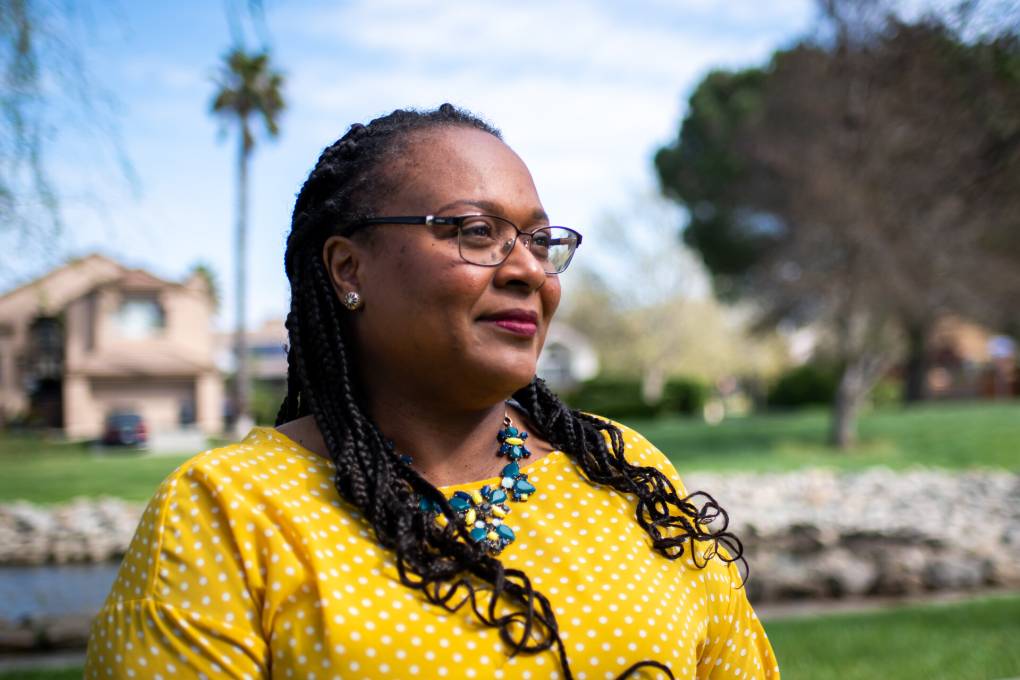
Bay Area Lawmakers Push to Enforce State Anti-Bias Training Requirement for Maternal Health Providers
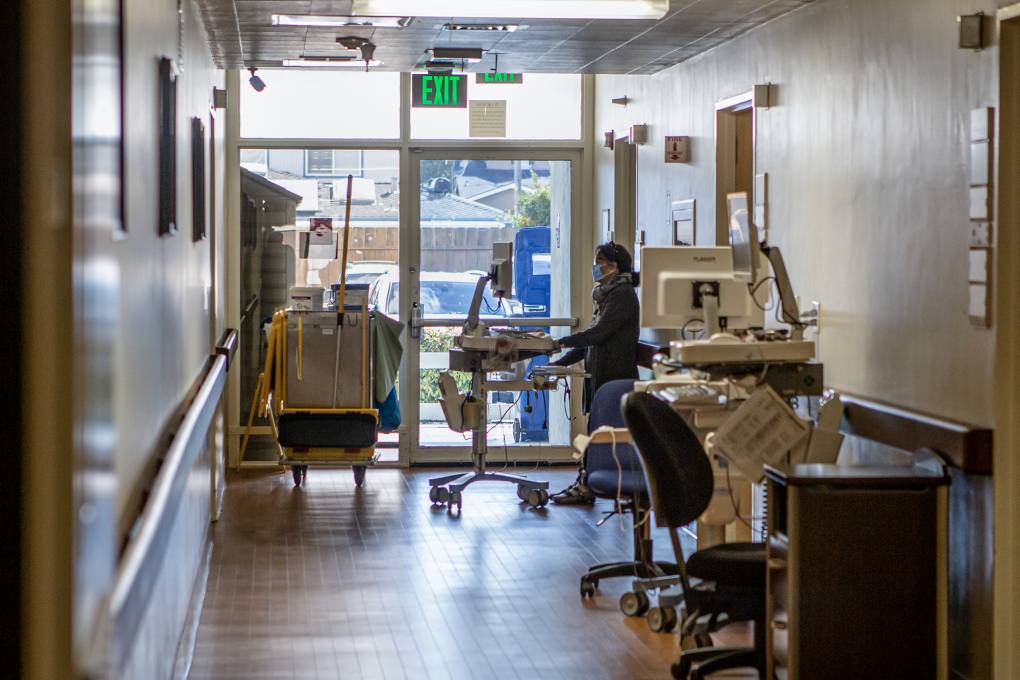
California Hospitals Ignored Bias Training Despite High Black Maternal Death Rate
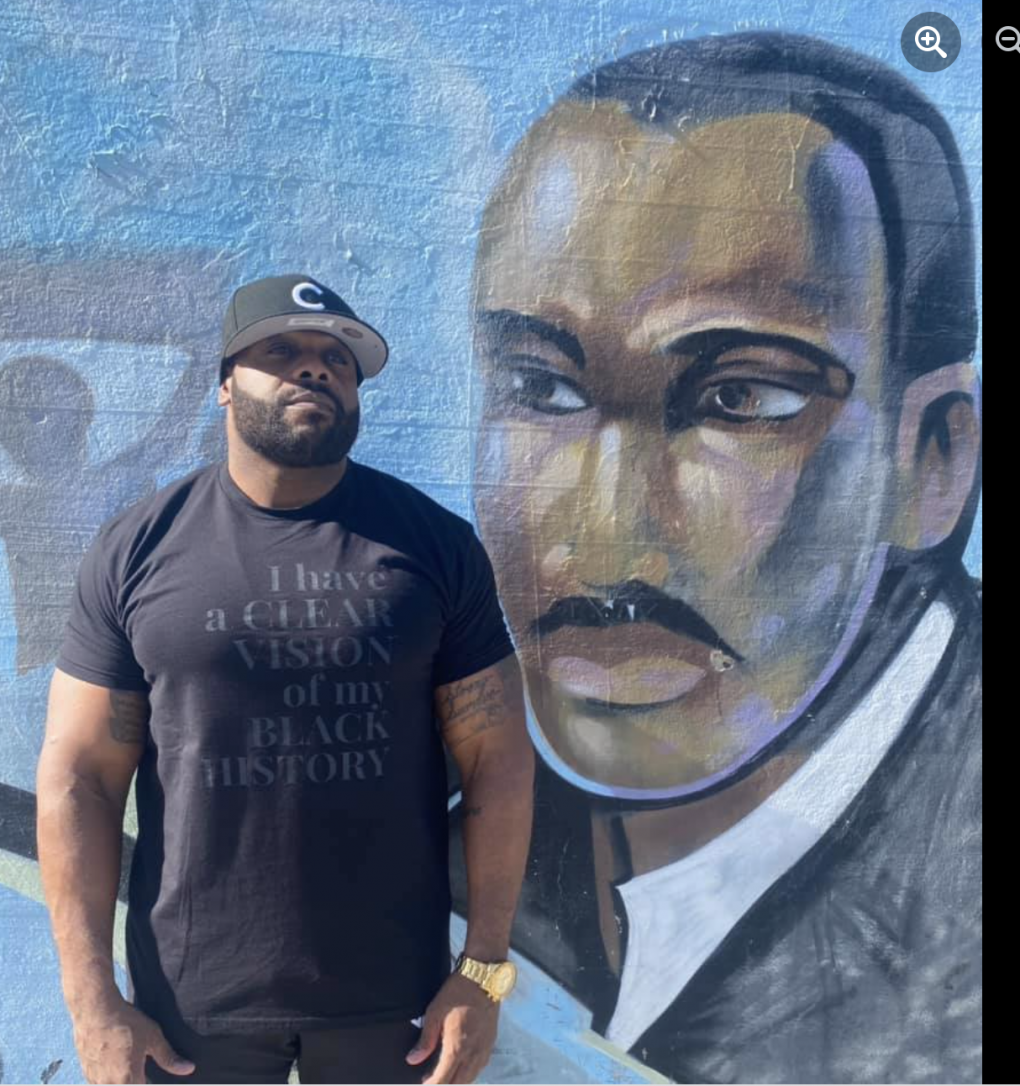
Documents Show How California Dept. of Corrections Handles Racism Among Officers
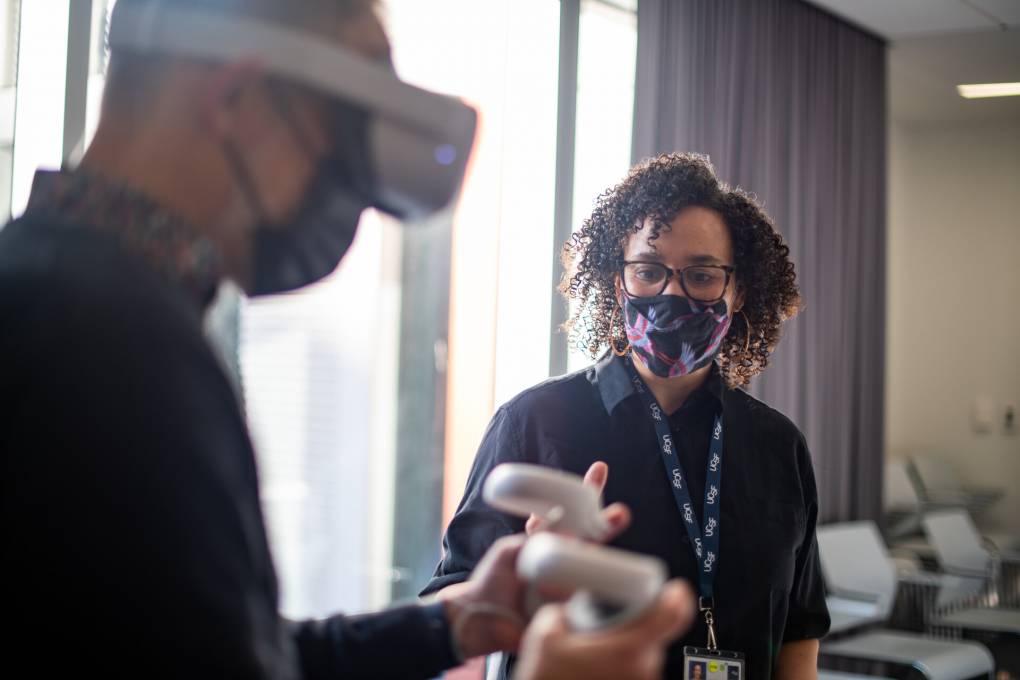
Can Virtual Reality Be Used to Combat Racial Bias in Health Care?
Black and Brown Gig Workers Report Lower Ratings — But Companies Make Bias Hard to Track
Can New Tech Platforms Reduce Bias in the Workplace? These Startups Are Betting on It
Is Silicon Valley Having a Teachable Moment About 'Implicit Bias'?
Proposition 57 - Public Safety, Elections 2016, Courtroom Implicit Bias Training
Sponsored
Player sponsored by
window.__IS_SSR__=true
window.__INITIAL_STATE__={
"attachmentsReducer": {
"audio_0": {
"type": "attachments",
"id": "audio_0",
"imgSizes": {
"kqedFullSize": {
"file": "https://ww2.kqed.org/news/wp-content/themes/KQED-unified/img/audio_bgs/background0.jpg"
}
}
},
"audio_1": {
"type": "attachments",
"id": "audio_1",
"imgSizes": {
"kqedFullSize": {
"file": "https://ww2.kqed.org/news/wp-content/themes/KQED-unified/img/audio_bgs/background1.jpg"
}
}
},
"audio_2": {
"type": "attachments",
"id": "audio_2",
"imgSizes": {
"kqedFullSize": {
"file": "https://ww2.kqed.org/news/wp-content/themes/KQED-unified/img/audio_bgs/background2.jpg"
}
}
},
"audio_3": {
"type": "attachments",
"id": "audio_3",
"imgSizes": {
"kqedFullSize": {
"file": "https://ww2.kqed.org/news/wp-content/themes/KQED-unified/img/audio_bgs/background3.jpg"
}
}
},
"audio_4": {
"type": "attachments",
"id": "audio_4",
"imgSizes": {
"kqedFullSize": {
"file": "https://ww2.kqed.org/news/wp-content/themes/KQED-unified/img/audio_bgs/background4.jpg"
}
}
},
"placeholder": {
"type": "attachments",
"id": "placeholder",
"imgSizes": {
"thumbnail": {
"file": "https://cdn.kqed.org/wp-content/uploads/2024/12/KQED-Default-Image-816638274-2000x1333-1-160x107.jpg",
"width": 160,
"height": 107,
"mimeType": "image/jpeg"
},
"medium": {
"file": "https://cdn.kqed.org/wp-content/uploads/2024/12/KQED-Default-Image-816638274-2000x1333-1-800x533.jpg",
"width": 800,
"height": 533,
"mimeType": "image/jpeg"
},
"medium_large": {
"file": "https://cdn.kqed.org/wp-content/uploads/2024/12/KQED-Default-Image-816638274-2000x1333-1-768x512.jpg",
"width": 768,
"height": 512,
"mimeType": "image/jpeg"
},
"large": {
"file": "https://cdn.kqed.org/wp-content/uploads/2024/12/KQED-Default-Image-816638274-2000x1333-1-1020x680.jpg",
"width": 1020,
"height": 680,
"mimeType": "image/jpeg"
},
"1536x1536": {
"file": "https://cdn.kqed.org/wp-content/uploads/2024/12/KQED-Default-Image-816638274-2000x1333-1-1536x1024.jpg",
"width": 1536,
"height": 1024,
"mimeType": "image/jpeg"
},
"fd-lrg": {
"file": "https://cdn.kqed.org/wp-content/uploads/2024/12/KQED-Default-Image-816638274-2000x1333-1-1536x1024.jpg",
"width": 1536,
"height": 1024,
"mimeType": "image/jpeg"
},
"fd-med": {
"file": "https://cdn.kqed.org/wp-content/uploads/2024/12/KQED-Default-Image-816638274-2000x1333-1-1020x680.jpg",
"width": 1020,
"height": 680,
"mimeType": "image/jpeg"
},
"fd-sm": {
"file": "https://cdn.kqed.org/wp-content/uploads/2024/12/KQED-Default-Image-816638274-2000x1333-1-800x533.jpg",
"width": 800,
"height": 533,
"mimeType": "image/jpeg"
},
"post-thumbnail": {
"file": "https://cdn.kqed.org/wp-content/uploads/2024/12/KQED-Default-Image-816638274-2000x1333-1-672x372.jpg",
"width": 672,
"height": 372,
"mimeType": "image/jpeg"
},
"twentyfourteen-full-width": {
"file": "https://cdn.kqed.org/wp-content/uploads/2024/12/KQED-Default-Image-816638274-2000x1333-1-1038x576.jpg",
"width": 1038,
"height": 576,
"mimeType": "image/jpeg"
},
"xxsmall": {
"file": "https://cdn.kqed.org/wp-content/uploads/2024/12/KQED-Default-Image-816638274-2000x1333-1-160x107.jpg",
"width": 160,
"height": 107,
"mimeType": "image/jpeg"
},
"xsmall": {
"file": "https://cdn.kqed.org/wp-content/uploads/2024/12/KQED-Default-Image-816638274-2000x1333-1-672x372.jpg",
"width": 672,
"height": 372,
"mimeType": "image/jpeg"
},
"small": {
"file": "https://cdn.kqed.org/wp-content/uploads/2024/12/KQED-Default-Image-816638274-2000x1333-1-672x372.jpg",
"width": 672,
"height": 372,
"mimeType": "image/jpeg"
},
"xlarge": {
"file": "https://cdn.kqed.org/wp-content/uploads/2024/12/KQED-Default-Image-816638274-2000x1333-1-1020x680.jpg",
"width": 1020,
"height": 680,
"mimeType": "image/jpeg"
},
"full-width": {
"file": "https://cdn.kqed.org/wp-content/uploads/2024/12/KQED-Default-Image-816638274-2000x1333-1-1920x1280.jpg",
"width": 1920,
"height": 1280,
"mimeType": "image/jpeg"
},
"guest-author-32": {
"file": "https://cdn.kqed.org/wp-content/uploads/2025/01/KQED-Default-Image-816638274-1333x1333-1-160x160.jpg",
"width": 32,
"height": 32,
"mimeType": "image/jpeg"
},
"guest-author-50": {
"file": "https://cdn.kqed.org/wp-content/uploads/2025/01/KQED-Default-Image-816638274-1333x1333-1-160x160.jpg",
"width": 50,
"height": 50,
"mimeType": "image/jpeg"
},
"guest-author-64": {
"file": "https://cdn.kqed.org/wp-content/uploads/2025/01/KQED-Default-Image-816638274-1333x1333-1-160x160.jpg",
"width": 64,
"height": 64,
"mimeType": "image/jpeg"
},
"guest-author-96": {
"file": "https://cdn.kqed.org/wp-content/uploads/2025/01/KQED-Default-Image-816638274-1333x1333-1-160x160.jpg",
"width": 96,
"height": 96,
"mimeType": "image/jpeg"
},
"guest-author-128": {
"file": "https://cdn.kqed.org/wp-content/uploads/2025/01/KQED-Default-Image-816638274-1333x1333-1-160x160.jpg",
"width": 128,
"height": 128,
"mimeType": "image/jpeg"
},
"detail": {
"file": "https://cdn.kqed.org/wp-content/uploads/2025/01/KQED-Default-Image-816638274-1333x1333-1-160x160.jpg",
"width": 160,
"height": 160,
"mimeType": "image/jpeg"
},
"kqedFullSize": {
"file": "https://cdn.kqed.org/wp-content/uploads/2024/12/KQED-Default-Image-816638274-2000x1333-1.jpg",
"width": 2000,
"height": 1333
}
}
},
"news_11975740": {
"type": "attachments",
"id": "news_11975740",
"meta": {
"index": "attachments_1716263798",
"site": "news",
"id": "11975740",
"found": true
},
"parent": 11975723,
"imgSizes": {
"twentyfourteen-full-width": {
"file": "https://cdn.kqed.org/wp-content/uploads/sites/10/2024/02/RS54515_007_KQED_LoriWilson_03172022-qut-1038x576.jpeg",
"width": 1038,
"mimeType": "image/jpeg",
"height": 576
},
"thumbnail": {
"file": "https://cdn.kqed.org/wp-content/uploads/sites/10/2024/02/RS54515_007_KQED_LoriWilson_03172022-qut-160x107.jpeg",
"width": 160,
"mimeType": "image/jpeg",
"height": 107
},
"post-thumbnail": {
"file": "https://cdn.kqed.org/wp-content/uploads/sites/10/2024/02/RS54515_007_KQED_LoriWilson_03172022-qut-672x372.jpeg",
"width": 672,
"mimeType": "image/jpeg",
"height": 372
},
"kqedFullSize": {
"file": "https://cdn.kqed.org/wp-content/uploads/sites/10/2024/02/RS54515_007_KQED_LoriWilson_03172022-qut.jpeg",
"width": 1920,
"height": 1280
},
"large": {
"file": "https://cdn.kqed.org/wp-content/uploads/sites/10/2024/02/RS54515_007_KQED_LoriWilson_03172022-qut-1020x680.jpeg",
"width": 1020,
"mimeType": "image/jpeg",
"height": 680
},
"1536x1536": {
"file": "https://cdn.kqed.org/wp-content/uploads/sites/10/2024/02/RS54515_007_KQED_LoriWilson_03172022-qut-1536x1024.jpeg",
"width": 1536,
"mimeType": "image/jpeg",
"height": 1024
},
"medium": {
"file": "https://cdn.kqed.org/wp-content/uploads/sites/10/2024/02/RS54515_007_KQED_LoriWilson_03172022-qut-800x533.jpeg",
"width": 800,
"mimeType": "image/jpeg",
"height": 533
}
},
"publishDate": 1707860598,
"modified": 1707862704,
"caption": "State Assemblymember Lori Wilson (D-Suisun City), chair of the California Legislative Black Caucus. Wilson this week co-sponsored a new bill that would step up enforcement of a state law requiring maternal health care facilities to conduct anti-bias trainings with their staff every two years.",
"description": null,
"title": "RS54515_007_KQED_LoriWilson_03172022-qut",
"credit": "Beth LaBerge/KQED",
"status": "inherit",
"altTag": "A woman wearing glasses and a yellow dress stands outside.",
"fetchFailed": false,
"isLoading": false
},
"news_11965924": {
"type": "attachments",
"id": "news_11965924",
"meta": {
"index": "attachments_1716263798",
"site": "news",
"id": "11965924",
"found": true
},
"parent": 11965919,
"imgSizes": {
"twentyfourteen-full-width": {
"file": "https://ww2.kqed.org/app/uploads/sites/10/2023/10/033023-Hollister-Hospital-LV_CM_18-1038x576.jpg",
"width": 1038,
"mimeType": "image/jpeg",
"height": 576
},
"thumbnail": {
"file": "https://ww2.kqed.org/app/uploads/sites/10/2023/10/033023-Hollister-Hospital-LV_CM_18-160x107.jpg",
"width": 160,
"mimeType": "image/jpeg",
"height": 107
},
"post-thumbnail": {
"file": "https://ww2.kqed.org/app/uploads/sites/10/2023/10/033023-Hollister-Hospital-LV_CM_18-672x372.jpg",
"width": 672,
"mimeType": "image/jpeg",
"height": 372
},
"kqedFullSize": {
"file": "https://ww2.kqed.org/app/uploads/sites/10/2023/10/033023-Hollister-Hospital-LV_CM_18.jpg",
"width": 2000,
"height": 1333
},
"large": {
"file": "https://ww2.kqed.org/app/uploads/sites/10/2023/10/033023-Hollister-Hospital-LV_CM_18-1020x680.jpg",
"width": 1020,
"mimeType": "image/jpeg",
"height": 680
},
"1536x1536": {
"file": "https://ww2.kqed.org/app/uploads/sites/10/2023/10/033023-Hollister-Hospital-LV_CM_18-1536x1024.jpg",
"width": 1536,
"mimeType": "image/jpeg",
"height": 1024
},
"full-width": {
"file": "https://ww2.kqed.org/app/uploads/sites/10/2023/10/033023-Hollister-Hospital-LV_CM_18-1920x1280.jpg",
"width": 1920,
"mimeType": "image/jpeg",
"height": 1280
},
"medium": {
"file": "https://ww2.kqed.org/app/uploads/sites/10/2023/10/033023-Hollister-Hospital-LV_CM_18-800x533.jpg",
"width": 800,
"mimeType": "image/jpeg",
"height": 533
}
},
"publishDate": 1698691851,
"modified": 1698691920,
"caption": "A medical personnel working on her computer in the corridor of Hazel Hawkins Memorial Hospital in Hollister on March 30, 2023. ",
"description": null,
"title": "033023-Hollister-Hospital-LV_CM_18",
"credit": "Larry Valenzuela/CalMatters/CatchLight Local",
"status": "inherit",
"altTag": "A woman wearing a face mask stands in front of a computer in the hallway surrounded by more medical equipment.",
"fetchFailed": false,
"isLoading": false
},
"news_11908407": {
"type": "attachments",
"id": "news_11908407",
"meta": {
"index": "attachments_1716263798",
"site": "news",
"id": "11908407",
"found": true
},
"parent": 11908340,
"imgSizes": {
"twentyfourteen-full-width": {
"file": "https://ww2.kqed.org/app/uploads/sites/10/2022/03/CarlHolmesJrFromFb1.15.21-1-1038x576.png",
"width": 1038,
"mimeType": "image/png",
"height": 576
},
"thumbnail": {
"file": "https://ww2.kqed.org/app/uploads/sites/10/2022/03/CarlHolmesJrFromFb1.15.21-1-160x170.png",
"width": 160,
"mimeType": "image/png",
"height": 170
},
"post-thumbnail": {
"file": "https://ww2.kqed.org/app/uploads/sites/10/2022/03/CarlHolmesJrFromFb1.15.21-1-672x372.png",
"width": 672,
"mimeType": "image/png",
"height": 372
},
"kqedFullSize": {
"file": "https://ww2.kqed.org/app/uploads/sites/10/2022/03/CarlHolmesJrFromFb1.15.21-1.png",
"width": 1214,
"height": 1292
},
"large": {
"file": "https://ww2.kqed.org/app/uploads/sites/10/2022/03/CarlHolmesJrFromFb1.15.21-1-1020x1086.png",
"width": 1020,
"mimeType": "image/png",
"height": 1086
},
"medium": {
"file": "https://ww2.kqed.org/app/uploads/sites/10/2022/03/CarlHolmesJrFromFb1.15.21-1-800x851.png",
"width": 800,
"mimeType": "image/png",
"height": 851
}
},
"publishDate": 1647461687,
"modified": 1647468596,
"caption": "Carl Holmes worked as a correctional officer at Los Angeles County's state prison in 2020 when he was disciplined for an outburst over a 'thin blue line' flag hanging in a gym at the facility.",
"description": null,
"title": "CarlHolmesJrFromFb1.15.21 (1)",
"credit": "Courtesy of Facebook",
"status": "inherit",
"altTag": "A man wearing a black baseball cap and black t shirt stands in front of a mural.",
"fetchFailed": false,
"isLoading": false
},
"news_11898974": {
"type": "attachments",
"id": "news_11898974",
"meta": {
"index": "attachments_1716263798",
"site": "news",
"id": "11898974",
"found": true
},
"parent": 11898973,
"imgSizes": {
"twentyfourteen-full-width": {
"file": "https://ww2.kqed.org/app/uploads/sites/10/2021/12/RS52837_009_SanFrancisco_UCSFVirtualReality_12102021-qut-1038x576.jpg",
"width": 1038,
"mimeType": "image/jpeg",
"height": 576
},
"thumbnail": {
"file": "https://ww2.kqed.org/app/uploads/sites/10/2021/12/RS52837_009_SanFrancisco_UCSFVirtualReality_12102021-qut-160x107.jpg",
"width": 160,
"mimeType": "image/jpeg",
"height": 107
},
"post-thumbnail": {
"file": "https://ww2.kqed.org/app/uploads/sites/10/2021/12/RS52837_009_SanFrancisco_UCSFVirtualReality_12102021-qut-672x372.jpg",
"width": 672,
"mimeType": "image/jpeg",
"height": 372
},
"kqedFullSize": {
"file": "https://ww2.kqed.org/app/uploads/sites/10/2021/12/RS52837_009_SanFrancisco_UCSFVirtualReality_12102021-qut.jpg",
"width": 1920,
"height": 1280
},
"large": {
"file": "https://ww2.kqed.org/app/uploads/sites/10/2021/12/RS52837_009_SanFrancisco_UCSFVirtualReality_12102021-qut-1020x680.jpg",
"width": 1020,
"mimeType": "image/jpeg",
"height": 680
},
"1536x1536": {
"file": "https://ww2.kqed.org/app/uploads/sites/10/2021/12/RS52837_009_SanFrancisco_UCSFVirtualReality_12102021-qut-1536x1024.jpg",
"width": 1536,
"mimeType": "image/jpeg",
"height": 1024
},
"medium": {
"file": "https://ww2.kqed.org/app/uploads/sites/10/2021/12/RS52837_009_SanFrancisco_UCSFVirtualReality_12102021-qut-800x533.jpg",
"width": 800,
"mimeType": "image/jpeg",
"height": 533
}
},
"publishDate": 1639446469,
"modified": 1639626738,
"caption": "Nova Wilson, program coordinator for the UCSF Institute for Global Health Sciences, instructs Dr. Mike Reid on using virtual reality equipment at UCSF offices in San Francisco on Dec. 10, 2021. The VR program is intended to teach doctors to have more empathy for their patients of color.",
"description": "Nova Wilson, program coordinator for UCSF Institute for Global Health Sciences, instructs Dr. Mike Reid on using virtual reality equipment at UCSF offices in San Francisco on Dec. 10, 2021. The VR program is intended to teach doctors to have more empathy for their patients of color.",
"title": "RS52837_009_SanFrancisco_UCSFVirtualReality_12102021-qut",
"credit": "Beth LaBerge/KQED",
"status": "inherit",
"altTag": "Two people stand in a room: one wears a virtual reality headset and holds two controllers while the second figure stands by and watches over.",
"fetchFailed": false,
"isLoading": false
},
"news_11882169": {
"type": "attachments",
"id": "news_11882169",
"meta": {
"index": "attachments_1716263798",
"site": "news",
"id": "11882169",
"found": true
},
"parent": 11878952,
"imgSizes": {
"twentyfourteen-full-width": {
"file": "https://ww2.kqed.org/app/uploads/sites/10/2021/07/GettyImages-509765744-1-1038x576.jpg",
"width": 1038,
"mimeType": "image/jpeg",
"height": 576
},
"thumbnail": {
"file": "https://ww2.kqed.org/app/uploads/sites/10/2021/07/GettyImages-509765744-1-160x106.jpg",
"width": 160,
"mimeType": "image/jpeg",
"height": 106
},
"post-thumbnail": {
"file": "https://ww2.kqed.org/app/uploads/sites/10/2021/07/GettyImages-509765744-1-672x372.jpg",
"width": 672,
"mimeType": "image/jpeg",
"height": 372
},
"kqedFullSize": {
"file": "https://ww2.kqed.org/app/uploads/sites/10/2021/07/GettyImages-509765744-1-scaled.jpg",
"width": 2560,
"height": 1704
},
"2048x2048": {
"file": "https://ww2.kqed.org/app/uploads/sites/10/2021/07/GettyImages-509765744-1-2048x1363.jpg",
"width": 2048,
"mimeType": "image/jpeg",
"height": 1363
},
"large": {
"file": "https://ww2.kqed.org/app/uploads/sites/10/2021/07/GettyImages-509765744-1-1020x679.jpg",
"width": 1020,
"mimeType": "image/jpeg",
"height": 679
},
"1536x1536": {
"file": "https://ww2.kqed.org/app/uploads/sites/10/2021/07/GettyImages-509765744-1-1536x1022.jpg",
"width": 1536,
"mimeType": "image/jpeg",
"height": 1022
},
"full-width": {
"file": "https://ww2.kqed.org/app/uploads/sites/10/2021/07/GettyImages-509765744-1-1920x1278.jpg",
"width": 1920,
"mimeType": "image/jpeg",
"height": 1278
},
"medium": {
"file": "https://ww2.kqed.org/app/uploads/sites/10/2021/07/GettyImages-509765744-1-800x532.jpg",
"width": 800,
"mimeType": "image/jpeg",
"height": 532
}
},
"publishDate": 1626987733,
"modified": 1626987794,
"caption": "The driver rating screen in an Uber app is seen February 12, 2016 in Washington, DC.",
"description": "The driver rating screen in an Uber app is seen February 12, 2016 in Washington, DC. Global ridesharing service Uber said February 12, 2016 it had raised $200 million in additional funding to help its push into emerging markets.The latest round comes from Luxembourg-based investment group LetterOne (L1), according to a joint statement. ",
"title": "US-IT-LIFESTYLE-TRANSPORT-UBER",
"credit": "Brendan Smialowski/AFP via Getty Images",
"status": "inherit",
"altTag": "A hand holds up a smart phone that shows a screen for rating Uber drivers",
"fetchFailed": false,
"isLoading": false
},
"news_11145799": {
"type": "attachments",
"id": "news_11145799",
"meta": {
"index": "attachments_1716263798",
"site": "news",
"id": "11145799",
"found": true
},
"parent": 11145796,
"imgSizes": {
"small": {
"file": "https://ww2.kqed.org/app/uploads/sites/10/2016/10/GettyImages-578544684-520x326.jpg",
"width": 520,
"mimeType": "image/jpeg",
"height": 326
},
"twentyfourteen-full-width": {
"file": "https://ww2.kqed.org/app/uploads/sites/10/2016/10/GettyImages-578544684-1038x576.jpg",
"width": 1038,
"mimeType": "image/jpeg",
"height": 576
},
"thumbnail": {
"file": "https://ww2.kqed.org/app/uploads/sites/10/2016/10/GettyImages-578544684-160x100.jpg",
"width": 160,
"mimeType": "image/jpeg",
"height": 100
},
"fd-sm": {
"file": "https://ww2.kqed.org/app/uploads/sites/10/2016/10/GettyImages-578544684-960x601.jpg",
"width": 960,
"mimeType": "image/jpeg",
"height": 601
},
"post-thumbnail": {
"file": "https://ww2.kqed.org/app/uploads/sites/10/2016/10/GettyImages-578544684-672x372.jpg",
"width": 672,
"mimeType": "image/jpeg",
"height": 372
},
"xsmall": {
"file": "https://ww2.kqed.org/app/uploads/sites/10/2016/10/GettyImages-578544684-375x235.jpg",
"width": 375,
"mimeType": "image/jpeg",
"height": 235
},
"kqedFullSize": {
"file": "https://ww2.kqed.org/app/uploads/sites/10/2016/10/GettyImages-578544684-e1477591631772.jpg",
"width": 1920,
"height": 1203
},
"large": {
"file": "https://ww2.kqed.org/app/uploads/sites/10/2016/10/GettyImages-578544684-1020x639.jpg",
"width": 1020,
"mimeType": "image/jpeg",
"height": 639
},
"xlarge": {
"file": "https://ww2.kqed.org/app/uploads/sites/10/2016/10/GettyImages-578544684-1180x739.jpg",
"width": 1180,
"mimeType": "image/jpeg",
"height": 739
},
"guest-author-50": {
"file": "https://ww2.kqed.org/app/uploads/sites/10/2016/10/GettyImages-578544684-50x50.jpg",
"width": 50,
"mimeType": "image/jpeg",
"height": 50
},
"guest-author-96": {
"file": "https://ww2.kqed.org/app/uploads/sites/10/2016/10/GettyImages-578544684-96x96.jpg",
"width": 96,
"mimeType": "image/jpeg",
"height": 96
},
"medium": {
"file": "https://ww2.kqed.org/app/uploads/sites/10/2016/10/GettyImages-578544684-800x501.jpg",
"width": 800,
"mimeType": "image/jpeg",
"height": 501
},
"guest-author-64": {
"file": "https://ww2.kqed.org/app/uploads/sites/10/2016/10/GettyImages-578544684-64x64.jpg",
"width": 64,
"mimeType": "image/jpeg",
"height": 64
},
"guest-author-32": {
"file": "https://ww2.kqed.org/app/uploads/sites/10/2016/10/GettyImages-578544684-32x32.jpg",
"width": 32,
"mimeType": "image/jpeg",
"height": 32
},
"jmtc-small-thumb": {
"file": "https://ww2.kqed.org/app/uploads/sites/10/2016/10/GettyImages-578544684-280x150.jpg",
"width": 280,
"mimeType": "image/jpeg",
"height": 150
},
"fd-lrg": {
"file": "https://ww2.kqed.org/app/uploads/sites/10/2016/10/GettyImages-578544684-1920x1203.jpg",
"width": 1920,
"mimeType": "image/jpeg",
"height": 1203
},
"fd-med": {
"file": "https://ww2.kqed.org/app/uploads/sites/10/2016/10/GettyImages-578544684-1180x739.jpg",
"width": 1180,
"mimeType": "image/jpeg",
"height": 739
},
"full-width": {
"file": "https://ww2.kqed.org/app/uploads/sites/10/2016/10/GettyImages-578544684-1920x1203.jpg",
"width": 1920,
"mimeType": "image/jpeg",
"height": 1203
},
"detail": {
"file": "https://ww2.kqed.org/app/uploads/sites/10/2016/10/GettyImages-578544684-150x150.jpg",
"width": 150,
"mimeType": "image/jpeg",
"height": 150
},
"guest-author-128": {
"file": "https://ww2.kqed.org/app/uploads/sites/10/2016/10/GettyImages-578544684-128x128.jpg",
"width": 128,
"mimeType": "image/jpeg",
"height": 128
},
"xxsmall": {
"file": "https://ww2.kqed.org/app/uploads/sites/10/2016/10/GettyImages-578544684-240x150.jpg",
"width": 240,
"mimeType": "image/jpeg",
"height": 150
}
},
"publishDate": 1477448865,
"modified": 1477608795,
"caption": "Peter Thiel, co-founder of PayPal, delivers a speech during the evening session on the fourth day of the Republican National Convention on July 21, 2016, at Quicken Loans Arena in Cleveland, Ohio. \n",
"description": null,
"title": "Republican National Convention: Day Four",
"credit": "Chip Somodevilla/Getty Images",
"status": "inherit",
"fetchFailed": false,
"isLoading": false
},
"news_11230081": {
"type": "attachments",
"id": "news_11230081",
"meta": {
"index": "attachments_1716263798",
"site": "news",
"id": "11230081",
"found": true
},
"parent": 11230079,
"imgSizes": {
"small": {
"file": "https://ww2.kqed.org/app/uploads/sites/10/2016/12/prop57-520x293.jpg",
"width": 520,
"mimeType": "image/jpeg",
"height": 293
},
"twentyfourteen-full-width": {
"file": "https://ww2.kqed.org/app/uploads/sites/10/2016/12/prop57-1038x576.jpg",
"width": 1038,
"mimeType": "image/jpeg",
"height": 576
},
"thumbnail": {
"file": "https://ww2.kqed.org/app/uploads/sites/10/2016/12/prop57-160x90.jpg",
"width": 160,
"mimeType": "image/jpeg",
"height": 90
},
"fd-sm": {
"file": "https://ww2.kqed.org/app/uploads/sites/10/2016/12/prop57-960x540.jpg",
"width": 960,
"mimeType": "image/jpeg",
"height": 540
},
"post-thumbnail": {
"file": "https://ww2.kqed.org/app/uploads/sites/10/2016/12/prop57-672x372.jpg",
"width": 672,
"mimeType": "image/jpeg",
"height": 372
},
"xsmall": {
"file": "https://ww2.kqed.org/app/uploads/sites/10/2016/12/prop57-375x211.jpg",
"width": 375,
"mimeType": "image/jpeg",
"height": 211
},
"kqedFullSize": {
"file": "https://ww2.kqed.org/app/uploads/sites/10/2016/12/prop57.jpg",
"width": 1280,
"height": 720
},
"large": {
"file": "https://ww2.kqed.org/app/uploads/sites/10/2016/12/prop57-1020x574.jpg",
"width": 1020,
"mimeType": "image/jpeg",
"height": 574
},
"xlarge": {
"file": "https://ww2.kqed.org/app/uploads/sites/10/2016/12/prop57-1180x664.jpg",
"width": 1180,
"mimeType": "image/jpeg",
"height": 664
},
"guest-author-50": {
"file": "https://ww2.kqed.org/app/uploads/sites/10/2016/12/prop57-50x50.jpg",
"width": 50,
"mimeType": "image/jpeg",
"height": 50
},
"guest-author-96": {
"file": "https://ww2.kqed.org/app/uploads/sites/10/2016/12/prop57-96x96.jpg",
"width": 96,
"mimeType": "image/jpeg",
"height": 96
},
"medium": {
"file": "https://ww2.kqed.org/app/uploads/sites/10/2016/12/prop57-800x450.jpg",
"width": 800,
"mimeType": "image/jpeg",
"height": 450
},
"guest-author-64": {
"file": "https://ww2.kqed.org/app/uploads/sites/10/2016/12/prop57-64x64.jpg",
"width": 64,
"mimeType": "image/jpeg",
"height": 64
},
"guest-author-32": {
"file": "https://ww2.kqed.org/app/uploads/sites/10/2016/12/prop57-32x32.jpg",
"width": 32,
"mimeType": "image/jpeg",
"height": 32
},
"jmtc-small-thumb": {
"file": "https://ww2.kqed.org/app/uploads/sites/10/2016/12/prop57-280x150.jpg",
"width": 280,
"mimeType": "image/jpeg",
"height": 150
},
"fd-med": {
"file": "https://ww2.kqed.org/app/uploads/sites/10/2016/12/prop57-1180x664.jpg",
"width": 1180,
"mimeType": "image/jpeg",
"height": 664
},
"detail": {
"file": "https://ww2.kqed.org/app/uploads/sites/10/2016/12/prop57-150x150.jpg",
"width": 150,
"mimeType": "image/jpeg",
"height": 150
},
"guest-author-128": {
"file": "https://ww2.kqed.org/app/uploads/sites/10/2016/12/prop57-128x128.jpg",
"width": 128,
"mimeType": "image/jpeg",
"height": 128
},
"xxsmall": {
"file": "https://ww2.kqed.org/app/uploads/sites/10/2016/12/prop57-240x135.jpg",
"width": 240,
"mimeType": "image/jpeg",
"height": 135
}
},
"publishDate": 1482293069,
"modified": 1482293069,
"caption": null,
"description": null,
"title": "prop57",
"credit": null,
"status": "inherit",
"fetchFailed": false,
"isLoading": false
}
},
"audioPlayerReducer": {
"postId": "stream_live",
"isPaused": true,
"isPlaying": false,
"pfsActive": false,
"pledgeModalIsOpen": true,
"playerDrawerIsOpen": false
},
"authorsReducer": {
"byline_news_11965919": {
"type": "authors",
"id": "byline_news_11965919",
"meta": {
"override": true
},
"slug": "byline_news_11965919",
"name": "Kristen Hwang",
"isLoading": false
},
"byline_news_11230079": {
"type": "authors",
"id": "byline_news_11230079",
"meta": {
"override": true
},
"slug": "byline_news_11230079",
"name": "KQED Newsroom Staff",
"isLoading": false
},
"samharnett": {
"type": "authors",
"id": "253",
"meta": {
"index": "authors_1716337520",
"id": "253",
"found": true
},
"name": "Sam Harnett",
"firstName": "Sam",
"lastName": "Harnett",
"slug": "samharnett",
"email": "samharnett@gmail.com",
"display_author_email": false,
"staff_mastheads": [],
"title": "KQED Contributor",
"bio": "Sam Harnett covered tech and work at KQED. He is the co-creator of \u003cem>\u003ca href=\"http://www.theworldaccordingtosound.org\">The World According to Sound\u003c/a>,\u003c/em> a 90-second podcast that features different sounds and the stories behind them.\r\n\r\nBefore coming to KQED, Sam worked as an independent reporter who contributed regularly to \u003cem>The California Report, Marketplace,\u003c/em> \u003cem>The World \u003c/em>and NPR.",
"avatar": "https://secure.gravatar.com/avatar/2538b972ac02f2b9546c7a6c59a0f3d0?s=600&d=blank&r=g",
"twitter": "Samwharnett",
"facebook": null,
"instagram": null,
"linkedin": null,
"sites": [
{
"site": "news",
"roles": [
"edit_others_posts",
"subscriber"
]
},
{
"site": "stateofhealth",
"roles": [
"author"
]
},
{
"site": "science",
"roles": [
"editor"
]
},
{
"site": "quest",
"roles": [
"subscriber"
]
}
],
"headData": {
"title": "Sam Harnett | KQED",
"description": "KQED Contributor",
"ogImgSrc": "https://secure.gravatar.com/avatar/2538b972ac02f2b9546c7a6c59a0f3d0?s=600&d=blank&r=g",
"twImgSrc": "https://secure.gravatar.com/avatar/2538b972ac02f2b9546c7a6c59a0f3d0?s=600&d=blank&r=g"
},
"isLoading": false,
"link": "/author/samharnett"
},
"adembosky": {
"type": "authors",
"id": "3205",
"meta": {
"index": "authors_1716337520",
"id": "3205",
"found": true
},
"name": "April Dembosky",
"firstName": "April",
"lastName": "Dembosky",
"slug": "adembosky",
"email": "adembosky@kqed.org",
"display_author_email": false,
"staff_mastheads": [
"news",
"science"
],
"title": "KQED Health Correspondent",
"bio": "April Dembosky is the health correspondent for KQED News and a regular contributor to NPR. She specializes in covering altered states of mind, from postpartum depression to methamphetamine-induced psychosis to the insanity defense. Her investigative series on insurance companies sidestepping mental health laws won multiple awards, including first place in beat reporting from the national Association of Health Care Journalists. She is the recipient of numerous other prizes and fellowships, including a national Edward R. Murrow award for investigative reporting, a Society of Professional Journalists award for long-form storytelling, and a Carter Center Fellowship for Mental Health Journalism.\r\n\r\nDembosky reported and produced \u003cem>Soundtrack of Silence\u003c/em>, an audio documentary about music and memory that is currently being made into a feature film by Paramount Pictures.\r\n\r\nBefore joining KQED in 2013, Dembosky covered technology and Silicon Valley for \u003cem>The Financial Times of London,\u003c/em> and contributed business and arts stories to \u003cem>Marketplace \u003c/em>and \u003cem>The New York Times.\u003c/em> She got her undergraduate degree in philosophy from Smith College and her master's in journalism from the University of California, Berkeley. She is a classically trained violinist and proud alum of the first symphony orchestra at Burning Man.",
"avatar": "https://secure.gravatar.com/avatar/ef92999be4ceb9ea60701e7dc276f813?s=600&d=blank&r=g",
"twitter": "adembosky",
"facebook": null,
"instagram": null,
"linkedin": null,
"sites": [
{
"site": "arts",
"roles": [
"author"
]
},
{
"site": "news",
"roles": [
"editor"
]
},
{
"site": "futureofyou",
"roles": [
"author"
]
},
{
"site": "stateofhealth",
"roles": [
"editor"
]
},
{
"site": "science",
"roles": [
"editor"
]
},
{
"site": "forum",
"roles": [
"editor"
]
}
],
"headData": {
"title": "April Dembosky | KQED",
"description": "KQED Health Correspondent",
"ogImgSrc": "https://secure.gravatar.com/avatar/ef92999be4ceb9ea60701e7dc276f813?s=600&d=blank&r=g",
"twImgSrc": "https://secure.gravatar.com/avatar/ef92999be4ceb9ea60701e7dc276f813?s=600&d=blank&r=g"
},
"isLoading": false,
"link": "/author/adembosky"
},
"slewis": {
"type": "authors",
"id": "8676",
"meta": {
"index": "authors_1716337520",
"id": "8676",
"found": true
},
"name": "Sukey Lewis",
"firstName": "Sukey",
"lastName": "Lewis",
"slug": "slewis",
"email": "slewis@kqed.org",
"display_author_email": true,
"staff_mastheads": [
"news"
],
"title": "KQED Contributor",
"bio": "Sukey Lewis is a criminal justice reporter and host of \u003cem>On Our Watch\u003c/em>, a new podcast from NPR and KQED about the shadow world of police discipline. In 2018, she co-founded the California Reporting Project, a coalition of newsrooms across the state focused on obtaining previously sealed internal affairs records from law enforcement. In addition to her reporting on police accountability, Sukey has investigated the bail bonds industry, California's wildfires and the high cost of prison phone calls. Sukey earned a master's degree in journalism from the University of California at Berkeley. Send news tips to slewis@kqed.org.",
"avatar": "https://secure.gravatar.com/avatar/03fd6b21024f99d8b0a1966654586de7?s=600&d=blank&r=g",
"twitter": "SukeyLewis",
"facebook": null,
"instagram": null,
"linkedin": null,
"sites": [
{
"site": "news",
"roles": [
"author",
"edit_others_posts"
]
}
],
"headData": {
"title": "Sukey Lewis | KQED",
"description": "KQED Contributor",
"ogImgSrc": "https://secure.gravatar.com/avatar/03fd6b21024f99d8b0a1966654586de7?s=600&d=blank&r=g",
"twImgSrc": "https://secure.gravatar.com/avatar/03fd6b21024f99d8b0a1966654586de7?s=600&d=blank&r=g"
},
"isLoading": false,
"link": "/author/slewis"
},
"qkim": {
"type": "authors",
"id": "11099",
"meta": {
"index": "authors_1716337520",
"id": "11099",
"found": true
},
"name": "Queena Sook Kim",
"firstName": "Queena",
"lastName": "Kim",
"slug": "qkim",
"email": "qkim@kqed.org",
"display_author_email": false,
"staff_mastheads": [
"news"
],
"title": "Senior Editor",
"bio": "\u003cspan style=\"font-weight: 400;\">Queena Sook Kim is a former senior editor of the weekend desk at KQED. Before taking on that post, she was the Senior Editor of the Silicon Valley Desk and was the \u003c/span>\u003cspan style=\"font-weight: 400;\">host of The California Report. The daily morning show airs on KQED in San Francisco, one of the nation’s largest NPR affiliates, and on 30 stations across the state. In that role, she produces and reports on news, politics and life in the Golden State. Queena likes to take sideways look at the larger trends changing the state. One of her favorite stories asked\u003c/span>\u003ca href=\"https://ww2.kqed.org/news/2015/02/15/why-the-heck-do-mexican-reporters-on-public-radio-say-their-names-that-way\"> \u003cspan style=\"font-weight: 400;\">why Latino journalists “over’pronounce” their Spanish surnames\u003c/span>\u003c/a>\u003cspan style=\"font-weight: 400;\"> as a way of looking at how immigration is creating a culture shift in California.\u003c/span>\r\n\r\n\u003cspan style=\"font-weight: 400;\">Before joining The California Report, Queena was a \u003ca href=\"http://www.marketplace.org/people/queena-kim\">Senior Reporter covering technology for Marketplace\u003c/a>, the daily business show that airs on public radio. Queena covered daily tech business stories and reported on larger technology trends. She did a series of stories looking at role of social engineering in hacking and on a start-up in Silicon Valley that’s trying to use technology, instead of animals, to make meat that bleeds.\u003c/span>\r\n\r\n\u003cspan style=\"font-weight: 400;\">Queena started her career as a business journalist at the Wall Street Journal, where she spent four years covering the paper, home building and toy industries. She wrote A1 stories about the unusually aggressive tactics KB Home took against its home buyers. and the resurgence of “Cracker” architecture in Florida. She also wrote section front stories on marketing trends and\u003c/span>\r\n\r\n\u003cspan style=\"font-weight: 400;\">As a journalist, Queena has spent much of her career helping start-up editorial products. She was on the founding editorial team of The Bay Citizen, an experimental, online news site in San Francisco that was funded by the late hillbilly billionaire Warren Hellman. In 2009, Queena received a grant from the Corporation of Public Broadcasting to start-up a podcast called \u003ca href=\"https://soundcloud.com/cyberfrequencies\">CyberFrequencies\u003c/a>, which reported on the culture of technology. She also helped start-up two radio shows - Off-Ramp and Pacific Drift - for KPCC, the NPR-affiliate in Los Angeles. Off-Ramp was awarded 1st Place for news and Public Affairs programming by the PRINDI and the L.A. Press club. \u003ca href=\"https://soundcloud.com/queena-sook-kim\">Queena’s stories have appeared \u003c/a>on NPR’s Day to Day, Hearing Voices, WNYC’s Studio 360, WBUR’s Here and Now, BBC’s Global Perspectives and New York Times’ multimedia page.\u003c/span>\r\n\r\n\u003cspan style=\"font-weight: 400;\">In 1994, Queena won a Fulbright Grant to teach and study in Seoul, South Korea. She was also selected to be a Teach For America Corps Member in 1991 and taught elementary school in the Inglewood Unified School District in Southern California.\u003c/span>\r\n\r\n\u003cspan style=\"font-weight: 400;\">Queena is a frequent public speaker and has given talks at UC Berkeley, Stanford University, San Francisco State University, PRINDI conference and the Craigslist Foundation Boot Camp. Queena went to UC Berkeley’s Graduate School of Journalism and graduated cum laude from New York University with a B.A. in Politics. She grew up in Southern California and lives in Berkeley, Ca in a big fixer on which she spends most weekends, well, fixing.\u003c/span>",
"avatar": "https://secure.gravatar.com/avatar/b72382fd0db351b99f8a31939f4853fc?s=600&d=blank&r=g",
"twitter": "queenasookkim",
"facebook": null,
"instagram": null,
"linkedin": null,
"sites": [
{
"site": "news",
"roles": [
"subscriber"
]
},
{
"site": "forum",
"roles": [
"author"
]
},
{
"site": "breakingnews",
"roles": [
"editor"
]
}
],
"headData": {
"title": "Queena Sook Kim | KQED",
"description": "Senior Editor",
"ogImgSrc": "https://secure.gravatar.com/avatar/b72382fd0db351b99f8a31939f4853fc?s=600&d=blank&r=g",
"twImgSrc": "https://secure.gravatar.com/avatar/b72382fd0db351b99f8a31939f4853fc?s=600&d=blank&r=g"
},
"isLoading": false,
"link": "/author/qkim"
},
"awoelfle": {
"type": "authors",
"id": "11630",
"meta": {
"index": "authors_1716337520",
"id": "11630",
"found": true
},
"name": "Alice Woelfle",
"firstName": "Alice",
"lastName": "Woelfle",
"slug": "awoelfle",
"email": "awoelfle@KQED.org",
"display_author_email": false,
"staff_mastheads": [],
"title": null,
"bio": null,
"avatar": "https://secure.gravatar.com/avatar/00e46668235dc71f4a7513cf5eb31df3?s=600&d=blank&r=g",
"twitter": null,
"facebook": null,
"instagram": null,
"linkedin": null,
"sites": [
{
"site": "news",
"roles": [
"subscriber"
]
}
],
"headData": {
"title": "Alice Woelfle | KQED",
"description": null,
"ogImgSrc": "https://secure.gravatar.com/avatar/00e46668235dc71f4a7513cf5eb31df3?s=600&d=blank&r=g",
"twImgSrc": "https://secure.gravatar.com/avatar/00e46668235dc71f4a7513cf5eb31df3?s=600&d=blank&r=g"
},
"isLoading": false,
"link": "/author/awoelfle"
},
"naltenberg": {
"type": "authors",
"id": "11896",
"meta": {
"index": "authors_1716337520",
"id": "11896",
"found": true
},
"name": "Nik Altenberg",
"firstName": "Nik",
"lastName": "Altenberg",
"slug": "naltenberg",
"email": "naltenberg@kqed.org",
"display_author_email": false,
"staff_mastheads": [],
"title": "KQED Contributor",
"bio": "Nik Altenberg is an on-call reporter for KQED and a copy editor and fact checker for Santa Cruz Local. Nik’s reporting interests include policing, public health, environment, immigration, housing and the places where these issues intersect.",
"avatar": "https://secure.gravatar.com/avatar/e391b3a18ce4a53a7ca3f3065c74418b?s=600&d=blank&r=g",
"twitter": null,
"facebook": null,
"instagram": "https://www.instagram.com/nikaltenberg/",
"linkedin": null,
"sites": [
{
"site": "news",
"roles": []
}
],
"headData": {
"title": "Nik Altenberg | KQED",
"description": "KQED Contributor",
"ogImgSrc": "https://secure.gravatar.com/avatar/e391b3a18ce4a53a7ca3f3065c74418b?s=600&d=blank&r=g",
"twImgSrc": "https://secure.gravatar.com/avatar/e391b3a18ce4a53a7ca3f3065c74418b?s=600&d=blank&r=g"
},
"isLoading": false,
"link": "/author/naltenberg"
}
},
"breakingNewsReducer": {},
"pagesReducer": {},
"postsReducer": {
"stream_live": {
"type": "live",
"id": "stream_live",
"audioUrl": "https://streams.kqed.org/kqedradio",
"title": "Live Stream",
"excerpt": "Live Stream information currently unavailable.",
"link": "/radio",
"featImg": "",
"label": {
"name": "KQED Live",
"link": "/"
}
},
"stream_kqedNewscast": {
"type": "posts",
"id": "stream_kqedNewscast",
"audioUrl": "https://www.kqed.org/.stream/anon/radio/RDnews/newscast.mp3?_=1",
"title": "KQED Newscast",
"featImg": "",
"label": {
"name": "88.5 FM",
"link": "/"
}
},
"news_11975723": {
"type": "posts",
"id": "news_11975723",
"meta": {
"index": "posts_1716263798",
"site": "news",
"id": "11975723",
"score": null,
"sort": [
1707863695000
]
},
"guestAuthors": [],
"slug": "bay-area-lawmakers-push-to-enforce-state-anti-bias-training-requirement-for-maternal-health-providers",
"title": "Bay Area Lawmakers Push to Enforce State Anti-Bias Training Requirement for Maternal Health Providers",
"publishDate": 1707863695,
"format": "standard",
"headTitle": "Bay Area Lawmakers Push to Enforce State Anti-Bias Training Requirement for Maternal Health Providers | KQED",
"labelTerm": {
"site": "news"
},
"content": "\u003cp>Two Bay Area lawmakers want to step up enforcement of a 2019 law aimed at reducing the disproportionately high maternal death rate among Black people in California.\u003c/p>\n\u003cp>The proposed legislation, introduced Monday, would set a firm deadline for maternal care facilities to fully complete a required anti-bias training and impose penalties for those that don’t comply.\u003c/p>\n\u003cp>State Assemblymembers Lori Wilson and Mia Bonta co-authored the bill, AB 2319, in response to a \u003ca href=\"https://oag.ca.gov/system/files/attachments/press-docs/Report%20on%20Healthcare%20Facilities%20and%20the%20California%20Dignity%20in%20Pregnancy%20and%20Childbirth%20Act%20%282%29.pdf\">state Department of Justice investigation \u003c/a>that found only a small fraction of California hospitals had completed the required training for their entire staff — and many had not even started the process.\u003c/p>\n\u003cp>The bill would “create more teeth, more enforcement, more accountability for the important work [of that law],” California Attorney General Rob Bonta, who initiated \u003ca href=\"https://oag.ca.gov/system/files/attachments/press-docs/Report%20on%20Healthcare%20Facilities%20and%20the%20California%20Dignity%20in%20Pregnancy%20and%20Childbirth%20Act%20%282%29.pdf\">the investigation\u003c/a>, said at a press conference on Monday. “We know a root cause of this problem is implicit bias in health care.”\u003c/p>\n\u003cp>[aside label=\"related coverage\" tag=\"black-maternal-health\"]The proposed legislation would give health care facilities that provide maternal care until June 2025 to complete the anti-bias training. Any facility that is out of compliance would face a $10,000 initial fine and a $25,000 fine for subsequent violations. The bill also specifies that facilities have to train all staff members who interact with patients — including front desk personnel and social workers — not just doctors and nurses and post their compliance rates online.\u003c/p>\n\u003cp>“By June of 2025, we need to have compliance throughout the state,” Bonta said. “People are able to comply a little better when they know they have a hard deadline.”\u003c/p>\n\u003cp>\u003ca href=\"https://leginfo.legislature.ca.gov/faces/billTextClient.xhtml?bill_id=201920200SB464\">The initial 2019 law\u003c/a>, known as the California Dignity in Pregnancy and Childbirth Act, requires hospitals and alternative birth centers to complete the anti-bias training with their staff every two years.\u003c/p>\n\u003cp>In California, pregnant Black people are four to six times as likely to die from pregnancy and birth-related issues than those in all other racial groups, \u003ca href=\"https://www.chcf.org/program/healthequity/advancing-black-health-equity/birth-equity/\">according to the California Health Care Foundation\u003c/a>. And the rate of severe health complications during and after pregnancy is twice as high for Black people.\u003c/p>\n\u003cp>“As Black women, these statistics hit too close to home. They acknowledge the sobering reality of being a pregnant woman of color,” said Wilson, a Democrat from Suisun City and chair of the California Legislative Black Caucus. “It is time for these institutions to come into compliance with the law. This is a small and necessary step towards making California a safer place for Black and brown mothers.”\u003c/p>\n\u003cp>[ad fullwidth]\u003c/p>\n\u003cp>In a September 2023 national survey of 2,400 mothers conducted by the U.S. Centers for Disease Control and Prevention, \u003ca href=\"https://www.cdc.gov/vitalsigns/respectful-maternity-care/index.html\">about 30% of Black, Hispanic, and multiracial women\u003c/a> who received maternity care said they had been mistreated in some manner. Among the most common complaints was a failure by health care providers to respond to their serious requests for help.\u003c/p>\n\u003cp>Mia Bonta, who is Black and Latina — and the wife of Attorney General Bonta — said she suffered from a prolonged illness during one of her pregnancies because her providers largely ignored or dismissed her repeated requests for help.\u003c/p>\n\u003cp>“It took six months of multiple doctor’s visits for me to finally say, ‘I know my body. You are wrong. I need help and for a simple diagnostic blood test to unveil the fact that I had an underlying health condition that had not been discovered but that had been activated by my pregnancy,” said Bonta, a Democrat from Oakland.\u003c/p>\n\u003cp>“We all have these experiences, unfortunately, particularly as Black women and women of color,” she said. “We know what we need. We know that it is entirely possible to reverse the mortality rates and morbidity rates that Black women and women of color face as they’re giving life.”\u003c/p>\n\u003cp>\u003c/p>\n",
"blocks": [],
"excerpt": "The proposed legislation would add teeth to a 2019 law aimed at curbing the disproportionately high maternal death rate among Black people in California.",
"status": "publish",
"parent": 0,
"modified": 1721158606,
"stats": {
"hasAudio": false,
"hasVideo": false,
"hasChartOrMap": false,
"iframeSrcs": [],
"hasGoogleForm": false,
"hasGallery": false,
"hasHearkenModule": false,
"hasPolis": false,
"paragraphCount": 15,
"wordCount": 658
},
"headData": {
"title": "Bay Area Lawmakers Push to Enforce State Anti-Bias Training Requirement for Maternal Health Providers | KQED",
"description": "The proposed legislation would add teeth to a 2019 law aimed at curbing the disproportionately high maternal death rate among Black people in California.",
"ogTitle": "",
"ogDescription": "",
"ogImgId": "",
"twTitle": "",
"twDescription": "",
"twImgId": "",
"schema": {
"@context": "https://schema.org",
"@type": "NewsArticle",
"headline": "Bay Area Lawmakers Push to Enforce State Anti-Bias Training Requirement for Maternal Health Providers",
"datePublished": "2024-02-13T14:34:55-08:00",
"dateModified": "2024-07-16T12:36:46-07:00",
"image": "https://cdn.kqed.org/wp-content/uploads/2020/02/KQED-OG-Image@1x.png",
"isAccessibleForFree": "True",
"publisher": {
"@type": "NewsMediaOrganization",
"@id": "https://www.kqed.org/#organization",
"name": "KQED",
"logo": "https://cdn.kqed.org/wp-content/uploads/2020/02/KQED-OG-Image@1x.png",
"url": "https://www.kqed.org",
"sameAs": [
"https://www.facebook.com/KQED",
"https://twitter.com/KQED",
"https://www.instagram.com/kqed/",
"https://www.tiktok.com/@kqedofficial",
"https://www.linkedin.com/company/kqed",
"https://www.youtube.com/channel/UCeC0IOo7i1P_61zVUWbJ4nw"
]
}
}
},
"sticky": false,
"excludeFromSiteSearch": "Include",
"articleAge": "0",
"path": "/news/11975723/bay-area-lawmakers-push-to-enforce-state-anti-bias-training-requirement-for-maternal-health-providers",
"audioTrackLength": null,
"parsedContent": [
{
"type": "contentString",
"content": "\u003cdiv class=\"post-body\">\u003cp>\u003cp>Two Bay Area lawmakers want to step up enforcement of a 2019 law aimed at reducing the disproportionately high maternal death rate among Black people in California.\u003c/p>\n\u003cp>The proposed legislation, introduced Monday, would set a firm deadline for maternal care facilities to fully complete a required anti-bias training and impose penalties for those that don’t comply.\u003c/p>\n\u003cp>State Assemblymembers Lori Wilson and Mia Bonta co-authored the bill, AB 2319, in response to a \u003ca href=\"https://oag.ca.gov/system/files/attachments/press-docs/Report%20on%20Healthcare%20Facilities%20and%20the%20California%20Dignity%20in%20Pregnancy%20and%20Childbirth%20Act%20%282%29.pdf\">state Department of Justice investigation \u003c/a>that found only a small fraction of California hospitals had completed the required training for their entire staff — and many had not even started the process.\u003c/p>\n\u003cp>The bill would “create more teeth, more enforcement, more accountability for the important work [of that law],” California Attorney General Rob Bonta, who initiated \u003ca href=\"https://oag.ca.gov/system/files/attachments/press-docs/Report%20on%20Healthcare%20Facilities%20and%20the%20California%20Dignity%20in%20Pregnancy%20and%20Childbirth%20Act%20%282%29.pdf\">the investigation\u003c/a>, said at a press conference on Monday. “We know a root cause of this problem is implicit bias in health care.”\u003c/p>\n\u003cp>\u003c/p>\u003c/div>",
"attributes": {
"named": {},
"numeric": []
}
},
{
"type": "component",
"content": "",
"name": "aside",
"attributes": {
"named": {
"label": "related coverage ",
"tag": "black-maternal-health"
},
"numeric": []
}
},
{
"type": "contentString",
"content": "\u003cdiv class=\"post-body\">\u003cp>The proposed legislation would give health care facilities that provide maternal care until June 2025 to complete the anti-bias training. Any facility that is out of compliance would face a $10,000 initial fine and a $25,000 fine for subsequent violations. The bill also specifies that facilities have to train all staff members who interact with patients — including front desk personnel and social workers — not just doctors and nurses and post their compliance rates online.\u003c/p>\n\u003cp>“By June of 2025, we need to have compliance throughout the state,” Bonta said. “People are able to comply a little better when they know they have a hard deadline.”\u003c/p>\n\u003cp>\u003ca href=\"https://leginfo.legislature.ca.gov/faces/billTextClient.xhtml?bill_id=201920200SB464\">The initial 2019 law\u003c/a>, known as the California Dignity in Pregnancy and Childbirth Act, requires hospitals and alternative birth centers to complete the anti-bias training with their staff every two years.\u003c/p>\n\u003cp>In California, pregnant Black people are four to six times as likely to die from pregnancy and birth-related issues than those in all other racial groups, \u003ca href=\"https://www.chcf.org/program/healthequity/advancing-black-health-equity/birth-equity/\">according to the California Health Care Foundation\u003c/a>. And the rate of severe health complications during and after pregnancy is twice as high for Black people.\u003c/p>\n\u003cp>“As Black women, these statistics hit too close to home. They acknowledge the sobering reality of being a pregnant woman of color,” said Wilson, a Democrat from Suisun City and chair of the California Legislative Black Caucus. “It is time for these institutions to come into compliance with the law. This is a small and necessary step towards making California a safer place for Black and brown mothers.”\u003c/p>\n\u003cp>\u003c/p>\u003c/div>",
"attributes": {
"named": {},
"numeric": []
}
},
{
"type": "component",
"content": "",
"name": "ad",
"attributes": {
"named": {
"label": "fullwidth"
},
"numeric": [
"fullwidth"
]
}
},
{
"type": "contentString",
"content": "\u003cdiv class=\"post-body\">\u003cp>\u003c/p>\n\u003cp>In a September 2023 national survey of 2,400 mothers conducted by the U.S. Centers for Disease Control and Prevention, \u003ca href=\"https://www.cdc.gov/vitalsigns/respectful-maternity-care/index.html\">about 30% of Black, Hispanic, and multiracial women\u003c/a> who received maternity care said they had been mistreated in some manner. Among the most common complaints was a failure by health care providers to respond to their serious requests for help.\u003c/p>\n\u003cp>Mia Bonta, who is Black and Latina — and the wife of Attorney General Bonta — said she suffered from a prolonged illness during one of her pregnancies because her providers largely ignored or dismissed her repeated requests for help.\u003c/p>\n\u003cp>“It took six months of multiple doctor’s visits for me to finally say, ‘I know my body. You are wrong. I need help and for a simple diagnostic blood test to unveil the fact that I had an underlying health condition that had not been discovered but that had been activated by my pregnancy,” said Bonta, a Democrat from Oakland.\u003c/p>\n\u003cp>“We all have these experiences, unfortunately, particularly as Black women and women of color,” she said. “We know what we need. We know that it is entirely possible to reverse the mortality rates and morbidity rates that Black women and women of color face as they’re giving life.”\u003c/p>\n\u003cp>\u003c/p>\n\u003c/div>\u003c/p>",
"attributes": {
"named": {},
"numeric": []
}
}
],
"link": "/news/11975723/bay-area-lawmakers-push-to-enforce-state-anti-bias-training-requirement-for-maternal-health-providers",
"authors": [
"11896"
],
"categories": [
"news_8"
],
"tags": [
"news_29948",
"news_20109",
"news_29347",
"news_3674"
],
"featImg": "news_11975740",
"label": "news"
},
"news_11965919": {
"type": "posts",
"id": "news_11965919",
"meta": {
"index": "posts_1716263798",
"site": "news",
"id": "11965919",
"score": null,
"sort": [
1698699605000
]
},
"parent": 0,
"labelTerm": {
"site": "news",
"term": 18481
},
"blocks": [],
"publishDate": 1698699605,
"format": "standard",
"title": "California Hospitals Ignored Bias Training Despite High Black Maternal Death Rate",
"headTitle": "California Hospitals Ignored Bias Training Despite High Black Maternal Death Rate | KQED",
"content": "\u003cp>More than two and a half years after a law took effect requiring maternity care staff to complete racism in medicine training, only 17% of hospitals were in compliance, according to an \u003ca href=\"https://oag.ca.gov/system/files/attachments/press-docs/Report%20on%20Healthcare%20Facilities%20and%20the%20California%20Dignity%20in%20Pregnancy%20and%20Childbirth%20Act%20%282%29.pdf\">investigation published by the state Department of Justice\u003c/a> on Friday.\u003c/p>\n\u003cp>The training matters, Attorney General Rob Bonta and others said during a press conference, because of the state’s persistently high death rates among Black mothers.\u003c/p>\n\u003cp>[pullquote size=\"medium\" align=\"right\" citation=\"Attorney General Rob Bonta\"]‘Listen to these women and make substantial transformative change before another patient is hurt or worse.’[/pullquote]Though California is often looked at as a national model for improving maternal outcomes, Black women are still far more likely than others to die during pregnancy. They account for only 5% of pregnancies in the state but make up 21% of pregnancy-related deaths, according to the California Department of Public Health.\u003c/p>\n\u003cp>The mortality rate for Black infants is also three times higher than for white infants and nearly 1.5 times higher than for Pacific Islander babies, the second highest mortality rate, state data shows.\u003c/p>\n\u003cp>Investigations into the cause of all pregnancy-related deaths by the California Department of Public Health determined that more than half are preventable.\u003c/p>\n\u003cp>[ad fullwidth]\u003c/p>\n\u003cp>“We need to listen to this data. It’s screaming at us to do something,” Bonta said. “Listen to these women and make substantial transformative change before another patient is hurt or worse.”\u003c/p>\n\u003cp>No hospitals were in compliance when the department began its investigation in 2021, and not a single employee had completed training.\u003c/p>\n\u003cp>[aside postID=\"news_11958841,news_11943821\" label=\"Related Stories\"]Lawmakers passed the \u003ca href=\"https://leginfo.legislature.ca.gov/faces/billNavClient.xhtml?bill_id=201920200SB464\">California Dignity in Pregnancy and Childbirth Act\u003c/a> four years ago in an effort to reverse the vast disparities in \u003ca href=\"https://calmatters.org/health/2019/07/black-women-health-racism-maternity-care-california/\">maternal deaths among Black women\u003c/a>, who are three times more likely than any other race to die during or immediately after pregnancy. The law requires hospitals and other facilities to train perinatal care providers on unconscious bias in medicine and racial disparities in maternal deaths. It took effect in January 2020.\u003c/p>\n\u003cp>Bonta recommended lawmakers adopt additional regulations to strengthen the law, including setting clear deadlines for compliance, designating a state agency to enforce the law and introducing penalties for noncompliance.\u003c/p>\n\u003cp>Former state Sen. Holly Mitchell, the Los Angeles Democrat who authored the bill, said “clearly more must be done” to implement the policy.\u003c/p>\n\u003cp>“It is my full expectation that every hospital across L.A. County and across the state join in making sure that their staff take the training,” said Mitchell, who is now a Los Angeles County supervisor. “We are simply asking them to follow the law.”\u003c/p>\n\u003cp>According to the department’s investigation report, about 76% of more than 200 hospitals surveyed had begun training employees by August 2022 but had not completed training. Two hospitals had not fully trained any staff, and 13 did not provide the department with any information.\u003c/p>\n\u003cp>“Nearly a third of facilities to which DOJ reached out began training only after DOJ contacted them, suggesting that DOJ’s outreach caused compliance in many cases,” the report states.\u003c/p>\n\u003ch2>Black women report mistreatment at hospitals\u003c/h2>\n\u003cp>It is well-documented that \u003ca href=\"https://www.cdph.ca.gov/Programs/CFH/DMCAH/CDPH%20Document%20Library/Centering-Black-Mothers/Centering-Black-Mothers-Report-2023.pdf\">racism in health care\u003c/a> settings contributes to poor outcomes. Black women in California consistently report \u003ca href=\"https://pubmed.ncbi.nlm.nih.gov/29494846/\">poor experiences with medical professionals during pregnancy\u003c/a>, including mistreatment because of their “race, age, socioeconomic class, sexuality, and assumed or actual marital status,” according to a recent research review and report by the California Department of Public Health.\u003c/p>\n\u003cp>They also struggle to convince providers that they are \u003ca href=\"https://pubmed.ncbi.nlm.nih.gov/22239747/\">in pain\u003c/a> and report mistreatment when advocating for their health during pregnancy. A national survey from 2016 revealed \u003ca href=\"https://www.pnas.org/doi/10.1073/pnas.1516047113\">half of white medical students and residents believed false and debunked myths\u003c/a> about the biological differences between white and Black patients. Those who endorsed the beliefs were more likely to dismiss patients’ pain and make inaccurate treatment decisions.\u003c/p>\n\u003cp>“What is so deeply offensive about that is it is within our power to change,” Mitchell said.\u003c/p>\n\u003cp>Implicit bias training is the “bare minimum” of what health professionals can do to improve outcomes, said Assemblymember Akilah Weber, a Democrat from La Mesa and a medical doctor.\u003c/p>\n\u003cp>Research also shows maternal and infant health disparities among Black women and babies persist regardless of patients’ education or income levels. Celebrities like \u003ca href=\"https://www.elle.com/life-love/a39586444/how-serena-williams-saved-her-own-life/\">Serena Williams\u003c/a> and Beyoncé have spoken out about their near-death experiences during childbirth.\u003c/p>\n\u003ch2>Recent maternal deaths in Los Angeles\u003c/h2>\n\u003cp>Earlier this year, the deaths of two Black women, \u003ca href=\"https://www.gofundme.com/f/tragic-untimely-death-of-a-wife-mother-of-5\">Bridgette Cromer\u003c/a> and \u003ca href=\"https://laist.com/news/health/april-valentine-childbirth-death-centinela-hospital-los-angeles-black-maternal-mortality-investigation\">April Valentine\u003c/a>, in childbirth shook Los Angeles. Valentine’s death led to \u003ca href=\"https://www.latimes.com/california/story/2023-06-15/state-investigators-found-lapses-that-could-threaten-patients-at-inglewood-hospital\">a state investigation and a $75,000 fine levied against Centinela Hospital Medical Center\u003c/a>, where her daughter was delivered via C-section. The \u003ca href=\"http://investigation%20stated%20the%20hospital%20%E2%80%9Cfailed%20to%20prevent%20the%20deficiencies%E2%80%A6that%20caused,%20or%20are%20likely%20to%20cause,%20serious%20injury%20or%20death%E2%80%9D%20to%20Valentine,\">investigation stated the hospital “failed to prevent the deficiencies…that caused, or are likely to cause, serious injury or death” to Valentine\u003c/a>, including repeated failure to take steps to prevent blood clots, a common pregnancy risk, even when Valentine complained of feeling heaviness in her leg, numbness and leg swelling.\u003c/p>\n\u003cp>The \u003ca href=\"https://me.lacounty.gov/case-detail/?caseNumber=2023-00446\">Los Angeles County Medical Examiner determined\u003c/a> she died from a blood clot that traveled from her leg into her lungs.\u003c/p>\n\u003cp>Centinela announced its intent to close the maternity ward permanently days after Valentine’s family filed a \u003ca href=\"https://www.documentcloud.org/documents/23945140-robertson-complaint-draft-1-08242023-1\">wrongful death lawsuit\u003c/a>. The maternity ward, which delivered more than 700 babies last year, closed Wednesday.\u003c/p>\n\u003cp>In a GoFundMe post, Cromer’s family said they did not have autopsy results yet but noted that she was readmitted into the operating room after birth with major bleeding before dying.\u003c/p>\n\u003cp>Gabrielle Brown, an advocate with Black Women for Wellness, said Centinela’s maternity ward closure is “a stark reminder of how healthcare disparities persist in our society.”\u003c/p>\n\u003cp>“It reminds us of the implicit biases that have subtly influenced healthcare decisions, ultimately leading to an immense reduction in the accessibility and quality of care for many members of our community,” Brown said.\u003c/p>\n\u003cp>\u003c/p>\n\u003cp>\u003cem>Supported by the California Health Care Foundation (CHCF), which works to ensure that people have access to the care they need, when they need it, at a price they can afford. Visit \u003ca href=\"http://www.chcf.org/\">www.chcf.org\u003c/a> to learn more.\u003c/em>\u003c/p>\n\n",
"stats": {
"hasVideo": false,
"hasChartOrMap": false,
"hasAudio": false,
"hasPolis": false,
"wordCount": 1051,
"hasGoogleForm": false,
"hasGallery": false,
"hasHearkenModule": false,
"iframeSrcs": [],
"paragraphCount": 27
},
"modified": 1698701013,
"excerpt": "Black women are three times more likely than other women to die during or immediately after pregnancy. California lawmakers passed a law in 2019 requiring hospitals to train labor and delivery staff on unconscious bias in medicine.",
"headData": {
"twImgId": "",
"twTitle": "",
"ogTitle": "",
"ogImgId": "",
"twDescription": "",
"description": "Black women are three times more likely than other women to die during or immediately after pregnancy. California lawmakers passed a law in 2019 requiring hospitals to train labor and delivery staff on unconscious bias in medicine.",
"title": "California Hospitals Ignored Bias Training Despite High Black Maternal Death Rate | KQED",
"ogDescription": "",
"schema": {
"@context": "https://schema.org",
"@type": "NewsArticle",
"headline": "California Hospitals Ignored Bias Training Despite High Black Maternal Death Rate",
"datePublished": "2023-10-30T14:00:05-07:00",
"dateModified": "2023-10-30T14:23:33-07:00",
"image": "https://cdn.kqed.org/wp-content/uploads/2020/02/KQED-OG-Image@1x.png",
"isAccessibleForFree": "True",
"publisher": {
"@type": "NewsMediaOrganization",
"@id": "https://www.kqed.org/#organization",
"name": "KQED",
"logo": "https://cdn.kqed.org/wp-content/uploads/2020/02/KQED-OG-Image@1x.png",
"url": "https://www.kqed.org",
"sameAs": [
"https://www.facebook.com/KQED",
"https://twitter.com/KQED",
"https://www.instagram.com/kqed/",
"https://www.tiktok.com/@kqedofficial",
"https://www.linkedin.com/company/kqed",
"https://www.youtube.com/channel/UCeC0IOo7i1P_61zVUWbJ4nw"
]
}
}
},
"guestAuthors": [],
"slug": "california-hospitals-ignored-bias-training-despite-high-black-maternal-death-rate",
"status": "publish",
"audioUrl": "https://omny.fm/shows/kqed-segmented-audio/kqed-newscast-40c98640-dfab-44c2-86fc-614e57368b77",
"nprByline": "Kristen Hwang",
"excludeFromSiteSearch": "Include",
"showOnAuthorArchivePages": "No",
"articleAge": "0",
"path": "/news/11965919/california-hospitals-ignored-bias-training-despite-high-black-maternal-death-rate",
"audioTrackLength": null,
"parsedContent": [
{
"type": "contentString",
"content": "\u003cdiv class=\"post-body\">\u003cp>\u003cp>More than two and a half years after a law took effect requiring maternity care staff to complete racism in medicine training, only 17% of hospitals were in compliance, according to an \u003ca href=\"https://oag.ca.gov/system/files/attachments/press-docs/Report%20on%20Healthcare%20Facilities%20and%20the%20California%20Dignity%20in%20Pregnancy%20and%20Childbirth%20Act%20%282%29.pdf\">investigation published by the state Department of Justice\u003c/a> on Friday.\u003c/p>\n\u003cp>The training matters, Attorney General Rob Bonta and others said during a press conference, because of the state’s persistently high death rates among Black mothers.\u003c/p>\n\u003cp>\u003c/p>\u003c/div>",
"attributes": {
"named": {},
"numeric": []
}
},
{
"type": "component",
"content": "‘Listen to these women and make substantial transformative change before another patient is hurt or worse.’",
"name": "pullquote",
"attributes": {
"named": {
"size": "medium",
"align": "right",
"citation": "Attorney General Rob Bonta",
"label": ""
},
"numeric": []
}
},
{
"type": "contentString",
"content": "\u003cdiv class=\"post-body\">\u003cp>Though California is often looked at as a national model for improving maternal outcomes, Black women are still far more likely than others to die during pregnancy. They account for only 5% of pregnancies in the state but make up 21% of pregnancy-related deaths, according to the California Department of Public Health.\u003c/p>\n\u003cp>The mortality rate for Black infants is also three times higher than for white infants and nearly 1.5 times higher than for Pacific Islander babies, the second highest mortality rate, state data shows.\u003c/p>\n\u003cp>Investigations into the cause of all pregnancy-related deaths by the California Department of Public Health determined that more than half are preventable.\u003c/p>\n\u003cp>\u003c/p>\u003c/div>",
"attributes": {
"named": {},
"numeric": []
}
},
{
"type": "component",
"content": "",
"name": "ad",
"attributes": {
"named": {
"label": "fullwidth"
},
"numeric": [
"fullwidth"
]
}
},
{
"type": "contentString",
"content": "\u003cdiv class=\"post-body\">\u003cp>\u003c/p>\n\u003cp>“We need to listen to this data. It’s screaming at us to do something,” Bonta said. “Listen to these women and make substantial transformative change before another patient is hurt or worse.”\u003c/p>\n\u003cp>No hospitals were in compliance when the department began its investigation in 2021, and not a single employee had completed training.\u003c/p>\n\u003cp>\u003c/p>\u003c/div>",
"attributes": {
"named": {},
"numeric": []
}
},
{
"type": "component",
"content": "",
"name": "aside",
"attributes": {
"named": {
"postid": "news_11958841,news_11943821",
"label": "Related Stories "
},
"numeric": []
}
},
{
"type": "contentString",
"content": "\u003cdiv class=\"post-body\">\u003cp>Lawmakers passed the \u003ca href=\"https://leginfo.legislature.ca.gov/faces/billNavClient.xhtml?bill_id=201920200SB464\">California Dignity in Pregnancy and Childbirth Act\u003c/a> four years ago in an effort to reverse the vast disparities in \u003ca href=\"https://calmatters.org/health/2019/07/black-women-health-racism-maternity-care-california/\">maternal deaths among Black women\u003c/a>, who are three times more likely than any other race to die during or immediately after pregnancy. The law requires hospitals and other facilities to train perinatal care providers on unconscious bias in medicine and racial disparities in maternal deaths. It took effect in January 2020.\u003c/p>\n\u003cp>Bonta recommended lawmakers adopt additional regulations to strengthen the law, including setting clear deadlines for compliance, designating a state agency to enforce the law and introducing penalties for noncompliance.\u003c/p>\n\u003cp>Former state Sen. Holly Mitchell, the Los Angeles Democrat who authored the bill, said “clearly more must be done” to implement the policy.\u003c/p>\n\u003cp>“It is my full expectation that every hospital across L.A. County and across the state join in making sure that their staff take the training,” said Mitchell, who is now a Los Angeles County supervisor. “We are simply asking them to follow the law.”\u003c/p>\n\u003cp>According to the department’s investigation report, about 76% of more than 200 hospitals surveyed had begun training employees by August 2022 but had not completed training. Two hospitals had not fully trained any staff, and 13 did not provide the department with any information.\u003c/p>\n\u003cp>“Nearly a third of facilities to which DOJ reached out began training only after DOJ contacted them, suggesting that DOJ’s outreach caused compliance in many cases,” the report states.\u003c/p>\n\u003ch2>Black women report mistreatment at hospitals\u003c/h2>\n\u003cp>It is well-documented that \u003ca href=\"https://www.cdph.ca.gov/Programs/CFH/DMCAH/CDPH%20Document%20Library/Centering-Black-Mothers/Centering-Black-Mothers-Report-2023.pdf\">racism in health care\u003c/a> settings contributes to poor outcomes. Black women in California consistently report \u003ca href=\"https://pubmed.ncbi.nlm.nih.gov/29494846/\">poor experiences with medical professionals during pregnancy\u003c/a>, including mistreatment because of their “race, age, socioeconomic class, sexuality, and assumed or actual marital status,” according to a recent research review and report by the California Department of Public Health.\u003c/p>\n\u003cp>They also struggle to convince providers that they are \u003ca href=\"https://pubmed.ncbi.nlm.nih.gov/22239747/\">in pain\u003c/a> and report mistreatment when advocating for their health during pregnancy. A national survey from 2016 revealed \u003ca href=\"https://www.pnas.org/doi/10.1073/pnas.1516047113\">half of white medical students and residents believed false and debunked myths\u003c/a> about the biological differences between white and Black patients. Those who endorsed the beliefs were more likely to dismiss patients’ pain and make inaccurate treatment decisions.\u003c/p>\n\u003cp>“What is so deeply offensive about that is it is within our power to change,” Mitchell said.\u003c/p>\n\u003cp>Implicit bias training is the “bare minimum” of what health professionals can do to improve outcomes, said Assemblymember Akilah Weber, a Democrat from La Mesa and a medical doctor.\u003c/p>\n\u003cp>Research also shows maternal and infant health disparities among Black women and babies persist regardless of patients’ education or income levels. Celebrities like \u003ca href=\"https://www.elle.com/life-love/a39586444/how-serena-williams-saved-her-own-life/\">Serena Williams\u003c/a> and Beyoncé have spoken out about their near-death experiences during childbirth.\u003c/p>\n\u003ch2>Recent maternal deaths in Los Angeles\u003c/h2>\n\u003cp>Earlier this year, the deaths of two Black women, \u003ca href=\"https://www.gofundme.com/f/tragic-untimely-death-of-a-wife-mother-of-5\">Bridgette Cromer\u003c/a> and \u003ca href=\"https://laist.com/news/health/april-valentine-childbirth-death-centinela-hospital-los-angeles-black-maternal-mortality-investigation\">April Valentine\u003c/a>, in childbirth shook Los Angeles. Valentine’s death led to \u003ca href=\"https://www.latimes.com/california/story/2023-06-15/state-investigators-found-lapses-that-could-threaten-patients-at-inglewood-hospital\">a state investigation and a $75,000 fine levied against Centinela Hospital Medical Center\u003c/a>, where her daughter was delivered via C-section. The \u003ca href=\"http://investigation%20stated%20the%20hospital%20%E2%80%9Cfailed%20to%20prevent%20the%20deficiencies%E2%80%A6that%20caused,%20or%20are%20likely%20to%20cause,%20serious%20injury%20or%20death%E2%80%9D%20to%20Valentine,\">investigation stated the hospital “failed to prevent the deficiencies…that caused, or are likely to cause, serious injury or death” to Valentine\u003c/a>, including repeated failure to take steps to prevent blood clots, a common pregnancy risk, even when Valentine complained of feeling heaviness in her leg, numbness and leg swelling.\u003c/p>\n\u003cp>The \u003ca href=\"https://me.lacounty.gov/case-detail/?caseNumber=2023-00446\">Los Angeles County Medical Examiner determined\u003c/a> she died from a blood clot that traveled from her leg into her lungs.\u003c/p>\n\u003cp>Centinela announced its intent to close the maternity ward permanently days after Valentine’s family filed a \u003ca href=\"https://www.documentcloud.org/documents/23945140-robertson-complaint-draft-1-08242023-1\">wrongful death lawsuit\u003c/a>. The maternity ward, which delivered more than 700 babies last year, closed Wednesday.\u003c/p>\n\u003cp>In a GoFundMe post, Cromer’s family said they did not have autopsy results yet but noted that she was readmitted into the operating room after birth with major bleeding before dying.\u003c/p>\n\u003cp>Gabrielle Brown, an advocate with Black Women for Wellness, said Centinela’s maternity ward closure is “a stark reminder of how healthcare disparities persist in our society.”\u003c/p>\n\u003cp>“It reminds us of the implicit biases that have subtly influenced healthcare decisions, ultimately leading to an immense reduction in the accessibility and quality of care for many members of our community,” Brown said.\u003c/p>\n\u003cp>\u003c/p>\n\u003cp>\u003cem>Supported by the California Health Care Foundation (CHCF), which works to ensure that people have access to the care they need, when they need it, at a price they can afford. Visit \u003ca href=\"http://www.chcf.org/\">www.chcf.org\u003c/a> to learn more.\u003c/em>\u003c/p>\n\n\u003c/div>\u003c/p>",
"attributes": {
"named": {},
"numeric": []
}
}
],
"link": "/news/11965919/california-hospitals-ignored-bias-training-despite-high-black-maternal-death-rate",
"authors": [
"byline_news_11965919"
],
"categories": [
"news_8"
],
"tags": [
"news_29948",
"news_18659",
"news_20109",
"news_33419"
],
"affiliates": [
"news_18481"
],
"featImg": "news_11965924",
"label": "news_18481"
},
"news_11908340": {
"type": "posts",
"id": "news_11908340",
"meta": {
"index": "posts_1716263798",
"site": "news",
"id": "11908340",
"score": null,
"sort": [
1647464677000
]
},
"guestAuthors": [],
"slug": "documents-show-how-california-dept-of-corrections-handles-racism-among-officers",
"title": "Documents Show How California Dept. of Corrections Handles Racism Among Officers",
"publishDate": 1647464677,
"format": "standard",
"headTitle": "Documents Show How California Dept. of Corrections Handles Racism Among Officers | KQED",
"labelTerm": {
"term": 72,
"site": "news"
},
"content": "\u003cp>\u003cspan style=\"font-weight: 400\">As people across the country reacted to George Floyd’s killing by Minneapolis police in late May 2020, at least two state correctional officers, independently, posted racist comments on Facebook about Floyd’s death. \u003c/span>\u003c/p>\n\u003cp>And a Black correctional officer was disciplined for growing angry at co-workers over a “thin blue line” flag hanging in a state prison gymnasium in August 2020.\u003c/p>\n\u003cp>\u003cspan style=\"font-weight: 400\">These officers all were disciplined for breaking the agency’s discrimination policies, according to documents released to KQED by the California Department of Corrections and Rehabilitation under SB16, the expanded transparency law. \u003c/span>[pullquote size=\"medium\" align=\"right\" citation=\"Coalition of Black Employees at the CDCR\"]‘Changing the culture of systemic racism and implicit bias at CDCR will only succeed after acknowledging the challenges faced by Black employees, and taking concrete actions to address those challenges.’[/pullquote]\u003c/p>\n\u003cp>\u003cspan style=\"font-weight: 400\">The records shed light for the first time on how the agency deals with racism among its employees. The documents contain racist and antisemitic language and imagery. \u003c/span>\u003c/p>\n\u003cp>\u003cspan style=\"font-weight: 400\">In the wake of the incidents, a group of Black CDCR employees has been pushing the department to \u003ca href=\"https://www.sacbee.com/article246896837.html\">make hiring and promotional practices more fair and equitable\u003c/a>.\u003c/span>\u003c/p>\n\u003cp>\u003cspan style=\"font-weight: 400\">“Nothing has changed, not a thing,” said Sharonya Reene Dorsey, an analyst for the CDCR’s Office of Correctional Education.\u003c/span>\u003c/p>\n\u003cp>\u003cspan style=\"font-weight: 400\"> CDCR spokesperson Dana Simas wrote in an email that leadership has taken concrete steps to improve recruitment, outreach and diversity in hiring. Simas wrote that the department has zero tolerance for discrimination, “and we work hard to ensure racial equity and justice.” \u003c/span>\u003c/p>\n\u003cp>\u003cspan style=\"font-weight: 400\">On May 28, 2020, Joshua Priester, a white correctional officer at Folsom State Prison, commented after a Facebook user shared an article with the headline “\u003c/span>\u003ca href=\"https://www.tmz.com/videos/052720-george-floyd-security-footage-4791146-0-dzljqi2r/\">\u003cspan style=\"font-weight: 400\">Surveillance Footage Shows George Floyd Moments Before Killing, He’s Not Resisting\u003c/span>\u003c/a>\u003cspan style=\"font-weight: 400\">.”\u003c/span>\u003c/p>\n\u003cp>\u003cspan style=\"font-weight: 400\">“He [Floyd] was not a very good person one less loser,” Priester wrote. \u003c/span>\u003c/p>\n\u003cp>\u003cspan style=\"font-weight: 400\">According to the documents released by CDCR, Priester argued with two people with whom he’d attended the correctional academy. One user suggested that if Floyd were white, he would not have been killed by police officers because he would have been at work. \u003ca href=\"https://www.documentcloud.org/documents/21424263-hn-fol-360-20-s_-_priester__j_-_second_amended_noaa\">The full exchange is available here. \u003c/a>\u003c/span>\u003c/p>\n\u003cp>\u003cspan style=\"font-weight: 400\">The department suspended Priester for 60 days for his comments, and for sharing another image of Floyd’s arrest on his Facebook page. As of Tuesday, the image remained up on Priester’s page.\u003c/span>\u003c/p>\n\u003cfigure id=\"attachment_11908386\" class=\"wp-caption aligncenter\" style=\"max-width: 800px\">\u003ca href=\"https://ww2.kqed.org/app/uploads/sites/10/2022/03/Screen-Shot-2022-03-11-at-2.30.18-PM.png\">\u003cimg loading=\"lazy\" decoding=\"async\" class=\"size-medium wp-image-11908386\" src=\"https://ww2.kqed.org/app/uploads/sites/10/2022/03/Screen-Shot-2022-03-11-at-2.30.18-PM-800x854.png\" alt=\"The screenshot of the meme shows a police officer kneeling on a man's neck and below an individual striking another in the head.\" width=\"800\" height=\"854\" srcset=\"https://cdn.kqed.org/wp-content/uploads/sites/10/2022/03/Screen-Shot-2022-03-11-at-2.30.18-PM-800x854.png 800w, https://cdn.kqed.org/wp-content/uploads/sites/10/2022/03/Screen-Shot-2022-03-11-at-2.30.18-PM-1020x1089.png 1020w, https://cdn.kqed.org/wp-content/uploads/sites/10/2022/03/Screen-Shot-2022-03-11-at-2.30.18-PM-160x171.png 160w, https://cdn.kqed.org/wp-content/uploads/sites/10/2022/03/Screen-Shot-2022-03-11-at-2.30.18-PM.png 1414w\" sizes=\"(max-width: 800px) 100vw, 800px\">\u003c/a>\u003cfigcaption class=\"wp-caption-text\">Joshua Priester worked as a correctional officer at Folsom State Prison when he posted the above image on Facebook three days after George Floyd’s death. \u003ccite>(Screenshot from Facebook)\u003c/cite>\u003c/figcaption>\u003c/figure>\n\u003cp>\u003cspan style=\"font-weight: 400\">Priester did not reply to emails and messages requesting comment, and his union, the California Correctional Peace Officers Association, did not respond to emails and calls requesting comment. CDCR did not say whether Priester appealed his suspension. \u003c/span>\u003c/p>\n\u003cp>\u003cspan style=\"font-weight: 400\">A day earlier, on May 27, 2020, Matthew Sanchez, an officer at the California Correctional Institution in Tehachapi, \u003ca href=\"https://www.documentcloud.org/documents/21424265-s-cci-243-20-d_-_sanchez__m_-_noaa\">commented on a post about Floyd’s arrest\u003c/a>, according to the records.\u003c/span>\u003c/p>\n\u003cp>\u003cspan style=\"font-weight: 400\">“How the fuck do you shout when you’re be [sic] choked?” Sanchez wrote, including a laughing emoji in the post. “If you’re actually being choked you can’t talk.” \u003c/span>\u003c/p>\n\u003cp>\u003cspan style=\"font-weight: 400\">When another commenter objected, Sanchez, using emojis and a texting abbreviation, fired back, “did you bring your feelings to Facebook? I got one for you. What’s the difference between Jews and boy scouts? Boy scouts come back from their camps. Lmk when you’re ready for another one.” \u003c/span>\u003c/p>\n\u003cp>\u003cspan style=\"font-weight: 400\">The department dismissed Sanchez. CDCR would not say whether Sanchez appealed his firing. Sanchez couldn’t be reached for comment, and his former union did not respond to our inquiries.\u003c/span>\u003c/p>\n\u003cp>\u003cspan style=\"font-weight: 400\">By May 29, 2020, word of the officers’ racist posts had reached Ralph Diaz, CDCR’s former secretary, who sent out a memo to all employees calling the posts “\u003ca href=\"https://www.mercurynews.com/2020/05/29/ca-prison-staff-posted-racist-and-extremely-hurtful-comments-about-george-floyds-killing-cdcr-secretary-says/\">extremely hurtful and disrespectful.\u003c/a>” \u003c/span>\u003c/p>\n\u003cp>\u003cspan style=\"font-weight: 400\">“To say I was upset to learn of these comments would be an understatement – those who engaged in such behavior have brought dishonor to this Department and cast a shadow on the fine work we do,” Diaz wrote. \u003c/span>\u003c/p>\n\u003cp>\u003cspan style=\"font-weight: 400\">Diaz reminded CDCR employees of their duty to keep their private lives “unsullied,” and suggested they all review the \u003c/span>\u003ca href=\"https://www.theiacp.org/resources/law-enforcement-code-of-ethics\">\u003cspan style=\"font-weight: 400\">Law Enforcement Code of Ethics\u003c/span>\u003c/a>\u003cspan style=\"font-weight: 400\">. \u003c/span>\u003c/p>\n\u003cp>In response to KQED’s request for comment, \u003cspan style=\"font-weight: 400\">CDCR spokesperson \u003c/span>Simas wrote that Diaz’s memo and the disciplinary actions taken by the department “exemplify” the department’s commitment to racial equity and justice. Diaz retired in September 2020.\u003c/p>\n\u003cp>\u003cspan style=\"font-weight: 400\">“We also require annual training on discrimination related policies, and strive to ensure there is proper accountability and expectations for our staff both at work and in the community,” Simas wrote.\u003c/span>\u003c/p>\n\u003cp>\u003cspan style=\"font-weight: 400\">Simas would not say whether the department had reviewed the treatment of Black people in custody by Sanchez and Priester.\u003c/span>\u003c/p>\n\u003cp>\u003cspan style=\"font-weight: 400\">A CDCR employee, who didn’t want to be named because she fears retaliation, said the discipline displays the agency’s bias.\u003c/span>\u003c/p>\n\u003cp>\u003cspan style=\"font-weight: 400\">“They make an antisemitic joke, and they get fired. But they make a joke about an African American person, and they either don’t get suspended or just get suspended,” she said.\u003c/span>\u003c/p>\n\u003cp>\u003cspan style=\"font-weight: 400\">Dorsey, in the CDCR’s Office of Correctional Education, and her colleague, Sebrena Lindsay, were among the employees who received the memo from Diaz, but they saw it as a missed opportunity for the administration to reach out to Black staff and see how they were doing.\u003c/span>\u003c/p>\n\u003cp>\u003cspan style=\"font-weight: 400\">“We were hurting as a community of employees,” Lindsay said.\u003c/span>\u003c/p>\n\u003cp>\u003cspan style=\"font-weight: 400\">In response, Dorsey, Lindsay and other Black co-workers \u003ca href=\"https://drive.google.com/file/d/1HA1nX6KVTMiw0_twKrs4saBu2oYnI6pY/view?usp=sharing\">sent their own letter\u003c/a>, calling out the agency for failing to hire, promote and support Black employees. They also included a list of specific action items the agency could take to increase pay equity and representation. \u003c/span>\u003c/p>\n\u003cp>\u003cspan style=\"font-weight: 400\">“Changing the culture of systemic racism and implicit bias at CDCR will only succeed after acknowledging the challenges faced by Black employees, and taking concrete actions to address those challenges,” the letter said. \u003c/span>\u003c/p>\n\u003cp>\u003cspan style=\"font-weight: 400\">One of the key requests they made was for an independent audit of hirings and promotions so the agency could gather data on its own practices and reveal whether there was bias. \u003c/span>\u003c/p>\n\u003cp>\u003cspan style=\"font-weight: 400\">“You really can’t fix the problem if you can’t acknowledge the problem,” another CDCR employee, who requested anonymity because they fear retaliation, told KQED. \u003c/span>\u003c/p>\n\u003cp>\u003cspan style=\"font-weight: 400\">In an email, Simas said that CDCR has improved recruitment and outreach and increased diversity in hiring. The agency sent out recruitment advertisements featuring people who present as Black, Asian American and Muslim American, she noted. According to Simas, the agency also is adopting a diversity statement in job applications, and it sent all CDCR executives and managers to implicit bias training beginning in late 2020.\u003c/span>\u003c/p>\n\u003cp>\u003cspan style=\"font-weight: 400\">The documents released by CDCR show Diaz’s memo also was part of the justification for disciplining a Black correctional officer in Los Angeles for anti-white racism in August 2020. \u003c/span>\u003c/p>\n\u003cp>\u003cspan style=\"font-weight: 400\">When Carl Holmes arrived for his shift at California State Prison, Los Angeles County, he was upset by a “thin blue line” flag hanging in the gymnasium. Holmes said \u003ca href=\"https://www.documentcloud.org/documents/21424264-s-lac-406-20-d_-_holmes__c_-_noaa\">the flag was offensive to him as a Black man\u003c/a> and to the Black Lives Matter movement, according to documents.\u003c/span>\u003c/p>\n\u003cp>\u003cspan style=\"font-weight: 400\">The documents say that an administrative officer “addressed” Holmes’s concerns about the flag, but do not reveal how. The records also state that the “blue line symbolizes police officers shot and killed in the line of duty,” while failing to acknowledge that the imagery has other connotations and has even been \u003c/span>\u003ca href=\"https://www.sfexaminer.com/news/sfs-top-cop-banned-thin-blue-line-masks-now-the-police-union-is-selling-them/\">banned by some police chiefs\u003c/a>.\u003c/p>\n\u003cp>\u003cspan style=\"font-weight: 400\">Simas did not respond to questions about how the department views the flag.\u003c/span>\u003c/p>\n\u003cp>\u003cspan style=\"font-weight: 400\">A white officer asked Holmes if he was OK, and Holmes, according to the recollection of the officer, said, “All police and white people are racist pigs and that flag out there, that I have to look at every day makes me sick, and enraged and I’m not going to put up with them trying to talk me down about this,” documents say. \u003c/span>\u003c/p>\n\u003cp>\u003cspan style=\"font-weight: 400\">CDCR cut Holmes’s pay by 5% for 24 pay periods — or two years. Holmes did not respond to emails and messages requesting comment.\u003c/span>\u003c/p>\n\u003cp>\u003cspan style=\"font-weight: 400\">Since Dorsey and her colleagues sent their letter and proposed an action plan to the administration, they said the department hasn’t adopted any of the recommendations. Instead, she and Lindsay have been targeted, she claims.\u003c/span>\u003c/p>\n\u003cp>\u003cspan style=\"font-weight: 400\">Simas wrote in an email that leadership has continued to meet with Dorsey and her group and\u003c/span> that the department welcomes hearing about employees’ experiences “so that we can address their concerns collaboratively.”\u003c/p>\n\u003cp>\u003cspan style=\"font-weight: 400\">Dorsey and Lindsay say they aren’t afraid to speak out because they are near retirement and are committed to changing the culture for future employees. \u003c/span>\u003c/p>\n\u003cp>\u003cspan style=\"font-weight: 400\">“They know they can’t intimidate us,” Dorsey said. “They could try. I’m not intimidated.” \u003c/span>\u003c/p>\n\u003cp>[ad fullwidth]\u003c/p>\n\u003cp>[ad floatright]\u003c/p>\n",
"blocks": [],
"excerpt": "In the aftermath of George Floyd's killing, the California Department of Corrections disciplined two officers for making racist statements on social media. Thanks to a new law, the public can see what those officers posted and how they were disciplined.",
"status": "publish",
"parent": 0,
"modified": 1721132605,
"stats": {
"hasAudio": false,
"hasVideo": false,
"hasChartOrMap": false,
"iframeSrcs": [],
"hasGoogleForm": false,
"hasGallery": false,
"hasHearkenModule": false,
"hasPolis": false,
"paragraphCount": 43,
"wordCount": 1553
},
"headData": {
"title": "Documents Show How California Dept. of Corrections Handles Racism Among Officers | KQED",
"description": "In the aftermath of George Floyd's killing, the California Department of Corrections disciplined two officers for making racist statements on social media. Thanks to a new law, the public can see what those officers posted and how they were disciplined.",
"ogTitle": "",
"ogDescription": "",
"ogImgId": "",
"twTitle": "",
"twDescription": "",
"twImgId": "",
"schema": {
"@context": "https://schema.org",
"@type": "NewsArticle",
"headline": "Documents Show How California Dept. of Corrections Handles Racism Among Officers",
"datePublished": "2022-03-16T14:04:37-07:00",
"dateModified": "2024-07-16T05:23:25-07:00",
"image": "https://cdn.kqed.org/wp-content/uploads/2020/02/KQED-OG-Image@1x.png",
"isAccessibleForFree": "True",
"publisher": {
"@type": "NewsMediaOrganization",
"@id": "https://www.kqed.org/#organization",
"name": "KQED",
"logo": "https://cdn.kqed.org/wp-content/uploads/2020/02/KQED-OG-Image@1x.png",
"url": "https://www.kqed.org",
"sameAs": [
"https://www.facebook.com/KQED",
"https://twitter.com/KQED",
"https://www.instagram.com/kqed/",
"https://www.tiktok.com/@kqedofficial",
"https://www.linkedin.com/company/kqed",
"https://www.youtube.com/channel/UCeC0IOo7i1P_61zVUWbJ4nw"
]
}
}
},
"audioUrl": "https://traffic.omny.fm/d/clips/0af137ef-751e-4b19-a055-aaef00d2d578/ffca7e9f-6831-4[…]f-aaef00f5a073/6b3c7cdb-19dc-489a-9423-ae5a01028744/audio.mp3",
"sticky": false,
"excludeFromSiteSearch": "Include",
"path": "/news/11908340/documents-show-how-california-dept-of-corrections-handles-racism-among-officers",
"audioTrackLength": null,
"parsedContent": [
{
"type": "contentString",
"content": "\u003cdiv class=\"post-body\">\u003cp>\u003cp>\u003cspan style=\"font-weight: 400\">As people across the country reacted to George Floyd’s killing by Minneapolis police in late May 2020, at least two state correctional officers, independently, posted racist comments on Facebook about Floyd’s death. \u003c/span>\u003c/p>\n\u003cp>And a Black correctional officer was disciplined for growing angry at co-workers over a “thin blue line” flag hanging in a state prison gymnasium in August 2020.\u003c/p>\n\u003cp>\u003cspan style=\"font-weight: 400\">These officers all were disciplined for breaking the agency’s discrimination policies, according to documents released to KQED by the California Department of Corrections and Rehabilitation under SB16, the expanded transparency law. \u003c/span>\u003c/p>\u003c/div>",
"attributes": {
"named": {},
"numeric": []
}
},
{
"type": "component",
"content": "‘Changing the culture of systemic racism and implicit bias at CDCR will only succeed after acknowledging the challenges faced by Black employees, and taking concrete actions to address those challenges.’",
"name": "pullquote",
"attributes": {
"named": {
"size": "medium",
"align": "right",
"citation": "Coalition of Black Employees at the CDCR",
"label": ""
},
"numeric": []
}
},
{
"type": "contentString",
"content": "\u003cdiv class=\"post-body\">\u003cp>\u003c/p>\n\u003cp>\u003cspan style=\"font-weight: 400\">The records shed light for the first time on how the agency deals with racism among its employees. The documents contain racist and antisemitic language and imagery. \u003c/span>\u003c/p>\n\u003cp>\u003cspan style=\"font-weight: 400\">In the wake of the incidents, a group of Black CDCR employees has been pushing the department to \u003ca href=\"https://www.sacbee.com/article246896837.html\">make hiring and promotional practices more fair and equitable\u003c/a>.\u003c/span>\u003c/p>\n\u003cp>\u003cspan style=\"font-weight: 400\">“Nothing has changed, not a thing,” said Sharonya Reene Dorsey, an analyst for the CDCR’s Office of Correctional Education.\u003c/span>\u003c/p>\n\u003cp>\u003cspan style=\"font-weight: 400\"> CDCR spokesperson Dana Simas wrote in an email that leadership has taken concrete steps to improve recruitment, outreach and diversity in hiring. Simas wrote that the department has zero tolerance for discrimination, “and we work hard to ensure racial equity and justice.” \u003c/span>\u003c/p>\n\u003cp>\u003cspan style=\"font-weight: 400\">On May 28, 2020, Joshua Priester, a white correctional officer at Folsom State Prison, commented after a Facebook user shared an article with the headline “\u003c/span>\u003ca href=\"https://www.tmz.com/videos/052720-george-floyd-security-footage-4791146-0-dzljqi2r/\">\u003cspan style=\"font-weight: 400\">Surveillance Footage Shows George Floyd Moments Before Killing, He’s Not Resisting\u003c/span>\u003c/a>\u003cspan style=\"font-weight: 400\">.”\u003c/span>\u003c/p>\n\u003cp>\u003cspan style=\"font-weight: 400\">“He [Floyd] was not a very good person one less loser,” Priester wrote. \u003c/span>\u003c/p>\n\u003cp>\u003cspan style=\"font-weight: 400\">According to the documents released by CDCR, Priester argued with two people with whom he’d attended the correctional academy. One user suggested that if Floyd were white, he would not have been killed by police officers because he would have been at work. \u003ca href=\"https://www.documentcloud.org/documents/21424263-hn-fol-360-20-s_-_priester__j_-_second_amended_noaa\">The full exchange is available here. \u003c/a>\u003c/span>\u003c/p>\n\u003cp>\u003cspan style=\"font-weight: 400\">The department suspended Priester for 60 days for his comments, and for sharing another image of Floyd’s arrest on his Facebook page. As of Tuesday, the image remained up on Priester’s page.\u003c/span>\u003c/p>\n\u003cfigure id=\"attachment_11908386\" class=\"wp-caption aligncenter\" style=\"max-width: 800px\">\u003ca href=\"https://ww2.kqed.org/app/uploads/sites/10/2022/03/Screen-Shot-2022-03-11-at-2.30.18-PM.png\">\u003cimg loading=\"lazy\" decoding=\"async\" class=\"size-medium wp-image-11908386\" src=\"https://ww2.kqed.org/app/uploads/sites/10/2022/03/Screen-Shot-2022-03-11-at-2.30.18-PM-800x854.png\" alt=\"The screenshot of the meme shows a police officer kneeling on a man's neck and below an individual striking another in the head.\" width=\"800\" height=\"854\" srcset=\"https://cdn.kqed.org/wp-content/uploads/sites/10/2022/03/Screen-Shot-2022-03-11-at-2.30.18-PM-800x854.png 800w, https://cdn.kqed.org/wp-content/uploads/sites/10/2022/03/Screen-Shot-2022-03-11-at-2.30.18-PM-1020x1089.png 1020w, https://cdn.kqed.org/wp-content/uploads/sites/10/2022/03/Screen-Shot-2022-03-11-at-2.30.18-PM-160x171.png 160w, https://cdn.kqed.org/wp-content/uploads/sites/10/2022/03/Screen-Shot-2022-03-11-at-2.30.18-PM.png 1414w\" sizes=\"(max-width: 800px) 100vw, 800px\">\u003c/a>\u003cfigcaption class=\"wp-caption-text\">Joshua Priester worked as a correctional officer at Folsom State Prison when he posted the above image on Facebook three days after George Floyd’s death. \u003ccite>(Screenshot from Facebook)\u003c/cite>\u003c/figcaption>\u003c/figure>\n\u003cp>\u003cspan style=\"font-weight: 400\">Priester did not reply to emails and messages requesting comment, and his union, the California Correctional Peace Officers Association, did not respond to emails and calls requesting comment. CDCR did not say whether Priester appealed his suspension. \u003c/span>\u003c/p>\n\u003cp>\u003cspan style=\"font-weight: 400\">A day earlier, on May 27, 2020, Matthew Sanchez, an officer at the California Correctional Institution in Tehachapi, \u003ca href=\"https://www.documentcloud.org/documents/21424265-s-cci-243-20-d_-_sanchez__m_-_noaa\">commented on a post about Floyd’s arrest\u003c/a>, according to the records.\u003c/span>\u003c/p>\n\u003cp>\u003cspan style=\"font-weight: 400\">“How the fuck do you shout when you’re be [sic] choked?” Sanchez wrote, including a laughing emoji in the post. “If you’re actually being choked you can’t talk.” \u003c/span>\u003c/p>\n\u003cp>\u003cspan style=\"font-weight: 400\">When another commenter objected, Sanchez, using emojis and a texting abbreviation, fired back, “did you bring your feelings to Facebook? I got one for you. What’s the difference between Jews and boy scouts? Boy scouts come back from their camps. Lmk when you’re ready for another one.” \u003c/span>\u003c/p>\n\u003cp>\u003cspan style=\"font-weight: 400\">The department dismissed Sanchez. CDCR would not say whether Sanchez appealed his firing. Sanchez couldn’t be reached for comment, and his former union did not respond to our inquiries.\u003c/span>\u003c/p>\n\u003cp>\u003cspan style=\"font-weight: 400\">By May 29, 2020, word of the officers’ racist posts had reached Ralph Diaz, CDCR’s former secretary, who sent out a memo to all employees calling the posts “\u003ca href=\"https://www.mercurynews.com/2020/05/29/ca-prison-staff-posted-racist-and-extremely-hurtful-comments-about-george-floyds-killing-cdcr-secretary-says/\">extremely hurtful and disrespectful.\u003c/a>” \u003c/span>\u003c/p>\n\u003cp>\u003cspan style=\"font-weight: 400\">“To say I was upset to learn of these comments would be an understatement – those who engaged in such behavior have brought dishonor to this Department and cast a shadow on the fine work we do,” Diaz wrote. \u003c/span>\u003c/p>\n\u003cp>\u003cspan style=\"font-weight: 400\">Diaz reminded CDCR employees of their duty to keep their private lives “unsullied,” and suggested they all review the \u003c/span>\u003ca href=\"https://www.theiacp.org/resources/law-enforcement-code-of-ethics\">\u003cspan style=\"font-weight: 400\">Law Enforcement Code of Ethics\u003c/span>\u003c/a>\u003cspan style=\"font-weight: 400\">. \u003c/span>\u003c/p>\n\u003cp>In response to KQED’s request for comment, \u003cspan style=\"font-weight: 400\">CDCR spokesperson \u003c/span>Simas wrote that Diaz’s memo and the disciplinary actions taken by the department “exemplify” the department’s commitment to racial equity and justice. Diaz retired in September 2020.\u003c/p>\n\u003cp>\u003cspan style=\"font-weight: 400\">“We also require annual training on discrimination related policies, and strive to ensure there is proper accountability and expectations for our staff both at work and in the community,” Simas wrote.\u003c/span>\u003c/p>\n\u003cp>\u003cspan style=\"font-weight: 400\">Simas would not say whether the department had reviewed the treatment of Black people in custody by Sanchez and Priester.\u003c/span>\u003c/p>\n\u003cp>\u003cspan style=\"font-weight: 400\">A CDCR employee, who didn’t want to be named because she fears retaliation, said the discipline displays the agency’s bias.\u003c/span>\u003c/p>\n\u003cp>\u003cspan style=\"font-weight: 400\">“They make an antisemitic joke, and they get fired. But they make a joke about an African American person, and they either don’t get suspended or just get suspended,” she said.\u003c/span>\u003c/p>\n\u003cp>\u003cspan style=\"font-weight: 400\">Dorsey, in the CDCR’s Office of Correctional Education, and her colleague, Sebrena Lindsay, were among the employees who received the memo from Diaz, but they saw it as a missed opportunity for the administration to reach out to Black staff and see how they were doing.\u003c/span>\u003c/p>\n\u003cp>\u003cspan style=\"font-weight: 400\">“We were hurting as a community of employees,” Lindsay said.\u003c/span>\u003c/p>\n\u003cp>\u003cspan style=\"font-weight: 400\">In response, Dorsey, Lindsay and other Black co-workers \u003ca href=\"https://drive.google.com/file/d/1HA1nX6KVTMiw0_twKrs4saBu2oYnI6pY/view?usp=sharing\">sent their own letter\u003c/a>, calling out the agency for failing to hire, promote and support Black employees. They also included a list of specific action items the agency could take to increase pay equity and representation. \u003c/span>\u003c/p>\n\u003cp>\u003cspan style=\"font-weight: 400\">“Changing the culture of systemic racism and implicit bias at CDCR will only succeed after acknowledging the challenges faced by Black employees, and taking concrete actions to address those challenges,” the letter said. \u003c/span>\u003c/p>\n\u003cp>\u003cspan style=\"font-weight: 400\">One of the key requests they made was for an independent audit of hirings and promotions so the agency could gather data on its own practices and reveal whether there was bias. \u003c/span>\u003c/p>\n\u003cp>\u003cspan style=\"font-weight: 400\">“You really can’t fix the problem if you can’t acknowledge the problem,” another CDCR employee, who requested anonymity because they fear retaliation, told KQED. \u003c/span>\u003c/p>\n\u003cp>\u003cspan style=\"font-weight: 400\">In an email, Simas said that CDCR has improved recruitment and outreach and increased diversity in hiring. The agency sent out recruitment advertisements featuring people who present as Black, Asian American and Muslim American, she noted. According to Simas, the agency also is adopting a diversity statement in job applications, and it sent all CDCR executives and managers to implicit bias training beginning in late 2020.\u003c/span>\u003c/p>\n\u003cp>\u003cspan style=\"font-weight: 400\">The documents released by CDCR show Diaz’s memo also was part of the justification for disciplining a Black correctional officer in Los Angeles for anti-white racism in August 2020. \u003c/span>\u003c/p>\n\u003cp>\u003cspan style=\"font-weight: 400\">When Carl Holmes arrived for his shift at California State Prison, Los Angeles County, he was upset by a “thin blue line” flag hanging in the gymnasium. Holmes said \u003ca href=\"https://www.documentcloud.org/documents/21424264-s-lac-406-20-d_-_holmes__c_-_noaa\">the flag was offensive to him as a Black man\u003c/a> and to the Black Lives Matter movement, according to documents.\u003c/span>\u003c/p>\n\u003cp>\u003cspan style=\"font-weight: 400\">The documents say that an administrative officer “addressed” Holmes’s concerns about the flag, but do not reveal how. The records also state that the “blue line symbolizes police officers shot and killed in the line of duty,” while failing to acknowledge that the imagery has other connotations and has even been \u003c/span>\u003ca href=\"https://www.sfexaminer.com/news/sfs-top-cop-banned-thin-blue-line-masks-now-the-police-union-is-selling-them/\">banned by some police chiefs\u003c/a>.\u003c/p>\n\u003cp>\u003cspan style=\"font-weight: 400\">Simas did not respond to questions about how the department views the flag.\u003c/span>\u003c/p>\n\u003cp>\u003cspan style=\"font-weight: 400\">A white officer asked Holmes if he was OK, and Holmes, according to the recollection of the officer, said, “All police and white people are racist pigs and that flag out there, that I have to look at every day makes me sick, and enraged and I’m not going to put up with them trying to talk me down about this,” documents say. \u003c/span>\u003c/p>\n\u003cp>\u003cspan style=\"font-weight: 400\">CDCR cut Holmes’s pay by 5% for 24 pay periods — or two years. Holmes did not respond to emails and messages requesting comment.\u003c/span>\u003c/p>\n\u003cp>\u003cspan style=\"font-weight: 400\">Since Dorsey and her colleagues sent their letter and proposed an action plan to the administration, they said the department hasn’t adopted any of the recommendations. Instead, she and Lindsay have been targeted, she claims.\u003c/span>\u003c/p>\n\u003cp>\u003cspan style=\"font-weight: 400\">Simas wrote in an email that leadership has continued to meet with Dorsey and her group and\u003c/span> that the department welcomes hearing about employees’ experiences “so that we can address their concerns collaboratively.”\u003c/p>\n\u003cp>\u003cspan style=\"font-weight: 400\">Dorsey and Lindsay say they aren’t afraid to speak out because they are near retirement and are committed to changing the culture for future employees. \u003c/span>\u003c/p>\n\u003cp>\u003cspan style=\"font-weight: 400\">“They know they can’t intimidate us,” Dorsey said. “They could try. I’m not intimidated.” \u003c/span>\u003c/p>\n\u003cp>\u003c/p>\u003c/div>",
"attributes": {
"named": {},
"numeric": []
}
},
{
"type": "component",
"content": "",
"name": "ad",
"attributes": {
"named": {
"label": "fullwidth"
},
"numeric": [
"fullwidth"
]
}
},
{
"type": "contentString",
"content": "\u003cdiv class=\"post-body\">\u003cp>\u003c/p>\n\u003cp>\u003c/p>\u003c/div>",
"attributes": {
"named": {},
"numeric": []
}
},
{
"type": "component",
"content": "",
"name": "ad",
"attributes": {
"named": {
"label": "floatright"
},
"numeric": [
"floatright"
]
}
},
{
"type": "contentString",
"content": "\u003cdiv class=\"post-body\">\u003cp>\u003c/p>\n\u003c/div>\u003c/p>",
"attributes": {
"named": {},
"numeric": []
}
}
],
"link": "/news/11908340/documents-show-how-california-dept-of-corrections-handles-racism-among-officers",
"authors": [
"8676"
],
"programs": [
"news_72"
],
"categories": [
"news_6188",
"news_8"
],
"tags": [
"news_1628",
"news_3149",
"news_27626",
"news_30805",
"news_20109",
"news_116",
"news_28497"
],
"featImg": "news_11908407",
"label": "news_72"
},
"news_11898973": {
"type": "posts",
"id": "news_11898973",
"meta": {
"index": "posts_1716263798",
"site": "news",
"id": "11898973",
"score": null,
"sort": [
1639566105000
]
},
"guestAuthors": [],
"slug": "can-virtual-reality-help-combat-racial-bias-in-health-care",
"title": "Can Virtual Reality Be Used to Combat Racial Bias in Health Care?",
"publishDate": 1639566105,
"format": "standard",
"headTitle": "Can Virtual Reality Be Used to Combat Racial Bias in Health Care? | KQED",
"labelTerm": {
"site": "news"
},
"content": "\u003cp>When you slip the virtual reality headset over your eyes and take hold of the hand controls, a middle-aged Black woman appears before you. When you move your hands, she moves hers. When you turn your head to the left, so does she.\u003c/p>\n\u003cp>“You are Monique Williams,” the VR narrator says. “Take a look at yourself in the mirror.”\u003c/p>\n\u003cp>You have a short Afro and you’re wearing a blue sweatshirt and jeans. You’ve been experiencing a lot of pain in your right arm, the narrator tells you, but after you went to the doctor two weeks ago, the pain has gotten worse, so you’re heading back.\u003c/p>\n\u003cp>Now you sit on a medical exam table, and a white doctor stands at her computer looking down at you. Her voice brims with contempt.\u003c/p>\n\u003cp>“Yeah, I can see in these notes that one of the other doctors on my team told you \u003cem>last time\u003c/em> that a lot of what you’re experiencing is because of your \u003cem>weight\u003c/em> and lack of exercise,” she says.\u003c/p>\n\u003cp>[ad fullwidth]\u003c/p>\n\u003cp>When you try to tell her the pain is really bad and you need help right now, she looks at her cellphone.\u003c/p>\n\u003cp>“Listen, Monica. Uh, Monique,” she says. “As the professional here, I can say, I really don’t think you need anything other than to work on diet and exercise.”\u003c/p>\n\u003cfigure id=\"attachment_11899065\" class=\"wp-caption aligncenter\" style=\"max-width: 1920px\">\u003cimg loading=\"lazy\" decoding=\"async\" class=\"size-full wp-image-11899065\" src=\"https://ww2.kqed.org/app/uploads/sites/10/2021/12/MoniquePOV-e1639526962778.png\" alt=\"\" width=\"1920\" height=\"1199\">\u003cfigcaption class=\"wp-caption-text\">A virtual reality program lets users experience racial bias as patient Monique Williams, a middle-aged Black woman. UCSF researchers hope virtual reality tools can raise awareness of medical mistreatment and mitigate bias among doctors and nurses. \u003ccite>(Courtesy UCSF)\u003c/cite>\u003c/figcaption>\u003c/figure>\n\u003cp>Next, the VR narrator asks you how you feel, giving you a range of emoticons to choose from. The frustration, anger and embarrassment all are feelings behavioral scientist Kelly Taylor, 50, knows well from real life. She’s Black and has gone through the same experience as Monique at the doctor’s office.\u003c/p>\n\u003cp>“For instance, I’ve gone in, I had some back pain and they will not prescribe pain meds because there’s a perception of drug-seeking behavior,” she said. “In those instances, I have felt that, ‘You don’t believe me.’”\u003c/p>\n\u003cp>Black patients overall are 22% less likely to be prescribed pain medication than white patients, \u003ca href=\"https://pubmed.ncbi.nlm.nih.gov/22239747/\">according to an analysis of 20 years of research\u003c/a>. These treatment disparities are often traced to \u003ca href=\"https://www.kqed.org/stateofhealth/54909/doctors-struggle-with-unconscious-bias-same-as-police\">bias among physicians\u003c/a>, many of whom, \u003ca href=\"https://www.aamc.org/news-insights/how-we-fail-black-patients-pain\">research shows\u003c/a>, falsely believe Black people feel less pain than white people. Such beliefs and behaviors are seen across medical fields and can contribute to fatal consequences. Black people are more likely to die from conditions like \u003ca href=\"https://minorityhealth.hhs.gov/omh/browse.aspx?lvl=4&lvlid=19\">heart disease\u003c/a>, \u003ca href=\"https://minorityhealth.hhs.gov/omh/browse.aspx?lvl=4&lvlid=18\">diabetes\u003c/a> and \u003ca href=\"https://www.cdc.gov/coronavirus/2019-ncov/community/health-equity/racial-ethnic-disparities/disparities-deaths.html\">COVID\u003c/a> compared to white people.\u003c/p>\n\u003cp>Now Taylor is leading the research team at UCSF to see whether virtual reality might play a part in reversing trends like these, testing the simulation to see whether it can raise awareness of medical mistreatment and mitigate \u003ca href=\"https://www.kqed.org/news/11826872/all-you-want-is-to-be-believed-the-impacts-of-unconscious-bias-in-health-care\">unconscious bias\u003c/a> among doctors and nurses.\u003c/p>\n\u003ch3>Using emotion to bypass intellectual defenses\u003c/h3>\n\u003cp>The project is called \u003ca href=\"https://globalhealthsciences.ucsf.edu/news/tapping-virtual-reality-help-drive-equity-healthcare\">CULTIVATE\u003c/a>, short for Combating Unequal Treatment in Health Care Through Virtual Awareness and Training in Empathy. Researchers hypothesize virtual reality can interrupt the kinds of interactions patients like Monique have and may even do a better job than \u003ca href=\"https://www.kqed.org/stateofhealth/56311/ucsf-doctors-students-confront-their-own-unconscious-bias\">existing training modules\u003c/a>.\u003c/p>\n\u003cp>[pullquote size=\"medium\" align=\"right\" citation=\"Kelly Taylor, behavioral scientist and co-leader of UCSF's CULTIVATE project\"]‘We’re not telling you, ‘You’re bad.’ We’re saying, this is how someone else is experiencing life, and maybe if you can see it from their perspective, that may change how you engage with them.’[/pullquote]“Unconscious bias training is super popular,” Taylor said.\u003c/p>\n\u003cp>She points to the many medical institutions that now ask their staff and students to complete some form of it. California law \u003ca href=\"https://leginfo.legislature.ca.gov/faces/billNavClient.xhtml?bill_id=202120220SB65\">now mandates unconscious bias training for all maternity care providers\u003c/a> in an attempt to address the disparities in the state’s maternal and infant mortality rates: Black women are \u003ca href=\"https://www.kqed.org/news/11889997/new-momnibus-bill-wants-to-help-more-black-moms-survive-childbirth\">three times as likely to die\u003c/a> from childbirth-related complications compared to the state average, and Black and Native American babies are twice as likely to die.\u003c/p>\n\u003cp>But the law doesn’t specify what training should be used. \u003ca href=\"https://www.ncbi.nlm.nih.gov/pmc/articles/PMC6687518/\">Research is mixed\u003c/a> on the many variations of unconscious bias training that have been developed, and, Taylor says, the \u003ca href=\"https://www.ncbi.nlm.nih.gov/pmc/articles/PMC7265967/\">jury is still out\u003c/a> on how well it works or whether it works at all.\u003c/p>\n\u003cp>“We also don’t know much about dosing — how much it should take, how long we should do it to actually see a change in implicit bias,” she adds. “We do know that in some spaces, if it’s not carefully thought through, it can actually do more harm than good.”\u003c/p>\n\u003cp>Some studies show white men in particular may \u003ca href=\"https://hbr.org/2016/01/diversity-policies-dont-help-women-or-minorities-and-they-make-white-men-feel-threatened\">feel shamed or threatened by diversity training\u003c/a>. They argue back or shut down, Taylor says — conversation over. With virtual reality, Taylor’s team thinks they can sidestep some of the brain’s intellectual defenses and trigger an empathy response instead.\u003c/p>\n\u003cp>“So we’re not telling you, ‘You’re bad,'” Taylor said. “We’re saying, this is how someone else is experiencing life, and maybe if you can see it from their perspective, that may change how you engage with them.”\u003c/p>\n\u003cfigure id=\"attachment_11899062\" class=\"wp-caption aligncenter\" style=\"max-width: 1108px\">\u003cimg loading=\"lazy\" decoding=\"async\" class=\"size-full wp-image-11899062\" src=\"https://ww2.kqed.org/app/uploads/sites/10/2021/12/download.jpg\" alt=\"Behavioral Scientist Kelly Taylor, a Black woman, uses a VR headset\" width=\"1108\" height=\"856\" srcset=\"https://cdn.kqed.org/wp-content/uploads/sites/10/2021/12/download.jpg 1108w, https://cdn.kqed.org/wp-content/uploads/sites/10/2021/12/download-800x618.jpg 800w, https://cdn.kqed.org/wp-content/uploads/sites/10/2021/12/download-1020x788.jpg 1020w, https://cdn.kqed.org/wp-content/uploads/sites/10/2021/12/download-160x124.jpg 160w\" sizes=\"auto, (max-width: 1108px) 100vw, 1108px\">\u003cfigcaption class=\"wp-caption-text\">Behavioral scientist Kelly Taylor is leading the research team at UCSF to see whether virtual reality can raise awareness of medical mistreatment and mitigate unconscious bias among doctors and nurses. \u003ccite>(Courtesy Kelly Taylor)\u003c/cite>\u003c/figcaption>\u003c/figure>\n\u003ch3>Can you teach empathy?\u003c/h3>\n\u003cp>There is scientific debate around whether empathy is something that can be taught. Some social psychologists believe it’s a fixed trait, \u003ca href=\"https://www.sciencedaily.com/releases/2018/03/180312085124.htm\">rooted in genetics\u003c/a>, and what we’re born with is what we have for life. But others, including Taylor and her team, believe whatever our innate capacity for empathy is, we can learn to increase it.\u003c/p>\n\u003cp>Virtual reality, in particular, can be an effective tool for cultivating empathy, with some calling it “\u003ca href=\"https://cas.nyu.edu/content/dam/nyu-as/casEWP/documents/MS%202019.pdf#page=132\">the empathy machine\u003c/a>.”\u003c/p>\n\u003cp>\u003ca href=\"https://journals.plos.org/plosone/article?id=10.1371/journal.pone.0204494\">A Stanford study\u003c/a> showed that people who lost their homes in virtual reality developed long-lasting compassion for unhoused people in real life and were more willing to sign a petition for affordable housing. More than 86% of participants in a \u003ca href=\"https://journals.lww.com/academicmedicine/Fulltext/2020/12000/Cultivating_Empathy_Through_Virtual_Reality_.36.aspx\">Columbia study\u003c/a> said VR enhanced their empathy for people of color after they inhabited the experience of a Black man interacting with police and being ignored in a job interview.\u003c/p>\n\u003cp>“You can intellectually understand something, but when you evoke an emotion, it scientifically interacts with a different part of your brain. It codes in your memory in a different way. It triggers different physiologic processes,” said Dr. Madhavi Dandu, professor of medicine at UCSF and an investigator on the research team.\u003c/p>\n\u003cp>Hearing stories in the news, seeing movies about how other people live and traveling to different states or countries all are things that allow us to connect with others, she added.\u003c/p>\n\u003cp>“Seeing people differently, understanding something differently than the way we saw something in the first place is where empathy comes from,” she said. “So I think it is learnable and teachable, and more importantly, it’s encode-able: It becomes a part of who we are.”\u003c/p>\n\u003cp>Other researchers caution that empathy is just one piece of what should be a comprehensive, ongoing approach to training health care providers about racism and bias.\u003c/p>\n\u003cp>“We have to change hearts and minds,” said Monique Jindal, assistant professor of clinical medicine at the University of Illinois Chicago, who believes individual bias training should be paired with education about the structural and systemic causes of racism.\u003c/p>\n\u003cp>She equates addressing unconscious bias with quitting smoking, which often involves multiple attempts and strategies.\u003c/p>\n\u003cp>“Some people need knowledge, some people need to be motivated, some people need to be scared by something,” she said. “There are a lot of things that go into someone being able to change the way that they are and the way that they’ve operated throughout the world their whole life.”\u003c/p>\n\u003ch3>Can building empathy lead to change in the doctor’s office?\u003c/h3>\n\u003cp>UCSF researchers acknowledge that their VR simulation is only a starting point. The study is in its early phases and still needs to be refined and fully tested before it can be scaled and, ultimately, given away for free to whatever institutions wish to use it.\u003c/p>\n\u003cp>For now, they want to see whether it sparks an empathy response, and whether that might lead to even small changes in how doctors interact with their patients.\u003c/p>\n\u003cp>That’s what happened for one of the first white doctors who tried it.\u003c/p>\n\u003cp>When Mike Reid placed the VR headset over his head and became Monique Williams, his breathing quickened almost immediately.\u003c/p>\n\u003cp>“I’m in the body of a Black woman. I’ve got boobs and I feel different as I look at myself in the mirror,” said Reid, an infectious disease doctor at UCSF and co-principal investigator on the study, along with Taylor.\u003c/p>\n\u003cp>After 20 minutes in the virtual clinic, being ignored by the receptionist and failing to get the doctor to take his pain seriously, he’s visibly flustered. He looks like he just ran to catch a bus, but still missed it.\u003c/p>\n\u003cp>“Viscerally, it was very uncomfortable,” he said. “I felt uncomfortable about the lack of eye contact and what felt like contempt or dismissiveness. I could feel my blood pressure rising.”\u003c/p>\n\u003cfigure id=\"attachment_11899067\" class=\"wp-caption aligncenter\" style=\"max-width: 1920px\">\u003cimg loading=\"lazy\" decoding=\"async\" class=\"size-full wp-image-11899067\" src=\"https://ww2.kqed.org/app/uploads/sites/10/2021/12/RS52848_019_SanFrancisco_UCSFVirtualReality_12102021-qut.jpg\" alt=\"Woman of color watches as white man uses VR headset in medical office\" width=\"1920\" height=\"1280\" srcset=\"https://cdn.kqed.org/wp-content/uploads/sites/10/2021/12/RS52848_019_SanFrancisco_UCSFVirtualReality_12102021-qut.jpg 1920w, https://cdn.kqed.org/wp-content/uploads/sites/10/2021/12/RS52848_019_SanFrancisco_UCSFVirtualReality_12102021-qut-800x533.jpg 800w, https://cdn.kqed.org/wp-content/uploads/sites/10/2021/12/RS52848_019_SanFrancisco_UCSFVirtualReality_12102021-qut-1020x680.jpg 1020w, https://cdn.kqed.org/wp-content/uploads/sites/10/2021/12/RS52848_019_SanFrancisco_UCSFVirtualReality_12102021-qut-160x107.jpg 160w, https://cdn.kqed.org/wp-content/uploads/sites/10/2021/12/RS52848_019_SanFrancisco_UCSFVirtualReality_12102021-qut-1536x1024.jpg 1536w\" sizes=\"auto, (max-width: 1920px) 100vw, 1920px\">\u003cfigcaption class=\"wp-caption-text\">Nova Wilson, program coordinator for the UCSF Institute for Global Health Sciences, instructs Dr. Mike Reid on using virtual reality equipment at UCSF offices in San Francisco on Dec. 10, 2021. The VR program is intended to teach doctors to have more empathy for their patients of color. \u003ccite>(Beth LaBerge/KQED)\u003c/cite>\u003c/figcaption>\u003c/figure>\n\u003cp>Right away, Reid starts reflecting on how he’s made his patients of color feel this way.\u003c/p>\n\u003cp>“I’m embarrassed to say that I think these kinds of things happen all the time,” he said. “I keep people waiting. I’m not fully attentive to their needs because I’m distracted by a million other things.”\u003c/p>\n\u003cp>The VR simulation includes what researchers call a “repair vignette,” where Monique goes back to the clinic and this time is treated with respect and kindness. The doctor asks her if she prefers to be called ‘Monique’ or ‘Ms. Williams.’ She sits down across from her at eye level. She listens and collaborates with her on finding an immediate solution to her pain.\u003c/p>\n\u003cp>Reid says these are changes he can make to his practice right away. Before this, seeing a patient was all about his own time and all the things he had to do. Now, he’s thinking about his patients of color and how precious their time is. He believes these adjustments will save time overall, for him and his patients.\u003c/p>\n\u003cp>“If they feel respected and validated, you are more likely to be a confidante and trusted provider to them,” he said, “and the engagement is more likely to be productive.”\u003c/p>\n\u003cp>But it’s a long road from building trust and rapport to having a definitive impact on a person’s health, let alone reversing the statistics on racial disparities in disease outcomes and death. A large, long-term study is needed to see whether there’s a causal relationship there.\u003c/p>\n\u003cp>“So essentially, does our VR reduce health disparities? It’s a huge question,” Kelly Taylor said. “We’d love to be able to say, 10, five years even from now, that yes, it does.”\u003c/p>\n\u003cp>[ad floatright]\u003c/p>\n\u003cp>In the meantime, if doctors say they’re going to do their work differently because of VR, even on a small scale, Taylor says, “We’d be satisfied with that outcome for now.”\u003c/p>\n\n",
"blocks": [],
"excerpt": "UCSF researchers believe putting doctors in the shoes of their Black and Latinx patients will raise awareness of medical mistreatment and lead to improvements in care.",
"status": "publish",
"parent": 0,
"modified": 1738186508,
"stats": {
"hasAudio": false,
"hasVideo": false,
"hasChartOrMap": false,
"iframeSrcs": [],
"hasGoogleForm": false,
"hasGallery": false,
"hasHearkenModule": false,
"hasPolis": false,
"paragraphCount": 45,
"wordCount": 2037
},
"headData": {
"title": "Can Virtual Reality Be Used to Combat Racial Bias in Health Care? | KQED",
"description": "UCSF researchers believe putting doctors in the shoes of their Black and Latinx patients will raise awareness of medical mistreatment and lead to improvements in care.",
"ogTitle": "",
"ogDescription": "",
"ogImgId": "",
"twTitle": "",
"twDescription": "",
"twImgId": "",
"schema": {
"@context": "https://schema.org",
"@type": "NewsArticle",
"headline": "Can Virtual Reality Be Used to Combat Racial Bias in Health Care?",
"datePublished": "2021-12-15T03:01:45-08:00",
"dateModified": "2025-01-29T13:35:08-08:00",
"image": "https://cdn.kqed.org/wp-content/uploads/2020/02/KQED-OG-Image@1x.png",
"isAccessibleForFree": "True",
"publisher": {
"@type": "NewsMediaOrganization",
"@id": "https://www.kqed.org/#organization",
"name": "KQED",
"logo": "https://cdn.kqed.org/wp-content/uploads/2020/02/KQED-OG-Image@1x.png",
"url": "https://www.kqed.org",
"sameAs": [
"https://www.facebook.com/KQED",
"https://twitter.com/KQED",
"https://www.instagram.com/kqed/",
"https://www.tiktok.com/@kqedofficial",
"https://www.linkedin.com/company/kqed",
"https://www.youtube.com/channel/UCeC0IOo7i1P_61zVUWbJ4nw"
]
}
}
},
"audioUrl": "https://traffic.omny.fm/d/clips/0af137ef-751e-4b19-a055-aaef00d2d578/ffca7e9f-6831-4[…]f-aaef00f5a073/8d8f85ac-e290-441f-a837-adff012ddb56/audio.mp3",
"sticky": false,
"excludeFromSiteSearch": "Include",
"path": "/news/11898973/can-virtual-reality-help-combat-racial-bias-in-health-care",
"audioTrackLength": null,
"parsedContent": [
{
"type": "contentString",
"content": "\u003cdiv class=\"post-body\">\u003cp>\u003cp>When you slip the virtual reality headset over your eyes and take hold of the hand controls, a middle-aged Black woman appears before you. When you move your hands, she moves hers. When you turn your head to the left, so does she.\u003c/p>\n\u003cp>“You are Monique Williams,” the VR narrator says. “Take a look at yourself in the mirror.”\u003c/p>\n\u003cp>You have a short Afro and you’re wearing a blue sweatshirt and jeans. You’ve been experiencing a lot of pain in your right arm, the narrator tells you, but after you went to the doctor two weeks ago, the pain has gotten worse, so you’re heading back.\u003c/p>\n\u003cp>Now you sit on a medical exam table, and a white doctor stands at her computer looking down at you. Her voice brims with contempt.\u003c/p>\n\u003cp>“Yeah, I can see in these notes that one of the other doctors on my team told you \u003cem>last time\u003c/em> that a lot of what you’re experiencing is because of your \u003cem>weight\u003c/em> and lack of exercise,” she says.\u003c/p>\n\u003cp>\u003c/p>\u003c/div>",
"attributes": {
"named": {},
"numeric": []
}
},
{
"type": "component",
"content": "",
"name": "ad",
"attributes": {
"named": {
"label": "fullwidth"
},
"numeric": [
"fullwidth"
]
}
},
{
"type": "contentString",
"content": "\u003cdiv class=\"post-body\">\u003cp>\u003c/p>\n\u003cp>When you try to tell her the pain is really bad and you need help right now, she looks at her cellphone.\u003c/p>\n\u003cp>“Listen, Monica. Uh, Monique,” she says. “As the professional here, I can say, I really don’t think you need anything other than to work on diet and exercise.”\u003c/p>\n\u003cfigure id=\"attachment_11899065\" class=\"wp-caption aligncenter\" style=\"max-width: 1920px\">\u003cimg loading=\"lazy\" decoding=\"async\" class=\"size-full wp-image-11899065\" src=\"https://ww2.kqed.org/app/uploads/sites/10/2021/12/MoniquePOV-e1639526962778.png\" alt=\"\" width=\"1920\" height=\"1199\">\u003cfigcaption class=\"wp-caption-text\">A virtual reality program lets users experience racial bias as patient Monique Williams, a middle-aged Black woman. UCSF researchers hope virtual reality tools can raise awareness of medical mistreatment and mitigate bias among doctors and nurses. \u003ccite>(Courtesy UCSF)\u003c/cite>\u003c/figcaption>\u003c/figure>\n\u003cp>Next, the VR narrator asks you how you feel, giving you a range of emoticons to choose from. The frustration, anger and embarrassment all are feelings behavioral scientist Kelly Taylor, 50, knows well from real life. She’s Black and has gone through the same experience as Monique at the doctor’s office.\u003c/p>\n\u003cp>“For instance, I’ve gone in, I had some back pain and they will not prescribe pain meds because there’s a perception of drug-seeking behavior,” she said. “In those instances, I have felt that, ‘You don’t believe me.’”\u003c/p>\n\u003cp>Black patients overall are 22% less likely to be prescribed pain medication than white patients, \u003ca href=\"https://pubmed.ncbi.nlm.nih.gov/22239747/\">according to an analysis of 20 years of research\u003c/a>. These treatment disparities are often traced to \u003ca href=\"https://www.kqed.org/stateofhealth/54909/doctors-struggle-with-unconscious-bias-same-as-police\">bias among physicians\u003c/a>, many of whom, \u003ca href=\"https://www.aamc.org/news-insights/how-we-fail-black-patients-pain\">research shows\u003c/a>, falsely believe Black people feel less pain than white people. Such beliefs and behaviors are seen across medical fields and can contribute to fatal consequences. Black people are more likely to die from conditions like \u003ca href=\"https://minorityhealth.hhs.gov/omh/browse.aspx?lvl=4&lvlid=19\">heart disease\u003c/a>, \u003ca href=\"https://minorityhealth.hhs.gov/omh/browse.aspx?lvl=4&lvlid=18\">diabetes\u003c/a> and \u003ca href=\"https://www.cdc.gov/coronavirus/2019-ncov/community/health-equity/racial-ethnic-disparities/disparities-deaths.html\">COVID\u003c/a> compared to white people.\u003c/p>\n\u003cp>Now Taylor is leading the research team at UCSF to see whether virtual reality might play a part in reversing trends like these, testing the simulation to see whether it can raise awareness of medical mistreatment and mitigate \u003ca href=\"https://www.kqed.org/news/11826872/all-you-want-is-to-be-believed-the-impacts-of-unconscious-bias-in-health-care\">unconscious bias\u003c/a> among doctors and nurses.\u003c/p>\n\u003ch3>Using emotion to bypass intellectual defenses\u003c/h3>\n\u003cp>The project is called \u003ca href=\"https://globalhealthsciences.ucsf.edu/news/tapping-virtual-reality-help-drive-equity-healthcare\">CULTIVATE\u003c/a>, short for Combating Unequal Treatment in Health Care Through Virtual Awareness and Training in Empathy. Researchers hypothesize virtual reality can interrupt the kinds of interactions patients like Monique have and may even do a better job than \u003ca href=\"https://www.kqed.org/stateofhealth/56311/ucsf-doctors-students-confront-their-own-unconscious-bias\">existing training modules\u003c/a>.\u003c/p>\n\u003cp>\u003c/p>\u003c/div>",
"attributes": {
"named": {},
"numeric": []
}
},
{
"type": "component",
"content": "‘We’re not telling you, ‘You’re bad.’ We’re saying, this is how someone else is experiencing life, and maybe if you can see it from their perspective, that may change how you engage with them.’",
"name": "pullquote",
"attributes": {
"named": {
"size": "medium",
"align": "right",
"citation": "Kelly Taylor, behavioral scientist and co-leader of UCSF's CULTIVATE project",
"label": ""
},
"numeric": []
}
},
{
"type": "contentString",
"content": "\u003cdiv class=\"post-body\">\u003cp>“Unconscious bias training is super popular,” Taylor said.\u003c/p>\n\u003cp>She points to the many medical institutions that now ask their staff and students to complete some form of it. California law \u003ca href=\"https://leginfo.legislature.ca.gov/faces/billNavClient.xhtml?bill_id=202120220SB65\">now mandates unconscious bias training for all maternity care providers\u003c/a> in an attempt to address the disparities in the state’s maternal and infant mortality rates: Black women are \u003ca href=\"https://www.kqed.org/news/11889997/new-momnibus-bill-wants-to-help-more-black-moms-survive-childbirth\">three times as likely to die\u003c/a> from childbirth-related complications compared to the state average, and Black and Native American babies are twice as likely to die.\u003c/p>\n\u003cp>But the law doesn’t specify what training should be used. \u003ca href=\"https://www.ncbi.nlm.nih.gov/pmc/articles/PMC6687518/\">Research is mixed\u003c/a> on the many variations of unconscious bias training that have been developed, and, Taylor says, the \u003ca href=\"https://www.ncbi.nlm.nih.gov/pmc/articles/PMC7265967/\">jury is still out\u003c/a> on how well it works or whether it works at all.\u003c/p>\n\u003cp>“We also don’t know much about dosing — how much it should take, how long we should do it to actually see a change in implicit bias,” she adds. “We do know that in some spaces, if it’s not carefully thought through, it can actually do more harm than good.”\u003c/p>\n\u003cp>Some studies show white men in particular may \u003ca href=\"https://hbr.org/2016/01/diversity-policies-dont-help-women-or-minorities-and-they-make-white-men-feel-threatened\">feel shamed or threatened by diversity training\u003c/a>. They argue back or shut down, Taylor says — conversation over. With virtual reality, Taylor’s team thinks they can sidestep some of the brain’s intellectual defenses and trigger an empathy response instead.\u003c/p>\n\u003cp>“So we’re not telling you, ‘You’re bad,'” Taylor said. “We’re saying, this is how someone else is experiencing life, and maybe if you can see it from their perspective, that may change how you engage with them.”\u003c/p>\n\u003cfigure id=\"attachment_11899062\" class=\"wp-caption aligncenter\" style=\"max-width: 1108px\">\u003cimg loading=\"lazy\" decoding=\"async\" class=\"size-full wp-image-11899062\" src=\"https://ww2.kqed.org/app/uploads/sites/10/2021/12/download.jpg\" alt=\"Behavioral Scientist Kelly Taylor, a Black woman, uses a VR headset\" width=\"1108\" height=\"856\" srcset=\"https://cdn.kqed.org/wp-content/uploads/sites/10/2021/12/download.jpg 1108w, https://cdn.kqed.org/wp-content/uploads/sites/10/2021/12/download-800x618.jpg 800w, https://cdn.kqed.org/wp-content/uploads/sites/10/2021/12/download-1020x788.jpg 1020w, https://cdn.kqed.org/wp-content/uploads/sites/10/2021/12/download-160x124.jpg 160w\" sizes=\"auto, (max-width: 1108px) 100vw, 1108px\">\u003cfigcaption class=\"wp-caption-text\">Behavioral scientist Kelly Taylor is leading the research team at UCSF to see whether virtual reality can raise awareness of medical mistreatment and mitigate unconscious bias among doctors and nurses. \u003ccite>(Courtesy Kelly Taylor)\u003c/cite>\u003c/figcaption>\u003c/figure>\n\u003ch3>Can you teach empathy?\u003c/h3>\n\u003cp>There is scientific debate around whether empathy is something that can be taught. Some social psychologists believe it’s a fixed trait, \u003ca href=\"https://www.sciencedaily.com/releases/2018/03/180312085124.htm\">rooted in genetics\u003c/a>, and what we’re born with is what we have for life. But others, including Taylor and her team, believe whatever our innate capacity for empathy is, we can learn to increase it.\u003c/p>\n\u003cp>Virtual reality, in particular, can be an effective tool for cultivating empathy, with some calling it “\u003ca href=\"https://cas.nyu.edu/content/dam/nyu-as/casEWP/documents/MS%202019.pdf#page=132\">the empathy machine\u003c/a>.”\u003c/p>\n\u003cp>\u003ca href=\"https://journals.plos.org/plosone/article?id=10.1371/journal.pone.0204494\">A Stanford study\u003c/a> showed that people who lost their homes in virtual reality developed long-lasting compassion for unhoused people in real life and were more willing to sign a petition for affordable housing. More than 86% of participants in a \u003ca href=\"https://journals.lww.com/academicmedicine/Fulltext/2020/12000/Cultivating_Empathy_Through_Virtual_Reality_.36.aspx\">Columbia study\u003c/a> said VR enhanced their empathy for people of color after they inhabited the experience of a Black man interacting with police and being ignored in a job interview.\u003c/p>\n\u003cp>“You can intellectually understand something, but when you evoke an emotion, it scientifically interacts with a different part of your brain. It codes in your memory in a different way. It triggers different physiologic processes,” said Dr. Madhavi Dandu, professor of medicine at UCSF and an investigator on the research team.\u003c/p>\n\u003cp>Hearing stories in the news, seeing movies about how other people live and traveling to different states or countries all are things that allow us to connect with others, she added.\u003c/p>\n\u003cp>“Seeing people differently, understanding something differently than the way we saw something in the first place is where empathy comes from,” she said. “So I think it is learnable and teachable, and more importantly, it’s encode-able: It becomes a part of who we are.”\u003c/p>\n\u003cp>Other researchers caution that empathy is just one piece of what should be a comprehensive, ongoing approach to training health care providers about racism and bias.\u003c/p>\n\u003cp>“We have to change hearts and minds,” said Monique Jindal, assistant professor of clinical medicine at the University of Illinois Chicago, who believes individual bias training should be paired with education about the structural and systemic causes of racism.\u003c/p>\n\u003cp>She equates addressing unconscious bias with quitting smoking, which often involves multiple attempts and strategies.\u003c/p>\n\u003cp>“Some people need knowledge, some people need to be motivated, some people need to be scared by something,” she said. “There are a lot of things that go into someone being able to change the way that they are and the way that they’ve operated throughout the world their whole life.”\u003c/p>\n\u003ch3>Can building empathy lead to change in the doctor’s office?\u003c/h3>\n\u003cp>UCSF researchers acknowledge that their VR simulation is only a starting point. The study is in its early phases and still needs to be refined and fully tested before it can be scaled and, ultimately, given away for free to whatever institutions wish to use it.\u003c/p>\n\u003cp>For now, they want to see whether it sparks an empathy response, and whether that might lead to even small changes in how doctors interact with their patients.\u003c/p>\n\u003cp>That’s what happened for one of the first white doctors who tried it.\u003c/p>\n\u003cp>When Mike Reid placed the VR headset over his head and became Monique Williams, his breathing quickened almost immediately.\u003c/p>\n\u003cp>“I’m in the body of a Black woman. I’ve got boobs and I feel different as I look at myself in the mirror,” said Reid, an infectious disease doctor at UCSF and co-principal investigator on the study, along with Taylor.\u003c/p>\n\u003cp>After 20 minutes in the virtual clinic, being ignored by the receptionist and failing to get the doctor to take his pain seriously, he’s visibly flustered. He looks like he just ran to catch a bus, but still missed it.\u003c/p>\n\u003cp>“Viscerally, it was very uncomfortable,” he said. “I felt uncomfortable about the lack of eye contact and what felt like contempt or dismissiveness. I could feel my blood pressure rising.”\u003c/p>\n\u003cfigure id=\"attachment_11899067\" class=\"wp-caption aligncenter\" style=\"max-width: 1920px\">\u003cimg loading=\"lazy\" decoding=\"async\" class=\"size-full wp-image-11899067\" src=\"https://ww2.kqed.org/app/uploads/sites/10/2021/12/RS52848_019_SanFrancisco_UCSFVirtualReality_12102021-qut.jpg\" alt=\"Woman of color watches as white man uses VR headset in medical office\" width=\"1920\" height=\"1280\" srcset=\"https://cdn.kqed.org/wp-content/uploads/sites/10/2021/12/RS52848_019_SanFrancisco_UCSFVirtualReality_12102021-qut.jpg 1920w, https://cdn.kqed.org/wp-content/uploads/sites/10/2021/12/RS52848_019_SanFrancisco_UCSFVirtualReality_12102021-qut-800x533.jpg 800w, https://cdn.kqed.org/wp-content/uploads/sites/10/2021/12/RS52848_019_SanFrancisco_UCSFVirtualReality_12102021-qut-1020x680.jpg 1020w, https://cdn.kqed.org/wp-content/uploads/sites/10/2021/12/RS52848_019_SanFrancisco_UCSFVirtualReality_12102021-qut-160x107.jpg 160w, https://cdn.kqed.org/wp-content/uploads/sites/10/2021/12/RS52848_019_SanFrancisco_UCSFVirtualReality_12102021-qut-1536x1024.jpg 1536w\" sizes=\"auto, (max-width: 1920px) 100vw, 1920px\">\u003cfigcaption class=\"wp-caption-text\">Nova Wilson, program coordinator for the UCSF Institute for Global Health Sciences, instructs Dr. Mike Reid on using virtual reality equipment at UCSF offices in San Francisco on Dec. 10, 2021. The VR program is intended to teach doctors to have more empathy for their patients of color. \u003ccite>(Beth LaBerge/KQED)\u003c/cite>\u003c/figcaption>\u003c/figure>\n\u003cp>Right away, Reid starts reflecting on how he’s made his patients of color feel this way.\u003c/p>\n\u003cp>“I’m embarrassed to say that I think these kinds of things happen all the time,” he said. “I keep people waiting. I’m not fully attentive to their needs because I’m distracted by a million other things.”\u003c/p>\n\u003cp>The VR simulation includes what researchers call a “repair vignette,” where Monique goes back to the clinic and this time is treated with respect and kindness. The doctor asks her if she prefers to be called ‘Monique’ or ‘Ms. Williams.’ She sits down across from her at eye level. She listens and collaborates with her on finding an immediate solution to her pain.\u003c/p>\n\u003cp>Reid says these are changes he can make to his practice right away. Before this, seeing a patient was all about his own time and all the things he had to do. Now, he’s thinking about his patients of color and how precious their time is. He believes these adjustments will save time overall, for him and his patients.\u003c/p>\n\u003cp>“If they feel respected and validated, you are more likely to be a confidante and trusted provider to them,” he said, “and the engagement is more likely to be productive.”\u003c/p>\n\u003cp>But it’s a long road from building trust and rapport to having a definitive impact on a person’s health, let alone reversing the statistics on racial disparities in disease outcomes and death. A large, long-term study is needed to see whether there’s a causal relationship there.\u003c/p>\n\u003cp>“So essentially, does our VR reduce health disparities? It’s a huge question,” Kelly Taylor said. “We’d love to be able to say, 10, five years even from now, that yes, it does.”\u003c/p>\n\u003cp>\u003c/p>\u003c/div>",
"attributes": {
"named": {},
"numeric": []
}
},
{
"type": "component",
"content": "",
"name": "ad",
"attributes": {
"named": {
"label": "floatright"
},
"numeric": [
"floatright"
]
}
},
{
"type": "contentString",
"content": "\u003cdiv class=\"post-body\">\u003cp>\u003c/p>\n\u003cp>In the meantime, if doctors say they’re going to do their work differently because of VR, even on a small scale, Taylor says, “We’d be satisfied with that outcome for now.”\u003c/p>\n\n\u003c/div>\u003c/p>",
"attributes": {
"named": {},
"numeric": []
}
}
],
"link": "/news/11898973/can-virtual-reality-help-combat-racial-bias-in-health-care",
"authors": [
"3205"
],
"categories": [
"news_457",
"news_8",
"news_356",
"news_248"
],
"tags": [
"news_25184",
"news_18543",
"news_20109",
"news_19960",
"news_19216",
"news_922",
"news_6813"
],
"featImg": "news_11898974",
"label": "news"
},
"news_11878952": {
"type": "posts",
"id": "news_11878952",
"meta": {
"index": "posts_1716263798",
"site": "news",
"id": "11878952",
"score": null,
"sort": [
1626987919000
]
},
"guestAuthors": [],
"slug": "black-and-brown-gig-workers-report-lower-ratings-but-companies-make-bias-hard-to-track",
"title": "Black and Brown Gig Workers Report Lower Ratings — But Companies Make Bias Hard to Track",
"publishDate": 1626987919,
"format": "audio",
"headTitle": "Black and Brown Gig Workers Report Lower Ratings — But Companies Make Bias Hard to Track | KQED",
"labelTerm": {
"site": "news"
},
"content": "\u003cp>For almost a decade, on-demand services like Lyft, DoorDash and Instacart have allowed customers to rate and tip workers with just the tap of a finger. Even though it has been almost a decade, we still have no idea how much this allows customer bias to hurt Black and brown workers.\u003c/p>\n\u003cp>While rating workers on an app is new, it’s just the latest system companies have devised to allow customers to impact pay or promotions. If their ratings aren’t perfect, workers can lose income, or even their job, and there’s mounting evidence these systems allow bias to hurt workers of color.\u003c/p>\n\u003ch3>How Restaurants Paved the Way\u003c/h3>\n\u003cp>Long before apps entered the picture, tipping established a way for consumer bias to impact worker pay. Michael Lynn, a professor of consumer behavior at Cornell University, said he has long suspected bias influenced tips.\u003c/p>\n\u003cp>“I believe that we have an implicit bias against people of color in this country, and I believe those implicit biases are likely to impact tipping,” Lynn said. But over and over again, he’s come up against a major hurdle in proving it.\u003c/p>\n\u003cp>“I’ve asked a lot of different companies to give me data,” Lynn said. “But there’s no interest on their part in finding out because it doesn’t benefit them. If there is racism, that puts them in a bind, and it’s worse when there is racism and they know about it.”\u003c/p>\n\u003cp>That said, Lynn was able to get some data \u003ca href=\"https://www.wagehourlitigation.com/wp-content/uploads/sites/215/2015/10/cornell.pdf\">to run a small study on waiters\u003c/a> in 2008. He found that customers did indeed give workers of color lower tips.\u003c/p>\n\u003cp>[ad fullwidth]\u003c/p>\n\u003ch3>Similar Findings in Other Industries\u003c/h3>\n\u003cp>Studies have consistently shown that\u003ca href=\"https://www.yalelawjournal.org/pdf/207_wd54xsc1.pdf\"> Black, brown and immigrant taxi drivers\u003c/a> get lower tips; and health care, management and sales professionals\u003ca href=\"https://journals.aom.org/doi/abs/10.5465/amj.2010.49388763\"> get more negative customer feedback\u003c/a>.\u003c/p>\n\u003cp>The trend is the same in online reviews: Black and brown professors \u003ca href=\"https://teaching.pitt.edu/wp-content/uploads/2018/12/OMET-Racial_bias_and_student_ratings_of_instructors.pdf\">get worse student evaluations\u003c/a>, while \u003ca href=\"https://news.northeastern.edu/2016/12/06/researchers-find-racial-gender-bias-in-online-freelance-marketplaces/\">freelancers on Fiverr and TaskRabbit get lower reviews\u003c/a>, which means fewer jobs and less money.\u003c/p>\n\u003cp>Customers may not even realize they’re treating Black and brown workers differently, giving them lower tips, leaving less positive feedback or rating them lower on an app. The cause of all this, according to researchers, is implicit or unconscious bias.\u003c/p>\n\u003cp>[aside label=\"Related Stories\" tag=\"gig-economy\"]To fully understand the extent of the problem, researchers would need to look at large data sets and see what different groups of workers were getting tipped and rated. Race is just one possible trait to evaluate for bias. The same problem could exist for gender, age, ability or any category that is regularly discriminated against.\u003c/p>\n\u003cp>But while many companies are resistant to collect or share data along these lines, on-demand service apps like DoorDash and Uber don’t even have to gather worker demographic data.\u003c/p>\n\u003cp>That’s because of the way they classify their workers. App companies call workers contractors instead of employees. The contractor status also protects these on-demand app service companies from liability if is found that customers are discriminating against any of the workers.\u003c/p>\n\u003cp>The news that the app rating system is problematic is far from new. Labor advocates have been warning about it since the apps started. In 2016, there was an entire study done by Data & Society titled “\u003ca href=\"https://datasociety.net/pubs/ia/Discriminating_Tastes_Customer_Ratings_as_Vehicles_for_Bias.pdf\">Discriminating Tastes: Customer Ratings as Vehicles for Bias\u003c/a>,” which was co-authored by Alex Rosenblat, who now works for Uber as the Head of Marketplace Policy, Fairness and Research.\u003c/p>\n\u003ch3>What the Companies Say\u003c/h3>\n\u003cp>KQED reached out to several major app companies: DoorDash, Lyft, Uber and TaskRabbit. Only Lyft and DoorDash responded.\u003c/p>\n\u003cp>DoorDash PR representatives talked about protocols for kicking overtly racist customers off the app, but didn’t mention anything about a system for detecting or addressing implicit bias.\u003c/p>\n\u003cp>A representative from Lyft said the company had commissioned a study to understand the extent of the problem. The PR representative said the company found no evidence of implicit bias in ratings, but it’s not possible to confirm the veracity of this assessment, as the company has not made the results or methodology of the study public.\u003c/p>\n\u003cp>Also Lyft, like many other app companies, does not gather demographic information on workers. Without that data, researchers say it’s impossible to know with certainty how much a rating and/or tip system allows for implicit bias to hurt workers. The companies are in the dark, and so are the workers.\u003c/p>\n\u003cp>Ashley Salas would love to know what led to non-perfect ratings she got delivering for Instacart in San Francisco. After those, she said, everything changed.\u003c/p>\n\u003cp>[pullquote sze='medium' align='right' citation=\"Ashley Salas, Instacart shopper\"]‘It got really, really hard. I went from making $200 a day to struggling to make $100.’[/pullquote]\u003c/p>\n\u003cp>“It got really, really hard. I went from making $200 a day to struggling to make $100,” Salas said.\u003c/p>\n\u003cp>That’s $100 a day before expenses like gas and wear and tear on her car, while she went to school for radiology and took care of her newborn baby.\u003c/p>\n\u003cp>Did she get low ratings because she did something wrong? Were the customers just grumpy? Or did they react negatively to who she is? Salas is part Pacific Islander, part Native American.\u003c/p>\n\u003cp>“It’s kind of a bummer,” Salas said. “I would have wished to know why so I could improve myself.”\u003c/p>\n\u003cp>Frustrated, Salas reached out to Gig Workers Rising, an advocacy group for app workers. Lead organizer Lauren Casey said she has heard this same story again and again from workers of color.\u003c/p>\n\u003cp>Casey said, “Their performance at work is held to a different standard and in turn they receive worse ratings.”\u003c/p>\n\u003cp>A representative from Instacart said it has policies to deal with overt racism, but like other app companies, there’s no mechanism for detecting implicit bias, let alone addressing it.\u003c/p>\n\u003ch3>No Data, No Context\u003c/h3>\n\u003cp>Stanford University law professor Richard Ford said the app rating system has magnified the problem of implicit bias, making it easier for customers to hurt workers and harder for workers to prove it is happening.\u003c/p>\n\u003cp>“You don’t have context, and you don’t have the interpersonal reactions that might give you some clue that the ratings were based on race,” Ford said.\u003c/p>\n\u003cp>All you have is a number, and given our society’s increasing fetishization of data, Ford said a number without context can be very dangerous. “The difference in today’s environment is that it looks more objective. You’re getting, you know, a numerical rating. How could you argue with the numbers?”\u003c/p>\n\u003cp>Even if the ratings are high, it doesn’t mean they are fair. It’s possible that a person of different a race, sex or origin had to work harder to get good ratings.\u003c/p>\n\u003cp>UC Hastings labor law professor Veena Dubal has interviewed more than 100 Lyft and Uber drivers. She said Black and brown drivers often talk about having to perform to make white customers happy.\u003c/p>\n\u003cp>“There’s a lot of emotional labor and a lot of emotional performance that goes into ensuring that you’re not getting poor ratings, because otherwise you’re going to get fired. It’s almost that you have to play into the racial sensibilities of consumers,” Dubal said.\u003c/p>\n\u003cp>Some restaurants pool tips so any negative impacts from implicit bias are shared by the whole staff. App companies could adjust tips and ratings for Black and brown drivers to compensate for bias, but that means first figuring out how much lower they are on average.\u003c/p>\n\u003cp>Thanks to Proposition 22, app companies face no legal pressure to gather the necessary demographic data. Without data, individual workers are left to interpret their own experience, isolated and unprotected.\u003c/p>\n\u003cp>[ad floatright]\u003c/p>\n",
"blocks": [],
"excerpt": "For almost a decade, companies like Uber have been allowing customers to rate workers without having to prove the system is fair for Black and brown workers.\r\n",
"status": "publish",
"parent": 0,
"modified": 1729027875,
"stats": {
"hasAudio": false,
"hasVideo": false,
"hasChartOrMap": false,
"iframeSrcs": [],
"hasGoogleForm": false,
"hasGallery": false,
"hasHearkenModule": false,
"hasPolis": false,
"paragraphCount": 36,
"wordCount": 1345
},
"headData": {
"title": "Black and Brown Gig Workers Report Lower Ratings — But Companies Make Bias Hard to Track | KQED",
"description": "For almost a decade, companies like Uber have been allowing customers to rate workers without having to prove the system is fair for Black and brown workers.\r\n",
"ogTitle": "",
"ogDescription": "",
"ogImgId": "",
"twTitle": "",
"twDescription": "",
"twImgId": "",
"schema": {
"@context": "https://schema.org",
"@type": "NewsArticle",
"headline": "Black and Brown Gig Workers Report Lower Ratings — But Companies Make Bias Hard to Track",
"datePublished": "2021-07-22T14:05:19-07:00",
"dateModified": "2024-10-15T14:31:15-07:00",
"image": "https://cdn.kqed.org/wp-content/uploads/2020/02/KQED-OG-Image@1x.png",
"isAccessibleForFree": "True",
"publisher": {
"@type": "NewsMediaOrganization",
"@id": "https://www.kqed.org/#organization",
"name": "KQED",
"logo": "https://cdn.kqed.org/wp-content/uploads/2020/02/KQED-OG-Image@1x.png",
"url": "https://www.kqed.org",
"sameAs": [
"https://www.facebook.com/KQED",
"https://twitter.com/KQED",
"https://www.instagram.com/kqed/",
"https://www.tiktok.com/@kqedofficial",
"https://www.linkedin.com/company/kqed",
"https://www.youtube.com/channel/UCeC0IOo7i1P_61zVUWbJ4nw"
]
}
}
},
"audioUrl": "https://traffic.omny.fm/d/clips/0af137ef-751e-4b19-a055-aaef00d2d578/ffca7e9f-6831-4[…]f-aaef00f5a073/4f224e8f-2363-4050-bfbb-ad630120ffcb/audio.mp3",
"sticky": false,
"path": "/news/11878952/black-and-brown-gig-workers-report-lower-ratings-but-companies-make-bias-hard-to-track",
"audioTrackLength": null,
"parsedContent": [
{
"type": "contentString",
"content": "\u003cdiv class=\"post-body\">\u003cp>\u003cp>For almost a decade, on-demand services like Lyft, DoorDash and Instacart have allowed customers to rate and tip workers with just the tap of a finger. Even though it has been almost a decade, we still have no idea how much this allows customer bias to hurt Black and brown workers.\u003c/p>\n\u003cp>While rating workers on an app is new, it’s just the latest system companies have devised to allow customers to impact pay or promotions. If their ratings aren’t perfect, workers can lose income, or even their job, and there’s mounting evidence these systems allow bias to hurt workers of color.\u003c/p>\n\u003ch3>How Restaurants Paved the Way\u003c/h3>\n\u003cp>Long before apps entered the picture, tipping established a way for consumer bias to impact worker pay. Michael Lynn, a professor of consumer behavior at Cornell University, said he has long suspected bias influenced tips.\u003c/p>\n\u003cp>“I believe that we have an implicit bias against people of color in this country, and I believe those implicit biases are likely to impact tipping,” Lynn said. But over and over again, he’s come up against a major hurdle in proving it.\u003c/p>\n\u003cp>“I’ve asked a lot of different companies to give me data,” Lynn said. “But there’s no interest on their part in finding out because it doesn’t benefit them. If there is racism, that puts them in a bind, and it’s worse when there is racism and they know about it.”\u003c/p>\n\u003cp>That said, Lynn was able to get some data \u003ca href=\"https://www.wagehourlitigation.com/wp-content/uploads/sites/215/2015/10/cornell.pdf\">to run a small study on waiters\u003c/a> in 2008. He found that customers did indeed give workers of color lower tips.\u003c/p>\n\u003cp>\u003c/p>\u003c/div>",
"attributes": {
"named": {},
"numeric": []
}
},
{
"type": "component",
"content": "",
"name": "ad",
"attributes": {
"named": {
"label": "fullwidth"
},
"numeric": [
"fullwidth"
]
}
},
{
"type": "contentString",
"content": "\u003cdiv class=\"post-body\">\u003cp>\u003c/p>\n\u003ch3>Similar Findings in Other Industries\u003c/h3>\n\u003cp>Studies have consistently shown that\u003ca href=\"https://www.yalelawjournal.org/pdf/207_wd54xsc1.pdf\"> Black, brown and immigrant taxi drivers\u003c/a> get lower tips; and health care, management and sales professionals\u003ca href=\"https://journals.aom.org/doi/abs/10.5465/amj.2010.49388763\"> get more negative customer feedback\u003c/a>.\u003c/p>\n\u003cp>The trend is the same in online reviews: Black and brown professors \u003ca href=\"https://teaching.pitt.edu/wp-content/uploads/2018/12/OMET-Racial_bias_and_student_ratings_of_instructors.pdf\">get worse student evaluations\u003c/a>, while \u003ca href=\"https://news.northeastern.edu/2016/12/06/researchers-find-racial-gender-bias-in-online-freelance-marketplaces/\">freelancers on Fiverr and TaskRabbit get lower reviews\u003c/a>, which means fewer jobs and less money.\u003c/p>\n\u003cp>Customers may not even realize they’re treating Black and brown workers differently, giving them lower tips, leaving less positive feedback or rating them lower on an app. The cause of all this, according to researchers, is implicit or unconscious bias.\u003c/p>\n\u003cp>\u003c/p>\u003c/div>",
"attributes": {
"named": {},
"numeric": []
}
},
{
"type": "component",
"content": "",
"name": "aside",
"attributes": {
"named": {
"label": "Related Stories ",
"tag": "gig-economy"
},
"numeric": []
}
},
{
"type": "contentString",
"content": "\u003cdiv class=\"post-body\">\u003cp>To fully understand the extent of the problem, researchers would need to look at large data sets and see what different groups of workers were getting tipped and rated. Race is just one possible trait to evaluate for bias. The same problem could exist for gender, age, ability or any category that is regularly discriminated against.\u003c/p>\n\u003cp>But while many companies are resistant to collect or share data along these lines, on-demand service apps like DoorDash and Uber don’t even have to gather worker demographic data.\u003c/p>\n\u003cp>That’s because of the way they classify their workers. App companies call workers contractors instead of employees. The contractor status also protects these on-demand app service companies from liability if is found that customers are discriminating against any of the workers.\u003c/p>\n\u003cp>The news that the app rating system is problematic is far from new. Labor advocates have been warning about it since the apps started. In 2016, there was an entire study done by Data & Society titled “\u003ca href=\"https://datasociety.net/pubs/ia/Discriminating_Tastes_Customer_Ratings_as_Vehicles_for_Bias.pdf\">Discriminating Tastes: Customer Ratings as Vehicles for Bias\u003c/a>,” which was co-authored by Alex Rosenblat, who now works for Uber as the Head of Marketplace Policy, Fairness and Research.\u003c/p>\n\u003ch3>What the Companies Say\u003c/h3>\n\u003cp>KQED reached out to several major app companies: DoorDash, Lyft, Uber and TaskRabbit. Only Lyft and DoorDash responded.\u003c/p>\n\u003cp>DoorDash PR representatives talked about protocols for kicking overtly racist customers off the app, but didn’t mention anything about a system for detecting or addressing implicit bias.\u003c/p>\n\u003cp>A representative from Lyft said the company had commissioned a study to understand the extent of the problem. The PR representative said the company found no evidence of implicit bias in ratings, but it’s not possible to confirm the veracity of this assessment, as the company has not made the results or methodology of the study public.\u003c/p>\n\u003cp>Also Lyft, like many other app companies, does not gather demographic information on workers. Without that data, researchers say it’s impossible to know with certainty how much a rating and/or tip system allows for implicit bias to hurt workers. The companies are in the dark, and so are the workers.\u003c/p>\n\u003cp>Ashley Salas would love to know what led to non-perfect ratings she got delivering for Instacart in San Francisco. After those, she said, everything changed.\u003c/p>\n\u003cp>\u003c/p>\u003c/div>",
"attributes": {
"named": {},
"numeric": []
}
},
{
"type": "component",
"content": "‘It got really, really hard. I went from making $200 a day to struggling to make $100.’",
"name": "pullquote",
"attributes": {
"named": {
"sze": "medium",
"align": "right",
"citation": "Ashley Salas, Instacart shopper",
"label": ""
},
"numeric": []
}
},
{
"type": "contentString",
"content": "\u003cdiv class=\"post-body\">\u003cp>\u003c/p>\n\u003cp>“It got really, really hard. I went from making $200 a day to struggling to make $100,” Salas said.\u003c/p>\n\u003cp>That’s $100 a day before expenses like gas and wear and tear on her car, while she went to school for radiology and took care of her newborn baby.\u003c/p>\n\u003cp>Did she get low ratings because she did something wrong? Were the customers just grumpy? Or did they react negatively to who she is? Salas is part Pacific Islander, part Native American.\u003c/p>\n\u003cp>“It’s kind of a bummer,” Salas said. “I would have wished to know why so I could improve myself.”\u003c/p>\n\u003cp>Frustrated, Salas reached out to Gig Workers Rising, an advocacy group for app workers. Lead organizer Lauren Casey said she has heard this same story again and again from workers of color.\u003c/p>\n\u003cp>Casey said, “Their performance at work is held to a different standard and in turn they receive worse ratings.”\u003c/p>\n\u003cp>A representative from Instacart said it has policies to deal with overt racism, but like other app companies, there’s no mechanism for detecting implicit bias, let alone addressing it.\u003c/p>\n\u003ch3>No Data, No Context\u003c/h3>\n\u003cp>Stanford University law professor Richard Ford said the app rating system has magnified the problem of implicit bias, making it easier for customers to hurt workers and harder for workers to prove it is happening.\u003c/p>\n\u003cp>“You don’t have context, and you don’t have the interpersonal reactions that might give you some clue that the ratings were based on race,” Ford said.\u003c/p>\n\u003cp>All you have is a number, and given our society’s increasing fetishization of data, Ford said a number without context can be very dangerous. “The difference in today’s environment is that it looks more objective. You’re getting, you know, a numerical rating. How could you argue with the numbers?”\u003c/p>\n\u003cp>Even if the ratings are high, it doesn’t mean they are fair. It’s possible that a person of different a race, sex or origin had to work harder to get good ratings.\u003c/p>\n\u003cp>UC Hastings labor law professor Veena Dubal has interviewed more than 100 Lyft and Uber drivers. She said Black and brown drivers often talk about having to perform to make white customers happy.\u003c/p>\n\u003cp>“There’s a lot of emotional labor and a lot of emotional performance that goes into ensuring that you’re not getting poor ratings, because otherwise you’re going to get fired. It’s almost that you have to play into the racial sensibilities of consumers,” Dubal said.\u003c/p>\n\u003cp>Some restaurants pool tips so any negative impacts from implicit bias are shared by the whole staff. App companies could adjust tips and ratings for Black and brown drivers to compensate for bias, but that means first figuring out how much lower they are on average.\u003c/p>\n\u003cp>Thanks to Proposition 22, app companies face no legal pressure to gather the necessary demographic data. Without data, individual workers are left to interpret their own experience, isolated and unprotected.\u003c/p>\n\u003cp>\u003c/p>\u003c/div>",
"attributes": {
"named": {},
"numeric": []
}
},
{
"type": "component",
"content": "",
"name": "ad",
"attributes": {
"named": {
"label": "floatright"
},
"numeric": [
"floatright"
]
}
},
{
"type": "contentString",
"content": "\u003cdiv class=\"post-body\">\u003cp>\u003c/p>\n\u003c/div>\u003c/p>",
"attributes": {
"named": {},
"numeric": []
}
}
],
"link": "/news/11878952/black-and-brown-gig-workers-report-lower-ratings-but-companies-make-bias-hard-to-track",
"authors": [
"253"
],
"categories": [
"news_1758",
"news_8",
"news_248"
],
"tags": [
"news_26532",
"news_17994",
"news_20109",
"news_25039",
"news_4524",
"news_28581",
"news_28695",
"news_22800",
"news_1631",
"news_4523",
"news_4569"
],
"featImg": "news_11882169",
"label": "news"
},
"news_11790332": {
"type": "posts",
"id": "news_11790332",
"meta": {
"index": "posts_1716263798",
"site": "news",
"id": "11790332",
"score": null,
"sort": [
1576181695000
]
},
"guestAuthors": [],
"slug": "can-new-tech-platforms-reduce-bias-in-the-workplace-these-startups-think-so",
"title": "Can New Tech Platforms Reduce Bias in the Workplace? These Startups Are Betting on It",
"publishDate": 1576181695,
"format": "standard",
"headTitle": "Can New Tech Platforms Reduce Bias in the Workplace? These Startups Are Betting on It | KQED",
"labelTerm": {
"site": "news"
},
"content": "\u003cp>Can an app help make your workplace more equitable?\u003c/p>\n\u003cp>That was the question that a scrappy group of tech startups, jockeying for more than $100,000 in prize money, sought to tackle last week at the People Ops Tech Pitch Competition in Berkeley, an annual event exploring technological solutions to societal issues like bias and discrimination.[aside tag='bias' label='Recent Coverage of Bias']\u003c/p>\n\u003cp>“Tech is not a panacea. We’ve seen tech used for awful things,” warned Freada Kapor Klein, a \u003ca href=\"https://www.kaporcapital.com/who-we-are/freada-kapor-klein/\" target=\"_blank\" rel=\"noopener noreferrer\">founding partner\u003c/a> of Kapor Capital, the venture capital firm behind the event. “We’ve seen tech used in the service of bias and profiling and stereotyping. Tech is a set of tools that can be used for good or for evil or for mixed purposes.”\u003c/p>\n\u003cp>The event comes amid growing mistrust of the tech industry in recent years, as huge firms like Facebook and Google have faced public backlash for \u003ca href=\"https://www.techrepublic.com/article/facebook-data-pri%20acy-scandal-a-cheat-sheet/\" target=\"_blank\" rel=\"noopener noreferrer\">compromising the privacy of their users\u003c/a>, and governments worldwide have witnessed how popular platforms can be used nefariously to threaten democratic institutions.\u003c/p>\n\u003cp>But Kapor Klein emphasized that there are also plenty of inspiring innovators out there using technology to address inequality, particularly in the workplace, where women and people of color often find themselves at a distinct disadvantage.\u003c/p>\n\u003cp>[ad fullwidth]\u003c/p>\n\u003cp>“I want everybody out there to be aware of all these great tools that can make the workplace more welcoming to everybody,” she said.\u003c/p>\n\u003cp>To that end, the 10 finalist startups, winnowed from a pool of nearly 200, each had five minutes to present their tech-based proposals for reducing workplace bias, as a small group of judges and a larger audience of investors and fellow entrepreneurs listened intently.\u003c/p>\n\u003cp>One company, called Tilt, made the case that its platform, which manages all aspects of family leave, would help improve retention of women. Another startup, called Skillist, described itself as a job application platform that aims to steer employers away from resumes by showcasing what candidates are actually capable of accomplishing on the job.\u003c/p>\n\u003cp>Teresa Hodge, CEO of \u003ca href=\"https://r3score.com/\">R3 Score,\u003c/a> a Baltimore-based company, pitched software to help employers more fairly consider candidates with criminal histories\u003cspan style=\"font-weight: 400\">.\u003c/span>\u003c/p>\n\u003cp>The platform emphasizes attributes like education level, employment and community participation, and weighs them against the seriousness of the applicant’s criminal record. It then calculates a score similar to a credit score.\u003c/p>\n\u003cp>“Current tools like criminal background checks pretty much lock individuals out,” Hodge said. “One in three [adult] Americans have an arrest or conviction record. It’s kind of impossible to continue to overlook a third of our population.”\u003c/p>\n\u003cp>Hodge also noted that, as a black woman in her 50s, she has encountered plenty of bias, even in her effort to fight it.\u003c/p>\n\u003cp>“If I was a white man, to be honest, with this tool, I would have been funded,” she said. “I’ve had a couple of potential investors say, ‘But who came up with this idea?’ And in that moment I realized, ‘Oh, you don’t think I could have come up with this.’ ”\u003c/p>\n\u003cp>The judges, however, had no such reservations; Hodge won the competition’s first prize and audience choice award.\u003c/p>\n\u003cp>One of the three judges, Sargun Kaur, who runs an incubator for Google, explained said that the tool had the potential to help employers reduce bias in the employment process and significantly expand certain hiring pools.\u003c/p>\n\u003cp>\u003c/p>\n\u003cp>“They’ve come up with a very simple solution that’s going to impact a number of lives,” she said. “[Employers] have been simply rejecting individuals because of a binary background check. Now they have more information.”\u003c/p>\n\n",
"blocks": [],
"excerpt": "The annual philanthropic competition offers prize money to those tech startups addressing bias in the workplace.",
"status": "publish",
"parent": 0,
"modified": 1729028648,
"stats": {
"hasAudio": false,
"hasVideo": false,
"hasChartOrMap": false,
"iframeSrcs": [],
"hasGoogleForm": false,
"hasGallery": false,
"hasHearkenModule": false,
"hasPolis": false,
"paragraphCount": 18,
"wordCount": 627
},
"headData": {
"title": "Can New Tech Platforms Reduce Bias in the Workplace? These Startups Are Betting on It | KQED",
"description": "The annual philanthropic competition offers prize money to those tech startups addressing bias in the workplace.",
"ogTitle": "",
"ogDescription": "",
"ogImgId": "",
"twTitle": "",
"twDescription": "",
"twImgId": "",
"schema": {
"@context": "https://schema.org",
"@type": "NewsArticle",
"headline": "Can New Tech Platforms Reduce Bias in the Workplace? These Startups Are Betting on It",
"datePublished": "2019-12-12T12:14:55-08:00",
"dateModified": "2024-10-15T14:44:08-07:00",
"image": "https://cdn.kqed.org/wp-content/uploads/2020/02/KQED-OG-Image@1x.png",
"isAccessibleForFree": "True",
"publisher": {
"@type": "NewsMediaOrganization",
"@id": "https://www.kqed.org/#organization",
"name": "KQED",
"logo": "https://cdn.kqed.org/wp-content/uploads/2020/02/KQED-OG-Image@1x.png",
"url": "https://www.kqed.org",
"sameAs": [
"https://www.facebook.com/KQED",
"https://twitter.com/KQED",
"https://www.instagram.com/kqed/",
"https://www.tiktok.com/@kqedofficial",
"https://www.linkedin.com/company/kqed",
"https://www.youtube.com/channel/UCeC0IOo7i1P_61zVUWbJ4nw"
]
}
}
},
"audioUrl": "https://www.kqed.org/.stream/anon/radio//2019/12/techbias.mp3",
"sticky": false,
"audioTrackLength": 132,
"path": "/news/11790332/can-new-tech-platforms-reduce-bias-in-the-workplace-these-startups-think-so",
"parsedContent": [
{
"type": "contentString",
"content": "\u003cdiv class=\"post-body\">\u003cp>\u003cp>Can an app help make your workplace more equitable?\u003c/p>\n\u003cp>That was the question that a scrappy group of tech startups, jockeying for more than $100,000 in prize money, sought to tackle last week at the People Ops Tech Pitch Competition in Berkeley, an annual event exploring technological solutions to societal issues like bias and discrimination.\u003c/p>\u003c/div>",
"attributes": {
"named": {},
"numeric": []
}
},
{
"type": "component",
"content": "",
"name": "aside",
"attributes": {
"named": {
"tag": "bias",
"label": "Recent Coverage of Bias "
},
"numeric": []
}
},
{
"type": "contentString",
"content": "\u003cdiv class=\"post-body\">\u003cp>\u003c/p>\n\u003cp>“Tech is not a panacea. We’ve seen tech used for awful things,” warned Freada Kapor Klein, a \u003ca href=\"https://www.kaporcapital.com/who-we-are/freada-kapor-klein/\" target=\"_blank\" rel=\"noopener noreferrer\">founding partner\u003c/a> of Kapor Capital, the venture capital firm behind the event. “We’ve seen tech used in the service of bias and profiling and stereotyping. Tech is a set of tools that can be used for good or for evil or for mixed purposes.”\u003c/p>\n\u003cp>The event comes amid growing mistrust of the tech industry in recent years, as huge firms like Facebook and Google have faced public backlash for \u003ca href=\"https://www.techrepublic.com/article/facebook-data-pri%20acy-scandal-a-cheat-sheet/\" target=\"_blank\" rel=\"noopener noreferrer\">compromising the privacy of their users\u003c/a>, and governments worldwide have witnessed how popular platforms can be used nefariously to threaten democratic institutions.\u003c/p>\n\u003cp>But Kapor Klein emphasized that there are also plenty of inspiring innovators out there using technology to address inequality, particularly in the workplace, where women and people of color often find themselves at a distinct disadvantage.\u003c/p>\n\u003cp>\u003c/p>\u003c/div>",
"attributes": {
"named": {},
"numeric": []
}
},
{
"type": "component",
"content": "",
"name": "ad",
"attributes": {
"named": {
"label": "fullwidth"
},
"numeric": [
"fullwidth"
]
}
},
{
"type": "contentString",
"content": "\u003cdiv class=\"post-body\">\u003cp>\u003c/p>\n\u003cp>“I want everybody out there to be aware of all these great tools that can make the workplace more welcoming to everybody,” she said.\u003c/p>\n\u003cp>To that end, the 10 finalist startups, winnowed from a pool of nearly 200, each had five minutes to present their tech-based proposals for reducing workplace bias, as a small group of judges and a larger audience of investors and fellow entrepreneurs listened intently.\u003c/p>\n\u003cp>One company, called Tilt, made the case that its platform, which manages all aspects of family leave, would help improve retention of women. Another startup, called Skillist, described itself as a job application platform that aims to steer employers away from resumes by showcasing what candidates are actually capable of accomplishing on the job.\u003c/p>\n\u003cp>Teresa Hodge, CEO of \u003ca href=\"https://r3score.com/\">R3 Score,\u003c/a> a Baltimore-based company, pitched software to help employers more fairly consider candidates with criminal histories\u003cspan style=\"font-weight: 400\">.\u003c/span>\u003c/p>\n\u003cp>The platform emphasizes attributes like education level, employment and community participation, and weighs them against the seriousness of the applicant’s criminal record. It then calculates a score similar to a credit score.\u003c/p>\n\u003cp>“Current tools like criminal background checks pretty much lock individuals out,” Hodge said. “One in three [adult] Americans have an arrest or conviction record. It’s kind of impossible to continue to overlook a third of our population.”\u003c/p>\n\u003cp>Hodge also noted that, as a black woman in her 50s, she has encountered plenty of bias, even in her effort to fight it.\u003c/p>\n\u003cp>“If I was a white man, to be honest, with this tool, I would have been funded,” she said. “I’ve had a couple of potential investors say, ‘But who came up with this idea?’ And in that moment I realized, ‘Oh, you don’t think I could have come up with this.’ ”\u003c/p>\n\u003cp>The judges, however, had no such reservations; Hodge won the competition’s first prize and audience choice award.\u003c/p>\n\u003cp>One of the three judges, Sargun Kaur, who runs an incubator for Google, explained said that the tool had the potential to help employers reduce bias in the employment process and significantly expand certain hiring pools.\u003c/p>\n\u003cp>\u003c/p>\n\u003cp>“They’ve come up with a very simple solution that’s going to impact a number of lives,” she said. “[Employers] have been simply rejecting individuals because of a binary background check. Now they have more information.”\u003c/p>\n\n\u003c/div>\u003c/p>",
"attributes": {
"named": {},
"numeric": []
}
}
],
"link": "/news/11790332/can-new-tech-platforms-reduce-bias-in-the-workplace-these-startups-think-so",
"authors": [
"11630"
],
"categories": [
"news_8",
"news_248"
],
"tags": [
"news_17687",
"news_20109",
"news_19216",
"news_26777",
"news_1631"
],
"featImg": "news_11790340",
"label": "news"
},
"news_11145796": {
"type": "posts",
"id": "news_11145796",
"meta": {
"index": "posts_1716263798",
"site": "news",
"id": "11145796",
"score": null,
"sort": [
1477606200000
]
},
"guestAuthors": [],
"slug": "is-silicon-valley-having-a-teachable-moment-about-implicit-bias",
"title": "Is Silicon Valley Having a Teachable Moment About 'Implicit Bias'?",
"publishDate": 1477606200,
"format": "standard",
"headTitle": "Is Silicon Valley Having a Teachable Moment About ‘Implicit Bias’? | KQED",
"labelTerm": {
"term": 6944,
"site": "news"
},
"content": "\u003cp>Peter Thiel’s recent $1.25 million donation to Republican presidential candidate Donald Trump is igniting a conversation about “implicit bias” in parts of Silicon Valley.\u003c/p>\n\u003cp>Peter Thiel is both a legendary and controversial figure in Silicon Valley. He is the co-founder of PayPal. He was an early investor and sits on the board of Facebook and he is a part-time partner at \u003ca href=\"https://www.ycombinator.com/\" target=\"_blank\" rel=\"noopener\">Y Combinator\u003c/a>, one of the valley’s hottest incubators. But lately he’s been in the news because of the fierce debate his donation has sparked among tech workers in Silicon Valley.\u003c/p>\n\u003cp>[soundcloud url=”https://api.soundcloud.com/tracks/290087272″ params=”color=ff5500&auto_play=false&hide_related=false&show_comments=true&show_user=true&show_reposts=false” width=”100%” height=”166″ iframe=”true” /]\u003c/p>\n\u003cp>After the donation, there was a call — mostly from women and people of color in the technology sector — for Y Combinator and Facebook to dump Thiel from their organizations. Mark Zuckerberg and Sam Altman, who is the president of Y Combinator, refused to push Thiel out of their organizations, arguing we must to respect people’s political opinions and protect free speech.\u003c/p>\n\u003cp>On Twitter, Sam Altman said he was “disgusted” by much of what Trump has said but that:\u003c/p>\n\u003cp>[ad fullwidth]\u003c/p>\n\u003cp>https://twitter.com/sama/status/787834646461452292\u003c/p>\n\u003cp>To which, Erica Baker, an engineer at Slack and an advocate of diversity, responded:\u003c/p>\n\u003cp>https://twitter.com/EricaJoy/status/787842741925326849\u003c/p>\n\u003cp>Whereas Altman and Zuckerberg saw Thiel’s donation as an issue of free speech, the opposing side understands the donation as supporting hate and violence toward women and people of color.\u003c/p>\n\u003cp>Or as Ellen Pao, the co-founder of \u003ca href=\"http://projectinclude.org/\">Project Include\u003c/a>, argued in a \u003ca href=\"https://medium.com/projectinclude/peter-thiel-yc-and-hard-decisions-2b91bab83764#.2xpgmyr84\" target=\"_blank\" rel=\"noopener\">blog post\u003c/a>: “This isn’t a disagreement on tax policy, this is advocating hatred and violence. And donating $1.25 million is a lot more than speech. Money is power. Giving more power to someone whose ascension and behavior strike fear into so many people is unacceptable.”\u003c/p>\n\u003cp>Of course, Thiel hasn’t said why he donated the money to Trump’s campaign. And as Zuckerberg pointed out in an \u003ca href=\"http://www.theverge.com/2016/10/19/13334608/mark-zuckerberg-peter-thiel-donald-trump\" target=\"_blank\" rel=\"noopener\">internal message\u003c/a> to Facebook employees, we can’t assume Thiel agrees with Trump on everything. Zuckerberg wrote, “There are many reasons people might support Trump that do not include racism, sexism, xenophobia or accepting sexual assault.“\u003c/p>\n\u003cp>And it’s here, in that granting of the benefit of the doubt, that “implicit bias” shows up, said \u003ca href=\"http://www.code2040.org/karla-monterroso/\" target=\"_blank\" rel=\"noopener\">Karla Monterroso\u003c/a>, vice president of programs for Code2040, which aims to bring more African-Americans and Latinos into tech. The term is often defined as the unconscious skepticism or suspicion one might have toward a particular group of people. But she says it can also be defined by the benefit of the doubt we extend to a group of people.\u003c/p>\n\u003cp>“If you are at the table with someone and this person has motivated a line of thinking for you, you’re like, I know this is a good person,” Monterroso said. In other words, you give them the benefit of the doubt even though actions suggest the opposite.\u003c/p>\n\u003cp>It’s all about context, Monterroso said. In the context of friendship or mentorship, Thiel’s donation isn’t ominous but an act that should be protected as free speech. Whereas to a woman or person of color, said Monterroso, Thiel’s donation could appear threatening. She said that to discount the reality of women or people of color is to fall into the trap of implicit bias.\u003c/p>\n\u003cp>Regardless, shouldn’t Thiel be allowed to donate to Trump and invest in technology companies? And here, Monterroso said, the lines of this controversy are being conflated with a bigger national conversation that’s being had about the \u003ca href=\"http://www.nytimes.com/2016/05/29/opinion/sunday/the-liberal-blind-spot.html?_r=0\" target=\"_blank\" rel=\"noopener\">perceived close-mindedness of the left.\u003c/a>\u003c/p>\n\u003cp>Monterroso said this debate is very specific to the time and place of Silicon Valley. It’s a time when technology companies have identified the lack of diversity in their industry as a problem \u003ci>and\u003c/i> publicly dedicated themselves to be more inclusive of women, blacks and Latinos. And if these companies want women, blacks and Latinos to believe their dedication is sincere and they are welcome, she said, then having Thiel as part of the leadership undermines that message.\u003c/p>\n\u003cp>\u003c/p>\n\u003cp>\u003cem>This story is part of our ongoing series on Techquity: Diversity, Inclusion and Equity in Silicon Valley. \u003c/em>\u003c/p>\n\n",
"blocks": [],
"excerpt": "Peter Thiel’s recent $1.25 million donation to Republican presidential candidate Donald Trump has started a robust conversation.",
"status": "publish",
"parent": 0,
"modified": 1729029636,
"stats": {
"hasAudio": false,
"hasVideo": false,
"hasChartOrMap": false,
"iframeSrcs": [],
"hasGoogleForm": false,
"hasGallery": false,
"hasHearkenModule": false,
"hasPolis": false,
"paragraphCount": 17,
"wordCount": 763
},
"headData": {
"title": "Is Silicon Valley Having a Teachable Moment About 'Implicit Bias'? | KQED",
"description": "Peter Thiel’s recent $1.25 million donation to Republican presidential candidate Donald Trump has started a robust conversation.",
"ogTitle": "",
"ogDescription": "",
"ogImgId": "",
"twTitle": "",
"twDescription": "",
"twImgId": "",
"schema": {
"@context": "https://schema.org",
"@type": "NewsArticle",
"headline": "Is Silicon Valley Having a Teachable Moment About 'Implicit Bias'?",
"datePublished": "2016-10-27T15:10:00-07:00",
"dateModified": "2024-10-15T15:00:36-07:00",
"image": "https://cdn.kqed.org/wp-content/uploads/2020/02/KQED-OG-Image@1x.png",
"isAccessibleForFree": "True",
"publisher": {
"@type": "NewsMediaOrganization",
"@id": "https://www.kqed.org/#organization",
"name": "KQED",
"logo": "https://cdn.kqed.org/wp-content/uploads/2020/02/KQED-OG-Image@1x.png",
"url": "https://www.kqed.org",
"sameAs": [
"https://www.facebook.com/KQED",
"https://twitter.com/KQED",
"https://www.instagram.com/kqed/",
"https://www.tiktok.com/@kqedofficial",
"https://www.linkedin.com/company/kqed",
"https://www.youtube.com/channel/UCeC0IOo7i1P_61zVUWbJ4nw"
]
}
}
},
"sticky": false,
"path": "/news/11145796/is-silicon-valley-having-a-teachable-moment-about-implicit-bias",
"audioTrackLength": null,
"parsedContent": [
{
"type": "contentString",
"content": "\u003cdiv class=\"post-body\">\u003cp>\u003cp>Peter Thiel’s recent $1.25 million donation to Republican presidential candidate Donald Trump is igniting a conversation about “implicit bias” in parts of Silicon Valley.\u003c/p>\n\u003cp>Peter Thiel is both a legendary and controversial figure in Silicon Valley. He is the co-founder of PayPal. He was an early investor and sits on the board of Facebook and he is a part-time partner at \u003ca href=\"https://www.ycombinator.com/\" target=\"_blank\" rel=\"noopener\">Y Combinator\u003c/a>, one of the valley’s hottest incubators. But lately he’s been in the news because of the fierce debate his donation has sparked among tech workers in Silicon Valley.\u003c/p>\n\u003cp>\u003c/p>\u003cp>\u003cdiv class='utils-parseShortcode-shortcodes-__shortcodes__shortcodeWrapper'>\n \u003ciframe width='”100%”' height='”166″'\n scrolling='no' frameborder='no'\n src='https://w.soundcloud.com/player/?url=”https://api.soundcloud.com/tracks/290087272″&visual=true&”color=ff5500&auto_play=false&hide_related=false&show_comments=true&show_user=true&show_reposts=false”'\n title='”https://api.soundcloud.com/tracks/290087272″'>\n \u003c/iframe>\n \u003c/div>\u003c/p>\u003cp>\u003c/p>\n\u003cp>After the donation, there was a call — mostly from women and people of color in the technology sector — for Y Combinator and Facebook to dump Thiel from their organizations. Mark Zuckerberg and Sam Altman, who is the president of Y Combinator, refused to push Thiel out of their organizations, arguing we must to respect people’s political opinions and protect free speech.\u003c/p>\n\u003cp>On Twitter, Sam Altman said he was “disgusted” by much of what Trump has said but that:\u003c/p>\n\u003cp>\u003c/p>\u003c/div>",
"attributes": {
"named": {},
"numeric": []
}
},
{
"type": "component",
"content": "",
"name": "ad",
"attributes": {
"named": {
"label": "fullwidth"
},
"numeric": [
"fullwidth"
]
}
},
{
"type": "contentString",
"content": "\u003cdiv class=\"post-body\">\u003cp>\u003c/p>\u003c/p>\u003c/div>",
"attributes": {
"named": {},
"numeric": []
}
},
{
"type": "component",
"content": "",
"name": "singleTwitterStatus",
"attributes": {
"named": {
"id": "787834646461452292"
},
"numeric": []
}
},
{
"type": "contentString",
"content": "\u003cdiv class=\"post-body\">\u003cp>\n\u003cp>To which, Erica Baker, an engineer at Slack and an advocate of diversity, responded:\u003c/p>\u003c/p>\u003c/div>",
"attributes": {
"named": {},
"numeric": []
}
},
{
"type": "component",
"content": "",
"name": "singleTwitterStatus",
"attributes": {
"named": {
"id": "787842741925326849"
},
"numeric": []
}
},
{
"type": "contentString",
"content": "\u003cdiv class=\"post-body\">\u003cp>\n\u003cp>Whereas Altman and Zuckerberg saw Thiel’s donation as an issue of free speech, the opposing side understands the donation as supporting hate and violence toward women and people of color.\u003c/p>\n\u003cp>Or as Ellen Pao, the co-founder of \u003ca href=\"http://projectinclude.org/\">Project Include\u003c/a>, argued in a \u003ca href=\"https://medium.com/projectinclude/peter-thiel-yc-and-hard-decisions-2b91bab83764#.2xpgmyr84\" target=\"_blank\" rel=\"noopener\">blog post\u003c/a>: “This isn’t a disagreement on tax policy, this is advocating hatred and violence. And donating $1.25 million is a lot more than speech. Money is power. Giving more power to someone whose ascension and behavior strike fear into so many people is unacceptable.”\u003c/p>\n\u003cp>Of course, Thiel hasn’t said why he donated the money to Trump’s campaign. And as Zuckerberg pointed out in an \u003ca href=\"http://www.theverge.com/2016/10/19/13334608/mark-zuckerberg-peter-thiel-donald-trump\" target=\"_blank\" rel=\"noopener\">internal message\u003c/a> to Facebook employees, we can’t assume Thiel agrees with Trump on everything. Zuckerberg wrote, “There are many reasons people might support Trump that do not include racism, sexism, xenophobia or accepting sexual assault.“\u003c/p>\n\u003cp>And it’s here, in that granting of the benefit of the doubt, that “implicit bias” shows up, said \u003ca href=\"http://www.code2040.org/karla-monterroso/\" target=\"_blank\" rel=\"noopener\">Karla Monterroso\u003c/a>, vice president of programs for Code2040, which aims to bring more African-Americans and Latinos into tech. The term is often defined as the unconscious skepticism or suspicion one might have toward a particular group of people. But she says it can also be defined by the benefit of the doubt we extend to a group of people.\u003c/p>\n\u003cp>“If you are at the table with someone and this person has motivated a line of thinking for you, you’re like, I know this is a good person,” Monterroso said. In other words, you give them the benefit of the doubt even though actions suggest the opposite.\u003c/p>\n\u003cp>It’s all about context, Monterroso said. In the context of friendship or mentorship, Thiel’s donation isn’t ominous but an act that should be protected as free speech. Whereas to a woman or person of color, said Monterroso, Thiel’s donation could appear threatening. She said that to discount the reality of women or people of color is to fall into the trap of implicit bias.\u003c/p>\n\u003cp>Regardless, shouldn’t Thiel be allowed to donate to Trump and invest in technology companies? And here, Monterroso said, the lines of this controversy are being conflated with a bigger national conversation that’s being had about the \u003ca href=\"http://www.nytimes.com/2016/05/29/opinion/sunday/the-liberal-blind-spot.html?_r=0\" target=\"_blank\" rel=\"noopener\">perceived close-mindedness of the left.\u003c/a>\u003c/p>\n\u003cp>Monterroso said this debate is very specific to the time and place of Silicon Valley. It’s a time when technology companies have identified the lack of diversity in their industry as a problem \u003ci>and\u003c/i> publicly dedicated themselves to be more inclusive of women, blacks and Latinos. And if these companies want women, blacks and Latinos to believe their dedication is sincere and they are welcome, she said, then having Thiel as part of the leadership undermines that message.\u003c/p>\n\u003cp>\u003c/p>\n\u003cp>\u003cem>This story is part of our ongoing series on Techquity: Diversity, Inclusion and Equity in Silicon Valley. \u003c/em>\u003c/p>\n\n\u003c/div>\u003c/p>",
"attributes": {
"named": {},
"numeric": []
}
}
],
"link": "/news/11145796/is-silicon-valley-having-a-teachable-moment-about-implicit-bias",
"authors": [
"11099"
],
"programs": [
"news_6944"
],
"series": [
"news_19101"
],
"categories": [
"news_8",
"news_248"
],
"tags": [
"news_20109",
"news_1631"
],
"featImg": "news_11145799",
"label": "news_6944"
},
"news_11230079": {
"type": "posts",
"id": "news_11230079",
"meta": {
"index": "posts_1716263798",
"site": "news",
"id": "11230079",
"score": null,
"sort": [
1475895825000
]
},
"parent": 0,
"labelTerm": {
"site": "news",
"term": 7052
},
"blocks": [],
"publishDate": 1475895825,
"format": "video",
"disqusTitle": "Proposition 57 - Public Safety, Elections 2016, Courtroom Implicit Bias Training",
"title": "Proposition 57 - Public Safety, Elections 2016, Courtroom Implicit Bias Training",
"headTitle": "KQED Newsroom | KQED News",
"content": "\u003cp>\u003cstrong>Proposition 57 - Public Safety\u003c/strong>\u003cbr>\nThis November, California voters will weigh in on a measure that would create additional opportunities for certain nonviolent offenders to be released from prison sooner. Backed by Gov. Jerry Brown, Prop. 57 would allow some prisoners to come up for parole consideration earlier than their original sentence allows and to earn credits for participating in rehabilitation programs. KQED producer Rachel Berger and reporter Marisa Lagos go inside San Quentin and talk to victim rights advocates about the measure.\u003c/p>\n\u003cp>\u003cstrong>Elections 2016\u003c/strong>\u003cbr>\nKQED Senior Editor for California Politics and Government Scott Shafer joins Thuy Vu with a look at key state contests, from the U.S. Senate race to competing measures on the death penalty.\u003c/p>\n\u003cp>For more election coverage and KQED's Election Guide, check out \u003ca href=\"http://kqed.org/election\">elections.kqed.org\u003c/a>.\u003c/p>\n\u003cp>\u003cstrong>Courtroom Implicit Bias Training\u003c/strong>\u003cbr>\nFrom recent police-involved shootings to this week's presidential debate, the term \"implicit bias\" has been getting a lot of attention. The question of bias extends into the courtroom, the Department of Justice has found. In July, the department announced a new program to train judges and prosecutors to recognize implicit bias and develop strategies to combat it. Judge Dana Leigh Marks, president of the National Association of Immigration Judges, joins Thuy Vu.\u003c/p>\n\u003cp>\u003cstrong>Coming Up Next Week\u003c/strong>\u003cbr>\nOct. 14, 2016: A conversation with Scott Wiener and Jane Kim, candidates for CA Senate District 11\u003c/p>\n\u003cp>[ad fullwidth]\u003c/p>\u003cp>\u003c/p>\n",
"disqusIdentifier": "11230079 http://ww2.kqed.org/news/?p=11230079",
"disqusUrl": "https://ww2.kqed.org/news/2016/10/07/proposition-57-public-safety-elections-2016-courtroom-implicit-bias-training/",
"stats": {
"hasVideo": false,
"hasChartOrMap": false,
"hasAudio": false,
"hasPolis": false,
"wordCount": 232,
"hasGoogleForm": false,
"hasGallery": false,
"hasHearkenModule": false,
"iframeSrcs": [],
"paragraphCount": 7
},
"modified": 1482356080,
"excerpt": "Proposition 57 - Public Safety, Elections 2016, Courtroom Implicit Bias Training",
"headData": {
"twImgId": "",
"twTitle": "",
"ogTitle": "",
"ogImgId": "",
"twDescription": "",
"description": "Proposition 57 - Public Safety, Elections 2016, Courtroom Implicit Bias Training",
"title": "Proposition 57 - Public Safety, Elections 2016, Courtroom Implicit Bias Training | KQED",
"ogDescription": "",
"schema": {
"@context": "https://schema.org",
"@type": "NewsArticle",
"headline": "Proposition 57 - Public Safety, Elections 2016, Courtroom Implicit Bias Training",
"datePublished": "2016-10-07T20:03:45-07:00",
"dateModified": "2016-12-21T13:34:40-08:00",
"image": "https://cdn.kqed.org/wp-content/uploads/2020/02/KQED-OG-Image@1x.png",
"isAccessibleForFree": "True",
"publisher": {
"@type": "NewsMediaOrganization",
"@id": "https://www.kqed.org/#organization",
"name": "KQED",
"logo": "https://cdn.kqed.org/wp-content/uploads/2020/02/KQED-OG-Image@1x.png",
"url": "https://www.kqed.org",
"sameAs": [
"https://www.facebook.com/KQED",
"https://twitter.com/KQED",
"https://www.instagram.com/kqed/",
"https://www.tiktok.com/@kqedofficial",
"https://www.linkedin.com/company/kqed",
"https://www.youtube.com/channel/UCeC0IOo7i1P_61zVUWbJ4nw"
]
}
}
},
"guestAuthors": [],
"slug": "proposition-57-public-safety-elections-2016-courtroom-implicit-bias-training",
"status": "publish",
"videoEmbed": "https://youtu.be/3Vz595VWSsk",
"nprByline": "KQED Newsroom Staff",
"path": "/news/11230079/proposition-57-public-safety-elections-2016-courtroom-implicit-bias-training",
"audioTrackLength": null,
"parsedContent": [
{
"type": "contentString",
"content": "\u003cdiv class=\"post-body\">\u003cp>\u003cp>\u003cstrong>Proposition 57 - Public Safety\u003c/strong>\u003cbr>\nThis November, California voters will weigh in on a measure that would create additional opportunities for certain nonviolent offenders to be released from prison sooner. Backed by Gov. Jerry Brown, Prop. 57 would allow some prisoners to come up for parole consideration earlier than their original sentence allows and to earn credits for participating in rehabilitation programs. KQED producer Rachel Berger and reporter Marisa Lagos go inside San Quentin and talk to victim rights advocates about the measure.\u003c/p>\n\u003cp>\u003cstrong>Elections 2016\u003c/strong>\u003cbr>\nKQED Senior Editor for California Politics and Government Scott Shafer joins Thuy Vu with a look at key state contests, from the U.S. Senate race to competing measures on the death penalty.\u003c/p>\n\u003cp>For more election coverage and KQED's Election Guide, check out \u003ca href=\"http://kqed.org/election\">elections.kqed.org\u003c/a>.\u003c/p>\n\u003cp>\u003cstrong>Courtroom Implicit Bias Training\u003c/strong>\u003cbr>\nFrom recent police-involved shootings to this week's presidential debate, the term \"implicit bias\" has been getting a lot of attention. The question of bias extends into the courtroom, the Department of Justice has found. In July, the department announced a new program to train judges and prosecutors to recognize implicit bias and develop strategies to combat it. Judge Dana Leigh Marks, president of the National Association of Immigration Judges, joins Thuy Vu.\u003c/p>\n\u003cp>\u003cstrong>Coming Up Next Week\u003c/strong>\u003cbr>\nOct. 14, 2016: A conversation with Scott Wiener and Jane Kim, candidates for CA Senate District 11\u003c/p>\n\u003cp>\u003c/p>\u003c/div>",
"attributes": {
"named": {},
"numeric": []
}
},
{
"type": "component",
"content": "",
"name": "ad",
"attributes": {
"named": {
"label": "fullwidth"
},
"numeric": [
"fullwidth"
]
}
},
{
"type": "contentString",
"content": "\u003cdiv class=\"post-body\">\u003cp>\u003c/p>\u003cp>\u003c/p>\n\u003c/div>\u003c/p>",
"attributes": {
"named": {},
"numeric": []
}
}
],
"link": "/news/11230079/proposition-57-public-safety-elections-2016-courtroom-implicit-bias-training",
"authors": [
"byline_news_11230079"
],
"programs": [
"news_7052"
],
"categories": [
"news_8"
],
"tags": [
"news_19964",
"news_20109",
"news_20297",
"news_18418"
],
"featImg": "news_11230081",
"label": "news_7052"
}
},
"programsReducer": {
"all-things-considered": {
"id": "all-things-considered",
"title": "All Things Considered",
"info": "Every weekday, \u003cem>All Things Considered\u003c/em> hosts Robert Siegel, Audie Cornish, Ari Shapiro, and Kelly McEvers present the program's trademark mix of news, interviews, commentaries, reviews, and offbeat features. Michel Martin hosts on the weekends.",
"airtime": "MON-FRI 1pm-2pm, 4:30pm-6:30pm\u003cbr />SAT-SUN 5pm-6pm",
"imageSrc": "https://cdn.kqed.org/wp-content/uploads/2024/04/All-Things-Considered-Podcast-Tile-360x360-1.jpg",
"officialWebsiteLink": "https://www.npr.org/programs/all-things-considered/",
"meta": {
"site": "news",
"source": "npr"
},
"link": "/radio/program/all-things-considered"
},
"american-suburb-podcast": {
"id": "american-suburb-podcast",
"title": "American Suburb: The Podcast",
"tagline": "The flip side of gentrification, told through one town",
"info": "Gentrification is changing cities across America, forcing people from neighborhoods they have long called home. Call them the displaced. Now those priced out of the Bay Area are looking for a better life in an unlikely place. American Suburb follows this migration to one California town along the Delta, 45 miles from San Francisco. But is this once sleepy suburb ready for them?",
"imageSrc": "https://cdn.kqed.org/wp-content/uploads/2024/04/American-Suburb-Podcast-Tile-703x703-1.jpg",
"officialWebsiteLink": "/news/series/american-suburb-podcast",
"meta": {
"site": "news",
"source": "kqed",
"order": 19
},
"link": "/news/series/american-suburb-podcast/",
"subscribe": {
"npr": "https://rpb3r.app.goo.gl/RBrW",
"apple": "https://itunes.apple.com/WebObjects/MZStore.woa/wa/viewPodcast?mt=2&id=1287748328",
"tuneIn": "https://tunein.com/radio/American-Suburb-p1086805/",
"rss": "https://ww2.kqed.org/news/series/american-suburb-podcast/feed/podcast",
"google": "https://podcasts.google.com/feed/aHR0cHM6Ly9mZWVkcy5tZWdhcGhvbmUuZm0vS1FJTkMzMDExODgxNjA5"
}
},
"baycurious": {
"id": "baycurious",
"title": "Bay Curious",
"tagline": "Exploring the Bay Area, one question at a time",
"info": "KQED’s new podcast, Bay Curious, gets to the bottom of the mysteries — both profound and peculiar — that give the Bay Area its unique identity. And we’ll do it with your help! You ask the questions. You decide what Bay Curious investigates. And you join us on the journey to find the answers.",
"imageSrc": "https://cdn.kqed.org/wp-content/uploads/2024/04/Bay-Curious-Podcast-Tile-703x703-1.jpg",
"imageAlt": "\"KQED Bay Curious",
"officialWebsiteLink": "/news/series/baycurious",
"meta": {
"site": "news",
"source": "kqed",
"order": 3
},
"link": "/podcasts/baycurious",
"subscribe": {
"apple": "https://podcasts.apple.com/us/podcast/bay-curious/id1172473406",
"npr": "https://www.npr.org/podcasts/500557090/bay-curious",
"rss": "https://ww2.kqed.org/news/category/bay-curious-podcast/feed/podcast",
"google": "https://podcasts.google.com/feed/aHR0cHM6Ly93dzIua3FlZC5vcmcvbmV3cy9jYXRlZ29yeS9iYXktY3VyaW91cy1wb2RjYXN0L2ZlZWQvcG9kY2FzdA",
"stitcher": "https://www.stitcher.com/podcast/kqed/bay-curious",
"spotify": "https://open.spotify.com/show/6O76IdmhixfijmhTZLIJ8k"
}
},
"bbc-world-service": {
"id": "bbc-world-service",
"title": "BBC World Service",
"info": "The day's top stories from BBC News compiled twice daily in the week, once at weekends.",
"airtime": "MON-FRI 9pm-10pm, TUE-FRI 1am-2am",
"imageSrc": "https://cdn.kqed.org/wp-content/uploads/2024/04/BBC-World-Service-Podcast-Tile-360x360-1.jpg",
"officialWebsiteLink": "https://www.bbc.co.uk/sounds/play/live:bbc_world_service",
"meta": {
"site": "news",
"source": "BBC World Service"
},
"link": "/radio/program/bbc-world-service",
"subscribe": {
"apple": "https://itunes.apple.com/us/podcast/global-news-podcast/id135067274?mt=2",
"tuneIn": "https://tunein.com/radio/BBC-World-Service-p455581/",
"rss": "https://podcasts.files.bbci.co.uk/p02nq0gn.rss"
}
},
"californiareport": {
"id": "californiareport",
"title": "The California Report",
"tagline": "California, day by day",
"info": "KQED’s statewide radio news program providing daily coverage of issues, trends and public policy decisions.",
"imageSrc": "https://cdn.kqed.org/wp-content/uploads/2024/04/The-California-Report-Podcast-Tile-703x703-1.jpg",
"imageAlt": "KQED The California Report",
"officialWebsiteLink": "/californiareport",
"meta": {
"site": "news",
"source": "kqed",
"order": 8
},
"link": "/californiareport",
"subscribe": {
"apple": "https://podcasts.apple.com/us/podcast/kqeds-the-california-report/id79681292",
"google": "https://podcasts.google.com/feed/aHR0cHM6Ly9mZWVkcy5tZWdhcGhvbmUuZm0vS1FJTkM1MDAyODE4NTgz",
"npr": "https://www.npr.org/podcasts/432285393/the-california-report",
"stitcher": "https://www.stitcher.com/podcast/kqedfm-kqeds-the-california-report-podcast-8838",
"rss": "https://ww2.kqed.org/news/tag/tcram/feed/podcast"
}
},
"californiareportmagazine": {
"id": "californiareportmagazine",
"title": "The California Report Magazine",
"tagline": "Your state, your stories",
"info": "Every week, The California Report Magazine takes you on a road trip for the ears: to visit the places and meet the people who make California unique. The in-depth storytelling podcast from the California Report.",
"airtime": "FRI 4:30pm-5pm, 6:30pm-7pm, 11pm-11:30pm",
"imageSrc": "https://cdn.kqed.org/wp-content/uploads/2024/04/The-California-Report-Magazine-Podcast-Tile-703x703-1.jpg",
"imageAlt": "KQED The California Report Magazine",
"officialWebsiteLink": "/californiareportmagazine",
"meta": {
"site": "news",
"source": "kqed",
"order": 10
},
"link": "/californiareportmagazine",
"subscribe": {
"apple": "https://podcasts.apple.com/us/podcast/the-california-report-magazine/id1314750545",
"google": "https://podcasts.google.com/feed/aHR0cHM6Ly9mZWVkcy5tZWdhcGhvbmUuZm0vS1FJTkM3NjkwNjk1OTAz",
"npr": "https://www.npr.org/podcasts/564733126/the-california-report-magazine",
"stitcher": "https://www.stitcher.com/podcast/kqed/the-california-report-magazine",
"rss": "https://ww2.kqed.org/news/tag/tcrmag/feed/podcast"
}
},
"city-arts": {
"id": "city-arts",
"title": "City Arts & Lectures",
"info": "A one-hour radio program to hear celebrated writers, artists and thinkers address contemporary ideas and values, often discussing the creative process. Please note: tapes or transcripts are not available",
"imageSrc": "https://ww2.kqed.org/radio/wp-content/uploads/sites/50/2018/05/cityartsandlecture-300x300.jpg",
"officialWebsiteLink": "https://www.cityarts.net/",
"airtime": "SUN 1pm-2pm, TUE 10pm, WED 1am",
"meta": {
"site": "news",
"source": "City Arts & Lectures"
},
"link": "https://www.cityarts.net",
"subscribe": {
"tuneIn": "https://tunein.com/radio/City-Arts-and-Lectures-p692/",
"rss": "https://www.cityarts.net/feed/"
}
},
"closealltabs": {
"id": "closealltabs",
"title": "Close All Tabs",
"tagline": "Your irreverent guide to the trends redefining our world",
"info": "Close All Tabs breaks down how digital culture shapes our world through thoughtful insights and irreverent humor.",
"imageSrc": "https://cdn.kqed.org/wp-content/uploads/2025/02/CAT_2_Tile-scaled.jpg",
"imageAlt": "\"KQED Close All Tabs",
"officialWebsiteLink": "/podcasts/closealltabs",
"meta": {
"site": "news",
"source": "kqed",
"order": 1
},
"link": "/podcasts/closealltabs",
"subscribe": {
"apple": "https://podcasts.apple.com/us/podcast/close-all-tabs/id214663465",
"rss": "https://feeds.megaphone.fm/KQINC6993880386",
"amazon": "https://music.amazon.com/podcasts/92d9d4ac-67a3-4eed-b10a-fb45d45b1ef2/close-all-tabs",
"spotify": "https://open.spotify.com/show/6LAJFHnGK1pYXYzv6SIol6?si=deb0cae19813417c"
}
},
"code-switch-life-kit": {
"id": "code-switch-life-kit",
"title": "Code Switch / Life Kit",
"info": "\u003cem>Code Switch\u003c/em>, which listeners will hear in the first part of the hour, has fearless and much-needed conversations about race. Hosted by journalists of color, the show tackles the subject of race head-on, exploring how it impacts every part of society — from politics and pop culture to history, sports and more.\u003cbr />\u003cbr />\u003cem>Life Kit\u003c/em>, which will be in the second part of the hour, guides you through spaces and feelings no one prepares you for — from finances to mental health, from workplace microaggressions to imposter syndrome, from relationships to parenting. The show features experts with real world experience and shares their knowledge. Because everyone needs a little help being human.\u003cbr />\u003cbr />\u003ca href=\"https://www.npr.org/podcasts/510312/codeswitch\">\u003cem>Code Switch\u003c/em> offical site and podcast\u003c/a>\u003cbr />\u003ca href=\"https://www.npr.org/lifekit\">\u003cem>Life Kit\u003c/em> offical site and podcast\u003c/a>\u003cbr />",
"airtime": "SUN 9pm-10pm",
"imageSrc": "https://cdn.kqed.org/wp-content/uploads/2024/04/Code-Switch-Life-Kit-Podcast-Tile-360x360-1.jpg",
"meta": {
"site": "radio",
"source": "npr"
},
"link": "/radio/program/code-switch-life-kit",
"subscribe": {
"apple": "https://podcasts.apple.com/podcast/1112190608?mt=2&at=11l79Y&ct=nprdirectory",
"google": "https://podcasts.google.com/feed/aHR0cHM6Ly93d3cubnByLm9yZy9yc3MvcG9kY2FzdC5waHA_aWQ9NTEwMzEy",
"spotify": "https://open.spotify.com/show/3bExJ9JQpkwNhoHvaIIuyV",
"rss": "https://feeds.npr.org/510312/podcast.xml"
}
},
"commonwealth-club": {
"id": "commonwealth-club",
"title": "Commonwealth Club of California Podcast",
"info": "The Commonwealth Club of California is the nation's oldest and largest public affairs forum. As a non-partisan forum, The Club brings to the public airwaves diverse viewpoints on important topics. The Club's weekly radio broadcast - the oldest in the U.S., dating back to 1924 - is carried across the nation on public radio stations and is now podcasting. Our website archive features audio of our recent programs, as well as selected speeches from our long and distinguished history. This podcast feed is usually updated twice a week and is always un-edited.",
"airtime": "THU 10pm, FRI 1am",
"imageSrc": "https://cdn.kqed.org/wp-content/uploads/2024/04/Commonwealth-Club-Podcast-Tile-360x360-1.jpg",
"officialWebsiteLink": "https://www.commonwealthclub.org/podcasts",
"meta": {
"site": "news",
"source": "Commonwealth Club of California"
},
"link": "/radio/program/commonwealth-club",
"subscribe": {
"apple": "https://itunes.apple.com/us/podcast/commonwealth-club-of-california-podcast/id976334034?mt=2",
"google": "https://podcasts.google.com/feed/aHR0cDovL3d3dy5jb21tb253ZWFsdGhjbHViLm9yZy9hdWRpby9wb2RjYXN0L3dlZWtseS54bWw",
"tuneIn": "https://tunein.com/radio/Commonwealth-Club-of-California-p1060/"
}
},
"forum": {
"id": "forum",
"title": "Forum",
"tagline": "The conversation starts here",
"info": "KQED’s live call-in program discussing local, state, national and international issues, as well as in-depth interviews.",
"airtime": "MON-FRI 9am-11am, 10pm-11pm",
"imageSrc": "https://cdn.kqed.org/wp-content/uploads/2024/04/Forum-Podcast-Tile-703x703-1.jpg",
"imageAlt": "KQED Forum with Mina Kim and Alexis Madrigal",
"officialWebsiteLink": "/forum",
"meta": {
"site": "news",
"source": "kqed",
"order": 9
},
"link": "/forum",
"subscribe": {
"apple": "https://podcasts.apple.com/us/podcast/kqeds-forum/id73329719",
"google": "https://podcasts.google.com/feed/aHR0cHM6Ly9mZWVkcy5tZWdhcGhvbmUuZm0vS1FJTkM5NTU3MzgxNjMz",
"npr": "https://www.npr.org/podcasts/432307980/forum",
"stitcher": "https://www.stitcher.com/podcast/kqedfm-kqeds-forum-podcast",
"rss": "https://feeds.megaphone.fm/KQINC9557381633"
}
},
"freakonomics-radio": {
"id": "freakonomics-radio",
"title": "Freakonomics Radio",
"info": "Freakonomics Radio is a one-hour award-winning podcast and public-radio project hosted by Stephen Dubner, with co-author Steve Levitt as a regular guest. It is produced in partnership with WNYC.",
"imageSrc": "https://ww2.kqed.org/news/wp-content/uploads/sites/10/2018/05/freakonomicsRadio.png",
"officialWebsiteLink": "http://freakonomics.com/",
"airtime": "SUN 1am-2am, SAT 3pm-4pm",
"meta": {
"site": "radio",
"source": "WNYC"
},
"link": "/radio/program/freakonomics-radio",
"subscribe": {
"npr": "https://rpb3r.app.goo.gl/4s8b",
"apple": "https://itunes.apple.com/us/podcast/freakonomics-radio/id354668519",
"tuneIn": "https://tunein.com/podcasts/WNYC-Podcasts/Freakonomics-Radio-p272293/",
"rss": "https://feeds.feedburner.com/freakonomicsradio"
}
},
"fresh-air": {
"id": "fresh-air",
"title": "Fresh Air",
"info": "Hosted by Terry Gross, \u003cem>Fresh Air from WHYY\u003c/em> is the Peabody Award-winning weekday magazine of contemporary arts and issues. One of public radio's most popular programs, Fresh Air features intimate conversations with today's biggest luminaries.",
"airtime": "MON-FRI 7pm-8pm",
"imageSrc": "https://cdn.kqed.org/wp-content/uploads/2024/04/Fresh-Air-Podcast-Tile-360x360-1.jpg",
"officialWebsiteLink": "https://www.npr.org/programs/fresh-air/",
"meta": {
"site": "radio",
"source": "npr"
},
"link": "/radio/program/fresh-air",
"subscribe": {
"npr": "https://rpb3r.app.goo.gl/4s8b",
"apple": "https://itunes.apple.com/WebObjects/MZStore.woa/wa/viewPodcast?s=143441&mt=2&id=214089682&at=11l79Y&ct=nprdirectory",
"tuneIn": "https://tunein.com/radio/Fresh-Air-p17/",
"rss": "https://feeds.npr.org/381444908/podcast.xml"
}
},
"here-and-now": {
"id": "here-and-now",
"title": "Here & Now",
"info": "A live production of NPR and WBUR Boston, in collaboration with stations across the country, Here & Now reflects the fluid world of news as it's happening in the middle of the day, with timely, in-depth news, interviews and conversation. Hosted by Robin Young, Jeremy Hobson and Tonya Mosley.",
"airtime": "MON-THU 11am-12pm",
"imageSrc": "https://cdn.kqed.org/wp-content/uploads/2024/04/Here-And-Now-Podcast-Tile-360x360-1.jpg",
"officialWebsiteLink": "http://www.wbur.org/hereandnow",
"meta": {
"site": "news",
"source": "npr"
},
"link": "/radio/program/here-and-now",
"subsdcribe": {
"apple": "https://itunes.apple.com/WebObjects/MZStore.woa/wa/viewPodcast?mt=2&id=426698661",
"tuneIn": "https://tunein.com/radio/Here--Now-p211/",
"rss": "https://feeds.npr.org/510051/podcast.xml"
}
},
"hidden-brain": {
"id": "hidden-brain",
"title": "Hidden Brain",
"info": "Shankar Vedantam uses science and storytelling to reveal the unconscious patterns that drive human behavior, shape our choices and direct our relationships.",
"imageSrc": "https://ww2.kqed.org/radio/wp-content/uploads/sites/50/2018/05/hiddenbrain.jpg",
"officialWebsiteLink": "https://www.npr.org/series/423302056/hidden-brain",
"airtime": "SUN 7pm-8pm",
"meta": {
"site": "news",
"source": "NPR"
},
"link": "/radio/program/hidden-brain",
"subscribe": {
"apple": "https://itunes.apple.com/us/podcast/hidden-brain/id1028908750?mt=2",
"tuneIn": "https://tunein.com/podcasts/Science-Podcasts/Hidden-Brain-p787503/",
"rss": "https://feeds.npr.org/510308/podcast.xml"
}
},
"how-i-built-this": {
"id": "how-i-built-this",
"title": "How I Built This with Guy Raz",
"info": "Guy Raz dives into the stories behind some of the world's best known companies. How I Built This weaves a narrative journey about innovators, entrepreneurs and idealists—and the movements they built.",
"imageSrc": "https://ww2.kqed.org/news/wp-content/uploads/sites/10/2018/05/howIBuiltThis.png",
"officialWebsiteLink": "https://www.npr.org/podcasts/510313/how-i-built-this",
"airtime": "SUN 7:30pm-8pm",
"meta": {
"site": "news",
"source": "npr"
},
"link": "/radio/program/how-i-built-this",
"subscribe": {
"npr": "https://rpb3r.app.goo.gl/3zxy",
"apple": "https://itunes.apple.com/us/podcast/how-i-built-this-with-guy-raz/id1150510297?mt=2",
"tuneIn": "https://tunein.com/podcasts/Arts--Culture-Podcasts/How-I-Built-This-p910896/",
"rss": "https://feeds.npr.org/510313/podcast.xml"
}
},
"hyphenacion": {
"id": "hyphenacion",
"title": "Hyphenación",
"tagline": "Where conversation and cultura meet",
"info": "What kind of no sabo word is Hyphenación? For us, it’s about living within a hyphenation. Like being a third-gen Mexican-American from the Texas border now living that Bay Area Chicano life. Like Xorje! Each week we bring together a couple of hyphenated Latinos to talk all about personal life choices: family, careers, relationships, belonging … everything is on the table. ",
"imageSrc": "https://cdn.kqed.org/wp-content/uploads/2025/03/Hyphenacion_FinalAssets_PodcastTile.png",
"imageAlt": "KQED Hyphenación",
"officialWebsiteLink": "/podcasts/hyphenacion",
"meta": {
"site": "news",
"source": "kqed",
"order": 15
},
"link": "/podcasts/hyphenacion",
"subscribe": {
"apple": "https://podcasts.apple.com/us/podcast/hyphenaci%C3%B3n/id1191591838",
"spotify": "https://open.spotify.com/show/2p3Fifq96nw9BPcmFdIq0o?si=39209f7b25774f38",
"youtube": "https://www.youtube.com/c/kqedarts",
"amazon": "https://music.amazon.com/podcasts/6c3dd23c-93fb-4aab-97ba-1725fa6315f1/hyphenaci%C3%B3n",
"rss": "https://feeds.megaphone.fm/KQINC2275451163"
}
},
"jerrybrown": {
"id": "jerrybrown",
"title": "The Political Mind of Jerry Brown",
"tagline": "Lessons from a lifetime in politics",
"info": "The Political Mind of Jerry Brown brings listeners the wisdom of the former Governor, Mayor, and presidential candidate. Scott Shafer interviewed Brown for more than 40 hours, covering the former governor's life and half-century in the political game – and Brown has some lessons he'd like to share. ",
"imageSrc": "https://cdn.kqed.org/wp-content/uploads/2024/04/The-Political-Mind-of-Jerry-Brown-Podcast-Tile-703x703-1.jpg",
"imageAlt": "KQED The Political Mind of Jerry Brown",
"officialWebsiteLink": "/podcasts/jerrybrown",
"meta": {
"site": "news",
"source": "kqed",
"order": 18
},
"link": "/podcasts/jerrybrown",
"subscribe": {
"npr": "https://www.npr.org/podcasts/790253322/the-political-mind-of-jerry-brown",
"apple": "https://itunes.apple.com/us/podcast/id1492194549",
"rss": "https://ww2.kqed.org/news/series/jerrybrown/feed/podcast/",
"tuneIn": "http://tun.in/pjGcK",
"stitcher": "https://www.stitcher.com/podcast/kqed/the-political-mind-of-jerry-brown",
"spotify": "https://open.spotify.com/show/54C1dmuyFyKMFttY6X2j6r?si=K8SgRCoISNK6ZbjpXrX5-w",
"google": "https://podcasts.google.com/feed/aHR0cHM6Ly93dzIua3FlZC5vcmcvbmV3cy9zZXJpZXMvamVycnlicm93bi9mZWVkL3BvZGNhc3Qv"
}
},
"latino-usa": {
"id": "latino-usa",
"title": "Latino USA",
"airtime": "MON 1am-2am, SUN 6pm-7pm",
"info": "Latino USA, the radio journal of news and culture, is the only national, English-language radio program produced from a Latino perspective.",
"imageSrc": "https://ww2.kqed.org/radio/wp-content/uploads/sites/50/2018/04/latinoUsa.jpg",
"officialWebsiteLink": "http://latinousa.org/",
"meta": {
"site": "news",
"source": "npr"
},
"link": "/radio/program/latino-usa",
"subscribe": {
"npr": "https://rpb3r.app.goo.gl/xtTd",
"apple": "https://itunes.apple.com/WebObjects/MZStore.woa/wa/viewPodcast?s=143441&mt=2&id=79681317&at=11l79Y&ct=nprdirectory",
"tuneIn": "https://tunein.com/radio/Latino-USA-p621/",
"rss": "https://feeds.npr.org/510016/podcast.xml"
}
},
"marketplace": {
"id": "marketplace",
"title": "Marketplace",
"info": "Our flagship program, helmed by Kai Ryssdal, examines what the day in money delivered, through stories, conversations, newsworthy numbers and more. Updated Monday through Friday at about 3:30 p.m. PT.",
"airtime": "MON-FRI 4pm-4:30pm, MON-WED 6:30pm-7pm",
"imageSrc": "https://cdn.kqed.org/wp-content/uploads/2024/04/Marketplace-Podcast-Tile-360x360-1.jpg",
"officialWebsiteLink": "https://www.marketplace.org/",
"meta": {
"site": "news",
"source": "American Public Media"
},
"link": "/radio/program/marketplace",
"subscribe": {
"apple": "https://itunes.apple.com/WebObjects/MZStore.woa/wa/viewPodcast?s=143441&mt=2&id=201853034&at=11l79Y&ct=nprdirectory",
"tuneIn": "https://tunein.com/radio/APM-Marketplace-p88/",
"rss": "https://feeds.publicradio.org/public_feeds/marketplace-pm/rss/rss"
}
},
"masters-of-scale": {
"id": "masters-of-scale",
"title": "Masters of Scale",
"info": "Masters of Scale is an original podcast in which LinkedIn co-founder and Greylock Partner Reid Hoffman sets out to describe and prove theories that explain how great entrepreneurs take their companies from zero to a gazillion in ingenious fashion.",
"airtime": "Every other Wednesday June 12 through October 16 at 8pm (repeats Thursdays at 2am)",
"imageSrc": "https://cdn.kqed.org/wp-content/uploads/2024/04/Masters-of-Scale-Podcast-Tile-360x360-1.jpg",
"officialWebsiteLink": "https://mastersofscale.com/",
"meta": {
"site": "radio",
"source": "WaitWhat"
},
"link": "/radio/program/masters-of-scale",
"subscribe": {
"apple": "http://mastersofscale.app.link/",
"rss": "https://rss.art19.com/masters-of-scale"
}
},
"mindshift": {
"id": "mindshift",
"title": "MindShift",
"tagline": "A podcast about the future of learning and how we raise our kids",
"info": "The MindShift podcast explores the innovations in education that are shaping how kids learn. Hosts Ki Sung and Katrina Schwartz introduce listeners to educators, researchers, parents and students who are developing effective ways to improve how kids learn. We cover topics like how fed-up administrators are developing surprising tactics to deal with classroom disruptions; how listening to podcasts are helping kids develop reading skills; the consequences of overparenting; and why interdisciplinary learning can engage students on all ends of the traditional achievement spectrum. This podcast is part of the MindShift education site, a division of KQED News. KQED is an NPR/PBS member station based in San Francisco. You can also visit the MindShift website for episodes and supplemental blog posts or tweet us \u003ca href=\"https://twitter.com/MindShiftKQED\">@MindShiftKQED\u003c/a> or visit us at \u003ca href=\"/mindshift\">MindShift.KQED.org\u003c/a>",
"imageSrc": "https://cdn.kqed.org/wp-content/uploads/2024/04/Mindshift-Podcast-Tile-703x703-1.jpg",
"imageAlt": "KQED MindShift: How We Will Learn",
"officialWebsiteLink": "/mindshift/",
"meta": {
"site": "news",
"source": "kqed",
"order": 12
},
"link": "/podcasts/mindshift",
"subscribe": {
"apple": "https://podcasts.apple.com/us/podcast/mindshift-podcast/id1078765985",
"google": "https://podcasts.google.com/feed/aHR0cHM6Ly9mZWVkcy5tZWdhcGhvbmUuZm0vS1FJTkM1NzY0NjAwNDI5",
"npr": "https://www.npr.org/podcasts/464615685/mind-shift-podcast",
"stitcher": "https://www.stitcher.com/podcast/kqed/stories-teachers-share",
"spotify": "https://open.spotify.com/show/0MxSpNYZKNprFLCl7eEtyx"
}
},
"morning-edition": {
"id": "morning-edition",
"title": "Morning Edition",
"info": "\u003cem>Morning Edition\u003c/em> takes listeners around the country and the world with multi-faceted stories and commentaries every weekday. Hosts Steve Inskeep, David Greene and Rachel Martin bring you the latest breaking news and features to prepare you for the day.",
"airtime": "MON-FRI 3am-9am",
"imageSrc": "https://cdn.kqed.org/wp-content/uploads/2024/04/Morning-Edition-Podcast-Tile-360x360-1.jpg",
"officialWebsiteLink": "https://www.npr.org/programs/morning-edition/",
"meta": {
"site": "news",
"source": "npr"
},
"link": "/radio/program/morning-edition"
},
"onourwatch": {
"id": "onourwatch",
"title": "On Our Watch",
"tagline": "Deeply-reported investigative journalism",
"info": "For decades, the process for how police police themselves has been inconsistent – if not opaque. In some states, like California, these proceedings were completely hidden. After a new police transparency law unsealed scores of internal affairs files, our reporters set out to examine these cases and the shadow world of police discipline. On Our Watch brings listeners into the rooms where officers are questioned and witnesses are interrogated to find out who this system is really protecting. Is it the officers, or the public they've sworn to serve?",
"imageSrc": "https://cdn.kqed.org/wp-content/uploads/2024/04/On-Our-Watch-Podcast-Tile-703x703-1.jpg",
"imageAlt": "On Our Watch from NPR and KQED",
"officialWebsiteLink": "/podcasts/onourwatch",
"meta": {
"site": "news",
"source": "kqed",
"order": 11
},
"link": "/podcasts/onourwatch",
"subscribe": {
"apple": "https://podcasts.apple.com/podcast/id1567098962",
"google": "https://podcasts.google.com/feed/aHR0cHM6Ly9mZWVkcy5ucHIub3JnLzUxMDM2MC9wb2RjYXN0LnhtbD9zYz1nb29nbGVwb2RjYXN0cw",
"npr": "https://rpb3r.app.goo.gl/onourwatch",
"spotify": "https://open.spotify.com/show/0OLWoyizopu6tY1XiuX70x",
"tuneIn": "https://tunein.com/radio/On-Our-Watch-p1436229/",
"stitcher": "https://www.stitcher.com/show/on-our-watch",
"rss": "https://feeds.npr.org/510360/podcast.xml"
}
},
"on-the-media": {
"id": "on-the-media",
"title": "On The Media",
"info": "Our weekly podcast explores how the media 'sausage' is made, casts an incisive eye on fluctuations in the marketplace of ideas, and examines threats to the freedom of information and expression in America and abroad. For one hour a week, the show tries to lift the veil from the process of \"making media,\" especially news media, because it's through that lens that we see the world and the world sees us",
"airtime": "SUN 2pm-3pm, MON 12am-1am",
"imageSrc": "https://ww2.kqed.org/radio/wp-content/uploads/sites/50/2018/04/onTheMedia.png",
"officialWebsiteLink": "https://www.wnycstudios.org/shows/otm",
"meta": {
"site": "news",
"source": "wnyc"
},
"link": "/radio/program/on-the-media",
"subscribe": {
"apple": "https://itunes.apple.com/us/podcast/on-the-media/id73330715?mt=2",
"tuneIn": "https://tunein.com/radio/On-the-Media-p69/",
"rss": "http://feeds.wnyc.org/onthemedia"
}
},
"pbs-newshour": {
"id": "pbs-newshour",
"title": "PBS NewsHour",
"info": "Analysis, background reports and updates from the PBS NewsHour putting today's news in context.",
"airtime": "MON-FRI 3pm-4pm",
"imageSrc": "https://cdn.kqed.org/wp-content/uploads/2024/04/PBS-News-Hour-Podcast-Tile-360x360-1.jpg",
"officialWebsiteLink": "https://www.pbs.org/newshour/",
"meta": {
"site": "news",
"source": "pbs"
},
"link": "/radio/program/pbs-newshour",
"subscribe": {
"apple": "https://itunes.apple.com/us/podcast/pbs-newshour-full-show/id394432287?mt=2",
"tuneIn": "https://tunein.com/radio/PBS-NewsHour---Full-Show-p425698/",
"rss": "https://www.pbs.org/newshour/feeds/rss/podcasts/show"
}
},
"perspectives": {
"id": "perspectives",
"title": "Perspectives",
"tagline": "KQED's series of daily listener commentaries since 1991",
"info": "KQED's series of daily listener commentaries since 1991.",
"imageSrc": "https://cdn.kqed.org/wp-content/uploads/2025/01/Perspectives_Tile_Final.jpg",
"officialWebsiteLink": "/perspectives/",
"meta": {
"site": "radio",
"source": "kqed",
"order": 14
},
"link": "/perspectives",
"subscribe": {
"apple": "https://podcasts.apple.com/us/podcast/id73801135",
"npr": "https://www.npr.org/podcasts/432309616/perspectives",
"rss": "https://ww2.kqed.org/perspectives/category/perspectives/feed/",
"google": "https://podcasts.google.com/feed/aHR0cHM6Ly93dzIua3FlZC5vcmcvcGVyc3BlY3RpdmVzL2NhdGVnb3J5L3BlcnNwZWN0aXZlcy9mZWVkLw"
}
},
"planet-money": {
"id": "planet-money",
"title": "Planet Money",
"info": "The economy explained. Imagine you could call up a friend and say, Meet me at the bar and tell me what's going on with the economy. Now imagine that's actually a fun evening.",
"airtime": "SUN 3pm-4pm",
"imageSrc": "https://ww2.kqed.org/radio/wp-content/uploads/sites/50/2018/04/planetmoney.jpg",
"officialWebsiteLink": "https://www.npr.org/sections/money/",
"meta": {
"site": "news",
"source": "npr"
},
"link": "/radio/program/planet-money",
"subscribe": {
"npr": "https://rpb3r.app.goo.gl/M4f5",
"apple": "https://itunes.apple.com/us/podcast/planet-money/id290783428?mt=2",
"tuneIn": "https://tunein.com/podcasts/Business--Economics-Podcasts/Planet-Money-p164680/",
"rss": "https://feeds.npr.org/510289/podcast.xml"
}
},
"politicalbreakdown": {
"id": "politicalbreakdown",
"title": "Political Breakdown",
"tagline": "Politics from a personal perspective",
"info": "Political Breakdown is a new series that explores the political intersection of California and the nation. Each week hosts Scott Shafer and Marisa Lagos are joined with a new special guest to unpack politics -- with personality — and offer an insider’s glimpse at how politics happens.",
"airtime": "THU 6:30pm-7pm",
"imageSrc": "https://cdn.kqed.org/wp-content/uploads/2024/04/Political-Breakdown-2024-Podcast-Tile-703x703-1.jpg",
"imageAlt": "KQED Political Breakdown",
"officialWebsiteLink": "/podcasts/politicalbreakdown",
"meta": {
"site": "radio",
"source": "kqed",
"order": 5
},
"link": "/podcasts/politicalbreakdown",
"subscribe": {
"apple": "https://podcasts.apple.com/us/podcast/political-breakdown/id1327641087",
"google": "https://podcasts.google.com/feed/aHR0cHM6Ly9mZWVkcy5tZWdhcGhvbmUuZm0vS1FJTkM5Nzk2MzI2MTEx",
"npr": "https://www.npr.org/podcasts/572155894/political-breakdown",
"stitcher": "https://www.stitcher.com/podcast/kqed/political-breakdown",
"spotify": "https://open.spotify.com/show/07RVyIjIdk2WDuVehvBMoN",
"rss": "https://ww2.kqed.org/news/tag/political-breakdown/feed/podcast"
}
},
"possible": {
"id": "possible",
"title": "Possible",
"info": "Possible is hosted by entrepreneur Reid Hoffman and writer Aria Finger. Together in Possible, Hoffman and Finger lead enlightening discussions about building a brighter collective future. The show features interviews with visionary guests like Trevor Noah, Sam Altman and Janette Sadik-Khan. Possible paints an optimistic portrait of the world we can create through science, policy, business, art and our shared humanity. It asks: What if everything goes right for once? How can we get there? Each episode also includes a short fiction story generated by advanced AI GPT-4, serving as a thought-provoking springboard to speculate how humanity could leverage technology for good.",
"airtime": "SUN 2pm",
"imageSrc": "https://cdn.kqed.org/wp-content/uploads/2024/04/Possible-Podcast-Tile-360x360-1.jpg",
"officialWebsiteLink": "https://www.possible.fm/",
"meta": {
"site": "news",
"source": "Possible"
},
"link": "/radio/program/possible",
"subscribe": {
"apple": "https://podcasts.apple.com/us/podcast/possible/id1677184070",
"spotify": "https://open.spotify.com/show/730YpdUSNlMyPQwNnyjp4k"
}
},
"pri-the-world": {
"id": "pri-the-world",
"title": "PRI's The World: Latest Edition",
"info": "Each weekday, host Marco Werman and his team of producers bring you the world's most interesting stories in an hour of radio that reminds us just how small our planet really is.",
"airtime": "MON-FRI 2pm-3pm",
"imageSrc": "https://cdn.kqed.org/wp-content/uploads/2024/04/The-World-Podcast-Tile-360x360-1.jpg",
"officialWebsiteLink": "https://www.pri.org/programs/the-world",
"meta": {
"site": "news",
"source": "PRI"
},
"link": "/radio/program/pri-the-world",
"subscribe": {
"apple": "https://itunes.apple.com/us/podcast/pris-the-world-latest-edition/id278196007?mt=2",
"tuneIn": "https://tunein.com/podcasts/News--Politics-Podcasts/PRIs-The-World-p24/",
"rss": "http://feeds.feedburner.com/pri/theworld"
}
},
"radiolab": {
"id": "radiolab",
"title": "Radiolab",
"info": "A two-time Peabody Award-winner, Radiolab is an investigation told through sounds and stories, and centered around one big idea. In the Radiolab world, information sounds like music and science and culture collide. Hosted by Jad Abumrad and Robert Krulwich, the show is designed for listeners who demand skepticism, but appreciate wonder. WNYC Studios is the producer of other leading podcasts including Freakonomics Radio, Death, Sex & Money, On the Media and many more.",
"airtime": "SUN 12am-1am, SAT 2pm-3pm",
"imageSrc": "https://ww2.kqed.org/radio/wp-content/uploads/sites/50/2018/04/radiolab1400.png",
"officialWebsiteLink": "https://www.wnycstudios.org/shows/radiolab/",
"meta": {
"site": "science",
"source": "WNYC"
},
"link": "/radio/program/radiolab",
"subscribe": {
"apple": "https://itunes.apple.com/us/podcast/radiolab/id152249110?mt=2",
"tuneIn": "https://tunein.com/radio/RadioLab-p68032/",
"rss": "https://feeds.wnyc.org/radiolab"
}
},
"reveal": {
"id": "reveal",
"title": "Reveal",
"info": "Created by The Center for Investigative Reporting and PRX, Reveal is public radios first one-hour weekly radio show and podcast dedicated to investigative reporting. Credible, fact based and without a partisan agenda, Reveal combines the power and artistry of driveway moment storytelling with data-rich reporting on critically important issues. The result is stories that inform and inspire, arming our listeners with information to right injustices, hold the powerful accountable and improve lives.Reveal is hosted by Al Letson and showcases the award-winning work of CIR and newsrooms large and small across the nation. In a radio and podcast market crowded with choices, Reveal focuses on important and often surprising stories that illuminate the world for our listeners.",
"airtime": "SAT 4pm-5pm",
"imageSrc": "https://ww2.kqed.org/radio/wp-content/uploads/sites/50/2018/04/reveal300px.png",
"officialWebsiteLink": "https://www.revealnews.org/episodes/",
"meta": {
"site": "news",
"source": "npr"
},
"link": "/radio/program/reveal",
"subscribe": {
"apple": "https://itunes.apple.com/us/podcast/reveal/id886009669",
"tuneIn": "https://tunein.com/radio/Reveal-p679597/",
"rss": "http://feeds.revealradio.org/revealpodcast"
}
},
"rightnowish": {
"id": "rightnowish",
"title": "Rightnowish",
"tagline": "Art is where you find it",
"info": "Rightnowish digs into life in the Bay Area right now… ish. Journalist Pendarvis Harshaw takes us to galleries painted on the sides of liquor stores in West Oakland. We'll dance in warehouses in the Bayview, make smoothies with kids in South Berkeley, and listen to classical music in a 1984 Cutlass Supreme in Richmond. Every week, Pen talks to movers and shakers about how the Bay Area shapes what they create, and how they shape the place we call home.",
"imageSrc": "https://cdn.kqed.org/wp-content/uploads/2024/04/Rightnowish-Podcast-Tile-500x500-1.jpg",
"imageAlt": "KQED Rightnowish with Pendarvis Harshaw",
"officialWebsiteLink": "/podcasts/rightnowish",
"meta": {
"site": "arts",
"source": "kqed",
"order": 16
},
"link": "/podcasts/rightnowish",
"subscribe": {
"npr": "https://www.npr.org/podcasts/721590300/rightnowish",
"rss": "https://ww2.kqed.org/arts/programs/rightnowish/feed/podcast",
"apple": "https://podcasts.apple.com/us/podcast/rightnowish/id1482187648",
"stitcher": "https://www.stitcher.com/podcast/kqed/rightnowish",
"google": "https://podcasts.google.com/feed/aHR0cHM6Ly9mZWVkcy5tZWdhcGhvbmUuZm0vS1FJTkMxMjU5MTY3NDc4",
"spotify": "https://open.spotify.com/show/7kEJuafTzTVan7B78ttz1I"
}
},
"science-friday": {
"id": "science-friday",
"title": "Science Friday",
"info": "Science Friday is a weekly science talk show, broadcast live over public radio stations nationwide. Each week, the show focuses on science topics that are in the news and tries to bring an educated, balanced discussion to bear on the scientific issues at hand. Panels of expert guests join host Ira Flatow, a veteran science journalist, to discuss science and to take questions from listeners during the call-in portion of the program.",
"airtime": "FRI 11am-1pm",
"imageSrc": "https://cdn.kqed.org/wp-content/uploads/2024/04/Science-Friday-Podcast-Tile-360x360-1.jpg",
"officialWebsiteLink": "https://www.wnycstudios.org/shows/science-friday",
"meta": {
"site": "news",
"source": "npr"
},
"link": "/radio/program/science-friday",
"subscribe": {
"apple": "https://itunes.apple.com/WebObjects/MZStore.woa/wa/viewPodcast?s=143441&mt=2&id=73329284&at=11l79Y&ct=nprdirectory",
"tuneIn": "https://tunein.com/radio/Science-Friday-p394/",
"rss": "http://feeds.wnyc.org/science-friday"
}
},
"snap-judgment": {
"id": "snap-judgment",
"title": "Snap Judgment",
"tagline": "Real stories with killer beats",
"info": "The Snap Judgment radio show and podcast mixes real stories with killer beats to produce cinematic, dramatic radio. Snap's musical brand of storytelling dares listeners to see the world through the eyes of another. This is storytelling... with a BEAT!! Snap first aired on public radio stations nationwide in July 2010. Today, Snap Judgment airs on over 450 public radio stations and is brought to the airwaves by KQED & PRX.",
"airtime": "SAT 1pm-2pm, 9pm-10pm",
"imageSrc": "https://cdn.kqed.org/wp-content/uploads/2024/05/Snap-Judgment-Podcast-Tile-703x703-1.jpg",
"officialWebsiteLink": "https://snapjudgment.org",
"meta": {
"site": "arts",
"source": "kqed",
"order": 4
},
"link": "https://snapjudgment.org",
"subscribe": {
"apple": "https://podcasts.apple.com/us/podcast/snap-judgment/id283657561",
"npr": "https://www.npr.org/podcasts/449018144/snap-judgment",
"stitcher": "https://www.pandora.com/podcast/snap-judgment/PC:241?source=stitcher-sunset",
"spotify": "https://open.spotify.com/show/3Cct7ZWmxHNAtLgBTqjC5v",
"rss": "https://snap.feed.snapjudgment.org/"
}
},
"soldout": {
"id": "soldout",
"title": "SOLD OUT: Rethinking Housing in America",
"tagline": "A new future for housing",
"info": "Sold Out: Rethinking Housing in America",
"imageSrc": "https://cdn.kqed.org/wp-content/uploads/2024/04/Sold-Out-Podcast-Tile-703x703-1.jpg",
"imageAlt": "KQED Sold Out: Rethinking Housing in America",
"officialWebsiteLink": "/podcasts/soldout",
"meta": {
"site": "news",
"source": "kqed",
"order": 13
},
"link": "/podcasts/soldout",
"subscribe": {
"npr": "https://www.npr.org/podcasts/911586047/s-o-l-d-o-u-t-a-new-future-for-housing",
"apple": "https://podcasts.apple.com/us/podcast/introducing-sold-out-rethinking-housing-in-america/id1531354937",
"rss": "https://feeds.megaphone.fm/soldout",
"spotify": "https://open.spotify.com/show/38dTBSk2ISFoPiyYNoKn1X",
"stitcher": "https://www.stitcher.com/podcast/kqed/sold-out-rethinking-housing-in-america",
"tunein": "https://tunein.com/radio/SOLD-OUT-Rethinking-Housing-in-America-p1365871/",
"google": "https://podcasts.google.com/feed/aHR0cHM6Ly9mZWVkcy5tZWdhcGhvbmUuZm0vc29sZG91dA"
}
},
"spooked": {
"id": "spooked",
"title": "Spooked",
"tagline": "True-life supernatural stories",
"info": "",
"imageSrc": "https://cdn.kqed.org/wp-content/uploads/2024/10/Spooked-Podcast-Tile-703x703-1.jpg",
"imageAlt": "",
"officialWebsiteLink": "https://spookedpodcast.org/",
"meta": {
"site": "news",
"source": "kqed",
"order": 7
},
"link": "https://spookedpodcast.org/",
"subscribe": {
"apple": "https://podcasts.apple.com/us/podcast/spooked/id1279361017",
"npr": "https://www.npr.org/podcasts/549547848/snap-judgment-presents-spooked",
"spotify": "https://open.spotify.com/show/76571Rfl3m7PLJQZKQIGCT",
"rss": "https://feeds.simplecast.com/TBotaapn"
}
},
"tech-nation": {
"id": "tech-nation",
"title": "Tech Nation Radio Podcast",
"info": "Tech Nation is a weekly public radio program, hosted by Dr. Moira Gunn. Founded in 1993, it has grown from a simple interview show to a multi-faceted production, featuring conversations with noted technology and science leaders, and a weekly science and technology-related commentary.",
"airtime": "FRI 10pm",
"imageSrc": "https://cdn.kqed.org/wp-content/uploads/2024/04/Tech-Nation-Radio-Podcast-Tile-360x360-1.jpg",
"officialWebsiteLink": "http://technation.podomatic.com/",
"meta": {
"site": "science",
"source": "Tech Nation Media"
},
"link": "/radio/program/tech-nation",
"subscribe": {
"rss": "https://technation.podomatic.com/rss2.xml"
}
},
"ted-radio-hour": {
"id": "ted-radio-hour",
"title": "TED Radio Hour",
"info": "The TED Radio Hour is a journey through fascinating ideas, astonishing inventions, fresh approaches to old problems, and new ways to think and create.",
"airtime": "SUN 3pm-4pm, SAT 10pm-11pm",
"imageSrc": "https://ww2.kqed.org/radio/wp-content/uploads/sites/50/2018/04/tedRadioHour.jpg",
"officialWebsiteLink": "https://www.npr.org/programs/ted-radio-hour/?showDate=2018-06-22",
"meta": {
"site": "news",
"source": "npr"
},
"link": "/radio/program/ted-radio-hour",
"subscribe": {
"npr": "https://rpb3r.app.goo.gl/8vsS",
"apple": "https://itunes.apple.com/WebObjects/MZStore.woa/wa/viewPodcast?s=143441&mt=2&id=523121474&at=11l79Y&ct=nprdirectory",
"tuneIn": "https://tunein.com/radio/TED-Radio-Hour-p418021/",
"rss": "https://feeds.npr.org/510298/podcast.xml"
}
},
"thebay": {
"id": "thebay",
"title": "The Bay",
"tagline": "Local news to keep you rooted",
"info": "Host Devin Katayama walks you through the biggest story of the day with reporters and newsmakers.",
"imageSrc": "https://cdn.kqed.org/wp-content/uploads/2024/04/The-Bay-Podcast-Tile-703x703-1.jpg",
"imageAlt": "KQED The Bay",
"officialWebsiteLink": "/podcasts/thebay",
"meta": {
"site": "radio",
"source": "kqed",
"order": 2
},
"link": "/podcasts/thebay",
"subscribe": {
"apple": "https://podcasts.apple.com/us/podcast/the-bay/id1350043452",
"google": "https://podcasts.google.com/feed/aHR0cHM6Ly9mZWVkcy5tZWdhcGhvbmUuZm0vS1FJTkM4MjU5Nzg2MzI3",
"npr": "https://www.npr.org/podcasts/586725995/the-bay",
"stitcher": "https://www.stitcher.com/podcast/kqed/the-bay",
"spotify": "https://open.spotify.com/show/4BIKBKIujizLHlIlBNaAqQ",
"rss": "https://feeds.megaphone.fm/KQINC8259786327"
}
},
"thelatest": {
"id": "thelatest",
"title": "The Latest",
"tagline": "Trusted local news in real time",
"info": "",
"imageSrc": "https://cdn.kqed.org/wp-content/uploads/2025/05/The-Latest-2025-Podcast-Tile-703x703-1.jpg",
"imageAlt": "KQED The Latest",
"officialWebsiteLink": "/thelatest",
"meta": {
"site": "news",
"source": "kqed",
"order": 6
},
"link": "/thelatest",
"subscribe": {
"apple": "https://podcasts.apple.com/us/podcast/the-latest-from-kqed/id1197721799",
"npr": "https://www.npr.org/podcasts/1257949365/the-latest-from-k-q-e-d",
"spotify": "https://open.spotify.com/show/5KIIXMgM9GTi5AepwOYvIZ?si=bd3053fec7244dba",
"rss": "https://feeds.megaphone.fm/KQINC9137121918"
}
},
"theleap": {
"id": "theleap",
"title": "The Leap",
"tagline": "What if you closed your eyes, and jumped?",
"info": "Stories about people making dramatic, risky changes, told by award-winning public radio reporter Judy Campbell.",
"imageSrc": "https://cdn.kqed.org/wp-content/uploads/2024/04/The-Leap-Podcast-Tile-703x703-1.jpg",
"imageAlt": "KQED The Leap",
"officialWebsiteLink": "/podcasts/theleap",
"meta": {
"site": "news",
"source": "kqed",
"order": 17
},
"link": "/podcasts/theleap",
"subscribe": {
"apple": "https://podcasts.apple.com/us/podcast/the-leap/id1046668171",
"google": "https://podcasts.google.com/feed/aHR0cHM6Ly9mZWVkcy5tZWdhcGhvbmUuZm0vS1FJTkM0NTcwODQ2MjY2",
"npr": "https://www.npr.org/podcasts/447248267/the-leap",
"stitcher": "https://www.stitcher.com/podcast/kqed/the-leap",
"spotify": "https://open.spotify.com/show/3sSlVHHzU0ytLwuGs1SD1U",
"rss": "https://ww2.kqed.org/news/programs/the-leap/feed/podcast"
}
},
"the-moth-radio-hour": {
"id": "the-moth-radio-hour",
"title": "The Moth Radio Hour",
"info": "Since its launch in 1997, The Moth has presented thousands of true stories, told live and without notes, to standing-room-only crowds worldwide. Moth storytellers stand alone, under a spotlight, with only a microphone and a roomful of strangers. The storyteller and the audience embark on a high-wire act of shared experience which is both terrifying and exhilarating. Since 2008, The Moth podcast has featured many of our favorite stories told live on Moth stages around the country. For information on all of our programs and live events, visit themoth.org.",
"airtime": "SAT 8pm-9pm and SUN 11am-12pm",
"imageSrc": "https://ww2.kqed.org/radio/wp-content/uploads/sites/50/2018/04/theMoth.jpg",
"officialWebsiteLink": "https://themoth.org/",
"meta": {
"site": "arts",
"source": "prx"
},
"link": "/radio/program/the-moth-radio-hour",
"subscribe": {
"apple": "https://itunes.apple.com/us/podcast/the-moth-podcast/id275699983?mt=2",
"tuneIn": "https://tunein.com/radio/The-Moth-p273888/",
"rss": "http://feeds.themoth.org/themothpodcast"
}
},
"the-new-yorker-radio-hour": {
"id": "the-new-yorker-radio-hour",
"title": "The New Yorker Radio Hour",
"info": "The New Yorker Radio Hour is a weekly program presented by the magazine's editor, David Remnick, and produced by WNYC Studios and The New Yorker. Each episode features a diverse mix of interviews, profiles, storytelling, and an occasional burst of humor inspired by the magazine, and shaped by its writers, artists, and editors. This isn't a radio version of a magazine, but something all its own, reflecting the rich possibilities of audio storytelling and conversation. Theme music for the show was composed and performed by Merrill Garbus of tUnE-YArDs.",
"airtime": "SAT 10am-11am",
"imageSrc": "https://cdn.kqed.org/wp-content/uploads/2024/04/The-New-Yorker-Podcast-Tile-360x360-1.jpg",
"officialWebsiteLink": "https://www.wnycstudios.org/shows/tnyradiohour",
"meta": {
"site": "arts",
"source": "WNYC"
},
"link": "/radio/program/the-new-yorker-radio-hour",
"subscribe": {
"apple": "https://itunes.apple.com/us/podcast/id1050430296",
"tuneIn": "https://tunein.com/podcasts/WNYC-Podcasts/New-Yorker-Radio-Hour-p803804/",
"rss": "https://feeds.feedburner.com/newyorkerradiohour"
}
},
"the-sam-sanders-show": {
"id": "the-sam-sanders-show",
"title": "The Sam Sanders Show",
"info": "One of public radio's most dynamic voices, Sam Sanders helped launch The NPR Politics Podcast and hosted NPR's hit show It's Been A Minute. Now, the award-winning host returns with something brand new, The Sam Sanders Show. Every week, Sam Sanders and friends dig into the culture that shapes our lives: what's driving the biggest trends, how artists really think, and even the memes you can't stop scrolling past. Sam is beloved for his way of unpacking the world and bringing you up close to fresh currents and engaging conversations. The Sam Sanders Show is smart, funny and always a good time.",
"airtime": "FRI 12-1pm AND SAT 11am-12pm",
"imageSrc": "https://cdn.kqed.org/wp-content/uploads/2025/11/The-Sam-Sanders-Show-Podcast-Tile-400x400-1.jpg",
"officialWebsiteLink": "https://www.kcrw.com/shows/the-sam-sanders-show/latest",
"meta": {
"site": "arts",
"source": "KCRW"
},
"link": "https://www.kcrw.com/shows/the-sam-sanders-show/latest",
"subscribe": {
"rss": "https://feed.cdnstream1.com/zjb/feed/download/ac/28/59/ac28594c-e1d0-4231-8728-61865cdc80e8.xml"
}
},
"the-splendid-table": {
"id": "the-splendid-table",
"title": "The Splendid Table",
"info": "\u003cem>The Splendid Table\u003c/em> hosts our nation's conversations about cooking, sustainability and food culture.",
"imageSrc": "https://cdn.kqed.org/wp-content/uploads/2024/04/The-Splendid-Table-Podcast-Tile-360x360-1.jpg",
"officialWebsiteLink": "https://www.splendidtable.org/",
"airtime": "SUN 10-11 pm",
"meta": {
"site": "radio",
"source": "npr"
},
"link": "/radio/program/the-splendid-table"
},
"this-american-life": {
"id": "this-american-life",
"title": "This American Life",
"info": "This American Life is a weekly public radio show, heard by 2.2 million people on more than 500 stations. Another 2.5 million people download the weekly podcast. It is hosted by Ira Glass, produced in collaboration with Chicago Public Media, delivered to stations by PRX The Public Radio Exchange, and has won all of the major broadcasting awards.",
"airtime": "SAT 12pm-1pm, 7pm-8pm",
"imageSrc": "https://ww2.kqed.org/radio/wp-content/uploads/sites/50/2018/04/thisAmericanLife.png",
"officialWebsiteLink": "https://www.thisamericanlife.org/",
"meta": {
"site": "news",
"source": "wbez"
},
"link": "/radio/program/this-american-life",
"subscribe": {
"apple": "https://itunes.apple.com/WebObjects/MZStore.woa/wa/viewPodcast?s=143441&mt=2&id=201671138&at=11l79Y&ct=nprdirectory",
"rss": "https://www.thisamericanlife.org/podcast/rss.xml"
}
},
"tinydeskradio": {
"id": "tinydeskradio",
"title": "Tiny Desk Radio",
"info": "We're bringing the best of Tiny Desk to the airwaves, only on public radio.",
"airtime": "SUN 8pm and SAT 9pm",
"imageSrc": "https://cdn.kqed.org/wp-content/uploads/2025/04/300x300-For-Member-Station-Logo-Tiny-Desk-Radio-@2x.png",
"officialWebsiteLink": "https://www.npr.org/series/g-s1-52030/tiny-desk-radio",
"meta": {
"site": "news",
"source": "npr"
},
"link": "/radio/program/tinydeskradio",
"subscribe": {
"rss": "https://feeds.npr.org/g-s1-52030/rss.xml"
}
},
"wait-wait-dont-tell-me": {
"id": "wait-wait-dont-tell-me",
"title": "Wait Wait... Don't Tell Me!",
"info": "Peter Sagal and Bill Kurtis host the weekly NPR News quiz show alongside some of the best and brightest news and entertainment personalities.",
"airtime": "SUN 10am-11am, SAT 11am-12pm, SAT 6pm-7pm",
"imageSrc": "https://cdn.kqed.org/wp-content/uploads/2024/04/Wait-Wait-Podcast-Tile-300x300-1.jpg",
"officialWebsiteLink": "https://www.npr.org/programs/wait-wait-dont-tell-me/",
"meta": {
"site": "news",
"source": "npr"
},
"link": "/radio/program/wait-wait-dont-tell-me",
"subscribe": {
"npr": "https://rpb3r.app.goo.gl/Xogv",
"apple": "https://itunes.apple.com/WebObjects/MZStore.woa/wa/viewPodcast?s=143441&mt=2&id=121493804&at=11l79Y&ct=nprdirectory",
"tuneIn": "https://tunein.com/radio/Wait-Wait-Dont-Tell-Me-p46/",
"rss": "https://feeds.npr.org/344098539/podcast.xml"
}
},
"weekend-edition-saturday": {
"id": "weekend-edition-saturday",
"title": "Weekend Edition Saturday",
"info": "Weekend Edition Saturday wraps up the week's news and offers a mix of analysis and features on a wide range of topics, including arts, sports, entertainment, and human interest stories. The two-hour program is hosted by NPR's Peabody Award-winning Scott Simon.",
"airtime": "SAT 5am-10am",
"imageSrc": "https://cdn.kqed.org/wp-content/uploads/2024/04/Weekend-Edition-Podcast-Tile-360x360-1.jpg",
"officialWebsiteLink": "https://www.npr.org/programs/weekend-edition-saturday/",
"meta": {
"site": "news",
"source": "npr"
},
"link": "/radio/program/weekend-edition-saturday"
},
"weekend-edition-sunday": {
"id": "weekend-edition-sunday",
"title": "Weekend Edition Sunday",
"info": "Weekend Edition Sunday features interviews with newsmakers, artists, scientists, politicians, musicians, writers, theologians and historians. The program has covered news events from Nelson Mandela's 1990 release from a South African prison to the capture of Saddam Hussein.",
"airtime": "SUN 5am-10am",
"imageSrc": "https://cdn.kqed.org/wp-content/uploads/2024/04/Weekend-Edition-Podcast-Tile-360x360-1.jpg",
"officialWebsiteLink": "https://www.npr.org/programs/weekend-edition-sunday/",
"meta": {
"site": "news",
"source": "npr"
},
"link": "/radio/program/weekend-edition-sunday"
}
},
"racesReducer": {},
"racesGenElectionReducer": {},
"radioSchedulesReducer": {},
"listsReducer": {
"posts/news?tag=implicit-bias": {
"isFetching": false,
"latestQuery": {
"from": 0,
"postsToRender": 9
},
"tag": null,
"vitalsOnly": true,
"totalRequested": 8,
"isLoading": false,
"isLoadingMore": true,
"total": {
"value": 8,
"relation": "eq"
},
"items": [
"news_11975723",
"news_11965919",
"news_11908340",
"news_11898973",
"news_11878952",
"news_11790332",
"news_11145796",
"news_11230079"
]
}
},
"recallGuideReducer": {
"intros": {},
"policy": {},
"candidates": {}
},
"savedArticleReducer": {
"articles": [],
"status": {}
},
"pfsSessionReducer": {},
"subscriptionsReducer": {},
"termsReducer": {
"about": {
"name": "About",
"type": "terms",
"id": "about",
"slug": "about",
"link": "/about",
"taxonomy": "site"
},
"arts": {
"name": "Arts & Culture",
"grouping": [
"arts",
"pop",
"trulyca"
],
"description": "KQED Arts provides daily in-depth coverage of the Bay Area's music, art, film, performing arts, literature and arts news, as well as cultural commentary and criticism.",
"type": "terms",
"id": "arts",
"slug": "arts",
"link": "/arts",
"taxonomy": "site"
},
"artschool": {
"name": "Art School",
"parent": "arts",
"type": "terms",
"id": "artschool",
"slug": "artschool",
"link": "/artschool",
"taxonomy": "site"
},
"bayareabites": {
"name": "KQED food",
"grouping": [
"food",
"bayareabites",
"checkplease"
],
"parent": "food",
"type": "terms",
"id": "bayareabites",
"slug": "bayareabites",
"link": "/food",
"taxonomy": "site"
},
"bayareahiphop": {
"name": "Bay Area Hiphop",
"type": "terms",
"id": "bayareahiphop",
"slug": "bayareahiphop",
"link": "/bayareahiphop",
"taxonomy": "site"
},
"campaign21": {
"name": "Campaign 21",
"type": "terms",
"id": "campaign21",
"slug": "campaign21",
"link": "/campaign21",
"taxonomy": "site"
},
"checkplease": {
"name": "KQED food",
"grouping": [
"food",
"bayareabites",
"checkplease"
],
"parent": "food",
"type": "terms",
"id": "checkplease",
"slug": "checkplease",
"link": "/food",
"taxonomy": "site"
},
"education": {
"name": "Education",
"grouping": [
"education"
],
"type": "terms",
"id": "education",
"slug": "education",
"link": "/education",
"taxonomy": "site"
},
"elections": {
"name": "Elections",
"type": "terms",
"id": "elections",
"slug": "elections",
"link": "/elections",
"taxonomy": "site"
},
"events": {
"name": "Events",
"type": "terms",
"id": "events",
"slug": "events",
"link": "/events",
"taxonomy": "site"
},
"event": {
"name": "Event",
"alias": "events",
"type": "terms",
"id": "event",
"slug": "event",
"link": "/event",
"taxonomy": "site"
},
"filmschoolshorts": {
"name": "Film School Shorts",
"type": "terms",
"id": "filmschoolshorts",
"slug": "filmschoolshorts",
"link": "/filmschoolshorts",
"taxonomy": "site"
},
"food": {
"name": "KQED food",
"grouping": [
"food",
"bayareabites",
"checkplease"
],
"type": "terms",
"id": "food",
"slug": "food",
"link": "/food",
"taxonomy": "site"
},
"forum": {
"name": "Forum",
"relatedContentQuery": "posts/forum?",
"parent": "news",
"type": "terms",
"id": "forum",
"slug": "forum",
"link": "/forum",
"taxonomy": "site"
},
"futureofyou": {
"name": "Future of You",
"grouping": [
"science",
"futureofyou"
],
"parent": "science",
"type": "terms",
"id": "futureofyou",
"slug": "futureofyou",
"link": "/futureofyou",
"taxonomy": "site"
},
"jpepinheart": {
"name": "KQED food",
"relatedContentQuery": "posts/food,bayareabites,checkplease",
"parent": "food",
"type": "terms",
"id": "jpepinheart",
"slug": "jpepinheart",
"link": "/food",
"taxonomy": "site"
},
"liveblog": {
"name": "Live Blog",
"type": "terms",
"id": "liveblog",
"slug": "liveblog",
"link": "/liveblog",
"taxonomy": "site"
},
"livetv": {
"name": "Live TV",
"parent": "tv",
"type": "terms",
"id": "livetv",
"slug": "livetv",
"link": "/livetv",
"taxonomy": "site"
},
"lowdown": {
"name": "The Lowdown",
"relatedContentQuery": "posts/lowdown?",
"parent": "news",
"type": "terms",
"id": "lowdown",
"slug": "lowdown",
"link": "/lowdown",
"taxonomy": "site"
},
"mindshift": {
"name": "Mindshift",
"parent": "news",
"description": "MindShift explores the future of education by highlighting the innovative – and sometimes counterintuitive – ways educators and parents are helping all children succeed.",
"type": "terms",
"id": "mindshift",
"slug": "mindshift",
"link": "/mindshift",
"taxonomy": "site"
},
"news": {
"name": "News",
"grouping": [
"news",
"forum"
],
"type": "terms",
"id": "news",
"slug": "news",
"link": "/news",
"taxonomy": "site"
},
"perspectives": {
"name": "Perspectives",
"parent": "radio",
"type": "terms",
"id": "perspectives",
"slug": "perspectives",
"link": "/perspectives",
"taxonomy": "site"
},
"podcasts": {
"name": "Podcasts",
"type": "terms",
"id": "podcasts",
"slug": "podcasts",
"link": "/podcasts",
"taxonomy": "site"
},
"pop": {
"name": "Pop",
"parent": "arts",
"type": "terms",
"id": "pop",
"slug": "pop",
"link": "/pop",
"taxonomy": "site"
},
"pressroom": {
"name": "Pressroom",
"type": "terms",
"id": "pressroom",
"slug": "pressroom",
"link": "/pressroom",
"taxonomy": "site"
},
"quest": {
"name": "Quest",
"parent": "science",
"type": "terms",
"id": "quest",
"slug": "quest",
"link": "/quest",
"taxonomy": "site"
},
"radio": {
"name": "Radio",
"grouping": [
"forum",
"perspectives"
],
"description": "Listen to KQED Public Radio – home of Forum and The California Report – on 88.5 FM in San Francisco, 89.3 FM in Sacramento, 88.3 FM in Santa Rosa and 88.1 FM in Martinez.",
"type": "terms",
"id": "radio",
"slug": "radio",
"link": "/radio",
"taxonomy": "site"
},
"root": {
"name": "KQED",
"image": "https://ww2.kqed.org/app/uploads/2020/02/KQED-OG-Image@1x.png",
"imageWidth": 1200,
"imageHeight": 630,
"headData": {
"title": "KQED | News, Radio, Podcasts, TV | Public Media for Northern California",
"description": "KQED provides public radio, television, and independent reporting on issues that matter to the Bay Area. We’re the NPR and PBS member station for Northern California."
},
"type": "terms",
"id": "root",
"slug": "root",
"link": "/root",
"taxonomy": "site"
},
"science": {
"name": "Science",
"grouping": [
"science",
"futureofyou"
],
"description": "KQED Science brings you award-winning science and environment coverage from the Bay Area and beyond.",
"type": "terms",
"id": "science",
"slug": "science",
"link": "/science",
"taxonomy": "site"
},
"stateofhealth": {
"name": "State of Health",
"parent": "science",
"type": "terms",
"id": "stateofhealth",
"slug": "stateofhealth",
"link": "/stateofhealth",
"taxonomy": "site"
},
"support": {
"name": "Support",
"type": "terms",
"id": "support",
"slug": "support",
"link": "/support",
"taxonomy": "site"
},
"thedolist": {
"name": "The Do List",
"parent": "arts",
"type": "terms",
"id": "thedolist",
"slug": "thedolist",
"link": "/thedolist",
"taxonomy": "site"
},
"trulyca": {
"name": "Truly CA",
"grouping": [
"arts",
"pop",
"trulyca"
],
"parent": "arts",
"type": "terms",
"id": "trulyca",
"slug": "trulyca",
"link": "/trulyca",
"taxonomy": "site"
},
"tv": {
"name": "TV",
"type": "terms",
"id": "tv",
"slug": "tv",
"link": "/tv",
"taxonomy": "site"
},
"voterguide": {
"name": "Voter Guide",
"parent": "elections",
"alias": "elections",
"type": "terms",
"id": "voterguide",
"slug": "voterguide",
"link": "/voterguide",
"taxonomy": "site"
},
"guiaelectoral": {
"name": "Guia Electoral",
"parent": "elections",
"alias": "elections",
"type": "terms",
"id": "guiaelectoral",
"slug": "guiaelectoral",
"link": "/guiaelectoral",
"taxonomy": "site"
},
"news_20109": {
"type": "terms",
"id": "news_20109",
"meta": {
"index": "terms_1716263798",
"site": "news",
"id": "20109",
"found": true
},
"relationships": {},
"featImg": null,
"name": "implicit bias",
"description": null,
"taxonomy": "tag",
"headData": {
"twImgId": null,
"twTitle": null,
"ogTitle": null,
"ogImgId": null,
"twDescription": null,
"description": null,
"title": "implicit bias Archives | KQED News",
"ogDescription": null,
"imageData": {
"ogImageSize": {
"file": "https://cdn.kqed.org/wp-content/uploads/2020/02/KQED-OG-Image@1x.png",
"width": 1200,
"height": 630
},
"twImageSize": {
"file": "https://cdn.kqed.org/wp-content/uploads/2020/02/KQED-OG-Image@1x.png"
},
"twitterCard": "summary_large_image"
}
},
"ttid": 20126,
"slug": "implicit-bias",
"isLoading": false,
"link": "/news/tag/implicit-bias"
},
"news_8": {
"type": "terms",
"id": "news_8",
"meta": {
"index": "terms_1716263798",
"site": "news",
"id": "8",
"found": true
},
"relationships": {},
"featImg": null,
"name": "News",
"description": null,
"taxonomy": "category",
"headData": {
"twImgId": null,
"twTitle": null,
"ogTitle": null,
"ogImgId": null,
"twDescription": null,
"description": null,
"title": "News Archives | KQED News",
"ogDescription": null
},
"ttid": 8,
"slug": "news",
"isLoading": false,
"link": "/news/category/news"
},
"news_29948": {
"type": "terms",
"id": "news_29948",
"meta": {
"index": "terms_1716263798",
"site": "news",
"id": "29948",
"found": true
},
"relationships": {},
"name": "black maternal health",
"slug": "black-maternal-health",
"taxonomy": "tag",
"description": null,
"featImg": null,
"headData": {
"title": "black maternal health | KQED News",
"description": null,
"ogTitle": null,
"ogDescription": null,
"ogImgId": null,
"twTitle": null,
"twDescription": null,
"twImgId": null,
"metaRobotsNoIndex": "noindex"
},
"ttid": 29965,
"isLoading": false,
"link": "/news/tag/black-maternal-health"
},
"news_29347": {
"type": "terms",
"id": "news_29347",
"meta": {
"index": "terms_1716263798",
"site": "news",
"id": "29347",
"found": true
},
"relationships": {},
"featImg": null,
"name": "Mia Bonta",
"description": null,
"taxonomy": "tag",
"headData": {
"twImgId": null,
"twTitle": null,
"ogTitle": null,
"ogImgId": null,
"twDescription": null,
"description": null,
"title": "Mia Bonta Archives | KQED News",
"ogDescription": null
},
"ttid": 29364,
"slug": "mia-bonta",
"isLoading": false,
"link": "/news/tag/mia-bonta"
},
"news_3674": {
"type": "terms",
"id": "news_3674",
"meta": {
"index": "terms_1716263798",
"site": "news",
"id": "3674",
"found": true
},
"relationships": {},
"featImg": null,
"name": "Rob Bonta",
"description": null,
"taxonomy": "tag",
"headData": {
"twImgId": null,
"twTitle": null,
"ogTitle": null,
"ogImgId": null,
"twDescription": null,
"description": null,
"title": "Rob Bonta Archives | KQED News",
"ogDescription": null
},
"ttid": 3692,
"slug": "rob-bonta",
"isLoading": false,
"link": "/news/tag/rob-bonta"
},
"news_18659": {
"type": "terms",
"id": "news_18659",
"meta": {
"index": "terms_1716263798",
"site": "news",
"id": "18659",
"found": true
},
"relationships": {},
"featImg": null,
"name": "hospitals",
"description": null,
"taxonomy": "tag",
"headData": {
"twImgId": null,
"twTitle": null,
"ogTitle": null,
"ogImgId": null,
"twDescription": null,
"description": null,
"title": "hospitals Archives | KQED News",
"ogDescription": null
},
"ttid": 18676,
"slug": "hospitals",
"isLoading": false,
"link": "/news/tag/hospitals"
},
"news_18481": {
"type": "terms",
"id": "news_18481",
"meta": {
"index": "terms_1716263798",
"site": "news",
"id": "18481",
"found": true
},
"relationships": {},
"featImg": null,
"name": "CALmatters",
"description": null,
"taxonomy": "affiliate",
"headData": {
"twImgId": null,
"twTitle": null,
"ogTitle": null,
"ogImgId": null,
"twDescription": null,
"description": null,
"title": "CALmatters Archives | KQED Arts",
"ogDescription": null
},
"ttid": 18515,
"slug": "calmatters",
"isLoading": false,
"link": "/news/affiliate/calmatters"
},
"news_72": {
"type": "terms",
"id": "news_72",
"meta": {
"index": "terms_1716263798",
"site": "news",
"id": "72",
"found": true
},
"relationships": {},
"featImg": "https://ww2.kqed.org/app/uploads/sites/10/2014/10/TCR-2-Logo-Web-Banners-03.png",
"name": "The California Report",
"description": null,
"taxonomy": "program",
"headData": {
"twImgId": null,
"twTitle": null,
"ogTitle": null,
"ogImgId": null,
"twDescription": null,
"description": null,
"title": "The California Report Archives | KQED News",
"ogDescription": null
},
"ttid": 6969,
"slug": "the-california-report",
"isLoading": false,
"link": "/news/program/the-california-report"
},
"news_6188": {
"type": "terms",
"id": "news_6188",
"meta": {
"index": "terms_1716263798",
"site": "news",
"id": "6188",
"found": true
},
"relationships": {},
"featImg": null,
"name": "Law and Justice",
"description": null,
"taxonomy": "category",
"headData": {
"twImgId": null,
"twTitle": null,
"ogTitle": null,
"ogImgId": null,
"twDescription": null,
"description": null,
"title": "Law and Justice Archives | KQED News",
"ogDescription": null
},
"ttid": 6212,
"slug": "law-and-justice",
"isLoading": false,
"link": "/news/category/law-and-justice"
},
"news_1628": {
"type": "terms",
"id": "news_1628",
"meta": {
"index": "terms_1716263798",
"site": "news",
"id": "1628",
"found": true
},
"relationships": {},
"featImg": null,
"name": "California Department of Corrections and Rehabilitation",
"description": null,
"taxonomy": "tag",
"headData": {
"twImgId": null,
"twTitle": null,
"ogTitle": null,
"ogImgId": null,
"twDescription": null,
"description": null,
"title": "California Department of Corrections and Rehabilitation Archives | KQED News",
"ogDescription": null
},
"ttid": 1640,
"slug": "california-department-of-corrections-and-rehabilitation",
"isLoading": false,
"link": "/news/tag/california-department-of-corrections-and-rehabilitation"
},
"news_3149": {
"type": "terms",
"id": "news_3149",
"meta": {
"index": "terms_1716263798",
"site": "news",
"id": "3149",
"found": true
},
"relationships": {},
"featImg": null,
"name": "California State Prison",
"description": null,
"taxonomy": "tag",
"headData": {
"twImgId": null,
"twTitle": null,
"ogTitle": null,
"ogImgId": null,
"twDescription": null,
"description": null,
"title": "California State Prison Archives | KQED News",
"ogDescription": null
},
"ttid": 3167,
"slug": "california-state-prison",
"isLoading": false,
"link": "/news/tag/california-state-prison"
},
"news_27626": {
"type": "terms",
"id": "news_27626",
"meta": {
"index": "terms_1716263798",
"site": "news",
"id": "27626",
"found": true
},
"relationships": {},
"featImg": null,
"name": "featured-news",
"description": null,
"taxonomy": "tag",
"headData": {
"twImgId": null,
"twTitle": null,
"ogTitle": null,
"ogImgId": null,
"twDescription": null,
"description": null,
"title": "featured-news Archives | KQED News",
"ogDescription": null
},
"ttid": 27643,
"slug": "featured-news",
"isLoading": false,
"link": "/news/tag/featured-news"
},
"news_30805": {
"type": "terms",
"id": "news_30805",
"meta": {
"index": "terms_1716263798",
"site": "news",
"id": "30805",
"found": true
},
"relationships": {},
"name": "Folsom State Prison",
"slug": "folsom-state-prison",
"taxonomy": "tag",
"description": null,
"featImg": null,
"headData": {
"title": "Folsom State Prison | KQED News",
"description": null,
"ogTitle": null,
"ogDescription": null,
"ogImgId": null,
"twTitle": null,
"twDescription": null,
"twImgId": null,
"metaRobotsNoIndex": "noindex"
},
"ttid": 30822,
"isLoading": false,
"link": "/news/tag/folsom-state-prison"
},
"news_116": {
"type": "terms",
"id": "news_116",
"meta": {
"index": "terms_1716263798",
"site": "news",
"id": "116",
"found": true
},
"relationships": {},
"featImg": null,
"name": "police",
"description": null,
"taxonomy": "tag",
"headData": {
"twImgId": null,
"twTitle": null,
"ogTitle": null,
"ogImgId": null,
"twDescription": null,
"description": null,
"title": "police Archives | KQED News",
"ogDescription": null
},
"ttid": 120,
"slug": "police",
"isLoading": false,
"link": "/news/tag/police"
},
"news_28497": {
"type": "terms",
"id": "news_28497",
"meta": {
"index": "terms_1716263798",
"site": "news",
"id": "28497",
"found": true
},
"relationships": {},
"featImg": null,
"name": "systemic racism",
"description": null,
"taxonomy": "tag",
"headData": {
"twImgId": null,
"twTitle": null,
"ogTitle": null,
"ogImgId": null,
"twDescription": null,
"description": null,
"title": "systemic racism Archives | KQED News",
"ogDescription": null
},
"ttid": 28514,
"slug": "systemic-racism",
"isLoading": false,
"link": "/news/tag/systemic-racism"
},
"news_457": {
"type": "terms",
"id": "news_457",
"meta": {
"index": "terms_1716263798",
"site": "news",
"id": "457",
"found": true
},
"relationships": {},
"featImg": null,
"name": "Health",
"description": null,
"taxonomy": "category",
"headData": {
"twImgId": null,
"twTitle": null,
"ogTitle": null,
"ogImgId": null,
"twDescription": null,
"description": null,
"title": "Health Archives | KQED News",
"ogDescription": null
},
"ttid": 16998,
"slug": "health",
"isLoading": false,
"link": "/news/category/health"
},
"news_356": {
"type": "terms",
"id": "news_356",
"meta": {
"index": "terms_1716263798",
"site": "news",
"id": "356",
"found": true
},
"relationships": {},
"featImg": null,
"name": "Science",
"description": null,
"taxonomy": "category",
"headData": {
"twImgId": null,
"twTitle": null,
"ogTitle": null,
"ogImgId": null,
"twDescription": null,
"description": null,
"title": "Science Archives | KQED News",
"ogDescription": null
},
"ttid": 364,
"slug": "science",
"isLoading": false,
"link": "/news/category/science"
},
"news_248": {
"type": "terms",
"id": "news_248",
"meta": {
"index": "terms_1716263798",
"site": "news",
"id": "248",
"found": true
},
"relationships": {},
"featImg": null,
"name": "Technology",
"description": null,
"taxonomy": "category",
"headData": {
"twImgId": null,
"twTitle": null,
"ogTitle": null,
"ogImgId": null,
"twDescription": null,
"description": null,
"title": "Technology Archives | KQED News",
"ogDescription": null
},
"ttid": 256,
"slug": "technology",
"isLoading": false,
"link": "/news/category/technology"
},
"news_25184": {
"type": "terms",
"id": "news_25184",
"meta": {
"index": "terms_1716263798",
"site": "news",
"id": "25184",
"found": true
},
"relationships": {},
"featImg": null,
"name": "AI",
"description": null,
"taxonomy": "tag",
"headData": {
"twImgId": null,
"twTitle": null,
"ogTitle": null,
"ogImgId": null,
"twDescription": null,
"description": null,
"title": "AI Archives | KQED News",
"ogDescription": null
},
"ttid": 25201,
"slug": "ai",
"isLoading": false,
"link": "/news/tag/ai"
},
"news_18543": {
"type": "terms",
"id": "news_18543",
"meta": {
"index": "terms_1716263798",
"site": "news",
"id": "18543",
"found": true
},
"relationships": {},
"featImg": null,
"name": "Health",
"description": null,
"taxonomy": "tag",
"headData": {
"twImgId": null,
"twTitle": null,
"ogTitle": null,
"ogImgId": null,
"twDescription": null,
"description": null,
"title": "Health Archives | KQED News",
"ogDescription": null
},
"ttid": 466,
"slug": "health",
"isLoading": false,
"link": "/news/tag/health"
},
"news_19960": {
"type": "terms",
"id": "news_19960",
"meta": {
"index": "terms_1716263798",
"site": "news",
"id": "19960",
"found": true
},
"relationships": {},
"featImg": null,
"name": "public health",
"description": null,
"taxonomy": "tag",
"headData": {
"twImgId": null,
"twTitle": null,
"ogTitle": null,
"ogImgId": null,
"twDescription": null,
"description": null,
"title": "public health Archives | KQED News",
"ogDescription": null
},
"ttid": 19977,
"slug": "public-health",
"isLoading": false,
"link": "/news/tag/public-health"
},
"news_19216": {
"type": "terms",
"id": "news_19216",
"meta": {
"index": "terms_1716263798",
"site": "news",
"id": "19216",
"found": true
},
"relationships": {},
"featImg": null,
"name": "racism",
"description": null,
"taxonomy": "tag",
"headData": {
"twImgId": null,
"twTitle": null,
"ogTitle": null,
"ogImgId": null,
"twDescription": null,
"description": null,
"title": "racism Archives | KQED News",
"ogDescription": null
},
"ttid": 19233,
"slug": "racism",
"isLoading": false,
"link": "/news/tag/racism"
},
"news_922": {
"type": "terms",
"id": "news_922",
"meta": {
"index": "terms_1716263798",
"site": "news",
"id": "922",
"found": true
},
"relationships": {},
"featImg": null,
"name": "ucsf",
"description": null,
"taxonomy": "tag",
"headData": {
"twImgId": null,
"twTitle": null,
"ogTitle": null,
"ogImgId": null,
"twDescription": null,
"description": null,
"title": "ucsf Archives | KQED News",
"ogDescription": null
},
"ttid": 932,
"slug": "ucsf",
"isLoading": false,
"link": "/news/tag/ucsf"
},
"news_6813": {
"type": "terms",
"id": "news_6813",
"meta": {
"index": "terms_1716263798",
"site": "news",
"id": "6813",
"found": true
},
"relationships": {},
"featImg": null,
"name": "virtual reality",
"description": null,
"taxonomy": "tag",
"headData": {
"twImgId": null,
"twTitle": null,
"ogTitle": null,
"ogImgId": null,
"twDescription": null,
"description": null,
"title": "virtual reality Archives | KQED News",
"ogDescription": null
},
"ttid": 6837,
"slug": "virtual-reality",
"isLoading": false,
"link": "/news/tag/virtual-reality"
},
"news_1758": {
"type": "terms",
"id": "news_1758",
"meta": {
"index": "terms_1716263798",
"site": "news",
"id": "1758",
"found": true
},
"relationships": {},
"featImg": null,
"name": "Economy",
"description": null,
"taxonomy": "category",
"headData": {
"twImgId": null,
"twTitle": null,
"ogTitle": null,
"ogImgId": null,
"twDescription": null,
"description": "Full coverage of the economy",
"title": "Economy Archives | KQED News",
"ogDescription": null
},
"ttid": 2648,
"slug": "economy",
"isLoading": false,
"link": "/news/category/economy"
},
"news_26532": {
"type": "terms",
"id": "news_26532",
"meta": {
"index": "terms_1716263798",
"site": "news",
"id": "26532",
"found": true
},
"relationships": {},
"featImg": null,
"name": "doordash",
"description": null,
"taxonomy": "tag",
"headData": {
"twImgId": null,
"twTitle": null,
"ogTitle": null,
"ogImgId": null,
"twDescription": null,
"description": null,
"title": "doordash Archives | KQED News",
"ogDescription": null
},
"ttid": 26549,
"slug": "doordash",
"isLoading": false,
"link": "/news/tag/doordash"
},
"news_17994": {
"type": "terms",
"id": "news_17994",
"meta": {
"index": "terms_1716263798",
"site": "news",
"id": "17994",
"found": true
},
"relationships": {},
"featImg": null,
"name": "gig economy",
"description": null,
"taxonomy": "tag",
"headData": {
"twImgId": null,
"twTitle": null,
"ogTitle": null,
"ogImgId": null,
"twDescription": null,
"description": null,
"title": "gig economy Archives | KQED News",
"ogDescription": null
},
"ttid": 18028,
"slug": "gig-economy",
"isLoading": false,
"link": "/news/tag/gig-economy"
},
"news_25039": {
"type": "terms",
"id": "news_25039",
"meta": {
"index": "terms_1716263798",
"site": "news",
"id": "25039",
"found": true
},
"relationships": {},
"featImg": null,
"name": "Instacart",
"description": null,
"taxonomy": "tag",
"headData": {
"twImgId": null,
"twTitle": null,
"ogTitle": null,
"ogImgId": null,
"twDescription": null,
"description": null,
"title": "Instacart Archives | KQED News",
"ogDescription": null
},
"ttid": 25056,
"slug": "instacart",
"isLoading": false,
"link": "/news/tag/instacart"
},
"news_4524": {
"type": "terms",
"id": "news_4524",
"meta": {
"index": "terms_1716263798",
"site": "news",
"id": "4524",
"found": true
},
"relationships": {},
"featImg": null,
"name": "Lyft",
"description": null,
"taxonomy": "tag",
"headData": {
"twImgId": null,
"twTitle": null,
"ogTitle": null,
"ogImgId": null,
"twDescription": null,
"description": null,
"title": "Lyft Archives | KQED News",
"ogDescription": null
},
"ttid": 4543,
"slug": "lyft",
"isLoading": false,
"link": "/news/tag/lyft"
},
"news_28581": {
"type": "terms",
"id": "news_28581",
"meta": {
"index": "terms_1716263798",
"site": "news",
"id": "28581",
"found": true
},
"relationships": {},
"featImg": null,
"name": "prop 22",
"description": null,
"taxonomy": "tag",
"headData": {
"twImgId": null,
"twTitle": null,
"ogTitle": null,
"ogImgId": null,
"twDescription": null,
"description": null,
"title": "prop 22 Archives | KQED News",
"ogDescription": null
},
"ttid": 28598,
"slug": "prop-22",
"isLoading": false,
"link": "/news/tag/prop-22"
},
"news_28695": {
"type": "terms",
"id": "news_28695",
"meta": {
"index": "terms_1716263798",
"site": "news",
"id": "28695",
"found": true
},
"relationships": {},
"featImg": null,
"name": "proposition 22",
"description": null,
"taxonomy": "tag",
"headData": {
"twImgId": null,
"twTitle": null,
"ogTitle": null,
"ogImgId": null,
"twDescription": null,
"description": null,
"title": "proposition 22 Archives | KQED News",
"ogDescription": null
},
"ttid": 28712,
"slug": "proposition-22",
"isLoading": false,
"link": "/news/tag/proposition-22"
},
"news_22800": {
"type": "terms",
"id": "news_22800",
"meta": {
"index": "terms_1716263798",
"site": "news",
"id": "22800",
"found": true
},
"relationships": {},
"featImg": null,
"name": "Sam Harnett",
"description": null,
"taxonomy": "tag",
"headData": {
"twImgId": null,
"twTitle": null,
"ogTitle": null,
"ogImgId": null,
"twDescription": null,
"description": null,
"title": "Sam Harnett Archives | KQED News",
"ogDescription": null
},
"ttid": 22817,
"slug": "sam-harnett",
"isLoading": false,
"link": "/news/tag/sam-harnett"
},
"news_1631": {
"type": "terms",
"id": "news_1631",
"meta": {
"index": "terms_1716263798",
"site": "news",
"id": "1631",
"found": true
},
"relationships": {},
"name": "Technology",
"slug": "technology",
"taxonomy": "tag",
"description": null,
"featImg": null,
"headData": {
"title": "Technology | KQED News",
"description": null,
"ogTitle": null,
"ogDescription": null,
"ogImgId": null,
"twTitle": null,
"twDescription": null,
"twImgId": null
},
"ttid": 1643,
"isLoading": false,
"link": "/news/tag/technology"
},
"news_4523": {
"type": "terms",
"id": "news_4523",
"meta": {
"index": "terms_1716263798",
"site": "news",
"id": "4523",
"found": true
},
"relationships": {},
"featImg": null,
"name": "Uber",
"description": null,
"taxonomy": "tag",
"headData": {
"twImgId": null,
"twTitle": null,
"ogTitle": null,
"ogImgId": null,
"twDescription": null,
"description": null,
"title": "Uber Archives | KQED News",
"ogDescription": null
},
"ttid": 4542,
"slug": "uber",
"isLoading": false,
"link": "/news/tag/uber"
},
"news_4569": {
"type": "terms",
"id": "news_4569",
"meta": {
"index": "terms_1716263798",
"site": "news",
"id": "4569",
"found": true
},
"relationships": {},
"featImg": null,
"name": "Workers",
"description": null,
"taxonomy": "tag",
"headData": {
"twImgId": null,
"twTitle": null,
"ogTitle": null,
"ogImgId": null,
"twDescription": null,
"description": null,
"title": "Workers Archives | KQED News",
"ogDescription": null
},
"ttid": 4588,
"slug": "workers",
"isLoading": false,
"link": "/news/tag/workers"
},
"news_17687": {
"type": "terms",
"id": "news_17687",
"meta": {
"index": "terms_1716263798",
"site": "news",
"id": "17687",
"found": true
},
"relationships": {},
"featImg": null,
"name": "diversity",
"description": null,
"taxonomy": "tag",
"headData": {
"twImgId": null,
"twTitle": null,
"ogTitle": null,
"ogImgId": null,
"twDescription": null,
"description": null,
"title": "diversity Archives | KQED News",
"ogDescription": null
},
"ttid": 17721,
"slug": "diversity",
"isLoading": false,
"link": "/news/tag/diversity"
},
"news_26777": {
"type": "terms",
"id": "news_26777",
"meta": {
"index": "terms_1716263798",
"site": "news",
"id": "26777",
"found": true
},
"relationships": {},
"featImg": null,
"name": "SEG_B",
"description": null,
"taxonomy": "tag",
"headData": {
"twImgId": null,
"twTitle": null,
"ogTitle": null,
"ogImgId": null,
"twDescription": null,
"description": null,
"title": "SEG_B Archives | KQED News",
"ogDescription": null
},
"ttid": 26794,
"slug": "seg_b",
"isLoading": false,
"link": "/news/tag/seg_b"
},
"news_6944": {
"type": "terms",
"id": "news_6944",
"meta": {
"index": "terms_1716263798",
"site": "news",
"id": "6944",
"found": true
},
"relationships": {},
"featImg": "https://ww2.kqed.org/app/uploads/sites/10/2014/10/News-Fix-Logo-Web-Banners-04.png",
"name": "News Fix",
"description": null,
"taxonomy": "program",
"headData": {
"twImgId": null,
"twTitle": null,
"ogTitle": null,
"ogImgId": null,
"twDescription": null,
"description": "The News Fix is a daily news podcast from KQED that breaks down the latest headlines and provides in-depth analysis of the stories that matter to the Bay Area.",
"title": "News Fix - Daily Dose of Bay Area News | KQED",
"ogDescription": null
},
"ttid": 6968,
"slug": "news-fix",
"isLoading": false,
"link": "/news/program/news-fix"
},
"news_19101": {
"type": "terms",
"id": "news_19101",
"meta": {
"index": "terms_1716263798",
"site": "news",
"id": "19101",
"found": true
},
"relationships": {},
"featImg": "https://ww2.kqed.org/app/uploads/sites/10/2016/04/election2016_hor.png",
"name": "Election 2016",
"description": null,
"taxonomy": "series",
"headData": {
"twImgId": null,
"twTitle": null,
"ogTitle": null,
"ogImgId": null,
"twDescription": null,
"description": null,
"title": "Election 2016 Archives | KQED News",
"ogDescription": null
},
"ttid": 19118,
"slug": "election-2016",
"isLoading": false,
"link": "/news/series/election-2016"
},
"news_7052": {
"type": "terms",
"id": "news_7052",
"meta": {
"index": "terms_1716263798",
"site": "news",
"id": "7052",
"found": true
},
"relationships": {
"ogImgId": {
"data": {
"type": "attachments",
"id": "news_117396"
}
}
},
"featImg": "https://ww2.kqed.org/app/uploads/sites/10/2014/10/KQED-Newsroom-Logo-Web-Banners-051.png",
"name": "KQED Newsroom",
"description": null,
"taxonomy": "program",
"headData": {
"twImgId": null,
"twTitle": null,
"ogTitle": "KQED Newsroom",
"ogImgId": "news_117396",
"twDescription": null,
"description": "KQED Newsroom airs every Friday on KQED-9",
"title": "KQED Newsroom | KQED Arts",
"ogDescription": "KQED Newsroom is our weekly show highlighting the issues that matter most to the people of Northern California."
},
"ttid": 7078,
"slug": "kqed-newsroom",
"isLoading": false,
"link": "/news/program/kqed-newsroom"
},
"news_20297": {
"type": "terms",
"id": "news_20297",
"meta": {
"index": "terms_1716263798",
"site": "news",
"id": "20297",
"found": true
},
"relationships": {},
"featImg": "https://ww2.kqed.org/app/uploads/sites/10/2014/10/KQED-Newsroom-Logo-Web-Banners-051.png",
"name": "KQED Newsroom Full Episodes",
"description": null,
"taxonomy": "tag",
"headData": {
"twImgId": null,
"twTitle": null,
"ogTitle": null,
"ogImgId": null,
"twDescription": null,
"description": null,
"title": "KQED Newsroom Full Episodes Archives | KQED News",
"ogDescription": null
},
"ttid": 20314,
"slug": "kqed-newsroom-episode",
"isLoading": false,
"link": "/news/tag/kqed-newsroom-episode"
},
"news_18418": {
"type": "terms",
"id": "news_18418",
"meta": {
"index": "terms_1716263798",
"site": "news",
"id": "18418",
"found": true
},
"relationships": {},
"featImg": null,
"name": "Proposition 57",
"description": null,
"taxonomy": "tag",
"headData": {
"twImgId": null,
"twTitle": null,
"ogTitle": null,
"ogImgId": null,
"twDescription": null,
"description": null,
"title": "Proposition 57 Archives | KQED News",
"ogDescription": null
},
"ttid": 18452,
"slug": "proposition-57",
"isLoading": false,
"link": "/news/tag/proposition-57"
}
},
"userAgentReducer": {
"userAgent": "Mozilla/5.0 AppleWebKit/537.36 (KHTML, like Gecko; compatible; ClaudeBot/1.0; +claudebot@anthropic.com)",
"isBot": true
},
"userPermissionsReducer": {
"wpLoggedIn": false
},
"localStorageReducer": {},
"browserHistoryReducer": [],
"eventsReducer": {},
"fssReducer": {},
"tvDailyScheduleReducer": {},
"tvWeeklyScheduleReducer": {},
"tvPrimetimeScheduleReducer": {},
"tvMonthlyScheduleReducer": {},
"userAccountReducer": {
"user": {
"email": null,
"emailStatus": "EMAIL_UNVALIDATED",
"loggedStatus": "LOGGED_OUT",
"loggingChecked": false,
"articles": [],
"firstName": null,
"lastName": null,
"phoneNumber": null,
"fetchingMembership": false,
"membershipError": false,
"memberships": [
{
"id": null,
"startDate": null,
"firstName": null,
"lastName": null,
"familyNumber": null,
"memberNumber": null,
"memberSince": null,
"expirationDate": null,
"pfsEligible": false,
"isSustaining": false,
"membershipLevel": "Prospect",
"membershipStatus": "Non Member",
"lastGiftDate": null,
"renewalDate": null,
"lastDonationAmount": null
}
]
},
"authModal": {
"isOpen": false,
"view": "LANDING_VIEW"
},
"error": null
},
"youthMediaReducer": {},
"checkPleaseReducer": {
"filterData": {},
"restaurantData": []
},
"location": {
"pathname": "/news/tag/implicit-bias",
"previousPathname": "/"
}
}